
Super Micro co-founder indicted on Nvidia smuggling charges leaves board
Super Micro said Yih-Shyan “Wally” Liaw, a co-founder, has resigned from the server maker’s board after he was indicted in the U.S.
This post was originally published here

CBS News shutters its storied radio news service after nearly a century, ending an era
The change is part of a round of layoffs at CBS News. When the radio service began operation in September 1927, it was a precursor to the entire CBS network. Today its top-of-the-hour news roundups are delivered to about 700 stations across the U.S.
(Image credit: GRS)

This post was originally published here
Top 5 Canadian Mining Stocks This Week: Getty Copper Gains 167 Percent
Welcome to the Investing News Network’s weekly look at the best-performing Canadian mining stocks on the TSX, TSXV and CSE, starting with a round-up of Canadian news impacting the resource sector.On Monday (March 16), Statistics Canada released the consumer price index (CPI) report for February. The data showed that inflation cooled during the month, rising 1.8 percent year-on-year after rising 2.3 percent in January.The agency said the cooling was largely due to increased prices in the latter half of February 2025 after the GST/HST holiday ended mid-month. Inflation for food prices, which were the primary target of the tax pause, were most affected by this downward pressure, with food from restaurants rising 7.8 percent in February compared to 12.8 percent in January, and food from stores rising 4.1 percent after 4.8 percent. There were also significant declines in energy prices, with gasoline falling 14.2 percent, and natural gas decreasing 17.1 percent. Lower inflation and a weak jobs report presented opposing views on the overall health of the Canadian economy, and, as analysts expected, the Bank of Canada maintained its benchmark interest rate at 2.25 percent when it met on Wednesday (March 18). Bank Governor Tiff Macklem warned that the war between the United States and Iran is driving energy prices higher, which will push inflation higher in the short term. While the war has injected more volatility into the economy, he said the bank is closely watching the developments and is ready to move should it be necessary.The next interest rate decision is set for April 29. Lastly, Statistics Canada released January’s monthly mineral production survey on Friday (March 20). The data showed broad declines in both production and shipments of copper, gold and silver, compared with December’s figures, except for silver production, which increased. Copper output decreased to 40.98 million kilograms from 43.65 million the previous month; meanwhile, gold production fell to 17,763 kilograms from 19,281 kilograms in December. For shipments, copper declined to 31.96 million kilograms from 44.08 million kilograms, while gold shipments decreased to 15,848 kilograms from 20,162 kilograms.As for silver, production rose to 23,238 kilograms from 22,747 kilograms in December; meanwhile, shipments fell to 16,212 kilograms from 26,888 kilograms.For more on what’s moving markets this week, check out our top market news round-up.
Markets and commodities react
Canadian equity markets were down this week.The S&P/TSX Composite Index (INDEXTSI:OSPTX) lost 4.73 percent over the week to close Friday (March 20) at 31.317.23, while the S&P/TSX Venture Composite Index (INDEXTSI:JX) sank 12.56 percent to 911.26.The CSE Composite Index (CSE:CSECOMP) fell 9.61 percent to 160.06.Precious metals were also down significantly during the week. The gold price fell 11.37 percent to close at US$4,502.04 per ounce on Friday at 4:00 p.m. EST, while the silver price fared worse, closing the week down 18.48 percent at US$67.93.In base metals, the Comex copper price sank 9 percent this week to US$5.30.However, the S&P Goldman Sachs Commodities Index (INDEXSP:SPGSCI) was up 2.52 percent to end Friday at 736.16.
Top Canadian mining stocks this week
How did mining stocks perform against this backdrop? Take a look at this week’s five best-performing Canadian mining stocks below.Stocks data for this article was retrieved at 4:00 p.m. EDT on Friday using TradingView’s stock screener. Only companies trading on the TSX, TSXV and CSE with market caps greater than C$10 million are included. Mineral companies within the non-energy minerals, energy minerals, process industry and producer manufacturing sectors were considered.
1. Getty Copper (TSXV:GTC)
Weekly gain: 166.67 percentMarket cap: C$50.45 millionShare price: C$0.16Getty Copper is an exploration company focused on its Getty copper-molybdenum project in British Columbia, Canada.The property covers 269 square kilometers on a site that’s adjacent to Teck’s (TSX:TECK.A,TECK.B,NYSE:TECK) Highland Valley Copper Mine, near Kamloops, BC. The Getty project hosts two primary deposits, Getty North and Getty South, which both host probable ore reserves. According to a February 2020 fact sheet on the property, the mineral reserve estimate set probable grades at the site of 0.40 percent copper from 86.56 million metric tons of ore. with an additional indicated resource of 0.373 percent copper from 114.41 million metric tons.Additionally, the company has discovered mineralization below the existing resource. A small exploration program testing the depth of the North zone in 2025 returned a broad interval of 0.27 percent copper and 34.6 parts per million (ppm) molybdenum over 591.3 meters, which included a new mineralized zone of 70.1 meters grading 0.113 percent copper and 16.1 ppm molybdenum.The company was placed into a trading halt in August 2025 after it announced a strategic restructuring and a merger with company 1390120 B.C. (Numberco), which owns the Dot Matrix copper project, also located near Highland Valley. At the time, the TSX placed all of Getty’s shares into escrow, with a resumption of trading being dependent on the approval of the merger and debt plan that would pay off creditors.In December, Getty completed a private placement of C$15 million to pay with funds also being placed in escrow until it developed an approved plan to clear all of Getty’s existing debt. On March 13, the company announced it had completed the merger with Numberco and satisfied the escrow conditions imposed by the TSX. After clearing its C$3.7 million in debt, the company will also use remaining proceeds from the private placement to restart development activities.Getty resumed trading on Tuesday (March 17).
2. Lincoln Gold Mining (TSXV:LMG)
Weekly gain: 46.94 percentMarket cap: C$15.08 millionShare price: C$0.72Lincoln Gold Mining is an exploration and development company advancing a pair of precious metals projects in Nevada, US, to production.The Bell Mountain project consists of 180 claims, covering 1,453 hectares in Churchill County. The project is fully permitted, and Lincoln has a plan in place for an open-pit heap leach operation with earthworks expected to begin in 2026 to 2027.A January 2025 technical report demonstrated an economic case for the project with an after-tax net present value of US$24.06 million and a payback period of 11 months at a gold price of US$2,200 per ounce.Pine Grove, located in Lyon County, is also in the advanced stage, and Lincoln expects it to be fully permitted sometime in 2026 or 2027. The site was discovered in the mid 1800s and hosted historic mining operations until 1887.Lincoln has completed more than 94,000 feet of exploration drilling across over 280 drill holes. A 2015 resource estimate stated that measured and indicated gold on the property was 123,300 ounces from 2.02 million metric tons with an average grade of 1.9 grams per metric ton (g/t) gold.Lincoln has not released news in 2026.
3. Talent Infinity Resource Developments (CSE:TICO)
Weekly gain: 40 percentMarket cap: C$23.18 millionShare price: C$0.84Talent Infinity Resource Developments is an exploration company with a portfolio of projects in Canada.In recent weeks, the company has made several announcements regarding the acquisition of mineral properties.First, on February 27, it acquired the Silver Giant property near Golden, BC. Silver Giant currently includes a single claim covering 129 hectares, with an additional four claims covering 550 hectares still in the application phase. The site previously hosted mining operations and still contains historic workings and tailings.Then, on March 10, Talent Infinity announced it acquired the Hatsfield antimony-gold project in Southern New Brunswick. The property covers 745 hectares and is located near the Albright Metals Golden Pike project, which hosts an inferred resource of 214,800 metric tons grading 9.6 g/t gold.Most recently, Talent announced on Wednesday it acquired the Fredericksburg antimony-gold project. Also located in New Brunswick, the property comprises five blocks totaling 5,623 hectares.Talent Infinity CEO John Eren stated in the release, “The combination of strong regional antimony anomalies, gold pathfinder geochemistry, and structurally controlled mineralization within a highly prospective geological setting presents a compelling exploration opportunity.”The company mentioned the acquisitions on February 3, when it announced a non-brokered private placement to raise gross proceeds up to C$1.45 million. All three acquisitions are option agreements that allow the company to earn a 100 percent interest in the properties.
4. Guardian Exploration (TSXV:GX)
Weekly gain: 38.89 percentMarket cap: C$13.49 millionShare price: C$0.25Guardian Exploration is an explorer and developer whose properties include the Sun Dog gold project, covering an area of 9,415 hectares in the Kivalliq region in Nunavut, Canada. The site is located near the historic Cullaton Lake mine, which produced 100,000 ounces of gold between October 1981 and September 1985.The company acquired the project in May 2025 from New Break Resources (CSE:NBRK). Under the terms of the deal, Guardian received a 100 percent interest in the property, along with mineral rights and 60 drums of Jet A fuel in exchange for 5 million shares and a cash payment of C$75,000. Guardian also reimbursed New Break C$18,830 for annual rent and granted it the option to buy back a 20 percent interest in the property for C$1.Guardian reported the results of its 2025 field work program in November, which encountered high-grade gold, and laid out its exploration plans for 2026.The company has yet to release news in 2026. However, Sun Dog could benefit from recently announced federal plans to improve infrastructure in the region. On March 13, the Canadian government announced plans to improve the Rankin Inlet airport in Nunavut as part of its Northern Infrastructure and Defense plan. Additionally, in late February, the government launched a study to explore the viability of expanding the port in Churchill, Manitoba, to better serve Canadian industry to reach global markets. Guardian’s project is located between the two towns.
5. Golden Pursuit Resources (TSXV:GDP)
Weekly gain: 38.1 percentMarket cap: C$13.49 millionShare price: C$0.25Golden Pursuit Resources is a gold exploration company focused on advancing its Golden Lake project in Northwest Territories, Canada.The property consists of 31 federal and territorial claims and four historic mining leases covering a total area of 6,851.27 hectares. The property has been explored since the 1930s and hosts eight target areas, including the past-producing Camlaren mine.Exploration work at the site’s Myrt Lake and Kidney Pond areas in 2025 led to the discovery of multiple mineralized target areas.In November 2025, Golden Pursuit reported assays from rock sampling at the sites, with one sample at Myrt Lake grading 25.2 g/t gold, 133 g/t silver and 3.61 percent lead. At Kidney Pond, one sample graded 16.05 g/t gold, 18.65 g/t silver and 1.51 percent copper.The most recent release from the company came on Thursday (March 19), when it acknowledged the Canadian government’s March 13 plan to strengthen infrastructure and defense in Canada’s northern regions.The Gordon property lies within the proposed Arctic Economic and Security Corridor that will establish a 400 kilometer all-season road connecting the Slave geological region to tidewater.“For companies operating in the Slave Geological Province, including at our Gordon Lake Project, the prospect of year-round road access to tidewater is a compelling development that could materially improve regional accessibility and long-term development conditions,” said Golden Pursuit CEO Brian McClay.
FAQs for Canadian mining stocks
What is the difference between the TSX and TSXV?
The TSX, or Toronto Stock Exchange, is used by senior companies with larger market caps, and the TSXV, or TSX Venture Exchange, is used by smaller-cap companies. Companies listed on the TSXV can graduate to the senior exchange.
How many mining companies are listed on the TSX and TSXV?
As of December 2025, 898 mining companies and 71 oil and gas companies are listed on the TSXV, combining for more than 60 percent of the 1,531 total companies listed on the exchange.As for the TSX, it is home to 175 mining companies and 51 oil and gas companies. The exchange has 2,089 companies listed on it in total.Together, the TSX and TSXV host around 40 percent of the world’s public mining companies.
How much does it cost to list on the TSXV?
There are a variety of different fees that companies must pay to list on the TSXV, and according to the exchange, they can vary based on the transaction’s nature and complexity. The listing fee alone will most likely cost between C$10,000 to C$70,000. Accounting and auditing fees could rack up between C$25,000 and C$100,000, while legal fees are expected to be over C$75,000 and an underwriters’ commission may hit up to 12 percent.The exchange lists a handful of other fees and expenses companies can expect, including but not limited to security commission and transfer agency fees, investor relations costs and director and officer liability insurance.These are all just for the initial listing, of course. There are ongoing expenses once companies are trading, such as sustaining fees and additional listing fees, plus the costs associated with filing regular reports.
How do you trade on the TSXV?
Investors can trade on the TSXV the way they would trade stocks on any exchange. This means they can use a stock broker or an individual investment account to buy and sell shares of TSXV-listed companies during the exchange’s trading hours.
Article by Dean Belder; FAQs by Lauren Kelly.Don’t forget to follow us @INN_Resource for real-time updates!Securities Disclosure: I, Dean Belder, hold no direct investment interest in any company mentioned in this article.Securities Disclosure: I, Lauren Kelly, hold no direct investment interest in any company mentioned in this article.
This post was originally published here

Three Asias, three different playbooks: How PepsiCo’s Anne Tse views the world’s fastest-growing snack market
When parts of China entered rolling lockdowns during the country’s zero‑COVID campaign, PepsiCo factory workers in some “bubbles” stayed on site for up to 30 days at a time to keep production running. A case could halt operations and send workers into quarantine—as happened in June 2020, when confirmed COVID infections at one of PepsiCo’s Beijing factories forced nearly 500 employees into quarantine.
Anne Tse, who helped run the company’s China operations during the country’s three years of COVID-zero, remembers how they had to change the way they did business.
“We had to pivot,” Tse told Fortune, “by grouping our markets not by their ‘market development’ stage, but by their ‘COVID development’ stage.” In just 12 hours, her team abandoned the traditional model that grouped Chinese cities by the maturity of their consumer markets instead mapped operations around the pandemic: which provinces were entering lockdown, at peak restrictions, or reopening.
“It was a crucible,” she remembers, “but I think about how it trained the character and muscle of our associates,” she says.
That muscle is now being tested by a new set of pressures after Tse took over PepsiCo’s Asia-Pacific Foods division in early 2025.
Her mandate spans what she calls three different Asias: emerging markets such as Vietnam and Indonesia, where consumers are buying packaged snacks for the first time; mid-range markets like China and Thailand, where consumers are starting to demand differentiated products; and mature markets including Japan and Australia, where demand centers on health, convenience, and aging populations.
PepsiCo is pressing ahead in Asia as the food and beverage giant resets in the U.S, following a battle with activist investor Elliott Investment Management, which is pushing for cost cuts and higher margins.
“By 2030, two‑thirds of the global middle class is going to be in Asia,” Tse points out. “We’re going to add another 700 million of these new middle‑class members into our part of the world.”
Three Asias, three playbooks
Tse joined PepsiCo in 2010 after stints at McKinsey and Mannings, the health and beauty chain owned by Hong Kong’s Dairy Farm Group. She became CEO for Greater China in 2021, APAC chief consumer officer in 2024, and CEO of APAC Foods in 2025.
PepsiCo’s Asia-Pacific Foods division generated $4.6 billion in revenue last year, up 2%. While it is PepsiCo’s smallest segment, compared with more than $93 billion in companywide revenue, it is the fastest-growing by volume, rising 4% even as other divisions reported declines.
Tse oversees a diverse region spanning markets at very different stages of development: Greater China, a vast consumer market with intensifying local competition; developed economies such as South Korea, Japan, Australia and New Zealand, where tastes are mature; and emerging markets across Southeast and South Asia, where incomes are rising quickly.
“It’s definitely not one market,” she says, dividing the region into three segments.
The first is the emerging cohort—including the Philippines, Vietnam and Indonesia—where consumers are crossing the $10,000 annual income threshold and entering the snack category for the first time. “From a consumer standpoint, they’re exploring the category, trying different things,” Tse says.
PepsiCo has recently invested $90 million in a snack plant in Vietnam’s Ha Nam province, with annual capacity of more than 20,000 tons, and $200 million in a factory in Cikarang, Indonesia, marking its return to the country after exiting in 2021.
The second is a cohort of countries, including China and Thailand, where “things are getting more sophisticated,” leading to a proliferation of new snack options. For example, in China, PepsiCo mines restaurant reviews for insights into what consumers want, turning viral dishes into limited-edition flavors.
Finally, there are mature markets such as Japan, South Korea, Australia and Singapore, where snacks are already “a way of life.” But consumers are also looking for products that meet broader needs, including health and wellness. Demographic change is also shaping demand. “Aging populations need more functional nutrition,” she says.
Some markets have proved trickier to navigate than others: China is going through a consumer slump and intense price competition, which is bringing down prices even as volume grows. Australia, a more mature market, is also going through a cost-of-living crisis that’s hitting snacking. ASEAN, however, is proving to be a “very robust” market for PepsiCo’s snacks.
The local-brand threat
Last September, activist investor Elliott Investment Management revealed it held a 4% stake in PepsiCo and demanded changes at the company. Eliott pointed out that the company had become a “deep underperformer,” and argued that it needed to renew its focus on the critical North American market.
In December, PepsiCo agreed to one of its most aggressive restructurings in years, including eliminating 20% of its U.S. brands, cutting jobs, and lowering prices on flagship products. PepsiCo shares have risen about 23% since their low last July.
Elliott’s arguments only briefly touched on PepsiCo’s international business, citing the company’s global brand strength and the possibility of “continued expansion” in overseas markets, due to rising consumer populations and a lower prevalence of GLP-1 weight loss drugs.
Still, PepsiCo—like many foreign brands—faces intensifying domestic competition. Across sectors from cars to coffee, multinational companies are finding it harder to compete with local products that offer comparable quality at lower prices and better match local tastes. In China, snack brands such as Three Squirrels have challenged global players with fast product cycles and aggressive pricing.
“News outlets say the number one challenge of operating in China is tepid consumer sentiment,” Tse says. “But everybody in the market will tell you local competition is by far the biggest challenge.”
Last November, PepsiCo released a version of Quaker Oats that combined microbes friendly to gut-health through a fermentation process. The new product combined “China’s long tradition of fermentation and PepsiCo’s capabilities in modern food science,” Tse wrote in a Linkedin post at the time.
“Competition is good—we welcome competition because a lot of times competition makes us better,” she says to Fortune. “We need to play both games: learn from the locals to be agile, but also preserve what makes us unique and able to transcend business cycles.”
This story was originally featured on Fortune.com

Democrats outraged as Fetterman votes to advance Markwayne Mullin nomination
Calls for Pennsylvania senator – Trump’s ‘favorite Democrat’ – to resign after casting decisive committee vote
Democrats reacted with outrage to their party colleague John Fetterman’s decision to advance the nomination of Republican US senator Markwayne Mullin as homeland security secretary.
Fetterman, the senior US senator from Pennsylvania, has in recent months broken with the party several times to support Republican proposals, and has routinely expressed staunch support for Israel. He cast the decisive committee vote on Thursday to advance Mullin’s nomination to succeed Kristi Noem as homeland security secretary.
This post was originally published here


Anchorage Digital Looks To Transform Crypto Credit Markets With New Collateral Management Service
Anchorage Digital has expanded its Atlas network to include an institutional-grade collateral management service, designed to offer secure, 24/7 infrastructure for managing digital asset collateral in response to the growing demand for crypto-backed lending.
With nearly 600 participants and transactions totaling billions, the platform supports up to $4 billion in assets under custody through collateral management and triparty activities.
“Institutional credit markets are evolving, and Anchorage Digital is providing the infrastructure to support that transformation,” Nathan McCauley, CEO and co-founder of Anchorage Digital, said in a prepared statement. “By combining 24/7 collateral …

Flagship Blackstone credit fund posts first monthly loss since 2022
This post was originally published here

With the Fed on Pause, Your Cash Can Still Earn Up to 5%—Here’s Where
This post was originally published here

Gold drops nearly 10% in worst weekly rout since 2011
The metal saw bumpy trading on Friday morning, after joining a broad sell-off the previous day.
This post was originally published here

The Best Disability Insurance for Self-Employed People
This post was originally published here
RFK Jr overstepped in declaring gender-affirming treatments unsafe, judge rules
Judge rules that Trump’s health secretary did not go through proper procedures when issuing declaration
Robert F Kennedy Jr, the health secretary, overstepped his power when he declared that gender-affirming treatments are unsafe, a federal judge has ruled.
In a blow to the Trump administration’s attempts to limit access to gender transition procedures, Judge Mustafa Kasubhai ruled Thursday that Kennedy did not go through the proper procedures when issuing his 12-page declaration last December.
This post was originally published here

Goldman lawyer who resigned over Epstein links paid $25mn in 2025
This post was originally published here

Trump’s DOJ sues Harvard, claiming failure to tackle antisemitism
The Justice Department filed a new lawsuit Friday against Harvard University, saying its leadership failed to address antisemitism on campus, creating grounds for the government to freeze existing grants and seek repayment for grants already paid.
The lawsuit, filed in federal court in Massachusetts, is another salvo in a protracted battle between the administration of President Donald Trump and the elite university.
“The United States cannot and will not tolerate these failures,” the Justice Department wrote in the lawsuit. It asked the court to compel Harvard to comply with federal civil rights law and to help it “recover billions of dollars of taxpayer subsidies awarded to a discriminatory institution.”
The lawsuit also asks a judge to require that Harvard call police to arrest protesters blocking parts of campus and to appoint an “independent outside monitor,” approved by the government, to ensure it complies with court orders.
Harvard did not immediately respond to a request for comment.
The lawsuit comes after negotiations appear to have bogged down in the months-long battle with the Trump administration that has tested the boundaries of the government’s authority over America’s universities. What began as an investigation into campus antisemitism escalated into an all-out feud as the Trump administration slashed more than $2.6 billion in research funding, ended federal contracts and attempted to block Harvard from hosting international students.
In a pair of lawsuits filed by the university, Harvard has said it’s being unfairly penalized for refusing to adopt the administration’s views. A federal judge agreed in December, reversing the funding cuts and calling the antisemitism argument a “smokescreen.”
Ted Mitchell, president of the American Council on Education, a major association of colleges and universities, accused the administration of launching a “full scale, multi-pronged” attack on Harvard. Friday’s lawsuit, he said, is just the latest attempt to pressure Harvard to agree to changes favored by the administration.
“When bullies pound on the table and don’t get they want, they pound again,” Mitchell said.
The Trump administration began investigating allegations of discrimination against Harvard’s Jewish and Israeli students less than two weeks after the president took office. The allegations focus on Harvard’s actions during and after pro-Palestinian demonstrations during the Israel-Hamas war.
Officials concluded Harvard did not adequately address concerns raised about antisemitism that drove some students to conceal their religious skullcaps and avoid classes. During protests of the war, Trump officials said, Harvard permitted students to demonstrate against Israel’s actions in the school library and allowed a pro-Palestinian encampment to remain on campus for 20 days, “in violation of university policy.”
In its lawsuit Friday, the Justice Department also accused Harvard of failing to discipline staff or students who protested or tacitly endorsed the demonstrations, such as by canceling or dismissing classes that conflicted with protests.
“Harvard University has failed to protect its Jewish students from harassment and has allowed discrimination to wreak havoc on its campus,” White House press secretary Liz Huston said Friday on X. “President Trump is committed to ensuring every student can pursue their academic goals in a safe environment.”
Despite their bitter dispute, Harvard and the Trump administration have held some negotiations, and the two sides have reportedly been close to reaching an agreement on multiple occasions. Last year, the administration and the university were reportedly approaching a deal that would have required Harvard to pay $500 million to regain access to federal funding and to end the investigations. Almost a year later, Trump upped that figure to $1 billion, saying that Harvard has been “behaving very badly.”
At the same time, the administration was taking steps in a civil rights investigation that had the potential to jeopardize all of Harvard’s federal funding.
In June, the Trump administration made a formal finding that Harvard tolerated antisemitism.
In a letter sent to Harvard, a federal task force said its investigation had found the university was a “willful participant” in antisemitic harassment of Jewish students and faculty. The task force threatened to refer the case to the Justice Department to file a civil rights lawsuit “as soon as possible,” unless Harvard came into compliance.
When colleges are found in violation of federal civil rights law, they almost always reach compliance through voluntary agreements. When the government determines a resolution can’t be negotiated, it can try to sever federal funding through an administrative process or, as the Trump administration has done, by referring the case to the Justice Department through litigation.
Such an impasse has been extraordinarily rare in recent decades.
Last summer, Harvard responded that it strongly disagreed with the government’s investigative finding and was committed to fighting bias.
“Antisemitism is a serious problem and no matter the context, it is unacceptable,” the university said in a statement. “Harvard has taken substantive, proactive steps to address the root causes of antisemitism in its community.”
In a letter last spring, Harvard President Alan M. Garber told government officials that the school had formed a task force to combat antisemitism, which released a detailed report of what unfolded on campus after Hamas militants stormed Israel on Oct. 7, 2023, killing around 1,200 people and abducting 251 others. Israel retaliated with an offensive that killed tens of thousands of Palestinians and displaced around 90% of Gaza’s population — prompting pro-Palestinian demonstrations at colleges around the country.
After the demonstrations at Harvard, Garber said the university had hired a new provost and new deans and that it had reformed its discipline policies to make them “more consistent, fair and effective.”
Since he took office, Trump has targeted elite universities he believes are overrun by left-wing ideology and antisemitism. His administration has frozen billions of dollars in research grants, which colleges have come to rely on for scientific and medical research.
Several universities have reached agreements with the White House to restore funding. Some deals have included direct payments to the government, including $200 million from Columbia University. Brown University agreed to pay $50 million toward state workforce development groups.
___
AP Education Writer Collin Binkley contributed to this report.
___
The Associated Press’ education coverage receives financial support from multiple private foundations. AP is solely responsible for all content. Find AP’s standards for working with philanthropies, a list of supporters and funded coverage areas at AP.org.
This story was originally featured on Fortune.com

Grammarly Faces Lawsuit Over Its Alleged AI Use Of Expert Commentary
Grammarly’s artificial intelligence tool Expert Review is under fire after writing experts claim they did not give the company permission to use their names or provide expert feedback on their behalf.
In a class action lawsuit filed in the U.S. District Court for the Southern District of New York, Julia Angwin — a contributing opinion editor at The New York Times — alleges that the Expert Review tool used her name and others’ without prior consent.
“Grammarly structured the Expert Review tool so that its customers would believe that the “experts” like Ms. Angwin were providing their perspective, insight, feedback, and comments on the users’ writing or, at a minimum, that the experts were associated with feedback and comments being provided,” the lawsuit stated.
The lawsuit also states that Angwin and other journalists, authors and editors have “suffered economic injury,” due to the fact that they were not compensated …
This post was originally published here



Gas ranges sold at US retailers are being recalled over burn hazard risk
Electrolux Group is recalling more than 174,000 Frigidaire gas ranges due to an oven-related issue that poses a burn hazard to users.
The recall affects about 169,500 units sold in the U.S. and 5,300 in Canada, according to the Consumer Product Safety Commission.
The agency said the ovens in the ranges can experience delayed ignition of the bake burner, which poses a risk of burn hazards to users.
90,000 BOTTLES OF CHILDREN’S IBUPROFEN RECALLED NATIONWIDE, FDA SAYS
The recall involves Frigidaire, Frigidaire Gallery and Frigidaire Professional gas ranges models:
The models have the serial number range of VF52200000 through VF54399999. Both numbers are printed on a nameplate located in the drawer beneath the oven.
The CPSC said consumers should stop using the recalled ranges immediately and contact Electrolux, which will provide in-home installation of a new bake burner for free. The agency said consumers can still use the cooktop burners on the range.
CHOCOLATE CANDY SOLD AT LIDL RECALLED OVER UNDECLARED HAZELNUT ALLERGEN
Electrolux and the CPSC are aware of 62 reports of the oven’s bake burner delayed ignition, including 30 reports of burn injuries.
The ranges were sold at Lowe’s, Home Depot and other retailers nationwide, as well as through Frigidaire’s website from June 2025 through January 2026 for between $630 and $2,700.



Scott Bessent’s Treasury Department will start overseeing the $180 billion of student loans that are in default
The U.S. Education Department is handing off a portion of its student loan portfolio to the Treasury Department, a first step toward shedding management of all student loans as Trump administration officials dismantle the federal education agency.
Under an agreement announced Thursday, the Treasury Department will take over management of student loans whose borrowers are in default, meaning they are months behind on payments. Those loans add up to about $180 billion, or 11% of the government’s $1.7 trillion student loan portfolio.
Eventually, the Treasury Department is to take responsibility for all student loans, according to the agreement. A second phase with no timeframe says Treasury will “assume operational responsibility” over non-defaulted loans, “to the extent practicable.”
Breaking off the student loan operation would mark the biggest step yet in closing the department, which President Donald Trump ordered to be dismantled almost exactly a year ago. Many Americans know the department mostly for its role doling out grants and loans for college, and those streams of funding are by far the agency’s largest.
Borrowers do not need to do anything as the change goes through, the administration says. They will continue to work with the same loan servicer and repay their loans the same way.
The 17-page agreement outlines a stunning realignment of the nation’s federal student loan programs, which have been overseen by the Education Department since it was created more than 40 years ago.
The agreement “marks an intentional and historic step toward breaking up the Federal education bureaucracy and dramatically improving the administration of Federal student aid programs,” Education Secretary Linda McMahon said in a statement.
In justifying the change, Trump officials said the Education Department is “ill-equipped” to handle such a big loan portfolio. They blamed the Biden administration for focusing on efforts to cancel student loans rather then help borrowers get back on track with payments. Officials cited recent data showing that fewer than half of all borrowers are currently making payments on their loans, with almost a quarter in default.
Opponents raise concerns about borrower confusion
The agreement is likely to invite legal challenges. Some opponents note that federal law requires student loans to be overseen by the Education Department. Trump officials believe they’ve found a workaround by framing it as a partnership, with some components, including the policies underpinning student loans, remaining at the Education Department.
Student loan advocates condemned the move, saying it only adds to confusion as the Trump administration overhauls student loan programs.
“The Department of Education has issued a dizzying series of rule changes that make it harder for borrowers to figure out what their options are on their federal student loans,” said Kyra Taylor, an attorney at the National Consumer Law Center. She warned that any errors in loan collection would have “devastating effects on families.”
The move is part of Trump’s campaign to shutter the Education Department, an agency he says was overrun by liberal thinking. Only Congress has authority to close the department, but Trump officials are picking it apart through a series of inter-government agreements that relocate the department’s operations to other federal offices.
The future of the government’s enormous student loan portfolio has been one of the biggest unanswered questions. At her Senate confirmation hearing, Education Secretary Linda McMahon called Treasury a “natural” place for student loans. Trump later said they would be overseen by the Small Business Administration.
Conservatives have tried previously to move student loans
During Trump’s first term, his education chief talked about setting up a semi-private bank to manage student debt. The conservative Heritage Foundation promoted something similar in its Project 2025 plan, calling for a new “government corporation with professional governance and management.”
The Treasury Department often has been discussed as an option, yet student loans are seen as a particularly complex form of debt and some question whether the agency has the right technical expertise. In a 2015 pilot, Treasury tried to collect payments from a sample of thousands of borrowers in default. Its success rate was lower than that of the private collection agencies contracted by the Education Department.
Federal student loan borrowers are typically considered in default if they haven’t made a payment in more than 270 days. About 9.2 million Americans are in default on student loans, according to Education Department data released this month. Going into default can bring a heavy hit to credit scores, and the government can withhold pay and Social Security benefits.
The latest deal from the administration indicates a willingness to open up the hood of student loan operations at a perilous moment. About 12 million Americans are behind on federal student loan payments in some way, and the industry is bracing for a potentially historic surge in loan defaults as pandemic-era protections come to an end.
Earlier this year, Trump officials postponed their plans to restart involuntary collections on defaulted loans, which could have meant withheld earnings for millions of Americans. It’s seen as a politically volatile issue during a tough midterm year where affordability is already on voters’ minds.
___
The Associated Press’ education coverage receives financial support from multiple private foundations. AP is solely responsible for all content. Find AP’s standards for working with philanthropies, a list of supporters and funded coverage areas at AP.org.
This story was originally featured on Fortune.com

Federal prosecutors ask to dismiss charges against officers in Breonna Taylor raid
Feds move to dismiss charges against officers accused of falsifying warrant in Breonna Taylor raid.
(Image credit: Amy Harris/Invision/AP)

This post was originally published here




Super Micro shares tank 33% after employees charged with smuggling Nvidia chips to China
The U.S. government has been trying to crack down on illegal shipments of top-tier Nvidia artificial intelligence chips to China.
This post was originally published here


CBS News won’t celebrate the 100th anniversary of Edward R. Murrow’s radio network. It will cancel it instead
CBS News said Friday it will shut down its storied radio news service after nearly 100 years of operation, ending an era and blaming challenging economic times as the world moves on to digital sources and podcasts.
When it went on the air in September 1927, the service was the precursor to the entire network, giving a youthful William S. Paley a start in the business. Famed broadcaster Edward R. Murrow’s rooftop reports during the Nazi bombing of London during World War II kept Americans listening anxiously.
Today, CBS News Radio provides material to an estimated 700 stations across the country and is known best for its top-of-the-hour news roundups. The service will end on May 22, the network said Friday.
“Radio is woven into the fabric of CBS News and that’s always going to be part of our history,” CBS News editor-in-chief Bari Weiss said in delivering the news to the staff. “I want you to know that we did everything we could, including before I joined the company, to try and find a viable solution to sustain the radio operation.”
But with the radical changes in the media industry, “we just could not find a way to make that possible,” she said.
Not the first radio cuts at CBS
CBS News cut some of its radio programming late last year, including its “Weekend Roundup” and “World News Roundup Late Edition,” in an attempt to keep the service going.
It was unclear how many people will lose their jobs because of the radio shutdown. CBS News was cutting about 6% of its workforce, or more than 60 people, on Friday. It’s not the end of turmoil at the network, as parent company Paramount Global is likely to absorb CNN as part of its announced purchase of Warner Bros. Discovery.
Along with newspapers, radio was the dominant medium in how Americans got their news from shortly after the dawn of commercial radio in 1920 through the 1940s, with people in their living rooms listening to President Franklin Delano Roosevelt’s “Fireside Chats” during the Depression. CBS News Radio’s broadcast about Germany’s invasion of Austria in 1938, the first time Murrow was heard on the air, was an historic marker for the service.
Broadcasters like Douglas Edwards, Dallas Townsend and Christopher Glenn were familiar voices on CBS News Radio. The beginning of the television era in the 1950s began a long slide for radio, often an afterthought today with the world online and on phones. Those seeking audio often turn to podcasts before radio.
“This is another part of the landscape that has fallen off into the sea,” said Michael Harrison, publisher of Talkers, a trade publication for radio talk shows. “It’s a shame. It’s a loss for the country and for the industry.”
A major radio player for many decades
CBS News Radio was a major force for generations of Americans. “Its heyday spanned decades,” Harrison said. “It was quality on every level. It sounded good. Its coverage was as objective as possible within the realm of human nature. Its resources were extensive. It had a very high trust factor that was considered the standard of the day.”
The front page of CBS News’ website did not immediately carry news of the demise.
Weiss, founder of the Free Press website and without broadcast news experience before being hired by CBS parent Paramount’s new management, has quickly become a headline-maker and polarizing figure in journalism. She held a “60 Minutes” story critical of President Donald Trump’s deportation policy from being broadcast for a month and has critics watching to see if she’s moving the network in a Trump-friendly direction.
Addressing her staff in January, three months into her job as CBS News boss, she invoked the network’s legendary newsman Walter Cronkite as a symbol of old thinking and said that if the network continues with its current strategy, “we’re toast.” She announced the hiring of 18 new contributors and said CBS News needs to do stories that will “surprise and provoke — including inside our own newsroom.”
This story was originally featured on Fortune.com



3 Ways an Expert Says You Can Cut Fuel Costs as Gas Prices Climb
This post was originally published here






Robinhood’s Sherwood News Asks Why Musk Hasn’t Merged Tesla And SpaceX: Prediction Markets Give The Answer
Tesla Inc (NASDAQ:TSLA) and SpaceX have already merged in everything but name, according to a new analysis from Sherwood News, the financial media outlet spun out of Robinhood Markets Inc (NASDAQ:HOOD).
The piece, published today, lays out the case that Elon Musk’s empire is converging fast. Tesla poured $2 billion into xAI. SpaceX absorbed xAI in a $1.25 trillion all-stock deal. Tesla then converted its xAI shares into a SpaceX stake, per FTC filings dated March 11.
Chamath Says Forget The IPO
Chamath Palihapitiya doesn’t think SpaceX will go public at all. He thinks Musk will fold it into Tesla instead.
“I think that it will reverse merge into Tesla, and I think Elon will use it as a moment to consolidate control and power of his two …
This post was originally published here

Qatar LNG Blown Offline, U.S. Gas Stocks Ignite
Iran’s missile strikes on Qatar’s giant Ras Laffan liquefied natural gas (LNG) hub have handed U.S.-based natural gas names an abrupt tailwind, as traders scramble to reprice a market that suddenly looks much tighter for years, not months.
- LNG stock is moving. See the chart and price action here.
Bank of America said the Qatar disruption could “revive a bullish U.S. natural gas outlook,” arguing that U.S.-based exporters and upstream producers tethered to LNG demand are poised to be the structural winners of this new regime.
Here’s a look at how U.S. natural gas stocks performed this week.
Cheniere Energy
Liquefaction pure-play Cheniere Energy (NYSE:LNG) has been a first stop for investors seeking exposure to a potential multi‑year rerating in U.S. LNG capacity.
The stock has extended its recent uptrend, with shares trading around the mid‑$280s on Friday and up more than 12% this week as the Qatar headlines hit, outpacing the broader energy complex.
The move underscores how markets see established Gulf Coast export capacity as a direct …
This post was originally published here

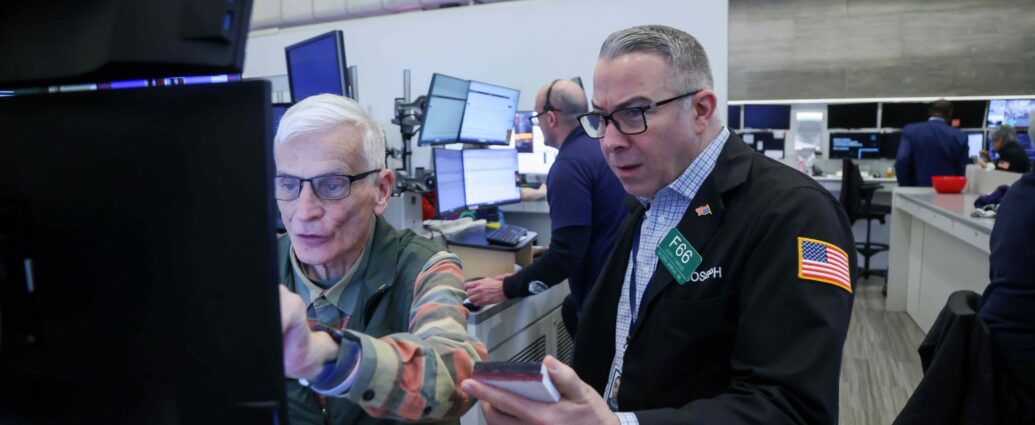
Stock Market Today: Major Indexes Plummet to End 4th Straight Week of Losses as Tech Stocks Drop; Oil Rises Further
This post was originally published here



Close call between Alaska Airlines and Fedex planes at Newark airport under investigation
NTSB to investigate incident where commercial airliner and cargo plane tried to land on crossing runways in New Jersey
A close call between a commercial airliner and a cargo plane attempting to land on crossing runways at New Jersey’s Newark Liberty international airport is being investigated by federal aviation officials.
The National Transportation Safety Board (NTSB) on Thursday said it was investigating an incident two days earlier during which an Alaska Airlines Boeing 737 overflew a FedEx Boeing 777 at the busy New York City area airport.
This post was originally published here


Memory crisis latest: What we learned from the world’s top producers this week
Parts of the market are asking if we’re already nearing peak tightness and margins in the memory chip space as the shortage persists.
This post was originally published here
Stocks tumble Friday as losses mount from Iran war impact, Dow and Nasdaq near correction: Live updates
Stocks fell Friday as traders kept monitoring the Iran war, with the major averages on pace to record another losing week.
This post was originally published here



‘Everybody was wearing black.’ How the Iranian diaspora is observing Nowruz amid war
Nowruz celebrates the arrival of spring and rebirth. But for many in the Iranian diaspora, this year is different. As the war continues, many are trying to balance the joy of the holiday with grief.
(Image credit: Sarah Ventre)

This post was originally published here

Six people sent to hospital after man threatened to stab Boston bus driver
Man wielding knife also tried to slash tires and taken into custody, with two transit officers and a police officer injured
Six people were brought to the hospital after a man wielding a butcher knife threatened to stab a bus driver and tried to slash tires at a Boston transit station on Friday before being taken into custody, authorities said.
Among those injured were two transit officers, a Boston police officer and the suspect in the case, said Richard Sullivan, superintendent of police for the Massachusetts Bay transportation authority. Sullivan, who briefed reporters at a news conference, said he wasn’t aware of the other two reported as injured by Boston’s emergency medical services agency.
This post was originally published here





Newmont (NEM) Shares Enter Oversold Territory
In trading on Friday, shares of Newmont Corp (Symbol: NEM) entered into oversold territory, changing hands as low as $94.34 per share. We define oversold territory using the Relative Strength Index, or RSI, which is a technical analysis indicator used to measure momentum on a s
This post was originally published here
CRML Stock Crowded With Sellers
In trading on Friday, shares of Critical Metals Corp (Symbol: CRML) entered into oversold territory, changing hands as low as $7.59 per share. We define oversold territory using the Relative Strength Index, or RSI, which is a technical analysis indicator used to measure momentu
This post was originally published here
UROY Stock Crowded With Sellers
In trading on Friday, shares of Uranium Royalty Corp (Symbol: UROY) entered into oversold territory, changing hands as low as $3.25 per share. We define oversold territory using the Relative Strength Index, or RSI, which is a technical analysis indicator used to measure momentu
This post was originally published here
SLSR Crosses Critical Technical Indicator
In trading on Friday, shares of Solaris Resources Inc (Symbol: SLSR) entered into oversold territory, changing hands as low as $7.75 per share. We define oversold territory using the Relative Strength Index, or RSI, which is a technical analysis indicator used to measure moment
This post was originally published here





Mark Cuban reads 1,000 emails a day—now he’s using a Mac Mini to fight the AI-generated flood threatening his clean inbox obsession
Former Shark Tank star Mark Cuban has finally found an assistant to help him maintain a clear inbox, and its name is Mac (Mini).
The billionaire entrepreneur has always preferred email to phone calls, partly because he likes to send more comprehensive responses via email and because it’s searchable even decades later. Plus, when it comes to phone calls, “I’m going to forget half the stuff that we talked about,” he previously has said.
Cuban is also notoriously tidy, aiming to keep his inbox to under 20 unread emails—or 10 on a good day—even if he has to read up to 1,000 emails per day on three phones.
For years, he’s handled this obsessive attentiveness to his communications on his own, saying an assistant would merely “slow things down.” Still, the increase in AI-generated cold emails and unwanted subscriptions have now obligated him to turn to AI for help, he said in an interview on the TBPN podcast published Thursday.
“I do what everybody else does. I bought a Mac Mini,” Cuban said on the podcast, referring to Apple’s compact desktop computer.
The Mac Mini is increasingly selling out in China as people turn to the affordable computer to run AI agents, especially autonomous AI tool OpenClaw. Unlike browser-based AI tools such as ChatGPT, locally run agents like OpenClaw, which OpenAI acquired last month, process commands directly on a user’s own hardware, without routing data through the cloud, which makes the process faster and more private.
While OpenClaw can run on a PC as well, some users prefer the Mac Mini because it is relatively affordable—a new device starts at $599, and a used one goes for even less. The device also has good specs, is small and portable, while alos power-efficient and silent, which is helpful as OpenClaw has to run continuously in the background.
The Dallas Mavericks minority owner admitted he’s still learning, but said he’s taught the AI on his Mac Mini to hit Gmail’s built-in unsubscribe feature to do away with pesky mailing lists he doesn’t want.
“Then, I just review it,” he said. “It’s still a work in progress, but at least I have a path.”
For his part, the billionaire has been experimenting with AI in his email for years. He previously said he used Gmail’s AI recommendations for 10% to 20% of his responses and used AI as a “typing hack” in longer replies, even if at times he jumps in to impart his own style.
Learning to use AI agents is essential for entrepreneurs, Cuban added in the podcast interview.
“Once you figure out how to do agents, then you can do them a little better than most other people, and then you can turn that into what would have been a [software-as-a-service] business in the past,” he said.
Cuban isn’t the only one that has used AI to simplify their work life. Apple CEO Tim Cook, who receives between 700 and 800 emails daily from customers, said Apple Intelligence’s email summary feature in the iPhone’s Mail app has transformed how he reads emails.
While he used to read long emails, now he relies on the summary feature: “It’s changed my life,” Cook told the Wall Street Journal in 2024.
“If I can save time here and there, it adds up to something significant across a day, a week, a month,” he said.
Meanwhile, Cuban said while AI-generated cold emails are surging now, eventually he believes things will go back to normal.
“We’re in that trial and error phase where people are like ‘We’re going to try it, see what happens. You know, maybe we’ll get lucky,’” he said. “And then they’ll get bored and then it’ll drop off.”
This story was originally featured on Fortune.com
Value investors see mispriced opportunities from sports to fertilizer
Value investors pitched a mix of stock ideas in disparate corners of the market at the Value Invest conference in New York on Thursday.
This post was originally published here














Oil prices top $112 after Iraq declares force majeure, Kuwait refineries attacked
Oil prices rose Friday even after Treasury Secretary Scott Bessent said Washington may soon lift sanctions on Iranian crude stored aboard tankers.
This post was originally published here

Bitcoin Flat At $70,000 As ‘Friday Effect’ Weighs On Ethereum, XRP, Dogecoin
Bitcoin traded sideway on Friday, with broader crypto markets showing little momentum despite ongoing regulatory developments.
| Cryptocurrency | Ticker | Price |
| Bitcoin | (CRYPTO: BTC) | $69,896.06 |
| Ethereum | (CRYPTO: ETH) | $2,125.24 |
| Solana | (CRYPTO: SOL) | $88.60 |
| XRP | (CRYPTO: XRP) | $1.43 |
| Dogecoin | (CRYPTO: DOGE) | $0.09358 |
| Shiba Inu | (CRYPTO: SHIB) | $0.056029 |
Notable Statistics:
- Coinglass data shows 80,653 traders were liquidated in the past 24 hours for $197.42 million.
- SoSoValue data shows net outflows of $90.2 million from spot Bitcoin ETFs on Thursday. Spot Ethereum ETFs saw net outflows of $136.4 million.
- In the past 24 hours, top losers include River, MemeCore and Stable.
Notable …
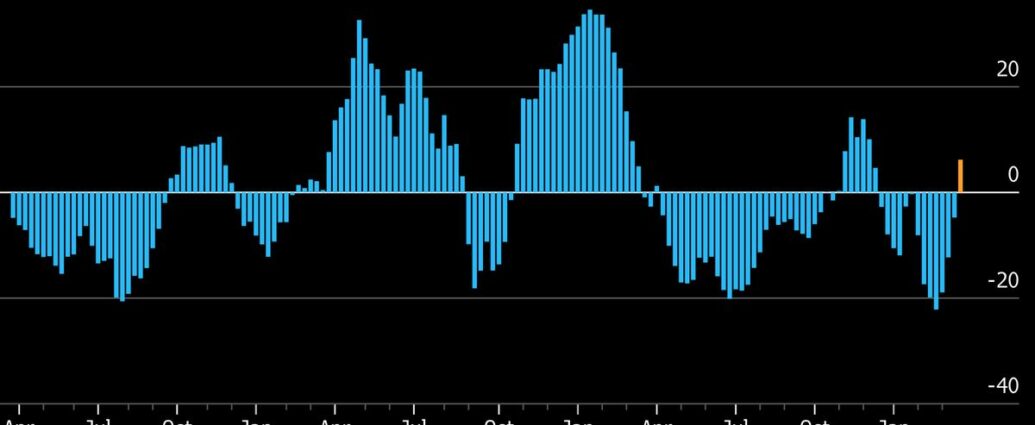
Top US Fema official claims to have teleported to a Waffle House before
‘Teleporting is no fun,’ Gregg Phillips, picked to lead Fema’s office of response and recovery, has said on a podcast
A far-right conspiracy theorist turned high-ranking official at the US Federal Emergency Management Agency (Fema) claims to have once teleported to a Waffle House.
Gregg Phillips, who in December was appointed to lead Fema’s office of response and recovery, has spoken on “multiple podcasts” about being teleported against his will, CNN reported on Friday.
This post was originally published here

Home Office investigates firm linked to religious sect over immigration visas
Officials understood to be investigating use of visas by company linked to Ahmadi Religion of Peace and Light
The Home Office is investigating a company linked to a religious sect based in Cheshire over its use of immigration visas.
The company under investigation is linked to the Ahmadi Religion of Peace and Light (AROPL), a sect that blends tenets of Islam with conspiracy theories about the Illuminati and aliens controlling US presidents. Followers believe the sect’s leader, Abdullah Hashem, can cure the sick and make the moon disappear. About 100 of his followers live in a former orphanage in Crewe, in the north-west of England.
This post was originally published here

How the Iran war threatens global food supply
About a third of all fertilizer shipped globally passes through the Strait of Hormuz. Now shipping is all-but stopped through the Strait and this could have repercussions for the global food supply.
(Image credit: Narinder Nanu/AFP)

This post was originally published here

Costco turns pain at the gas pump into a powerful in-store traffic driver
Rising gas prices are driving shoppers to Costco for cheaper fuel, boosting store traffic and reinforcing its edge as a value retailer.
This post was originally published here

Small cap-focused Russell 2000 becomes first U.S. benchmark to enter correction territory
Small caps are especially sensitive to changes in oil prices and a slowdown in the economic cycle.
This post was originally published here












Trump considers ‘winding down’ US military operations
This post was originally published here




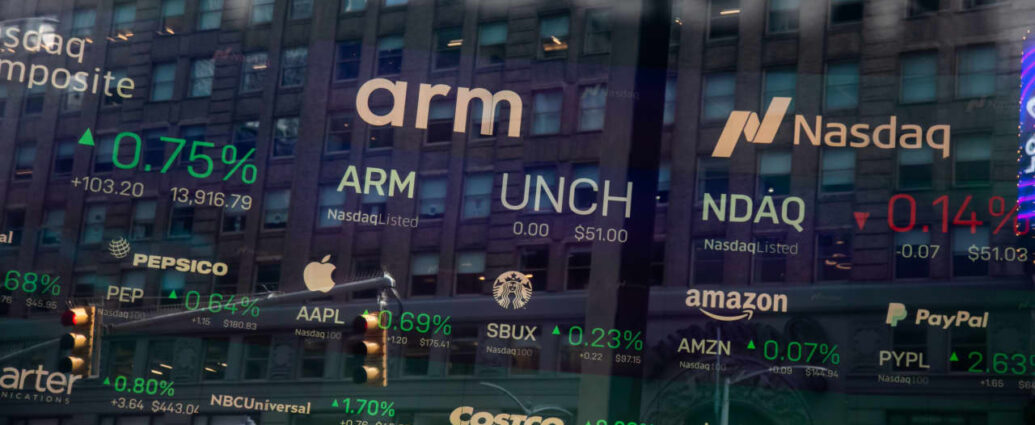























Gen Z can’t afford a house. Some parents are choosing to fund their down payments over their college funds
A parent wants to see their kid make it in life. Maybe that’s going to a good school. Maybe it’s curing some disease or making it to the big leagues. And a parent wants to help with that journey—after all, it’s a parent’s obligation to care for their child. But how that care looks like has changed over time. It once simply meant school pickups and weekend soccer games, then college savings and late-night financial advice calls. But for many parents today, that support stretches far beyond childhood, following them well into adulthood.
A new study from financial services firm Northwestern Mutual reveals that parents are stepping in on one essential step for achieving the American dream: the down payment. The survey—conducted through more than 4,300 online interviews in January—found that more than half of parents, or 52%, are open to considering helping their kid buy a home—and 22% have already stepped in.
Some parents are even rethinking the critical steps to ensuring their children have a shot at generating wealth. Twenty-nine percent of parents think helping their kid buy a home is more important than helping them pay for college, and more than half (55%) say it’s a toss-up for either one.
“A lot of these degrees are maybe not as valuable as they once were,” Ed Amos, wealth management advisor at Northwestern Mutual, told Fortune. “Having flexibility in those dollars is what parents are looking for.”
The value proposition of a four-year college degree is falling. Recent college grads are facing recessionary circumstances: 5.6% unemployment, surpassing the rate for all workers. And underemployment, or the share of graduates working in jobs that typically do not require a college degree sits at 42.5%.
And the vibes are dire. AI is threatening a white-collar recession, which is expected to hit recent grads hardest. At the same time, home prices are skyrocketing. Homeownership—the ultimate promise of the modern American dream—is growing out of reach for young people. The average age of the first-time homebuyer hit 40 last year, up from the early 30s just a decade ago as the median home price tops $410,000 today.
Betting on bricks, not degrees
As some parents hesitate to shell out the almost $500,000 price tag attached to what a college degree could cost today, others are rethinking how they can position their children for financial success later in life. Amos said some parents he’s worked with are betting on homeownership as a key tool to ensuring their investments are well placed. One family he worked with, for example, helped their child buy a duplex while still in college, allowing their kid to live in one unit and rent out the other to pay down the mortgage, and ultimately build up equity before even entering the full-time workforce.
“The benefits of starting that wealth building early in life has tremendous impacts on where their children will be over the next few decades,” Amos said.
Yet Gen Z is finding itself in an increasingly precarious position. Young people today are left with crumbs of wealth compared to their Boomer and Gen X parents. Boomers today hold more than $86 trillion in assets, according to Federal Reserve data, more wealth than any other living generation. Gen X holds a significant slice of the economic pie too, with close to $44 trillion. That’s more than three-quarters the $167 trillion in total U.S. wealth.
“It’s becoming less and less accessible to the entry-level employee straight out of college, trying to buy their first home,” Amos said. “It’s just becoming more and more difficult for these newer generations to do it on their own.”
High stakes gambling
With most of the country’s wealth locked away from Gen Z, many in the generation are looking for new and creative entry points into wealth generation. The Northwestern Mutual study found that Gen Zers are turning to high-risk, speculative assets for a shot at generating wealth. Nearly one-third of Gen Z have either invested in, or considered investing in crypto. One-third has also dabbled with the idea of, or are actively engaged in sports betting and prediction markets. And about 14% have placed their bets on meme stocks, or those viral stocks like GameStop popularized by communities like Reddit’s r/wallstreetbets subreddit—which now boasts over 4 million members—infamous after investors drove up the GameStop stock in 2021.
While these speculative bets paint a picture of a generation’s frantic scramble for financial footing, Amos said the most sustainable path to the American dream requires Boomers to hand over their wealth via more traditional assets like real estate.
“Helping usher in that transfer sooner than passing will allow everyone to be able to share in that American dream,” he said.
This story was originally featured on Fortune.com
Why this corner of the muni market shouldn’t be overlooked, according to Nuveen
The concerns around housing affordability make this a good time time to consider buying housing muni bonds, according to Nuveen.
This post was originally published here
Average IRS tax refund is up 10.8%, new filing data shows
The average IRS tax refund is up 10.8%, based on new filing data. Here’s what you can expect.
This post was originally published here
Hyundai recalls more than 61,000 SUVs in the US after a child’s death
Hyundai Motor Company is recalling more than 61,000 Palisade SUVs in the U.S. after an issue with powered seats was linked to the death of a child, federal regulators said.
The recall affects model year 2026 Palisade and Palisade Hybrid vehicles equipped with the Limited and Calligraphy trim packages, the automaker said in a recall report filed with the National Highway Traffic Safety Administration.
“The 2nd and 3rd row power seat assemblies equipped in the subject vehicles may not respond to contact with an occupant or object as intended during activation of certain powered seat functions, including the automatic power-folding (stow) function and the ‘one-touch’ tilt-and-slide (walk-in) feature of the 2nd row power seat assembly,” the report said.
HYUNDAI STOPS SALES OF CERTAIN SUVS AFTER 2-YEAR-OLD GIRL’S DEATH
The announcement comes after a young child died in an incident involving a Palisade that is still under investigation, according to the automaker.
Reuters reported the victim was a 2-year-old girl from Ohio who was killed March 7.
“Hyundai is aware of a tragic incident involving a Palisade,” the company said in a press release March 13. “While Hyundai does not yet have the full details and the incident is still under investigation, a young child lost her life. Hyundai extends its deepest sympathies to her family.”
TOYOTA RECALLS 550,000 VEHICLES OVER SEAT DEFECT
The South Korean automaker said last week it is pausing sales of the Palisades with the Limited and Calligraphy trim packages following the incident.
Hyundai said in the recall notice it received four reports of minor injuries related to second-row seat operation.
FORD RECALLS MORE THAN 83,000 VEHICLES OVER HEADLIGHT, ENGINE VALVE ISSUES
A recall remedy is under development. Until it becomes available, the automaker warned owners of the affected vehicles to use caution when operating the second- and third-row power-folding seat functions.
Hyundai also said owners should “avoid contacting the ‘one-touch’ tilt-and-slide button located on the 2nd row setback … during entry and exit of the 3rd row and take measures to prevent inadvertent activation of this feature.”
CLICK HERE TO GET FOX BUSINESS ON THE GO
FOX Business’ Ashley Carnahan contributed to this report.

US to deploy thousands more troops to the Middle East
This post was originally published here

The president of Colombia has just been labeled a “priority target” for his alleged drug ties by the DEA
Colombian President Gustavo Petro has been designated a “priority target” by the U.S. Drug Enforcement Administration as federal prosecutors in New York probe his alleged ties to drug traffickers, according to people familiar with the matter and records seen by The Associated Press.
DEA records show Petro has surfaced in multiple investigations dating to 2022, many based on interviews with confidential informants. The alleged crimes the DEA has investigated include his possible dealings with Mexico’s Sinaloa cartel, a scheme to leverage his “total peace” plan to benefit prominent traffickers who contributed to his presidential campaign. The records also suggest the use of law enforcement to smuggle cocaine and fentanyl through Colombian ports.
The “priority target” label is reserved for suspects DEA deems to have a “significant impact” on the drug trade.
An inquiry in early stages
In recent months, prosecutors in Brooklyn and Manhattan have been questioning drug traffickers about their ties to Petro and specifically about allegations the Colombian president’s representatives solicited bribes to block their extradition to the United States, according to a person with knowledge of the inquiry who wasn’t authorized to discuss the ongoing inquiry and spoke to The Associated Press on condition of anonymity.
The person said it wasn’t clear whether federal prosecutors have implicated Petro in any crime.
The investigation is focusing at least in part on allegations that representatives of Petro solicited bribes from drug traffickers at the Colombian jail La Picota in exchange for a promise that they not be extradited to the U.S., one of the people said.
A spokesperson for the Colombian presidency declined to comment on the ongoing investigations into Petro or the subsequent legal proceedings.
Petro has consistently denied allegations of drug trafficking, particularly after Trump labeled him an “illegal drug leader” and the Treasury Department sanctioned him in late 2025 for alleged ties to the trade without offering evidence. Petro maintains that, while his administration aggressively targets major cartels, it remains focused on a more lenient, social-based approach for peasant farmers who cultivate coca leaf.
The federal inquiry was reported earlier Friday by The New York Times.
Petro came under scrutiny through the course of drug trafficking investigations by New York authorities that led them to identify him as a subject, according to another person familiar with the matter.
The inquiries into Petro are in the early stages, and it is not clear whether they will result in charges, this person said, adding the White House has had no role in the investigations.
Family members under scrutiny
Petro, a former rebel leader, soared into office promising to reduce the country’s dependence on fossil fuels and reallocate state resources to addressing entrenched poverty.
A leftist politician known for winding sometimes incoherent speeches, he has regularly criticized the Trump administration over its support for Israel, bombing of drug boats in the Caribbean and likened the White House migration crackdown to “Nazi” tactics.
After one such outburst, at a pro-Palestinian demonstration outside the United Nations headquarters in New York, Trump retaliated by revoking Petro’s U.S. visa. He also briefly slapped high tariffs on Colombia over Petro’s refusal to accept deportation flights from the United States.
But more recently the two have shown signs of getting along. After a meeting at the White House in February, Trump described Petro as “terrific.”
Colombian authorities have for years been investigating members of Petro’s family for possible criminal acts.
His son, Nicolás Petro, was charged in 2023 with soliciting illegal campaign contributions from a convicted drug trafficker to fund a lavish lifestyle of expensive cars and homes. The younger Petro has pleaded not guilty and his father has said none of the money was used to fund his campaign.
The president’s brother, Juan Fernando Petro, has also been implicated in secret negotiations that allegedly took place with imprisoned drug traffickers to shield them from extradition to the U.S. in exchange for their disarmament.
Politics and cocaine
Politics in Colombia have long been tainted by cocaine, of which it is the world’s largest supplier. In the 1980s, drug lord Pablo Escobar was elected to the country’s Congress with the support of one of Colombia’s most traditional parties. A decade later, his rivals from the Cali cartel flooded the presidential campaign of Ernesto Samper with illegal donations.
The now defunct urban guerrilla group Petro belonged to, the 19th of April Movement, has long been suspected of taking money from Escobar’s Medellin cartels as part of its deadly siege of the Supreme Court in 1985. Petro did not participate in the attack, which left several guerrillas and around half the high court’s magistrates dead. Leaders of the group have always denied any links to the cartel.
___
Durkin Richer reported from Washington. Goodman reported from Miami. Mike Sisak contributed from New York and Astrid Suárez from Bogotá, Colombia.
This story was originally featured on Fortune.com
‘It makes me feel more British’: Muslims say religious diversity in the UK part of identity
Eid al-Fitr celebrated amid political furore over claims public Ramadan prayers an ‘act of domination’
On Friday morning, little space remained in Baitul Futuh mosque as thousands of people poured in to mark the end of the Islamic holy month of Ramadan.
The south London mosque, one of the largest in Europe, offered a glimpse of the Eid al-Fitr festivities being celebrated by millions of Muslims across the UK. This year, however, a political furore around one of the most important holidays in the Islamic calendar has divided UK party leaders, drawn warnings of bigotry and left members of the community feeling disturbed and disappointed.
This post was originally published here
Is it time for the UK to acknowledge the ‘rhetoric to reality gap’ on its military power?
Forces have been stripped back since the cold war but political stasis is dangerous in the face of growing global threats
• Middle East crisis – live updates
It will have been more than three weeks since the US and Israel first attacked Iran when the first British warship finally arrives off the coast of Cyprus, a belated defensive deployment that has highlighted the lack of military capacity available to the UK.
Nominally, HMS Dragon was one of three destroyers available out of six. In reality the warship has had to be hauled out of dry dock, prepared and then, after launch, tested for several days in the Channel. Its arrival date is still unconfirmed.
This post was originally published here

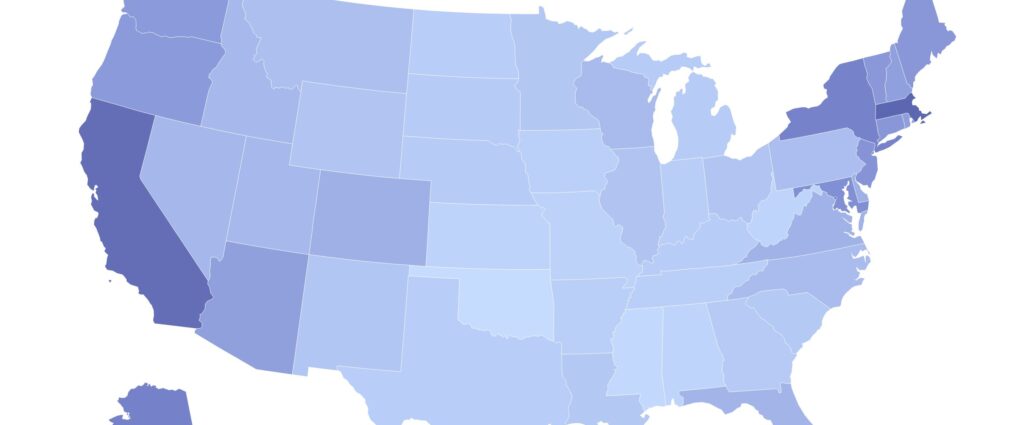
Latest Data Shows How the Cost of Living Compares in Each State—Learn the Factors Driving the Big Differences
This post was originally published here

Why is the ‘Bachelorette’ canceled? A guide to the Taylor Frankie Paul controversy
Taylor Frankie Paul rose to fame on The Secret Lives of Mormon Wives, then filmed a season of The Bachelorette. But it won’t air as planned because of resurfaced domestic violence allegations.
(Image credit: Mike Coppola)

This post was originally published here

Best Bank CD Rates for March 2026: Lock In 4.25% Today
This post was originally published here

Best Jumbo CD Rates Our Experts Found Today, March 20, 2026: Up to 4.15%
This post was originally published here
Former BBC Woman’s Hour presenter Jenni Murray dies aged 75
Veteran broadcaster interviewed prominent female leaders including Margaret Thatcher and Hillary Clinton
The former BBC Radio 4 Woman’s Hour presenter Jenni Murray has died at the age of 75.
Murray, who joined the programme in 1987 and left in 2020, established a reputation as a formidable presenter, conducting interviews with prominent female figures including Margaret Thatcher and Hillary Clinton.
This post was originally published here

Crude Oil Soars As Fresh Attacks In Gulf Hint War Could Drag On
(RTTNews) – Crude oil surged on Friday as fresh attacks on Kuwait by Iran renewed concerns of a prolonged gulf war, stoking production disruption worries and overshadowing the signs of de-escalation that surfaced after Israel assured it would not continue to hit Iran’s energy inf
This post was originally published here


HSBC weighs deep job cuts as AI overhaul unfolds: report
Global banking giant HSBC Holdings Plc is considering significant job reductions in the years ahead, as CEO Georges Elhedery bets on artificial intelligence to downsize middle and back offices, Bloomberg reported.
The greatest impact is anticipated to be seen among non-client-facing positions in global service centers, but the evaluation is only in an early stage, according to individuals familiar with the issue, the outlet reported. The moves could impact about 20,000 roles, or around 10% of the organization’s full workforce, one of the individuals reportedly said.
The deliberations began prior to the eruption of war in the Middle East, and a final decision has not been made, some of the individuals said, according to the report.
The assessment includes positions where the company will not replace workers, some of the individuals noted, but no final decision has been determined.
Some downsizing may occur due to business sales or exits, according to one of the sources, Bloomberg reported.
The company’s job reductions would occur as part of a medium-term plan covering three to five years, one of the individuals familiar with the matter said, the outlet noted.
GOOGLE COMMITS $1B TO NORTH CAROLINA DATA CENTERS AS AI DEMAND SURGES
HSBC declined to provide Fox News Digital with a comment about the Bloomberg report.
But HSBC, which indicates on its website that it “is one of the world’s largest banking and financial services organisations,” has been open about embracing AI.
WHITE HOUSE UNVEILS ITS FIRST NATIONAL AI FRAMEWORK, PUSHES CONGRESS TO ACT ‘THIS YEAR’
CLICK HERE TO GET FOX BUSINESS ON THE GO
“In 2025, we accelerated the adoption of Generative AI (‘GenAI’) across HSBC, moving from experimentation to scaled delivery,” the company’s Annual Report and Accounts 2025 noted. “Through 2026, we intend to expand enterprise-wide adoption of AI tools and strive to embed AI deeper into our core processes.”




Airline industry hit by biggest crisis since pandemic
This post was originally published here
Arizona desert town breaks record for hottest March temperature in US history
Martinez Lake, about 145 miles west of Phoenix, reached 110F (43.3C) on Thursday amid scorching south-west heat
A small community in the Arizona desert has broken a record for the highest March temperature ever recorded in the US, as the south-west bakes in a blistering late-winter heatwave.
The astonishing temperature was recorded just outside Martinez Lake, Arizona, which reached 110F (43.3C) on Thursday, according to the National Weather Service.
This post was originally published here



We’re upgrading our rating on Honeywell — plus 2 positions we’d like to build up
Every weekday, the Investing Club releases the Homestretch; an actionable afternoon update just in time for the last hour of trading.
This post was originally published here

Lowering speed limits among contingency plans to curb UK oil demand
International Energy Agency recommends emergency measures, including working from home, as Iran war hits fuel supply
Lowering speed limits to minimise fuel consumption is among potential contingency plans being drawn up by the UK government as the crisis in the Middle East threatens global oil supplies.
Sources stressed that there is no shortage of fuel in the UK, but said that officials in the Department for Transport were working with the Department for Energy Security and Net Zero (DESNZ) on an analysis of what measures could be taken to curb oil demand.
This post was originally published here



Michael Saylor Makes A Bitcoin Retirement Plan Possible If You’re Willing To Risk It
Bitcoin (CRYPTO: BTC) as a retirement plan?
That may be possible using four complementary assets, according to Bitcoin firm Beretirement.
The firm points to a “portfolio garage” of Bitcoin-linked investments, each serving a distinct role:
- Bitcoin (self-custody) — Direct ownership offers full control with no intermediaries or counterparty risk. It comes with high volatility, with drawdowns often reaching 50%–70%, requiring long-term conviction.
- BlackRock’s iShares Bitcoin Trust (NASDAQ:IBIT) — The ETF provides Bitcoin price exposure in a familiar format for brokerage and retirement accounts. It …


The clock is ticking for the stock market as the Iran war stretches into a fourth week
Stocks have been largely calm since the start of the U.S. war in Iran, but the latest headlines could signal a turn for the worse.
This post was originally published here
Canadian mother and daughter ‘traumatized’ by ICE detainment, husband says
Tania Warner and Ayla, her seven-year-old with autism, sent to notorious Texas detention center and told to ‘self-deport’
A Canadian woman and her seven-year-old daughter with autism who have been held by US Immigration and Customs Enforcement (ICE) for nearly a week have been transferred to a notorious detention center and asked to “self-deport”, according to her husband, who said the pair had been “traumatized” by the experience.
Tania Warner and her daughter Ayla Luca, originally from British Columbia, moved to the US five years ago, when Warner married Edward Warner, a US citizen.
This post was originally published here

Russia offered to curb its support for Iran if US halted aid to Ukraine
This post was originally published here


Dogecoin Flips Bullish After Elon Musk Video, But Shiba Inu Skyrockets 5%
Dogecoin (CRYPTO: DOGE) flipped bullish for the first time in weeks as Shiba Inu (CRYPTO: SHIB) surged nearly 5% after Elon Musk shared an AI-generated video of himself as “The Dogefather” petting a Shiba Inu dog.
The Dogefather Returns
Musk shared the AI video Thursday, parodying the iconic “Godfather” scene by petting a Shiba Inu while musing about his Doge’s wedding and private keys.
“You don’t even think to call me the Dogefather,” Musk’s AI version said, mimicking Al Pacino’s character.
Musk coined the term “Dogefather” during his 2021 “Saturday Night Live” appearance and has used it regularly on social media to endorse Dogecoin.
The Department of Government Efficiency acronym he floated also bore an uncanny reference to the canine-themed coin.
Last month, Musk said SpaceX will likely put the memecoin “on the moon” next year. However, X Money, the new payments feature …


Experts consider expanding meningitis vaccine eligibility after Kent outbreak
Scientific advisory committee to examine impact of offering routine MenB jabs to wider range of people
Experts are considering the case for routinely vaccinating more people against meningitis B in response to the fatal outbreak in Kent.
The Joint Committee on Vaccination and Immunisation’s review was announced after the health secretary, Wes Streeting, asked it to “re-examine eligibility for meningitis vaccines” for a wider range of people than those who now qualify.
This post was originally published here