Overcoming Self-Doubt When Launching Your Own Business
2026-03-20
How to make clearer decisions, lead more steadily, and ultimately build a more resilient company.
This post was originally published here

How to make clearer decisions, lead more steadily, and ultimately build a more resilient company.
This post was originally published here

Harerimana Ismail of Uganda is a community health worker who checks on kids with HIV. He lost his salary after the Trump administration’s aid cuts but he keeps doing his job.
(Image credit: Ben de la Cruz/NPR)

This post was originally published here
This post was originally published here

Bitcoin trades around $70,000 as Bitcoin ETFs saw $90.2 million in net outflows on Thursday, while Ethereum ETFs reported $136.4 million in net outflows.
Cryptocurrency |
Ticker | Price |
| Bitcoin | (CRYPTO: BTC) | $70,467 |
| Ethereum | (CRYPTO: ETH) | $2,141.49 |
| Solana | (CRYPTO: SOL) | $89.39 |
| XRP | (CRYPTO: XRP) | $1.45 |
| Dogecoin | (CRYPTO: DOGE) | $0.09447 |
| Shiba Inu | (CRYPTO: SHIB) | $0.056036 |
Meme coin market capitalization dropped around 3% over the past 24 hours to $33.4 billion.
Trader Commentary: …
The IEA warns of “the largest supply disruption in the history of the global oil market” due to the conflict in the Middle East.
This post was originally published here
If you love cash back but don’t want to miss out on travel rewards, the Citi Double Cash is for you.
This post was originally published here

This post was originally published here

This story was originally featured on Fortune.com

Coinbase (NASDAQ:COIN) launched stock perpetual futures for eligible non-U.S. users offering 24/7 leveraged synthetic exposure to Tesla (NASDAQ:TSLA), Apple (NASDAQ:AAPL), Nvidia (NASDAQ:NVDA), and other Magnificent 7 stocks with up to 10x leverage.
Coinbase becomes one of the first major centralized venues to offer stock perpetual futures, a product that has gained traction on decentralized platforms with billions in daily trading volume.
The launch advances the company’s strategy of building an “Everything Exchange” where users can access crypto, traditional assets, and emerging markets in a single venue.
At launch, eligible customers can trade perpetual futures on Apple, Microsoft (NASDAQ:MSFT), Alphabet (NASDAQ:GOOGL), Amazon (NASDAQ:AMZN), Nvidia, Meta
These are the stocks posting the largest moves in premarket trading.
This post was originally published here
Recent studies show the U.S. is slipping further from democracy. And, the Trump administration plans to transfer federal student loans from the Education Department to the Treasury Department.
(Image credit: Jim Watson)

This post was originally published here

This post was originally published here

This post was originally published here
Foreign minister issues warning after Israeli attack on South Pars gasfield that prompted retaliatory strike on Qatar. Plus, what happened to the Oscars red carpet after the ceremony?
Good morning.
Iran has said it will show “zero restraint” if its energy infrastructure is targeted again as Qatar revealed that almost a fifth of its liquefied natural gas export capacity had been knocked out in an Iranian strike that is likely to have a years-long impact.
What did Araghchi say? In a post on X, he said: “Our response to Israel’s attack on our infrastructure employed FRACTION of our power. The ONLY reason for restraint was respect for requested de-escalation. ZERO restraint if our infrastructures are struck again.”
What’s the forecast for next week? More heat is in store for the coming days. By the end of the week, 100 cities could set all-time temperature records for the month of March, with temperatures climbing as high as 30F (17C) above average for the time of year, the new analysis says.
This post was originally published here


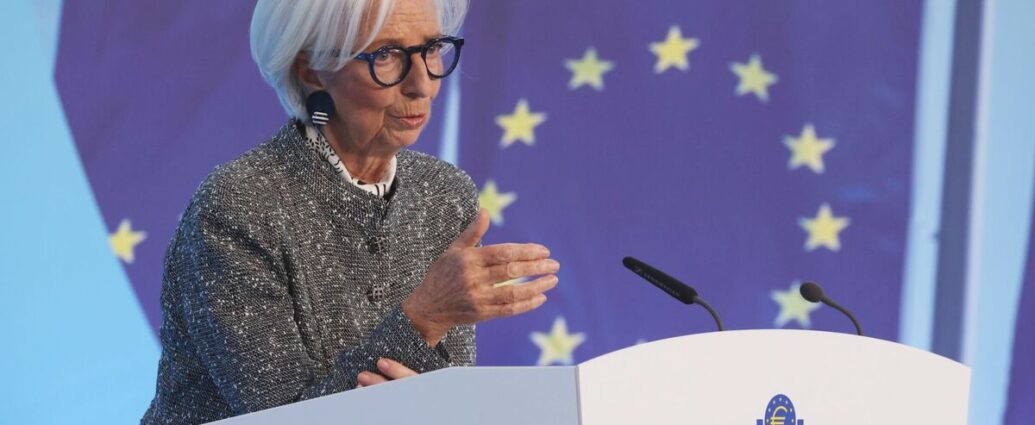
Brokers now expect the ECB to hike interest rates this year as the specter of higher inflation and lower growth piles pressure on central banks to act.
This post was originally published here
Fire service warns ubiquity of batteries in everyday products is outpacing public understanding and safety regulations
Lithium-ion batteries represent a new technological hazard that one fire science expert has said keeps him awake at night, as fire service chiefs warn the ubiquity of lithium-ion batteries in everyday products is outpacing public understanding and safety regulations.
The blaze that devastated a historic building in Glasgow and resulted in the continuing closure of Central Station, Scotland’s largest rail interchange, is believed to have started in a shop selling vapes, which are powered by lithium-ion batteries. The latest data reveals a sharp increase in battery-related fires across Scotland, while firefighters in London attend an e-bike or e-scooter fire every other day.
This post was originally published here
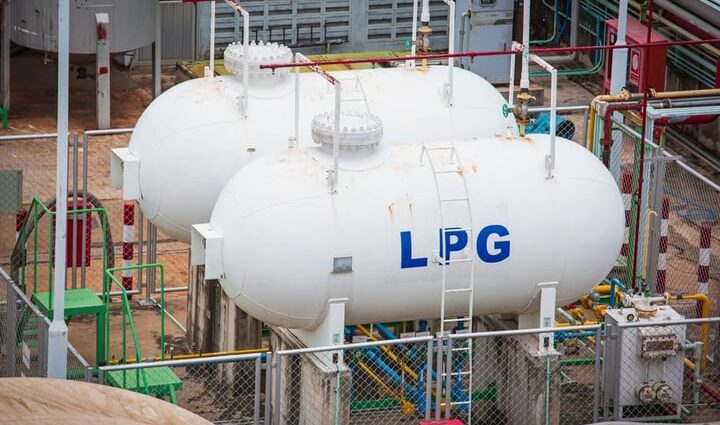
Dorian LPG Ltd. (NYSE:LPG) on Friday announced the delivery of its new dual-fuel LPG and ammonia gas carrier, “Areion.”
The “Areion,” a 93,000 cubic meter vessel, is set to join Dorian’s Helios LPG Pool, enhancing the company’s fleet of low-emission ships to over 20%.
The delivery was financed through a $62.9 million loan from Citibank and Nordea, which includes a commercial tranche with a margin of 1.80% over SOFR, showcasing Dorian’s commitment to advancing its environmental initiatives.
The addition of “Areion” is significant as it operates on LPG and fuel oil, equipped with a hybrid scrubber to minimize emissions. This strategic move aligns with Dorian’s goal to optimize fuel choices and enhance earnings while promoting emission-free port operations.
The stock is currently trading 1.46% below its 20-day simple moving average (SMA) and 6.67% above its …
This post was originally published here

Good morning. CFOs of public companies may soon need to rethink the cadence of financial reporting—and everything that comes with it.
The Securities and Exchange Commission is reportedly preparing a proposal that could allow U.S. public companies to report financial results semiannually instead of quarterly, with the agency expected to release the measure as soon as April, according to The Wall Street Journal. It would make quarterly filings optional rather than mandatory, though it has not yet been finalized or adopted.
I had a conversation with J. Eric Johnson, partner and co-chair of the Public Company Advisory Practice at Winston & Strawn, who told me that the topic is already generating debate among practitioners. “That’s actually one of the first things that comes up,” Johnson said, noting that his firm discussed the issue at a recent internal corporate luncheon.
Questions he’s fielding: What would an investor relations strategy look like? How do you maintain transparency? How do you stay in front of your investor base, telling your story, getting out in front of them, and continuing enthusiasm around your stock?
For over 50 years, quarterly earnings have given companies a structured moment to shape their narrative. Under semiannual reporting, that cadence disappears, Johnson said.
“Yes, some companies may save money,” he said. “They may save time. But you’re going to have to rethink a lot of things.” He continued, “The market participants, the investors, are going to demand information in some form or fashion.”
Johnson also raised concerns around Regulation FD, which prohibits selective disclosure. Under the current cycle, executives can speak more freely because financial results are fresh or imminent.
He added that semiannual reporting could strain board oversight. Audit committees are used to quarterly reviews with management and auditors. Removing that rhythm creates a governance gap, likely requiring informal quarterly check-ins—eroding cost savings. “Yeah, we didn’t print a 10-Q, but we’re still doing a lot of heavy lifting in the background.”
There could also be capital markets challenges, he said. Underwriters typically require very recent financial data, and a six-month cycle could leave information stale.
Shivaram Rajgopal, an accounting professor at Columbia Business School, doesn’t view the shift as beneficial. “It will save trivial compliance costs in the short run but lead to more demands on the IR groups for updates,” he said. “I suspect most well-followed companies will file quarterly statements voluntarily anyway.”
Smaller firms, however, may not. “In the case of smaller firms, insider trading might go up, and volatility in the stock will likely also go up,” Rajgopal said. “Surprises or sharp swings in stock prices will become more common.”
Johnson also warned of increased volatility. Less frequent reporting means negative trends could compound before disclosure.
“We had a 5% decline in revenue over three months, but now, when we talk about it at six months, it’s actually 10%,” Johnson said.
Rajgopal shared this anecdote: “I have heard a prominent board member say the following: ‘The market pays you 20-25 years of your earnings today (via the price-earnings ratio).’”
“And we hesitate to supply the market with quarterly data?” he continued, “That’s odd. Imagine hiring an employee and paying them 25 years of their annual compensation. How closely are you likely to monitor that employee? Just once in six months?”
Have a good weekend.
Sheryl Estrada
sheryl.estrada@fortune.com
This story was originally featured on Fortune.com
Karachi particularly badly affected with 18 people killed, more than 50mm of rain and winds gusting up to 60mph
Unseasonally wet weather struck southern Pakistan and north-west India on Wednesday, as heavy rain rolled in from the west, accompanied by thunderstorms, hail, and strong winds.
Karachi, Pakistan’s largest city, was particularly badly affected, locally recording more than 50mm of rain with winds gusting up to 60mph. Walls, buildings, and a pedestrian bridge collapsed, with flooding and power outages across the city. At least 18 people were killed and several more injured, many by structural collapses, with other deaths attributed to a fallen tree and a lightning strike.
This post was originally published here
Record 171 million passengers are expected to fly this spring, even as TSA funding lapse risks longer airport lines
Spring breakers in the US could see their long-awaited trips to party destinations disrupted by a trifecta of issues: airport security delays, high gas prices, and chaotic weather.
The potential for flight delays comes as US airlines expect that they will see a record-shattering spring travel season. Airlines for America, an aviation industry group, said that 171 million passengers are expected to fly – a 4% increase from the 2025 spring travel period.
This post was originally published here
Dozens of volunteers, mostly over the age of 70, offer rides and serve as interpreters
On a February afternoon at a Spanish-immersion childcare center in Minneapolis, dozens of toddlers grabbed puffy coats out of cubbies as parents shuffled them out the door.
Down the hall, Michael, the husband of the center’s director, stared intently at a monitor streaming the building’s security footage, watching for any vehicles that might be carrying agents from US Immigration and Customs Enforcement (ICE). Since January, when federal agents descended on the Twin Cities as part of Operation Metro Surge, he’s been leaving his own job early to volunteer here every afternoon.
This post was originally published here
Closure of strait of Hormuz – a key fertilizer production and transportation route – has squeezed farmers as prices jump
Rodney Bushmeyer has been farming as long as he can remember. Bushmeyer’s father was a farmer, as was his grandfather.
The family-run Bushmeyer Farms in Illinois dates back more than 100 years, when his ancestors came to the US from Germany. They acquired the first 80 acres cost-free as homesteaders, cleared the land, and worked it.
This post was originally published here

This post was originally published here
Pentium was once one of the most recognized technology brands in the world. Scion was Toyota’s most successful attempt to reach a new generation of buyers.
Neither failed because of a bad launch, a weak product, or a flawed strategy. Both were killed by something far more insidious: a long sequence of individually rational decisions that nobody stopped to question. In both cases, the organizations involved misunderstood the same fundamental principle — brands do not fail because they are poorly conceived. They fail because their meaning is not actively managed.
When Intel introduced Pentium in 1993, it solved a structural branding problem few technology companies had cracked: how to create consumer preference for an invisible component. Microprocessors had been defined by technical codes — 386, 486 — that carried engineering meaning but little emotional or commercial power. Pentium changed that.
The results were immediate and dramatic. Intel’s revenues grew from $8.8 billion in 1993 to more than $20 billion by 1996, with net income reaching $5.16 billion. Backed by the Intel Inside campaign — which would ultimately account for billions in cooperative advertising spend — Pentium transformed a component into a consumer signal of performance and reliability. By the late 1990s, it had become one of the most recognized technology brands in the world.
Pentium worked because it meant something specific: premium computing power from Intel. That clarity allowed Intel to command price premiums and shift competition away from raw specifications toward brand trust — an extraordinary achievement in a component category.
The erosion did not come from a single mistake. It came from a sequence of understandable decisions. As competitive pressure increased, particularly from AMD, Intel responded not by defending Pentium’s meaning, but by stretching its reach. The name expanded across multiple performance tiers and product generations: Pentium Pro, Pentium II, III, 4, M, D, Dual-Core. At least seven distinct “Pentiums” entered the market over thirteen years. What had once been a precise signal became a broad label. Over time, consumers could no longer tell what “Pentium” guaranteed, or why one Pentium mattered more than another.
This is what might be called vertical erosion — the systematic dilution of a brand through downward extension. Each new tier was individually rational. Collectively, they dismantled the brand’s meaning from the inside out.
The inflection point came in 2006, when Intel introduced the Core brand and repositioned performance leadership under a new name. Pentium, once synonymous with “best,” was implicitly redefined as “good enough.” It continued to sell, but primarily in price-sensitive segments. Its role shifted from value creation to volume maintenance.
By the time Pentium was formally retired in 2023 and replaced by the generic label “Intel Processor,” the brand’s meaning had already collapsed. Thirty years from one of the most recognized technology brands in the world to a category descriptor. Pentium didn’t lose to a competitor. It lost to itself — one incremental extension at a time.
Scion was created to solve a different but equally clear strategic problem for Toyota: how to reach younger, first-time buyers without diluting Toyota’s core brand or undermining Lexus’s premium position. The answer was a distinct brand with its own voice, retail experience, and cultural posture.
At launch in 2003, Scion was sharply defined. It stood for individuality, design-forward thinking, and accessibility. Its early lineup was intentionally limited and visually distinctive, supported by fixed-price retail (no haggling, no trim levels) and lifestyle-driven marketing. The strategy worked. By 2006, Scion was selling more than 173,000 vehicles annually in the U.S. — 70% were new Toyota buyers, and the average Scion buyer was 35 years old, compared to 54 for the typical Toyota customer.
Scion’s strength was semantic clarity — it was not simply “Toyota for young people” but a cultural counterpoint to the broader Toyota brand. The erosion, when it came, was gradual.
As Toyota’s global portfolio expanded, Scion absorbed increasing internal pressures. Product decisions optimized for coverage and volume rather than coherence. The second-generation xB — redesigned in 2008 to be larger, smoother, and more conventional — abandoned the distinctive proportions that had made the original iconic. Sales collapsed. New vehicles were added, revised, or rebadged without a clear unifying idea. By the end, most of Scion’s lineup consisted of rebranded Toyotas and partner vehicles — a Mazda here, a Subaru there — wearing a Scion badge that no longer meant anything specific.
This is a different failure mode than Pentium’s — what might be called lateral drift. Where Pentium eroded vertically through downward extension, Scion eroded horizontally through the accumulation of unrelated products and fragmented messaging. The brand didn’t stretch below its original meaning; it scattered away from it.
Meanwhile, Scion’s own customers were aging. By 2011, the average buyer was 43 — eight years older than at launch and closing in on Toyota’s core demographic. The brand built to capture youth was growing old with its original customers and failing to attract the next generation. In 2016, Toyota discontinued Scion, folding remaining models back into the Toyota lineup. From a branding perspective, the decision was the predictable outcome of accumulated ambiguity. Scion did not fail because its founding idea was flawed. It failed because no one was protecting it.
Pentium and Scion represent two distinct modes of brand failure. Pentium suffered vertical erosion — the progressive dilution of meaning through downward extension. Scion suffered lateral drift — the dispersal of meaning through accumulated, unfocused decisions. But the underlying failure was the same: both organizations stopped treating brand meaning as a constrained asset that must be actively protected.
Both brands began with high semantic precision that created real economic value. And both gradually surrendered that clarity through well-intentioned decisions made without sufficient regard for long-term meaning. In both cases, the decisive factor was the same tension: product logic and brand logic were in direct conflict, and product logic won every time. Intel’s product team had sound reasons to launch a lower-priced Pentium. Toyota’s portfolio managers had sound reasons to add models for coverage. Each individual decision was defensible. But no one was asking the brand question: does this decision make what we stand for clearer or more confused?
Brand failure is rarely dramatic. It is managerial. It occurs not in moments of crisis, but in the accumulation of decisions where short-term product logic overrides long-term meaning.
The opposite pattern exists — and it’s instructive. Ferrari caps annual production at roughly 10,000 vehicles, deliberately manufacturing fewer cars than the market demands. Scarcity is inseparable from what the brand means. There is no lower-priced Ferrari, no Ferrari for the mass market. The product team does not get to override the brand. That constraint isn’t a limitation on growth — it is the source of Ferrari’s pricing power, loyalty, and a market capitalization that dwarfs competitors producing ten times the volume. Ferrari understood what Pentium and Scion eventually forgot: meaning is finite, and every decision either reinforces it or erodes it.
These failures suggest a set of principles that are easy to state and difficult to practice:
Brands do not fail at birth. They fail when stewardship lags strategy. There is one question worth asking in any organization with a brand worth protecting: When was the last time someone said no to a revenue-generating decision because it would blur what your brand means? If the answer doesn’t come quickly, the erosion may already be underway.
The opinions expressed in Fortune.com commentary pieces are solely the views of their authors and do not necessarily reflect the opinions and beliefs of Fortune.
This story was originally featured on Fortune.com
Academics discover black people ‘significantly more likely’ to be identified when compared with other ethnic groups
Essex police have paused the use of live facial recognition (LFR) technology after a study found cameras were significantly more likely to target black people than people of other ethnicities.
The move to suspend use of the AI-enabled systems was revealed by the Information Commissioner’s Office (ICO), which regulates the use of the technology deployed so far by at least 13 police forces in London, south and north Wales, Leicestershire, Northamptonshire, Hampshire, Bedfordshire, Suffolk, Greater Manchester, West Yorkshire, Surrey and Sussex.
This post was originally published here
The Swiss National Bank said Thursday that it is growing increasingly willing to intervene in foreign exchange markets.
This post was originally published here

Tesla Inc. (NASDAQ:TSLA) is reportedly in discussions with several Chinese companies to acquire solar manufacturing equipment worth $2.9 billion.
Suzhou Maxwell Technologies, a leading maker of screen-printing equipment for solar cell manufacturing, is among the top contenders to supply machinery for the project and is currently seeking export approval from China’s commerce ministry, reported Reuters on Friday.
Other potential suppliers include Shenzhen S.C New Energy Technology and Laplace Renewable Energy Technology. The $2.9 billion worth of equipment, including screen-printing production lines, will require export approval from Chinese regulators. However, the specifics of the equipment requiring approval and the duration of the approval process remain uncertain.
Chinese suppliers have been asked to deliver equipment by autumn, some to Texas, for Elon Musk’s planned solar capacity, which will mainly support Tesla, with a portion powering SpaceX satellites, as per …
This post was originally published here
Consultancy forecasts typical £1,972 annual dual fuel bill as conflict pushes UK’s gas market past three-year highs
Household energy bills in Great Britain could soar by more than £330 a year to almost £2,000 from this summer after the war in Iran pushed the UK’s gas market past three-year highs.
A typical combined household gas and electricity bill is now forecast to reach £1,972 a year from July under the UK government’s quarterly price cap, according to analysis by Cornwall Insight, an energy consultancy.
This post was originally published here

This post was originally published here
This post was originally published here
Despite a brutal $820 billion wipeout in the U.S. stock market and surging oil prices, BlackRock Inc.‘s (NYSE:BLK) CIO of Global Fixed Income, Rick Rieder, believes the Federal Reserve’s current holding pattern on interest rates is the right move.
The heavy pullback in U.S. equities is a reaction to a “convergence of pressures,” according to John Murillo, Chief Business Officer at B2BROKER. He said that the $820 billion market loss reflects a “rapid repricing episode” driven by thinning liquidity and shifting positions, rather than a sudden deterioration in core economic fundamentals.
Rieder also emphasized the critical distinction between short-term commodity pain and long-term economic trends.
In a recent post on X, Rieder noted that while near-term inflation expectations have jumped due to energy and geopolitical supply shocks, these events tend to be “episodic.”
Rather than signaling a return to sticky, uncontrollable inflation, Rieder explained that these sudden spikes “act more like a tax on consumers.”
This post was originally published here

This post was originally published here
This post was originally published here
Michael Randrianirina, who sacked PM and cabinet without explanation, claims measure is to root out corruption
Madagascar’s military president has said new ministers will have to pass lie detector tests to root out corrupt candidates, after he dismissed the prime minister and cabinet without explanation earlier this month.
Michael Randrianirina came to power in a coup in October after weeks of youth-led protests under the banner “Gen Z Madagascar”. However, young people were quickly disenchanted by his choice of government officials, which they saw as being part of the old, corrupt elite.
This post was originally published here

The most oversold stocks in the health care sector presents an opportunity to buy into undervalued companies.
The RSI is a momentum indicator, which compares a stock’s strength on days when prices go up to its strength on days when prices go down. When compared to a stock’s price action, it can give traders a better sense of how a stock may perform in the short term. An asset is typically considered oversold when the RSI is below 30, according to Benzinga Pro.
Here’s the latest list of major oversold players in this sector, having an RSI near or below 30.
This post was originally published here
This post was originally published here

The latest strikes come after Israeli Prime Minister Benjamin Netanyahu said Thursday that Israel would “hold off on future attacks” on Iran’s energy infrastructure, following Trump’s request.
(Image credit: Vahid Salemi)

This post was originally published here
Kyiv sources say they think injection contained relaxant meant to make people more talkative in interrogations
Hungarian security operatives administered a “forced injection” to one of the Ukrainians detained earlier this month during a dramatic raid on bank vehicles carrying gold bars and tens of millions of dollars and euros in cash, sources have told the Guardian.
Hungary’s TEK anti-terrorism police detained seven Ukrainians from the state savings bank, Oschadbank, on 5 March. They were accompanying a convoy of two armoured cars from Vienna to Ukraine, as it transited Hungary in what Kyiv claims was a regular transfer of state funds. Hungarian officials have claimed it was money for the “Ukrainian war mafia”, without giving details.
This post was originally published here
Economic gains are people’s main aspirations for AI, but analysts warned that not everyone stands to benefit equally.
This post was originally published here
Company says tool to compare self-reported hours with computer estimates is for ‘awareness, not enforcement’
JP Morgan Chase has started to compare the hours junior investment bankers claim to have worked against logs on its IT system.
The US bank said it would begin issuing reports to junior bankers that compare computer-generated estimates of their work weeks against their self-reported time sheets as part of a pilot scheme.
This post was originally published here
Two months after its launch, CNBC’s rare disease initiative is starting to reach a broader audience.
This post was originally published here

This post was originally published here

This post was originally published here


(RTTNews) – Gold prices edged up on Friday after falling for a seventh session to their lowest level in two months in the previous session.
This post was originally published here
This post was originally published here
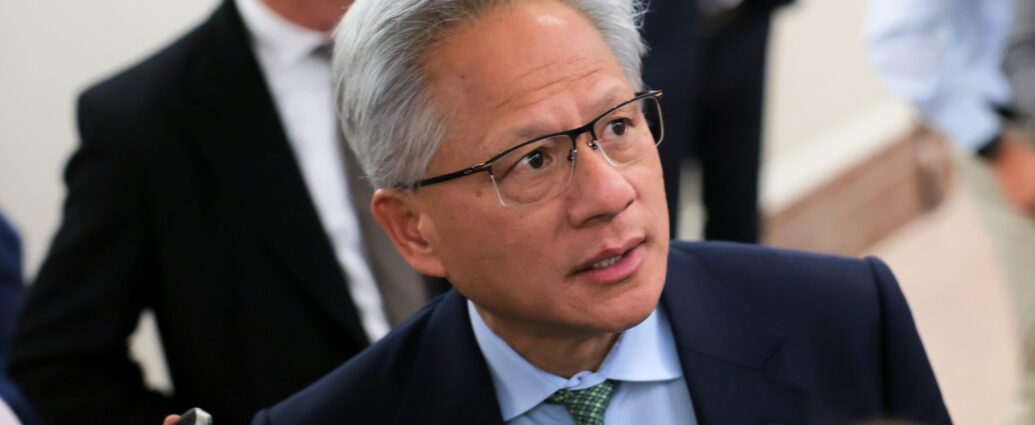
Nvidia CEO Jensen Huang doesn’t foresee a sudden spike of AI-related layoffs, but that doesn’t mean the technology won’t drastically change the job market—or even create new roles like robot tailors.
The jobs that will be the most resistant to AI’s creeping effect will be those that consist of more than just routine tasks, Huang said during a December interview with podcast host Joe Rogan.
“If your job is just to chop vegetables, Cuisinart’s gonna replace you,” Huang said.
On the other hand, some jobs, such as radiologists, may be safe because their role isn’t just about taking scans, but rather interpreting those images to diagnose people.
“The image studying is simply a task in service of diagnosing the disease,” he said.
Huang allowed that some jobs will indeed go away, although he stopped short of using the drastic language from others like Geoffrey Hinton, a.k.a. “the Godfather of AI” and Anthropic CEO Dario Amodei, both of whom have previously predicted massive unemployment thanks to the improvement of AI tools.
Yet, the potential AI-dominated job market Huang imagines may also add some new jobs, he theorized. This includes the possibility that there will be a newfound demand for technicians to help build and maintain future AI assistants, Huang said, but also other industries that are harder to imagine.
“You’re gonna have robot apparel, so a whole industry of—isn’t that right? Because I want my robot to look different than your robot,” Huang said. “So you’re gonna have a whole apparel industry for robots.”
The idea of AI-powered robots dominating jobs once held by humans may sound like science fiction, and yet, some of the world’s most important tech companies are already trying to make it a reality.
At Nvidia’s GTC (GPU Technology Conference) this week, Huang said so-called “physical AI,” especially robotics, is the company’s next trillion-dollar-plus market.
Tesla CEO Elon Musk has also made the company’s Optimus robot a central tenet of its future business strategy. Musk last year predicted money will no longer exist in the future and work will be optional within the next 10 to 20 years thanks to a fully-fledged robotic workforce. In a January podcast interview with XPRIZE founder Peter Diamandis, Musk went further, predicting the cost of labor will eventually fall to zero, and claiming there was no need for people to “squirrel away” money for decades to be able to retire.
AI technology is advancing so rapidly that it already has the potential to replace millions of jobs. AI can adequately complete work equating to about 12% of U.S. jobs, according to a Massachusetts Institute of Technology (MIT) report. This represents about 151 million workers representing more than $1 trillion in pay, which is on the hook thanks to potential AI disruption, according to the study.
Even Huang’s potentially new job of AI robot clothesmaker may not last. When asked by Rogan whether robots could eventually make apparel for other robots, Huang replied: “Eventually. And then there’ll be something else.”
A version of this story originally published on Fortune.com on Dec. 6, 2025.
This story was originally featured on Fortune.com
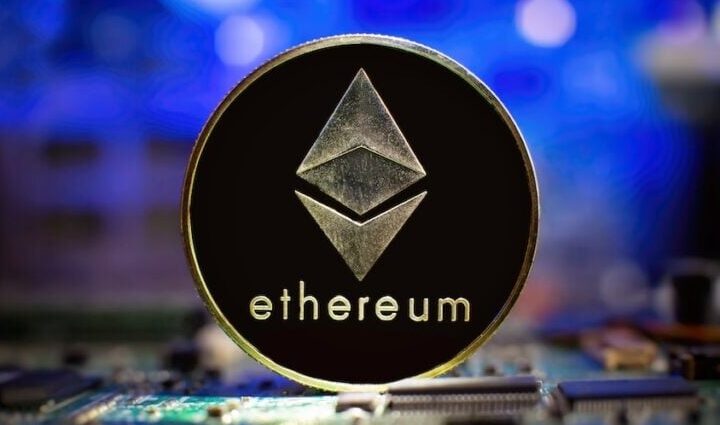
Cryptocurrency analyst Ali Martinez said on Thursday that Ethereum (CRYPTO: ETH) has entered a generational “Buy Zone,” hinting at major bull runs on the horizon.
In an X post, Martinez pointed out that Ethereum’s Market Value to Realized Value Ratio—a metric that measures the difference between the market price and the average price at which every coin last moved on-chain—has fallen into the 0.8 – 1.0 range.
Anglo-Dutch company, which also owns Dove and Hellmann’s, will focus more on personal care products if deal agreed
Unilever, the owner of Marmite, Dove and Hellmann’s mayonnaise, is in talks to combine its food business with the US-based spice and seasoning maker McCormick.
The Anglo-Dutch food company – which last year spun off its ice-cream division, the home to Ben & Jerry’s, Magnum and Wall’s – has entered discussions over the future of the “highly attractive” business.
This post was originally published here
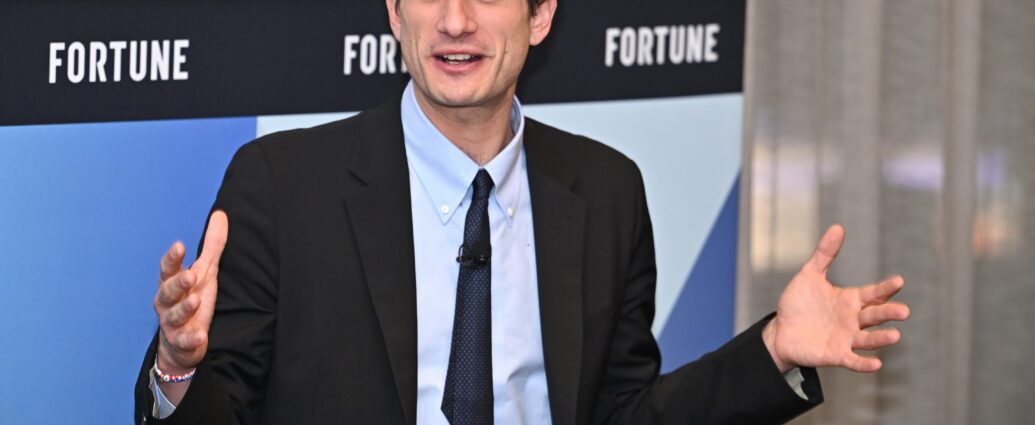
Good morning. Three speakers took turns addressing the room at the Fortune CEO Initiative dinner in Manhattan’s Hudson Yards on Wednesday night. One was Trump’s UN Ambassador, sharing insights on the Administration’s strategy for Iran and the rest of the world. One was a Kennedy scion with a strong message for business about the next generation and leadership in the digital age. And one was a longtime diplomat and State Department official, sounding the alarm about a nation declining in ways we don’t often talk about. Together, their words were a clarion call to business leaders to look at how these trends create a need to step up and speak up.
Ambassador Mike Waltz spoke off the record to share frank insights about his prognosis for everything from Iran to the future of the UN. His perspective was in stark contrast with Richard Haass, a veteran diplomat, scholar and senior counselor with Centerview Partners who’s been a longtime critic of Trump’s policies. He pointed to two crises, in particular, that are “eroding confidence in American competence and leadership.” The first is a disdain for expertise, whether it’s scientific expertise or the policy expertise that’s guided previous presidents in making decisions such as whether to go to war. The second is the fiscal crisis as U.S. national debt this week surpassed $39 trillion. If unfunded entitlements are added, the fiscal gap is closer to $100 trillion. Said Haass: “I think we’re living on borrowed time.”
Few are more aware of that than younger Americans who are struggling to find jobs, afford homes, and see themselves in the political parties that claim to represent them. It was especially refreshing to speak with Jack Schlossberg, a Democratic congressional candidate and grandson of JFK, who told attendees that the Democrats’ “reactionary” and “anti-everything” stance has been a turnoff to many younger voters. “The Republican Party has embraced modernity in a way the Democratic Party used to own,” he told us, later speaking of priorities like service, innovation and opportunity.
There were disagreements, some vehement, and an energy that I value at these gatherings. One takeaway for me was the high number of CEOs who start their day at around 5 a.m. (A lot) And another was the sense that opportunities to come together from different sides of the table with a shared desire to learn are rare. One CEO told me it’s hard to even get opposing sides of his family to talk these days, saying “I miss a good debate.” I agree. If you want to find out more about the CEO Initiative, click here or reach out to my new colleague, John Pentin.
Contact CEO Daily via Diane Brady at diane.brady@fortune.com
This story was originally featured on Fortune.com
(RTTNews) – Oil prices edged higher on Friday, reversing early losses as the Iranian campaign against Gulf Arab states broadened.
This post was originally published here
This post was originally published here

Once a futuristic shopping mall, El Helicoide became one of Venezuela’s most feared prisons. Now, as the country changes, so does its fate — erase it, rebuild it, or remember what happened inside.
(Image credit: Ariana Cubillos)

This post was originally published here

This post was originally published here
Once a futuristic shopping mall, El Helicoide became one of Venezuela’s most feared prisons. Now, as the country changes, so does its fate — erase it, rebuild it, or remember what happened inside.
(Image credit: Ariana Cubillos)
This post was originally published here

AleAnna Inc. (NASDAQ:ANNA) rose 11.35% in pre-market trading on Friday to $4.22.
ANNA closed the regular session up 3.55% at $3.79, according to Benzinga Pro.
The rally came after missile attacks targeted Qatar’s Ras Laffan Industrial City, responsible for roughly one-fifth of global LNG production.
The strike followed earlier Israeli action against Iran’s largest natural gas facility on the same day. In response, Tehran warned that multiple energy sites across the Gulf could be considered “legitimate targets.”
Israel has now temporarily halted further strikes on Iran’s major gas installation following a request from President Donald Trump.
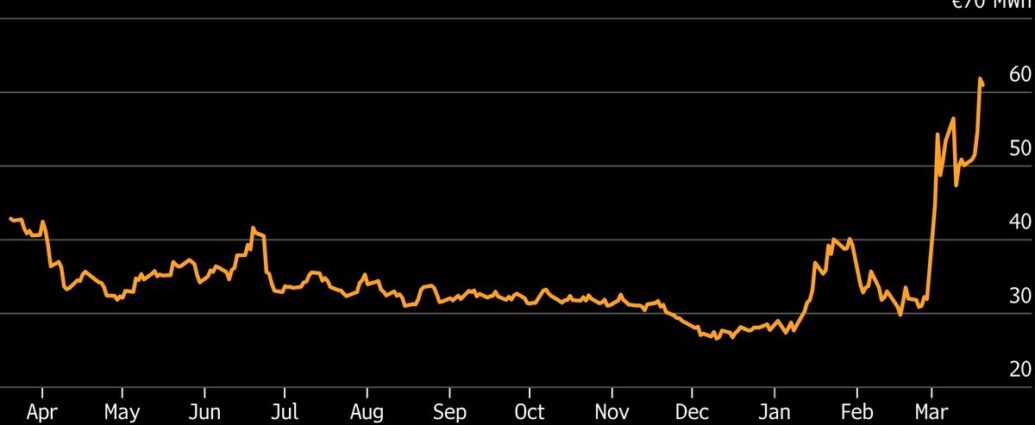
Natural Gas EU futures jumped 13.15% to 61.85 EUR/MWh on Thursday, according to Trading Economics data, …
Interim president announces changes after firing defence minister, who was close to Maduro, the leader ousted by US
Venezuela’s interim president has said she has replaced all her senior military commanders, the latest in a flurry of changes since the US ousted Nicolás Maduro.
Delcy Rodríguez announced the changes in a social media post a day after firing the long-serving defence minister, who had been close to Maduro, and replacing him with a former intelligence chief.
This post was originally published here

What could be more delightful than cannibal invertebrates and food-related weather events? A lot of things!

This post was originally published here

This post was originally published here

We asked our audience to share the creative ways they limit their own phone use. They range from the practical (keep your phone in another room) to the creative (pair your phone with a fun paperback).

This post was originally published here

President Trump has slashed the number of people on the Board of Immigration Appeals and stacked it with his appointees, tightening the due process available for immigrants, an NPR analysis shows.
(Image credit: Yuki Iwamura)

This post was originally published here

From waiving the Jones Act to rerouting oil through the Red Sea, governments are doing their best to make up for the crisis in the Strait of Hormuz, but prices are still rising.
(Image credit: Brandon Bell)

This post was originally published here

Facebook, Twitter, and MySpace once promised to bring humanity closer together. They delivered something else entirely.
The screen economy that emerged around these apps at extraordinary speed optimized for attention. Time spent and daily active users were the twin metrics upon which this economy lived and died. Engagement loops got stickier and friction fell away from increasingly measurable interactions. The promises of internet-induced belonging, of social cohesion, of a new global intimacy all failed to materialize.
Instead, people retreated into their screens at such a scale that major social health organizations started sounding the alarm about a global loneliness epidemic. The World Health Organization found that 1 in 6 people worldwide experienced persistent loneliness, contributing to 870,000 deaths per year and costing governments billions in healthcare, employment, and education. Loneliness often manifests on balance sheets as absenteeism, which costs the U.S. economy alone $406 billion annually.
People are starving for the meaningful social connection they haven’t found online, and now they’re willing to pay. That hunger is quietly giving rise to a brand new market — and a generation of startups racing to serve it.
Humans are social animals. We’re biologically wired for social cohesion, which has been a matter of life or death since the days of hunting woolly mammoths and sleeping in caves. As our species marched forward, we built this cohesion into institutions: schools, religious communities, trade associations, sports clubs, civic organizations, even entire nations. Multigeneration families living together were the norm and every city was dotted with bars and cafés for informal gatherings.
When such institutions enter a protracted decline, the desire for community remains. Enter the IRL economy, which I loosely define as an industry that deliberately facilitates in-person belonging. The end goal of all these businesses is to get people offline, together. How a given business goes about doing it is somewhat secondary.
The first phase of this economy arrived in the form of city-specific meet-up apps. Meetup, arguably the most popular of these apps, actually predates most social media platforms, having been initially founded to bring New Yorkers together in the wake of 9/11. Post-Facebook, so to speak, these platforms proliferated, and Meetup eventually proved so successful that WeWork bought it for $200 million in 2017. New startups meanwhile coordinated curated dinners, coworking spaces, running clubs, and shared activities. At WeRoad, we came to it through travel.
We organize trips for small groups of people who do not know each other before departure, specifically targeting young adults in their 20s and 30s. Wherever our travelers go, the base product is the same: guaranteed connection with like-minded people. We saw solo travel become a bona fide phenomenon and we figured many solo travelers still want to meet others along the way. We offered them a way to solo travel together.
It worked. When you give people the chance to rebuild social scaffolding, they will take it.
Real-world participation has not disappeared. It has, however, slipped through the cracks of an atomized world. In dismantling social scaffolding through the decline of third spaces, real-world participation became difficult to access spontaneously. Going out was no longer a surefire way to meet someone, and the dating apps that emerged within the attention economy didn’t guarantee meaningful connections either.
IRL economy businesses sell that structure. We’re selling context more than a single, easily defined product. We commercialized travel at WeRoad, but we’re actually serving a different need. If we didn’t exist, the solo travelers who use us would still go all over the world. What they wouldn’t necessarily get is the connection we offer. That’s what they’re paying for, more than any specific trip to Mexico or Morocco or Indonesia.
The real product is always connection. We achieve it through structured immersion: 15 strangers together for ten days, away from their routines and homes. Introduce shared logistics, a little unpredictability, and the mild discomfort inherent to being in an unfamiliar place. Titles fade, social bubbles soften, interaction is a matter of course.
There’s basic economics in play, too. Real-world connection feels scarce and scarcity drives demand and increases value. The global travel and experience economy is already valued at over $1 trillion. IRL businesses are meeting that demand by contextualizing real-world connection in abundant, active economic sectors—not just through travel, but also dining out (a global industry valued at $3.9 trillion) and live music (valued at $38.5 billion). But since belonging doesn’t operate like behavioral metrics, its economic value will always be harder to measure than in the attention economy.
It’s too early for formal valuations of the IRL economy. What we do know is that VC investment in consumer startups, which includes IRL business, rose 25% between 2023 and the end of 2024. We can also point to funds like the Jägermeister-backed Best Nights VC, which specifically invests in startups dedicated to nightlife and going out together. And Tinder is now beta testing an in-person events tab offering pottery classes, raves, and bowling nights. Something big is happening here.
In 2026, we’re seeing a new trend emerge: friction-maxxing.
Friction-maxxing is the deliberate rejection of seamless convenience — the transactional optimization that virtually every consumer-facing company has ruthlessly pursued for a decade. You order dinner without speaking to anyone. You rent a bike by scanning a QR code. You work from home, stream on demand, and feel constantly stimulated while remaining physically alone. Friction-maxxing refuses that bargain.
The friction-maxxers, however, need somewhere to go to find the connection they seek, and this is where the IRL economy comes in.
None of this is precisely new. Although social atomization exploded in the age of social media, it had already begun to take hold in the wake of the Industrial Revolution. Family members moved away from one another. Professional environments became increasingly tenuous as places to build community, despite colleagues being the only built-in social circle for many young professionals. Traditional community structures continued to decline. Digital communication emerged as the default, a development accelerated by the pandemic. In other words, we’ve been headed this way for a long time.
The IRL economy is still emerging, but the demand behind it extends far beyond the 1 in 6 people experiencing persistent loneliness. The friction-maxxers aren’t just rejecting their phones — they’re signaling that the next trillion-dollar consumer market won’t be built on a screen.
The opinions expressed in Fortune.com commentary pieces are solely the views of their authors and do not necessarily reflect the opinions and beliefs of Fortune.
This story was originally featured on Fortune.com
The fuel-starved Caribbean island is facing its biggest test since the collapse of the Soviet Union under a U.S. oil blockade.
This post was originally published here
NPR’s Steve Inskeep speaks with historian Daniel Immerwahr about how President Trump is forging a new world order through his foreign policy.

This post was originally published here
For StoryCorps, two survivors of the 2018 Synagogue attack in Pittsburgh talk about their friendship.

This post was originally published here
Most enterprise AI projects have failed since 2018, a sobering track record for an industry awash in enthusiasm.
This post was originally published here
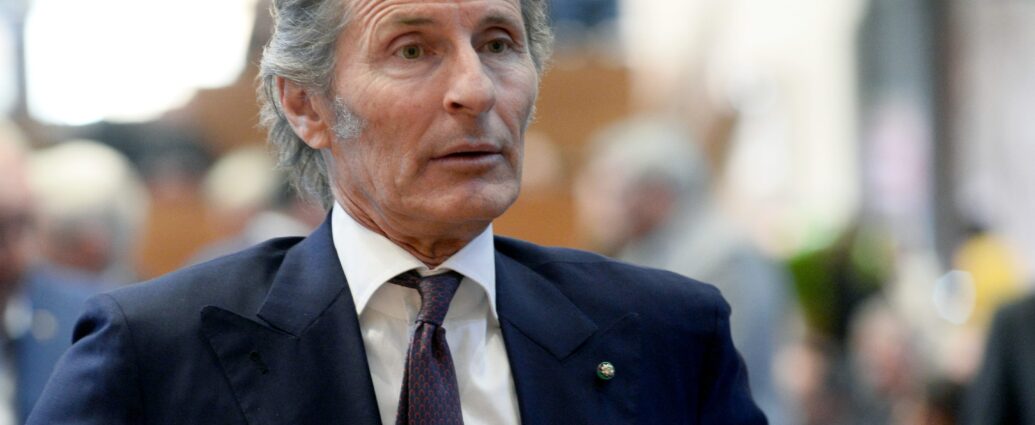
When it comes to supercars, Lamborghini CEO Stephan Winkelmann admitted his customers prefer a gas-guzzling auto to a fully electric vehicle, blaming a dearth of reliable charging stations in part for the lack of interest.
The luxury automaker announced in February it had shelved plans for its all-electric Lanzador, a 1,341-horsepower “Ultra GT” first announced in 2023. The car, originally slated for a 2029 release, had an estimated price tag of $300,000—about the average pricepoint for a Lamborghini, regardless of power source. Instead, Lamborghini will pivot to developing plug-in hybrid models.
Lamborghini reported record-breaking earnings on Thursday, including 10,747 deliveries in 2025, its highest ever tally. While the company reached $3.7 billion (€3.2 billion) in revenue—a 3.3% year-over-year increase—operating income fell to $885 million (€768 million) from a record of $962 million (€835 million) in 2024. The company attributed the dented profits to Lamborghini’s pivot away from an EV model, as well as uncertainty around tariffs and an unfavorable U.S. exchange rate.
In an interview with Fortune ahead of the company’s earnings presentation, Winkelmann said part of the sluggish demand for its EV was a lack of developed infrastructure to support all-electric cars on the road.
“We have a lot of customers [who] bought electric cars, and they told us—I spoke to a lot around the globe—that in terms of infrastructure, in terms of charging time, in terms of range…it is very disappointing,” Winkelmann said.
According to an analysis from Motointegrator and DataPulse Research, the European Union has about 910,000 publicly accessible charging stations, despite 3.5 million, or 26%, needed to support the region’s decarbonization efforts. In the U.S., Lamborghini’s largest market, EV charging stations often experience reliability issues, with a Harvard Business School report finding drivers are able to fully recharge their cars using non-residential EV equipment just 78% of the time.
But customers’ reluctance to buy a luxury EV goes beyond logistical issues. “On top of that, the emotional part is very important,” Winkelmann said.
EVs lack the roar of a traditional internal combustion engine which has been closely aligned with not just the Lamborghini brand, but sports cars more broadly. The lack of vibrations and noisiness of a gas-powered car was a turn-off for customers with a clear picture in their mind of what a Lamborghini is, Winkelmann noted.
“You don’t buy a Lamborghini because you need one, but because you want to have a childhood dream fulfilled,” he added.
How to make a successful luxury EV
The luxury car sector has largely struggled to roll out a fully electric car that resonates with consumers. In 2024, Bentley delayed its electric-only goal from 2030 to 2035—and then scrapped that, saying it will offer hybrid vehicles by then. Porsche announced last September it would no longer build its own EV battery and scale back its electrification plans. Premium carmakers such as Stellantis and Ford both took a step back from EVs, taking $26 billion and $19.5 billion charges, respectively, to pivot away from all-electric cars.
RBC Capital analyst Tom Narayan said it would be an oversimplification to say there’s no demand in the entire sector for high-end EVs, or that the lack of interest in the cars is a result of infrastructure issues.
“There are buyers who want electric-high performance vehicles,” Narayan told Fortune. “Maybe that number isn’t as big as what folks thought. Maybe that number is lower, but to say charging infrastructure is a problem, or, nobody wants a luxury EV, I don’t think that’s really accurate.”
Narayan looks to the highly anticipated Ferrari Luce, the Maranello-based automaker’s EV offering, which will be available to order come late May. Ferrari, which sells about 14,000 cars a year, is able to justify its EV because it can save on research and development for specific components thanks to a connection to its Formula 1 team already heavily investing in parts optimization.
Ferrari is also a standalone company, in contrast to Lamborghini, which is owned by the Volkswagen Group through its subsidiary Audi. Ferrari has to appeal to a wider audience, making it more strategic to have an EV, Narayan noted. Meanwhile, Volkswagen has doubled-down on its EV plans, reviving its Scout Motors brand to appeal to American audiences, despite evidence of cooling demand.
Because Lamborghini’s ownership is already investing elsewhere in EVs, its own luxury model may not be the most prudent use of resources, Narayan suggested.
“In the context of VW Group,” he said, “it may not be necessary for Lamborghini to electrify.”
This story was originally featured on Fortune.com
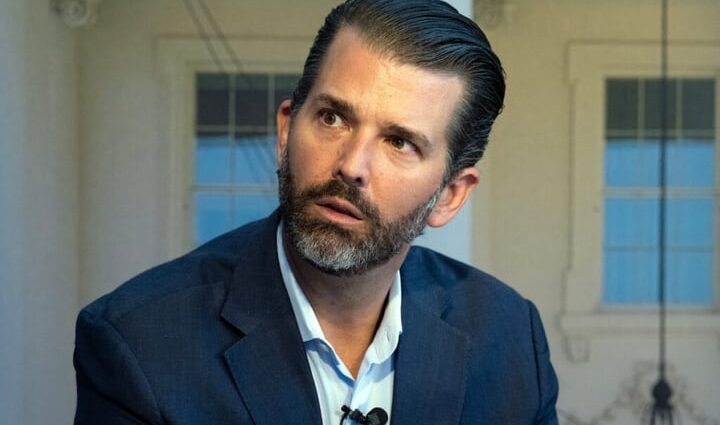
Donald Trump Jr. promoted World Liberty Financial’s (WLFI) new payment infrastructure on Thursday that will enable AI agents to manage funds and transact on the blockchain.
Trump Jr. spotlighted the AgentPay Software Development Kit on X, calling it “open source, self-custodial and policy-first,” which could be used to settle USD1 transactions.
“AI agents that can reason but can’t pay for anything are just expensive interns,” he said. “Today, World Liberty Financial shipped the infrastructure to fix that.”
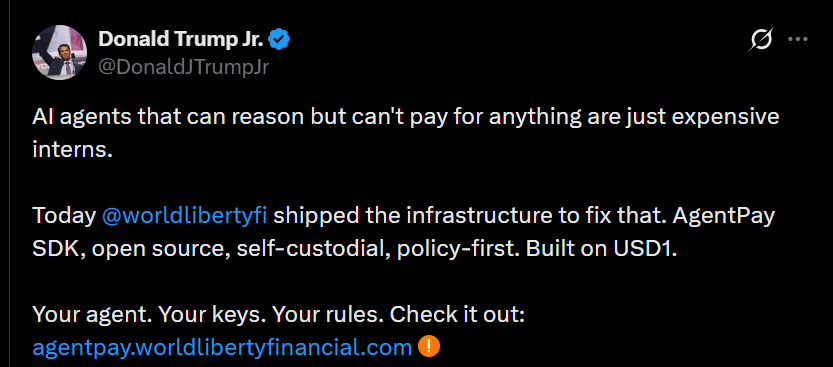
This software toolkit enables agents to move and trade funds programmatically according to user-defined rules. The rules will be enforced before any action can be executed, WLFI stated.
Any …
The U.S. approved roughly $23 billion in weapons sales to three Gulf nations, moving to bolster their defenses as the Middle East war continued to escalate.
This post was originally published here




When Samyr Lainé walked into his freshman dorm room at Harvard University in 2002, he found his new roommate tucked away in the corner of their room, typing away on his computer.
A year and a half later, that roommate sent him a project he was working on called TheFacebook.
“You could tell where his skill set was as a coder and as a thinker, and he was just supremely advanced,” Lainé said of Meta CEO Mark Zuckerberg. “He was taking senior-level courses as a freshman and showing up to a three-hour final exam, two hours late, and getting the highest grade in class.”
While living in that dorm room, Lainé began to hone his skills as a triple jumper on Harvard’s track and field team. After college, he competed as a graduate student at the University of Texas at Austin. He then went on to study law at Georgetown, graduating in 2010.
A decade after sharing a bunk bed with Zuckerberg, Lainé represented Haiti in the triple jump at the 2012 Olympic Games in London. Ten years after that, he co-founded Freedom Trail Capital, a venture capitalist firm that invests in celebrity brands like Issa Rae’s haircare line Sienna Naturals, Kaley Cuoco’s dog supplement company Oh Norman!, and Ten to One Rum, co-owned by the singer Ciara.
From his time as an Olympian, Lainé understands what it is like to be the talent fronting a product. After his athletic career ended, he went on to work with Jay-Z at Roc Nation and with Will and Jada Pinkett Smith on their media company, Westbrook. Those experiences were pivotal in teaching Laine how to make a celebrity brand successful.
After placing tenth in the triple jump at the London Olympics, Lainé continued to work in sport, first as a lawyer at Monumental Sports, which owns several Washington, D.C. sports teams including the Capitals, Wizards and Mystics, and later directing player relations at Major League Soccer.
He joined Jay-Z’s entertainment company Roc Nation in 2018 as senior director of operations, using both his legal background and operations skills to manage artists like Alicia Keys, Meek Mill, Lil Uzi Vert. He also worked on Jay-Z’s alcohol brands, music streaming platform Tidal, and launched projects like the company’s book publishing division, Roc Lit 101.
“My role at Roc Nation is really what laid the foundation for what I’m doing today,” he said. “For me, [it] was just having a front row seat and understanding how Jay leverages his cultural cachet to build some really valuable, really tremendous businesses,” he said.
Lainé left Roc Nation in 2019 to then join the Smiths at their media and production company, Westbrook, as vice president of operations. He was then promoted to senior vice president, working with the entire Smith family to launch apparel, personal care, and coffee brands.
“I came on as a very early employee, maybe employee number six or seven. We built that to almost 200 employees across six different verticals,” he said. “A lot of [the job] was taking what I learned—a baptism by fire Roc Nation—translating that to Westbrook.”
The Friday before the 2022 Oscars (the one when Smith slapped comedian Chris Rock), Lainé left Westbrook to consult for brands and address what he saw as a gap in the market between celebrity-led brands and venture capital.
A year later, he co-founded Freedom Trail Capital with his wife and fellow triple jump Olympian Ayanna Alexander-Lainé. Together, the two have amassed a portfolio of celebrity-led brands trusted by consumers and celebrities alike.
What will make or break a celebrity brand is authenticity, not just a famous name attached to a company, Lainé said, before pointing to the many mediocre celebrity tequila brands out there as an example. Sometimes, Lainé warned the product doesn’t even match the name behind it.
Take for example Jay-Z’s successful cognac and champagne brands—most people don’t remember his vodka venture Armadale.
“Vodka was probably the wrong category for the wrong demographic that Jay-Z appeals to,” Lainé explained. “What doesn’t work, and people know this, is inauthentic pairings between talent and business.”
Companies fail when they don’t need to think critically about their product and how it will serve customers, he said. Freedom Trail takes a different approach.
“We look for businesses that either have or can benefit from having a person of influence involved. Person of influence, we say deliberately, because we’re not exclusively looking for celebrities, but we’re looking for folks who have a platform and an audience where they can add their audience to authentically supercharge an already great business,” Lainé explained.
Lainé’s goal is that a company survives with or without a big name’s backing. But when an influential person becomes involved, they tend to bring their audience with them.
He points to his client and Harry Potter actress Emma Watson. Her family’s gin brand, Renais, is the quintessential example of an influential person backing a brand. The gin comes from recycled grape skins from Watson’s family’s vineyard in Burgundy, France, where her father has been growing grapes for more than three decades. Her brother, Alex, is the company’s CEO, and Watson designed the product’s bottle and packaging, Lainé said. And that authenticity translates to other well-known and beloved brands.
“The reason that Nike is a talent-led brand, and Revlon and Gatorade [is that] they all leverage talent successfully, Lainé said. “The right person with the right audience and the right messaging through the right medium speaking to the direct demographic at the right time can supercharge a business. That business that it’s supercharging has to be a great product that’s innovative and a quality business and a strong brand.”
This story was originally featured on Fortune.com

Intellicheck Inc. (NASDAQ:IDN) shares rose 15% in after-hours trading to $5.52 on Thursday after the identity verification company reported record fourth-quarter revenue and its first annual net profit for the year ended December 31, 2025.
Total fourth-quarter revenue for Intellicheck rose 12% year over year to $6.63 million, up from $5.93 million in the same period of 2024.
SaaS revenue, which represents the recurring income from cloud-based applications through monthly or annual subscriptions, accounted for nearly all of fourth-quarter revenue and rose 12% to $6.62 million.
According to the company’s press release, gross margin remained at 91.4%, while operating expenses declined 7% to $4.57 million.
For full-year 2025, Intellicheck reported net income of $1.27 million, or $0.06 per diluted …
This post was originally published here
Exclusive: Richard Hermer, who is Jewish, says Tory leader and shadow minister seem ‘to only have an issue with Muslim events’
Richard Hermer, the attorney general, has challenged Kemi Badenoch to say whether she would object to Jewish prayer in public, after the Conservative leader backed one of her shadow ministers who said an Islamic prayer event was intimidating and un-British.
Hermer, one of the UK’s most prominent Jewish politicians, said Badenoch’s decision to support the views of Nick Timothy, the shadow justice secretary, put her on a par with Reform UK and Tommy Robinson, the far-right activist.
This post was originally published here
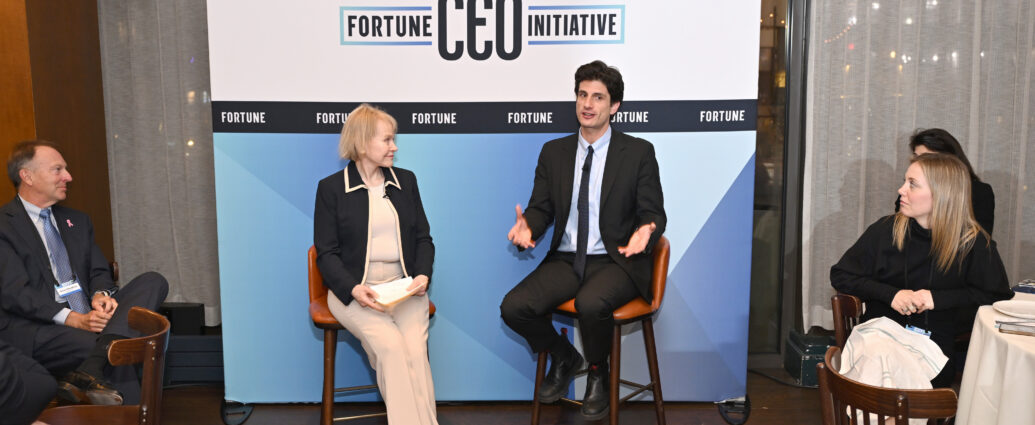
Jack Schlossberg thinks his grandfather would have been great at social media. He’s less sure JFK would recognize the country he once led.
“I think he would be shocked at how far we have fallen in terms of setting the standard for the rest of the world to follow on human rights, democracy, and freedom,” the 33-year-old Democratic congressional candidate told Fortune on the sidelines of a CEO Initiative dinner in New York City on Wednesday night.
But Schlossberg quickly added that former President John F. Kennedy would marvel at what America has built, citing a powerful economy, an innovative private sector, and breakthroughs in technology and science.
“I think my grandfather would be proud of how much our society has accomplished together,” he said.
Schlossberg is the only grandson of President John F. Kennedy, the son of Caroline Kennedy, and is widely seen as the next standard-bearer of the Kennedy political legacy. His comments tap into a broader anxiety about America’s global standing—and highlight the central tension in Schlossberg’s political message: pride in the country’s achievements, paired with concern about its direction.
He argued that Kennedy, the man who solved the Cuban Missile Crisis in the 1960s, “without firing a shot and stared down the Soviet Union without blinking,” would be unsettled by the same problems the country is still facing six decades later, from healthcare to education to immigration. “We need to do better.”
Schlossberg is running in a hotly contested race to fill New York’s 12th District seat currently held by retiring Democratic Rep. Jerry Nadler, who has served in Congress since 1992.
He’s facing off against Assembly Members Alex Bores and Micah Lasher, Trump critic George Conway, public health researcher Nina Schwalbe, and others in a district that covers Manhattan’s Upper West Side, Hell’s Kitchen, and parts of the East Side. But in February, Schlossberg landed a powerful backer in his first foray into politics and shared an endorsement letter he received from former House Speaker Nancy Pelosi.
“This is a consequential moment for the country — faith in our politics is fractured, and trust in government is tenuous,” Pelosi said in the statement. “This moment calls for leaders who understand the stakes and how to deliver for the people they serve.”
The backbone of his campaign is built around a slogan he acknowledges is “a little cheesy”: believe in something again.
Speaking to Fortune’s Diane Brady, Schlossberg connected his grandfather’s legacy to what he sees as the Democratic Party’s defining failure of this moment: not a collapse in policy, but a collapse in conviction. “I want a party that has the courage again and gives people something to believe in again, because we are right now at an all-time low for people who believe in government.”
The data backs him up. According to a Pew Research Center survey, just 17% of Americans say they trust the federal government to do what is right “just about always” or “most of the time,” ranking among the lowest readings in nearly seven decades of tracking.
While the Democratic National Committee’s postmortem of what went wrong during the 2024 election still remains under wraps despite Chair Ken Martin’s public pledge to release it, Schlossberg offered his own read on what Democrats keep getting wrong with young voters.
“I don’t think that people are as disillusioned as you might expect, and I don’t think that they are as far left as some of the rhetoric would have you believe,” he said. The real problem is a market failure. “There hasn’t been people serving the market of young people who are interested in politics and what they want to hear about. Young people are not a monolith, and young people are really smart. They [are] really able to tell authenticity from someone who’s not telling the truth.”
Voters “aren’t looking for a superhero,” he said. “They just want someone who kind of knows how to speak their language, meet them where they are, and give them something of value.”
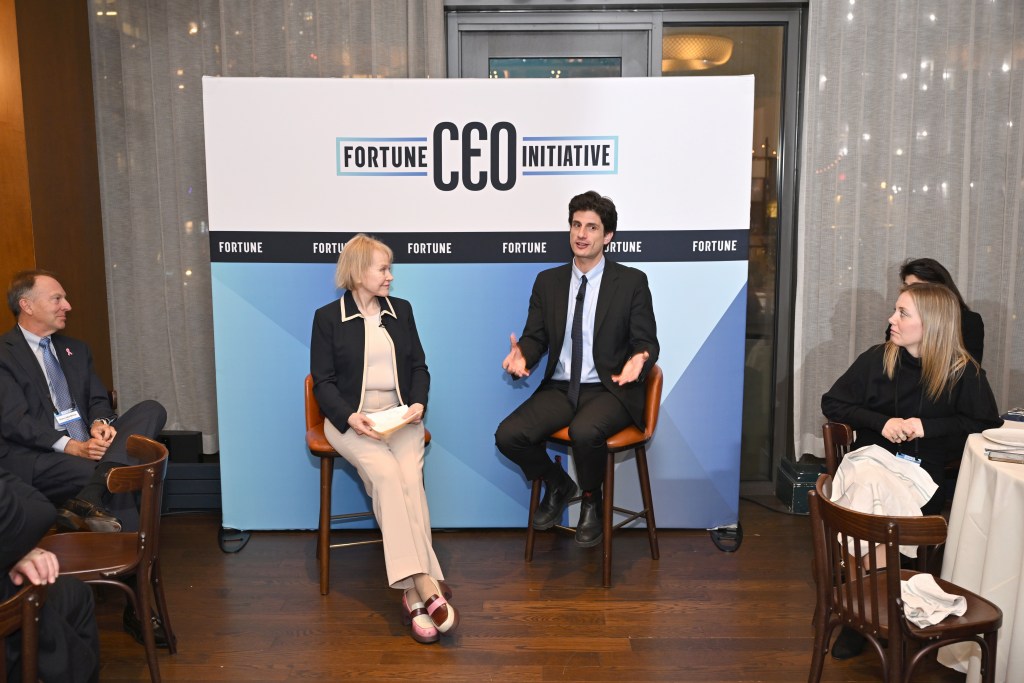
Schlossberg, a content creator with nearly 1.9 million followers across TikTok, Instagram, and X, has identified social media as a critical weakness in the Democratic strategy. He’s also self-deprecating about his own role in fixing it. “If I’m one of the best at this,” he told the audience, “it’s not saying much.”
Before launching his political career, the Yale and Harvard Law School graduate worked at a surf shop in Hawaii, volunteered as an EMT, and penned opinion pieces for Vogue, but has become known for his witty political commentary and provocative social media presence as a self-described “silly goose.”
“Other than my mother, I’m probably the last person who expected me to be a content creator,” he said. “That was not really my path in life.”
In 2024, Schlossberg headed to Wilmington, Delaware, to offer his ideas to the Biden campaign. They were not well received. “Long story short, I quit the campaign because I thought, if I don’t do this my way, I’m not going to be able to live with myself,” he said. About a month later, the campaign called him back.
The experience only sharpened his diagnosis of the party’s broader problem: “We’ve been out-competed in terms of reaching young people, especially…and telling them a story about what we’re for and not just being a reactive party that is against things.”
His advice for politicians trying to reach voters: “Be all parts of yourself. You don’t just have to be the candidate. People respond when you’re also the uncle, or the son, or the sports fan, or the humorous person that you might be. It’s about showing all different sides of your personality.”
On the sidelines, Schlossberg reiterated his take: “The Democratic Party was definitely late to the game on social media a year and a half ago.”
Schlossberg’s formula for viral social media success? Have no formula at all.
“My social strategy is to have none,” he said. “It’s to try to provide value to people, whatever that may be,” emphasizing that while he leans on jokes and witty takes, he always wraps it around something substantive.
“Maybe it’s a sense of humor, maybe it’s something inspiring, an accomplishment, or maybe it’s laying out information in a clear and intelligible, digestible way so that people can get educated,” he said. “A lot of the videos that do the best aren’t the ones that are wacky or pictures of me, a lot of times, they’re videos where I clearly lay out information in a way that people can understand.”
And if his grandfather were alive today?
“I think he would have no idea how to use a phone, but I think, for some reason, he would probably be pretty good at social media. He was very media savvy in his own day.”
This story was originally featured on Fortune.com

As Gen Z and millennials watch the value of their degrees dramatically decline, one graduate in the UK has become the face of the crisis. The unnamed graduate now owes more than £314,356 ($420,000) in student loans—more than the cost of an average British home, far above the eye‑watering £231,000 ($308,000) record that topped headlines just two years ago, and a new record for the most personal student debt on record in the UK.
While the average graduate is leaving university with around £45,000 in debt, 10 graduates now have loans exceeding £267,000 ($356,000), according to new figures from the Student Loans Company, as reported by The Times.
For context, the average property value in Britain is similarly around £270,000 ($360,000).
While just a handful of students owe the government more money for their education than a family will pay for an entire house, they’re part of a much wider problem: One analysis last year found that more than 150,000 people across Britain now have loans exceeding £100,000 ($133,000).
That figure had jumped by a third in just 6 months, as interest compounds on balances that many may never fully repay.
Even cautious graduates with the smallest loans are now facing a perfect storm: living costs and compounding interest are outpacing wages, leaving many to navigate years of financial strain, delayed milestones, and growing doubt about whether their degree was worth it.
This isn’t just a British problem. In the U.S., student debt has topped $1.7 trillion, while fresh graduates struggle to land stable jobs.
About a fifth of Gen Zers worldwide are classified as “NEETs” and are currently locked out of the job market. Across both America and Britain, millions of young people are not in education, employment, or training—despite expensive degrees.
One graduate with a maths degree spent more than a year applying to over 1,000 roles in the U.K. without landing a single offer, before moving his job hunt to Austria.
And as AI and automation replace many entry-level roles, the competition for what’s left is only getting fiercer. In the U.K. alone, more than 1.2 million applications were submitted for fewer than 17,000 graduate roles last year. Meanwhile, Americans report that the probability of finding a job right now has hit a record low.
They’re not imagining it: Goodwill places millions of job seekers across its 650-plus job centers, and it’s CEO Steve Preston says the charity is “preparing for a flux of unemployed young people” thanks to AI.
To make matters worse, not only are there fewer job opportunities available for fresh faced graduates, but CEOs are also increasingly saying they don’t even care about the expensive piece of paper they signed up for.
The social contract is broken. Many young people did exactly what they were told: They went to university, signed on for steep student loans, and trusted that the debt would be a down payment on a stable, well‑paid career. Instead, they’re watching their high school peers who skipped university to take trade jobs get a better shot at a six-figure career.
Now, 1 in 3 graduates don’t think their degrees were financially worth it. In fact, the Nexford University report highlighted that many have been left drowning in debt decades after tossing their graduation caps into the air.
Some 14% admit they had to delay moving out of their parents’ house and starting a family because of hefty student loads. Meanwhile, a third are having to delay saving for their first home and even retirement.
It’s no wonder that nearly half of Gen Z and millennials conclude that university was a waste of money.
This story was originally featured on Fortune.com
Unseasonably warm and even dangerous temperatures this week were up to 30F above average for the time of year
The record-breaking heatwave scorching the US west this week would have been “virtually impossible” if not for the climate crisis, a team of scientists has determined.
Millions of Americans from the Pacific coast to the Rockies baked under unseasonably warm and even dangerous temperatures this week, with temperatures up to 30F (17C) above average for the time of year.
This post was originally published here
Sharon Graham tells party to ‘wake up and smell the coffee’ after ‘shameful’ handling of Birmingham bin strike
Labour will be “decimated” in the upcoming local elections and should “hang their heads in shame” over the handling of the Birmingham bin strike, Unite’s general secretary has said.
In a speech to refuse workers near a waste depot in Tyseley on Thursday, Sharon Graham said working people were moving away from Labour in droves and called on the party to “wake up and smell the coffee”.
This post was originally published here

Mitsubishi Shokuhin, Japan’s largest food wholesaler and part of the massive Mitsubishi Corporation, needed a way to break into the U.S. Tourists were falling in love with Japanese products, but couldn’t find a way to buy them once they got home. Yet, for the wholesaler, building market access the normal way—finding individual retailers, securing appointments with buying managers—was proving to be a slow process.
The answer came from an unlikely place. A Mitsubishi‑sponsored MBA student took an internship at Yami, an up‑and‑coming U.S. e‑commerce platform selling Chinese, Japanese, Korean and other Asian products to Asian Americans and the broader Asian diaspora.
That assignment laid the groundwork for a strategic partnership that gives Mitsubishi Shokuhin a direct line to millions of American shoppers. Mitsubishi Shokuhin, which generated about 2.1 trillion yen ($14 billion) of revenue in its last fiscal year, is signing a strategic partnership with Yami that will put more of its portfolio of Japanese food and beverage brands on the platform for U.S. consumers.
“It was pretty random,” recalls Alex Zhou, Yami’s founder. “We weren’t actively raising money. We had already broken even, we had positive cash flow.” Yet over a series of meetings, Zhou says, it became clear that the Japanese trading house could offer something other than capital. “Japanese products and brands already represent more than 30% of what we sell. A name like Mitsubishi can really help with our Japanese supply chains,” he says.
“Yami gives brand owners instant access to consumers directly, and that is one of the attractive aspects of the platform,” says Kazuo Ito, a senior vice president at Mitsubishi Corporation who heads its food distribution and logistics division and is set to become president and CEO of Mitsubishi Shokuhin in April. The partnership, he says, allows Japanese manufacturers to bypass the slow grind of securing shelf space with U.S. retail buyers and instead reach millions of shoppers online.
Mitsubishi Shokuhin dates to 2011, when four long‑standing food wholesalers, some with histories stretching back more than a century, joined together in one company. The company now supplies a broad range of processed, frozen and chilled foods, alcoholic beverages and confectionery to around 3,000 retailers in Japan, including Japanese convenience‑store chain Lawson and lifestyle retailer Muji.
Mitsubishi Corporation—Japan’s largest trading house, with roughly $122 billion in annual revenue—took Mitsubishi Shokuhin fully private last year via a 137.6 billion yen (about $950 million) tender offer. Ito says part of the rationale was to accelerate overseas expansion by more tightly integrating Shokuhin into the wider Mitsubishi group, including sharing logistics networks and talent.
What is pushing a traditionally domestic wholesaler to look abroad? One factor is Japan’s tourism boom. The country welcomed a record 42.7 million foreign visitors in 2025, who spent 9.5 trillion yen (about $60 billion), according to government data.
“Many visitors come to Japan, have a good time and buy things for souvenirs or consumption,” Ito says. “But when they go home, they say, ‘I enjoyed that, but where do I get hold of it? Do I have to go back to Japan again?”
Japan’s exports of agricultural, forestry and fishery products and foodstuffs reached a record 1.7 trillion yen in 2025, with record high exports of beef and rice, and a doubling of green tea exports.
Ito argues platforms like Yami can turn those souvenir purchases into ongoing demand. “Companies like Yami can provide that ‘re‑experience’ of going to Japan by providing the products people enjoyed during their stay,” he says.
Zhou’s own journey underscores the gap Yami is trying to fill. He arrived in the U.S. from mainland China in 2007 as an international student and landed in Kansas, with the nearest Asian grocery store being two hours drive away.
After graduating and moving to the Los Angeles area, he launched Yami in 2013. Within three years, the business had nearly $100 million in revenue without outside funding, he says. Yami has since raised institutional capital, including a $50 million Series B round co‑led by Altos Ventures and Balsam Bay Partners.
The company positions itself as a one‑stop online marketplace for Asian products in North America, spanning snacks, beauty and health items, household goods and more. Zhou says the platform has close to four million registered customers.
Other ecommerce platforms have arisen to sell Asian goods, including Weee, founded in 2015 by Larry Lu. Asian supermarkets, like the Hanahreum Group’s H Mart, are also booming across the U.S.
Yami’s growth hasn’t been painless. Around 2018, Yami went through a period of cost-cutting. “I learned that you have to separate yourself from the business,” Zhou says. “You have to make decisions based on what’s best for the company. It’s really hard to fire people.”
More recently, higher U.S. tariffs on Asian goods—at times hitting triple‑digit levels on imports from China—have tested Yami’s supply chain and pricing, but Zhou sees the disruption as an opportunity. “We knew Asian supply chains better than others. That created an opportunity to thrive driving this crisis.”
Yami was initially built to serve Asian Americans and the Asian diaspora. “As an Asian and Chinese person, I first felt obligated to make overseas life better for immigrants like myself.”
Yet non‑Asian shoppers are increasingly buying not just Japanese and Korean snacks, but also Asian beauty products, health supplements, home goods and apparel. They’re also consuming Asian cultural products, like K‑pop and Japanese manga.
“The fastest-growing segment of Yami’s customer base is not Asian, but non-Asian,” Ito, from Mitsubishi Shokuhin, notes. “That is attractive for brand owners like us who want to go to the U.S.”
This story was originally featured on Fortune.com

“Scenario planning” has become boardroom shorthand for preparation to deal with the unknowable. It’s a practice that is never more vital than in wartime, when a sea mine, cyberattack, or sanction can reroute supply chains overnight and send energy prices soaring.
Instead of betting on one forecast about how events will unfold, the most resilient CEOs are now rehearsing several plausible futures at once and deciding—before the missiles start dropping, the virus becomes a pandemic, or the markets seize up—what they will do in each.
It’s an approach that was pioneered by Shell precursor Royal Dutch Shell. In the 1970s the energy company began developing a set of vivid alternative futures involving potential oil-supply disruptions. Shell did not invent the idea of developing such scenarios, which had earlier roots in military and Cold War strategy, but it was the first major company to embed systematic scenario planning at the center of corporate decision-making, largely through the work of economist and planner Pierre Wack. His London-based scenarios team had Shell’s top managers rehearse what they would do if various crises arose.
The doomsday prep paid off. In the early 1970s, Shell’s leaders wondered what would happen if events in Saudi Arabia raised the price of oil. By the time the Arab oil embargo shook the world soon thereafter, sending prices rocketing, Shell knew what to do. It had already slowed refinery expansion and adapted its refineries to handle many types of crude—while competitors vacillated. The common view in the industry is that Shell came through the oil shock far better than any other major producer. The success of those exercises turned Shell into a case study for scenario planning, and the company still regularly publishes its “Shell Scenarios.”
With a war underway, corporate planning is clearly not the only urgent matter. Since the U.S. and Israeli bombardment of Iran beginning in February, thousands have been killed and millions displaced across the region. Vital shipments have been disrupted, and prices have risen worldwide. But along with the human tragedy, the war—and particularly its effect on oil supply and prices—has affected nearly every business around the world.
“This isn’t a world war explicitly,” says Rebecca Patterson, a senior fellow at the Council on Foreign Relations, “but it is a war that is affecting the globe.”
That war was still raging when this article went to press—and the conflict has underscored the importance of insights that will help guide CEOs long after the war is over.
“Almost every client I talk to has a war room,” KPMG’s Mary Rollman told Fortune in April 2025, just days after President Trump announced his list of “reciprocal” tariffs on some 180 countries. Back then the war room was a new unit in most companies. “They get a team spun up, and the members have completely dropped their day job,” Rollman reported.
Those war rooms have found no reason to disband. The tariff situation is still “changing almost on a weekly if not daily basis,” says Abe Eshkenazi, CEO of the Association for Supply Chain Management, and the Iran war “is a continuation of the uncertainty.” The only difference is that the term “war room” is no longer a metaphor.
Perhaps every generation thinks its own era is the most perplexing and unpredictable of all time. But evidence shows that what businesspeople have had to deal with in recent times is truly off the charts. Uncertainty indexes going back monthly to 1985, compiled by researchers at Stanford University and the University of Wisconsin, show that instability and jitters about U.S. economic policy rose to record levels starting in 2018—and have never dialed down. (To create the indexes, the researchers measure disagreement among economic forecasters; federal tax code provisions set to expire; and articles on policy in major newspapers.) The indexes hit a new high after Trump revealed his 2025 tariffs. (The index covering the time of the Iran war hadn’t been published when we went to press.)
Don’t expect uncertainty to decline significantly anytime soon, says Ian Bremmer, founder and president of Eurasia Group. International institutions—the United Nations Security Council, the World Trade Organization, the Group of Seven (G7)—clearly aren’t as effective as they once were at maintaining international order, he explains: “We are now living in a G-Zero world, one in which no single country or bloc of countries has the political and economic leverage—or the will—to drive a truly international agenda.”
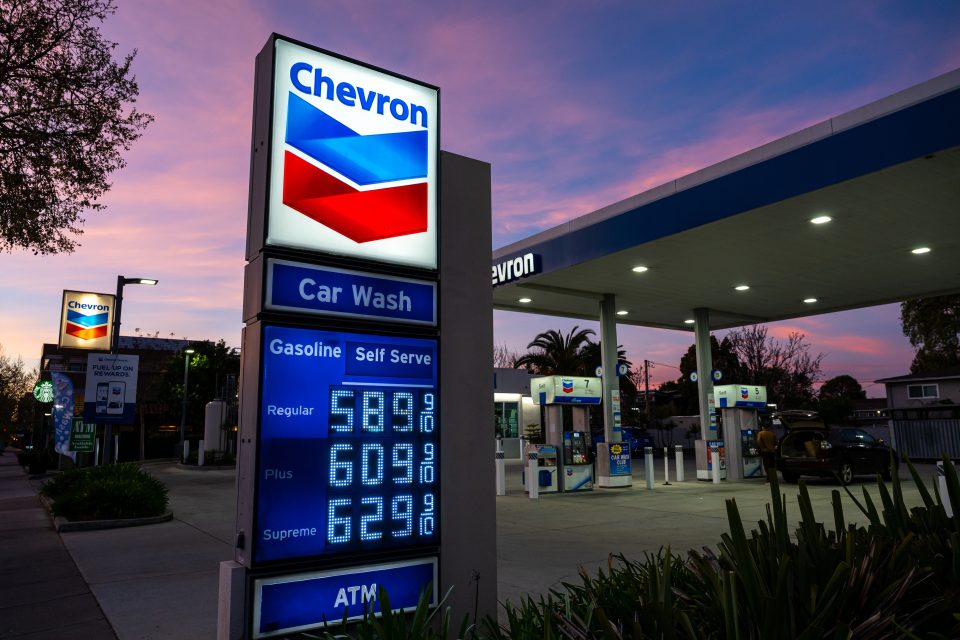
Companies caught in the commercial chaos must now fend for themselves. In a tumultuous global order, “supply-chain officers are looking for inventory buffers, alternative vendors, redundancy in their supply chains,” says Eshkenazi. “That’s not compatible with long-term strategies.”
In other words: Companies’ war rooms won’t be closing up shop anytime soon.
“Scenario testing or stress testing: If you’re not already doing it, you need to start yesterday,” says Patterson of the Council on Foreign Relations. In addition to companies stress testing their costs and supply chains, she recommends they also test their resistance to cyberattacks. “Iran is a strong actor in the cyber world,” she says. Its successful March attack on the Stryker medical-device maker, in which its goal was apparently not to receive ransom but to destroy data, was only a recent example. Many of Iran’s previous cyberattacks have targeted crucial economic infrastructure, including hospitals, ports, power plants, and railroads.
Some of the most useful scenarios are based on second- or third-order effects of an event. With the Iran war, Patterson says, “the big one is stagflationary risk,” a second-order effect that creates slow economic growth, high unemployment, and high inflation. With gasoline prices and shipping costs already rising, “expect to see this feed into inflation expectations and possibly actual inflation,” she says. Third-order effects might include rising interest rates and borrowing costs, and a strengthening of the dollar, making it easier to buy imports and harder to sell exports.
The Iran war will likely continue to have effects long after it ends. Patterson cites an old line about gasoline prices: “They go up like a rocket and come down like a feather.”
That’s not to say that the Iran war will be a disaster on COVID’s scale. But no one knows how it will turn out, just as no one in the pandemic’s early days knew what would happen next.
Employees, shareholders, customers, suppliers—all were frightened and looking for answers that not even CEOs had. The pandemic changed leadership in ways that still linger, and today’s executives and managers would do well to remember that transformation.
“Scenario testing or stress testing: If you’re not already doing it, you need to start yesterday.”
Rebecca Patterson, Council on Foreign Relations
The overarching theme from those days was the end of the classic CEO persona—informed, prepared, firmly in charge, and invulnerable. That changed quickly. “CEOs went from being godlike to being more human,” said Jim Citrin of the Spencer Stuart executive search firm. A CEO told Fortune at the time, “I found the magic in an organization is about being super down-to-earth, letting people see you for who you are, with all the vulnerabilities that you face.”
Now, as the fog of war drifts even into corner offices, CEOs again face questions they can’t answer: How long will the war last? Will it escalate? How high will oil prices go?
It’s a good time to remember a lesson from the pandemic: Executives who confess they’re mere mortals and don’t pretend to know everything can actually become more trustworthy and more effective as leaders.
This article appears in the April/May 2026 issue of Fortune with the headline “For CEOs, it’s time for a wartime mindset.”
This story was originally featured on Fortune.com
The Iran war is pushing up “cost-push” inflation in Japan as opposed to the “demand-pull” inflation the BOJ seeks.
This post was originally published here
In today’s newsletter: Bereaved families say the latest findings confirm long-standing concerns about capacity, care and political choices
Good morning. Yesterday lunchtime the UK Covid-19 inquiry published its latest findings – this time on how the NHS, its staff and patients were affected during the pandemic. It delivered a stark verdict: the health service “teetered on the brink of collapse” and only avoided it through the “almost superhuman efforts” of staff.
Heather Hallett, the inquiry chair, said healthcare systems “coped, but only just” – and rejected the claim made by Conservative ministers at the time that the NHS had not been overwhelmed. For bereaved families, that language matters.
Middle East | Iran said it would show “zero restraint” if its energy infrastructure was targeted again as Qatar revealed that almost a fifth of its liquefied natural gas export capacity had been knocked out in an Iranian strike.
Health | Meningitis vaccination has been expanded in Kent after cases linked to a Canterbury nightclub rose to 27. Two people have died, and officials say the outbreak is being contained.
Politics | Muslim leaders have condemned Nigel Farage’s call to ban public prayer by Muslims in the UK as bigoted and warned of a “growing tide of hate” after Kemi Badenoch questioned whether the events fitted “within the norms of British culture”.
EU | EU leaders have pledged to stand behind Cyprus as it seeks “an open and frank discussion” on the future of the British bases on the island, which have become a target after the outbreak of the latest Middle East crisis.
Immigration | A 16-year-old schoolgirl is stranded in Denmark after she was not allowed to board a flight to the UK due to new border rules on dual nationals.
This post was originally published here
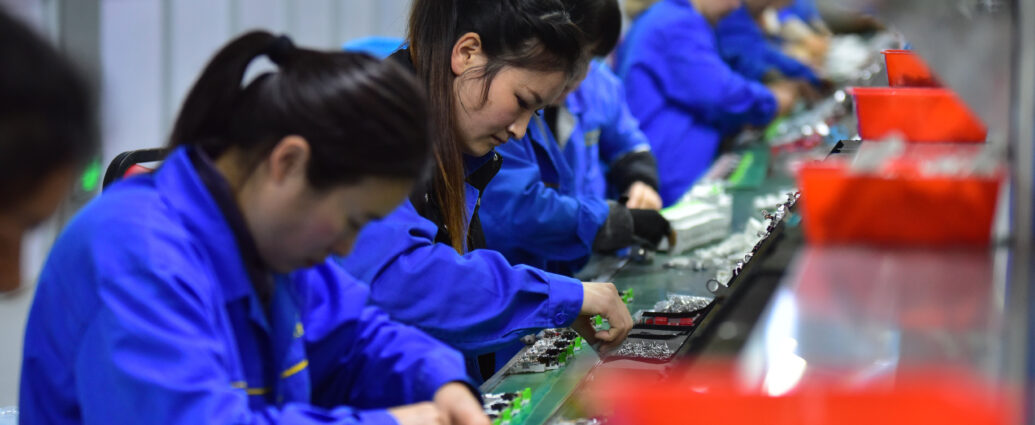
China is becoming a “factory to the factories,” ramping up its exports of industrial components like smartphone parts, processors, memory chips and lithium-ion batteries, destined for final assembly in economies like Southeast Asia.
“We may buy fewer ‘Made in China’ goods going forward, but more products will have internal components manufactured in China,” says Jeongmin Seong, a partner at the McKinsey Global Institute (MGI), the consulting firm’s research arm.
China’s exports of consumer goods declined by 2% last year, yet exports of intermediate goods rose by 9%.
Trade between the U.S. and China declined by 30% last year, due to U.S. President Donald Trump’s steep tariffs on Chinese goods. Yet “China stepped up to diversify its trading partners, and mostly with emerging economies,” explains Seong, who is also the author of a new MGI report on global trade. Those new trading partners, mostly manufacturing hubs, had more need for cheap machinery and components from China, rather than more costly finished products.
MGI’s report, titled Geopolitics and the Geometry of Global Trade, notes that the U.S. also changed its trading partners last year. The country successfully replaced two-thirds of the goods it previously sourced from China, sourcing smartphones from India and laptops from Southeast Asia.
ASEAN in particular is playing a key role in tariff-induced trade adjustments. Southeast Asian countries were already picking up manufacturing business moving out of China, as companies tried to manage earlier tariffs on Chinese goods and diversify their supply chains in the wake of the COVID pandemic.
Trump’s newest trade war is likely to accelerate the shift to adopt “China plus one” supply chains.
“ASEAN played the role of matchmaker for the global supply chain and kept it from breaking up,” Seong says. “ASEAN’s exports grew about 14%, which is more than two times as fast as the global average.” Notably, Southeast Asia ramped up trade with both China and the U.S., with the ASEAN-China and ASEAN-U.S. trade corridors being two of the world’s fastest growing, according to MGI.
Despite post-”Liberation Day” concerns last year that globalization was dead, global trade hasn’t declined. Seong sees less evidence that countries are moving manufacturing back home or to neighboring countries. “Despite a lot of headlines about onshoring, reshoring and nearshoring—that is not happening at a global scale,” he says. “More countries are getting connected over longer distances, and in that sense, we can argue that globalization is continuing.”
Instead, trade is being reconfigured along geopolitical lines. Countries are trading more with aligned countries, and trading less with countries seen as competitors or rivals. It’s not just the U.S.; China, too, has increased trade with Southeast Asia, Europe, Latin America and Africa as its geopolitical contest with Washington intensifies.
Investment, too, is being configured across geopolitical lines. The U.S. is investing more in its allies; it’s sourcing investment from allies like Japan, South Korea, and the Middle East, particularly in areas like semiconductors. China, on the other hand, is now a net investor overseas, not just because the country is investing more, but also because U.S. investment into the country has dried up.
Last year, the geopolitical distance of foreign direct investment plunged by 13%, while the same metric declined by just 7% in trade, according to MGI. (“Geopolitical distance” is MGI’s metric for measuring how closely two countries are aligned in their foreign policies, politics, and alliances.)
“Money can move faster than physical networks,” Seong explains.
Tariffs may come and go, Seong suggests, but a deeper shift of who trades and invests with whom is likely to endure long after the latest trade war headlines fade. “Geopolitical events like tariffs could be short-term splashes, but structural waves—like the geopolitical realignment we’re seeing—will endure,” he concludes.
This story was originally featured on Fortune.com
Market volatility and geopolitical tensions have choked liquidity in India’s IPO market, forcing high‑profile companies to hit pause.
This post was originally published here
Second landfall expected over weekend in NT as Queensland premier says relatively limited damage so far ‘an incredibly good news story’
Get our breaking news email, free app or daily news podcast
Severe Tropical Cyclone Narelle barrelled across far north Queensland on Friday as one of the state’s fiercest cyclones in living memory – downing trees, ripping off roofs and swelling rivers.
The system crossed the Cape York peninsular at 7am on Friday as a “high-end” category 4 storm with sustained winds of 195km/h – just 5 km/h short of being a category 5 storm.
This post was originally published here

Royer Perez-Jimenez is the second person to die in ICE custody this week.
(Image credit: Yuki Iwamura)

This post was originally published here

This post was originally published here
This blog is now closed
Get our breaking news email, free app or daily news podcast
Far north residents in the path of Severe Tropical Cyclone Narelle say they have taken shelter as winds begin to swirl in the remote Cape York Communities.
Sara Watkins, the owner of Coen Mechanical and the Little Bush Pantry in the township of Coen – population about 330 – say they moved to a more secure brick building when the winds picked up about 4am, local time.
The wind has really started to pick up, you can hear a couple of things moving around outside.
Until the wind started it was so still. It was raining but it was really still. That’s not like Coen, when it rains it pours and the wind moves about.
In Coen there are a lot of old properties that have been through cyclones in the past, they are standing but they’re not cyclone rated by any means.
This post was originally published here
IEA makes 10 recommendations to help households and businesses prepare for a drawn-out disruption to energy markets
The world’s energy watchdog has advised governments to reduce highway speeds and encouraged workers to carpool or, ideally, work from home to combat soaring oil prices and impending fuel shortages caused by the Middle East conflict.
It has also recommended countries consider limiting car access to designated zones in large cities, by giving vehicles with odd-numbered plates access on different weekdays to those with even-numbered plates.
Work from home where possible to save petrol.
Reduce highway speed limits by at least 10km/h to reduce fuel usage.
Encourage public transport to reduce oil demand.
Limit car access to roads in large cities through a number-plate rotation scheme.
Increase car sharing.
Encourage efficient driving for commercial vehicles through load optimisation and vehicle maintenance.
Divert LPG use from transport to preserve it for essential needs like cooking.
Avoid air travel where possible.
Encourage electric cooking and other options to reduce reliance on LPG.
Help industrial facilities switch between different petrochemical feedstocks to free up LPG.
This post was originally published here