




Your Instagram DMs are no longer encrypted: Meta is reversing course on privacy and removing end-to-end encryption from Instagra
On May 8, Instagram will be able to read your DMs again. Meta is ending support for end-to-end encrypted direct messages — reversing a feature it introduced just two years ago — and reopening the door to automated content scanning, AI-powered moderation, and easier compliance with law enforcement requests. TikTok, meanwhile, confirmed it never offered the protection at all. Together, the moves signal that the era of unconditional privacy promises on social media is over.
In the span of two weeks, two of the world’s largest social media platforms have signaled they are done treating privacy as an unconditional promise. Together, the moves mark a decisive reckoning with what private messaging on social media actually costs—and who pays the price.
A TikTok spokesperson told Fortune that the company’s approach to messaging has not changed. “Direct messages on TikTok are secured using industry-standard encryption in transit and at rest,” the spokesperson said, comparing the technology to what Gmail uses. “People’s messages are private and protected. Access to message content is strictly limited, subject to internal authorization controls, and only available to trained personnel with a demonstrated need to review the information as part of safety investigations, legal compliance, or other limited circumstances.” In other words: not end-to-end encrypted, but far from an open book.
The distinction matters. The TikTok spokesperson said the design is deliberate—and that the lack of end-to-end encryption is itself a safety feature. “Messaging on TikTok is not end-to-end encrypted,” they said. “This helps make our platform undesirable for those who would attempt to share illegal material.” Meta had not yet responded to requests for comments.
When Instagram’s encryption sunsets in two months, Meta will regain the technical ability to scan and act on the content of users’ DMs. Right now, under the opt-in encrypted system, even Meta’s own servers cannot see message content. That changes May 8, reopening the door to automated content moderation, AI-powered scam detection, and easier compliance with law enforcement requests.
End-to-end encryption isn’t keeping people safe
Brian Long, CEO and co-founder of Adaptive Security, a firm that trains organizations to defend against AI-powered attacks, including deepfakes and voice cloning, says the calculus both companies are making reflects a necessary course correction. “It’s a challenging place, because on the one side, I think a lot of these companies have leaned into privacy,” Long told Fortune. “But on the other hand, it’s also led bad actors to do anything from run scams in the background to attack consumers. What they’re recognizing is that as great as it sounds for everything to be encrypted, it’s giving a lot of runway to bad actors.”
The regulatory pressure is accelerating that shift. The Take It Down Act, signed into law last year, requires platforms to remove non-consensual intimate imagery—including AI-generated deepfakes—within 48 hours of a valid request, with enforcement beginning May 19, just eleven days after Instagram’s encryption cutoff. Long said that end-to-end encryption had made that kind of compliance nearly impossible. “If it’s all encrypted and they can’t see the messages, it gets harder for them to actually police those actions,” he said. “They’re going to be accountable under the law.”
Beyond legal deadlines, Long argues that internal safety teams and not law enforcement are the first and most important line of defense, and encryption had effectively neutralized them. “The safety team can jump in and flag messages to the consumer before they fall for a scam,” he said. “When everything is protected by encryption, the safety team really can’t do anything. A lot of this stuff should be handled by the company before it hits law enforcement. Otherwise, law enforcement would just be completely overwhelmed.”
Last year, over a million seniors fell victim to fraud, costing them more than $81 billion in estimated losses, according to an FTC report. AI-powered attacks, from deepfakes, voice cloning, and year-long romance scams, are growing at an estimated 17 times year over year. “The scale of the attacks, especially on alternate messaging channels, is something we’re hearing consistently from customers,” Long said. “Those channels where you had encryption historically were particularly ripe for this issue.”
For privacy advocates, lifting encryption is still a serious concession, and one that opens user data to platform surveillance alongside the safety benefits. But for scam prevention professionals, it’s the right call. “I think companies are recognizing there are some potential serious downsides to privacy,” Long said. “At the end of the day, this correction is probably needed in order to stop more of the bad actors. And if privacy is the biggest priority, there are applications available that people can go use.”
This story was originally featured on Fortune.com

Amazon goes from free fast delivery to $14.99 within the hour
Amazon said Tuesday that it has started offering faster U.S. deliveries of selected products for a fee, including pantry staples, clothing, over-the-counter medications, cleaning supplies and electronics.
The e-commerce colossus said customers in more than 2,000 cities, towns and suburban areas can now choose to have orders from its speedy-shipment inventory of 90,000 items delivered in three hours. The charge is $4.99 for Amazon Prime members and $14.99 for nonmembers.
One-hour delivery slots are available in hundreds of places, including major metropolitan areas like Los Angeles, Chicago and Washington, and smaller cities such as Des Moines, Iowa and Boise, Idaho, the company said. Prime members will get charged $9.99 for the service, which costs nonmembers $19.99, Amazon said
The Seattle-based company said it started testing the express delivery service late last year and expanding it this month.
“We saw an opportunity to use our unique operational expertise and delivery network to help make customers’ lives a little easier while unlocking even more value for Prime members,” Udit Madan, senior vice president of worldwide operations at Amazon, said in a statement.
Amazon launched its Prime program in 2005, offering members free two-day delivery on a selection of 1 million items, primarily DVDs, CDs, and books. Prime members now have access to over 300 million items across 35 categories, and tens of millions of products are available for free same-day or next day deliveries.
The company has used robotics and artificial intelligence technology to speed up order fulfillment. Regionalizing its U.S. delivery network into eight areas also has helped reduce delivery times, Amazon said.
Amazon is testing an ultra-fast service for deliveries in 30 minutes or less. Amazon Now is available in various cities in India, Mexico and the United Arab Emirates and is being tested in several communities in the U.S. and the United Kingdom, according to the company.
Rival retailer Walmart has focused on faster deliveries too. The Bentonville, Arkansas-based company says it offers same-day deliveries in under three hours to 95% of the U.S. population, compared to 76% three years ago.
This story was originally featured on Fortune.com
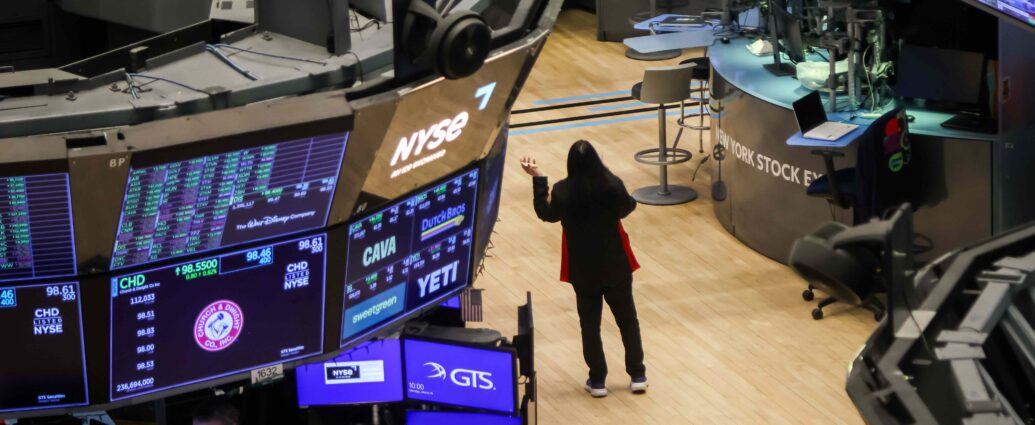
Stock Market Today: Futures Little Changed as Oil Resumes Ascent After One-Day Pause; Two-Day Fed Policy Meeting Kicks Off
This post was originally published here

Either Trump is lying or the 4 other living presidents are, about war on Iran
Twice on Monday, President Donald Trump said he’d wrangled a confession of sorts from an Oval Office predecessor who he said had expressed regret in a private conversation about not attacking Iran the way Trump has been doing for more than two weeks.
But there’s just a little problem: Representatives for the four living former presidents — three Democrats and one Republican — said none have been in touch with Trump recently.
Trump declined to name the former president when reporters asked who it was, saying he didn’t want to “embarrass him.”
The Republican president first told the story during extended remarks about the Iran war as he opened a meeting of the board of trustees of the Kennedy Center. Trump is chairman of the board and held the meeting at the White House.
He repeated that Iran had been a threat to the United States for decades but said he is the only president who had the courage to do something about it.
“Look, for 47 years, no president was willing to do what I’m doing, and they should have done it a long time ago,” he said. “It would have been a lot easier. There’s no president that wanted to do it.
“And yet every president knew. I’ve spoken to a certain president, who I like, actually, a past president, a former president. He said, ‘I wish I did it, I wish I did,’ but they didn’t do it. I’m doing it,” Trump continued.
Asked which former president he’d spoken to, Trump said: “I can’t tell you that. I don’t want to embarrass him. It would be very bad for his career, even though he’s got no career.”
Representatives for each of former Presidents Bill Clinton, George W. Bush, Barack Obama and Joe Biden said they had not spoken with Trump recently. The individuals spoke on condition of anonymity because they are not authorized to discuss the former presidents’ private conversations.
The White House did not immediately respond to a request for comment after being informed that none of the former presidents said he had spoken with Trump recently.
Trump and all four past presidents were last together in the same space for his inauguration on Jan. 20, 2025 — well before the war.
He has been extremely critical of Biden and Obama, often saying Biden is the “worst president in the history of our country” and accusing Obama of negotiating a “horrible deal” with Iran over its nuclear weapons. Trump withdrew the U.S. from that agreement the first time he was president.
But the Republican recently offered sympathetic comments about Clinton, saying it “bothers” him that the former president had been called to give a deposition to Congress about his friendship with convicted sex offender Jeffrey Epstein.
“I liked Bill Clinton. I still like Bill Clinton,” Trump said in a Feb. 4 interview with NBC News. “I liked his behavior toward me. I thought he got me, he understood me.”
Trump repeated his story about discussing Iran with a former president later Monday in the Oval Office, where he announced that Vice President JD Vance will lead a task force that was created to eliminate fraud in federal benefit programs.
“Was it George W. Bush?” a reporter asked.
“No,” Trump said.
“Was it Bill Clinton?” the reporter asked.
Trump said: “I don’t want to say. I don’t want to say,” then added that “it’s somebody that happens to like me. And I like that person, who’s a smart person. But that person said, ‘I wish I did it,’ OK, but I don’t want to get into who, OK. I don’t want to get them into trouble.”
This story was originally featured on Fortune.com


Essential Financial Ratios for Analyzing Pharmaceutical Stocks
This post was originally published here



Competing LLMs Were Asked to Pick Stocks. Their Choices Revealed AI’s Limitations.
New research underscores the risks of relying on the tools without questioning what they may not know.
This post was originally published here
London bars shun Margot Robbie’s gin over shellfish allergen concerns
Exclusive: actor’s Papa Salt gin to get oyster-free version after venues says it is ‘not worth the risk’
Margot Robbie said she “couldn’t wait” to see the artisan gin brand she had created stocked in her London local. But the willingness of the capital’s venues to fulfil her dream has been seriously compromised by three words on the side of the bottle – “warning: contains molluscs”.
The Wuthering Heights star has had to change the recipe of her spirit after top London bars and restaurants rejected it due to allergen concerns, the Guardian can reveal.
This post was originally published here

Strategy, BitMine Make Biggest 2026 Buys Before Fed Meeting—Is There More To It?
Strategy (NASDAQ:MSTR) acquired 22,337 Bitcoin (CRYPTO: BTC) while BitMine (NYSE:BMNR) purchased 60,999 Ethereum (CRYPTO: ETH) during the week ending March 15, marking the largest 2026 purchases for both companies.
The Record Buys
Strategy’s purchase was its largest single-week Bitcoin buy of 2026, following the prior week’s acquisition of 17,994 BTC for $1.28 billion.
Strategy now holds 761,068 BTC worth approximately $55.8 billion but sits on an estimated $1.7 billion in unrealized losses.
The company is underwater by conventional metrics yet doubled down anyway, buying at an average of $70,194 per coin versus its November 2024 record purchase at $88,627.
Meanwhile, BitMine acquired 60,999 ETH for roughly $140 million, edging out the previous week’s haul of 60,976 ETH.
Total holdings now stand at 4,595,562 ETH at $2,185 per token, representing 3.81% of Ethereum’s 120.7 million token supply.
Moreover, Ethereum Foundation sold 5,000 ETH directly to BitMine at $2,042.96 to fund protocol research …

Canadian billionaire Stephen Smith buys £300mn stake in The Economist
This post was originally published here


Research: How the “Accent Penalty” Determines Who Gets Heard
And what leaders can do to mitigate its effects in the workplace.
This post was originally published here

$12 billion AI startup founder says future tech giants could operate with fewer than 100 employees
Good morning. Could the next generation of tech giants fit in a single office?
In the coming years, some of the most valuable companies in the world will have “sub-100 employees,” Daniel Nadler, the founder and CEO of OpenEvidence, predicted during a panel session at Nvidia’s GTC 2026 summit on Monday. “I think the world’s not prepared for that,” Nadler said.
OpenEvidence is an AI‑powered medical information and clinical decision support company used by physicians. In January, the startup closed a $250 million Series D funding round, co‑led by Thrive Capital and DST Global, which doubled its valuation to approximately $12 billion.
“Take OpenEvidence, we have sub-100 employees, yet 300 million Americans will be treated this year by a doctor who used OpenEvidence in the loop,” Nadler said. Each employee in his company is indirectly supporting millions of patients, he estimated.
“The scale is unfathomable, and that’s directly a result of what Jensen and Nvidia, and these tools and the people who develop on top of that technology have enabled as the new starting point,” he said, adding, “I think the world economy—and certainly the tech economy—is going to look unrecognizable.”
Leaders across tech are beginning to echo the idea that companies could be built and run by smaller teams. For example, OpenAI CEO Sam Altman has emphasized that AI acts as a collaborator that lets individuals and small teams achieve results that once required much larger organizations, amplifying productivity and creativity. Block recently announced it would cut 40% of the fintech company’s headcount because of gains in AI. The decision was part of a longer transformation, Block CFO and COO Amrita Ahuja recently told me. “This is a two-year journey for us,” she said. “This was not an overnight decision.”
The rise of ultra-efficient, AI-driven teams could require a fundamental restructuring of the workforce, according to new research from McKinsey. To capture the full value of AI, organizations need to go beyond “a piecemeal approach, and push for a double transformation—both technical and organizational—that includes reimagining how work gets done across functions and workflows,” according to the report. It will likely take a lot of work and preparation, along with training and upskilling for employees whose roles may be redefined.
While AI can dramatically increase productivity, fully realizing its potential is a complex and demanding challenge for companies of all sizes.
Sheryl Estrada
sheryl.estrada@fortune.com
This story was originally featured on Fortune.com

Identifying Financial Trouble: Company Warning Signs
This post was originally published here
The Shifting Relationship Between Business and the U.S. Government
A conversation with Yale’s Jeffrey Sonnenfeld about the current relationship between the state and private enterprise.
This post was originally published here


Microvast, Dragonfly Energy, Natural Gas Services And Other Big Stocks Moving Lower In Tuesday’s Pre-Market Session
U.S. stock futures were lower this morning, with the Dow futures falling around 0.1% on Tuesday.
Shares of Microvast Holdings Inc (NASDAQ:MVST) fell sharply in pre-market trading after reporting weak quarterly results.
Microvast reported quarterly losses of 11 cents per share which missed the analyst consensus estimate of profit of 2 cents per share. The company reported quarterly sales of $96.399 million which missed the analyst consensus estimate of $133.755 million.
Microvast shares dipped 22.9% to $1.78 in pre-market trading.
Here are some other stocks moving lower in pre-market trading.
- Dragonfly Energy Holdings Corp (NASDAQ:DFLI) dipped 24.4% to $2.21 in pre-market trading …
This post was originally published here
















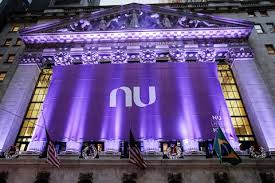




Ulta Beauty’s Momentum Score Loses Luster As CEO Warns Of ‘Global Uncertainty’ After Tepid Forecast
Ulta Beauty Inc. (NASDAQ:ULTA) shares experienced a sharp reversal as the stock’s momentum score plummeted from a bullish 91.24 to 77.65 on a week-over-week basis.
Momentum Cracks Following Conservative 2026 Guidance
The erosion in price strength follows a disappointing fiscal 2026 outlook that overshadowed an otherwise strong fourth-quarter performance.
Despite beating revenue estimates with $3.9 billion in sales, the stock has retreated 14.59% year-to-date as investors digest a normalized post-pandemic beauty market.
The Benzinga Edge Stock Rankings now reflect a complete breakdown in ULTA‘s price structure. According to the latest data, Ulta’s short, medium, and long-term trends have all shifted to negative.

This post was originally published here
7 Factors That Drive Returns on AI Investments, According to a New Survey
And how companies can forecast the impact AI might have on their returns.
This post was originally published here





The next energy superpower will make its own fuel
Oil has cleared $100 a barrel and could be on its way to $150.
The Strait of Hormuz — a narrow waterway through which roughly a fifth of the world’s oil supply passes — has effectively closed to tanker traffic amid the escalating U.S.-Israeli strikes on Iran. Once again, the global economy is discovering the same uncomfortable truth: Modern energy security depends on supply chains that can break overnight.
The pattern is all too familiar. A geopolitical shock hits the global oil supply chain, and prices surge. It happened in the 1970s, in 1990, in 2003. It’s happening now.
The modern energy system was built around a simple assumption: Fuel is produced in a few places and consumed everywhere else. Oil is extracted in one region, refined in another, and shipped thousands of miles through pipelines, canals, and maritime chokepoints before reaching the end user.
When that chain works, it is remarkably efficient. When it breaks, the effects ripple globally almost overnight. Japan imports roughly 90 percent of its oil from the Middle East. Bangladesh has called for fuel rationing. South Korea has capped gasoline prices for the first time since the Asian financial crisis.
The issue isn’t just oil supply. It’s the structure of the system itself. The world runs on a centralized fuel production model designed for the industrial geography of the 20th century — a handful of massive refineries producing enormous volumes of fuel that must then move through fragile global logistics networks to reach markets. That model made strategic sense when control over oil reserves meant control over energy. But it also created a system where a single blocked canal, damaged refinery, or closed shipping lane can disrupt entire economies.
Today, an alternative is beginning to emerge. Across defense programs, industrial research labs, and energy startups, a new class of fuel systems is being developed that can produce synthetic fuels locally using carbon dioxide, hydrogen, and electricity — manufacturing fuel where it is needed rather than shipping it thousands of miles. The idea sounds radical. In reality, it reflects a broader shift already underway: from centralized production to distributed systems. Solar power decentralized electricity generation. Data centers decentralized computing. A similar shift may now be underway in fuel.
The scale of the system being disrupted is enormous. The world consumes roughly 100 million barrels of oil per day, supporting a multi-trillion-dollar refining, shipping, and storage network built around centralized infrastructure. Even a modest shift toward localized production would represent one of the largest industrial transitions in modern energy history. The rapid expansion of AI infrastructure is already reshaping global energy demand — data centers could consume nearly 1,000 terawatt-hours of electricity annually by 2030, roughly equivalent to Japan’s total electricity consumption — making energy systems that can generate power and manufacture fuel locally increasingly strategically valuable.
The economics of that shift become clearest in environments where traditional logistics break down. In remote or contested regions, the fully delivered cost of diesel or jet fuel can reach $100 to $400 per gallon once transport, protection, and storage are factored in. Military planners have long understood that moving fuel is often more expensive — and more dangerous — than producing it. The Pentagon has identified on-site fuel production as a strategic priority, funding development of deployable systems capable of generating jet fuel or diesel directly in the field. Similar efforts are emerging across Europe and Asia.
Critics are quick to point out that synthetic fuels cost more than conventional ones — and they’re right, for now. But that comparison ignores the full cost of the existing system, including the geopolitical risk premiums embedded in global oil supply chains. One common objection is that synthetic fuel production requires a fully built-out green hydrogen ecosystem before it’s viable. It doesn’t. Production can start today using available feedstocks and gets cleaner as inputs improve.
Every generation experiences its own oil shock. Each time, governments scramble to stabilize supply while markets absorb the economic impact. What’s different today is that the technology to change the structure of the system is beginning to exist.
Energy security has historically meant securing access to oil reserves. In the next era, it may mean something different: the ability to produce fuel wherever it is needed, using whatever resources are available.
The nations and industries that develop that capability first will hold a different kind of strategic advantage. They won’t need to control the oil. They’ll simply be able to make the fuel.
The opinions expressed in Fortune.com commentary pieces are solely the views of their authors and do not necessarily reflect the opinions and beliefs of Fortune.
This story was originally featured on Fortune.com


Bitcoin At $74,000 As Ethereum, XRP, Dogecoin Digest Monday Gains
Bitcoin is trading at $74,000 after Bitcoin ETFs saw $201.6 million in net inflows on Monday, while Ethereum ETFs reported $35.9 million in net inflows.
Cryptocurrency |
Ticke | Price |
| Bitcoin | (CRYPTO: BTC) | $73,977.66 |
| Ethereum | (CRYPTO: ETH) | $2,326.42 |
| Solana | (CRYPTO: SOL) | $93.71 |
| XRP | (CRYPTO: XRP) | $1.51 |
| Dogecoin | (CRYPTO: DOGE) | $0.1001 |
| Shiba Inu | (CRYPTO: SHIB) | $0.056093 |
The meme coin market capitalization rose by 4.2% to $35.6 billion.
Trader Commentary:
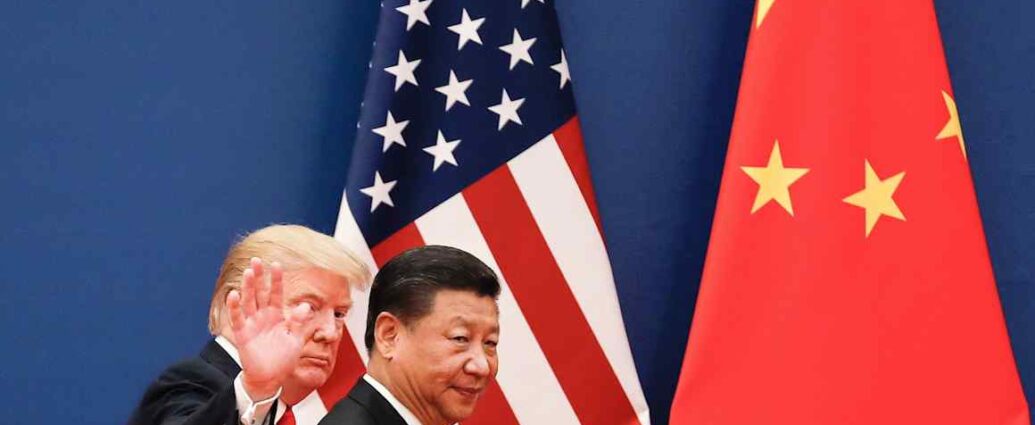
China is not going to bail Trump out
This post was originally published here

Semtech To Rally Around 18%? Here Are 10 Top Analyst Forecasts For Tuesday
Top Wall Street analysts changed their outlook on these top names. For a complete view of all analyst rating changes, including upgrades and downgrades, please see our analyst ratings page.
- Morgan Stanley raised Lemonade Inc (NYSE:LMND) price target from $80 to $85. Morgan Stanley analyst Bob Huang upgraded the stock from Equal-Weight to Overweight. Lemonade shares closed at $57.74 on Monday. See how other analysts view this stock.
- Mizuho cut the price target for Canadian Solar Inc (NASDAQ:CSIQ) from $21 to $19. Mizuho analyst Maheep Mandloi upgraded the stock from Underperform to Neutral. Canadian Solar shares closed at $18.04 on Monday. See how other analysts view this stock.
- Piper Sandler raised Tandem Diabetes Care Inc (NASDAQ:TNDM) price target from $21 to $33. Piper Sandler analyst Matt O’Brien upgraded the stock from Neutral to Overweight. Tandem Diabetes Care shares closed at $21.91 on Monday. See how other analysts view this stock.
- Stifel increased price target for Ichor Holdings Ltd
This post was originally published here
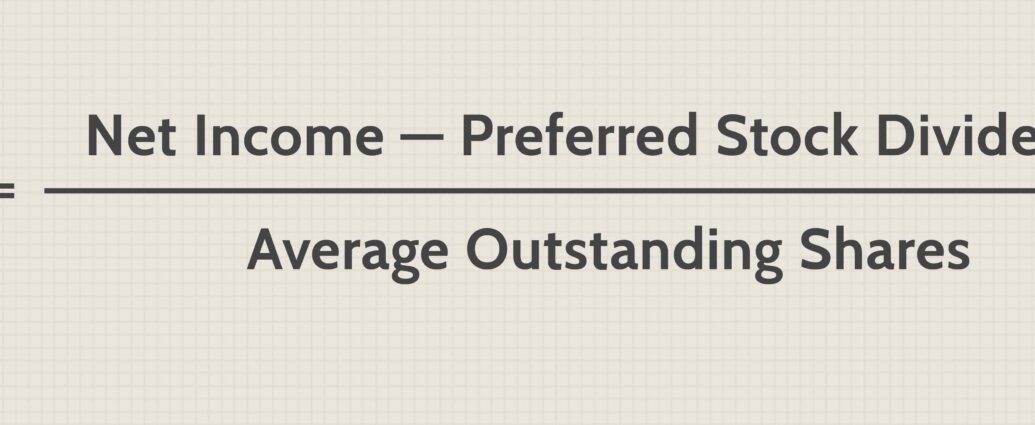
EPS vs. Diluted EPS: Key Differences in Profitability Metrics
This post was originally published here

A market correction of 10% could be on the cards as consumer psychology shifts due to gas prices, says top economist
If you were to ask a regular consumer what a barrel of crude oil costs, they likely wouldn’t know the exact figure. Ask them how much it takes to fill up their car with a tank of gas, on the other hand, they might remember down to the cent.
The visibility of oil price rises in the mind of U.S. consumers is ultimately the factor that will move the needle on the health of the U.S. economy, warns Wharton’s Professor Jeremy Siegel. Indeed, when consumers begin to raise their price expectations is when Wall Street will really begin to worry.
So far, despite the geopolitical consternation in the Middle East since the U.S. and Israel launched strikes on Iran, markets have been volatile but haven’t spiralled too far downward. This is partly because traders, worried about sustained disruption to supply out of the Gulf region, have been betting on hopes that President Trump’s action in Iran will conclude within a matter of weeks.
But the headlines are beginning to trickle into the wallets of U.S. consumers, which is when the knock-on effects of inflation expectations and wage-price spirals (when workers demand higher pay to finance an increased cost of living, pushing up business costs in turn) kick in.
This consumer psychology is the real issue when evaluating the impact of the Middle East conflict, wrote Professor Jeremy Siegel, emeritus professor of finance at the University of Pennsylvania and senior economist to WisdomTree. Writing for the financial platform in a note released yesterday, Professor Siegel noted the key issue is not crude oil: “It is gasoline, the most visible price in the economy for consumers, and when that price jumps it hits psychology immediately.”
Already, Western consumers have been urged not to panic-buy gas in a bid to get ahead of rising prices. The U.S., unlike some of its allied nations, sits on healthy oil reserves, giving it a safety net not afforded to many smaller economies. And the White House has confirmed that for a limited period of time, sanctions on Russian oil will be lifted to increase supply into the market.
However, despite the political furore around affordability in the run-up to the mid-terms, Treasury Secretary Scott Bessent indicated his department can’t and won’t intervene in certain areas if prices spike too high. He told CNBC this week that rumours the administration may intervene in the futures market or use other mechanisms to bring down prices is mere speculation, adding: “When there’s big dynamic price action, that always happens. We haven’t done that.”
The psychology of consumers is what matters, added Siegel: “Even if the broader economic effect is more balanced than the headlines. Imports are getting cheaper with a stronger dollar, and higher oil is also boosting profits in the energy sector. That is the practical benefit of energy self-sufficiency. The consumer feels the pain first, but the economy has offsets that did not exist to nearly the same degree in earlier oil shocks.”
Uncertainty is on the rise, he continued: “The market ended last week with a more cautious tone as rising oil and the widening Middle East conflict bring a fresh layer of uncertainty. I could see the markets experiencing a 10% correction from the recent highs. We are not anticipating a major decline for the S&P 500, but the mood has clearly changed.”
Consumer impact
If consumers are wondering about a pinch, then so too is the Federal Open Market Committee (FOMC), which meets this week. The rate-setting group is widely expected to leave the funds rate unchanged, though dissent is likely to come from the likes of Governors Bowman and Miran.
Indeed, Goldman Sach’s Devid Mericle wrote to clients this week that he expects the FOMC’s statement to say “the war with Iran has increased uncertainty about the outlook and will likely raise inflation and weigh on economic activity in the near term.”
He also noted the Summary of Economic Projections from the Fed for 2026 is likely to change, with GDP marginally down to around 2%, the unemployment rate to nudge higher above 4.5%. and headline inflation to stay above the 2% target.
This story was originally featured on Fortune.com


Why Is Uber Stock Surging On Tuesday?
Uber Technologies Inc (NYSE:UBER) shares climbed in Tuesday’s premarket trading session. The rally follows an announcement regarding its autonomous vehicle (AV) strategy.
The ride-hailing giant is deepening its ties with chip powerhouse NVIDIA Corp (NASDAQ:NVDA).
Global Fleet Expansion Plans
The companies announced plans late Monday to launch a global fleet of autonomous vehicles. These cars will run entirely on Nvidia software. The rollout is scheduled for the first half of 2027.
Initial launches will target Los Angeles and San Francisco. The partnership aims to reach 28 cities globally by 2028. The fleet utilizes the Nvidia DRIVE …
This post was originally published here

Trump Hints At ‘Taking’ Cuba In ‘Some Form’ Amid Ongoing Bilateral Discussions: ‘A Big Honor’
In the wake of a deepening economic crisis in Cuba, President Donald Trump has suggested the possibility of “taking Cuba, in some form.”
Speaking to reporters in the Oval Office on Monday, Trump indicated that he could “do anything” with Cuba, considering its current “weakened” state.
“That’d be good. That’s a big honor,” said Trump.
The president confirmed ongoing discussions with Cuba but refrained from sharing any specifics.
Washington has been escalating pressure on Cuba, as indicated by Trump’s previous suggestion of a “friendly takeover” of the …
This post was originally published here

Top Wall Street Forecasters Revamp Lululemon Expectations Ahead Of Q4 Earnings
Lululemon athletica inc. (NASDAQ:LULU) will release earnings for its fourth quarter after the closing bell on Tuesday, March 17.
Analysts expect the Vancouver, Canada-based company to report quarterly earnings of $4.78 per share. That’s down from $6.14 per share in the year-ago period. The consensus estimate for Lululemon’s quarterly revenue is $3.59 billion (it reported $3.61 billion last year), according to Benzinga Pro.
The company has beaten analyst estimates for revenue in eight of the last 10 quarters overall.
Shares of Lululemon rose 1.4% to close at $159.91 on Monday.
Benzinga readers can access the latest analyst ratings on the Analyst Stock Ratings page. Readers can sort by stock ticker, company name, analyst firm, rating change or other variables.
Let’s have a look at how Benzinga’s most-accurate analysts have rated …
This post was originally published here


Backchannel talks between U.S. and Iran offer Trump an off-ramp—if he wants it
Good morning. In today’s Fortune:
- There are backchannel talks between U.S. and Iran.
- In the markets, some welcome relief.
- Trump says he wants to ‘take’ Cuba.
- Nvidia’s Jensen Huang crowns himself the ‘token king.’
- Chart: Global equities pummeled by the war.
- Byron Allen is now a streaming mogul—he just took an aggressive stake in Starz.
- Exclusive: How boards lowered the bar for CEO bonuses.
This story was originally featured on Fortune.com
U.S. seeks NATO help with Strait of Hormuz. And, SCOTUS blocks vaccine changes
As the war with Iran intensifies, Trump is demanding that allies help the U.S. reopen the Strait of Hormuz. And, a federal judge halts RFK Jr.’s changes to children’s vaccine policies.
(Image credit: AFP)

This post was originally published here
First Thing: Israel says Iran’s security chief Ali Larijani killed in airstrike
If confirmed, it would make Larijani the most senior Iranian figure to be killed in the war since Ali Khamenei. Plus, Oakland homicides down 48% from Covid peak
Good morning.
Israel says it killed Iran’s national security chief, Ali Larijani, in overnight strikes. If the claim is confirmed, it would make Larijani the most senior Iranian figure to die in the war since the supreme leader Ali Khamenei was killed on its first day.
How significant could Larijani’s death be? Very. If confirmed, it would remove a pivotal figure at the center of the regime’s political and security establishment at a time of acute crisis.
What’s happening to oil prices? Oil and gas prices have risen again after Iran successfully attacked production facilities for the first time since the start of the war. Brent crude reached $103.2 a barrel on Tuesday.
This post was originally published here

The Google-backed AI investors nobody took seriously in 2017 just raised $220 million
In 2017, Darian Shirazi and Zach Bratun-Glennon knew they weren’t exactly working on the coolest new thing.
“I remember going to happy hours with other startup investors and pre-seed founders,” said Shirazi. “I’d say I was at Gradient, and people would say ‘oh, the AI thing. I haven’t done that. Are there AI startups? I certainly don’t see them and AI doesn’t seem that interesting.’”
Shirazi and Bratun-Glennon, both engineers by background, were there at the very beginning, as Google stood up Gradient in 2017, expressly for the purpose of backing AI companies early. It was one month after Google’s famed “Attention Is All You Need” paper came out. AI, as a technology, was clearly on the precipice of change. But as a business use case, it was niche at best.
“You really had to be a nerd to actually realize that this was a big deal,” said Shirazi. “Everyone was talking about crypto and ICOs at the time.”
Bratun-Glennon points out that, even though Gradient in some sense came from Google’s C-suite, “it really was a niche idea at that point and didn’t resonate with everyone right away.” LPs outside Google were wary. “I think people thought we sounded like the quantum computing people, and no one wanted to do a dedicated quantum fund,” said Bratun-Glennon, previously corporate development deal lead at Google.
Much has changed. The AI boom has taken on a cascading life of its own, and now it seems like every firm is AI-focused. With this backdrop, Gradient closed its $220 million fifth fund, the team confirmed exclusively to Fortune. Gradient, which focuses entirely on seed and pre-seed AI companies, has backed Lambda, Oura, Sona, Writer, Airspace Intelligence, and Krea. The firm’s exits include CentML (acquired by Nvidia reportedly worth more than $400 million), Prepared (acquired by Axon), and Streamlit (acquired by Snowflake for a reported $700-$800 million). Gradient declined to disclose previous fund sizes.
“From 2017 to 2021, we saw 100 companies a year that fit our thesis,” said Shirazi. “And post-ChatGPT, we started to see 1,500 to 2,000, which is now consistently the number of companies we see per year.”
In this clamor, Shirazi and Bratun-Glennon have seen their due diligence process change. They’ve increasingly been leaning more on their own engineering abilities, writing code to test that the products prospective founders are bringing to them are actually working. The two also have hesitations about the frenzy. Gradient won’t, for example, fund foundational model contenders, full stop. The mega-seed rounds also give Shirazi serious pause.
“Large seed rounds that are $100 million-plus or one billion-plus… I’ve never seen a startup raise more than, say, $10 million in a seed round and be successful,” he said.
Gradient, in this fifth fund, is in some sense starting over: Google will remain a notable LP, but Gradient has taken on outside LPs for the first time, starting with inbound interest from institutions. Shirazi and Bratun-Glennon also now own the management company. The move came, in part, because of inbound demand, but also with a view to the future.
“I do believe this is the largest platform shift in history, and the biggest value creation event in technology ever,” said Bratun-Glennon. “Is there an intervening two or three year air gap? There’s a risk to that, but on a ten-year horizon it’s an amazing place to be.”
A long way from the Silicon Valley parties, where people wondered whether AI startups even existed.
See you tomorrow,
Allie Garfinkle
X: @agarfinks
Email: alexandra.garfinkle@fortune.com
Submit a deal for the Term Sheet newsletter here.
Joey Abrams curated the deals section of today’s newsletter. Subscribe here.
This story was originally featured on Fortune.com



Nvidia-Backed Nebius Group Tops AI Leaderboard: Futurum Says NBIS Is Capitalizing On AI Power Shortage’s ‘Insatiable Demand’
As severe energy constraints threaten to throttle the artificial intelligence (AI) boom, Nebius Group NV (NASDAQ:NBIS) has emerged as the premier infrastructure play, securing massive hyperscaler contracts to meet the market’s “insatiable demand” for compute power.
The New AI Bottleneck
Appearing recently on Fox Business, Futurum Group experts Daniel Newman and Shay Boloor ranked top AI infrastructure stocks, placing Nebius firmly at the pinnacle of their Neocloud leaderboard.
The dramatic shift in market focus from chipmakers to foundational energy capacity is driving this momentum. “Energy is the new bottleneck,” Newman explained.
“We keep hearing about chips, but the reality is — power and capacity constraints are what’s holding back the next wave of AI scaling. Hyperscalers have insatiable demand for compute, but they literally cannot get enough power or infrastructure online fast enough.”
Nvidia Validation And A Massive Pipeline
To fill this …
This post was originally published here
At least 23 people killed in suspected suicide attacks in north-eastern Nigeria
More than 100 others injured in bombings targeting post office, market areas and hospital in Maiduguri
At least 23 people have been killed and more than 100 others injured in multiple suspected suicide bombings in the north-eastern Nigerian city of Maiduguri, shattering its reputation as a relative oasis of calm in recent years as a long-running insurgency was pushed to the rural hinterlands.
Authorities said the explosions went off at the post office and market areas, as well as the entrance to the University of Maiduguri teaching hospital, on Monday evening during iftar, the breaking of fast in the month of Ramadan.
This post was originally published here

Wall Street’s Most Accurate Analysts Give Their Take On 3 Health Care Stocks With Over 3% Dividend Yields
During times of turbulence and uncertainty in the markets, many investors turn to dividend-yielding stocks. These are often companies that have high free cash flows and reward shareholders with a high dividend payout.
Benzinga readers can review the latest analyst takes on their favorite stocks by visiting Analyst Stock Ratings page. Traders can sort through Benzinga’s extensive database of analyst ratings, including by analyst accuracy.
Below are the ratings of the most accurate analysts for three high-yielding stocks in the health care sector.
Merck & Co Inc (NYSE:MRK)
- Dividend Yield: 2.95%
- Wells Fargo analyst Mohit Bansal maintained an Overweight rating and raised the price target from $135 to $150 on March 12, 2026. This analyst has an accuracy rate of 69%.
- RBC Capital analyst Trung Huynh initiated coverage on the stock with an Outperform rating and a price target of $142 on Feb. 25, 2026. This analyst has an accuracy rate of 72%
- Recent News: On March 16, Merck highlighted new …
This post was originally published here
Hartlepool council stops residents from installing memorial benches
After carrying out an audit, the council found some parts of the town were ‘overwhelmed’
A local council has stopped residents from installing any more memorial benches in the town amid concerns that it is becoming “overwhelmed”.
Hartlepool borough council has said it is not currently taking any new applications for benches, after concerns from residents that there are too many.
This post was originally published here


Central Bank Meetings Key Amid Oil Elevation

This Lemonade Analyst Turns Bullish; Here Are Top 5 Upgrades For Tuesday
Top Wall Street analysts changed their outlook on these top names. For a complete view of all analyst rating changes, including upgrades, downgrades and initiations, please see our analyst ratings page.
- Morgan Stanley analyst Bob Huang upgraded Lemonade Inc (NYSE:LMND) from Equal-Weight to Overweight and raised the price target from $80 to $85. Lemonade shares closed at $57.74 on Monday. See how other analysts view this stock.
- Mizuho analyst Maheep Mandloi upgraded Canadian Solar Inc (NASDAQ:CSIQ) from Underperform to Neutral and lowered the price target from $21 to $19. Canadian Solar shares closed at $18.04 …
This post was originally published here


Israel says it has killed Iran’s top security official
This post was originally published here

Milton Friedman: Pioneer of Monetarism and Free Markets
This post was originally published here

The $3B Biotech With Two Shots On Goal
A cleaner drug, zero competition, and two binary readouts this year. Plus, Powell and oil near $99.
Three straight losing weeks for the S&P. Oil within spitting distance of $99. Jerome Powell steps to the mic on Wednesday. Jensen Huang kicks off Nvidia’s GTC today. Happy Monday.
The S&P 500 closed Friday at 6,632, down 1.6% on the week and roughly 5% off its January high. Dow at 46,558. Nasdaq at 22,105. Gold above $5,100 an ounce. WTI crude at $98.71. Every member of the Mag 7 is red on the year.
The oil picture keeps getting worse, not better. Bloomberg modeled Strait of Hormuz shutdown scenarios this week: one month puts crude around $105, two months at $140, three months at $165. The Trump administration suspended the Jones Act to try to tame prices. None of it has been enough.
Goldman put a number on the inflation risk: a $10 sustained oil price increase would push year-over-year headline CPI from 2.4% to roughly 3.2% within three months. That’s the backdrop walking into Wednesday’s FOMC decision.

Stock Market Today: Futures Tick Lower as Oil Resumes Ascent After One-Day Pause; Two-Day Fed Policy Meeting Kicks Off
This post was originally published here

Understanding Form I-9: Verifying U.S. Employment Eligibility
This post was originally published here


‘These connections are overlooked’: how British companies profited from slavery in Brazil long after abolition
Britons learn about the country’s involvement ‘almost as a self-congratulatory narrative’, says historian Joseph Mulhern
In 1845 British citizens and companies were already legally prohibited from owning or buying enslaved people overseas, yet that year 385 captives were “transferred” to a British mining company in Brazil named St John d’El Rey.
Despite a global campaign waged by the UK against slavery and the transatlantic slave trade, the move was not technically illegal because the enslaved people were not sold but “rented” – a practice permitted overseas under the 1843 Slave Trade Act.
This post was originally published here
Starbucks shareholders push to oust board members over stalled union talks
Board members Jørgen Vig Knudstorp and Beth Ford face scrutiny for the coffee chain’s ongoing labor dispute
Starbucks shareholders are pushing to remove two board members at the company who they argue have contributed to stalling the coffee chain’s long-fought-over union drive.
The SOC Investment Group, Trillium Asset Management, Merseyside Pension Fund, the non-profit Shareholder Association for Research and Education (Share), and the New York state and New York City comptrollers wrote a letter to Starbucks shareholders to vote “no” on the re-election of board members Jørgen Vig Knudstorp and Beth Ford at Starbucks’s annual shareholders meeting on 25 March.
This post was originally published here
Glasgow Central main concourse to partly reopen after fire disruption
Scotland’s busiest station to run reduced trains timetable after estimated 953,000 passenger journeys affected so far
Scotland’s busiest station, Glasgow Central, will partially reopen its main concourse on Wednesday, including for cross-border services, after a fire gutted the Victorian building next to it.
There will be a reduced timetable, including a scaled-down service to London Euston, and passengers are asked to check journeys before travelling.
This post was originally published here

Ukraine makes rare advance inside ‘kill zone’
This post was originally published here





The equity compensation gap: why even your most senior leaders are leaving money on the table
Equity compensation can help organizations accomplish two goals at once: It not only incentivizes executives to drive long-term business performance but also contributes to a sense of ownership that can enhance employee retention, engagement, and wider company culture. However, the complexity inherent in equity plans can often mean that even experienced leaders may struggle to fully maximize their equity compensation without guidance and support.
Despite their financial sophistication, many executives lack a formal personal financial plan1—leaving them less confident and at risk of missing opportunities to better manage their equity awards or achieve personal financial goals. HR and benefits leaders are uniquely positioned to help close this planning gap by embedding tools, targeted guidance, and Financial Advisor access into equity compensation programs. This can help executives make more informed decisions, help boost financial confidence, and ultimately help support both individual and organizational goals.
The Planning Gap: A Hidden Risk in Executive Benefits
Equity compensation, which often includes stock options, restricted stock units, or other equity-based awards, is a powerful tool for aligning the interests of key talent with those of the company. Yet our recent research reveals a surprising disconnect: While executives are often seen as financially savvy, 44% of those participating in their company’s equity compensation plans say they do not have a formal personal financial plan.1
Why does this matter? Our data shows a direct link between planning and confidence: 73% of executives with a formal financial plan feel confident in achieving their financial goals, compared to just 41% of those without one.1 And even financially savvy executives say they want more guidance—particularly on topics covering investment and wealth management, estate planning and wealth transfer, tax optimization strategies and navigating equity compensation and executive benefits.1
Why Confidence Matters: Linking Planning to Outcomes
Financial confidence is more than a feeling; it can help drive better decisions and, in turn, outcomes. Executives who are confident in their financial trajectory may be more likely to make informed decisions about their equity grants, vesting, and exercises. For example, Morgan Stanley at Work’s State of the Workplace research shows that equity recipients who understand and engage with their equity benefits are more likely to stay with their employer and make more informed financial decisions.2
For HR and benefits leaders, this means that closing the planning gap isn’t just about offering a perk—it’s about supporting business goals, such as retention and engagement.
HR’s Toolkit: Embedding Planning into Equity Programs
How can HR and benefits teams help move the needle to support their executives in planning with equity compensation? First, know that you’re on the right track: 98% of executives are interested in additional, customized guidance for both equity compensation and personal wealth management.1 Second, our research points to several actionable strategies:
- On-Platform Planning Modules: Integrate financial planning tools directly into the equity compensation platform, making it easy for participants to model scenarios, set goals, and track progress.
- Targeted Nudges at Key Moments: Use data-driven prompts at critical equity events—such as vesting, exercise, or blackout periods—to encourage participants to review or update their plans.
- Financial Advisor Access: Offer access to dedicated Financial Advisors who can provide personalized guidance, validate participants’ strategies, and help them navigate complex decisions from a more comprehensive financial perspective.
- KPIs for Success: Track plan adoption rates, participant confidence (via surveys), and the quality of equity-related decisions as key performance indicators.
When individuals receive clear insights that confirm whether they are on track to meet their goals, along with actionable recommendations as needed, it can greatly enhance their confidence in the equity planning process. A supportive, comprehensive approach can be a decisive factor in encouraging engagement and trust in HR-led equity programs. Work with your providers to find the strategy and resources that are the right fit for your organization.
Measuring Impact: From Planning to Performance
To achieve meaningful results, consider tracking how many equity participants create formal financial plans and monitor any changes over time to gauge program effectiveness. Assess confidence levels before and after.
Evaluate the accuracy and timing of equity-related decisions—grants, vesting, and exercises—to measure the impact of education and planning resources. Analyze retention rates to understand participant engagement and satisfaction. These metrics can help show program value and guide continuous improvements for better support of organizational goals and participant needs.
The financial planning gap among executives creates an opportunity for equity programs to add value and strengthen engagement. In a competitive talent market, closing this gap can help boost financial confidence, drive stronger personal financial outcomes, and position your organizations as an employer of choice.
- Morgan Stanley at Work. Connecting the Dots for Executives: Insights on the Intersection of Work and Wealth. Nov. 2025.
- Morgan Stanley at Work. The State of the Workplace 2025 Financial Benefits Study. May 2025.
Employee stock plan solutions are offered by E*TRADE Financial Corporate Services, Inc., Solium Capital LLC, Solium Plan Managers LLC and Morgan Stanley Smith Barney LLC (“MSSB”), which are part of Morgan Stanley at Work.
Morgan Stanley at Work services and stock plan accounts are provided by wholly owned subsidiaries of Morgan Stanley.
Morgan Stanley at Work stock plan accounts were previously referred to as Shareworks, StockPlan Connect or E*TRADE stock plan accounts, as applicable.
In connection with stock plan solutions offered by Morgan Stanley at Work, securities products and services are offered by MSSB, Member SIPC. E*TRADE from Morgan Stanley is a registered trademark of MSSB. All entities are separate but affiliated subsidiaries of Morgan Stanley.
Content and services available to non-US participants may be different than those available to US participants.
The laws, regulations, and rulings addressed by the products, services, and publications offered by Morgan Stanley and its affiliates are subject to various interpretations and frequent change. Morgan Stanley and its affiliates do not warrant these products, services, and publications against different interpretations or subsequent changes of laws, regulations, and rulings.
Morgan Stanley and its affiliates do not provide legal, accounting, or tax advice. Always consult your own legal, accounting, and tax advisors.
© 2026 Morgan Stanley Smith Barney LLC, Member SIPC.
CRC# 5073104 1/2026
This story was originally featured on Fortune.com
Exclusive: PayPal expands stablecoin access to 68 more countries
PayPal is dramatically expanding the map of countries where users can send and receive its branded stablecoin. As of this month, customers in 70 nations will now be able to hold PYUSD in their PayPal wallets, May Zabaneh, senior vice president and the company’s head of crypto, told Fortune. Those countries—which are a subset of the approximately 200 in which PayPal operates—include Uganda, Colombia, Peru, and new additions in South America, Africa, and Asia. Previously, only customers in the U.S. and U.K. were able to hold the stablecoin.
In addition to being able to send and receive PYUSD, users abroad will also be able to earn rewards on their stablecoin holdings. Existing holders in the U.S. earn 4% annually.
“Now you’re really opening up not only access—especially in places where they need it most— but also cross-border transfers and volume, where the pain is felt so high,” said Zabaneh.
Across borders
Proponents of stablecoins, or cryptocurrencies pegged to real-world assets like the U.S. dollar, have long touted the tokens’ capacity to reduce fees for sending money cross-border. PayPal’s Zabaneh hopes that the expansion of PYUSD abroad will help realize that potential.
Currently, PayPal users in select countries like Peru can only withdraw money from their accounts in their country’s native currency. If a New Yorker sends $10 over PayPal to someone in Lima, for example, the Peruvian user has to pay a cross-border transfer fee and must take out the money in the Peruvian sol. Now, the ability to send and receive PYUSD enables users to keep funds in what are essentially U.S. dollars and reduce transfer fees, said Zabaneh.
Moreover, some countries like Malawi don’t let users keep money transfers in their PayPal wallets. Once one Malawian sends money over PayPal to another, that cash is immediately sent to the recipient’s bank account. Opening up access to PYUSD lets users keep that money in their PayPal wallets, as opposed to only their bank accounts, added Zabaneh.
“It unlocks a balance-type concept in these accounts and an earnings concept,” she said.
The fintech’s expansion of access to PYUSD comes as PayPal continues to integrate the stablecoin throughout its various business verticals. Customers like YouTube who use the company’s payouts product can choose to receive payments in the stablecoin. PayPal has also experimented with using PYUSD to transfer funds internationally across its different corporate entities.
Over the past year, the total market capitalization of PayPal’s stablecoin has more than quintupled to $4.1 billion, according to data from CoinGecko. After initially pausing development amid scrutiny from a New York financial regulator of PayPal’s launch partner, the fintech launched the token in the summer of 2023.
This story was originally featured on Fortune.com






How to Correct Market Failures: Methods and Interventions
This post was originally published here

Israel says it killed two top Iranian commanders in targeted strike
Israel says it killed Ali Larijani and Gholamreza Soleimani, the highest profile assassinations since the targeting of Iran’s supreme leader Ayatollah Ali Khamenei on the first day of the war.
(Image credit: AFP via Getty Images)

This post was originally published here

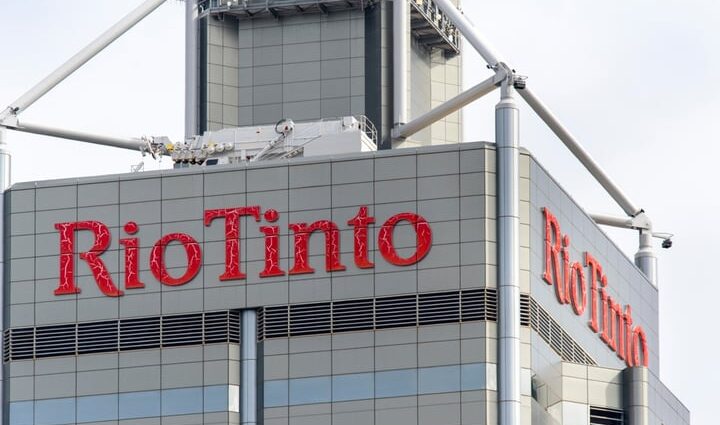
Land Exchange Unlocks One Of The World’s Largest Copper Deposits
Rio Tinto Plc (NYSE:RIO), BHP Group Limited (NYSE:BHP), and the United States Forest Service (USFS) have finally completed a land exchange in Arizona. The transaction was a major hurdle for the development of the Resolution Copper project, one of the largest undeveloped copper deposits in the world.
The transaction gives Rio Tinto, the project’s majority owner with a 55% stake, control of the land required to move forward with development of the underground mine near Superior, Arizona, roughly 60 miles east of Phoenix. BHP holds the remaining 45% interest.
“Completing the land exchange is a significant milestone and another positive step forward for the Resolution Copper project, which has the potential to satisfy up to 25% of America’s copper demand for decades to come,” Rio Tinto CEO Katie Jackson said in a statement.
“As demand for copper continues to grow, projects like Resolution can play an important role in strengthening domestic supply chains,” she added.
Upholding the Decision
Under the terms of the exchange, Resolution Copper transferred more than 5,400 acres of environmentally and culturally sensitive land in Arizona to the USFS …
This post was originally published here

Why Pittsburgh’s Revival Is Making It a Top Retirement Choice in America Today
This post was originally published here













Trump Administration Confirms Tesla Will Build $4.3 Billion Battery Plant In Michigan With LG Energy
The President Donald Trump administration’s Department of the Interior (DOI) has revealed a series of deals totaling around $56 billion, including a deal between Tesla Inc. (NASDAQ:TSLA) and South Korea’s LG Energy Solutions to kick off production of a $4.3 billion battery plant.
Securing Critical Supply Chain
In an official statement released on Monday, the agency confirmed that it had “catalyzed” agreements worth over $56 billion in “private sector commitments that will create good-paying American jobs and secure critical energy supply chains.” Among the agreements, the DOI also mentioned the deal between Tesla and LG Energy.
“Tesla and LG Energy Solution are expanding their partnership with a supply agreement to build a $4.3 billion LFP prismatic …
This post was originally published here







Is there a more fair way to sell World Cup tickets?
World Cup tickets are expensive, and buying them has been frustrating and confusing. But this is what economics is for: figuring out the best ways to allocate scarce resources. FIFA, steal these ideas.

This post was originally published here
UK energy: about 14m households getting ‘below-average’ service
Ecotricity ranked top in Citizens Advice survey, followed by Outfox, Octopus and Co-operative
Around 14 million households in the UK are receiving “below average” customer service from their energy supplier, a consumer group has warned.
Citizens Advice said energy suppliers must improve their service, as its survey of 16 companies showed that half of gas and electricity consumers are with suppliers scoring less than three out of five stars for their customer service.
This post was originally published here
Top 3 Defensive Stocks Which Could Rescue Your Portfolio In Q1
The most oversold stocks in the consumer staples sector presents an opportunity to buy into undervalued companies.
The RSI is a momentum indicator, which compares a stock’s strength on days when prices go up to its strength on days when prices go down. When compared to a stock’s price action, it can give traders a better sense of how a stock may perform in the short term. An asset is typically considered oversold when the RSI is below 30, according to Benzinga Pro.
Here’s the latest list of major oversold players in this sector, having an RSI near or below 30.
MGP Ingredients Inc (NASDAQ:MGPI)
- On Feb. 25, MGP Ingredients reported upbeat fourth-quarter financial results and issued FY26 guidance below estimates. “2025 was a year of deliberate repositioning for MGP,” said Julie Francis, president and CEO. “I am pleased with the team’s efforts as we did what we said we will do and made meaningful progress against each of …
This post was originally published here

Morgan Stanley Says Memory Stocks ‘Cooling Off’—SanDisk, Micron Keep Defying Gravity
Morgan Stanley’s Chief U.S. Equity Strategist Mike Wilson claims the broader equity market correction is nearing its end, but his recent warning that memory stocks have “cooled off” stands in stark contrast to their actual breakneck performance.
Market’s Worst Might Be Behind Us
During his latest market commentary, Wilson explained that Wall Street has been digesting underlying risks for months. He noted that while the market previously saw “concentrated returns” in areas like emerging markets, industrial metals, and memory stocks, the landscape has recently shifted.
“More recently, the dollar has rallied and these same areas have noticeably cooled off,” Wilson stated.
He further cautioned investors to prepare for a “final downdraft” or a “capitulatory shock,” potentially triggered by hawkish Federal Reserve policies, backward-looking inflation concerns, or escalating global conflicts.
Defying The Downdraft
Despite Wilson’s assertion that the memory/storage sector is cooling, current market data tells a radically different and …
This post was originally published here


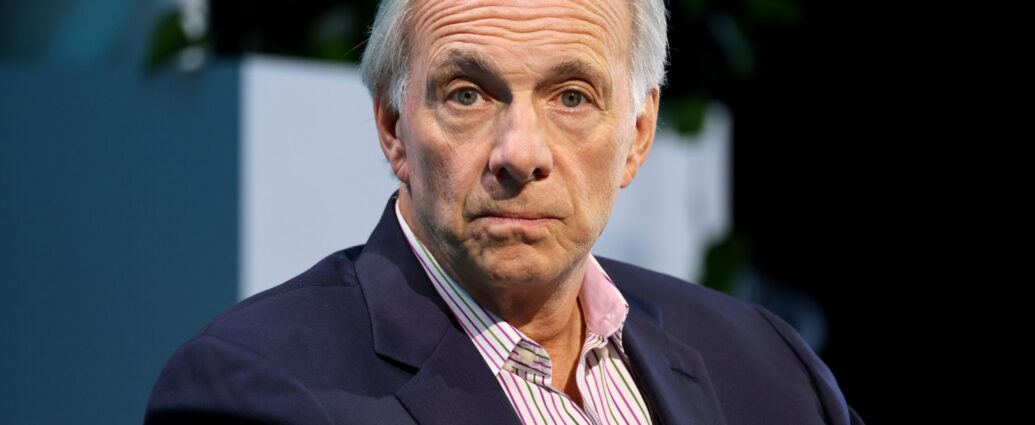
Ray Dalio warns a brutal ‘final battle’ for the Strait of Hormuz is coming—and losing could end the American empire
Bridgewater Associates founder Ray Dalio published a dire warning Monday: the conflict between the United States, Israel, and Iran will be a decisive confrontation over the Strait of Hormuz, and the outcome will determine far more than the price of oil. It will determine whether the American-led global order survives.
“It all comes down to who controls the Strait of Hormuz,” Dalio wrote in a lengthy post on X. If Iran retains the ability to control, or even negotiate over, who passes through the Strait—through which roughly a fifth of the world’s oil supply flows daily—Dalio argues the U.S. will be seen as having lost the war, regardless of how the conflict is resolved.
Dalio compared a potential U.S. failure at Hormuz to Britain’s humiliation during the 1956 Suez Canal Crisis, a moment widely regarded by historians as the end of the British Empire’s global imperialism. He pointed to a pattern he says has repeated across 500 years of history: a rising power challenges the dominant empire over a critical trade route while the world watches, and money and alliances shift fast toward whoever wins.
When that dominant power, the holder of the world’s reserve currency, is “overextended financially,” as Dalio has often argued (including recently in Fortune) and then “reveals its weakness” by losing control over the conflict. “Watch out for allies and creditors losing confidence, the loss of its reserve currency status, the selling of its debt assets, and the weakening of its currency, especially relative to gold,” he wrote.
The post arrives at a moment of confusion around who has control over the Strait of Hormuz. The Strait has been effectively closed for its third week, though there are signs that a small trickle of vessels getting through. President Trump disparaged American allies throughout the weekend, and then again on Monday afternoon for failing to provide military support to help secure the waterway. He then reversed course and said that the U.S. didn’t “need anybody” and was the strongest country in the world. Iranian Foreign Minister Abbas Araghchi said on Sunday that the Strait of Hormuz “is open and only closed to enemies.” Unresolved questions remain on whether Iran mined the Strait, which would be an irreversible escalation if true.
Dalio framed both sides as locked into a conflict with no diplomatic exit. “While there is talk of ending this war with an agreement, everyone knows that no agreement will resolve this war because agreements are worthless,” he wrote, adding that whatever comes next—whether the U.S. takes control of the strait or leaves it to Iran—”is likely to be the worst phase of the conflict.”
The core problem, Dalio said, is motivational asymmetry. For Iran’s leadership, the war is “existential,” a matter of regime survival, national pride, and religious commitment. For Americans, it’s about gas prices, and for U.S. politicians, it’s about the midterm elections. Dalio was clear over which side that calculus favors in a prolonged fight: “In war, one’s ability to withstand pain is even more important than one’s ability to inflict pain.”
Iran’s strategy, he says, is to inflict that pain for as long as possible, then wait for the U.S. to quit, just as it has done in Vietnam, Afghanistan, and Iraq.
Trump is now calling on allied nations to join a multinational escort operation through the strait, though for the most part, they haven’t yet been receptive. Dalio says it remains to be seen whether that effort can serve as a potential “solution” to getting the waterway reopened.
“If President Trump demonstrates his and the U.S.’s power to do what he said he would do, which is win this war by having free passage through the Strait of Hormuz and eliminating Iran as a threat to its neighbors and the world, it will greatly bolster confidence in his and the U.S.’s power.”
But if he doesn’t, the ripple effects, on everything from trade flows, to capital markets and the dollar’s reserve currency status, could irreparably damage American hegemony. Tehran has also threatened the dominance of the petrodollar by reportedly agreeing to open the Strait of Hormuz to a limited number of oil tankers that trade in yuan rather than dollars.
“Both sides know that the final battle, which will make clear which side won and which side lost, still lies ahead,” Dalio wrote.
This story was originally featured on Fortune.com
How Software Startup InsightSquared Wrestled with Creating an Optimal Sales and Marketing Strategy
Even with strong product market fit, these founders disagreed on how to best focus their strategy to scale.
This post was originally published here



Samsung Stock Jumps As Nvidia CEO Jensen Huang Confirms New AI Chip Production Deal
Shares of Samsung Electronics (OTC:SSNLF) surged in Seoul and closed 2.76% higher on Tuesday, after Nvidia (NASDAQ:NVDA) CEO Jensen Huang disclosed that the South Korean giant has been selected to manufacture its latest AI chips.
Huang announced this at the GTC developer conference in California on Monday.
The CEO launched Nvidia’s new AI inference processor built with technology from Groq, crediting Samsung for manufacturing the chips, which are already in production and set to ship in the second half of the year.
NVIDIA acquired chip startup Groq for $20.6 billion in December.
Huang doubled the AI demand outlook to $1 trillion at …
This post was originally published here
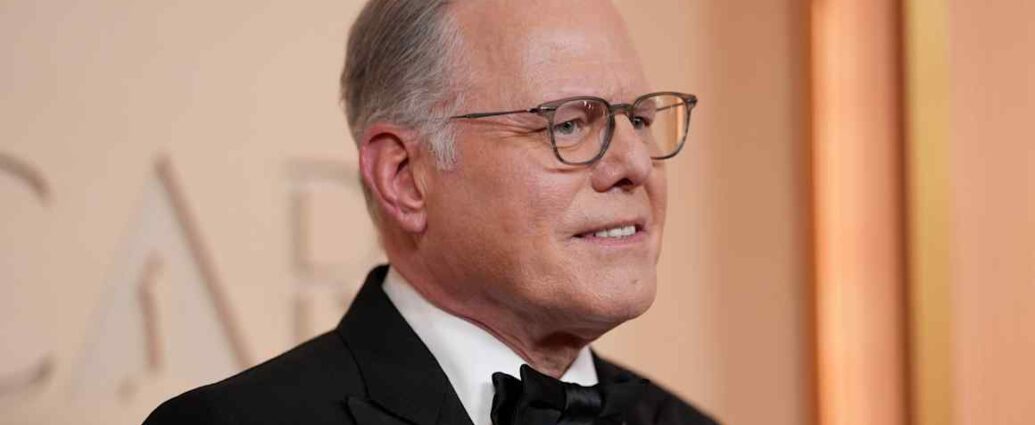
Warner Bros chief David Zaslav in line for $700mn payday
This post was originally published here

Trump relied on unverified intelligence to blame Iran for deadly school strike
Exclusive: Early US assessment suggesting missile was Iranian was almost immediately dismissed, sources say
Donald Trump’s attempt to blame Iran for the deadly strike on an elementary school stemmed from an early US intelligence assessment that initially suggested the missile was Iranian but was almost immediately dismissed, according to two people familiar with the matter.
The CIA initially told the president that they did not believe the missile that struck the school was a munition used by the US because the fins appeared to be positioned too low for it to be a Tomahawk cruise missile.
This post was originally published here







America’s $38 trillion debt crisis is already here. The reckoning comes next
America does not look like a nation in fiscal distress—and that’s exactly the problem.
The S&P 500 has more than doubled in the past five years. Unemployment is at a multi-decade low. Social Security checks are going out.
But moments like these can hide deeper vulnerabilities. Rising tensions in the Middle East, including the conflict with Iran, are a reminder of how quickly economic conditions can shift. A disruption to global oil supplies could send energy prices higher, reigniting inflation and pushing interest rates upward. For a country already carrying more than $38 trillion in debt and spending more on interest than on national defense, that kind of shock would put even greater strain on federal finances.
And the underlying trend is already troubling. The national debt is on track to reach levels never seen outside of wartime—projected to climb to roughly 120% of GDP within the next decade. That means that the federal government would owe more than the entire annual output of the US economy.
That trajectory will not trigger an alarm bell overnight. As Ernest Hemingway wrote, bankruptcy happens “gradually and then suddenly.” The same can be true of fiscal decline.
A bipartisan fiscal commission offers a structured, credible forum for lawmakers to put everything on the table and produce a package of reforms capable of stabilizing the nation’s finances before gradual erosion becomes genuine crisis.
The US has over $38 trillion of national debt. We now spend more annually on interest than on the military. The primary trust funds for Social Security and Medicare are also projected to become insolvent within the next seven years, requiring an automatic benefit cut or even more deficit spending to backfill these programs. These pressures will intensify as the population ages, health care costs rise, and economic growth slows.
For American businesses, the looming debt crisis carries tangible, real-world consequences. High levels of government debt require the federal government to spend more on interest payments, leaving fewer resources available for infrastructure, education, national defense, and social programs. If investors begin to view US debt as riskier, interest rates could rise further, increasing borrowing costs for expansion, hiring, and investment.
The U.K. offered a preview. In 2022, Prime Minister Liz Truss announced some of the largest tax cuts in decades primarily financed via deficit spending, financial markets were rattled, causing precipitous declines in the value of the pound and threatening the solvency of British pension funds. Within weeks, the prime minister and the country’s finance head were forced to resign. The U.S. economy is larger and the dollar holds reserve currency status—but the dynamic of confidence lost suddenly after building gradually is the same.
Establishing a bipartisan fiscal commission in Congress to address the debt crisis would not solve the problem overnight, but it could break partisan logjams, focus both political parties on finding a solution, bring bipartisan credibility to reforms, and encourage public awareness and support. It would bring bipartisan credibility to reforms and build the public mandate needed for Congress to act.
The commission’s three primary strategic objectives should be to improve the long-term fiscal condition of the federal government, hold the expected debt-to-GDP ratio to a more sustainable level (such as 100%), and address the long-term solvency of the Social Security and Medicare Trust Funds.
For a commission to be successful, everything must be on the table. The commission should undertake a top-to-bottom review of all federal spending and revenue sources. To avoid losing political momentum, the law establishing the commission should include strict timelines and commitments for votes on the House and Senate floor. Following enactment, Congress should adopt strong enforcement mechanisms for future fiscal decisions to avoid altering the new fiscal trajectory.
The American people must understand the stakes. A public education campaign should explain the fiscal crisis, invite broad input, and build the political will needed for Congress to act. This effort should focus especially on groups most vulnerable to a debt crisis—younger generations, low-income communities, and the “sandwich” generation.
The U.S. debt crisis is already here. Forming a bipartisan fiscal commission is an immediate first step in developing a comprehensive plan to address the national debt and forcing action in Congress. Only then can we preserve our national prosperity for future generations.
The opinions expressed in Fortune.com commentary pieces are solely the views of their authors and do not necessarily reflect the opinions and beliefs of Fortune.
This story was originally featured on Fortune.com

AI is making productivity obsolete. The leaders who thrive next will have something machines can’t touch
For most of modern history, human worth was measured by output — how much you produced, how fast you moved, how efficiently you performed. The modern economy was built on this premise. Factories needed workers who could produce more units. Corporations rewarded leaders who optimized systems. Knowledge work elevated those who could analyze faster and process more. In a world where intelligence and information were scarce, productivity created advantage.
But something fundamental has changed. For the first time in history, we are creating machines that can out-produce us in the very domains where productivity once defined human value. AI can analyze faster, generate more ideas, and process vastly more information than any human mind. According to the World Economic Forum, 85 million jobs may be displaced by AI-driven automation by 2025 — while the skills most in demand are shifting toward judgment, creativity, and leadership.
The age of the “human doing” — the professional defined entirely by cognitive output and execution speed — is ending.
This shift is unsettling for leaders whose identities have been built on cognitive performance — the smartest analyst, the fastest strategist, the most productive executive. When machines can outperform humans at doing, a deeper question emerges: what remains uniquely human? The answer isn’t intelligence, knowledge, or speed. It’s wisdom.
In my book The Last Book Written by a Human, I describe wisdom as something fundamentally different from intelligence. Intelligence processes information. Wisdom integrates experience. Intelligence answers questions. Wisdom knows which questions actually matter. And wisdom cannot be automated. It emerges from lived experience — through reflection, relationships, responsibility, and the slow accumulation of perspective that no dataset can fully replicate.
AI can summarize the world’s knowledge, but it cannot feel the weight of a hard decision, carry responsibility for another human being, or sit with moral tension when the right path isn’t obvious. Those aren’t bugs in the system. They are the very conditions through which wisdom is formed.
Wisdom: The New Competitive Advantage
For business leaders, this shift has enormous implications. For decades, leadership culture rewarded speed and optimization — executives were expected to process massive information and make rapid decisions. But when intelligence becomes automated and abundant, the source of competitive advantage changes. In an era of infinite “doing” generated by algorithms, the most valuable asset on any balance sheet may be the one that can’t be measured: the human capacity for discernment. Intelligence is becoming a commodity. Wisdom remains scarce.
The leaders who thrive in the AI era will not simply be those who understand technology best. They will be the ones who can see clearly amid overwhelming information — who know when to move fast and when to pause, when to optimize and when to protect something more human.
The Wise Leader
If wisdom is the advantage, three qualities will increasingly define effective leadership:
Discernment: The ability to recognize what truly matters amid an explosion of data, predictions, and automated recommendations.
Reflection: The discipline to pause before reacting — to consider long-term consequences instead of chasing short-term optimization.
Human-Centered Judgment: The courage to make decisions based not only on efficiency, but on how those decisions affect human flourishing.
This isn’t abstract philosophy — it has direct implications for how organizations operate. Many companies today run inside a culture of constant reaction: perpetual urgency, relentless optimization, pressure to move faster at every turn. But in a world saturated with intelligence, speed alone is no longer the differentiator. The real advantage may come from building a culture of reflection, where leaders are rewarded not only for rapid execution but for thoughtful judgment. Sometimes the most valuable decision a leader can make is to say no — to resist a short-term optimization that undermines long-term health.
AI as the Catalyst
None of this means AI is the enemy — in fact, it may be the catalyst that forces this evolution.
Artificial intelligence is, in many ways, a mirror reflecting our current state of consciousness. If we feed it our obsession with speed, efficiency, and profit at any cost, it will amplify those instincts. But if we use this technological disruption as an opportunity to rethink leadership — to rediscover discernment, empathy, and reflection — AI could free humans to focus on what we do best.
The irony is that this future may look strangely familiar. Before the industrial age, many cultures understood the difference between knowledge and wisdom — elders were valued not because they could produce more, but because they had lived long enough to see more clearly. Modern economies replaced elders with experts. Now AI is replacing experts, which may finally create space for wisdom to return.
The Return of the Human Being
AI will continue expanding what organizations are capable of, and businesses will still need efficiency, innovation, and execution. But the deeper question leaders must now confront is this: if machines increasingly handle the doing, what is the role of the human being? The answer lies in qualities machines cannot replicate — meaning-making, ethical judgment, empathy, presence, and the ability to hold complexity without rushing to resolution. In other words, the capacity to be fully human.
For centuries, humans have been conditioned to behave like machines — optimizing productivity, minimizing inefficiency, maximizing output. Now that machines are surpassing us at those tasks, we face a profound invitation: to remember what we really are. Not human doings. Human beings. In the age of AI, that distinction may become the most valuable leadership capability of all.
The opinions expressed in Fortune.com commentary pieces are solely the views of their authors and do not necessarily reflect the opinions and beliefs of Fortune.
This story was originally featured on Fortune.com

Bringing marine life back to South Florida’s ‘forgotten edge’
Seawalls are great at protecting property and people. A new nature-inspired seawall add-on is trying to make them better at protecting marine wildlife too.
(Image credit: Nathan Rott)

This post was originally published here

I’m concerned about my blood pressure. Can I check it at home?
If you get a high reading at the doctor’s office, it may not be definitive. Here’s what to know about your risk — and testing your blood pressure at home.

This post was originally published here


DocuSign Earnings Are Imminent; These Most Accurate Analysts Revise Forecasts Ahead Of Earnings Call
DocuSign, Inc. (NASDAQ:DOCU) will release earnings results for its fourth quarter, after the closing bell on Tuesday, March 17.
Analysts expect the San Francisco, California-based company to report quarterly earnings at 95 cents per share, versus 86 cents per share in the year-ago period. The consensus estimate for DocuSign’s quarterly revenue is $828.22 million, versus $776.25 million a year earlier, according to data from Benzinga Pro.
On Feb. 23, Jefferies analyst Brent Thill downgraded Docusign from Buy to Hold and lowered the price target from $105 to $45.
DocuSign shares fell 0.5% to close at $46.82 on Monday.
Benzinga readers can access the latest analyst ratings on the Analyst Stock Ratings page. Readers can sort by stock ticker, company name, analyst firm, rating change or other variables.
Let’s have a look at how Benzinga’s most-accurate …
This post was originally published here


CPA, CFA, or CFP: Understand Key Financial Credentials
This post was originally published here
Close Brothers banking group to cut 600 jobs and roll out AI ‘at pace’
Specialist lender’s shares plunge after short seller claims it will have to raise provision for car finance scandal
The banking group Close Brothers is to cut about 600 jobs and roll out the use of AI “at pace” after posting further losses in the face of a mounting compensation bill for the motor finance scandal.
The specialist lender said the cuts – nearly a quarter of its 2,600-strong workforce – would be made over the next 18 months across its teams in the UK and Ireland.
This post was originally published here

Best CD Rates for March 2026: Lock in 4.30% APY Before It’s Too Late
This post was originally published here

Best 1-Year CD Rates for March 2026: 4.25% APY Still Available
This post was originally published here

Gold Edges Higher In Cautious Trade As Fed Meeting Looms
(RTTNews) – Gold held steady above $5,000 an ounce on Tuesday as investors watched the ongoing geopolitical developments in the Gulf region and braced for a slew of central bank decisions, including the U.S. Federal Open Market Committee (FOMC) meeting scheduled for Wednesday.
This post was originally published here



How Quantum Computing Works

Oil Resumes Climb As West Asia Conflict Escalates
(RTTNews) – Oil prices resumed their rise on Tuesday amid fears over constrained supply.
This post was originally published here





Understanding Gearing Ratios: Key Financial Metrics for Investors
This post was originally published here

Lululemon’s Chip Wilson is giving the company a severe case of ‘post-founder syndrome’
- In today’s CEO Daily: Phil Wahba on Chip Wilson’s fight with the athleisure company he founded
- The big leadership story: Trump’s dealmaking strategy hits a wall in Hormuz
- The markets: Mixed performance across Asia with S&P 500 futures trending slightly down
- Plus: All the news and watercooler chat from Fortune.
Good morning. Good morning. Phil Wahba writing this morning from New York. What’s a company to do when the founder has left—but hasn’t moved on? That’s the plight Lululemon, which reports earnings today after the bell today, finds itself in more than a decade after founder Chip Wilson departed its board. Though his methods have varied—full page newspaper ads berating the board, LinkedIn posts criticizing strategy, open letters to shareholders—Wilson has been adamant that leadership is doing just about everything wrong. I delve into the drama in my latest feature for Fortune. But the question I explore is one familiar to any company with a charismatic and dogged leader who sees the company they founded fumble—and can’t stay away.
There’s even a name for it, “post-founder syndrome,” in which executives who built highly successful companies criticize successors’ perceived stumbles with an “only I can do this properly” attitude. (See: the founders of Starbucks, Papa John’s Pizza, and Nike.) In his Wall Street Journal ad last autumn, Wilson delivered a rather self-aggrandizing disquisition on why Lululemon had drifted: “A company bereft of a visionary loses its singular voice for product and long term strategy,” he intoned.
Wilson’s latest volley was to launch a proxy war, followed by open letters (many of them) to make his case and convince other shareholders to replace three directors at the next annual meeting. He hopes to reshape Lululemon’s board which he blames for letting the company’s culture of innovation disintegrate.
Things between Wilson and the company went south after he left the board in 2015 (he stepped down as chairman in 2013 in the wake of comments about women’s bodies construed as fat-shaming, creating one of the biggest crises in the company’s history). However in the first nine years following his departure, Lululemon’s revenue proceeded to triple. (It is expected to report $11 billion a year in revenue for 2025.)
Today, though, he does have a lot of company in feeling Lululemon is adrift: shares have fallen 68% from their all-time high in 2023 as its U.S. sales have slid, raising fears that it hasn’t introduced enough new merchandise or uphold the technical leadership in its activewear, and has lost brand cache to brands like Alo Yoga. And in my reporting I found that like many founders, Wilson still wields enormous influence inside the company, especially with long-time employees who saw first hand how he stoked a culture of excellence and pioneering.
Last week, Wilson went as far to warn any prospective CEO to beware of a board “that it is not equipped to support a visionary leader and the necessary transformation of the Company.”
Needless to say the CEO who takes on this job won’t just be dealing with a turnaround and a demanding board, they’ll have to manage a post-founder too. You can read the full story here.
Contact CEO Daily via Diane Brady at diane.brady@fortune.com
This story was originally featured on Fortune.com

Dubai flights delayed or cancelled after latest drone and missile attacks
This post was originally published here


Crypto Prediction Platform Polymarket Blocked In Argentina For Facilitating Unauthorized Betting: Report
An Argentinian court ordered a nationwide block of betting market platform Polymarket on Monday and instructed Alphabet Inc.‘s (NASDAQ:GOOG) (NASDAQ:GOOGL) Google and Apple Inc (NASDAQ:AAPL) to remove access to its mobile applications within the country.
‘Concealed Online Betting System’
The court issued the order in response to an investigation led by a specialized gambling prosecution office, according to a report by Buenos Aires Times.
The investigation …


867-5309: number from 1980s hit song Jenny now routes callers to cancer support
Music’s most famous number is being repurposed to offer resources for patients and caregivers
The telephone number immortalized in the enduring Tommy Tutone hit song 867-5309/Jenny has started connecting callers to a cancer support line – as one ad touting the news says it was time that music’s most famous digits “did some good”.
Cancer Support Community (CSC)’s Instagram page announced the campaign with a series of posts on Monday alluding to the song about a guy who nervously ponders calling the phone number of a woman named Jenny, which is scrawled on a bathroom wall.
This post was originally published here
Illinois heads to elect next senator and five congressional district candidates
Midwestern state has a slate of competitive races with money flowing in from donors including Aipac
Illinois voters on Tuesday will decide between a crowded field of Democratic candidates vying to be the state’s next senator as the midwestern state also nominates candidates for five open congressional seats.
Longtime Illinois senator Dick Durbin’s retirement leaves a competitive race that includes two US representatives and the lieutenant governor vying to replace him, with massive infusions of money coming to the candidates from outside groups, including donors affiliated with the American Israel Public Affairs Committee (Aipac), that are spending millions to sway voters.
This post was originally published here