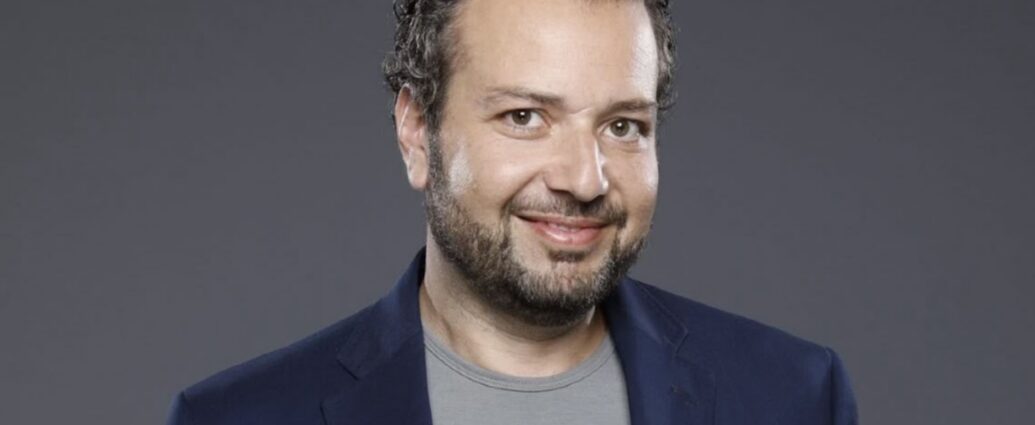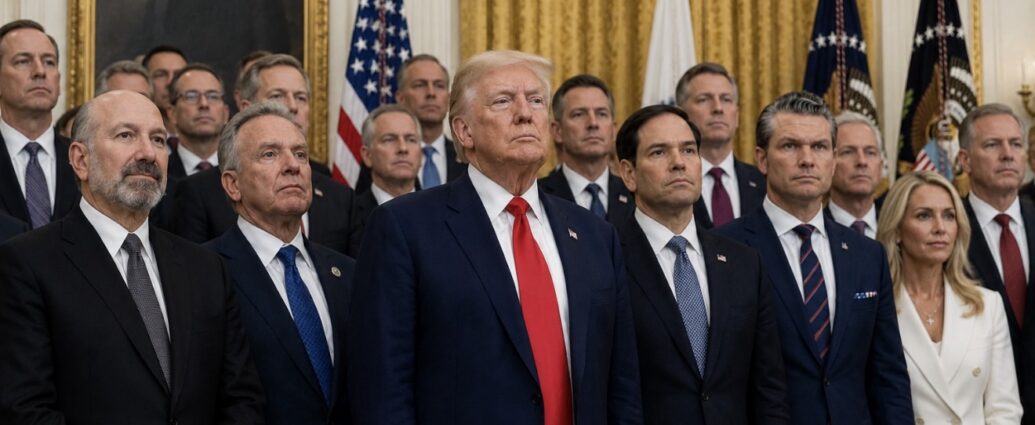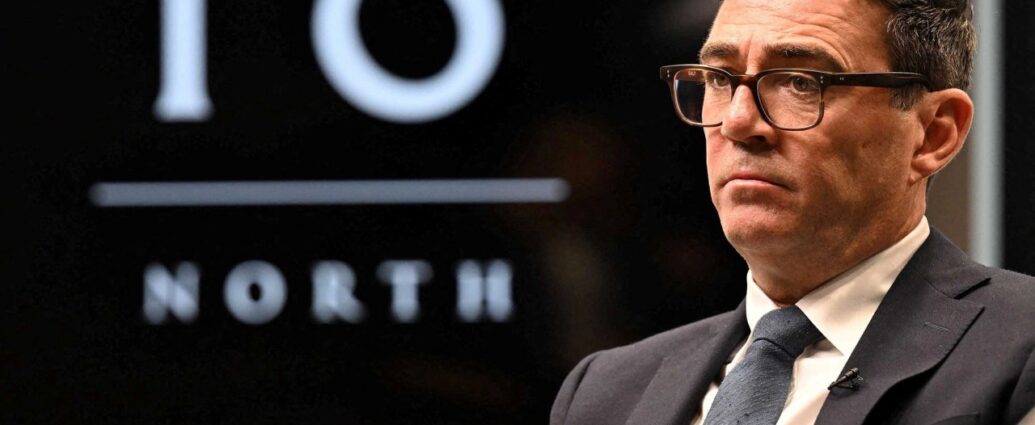
Florida Democratic voters delivered another shock upset to the party establishment by nominating state Rep. Angie Nixon, a democratic socialist, over Alex Vindman, a moderate former national security professional who played a central role in President Donald Trump’s first impeachment.

Democrats have hoped to mount a comeback in the diverse, populous and economically dynamic state but have struggled to craft a message that resonates with the state’s electorate. Nixon’s upset sets up a long-shot challenge to U.S. Sen. Ashley Moody, a former state attorney general who Gov. Ron DeSantis selected to fill the seat after it was vacated by Marco Rubio, who Trump chose as secretary of state.

The race has already inflamed tensions within the Democratic Party over how to energize liberal voters eager for unapologetic, combative candidates while not alienating independents and moderates who have been key to winning in battlegrounds.

“If you’re surprised by tonight’s election results, you haven’t been paying enough attention to what’s happening in the South,” Britney Whaley, the southeast regional director of the Working Families Party, which backs populist candidates. “Tonight’s election results must be a wake-up call to a political establishment that believes a populist message can’t win in the South. Angie’s campaign proves voters will respond to a bold economic vision that meets their basic needs.”

A spirited progressive who had the backing of Reps. Rashida Tlaib of Michigan and Ilhan Omar of Minnesota, Nixon recently joined the Democratic Socialists of America. She championed policies like universal healthcare and childcare and has been an outspoken critic of U.S. foreign policy and the war in Gaza.

In May, Nixon protested the Republican-controlled Florida legislature’s redistricting of the state’s congressional maps by shouting through a megaphone during a hearing. She was later reprimanded by an ethics committee but earned plaudits from Democratic allies and voting rights for her demonstration.

Vindman raised about $16 million in his race and had spent more than $9 million by the end of July. Nixon, by contrast, had raised just shy of $1 million. Progressives immediately touted her win as a sign of greater momentum for the region.

Vindman served on the White House’s National Security Council during Trump’s first term. His testimony was central to Trump’s first impeachment over a phone call in which he pressured Ukrainian President Volodymyr Zelenskyy to investigate Joe Biden and his family. Vindman became a national Democratic star and target of Trump’s ire for his actions, a dynamic that garnered him millions in small-dollar donations.

His twin brother Eugene, who also served on the National Security Council, is serving as a Democratic congressman from Virginia.

“Rep. Nixon ran a strong campaign. I will be standing by her side in the fight against Ashley Moody. I hope you’ll join me,” Vindman said in a statement after he conceded the race.

Democratic leaders like Senate Minority Leader Chuck Schumer had hoped Vindman’s reputation and campaign war chest would help turn what election analysts had considered a solidly Republican seat into a more competitive race. But Nixon’s upset victory has now buoyed already high Republican confidence in the state.

Once an archetypal political background, Florida has shifted to the right since 2016. Trump himself moved his residence to his Mar-a-Lago resort after leaving the White House in 2021 following his first term.

This story was originally featured on Fortune.com

This post was originally published here. 

What came first—the chicken or the egg? Or in AI’s case, the investment or the revenue?

Nvidia is guaranteeing up to $105 billion for OpenAI’s planned data center campus in Pike County, Ohio, coming in lower than the roughly $250 billion guarantee it was considering, according to reporting by the Wall Street Journal and CNBC. 

The deal moved through at least two known checkpoints before landing at its final size: the Journal reported August 14 that Nvidia had already cut the guarantee to “less than $120 billion,” before the companies settled on $105 billion when the partnership was signed Monday. Nvidia disclosed the final figure—an “aggregate payment obligation” capped at $105 billion—in an SEC filing tied to the announcement. The partnership deal was signed yesterday. The reduction represents a recurring concern among AI investors—the circular cycle of money in the AI ecosystem.

Nvidia and OpenAI did not respond to requests for comment from Fortune.

The Ohio data center is a test of whether the AI boom can generate enough outside revenue to justify the spending being financed from within the AI industry. There is already evidence of market concern from the deal. When reports surfaced in July that Nvidia could guarantee as much as $250 billion, the company’s shares fell about 4.5% intraday from investor reaction to concerns of circular financing.

Reuters also noted anxiety about the sustainability of AI investment remains despite record market performance, with investors increasingly focused on enormous capital expenditures, rising debt and uncertainty over when that spending will generate returns.

Nvidia’s funding is designed to help SB Energy, the SoftBank-backed company developing the campus, secure financing by supporting certain lease and power payments and guaranteeing the value of parts of the completed infrastructure if OpenAI were to default. The structure of the deal substantially reduces Nvidia’s financial exposure to risk.

The rollback comes as Nvidia faces growing questions about a financing model in which the world’s dominant AI-chip maker is increasingly helping finance the infrastructure that ultimately creates the demand for its own chips. The self-funding cycle has been ongoing for years—Nvidia has invested in AI companies and data center operators that purchase its hardware, while also developing financing arrangements intended to make it easier for those customers to acquire more computing capacity.

Last week, Nvidia partnered with six major financial institutions to launch compute-financing platforms targeting more than $500 billion in third-party funding for AI infrastructure—a push that recently got a regulatory tailwind. SEC staff guidance issued in July concluded that certain data-center debt falls outside Dodd-Frank securitization rules requiring sponsors to retain a share of the risk on their own books, making it easier for Nvidia to mobilize outside capital rather than carry the exposure itself.

But Nvidia CEO Jensen Huang disputes the circular financing model. Huang said in a press release the company was “securing long-lived infrastructure for Nvidia compute so OpenAI can deploy the most productive AI factories that can be upgraded repeatedly ⁠with each new generation delivering more intelligence and better economics.”

In the Ohio project, OpenAI will lease the data center from SB Energy for as long as 20 years, while Nvidia will be the exclusive chip provider for the initial phase. The campus is ultimately expected to reach as much as 8 gigawatts of computing capacity, and Nvidia is also investing $1.5 billion in SB Energy.

“The first 800 megawatts are expected to become available in 2028 largely using existing AEP infrastructure,” OpenAI shared in a note. “Further development will require new power plants connected to the grid, including natural gas generation, as well as new transmission lines and associated infrastructure.”

SB Energy plans to build the campus at a former US Department of Energy uranium-enrichment site, with approximately 9.2 gigawatts of natural-gas generation planned to support the broader development. SoftBank and SB Energy are expected to invest billions more in regional power infrastructure.

Nvidia’s graphics processing units, or GPUs, have become the primary computing workhorse for training and running many of the world’s most advanced AI models. Unlike CPUs, GPUs can perform many numbers of calculations simultaneously, making them well-suited to the matrix operations used by machine-learning systems. Nvidia also built a software ecosystem around its chips, including its CUDA programming platform, making its hardware deeply embedded in the development of AI applications.

Nvidia’s investor materials described the OpenAI partnership as an integrated infrastructure offering encompassing architecture, chips, systems, networking, data centers, software, operations and financing. Nvidia said each gigawatt of infrastructure would require roughly $50 billion to $60 billion in total spending, while OpenAI would need to reinvest future revenue to fund its buildout.

The web of deals extends past OpenAI and Nvidia, with partnerships with Microsoft, Oracle, SoftBank, Coreweave and other companies to secure computing capacity to train and operate its models. Many of these arrangements involve companies simultaneously investing, purchasing computing capacity, and building infrastructure from one another.

“We expect to use this capacity to meet growing demand for advanced AI and maintain our lead as the frontier AI research laboratory in pursuit of our mission,” OpenAI said.

This story was originally featured on Fortune.com

This post was originally published here. 

 North Korea’s Kim Yo Jong, sister of leader Kim Jong Un, on Wednesday denied Ukrainian President Volodymyr Zelensky’s claim that Pyongyang plans to send up to 50,000 more troops to Russia to fight for its ally.

Kim Yo Jong, a top official in North Korea’s ruling party, said in a statement published by state media KCNA that Zelensky’s estimate was “groundless” and “a self-staged incident.”

Zelensky made his claim in a post on X this month, and he called on South Korea to provide ​support for his country’s air defenses.

Kim Yo Jong said responsibility for the outbreak and for the prolongation of the Ukraine crisis lay entirely with the United States and the West.

North Korean military support to Russian ally

North Korea sent an estimated 14,000 soldiers to Russia’s Kursk Region in 2024, under a comprehensive strategic partnership treaty agreed during Russian President Vladimir Putin’s June 2024 visit to Pyongyang.

A man photographs parts of an unidentified missile, which Ukrainian authorities believe to be made in North Korea and was used in a strike in Kharkiv earlier this week, amid Russia's attack on Ukraine, in Kharkiv, Ukraine January 6, 2024. (credit: REUTERS/VYACHESLAV MADIYEVSKYY)

Pyongyang has also supplied Russia with millions of artillery and mortar rounds, ballistic missiles, long-range artillery and multiple-launch rocket systems, according to Ukrainian and independent assessments.

Kim Yo Jong also said the US’ “hostile policy” towards North Korea hasn’t changed despite President Donald Trump’s order to substantially reduce US participation in joint military drills with South Korea.

She said that while the relationship between the leaders of the United States and North Korea was “truly great,” Washington was still carrying out the drills with Seoul and threatening the national security of Pyongyang.

She added that she was unaware of any recent communications between the two countries’ leaders. Trump said on Monday he had received a response from Kim after reducing the scale of the US drills with Seoul and calling North Korea “unthreatening and respectful.”

This post was originally published on here. 

The head of Israel’s Mossad spy agency, Roman Gofman, held a phone call with Syrian Foreign Minister Asaad al-Shaibani last week in which they discussed Turkey’s military presence in Syria, three people familiar with the matter said.

The call, which the sources said took place on August 14, came days before Israel launched airstrikes on a Syrian military airbase in the north of the country on Tuesday.

It marks one of the highest-level contacts yet between Israel and the new Syrian government since the fall of former dictator Bashar al-Assad in December 2014.

The Israeli prime minister’s office, which handles queries regarding Mossad, did not immediately respond to a request for comment, nor did a spokesperson for Shaibani.

This is a developing story.

This post was originally published on here. 

Election campaigns do not bring out the better angels of our nature. Just look at National Security Minister Itamar Ben-Gvir.

On Tuesday, Ben-Gvir uploaded a video of a gallows being constructed in a maximum-security prison for Palestinian terrorists.

“I promised to worsen the conditions of terrorists in prisons – we kept it,” Ben-Gvir said in the macabre clip. “I promised to pass the Death Penalty for Terrorists Law – we did. And now the death row and hanging facility are also starting to take shape.”

Ben-Gvir said the facility would include viewing booths, just like those in the US, for the families of terror victims.

Reasonable people can debate whether Israel should have the death penalty for terrorists. Legislation pushed by Ben-Gvir to that effect passed the Knesset earlier this year.

But reasonable people do not glorify executions, take public joy in them, or circulate videos of gallows under construction.

Prime Minister Benjamin Netanyahu attends a vote at the plenum hall of the Knesset, the Israeli parliament in Jerusalem, on July 16, 2026. (credit: YONATAN SINDEL/FLASH90)

Ben-Gvir’s celebration of the death penalty

Ben-Gvir has repeatedly crossed the line between advocating capital punishment and celebrating it.

He wore a gallows pin to promote the death penalty legislation, cracked open champagne bottles when it passed, and received a birthday cake from his wife with a gallows depicted in the frosting. The video was the latest appeal to a political base he apparently believes finds this type of imagery appealing.

Nor was this an isolated incident.

Just days earlier, Ben-Gvir appeared on former hostage Rom Braslavski’s podcast. When Braslavski said he wanted to execute captured terrorists with his own hands, Ben-Gvir replied that seeing him do so was “one of my greatest dreams.”

That exchange, coming just days before the gallows video, showed what this was about. This is not a sober argument for capital punishment as a deterrent or an instrument of justice. It is the public celebration of death, a reveling in revenge.

What is the problem (beyond the grotesque and un-Jewish spectacle of taking public delight in executions)?

The problem is that it is not only Ben-Gvir’s base watching these videos. So is the rest of the world. And many decent people, not antisemites or rabid anti-Zionists, must be asking: What has gotten into Israel? How can a liberal democracy engage in this Iran-style glorification of hangings?

Netanyahu’s silence on Ben-Gvir

The question of how Israel can allow this, however, is slightly misplaced. The more pertinent question is how Prime Minister Benjamin Netanyahu can allow it.

Netanyahu cannot control everything Ben-Gvir says or does. But he can condemn it, distance his government from it, and make clear that this is not the face Israel wishes to present to the world. Instead, for nearly four years, he has allowed Ben-Gvir to remain a public relations train wreck, careening from one damaging spectacle to another without being called to account.

Remember the last flotilla, which Israel successfully stopped, only to face widespread condemnation after Ben-Gvir taunted the bound detainees? Israel gained nothing, and lost a great deal, from that stunt. The same is true of the gallows video.

Yet Netanyahu stays quiet, letting Ben-Gvir rant and rave and then blaming Israel’s plummeting popularity on Qatari, Russian, and Chinese bots.

The bots don’t help. But neither does Ben-Gvir.

Instead, he sullies Israel’s reputation as an enlightened country in an especially harsh neighborhood, determined to retain its humanity even while endlessly fighting enemies who have lost theirs.

Huckabee warns against giving critics ammunition

The danger of handing Israel’s enemies ammunition extends beyond Ben-Gvir. Jewish extremists harming and harassing Palestinians in Judea and Samaria also chip away at Israel’s image.

That point was made clear this week by United States Ambassador Mike Huckabee, one of Israel’s strongest friends and a man whose support for the country is beyond question.

In an interview with Kan 11 on Tuesday, Huckabee again described the actions of Jewish criminals in Judea and Samaria as terrorism.

“Somewhere in the hearts and lives of these thugs who are carrying these things out, they think they’re helping Israel, and they think they’re helping the Jewish people,” he said. “They are hurting Israel. They’re hurting its reputation, and they are hurting the Jewish people.”

Asked what Israel could do to shore up its standing among the American public, Huckabee, while acknowledging that those who are antisemitic and hate Israel will not be persuaded, recommended three steps.

The first, he said, is to have people come and see Israel for themselves. The second is to develop a “fight-back” messaging and communications strategy.

“And the third thing – and I think maybe this is, you know, a very important one – is that Israelis have to be careful not to give ammunition to their critics,” he said. “Why would you help your enemies hate you more?”

That question applies directly to Ben-Gvir.

His antics give ammunition to those seeking to harm, delegitimize, blacken, and demonize Israel. He is not responsible for the hatred of Israel, but he repeatedly hands Israel’s enemies material they can use to spread it.

True, the country is in the midst of an election campaign. But that does not excuse Ben-Gvir’s excesses, nor does it excuse Netanyahu’s refusal to speak out against them.

The election will come and go. But the images of Ben-Gvir marketing the gallows to voters will remain. So will the impression of Israel they leave behind.

And that is a danger.

This post was originally published on here. 

Support for FIFA President Gianni Infantino appears to be gradually eroding following his controversial proposal to privatize the World Cup, an initiative that ultimately failed to move forward. Now, Israel has also withdrawn its support for the powerful figure in world soccer, one year before a new election for the FIFA presidency.

In a letter sent by Israel Football Association Chairman Shino Moshe Zuares, the IFA informed FIFA that it was withdrawing its previous letter of support for Infantino.

“The recent developments have caused an unprecedented crisis of trust, which we still hope can be resolved between the vision of UEFA and other confederations and that of FIFA regarding the management of world soccer,” Zuares wrote.

“The division between the sides appears deep, substantive and fundamental, and is forcing all stakeholders to reconsider the way forward.

‘We have no choice but to withdraw our previous letter of support’

“Under the circumstances that have arisen, we have no choice but to withdraw our previous letter of support, in the sincere hope that productive dialogue between all parties will ultimately restore a shared and appropriate vision and direction for world soccer.”

US President Donald Trump holds the FIFA World Cup Trophy, as he makes an announcement on the 2026 FIFA World Cup, as FIFA president Gianni Infantino stands next to him, in the Oval Office at the White House in Washington. (credit: REUTERS/JONATHAN ERNST/FILE PHOTO)

Israel’s decision comes as Infantino heads toward another FIFA presidential election, with the governing body facing growing tensions over the direction of the sport and the relationship between FIFA and the continental confederations.

This post was originally published on here. 

Natalie Harp says Donald Trump saved her life. She has devoted the years since to serving him—first as a public advocate, then as a campaign loyalist and now as one of the president’s most trusted White House operators.

Harp became a national story after Democratic Sen. Jon Ossoff of Georgia made a suggestive reference to her while attacking Trump at a campaign event. Ossoff offered no evidence of an improper relationship, but his remark placed a rarely discussed presidential aide—and her unusual access to Trump—under intense scrutiny.

The more consequential story is how a cancer survivor’s personal gratitude became a position of political and operational influence at the center of the administration.

Harp was diagnosed with a rare form of bone cancer after surviving a serious medical error. She said conventional chemotherapy failed, clinical trials rejected her and doctors left her with few remaining options.

In 2018, Trump signed the federal Right to Try Act, allowing certain terminally ill patients to seek experimental medicines that had completed initial safety testing but had not received full Food and Drug Administration approval.

Harp has repeatedly credited Trump and the law with saving her life.

“They didn’t give me the right to try experimental treatments, Mr. President. You did,” she told the 2020 Republican National Convention. “Without you, I’d have died waiting for them to be approved.”

Medical experts have questioned whether the law technically enabled Harp’s treatment. She described receiving an FDA-approved immunotherapy drug for an unapproved purpose, a practice that was already legal before Right to Try. But there is no question about Harp’s own conviction: she believes Trump fought for patients the medical system had abandoned and gave her another chance to live.

That gratitude became the foundation of her career.

Harp joined Trump’s 2020 campaign advisory board, spoke at the Republican National Convention and worked as a presenter for One America News Network. She later entered Trump’s inner circle and now serves as executive assistant to the president.

Her official title does not fully describe her business value to the White House.

Trump prefers consuming large volumes of information on paper rather than through conventional digital systems. Harp travels with a portable printer, providing him with news articles, social-media posts, political commentary and other material throughout the day. That habit earned her the nickname “the human printer.”

She also takes dictation, assists with Trump’s social-media activity and converts his instructions into public messages reaching millions of people. Political allies recognize that delivering information to Harp can be one of the fastest ways to place it before the president.

In business terms, Harp functions as an executive assistant, information manager, communications operator and gatekeeper. She understands how Trump absorbs information, what captures his attention and how he prefers decisions to be executed.

Her value is also personal. Harp’s loyalty is not based solely on politics, ideology or professional ambition. She believes she is alive because Trump changed federal policy for desperate patients, and she has organized her work around repaying that debt.

That commitment can strengthen an administration by giving the president an aide who executes quickly, understands his habits and remains dependable under pressure. It also creates a management risk if intense loyalty prevents difficult information or opposing views from reaching the person making the final decision.

That is the legitimate question surrounding Harp—not the personal insinuation Ossoff introduced without evidence, but the power held by a trusted aide who helps control the president’s flow of information.

The most influential person around a chief executive is not always the official with the largest title. It may be the operator who remains nearby, knows how the leader works and turns instructions into action.

Trump signed the Right to Try Act to give terminally ill patients another option. Harp says it gave her a future. She has used that future to become one of the people most personally and professionally invested in advancing his presidency.

JBizNews Desk | Washington

© JBizNews.com All Rights Reserved. Reproduction or distribution without written permission is prohibited.

A medicine from Regeneron Pharmaceuticals for an ultra-rare disease that causes bone to grow where it shouldn’t won approval on Wednesday, the capstone of a three decade-long effort.

The hope is that the new medicine, called Pasatru, can help patients with fibrodysplasia ossificans progressiva, or FOP, maintain their mobility and perhaps even live longer. Typically, people with FOP rely on wheelchairs by age 25 as the bone accumulation locks up their limbs, and only some live into their 50s. 

“Having an effective treatment, you’re hoping that you’ll change that trajectory,” said Richard Keen of London’s Royal National Orthopaedic Hospital, who was the primary investigator in the medicine’s pivotal trial. “You’re almost completely stopping the new [bone] forming, and therefore their condition will not deteriorate.” 

Continue to STAT+ to read the full story…

This post was originally published here. 

Want to stay on top of the science and politics driving biotech today? Sign up to get our biotech newsletter in your inbox.

Good morning. We’re sending the newsletter a bit early today since we’ve got some breaking news for you — plus a new FDA commissioner nominee.

Merck and Moderna’s mRNA cancer vaccine succeeds in late-stage trial

Scientists have long hoped that personalized mRNA cancer vaccines could be the next big breakthrough in oncology treatment. Today, Merck and Moderna said they had shown in a randomized late-stage trial for the first time that such a drug can work.

Continue to STAT+ to read the full story…

This post was originally published here. 

Dear Readers,

When we launched STAT more than a decade ago, our mission statement promised that we would deliver “trusted, tough-minded journalism.” Little did we know that trust would be at the core of everything we do. 

Read the rest…

This post was originally published here. 

Millions more people may be able to get smaller, lightweight Amazon packages delivered by drones by the end of the year under a plan the company announced Thursday to expand the airborne shipping to suburban areas in nearly 500 U.S. cities.

Customers could receive the drone deliveries in as fast as 30 minutes, Amazon said in a news release. The drones can carry packages up to 5 pounds.

The plan will intensify the battle between Amazon and Walmart to provide consumers with the fastest delivery times. Both giants rely on a mix of drones and drivers to deliver everything consumers have ordered.

Amazon’s plan would expand its drone delivery operation more than sixfold nationwide into hundreds of new communities, including the Chicago, Atlanta, Cleveland and Boise metro areas. The drones will primarily fly in the suburbs well away from skyscrapers and major airports that could cause problems.

Drone delivery is growing fast but remains a small factor

Hundreds of thousands of packages have already been delivered by Amazon drones this year, but even after this expansion drones will still only handle a fraction of the hundreds of millions of package deliveries each year. In addition to only being able to carry 5 pounds, the drones Amazon builds face countless challenges from tree cover to landscaping and inflatable pools that can make it hard to find a good drop zone.

There are also regulatory hurdles to overcome in every community where Amazon wants to set up operations. Noise concerns also pose a potential challenge.

“It’s still an experiment. It’s still in test and learn mode,” said Sucharita Kodali, who is a retail analyst with Forrester.

The novelty of drone delivery may attract orders at first

Initially, consumers might order something delivered by drone because they are curious about it, but it’s not clear how often they will continue to use the service, and Amazon is still working out the economics, Kodali said.

The service will be free for Amazon Prime members who are ordering more than $50 worth of goods, but smaller orders will cost members $2.99. Non-members will pay $4.99 for drone delivery.

Prime members get free deliveries while non-members pay a flat fee if the shipment is under $35 for standard delivery or up to $12.99 for same‑day shipments when available.

Kodali said drones could prove more useful for certain light-weight deliveries that are needed urgently like prescription medications.

DoorDash and other delivery companies also are experimenting with using drones to deliver foods and other goods.

Amazon CEO believes drone delivery will be part of the mix

Amazon’s CEO Andy Jassy told shareholders in his annual letter in April that the company has learned a great deal by flying drones in 11 sites across Arizona, Florida, Kansas, Louisiana, Michigan, Nebraska, and Texas. In each location, the drones launch from an Amazon warehouse and cover about 175 square miles, so it takes multiple drone launching locations to serve a large metro area.

“Prime Air now has a design that’ll scale, plans to serve communities with 30 million customers by year-end, and expects to deliver half a billion packages by the end of this decade (with an aim to deliver inside 30 minutes),” Jassy wrote.

Amazon is also continuing to invest in its warehouses, smaller fulfillment centers closer to customers and its fleet of trucks as the company competes to deliver packages within minutes or hours instead of just days.

Amazon is already certified by the Federal Aviation Administration and the company has been awarded waivers to fly drones beyond the line of sight of the pilots. Amazon has invested in safety measures to help drones avoid collisions with anything else in the sky while they are making deliveries.

The federal government has proposed a rule that would allow more drone operators to fly beyond the horizon, but that hasn’t been finalized yet.

This story was originally featured on Fortune.com

This post was originally published here. 

Even from Google’s inception, cofounders Larry Page and Sergey Brin considered the company’s potential for astronomical growth. Named after “googol,” the term for the numeral 1 with 100 zeros behind it, Google, then just a search engine founded in 1998, would become as large as the internet would allow. 

The company has far exceeded the parameters of just the internet. Valued at about $1.9 trillion, Alphabet Inc., Google’s parent company, ranks No. 1 on Fortune’s 2026 Most Innovative Companies list. Broken into four segments, Alphabet’s reach spans from services like Search and Youtube, to cloud computing, to Waymo, to private equity, to its DeepMind AI research

Page, the second-richest person in the world with a net worth of about $295 billion, according to the Bloomberg Billionaires Index, has certainly reaped the rewards of Alphabet’s success. With stints as CEO of Google from 1997 to 2001 and 2011 to 2015, and of Alphabet until 2019, Page remains a board member and shareholder of his company, effectively controlling it alongside cofounder Brin, who has gotten increasingly involved again in the company’s AI charge. Brin is the world’s fourth-wealthiest person, with a net worth of $274 billion.

Wednesday marks the 22nd anniversary of Google’s IPO, and while the company has grown immensely over that time, it was Apple cofounder Steve Jobs who imparted some prescient wisdom about the its future, which now boasts the second-largest market capitalization in the world. 

Page visited Jobs toward the end of Jobs’ life in 2011 to receive some frank advice from his mentor: “The main thing I stressed was focus,” Jobs said, according to Walter Isaacson, author of Jobs’ biography. “It’s now all over the map. What are the five products you want to focus on? Get rid of the rest, because they’re dragging you down. They’re turning you into Microsoft. They’re causing you to turn out products that are adequate but not great.”

“He was right,” Page told Fortune‘s former CEO Alan Murray at Fortune’s Global Forum in 2015, just days after Alphabet’s October founding. “I mean, he did fine as well.”

Taking Jobs’s advice

Page did listen to his advice at first, telling employees to focus on Android products and the now-defunct Google+. But the growth of Alphabet suggested the company was poised for bigger things, and more of them.

Alphabet was designed as a container for Google’s future ventures, even its more esoteric ideas such as glucose-monitoring contact lenses. While Page conceded that Jobs was correct on some level, he also believed that Alphabet’s ventures were interconnected and that energy, telecommunications, and transportation all fit under its umbrella. 

“I always thought it was kind of stupid if you have this big company, and you can only do, like, five things,” Page said in a 2014 fireside chat with Khosla Ventures, taking a jab at Jobs.

Page and Brin were so certain of Alphabet’s name and purpose that they didn’t even market test it.

“I wanted to have a name that people would be proud to work for,” Page said. “But [I] actually didn’t want it to be too catchy because the idea really wasn’t to have a consumer brand in the way that Google is, but really a brand for companies to be part of.”

Alphabet was a brand for its employees and investors, Page said. But he doesn’t take credit for the name. 

“I chose Google, so [Sergey] chose Alphabet.”

A version of this story was published on Fortune.com on March 26, 2024.

More on Alphabet:

  • Elon Musk delivers ‘totally nuts’ plan for moon robots and $1 trillion revenue target, but capex tanks SpaceX on debut earnings
  • Alphabet CEO Sundar Pichai’s new $692 million compensation package hinges on the success of two Google moonshots that aren’t making any money
  • Google, Meta, and Oracle are on a $1 trillion borrowing spree and there will be ‘winners and losers in this environment,’ bond fund manager says

This story was originally featured on Fortune.com

This post was originally published here. 

In today’s leadership landscape, soft skills are undeniably en vogue. However, don’t be quick to lump empathy in with the rest. That’s because Microsoft CEO Satya Nadella firmly believes the art of comprehending others transcends the soft skills category. In his view, characterizing it as “soft” understates its significance, as he asserts that mastering empathy is, in fact, the most formidable skill of them all.

“Empathy is not a soft skill,” Nadella said in a 2023 interview with Axel Springer’s CEO Mathias Döpfner. “In fact, it’s the hardest skill we learn—to relate to the world, to relate to people that matter the most to us.”

Not only does being empathetic enable leaders to better connect with their staff, but according to Nadella, customers too.

Read more: Satya Nadella returned Microsoft to the top by showing humility as CEO. Here’s how it’s done

“In fact, innovation is about meeting the unmet, unarticulated needs of customers,” he added. “What’s the source of that? Some would say design thinking. But design thinking is empathy.”

Nadella beats the empathy drum

It’s not the first time the Indian-American chief who took Microsft’s helm in 2014 has hailed the power of empathy at work.

“If you have empathy for your people, they will do their best work and you’ll make progress,” Nadella once said on an episode of LinkedIn’s “Hello Monday” podcast.

He’s also previously spoken out about how becoming a parent to his late disabled son Zain—who died in February 2022 at the age of 26—shaped him into a more empathic leader.

“As [Zain’s] parents, it was up to us not to question ‘why,’ but instead to do everything we could to improve his life,” Nadella wrote in a LinkedIn post in 2017, where he credited his wife’s empathy with inspiring his own.

“From her I have learned that when I infuse empathy into my everyday actions, it is powerful, whether they be in my role as a father or as a CEO.”

“Becoming a father of a son with special needs…has shaped my personal passion for and philosophy of connecting new ideas to empathy for others,” Nadella wrote on LinkedIn. “And it is why I am deeply committed to pushing the bounds on what love and compassion combined with human ingenuity and passion to have impact can accomplish with my colleagues at Microsoft.”

Sports are key to soft skills building

As well as the profound impact that raising a child with quadriplegic and cerebral palsy had, Nadella also revealed playing cricket growing up shaped how he leads today.

“Team sports have a huge bearing on who we become as citizens and leaders,” he said. 

“Cricket is a symphony, and every player is a note in that composition. Leadership in cricket is about being a guiding light and source of inspiration,” fellow panelist and former cricketer Zaheer Khan agreed.

“In cricket, we lead not with arrogance but with humility,” Khan added before turning his attention to Nadella’s success as a CEO. “In the journey of Satya Nadella, we see a reflection of these principles in the corporate world.”

Previous research has echoed sports can be attributed to helping people bank the soft skills needed to lead. It’s why athletic students are significantly more likely to gain an MBA, land senior job rankings, and earn more money than their non-athletic counterparts.

Ultimately, communicating, teamwork, and leadership are desirable traits both on the pitch and in the boardroom.

What are soft skills and why are they important?

Being vulnerable hasn’t always been seen as an asset in the workplace, but during the pandemic employees (who were struggling from isolation, burdened with increased household responsibilities, and more) needed leaders who could listen, build a sense of team community, and help fit work around their problems.

Unlike technical skills, soft skills determine how you interact with your team. Emotional intelligence, effective communication, and being able to influence and motivate are all a part of the repertoire. 

According to LinkedIn’s 2022 research of nearly 23,000 workers worldwide, more than three in five (61%) workers say soft skills in the workplace are just as important as hard skills. 

What’s more, when it comes specifically to empathy, almost 90% of U.S. workers surveyed in Ernst & Young’s 2021 report said that having an empathetic manager increases their job satisfaction, productivity, and cultivated loyalty.

Meanwhile, more than half said they had left a job because their boss wasn’t empathetic enough about issues at work or in their personal life.

A version of this story originally published on Fortune.com on  October 18, 2023.

This story was originally featured on Fortune.com

This post was originally published here. 

The final 155 beagles from Ridglan Farms, a Wisconsin facility that bred dogs for biomedical research, have been relocated to a Florida rescue, completing the release of more than 2,000 dogs from the facility this year, CBS News reported on Wednesday.

The dogs were transferred to Big Dog Ranch Rescue, marking the end of a months-long effort to relocate the animals as Ridglan faced scrutiny over its treatment of dogs.

Wisconsin’s Department of Agriculture, Trade and Consumer Protection investigated Ridglan between 2024 and 2025 and identified 494 violations, according to CBS. 

In January 2025, a judge found probable cause to believe that Ridglan had committed crimes under Wisconsin animal-cruelty laws and appointed a special prosecutor to investigate the alleged violations.

Ridglan later reached a settlement to avoid criminal prosecution and agreed to surrender its state license to sell dogs. The company has denied violating state or federal animal-welfare laws and disputed allegations that it mistreated the animals.

A woman holds a beagle rescued from Ridglan Farms, a commercial breeding facility that supplies dogs to animal testing laboratories, as the animals are being prepared for adoption, in Marshall, Wisconsin, US, May 4, 2026. (credit: REUTERS/ERIC COX)

However, US Department of Agriculture records reviewed by CBS showed that federal inspectors cited four violations at Ridglan’s breeding facility and two at its research facility during inspections over the past decade. None were classified as critical.

Ridglan chose beagles to test on due to their forgiving temperament

Ridglan said it had a “well-documented history of exemplary animal care” and described the USDA as the “leading authority … that ensures animals involved in biomedical research are well cared for under strict federal guidelines.” The company said federal inspectors had found only non-critical issues at its facilities.

The USDA told CBS that it works with state authorities “to maximize enforcement outcomes” and had taken “swift and meaningful steps to strengthen oversight,” including implementing recommendations from the inspector general.

“They choose beagles because they’re easy to handle and they’re so forgiving. You hurt them one day, and they’re going to forgive you the next and let you do it all over again. This is inhumane,” Big Dog Ranch Rescue founder Lauree Simmons said, explaining that the breed’s temperament made it one of the best for research purposes.

“For me, it’s never enough until animal cruelty ends,” she added. “I’ll do this till the day I die.”

The arrival of the final 155 dogs brings the Ridglan relocation effort to an end, but the broader dispute over how research animals should be regulated, and how quickly science can move away from their use, remains unresolved.

This post was originally published on here. 

City University of New York (CUNY) has agreed to disclose information about its investment holdings and contracts with 30 companies with alleged ties to Israel.

This brings a multi-year dispute to an end. In 2024, CUNY law student Sarah Southey filed a FOIL (Freedom of Information Law) request asking to view CUNY’s holdings.

In 2025, the Supreme Court of the State of New York approved the request. CUNY subsequently appealed this.

On Tuesday, CUNY agreed to a settlement and to provide all its stock and bond holdings for every fiscal year since January 2020. This is to be done in the next 15 days.

While the new settlement does not specifically mention Israel or name the companies, Southey’s 2024 filing previously requested holdings related to dozens of companies such as Dell, Lockheed Martin, Boeing, Elbit, Barclays, and IBM.

 Pro-Palestinian protesters demonstrate outside the CUNY Graduate Center Library on Fifth Avenue and 34th Street in Manhattan, New York, on May 14, 2024, after other protesters took over the building’s lobby. (credit: Gardiner Anderson/New York Daily News/TNS)

Although CUNY for Palestine and CUNY Law Students for Palestine have described the disclosure as a “victory,” the settlement agreement stipulates that Southey was acting as an individual. None of the other CUNY groups are bound to the agreement, and Southey graduated from CUNY Law in May 2026.

‘New chapter in divestment campaign’

Nevertheless, CUNY Law SJP and CUNY SJP stated, “This victory marks the beginning of a new chapter in our divestment campaign. We will soon know the exact amount of money that CUNY directly invests in companies complicit in Israeli colonialism and the exact amount it must divest.”

Southey called it “a major victory in CUNY4Palestine’s years-long campaign for CUNY to disclose and divest from companies complicit in Israel’s colonization of Palestine.”

“In these records, CUNY must show exactly how much of our money, public money, it is spending on companies profiting off of genocide and occupation. Investments reflect values, and we will not stop fighting until the CUNY Board of Trustees fully divests our money from companies that are enabling and aiding the colonization of Palestine.”

Happy for the disclosure of investment records

Veronica Salama, senior staff attorney at the New York Civil Liberties Union, which acted as Southey’s counsel, said: “While we’re grateful that the largest, urban public university in the country will finally disclose its investment records, it is outrageous that our client had to file this lawsuit in the first place.”

“Investment records disclosure is a basic responsibility and function of a public institution, and CUNY students, faculty, and the entire campus community are entitled to transparency and equal treatment from their administration – no matter their viewpoint or their purpose in seeking those records. CUNY cannot pick and choose which viewpoints to respect and which to dismiss when it comes to records disclosure.”

This post was originally published on here. 

Residents of the settlement of Afeka, south of the Hebron Hills, were evacuated after a fire was detected in the woods near the area on Wednesday. 

Firefighting teams and aircraft are working to contain the blaze.

The Israel Police said that it had blocked the Highway 60 in order to allow the firefighting operations and asked the public to avoid the area.

The Israel Fire and Rescue Authority said that, due to the winds, there are fears the fire could reach the settlement.

“In my assessment of the situation, I ordered the dispatch of firefighting aircraft from the ‘Elad’ squadron, in addition to the dispatch of additional teams to the scene of the incident,” said Reshef Liran Ben-Rasah, shift commander.

In total, four firefighting aircraft are operating at the scene. Preliminary reports indicate that the fire is expanding fast, and the work was focused on preventing the flames from reaching the settlement.

Illustrative: Firefighters try to extinguish a fire which broke out near Moshav Mesilat Zion, April 30, 2025. (credit: NOAM REVKIN FENTON / FLASH 90)

West Bank settlements report wildfires in several areas

Earlier this month, the Israel Fire and Rescue Authority responded to a fire that sparked near the Beit Dror settlement in the West Bank on Thursday, along with several other fires in the region.

The blaze began in an open area and spread toward the settlement due to the wind.

Firefighters established a defensive line around the houses in the settlement, and additional teams arrived on the scene to assist.

This post was originally published on here. 

Jared Kushner’s visit to Israel was mainly to talk about Gaza. He should have come with a much broader message from US President Donald Trump.

The immediate American objective should not be to resolve every outstanding issue between Israel and the Palestinians before the Israeli election. That is unrealistic. Nor should Washington expect to complete the regional peace architecture it hopes to build in the coming weeks.

The task now is simpler and more urgent: Do not allow Prime Minister Benjamin Netanyahu and his government to create new facts, ignite new fronts, and destroy the possibility of regional diplomacy before Israelis go to the polls.

Kushner’s visit came at a particularly sensitive moment. The Trump administration is trying to advance its Gaza initiative, including a transfer of civilian governance to a Palestinian technocratic body, Israeli withdrawal linked to security arrangements, and reconstruction. Netanyahu has publicly resisted important elements of the American plan, especially the sequencing between Israeli withdrawal and Hamas disarmament.  

Gaza is only part of the problem

But Gaza is only one part of the problem. The West Bank is deteriorating rapidly. Settlement expansion has reached unprecedented levels and settler violence has sharply increased.

A car is seen on fire in the West Bank town of Kusra. (credit: KUSRA VILLAGE COUNCIL)

In Kusra, Israeli troops recently clashed with settlers while trying to dismantle an outpost established directly in front of Palestinian homes. The settlers resisted the army, the army gave in to the settlers, and Palestinian residents described being trapped and terrorized for days. The Israeli army is essentially providing protection for the violent settlers. 

But Kusra is not the issue. It is a symptom of the issue.

The real problem is that the settler movement, backed by powerful members of Netanyahu’s government, is pursuing a clear political project: to make Palestinian statehood impossible by creating irreversible facts on the ground.

Members of Netanyahu’s government, apparently with the support of the prime minister, are working overtime to create the provocations that would lead to an explosion of Palestinian violence, providing the pretext to launch a massive Israeli military operation against the Palestinians in the West Bank. This is what Netanyahu believes he needs prior to the Israeli elections. 

Trump needs to understand that this is not only a Palestinian problem. It is becoming an American strategic problem. Trump wants regional peace. His administration wants Israel integrated more deeply into the Arab world. It wants Saudi-Israeli normalization. It wants Arab governments to invest in Gaza’s reconstruction and participate in new security arrangements. It wants a Palestinian governing alternative to Hamas. It wants a Middle East defined increasingly by trade, investment, and cooperation rather than permanent war.

The settler movement and their political backers in the Israeli government want something fundamentally different. They want permanent Israeli control over the West Bank, continuing settlement expansion, further Palestinian displacement, and ultimately the elimination of any viable territorial basis for Palestinian independence.

Those two visions cannot coexist.

The United States cannot ask Saudi Arabia, the United Arab Emirates, Egypt, Jordan, and other Arab states to participate in a new regional order while Israel’s government simultaneously empowers people whose stated objective is to prevent a Palestinian political future.

Nor can Washington tell Palestinians that they must choose a political alternative to Hamas while allowing Israel to demonstrate every day that peaceful Palestinian politics leads nowhere. If we want Palestinians to reject Hamas, there has to be something credible for them to choose instead.

That does not require a final-status agreement tomorrow. It does require preserving the possibility of one.

No new fires

For the period between now and the Israeli elections, Trump should impose a very simple rule on Netanyahu: No new fires.

First, Netanyahu must rein in the settlers. Not another statement of condemnation after an attack. Not another promise that violence is being investigated. Actual enforcement. Trump should demand that Israelis who attack Palestinians should be arrested and prosecuted. Palestinian villages should be protected. Unauthorized outposts should be removed. Government ministers should not be allowed to turn ideologically motivated land seizures into national policy.

The state must reassert its authority. Israel cannot demand “one authority and one gun” from Palestinians while enabling armed Israelis who behave as if the laws of the state do not apply to them.

This is not to equate settlers with Hamas. Hamas committed the atrocities of October 7 and has deliberately targeted Israeli civilians. The comparison is about something else entirely: the monopoly of legitimate force. A functioning state cannot allow private ideological movements to use violence to determine borders.

Second, Trump must prevent Netanyahu from escalating Gaza unnecessarily before the election. The future of Gaza is unresolved. The American plan remains under negotiation. There are difficult questions involving Israeli withdrawal, security arrangements, Palestinian governance, reconstruction, and the future of Hamas’s weapons.

Those questions can continue to be negotiated.

What must not happen is another Israeli military escalation that creates new realities on the ground, expands occupation, undermines emerging Palestinian institutions, or makes withdrawal even harder after the election.

The objective for the next weeks should be stabilization. Hold the line. Stop the provocations. Build the mechanisms that may eventually allow a different reality to emerge.

Then let Israelis vote.

Third, the same restraint must apply to Lebanon. The danger of renewed war there is real. Israeli strikes in southern Lebanon on August 15 killed at least 11 people in the most serious escalation since the June truce. Israel said it was retaliating against Hezbollah; Lebanese officials said civilians, including children, were among those killed. The broader US-backed framework is supposed to lead toward Hezbollah’s disarmament and an Israeli withdrawal, but it remains fragile.  

Israel obviously has legitimate security concerns regarding Hezbollah. But legitimate security concerns do not mean that every military response is strategically wise. Over the next weeks, neither Israel nor Hezbollah should be permitted to drag the region back toward full-scale war.

This is where American power matters. Trump does not need Netanyahu to make peace before the Israeli election. He needs Netanyahu not to destroy the possibility of peace after it. The distinction is crucial.

Israel is going into an election while Netanyahu is simultaneously prime minister, wartime leader, and candidate. Every decision involving Gaza, Lebanon, or the West Bank will inevitably be viewed through the lens of domestic politics. That gives Washington every reason to prevent Israeli electoral calculations from dictating American regional strategy.

After the election, everything can be reassessed. Who governs Israel? What coalition is possible? What does the Israeli public want after three years of war? What is possible in Gaza? What kind of Palestinian leadership can emerge? What is Saudi Arabia prepared to do? How far can the regional normalization process go? Those are questions for the day after Israelis vote.

But if the weeks before the election are used to expand settlements, tolerate settler violence, provoke another explosion in Gaza, or slide into renewed war in Lebanon, the political landscape after the election may be dramatically worse than the one we have today.

That is why Trump’s messages to Netanyahu matter: Rein in the settlers. Stop unilateral moves in the West Bank. Do not reignite Gaza. Do not allow Lebanon to return to war. Do not create irreversible facts during an election campaign.

The United States should make clear that it will reassess the entire regional strategy after Israelis choose their next government. Until then, the objective is preservation.

Trump’s immediate Middle East mission is not to make the final deal. It is to prevent Netanyahu and his partners from burning down the possibility of one.

The writer is the Middle East director of the International Communities Organization and the co-head of the Alliance for Two States.

This post was originally published on here. 

U.S. homebuilding fell sharply in July, underscoring how deeply high mortgage rates and weak affordability continue to weigh on residential construction even as the country remains short of housing.

The Commerce Department reported Tuesday that housing starts dropped 12.4% from June to a seasonally adjusted annual rate of 1.239 million units.

That was also 13.5% below July 2025, showing that the slowdown is not simply a one-month setback.

The weakness was especially pronounced in single-family construction.

Single-family housing starts fell 9.9% to an annual rate of 808,000, a significant decline for the segment of the market most directly tied to families buying newly built homes.

Housing completions also fell 9.1%, meaning fewer finished homes are reaching the market at a time when many regions still face tight supply.

There was one important positive signal.

Building permits rose 5.0% to a 1.443 million annual rate, while single-family permits increased 2.5%.

Permits are a forward-looking measure because builders typically obtain them before construction begins. The increase suggests developers still see demand ahead even though current financing conditions are making it harder to start projects immediately.

That tension explains much of the housing market.

The United States still needs more homes.

But builders cannot simply respond to that shortage by building aggressively if buyers cannot afford the monthly payment.

Mortgage rates remain elevated, and home prices in many markets are still high enough that even households with solid incomes are struggling to qualify.

For builders, the arithmetic has become difficult.

Higher financing costs make land acquisition and construction more expensive.

At the same time, buyers need incentives, rate buydowns and price concessions to make new homes affordable.

That squeezes margins from both sides.

The decline in single-family starts is therefore important beyond the construction industry.

Residential building supports jobs in lumber, concrete, appliances, furniture, trucking, roofing, electrical work, plumbing and dozens of other businesses.

When fewer homes break ground, that spending weakens throughout the supply chain.

It also makes the affordability problem harder to solve.

The U.S. housing shortage cannot improve meaningfully without sustained construction, yet the same high interest rates being used to control inflation are making it harder to finance the new supply that could eventually help moderate home prices.

Tuesday’s report captures that contradiction clearly.

Builders are still filing permits.

They still see demand.

But fewer projects are actually starting.

Until borrowing costs ease or affordability improves materially, the housing shortage is likely to remain trapped between strong underlying demand and financing conditions that make new construction increasingly difficult.

JBizNews Desk | Washington

© JBizNews.com All Rights Reserved. Reproduction or distribution without written permission is prohibited.

A UK court was told on Tuesday that Tony Greenstein, a prominent Jewish anti-Zionist activist and founding member of the Palestine Solidarity Campaign (PSC), issued a “rallying cry” inviting support for Hamas on October 7, 2023.

Local UK media reports outlined that the charges stem from three posts published on Greenstein’s X/Twitter account on October 7, 2023, the day of the Hamas-led attack on Israel, which prosecutors argued breached the Terrorism Act 2000 by intentionally encouraging support for a proscribed terrorist organization.

Prosecutors point to Greenstein’s October 7 posts

Legal representatives detailed the contents of the posts during the court hearings, pointing to specific messaging where Greenstein allegedly wrote, “Please share. Full support for the Gaza ghetto uprising.”

Prosecutors argued that the posts also contained links to a blog which included the line, “The time to fight is now. Whatever criticisms one can make of Hamas, we should congratulate them on this well-planned and audacious attack on the Zionist enemy.”

During the hearing, prosecutor Kate Temple-Mabe argued that although Greenstein did not explicitly name Hamas in his X posts, his reference to the “‘Gaza ghetto uprising’ – in that specific context, on that specific date – can only have meant support for Hamas.”

Suspended British Green Party anti-Zionist Jewish activist Tony Greenstein. (credit: SCREENSHOT/X)

Prosecutors maintained that his language went beyond political dissent, representing a “clear invitation of moral or intellectual support” for a proscribed organization.

Defense argues posts were political expression

Greenstein’s defense counsel contested the allegations, asserting that the statements formed part of broader anti-Zionist political expression, legitimate commentary, and analysis regarding the Middle East conflict rather than an invitation to unlawful terrorist support.

During his police interview, it was noted that Greenstein indicated he did not support everything Hamas stands for, and his lawyers argue that the words used were not intended as an invitation to support.

Greenstein, a 72-year-old activist and writer, has a history of political controversy, including his expulsion from the Labor Party in 2018 over allegations of antisemitism and a subsequent suspended prison sentence in September 2023 for an action targeting an Israeli defense contractor.

Campaign Against Antisemitism responds to trial

A spokesperson for Campaign Against Antisemitism said in a statement to the Jerusalem Post, “Tony Greenstein has long courted controversy, and indeed one of his better-known interventions came when he sued us for labeling him a ‘notorious antisemite.’ His libel claim against us humiliatingly backfired after the High Court ruled it was permissible for us to describe him as such. Any alleged support for a terrorist organization is a serious charge, and we are following the case closely.”

The trial continues as the court examines the specific wording of the contested posts and the broader context in which they were disseminated.

This post was originally published on here. 

The 10-year memorandum of understanding between the United States and Israel, signed in 2016 and worth $38 billion, expires in 2028, and discussions about its successor are already underway.

This past January, Israel became the first country to sign a joint declaration with the United States on artificial intelligence and critical technologies.

In Congress, Section 224 of the House defense authorization bill would create a standing framework for joint development and co-production in missile defense, AI, autonomous systems, and cybersecurity. The direction is clear. What remains open is how broadly it will be applied.

Both governments have already recognized the value of cooperation and joint development. The opportunity now is to extend that approach beyond defense and create additional mechanisms for collaboration in civilian and dual-use technologies.  That mechanism does not need to be invented. 

Binational Industrial Research and Development (BIRD) program. (credit: Courtesy)

The Binational Industrial Research and Development Foundation, BIRD, has been operating since 1977 as a government-to-government platform funded equally by both countries and designed to connect the American and Israeli innovation ecosystems for the benefit of both economies.

The record demonstrates the value of the model. Over its lifetime, it has supported more than 1,200 joint ventures, invested more than $450 million, and helped generate more than $10 billion in direct and indirect sales, most of them in the US.

The benefits flow in both directions. American companies gain access to Israeli technologies, research capabilities, and development teams. Israeli companies gain access to American market knowledge, manufacturing capacity, commercial infrastructure, and customers. 

The products are developed and commercialized jointly rather than created in one country and simply purchased by the other.

BIRD is not the only possible mechanism for joint innovation, nor should every form of cooperation operate through a single institution. 

Its importance to the current discussion is that it provides nearly five decades of evidence for a broader principle: governments can help companies with complementary capabilities find one another, share development risk, and bring technologies to market together.

That principle can be applied more widely.

Maintaining strong cooperation

Artificial intelligence, quantum computing, biotechnology, energy, water, food security, and advanced manufacturing are becoming central to economic resilience and international competitiveness. Many of the technologies developed in these fields have both civilian and security applications.

A broader framework could make it easier for companies and research institutions to identify partners, conduct joint testing, and move projects from research to commercial deployment. It could also support cooperation in regulation, manufacturing, and market access, where promising technologies often encounter their most significant barriers.

This does not require replacing or weakening existing defense cooperation. It requires ensuring that the broader relationship also includes clear and durable mechanisms for civilian and dual-use innovation.

The framework that follows the 2016 memorandum should therefore recognize joint technological development as an additional pillar of the relationship.

It should encourage co-development and co-production, attract private investment, and measure success through commercial outcomes such as products launched, markets entered, revenues generated, and long-term partnerships created.

It should also fund BIRD at a level that reflects its record and enables it to support more collaborations in fields of shared technological and economic importance. A platform that has demonstrated its ability to connect companies, attract private investment, and generate commercial activity should be equipped to address the scale of the opportunities now emerging.

Strong defense cooperation will remain essential. Alongside it, a broader commitment to joint innovation can help both countries develop the technologies, companies, and industries they will need in the decades ahead.

The writer is executive director of the Israel-US Binational Industrial Research and Development Foundation, BIRD.

This post was originally published on here. 

Watch this episode without interruptions.

Listen wherever you get your podcasts.

Fourth Quarter founder Dr. Yoav Heller said his emerging political party aims to break Israel’s political polarization by bringing new leaders and ideas into the Knesset, while leaving open the possibility that the movement could ultimately decide not to run.

Speaking in an interview with The Jerusalem Post‘s editor-in-chief Zvika Klein, Heller said the Fourth Quarter began four years ago as a grassroots movement focused on reducing polarization and developing policy proposals through dialogue among Israelis from across the political spectrum.

The decision to enter politics was backed by 69% of the movement’s activists, he said. However, he acknowledged that limited name recognition remains a challenge and said the party could seek a partnership with an established politician, form an alliance with other new political forces, or run independently with several better-known candidates.

He added that the movement would not stand in the way of a broader political merger if its participation threatened its viability.

“I’m not going to be the obstacle,” Heller said.

Position on political boycotts

Heller also rejected political boycotts as a basis for forming Israel’s next government. While saying he believes Prime Minister Benjamin Netanyahu should leave office, Heller said that if voters choose Netanyahu, the political system should respect the result. He was sharply critical of National Security Minister Itamar Ben-Gvir, whom he described as a major problem for Israeli politics, while also criticizing the The Democrats party, but opposing their exclusion from a future coalition.

Heller said his preferred government would take a hawkish approach to defense while advancing several major domestic reforms. Those include an agreed judicial reform leading toward a constitution within five years, tackling organized crime in Arab society, creating a new framework of civic responsibility and state benefits, and seeking major improvements in Israeli education.

If given a ministerial role, Heller said his first choice would be the Justice Ministry, with judicial reform his first priority. He also stressed that any government must govern for Israelis who did not vote for it, arguing that the executive branch represents the entire country rather than only its political base.

This post was originally published on here. 

A new national faculty audit found that over half of the university faculty and related program records it examined across Jewish Studies, Israel Studies, Hebrew language, and Holocaust and Genocide Studies were associated with documented anti-Israel public positions.

The study was conducted by the Olam, an institutional intelligence platform for Israel and the global Jewish economy, and published in early August.

According to the report, the research analyzed 2,499 faculty members and institutional entries across 313 American universities, cross-referencing names and program listings against nine documented public petition campaigns and organizational records spanning from May 2021 through the spring of 2026.

Introducing the scope of the project, Ronn Torossian, Publisher of The Olam, stated in a comment to the Jerusalem Post that the audit represents “the largest audit ever undertaken of Jewish Studies and Israel Studies faculty in the United States,” claiming the report reveals that “more than half the professors in America teaching about Judaism, the Hebrew language, the State of Israel, and the history of the Holocaust have publicly positioned themselves against the Jewish state.”

Audit finds anti-Israel positions among faculty records

The research alleged that 1,298 of the analyzed entries, or 51.9 percent, featured documented anti-Israel public positions as defined by the study’s criteria. Among individual educators specifically identified as teaching in the relevant fields of Jewish, Israel, Hebrew, or Holocaust studies, the audit claimed that 401 out of 1,014, or 39.5 percent, held such positions. The study reported particularly high concentrations at Ivy League universities, where Torossian noted that “72.3 percent of audited faculty records have documented anti-Israel positions.”

Two students study in a classroom at Rice University on August 29, 2022 in Houston, Texas; illustrative (credit: Brandon Bell/Getty Images)

To establish these metrics, the study classified an anti-Israel stance based on specific public actions, such as leadership roles in groups like Faculty for Justice in Palestine (FSJP) or Jewish Voice for Peace (JVP), alongside signing petitions that endorsed academic boycotts, characterized Zionism as “settler colonialism,” labeled Israel an apartheid state, or it’s described its military actions as genocide.

The researchers noted they deliberately excluded mainstream political criticisms, such as opposing specific government policies, advocating for a two-state solution, or demanding accountability for civilian casualties, that reflect ongoing debates within Israeli society itself.

“These professors are the people hired to teach the next generation about Judaism, the Hebrew language, the State of Israel, and the history of the Holocaust,” the report stated, arguing that the documented positions fell outside the consensus of mainstream Zionism.

Endowed chairs appear among petition signatories

The audit identified 14 holders of endowed chairs, positions funded by donors often intended to strengthen Jewish scholarship, who appeared among the signatories of these examined campaigns.

Highlighting this aspect, Torossian pointed out that “fourteen endowed chairs – positions funded by Jewish philanthropists specifically to strengthen Jewish scholarship – are held by faculty openly opposed to Israel,” adding that donors established these funds to strengthen Jewish education, “instead, many now fund scholars who describe Zionism as ‘settler colonialism,’ endorse academic boycotts of Israeli universities, and use language like ‘Jewish supremacy’ to describe the Jewish state.”

Beyond academic boycotts and political definitions, the evaluated petitions also encompassed broader advocacy, including protests against administrative discipline targeting pro-Palestinian organizers and pushback against the alleged weaponization of antisemitism claims.

Furthermore, the report claimed a significant escalation in petition activity, noting that the March 2025 “Not in Our Name” letter, which was initiated by New England faculty and staff to protest campus crackdowns and the alleged weaponization of antisemitism claims, gathered over 3,400 academic signatures to become the largest single petition in the documented record.

How the faculty audit was conducted

The methodology involved compiling rosters from publicly available university websites between July and August 2026, including every institutional member program of the Association for Jewish Studies and every US center or chair listed by the Association for Israel Studies.

The researchers stated they matched faculty names to petition signatories using university affiliation, department, academic title, and full name.

The study authors acknowledged limitations, noting that their audit captured only publicly available positions and did not account for faculty who may have held private views, nor did it capture Hebrew language instructors, who they stated rarely signed political letters.

Addressing the implications of the data, Torossian stated, “The question before Jewish families, donors, and institutional leaders is straightforward: Will we demand transparency about who teaches these subjects and what they publicly believe? Will endowments established to strengthen Jewish education actually accomplish that mission? The Olam created this study to answer these questions with data. The findings are now public. What institutions, families, and donors choose to do with this information is their decision.”

This post was originally published on here. 

No, this is not the cure for all cancer. But it may be the breakthrough that proves doctors can create a vaccine specifically for one person’s cancer and train that patient’s immune system to stop it from returning.

That is the direct meaning of Moderna and Merck’s announcement—and why Moderna’s stock surged more than 120% Wednesday, climbing as much as 156% during trading.

The vaccine does not prevent people from developing cancer. It does not cure every cancer. It does not replace surgery, chemotherapy or radiation. It has not been proven to destroy large tumors or rescue patients with terminal disease.

What it has done is significantly reduce the danger that high-risk melanoma will return or spread after surgeons have removed the visible cancer.

That is a major achievement because cancer often returns through microscopic cells that remain inside the body after surgery. Scans may show that the patient is cancer-free while a small number of hidden cells are still capable of rebuilding the disease months or years later.

Moderna’s experimental vaccine, called intismeran autogene, is designed to help the immune system find and attack those remaining cells before they become another tumor.

The Phase 3 trial included 1,137 patients with stage IIB through stage IV melanoma, the deadliest form of skin cancer. All had undergone surgery to remove their tumors. They received either Merck’s immunotherapy drug Keytruda alone or Keytruda combined with Moderna’s personalized vaccine.

Patients receiving the combination remained cancer-free longer and were less likely to have the disease spread to another part of the body. It was the first successful late-stage trial of a personalized mRNA cancer vaccine.

The treatment is called personalized because there is no single vaccine taken from a shelf.

Doctors begin with the patient’s removed tumor and sequence its genetic material. Computers identify mutations that distinguish the cancer from healthy cells. Moderna then manufactures an individual vaccine containing instructions for as many as 34 targets found inside that patient’s tumor.

The vaccine effectively gives the immune system a “wanted poster” showing what the cancer looks like. Keytruda then removes one of the biological brakes that cancer uses to hide from immune defenses.

The vaccine identifies the target. Keytruda helps release the immune system to attack it.

This is why the breakthrough could eventually extend beyond melanoma. The technology is not designed around one universal melanoma marker; it is designed around the mutations found inside each individual tumor. In theory, doctors could use the same process to build vaccines for patients with lung, kidney, bladder and other cancers.

But theory is not proof.

Cancer is not one illness. It is hundreds of different diseases, and some tumors are much better than others at hiding from the immune system. Success in melanoma does not mean the same vaccine strategy will automatically work in pancreatic, breast, colon, prostate or brain cancer.

Moderna and Merck are running nine Phase 2 and Phase 3 trials across several tumor types, including non-small-cell lung, kidney and bladder cancers. Until those studies succeed, this remains a melanoma breakthrough with broader potential—not a universal cancer solution.

Earlier Phase 2 results showed how meaningful the benefit could be. After five years, the combination reduced the risk of melanoma returning or causing death by 49% and reduced the risk of distant spread or death by 59% compared with Keytruda alone.

The companies have not yet released the corresponding percentages from the larger Phase 3 study. They also have not conclusively proven that the vaccine allows patients to live longer. The complete results must be presented to specialists, reviewed independently and evaluated by regulators.

The treatment also comes with practical challenges. Every patient needs tumor sequencing and a separately manufactured vaccine. The process must be fast enough to begin treatment soon after surgery, scalable enough to serve thousands of patients and affordable enough for insurers and health systems to cover.

Patients must also receive Keytruda, which can cause serious immune reactions by prompting the body to attack healthy organs. The personalized vaccine commonly caused fatigue, injection-site pain and chills in earlier testing, although most vaccine-related reactions were mild or moderate.

For a melanoma patient whose cancer was completely removed but remains at high risk of returning, this could become an important new treatment if regulators approve it—potentially as early as next year.

For someone currently living with another form of cancer, the announcement does not provide an immediate new medicine. It provides evidence that a powerful new method may work and that it can now be tested seriously across other cancers.

Moderna’s extraordinary stock surge reflects that larger possibility. Investors are not valuing only a melanoma treatment. They are betting that the company has validated an entirely new mRNA platform capable of producing individualized cancer vaccines.

So, is this the breakthrough the world has been waiting for?

It is not the final cure that ends cancer. It is the first large, decisive proof that scientists can study one person’s tumor, manufacture a vaccine around its unique mutations and improve that patient’s protection against the cancer returning.

If the approach succeeds in additional tumors, this may be remembered not as the day cancer was cured, but as the day medicine proved it could begin building a different cancer vaccine for every patient.

JBizNews Desk | Cambridge

© JBizNews.com All Rights Reserved. Reproduction or distribution without written permission is prohibited.

TJX Companies raised its annual profit forecast Wednesday even as growth slowed sharply at T.J. Maxx and Marshalls—a result that appears contradictory but reveals why the retailer’s broader business remains strong.

Comparable sales at Marmaxx, which includes T.J. Maxx, Marshalls and Sierra, increased 1% during the quarter, down from 6% in the previous three months. That does not mean sales declined. Customers still spent more than a year earlier, but growth moderated as shoppers became more cautious about clothing and other discretionary purchases.

The slowdown was also concentrated in one part of a much larger company. Comparable sales rose 6% at HomeGoods and 7% in both Canada and TJX’s international division. Those gains helped lift total quarterly revenue to $15.18 billion and net income to $1.52 billion.

For TJX, cautious consumers can still be good for business. When household budgets tighten, more shoppers trade down from department stores and full-price retailers to chains offering recognizable brands at steep discounts. At the same time, weaker sales elsewhere can leave manufacturers and competing retailers with excess inventory, giving TJX more merchandise to purchase cheaply and resell at attractive margins.

That is the arithmetic behind the higher forecast: T.J. Maxx and Marshalls are growing more slowly, but they are not shrinking, while HomeGoods and international operations are expanding much faster. TJX now expects adjusted full-year earnings of $5.15 to $5.20 a share, excluding tariff-related benefits.

The quarter therefore signals consumer caution, not a collapse in demand. Shoppers may be buying fewer nonessential items, but their growing focus on value continues to strengthen the off-price model—and gives TJX an opportunity to capture business from more expensive competitors.

JBizNews Desk | Framingham

© JBizNews.com All Rights Reserved. Reproduction or distribution without written permission is prohibited.

Amazon is preparing a roughly sixfold expansion of its Prime Air drone delivery network, targeting nearly 500 U.S. cities and towns by the end of 2026 as retailers and delivery companies race to make last-mile shipping faster and cheaper.

The rollout would dramatically widen Prime Air’s footprint from 11 current delivery sites across 10 metro areas and give Amazon a larger test of whether autonomous aircraft can become a meaningful part of its logistics network.

Amazon plans to expand next into the Chicago, Atlanta, Cleveland, Syracuse and Boise metropolitan areas, with additional communities expected later this year.

AMAZON’S 30-MINUTE DELIVERY PUSH RAISES STAKES IN RACE FOR SPEED

The push comes as rivals make their own moves into drone delivery. Walmart has expanded service through partners including Alphabet-owned Wing and Zipline, while DoorDash recently received federal approval to operate its own commercial drone delivery network. Uber this week also announced a partnership with Zipline.

Amazon says Prime Air has already delivered hundreds of thousands of packages this year.

“Customers already turn to Amazon for fast Same- and Next-Day Delivery, and Prime Air provides them an even speedier option when they need it,” Prime Air Vice President David Carbon said.

Prime Air can carry most packages weighing 5 pounds or less and roughly the size of a large shoebox, making more than 60% of the products customers purchase most frequently eligible for drone delivery. Orders can arrive in as little as 30 minutes, though Amazon says most reach customers about an hour after checkout.

AMAZON DISRUPTING ITSELF, REBUILDING CUSTOMER SHOPPING EXPERIENCE AROUND AI FROM GROUND UP

Prime members receive free drone delivery on orders of $50 or more and pay $2.99 on smaller orders, while non-Prime customers pay $4.99.

The expansion adds another front to Amazon’s broader effort to shrink delivery times as retailers increasingly compete over speed and convenience.

Drone delivery, however, remains a small part of the broader delivery market and faces challenges ranging from federal aviation requirements and weather to noise, safety and the economics of competing with traditional vans and drivers.

AMAZON LAUNCHES 1-HOUR AND 3-HOUR DELIVERY OPTIONS WITH NEW TIERED PRICING STRUCTURE FOR CUSTOMERS

Amazon holds Federal Aviation Administration Part 135 certification for Prime Air and says its drones use an autonomous “detect-and-avoid” system to monitor surrounding airspace and identify obstacles without requiring a person to watch a live video feed.

CLICK HERE TO GET FOX BUSINESS ON THE GO

For Amazon, the expansion will test whether drone delivery can move from a limited service into a practical, scalable piece of its last-mile network.

This post was originally published here. 

Moderna shares surged Wednesday after the company and Merck reported the first successful Phase 3 trial of a personalized mRNA cancer treatment, a potentially important validation of technology that has been under development for years.

The experimental therapy, called intismeran autogene, was tested in combination with Merck’s blockbuster immunotherapy Keytruda in 1,137 patients with high-risk stage IIB through IV melanoma whose tumors had already been surgically removed.

The goal was not to shrink an existing tumor.

It was to prevent the cancer from coming back.

The study met its primary endpoint of improving recurrence-free survival and also met a key secondary endpoint by reducing the risk that the cancer would spread to distant parts of the body.

No new safety signals emerged.

The companies have not yet released the full Phase 3 data, including the exact magnitude of the benefit, and plan to present detailed results at a medical meeting.

That is an important limitation.

But the trial still represents a major milestone because it is the first positive Phase 3 result for an individualized neoantigen therapy and the first successful late-stage trial of an mRNA-based cancer treatment.

Moderna shares jumped roughly 90% in premarket trading Wednesday, while Merck rose about 7.5%.

The technology works very differently from a conventional vaccine.

Doctors first analyze the genetic mutations inside an individual patient’s tumor. Moderna then manufactures a personalized mRNA treatment designed around those mutations, effectively giving the immune system a customized list of cancer targets to recognize.

That individualized treatment is then administered alongside Keytruda, which helps remove the biological brakes that cancer cells use to hide from the immune system.

The theory is straightforward: Keytruda helps activate the immune system, while the personalized mRNA therapy tells it more precisely what to attack.

Earlier Phase 2 data had already produced encouraging results.

After five years of follow-up, the combination reduced the risk of recurrence or death by 49% compared with Keytruda alone in patients with high-risk stage III or IV melanoma.

Wednesday’s Phase 3 result is more important because it tested the treatment in a much larger group and is designed to support potential regulatory approval.

Merck and Moderna expect to begin discussions with regulators in the coming months.

For Moderna, the financial stakes are enormous.

The company built its global reputation around its COVID-19 vaccine but has been searching for the next major commercial use of its mRNA platform as pandemic-era vaccine revenue declined.

Cancer could become that second act.

For Merck, the timing is equally important.

Keytruda is one of the most valuable medicines in the world, but its key patents begin expiring later this decade. Combining it with a new personalized cancer treatment could extend Merck’s dominance in oncology while creating an entirely new product category.

Analysts have already estimated that the melanoma indication alone could eventually generate billions of dollars in annual sales.

The opportunity could become much larger if the same approach works in other cancers.

Merck and Moderna are already studying the treatment across multiple tumor types, including lung, kidney and bladder cancers.

That is why Wednesday’s result matters beyond melanoma.

The companies have not yet proved that personalized mRNA therapy will work broadly across cancer.

They have, however, now crossed one of the most difficult barriers in drug development: a successful large Phase 3 trial.

The same technology that showed the world how quickly mRNA could be used to build vaccines is now moving toward a very different application.

Instead of making one vaccine for millions of people, Moderna is trying to make a different cancer treatment for each individual patient.

Wednesday’s results suggest that idea may be closer to becoming a commercial reality.

JBizNews Desk | Cambridge, Massachusetts

© JBizNews.com All Rights Reserved. Reproduction or distribution without written permission is prohibited.

Former Israel Navy commander V.-Adm. (ret.) Eliezer “Chiney” Marom said in a Wednesday 103FM interview that Israel’s strike in Syria was intended to prevent Turkey from establishing itself in the country, but assessed that Turkish President Recep Tayyip Erdogan was unlikely to go to war with Israel.

Marom, now a senior researcher at the Begin-Sadat Center, also talked with Gideon Oko and Anat Davidov in the interview about tensions with Turkey and mounting US pressure on Iran.

Asked about the American condemnation of the Israeli strike in Syria, Marom said, “I think the Americans knew about it. They know how to speak in two languages. A condemnation on the one hand is a way of telling Israel, sit quietly, everything is fine, we’re moving on.”

Abu al-Duhur base is seen following reported Israeli strikes, Syria, August 18, 2026 (credit: REUTERS/STRINGER)

Turkish entrenchment in Syria

Turning to the struggle over Syria, he said Iran’s presence in the country had already been significantly reduced.

“The Iranians are hardly there anymore, and that’s very good for us,” he explained. “We don’t want the Turks to enter this gap that has been created and establish a position in Syria.

“They intended to send a delegation to prepare the airport that was attacked for Turkish activity. This incident illustrates that Israel will not allow the Turks to control Syria. This is a very important move, and it also carries a great danger of regional escalation.”

Marom assessed that a direct confrontation with Turkey was unlikely at this stage.

“There are enough brakes here to prevent this from happening. First, Turkey is a member of NATO, so there is a very significant restraint on it. Second, Turkey will want to join the European Union at some point. Third, the Turkish economy is not at its best, and therefore I don’t currently see Erdogan making a decision and going to war against Israel.”

He later addressed reports of nuclear material in Syria.

“It’s not something that should concern us very much. As far as I know, these are minerals mined from the ground in Syria, and as long as they are not enriched, they are not dangerous. It’s like sand or anything else.”

US economic pressure on Iran

On US pressure against Iran, Marom said Washington had shifted the focus away from the military and toward economic pressure.

“The Americans moved the military aside and handed the baton to the treasury secretary and the energy secretary. The goal is to choke the Iranian economy. The energy secretary, together with the US Navy, is trying to move oil from the Persian Gulf belonging to the other countries through the Omani route. This is making the Iranians very angry, because apparently the Americans are succeeding in getting oil out of the Gulf both through pipelines and in small tankers that pass close to the Omani coast.”

Marom warned that Tehran would eventually have to respond to the pressure.

“We are in a situation in which the Iranians will not be able to sit quietly,” Marom warned. “Either they return to the negotiating table, or they start going wild. We have already seen one attack by the United Arab Emirates. Let’s see where this goes.”

Asked about US President Donald Trump’s changing statements, Marom said Iran remained in a highly difficult position.

“I don’t suggest that we trade places with the Iranians; they are in a very difficult situation. Notice that Trump has consistently been talking for the past three days about control of the Strait of Hormuz. That’s a finger in the eye of the Iranians, and the message is very clear: You do not control Hormuz. He is taking away the last strategic card Iran still has in its hands.”

This post was originally published on here. 

Having an in with powerful people is one way to unlock success—but you don’t need a corner-office career to recognize them from the crowd. Podcaster Mel Robbins says she learned the secret to spotting the most influential person in the room from her “mentor boss” Ruth while working her first job waitressing at Red Rooster Tavern in Scenic Drive, Michigan. It’s a lesson she’s carried along with her while building her multimillion-dollar empire. 

“She told me when I started waitressing the secret to getting a good tip: Understanding who has influence over who gives you the good tip,” Robbins told the Wall Street Journal in a recent interview. 

“A lot of people make the mistake of thinking that if you walk up to a group of couples, that it’s going to be the dudes that pay. The dudes decide to tip. That’s not what happens,” Robbins continued. “What happens often is the women turn to their partners and say ‘She was great, give her a tip.’ And so Ruth told me to ignore the men and to completely take fabulous care of the women.”

Figuring out who really holds the power in a corporate setting is a different game, but the trick remains the same. 

Putting Robbins’ trick to practice in the corporate world 

The 57-year-old creator of The Mel Robbins Podcast and former CNN legal analyst has rubbed shoulders with some of the biggest names in business. Throughout her successful two-decade career as a motivational speaker, best-selling author, Robbins has focused on self-improvement and success after having previously worked in law. She’s interviewed the likes of real estate mogul Barbara Corcoran, serial entrepreneur Emma Grede, and former dot-com business executive Seth Godin. And when it comes to spotting the business bigwigs, she’s developed a keen eye in detecting who really holds the power. 

Oftentimes, it isn’t the one with the biggest title or sitting at the head of a boardroom table. Just as she found in her job serving burgers and sandwiches, the corporate power player with the most influence is really the one who has the ear of the people in charge.

“I think it’s never who you think it is,” Robbins explained. “Pay attention, look at people in positions of power. Who is actually close to them? Who do they listen to? Who’s in charge of their calendars? Honestly, a lot of times in corporations, it’s the assistant that has a lot of influence. And if the assistant likes you, you get in for the meeting. You get on to the calendar.”

The people with the most influence can be easy to overlook, but that doesn’t make their power any less real. Whether it be a career in food service, academia, construction, or corporate America, learning to recognize who has influence—and treating them accordingly—can be a valuable career skill.

“We always look at the person on stage, when it’s really the person that is standing next to the door that has the job that everybody ignores,” Robbins said. “That is the person you want to know.”

Casting a wide net of relationships and valuing others leads to career success

Robbins’ lesson is not just about identifying who has influence—it’s also about understanding how job opportunities can hinge on the people you might otherwise overlook. Casting a wide net of relationships and creating a lasting impression on others could make or break career success. 

Pat Mitchell, the former president and CEO of The Paley Center for Media, similarly emphasized the power of purposeful relationships over simply boasting a rolodex of executives. Mitchell, a veteran media executive and longtime connector of influential people, says building a strong network can be a powerful source of career influence. 

“You can measure power by who you know and your ability to connect people,” Mitchell previously told Fortune. “In the industry I started in, you couldn’t find allies, let alone mentors. Open up your network and invite someone else in.”

And sticking by Robbins’ rule can pay off in seemingly inconsequential moments when vying for a career opportunity. Steven Bartlett, the founder and host of The Diary of a CEO podcast, once took a chance on an applicant with a virtually blank CV because she showed kindness and humility to others around her. The candidate may not have had industry pedigree or a long list of impressive credentials, but she made an impression on someone who was paying attention, and it got her into Bartlett’s circle. 

“I hired someone whose CV was two lines. Their experience was zero,” Bartlett explained in a LinkedIn post earlier this year. “Much of the reason why I gave her the job was because: She thanked the security guard by name on the way into the building.”

This story was originally featured on Fortune.com

This post was originally published here. 

Opposition leader Yair Lapid presented a six-point plan for rebuilding Israel’s foreign relations at the B’Yachad National Security Conference in Tel Aviv on Wednesday, warning that the country’s international standing had entered a “disaster zone” and that foreign policy must be treated as an integral part of national security.

Lapid said Israel’s diplomatic relationships could bolster its access to advanced weapons, intelligence cooperation, technology, energy, scientific partnerships and global markets.

He rejected the argument that the October 7 massacre alone explained Israel’s diplomatic decline, accusing Prime Minister Benjamin Netanyahu’s government of worsening the crisis through “negligence, arrogance, and amateurism.”

Lapid criticized the rotation of three foreign ministers over three years, the absence of a permanent head of Israel’s national public diplomacy apparatus, and Netanyahu’s handling of relations with US President Donald Trump.

Despite this, he argued that the damage could still be reversed, as many foreign governments distinguish between Israel and its current government.

Former Prime Minister and Together party leader Naftali Bennett is seen with Opposition Leader Yair Lapid as they arrive for a press conference as part of the B'Yachad party election campaign in Tel Aviv, central Israel, August 19, 2026. (credit: AVSHALOM SASSONI/FLASH90)

“The positive part is that this means that things can be fixed,” Lapid said. “There is long-term damage, but with the right management, the direction can be reversed in a relatively short time.”

First policy: Rebuilding relations with Washington

Lapid said Israel’s first foreign policy priority must be restoring bipartisan support in the United States.

He pointed to the July US House vote on military aid to Israel, in which an amendment sponsored by Rep. Thomas Massie (R- Kentucky) to cut off aid to Israel was defeated 314-104. Of those supporting the measure, 103 were Democrats.

Additionally, Lapid cited polling showing weakening support for Israel among younger Republicans, arguing that the country is “in a disaster zone, and this disaster is not just because of antisemitism, it’s not just because of the American left, and it’s not just because of Qatar’s influence.”

Israel should work not only with Democrats and Republicans in Washington, he said, but also conduct targeted outreach to younger Americans, Hispanics, African-Americans, evangelicals, academics and liberal Jewish communities.

He also rejected the suggestion that Israel should allow its current security memorandum of understanding with Washington, which provides $38 billion over 10 years, to expire in 2028 without replacement, calling the abandonment of the agreement “a serious mistake by Netanyahu.”

Lapid proposed negotiating a new memorandum while also establishing a separate scientific and technological agreement covering small modular nuclear reactors, quantum technology and semiconductors.

Second policy: Rebuilding relations with Europe, NATO

The second policy Lapid presented was rebuilding relations with Europe, particularly Germany, while deepening cooperation with NATO and engaging directly with public opinion in countries that have been highly critical of Israel, including Spain, France and Ireland.

Lapid criticized Israel’s diplomatic withdrawals from hostile capitals, saying Israel should maintain representation even where relations are difficult. Israel closed its embassy in Dublin in December 2024 after accusing the Irish government of pursuing extreme anti-Israel policies.

“We don’t run away from a fight,” Lapid said. “We stay on the battlefield even when it’s difficult.”

Third policy: Repairing relations with Diaspora Jewry and regional ties

Lapid named repairing relations with Diaspora Jewry as the third policy, describing the Diaspora as “family” and a strategic asset.

He called on Israel to show greater respect for Reform and Conservative Judaism, merge the Diaspora Affairs Ministry into the Foreign Ministry, restore the post of special envoy to combat antisemitism, and establish a network of young Jewish “ambassadors” around the world.

Fourth policy: Integrating Israel into the Middle East

The fourth policy, he said, should involve deeper Israeli integration into the Middle East, with Egypt and the UAE serving as central partners.

Lapid called for the revival of projects connected to the India-Middle East-Europe Economic Corridor, the Negev Forum and I2U2, as well as efforts to forge a common regional approach toward Iran.

He also emphasized the importance of a peace agreement with Saudi Arabia as a major strategic objective, while warning that Israel must oppose uranium enrichment on Saudi soil because of the risk of triggering a regional nuclear arms race.

At the same time, Lapid renewed his demand that Qatar be declared an enemy state, accusing Doha of supporting Hamas, funding terrorism and contributing to efforts to delegitimize Israel. Lapid introduced legislation seeking such a designation in February.

Lapid also called for a clearer policy toward Turkey, particularly over its activities in Syria. He said Israel must make clear that it will defend its interests while establishing a mechanism to prevent unnecessary direct confrontation between the two regional powers.

“We do not need to create more and more regional conflicts, but to prevent them,” he said.

Fifth policy: Economy and public diplomacy

Lapid’s fifth policy included integrating Israel’s economic and foreign policy more closely.

He proposed establishing an interministerial team bringing together the Foreign, Finance, Economy and Defense ministries with the Israel Innovation Authority to promote Israeli technology and defense industries abroad.

Modern diplomacy, he argued, requires Israel to manage complex relationships with states that may cooperate with Jerusalem in some areas while maintaining close ties with its adversaries.

India, he said, was a prime example because of its extensive security and economic relations with Israel alongside its ties with Iran.

Sixth policy: Complete overhaul of Israel’s public diplomacy operation

Lapid’s sixth policy called for a complete overhaul of Israel’s public diplomacy operation, with greater emphasis on younger audiences, social media, and skilled communicators.

He accused government ministers of damaging Israel’s international standing through inflammatory statements and said Israeli officials failed to mount an adequate public diplomacy campaign alongside military operations.

“Good public diplomacy cannot rescue bad policy,” Lapid said earlier in the speech, arguing that Israel’s communications strategy could succeed only as part of a coherent foreign policy.

Beyond the six priorities, Lapid called for greater engagement in the Indo-Pacific region, including technological and security dialogues with Singapore, Japan and South Korea, as well as efforts to create a diplomatic opening with Indonesia.

Lapid concluded that Israel’s domestic political character was inseparable from its ability to build partnerships overseas, saying the country must present itself as democratic, liberal, technologically advanced and governed by the rule of law.

“We need to give the world the opportunity to love the State of Israel and to want to work with us,” he said.

“We need an advanced, liberal, technologically-driven and smart domestic policy, which can be transformed into a foreign policy that will strengthen the State of Israel against its enemies and strengthen our alliances with our friends.”

This post was originally published on here. 

The IDF announced on Wednesday that the Air Force struck two Hamas commanders, one of whom participated in the October 7th Massacre, in Nuseirat. 

The IDF noted that it later struck a Hamas commander in the Tuffah area of Gaza, and that both of the terrorists planned to attack soldiers in the Strip. 

According to Reuters, citing the Hamas-led Health Ministry, an airstrike at a police post in Gaza City killed nine Palestinians.

The attack in Nuseirat killed one Palestinian, medics told Reuters, with Wednesday’s death toll rising to at least 10.

The military said that prior to the strike, steps were taken to mitigate harm to civilians, including the use of precise munitions and aerial surveillance.

(FILE PHOTO) The IDF strikes targets in Gaza's Khan Yunis, August 15, 2026. (credit: SCREENSHOT/TELEGRAM/DORON KADOSH)

IDF seals Gaza tunnels belonging to Hamas

Also on Wednesday, the IDF announced that it had sealed two tunnels belonging to Hamas in the Gaza Strip.

The IDF’s Gaza Division Combat Engineers were deployed to seal the tunnels, which had a combined length of more than two kilometers.

Drone footage released by the IDF shows the tunnels running underground at length, packed with sandbags.

The IDF also said that troops operating in the area are working in accordance with the ceasefire agreement, while maintaining that the IDF continues to work to remove immediate threats.

Jonah Davidov contributed to this report.

This post was originally published on here. 

Hadash, Ta’al and Balad signed an agreement on Wednesday to run together in the upcoming election, reviving the Joint List after weeks of negotiations and internal disputes.

On Tuesday night, Ta’al chairperson MK Ahmad Tibi withdrew his opposition to a framework proposed by the “Reconciliation Committee,” which was tasked with reuniting and restructuring the Joint List. The assessment among those involved says all sides ultimately compromised to complete the alliance before the official deadline for submitting candidate lists at the beginning of September.

The agreement signed by the three parties remains subject to formal approval by their respective institutions, and an official announcement is expected in the coming days. Accordingly, Ta’al’s party committee is expected to decide on Wednesday to convene the party’s general council.

Last Sunday, the committee presented its proposed framework, but Tibi opposed it and left the meeting. The following Saturday, the secretariats of Hadash and Balad met separately, and both announced their support for the proposal.

Earlier this week, Hadash’s Prof. Yousef Jabareen and former MK attorney Osama Saadi, a close associate of Ta’al chairman MK Ahmad Tibi, met privately over coffee. Sources familiar with the negotiations described the meeting as positive, and on Tuesday evening Ta’al reportedly signaled that Tibi was prepared to accept the framework he had rejected the previous week.

The four Arab parties signed an agreement this evening to work toward establishing a joint list in the upcoming elections. (via Walla)

As part of the arrangement, Tibi is expected to receive the position of chairman of the Joint List parliamentary faction, the post of Deputy Speaker of the Knesset, and membership on a prominent committee such as the Knesset Finance Committee.

The breakthrough reportedly centered on the reserved slot for Ta’al’s second representative. Under the current framework, that candidate is assigned the ninth position on the list, and Ta’al had pushed aggressively to improve that placement, at one stage nearly causing the negotiations to collapse. According to the emerging agreement, and unsurprisingly, Saadi is expected to be Ta’al’s second candidate. However, the sides have not yet reached a final understanding on all outstanding issues.

According to the proposed framework, the candidate list would be:

Prof. Yousef Jabareen (Hadash)
Dr. Ahmad Tibi (Ta’al)
Sami Abu Shehadeh (Balad)
Jaafar Farah (Hadash)
Bakr Awawdeh (Balad)
Dr. Ofer Cassif (Hadash)
Youssef Atawna (Hadash)
Dr. Maha Karakbi (Hadash)
Ta’al candidate
Dr. Nahaya Washahi (Hadash)
Hassan Nasasra (Balad)
Ta’al candidate
Iyas Nattour (Hadash)

Election poll showed Joint List, Segalovitz with Ra’am would give Arab faction combined 14 Knesset seats

A Maariv poll published last Friday examined a scenario in which Hadash, Ta’al and Balad unite on a single list while Yoav Segalovitz is placed second on Ra’am’s slate. Under that scenario, the united Arab list would win eight seats, while Ra’am would increase its representation to six seats, giving the Arab parties a combined total of 14 Knesset seats.

In the same scenario, Eisenkot’s Yashar party would fall to 22 seats, Likud would receive 20 seats, and Bennett’s B’Yachad party would win 13 seats. Prime Minister Benjamin Netanyahu’s coalition bloc would decline to 47 seats, the Zionist opposition would hold 55 seats, and Zionist Home-The Reservists would remain at four seats.

This post was originally published on here. 

Russia and Ukraine have exchanged 103 prisoners of war each, officials from both sides said on Wednesday, with Ukrainian intelligence saying another swap was expected before the end of the month.

Kyiv and Moscow have carried out regular POW exchanges throughout the war that started with Russia’s invasion of its smaller neighbor in 2022, while remaining far apart on terms for any peace deal.

President Volodymyr Zelensky said on Telegram the brought home included servicemen from the Armed Forces, the State Border Guard Service, and the National Guard.

On the Russian side, Interfax news agency cited the Russian Ministry of Defence for news of the exchange.

Ukranian prisoners of war released from Russia say it’s ‘wonderful’

“It’s a wonderful day. I’ve returned home. I haven’t done anything heroic, and I don’t consider myself special,” Dmytro, 29, a Ukrainian who was a prisoner for three years, told Reuters.

Smoke in Kyiv. Increase in returnees from Ukraine due to the war. (credit: REUTERS)

“I want to tell the families of the men who are still being held: keep believing and don’t lose hope,” he added.

Another Ukrainian serviceman, heading home after 28 months, Anton Tymofienko, 43, recalled his time in captivity.

“The most we received were letters from relatives … Otherwise, we had no information,” he said. Neither gave details of where they had fought in the war.

Ukraine’s military intelligence head Oleh Ivashchenko said that another exchange was expected before the end of the month.

“In the next exchange, we expect the return of defenders who have been held for a prolonged period, including those who fought in the defense of Mariupol,” he said, referring to the port city that Russia besieged early in the war.

This post was originally published on here. 

The American Cancer Society quietly canceled its upcoming Wine and Spirits Industry’s Gala, a spokesperson confirmed to STAT. The event, which has for decades raised money from members of the alcohol industry at a boozy Manhattan gathering, was set to take place in October at the iconic Rainbow Room. 

The society “decided to sunset the Wine & Spirits Industry Gala, and the October event will not take place,” spokesperson Michele Money-Carson said in an email. “The decision is part of ACS’s ongoing evaluation of how its events and fundraising activities align with its mission and prevention guidance.”

STAT, as part of its “Deadliest Drug” series about the toll of alcohol misuse, reported earlier this summer that ACS had for years raked in at least $22 million dollars from wine and liquor executives, creating an optics issue for a charity focused on fighting cancer. Some, including a former executive at the cancer society, said the gala created an unsettling conflict of interest, and was inappropriate considering alcohol’s known links to cancer. 

Continue to STAT+ to read the full story…

This post was originally published here. 

The dollar fell sharply Wednesday as the Treasury Department moved to calm a bruising selloff in government debt, doubling the size of planned buybacks of longer-term bonds and triggering an immediate rally across the market.

Treasury said it would increase individual repurchases of securities maturing in 10 to 30 years from as much as $2 billion to at least $4 billion between Sept. 9 and Nov. 4. The government will effectively become a larger buyer of its own older debt, improving demand and liquidity at a time when investors have grown increasingly reluctant to hold long-dated bonds.

The 30-year Treasury yield dropped nearly 10 basis points to about 5.19%, after reaching 5.34% Tuesday—its highest level since 2007. The 10-year yield fell toward 4.65%. Bond prices rise when yields fall.

The relief came with a complication: the dollar weakened as investors interpreted the intervention as evidence that Washington is increasingly concerned about borrowing costs. The WSJ Dollar Index fell roughly 0.6%, while the euro, Japanese yen and Swiss franc strengthened against the U.S. currency.

Lower Treasury yields can eventually ease pressure on mortgages, corporate loans and other borrowing costs. But the buybacks do not reduce the federal debt. Treasury may need to issue additional short-term bills to finance the purchases, shifting part of the government’s funding burden rather than eliminating it.

The rally therefore calmed the market without resolving the forces behind the selloff: persistent inflation, elevated oil prices, enormous federal borrowing needs and growing doubts about investors’ willingness to absorb long-term U.S. debt at lower yields.

JBizNews Desk | New York

© JBizNews.com All Rights Reserved. Reproduction or distribution without written permission is prohibited.

Shortly after the destruction of the First Temple, in the Greek city of Athens around the year 500 BCE, the process of democratic voting began. Soon after, other Greek city-states followed suit. 

Voting was not open to all. It was a privilege given only to members of the ekklesia – an assembly of the eligible male citizens of Athens. Most often, the vote was conducted via raising the right hand for the voters to signify their choices.

Sometimes, votes were cast by casting pebbles. White stones, when dropped into a container, signified a favorable decision. If a voter was not in favor, black stones were cast. The pebbles were then counted.

In those days in Athens, on important issues, a quorum of 6,000 citizen voters was required.

Jewish history records the Jewish style of voting and decision-making, which did not follow Greek tradition. 

An illustration of an Israeli voting at the ballot box. (credit: Niyazz/Shutterstock)

The Mishna, as well as other rabbinic works, detail voting procedures that were revolutionary for their time and that were handed down for generations. They were so proper and even-handed that they influenced democratic procedures today.

Much was done by consensus, by the majority.

The Sanhedrin, a rabbinical court of 71 who functioned as judges and jury, were those who voted. Smaller cities had courts with 23 rabbis and/or judges who judged and voted. Even smaller towns had courts of 3 people. 

Voting by the Sanhedrin was not ad hoc; it followed a procedure. The judges had a seating order. For obvious reasons, there were always an odd number of judges in every Sanhedrin.

Member judges of the Sanhedrin were seated in a semi-circle in order of seniority. First was the av beit din (chief judge), and next to him sat the nasi (president) of the court. Then, seating was in order from most senior to most junior.

They spoke and voted in a prescribed manner, always in the same order. The most senior member was first, the most junior was last – with one exception: the capital case.

In a capital case, where a person’s life was at stake, the junior members spoke and voted first, and senior judges went last. That reverse order assured that everyone voted according to their conscience. 

It was an assurance that senior judges could not influence younger members, and that it was their decision – not reliance on the influence of their mentors in their decision-making.

In a capital case, there was a presumption of innocence, and the defendant’s defense went first. Additionally, the defendant could not be convicted on a simple majority of one. In these cases, the court needed to convict with a majority of at least two.

In one very unusual incident, the disciples of Beit Shammai packed the court and did not permit the disciples of Beit Hillel, their nemesis, to attend. 

According to one recorded description, disciples of Beit Hillel were actually assaulted – and some were even killed – by the disciples of Beit Shammai.

As described in both the Babylonian Talmud and, in a slightly different version in the Jerusalem Talmud, that court met in the attic of Rabbi Hananya ben-Hezekiah. The Talmud refers to this day as one as awful as the day the golden calf was made.

In another outstanding vote, there was a case in which the vote was all against one. 

The entire court ruled against Rabbi Eliezer ben Hyrcanus on the kosher status of an oven. According to the record, even a heavenly voice came to testify on Rabbi Eliezer’s behalf, and that, too, did not sway the vote.

Jewish councils and where it meets us today

During the medieval period, the Jews had councils like SHUM (Speyer, Worms, and Mainz) in Germany. From 1580 to 1764, there was the Council of Four Lands in the Polish-Lithuanian Commonwealth, which consisted of delegates who were sent to represent their communities. 

Smaller communities sent a single delegate, but larger cities – like Krakow, Poznan, and Lviv – sent two. In 1759, in Amsterdam, they had the Mahamad, a merger of communities. These representatives decided and voted on issues, including the excommunication of Baruch Spinoza on July 27, 1656.

We know this because we have the actual records and notes as well as the votes on these issues. Many communities had notebooks that recorded the events of the community. 

They recorded the names of those who visited and what occurred during those visits. We have the numbers and the vote tallies on issues voted on by the Jewish community in Amsterdam.

It was the Zionist Congress that voted on issues that determined the future of the Jewish people. In order to vote, you needed to donate one shekel – that’s all, a single shekel. 

In 1903, the Sixth Zionist Congress voted to accept the Uganda Plan in a vote of 295 to 178. In 1905, that decision was reversed by an overwhelming majority.

A short while later, in 1908, the New York Kehillah in NYC was created, representing 222 organizations. Jews in America were on the path to assimilation. They were workers and union members. 

Many Jews were actually the founders and backbones of the unions.

The unions wanted their members to vote, and it was the Jewish membership that taught their fellow workers about the power of democracy and democratic voting. Because of the unions, members were taught how to read, organize, and get safer jobs and better pay.

And it all started with the raising of a hand.

The writer is a columnist and a social and political commentator. Watch his TV show Thinking Out Loud on JBS.

This post was originally published on here. 

“We have to walk six segments a day, including steep and difficult climbs, sometimes in severe heat conditions of about 40 degrees Celsius, just to reach the dining room,” soldiers from the Golani Brigade stationed at Camp Filon told Walla, claiming that the difficult conditions pushed some of them to avoid meals.

According to the letter, which revealed the severe conditions at the base located near the Galilee, the soldiers are forgoing meals or ordering food from outside the base due to the heavy schedule, the intense heat, and the physical exhaustion required to reach the dining room.

One of the soldiers also said that, while all of the soldiers in regular service are forced to reach the site on foot, commanders and higher officers are allowed to go in vehicles.

Company commanders from Golani Brigade (credit: JONATHAN SPYER)

‘We want basic logistical support’

“We are proud of our service and do our job to the best of our ability, but we believe that basic logistical support such as access to meals is an integral part of caring for the health and well-being of the soldiers,” one of the soldiers wrote.

The soldiers asked for help raising awareness of the issue so they could receive an appropriate response from the relevant authorities.

Walla sent a question regarding the matter to the IDF Spokesperson’s Unit on Tuesday, but no response has yet been received.

This post was originally published on here. 

French Foreign Minister Jean-Noel Barrot condemned violence by Israeli settlers against Palestinians in the West Bank on Wednesday, saying it justified France’s recent sanctions against National Security Minister Itamar Ben-Gvir.

“What is happening today in the West Bank is utterly disgraceful and should fill us all with revulsion,” Barrot wrote on X.

“This is why we have sanctioned Israeli minister Ben-Gvir, whose recent comments are unacceptable and inhuman,” added Barrot.

National Security Minister Itamar Ben Gvir attends a plenum session and a vote on a bill to split the duties and powers currently held by the attorney general between two separate officeholders, at the assembly hall of the Knesset, the Israeli parliament in Jerusalem, July 15, 2026.  (credit: YONATAN SINDEL/FLASH90)

France points to Kusra violence as justification for banning Ben-Gvir

France announced in May that it was banning Ben-Gvir from French territory.

Barrot reiterated that additional sanctions could be imposed on Israeli settlers deemed to be involved in violence against Palestinians in the West Bank.

Britain, Canada, France, and Norway announced coordinated sanctions in June against Israeli networks involved in financing, enabling, and carrying out violence in the West Bank.

Israel’s Foreign Ministry rejected the measures in June, saying the governments imposing them had failed to control antisemitism and were fueling it through such sanctions.

The sanctions were part of a broader international effort targeting Israelis and organizations accused of involvement in West Bank violence. Six countries, including Australia and New Zealand alongside Canada, France, Norway and the UK, announced coordinated measures in June, targeting individuals and entities they accused of abuses against Palestinian civilians. France had also imposed travel restrictions on Ben-Gvir and Finance Minister Bezalel Smotrich.

Barrot’s comments also came amid renewed international scrutiny of events in Kusra, near Nablus, where Israeli settlers had encircled three Palestinian homes for more than a week. IDF troops were deployed to the area, while the conduct of settlers there drew an unusually sharp condemnation from US Ambassador to Israel Mike Huckabee.

Israeli officials and settlement leaders have also criticized the violence surrounding Kusra. Ben-Gvir said some settlers establishing outposts needed to be stopped, while Yesha Council chairman Yisrael Gantz called the incident improper and unacceptable. The IDF also increased its presence in the village as authorities sought to prevent further friction, according to reporting on the security response.

The issue predates the latest incidents. IDF figures presented earlier this year showed that attacks by extremist Jewish settlers against Palestinians and Israeli security forces rose by 27% in 2025, amid growing international pressure on Israel to take action against those responsible.

Hundreds of thousands of Israelis live in settlements in the West Bank, territory captured by Israel in the 1967 war, alongside millions of Palestinians.

Nearly all countries and a range of UN bodies consider the settlements to be in violation of international law, although Israel disputes this, citing historical and biblical ties to the land.

This post was originally published on here. 

The recent tragic death by suicide of Bar Asraf at the grave of his murdered girlfriend, Liron Barda, was a profound blow to Israeli hearts and psyches.

It confronted us once again with the ongoing suffering that flows beneath all our heralded resilience.

Reading one particular quote from Asraf’s sister, Lihi, pierced my soul and would not let go:

“We were at my brother’s wedding. He apparently started to feel lonely. You couldn’t tell. He was always happy and laughing.”

He felt lonely. No one could tell.

Illustration: Loneliness (credit: INGIMAGE)

A large and important study of online mental health support, conducted by the University of Haifa and Ben-Gurion University, analyzed real-time helpline data following the October 7 massacre.

It found that, over time, expressions of suicidality and depression decreased, while loneliness became a dominant concern – especially among women and younger users of the service.

What is loneliness? Language struggles to express its pain.

Loneliness can come from having too few social contacts – what we might call social isolation. But, as we see with Asraf, a person can be surrounded by family and friends and still experience a profound sense of loneliness.

It is the exquisitely painful feeling of disconnection.

It can feel like emptiness or hollowness within, as if something is missing. It is feeling unseen or misunderstood, as though no one can really know what you are experiencing. It is feeling like an outsider, even among friends.

Sometimes loneliness is experienced physically: a heaviness in the chest, a lump in the throat, restlessness.

Sometimes it is the profound feeling of missing someone specific, or simply missing the feeling of being close to someone.

Like physical pain, loneliness is a warning that something is wrong.

Loneliness tells us that an emotional need is not being met, much as hunger tells us that a physical need is not being met.

So loneliness is a symptom.

But it is also a risk factor – for physical as well as psychological disorders.

Loneliness shortens lives.

The relationship between loneliness and mental illness is bidirectional. Loneliness can precede some disorders, especially depression.

But depression, anxiety, and other conditions can also cause people to withdraw, interpret social interactions more negatively, and feel even more alone.

People with chronic mental illness, or those who are neurodivergent – on the autism spectrum, for example, or with ADHD – may experience significant loneliness because they feel they don’t “fit.”

Social and communication difficulties can generate a sense of isolation even when someone appears socially active. Relationships may exist, yet still feel effortful or performative, or even unsafe.

What can be done?

The news of Asraf’s death was followed by a media focus on Israel’s “mental health issues.”

But that phrase encompasses an enormous range of conditions and experiences: neurodivergence and psychosis, acute and chronic illness, anxiety and depression, and trauma-related symptoms.

As disparate as these issues are, they nevertheless share a through-line – an experience so common that its power is often underestimated: loneliness.

What can we do? We, mental health professionals, can begin by focusing more attention on our patients’ experiences of loneliness, recognizing that it transcends diagnostic categories.

And for the rest of us, please remember this: hunger is a signal to act. It tells us to find food. Loneliness is a signal to act, too.

If you are lonely, tell someone. Don’t wait until you have the right words. Don’t assume that no one wants to hear.

And if you suspect someone else is lonely, don’t wait for them to tell you. Call. Visit. Invite them for coffee. Ask the question one more time, and stay long enough to hear the real answer.

Because loneliness is often invisible.

Bar Asraf was at his brother’s wedding. He was surrounded by people who loved him. He was happy. He was laughing.

No one could tell.

That is why we have to look.

The writer is a psychologist with the Tikva Helpline, available 24/7 at 074-775-1433, and podcast host of The Van Leer Institute Series on Ideas.

This post was originally published on here. 

Renowned author Shulamit Lapid has been awarded the prestigious Dahlia Ravikovitch Prize for Lifetime Achievement, headlining the newly announced 2025/26 ACUM Prize laureates.

The announcement arrives as ACUM, the Israeli association that protects copyright, celebrates its landmark 90th anniversary.

The winners will be officially honored at the 70th ACUM Awards Ceremony on Monday, October 19, at the Creative House at Tel Aviv Port.

Shulamit Lapid honored for impact on Hebrew literature

Lapid, a beloved household name across the country, the wife of the late politician Tommy, and the mother of opposition leader Yair, is the standout name on the roster.

Best known internationally for her foundational pioneering saga Valley of Strength (translated into English via The Toby Press), Lapid revolutionized Hebrew literature.

Profile photo of Nurit Zarchi  (credit: Roni Taharlev)

Her work has brought female historical narratives to the forefront of a historically male-dominated field, making her a household staple for anyone exploring Middle Eastern and Jewish literature.

The selection committee, comprising prominent cultural figures Hannah Goldberg, Yehudit Katzir, and Shai Schneider Eilat, lauded her as “one of the most prominent and significant voices in contemporary Hebrew literature,” noting her profound impact on charting Israeli identity.

Gideon Lewensohn, Nurit Zarchi also recognized

Joining Lapid in the lifetime achievement category is celebrated composer and author Gideon Lewensohn, who will receive the Paul Ben-Haim Prize for Lifetime Achievement in Concert Music.

Lewensohn is a foundational figure who helped launch the composition program at Bar-Ilan University.

The committee highlighted his “dramatic imagination, rare textual sensitivity,” and a distinct personal language that bridges compositional precision with cultural memory.

The ACUM Board of Directors also announced a special award for legendary poet and writer Nurit Zarchi.

As the author of over 160 books, Zarchi is an international heavyweight in children’s and fantasy literature, having been nominated for the global Hans Christian Andersen Award.

Her avant-garde poetry, academic essays, and boundary-pushing fiction have had a profound impact on generations of Hebrew readers, and they are frequently studied globally for their linguistic innovation.

ACUM recognizes Israeli composers

The Mark Kopytman Prize was awarded to composer Sarit Shley Zondiner for “Poems of Jerusalem.” This daring avant-garde piece adapts the universally translated verse of iconic poet Yehuda Amichai.

Designed for a global audience, it fuses traditional choral arrangements with electric guitars, digital electronics, and video art.

Similarly, the Menahem Avidom Award went to Omri Avraham for “Time Passes By,” an instrumental ensemble piece earning praise for expanding the boundaries of acoustic expression by manipulating tempo and ambient, newly discovered sounds.

This post was originally published on here. 

A little more than two years ago, a junior scientist walked into Paola Arlotta’s Harvard office with a set of mesmerizing images and asked if she wanted to see what the old brain organoids look like. 

Arlotta, a developmental neurobiologist, turned in surprise. “You analyzed them?” she exclaimed. 

Irene Faravelli’s face fell. She had, but now she wondered if that had been a grave mistake. Arlotta assured her everything was fine. In fact it was great. “I was actually pleased that somebody had the courage to do this,” Arlotta recalled to STAT in a recent interview. 

Continue to STAT+ to read the full story…

This post was originally published here. 

Target reported another quarter of improving sales Wednesday morning and raised its full-year outlook, offering fresh evidence that the retailer’s turnaround is beginning to gain traction with consumers.

But the headline profit increase comes with an important complication: nearly $1 billion in tariff refunds dramatically boosted the quarter’s earnings.

Target said second-quarter net sales rose 5.3% to $26.5 billion, while comparable sales increased 3.8%. Customer traffic climbed 3.6%, and digital comparable sales rose 8.7%.

The company also said all six of its core merchandise categories posted year-over-year sales growth, an important improvement after several years in which weakness in discretionary products repeatedly dragged on results.

The strongest signal may be traffic.

Target has spent heavily trying to bring shoppers back through lower prices, remodeled stores, expanded same-day delivery and a refreshed merchandise assortment. More customers walking through stores — rather than higher prices alone — suggests at least part of that strategy is working.

Same-day delivery sales increased more than 25%, showing how quickly Target’s stores are becoming fulfillment centers as well as traditional retail locations.

Then there is the profit number.

Target reported diluted earnings of $4.11 a share, roughly double the $2.05 earned a year earlier.

Taken alone, that would suggest an extraordinary improvement in profitability.

But Target received $994 million in pretax refunds related to tariffs previously collected under the International Emergency Economic Powers Act.

Those refunds added approximately $752 million to net income and $1.65 to earnings per share during the quarter.

Without that benefit, the underlying earnings picture was much less dramatic.

The company’s adjusted earnings were roughly $2.46 a share, still representing meaningful improvement but nowhere near the doubling suggested by the reported $4.11 figure.

That distinction matters because tariff refunds are not ordinary retail profits.

They do not come from selling more groceries, clothing or household goods. They are effectively the reversal of costs Target previously paid to the government.

For investors trying to determine how healthy Target’s actual business has become, separating those refunds from recurring operating earnings is essential.

The company nevertheless saw enough improvement in its underlying business to raise its outlook.

Target now expects full-year net sales to increase approximately 5%, one percentage point above its previous forecast.

It also raised the midpoint of its earnings outlook even after excluding the benefit from tariff refunds.

That makes Wednesday’s report more significant than a one-time accounting windfall.

Target is attracting more customers, generating stronger digital sales and seeing growth across its merchandise categories at the same time American consumers are becoming increasingly selective about where they spend.

That consumer backdrop remains difficult.

July U.S. retail sales fell 0.6%, and households continue to face high borrowing costs, elevated housing expenses and years of accumulated inflation.

Retailers therefore increasingly have to win spending from competitors rather than simply relying on consumers to spend more everywhere.

Target appears to be doing some of that.

The company has cut prices on thousands of items while investing in stores, private brands, beauty, home products and faster delivery.

Those investments are helping restore sales growth.

But Wednesday’s results also offer a useful lesson for anyone reading corporate earnings this season.

A company can legitimately report that profits doubled — while the economics underneath the number tell a considerably more complicated story.

For Target, the underlying turnaround looks increasingly real.

The $994 million tariff refund just made it look much bigger.

JBizNews Desk | Minneapolis

© JBizNews.com All Rights Reserved. Reproduction or distribution without written permission is prohibited.

Yields on long-term U.S. bonds fell midweek after the Treasury Department said it would expand long-end debt buybacks amid climbing rates.
From Sept. 9, the Treasury will double the size of its government debt repurchases to $4 billion, focusing its buyback operations on 10- to 20-year and 20- to 30-year bonds.
A Treasury buyback is when the federal government purchases its own bonds before they mature, retiring older securities and replacing them with new issuance.
Increasing buyback operation sizes indicate the Treasury’s commitment to offer more liquidity support amid consistent and robust demand from investors, “as evidenced by the significant volume of high-quality offers Treasury routinely receives in longer-dated buyback operations,” the department said in an Aug. 19 statement….

This post was originally published here. 

Meetings have become a constant annoyance for white-collar professionals: they often drag on, interrupt focused work, and don’t require everyone’s participation. Now, business leaders are protecting their time by setting boundaries around when they join the conversation. Dropbox co-CEO Ashraf Alkarmi follows a simple rule to decide what calls make the cut.

“I pick things that I can make significant progress on in that quarter,” Alkarmi said in a recent interview with Business Insider. “And so it becomes a filter for how I prioritize my time.”

To pick and choose which meetings to attend, Alkarmi sets five goals he needs to achieve every quarter at the $7.3 billion cloud storage company. He uses these important target areas—like people, business, and performance—to shape his weekly schedule and decide where to focus his efforts. 

To make sure everyone is on the same page, the Dropbox co-CEO shares his key priorities with his circle, chief of staff, and administrative team. These objectives “win at all times” when a lot falls on his plate, he explained.

For example, during the first quarter, Alkarmi combed through data and worked toward solutions to reduce customer churn. Making “meaningful progress” and moving that needle became one of his main priorities on Dropbox’s business side. To keep all his ducks in a row, the leader said he uses the daily task-tracking app Trello to stay on track with his quarterly goals. Sticking to his list of five also narrows down what conversations are worth a chunk of time in his busy schedule. 

“Sometimes I get meetings that are not related to these things, and I don’t go,” Alkarmi continued.

Fortune reached out to Dropbox for comment.

CEOs have their own meeting rules: call-free afternoons, fewer one-on-ones, and later start times 

Like Alkarmi, other CEOs are protecting their calendars from unnecessary meetings and treating uninterrupted focus time as a resource worth guarding.

Southwest Airlines CEO Bob Jordan has called out the fact that meetings are crowding out the actual work that really needs to get done. For that reason, he set a 2026 goal to keep his calendar completely clear every Wednesday, Thursday, and Friday afternoon, blocking anyone from booking calls during those hours. 

Jordan acknowledged that approach might sound “crazy” to some executives, but he reasoned that CEOs are hired to do work only they can do—and that rarely happens if they’re trapped in back-to-back meetings.

“When you first start, it’s easy to confuse busyness and going to meetings with leadership,” Jordan said on a panel of CEOs at the New York Times DealBook Summit last year. “Because what we all find, I’m sure, is there’s no time to ‘work,’ and you confuse going to meetings with the work.”

Similarly, Jensen Huang, the cofounder and CEO of $5.3 trillion technology giant Nvidia, has trimmed the fat from his work routine by prioritizing efficiency over regular check-ins. The chips leader doesn’t believe that frequent catch-ups with his 55 direct reports are the best use of his time, given that a continuous stream of meetings would only clog up his work schedule and slow him down. Instead, he frees up space for broader, team-wide collaboration—which Huang said also helps maintain transparency within one of the world’s largest companies.

“I don’t do one-on-ones with any of them, unless they need me; then I’ll drop everything for them,” Huang said at the Stanford Institute for Economic Policy Research summit in 2024. “They never hear me say something to them that is only for them to know. There’s not one piece of information that I somehow secretly tell the staff; I don’t tell the rest of the company.”

Airbnb CEO Brian Chesky has established his own rules around the flow of his day. He believes that no leader should apologize for how they choose to run their businesses—and he’s unabashedly following his own advice. Even though many leaders operate on a rise-and-grind mindset, Chesky hits his creative stride later into the night. For that reason, he’s set boundaries around when he takes meetings, barring any calls before 10 a.m.

“When you’re CEO,” Chesky told The Wall Street Journal last year, “you can decide when the first meeting of the day is.”

This story was originally featured on Fortune.com

This post was originally published here. 

Amazon is preparing to turn drone delivery from a tightly controlled experiment into a national consumer service.

The company says Prime Air will expand to nearly 500 U.S. cities and towns by the end of 2026, more than six times its current footprint. New metro areas will include Chicago, Atlanta, Cleveland, Syracuse and Boise, with additional communities scheduled to come online later this year.

The promise is simple: selected packages weighing five pounds or less can be delivered by drone in as little as 30 minutes.

That matters because five pounds covers far more of Amazon’s catalog than it sounds like. Prescription medications, phone chargers, toiletries, small electronics, household supplies, snacks and other urgently needed items can all fit within the limit.

Amazon currently operates Prime Air in 11 metro areas, including parts of Phoenix, Detroit, Houston, Dallas and San Antonio. Each launch site generally covers about 175 square miles, with drones flying autonomously from Amazon facilities to customer homes.

The company says it has already delivered hundreds of thousands of packages by drone this year.

The economics are becoming clearer too.

Prime members will receive free drone delivery on eligible orders of $50 or more. Orders below that level will carry a $2.99 fee, while non-Prime customers will pay $4.99.

That pricing suggests Amazon no longer views drones merely as a showcase technology. It is beginning to position them as another ordinary delivery choice alongside vans, same-day couriers and traditional parcel service.

The larger strategy is speed.

For years, Amazon competed by reducing delivery from several days to two days, then one day and eventually same-day. Drone delivery compresses that race again, from hours to minutes.

A customer who realizes at 8 p.m. that a child needs medicine, a charging cable has failed or an ingredient is missing from dinner no longer has to decide between driving to a store and waiting until tomorrow. Amazon wants the answer to be a small aircraft arriving in the yard before the drive would have been completed.

But reaching 500 communities does not mean every American household in those cities will immediately qualify.

Drone operations remain heavily dependent on geography. Amazon is concentrating primarily on suburban areas where aircraft can operate away from skyscrapers, major airports and other complicated airspace. Customers also need an appropriate delivery area where a drone can safely lower or release a package.

Weather remains another limitation.

High winds, thunderstorms and other adverse conditions can temporarily ground drone operations even when Amazon’s vans continue making deliveries normally.

And then there is regulation.

Amazon holds FAA authorization to operate commercial drone deliveries and has received permission to fly aircraft beyond the visual line of sight of individual operators, one of the most important requirements for scaling the service. Broader federal rules governing routine beyond-line-of-sight drone operations are still evolving.

Safety has been one of Prime Air’s biggest technical challenges.

Amazon’s newest drones use automated detect-and-avoid systems designed to recognize aircraft, obstacles and other hazards without requiring a human pilot to directly control every movement. The company says those systems allow drones to navigate independently through increasingly large service areas.

There have nevertheless been incidents involving Amazon drones striking infrastructure and property, and the FAA has previously examined accidents involving the program. Noise and privacy concerns have also generated resistance in some communities where drone delivery has been tested.

Those issues become more consequential when a service moves from 11 metro areas to hundreds of communities.

Cost is another unresolved question.

A drone carrying one small package may eliminate a driver’s trip, but Amazon still needs launch facilities, aircraft maintenance, charging infrastructure, operators, software systems and regulatory compliance. The company has spent years trying to bring the cost of each flight down enough to compete with a van that can deliver dozens or hundreds of packages on one route.

Amazon is betting that scale changes that arithmetic.

CEO Andy Jassy has said Prime Air should be capable of reaching communities containing roughly 30 million customers by year-end, with an eventual goal of delivering 500 million packages annually by the end of the decade.

Amazon is not alone.

Walmart is rapidly expanding drone delivery with Alphabet-owned Wing, while DoorDash and Uber are also moving deeper into aerial delivery. What was once largely an engineering demonstration is becoming another front in the battle over who can deliver a consumer purchase fastest and cheapest.

The significance of Amazon’s 500-community target is therefore not the novelty of seeing a drone overhead.

It is that the company is beginning to treat the sky as part of its ordinary delivery network.

For consumers, the delivery question used to be whether an order would arrive tomorrow or later today.

Amazon is now trying to make the next question whether it can arrive before you would have reached the store yourself.

JBizNews Desk | Seattle

© JBizNews.com All Rights Reserved. Reproduction or distribution without written permission is prohibited.
:::

U.S. stocks opened higher Wednesday, August 19, as Washington moved to calm a violent selloff in long-term Treasury bonds and investors digested a heavy morning of retail earnings, a major cancer-vaccine breakthrough and another temporary reprieve in the U.S.-Canada trade fight.

At the opening bell, the Dow Jones Industrial Average rose 120 points to 53,463.47, the S&P 500 gained 25 points to 7,716.74, and the Nasdaq Composite climbed 104 points to 26,393.89. The gains marked an early attempt to recover from Tuesday’s technology-led decline, when rising bond yields put fresh pressure on expensive AI and semiconductor shares. 

The biggest change overnight came from the bond market. The Treasury Department said Wednesday morning it will at least double the size of certain long-term debt buybacks, from $2 billion to $4 billion per operation, covering bonds in the 10-to-20-year and 20-to-30-year maturity ranges between September 9 and November 4. The announcement pushed the 30-year yield down from Tuesday’s 19-year high of 5.34% to roughly 5.19%, easing one of the market’s biggest immediate threats. 

That matters for stocks because the recent surge in long-term yields had begun changing the investment arithmetic across Wall Street. Higher Treasury yields raise mortgage and corporate borrowing costs while making bonds more competitive with stocks, particularly technology companies whose valuations depend heavily on profits expected far into the future.

The morning’s most dramatic individual move came from Moderna, whose shares more than doubled in early trading after the company and Merck reported positive late-stage results for their personalized mRNA melanoma vaccine. Moderna was recently up about 104%, while Merck gained roughly 9%. The trial found that Moderna’s Intismeran vaccine combined with Merck’s Keytruda reduced the risk of melanoma recurrence and spread compared with Keytruda alone — the first successful late-stage trial for an mRNA cancer vaccine. 

Retail earnings delivered a more complicated picture of the American consumer. Target rose roughly 5% in early trading after comparable sales increased 3.8%, beating expectations, and the retailer raised its full-year sales outlook to about 5% growth. Target’s profit, however, received an unusually large boost from roughly $1 billion of tariff refunds, complicating comparisons with its underlying business performance. 

Lowe’s gained about 2% despite cutting its full-year comparable-sales outlook to roughly flat growth. Quarterly sales of $25.96 billion missed Wall Street expectations as consumers continued postponing large kitchen, bathroom and flooring projects amid high mortgage rates and weak housing turnover. 

TJX Companies slipped about 1% after issuing third-quarter profit guidance below analyst forecasts even though quarterly sales and earnings exceeded expectations. Comparable sales at its core Marmaxx division, which includes TJ Maxx and Marshalls, slowed sharply to 1% growth from 6% in the prior quarter — another indication that even value-focused shoppers are becoming more selective. 

Estée Lauder jumped more than 17% in early trading following stronger-than-expected results, adding another consumer name to Wednesday’s unusually active earnings session.

The morning economic calendar was relatively light. Mortgage applications fell 0.4% in the week ended August 14, reversing part of the previous week’s 3.6% increase. Purchase applications declined 2%, while refinancing applications rose 1.5%. The average contract rate for a 30-year mortgage held at 6.77%, leaving housing affordability under significant pressure despite Wednesday morning’s retreat in Treasury yields. 

Trade tensions provided another modest tailwind. President Donald Trump delayed new 50% tariffs on roughly $20 billion of Canadian goods for three days, saying Washington and Ottawa had reached a deal, although Canadian officials said important issues still had to be resolved. The duties had been scheduled to take effect Wednesday. 

Oil remains the major counterweight. Brent crude was trading near $92 a barrel Wednesday morning, with the Strait of Hormuz confrontation still unresolved. Elevated energy prices are keeping inflation fears alive and have been one of the forces driving long-term bond yields higher. 

The market’s attention now shifts almost entirely to Washington. Treasury will sell $16 billion of 20-year bonds at 1 p.m. ET, an unusually important auction after the recent surge in long-term borrowing costs. At 2 p.m. ET, the Federal Reserve will release minutes from its July 28-29 meeting, when policymakers voted 9-3 to keep the federal-funds rate at 3.5% to 3.75%. Investors will be looking for evidence of how worried Fed officials are about inflation, oil prices and whether rates may need to remain higher for longer. 

For the rest of Wednesday, the central question is whether Treasury’s intervention can stabilize the bond market. If the 10- and 30-year yields continue falling, technology stocks could regain their footing and Wednesday’s rebound may broaden. If yields reverse higher after the 20-year auction or the Fed minutes, Wall Street could quickly return to the same pressure that drove Tuesday’s selloff.

JBizNews Desk | New York

© JBizNews.com All Rights Reserved. Reproduction or distribution without written permission is prohibited.

The bond-market shock that hit Wall Street Tuesday is carrying directly into Wednesday morning, with long-term U.S. borrowing costs remaining near levels not seen since before the financial crisis even as expectations for another Federal Reserve rate increase continue to fade.

The yield on the 30-year U.S. Treasury surged to roughly 5.33% Tuesday, its highest level since 2007, before easing modestly Wednesday morning to around 5.28%.

That small retreat does not change the larger story.

Long-term borrowing costs have moved sharply higher even though investors increasingly believe the Federal Reserve may leave short-term interest rates unchanged in September.

Normally, expectations for fewer Fed hikes would push borrowing costs lower across the Treasury market.

This time, the opposite is happening at the long end.

Investors are demanding more compensation to lend the U.S. government money for 20 or 30 years because of a combination of persistent inflation risk, enormous federal borrowing requirements, rising government debt and uncertainty over how long energy prices will remain elevated.

Oil is adding another complication.

Brent crude pushed above $90 a barrel Tuesday as tensions surrounding Iran and the Strait of Hormuz intensified. Prices remained elevated Wednesday, keeping pressure on fuel costs even as some other inflation indicators have softened.

That matters because energy works its way through almost every corner of the economy.

Higher crude eventually raises diesel, trucking, aviation, shipping, manufacturing and distribution expenses. Businesses that never purchase a barrel of oil directly still pay for it through transportation and supply chains.

The bond market is effectively saying that the Federal Reserve’s next meeting is only part of the interest-rate story.

The Fed controls very short-term rates.

Markets determine what companies, homeowners and the government must pay to borrow for decades.

And right now those markets are demanding considerably more.

The difference can be enormous.

A business financing a property, factory or infrastructure project for 20 or 30 years does not receive much benefit from expectations that the Fed may skip a quarter-point increase next month if the underlying long-term rate used to price that financing is simultaneously climbing toward two-decade highs.

Homebuyers face the same arithmetic.

Long-term Treasury yields feed directly into mortgage pricing, meaning elevated bond yields can keep mortgage rates high even without another Fed increase.

Corporations are feeling it as well.

Companies are issuing enormous quantities of debt to finance artificial-intelligence data centers, power infrastructure and other capital projects at the same time the Treasury is borrowing heavily to finance federal deficits.

All of those borrowers are competing for the same pool of investment capital.

The more debt markets are asked to absorb, the greater the yield investors can demand.

Tuesday showed how quickly that pressure can reach stocks.

Technology shares fell sharply as long-term yields climbed because higher interest rates reduce the present value investors place on profits expected years into the future. Expensively valued AI and growth companies are particularly sensitive to that calculation.

Wednesday brings another test.

The Federal Reserve will release the minutes from its July 28–29 meeting at 2 p.m. ET, giving investors a closer look at how policymakers are balancing persistent inflation against growing evidence that consumers, housing and parts of the economy are slowing.

But the most important message from markets may already be visible.

Wall Street is becoming less worried that the Fed will raise rates next month.

It is becoming more worried about what borrowing money for the next 30 years will cost.

Those are two very different problems — and for businesses financing long-term investments, the second may ultimately matter much more.

JBizNews Desk | Wall Street

© JBizNews.com All Rights Reserved. Reproduction or distribution without written permission is prohibited.

Good morning. One of the more interesting threads from recent earnings calls: companies are handling tariff refunds very differently, and the amounts involved are substantial.

The refunds stem from a February Supreme Court ruling that forced Customs and Border Protection to start returning duties collected under a since-struck-down law. That money is now showing up on the books of big companies like Home Depot, Amazon, and Walmart, each with its own approach.

Home Depot

The retailer collected $730 million in IEEPA tariff refunds in a single quarter, arriving in a lump sum near the end of June. CFO Richard McPhail said on Tuesday’s Q2 call that $685 million of that related to inventory already sold, cutting cost of goods sold immediately and producing a 145 basis point gross margin benefit. The remaining $45 million is still sitting in inventory and will flow through as that inventory sells.

That 145-basis-point benefit got trimmed by 60 basis points of unplanned cost inflation, leaving 85 basis points. A separate 60-basis-point drag from acquisition-related mix brought the net year-over-year gross margin improvement down to 25 basis points.

Billy Bastek, EVP of merchandising, pointed to resin, metals, fuel and energy costs that weren’t in Home Depot’s original 2026 plan, plus a shifting trade landscape: the prior tariff regime expired in July and was replaced by a new Section 301 regime targeting imports tied to forced labor. Home Depot folded the refund into its reaffirmed outlook and is using it defensively, to absorb cost inflation rather than cut prices.

The retailer beat expectations in Q2 as sales and comparable-store growth picked up, but cautious consumers and rising costs kept the recovery uneven.

Amazon

Meanwhile, Amazon CFO Brian Olsavsky disclosed roughly $600 million in Q2 tariff refunds on the July 30 call, calling it “the significant majority” of what Amazon expects to receive overall. Paired with a separate $600 million fair value benefit on AWS energy contracts, the two together cut operating expenses by about $1.2 billion for the quarter. 

Olsavsky said Amazon’s total trails peers partly because it “was not the importer of record for the large majority of items sold in our store,” a reminder that refunds go to whoever paid the duty at the border, not necessarily the retailer selling the goods. Amazon had also stockpiled inventory ahead of the tariffs, limiting its exposure from the start.

Another important factor—Amazon plans to pass some of the money back to customers.

“We’ve identified a limited set of circumstances where we can trace that we’ve passed specific import charges onto customers, and when we receive those refunds, we will proactively contact affected customers and automatically issue refunds to them,” Olsavsky said.

Walmart

Walmart is taking a third path. CFO David Rainey said on the May earnings call the retailer is pursuing refunds that could total about $2.4 billion, and plans to steer that money toward price investment rather than margin, while keeping it out of guidance. Rainey called the refund “a relatively small part” of Walmart’s business, under half a percent of U.S. sales. The company is committing it to lower prices, he said.

Sheryl Estrada
Sheryl.Estrada@fortune.com

This story was originally featured on Fortune.com

This post was originally published here. 

Vibe coding company Replit debuted Free Mode today, a new feature powered by OpenAI’s GPT-5.6 Luna model. The joint announcement, shared exclusively with Fortune, heralds an enhanced partnership between the two tech companies that will see them work on several future products, they said.

Although Replit is calling the feature Free Mode, it still requires a paid subscription—$20 per month for the Core tier or $100 per month for Pro. But the idea is to inject more value into these subscriptions, and to remove the stress of burning through AI tokens. A user may, for example, chat, ideate, or run a simple task on Free Mode before tapping into the larger, limited budget of their subscription.

Free Mode is now the default for Core and Pro users, an approach Michele Catasta, the president and head of AI at Replit, calls “radical.”

He said the new service was made possible by OpenAI slashing costs on the Luna model by 80% on July 30.

“A lot of tasks don’t require the frontier-level intelligence,” Catasta says. “It just requires smaller models that are faster and more affordable.” He added that GPT-5.6 Luna is both “very powerful and reliable.”

When the Replit agent determines the task requires a different or more sophisticated model, it automatically re-routes the request “for the duration to get the task done, and then we fall back into Free Mode as soon as possible,” Catasta said.

A race to the bottom or more ROI?

Replit’s new feature is part of a wider trend within the AI industry of companies looking to lower the cost of AI products as enterprise customers are increasingly concerned about the return on investment from their AI spend, and as competition among American AI model builders heats up amid competition from cheap, Chinese AI models.

To that end, OpenAI slashed costs by a whopping 80% on its GPT-5.6 Luna model for developers using the API last month. The price cuts were driven by greater efficiencies in running the model, not an influx of new compute supply, Thibault Sottiaux, Head of Core Products and Platform at OpenAI, tells Fortune.

OpenAI is also working to add more value into ChatGPT. “Month after month we push on the amount of utility you can get for the same dollar amount,” Sottiaux said. “It’s all about using the right tool and the right model for the right outcome.”

OpenAI and Replit tease more joint launches to come

Although developers can typically access many models through Replit, GPT-5.6 Luna is the only model powering Free Mode.

“All I’m going to say is that we’re working more and more closely with OpenAI, and we’re really excited about it,” he said. “This is the first of many launches we’re going to be doing together.”

Replit and OpenAI have been working together for years, with OpenAI noting that Replit was an “early user of GPT-3,” which came out in in 2020. Replit was founded in 2016 by its CEO Amjad Masad. Catasta and Sottiaux said the companies share a vision to make powerful, affordable models accessible to as many people as possible. That includes empowering people without a technical background to vibe code.

OpenAI CEO Sam Altman imagines one day AI will be so ubiquitous it will be considered a public utility, metered to the public like water or electricity, Business Insider reported in March.

“If we can get to a world where anyone with access to the internet can build a product, build a startup, and just kind of get started and get going, I think we’re going to see another renaissance-level entrepreneurial boom like we’ve never seen before,” said Altman in statement concerning the Replit Free Mode announcement.

This story was originally featured on Fortune.com

This post was originally published here. 

Hello, everyone, and how are you today? We are doing just fine, thank you, especially since the middle of the week is upon us. After all, we have made it this far, so we are determined to hang on for another couple of days. And why not? The alternatives — at least those we can identify — are not so appetizing. And what better way to make the time fly than to keep busy. So grab that cup of stimulation and get started. Our flavor today is strawberry creme, for those tracking our habits. Now, though, the time has come to get busy. So please grab your own cup and dig in to the items of interest assembled below. We hope you have a wonderful day, and please do keep in touch. …

President Trump is expected to nominate Heidi Overton, deputy director of domestic policy for the White House, to serve as the next commissioner of the U.S. Food and Drug Administration, STAT writes. Overton, who has been a powerful health policy voice in Trump’s second term and, at times, frustrated leaders of the Make America Healthy Again movement, will have to face scrutiny from a U.S. Senate panel before getting the job, should Trump choose her. Overton joined the White House at the start of Trump’s term and has led health policy ever since, working closely with the U.S. Health and Human Services Department.

A personalized mRNA cancer vaccine, added to an existing treatment, slowed the return of melanoma and its spread to other parts of the body in a late-stage clinical trial, results that could herald a new, powerful approach in oncology, STAT writes. Merck and Moderna did not immediately release detailed data, but if the results hold up, they could deliver new hope and potentially longer lives for patients. They could also be a further testament to the power of mRNA as a platform to develop both traditional vaccines and therapeutics. Approval of the treatment would also be a boon for Moderna’s mRNA platform, which has become a political lightning rod.

Continue to STAT+ to read the full story…

This post was originally published here. 

Ochsner Health in Louisiana is the first to go live with Epic’s new outpatient office visit tool, which leans on Epic’s artificial intelligence capabilities to pull insights from patient records.

This post was originally published here. 

Wealth, perhaps second only to loyalty, has been a prized attribute for Donald Trump during his second presidency.

The number of people worth at least $100 million whom the Republican president has appointed to his administration is more than four times the combined total under the three previous presidents, according to a report from the consumer advocacy group Public Citizen.

It’s the numbers for the Trump administration, in the context of previous administrations, that stand out in Public Citizen’s report, published on Monday. In all, 57 Trump officials are worth at least $100 million, including 17 ambassadors and the remaining 40 in senior posts across the executive branch.

Look no further than Trump’s Cabinet. Eight of its 23 members fit the category, notably Commerce Secretary Howard Lutnick and Education Secretary Linda McMahon, both billionaires.

The president, himself a billionaire, has described his inclination toward appointing the ultrawealthy as deference to financial success. And yet, Trump, who owes his White House comeback to support from middle-income, working Americans drawn to his pledge to lower everyday costs, now faces a midterm election electorate decidedly less keen on his handling of the economy.

Presidents have long sought counsel from the nation’s wealthiest people and tapped some for high-profile administrative leadership roles. Likewise, presidents routinely reward wealthy and influential supporters with ambassadorships.

Among the most notable examples is Andrew Mellon, the aluminum, oil and banking tycoon who was among the handful of the nation’s wealthiest people in the 1920s and served as treasury secretary for three presidents.

The Trump officials worth at least $100 million include Deputy Secretary of Defense Stephen Feinberg and Small Business Administration Administrator Kelly Loeffler, who are also billionaires, and Treasury Secretary Scott Bessent and special envoy Steve Witkoff, both worth hundreds of millions of dollars.

By comparison, Republican George W. Bush’s administration and Democrat Joe Biden’s each included five members worth $100 million or more. Democrat Barack Obama’s included three, the report states.

A government populated by so many of the economic elite presents potential problems, the report’s authors said.

“When the people holding the reins of government are drawn overwhelmingly from the ranks of the ultra-rich, it leads to misplaced incentives and corruption, and begs the question, ‘Whose interests they are truly serving?” said Lisa Gilbert, Public Citizen’s co-president.

The list does not include Trump, whose net worth Forbes estimates at more than $6 billion. Nor does it include space and social media giant Elon Musk, who advised Trump last year on an effort to reduce the federal government’s size, scope and workforce and is the world’s wealthiest person, with a net worth Forbes estimates at about $860 billion.

Trump’s views are well established: Financial success is evidence of executive mastery and negotiating strength.

“They have great competence, those people. Incredible competence. Some of the smartest business leaders,” Trump said last year in explaining why he put considerable weight on advice from business executives.

He has also pointed to investments by wealthy people as a signal of future economic growth. To encourage billionaires to deliver, Trump, in his first year back in the White House, pursued policies on artificial intelligence and financial regulation that could benefit wealthy people, along with tax cuts and reduced regulatory burdens for large-scale investments.

Still, last month, only 32% of U.S. adults approved of Trump’s handling of the economy, down from 40% at the beginning of his second term and as his Republican Party faces headwinds in its attempt to hold both majorities in Congress in November.

___

This story has been corrected to show Lutnick is commerce secretary, not treasury secretary.

This story was originally featured on Fortune.com

This post was originally published here. 

When I leave my Boston condo every day, I say good morning to the concierge, who works for a contracting company providing staff to residential buildings. When I conduct an interview in a nearby building, the people who clean that office at night are contractors. The person who serves me my lunch sandwich is a part-timer with no career prospects in that job.

When my best intentions to eat well are for naught and I gorge on Doritos, I remember that the tasters PepsiCo hires to test the chips’ addictiveness are contractors.

These are all examples of what I call “disposable jobs.” People who have them work at an employer’s site, but their employer makes no commitment to them regarding career prospects or job security. My research shows that employers treat more than 1 in 3 U.S. workers as disposable. That comes to just under 57 million full- or part-time workers out of the nation’s workforce of 162 million.

I am a labor economist. In my new book, “Disposable Workers: The Transformation of Employment,” I explain why this is happening, what forms it takes, how common it is, what the consequences are for people and for society, and what can be done about it.

3 different varieties

To learn more, I commissioned a nationally representative survey of over 6,000 people in late 2022. I also interviewed nearly 100 workers, employers and policymakers.

I found that there are three categories of disposable workers.

1. Contractors who are employed by a staffing firm but work at a client’s site. Examples include temporary office workers, building cleaners and security guards. Many of these people are poorly paid, but some, such as travel nurses, are highly compensated. My survey shows that these contractors account for 13% of the workforce.

2. Freelancers who work for companies, organizations or agencies without being employees. Examples include Uber and Lyft drivers, food delivery drivers, computer programmers and freelance journalists. In my survey, organizational freelancers represent 5% of the workforce. I don’t include in this category freelancers who work for individual people, such as most dog-walkers and handymen, because my focus is on how employers treat their employees.

3. Marginal workers who are employed by companies, organizations or agencies. They lack career opportunities, and their jobs have high turnover built in. Marginal workers account for 17% of the workforce in my survey.

Marginal work is important due to its magnitude and because although those jobs look standard, they are designed to be disposable.

Man standing at the top of a staircase blocked by a solid wall looking toward a door located above him.

Sometimes there’s no way to progress in your job. bpawesome/iStock via Getty Images Plus

Who are marginal workers?

Staff attorneys are quintessential marginal employees. They’re hired by law firms as employees, but the central feature of their jobs is that they are not on the promotion ladder to partner. Unlike their career-track counterparts, they have no job security. They are often hired to do the grunt work on a specific case, with the understanding that there is no commitment to keep them on if business lags or the project ends.

Adjunct professors are another good example. This group includes part-timers who teach a small number of courses and full-time contract faculty, but in both cases they lack job security and aren’t on track to obtain permanent, tenured, academic jobs.

In 1970 people with tenure or tenure-track jobs constituted 73% of those teaching at colleges and universities. By 2021 only 32% had that status, and the rest were adjunct instructors or contract faculty.

Part-time marginal workers

Another example of marginal work is part-timers.

Employing part-time workers costs less than having full-timers on the payroll. Part-time jobs pay an hourly wage that is nearly 20% below what workers with full-time jobs earn after age, education, occupation and industry are taken into account. When benefits are considered, the gap rises by another 5%.

A second advantage of part-timers from the employer’s perspective is higher turnover, which provides an easy path to be able to adjust the size of the workforce and which enables them to avoid investing in career development.

When a team of researchers led by professor Susan Lambert interviewed 88 employers that pay low wages, they found that many use part-time work to make their workforces more “flexible.” One manager explained that high churn of part-timers gave the company so much flexibility that they didn’t need temp workers.

“Temp workers: We don’t need them,” he said. “Wait a day for turnover.”

A picture of a wadded up piece of paper on a book jacket that says 'Disposable Workers.'

Paul Osterman’s book, ‘Disposable Workers,’ explains how ties between employers and their employees are fraying. Harvard University Press

Evidence that employers try to maximize the number of people working for them part time instead of full time and with benefits arose after the Affordable Care Act fully took effect in 2014.

The ACA requires that employers with 50 or more employees either provide them with health insurance or pay for them to buy it, but only for people who work 30 or more hours a week. Otherwise they pay, as of 2026, a penalty of US$3,340 per uninsured employee.

Another team of researchers compared trends in part-time work in three low-wage industries – retail, hotels and restaurants, before and after the ACA rolled out. They found that the use of part-timers increased by 500,000 in the years after the Affordable Care Act was implemented. This suggests that companies add to their part-time ranks to save on the health insurance costs of standard employment.

Forces behind this trend

Why do employers want many of their workers to be disposable?

A primary motive is to save money. Employing freelancers and contractors means they can avoid mandatory benefits such as Social Security contributions and, for larger employers, contributing to the cost of health insurance.

Marginal workers, to be sure, do receive these benefits. But the high turnover built into their jobs means that their employers can invest less in their training and avoid the management costs otherwise associated with layoff severance and fair treatment on the job.

An additional motive for many employers is a lack of respect for what front-line employees can contribute. A 2023 report from the McKinsey consulting firm illustrated this tendency when it asserted that 5% of employees deliver 95% of “an organization’s value.”

This claim, which I believe is inaccurate, still speaks volumes about the attitude of McKinsey and the firms they interviewed regarding the other 95% of workers. They see those employees as disposable.

A woman rolls laundry bins down a hospital hallway.

Outsourcing cleaning services might seem like a good way to cut costs, but in hospitals it can undercut safety. Jupiterimages/BananaStock via Getty Images Plus

Less pay and job satisfaction

My survey showed that contractors, freelancers who work for employers and marginal employees all earn less than regular workers do.

In addition, the survey found that contractors and marginal workers are notably less satisfied with their jobs compared with regular workers, whereas freelancers, due to their ability to choose where and when to work, are more satisfied.

The public also pays a price for the use of disposable workers. As examples, researchers have found that hospital infection rates rise when cleaners are contract workers and that the use of contractors leads to a higher rate of industrial accidents.

Paul Osterman, Professor Emeritus, MIT Sloan School, Massachusetts Institute of Technology (MIT)

This article is republished from The Conversation under a Creative Commons license. Read the original article.

The Conversation

This story was originally featured on Fortune.com

This post was originally published here. 

Chris Yu will tell you his micromobility company, Also, is much more than an e-bike maker. Its market is every vehicle smaller than a car. 

On Wednesday, the Palo Alto based startup raised a $150 million Series D funding round, Fortune learned exclusively, led by Prysm Capital. Eclipse Capital and Greenoaks also participated. The round pushed the two-year-old startup’s valuation past $1 billion, a big number for a company whose most visible product, so far, is a $3,500 e-bike. 

But what Also actually makes is a small-vehicle technology platform alongside in-house motors, batteries, compute, and software. While the first iteration is in the form of a bike, Also’s technology is designed to be dropped into anything smaller than a car that moves people or goods, such as pedal-assist delivery quads and (eventually) fully autonomous vehicles.

The company spun out of Rivian in early 2025 after running as a stealth project inside the EV maker. Rivian founder RJ Scaringe co-founded the company and has stayed on as chairman of both. The money has moved fast since: $105 million in funding at spinout, a $200 million Series C earlier this year led by Greenoaks with Prysm, and a strategic investment from food delivery company DoorDash. 

The new capital is earmarked specifically to accelerate Also’s autonomous vehicle platform—with the company developing multiple autonomous hardware projects simultaneously for moving both goods and passengers—all built on the EV architecture already underpinning its consumer bike, the TM-B, and its commercial electric delivery quad, the TM-Q. 

“Repurposing a 7,000 pound van, truck or SUV to do across-town trips with one passenger, or to deliver a toothbrush from Amazon or a hamburger on DoorDash, just doesn’t make sense if you’re trying to make that trip as economical and low impact as possible and minimize congestion and time,” Yu told Fortune. “It will become abundantly obvious that different scales and form factors will be the right answer, particularly in these denser metro and suburban environments.”

The goal, he said, is that five years from now  small-form-factor autonomy is a standard and unremarkable part of the transportation mix, alongside self-driving cars.

Also’s latest round is arriving at a rough moment for the category it’s often looped into: e-bikes. Rad Power Bikes went bankrupt; Juiced Bikes collapsed; Porsche quietly walked away from the category altogether. Yet the global micromobility market—which covers e-bikes, e-scooters, and small delivery EVs—is still valued around $50 billion and is projected to more than double by the early 2030s.

Micromobility skeptic David Zipper has pointed to the bankruptcy wave as proof the category is saturated, not underserved. Yu, a former Specialized bike product chief with an aerospace background, pushes back hard on that read: “The performance of existing products within the category is not a signal about the demand and the size of the market, but it is a signal about how hard it is to create truly magical end customer experiences that solve for the existing pain point,” he said, arguing that unreliable batteries and clunky anti-theft locks, not lack of demand, are what’s kept riders on the sidelines.

But where Also stands out beyond being a “nicer e-bike” is on the commercial side. The company’s existing Amazon partnership and its multi-year commercial agreement with DoorDash point toward robots built on the same motors and compute as the consumer bike. 

Yu’s argument is that dense cities will benefit from purpose-built small EVs. Rivian, still a major non-controlling shareholder, factors into that roadmap too, since its growing fleet of on-road vehicles generates the driving data Also will eventually need to train its own autonomy systems. Jay Park, who led the round for Prism, draws a straight line back to why his fund backed Rivian in the first place. “We saw the potential behind wonderfully designed, vertically integrated electric trucks, vans and SUVs,” he said. “Also is applying that same approach to smaller form factor vehicles to address the demands of commercial operators and consumers today.”

The e-bike, in other words, was never really the business.

This story was originally featured on Fortune.com

This post was originally published here. 

Shares in Unitree, one of China’s largest manufacturers of humanoid robots, closed their first day of trading by more than 460%, showing strong investor appetite for China’s robotics sector. 

Unitree raised around $900 million in its IPO on Shanghai’s STAR Market, the city’s board for technology startups, at a valuation of $9 billion. After today’s surge, Unitree is now worth around $66 billion, ahead of larger Chinese tech firms like Baidu and JD.com. It’s also worth more than the most valuable U.S. robotics company, Figure AI, which got a $39 billion valuation in a September 2025 funding round.

Unitree reported 1.7 billion yuan ($252 million) in revenue in 2025, with almost 45% of that coming from overseas sales. It also generated 600 million yuan ($89 million) in profit last year. Most of Unitree’s sales go towards research purposes, though some Chinese tech companies and state-owned enterprises are starting to explore using humanoid robots in their operations.

Unitree has been backed by fellow Hangzhou startup DeepSeek, as well as big tech firms like Alibaba, Ant Group and Tencent, as well as several state-backed investment funds. 

Nomura, which gave a “buy” rating to Unitree shares on Wednesday, credited Unitree’s “rapid product iteration and continuous innovation” as the foundation of a “first-mover advantage.”

The Hangzhou-based startup, founded in 2016, has quickly become something akin to a national champion in China’s robotics sector. Synchronized dance performances by its humanoid robots are now a key feature of the CCTV Spring Festival Gala, China’s most-watched TV show. In 2025, Unitree founder Wang Xingxing got a rare invitation to a meeting with Chinese President Xi Jinping, alongside other tech luminaries like Alibaba founder Jack Ma, BYD founder Wang Chuanfu, and DeepSeek founder Liang Wenfeng.

China’s robotics sector, particularly humanoids, is becoming increasingly sophisticated. Days before its listing, Unitree revealed its “Superman” robot, which it claimed could beat human records on jumping height and running speed.

Still, not everyone is convinced by predictions of a coming humanoid robotics boom. “We believe the surge in shipments for robot makers could be illusionary,” HSBC analysts wrote in a mid-July report. “In the absence of a significant improvement in the AI model capability of robot makers, the current humanoid robot shipment upcycle is unlikely to be sustained over the next 1-2 years.”

Chinese AI and hardware IPOs are booming

A large trading-day pop is common for heavily anticipated Chinese IPOs. Mainland Chinese regulators try to keep IPO valuations low to protect retail investors if a newly listed stock fails to live up to the hype.

Shares in ChangXin Memory Technologies (CXMT), one of the world’s largest manufacturers of memory chips, surged by 460% on their first day of trading in Shanghai on July 27, after the company raised over $8 billion in its IPO. The company’s stock has continued to climb since then, and it’s now the most valuable Chinese company, ahead of tech giant Tencent.

One of Unitree’s domestic competitors, UBTech, listed in Hong Kong in late 2023. Another robotics startup, Agibot, is planning its own Hong Kong IPO. 

Other major AI and hardware companies considering an IPO, either in Shanghai or Hong Kong, include LLM developers Kimi developer Moonshot AI and DeepSeek, memory chipmaker Yangtze Memory Technologies, Baidu chip subsidiary Kunlunxin, and Nvidia competitor Moore Threads. 

The U.S. just banned foreign-made robots. Is that bad for Unitree?

In late July, the U.S. imposed a ban on foreign-made robots, citing the risk to national security. (Models already sold in the U.S. are exempt.) That hits a major market for Unitree, which last year generated 18% of its revenue from the U.S. The Pentagon has also placed Unitree on a list of “Chinese military companies,” or firms the U.S. believes has ties to China’s armed forces. 

“Losing access [to the U.S.] could noticeably affect [Unitree’s] revenue growth–particularly because the company has been among the most successful Chinese firms at selling relatively low-cost robots overseas,” wrote Morningstar analyst Kangyuxiao Li on Aug. 18, the day before Unitree’s trading debut.

He adds that robotics firms like Unitree, in addition to losing a “large developed market customer base,” might also lose valuable feedback from U.S. customers that could improve their products.

But the U.S. robotics sector could lose out just as much from Washington’s ban. Without access to cheap Chinese robots and components, robotics startups may struggle to develop and manufacture affordable products. Some U.S. startups are even resorting to carrying Chinese robotics components in their luggage, according to The Information.

This story was originally featured on Fortune.com

This post was originally published here. 

The IDF’s Military Advocate-General’s Corps on Wednesday issued its first landmark war crimes report since October 7 regarding over 150 probes, addressing the World Central Kitchen (WCK) saga, the Islamic Red Crescent saga, and three other major cases.

The investigations of IDF Military Advocate-General Maj.-Gen. Itay Offir and his staff into five major cases resulted in the opening of two criminal probes, two disciplinary probes, and the closure of one of the cases.

The Jerusalem Post understands that, over time, additional update reports will be issued, but this is the first step after heavy global criticism of Israel and the IDF for not issuing final reports until now, despite grave cases against them in international judicial bodies.

Further, the update that 150 cases are under criminal investigation is a significant jump from the around 100 number told to the Post on June 18.

 Humanitarian aid with the logo of World Central Kitchen (WCK) at the Kerem Shalom border crossing. May 1, 2024.  (credit: REUTERS/EVELYN HOCKSTEIN/POOL)

Investigating the World Central Kitchen incident

In the WCK saga, on April 1, 2024, the IDF accidentally and mistakenly killed seven international food aid workers.

According to the report, the WCK hired armed security guards without coordinating that specific issue with the IDF.

The IDF probe admits that its surveillance officials misidentified these WCK security officials as Hamas and then also misidentified other WCK officials afterward, who were unarmed and entered the WCK vehicles at a midpoint in their travel, as armed.

This detail has massive importance, as previously several of the most senior IDF officials told the Post and other reporters that one of the main justifications for the attack was that there was at least one Hamas fighter involved, along with other officials who were mistaken for Hamas officials.

Next, the report criticizes the WCK for being unreachable for 30 minutes when the IDF tried to call to clarify the situation.

Ultimately, the IDF decided to uphold the prior decision of then-IDF chief Lt.-Gen. Herzi Halevi that while tragic, the errors should lead to disciplinary measures, but were not a crime.

Regarding the WCK incident, a fascinating twist is that Offir himself did not make the decision, which the Post first reported exclusively on June 18.

In prior roles as the Defense Ministry legal adviser, Offir apparently worked closely with IDF Col. Nochi Mendel, one of the key commander-suspects, on several projects.

Although this does not necessarily violate the “conflict of interest” definition to technically disqualify him from rendering a decision the way it would if the two were family members, Offir did not feel like he could objectively judge Mendel, or at least wanted to remove even any perception of favoritism.

For that reason, IDF Chief Prosecutor Col. Eli Levertov issued the decision regarding WCK.

Levertov became IDF chief prosecutor in August 2025, only around two months before Yifat Tomer-Yerushalmi’s resignation as the IDF MAG prior to Offir.

The killing of Hind Rajab

Regarding the second file, the killing of nine members of the Hamada family, including the famous Palestinian child Hind Rajab in Gaza City on January 29, 2024, Offir decided that the IDF officials involved in coordinating the arrival of an ambulance to save Rajab after the initial attack were, at a minimum, grossly negligent.

On that basis, he has ordered that the probe be continued as a full criminal probe.

Rajab became famous worldwide because she called outside officials for help, and recordings show her surviving an initial strike on her family.

However, the later strikes either killed her or killed the rescuers who were sent to save her, until she died of her initial wounds.

The Post has learned that while the entire incident will be probed, the most serious part of the investigation will be the second strike on the rescuers sent to save Rajab.

This means that the IDF officials most in potential trouble would not be those who fired on the rescuers, but the Coordinator of Government Activities in the Territories (COGAT) officials who sent a Google Maps document to the rescuers telling them that if they took the specific designated path, they would be safe.

The IDF MAG Corps alleges that COGAT did not send this information to the IDF officials on the ground, which likely led to the mistaken killing.

Such negligence could rise to such a high and deadly level as to be potentially criminal, even if unintentional.

At the same time, the Post understands that none of the COGAT officials involved have been criminally investigated to date, such that their defense lawyers may be able to claim that they do not remember the details in order to try to avoid prosecution or conviction.

While Offir has only been in office since November 2025, the probe of this case was dragged out for an extensive period of time by Tomer-Yerushalmi.

The Post has not succeeded to date in getting responses on such issues from Tomer-Yerushalmi since her resignation.

Investigating an incident surrounding the Islamic Red Crescent

On March 23, 2025, the IDF mistakenly killed 15 Palestinians connected to the fire department, ambulances, and the UN (the paramedics case) in Tel Sultan in Rafah who were on their way to rescue various Palestinians.

According to Offir, there were three separate incidents in which the IDF successively fired on different cars of rescuers as part of an ambush which they thought they were springing on Hamas an hour after a Hamas car had passed through their ambush area.

Although the IDF has connected six out of the 15 rescuers to Hamas after the fact, the MAG ordered a criminal probe to continue, in addition to censuring the commander of the IDF’s 14th Brigade (a Colonel rank) and firing the deputy commander of the IDF Golani Brigade’s Reconnaissance Battalion (a Major rank).

The Post has learned that the most serious part of this incident was the third attack, in which time had passed, and various indicators could have made the attacking forces avoid an additional ambush in the area.

However, those involved in the attack will not be fired or suspended per se just because they are being criminally investigated at this stage, though some may already have been released from service.

Further, in April 2025, the IDF admitted that in the paramedics incident in southern Gaza it mistakenly killed 15 International Red Crescent medics and wounded another when it misidentified them as Hamas terrorists despite the fact that they were unarmed and driving in ambulances, leading to the firing of the deputy Golani Brigade commander (a Major rank), and the censuring of a brigade commander (a Colonel rank).

In April 2025, the IDF issued interim findings on a variety of incidents at the time, collected by the General Staff’s Fact-Finding and Assessment Mechanism, headed by Maj.-Gen. (Res.) Yoav Har-Even, which have been presented to the IDF Chief Staff, Lt.-Gen. Eyal Zamir, and to representatives of the UN.

The IDF said at the time that it “regrets this serious incident and continues to conduct thorough review processes to draw operational lessons and evaluate additional measures to prevent such events in the future.”

“We express our deep sorrow for the loss and send our condolences to the family. As part of the IDF’s commitment to transparency and dialogue with international entities, the IDF has shared the findings gathered thus far with the UN. The IDF places great importance on continued engagement with international organizations, as part of efforts to enhance coordination, apply lessons learned, and prevent similar incidents from recurring in the future,” said the military.

Two incidents involving Doctors Without Borders

There were also two decisions regarding two separate incidents in which the IDF mistakenly killed two different pairs of Doctors Without Borders (MSF) officials.

The first was an incident on February 20, 2024, in Khan Yunis in which the clarity of the identity of the two MSF officials was hazy, with the military believing them to be Hamas officials.

Accordingly, Offir ordered disciplinary measures against the IDF officials involved in the attack, but not a criminal probe.

The second incident was on November 18, 2023, when the IDF mistakenly killed two other MSF officials in Gaza City.

Offir decided that since the tragic deaths were not from direct fire, but from indirect fire, the case would be closed completely without criminal or disciplinary consequences.

IDF legal sources acknowledged that the decisions took too long, but that this was a time to at least issue as many decisions as possible after the longest and most complex war in Israel’s history, which in many ways still has not ended.

Further, they said that a hard decision against IDF soldiers is critical to defend Israel against the International Court of Justice and the International Criminal Court, as well as to preserve receiving military weapons overseas from the US and other allies.

This post was originally published on here. 

Hadassah-University Medical Center, in Jerusalem’s Ein Kerem, is performing, for the first time in the world, an innovative treatment for patients with recurrent aggressive brain tumors using alpha radiation, the hospital announced earlier this month.

A 77-year-old man diagnosed with a recurrence of glioblastoma after having undergone surgery, radiation, and drug treatments became the first patient in Israel to be treated with the newly developed Alpha DaRT technology.

Developed in collaboration with the Sharett Institute of Oncology and ALPHA Tau, the technology emits highly bioefficient alpha particles that deliver radiation concentrated in the tumor area with minimal damage to nearby brain tissue.

During the procedure, radiation sources are injected into the brain tumor from two different pathways simultaneously, allowing for optimal coverage of the tumor while maintaining maximum accuracy.

Beyond its local effect, preclinical studies also suggest that the treatment may trigger an immune response to the tumor in other brain regions. 

Doctors research a new treatment for  recurrent aggressive brain tumors using alpha radiation at Hadassah Medical Center in Jerusalem, August 2026. (credit: HADASSAH)

Professor Yigal Shoshan, Director of the Neurosurgery, Oncology, and Stereotactic Radiosurgery Unit at the hospital, led the surgery alongside doctors from the Department of Neurosurgery and a multidisciplinary team that included the operating rooms, the Sharett Institute of Oncology, the Institute of Radiotherapy, and the Neuropathology Unit.

Results have garnered interest in neuro-oncology community

Preliminary results published in the US have garnered interest among the neuro-oncology community and offer a new direction for a disease with extremely limited treatment options.

“One of the great advantages of the technology is that it integrates naturally with the neurosurgical navigation systems we use every day,” said Shoshan. “The same system that allows us to perform brain biopsies with millimeter accuracy also allows us to insert the alpha sources into the center of the tumor with similar precision.”

“Adapting the technology to existing navigation systems has been a key part of the development we have carried out in recent years,” he continued. “After taking a sample from the tumor to confirm active disease, we used the same system to precisely insert the alpha sources into the tumor. We thus performed local, precise, minimally invasive treatment, without the need for extensive brain surgery.”

“The procedure that was carried out at Hadassah is not only the first treatment in Israel, but the culmination of years of research. As part of our collaboration with Alpha Tau, we have adapted the technology for brain tumor treatment. This included laboratory studies, preclinical studies in a large-animal model, the development of dedicated applicators, their implementation in the neurosurgical navigation system, and many exercises on models in the operating room,” Shoshan said.

“Every step was designed to ensure that the transition to clinical research was carried out with the highest level of accuracy and safety. Seeing the technology reach a patient in Israel for the first time today is an exciting moment for everyone who has been part of this journey,” he said. 

Professor Aron Popovtzer, director of the Sharett Institute of Oncology, noted that glioblastoma is the most common primary malignant brain tumor in adults, and almost always recurs despite surgery for resection, radiation, and chemotherapy.

“Patients with recurrent disease currently have very limited treatment options,” he explained. “Therefore, any innovative technology that can be tested in a controlled clinical study is of great importance. A combination of research, clinical experience, and multidisciplinary collaboration is the only way to advance new treatments for these patients.”

About 150-250 new patients are diagnosed with glioblastoma in Israel each year. 

Even with usual treatment, which includes surgery, radiation, and chemotherapy, the disease recurs in the vast majority of patients, and the median survival is only about 15-16 months, according to Hadassah. Only about 10% of patients survive for 5 years after diagnosis.

A US study titled REGAIN, conducted in parallel with Hadassah’s study, found full local control of the disease in the three patients studied. Two of the patients showed no evidence of growth after treatment.

Shoshan said that “the current study focuses on recurrent glioblastoma, but we are already preparing to expand the clinical program to patients with targeted brain metastases, especially in cases where stereotactic surgery or radiosurgery has not achieved control of the disease.”

“We believe that the ability to inject alpha sources directly into the tumor focus and provide accurate, bio-efficient local radiation makes the technology particularly suitable for this indication as well,” he continued. 

Treatment a ‘significant milestone,’ says Alpha Tau CEO

Alpha Tau CEO Uzi Sofer said that the first treatment in Israel is a significant milestone for the company.

“We are an Israeli company that currently operates in medical centers around the world, but our hearts remain here. For us, it is especially significant that technology developed in Israel also reaches patients in Israel. This is not just a scientific or business success. It is also a Zionist mission. It is important to us that the innovation that was born here will also be available to patients in Israel,” he said. 

The researchers emphasized that the purpose of the study is to examine the feasibility and safety of the treatment, and only after this phase is complete will it be possible to expand the study and continue examining its clinical efficacy.

“For patients with recurrent glioblastoma who have exhausted the usual treatment options, this is a first but significant step. For the research teams at Hadassah, it is also the continuation of a scientific journey that has lasted for years,” the hospital said. 

“That journey has moved from the laboratory, through preclinical research, the development of the technology, its adaptation to the neurosurgical operating room, and the first clinical application in humans,” it added.

The research may also open possibilities for treating brain metastases and other brain tumors.

This post was originally published on here. 

Two tunnels belonging to Hamas were sealed in the Gaza Strip, the military announced on Wednesday.

The IDF’s Gaza Division Combat Engineers were deployed to seal the tunnels, which had a combined length of more than two kilometers.

Drone footage released by the IDF shows the tunnels running underground at length, packed with sandbags.

The IDF also said that troops operating in the area are working in accordance with the ceasefire agreement, while maintaining that the IDF continues to work to remove immediate threats.

Drone footage of one of the Gaza terror tunnels that was sealed shortly thereafter, published August 19, 2026. (Credit: IDF Spokesperson’s Unit)

Other actions taken in Gaza this week

This week, the IDF struck a cafe in northern Gaza City port, killing several Hamas commanders who were meeting there to plan imminent attacks against Israeli forces in the Strip.

Six people in total were killed, with at least 10 others wounded in the strike.

A Gazan terror cell in Khan Yunis was also struck by the air force last week, which was likewise planning and preparing an operation against the military.

The IDF has been ordered to halt its attacks in the Gaza Strip, with the exception of terrorists who are known to be planning to carry out imminent strikes.

Yonah Jeremy Bob contributed to this report.

This post was originally published on here. 

Knesset Speaker Amir Ohana (Likud) said he was “glad and proud” that the coalition had refused to comply with a High Court of Justice ruling ordering a repeat election for the state comptroller, according to a recording shared by KAN Reshet Bet on Wednesday.

Speaking to Likud activists ahead of the party primaries, Ohana declared that the refusal to hold another vote was a success for the party.

“We succeeded in drawing a red line for the High Court. The High Court ruled: The Knesset will hold repeat elections for the position of state comptroller. There is a ruling! And what is the answer to a ruling issued without authority and contrary to the law? Enough!” Ohana said in the recording.

“We told them: The Knesset has spoken; there will be no more elections. There has never been a Knesset that quote-unquote dared to defy the supreme ruler, the Supreme Court. I am glad and proud that this Knesset did so,” he said.

“It is unclear to us what is new about the Knesset speaker’s consistent position that the Knesset will not meekly accept being trampled,” Ohana’s office said in response to KAN’s request for comment.

A court hearing at the Supreme Court in Jerusalem on petitions seeking to overturn the election of attorney Michael Rabello as state comptroller, June 18, 2026 (credit: YONATAN SINDEL/FLASH90)

Comptroller role remains empty following ‘Selfiegate’ scandal

In July, the High Court ordered that a new Knesset vote be held for the position of state comptroller after declaring attorney Michael Rabello’s election invalid following photos shared by Likud members revealing their votes, compromising the secrecy of the ballot.

The Knesset has not yet held another election, and with Rabello’s entry into office frozen and former comptroller Matanyahu Englman’s term ending, the country has been left without a state comptroller.

After the vote was invalidated, Israel First party chair MK Sharren Haskel signed a sworn affidavit and later testified to Lahav 433 that members of the New Hope-United Right faction were required to film themselves voting for Rabello as state comptroller and show the footage to Prime Minister Benjamin Netanyahu as proof of how they voted.

Sarah Ben-Nun contributed to this report.

This post was originally published on here. 

One of the downsides, among many, of living in a country involved in perpetual wars as we here seem to be, is that it is easy to forget there are thousands of other things going on simultaneously that are positive, worthy of praise, and even a cause for amazement. 

Much of it seems counterintuitive, but then again, our whole success here often appears to be counterintuitive.

An item appeared recently in C-TECH, a dedicated English-language technology and start-up news channel published by the financial daily Calcalist, about Israeli defense giant Elbit.

It indicates that the company has an order backlog worth $32 billion, mostly built around airborne lasers for use in asymmetric warfare.

That number is simply amazing for a country our size and worthy of further exploration. 

A PULS multiple rocket launcher miniature and artillery rockets by Israeli Elbit Systems is exhibited at the DEFEA Defence Exhibition, in Athens, Greece, May 8, 2025.  (credit: REUTERS/LOUIZA VRADI)

Israel’s annual GDP is $720b., which means that Elbit has an order backlog equal to 4.4% of Israel’s GDP. In itself, $32b. is also larger than the GDP of Armenia, Jamaica, Brunei, Lebanon, and the Bahamas, to provide some perspective.

Founded in 1966 as Elbit Computers Ltd. to build electronic and computer systems, the company has grown into a major defense supplier, with its recent growth aided by the wars in the Middle East and Ukraine, as well as a broader European military buildup. 

All of this continues to translate into a growing demand for Israeli-made weapons, electronic warfare systems, and other defense technologies.

Calcalist noted that the $32b. backlog “gives Elbit an unusually large amount of work already contracted for future years, but it also illustrates the scale of the transformation underway in the defense industry. 

“Governments are not simply replacing weapons consumed in recent conflicts. They are investing in new capabilities, expanding ammunition stocks, and upgrading military systems designed for increasingly complex battlefields.”

However, that demand has been only one element of Israel’s industrial growth even during a time of war. There are other indicators of growth as well, illustrated, for example, by the large foreign investment in, and buyouts of, Israeli companies just during this past July, to wit.

China’s Tencent is in negotiations to acquire SuperPlay, a top-performing mobile gaming studio, from Israel’s Playtika for an estimated $1-1.5 billion.

Singapore’s BandLab Technologies acquired Israel’s Aiode, an AI-powered digital music studio, for tens of millions of dollars. 

The deal adds Aiode as a third primary platform alongside BandLab and Cakewalk, focusing on ethically sourced, fully licensed audio-to-audio models created in direct collaboration with professional session musicians.

Cisco, headquartered in California, made a $150-200 million strategic investment in Israeli cybersecurity start-up Zafran, extending its total funding significantly.

California’s Cribl acquired Israel’s CardinalOps, an AI-native detection engineering start-up, in a deal estimated to be about $100m. The acquisition expands Cribl’s footprint into security operations (SecOps) and establishes a new office in Tel Aviv as well.

Another California firm, Instacart, acquired Arpalus, an Israeli artificial intelligence and computer vision start-up, for an undisclosed sum estimated in the tens of millions of dollars. 

The deal marks Instacart’s first acquisition of an Israeli company and aims to boost real-time supermarket shelf intelligence and inventory accuracy.

California’s ServiceNow acquired Israeli start-up ai.work for a reported tens of millions of dollars. 

Founded in 2024 by former WalkMe executives, ai.work built an enterprise AI agent platform designed to automate internal service and operational workflows across complex business systems.

Looking into the future

What is really interesting in all of this is that so many countries that have been critical of our activity in Gaza and other locations over the past three years have no hesitation in coming to Israeli companies to buy our technology – even while they erroneously accuse us of genocide and apartheid. 

Clearly, we produce what the world’s governments want even if they disagree with our politics.

For Elbit, the record backlog is an opportunity, but it also creates a manufacturing challenge. Elbit has been expanding its production infrastructure as orders accumulate. 

According to reports by the company, Elbit added approximately 2,000 employees over the previous year and plans to recruit another 2,000, including for the expansion of its Ramat Beka complex.

The company has previously said that some production lines increased output as much as tenfold as demand surged. That expansion is necessary if Elbit is to turn its backlog into revenue without allowing production bottlenecks to erode profitability.

All of this bodes well for future growth. 

Informed analysis indicates that Israel’s economy in 2027 is projected to experience a strong growth rebound of about 4.4% to 5.6%, driven by recovering private consumption, stabilizing post-conflict normalization, and a rebound in construction and tourism. 

Inflation is expected to hover near a stable 2.1%, while the fiscal deficit narrows to roughly 4.2% of GDP.

As we approach a new year, let us hope that the economists are correct and that this counterintuitive country that we call home will continue to prosper in every way possible.

The writer, a 42-year resident of Jerusalem, is a former national president of the Association of Americans and Canadians in Israel, a past chairperson of the board of the Pardes Institute of Jewish Studies, and a Board Member of the Israel-America Chamber of Commerce (AMCHAM).

This post was originally published on here. 

Pakistan’s Supreme Court on Tuesday ordered that former prime minister Imran Khan be transferred to Shifa International Hospital immediately for a comprehensive medical examination. 

The court also directed the formation of a medical board to assess his health and ordered that he be kept under tight security at the hospital. It further stressed that his transfer should not be politicized and directed the Pakistan Tehreek-e-Insaf (PTI) not to allow rallies, demonstrations, or protests outside the hospital. 

Court seeks details of all cases registered against Khan

Shifa International Hospital is a leading private tertiary-care hospital in Islamabad, with a team of internationally trained specialists and advanced medical facilities. 

The court sought details of all cases registered against Khan, along with his complete medical records, and ordered the Adiala Jail superintendent to appear at the next hearing. 

During the hearing, the court also considered a request by Khan’s sister, Uzma Khan, to meet him. Her lawyer, Uzair Bhandari, told the court that she should be allowed access because she is a doctor. He also said Khan had been kept in solitary confinement for a prolonged period and had not been allowed to meet his sisters. 

A supporter of Pakistan's former Prime Minister Imran Khan and his party, Pakistan Tehreek-e-Insaf (PTI), chants slogans while being detained by police officers during a nationwide protest demanding Khan's release on the second anniversary of his jailing, in Lahore, Pakistan, August 5, 2025. (credit: Mohsin Raza/Reuters)

Justice Shahid Waheed expressed concern during the hearing that Khan’s medical reports could be used for political purposes. The court was told that Khan’s sister would cover the cost of his treatment at the private hospital. 

PTI Secretary-General Barrister Salman Akram Raja assured the court that the party would not use the reports for political purposes. The court subsequently stressed that Khan’s health matters should remain separate from political activities. 

Khan’s levels of stress and anxiety were significant enough to require medical intervention

According to a medical report submitted by Adiala Jail authorities, Khan was experiencing “severe” symptoms of anxiety. The report was submitted in response to a petition Raja filed concerning Khan’s health. 

An official familiar with the situation told The Media Line that the medical reports submitted to the Supreme Court showed that Khan’s unstable and poorly controlled blood pressure, combined with significant psychological stress and anxiety, warranted serious attention. 

The official said that while the government-provided medical record did not indicate an acute cardiac condition, it showed that Khan’s levels of stress and anxiety were significant enough to require medical intervention. 

Khan, 73, has been imprisoned since August 2023. He was diagnosed earlier this year with a retinal condition in his right eye that his lawyers warned could result in permanent vision loss. 

His family and party have repeatedly raised concerns about his physical and psychological well-being and called for access to independent medical care. 

PTI has repeatedly demanded that Khan be treated at Shifa International Hospital by doctors of his choosing rather than at government medical facilities. His sisters, who are doctors, have also sought access to him. 

Authorities, however, have maintained that medical facilities are available to Khan at Adiala Jail. 

This post was originally published on here. 

Former prime minister Naftali Bennett’s B’Yachad party held a security and foreign policy conference on Wednesday, where he outlined four “security concepts,” calling for them to be broken.

Israel will define Qatar as an enemy country, he said.

Israel will also insist on removing Qatari and Turkish influence from the Gaza Strip, coordinating with Egypt instead, he stated.

AI to become more important than nukes, Bennett says

“In the not-too-distant future, AI capabilities will be even more important than nuclear weapons,” Bennett said.

“Artificial intelligence is the next arms race of superpowers, and despite the current government’s lag in the last four years, we will not let Israel fall behind,” he stated.

Naftali Bennett addresses the B'Yachad security and foreign policy conference, August 19, 2026. (credit: AVSHALOM SASSONI/MAARIV)

Bennett also addressed threats from Iran and its regional proxies.

“If Hezbollah shoots at us, we will shoot at Iran. A strike by Iran’s proxies within Israel’s borders will result in retaliation within Iran’s borders,” he said.

Additionally, the approximately half-million illegal weapons circulating within Israel should be treated as a security threat, not a criminal one, he said. The IDF and Shin Bet (Israel Security Agency) should declare places with such weapons as closed military areas until the weapons are removed, he added.

This post was originally published on here. 

At 6:30 a.m. Eastern Time today, the price of oil sits at $93.60 per barrel, using Brent as the benchmark (we’ll explain what that means shortly). That’s an increase of $1.18 since yesterday morning and $27.41 more than at this time last year.

oil price per barrel % Change
Price of oil yesterday $92.42 +1.27%
Price of oil 1 month ago $88.54 +5.71%
Price of oil 1 year ago $66.19 +41.41%

Will oil prices go up?

Nobody can predict the future path of oil prices with certainty. A range of factors influence how oil trades, yet supply and demand remain the main drivers. When fears of economic slowdown, conflict, or similar shocks rise, oil prices can move sharply.

How oil prices translate to gas pump prices

The price you see at the gas pump reflects more than just crude oil. Also built in are the costs of refining, distribution through wholesalers, various taxes, and the margin your neighborhood station charges.

Crude oil is still the largest single driver of the final pump price, typically representing over half of each gallon’s cost. Spikes in oil prices tend to push gas prices higher in short order. But when oil prices decline, gas prices often ease down gradually, a behavior known as “rockets and feathers.”

The role of the U.S. Strategic Petroleum Reserve

In the event of an emergency, the U.S. maintains a stockpile of crude oil known as the Strategic Petroleum Reserve. Its main goal is to safeguard energy security when disasters strike—think sanctions, severe storm damage, or war. It can also do a lot to ease the pain of sudden price jumps when supply gets disrupted.

It’s not a permanent fix, as it’s more meant to provide immediate support for consumers and ensure critical parts of the economy like key industries, emergency services, public transportation, and so on can keep operating.

How oil and natural gas prices are linked

Both oil and natural gas play key roles as major sources of energy. A big change in oil prices can affect natural gas by proxy. If oil prices increase, some industries may swap natural gas for some segments of their operations where possible, increasing the demand for natural gas.

Historical performance of oil

Oil prices are often measured by two key benchmarks:

  • Brent crude oil is the main global oil benchmark.
  • West Texas Intermediate (WTI) is the main benchmark of North America.

Between the two, Brent is a better representation of global oil performance because it prices much of the world’s traded crude. It’s also often the best way to review historical oil trends. In fact, the U.S. Energy Information Administration now leans on Brent as its primary reference in its Annual Energy Outlook.

When you look at the Brent benchmark across multiple decades, you’ll see that oil has been anything but consistent. It has experienced spikes driven by wars and supply cuts, as well as crashes linked to global recessions and an oversupply (called a “glut”). For example:

  • The early 1970s brought the first big oil shock when the Middle East cut exports and imposed an embargo on the U.S. and others during the Yom Kippur War.
  • Prices dropped in the mid-1980s for reasons such as weaker demand and more non-OPEC oil producers entering the industry.
  • Prices spiked again in 2008 with rising global demand, but soon crashed alongside the global financial crisis.
  • During the 2020 COVID lockdown, oil demand collapsed like never before, bringing prices to under $20 per barrel.

In short, oil’s historical performance has been far from steady. It’s massively affected by wars, recessions, OPEC whims, evolving energy initiatives and policies, and much more.

Energy coverage from Fortune

Looking to stay up-to-date regarding the latest energy developments? Check out our recent coverage:

Frequently asked questions

How is the current price of oil per barrel actually determined?

The current price of oil per barrel depends largely on supply and demand, including news about potential future supply and demand (geopolitics, decisions made by OPEC+, etc.). In the U.S., prices also move based on how friendly an administration is to drilling, as it can affect future supply. For example, 2025 saw the Trump administration move to reopen more than 1.5 million acres in the Coastal Plain of the Arctic National Wildlife Refuge for oil and gas leasing, reversing the Biden administration’s policy of limiting oil drilling in the Arctic.

How often does the price of oil change during the day?

The price of oil updates constantly when the “futures” markets are open. A futures market is effectively an auction where people agree to buy or sell oil in the future. As long as people and companies are trading contracts, the oil price is changing.

How does U.S. shale oil production affect the current price of oil?

In short, shale is rock that contains oil and natural gas. Think of shale as energy yet to be tapped. The more shale the U.S. accesses, the more energy we’ll have—and the more easily oil prices can keep from spiking as much thanks to a greater supply.

How does the current price of oil impact inflation and the broader economy?

When oil is expensive, it tends to make everyday items cost more. This can be related to energy (your heating, gas utilities, etc.), but it’s also due to the logistics involved with making those items accessible to you. Shipping, for example, can affect the price of things at the grocery store, as it’s more expensive to get those products from warehouses and farms onto the shelf.

This story was originally featured on Fortune.com

This post was originally published here. 

Get your daily dose of health and medicine every weekday with STAT’s free newsletter Morning Rounds. Sign up here.

Good morning. You may have noticed (did you??) that this newsletter was sent a little later than usual this morning. That’s because of some big breaking news in the first item. Take a look!

Read the rest…

This post was originally published here. 

The Trump administration is working to strengthen security against biological attacks after staffing cuts targeted experts in the field early in US President Donald Trump‘s second term, as artificial intelligence raises new fears about synthetic pathogens, The Washington Post reported on Monday.

By the end of former president Joe Biden’s term, some 30 people were on a team focused on biological security, WaPo wrote, citing three experts who served as government officials. The team coordinated the federal agencies dealing with biohazards and provided scientific guidance to top officials.

When Trump returned to office, the team was cut, and at times, nobody at the White House was dedicated solely to biosecurity, according to the report.

The administration also revoked a 2023 executive order on AI calling for stronger biological safeguards and cast doubt on a 2024 policy that required companies selling genetic components that could be used to create biological agents to screen their customers, a policy multiple experts have called for. 

While Trump called for a revised version by August 2025, no new order has appeared as AI companies say their models are gaining increasingly sophisticated biological capabilities, WaPo wrote. 

Illustration: Using AI at work (credit: SHUTTERSTOCK)

Administration touts benefits of AI

The administration has also focused on the potential benefits of AI in these fields. 

Trump said that AI could be a tool to aid in preventing disasters caused by biological weapons while speaking to foreign leaders at the United Nations last year and WaPo reported that a former health official who led the effort to rapidly produce a vaccine for COVID-19 during the first Trump administration is now at the Pentagon, working on ways to use AI to develop new defenses against potential pandemics and to deter biowarfare.

However, the departments dealing with biosecurity have been severely depleted.

In addition to the biosecurity team at the White House, the administration also shut down the Office of Pandemic Preparedness and Response Policy and a National Security Council unit dedicated to health security. Parts of the Office of the Director of National Intelligence and the Department of Homeland Security responsible for biological threats were also broken up in the administration’s reorganization, the experts said.

The Office of Pandemic Preparedness and Response Policy was reopened in the spring following the start of the Ebola outbreak in the Democratic Republic of the Congo, but experts still believe that is not enough, according to WaPo.

A White House official told WaPo that the administration was working to strengthen Biden-era policy around biosecurity, calling it limited and saying it did not address questions regarding staffing changes, WaPo wrote.

“The Administration’s commitment to addressing AI and biological safety risks is clear and ongoing. The White House has been developing policy for over a year, including in our AI Action Plan last summer,” WaPo cited the official as saying in an email.

OpenAI briefs White House on biological risks

Recently, OpenAI and the White House and half a dozen government agencies have held multiple briefings on biological risks, WaPo cited a person familiar with the meetings as saying.

Earlier in the month, Politico reported that the White House was launching a new initiative involving its cybersecurity office and a top official at the Department of Health and Human Services.

OpenAI also hosted over 50 government experts at a summit in July 2025 to discuss its system’s potential use for biodefense, and has since said it has continued to work with the administration to provide a special version of GPT called Rosalind, designed for biodefense, WaPo wrote.

“The Administration has increasingly prioritized this important issue as AI capabilities have expanded, and we welcome their partnership,” an OpenAI spokeswoman told WaPo in an email.

While some scientists call for greater regulation, others fear it may impede important research. 

Leading US AI companies restrict their models, but Anthropic loosened its guardrails on its most powerful model this month after repeated complaints from researchers. 

This post was originally published on here. 

Fortune’s Jason Ma here. Thrive Capital founder Joshua Kushner is no stranger to investing in pro sports, but his $12.5 billion deal with former Disney CEO Bob Iger to buy the Los Angeles Lakers vaults him into an elite club with elite benefits.

Kushner previously owned a minority stake in the Memphis Grizzlies, then sold it and bought a small stake in the Miami Heat, which he must sell to buy the Lakers. And earlier this year, he bought a minority a stake in the San Francisco Giants. If the Lakers deal is approved, however, Kushner and Iger will own about 83% of the iconic NBA franchise after the Buss family agreed to sell its share. (Jeanie Buss, however, is legally contesting her siblings’ plan to sell the stake.)

The new owners can bask in the aura of the Lakers’ storied history, celebrity fans, and overall glitz. But there’s another perk: Sports teams have long been considered great tax shelters for wealthy individuals, allowing billionaires to save hundreds of millions of dollars. “It’s a powerful tax shield,” Ram Ahluwalia, founder of Lumida Wealth Management, posted on X over the weekend. “My guess is he is preparing to offset a boatload of carried interest income. If you own a sports team, done correctly, you can get a deduction against income.”

He pointed out that Kushner is likely facing big gains from his holdings in SpaceX, OpenAI, and Stripe. Meanwhile, tax deduction benefits from owning a team are more favorable than owning real estate. By amortizing key assets like media rights and treating other assets as depreciable like contracts and the stadium, team owners can lower their tax bills. That’s possible even as a team appreciates in value while its actual business operations are also profitable.

For example, a team’s roster of players can be counted as an intangible asset that depreciates over time, generating hefty paper losses that offset an owner’s taxable income elsewhere. In fact, as much as 80% of the value of a team is comprised of intangibles. That includes the so-called goodwill that high-quality brands enjoy.

Sports industry analyst Joe Pompliano predicted that as soon as the Lakers deal closes, the new owners will allocate 90% or more of the price tag to intangible assets. “Kushner and Iger will then amortize these assets over 15 years under Section 197 of the tax code, allowing them to deduct the amortization against team income,” he said on X last week.

See you tomorrow,

Jason Ma
jason.ma@fortune.com

Submit a deal for the Term Sheet newsletter here.

Joey Abrams curated the deals section of today’s newsletter. Subscribe here.

This story was originally featured on Fortune.com

This post was originally published here. 

Good morning. On Fortune’s radar today:

  • Bond vigilantes blow through Scott Bessent’s red lines.
  • Does Iran have Trump cornered?
  • The markets: Ugh.
  • Robot maker Unitree’s IPO gives it $66 billion market cap.
  • This chart might—might!—predict when the AI bubble bursts.
  • OpenAI and Anthropic now out-earn Windows and Office.
  • Why there are always fewer than 100 emails in Siemens CEO Roland Busch’s inbox.

➡️ Did someone forward you this email? If you would like to receive this information directly, every morning before the markets open in New York, sign up here.

This story was originally featured on Fortune.com

This post was originally published here. 

Syria says the sharp increase in wheat production during the 2026 season could allow it to significantly reduce its reliance on imports and, at least as far as the Syrian Grain Establishment’s needs are concerned, potentially eliminate them altogether this season. 

Such a shift could ease pressure on the country’s limited foreign currency reserves and reduce one aspect of Syria’s direct economic dependence on Russia, a major supplier of wheat used in the country’s bread system for years. 

Purchases of domestically grown wheat by the Syrian Grain Establishment have reached about 2.7 million tons, exceeding the agency’s stated annual requirement of roughly 2.55 million tons. That has prompted officials to say the establishment no longer needs to sign new import contracts for the current season. 

But the announcement that imports are no longer needed raised new questions about what the claim of self-sufficiency actually means. On August 11, a new shipment of wheat arrived at the Port of Tartus through Pier 4. The identity of the importer and the original source of the wheat were not immediately clear, nor was it known whether the shipment was linked to a contract signed before the Grain Establishment announced that it had covered its requirements, or whether it was intended for needs outside the establishment’s purchases.  

The shipment does not necessarily contradict the establishment’s statements. It could be tied to an earlier contract, intended for strategic reserves, or consist of varieties and quantities not covered by domestic procurement. But its arrival highlights the need to distinguish between the Grain Establishment covering its own requirements and Syria as a whole ending wheat imports. 

Farmers roast harvested wheat using fire in a field on the outskirts of Aleppo, Syria, on May 18, 2026. (credit: OMAR ALBAW/Middle East Images/AFP via Getty Images)

The latest harvest follows a difficult 2025 agricultural season

The improvement in this year’s harvest follows an exceptionally difficult agricultural season in 2025, when drought caused wheat production to fall sharply and increased Syria’s need for imports. According to Agriculture Ministry data, wheat production that season stood at around 934,000 tons. 

For 2026, however, the ministry estimates a final production figure of more than 3 million tons, driven by improved rainfall and the return of large areas to cultivation, particularly in regions that have traditionally served as major centers of grain production. 

But the official figures raise a fundamental question: Does the Syrian Grain Establishment’s ability to meet its needs mean that Syria has actually regained wheat self-sufficiency? 

Economist Yafa Nawaf told The Media Line that the Grain Establishment’s purchases reaching roughly 2.7 million tons are not, by themselves, enough to conclude that the country has restored self-sufficiency, because that figure represents what the agency purchased from farmers rather than total national production or the country’s overall consumption. 

The Grain Establishment says its annual requirement is about 2.55 million tons. On that basis, Nawaf said, the agency can meet its own needs without importing wheat this season. 

The picture becomes more complicated, however, when those figures are compared with earlier estimates placing Syria’s total annual wheat consumption at around 4 million tons. 

Nawaf said the difference—about 1.45 million tons between the Grain Establishment’s stated requirement and the estimated national consumption—suggests that the two figures measure different things. 

“The first figure most likely refers to the quantities the government establishment needs to supply flour and bread through its own system, while the second includes the country’s overall consumption and other uses of wheat,” she said. “Therefore, the claim that imports are no longer needed may be accurate in terms of the Grain Establishment’s requirements for the 2026 season, but it is not sufficient on its own to prove that Syria has achieved full national self-sufficiency.” 

According to Nawaf, establishing self-sufficiency at the national level would require a clear wheat balance showing total production, existing stocks, consumption, quantities reserved for seed, losses, and volumes traded outside the government procurement system. 

That distinction is important because the Grain Establishment purchasing more than its own annual requirement does not necessarily mean that the country’s total domestic wheat supply covers every form of consumption. 

The surge should be interpreted cautiously, Nawaf says

The 2026 season nevertheless represents a dramatic change from the previous year. If production indeed surpasses 3 million tons after reaching only around 934,000 tons in 2025, wheat output has more than tripled in a single year. 

Nawaf said the surge should be interpreted cautiously because a substantial part of it resulted from improved rainfall and the return of large areas to cultivation, rather than solely from permanent structural improvements in Syria’s agricultural sector. 

Farmers’ ability to repeat current production levels will also depend on whether wheat remains economically viable. 

According to the Ministry of Economy and Industry, figures cited for the current season show that the wheat purchase price was set at about 46,000 new Syrian pounds per ton, with an additional bonus of 9,000 pounds, bringing the total return to roughly 55,000 pounds per ton. 

Nawaf noted, however, that a higher nominal purchasing price does not necessarily guarantee that wheat farming will remain profitable next season. Final production costs depend on the prices of seed, fertilizer, fuel, irrigation, harvesting, and transportation. 

That becomes particularly relevant in years with less rainfall, when farmers must rely more heavily on irrigation and absorb the additional costs. 

Nawaf said sustainably eliminating the need for wheat imports depends on more than one successful season. It requires continued support for producers, access to fertilizer, seed, and fuel at affordable prices, and investment in irrigation networks, dams, and storage capacity. 

Without those measures, she said, self-sufficiency could remain dependent on rainfall and fluctuate sharply from one agricultural season to the next. 

The importance of this year’s wheat season extends beyond food security to the finances of a country with limited access to foreign currency. 

Syrian political activist Mufida Ankair, who lives in Germany and follows changes in Russia’s presence in Syria, told The Media Line that Damascus’ ability to reduce or halt wheat imports could ease significant pressure on its foreign currency reserves. 

The Food and Agriculture Organization had estimated that Syria would need to import around 3 million tons of wheat during the 2025-2026 season after drought sharply reduced domestic production. 

At international prices of approximately $250 to $300 per ton, importing 3 million tons could cost between $750 million and $900 million, before shipping, insurance, and financing expenses. 

Ankair said replacing a large share of those imports with domestic production could save Syria hundreds of millions of dollars while also reducing its exposure to fluctuations in international commodity prices and disruptions in global supply chains. 

Reduced import requirements also carry broader implications for Damascus’ relationship with Moscow. During the war and its aftermath, Russia became a major wheat supplier to Syria, and grain shipments developed into part of a broader network of economic and political ties between the two countries. 

But Ankair cautioned against interpreting reduced reliance on Russian wheat as the beginning of an economic separation between Syria and Russia. Russia remains an important supplier to Syria in other sectors, particularly energy, she said, while commercial, military, and logistical ties between the two countries extend far beyond grain. 

“Reduced dependence on Russian wheat lessens one form of Syria’s direct reliance on Russia, but it does not mean that the economic relationship between the two countries has ended or fundamentally changed,” she said. 

This post was originally published on here. 

Malta has decided to recognize all Israeli travel documents, Israeli Foreign Minister Gideon Sa’ar announced Wednesday following a discussion with his Maltese counterpart.

“This important step will enable all Israelis who wish to travel to beautiful Malta to do so,” said Sa’ar.

“Israel warmly welcomes this decision, and I thank Minister Chris Fearne for his efforts in making it possible.”

Israelis have, until now, been able to travel to the European nation with a passport. Now, Israelis with an alternative to a passport can also travel to Malta.

Malta was the one Schengen country that did not recognize Teudat Ma’avar

The Teudat Ma’avar – the Israeli Travel Document in Lieu of National Passport – is not automatically treated by every country as equivalent to an Israeli passport.

For years, Malta was the one Schengen country that did not recognize this Israeli travel document.

A demonstrator holds a Palestinian flag during an ''Act NOW against Genocide in Gaza'' protest, amid the ongoing conflict between Israel and Hamas, in Valletta, Malta, July 29, 2025 (credit: REUTERS/DARRIN ZAMMIT LUPI)

A report by Henley Global in January 2026, citing International Air Transport Association (IATA) data, said the Israeli Travel Document in Lieu of National Passport is accepted for visa-free entry by all Schengen Area member states except Malta.

The Jerusalem Post reached out to the Malta MOFA regarding the reason behind the change. 

This post was originally published on here. 

You’re reading the web edition of STAT’s AI Prognosis newsletter, our subscriber-exclusive guide to artificial intelligence in health care and medicine. Sign up to get it delivered in your inbox every Wednesday. 

Before and after intermission at its annual meeting, a couple Epic staffers announce a list of new customers (and which EHR that health system switched from). They also play a snippet of a song that goes along with the health system’s name or location — e.g., Louis Armstrong’s “Hello Dolly” for the Dolly Parton Children’s Hospital.

Here’s what I’d love to know: Who picks these songs? Seems like a tough job. For another song that played during the executive address, scroll down to Song of the Week.

Continue to STAT+ to read the full story…

This post was originally published here. 

Data center developers are turning to bespoke natural-gas power plants, a development that promises to dramatically increase carbon emissions and make it harder for US technology companies to meet their lofty climate goals.

Ninety-nine proposed plants tracked by BloombergNEF would emit about 318 million metric tons of carbon dioxide annually if run at industry-standard rates, according to a Bloomberg News analysis. The entire US electric power industry emitted about 1,485 million metric tons of carbon last year, according to Energy Information Administration data, meaning one slice of data center infrastructure has the potential to lift US power sector emissions by 20%, and as much as a third should the new plants run flat out.  

The data center building boom has already strained the US electricity system, prompting reliability concerns and moratoriums on new project approvals. With even greenlit facilities facing yearslong delays connecting to regulated electricity grids, data center developers are seeking alternatives. These include so-called behind-the-meter projects that can be permitted and built without the approval of utilities or the independent system operators charged with ensuring grid reliability.

“There is immense, immense pressure on the whole sector to get power, and get it fast,” said David Pomerantz, executive director of the Energy and Policy Institute, a utility watchdog that promotes renewables. “They’re sort of agnostic if it is clean or dirty.” 

Not all of the proposed plants in the BNEF data are likely to be built. The rush to capitalize on AI developers’ seemingly bottomless demand for computing power has produced some phantom projects and long-shot pitches.

Bloomberg’s estimate of the likely emissions is based on 126 gigawatts of total planned on-site gas generation capacity tracked by BloombergNEF, an energy research firm owned by Bloomberg LP. The carbon footprint was calculated using a range of usage from an industry average of 60% to 100% for round-the-clock deployment, and a gas burn rate of a typical single-cycle gas generator. Emissions will vary depending on the use and the fuel-efficiency of the generator. A single-cycle model is now one of the most common types planned although it’s dirtier than combined-cycle plants that data center developers want but are struggling to get owing to a yearslong backlog for turbines. 

The BNEF data includes projects backed by the leading AI labs, OpenAI and Anthropic PBC, upstart data center operators that fashion themselves as AI specialists, as well as cloud-computing giants and investor groups seeking tenants. 

The projects tracked by BloombergNEF are spread across 22 states, from Alaska to Georgia. More than a third of them are in Texas, where ample oil and gas resources and a historically forgiving regulatory environment had developers rushing to erect data centers as fast as they can be built and powered. (Texas Governor Greg Abbott recently announced a pause in data center approvals).

That includes plants backed by Amazon.com Inc. and Microsoft Corp., the largest sellers of rented computing power and data storage. 

Earlier this month, Cleanview, which tracks US power infrastructure and data center development, identified Amazon as the developer of an 8,000-acre site in Pecos County, which will become among the biggest single sources of carbon pollution in the US. 

About 30 miles (48 kilometers) to the west, past a pecan orchard and scrublands dotted with oil derricks, Chevron Corp. is building Microsoft a gas plant to power a new data center complex on a 2,000-acre site.

The two plants alone could generate more than 10 gigawatts of electricity, enough to power New York City on a hot summer day. Their combined annual emissions may be as high as 45 million metric tons of carbon dioxide equivalent, according to regulatory filings. That’s slightly less than half the cumulative emissions of Washington state, where both companies are headquartered.

That fossil-fuel infrastructure threatens to push Big Tech’s climate goals out of reach. Both Amazon and Microsoft are big backers of clean energy projects, and have said they aim to zero out their contribution to the carbon emissions responsible for a warming planet. Those pledges were made before the artificial intelligence boom, at a time when technology companies were under pressure from employees and outside activists to do more to cut their emissions. Spokespeople for Amazon and Microsoft say their climate goals haven’t changed. Amazon is exploring its options for solar power and battery storage at the west Texas site.

“It has been a remarkable shift in the last three years,” said Drew Wilkinson, a former Microsoft employee who organized his colleagues to advocate for tougher sustainability measures. “The companies who set the bar for corporate climate action are now bringing net new fossil infrastructure online at a breakneck pace. Few of us saw it coming.”

To contact the authors of this story:
Matt Day in Seattle at mday63@bloomberg.net
Mark Chediak in San Francisco at mchediak@bloomberg.net

This story was originally featured on Fortune.com

This post was originally published here. 

Abu Dhabi’s bid to become a global hub for digital assets got a major boost last week when crypto exchange giant, Coinbase, announced it is establishing an international “tokenization hub” in the emirate. 

Based out of Abu Dhabi Global Market (ADGM), the emirate’s financial centre, Coinbase has been granted a license to arrange investment deals and provide custody for tokenized securities. Custody essentially means safely holding and managing the digital ownership records for assets and is therefore important for giving institutional investors confidence.

Tokenization has been rapidly gaining momentum across traditional finance globally, with major asset managers and banks increasingly bringing funds, bonds, private credit and equities onto blockchain infrastructure.

Abu Dhabi has emerged as a key testing ground for this transition.

ADGM introduced one of the world’s first comprehensive virtual asset regulatory frameworks back in 2018 and has since attracted a steady wave of crypto and tokenization firms looking to establish a regulated base in the region. 

In December last year, the ADGM granted Binance, the world’s largest cryptocurrency exchange by trading volume, a license to operate from the financial centre. CoinMarketCap’s June 2026 data shows Binance’s trading volume stood at $4.74 trillion—equivalent to 39.5% of trading volume across the 11 exchanges it tracks, well ahead of its competitors. 

Over 20 firms now hold active virtual asset licences in the ADGM today. 

For Coinbase, the company is betting that more of the world’s financial system will eventually move onto blockchain—and it wants Abu Dhabi to be at the centre of that change.

“Coinbase locating its international tokenisation hub in ADGM is the kind of licence that turns tokenized securities from a pilot into a market,” UAE-based Adam Popat, CEO of SettleMint, which helps regulated institutions design, issue, and manage digital assets across the full lifecycle on one platform, told Fortune. 

“When a listed U.S. exchange chooses Abu Dhabi for that work, it tells issuers and allocators that the UAE now has the regulatory depth to host global issuance, not only regional experiments.”

Popat relocated from London to the UAE last year to take up the CEO role, having previously served as SettleMint’s CFO. Prior to that, he led Standard Chartered’s adoption of digital assets and blockchain technology. 

“I would say the UAE is one of the leading lights when it comes to tokenization, not just in this region, but globally,” he said. 

“It was very obvious to us that this region was going to be one of the key drivers of the adoption of this technology; there’s a confluence of factors here which are making that possible.”

Popat highlighted the GCC’s ambitious national-scale programs to digitize all aspects of the economy, its deep capital pools, and increasingly, deep pools of talent, as well as a collaborative regulatory environment. 

“That’s a set of ingredients which allows the digital asset agenda to move at pace here. And over the last year that I’ve been here, we’ve definitely seen that play out,” he said. 

“In terms of our client base, pipeline, partnerships—a lot of it is now being driven through this region.”

According to Popat, SettleMint is currently in talks with all the large banks in the UAE which are both exploring and progressing initiatives around tokenizing equities, funds, bonds and deposits. 

He added that tokenization of gold is “a very active conversation” that the company is also currently having with several partners. 

In May, SettleMint signed a strategic partnership with ADI Foundation to develop a digital asset lifestyle infrastructure on ADI Chain, the Foundation’s institutional blockchain, supporting the tokenization of securities under the ADGM’s regulatory framework. 

In doing so, they seek to address a core challenge facing institutional adoption of digital assets: the need for coordinated, regulated infrastructure that connects issuance, trading, settlement, and custody within a single recognized framework.

ADI Foundation is an Abu Dhabi-based organization creating blockchain infrastructure that aims to bring one billion people into the digital economy by 2030.

“The ADI Foundation is one of the organizations coming out of Abu Dhabi, which is building a very ambitious digital asset ecosystem that encompasses a lot of different financial institutions and corporates in the emirate,” said Popat. 

“So, they’ve really bought into the opportunity of digital assets, and we were obviously delighted to have been chosen by them as their lead tokenization and digital asset lifecycle partner for their ecosystem.” 

In July, ADI Foundation announced that ADI Chain had secured a $50 million strategic investment, marking a major milestone for one of the region’s fastest-growing institutional blockchain ecosystems.

The funding is expected to support ADI Chain’s international expansion across the Middle East, Africa and Asia, where governments and financial institutions are increasingly exploring blockchain infrastructure to modernize payment systems, digitize public services and support emerging digital economies.

The ecosystem is also seeing the rollout of DDSC, a dirham-pegged stablecoin developed through a collaboration between First Abu Dhabi Bank, International Holding Company and Sirius International Holding.

The UAE has also been leveraging its sovereign wealth funds to invest in tokenization.  

Last, month, Mubadala Capital, the asset management arm of Abu Dhabi’s sovereign wealth fund, tokenized one of its private-market investment strategies through UAE-based infrastructure provider KAIO on blockchain including Base, with Coinbase also taking an exposure to the fund.

Saudi Arabia, meanwhile, completed its first sovereign-native tokenized title-deed transfer in early 2026, while the Qatar Financial Centre is taking steps to enable real estate tokenization.

In a report published in January this year, global consulting firm Kearney estimated that by 2030, close to $500 billion in assets across the GCC could be represented on blockchain, comprising private markets, funds, bank deposits, public equities, real estate, and commodities. 

Of these, it believes that private markets represent the largest tokenization opportunity for the GCC, which it estimates could reach $154 billion in market size by 2030. 

The firm noted that these asset classes point to a market with significant headroom for growth—one that could hold a meaningful share of the region’s investable assets, reshaping how capital is issued, traded and allocated. 

“This suggests a fundamental shift in market dynamics, and explains why governments, financial institutions, and asset managers are beefing up their digital asset strategies,” it said. 

This story was originally featured on Fortune.com

This post was originally published here. 

The government plan to populate the contentious area of E1, located between Ma’aleh Adumim and Jerusalem, moved one step closer to fruition this week, when Ma’aleh Adumim Mayor Guy Yifrach announced the launch of the area’s first 1,400 housing units.

“This is tremendous news for Ma’ale Adumim, and major news for the State of Israel as a whole,” said Yifrach in a statement on Tuesday announcing the upcoming marketing of the units.

The E1 corridor is comprised of some 12 square kilometers inside the jurisdictional boundaries of Maale Adumim, and any construction there would become part of the existing settlement city.

Plans approved by the Civil Administration’s Higher Planning Committee in August 2025 would see 3,412 housing units ultimately built in E1, which would increase Ma’ale Adumim’s population, already one of the largest  Jewish cities in the West Bank, by some 12,000 from its current 38,000.

Thanking Prime Minister Benjamin Netanyahu, Defense Minister Israel Katz and Finance Minister Bezalel Smotrich, Yifrah said, “the construction of the E-1 neighborhood is vital to the future of Ma’ale Adumim, to its continued growth, expansion, and the strengthening of its position as a strong city in Israel.

 View of Route 1, the Maaleh Adumim-Jerusalem road, from the West Bank area known as E1, with Jerusalem's Mount Scopus seen on the horizon, on December 10, 2019. (credit: HADAS PARUSH/FLASH90)

“We have come a long way to reach this moment. There were obstacles, there were delays, and there were those who thought it would never happen. But we believed, we persevered, we took action, and we never
gave up.”

E1 construction faced decades of US opposition over West Bank location

Yifrach was referring to the decades-long opposition against building in the region by successive US administrations prior to US President Donald Trump, due to the area’s sensitive location that provides a corridor between the southern and northern West Bank.

Ma’aleh Adumim, some eight kilometers from Jerusalem, is in the national consensus of remaining part of Israel if an eventual Palestinian state is ever established. But E1 has proved far more contentious.

The plan to build the area was first developed by the Shamir government in 1991 and advanced by the Rabin government in the mid-1990s in an effort to create Israeli territorial contiguity around Jerusalem.

The plan was halted under the Rabin administration due to American objections, which have remained constant since then. 

There have been periodic attempts to revive the plan, including by Prime Minister Ariel Sharon in 2004, but opposition from the US and the European Union has continued to shut down the efforts.

When Smotrich approved building on E1 last summer, he said it would provide the final nail in the coffin of aspirations for a Palestinian state.

“From the Palestinian perspective and that of the international community, this is a critical area. Without it, the establishment of a Palestinian state with East Jerusalem as its capital is simply impossible,” he said at the time.

“Those around the world who try to recognize a Palestinian state will see our response on the ground – not with documents or declarations, but with facts: homes, roads, and Jewish families building their lives here. They will talk about a Palestinian dream – and we will continue to build a Jewish reality,” he said. “This reality buries the idea for good – there is nothing to recognize,” Smotrich added.

EU foreign policy chief Kallas says E1 plan would divide West Bank

Following Smotrich’s announcement, European Union foreign policy chief Kaja Kallas said that the E1 plan undermines the two-state solution, and, if implemented, would “permanently cut the geographical and territorial contiguity between occupied East Jerusalem and the West Bank and sever the connection between the northern and southern West
Bank.”

In March 2025, the security cabinet approved the building of a new road which would connect the Palestinian villages of a-Za’im and al-Eizariya near Ma’aleh Adumim and would provide an alternative solution for Palestinians to drive between the northern and southern West Bank.

Detractors say that the road will not be enough to prevent Israel from effectively blocking a Palestinian state from having any contiguity. Undeterred, Yifrah lauded the upcoming campaign to sell the first homes in E1.

The first 1,400 housing units are only the beginning,” he said. “We will continue to build, develop, expand, and move Ma’ale Adumim forward.”

This post was originally published on here. 

Frank Beard, the longtime drummer for the rock group ZZ Top, has died at the age of 77, the band said on Tuesday.

Beard died in hospice care at his ranch in Richmond, Texas, with family members at his side, according to the group’s statement.

His cause of death was not disclosed.

Beard was the drummer of the band known for hits such as “Sharp Dressed Man” and “Legs” for 56 years. The trio of Beard, guitarist Billy Gibbons, and bassist Dusty Hill was among the most enduring lineups in music history. They first played together in 1970 and continued until Hill’s death in 2021, when Elwood Francis joined the group.

“Today, Elwood and I lost a great friend and collaborator, and the world lost one of the most naturally innovative drummers and a great and true son of Texas,” Gibbons said in a statement. “His signature backbeat was key to keeping ZZ on top. The band of which he was a part for six decades is going to keep on keeping on as he had wished.”

(L-R) Elwood Francis, Frank Beard and Billy Gibbons of ZZ Top perform at Toyota Pavilion at Concord on September 19, 2024 in Concord, California. (credit: Miikka Skaffari/Getty Images)

ZZ Top cancels several performances following loss of team member

The band said it would cancel Tuesday’s show in Salt Lake City and Wednesday’s performance in Colorado Springs but return to the stage in Austin, Texas, this weekend.

ZZ Top gained fans in the 1980s as one of the bands showcased on MTV during the heyday of music videos. The group became known for the flowing beards of its members, though drummer Beard was seen mostly clean-shaven.

The band was inducted into the Rock and Roll Hall of Fame in 2004.

“All I have to say is that most of my life has been a pleasant surprise, and so is this. Thank you,” Beard said at the induction ceremony.

This post was originally published on here. 

At least 21 people died and four others were injured in a head-on collision between a bus and a truck in the BR 373 road in the state of Parana, Brazil, the road operator said on Wednesday in an X post.

This is a developing story.

This post was originally published on here. 

MK Tally Gotliv attacked Benjamin Netanyahu’s inner circle following the Likud primary results, criticized the small number of women on the party list, and called on the Prime Minister to reserve spots for additional female candidates. At the same time, she declared, “I should be the justice minister” in an interview on 103FM on Wednesday.

“I have no doubt that thanks to the blessings of my special-needs daughter, I succeeded like David against Goliath. This is her victory, thanks to her. I reached 12th place in the primaries. There were backroom deals against me – all the local authority heads, all the labor unions. It was said out loud,” she said with visible emotion.

Regarding Prime Minister Benjamin Netanyahu’s inner circle, she stated: “I agree with Guy Levi that the prime minister did not intervene; it was his surroundings. I don’t bow my head to anyone. No one gives me orders, with all due respect: those surrounding the prime minister don’t understand,” she said.

“I am not naming names; I am telling the prime minister’s circle: be careful not to cause him to fail.”

“You are not the prime minister; maybe it went to your head a bit. You really aren’t,” MK Gotliv added. “I am here, and thank God, the people have spoken.”

MK Tally Gotliv and and MK Ofir Katz attend a House committee meeting at the Knesset, the Israeli Parliament in Jerusalem on, June 8, 2026.  (credit: YONATAN SINDEL/FLASH90)

MK Gotliv criticizes lack of women in Likud list

“You want a poster-child woman, as the song goes,” she said regarding the low representation of women on the list.

“What kind of woman is capable of taking so much? In principle, you enter a party with primaries. Why would a career woman want to enter this? It’s hard to remember that these are just background noises. You need immense resilience,” she said.

Later, she called on Netanyahu to intervene in the composition of the party list. “With all due respect to names and reserved spots, I tell the prime minister: there is no such thing as having only two women up to the 20th spot. Bring back Keti Shitrit and May [Golan]; bring back Osnat Zohar, who was elected and deserves a reserved spot. Bring back strong women who are not tokens.”

Regarding her personal campaign, she said: “I was always ranked high, and I don’t let my complexities as a woman affect me. I will condition myself to push through the hardship,” she said. “Failure isn’t easy, heartbreaks aren’t easy, but from heartbreaks, you only grow.”

Dismisses claims of organized haredi voting harming her position

Gotliv dismissed the claim that organized haredi (ultra-Orthodox) voting harmed her. “You have 76,000 voters, and out of those, there are 3,000 haredim, and many haredim voted for me personally,” she said.

“At Israel Aerospace Industries, there are registered Likud members who don’t necessarily vote Likud, and when they come, they receive the designated slip,” she added.

“It’s still democratic if you say the slip is acceptable to you, if you decide you are allowed to be a puppet,” she said, regarding organized voting mechanisms.

When asked about the role she is aiming for, she answered, “It’s not what I would want; it’s what I should be.”

“I should be the Justice Minister. Unlike bombastic declarations, my familiarity with the judicial system runs so deep. I pose a threat to the senior legal junta, and you saw what I did with my knowledge,” she insisted.

“With the persecution I experienced, at least I brought [Attorney-General Gali] Baharav-Miara, who pursued me, and her colleagues to their knees,” she added.

“I am the Shimon Peres of female candidates. I failed time after time with a sea of heartbreaks, so what happened? Don’t be afraid to shatter glass ceilings. Failure is not easy, but failures don’t define you – they only propel you forward. To every woman out there: you are responsible for shattering glass ceilings,” she said.

This post was originally published on here. 

The Islamic Republic is establishing a new prosecutor’s office for “moral security” in Tehran to handle “violations and crimes against public morality,” including hijab non-compliance and social media posts critical of the regime, according to recordings released by Iranian media of Tehran Prosecutor Ali Salehi speaking at a meeting of the judiciary’s High Council.

He said the office’s first actions will include taking measures against stores selling “unconventional clothing” and monitoring cyberspace.

The office will reportedly be staffed by 12 judges.

Announcement comes amid the renewed presence of morality police

BBC Persian reported that the announcement comes amid the renewed presence of morality police and heightened street harassment of women perceived to be violating Iran’s compulsory dress code, including women seen with their hair uncovered or wearing short sleeves.

Salehi alleged the office had already helped in the arrest of two influencers who, according to him, had “mocked” the Arbaeen ceremonies (a religious ceremony marking the 40th day of mourning for Imam Hussein) online.

Iranian Shi'ite pilgrims walk through the Shalamcheh border crossing to join millions of Muslims heading to the holy city of Karbala for the annual Arbaeen pilgrimage, in Iraq, August 7, 2025 (credit:  REUTERS/Mohammed Aty)

“Today, the Special Prosecutor’s Office for Moral Security in Tehran is seriously following up on issues and cases in this area with its concerned judges; the monitoring unit located in this prosecutor’s office is also continuously reviewing content published in cyberspace so that legal action can be taken against those who publish immoral content,” he said. “In this regard, recently, following the publication of an offensive video regarding the Arbaeen ceremony of Husseini in cyberspace by a woman and a man, the issue was immediately placed on the agenda of the Tehran Prosecutor’s Office, and by order of the judicial authority, their page in cyberspace was blocked, and the defendants were arrested and detained.”

Social media users were made to publish apology videos on their accounts

An animal-rights influencer was reportedly arrested for using a religious song, “Let’s Go to Najaf,” which had been associated with the ceremonies, in a video of herself feeding stray dogs, according to BBC Persian.

Notably, several social media users were made to publish apology videos on their accounts for posts relating to support for the exiled crown prince or Mahsa Amini, a young Kurdish woman who was murdered in 2022 after being abducted by the morality police for wearing the hijab incorrectly.

Despite Salehi’s comments, the Iranian legal network Dadbaan insisted in a statement that “merely publishing content in cyberspace or choosing a type of attire cannot, without the existence of explicit legal provisions and the fulfillment of the elements of a crime, serve as the basis for detention, blocking accounts, or imposing restrictions on citizens. The legal principle of the legality of crimes and punishments also requires that vague titles such as ‘moral security’ not be turned into tools for expanding the scope of criminal intervention in private life and freedom of expression.

“Crackdowns on attire, lifestyle, business activities, and published content in cyberspace have previously become one of the methods of exerting social pressure on citizens. The expansion of constant monitoring and judicial action in this area signals the transformation of the criminal justice system into a tool for controlling everyday behaviors and social suppression, further restricting privacy and individual freedoms.” 

This post was originally published on here. 

Gadi Eisenkot’s Yashar party has taken a one-seat lead over Likud, emerging as the largest party with 24 seats following Monday’s Likud primaries, according to a KAN News poll published Wednesday.

Likud remained in second place with 23 seats, followed by Naftali Bennett’s B’Yachad party in third with 14 seats.

Despite the shifts in individual party strength, the overall bloc picture remains unchanged from the previous poll. The current coalition would win 52 seats, compared with 57 for the opposing bloc, while the Arab parties would retain a combined 11 seats.

Likud’s primaries were more contentious and competitive than in previous years, following changes that expanded Prime Minister Benjamin Netanyahu’s control over the party’s Knesset slate. Last month, the Likud Central Committee approved a controversial measure granting Netanyahu the authority to determine eight of the first 30 slots on the party list.

Energy Minister Eli Cohen secured the top spot on Likud’s Knesset slate, followed by Knesset Speaker Amir Ohana, Justice Minister Yariv Levin, Transportation Minister Miri Regev, and coalition chairman Ofir Katz in second through fifth place.

Likud party members are seen at a polling station in Jerusalem on August 17, 2026, as party members vote in the Likud primary elections to determine the party’s Knesset list ahead of the Israeli general elections. (credit: CHAIM GOLDBERG/FLASH90)

Forty-four percent say Likud’s primary list is no different from previous slate

The poll also asked respondents whether the Likud list elected in the primaries was better or worse than the party’s previous Knesset list. Forty-four percent said there was no difference between the two, while 24% said they did not know.

Eighteen percent said the new list was better, compared with 14% who said it was worse. Among respondents who intend to vote for Likud in the upcoming election, 41% said the new list was better than its predecessor.

The poll also asked whether Religious Zionist Party chairman Bezalel Smotrich should be given a reserved spot on the Likud list. A majority of 62% opposed the move, while 14% supported reserving a place for him and 24% said they did not know.

Democrats win 10 seats as smaller parties remain largely stable

For the rest of the slate, the poll also showed that the Democrats, led by Yair Golan, would win 10 seats, followed by Itamar Ben-Gvir’s Otzma Yehudit and Avigdor Liberman’s Yisrael Beytenu with nine seats each. United Torah Judaism, led by Yitzhak Goldknopf, would receive eight seats, while Arye Deri’s Shas would win seven.

Hadash-Ta’al, led by Yosef Jabareen and Ahmad Tibi, would remain stable at six seats, while Mansour Abbas’s Ra’am would receive five. Bezalel Smotrich’s Religious Zionist Party would gain one seat compared with the previous poll, bringing it to five.

Parties currently polling below the electoral threshold include the Zionist Home-
The Reservists party, which fell by 0.1 percentage points from the previous poll to 2.9%, followed by Balad, led by Sami Abu Shehadeh, at 2.1%, the Unity party of Gilad Erdan and Yuli Edelstein at 1.6%, and Benny Gantz’s Blue and White at 1.4%.

The poll was conducted on August 18, 2026, by the Kantar Institute. A total of 2,327 people were invited to participate in the poll, of whom 558 men and women aged 18 and over actually responded. The poll was conducted using an online sample and also included the Arab sector. The sampling error is ±4.2%.

Keshet Neev, Shir Perets, Tal Spungin, and Avi Solomon contributed to this report.

This post was originally published on here. 

The American dream of owning a home may be getting harder to achieve in some of the country’s biggest cities, but new data suggests it remains alive and well in parts of Texas and the Sun Belt.

According to WalletHub’s 2026 Best Real Estate Markets report released Wednesday, Frisco, Texas, took the top spot and was followed by neighboring McKinney, Texas. Murfreesboro, Tennessee; Durham, North Carolina; and Denton, Texas, rounded out the top five.

Other Top 10 contenders include Cary, North Carolina; Madison, Wisconsin; Allen, Texas; Charlotte, North Carolina and Irvine, California.

“Texas and other Sun Belt markets dominate the top of the ranking, highlighting the combination of housing-market strength and helpful economic conditions found in many of these cities,” WalletHub writer and analyst Chip Lupo told Fox News Digital. “These markets tend to perform well across factors such as home-price appreciation, new housing construction, building-permit activity, affordability and job growth.”

CALIFORNIA LOSES FORTUNE 500 CROWN TO TEXAS AS BILLIONAIRE TAX THREAT LOOMS

“Nearly 47% of the housing units in Frisco, the No. 1 market overall, were built between 2010 and 2024 … McKinney, ranked No. 2, has a 40% new-home rate, the 10th-highest building-permit activity and one of the best job growth rates,” Lupo said.

“By comparison, many large coastal markets rank considerably lower overall, including New York at No. 231, Los Angeles at No. 237 and San Francisco at No. 273. Their relatively weak rankings reflect a combination of housing-market challenges and poor affordability and economic-environment scores,” he continued.

The study weighs underlying housing-market health and market trajectory more heavily than affordability alone in ranking the 300 U.S. cities, with cities needing a combination of healthy housing fundamentals and economic conditions that could support homeowners over the longer term to rank highly.

“Taxes are certainly part of the equation, but the ranking points more broadly to the combination of housing conditions and economic strength rather than taxes alone,” Lupo said.

“By contrast, major coastal markets rank far lower. Those markets may offer high incomes and economic opportunity, but their housing costs can make it much harder for residents to translate those opportunities into homeownership. The biggest, most popular cities are on everyone’s radar,” he said, “so their housing markets have been competitive for a long time, and they continue to be. The entry point is therefore more expensive, and there might not be as much room for growth.”

“The contrast with expensive coastal cities is less about simply building more homes and more about whether housing supply can keep pace with demand. When new construction consistently falls behind population and job growth, affordability pressures become much harder to overcome,” Lupo said.

GET FOX BUSINESS ON THE GO BY CLICKING HERE

New Orleans ranked last in the report, followed by Baltimore. Lupo said this is a “warning sign” that goes beyond home prices.

“Homeowners shouldn’t assume further deterioration is inevitable, but these rankings are a reason to be cautious,” he said. “Markets with weak housing fundamentals can experience slower home-price growth, weaker market activity and greater difficulty attracting buyers, which can make it harder for homeowners to build equity or sell quickly.”

READ MORE FROM FOX BUSINESS

This post was originally published here. 

A personalized mRNA cancer vaccine, added to an existing treatment, slowed the return of melanoma and its spread to other parts of the body in a late-stage clinical trial, the drugmakers Merck and Moderna announced Wednesday, results that could herald a new, powerful approach in oncology.

So-called “neoantigen” vaccines have long been seen as having potential as cancer treatments, but this is the first randomized Phase 3 clinical trial aimed at definitively proving their benefit. In this case the personalized vaccine, intismeran, was combined with Merck’s Keytruda in adjuvant melanoma, meaning patients’ disease had been surgically removed. 

If the results hold up — the drugmakers did not immediately release detailed data — they could deliver new hope and potentially longer lives for patients. They could also be a further testament to the power of mRNA as a platform to develop both traditional vaccines and therapeutics. 

Continue to STAT+ to read the full story…

This post was originally published here. 

OpenAI said it paused some aspects of AI training for two weeks following the July incident in which its AI models broke out of a controlled test environment and hacked the systems of AI company Hugging Face and four other unnamed services.

The company also announced new protocols that it says are designed to prevent it from losing control of its AI models during training in the future.

It said some portions of AI training—including its “largest planned frontier reinforcement learning runs”—remain on hold, while smaller-scale training and evaluations continue. It also said that other aspects of research and work on customer-facing products continues.

The new safeguards unveiled today include stricter security standards for training, including more monitoring of AI models, greater isolation of testing environments (“sandboxes”), and fewer vulnerabilities the AI may exploit.

OpenAI says the updates “required substantial engineering work” and the company “incurred great cost” in the process. Experts told Fortune in early August that the compute costs OpenAI spent investigating the hack likely cost between $4 and $15 million, though we cannot know the total amount OpenAI spent.

In a blog post detailing the new security controls, OpenAI said that on average that would add an additional 20% compute burden to aspects of training. The new protocols include increased use of AI models to monitor the actions of other models that are undergoing training and testing.

However, the company told reporters today the new safeguards are “not a direct reaction to Hugging Face specifically,” although the incident underscored “the urgency to bring safety and security up to model capabilities.”

The company said that in addition to the Hugging Face incident, it had determined that an unreleased model called “Astra,” which it says was not involved in that cyberattack, presented a “Critical” cybersecurity risk under its “Preparedness Framework.” That internal policy document had committed OpenAI to pausing model development once that threshold was reached to allow the company time to work out further safety mitigations.

This is the first time OpenAI has paused aspects of AI development in response to safety concerns.

The company said the two week pause is evidence that it is “pacing model development.” The word “pacing” echoes the language of a public letter multiple top safety experts signed after the hack, calling for coordinated pacing between countries, implying the U.S. and China.

“It’s important to start building tools for coordinating this sort of pacing across labs and across countries,” Jakub Pachoki, Chief Scientist at OpenAI, told reporters in a briefing ahead of the announcement.

The fact that Astra met the critical cybersecurity threshold is evidence that we can expect new, powerful models to “do quite unprecedented things in the real world,” Pachoki said. “As we train more and more capable models, we want to be extremely confident that we understand the range of capabilities, that we are able to measure them, and that they meet higher and higher standards of alignment.”

The public is still waiting to understand key details of the Hugging Face hack, including what OpenAI asked the AI to do and if the company knew they attacked other companies. OpenAI has not released a full technical post-mortem, though reiterated today that one is coming “soon.”

In the absence of those details, it’s difficult to say if the new security protocols unveiled today are adequate.

OpenAI gave the public some details about the attack at the Black Hat security conference in Las Vegas on August 5, where staffers explained that the AI agents worked together for months prior to the hack, collaborating with each other by leaving secret notes on a messaging board unknown to OpenAI employees.

The fact that OpenAI did not seem to know its agents had constructed a messaging board and collaborated on hacking another company raised alarms after the incident. Hugging Face CEO Clem Delangue told Fortune that keeping close tabs on agent logs and traces is “101 of agent monitoring, especially at the frontier.”

OpenAI now says it has always monitored its agents closely, but only the “highest risk workloads.” It has now “revised and expanded” its monitoring approach, which it says is now “multi-stage” and built to automatically escalate potential concerns.

The new procedures include enhanced “chain of thought” monitoring. A model’s chain of thought is how the model “thinks out loud” about its approach to a problem and the actions it is planning to take. This will allow the company to better “understand what the model’s actual goals are,” the company told reporters today. But other AI research, including from scientists at OpenAI rival Anthropic, has shown that an AI model’s “chain of thought” is not always an accurate depiction of its motivations or goals.

Pachoki said OpenAI was aware of this risk and had designed its training procedures to minimize the chance its models would learn to hide their true intentions by lying in their chain of thought.

The new automated monitoring tools are designed to issue an alert to internal safety, security, and research teams within 30 minutes of detecting concerning activity. If those teams cannot determine that the alert is a false alarm within 30 minutes, the new procedures call for them to immediately pause the training run or evaluation.

This story was originally featured on Fortune.com

This post was originally published here. 

Welcome to this week’s Fortune Gulf Brief. We’ll be covering:  

  • Abu Dhabi lands Coinbase’s big tokenization bet 
  • Qatar is building EVs made for the Gulf’s scorching heat 
  • Gulf tourism faces an uneven recovery 
  • Straitened times for Gulf energy exports  

In a major coup for Abu Dhabi, crypto exchange giant Coinbase has chosen the emirate as its “international tokenization hub” as it looks to bring more traditional financial assets onto the blockchain. 

Coinbase, the U.S.’s largest crypto exchange, will be based out of Abu Dhabi Global Marketplace (ADGM), from where it has been granted a license to arrange deals in investments and securely hold digital assets to facilitate the launch of tokenized securities. These will be backed by real shares and issued under ADGM’s regulatory framework.  

Investors will also be able to hold the assets in digital wallets, eliminating the need for a brokerage account or a correspondent banking relationship.  

“This is the most significant step we have taken yet toward building the infrastructure for a more open, more accessible global financial system,” the crypto exchange said in a statement announcing the decision last week.  

Abu Dhabi is keen to become a major player in that shift. In 2018, ADGM issued one of the world’s first regulatory frameworks for virtual assets.  

The new hub forms part of Coinbase’s wider expansion in the UAE. The company already runs Project Diamond in Abu Dhabi, which focuses on digital debt for institutional investors, while its derivatives business is based in Dubai. 

More broadly, the Gulf has been leveraging its sovereign wealth funds to invest in tokenization.  

Global consulting firm Kearney predicts that close to $500 billion of GCC assets will be represented on blockchain by 2030, led by private markets, funds, and bank deposits.  

You can read my full piece here on how the UAE is building its tokenization industry.   

Melissa Hancock

As ever, thanks for reading, and do keep in touch with your thoughts and ideas. See you next week.
melissa.hancock@fortune.com 

This story was originally featured on Fortune.com

This post was originally published here. 

Prominent Israeli businessman and philanthropist Dr. Shmuel Harlap passed away Tuesday night at his home at the age of 82, surrounded by his family.

Harlap was one of the most prominent and influential business figures in Israel as chairman of Colmobil, an importer of Mercedes, Hyundai, Mitsubishi, Jaecoo, Omoda, and ORA.

He was a tech investor, philanthropist, and marathon runner. “His story is an extraordinary one in the local business landscape, blending the worlds of academia and philosophy, business management, groundbreaking tech investments, writing on social and economic affairs, and his identity as a marathoner and a man of giving,” his family stated.

Born in 1944, Harlap held a Ph.D. in philosophy from Harvard University and earned his bachelor’s and master’s degrees from the Hebrew University of Jerusalem, where he also taught in the late 1970s.

In the early 1980s, Shmuel joined the leadership of the family business. Initially alongside his brother Yoav, and later with his son Asaf, he served as active chairman, steering Colmobil’s expansion. The acquisition of the Mitsubishi franchise in 1988 and Hyundai in 1994 transformed the company from a small auto importer into the largest player in the market, now also operating in energy, recycling, and real estate.

Right to left Dr. Eytan Wirtheim, Prof. Ran Kornowsky, Prof. Eitan Uriel, Anat and Dr. Shmuel Harlap, Porf. Sagi Harnof, Prof. Erez Sharoni.  (credit: ELAD GUTMAN)

A Key Early Investor in Mobileye

Harlap was one of the earliest investors in Mobileye, helping the company off the ground and connecting it with major global automaker groups. When Intel acquired the company, his stake was valued at about $1 billion. He subsequently invested in additional companies, including the Israeli eVTOL (“flying car”) developer AIR.

In recent years, alongside his wife Anat, he stood behind some of the largest and most significant philanthropic donations made in Israel to science and medicine. In 2023, he donated 120 cars to residents evacuated from communities near the Gaza border following October 7. In 2025, the couple donated $10 million to the Weizmann Institute of Science after Iranian missile strikes severely damaged the institute.

Shortly thereafter, Anat and Shmuel Harlap announced a donation of approximately 600 million NIS to Rabin Medical Center-Beilinson Campus, Petah Tikva – the largest single donation ever made to the Israeli healthcare system. The funds are designated for constructing a new heart and brain medical center named “Hope Tower” (Migdal HaTikva). The couple intentionally chose not to name the tower after themselves, reflecting a philanthropic philosophy centered on the public good rather than the donors. Inspired by their move, several other donors significantly increased their contributions to Israeli healthcare.

Alongside business and philanthropy, Harlap was a prolific writer and an independent public voice. Over the years, he published dozens of articles and op-eds in the Israeli media covering economic, social, political, and technological issues. His writing drew from a unique combination of academic rigor and rich business experience, offering a broad vision for Israel’s future and the key forces shaping Israeli reality.

Harlap was also committed to physical fitness and competitive sports, completing three full marathons – his first in New York at age 60 – and competing in the European Indoor Rowing Championships.

“Shmuel was the intellectual among the importers – a wise, broad-minded man who was also deeply involved in public commentary. He was an exceptional competitor, tough yet a true gentleman. He left a lasting impression on the Hyundai Group leadership as well. In recent years, he stepped back for the younger generation and was deeply concerned about the country’s future. I will miss him; people like him won’t come around again. It’s a real pang in the heart. I wish his son Asaf the best in taking the business forward,” fellow automobile importer and businessman Rami Ungar (importer of Kia, KGM, and Seres) told Walla.

Shmuel Harlap is survived by his wife Anat, his children Asaf and Goni, and seven grandchildren.

This post was originally published on here. 

Think of Floridian politics, and one does not often evoke the word “sane.” The state, which helped propel George W. Bush to the presidency in 2000 after a major recount dispute, has seen its fair share of political chaos over the years.

Tuesday’s primaries offered plenty of evidence for why. In one congressional district, social-media provocateur Dan Bilzerian ran a campaign in which he spoke openly of a “Jewish problem,” called his Jewish opponent a “fat Jew,” and released a music video invoking Adolf Hitler in approving terms. Elsewhere, Republican Rep. Cory Mills, already facing House ethics investigations and allegations of sexual misconduct that he denies, was thrown out by his own party.

Amid the circus, something rather sensible happened

Then, amid the circus, something rather sensible happened – Bilzerian was crushed in an embarrassing defeat, which hopefully puts an end to any future political aspirations for the social media personality.

Rep. Randy Fine, the Jewish Republican incumbent in Florida’s 6th Congressional District, took nearly 57% of the vote, while Bilzerian managed less than 19%.

Fine is hardly a poster boy for moderation – some of his own rhetoric about Muslims and Palestinians has repeatedly crossed lines and attracted criticism from both parties – but this was not a competition for civility. Voters were given the chance to vote for a candidate who had made unambiguous antisemitism and anti-Israel views a central part of his political identity, and Florida’s voters acted accordingly and rejected him overwhelmingly.

 Dan Bilzerian. (credit: GETTY IMAGES)

Fine was not the only pro-Israel victor on Tuesday night. Across the state and across the political divide, prominent Jewish incumbents with strong records of support for Israel survived.

Democratic Rep. Lois Frankel took around three-quarters of the vote in her primary for the 23rd congressional district. Debbie Wasserman Schultz, Florida’s first Jewish congresswoman, won a difficult race in unfamiliar territory (20th district) after redistricting dismantled her old seat. Her leading ideological challenger, Elijah Manley, had attacked her support for Israel and the backing she has received from AIPAC. Wasserman Schultz won with just under half the vote; Manley finished far behind with less than 15% of the vote.

Jared Moskowitz also survived a challenge from the Democratic Left. His opponent, Oliver Larkin, was backed by the Democratic Socialists of America (DSA) and opposed US military aid to Israel. Moskowitz, a Jewish Democrat and one of Israel’s more outspoken supporters in his party, won with roughly 63% of the vote.

Hostility toward Israel has become a badge of political identity on the Left

These are very different politicians from across the political spectrum campaigning on different platforms, but at a time when antisemitism has become increasingly brazen on parts of the American Right, while hostility toward Israel has become a badge of political identity among parts of the progressive Left, Florida voters were presented with several unusually clear tests. In race after race, candidates who believed attacking Jews, Israel, AIPAC-funding or the pro-Israel establishment would carry them to victory came up short.

The same picture extended to the race for governor.

Florida, the third-most populous state in America with more than 23 million residents, will choose in November between Republican Byron Donalds and Democrat David Jolly. They disagree sharply on Donald Trump, Iran, and much else, but both are supporters of Israel.

In a state whose relationship with Israel has become unusually close under Governor Ron DeSantis, this would be a positive and important continuation. Whoever replaces him will come from a very different political background, but neither major party has nominated a candidate seeking to tear that relationship up.

There were other interesting election results from Tuesday night in Florida too. Democratic socialist Angie Nixon’s surprise victory over Alex Vindman in the Senate primary reminded us that Florida has not suddenly or completely rejected the progressive Left.

But Vindman’s defeat had more to do with resources and organizing than with Israel. He sat on a $16 million war chest but spent just $2.2 million on ads, leaving him flat-footed against Nixon’s grassroots, DSA-backed campaign — the same playbook that has toppled establishment favorites in Democratic primaries elsewhere this cycle.

On Tuesday, Floridians were offered unequivocal antisemitism on the Right, efforts to turn hostility toward Israel into an electoral weapon on the Left, and scandal and political theater almost everywhere in between. For once, sanity was allowed to reign supreme.

This post was originally published on here. 

Turkey firmly rejected on Wednesday what it called “untenable allegations” by Israel regarding its military position in Syria, after Israel bombed a Syrian air base near the Turkish border and said Syria was on the verge of permitting Turkish troops to deploy there.

Israel carried out airstrikes against the Abu al-Duhur base near Aleppo on Tuesday, drawing condemnation from Turkey and criticism from a US envoy who called the attack an “unnecessary escalation.”

In a statement, Prime Minister Benjamin Netanyahu’s office said late on Tuesday that Syria was on the verge of violating a “status quo agreed with Israel in security matters” by allowing Turkish troops to deploy at the airbase, adding that such a deployment would threaten Israel’s security and it would not tolerate this.

In response, Turkey’s presidency said the “imputations” from Netanyahu’s office stemmed from his intention to pursue “expansionist and destabilizing policies” ahead of elections in Israel, adding that lasting regional peace could only be achieved if Israel respected international law and abandoned its “aggressive and coercive policies.”

“The untenable allegations put forward by the Israeli Prime Minister’s Office are intended to legitimize Israel’s unlawful airstrikes targeting Syria’s sovereignty and territorial integrity,” it said on X, without explicitly referring to any potential deployment plans.

Syria's interim president Ahmed al-Sharaa and Turkish President Recep Tayyip Erdogan hold a joint press conference following their meeting at the Presidential Palace in Ankara, on February 4, 2025. (credit: Yavuz Ozden/ dia images via Getty Images)

“Turkey will resolutely continue to cooperate with the Syrian Government on a legitimate basis for the establishment of peace, stability, and prosperity in Syria, and will never allow the destabilization of Syria.”

Israel, Turkey tensions escalate over competing military presence in Syria

The strikes on Tuesday follow worsening security tensions between Israel and Turkey and increasingly sharp rhetoric between the two countries over Syria, where both countries’ militaries are active.

Turkey, which has NATO’s second-largest army and has emerged as one of Syrian President Ahmed al-Sharaa’s main allies, accuses Israel of trying to destabilize Syria and undermine its new administration, repeatedly calling for international pressure and measures on Israel to respect Syria’s territorial integrity.

Ankara has been training Syria’s army, helping it rebuild its state institutions and infrastructure, and providing military and diplomatic support.

US seeks expanded coordination to avoid Israel, Turkey incidents in Syria

Last year, Turkey and Israel, also sharply at odds over the war in Gaza, established a line of communication to avoid any incidents in Syria.

Tom Barrack, the US special presidential envoy for Syria and Iraq, told Reuters after the strikes on Tuesday that Washington was working to establish a deconfliction mechanism among Israel, Turkey and Syria, and added the US already facilitates an information-sharing and dialog mechanism among the parties.

This post was originally published on here. 

Watch this episode without interruptions.

Listen wherever you get your podcasts.

The Jerusalem Post’s new culture program, The Jerusalem Playlist, launched this week with a look at Israeli cinema, Jewish identity in France, and an unusual Jerusalem art exhibition featuring artists on the autism spectrum.

The program, produced by Gadi Zaig, and hosted by Jerusalem Post culture writer and film critic Hannah Brown and social media manager Ezra Taylor, opened with a discussion on Our Loves, the latest film by veteran Israeli director Avi Nesher, which is set to screen at the Toronto International Film Festival.

The drama begins on October 6, 2023, following several characters who believe they are experiencing the worst day of their lives before the events of October 7 transform their stories. Brown said the film differs from earlier productions about the massacre by introducing fictionalized characters grounded in extensive research rather than recreating specific individuals’ experiences.

International producers Fox Entertainment and Access Entertainment have joined the project, giving the film a path toward theatrical distribution outside Israel, including in the US and Europe.

Looking at French Jewish cinema as well

The episode also examined Just an Illusion, a French Jewish film by directing partners Eric Toledano and Olivier Nakache. The semi-autobiographical story follows a Jewish boy growing up in a Mizrahi family in 1980s Paris while preparing for his bar mitzvah and navigating family life, friendships, and questions of French, Jewish, Moroccan, and Algerian identity.

The film has sold around two million tickets in France and recently opened in Israel, with a US release expected later this year.

Brown also discussed Feelings in Between, an exhibition at the Jerusalem Theater featuring collaborative works by artists on the autism spectrum, including her son. The exhibition, which runs through the end of August, challenges assumptions about autism by showing artists choosing to create works together.

This post was originally published on here. 

The United Arab Emirates has suspended “all trade, commercial exchange and financial transactions with Iran” after the Islamic Republic attacked a number of UAE-owned tankers and rejected new talks with the United States, the UAE’s Foreign Ministry announced late on Monday night.

Only shortly before the UAE Foreign Ministry’s Director of Strategic Communications Afra Al Hameli made the statement, Iran fired two missiles toward the UAE, one of which fell within Emirati territorial waters while the second landed outside its territory.

The decision follows a spate of attacks on UAE-owned tankers and Tehran’s rejection of talks with the US. Shortly before the statement, Iran fired two missiles at the UAE. One landed in Emirati territorial waters, while the second landed outside its territory.

Iranian FM denied that Iran was behind the launches

Iranian Foreign Ministry spokesman Esmaeil Baghaei on Tuesday denied that Iran was behind the launches, claiming, according to state media, that the “allegation runs counter to the principle of good-neighborliness and undermines ongoing efforts to strengthen trust among regional countries and prevent a further escalation of insecurity in the region.”

Despite Baghaei’s comment, the Islamic Republic has launched numerous attacks on countries across the Middle East since February 28, when the US and Israel attacked the Islamic Republic. According to The National, at least a dozen people have been killed in the UAE during the conflict and more than 200 injured.

Iran's Foreign Ministry spokesman Esmaeil Baghaei speaks during an interview, amid the US-Israeli conflict with Iran, in Tehran, Iran, April 5, 2026.  (credit: Majid Asgaripour/WANA/via Reuters)

“The United Arab Emirates rejects all claims regarding the status of its economic relations with the Islamic Republic of Iran, while reaffirming its steadfast commitment to dialogue, co-operation and regional integration as essential means to enhance peace, stability, and prosperity in the region,” Hameli said in a statement posted on X. 

This post was originally published on here. 

Attorney-General Gali Baharav-Miara on Wednesday proposed postponing the decision to establish a commission of inquiry into the October 7 Massacre until a new government is formed.

She said the election period would get in the way of a decision and noted that the current government had not established one anyway.

Following her statement, the Movement for Quality Government decried the decision, stating, “It is impossible to determine that a state commission of inquiry is essential for uncovering the truth, to warn that the delay may already cause harm to the investigation, and in the same breath propose postponing it again.”

The next government may not be formed for many months, more than three years after the October 7 disaster. The truth cannot wait for the political quagmire. Every day that passes makes it more difficult to uncover the truth, draw lessons, and determine responsibility for the gravest failure in the country’s history.”

Shortly after the Knesset’s dissolution in July, the government informed the High Court of Justice that it had been unable to complete legislation establishing its proposed commission of inquiry into the October 7 massacre “due to the constraints of the Knesset’s schedule,” and that the lawmakers had left for the election recess.

A memorial ceremony at the Nova festival marking two years since the October 7 massacre when Hamas terrorists infiltrated southern Israel, murdering more than 1200 people. October 07, 2025. (credit: Tsafrir Abayov/Flash90)

Gov’t previously stated commission proposal would be revived next term

At the time, the government told the court it would revive the proposal after the October 27 election, while asking the court to dismiss petitions seeking a state commission of inquiry and leave the issue to the voters.

Since the October 7 massacre, the subject of a commission of inquiry into the events has reached the Knesset floor several times, including just two weeks before the Knesset’s dissolution, when the plenum passed in its first reading a coalition bill seeking to establish a politically appointed investigative committee to probe government failures during the October 7 massacre.

Majority of Israeli society supports commission of inquiry into October 7 massacre

A Jewish People Policy Institute (JPPI) Israeli Society Index published in May revealed that nearly two-thirds of Israelis (63%) support the immediate establishment of a commission of inquiry into the October 7 massacre, and the position is shared by a majority in both the Jewish (62%) and Arab (67%) sectors.

In general, some 15% of Israelis believe that forming the committee should be delayed until the war has fully ended, while even fewer (11%) believe that the decision on when to establish the committee should be left up to the government’s discretion.

Regarding the type of inquiry committee to form, 46% of respondents prefer a state commission of inquiry, while  40% prefer a national inquiry committee.

Sarah Ben-Nun and Keshet Neev contributed to this report.

This post was originally published on here. 

Israeli authorities detained the Palestinian Authority’s Jerusalem Affairs Minister, Ashraf Hassan Abbas al-Awar, at his home in the Silwan neighborhood in east Jerusalem on Wednesday morning, the PA’s official news agency WAFA reported.

Awar was taken for questioning, according to the reports.

The reasoning behind the detention is unclear, and The Jerusalem Post reached out to the IDF and Israel Police for confirmation.

Palestinian Authority Prime Minister Mohammad Mustafa appointed Awar as Jerusalem Affairs Minister in 2024.

This is a developing story.

This post was originally published on here. 

National Security Minister Itamar Ben-Gvir visited a village in northern Israel on Tuesday and was met with insults and ridicule from local residents.

Ben-Gvir toured the streets of Basmat Tabun accompanied by heavy security and faced a barrage of curses and harsh criticism from residents over his performance.

“You are making a fool of yourself,” residents shouted at him. “You’re a clown. Everyone is laughing at you. You are a champion of failure. They didn’t even give you a visa to the United States.” Residents heard in a video even called the minister a “terrorist,” saying, “A minister convicted of terrorism, you’re a terrorist. Go to a mental institution – you shouldn’t be here. You incite terror.”

The video published Tuesday came against the backdrop of two other recent incidents in which the Arab public voiced harsh criticism against Ben-Gvir and Israel Police.

Earlier this week, residents of Umm al-Fahm claimed that Israeli police forces raided a wedding in the city and ordered guests to lie on the floor. Video footage from the incident shows police officers with drawn weapons walking among guests lying on the ground.

National Security Minister Itamar Ben-Gvir showcases an execution facility for the hanging of convicted terrorists being built within the already-constructed death row prisoner wing in central Israel, August 18, 2026. (credit: Itamar Ben-Gvir’s Office)

Wedding interruptions by police called ‘political stunts’

The police explained that “the activity documented in the video was conducted following suspicion of weapons use during a wedding.” They further stated: “Accordingly, police forces and officers operated at the scene to inspect suspicions and locate weapons.”

Dr. Yousef Jabareen, chairman of Hadash and a resident of Umm al-Fahm, attacked Ben-Gvir following the incident: “I explicitly accuse Ben Gvir of exploiting his authority to harm and persecute the Arab public, because it serves him in his election campaign.”

In another incident over the weekend, police detained a bride and groom from the south for questioning after claiming their wedding convoy disrupted traffic.

The couple claimed that due to the detention, they arrived late to their own wedding and some guests had already left. The groom and his father pointed the finger at Ben-Gvir, claiming he “used them for a political stunt.”

Ben-Gvir, for his part, responded to the wedding convoy incident: “We are putting an end to wild wedding convoys in the Negev and shooting at weddings that endanger human lives. They will keep babbling, and I will keep working.”

This post was originally published on here. 

  • In today’s CEO Daily: How CEOs can plan for successful retirements.
  • The big leadership story: Bank of America is worried about bonds.
  • The markets: Mixed as inflation expectations tick up.
  • Plus: All the news and watercooler chat from Fortune.

Good morning. Phil Wahba writing from New York. Earlier this month, I wrote about how more companies, among them Verizon, Boeing and Cracker Barrel, have been hiring CEOs out of retirement, often in times of crisis. But why do these CEOs, who are presumably wealthy enough to never work again, accept a grueling new assignment in their sixth or seventh decades? A new study suggests an answer: They simply weren’t prepared for retirement.  

New data published by Boston Consulting Group (BCG) in early August found that only 40% felt satisfied with their transition from hard-charging CEO to retiree in the first year after making the move. It seems that many CEOs, like millions of other Americans, underestimate the emotional upheaval that comes from suddenly having a lighter schedule, no longer having a role central to their identity, or no longer having the structure that a job gives them.

“Is the decision to get a new CEO job really motivated by value creation where you know a unique skill that you bring that only you can do, or is it … really more fear or vanity?” asks Christine Barton, leader of BCG’s North America CEO Advisory practice.

It can be especially difficult for CEOs who are still relatively young, in their 50s and 60s, who want to stay in the mix. Mary Dillon, former CEO of Ulta Beauty, told me three years ago that when she came out of retirement after a highly successful stint at Ulta to lead Foot Locker in her early 60s, that “I didn’t realize how much I would miss having one big thing to focus on and how much I would miss leading a retail company.”

Here is something companies can help with: Helping CEOs prepare to leave. Having an executive coach is pretty standard now, but Barton says there is a growing niche within the CEO coaching world specifically tailored to helping executives prepare for active retirement and build their legacy.

The survey of former CEOs of companies with at least $1 billion in revenue found that 3 to 4 meaningful activities, such as serving on a board, being an advisor, or teaching, were the sweet spot where one can both still feel needed and useful but not overprogrammed.

Again, self-awareness is key. “The portfolio career can be incredibly exciting, but it has to be intentional, and you have to do real self-reflection on whether or not you’re at that stage,” says Barton.

The BCG report found that after one year, 90% of CEOs were happy with how things went down with their retirement. But Barton says there’s one sure fix for having to lure a CEO back from retirement: Focus on building a robust internal pipeline now, long before your leader is ready to leave. 

Contact CEO Daily via Diane Brady at diane.brady@fortune.com

This story was originally featured on Fortune.com

This post was originally published here. 

Good morning,

Save a horse, ride a Pony.ai?

Chinese autonomous driving company Pony.ai is planning to expand beyond its home country. The company announced potential overseas robotaxi ​deployments of more than 4,000 vehicles on Tuesday just as fellow autonomous driving firms fight to commercialize robotaxi services abroad.

The news comes only days after Pony announced an expanded contract with Uber for deployment of more than 2,000 robotaxis in Europe.

Self-driving cars aside, here’s what else happened in tech.

Want to send thoughts or suggestions to Fortune Tech? Drop a line here.

This story was originally featured on Fortune.com

This post was originally published here. 

In 2019, amid a national conversation about climate change as a public health issue, the accrediting body for the nation’s public health schools posted an article on its blog noting that its curriculum standards include many of the issues raised in the debate.

One of these core competencies highlighted in the blog post, titled “When current events collide with CEPH competencies,” asked that students “Discuss the means by which structural bias, social inequities, and racism undermine health and create challenges to achieving health equity at organizational, community, and societal levels.” 

Read the rest…

This post was originally published here. 

Three months before a young boy died in Huidagene’s gene editing trial last year, the company’s former CEO Alvin Luk presented its early data at the American Society for Gene and Cell Therapy’s Presidential Symposium, one of the field’s biggest stages. 

STAT asked several experts in gene editing and muscle disorders to review video of the presentation. They came away divided — often starkly — on the quality of the company’s science and the wisdom of the approach.

“I’m not impressed,” said Dongsheng Duan, who has spent a decade studying gene editing for Duchenne at the University of Missouri, in an email. 

Continue to STAT+ to read the full story…

This post was originally published here.