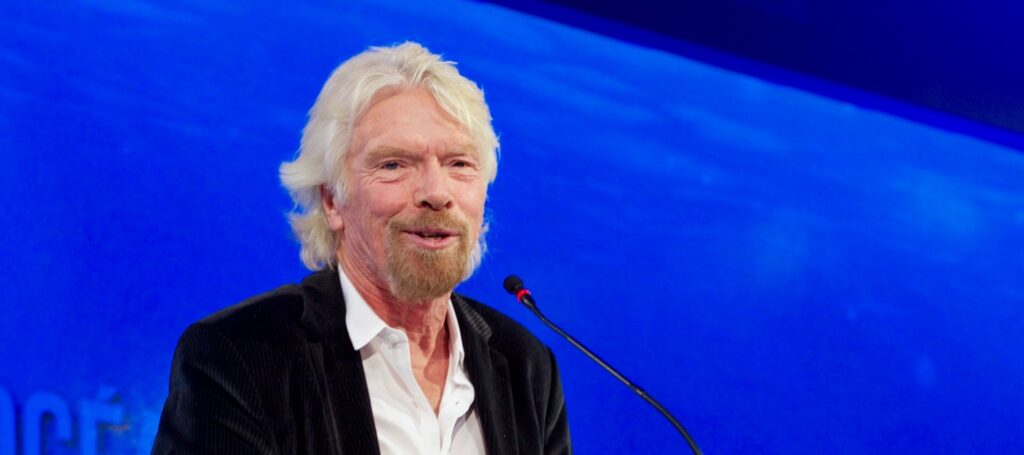
Photo: Richard Branson / U.S. Department of State / Public domain
Some billionaire investors saw a threat to the artificial intelligence boom in Tuesday’s Democratic election victories. Stock investors delivered a different verdict Wednesday: they bought shares.
The split matters to anyone with technology stocks in a retirement account, a business counting on AI investment or a community weighing a new data center. A slower building boom could hurt some operators while reducing the spending pressure on the biggest technology companies.
That tension ran through the reactions of major donors and investors after the midterms, CNBC reported Wednesday evening. The network described both a dispute over billionaire political giving and warnings about what new political resistance could mean for AI infrastructure.
The AI worry: fewer data centers
Pershing Square founder Bill Ackman warned on CNBC before polls closed Tuesday that slowing AI development could put America’s technological edge at risk.
During an election-night livestream of the All-In podcast, investor Chamath Palihapitiya linked the future of the AI trade to data-center construction. Altimeter Capital CEO Brad Gerstner warned on the same livestream that the Democratic wave could keep at least 10 to 15 gigawatts of expected AI data-center capacity from coming online in 2027, CNBC reported.
Those are investors’ warnings, not confirmed project cancellations. CNBC also cited analyst Dan Ives’ estimate that 10% of planned U.S. data centers would no longer proceed. That figure is a forecast, not a measured total of abandoned projects.
Texas was one focus of the concern. Democratic Gov.-elect Gina Hinojosa, who defeated Republican incumbent Greg Abbott, has proposed a moratorium on new data-center construction until stronger safeguards are in place, according to CNBC. A proposal is not an enacted statewide ban.
AMD Chief Executive Lisa Su told CNBC that technology companies need to show local communities the benefits of AI’s expansion. Her response put the practical challenge in focus: winning public support for the facilities behind the technology.
Wall Street bought anyway
The Dow rose 1,569 points, or 3%, Wednesday, while the S&P 500 gained 1.6% and the Nasdaq Composite rose 1.4%, CNBC reported. Big Tech companies added more than $750 billion in market value at one point during the session, the network said. That was an intraday figure, not a closing-market-value claim.
CNBC described a possible upside to slower construction for large technology companies: a lighter spending burden and greater value for existing data centers. Smaller operators that depend heavily on borrowing faced a different market reaction, with their shares falling, according to the report.
The rally does not settle whether particular AI projects will be delayed, or whether Wednesday’s gains will last. It shows that concern about the building pipeline did not produce a single verdict across the stock market.
Branson challenges the money race
Virgin Group founder Richard Branson criticized the billions spent trying to influence the election and called for campaign-finance reform, CNBC reported. LinkedIn co-founder Reid Hoffman also called for getting money out of politics while defending his own Democratic donations.
CNBC’s analysis of campaign-finance records put Elon Musk’s giving at $474 million nationwide, including $224 million in Texas, where his preferred Republicans lost the Senate and governor’s races. Those totals are attributed to the network’s analysis, rather than an independent JBizNews tally.
The donors’ argument and the market rally point to different questions after the vote: how much political money can achieve, and which businesses gain or lose if the AI construction boom slows. Neither answer can be read from one day’s share prices alone.
JBizNews Desk | Business
© JBizNews.com. All rights reserved. Unauthorized reproduction or redistribution is strictly prohibited.