Trump celebrates $250B Micron investment, says America is ‘GETTING SHOVELS IN THE GROUND’
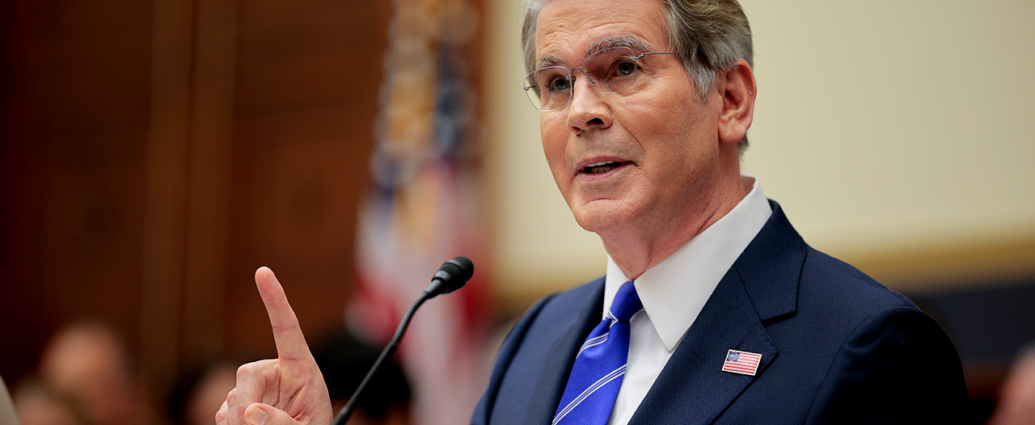
President Donald Trump on Friday touted Micron Technology’s plans to invest $250 billion in U.S. semiconductor manufacturing, including what the company says will become the largest chip manufacturing site in American history.
The Boise, Idaho-based company announced Thursday that it is accelerating its U.S. manufacturing and research investments with a goal of producing 40% of its DRAM memory chips in the United States.
“BIGGER INVESTMENTS JUST KEEP COMING!” Trump wrote on Truth Social, calling the announcement “The Trump Effect.”
“Micron is accelerating its U.S. spending to a MASSIVE 250 BILLION DOLLARS to build Memory Chips right here in the U.S.A.,” Trump wrote. “For years, the Do Nothing Dumocrats bogged down American Industry with crushing Red Tape, complete Economic Mismanagement, and ridiculous Woke Mandates.”
MICRON CEO SAYS AI BOOM DRIVES ‘UNPRECEDENTED’ MEMORY DEMAND AS COMPANY INVESTS $250B
Trump blamed previous Democratic administrations for slowing American manufacturing.
“They stalled everything. Not anymore! We are slashing the Radical Left’s Job killing Regulations, and actually GETTING SHOVELS IN THE GROUND. We are reshooting Manufacturing to America, and securing our Supply Chains. This means THOUSANDS of GREAT JOBS for Hardworking Patriots all across our Country. True Economic Security is MADE IN AMERICA.”
The company said it expects to spend more than $250 billion through 2035, driven by surging demand for memory chips in the AI era.
Micron said construction of the New York facility will require thousands of skilled workers, creating opportunities for union trades, apprentices, local training program graduates, specialty contractors and suppliers.
APPLE ACCUSES OPENAI OF TELLING RECRUITS TO BRING APPLE PROTOTYPES TO INTERVIEWS
The company said the project, which marked its first concrete pour at the Clay, New York, site on Thursday, is the largest private investment in New York state history and is expected to create 50,000 jobs statewide, including 9,000 direct Micron jobs.
Micron said its semiconductor facilities in Idaho and Virginia, combined with the New York project, are expected to support an additional 90,000 jobs while advancing U.S. economic and national security goals.
Trump also highlighted comments from Micron President and CEO Sanjay Mehrotra, who said the company was increasing its planned U.S. manufacturing and research investment from $200 billion to $250 billion.
WORKERS WHO DON’T USE AI MORE LIKELY TO BE LAID OFF, SURVEY FINDS
“Last week, I shared with President Trump that, because of his leadership and policies, Micron would announce today that we are ahead of schedule and increasing our U.S. manufacturing and R&D investment from $200 billion to $250 billion—creating 100,000 American jobs,” Mehrotra said in a statement.
“It’s another example of the Trump effect driving historic private-sector investment, American manufacturing, and job creation,” Mehrotra added.
OPENAI UNVEILS CHATGPT WORK TO AUTOMATE WORKPLACE TASKS AS AI RACE INTENSIFIES
Commerce Secretary Howard Lutnick praised the announcement, saying, “The Trump economic model clearly shows there has never been a better time to invest in the United States.”
Kelly Loeffler, Administrator of the U.S. Small Business Administration, said the $250 billion investment is “exactly the kind of bold, American-made commitment that President Trump’s agenda was designed to unleash.”
GET FOX BUSINESS ON THE GO BY CLICKING HERE
Small Business Administration Administrator Kelly Loeffler said the investment would strengthen domestic semiconductor manufacturing while creating opportunities for small businesses across the country.
FOX Business’ Nora Moriarty contributed to this report.
Opinion | One Plus One Doesn’t Add Up: Iran Wants the President Dead, and Washington’s Big Demand Is “Open the Strait by Saturday”
By Duvi Honig, Founder and CEO of the Orthodox Jewish Chamber of Commerce
Start with the tell. This week President Trump flew home from the NATO summit in Turkey on the old Air Force One — not the gleaming, Qatari-gifted jet he’s been showing off. Why? Because the older plane carries the full set of defensive measures and the new one doesn’t, and multiple reports tied the switch directly to the Iran threat. The President wasn’t coy about it. “I’m number one on the kill list for Iran,” he said. Israel had just handed Washington fresh intelligence — reported by The Wall Street Journal and confirmed by CNN and Fox News — pointing to a new Iranian plan to assassinate him. At the Ayatollah’s funeral, crowds waved “Kill Trump” signs and posters offering $100 million for his head.
So the commander in chief accepts, publicly, that a foreign regime is actively trying to murder him. He changes planes over it.
Now look at what that same administration put at the top of its agenda this week. A Saturday deadline — delivered to Tehran through Axios by three U.S. officials — demanding that Iran publicly declare the Strait of Hormuz open and pledge to stop shooting at tankers. Open the shipping lane by the weekend, or else.
Read those two paragraphs back to back and tell me the math works. One plus one doesn’t add up.
We are being asked to treat a plot to kill the President of the United States and a dispute over oil-tanker tolls as if they’re the same negotiation, on the same clock, with the same regime. They are not apples to apples. They are not even in the same orchard. A shipping-lane deadline has exactly nothing to do with whether Iran gets to put a bullet in the president. Reopening the strait by Saturday does not lower the kill list. It does not recall the assassins. It does not make the man safer on the older plane. So what, precisely, does it have to do with our security?
Here’s the part nobody in Washington seems willing to say out loud: you cannot run a routine maritime haggle with a government you simultaneously believe is trying to assassinate your head of state. Either the threat is real — in which case the strait is a sideshow and the entire posture should be built around the President’s life — or the threat isn’t real, in which case somebody explain the old plane. It can’t be both. Pick one. Right now the government is behaving as if both are true at once, and that is the definition of asleep at the wheel.
And let me say this as a businessman, because the strait is my beat. I know exactly what that waterway is worth. It carries roughly one-fifth of the world’s oil. War-risk insurance that was a rounding error before the war now runs 2% to 6% of a ship’s value — a $6 million toll to move one tanker — and transits have collapsed by as much as 90%. Every dollar of it lands at the American pump and on the American shelf. I have built my career arguing that these everyday costs matter. They do.
But a shipping crisis is a commercial problem. A plot to kill the President is an existential one. Confusing the two — putting a Saturday tanker deadline in the same news cycle, the same breath, the same priority slot as an active assassination threat — is not strategy. It’s a scrambling of first things and last things.
Comparing apples to apples would mean this: the number-one item on every desk in that administration is keeping the President alive. Full stop. The strait, the tolls, the insurance premiums, the oil price — real as they are — come after. Instead we got a weekend ultimatum about a waterway and a president slipping onto the safer plane, and we’re all supposed to nod along as if that adds up.
It doesn’t. One plus one still equals two. Secure the President first. Then, and only then, worry about who opens the strait and when. Anyone treating those as the same equation is either not doing the arithmetic — or asleep at the wheel.
Treasury Sells 30-Year Bonds at Highest Yield Since 2007
The U.S. Treasury sold $22 billion of 30-year bonds on Wednesday, July 8, at a high yield of 5.058%, the steepest rate the government has paid at a long-bond auction since 2007, according to the Treasury Department’s official auction results. The sale completed this week’s series of Treasury coupon auctions and underscored how investors are demanding higher returns to lend money to the federal government for the long term.
Wednesday’s offering was a reopening of the 5% coupon bond first issued in May and maturing in 2056. The auction followed May’s historic sale, when the government crossed the 5% threshold for 30-year borrowing costs for the first time since 2007.
Demand proved stronger than many expected, led by overseas investors. International buyers took nearly 78% of the auction, well above the six-auction average, while domestic participation came in below normal levels. The auction also cleared slightly stronger than market expectations. The when-issued yield immediately before bidding closed stood at 5.061%, while the auction stopped at 5.058%, indicating investors were willing to accept a slightly lower yield than the market had anticipated.
Long-term Treasury yields climbed sharply this week as oil prices surged following renewed geopolitical tensions involving the United States and Iran. The benchmark 30-year Treasury yield rose to about 5.07%, while the 10-year Treasury note, a key benchmark influencing mortgage, auto loan and other consumer borrowing rates, climbed to approximately 4.571%. The 2-year Treasury also moved higher to around 4.206%.
Markets reacted after President Donald Trump, speaking at the NATO summit in Turkey, said he believes the ceasefire with Iran is over. Oil prices have climbed nearly 10% over the past two sessions as the United States carried out additional strikes on Iran, revoked a waiver allowing Iranian crude exports, and tensions escalated following attacks on commercial vessels transiting the Strait of Hormuz. Brent crude climbed above $80 per barrel, fueling renewed concerns that higher energy costs could reignite inflation.
Higher oil prices feed directly into inflation expectations, and inflation is one of the biggest factors influencing long-term Treasury yields. Investors committing money for three decades demand greater compensation when they believe inflation could remain elevated, forcing the government to offer higher borrowing costs.
Markets also adjusted expectations for monetary policy. Traders increased their expectations that the Federal Reserve could raise interest rates again in September. Federal Reserve Chairman Kevin Warsh has maintained a hawkish stance since assuming office in May, repeatedly emphasizing that inflation remains above target while also supporting continued reductions in the Fed’s balance sheet, particularly its holdings of longer-term Treasury securities. Minutes from the Fed’s June meeting also indicated that several policymakers viewed persistent inflation and continued labor-market strength as supporting additional policy tightening.
For consumers and businesses, the implications extend well beyond Wall Street. Higher Treasury yields typically translate into more expensive mortgages, auto loans, business financing and other forms of long-term credit. Mortgage rates have remained near 6.5%, keeping pressure on home affordability at a time when housing inventory remains constrained in many parts of the country.
The government also faces growing borrowing costs. Every increase in Treasury yields raises the amount Washington must pay to finance its expanding national debt, increasing federal interest expenses and reducing fiscal flexibility over time.
Wednesday’s sale concluded a week of Treasury coupon auctions that also included three-year and 10-year notes. The strong participation from international investors demonstrated that global demand for U.S. government debt remains solid despite higher yields, while weaker domestic participation highlighted investors’ growing caution toward locking money into long-term securities amid elevated inflation and geopolitical uncertainty.
The last time the Treasury paid yields this high on newly issued 30-year bonds was in 2007, before the global financial crisis transformed interest-rate markets for more than a decade. The return of borrowing costs above 5% marks another milestone in the economy’s transition away from the era of ultra-low interest rates and signals that financing costs for both the government and consumers are likely to remain elevated.
JBizNews Desk | Washington
© JBizNews.com All Rights Reserved. Reproduction or distribution without written permission is prohibited.

MGM Resorts in Deal Talks With Barry Diller
Fake Chinese Air Bag Parts Have Killed 10 U.S. Drivers as Federal Safety Crackdown Expands
Federal safety regulators are warning drivers, repair shops and used-car buyers about a growing threat from counterfeit air bag parts after defective inflators linked to at least 10 deaths and multiple serious injuries were found in vehicles across the United States.
The National Highway Traffic Safety Administration (NHTSA) has prohibited the sale and import of the defective inflators, identified by the marking DTN60DB, after investigators connected them to fatal crashes involving airbags that exploded with excessive force instead of protecting vehicle occupants.
Transportation Secretary Sean Duffy called the counterfeit components “illegal Chinese airbag parts responsible for 10 deaths.”
Air Bags Became Deadly Instead of Protective
Rather than inflating normally during a collision, investigators found the defective inflators ruptured when deployed, sending metal fragments into drivers and passengers.
Victims suffered severe injuries to the head, neck, chest and face in crashes that authorities say otherwise may have been survivable.
The inflators carry markings associated with Jilin Province Detiannuo Safety Technology (DTN) of China. The company has stated it does not export the affected products to the United States and believes many of the components may themselves be counterfeit.
Regardless of their origin, NHTSA says inflators marked DTN60DB should be considered unsafe.
Why Regulators Can’t Simply Recall Them
Unlike factory-installed airbags, these counterfeit inflators are generally installed after a vehicle has already been involved in a collision.
Many enter the market through independent repair shops, online marketplaces and unauthorized parts suppliers, often costing around $100, compared with $1,000 or more for genuine replacement components.
Because they are installed after the vehicle leaves the factory, the parts are not linked to a vehicle’s VIN, meaning traditional recall searches cannot identify affected vehicles.
Officials say that makes locating every defective inflator significantly more difficult.
Used-Car Buyers Face Greater Risk
Investigators have identified many of the incidents in previously damaged vehicles, particularly used Chevrolet Malibu and Hyundai Sonata sedans, although regulators caution the problem may extend to additional makes and models.
Vehicles carrying salvage or rebuilt titles may face elevated risk because airbags are often replaced following previous accidents.
The FBI and Department of Homeland Security are assisting in efforts to identify the supply chain responsible for distributing the counterfeit components.
Industry Faces Growing Liability
The discovery has increased scrutiny across the automotive repair industry.
Automakers, insurers, dealerships, salvage auctions and collision repair facilities all face growing legal exposure as investigations continue.
General Motors’ global brand protection team has warned that counterfeit safety components frequently use inferior materials that dramatically increase the likelihood of catastrophic failure during a crash.
The situation has also drawn comparisons to the massive Takata air bag crisis, although regulators note the counterfeit inflator problem presents additional challenges because the parts entered vehicles outside traditional manufacturer supply chains.
What Drivers Should Do
NHTSA advises owners of vehicles previously involved in accidents—particularly those with salvage or rebuilt titles—to have their airbags inspected by an authorized dealership or qualified repair facility.
Since VIN searches cannot identify counterfeit replacement parts, a physical inspection may be the only way to determine whether a dangerous inflator has been installed.
Federal officials say removing counterfeit components already circulating throughout the marketplace will likely require years of inspections and enforcement efforts.
JBizNews Desk | Washington
© JBizNews.com All Rights Reserved. Reproduction or distribution without written permission is prohibited.

LARRY KUDLOW: America’s Central Command, not Iran, controls the Strait of Hormuz
If you read the press releases from the United States Central Command, you would know that Iran does not control the Strait of Hormuz. Let me quote: “since early May, U.S. forces have helped facilitate the successful transit of more than 800 commercial vessels and 380 million barrels of crude oil through the vital international trade corridor.”
Let me repeat those numbers. Actually it’s 825 commercial vessels and 380 million barrels of crude oil just since early May. That’s why oil prices have fallen nearly 40 percent. West Texas crude is priced at $71. About the same as it was one year ago, way before the Iran conflict. Stock markets are no longer dancing to the Iranian-Hormuz oil threat tune. Of course profits are breaking records. And profits are the mothers’ milk of stocks.
Yet there’s more to the story. There may be an oil production war developing with the weakening of OPEC. The United Arab Emirates wants to move from around 2 million barrels a day to as much as 5 million.
How about Iraq? Remember Iraq? Well they’re going to move from just over a million barrels per day to somewhere around 4 million to 5 million barrels per day. The Saudis are diverting oil exports through their East-West pipeline to the Red Sea. The UAE and other countries have shifted their tankers to the Southern Hormuz channel adjacent to Oman’s coastline. This is killing the Iranian strategy of bottling up the world economy.
The United States, meanwhile, is moving toward 14 million barrels per day. And the Energy Information Administration is now forecasting that worldwide crude production and other trade flows will rebound to near pre-conflict levels by the end of the year.
Hundreds of oil tankers are still sitting in the upper part of the Arabian Gulf. And they are filled to the brim with oil that will soon hit world markets. And meanwhile, while oil supplies are rapidly recovering, Chinese oil demand has plunged as a result of their continued economic slump. All of this shows how Iran’s supposed Hormuz oil weapon has been neutered.
Apple accuses OpenAI of telling recruits to bring Apple prototypes to interviews
Apple accused OpenAI on Friday of telling Apple employees interviewing for jobs to bring confidential prototypes, engineering artifacts and hardware components to interviews as part of an effort to accelerate the artificial intelligence company’s push into consumer devices.
The allegation is among the most explosive claims in a sweeping trade secrets lawsuit Apple filed in federal court against OpenAI, former Apple executives and engineers, accusing them of systematically misappropriating confidential information to build OpenAI’s hardware business.
“At Apple, our teams are constantly developing breakthrough technologies to create the best products and services in the world, and protecting their work and intellectual property is something we take very seriously,” an Apple spokesperson said in a statement to FOX Business.
“Recently, significant evidence has emerged suggesting individuals employed by OpenAI wrongfully took Apple’s secret and confidential information regarding our unreleased technologies, processes, and products. We will always defend our teams’ hard work and innovations, and we are taking all appropriate steps to do so.”
APPLE TO INVEST $30 BILLION IN US CHIP MANUFACTURING
An OpenAI spokesperson did not immediately respond to FOX Business’ request for comment.
According to Apple’s complaint, OpenAI instructed candidates to prepare “Technical Deep Dive” presentations on their Apple work and to bring “CAD/design artifacts,” “prototypes” and “Actual parts” to interviews. Apple alleges candidates were specifically asked to bring batteries, systems-in-package, multi-layer logic boards, shields and other hardware components for “show and tell” sessions with interviewers.
Apple also alleges Tang Yew Tan, Apple’s former vice president of product design for the iPhone and Apple Watch who is now OpenAI’s chief hardware officer, used confidential Apple project codenames during interviews to question candidates about unreleased Apple products.
One Apple employee allegedly responded that he “didn’t even know we could take those from the office,” according to the complaint.
OPENAI UNVEILS CHATGPT WORK TO AUTOMATE WORKPLACE TASKS AS AI RACE INTENSIFIES
The iPhone maker alleges the recruiting practices were part of a broader strategy to obtain Apple’s trade secrets as OpenAI races to develop its own consumer hardware. Apple says OpenAI now employs more than 400 former Apple workers, including engineers involved in hardware development.
The lawsuit includes additional allegations that former Apple engineer Chang Liu improperly accessed Apple’s internal systems after leaving the company, downloaded confidential engineering files while employed by OpenAI and coached another Apple employee on how to avoid Apple’s security procedures before joining OpenAI. Apple also alleges OpenAI used confidential knowledge of Apple’s supplier relationships in its efforts to build a competing hardware business.
CLICK HERE TO GET FOX BUSINESS ON THE GO
Apple is seeking damages and court orders preventing any further use of its alleged trade secrets, along with the return of confidential materials and preservation of evidence. The company also alleges former employees breached the confidentiality agreements they signed while working at Apple.
The lawsuit marks a dramatic escalation between two companies that remain business partners through Apple’s integration of ChatGPT into Apple Intelligence, even as Apple accuses OpenAI of unlawfully exploiting its confidential technology to compete in the emerging AI hardware market.
Cuisinart stainless steel propane grill sold at Lowe’s and Walmart recalled over shattering glass risk
Thousands of grills sold online and at Lowe’s and Walmart are being recalled due to the risk of glass shattering while the grill is in use, raising the risk of serious injury.
Roughly 12,660 stainless steel Cuisinart Propel+ Four Burner 3-in-1 Gas Grills are covered by the U.S. recall, which the Consumer Product Safety Commission (CPSC) announced on Thursday, while about 83 grills were sold in Canada.
The model number of the recalled grills is CGG-6331 and may be found on the label inside of the right-hand metal door of the grill, which is also where its serial number is located.
The grill includes a griddle, a stove-top burner and a pizza oven with tempered glass on the lid of the grill. The company and the CPSC have urged customers to stop using the grills and to check whether theirs is covered by the recall.
MORE THAN 1.7M GRILL BRUSHES RECALLED OVER BRISTLE HAZARD, RISK OF ‘SERIOUS INTERNAL INJURIES’
“Consumers should stop using the recalled Cuisinart Propel+ Four Burner 3-in-1 Gas Grill immediately and visit Conair’s website to check if their grill is included in the recall,” the CPSC explained.
“If affected, follow the instructions to safely remove the tempered glass window on the pizza oven and upload two photographs to the firm’s website; one of the removed glass, and one of the grill’s serial number,” the CPSC explained.
MORE THAN 550,000 KOBALT YARD TOOLS RECALLED OVER BATTERY FIRE HAZARD
Once a customer’s grill is confirmed as being covered by the recall, affected consumers will receive a $500 refund by check or be reimbursed for the original purchase amount with proof of receipt.
Refunds will be issued via check within 10–15 days of a grill being confirmed as subject to the recall. The recall website noted that a receipt isn’t needed to qualify for the refund.
The CPSC and company directed consumers to write the word “Recall” with a black sharpie marker on the tempered glass after receiving a refund and to dispose of it.
CHECK YOUR AC: 13,000 UNITS RECALLED OVER FIRE RISK
Consumers who purchased a grill that may be covered by the safety recall may visit a website set up to guide them through the process of verifying whether a grill was covered by the recall, identify and share the serial number, and submit documentation that can allow the company to verify the recalled grill and provide a refund.
Grills covered by the recall were sold at Lowe’s, Walmart and online at cuisinart.com from December 2024 through May 2026 for between $500 and $750, the CPSC said. They were imported by Conair LLC, which does business as Cuisinart, and were manufactured in China.
GET FOX BUSINESS ON THE GO BY CLICKING HERE
The CPSC’s recall page noted that the company has received 37 reports of shattered glass during the grill’s use, while one fire was reported. No injuries have been linked to the issue, the agency noted at the time of the recall.
片山氏のGPIF発言、全東信の破産ショック、物価の権威が利上げ予測─1週間のニュース5選
NATO Unveils Billions in Arms Deals as Allies Court Trump in Turkey
NATO leaders gathered in Ankara, Turkey, this week for a summit centered on defense spending, military production and alliance commitments, as member nations sought to demonstrate to President Donald Trump that they are increasing defense investment and strengthening the alliance’s industrial base. The meeting, held Tuesday and Wednesday at the Beştepe Presidential Complex and chaired by NATO Secretary General Mark Rutte, brought together leaders from all 32 member countries against a backdrop of billions of dollars in newly announced defense contracts.
Rutte focused the summit on three priorities: increasing allied defense spending, expanding defense manufacturing capacity and maintaining support for Ukraine. Ahead of the gathering, he called for what he described as a “transatlantic defense industrial revolution,” pointing to tens of billions of dollars in expected defense-related contracts and a defense industry forum that brought together senior government officials and major weapons manufacturers. NATO used the summit to highlight military procurement projects, underscoring how increased defense budgets are translating into production orders and industrial expansion.
The spending initiative builds on commitments made at last year’s NATO summit in The Hague, where member nations agreed to work toward spending 5% of gross domestic product on defense and security by 2035, including 3.5% for core military capabilities and 1.5% for broader security investments. This year’s summit focused on measuring progress toward that goal. Matt Whitaker, the U.S. ambassador to NATO, said the alliance would evaluate how quickly members are moving toward the benchmark. He noted that Poland, the Nordic nations and the Baltic states have made the fastest progress, while Germany expects to reach the target by 2029.
The United States continues to account for the largest share of NATO defense spending. The U.S. defense budget for 2026 totals approximately $901 billion, representing about 3.3% of the nation’s GDP. NATO officials say European allies and Canada have collectively increased defense spending by roughly $1.2 trillion over the past decade, including an approximately 20% increase during the past year. Despite that growth, analysts note that many European militaries remain heavily dependent on U.S. equipment, logistics and operational support.
The Trump administration has promoted a broader strategy often referred to as “NATO 3.0,” encouraging European allies to assume greater responsibility for conventional defense while allowing the United States to shift more military resources toward other strategic priorities. The approach has been reinforced by Defense Secretary Pete Hegseth’s review of U.S. force deployments in Europe and by repeated calls from President Trump for allies to increase their financial contributions to collective defense.
The summit also produced significant defense-industry news involving Turkey. During a bilateral meeting with Turkish President Recep Tayyip Erdoğan, President Trump said the United States would lift sanctions on Turkey and would consider resuming sales of Lockheed Martin F-35 fighter aircraft, a move that could reopen a major defense procurement relationship between the two NATO allies. The potential return of Turkey to the F-35 program would represent one of the most significant defense export developments discussed during the summit.
Regional security concerns also shaped discussions. The summit took place amid renewed tensions involving Iran, ongoing instability near the Strait of Hormuz and continued Western support for Ukraine. Ukrainian President Volodymyr Zelenskyy attended the gathering as allies increasingly highlighted Ukraine’s battlefield innovations in drone technology and electronic warfare alongside continued military assistance.
For the defense industry, the summit underscored a clear trend: long-term NATO spending commitments are increasingly translating into contracts, manufacturing expansion and new procurement opportunities for defense companies across Europe and the United States. As governments accelerate military modernization, defense contractors are expected to remain among the primary beneficiaries of higher alliance spending over the coming decade.
JBizNews Desk | Ankara, Turkey
© JBizNews.com All Rights Reserved. Reproduction or distribution without written permission is prohibited.

More than 550,000 Kobalt yard tools recalled over battery fire hazard
Greenworks Tools is recalling about 554,780 Kobalt-branded yard power tools and lithium-ion batteries after dozens of reports of batteries smoking, sparking or catching fire while charging, according to the U.S. Consumer Product Safety Commission.
The voluntary recall covers select Kobalt 24V and 48V outdoor power equipment sold with USB-C rechargeable batteries, including string trimmers, leaf blowers, lawn mowers, chainsaws, pruning saws, power cleaners and other tools.
The CPSC said charging the lithium-ion batteries through the USB-C port while the batteries remain inserted in the tool can cause the battery to short-circuit, creating a fire hazard that poses a risk of serious injury.
MILLIONS OF PRESCRIPTION EYE DROPS RECALLED NATIONWIDE OVER CONTAMINATION CONCERNS
Greenworks has received 34 reports of recalled batteries producing smoke, sparking or catching fire while they were inserted in a tool and charging through the USB-C port. No injuries or property damage have been reported.
The recalled products were sold at Lowe’s stores nationwide and online at Lowes.com between January 2026 and May 2026. Prices ranged from about $20 for standalone batteries to $482 for complete tool kits.
Only Kobalt products equipped with the recalled USB-C batteries are included in the recall. The affected batteries were sold in 3.0Ah, 4.0Ah, 5.0Ah, 6.0Ah and 8.0Ah capacities. Certain 3.0Ah and 6.0Ah batteries were also sold separately.
KIA ISSUES NEW RECALL OF 460,000 VEHICLES AFTER PREVIOUS FIX TO FIRE RISK FAILED
Consumers should immediately stop charging the batteries through the USB-C port while the batteries are inserted in the tool and contact Greenworks for a free replacement battery.
As part of the remedy, Greenworks will provide replacement batteries without the USB-C charging port, a charger adapter, an updated product manual, a warning label for the tool and a prepaid shipping label to return the recalled battery.
CLICK HERE TO GET FOX BUSINESS ON THE GO
Consumers can register for a replacement by visiting Greenworks’ recall page or contacting the company at 888-266-7096 or recalls@greenworkstools.com.
The recalled products were manufactured in China and Vietnam and imported by Greenworks North America LLC, doing business as Greenworks Tools, of Mooresville, North Carolina.
National debt interest and entitlement spending push FY2026 federal budget deficit toward $2 trillion
This year’s federal budget deficit is now outpacing last year’s as federal spending is growing at a faster rate than tax revenue, pushing the annual shortfall closer to $2 trillion.
The nonpartisan Congressional Budget Office (CBO) on Thursday released its monthly budget review for the month of June, which showed the FY2026 deficit was $1.373 trillion through the first nine months of the fiscal year.
That represents a $35 billion increase in the budget deficit compared with the same period a year ago. The larger deficit was the result of a larger increase in federal spending, which is up $178 billion from a year ago while tax receipts have risen $142 billion.
Increased spending was primarily driven by the cost of servicing the federal government’s more than $39 trillion national debt as well as rising expenses for the government’s three largest mandatory spending programs – Social Security, Medicare and Medicaid.
US NATIONAL DEBT SURPASSES SIZE OF THE ECONOMY FOR FIRST TIME SINCE WORLD WAR II
Net interest on the national debt was the largest category of increased spending in the first nine months of FY2026 and rose $98 billion compared with the same period a year ago, an increase of 13%. This was caused by the growth in the size of the national debt, as well as higher long-term interest rates – though some declines in short-term rates mitigated some of the total increase.
Social Security was the next largest driver of the increased spending, with benefit payments up $62 billion, or 5%, from a year ago due to higher average benefits and a larger number of beneficiaries. The CBO noted the increase would’ve been larger but for onetime retroactive payments that began in March 2025 under the Social Security Fairness Act.
Medicare spending rose $58 billion from a year ago, an 8% increase, due to higher enrollment and higher payment rates for healthcare services provided through the program. Medicaid spending was up $49 billion, or 10%, which was largely attributed to rising costs per enrollee.
Increased tax revenues were driven mostly by higher receipts of individual income and payroll taxes, which combined to rise by $169 billion, or 5%, despite income tax refunds rising by $31 billion, or 10%, due to the One Big Beautiful Bill Act.
Customs duties – a category which includes tariffs – were up $55 billion from a year ago. That amounts to an increase of 51%, which CBO attributed to President Donald Trump’s executive actions that raised tariffs on U.S. trading partners.
However, tariff refunds began to be paid following a Supreme Court ruling in February that struck down some of the tariffs, which reduced tariff revenues by about $70 billion in May and June.
US NATIONAL DEBT BREACHES $39 TRILLION MILESTONE FOR FIRST TIME AMID SPENDING SURGE
Maya MacGuineas, president of the nonpartisan Committee for a Responsible Federal Budget (CRFB), noted in a statement that this year’s deficit has now surpassed the prior year’s deficit and it’s “likely to stay that way for the rest of the fiscal year.”
“We will likely borrow $2 trillion or more this fiscal year – an astounding figure given that the economy keeps growing and unemployment is low,” she explained. “This is likely the tip of the iceberg; borrowing will soar if policymakers fail to get our entitlements under control, enact further unpaid-for tax cuts or spending increases, and otherwise ignore the need to cut spending and increase revenues.”
MacGuineas noted that Social Security and Medicare are within seven years of exhausting their trust funds, which would trigger across-the-board benefit cuts to both programs, and urged lawmakers to take steps to rein in federal budget deficits.
GET FOX BUSINESS ON THE GO BY CLICKING HERE
“None of this is normal. Policymakers should instead be targeting a much more sustainable deficit at 3% of GDP, putting together a bipartisan commission to address our fiscal situation and entitlements, and perhaps most importantly, being honest with the public about the grave dangers we face by remaining on this unsustainable path,” she added.
JPMorgan Chase Builds New Team to Chase Smaller Business Sales as Boomer Owners Plan Exits
JPMorgan Chase & Co. is launching a dealmaking team aimed at small companies, targeting businesses valued between $100 million and $500 million, according to an internal memo issued Wednesday and confirmed by the bank. The move pushes the nation’s largest bank further down the market, into a segment long dominated by boutique investment banks and regional advisory firms.
The new unit, described in the memo as a small-cap investment banking group, will complement an existing mid-cap operation that handles larger transactions. John Richert, who leads the mid-cap business and serves as global head of business services investment banking, said the effort expands the firm’s ability to serve smaller companies operating in specialized industries. The mid-cap group has grown steadily over the past decade to nearly 400 bankers worldwide, generating more than $1 billion in annual revenue while expanding at a rate exceeding 20% a year.
Richert pointed to two major trends behind the decision. The first is a generational transition as thousands of companies founded by baby boomers prepare for ownership changes, creating what he expects will be a significant pipeline of business sales over the coming years. The second is the continued flow of capital into private equity firms focused on lower- and middle-market businesses, creating increased demand for acquisition opportunities. Together, those forces are expected to drive more transactions involving companies that historically have not been a primary focus for JPMorgan.
The bank said the expansion will allow it to build relationships with entrepreneurs earlier in their business lifecycle while entering a market where many of its largest Wall Street competitors have only a limited presence. Richert noted the firm’s broad capabilities, saying few financial institutions can advise on the sale of a family-owned business while also helping take a company the size of SpaceX public. JPMorgan Chase participated in SpaceX’s June initial public offering.
The small-cap investment banking team will be led by Michael Flynn, a middle-market adviser with more than two decades of experience who joined JPMorgan Chase from G2 Capital Advisors, a Boston-based boutique investment bank. He will be joined by managing director Arash Farin, whose career includes roles at Centerstone Capital, Goldman Sachs, Blackstone and Lehman Brothers, along with executive director Jamie Eastham, a longtime JPMorgan banker who most recently worked in the firm’s strategic financing solutions group. The bank plans to expand the new division to more than 75 bankers.
The group will operate from Atlanta, Chicago, Dallas, Los Angeles and New York, placing advisers closer to business owners across the country instead of concentrating operations in a single financial center. Initial industry coverage will focus on consumer and retail companies, business services and other diversified sectors.
For small and mid-sized business owners, the move could have significant implications. Selling a privately owned company is often the largest financial transaction an entrepreneur will ever complete and, for many baby boomers, represents the primary source of retirement wealth. Historically, businesses valued below $500 million have relied on boutique advisory firms for mergers and acquisitions advice. The arrival of JPMorgan Chase could increase competition, provide greater access to financing and potentially improve valuations for sellers while intensifying pressure on smaller investment banking firms that have traditionally dominated the market.
The expansion comes as JPMorgan Chase continues to rank among Wall Street’s leading dealmakers. According to Dealogic, the bank has advised on more than $500 billion in U.S. transactions so far this year, trailing only Goldman Sachs. By moving further into the small-cap market, the bank hopes to establish relationships with growing companies earlier, positioning itself to serve them as they expand into larger corporate clients.
Whether the strategy succeeds will depend on how quickly the anticipated wave of baby boomer business sales develops and whether private equity firms continue investing aggressively in smaller acquisitions. For now, the message is clear: one of the world’s largest financial institutions sees the market for selling privately owned American businesses as large enough to warrant a dedicated national investment banking platform.
JBizNews Desk | Wall Street
© JBizNews.com All Rights Reserved. Reproduction or distribution without written permission is prohibited.

S&P 500 Up 1.2%, Nasdaq Up 1.7% on the Week; Dow Slips 0.5% as SK Hynix’s $26.5 Billion Debut Leads AI Rally
Wall Street closed a volatile week higher on Friday, July 10, as a record-setting chip listing and easing Middle East tensions lifted technology stocks and papered over a shaky stretch for the broader market. The S&P 500 rose 0.42% Friday to 7,575.39, finishing the week up about 1.2%. The Nasdaq Composite added 0.29% to 26,281.61 for a weekly gain near 1.7%. The Dow Jones Industrial Average climbed 149.60 points, or 0.29%, to 52,637.01 on Friday but still slipped roughly 0.5% on the week — a divergence that tells the real story of the past five sessions. The money moved into chips and artificial intelligence, and the blue-chip index that carries more old-economy names got left behind.
The week ran in three acts. It opened Monday with the Dow setting a record close above 53,000 for the first time, at 53,055.91, riding the momentum of a strong pre-holiday run and the recent addition of Alphabet to the 30-stock index. The mood flipped Tuesday and into Wednesday, when semiconductor stocks sold off hard on worries their valuations had outrun reality. Micron Technology fell 4.7% Tuesday, with KLA Corporation, Marvell Technology, Broadcom and AMD all sliding, and even a record quarterly profit from Samsung Electronics failed to steady the group. “Expectations are up, and fundamentals are struggling to meet these sky-high demands,” said Mike Bailey, director of research at FBB Capital Partners. Then Thursday and Friday brought the rebound, as bargain hunters and a blockbuster IPO pulled the chip trade back to life.
That IPO was the week’s centerpiece. On Friday, SK Hynix, the South Korean memory-chip maker and a critical Nvidia supplier, made its Nasdaq debut under the ticker SKHYV. The company priced its American depositary receipts at $149 and watched them open near $170, a gain of about 14%, after raising $26.5 billion — the largest U.S. share sale ever by a foreign company, with orders running more than seven times the shares available. For investors, the listing was a direct bet on the memory chips that feed AI data centers, and its success reset sentiment across the sector heading into the weekend.
The other hand on the wheel was geopolitics. Markets spent the week tracking the sharpest U.S.-Iran fighting since the two sides agreed to a ceasefire. Oil jumped early after the Treasury Department moved to revoke the license allowing Iranian crude sales, sending Brent up more than 5% in a single session, and a U.S.-led naval coalition raised the threat level for tankers in the Strait of Hormuz to “severe.” The pressure eased later in the week after President Donald Trump said Iran had reached out to make a deal, with Qatar and Pakistan working to restart talks and an administration official saying technical negotiations would continue even after the exchange of strikes. Crucially, laden tankers kept crossing Hormuz throughout, which steadily bled the risk premium out of oil and cleared a path for stocks.
Market movers. Big Tech supplied most of the week’s fuel. Meta Platforms was the single biggest winner, soaring nearly 15% — its best week since early 2024 — and jumping about 6% Friday. Bank of America kept its buy rating on the stock, citing an internal memo, reviewed by Reuters, that pointed to a leaner cost structure for Meta’s AI buildout; separately, the company said it aims to produce its own AI chip by September. Nvidia rose about 4% Friday. Chip-equipment names ran hot early after Morgan Stanley lifted price targets on Lam Research, Applied Materials and KLA Corporation, briefly pushing all three up around 4%. In dealmaking, Vertex Pharmaceuticals agreed to acquire Crinetics Pharmaceuticals for $85 a share, a roughly $10 billion deal that nearly doubled Crinetics stock. On the losing side, AstraZeneca dropped close to 8% after its heart-disease drug Wainua missed in a late-stage trial, Rivian Automotive fell about 10% on a 75-million-share stock offering, and Deutsche Bank analyst Omotayo Okusanya downgraded mall owner Simon Property Group to hold from buy, calling it “fully valued” at 16.3 times price to funds from operations. Amazon also lined up a $25 billion bond sale.
The rally masks a genuine debate about whether the AI trade has gone too far. The run has been staggering: Micron has surged more than 200% in 2026, while Lam Research, Marvell Technology and Intel have all more than doubled. That kind of move makes even bulls nervous. “There’s been so much euphoria around the AI boom going all the way back to the summer of 2023,” said Eric Parnell, chief market strategist at Great Valley Advisor Group. “We’re clearly in a boom phase right now, but I do have genuine concerns about some sort of bust coming in the second half of the year.” The week’s whipsaw — record highs Monday, a chip rout midweek, a sharp bounce to close — is exactly the kind of two-way action that shows up when valuations are stretched and every headline moves the tape.
Commodities and volatility. West Texas Intermediate crude settled near $71 a barrel and Brent held above $76, both well off their midweek spikes as the Iran risk faded. Gold slipped 0.65% Friday to $4,113.90 an ounce, extending its long retreat from a late-January peak above $5,500. The CBOE Volatility Index, Wall Street’s fear gauge, fell about 5% to 15.05, ending the week near the low end of its recent range and signaling that, for all the noise, investors were not bracing for a shock. In the bond market, the 10-year Treasury yield edged up to around 4.49% from 4.37% a week earlier, a quiet sign that inflation worries have not gone away.
The economic data cut against the optimism. The National Association of Realtors said existing-home sales unexpectedly fell to 4.09 million units in June, missing forecasts and underscoring how stubbornly high mortgage rates keep buyers frozen out. Weekly jobless claims held low at 215,000, but the May trade deficit widened to $77.6 billion, and recent hiring has cooled. That leaves the Federal Reserve boxed in: soft jobs data argues against another rate increase, yet pricey oil and heavy AI spending keep inflation sticky, and a few strategists warned the next move could still be a hike rather than a cut.
For everyday investors, the takeaway is the same one that has defined 2026. The market’s fate rests on a narrow band of technology giants and the chips inside them, while housing, trade and the Fed pull in the other direction. The next real test comes fast: the big banks kick off second-quarter earnings season in the days ahead, and analysts tracked by FactSet expect S&P 500 companies to post average profit growth of 23.3%. If those numbers hold, the bulls get fresh cover. If they disappoint, a market priced for perfection has a long way to fall.
JBizNews Desk | New York © JBizNews.com All Rights Reserved. Reproduction or distribution without written permission is prohibited.

Ticket Prices Tumble 65% for World Cup Quarterfinals After U.S. and Mexico Crash Out
Ticket resale prices for the final stretch of the 2026 FIFA World Cup have plunged after the United States and Mexico were eliminated, underscoring how strongly host-nation teams drive demand. According to figures reported Friday by secondary ticket marketplace TickPick, the cheapest resale ticket for Friday’s quarterfinal between Belgium and Spain in Los Angeles fell to about $1,100, down roughly 65% from approximately $3,200 before the U.S. was knocked out earlier this week.
The reason is simple: home fans buy tickets to watch home teams. With all three co-hosts—the United States, Mexico and Canada—eliminated before the quarterfinals, demand in the resale market dropped sharply almost overnight. The U.S. was defeated 4-1 by Belgium in Seattle on Monday, while England eliminated Mexico 3-2 on July 5. Canada exited the tournament the previous weekend after losing to Morocco.
The United States had generated enormous local demand throughout the tournament, drawing a sellout crowd of 66,925 fans in Seattle for its final match. Mexico’s passionate fan base created even stronger demand in many host cities, helping push resale prices to record highs during the knockout rounds.
The decline extends well beyond one match. Ticket marketplace Gametime reported that entry prices across all quarterfinal matches have fallen by roughly 50% since July 4. Belgium-Spain in Los Angeles dropped from $3,047 to $1,072. Norway vs. England in Miami fell from $3,756 to $1,975, while Argentina vs. Switzerland in Kansas City declined from $2,470 to $1,186. Thursday’s France-Morocco quarterfinal also saw resale prices tumble by roughly 66% before kickoff.
For fans who waited, the selloff has created a rare opportunity. Tickets that were financially out of reach just days ago are now selling for roughly one-third of their previous prices, allowing many more spectators to attend one of the world’s biggest sporting events.
The impact extends well beyond ticket marketplaces. Businesses that expected weeks of spending from American and Mexican supporters are now adjusting their forecasts. Tom’s Watch Bar, which operates 18 sports bars across the United States, counted World Cup matches involving the U.S. and Mexico among its busiest days of the year.
Co-founder and Co-Chief Executive Brooks Schaden said games featuring the two host nations delivered “massive lifts” in sales but expects World Cup business to fall by roughly half now that both teams have been eliminated. He noted that Mexican supporters typically spent more and stayed longer, making their absence particularly noticeable. Even so, the remaining World Cup matches continue generating approximately 25% more revenue than an average business day.
The changing ticket market reflects the broader economics surrounding major sporting events. Hotels, restaurants, bars, rideshare drivers and retailers in host cities benefited most when local fans had teams to support. With the host nations gone, demand now depends primarily on traveling supporters from Europe, South America and Africa—a smaller but still enthusiastic group.
Attention now shifts toward the tournament’s final stages. The semifinals will be played in Dallas and Atlanta, while the World Cup Final is scheduled for July 19 at MetLife Stadium in New Jersey. Historically, championship matches continue commanding premium prices regardless of who qualifies, suggesting demand could strengthen again as the tournament reaches its climax.
For now, the quarterfinals remain a bargain by World Cup standards. The stadiums are still expected to be full—but the fans sitting in those seats are paying far less than they would have just a week ago.
JBizNews Desk | New York
© JBizNews.com All Rights Reserved. Reproduction or distribution without written permission is prohibited.

Meta’s Twin Outages Expose a Hidden Risk for Businesses
Two significant outages at Meta Platforms within an 11-day span last month disrupted advertising campaigns for businesses around the world, highlighting how dependent many companies have become on a single digital platform for customer acquisition and sales.
On June 12, problems within Meta’s authentication systems triggered widespread outages affecting Facebook, Instagram, and the company’s advertising tools. Outage-tracking service Downdetector logged more than 100,000 reports from users experiencing problems with Facebook alone, while Meta’s own business status page showed major disruptions affecting ad creation, campaign management, reporting and delivery.
For businesses relying on Meta’s advertising ecosystem, the impact was immediate. Marketing teams found themselves unable to launch new campaigns, pause existing advertisements, adjust budgets or access reporting tools. Many advertisers were forced to simply wait while active campaigns continued running without the normal level of oversight or control.
Less than two weeks later, on June 23, Meta experienced another major outage. Facebook, Instagram, and Ads Manager again suffered widespread service interruptions. As during the earlier incident, Meta acknowledged the disruption but provided little immediate information beyond saying it was working to restore services.
The outages highlighted a reality many businesses rarely consider. Unlike many enterprise software providers, Meta does not offer advertisers a formal service-level agreement (SLA) guaranteeing platform availability. When the advertising system becomes unavailable, companies generally receive no contractual compensation for lost business opportunities or interrupted marketing campaigns.
For businesses whose customer acquisition depends heavily on Facebook and Instagram advertising, even several hours of downtime can translate into missed sales opportunities, delayed product launches and advertising budgets that cannot be adjusted in response to changing market conditions.
The broader lesson extends beyond Meta itself. Over the past decade, many small and medium-sized businesses have concentrated a significant portion of their digital marketing on a single platform because of its massive audience and sophisticated advertising tools. While that strategy has often delivered strong returns, it also creates a single point of failure capable of disrupting revenue generation with little warning.
The outages underscore the importance of diversification. Companies that spread customer acquisition across search engines, email marketing, multiple social media platforms and owned marketing channels are generally better positioned to continue operating when one platform experiences technical problems. Building direct relationships with customers through email lists, loyalty programs and company-owned websites also reduces dependence on third-party platforms.
Despite the recent disruptions, Meta’s platforms remain among the world’s most resilient and widely used digital advertising networks, serving billions of users and millions of businesses every day. However, the twin outages serve as a reminder that even the largest technology companies are not immune from technical failures.
For business owners, the lesson is increasingly clear: digital marketing should be diversified just as investment portfolios are. Companies that rely too heavily on a single platform assume risks that may not become visible until that platform unexpectedly goes offline.
JBizNews Desk | New York
© JBizNews.com All Rights Reserved. Reproduction or distribution without written permission is prohibited.
Ryanair Boeing 737 Makes Emergency Landing in Greece After Window Failure Injures Passenger
A Ryanair flight made an emergency landing in Greece after a cabin window failed shortly after takeoff, forcing the aircraft to rapidly descend and return to the airport while leaving one passenger injured.
Flight FR1879, operated by Malta Air for Ryanair, departed Thessaloniki bound for Memmingen, Germany, before the crew declared an emergency and safely returned to the airport.
Window Failure Triggers Emergency
According to Ryanair, a passenger window became dislodged during the aircraft’s climb, causing cabin depressurization and the automatic deployment of oxygen masks.
Flight crews immediately initiated emergency procedures, descending the aircraft to a lower altitude before returning safely to Thessaloniki.
One passenger was transported to a local hospital with injuries that authorities described as non-life-threatening.
Investigation Underway
The cause of the incident remains under investigation.
Initial reports indicate debris from an apparent engine-related event may have struck the fuselage and damaged the window, although investigators have not yet determined the exact sequence of events.
Boeing acknowledged the incident and said it is working with Ryanair as authorities continue their investigation.
Passengers Continue on Replacement Aircraft
Following the emergency landing, Ryanair arranged a replacement aircraft to transport passengers to Germany.
The airline praised the flight crew for following established emergency procedures and ensuring the aircraft landed safely.
Attention Returns to Boeing’s Best-Selling Aircraft
The incident again places attention on the Boeing 737, the world’s most widely used commercial aircraft family.
Although investigators have not determined whether the window failure resulted from the airframe, engine or another mechanical issue, aviation experts note that any cabin depressurization event receives extensive regulatory review.
Should investigators determine the damage originated from an engine failure, the focus could expand beyond Boeing to include the engine manufacturer and maintenance history of the aircraft.
Safety Procedures Worked as Designed
A rapid cabin depressurization is considered one of the more serious in-flight emergencies commercial flight crews train to handle.
In this case, emergency oxygen systems deployed properly, pilots executed a controlled descent and the aircraft landed safely without further injuries.
Regulators will now examine maintenance records, flight data and physical evidence from the aircraft to determine what caused the failure and whether any additional inspections are warranted across similar aircraft.
JBizNews Desk | London
© JBizNews.com All Rights Reserved. Reproduction or distribution without written permission is prohibited.

Carnival begins building record-breaking Destiny cruise ship that boosts number of ocean-facing balcony cabins
Carnival Cruise Line hosted a traditional steel-cutting ceremony on Friday at the Fincantieri shipyard in Monfalcone, Italy, marking a major milestone in the construction of its newest next-generation ship, Carnival Destiny, set to debut in summer 2029.
The event featured a high-tech 3D hologram giving onlookers a first look at the vessel, which will lead Carnival’s brand-new “Ace Class” fleet.
Two additional Ace Class sister ships are set to hit the water in 2031 and 2033.
DISNEY CRUISE CANCELED AFTER BOARDING LEAVES PASSENGERS WAITING HOURS AND QUESTIONING RESPONSE
The name Carnival Destiny goes back more than three decades to the original Carnival Destiny, which made waves as the world’s largest cruise ship at the time.
Carnival released a statement following the event noting it is looking to redefine the cruise experience yet again with what they call the most “outward-facing megaship at sea.”
Key features of the upcoming ship include an unprecedented number of ocean-view balcony cabins, a reimagined lanai deck, and more than 4.5 acres of glass — including expansive, multi-story glass walls designed to bring the ocean into constant view.
DISNEY ANNOUNCES MAJOR PLANS TO COMMEMORATE AMERICA’S 250TH ANNIVERSARY
Onboard spaces will also be revolutionized, with more than 70% of the ship’s venues and attractions consisting of entirely new concepts for the cruise line, spanning next-generation dining, bars and entertainment.
“Carnival Destiny builds on a legacy that changed cruising once before, reimagining what guests can experience at sea,” said Carnival Cruise Line president Christine Duffy. “With this ship, we’re elevating the guest experience again creating a ship that feels more expansive, while helping guests feel more connected and ultimately have more fun.”
Once completed, the Carnival Destiny will sail to destinations in the “Paradise Collection by Carnival,” which the cruise line boasts is the largest portfolio of exclusive destinations in the Caribbean, Bahamas and Mexico across the entire cruise industry.
CLICK HERE TO READ MORE ON FOX BUSINESS
More features and details about the ship are scheduled to be released later this year.
Delta CEO Ed Bastian says airline fares will stay elevated even if jet fuel prices fall
Delta Air Lines sees higher fares staying in place for consumers amid higher costs for fuel and other expenses, even if oil prices return to more moderate levels and allow jet fuel costs to decline in turn.
Delta CEO Ed Bastian said on the company’s quarterly earnings call that the dynamics of the airline industry have changed significantly as higher fuel prices, as well as increases in other categories of operational expenses, have made it more difficult for low-cost carriers to compete through lower airfares.
“Most U.S. carriers were already struggling to earn their cost of capital against a backdrop where industry airfares have meaningfully trailed inflation, costs have reset higher, and consumer preferences have evolved,” Bastian said.
“As we predicted, structural change has accelerated, enabling the industry to recapture this year’s fuel cost inflation at the fastest pace of any recent cycle,” he added.
DELTA ROLLS OUT CHEAPER FIRST-CLASS, BUSINESS FARES WITH FEWER PERKS: ‘MORE WAYS TO CHOOSE’
Bastian said that Delta sees those shifts in the industry continuing to play out, which will allow airfares and the revenue outlook to remain steady even if energy prices return to their pre-Iran war levels.
“Even after recent fare increases, airfares remain 10 to 15 points below overall inflation since COVID,” Bastian said, adding that much of the industry is still earning returns below the cost of capital.
“We believe that current revenue momentum should remain sustainable even if fuel prices moderate,” Bastian said.
DELTA CEO ED BASTIAN REVEALS WHAT HE SAYS MUST HAPPEN FOR AIRLINE TICKET PRICES TO FALL
Airlines are facing not only higher fuel costs, but increased expenses for labor, airport infrastructure, technology and airplanes, which Bastian explained is forcing companies in the industry to build more resilience into their operational strategy.
“What that tells you is that you need to figure out a change to the business model that will enable you to build resilience in your price and durability, and that’s what we’ve done over time,” he said, noting that includes higher airfares as well as the diversification of revenue streams, such as through Delta’s partnership with American Express.
DELTA, SOUTHWEST HIKE CHECKED BAG FEES AS AIRLINES FACE SURGING FUEL COSTS
Bastian added that “even with the improvements we’ve seen in pricing for the industry, the low end of the market still has to increase fares by another 5%, by our estimate, just to get to breakeven at today’s fuel environment.”
“There’s nothing to be gained by trying to grow in that environment. What the opportunity has to be in finding ways to secure higher revenues, not higher market share,” he added.
The most recent consumer price index (CPI) inflation data released by the Bureau of Labor Statistics showed that airline fares rose 2.7% on a monthly basis in May, and were 26.7% higher than a year ago.
GET FOX BUSINESS ON THE GO BY CLICKING HERE
The BLS is set to release updated CPI inflation data for the month of June next week.
Wealthy Families and Elite Students Are Betting on AI Over the Traditional Path
The traditional roadmap to success—earn top grades, attend an elite school, secure a prestigious internship and climb the corporate ladder—is beginning to shift as artificial intelligence reshapes education and the workplace. From wealthy families enrolling children in AI-powered schools to top university students leaving campus to build startups, a growing number of Americans are betting that mastering AI and entrepreneurship may provide a greater advantage than following conventional career paths.
The trend reflects a broader belief that the skills most valued in tomorrow’s economy will differ dramatically from those that defined previous generations.
AI Is Reshaping Education
One example is Forge Prep, a new private school in Livingston, New Jersey, which combines artificial intelligence with project-based learning focused on practical skills such as public speaking, negotiation, leadership and entrepreneurship.
Nationally, Alpha School, an AI-powered private education network, has attracted significant attention for its personalized learning model. Tuition reaches approximately $75,000 per year, and the organization continues expanding into new markets across the country.
Rather than relying on traditional classroom instruction throughout the day, students complete AI-guided academic lessons in a fraction of the time, allowing more hours for collaborative projects, problem-solving, business development and real-world experiences.
Supporters argue that as AI increasingly performs routine knowledge work, schools should place greater emphasis on creativity, communication, critical thinking and leadership.
Elite Students Are Taking a Different Path
The same transformation is unfolding at America’s top universities.
Instead of pursuing highly competitive internships on Wall Street or at major technology companies, increasing numbers of students are choosing to launch AI startups while still in college.
Several have postponed graduation or taken gap years to build companies full-time, attracted by growing venture capital investment in artificial intelligence and changing employment opportunities.
Student entrepreneur communities have expanded rapidly around institutions including Yale, Princeton, MIT and Harvard, where startup incubators and founder residences are becoming alternatives to traditional recruiting pipelines.
AI Is Changing the Economics of Careers
Part of the shift reflects changes within the labor market itself.
As artificial intelligence automates many entry-level tasks once assigned to interns and junior employees, some students believe building companies may offer greater long-term opportunities than competing for positions that increasingly rely on AI tools.
Venture capital firms have responded by investing earlier, funding student-led startups before graduates even enter the workforce.
For many aspiring entrepreneurs, the calculation has changed: rather than waiting years to build a business after gaining corporate experience, they see AI allowing smaller teams to launch companies much earlier.
Not Without Risks
Despite the enthusiasm, experts caution that both AI-driven education models and student startups remain largely unproven over the long term.
Most startup companies ultimately fail, while many AI-based educational programs have only recently opened and have yet to demonstrate long-term academic outcomes.
Some researchers have also questioned the accuracy of AI-generated educational content, emphasizing the continued importance of human oversight.
The high cost of many AI-focused private schools has also raised concerns that access to these new learning models may remain limited primarily to affluent families.
A New Definition of Career Success
Whether in elementary schools or elite universities, one theme is becoming increasingly clear: many families and students now believe artificial intelligence is fundamentally changing the skills needed for future success.
Instead of viewing AI as simply another classroom subject or workplace tool, they increasingly see it as a platform capable of reshaping education, entrepreneurship and career development.
Whether those bets ultimately outperform the traditional path will take years to answer. What is already evident is that more students, parents and investors are willing to rethink long-held assumptions about how the next generation should prepare for the future.
JBizNews Desk | New York
© JBizNews.com All Rights Reserved. Reproduction or distribution without written permission is prohibited.

Beloved American ice cream chain shuttering dozens of stores nationwide
The financial pressures battering the U.S. restaurant industry have reached one of America’s most iconic legacy brands.
Multiple news outlets reported Friday that Dairy Queen has shuttered dozens of locations nationwide. From the heart of Texas to the interior of Alaska, local communities are losing long-standing businesses as independent franchisees grapple with a tightening economic climate and strict corporate compliance mandates.
In late June, a single franchisee in Alaska closed its three locations in Anchorage, Wasilla and Palmer, the Anchorage Daily News first reported. The closures left just one Dairy Queen operating in the state, in Soldotna.

PAPA JOHNS SHUTS DOWN DOZENS OF LOCATION ACROSS 17 STATES AS FAST-FOOD COMPETITION INTENSIFIES
Weeks earlier, a Dairy Queen franchisee in Great Falls, Montana, shut down his restaurant after 39 years in business. He told local news outlet KRTV that he was converting the location into a Mediterranean restaurant to bring “something fresh and exciting” to the area.
However, the bulk of the national closures stems from a corporate compliance dispute. According to the Austin American-Statesman, Dairy Queen’s U.S. parent company revoked the franchise rights of Texas-based operator Project Lonestar after it failed to complete required building remodels.
Because the operator was blocked from ordering official Dairy Queen inventory, the move forced the immediate closure of 42 Texas locations between February and March.
Dairy Queen did not immediately respond to Fox News Digital’s request for comment.
GET FOX BUSINESS ON THE GO BY CLICKING HERE
Dairy Queen’s international headquarters are based in Minneapolis and operates as a subsidiary of Warren Buffett’s Berkshire Hathaway. To date, Dairy Queen has roughly 7,800 locations in more than 20 countries.
According to a recent Dairy Queen press release, the company’s growth strategy appears focused on expanding into new markets, including plans to open 20 “DQ Grill & Chill” restaurants in Puerto Rico.
Ryanair passenger partially sucked out of broken window after takeoff from Greece
A passenger on a Ryanair flight was reportedly nearly sucked out of a broken window in midair on Friday morning.
The incident occurred on Flight 1879 from Thessaloniki, Greece, to Memmingen, Germany, after a piece of debris came off one of the airliner’s engines and broke the window shortly after takeoff, Greek media outlets reported.

A woman who was on the flight and witnessed the incident told Radio Thessaloniki that most of the passengers on the flight were asleep and “immediately realized there had been a decompression” when they were awoken by a noise that sounded “like tire bursting.”
“The masks dropped and there was a strong smell. The head and shoulders of one passenger were outside the window. Fortunately, he hadn’t taken off his seat belt,” the woman explained.

RYANAIR ‘RELUCTANTLY’ ENDS MANDATORY FEES FOR PARENTS TO SIT WITH CHILDREN AMID INVESTIGATION
Reuters reported that two industry sources indicated that the passenger was partially sucked out of the broken window.
Greek media reports indicated that passengers, including his wife, held him in his seat amid the incident, which prompted the flight to return to Thessaloniki after it occurred following takeoff.
The passenger was described as a 61-year-old tourist from Serbia, and authorities said he was being treated for friction burns and shock but was otherwise in good condition.
RYANAIR CEO RIPS TRUMP AS A ‘LIAR’ WHO IS ‘HISTORICALLY WRONG’
Ryanair told FOX Business in a statement that the “flight returned to Thessaloniki shortly after take-off when a passenger window dislodged inflight.”
“The aircraft landed normally and passengers returned to the terminal. One passenger requested and received medical assistance on the ground in Thessaloniki,” the company said, adding that a replacement aircraft was arranged to bring passengers to Memmingen.
The airline’s statement did not discuss the nature of the incident that prompted the need for medical assistance or injuries incurred.
RYANAIR CEO FIRES BACK AFTER MUSK FLOATS BUYING EUROPE’S LARGEST AIRLINE
A similar incident occurred on a 2018 Southwest Airlines flight, when engine debris broke a window causing a passenger to be partially sucked out of the window. The passenger died of her injuries in that incident.
In January 2024, the door plug of an Alaska Airlines flight blew out shortly after takeoff and caused a decompression of the plane’s cabin. Several minor injuries were reported in the decompression, but all passengers and crew survived.
GET FOX BUSINESS ON THE GO BY CLICKING HERE
Reuters contributed to this report.
Trump Refuses to Sign Landmark Housing Bill, but It Becomes Law at Midnight Anyway
President Donald Trump said Friday he will not sign the biggest housing bill in decades, even as the measure heads toward becoming law at midnight without his signature.
In a post on Truth Social, Trump said he was withholding his signature “in PROTEST” because the Senate has failed to pass the SAVE America Act, the voter-identification legislation he has repeatedly urged lawmakers to approve. He stopped short of issuing a veto, meaning the legislation will become law automatically under the Constitution if Congress remains in session and the president neither signs nor returns the bill within the required 10-day period.
The 21st Century ROAD to Housing Act passed both chambers of Congress with broad bipartisan support in June and was formally delivered to the White House on June 29, starting the constitutional review period.
A Major Housing Overhaul
The legislation represents one of the most significant federal housing reforms in decades, aiming to increase the nation’s housing supply while improving affordability.
Among its major provisions, the law streamlines portions of the federal permitting process to accelerate residential construction, places new restrictions on large institutional investors purchasing single-family homes, and creates incentives for developers to convert vacant commercial and abandoned properties into residential housing.
Supporters argue the package addresses one of the country’s most pressing economic challenges—a shortage of available housing that has driven home prices to record levels.
Housing Affordability Remains a Major Challenge
According to the National Association of Realtors, the median price of an existing U.S. home reached $440,660 in June, an increase of 1.8% from a year earlier.
Industry groups have long argued that lengthy permitting requirements, limited land availability and increasing construction costs have slowed new housing development, contributing to the nation’s housing shortage.
The legislation seeks to address those issues while also responding to concerns that large corporate investors have purchased significant numbers of single-family homes, reducing inventory available to first-time homebuyers.
Politics Overshadow the Policy
While the housing legislation received bipartisan support, Trump’s decision not to sign it reflects his continued focus on election-related legislation.
The president has repeatedly urged Congress to approve the SAVE America Act, which would require proof of citizenship for voter registration and establish stricter voter-identification standards nationwide.
Trump has also encouraged Senate Republicans to reconsider the legislative filibuster in an effort to move the proposal forward.
House Speaker Mike Johnson previously indicated that Trump was unlikely to block the housing legislation, saying the president could either sign the measure or allow it to become law without his signature.
Industry Watches for Implementation
For builders, developers, lenders and local governments, the practical effect remains the same regardless of whether the president signs the legislation.
Attention now shifts toward implementation, with the housing industry closely watching how quickly the new permitting reforms, redevelopment incentives and investment restrictions translate into additional housing construction and improved affordability.
Whether the legislation meaningfully expands the nation’s housing supply will likely depend on how rapidly federal, state and local governments implement the new provisions over the coming months.
JBizNews Desk | Washington
© JBizNews.com All Rights Reserved. Reproduction or distribution without written permission is prohibited.
Delta Travel Demand Withstands Fuel Costs
Stocks Enter Earnings Season With Little Room for Error
The U.S. stock market has climbed to record highs in 2026 on the strength of corporate profits, and over the next several weeks investors will learn whether companies can continue delivering the earnings needed to justify those gains. Second-quarter earnings season officially begins the week of July 13, with JPMorgan Chase and several other major U.S. banks reporting results on July 14, launching what is expected to be one of the most closely watched reporting seasons in years.
According to LSEG IBES data, Wall Street analysts expect S&P 500 companies to deliver earnings growth of more than 20% compared with the same quarter a year ago. Those expectations reflect continued confidence in corporate America but also leave little room for companies to disappoint investors.
The optimism follows an exceptionally strong first quarter. Corporate earnings grew 29.4%, roughly double what analysts had projected before reporting season began and marking the strongest quarterly profit growth in more than four years. Much of that performance was fueled by continued investment in artificial intelligence infrastructure, resilient consumer spending and stronger-than-expected economic activity. As a result, analysts have raised full-year earnings expectations to approximately 26.4% growth for 2026, which would represent the strongest annual expansion since 2021.
Higher expectations, however, also create greater risk. With stock prices already reflecting significant optimism, companies that merely meet expectations may find investors looking for more. Joe Mazzola, Head Trading and Derivatives Strategist at Charles Schwab, warned that steadily rising earnings estimates raise the likelihood of increased market volatility as investors react sharply to even modest disappointments. Bruce Zaro of Granite Wealth Management similarly noted that many technology and growth companies may need to significantly exceed forecasts to justify additional gains after such a strong rally.
Recent trading has already demonstrated that reality. Even companies reporting solid financial results have sometimes seen their shares decline as investors judged the performance against exceptionally high expectations. Strong earnings from Samsung Electronics, for example, were followed by weakness across portions of the semiconductor sector as investors questioned future growth rather than current results.
Technology remains the primary driver of expected earnings growth. LSEG projects technology-sector profits will rise roughly 65% during the second quarter, while energy companies are expected to benefit from higher oil prices, potentially doubling earnings from a year earlier. Materials companies are also forecast to post significant gains. That concentration means much of the broader market’s performance continues to depend on a relatively small group of large technology and energy companies, with Nvidia, one of the market’s most influential stocks, not scheduled to report until late August.
Investors are also confronting higher borrowing costs. Long-term Treasury yields have climbed sharply in recent weeks, with the 30-year Treasury bond trading near 5% and the 10-year Treasury note around 4.6%. Rising yields increase financing costs for businesses while also making bonds more attractive relative to equities. Combined with persistent inflation concerns and the Federal Reserve’s cautious approach toward interest-rate cuts, higher bond yields have become an increasingly important headwind for stock valuations.
Market valuations themselves remain elevated. The widely followed Shiller CAPE ratio continues to rank among the highest levels on record, suggesting investors are paying historically expensive prices for future earnings. While elevated valuations alone do not guarantee a market correction, they reduce the margin for error if corporate results fail to meet expectations.
For businesses, earnings season offers far more than insight into quarterly profits. Company guidance on hiring, capital spending, consumer demand, artificial intelligence investment and tariff costs often provides one of the clearest real-time snapshots of the broader economy. Investors will be paying close attention not only to what companies earned during the second quarter but also to what executives expect for the remainder of the year.
For millions of Americans whose retirement savings are invested in stock market indexes, the coming weeks could determine whether this year’s rally continues or begins to cool. Corporate America enters earnings season from a position of strength, but expectations have rarely been higher. With profits, valuations and interest rates all elevated simultaneously, even small disappointments could trigger outsized market reactions.
JBizNews Desk | New York
© JBizNews.com All Rights Reserved. Reproduction or distribution without written permission is prohibited.
Walmart to Pay Texas $13 Million Over Spark Driver Tips
Walmart has agreed to pay more than $13 million to settle a Texas investigation into whether the retailer misled the gig workers who deliver its groceries about how much they would earn, Texas Attorney General Ken Paxton announced Monday. The settlement resolves allegations that Walmart gave drivers in its Spark Driver program inaccurate information about tips, base pay and bonus opportunities, while requiring the company to change how it presents driver compensation going forward.
Roughly half of the settlement—about $6.69 million—has already been paid directly to affected Texas drivers as restitution, according to the attorney general’s office. An equal amount will go to the state to cover civil penalties, attorneys’ fees and investigation costs, bringing the total settlement to more than $13.3 million. The agreement, filed June 19 in Collin County District Court as an Assurance of Voluntary Compliance under the Texas Deceptive Trade Practices Act, does not require Walmart to admit wrongdoing.
Walmart’s Spark Driver platform, launched in 2018, connects independent contractors with grocery and retail deliveries from local Walmart stores and fulfillment centers. Drivers accept delivery offers through a mobile app and are paid per trip. According to court filings, Texas alleged that since at least 2021, Walmart represented that drivers would receive the full amount of customer tips even though some tips were allegedly split among multiple drivers or not paid in full. The state also alleged Walmart reduced base pay on modified delivery offers without adequate disclosure and provided misleading information regarding incentive bonuses.
Beyond the financial settlement, Walmart agreed to implement significant operational changes. The company must establish an earnings verification system designed to ensure drivers receive the compensation shown when they accepted delivery offers. Walmart must also improve transparency regarding driver pay, bonuses and incentives. The Texas Attorney General’s Office said it will continue monitoring the company’s records and compensation practices to ensure ongoing compliance.
Attorney General Ken Paxton called the settlement a victory for Texas workers, saying it ensures drivers receive the wages and tips they were promised while reinforcing that large corporations must honor the compensation they advertise. Walmart responded that it values its Spark drivers, has already issued remediation payments to eligible drivers and continues working to improve its compensation systems to promote fairness and transparency.
The settlement highlights growing regulatory attention on the rapidly expanding gig economy. As retailers compete to offer faster home delivery, millions of independent contractors increasingly rely on app-based platforms where earnings can be difficult to verify. Rather than challenging the independent contractor model itself, Texas focused on the accuracy and transparency of compensation disclosures—an approach that other states could potentially adopt.
For Walmart, the financial cost is relatively small compared with its overall size, but the operational requirements could have broader implications across the delivery industry. If earnings verification and greater compensation transparency become industry standards, competing delivery platforms may also face pressure to modify how they present pay offers to drivers.
As same-day delivery becomes an increasingly important part of modern retail, regulators appear increasingly focused on ensuring that gig workers receive exactly what they are promised. The Texas settlement may ultimately serve as an early blueprint for how states oversee pay transparency throughout the rapidly growing app-based delivery economy.
JBizNews Desk | Bentonville
© JBizNews.com All Rights Reserved. Reproduction or distribution without written permission is prohibited.
Coffee Industry Presses Trade Officials to Keep Brazil Beans Tariff-Free
The National Coffee Association told the Office of the U.S. Trade Representative on Wednesday, July 8, that Brazilian coffee should stay out of a new round of import taxes, warning that fresh duties would push already-steep grocery prices higher for the tens of millions of Americans who drink coffee every day.
William Murray, president and chief executive of the National Coffee Association, made the case in testimony at a public hearing in Washington tied to the government’s review of trade with Brazil. He asked officials to protect green, unroasted coffee that is already exempt and to add unflavored instant coffee to the tax-free list, calling both essential to keeping coffee affordable and U.S. coffee companies competitive.
The economic stakes are substantial. Murray told the panel that protecting coffee matters for more than 176 million daily American coffee drinkers and a domestic coffee economy he valued at about $343 billion. Instant coffee alone, he said, is consumed by nearly 30 million adults each day and serves as a base for cold brew, flavorings, extracts and the fast-growing category of canned, ready-to-drink coffee.
The hearing is part of a Section 301 investigation run by the Office of the U.S. Trade Representative into Brazil’s trade practices, spanning complaints from digital-commerce rules to illegal deforestation. Out of that review, the government could place a 25% tariff on a list of Brazilian goods. A separate measure has already added a 12.5% charge on products from more than 60 countries, instant coffee among them.
Brazil is the world’s largest coffee producer and supplies about a third of what the United States drinks, which makes any tax on its beans hard to dodge at the register. Last year, Washington imposed a 50% tariff on Brazilian imports that threw the U.S. coffee trade into turmoil before officials carved out green coffee. Instant coffee stayed taxed at 50% until the Supreme Court struck down most of the administration’s blanket tariffs; it now carries a 10% global rate.
Murray said the earlier duties fed what he called “highly visible price inflation on popular products,” squeezing the companies that turn beans into everyday goods. His core argument to regulators was practical: the country cannot grow its way out of a coffee tax. Farms in Hawaii and Puerto Rico cover only a sliver of demand, and the United States produces less than 6% of the instant coffee it uses.
The pain would not stop at the supermarket shelf. Higher bean costs ripple through corner coffee shops, diners and national restaurant chains that price a cup on thin margins, through grocery retailers that lean on coffee to draw shoppers, and through the food manufacturers that fold coffee into syrups, creamers, ice cream and bottled drinks. The National Coffee Association notes that roughly 99% of U.S. coffee is imported, so there is no domestic supply to cushion the blow.
Brazilian producers pressed the same point from the other side of the table. Representatives of Abics, the Brazilian Soluble Coffee Industry Association, and the exporter group Cecafe appeared at the Washington hearings alongside the American association. Aguinaldo José de Lima, executive director of Abics, said more than 90% of Brazil’s instant coffee is bound for the U.S. market — about 15,500 metric tons a year — and that no other supplier can match that volume at a similar price. The first hit from any new tariff, he said, would land on companies and jobs before reaching shoppers.
Relief at the register looks distant regardless of the ruling. In a London interview reported by Bloomberg, Giuseppe Lavazza, chairman of the Italian roaster Lavazza, said retail coffee prices are unlikely to fall for at least two years, citing tight global supply, weather damage to crops in Brazil and Vietnam, and speculation that has driven futures to record levels. He described the market’s instability as “the new constant.”
Coffee has become a recurring flashpoint in the tariff fight precisely because almost none of it grows on American soil. Lawmakers in both parties, including Representative Don Bacon and Representative Ro Khanna, have pushed the White House to leave the drink alone, arguing that taxing a product the country cannot realistically produce simply raises costs for households.
For now the decision sits with trade officials weighing the Section 301 findings. Murray asked them to extend the existing exemptions rather than reopen them, telling the panel that keeping coffee tariff-free would benefit both the broader economy and the millions of Americans who start each day with a cup. A ruling is expected in the weeks ahead.
JBizNews Desk | Washington
© JBizNews.com All Rights Reserved. Reproduction or distribution without written permission is prohibited.
JBIZ Leadership AI Summit Opens Monday and Tuesday as Businesses Prepare for the Next Generation of Essential Workplace Skills
EATONTOWN, N.J. — As businesses across every industry race to improve productivity and prepare their workforce for a rapidly evolving workplace, the Orthodox Jewish Chamber of Commerce and the Parnassah Network Foundation will host the JBIZ Leadership Multi-Platform AI Summit this Monday and Tuesday, July 13–14, at the Sheraton Eatontown Hotel in Eatontown, New Jersey.
The two-day executive program is designed for business owners, executives, managers, employees, entrepreneurs and individuals entering the workforce, providing practical, hands-on training in the business platforms that are increasingly becoming essential in today’s workplace.
Just as Word, Excel, Outlook and Email Became Workplace Essentials…
Twenty years ago, knowing how to use Microsoft Word, Excel, Outlook and email separated job candidates from the competition. Today, those programs are standard requirements in virtually every workplace.
Organizers say the workplace is experiencing another transformation.
Today’s leading business platforms—including ChatGPT, Claude, Microsoft Copilot, Google Gemini, Grok, Perplexity, Meta AI and Mistral—are quickly becoming the next generation of must-have workplace skills. Just as previous generations were expected to master Word and Excel, today’s professionals are increasingly expected to understand how and when to use these platforms effectively.
Knowing how to use these platforms has become as essential as knowing Word, Excel and email. Employees who can use them independently complete tasks faster, improve accuracy, reduce administrative work and free up valuable time for higher-level responsibilities.
Why Businesses Are Investing in These Skills
Research continues to demonstrate measurable returns from integrating these platforms into everyday business operations.
According to the London School of Economics, professionals save an average of 7.5 hours per week through effective use of these workplace platforms.
The GoTo 2025 AI in Business Report found employees save an average of 2.3 hours per day, enabling organizations to improve productivity while reducing repetitive administrative work.
The PwC Global AI Jobs Barometer, which analyzed more than one billion job postings worldwide, found that positions requiring AI-related skills command an average 72% earnings premium, reflecting the growing demand for professionals who know how to use these technologies effectively.
Meanwhile, FOX Business reported that survey data suggests as many as 70% of laid-off workers were not actively using artificial intelligence tools, highlighting the growing importance many employers are placing on technology adoption and workforce readiness.
Whether You’re a Business Owner, Executive, Manager, Employee or Entering the Workforce—This Summit Is for You
The summit is designed to deliver practical value for professionals across every stage of their careers.
Business owners will learn how to increase productivity, reduce operating costs, improve customer service and grow revenue by empowering their workforce with today’s leading business platforms.
Executives and managers will discover how to streamline operations, delegate repetitive work more efficiently and build higher-performing teams.
Employees will learn how to draft professional emails, prepare reports and presentations, analyze spreadsheets, review contracts, conduct research, summarize documents and automate repetitive office tasks—allowing them to focus on work that creates greater value.
Individuals entering the workforce or returning from seminary will gain practical skills that employers increasingly expect, helping them stand out in today’s competitive job market.
Built on Nearly Two Decades of Business Leadership
The JBIZ Leadership Multi-Platform AI Summit is built on the Orthodox Jewish Chamber of Commerce’s nearly 20 years of empowering businesses, entrepreneurs and professionals.
Over that time, the Chamber has presented more than 1,000 workshops, conferences and executive education programs, becoming a recognized leader in workforce development, business growth and economic stimulation.
Developed over months by industry professionals, the summit teaches attendees which platform to use, when to use it and how to apply it across writing, research, marketing, sales, spreadsheets, presentations, document analysis, customer service and everyday office operations. Every participant will receive a Certificate of Completion.
Event Information
The JBIZ Leadership Multi-Platform AI Summit will be held Monday and Tuesday, July 13–14, at the Sheraton Eatontown Hotel, 6 Industrial Way East, Eatontown, New Jersey.
Information: Esther@OJChamber.com
Phone: (212) 659-5270 ext. 104
JBizNews Desk | Eatontown, New Jersey
© JBizNews.com All Rights Reserved
White House, gas stations point fingers over stubborn prices while locations that slashed prices see boom
As oil prices react to the latest back-and-forth between the United States and Iran, fingers are being pointed as to why gas prices remain closer to $4 a gallon than $3 a gallon.
The price of a barrel of oil influences the price of gas. Within the cost of a gallon, oil producers sell the oil to a refinery that in turn sells the gas to a station. Also, in the price consumers pay are state and local taxes, environmental maintenance for the station, and a credit card transaction fee.
White House executive director of the National Energy Dominance Council, Jarrod Agen, says the administration sees more room for gas stations to lower costs. He says President Donald Trump personally watches the national price of gas very closely.
“The margins on gas at the pump have increased significantly ever since COVID,” Agen said. “And so, they’ve kind of gotten out of control at this point. Traditionally, it is a very low margin area. But I think they’ve used the Iran war as a way to grow that margin.”
FIRST FREEDOM FUEL NETWORK OPENS AS TRUMP-BACKED DISCOUNTS ROLL OUT
He offered the example of the Freedom Fuel Network, which owns 25 stations around Philadelphia and New Jersey. The company deeply discounted the gas it sells, saying it reduced profit margin. Agen adds company executives told him, “We can sell it wholesale plus some of our cost and still save consumers about 50 cents per gallon, which is, that’s real savings, and you know once one person does it, then kind of the rest of the market will follow.”
Aged said Freedom Fuel stations make up in volume what they are shrinking in profit margin.
JET FUEL SPIKE KEEPS AIRFARES HIGH FOR BUSY SUMMER TRAVEL SEASON
In a FOX Business exclusive, a White House official said the network of gas stations saw fuel volumes increase 51.3% in July at the launch of their discount on July 3. The move forced 320 gas stations within a 40-mile radius to cut gas prices by 10 cents a gallon, according to the official who has seen the company data.
The White House official said 600 stations reduced prices in a ripple effect related to the competition benefiting drivers in the areas around Philadelphia and New Jersey.
National groups representing smaller gas stations pushed back on the growing profit margin narrative. Vice President of the National Association of Convenience Stores Jeff Lenard blamed some of the loss in profit margins on credit card companies.
“Approximately 90% of the cost of a gallon of gas is determined before the retailer takes possession of the fuel, and after expenses — especially credit card fees — retailers typically make about 5% profit (before taxes) on the fuel that they sell,” Lenard said in a statement to FOX Business.
DOJ AND FTC PRESS STATES TO TARGET ANY ILLEGAL ACTIVITY CONTRIBUTING TO HIGH GAS PRICES
He added that, historically, the margin of profit before taxes has not changed. The president of the Energy Marketers of America, Rob Underwood, backed that up.
“Fuel marketers are small businesses operating on thin margins in a transparent, fiercely competitive market where crude oil prices are set globally, but pump prices are set locally on the street corner,” Underwood added in a statement. “Regardless of market conditions, credit card companies profit on every gallon through percentage-based interchange fees — often collecting more per gallon than the retailer nets — while bearing none of the fuel costs, environmental compliance burdens, or competitive pressure to reduce their take.”
Senior White House officials believe Trump policies have reduced oil prices from where they could be. Those officials point to temporarily waiving the Jones Act, invoking the Defense Production Act for some industry moves, allowing California to produce its own oil and granting EPA waivers as working together to subdue price increases.
Agen believes when we see a dip in oil prices, gas prices should quickly follow.
“There’s no reason why it spikes up so fast but then it comes down very slowly,” he said. “We want to come down just as fast as it went up.”
GET FOX BUSINESS ON THE GO BY CLICKING HERE
Underwood, running the Energy Marketers of America, believes the system is to blame for the slower fall in gas prices. “Retail prices are already declining in response to lower crude oil prices, though a typical two-to-three-week lag occurs as retailers sell off higher-cost inventory; competition then forces these savings to consumers as stock turns over.”
CLICK HERE TO READ MORE ON FOX BUSINESS
Gas prices have dropped more than 6% since a month ago, according to AAA.
GOP billionaire reveals whether he would back Vance or Rubio in 2028
Asked by media figure Andrew Ross Sorkin on Wednesday whether he would back Secretary of State Marco Rubio or Vice President JD Vance in a 2028 Republican presidential primary contest, multibillionaire Ken Griffin indicated that he had backed Rubio in the past and would be predisposed to do so again, Axios reported.
The exchange occurred during an interview at the Allen & Company conference in Sun Valley, Idaho, according to the outlet, which noted that Griffin did not state what he would do to assist Rubio.
Axios reporter Alex Isenstadt noted in the article that in his 2025 book, “Revenge: The Inside Story of Trump’s Return to Power,” he reported that Griffin urged then-former President Donald Trump not to pick Vance as his 2024 running mate.
KEN GRIFFIN FIRES BACK AT MAMDANI, SAYS BUSINESS LEADERS MUST ‘FIGHT FOR THEIR CITY’
Griffin supported Rubio when Rubio unsuccessfully sought the GOP presidential nod about a decade ago.
During the last White House election cycle, Griffin shelled out $5 million in donations to a super PAC supporting GOP presidential primary candidate former U.S. Ambassador to the United Nations Nikki Haley, Griffin’s spokesperson noted, The Associated Press reported.
Griffin said after the general election in 2024 that he voted for Trump.
A BILLIONAIRE’S BACKING – AND LIFELONG LOVE OF SOCCER – HELPED BRING MAURICIO POCHETTINO TO TEAM USA
Rubio has indicated that he will not challenge Vance if the vice president throws his hat into the ring for the upcoming presidential race.
“If JD Vance runs for president, he’s going to be our nominee, and I’ll be one of the first people to support him,” Rubio said, according to a 2025 Vanity Fair report.
The founder and CEO of the hedge fund Citadel, Griffin is worth more than $51 billion, according to Forbes.
HEDGE FUND BILLIONAIRE EXPANDS MIAMI DEVELOPMENT PLANS AFTER MAMDANI FEUD
CLICK HERE TO GET FOX BUSINESS ON THE GO
FOX Business reached out to Citadel on Thursday.
Fox News Digital’s Eric Revell contributed to this report
Delta Posts Record $17.7 Billion Revenue as Strong Travel Demand Offsets Fuel Pressure
ATLANTA — Delta Air Lines reported record second-quarter revenue on Friday, according to the company’s earnings release, as robust demand for premium travel, corporate bookings and loyalty programs helped the carrier deliver its strongest spring revenue ever despite significantly higher fuel costs. The Atlanta-based airline reaffirmed its full-year outlook, signaling confidence that travel demand remains resilient.
Delta reported $17.7 billion in adjusted operating revenue for the quarter, a 14% increase from a year earlier and the highest quarterly revenue in the company’s history. Adjusted net income totaled approximately $1.6 billion, down about 25% from the prior year as soaring fuel expenses weighed on profitability. Adjusted earnings came in at $1.56 per share, ahead of Wall Street expectations.
The airline’s biggest challenge remained fuel. Delta said it paid an average of $3.93 per gallon for jet fuel during the quarter, roughly 75% higher than the same period a year ago, making it the most expensive fuel quarter in company history. Although higher fares and strong passenger demand offset much of the increase, they were not enough to completely absorb the added costs.
“We delivered record revenue while navigating one of the most challenging fuel environments our industry has experienced,” Chief Executive Officer Ed Bastian said in the company’s earnings release. He said Delta remains confident in its strategy and expects strong customer demand to support continued earnings growth through the remainder of the year.
Premium travel continued to be one of Delta’s strongest growth drivers. Revenue from premium cabins, including first class and Delta One, reached $6.92 billion, surpassing main-cabin revenue for the quarter. Premium revenue increased 17% year over year, reflecting travelers’ continued willingness to pay for added comfort and flexibility.
The airline’s loyalty business also remained a major contributor. Revenue tied to Delta’s partnership with American Express climbed 16% to approximately $2.4 billion, while broader loyalty-related revenue rose 19%. Corporate travel continued improving as well, led by customers in the aerospace, defense, banking and automotive sectors, with premium corporate bookings posting particularly strong gains.
Speaking following the earnings release, Bastian said demand remains healthy across both leisure and business travel. He pointed to disciplined capacity growth across the airline industry and continued consumer willingness to purchase premium products as factors supporting fare stability despite easing fuel prices in recent weeks.
Chief Financial Officer Erik Snell also expressed confidence in the company’s booking trends, noting that a significant portion of third-quarter travel demand has already been booked. Strong international demand and higher-than-expected travel tied to the ongoing World Cup also contributed to the quarter’s performance.
Reflecting that confidence, Delta reinstated its full-year financial outlook after withdrawing guidance earlier this year amid heightened uncertainty in energy markets. The airline now expects adjusted earnings of $6.50 to $7.50 per share for 2026 and projects $3 billion to $4 billion in free cash flow. For the current quarter, Delta forecast adjusted earnings between $2.00 and $2.50 per share, generally in line with analysts’ expectations.
Delta continues to distinguish itself from many competitors. Several major U.S. airlines have reduced or suspended their financial outlooks this year as fluctuating fuel prices and geopolitical uncertainty complicated forecasting. Delta’s decision to reaffirm guidance reflects management’s confidence that strong customer demand can continue offsetting higher operating costs.
Travelers may also notice continued changes to the airline’s fare offerings. Delta recently introduced its new Basic Business fare, providing customers with a lower-priced entry into premium cabins while removing certain benefits such as lounge access and refundable tickets. The move expands the airline’s pricing strategy while encouraging more customers to upgrade into higher-margin seating options.
For consumers, the earnings report suggests airfare pricing is likely to remain firm. Industry demand remains elevated, aircraft supply remains constrained, and airlines continue exercising discipline when adding capacity. Even if fuel prices moderate, carriers appear focused on protecting margins rather than aggressively discounting fares.
Investors will now watch whether Delta can maintain its pricing power through the second half of the year while keeping costs under control. Friday’s results demonstrated that customer demand remains exceptionally strong. The next question is whether continued premium travel and disciplined capacity can keep profits growing even if fuel markets remain volatile.
JBizNews Desk | Atlanta
© JBizNews.com All Rights Reserved. Reproduction or distribution without written permission is prohibited.
SK Hynix Set to Make Record-Setting US Debut
Crude Stockpiles Post First Build Since April Even as Iran War Lifts Oil
The U.S. Energy Information Administration reported Wednesday that the nation’s commercial crude oil inventories rose by 3 million barrels in the week ended July 3, marking the first weekly build in 11 weeks, according to the agency’s Weekly Petroleum Status Report. The increase left commercial stockpiles, which exclude the Strategic Petroleum Reserve, at 411.4 million barrels, a level the EIA said remains about 6% below the five-year average for this time of year.
Ordinarily, an unexpected increase in crude supplies would put downward pressure on prices. Instead, oil has continued climbing. Brent crude, the global benchmark, surged above $80 a barrel after rising nearly 10% over two trading sessions as renewed tensions between the United States and Iran fueled fears of disruptions to Middle East energy supplies. The disconnect reflects a market focused less on current inventory levels and more on the growing geopolitical risks facing global oil flows.
According to Ole S. Hansen, Head of Commodity Strategy at Saxo Bank, U.S. crude inventories increased primarily because exports slowed to 3.3 million barrels per day, their lowest level since November. Crude that would normally have been shipped overseas instead remained in domestic storage. At the same time, U.S. production climbed to 13.86 million barrels per day, approaching last year’s record high and adding further to domestic supplies.
While crude inventories increased, refined fuel supplies continued tightening. The government withdrew another 6.2 million barrels from the Strategic Petroleum Reserve, reducing holdings to 319.5 million barrels, down from 403 million barrels a year ago and near the lowest level in four decades. Refiners operated at a robust 95.8% of capacity, yet fuel inventories still declined. Distillate inventories, which include diesel fuel, dropped 5 million barrels to a four-year low, while gasoline inventories fell 1.9 million barrels to their lowest seasonal level since 2012.
That combination carries significant implications for the broader economy. Diesel powers freight transportation, agriculture and construction, making it one of the most important fuels for the movement of goods. Tight diesel supplies can quickly translate into higher shipping costs that ultimately reach consumers through increased grocery, retail and manufacturing prices. Meanwhile, shrinking gasoline inventories during the height of the summer driving season leave motorists vulnerable to additional price spikes if geopolitical tensions worsen.
The export picture also highlights America’s increasingly important role in global energy markets. Hansen noted that U.S. refined-product exports climbed to a record 8.7 million barrels per day, lifting total oil and refined-product exports, including crude, to approximately 12 million barrels per day. American refiners continue supplying international markets even as domestic inventories of finished fuels become increasingly constrained, a balancing act that could become more challenging should global supply disruptions intensify.
The report also illustrated how volatile current market conditions have become. The American Petroleum Institute, whose industry survey is released one day before the government’s official report, estimated a modest crude draw of approximately 399,000 barrels for the same reporting week—moving in the opposite direction from the EIA’s reported build. Such differences often reflect tanker arrival schedules and shipment timing but can become more pronounced when geopolitical events disrupt normal trade flows, as they have around the Strait of Hormuz.
Despite the inventory increase, traders continued pushing oil prices higher, viewing the risk of future supply disruptions as more significant than one week of rising U.S. stockpiles. Over the past four weeks, U.S. crude imports averaged roughly 5.4 million barrels per day, approximately 11.4% below the same period last year, suggesting the flow of foreign oil into the United States has already slowed.
The coming weeks will determine whether this inventory build proves temporary or signals a broader shift in supply. With diesel and gasoline inventories remaining tight, refiners operating near full capacity, and the Strait of Hormuz continuing to pose a significant geopolitical risk, markets appear focused on the possibility that today’s crude surplus could quickly disappear. If that happens, higher fuel costs could ripple through transportation, manufacturing and consumer prices across the economy.
JBizNews Desk | Washington
© JBizNews.com All Rights Reserved. Reproduction or distribution without written permission is prohibited.
Jobless Claims Fall to 215,000 as Layoffs Stay Low
The number of Americans filing new claims for unemployment benefits fell last week, the U.S. Labor Department reported Thursday, the latest sign that employers are holding onto workers even as hiring cools. Initial claims for state jobless benefits slipped by 2,000 to a seasonally adjusted 215,000 for the week ended July 4, according to the department, below the roughly 218,000 that economists polled by Reuters had expected. The prior week’s figure was revised up to 217,000.
The four-week moving average, which smooths out weekly swings, dropped by 3,750 to 218,750. Continuing claims, which track people still collecting benefits, edged up by 8,000 to 1.81 million for the week ended June 27—the highest since late March, but still low by historical standards.
The picture beneath the seasonally adjusted headline was a bit busier. Unadjusted filings actually rose by 9,967 to 224,583, with applications jumping by 8,467 in California, 5,872 in Missouri, and 4,401 in Michigan, likely as some automakers idled assembly lines for summer maintenance and retooling. General Motors and Ford Motor Company, however, have canceled summer shutdowns at many plants, which should limit those layoffs going forward. Claims filed by federal employees, watched closely amid the administration’s push to shrink the public workforce, fell by 40 to 404.
Economists treat weekly filings as the fastest read on the job market because they capture how many workers employers are actively letting go. The message this week was continuity: layoffs remain scarce. Analysts have taken to calling the current environment “low-hire, low-fire,” a labor market where companies are reluctant both to add staff and to cut jobs.
That reluctance matters because the hiring side has weakened sharply. The report follows a disappointing June jobs report in which employers added just 57,000 nonfarm positions, far below the 115,000 forecasters had projected. The unemployment rate ticked down to 4.2% from 4.3%, but much of that improvement came from people leaving the labor force rather than finding work, while revisions erased 74,000 jobs from the April and May totals.
For businesses, the steadiness in claims is a double-edged number. Low layoffs help keep household incomes and consumer spending—the engine of roughly two-thirds of the U.S. economy—intact, supporting everything from retail sales to loan repayment. But weak hiring reflects growing caution in corporate boardrooms as companies contend with uncertainty stemming from the conflict with Iran, higher oil prices and persistent inflation.
The data also feed directly into the debate at the Federal Reserve. A resilient labor market gives Federal Reserve Chairman Kevin Warsh and his colleagues room to keep interest rates elevated to combat inflation rather than cutting them to support employment. With jobless claims remaining near the low end of their recent range and inflation risks still elevated, the report does little to strengthen the case for near-term rate cuts and reinforces the view that the Fed remains more concerned about inflation than layoffs.
The coming weeks will reveal whether that stability continues. Seasonal auto-sector layoffs should ease as factory retooling concludes, but the sharp slowdown in hiring combined with workers leaving the labor force suggests the employment market rests on a narrower foundation than the low claims figures alone may indicate.
JBizNews Desk | Washington
© JBizNews.com All Rights Reserved. Reproduction or distribution without written permission is prohibited.
FDA moves to expose hidden foreign drug factories, strengthen domestic production in sweeping rule proposal
The Food and Drug Administration is moving forward with a regulatory overhaul to limit U.S. reliance on foreign drugs and cut red tape to allow American manufacturers to fill the space, FOX Business has learned.
The FDA is proposing a new rule Friday that aims to streamline processes for American drug manufacturers while toughening regulation for foreign ones.
The FDA is launching a new website to go along with the overhaul that details all the ways the agency can assist U.S. manufacturers. A major loophole the changes look to solve is foreign factories producing raw drug materials that stay completely invisible to the U.S. by routing the products through intermediate facilities overseas.
“The FDA is proposing changes to our establishment registration regulations that would reflect how distributed manufacturing actually works — as one single establishment,” Dr. Michael Davis, acting director of FDA’s Center for Drug Evaluation and Research, said in a statement.
“The proposed changes would make it easier for innovative manufacturers to operate efficiently, and give the FDA a clearer, more accurate picture of how and where drugs are being made,” he added.
THE OVERLOOKED REASON WHY NEW DRUGS TAKE SO LONG — AND THE $10 TRILLION FIX
“When an active ingredient in a medicine reaches an American patient, the FDA should be able to trace exactly where it came from,” said Davis. “Closing this registration gap for foreign establishments is a concrete step toward increasing the supply chain transparency that patients deserve.”
Officials say current regulations force American companies to register every single production unit as a completely separate factory. The new regulations will allow these to be streamlined into a single registration.
19 DRUG APPROVALS IN 2024 THAT HAD ‘BIG CLINICAL IMPACT,’ ACCORDING TO GOODRX
The website will also provide tracking on the progress of the FDA’s other anti-red tape programs, such as TrialBlazer, the PreCheck Pilot Program and others.
CLICK HERE TO GET FOX BUSINESS ON THE GO
TrialBlazer seeks to boost the development of new drugs in the U.S. by relying more on computation during the development and approval process as well as allowing more flexible rules for clinical trials.
The pilot program seeks to help U.S. companies build manufacturing facilities in the U.S.
Home Sales Slide in June as Prices Set a Record High
Sales of previously owned U.S. homes declined in June even as prices climbed to a record high, the National Association of Realtors reported Thursday, underscoring how elevated borrowing costs continue to limit affordability during what is typically the busiest season for the housing market.
Existing-home sales fell 2.4% from May to a seasonally adjusted annual rate of 4.09 million, below economists’ expectations of approximately 4.21 million, according to FactSet. Despite the monthly decline, sales remained 2.8% higher than a year earlier.
At the same time, the median existing-home price reached a record $440,600 for the month of June, extending a long streak of annual price increases. The combination of slowing sales and record prices continues to challenge prospective buyers, many of whom remain priced out of the market despite modest improvements in housing inventory.
Dr. Lawrence Yun, Chief Economist for the National Association of Realtors, attributed much of the market’s weakness to mortgage affordability. He said monthly fluctuations in existing-home sales continue to track even modest changes in mortgage rates, demonstrating just how sensitive buyers remain to financing costs. While Yun pointed to continued job growth as a positive long-term factor supporting housing demand, he emphasized that affordability remains the industry’s biggest obstacle and reiterated the need for substantially more housing supply.
Mortgage rates remain central to the market’s direction. According to Freddie Mac, the average 30-year fixed-rate mortgage stood at 6.43% as of July 2, marking a seven-week low and down slightly from 6.49% the previous week and 6.67% one year earlier. Because existing-home sales are recorded at closing, June’s figures primarily reflect purchase contracts signed in April and May, when mortgage rates were moving higher.
Those borrowing costs continue to be influenced by Treasury yields, which have risen as investors respond to higher oil prices, persistent inflation concerns and renewed geopolitical tensions in the Middle East. As long as long-term Treasury yields remain elevated, mortgage rates are likely to remain under pressure as well, limiting affordability for many prospective buyers.
The composition of homebuyers also reflected the affordability challenge. First-time buyers accounted for 33% of June transactions, up from 30% a year earlier but still well below the 40% share that the National Association of Realtors considers representative of a healthy housing market. Meanwhile, approximately 25% of all purchases were completed with cash, illustrating the continued advantage enjoyed by buyers less dependent on financing.
Housing inventory showed modest improvement. Roughly 1.56 million existing homes were available for sale at the end of June, about 1.3% higher than one year earlier. Even so, that represents only a 4.6-month supply, remaining below the level generally considered balanced between buyers and sellers.
The slowdown has now persisted for several years. Existing-home sales have remained near an annual pace of 4 million since 2023, well below the long-term historical average of roughly 5.2 million. Through the first half of 2026, total sales were only 0.7% above the same period a year earlier, reflecting a market that continues to struggle despite solid employment and resilient consumer demand.
The housing slowdown affects far more than homebuyers and real estate agents. Every home sale typically generates additional spending on furniture, appliances, home improvements, moving services, insurance, mortgage financing and numerous local businesses. When housing activity slows, those industries often experience weaker demand as well, reducing economic activity across a broad range of sectors.
Lawmakers continue debating measures designed to increase housing supply and improve affordability, but meaningful expansion of inventory will take time. In the meantime, economists generally expect mortgage rates to remain above historical norms, limiting affordability for many households.
With home prices at record highs, mortgage rates still above 6%, and inventory remaining relatively limited, June’s housing report suggests the market continues to face significant affordability pressures. Until either financing costs decline meaningfully or substantially more homes become available, many prospective buyers are likely to remain on the sidelines.
JBizNews Desk | Washington
© JBizNews.com All Rights Reserved. Reproduction or distribution without written permission is prohibited.
Consumers shouldn’t expect prices to fall anytime soon, top economist warns
American consumers hoping for a swift end to years of inflationary pressures are facing a harsh reality check.
While recent relief at the gas pump offered a temporary reprieve, corporate supply chain strains and the lingering effects of global trade and geopolitical shocks are expected to keep prices elevated for the foreseeable future. According to The Conference Board Chief Economist Dana M. Peterson, everyday Americans will continue to feel the squeeze at the grocery store, with the Federal Reserve’s 2% inflation target remaining out of reach until at least 2028.
“I think that consumers are going to continue to complain about elevated prices going forward because CEOs don’t really have much of a choice… Inflation, including the two big shocks of tariffs and the war, probably peaked in the second quarter of this year, and we’ll see inflation slowly decelerate over the course of this, but it’s still gonna be high,” Peterson told Fox News Digital.
“Headline [personal consumption expenditures] will probably peak in the third quarter of this year, again, as it’s going to reflect those pass-through prices from the shock from the war,” she added. “And of course, the [consumer price index] numbers are going to probably be higher because… they’re just different measures. But nonetheless, we’re not going to be anywhere close to 2% inflation by the end of this year, and probably not until sometime in 2028.”
FED’S FAVORED INFLATION GAUGE REMAINED ELEVATED IN APRIL
The result, the economist said, is a significant shift in how Americans are spending their money.
“Consumers are spending less on expensive goods and services and more on cheaper options. They’re also shifting the composition of their spending to things that are more necessary rather than discretionary,” Peterson said. “Consumers are shying away from those big-ticket items.”
In June, The Conference Board’s Measure of CEO Confidence, conducted in collaboration with The Business Council, surveyed 141 CEOs and found the overall score fell to 47 in Q2 from 59 in Q1. Any reading below 50 means negative economic outlooks outnumber positive ones.
Only 15% of CEOs say the economy is better than six months ago, down from 39% in Q1, while 47% say it’s worse, up from 8%. Additionally, 40% of respondents expect economic conditions to worsen over the next six months, compared with 13% who felt that way last quarter.
“It certainly wasn’t surprising that CEO confidence fell because the survey took place in the span of May 4 through May 18, which was the height of the conflict in the Middle East,” Peterson said, adding that peace negotiations with Iran are underway and thus alleviate immediate worries.
“So I would imagine CEOs’ confidence would be materially better today, even if it’s still somewhat negative. And indeed, the industries that would probably be the most harmed are those who use inputs like fossil fuels, fertilizer, chemicals like ammonia and sulfur to produce derivative products like groceries, and also aluminum in terms of construction. But also, the services around those things like restaurants and retailers – who are basically going to be feeling the crunch – will need to pass those costs onto consumers.”
The recent survey also found that 31% of executives plan to reduce their workforce. Peterson said those planned cuts are heavily concentrated in industries investing in automation.
“Most of the layoffs are concentrated in industries that are actually creating new technologies like AI and quantum computing, the earlier adopters, and jobs that are easily automated. So those sectors definitely include tech… anything in finance,” she said. “I would also include transportation and warehousing industries because a lot of what they’re doing can be automated. And then finally, I would say retail businesses that have very large online footprints and can outsource a lot of the customer service are also letting people go.”
While post-pandemic wages are technically higher on paper than the historical averages seen between the 2008 financial crisis and 2020, structural costs like housing, insurance and healthcare have fundamentally altered consumers’ purchasing power, according to the economist.
“Many services are actually becoming more expensive like housing, utilities, healthcare and insurance. Prices are also rising due to these structural changes like aging populations, technological advancement, natural disasters, increasing demand for healthcare, and also a dearth of affordable housing coupled with elevated mortgage rates. So all of these pricing pressures are forcing consumers to make tough decisions.”
Despite the pessimism among C-suite executives and many consumers, Peterson said she does not expect the U.S. economy to enter a downturn within the next six months.
“Do I expect slower growth because of the inflation shocks? Sure, but the U.S. economy can grow anywhere from 1.5% to 2% and be just fine,” she said. “One-percent [GDP growth] is kind of stall speed, and it feels like a recession, and it also increases the likelihood that you do go into a recession. That’s not what I’m anticipating.”
GET FOX BUSINESS ON THE GO BY CLICKING HERE
Instead, Peterson advised consumers to look past Wall Street’s day-to-day market swings and monitor government labor market data instead.
“I would not look at the stock market because financial markets are financial markets. They are not the real economy,” she said. “I think an easy measure for most people is jobless claims… They’re basically the number of people who file for unemployment insurance every month. And so far, that number’s been very low, close to historical lows. So if you start seeing that number [in] the course of a month – or several months – start to rise precipitously, that’s a signal that something’s wrong.”
Delta Opens Airline Earnings Season With a High Bar to Clear
Delta Air Lines will start the airline industry’s earnings season on Friday, July 10, reporting June-quarter results before markets open, the Atlanta-based carrier said in an investor-relations announcement setting the release and a 10 a.m. Eastern conference call. In its last public guidance, issued with March-quarter results in April, Delta told investors to expect June-quarter pre-tax profit of around $1 billion even as its fuel bill rose by more than $2 billion.
As the first major U.S. airline to report, Delta sets the tone for how Wall Street reads the health of American travel heading into the back half of the year. The picture is mixed but leaning positive. The Zacks Consensus Estimate calls for adjusted earnings of about $1.44 a share, down roughly 31% from $2.10 a year earlier as higher labor costs and a heavier fuel bill press on profit. Revenue tells a friendlier story at an estimated $17.72 billion, up about 6.5% from the same quarter last year.
Delta enters with momentum. It has topped profit forecasts in each of the last four quarters, and in the March quarter it earned an adjusted 64 cents a share against a 61-cent estimate, on revenue of about $14.2 billion. Chief Executive Ed Bastian has spent the year describing steady demand for higher-end travel while holding off on raising full-year targets, citing uncertainty over fuel.
The biggest change since Delta issued its April outlook has been fuel. Crude oil has eased in recent weeks to some of its lowest levels of the year, taking pressure off the airline’s largest cost after labor. Delta also owns a refinery near Philadelphia, an asset it has long framed as a hedge that benefits when crude falls, giving it a cushion rivals lack.
Investors have already rewarded the stock. Delta shares have climbed about 30% in 2026, far outpacing the broad market, and recently traded in the high $80s to low $90s, giving the carrier a market value near $61 billion. That rally raises the stakes: the company now has to show the summer earned it.
Bank of America struck an upbeat note ahead of the report, telling clients it sees a constructive setup for the quarter and raising its estimate for how fast Delta’s revenue is growing on each seat it flies. The firm kept its buy rating, citing the airline’s strength in premium cabins, corporate travel and its co-branded credit-card partnership with American Express, and called Delta the cleanest opening act of the season.
Those premium and corporate travelers are the heart of the case. Delta has leaned into higher-fare cabins, international routes and loyalty income, betting that customers with money to spend keep flying even when budget leisure demand softens. Business travel typically rebuilds after Memorial Day, and summer flights to Europe peak in the June quarter, both of which favor the carrier’s mix.
The read matters well beyond one company. Airlines are a rough gauge of how freely Americans are spending, and premium-heavy carriers like Delta track the higher-income traveler in particular. Strong demand and firm pricing would signal that households are still willing to pay up for trips; softer numbers would raise fresh questions about the summer.
There are real cautions. Carriers are adding flights later in 2026, and more seats across the industry could chip away at the pricing gains they have enjoyed once peak season passes. Higher wages from recent labor contracts are permanent. That combination is why profit is expected to fall even as revenue rises.
The next signposts come quickly. United Airlines reports on July 16, and rivals follow through the month, so Delta’s results — and, more importantly, its outlook — will shape expectations for the entire group. Delta has held a cautious full-year forecast all year; any move to raise its profit target would tell investors that management believes the summer strength can carry into the fall.
With cheaper fuel, a premium-heavy customer base and a stock near its highs, Delta has a chance on Friday to show its rally was earned. The numbers, and what Bastian says about the months ahead, will tell travelers and investors alike whether the rest of the industry is cleared for the same climb.
JBizNews Desk | Atlanta
© JBizNews.com All Rights Reserved. Reproduction or distribution without written permission is prohibited.
FTSE 100 Outperforms European Tech Weakness
SK Hynix Prices $26.5 Billion Nasdaq Listing, Eclipsing Alibaba’s Record
SK Hynix priced its U.S. share sale on Thursday at $149 per American depositary receipt, according to the offering terms and the company’s registration filing with the U.S. Securities and Exchange Commission. The South Korean memory-chip maker offered 177.9 million ADRs, equivalent to 17.79 million common shares Bloomberg — each receipt equal to one-tenth of a common share — to raise about $26.5 billion. That would be the largest ever first-time share sale in the US by a foreign company, topping Alibaba Group Holding’s $25 billion debut. Yahoo Finance
The listing lands on the Nasdaq Global Select Market, where the receipts begin when-issued trading Friday under the symbol SKHYV, switching to SKHY when regular-way trading starts July 13. Yahoo Finance The price sits about 3.1% above the Thursday closing price of the common shares in Seoul, which ended at 2.186 million won, or roughly $1,445 each. Bloomberg
Demand ran far ahead of supply. The offering drew demand approaching $200 billion, according to the deal term sheet, Bloomberg and the sale was more than seven times oversubscribed. Yahoo Finance Buyers included global long-only funds, technology sector-focused funds, sovereign wealth funds and Asia-focused global investors. Yahoo Finance Baillie Gifford, Coatue Management and Situational Awareness Partners alone signaled indications of interest for as much as $7 billion worth of ADRs. Yahoo Finance The offering was led by Bank of America, Citigroup, Goldman Sachs and JPMorgan Chase, with nine other firms participating. Yahoo Finance
For American investors, the sale opens a direct door to a company whose parts already sit inside products they own. SK Hynix, the second most valuable company in South Korea behind only Samsung, CNBC is one of three main makers of the memory used in phones, laptops and the servers running artificial-intelligence systems. The other two are Samsung and U.S.-listed Micron.
The timing is bold. SK Hynix shares ended Thursday down 25% from a record-high close in late June, though they remain more than triple where they started the year Yahoo Finance — up 235% in 2026 AOL as the AI-driven memory shortage sent prices and profits soaring. First-quarter revenue tripled to about $34.5 billion, and profit quintupled to $26.5 billion. AOL Rival Samsung this week reported operating profit increased 19-fold last quarter, AOL while Micron’s margins climbed toward 85% from 38% a year earlier. AOL
That heat cuts both ways. South Korea’s benchmark KOSPI Composite Index fell into a bear market on Wednesday, closing more than 20% below last month’s all-time high, AOL dragged down by the same two chipmakers that carried it up. The Roundhill Memory ETF is up 141% over the past 12 months, while the iShares Semiconductor ETF is up 140%. Stocktwits
SK Hynix plans to put the proceeds toward new production facilities in South Korea and the extreme-ultraviolet lithography scanners used to manufacture advanced semiconductors Stocktwits — tools only made by ASML in the Netherlands and costing up to $400 million each. CNBC The buildout is part of an $880 billion South Korean government-led initiative that SK Hynix and Samsung are ramping up investment behind. Yahoo Finance In the United States, the company is putting up a $4 billion advanced-packaging plant in West Lafayette, Indiana, scheduled for completion in 2028, with up to $458 million in CHIPS Act funding and as much as $570 million in federal loans. CNBC SK Square, demerged from SK Telecom in 2021, holds a 20.5% interest in the chipmaker. CNBC
Not everyone is cheering. Jim Cramer of CNBC warned that bankers highlighting the heavy oversubscription were playing “a dangerous game,” and has spent much of 2026 flagging the building IPO pipeline as the market’s biggest short-term risk. Stocktwits Analysts at HSBC took the other side, hiking their SK Hynix price target to 4 million won from 2.9 million and saying the Nasdaq listing could boost the company’s valuation by as much as 20% and narrow its long-standing gap with Micron. Stocktwits
For SK Hynix, the payoff runs past cash. A U.S. listing widens its investor base to funds that never touched the Seoul shares and hands it a stronger currency for future deals, all while the memory business rides the sharpest upswing in its history. The risk is the one this industry knows well: the AI-spending wave paying for these new factories could cool before the concrete is dry.
JBizNews Desk | New York © JBizNews.com All Rights Reserved. Reproduction or distribution without written permission is prohibited.
South Korea Plans New Fund Using AI Chip Profits to Support Young Workers
South Korea is preparing to create a new national investment fund using tax revenue generated by the country’s booming semiconductor industry, with the goal of helping younger generations afford housing, create businesses and find jobs while strengthening the nation’s artificial intelligence leadership.
Presidential Chief of Staff Kang Hoon-sik outlined the proposal during a high-level government policy meeting, saying the extraordinary tax revenue generated by South Korea’s world-leading chip industry should be invested in the country’s future rather than absorbed into routine government spending.
“We must not spend this money carelessly,” Kang said while describing what officials have called a Future Response Fund.
The proposal would direct additional tax revenue generated by record profits at semiconductor leaders Samsung Electronics and SK Hynix into long-term national investments.
Government officials said the fund would help finance artificial intelligence development, semiconductor infrastructure, startup financing, youth employment initiatives and housing programs targeted at younger South Koreans.
The plan remains under development, with details expected to be reviewed during upcoming fiscal strategy meetings before legislation is introduced.
South Korea’s semiconductor industry has experienced unprecedented growth as worldwide demand for artificial intelligence hardware continues accelerating.
Memory chips produced by Samsung Electronics and SK Hynix have become essential components inside AI servers and advanced data centers, producing record earnings and significantly increasing corporate tax revenue.
Officials have not announced the final size of the proposed fund.
However, Korean media estimates suggest the additional semiconductor-related tax revenue could total 50 trillion to 70 trillion won, creating one of the country’s largest long-term investment vehicles.
The proposal accompanies an even broader national strategy to strengthen South Korea’s semiconductor leadership.
The government recently unveiled plans supporting hundreds of billions of dollars in semiconductor investment, including expanded manufacturing capacity, advanced research and artificial intelligence infrastructure.
Officials have also discussed funding additional purchases of high-performance graphics processors needed for AI development while encouraging greater investment in domestic semiconductor manufacturing.
The proposal reflects growing concern that the benefits of South Korea’s technology boom have not been shared equally across society.
Although the country’s semiconductor companies have generated enormous profits, younger workers continue facing high housing prices, slower wage growth and a competitive employment market.
Government leaders argue that reinvesting part of today’s semiconductor windfall into education, entrepreneurship and affordable housing could help spread the industry’s long-term economic benefits more broadly.
Not everyone agrees on the best approach.
Some policymakers favor creating a broader sovereign wealth fund that would invest across multiple industries, while others have proposed direct payments to citizens or expanded support for rural communities and startup businesses.
Economists also caution that semiconductor profits remain cyclical.
Global memory-chip prices have historically fluctuated sharply, meaning government revenue generated during today’s AI boom may not remain at current levels indefinitely.
That makes long-term fund management particularly important if policymakers hope to sustain future investments during weaker market cycles.
For businesses, the proposal demonstrates how governments increasingly view artificial intelligence and semiconductor manufacturing as strategic national assets rather than simply private industries.
Countries around the world are expanding public investment to strengthen domestic chip production, secure AI supply chains and improve long-term competitiveness.
South Korea’s proposal seeks to accomplish both goals simultaneously—supporting future economic growth while helping younger generations participate more fully in the country’s expanding technology economy.
If approved, the fund would become one of the most significant examples yet of a government using AI-driven corporate tax revenue to finance long-term national development.
JBizNews Desk | Seoul
© JBizNews.com All Rights Reserved. Reproduction or Distribution without Written Permission is Prohibited.
Chip Rebound Lifts Asian Stocks Friday, Kospi Up 3.5% and Nikkei 1.7%
Asian stock markets were trading sharply higher on Friday, July 10, after Micron Technology said it would lift spending on new U.S. plants to $250 billion to meet demand from the artificial-intelligence boom, and as South Korea’s SK Hynix prepared for its U.S. market debut. South Korea’s Kospi had climbed about 3.5% to 7,545.51 by 11:20 a.m. in Seoul, according to Korea Exchange data, while Japan’s Nikkei 225 rose roughly 1.7% to trade near 68,900. Both markets were still open as this was written.
The move marked a second straight winning session for the two markets and a sharp recovery for Seoul, which had tumbled nearly 8% on Thursday when fears over stretched AI valuations sparked heavy foreign selling. The rebound followed Wall Street’s overnight gains, where the Nasdaq Composite rose 1.3%, the S&P 500 added 0.81% and the Dow Jones Industrial Average climbed 139 points.
Semiconductors are doing the heavy lifting. Micron’s commitment to a quarter-trillion dollars of U.S. capacity handed the whole memory-chip complex a lift, and traders across the region are watching SK Hynix’s U.S. listing, which priced at $149 a share and was reported more than seven times oversubscribed — one of the largest first-time foreign offerings on record. In Seoul, Samsung Electronics rose about 3.8% and parts affiliate Samsung Electro-Mechanics jumped 6.4%. In Tokyo, memory maker Kioxia advanced more than 4% and technology investor SoftBank Group surged close to 7%, pushing past the 60,000-yen mark.
The other tailwind is easing geopolitical risk. A U.S. official said late Thursday that Washington remains committed to a resolution with Iran, with technical talks continuing and regional mediators pushing to revive a nuclear deal. That cooled the war premium that had gripped markets this week, kept oil in a narrow range, and reassured investors that tanker traffic through the Strait of Hormuz would keep moving despite the recent exchange of strikes. With the immediate energy-shock fear receding, money rotated back into risk assets.
Japan’s session carried a second storyline in bonds and currencies. The yen firmed and the 10-year Japanese government bond yield pulled back from a three-decade high after Finance Minister Satsuki Katayama said Tokyo would explore steps to encourage the country’s giant public pension fund, the GPIF, to hold more domestic assets. Adding to the backdrop, Japan reported that June producer prices rose 7.1% from a year earlier, the fastest pace since 2023 and above forecasts, keeping the Bank of Japan on track toward another rate increase.
Market movers: SoftBank Group was the standout in Tokyo, up nearly 7%, while Kioxia and SK Hynix both gained on the memory-demand story. On the downside, chip-equipment supplier Tokyo Electron slipped, a reminder that the rally is concentrated in memory names rather than the whole sector. On the calls, Goldman Sachs told clients that Nvidia looks compelling at about 21.7 times forward earnings after a product-delay scare faded, and Citigroup kept a $75 base-case forecast for Brent crude in the third quarter, betting on a U.S.-Iran deal and a reopened Hormuz.
Commodities and volatility: Crude held steady in Asian hours, with Brent hovering in the high $70s after this week’s spike, as the absence of fresh escalation calmed nerves. Gold traded near $4,133 an ounce and silver around $59 after a soft stretch earlier in the week, pressured by expectations that the Federal Reserve may keep rates high. Wall Street’s fear gauge, the VIX, closed near 16 on Thursday, well below the level that signals real stress, pointing to a market that is watchful but not panicked.
The near-term test comes when SK Hynix actually begins trading in New York. A strong debut could extend the semiconductor rally across Asia into the back half of the year; a weak one would revive the valuation worries that hammered Seoul just a day earlier. Investors are also looking ahead to the Fed’s rate meeting late this month, where sticky inflation and higher energy costs have put at least one more increase back on the table. For now, with chips leading and the Iran risk fading, Asia is ending its week on the front foot.
JBizNews Desk | New York © JBizNews.com All Rights Reserved. Reproduction or distribution without written permission is prohibited.
Meta Launches Its First Paid Coding AI at a Fraction of Rivals’ Prices
Meta launched its first paid coding artificial intelligence model on Thursday, July 9, marking a significant shift in the company’s AI strategy as it moves beyond free, open-source models to compete directly with OpenAI, Anthropic, Google, and Microsoft in the fast-growing market for software-development tools.
Speaking with CNBC, Meta Chief AI Officer Alexandr Wang unveiled Muse Spark 1.1, calling it the company’s most capable model yet for coding and AI agents. It is also the first Meta-developed AI model that developers must pay to use.
Wang said the company deliberately priced the service well below competing products in an effort to quickly attract developers.
“We wanted pricing that is very aggressive and attractive,” Wang said.
Every new developer account receives $20 in free credits. After that, Meta charges $1.25 per million input tokens and $4.25 per million output tokens, pricing that undercuts many competing enterprise coding models.
The move represents a major strategic change for Meta. The company built much of its AI reputation by releasing its Llama family of models under open-source licenses, encouraging developers to build freely on its technology. Muse Spark takes a different approach by generating direct revenue from enterprise users.
Wang emphasized that Meta remains committed to open-source AI and said the company is developing a version of Muse Spark that it eventually plans to release openly, although he did not provide a timeline.
The launch comes as competition intensifies among the world’s largest AI companies.
Anthropic has gained significant traction with its Claude Code platform, while OpenAI continues expanding enterprise adoption through Codex. Microsoft has integrated AI coding tools into GitHub Copilot, and Google is investing heavily in similar developer platforms.
Although Meta entered the coding market later than many rivals, the company hopes lower pricing and tight integration with existing developer tools will encourage businesses to test its platform.
The financial stakes are enormous.
Chief Executive Mark Zuckerberg has committed tens of billions of dollars toward AI infrastructure, including data centers and specialized computing hardware. Investors have increasingly questioned when those investments will begin generating meaningful revenue.
Paid developer services offer one of the company’s clearest paths toward monetizing its expanding AI portfolio.
Performance also remains a competitive battleground.
On the widely followed SWE-Bench Pro software-engineering benchmark, Meta’s original Muse Spark model achieved a score of 52.5%, trailing OpenAI’s GPT-5.5, which scored 58.6%. Wang said Muse Spark 1.1 delivers significant improvements in both software development and AI-agent capabilities.
The company also designed the model to work seamlessly with popular coding frameworks already used by software engineers, reducing the friction involved in adopting a new platform.
For enterprise customers, pricing increasingly matters as much as performance.
Many software companies now test multiple AI coding models simultaneously, selecting whichever delivers the best balance of speed, accuracy and cost. Because switching between providers has become relatively easy, pricing has emerged as one of the industry’s most powerful competitive tools.
Meta appears determined to use that advantage.
Analysts say an aggressive pricing strategy could pressure competitors to lower their own prices, accelerating a broader price war across the AI industry as companies compete for developer loyalty and enterprise market share.
The implications extend well beyond technology companies.
Lower-cost AI coding tools could reduce software development expenses for businesses of all sizes, allowing startups and smaller companies to automate programming tasks that previously required larger engineering teams. Faster software development also has the potential to shorten product-launch timelines and improve productivity across industries.
Whether Meta can convert lower prices into lasting market share remains uncertain. The company entered the enterprise coding market after several competitors had already established strong positions, and developers have shown they are willing to switch platforms quickly when better models become available.
Still, Thursday’s launch marks one of Meta’s clearest attempts yet to transform its massive AI investments into a sustainable business. By combining lower prices with increasingly capable technology, the company is signaling that it intends to compete aggressively for one of artificial intelligence’s fastest-growing commercial markets.
JBizNews Desk | Menlo Park, Calif.
© JBizNews.com All Rights Reserved. Reproduction or Distribution without Written Permission is Prohibited.