Oil prices briefly spiked to more than $100 a barrel on Monday amid the ongoing war in Iran, before falling sharply, underscoring how initial fears of supply disruptions eased as contingency plans emerged.

Before the outbreak of war with Iran, oil was trading in the range of $60 to $70 a barrel, but prices soared after the conflict began, with crude oil futures reaching upward of $115 a barrel on Monday – the highest level since 2022 when Russia invaded Ukraine.

Early headlines suggested global benchmark Brent crude could hit $150 a barrel due to the supply shock, though trading data showed the spike was short-lived. Crude prices were down 8%, while West Texas Intermediate fell nearly 9% on Tuesday afternoon.

HOW THE IRAN WAR COULD HIT AMERICANS’ GROCERY BILLS

Phil Flynn, senior market analyst at the Price Futures Group and a FOX Business contributor, said in an interview that panic buying ensued after reports of tankers and refineries being hit.

“But I think as the day went on into the overnight, the market realized that maybe things aren’t that bad – the U.S. is having incredible military victories, President Trump is saying, ‘hey, you know what, the war is probably not going to be going on that long.’ And even some signals that the world doesn’t have to just sit and stand and take it,” he said.

Leaders from the G7 nations and the International Energy Association (IEA) discussed potential releases from strategic oil reserves to respond to a potential price shock or shortage in the market on Monday and Tuesday, concluding that they weren’t immediately planning to do so while stating they’re prepared to take “necessary measures” to support the oil market if needed.

WILL TAPPING OIL RESERVES CURB SOARING GAS PRICES?

“We have the possibility of a coordinated release from the G7 and the IEA of oil reserves that could cool prices,” Flynn noted. “There’s many things happening that usually happen when prices go up that can cool prices off very quickly.”

He added that Saudi Arabia built its east-to-west pipeline to avoid threats in the Persian Gulf and Strait of Hormuz and also increased its capacity to 7 million barrels a day, with expectations it will operate at full capacity in days.

FED OFFICIALS CLOSELY MONITOR IRAN CONFLICT FOR POTENTIAL INFLATION IMPACT

Flynn added that the Energy Information Administration (EIA) released a short-term outlook on Tuesday that indicated the higher oil prices are likely to prompt U.S. producers to increase their output of crude oil in 2027. 

The EIA said that while “changes in oil prices take time to affect production – moving from investment decisions to rig deployment to well completion and first oil,” which is why it sees the current price rise having a bigger impact on production in 2027 and 2028.

AMID IRAN WAR, PRESIDENT TRUMP SUGGESTS SHORT-TERM OIL PRICE SPIKE IS ‘SMALL PRICE TO PAY’ FOR PEACE

As the war in Iran continues, Flynn noted that if the conflict is able to remove the longstanding threat of Iran’s regime closing the Strait of Hormuz and fomenting conflict throughout the Middle East via proxies like the Houthis in Yemen, it could result in lower long-term oil prices with that risk mitigated.

“We’ve had an Iranian risk premium in oil since Jimmy Carter… it’s never quite gone away,” Flynn said, noting that insurance costs and the perceived risk have remained embedded in oil prices despite the market’s fluctuations over the years.

The latest price spike bears some similarities to what occurred during the early stages of Russia’s invasion of Ukraine in late February 2022, though oil prices had gradually risen above $90 a barrel before the invasion itself prompted a spike above $115 a barrel. They remained around $100 a barrel into the summer before they gradually eased closer to $80 by the end of that year.

GET FOX BUSINESS ON THE GO BY CLICKING HERE

Flynn said that conflict presented a different challenge than the latest oil spike amid the ongoing Iran war, explaining that the “situation there was different because it wasn’t a lack of supply that drove up prices – it was the desire to stop buying Russian oil that the market wasn’t prepared to replace, and a lot of that was bad energy policy, you know the green energy policies of Europe and Joe Biden.”

This post was originally published here. 

When President Trump keeps telling the press that Operation Epic Fury is almost over, and based on the information you’re looking at several more weeks before American war goals have been met, people should listen to him. You don’t have to take my word for it. Here’s what a veteran legacy reporter says: “I’ve covered five presidents, I have never seen one other than Donald Trump who regularly takes phone calls from reporters. I’ve spoken to him over the phone three times since the military operation, the war against Iran started. In each of those cases, I simply called him and he answered.” There you go, Jonathan Karl, I know him well.

Ironically, while so many politicians and media people don’t listen to Mr. Trump, financial markets are listening quite carefully. For example, markets know that our war aims have nearly been met to prevent Iran from ever having nuclear weapons to destroy their long and short-term missiles and the launchers, and to keep the Strait of Hormuz open.

Those are the main goals. So, because of Mr. Trump’s credibility and the credibility of the mighty U.S.-Israel military and intelligence operations, oil prices have come down a lot and stock prices have rallied because they believe what the president is telling them.

I know he’s the rare president who has credibility, but he has credibility. When he posts on Truth Social that America will provide reinsurance for oil tankers and will likely provide assistance from our Navy, we should believe him. When he says there’s not going to be boots on the ground, with a very narrow possible exception of special ops, we should believe that too.

My pal Jason Trennert is probably right to say that it would be a mistake to confuse Mr. Trump for a neo-conservative. He is no George W. Bush, and there is no Donald Rumsfeld to persuade him that it’s in America’s interest to make Iran safe for democracy.

Well, Mr. Trump will get out of Iran as soon as the war aims are met. Now, Mr. Trennert is a little harsh on Mr. Bush and Mr. Rumsfeld, but the point is that Mr. Trump is more pragmatic and does not want forever wars. His goal is to end the forever war waged by Iran on America and on civilized peoples.

Mr. Trump can achieve this with military might in a relatively short period of time. That’s exactly what he’s doing. And the job is nearly complete, as he keeps telling us, but so many political geniuses don’t want to listen. Of course, there’s always a certain fog of war, information can change, unexpected events can certainly occur. Yet if you look carefully at what’s happened, the war is basically over. That’s what I think.

To quote the commander in chief himself: “I think the war is very complete. Iran has navy, no communications, they’ve got no air force. Their missiles are down to a scatter. Their drones are being blown up all over the place.”

I think we’re really entering the mop-up stage. At this point, the way I see it, Mr. Trump is moving to win the peace after having crushed the Iranian enemy during the war. He is bending the arc of terrorism, he is changing the course of history, he is remaking the entire world’s balance of power, and oddly enough a lot of people don’t seem to understand it. They should, though, because he’s been telling it to them straight. He’s the most accessible, truth-talking president.

Listen to President Trump, he is telling the truth.

This post was originally published here. 

Ford is recalling more than 83,000 vehicles in two separate actions due to issues that could increase the risk of a crash, federal regulators said.

The first recall affects 35,772 model year 2025-2026 Explorer SUVs and the dynamic bending light feature, according to the notice filed with the National Highway Traffic Safety Administration.

The affected vehicles have an incorrect headlamp control module software calibration that results in the right headlight turning in the opposite direction of a vehicle turn.

FORD RECALLS 1.74 MILLION VEHICLES DUE TO REARVIEW CAMERA BLACKOUTS, ISSUES

“When turning the steering wheel on a left curve, the driver’s side (LHS) bending light correctly follows the turn, while the passenger side (RHS) light bends away from the curve,” the recall report said. “Conversely, when turning on a right curve, the left-hand light follows the steering wheel and bends to the right, while the right-hand light bends inward towards the left.”

The report said a headlight that turns incorrectly could result in increased glare to other drivers and increase the risk of a crash.

FORD IN DEEP WATER AFTER SWEEPING RECALLS HIT EVERY MODEL SINCE 2020 – WITH ONE EXCEPTION

Ford said it is not aware of any accidents or injuries related to the issue.

Updates to fix the headline control module software will be available over the air (OTA) or through dealerships, at no charge. Owner notification letters are expected to be mailed on March 23.

In a separate action, Ford is recalling 47,804 vehicles due to issues with the engine gas recirculation (EGR) valve that could lead to a loss of motive power, most likely at low speeds, which Ford said increases the risk of a crash.

FORD BUILDS ONE-OF-A-KIND EXPLORER FOR POPE LEO XIV

The recall affects certain model year 2025 Ranger, Mustang, Maverick, Explorer, Escape, Bronco, Bronco Sport, Lincoln Nautilus and Corsair vehicles with 1.5-liter, 2.0-liter or 2.3-liter engines.

Ford said it is not aware of any accidents, injuries or fires related to the condition.

CLICK HERE TO GET FOX BUSINESS ON THE GO

The automaker said a fix is still under development. Owners will be notified by mail once a remedy is available, and will need to take their vehicle to a Ford or Lincoln dealer for the repair, free of charge.

This post was originally published here. 

Investors are increasingly focused on not just how they invest their money but also how they can optimize their after-tax investment outcomes. Allspring Global Investments is dedicated to helping investors navigate the evolving tax and estate planning landscapes.

Concentrated stock positions can create unwanted risk in investors’ portfolios. Despite the risk, a combination of factors—including emotional biases and fear of built-in capital gains consequences—can make investors unwilling to diversify. By understanding the many tax-efficient diversification options available to them, investors may be more willing to take some of that concentration risk off the table.

Holly Swan, Allspring’s expert on taxes, recently wrote about 10 techniques for diversifying a concentrated position in a tax-efficient manner. She thinks about tax-management diversification strategies as being in one of these three buckets: avoid, defer, or offset.

Avoid:

Tax strategies may focus on reducing or eliminating capital gains exposure altogether. The first example of this is when investors may choose to hold certain highly appreciated assets so they can pass through a taxable estate and receive a step-up in basis.

Common lifetime strategies include borrowing against their portfolios to generate liquidity without selling and triggering taxes, gifting appreciated assets to lower‑income family members who are unlikely to owe capital gains tax, and using options strategies to manage risk or monetize positions without selling. Less common strategies available to founders and early-stage investors may allow eligible shareholders to exclude substantial capital gains on investments in qualified small businesses.

Defer:

Certain tax strategies may help investors defer when taxes are recognized, often smoothing the impact over time. One example is systematic diversification, where investors, such as public company executives, sell portions of a concentrated position gradually.

Investors may also use tax loss harvesting to capture losses that offset current or future gains. Other deferral tools include exchange funds, which allow investors to contribute concentrated stock in exchange for a diversified portfolio without triggering immediate taxes, and opportunity zones, which—beginning again in 2027—will allow taxpayers to reinvest capital gains in designated areas in exchange for up to five years of capital gains deferral and, in some cases, partial basis step-up (opportunity zone investments made today are only eligible for gain deferral until December 31, 2026).

Offset:

Offset strategies reduce tax liability by pairing gains with deductions or other tax‑favored actions. A primary example of this is charitable giving, where donating appreciated securities held for more than a year can allow investors to avoid capital gains recognition while receiving a deduction for the asset’s fair market value, subject to income limits.

Investors have many options for tax-efficient diversification, each of which can be a powerful step in moving away from a concentrated position that may be adding unnecessary risk to portfolios. Allspring Global Investments can offer insights into this and more as investors prepare for their financial future.

ALL-01282026-ixng4s4a

Allspring Global Investments does not provide accounting, legal, or tax advice or investment recommendations. Any tax or legal information in this brochure is merely a summary of our understanding and interpretations of some of the current income tax regulations and is not exhaustive. Investors should consult their tax advisor or legal counsel for advice and information concerning their particular situation.

Allspring does not offer options. Options involve significant risks and are not suitable for all investors.

Diversification does not ensure or guarantee better performance and cannot eliminate the risk of investment losses.

This material is provided for informational purposes only. This content and the information within do not constitute an offer or solicitation in any jurisdiction where or to any person to whom it would be unauthorized or unlawful to do so and should not be considered investment advice, an investment recommendation, or investment research in any jurisdiction.

INVESTMENT RISKS: All investments contain risk. Your capital may be at risk. The value, price, or income of investments or financial instruments can fall as well as rise and is not guaranteed.

You may not get back the amount originally invested. Past performance is not a guarantee or reliable indicator of future results.

Allspring Global Investments™ (Allspring) is the trade name for the asset management firms of Allspring Global Investments Holdings, LLC, a holding company indirectly owned by certain private funds of GTCR LLC and Reverence Capital Partners, L.P. These firms include but are not limited to Allspring Funds Management, LLC, and Allspring Global Investments, LLC. Unless otherwise stated, Allspring is the source of all data (which is current or as of the date stated). Content is provided for informational purposes only. Views, opinions, assumptions, or estimates are not necessarily those of Allspring or their affiliates and there is no representation regarding their adequacy, accuracy, or completeness. They should not be relied upon and may be subject to change without notice.

© 2026 Allspring Global Investments Holdings, LLC. All rights reserved.

This post was originally published here. 

Oil giant ExxonMobil announced it intends to drop its New Jersey corporate registration and redomicile in Texas, citing the Lone Star State’s business-friendly legal environment and after years of shareholder and climate-related legal battles.

The company on Tuesday said its board of directors unanimously recommended shareholders approve changing the company’s legal domicile from New Jersey to Texas, saying aligning ExxonMobil’s legal home with where its leadership and core operations have been based since 1989 will benefit shareholders.

“Over the past several years, Texas has made a noticeable effort to embrace the business community. In doing so, it has created a policy and regulatory environment that can allow the company to maximize shareholder value,” Darren Woods, ExxonMobil chairman and chief executive officer, said in a statement.

TRUMP MAY KEEP EXXONMOBIL OUT OF VENEZUELA AFTER CEO COMMENTS: ‘I DIDN’T LIKE THEIR RESPONSE’

“Aligning our legal home with our operating home, in a state that understands our business and has a stake in the company’s success, is important,” Woods said.

If approved by shareholders, Exxon would become the latest high-profile company — including SpaceX, Tesla and Coinbase — to register in Texas as the state markets itself as a corporate-friendly alternative to traditional incorporation hubs.

In recommending the move, Exxon said its board considered Texas’ legal and regulatory environment, including its modernized business statutes and the Texas Business Court, which is designed to resolve complex disputes efficiently. When corporate decisions are challenged, Texas courts are required to apply clear, statute-based standards, the company said.

The move comes after years of high-profile clashes with activist investors and climate-focused shareholder campaigns.

New Jersey officials sued Exxon, Chevron and other fossil-fuel companies in 2022, alleging they contributed to climate change and forced the state to spend billions cleaning up after major natural disasters such as Superstorm Sandy and Hurricane Ida. The suit was dismissed last year.

Exxon has also faced years of high-profile clashes with activist investors and climate-focused shareholder campaigns.

EXXON TO SLASH THOUSANDS OF JOBS IN MAJOR CORPORATE OVERHAUL AND COMPREHENSIVE RESTRUCTURING PLAN

In 2021, activist hedge fund Engine No. 1 won three seats on Exxon’s board in a proxy fight centered on the company’s climate strategy. Exxon later sued activist investors in 2024 over climate-related shareholder proposals, arguing they were attempting to abuse SEC rules governing proxy resolutions. The company has repeatedly pushed back against shareholder proposals seeking stricter climate disclosures, emissions targets and changes to its long-term fossil fuel strategy.

Exxon said the proposed redomiciliation will not affect business operations, management, strategy, assets or employee locations.

Around 30% of ExxonMobil’s global employees are located in Texas, while approximately 75% of its U.S. workforce is based there.

ExxonMobil’s legal domicile change will also not reduce shareholder rights, the company said, noting that the board determined that shareholder rights under Texas law are largely comparable to those under New Jersey law, and in some areas, stronger.

GET FOX BUSINESS ON THE GO BY CLICKING HERE

ExxonMobil said it has no plans to adopt elective provisions under Texas law that would diminish shareholder rights currently in place.

ExxonMobil’s connection to New Jersey is largely historical, dating back to the 1882 incorporation of Standard Oil of New Jersey. The company’s board has not held a meeting in New Jersey for more than 40 years.

Reuters contributed to this report.

This post was originally published here. 

It touts the cleanest restrooms in America and a brisket sandwich that built a cult following, but Buc-ee’s received the worst possible grade from the Better Business Bureau (BBB).

The BBB recently gave the Texas-based convenience store brand an “F” rating, citing a failure to respond to nearly 90 complaints filed against the business. The BBB assigns a rating between A+ and F, and although customer reviews do not impact the final grade, the company’s interaction and responsiveness to complaints are considered.

According to the BBB’s website, many recent complaints cite overpriced items, various product issues, poor or rude customer service, and the inability to return certain items.

BUC-EE’S PLANS TO OPEN THE WORLD’S LARGEST CONVENIENCE STORE

“Bought the chicken, bacon, avocado ranch wrap, it was so disgusting that I had to throw it out the window,” a complaint from Feb. 4 to the BBB reads. “There was no bacon, or ranch, and only a few pieces of chicken… [asked] my husband if he wanted some and he tried it too, and said it was the worst thing he’s ever ate. It tasted like the most flavorless mush, and on top of it it was $9.49.”

“Buc-cee’s has TERRIBLE customer service,” a January complaint says, referencing a lost or stolen gift card. “They have no phone number for you to call, only email. I have filled out their form with all of the information multiple times and have yet to hear back from them. I just want my gift card that I paid for and want them to treat their customers better.”

Buc-ee’s did not immediately respond to Fox News Digital’s request for comment.

Despite the recent failing grade, Buc-ee’s has not dampened its expansion momentum. The company currently has 54 U.S. locations across 11 states, with plans to expand into Ohio, Arizona, Arkansas, Kansas, Louisiana, Nebraska, North Carolina and Wisconsin.

Buc-ee’s large-format stores span tens of thousands of square feet, featuring 120 gas pumps on average and 700 to 1,000 parking spaces. Signature items like Beaver Nuggets and “fresh brisket on the board” have become regular road trip staples.

GET FOX BUSINESS ON THE GO BY CLICKING HERE

The company ranked No. 5 in the 2025 American Customer Satisfaction Index for convenience stores, beating out major brands like Shell and ExxonMobil. In late 2025, Buc-ee’s earned America’s No. 1 quick-service restaurant spot in dunnhumby rankings, outperforming fast-food giants like In-N-Out and Chick-fil-A for customer preference.

The chain has also gained notoriety for its transparency in wages – starting pay can range from $16 to $20 per hour and full-time managers may earn $100,000 to $225,000, according to large hiring signs often posted at store entrances. Employee benefits include 401(k) plans with 100% company matching and three weeks of paid time off.

READ MORE FROM FOX BUSINESS

This post was originally published here. 

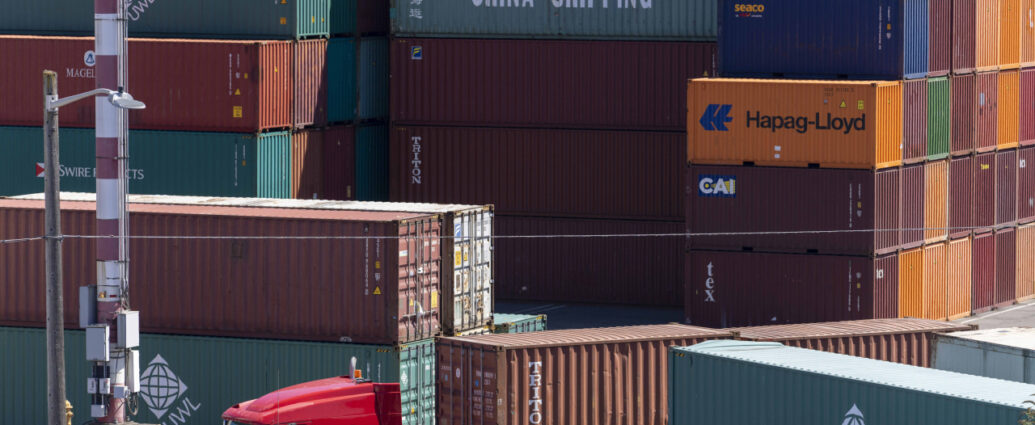
The Panama Canal administrator touted the canal’s logistical capabilities and plans to improve supply chain readiness as the Strait of Hormuz reaches a near standstill due to the U.S.-Israeli strikes on Iran. 

Dr. Ricaurte Vásquez Morales, the authority administrator for the Panama Canal, sat down during an exclusive interview with Fox News Digital and noted the canal’s anticipated improvements as the world’s busiest commercial shipping route, the Strait of Hormuz, has seen little to no traffic over the past few days. 

“We have been through the years a major channel to move LNG from the U.S. to Asia,” Morales told Fox News Digital. “Qatar usually supplies Asia, and after the Ukraine war, most of the American LNG has gone to Europe to replace the Russian LNG.”

“What we see is that probably prices are going to go up for LNG, which means that the current cost of the inventory on the vessel is going to increase,” he continued. “Fuel prices are going to go up.”

HEGSETH ONCE WARNED AGAINST ENDLESS WARS. NOW HE’S LEADING TRUMP’S STRIKE-FIRST DOCTRINE

Morales predicts that transit will increase in the Panama Canal as restraints in the Strait of Hormuz have continued to hold.

“The Panama Canal should get one or two transits a day, which is, in the old days, we had about three transits per day,” Morales added. “So it’s gonna come up a little bit and moving from the East Coast of the United States to Asia.”

The Strait of Hormuz normally facilitates the transit of roughly 20–21 million barrels of oil per day. Since last Friday, only four cargo ships have successfully traveled through the strait, and one of those ships was carrying corn.

TRUMP ADMIN TURNS VENEZUELA INTO MAJOR US OIL SUPPLIER AS GLOBAL SHIPPING CRISIS EASES

By comparison, approximately 2.3 million barrels move through the Panama Canal each day. 

Roughly one-fifth of the world’s oil and a quarter of the world’s total seaborne oil trade travels through the Strait of Hormuz.

As for the Panama Canal, the administrator said that they have plenty of water and a maximum draft that will allow more vessels to pass through.

THE UNLIKELY TOOL TRUMP IS EYEING TO TACKLE RISING OIL PRICES AMID THE IRAN CONFLICT

The administrator also addressed the threat of tariffs that has shocked global trade with the U.S. since President Donald Trump took office, noting an increase in traffic due to tariff threats. 

“Over the last 12 months, it increased volumes through the Panama Canal because people were anticipating tariffs, and they tried to front load the cargoes, especially for the later part of the year for Christmas demand in the states,” the administrator told Fox News Digital. “Now what we have is that essentially with the Lunar Year, they clear up all the inventories in Asia, so some of that has been moved into final destinations.”

President Donald Trump signaled his willingness to reopen the strait while speaking with reporters on Monday, pointing to Chinese reliance on the route, saying he wants to keep the passageway open.

IRANIAN DRONE STRIKES SHUT DOWN QATAR LNG PRODUCTION FACILITIES, AS ENERGY PRICES SURGE

“We’re really helping China here and other countries because they get a lot of their energy from the Straits,” Trump said. “We have a good relationship with China. It’s my honor to do it.”

“I mean, we’re doing this for the other parts of the world, including countries like China,” Trump added. “They get a lot of their oil through the straits.”

The president posted to Truth Social on Monday night that the U.S. would retaliate “TWENTY TIMES HARDER” against Iran should they take any actions that stop the flow of oil through the Strait of Hormuz. 

“Additionally, we will take out easily destroyable targets that will make it virtually impossible for Iran to ever be built back, as a Nation, again — Death, Fire, and Fury will reign upon them — But I hope, and pray, that it does not happen! This is a gift from the United States of America to China, and all of those Nations that heavily use the Hormuz Strait,” Trump posted. 

This post was originally published here. 

The Federal Aviation Administration (FAA) briefly grounded all JetBlue flights early Tuesday morning at the airline’s request, according to an advisory posted by the agency’s Air Traffic Control System Command Center.

The nationwide ground stop, which applied to all destinations and facilities, was in effect from 12:35 a.m. to 1:30 a.m. ET, the FAA advisory shows.

“Operations are normal after JetBlue asked the FAA to pause flights nationwide overnight because of an internal IT issue,” the FAA said in a statement.

JetBlue told FOX Business in a statement: “A brief system outage has been resolved and we have resumed operations.”

‘SECURITY-RELATED SITUATION’ GROUNDS FLIGHT TO VACATION HOT SPOT, PASSENGERS CONFINED FOR HOURS

Ground stops temporarily prevent flights from departing while an issue is addressed, though aircraft already in the air are typically allowed to continue to their destinations. 

The brief grounding comes as airlines have grappled with technology-related disruptions in recent years.

JETBLUE FLIGHT RETURNS TO NEWARK AFTER ENGINE FAILURE, SMOKE PROMPTS EVACUATION

In October, Alaska Airlines issued a systemwide ground stop for Alaska and Horizon Air flights after a failure at its primary data center triggered a significant IT outage, leading to hundreds of cancellations over two days and disrupting travel plans for tens of thousands of passengers.

The carrier later said it was bringing in outside technical experts to strengthen its systems and “diagnose our entire IT infrastructure to ensure we are as resilient as we need to be. ”

In June, American Airlines experienced a “technology issue” that disrupted operations and led to widespread delays.

SOUTHWEST FLIGHT DIVERTED AFTER PASSENGER SCARE AS SECURITY INCIDENTS RATTLE US AIRPORTS

Some travelers reported lengthy wait times on the tarmac as the carrier worked to resolve the problem.

The airline said a connectivity issue had affected certain systems but that it worked with partners to restore the impacted applications and return operations to normal.

This post was originally published here. 

The Food and Drug Administration on Monday announced a recall for clams and raw oysters over concerns that they may be contaminated with norovirus, a contagious infection commonly known as the stomach flu.

The recall affects Manila clams harvested by Lummi Indian Business Council that were distributed to restaurants and food retailers in nine states, including Arizona, California, Florida, Georgia, Illinois, Nevada, New York, Oregon and Washington. The FDA said the clams may have been distributed to other states as well.

The oysters were harvested by Drayton Harbor Oyster Company and distributed in Washington state.

Both food items were harvested between February 13 and March 3 in Drayton Harbor, Washington.

FRITO-LAY RECALLS MISS VICKIE’S CHIPS OVER POTENTIALLY ‘LIFE THREATENING’ ALLERGEN RISK

The Washington State Department of Health notified the FDA of the recall on Wednesday.

The FDA urged restaurants and food retailers not to serve or sell the clams or oysters and for consumers not to eat the foods.

The agency said restaurants and retailers “should dispose of any products by throwing them in the garbage or contacting their distributor to arrange for destruction.”

MAJOR FROZEN FOOD RECALL EXPANDS TO 37M POUNDS OF TRADER JOE’S, KROGER PRODUCTS OVER GLASS CONCERNS

“Restaurants and retailers should also be aware that shellfish may be a source of pathogens and should control the potential for cross-contamination of food processing equipment and the food processing environment,” the alert added.

The FDA warned that food containing norovirus may “look, smell and taste normal” but can cause serious illness if eaten. 

Consumers of these products who are experiencing symptoms of illness are urged to contact their healthcare provider and report their symptoms to their local health department.

Symptoms include diarrhea, vomiting, nausea, stomach pain, fever, headache and body ache. A person typically develops symptoms 12 to 48 hours after being exposed to Norovirus and one to three days to recover.

CLICK HERE TO GET FOX BUSINESS ON THE GO

People of all ages can become infected with Norovirus, although people who are immunocompromised can potentially suffer from severe illness, the FDA said.

The FDA said it is awaiting further information on distribution of the clams and oysters and will continue to monitor the investigation.

This post was originally published here. 

The federal budget deficit topped $1 trillion in the first five months of fiscal year 2026, as the U.S. government is on pace to record another massive deficit.

The nonpartisan Congressional Budget Office (CBO) reported that the federal budget deficit was just over $1 trillion through five months of fiscal year 2026, with the size of the deficit down $142 billion or 14% when compared with the same period in fiscal year 2025.

CBO noted that federal spending was just over $3.1 trillion in the first five months of fiscal year 2026, up $64 billion, or 2%, from the same period a year ago. Federal tax revenue collected jumped $206 billion, or 11%, when compared with last year and totaled nearly $2.1 trillion.

The rise in federal tax receipts was attributed to higher collections from individual income taxes and payroll taxes, with CBO noting those accounted for about two-thirds of the increase, while higher tariff rates also increased the amount of import taxes collected.

US DEBT SET TO CRUSH WORLD WAR II RECORD AS ANNUAL DEFICITS EXPLODE TO $3T WITHIN DECADE

CBO said that from October through February, individual income tax collections were up $99 billion, or 10%, when compared with the same period in the prior fiscal year, while payroll tax collections rose $34 billion, or 5%.

Customs duties, a category which includes tariffs, totaled $144 billion in the first five months of fiscal year 2026 – up $109 billion, or 308%, from the same period in the prior fiscal year. 

Some of those tariffs collected may ultimately be refunded to the businesses and individuals who paid them after the U.S. Supreme Court ruled that the Trump administration’s tariffs imposed under the International Economic Emergency Powers Act (IEEPA) were unconstitutional. 

Tariff refunds would lower federal tax revenue and thereby increase the deficit, and while the Trump administration has moved to implement replacement tariffs, those may face similar legal challenges and collections could face delays.

WHAT ARE THE BIGGEST BUDGET DEFICITS IN US HISTORY?

Corporate income tax collections were down $33 billion, or 23%, in the first five months of the year due to provisions in the 2025 reconciliation bill that increased the tax deductions available to companies making certain eligible investments.

Federal spending increased the most for Social Security and Medicare, the mandatory spending programs that have seen enrollment surge in recent years amid the aging of America’s population.

Spending on Social Security totaled $676 billion in the first five months of fiscal year 2026 – an increase of $48 billion, or 8%, from the same period last year. CBO noted the annual cost-of-living adjustment boosted benefit amounts, while the Social Security Fairness Act’s expansion of benefits eligibility to previously non-covered professions accounted for about $7 billion of the increase.

Medicare spending jumped $34 billion, or 9%, from a year ago to a total of $475 billion in that period, which CBO attributed to higher enrollment and increased payment rates for services.

SOCIAL SECURITY’S MAIN TRUST FUND FACES DEPLETION IN 2032, TRIGGERING BENEFIT CUTS

Another significant mandatory program saw a similar rise in spending as outlays on Medicaid also increased by $22 billion, a rise of 8%, to a total of $285 billion in the five-month period.

Interest expenses on the national debt also saw a notable jump, with net interest costs totaling $433 billion in the first five months of the fiscal year. That’s a jump of $31 billion, or 8%, from the previous year and was due to the larger national debt and higher interest rates.

While spending on the Department of War rose $14 billion, or 4%, and the Department of Veterans Affairs increased $11 billion, or 7%, in the first five months of fiscal year 2026 compared with last year, several agencies saw notable decreases.

Spending by the Environmental Protection Agency (EPA) decreased by $20 billion, or 74%, though that decrease was due to a $20 billion expenditure in November and December 2024 under a clean energy grant program and no comparable outlay was made in 2025.

GET FOX BUSINESS ON THE GO BY CLICKING HERE

A similar dynamic played out with the Department of Homeland Security, which saw spending decline by $12 billion, or 23%, due to a relative decrease in spending on disasters when compared with the prior year despite being partially offset by higher spending on immigration enforcement.

This post was originally published here. 

TORONTO, March 9, 2026 /PRNewswire/ — Steve Hasker, president and chief executive officer and Mike Eastwood, chief financial officer of Thomson Reuters (TSX/Nasdaq: TRI) will present at the Bank of America 2026 Information and Business Services Conference on Thursday, March 12, 2026, at 12:15pm

This post was originally published on this site.

TORONTO, March 5, 2026 /PRNewswire/ — Thomson Reuters (TSX/Nasdaq: TRI) today filed its annual report for the year ended December 31, 2025. The annual report contains audited financial statements, management’s discussion and analysis (MD&A) and other disclosures.

This post was originally published on this site.

TORONTO, March 2, 2026 /PRNewswire/ — Thomson Reuters (TSX/Nasdaq: TRI), a global content and technology company, today announced that Mike Eastwood, Chief Financial Officer, will retire from the role following a planned transition. Mr. Eastwood will become Chairman of the Board of the Thomson

This post was originally published on this site.

TORONTO, Feb. 26, 2026 /PRNewswire/ — Joel Hron, Chief Technology Officer and Gary Bisbee, Head of Investor Relations at Thomson Reuters (TSX/Nasdaq:TRI) will present at the Scotiabank TMT Conference on March 3, 2026 at 3:15 p.m. EST. The presentation may include forward-looking information.

This post was originally published on this site.

Up to US$600 million of shares to be repurchased pursuant to amended normal course issuer bid US$605 million return of capital and share consolidation expected to be completed in May TORONTO, Feb. 25, 2026 /PRNewswire/ — Thomson Reuters (TSX/Nasdaq: TRI) today announced that it plans to repurchase

This post was originally published on this site.

TORONTO, February 10, 2026  – Thomson Reuters Corporation (“Thomson Reuters”) (TSX/Nasdaq: TRI), a global content and technology company, today announced it has acquired Noetica, Inc. Founded in 2022, the New York–based AI-native start-up transforms transaction-deal data into structured market

This post was originally published on this site.

TORONTO, Feb. 5, 2026 /PRNewswire/ — Thomson Reuters (TSX/Nasdaq: TRI) today reported results for the fourth quarter and full year ended December 31, 2025:      Solid revenue momentum continued in the fourth quarter and full year 2025 Full-year total company revenues up 3% / organic revenues up 7%

This post was originally published on this site.

  Conference call and webcast scheduled for 8:30 a.m. EST   TORONTO , Jan. 7, 2026 /PRNewswire/ — Thomson Reuters (TSX/Nasdaq: TRI) announced today its fourth-quarter and full-year 2025 earnings will be issued via news release on Thursday, February 5, 2026 .      Steve Hasker , president and chief

This post was originally published on this site.