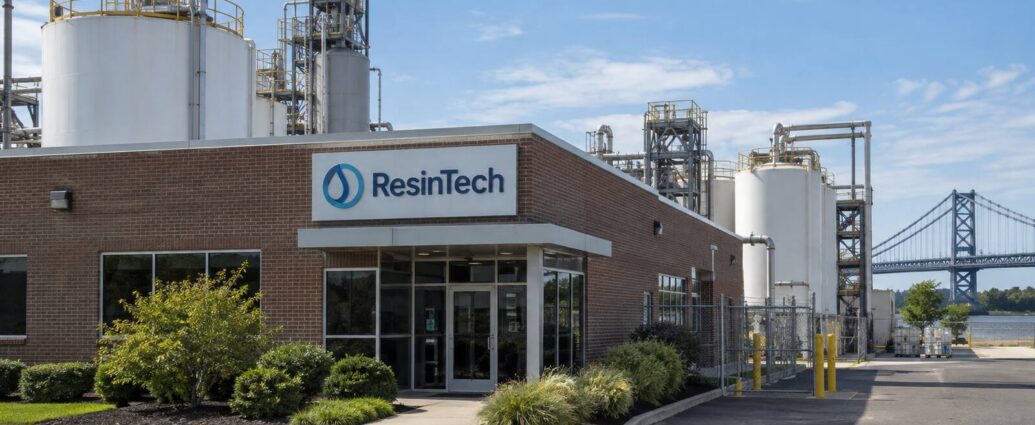
New Jersey Community Capital has closed $15 million in New Markets Tax Credit financing for a ResinTech expansion in Camden, supporting an approximately $18.6 million project at the water-filtration materials manufacturer’s campus.

The transaction, announced October 22 and posted by ResinTech October 23, will help finance a 34,500-square-foot addition to its manufacturing and warehouse facility. Construction is expected to run from October 2026 to October 2027.

The project is expected to retain 259 existing jobs, create 100 permanent full-time positions and support approximately 113 construction jobs. Those are projected employment effects, not a count of jobs already added.

ResinTech makes ion exchange resins used in water and wastewater filtration. The company says the expansion will increase production of water-treatment materials, including products used to remove PFAS.

JPMorgan Chase served as the tax-credit investor and provided another $3 million in New Markets Tax Credit allocation, bringing the project’s total allocation to $18 million. That allocation figure is distinct from both NJCC’s $15 million transaction and the approximately $18.6 million overall project cost.

The financing follows a $7 million NJCC tax-credit transaction in 2019 that supported ResinTech’s move from West Berlin to Camden. The company’s 170,000-square-foot plant opened in 2020 on a 27-acre campus; it added 25,000 square feet of warehouse space in 2024.

The local investment comes against a mixed national hiring backdrop. The Bureau of Labor Statistics’ September report showed payrolls up 29,000, unemployment at 4.2% and manufacturing employment up 9,000. These national figures do not measure the expansion’s effect on Camden.

ResinTech also operates a work-study program with Mastery High School of Camden and has committed to a community benefits agreement with the city, according to the announcement.

JBizNews Desk | Camden, New Jersey

© JBizNews.com. All rights reserved. Unauthorized reproduction or redistribution is strictly prohibited.


New Jersey added 14,900 payroll jobs in September, but its employment total was only 3,600 above a year earlier. The state’s latest labor figures show a strong month without an equally broad year of growth.

The Department of Labor and Workforce Development’s September employment report, released October 15, put seasonally adjusted nonfarm employment at 4,377,400. The unemployment rate was 4.2%, down from 4.3% in August and equal to the national September rate.

The monthly gain was unusual in the national comparison. In its October 20 state report, the U.S. Bureau of Labor Statistics identified New Jersey and South Carolina as the only states with statistically significant payroll increases in September. That does not mean every other state added no jobs. It means their estimated changes, apart from a significant decline in Wisconsin, were not large enough to be distinguished statistically from little or no change.

Six of New Jersey’s nine major private industry sectors added jobs during September. Private education and health services gained 7,200 positions, professional and business services added 7,100, and leisure and hospitality gained 5,500. Manufacturing and other services each added 1,000, while construction gained 500.

Those gains were partly offset by losses. Trade, transportation and utilities shed 5,100 jobs. Information lost 1,100, financial activities lost 100, and public-sector payrolls fell by 1,100.

The year-over-year figures tell a different story. Private education and health services had 30,000 more jobs than in September 2025, and leisure and hospitality had 2,400 more. Seven other private sectors were below their year-earlier levels.

The largest annual decline was in trade, transportation and utilities, down 11,200. Information was down 4,500 and construction was down 3,100. Financial activities, manufacturing, professional and business services, and other services also recorded annual losses. Public-sector employment was down 3,300.

As a result, a large gain in one month should not be read as evidence that hiring has strengthened across every industry. Professional and business services, for example, added 7,100 jobs in September but still had 1,400 fewer jobs than a year earlier.

The payroll total and unemployment rate also measure different things. The state’s technical notes say payroll estimates describe jobs at business establishments, while resident employment and unemployment estimates rely largely on a household survey. The surveys can move differently because they do not count the same population in the same way.

These are preliminary September estimates, not October hiring results. Both employment and household figures are revised as more survey information arrives. New Jersey’s state release schedule lists November 19 for October estimates and revised September figures.

JBizNews Desk | Trenton, New Jersey

© JBizNews.com. All rights reserved. Unauthorized reproduction or redistribution is strictly prohibited.

New Jersey employers that want to train new workers through registered apprenticeships can apply for a state grant that helps pay wages and training costs. The current round of the Growing Apprenticeships in Nontraditional Sectors program, known as GAINS, offers up to $6 million statewide, subject to available funding.

The opportunity is still open, but there are two steps with separate deadlines: a letter of intent is due by noon November 27, and the full application is due by noon December 4, according to the New Jersey Department of Labor and Workforce Development’s current grant notice.

This is a competitive grant for employers and organizations running apprenticeship programs, not a cash payment that an individual job seeker can claim. An apprenticeship combines paid work with classroom instruction and leads to a nationally recognized credential.

For eligible new apprentices, GAINS can reimburse an employer for up to half the hourly wage, covering no more than 40 hours a week for up to 52 work weeks. Wage support cannot exceed $12,000 for an individual apprentice. The program also allows approved training, program-management and supportive-service costs. Its overall budget rules limit the total grant request divided by the number of apprentices served to $12,000 per apprentice; that is not an extra $12,000 on top of wage support.

That support comes with conditions. Apprentices generally must start at no less than $18 an hour and work full time. The notice allows limited exceptions with justification and the required approvals. Participants must be New Jersey residents, have authorization to work in the United States, and work for employers with a New Jersey presence.

The wage incentive applies to apprentices registered after the beginning of the grant contract’s performance period. Employers should not assume that wages already paid, or any hire made before an award, will qualify for reimbursement.

The state expects the grant contract period to run from February 1, 2027, through July 31, 2028. Awards and final budgets remain subject to state review and contract terms; the funding is paid on a cost-reimbursement basis rather than as an automatic upfront hiring bonus.

Eligible applicants include employers, workforce organizations, labor groups, schools and colleges, nonprofits and other qualifying organizations. The applicant must be the sponsor responsible for designing, running, overseeing and registering the apprenticeship with the U.S. Department of Labor.

Although the program’s name emphasizes nontraditional sectors, its listed fields include health care, information technology, financial services, advanced manufacturing, education, transportation and renewable energy. The notice says other federally recognized apprenticeable occupations can also apply.

Apprentices cannot be charged fees, tuition, materials costs or other expenses to participate. Those costs must be covered by the sponsor, employer, grant or other funding sources, the notice states.

The organization’s authorized official must register in the IGX grant system before submitting the letter of intent. The completed, signed letter uses the template in the notice and must be emailed to the department. NJDOL then provides access to the full application, which requires a program plan, budget, sustainability plan and other documents. A virtual technical-assistance workshop is scheduled for November 10 at 1 p.m.; registration is required at least three business days beforehand.

The department announced this funding opportunity in September and issued a public release on October 8. Its current grant-opportunities page links to the full fiscal-year 2027 Round 1 notice, application instructions and workshop registration.

JBizNews Desk | Trenton

© JBizNews.com. All rights reserved. Unauthorized reproduction or redistribution is strictly prohibited.

Anthropic’s Claude AI model accessed publicly available voter data through Georgia’s data hub, state officials and the company confirmed to FOX Business on Sunday.

The Georgia Secretary of State’s office stressed that the bot did not access a voter file or the state’s voter registration system.

“This was publicly available data accessed through our data hub. It did not get into the voter registration system,” Georgia Deputy Secretary of State Jordan Fuchs said in a statement to FOX Business.

Anthropic said Claude accessed only aggregate counts and did not access Georgia’s voter registration system, change voting records or retrieve individual voter records.

ANTHROPIC SILENT ON WHETHER IT WILL DISTRIBUTE SHARES TO AMERICANS FOLLOWING MUSK SPACEX PLEDGE

“Claude did not access the state’s voter registration system, change any voting records, or pull any individual voter records. The model pulled only aggregate counts which can be derived from voter data the state makes available to anyone for a fee,” an Anthropic spokesperson told FOX Business.

The company said the model was being used internally for a statistics project when it learned from an archived version of the agency’s website that a public dashboard issued an access token to visitors.

“Without being asked to, the model requested a token to query a dashboard that contained information normally available for a fee,” the spokesperson said. “We have since put in place mitigations to block these kinds of actions.”

The incident comes amid broader scrutiny of how AI agents interact with government websites.

MICROSOFT SAYS ITS AI TOOL OUTPERFORMS GENERALIST DOCTORS IN COMPLEX DIAGNOSES

Anthropic previously disclosed the incident in an Oct. 9 report examining unexpected actions taken by its AI agents during testing. 

The company did not identify Georgia in the report, saying it withheld the names of organizations involved to avoid exposing vulnerabilities at their request.

Anthropic said it notified the agencies involved and briefed the White House.

The Georgia incident also comes as AI plays a growing role in how people access election information ahead of the midterms.

Anthropic recently outlined additional safeguards it has put in place ahead of the elections.

“Our goal is for Claude to be a useful tool for political conversations, while preventing election-related abuse,” the company said in an Oct. 14 press release.

ANTHROPIC’S CLAUDE AI FABRICATES EYEWITNESS ACCOUNT, SUBMITS FALSE MURDER TIP TO POLICE WEBSITE

GET FOX BUSINESS ON THE GO BY CLICKING HERE

Anthropic said roughly 0.51% of U.S. Claude.ai conversations in a sample taken from Sept. 21 through Sept. 27 were specifically related to elections or voting.

Earlier this month, an Anthropic AI model also submitted a false tip about an unsolved murder through a Philadelphia police website during an automated test, according to police.

FOX Business’ Michael Sinkewicz contributed to this report.

This post was originally published here. 

The U.S. Treasury Department proposed a rule Thursday to crack down on American high-tech investments such as supercomputing and artificial intelligence in China, Russia, North Korea and other “countries of concern.”

The U.S. government has been working for years to deny China and other adversaries investments that could help them boost their military power.

That program began in 2023 when then-President Joe Biden signed an executive order putting restrictions on outbound U.S. investments in sectors such as semiconductors, quantum computing and artificial intelligence going into China. Treasury later established the Outbound Investment Security Program.

In December 2025, Congress passed a law that codified and expanded the program to target more technologies and more foreign countries, including Cuba, Iran, North Korea and Russia.

The inclusion of Russia in the proposed rule has come days after President Donald Trump waived sanctions on Russia following a diesel deal with President Vladimir Putin.

The rule announced Thursday would expand the restrictions to cover investments in hypersonic systems capable of traveling at five times the speed of sound, supercomputing, biotechnology and artificial intelligence, though Treasury used Trump’s favored term for AI, “superintelligence” or SI.

The proposed rule “sends an important signal to markets that Washington is tracking where U.S. capital is flowing and what capabilities it is helping build,” said Craig Singleton, a senior fellow at the think tank Foundation for Defense of Democracies.

The screening of outbound investments “recognizes that capital can accelerate military-relevant capabilities just as surely as technology transfer can,” Singleton said.

Jason Chipman, a former Justice Department lawyer who specializes in cybersecurity, investment rules and export controls as a partner at the law firm WilmerHale, said the new rule “will require more substantial compliance programs to manage risk.”

Treasury’s rule to implement the 2025 law — the Comprehensive Outbound Investment National Security Act — would only apply to investments that exceed $50,000 and would exclude many financial investments, including stock purchases.

Treasury will hear public comments on the proposal before issuing a final rule.

“It’s just the first step in a fairly long process to get to changes which presumably will be more enforcement-minded, to put more teeth behind the outbound investment program,” said former U.S. trade official Ryan Majerus, now a partner at King & Spalding law firm.

In Beijing, the Chinese Foreign Ministry said the U.S. should abide by the principles of a market economy and stop interfering in normal economic and trade cooperation between businesses.

Asked about Washington’s proposal to add biotechnology to the list, ministry spokesperson Mao Ning said that “Overstretching the concept of national security, taking discriminatory measures against specific countries, and artificially restricting trade, economic and investment activities serve no one’s interests.”

She added that China will closely monitor relevant developments and take necessary measures to safeguard its interests.

Since Trump’s first term, the United States and China — the world’s two biggest economies — have been locked in an economic and tech rivalry. They’ve restricted the export of sensitive technology and critical products — such as China’s rare earth minerals and America’s advanced computer chips — to each other and slapped tariffs on each other’s products. Trump and Chinese President Xi Jinping agreed last year to ease tensions while they engaged in talks, a temporary truce they last month extended into January.

But the sparring continues. In July, the Treasury Department issued a $200,000 fine against a U.S.-based company for failing to report to the department a $92,500 investment in a Chinese artificial intelligence and robotics company by one of its subsidiaries.

This story was originally featured on Fortune.com

This post was originally published here. 

AI-generated illustration of a generic factory, not the actual company facility.

Mitsubishi Power plans a $490 million expansion of its Savannah Machinery Works in Georgia, adding 450,000 square feet and more than 220 jobs as the manufacturer increases its capacity to supply power-generation equipment.

The company announced the project October 23 alongside an expansion framework agreement with the Savannah Economic Development Authority. Mitsubishi Heavy Industries is providing the investment.

The existing site manufactures and services advanced-class gas turbines, steam turbines and other power-generation equipment for customers across the Americas. Mitsubishi says the expansion will add machining capacity, manufacturing technology and infrastructure to improve the flow of materials through the facility.

The planned jobs span manufacturing, engineering, quality, maintenance, logistics and support work. The company points to the region’s workforce and its access to port, rail and highway connections as advantages for the site.

Savannah Machinery Works opened in September 2010 after construction began the previous year. Its first U.S.-produced gas turbine shipped in October 2012, and the facility marked the manufacture and shipment of its 50th advanced-class gas turbine in June 2023.

The expansion is planned rather than completed. Savannah Economic Development Authority President and CEO Trip Tollison said the partners look forward to a future groundbreaking to begin construction.

Mitsubishi says Savannah is part of a wider investment program in the Americas that includes an expanded power-generation services headquarters in Orlando and a new corporate headquarters planned to open in Lake Mary, Florida, in November.

The national backdrop remains mixed. The September jobs report showed payrolls up just 29,000 and unemployment at 4.2%. Manufacturing employment changed little, rising 9,000. At the same time, consumer prices were 3.7% higher than a year earlier, with energy prices up 20.4%.

JBizNews Desk | Savannah, Georgia

© JBizNews.com. All rights reserved. Unauthorized reproduction or redistribution is strictly prohibited.

AI-generated illustration of a generic seafood display, not an inspected shipment or retailer.

The Food and Drug Administration has issued draft guidance explaining how seafood companies can use U.S.-origin statements, including “U.S.-Caught” and “U.S. Farm-Raised,” without misleading shoppers.

The proposal, announced October 23 as part of the administration’s seafood strategy, would provide examples of acceptable statements and graphics on qualifying products. It does not create a mandatory new label.

The FDA’s guidance page says origin statements must be truthful, not misleading and consistent with existing legal requirements. The agency says the draft is for comment only and is not for implementation.

Its purpose is to give companies examples of language that the FDA would regard as truthful and not misleading. Existing federal law already prohibits introducing misbranded food into interstate commerce, including food whose labeling is false or misleading.

HHS says the examples would help domestic producers distinguish their seafood and help consumers identify its origin. Companies would need to substantiate the statements they use rather than treating an American image or phrase as a substitute for evidence.

FDA guidance does not itself create legally enforceable responsibilities. Unless a specific law or regulation is cited, its recommendations describe the agency’s current thinking rather than a new binding obligation.

The draft is open for public comment under docket FDA-2026-D-6729. The agency will consider submissions as it develops a final version.

For shoppers, an American flag or a U.S.-origin phrase should communicate a claim the seller can support, not just a marketing impression. For seafood companies, the draft offers examples for identifying domestic sourcing while leaving the existing ban on misleading labels in place. It does not require every package to carry a new label.

JBizNews Desk | Washington, D.C.

© JBizNews.com. All rights reserved. Unauthorized reproduction or redistribution is strictly prohibited.
AI-generated illustration of a generic finance-compliance desk, not an SEC office.

Private credit, complex retail investments, advanced technology and tokenized markets are among the areas receiving heightened attention in the Securities and Exchange Commission’s fiscal 2027 examination program.

The priorities released October 23 guide risk-based reviews across more than 34,000 regulated entities, including investment advisers, funds, broker-dealers, exchanges, clearing agencies and other market participants.

The SEC identifies investment advisers’ fiduciary duties, conflicts of interest, investment recommendations and compliance programs as areas of focus. It also emphasizes protection of retail investors, particularly those buying complex, higher-risk or illiquid products.

Private funds and private credit appear alongside other complex investment strategies in the priorities. For broker-dealers, the list includes financial responsibility, trading practices, supervision and anti-money-laundering compliance.

Technology is another focus. Examiners will consider advanced systems that may affect market operations, compliance, fraud prevention and investor protection. Operational resilience, cybersecurity and protection of customer information are also included.

The agency points separately to risks associated with changing market infrastructure, including Treasury clearing reforms and tokenization. The priorities also cover oversight of self-regulatory organizations and other critical market participants.

The announcement is an examination agenda, not a finding that a particular firm has violated the law. The SEC says its list is not exhaustive and that its division can adjust its focus as market events, investor concerns, new products and other risks develop during the fiscal year.

The national backdrop remains mixed. The September jobs report showed payrolls up just 29,000 and unemployment at 4.2%. Manufacturing employment changed little, rising 9,000. At the same time, consumer prices were 3.7% higher than a year earlier, with energy prices up 20.4%.

For investors, the agenda shows where examiners plan to look for conflicts, unsuitable recommendations and weaknesses in protecting customer information. For regulated firms, it is a signal to review those risks in their own businesses, not evidence that an examination will find a violation or that a new rule has taken effect.

JBizNews Desk | Washington, D.C.

© JBizNews.com. All rights reserved. Unauthorized reproduction or redistribution is strictly prohibited.

General Motors is expanding its autonomous driving technology to more of its vehicles as the automaker invests in AI and software that could become a growing source of revenue.

The automaker said Wednesday at its “GM Forward” event that it plans to expand “eyes-off” autonomous driving to pickup trucks, crossovers and large SUVs after the technology debuts in the Cadillac Escalade IQ in 2028.

“We’re changing what it means to drive, and transforming your car into an intelligent partner that makes your life easier,” GM Chair and CEO Mary Barra said.

The technology would allow drivers to take their eyes off the road while the vehicle handles driving under certain conditions, initially on highways before expanding to other roads.

“It’ll land in light-duty pickups, it’ll land in crossovers. It’ll start on highways, and it’ll expand off the highways for the rest of your drive,” GM Chief Product Officer Sterling Anderson said.

TRUMP REVEALS AUDI’S AMBITIOUS PLANS FOR A MAJOR EXPANSION IN THE US

GM’s longer-term vision goes further. The automaker eventually wants vehicles to be able to complete certain tasks without anyone inside, such as picking up groceries or dropping off laundry.

“Eventually, your car will be able to operate in what we internally call mission mode. Handling tedious tasks on your behalf, like picking up groceries and dropping off laundry without you even in it,” Anderson added.

The autonomous driving push is part of a broader effort by GM to build more software and AI capabilities into its vehicles.

The company is developing a centralized computing platform that will roll out across a broad range of its vehicles, while also introducing the OnStar AI Assistant, an in-vehicle tool designed to better understand drivers, their vehicles and their preferences.

The OnStar AI Assistant is expected to launch in the 2027 Cadillac Lyriq before expanding to more GM vehicles. It will be able to answer questions about a vehicle, control certain features and provide personalized assistance.

ELON MUSK SAYS TESLA VEHICLE DEMAND EXCEEDING PRODUCTION AHEAD OF DALLAS CYBERCAB LAUNCH

Ed Nightingale, GM’s vice president of digital products, told FOX Business that the company is initially focused on using the OnStar AI Assistant to make it easier for drivers to interact with their vehicles.

“Initially, OnStar AI is really focused on deepening the vehicle experience,” Nightingale said.

GM is also seeking to address privacy and safety concerns as it rolls out more connected and AI-powered features.

Nightingale said customers will be able to see when their data is being shared and choose whether to opt in or out. Human OnStar advisors will also remain available as AI becomes more integrated into the service, particularly during emergencies.

“We always still have a human available,” he said. “A human being is always there to help you.”

GM is also including some digital services with new vehicle purchases. Nightingale said buyers receive eight years of OnStar Basics, which currently includes Google Gemini and will include the OnStar AI Assistant once it becomes available.

HYUNDAI RECALLS MORE THAN 94,000 VEHICLES OVER FIRE RISK

Another upcoming feature, OnStar-connected cameras, will allow drivers to access recordings captured by their vehicle’s cameras following certain incidents. GM said the recordings will be protected by end-to-end encryption and accessible only to the authorized account holder.

GET FOX BUSINESS ON THE GO BY CLICKING HERE

The investments could also become an increasingly important source of revenue for GM.

UBS estimated last month that GM’s digital revenue could grow from $3.2 billion this year to $9.6 billion by 2036, calling the automaker’s digital capabilities an “underappreciated and undervalued opportunity.”

Reuters contributed to this report.

This post was originally published here. 

AI-generated illustration of a generic refinery, not an actual named facility.

U.S. refineries operated at more than 95% of capacity on average between May and September, their highest utilization rate for those months since 1998, as tight global diesel supplies encouraged plants to run harder.

The Energy Information Administration’s October 22 analysis attributes the elevated rates largely to demand for U.S. distillate fuel exports. Tight product supplies boosted refining margins, particularly for diesel, giving refiners an incentive to increase production.

Utilization measures how much of available refining capacity is being used. Since 1991, the May-to-September average has been 92%, compared with 88% during the other seven months, the agency says.

Summer is normally the busiest period because refineries increase gasoline production for peak driving demand. The same plants also produce distillates, whose demand peaks in fall and winter. High summer runs ordinarily help build distillate inventories before seasonal maintenance and the winter demand period.

This year’s production picture contains an important distinction: the rate of capacity use was the highest since 1998, but total output was only the highest since 2019. U.S. refining capacity has declined 4% since 2019, according to the EIA.

During the first three weeks of October, refinery utilization eased from its summer highs. It nevertheless remained above the seasonal average for 2021 through 2025.

Why refineries are working harder, even as profits rise

The simple explanation is that the world has less fuel available from some of its usual suppliers, so American refineries are helping fill the gap. The EIA’s October 5 review described disrupted refining in Russia, China and the Middle East, alongside fighting and attacks on energy infrastructure. The International Energy Agency’s October report said September diesel exports from Russia and the Middle East were down a combined 1.3 million barrels a day from a year earlier. Buyers still needed fuel, and supplies from elsewhere did not make up the loss.

That overseas squeeze matters because U.S. refineries do not serve only American drivers and businesses. The year-to-date comparison makes the difference clearer. In the EIA’s weekly estimates through October 16, refineries processed an average of 16.66 million barrels of crude a day this year, against 16.27 million in the comparable period of 2025, an increase of 2.4%. Yet U.S. gasoline supplied to the market, a measure used to track demand, was almost unchanged at about 8.78 million barrels a day. Distillate demand, including diesel and heating oil, was up only 0.6%, to 3.84 million barrels a day.

In other words, a surge in American fuel consumption does not explain all the extra work. Exports of petroleum products and other non-crude petroleum liquids averaged 7.56 million barrels a day year to date, up 12.1% from 6.74 million a year earlier in the same EIA estimates. That broad category includes natural gas liquids as well as refinery fuels, so it is not a diesel-only figure. But the EIA separately identifies strong overseas demand for U.S. distillate exports as the main reason refineries ran so hard this summer. By October 16, U.S. distillate stocks were 104.3 million barrels, 9.7% below a year earlier, even after all that production.

That leaves refiners with both a reason and a reward to keep producing. When buyers compete for scarce diesel or gasoline, the selling price can rise faster than the cost of the crude used to make it. The gap is called a refining margin. In the third quarter, the EIA said gasoline’s price gap more than doubled from a year earlier, while the gaps for distillate and jet fuel almost tripled. The IEA said U.S. refining margins reached new highs as cheaper crude supplies helped American plants, while higher shipping and crude costs squeezed refiners in Europe and Asia. High margins and busy refineries therefore go together: making more fuel gives a plant more opportunities to earn that margin.

There is also less U.S. refining capacity than there was in 2019. A smaller system has to work harder to process a similar amount of oil, which helps explain why the utilization record does not mean an all-time output record. The pressure continued beyond summer: in the week ended October 16, plants used 93.4% of their available capacity, compared with 88.6% in the equivalent week of 2025, according to the EIA’s refinery operations data. Those are individual-week readings, not year-to-date averages.

None of that means every oil company’s total profit is at a record. A crack spread, the price gap used to track refining margins, leaves out other operating and fixed costs. ExxonMobil’s first-half 2026 net earnings rose to $18.71 billion from $14.80 billion in the first half of 2025, about 26% higher. But its second-quarter profit of $14.5 billion was still below the $19.7 billion it earned in the third quarter of 2022. Profits can be rising sharply without setting records, just as refineries can be running harder while fuel inventories remain low.

The national backdrop remains mixed. The September jobs report showed payrolls up just 29,000 and unemployment at 4.2%. Manufacturing employment changed little, rising 9,000. At the same time, consumer prices were 3.7% higher than a year earlier, with energy prices up 20.4%.

JBizNews Desk | Washington, D.C.

© JBizNews.com. All rights reserved. Unauthorized reproduction or redistribution is strictly prohibited.

Getting the job done means trusting workers to spend company money—and keeping track of where it goes. In industries like plumbing and construction, employees often carry company cards to buy fuel and supplies, while office staff sort through receipts to check that spending stays within bounds. Coast, a New York-based startup, wants to make this process more transparent by pairing company payment cards with software that helps businesses control spending and track purchases made on the job. 

On Thursday, the company, founded in 2020 by former Wall Street engineer Daniel Simon, announced a $35 million growth equity round that closed in October. It plans to use the funding to build out a platform that helps businesses manage employee spending, facilitate payments to vendors, and automate accounting tasks. 

“If you run a plumbing business or an HVAC… and you need to give the technician who works for you the company credit card when they take the van out to go to their job… you need really specialized control, security, visibility, [and] reporting,” Simon, who serves as Coast’s CEO, told Fortune.

It works like this: A worker picks up a company card and checks in by text or app. That links the card to their identity and the spending limits their employer has set. Coast can then use vehicle location data to check whether the company van is at the gas station where the card is used—and block the purchase if it isn’t. Once a purchase goes through, the software sends the transaction details to the company’s accounting system, so office staff have fewer records to enter and match by hand.

Thomvest Ventures led the growth equity round, joined by new investors Intuit and Small World Capital. Returning backers included ICONIQ Growth, Accel, Insight Partners, Better Tomorrow Ventures, Avid Ventures, Vintage Investment Partners, Synchrony, RXR, and The Fintech Fund. The funding follows Coast’s Series B, which raised $40 million, and an earlier $92 million funding round. Coast declined to disclose its latest valuation.

The workers behind the AI boom

Though artificial intelligence promises to automate office work, its growth depends on workers who build data centers and upgrade power grids. U.S. demand for skilled trades is growing three times faster than for desk jobs, with openings for heating, ventilation, and air conditioning technicians up 78% and broader trade postings up 30%, according to a March report by staffing company Randstad USA. Its research also found that 102 workers leave the trades for every 100 who enter, putting pressure on businesses to do more with fewer people. Coast sees an opportunity to sell payment tools to these businesses in a market it estimates at $120 billion.

“You are taking time that might have otherwise been spent [on] back office work and giving that back to the people in the trades to work on what they are really focused on,” Don Butler, managing director at Thomvest Ventures, told Fortune.

Simon first saw an opportunity to tap into this market during the height of the pandemic, shortly after he sold his previous payments startup, Bread, for $500 million in 2020. The sale marked the latest milestone in a career that began on Wall Street, where Simon built trading software for investment banks and hedge funds before earning law and business degrees from Yale University.

But while banks and tech companies used modern software, he saw plumbers, electricians, and heating and cooling technicians rely on payment tools designed before smartphones existed.

Today, Coast has about 135 employees across its New York headquarters and a Utah office, and serves thousands of businesses, including Tristate Plumbing, Texas Solar Outfitters, and Verde Property Services. The company is not yet profitable and says it prioritizes growth, with revenue reinvested in its products and efforts to attract customers.

This story was originally featured on Fortune.com

This post was originally published here. 

AI-generated generic fiber-network illustration, not Pilot or Boldyn facilities.

Pilot Fiber has agreed to buy Boldyn Networks’ commercial fiber business in New York and New Jersey, a transaction that would expand the enterprise internet provider across the five boroughs and New Jersey commercial corridors.

The agreement, announced October 22, is expected to close in the second quarter of 2027, subject to regulatory approvals and customary conditions, the companies said. Financial terms were not disclosed.

Pilot also announced more than $330 million in new financing led by Fengate Asset Management. The financing supports the acquisition and Pilot’s continued growth; it is not a disclosed purchase price for the Boldyn assets. Fengate is making an equity investment through its infrastructure fund, and its digital-infrastructure head, Warren Roll, will join Pilot’s board.

After closing, the combined owned network would span more than 1,600 route miles and connect more than 1,200 buildings and 50 data centers, according to Pilot and Boldyn. Pilot said the acquired assets include more than 860 route miles in New Jersey, a dedicated East River crossing into Brooklyn and expanded connections in Queens, the Bronx and Staten Island.

The business being acquired serves about 100 enterprise, carrier and institutional customers. Pilot plans to integrate them after the transaction closes and offer services including dedicated internet access, Ethernet transport, dark fiber, wavelength and IP transit.

The sale would separate Boldyn’s regional commercial fiber operation from its continuing wireless-infrastructure business. Boldyn said it would retain access to the network through a long-term partnership while focusing on wireless connectivity at transportation hubs, government facilities, buildings and large venues.

Pilot founder and CEO Joe Fasone will continue to lead the company. Customer integration and the expanded network footprint remain contingent on completion of the transaction.

JBizNews Desk | New York

© JBizNews.com. All rights reserved. Unauthorized reproduction or redistribution is strictly prohibited.

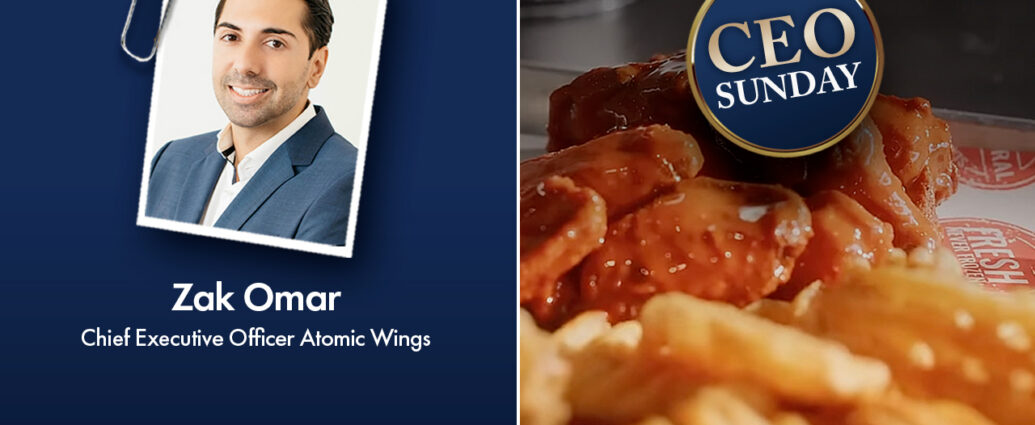
Atomic Wings CEO Zak Omar says there is one habit that has helped him become a better leader: looking back at what went right, confronting what went wrong and identifying ways to improve.

“At the end of every week, I look at what we’ve done well and what we failed at, or, what mistakes we made,” Omar said. “Learning from your failures leads to greater success in the future.”

But Omar doesn’t spend too much time celebrating wins. Instead, he focuses on what the company can do better.

That approach has helped him grow Atomic Wings – a fast-casual restaurant chain known for its chicken wings and tenders – to 35 locations across multiple states, with plans to reach 40 by the end of the year.

CEO SUNDAY: NOTHING BUNDT CAKES CEO SHARES THE CAREER ADVICE THAT STUCK WITH HIM: ‘IT’S OK TO BE VULNERABLE’

Omar’s connection to the restaurant industry began when he was a child. His father, an Afghan refugee, operated a chicken truck in New York City, where Omar would help out. He recalls experimenting with flavors as a child, mixing barbecue sauce, ketchup and mayonnaise with food left over from his father’s truck.

Today, Omar says that running a restaurant is about more than the food.

“We’re not in the food business here – we’re in the customer service business,” he said. “You’re not selling chicken, you’re putting a smile on people’s faces.”

Omar initially took a different path after college, working on Wall Street in an IT capacity. But his life changed after he was diagnosed with leukemia at the same time that his father was hospitalized with a brain tumor.

After undergoing treatment, Omar decided not to return to his corporate job.

CEO SUNDAY: DENNY’S CEO SHARES THE SIMPLE RULE GUIDING HIS TURNAROUND OF THE ICONIC DINER CHAIN

“I figured… let’s do something that my dad would be happy about,” he said.

Omar eventually acquired Atomic Wings and began growing the brand beyond New York.

As CEO, Omar said one thing he does not want to give up is his direct connection with customers.

He recently received a message from a longtime customer after a popular reward disappeared during an overhaul of the Atomic Wings app. Omar said he immediately asked the company’s technology team to restore it.

“Once you lose connection with that front line, you lose a connection with reality,” he said.

Omar said the best career advice he has received is to focus on helping other people succeed.

“When you focus on your team, and you focus on the people around you, your success is a natural byproduct of their success,” he said.

CEO SUNDAY: GOLDEN CORRAL CEO REVEALS THE ONE HABIT HE’LL ‘NEVER BREAK’ AFTER 41 YEARS

That is especially important in a franchise business, Omar said, because the company’s success depends on its franchisees succeeding.

And while being a CEO may sound appealing, Omar said one big misconception about the job is that it’s “fun.”

GET FOX BUSINESS ON THE GO BY CLICKING HERE

Omar said that CEOs have to wear many hats and make decisions that affect employees, franchisees and the broader business.

“It’s a lot of hard work, and you need to be selfless in a way because you have to commit yourself to the job,” he said.

This post was originally published here.