


Southwest Airlines to end flights at 2 major airports
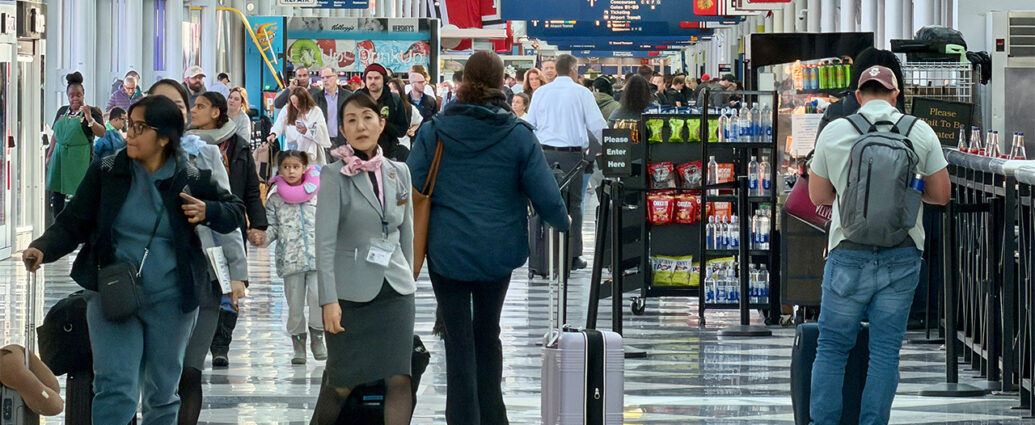
Southwest Airlines will stop operating flights at Washington Dulles International Airport and Chicago O’Hare International Airport starting this summer.
The airline announced Friday that the change will take effect June 4, 2026. Flights scheduled on or before June 3 will operate as planned.
Despite the exit from the two major hubs, Southwest said it will continue offering significant service in both metro areas through other airports. In the Chicago region, the carrier will maintain operations at Chicago Midway International Airport, while in the Washington area it will continue service at Baltimore/Washington International Airport and Ronald Reagan Washington National Airport.
MORE THAN 1,800 US FLIGHTS CANCELED AS MASSIVE MARCH STORM DISRUPTS TRAVEL
Southwest currently serves 15 markets from Chicago O’Hare. An airline spokesperson told FOX Business that employees affected at the two airports will have the opportunity to bid for open positions elsewhere across its network.
Customers with reservations that include either airport on or after June 4 will need to change their travel plans. Travelers may rebook or travel standby within 14 days of their original travel date without paying a fare difference.
Passengers can also choose to travel through alternate airports. Options include Chicago Midway, Milwaukee and Indianapolis for Chicago-area travel, and Reagan National, Baltimore/Washington International, Philadelphia and Richmond for the Washington region.
CLICK HERE TO GET FOX BUSINESS ON THE GO
Customers may also request refunds for the unused portion of their ticket – even for nonrefundable fares – as well as optional travel charges tied to flights not taken.
Reuters contributed to this report.


Hyundai stops sales of certain SUVs after 2-year-old girl’s death
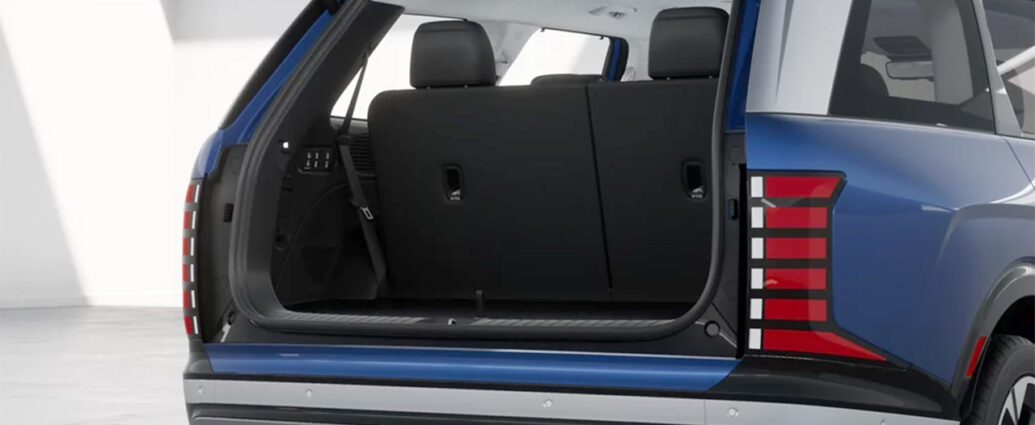
Hyundai has stopped sales of certain 2026 Palisade SUVs and plans a recall after a problem with power-folding seats that the company says may fail to detect contact with an occupant or object.
The announcement comes after a young child died in an incident involving a Palisade that is still under investigation, according to the automaker.
Reuters reported the victim was a 2-year-old girl from Ohio who was killed on March 7.
“Hyundai is aware of a tragic incident involving a Palisade. While Hyundai does not yet have the full details and the incident is still under investigation, a young child lost her life. Hyundai extends its deepest sympathies to her family,” the company said in a press release Friday.
HOUSE GOP SLAMMED BY CONSERVATIVES FOR JOINING DEMS ON CONTROVERSIAL ‘KILL SWITCH’ AMENDMENT
Sales of the 2026 Palisade Limited and Calligraphy trims are currently on hold while Hyundai works with the National Highway Traffic Safety Administration on the recall.
Hyundai said about 68,500 vehicles could be affected, including roughly 60,500 in the United States and nearly 8,000 in Canada.
The automaker said it is developing a recall repair and an interim over-the-air software update designed to improve the system’s ability to detect contact with occupants or objects and introduce additional safeguards.
DRIVERLESS WAYMO VEHICLE STRIKES CHILD IN CALIFORNIA
Hyundai is advising owners to ensure no person or object, including children, is in the seat or seat-folding area before operating the power seat.
“When using the second-row one‑touch tilt‑and‑slide feature to access the third row, customers should avoid pressing the seatback button during entry or exit,” the company said.
CARGURUS BREACH LINKED TO SHINYHUNTERS EXPOSES 12.4M RECORDS
The automaker added that it may offer rental vehicles to affected customers until a permanent repair is implemented.
“Hyundai’s top priority is the safety of its customers, and additional details regarding the interim software update and final recall repair will be provided as they become available,” it said.

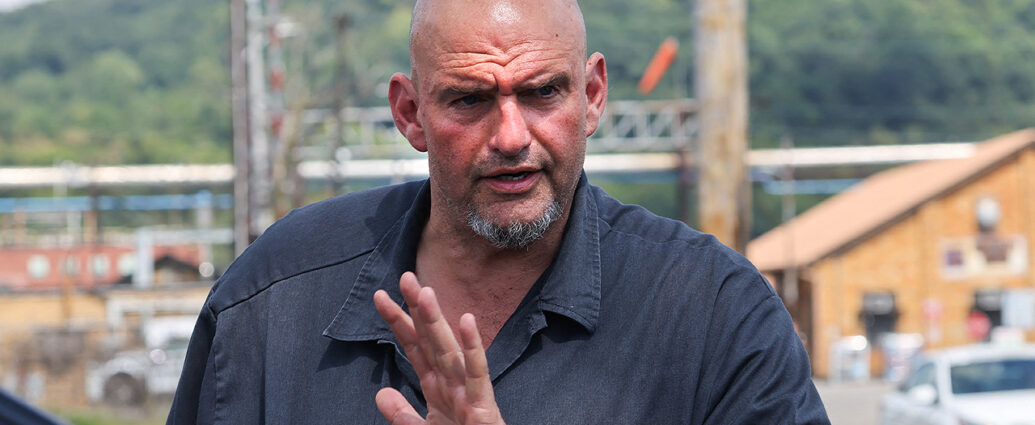
Fetterman details why he can’t support SAVE Act ‘in its current state,’ says voter ID not ‘unreasonable’
Sen. John Fetterman, D-Pa., detailed his rationale for refusing to support the SAVE Act in its current form despite acknowledging that voter ID requirements are not “unreasonable.”
“It’s needlessly complicated,” Fetterman said Monday on “Mornings with Maria.”
The Pennsylvania Democrat stressed that while he supports requiring identification to vote, he believes the House-passed bill goes further than necessary and fails to account for the security of existing voting systems, particularly mail-in ballots.
“I have said it’s not Jim Crow, and it’s not extreme things, but mail-in voting is absolutely secure,” Fetterman said. “Some of the best examples in the country are red states like Florida and Ohio.”
TRUMP VOWS BLOCK ON SIGNING NEW LAWS UNTIL SAVE AMERICA ACT PASSES SENATE
Fetterman pointed to Florida as a model, noting the state passed legislation similar in spirit to the SAVE Act while also affirming the integrity of mail-in voting.
“I would remind people watching [that] Florida just passed the essential version of the SAVE America Act, but they also said mail-in voting is absolutely secure, and that’s going to be part of us going forward,” he said.
Host Maria Bartiromo pressed Fetterman on the issue during the interview, noting that he had previously expressed openness to voter ID requirements and asking what would be needed to secure his support for the bill.
CORNYN REVERSES ON FILIBUSTER STANCE TO PUSH TRUMP’S SAVE ACT IN SENATE
“No one reached out to have more of a conversation… it is turning into more like [a] theatrical kind of thing,” he said.
“If [Republicans] want to have a real honest conversation, sure, absolutely, but overall, I refuse to engage in the extreme kind of rhetoric on either side…”
Fetterman also reminded viewers that requiring voter identification itself is not controversial among most Americans but argued the current legislation goes beyond that principle.
GET FOX BUSINESS ON THE GO BY CLICKING HERE
“It’s not a radical idea for Americans to provide ID, but that’s not what Save America is right now,” he said.
“And they’re attaching all of these other things that is a distraction to the core.”








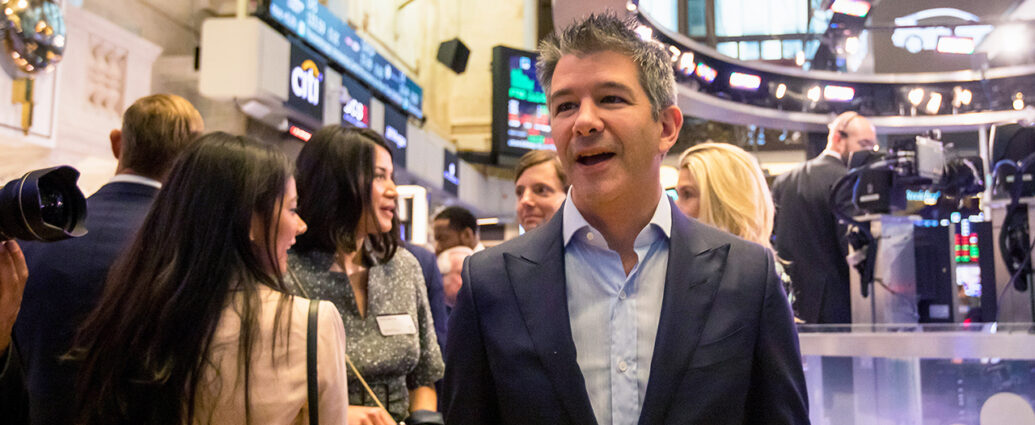
Billionaire Uber co-founder Travis Kalanick admits strategically moving to Texas before California wealth tax
Billionaire and Uber co-founder Travis Kalanick officially joined the exodus from California, revealing he moved to Austin, Texas, just weeks before a proposed wealth tax could have targeted his estimated $3.6 billion fortune.
“Just to be clear, on December 18, I moved to Texas. I don’t know what’s so specific about December 18, but let’s just say it’s prior to January,” Kalanick said in an interview with TPBN.
“I get a little bit [of] FOMO on like, these people going to Florida. I’m like, dude! Why so much Florida action?” he continued. “Come on, homies.”
‘WALL STREET TO Y’ALL STREET’: WHY AMERICA’S WEALTHY TRADES CITY LUXURY FOR ACRES OF TEXAS FREEDOM
Kalanick left his San Francisco home for Texas just 14 days before the new year, when the retroactive residency deadline for the proposed billionaire tax would take effect.
While it has not yet qualified for the November ballot, the proposal — backed by the Service Employees International Union–United Healthcare Workers West (SEIU-UHW) — would impose a one-time 5% tax on the net worth of California residents with more than $1 billion in wealth. The tax would be due in 2027, and taxpayers could spread payments over five years, with additional fees, according to the California Legislative Analyst’s Office.
If the measure is approved by voters, anyone who was a California resident on Jan. 1, 2026, would owe the tax, according to the proposal. Based on Forbes’ estimates, Kalanick could owe roughly $180 million.
Kalanick’s departure follows other longtime California billionaires who have moved themselves or their businesses to Texas in recent years, including Tesla and SpaceX CEO Elon Musk, Palantir co-founder Joe Lonsdale and venture capitalist David Sacks.
Florida is also rapidly absorbing California’s finance and media elite, with names like Amazon founder Jeff Bezos, venture capitalist Peter Thiel, Google co-founders Larry Page and Sergey Brin, and Meta CEO Mark Zuckerberg moving to the “Gold Coast.”
Kalanick is using his relocation to launch his new venture, Atoms — formerly City Storage Systems — which focuses on industrial robotics and “gainfully employed” artificial intelligence, he said in the interview. It’s a pivot from the “perception politics” he claims pushed him out of Uber in 2017.
“I had been torn away from an idea and a movement that I had poured my life into. I had lost my bearings as I found the world increasingly operating by the rules of perception, not reality,” he writes on Atoms’ website.
GET FOX BUSINESS ON THE GO BY CLICKING HERE
When jokingly asked if he ever takes work calls through his AirPods while waterskiing, Kalanick responded that he might start doing so.
“Dude, I should. I’d love it. Don’t get me excited,” he said.