


Fuel Shortages From War Begin to Threaten Global Food Supply
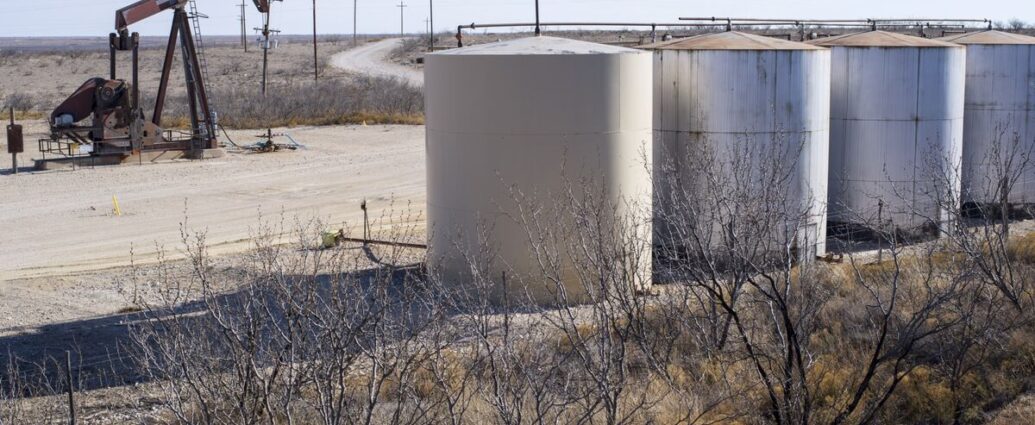
Food crops are becoming increasingly vulnerable to the energy supply crunch caused by war in the Middle East, with farmers across Asia and Europe facing a scarcity of fuel needed to operate essential machinery.
Australian grain growers are facing fuel delivery cutbacks ahead of the planting season. In Bangladesh, some rice farmers cannot secure diesel to power irrigation pumps, while fishermen in the Philippines may soon need to keep their boats ashore. A prolonged supply crunch will drive up food bills and play into global concerns about inflation arising from the conflict.
Ground stop lifted at major DC-area airports after chemical odor disrupts air traffic control
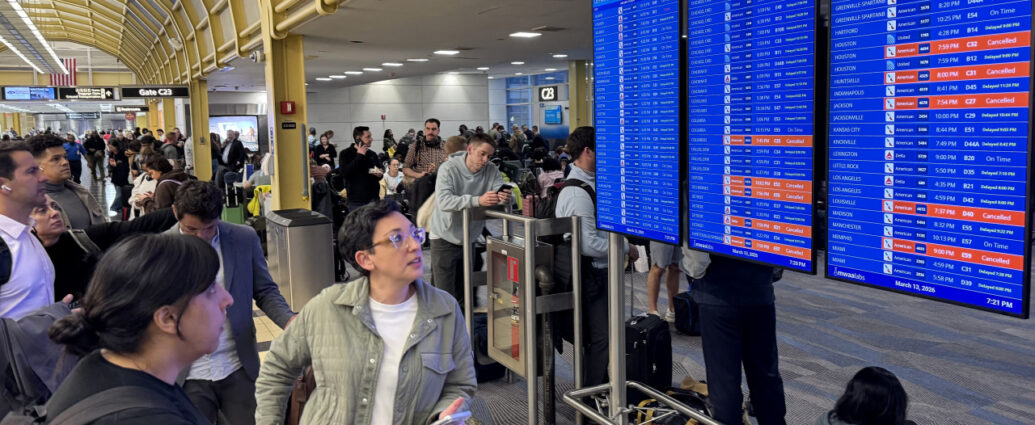
A ground stop issued at several airports in the Washington, D.C., region on Friday has been lifted after a chemical odor disrupted air traffic control operations.
The temporary ground stop affected Ronald Reagan Washington National Airport (DCA), Washington Dulles International Airport (IAD), Baltimore-Washington International Airport (BWI) and Richmond International Airport (RIC), according to Transportation Secretary Sean Duffy.
The Federal Aviation Administration (FAA) later downgraded the alert to ground delays for the Washington-area airports as operations gradually resumed.
The FAA website showed significant delays as of 8:40 p.m. Friday, including average ground delays of about 222 minutes at DCA and more than 150 minutes at BWI.
Earlier in the day, Duffy said the FAA was investigating a strong odor detected at the Potomac Terminal Radar Approach Control (TRACON) facility, which manages air traffic in the area..
“[FAA] is working to address the source of a strong odor coming from Potomac TRACON that is impacting operations at the three airports,” he said.
TRACON, located in Warrenton, Virginia, provides air traffic control services across the Baltimore-Washington and Richmond-Charlottesville areas, according to FOX 5.
An FAA spokesperson confirmed the ground stop was implemented after a strong chemical smell at the facility affected some air traffic controllers.
“The FAA has temporarily stopped traffic at Ronald Reagan Washington National Airport (DCA), Washington Dulles International Airport (IAD) and Baltimore-Washington International Airport (BWI) because of a strong chemical smell at the Potomac TRACON that is impacting some air traffic controllers,” the spokesperson said.
AUSTIN AIRPORT GRIDLOCK: SECURITY LINES STRETCH OUTDOORS AS DHS SHUTDOWN HITS ONE-MONTH MARK
Airport officials said flights are now resuming, though passengers should expect lingering delays as airlines work through the backlog.
CLICK HERE TO GET FOX BUSINESS ON THE GO
“Airlines are once again resuming regular operations and preparing departures. Expect residual delays this evening,” BWI Airport said in a post on X. “For flight-specific updates, please confirm flight status with your airline. We appreciate the patience of passengers impacted by the delays.”
Ground stop issued at DC-area airports due to ongoing chemical odor investigation at control facility
A ground stop has been issued at several airports in the Washington, D.C., region, Transportation Secretary Sean Duffy announced Friday evening.
The Federal Aviation Administration (FAA) is currently investigating a strong odor at Potomac Terminal Radar Approach Control (TRACON), a facility that manages air traffic in the area, according to Duffy.
The ground stop currently affects Ronald Reagan Washington National Airport (DCA), Washington Dulles International Airport (IAD), Baltimore-Washington International Airport (BWI) and Richmond International Airport (RIC), according to Duffy.
“[FAA] is working to address the source of a strong odor coming from Potomac TRACON that is impacting operations at the three airports,” Duffy said.
Airports are expected to remain on a ground stop until 8 p.m. EDT, according to the FAA’s alert page.
TRACON, located in Warrenton, Virginia, provides air traffic control services across the Baltimore-Washington and Richmond-Charlottesville areas, according to FOX 5.
Earlier Friday, an FAA spokesperson said traffic was halted because of a strong chemical odor at the Potomac TRACON affecting some controllers.
AUSTIN AIRPORT GRIDLOCK: SECURITY LINES STRETCH OUTDOORS AS DHS SHUTDOWN HITS ONE-MONTH MARK
CLICK HERE TO GET FOX BUSINESS ON THE GO
“The FAA has temporarily stopped traffic at Ronald Reagan Washington National Airport (DCA), Washington Dulles International Airport (IAD) and Baltimore-Washington International Airport (BWI) because of a strong chemical smell at the Potomac TRACON that is impacting some air traffic controllers,” the spokesperson said.

Two major drug companies are the latest to join TrumpRx
Exclusive: The White House is expecting to announce an expansion of the drugmakers offering discounts on TrumpRx.gov, FOX Business has learned.
As early as today, Amgen and GSK will be added to the list of prescription drug manufacturers offering discounts on the government website. That makes a total of 54 prescription medications from six pharmaceutical companies that have signed on to the Most-Favored-Nation pricing under pressure from President Donald Trump and the threat of tariffs.
Amgen will offer medication on the website that cuts 80% off the retail price. Amjevita has an original price of $1,484.18, but will be available on TrumpRx.gov for $299. The medication treats rheumatoid arthritis, psoriasis and ulcerative colitis.
The company plans to list Aimovig and Repatha as well, for discounts of 62%.
GSK will discount Incruse at 55% of the retail price. The drug treats COPD and will be listed at $159.20.
GSK also plans to list Annuity, Relenza and Anoro at discounts ranging from 10% to 51%.
“GSK and Amgen connecting with TrumpRx.gov to offer prescription drugs directly to consumers at Most Favored Nations pricing marks another milestone for President Trump’s affordability push,” White House spokesman Kush Desai told FOX Business. “TrumpRx.gov is just the beginning, however, as Americans are set to even greater drug pricing discounts, lower insurance premiums, and more transparency when Congress passes President Trump’s Great Healthcare Plan.”
The Pharmaceutical Research and Manufacturers of America represents major drug companies.
CEO Stephen Ubl believes, “Government-imposed Most Favored Nation policies would undermine U.S. competitiveness while doing nothing to address insurance practices that deny care and raise costs for patients.”
“These policies would siphon billions from American R&D, slow the pace of cures and increase reliance on China for future innovation,” Ubl added.
The White House is pushing ahead with announcements to TrumpRx.gov as Americans look for ways to cut medical costs.
Under the Biden administration, the Bureau of Labor Statistics data shows prescription drugs increased 10.4% from January 2021 to January 2025. Under the Trump administration, prescription drug prices increased 0.2% from January 2025 through the latest data from February 2026.
Thomson Reuters Files Documents for Proposed Return of Capital and Share Consolidation Transactions
TORONTO, March 13, 2026 /PRNewswire/ — Thomson Reuters (TSX/Nasdaq: TRI) today filed its management proxy circular and related documents in connection with the upcoming special meeting at which shareholders will be asked to approve the proposed return of capital and share consolidation


Marine veteran turns Iraq War lessons into fraud-fighting tech
FIRST ON FOX: The origins of a fraud-fighting technology now used by one of the world’s largest insurers trace back to a deadly insider attack during the Iraq War.
Clearspeed founder Alex Martin was serving in the Marine Corps. when his close friend, Capt. Warren Frank, was killed by an Iraqi soldier who turned his weapon on American forces during a joint patrol. The Iraqi had passed coalition vetting procedures.
“Warren met his future wife at my house,” Martin recalled to FOX Business. “Learning he’d been killed by an Al-Qaeda infiltrator we’d brought into his formation – it shook me. I couldn’t accept that insider attack as inevitable.”
So-called “green-on-blue” attacks, in which supposedly vetted local forces turned on coalition troops, became one of the Global War on Terror’s most vexing threats. Between 2008 and 2017, such incidents killed more than 150 coalition service members in Afghanistan alone.
“I became obsessed with our vetting process and realized our traditional playbook simply couldn’t keep pace with the operational tempo, language barriers and risks of counterinsurgency warfare,” Martin said.
His solution was to flip the model: quickly establish trust for the majority who posed no threat, while focusing expert scrutiny on the small fraction requiring deeper review.
After leaving active duty, Martin partnered with Stanford professor Charles Holloway to develop a voice-based vetting tool designed to quickly assess risk across languages and high-stakes environments.
The company’s first major customer was U.S. Special Operations Command. In 2018, Clearspeed screened 715 Afghan commando recruits in less than 20 hours – a process that would normally take months. Several individuals flagged as high-risk later deserted.
The success attracted investment from retired Gen. David Petraeus, the former CIA director and commander of U.S. forces in Iraq and Afghanistan. The company has since raised $110 million and counts the Department of Defense and U.S. intelligence agencies among its customers.
TRUMP URGES IMMEDIATE RATE CUTS AMID IRAN CONFLICT
Now, the technology is being used beyond the battlefield.
Insurance giant Allianz recently disclosed it identified more than £92.6 million (about $115 million) in fraudulent claims during the first half of 2025, with executives crediting voice-screening technology from San Diego-based Clearspeed as central to its fraud detection strategy.
Clearspeed is a voice-based vetting platform originally developed for U.S. military use. During an automated phone call, individuals answer a short series of yes-or-no questions while the system analyzes vocal characteristics in real time.
It flags potential risk indicators for human review, allowing low-risk respondents to move through quickly while directing additional scrutiny to higher-risk cases.
“We needed to make our organization a really hostile place for people to try to commit fraud,” Allianz Chief Claims Officer Matt Cox said at an industry conference in London, according to InsurancePOST. “Technologies such as Clearspeed have given us the opportunity, for the first time, to dial up that disruption.”
The move comes as insurers face what analysts describe as an escalating “arms race” with fraudsters, many of whom now use artificial intelligence and digital tools to perpetrate fraud. A Deloitte study predicted generative AI could help drive U.S. fraud losses as high as $40 billion next year.
The growing commercial adoption has also drawn attention in Washington.
Clearspeed has been engaging policymakers about deploying the technology to combat benefits fraud and strengthen screening processes, according to people familiar with the discussions. The company spent about $272,500 on federal lobbying in 2025, according to data compiled by OpenSecrets.
The push comes amid growing political pressure to crack down on fraud in federal programs. In January, the administration announced a new Department of Justice division focused on national fraud enforcement targeting fraud against federal programs and private citizens.
ORACLE BRACES FOR MASSIVE LAYOFFS AMID AI CASH CRUNCH
Rep. Pat Harrigan, R-N.C., a former Army Green Beret who served in Afghanistan, said his combat experience shapes how he evaluates emerging technologies.
“During my time in the Special Forces, I saw firsthand how advanced technology saves lives and gives us a decisive edge,” Harrigan told FOX Business. “My priority in Congress is making sure we identify the most effective tools and put them to work for our troops and taxpayers.”
Harrigan said he has met with Clearspeed and is exploring ways the technology could help protect warfighters and reduce fraud.
“The fact that the world’s largest insurer turned to American military technology to solve its fraud problem tells you everything about how powerful these tools are,” he said. “If they can help Allianz identify nearly $100 million in fraud, imagine what they could do for the American people – whether that’s cracking down on benefits fraud, vetting visa applicants or securing our border.”
Rep. Russell Fry, R-S.C., said technologies that strengthen fraud detection and vetting could play a role in broader border security efforts.
“As President Trump continues delivering on his promise to make America safe again, we must ensure law enforcement has access to the most reliable and efficient tools available,” Fry told FOX Business. “Technologies like this could help combat fraud at our border, strengthen visa vetting and keep our country secure.”
CLICK HERE TO READ MORE FROM FOX BUSINESS
For Martin, the growing interest from insurers and policymakers alike represents a continuation of a mission that began years ago on the battlefield.
“We built this because lives were on the line,” he said. “Putting that same technology to work protecting taxpayers and making our country safer is exactly the mission we’re here to serve.”

Google commits $1B to North Carolina data centers as AI demand surges
Google on Friday announced it will invest $1 billion within the next two years to expand its data center infrastructure in North Carolina.
The investment will focus on the expansion of a data center facility in Lenoir, North Carolina. Google has had a presence in the area for 15 years between the data center and an office in Durham.
The Google data center in Lenoir helps support Google services including Maps, Photos, Search, Workspace, YouTube and more, according to the announcement.
“Google’s latest investment in the City of Lenoir and Caldwell County underscores a deep commitment to North Carolina’s continued growth and success,” said City of Lenoir Mayor Joseph Gibbons. “This funding will enhance our workforce, expand economic development opportunities, and ensure North Carolina remains a leader in innovation.”
MAJOR TECH COMPANIES BACK TRUMP PLEDGE TO PAY MORE FOR DATA CENTER ELECTRICITY AHEAD OF SIGNING
Caldwell County Commission Chairman Randy Church said that investments like this one from Google are “critical for strengthening our community” and added that it “will bring new opportunities for local workers and help drive long-term economic success in our region.”
In addition to Google’s data center investment, the company announced it will provide $2 million to an Energy Impact Fund in collaboration with Blue Ridge Community Action, Blue Ridge Energy and Advanced Energy.
AMERICANS HIT WITH SOARING ELECTRICITY BILLS AS PRICE HIKES OUTPACE INFLATION NATIONWIDE
The fund will help scale and accelerate energy initiatives in Caldwell County and focus on energy affordability, weatherization upgrades and energy efficiency for both low- to moderate-income households and K-12 schools. Rising electricity costs are driven in part by increased demand from data centers, particularly amid the artificial intelligence (AI) boom.
Google’s funding will also help expand existing community solar programs, reducing the energy burden and promoting renewable energy access for residents of the county.
Jon Jacob, director of marketing for Blue Ridge Energy, said that the support from Google is a “perfect reflection of our cooperative spirit: members helping members, supported by a partner who shares our commitment to making life better for our local community.”
DATA CENTERS IN OUTER SPACE EMERGE AS SOLUTION TO AI’S MASSIVE ENERGY REQUIREMENTS
Other community investments by Google included in the announcement include a three-year, $270,000 grant to Communities In Schools of Caldwell County (CISCC).
The funds will establish the CISCC Workforce Development & Digital Equity Fund, which will work with the local schools and Caldwell Community College & Technical Institute (CCC&TI) to reduce technological and financial barriers for students pursuing vocational training through 2027.
Mark Poarch, president of CCC&TI, said that the collaboration “ensures that local students have the resources they need to transition seamlessly into the workforce. This fund is more than a grant; it is an investment in the long-term resilience and economic vitality of our entire community.”
GET FOX BUSINESS ON THE GO BY CLICKING HERE
Additionally, investments also include a $100,000 donation to the City of Lenoir to renovate the city’s historic high school.

Egg prices plunge as avian flu impact eases, but risks remain
Egg prices have declined rapidly over the last year as the market normalizes following a significant avian flu outbreak that began in 2022, though the threat of a resurgence in the virus could lead to volatility later this year.
The Bureau of Labor Statistics (BLS) on Wednesday reported the consumer price index (CPI) for February, which showed egg prices declined by 3.8% in the month and are down 42.1% from a year ago. By contrast, headline CPI inflation was 2.4% higher than it was a year ago.
Bernt Nelson, an economist with the American Farm Bureau Federation, told FOX Business that the U.S. egg industry has been on a “rollercoaster of avian influenza detection” since 2022, with detections ranging from about 20 million birds affected to nearly zero birds, depending on the time of year.
“Because of this, we’ve had times when the laying flock was damaged enough to really drive prices higher,” Nelson said. He added that a dozen eggs cost around $4.14 in December 2024 and climbed to a high of $6.22 a dozen in March 2025 – but those have since declined to about $2.50 a dozen, according to data from the BLS and the U.S. Department of Agriculture’s (USDA) Economic Research Service.
FEBRUARY INFLATION BREAKDOWN: WHERE ARE PRICES RISING AND FALLING THE FASTEST?
Nelson added that as of December 2025, egg prices were about 12% below the five-year average as the market recovered from the avian flu-related price shocks. The stabilization of the market comes as the USDA has stepped up detection activities to help mitigate outbreaks.
“USDA has made some dramatic improvements in the last year,” he explained, noting that the agency offers a wildlife assessment that looks for ways wild birds may infiltrate an egg farm as well as a domestic assessment that considers ways to promote agricultural hygiene such as undertaking a foot bath before entering an egg layer house.
“USDA offers these free of charge and then it becomes up to the egg farmer to implement the changes that they need to help secure their farm,” Nelson said, adding that it has “dramatically improved the ability to keep supplies in the pipeline.”
INFLATION HELD STEADY IN FEBRUARY AND REMAINED ABOVE THE FED’S TARGET
In the last six months, the slowdown in avian flu cases has allowed production to recover and increase, bringing prices below the level they were at before the larger outbreak began.
However, the USDA’s wildlife monitoring has found a very high viral load in wild migratory birds passing through all four of the flyways that cross the U.S. from south to north in recent months, which can impact the egg, turkey and broiler industries.
Nelson noted that in the last 30 days there have been about 14 million birds affected, which was higher than some of the lower caseload months during the supply chain normalization.
HOW THE IRAN WAR COULD HIT AMERICANS’ GROCERY BILLS
He said there have been about four million detections in March overall, mostly attributed to two relatively large avian flu detections announced this week that covered four million birds at egg production facilities.
“What that demonstrates is that you can have almost no detections going on, it can be just a really low, smooth sailing situation, and all of a sudden you can have a detection at one of these bigger farms and when that detection it can take a lot of layers out of the pipeline very quickly,” Nelson said.
“We’re not seeing the impacts of that supply change yet, but if we see avian influenza continue to affect houses like that where you’re seeing a high number of birds affected month to month, it can very well push prices back up,” he added.
GET FOX BUSINESS ON THE GO BY CLICKING HERE
Nelson said that when egg farmers’ flocks are impacted by avian flu it can take an emotional toll on the farmers as well as cause financial harm, as USDA indemnity programs cover things like cleanup costs but doesn’t cover the production stoppage that can last up to six months.






Travel expert warns Americans to ‘book now’ as oil prices threaten higher airfares
Travelers planning summer getaways may want to lock in flights sooner rather than later as surging oil prices threaten to drive airfares higher.
Under normal conditions, travel website The Points Guy (TPG) recommends booking domestic flights one to three months in advance and international trips three to six months ahead.
But with fuel prices climbing, travelers may want to secure tickets even earlier, TPG travel expert Clint Henderson told FOX Business.
“Book now for the rest of the year,” Henderson said. “We expect prices to rise quickly as oil prices continue to rise. Remember, you can always get a trip credit if the price drops before your trip. Just don’t book basic economy!”
Henderson noted many airlines allow travelers to receive trip credits if fares fall after purchase.
Despite a long-standing myth, Henderson said there is no “magic time” that consistently guarantees the cheapest airfare.
However, flying on Saturdays, Tuesdays and Wednesdays is often cheaper because there are typically fewer business travelers, he said.
Travelers can also monitor price changes by setting alerts on Google Flights, which notifies users when fares drop.
Flying during off-peak seasons can also help reduce costs, according to Henderson.
As airfare prices rise, Henderson said travelers may also find value in redeeming credit card rewards or airline miles.
“You’ll get the best value from your points and miles by using them instead of paying cash when prices are high,” he said. “Unfortunately, some airline miles are now priced dynamically, so they rise when cash prices rise, but you can still sometimes get a great deal using points or miles instead of paying cash.”
IRAN THREATENS $200 OIL BARRELS AS US PREPARES MASSIVE RELEASE OF EMERGENCY PETROLEUM RESERVES
One of the most common — and costly — mistakes travelers make is waiting until the last minute to book flights, according to Henderson.
“Airfares are generally highest in the two-week period before the flight,” he said. ” . . . That’s when last-minute business trips happen, and airlines know that businesses have deep pockets and sometimes can’t plan ahead.”
The escalating conflict involving Iran is already rippling through global energy markets, threatening to hit American travelers’ wallets.
Oil markets have been rattled by halted shipments through the Strait of Hormuz and attacks on Middle Eastern oil facilities and tankers as U.S. military forces continue Operation Epic Fury.
Global benchmark Brent crude topped $100 per barrel on Friday, marking a more than 60% increase since the start of the year.
Jet fuel is one of airlines’ largest expenses, meaning rising oil prices could soon translate into more expensive tickets. Domestic airfares would need to rise at least 11% to offset current fuel prices, according to Skift Research.
CLICK HERE TO GET FOX BUSINESS ON THE GO
International carriers Qantas and Scandinavian Airlines have already announced they are raising fares, though U.S. airlines have not yet broadly done so.
FOX Business’ Kristen Altus contributed to this report.

Energy & Utilities Roundup: Market Talk






Austin airport gridlock: Security lines stretch outdoors as DHS shutdown hits one-month mark
Airport security lines in Austin stretched outside the door early Friday with passengers waiting hours to board their flights amid pressure on Congressional lawmakers to reach a deal to reopen the Department of Homeland Security (DHS).
Video footage posted online showed Transportation Security Administration (TSA) lines at Austin-Bergstrom International Airport well outside at least one terminal building.
“Thanks to the Democrats’ reckless shutdown, security lines at Austin-Bergstrom International Airport are stretching OUT THE DOOR,” a DHS post on X states. “The Democrats’ political games are making spring break travel a NIGHTMARE as they continue to withhold funding from DHS and refuse to pay our @TSA officers.”
AIRLINES CANCEL FLIGHTS, ISSUE TRAVEL WAIVERS OVER MIDDLE EAST UNREST
DHS saw its funding lapse a month ago, having a direct impact on TSA workers, who have not been paid, and the traveling public.
Extended lines at the airport began around 5 a.m. local time, but cleared up around two hours later, the airport said.
Throughout the morning, the airport posted videos of seemingly empty checkpoints and some with a few passengers.
The airport warned passengers departing on Saturday to arrive at least 2.5 hours before their flight amid an expected busy day. The busiest time will be between 4 a.m. and 8 a.m., it said.
Growing lines at airports across the country have ratcheted up pressure on lawmakers to reach a deal to fund DHS as members of both parties continue to hear complaints from their constituents.
More than 300 TSA have quit since the DHS shutdown began and callouts are approximately double the normal rate, a TSA spokesperson told FOX Business.
“Today, 100,000 DHS workers will not get paid, missing their first full paycheck as a result of the Democrat DHS shutdown. This amounts to $1 BILLION in unpaid wages each month,” the spokesperson said in a statement. “TSA employees have been forced to work without pay three times in six months due to Democrats’ reckless shutdowns.”
The wait times for security lines will worsen as the shutdown continues, the spokesperson said, while accusing Democrats of playing politics.
The lack of funding stems from the political impasse over demands by Democrats to reform U.S. Immigration and Customs Enforcement (ICE) amid the Trump administration’s deportation campaign.
“We are in a negotiation. However, we are not close,” Sen. Brian Schatz, D-Hawaii, said at one point. “You may think this is some issue that we think we’re going to turn to our political advantage, but I promise you, when we saw Renee Good and Alex Pretti killed, this became an issue that was beyond politics.”
CLICK HERE TO GET FOX BUSINESS ON THE GO
Meanwhile, some Republicans have said they will oppose changes to ICE sought by the Democrats.
“Let me be clear, we are going to do nothing — nothing — that kneecaps ICE’s ability to enforce our immigration laws,” said Sen. Eric Schmitt, R-Mo.
The TSA website and app paused operations on Feb. 17. The site “will not be updated until after funding is enacted,” the TSA says on its site — leaving travelers high and dry when it comes to finding wait time information.
“Today, tens of thousands of TSA employees are receiving empty paychecks. Zero dollars,” Airlines for America President and CEO Chris Sununu said in a statement Friday. “Two weeks ago, these same TSA employees received partial paychecks. Last fall, they had to survive 43 days without pay.
“This failure of government to simply pay federal aviation employees is wrong. It is unfair,” added Sununu, the former governor of New Hampshire. “And it is a disgrace that Congress cannot reach an agreement or act on viable bipartisan solutions that have already been introduced.”
The Associated Press contributed to this report.


Builders’ blueprint to tackle the US housing crisis
Home prices are still climbing, even as mortgage rates have eased slightly and inventory shows early signs of improvement, underscoring just how tight the U.S. housing market remains.
The median sales price for all existing homes last month hovered just below $400,000, marking the 32nd consecutive month of year-over-year price increases, according to the National Association of Realtors.
That persistent affordability squeeze is putting renewed pressure on homebuilders to help get the American dream back on track.
TRUMP PLEDGES TO MAKE HOUSING AFFORDABLE WHILE KEEPING VALUES UP
Despite softer consumer sentiment and elevated borrowing costs, the homebuilding industry is signaling cautious optimism heading into the year.
“A lot of builders, many of these small businesses, men and women building homes across this country, had some of the best January they’ve had in a while,” National Association of Home Builders CEO Jim Tobin told FOX Business.
Industry leaders say part of that momentum stems from growing acceptance that interest rates are likely to stabilize rather than surge higher. A resilient stock market and steady job growth have also helped support buyer confidence on the margins.
Meanwhile, a structural shift in the market is giving new construction a competitive edge.
For the first time in modern housing cycles, newly built homes in some markets are now cheaper than existing homes. Builders say “rate lock” dynamics are a major factor: millions of homeowners are reluctant to give up ultra-low 3% or 4% mortgages for rates closer to 6% or higher, limiting resale inventory and pushing more buyers toward new builds.
“A lot of people have more confidence in what their house should cost, and what we’re seeing right now is that new homes are the only game in town,” Tobin added.
HOMEBUYERS REFUSE TO BACK DOWN AS MORTGAGE RATES CONTINUE HOVERING STUBBORNLY NEAR 6% MARK
The supply imbalance remains severe. The U.S. is estimated to be roughly 4 million homes short, according to industry estimates, keeping upward pressure on prices even as construction activity fluctuates.
Still, builders face significant headwinds of their own, including high land costs, elevated labor expenses, material prices and regulatory hurdles at the local, state and federal levels.
At this year’s NAHB International Builders’ Show, the world’s largest annual light construction event, the industry is spotlighting new strategies aimed at improving affordability. Those include the use of alternative building materials, artificial intelligence in design and planning, and the expansion of smaller, more efficient housing models such as smart and tiny homes.
One of the most notable shifts is the steady downsizing of new homes.
AMERICAN HOMEBUYERS GAIN MOST PURCHASING POWER SINCE 2022
Following the Great Recession, the average new home size reached roughly 2,700 square feet, according to Census data and an NAHB analysis. That fell to about 2,565 square feet during the pandemic housing boom and is projected to decline further to around 2,400 square feet by the end of 2025, according to the latest data available.
Builders are also cutting costs by simplifying designs, reducing or streamlining design teams, and increasingly leveraging AI-driven planning tools to improve efficiency.
GET FOX BUSINESS ON THE GO BY CLICKING HERE
As a result, the average price of a newly built home is now estimated to be roughly $30,000 lower than the average existing home in certain markets, a reversal that would have been nearly unthinkable in previous housing cycles.
With resale inventory constrained and affordability still strained, builders are increasingly positioning innovation, efficiency, and smaller footprints as the blueprint for easing America’s housing shortage.







Fed Doesn’t Want to Preemptively Cut: Patel