
21Shares Updates Reference Prices for 4 Key Crypto ETPs
2026-03-16
This post was originally published here

This post was originally published here
Crypto has no shortage of detractors, but even they would concede the industry has produced massive innovations, including Bitcoin and stablecoin payment rails, that have had a profound effect on global commerce. Now, another crypto invention is on the cusp of introducing disruption on a similar scale: Blockchain-based stock trading, which got a big vote of confidence from both NYSE and NASDAQ this month, and is poised to deliver big changes for both investors and companies.
Robinhood CEO Vlad Tenev memorably described tokenized stocks as an unstoppable “freight train.” The arrival of that train will depend on how fast regulators can supply a legal framework, but Tenev’s basic premise is sound. The more interesting question is which firms will lead this coming wave of disruption, and which will be left out.
According to Sebastian Pedro Bea, a former BlackRock executive who is now CIO at crypto firm ReserveOne, the emerging world of tokenized stocks is being led by offshore players and by U.S.-based “compliant disruptors.” Bea includes in this category the likes of Securitize, Superstate and Figure, which have little in the way of trading volume, but that are laying the groundwork to allow Fortune 500 companies to issue their shares on-chain. Once this happens, a whole range of corporate activities—from paying dividends to proxy votes to settling trades—will become far more efficient.
In a recent chat, Bea also pointed to leading offshore players Kraken and Ondo, which are offering a very different type of blockchain-based stocks. Namely, these firms are using special purpose vehicles to purchase large quantities of stocks like Apple and Tesla, and selling tokens that provide a legal claim to the stock. These offerings are basically derivatives that don’t provide the full advantages of blockchain, but their tokenized wrappers mean trades can be settled instantly.
For now, the market for all this is relatively small—perhaps $2 billion across all platforms. This is likely to change, though, since key figures at the Securities and Exchange Commission are supportive of tokenized equities, and as the country’s most prestigious stock exchanges, NYSE and NASDAQ, recently announced tie-ups with OKX and Kraken, respectively. All of these companies, including Bea’s “compliant disruptors,” and Coinbase and Robinhood, are likely to be key players in the coming tokenization of the stock market. In doing so, they will create a more decentralized type of stock market.
Then there are those on the receiving end of the disruption. This is likely to be the legions of middle-men who oversee the current system of clearing and settling trades, whose roles stand to become obsolete. As Superstate notes in a helpful blog post “What really happens when stocks trade”: “U.S. equity markets still run on architecture designed for a different era … Settlement is delayed by design. Risk is warehoused in intermediaries built for reconciliation, not execution.”
The rise of tokenized stocks means the equity markets of the future will be built around instant execution. At this point, it’s not a question of if but when.
Jeff John Roberts
jeff.roberts@fortune.com
@jeffjohnroberts
This story was originally featured on Fortune.com
This post was originally published here

This post was originally published here

Cryptocurrency lending platform BlockFills filed for Chapter 11 bankruptcy protection on Sunday, saying it was to protect its business value and “maximize recoveries” for stakeholders.
The bankruptcy filing will enable BlockFills to undergo restructuring, pursue additional sources of liquidity and recovery, while maintaining transparency and oversight through a court-supervised process.
The Chicago-based firm said that the decision follows “extensive discussions” with investors, clients, creditors, and other stakeholders and is the “most responsible path …

This week in the world of cryptocurrency was nothing short of eventful. From AI-driven Bitcoin bets to corporate Bitcoin sales, the crypto market continues to evolve and surprise. Here’s a quick recap of the top stories that made headlines.
Max Wojcik, a 29-year-old engineer, is making waves in the crypto world by using AI chatbots to analyze Bitcoin price data. Wojcik uses three AI chatbots—Claude, Gemini, and ChatGPT—to calculate his probability of winning before he places any five-minute trades. “Claude is my major brain right now, but I’m still manually placing the trades,” Wojcik said.
For the first time on record, corporate Bitcoin treasuries posted a net-negative month in February. Sales and holdings reductions …
Oil markets are going crazy and one crypto ecosystem has become a go-to destination for speculating on where prices are going next: A blockchain called Hyperliquid saw daily trading volume for a popular oil contract reach a high of nearly $1.7 billion, which is nearly 250 times more volume than the contract saw right before the U.S. and Israel started bombing Iran in late February.
The popularity of Hyperliquid, whose blockchain technology lets traders buy and sell every day around the clock, reflects how the economic impacts of geopolitical conflicts aren’t limited to the 9:30 a.m.-to-4 p.m. weekday hours of stock exchanges.
The crypto industry has long touted blockchain’s capacity for 24/7 trading, as well as a trading innovation known as perpetual futures. But the popularity of Hyperliquid’s oil contracts reflects how the broader financial world is coming to appreciate these advantages.
“So, 24/7 global events are creating demand for 24/7 markets,” said Mary-Catherine Lader, founder and CEO of Native Markets, a startup building its own stablecoin, or cryptocurrency pegged to the U.S. dollar, on Hyperliquid. “There’s been plenty of enthusiasm about blockchain enabling 24/7 markets for years, but now there’s real market demand.”
Launched in 2023, Hyperliquid is one of the hottest projects in crypto. Jeff Yan, a former crypto trader who went to Harvard, teamed up with a handful of employees to design a decentralized exchange as well as a blockchain that powers the trading platform. They initially optimized Hyperliquid for crypto perpetuals, or “perps,” which are derivatives that let traders bet on the future price of assets without holding the assets themselves.
While the platform grew steadily in its first two years, it soon exploded to challenge the likes of the world’s largest crypto exchange Binance. Over the past year, Hyperliquid’s generated nearly $700 million in revenue, according to data from the crypto analytics site DefiLlama. And it’s expanded its repertoire of what’s tradeable on the platform to spot cryptocurrencies as well as derivatives tied to real-world assets, like oil.
As a commodity, oil derivatives are largely traded on the Chicago Mercantile Exchange. During the ETF boom in the mid-2000s, trading venues like the NASDAQ and New York Stock Exchange listed funds that let a broader array of investors gain exposure to oil prices through exchange traded-funds. But all three venues are closed for the weekends and difficult for retail traders outside the U.S. to access.
Hyperliquid lets traders throughout the world speculate on oil all day, every day—although the platform isn’t available to users in the U.S., and, like many decentralized finance projects, it doesn’t “It’s just making these markets available to more people, 24/7,” said David Schamis, founding partner at the private equity firm Atlas Merchant Capital and the CEO of a public company devoted to stockpiling Hyperliquid’s cryptocurrency HYPE.
Any developer can launch an asset on Hyperliquid. That’s why there are multiple oil contracts on the platform, which are pegged to oil indices like Brent or West Texas Intermediate crude. One of the most popular, launched by the trading platform trade.xyz, has notched daily trading volumes of more than $1 billion every day this week.
How developers price the contracts while the markets are closed, however, is up to the designers of the contracts. Trade.xyz’s derivative tracks the price of one barrel of West Texas Intermediate crude. “That is part of the innovation that’s honestly happening right now,” said Lader, the CEO of Native Markets.
This story was originally featured on Fortune.com
This post was originally published here
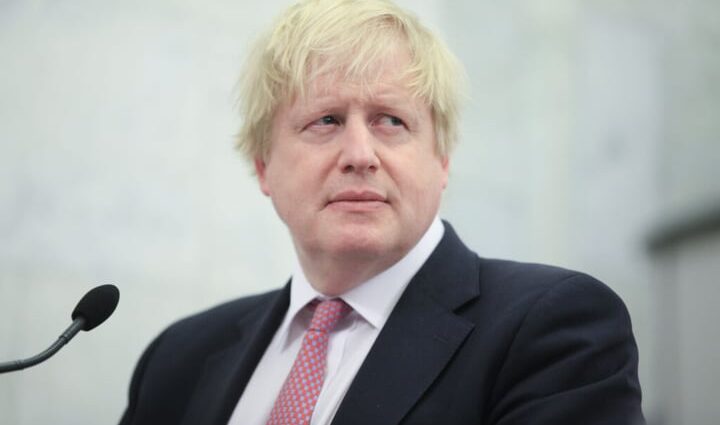
On Friday, Michael Saylor defended Bitcoin (CRYPTO: BTC) after former UK Prime Minister Boris Johnson described cryptocurrencies as a “giant Ponzi scheme” in a column.
In a Daily Mail column, Johnson argued that Bitcoin and other digital assets rely largely on belief rather than inherent value.
He said cryptocurrencies function similarly to a Ponzi scheme because their value depends on a steady flow of new investors willing to buy in.
“I have always suspected from the outset that all cryptocurrencies were basically a Ponzi scheme,” Johnson wrote, adding that such systems depend on “a constant supply of new and credulous investors.”
To illustrate his concerns, Johnson shared an anecdote about a man from his village who invested roughly £500 (about $660) in Bitcoin after meeting someone in a pub who promised the money would double.
According to Johnson, the investor later lost nearly £20,000 (around $26,000) after paying various fees while trying to …
On Friday, Michael Saylor defended Bitcoin (CRYPTO: BTC) after former UK Prime Minister Boris Johnson described cryptocurrencies as a “giant Ponzi scheme” in a column.
In a Daily Mail column, Johnson argued that Bitcoin and other digital assets rely largely on belief rather than inherent value.
He said cryptocurrencies function similarly to a Ponzi scheme because their value depends on a steady flow of new investors willing to buy in.
“I have always suspected from the outset that all cryptocurrencies were basically a Ponzi scheme,” Johnson wrote, adding that such systems depend on “a constant supply of new and credulous investors.”
To illustrate his concerns, Johnson shared an anecdote about a man from his village who invested roughly £500 (about $660) in Bitcoin after meeting someone in a pub who promised the money would double.
According to Johnson, the investor later lost nearly £20,000 (around $26,000) after paying various fees while trying to …

On Friday morning, the flashy crypto conference Token2049 Dubai, scheduled for late April, announced that it would not take place until 2027 amid war in the Middle East, according to a statement. On March 6, organizers had told Fortune that the event was taking place as planned, despite a week of escalating conflict in the region.
The conference said that it made the decision due to “ongoing uncertainty in the region and its impact on safety, international travel and logistics”, according to the statement.
Token2049 is not the first event to be canceled amid the violence in the region. Several others, including an entrepreneurship and innovation conference in Dubai and Abu Dhabi called the Megacampus Summit, were also shut down. Sporting events were also canned, most notably after tennis star Daniil Medvedev was stuck in Dubai after a tournament.
After the U.S. and Israel struck Iran on February 28, violence spilled into other parts of the Middle East. A suspected airstrike partially damaged Dubai’s main airport, and four people were injured after missile debris came down on Palm Jumeirah, a Dubai island filled with luxury hotels.
When Token2049 organizers told a Telegram group of its ticket holders on Sunday that the event was going on as planned, someone responded in the chat, “What are you talking about. Iran is still hitting the Dubai airport,” according to reporting by the Wall Street Journal.
In 2025, over 15,000 people attended the conference, and the organizers called it a “festival-like environment.” Some of the headline speakers slated for this year’s conference were Eric Trump, Polymarket CEO Shayne Coplan, and Tether CEO Paolo Ardoino.
This story was originally featured on Fortune.com
This post was originally published here

Token2049 postponed its Dubai crypto conference from April 2026 to April 2027 citing ongoing uncertainty in the region as the United Arab Emirates faces missile strikes from Iran, with around 15,000 attendees expected at the event.
Organizers announced the postponement Friday “in light of the ongoing uncertainty in the region and its impact on safety, international travel and logistics.” The two-day event will now take place April 21-22, 2027.
Dubai authorities reported at least two strikes Thursday morning after residents received missile alerts overnight, underlining the threat to the financial and tourist hub long seen as a safe haven.
Dubai also reported further missile threats on Friday, as well as a “minor incident” in its central area.
“The safety and experience of our community always comes first,” Token2049 said …

Kash Razzaghi, Chief Commercial Officer of Circle Internet Group Inc. (NASDAQ:CRCL), said cryptocurrency’s next chapter will be defined by payments and utility rather than speculation.
Mastercard (NYSE:MA) on Thursday revisited an exchange it had with Razzaghi in January after returning from the World Economic Forum in Davos.
“It was really all about infrastructure and how blockchain technology and digital assets can solve real-world problems or enhance capabilities of money movement, store of value and access to financial systems and tools,” Razzaghi talked about the event.
Razzaghi noted that clearer regulations are opening the door for institutions, while the …

Mojtaba Khamenei may have been appointed Iran’s Supreme Leader only days ago, but cryptocurrency bettors are already wagering on how soon he might exit.
Prediction market Polymarket, based on Polygon (CRYPTO: POL), shows a 64% probability that Mojtaba Khamenei is removed, detained, or blocked from acting as Iran’s Supreme Leader before year‑end, with 38% odds of this happening by April 30.
Over $2 million has been wagered on the outcome and an official announcement of his resignation or removal would suffice for a “Yes” resolution.
Notably, a similar bet regarding his …

New York City, NY, March 12, 2026 (GLOBE NEWSWIRE) —
I. Introduction
The online gambling landscape has undergone a significant transformation over the past several years, with cryptocurrency-powered slot games emerging as one of the fastest-growing segments in digital gaming. Players are increasingly drawn to the promise of faster transactions, enhanced privacy, and provably fair mechanics that blockchain-based casinos offer over their traditional counterparts.
But with rapid growth comes legitimate concern. The crypto casino space remains largely unregulated in many jurisdictions, and the gap between marketing claims and actual player experience can be wide. For every reputable platform operating transparently, there are dozens of fly-by-night operations designed to exploit uninformed depositors.
This report is designed to cut through the noise. We examine how crypto slots actually work, what determines their legitimacy, how payout mechanisms function under the hood, and what every player should verify before committing funds to any platform. Our goal is to give readers a practical framework for evaluating any crypto slots casino they encounter, whether they are seasoned gamblers or newcomers exploring digital currency gaming for the first time.
II. What Are Crypto Slots?
Crypto slots are online slot machines that accept cryptocurrency deposits and process withdrawals in digital currencies such as Bitcoin (BTC), Ethereum (ETH), Litecoin (LTC), Tether (USDT), and others. From a gameplay perspective, they function identically to traditional online slots: players place a wager, spin the reels, and outcomes are determined by a random number generator (RNG).
The key difference lies in the transaction layer. Traditional online casinos rely on banks, credit card processors, and third-party payment providers to move money in and out. Crypto slots eliminate these intermediaries. Deposits land in your casino account within minutes rather than days, and withdrawals bypass the slow verification queues that plague fiat-based platforms.
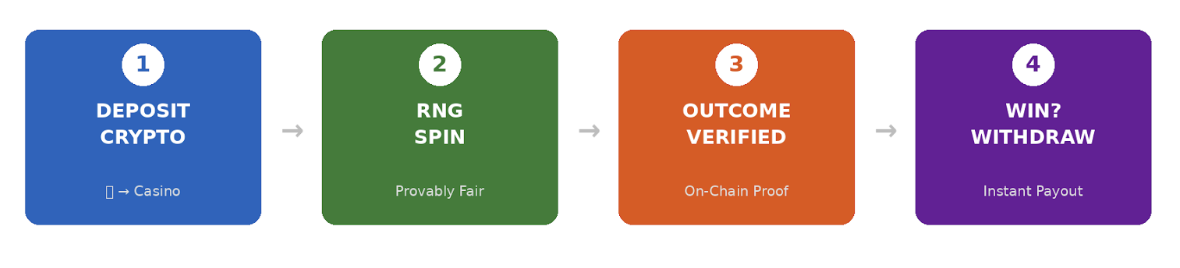
Provably Fair Technology
One of the most compelling innovations in the crypto gambling space is provably fair technology. This system uses cryptographic hashing to allow players to independently verify that each spin outcome was genuinely random and was not tampered with by the casino after the bet was placed. In a provably fair system, the casino generates a server seed before the spin, the player provides or is assigned a client seed, and the combination of both seeds determines the outcome. After the spin, the server seed is revealed so the player can verify the result mathematically.
Not all crypto slot platforms implement provably fair systems. Some still rely on traditional third-party RNG audits, which are credible but less transparent than on-chain verification. When evaluating a platform, understanding which verification method they use is an important first step.
Supported Cryptocurrencies
Most crypto slot casinos support Bitcoin and Ethereum as a baseline. More established platforms expand their options to include Litecoin, Dogecoin, Bitcoin Cash, Tether (USDT), USD Coin (USDC), and in some cases, Solana, Tron, and Ripple. The breadth of supported currencies matters because it affects deposit speeds, network fees, and the flexibility players have in managing their bankroll.
III. Do Crypto Slots Actually Work?
This is the question that drives most players to search for independent information before depositing. The short answer is yes, crypto slots function on the same mathematical principles as any regulated online slot machine. But there are important nuances that separate a legitimate crypto slots experience from one designed to take your money.
RNG and Fair Play Verification
Every legitimate slot game, whether crypto or fiat, is powered by a random number generator. The RNG produces thousands of number sequences per second, and the sequence active at the exact moment you press spin determines your outcome. In regulated environments, these RNGs are tested and certified by independent auditing firms such as eCOGRA, iTech Labs, or GLI (Gaming Laboratories International).
Crypto casinos that operate under recognized licenses typically undergo the same auditing process. Those that implement provably fair technology add an additional layer of transparency by allowing players to verify outcomes directly. Platforms that offer neither third-party audits nor provably fair verification should be approached with extreme caution.
RTP Rates: What to Expect
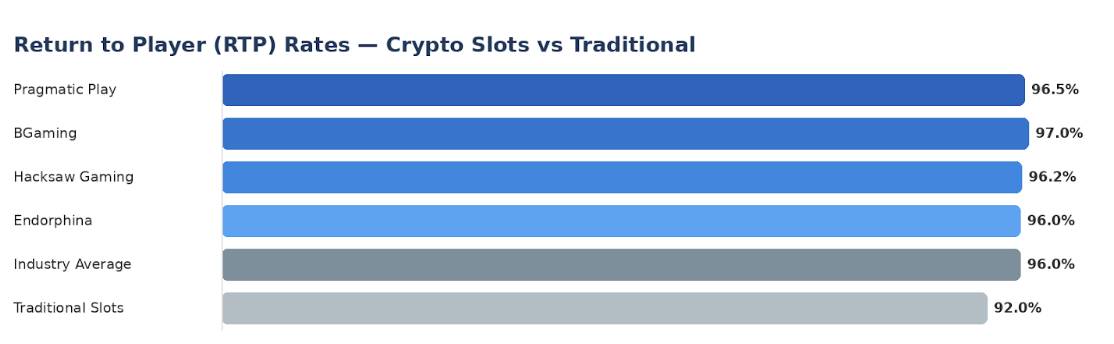
Return to Player (RTP) is the percentage of total wagered money that a slot game pays back to players over time. A slot with a 96% RTP will, on average, return $96 for every $100 wagered over millions of spins. This is a long-term statistical average, not a guarantee for any individual session.
Crypto slots from reputable game providers like Pragmatic Play, BGaming, Hacksaw Gaming, and Endorphina typically offer RTPs between 94% and 97%, which is consistent with the broader online slots industry. Players should be wary of platforms that do not disclose RTP figures or that run proprietary games with no independent audit data.
What Realistic Outcomes Look Like
Slots are inherently a negative-expectation game. The house edge ensures that over time, …
This post was originally published here

Prominent crypto analyst Trader Mayne predicts Bitcoin (CRYPTO: BTC) and Ethereum (CRYPTO: ETH) may face another leg lower before long-term buying opportunities emerge.
Speaking on his podcast, Maybe said Bitcoin remains in a broken higher-timeframe structure, suggesting further downside may occur before a meaningful bottom form.
He pointed to a similar breakdown during the previous cycle, when Bitcoin lost its monthly structure and continued falling for months, eventually dropping more than 20%.
Based on historical drawdowns and a key yearly order block, Mayne believes Bitcoin could decline toward the $48,000 zone, which would represent roughly a 60% correction from its all-time high.
While many …

Binance (CRYPTO: BNB) co-founder Changpeng “CZ” Zhao disputed on Wednesday Forbes’ estimate that his net worth has exceeded $111 billion, ranking him ahead of Microsoft co-founder Bill Gates.
Forbes reported that CZ’s wealth jumped nearly $47 billion from last year. But CZ asked how that was possible, given that cryptocurrency prices have dropped over the same period.
“Binance is the largest crypto exchange. It grows and shrinks with the industry,” CZ said. “Binance’s valuation can’t increase when crypto prices are down.”
He added that Binance’s revenue is tied to trading volumes, which shrink during a “crypto winter.”

Bloomberg Intelligence senior commodities strategist Mike McGlone predicts Bitcoin (CRYPTO: BTC) will fall to $10,000, calling the crypto asset class “dead” as unlimited token supply and five years of underperformance versus the S&P 500 make it uninvestable for institutional risk managers.
McGlone defines $10,000 as the most widely traded price for Bitcoin since 2019-2020, similar to how crude oil has traded around $57 per barrel for almost 10 years.
“That’s where Bitcoin set its place,” McGlone said, arguing the asset will return to this level during a broader risk asset correction.
McGlone previously called for Bitcoin to drop to $1,100 in 2018 when it traded at $10,000.
Bitcoin ultimately bottomed at $3,000, making him “30% wrong, 70% right.” He became bullish in 2019 and correctly predicted Bitcoin would exceed $100,000 in 2020 by “just adding a zero.”
Now McGlone argues Bitcoin must “lop off a zero” from $100,000. Currently trading around $68,000, he’s about 32% …

Fundstrat’s Tom Lee says the crypto market has moved past its winter phase, with reduced speculation and leverage creating a healthier foundation for future gains.
Markets, including crypto and major tech stocks, appear to have emerged from a recent bear phase, Lee said in a CNBC interview on Tuesday.
He expects markets to move higher in the near term, particularly through March, although he warned that a broader bear market could develop later in the year.
A roughly 20% decline could occur once markets stop reacting positively to good news, a signal Lee views as a typical indicator that a larger downturn may be forming.
For now, much of the speculative excess …
Mastercard (NYSE:MA) on Wednesday launched a Crypto Partner Program with over 85 companies including Binance (CRYPTO: BNB), Circle (NASDAQ:CRCL), Ripple (CRYPTO: XRP), Gemini, PayPal (NASDAQ:PYPL), and Paxos to connect blockchain technology with its global payments infrastructure.
The initiative brings together crypto exchanges, blockchain developers, fintech firms, and banks to explore how blockchain-based systems can connect with traditional payment rails used by banks, merchants, and consumers.
Participants will work with Mastercard teams to shape products combining on-chain tools with established payment rails.
The program focuses on practical use cases where digital assets are gaining traction, including cross-border transfers, business-to-business payments, and global payouts.
Companies will collaborate on future product development targeting enterprise applications like remittances, B2B transfers, and settlement.
Mastercard’s network links banks, merchants, …

Dogecoin (CRYPTO: DOGE) overtook market heavyweights Bitcoin (CRYPTO: BTC) and Ethereum (CRYPTO: ETH) in the latest cryptocurrency market rebound.
Dogecoin surged over 4% in the past week, ranking among the top large-cap cryptocurrencies in this period. Bitcoin and Ethereum trailed DOGE, as shown below.
Hyperliquid’s (CRYPTO: HYPE) native cryptocurrency has bucked the broader cryptocurrency market decline, posting double-digit gains in 2026.
The decentralized perpetual exchange token has pumped 35% year-to-date, becoming the most successful token among those with at least $1 bililion in market capitalization.
In contrast, blue-chip coins such as Bitcoin (CRYPTO: BTC), Ethereum (CRYPTO: ETH) and Dogecoin (CRYPTO: DOGE) have lost 21%, 30.83% and 27% since 2026 …
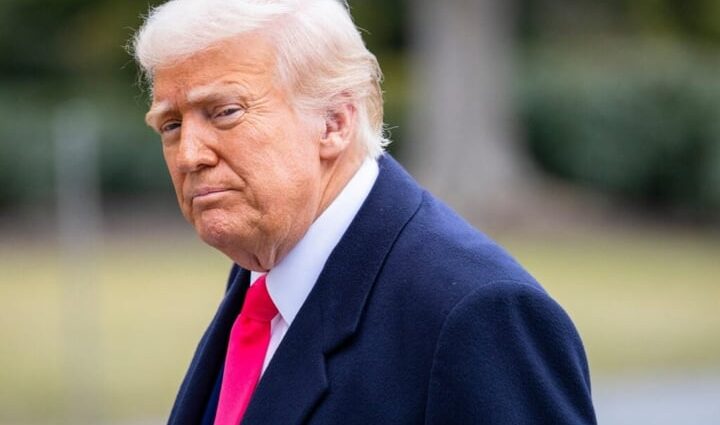
President Donald Trump may have signaled that the war in Iran is almost over, but cryptocurrency bettors don’t see an official declaration of the end of hostilities before this month.
Polymarket odds that Trump or U.S. officials will formally declare the end of the military campaign by March 31 have jumped to 44%, up from just 11% the previous day. The odds that a declaration comes by March 15 rose marginally to 11%.
Meanwhile, punters see a 73% chance that the fighting will officially end by April 30, climbing to 82% for a resolution by June 30.
Some other Polymarket contracts were also impacted. The odds that a third country, other than the U.S. and Israel, strikes Iran by the end of the month …

Coinbase (NASDAQ:COIN) CEO Brian Armstrong says AI agents will increasingly transact using crypto wallets, while Bitwise Chief Investment Officer Matt Hougan argues institutional adoption could push Bitcoin (CRYPTO: BTC) toward $1.3 million over time.
Armstrong said Monday autonomous AI systems may soon execute more financial transactions than humans. “They can’t open a bank account, but they can own a crypto wallet,” he said.
These systems, including trading bots, automated services and machine-to-machine payment networks, could handle tasks such as purchasing data, paying for computing resources or executing financial trades without direct human input.
However, Armstrong noted that AI agents cannot easily access the traditional banking system because …
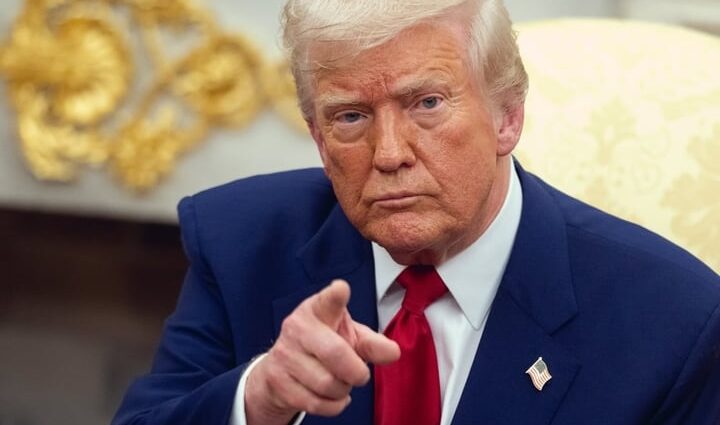
The Trump administration is signaling stronger support for cryptocurrency and blockchain technologies in its updated cybersecurity strategy.
The policy document outlines how emerging technologies will shape national security, economic competitiveness and digital infrastructure.
Jason Lowery, an executive associated with the Defense Department initiative, highlighted the development on X and pointed to the policy update.
Lowery wrote on X, “Boom. Supporting cryptocurrency & blockchain technology is now officially an emerging technology priority in the U.S. Presidential Cyber Strategy.”
The seven-page document outlines the White House’s approach to defending digital infrastructure and strengthening American technological leadership.
It places cyberspace at the center of economic growth, innovation and national defense.
The strategy argues that digital networks underpin everyday life, economic opportunity and the country’s …
This post was originally published here

Kazakhstan’s central bank formed a $350 million portfolio from gold and foreign exchange reserves for crypto-related investments starting April, focusing on crypto infrastructure companies and index funds rather than direct Bitcoin (CRYPTO: BTC) allocations.
Governor Timur Suleimenov announced the investment program at a briefing on interest rates Friday.
“We are currently developing a list of instruments in which we will invest. This includes not only cryptocurrency itself,” Suleimenov said.
The portfolio will include shares of high-tech companies related to cryptocurrencies and digital financial assets, index funds, and other instruments that exhibit similar dynamics to crypto assets.
Central Bank Deputy Chair Aliya Moldabekova emphasized officials are not planning large direct allocations to cryptocurrencies.
“We are currently selecting companies that …
This post was originally published here
Bitcoin fell below $65,000 on Monday as geopolitical and macroeconomic uncertainty sparked another flight from risk-on investments.
An asset class that is all about vibes suddenly has awful vibes
This post was originally published here
The industry is supplanting Wall Street’s privileged position on the American right
This post was originally published here
The slump could spread across financial markets
This post was originally published here
But would the country’s leaders really want stablecoins to succeed?
This post was originally published here
The more useful stablecoins and tokens prove to be, the greater the risk
This post was originally published here