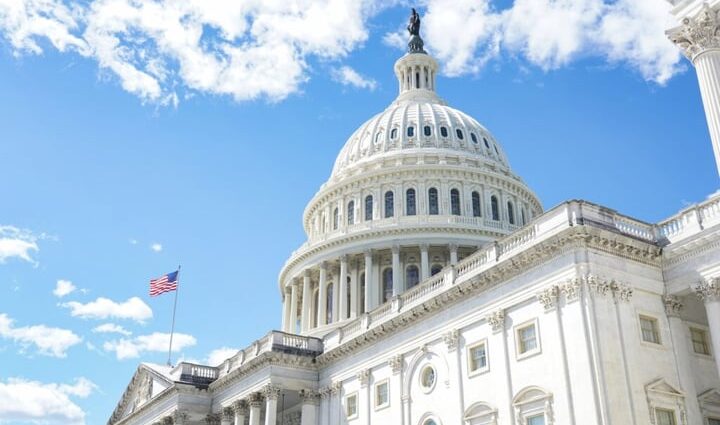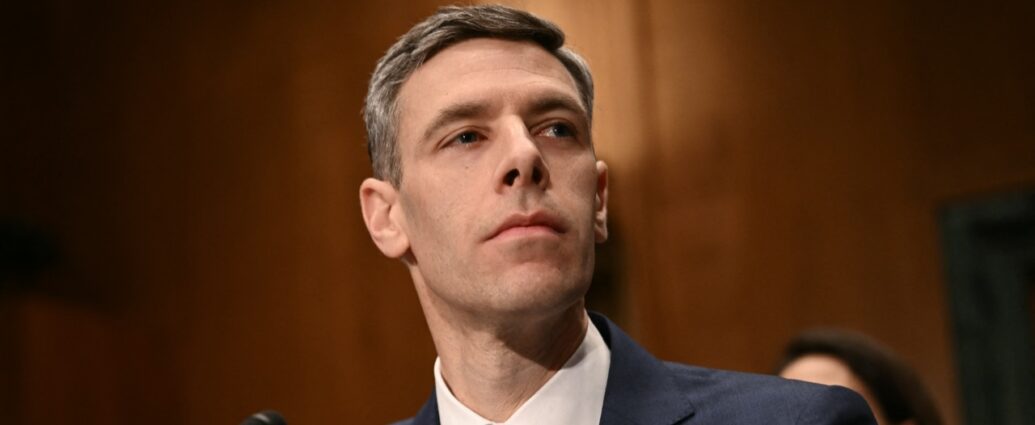
Sen. Cynthia Lummis (R-Wyo.) strongly endorsed the Clarity Act on Tuesday, noting that decentralized finance developers will face far less regulatory uncertainty after the bill becomes law.

DeFi Industry Will Have ‘Safe Harbor’

In an X post, Lummis dubbed the Clarity Act as the “best thing that could happen to the DeFi community.”

“Developers, validators, and node operators will finally have a safe harbor and we can ensure American innovation can stay right here on U.S. soil,” the senior lawmaker argued.


Full story available on Benzinga.com

This post was originally published here

North Korean hackers allegedly hit U.S. firms in supply-chain attacks to steal cryptocurrency for the regime’s nuclear funding, according to a report published Tuesday.

Are North Korean Hackers Chasing Crypto?

The hackers reportedly targeted Axios, a software program that connects applications and ‌web services, according to CNBC. The hackers controlled the software developer’s account for three hours on Tuesday morning, during which malicious updates were sent to organizations that downloaded the software.

Axios is also used by cryptocurrency firms, blockchain developers and tech firms active in the cryptocurrency industry.

Security experts told CNBC that this could be part of a “long-term campaign” by the North Korean regime to steal cryptocurrency, which is then used …

Full story available on Benzinga.com

This post was originally published here

Dogecoin (CRYPTO: DOGE) tried to prank unsuspecting folks on social media for April Fools’ Day. We’re telling you early, so you don’t get tricked and look dumb later.

Dogecoin Without Shiba Inu?

The official X handle of Dogecoin went full satire mode with a fake “restructuring” announcement, updating their bio and everything.

The so-called DogeCoin Financial Solutions LLC proposed changes such as ditching the Shiba Inu logo for a “navy blue emblem” and banning meme words like “wow.”

Seriously bro? That ain’t never happening!

Dogecoin used stiff business jargon, such as a “67-page whitepaper” and “stakeholder” rebranding. No way our lil’ Shiba friend is signing up for this—we know it.

Full story available on Benzinga.com

This post was originally published here

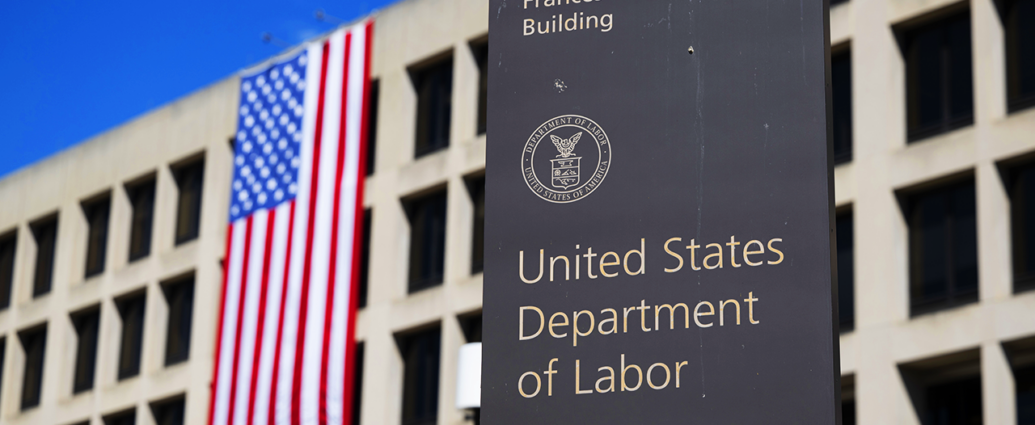
The Department of Labor (DOL) has issued a proposed regulation that would allow retirement plans to include investments in alternative assets, specifically cryptocurrencies and private markets.

“The overarching goal of the proposed regulation is to alleviate certain regulatory burdens and litigation risk that interfere with the ability of American workers to achieve, through their retirement accounts, the competitive returns and asset diversification necessary to secure a dignified and comfortable retirement,” the executive summary reads. 

The proposal comes after President Donald Trump‘s executive order, released last year, instructed the DOL to reexamine its guidance surrounding employers and plan administrators on incorporating these assets into retirement plans.

“The Executive Order (E.O. 14330) pointed out that, currently, many Americans in employer-sponsored defined contribution plans do not have the opportunity to participate in the potential growth and diversification opportunities offered by alternative asset investments,” the proposal stated.

DOL Safe Harbor Rule

The DOL has introduced a “safe harbor” rule designed to help shield plan sponsors from lawsuits. Under the guidance, fiduciaries must carefully weigh six key factors when selecting alternative investments: performance, fees, liquidity, valuation, benchmarks, and complexity.

The rule will undergo additional review, including a 60-day period for public comment, before it can be finalized.

“Americans’ ability to participate more fully in innovation and economic growth through well-diversified long-term investments is a vitally important priority for effective retirement planning. We look forward to continuing our work to expand opportunities for Americans to build wealth and save for the future,” said SEC Chairman Paul S. Atkins in a press release.

U.S. Secretary of the Treasury Scott Bessent commented that the proposed rule is “an initial step” in implementing the Trump’s Executive Order in “a safe and smart manner.”

Last Wednesday, the Labor Department lifted restrictions that had previously discouraged the inclusion of cryptocurrencies in 401(k) retirement plans.

Trump’s Ballooning Crypto Fortune

The Labor Department under former President Joe Biden had warned about “significant risks” of adding cryptocurrency investment options to retirement plans, citing the speculative …

Full story available on Benzinga.com

This post was originally published here

Bitcoin and other major cryptocurrencies regained some losses on Tuesday after Iran signaled a willingness to pursue peace talks.

Cryptocurrency Ticker Price
Bitcoin (CRYPTO: BTC) $67,813.58
Ethereum (CRYPTO: ETH) $2,097.47
Solana (CRYPTO: SOL) $82.54
XRP (CRYPTO: XRP) $1.34
Dogecoin (CRYPTO: DOGE) $0.09190
Shiba Inu (CRYPTO: SHIB) $0.055932

Notable Statistics:

  • CoinGlass data shows that 78,174 traders were liquidated in the past 24 hours, totaling $361.97 million.       
  • SoSoValue data shows net inflows of $69.4 million from spot Bitcoin ETFs on Monday. Spot Ethereum ETFs …

Full story available on Benzinga.com

This post was originally published here

Google has warned that advances in quantum computing could eventually break the elliptic curve cryptography that secures cryptocurrencies. New research suggests these systems may be compromised with fewer resources than previously thought.

Rising Quantum Concerns

Using optimized versions of Shor’s algorithm, a sufficiently powerful quantum computer could break current cryptographic systems more quickly than earlier estimates suggested. While the threat is not immediate, it may be closer to reality than previously believed.

To prepare, Google is urging the crypto industry to transition to post-quantum cryptography (PQC), adopt safer practices such as avoiding wallet address reuse, and consider policies for vulnerable or inactive funds.

The …

Full story available on Benzinga.com

This post was originally published here

Bitcoin’s (CRYPTO: BTC) movement within a tight trading range is raising questions about whether its traditional four-year cycle remains intact or is gradually fading amid rising institutional participation.

Cycle Debate Intensifies

In an X.com post on March 31, on-chain analytics platform Arkham Intelligence highlighted a growing debate over the durability of Bitcoin’s four-year cycle. The firm noted that increasing institutional involvement may be reshaping market behavior.

Unlike retail traders, institutional investors typically deploy capital in a more structured manner, often guided by schedules and risk management strategies. This approach can reduce extreme volatility and dampen the sharp boom-and-bust patterns historically associated with Bitcoin.

At the same time, macroeconomic factors such as interest …

Full story available on Benzinga.com

This post was originally published here

The Trump administration on Monday issued a proposed rule to allow retirement plans to offer alternative assets like private equity and cryptocurrencies as part of the investment options in 401(k) accounts.

The Labor Department’s rule aims to ease longstanding barriers to incorporating alternative assets into retirement plans and follows an executive order signed by President Donald Trump last summer on the subject.

Advocates for the rule change argue that including alternative assets in 401(k) plans can help foster better long-term returns and make diversification easier. Skeptics note that alternative assets can be less liquid, more complex and have higher fees, which can limit gains while also introducing risk.

Under the proposed rule, plan fiduciaries would have to objectively, thoroughly and analytically consider and make determinations about performance, fees, liquidity, valuation, performance benchmarks and complexity. Trustees who abide by those rules will be granted safe harbor that protects them from lawsuits.

TRUMP SIGNS ORDER TO OPEN 401(K)S TO PRIVATE MARKETS: WHAT IT MEANS FOR YOUR RETIREMENT

Managers of defined contribution plans have historically had the authority to consider alternative investments, though most have opted against doing so.

The Biden administration in 2022 issued a rescinded compliance release that warned fiduciaries against including cryptocurrency options in 401(k) plans, which the Trump administration criticized as a “departure from the department’s decades-long approach to fiduciary investment decisions.”

LARRY FINK CALLS FOR SOCIAL SECURITY REFORM, SAYS INVESTING A PORTION OF FUNDS COULD STRENGTHEN THE PROGRAM

Labor Secretary Lori Chavez-DeRemer said that the agency’s newly proposed rule “will show how plans can consider products that better reflect the investment landscape as it exists today. This greater diversity will drive innovation and result in a major win for American workers, retirees, and their families.”

Treasury Secretary Scott Bessent added that the pending regulation “is an initial step in implementing the President’s Executive Order in a safe and smart manner, broadening access to additional retirement plan options for millions of Americans while being mindful of the importance of protecting retirement assets.”

NEW YORK INVESTMENT GIANT APOLLO JOINS HEADQUARTERS MIGRATION TO ‘FREEDOM’ STATES

Following the Labor Department’s release of the proposed rule, the agency will open a 60-day comment period ahead of a decision to finalize the rule.

Alternative asset managers like Blackstone and Apollo Global Management could benefit from the opportunity to draw on a new pool of capital. Several industry members and groups applauded the rule.

Apollo CEO Marc Rowan said that the change is a “thoughtful step toward addressing the growing retirement crisis,” noting that “Americans increasingly lack the savings and income needed for a secure retirement” and that the shift could “meaningfully improve retirement outcomes.”

GET FOX BUSINESS ON THE GO BY CLICKING HERE

If the rule is adopted, Erin Cho, a partner at the Mayer Brown law firm, said that it “will not open the floodgates for private equity, private credit or crypto funds to move into the retirement space” as it will only provide a process for doing so.

Reuters contributed to this report.

This post was originally published here

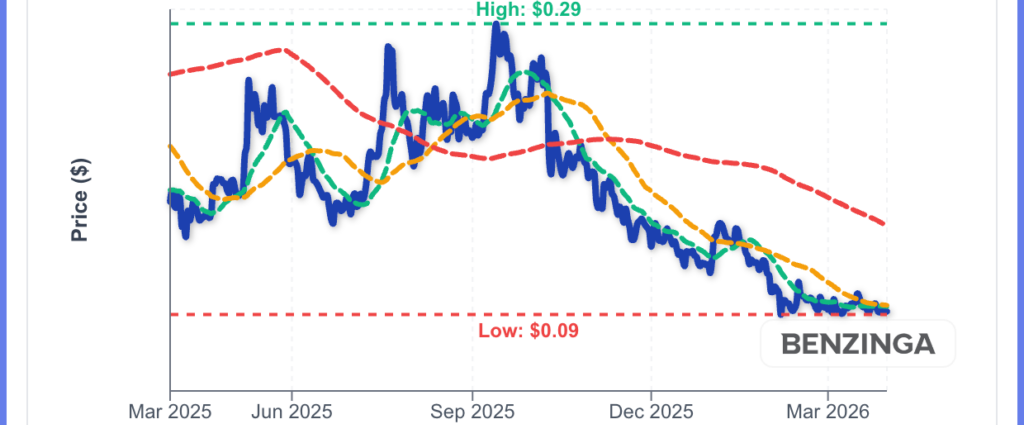
Dogecoin (CRYPTO: DOGE) is trapped in a tightening wedge between $0.088-$0.095, while Shiba Inu’s (CRYPTO: SHIB) burn rate surged 945% in 24 hours with over 3.1 million tokens permanently removed.

Dogecoin’s Wedge Compression

Dogecoin is forming a converging wedge at multi-month lows, with upper and lower trendlines squeezing price into a tight range. 

The Supertrend at $0.1044 and Parabolic SAR at $0.0989 both hover just above, making any upside move an immediate test of resistance.

The Supertrend hasn’t flipped green yet despite weeks of sideways action, suggesting sellers haven’t fully given up. 

Volume dropped 6.24% to $2.10 billion and open interest slipped 0.99% to $1.06 billion, typically signaling …

Full story available on Benzinga.com

This post was originally published here

Strategy Inc. (NASDAQ:MSTR) saw its stock price slide before heading back up during Tuesday’s trading session.

• What is MSTR stock doing now?

Bitcoin Remains Relatively Flat

Strategy shares seesawing comes as Bitcoin (CRYPTO: BTC) shows minimal volatility. The leading digital asset is currently trading at $67,508.08, reflecting a 24-hour gain of 0.19%. Bitcoin’s total market capitalization remains steady at approximately $1.35 trillion, according to CoinMarketCap.

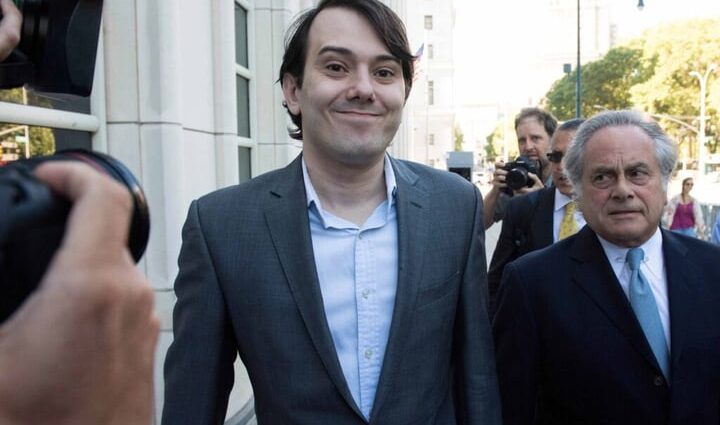
Shkreli Demands Saylor’s Arrest

Investor Martin Shkreli slammed Strategy Executive Chairman Michael Saylor on Monday over a promotional video for the company’s preferred stock. …

Full story available on Benzinga.com

This post was originally published here

Ripple Prime has expanded its integration with HyperliquidX, incorporating HIP-3 products to broaden institutional access to tokenized markets.

Ripple Prime’s Major Move

In an X post on Monday, Ripple Prime executive Mike Higgins said that the integration allows institutional investors to trade tokenized commodities such as gold, silver, and oil 24/7 on-chain perpetual contracts. The expansion is expected to increase activity within the HYPE token ecosystem and further advance the market for tokenized real-world assets.

HIP-3 products on Hyperliquid have experienced rapid growth, with daily trading volume reaching $2.30 billion and open interest at $1.99 billion.

These products now account for nearly 40% of daily trading volume and about 28% of total open interest …

Full story available on Benzinga.com

This post was originally published here

XRP (CRYPTO: XRP) slipped 0.5% but Binance outflow transactions surged above 4,000 daily since late February, signaling mid-sized investors are accumulating despite XRP ETF outflows hitting $2.31 million on March 30.

The Binance Accumulation Signal

Binance on-chain activity shows a clear resurgence since the end of February. 

Outflow transactions have consistently exceeded 4,000 per day, with some peaks reaching close to 6,000 transactions in a single day.

Most of this activity stems from transactions ranging between 1,000 and 100,000 XRP, which typically corresponds to mid-sized investors rather than large whales. 

Increased outflow transactions often suggest investors are withdrawing tokens from exchanges to hold them elsewhere, indicating a gradual accumulation phase.

XRP has traded in a well-defined range between $1.30 and $1.50 for several months. While the …

Full story available on Benzinga.com

This post was originally published here

A new warning from Google (NASDAQ:GOOG) (NASDAQ:GOOGL) is making crypto investors face a threat they have always thought was still far off: quantum computing.

For a long time, the threat posed by quantum computers on Bitcoin (CRYPTO: BTC) security has largely remained a theoretical threat. However, new research from Google indicates this threat may not be as far off as we think and may come sooner than we expect.

A Faster Timeline Than Expected

At the heart of this concern is the method by which Bitcoin secures transactions. The method is based on a cryptographic system that is theoretically uncrackable by traditional computers. It allows for the creation of private keys from public ones.

However, Google’s latest research into the matter revealed that quantum computing could soon make such systems less complex to crack. The company believes that future quantum computers could have the ability to breach the cryptographic foundations of Bitcoin far sooner than previously thought.

One of the most worrying consequences of this is speed. According to the research, a sufficiently powerful quantum computer could theoretically crack a Bitcoin private key in less than 9 minutes. This could lead to what is known as an ‘on-spend’ attack, which could allow hackers to interfere with transactions before they are made.

Whilst such technology is not yet …

Full story available on Benzinga.com

This post was originally published here

Bitcoin held steady near $66,000 despite a broader market pullback triggered by concerns over quantum computing risks; liquidations stand at $268.43 million over the past 24 hours.    

Bitcoin ETFs saw $69.4 million in net inflows on Monday, while Ethereum ETFs reported $4.96 million in net inflows.  


Cryptocurrency
Ticker Price
Bitcoin (CRYPTO: BTC) $66,725.24
Ethereum (CRYPTO: ETH) $2,039.05
Solana (CRYPTO: SOL) $80.68
XRP (CRYPTO: XRP) $1.31
Dogecoin (CRYPTO: DOGE) $0.09038
Shiba Inu (CRYPTO: SHIB) $0.055900

Meme coin …

Full story available on Benzinga.com

This post was originally published here

In the last two years, stablecoins have become one of the hottest fields in crypto—so hot that one venture capitalist at a16z crypto decided to leave and launch his own stablecoin startup. The former investor, Sam Broner, announced on Tuesday that he and a college friend raised $10 million for what they call The Better Money Company, which aims to create a stablecoin clearinghouse, or locale that lets customers cheaply exchange different dollar-backed tokens. 

Broner’s former employer, a16z crypto, led the seed round, with participation from BoxGroup and Sunflower Capital, along with notable angel investors like the Circle cofounder Sean Neville and Charlie Songhurst, a former Microsoft executive. Broner and his cofounder Adam Zuckerman declined to say at what valuation they raised their capital.

Andreessen Horowitz’s crypto arm backed The Better Money Company because of Broner, said Ali Yahya, a general partner at Andreessen Horowitz. “He very quickly became our stablecoin expert and taught us a lot about stablecoins,” he said in an interview with Fortune. “So primarily, it’s an investment in him, and that tends to be usually the way that we underwrite early-stage investments.”

Token clearinghouse

Even as prices for blue-chip cryptocurrencies like Bitcoin and Ethereum remain far below their 2025 all-time highs, investor fervor for stablecoins hasn’t waned. Proponents for the tokens, which are pegged to real-world assets like the U.S. dollar, say they can speed up transactions as well as reduce fees. Financial goliaths are taking notice. In March, the payments titan Mastercard agreed to spend up to $1.8 billion to acquire the stablecoin startup BVNK. 

“The drumbeat has gotten louder and the urgency has gotten more clear for how they need to integrate stablecoins into their products,” said Broner.

Broner’s new firm is entering an increasingly crowded stablecoin field. There are the mainstays like Circle’s USDC and Tether’s USDT, but more recently large companies like Klarna, Cloudflare, Sony, and Fiserv launched their own tokens or signaled they intend to do so. Broner and Zuckerman aim to create a lane for themselves with a clearinghouse to help companies navigate the cluster of new coins.

“If you want to have a growing stablecoin ecosystem, you need to have one place to access the breadth of what’s out there,” said Broner.

Broner, who started his career as a software developer at GE and Microsoft, specialized in investing in stablecoin startups at a16z crypto. During his more-than-two-year tenure at the venture giant, he backed the stablecoin remittance startup Zar as well as a slew of startups from a16z crypto’s accelerator. Meanwhile, Zuckerman worked at the law firm Latham & Watkins before leaving to work as general counsel at the crypto startup Eigen Labs. The two originally met while studying for their undergraduate degrees in Massachusetts.

Launching a stablecoin clearinghouse requires developing partnerships with stablecoin issuers. Broner and Zuckerman plan to create accounts with different crypto companies that let them put in orders for new tokens more cheaply than buying or selling stablecoins on the open market. Since they founded their startup in November, they’ve since received commitments from a number of issuers who intend to join the clearinghouse, including Paxos, Stripe’s Bridge, MoonPay, and others. 

They intend to support any token compliant with the Genius Act, recently signed-into-law legislation that regulates the burgeoning stablecoin ecosystem. That notably excludes USDT, the largest stablecoin on the market, but not its American version, USAT.

They haven’t launched their product publicly yet but plan to let customers use their clearinghouse in the coming weeks, said Broner. “The mission is making stablecoins better money,” added Zuckerman.

This story was originally featured on Fortune.com

This post was originally published here

Banks are exploring Cardano’s (CRYPTO: ADA) Midnight partner chain for institutional blockchain infrastructure because it offers programmable privacy and front-running protection that Ethereum (CRYPTO: ETH) and Solana (CRYPTO: SOL) can’t provide natively.

The Three Banking Requirements

Institutions need three things from blockchain that public chains struggle to deliver: privacy with selective disclosure, execution predictability without MEV extraction, and compliance tooling that doesn’t broadcast sensitive information to the entire world.

A bank can’t put customer transactions on a public ledger visible to everyone. 

They need the ability to hide sensitive details from the public but still prove compliance to regulators when required. That’s …

Full story available on Benzinga.com

This post was originally published here

Block Inc. (NYSE:XYZ) shares were trading higher in the pre-market session on Tuesday after its Square point-of-sale system rolled out automatic Bitcoin (CRYPTO: BTC) payments for eligible merchants in the U.S.

Square Announces Automatic Bitcoin To Fiat Feature

Square said in a X post that the new feature will allow sellers to accept Bitcoin payments that convert “instantly” to cash at checkout, without any additional setup.

Square added that there will be no processing fees for these transactions until 2026. Note that this feature is available to all U.S.-based merchants except those based in New York

Full story available on Benzinga.com

This post was originally published here

Investor Martin Shkreli, popularly known as “Pharma Bro,” slammed Michael Saylor’s latest video on Monday promoting Strategy Inc.‘s (NASDAQ: MSTR) preferred stock offering.

The Video At The Center Of Controversy

The AI video shared on X showed a young woman who has retired and is living a luxurious life in a tropical paradise.

When asked how she got rich so quickly, the woman credited it to buying shares of Perpetual Stretch Preferred Stock (NASDAQ: STRC).

Saylor captioned the video with, “You weren’t meant to live an uncomfortable life.”

Critics Say It’s ‘Nonsense’

Shkreli took strong exception, going so far as to demand Saylor’s “arrest” for promoting unrealistic retirement security on a Bitcoin-backed asset.

Market analyst Adam Cochran also came down heavily, …

Full story available on Benzinga.com

This post was originally published here

A court on Monday levied a penalty of $500,000 against Peken Global Limited, the company that operates the KuCoin cryptocurrency exchange, and prohibited it from serving U.S. users without registering with the CFTC.

Court Orders No Future Violations

The order by the U.S. District Court for the Southern District of New York also stated that the CFTC is not pursuing disgorgement, nor is the court imposing it, based on the specifics of this case.

“The order permanently enjoins Peken Global from future violations, as charged, and requires Peken Global to pay a $500,000 civil monetary penalty,” a CFTC press …

Full story available on Benzinga.com

This post was originally published here

A cryptocurrency tied to Tiger King” fell on Monday after the Supreme Court decided not to entertain the appeal case of Joseph Maldonado-Passage, the central figure in Netflix Inc.’s (NASDAQ:NFLX) “Tiger King” documentary.

Tiger King Coin Is Almost Worthless Today

Tiger King Coin (TKING), available on Ethereum (CRYPTO: ETH) and BNB Chain (CRYPTO: BNB), fell 0.6% in the last 24 hours to $0.0000001937, according to CoinGecko. The coin had a fully diluted valuation of $180,653, with just $1,140 worth of TKING changing hands over the past 24 …

Full story available on Benzinga.com

This post was originally published here

Having fun at someone else’s expense might be a social media faux pas, but big brands and cryptocurrencies can’t stop memeing the KitKat chocolate heist.

Dog Mocks ‘Kat’

About twelve tons of Nestle S.A.’s KitKat chocolate bars went missing in Europe last week after thieves stole the truck carrying them—yes, you read that right!

And everybody’s cracking up over it. Dogecoin (CRYPTO: DOGE), the world’s most popular meme-based cryptocurrency, repeated “woof” as its “official statement,” celebrating Shiba Inu playfulness.

Was That You, Pengu?

NFT brand Pudgy Penguins dropped a chocolate-smeared picture of PENGU, ironically adding that their lil’ mascot had nothing to do with the theft.

Litecoin

Full story available on Benzinga.com

This post was originally published here

State and non-state actors linked to Russia and Iran are increasingly using cryptocurrency to acquire low-cost, commercially available drones for ongoing conflicts, a new report published on Monday said.

Blockchains Powering Drone Warfare?

Sanctioned entities, including Iran’s defense sector and aligned proxies, are turning to cryptocurrency to procure drone components restricted by export controls, according to a new study by blockchain analytics firm Chainalysis.

Iran’s Shahed drone program, widely deployed in the ongoing conflict with the U.S. and Israel, relies “heavily” on components sourced through third-country procurement networks, the report added.

Cryptocurrency facilitates procurement in two ways, according to Chainalysis. The first is direct, where a drone manufacturer accepts cryptocurrency as a payment method. The second is indirect, where vendors selling through third-party e-commerce platforms, such as Alibaba Group Holding Limited 

This post was originally published here

Leading cryptocurrencies lifted on Monday, while major stocks closed lower as investors parsed President Donald Trump’s latest hints on a potential Iran ceasefire.

Cryptocurrency 24-Hour Gains +/- Price (Recorded at 9:30 p.m. EDT)
Bitcoin (CRYPTO: BTC) +2.04% $67,934.87
Ethereum (CRYPTO: ETH)
               
+3.33% $2,075.14
XRP (CRYPTO: XRP)                          -0.01% $1.33
Solana (CRYPTO: SOL)                          +1.72% $83.92
Dogecoin (CRYPTO: DOGE)              +0.57% $0.09203

Crypto Heavyweights Lift

Bitcoin spiked to $68,000 late evening as trading volume jumped 58% over the last 24 hours. Ethereum also rallied to $2,088 late in the day, fueled by robust buying momentum. XRP and Dogecoin, however, stagnated.

Shares of Strategy Inc. (NASDAQ:MSTR) and Bitmine Immersion Technologies Inc. (NYSE:BMNR) closed down 3.64% and 0.49%, respectively.

Over $262 million in cryptocurrency holdings were liquidated in the last 24 hours, with short-term traders suffering the most losses.

Open interest in Bitcoin futures rose 2.29% in the last 24 hours. Sentiment among Binance retail and whale traders also remained bullish, according to the Long/Short ratio.

Despite these developments, “Extreme Fear” sentiment persisted in the market, according to the Crypto Fear & Greed Index.

Top Gainers (24 Hours) 

Cryptocurrency (Market Cap>$100 M) Gains +/- Price …

Full story available on Benzinga.com

This post was originally published here

On March 17, 2026, a single day of US spot Bitcoin (CRYPTO: BTC) ETF inflows totaled $199.37 million. 

Two days later, the FOMC held interest rates steady, and geopolitical risk spiked. 

By March 20, the same ETF market was recording $52.1 million in daily outflows.

Bitcoin dropped below $69,200 on March 22 as a Middle East escalation triggered $299 million in liquidations across the derivatives market.

That 96-hour window captures exactly what Bitcoin investors face in 2026: two powerful forces pulling in opposite directions, with no clear winner yet.

This article examines those two forces: the historical four-year cycle model and the institutional adoption thesis, and presents the current on-chain data that sits between them.

Historical Pattern of the Four-Year Cycle

The four-year cycle theory is grounded in Bitcoin’s halving schedule. Block rewards are split, reducing the fresh BTC supply by 50%. In April 2024, rewards were reduced from 6.25 BTC to 3.125 BTC per block.

Across the three prior cycles, Bitcoin’s price peaked between 12 and 18 months after each halving. Following the 2024 event, Bitcoin reached its all-time peak: $126,000. That timing is consistent with the historical pattern. Bitcoin is now trading near $72,600, a drawdown of approximately 43% from that peak.

The prior cycle drawdowns were severe. The 2017-2018 cycle produced an 84% decline from peak to trough. The 2021-2022 cycle saw a 77% crash. Applying this to the current cycle, a similar correction would place a potential bottom between $28,000 and $35,000. Some technical analysts have identified a support zone between $25,900 and $30,350, based on prior accumulation behavior. The cycle model projects this low near November 2026.

The average recovery time across all nine 40 to 50 percent corrections since 2014 has been roughly 9 to 14 months, and every single one ended with BTC reaching a new all-time high.

Bitcoin has only completed three full halving cycles. Each happened under a different macroeconomic and regulatory environment. The cycle model is a pattern that relies on limited data.

Data From the The On-Chain Picture

Glassnode’s on-chain analysis for March 2026 presents a nuanced view. According to their reporting, Bitcoin is currently trading in a defensive range, with the …

Full story available on Benzinga.com

This post was originally published here

Bitcoin traded relatively flat near $66,000 as market sentiment remained cautious, weighed down by persistent fear and continued outflows from spot Bitcoin exchange-traded funds (ETFs).

Cryptocurrency Ticker Price
Bitcoin (CRYPTO: BTC) $66,344.94
Ethereum (CRYPTO: ETH) $2,019.94
Solana (CRYPTO: SOL) $82.10
XRP (CRYPTO: XRP) $1.31
Dogecoin (CRYPTO: DOGE) $0.09061
Shiba Inu (CRYPTO: SHIB) $0.055941

Notable Statistics:

  • Coinglass data shows 100,975 traders were liquidated in the past 24 hours for $432.91 million.       
  • SoSoValue data shows net outflows of $225.5 million from spot Bitcoin ETFs on Friday. Spot Ethereum ETFs saw net outflows of $48.5 million.
  • In the past 24 …

Full story available on Benzinga.com

This post was originally published here

MARA Holdings Inc (NASDAQ:MARA) shares are trading lower Monday afternoon as weakness in Bitcoin (CRYPTO: BTC) continues to pressure sentiment across crypto-linked miners, even after the company announced a major balance sheet move last week.

Bitcoin was down about 6.6% over the past week and lower again Monday, a backdrop that may be weighing on MARA Holdings and the broader mining space.

MARA Uses $1.1 Billion Bitcoin Sale To Repurchase Debt

The move follows a March 26 announcement in which MARA Holdings said it sold 15,133 Bitcoin for about $1.1 billion and used the proceeds to repurchase roughly $1 billion …

Full story available on Benzinga.com

This post was originally published here

Trader Cryptoinsightuk said the crypto market appears to be in a late-stage correction and nearing a bottom, though not necessarily at its exact low.

Mixed Outlook, But Constructive

In a March 30 podcast, the trader said the current consolidation phase could last from a few weeks to several months but overall reflects a value accumulation zone rather than the start of a prolonged bear market. He described the broader outlook as mixed but constructive across major assets.

Bitcoin (CRYPTO: BTC) could still see a short-term dip toward key liquidity levels, potentially near $60,000. Meanwhile, Dogecoin

Full story available on Benzinga.com

This post was originally published here

Bitcoin (CRYPTO: BTC) may be approaching a critical phase in its market cycle after a 52% correction from its October 2025 peak, aligning with a key moving average signal seen in late February.

• Why is BTC dropping today?

Transition From Bear To Bull Markets

In a March 30 post on X, crypto analyst Ali Martinez pointed to the three-day chart, where the crossover of the 50-day and 200-day simple moving averages has historically marked the transition from bear to bull markets.

In previous cycles, including 2014, 2018 and 2022, this signal …

Full story available on Benzinga.com

This post was originally published here

Dogecoin (CRYPTO: DOGE) bounced 2.5% but remains trapped below the critical $0.10 level as meme coin dominance collapsed from 0.042 in mid-February to 0.034 in March, signaling capital rotation away from meme tokens.

The Meme Coin Collapse

CryptoQuant data shows meme coin dominance within the altcoin market fell from 0.042 in mid-February to 0.034 in March. .

Solana (CRYPTO: SOL), which served as the primary hub for memecoin speculation, has seen on-chain engagement collapse. 

The number of daily decentralized exchange traders on Solana has hit record lows, according to analyst Shah.

“Participation is at all time lows, just a few thousand people are still active, so good coins that once had 100M–1B potential are stuck trading between 500k-20M,” Shah wrote. Moreover X user @capexbt described the chain as a “ghost town.”

The Failed Breakout

Full story available on Benzinga.com

This post was originally published here

Bitmine Immersion Technologies (NYSE:BMNR) purchased 71,179 ETH last week, bringing total holdings to 4.73 million ETH worth $9.8 billion as Chairman Tom Lee called crypto a “good wartime store of value” amid the Iran conflict.

The Wartime Outperformance

Bitmine accelerated its weekly purchase pace from an average of 45,000-50,000 ETH to 71,179 ETH, betting that Ethereum (CRYPTO: ETH) is in the final stages of a “mini-crypto winter.”

“As the Iran war enters its 5th week, ETH and crypto outperformed the broader market with ETH outperforming equities by 1,160 basis points,” Lee said. 

“This is a marked contrast to Gold (a traditional store of value), which has underperformed by more than 750 basis points,” he added.

He noted that the inverse correlation …

Full story available on Benzinga.com

This post was originally published here

Bitcoin (CRYPTO: BTC) surged 3% after President Donald Trump said the U.S. is in “serious discussions” with a “new, and more reasonable, regime” in Iran to end military operations.

The Regime Change Bombshell

Trump’s Truth Social post marked the first public acknowledgment of a regime change in Tehran since the conflict began five weeks ago. 

Calling it a “new” regime suggests the talks involve a leadership structure that wasn’t in place when the war started in late February.

Trump demanded Iran open the Strait of Hormuz “immediately for business” and threatened to “blow up and completely obliterate” its electric generating plants, oil wells, and Kharg Island if it fails to reach a deal soon.

He added that officials are also considering desalination plants, targets the U.S. deliberately avoided during the five-week conflict.

The combination creates a two-sided headline that markets are struggling to price cleanly. 

On one hand, …

Full story available on Benzinga.com

This post was originally published here

Ripple CEO Brad Garlinghouse said the crypto industry cannot afford another “Gary Gensler moment,” criticizing what he described as a “war on crypto” under the Biden administration.

Ripple Remains Strong

In a March 27 interview with FOX Business, Garlinghouse said crypto markets faced headwinds over the past year and entered 2026 on a flat note as U.S. regulatory direction remains uncertain. He said clearer and more consistent rules are needed and pointed to recent regulatory progress as a positive step.

Garlinghouse said Ripple is continuing to grow despite market volatility, driven by acquisitions and expansion into areas such as treasury management and prime brokerage.

He said these efforts …

Full story available on Benzinga.com

This post was originally published here

U.S. spot Bitcoin (CRYPTO: BTC) ETFs recorded $296 million in net outflows for the week ending March 27 amid the ongoing war between the U.S. and Iran.

The Single-Day Bleed

The weekly outflow stems from a $225.5 million exodus on March 27, the heaviest single-day bleed of the week, according to SoSoValue data. 

BlackRock’s IBIT (NASDAQ:IBIT) fund shed $201.5 million on that day alone, marking the largest single-fund outflow over the five-day trading period.

Total net assets for U.S. spot Bitcoin ETFs declined 7.5% from a March 23 peak of $91.7 billion to $84.8 billion by Friday’s close. 

The shift reversed recent positive momentum after several weeks of healthy inflows month-to-date.

Moreover, Ethereum (CRYPTO: ETH) investment products recorded the largest global withdrawals of $222 million, pushing year-to-date flows to a net outflow of $273 million—the weakest among major …

Full story available on Benzinga.com

This post was originally published here

Grayscale says crypto treasury firms are likely to remain a permanent fixture of the investing landscape as they diversify into new business lines.

DATs Stabilized Through Strategic Approaches

In a post on March 26, Grayscale head of research Zach Pandl noted that DATs surged last year as strong valuations enabled aggressive token accumulation and inspired similar firms.

However, by late 2025, momentum weakened as many shares traded below their underlying crypto values, raising questions about sustainability and even prompting concerns that some firms could be excluded from benchmark indices.

More recently, DATs have regained stability by improving capital structures, generating yield through staking and decentralized finance.

Examples include Strategy (NASDAQ:MSTR), which shifted its financing approach toward preferred …

Full story available on Benzinga.com

This post was originally published here

Ripple CTO David Schwartz told a “completely made up, hypothetical story” in 2023 where an unnamed exchange demanded millions of dollars to list XRP (CRYPTO: XRP), with the token later accounting for 20% of the exchange’s revenue after Ripple struck a deal.

The Hypothetical That Wasn’t So Hypothetical

In May 2023, Schwartz posted a cryptic tweet saying the story of Coinbase (NASDAQ:COIN) listing XRP was “the only story I most wish I could tell that I can’t.”

A month later, he followed up with a disclaimer that he was about to tell a “completely made up, hypothetical story” where any resemblance to real exchanges was “entirely coincidental.”

In his hypothetical, an unnamed exchange refuses to list XRP even though doing so …

Full story available on Benzinga.com

This post was originally published here

Bitcoin recovered about 1.5% after dropping to $65,000 over the weekend, as broader markets rebounded and buoyed by a relief rally following options expiry; liquidations stand at $366.35 million over the past 24 hours.  

Bitcoin ETFs saw $225.5 million in net outflows on Friday, while Ethereum ETFs reported $48.5 million in net outflows.  


Cryptocurrency
Ticker Price
Bitcoin (CRYPTO: BTC) $67,367.79
Ethereum (CRYPTO: ETH) $2,049.82
Solana (CRYPTO: SOL) $83.71
XRP (CRYPTO: XRP) $1.34
Dogecoin (CRYPTO: DOGE) $0.09230
Shiba Inu (CRYPTO: SHIB) $0.056003

Meme coin market capitalization saw a 1.4% increase over the …

Full story available on Benzinga.com

This post was originally published here

CleanSpark Inc. (NASDAQ:CLSK) shares are seeing notable upward activity in Monday’s premarket session.

The move comes as the broader cryptocurrency market recovers from a volatile weekend. As of Monday morning, the total crypto market cap rose 1.39% to $2.33 trillion.

Bitcoin (CRYPTO: BTC) traded 1.43% higher over the last 24 hours, hovering near $67,367. Nasdaq futures are up 0.43% while S&P 500 futures have gained 0.53%.

CleanSpark, a data center developer focused exclusively on bitcoin mining, typically trades in high correlation with the digital asset.

Short Interest Data Signals Tight Float

According to Benzinga, short interest in …

Full story available on Benzinga.com

This post was originally published here

China’s electricity cannot cross its borders, but Chinese tokens are already sold globally. These two phenomena are essentially the same thing. Tokens are China’s true electricity export. I know this concept may not have fully clicked yet, but every sentence I share is backed by data.

China generates 10 trillion kilowatt-hours of electricity annually, surpassing the EU, Russia, India, and Japan combined. This is not because China lacks the desire to sell. It is physically impossible. Electricity cannot be stored or loaded onto ships. Extending high-voltage transmission lines across national borders involves negotiations that can drag on for a decade. It is like holding the world’s largest gold mine where the gold is too heavy to transport, leaving it piled up in your own backyard.

Tokens have shattered this bottleneck.

First, let us clarify what a token represents. When you converse with an AI like DeepSeek, every character and line of code it returns consists of tokens. On the surface, they appear as text or dialogue. Fundamentally, they are digitally encapsulated electrical energy. If you doubt this, consider the math. In the cost structure of AI inference, electricity plus compute depreciation together account for a staggering 80% to 90%. In other words, nearly 90 cents of every dollar spent on a token effectively pays for electricity.

A token is a compressed packet of electrical energy, representing the final product refined from China’s northwestern green electricity through GPU computation.

So how does this relate to exports? When a Silicon Valley developer sits at their computer and calls a Chinese large language model API, data instantly traverses undersea fiber-optic cables to reach computing centers in Ningxia or Inner Mongolia. Thousands of GPUs roar to life, consuming China’s cheapest northwestern green power to perform logical inference. They return the result to a screen in San Francisco within seconds. Throughout this entire process, not a drop of oil was burned, and not a single power cable crossed a border. The value of Chinese electricity has already been delivered across borders via tokens. This is dimensional warfare involving zero physical output, light-speed cross-border transfer, and near-zero loss.

The most powerful …

Full story available on Benzinga.com

This post was originally published here

Google (NASDAQ:GOOGL) (NASDAQ:GOOG) just set one of the most aggressive quantum security deadlines in tech history. Bitcoin developers are still debating whether one is needed. On March 25, Google announced a 2029 target for completing its migration to post-quantum cryptography (PQC). Years ahead of most government benchmarks. The NSA currently aims to transition national security systems by 2033, while NIST has proposed deprecating legacy RSA algorithms by 2035.  Google’s move has reframed the conversation for every industry that relies on cryptography and few rely on it more heavily than Bitcoin.

The question worth asking: Is Bitcoin actually at risk or just early in a transition cycle that has years to play out?

What Google Actually Said

First, some clarification. Google’s 2029 deadline is not “Q-Day” — the hypothetical moment when a quantum computer powerful enough to break today’s encryption becomes operational. It’s a migration target. The company’s new timeline reflects migration needs in light of progress on quantum computing hardware development, quantum error correction, and quantum factoring resource estimates.  The distinction matters. Google isn’t saying a cryptographically relevant quantum computer (CRQC) will exist by 2029. It’s saying organizations should finish preparing before one might.

“As a pioneer in both quantum and PQC, it’s our responsibility to lead by example and share an ambitious timeline,” wrote Heather Adkins, Google’s VP of Security Engineering, and Sophie Schmieg, Senior Staff Cryptography Engineer, in the company’s blog post.

“By doing this, we hope to provide the clarity and urgency needed to accelerate digital transitions not only for Google, but also across the industry.”

There are two distinct threat types at play. The first, “harvest now, decrypt later” (HNDL) is relevant today. Adversaries can collect encrypted data now and wait for quantum machines capable of cracking it. The second involves digital signatures, a future threat that requires upgrading cryptographic infrastructure before a CRQC arrives. Google has shifted its internal priorities, accordingly, placing increased focus on migrating authentication systems to post-quantum standards.

Why Quantum Computing Matters for Crypto

Classical computers solve mathematical problems sequentially. Quantum computers exploit principles of superposition and entanglement to process multiple solutions simultaneously, making certain problems exponentially easier to solve.

That’s where Bitcoin’s exposure begins. Shor’s algorithm, developed by mathematician Peter Shor in the 1990s, demonstrated that a sufficiently powerful quantum computer could factor large integers exponentially faster than any classical system. RSA encryption and the Elliptic Curve Digital Signature Algorithm (ECDSA) — the foundation of Bitcoin’s key security are both vulnerable to this attack vector.

SHA-256, the hashing algorithm used in Bitcoin’s proof-of-work, faces a different and lesser threat via Grover’s algorithm, which offers only a quadratic speedup. Most researchers consider Bitcoin’s hashing side manageable. The signature side is a different story.

Bitcoin’s Specific Vulnerability

Bitcoin’s security model relies on a simple …

Full story available on Benzinga.com

This post was originally published here

Cryptocurrency analyst Willy Woo said on Saturday that the bear market may drag on until April 2027, dismissing Wall Street Strategist Tom Lee‘s expectation of a recovery by April of this year.

Woo Trashes Lee’s Forecast

Lee, who also chairs BitMine Immersion Technologies Inc. (NYSE:BMNR), said in mid-February that crypto winter could end by April at the latest.

“I think it touched it to the penny. He thinks we just have to undercut it once more, and that’s the low. meaning we’re really close to the end,” Lee had said.

However, Woo, who is a known Bitcoin

Full story available on Benzinga.com

This post was originally published here

Strategy Inc. (NASDAQ:MSTR) Chair Michael Saylor reaffirmed his unflinching support for Bitcoin (CRYPTO: BTC) by sharing the popular “laser eyes” meme on Saturday.

‘Laser Eyes’ Meme Is Back

The meme, a 2021 Bitcoin community signal of strong bullish conviction, typically shows a person with glowing red eyes in their profile picture to signify “laser focus” on Bitcoin’s price.

Saylor replugged it on X, adding, “It’s time to put the laser eyes back on.”

It appeared to be yet another call from Saylor encouraging HODLers to stay firm despite ongoing market pressure.

Samson Mow, fellow Bitcoin …

Full story available on Benzinga.com

This post was originally published here

Jailed cryptocurrency fraudster Sam Bankman-Fried praised on Sunday President Donald Trump’s foresight in recognizing the potential of both cryptocurrency and artificial intelligence.

SBF Praises Trump’s Crypto, AI Push

Bankman-Fried, popularly known as SBF, reacted to Trump’s remarks at the Future Investment Initiative Priority Summit in Miami last week, where the president described Bitcoin (CRYPTO: BTC) as “very powerful” and said that many people now prefer to pay using cryptocurrency.

“It’s not just people who want to pay you in crypto, increasingly it’s AI agents. Crypto is the future of AI-native payments,” SBF brought in the agentic payments angle.

He added that Trump is the “first president” to foresee the strategic potential of both crypto and AI.

Full story available on Benzinga.com

This post was originally published here

A leading cryptocurrency analyst’s forecast of imminent Dogecoin (CRYPTO: DOGE) volatility has yet to materialize, as the memecoin continued to move sideways as of Sunday.

DOGE Yet To Breakout

Ali Martinez took to X, highlighting a descending triangle formation on Dogecoin’s 4-hour chart. Earlier this week, they projected it could spark a 29% move in the memecoin’s price.

However, as things stand, Dogecoin remains “stuck” in the triangle.

Note that Martinez didn’t explicitly state the direction of the swing, whether upward or downward.

Full story available on Benzinga.com

This post was originally published here

Cryptocurrency punters ramped up expectations of a U.S. ground invasion of Iran, while lowering the likelihood of a diplomatic truce between the two nations.

Crypto Prediction Market Heats Up

Polymarket, built on Polygon (CRYPTO: POL), assigned a 70% probability to U.S. ground troops entering Iran by the end of April, up from 57% just a week ago. The odds of a ground invasion before year-end have risen from 72% to 77% in the same time.

The market remains one of Polymarket’s top draws, attracting $51.34 million in wagers so far. U.S. military personnel …

Full story available on Benzinga.com

This post was originally published here

Cryptocurrency punters ramped up expectations of a U.S. ground invasion of Iran, while lowering the likelihood of a diplomatic truce between the two nations.

Crypto Prediction Market Heats Up

Polymarket, built on Polygon (CRYPTO: POL), assigned a 70% probability to U.S. ground troops entering Iran by the end of April, up from 57% just a week ago. The odds of a ground invasion before year-end have risen from 72% to 77% in the same time.

The market remains one of Polymarket’s top draws, attracting $51.34 million in wagers so far. U.S. military personnel …

Full story available on Benzinga.com

This post was originally published here

Leading cryptocurrencies remained flat, while stock futures fell Sunday evening as investors speculated about a ground invasion of Iran by the U.S.

Cryptocurrency 24-Hour Gains +/- Price (Recorded at 9:25 p.m. EDT)
Bitcoin (CRYPTO: BTC) -0.10% $66,468.59
Ethereum (CRYPTO: ETH)
               
+0.04% $2,004.16
XRP (CRYPTO: XRP)                          +0.05% $1.33
Solana (CRYPTO: SOL)                          -0.06% $82.28
Dogecoin (CRYPTO: DOGE)              +0.51% $0.09149

Crypto Liquidations Spike

Bitcoin dipped under $65,000 late evening before rebounding above $66,000, triggering liquidations of both leveraged longs and shorts.

Ethereum followed a similar pattern, sliding to an intraday low of $1,939.53 before regaining $2,000. Both assets recorded a sharp jump in 24-hour volumes.

Over $313 million in cryptocurrency positions were liquidated in the past 24 hours, with an overwhelming amount of longs wiped out, according to Coinglass data.

Open interest in Bitcoin futures fell 0.75% in the last 24 hours, but retail and whale Binance traders bought the dip, increasing their long exposure to the apex cryptocurrency.

“Extreme Fear” prevailed in the market, according to the Crypto Fear & Greed Index.

Top Gainers (24 Hours) 

Cryptocurrency …

Full story available on Benzinga.com

This post was originally published here

Leading cryptocurrencies remained flat, while stock futures fell Sunday evening as investors speculated about a ground invasion of Iran by the U.S.

Cryptocurrency 24-Hour Gains +/- Price (Recorded at 9:25 p.m. EDT)
Bitcoin (CRYPTO: BTC) -0.10% $66,468.59
Ethereum (CRYPTO: ETH)
               
+0.04% $2,004.16
XRP (CRYPTO: XRP)                          +0.05% $1.33
Solana (CRYPTO: SOL)                          -0.06% $82.28
Dogecoin (CRYPTO: DOGE)              +0.51% $0.09149

Crypto Liquidations Spike

Bitcoin dipped under $65,000 late evening before rebounding above $66,000, triggering liquidations of both leveraged longs and shorts.

Ethereum followed a similar pattern, sliding to an intraday low of $1,939.53 before regaining $2,000. Both assets recorded a sharp jump in 24-hour volumes.

Over $313 million in cryptocurrency positions were liquidated in the past 24 hours, with an overwhelming amount of longs wiped out, according to Coinglass data.

Open interest in Bitcoin futures fell 0.75% in the last 24 hours, but retail and whale Binance traders bought the dip, increasing their long exposure to the apex cryptocurrency.

“Extreme Fear” prevailed in the market, according to the Crypto Fear & Greed Index.

Top Gainers (24 Hours) 

Cryptocurrency …

Full story available on Benzinga.com

This post was originally published here

Michael Saylor may have gone all-in on Bitcoin (CRYPTO: BTC), but his path there, as he describes, was riddled with “despair” and self-doubt.

A Decade Of ‘Despair’

In an interview with Natalie Brunell on Nov. 18, 2024, Saylor revealed he had spent a decade trying to do “everything under the sun” at his firm, back when it was called MicroStrategy.

“I was in despair. I had spent 20,000 man-years attempting to do everything under the sun,” he said. “I could not get ahead.”

Saylo said his problem wasn’t that he was “stupid” or lacked work ethic, yet these setbacks sowed seeds of self-doubt.

“The most pernicious thing you can do to someone is you make them think that …

Full story available on Benzinga.com

This post was originally published here

BlackRock CEO Larry Fink recently published his annual chairman’s letter and noted the significance of America’s 250th anniversary this year, drawing a parallel to a similar milestone for the modern economy.

“In July, the United States will celebrate the country’s 250th birthday. But 2026 is more than an American celebration,” Fink wrote.

“It’s a quirk of history that in 1776, as Thomas Jefferson was drafting the Declaration of Independence in Philadelphia, Adam Smith was publishing ‘The Wealth of Nations’ in Scotland – the foundational text of modern economics.”

“But what began as a coincidence has, over time, become interdependence. The two concepts strengthen each other: Democracy depends on people feeling they have a genuine stake in their country’s future. And the capital markets are now the mechanism that can make that stake real – real in dollars, euros, yen,” he said.

BLACKROCK’S LARRY FINK SAYS EXPANDING MARKET PARTICIPATION IS NEEDED TO ADDRESS WEALTH GAP AMID AI BOOM

“Think about how new this all is. In 1776, there was no broad system of capital markets connecting ordinary citizens to economic growth. Today, the global capital markets – public and private – approach $300 trillion in value. And most of that growth happened in the last four decades,” Fink said.

“BlackRock has grown up alongside this transformation. And what we’ve seen, in country after country, is that the stories I’ve just shared are only the beginning,” he wrote. 

“Much of the world is still in the early stages of building markets that allow people not only to fuel their economies – but also to own a meaningful stake in the growth they create.”

BLACKROCK CEO SAYS TRUMP ACCOUNTS COULD BE A ‘VERY SIGNIFICANT STEP’ FOR YOUNG AMERICANS

Fink’s letter discussed how long-term investing can perform a “kind of “civic miracle” in how financial markets spur economic growth.

“When people invest their savings – over decades, not days – the capital markets put that money to work, financing companies, infrastructure, and jobs. And when that cycle happens in your own country, your future and your nation’s future become linked,” Fink wrote. 

“You help finance its growth. It helps finance yours,” he said.

BLACKROCK’S LARRY FINK SAYS US STILL TOP DESTINATION FOR GLOBAL INVESTORS TO PARK MONEY

Fink went on to say that his belief in the civic miracle of long-term investing is shaped not only by his decades of work in the financial sector, but also by his upbringing with a father who owned a shoe store and a mother who was an English teacher.

“They didn’t come from a lot of money… But they saved what they could and invested it,” he said.

“This was the 1950s and ’60s, right when the Interstate Highway System was being built, the mid-century industrial boom was taking off, and the auto sector was reshaping American life. And in their own small way, they helped finance all of that. They were part of the capital that built modern America.”

“Over time, the gains flowed back to them. By the time they retired, they had enough savings to live comfortably well past 100. Because their wealth compounded alongside the American economy,” Fink said.

GET FOX BUSINESS ON THE GO BY CLICKING HERE

He added that the process is continuing to play out around the world and that BlackRock’s goal is to help facilitate that civic miracle to grow the wealth of Americans.

“That civic miracle continues to unfold around the world. Extending it – so that more people can invest in their country’s growth and share in its rewards – is the task in front of us,” Fink wrote.

This post was originally published here

This week in the world of cryptocurrency was nothing short of eventful. From a crypto exchange gaining unprecedented access to Federal Reserve services to Ethereum outperforming the S&P 500 during wartime, the crypto market has been buzzing with activity. Here’s a quick recap of the top stories that made headlines.

Maxine Waters Questions Fed’s Approval Of Crypto Exchange

Rep. Maxine Waters (D-Calif.) has sought further clarification on the decision to grant cryptocurrency exchange Kraken access to Federal Reserve services. This approval, a first in U.S. history for a cryptocurrency company, gives Kraken direct access to Fedwire, a core payment infrastructure used by thousands of U.S. banks and credit unions.

Read the full article here.

Tom Lee Advocates For Crypto Over Gold

Tom Lee, who chairs Bitmine Immersion Technologies and serves as …

Full story available on Benzinga.com

This post was originally published here

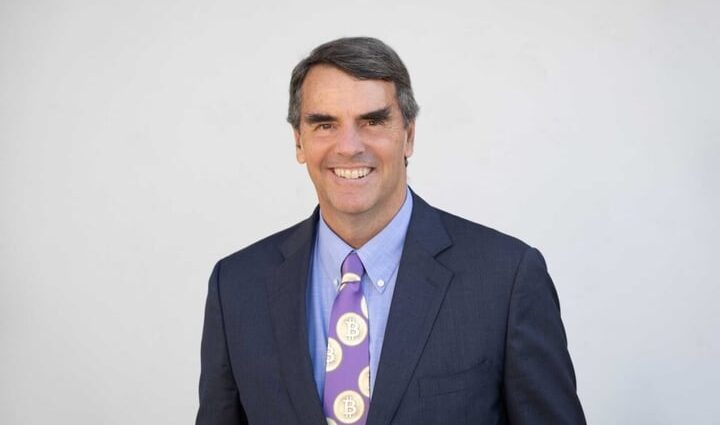
Venture capital legend Tim Draper has a one-line verdict on the future of banking, likening the evolution of the financial system to the historical shift from horses to automobiles.

Is the Horse Running Out of Road?

“After the automobile, people still ride horses for a while,” he told Benzinga, addressing whether AI will transform banking or replace it entirely. Draper argues that all major innovations follow the same pattern. The old system lingers even as the new one takes hold and everyone benefits from the change.

Evidence of this can be seen in the fintech world. In November 2025, industry executives at Benzinga’s Fintech Day and Awards confirmed that most firms remain in AI’s early “assist” phase, suggesting the technology is enhancing existing systems rather than replacing them.

Major institutions, including JPMorgan Chase & Co. (NYSE:JPM), Goldman Sachs Group Inc. (NYSE:GS) and Bank of America Corp. (NYSE:BAC), have also moved to deploy AI tools

Draper’s Bitcoin …

Full story available on Benzinga.com

This post was originally published here

Bitcoin’s (CRYPTO: BTC) price action is pointing to late-cycle signals as macro conditions tighten and a key metric has trended lower since 2021, according to analyst Benjamin Cowen.

Late Business Cycle

In a March 26 podcast, Cowen says the current setup reflects a late business cycle, where capital rotates away from risk and toward safer and defensive assets like gold. That shift helps explain why altcoins have underperformed Bitcoin and why crypto overall has lagged broader defensive moves like gold.

He notes that while Bitcoin still follows its historical pattern of peaking in post-halving fourth quarters, this …

Full story available on Benzinga.com

This post was originally published here

Bitcoin (CRYPTO: BTC) could face further downside toward the $60,000–$40,000 range as the market remains in a mid-cycle drawdown, according to analyst Benjamin Cowen.

No Bottoming Signals Yet

In a Friday podcast, Cowen says Bitcoin’s bottom is likely not formed, arguing that typical capitulation signals haven’t appeared yet.

He points to key valuation metrics, like realized price and balance price, that BTC has not yet broken below, a move that historically aligns with final market bottoms.

Cowen estimates this cycle could ultimately see a ~70% peak-to-trough decline, …

Full story available on Benzinga.com

This post was originally published here

Ripple is rolling out an AI-driven security upgrade across the XRP Ledger (CRYPTO: XRP) as it prepares the network for the next phase of global payments and tokenization.

AI-Driven Approach

With more than a decade of continuous operation and billions of transactions processed, the network is now focusing on maintaining resilience as it scales for global financial use cases.

A major shift involves adopting an AI-driven approach to security. By integrating artificial intelligence into the development lifecycle, XRPL aims to identify vulnerabilities earlier through …

Full story available on Benzinga.com

This post was originally published here

Raoul Pal, the CEO of Real Vision and one of crypto’s most prominent macro voices, said that he believes recessions are no longer structurally possible.

“I don’t think recessions are possible anymore,” Pal said on Forward Guidance. “We’d have a huge slowdown, but they don’t allow that to happen.”

Prediction market bettors disagree. Polymarket’s U.S. recession contract is trading at 36% for a downturn by year-end, up from a low of 21% in January. Mounting concerns over private credit and the ongoing war in Iran have driven this steady climb.

Why Pal Says It Can’t Happen

His argument centers on what he calls the post-2008 playbook. Central banks discovered that injecting liquidity raises collateral values, and they will never allow that process to reverse. If the S&P 500 falls by more than 25%, liquidity returns. The cost, …

Full story available on Benzinga.com

This post was originally published here

Economist Peter Schiff is sounding the alarm over a new housing finance initiative. The plan allows borrowers to use digital assets for home purchases. Schiff argues the move creates a “free ride” for crypto holders at the expense of the public.

The Crypto-Collateral Structure

Fannie Mae (OTC:FNMA) is entering the crypto-backed mortgage space through a strategic partnership. Better Home & Finance Holding Co. (NASDAQ:BETR) and Coinbase Global Inc. (NASDAQ:COIN) lead the rollout.

Under the program, borrowers obtain a conventional mortgage for the property. A separate second loan is secured by Bitcoin (CRYPTO: BTC) or USDC custodied with …

Full story available on Benzinga.com

This post was originally published here

Coinbase (NASDAQ:COIN) denied a $100,000 Bitcoin (CRYPTO: BTC) theft claim from a Coinbase One subscriber, despite the $29.99-a-month service promising up to $1 million in account protection.

The Intuit CRO Who Lost $100,000

Matthew Allan, Chief Risk Officer at Intuit Inc. (NASDAQ:INTU), had nearly $100,000 in Bitcoin stolen from his Coinbase account. 

Despite paying for Coinbase One’s account protection, Coinbase told him he was out of luck because he hadn’t turned on certain security settings required by the terms and conditions.

Coinbase maintained that customers own responsibility for all account activity, even when attackers compromise their devices or credentials.

During five months of back-and-forth, Coinbase maintained that customers own responsibility for all account activity, even when attackers compromise their devices or credentials,” according to court records. 

Allan sued, a court compelled the complaint into private arbitration, and he may never …

Full story available on Benzinga.com

This post was originally published here

Bitcoin (CRYPTO: BTC) is more likely to hit $80,000 before $60,000, according to Bitwise CIO Matt Hougan and analyst Ryan Rasmussen. Hougan expects crypto to trade sideways until the April 15 tax day, then rally toward new all‑time highs.

The April 15 Tax Day Catalyst

Hougan expects crypto weakness heading into April 15—the deadline for Americans to file taxes and pay capital gains from 2025. 

Investors who harvested gains last year must now pay taxes, potentially forcing them to sell crypto to cover the bill.

“My experience historically is that crypto is often weak heading into tax day and then starts to rally right around then,” Hougan told Milk Road this week.

The theory carries extra weight this year after the outsized gains many traders booked in late 2024 and early 2025 — especially from the Trump memecoin’s surge in January 2025.

Why $80,000 Beats $60,000

Both Bitwise analysts still expect Bitcoin …

Full story available on Benzinga.com

This post was originally published here

Bitcoin (CRYPTO: BTC) dropped 3% as Ukraine drone strikes resulted in a 40% reduction of Russia’s oil export capacity, coinciding with $171 million in ETF outflows—the largest single-day withdrawal in three weeks.

Ukraine Blows Up Trump’s Oil Plan

President Donald Trump lifted sanctions on Russian crude to compensate for oil supply disruptions caused by the Iran war and cool energy markets.

Ukraine destroyed that strategy this week with drone strikes on ports and refiners in Russia’s Leningrad region.

The damage represents “the most serious threat” to Russia’s oil exports since Putin’s full-scale invasion of Ukraine in 2022, according to observers. 

About 40% of Russia’s oil export capacity is now offline, creating what Oilprice.com editor Michael Kern described as “a logistics problem first—and a supply problem second,” CoinDesk reported.

“In conjunction with the war in the Middle East and de facto closure of the …

Full story available on Benzinga.com

This post was originally published here

Bitcoin at $66,000 is driven by a macro sell-off after Iran rejected a U.S. peace proposal, pressuring risk assets and pushing sentiment deeper into the fear zone (26); liquidations stand at $447.7 million over the past 24 hours.  

Bitcoin ETFs saw $171.2 million in net outflows on Thursday, while Ethereum ETFs reported $92.5 million in net outflows.  


Cryptocurrency
Ticker Price
Bitcoin (CRYPTO: BTC) $66,628.75
Ethereum (CRYPTO: ETH) $1,994.10
Solana (CRYPTO: SOL) $83.27
XRP (CRYPTO: XRP) $1.33
Dogecoin

Full story available on Benzinga.com

This post was originally published here

Rep. Maxine Waters (D-Calif.) sought further information on Thursday on the decision to grant cryptocurrency exchange Kraken access to Federal Reserve services.

Waters Says Approval Lacks Transparency

Waters, the leading Democrat on the House Committee on Financial Services, penned a letter to Jeff Schmid, President and CEO of the Federal Reserve Bank of Kansas City, requesting details about the bank’s recent approval of a “limited purpose account” for Kraken.

This approval—the first in U.S. history for a cryptocurrency company—gives Kraken direct access to Fedwire, the core payment infrastructure used by thousands of U.S. banks and credit unions.

Waters expressed her apprehensions about this development. She argued that access to the nation’s “critical” financial infrastructure should not be granted without complete transparency, a clear legal basis and assurance that risks are being adequately managed.

Waters also pointed out that the Kansas City Fed’s announcement “did not disclose specific information” about Kraken’s access to the Federal Reserve’s range of …

Full story available on Benzinga.com

This post was originally published here

Veteran trader and chartist Peter Brandt flagged a pattern on Thursday signaling weakening bullish momentum for Bitcoin (CRYPTO: BTC).

Another Wave Of Selling?

Brandt, a technical analyst with nearly 50 years of experience, highlighted a rising wedge formation—a bearish technical analysis pattern that signals a potential reversal of an uptrend.

The pattern is characterized by price converging between two upward-sloping trendlines. As the price forms higher highs and higher lows, the narrowing pattern signals fading bullish momentum.

Key Support At Risk

Widely followed cryptocurrency commentator Michaël van de Poppe flagged something similar, pointing to …

Full story available on Benzinga.com

This post was originally published here

David Sacks said on Thursday that his time as White House AI and cryptocurrency czar has ended, paving the way for his new position on the President’s Council of Advisors on Science and Technology.

Sacks Moves To New Role

During an interview with Bloomberg, Sacks said that he has “used up” his tenure as a special government employee, which lasts for 130 days.

“I think moving forward as co-chair of PCAST, I can now make recommendations on not just AI but an expanded range of technology topics,” Sacks expressed enthusiasm about his new role. “So yes, this is how I’ll be involved moving forward.”

This post was originally published here

Cryptocurrency bettors don’t see Iran losing control of Kharg Island anytime soon, amid reports that President Donald Trump is considering a military deployment to the key oil export hub.

Heavily Wagered Bet

Polymarket, based on Polygon (CRYPTO: POL), currently assigns a 35% probability that Iran will lose control of the Kharg Island by April 30, rising to 41% by May 30.

The island, a strategically important terminal situated 15 miles from Iran’s coast, handles nearly 90% of Iran’s crude oil exports. Due to its importance, it is heavily defended by the Iranian Armed Forces.

Over $7 …

Full story available on Benzinga.com

This post was originally published here

White House AI and crypto czar David Sacks was appointed as co-chair of the President’s Council of Advisors on Science and Technology (PCAST), expanding his role within the Trump administration.

President Donald Trump established PCAST through an executive order on Wednesday, aimed at bringing together leading figures in science and technology to advise the president and strengthen U.S. leadership in those fields.

The new role positions Sacks to oversee a broader range of technology issues and deepen the White House’s engagement with major tech companies.

“We’ve accomplished a lot in the first year, but the President wants to keep the pedal to the metal on everything tech. That’s exactly what we will do,” Sacks told FOX Business.

BLACKROCK CEO SAYS TRUMP ACCOUNTS COULD BE A ‘VERY SIGNIFICANT STEP’ FOR YOUNG AMERICANS

The council will include up to 24 members, including Nvidia CEO Jensen Huang, Meta CEO Mark Zuckerberg and Oracle co-founder Larry Ellison.

A senior adviser to the president told FOX Business that Sacks will continue serving as AI and crypto czar while taking on a broader portfolio.

“David will always be his crypto and AI czar, but to the admin more broadly, this new role will allow him to advise on a broader range of critical tech issues,” the adviser said.

As AI and crypto czar, Sacks has helped drive a series of policy shifts aimed at reshaping U.S. artificial intelligence strategy, including rolling back prior restrictions and expanding federal oversight.

CLASSIC BRAND BECOMING A STATUS SYMBOL IN TRUMP’S WHITE HOUSE

In his first week in office, Trump signed an executive order revoking a Biden-era policy that took a more cautious approach to emerging technologies like AI and blockchain.

Trump later signed another executive order in December 2025 establishing a national framework for AI regulation, preempting state-level rules. The order argued that U.S. companies must be able to innovate “without cumbersome regulation.”

In July 2025, the White House released its “Winning the AI Race” action plan, outlining more than 90 federal policy initiatives focused on accelerating innovation, building infrastructure and strengthening the nation’s position in global AI development and security.

More recently, the White House unveiled a national AI policy framework aimed at creating a “consistent” standard for development nationwide while addressing concerns around censorship, free speech and child protection.

APPLE CEO TIM COOK DOUBLES DOWN ON POLICY OVER POLITICS WHILE ALIGNING WITH TRUMP’S MANUFACTURING PUSH

Sacks has also played a key role in shaping the administration’s cryptocurrency agenda.

Within days of taking office, Trump signed an executive order promoting U.S. leadership in digital assets, banning the development of a central bank digital currency and creating a presidential working group on the issue.

In March 2025, Trump signed an order establishing a Strategic Bitcoin Reserve and a U.S. Digital Asset Stockpile, positioning the country as a leader in government-backed digital asset strategy.

READ MORE FROM FOX BUSINESS

Congress followed with the passage of the GENIUS Act in July 2025, the first major federal legislation on digital assets, creating a regulatory framework for payment stablecoins. The bill passed with bipartisan support in both chambers.

The administration has also moved to ease regulatory pressure on the crypto industry, including ending several SEC investigations and installing crypto-friendly leadership at key agencies.

The Consumer Financial Protection Bureau was defunded — a move Sacks called his “personal favorite” — eliminating what he described as the crypto industry’s most aggressive enforcement arm.

This post was originally published here

Leading cryptocurrencies edged lower alongside stocks on Thursday as President Donald Trump’s warning cast a shadow on Iran negotiations.

Cryptocurrency 24-Hour Gains +/- Price (Recorded at 9:05 p.m. EDT)
Bitcoin (CRYPTO: BTC) -3.54% $68,748.12
Ethereum (CRYPTO: ETH)
               
-4.66% $2,065.55
XRP (CRYPTO: XRP)                          -3.63% $1.36
Solana (CRYPTO: SOL)                          -5.72% $86.55
Dogecoin (CRYPTO: DOGE)              -3.96% $0.09205

Crypto Slide As Leveraged Longs Get Liquidated

Bitcoin dipped to $68,100, with trading volume increasing 10% from the previous day. Ethereum also sank below $2,100, while XRP and Dogecoin recorded steeper declines.

Shares of Strategy Inc. (NASDAQ:MSTR) and Bitmine Immersion Technologies Inc. (NYSE:BMNR) closed down 4.46% and 8.33%, respectively.

Over $330 million in cryptocurrency positions were liquidated in the past 24 hours, with $293 million in bullish long positions alone erased,  according to Coinglass data.

Notably, nearly $500 million in Bitcoin shorts on Binance risked liquidation if the apex cryptocurrency rebounds to $71,000

Open interest in Bitcoin futures fell 0.37% in the last 24 hours, while retail and whale traders on Binance increased their long exposure.

Top Gainers (24 Hours) 

Cryptocurrency (Market Cap>$100 M) Gains +/- Price (Recorded at 9:05 p.m. EDT)
Stargate Finance …

Full story available on Benzinga.com

This post was originally published here

Crypto owners can now use their digital assets as collateral for their down payments to buy a home. That’s because Fannie Mae is accepting crypto-backed mortgages for the first time through a partnership between mortgage company Better Home & Finance and crypto exchange Coinbase, according to a Tuesday statement.

The move aims to make home ownership more accessible to a younger demographic, who are more likely to own crypto. “Token-backed mortgages are a major first step to unlocking homeownership for the younger generations that have struggled with barriers to saving for a traditional down payment,” said Max Branzburg, head of consumer and business products at Coinbase, in the statement. 

The goal of the product is also to help those who might be crypto-rich but cash-poor. The homebuyer would take out a traditional 15 or 30-year mortgage but instead of making down payment in cash, they would take out a separate loan backed by their Bitcoin or stablecoin holdings. This new offering would allow them to hold on to their crypto and not have to sell it and pay capital gains taxes. The downside is that the second loan would increase the overall cost of homeownership since the buyer would also have to service that second loan.

The homebuyer can’t trade the crypto assets once they have been pledged. In the event the digital assets go down in value, the mortgage loans don’t get affected if the owner keeps making the monthly payments. 

The product arrives at a time when young people are growing disillusioned with the traditional financial system and sometimes turning to crypto. Gen Z and Millennials say that 25% of their portfolio is in non-traditional assets like crypto, and 73% of people in these generations say it is harder for them to build wealth by traditional means, according to a recent crypto report by Coinbase. 

Bitcoin owners have been feeling a squeeze in the past few months, as the original cryptocurrency is down 46% since its all-time high in October to its current price of $68,000, according to Binance

This story was originally featured on Fortune.com

This post was originally published here

Fannie Mae (OTC:FNMA) is stepping into crypto-backed housing finance through a new partnership that lets borrowers use digital assets to help fund their next home purchase. 

Better Home & Finance Holding Co. (NASDAQ:BETR) and Coinbase Global Inc. (NASDAQ:COIN) are at the center of the rollout.

How The Structure Works

Under the program, qualified borrowers take out a conventional Fannie‑eligible mortgage from Better Home & Finance for the property itself, while a separate second loan is secured by Bitcoin (CRYPTO: BTC) or USDC custodied with Coinbase. 

The crypto is moved into a dedicated custody wallet, allowing borrowers to avoid selling their tokens and potentially triggering capital gains taxes while still unlocking value for the down payment.

The crypto-backed second lien is sized at roughly a 40% loan‑to‑value (LTV) ratio, …

Full story available on Benzinga.com

This post was originally published here

Alphabet Inc. (NASDAQ:GOOGL) on Tuesday set a 2029 deadline for migrating its entire infrastructure to post-quantum cryptography, warning that quantum frontiers “may be closer than they appear.”

The target is more aggressive than the U.S. federal government’s 2035 mandate and the NSA’s 2031 deadline, and it may carry serious implications for Bitcoin (CRYPTO: BTC).

Google’s VP of Security Engineering Heather Adkins and Senior Staff Cryptography Engineer Sophie Schmieg cited faster-than-expected progress in quantum hardware, error correction, and factoring resource estimates.

Two Threats, One Deadline

Google flagged two distinct risks.

The first is already happening: “store-now-decrypt-later” attacks, where adversaries harvest encrypted data today to crack it once quantum capability arrives.

The second targets digital signatures, the cryptographic proof underpinning online authentication and every blockchain transaction.

Google said it has adjusted its internal threat model to …

Full story available on Benzinga.com

This post was originally published here

CFTC Chairman Mike Selig expects to approve perpetual futures contracts for crypto trading in the U.S. within the next few weeks, ending years of offshore dominance by exchanges like Binance and bringing a popular trading product back to American markets.

The Perpetual Problem

Crypto perpetual futures exploded offshore around 2017-2018 as U.S. regulators remained averse to the product despite its popularity. 

The main regulatory hurdle centers on how to characterize perpetuals under the Commodity Exchange Act, which originally only covered futures contracts and options before Dodd-Frank added swaps.

The debate focuses on whether perpetuals qualify as “contracts for future delivery” given their perpetual existence with no settlement date. 

This uncertainty forced U.S. exchanges to launch workarounds like Coinbase’s (NASDAQ:COIN) 50-year futures contracts that mimic perpetuals without technically being perpetual.

“We’re going to fix that,” Selig said. …

Full story available on Benzinga.com

This post was originally published here

Most lotteries are contained within a country or a state, and much of the time, people have to go to a physical location to buy a ticket. Patrick Lung founded Megapot in order to create a global lottery where people around the world can buy tickets from their phone. 

On Thursday, the startup announced that it raised $5 million in a funding round led by Dragonfly, with participation from Coinbase Ventures, Bankless Ventures, and the founders behind FanDuel, Betfair, and MyPrize. Lung declined to share the startup’s valuation, in an interview with Fortune. 

Lung said he founded Megapot also because he viewed it as a way to bring the masses to blockchain. “I wanted to go build something that can actually bring a billion people on chain, so they can get all the benefits of crypto,” he said. 

People can buy Megapot tickets from more than 150 countries, and it costs one dollar to buy a ticket for the daily lottery. Megapot has had 19 jackpot winners, with one person taking home about $200,000, according to Lung. The platform is not available in about 30 countries, including the United States, the United Kingdom, and France. 

Crypto is the engine behind his startup, Lung said. Its permissionless protocols run on Base, a network built on Ethereum, meaning that anyone can access it, interact with it, and developers can build on top of it. Megapot also uses stablecoins, a type of cryptocurrency often pegged to the U.S. dollar, to pay out users around the world. 

Lung founded Megapot in January 2024 after working for about eight years at tech and crypto companies like Microsoft, Lyft, and Uniswap. His company currently has seven employees. 

Megapot launched the latest version of its lottery on Tuesday, and it earns revenue by charging fees on tickets sold through its site. With the new capital from the raise, the startup plans to expand to more countries. Lung said that traditional lotteries are his company’s main competition, and that Megapot can offer larger jackpots and better odds than this incumbent system. 

Lung cited his mom as the inspiration behind Megapot, “I want to build a product that’s actually built for my mom. [She] has actually bought a lottery ticket for two decades now every weekend,” he said. “That’s what we’re trying to build …something that I can share with any person and they instantly understand why it should exist.” 

This story was originally featured on Fortune.com

This post was originally published here

Bitcoin (CRYPTO: BTC) will likely break below $60,000 in the coming weeks despite a false sense of security that prices will simply range between $60,000-$70,000 for the rest of the year, according to crypto analyst Benjamin Cowen’s historical pattern analysis.

The Midterm Year Pattern

Cowen points to a consistent pattern across midterm years: Bitcoin finds a low in February, rallies to a lower high in March, then drops into April. 

This played out in 2014, 2018, and 2022—and appears to be repeating in 2026.

Bitcoin’s year-to-date returns historically start heading down around day 82-90 of the year.

The market currently sits on day 86, placing the potential breakdown within the next week or two based on historical precedent.

In 2014, 2018, and 2022, Bitcoin found resistance at the 21-week EMA or 20-week SMA during March rallies before rolling over. In 2026, Bitcoin hasn’t even reached that resistance level yet, suggesting weakness compared to prior cycles.

Why The Outperformance Narrative Is Wrong

Cowen challenges the narrative that Bitcoin …

Full story available on Benzinga.com

This post was originally published here

Better Home & Finance Holding Company (NASDAQ:BETR) shares are up on Thursday. The company launched a groundbreaking partnership with Coinbase Global, Inc. (NASDAQ:COIN) to offer token-backed mortgages.

This innovative approach allows millions of Americans to secure home loans by pledging Bitcoin or USDC without needing to liquidate their assets.

Details

The partnership aims to democratize homeownership for the 52 million Americans who own digital assets. It will enable them to use their crypto holdings as collateral for conforming mortgages.

The tokenized asset pledge acts as a substitute for the cash down payment. This means customers can …

Full story available on Benzinga.com

This post was originally published here

XRP (CRYPTO: XRP) is down 4% on the day, despite Binance leverage ratios plunging 78% from 0.59 in mid-July 2025 to just 0.13 now as speculative positions flush out and the derivatives market resets.

The Leverage Unwind

Binance’s Estimated Leverage Ratio for XRP has collapsed from around 0.59 in mid-July to 0.13, indicating that most highly leveraged positions have been flushed out. 

Analysts calculate this ratio by dividing an exchange’s open interest by its coin reserves to measure average leverage used.

At the same time, XRP’s open interest on Binance stands at only $375 million, significantly lower than peaks recorded over the past year. 

“The main takeaway is that speculative pressure has eased significantly,” explained Amr Taha, an analyst at CryptoQuant. 

“Binance’s XRP derivatives market now looks much less overheated, potentially creating a cleaner setup for its next major move,” he added.

The Liquidation Risk Has Dropped

In theory, this deleveraging is a positive …

Full story available on Benzinga.com

This post was originally published here

Mortgage rates spiked this week as the conflict in Iran continues to weigh on markets, mortgage buyer Freddie Mac said Thursday.

Freddie Mac’s latest Primary Mortgage Market Survey, released Thursday, showed the average rate on the benchmark 30-year fixed mortgage rose to 6.38% from last week’s reading of 6.22%. 

The average rate on a 30-year loan was 6.65% a year ago.

“The housing market continues to show gradual improvements compared to a year ago amid recent rate volatility,” said Sam Khater, Freddie Mac’s chief economist. “Purchase and refinance applications are up year-over-year.”

MIAMI OVERTAKES LOS ANGELES AND NEW YORK AS WORLD’S RISKIEST HOUSING MARKET FOR BUBBLE RISK

The average rate on a 15-year fixed mortgage climbed to 5.75% from last week’s reading of 5.54%.

GET FOX BUSINESS ON THE GO BY CLICKING HERE

Mortgage rates are affected by several factors, including the Federal Reserve and geopolitics. Though mortgage rates are not directly affected by the Fed’s interest rate decisions, they closely track the 10-year Treasury yield. The 10-year yield hovered around 4.38% as of Thursday afternoon.

This post was originally published here

Fannie Mae will accept crypto-backed mortgages for the first time through a new product from Better Home & Finance and Coinbase (NASDAQ:COIN) that lets home buyers pledge Bitcoin (CRYPTO: BTC) or USDC (CRYPTO: USDC) as collateral.

How The Product Works

Home buyers get a traditional 15- or 30-year Fannie-backed mortgage from Better, then take out a separate loan backed by either Bitcoin or USDC to cover the down payment, The Wall Street Journal reported on Thursday.

This structure lets buyers avoid triggering capital gains taxes from selling crypto while maintaining exposure to the market.

The trade-off comes at a cost. Paying interest on two loans instead of making a cash down payment increases the overall cost of homeownership significantly. 

Interest rates on both loans would range from comparable to typical Fannie Mae mortgages to 1.5 percentage points higher.

Once the homeowner pledges the crypto as collateral, they cannot …

Full story available on Benzinga.com

This post was originally published here

Coinbase (NASDAQ:COIN) again rejected support for the Clarity Act this week over stablecoin yield provisions, drawing backlash from Senator Cynthia Lummis (R-Wyo.), who warned that blocking the bill now means waiting until 2030 for another chance at crypto legislation.

Coinbase Holds The Line

Representatives of Coinbase told Senate offices this week that the exchange couldn’t support the latest version of the legislation due to significant concerns about “stable yield language,” according to Punchbowl News. 

This marks the second time CEO Brian Armstrong has withdrawn support, famously stating in January that “we’d rather have no bill than a bad bill.”

The bill bans crypto platforms from paying users to hold stablecoins, similar to how banks pay interest on savings accounts. 

Coinbase earns substantial revenue by …

Full story available on Benzinga.com

This post was originally published here

Bitcoin fell below $70,000 on Thursday morning as traders turned cautious ahead of a $14.1 billion options expiry. 

Deribit data indicates a massive $18.6 billion in crypto options expiring today, with Bitcoin alone accounting for over $14.1 billion.

Bitcoin ETFs saw $7.81 million in net inflows on Wednesday, while Ethereum ETFs reported $8.51 million in net outflows.  


Cryptocurrency
Ticker Price
Bitcoin (CRYPTO: BTC) $69,215
Ethereum (CRYPTO: ETH) $2,067
Solana (CRYPTO: SOL) $87.66
XRP (CRYPTO: XRP) $1.37
Dogecoin

Full story available on Benzinga.com

This post was originally published here

Reddit co-founder Alexis Ohanian spotlighted Monumental Labs’ massive Bitcoin (CRYPTO: BTC) marble sculpture in an X post on Wednesday.

‘Decentralied Digital Currency’

Monumental Labs uses AI-driven robotics to create large-scale, Renaissance-style stone and marble sculptures. It aims to progressively automate stone fabrication and reduce costs up to 90%.

In the latest X post, it showcased a 4-foot-wide, 1,000-pound marble Bitcoin sculpture, carved with intricate circuit engravings and inscribed with “Decentralized Digital Currency.”

The coin was also commissioned for Ti Morse’s interview set with Coinbase CEO Brian …

Full story available on Benzinga.com

This post was originally published here

Renowned cryptocurrency analyst Willy Woo likened all cryptocurrency trading other than Bitcoin (CRYPTO: BTC) to gambling—unless you’re an insider who knows the game is rigged in your favor.

Crypto Trading Like Gambling, Says Woo

In an X post, Woo said that without an informational or structural edge, one shouldn’t invest in “crypto.”

“Not that I recommend buying crypto, you need to be an insider to get an edge, it works like a casino, the house will take your money,” they argued.

It’s worth mentioning here that Woo sees BTC and altcoins as very different and rejects lumping them together as “crypto.”

Full story available on Benzinga.com

This post was originally published here

Ondo Finance (CRYPTO: ONDO) said on Wednesday it has partnered with Franklin Templeton to tokenize the asset manager’s exchange-traded funds.

Trade FT ETFs On-Chain

The Franklin Templeton-managed ETFs selected for tokenization include Franklin Focused Growth ETF (BATS:FFOG), Franklin U.S. Large Cap Multifactor Index ETF (BATS:FLQL), Franklin Responsibly Sourced Gold ETF (NYSE:FGDL), Franklin High Yield Corporate ETF (BATS:FLHY) and Franklin Income Equity Focus ETF (NYSE:INCE).

“This marks the first time that tokenized FT-managed ETFs are available on-chain,” Ondo Finance said.

Ondo Finance added that these ETFs will be available through Ondo Global Markets, the …

Full story available on Benzinga.com

This post was originally published here

Coinbase Global Inc. (NASDAQ:COIN) stated on Wednesday that its users can borrow USDC (CRYPTO: USDC) against their cryptocurrency holdings to cover tax bills, avoiding the need to sell them.

Coinbase Presents ‘Choice’ For Users

In an X post, Coinbase said that selling cryptocurrencies would trigger capital gains taxes and could create a cycle of selling more to cover the new taxes.

Remember that tax applies only when you realize the gains. Capital losses aren’t taxable.

The other option they suggested was to get loans in USDC while holding the cryptocurrency, including Bitcoin (CRYPTO: BTC) and Ethereum (CRYPTO: ETH), as collateral, with the loan itself not treated as a taxable event. Later, they can convert the USDC into dollars, pay taxes with that …

Full story available on Benzinga.com

This post was originally published here

NYSE Arca greenlit Morgan Stanley’s (NYSE:MS) application on Wednesday to list shares of a spot Bitcoin (CRYPTO: BTC) exchange-traded fund.

Another Bitcoin ETF On Wall Street

The exchange certified its approval for the “listing and registration” of Morgan Stanley Bitcoin Trust under the ticker MSBT, according to the latest SEC filing.

Bloomberg senior ETF analyst Eric Balchunas predicted an “imminent” launch following the listing announcement.

Details About The New Product

Morgan Stanley filed an amended S-1 filing

Full story available on Benzinga.com

This post was originally published here

Leading cryptocurrencies were range-bound on Wednesday, while stocks closed higher as investors weighed de-escalation prospects in the Middle East war.

Cryptocurrency 24-Hour Gains +/- Price (Recorded at 9:30 p.m. EDT)
Bitcoin (CRYPTO: BTC) +0.79% $71,287.45
Ethereum (CRYPTO: ETH)
               
+0.25% $2,165.50
XRP (CRYPTO: XRP)                          -0.35% $1.41
Solana (CRYPTO: SOL)                          +0.87% $91.85
Dogecoin (CRYPTO: DOGE)              +0.91% $0.09577

Crypto Market Consolidates

Bitcoin traded sideways between $70,380 and the mid-$71,000s, with trading volume down 13% over the past day.

Ethereum also meandered in the $2,100 region as bullish momentum stalled against strong resistance at $2,200. XRP and Dogecoin also consolidated.

Shares of Strategy Inc. (NASDAQ:MSTR) and Bitmine Immersion Technologies Inc. (NYSE:BMNR) closed up 2.11% and 2.12%, respectively.

Over $150 million in crypto positions were liquidated in the past 24 hours, with $100 million in short positions alone wiped out,  according to Coinglass data.

Open interest in Bitcoin futures rose a further 2.66% in the last 24 hours, while the majority of retail and whale traders on Binance staying long on the leading cryptocurrency.

“Extreme Fear” prevailed in the market, according to the Crypto Fear & Greed Index.

Top Gainers (24 Hours) 

Cryptocurrency (Market Cap>$100 M) Gains +/- Price (Recorded at 9:30 p.m. EDT)
MemeCore (M)       +39.21%     $2.40
siren (SIREN)                   +38.38%     $2.19
Yooldo (ESPORTS)   …

Full story available on Benzinga.com

This post was originally published here

The U.S. Postal Service is reportedly planning to impose a fuel surcharge on package deliveries for the first time in the agency’s history amid surging fuel costs.

The Wall Street Journal reported that the Post Service is planning an 8% surcharge beginning in April and that the agency currently plans to phase it out in January 2027, according to two people familiar with the matter.

According to the report, the fuel surcharge will only apply to packages and won’t impact letter mail.

The move comes as both FedEx and UPS have longstanding fuel surcharges that have been increased in recent weeks as oil prices surged due to the Iran war disrupting oil flows from the Middle East.

POSTAL SERVICE SAYS CASH COULD RUN OUT IN UNDER A YEAR WITHOUT CHANGES

Diesel prices have surged to $5.366 a gallon as of Wednesday, up from $3.749 a month ago – an increase of more than 43% in that period.

The Postal Service has faced long-term financial challenges and Postmaster General David Steiner told Congress earlier this month that the agency is on pace to run out of cash in less than a year without significant reforms.

Steiner testified before a House Oversight subcommittee and told lawmakers that the USPS needs higher stamp prices and the ability to borrow more money.

He also called for other reforms, including changes to pension funding and liabilities calculations, workers’ compensation and retirement fund investment strategies.

POSTAL SERVICE CAN’T BE SUED FOR INTENTIONALLY NOT DELIVERING MAIL, SUPREME COURT RULES IN 5-4 SPLIT

Steiner also put forward options for cutting costs, including ending six-day-a-week deliveries, closing post offices or raising first-class mail stamp prices from the current 78 cents to $1 or more.

He said that if USPS reduced deliveries to five days a week, it would save the agency about $3 billion per year, while closing small post offices in remote areas would save about $840 million.

However, he cautioned that those options “may not be palatable to Congress or the American public.”

US POSTAL SERVICE RECORDS WHOPPING $6.5 BILLION NET LOSS FOR 2023

Stamp prices have risen 46% since early 2019, when they were last 50 cents. Steiner argues those prices are still far lower than postage costs in other countries.

USPS has also reached its current borrowing cap of $15 billion, precluding the agency from taking out additional loans.

“In order to survive beyond the next year, we need to increase our borrowing capacity so that we don’t run out of cash,” Steiner said in prepared testimony. “The failure to do this could lead to the end of the Postal Service as we know it now.”

GET FOX BUSINESS ON THE GO BY CLICKING HERE

Since 2007, USPS has reported net losses of $118 billion as volumes of its most profitable product, first-class mail, fell to the lowest level since the late 1960s.

This post was originally published here

Bitcoin hovered around $70,000 as improving macro sentiment, driven by easing geopolitical tensions, lifted the broader crypto market on Wednesday.

Cryptocurrency Ticker Price
Bitcoin (CRYPTO: BTC) $70,733.73
Ethereum (CRYPTO: ETH) $2,159.47
Solana (CRYPTO: SOL) $91.71
XRP (CRYPTO: XRP) $1.41
Dogecoin (CRYPTO: DOGE) $0.09622
Shiba Inu (CRYPTO: SHIB) $0.056110

Notable Statistics:

  • Coinglass data shows 79,540 traders were liquidated in the past 24 hours for $219.11 million.       
  • SoSoValue data shows net outflows of $74.5 million from spot Bitcoin ETFs on Tuesday. Spot Ethereum ETFs saw net outflows of $40.8 million.
  • In the past 24 hours, top gainers include siren, …

Full story available on Benzinga.com

This post was originally published here

XRP’s (CRYPTO: XRP) recent range-bound price action has traders questioning whether a pullback may come before an eventual breakout.

Short Term Uncertainty

In a podcast on Tuesday, analyst Cryptoinsightuk outlined that XRP may see further downside toward $1 before a larger breakout, as traders weigh short-term uncertainty against a bullish long-term setup.

He added that XRP remains in a consolidation phase, with price compressing within a wedge-like structure. This setup leaves room for either an upside breakout or continued drift lower in the near term.

A move toward $1 by June remains …

Full story available on Benzinga.com

This post was originally published here

Venture capitalist Mark Yusko says Senator Cynthia Lummis (R-Wyo.) abandoned the crypto industry after years of support, with the Clarity Act settlement on stablecoin yield representing regulatory capture rather than the clarity the industry needs.

The Lummis Betrayal

“Senator Lummis, I thought was on our team and she actually acted like she was on our team for a very long time and now suddenly she’s this great supporter of this horrible bill, which means somebody got to her,” Yusko said on The Wolf Of All Streets podcast on Wednesday.

The Clarity Act settlement means banks win while crypto gets nothing. Lummis recently tweeted a yield sign that investors interpreted as bullish for stablecoin yields, only for news to break that the legislation would ban exchanges from offering any yield on stablecoins.

Yusko compared the gaslighting to the Inflation Reduction Act, arguing that lawmakers often give bills names that reflect the opposite of what they actually do.

The Clarity Act has nothing to do with …

Full story available on Benzinga.com

This post was originally published here

Proposed updates to the Clarity Act could limit how stablecoin rewards are offered, posing the biggest risk to centralized crypto platforms such as Coinbase (NASDAQ:COIN), according to Needham Research.

Stablecoin Rewards In Focus

Needham said a key concern is a potential ban on passive yield for stablecoin holders on exchanges.

Such a move would affect platforms like Coinbase, where earning yield has been a major driver of user adoption. In contrast, decentralized finance platforms are expected to remain largely unaffected, as their rewards are typically classified as “active” rather than passive.

The final …

Full story available on Benzinga.com

This post was originally published here

Dogecoin (CRYPTO: DOGE) is up 3% over the past day, as prediction markets price a 70% chance SpaceX completes its IPO by June — potentially providing a catalyst for the meme coin that has crashed 65% from its September peak.

The SpaceX IPO Timeline

Polymarket bettors give SpaceX a 90% chance of going public by September 30 and a 70% chance by June 30. 

The company targets a June listing with Goldman Sachs, JPMorgan, Morgan Stanley, and Bank of America in senior roles.

On valuation, 49% of traders expect the closing market cap to exceed $2 trillion, which would place SpaceX as the 6th largest company by market cap below Amazon and above TSMC. 

SpaceX quietly raised its Falcon 9 launch price from $69.75 million to $74 million …

Full story available on Benzinga.com

This post was originally published here

Gold’s slide into a bear market is colliding with an unexpected trend: investors are pouring money into Bitcoin ETFs instead.

This dichotomy is particularly interesting, as the price of gold has declined by over 20% from its January highs, which is enough to qualify as a bear market, whereas U.S. spot Bitcoin ETFs have received over $2 billion in inflows over the last few weeks.

Bloomberg ETF analyst Eric Balchunas tweeted that iShares Bitcoin Trust ETF (NASDAQ:IBIT) is already in the top 2% among all ETFs in YTD flows.

ETF Flows Tell The Real Story

Perhaps the most visible aspect of this is the flow data.

The largest gold ETF, SPDR Gold Shares (NYSE:GLD), recorded a record monthly outflow of over $7 billion, a very quick unwinding of a position built on inflation and geopolitical hedging.

Other gold-based ETFs, such as iShares Gold …

Full story available on Benzinga.com

This post was originally published here

Bitmine (NYSE:BMNR) lhas aunched MAVAN, an institutional Ethereum (CRYPTO: ETH) staking platform, with Chairman Tom Lee betting $6.8 billion in staked ETH on his thesis that “wars are going to be good for the U.S. economy and the U.S. stock market.”

The War Opportunity Thesis

Lee argues that markets bottom early into conflicts despite short-term uncertainty. 

His research shows that across the last eight major war events, markets consistently bottomed very early into the conflict, creating buying opportunities for investors who can see past the immediate crisis.

“As much as the war is creating obviously a huge short-term setback and a lot of uncertainty, including effects on monetary policy, ultimately wars are going to be good for the U.S. economy and the U.S. stock market,” Lee said.

Lee’s timing reflects his conviction that investors fixate on crisis elements while missing emerging opportunities. 

When things look their worst, markets often do the opposite of what everyone expects. 

He predicts …

Full story available on Benzinga.com

This post was originally published here

Cipher Digital Inc (NASDAQ:CIFR) shares are rising on Wednesday after announcing a 15-year data center campus lease.

The company also secured a revolving credit facility of up to $200 million with an investment-grade hyperscale tenant.

Expansion Into Data Center Infrastructure

Under its third campus lease, Cipher will develop and deliver a new HPC data center at an existing site.

The credit facility includes $200 million in committed capacity, with an additional $50 million accordion option, and is intended to support liquidity, working capital and growth initiatives.

The facility matures in March 2030, carries interest based on SOFR plus 1.25% to 1.75%, and was undrawn at closing.

Financing and Institutional Support

Morgan Stanley served as administrative agent, lead arranger, and bookrunner for the facility. The syndicate included Banco Santander, Goldman Sachs, JPMorgan Chase, Sumitomo Mitsui Banking Corporation, and Wells Fargo.

Cipher, a developer and operator of industrial-scale data centers, said the agreement marks its third large AI campus.

Leadership Commentary and Strategy

“This agreement for our third large AI campus reinforces Cipher’s position as a trusted partner to develop high-quality HPC data center infrastructure for the world’s leading companies,” said CEO …

Full story available on Benzinga.com

This post was originally published here

Bitcoin (CRYPTO: BTC) has remained range-bound since February, prompting questions about what could drive a shift in the months ahead.

Tax Day As Turning Point

Bitcoin may continue trading sideways until mid-April, with U.S. Tax Day acting as a key catalyst for the next move, according to Bitwise CIO Matt Hougan.

Hougan and Bitwise Head of Research Ryan Rasmussen said in an appearance on the Milk Road podcast that Bitcoin’s near-term outlook is split into two phases, with Apr. 15, U.S. Tax Day, marking a potential inflection …

Full story available on Benzinga.com

This post was originally published here

CNBC’s Jim Cramer on Wednesday said neither Bitcoin (CRYPTO: BTC) nor gold functioned as crisis hedges during the U.S.-Iran war, arguing he only witnessed margin calls and forced selling instead of safe-haven buying.

The Crisis Hedge Failure

“No matter what happens, we have to question whether either gold or crypto ‘worked’ in a true crisis,” Cramer stated. “All I saw were margin calls and people who should just play the prediction markets.”

The data backs Cramer’s skepticism.

Gold dropped as much as 27% from its January peak and is down roughly 12% since the Middle East conflict escalated in late February. 

The yellow metal just posted its longest losing streak in over a century, lasting 10 consecutive days—its worst run since February 1920.

Meanwhile, Bitcoin is holding above $70,000, but that represents a 20% decline year-to-date despite $2.5 billion in Bitcoin ETF inflows this month. 

The performance suggests neither asset provided …

Full story available on Benzinga.com

This post was originally published here

Circle Internet Group Inc (NYSE:CRCL) stock tumbled on Tuesday after a restrictive Senate draft of a stablecoin bill rattled investors.

However, shares are bouncing back on Wednesday, right after rising in premarket trading.

Meanwhile, Ark Invest doubled down and Circle pushed forward with European and African expansion plans.

Regulatory Pressure Batters CRCL Stock

Circle Internet’s shares plunged after a Senate draft of the CLARITY Act proposed barring companies from paying yield on stablecoin balances held in trading accounts, directly threatening USDC’s appeal as a yield-bearing product.

The rule could slow USDC adoption, reduce wallet growth, and weaken the bull case that regulatory clarity would unlock a larger stablecoin market.

Ark Invest Steps In With $16.3 Million Purchase

Despite the selloff, Ark Invest bought 161,513 Circle shares across three ETFs — ARKF, ARKK, and ARKW — totaling approximately $16.3 million at a closing price of $101.17.

Circle Pushes Ahead on Europe and Africa

On the regulatory front, Circle urged European policymakers to …

Full story available on Benzinga.com

This post was originally published here

Ripple (CRYPTO: XRP) is piloting its RLUSD (CRYPTO: RLUSD) stablecoin in a trade finance sandbox backed by Singapore’s central bank, targeting faster and more efficient cross-border payments.

RLUSD Put To Test

The pilot, part of the Monetary Authority of Singapore’s BLOOM initiative, involves Ripple partnering with Unloq to automate trade payments, CoinDesk reported on Wednesday.

Using Unloq’s SC+ platform and the XRP Ledger, RLUSD transactions are executed automatically once predefined conditions, such as shipment verification, are met.

The model replaces traditional trade finance systems that rely …

Full story available on Benzinga.com

This post was originally published here

Robinhood Markets (NASDAQ:HOOD) announced a $1.5 billion share buyback program Tuesday, sending the stock up 4% to $71.66 in premarket trading after closing down 4.70% at $69.08—a fresh multi-month low.

The Buyback Details

The buyback authorization has no expiration date and will execute over approximately three years. 

The program comes after Robinhood shares dropped 39% since the start of 2026 following a year when the stock more than tripled.

“This authorization reflects the confidence of our management team and board in our ability to continue delivering innovative products for customers and creating value for shareholders while returning capital over time,” said CFO Shiv Verma.

Verma became CFO in February as Robinhood shares dropped amid a rout in cryptocurrency markets. The timing gives the Menlo Park, …

Full story available on Benzinga.com

This post was originally published here

Circle Internet Group (NYSE:CRCL) plummeted 22% Tuesday after draft language from the Clarity Act reportedly bans exchanges from offering stablecoin yield, but Bernstein analysts say the market is conflating who earns yield with who distributes it.

The Bernstein Counter-Thesis

Analyst Gautam Chhugani and his Bernstein colleagues argue the market misread the risk. “Circle earns. Coinbase distributes. The Clarity Act targets distribution,” they wrote in an investor note.

The proposal would ban companies from paying users simply for holding stablecoins in a way that resembles interest on bank deposits. 

However, carve-outs for activity-based rewards could still allow platforms to offer incentives linked to payments, trading, or loyalty programs.

Bernstein said the selloff “may not be calibrated enough” because rewards tied to bona fide activity may still be permitted under the draft language.

The Clarity Act Stablecoin Battle

Patrick Witt, executive director of the President’s Council of Advisors for Digital Assets, confirmed the move Friday, crediting Senators Thom Tillis

Full story available on Benzinga.com

This post was originally published here

Bitcoin is holding near $71,000 as improving sentiment lifted crypto markets. Bitcoin ETFs saw $66.7 million in net outflows on Tuesday, while Ethereum ETFs reported $40.8 million in net outflows.  


Cryptocurrency
Ticker Price
Bitcoin (CRYPTO: BTC) $71,846
Ethereum (CRYPTO: ETH) $2,195.01
Solana (CRYPTO: SOL) $92.56
XRP (CRYPTO: XRP) $1.42
Dogecoin (CRYPTO: DOGE) $0.09687
Shiba Inu (CRYPTO: SHIB) $0.056186

Meme coin market capitalization rose 1.3% over the past 24 hours …

Full story available on Benzinga.com

This post was originally published here

A Bitcoin (CRYPTO: BTC) stash linked to Irish drug dealer Clifton Collins, which was inactive for 10 years and deemed unrecoverable, suddenly moved on Thursday.

Dormant BTC Moved To Coinbase

On-chain analytics firm Arkham Intelligence flagged the transfer on X, showing 500 BTC, worth $35.43 million, moving to an unidentified address. From there, the funds were sent to a Coinbase Prime wallet.

The last recorded transfer to the wallet, labeled “Clifton Collins: Lost Keys,” happened ten years ago.

As of this writing, the wallet still holds 5,500 BTC, valued at approximately $391 million.

Full story available on Benzinga.com

This post was originally published here

Popular NFT brand Pudgy Penguins announced the global launch of its cryptocurrency debit card on Tuesday, powered by payments giant Visa Inc. (NYSE:V).

New Virtual Card For Everyday Spending

Pudgy Penguins said the Pengu card will let users spend stablecoins, such as USDC (CRYPTO: USDC) and Tether (CRYPTO: USDT), or cryptocurrencies, including PENGU, directly at over 150 million merchants, with up to 12% rewards and 7% yield on balances.

The card works with Apple Wallet or Google Wallet, allowing online payments and global ATM withdrawals.

The Pengu Card have three tiers: Standard, Black, and Gold, with Gold delivering the maximum reward at …

Full story available on Benzinga.com

This post was originally published here

Brian Armstrong, the CEO of Coinbase Global Inc. (NASDAQ:COIN), brushed off quantum computing threats to Bitcoin (CRYPTO: BTC) and cryptocurrencies at large.

Armstrong Says Quantum Risks Needs ‘Diligent Effort’

Armstrong posted on X, sharing a clip from his March 18 interview with Norges Bank Investment Management CEO Nicolai Tangen, where he stated quantum computing demands “diligent effort” but isn’t an “existential” risk to Bitcoin.

“I think that with good work, we can make sure that lands in a good place, ” the cryptocurrency billionaire added.

Armstrong Says BTC Fundamentals Intact

Addressing bear market concerns, Armstrong said he was “surprised” at how much Bitcoin had fallen.

“I think the fundamentals underneath have not changed very much in my point …

Full story available on Benzinga.com

This post was originally published here

A leading cryptocurrency analyst on Tuesday projected significant volatility for Dogecoin (CRYPTO: DOGE) in the days ahead, while outlining a rosy outlook for gold.

Which Way Is DOGE Headed?

Ali Martinez took to X, highlighting a descending triangle formation on Dogecoin’s 4-hour chart that could trigger a 29% price move for the memecoin.

Note that Martinez didn’t explicitly state the direction of the swing, whether upward or downward.

Typically, the pattern indicates a continuation of a downtrend, where sellers are gaining control.

The Moving Average Convergence Divergence indicator, which compares two exponential moving averages of an asset’s price,  typically the 12-period and the 26-period, flashed a “Buy” signal for DOGE, according to TradingView.

Conversely, the Bull Bear Power indicator, …

Full story available on Benzinga.com

This post was originally published here

Cryptocurrency punters are growing increasingly confident that Islamabad could host U.S.-Iran negotiations after President Donald Trump shared the Pakistan prime minister’s mediation offer on social media.

Pakistan Becomes Favorite On Polymarket

Polygon (CRYPTO: POL)-based Polymarket shows a 56% probability that the next diplomatic meeting between the U.S. and Iran will take place in Pakistan, up 33 percentage points over the last 24 hours.

The meeting must take place in person, including any indirect in-person interactions, and must be publicly acknowledged by the government or confirmed by credible media sources. Meetings carried out through appointed mediators, …

Full story available on Benzinga.com

This post was originally published here

Leading cryptocurrencies traded sideways on Tuesday, while stocks declined as the war in Iran dragged on despite President Donald Trump signaling a potential ceasefire.

Cryptocurrency 24-Hour Gains +/- Price (Recorded at 9:30 p.m. ET)
Bitcoin (CRYPTO: BTC) -0.10% $70,658.19
Ethereum (CRYPTO: ETH)
               
+0.75% $2,158.95
XRP (CRYPTO: XRP)                          -0.21% $1.41
Solana (CRYPTO: SOL)                          +0.27% $91.16
Dogecoin (CRYPTO: DOGE)              +1.56% $0.09487

Cryptos Take A Breather

Bitcoin’s trading activity slowed as the price fluctuated between $69,000 and the low $71,000 range. Ethereum faced rejection at $2,200 and pulled back toward the $2,100 level, while Dogecoin saw gains of nearly 1.6%.

Shares of Strategy Inc. (NASDAQ:MSTR) and Bitmine Immersion Technologies Inc. (NYSE:BMNR) closed down 1.41% and 2.21%, respectively.

Over $234 million in crypto positions were liquidated in the past 24 hours, with losses almost evenly divided between long and short traders,  according to Coinglass data.

Open interest in Bitcoin futures increased 2.91% in the last 24 hours. Meanwhile, “Extreme Fear” sentiment continued to dominate the market, according to the Crypto Fear & Greed Index.

Top Gainers (24 Hours) 

Cryptocurrency (Market Cap>$100 M) Gains +/- Price (Recorded at 9:30 p.m. ET)
Templar (SN3)       +21.35%     $32.26
Undeads Games (UDS)                   +18.36%     $6.65
Bittensor (TAO)            +12.75%     $337.83

The global cryptocurrency market capitalization stood at $2.43 …

Full story available on Benzinga.com

This post was originally published here

Bitcoin (CRYPTO: BTC) and Ethereum (CRYPTO: ETH) will become commodities available at any bank within five years, says Crypto Finance CEO Stijn Van Straten.

The Commodity Thesis

Van Straten differentiates between major tokens like Bitcoin and Ethereum versus newer innovations like DeFi protocols. 

The biggest tokens will become standard commodities in the financial services industry, while DeFi will take another 5-10 years before regulators adopt clear rules.

“You’ll be able to buy that with any bank in 5 years,” Van Straten said about Bitcoin and Ethereum. 

Large traditional institutions lag behind crypto-native platforms because they must wait for regulatory clarity before entering new spaces.

The risk is too high for major banks to operate without clear rules of engagement.

Crypto-native platforms are already …

Full story available on Benzinga.com

This post was originally published here

Editor’s Note: This article has been updated to correctly identify Nasdaq’s partner as Talos, a provider of institutional digital-asset infrastructure.

Nasdaq Inc (NASDAQ:NDAQ) is deepening its crypto strategy by partnering with Talos, a provider of institutional digital-asset infrastructure, to integrate crypto trading and risk management with traditional financial systems.

Bridging Crypto And TradFi

The partnership connects Talos’ crypto trading and risk tools with Nasdaq’s Calypso platform, enabling institutions to manage digital assets alongside stocks and bonds within existing workflows, Bloomberg …

Full story available on Benzinga.com

This post was originally published here

Coinbase Global Inc (NASDAQ:COIN) and Circle Internet Group Inc (NYSE:CRCL) shares are trading sharply lower Tuesday afternoon after CoinDesk reported that the latest Senate draft of the CLARITY Act would bar companies from paying yield simply for holding stablecoin balances in trading or similar accounts, while allowing only narrow rewards programs that do not resemble interest-bearing bank deposits.

Here’s what investors need to know.

Industry Insiders View Draft As Restrictive

CoinDesk also reported that the language was viewed by industry insiders as restrictive and unclear, with activity-based rewards still potentially allowed but balance-based rewards effectively …

Full story available on Benzinga.com

This post was originally published here

Bitcoin (CRYPTO: BTC) is outperforming traditional safe-haven assets as geopolitical tensions reshape investor behaviour, according to investor Anthony Pompliano.

Bitcoin Leads In Unusual Macro Backdrop

Pompliano on Monday said Bitcoin has emerged as a standout asset amid the U.S.-Iran conflict, rising about 8% since tensions escalated and gaining roughly 34% against gold over a short period.

He noted that traditional safe havens are behaving unusually, while Bitcoin is benefiting from its position as a non-sovereign, decentralized asset that can be moved instantly across borders.

In …

Full story available on Benzinga.com

This post was originally published here

Bitcoin is trading below $70,000 despite steady ETF inflows and a slight improvement in sentiment.

Cryptocurrency Ticker Price
Bitcoin (CRYPTO: BTC) $69,479.56
Ethereum (CRYPTO: ETH) $2,118.48
Solana (CRYPTO: SOL) $89.11
XRP (CRYPTO: XRP) $1.39
Dogecoin (CRYPTO: DOGE) $0.09295
Shiba Inu (CRYPTO: SHIB) $0.056092

Notable Statistics:

  • Coinglass data shows 80,886 traders were liquidated in the past 24 hours for $174.56 million.
  • SoSoValue data shows net inflows of $167.2 million from spot Bitcoin ETFs on Monday. Spot Ethereum ETFs saw net outflows of $16.2 million.
  • In the past 24 hours, top gainers include Bittensor, Kite and Artificial Superintelligence Alliance.

Notable Developments:

This post was originally published here

Cryptocurrency exchange Kraken announced a delay in its initial public offering (IPO) due to unfavorable market conditions affecting the digital asset sector. 

• How is BTC doing today?

The crypto sector has faced challenges since Bitcoin’s (CRYPTO: BTC) peak in October. Bitcoin tumbled below $70,000 as equities continue to slide lower while oil prices surge. The downturn in asset prices and trading volumes has led to cautiousness among companies considering public offerings.

This decision follows Kraken‘s earlier confidential filing for a U.S. IPO, which aimed for a $20 billion valuation after closing an $800 million funding round that marked a 33% increase in its valuation in under two months. 

Other IPOs, Acquisitions

While Kraken has decided to wait for more favorable conditions, other firms continue to pursue public listings. 

Securitize, a tokenization platform, is moving forward with its IPO plans, collaborating with BlackRock

Full story available on Benzinga.com

This post was originally published here

Bitcoin (CRYPTO: BTC) spot ETF inflows reaching about $2.5 billion this month, recording a significant spike in activity despite mediocre price action.

ETF Inflows Show Strength

Analyst Shaun Edmondson notes ETF demand has remained resilient despite a sharp price drawdown, reinforcing the long-term bullish case.

He added that Strategy (NASDAQ:MSTR) plans to raise up to $42 billion to acquire more Bitcoin, while Morgan Stanley is preparing to launch a Bitcoin ETF, further signaling growing Wall Street adoption.

At the same time, Bitcoin’s supply remains constrained, with less …

Full story available on Benzinga.com

This post was originally published here

Every Bank of Japan (BOJ) rate hike since 2024 has caused a Bitcoin (CRYPTO: BTC) crash of at least 20%.

With Japanese 10-year yields hitting a 27-year high if 2.32% on Monday, fears abound that another BOJ tightening cycle could trigger the next crypto selloff.

The Four Rate Hikes That Crushed Bitcoin

The BOJ raised rates four times since March 2024, and Bitcoin fell sharply after three of them. 

On March 19, 2024, the BOJ raised rates from -0.1% to a 0-0.1% range, ending eight years of negative rates. Bitcoin fell roughly 23% in the following weeks.

The July 31, 2024 hike to 0.25% triggered the most violent episode.

The yen appreciated from 160 to below 140 against the dollar, triggering a trillion-dollar global asset selloff.

Bitcoin …

Full story available on Benzinga.com

This post was originally published here

Bernstein reaffirmed its $150,000 year-end Bitcoin (CRYPTO: BTC) price target, despite a 45% drawdown from October highs, calling the selloff the “weakest bear case in history.”

The Three Bullish Pillars

Bernstein analysts led by Gautam Chhugani listed three reasons for their conviction. 

First, Strategy (NASDAQ:MSTR) keeps buying despite widespread chaos among other Bitcoin treasury firms and shorts piling into the stock. The company now holds roughly 3.6% of total Bitcoin supply worth about $53.5 billion.

Second, investors continue buying Bitcoin ETFs. ETFs added $2.2 billion over the last four weeks, with more long-term allocations from wealth managers, pension funds, and sovereign funds.

Third, long-term holders haven’t sold despite the 45% drawdown. Bitcoin holders inactive for more than one year represent 60% …

Full story available on Benzinga.com

This post was originally published here

Bitcoin‘s (CRYPTO: BTC) strength around $70,000 is fueling hopes of a move higher, but one analyst warns the broader trend still points to downside.

Pattern Signals Weakness

Prominent analyst Trader Mayne on Monday said Bitcoin’s price action is closely mirroring a previous range pattern, including a failed breakdown, a retest of a key level and a sweep of highs.

He said the setup suggests a repeat scenario, where price ultimately breaks down toward range lows.

In the short …

Full story available on Benzinga.com

This post was originally published here

Circle Internet Group (NYSE:CRCL) is urging European policymakers to accelerate updates to the EU’s digital asset framework, but CRCL plunged over 6% on Tuesday morning.

The EU Reform Push

Circle submitted feedback March 20 on the European Commission’s proposed Market Integration Package, calling the plan a meaningful step toward modernizing capital markets but noting gaps around scalability, supervision, and settlement.

Circle largely backed proposed changes to the EU’s Distributed Ledger Technology Pilot Regime, including expanding eligible assets and raising volume thresholds. 

However, the company argued current limits continue to constrain liquidity and institutional participation.

The firm proposed introducing adaptive thresholds tied to market conditions rather than relying on periodic legislative updates. 

Circle also urged regulators to fast-track changes outside the broader …

Full story available on Benzinga.com

This post was originally published here

The New York Stock Exchange has partnered with Securitize to develop a tokenized securities trading platform that bypasses the Depository Trust & Clearing Corp., settling stocks directly on blockchain with 24/7 trading and instant settlement.

The Securitize Partnership

Securitize will become NYSE’s first digital transfer agent, creating shares for stocks and ETFs as digital tokens on a blockchain, The Wall Street Journal reported on Tuesday.

The two companies will design a digital transfer agent program, including standards for other transfer agents to issue and manage stocks as blockchain tokens in a compliant way.

Transfer agents keep records of investors, issue and cancel ownership certificates, facilitate dividend payments, and mail annual reports to shareholders. 

Securitize expects its broker-dealer to connect with NYSE’s Digital Trading Platform, an alternative trading system for tokenized securities.

The 24/7 Trading Vision

NYSE which is owned by …

Full story available on Benzinga.com

This post was originally published here

Bitcoin (CRYPTO: BTC) is trading in a tight range between $69,000 and $71,000 as shifting comments from President Donald Trump on the war with Iran fuel market volatility.

Bitcoin Holds Steady Amid Chaos

Analyst Scott Melker, known as “The Wolf of All Streets,” on Monday said markets are reacting in real time to conflicting geopolitical headlines.

He noted that trillions of dollars have been rapidly added and erased across equities, reflecting deep uncertainty. Despite this, Bitcoin has remained relatively stable within its range.

Melker also pointed to …

Full story available on Benzinga.com

This post was originally published here

WELLINGTON, New Zealand, March 24, 2026 (GLOBE NEWSWIRE) — Privacy-focused instant swap platform expands anonymous crypto swapping, cross-chain trading, and non-custodial exchange infrastructure.

SwapCult, a privacy-focused instant crypto swap platform and non-custodial exchanger, announced today that it has secured $3 million in strategic funding after surpassing $150 million in total cryptocurrency swap volume on its platform.

The milestone highlights the rapid growth of privacy-focused crypto infrastructure and the increasing demand for anonymous crypto swaps, non-custodial exchanges, and permissionless digital asset trading tools.

The new funding will accelerate development of SwapCult’s cross-chain swap integrations, liquidity routing technology, and scalable instant swap infrastructure.

Growth of Anonymous Crypto Trading

SwapCult enables users to perform instant cryptocurrency swaps directly from their wallets without creating accounts or completing KYC verification. Its non-custodial architecture ensures that users maintain full control of their digital assets throughout the entire swap process.

As demand for privacy-preserving crypto infrastructure grows, instant swap platforms like SwapCult are becoming an essential part of the global cryptocurrency ecosystem.

“Surpassing $150 million in swap volume demonstrates the growing global demand for simple and private crypto exchange tools,” said a SwapCult spokesperson. “Our mission is to make crypto swapping fast, permissionless, and fully non-custodial.”

cross-chain swaps

Funding to Expand DeFi and Cross‑Chain Trading

The $3 million funding round will support several major initiatives aimed at expanding SwapCult’s instant swap ecosystem and improving cross-chain crypto trading performance.

Key development initiatives include expanding cross-chain cryptocurrency swap integrations across major blockchain networks, improving liquidity aggregation for faster instant swaps, scaling infrastructure to support higher transaction volumes, advancing privacy-preserving transaction routing technology, and launching developer tools for crypto swap integrations.

swapcult funding

This post was originally published here

Bitcoin trades above $71,000 on Tuesday morning as ETFs saw $167.2 million in net inflows on Monday, while Ethereum ETFs reported $16.2 million in net outflows.  


Cryptocurrency
Ticker Price
Bitcoin (CRYPTO: BTC) $71,118
Ethereum (CRYPTO: ETH) $2,164
Solana (CRYPTO: SOL) $91.86
XRP (CRYPTO: XRP) $1.41
Dogecoin (CRYPTO: DOGE) $0.09406
Shiba Inu (CRYPTO: SHIB) $0.056133

Meme coin market capitalization trades 1.2% higher over the past 24 hours to $33.5 billion.

Trader Commentary:

Analyst …

Full story available on Benzinga.com

This post was originally published here

Residents of a Texas city were urged to shelter in place following an explosion and fire at a Valero oil refinery that sent massive plumes of smoke billowing into the air. 

The incident happened Monday at Valero’s Port Arthur Refinery, which is located about 90 miles east of Houston and processes around 435,000 barrels per day. The company says about 770 employees work at the site, but there were no injuries, according to Port Arthur Mayor Charlotte Moses. 

“There’s been an explosion, yes, but we’re OK, everybody’s OK,” Moses said in a video posted on Facebook late Monday. “They’re trying to put the fire out as quickly as possible. They are working fast, our firefighters are on the scene. They’re working really hard.” 

Port Arthur is advising residents who live in the areas of Stillwell Boulevard West to South of Highway 73, Sabine Pass and Pleasure Island to adhere to an “immediate shelter in place.” 

ENERGY PRICES COULD FALL ‘PRETTY SIGNIFICANTLY’ IF IRAN DEAL REACHED, ENERGY SECRETARY SAYS 

“For your safety, please remain in place until the ‘All Clear’ is given by emergency personnel,” the city said. 

Port Arthur has a population of around 56,000.

“Currently, there is a fire in a unit at Valero’s Port Arthur, Texas refinery,” Valero told FOX Business in a statement on Tuesday morning. “All personnel have been accounted for. Valero’s emergency response team is responding and coordinating with local authorities. As a precaution, Jefferson County officials have closed State Highways 82 and 87. As always, the safety of our workers is our top priority.”

ONE YEAR LATER, LOS ANGELES RESIDENTS CONTINUE TO FACE REBUILDING CHALLENGES: ‘FATIGUE FACTOR’ 

Jefferson County Sheriff Zena Stephens told FOX4 Beaumont that an industrial heater was likely behind the explosion. 

CLICK HERE TO READ MORE ON FOX BUSINESS       

“Emergency response coordinators and regional staff have been deployed with handheld and mobile air monitoring assets in response to the Valero fire in Port Arthur, TX and are coordinating activities through incident command,” the Texas Commission on Environmental Quality wrote on X. 

This post was originally published here

An influential cryptocurrency analyst spotted on Monday a “golden entry window” for Bitcoin (CRYPTO: BTC), serving as a launchpad for a new 4-year cycle.

‘Countdown To The Next Bitcoin Vertical Move’

In an X post, Ali Martinez stated that Bitcoin is nearing its “final discount” window before the next bull market.

According to Martinez, if the current fractal pattern holds, the period between Oct. 6 and Oct. 16 could emerge as a prime entry opportunity with a buy zone between $41,500 and $45,000. In other words, they believe Bitcoin’s price still has significant downside.

“This could be the launchpad to start a new 4-year cycle. The countdown to the next Bitcoin vertical move has begun,” Martinez said.

Full story available on Benzinga.com

This post was originally published here

Can investors make any money off the AI Agent projects on-chain? 

AI Agents, and artificial intelligence more broadly, dominate the water cooler banter and Slack channel chatter at work. It’s all led by the usual players – most of them Big Tech names, others newcomers that made a name for themselves with the large language models led by OpenAI’s ChatGPT.  The blockchain world got in on this, too. The biggest, most liquid names in the business crashed and burned last year and many, like Fetch.AI (CRYPTO: FET) are underwater. FET is down 90% from its all-time-highs reached in March 2024.

Still, “The AI agent narrative is one of the hottest in crypto right now and capital is chasing it hard, with both the excitement and the recklessness that implies,” said MinChi Park, CO-founder and COO of CoinFello.

“Three names that keep coming up in conversations I’m having include the Virtuals Protocol, which is arguably the project that first kicked off the AI agent token meta,” she said. “Virtuals built a vibrant ecosystem of autonomous AI agents with applications in gaming and social media, and I think this versatility is why so many people are chasing it.”

Anyone can use Virtuals Protocol to build an AI agent and benefit from the economic activity it generates. 

She also mentioned Kite, an AI payments blockchain, which is building a key part of the infrastructure for blockchain agents. The token is up more than 50% in the last 12 months, going from $0.10 in March 2025 to $0.22 as of March 21, 2026. 

Kite operates in what is arguably the most exciting segment of the crossroad between AI and blockchain protocols. One of the technological reasons behind this trend is the emergence of the x402 payment standard launched by Coinbase (NASDAQ:COIN) May 2025. (Coinbase’s share price has fallen since the AI rush, going from a high of $419 in July down to $197 currently.) The x402 standard ultimately allows AI agents to pay for services and data directly …

Full story available on Benzinga.com

This post was originally published here

BlackRock Inc. (NYSE:BLK) CEO and Chair Larry Fink stated on Monday that tokenization has the potential to simplify investment issuance, trading and access.

Tokenization Will Coexist With TradFi, Says Fink

In his 2026 Annual Chairman’s Letter, Fink compared the current state of tokenization to the internet in 1996.

“It won’t replace the existing financial system overnight. Instead, picture a bridge being built from both sides of a river, converging in the middle,” Fink added. “On one side stand traditional institutions. On the other are digital-first innovators: stablecoin issuers, fintechs, public blockchains.”

Fink envisioned a future where people could use their digital wallets not just for payments, but also for investing in a diverse range of companies.

“Tokenization could help accelerate that future by updating the plumbing of the financial system—making investments easier to …

Full story available on Benzinga.com

This post was originally published here

Popular NFT brand Pudgy Penguins announced the integration of ‘Pudgy World’ with Amazon.com Inc.’s (NASDAQ:AMZN) online shopping platform on Monday, allowing users to buy licensed wearables to customize their characters in the browser-based game.

Customize Your PENGU Using Amazon

Pudgy World said it has “officially landed” on the e-commerce website, introducing Pudgy World traits—customization options for penguin avatars in the free-to-play game.

These exclusive digital traits, including hats, clothing, and accessories, have prices ranging from $4.99 for common to $7.99 for epic rarities. They are redeemable through the new Pudgy Pass system for in-game customization without the need for cryptocurrency wallets.

Note that Pudgy Penguins’ merchandise line—featuring plushies, keychains, blind bags, and additional …

Full story available on Benzinga.com

This post was originally published here

NovaBay Pharmaceuticals, Inc. (NYSE:NBY) announced Monday its corporate name change to Stablecoin Development Corporation, signaling a full shift toward a cryptocurrency-focused strategy.

From Pharms To Crypto

The biotech firm will also adopt a new ticker symbol, SDEV, which is expected to take effect on April 3, according to the press release.

The company’s CEO, Michael Kazley, stated, “The name change to Stablecoin Development Corporation reflects our conviction that stablecoins represent the most compelling structural opportunity in digital finance.”

The firm has pivoted from a pharmaceutical focus to become an “on-chain holding company,” focusing on long-haul bets in protocol-level cryptocurrency ecosystems.

NovaBay holds 2.06 billion Sky

Full story available on Benzinga.com

This post was originally published here

Cryptocurrency bettors boosted the odds of a U.S.–Iran truce after President Donald Trump shifted his stance from “hit and obliterate” to describing talks with Tehran as “good and productive.”

Peace At Last?

Polygon (CRYPTO: POL)-based Polymarket saw odds of a ceasefire by April 15 rise from 30% to 35% in the past 24 hours, while chances of a truce by April 30 increased from 41% to 45%. Similarly, the probability of this happening by May-end rose 5 percentage points to 56%.

Over $38 million has been wagered on the outcome, which will be resolved after an “official ceasefire agreement” is reached, requiring public confirmation from both the U.S. government and the …

Full story available on Benzinga.com

This post was originally published here

Leading cryptocurrencies lifted alongside stocks on Monday, while oil prices fell as President Donald Trump halted strikes against Iranian energy infrastructure after reporting “very good and productive conversations” with Tehran.

Cryptocurrency 24-Hour Gains +/- Price (Recorded at 9:15 p.m. ET)
Bitcoin (CRYPTO: BTC) +4.13% $70,648.63
Ethereum (CRYPTO: ETH)
               
+4.55% $2,143.59
XRP (CRYPTO: XRP)                          +2.77% $1.42
Solana (CRYPTO: SOL)                          +5.39% $90.91
Dogecoin (CRYPTO: DOGE)              +3.27% $0.09352

Crypto Market Rebounds

Bitcoin hit an intraday high of $71,782, accompanied by a 80% jump in 24-hour volume. Bitcoin’s social chatter also jumped 38%, according to Santiment. 

Ethereum nearly reclaimed $2,200, with strong buying pressure resulting in 92% jump in volume

Shares of Strategy Inc. (NASDAQ:MSTR) and Bitmine Immersion Technologies Inc. (NYSE:BMNR) closed up 1.87% and 1.67%, respectively.

Nearly $660 million was liquidated from the cryptocurrency market over the past 24 hours, mostly from bearish short positions, according to Coinglass data.

Open …

Full story available on Benzinga.com

This post was originally published here

On Monday, Cathie Wood-led Ark Invest executed a notable divestment in Bullish (NYSE:BLSH), a prominent player in the digital asset space. This move comes as the Peter Thiel-backed company disclosed its fourth-quarter 2025 financial outcomes in February.

The Bullish Trade

Ark Invest made significant sales of Bullish shares on Monday. The trades were executed through two of its ETFs: ARK Innovation ETF (BATS:ARKK) and ARK Next Generation Internet ETF (BATS:ARKW). Specifically, ARKK sold 31,154 shares, while ARKW offloaded 8,208 shares. With Bullish’s last closing price at $39.55, the total value of these trades …

Full story available on Benzinga.com

This post was originally published here

Bitcoin spiked above $71,000 as U.S.-Iran talks seem to advance towards a conclusion of the war.

Cryptocurrency Ticker Price
Bitcoin (CRYPTO: BTC) $71,018.63
Ethereum (CRYPTO: ETH) $2,167.41
Solana (CRYPTO: SOL) $91.49
XRP (CRYPTO: XRP) $1.44
Dogecoin (CRYPTO: DOGE) $0.09535
Shiba Inu (CRYPTO: SHIB) $0.056133

Notable Statistics:

  • Coinglass data shows 165,632 traders were liquidated in the past 24 hours for $831.23 million.       
  • SoSoValue data shows net outflows of $52.1 million from spot Bitcoin ETFs on Friday. Spot Ethereum ETFs saw net outflows of $41.97 million.
  • In the past 24 hours, top losers include Siren, River and Kaspa.

Notable Developments:

Full story available on Benzinga.com

This post was originally published here

The SEC on Friday submitted two proposed crypto regulation rules to the White House for review.

The Innovation Exemption

Bloomberg on Monday reported that SEC Chairman Paul Atkins previewed the digital asset proposal at the Digital Chamber’s 2026 Blockchain Summit last week:

  • A sweeping digital asset proposal including an “innovation exemption” for crypto firms.
  • A hedge fund disclosure overhaul targeting Form PF reporting requirements.

The measures would allow crypto companies to temporarily avoid registration as brokers, exchanges, or other regulated entities for a limited period, giving them room to develop products without full securities compliance.

The proposal builds on the March 17 SEC-CFTC joint interpretation that classified crypto assets into five categories: digital commodities, digital collectibles, digital …

Full story available on Benzinga.com

This post was originally published here

Bitcoin (CRYPTO: BTC) has climbed back above $70,000 after weekend weakness, but on-chain data suggests the broader correction may not be over.

Decoupling From Equities

CryptoQuant data shows Bitcoin is undergoing its longest period of decoupling from the S&P 500 since 2020.

While equities continued to perform, Bitcoin entered a downturn starting in October, diverging from its usual correlation with traditional markets.

The shift was triggered by a major liquidation event on Oct. 10, when roughly 70,000 BTC in open interest was wiped out, erasing months of positioning in …

Full story available on Benzinga.com

This post was originally published here

BitMine Immersion Technologies, Inc. (AMEX:BMNR) shares rose Monday after the company reported total crypto, cash, and “moonshot” holdings of $11.0 billion, underscoring its growing Ethereum exposure.

Ethereum Holdings And Accumulation Strategy

The company holds 4.66 million Ethereum (CRYPTO: ETH), including 3,142,643 staked ETH, valued at $6.5 billion, as well as $1.1 billion in cash. BitMine now owns 3.86% of the total ETH supply and is over 77% toward its “Alchemy of 5%” target within eight months.

The company has accelerated accumulation, including a recent weekly purchase of 65,341 ETH.

Staking Scale And Revenue Potential

BitMine generates annualized staking revenue of $184 million, with potential to reach $272 million as staking scales. The MAVAN staking solution remains on track for a first-quarter 2026 launch.

In addition to Ethereum, BitMine holds 196 Bitcoin (CRYPTO: BTC), a $200 million stake in Beast Industries, and $95 million in Eightco Holdings (NASDAQ:ORBS).

Regulatory Catalyst And Management Outlook

Management pointed to regulatory developments, including a 68% probability that the Clarity Act will pass in 2026, as a potential catalyst for Ethereum.

“Bitmine has maintained …

Full story available on Benzinga.com

This post was originally published here

XRP (CRYPTO: XRP) is up 3% over the past 24 hours, with improving on-chain data and adoption trends supporting a bullish outlook.

Cryptocurrency Ticker Price Market Cap 7-Day Trend
XRP (CRYPTO: XRP) $1.43 $88.8 billion -2.7%
Bitcoin (CRYPTO: BTC) $70,194 $1.42 trillion -3.5%
Ethereum (CRYPTO: ETH) $2,130 $262.97 billion -4.8%

Trader Notes: Crypto chart analyst Ali Martinez said XRP whales accumulated about 40 million tokens over the past week, adding that a TD Sequential buy signal points to a potential rebound.

XRP is holding support near $1.40, with analysts viewing the recent pullback as a short-term correction within a broader …

Full story available on Benzinga.com

This post was originally published here

Bitcoin (CRYPTO: BTC) is up 3% over the past 24 hours after President Trump announced a 5-day postponement of attacks on Iranian energy infrastructure, following what he called productive talks.

The Geopolitical Catalyst

Trump said in a Truth Social post that the two countries held productive conversations regarding a complete resolution of hostilities in the Middle East. 

The five-day hiatus doesn’t end the war as Iran continues to strike targets across the Gulf and Israel would also need to sign up.

Bitcoin, which sank below $68,000 overnight, climbed above $71,000 in early U.S. hours before retreating closer to $70,000 after Fars cited an unidentified source denying any talks between the countries. 

Ethereum (CRYPTO: ETH), Dogecoin (CRYPTO: DOGE), Solana (CRYPTO: SOL), and Chainlink (CRYPTO: LINK) all rose as much as 5% over 24 hours before giving back part of …

Full story available on Benzinga.com

This post was originally published here

Bitmine (NYSE:BMNR) purchased 65,341 Ethereum (CRYPTO: ETH) for roughly $138 million last week, accelerating buying for the third consecutive week as Chairman Tom Lee bets ETH is in the final stages of a “mini-crypto winter.”

The Accelerating Pace

Bitmine now holds 4.66 million ETH worth approximately $9.7 billion at $2,072 per token, representing 3.86% of ETH’s circulating supply. 

The company increased its weekly purchase pace from an average of 45,000-50,000 tokens to 65,341 last week.

“Our base case is ETH is in the final stages of the ‘mini-crypto winter,’” Lee said, noting that ETH has outperformed equities by 2,450 basis points since the Iran war began, rising 18% while gold fell more than 15%.

Cash reserves stand at $1.1 billion, with total crypto and cash holdings reaching $11 billion including 196 Bitcoin (CRYPTO: BTC), a $200 million stake in Beast Industries, and $95 million in Eightco …

Full story available on Benzinga.com

This post was originally published here

The CEOs of Kalshi and Polymarket are locked in a brutal fight to dominate the white-hot prediction market sector. But, in at least one instance, the two have put competition aside, and each has invested in an upcoming venture firm led by two early Kalshi employees. The fund, named 5c(c) Capital, is raising up to $35 million to invest in prediction market startups, according to a pitch document seen by Fortune.

The new venture firm’s name is a reference to a clause in the piece of legislation that outlined the federal regulation of commodities and derivatives, a category that now includes prediction markets. The fund’s partners are Adhi Rajaprabhakaran, the second trader hired to work at Kalshi’s affiliated market maker, and Noah Zingler-Sternig, Kalshi’s former head of operations.

In addition to Kalshi CEO Tarek Mansour and Polymarket CEO Shayne Coplan, the fund’s early backers are a star-studded slate of venture investors, according to the document. They include the venture giant Marc Andreessen, through the fund Moneta Luna; Micky Malka, the founder of the fintech investor Ribbit Capital; and Kyle Samani, the former managing partner at the crypto VC Multicoin Capital.

Rajaprabhakaran, one of the founding partners of 5c(c) Capital, declined to comment. A spokesperson for Marc Andreessen’s venture firm Andreessen Horowitz declined to comment. Polymarket and Malka didn’t immediately respond to requests for comment.

A Kalshi spokesperson confirmed Mansour’s participation. “Adhi knows that the next few years are critical to build out infra[structure] around prediction markets,” Samani said in a statement, confirming that he backed 5c(c) Capital.

Prediction market frenzy

The ongoing fundraise from the two early Kalshi employees comes as prediction markets have become one of the buzziest sectors in Silicon Valley. Kalshi is raising $1 billion at a $22 billion valuation in a round led by seasoned Silicon Valley investor Coatue Management. And its competitor Polymarket is also eyeing a similar valuation of around $20 billion. The trading platforms let users bet on a diverse array of subjects, from where the prices of Bitcoin or Ethereum will land by the end of the week to which college team will win the NCAA basketball tournament.

Amid investor enthusiasm, state governments have tried to crack down on the rise of prediction markets, especially as Kalshi and Polymarket have opened up their platforms to sports markets. Regulators claim that the two prediction markets are no more than sports gambling locales, which must adhere to strict state laws. Kalshi is facing about 20 federal lawsuits that call into question the platform’s legality. And the Arizona Attorney General filed criminal charges against the startup last week. 

Kalshi and Polymarket, whose U.S. trading arm isn’t yet live, have argued that prediction markets are different from sports gambling and that the authority of the federal regulator CFTC to regulate prediction markets supersedes the power of the states.

Despite this fraught legal situation, the pitch document for 5c(c) Capital describes prediction markets as a “generational investment opportunity.” The pair plan to back around 20 companies over the next two years, including market makers in prediction markets, designers of prediction market indices, among other categories.

The venture fund’s first close is within the next month.

This story was originally featured on Fortune.com

This post was originally published here

Strategy (NASDAQ:MSTR) purchased 1,031 Bitcoin (CRYPTO: BTC) for $76.6 million last week, a dramatic slowdown from over $1 billion in purchases during each of the previous two weeks when the company issued STRC preferred shares.

The Slowdown Explained

Strategy funded last week’s purchase entirely through common stock sales rather than STRC preferred shares, marking a return to smaller acquisition sizes typical of periods when the company relies solely on equity offerings.

Total holdings now stand at 762,099 Bitcoin acquired for approximately $57.69 billion, or an average price of $75,694 per coin. 

With Bitcoin trading just under $70,000, Strategy’s holdings sit below cost basis.

The previous two weeks saw purchases exceeding $1 billion each as Strategy took advantage of STRC preferred share issuance. 

The company acquired 22,337 Bitcoin for $1.57 billion …

Full story available on Benzinga.com

This post was originally published here

Dogecoin (CRYPTO: DOGE) could gain new utility and yield opportunities through DogeOS, an app-layer project designed to expand its use beyond payments while preserving its meme-driven identity.

Building Utility With DogeOS

In an interview with Crypto India Magazine, DogeOS CEO and co-founder Jordan Jefferson said Dogecoin remains one of the most underutilized assets in crypto despite its large market cap of around $15 billion and cultural reach.

In a recent discussion, Jefferson, a crypto builder since 2011, said Dogecoin has stayed closer to crypto’s original vision of peer-to-peer money, while Bitcoin’s (CRYPTO: BTC) …

Full story available on Benzinga.com

This post was originally published here

Bitcoin tapped $70,000 on Monday morning as President Trump announced a five-day delay on his deadline to strike Iranian energy infrastructure.


Cryptocurrency
Ticker Price
Bitcoin (CRYPTO: BTC) $69,888
Ethereum (CRYPTO: ETH) $2,120
Solana (CRYPTO: SOL) $88.77
XRP (CRYPTO: XRP) $1.40
Dogecoin (CRYPTO: DOGE) $0.09317
Shiba Inu (CRYPTO: SHIB) $0.055982

Meme coin market capitalization gained around 3% over the past 24 hours to $33.4 billion.

Trader Commentary:

Crypto chart analyst Ali Martinez said Bitcoin is trading in …

Full story available on Benzinga.com

This post was originally published here

Will Wilson wants to make sure the software running everything from your bank account to your favorite crypto exchange actually works—and his company Antithesis is rethinking how software has been tested for the last 80 years.​​

Wilson, the co‑founder and CEO of Antithesis, first made his name at FoundationDB, a company that created special testing systems that let teams safely rehearse years of real‑world problems in a fake environment, to catch bugs before customers ever saw them (FoundationDB was acquired by Apple in 2015). That idea—stress‑testing code inside a simulated universe where everything that can go wrong does—is now the core of Antithesis, a deterministic simulation testing platform that runs fully automated, parallel tests that can compress years of production behavior into hours.​​

“Software increasingly controls literally everything,” Wilson told Fortune, pointing to financial markets, banking websites, smartphones, and even nuclear power plants. The traditional model of writing code and then trying to think of every possible edge case “is totally broken,” he argued, because failures come from situations engineers did not anticipate. Antithesis runs customer systems in a controlled simulation where hardware failures, network glitches, and bizarre timing issues are constantly injected to see how the software behaves.​​

That pitch has resonated with some of the most demanding buyers in finance and crypto. Antithesis is already used by organizations whose systems “cannot fail,” including quantitative trading giant Jane Street (also one of its lead investors), the Ethereum network and MongoDB.

In December 2025, the Northern Virginia–based startup announced a $105 million Series A, led by Jane Street—which is both an investor and a user—alongside Amplify Venture Partners, Spark Capital, Tamarack Global, First In Ventures, Teamworthy Ventures, Hyperion Capital and angels including Stripe cofounder Patrick Collison, Dwarkesh Patel and Sholto Douglas.​

The capital follows more than five years of R&D funded by a $47 million seed round raised while Antithesis operated largely in stealth, and $30 million in funding in February 2025 led by Amplify Partners. Antithesis, founded in 2018 and publicly unveiled in 2024, also made its debut this year on the Forbes Fintech 50, which reports that the company has landed about 40 clients, including trading firms where software glitches can translate into large financial losses.​

Winning over these clients and investors, Wilson added, has required a studied lack of hype. “Don’t be too thirsty and don’t over promise,” he said. When he talks to prospects, he says he is candid about his product’s weaknesses: “Every product sucks at something. I’m just going to tell you what it is.”​

While AI code‑generation models race ahead, Wilson sees a less crowded—and ultimately more durable—opportunity in everything that happens after the code is written. 

“AI is eating part of the software development life cycle…which was actually never the slow part or the hard part,” he said. “There’s a world in which…we end up being a really, really significant part of how everybody on earth develops and ships software.”

See you tomorrow,

Lily Mae Lazarus
X:
@LilyMaeLazarus
Email: lily.lazarus@fortune.com
Submit a deal for the Term Sheet newsletter here.

Joey Abrams curated the deals section of today’s newsletter. Subscribe here.

This story was originally featured on Fortune.com

This post was originally published here

The crypto world feasts on gossip and last week it enjoyed an extra helping in the form of a Vanity Fair article. The piece, titled “Crypto’s True Believers Demand to Be Taken Seriously,” featured lavish photos of prominent industry figures swooning around New York’s Nine Orchard hotel in far-out outfits that cost more than your mortgage payment. The article elicited predictable scorn and contempt from those outside the crypto world. Those inside it, meanwhile, bashed the dastardly media while tweeting some variation of “What the hell were they thinking taking part in this?”

The “what were they thinking?” take is a fair one. When a glossy publication with little history of covering the crypto industry sends a staff reporter, did anyone really expect a celebration of blockchain? Still, this is Vanity Fair, the stomping ground of legendary photographer Annie Leibovitz, and renowned for snapping pics of presidents and A-list celebs. Most people, even those who profess disdain for mainstream media, would be there in a heartbeat.

Despite the snide headline, the story does a decent job telling the 17-year history of crypto, from Satoshi’s white paper to the current era of Big Crypto. The author also gets access to the right people to tell the story, and correctly sizes up their respective contributions to the industry. That includes Olaf Carlson-Wee, the out-there early Bitcoin prophet who became Coinbase’s first employee before quitting to start a crypto venture fund. Also in the group photo is iconoclast ARK Invest founder Cathie Wood, and Meltem Demirors, an early crypto booster and master self-promoter who turned up for the shoot “layered in diamond crosses and wearing a black sweatsuit with her firm’s slogan—’Believe in Something’—bedazzled across the ass.”

Billionaire trader Mike Novogratz also made the cut. Perhaps because he lent his hotel for the shoot, Novo avoided the indignity of being photographed short-sleeved, which would have revealed the giant Terra-Luna scamcoin tattoo on his bicep. Danny Ryan, a longtime contributor to the Ethereum Foundation, didn’t fare as well. The Vanity Fair photo director somehow persuaded Ryan to take off his shoes for the photos, presumably to cast him as some sort of crypto holy fool. The deepest scorn, though, is reserved for Devin Finzer, who took hundreds of millions of VC dollars for a largely failed project and, the piece makes clear, is viewed as a grifty parvenu by longtime crypto builders.

On a broader level, the piece asks where these exotic figures belong now that the crypto industry is chummy with the Oval Office, and is being embraced by Wall Street and Congress. You can make the case, as Vanity Fair implies, that the people in these photos are just a freaky subset of America’s growing aristocracy, who are fixated on image and lifestyle, and totally out of touch with ordinary people struggling with record credit card debt and an unaffordable housing market.

There is something to that. At the same time, the Vanity Fair gathering (minus Finzer) is also a throwback to a time when crypto was populated by larger than life characters who believed in something no one else did. To borrow from early Apple, they are “the crazy ones. The misfits. The rebels. The troublemakers. The round pegs in the square holes… because the people who are crazy enough to think they can change the world, are the ones who do.” As they fade from the scene, we may come to miss them.

Jeff John Roberts
jeff.roberts@fortune.com
@jeffjohnroberts

This story was originally featured on Fortune.com

This post was originally published here


Geopolitical tensions crushed the more popular cryptocurrencies last week, but a few defiant underdogs bucked the trend.

Siren Surges Over 300%

BNB Chain (CRYPTO: BNB)-based Siren exploded 335% over the week, fueled by its listing on exchanges such as Binance Futures and Hashkey.

The memecoin, which draws inspiration from the legendary sirens of Greek mythology, hit an all-time high of $3.83 on Sunday, and its market capitalization ballooned from $456 million to $2.2 billion over the week.

This post was originally published here

Odds of a U.S. ground invasion of Iran have surged on the cryptocurrency prediction market, despite President Donald Trump’s assertion that military objectives are nearly complete.

Will US Troops Enter Iran?

The probability that U.S. troops physically enter Iran by the end of April surged from 42% to 57% in a week on Polymarket. The odds of U.S. boots on the ground before year-end rose to 72%, up from 63% the week before.

Nearly $23 million has been wagered on the outcome. U.S. military personnel must physically enter Iran’s land territory to qualify. Operations limited to air or sea will not qualify.

Polymarket, based on Polygon 

Full story available on Benzinga.com

This post was originally published here

This week in the crypto world was a rollercoaster ride, with Bitcoin defending the $70,000 mark amidst market jitters. Ethereum, XRP, and Dogecoin tested their support levels, while Ethereum also entered what analysts are calling a ‘generational buy zone’.

In regulatory news, Nasdaq secured SEC approval to list blockchain versions of stocks and SEC Chair Paul Atkins announced a new crypto framework. Lastly, Morgan Stanley’s Bitcoin ETF set its ticker as BTC tests $70,000 support.

Bitcoin Defends $70,000 As Ethereum, XRP, Dogecoin Test Support

Bitcoin traded around $70,000 as Bitcoin ETFs saw $90.2 million in net outflows on Thursday. Ethereum ETFs reported $136.4 million in net outflows. The meme coin market capitalization dropped around 3% over the past 24 hours to $33.4 billion. Crypto trader Jelle noted that Bitcoin is retesting the $70,000 level from below, making it a key decision point.

Full story available on Benzinga.com

This post was originally published here

Regulators narrow securities definitions – a shift that could benefit Trump family’s crypto projects

On Tuesday, major US financial regulators published rules for the cryptocurrency industry that may reduce regulatory requirements and that insiders believe will benefit the Trump family’s ventures.

The Securities and Exchange Commission (SEC) issued new guidelines for the cryptocurrency industry to answer the longstanding question of what does or does not qualify as a security, a classification that entails strict oversight. SEC chair, Paul Atkins, has dubbed the framework a “token taxonomy” for the sector. Published jointly with the Commodity Futures Trading Commission (CFTC), the guidelines classify most of crypto-based assets as commodities, collectibles, payment tokens or “digital tools”, exempting them from the SEC’s more stringent oversight and disclosure requirements. Only blockchain-based representations of existing securities, such as stocks and bonds, remain classified as securities under this new framework.

Continue reading…

This post was originally published here

Anchorage Digital has expanded its Atlas network to include an institutional-grade collateral management service, designed to offer secure, 24/7 infrastructure for managing digital asset collateral in response to the growing demand for crypto-backed lending.

With nearly 600 participants and transactions totaling billions, the platform supports up to $4 billion in assets under custody through collateral management and triparty activities.

“Institutional credit markets are evolving, and Anchorage Digital is providing the infrastructure to support that transformation,” Nathan McCauley, CEO and co-founder of Anchorage Digital, said in a prepared statement. “By combining 24/7 collateral …

Full story available on Benzinga.com

This post was originally published here


Shareholders filed a class action lawsuit against Gemini Space Station, Inc. (NASDAQ:GEMI) and the Winklevoss brothers on Wednesday, alleging that the company misled investors in relation to its Initial Public Offering.

‘False, Misleading Statements’

The lawsuit claimed that Gemini failed to disclose several key issues in the documents supporting its IPO, according to San Diego-based plaintiffs’ law firm Robbins LLP. These include overstating the viability of its core business as a cryptocurrency platform and its international expansion.

The lawsuit also alleged that the company’s post-IPO financial and business prospects were overstated. The plaintiffs stated that the offering documents and public statements made by co-founders, Tyler and Cameron Winklevoss, were “materially false and misleading.”

The shareholders pointed to a blog …

Full story available on Benzinga.com

This post was originally published here

Five people were arrested for allegedly dousing an influencer’s father in gasoline and forcing him into the trunk of a car in exchange for ransom payments in crypto. The attack, whose details first surfaced this week, occurred at the every end of 2024 near the French border with Switzerland. 

The arrests put a spotlight on the uptick of physical attacks on crypto holders, often known as “wrench attacks”, in France. Out of the 24 physical Bitcoin attacks this year, about two-thirds of them have occurred in France, according to a list compiled by Bitcoin owner Jameson Lopp. 

The target of the 2024 attack was the father of an unnamed Dubai-based influencer and crypto entrepreneur, according to DL News and French media publication France 3. Police did not say whether the influencer made the Bitcoin payments that the attackers demanded. 

Investigators made arrests across France, far from the original site of the crime. Among those detained was a 16 year-old at the time of the attack, and the oldest of the five suspects was 42. Prosecutors are planning on charging the alleged attackers with kidnapping, unlawful confinement, extortion, organized crime, and aggravated violence. 

Another notable example of a wrench attack in France occurred on January 25, when three men tortured a 74 year-old for 16 hours in order to get $3.5 million in crypto from his son. The alleged criminals abandoned their scheme after discovering that the victim’s son was in fact not a crypto trader. 

Every year, the number of physical coercion attacks on crypto holders goes up. There were 72 documented wrench attacks last year, a 75% increase from 2024, according to blockchain security auditor CertiK. Bitcoin owners can access their crypto holdings through a physical or digital key, and once money is transferred out of their accounts, the transaction is often irreversible. This feature of Bitcoin ownership makes people susceptible to physical attacks.

This story was originally featured on Fortune.com

This post was originally published here


Crypto is gradually evolving beyond speculation into a viable alternative to traditional banking, according to Jupiter Exchange President Xia Ju.

Stablecoins Lead The Shift

Ju said on the When Shift Happens podcast on Thursday the transition begins with stablecoins, which already function as tokenized dollars for payments and remittances.

The next step is the tokenization of real-world assets, including equities and credit, bringing more financial activity on chain.

Ju outlined three key pillars for the next three to five years:

  • Onchain super apps: Platforms that integrate trading, lending and payments into a …

Full story available on Benzinga.com

Crypto is gradually evolving beyond speculation into a viable alternative to traditional banking, according to Jupiter Exchange President Xia Ju.

Stablecoins Lead The Shift

Ju said on the When Shift Happens podcast on Thursday the transition begins with stablecoins, which already function as tokenized dollars for payments and remittances.

The next step is the tokenization of real-world assets, including equities and credit, bringing more financial activity on chain.

Ju outlined three key pillars for the next three to five years:

  • Onchain super apps: Platforms that integrate trading, lending and payments into a …

Full story available on Benzinga.com

This post was originally published here


Hyperliquid’s (NASDAQ:PURR) oil perpetual futures contract hit $1.7 billion in daily trading volume as non-crypto traders sought 24/7 oil exposure during the Iran war, JPMorgan (NYSE:JPM) analysts said on Thursday.

The Weekend Oil Trading Surge

Trading in Hyperliquid’s West Texas Intermediate crude oil (CL-USDC) contract spiked earlier this month as the Iran war escalated over a weekend when traditional venues like CME were closed. Open interest rose to roughly $300 million.

The contract is margined in USDC and offers leverage of up to 20x, making it accessible to traders seeking exposure. 

Daily trading volume reached around $1.7 billion at its peak, surpassing all products except Bitcoin (CRYPTO: BTC) and Ethereum (CRYPTO: ETH).

“This traction is likely to grow over time and extend to other assets beyond commodities as decentralized exchanges exploit …

Full story available on Benzinga.com

This post was originally published here

Cryptocurrency’s biggest Pac spent more than $10m for their candidates, only to be defeated by those who are anti-crypto

The cryptocurrency industry spent big and lost often in this week’s Illinois primaries.

As the industry prepares to make massive donations in the 2026 midterm elections to replicate its success in 2024, the Illinois losses mark an early setback for firms that are trying to establish themselves as power players in American politics.

Continue reading…

This post was originally published here

Cameo videos produced by the Reform UK leader were used to drum up interest in obscure memecoins

Nigel Farage has profited by producing Cameo videos that endorsed or provided support to cryptocurrencies which later collapsed in value.

The videos were discovered by the Guardian within a collection of more than 4,000 clips he has created on the Cameo platform, which allows public figures and celebrities to sell personalised recorded messages to members of the public.

Continue reading…

This post was originally published here

U.S. national debt will hit $39 trillion on March 25, 2026, growing at $7.23 billion per day as the Iran war added $12 billion in costs during the first two weeks.

The $39 Trillion Breaking Point

Total gross national debt will reach $39 trillion, equivalent to $113,638 per person or $288,283 per household. 

The Congressional Budget Office projects the federal deficit at $1.9 trillion in fiscal 2026, with federal debt rising to 120% of GDP by 2036.

Interest expense reached $520 billion through the first five months of fiscal 2026, up 8.8% from last year. 

The Treasury paid out $93.48 billion in interest in February alone, making interest the second-largest spending category behind only Social Security.

The Committee for a Responsible Federal Budget warns that by fiscal 2031, the average interest rate paid on federal debt will exceed the country’s economic growth rate. 

The cost of borrowing will grow faster than the economy’s ability to pay for it, creating …

Full story available on Benzinga.com

This post was originally published here

SEC now classifies crypto into five categories, with securities laws only applicable to one: digital securities

The US Securities and Exchange Commission (SEC) on Tuesday issued an interpretation clarifying which types of cryptocurrencies are considered securities and how a “non-security” digital asset could meet certain conditions to become an investment contract.

The SEC’s new interpretation – which the US Commodity Futures Trading Commission also joined – classifies crypto tokens into five categories: digital commodities, digital collectibles, digital tools, stablecoins and digital securities, with the agency specifying that federal securities laws only apply to digital securities.

Continue reading…

This post was originally published here

On today’s episode of CNBC Crypto World, crypto markets are on pace to outperform Wall Street despite a Wednesday pullback driven by hotter-than-expected wholesale data. Also, the SEC and CFTC issue joint guidance on the regulatory classification of crypto assets. Bam Azizi, CEO of Mesh, discusses what it takes to run a crypto business in a slowdown.

This post was originally published here


SEC Chair Paul Atkins on Wendesday said the agency will, in coordination with the Commodity Futures Trading Commission (CFTC), introduce an interpretive framework defining which crypto assets are not securities.

A Game-Changer For Crypto Regulation Landscape

The framework classifies digital commodities, digital tools, digital collectibles, including NFTs and meme coins, and stablecoins as generally outside the SEC’s securities jurisdiction, Atkins said in an interview with CNBC.

The move marks a shift from the agency’s prior enforcement-driven approach and aims to reduce uncertainty by offering clearer definitions and practical …

Full story available on Benzinga.com

This post was originally published here

The cryptocurrency XRP supplanted BNB as the fourth largest in market cap, as Ripple, the company most closely linked to XRP, announced that it would be expanding in Brazil. As of Wednesday morning, XRP’s market cap was at about $93 billion, whereas BNB’s market cap was closer to $92 billion. 

Ripple, which owns about 40% of the XRP supply, announced in a statement on Tuesday that in Brazil it plans on providing a suite of financial services, including cross-border payments, digital asset custody, prime brokerage, and treasury management. The company also plans to apply for a license with the country’s central bank. 

“Latin America has always been a priority market for Ripple — not just because of the scale of the opportunity, but because Brazil has built one of the most advanced and forward-thinking financial ecosystems in the world,” said Monica Long, president at Ripple, in the statement. “We’ve spent more than a decade building the trust, licensing, and technology required to operate in regulated markets.” 

The Brazil expansion comes shortly after the company bought back $750 million of its shares to put its valuation at about $50 billion. That buyback program from last week proved that Ripple could grow despite a turbulent period for the crypto sector at large. 

The company, run by CEO Brad Garlinghouse, helps financial institutions send money internationally via the XRP ledger. Ripple and XRP have a long history: when the cryptocurrency was created in 2012, the company was given about 80% of its total supply. 

While XRP is up to fourth among the largest cryptocurrencies, Bitcoin and Ethereum are still the top two. The former is down about 3% in the last day to its current price of roughly $71,000, and the latter is down about 6% during that time to its current price of roughly $2,180, according to Binance.

This story was originally featured on Fortune.com

This post was originally published here

The artificial intelligence and cryptocurrency industries spent big and lost often in this week’s Illinois primaries, an early setback for technology firms that are trying to reshape the midterm elections and establish themselves as power players in American politics.

The companies flooded the state’s Democratic primaries with millions of dollars to promote candidates they believed would have a light touch when it came to regulating technologies that have begun to upend how people do their jobs and manage their finances.

Using super PACs that are allowed to spend unlimited sums of money, they ran television advertising and distributed campaign fliers that only occasionally alluded to their industries. Instead, the messaging focused on promises to combat President Donald Trump’s administration and support liberal policies, a strategy used by other organizations like the American Israel Public Affairs Committee.

But the coy strategy did not stop the AI and crypto industries’ interventions from becoming a lightning rod in the rowdy primaries in Illinois, where there was a rare glut of open seats that led to competitive races.

The crypto-backed political action committee Fairshake spent more than $10 million against Illinois Lt. Gov. Juliana Stratton, who ultimately won the Democratic nomination to succeed Sen. Dick Durbin, D-Ill.

Fairshake and Protect Progress, which is also tied to the crypto industry, spent millions more to unsuccessfully support Stratton’s main rivals, U.S. Reps. Raja Krishnamoorthi and Robin Kelly, according to filings with the Federal Election Commission.

Neither Fairshake nor Protect Progress responded to requests for comment.

In Illinois’ U.S. House primaries, the tech-backed groups’ campaign spending had mixed results.

State Rep. La Shawn Ford, who had supported state legislation regulating the AI and crypto industries, won the Democratic primary to succeed U.S. Rep. Danny Davis. Fairshake spent nearly $2.5 million opposing Ford’s candidacy in a race that featured at least four other political groups spending against the progressive lawmaker or for his opponents.

Meanwhile, Cook County Commissioner Donna Miller prevailed in the Democratic primary to succeed Kelly after Fairshake spent more than $800,000 against state Rep. Robert Peters, another progressive who supported legislation to regulate the crypto industry.

That race also saw the AI-backed spending at loggerheads.

The AI-backed Think Big PAC invested more than $1 million to boost the candidacy of Jesse Jackson Jr., a former congressman who pleaded guilty in a fraud scandal in 2013. But Jackson also faced about $1 million in negative campaign spending from the Jobs and Democracy PAC, another AI-backed group.

Neither PAC responded to requests for comment.

Think Big is a subsidiary of Leading the Future, a political group that is funded by major Silicon Valley executives, including the venture capitalist Marc Andreessen. Andreessen opposes federal regulations for AI and has been a staunch backer of the Republican president’s AI policies.

Jobs and Democracy PAC, by contrast, is funded by the AI company Anthropic, which favors some safety regulations on AI as the technology develops. Both PACs opposed progressive candidates who called for relatively heavy regulations on the technologies and higher taxes on wealthy Americans.

The late-stage infusions of cash into the Illinois races totaled almost $20 million across races and served as a declaration of both industries’ political ambitions, raising the stakes in primaries that were already hotly contested.

“Corporate money is being used to paint corporate-backed candidates as fearless progressives,” said Adam Green, co-founder of the Progressive Change Campaign Committee, a political group that works to elect anti-corporate progressives.

“The question for the Democratic Party is whether we elect people who actually believe in these positions or will we elect milquetoast candidates who give lip service to these values but don’t back them in actual policy,” Green said.

Campaign finance experts and rank-and-file voters alike are still struggling with what to make of the technology industry’s political influence.

“They’re so new to the game that public opinion isn’t very well formed about them,” said Brian Gaines, a political science professor at the University of Illinois Urbana-Champaign. “You don’t get a clear signal for who is the progressive and who is the moderate on AI and crypto policies.”

“People are wary of the technology,” Gaines said, “but they don’t know what to think yet.”

___

Maya Sweedler contributed to this report.

This story was originally featured on Fortune.com

This post was originally published here

Polymarket, one of the two leading prediction market sites, built its platform on blockchain rails—a design that offers efficiency but that can also add a layer of unwanted complexity.  On Wednesday, the fast-growing company took a step that will help it tuck those blockchain elements further into the background: Polymarket announced it is acquiring Brahma, a startup that specializes in providing crypto and DeFi infrastructure for businesses and individuals managing digital assets. The financial terms of the deal were not disclosed. 

“Building reliable infrastructure across blockchain networks and traditional financial rails is hard—there are no shortcuts,” said Shayne Coplan, founder and CEO of Polymarket, in an email to Fortune. “The Brahma team has shown they can design, operate and scale complex products for sophisticated users.”

While Polymarket expects the acquisition will improve its user experience, the move also signals the company—which has quickly grown to a reported $20 billion valuation—is doubling down on its crypto roots. Polymarket has been using blockchain rails since its inception, whereas its main competitor Kalshi functions largely with fiat currency. 

One way that Brahma could help Polymarket is by bringing additional liquidity to smaller wagers. Larger event contracts, like those in sports or politics, easily bring lots of money into the pool. But smaller wagers focused on niche areas such as, for instance, the outcome of a bowling match in Spain, struggle to amass a sizable amount of liquidity. Brahma’s experience in DeFi, a decentralized field of crypto defined by rapid trading and users with a high capacity for risk, could help draw in additional capital to more thinly traded contracts.

Alessandro Tenconi, one of the co-founders of Brahma, said in an interview with Fortune that his startup could remove the friction for Polymarket users when it comes to creating a wallet, depositing and converting shares, and redeeming outcome tokens.  

Brahma, started in 2021 by Tenconi and his co-founders Akanshu Jain and Bapi Reddy Karri, has helped both businesses and individuals use DeFi at scale. The startup says that it has processed more than $1 billion in transactions. When it joins Polymarket, Brahma will wind down its projects with other companies and individuals. 

This is not the first time that Polymarket has sought to expand by hiring talent through an acquisition. In February, the prediction market platform acquired Dome, a Y Combinator backed startup, to bolster its developer tools. Polymarket also acquired a boutique executive search firm called Lunch in February.

Tenconi says that one night in September, at 1 AM, he got a Telegram message from someone saying that Coplan, the CEO of Polymarket, wanted to talk to him. Ten minutes later, the two were on a call. He says that Coplan was looking for people who could build fast, build quality, and who had the chops. “It was like builders talking to builders,” Tenconi said, about that first phone call. “The rest happened very naturally.”

This story was originally featured on Fortune.com

This post was originally published here

Coinbase’s 60-second spot, “Your Way Out,” drops viewers into a low-resolution video game world where everyone moves in a loop: commuting, working, spending. The protagonist is an NPC, a non-playable character, stuck inside a system he didn’t build and can’t control, until he strains against his preprogrammed slumped over state and breaks free. The environment shifts from pixelated game world to the full color of reality as he gains agency, set to Sammy Davis Jr.’s “I’ve Gotta Be Me.” The ad only reveals itself to be about Coinbase at the end, with a single tagline: “Your way out of their system.”

The ad is extraordinary for what it captures in the culture: an ever-gnawing desperation to escape what’s become known as the “permanent underclass.” The phrase, once niche Silicon Valley gallows humor, has become a genuine cultural fixation. As leaders of AI companies boast that their technology will replace most jobs within the next decade, people are worried they’ll be sorted into a category Karl Marx once called the lumpenproletariat: the lowest stratum of the industrial working class itself.

Only it’s 2026, and the word for it is the permanent underclass, a world with no upward mobility. Online, the term is lobbed at people who aren’t heeding AI’s headwinds, the kinds of FOMO-stoking posts that happen to work very well for selling. Which, of course, is what Coinbase is doing.

“Today, because of the maturity of Coinbase, we have a broader set of products that we think can offer true alternatives to an outdated system,” Catherine Ferdon, Coinbase’s CMO, said in a statement sent to Fortune.

The whole thing was shot using real actors and no CGI, Toby-Treyer Evans, the founder of the advertising agency that produced it, wrote in advertising trade site Muse by Clio. The game-world look was built in-camera, using suits with printed-on fabric details and pixelated set design made to look indistinguishable from a video game. Extras were trained to walk like game characters, Treyer- Evans wrote. It’s a genuine feat of filmmaking, and it isn’t Coinbase’s first. The company has built a reputation for splashy, viral big-event ads, including their memorable Super Bowl ad.

The ad’s central metaphor, the NPC, is a cultural artifact of that same corner of the internet. “Non-playable character” started as a gaming term, then by 2018 became a political meme to describe people who parrot talking points without thinking. Now, it’s Gen-Z’s default insult for anyone who appears to be on autopilot: going through the motions, lacking agency, playing by someone else’s rules. It sounds like the classic complaint the youth have always had about the status quo: “you’re the system, man!”

But this is different. These fears are shared by most Americans, and validated by the very people building the technology everyone’s afraid of. The noise around AI and its potential effects has grown so loud that you don’t need to be a 17-year-old dorm-room philosopher to conclude: a lot of people are about to lose control of their financial lives and not even realize it.

Coinbase’s answer, naturally, is to trade cryptocurrency. The pitch is compelling because it’s true that crypto has created real wealth for people bold enough, and lucky enough, to invest at the right time. The number of crypto millionaires globally hit nearly 242,000 last year, up 40% in twelve months, according to Henley & Partners. An entire subculture has formed around the shared belief that the traditional financial system was never going to let them in anyway. Those “crypto bros” are now perfectly positioned to capitalize on the broader anxiety about AI and displacement.

But for every crypto millionaire minted in the past two years, there are retail investors who lost their savings in the FTX collapse, got liquidated on leveraged bets they didn’t fully understand, or watched memecoins they bought on hype go to zero. FTX itself ran a Super Bowl ad in 2022—the same year as Coinbase’s famous ad—starring Larry David dismissing crypto as a fad. The company turned out to be a multibillion-dollar fraud. 

So even if the permanent underclass may or may not be coming, the ads for it are already here.

This story was originally featured on Fortune.com

This post was originally published here

Pardoned by Trump after violating US banking law, Ben Delo provides funding, networking, and podcasting space for a range of groups, including those with hardline views on migration and abortion

A British billionaire convicted in the US for failing to implement adequate money-laundering controls on his cryptocurrency business is funding a political base in the heart of Westminster used by “anti-woke” and rightwing activists.

Ben Delo, 42, who was pardoned by Donald Trump last year, has given support in kind to Rupert Lowe, the anti-migration MP challenging Nigel Farage from the right – while also connecting with mainstream figures including the Conservative leader Kemi Badenoch and former cabinet minister Michael Gove.

Continue reading…

This post was originally published here

Solana (CRYPTO: SOL)-based memecoin Pippin (PIPPIN), after defying bear market conditions, has crashed dramatically this week.

This Analyst Saw PIPPIN’s Decline Coming

PIPPIN has plunged over 25% in the past day and 67% over the week. The decline wiped out nearly $290 million from the token’s market capitalization, knocking it out of the top ten memecoins list.

Widely followed cryptocurrency analyst and trader Ali Martinez sarcastically pointed to their late February prediction about the memecoin’s sell-off, stating, “I wish someone had predicted this.”

Full story available on Benzinga.com

This post was originally published here

The Solana (CRYPTO: SOL) ecosystem cheered on Tuesday after the Securities and Exchange Commission issued an interpretation clarifying that most cryptocurrency assets are not securities.

Solana Among Several Cryptos Declared Securities

Solana’s official handle took to X, pointing to the latest guidance that resolved a long-standing uncertainty over the fate of cryptocurrencies.

“After more than a decade of uncertainty, this interpretation will provide market participants with a clear understanding of how the Commission treats crypto assets under federal securities laws,” SEC Chair Paul Atkins said. “It also acknowledges what the former administration refused to recognize – that most crypto assets are not themselves securities.”

Full story available on Benzinga.com

This post was originally published here

A new Vanity Fair feature published on Tuesday gathered a group of crypto billionaires alongside Polychain Capital’s Olaf Carlson-Wee at a luxury Manhattan hotel.

Michael Novogratz showed up hungover from a 4 a.m. trip to a Burning Man-themed nightclub wearing a full-length silver puffer jacket.

Danny Ryan, who runs a company trying to bring Wall Street onto the blockchain, wore pants with a hole in the crotch and went barefoot.

Meltem Demirors arrived layered a diamond cross, a leopard print coat, and a black sweatsuit with “Believe in Something” bedazzled across her rear.

Cathie Wood, the ARK Invest CEO, sat for her portrait in a dark cardigan, black trousers, and a single gold brooch, in sharp contrast to the others.

They are collectively billions poorer on paper.

The total crypto market cap has shed roughly $1.4 trillion since its December 2024 peak, and Bitcoin (CRYPTO: BTC) is trading near $73,700, about half its all-time high.

Demirors had her own take on the investors who sold: “They’re all p****es.”

The Market Doesn’t Care About Your Valentino

Galaxy Digital

Full story available on Benzinga.com

This post was originally published here

A lesser-known crypto ETF is quietly outperforming the broader markets. The T-Rex 2X Long CRCL Daily Target ETF (BATS:CCUP) has risen nearly 300% in the last 30 days.

• T-REX 2X Long CRCL Daily Target ETF stock is charging ahead with explosive momentum. What’s fueling CCUP momentum?

The catalyst for this incredible move is a company called Circle Internet Group Inc (NYSE:CRCL), which has seen its stock more than double in the last 30 days, fueling this incredible move in CCUP.

Stablecoin Engine, Not Speculation

Unlike other crypto ETFs that tend to move due to fluctuations in cryptocurrency asset prices, this move is due to underlying company fundamentals.

Circle Internet, which issues a stablecoin called USDC (CRYPTO: USDC), …

Full story available on Benzinga.com

This post was originally published here

Mastercard has finally pulled the trigger on a stablecoin acquisition. The payments giant on Tuesday morning announced a deal to acquire the London-based startup BVNK for up to $1.8 billion, with $300 million locked up in “contingent payments.” The deal is expected to close by year end, Jorn Lambert, Mastercard’s chief product officer, told Fortune. He declined to provide more details about the purchase of BVNK, which uses stablecoins to power customer transactions, cross-border payments, global treasuries, and other use cases.

The acquisition concludes an off-and-on negotiations process that saw the stablecoin firm court multiple buyers, including the U.S. crypto exchange Coinbase and Mastercard. Coinbase came close to buying the startup for around $2 billion before the two called off the deal around November. 

Mastercard’s yet-to-be-closed purchase of BVNK eclipses Stripe’s $1.1 billion deal for the startup Bridge in February 2025, making this the largest stablecoin acquisition yet for the crypto industry.

Mastercard’s stock jumped about 2.5% in pre-market trading. 

“This is really about getting the right tools to move after new addressable markets,” said Lambert.

Stablecoin rails

Mastercard’s push into stablecoins comes as the payments giant has fended off speculation over the past year that the rise of the digital tokens, or cryptocurrencies pegged to real-world assets like the U.S. dollar, may eat into its margins. 

Proponents of stablecoins say their use of blockchain-based payment rails reduces fees and allows users to transact more quickly. Investors have seen some validity to that argument. Mastercard saw its shares initially sag after the U.S. Senate passed in June the Genius Act, legislation that regulates stablecoins. President Donald Trump signed the bill into law one month later. 

Mastercard, however, has pushed back on any implications that stablecoins are a threat to its business. “I think most flows will begin and end in fiat,” Raj Seshadri, chief commercial payments officer at Mastercard, said on a July call with analysts.

Still, the incumbent payments network has made moves to keep pace with technological change. In addition to initially courting BVNK, Mastercard was also in talks with the crypto startup Zerohash for a purchase price of between $1.5 billion to $2 billion. That deal reportedly fell through. Lambert, Mastercard’s chief product officer, declined to delve into the payments network’s past ambitions of stablecoin acquisitions.

He also pushed back on the argument that stablecoins threatened Mastercard’s business model. “If you think about our current business, the card business, there’s no problem to be solved,” he said, adding that incorporating stablecoin rails positions Mastercard to more effectively make headway in the remittances market, among other areas.

For BVNK, founded in 2021, the $1.8 billion acquisition price is a large premium over its $750 million valuation in its Series B fundraising round in December 2024. “Needless to say, there’s a big smile on my face,” said BVNK cofounder Chris Harmse, in reference to Mastercard closing the deal to buy his company. 

This story was originally featured on Fortune.com

This post was originally published here

An Argentinian court ordered a nationwide block of betting market platform Polymarket on Monday and instructed Alphabet Inc.‘s (NASDAQ:GOOG) (NASDAQ:GOOGL) Google and Apple Inc (NASDAQ:AAPL) to remove access to its mobile applications within the country.

‘Concealed Online Betting System’

The court issued the order in response to an investigation led by a specialized gambling prosecution office, according to a report by Buenos Aires Times.

The investigation …

Full story available on Benzinga.com

This post was originally published here

Cryptocurrency influencer Ran Neuner sparked a debate Sunday by claiming that artificial intelligence has become a major competitor to Bitcoin (CRYPTO: BTC) mining.

Is AI Computing More Profitable Than Bitcoin?

Neuner stated in an X post that AI has “killed Bitcoin forever” by outbidding for electricity.

“Both industries compete for the same thing: electricity. And right now, AI is willing to pay much more for it,” Neuner added.

Neuner cited that while Bitcoin mining revenue per megawatt ranges from $57 to $129, AI data center revenue per megawatt stands between $200 and $500.

“Same electricity. But up to 8x more profitable. That’s why miners are starting to pivot,” they added.

Full story available on Benzinga.com

This post was originally published here

Bitcoin (CRYPTO: BTC) is trading just below the $74,000 level as the broader cryptocurrency market enters a period of relative calm, with traders closely watching upcoming macroeconomic data for the next catalyst.

After several weeks of volatility, the largest cryptocurrency by market value has spent the past two days moving within a narrow range. Market participants say the current pause reflects uncertainty around interest rate expectations, inflation trends, and global liquidity conditions that could shape the next move across risk assets.

Ethereum (CRYPTO: ETH), the second largest digital asset, has also stabilized during the same period, suggesting the broader crypto market is waiting for clearer signals before committing to a stronger directional trend.

Bitcoin Stabilizes Near $73,800

As of the latest trading session, Bitcoin is hovering around $73,786 after briefly testing higher levels earlier in the week. The asset has largely remained between roughly $72,500 and $74,500 during the past 48 hours.

Such consolidation periods are common following strong moves. Bitcoin has experienced multiple sharp rallies over the past year, driven by institutional demand, exchange traded fund inflows, and continued adoption of digital assets within traditional finance.

For now, traders appear reluctant to push the price aggressively higher without fresh catalysts from either macroeconomic developments or institutional flows.

Market analysts often view consolidation near key price levels as a potential setup for the next major breakout. The $75,000 mark in particular has become an important psychological threshold for Bitcoin traders.

A sustained move above that level could trigger renewed momentum buying, while a rejection could lead to another period of sideways movement.

Ethereum Moves In Tandem With Bitcoin

Ethereum is currently trading around $2,256, reflecting a similar period of stability across the digital asset market.

The correlation between Bitcoin and Ethereum remains high, especially during macro driven trading environments when investors treat crypto as part of the broader risk asset landscape alongside equities and technology stocks.

Ethereum’s price action has …

Full story available on Benzinga.com

This post was originally published here

Crypto platform Crypto.com is making a direct push into the U.S. retirement market with the launch of Crypto.com IRAs, a new investment product that allows investors to hold cryptocurrencies, stocks, and exchange traded funds in a single tax advantaged account.

The launch signals a growing effort by digital asset companies to expand beyond trading platforms and into long term wealth management products. For investors, the move represents another step toward integrating digital assets into traditional financial planning.

As crypto adoption continues to rise among retail investors and institutions alike, retirement products that include digital assets are becoming an increasingly competitive area across the financial industry.

A Hybrid IRA That Combines Crypto And Traditional Assets

Crypto.com IRAs allow investors to hold multiple asset classes within a single retirement account. Through the company’s mobile app, users can invest in cryptocurrencies, equities, and ETFs without needing to move between separate platforms.

The accounts support both Traditional IRA and Roth IRA structures.

Traditional IRAs allow contributions to grow tax deferred until withdrawal, while Roth IRAs allow qualified withdrawals to be tax free in retirement.

In addition to traditional securities, the accounts support major digital assets such as Bitcoin (CRYPTO: BTC) and Ethereum (CRYPTO: ETH) along with hundreds of additional tokens.

The ability to hold both stocks and crypto in a single retirement account reflects a broader trend toward hybrid investment platforms that combine digital assets with traditional financial markets.

For long term investors, the structure may simplify portfolio management while allowing exposure to high growth digital assets alongside more established securities.

Incentives To Attract Early Investors

To encourage adoption, Crypto.com is offering several incentives tied to the new retirement accounts.

According to the company, investors may receive up to a …

Full story available on Benzinga.com

This post was originally published here