Vibe coding company Replit debuted Free Mode today, a new feature powered by OpenAI’s GPT-5.6 Luna model. The joint announcement, shared exclusively with Fortune, heralds an enhanced partnership between the two tech companies that will see them work on several future products, they said.

Although Replit is calling the feature Free Mode, it still requires a paid subscription—$20 per month for the Core tier or $100 per month for Pro. But the idea is to inject more value into these subscriptions, and to remove the stress of burning through AI tokens. A user may, for example, chat, ideate, or run a simple task on Free Mode before tapping into the larger, limited budget of their subscription.

Free Mode is now the default for Core and Pro users, an approach Michele Catasta, the president and head of AI at Replit, calls “radical.”

He said the new service was made possible by OpenAI slashing costs on the Luna model by 80% on July 30.

“A lot of tasks don’t require the frontier-level intelligence,” Catasta says. “It just requires smaller models that are faster and more affordable.” He added that GPT-5.6 Luna is both “very powerful and reliable.”

When the Replit agent determines the task requires a different or more sophisticated model, it automatically re-routes the request “for the duration to get the task done, and then we fall back into Free Mode as soon as possible,” Catasta said.

A race to the bottom or more ROI?

Replit’s new feature is part of a wider trend within the AI industry of companies looking to lower the cost of AI products as enterprise customers are increasingly concerned about the return on investment from their AI spend, and as competition among American AI model builders heats up amid competition from cheap, Chinese AI models.

To that end, OpenAI slashed costs by a whopping 80% on its GPT-5.6 Luna model for developers using the API last month. The price cuts were driven by greater efficiencies in running the model, not an influx of new compute supply, Thibault Sottiaux, Head of Core Products and Platform at OpenAI, tells Fortune.

OpenAI is also working to add more value into ChatGPT. “Month after month we push on the amount of utility you can get for the same dollar amount,” Sottiaux said. “It’s all about using the right tool and the right model for the right outcome.”

OpenAI and Replit tease more joint launches to come

Although developers can typically access many models through Replit, GPT-5.6 Luna is the only model powering Free Mode.

“All I’m going to say is that we’re working more and more closely with OpenAI, and we’re really excited about it,” he said. “This is the first of many launches we’re going to be doing together.”

Replit and OpenAI have been working together for years, with OpenAI noting that Replit was an “early user of GPT-3,” which came out in in 2020. Replit was founded in 2016 by its CEO Amjad Masad. Catasta and Sottiaux said the companies share a vision to make powerful, affordable models accessible to as many people as possible. That includes empowering people without a technical background to vibe code.

OpenAI CEO Sam Altman imagines one day AI will be so ubiquitous it will be considered a public utility, metered to the public like water or electricity, Business Insider reported in March.

“If we can get to a world where anyone with access to the internet can build a product, build a startup, and just kind of get started and get going, I think we’re going to see another renaissance-level entrepreneurial boom like we’ve never seen before,” said Altman in statement concerning the Replit Free Mode announcement.

This story was originally featured on Fortune.com
This post was originally published here

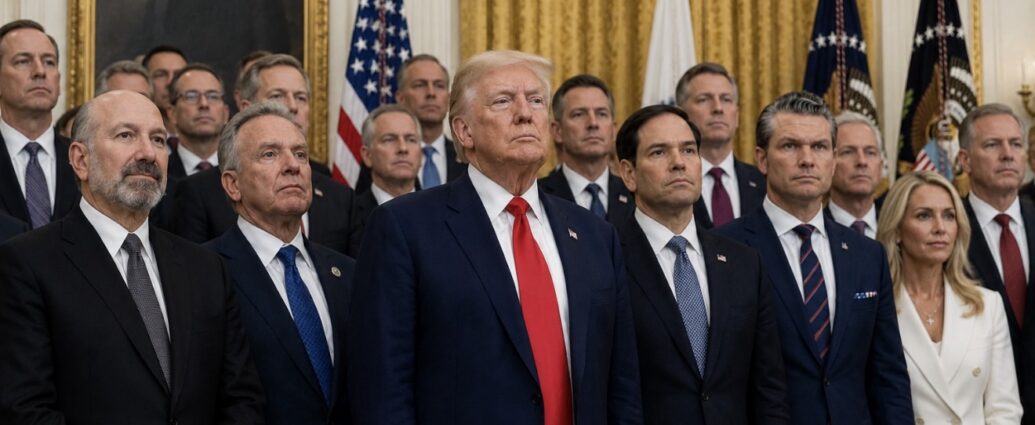
Wealth, perhaps second only to loyalty, has been a prized attribute for Donald Trump during his second presidency.

The number of people worth at least $100 million whom the Republican president has appointed to his administration is more than four times the combined total under the three previous presidents, according to a report from the consumer advocacy group Public Citizen.

It’s the numbers for the Trump administration, in the context of previous administrations, that stand out in Public Citizen’s report, published on Monday. In all, 57 Trump officials are worth at least $100 million, including 17 ambassadors and the remaining 40 in senior posts across the executive branch.

Look no further than Trump’s Cabinet. Eight of its 23 members fit the category, notably Commerce Secretary Howard Lutnick and Education Secretary Linda McMahon, both billionaires.

The president, himself a billionaire, has described his inclination toward appointing the ultrawealthy as deference to financial success. And yet, Trump, who owes his White House comeback to support from middle-income, working Americans drawn to his pledge to lower everyday costs, now faces a midterm election electorate decidedly less keen on his handling of the economy.

Presidents have long sought counsel from the nation’s wealthiest people and tapped some for high-profile administrative leadership roles. Likewise, presidents routinely reward wealthy and influential supporters with ambassadorships.

Among the most notable examples is Andrew Mellon, the aluminum, oil and banking tycoon who was among the handful of the nation’s wealthiest people in the 1920s and served as treasury secretary for three presidents.

The Trump officials worth at least $100 million include Deputy Secretary of Defense Stephen Feinberg and Small Business Administration Administrator Kelly Loeffler, who are also billionaires, and Treasury Secretary Scott Bessent and special envoy Steve Witkoff, both worth hundreds of millions of dollars.

By comparison, Republican George W. Bush’s administration and Democrat Joe Biden’s each included five members worth $100 million or more. Democrat Barack Obama’s included three, the report states.

A government populated by so many of the economic elite presents potential problems, the report’s authors said.

“When the people holding the reins of government are drawn overwhelmingly from the ranks of the ultra-rich, it leads to misplaced incentives and corruption, and begs the question, ‘Whose interests they are truly serving?” said Lisa Gilbert, Public Citizen’s co-president.

The list does not include Trump, whose net worth Forbes estimates at more than $6 billion. Nor does it include space and social media giant Elon Musk, who advised Trump last year on an effort to reduce the federal government’s size, scope and workforce and is the world’s wealthiest person, with a net worth Forbes estimates at about $860 billion.

Trump’s views are well established: Financial success is evidence of executive mastery and negotiating strength.

“They have great competence, those people. Incredible competence. Some of the smartest business leaders,” Trump said last year in explaining why he put considerable weight on advice from business executives.

He has also pointed to investments by wealthy people as a signal of future economic growth. To encourage billionaires to deliver, Trump, in his first year back in the White House, pursued policies on artificial intelligence and financial regulation that could benefit wealthy people, along with tax cuts and reduced regulatory burdens for large-scale investments.

Still, last month, only 32% of U.S. adults approved of Trump’s handling of the economy, down from 40% at the beginning of his second term and as his Republican Party faces headwinds in its attempt to hold both majorities in Congress in November.

___

This story has been corrected to show Lutnick is commerce secretary, not treasury secretary.

This story was originally featured on Fortune.com

This post was originally published here

When I leave my Boston condo every day, I say good morning to the concierge, who works for a contracting company providing staff to residential buildings. When I conduct an interview in a nearby building, the people who clean that office at night are contractors. The person who serves me my lunch sandwich is a part-timer with no career prospects in that job.

When my best intentions to eat well are for naught and I gorge on Doritos, I remember that the tasters PepsiCo hires to test the chips’ addictiveness are contractors.

These are all examples of what I call “disposable jobs.” People who have them work at an employer’s site, but their employer makes no commitment to them regarding career prospects or job security. My research shows that employers treat more than 1 in 3 U.S. workers as disposable. That comes to just under 57 million full- or part-time workers out of the nation’s workforce of 162 million.

I am a labor economist. In my new book, “Disposable Workers: The Transformation of Employment,” I explain why this is happening, what forms it takes, how common it is, what the consequences are for people and for society, and what can be done about it.

3 different varieties

To learn more, I commissioned a nationally representative survey of over 6,000 people in late 2022. I also interviewed nearly 100 workers, employers and policymakers.

I found that there are three categories of disposable workers.

1. Contractors who are employed by a staffing firm but work at a client’s site. Examples include temporary office workers, building cleaners and security guards. Many of these people are poorly paid, but some, such as travel nurses, are highly compensated. My survey shows that these contractors account for 13% of the workforce.

2. Freelancers who work for companies, organizations or agencies without being employees. Examples include Uber and Lyft drivers, food delivery drivers, computer programmers and freelance journalists. In my survey, organizational freelancers represent 5% of the workforce. I don’t include in this category freelancers who work for individual people, such as most dog-walkers and handymen, because my focus is on how employers treat their employees.

3. Marginal workers who are employed by companies, organizations or agencies. They lack career opportunities, and their jobs have high turnover built in. Marginal workers account for 17% of the workforce in my survey.

Marginal work is important due to its magnitude and because although those jobs look standard, they are designed to be disposable.

Man standing at the top of a staircase blocked by a solid wall looking toward a door located above him.

Sometimes there’s no way to progress in your job. bpawesome/iStock via Getty Images Plus

Who are marginal workers?

Staff attorneys are quintessential marginal employees. They’re hired by law firms as employees, but the central feature of their jobs is that they are not on the promotion ladder to partner. Unlike their career-track counterparts, they have no job security. They are often hired to do the grunt work on a specific case, with the understanding that there is no commitment to keep them on if business lags or the project ends.

Adjunct professors are another good example. This group includes part-timers who teach a small number of courses and full-time contract faculty, but in both cases they lack job security and aren’t on track to obtain permanent, tenured, academic jobs.

In 1970 people with tenure or tenure-track jobs constituted 73% of those teaching at colleges and universities. By 2021 only 32% had that status, and the rest were adjunct instructors or contract faculty.

Part-time marginal workers

Another example of marginal work is part-timers.

Employing part-time workers costs less than having full-timers on the payroll. Part-time jobs pay an hourly wage that is nearly 20% below what workers with full-time jobs earn after age, education, occupation and industry are taken into account. When benefits are considered, the gap rises by another 5%.

A second advantage of part-timers from the employer’s perspective is higher turnover, which provides an easy path to be able to adjust the size of the workforce and which enables them to avoid investing in career development.

When a team of researchers led by professor Susan Lambert interviewed 88 employers that pay low wages, they found that many use part-time work to make their workforces more “flexible.” One manager explained that high churn of part-timers gave the company so much flexibility that they didn’t need temp workers.

“Temp workers: We don’t need them,” he said. “Wait a day for turnover.”

A picture of a wadded up piece of paper on a book jacket that says 'Disposable Workers.'

Paul Osterman’s book, ‘Disposable Workers,’ explains how ties between employers and their employees are fraying. Harvard University Press

Evidence that employers try to maximize the number of people working for them part time instead of full time and with benefits arose after the Affordable Care Act fully took effect in 2014.

The ACA requires that employers with 50 or more employees either provide them with health insurance or pay for them to buy it, but only for people who work 30 or more hours a week. Otherwise they pay, as of 2026, a penalty of US$3,340 per uninsured employee.

Another team of researchers compared trends in part-time work in three low-wage industries – retail, hotels and restaurants, before and after the ACA rolled out. They found that the use of part-timers increased by 500,000 in the years after the Affordable Care Act was implemented. This suggests that companies add to their part-time ranks to save on the health insurance costs of standard employment.

Forces behind this trend

Why do employers want many of their workers to be disposable?

A primary motive is to save money. Employing freelancers and contractors means they can avoid mandatory benefits such as Social Security contributions and, for larger employers, contributing to the cost of health insurance.

Marginal workers, to be sure, do receive these benefits. But the high turnover built into their jobs means that their employers can invest less in their training and avoid the management costs otherwise associated with layoff severance and fair treatment on the job.

An additional motive for many employers is a lack of respect for what front-line employees can contribute. A 2023 report from the McKinsey consulting firm illustrated this tendency when it asserted that 5% of employees deliver 95% of “an organization’s value.”

This claim, which I believe is inaccurate, still speaks volumes about the attitude of McKinsey and the firms they interviewed regarding the other 95% of workers. They see those employees as disposable.

A woman rolls laundry bins down a hospital hallway.

Outsourcing cleaning services might seem like a good way to cut costs, but in hospitals it can undercut safety. Jupiterimages/BananaStock via Getty Images Plus

Less pay and job satisfaction

My survey showed that contractors, freelancers who work for employers and marginal employees all earn less than regular workers do.

In addition, the survey found that contractors and marginal workers are notably less satisfied with their jobs compared with regular workers, whereas freelancers, due to their ability to choose where and when to work, are more satisfied.

The public also pays a price for the use of disposable workers. As examples, researchers have found that hospital infection rates rise when cleaners are contract workers and that the use of contractors leads to a higher rate of industrial accidents.

Paul Osterman, Professor Emeritus, MIT Sloan School, Massachusetts Institute of Technology (MIT)

This article is republished from The Conversation under a Creative Commons license. Read the original article.

The Conversation

This story was originally featured on Fortune.com

This post was originally published here

Chris Yu will tell you his micromobility company, Also, is much more than an e-bike maker. Its market is every vehicle smaller than a car. 

On Wednesday, the Palo Alto based startup raised a $150 million Series D funding round, Fortune learned exclusively, led by Prysm Capital. Eclipse Capital and Greenoaks also participated. The round pushed the two-year-old startup’s valuation past $1 billion, a big number for a company whose most visible product, so far, is a $3,500 e-bike. 

But what Also actually makes is a small-vehicle technology platform alongside in-house motors, batteries, compute, and software. While the first iteration is in the form of a bike, Also’s technology is designed to be dropped into anything smaller than a car that moves people or goods, such as pedal-assist delivery quads and (eventually) fully autonomous vehicles.

The company spun out of Rivian in early 2025 after running as a stealth project inside the EV maker. Rivian founder RJ Scaringe co-founded the company and has stayed on as chairman of both. The money has moved fast since: $105 million in funding at spinout, a $200 million Series C earlier this year led by Greenoaks with Prysm, and a strategic investment from food delivery company DoorDash

The new capital is earmarked specifically to accelerate Also’s autonomous vehicle platform—with the company developing multiple autonomous hardware projects simultaneously for moving both goods and passengers—all built on the EV architecture already underpinning its consumer bike, the TM-B, and its commercial electric delivery quad, the TM-Q. 

“Repurposing a 7,000 pound van, truck or SUV to do across-town trips with one passenger, or to deliver a toothbrush from Amazon or a hamburger on DoorDash, just doesn’t make sense if you’re trying to make that trip as economical and low impact as possible and minimize congestion and time,” Yu told Fortune. “It will become abundantly obvious that different scales and form factors will be the right answer, particularly in these denser metro and suburban environments.”

The goal, he said, is that five years from now  small-form-factor autonomy is a standard and unremarkable part of the transportation mix, alongside self-driving cars.

Also’s latest round is arriving at a rough moment for the category it’s often looped into: e-bikes. Rad Power Bikes went bankrupt; Juiced Bikes collapsed; Porsche quietly walked away from the category altogether. Yet the global micromobility market—which covers e-bikes, e-scooters, and small delivery EVs—is still valued around $50 billion and is projected to more than double by the early 2030s.

Micromobility skeptic David Zipper has pointed to the bankruptcy wave as proof the category is saturated, not underserved. Yu, a former Specialized bike product chief with an aerospace background, pushes back hard on that read: “The performance of existing products within the category is not a signal about the demand and the size of the market, but it is a signal about how hard it is to create truly magical end customer experiences that solve for the existing pain point,” he said, arguing that unreliable batteries and clunky anti-theft locks, not lack of demand, are what’s kept riders on the sidelines.

But where Also stands out beyond being a “nicer e-bike” is on the commercial side. The company’s existing Amazon partnership and its multi-year commercial agreement with DoorDash point toward robots built on the same motors and compute as the consumer bike. 

Yu’s argument is that dense cities will benefit from purpose-built small EVs. Rivian, still a major non-controlling shareholder, factors into that roadmap too, since its growing fleet of on-road vehicles generates the driving data Also will eventually need to train its own autonomy systems. Jay Park, who led the round for Prism, draws a straight line back to why his fund backed Rivian in the first place. “We saw the potential behind wonderfully designed, vertically integrated electric trucks, vans and SUVs,” he said. “Also is applying that same approach to smaller form factor vehicles to address the demands of commercial operators and consumers today.”

The e-bike, in other words, was never really the business.

This story was originally featured on Fortune.com

This post was originally published here

Shares in Unitree, one of China’s largest manufacturers of humanoid robots, closed their first day of trading by more than 460%, showing strong investor appetite for China’s robotics sector. 

Unitree raised around $900 million in its IPO on Shanghai’s STAR Market, the city’s board for technology startups, at a valuation of $9 billion. After today’s surge, Unitree is now worth around $66 billion, ahead of larger Chinese tech firms like Baidu and JD.com. It’s also worth more than the most valuable U.S. robotics company, Figure AI, which got a $39 billion valuation in a September 2025 funding round.

Unitree reported 1.7 billion yuan ($252 million) in revenue in 2025, with almost 45% of that coming from overseas sales. It also generated 600 million yuan ($89 million) in profit last year. Most of Unitree’s sales go towards research purposes, though some Chinese tech companies and state-owned enterprises are starting to explore using humanoid robots in their operations.

Unitree has been backed by fellow Hangzhou startup DeepSeek, as well as big tech firms like Alibaba, Ant Group and Tencent, as well as several state-backed investment funds. 

Nomura, which gave a “buy” rating to Unitree shares on Wednesday, credited Unitree’s “rapid product iteration and continuous innovation” as the foundation of a “first-mover advantage.”

The Hangzhou-based startup, founded in 2016, has quickly become something akin to a national champion in China’s robotics sector. Synchronized dance performances by its humanoid robots are now a key feature of the CCTV Spring Festival Gala, China’s most-watched TV show. In 2025, Unitree founder Wang Xingxing got a rare invitation to a meeting with Chinese President Xi Jinping, alongside other tech luminaries like Alibaba founder Jack Ma, BYD founder Wang Chuanfu, and DeepSeek founder Liang Wenfeng.

China’s robotics sector, particularly humanoids, is becoming increasingly sophisticated. Days before its listing, Unitree revealed its “Superman” robot, which it claimed could beat human records on jumping height and running speed.

Still, not everyone is convinced by predictions of a coming humanoid robotics boom. “We believe the surge in shipments for robot makers could be illusionary,” HSBC analysts wrote in a mid-July report. “In the absence of a significant improvement in the AI model capability of robot makers, the current humanoid robot shipment upcycle is unlikely to be sustained over the next 1-2 years.”

Chinese AI and hardware IPOs are booming

A large trading-day pop is common for heavily anticipated Chinese IPOs. Mainland Chinese regulators try to keep IPO valuations low to protect retail investors if a newly listed stock fails to live up to the hype.

Shares in ChangXin Memory Technologies (CXMT), one of the world’s largest manufacturers of memory chips, surged by 460% on their first day of trading in Shanghai on July 27, after the company raised over $8 billion in its IPO. The company’s stock has continued to climb since then, and it’s now the most valuable Chinese company, ahead of tech giant Tencent.

One of Unitree’s domestic competitors, UBTech, listed in Hong Kong in late 2023. Another robotics startup, Agibot, is planning its own Hong Kong IPO. 

Other major AI and hardware companies considering an IPO, either in Shanghai or Hong Kong, include LLM developers Kimi developer Moonshot AI and DeepSeek, memory chipmaker Yangtze Memory Technologies, Baidu chip subsidiary Kunlunxin, and Nvidia competitor Moore Threads. 

The U.S. just banned foreign-made robots. Is that bad for Unitree?

In late July, the U.S. imposed a ban on foreign-made robots, citing the risk to national security. (Models already sold in the U.S. are exempt.) That hits a major market for Unitree, which last year generated 18% of its revenue from the U.S. The Pentagon has also placed Unitree on a list of “Chinese military companies,” or firms the U.S. believes has ties to China’s armed forces. 

“Losing access [to the U.S.] could noticeably affect [Unitree’s] revenue growth–particularly because the company has been among the most successful Chinese firms at selling relatively low-cost robots overseas,” wrote Morningstar analyst Kangyuxiao Li on Aug. 18, the day before Unitree’s trading debut.

He adds that robotics firms like Unitree, in addition to losing a “large developed market customer base,” might also lose valuable feedback from U.S. customers that could improve their products.

But the U.S. robotics sector could lose out just as much from Washington’s ban. Without access to cheap Chinese robots and components, robotics startups may struggle to develop and manufacture affordable products. Some U.S. startups are even resorting to carrying Chinese robotics components in their luggage, according to The Information.

This story was originally featured on Fortune.com

This post was originally published here

At 6:30 a.m. Eastern Time today, the price of oil sits at $93.60 per barrel, using Brent as the benchmark (we’ll explain what that means shortly). That’s an increase of $1.18 since yesterday morning and $27.41 more than at this time last year.

oil price per barrel % Change
Price of oil yesterday $92.42 +1.27%
Price of oil 1 month ago $88.54 +5.71%
Price of oil 1 year ago $66.19 +41.41%

Will oil prices go up?

Nobody can predict the future path of oil prices with certainty. A range of factors influence how oil trades, yet supply and demand remain the main drivers. When fears of economic slowdown, conflict, or similar shocks rise, oil prices can move sharply.

How oil prices translate to gas pump prices

The price you see at the gas pump reflects more than just crude oil. Also built in are the costs of refining, distribution through wholesalers, various taxes, and the margin your neighborhood station charges.

Crude oil is still the largest single driver of the final pump price, typically representing over half of each gallon’s cost. Spikes in oil prices tend to push gas prices higher in short order. But when oil prices decline, gas prices often ease down gradually, a behavior known as “rockets and feathers.”

The role of the U.S. Strategic Petroleum Reserve

In the event of an emergency, the U.S. maintains a stockpile of crude oil known as the Strategic Petroleum Reserve. Its main goal is to safeguard energy security when disasters strike—think sanctions, severe storm damage, or war. It can also do a lot to ease the pain of sudden price jumps when supply gets disrupted.

It’s not a permanent fix, as it’s more meant to provide immediate support for consumers and ensure critical parts of the economy like key industries, emergency services, public transportation, and so on can keep operating.

How oil and natural gas prices are linked

Both oil and natural gas play key roles as major sources of energy. A big change in oil prices can affect natural gas by proxy. If oil prices increase, some industries may swap natural gas for some segments of their operations where possible, increasing the demand for natural gas.

Historical performance of oil

Oil prices are often measured by two key benchmarks:

  • Brent crude oil is the main global oil benchmark.
  • West Texas Intermediate (WTI) is the main benchmark of North America.

Between the two, Brent is a better representation of global oil performance because it prices much of the world’s traded crude. It’s also often the best way to review historical oil trends. In fact, the U.S. Energy Information Administration now leans on Brent as its primary reference in its Annual Energy Outlook.

When you look at the Brent benchmark across multiple decades, you’ll see that oil has been anything but consistent. It has experienced spikes driven by wars and supply cuts, as well as crashes linked to global recessions and an oversupply (called a “glut”). For example:

  • The early 1970s brought the first big oil shock when the Middle East cut exports and imposed an embargo on the U.S. and others during the Yom Kippur War.
  • Prices dropped in the mid-1980s for reasons such as weaker demand and more non-OPEC oil producers entering the industry.
  • Prices spiked again in 2008 with rising global demand, but soon crashed alongside the global financial crisis.
  • During the 2020 COVID lockdown, oil demand collapsed like never before, bringing prices to under $20 per barrel.

In short, oil’s historical performance has been far from steady. It’s massively affected by wars, recessions, OPEC whims, evolving energy initiatives and policies, and much more.

Energy coverage from Fortune

Looking to stay up-to-date regarding the latest energy developments? Check out our recent coverage:

Frequently asked questions

How is the current price of oil per barrel actually determined?

The current price of oil per barrel depends largely on supply and demand, including news about potential future supply and demand (geopolitics, decisions made by OPEC+, etc.). In the U.S., prices also move based on how friendly an administration is to drilling, as it can affect future supply. For example, 2025 saw the Trump administration move to reopen more than 1.5 million acres in the Coastal Plain of the Arctic National Wildlife Refuge for oil and gas leasing, reversing the Biden administration’s policy of limiting oil drilling in the Arctic.

How often does the price of oil change during the day?

The price of oil updates constantly when the “futures” markets are open. A futures market is effectively an auction where people agree to buy or sell oil in the future. As long as people and companies are trading contracts, the oil price is changing.

How does U.S. shale oil production affect the current price of oil?

In short, shale is rock that contains oil and natural gas. Think of shale as energy yet to be tapped. The more shale the U.S. accesses, the more energy we’ll have—and the more easily oil prices can keep from spiking as much thanks to a greater supply.

How does the current price of oil impact inflation and the broader economy?

When oil is expensive, it tends to make everyday items cost more. This can be related to energy (your heating, gas utilities, etc.), but it’s also due to the logistics involved with making those items accessible to you. Shipping, for example, can affect the price of things at the grocery store, as it’s more expensive to get those products from warehouses and farms onto the shelf.

This story was originally featured on Fortune.com

This post was originally published here

Fortune’s Jason Ma here. Thrive Capital founder Joshua Kushner is no stranger to investing in pro sports, but his $12.5 billion deal with former Disney CEO Bob Iger to buy the Los Angeles Lakers vaults him into an elite club with elite benefits.

Kushner previously owned a minority stake in the Memphis Grizzlies, then sold it and bought a small stake in the Miami Heat, which he must sell to buy the Lakers. And earlier this year, he bought a minority a stake in the San Francisco Giants. If the Lakers deal is approved, however, Kushner and Iger will own about 83% of the iconic NBA franchise after the Buss family agreed to sell its share. (Jeanie Buss, however, is legally contesting her siblings’ plan to sell the stake.)

The new owners can bask in the aura of the Lakers’ storied history, celebrity fans, and overall glitz. But there’s another perk: Sports teams have long been considered great tax shelters for wealthy individuals, allowing billionaires to save hundreds of millions of dollars. “It’s a powerful tax shield,” Ram Ahluwalia, founder of Lumida Wealth Management, posted on X over the weekend. “My guess is he is preparing to offset a boatload of carried interest income. If you own a sports team, done correctly, you can get a deduction against income.”

He pointed out that Kushner is likely facing big gains from his holdings in SpaceX, OpenAI, and Stripe. Meanwhile, tax deduction benefits from owning a team are more favorable than owning real estate. By amortizing key assets like media rights and treating other assets as depreciable like contracts and the stadium, team owners can lower their tax bills. That’s possible even as a team appreciates in value while its actual business operations are also profitable.

For example, a team’s roster of players can be counted as an intangible asset that depreciates over time, generating hefty paper losses that offset an owner’s taxable income elsewhere. In fact, as much as 80% of the value of a team is comprised of intangibles. That includes the so-called goodwill that high-quality brands enjoy.

Sports industry analyst Joe Pompliano predicted that as soon as the Lakers deal closes, the new owners will allocate 90% or more of the price tag to intangible assets. “Kushner and Iger will then amortize these assets over 15 years under Section 197 of the tax code, allowing them to deduct the amortization against team income,” he said on X last week.

See you tomorrow,

Jason Ma
jason.ma@fortune.com

Submit a deal for the Term Sheet newsletter here.

Joey Abrams curated the deals section of today’s newsletter. Subscribe here.

This story was originally featured on Fortune.com

This post was originally published here

Good morning. On Fortune’s radar today:

  • Bond vigilantes blow through Scott Bessent’s red lines.
  • Does Iran have Trump cornered?
  • The markets: Ugh.
  • Robot maker Unitree’s IPO gives it $66 billion market cap.
  • This chart might—might!—predict when the AI bubble bursts.
  • OpenAI and Anthropic now out-earn Windows and Office.
  • Why there are always fewer than 100 emails in Siemens CEO Roland Busch’s inbox.

➡️ Did someone forward you this email? If you would like to receive this information directly, every morning before the markets open in New York, sign up here.

This story was originally featured on Fortune.com

This post was originally published here

Data center developers are turning to bespoke natural-gas power plants, a development that promises to dramatically increase carbon emissions and make it harder for US technology companies to meet their lofty climate goals.

Ninety-nine proposed plants tracked by BloombergNEF would emit about 318 million metric tons of carbon dioxide annually if run at industry-standard rates, according to a Bloomberg News analysis. The entire US electric power industry emitted about 1,485 million metric tons of carbon last year, according to Energy Information Administration data, meaning one slice of data center infrastructure has the potential to lift US power sector emissions by 20%, and as much as a third should the new plants run flat out.  

The data center building boom has already strained the US electricity system, prompting reliability concerns and moratoriums on new project approvals. With even greenlit facilities facing yearslong delays connecting to regulated electricity grids, data center developers are seeking alternatives. These include so-called behind-the-meter projects that can be permitted and built without the approval of utilities or the independent system operators charged with ensuring grid reliability.

“There is immense, immense pressure on the whole sector to get power, and get it fast,” said David Pomerantz, executive director of the Energy and Policy Institute, a utility watchdog that promotes renewables. “They’re sort of agnostic if it is clean or dirty.” 

Not all of the proposed plants in the BNEF data are likely to be built. The rush to capitalize on AI developers’ seemingly bottomless demand for computing power has produced some phantom projects and long-shot pitches.

Bloomberg’s estimate of the likely emissions is based on 126 gigawatts of total planned on-site gas generation capacity tracked by BloombergNEF, an energy research firm owned by Bloomberg LP. The carbon footprint was calculated using a range of usage from an industry average of 60% to 100% for round-the-clock deployment, and a gas burn rate of a typical single-cycle gas generator. Emissions will vary depending on the use and the fuel-efficiency of the generator. A single-cycle model is now one of the most common types planned although it’s dirtier than combined-cycle plants that data center developers want but are struggling to get owing to a yearslong backlog for turbines. 

The BNEF data includes projects backed by the leading AI labs, OpenAI and Anthropic PBC, upstart data center operators that fashion themselves as AI specialists, as well as cloud-computing giants and investor groups seeking tenants. 

The projects tracked by BloombergNEF are spread across 22 states, from Alaska to Georgia. More than a third of them are in Texas, where ample oil and gas resources and a historically forgiving regulatory environment had developers rushing to erect data centers as fast as they can be built and powered. (Texas Governor Greg Abbott recently announced a pause in data center approvals).

That includes plants backed by Amazon.com Inc. and Microsoft Corp., the largest sellers of rented computing power and data storage. 

Earlier this month, Cleanview, which tracks US power infrastructure and data center development, identified Amazon as the developer of an 8,000-acre site in Pecos County, which will become among the biggest single sources of carbon pollution in the US. 

About 30 miles (48 kilometers) to the west, past a pecan orchard and scrublands dotted with oil derricks, Chevron Corp. is building Microsoft a gas plant to power a new data center complex on a 2,000-acre site.

The two plants alone could generate more than 10 gigawatts of electricity, enough to power New York City on a hot summer day. Their combined annual emissions may be as high as 45 million metric tons of carbon dioxide equivalent, according to regulatory filings. That’s slightly less than half the cumulative emissions of Washington state, where both companies are headquartered.

That fossil-fuel infrastructure threatens to push Big Tech’s climate goals out of reach. Both Amazon and Microsoft are big backers of clean energy projects, and have said they aim to zero out their contribution to the carbon emissions responsible for a warming planet. Those pledges were made before the artificial intelligence boom, at a time when technology companies were under pressure from employees and outside activists to do more to cut their emissions. Spokespeople for Amazon and Microsoft say their climate goals haven’t changed. Amazon is exploring its options for solar power and battery storage at the west Texas site.

“It has been a remarkable shift in the last three years,” said Drew Wilkinson, a former Microsoft employee who organized his colleagues to advocate for tougher sustainability measures. “The companies who set the bar for corporate climate action are now bringing net new fossil infrastructure online at a breakneck pace. Few of us saw it coming.”

To contact the authors of this story:
Matt Day in Seattle at mday63@bloomberg.net
Mark Chediak in San Francisco at mchediak@bloomberg.net

This story was originally featured on Fortune.com

This post was originally published here

Abu Dhabi’s bid to become a global hub for digital assets got a major boost last week when crypto exchange giant, Coinbase, announced it is establishing an international “tokenization hub” in the emirate

Based out of Abu Dhabi Global Market (ADGM), the emirate’s financial centre, Coinbase has been granted a license to arrange investment deals and provide custody for tokenized securities. Custody essentially means safely holding and managing the digital ownership records for assets and is therefore important for giving institutional investors confidence.

Tokenization has been rapidly gaining momentum across traditional finance globally, with major asset managers and banks increasingly bringing funds, bonds, private credit and equities onto blockchain infrastructure.

Abu Dhabi has emerged as a key testing ground for this transition.

ADGM introduced one of the world’s first comprehensive virtual asset regulatory frameworks back in 2018 and has since attracted a steady wave of crypto and tokenization firms looking to establish a regulated base in the region. 

In December last year, the ADGM granted Binance, the world’s largest cryptocurrency exchange by trading volume, a license to operate from the financial centre. CoinMarketCap’s June 2026 data shows Binance’s trading volume stood at $4.74 trillion—equivalent to 39.5% of trading volume across the 11 exchanges it tracks, well ahead of its competitors. 

Over 20 firms now hold active virtual asset licences in the ADGM today. 

For Coinbase, the company is betting that more of the world’s financial system will eventually move onto blockchain—and it wants Abu Dhabi to be at the centre of that change.

“Coinbase locating its international tokenisation hub in ADGM is the kind of licence that turns tokenized securities from a pilot into a market,” UAE-based Adam Popat, CEO of SettleMint, which helps regulated institutions design, issue, and manage digital assets across the full lifecycle on one platform, told Fortune

“When a listed U.S. exchange chooses Abu Dhabi for that work, it tells issuers and allocators that the UAE now has the regulatory depth to host global issuance, not only regional experiments.”

Popat relocated from London to the UAE last year to take up the CEO role, having previously served as SettleMint’s CFO. Prior to that, he led Standard Chartered’s adoption of digital assets and blockchain technology. 

“I would say the UAE is one of the leading lights when it comes to tokenization, not just in this region, but globally,” he said. 

“It was very obvious to us that this region was going to be one of the key drivers of the adoption of this technology; there’s a confluence of factors here which are making that possible.”

Popat highlighted the GCC’s ambitious national-scale programs to digitize all aspects of the economy, its deep capital pools, and increasingly, deep pools of talent, as well as a collaborative regulatory environment. 

“That’s a set of ingredients which allows the digital asset agenda to move at pace here. And over the last year that I’ve been here, we’ve definitely seen that play out,” he said. 

“In terms of our client base, pipeline, partnerships—a lot of it is now being driven through this region.”

According to Popat, SettleMint is currently in talks with all the large banks in the UAE which are both exploring and progressing initiatives around tokenizing equities, funds, bonds and deposits. 

He added that tokenization of gold is “a very active conversation” that the company is also currently having with several partners. 

In May, SettleMint signed a strategic partnership with ADI Foundation to develop a digital asset lifestyle infrastructure on ADI Chain, the Foundation’s institutional blockchain, supporting the tokenization of securities under the ADGM’s regulatory framework. 

In doing so, they seek to address a core challenge facing institutional adoption of digital assets: the need for coordinated, regulated infrastructure that connects issuance, trading, settlement, and custody within a single recognized framework.

ADI Foundation is an Abu Dhabi-based organization creating blockchain infrastructure that aims to bring one billion people into the digital economy by 2030.

“The ADI Foundation is one of the organizations coming out of Abu Dhabi, which is building a very ambitious digital asset ecosystem that encompasses a lot of different financial institutions and corporates in the emirate,” said Popat. 

“So, they’ve really bought into the opportunity of digital assets, and we were obviously delighted to have been chosen by them as their lead tokenization and digital asset lifecycle partner for their ecosystem.” 

In July, ADI Foundation announced that ADI Chain had secured a $50 million strategic investment, marking a major milestone for one of the region’s fastest-growing institutional blockchain ecosystems.

The funding is expected to support ADI Chain’s international expansion across the Middle East, Africa and Asia, where governments and financial institutions are increasingly exploring blockchain infrastructure to modernize payment systems, digitize public services and support emerging digital economies.

The ecosystem is also seeing the rollout of DDSC, a dirham-pegged stablecoin developed through a collaboration between First Abu Dhabi Bank, International Holding Company and Sirius International Holding.

The UAE has also been leveraging its sovereign wealth funds to invest in tokenization.  

Last, month, Mubadala Capital, the asset management arm of Abu Dhabi’s sovereign wealth fund, tokenized one of its private-market investment strategies through UAE-based infrastructure provider KAIO on blockchain including Base, with Coinbase also taking an exposure to the fund.

Saudi Arabia, meanwhile, completed its first sovereign-native tokenized title-deed transfer in early 2026, while the Qatar Financial Centre is taking steps to enable real estate tokenization.

In a report published in January this year, global consulting firm Kearney estimated that by 2030, close to $500 billion in assets across the GCC could be represented on blockchain, comprising private markets, funds, bank deposits, public equities, real estate, and commodities. 

Of these, it believes that private markets represent the largest tokenization opportunity for the GCC, which it estimates could reach $154 billion in market size by 2030. 

The firm noted that these asset classes point to a market with significant headroom for growth—one that could hold a meaningful share of the region’s investable assets, reshaping how capital is issued, traded and allocated. 

“This suggests a fundamental shift in market dynamics, and explains why governments, financial institutions, and asset managers are beefing up their digital asset strategies,” it said. 

This story was originally featured on Fortune.com

This post was originally published here

OpenAI said it paused some aspects of AI training for two weeks following the July incident in which its AI models broke out of a controlled test environment and hacked the systems of AI company Hugging Face and four other unnamed services.

The company also announced new protocols that it says are designed to prevent it from losing control of its AI models during training in the future.

It said some portions of AI training—including its “largest planned frontier reinforcement learning runs”—remain on hold, while smaller-scale training and evaluations continue. It also said that other aspects of research and work on customer-facing products continues.

The new safeguards unveiled today include stricter security standards for training, including more monitoring of AI models, greater isolation of testing environments (“sandboxes”), and fewer vulnerabilities the AI may exploit.

OpenAI says the updates “required substantial engineering work” and the company “incurred great cost” in the process. Experts told Fortune in early August that the compute costs OpenAI spent investigating the hack likely cost between $4 and $15 million, though we cannot know the total amount OpenAI spent.

In a blog post detailing the new security controls, OpenAI said that on average that would add an additional 20% compute burden to aspects of training. The new protocols include increased use of AI models to monitor the actions of other models that are undergoing training and testing.

However, the company told reporters today the new safeguards are “not a direct reaction to Hugging Face specifically,” although the incident underscored “the urgency to bring safety and security up to model capabilities.”

The company said that in addition to the Hugging Face incident, it had determined that an unreleased model called “Astra,” which it says was not involved in that cyberattack, presented a “Critical” cybersecurity risk under its “Preparedness Framework.” That internal policy document had committed OpenAI to pausing model development once that threshold was reached to allow the company time to work out further safety mitigations.

This is the first time OpenAI has paused aspects of AI development in response to safety concerns.

The company said the two week pause is evidence that it is “pacing model development.” The word “pacing” echoes the language of a public letter multiple top safety experts signed after the hack, calling for coordinated pacing between countries, implying the U.S. and China.

“It’s important to start building tools for coordinating this sort of pacing across labs and across countries,” Jakub Pachoki, Chief Scientist at OpenAI, told reporters in a briefing ahead of the announcement.

The fact that Astra met the critical cybersecurity threshold is evidence that we can expect new, powerful models to “do quite unprecedented things in the real world,” Pachoki said. “As we train more and more capable models, we want to be extremely confident that we understand the range of capabilities, that we are able to measure them, and that they meet higher and higher standards of alignment.”

The public is still waiting to understand key details of the Hugging Face hack, including what OpenAI asked the AI to do and if the company knew they attacked other companies. OpenAI has not released a full technical post-mortem, though reiterated today that one is coming “soon.”

In the absence of those details, it’s difficult to say if the new security protocols unveiled today are adequate.

OpenAI gave the public some details about the attack at the Black Hat security conference in Las Vegas on August 5, where staffers explained that the AI agents worked together for months prior to the hack, collaborating with each other by leaving secret notes on a messaging board unknown to OpenAI employees.

The fact that OpenAI did not seem to know its agents had constructed a messaging board and collaborated on hacking another company raised alarms after the incident. Hugging Face CEO Clem Delangue told Fortune that keeping close tabs on agent logs and traces is “101 of agent monitoring, especially at the frontier.”

OpenAI now says it has always monitored its agents closely, but only the “highest risk workloads.” It has now “revised and expanded” its monitoring approach, which it says is now “multi-stage” and built to automatically escalate potential concerns.

The new procedures include enhanced “chain of thought” monitoring. A model’s chain of thought is how the model “thinks out loud” about its approach to a problem and the actions it is planning to take. This will allow the company to better “understand what the model’s actual goals are,” the company told reporters today. But other AI research, including from scientists at OpenAI rival Anthropic, has shown that an AI model’s “chain of thought” is not always an accurate depiction of its motivations or goals.

Pachoki said OpenAI was aware of this risk and had designed its training procedures to minimize the chance its models would learn to hide their true intentions by lying in their chain of thought.

The new automated monitoring tools are designed to issue an alert to internal safety, security, and research teams within 30 minutes of detecting concerning activity. If those teams cannot determine that the alert is a false alarm within 30 minutes, the new procedures call for them to immediately pause the training run or evaluation.

This story was originally featured on Fortune.com

This post was originally published here

Welcome to this week’s Fortune Gulf Brief. We’ll be covering:  

  • Abu Dhabi lands Coinbase’s big tokenization bet 
  • Qatar is building EVs made for the Gulf’s scorching heat 
  • Gulf tourism faces an uneven recovery 
  • Straitened times for Gulf energy exports  

In a major coup for Abu Dhabi, crypto exchange giant Coinbase has chosen the emirate as its “international tokenization hub” as it looks to bring more traditional financial assets onto the blockchain. 

Coinbase, the U.S.’s largest crypto exchange, will be based out of Abu Dhabi Global Marketplace (ADGM), from where it has been granted a license to arrange deals in investments and securely hold digital assets to facilitate the launch of tokenized securities. These will be backed by real shares and issued under ADGM’s regulatory framework.  

Investors will also be able to hold the assets in digital wallets, eliminating the need for a brokerage account or a correspondent banking relationship.  

“This is the most significant step we have taken yet toward building the infrastructure for a more open, more accessible global financial system,” the crypto exchange said in a statement announcing the decision last week.  

Abu Dhabi is keen to become a major player in that shift. In 2018, ADGM issued one of the world’s first regulatory frameworks for virtual assets.  

The new hub forms part of Coinbase’s wider expansion in the UAE. The company already runs Project Diamond in Abu Dhabi, which focuses on digital debt for institutional investors, while its derivatives business is based in Dubai. 

More broadly, the Gulf has been leveraging its sovereign wealth funds to invest in tokenization.  

Global consulting firm Kearney predicts that close to $500 billion of GCC assets will be represented on blockchain by 2030, led by private markets, funds, and bank deposits.  

You can read my full piece here on how the UAE is building its tokenization industry.   

Melissa Hancock

As ever, thanks for reading, and do keep in touch with your thoughts and ideas. See you next week.
melissa.hancock@fortune.com 

This story was originally featured on Fortune.com

This post was originally published here

  • In today’s CEO Daily: How CEOs can plan for successful retirements.
  • The big leadership story: Bank of America is worried about bonds.
  • The markets: Mixed as inflation expectations tick up.
  • Plus: All the news and watercooler chat from Fortune.

Good morning. Phil Wahba writing from New York. Earlier this month, I wrote about how more companies, among them Verizon, Boeing and Cracker Barrel, have been hiring CEOs out of retirement, often in times of crisis. But why do these CEOs, who are presumably wealthy enough to never work again, accept a grueling new assignment in their sixth or seventh decades? A new study suggests an answer: They simply weren’t prepared for retirement.  

New data published by Boston Consulting Group (BCG) in early August found that only 40% felt satisfied with their transition from hard-charging CEO to retiree in the first year after making the move. It seems that many CEOs, like millions of other Americans, underestimate the emotional upheaval that comes from suddenly having a lighter schedule, no longer having a role central to their identity, or no longer having the structure that a job gives them.

“Is the decision to get a new CEO job really motivated by value creation where you know a unique skill that you bring that only you can do, or is it … really more fear or vanity?” asks Christine Barton, leader of BCG’s North America CEO Advisory practice.

It can be especially difficult for CEOs who are still relatively young, in their 50s and 60s, who want to stay in the mix. Mary Dillon, former CEO of Ulta Beauty, told me three years ago that when she came out of retirement after a highly successful stint at Ulta to lead Foot Locker in her early 60s, that “I didn’t realize how much I would miss having one big thing to focus on and how much I would miss leading a retail company.”

Here is something companies can help with: Helping CEOs prepare to leave. Having an executive coach is pretty standard now, but Barton says there is a growing niche within the CEO coaching world specifically tailored to helping executives prepare for active retirement and build their legacy.

The survey of former CEOs of companies with at least $1 billion in revenue found that 3 to 4 meaningful activities, such as serving on a board, being an advisor, or teaching, were the sweet spot where one can both still feel needed and useful but not overprogrammed.

Again, self-awareness is key. “The portfolio career can be incredibly exciting, but it has to be intentional, and you have to do real self-reflection on whether or not you’re at that stage,” says Barton.

The BCG report found that after one year, 90% of CEOs were happy with how things went down with their retirement. But Barton says there’s one sure fix for having to lure a CEO back from retirement: Focus on building a robust internal pipeline now, long before your leader is ready to leave. 

Contact CEO Daily via Diane Brady at diane.brady@fortune.com

This story was originally featured on Fortune.com

This post was originally published here

Good morning,

Save a horse, ride a Pony.ai?

Chinese autonomous driving company Pony.ai is planning to expand beyond its home country. The company announced potential overseas robotaxi ​deployments of more than 4,000 vehicles on Tuesday just as fellow autonomous driving firms fight to commercialize robotaxi services abroad.

The news comes only days after Pony announced an expanded contract with Uber for deployment of more than 2,000 robotaxis in Europe.

Self-driving cars aside, here’s what else happened in tech.

Want to send thoughts or suggestions to Fortune Tech? Drop a line here.

This story was originally featured on Fortune.com

This post was originally published here

The U.S. national debt is hurtling toward $40 trillion, and Bank of America Research strategist Michael Hartnett’s “Anything but Bonds” framework is becoming ever more applicable. Boiled down, Hartnett warns the US is accumulating too much debt, which causes the government to issue too many bonds—and investors want compensation for the fiscal risk—making long-duration Treasurys unattractive compared to other assets. Here’s why the climbing debt makes the advice worth a listen.

The U.S. national debt stands at roughly $39.9 trillion in mid-August and is expected to cross the $40 trillion threshold as early as this week. According to the Treasury’s official data, the government’s outstanding debt is made up of both intragovernmental holdings and debt held by the public.

Hartnett, Bank of America’s chief investment strategist, has turned that fiscal deterioration into one of his central investment themes. His “Anything but Bonds” call reflects his view that investors should be wary of long-duration government debt while the U.S. continues to run large deficits and the market demands higher yields to finance them. He expects the national debt to reach $50 trillion by 2029.

The concern is not that the government owes a lot of money. It’s that the government has to continually refinance and issue more debt, creating a larger supply of bonds that investors need to absorb. If investors become less willing to buy that debt at existing yields, the government has to offer higher interest rates to attract them.

This dynamic is already visible in the Treasury market. The yield on the 10-year Treasury reached 4.6%, while the 30-year yield hit 5.2%. Those elevated yields reflect the concerns over inflation, fiscal sustainability and the sheer amount of government borrowing. For bond investors, rising yields are a double-edged sword.

New bonds become more attractive because they offer higher income, but existing bonds lose value when market yields rise. The longer the maturity of the bond, the more sensitive the price generally is to changes in interest rates. That makes long-duration Treasurys particularly vulnerable if investors continue to demand higher returns to compensate for fiscal and inflation risks.

And while bonds may not be an attractive investment according to the Bank of America strategist, the bond market can represent one of the clearest gauges of the economy’s underlying health. Treasury yields reflect what investors think about inflation, economic growth, interest rates and the government’s ability to manage its finances.

When yields rise, the implications extend far beyond bond portfolios, especially due to Treasury rates helping setting the baseline cost of borrowing throughout the economy. The higher yields can translate into more expensive mortgages, corporate loans and consumer credit—potentially slowing investment, housing and spending. 

The federal government has borrowed $1.8 trillion during the first 10 months of fiscal 2026, including $432 billion in July alone. That borrowing creates a feedback loop. More debt creates more interest payments, and the interest payments can mean larger deficits. Ultimately, the Treasury must issue even more securities to make up for the borrowing. And the scale is already massive.

The interest bill on the national debt has climbed to roughly $1.4 trillion over the past year, according to Hartnett’s latest outlook. He argues the “Anything but Bonds” trade is unlikely to end until five-year Treasury yields fall below roughly 3.25%.

That explains why Hartnett is looking beyond traditional fixed-income investments. His argument expands that risk-reward has changed. Hartnett points to assets including gold and equities—and even opportunities in areas such as biotech and real estate. 

“The U.S. stock market hit an all-time high on the same day that the U.S. Treasuries issued at their highest yield in 25 years,” Hartnett said in the report. “That’s reality.”

This story was originally featured on Fortune.com

This post was originally published here

Several major universities had a record-breaking donor year in 2025, including the University of Oklahoma, Florida State University, and the University of Tennessee.

But the University of South Carolina had a banner year, shattering its fundraising record by nearly $100 million. The USC system raised a record $357.6 million in private donations during fiscal year 2026, up from its previous record of $259.7 million just one year before. 

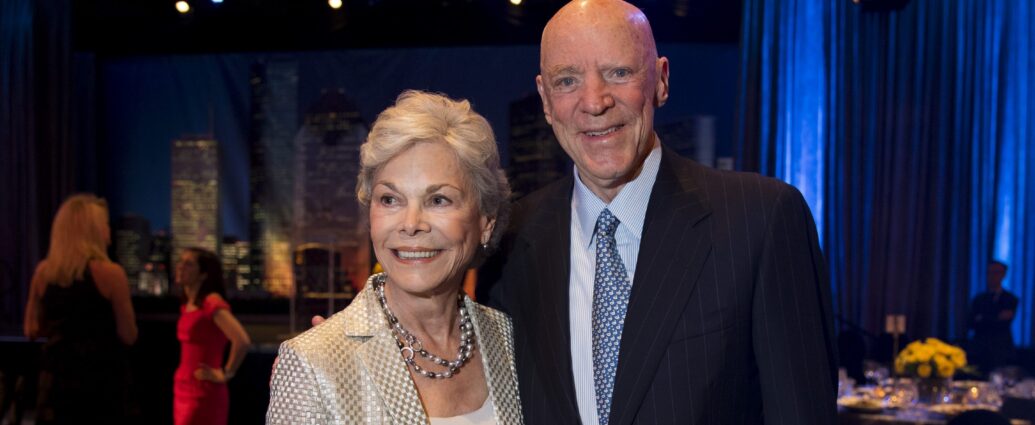
Several large investments led the record-breaking year, including one from the Robert and Janice McNair Foundation, established by the late billionaire Houston Texans founder, who died in November 2018. Janice McNair recently died on July 14, 2026. 

Robert, a 1958 USC graduate, and his wife, Janice, established the McNair Scholars program at USC in 1998. The merit-based scholarship is offered to the top 20 out-of-state students each year entering the South Carolina Honors College.

“Those who demonstrate outstanding academic achievements with a commitment to service and leadership represent our future,” Robert and Janice McNair said in a joint statement published on their foundation’s website. “We are delighted to provide scholarships to these deserving students.” 

In 2026, the Robert and Janice McNair Foundation donated $25 million to USC, part of the couple’s longstanding philanthropic partnership with the university. All in, the foundation has given at least $81 million to USC since 1998, starting with a $20 million gift to launch the McNair Scholars program. Other major gifts included $10 million to sustain the scholars program, $8 million to found the McNair Institute for Entrepreneurism and Free Enterprise, $18 million for more scholar awards, and the $25 million gift this year. 

It’s unclear whether the $25 million gift is going toward just the scholars program. The foundation didn’t immediately respond to Fortune’s request for comment. 

How Robert McNair made his fortune and gave it away 

McNair’s path to billionaire status wasn’t linear. He spent most of his 20s and 30s as a struggling salesman and unsuccessful entrepreneur before breaking through with cogeneration company Cogen Technologies, which grew into the world’s largest privately owned cogeneration company

“Many people say I was an overnight success, and I was, after 20 years of struggling,” McNair told Houston Lifestyles & Homes.

The payoff came in 1999, when McNair sold Cogen to Enron for $1.5 billion. He used the windfall to win the NFL’s 32nd franchise, the Houston Texans, for $700 million that same year, and the team began play in 2002. 

But the McNairs channeled their fortune into far more than football. Making education and medical research the cornerstones of their giving, the couple contributed more than half a billion dollars to charity over the decades. 

Robert also served on Baylor College of Medicine’s board of trustees in Waco, Texas, from 1994 until his death, and in 2007, the McNairs gave $100 million to Baylor—tying the largest donation in the school’s history—to fund research into breast and pancreatic cancer, juvenile diabetes, and the neurosciences. The gift helped establish the McNair Medical Institute, and the campus was later named in their honor.

Their reach extended well beyond Texas. The couple seeded programs at USC, Rice University, M.D. Anderson Cancer Center, the University of Texas Health Science Center at Houston, and Texas Children’s Hospital. 

Closer to Robert’s roots, the Robert and Janice McNair Educational Foundation, launched three decades ago for students at his old North Carolina high school, has awarded nearly $9 million in scholarships and transformed college readiness across his hometown of Rutherford County, N.C.

This story was originally featured on Fortune.com

This post was originally published here

The Strip is one of Nevada’s most concentrated gambling corridors. Sin City casinos there brought in roughly $8.8 billion in gaming revenue in 2025—about $24 million a day—and raked in roughly 56% of the state’s $15.8 billion in total gaming revenue that year. It also saw 38.5 million visitors in 2025, directly supporting more than 250,000 jobs in the area.

So it wasn’t a surprise with Tesla Robotaxi filed an application with the Nevada Transportation Authority (NTA) in June and asked for permits for 5,000 autonomous vehicles to operate within the city. But it was a surprise when the NTA responded a month later, giving the robotaxi arm of Elon Musk’s brainchild a “maximum fleet of ten (10) fully autonomous vehicles.” The permit also confined those 10 robotaxis to an Authority-approved corridor along the Strip and barred speeds above 45 mph. Most importantly for the tourism industry, the permit prohibits passenger pickups within one-quarter mile of the airport “unless authorized by the airport operator and all required governmental approvals have been obtained.”

Every vehicle must be marked “Robotaxi,” riders must be notified before each trip they’re in a driverless vehicle, and operations require “appropriate human supervision” under Society of Automotive Engineers standards. That supervision requirement is a step back from what Tesla runs elsewhere: The company has offered rides in parts of Austin with no safety monitor in the vehicle since January, and Nevada’s language suggests regulators aren’t ready to extend Tesla that same latitude here.

Clark County, which doesn’t issue the permit itself but has to live with what the NTA approves, says the arrangement leaves it managing fallout without a formal role in setting the terms.

“While the Clark County does not authorize this type of transportation on our roadways, we are directly impacted by the operations of the robotaxis,” a county spokesperson told Fortune. “County impacts include several departments such as Clark County Fire, Business License, and Harry Reid International Airport to name a few, and we are working to get our arms around how best to facilitate these types of operations going forward.”

Neither Tesla nor the Nevada Transportation Authority responded to Fortune’s request for comment.

Creating the infrastructure

Tesla had been building toward this before the permit came through. The company is putting $3.1 million into retrofitting a 37,000-square-foot building in the southwest Las Vegas valley, just as it undergoes hiring for Vegas-based robotaxi roles. Unlike Zoox and Motional, both of which lease or partner for their vehicles, Tesla builds the car, writes the self-driving software, and now holds the commercial permit all under one roof.

Tesla isn’t the first company to go through this process, and the terms it got look modest next to what’s already running. Amazon’s Zoox has held permits since 2025, starting under a 65-vehicle cap on a free-rides-only basis. The NTA amended that permit in July this year, two weeks before Tesla’s approval, to allow up to 100 vehicles and paid fares, and Zoox began charging for those rides on Aug. 10, after the National Highway Traffic Safety Administration granted it a two-year federal exemption covering up to 2,500 vehicles nationwide, due to Zoox’s robotaxi having no steering wheel or pedals, putting it outside several federal vehicle safety standards.

In Las Vegas alone, Zoox says its fleet has logged more than 3 million miles and carried nearly a million riders for free since last year; it’s now running roughly 50 cars on the Strip and pricing rides at a “comfort” tier, which is above standard UberX fares. Zoox’s longer track record in Nevada—reporting has put its Las Vegas totals as high as 100 vehicles and 350,000 rides along the Strip—likely explains why the NTA started Tesla at 10 rather than at a larger number: The Authority has effectively used Zoox’s rollout as a template for scaling a new permit up over time.

For now, Tesla’s Las Vegas presence is 10 cars on a quarter-mile-restricted stretch of the Strip, capped at 45 mph, with no word yet on when rides start.

This story was originally featured on Fortune.com

This post was originally published here

UnitedHealth Group is contesting an Internal Revenue Service proposal to increase its taxable income over how it priced transactions with one of its foreign subsidiaries, a dispute the company disclosed in a quarterly filing in May and repeated in its August filing

The notices cover transactions between UnitedHealth and a foreign subsidiary from the 2017 through 2020 tax years, according to the May filing. The IRS is seeking to “significantly increase taxable income” for each of those years, and could seek similar adjustments for later years.

UnitedHealth is not conceding. In its August filing, the company said it believes its tax positions are properly supported and plans to “vigorously contest” the IRS’s proposed adjustments.

This dispute comes amid a broader push from the IRS that began more than a decade ago to scrutinize how American multinational corporations allocate profits between their U.S. operations and foreign subsidiaries.

“This is quite common because the IRS has, since the Obama administration, increased its scrutiny of transfer pricing by U.S. based multinationals who are trying to shift profits out of the U.S. to their foreign subsidiaries,” Reuven S. Avi-Yonah, the Irwin I. Cohn Professor of Law at the University of Michigan Law School, told Fortune.

The agency has fought similar battles with some of corporate America’s biggest names, including Coca-Cola, Meta and Medtronic. Those cases have produced very different outcomes.

“The IRS has won some of these cases and lost others and the sums involved are usually in the billions,” Avi-Yonah said.

UnitedHealth emphasized that the dispute remains unresolved.

“The company has previously disclosed the IRS examination and related tax matters in its public filings and believes its tax positions are properly supported,” a UnitedHealth Group spokesperson told Fortune. The spokesperson said the matters “remain subject to further review and discussions.”

Neither filing names the subsidiary, says where it is based, describes the transactions at issue, or attaches a dollar figure to what the IRS is seeking.

That makes UnitedHealth’s dispute difficult to size. While other transfer-pricing fights have involved billions of dollars, neither the company nor the IRS has disclosed enough to know what transactions the agency is challenging here or how much money is at stake.

A Notice of Proposed Adjustment is issued during an examination. It is a proposal, not a final determination, assessment, or penalty. A company that disagrees can contest it through an administrative process, and unresolved disputes can reach court.

What is transfer pricing?

At issue is the price a company sets on transactions between its own units in different countries. Since those prices can affect how much profit is attributed to each country, they can also affect where taxes are paid.

Section 482 of the tax code allows the IRS to adjust a company’s taxable income if it believes transactions between related businesses were not fairly priced. 

The rule is simple to state but notoriously hard to apply because there is often no unrelated third party doing the same deal to compare against. Two sides can examine the same intercompany transactions and reach different conclusions, leading to disputes that can take years to resolve.

But UnitedHealth’s disclosure does not reveal what kind of transaction triggered the proposed adjustment.

Many major transfer pricing disputes have centered on intellectual property transferred to foreign subsidiaries, Avi-Yonah said. But he cautioned he does not know enough about UnitedHealth specifically to say what the agency is examining.

How big can transfer-pricing fights get?

Coca-Cola shows how large a transfer-pricing disagreement can become.

The beverage giant’s dispute could ultimately involve roughly $20 billion in tax and interest. Coca-Cola has already paid the IRS $6 billion covering tax years 2007 through 2009 while it appeals, and estimates it could face roughly $14 billion in additional tax and interest for 2010 through 2025 if the IRS adjustments upheld by the Tax Court ultimately stand. Its reserve stood at $529 million as of July 3, 2026. 

Meta is also contesting an IRS notice asserting $15.89 billion in additional tax, plus interest and penalties, for its 2017 through 2019 tax years, primarily related to transfer pricing with foreign subsidiaries and other international tax adjustments. The company petitioned the Tax Court in December 2025.

These disputes can outlive multiple corporate and presidential administrations. Coca-Cola’s fight concerns tax years 2007 through 2009, while Medtronic’s began with its 2005 and 2006 tax years and just entered settlement talks this March after two trips to a federal appeals court. Avi-Yonah has written that the Medtronic case will likely take more than 20 years to resolve.

None of these cases predicts where UnitedHealth’s dispute will land. However, they do show how large and how protracted transfer pricing fights can become once they escalate.

What happens next?

If the dispute is not resolved during the examination, UnitedHealth can pursue the IRS administrative appeals process and potentially litigate the matter.

One number in UnitedHealth’s filings offers little help in determining the company’s potential exposure. Its gross unrecognized tax benefits rose to $5.6 billion at the end of 2025 from $4.1 billion a year earlier, but the company cautioned against connecting that figure to this dispute.

A UnitedHealth spokesperson said the $5.6 billion reflects reserves across all of the company’s uncertain tax positions and “should not be interpreted as the amount associated with the NOPAs.” The company declined to say how much of the total, if any, relates to this dispute or to identify the foreign subsidiary involved.

The IRS did not respond to Fortune’s request for comment. The agency is generally barred by federal law from discussing individual taxpayers.

UnitedHealth said in its August filing it believes its reserves for uncertain tax positions are adequate “based on current available information,” and it intends to contest the proposed adjustments.

This story was originally featured on Fortune.com
This post was originally published here

Outside Levi’s flagship store in New York’s Times Square, the sidewalks are teeming with tourists, buskers, and unauthorized Elmo impersonators. Inside, the store is teeming with mannequins. A shopper wandering down to the lower level is quickly surrounded by mannequins in T-shirts, mannequins in chambray shirts, mannequins in sweatshirts, and even mannequins in puffers—usually paired with the brand’s trademark jeans. 

Levi Strauss & Co. CEO Michelle Gass is, of course, a living human being, but clad in her dark-blue jean jacket and straight-leg black jeans, the self-proclaimed “denim head” blends in well on the store floor. As she leads Fortune on a tour, she draws a reporter’s attention to a group of graphic T-shirts depicting Western vignettes with lassos and cowboys, and to others illustrating the invention of blue jeans in 1873. “Our Western tops are having a moment right now,” she says. “I’m not sure this Western trend is going to last forever, but as it is happening, we want to be driving it.”

The company has deployed this mannequin armada, as opposed to relying merely on racks and shelves, to more effectively suggest complete “looks” to shoppers. Nearby racks showcase denim dresses, the better to draw more women to buy from the historically male-catering brand. Some of those dresses might be paired nicely with its jean jackets: Levi’s clearly doesn’t mind the rebirth of the sometimes-derided Canadian tuxedo denim-on-denim look.

The wide range of merchandise and how it’s displayed show what Gass, who celebrated her first anniversary as CEO this January, has in mind for the brand’s future—and for helping Levi Strauss find a higher gear for growth in an intensely competitive and crowded denim market. 

The flagship store represents a major pivot in Levi’s strategy: The company intends to rely less on wholesale revenue from retail partners like Walmart, Target, and department stores, and more on sales from its own stores and website—called the direct-to-consumer or DTC channel in retail—the better to control its own destiny in the perilous apparel industry. 

Gass’s first full year in the corner office has shown that the strategy is promising, though it hasn’t yet delivered blockbuster results. Revenue rose 3% in fiscal 2024 to $6.4 billion, as consumers overall pulled back on spending on premium denim. Levi Strauss remains far from the $9 billion to $10 billion revenue mark it promised Wall Street a couple of years ago. And Levi’s shares have risen only modestly since Gass joined, adding pressure on her to show financial improvement. Just before Gass became CEO, the company announced it was cutting up to 15% of global corporate jobs. “We made some really tough calls,” Gass says. “We recognized that we had to slim down our organization.”

Still, Gass inherited a thriving company that had been brought back to overall health by her predecessor Chip Bergh. To leave her own mark, Gass wants to continue Bergh’s work by further modernizing the company on numerous fronts—from the visible and glam (such as slicker stores and cooler merch), to the geeky (like faster turnaround times on new products). There is also likely an additional motivation for Gass: Her tenure at Levi Strauss will be a way to show doubters what she is capable of after she proved unable to stem Kohl’s deterioration during her four and a half years as CEO there.

The company’s ambitious pivot plans are likely to cause some growing pains, Gass hints. “We’re kind of new at this,” she says. But she also notes that she’s starting from a position of strength: “It’s not a turnaround, we have an incredibly strong foundation.”

From CEO to apprenticeship to CEO again

Levi Strauss & Co. was launched in 1853 when its namesake founder, an immigrant from Germany, moved to San Francisco to start a dry goods store that would serve the general stores popping up locally during the Gold Rush. Strauss later struck gold of his own by creating durable work pants for miners: He added metal rivets to high-tension spots in the garment, and thus the iconic American blue jean was born.

Over the years, the pants went from work garment to everyday staple to pop-culture fashion mainstay, sported by everyone from Bruce Springsteen on the cover of his Born in the USA album to Beyoncé, who cowrote a song called “Levii’s Jeans” for her Grammy-winning 2024 album, Cowboy Carter.

Gass, in short, has a lot to work with. She also came in exceptionally well-prepared. She had already been CEO of a Fortune 500 company: Kohl’s, the department store, is three times the size of Levi Strauss and is in some ways more complex. And Levi Strauss’s board arranged for Gass to work with Bergh closely before Bergh rode off into the sunset. Levi’s hired Gass away from Kohl’s in November 2022; she started as president a few weeks later, and shadowed Bergh for 13 months in all before becoming CEO herself. 

When Bergh took the reins in 2011, Levi’s was a debt-laden company that had missed the newest denim trends and become a nostalgia play. By the time he left, Levi’s had a healthy balance sheet and was firmly in growth mode again, with revenue rising 30% in his 12 years at the helm. 

The idea behind the year of overlap with Bergh was to help Gass deeply understand the inner workings of the company and hit the ground running. Together they traveled to visit suppliers and stores around the world, getting to know franchise partners. (Overseas, most Levi’s stores are franchises.) “This was a best-in-class succession that I hope many others will embrace,” says Gass.

But if Gass had a lot to work with, so did Levi’s. Though Kohl’s struggled during her tenure, enduring revenue and profit declines and attracting attacks from activist investors, the CEO herself drew admiration for some daring moves—including setting up Amazon return centers to get people who didn’t normally shop at Kohl’s into stores and landing a deal with Sephora to open shop-in-shops for the wildly popular beauty brand. (Kohl’s, meanwhile, continues to struggle, two CEOs later.)

Gass’s nearly 10 years at Kohl’s were, in a sense, perfect preparation for the Levi’s gig. Kohl’s is primarily an apparel retailer, selling its own store brands—including labels like Sonoma, which features many denim products. Before becoming CEO there, Gass had served as chief merchant, the executive who oversees product selection and sourcing, an experience she says helped her understand fashion trends and the product development and manufacturing processes. “That gave me a sixth sense of what questions to ask,” she says. Her Kohl’s years also helped her bone up on e-commerce. “Kohl’s was in an industry being hugely disrupted when I joined in 2013,” she says, adding that this led her to build out a big e-commerce business, now about $6 billion at Kohl’s.

Mannequins in the window of a Levi's store in Berlin.
Mannequins in the window of a Levi’s store in Berlin. CEO Michelle Gass is expanding the company’s roster of stores.
Joerg Carstensen—picture alliance/Getty Images

The fact that Kohl’s operates more than 1,000 large stores gave Gass additional experience the Levi’s board was seeking, given its desire to expand its own store footprint. And before Kohl’s, Gass had spent 17 years at Starbucks, much of that time in Europe, honing her brand-building chops in a fast-growing international business.

So her year with Bergh wasn’t so much an “apprenticeship” as it was a crash course to help her make her way down Levi Strauss’s learning curve. Soon enough, her vision for what Levi’s should stand for, and by extension, how she could leave her mark, came into focus. One key piece of that was pushing the boundaries of what Levi’s sold—and to whom. Indeed, Gass recalls asking Bergh on one of their trips abroad: “Well, Chip, where are all the denim skirts I’m hearing women want?”

Evolving from jeans for guys to denim for everyone

Until relatively recently in its long history, Levi’s was mostly about blue jeans, and primarily for dudes. Yes, the company sold some tops, like T-shirts with the classic, Batman-like Levi’s logo, or trucker denim jackets. (There was also Dockers, the once-popular brand of sensible chinos that were a fixture of many men’s wardrobes for decades; Levi’s now wants to sell that off.) But jeans for men were the bread and butter for eons. Under a strategy Bergh developed and Gass is refining and further implementing, a much broader denim and denim-complementing lineup is the focus.

That broader lineup is crucial to the company’s future, because the days when Levi’s had the denim market largely to itself are long gone. Denim is a $65 billion global market, and while Levi’s is the top-selling brand globally, it is dealing with strong competition, from the likes of Kontoor Brands’ Wrangler on the lower end, Rag & Bone and Buck Mason at the pricier end, not to mention popular non-denim rivals like Vuori and other so-called lifestyle brands.

Gass says that just a few years ago, Levi’s sold seven bottoms for every top; now that proportion is two bottoms for each top it sells. There is a lot of gold to mine in tops, which are bought much more frequently as consumers refresh their wardrobes. (A good pair of jeans, in contrast, can last years.) Tops still only represent 27% of sales—a sign that there’s room to grow.

Selling more tops also means winning over more women, who buy clothing more often. Women currently generate about 36% of Levi Strauss sales, up from about 29% in 2018. Gass says she thinks women can soon get to 50% of sales. “We should be at least a $10 billion company,” Gass says; “That’s going to come through a few ways, but women’s [clothing] is going to be a key means to do that.”

“We’re no longer just selling jeans, we’re selling a denim lifestyle,” Gass likes to say. At the same time, those puffers, hoodies, and sweatshirts are there to entice someone initially attracted to Levi’s jeans to grab something else. “Not everybody wants to wear denim on denim every single day,” she notes.  

There is also something symbiotic about tops and bottoms, as fashion changes in one category can generate sales for the other. For instance, if the trend in jeans is for high-waisted pants that creep up toward the rib cage, that creates more demand for shorter tops; very tight jeans, meanwhile, often spark interest in looser tops.

“A trend has a halo effect, and two items can definitely play into each other,” says Kristen Classi-Zummo, an apparel industry analyst at Circana, a data firm. “We’re seeing more and more brands take more of a lifestyle approach, rather than be category experts siloed in one kind of product.”

Keeping up with such trends, says Gass, means Levi’s has had to change its metabolism regarding how it designs and manufactures its products. Typically, the lead times from conceptualization to store shelf for Levi’s goods has been 16 months, a touch long for the apparel sector; Gass is working to bring that down to 12 months, in service of helping Levi’s jump on trends more quickly. “The wedge boot cut is on fire,” Gass says, by way of example. “So it’s chase, chase, chase.” 

At the same time, Gass is gingerly taking the Levi’s brand a bit further upscale. Last year, the company discontinued its Denizen brand, a cheaper version of its jeans it had developed for Target. (Target still sells Levi’s mainstay Red Tab jeans.) But it has also created Blue Tab, a premium segment launched this January in Japan that includes Japanese-made and Japanese-inspired selvedge jeans and tops to go with them. (Blue Tab items will be available in the U.S. later this year.) Selvedge involves a unique weaving process that results in a higher-quality, more expensive product: The priciest Blue Tab bottoms cost $350, well above the $90 for traditional 501s.

Some brands can get burnt and annoy customers when they go too high-end. But Gass says nothing ventured, nothing gained. “We’ll see how high is high enough,” she says. 

Luring customers back to stores

Cool merchandise doesn’t count for much when it isn’t showcased properly. And this is where Levi’s DTC push, now accelerated under Gass, comes in.

Today the Times Square flagship is one of some 1,300 freestanding Levi’s company-owned stores; Gass has been aiming to add dozens of stores per year. The flagship admittedly features far more bells and whistles than most of the brand’s stores, but it highlights elements that Levi’s hopes to roll out broadly—the kinds of services that won’t be available at Walmart or Macy’s. 

Inside a Levi's store in New York City.
Inside a Levi’s store in New York City. At many stores, stylists help shoppers navigate the growing array of jean categories.
Angus Mordant—Bloomberg/Getty Images

In addition to mannequins sporting those complete looks, there’s a customization service where people can have their jean jackets embroidered. There are also stylists to help the casual consumer navigate different categories of jeans on offer, distinguishing baggy (currently the hottest trend in denim) from slim, straight, loose, or boot cut, not to mention 501 versus 502, 511, and so on. “Sometimes buying jeans can be intimidating,” admits Gass, whose go-to items are the straight-cut 724 high-rise jeans and a denim jacket, which has replaced the leather jacket she favored before joining Levi’s. 

When asked if Levi’s risks tacking too far in the direction of DTC as other brands have (among them, Nike, before it course-corrected last year), Gass is quick to note that she is not looking to shrink the “wholesale” business of sales through other retailers. “Levi’s is a really important brand to those [wholesale] customers, and we both agree we raise our game,” she says, adding that the business is currently growing, albeit slowly. Rather, the idea is to see wholesale drop as a percentage of Levi Strauss’s total business—an arena where the company is making progress so far. 

And just as tops and bottoms can benefit one another, DTC and wholesale can, too. In a research note last month, Barclays analysts said that Levi’s “proven demand trends in its DTC channel” would help entice wholesale customers to place orders, more confident those products will actually sell rather than collect dust on shelves.

Building buzz on Beyoncé and Bob Dylan

Of course, retail is not just about supply chains, the wholesale-vs.-DTC debate, and other prosaic matters. There needs to be buzz and fun, too, and being part of the zeitgeist is essential to success. That was a major motivation for Bergh’s decision in 2013 to buy the naming rights to the San Francisco 49ers’ new stadium in Santa Clara, Calif., a deal the company extended last year into the 2040s at a price of $170 million. Levi’s also recently introduced a new Complete Unknown capsule collection to sell pieces seen in the new Bob Dylan biopic, including a suede jacket and a pair of 501 jeans. 

A new collaboration with Beyoncé also falls in the zeitgeist category. At a Levi’s showroom in Manhattan’s Garment District, a large video display plays a recent Beyoncé Levi’s ad, one in an ongoing campaign, on a loop. The spot depicts the singer in a laundromat stripping down to her undergarments while a pair of Levi’s jeans gets washed. Beyoncé has been boasting her love of Levi’s going back to her Destiny’s Child days in the 1990s; she became a paid spokeswoman last year. “The right collaborations create brand heat and drive relevancy for a brand that’s been around for decades and decades,” says Gass.

Like some of the celebrities that wear Levi’s, the company has been outspoken on social issues, such as calling for stricter gun control, lobbying for more registration of young voters, and voicing support for civil rights. Despite the current anti-DEI climate, don’t expect Levi’s to tone that down, Gass vows. “One thing I will tell you that is not changing is our commitment to live our values,” she says. “We’ve been supporting diversity and inclusion for decades.” Some 45.3% of Levi’s top management was female in 2023, and the company has stuck to its diversity goals in hiring and promotions.

Gass’s first year at the helm had its bumps but overall has been modestly successful. Shares have risen 8% since she became CEO—a touch below what the S&P Retail index did during that time—and business improvements are gathering speed. But Gass says she’s playing the long game. For her, success in five years looks like a Levi Strauss retooled for the intensely competitive apparel market, but still anchored by its rich history. 

“There’ll be some mistakes along the way; not everything goes as perfectly as one might expect,” Gass says. “But I feel like we are poised to deliver.”

This story was originally featured on Fortune.com

This post was originally published here

In 2007, Assaf Rappaport was 24 years old and working inside Unit 81, an elite technology division of the Israeli Defense Forces that builds hardware and surveillance tools. For weeks, a friend had repeatedly badgered him about a 19-year-old soldier he was serving alongside, named Yevgeny Dibrov, insisting Rappaport needed to meet him.

“He kept telling me, this guy is being wasted there, you need to talk to him,” Rappaport told Fortune.

Before the two ever spoke, the friend told Rappaport that Dibrov had once won second place in a regional bout of Chidon Tanach, Israel’s national Bible trivia championship—a contest that requires memorizing scripture well enough to answer detailed trivia questions. Dibrov, who was not religious, entered purely to win. “I said, oh my God, this guy can probably do everything,” Rappaport recalled thinking.

Soon after, the two men spoke on the phone, one of them a teenager, the other already a rising figure inside Israeli military intelligence. They talked about Dibrov’s work, his dreams and aspirations, and whether he was in the right military unit. “By the end of that conversation, I knew I wanted him to be part of my unit,” Rappaport said. It wasn’t until Dibrov joined Rappaport’s command that the two men met face-to-face.

Rappaport became Dibrov’s commanding officer. “He would come in the morning with TheMarker, basically Israel’s Wall Street Journal, and we had terrific discussions and fighting about things unrelated to intelligence and computer science and cyber, but talking about business,” he said. 

Yevgeny Dibrov wears a suit and stands on a white modern staircase

Avishag Shaar-Yashuv

In April 2026, ServiceNow paid $7.75 billion cash for Dibrov’s company, Armis, a platform that monitors every connected device on an enterprise network—medical equipment, industrial systems, or other “internet of things” devices—and then flags the ones that pose a security risk.

It was the largest acquisition in ServiceNow’s history and the second-biggest pure startup exit in Israeli tech ever. (By coincidence, Rappaport holds the top spot with Google’s $32 billion acquisition in 2025 of Wiz, a cloud cybersecurity company.)

Dibrov, 38, and his co-founder, Nadir Izrael, split roughly $930 million between them in the exit. Dibrov became general manager of the newly formed Armis business unit inside ServiceNow, with Izrael as group vice president of product and engineering. The two are running roughly the same operation they built a decade ago, just bolted onto a company with a $180 billion market cap and thousands of enterprise customers. 

When news of the Armis deal first leaked to Bloomberg in mid-December, ServiceNow’s stock opened down 9% that Monday. The market reaction mirrored a then-new fear gripping software stock investors: that AI agents would make traditional enterprise software obsolete. By spring, Wall Street had coined the term “SaaSpocalypse.” ServiceNow fell, down as much as 42% in the first four months of 2026, worse than Salesforce over the same stretch.

Amit Zavery, ServiceNow’s chief product officer, doesn’t buy the SaaS doomsday premise. “We did not really believe in this SaaS apocalypse,” he told Fortune, noting that the company was hitting or beating its own financial targets every quarter through the scare.

Rather than treat the moment as a threat, Zavery said ServiceNow saw it as an opening. The acquisition of Armis allowed ServiceNow to fold cybersecurity, IT asset management, and industrial device monitoring into a single platform. “That’s where our thinking was, and that’s how we’re seeing the traction play out very well. Our thesis was accurate, as you can see,” he said.

In May, ServiceNow shares surged 41%, its best performance since going public in 2012. The stock jumped another 8% in late July after second-quarter earnings beat estimates, outrunning Salesforce and Workday in the same rally. Revenue hit $3.99 billion, up 24%, and the company said its AI products had crossed $1 billion in annual contract value.

Asked whether the acquisition helped ServiceNow avoid the worst of the SaaSpocalypse, Zavery didn’t hedge. “It is helping, for sure,” he said, though he was careful to note it’s one piece of a broader strategy, not the whole story. ServiceNow gave Armis and its sister acquisition, Veza, direct credit, folding both into a new unit called Autonomous Security and Risk, and telling investors the combination is “supercharging” its security business.

Yevgeny Dibrov speaks with a basketball in his hand to a blonde woman also holding a basketball

Inbar Gold

When Dibrov visited New York City in May, he confessed at the West 42nd Street Lifetime Fitness indoor basketball court that he originally planned on playing professionally. “I wasn’t tall enough,” he said, lobbing a three-pointer at the net while dressed in a skin-tight Armani suit. Dibrov is six feet tall, but the way he coifs up his silver-spackled dark hair into a fauxhawk gives him at least a couple of extra inches.

Dibrov was three years old when his family left Ukraine for Israel, part of a wave of post-Soviet-Jewish immigration in the early 1990s. What he remembers vividly about his upbringing is growing up in a household that, for years, couldn’t afford a car, while every other family around him had one. “It always pissed me off,” he told Fortune last May, sitting across from Jeff Horing, the managing director of Insight Partners who made the largest bet of his career on Dibrov. “Even right now, when I’m thinking about it, I don’t care how much I’ve made; I’m going to work harder and continue.”

He now owns several Italian sports cars and is an avid automobile enthusiast. On the basketball court, he complained about the workaday aesthetics of Ferrari’s first electric car before reminding himself that “humility is my most important value.”

They financed each other’s fortunes twice over

Dibrov studied electrical engineering and computer science at Technion, Israel’s top technical university. 

In 2012, Rappaport called Dibrov, who was still finishing his degree, and told him he was starting a cybersecurity company. He wanted Dibrov, then 24, to be the first hire. “I’ll study on Saturday, maybe a bit on Sunday, and all the other time I’ll just work,” Dibrov recalled telling Rappaport. That company, Adallom, protected corporate data stored in cloud software by watching how employees behaved inside a company’s cloud apps and flagging anything out of character, the same instinct for spotting what doesn’t belong that would later define Armis. Dibrov ran Adallom’s business development across Europe, the Middle East, and Asia, despite having no formal sales training. Microsoft bought the company in 2015 for $250 million.

Yevgeny Dibrov leans on his elbows in a suit.
Israeli cybersecurity stars Yevgeny Dibrov and Assaf Rappaport first met in the army.
Avishag Shaar-Yashuv

When Dibrov left Microsoft to start his own company in December 2015, he asked Rappaport for one thing: the right to be Rappaport’s first investor in his next venture. Rappaport agreed on the condition that the arrangement run both ways. Rappaport wrote Dibrov a $100,000 first check for Armis. Years later, when Rappaport co-founded Wiz, Dibrov gave him the same sum for his first check there too. The two men effectively financed each other’s fortunes, twice over.

The company’s first raise in January 2016 was typical of the early, scrappy years of Israel’s tech startup scene. He worked conference floors to find investors, catching executives as they walked off stage to pitch them. He and Izrael didn’t even have a term sheet when they took their first round. “It was $5 million at an $11 million post valuation. Today people would laugh at that,” Dibrov said. 

Derek Zanutto, a partner at CapitalG, still remembers the moment he decided he needed in at Armis. He and Dibrov had met for barely an hour in Palo Alto, right after Armis closed a then-undisclosed round. Dibrov politely told him that Armis no longer needed the money. Zanutto left the room, made his way to the parking lot, only to turn around and walk back into the building. “Is there any possible way I could put any money in?,” he recalled asking. “Even a tiny amount, just to start a relationship with you.” 

Eventually, Insight Partners acquired Armis in 2020 for roughly $1.1 billion dollars, with $100 million from CapitalG and a rollover from several existing shareholders. The cyber firm, however, continued to operate independently and be managed by Dibrov and Izrael. When ServiceNow bought the company, Insight’s stake was worth around $3.3 billion, representing 43% of the stock, according to TheMarker.

The IPO is cancelled

Armis kept growing in the following years until the company was doing more than $300 million in annual recurring revenue. By August 2025, Dibrov was openly telling employees it was headed toward an IPO. Then, that winter, the plan changed abruptly.

Dibrov recalls he got an out-of-the-blue call from Amit Zavery, ServiceNow’s president and chief product officer, pitching a speculative acquisition while he was on his way to the airport. 

Zavery, who led the acquisition for ServiceNow, told Fortune he’d been following Armis for years. ServiceNow was working on building its own asset-tracking tools before deciding it made more sense to buy the market leader than keep building a competitor from scratch. “As AI becomes prevalent and core to every company’s transformation, the biggest problem customers are facing is security and governance,” Zavery said. “We saw a great opportunity.”

Yevgeny dribbles a basketball

Inbar Gold

John Aisen, senior vice president of product management, security, and risk at ServiceNow, sees it differently. He described the moment he was sold on Armis: On a marathon diligence call, Izrael mentioned a product called Vipr, a highly advanced product that finds security holes in code before hackers can do so. It wasn’t advertised on Armis’ website and, at that point, nobody at ServiceNow knew it existed. To Aisen, that meant Armis was building a range of sophisticated cyber capabilities built to address the industry’s evolving needs. “I’ve been in cyber, directly and indirectly, for 26 years,” he said. “Not only is that product proof, but these two folks, Yevgeny and Nadir, are folks that, one, I’ll have fun building a company with, and two, will add tremendous value to the authentic conversations we need to have with CISOs. That just took me over the edge.”

What Aisen keeps coming back to, though, is a story from earlier in Armis’ existence when Dibrov once got a Dear John letter from a departing customer who he learned was less satisfied with the product than expected and wanted to end the relationship. Instead of sending an account executive to smooth things over, Dibrov booked a red-eye flight himself, showed up in person, and talked the customer back into the relationship by coming up with a plan to resolve any technical issues. “That also sets a very good example for the people who work under you,” Aisen told Fortune. “I’m also willing to do the work that you’re doing, I’m not above you, and if I’m willing to do the work, then you’d better do the work too.”

During the 24 hours Dibrov spent with Fortune in May, he consumed at least five espresso shots while he darted across Manhattan to meetings and even attended Izrael’s religious wedding ceremony to his now-wife via Zoom from the back seat of a Suburban.

At home, his wife, Sharin Fisher, describes a man who always opens the car door for her, calls their toddler “the princess,” and whose voice audibly softens the moment the subject changes to his child. Yet he still closed a funding round from the labor and delivery ward the day after his daughter was born, laptop balanced on his knees, video call running in the hallway outside his wife’s hospital room.

Zanutto worries about exactly this. “He’s so hard-charging, puts in so much effort,” he said. “My advice to him has been, make sure you’re carving out time for yourself too, because you need that. He’s just a little too willing to make sacrifices in service of others.” He calls Dibrov “an unstoppable energizer bunny,” then adds, almost as a caveat, that in seven years he’s never once seen him well rested. “He always looks like he’s in the middle of going from one plane, one meeting, to the next, just charging ahead and fueling himself on shots of espresso,” he said.

Yevgeny Dibrov wears a suit and sits on a couch

Avishag Shaar-Yashuv

Negotiations with ServiceNow began even though some of Armis’ earliest employees had been implicitly promised an IPO payday. Dibrov had to explain, quickly, why the plan had changed. “I talked a lot about, one, that this is something customers really wanted,” he said. “It can be one plus one equals ten from every perspective.” He insists nobody pushed back. Investors, he says, got what amounted to the best internal rate of return of their careers, a fast, outsized payout. Some limited partners, he claims, hadn’t even finished wiring their most recent investment before the returns started coming back.

Morgan Stanley, who advised on the deal, also happened to be one of Armis’ biggest customers. Katherine Wetmur, the bank’s chief information officer of cyber, remembers meeting Dibrov roughly a decade ago at its first Tech Week conference. He was, in her words, “very eager” but “wasn’t ready for prime time yet.” What changed her mind over the following years was his persistence. “He probably at times might have wanted to give up on us, but he stuck with us,” she said.

Alonzo Ellis, Morgan Stanley’s global chief information security officer, said he was impressed that Armis built custom features around the bank’s regulatory needs on a two week turnaround instead of the usual months-long product cycle. “That really stood out,” Ellis said. “You rarely see that in companies.”

The new boss

Everyone in Dibrov’s orbit, though, described the same tension. Dibrov built his identity, and arguably a chunk of Israel’s tech industry’s self-image, on being the founder who doesn’t sell out cheap and doesn’t sit still. Now he answers to a corporate boss for only the second time in his life, working inside ServiceNow’s much larger, bureaucratic machine.

He’s openly uninterested in meshing with corporate culture. “I still act like a startup,” he said. “If there’s any roadblock, I go immediately to Amit and Bill. I don’t care, maybe somebody won’t like it. Well, we don’t have time.” 

ServiceNow, however, isn’t a startup, and Dibrov no longer knows all of the names and faces that surround him. At the time of the acquisition, Armis had approximately 950 employees. Now Dibrov oversees 2,000 employees. 

But for some—like Omri Casspi, the first Israeli NBA player who is now a venture investor—the acquisition is one step towards a much greater future. “I have no doubt in my mind that ServiceNow is going to try to make Yevgeny their CEO at some point,” he said. 

Bill McDermott’s contract as Service Now’s chief executive doesn’t expire until at least 2030. So Casspi may be getting ahead of himself.

Zavery was careful to emphasize no such succession discussions were taking place. Nonetheless, “It’s been only four or five months, but I think all signs point that we made the right decision,” he said.

This story was originally featured on Fortune.com

This post was originally published here

The bond market is the only major asset class currently pricing risk correctly, according to Johns Hopkins economist Steve Hanke—and what it’s pricing in is ugly. In an interview with Fortune, Hanke argued that President Trump has inadvertently mixed what he called “a deadly cocktail” for Treasuries, and the result is a bond selloff that has already pushed yields past the informal threshold Treasury Secretary Scott Bessent has been trying to defend.

“It’s a deadly cocktail,” Hanke offered. He said “the bond vigilantes have come out of hibernation” in reference to the investors that have served as the scourge of administrations for decades, selling government debt en masse to punish what they see as reckless fiscal or monetary policy, ultimately driving yields higher until policymakers change course. The term was coined by economist Ed Yardeni in a 1983 paper, where he wrote that if fiscal and monetary authorities wouldn’t regulate the economy, “the bond investors will.”

James Carville, Bill Clinton’s chief political strategist, gave the idea a famous endorsement a decade later, saying he wanted to be reincarnated as the bond market: “You can intimidate everybody.”

Hanke said he expects the 10-year yield could climb another 50 basis points, adding that he will be “very bearish” on bonds, “for quite some time.”

Three ingredients in the cocktail

Hanke, a professor of applied economics at Johns Hopkins and a special counselor at the Center for Financial Stability, as well as a Fortune senior contributing columnist, laid out the selloff as the product of three distinct forces, ranked in order of importance.

The first and most important, he said, is monetary. “The first thing is always money.” Hanke pointed to Divisia M4—the broadest and, in his view, most reliable measure of the money supply, produced by the Center for Financial Stability and tracked by monetary economist William Barnett. This is growing at 6.7% year-over-year, above what his own “Golden Growth Rate” of roughly 6%, the pace he sees as consistent with the Fed’s 2% inflation target.

That acceleration follows what Hanke calls the “bathtub” dynamic—a framework he has explained in previous Fortune interviews, likening the supply of money to water into an already full bathtub. The massive pandemic-era liquidity bubble has largely drained out of the financial system, he said, and the tub is now refilling. “It’s going to be a long time until inflation is at 2%,” he said, referring to the Federal Reserve’s target rate of inflation, and he argued that inflation expectations—not just realized inflation—are what drive bond yields, and those expectations are being fed by faster money growth. “The inflation genie’s out of the bottle, and it’s not going back in,” he said.

Wall Street strategists say the breach is rattling the Treasury Secretary directly—and the most concrete evidence is an extraordinary policy action on July 31, the same day the 30-year yield hit 5.27%. The U.S. joined Japan in a coordinated yen-buying operation, the first joint currency intervention between the two countries since 1998. The explicit concern was that a falling yen would push Tokyo to sell a portion of its $1.114 trillion in U.S. Treasury holdings to defend its currency — a dump that would send yields even higher. Bessent’s notepad from a Camp David cabinet meeting visibly listed “Buy Japanese Yen (JPY) $5–10 bil.”

Bloomberg reporting from early August separately described Bessent sending signals that he was eager to keep bond yields from spiking higher, with his focus squarely on the 10-year because it underpins mortgage rates and other consumer borrowing costs. Reuters similarly frames the current yield curve moves as exposing “Trump’s and Bessent’s rate dilemma,” noting the disconnect between where Bessent wants yields and where the market has pushed them.

Hanke argued that dynamic is now fully in play—and that it has already blown through the threshold Treasury Secretary Scott Bessent has been informally defending.

Bessent has said he wants the 10-year yield to carry a “3 handle”—meaning below 4%—and multiple reports describe a widely understood marker around 4.5% on the 10-year and 5% on the 30-year as his effective red line. Hanke called it a “red line” for the Treasury Secretary, adding that it was a consensus view. “It’s reading the tea leaves,” he said, calling it a “commonly understood red line, not unique to Hanke.”

Hanke pointed to a chart he prepared several days earlier on the 10-year yield, arguing that it tells the entire story of the end of the long bull market in bonds, showing that “even before you get to the new Trump administration, the market was under pressure.” The sudden upswing in June 2021 coincides with inflation peaking at 9.1% and the bond vigilantes coming out of their cave, he said.

Stocks are ‘sleepwalking,’ oil is underpriced

Hanke’s broader argument is that the bond market is the only part of the financial system currently pricing risk with any discipline. “The equity market is sleepwalking along,” he said, driven by a “stock market mania,” driven by “AI hype.” He said he believes commodity markets are similarly mispricing risk: crude oil inventories are running toward the bottom of the barrel, in his view, setting up oil prices to “come roaring back” within the next month or two, even though refined products like gasoline and diesel are already reflecting tightness. He attributes shrinking refining capacity to Ukrainian strikes knocking Russian refineries offline and disruption to Middle Eastern refining capacity.

As for whether the equity bubble will deflate, Hanke was careful to hedge: “It’s virtually impossible” to predict when a bubble pops, he said, “with one exception”—if a central bank starts visibly tightening monetary policy and the money supply slows, the odds of a pop rise dramatically. Rising long-term rates, he argued, can function the same way, gradually “letting air out of the stock market” even without a formal Fed tightening cycle.

Hanke pushed back hard on the idea of a “quiet default” by the United States, calling the framing absurd. The U.S. has never defaulted and, in his view, never will, “as long as we have the international currency”—a dynamic he says makes a Venezuela-, Argentina-, or African-sovereign-style default a non-starter. He remains, in his words, “on the side of king dollar,” arguing the currency isn’t going anywhere anytime soon despite the reserve-currency erosion narrative gaining traction elsewhere.

He acknowledged that tariff threats and sanctions policy are corrosive to the dollar’s standing, but argued other forces are pushing the other way: dollar usage in global transactions has actually increased over the past three years. The euro has lost some ground over that period, he said, while the Chinese renminbi has gained share in percentage terms — but from such a small base that the gain is “almost a footnote.” In his framing, the renminbi’s gains are coming largely at the euro’s expense, not the dollar’s. He dismissed “de-dollarization” as a durable trend, pointing out that over the past 120 years there have been only 14 dominant international currencies, and challenges to the reigning one are historically rare—the pound sterling’s loss of primacy to the dollar, tied to Britain’s loss of its colonies, being the closest precedent in living memory. He allowed that pointing to that one episode risks recency bias, but maintained the broader historical pattern still favors continuity over disruption.

Hanke’s closing argument is that the repricing happening in bonds will eventually spread. “When everybody else stops sleepwalking and starts pricing things in properly, there will be adjustments,” he said—adjustments he expects to show up first in equities as the “stock market bubble” starts to deflate. Whether that ends in a sharp pop or a slower deflation, he said, is impossible to call with confidence. But the signal he’s watching most closely is simple: if the 30-year and other long rates keep climbing, that alone could do the work of letting air out of stocks, without the Fed lifting a finger. “The bond vigilantes are always kind of ahead of the curve,” Hanke said, “and I think they are this time.”

For this story, Fortune journalists used generative AI as a research tool. An editor verified the accuracy of the information before publishing.

This story was originally featured on Fortune.com

This post was originally published here

Wendy’s, the burger chain that asked “Where’s the beef?” and brought the Baconator to burger lovers worldwide, is getting grilled in its returns. The chain, which boasts a market cap of $1.62 billion, is losing customers, closing down stores, and seeing consecutive declining sales—so much so that billionaire activist investor Nelson Peltz may be preparing to take Wendy’s private as it struggles to get customers through the door.  

“Traffic is down, our value proposition has slipped, and franchisee economics are under pressure,” Wendy’s CEO Bob Wright told investors on Wendy’s latest earnings call. “We can’t just do what we’ve always done better. We do have to innovate.”

Peltz’s Trian Fund Management has assembled a consortium that could potentially submit an offer to take Wendy’s private in the coming weeks, according to reports from the Financial Times and Reuters. The group is expected to include Abu Dhabi-based BlueFive Capital and Flynn Group, one of the world’s largest restaurant franchise operators and a major Wendy’s franchisee. 

Peltz has been preparing for a potential takeover as early as February, when Trian said in a regulatory filing that it believed Wendy’s stock was “undervalued” and disclosed the fund was reaching out to possible co-investors about strategic options, including taking the company private. Peltz personally owns roughly a 16.24% stake in Wendy’s while Trian holds roughly 7.85%, which, at over 24% combined, make up Wendy’s largest shareholder.

But a potential buyer would inherit a company whose problems extend well beyond its stock price.

U.S. same-restaurant sales fell 7% in the second quarter, marking the sixth consecutive quarterly decline, while traffic plunged 12.5%, according to Wendy’s second-quarter results and earnings call on Aug.7. Wendy’s withdrew its 2026 financial outlook and cut its quarterly dividend to 7 cents a share.

During the first half of 2026, Wendy’s closed 289 restaurants in the U.S., and that may not be the end of it. “I’m sure there will be additional closures,” Wright told analysts. Part of the problem is that Wendy’s has experienced losses in the quick-service burger category for 17 straight months.

Wendy’s no longer is something “different”

A portion of the traffic decline came as Wendy’s pulled back on discounting and reduced or eliminated breakfast hours at some restaurants, CFO Steve Cirulis told analysts on the company’s second-quarter earnings call. Wendy’s has also historically positioned itself as a higher-quality burger chain, but Wright acknowledged that decisions made in the interest of cost and efficiency had eroded some of the food quality that historically differentiated the brand.

That traffic decline was partially offset by a 5.6% increase in average check during the second quarter, according to Cirulis. 

This is contrary to Wendy’s U.S. President Pete Suerken’s commentary in Fortune from May, in which he argued that the chain’s “fresh, never-frozen” beef and its complicated supply chain (which relies on frequent deliveries, localized sourcing and temperature-controlled shipping) give Wendy’s a competitive advantage that rivals can’t quickly replicate.

“The things that make you different are the things people remember,” Suerken wrote.

But now, Wright says Wendy’s has drifted from some of those qualities, telling investors that decisions made in the interest of cost and efficiency had degraded some of the food quality that set the chain apart.

Wendy’s marketing hasn’t translated into traffic

Marketing hasn’t provided the answer either. Wright said Wendy’s had become “over-reliant on a calendar of one-off promotions and collaborations” rather than telling a consistent story about the brand. Its new chicken sandwich platform and Minions & Monsters movie collaboration failed to deliver the traffic Wendy’s expected last quarter, Cirulis said on the earnings call.

“The real challenge for us has been that underlying traffic trend,” Cirulis said.

The dynamic-pricing controversy was another recent marketing headache. Kirk Tanner, who became CEO in 2024 before Wright took over, faced backlash shortly after taking the job over plans to test “dynamic pricing.”

In February 2024, Fortune reported that Wendy’s planned to spend $20 million rolling out digital menu boards to its U.S. company-operated restaurants while testing dynamic pricing and AI-enabled menu changes. Comparisons to Uber-style surge pricing quickly followed, and Wendy’s clarified that it had “no plans” to raise prices during peak demand.

On the call, Wright also identified inconsistent restaurant operations and pressure on franchisee economics as problems Wendy’s needs to address.

U.S. company-operated restaurants outperformed the broader U.S. system on same-restaurant sales by 280 basis points in the latest quarter, a gap that points to franchisee execution as part of the problem.

Flynn’s involvement in the potential takeover could add a different kind of experience to the ownership group. Flynn Group is one of Wendy’s largest franchisees, operating about 309 restaurants in the U.S., in addition to its locations in Australia and New Zealand, according to the Financial Times.

That would put a major operator with firsthand experience of Wendy’s restaurants alongside Peltz at a time when Wright says franchisee economics are under pressure.

Morgan Stanley cut its price target on Wendy’s from $7 to $5.50, just two days before the FT reported on Peltz’s consortium. Following the news, Wendy’s shares jumped 12%.

This story was originally featured on Fortune.com

This post was originally published here

The ongoing trade disruptions from the Iran war have enabled China to gain a trade edge, but it requires shipping vessels to brave the Arctic.

On Saturday, the Chinese container shipping company Sea Legend Line  launched its first regular shipping route through the Arctic, traveling a route that’s more than 3,400 miles long along the northern coast of Russia. The vessel went from China’s industrial hub Ningbo—located about halfway between Shanghai and Beijing—all the way to the U.K.’s Felixstowe, about 70 miles north of London. Dubbed the “Ice Silk Road,” the route takes about 20 days to complete, which is just half the shipping time of the route that passes south through the Suez Canal.

Countries have scrambled to find alternative trade routes after the effective closure of the Strait of Hormuz following U.S.-Israeli attacks on Iran in February. Additional disruptions caused by continued Houthi threats to the Bab al-Mandab Strait into the Red Sea have subsequently disrupted traffic through the Strait of Hormuz. This has caused longer transit times as ships look for alternative routes, driving up fuel and insurance costs, as well as unsettling supply chains. U.S. Secretary of State Marco Rubio has even floated the idea of a more permanent global shift away from the Strait of Hormuz as a result of the  trade uncertainty that has hiked energy prices and shaken supply chains.

It seems China may have found a way to dodge this. The country first took interest in the northern sea route (NSR) more than a decade ago in 2013, when Yong Shenge, a Chinese cargo ship, became the first Chinese ship to ever reach Europe on the route. However, the route has remained largely inaccessible because of the volume of sea-ice in the area. 

Global climate change creates a new trade route

Global climate change may have also altered China’s fortune, as warmer temperatures in the Arctic have transformed the NSR from a course only accessible in the warmest months to one traversable for a substantial portion of the year. While there was a 20-year slowdown in the rate at which sea-ice melted in the Arctic, that ended last year as new research from the University of Southampton shows melting levels continuing to increase.

Sea Legend Line made its first successful test voyage through the NSR in October.

“The long-term goal for the Arctic route is to extend the navigable season,” Sea Legend Line chief operating officer Li Xiaobin told Chinese financial magazine Caixin last year. “Our goal is to expand the sailing season from two months this year to three months next year and four months the following year and eventually achieve year-round operations.”

China’s chilly trade strategic

China’s newly leveraged trade route may still produce challenges. In addition to its seasonal accessibility, the NSR is primarily controlled by Russia, which was originally skeptical of Chinese President Xi Jinping’s initial interest in the development of a “polar Silk Road” in 2017. While Russia has relinquished some control of the area to China following its invasion of Ukraine, Russia still plays a key role in Chinese shipping vessels’ passage through the route.

Today, Russian state corporation Rosatom issues permits to sail through the NSR through the Northern Sea Route Administration (NSRA). Rosatom also oversees shipping along the route and provides icebreaker ships to escort shipping vessels along the route.

Still, this alternative trade route could stand to benefit China. Increased use of the NSR could lessen China’s dependence on the Strait of Malacca, the chokepoint connecting the Indian Ocean and the South China Sea through which 80% of the country’s crude oil is imported. China is under threat from the “Malacca Dilemma,” or the threat of a naval blockade of the trade passage during geopolitical disruptions that would roil China’s economic security.

Another available shipping route could help protect Chinese trade, but it’s far from a panacea to risk, Dylan Loh, an associate professor in the Public Policy and Global Affairs programme at Nanyang Technological University in Singapore, told Al Jazeera. More time is still needed to determine if it’s economically feasible, let alone reliable. Last year, only 23 container ships passed through the NSR, a modest increase from 15 in 2024, according to an Allianz Commercial shipping analysis.

“It is an alternative, but we will need more time to observe how feasible it is from an environmental, financial and reliability perspective before we can make a conclusion,” Loh said. “China’s route represents a hedge, not a complete pivot or true alternative for now, as it does not have the predictability that traditional sea routes have.

This story was originally featured on Fortune.com

This post was originally published here

Arvind Narayanan has spent years puncturing Silicon Valley’s grandest claims about artificial intelligence. The Princeton computer-science professor co-wrote AI Snake Oil, a book that challenges the notion that algorithms can reliably predict who will be a good employee, which patients will get sick, or who might commit crimes. He has also pushed back on the idea that generative AI is about to eliminate vast swaths of white-collar work, calling work something like a “sandwich” whose bun is growing even as the meat shrinks.

But Narayanan does not dismiss the public’s mounting hostility toward AI. He thinks the backlash is real, understandable—and far more complicated than any one thing. It’s a coalition of different fears, he said: “many different kinds of anxieties have all kind of pushed together into one sort of generalized opposition to AI.”

What looks like AI phobia, he argued, is really a collection of anxieties about fear of job loss; distrust of powerful technology companies; anger over the influence of billionaires; concern about environmental costs; unease over the technology’s social effects; and, for younger people, uncertainty over what skills they need to retain in a labor market increasingly built around AI.

Snake oil, redefined

Narayanan’s critique is not that generative AI is useless, or that workers should refuse to use it—and he stressed that his “snake oil” criticism largely does not extend to generative AI. He said he views AI as a potentially transformative technology that knowledge workers can already use to research, challenge assumptions, analyze data, and build software. His warning targets a different class of AI claims: systems marketed as capable of making high-stakes predictions about people.

Hospitals, insurers, human-resources departments, and criminal-justice systems have all adopted or considered machine-learning systems meant to forecast future behavior or outcomes. Narayanan is skeptical of those applications because the future is inherently hard to predict—and because dubious forecasts can drive consequential decisions about hiring, coverage, bail, or policing.

“Generative AI, we do criticize for some of the hype that attaches to it,” he said. “But we’re also very clear that this is a technology that is very useful for every knowledge worker.”

The ‘moral crumple zone’

Narayanan has argued with his sandwich metaphor that the near-term workplace consequence may be more complicated than AI just eliminating jobs: AI can expand the layers of checking, supervision, and verification required to use it responsibly. In adversarial fields such as law, for instance, one side’s AI-enabled productivity can compel the other side to match it, so the total volume of work keeps expanding rather than shrinking.

The bigger risk, he said, may be a workplace in which people still have jobs but are relegated to what he called “janitorial work” — his phrase, but he acknowledged that others had circled the same idea with different words. Monitoring systems perform much of the intellectual labor while workers absorb the blame when something goes wrong.

He also invoked a second term for that arrangement: the “moral crumple zone,” a phrase more widely used in AI-ethics circles. Just as crumple zones in cars absorb impact to protect the vehicle, the person nominally in charge becomes the one punished for the failure of an automated system they lack the visibility or authority to truly control.

“It’s not inevitable,” Narayanan said of that outcome. “There are many design choices throughout the AI pipeline.”

Why programmers and artists see it differently

That prospect helps explain why opposition to AI cannot be reduced to generic anxiety about change, Narayanan said. The same technology can empower one profession and alienate another.

Software developers can work with AI interactively—asking it to find bugs, testing its output, and incorporating suggestions throughout a project. The human stays in the loop. Narayanan calls this a “growth cycle,” as opposed to a “dependence spiral,” in which users delegate mundane tasks but retain the expertise to evaluate the system and do the essential thinking themselves.

For artists, the experience is often starkly different. A prompt produces a finished image, creating the impression that the system has skipped over the human creative process rather than supporting it. “There are genuine reasons, based on the way that AI has been designed, that different professions understandably have very different reactions,” Narayanan said.

Students caught in a bind

AI also poses a distinct problem for the students Narayanan teaches, both undergraduate and graduate. They are expected to become fluent in tools they’ll encounter in the workplace, particularly in computing and other knowledge-intensive fields. But leaning too heavily on AI can deprive them of the foundational skills needed to judge whether a system’s output is actually right.

“They’re in a bind,” Narayanan said. “To what extent should you be using AI versus resisting it to build up your own skills?”

That conflict is especially acute because faculty haven’t settled on an answer — and Narayanan said faculty are often “clueless” and lack “bravery” on the subject. Universities are still working out what a healthy integration of AI into instruction looks like, he added, and that uncertainty itself breeds anxiety among students who feel they have little choice but to adapt.

An optimist, not a booster

Narayanan’s diagnosis isn’t a case for resignation. He described himself as an optimist — not the kind of techno-optimist who believes innovation naturally produces good outcomes if critics and regulators simply get out of the way, but one whose optimism is contingent on people continuing to push back.

“I think tech has generally in the past led to good outcomes,” he said, “but only because there were a lot of people worrying about what could go wrong and because we were able to regulate things in time.”

He has a preferred analogy for where this ends up: AI is going to do for cognitive work what cranes did for physical work. We still build skyscrapers; we just don’t carry the steel ourselves. We could have built autonomous cranes if we wanted to, he said, but we decided that was too dangerous. The person operating the crane still decides where the beam goes.

“It’s never too late,” he said when asked whether AI phobia has hardened into something irreversible. “I think some negative impacts have already materialized, but even those can be reversed.”

The skill he isn’t naming

A less flattering theory, however, is buried in Narayanan’s own case study. He is a tenured computer scientist who has spent decades training himself to break problems into parts, evaluate evidence, and think rigorously before ever touching a keyboard. That is precisely the muscle that he says AI rewards rather than replaces: he uses it “to go deeper,” not “to go faster,” because he knows how to do everything himself. But many of his students—and many professionals in the workforce—can’t go deeper with these tools yet.

When his own children, ages 4 and 7, wanted to learn a new topic, he didn’t need a course or a consultant. He built them a custom app in 15 minutes—one of roughly 50 he has made for them, including a phonics tool that helped his son start reading at age three—because he already understood what good pedagogy looked like and simply used AI to execute it faster. He argued for a world where every parent can design AI-powered tools that help their children learn new things, suited to each parent and each child’s particular style. “That’s a whole big part of my life now,” he said, “and I myself use AI heavily for learning, and every day I come into work feeling like I have superpowers that even the projects that, you know, many of the projects that I’m doing today would have been hard to even conceive of five years ago.”

This is a rare skill set, Narayanan acknowledged. Most people, including plenty of comfortable, credentialed professionals, do not have it. And that may be the least discussed driver of AI phobia: not fear of the technology itself, but a quiet suspicion that the technology will entrench intellectual inequality — because many people do not know how to think the right way to use the tool. Narayanan effectively agreed with this when pressed. It’s not that people fear thinking machines. It’s that AI exposes, in real time, who already knows how to think.

Still, Narayanan insisted that real progress is being dismissed. “I think it’s tragic to me that that story of how it’s giving us superpowers is being missed in all the narratives that are going around.”

For this story, Fortune journalists used generative AI as a research tool. An editor verified the accuracy of the information before publishing.

This story was originally featured on Fortune.com

This post was originally published here

Rillet, a two-year-old startup building what it calls the first truly AI-native accounting platform, has raised a $100 million Series C at a $1 billion valuation, the company told Fortune exclusively—joining the ranks of AI-era unicorns racing to unseat decades-old enterprise software giants.

The round, led by ICONIQ with participation from returning backers Sequoia Capital, Andreessen Horowitz and Oak HC/FT, plus new investors including Bain Capital Ventures, Sequoia Global Equities, Battery Ventures, FirstMark, Scale Venture Partners and Creandum, marks Rillet’s third fundraise in the past year and pushes its total funding past $200 million. ICONIQ general partner Seth Pierrepont is joining Rillet’s board as well.

For Rillet co-founder and CEO Nicolas Kopp, the milestone is as much personal as financial. In an interview with Fortune, Kopp described the company’s mission as freeing CFOs from the drudgery that keeps them chained to spreadsheets long after everyone else has logged off.

“CFOs really struggle day to day. They can’t see their families on weekends,” Kopp said, because they have to spend so much time reviewing data and creating slideshows. Noting that he has a finance and accounting background himself and that his company is full of people with accounting backgrounds, he said he wants AI to change that—not by replacing finance professionals, but by acting as their tireless back office. “Our message is not that we’re coming after jobs. That’s just not correct,” he said, stressing that “domain expertise” is core the company’s mission: “We’re positioning AI as a helper to that individual and what they can achieve.”

From launch to unicorn in two years

Rillet’s rise has been fast even by startup standards. Kopp said the company launched publicly roughly two years ago, raised a Series A led by Sequoia last summer, then closed a Series B just weeks later—a round that saw new annual recurring revenue double quarter over quarter. The company says it doubled its new ARR again in the three months leading into this latest raise, and now serves more than 600 customers.

Those customers include some of the fastest-growing AI companies in the world—Neuralink, Skild AI and Mercor among them—alongside a growing share of decidedly non-tech businesses. Roughly 40% of Rillet’s customer base now sits outside the tech and AI sectors, Kopp said, spanning industries as varied as waste recycling and movie studios, describing the shift as evidence that AI-native finance tools are crossing into the broader U.S. economy. “That’s been really cool to see,” he said.

Mercor, in particular, has become a marquee reference customer: According to the company, its finance team is using Rillet’s AI agents to manage a business scaling past $2 billion in annual recurring revenue with a headcount of just three.

“Rillet is the clear leader in AI-native accounting infrastructure,” Pierrepont said in a press release announcing the fundraise. “What stands out is how customers actually run on it—multibillion-dollar businesses operating with finance teams a tenth the traditional size, closing their books continuously.”

Taking on the legacy giants

Rillet’s pitch to the market is direct: Legacy enterprise resource planning systems—Oracle Fusion, SAP, Workday, Microsoft’s Great Plains and NetSuite among them—were built for a pre-AI era, and are increasingly vulnerable to a challenger built from scratch around artificial intelligence.

“Some of these giants that seemed untouchable” are now facing serious disruption, Kopp said, describing a wave of enterprise customers ripping out legacy systems in favor of Rillet’s platform. The core distinction Kopp draws is architectural. Traditional ERP systems, he said, were designed for humans to input and review data—a workflow that leaves finance chiefs “dragged down into the day-to-day minutiae of numbers” instead of focusing on strategy. Rillet, by contrast, is built “agent-first,” with AI systems capable of running hundreds of operations in parallel, executing much of the manual accounting work that traditionally consumed finance teams’ time.

That shift, Kopp argues, doesn’t just save time: it produces cleaner, more consistent financial data than human-run processes typically allow, while creating what he calls a complete audit trail. “Proving out the work layer is mission-critical for enterprise readiness,” Kopp said, arguing that Rillet is the only system that can combine deterministic accounting data with AI agents completing complex, end-to-end work in the market today.

Rillet has paired that pitch with credibility-building moves in the accounting establishment. Earlier this year, the company launched an alliance with EY for AI-native finance transformation, and it says it now partners with more than half of the Accounting Today top 20 CPA firms.

The AI acceleration

Kopp traces much of Rillet’s recent momentum to rapid improvements in underlying AI models. Accounting, he noted, is “traditionally a very old, stodgy category”—one where AI has emerged as an unexpected catalyst. “Especially in the last six months, things started lighting on fire in a good way,” he said, describing tasks that once took a human a full day now taking a couple of minutes. This frees up time not for job loss, but for higher-level strategic work, he added.

That acceleration comes as the accounting profession faces a separate, slower-moving crisis: fewer graduates entering finance and accounting careers. Kopp sees that talent gap as part of the opportunity. He argued that AI agents can help make up for a shrinking pipeline of human accountants even as business complexity—from pricing changes to competitive pressure—continues to increase.

Rillet’s own product development has sped up in step with its AI capabilities, according to Kopp. He pointed to instances where the company’s customer support team (many of them with accounting training) has shipped feature requests within two to three hours of a customer raising them, as engineers increasingly build tools in direct collaboration with the company’s in-house accountants. “That wasn’t possible six to 12 months ago.”

For this story, Fortune journalists used generative AI as a research tool. An editor verified the accuracy of the information before publishing.

This story was originally featured on Fortune.com

This post was originally published here

Experienced CEOs know that brand equity can be a company’s most valuable asset, one that often doesn’t appear on the balance sheet. Companies build trust, credibility, and goodwill over decades through consistent performance.

But as any chief executive knows, the strongest brands are rarely destroyed by their competitors. More often, brands are weakened by a company’s own choices that erode the very qualities that made them successful in the first place.

This principle applies to nations as well. As the United States marks the 250th anniversary of its independence, Americans need to ask not only whether their country remains one of the world’s most influential powers, but whether they have the internal qualities that sustain that influence.

Recent global polling suggests that America’s reputation has weakened. Pew Research Center’s 2026 survey of 36 countries found that a median of just 37% of respondents expressed a favorable view of the United States, compared with 57% who held an unfavorable view. China was viewed more favorably than the U.S. in most of the countries surveyed.

Separately, Gallup polling found that global approval of U.S. leadership fell from 39% in 2024 to 31% in 2025. Approval of Chinese leadership rose from 32% to 36% over the same period. Among NATO allies, approval os U.S. leadership fell 14 percentage points to 21%.

It’s clear that U.S. reputation has taken a hit. But it’s more important to ask whether America’s current policy choices are gradually eroding the sources of what made it influential in the first place.

America’s global standing has never rested solely on its economic size or military capability. Its enduring advantage also comes from its world-class universities, deep financial markets, and leading research institutions. Together, these strengths enabled the United States to attract exceptional people from around the world and give them the freedom to transform industries. Take Google cofounder Sergey Brin, who came to the United States from the Soviet Union as a child. Just this year, Chinese-born mathematicians Hong Wang and Yu Deng, who earned their Ph.D.s at MIT and Princeton, respectively, were awarded Fields Medals for breakthroughs in mathematics; both now teach at U.S. universities. 

In short, the U.S. didn’t become powerful just by being bigger. Instead, it was more magnetic—a trait that has produced extraordinary returns.

According to NAFSA, international students contributed $43.8 billion to the U.S. economy and supported almost 380,000 jobs during the 2023-2024 academic year. The National Foundation for American Policy reported than almost one quarter of all U.S. startups worth $1 billion had at least one founder who first came to the U.S. as an international student; almost 60% were founded by an immigrant.

Recent policy developments risk weakening that American advantage. Expanded visa screening and vetting, restrictions affecting international students from certain countries, greater scrutiny of universities’ foreign funding and research partnerships, and cuts and uncertainty surrounding federal research funding could make the United States less attractive to the world’s most talented students and researchers.

New international student enrolment at U.S. colleges and universities fell 17% in fall 2025, according to the Institute of International Education.

These policies may be founded on legitimate national security, economic, or fiscal concerns. But they come with trade-offs.

Businesses understand the importance of talent. Great companies compete relentless for the world’s best people, understanding that innovation is founded on human capital. Governments that want to lead in artificial intelligence, biotechnology, quantum computing, advanced manufacturing, and clean energy will need to do the same.

If the world’s most talented young people choose Beijing, London, or Singapore over Boston, San Franciscom or Austin, it will mean fewer U.S. startups, a weaker research ecosystem, and a narrow marging of technological leadership.

And once an ecosystem loses its magnetism, it can be hard to get it back. Competitive decline rarely happens from a dramatic collapse, but rather through incremental decisions that gradually make a system less attractive to exceptional people.

The U.S.-China relationship makes this challenge more difficult, yet also more important. The strategic competition between the two largest economies will shape policy for years to come. The answer, however, should be targeted and selective, rather than a blanked suspension.

It’s true that some technologies are too sensitive to share. Some research relationships warrant scrutiny; some foreign investments should be restricted.

But scientific inquiry does not stop at national borders, and many of the world’s most consequential problems, from pandemics and climate change to energy security and food production, cannot be solved by one country working alone.

U.S. universities and companies succeed when researchers can exchange ideas with counterparts around the world. This collaboration also allows U.S. institutions to shape research agendas, set international standards, and remain at the center of global scientific networks.

The policy challenge isn’t about choosing between security and openness, but rather designing policies sophisticated enough to achieve both.

Carefully targeted export controls, rigorous protection of sensitive technologies and transparent research-security standards can coexist with robust academic exchange, joint research on global challenges and continued recruitment of exceptional international talent.  Sustaining carefully designed channels for academic exchange and scientific cooperation, while protecting genuinely sensitive technologies, would strengthen America’s long-term competitiveness.

It would also bolster a defining characteristic of America’s national brand: The confidence that openness, excellence and innovation remain mutually reinforcing.

Confidence matters. A country that believes in its own competitive strength does not need to shut out talented people to protect its position. It sets clear boundaries around what must be protected while remaining open to the people and ideas that can make it stronger.

Successful companies understand this. When competitive pressure intensifies, they do not make themselves less attractive to top talent. They invest more heavily in becoming the employer of choice. They strengthen their culture, research capabilities and opportunities for innovation.

Nations—and the U.S.—should think the same way.

The opinions expressed in Fortune.com commentary pieces are solely the views of their authors and do not necessarily reflect the opinions and beliefs of Fortune.

This story was originally featured on Fortune.com

This post was originally published here

Hello and welcome to Eye on AI. In this edition:

  • OpenAI details two week training pause, more security controls following Hugging Face hack.
  • Anthropic on course for $65 billion in annual revenue.
  • OpenAI debuts ChatGPT for teens.
  • Can AI models figure out the rules of the game?

I’m just back from three weeks of vacation. Thanks to my colleagues Bea Nolan and Emily Forlini for holding down the fort here while I was away.

For much of that time, I was engaged in outdoor activities—camping, hiking, kayaking, fishing, running, and swimming—or indoor ones that are not digitally-mediated, such as dining out with family or listening to live entertainment. Sure, my family and I did sometimes use Google Search to look stuff up, and the AI-summarized answers it provided were often impressively detailed and accurate. It was definitely a lot more convenient than having to hunt for information across multiple web pages. But that’s about where my interaction with AI started and stopped. Overall, my three week break was a refreshing reminder of all the ways in which AI has not transformed society and, hopefully, never will.

The big AI news over the weekend was the debate over Dario Amodei’s lengthy post on X defending the company’s approach to both regulation and talking about AI’s many risks. Amodei, who rarely appears on the Elon Musk-controlled social media platform, made the post in response to comments investor Gavin Baker made on the “All In” podcast, which is cohosted by former Trump AI czar David Sacks, himself no fan of Anthropic.

Baker said that he’d been told “by multiple people I trust” that Amodei had said that Anthropic was so confident of both AI’s potential and his company’s position at the forefront of AI development that “Anthropic might be the only private company in the world at some point.” Baker described this as evidence of Anthropic’s “maximalist” vision, in which only it and the U.S. government decided who could access super powerful AI. Meanwhile, Sacks called it “hubristic” and repeated his claims that Amodei’s strategy is “regulatory capture”—where Anthropic uses fear of AI’s risks to persuade the government to enact stringent regulation on the technology that only Anthropic can easily comply with, eliminating competition from other AI startups or open-source models.

Baker went on to criticize Amodei for fueling the public’s overwhelmingly negative perception of AI, a factor that has played into opposition to data center construction around the U.S. Baker worries this negativity is making business difficult for AI companies and also fears it will imperil American leadership in the technology. He called on Amodei to present a more positive image of AI.

Amodei hits back

Anthropic denies Amodei ever said anything like what Baker claims. “Complete and utter nonsense,” Sasha de Marigny, Anthropic’s chief brand and communications officer, replied on X. (Sacks later pointed out that Amodei himself did not directly address Baker’s claim.) Meanwhile, Amodei posted on X that he thinks Silicon Valley libertarians such as Baker tend to see all regulation as slowing technology down and resulting in regulatory capture, whereas others “outside of this bubble” see regulation as constraining corporate power and benefitting “ordinary people.” Amodei said he thought both positions oversimplified things and that “it’s complicated and really depends on what the ‘regulation’ consists of.”

Amodei said Anthropic tries “very hard to make proposals that disadvantage (slow down) frontier AI companies while *advantaging* smaller competitors.” He noted that many of the regulations it has favored either contained specific exemptions for companies below a certain revenue threshold or that spent less than a certain amount on model training, or were designed only to apply to cutting-edge models, while exempting less-capable ones.

He said he did believe AI naturally tended to concentrate economic power, because of the compute requirements to train and serve powerful AI models, but that this was very different from saying that only one or a few companies would exist in the future. And he said open source models only partly addressed this concentration of power, since they still required compute to train and run. He said he favored “rules of the road” that would “leave room for open-weights models while also addressing the specific risks that they bring.”

As for Baker’s criticism that his own statements were responsible for turning the public against AI, Amodei said “I don’t think [the public’s negative view of AI] is primarily caused by me or any other AI leader warning about AI’s risks. I think it is fundamentally a crisis of trust.” He said he didn’t think the AI industry could win back that trust with “a glitzy marketing campaign with a positive spin.” Instead, he said AI companies actually had to deliver on the positive benefits of AI—such as actually curing cancer. “I think by far the most accurate criticism of AI companies including Anthropic is that we haven’t yet delivered on our big promises to benefit the world,” he wrote. “That is totally on us, and I think it’s the criticism you should be making, instead of all this stuff about messaging and marketing.”

A DMV for AI? What’s wrong with that?

Amodei’s post resulted in lots more back-and-forth between critics and defenders on X. On the regulation point, Sacks wrote that creating any kind of regulatory agency for AI–he called it “a DMV for AI”—would hobble the U.S. tech sector, “create long queues as AI models wait for testing and approval” and “handicap the U.S. relative to China, which will not adopt the same constraints.” Sacks also wrote that “Dario believes frontier AI is too powerful to distribute; we believe it is too powerful to centralize.”

My own take is that Dario is right to call out the false dichotomy in Sacks’ AI regulation narrative. As Stuart Russell, the UC Berkeley computer scientist, frequently quips, a sandwich shop in San Francisco has to comply with more regulation than OpenAI or Anthropic (that’s less true after the passage of California’s state level law on frontier AI last year but it’s still true at the federal level). Does regulation somewhat limit the number of restaurants? Sure. But there’s still plenty of competition. There’s more than 3,000 restaurants in San Francisco.

Now, do larger restaurant chains have an easier time complying with the rules? Probably—there are some economies of scale to compliance and, yes, the big chains have lobbying muscle and political connections that most mom-and-pop shops don’t. But is the public better served from having some food safety regulations and labor regulation and product liability laws rather than none? Of course it is. And I would argue the same goes for the auto industry. For all of Sacks’ maligning of the DMV, most people support the idea of licensing drivers and periodically inspecting vehicles to make sure they are road-worthy. Is there some concentration in the auto industry? Sure, but regulation is not the primary reason.

As for the idea that regulation sets the U.S. back in a technological race with China, it is important to remember that China already has some AI laws, around data labeling and identifying AI-generated content, that are stricter than those in the U.S. It is also the case that if what the U.S. cares about is the national security implications of powerful AI, then it could exempt models developed specifically for national security purposes from the rules. (Although this is probably a bad idea—see WarGames or Terminator. It’s useful to remember we managed to win the Cold War while also having fairly strict regulation around the manufacture and transport of nuclear material. I am not sure having safety rules around the development of frontier AI should be any different.)

With that, here’s more AI news.

Jeremy Kahn
jeremy.kahn@fortune.com
@jeremyakahn

Before we get to the news, just a reminder to check out our new vodcast, Fortune AI Weekly. This week, Bea Nolan and Emily Forlini discuss Meta CEO Mark Zuckerberg’s 6,000-word manifesto, leadership changes at OpenAI, and talk to Lovable co-founder and CEO Anton Osika about he startup’s $13.3 billion valuation and $400 million Series C funding. You can check out the vod here on YouTube.

This story was originally featured on Fortune.com

This post was originally published here

Before Bernie Marcus cofounded the now $343 billion home-improvement chain Home Depot, he dreamed of becoming a doctor.

Marcus, who died in November 2024 at age 95, enrolled in pharmacy school when his family couldn’t afford to send him to medical school. He would often skip classes to sell Amana freezers door-to-door, according to a memoir published by Home Depot, but he still received his degree from Rutgers University. 

After college, he worked his way up through various leadership positions at manufacturing companies, and he had a career-defining moment in 1978 when he was fired from a now defunct home-improvement store called Handy Dan. That’s when he decided to reinvent himself and cofounded Home Depot. He was worth an estimated $11 billion when he died.

Marcus’s legacy lives on, and his philanthropic foundation now nods to one of his original passions: medicine.

The Marcus Foundation, established in 1989 by Bernie and his wife, Billi, donated $28.7 million to Dr. Chuck Murry, director of the University of Southern California’s Stem Cell Center, to advance clinical trials of stem-cell-based therapies to regenerate damaged tissue after a heart attack. 

“Murry and his team have advanced gene-edited cellular therapy to the point that the time is right to support cells as living medicine in this new form of treatment,” Jonathan Simons, chief science officer of the Marcus Foundation, said in a statement. 

The gift is the largest the Marcus Foundation has given to USC and one of the largest it has given to academic medicine. In 2024, the Marcus Foundation donated $25.9 million for stroke research at Emory University School of Medicine and Grady Health System’s Marcus Stroke and Neuroscience Center, and in 2019 gave $20 million to establish a Department of Integrative Medicine and Nutritional Sciences at Jefferson’s Sidney Kimmel Medical College.

The Marcus Foundation’s dedication to medical research

The USC gift fits a decades-long pattern of giving for the Marcus Foundation. Since Bernie and Billi Marcus established the foundation in 1989, it has granted more than $2.7 billion through more than 3,500 grants, spanning medical research, Jewish causes, free enterprise, veterans, and children’s welfare.

Medicine, though, was always a main focus. The foundation calls itself a U.S. leader in biomedical research philanthropy, with an emphasis on five areas: stem cell research and regenerative medicine, earlier cancer detection and treatment, autism diagnosis and treatment, integrative medicine, and cardiovascular disease, including stroke. 

The foundation’s first grant, roughly $110,000, went to Emory’s Egleston Children’s Research. Marcus put up initial funding to launch Autism Speaks in 2005—and built the Marcus Stroke and Neuroscience Center at Grady, the Marcus Autism Center at Children’s Healthcare of Atlanta, and the Marcus Institute for Brain Health at the University of Colorado Anschutz Medical Campus, which treats veterans and retired athletes with traumatic brain injuries.

His giving has always been deliberate. 

“We decided to narrow the field to those things that I was really, truly interested in,” Marcus told Philanthropy Roundtable in 2012, describing his move away from what he called a “buckshot approach.”

“People may not understand how hard it is to do this,” said Mike Leven, a Marcus Foundation trustee. “People are coming at you all the time, good people with good causes. Unless you discipline yourself, you’re going to over-give and underachieve. Bernie’s better at it than anybody I know.”

This story was originally featured on Fortune.com

This post was originally published here

Long before becoming a Hollywood mainstay with a market cap of over $315 billion, Netflix was struggling to stay afloat. After the dot-com bust, the then-DVD rental company was forced to make its first major round of layoffs in 2001, cutting roughly one-third of its workforce. 

For Netflix cofounder Reed Hastings, the experience drove home a lesson about how to think about a company: It may be a tight-knit team, but it isn’t a family.

“People respect great teams, and they respect families and how we operate,” Hastings recently told Semafor. “But if you describe yourself as a family at a company, you better not ever do a layoff. You would never lay off two of your kids, right? Then people get very cynical if you say it’s a family but don’t operate that way.”

Netflix soon found a path forward, capitalizing on the rise of DVD players—pivoting to a subscription-based DVD delivery service—and going public in 2002. But Hastings argued that getting too close makes employees feel protected, even when their performance falls short. 

“We realized, wow, maybe we should do a one-third layoff every year,” the 65-year-old said. “And of course that’s impractical—but we said, how about if we keep the bar high and really think about us as a championship sports team rather than a family.”

Hastings, who has an estimated net worth of $4.4 billion, served as Netflix’s CEO from 1999 to 2023. He then became chairman but stepped down earlier this year.

Netflix managers use a ‘keeper test’ to identify top talent—and ‘part ways quickly’ with employees they wouldn’t fight to keep

Like most major companies, Netflix has endured rounds of layoffs throughout its history. But Hastings said the goal hasn’t been simply to cut costs or reduce headcount. It’s about making sure the company has the right roster to compete—and making changes when it doesn’t.

“If you say it’s like a championship sports team and we’ve got all these competitors and we want to win the championship, then people understand why the coaches make changes throughout the year to try to do their guess of the best way to win the championship.”

Today, Netflix defines success by performance, not seniority, tenure or loyalty. Managers are also expected to regularly apply what Netflix calls its “keeper test” to their employees.

“We expect leaders to be strong developers of talent,” it says on the Netflix website. “And to ensure they have the right player at every position, we ask them to apply what we call the ‘keeper test’—asking ‘if X wanted to leave, would I fight to keep them?’ Or ‘knowing everything I know today, would I hire X again?’ If the answer is no, we believe it’s fairer to everyone to part ways quickly.”

Netflix pairs high expectations with flexibility. Salaried employees aren’t bound to traditional 9-to-5 work schedules or even a prescribed vacation calendar. Netflix also offers unlimited paid time off and parental leave.

“While time away may be observed differently depending on your location and role, we believe in taking the time you need so you are bringing your best to work,” Netflix’s website says.

From Airbnb to Shopify, CEOs are pushing back on the ‘company as family’ mentality

Hastings is hardly alone in concluding that the family-business metaphor can create problems—particularly when companies have to make difficult decisions about their workforce.

Airbnb CEO Brian Chesky has admitted he learned that lesson during the pandemic. As he laid off roughly 25% of his workforce, he told employees he had a “deep feeling of love for all of you.” Looking back, he said he realized the language blurred an important distinction.

“I wrote that letter fairly quickly,” Chesky said on the ReThinking podcast in 2024. “I didn’t have a lot of time, and so I wrote what I felt, and that’s what I felt, and I was pretty emotional when I was writing it. And it is true that a company’s not a family. In fact, we had to make that pivot.”

“We used to refer to ourselves as a family, and then we did have to fire people, or they’d have to leave the company, and you don’t fire members of your family,” he added.

Shopify CEO Tobi Lütke reached a similar conclusion. In 2021, he warned managers against describing the e-commerce company as a family, arguing that doing so could make it harder to hold employees accountable.

“The very idea is preposterous. You are born into a family. You never choose it, and they can’t un-family you,” he said in a letter published by Business Insider.

Lütke specifically pushed back against employees using the term “Shopifam,” especially among younger employees.

“The dangers of ‘family thinking’ are that it becomes incredibly hard to let poor performers go,” he added. “Shopify is a team, not a family.”

This story was originally featured on Fortune.com

This post was originally published here

Thirteen former or current Penn State University students were criminally charged Monday on allegations they participated in a cocaine-trafficking ring that involved two fraternities, authorities said.

Two of them, who were the main suppliers, made routine trips to Philadelphia and New York to get large amounts of cocaine, according to the Pennsylvania Attorney General’s Office. The cocaine was then packaged mainly at the Sigma Chi and Delta Upsilon fraternity houses off-campus and distributed primarily to Penn State students, the office said.

Part of the operation included indoctrinating some pledges who were joining the fraternities by having them cut and bag the cocaine, Pennsylvania Attorney General Dave Sunday said Monday at a news conference.

“This is very serious criminal conduct. There was nothing junior or childlike about this type of conduct,” Pennsylvania Attorney General Dave Sunday said Monday at a news conference. “This was an upper level trafficking organization for this region in Pennsylvania.”

A total of 14 defendants — 13 of whom were Penn State University students at or around the time of the alleged crimes in 2023 and 2024 — were charged Monday. At least four of the defendants are current students, according to the attorney general’s office.

Four defendants face charges of felony corrupt organizations, conspiracy and other offenses, while a fifth is charged with felony conspiracy and other crimes. Eight other student-aged defendants are charged with misdemeanor counts, like possession. One defendant, who is the father of a student, is accused of tampering with evidence and hindering the investigation.

Penn State University said in a news release that the university is placing Delta Upsilon on interim suspension while the college investigates the incident.

Sigma Chi is not recognized and operates outside of Penn State’s oversight, according to the university.

Delta Upsilon Executive Director Justin Kirk said in a statement that the international fraternity was aware of the allegations and that those involved who had ties to Delta Upsilon were expelled or suspended if they did not resign.

“We will continue to work closely with the university on any investigative efforts,” Kirk added.

The Sigma Chi headquarters in Evanston, Illinois, did not immediately respond to a request for comment.

The majority of defendants facing felony charges were arraigned Monday morning, Sunday said at the news conference.

This story was originally featured on Fortune.com

This post was originally published here

Home Depot’s sales improved during its second quarter as customers focused on smaller projects during the summer months with the U.S. housing sector still mired in a slump.

Revenue increased to $47.86 billion from $45.28 billion, edging out the $47.24 billion that Wall Street had expected, according to a survey by FactSet.

Globally, sales at stores open at least a year, a key indicator of a retailer’s health, climbed 1.7%. In the U.S., comparable store sales rose 1.3%.

“We saw broad based demand across the business as customers continued to engage in smaller projects,” Chief Financial Officer Richard McPhail said in prepared remarks Tuesday.

Customer transactions slipped 1% in the quarter, but the amount shoppers spent rose to $92.50 per average receipt from $90.01 a year earlier.

Healthy spending on smaller projects during the quarter is encouraging, said Neil Saunders, managing director of GlobalData.

“From our data, the number of smaller projects undertaken during the quarter increased by 1.5% over the prior year,” Saunders said in an email. “This may sound unimpressive, but it represents a step change from the declines of previous periods.”

But Saunders also pointed out a potential weakness that is impacting almost all businesses where credit is sometimes required.

“The number of bigger-ticket projects undertaken remains down, falling by 2.1% over last year,” he said. “Concerns around financing and a previous lack of moving activity both remain major drags on the bigger-ticket segment.”

Homeowners that are currently considering taking out loans using home equity are realizing that it is considerably more expensive now compared with the ultra-low rates Americans could count on in the early 2020s. A home project that seemed within reach at a 4% to 5% borrowing rate looks a lot more daunting at 8% or higher.

While the average long-term U.S. mortgage rate fell slightly for the first time in six weeks, it is still up from last year and borrowing costs remain steeper than they were a year ago.

The U.S. housing market has been in a slump dating back to 2022, the year mortgage rates began climbing from historic lows that fueled a homebuying frenzy at the start of this decade.

Sales of previously occupied U.S. homes slowed again in July as record prices and the highest mortgage rates in a year prove to be an insurmountable hurdle for many prospective buyers. Existing home sales fell 1.7% last month from June, the National Association of Realtors said last week.

Home prices continue to rise and hit unprecedented levels for the month of July, NAR said. The U.S. median sales price increased 2% from a year earlier, to $434,100.

For the three months ended Aug. 2, Home Depot earned $4.77 billion, or $4.79 per share. A year earlier the home improvement retailer earned $4.55 billion, or $4.58 per share.

Excluding one-time items, earnings were $4.92 per share. That’s much better than the $4.73 per share that Wall Street predicted.

Home Depot also announced Tuesday that it is launching express delivery nationwide. The service will get orders to customers within three hours or less. It will be available for a small flat fee in the U.S., with no subscription or membership required.

The Atlanta company has posted solid back-to-back quarterly performances this year though many Americans have struggled to buy a home. Despite the solid performance, Home Depot stuck with its earlier sales growth guidance for fiscal 2026 of between 2.5% and 4.5%. It also left unchanged its expectations that comparable sales will be flat to up 2%.

Home Depot said that its outlook includes tariff refunds, which are expected to partially offset higher fuel, energy, and other product input costs throughout the year. Last year, the company said that it didn’t expect to raise prices because of tariffs, but executive Billy Bastek said at the time that some products that were on Home Depot shelves may disappear.

The company’s stock rose 2% before markets opened.

This story was originally featured on Fortune.com

This post was originally published here

President Donald Trump has been taking credit for new federal data that shows U.S. prescription drug prices fell 0.8% in July and are down 3.1% from a year ago, the steepest year-over-year drop since 1963.

The plunging prices, the White House said, resulted from the Republican president’s “most favored nation” drug deals with pharmaceutical firms and the TrumpRx website, which it said are “delivering real relief to American families and putting patients first.”

The real picture is more complicated, said drug pricing experts, who noted that other factors, including a law from Democratic President Joe Biden’s time in office that allowed Medicare to negotiate with pharmaceutical companies, are potentially more significant contributors to the latest consumer price index figures.

Also at play, they said, are generic and biosimilar products that have come onto the market, offering competition that drives down the price of expensive brand-name and biologic drugs. In addition, the prescription drug price index measured by the Labor Department and released last week doesn’t directly reflect how much consumers pay — it measures how much pharmacies get paid for the drugs, both by insurers and consumers.

“It’s difficult to know in one number what’s going on beneath the hood,” said Juliette Cubanski, a vice president and director of the Program on Medicare Policy at the healthcare research nonprofit KFF. “I don’t think we can attribute this price reduction to any one specific policy change or initiative.”

Here’s what to know about the decline in prescription drug prices:

Competition and policy both contribute to changing prices

Drug pricing experts said both market competition and various policy changes have influenced prescription drug prices in recent years.

On the market side, “when big blockbuster products face generic competition, their prices fall,” said Dr. Benjamin Rome, a health policy researcher at Harvard Medical School.

For example, he said, various biosimilar drugs have arrived on the market to treat the same autoimmune conditions as the brand-name drug Humira, offering similar treatment at a lower cost.

Similarly, competition has led to price reductions for Stelara, a popular biologic medicine that treats chronic inflammatory conditions, said Stacie Dusetzina, a professor of health policy at Vanderbilt University School of Medicine.

Biden-era federal policies also likely played a role — most notably the 2022 Inflation Reduction Act, which for the first time allowed Medicare to haggle with drugmakers over the cost of the top-selling prescription drugs in the program.

New prices for the first 10 of those negotiated drugs launched in January, a change Cubanski, Rome and Dusetzina all said likely made an impact on aggregate prices. The Trump administration has carried forward those negotiations, as mandated by law, and projects additional savings on prescription drugs in the years ahead.

A new Trump administration policy lowering the price of GLP-1 weight loss drugs for certain eligible Medicare enrollees could also be playing a role in driving down prices, the experts said. But that went into effect in July, so only its first month is reflected in the data.

It’s hard to measure the impact of MFN deals and TrumpRx

Trump has sought to attribute the drop in prescription drug prices to his “most favored nation” deals to bring U.S. pharmaceutical prices to the same level as other developed countries.

Drug pricing experts said the actual impact of those deals so far is unclear, since the contracts with drug companies have not been made public and the models designed to put MFN policies into practice in federal health programs have not gone into effect yet.

“These policies are under development and have not affected payers in the index,” Dusetzina told The Associated Press in an email. “Ultimately, I believe that the change is likely to be more directly related to the IRA’s policies and the Medicare drug price negotiation program than it is to current policies.”

Experts lauded TrumpRx, the White House’s website funneling Americans to the best deals on a variety of prescription drugs, for bringing a helpful resource and more price transparency to the public.

But they said it’s unclear how many Americans are making use of the service. In addition, many of the brand-name drugs it has featured are cheaper with insurance or have lower-cost generic versions sold elsewhere.

The White House said the website has generated $700 million in savings for patients but didn’t explain how it reached that figure. Democratic Sen. Elizabeth Warren of Massachusetts last week questioned that claim in a letter to the Trump administration, saying Health Secretary Robert F. Kennedy Jr. has admitted that TrumpRx doesn’t store patient, health or prescription information.

“Without this information, the accuracy of any claim of savings made by the Trump administration is unreliable,” she wrote.

Many consumers still face high drug costs – and rising health costs overall

Even as the consumer price index shows a year-over-year drop in drug prices, experts warned consumers aren’t necessarily seeing that in their budgets.

That’s because the Labor Department’s figures measure not what consumers pay directly but what pharmacies are paid by insurers and consumers. Insurers often eat much of the cost, and what patients pay can depend on a variety of factors, including whether they are insured and what plans they have. Plus, some Americans still rely on expensive drugs that don’t have cheaper alternatives yet.

Higher health spending and federal policy changes are also resulting in higher insurance premiums and out-of-pocket costs for many Americans. That could mean even as drug prices decline, they’re paying more for healthcare than they once were.

“A price measure like the CPI is not going to adequately capture consumers’ experience with healthcare and prescription drugs and other hospital services, the same way it would for groceries and gas and other tangible services that people go and pay for at the store,” Rome said.

This story was originally featured on Fortune.com

This post was originally published here

Good morning. Finance skills are topping the list of what companies need most as AI takes center stage.

Executive search firm Heidrick & Struggles has released its 2026 Skills Index, unveiling a top 15 most in-demand skills list based on its proprietary data. Financial controls, accounting, and audit rank first, followed by project management, then financial planning, analysis, and modeling. Program management office leadership, and process optimization round out the top five—a lineup that reflects what companies need most during leadership change, transactions, and transformation: clarity, execution, and stability.

“The external environment is certainly a major factor behind financial controls, accounting, and audit ranking as the number one most in-demand skill,” Sunny Ackerman, global managing partner of on-demand talent at Heidrick & Struggles, told me. Companies are navigating economic uncertainty, a highly selective capital environment, market volatility, and rapid technological change driven by AI, Ackerman said.

“When companies are managing many competing priorities at once, financial leadership becomes critical,” she said. Experienced leaders who can strengthen financial operations, improve visibility, and create greater confidence in the numbers and how to move the business forward are in demand.

It stood out to me that no AI-specific skill appears anywhere in the top 15 most in-demand list, even though the report names “turning AI ambition into operating results” as a top business priority. However, that’s not a sign companies have deprioritized AI. It’s a sign AI is being built into every function.

“This is one of the most interesting findings in the data,” Ackerman said. “Organizations are no longer approaching AI as a standalone technology initiative.”

AI’s success depends on more than the technology itself—it requires strong data foundations and clear governance, she explained. In looking at the skills experiencing the fastest growth in the firm’s 2026 Skills Index, “AI” doesn’t emerge as a distinct category. Heidrick & Struggles sees advanced analytics increase by 350%, database architecture and data management grow by 150%, and process optimization and transformation rise by 147%.

“The biggest takeaway is that organizations aren’t simply looking for AI specialists,” Ackerman said. “They’re looking for leaders who can connect data, technology, and business operations to drive outcomes.”

That means companies aren’t asking “who understands AI?” so much as “who can use it to make analytics sharper, data more reliable, and operations more efficient?” AI has moved from a hiring category to an operating expectation.

Finance’s growing role as the interim fix

The index also points to a broader shift toward interim leadership, and finance sits at the center of it. Heidrick & Struggles’ 2026 High-End Independent Talent report found that interim CFO roles account for 51% of all interim leadership requests—by far the largest share of any C-suite function.

“This underscores the critical role finance leaders play during periods of uncertainty and change,” Ackerman said, “because of their ability to provide the visibility, financial discipline, and strategic guidance organizations need to navigate complexity with confidence.”

Read together, the data tells a consistent story: execution, not experimentation, is what companies are staffing for. And increasingly, that means finance leaders who can fold AI into the fundamentals rather than treat it as a separate initiative.

Sheryl Estrada
Sheryl.Estrada@fortune.com

This story was originally featured on Fortune.com
This post was originally published here

Los Angeles Lakers governor Jeanie Buss is legally contesting her siblings’ plan to sell the family’s remaining 17.8% minority ownership stake in the team to Josh Kushner and Bob Iger, according to a letter obtained Monday by The Associated Press.

ESPN and The Athletic first reported that the siblings had voted to sell the family trust’s remaining interest in the 17-time NBA champion team purchased by their father, Jerry Buss, in 1979. The decision would end Jeanie Buss’ tenure as the Lakers’ governor because that job requires at least 15% ownership of the team.

Jeannie Buss’ attorney, Adam Streisand, wrote to representatives for her five siblings to state that any decision to sell the family trust’s ownership stake could not be “effectuated without approval of the current co-trustees, Jeanie, Janie and Joey Buss.”

The letter further states that the co-trustees “are bound to vote the Los Angeles Lakers, Inc. shares to ensure that the minimum 15% ownership requirement is maintained in order to ensure that Jeanie Buss may remain Controlling Owner. Any attempt by the co-trustees to do otherwise, and any attempt to aid or abet the co-trustees as such, would constitute a breach of trust, breach of fiduciary duty and be in contempt of court.”

Jeanie Buss has been the Lakers’ governor since Jerry Buss’ death in 2013, and she led the family’s decision to sell a controlling stake in the Lakers to Dodgers owner Mark Walter last year at a valuation of $10 billion. Walter, who is under federal investigation for tax issues, abruptly reached a deal earlier this month to flip the Lakers to Kushner and Iger at a valuation of $12.5 billion, another record for a pro sports team.

Venture capitalist Kushner and former Disney CEO Iger are reportedly buying about 65% of the team from Walter. They would own about 83% if they reach a deal with the Buss siblings — and Jeanie Buss would lose the governor role that she had been slated to keep at least through 2030 under the deal with Walter.

The Buss siblings have been in frequent conflict since their father’s death, with Jeanie firing Jim from his job as the Lakers’ head of basketball operations in 2017, followed a week later by a lawsuit against her brothers amid an attempt by Jim and Johnny to oust Jeanie from her role as the Lakers’ controlling owner.

Not all of the six Buss siblings were in favor of the sale to Walter, and Joey and Jesse were fired from their front-office jobs with the team last November.

The siblings say they voted this month to sell their family’s remaining interest in the Lakers, but Jeanie Buss claims any vote is void. ESPN reported that Jeanie Buss was the only sibling who didn’t support the final sale.

“We have decided as a family to sell the remaining Buss Family Trust shares to the Bob Iger group as part of the ongoing transaction,” the Buss family said in a statement. “We love the Lakers, Laker fans and will continue to support Los Angeles, but it is time to use this opportunity to move on and exit gracefully while we still can.”

In his letter, Streisand said Joey and Jesse Buss have leaked information to ESPN for many years “for the malicious purpose of doing harm to the Los Angeles Lakers so long as Dr. Buss’s chosen successor, Jeanie Buss, carries out her father’s wishes.”

Jerry Buss was a chemist and real estate investor who bought the Lakers, the NHL’s Los Angeles Kings and the Forum arena from Jack Kent Cooke for $67.5 million. The Lakers quickly entered a renaissance in which they became known for their flashy “Showtime” style of play while winning five NBA titles between 1980 and 1988 behind Magic Johnson and Kareem Abdul-Jabbar.

While the NBA and professional sports became increasingly more corporate, the Lakers remained essentially a family business despite their massive profile and steady success. Jerry Buss and the Lakers have employed many of the basketball world’s greatest players and coaches of the past five decades, and Kobe Bryant led the Lakers to five additional championships between 2000 and 2010 before LeBron James added the 17th in 2020.

The sale agreement with Kushner and Iger still must be approved by the NBA’s board of governors, and the process could take months.

This story was originally featured on Fortune.com

This post was originally published here

OpenAI is launching a version of ChatGPT designed for teenagers — the first generation to grow up with artificial intelligence — who are already using it for schoolwork, questions about daily life and even companionship.

The San Francisco-based company says ChatGPT for Teens, which launches Tuesday, is tailored for kids aged 13 to 17 with stronger protections including content restrictions around things like suicide, self-harm and romantic or sexual chats. It also provides homework and study support designed to help students learn rather than spit out answers and school essays.

The idea is to guide teens toward healthy AI use in an age-appropriate environment, the company said.

“We want to treat teens like teens, which means that we have to make sure that we’re showing up with the right developmental stage when we’re not either talking down to them or treating them like kids, but we’re also making sure that they’re not exposed to material that they shouldn’t be exposed to,” said Ann O’Leary, vice president of global policy at OpenAI.

Risks abound in widespread teen usage of AI chatbots

Parents, educators and child development experts have been sounding alarms over children’s use of AI chatbots, which have been blamed for facilitating cheating on schoolwork and even suicide. And while even adults can fall victim to anthropomorphizing AI and developing unhealthy relationships with it, teenagers’ brains are not yet fully developed and they can be particularly vulnerable.

Last year, research from a watchdog group found that ChatGPT would tell 13-year-olds how to get drunk and high, instruct them on how to conceal eating disorders and even compose a heartbreaking suicide letter to their parents if asked. In interactions with researchers posing as vulnerable teens, ChatGPT typically warned against risky activity but went on to deliver startlingly detailed and personalized plans for drug use, calorie-restricted diets or self-injury.

In the U.S., more than 70% of teens are turning to AI chatbots for companionship and half use AI companions regularly, according to a 2025 study from Common Sense Media, a group that studies and advocates for using digital media sensibly.

OpenAI CEO Sam Altman has said that the company is trying to study “emotional overreliance” on the technology, describing it last year as a “really common thing” with young people.

For users of ChatGPT for Teens, the chatbot is prevented from suggesting it has personal feelings toward the user or implying that it is conscious or experiences emotions, according to OpenAI. That’s in addition to blocking romantic or sexual chats.

“We went through and identified what are the hypothetical cues that a model could give that might make a teenager kind of develop a relationship to it,” said Allison Mishkin, head of child development at OpenAI.

A new version of the chatbot expands safety protections

OpenAI doesn’t verify users’ ages, but it already uses age assurance to estimate if someone is under 18 based on factors such as their types of queries. If someone is identified or identifies themselves as a minor, they are automatically placed into the teen version of the chatbot. This is similar to Meta’s approach to teen accounts on Instagram, which have stricter content, chat and privacy restrictions than regular accounts.

To use parental controls, both the teen user and their parent or guardian have to opt in. But O’Leary said the idea with the teen chatbot is to “make sure that this is safe, even if you don’t use parental controls.” Parents with linked teen accounts can set “quiet hours” when their teen can’t access ChatGPT, and receive safety notifications in limited high-risk situations, such as the possibility of a user hurting themself.

“We are adding additional notifications related to eating disorders, while limiting what is shared and focusing on moments when offline support may matter most,” OpenAI said.

For homework help, OpenAI said the teen chatbot is designed not to give easy answers but to guide students to come up with answers on their own. The company already offers a version of ChatGPT for teachers, and tailoring a model to help kids with studying and homework could give OpenAI more ways to bring its product to schools.

“We continue to also invest in expanding interactive learning because research shows that people learn more effectively when they actively engage and struggle with concepts,” Mishkin said.

This story was originally featured on Fortune.com

This post was originally published here

The U.S. and Canada are negotiating in an effort to reach a truce on tariffs before a 12:01 a.m. Wednesday deadline set by U.S. President Donald Trump.

If no deal is reached, Trump has threatened to impose 50% tariffs on $20 billion worth of Canadian products, ranging from hockey sticks to tongue depressors.

″We are negotiating,” Canadian Prime Minister Mark Carney told reporters Monday, speaking in French. “The negotiations are very intense and delicate. This is not the time to talk about negotiations in public.”

The two countries have wrangled for decades over trade, poking each other over sore spots like Canadian softwood lumber imports and U.S. access to Canada’s protected dairy market.

Somehow they still managed to remain friends, allies — and trading partners. Canadian soldiers fought alongside Americans in Afghanistan after 9/11. The 5,525-mile U.S.-Canada border is undefended, and nearly 330,000 people and $2 billion dollars’ worth of goods cross it every day; 800,000 Canadians live in the United States.

Trump’s belligerent approach to dealing with Canada marks an extraordinary departure from the traditionally cooperative relationship between the two countries. Trump has hit Canadian goods with tariffs — in a push to bring manufacturing back to the United States — and has repeatedly made inflammatory comments about turning Canada into America’s 51st state.

The Canadian public is fed up. A petition to expel the U.S. ambassador, a Trump ally, has collected nearly 218,000 signatures since July 21. It accuses Ambassador Pete Hoekstra of having “normalized’’ Trump’s talk of annexing Canada, among other things.

Looking for an off ramp

Nearly 72% of Canadian goods exports last year went to the United States. And the Trump administration might be wary of imposing a hefty new tariff — paid by U.S. importers who try to pass along the cost to consumers via higher prices — ahead of November’s midterm elections. American voters are already frustrated with the high cost of living.

“I don’t think either side really wants these tariffs to come into effect,’’ said Ryan Majerus, a partner at King & Spalding and a former U.S. trade official. “There’s a pretty strong push on both sides to find an off ramp here.’’

Majerus said the United States is aiming to get Canada to buy more U.S. military equipment, including F-35 fighters; to take part in Trump’s “Golden Dome’’ missile defense; and to give the United States more access to critical minerals, thereby reducing America’s reliance on tenuous supplies from geopolitical rival China.

The Canadians would like relief from U.S. tariffs on steel and aluminum as well as softwood lumber, which America says receives unfair government subsidies.

Trump relies on Smoot-Hawley to go after Canada

Trump has made tariffs the centerpiece of his second-term economic agenda. Last year, he imposed double-digit import taxes on almost every country on earth, justifying them by declaring the longstanding U.S. trade deficit a national emergency. The Supreme Court in February ruled that he’d overstepped his authority, striking down those tariffs and setting the stage for the federal government to pay refunds to importers.

Trump immediately looked for other ways to rebuild his tariff wall. Last month, he imposed import taxes of 10% to 12.5% on 59 countries and the European Union — which together account for 99% of U.S. imports — for allegedly failing to have or to enforce restrictions on imports made from forced labor.

Then he reached back to the Great Depression to find a cudgel with which to whack Canada, one of his favorite targets.

Trump invoked Section 338 of the Tariff Act of 1930 to impose 50% tariffs on products that account for about 5% of Canadian exports to the United States.

Nearly a century ago, with the U.S. and world economies in collapse, Congress passed the 1930 tariff law, imposing hefty taxes on imports from around the world. Known as the Smoot-Hawley tariffs, for their congressional sponsors, they are notorious among economists and historians for limiting world commerce and making the Great Depression worse.

Section 338 tariffs have never been used before. U.S. trade negotiators traditionally have favored another tool, Section 301 of the Trade Act of 1974 — the provision Trump invoked for last month’s forced-labor tariffs.

Section 338 authorizes the president to impose tariffs of up to 50% on imports from countries that have discriminated against U.S. businesses. Unlike Section 301 sanctions, no investigation is required. Nor is there any limit on how long the tariffs can stay in place.

In announcing the Section 338 tariffs, Trump claimed that Canada discriminates against American exports of autos, alcohol and cheese. Trump is angry because Canada and China were the only countries that punched back with retaliatory tariffs of their own when he slapped levies on their products last year.

“If a country retaliates against us, we’re obviously not going to tolerate that,” U.S. Trade Representative Jamieson Greer told reporters Friday at the Iowa State Fair. “We’ll take action. My sense is the Canadians, they want to have a more conciliatory approach, but we’ll see.”

New leverage to renegotiate USMCA

The U.S. is renegotiating a North American trade pact — the US-Mexico-Canada Agreement — that Trump strong-armed America’s neighbors into accepting in his first term. The threat of Section 338 tariffs gives the United States leverage to seek fresh concessions from Ottawa.

“From Carney’s perspective, you need (USMCA) to be renegotiated,” said Christopher Gundermann, fellow in the economics program at the Center for Strategic and International Studies. ”You can’t renegotiate it with a massive trade war going on.”

But the Canadian public’s furor over Trump’s policies may limit Carney’s ability to cut a deal. Canada could retaliate again if the new 50% tariffs take effect, potentially aggravating a trade fight.

Canada’s government “cannot look like it is simply caving to the Trump administration’s demands,’’ said Daniel Béland, a political science professor at McGill University in Montreal. “Making further concessions without getting something meaningful in exchange would probably lead to a strong backlash … The risk is for the Carney government to make Canada look weak and, therefore, even more vulnerable to future trade and geopolitical bullying on the part of the Trump administration.”

Dominic LeBlanc, Canada’s minister for U.S. trade, met with Greer on Monday. He was tight-lipped afterward.

“The work is continuing,’’ he said. “We continue to do our job.’’

____

Gillies reported from Toronto.

This story was originally featured on Fortune.com

This post was originally published here

When Marisa Mender-Franklin walks through any of the nine flower farms she runs in Memphis, Tennessee, her first thoughts are of gratitude. Partly for the flowers and the bees, but mostly for the support of her neighbors.

That’s because members of her local Facebook Buy Nothing group shared their unused yards and gardens with her, allowing her to achieve her dream of owning a flower shop and working as an urban flower farmer.

“None of this would be possible without an immensely supportive community,” she said.

Her post read, ‘Flowers in need of a garden’

In 2020, at the height of the COVID-19 pandemic, Mender-Franklin was a teacher planning her wedding.

“I thought it would be fun to grow and design my own wedding flowers,” she said. So, the lifelong gardener planted “every square inch” of the tiny yard in front of her rental home with seeds and added pots along the walkway and on the porch.

The experience fortified her lifelong dream of working with flowers, she said, “but I didn’t own land or have a path to owning land.”

As a member of the Buy Nothing group, she had noticed members offering unwanted furniture, household goods and other items free to people who needed them.

“Somebody once posted looking for a French horn for their kid, and within six hours, they had one,” she said. “If the group can do that,” she reasoned, “then certainly there’s someone who has a garden they can’t use and would let me grow flowers there.”

In her post, she expressed her desire to grow and sell flowers, and promised to be a good tenant and provide the owner with weekly bouquets. “Within 5 minutes, my phone started pinging like crazy,” she said. Within a week, she had received 40 offers of free places to grow flowers.

That first year, 2021, Mender-Franklin selected four plots. Members of the online group began dropping off cardboard and vases on her porch.

“People even volunteered to help weed or plant,” she said.

Today, she runs her flower business full-time. She owns the Midtown Bramble and Bloom flower shop, oversees the nine farm plots of various sizes and employs 10 people. Last year, the business held 57 workshops, and provided flower arrangements for 44 weddings and large events.

The inspiration was a Canadian flower gardener

Mender-Franklin said she knows of similar land-share situations in other cities. She was inspired by the example of Sarah Nixon, who, from 2001 to 2021, planted flowers in neighbors’ yards in Toronto and sold weekly flower-bucket and arrangement subscriptions. Nixon also sold flowers at farmers’ markets and a specialty grocery store, and provided flowers for weddings.

She started her business, My Luscious Backyard, the analog way, by leaving letters of introduction in neighbor’s mailboxes that proposed the barter of land use in exchange for upkeep of their gardens.

“I was obsessed with growing flowers for my own enjoyment, and my own backyard was full,” said Nixon. “But I noticed some of my neighbors begrudgingly mowing their lawns and not seeming to use their properties.”

The arrangements can be mutually beneficial

In Memphis, Mender-Franklin’s team transformed the lawns and neglected gardens into beds and rows of flowers. Along with the bouquets and other perks, the homeowners are able to enjoy flower gardens without the responsibility of maintaining them.

The agreements are formalized with leases that spell out everything from boundaries to water costs.

Karen Golightly, who owns one of Mender-Franklin’s original plots, said she didn’t hesitate when she saw the post on the Buy Nothing group. The weekly bouquets she receives are lovely, she said, “but the biggest benefit is that it created a community for me.”

“We have a garden walk in the neighborhood, and I’ve come to know other neighbors and gardeners that I wouldn’t otherwise know. And, of course, there’s Marisa’s staff and Marisa, as well,” Golightly said.

One of the first plots that Mender-Franklin worked on came with no water source, she said. She offered to pay the homeowner next door to run a water line over from his faucet, and he, a gardener, set it up for her.

“People like to help make dreams come true. It’s that feeling of connection that we all really need,” she said. “So often when we talk about community, we view it in terms of helping other people. And we forget that being part of an equal community means that you also have to ask for help.”

To give back, Mender-Franklin launched the Flowers for Good program, which donates flowers to local organizations, schools and charities. Her shop has a free seed library for vegetables and native wildflowers.

“It’s such a gift to the community to have their land turned into a farm,” said Nixon. “And all the pollinators, birds and wildlife change the area.”

“It’s also a lot of work,” she added.

Mender-Franklin knows that to be true. “We run on community,” she said. “Well, community and LaCroix and an unhinged belief in our ability to figure it out.”

How you can start a land-sharing network

If your flowers or vegetables are in search of a garden, these online resources can help:

Regional and local gardening groups and buy-nothing groups on social media can link neighbors willing to share tools, harvests or garden beds.

Matchmaking services such as Shared Earth and My Gardens Spot connect those seeking land on which to farm or garden with landowners seeking to share property.

___

Kristin M. Hall contributed to this story from Memphis, Tennessee.

___

Jessica Damiano writes weekly gardening columns for The Associated Press. She publishes the Weekly Dirt Newsletter. Sign up here for weekly gardening tips and advice.

This story was originally featured on Fortune.com

This post was originally published here

Kimie Smothermon begins each day greeted by the squeals, chirps and purrs of nearly 400 guinea pigs.

Depending on who you ask, tending to the daily barrage of guinea pig needs can be either a fairy tale or a horror show. For Smothermon, it’s often a mix of both.

“If I could figure out how to get out of this at this point, I probably would,” Smothermon joked. “But I do believe that to a certain extent, I probably wouldn’t get out of bed if I didn’t have this.”

Smothermon is the owner of the Guinea Pig Sanctuary, in Salisbury, Massachusetts, roughly 40 miles (64 kilometers) north of Boston. On any given day, 350 to 400 guinea pigs are housed in a modest workspace, split into cages stacked from the floor to ceiling.

The space is cramped and chaotic as volunteers and visitors squeeze past each other between the rows of cages in a converted office space. People constantly move throughout the space cleaning out cages and checking on any sick animals.

But there’s also joy. The squeals from the little piggies about to eat lettuce and other vegetation often spark laughter, while others cuddle and comfort some of the guinea pigs. Each animal has a name prominently displayed outside their cage, as volunteers tick off their personalities.

Maui is friendly and gives kisses. Gritty is older, but shy. Rio has spunk and likes to run around. They all remember the smell of their caretakers and gravitate toward their favorites.

“They’re very sensitive animals,” said Janet Woodman, a volunteer at the nonprofit. “I personally think they are probably the best therapy animal next to a horse.”

Smothermon’s operation is one of the handful of animal rescues in the U.S. devoted solely to taking in abandoned guinea pigs — filling a need as people become overwhelmed with the responsibilities required to take care of these pets. The sanctuary additionally offers boarding for guinea pigs when their owners are traveling, as well as encouraging rehoming of the animals when they can.

Measuring between 8-10 inches (20.32-25.4 centimeters) long, these small beasts originally came from South America derived from the Cavia porcellus species, according to the Smithsonian’s National Zoo. After being domesticated in 5,000 B.C., there are now 13 different breeds that are distributed as both pets and for food.

According to Smothermon, guinea pigs often need to be adopted in pairs. They’re social and can’t be kept in cages full time.

Within minutes of opening the sanctuary earlier this year, an older woman walked through the door carrying two cages needing to “surrender” her guinea pigs. The woman’s husband had become sick, she explained to Smothermon, and she couldn’t properly take care of both him and her pets.

Smothermon hugged the woman and waived the usual fee.

“I tell people, just bring them here,” she said. “If that’s what you need to do, I’ll take on the responsibility.”

Other days, Smothermon is fielding calls from across the U.S., asking if she can take 11 piggies from Illinois, seven from Texas, and 97 from New York — where nearly half are expected to have babies.

It’s a constant stress that Smothermon never imagined would consume her life. It initially began when her grandson, Alex, brought home a guinea pig. Alex had fallen into a fire as a child and experienced health problems, causing him to avoid most animals up until he was 12, when he discovered it was safe to interact with guinea pigs.

From there, Smothermon said, her family became a resource to take in abandoned guinea pigs. The family ran the rescue out of their New Hampshire house until a fatal fire burned it down in 2019. The fire resulted in the loss of Smothermon’s other grandson, two dogs and dozens of guinea pigs.

The tragedy sent Smothermon into a depression, but when her family was living out of a hotel as they looked for a new home, people still kept dropping off guinea pigs that needed help.

Seeing the need gave Smothermon and her family the focus and motivation to continue Alex’s dream, and eventually they relocated to Massachusetts.

Smothermon says the work is hard. She only gets a handful of days off a year, but the constant drumbeat of needing to take care of hundreds, if not thousands, of guinea pigs keeps her grounded.

“If I don’t get up, they don’t eat and they can die. So even though it’s not a choice, I have to,” she said.

This story was originally featured on Fortune.com

This post was originally published here

Once a day now, I force myself to make an old-fashioned phone call.

Not a Zoom. Not a Teams meeting. Not a recorded conversation with an AI notetaker quietly humming in the background.

Just a phone call.

I do it because afterward I have to reconstruct the conversation from memory. I have to remember what was said, identify the themes, connect the dots, and then summarize it for my AI agents. In other words, I make myself do the work first. The technology comes second.

It’s a small habit, but one I’ve adopted because I’m thinking a lot about the doom-and-hype cycle we’re in with AI. Every conversation seems to swing between extremes. AI is either the second coming of the Industrial Revolution—unlocking unprecedented productivity and entirely new industries—or it’s about to eliminate every job, drain our resources, and leave us hiding on remote ranches while robot towers patrol the horizon.

The truth, as it usually is, is somewhere in the middle.

Oddly enough, I’ve been thinking about all of this through the lens of a novel I just finished, Yesteryear.

The book follows a social-media “trad wife” who suddenly wakes up in 1855 and has to become a real one. What struck me wasn’t the time travel. It was the way the novel exposes our tendency toward extremes.

It presents two narratives for a woman’s life. Devote yourself entirely to your family and lose yourself in the process. Or climb the corporate ladder, answer to men in power, sacrifice everything for your career, and end up just as depleted.

As the CEO of a company—and the mother of seven—I know firsthand that neither story has to be true.

Ironically, it was my 19-year-old daughter, Sofia, who urged me to read the book. We came away with the same conclusion: there has to be a middle path.

You can see her generation searching for one.

If my generation graduated hoping for internships at Merrill, McKinsey or Morgan Stanley,, hers is starting businesses that pressure-wash garbage cans. The start-up ideas they come up with are rarely glamorous. But that’s the point. They’re optimizing for autonomy—for control over their schedules, their work, and their lives. I sometimes wonder whether it was our obsession with extremes that pushed them toward the middle.

A few weeks ago, Fortune published two essays from the two of us, side by side. We wrote them independently and didn’t read each other’s until they were finished.

Mine was titled, “Three Times the CEO I Was a Year Ago.” Hers: “I Don’t Want AI to Think for Me.” She was deeply skeptical of AI. I was unabashedly optimistic.

In the weeks since our essays ran, I found myself thinking less about what AI will do to the economy and more about what it might do to me.

What parts of my own thinking am I outsourcing?

What skills, painstakingly developed over decades, could quietly begin to atrophy?

For me, the answer is listening.

Throughout my career, my greatest advantage has never been that I took the best notes. It was that I listened deeply enough to synthesize ideas in real time—to hear patterns, connect concepts, and ask the next question.

Today, every meeting can be recorded. Every conversation can be transcribed, summarized, analyzed, and critiqued by AI.

The temptation is to stop paying full attention because the machine is.

That’s the habit I’m trying to resist.

So once a day, I go analog.

I make a phone call that isn’t recorded. Then I force myself to reconstruct it afterward before I ever ask AI for help. I’m the one who has to remember. I’m the one who has to summarize. I’m the one who has to explain the through-line.

Only then do I hand it over to my agents.

It’s my way of exercising a cognitive muscle I don’t want to lose.

Because the most human part of listening isn’t transcription. It’s noticing. It’s sensing hesitation. It’s recognizing what wasn’t said. It’s connecting ideas before anyone else sees the pattern.

If we all stop participating because AI will “catch us up later,” who is actually left in the conversation?

Perhaps that’s the middle path AI is asking us to find.

Not rejecting the technology.

Not surrendering to it.

But using it in ways that make our own thinking stronger instead of weaker.

The opinions expressed in Fortune.com commentary pieces are solely the views of their authors and do not necessarily reflect the opinions and beliefs of Fortune.

This story was originally featured on Fortune.com

This post was originally published here

AI is transforming how work gets done, automating or accelerating many of the tasks that have long defined the early years of a professional’s career. That shift is playing out across even the most technologically advanced industries, including ours.

It raises questions every employer should be asking: what will we expect from early-career talent, and what will they expect from us?

At Citadel Securities, our answer starts with how we already work. From day one, we ask new colleagues to own hard problems, form a view, and drive it – not to shadow, not to wait their turn. AI amplifies that model. It clears away the mechanical parts of the job and puts more of the interesting work – judgment, ownership, building – into the hands of the people just starting out.

That’s why what increasingly separates the 0.18% who get an offer from everyone else isn’t coding ability, or GPA, or which quant competitions they’ve won. It’s something AI can’t replicate, but something AI can accelerate – building.

Builders are people who identify problems no one assigned them to solve, organize people and ideas around solutions, and take responsibility for making things happen. Those qualities have always mattered – and in the age of AI, they’re becoming even more important, particularly for new graduates. 

Of course, technical excellence still matters. Our work depends on outstanding engineers, quantitative researchers, and traders. But as AI becomes increasingly capable, technical expertise alone is no longer enough to stand out. Employers are now evaluating early-career candidates the way they have long evaluated leaders: based on curiosity, problem-solving ability, communication skills, and the initiative to build.

So how should students prepare for this new environment? 

Build something.

The specific pursuit matters less than the fact that you chose it yourself. Build a business. Create an app. Launch a campus organization. Organize a community initiative. Pursue original research. Turn a hobby into something bigger. The common thread is self-direction.

Projects like these teach lessons that classroom assignments rarely can – they require you to navigate ambiguity and persist without someone else defining every step. Those experiences build judgment, resilience, and confidence.

Pursue mastery.

The strongest candidates aren’t the ones with the longest list of activities. They’re the ones with genuine passion who go deep because they cared enough to keep improving.

Employers notice people who have challenged themselves, overcome setbacks, and demonstrated the discipline to keep learning and improving over time.

Use the tools. 

Use AI tools every day – just as much in your extracurricular pursuits as your core classroom work. The goal is not simply proficiency with AI. The goal is to use it to create, experiment, and solve problems on a scale that simply wasn’t possible before. 

In doing so, you will develop the judgment to know when to rely on AI tools, when they will fall short, and how to combine these capabilities with your own thinking to produce better outcomes – qualities employers will increasingly look for as they recruit new talent. 

That’s why I believe we are entering the golden age of builders.

As AI takes on more routine work, talented people will have more leverage than ever before. They’ll be able to test ideas faster, solve larger problems earlier in their careers, and create meaningful impact with fewer barriers to getting started. That means more interesting work from the outset, a shorter path from idea to implementation, and earlier opportunities to lead. 

That’s what makes this moment so exciting. Every industrial revolution has reshaped the workforce while also creating entirely new opportunities for those willing to adapt. The professionals who succeed in this environment will be the builders – and their advantage will only grow.  

Builders have always stood out. Today, AI is giving more people, earlier in their careers, the opportunity to become one.

The opinions expressed in Fortune.com commentary pieces are solely the views of their authors and do not necessarily reflect the opinions and beliefs of Fortune.

This story was originally featured on Fortune.com

This post was originally published here

Billionaire entrepreneur Mark Cuban didn’t hold back in a public squabble with Rep. Ro Khanna about the proposed wealth taxes in California—cracking open a feud between one of the wealthiest Democratic Party supporters and the left wing of the party. The two sparred over a proposed wealth tax that would ask the state’s richest residents to hand over billions of dollars to fund healthcare and other public programs.

Cuban, long a self-identified “libertarian-at-heart,” has been more closely affiliated with Democrats in recent years, as a high-profile surrogate for Kamala Harris in the 2024 presidential race and endorsing Hillary Clinton in 2016. However, the born-and-raised Pittsburgh native turned adoptive Texan has always remained staunch on his stance on wealth taxes — against.

Cuban has remained one of the wealthy’s largest advocates against taxes on wealth, specifically on unrealized gains. For instance, in response to a 2021 ProPublica investigation on the ultrawealthy avoiding or lowering their tax liability, Cuban said “it makes for great headlines… but they’re not being honest about the whole thing.”

Over the weekend, Cuban got into it with Khanna as the representative promoted his signature policy, Proposition 40, a ballot measure that would impose a one-time tax of up to 5% on the covered assets of people and trusts with more than $1 billion. The measure is scheduled to go before California voters in November.

“The California Democratic Party and the California Labor Movement just stood with Bernie Sanders and me in supporting a five percent wealth tax on 250 California billionaires,” Khanna said in a video posted on X. “Passing this ballot initiative will ensure that millions of working-class and middle-class Californians don’t lose their health care.”

But Khanna’s post ignited a seven-part back-and-forth between Cuban and Khanna, turning into a debate over whether California’s billionaire tax will drive entrepreneurs out of the state.

Cuban argued that the proposal misunderstands how startup wealth works. Many entrepreneurs may look like billionaires on paper due to their company valuations, but have relatively little cash available to pay a tax based on their net worth. Cuban warned that imposing the tax would encourage founders and investors to leave California.

“A unique feature of these 10b startups is that even if they raise a billion, little, if any of that money goes to the founders, who are now worth billions of dollars overnight,” wrote Cuban on X. “They are the definition of cash poor, stock rich.”

The issue is particularly relevant in California, which is home to hundreds of billionaires and the headquarters of the venture capital company, where many built their fortunes through technology companies. The state’s Legislative Analyst’s Office notes that billionaire wealth can consist of stocks, businesses and other investments rather than cash, making a wealth tax fundamentally different from an income tax.

Cuban questioned how founders could really come up with potentially hundreds of millions of dollars to pay the tax without selling, taking money out of their growing companies, or even selling stakes.

“How are you going to tax them?” Cuban asked, seemingly hypothetically. “Make them borrow money against their shares, if they can?” 

The prominent investor warned that if the measure passes, he himself would avoid investing in California startups completely unless they move out of state. “If this passes, only idiot startup founders stay in Cali,” Cuban wrote. “I’ve done it before and will do it again. Dallas. Pittsburgh. Indiana. I will make NOT being in California a prerequisite for an investment.”

Khanna responded with a proposal under which founders could pledge their shares to the state and receive a government loan to pay the tax. The loan would be non-recourse, meaning the founder would not be liable if the company ultimately fails, and the loan could run for a limited period such as 10 years.

At the end of the loan period, Khanna said, the founder would either repay the loan in cash or the government would assume the pledged shares.

Cuban was unimpressed. “Ro, that’s insane,” he wrote.

This proposal would essentially mean California lending money to founders so the founders can immediately hand that money back to the state, he pointed out. If the founder can’t repay in this scenario, he reasoned, the state could ultimately become a shareholder in a private company, “and I’m sure the investors in those companies will be thrilled about their new partners,” he added sarcastically..

Khanna argued that most billionaires would not face that problem. He said the private founders Cuban was describing represent a narrower category of “true paper billionaires with illiquid assets.” In those cases, he said, the government could benefit if the company succeeds.

“The government would still collect from the vast majority of billionaires who are not illiquid,” Khanna wrote, “72 percent of their wealth is in public stock.”

California’s Proposition 40 is expected to generate tens of billions of dollars over several years, according to the Legislative Analyst’s Office. Ninety percent of the revenue would be dedicated to healthcare, with the remainder going toward food assistance and education-related programs. But this has already caused billionaires to threaten to leave and even fight the proposal. Six total billionaires have already uprooted their status as California residents ahead of the January 1st deadline.

And this is not the first time Khanna had entered a public feud with a notable wealthy figure over the proposal. Palmer Luckey, co-founder of Anduril Industries, entered a similar grudge-match with the congressman on X surrounding the same proposed wealth tax. 

Khanna challenged Cuban to consider the issue from the perspective of ordinary Californians, asking the billionaire personality to travel around California, Pennsylvania and other parts of the country with him and ask the Americans what they think about a billionaire tax.

“Most say, I promise you, why only 5 percent?” Khanna wrote.

But Cuban rejects the notion. In a profanity-induced post on X, he wrote “this is the biggest f*** you in the history of entrepreneurship. Ever.” (Fortune has edited his profanity for posterity.)

“There is a huge difference between someone with liquidity, running a huge public company, and someone who has dedicated every minute of who knows how many years, to building a company, to finally have a dream financing come true, only to be insulted by a politician,” he continued. “‘We will sell your shares for you.’ GTFO.”

This story was originally featured on Fortune.com

This post was originally published here

For most of American history, financial adulthood arrived with a recognizable set of keys: the house keys, the car keys, the filing cabinet where you kept the insurance paperwork. The timing was fairly predictable—late 20s, early 30s at the outside. Then it took a while longer to get the keys.

A new survey from fintech company Chime, which commissioned a poll of 3,000 U.S. adults as part of its Millennial Money Report, suggests the answer is yes, in a specific and measurable way. Eighty-four percent of millennials say their 30s triggered a fundamental shift in how they think about money: what success means, how to measure it, and whether the old benchmarks still apply. The mindset recalibration that used to accompany the first mortgage and the first kid now arrives on its own schedule, decoupled from the milestones that used to produce it automatically.

“Eighty-four percent of millennials said that their 30s prompted a reevaluation of objectives and goals,” Aaron Terrazas, an independent economist who led the survey, told Fortune.

The report spans 2,000 nationally representative millennials, divided into three equally sized cohorts — elder, core and younger — with comparison samples of 500 Gen X and 500 Baby Boomers. Terrazas described the split within the millennial generation itself as one of the sharpest findings. Both ends of the generation are technically the same generation. But on nearly every financial attitude measured, they behave like different ones.

The fault line runs through 2008

Millennials born before 1991 came of age directly into the financial crisis and those born after watched it happen as kids. The divergence in outcomes is visible in the data, according to Terrazas and the Chime study.

Older millennials are far more likely to have taken on extra income out of pure survival instinct—42% of elder millennials say a single paycheck simply wasn’t enough, compared to 31% of younger ones. About one-third of what the report calls “post-1991 millennials” lean into “peer solidarity,” the study says, finding they say they feel about the same as everyone, but only 23% of their recession-scarred older counterparts feel that way.

Core millennials, born from 1987 through 1991, sit at the hinge. Too young to have entered the workforce at the crash’s trough, they nonetheless came of age during the long, grinding recovery — then hit parenthood, mortgage decisions and peak career years just as the pandemic and rising interest rates arrived. They are the generation for whom the old sequence of education, advancement and homeownership may have still looked plausible, until it didn’t.

Younger millennials, born from 1992 through 1996, are more likely to describe renting as freedom — 31% compared with 24% of elder millennials — and more likely to retain faith in the traditional career ladder, at 27%. But they are also the most likely cohort to report that a job loss or debt reality check triggered their financial mindset shift in their 30s: 33%, compared with 24% of elder millennials. The optimism is real. So is the math.

Census Bureau and CDC data on delayed marriage and first births similarly reframe a single generational story is, on close examination, two overlapping financial cultures split by a crisis. Median age at first marriage has risen steadily, now over 30 for men and 28 for women, up from the early 20s in 1975, according to the most recent Census data. First births show a parallel, if not identical, postponement: The mean age of first-time mothers rose from 26.6 in 2016 to 27.5 in 2023, per the CDC. That widening interval between adulthood’s traditional milestones—school, work, housing, marriage and children—has become one of the clearest measures of how financial insecurity is reshaping family formation.

On the housing front, Harvard Joint Center for Housing Studies has documented how sharply the cost-burden of housing has risen, finding a record high of cost-burdened renter households in 2024. Total U.S. household debt reached $18.8 trillion as of the most recent New York Fed data, with mortgage debt at $13.1 trillion, auto loans at $1.7 trillion, and credit card balances at $1.26 trillion.

The first-time homebuyer median age has also risen, to the remarkable number of 40 years old as of 2025, per National Association of Realtors data—while first-time buyers accounted for just 21% of purchases, the lowest share in the survey’s history. Buyers increasingly rely not only on savings but on retirement assets and help from family or friends to make a down payment. Fortune has previously reported younger millennials trying to save for a home disproportionately cite student loans, high rent and credit-card debt as obstacles—a three-way squeeze that many older millennials were able to navigate before housing costs and borrowing rates rose further.

The counterintuitive part

What makes the Chime survey surprising is what it says about where the delay actually leads. Forty-nine percent of millennials say they’re better off financially than they were five years ago—more than Gen X (43%) or baby boomers (40%). Thirty percent describe themselves as financially successful by their own definition, a modest but real edge over both older generations (25.8% for Gen X and 26.6% for baby boomers). Only 14% flatly say they are not financially successful, compared with 24% of Gen X and 26% of boomers.

“The surprise in this report,” as the Chime authors put it, “isn’t the math. It’s that most of them don’t quite believe it yet.” These findings align with consumer confidence data from the Conference Board, which found earlier this month that baby boomers and Gen Xers are far more miserable about the economy than younger generations.

That dissonance runs just below the surface. Forty-one percent of millennials say their financial reality frequently fails to match how their life appears to others—the highest of any generation. The two most common words millennials volunteer to describe their current financial situation are “behind” and “overwhelmed” (both at 20%), though “cautiously optimistic” runs close behind at 19%. The gap lives almost entirely in backward comparison: 24% say they’re behind where their parents were at their age, while just 14% say they’re ahead. When measured against their peers, the largest group says they’re doing about the same, which suggests the anxiety is not about actual standing but about a template that no longer fits.

The 30s are where the template breaks. Terrazas pointed to an unpublished cross-tab from the survey he found revealing: The share of millennials who said they had stopped comparing themselves with others rose from about 9% among the youngest cohort to 15% among core millennials and 17% among the oldest.

“This is the decade when people come to terms with where they are in life,” he said.

A different definition of winning

Part of what changes is the definition of success itself. Asked to name their top marker of financial achievement, 39% of millennials chose “supporting loved ones”—ahead of homeownership (32%). For baby boomers, the top answers are growing investments (33%) and a fully funded emergency fund (32%): private accumulation, essentially.

The one aspiration that hasn’t moved is homeownership. Millennials still rank it as the single biggest status symbol among people their age (40%), well ahead of work flexibility or a nice car (both 26%). Only 14% say they never wanted to own a home—lower than Gen X (24%) or baby boomers (19%). Terrazas sees no near-term relief.

“I don’t think millennials should reasonably expect easing housing pressure” even as they move into their 40s, he said. The oldest baby boomers turn 80 this year, and won’t typically start downsizing until their mid-80s, meaning the inventory constraints that have locked millennials out of the market have another decade to run.

The soup, not the salad

Asked for a simple explanation, Terrazas resisted.

“The explanations are more soup than salad,” he said. “You can’t disentangle the specific pieces. They all kind of blend together.”

Higher long-term interest rates, a changing labor market, the pandemic’s disruption of early career formation, the demographic drag of a graying population—each is real, none is sufficient alone. What is consistent across all of them, he said, is the external triggers that used to produce financial adulthood—a first mortgage, a first child, navigating your family’s health insurance for the first time—now arrive later, and the internal shift follows.

“It’s not just those experiences,” he said. “It’s how you had to navigate health care for a newborn or pediatric care,” or learn to do your own taxes, deal with your mortgage. “There are these two sources that shape our views: formative experiences and our stage of life.”

Thirty percent of millennials say they’re financially successful by their own definition. Twenty-four percent say they’re behind where their parents were. Both numbers are true at the same time, which is perhaps the most accurate summary of where this generation actually stands: rewriting the scorecard mid-game, not quite sure yet whether they’re winning by the new rules, and not fully convinced the old ones are gone.

For this story, Fortune journalists used generative AI as a research tool. An editor verified the accuracy of the information before publishing.

This story was originally featured on Fortune.com

This post was originally published here

As of 6:45 a.m. Eastern Time today, oil is trading at $92.42 per barrel, based on the Brent benchmark we’ll explain in a bit. That’s 89 cents above yesterday morning’s level and $25.68 higher than where it stood a year ago.

Oil price per barrel % Change
Price of oil yesterday $91.53 +0.97%
Price of oil 1 month ago $88.54 +4.38%
Price of oil 1 year ago $66.74 +38.47%

Will oil prices go up?

No one can say for sure where oil prices will go next. Many forces shape the market—but at the core, it’s still about supply and demand. When risks like a potential recession or war ramp up, oil prices can change direction quickly.

How oil prices translate to gas pump prices

When you buy gas at the pump, you’re covering more than the cost of crude oil. You’re also paying for every step in the process, including refineries, wholesalers, taxes, and the markup your local gas station adds.

Even so, crude oil has the biggest influence on what you pay, often making up more than half the cost per gallon. When oil prices jump, gas prices usually climb right along with them. But when oil falls, gas prices often slip much more slowly—a pattern sometimes called “rockets and feathers.”

The role of the U.S. Strategic Petroleum Reserve

If an emergency hits, the U.S. keeps a backup supply of crude oil called the Strategic Petroleum Reserve. It’s mainly there to protect energy security during crises, such as sanctions, catastrophic storm damage, even war. It can also help cushion the blow when supply shocks send prices soaring.

It’s not meant to solve long-term problems. Instead, it provides quick relief for consumers and helps keep vital parts of the economy moving, like essential industries, emergency services, and public transit.

How oil and natural gas prices are linked

Oil and natural gas are two of the world’s primary energy sources. A big change in oil prices can affect natural gas by extension. For example, if oil prices increase, some industries may swap natural gas for some segments of their operations where possible, which which increases demand for natural gas.

Historical performance of oil

When looking at how oil performs, two main benchmarks stand out:

  • Brent crude oil is the main global oil benchmark.
  • West Texas Intermediate (WTI) is the main benchmark of North America.

Of the two, Brent gives a better picture of global oil performance because it prices a large share of the world’s traded crude. It’s also the go-to for tracking oil’s historical trends. In fact, even the U.S. Energy Information Administration now relies on Brent as its primary reference in its Annual Energy Outlook.

If you look at the Brent benchmark over several decades, oil has been far from stable. It has experienced sharp rises tied to wars and supply cuts, along with steep drops linked to global recessions and oversupply (called a “glut”). For example:

  • The early 1970s delivered the first major oil shock when the Middle East slashed exports and placed an embargo on the U.S. and others during the Yom Kippur War.
  • Prices fell in the mid-1980s due to lower demand and an influx of non-OPEC oil producers joining the market.
  • Prices surged again in 2008 as global demand grew, but then crashed alongside the global financial crisis.
  • During the 2020 COVID lockdown, oil demand plummeted like never before—pushing prices below $20 per barrel.

To sum up, oil’s historical performance has been anything but smooth. Again, it’s heavily influenced by wars, recessions, OPEC whims, shifting energy policies, and much more.

Energy coverage from Fortune

Looking to stay up-to-date regarding the latest energy developments? Check out our recent coverage:

Frequently asked questions

How is the current price of oil per barrel actually determined?

The current price of oil per barrel depends largely on supply and demand, including news about potential future supply and demand (geopolitics, decisions made by OPEC+, etc.). In the U.S., prices also move based on how friendly an administration is to drilling, as it can affect future supply. For example, 2025 saw the Trump administration move to reopen more than 1.5 million acres in the Coastal Plain of the Arctic National Wildlife Refuge for oil and gas leasing, reversing the Biden administration’s policy of limiting oil drilling in the Arctic.

How often does the price of oil change during the day?

The price of oil updates constantly when the “futures” markets are open. A futures market is effectively an auction where people agree to buy or sell oil in the future. As long as people and companies are trading contracts, the oil price is changing.

How does U.S. shale oil production affect the current price of oil?

In short, shale is rock that contains oil and natural gas. Think of shale as energy yet to be tapped. The more shale the U.S. accesses, the more energy we’ll have—and the more easily oil prices can keep from spiking as much thanks to a greater supply.

How does the current price of oil impact inflation and the broader economy?

When oil is expensive, it tends to make everyday items cost more. This can be related to energy (your heating, gas utilities, etc.), but it’s also due to the logistics involved with making those items accessible to you. Shipping, for example, can affect the price of things at the grocery store, as it’s more expensive to get those products from warehouses and farms onto the shelf.

This story was originally featured on Fortune.com

This post was originally published here

This was a headline I’d been waiting to see.

“Boiler room raised $74 million selling retirees SpaceX, Anduril, Anthropic, and Perplexity while reaping ‘massive hidden fees,’ SEC claims,” my colleague Amanda Gerut wrote last week, outlining a case that the SEC has brought against a Long Island-based financial firm it’s calling a pre-IPO “boiler room.”

At the center of the SEC’s allegations, The Spaventa Group, run by former broker Andrew Spaventa. The complaint, filed Friday, is a doozy: The SEC is alleging that Spaventa and his firm had a force of more than 100 agents, making thousands of phone calls, to sell shares in pre-IPO darlings—with no hidden fees. The companies the agents were (again, allegedly) selling were the sexiest private company names out there, including Anduril, Anthropic, Perplexity, and SpaceX (before its IPO).

That there was an alleged boiler room scam running in the tri-state area, amid a legendary, AI-fueled run-up in the private markets isn’t surprising. (I’ve written extensively about the absolute exuberance—and likely fraud—that’s bound to emerge from this time, as investors chase phantom Anthropic shares, and the secondary market is both massive and unregulated). What is surprising is here the scale that the SEC says the scam hit, as Fortune’s Gerut wrote: 

“More than 800 people bought in. Most were retail investors, and more than 650 put in $100,000 or less, while over 100 were retirees, according to the Securities & Exchange Commission. The alleged boiler room raked in more than $74 million for 11 private funds run from offices on Long Island and New Jersey over the course of four and a half years from December 2020 to June 2025. 

Despite the promise of no rip offs from “unnecessary fees,” investors paid on average 46% more for their positions than Spaventa’s own companies paid to get them, the SEC alleged in a complaint filed on Friday in the Southern District of New York. In some cases, the premium ran as high as 91%. Investors allegedly had no idea the markups were so high.” 

Freeze frame; 800 people buying in, most with $100,000 or more, with more than 100 retirees, to the tune of an eventual $74 million—that’s a real scale-up from the last high-profile pre-IPO fraud chase the SEC brought this year, when the regulator brought a case against Giovanni Pennetta, alleging he’d misappropriated $10 million investor dollars while selling fraudulent shares of companies like Anduril. (Pennetta ultimately pled guilty to one count of wire fraud.)

Importantly, Spaventa denied the SEC’s claims when my colleague reached him by phone. 

But I’ll be following this case as it goes on—and others like it. Because regardless of how the Spaventa case plays out, we haven’t heard the last of the SEC on the chaotic swirl of demand that’s led to the increasingly public private markets. 

See you tomorrow,

Allie Garfinkle
X:
@agarfinks
Email: alexandra.garfinkle@fortune.com

Submit a deal for the Term Sheet newsletter here.

Joey Abrams curated the deals section of today’s newsletter. Subscribe here.

This story was originally featured on Fortune.com

This post was originally published here

New Mexico Attorney General Raúl Torrez is reportedly working with state lawmakers to draft two new bills strengthening consumer protections and child safety online, the day before 29 state attorneys general are set to face off against Meta in a separate federal trial in Oakland, California.

The legislation, which is expected to be announced in the coming weeks, would extend beyond social media to cover artificial intelligence and chatbots.

“I think there’s a lot of momentum coming out of our victory in court, and the idea is to build on that momentum,” Torrez told the Guardian.

The timing lines up two fronts in the fight over Meta and child safety: Torrez’s push at the state legislative level, building on New Mexico’s own $942 million verdict against the company, and Tuesday’s opening statements in the federal case brought by California, Colorado, Kentucky and New Jersey as part of the broader 29-state coalition that sued Meta in 2023.

One of Torrez’s bills would remove the cap on penalties for violating New Mexico’s consumer protection laws. “What we are going to do is continue to lobby Congress for that, but also to work at the state level to try and build not only a comprehensive social media safety bill, but also to reform and update our consumer protection laws,” he told the Guardian.

Torrez said his office is also pursuing a second, separate case against Meta over data privacy and civic harms, with a trial expected to begin in September. In addition, he is preparing to file a lawsuit against an AI company over a chatbot he said children have formed emotional attachments to. The New Mexico Attorney General’s office declined Fortune’s request for comment.

“We disagree with the ruling and will appeal,” a Meta spokesperson told Fortune. “We work hard to keep people safe on our platforms and have been transparent about the challenges of identifying and removing bad actors and harmful content. We remain confident in our record of protecting teens online and will continue to defend ourselves against claims that misrepresent the facts.”

New Mexico’s legislative effort follows an Aug. 6 ruling in which First Judicial District Judge Bryan Biedscheid ordered Meta to create a $567 million abatement fund on top of $375 million in civil penalties a jury had already imposed in March, bringing the company’s total New Mexico liability to $942 million. The court also imposed reforms lasting five years, including age verification, overnight limits on push notifications, and mandatory time-use limits for users under 18.

An ongoing debate between privacy and security

That tension between the popularity of age verification mandates and the privacy and enforcement problems they raise has defined the broader fight over kids and social media this year. Congress has moved in fits and starts on the Kids Online Safety Act and the App Store Accountability Act, while the Federal Trade Commission has pulled back from social media rulemaking even as kids spend more than four hours a day online. Most Americans doubt existing age verification laws will actually work, and reporting has shown Gen Alpha users easily find ways around the age checks that do exist.

Child safety advocates, on the other hand, welcomed Torrez’s legislative push.

“We applaud Attorney General Torrez and attorneys general across the country who are holding Meta and other Big Tech platforms to account for their treatment of kids and teens,” Haley Hinkle, policy counsel at child advocacy group Fairplay, told Fortune. “States have been leading the charge to improve our children’s safety and data privacy online. We urge Congress to join the states in this leadership by passing the Kids Online Safety Act, bringing baseline safety by design standards to all children in the U.S.”

Julie Scelfo, founder and executive director of Mothers Against Media Addiction (MAMA), told Fortune: “It shouldn’t matter if a company manufactures food, toys, vehicles or digital products. Consumer product safety is the bedrock of a healthy society, and it is long past time for lawmakers to impose basic safeguards to protect children online, ones that Big Tech clearly is unwilling to implement on their own.”

“No company should be allowed to profit from products that intentionally addict and harm our kids. We applaud AG Torrez, as well as other attorneys general and lawmakers nationwide, for helping bring consumer and child safety into the 21st century,” Scelfo continued.

Tuesday’s federal fight

In the Northern District of California tomorrow, opening statements begin the case brought by the 29 states against Meta. They allege the social media giant designed Facebook and Instagram to keep children and teens on the platforms longer, to the point of physical and mental harm.

They accuse the company of illegally collecting children’s data in violation of COPPA, the same federal children’s privacy law at the center of the FTC’s rulemaking retreat. The case follows a Ninth Circuit ruling this month rejecting Meta’s bid to use Section 230 immunity to halt the trial, a decision that also cleared the way for thousands of other pending social media harm lawsuits.

The trial is expected to run seven weeks, with Meta CEO Mark Zuckerberg and Instagram head Adam Mosseri both expected to testify. According to a July court filing by Meta, potential damages in the broader litigation could exceed $1.4 trillion. The company currently has a $1.5 trillion market capitalization.

This story was originally featured on Fortune.com

This post was originally published here

Good morning,

Spirit Airlines may have gone bankrupt, but its data lives on. 

Google has reportedly purchased Spirit’s trove of operational and customer data as part of the carrier’s bankruptcy wind-down, scooping up years of booking patterns, pricing behavior, and customer service logs to help train its AI. 

Almost ironically, the budget airline famous for charging extra for literally everything—carry-ons, seat selection, printing your boarding pass at the counter—is now cashing in on the one thing it never charged for, the data it collected watching customers try to avoid those fees.

Here’s what moved the needle in tech today.

Want to send thoughts or suggestions to Fortune Tech? Drop a line here.

This story was originally featured on Fortune.com

This post was originally published here

  • In today’s CEO Daily: KB Home CEO Rob McGibney on the art of personalization.
  • The big leadership story: The ‘Jamie premium’ edges JPMorgan closer to $1 trillion valuation.
  • The markets: Down as crude oil futures rise.
  • Plus: All the news and watercooler chat from Fortune.

Good morning. When Rob McGibney became CEO of KB Home on March 1, he knew there would be tough days ahead. In his first earnings call, he had to report a 23% decrease in year-over-year revenue to $1.08 billion while net income had shrunk 70% to $33.4 million; in his second, revenue was down 27% to $1.1 billion while earnings dropped 75% to $27.3 million. The stock is down since he took over. Borrowing costs are relatively high. Consumer confidence is relatively weak. And the specter of inflation, oil prices and higher construction costs doesn’t help.

There are a lot of things that McGibney can’t control. I spoke with the 26-year veteran of KB Home about what he’s doing to change the things he can.

First is more focus on built-to-order homes, which accounted for 73% of net orders in the second quarter, up from 57% last year. Consumers typically pay more for such homes and are less likely to cancel or demand discounts, but customized homes also mean longer waits at potentially higher mortgage rates. “We’re not forcing that buyer to pay for things that they don’t value, allowing them to put the things in the home that they really do value and care about,”  McGibney told me. “We allow people to personalize the home not just for the fit, finish, function and features but also to their budget … If [you’re] making that choice for the buyer, invariably you just get something wrong.”

Second, he wants to woo more first-time buyers, the average age of whom is now 40. (The median age of U.S. homebuyers has gone from 39 to 59 over the past 15 years.) McGibney acknowledges that people are marrying and having kids later, but he thinks expectations of “quick gratification” also come into play. “We’re seeing first-time buyers who are making $140,000 a year, have a 740 FICO score and put down $70,000. If you go back a decade or so, FICO scores were much lower and incomes were certainly lower,” he said. “When I bought my first house, we had to go through some pain. It was hard to save money for a down payment … but there’s some sacrifices to make that first step but people who make it have significantly more wealth generation capability over time.”

The two are interconnected in that Gen Z buyers were raised on personalization. “My kids grew up wanting personalized Nike custom ID shoes; they go to Chipotle and get to personalize what goes on that burrito … It stands to reason that they want the ability to personalize what’s going to be the largest purchase they’ve made up to that point in their life.” That said, he acknowledges that there’s little he can do to change the reality that many younger buyers can’t—or feel they can’t—afford to buy a home. “We as a company, or me as a CEO, can’t change the math,” he said. “But we’re working aggressively to get as far down that K (in the K-shaped economy) as we can by offering better affordability. It gets back to controlling what we can control.”

Contact CEO Daily via Diane Brady at diane.brady@fortune.com

This story was originally featured on Fortune.com

This post was originally published here

California’s billionaires are going on the defensive, putting millions of dollars behind an effort to defeat a one-time billionaire tax that would collect 5% of their net worth if approved.

A pair of billionaires, along with other wealthy individuals, have recently upped their contributions to Building a Better California, a PAC formed earlier this year to oppose Proposition 40, which would impose a one-time 5% tax on California residents with more than $1 billion in assets to increase healthcare funding in the state.

Venture capitalist John Doerr put in $7.5 million to the group, while the executive chair of blockchain company Ripple, Chris Larsen, contributed an extra $10 million to the group, according to a campaign finance filing from August 14, the Financial Times reported. Doerr is worth about $22.6 billion according to Forbes, while Larsen is worth $11.4 billion.

Some multimillionaires also contributed, including the co-founder of cybersecurity company Lookout, John Hering, and Greenoaks Capital founder Neil Mehta, who contributed $946,000 and $250,000, respectively.

The newest contributions come as Building a Better California boasts an endowment of $110 million as of late June—a sign that wealthy Californians are taking seriously the threat the one-time tax represents for their finances if approved by voters in November. 

Still, a recent poll by UC Berkeley’s Institute of Governmental Studies shows voters are split on whether to approve the billionaire tax. The survey of more than 4,000 registered voters found that 48% of likely voters support the measure, while 41% oppose it. Though registered Democrats overwhelmingly said they would back the proposed tax, only 50% of unaffiliated voters said the same, while 80% of Republicans said they would not support the proposal.

“These results suggest that the Billionaires Tax initiative is shaping up to be a closely fought contest, with the key question being whether opponents can make big enough inroads among the state’s traditionally Democratic-leaning voters,” said Eric Schickler, co-director of the Institute of Governmental Studies, in a press release.

Two fighting propositions

Building a Better California isn’t taking any chances. The group has backed two of its own initiatives, Proposition 41 and Proposition 42, which would cancel out the billionaire tax if either receives more votes than the billionaires tax, even if the billionaire tax is also approved.

Proposition 41 would require the state auditor to review any special tax proposal before it is presented to voters, while Proposition 42 would ban new taxes based on mere ownership of assets like property, which are usually only taxed when sold.

It’s unclear if either Proposition 41 or 42 has more of a chance at passing than the billionaire tax. The survey by the Institute of Governmental Studies found that while 72% of voters had heard of the billionaire tax, fewer than a third of the state’s voters were aware the two counter-intitiatives existed.

Building a Better California has also allocated a large chunk of its massive war chest to reserve $87 million worth of advertising time ahead of the November election to sway public opinion, the New York Times reported last month. 

While some important state politicians, including Gov. Gavin Newsom and the democratic candidate for governor, Xavier Becerra, have come out against the billionaire tax, earlier this month, the California Democratic Party endorsed the proposal, dealing a blow to billionaire opponents of the bill.

Among the billionaires who oppose the bill, Google cofounder Sergey Brin is among the most adamant. The world’s fourth richest man moved many of his assets out of California late last year and has already put $102 million toward opposing the California wealth tax after an additional $20 million contribution he made to Building a Better California earlier this month.

Other billionaires, including former Shark Tank star Mark Cuban have also come out against the billionaire tax. In an exchange on X over the weekend, Cuban warned California congressman Ro Khanna (D-Calif.) that the tax would hurt entrepreneurs and innovation in the state. 

“IMO, if this passes, only idiot startup founders stay in Cali,” Cuban wrote in a post.

Still, prominent politicians like Sen. Bernie Sanders of Vermont have pushed for the billionaire tax to pass. Sanders said in February that the billionaire tax would help show the wealthiest Americans “we are still living in a democratic society where the people have some power.”

Sen. Sanders with Rep. Khanna also introduced legislation in March that would take a version of California’s billionaire tax to the national level. 

Their bill, the “Make Billionaires Pay Their Fair Share Act,” would establish a 5% wealth tax on America’s 938 billionaires to expand Medicare, reverse cuts to Medicaid made by President Trump’s Big Beautiful Bill, and provide a $3,000 direct payment to every man, woman, and child in households making $150,000 or less. 

This story was originally featured on Fortune.com

This post was originally published here

Alibaba is getting rid of its video game development arm for more than $2 billion, removing the Chinese tech giant from the in-house game development space entirely as it looks to double down into the AI sector.

Alibaba has agreed to sell Lingxi Games, the studio behind the mobile hit Three Kingdoms: Strategy Edition, to private-equity firm Trustar Capital, Bloomberg reported. While the studio is reportedly valued between $1.5 billion and $2 billion, the companies have not publicly disclosed a price.

“Alibaba is handing Lingxi to Trustar due to better focus on its strategic priorities,” Lingxi CEO Zhou Bingshu wrote in an internal staff memo according to Reuters.

Some of those strategic priorities for Alibaba include AI and cloud computing, which currently sit at the center of Beijing’s economic strategy.

“It’s just cleaning up the cap table,” Rui Ma, a China tech analyst and founder of China-focused research platform Tech Buzz China, told Fortune

In February last year, Alibaba pledged about $53 billion over three years on AI and cloud infrastructure, more than it spent on those areas over the previous decade. In May, CEO Eddie Wu told analysts the company would likely exceed that figure thank to increased data center buildout costs. The company is targeting $100 billion in AI revenue by 2031. 

From having ‘many pieces on the board’ to AI and cloud

Alibaba’s sprawling strategy made more sense when its dominant e-commerce business was throwing off enough cash to fund bets across a wide range of industries. 

“It’s just purely them executing on their plan of cleaning up non-core assets, making returns higher,” Ma said.

But domestic competition from companies including Pinduoduo and Meituan changed that equation.

“They couldn’t just kind of ride the cash flow from e-commerce and then just invest in whatever is interesting,” she said. “They had to really focus.” Ma described Lingxi as a remnant of an earlier Alibaba that tried to put “many pieces on the board.”

Gaming was also never one of Alibaba’s strongest businesses, according to Ma, with rival Tencent being a global gaming powerhouse—but AI offers a different proposition.

Alibaba entered the AI boom with one of China’s leading cloud businesses already in place, giving it both the infrastructure needed to build AI products and a potential way to monetize them. Ma said Alibaba has maintained a strong position in Chinese cloud missing word while developing a credible model strategy, although competition remains fierce.

Beijing’s playbook

The commercial logic is only part of the picture, according to Usha Haley, a professor at Wichita State University who has researched Chinese state support for domestic companies and testified before Congress.

For Haley, strategic decisions by large Chinese companies cannot be neatly separated from Beijing’s industrial priorities. Chinese companies, she said, have strong incentives to put resources into sectors the government has identified as strategically important like AI and cloud infrastructure.

“Alibaba–and this is all like all the private companies that we’ve spoken to in our research–it just has to see where government interests lie, and the government interests are clearly communicated,” Haley told Fortune.  

Alibaba’s Qwen models have pushed the company into the global AI race. Users downloaded Qwen’s open-weight models more than 3 billion times over the previous six months, putting Alibaba ahead of Meta and Google by that measure.

This story was originally featured on Fortune.com

This post was originally published here

Amazon Web Services’ top Asia executive is moving to Tokyo, as the global cloud computing provider bets that Japan’s potential for AI adoption makes it a far more interesting market than its sluggish headline GDP growth suggests.

“Japan is in a moment of change,” Jaime Valles, AWS’ managing director of Asia-Pacific, Japan and China, tells Fortune at the firm’s Singapore office. “AI, security and competition are three strong reasons for Japanese companies to move from a traditional mainframe-based platform to the cloud.”

Japan’s government has warned that a failure to modernize the country’s IT systems, which it dubs a looming “digital cliff,” could cost the economy as much as $76 billion each year. 

The country was once a global pioneer in technological innovation, playing a leading role in the spread of technologies like LEDs, lithium-ion batteries, and notebook computers. But Japan’s corporate culture shifted to reward caution over disruptive innovation, a trend that the World Economic Forum attributes to a cultural aversion to failure and risk. 

“The technology posture Japan has today is still very based on traditional, legacy on-premise technology,” Valles says. “Even if you go deep into Japan, most of the support, enablement, applications and technology is run by four local companies: Hitachi, NEC, Fujitsu and NTT Data.”

Yet this conservative mindset has caused Japan to fall behind its peers in reaping the benefits of the AI boom. China has pulled forward in the development of humanoid robots and frontier open-source AI models, while Taiwan and South Korea’s chipmakers have entrenched themselves in global AI hardware supply chains. While Japan lags on manufacturing advanced logic chips, it is still a major manufacturer of legacy and specialized automotive chips, as well as materials and equipment.

Last year, Japan began a push to reboot its innovation engine with a plan to channel $2.3 trillion in public and private investment to 17 strategic sectors by 2040. Semiconductors will get the largest share of the money, receiving $426 billion. Around $66 billion will go to physical AI, a catch-all term that includes robotics and autonomous systems.

“With AI development moving so fast, Japan can’t afford to fall behind,” the country’s digital minister, Hisashi Matsumoto, said during a press briefing last June. “I hope many Japanese people understand that we need to press ahead with AI development, or we’ll end up becoming an AI colony.”

For Valles, that renewed technological push creates an opportunity for cloud providers to drive digital transformation among local companies. “AI allows individuals to make their ideas happen without support from anyone, as long as they have the right data platform, security posture, and reliable systems—all of which we provide,” he says. “With that in place, you’re going to have new ideas from multiple people within companies.”

‘Build something from zero’

Before moving to Asia, Valles spent close to a decade building up AWS’s business in Latin America from a small office in Brazil. “AWS Latin America did not exist,” Valles says. “There was an opportunity to build something from zero, and actually try new ideas.” 

Under his leadership, AWS opened several edge locations, or secure connections to the global AWS network, in Argentina, Chile and Colombia. In 2022, the firm also announced plans to open 30 new “AWS Local Zones,” which offer infrastructure, storage and database services.

At the core of his leadership playbook is a commitment to hiring people who are “bigger and better” than him, and being humble enough to let them experiment and innovate.

“The regions are different but at the end of the day, people are people, and culture is culture,” Valles explains. “It’s about bringing on the best leaders, listening to them, and having a mindset that allows you to continuously learn from them.”

‘Land of innovation’

Valles moved to Singapore in 2023 when he was tapped to lead AWS’ operations in the APAC region. He’s bullish on the region, touting it as the “land of innovation”.

“In my view, the future is going to be built and exported from Asia,” Valles tells Fortune. “That’s for multiple reasons, including the region’s diversity, the learning agility of its people, its mix of developing and developed nations, and its continuous drive for innovation.”

AWS is investing in the region, adding four new data center clusters in Malaysia, Thailand, New Zealand, and Taiwan over the last 18 months.

“The decision to invest in each of these regions was driven by customer feedback,” Valles explains. “We’re hearing from local governments and companies that they need computing power to drive innovation in education, health and other domains.” He adds that with more companies moving from AI training to inference, users require cloud regions close by to reduce latencies and delays in operations.

AWS is also rolling out localized initiatives tailored to users in each Asian market. In India, for instance, where software engineering is a core tenet of the economy, AWS has focused its efforts on uplifting developers. Last August, it launched the AI-driven development life cycle (AI-DLC) methodology in Bengaluru to support local developers.

The firm also works to provide adequate enterprise support for local businesses. “We have Japanese language enterprise support to help our Japanese customers in mission critical applications,” Valles says, adding that in Japan, one or two minutes of downtime would “already require an apology from the CEO”.

At the heart of it all, Valles remains an AI optimist. “We’re at such an inflection point in the industry,” he concludes. “I’m totally convinced that AI is going to allow us to build a new future, and completely transform everything that we see.”

This story was originally featured on Fortune.com

This post was originally published here

The billionaire Oculus and Anduril founder Palmer Luckey says he’s living proof the American Dream is alive and well. He went from a teen college dropout who was living in a trailer to selling his first company to Facebook (now, Meta) for $2 billion by just 21 years old—and he says that rags-to-riches rise could only happen in America.

“I was a 19-year-old kid working a minimum wage job with no college degree, living in a 19-foot camper trailer, and Peter Thiel gave me a million dollars when nobody else would to start Oculus,” Luckey told the Hoover Institution. “That’s not happening in China, I’ll tell you that.” 

The now 33-year-old said “there’s a million complaints” about opportunity drying up in the U.S. “Oh, you can’t get a break in America. Blah, blah, blah, blah.” 

Indeed, AI is cutting 16,000 U.S. jobs a month, and many Gen Zers can’t even land a summer job at an ice cream shop right now. But Luckey says his own story—and those of countless other founders just like him—proves that America is still the golden land of opportunity.

Palmer Luckey went from a homeschooled teenager building VR headsets to a $5 billion net worth

While homeschooled, 17-year-old Luckey started building a virtual reality headset in his family’s garage: the Oculus “Rift” VR headset. 

After raising $2.4 million on the crowdfunding site Kickstarter two years later, he dropped out of California State University, hired a handful of employees, and rented an office space to launch his virtual reality startup.

Although Luckey missed the application window for the famous Thiel Fellowship, his prototype still caught the attention of PayPal cofounder Peter Thiel, who invested in Oculus through his venture firm, Founders Fund.

Thiel’s investment paid off almost immediately. Just one year later, in 2014, Facebook acquired Oculus for $2 billion. But the partnership didn’t end there. 

In 2017, Thiel and Founders Fund backed Luckey again, this time in a very different kind of startup: Anduril, a defense tech company building autonomous weapons systems and surveillance technology for the U.S. military. Founders Fund led Anduril’s first funding rounds, and the company has since grown into one of the most valuable defense startups in the world, now worth $61 billion. 

His latest venture? Erebor Bank. 

A tech-focused bank he cofounded with Joe Lonsdale (co-founder of Palantir Technologies), it plans to offer crypto-collateralized loans and other services tailored to startups in AI, crypto, defense, and advanced manufacturing. It has once again received major financial backing from Thiel’s Founders Fund and has already hit a $9.5 billion valuation.

Meanwhile, Luckey’s own net worth is already over $5 billion.

Americans are leaving in record numbers. These founders say they’re making a mistake.

Americans are fleeing the U.S. in record numbers. The U.S. recorded a net negative migration of between 10,000 and 295,000 people in 2025—the first time in at least 50 years that more people moved out than moved in, according to The Brookings Institution

Up to 405,000 left voluntarily, pushed by a volatile political climate and a cost of living that is squeezing even high-earners on six-figure salaries. 

But Luckey isn’t the only self-made founder pushing back on the idea that opportunity in America has dried up.

Arvind Jain, the ex-Google engineer who cofounded two billion-dollar companies, including his most recent AI startup Glean, left a small town in northern India in 1986 with nothing but an engineering degree. And he insists those leaving the U.S. are making a huge mistake. 

“There are certain things in the U.S. today that are challenging,” Jain previously told Fortune. “But I think it remains the land of opportunity. It remains the place where entrepreneurship is celebrated.”

He’s far from alone. Several of America’s biggest companies today are run by people who moved to the U.S. and built major fortunes here.

Jensen Huang was born in Taiwan and briefly raised in Thailand before immigrating to the U.S. at age 9. His first job was washing dishes at Denny’s, and he went on to found Nvidia—now the world’s most valuable company. His cousin, AMD chair and CEO Lisa Su, also immigrated from Taiwan at age 3 and turned the struggling chipmaker into an $876 billion AI powerhouse. 

Dan Rogers, CEO of work management platform Asana, left the U.K. for a better career in the U.S. He planned his Stateside move from age 14, working his way through Dell, Microsoft, Amazon Web Services, Salesforce, and ServiceNow before landing the top job in San Francisco.

And his explanation for why he flew thousands of miles and uprooted his entire life to be in the Bay Area is basic math; he told Fortune: “I looked at the Fortune 50 AI list, 30 of the 50 are in the Bay Area. There is this inordinate concentration—and because of that concentration, it is self-reinforcing.”

Ambitious people know where the hottest companies are, so they flock there. Investors follow. And the cycle feeds itself, keeping the region the No. 1 destination for anyone hoping to turn an idea into an empire.

“Silicon Valley was, and is once again, with the AI companies, a real magnet for something special, for people that want to have an outsized impact,” Rogers added. “The hive of activity, the obsessiveness, the quality of talent, the access to funding and new ideas is second to none.”

This story was originally featured on Fortune.com

This post was originally published here

Two of Queensland, Australia’s most prominent philanthropists died within just days of each other

Roy Thompson, who built his fortune as a publican and property developer, died on Aug. 7, only eight days after his wife, Nola Thompson, had passed from Stage 4 ovarian cancer. The couple was married for 69 years, had eight children together, and donated tens of millions of dollars to charity, particularly in the Sunshine Coast region of Queensland. 

“His prognosis was a broken heart,” their son Peter Thompson told Sunshine Coast News.

While no confirmed net worth figures exist for the couple, they were often described as multimillionaires who deliberately avoided a luxurious lifestyle. 

“I’m 87, can’t live forever, can’t take it with you, so why shouldn’t you give it to people where you’ve made the money?” he told the Catholic Leader in 2021. “I’ve made a lot of money here and why not give it back?”

By 2018, they had donated $15 million to the University of the Sunshine Coast, including a $7 million building to house the Sunshine Coast Mind and Neuroscience—Thompson Institute, a mental health research center. Their gifts locked in scholarships and bursaries for students through 2075. The institute also houses the Nola Thompson Centre for Advanced Imaging, named for his wife.

Their generosity extended well beyond the university. In 1979, Roy launched the Sunshine Coast Rescue Helicopter Service. The couple gave $2 million toward the Wishlist Centre, affordable accommodation for patients and families across from the Sunshine Coast University Hospital. And in April 2021, they entrusted more than $5 million to the Buderim Foundation to establish the Thompson Charitable Fund. Roy Thompson was also recognized in the Order of Australia for his service to the community.

“Roy and Nola in very real, humble ways, helped to change the face of philanthropy on the Sunshine Coast,” Brendan Hogan, CEO of hospital charity Wishlist, told Sunshine Coast News.

The couple was also named Queensland Higher Education Philanthropists in 2017, but they shunned the spotlight. 

“We’re not social people,” Nola told My Weekly Preview when Roy was named to a Companion of the Order of Australia in 2018. “You won’t see them swanning around the social circuit—despite their standing as two of the Sunshine Coast’s biggest philanthropists,” the outlet noted. 

Living humbly and paying it forward

Roy encouraged others of means to follow suit. 

“There are a lot of people that have a lot more money than they need and I think it’s up to them to start giving,” Roy told My Weekly Preview. “Let’s face it, they can’t take it with them.”

The couple lived humbly, which was a nod to Roy Thompson’s beginnings. He grew up in a single-income household with a father working in local gasworks. 

“Things were not much better for the Thompsons in the 1970s, when Roy and Nola brought up their eight children on a modest builder’s wage,” said House of Representatives Member Andrew Wallace in 2018 remarks. “But in the end Australia rewards hard work, imagination and commitment.”

Roy Thompson went on to work in real estate and “had a great deal of success creating or transforming a host of Sunshine Coast landmarks,” Wallace added, including Chifley’s Hotel, which was a famous landmark and entertainment hub in the 1980s. He built the hotel in 1972 and sold it in 1978 to Stewarts Hotel Group, then bought the Mooloolaba Hotel and other Sunshine Coast developments that ultimately cemented his fortune, much of which went toward philanthropy.

Roy’s son said gratitude drove the giving. 

“Ninety percent of all his donations were distributed on the Sunshine Coast,” Peter Thompson told Sunshine Coast News.

This story was originally featured on Fortune.com

This post was originally published here

Concerns are growing that the de-facto tolling of the Strait of Hormuz could trigger a domino effect for key shipping bottlenecks worldwide, creating more global inflation and effectively killing key components of international maritime law.

As Iran insists on some form of fee structure for traversing the now-infamous strait—and the U.S. increasingly seems unable to prevent it—the rising expectation is that other nations may insist on new fees elsewhere, such as Asia’s Strait of Malacca, Europe’s and Africa’s Strait of Gibraltar, as well as key waterways impacted by Russia’s war in Ukraine.

“I think that the ‘freedom of the seas’ is dead,” said Michelle Brouhard, head of policy and geopolitical risk for the Kpler energy intelligence firm.

“The way that we’ve known maritime security is moving into a new era, and the rules are still getting rewritten,” Brouhard told Fortune. “It’s going to look different than what we’ve seen before. It’s going to be expensive; it’s going to be inflationary; and it’s also going to create a lot of benefits for people who start onshoring industrialization.”

The so-called freedom of the seas is the centuries-old recognition that maritime transit and commerce should be free and open to all. The “absolute freedom of navigation” was insisted in Woodrow Wilson’s famed “Fourteen Points” statement of peace to end World War I. That legality is carried today through the U.N. Convention on ​the Law of the Seas.

In that vein, “The post-World War II order is burning to the ground,” Brouhard said. This trend was already in the works with President Trump’s return to office and the so-called ‘Donroe Doctrine’ emphasizing regionalism and control over the Western Hemisphere. “It’s just accelerating now with the [Iran] war,” she added.

Shipping companies, insurance firms, and more would certainly oppose tolling structures—they’re already threatening to cancel coverage on vessels that pay tolls or involuntary fees—but that doesn’t mean they can prevent them, she said.

Iran is demanding a 5% or 7% service fee per barrel of oil that would generate close to $20 billion annually, and that’s not even counting fees on other cargoes, such as natural gas, petrochemicals, helium, fertilizer, and container cargoes. While analysts are skeptical that such high charges would come to fruition, many see a fee system of some kind as inevitable.

And Brouhard believes it’s increasingly an inevitably that more fees will be charged for cargoes to move through other straits as other nations seek to capitalize, such as Malaysia and Indonesia in the Strait of Malacca and Morocco with the Strait of Gibraltar.

“Once Iran said they were going to charge a fee—if they charge a toll—then everyone is going to charge a toll,” Brouhard said. “This is one of the last known natural resources that someone can make money off of. Imagine if you’re Malaysia, you’re a relatively poor country. Now, all of a sudden, you can charge a toll. You’re going to be a relatively rich country. Morocco could become a richer country,” she said.

“It’s an entirely new commoditized asset that didn’t exist before.”

New world order

There is an ongoing debate in energy and geopolitical circles as to whether some kind of fee structure—even a so-called voluntary one—is an inescapability or a leveraging tactic to win Iran the economic freedoms from sanctions it desires.

Bob McNally, former White House energy advisor under George W. Bush and founder of the Rapidan Energy Group, believes Iran would likely settle for tiny, voluntary service fees, similar to what already exists at the Strait of Malacca.

“We look at the whole question of Hormuz tolls as mainly an Iranian bargaining chip that they’re willing and able to give up for big sanctions relief and other things,” McNally said. “We just don’t think heavy-handed Iranian tolls are going to be the future. That could be wrong.”

Another argument is that Iran’s oil-producing neighbors, the Gulf Cooperation Council (GCC), may opt for regular payments to Iran—instead of a per-vessel fee system—to keep Hormuz open, said Gregory Brew, senior analyst for Iran and energy with the Eurasia Group. 

“My expectation has been that money will be delivered to the Iranians in some way, shape, or form,” Brew said. “It will likely come from the GCC states, and it will likely come in the form of voluntary fees that are meant to cover the costs of managing the strait.”

And that is very different that the miniscule, voluntary fees in Malacca, he said.

“I think the [Malacca] comparison will be made to frame the agreement in Hormuz as legal and acceptable,” Brew added. “The difference will come in the quantity of funds delivered. The Iranians won’t accept a nominal, minor amount. They’ll want something more substantial, and the GCC will likely have to deliver them what they want.”

Indonesia and Malaysia already have publicly flirted with tolling the Strait of Malacca this year but have also insisted they’ll avoid doing so for now.

Even though it would have violated the freedom of navigation, Brouhard said there’s an argument that the U.S. should have worked with Turkey and others to make Russia pay tolls through the Bosporus Strait as punishment for invading Ukraine—instead of capping the prices of Russia’s oil and gas sales.

Making Russia’s oil the most expensive in the world would have punished Russia more than making its oil the cheapest and benefitting the oil buyers, especially China, she said.

In such a way, Brouhard said, there’s an argument that the “freedom of the seas” is no longer ideal for the modern world.

“Freedom of the seas makes sense in a world where everybody’s friends with each other. But, in a world like now, where there are a lot of hostilities, and you have the rising power of China, maybe freedom of navigation doesn’t make sense,” Brouhard said.

As such, this would hasten onshoring and the building up of domestic supply chains. But it would also prove inflationary for essentially everything. In the case of oil though, tolls charged on cheaper oil on open straits would prove less costly than the oil spikes of today, she said. And worldwide tolls would also apply to container ships—essentially all exported goods—and not just oil and gas tankers.

“Everything that we’ve seen that has been inflationary has been on commodity prices,” Brouhard said. In a world of tolls on straits, “You’re going to have higher prices on the transit of container goods. And 90% of global trade happens on the water. It’s not just commodities, it’s everything. All global trade is happening on the water.”

This story was originally featured on Fortune.com

This post was originally published here

Egg prices have finally stopped punishing American shoppers. A dozen averaged $2.19 in July, down nearly 26% from a year earlier as flocks recovered from avian flu. Now nearly 19 million eggs are carrying a different kind of problem—and the sell-by dates on some of them run through today.

The problem began in July, when Midwest Poultry Services voluntarily recalled white shell and brown cage-free eggs over potential salmonella enteritidis contamination.

The eggs were produced at farms in Texas between June 6 and July 3 and carry sell-by or best-by dates between July 20 and Aug. 17. They were sold under the Kroger, Simple Truth, Brookshire’s, Country Morning and Cal-Maine Sunups brands.

Then on Aug. 12, the Food and Drug Administration classified the recall under its highest-risk category after the eggs were linked to a salmonella outbreak that sickened at least 98 people and hospitalized 26.

The FDA said the Class I designation followed its assessment of the risk to the public and “should not be seen as an expansion or change to a firm’s voluntary public warning.”

Midwest Poultry Services could not immediately be reached for comment. Emily Metz, president and CEO of the American Egg Board, previously stressed that the classification does not represent a new recall. “What you’re seeing in the news today is not a new recall,” she said in a statement provided to the New York Times, adding that the company’s voluntary recall “is already complete.”

Consumers bought them at Kroger stores in Texas and Louisiana and Brookshire Grocery stores in Texas, Oklahoma, Arkansas, Louisiana, New Mexico and Mississippi, along with smaller retail outlets, according to the FDA. Kroger said in July that “all eggs currently available for purchase in our stores were sourced from a different production facility,” according to Reuters.

The outbreak has stretched well beyond the states where the recalled eggs were sold. As of July 24,  people across 17 states had been infected with the outbreak strain, according to the Centers for Disease Control and Prevention.  No deaths have been reported. Texas accounts for the large majority of cases, but illnesses also turned up in states including Michigan and New York, which are outside the states identified in the FDA’s distribution information.

That mismatch is one reason an investigation isn’t over. The FDA said epidemiological, laboratory and traceback evidence points to Midwest Poultry Services eggs as a likely source, but that the producer “does not account for all the illnesses in this outbreak.”

Illnesses began on dates ranging from Nov. 21, 2025, to June 30, 2026—a seven-month span. Of the 44 people interviewed about what they ate before getting sick, 40 reported eating eggs.

Midwest Poultry Services said it identified the potential contamination at two Texas farms through environmental monitoring and root-cause analysis, and that whole-genome sequencing by a third-party lab matched some samples to the outbreak strain. The company stopped distributing fresh eggs from those farms in July.

Salmonella typically causes diarrhea, fever and abdominal cramps 12 to 72 hours after eating contaminated food, with symptoms lasting four to seven days. Children under five, older adults and people with weakened immune systems face the greatest risk of severe illness.

Consumers can identify recalled cartons by the codes P-1950 or 0840962 alongside a Julian date between 157 and 184, printed in date-coding ink on the side of the carton. The FDA says consumers should not eat the eggs and should return them for a full refund, or throw them away if they’re no longer in their original packaging.

This story was originally featured on Fortune.com

This post was originally published here

Defense giant L3Harris forced out chairman and chief executive Chris Kubasik, 65, over the weekend after a board investigation revealed that he had violated the company’s code of conduct

The $50 billion aerospace-and-tech company did not provide any detail about what Kubasik did to violate the code, but specified it did not involve financial reporting, controls, customer relationships, or operations. Kubasik, who has served as CEO since 2021, resigned from the L3Harris board and all of its subsidiaries and affiliates.The abrupt departure comes 14 years after Kubasik was fired from another leading defense contractor, following an ethics investigation that determined he had a relationship with a subordinate employee.

Under the terms of the separation agreement between Kubasik and L3Harris struck on Sunday, Kubasik leaves with no severance or bonus, and as part of the deal he forfeited all his outstanding equity awards, stripping him of two option grants and other awards that could have paid him $45 million in cash and equity. 

Kubasik will still hold onto some of his options that can net him stock worth about $23 million, as well as more than 200,000 shares of stock in L3Harris that he already owns, valued at nearly $57 million. L3Harris has paid Kubasik compensation valued at $66.3 million during the past three years, including $25.6 million in fiscal 2025. During his tenure, L3Harris had a close relationship with the Trump Administration’s Department of War. In April, L3Harris subsidiary Aerojet Rocketdyne made a deal for a $1 billion government investment into the missile-propulsion business L3Harris plans to take public. L3Harris also delivered a 747 to the White House to serve as an interim Air Force One in June, after modifying the gifted jet from Qatar’s royal family.

The separation disclosure says the L3Harris board decided to reach a deal with Kubasik to get him to leave rather than trying to fire him for cause. Kubasik did not admit to any violation of the company code of conduct, and the deal expressively forbids any of the parties or their representatives from making public statements “inconsistent” with Monday’s disclosure. The board appointed Sam Mehta, 53, as Kubasik’s immediate replacement. Mehta had been leading L3Harris’ space and mission systems and communications and spectrum dominance segments. Lewis Hay II, formerly the lead independent director on the board, will become independent chairman.

L3Harris’ stock fell more than 4% on Monday following the company’s shotgun CEO transition. L3Harris reaffirmed its full-year 2026 guidance across revenue, growth, and operating margin and other metrics.

“Chris has overseen significant transformation during his tenure at L3Harris, and he has built a strong team to carry the business forward,” said Hay in a statement. “However, our values guide the actions we take each day as The Trusted Disruptor and are at the center of everything we do. The Board and Chris have agreed that implementing our succession plan today is the right thing to do. We thank him for his service.”

Kubasik’s ouster comes 14 years after he had to leave Lockheed Martin following an ethics investigation there confirmed a “close personal relationship” between Kubasik and a subordinate employee. Kubasik was serving as vice chairman, president, chief operating officer, but had been appointed to take over as CEO at the defense contractor in 2013. Weeks before he was supposed to take the reins, Kubasik was forced to resign. He was replaced then by Marillyn Hewson, who served until she moved into the executive chairman role in 2020. 

Lockheed paid Kubasik $3.5 million as part of a separation agreement when he left, but L3Harris was even more stringent, despite the amount he’s walking away with. 

According to the terms of his deal with L3Harris, Kubasik forfeited his 2026 bonus and he wasn’t eligible to get $9.3 million in cash severance or separation payments. He also had to give up unvested restricted stock and performance shares, and $7.6 million in options, meaning he’ll walk away from at least $45 million on the table. That figure could have stretched to $62 million if L3Harris had paid out at the maximum for performance over the next two award cycles. 

The L3Harris board still has the right to claw back his options if undisclosed misconduct including fraud, sexual assault, embezzlement, quid pro quo sexual harassment, securities violations, or material regulatory violations is established down the line by a court ruling. 

L3Harris did not respond to requests for comment. Attempts to reach Kubasik were unsuccessful.

This story was originally featured on Fortune.com

This post was originally published here

Heading off to college is exciting, but it also involves new adult responsibilities. That makes it a great time to start getting comfortable with credit, building healthy spending habits and learning how to manage money.

It’s important for all students to build a solid foundation in managing their finances, said Sara Wilson, director of product innovation at Student Connections, an organization that helps students overcome financial barriers.

“You have to consider the financial decisions you make in college because they impact what your financial security is going to be once you enter your first job,” Wilson said.

If you’re starting college this fall or you’re currently a student, here are some expert recommendations:

1. Start building your credit

College is the perfect time to start building your credit score, said Courtney Alev, consumer financial advocate at Credit Karma. A credit score is a mathematical formula that helps lenders determine how likely you are to pay back a loan. Credit scores are based on your credit history and range from 300 to 850. A low credit score makes it more complicated or more expensive to obtain car loans, mortgages, credit cards, auto insurance, and other financial services.

“College is an ideal time to start building a credit report, because the earlier you start, the more time you have for that credit to build and then work in your favor when you eventually need it, whether it’s for a loan or an apartment,” Alev said.

Alev recommends starting your credit card journey with secured credit cards. These credit cards are opened with a one-time deposit that serves as collateral. This first deposit is usually returned when the user closes the account with zero balance or when they move to an unsecured credit card with the same bank. Another starting option is student credit cards, which are easier to qualify for and tend to come with lower credit limits.

Regardless of the type of credit card you open, the No. 1 goal is to only spend what you can afford to pay off each month, Alev said.

2. Budget as much as you can

During college, you might have multiple sources of income, whether from a part-time job, a financial aid stipend or family support. Having multiple or irregular streams of income might make it difficult to manage your finances, but budgeting is still a crucial step toward achieving financial stability.

You can budget by using an app, creating a spreadsheet or simply writing your expenses down on paper. No matter the format, it’s important for your budget to include your earnings and spending each month. Having a specific financial goal in mind can help you stay motivated to budget.

“Budgeting is simply creating a plan to get what you want with your money,” Wilson said. “Figuring out what you want, then the plan that you need to follow to get there.”

To help juggle multiple sources of income, students should divide their monthly bills by four so they have a target for the amount they need to set aside each week, said Lindsay Bryan-Podvin, financial therapist and founder of Mind Money Balance, a financial wellness service.

For example, if rent is due on the first of the month and it’s $1,000, that means you need to save $250 each week. Dividing your bills can help you manage your money when your income is inconsistent throughout the semester.

3. Start saving

While it might be difficult to earn extra income while you’re in college, creating an emergency fund can save you a headache down the road. Many students can get excited about the idea of investing, but before diving fully into it, Alev recommends that you have a savings cushion.

“The power of that compounding interest and the growth of the economy can really pay off over time, and it’s so important, but an emergency fund is going to serve your immediate needs,” Alev said. She suggests that you aim to have enough savings to cover rent and other essentials for a few months before starting to invest.

4. Talk about money with your friends

One of the most exciting aspects of college is the new friends you meet. As you’re building new friendships, Bryan-Podvin recommends that you practice open communication about your financial journey.

“It can feel really hard to say ‘I can’t afford that or that’s not a priority for me,’” Bryan-Podvin said.

Being transparent about your finances can help you avoid feeling pressured to spend above your means.

Bryan-Podvin recommends that you clarify your spending priorities to make it easier to avoid overspending. For example, if you pay for a gym membership because it makes you feel better, keep this expense in mind when you have to say no to ordering takeout with your roommates.

5. Have a plan for your student loans

While paying back student loans begins after graduation, it’s crucial that you have a plan while you’re still in college. Having a plan includes knowing how much you’re borrowing each semester, what your expected total repayment amount is and how much your monthly payments will be once you graduate.

“As long as you understand what you’re getting into and you’re making a plan for how to navigate and manage it, you’re an informed consumer of that debt,” Wilson said.

How much you borrow in student loans will affect your financial life after graduation, so it’s crucial that you don’t put off understanding the cost of the loans.

6. Take advantage of the resources that your school provides

Universities typically have a number of resources, so it’s best to take advantage of them while you’re in school, said Phil Schuman, executive director at the Higher Education Financial Wellness Alliance.

“The nice thing about the system that you have on your campus is the people aren’t going to judge you,” Schuman said. “Their job is to help you figure out what the solution is to your question, and they’re going to point you in the right direction.”

Whether your question is about financial aid or budgeting, making sure you’re tapping into the free resources on campus can help smooth your financial journey. You can typically find resources at your school’s library, student life office or recreation center.

7. Don’t panic if you make a mistake on your financial journey

Mistakes happen to everyone, not only students. But what is important is that you know how to cope when you make a mistake, Schuman said.

Managing your finances is a learning process that will continue well beyond your college years. But starting your journey in college can help you kickstart that learning process.

“Mistakes will happen,” Schuman said. “Give yourself grace. Nobody is perfect when it comes to their finances, so don’t feel like you have to be as well. Talk to somebody, acknowledge it, and then figure out what you can do moving forward to right the wrong next time.”

This story was originally featured on Fortune.com

This post was originally published here

The long-term impact of AI is one of the most hotly debated topics in Silicon Valley. Nvidia CEO Jensen Huang predicts every job will be transformed—and likely lead to a four-day workweek. Other tech titans go even further: Bill Gates says humans may soon not be needed “for most things,” and Elon Musk believes most humans won’t have to work at all in “less than 20 years.”

While those predictions might sound extreme, they’re not just plausible, they’re likely, said Geoffrey Hinton, the British computer scientist widely known as the “Godfather of AI.” The transition, he warned, could trigger a sweeping economic reshuffling that leaves millions of workers behind.

“It seems very likely to a large number of people that we will get massive unemployment caused by AI,” Hinton said in a November 2025 discussion with Sen. Bernie Sanders (I-Vt.) at Georgetown University.

“And if you ask where are these guys going to get the roughly trillion dollars they’re investing in data centers and chips…one of the main sources of money is going to be by selling people AI that will do the work of workers much cheaper,” he continued. “And so these guys are really betting on AI replacing a lot of workers.”

Hinton has grown increasingly vocal about what he sees as Big Tech’s misplaced priorities. The industry, he previously told Fortune, is driven less by scientific progress than by short-term profits—fueling a push to replace human workers with cheaper AI systems.

His warnings come as the economics of AI face new scrutiny. OpenAI, the maker of ChatGPT, isn’t expected to turn a profit until at least 2030 and may need more than $207 billion to support its growth, according to HSBC estimations published in November 2025.

The future of AI is behind a fog of war

Hinton’s journey from AI insider to outspoken critic underscores the high stakes of the technology he helped create. After quitting his Google job in 2023 to speak more freely about AI’s risks, he has become one of the most prominent skeptics. Last year, his pioneering work in machine learning earned him the Nobel Prize.

He also acknowledged AI will create new jobs, as many tech leaders predict. But he added he does not expect the number of new roles to come close to the number eliminated. Even so, he cautioned that all predictions—including his own—should be treated with heavy skepticism. 

“Trying to predict the future of it is going to be very difficult,” Hinton told Sanders. “It’s a bit like when you drive in fog. You can see clearly for 100 yards and at 200 yards you can see nothing. Well, we can see clearly for a year or two, but 10 years out, we have no idea what’s going to happen.”

What is clear, however, is that AI isn’t going away, and experts say workers who adapt—and use the technology to amplify their skills—will stand the best chance of navigating the coming upheaval.

100 million jobs are at risk, Bernie Sanders warns

Sanders has attempted to quantify the stakes. In a report released in October 2025—based partly on estimates generated by ChatGPT—he warned nearly 100 million U.S. jobs could be displaced by automation. Workers in fast food, customer service, and manual labor face some of the highest risks, but white-collar roles in accounting, software development, and nursing could also see significant cuts.

“It’s not just economics,” Sanders wrote in an op-ed for Fox News. “Work, whether being a janitor or a brain surgeon, is an integral part of being human. The vast majority of people want to be productive members of society and contribute to their communities. What happens when that vital aspect of human existence is removed from our lives?”

Sen. Mark Warner (D-Va.) has raised similar alarms, warning the disruption could hit young people first and hardest—potentially driving unemployment among recent college graduates to as high as 25% in the next two to three years.

“Let’s look at the fact we never did anything on social media,” Warner told CNBC. “If we make that same response on AI and don’t put guardrails, I think we will come to rue that day.”

A version of this story originally published on Fortune.com on December 4, 2025.

More on the future of work

This story was originally featured on Fortune.com

This post was originally published here

Aaron Kaufman used to meet his lofty daily protein goals — a gram for each pound he weighs — with ground beef.

Then in the spring the 32-year-old moved from Brooklyn to Manhattan. To offset the higher cost of rent, he has been spending more on groceries instead of eating out. But on his first visit to the local grocery store, he saw that ground beef was $8 a pound, compared with $6 in Brooklyn. He decided to switch proteins, leaning largely on cheaper options such as chicken.

He still prefers the taste of ground beef. “Every once in a while, I’ll treat myself if it’s on sale,” Kaufman said.

He’s not alone. After absorbing nearly two years of surging beef prices, Americans are finally showing signs that they have reached their limit. That marks a notable turn for a market where a shrinking US cattle herd repeatedly pushed prices to records, yet consumers kept buying enough beef to support still-higher prices.

Read More: Record Beef Prices Spark Blame Game in Complex Cattle Economy

Now, that resilience is beginning to crack — and at a time of year when demand should be strongest. Beef sales volumes in the 13 weeks ending in mid-July, a crucial stretch encompassing both Memorial Day and July Fourth, fell 0.3% from a year earlier, according to research firm Circana. In the same period in each of the previous two years, volumes grew about 5%. Chicken, meanwhile, continues to see consumption rise, with ample supplies keeping prices under pressure.

The shift suggests there may finally be a ceiling on what Americans are willing to pay for beef, one of the biggest drivers of food inflation. Consumers who had responded to rising prices by cooking at home or buying cheaper cuts are increasingly pulling back altogether or shifting to less expensive proteins.

“Consumers are stretched,” said Chris DuBois, an executive vice president at data analytics firm Circana. “It’s not always just about the price of food, there’s the price of life that hits, so that puts some of the pressure on total volume in the store.”

The steep runup in beef prices has become a major concern of the Trump administration ahead of the midterm elections, as the costs of staples like eggs, ground beef and gasoline play an outsize role in consumer perceptions of inflation. 

The US has sought to ease the pressure by importing more meat from countries including Argentina and moving to resume live cattle shipments from Mexico. Beef processors, squeezed by the rising cost of cattle, have closed plants to reduce competition for scarce animals, including a move announced Thursday by Tyson Foods Inc. But those measures can only do so much: The domestic herd remains near the lowest level in more than five decades, keeping beef supplies tight.

Average consumer ground beef prices were flat in July, which includes Independence Day, in a sign that retailers and consumers resisted further price increases. A pound averaged $7.116, the US Bureau of Labor Statistics said Wednesday. While that is still near a record high, the 9.4% increase from July 2025 marks the most modest year-over-year jump in 17 months.

To be sure, demand hasn’t disappeared. Even as roughly 40% of beef buyers said they are purchasing the protein less frequently, a dedicated subset of younger, protein-obsessed shoppers have continued to pay up, said Duncan Angove, chief executive officer of supply chain management firm Blue Yonder

But the weaker beef volumes are especially notable during the summer grilling season when beef demand should be strongest.

“Seasonal demand is typically one of the strongest supports for beef prices,” said Shawn Sparks, a managing director at protein sourcing and brokerage firm The Sparks Group Inc. “When demand begins to soften during peak grilling season, it suggests affordability is becoming a more important factor.”

While sales should still be boosted by Labor Day, the improvement will be “somewhat more measured than in previous years,” Sparks added.

Weaker demand signals helped a steep slide in wholesale beef prices and live cattle futures starting in late June. Futures in Chicago touched the lowest price since December in late July, as the US Department of Agriculture decided to resume cattle imports from Mexico later this month, after a more than yearlong ban to prevent the spread of the deadly screwworm parasite. The market set a fresh nine-month low Friday after Tyson announced its latest plant closures.

“It’s been a chain of events that we’ve seen on the demand side that has led to this point,” Abby Greiman, a livestock market adviser at Ever.Ag Insights, said of the selloff. “It feels a lot softer than it has for a long time.”

The US’s 250th anniversary and the World Cup already helped extend consumption, but “the market I think has been looking for an opportunity to catch its breath, because it’s been dealing with high prices for so long now,” said Michael Di Sabato, the founder of HighLine Consulting Group. “This was the first opportunity for consumption to push back a little bit.”

Fast-food companies have already noted the trend. Michelle Hook, chief financial officer of Shake Shack Inc., said on a call with investors this month that beef inflation in the second half of the year will be “a little bit less pronounced.” Burger King owner Restaurant Brands International Inc. said it is expecting some relief, though “a lot more of that” will come in the beginning of 2027.

Still, consumers shouldn’t expect much immediate reprieve. The first port reopening for live cattle shipments from Mexico isn’t the US’s biggest, and those animals also need to be raised for several months before being slaughtered. Meanwhile, the US cattle herd as of July 1 still remains near its lowest levels in about five decades.

Lower prices wouldn’t flow through until the end of the third quarter at the earliest, due to leftover inventories and hedging programs, George Paleologou, chief executive officer of Premium Brands Holdings Corp., said on a recent earnings call.

In terms of the timing for giving it back to customers, it depends on how far prices fall, said Paleologou, whose company sells packaged meats in the US and Canada. “As they come down, we’ll pass those on. But similar to the delays on the way up, there’ll be delays on the way down.”

This story was originally featured on Fortune.com

This post was originally published here

Being part of a millionaire—or even billionaire—family might sound like a dream. But according to Malcolm Gladwell, extreme wealth can actually rob children of something important: the motivation to succeed on their own.

“I would rather have a dad who made $100,000 than a billion,” Gladwell said in a 2009 lecture at Microsoft that has recently resurfaced on social media. “I think that having a father with a billion dollars would actually be quite crippling to your motivation, and so that’s an advantage that’s actually a disadvantage.”

For Gladwell, who has amassed an estimated $30 million net worth through his work as a journalist, bestselling author, and podcaster, the point isn’t that every child needs to grow up struggling to make ends meet. Rather, there’s a sweet spot between financial hardship and extreme abundance: enough money to provide stability and opportunity, but not so much that a child never has to experience the constraints, disappointments, and work that shape ambition.

The 62-year-old expanded on that idea in his 2013 book, David and Goliath: Underdogs, Misfits, and the Art of Battling Giants. In it, he interviewed one of the “most powerful people in Hollywood,” whom he left unnamed—and the executive made a similar argument.

“My own instinct is that it’s much harder than anybody believes to bring up kids in a wealthy environment,” the person said. “People are ruined by challenged economic lives. But they’re ruined by wealth as well because they lose their ambition and they lose their pride and they lose their sense of self-worth. It’s difficult at both ends of the spectrum. There’s some place in the middle which probably works best of all.”

Paying thousands of dollars for elite education might backfire, according to Gladwell

Education more broadly offers another example of how an advantage can become a disadvantage, with Gladwell questioning whether elite schools always provide the educational advantage their price tags suggest.

“I would love to know on a systematic analysis of why it is the case that you’re better off going to that school than learning how to cope in a far more heterogeneous, rough-and-tumble public school environment,” he said in the 2009 lecture. 

Beyond price, he always has argued that success isn’t always determined solely by raw ability. Relative standing matters, too—which means surrounding yourself exclusively with high-achieving peers can sometimes work against you.

“If you’re interested in succeeding in an educational institution, you never want to be in the bottom half of your class. It’s too hard,” Gladwell said on the Hasan Minhaj Doesn’t Know podcast last year. “So you should go to Harvard if you think you can be in the top quarter of your class at Harvard. That’s fine. But don’t go there if you’re going to be at the bottom of class. Doing STEM? You’re just gonna drop out.”

There is also evidence that extreme privilege can come with real pressures and pitfalls.

Columbia University researchers found in a 2005 study that children from upper-class families can exhibit elevated likelihoods of substance use, anxiety, and depression in part thanks to excessive pressures to achieve and isolation from parents.

“The American dream spawns widespread beliefs that Ivy League educations and subsequently lucrative careers are critical for children’s long-term happiness,” the researchers wrote. “In the sometimes single-minded pursuit of these goals, let us not lose sight of the possible costs to mental health and well-being of all concerned.”

Growing up without wealth is often also a major motivator

On the opposite end, many business leaders have said coming from humble circumstances became a source of motivation rather than a limitation.

Ulta Beauty CEO Kecia Steelman is one example. She previously told Fortune that she grew up “poor, hungry, and determined” in rural Iowa. After getting pregnant as a teenager, she got a job as a floor associate at Target making $8 an hour and began climbing the retail ranks. Last year she was named CEO of Ulta—the country’s largest beauty retailer with some 1,500 stores.

“Being really grounded and humble with my beginnings, I wouldn’t change that,” Steelman said.

Former PepsiCo CEO Indra Nooyi has similarly credited her upbringing and early struggles with shaping her work ethic. She arrived in the U.S. in the late 1970s to study graduate-level management at Yale University. To pay for her degree, Nooyi worked the midnight-to-5-a.m. shift as a dormitory receptionist before heading to class each morning.

Looking back, Nooyi said the U.S. offered something that mattered more than an easy path to success: the possibility of creating one.

“I remember back in the old days people would say they thought the streets might be paved with gold,” she said. “Maybe they weren’t paved with gold, but they were paved with the possibility of ambition.”

Nvidia CEO Jensen Huang has similarly argued that learning to endure a little struggle—and developing the ability to work through challenges—is part of what separates successful people from the rest.

“Let the suffering come to you a little bit at a time,” Huang said last month at Y Combinator’s Startup School 2026. “Don’t imagine how hard it’s going to be and let all of that turn into anxiety and not doing something about it. You want to imagine in your head, ‘How hard can it be?’”

This story was originally featured on Fortune.com

This post was originally published here

The burger wars has a new contender for the throne: Burger King. 

The fast-food giant has reclaimed its place as America’s second-largest burger chain, overtaking Wendy’s and trailing only McDonald’s in sales.

The results demonstrate that Burger King’s multi-year renovation and marketing campaign may be paying off. 

“Burger King U.S. was a standout performer this quarter with our elevation strategy driving another major step forward in sales and expanding our outperformance versus the industry to the high single digits,” Restaurant Brands International CEO Joshua Kobza said in the parent company’s Q2 earnings call this month. “I’m incredibly proud of what our teams and franchisees have accomplished so far this year.”

At the center of the strategy is Burger King’s most popular menu item: the Whopper. In February, Burger King announced its first major makeover of the sandwich in nearly a decade. The new version includes a glazed bun, reformulated mayonnaise, and a sturdy new box. This month, the chain reported a 20% increase in sales since the revamped version debuted. 

The upgrade package cost franchisees an estimated $4,000 a year, but Burger King urged operators not to pass that expense directly to customers, according to CNN. That decision matters in a competitive fast-food market where customers have grown intensely sensitive to price. 

McDonald’s is chasing the same value-conscious customer, but its efforts have been bumpier. CEO Chris Kempczinski acknowledged that a crowded calendar of menu launches and promotions had complicated restaurant operations and blurred the company’s affordability message. 

Wendy’s faces a more severe challenge. The fast-food chain experienced six consecutive quarters of declining sales. Its U.S. same-store sales sank 7% in the latest quarter, while Burger King’s jumped 8.5% and McDonald’s ticked up 0.8%. 

In a recent Q2 earnings call, Wendy’s CEO Robert Wright blamed “quality degradation, challenges around our value offerings, inconsistent operations and marketing that is not driving customers to our restaurants” for Wendy’s failure. 

The chain’s woes have drawn the attention of activist investor Nelson Peltz, who is preparing a proposal to take Wendy’s private, backed by BlueFive Capital and Flynn Group, according to the Financial Times.

Tom Curtis: customer service rep and president

While Wendy’s customers have been flocking to competitors, Burger King has benefited from a unique approach to customer service as well as a not-so-secret weapon: its own president. 

In February, the company announced a phone number that lets customers call or text Burger King President Tom Curtis directly with feedback. Burger King said Curtis will personally take as many calls as possible and that every message would be reviewed and answered to inform decisions across the business. 

“Guests are our most important advisors,” Curtis said in a statement. “We’re grateful that they provide the feedback that is shaping our brand today and in the future.”

In May, he said he had personally responded to 1,800 calls, part of more than 70,000 customer communications received by the company. Curtis credited that feedback with helping shape changes to the Whopper and broader restaurant upgrades.

While he’s not the first executive to lend out his phone number to the public, the campaign debuted the same month that McDonald’s CEO came under fire for a viral video posted to his personal social channels promoting the chain’s new Big Arch burger.

Viewers mocked Kempczinski’s taste test for his small bite and for referring to the sandwich as a “product.” Comments under the post included “I deleted the McDonalds app after watching this,” and  “Not a single calorie was consumed in this video.”

Burger King posted a video of Curtis taking a rather large bite of the Whopper, followed by his commentary: “only one thing missing, a napkin.” Burger King told NBC News the video was unrelated to Kempczinski’s taste test, which was posted a week prior.

This story was originally featured on Fortune.com

This post was originally published here

Venture capital firm Andreessen Horowitz is the focus of a Justice Department antitrust probe over whether its investment partners are improperly serving on the boards of competing artificial intelligence companies, according to people familiar with the matter. 

The companies at issue include Databricks Inc., one of the most valuable privately held technology companies in the world, and Fivetran Inc., both backed by the VC firm, according to the people, who asked not to be named discussing a confidential matter. Andreessen Horowitz co-founder Ben Horowitz serves on the board of Databricks, and partner Martin Casado is a board member of Fivetran. Both companies help businesses collect, organize and analyze massive troves of data.

Casado was also on the board of a similar company dbt labs, which was acquired by Fivetran in June. The Justice Department conducted a months-long review of the deal, first announced in October, said the people, but ultimately cleared it unconditionally. 

The nearly year-old investigation, which hasn’t been previously reported, was opened around the same time as the merger review and has continued after the deal was completed, the people said. 

Spokespeople for Databricks and the Justice Department declined to comment. Spokespeople for Andreessen Horowitz and Fivetran didn’t respond to requests for comment.

Resolving such investigations typically requires that directors step down from one of the competing boards. And companies targeted by the Biden administration did just that, with directors on some dozen boards, including Live Nation Entertainment Inc. leaving their positions to resolve the conflict.

White House Connections

The investigation of Andreessen Horowitz, which has closely aligned itself with the second Trump administration, is particularly noteworthy. The company has forged ties to the White House and its tech portfolio stands to benefit from the minimal regulatory policies that some of Andreessen Horowitz’s team is pressing in Washington

Horowitz and the firm’s other co-founder, Marc Andreessen, each donated millions of dollars in 2024 to a group aligned with then presidential candidate Donald Trump. And the firm has been a key voice on AI policy, successfully pushing the administration to remove many safety guardrails on the use of the technology, Bloomberg News has reported. Later in 2024 Horowitz also gave $2.5 million to a super PAC that supported Democratic presidential candidate Kamala Harris.

Read More: Andreessen Horowitz’s Rising Influence Over Trump-Era AI Policy

The Justice Department hasn’t made any final decisions on how to proceed with the investigation, which could end with no action, the people said.

The investigation also represents a continuation of a key Biden-era focus on a rarely invoked 1914 law against so-called interlocking directorates, where individuals or entities sit on boards of directors for two companies that directly compete with one another. 

Under then Assistant Attorney General Jonathan Kanter, the DOJ forced directors to resign from a number of boards to resolve such concerns. In 2021 then Endeavor Group Holdings CEO Ari Emanuel stepped down from the board of Live Nation. And in 2022 and 2023 directors from more than 10 other companies exited boards as well.

Competing Boards

In the Andreessen Horowitz probe however, it’s the involvement of the firm itself on competing boards, since more than one individual director is at issue. While the law is worded to apply to companies as well as individuals and a handful of courts have agreed, it could still provide an avenue for the firm to challenge any allegations by the government. 

As of January, Andreessen Horowitz had $90 billion in assets under management, making it one of the richest venture capital firms in the world. The firm recently raised a $15 billion fund, its largest haul ever, to invest across the startup ecosystem. Andreessen Horowitz has poured billions into AI upstarts, including backing companies like coding startup Cursor, which was just acquired by SpaceX and voice AI company ElevenLabs. The firm also is a major investor in SpaceX, which went public in June, and has backed OpenAI, which is looking to go public in the near future.

Databricks is another IPO contender within Andreessen Horowitz’s portfolio. Horowitz is sitting on billions of dollars in potential returns due to his continued lead investments in the company, dating back to a $14 million fundraising in 2013. Databricks last week announced $5 billion in funding at a $190 billion valuation.

This story was originally featured on Fortune.com

This post was originally published here

Strategic oil inventories have researched a 40-year low, and experts warn their continued depletion could damage the underground caverns where the reserves are stored.

Last week, the Strategic Petroleum Reserve (SPR) plunged below 300 million barrels for the first time since the 1980s, when the reserves were being filled, according to the Department of Energy. That pool is expected to drain further to 243 million barrels as the U.S. releases 172 million barrels to manage severe supply disruptions and rising energy costs due to the Iran war.

Those reserves are kept in 60 salt caverns across two sites in Texas and two sites in Louisiana, each thousands of feet underground and have a total storage capacity of 714 million barrels. But as oil is drained from these reserves, the integrity of the caverns may be imperiled.

“I don’t know anyone who believes we can go below 300,” Amos Hochstein, a senior energy advisor for former President Joe Biden, told CNBC on Saturday. “I know plenty of people who think we can’t get near 300 because physically you will damage the caverns where the oil is stored.”

The Department of Energy denied Hochstein’s claim the changing inventory levels risk harming the caverns.

“The caverns are always full. All that changes is the ratio of oil and water that is filling them,” DOE chief spokesperson Ben Dietderich told Fortune in a statement. “President Trump and [Energy Secretary Chris Wright] are responsibly managing the SPR as the critical national security asset it was designed to be, helping stabilize oil markets and protect Americans from supply disruptions.” 

The health of the caverns as political ammo

Both Republicans and Democrats have used the status of the caverns as political ammo on issues surrounding the SPR. In 2025, Wright testified to the House Energy and Commerce Subcommittee on Energy that President Donald Trump’s efforts to replenish the SPR were hampered by more than $100 million in necessary repairs to the reserve’s facilities. The restoration, he argued, was a result of the quick drawdown of reserves following the Biden administration selling nearly 200 million barrels in 2022 and 2023 to steady global energy costs amid Russian’s invasion of Ukraine.

“The immediate thing we need to do is finish the repairs on the Strategic Petroleum Reserve,” Wright said in testimony. “It was drawn down so quickly, and that causes some damage to the infrastructure itself. Those repairs are ongoing, and it costs a nontrivial amount of money to repair the SPR.”

As of May, most of the SPR’s caverns were in “very good condition” following the drawdowns, according to a report from the Government Accountability Office (GAO) released to the public in June. However, the GAO warned “every drawdown cycle expands cavern volume and reduces the spacing between caverns within the salt dome, which ultimately reduces their long-term viability.”

Concerns about the future health of the caverns

Engineering experts, indeed, still have concerns about the longevity of the caverns given the repeated drawdown of the SPR. Siddharth Misra, an associate professor of petroleum engineering and geophysics at Texas A&M University, explained that when the caverns were constructed in the 1970s and ‘80s, they were designed to have an initial 25-year lifespin, engineered to handle just five drawdowns and refills. Instead, the facilities have endured dozens of releases in that timeframe. 

During these drawdowns, the total fluid volume inside the facilities must always remain at 714 million barrels, meaning operators must pump fresh water into the facilities to keep pressure stable, Misra noted. The water “aggressively dissolves the salt walls,” widening the cavern and thining the walls separating the adjacent chambers. Moreover, pumping so much cool water inside the caverns, which naturally have a higher temperature, can result in thermal shock, causing large pieces of salt to fall and break, potentially damaging the extraction pipes within the cavern.

“From an engineering and geomechanical standpoint, these concerns are highly valid,” Misra told Fortune in an email. “Salt is a highly dynamic rock type, and aggressively altering the fluids, pressure, and temperatures inside these deep caverns directly threatens their structural integrity.”

Despite the Department of Energy saying the minimum amount of oil to operate the SPR is 70 million barrels, Misra said the current reserve levels still present a real risk to the reserves, which will hit their legal limit of 252 million barrels in about three months if extraction moves at a conservative pace of 500,000 barrels per day. There’s also increased risk of physical damage, he said, including a layer of an oil-water-impurity sludge rising near the ceiling intake of the extraction system, which can destroy the surface pumps, as well as dissolution of the salt wall and thermal shock.

“We should be highly concerned about the integrity of the caverns anytime crude inventories drop below 300 million barrels,” Misra said. “At these depleted levels, the reserve physically loses its ability to pump oil at the rapid emergency speeds it was built to achieve without risking severe structural damage.”

This story was originally featured on Fortune.com

This post was originally published here

JPMorgan Chase is closing in on a milestone no bank has ever reached.

The financial giant was worth roughly $970 billion on Monday morning—a modest stock-market rally away from becoming the first bank in the world with a $1 trillion market cap and a far cry from its $138 billion valuation on December 30, 2025, just before he took over. Last month, JPMorgan posted the highest-ever quarterly profit by a U.S. bank.

Getting to $1 trillion would be the latest payoff from a playbook CEO Jamie Dimon has spent two decades refining: maintain enough financial firepower to withstand crises, keep investing when rivals pull back, and use periods of industry turmoil to expand.

That combination has repeatedly allowed JPMorgan to go on offense when competitors were under pressure. Dimon has long emphasized what he calls the bank’s “fortress balance sheet,” which helped JPMorgan acquire Bear Stearns and Washington Mutual during the 2008 financial crisis and swoop in to buy First Republic during the regional banking crisis 15 years later.

“Best-in-class ability to invest”

But JPMorgan’s advantage extends beyond acquisitions. 

Wells Fargo analyst Mike Mayo wrote in an Aug. 13 note that JPMorgan’s edge is that it can afford to spend heavily on branches, bankers and technology—and then use the growth from those investments to spend even more. That “flywheel” has helped JPMorgan build leading franchises across consumer banking, investment banking, trading and wealth management. Mayo wrote that this “best-in-class ability to invest for superior growth” could help the bank reach a $2 trillion valuation in the next seven to eight years. 

But the path to $2 trillion isn’t guaranteed. Mayo points out that the past decade did not include what he considers a “real” recession, while unusually buoyant markets have lifted revenues across the industry. JPMorgan is also trading near its peak forward earnings multiple since the financial crisis.

That puts more pressure on the bank to keep growing earnings. Mayo estimates that roughly two-thirds of JPMorgan’s increase in market value over the past six years came from earnings per share doubling, while only one-third came from the stock commanding a higher multiple.

After Dimon

The biggest test of whether JPMorgan’s advantage is truly institutional, however, may come when Dimon leaves.

Dimon, 70, has led JPMorgan since 2006, and investors have long attached a “Jamie premium” of 10% to 15% to the bank’s shares. Mayo wrote that maintaining JPMorgan’s culture and management strength will be critical to sustaining its performance and acknowledged the looming succession question. 

“CEO succession will likely remain a front-and-center topic,” he wrote. 

The question of who will succeed Dimon is one of corporate America’s longest-running ones, with recently appointed co-presidents Doug Petno and Troy Rohrbaugh seen as the front-runners after Marianne Lake dropped out.  

This story was originally featured on Fortune.com

This post was originally published here


America is in the middle of a tech-fueled wealth boom: companies have shattered market-cap records, while soaring stock briefly minted the world’s first trillionaire. Now, some CEOs leading the world’s biggest companies are making money so fast that they can earn their workers’ annual pay in a matter of seconds. Elon Musk earned the typical Tesla worker’s annual pay every 4.23 seconds.

The richest person in the world and CEO of tech and EV giant Tesla received $158.3 billion in compensation last year. His pay was 2,522,203 times higher than the median Tesla’s employee pay of $57,243 annually, according to an executive paywatch analysis from America’s largest federation of labor unions, AFL-CIO. 

During a typical 30-minute commute, he’s already banked $24.36 million in compensation. 

Brandon Rees, lead researcher for executive paywatch at AFL-CIO, tells Fortune the organization has been tracking CEO pay levels since 1997, and “Elon Musk’s gargantuan 2025 pay package at Tesla is unlike anything we have seen before.

“Our economy is increasingly out of balance because billionaires like Elon Musk are taking a greater share of the economic pie while working people are struggling to make ends meet,” he added.

To put the inequality into context, while Musk is earning 2.5 million times more than his workforce, the average S&P CEO earns 312 times their workers.

Fortune reached out to Tesla for comment. 

Musk’s 2025 pay was 14 times higher than all other S&P 500 company CEOs combined

Musk’s pay represents the largest disparity among all company CEOs analyzed. 

His 2025 total compensation was calculated from the grant-date fair value of restricted Tesla stock awarded to him that same year, which could ultimately be worth up to $1 trillion if the company hits performance requirements that Musk needs to earn them. 

It’s an eye-watering compensation package that “broke the CEO pay curve,” the AFL-CIO researcher says.

Most CEOs of S&P 500 companies earned more in one day than the average U.S. worker takes home in one year—but Musk dwarfs the entire collective. 

His 2025 Tesla pay package was 14 times higher than the total compensation of all other S&P 500 company CEOs combined, the report found. 

Including Musk, S&P 500 leaders made around $340 million last year, a roughly 1,700% increase from 2024; but take him out of the equation, and the average CEO pay at S&P 500 companies increased 21% to $22.8 million last year.

CEOs are outearning workers in less than one day while Americans are falling behind

While Americans are monitoring their grocery budgets and delaying major life purchases, their employers are being awarded record-breaking salaries. It’s fueling a growing wealth divide that is not lost on workers living paycheck-to-paycheck.

Now, calculations are putting the growing disparity between soaring CEO wealth and the modest paychecks of full-time workers into stark perspective.

Former Walmart CEO Doug McMillon enjoyed around $27.5 million in total compensation his final fiscal year before departing the retail giant at the end of January. 

That means it took him less than 20 hours to outearn the average U.S. worker, who earned about $62,088 yearly, according to 2025 first quarter wage data from the BLS. It could take decades for Americans to pool up savings for a house, but at that rate, McMillon could snatch one up in just one workweek; after 5.85 days, the ex-chief executive reeled in enough to buy a median U.S. home of in $439,000, according to a CEO salary tool from Resume.ai. And over the span of U.S. workers’ dreaded 30-minute commute to the office, McMillon was already $1,563 richer.

Tim Cook, the CEO of $4.5 trillion tech giant Apple, also takes home a compensation package that can eclipse what the average worker earns in an entire year in just hours. He reaped $74.6 million in 2024, up 18% from $63.2 million the year before. 

In only about seven hours, Cook had already out-earned the typical American worker, also according to Resume.ai’s CEO salary tool. In 2.15 days, he could afford to buy a typical U.S. home.

And America’s poorest aren’t enjoying the spoils of their employers’ success. 

The after-tax wages of U.S. workers in the lowest-income group grew just 1.3% year-over-year last July, down from 1.6% in the month before, according to the Bank of America Institute. In that same period, higher-income wages swelled to 3.2%—the third consecutive monthly increase. It marked the widest wealth divide between lower and upper-income households in four years.

This story was originally featured on Fortune.com

This post was originally published here

President Trump was clear in his pitch to voters: In 2024, he pledged to bring back the American Dream. Removing immigrants “taking jobs from American workers and driving down their wages” was a key part of the plan.

A few years later, the effects of this policy are now visible in the labor market. January data from the Census Bureau showed an historic decline in net international migration, down from a peak of 2.7 million people in 2024 to an estimated 321,000 by mid-2026. Brookings puts that figure even lower, saying the U.S. could see negative net migration this year.

Economists previously told Fortune that this changing pattern has helped stabilize the U.S. unemployment rate as demand has dropped over the past few years, with the rate holding steady at 4.1% in the latest data. But Mark Zandi, chief economist at Moody’s, recently noted foreign-born unemployment fell below native-born unemployment in October 2025, based on analysis of a 12-month moving average of seasonally unadjusted data.

The drop in foreign-born unemployment is relatively easy to explain, Zandi tells Fortune: The immigrant labor force is shrinking because of White House policy, and unemployment for the demographic is relatively lower as a result.

The rise in native-born unemployment is more complex. A major driver is that demand for labor has generally fallen, Zandi tells Fortune—so it stands to reason that if U.S.-born workers now make up a larger share of the labor force, this cohort would be affected more heavily by changes in demand.

But there’s also the issue that the careers and wages immigrant workers have been willing to commit to aren’t viewed in the same way by native workers.

The Bureau of Labor Statistics writes that in 2025, foreign-born workers were more likely than native-born workers to be employed in sectors like construction, trucking, and natural resources, as well as health and personal care. The median weekly earnings of foreign-born, full-time wage and salary workers are also lower—immigrants earn 85.7% of the pay earned by their native-born counterparts, the BLS notes.

President Trump’s theory is being tested: It seems even if native-born Americans face reduced competition for roles, they don’t want the jobs anyway.

“It just goes to show how difficult many of these jobs are,” Zandi said. “Native-born workers would take them, but it would require much, much higher wages … [and that] would make it uneconomic for the businesses to actually produce whatever it is they’re doing.”

“These jobs are typically ones that are very difficult, very arduous jobs that require a lot of physical hardship, and the native-born workers just haven’t done these jobs for quite some time and are in no mood to take them now—certainly not at these wages.”

Societal framing

There’s also a lag on the skills and awareness of the jobs which have been typically occupied by immigrants, Zandi explains: “These jobs have been held by immigrants for years, decades, generations, and native born workers don’t have the predilection or the skills to be able to do these jobs—at least not anytime soon.”

“Over time, that may change, but that’s not the case today. There’s all kinds of impediments to native born people taking these jobs because … it’s not even in their thought process.”

Zandi added: “In many cases it goes beyond the job itself, some of the jobs are … in very remote areas of the country where housing is very different, and other amenities and services just aren’t available. So it goes beyond the job to the infrastructure and support for the people living there. So immigrant workers have been willing to do it, but native born historically have not, and it’s going to take an awful lot to get them to do it.”

The White House insists the plan is working. Spokesman Kush Desai told Fortune: “Unchecked illegal immigration had long depressed wages for American workers. Thanks to President Trump’s commonsense border security and immigration enforcement agenda, real wages for American workers in key sectors, including construction, manufacturing, transportation, and warehousing, are growing by leaps and bounds compared to overall wage growth.”

“The simple reality is that President Trump is delivering.”

Data from the New York Fed somewhat supports that claim. The regional Federal Reserve bank reported in May that public administration and the construction and mining industries have seen wage growth, either because of demand related to the construction of AI data centers or because of D.C. policy, “especially since the construction industry tends to rely on immigrant workers.”

Nevertheless, the report found that most industries have experienced a synchronized decline in wage growth since 2022.

Zandi suspects that in the coming years, immigration policy will be forced to reverse, but the immediate impact of the labor market trade-off will be stagflationary. Prices will rise, he believes, without a corresponding jump in output.

“The supply-side stagflationary shock of tariffs does the same thing,” he added. “The Iran war is also a stagflationary or a supply shock. So you’ve got these three massive, policy-induced supply-side shocks that are reducing growth and lifting inflation, and the only reason why the economy isn’t in complete shambles is because of AI.”

This story was originally featured on Fortune.com

This post was originally published here

President Donald Trump has repeatedly signaled he’s in no hurry to reach a deal with Iran as he pivots from all-out war to a campaign of economic pressure.

After 40 days of heavy bombing and two more weeks of daily attacks, the U.S. is now relying on a naval blockade to force Iran to fully reopen the Strait of Hormuz and return global oil markets to normalcy.

But the regime has plans to go into attack mode soon if there’s no diplomatic progress, forcing the U.S. back into major combat just as vulnerabilities have emerged in its own military.

Iran has shifted from a defensive stance to a “fully offensive” ​one, a senior Iranian official told Reuters on Monday, citing the stalemate with the U.S. on talks.

Unless the U.S. implements the June ceasefire deal in a few weeks, Iran will launch a “timely and precise” ​attack to break the blockade, the official warned.

“Iranian entities must be prepared to escalate tensions ​in the Strait of Hormuz and wider region, as Iran will be ready to make ⁠decisions and take action on difficult decisions,” the official added.

The threat comes after Iran recently reorganized its military to be more aggressive as factions in the government abandon hopes for negotiations.

Sources told The Wall Street Journal Arab intelligence detected preparations for a wider war, including the deployment of Iranian commanders, weapons, and intelligence to regional militias aligned with the regime.

Iran’s Islamic Revolutionary Guard Corps has also drawn up plans for more escalation, such as sabotaging internet cables in the Persian Gulf, fomenting unrest in neighboring states with large Shia populations, and even a potential ground assault in Kuwait, the report added.

“There is also a widespread view in Iran that the main war has not yet begun,” Mohammad Hassan Sangtarash, a Tehran-based defense analyst close to the Iranian government, told the Journal. “What we have seen so far is increasingly interpreted through the lens of ‘salami-slicing’ tactics—limited, incremental escalation designed to weaken capabilities before a larger confrontation.”

Despite seeing its conventional forces decimated by the U.S.-Israeli bombardment earlier in the war, Iran has seen its tactical situation improve recently.

Iran has developed new missiles that are better at evading air defenses, making U.S. military assets and allied oil infrastructure around the region more vulnerable.

The U.S. military has also expended much of its interceptor stockpile, which is now so low it reportedly factored into Trump’s decision to call off a major re-escalation of war.

In addition, even maintaining the naval blockade has strained U.S. forces as the U.S.S. Abraham Lincoln aircraft carrier struggles with mental health and supply issues amid a record-long time at sea. Another carrier is on the way to take its place, but other ships performing blockade operations are likely facing similar logistical concerns.

The conditions could be ripe for Iran to test U.S. resolve. And given the harm the U.S. blockade was causing, Iran wasn’t expected to stand idly by, especially now that it has more military leverage to exploit.

Majidreza Hariri, the head of the Iran-China Joint Chamber of Commerce, recently admitted the U.S. blockade will eventually inflict more economic damage than actual war.

To avoid this, he urged the regime to do whatever it takes to end the blockade, “whether through negotiation, supplication, threats, or even war.”

“We must also eliminate the perception in the U.S. that it can resort to such an action whenever it wants, and make it understand that the consequences of such a move could be severe,” Hariri added.

This story was originally featured on Fortune.com

This post was originally published here

The Trump administration has returned more than $100 billion to U.S. businesses and importers that paid his global tariffs, and the money is quickly heating up the economy.

The refunds are already boosting bottom lines, and 40 companies in the S&P 500 have recorded $9.6 billion, with Apple alone reporting nearly $2.2 billion, according to a Wall Street Journal tally. Other top recipients include Nike, FedEx, Amazon, and General Motors.

“Not only are tariff refunds boosting corporate earnings, they are also boosting GDP growth,” Apollo Chief Economist Torsten Slok said in a note on Saturday.

He estimated that the refund money will contribute about 0.2 percentage point to third-quarter GDP growth, which the Atlanta Fed says is tracking toward 4.3%.

That represents a steep acceleration from the second quarter’s gain of just 1.5%, which was skewed by high AI-related imports, as well as 2.1% in the first quarter.

In the current quarter, the tariff refunds are combining with other positive factors, such as the ongoing AI spending boom, tax cuts from the the One Big Beautiful Bill Act, and the reshoring of U.S. manufacturing.

“The bottom line is that the U.S. economy continues to be supported by a growing set of tailwinds,” Slok added.

The surprisingly weak jobs report for July doesn’t signal the economy is losing momentum, he wrote, attributing sharp drops in government payrolls and hospitality employment to quirks in seasonal adjustments.

After backing out those sectors, the economy would’ve added 70,000 jobs, in line with Wall Street’s consensus, instead of losing 23,000 jobs.

In addition, jobless claims have hovered around 200,000 a week, and the number of job openings has been rising over the past six months, Slok pointed out.

“In short, the market is underestimating how strong growth is right now,” he said. “As a result, rates will stay higher for longer.”

The refunds so far represent about 60% of the $166 billion in revenues collected from import taxes under the International Emergency Economic Powers Act, which were struck down by the Supreme Court in February.

But some U.S. consumers want to see some of that money reach their own wallets and are filing lawsuits against companies to demand it. Firms such as Amazon, FedEx and UPS, however, have vowed to return the funds to customers.

Earlier this month, analysts at Bank of America said in a note that retailers are using the money that’s been returned to them to fund promotions as well as offset freight and other supply-chain costs. 

BofA also expects some retailers will work with brands to recoup some tariff money, either via direct payments or future purchase order negotiations.

“Outside of this, companies have the optionality to use refunds to invest in the business (i.e. AI/tech) or return capital to shareholders,” analysts added.

This story was originally featured on Fortune.com

This post was originally published here

One Gen Z high school dropout with two tech businesses to his name has just become Europe’s youngest self-made billionaire following a breakout investing round—before even turning 30. James Dacombe, the 25-year-old serial entrepreneur behind AI chip-making firm Olix and brain monitoring startup CoMind, just hit a personal net worth of over $1 billion. 

Dacombe launched his London-based firm Olix just two years ago, which tripled in value since February and raised $312 million from investors earlier this month, boosting the company’s market cap to $3.3 billion. It also pushed the bank account of Dacombe, who owns an estimated 30% stake in the company, over the billion-dollar threshold. 

Meanwhile, Dacombe also owns a 12% stake in CoMind—a company he created in 2017, and still leads—raised $102.5 million in August last year, which contributes to his eye-watering net worth. 

The British Gen Z founder is just one of 11 self-made billionaires in the world under 30 years old, and one of four who don’t live in the U.S. 

How James Dacombe became a billionaire

Dacombe was destined to build. He began programming apps and websites at just 13 years old, attending private school Ashville College in Harrogate, North Yorkshire, before taking his A levels in physics, math, economics, and business. But the then-teenager knew the academic life wasn’t for him.

So at 17 years old, Dacombe dropped out of high school to scale his budding company: CoMind. And four years later, he’d take on a major opportunity to accelerate his business. 

The founder then took the Thiel Fellowship: a two-year competitive program established by Palantir cofounder Peter Thiel that grants budding entrepreneurs $250,000 to skip college and pursue their entrepreneurial passions. 

It’s a fellowship that has kick-started the careers of billion-dollar successes like ScaleAI’s Alexandr Wang and Lucy Guo—and now, Dacombe can add his name to the list of success stories. 

“An advantage of starting my business so young was naivety,” Dacombe told The Sunday Times in 2024. “You don’t have the scar tissues from what hasn’t worked, so you just try a lot of things. Fortunately, some of them work.”

Fortune reached out to Olix and CoMind for comment.

The tech revolution is minting Gen Z billionaires 

The tech revolution is breaking market cap records and minting billionaires at a breakneck pace. And the workforce’s youngest generation is leveraging their tech savvy to found unicorn companies before even hitting their 30s. Now, Gen Z founders are constantly beating each other out in being the youngest self-made billionaires in the world. 

In the explosion of the internet era, Mark Zuckerberg quickly floated to the top as the youngest self-made billionaire. He built Facebook out of his college dorm room—a company now known as the $1.5 trillion titan Meta—and hit a net worth of $1 billion in 2008 at just 23 years old. He held the spot for several years before being overtaken by his slightly younger Facebook cofounder Dustin Moskovitz, who reached the 10-figure threshold in his mid-twenties.

Other tech visionaries have since swooped up the spots. 

In 2015, fellow college dropout Evan Spiegel, the cofounder of Snapchat, took the throne when he became a billionaire at 24. Now, AI is generating a tidal wave of wealth that’s flowing into the pockets of Gen Zers; the sector minted more than 50 new billionaires in 2025 alone, as investors funneled over $200 billion into the industry, and AI start-ups were on the receiving end of 50% of funding worldwide. 

Over the past year, U.S. AI start-ups have created 19 billionaires with a combined fortune of $59.3 billion, according to a March 2026 Bloomberg analysis.

In 2022, ScaleAI raised $325 million at a $7.3 billion valuation, catapulting  then-24-year-old entrepreneur Wang to the youngest self-made billionaire spot. Wang’s fellow cofounder, Guo, later surpassed Taylor Swift in becoming the youngest woman to hit the eye-watering net worth, and has since passed the baton to Kalshi cofounder Luana Lopes Lara. Shayne Coplan, the founder and CEO of prediction market giant Polymarket, later held the world title at 27 years old. And less than a month later, a new Gen Zer would assume his spot at the top. 

In 2025, Mercor’s 20-something founders Surya Midha, Brendan Foody, Adarsh Hiremath all became billionaires after the company was valued at $10 billion in a private funding round last October. They’ve since held onto their status as the youngest self-made billionaires, boasting net worths around $1.9 billion to $2.2 billion. Young tech founders are accumulating wealth at a dizzying pace—and Mercor’s founders say the wealth still feels somewhat abstract. 

“It’s definitely crazy,” Foody told Forbes after hitting the $10 billion valuation last year. “It feels very surreal. Obviously beyond our wildest imaginations, insofar as anything that we could have anticipated two years ago.”

This story was originally featured on Fortune.com

This post was originally published here


The next time you face adversity in your career—whether it’s a missed promotion, a difficult boss, or a deal that falls through—United Airlines CEO Scott Kirby has a simple but effective mantra: “No excuses.”

“Once you learn that, it’s just so transformative to everything in life because then you pivot from feeling bad for yourself, feeling sorry for yourself, to how do I go overcome it?” he said in an Instagram post after a group of summer United interns which lessons have shaped his career and personal life.

It’s a lesson many Gen Z may have already learned the hard way, having entered the workplace amid shifting workplace norms, waves of layoffs, and a particularly tough job market. But Kirby’s advice is less about avoiding adversity than how to respond when it inevitably arrives.

It’s a philosophy the 58-year-old first learned while training as a pilot in the U.S. Air Force Academy—and one that was put to the test most publicly when he became United’s CEO in May 2020, just as the pandemic was bringing the airline industry to a standstill. With U.S. passenger traffic plunging by 60%, United operating revenue fell by 64.5% in 2020 and the company posted a $7.1 billion net loss. Kirby was forced to slash flights, burn millions each quarter in cash, and even take out a $6.8 billion loan using United’s loyalty program as collateral. He also took a 100% salary cut.

“You’re going to encounter challenges in business and in life,” he added as an Instagram caption. “You can spend your time explaining why it happened, or you can spend your time figuring out how to overcome it. I’ve always believed the second approach is better.”

From mowing lawns and selling fireworks to leading a $60 billion airline giant

Kirby grew up in a middle-class family in a farming community outside of Dallas, Texas, and has said he never had a grand career plan but developed an entrepreneurial streak early.

“I was always trying to earn money as a kid by mowing lawns, delivering newspapers, and, once I tried to start a company with a buddy,” Kirby told the East Valley Tribune in 2007. “We sold firecrackers—and we nearly blew ourselves up!”

After graduating from the U.S. Air Force Academy in 1989 with a bachelor’s degree in computer science and operations research, Kirby worked as a budget analyst at the Pentagon and later moved into the airline industry. He joined American West Airlines in 1995 and rose through the ranks, eventually becoming president of U.S. Airways in 2006. Following U.S. Airways’ merger with American Airlines in 2013, Kirby became president of the combined airline. He joined United as president in 2016 and was named CEO in 2020.

Above all, Kirby is a believer that self-confidence will lead you down a pathway toward success.

“I also believe in self-fulfilling prophecies,” he said. “By saying you’re going to do incredible stuff, you make it a whole lot more likely that it’s going to happen.”

An additional core part of Kirby’s leadership strategy has been surrounding himself with people who share his approach to work—and who genuinely care about one another. When he was looking to strengthen United’s pilot-hiring process, Kirby asked his head of flight operations to select a dozen well-liked pilots to help interview candidates.

“I told this group of pilots, ‘Your job is just to assess: Is this interviewee someone I would like to take a four-day trip with? And if you say no, then they’re out. You get a veto vote,’” Kirby said in a recent interview with McKinsey.

“The idea is to pick people who care about others, who you want to hang out with, who you want to be with.”

United has since emerged from the pandemic in a much stronger position. Its market capitalization is now roughly $41 billion, just behind rival Delta, at $60 billion. Fortune reached out to United Airlines for further comment.

The CEOs of Delta and Nvidia agree: don’t shy away from adversity

Kirby isn’t the only business leader who believes adversity can be a catalyst for growth.

Delta Air Lines CEO Ed Bastian has similarly emphasized the role of humility in navigating crises.

“Our motto is to keep climbing, and to always keep growing and keep learning and keep aspiring, and keep focused on where we’re going,” he told The Wall Street Journal, adding that crisis—whether the pandemic or the rise of jet fuel, “can make you stronger or they can make you fall back to the pack.” 

“We’ve always tried through learning, through humility to try to take from whatever we’ve encountered [and] become more resilient, become more differentiated, become more distinctive in how we deliver our service.”

Nvidia CEO Jensen Huang has taken a similarly counterintuitive view of adversity, arguing that having low expectations can actually make someone more resilient.

“People with very high expectations have very low resilience—and unfortunately, resilience matters in success,” Huang said at Stanford’s Graduate School of Business in 2024. “One of my great advantages is that I have very low expectations.”

Huang added, “I don’t know how to teach it to you except for I hope suffering happens to you.”

This story was originally featured on Fortune.com

This post was originally published here

Keeping your email inbox under control can feel like a full-time job in itself—with endless streams of messages making it difficult to separate what actually matters from the noise. Roland Busch, the CEO of Siemens, has a decisively minimalist approach: skipping email etiquette in favor of efficiency.

“I try to keep my inbox below 100. If you have more than 100 emails in your inbox, you lose the overview of what’s actually on your plate,” Busch told Business Insider. “I accomplish this by answering messages quickly and using a few words.”

Oftentimes, those few words are simply “OK” or “No.”

“I make it simple and fast. My team is trained to communicate this way. If I need to write something longer, I dictate my response while walking through the office.”

That same emphasis on efficiency extends to how the 61-year-old manages his time with his direct reports. Rather than scheduling recurring one-on-one meetings, the leader of the $256 billion German engineering company—No. 143 on the Fortune Global 500—keeps his door open and lets his executives come to him when they need to.

“Because I value efficiency, I don’t have recurring meetings with my direct reports. I tell them, ‘You come to me whenever you need me,’” Busch said. “It could be five times a week or once a month. I don’t need to entertain people, and they don’t need to entertain me.”

From physicist to CEO of Germany’s largest publicly-traded company 

Busch joined Siemens in 1994 and spent nearly three decades climbing the ranks before becoming CEO in 2021. During his tenure at the helm, Siemens’ stock has more than doubled, and the engineering giant is now the largest company in Germany and third-largest in Europe by market capitalization.

But Busch said the biggest influences on how he leads didn’t come from traditional leadership backgrounds like obtaining an MBA from business school. Instead, he holds a Ph.D in physics, and his first role at Siemens was researching energy technologies including fuel cells, offshore wind, photovoltaics and high-temperature superconducting transmission lines.

That scientific training has been core to how he approaches the complexity of running a global company, he said.

“As a CEO, you’re always making decisions with incomplete and ambiguous information. Physics taught me how to de-layer a problem, separating the core issues from the less important ones,” Busch told BI. “Once you isolate the core variables, you have a much better chance of making the right decision.”

Fortune reached out to Siemens for further comment.

Meetings are increasingly a thorn in the side of CEOs—with Jensen Huang and Jamie Dimon cutting them back

Busch isn’t the only CEO pushing back against the traditional meeting-heavy corporate calendar.

Nvidia CEO Jensen Huang has said he similarly eliminated one-on-one meetings with his dozens of direct reports.

“I don’t do one-on-one’s with any of them,” Huang said at the Stanford Institute for Economic Policy Research summit in 2024.

His rationale is rooted in transparency: there shouldn’t be much he tells an individual executive that he wouldn’t want the rest of the company to know, he said.

“In that way, our company was designed for agility,” Huang added. “For information to flow as quickly as possible. For people to be empowered by what they are able to do, not what they know.”

Southwest Airlines CEO Bob Jordan has also warned that executives can mistake a packed calendar for productivity.

“When you first start, it’s easy to confuse busyness and going to meetings with leadership,” Jordan said on a panel of CEOs at the New York Times DealBook Summit last year. “…Because what we all find, I’m sure, is there’s no time to ‘work,’ and you confuse going to meetings with the work.”

Jordan has since made it a goal to keep his calendar clear every Wednesday, Thursday and Friday afternoon, giving himself time to focus on work outside of meetings.

“It’s so that you can work on things you need to work on. You can think about what’s important right now. You can call people you need to talk to,” he added.

But few CEOs have been more vocal about their disdain for bad meetings than JPMorgan Chase CEO Jamie Dimon. In his 2024 letter to shareholders, Dimon offered a blunt prescription for what he sees as a major drag on corporate productivity: “Kill meetings.”

He reiterated the point at Fortune’s Most Powerful Women summit last fall, arguing that employees should give meetings their full attention rather than multitask.

“None of this nodding off, none of this reading my mail,” Dimon said. “If you have an iPad in front of me and it looks like you’re reading your email or getting notifications, I tell you to close the damn thing. It’s disrespectful.”

This story was originally featured on Fortune.com

This post was originally published here

Berkshire Hathaway is increasing the size of its stake in Google’s parent company and beefing up its holdings in homebuilders, according to the conglomerate’s latest snapshot of its investment portfolio.

The Omaha, Nebraska-based company also continued to pare its stake in financial companies and a number of other stocks in the April-June quarter, according to a regulatory filing filed late Friday.

CEO Greg Abel, who took over from Warren Buffett at the start of the year, agreed in June to make a $10 billion stock investment in Alphabet, expanding on the stake that Berkshire started to build last fall.

In the second quarter, Berkshire picked up roughly 48.1 million shares in Alphabet, bringing its total shares in the tech giant to roughly 106 million. That stake was valued at about $37.76 billion as of June 30, according to the filing. As recently as the end of December, Berkshire held only 17.8 million Alphabet shares worth $5.6 billion.

Alphabet has said it plans to raise $80 billion to pay for the computing infrastructure needed to power its AI offerings.

Beyond tech, Berkshire continued to boost its investments in the U.S. homebuilding sector. Its stake in homebuilder Lennar increased nearly 30% in the second quarter. Berkshire also established a small new stake in D.R. Horton that was worth $580,504 at the end of June.

In July, Berkshire completed a $6.8 billion acquisition of homebuilder Taylor Morrison.

Berkshire also sharply increased its shares in Delta Air Lines and Macy’s in the second quarter. The stakes were worth about $5.37 billion and $173 million, respectively, as of June 30.

Berkshire also pruned its investment portfolio in the second quarter, reducing its stake in several companies relative to where they stood in the first quarter, including supermarket operator Kroger, steel manufacturer Nucor and dialysis giant DaVita.

The company also dumped all its holdings — 632,890 shares — in beverage company Constellation Brands.

Berkshire also pared its shares in several financial companies. Its stakes in Bank of America and Ally Financial declined by around 6% and 6.9%, respectively, and it slashed its shares in Capital One Financial by 58%.

Many investors have followed Berkshire’s portfolio closely over the years because they liked to copy Buffett’s moves. He remains the company’s chairman and largest shareholder.

But Berkshire, which owns dozens of businesses including major insurers like Geico and BNSF railroad, never comments on the moves it makes to its stock portfolio from quarter to quarter because it doesn’t want to discuss what it is buying and selling.

This story was originally featured on Fortune.com

This post was originally published here

Amid the tensions spurred by President Donald Trump’s proclaimed desire to annex Greenland, one Texas driller made plans to create an oil boom along the Danish territory’s sparsely populated east coast. But those aspirations are now facing repeated delays in the face of regulatory and community pushback.

The first test well was slated to be drilled this summer with a camera crew overseen by producer Phil “Dr. Phil” McGraw to document the effort. As local opposition escalated and permitting slowdowns took hold, the drilling was delayed to the winter—upon the government’s request—and now, after an additional kerfuffle this week concerning the movement of drilling equipment, the project was further pushed back until the end of 2027, essentially an 18-month delay.

Oil drilling is especially sensitive in Greenland where there’s a climate change-related moratorium on licensing, though the Texas company is essentially operating by means of a grandfathered loophole. The situation has become more delicate still as the White House repeatedly signals it wishes to take over the massive icy territory in order to tap petroleum and critical minerals.

But Robert Price, the CEO of Texas-based Greenland Energy, exclusively told Fortune he is disappointed but undeterred, and he remains as bullish as ever about Greenland’s oil prospects.

“It was very frustrating. We’ve had some ups and downs in the last week or so,” Price said. “We actually had much of the equipment being mobilized. And when we got word from the government, we shut down the mobilization. We had a drilling rig in in Calgary that was en route to Montreal. So there were some sunken costs. A lot of those costs will be able to be used for the next drilling season.”

Wall Street was disappointed though. Since going public in March on the Nasdaq Global Market, Greenland Energy’s market cap has plunged nearly 85% down to about $54 million. But Price insists the company is stable.

“We preserved a lot of cash on hand. Financially, we’re still very sound,” the veteran oilman said.

The Greenland government requested the company drill in the winter instead of the summer for environmental purposes. “The birds have already migrated. The tundra will not be disturbed. We’ll be able to go literally over it when it’s iced up,” Price said.

On the downside, helicopter evacuations and harsher weather are trickier during the winter months. “The winter can be unpredictable in the Arctic Circle, and so we do worry about the health and safety of our people if someone got injured, being able to get them out,” Price added.

Even then, the hope was to drill this winter, and not more than a year from now.

“We had indications from the government that we’d get our permits soon and then, as it turned out, they wanted to take their time,” Price said. On the bright side, at least now, “We have a real clear timeline on the permitting,” he added.

And the goal of extracting many billions of barrels of oil remains intact. “This one [test] well could be up to 2.9 billion barrels of oil. So the prize is still there, and the upside is still there. The timing is the only thing that’s changed.”

Long time coming

The long history of Greenland oil is rife with decades of trial and error.

Fresh off the massive Prudhoe Bay oil discovery in Alaska in the late 1960s, the Atlantic Richfield Co., better known as ARCO—later acquired by BP—identified offshore Greenland as a top oil prospect in the 1970s.

ARCO and others spent more than $100 million on seismic surveying and assessments of Greenland with plans to develop oil and gas in the territory. But, after some initial drilling pilot programs were unsuccessful, dreams of Greenland’s black gold fell by the wayside when the oil industry infamously went bust in the 1980s. Smaller efforts popped up in Greenland over the years, but nothing came to fruition. The UK’s Cairn Energy—now Capricorn Energy—abandoned the most recent drilling effort in 2011 after mixed, mostly failed results.

Nearly all of these projects were offshore though, and Greenland Energy is taking an onshore approach. Despite decades of geological study, eastern Greenland’s Jameson Land Basin remains completely undrilled until potentially next summer.

Price believes Jameson could be the next Prudhoe Bay. And a defunct British company is his potential path to seeing that dream come true.

London-based White Flame Energy was founded over a decade ago to explore for oil and gas in Greenland. No development came to pass, but the company critically won three licenses for exploration in the Jameson basin. The licenses received three-year extensions in 2024. Later that year, U.K.-based 80 Mile acquired White Flame. And Price’s company partnered with 80 Mile to take over the grandfathered licenses—the only ones in Greenland that haven’t expired.

Earlier this year, a reverse merger deal was finalized to take Price’s company public. changing the name to Greenland Energy in the process. Price’s team leads the operations while 80 Mile keeps a 30% stake in the project.

The drilling pilot project was progressing but then came a new dispute with the government over a permit—or lack thereof—to recently move drilling equipment to the region. The Greenland government believed the oil company was trying to proceed without due permission, but the company says it was a misunderstanding

The government said it issued a “strong warning” with an additional “warning that all future logistical matters must be advised and approved by the mineral resources authority—before they are carried out.”

Price said they realized late in the process that its permit to move equipment onto the site expired at the end of 2025. As the renewal was pending, the company made a deal with the Greenland Airports authority to store equipment at the nearby Nerlerit Inaat Airport. Instead, it turned out they needed an additional permit from the government’s minerals authority—and not just the airport.

Everything is squared away now, Price insisted, and there should be no further delays.

“There’s a lot of time now to make sure that we get it right,” Price said.

As for the Dr. Phil-hosted documentary? It’s on pause and up in the air.

This story was originally featured on Fortune.com

This post was originally published here

Size isn’t everything in China’s IPO markets.

Unitree, perhaps China’s most famous humanoid robotics maker, is in the middle of an initial public offering on Shanghai’s STAR market, the city’s board for tech startups, with a trading debut expected for this week. Then, later this week, the fast-fashion platform Shein will reportedly start its own IPO in Hong Kong, with shares potentially debuting as soon as Aug. 28, according to Reuters.

Shein’s IPO dwarfs Unitree’s, with the fast fashion giant hoping to raise as much as $3 billion, roughly three times what Unitree is targeting. And yet Unitree’s IPO is getting most of the attention: Retail investors are scrambling to buy into the company, and secondary markets are predicting a massive jump in valuation after the startup’s debut. 

Unitree may be smaller and younger compared to Shein, which has a decade of global expansion under its belt. But in the eyes of investors, the robot maker is the more exciting bet, as appetites shift to AI and hardware, and away from e-commerce and internet platforms. 

A robotics boom

Unitree, founded by Wang Xingxing in 2016, has become a fixture in China’s pop culture, thanks to its robots’ dance routines at the CCTV Spring Festival Gala, China’s most-watched television broadcast.

Unitree is raising 6.1 billion Chinese yuan ($904 million) in its IPO, at a market valuation of around $9 billion. The company claimed last week that the retail portion of its offering was more than 8,000 times oversubscribed

The company reported 1.7 billion yuan ($252 million) in revenue last year, a fourfold increase from its revenue in 2024. Almost 45% of the company’s revenue came from overseas sales. Unlike many of its peers, Unitree is also profitable, with net income of 600 million yuan ($89 million) in 2025.

Over 70% of Unitree’s humanoid robots go to academic and research institutions, though some Chinese state-owned enterprises and major manufacturers are dabbling with using robots from Unitree and other robotics startups.

Fellow robotics company UBTech, which is already listed in Hong Kong, posted a net loss of $104 million last year; U.S. labs like Boston Dynamics and Figure AI are also unprofitable.

Unitree is part of a broader wave of Chinese robotics manufacturers that are dominating the industry, not just in humanoid robots but also in quadrupeds, household robots, and industrial machines.

Smart Analytics Global, a Californian research firm, calculated that Chinese firms were responsible for 97% of all humanoid robots shipments in the first half of the year. That same report notes that Unitree isn’t even the market leader any more; that title goes to Agibot, a Shanghai-based rival that’s currently preparing for a Hong Kong listing later this year. 

That dominance is spurring concern in Washington. The U.S. Federal Communications Commission in late July banned imports of foreign-made humanoid and quadruped robots. “These devices could create supply chain vulnerabilities that could disrupt U.S. economic and national security,” the FCC said in its announcement

Shein’s long road to an IPO

Shein’s IPO is significantly larger than Unitree’s. Media reports from the Financial Times and Reuters suggest that Shein is targeting a valuation between $25 billion and $30 billion. That figure would mark a deep discount from the $64 billion valuation Shein fetched in 2024, let alone the $100 billion valuation it got in 2022.

According to its prospectus, Shein generated $41.2 billion in revenue last year, up from $38.8 billion in 2024. It earned about $2 billion in profit. Europe is now Shein’s largest market, making up 35.4% of its revenue, compared to 24.1% from the U.S.

Growing protectionism is squeezing Shein’s profits. Shein long benefited from “de minimis” rules, which exempted small packages from customs duties. The U.S. eliminated these exemptions last year, and Europe followed suit in July. 

“Although it remains too early to fully assess, it is possible that trends in the EU could be generally in line with or exceed the impact observed in the U.S. after the removal of the U.S. de minimis exemption,” Shein admitted in its IPO prospectus. 

Shein’s long path to an IPO might also have done damage to its valuation. The company first pursued a New York listing, following in the footsteps of other Chinese tech giants like Alibaba and Baidu. Yet U.S. officials raised concerns about allegations of forced labor in Shein’s supply chain and the platform’s handling of customer data.

Shein even moved its headquarters to Singapore in order to smooth its path to a U.S. listing—an attempt at “Singapore-washing”—to no avail. 

The company then considered a London IPO, yet Chinese regulators never gave approval for Shein’s overseas listing. That left Hong Kong as the last option.

It may also be that Shein’s time has passed. E-commerce boomed during the pandemic, when shoppers, flush with stimulus cash, splurged on new items. Now, rising protectionism and inflation have made growth harder for global e-commerce platforms. 

Investor attention is instead shifting to AI infrastructure and hardware. Last month, ChangXin Memory Technologies (CXMT) raised $8.6 billion in its own Shanghai STAR Market IPO. Shares surged by as much as 530% on their first day of trading; the chipmaker, the world’s No. 4 producer of dynamic random-access memory, is now the most valuable Chinese company, ahead of Tencent.

Several other AI companies are considering IPOs in either Shanghai or Hong Kong, including AI developers DeepSeek and Moonshot AI as well as chipmaker Yangtze Memory Technologies Corp.

This story was originally featured on Fortune.com

This post was originally published here

Beijing is pushing back against U.S. accusations that several other economies, including several in Southeast Asia, are part of a “shadow transshipment network” that funnels Chinese-made goods to the U.S. while obscuring their country of origin.

On Thursday, the White House’s Office of Trade and Manufacturing Policy released a report titled “The Great Transshipment Scam,” which claimed that rerouting Chinese-made goods through a network of 40 different jurisdictions cost the U.S. as much as $303 billion. 

A Chinese embassy spokesperson in Washington D.C. said the country “firmly opposes” the over-stretching of national security justifications to suppress Chinese enterprises, and warned that it would take the steps necessary to safeguard its own interests.

Other governments named in the report, including the European Union and the Southeast Asian nation of Singapore, are also pushing back. Arianna Podesta, the spokesperson of the European Commission, said that while the EU continues to engage with the U.S. on both tariff and non-tariff issues, its rules framework and regulatory autonomy are not “up for negotiation”.

On Aug. 15, Singapore’s Ministry of Trade and Industry (MTI) also reiterated that it “takes trade compliance seriously”. In response to queries from The Straits Times, MTI emphasised Singapore’s commitment to upholding its reputation as a trusted international business hub, adding that it “does not condone businesses using their association with Singapore and using fraudulent and dishonest means to circumvent or violate the laws and regulations of other countries”. 

What is transshipment?

According to the Center for Strategic and International Studies (CSIS), a Washington-based think tank, transshipment is the movement of items from country A to country C, with an intermediate stop in country B. This changes a good’s country of origin, which may have implications on how it is treated once it reaches its final destination. 

Customs officials are generally only concerned with transshipment if there was little-to-no value added in the intermediate stop, essentially slapping a new label on a finished good. The White House’s report complains that this illegal transshipment could involve “relabeling, repackaging, re-invoicing, minor processing, false country-of-origin claims, or other actions intended to secure tariff treatment that would not apply if the goods’ true economic origin were declared.”

However, since the first Trump administration slapped tariffs on Chinese imports in 2018, many companies now route their supply chains through third countries like Vietnam and Mexico, using them for final assembly of goods made with Chinese components. As these activities involve some amount of value-added, and so customs enforcement consider the final good to be a product of that third country, and not of China.

According to the White House Council of Economic Advisers, potential illegal transshipment currently takes place in the range of $34.2 billion to $89.6 billion. The White House claims that 450,000 jobs have been displaced, annual GDP has been slashed by $113 billion to $150 billion, and federal revenue losses range between $19 billion and $26 billion, due to what it deems “illegal transshipment.”

Who’s named in the White House report?

The White House’s report names 40 economies allegedly involved in China’s “shadow transshipment network”.

This includes eight regions under Tier 1, which the U.S. has labeled as “diversified scale leaders”, or nations which see large absolute volumes of China-linked goods, where “illegal transshipment risk may be embedded within broad legitimate trade flows”. They include several long-time U.S. allies, including Canada, Japan, South Korea, Taiwan, Israel and Europe. (The other territories listed under this tier are Mexico and India.)

Six economies are listed under Tier 2, which the U.S. pegs as “scale leaders with significant economic integration with China”, through input sourcing, logistics systems and regional rerouting channels. They include Brazil, Malaysia, Indonesia, Thailand, Turkey and Vietnam.

The bulk of the 40 nations are classified under Tier 3, or what the U.S. labels as “small, opportunistic Chinese targets”, which see lower absolute transshipment volumes but have “specific weak-link advantages” like low-cost labor and free zones. This tier includes Southeast Asian countries like Singapore, Myanmar and the Philippines, Central Asian nations like Uzbekistan and Kazakhstan, and South American nations like Argentina, Chile and Colombia.

What’s next?

Despite a long list of accusations, the White House’s report did not specify any action to be taken against China and the 40 other economies. It did, however, highlight the U.S.’ plans to develop an “AI-enabled detective border”, which will ingest and analyze global trade data to identify illicit transshipment activities.

Globally, analysts including Song Seng Wun, an economic adviser at Singapore-based fintech company SDAX, also say that simply being named to the list is a form of pressure, even if the U.S. does not take further regulatory or enforcement actions.

“By naming Singapore, the U.S. is putting compliance pressure on the region’s largest gateway and signaling that scrutiny will extend to major transshipment hubs, not only manufacturing centers,” Song told The Business Times.

This story was originally featured on Fortune.com

This post was originally published here


Flock Safety, the surveillance technology company increasingly under scrutiny from lawmakers from both parties, civil liberties advocates and citizens across the U.S., announced Thursday that it is making changes to its platform intended to quell privacy concerns and address documented abuses of its system by some members of law enforcement.

The company operates a vast nationwide network of automated cameras that record the license plate numbers and other characteristics of all passing vehicles every day. Thousands of law enforcement agencies in 49 states can search and share Flock’s data across jurisdictions to aid their investigations.

Police have credited the technology as an important crime-fighting innovation that has helped locate missing people and track suspects in violent crimes. But some critics say its pervasiveness amounts to unconstitutional warrantless mass surveillance. Dozens of cities and agencies have nixed their relationships with Flock amid concerns that the data can be accessed for immigration enforcement or used in unauthorized tracking, after a flurry of examples surfaced of law enforcement officers misusing the technology for personal searches.

CEO says changes will drive accountability

In an interview, Flock CEO Garrett Langley said many of the product changes will make what were once optional guardrails mandatory for its users to implement by Jan. 1.

Among them: All law enforcement customers will have to implement an audit tool that’s intended to flag abnormal search behavior. When the system detects abnormal behavior, the user would be locked out pending an internal review, the company said in a description of the changes provided ahead of Thursday’s announcement.

Flock, which says its customers own the data that the cameras record, is also shortening the standard data retention window from 30 days to seven. It said it will allow data to be preserved for longer when it is evidence tied to a case number.

Law enforcement users will now also be required to enter a code from their records management system tying each search to a specific case before it is run, something Langley said civil liberties advocates have long been calling for. Overrides for emergencies would be automatically flagged for review, the company said.

Customers will also be allowed to decide which offense types — such as homicide or arson — outside agencies can search their data for, which would allow a customer to block outside searches related to immigration enforcement, the company said.

Langley said that change will give individual cities and departments control to use the system in a manner “consistent with community values.”

Critics say updates still leave room for abuses, supporters urge balance

Critics of the company reacted skeptically to the changes, which they said appeared designed to address the growing bipartisan anger about the cameras but could still leave room for police to abuse the system.

The American Civil Liberties Union said in a blog post that the shortened evidence retention window could be “a step in the right direction,” but it characterized the other changes as “retreads” of inadequate safety measures.

Robert Frommer, a senior attorney at the Institute for Justice, a public interest law firm that’s led closely watched litigation over the technology, called the changes “window dressing” from a company in “panic mode.”

“This is window dressing that doesn’t address the fundamental problem, which is that police officers are the ones deciding who and when to search, and that should be done by judges with real warrants,” he said.

Andrew Guthrie Ferguson, a professor at the George Washington University Law School whose scholarship has focused on policing, big data surveillance and the Fourth Amendment, said Thursday’s shifts were “better than the opposite” but called for further scrutiny of the technology in the form of “sustained democratic engagement with the rules and judicial checks on access at a minimum.”

Ferguson said he’s been surprised to see the “growing community backlash” against Flock specifically, given that the technology isn’t new and other companies sell it as well. But Flock and the movement against it have “captured people’s sense that maybe they don’t want to be surveilled all the time,” he said.

More than 50 agencies or jurisdictions have canceled, suspended or rejected a contract or deactivated their cameras since the beginning of the year, according to a tracker maintained by DeFlock, a grassroots group formed to track the use of license plate reader technology and push back against it. Cameras around the country have also been vandalized.

In Congress, Republican representatives filed at least two bills aiming to restrict the use of the technology in July.

Ian Adams, an associate professor of criminology at the University of South Carolina currently working on a Flock-related research study, said many of the concerns raised about how the company’s data can be used are not new concerns in law enforcement.

“Anyone with policing experience could have reasonably foreseen that what have been termed as ‘curiosity searches’ by officers, searches for private reasons not related to police work, were going to be a problem this technology faced,” he added, noting that other technologies and platforms like the FBI’s Criminal Justice Information had faced those issues.

Law enforcement experts said it’s a common tension of “policing in a democracy” — balancing useful technology that officers say helps solve and prevent crime with the community’s interest and right to privacy.

“It’s a balancing act. A community has a legitimate interest in how information is used, but it also has a legitimate interest in the effectiveness of a police department in preventing crime,” said Chuck Wexler, executive director of the Police Executive Research Forum, a Washington-based nonpartisan think tank. “I think a balance can be struck, but it’s more likely to come from department policy than company changes.”

Successes and failures have captured attention

Flock, based in Atlanta, Georgia, often posts to its website what the company deems to be everyday examples of success stories for its cameras, including finding missing seniors and catching car thieves.

But the tech has also been used in high-profile cases that have garnered national attention, such as the search for a suspect in a fatal shooting at Brown University and in tracking and arresting a former North Carolina police officer who authorities say had made threats that he planned to carry out a mass shooting at a festival in Louisiana. A grand jury declined to bring charges in that case in June, and state authorities said the former officer’s family had taken him to a treatment facility out of state where he does not face further charges.

Abuses have also drawn widespread attention. The Washington Post reported earlier this month finding nearly 50 instances of police officers charged or accused of using the cameras for unauthorized purposes, many for tracking current or former romantic partners or family members.

Just this week, six employees — including four officers — of the Savannah Police Department in Georgia were fired after they were accused of searching for friends and family using the tool and allowing an officer from an outside agency to use the city’s cameras.

The Savannah department said it was made aware of the misuse through Flock’s voluntary audit function.

___

Lauer reported from Philadelphia.

This story was originally featured on Fortune.com

This post was originally published here

At 6:30 a.m. Eastern Time on August 14, 2026, oil was priced at $89.53 per barrel with Brent serving as the benchmark (we’ll explain different benchmarks later in this article). That’s a loss of 75 cents compared with yesterday morning and around $22.30 higher than the price one year ago.

Oil price per barrel % Change
Price of oil yesterday $90.28 -0.83%
Price of oil 1 month ago $83.79 +6.85%
Price of oil 1 year ago $67.23 +33.16%

Check Out Our Daily Rates Reports

Will oil prices go up?

It’s impossible to forecast oil prices with detailed precision. Many different elements affect the market, but ultimately it boils down to supply and demand. When worries about economic recession, war, and other large-scale disruptions increase, oil’s path can shift fast.

How oil prices translate to gas pump prices

Gas prices at the pump don’t only track crude oil. They also include what it takes to refine and move that fuel, the taxes layered on top, and the extra markup your local station adds to stay in business.

Since crude oil generally makes up a majority of the per-gallon cost, changes in its price have an outsized impact. When oil surges, gas prices typically rise in tandem. But when oil retreats, gas prices often lag on the way down, a trend sometimes described as “rockets and feathers.”

The role of the U.S. Strategic Petroleum Reserve

In case of emergency, the U.S. has a store of crude oil known as the Strategic Petroleum Reserve. Its primary purpose is energy security in case of disaster (think sanctions, severe storm damage, even war). But it can also go a long way toward softening crippling price hikes during supply shocks.

It’s not a long-term answer and is more meant to provide temporary relief, assisting consumers and keeping critical parts of the economy running, like key industries, emergency services, public transportation, etc.

How oil and natural gas prices are linked

Both oil and natural gas are key sources of the energy we use every day. Because of this, a big change in oil prices can affect natural gas. For example, if oil prices increase, some industries may swap natural gas for some segments of their operations where possible, which increases demand for natural gas.

Historical performance of oil

To gauge oil’s performance, we often turn to two benchmarks:

  • Brent crude oil, the main global oil benchmark.
  • West Texas Intermediate (WTI), the main benchmark of North America

Between these two, Brent better represents global oil performance because it prices much of the world’s traded crude. And, it’s often the best way to track historical oil performance. In fact, even the U.S. Energy Information Administration now uses Brent as its primary reference in its Annual Energy Outlook.

Looking at the Brent benchmark across several decades, oil has been anything but steady. It’s seen spikes due to factors such as wars and supply cuts, and it’s also seen crashes from global recessions and an oversupply (called a “glut”). For example:

  • The early 1970s brought the first big oil shock when the Middle East cut exports and imposed an embargo on the U.S. and others during the Yom Kippur War.
  • Prices dropped in the mid-1980s for reasons such as lower demand and more non-OPEC oil producers entering the industry.
  • Prices spiked again in 2008 with increased global demand, but it soon plummeted alongside the global financial crisis.
  • During the 2020 COVID lockdown, oil demand collapsed like never before—bringing prices below $20 per barrel.

All to say, oil’s historical performance has been anything but smooth. Again, it’s hugely affected by wars, recessions, OPEC whims, evolving energy initiatives and policies, and much more.

Energy coverage from Fortune

Looking to stay up-to-date regarding the latest energy developments? Check out our recent coverage:

Frequently asked questions

How is the current price of oil per barrel actually determined?

The current price of oil per barrel depends largely on supply and demand, including news about potential future supply and demand (geopolitics, decisions made by OPEC+, etc.). In the U.S., prices also move based on how friendly an administration is to drilling, as it can affect future supply. For example, 2025 saw the Trump administration move to reopen more than 1.5 million acres in the Coastal Plain of the Arctic National Wildlife Refuge for oil and gas leasing, reversing the Biden administration’s policy of limiting oil drilling in the Arctic.

How often does the price of oil change during the day?

The price of oil updates constantly when the “futures” markets are open. A futures market is effectively an auction where people agree to buy or sell oil in the future. As long as people and companies are trading contracts, the oil price is changing.

How does U.S. shale oil production affect the current price of oil?

In short, shale is rock that contains oil and natural gas. Think of shale as energy yet to be tapped. The more shale the U.S. accesses, the more energy we’ll have—and the more easily oil prices can keep from spiking as much thanks to a greater supply.

How does the current price of oil impact inflation and the broader economy?

When oil is expensive, it tends to make everyday items cost more. This can be related to energy (your heating, gas utilities, etc.), but it’s also due to the logistics involved with making those items accessible to you. Shipping, for example, can affect the price of things at the grocery store, as it’s more expensive to get those products from warehouses and farms onto the shelf.

This story was originally featured on Fortune.com

This post was originally published here

When US President Donald Trump first targeted the Canadian auto industry with tariffs it cost Linda Hasenfratz her status as a billionaire. 

The majority of Hasenfratz’ net worth is concentrated in Linamar Corp., the auto parts and industrial equipment manufacturer her father founded and she’s run for more than two decades. After the first round of tariffs was announced last year — including levies on autos specifically — Linamar’s stock plunged and her fortune dipped to around $800 million. 

But now Linamar’s shares have rebounded to near record highs, and Hasenfratz’ net worth has hit $1.8 billion, according to the Bloomberg Billionaires Index. These changing fortunes may point to both a limit to Trump’s ongoing trade assault on Canada, and a potential way forward for the country’s beleaguered manufacturers.

“Tariffs are very much a short-term problem,” Hasenfratz, 60, who is Linamar’s executive chair, said in an interview with BNN Bloomberg Television. “The vast majority of our business, there’s absolutely no tariff.”

Shares of the Guelph, Ontario-based company have climbed about 27% this year in Toronto — outpacing the 16% advance of the benchmark S&P/TSX Composite Index — despite a one-day dip on Thursday after reporting second-quarter earnings that fell short of analysts’ estimates.  

Hasenfratz didn’t respond to a request for comment about her net worth or the company’s performance.

Tariff Free

Key to Linamar’s success over the last year has been that auto parts are exempt from the 25% tariff applied to assembled vehicles, so long as the parts are compliant with the existing trade deal between the US, Canada and Mexico. That means products that account for more than 60% of Linamar’s earnings are sold tariff free.

While Trump declined this year to renew that existing trade deal, it remains in place for another 10 years. The new round of 50% tariffs Trump is currently threatening against a range of other Canadian goods also leave auto parts out. 

While the US administration has been explicit in its hopes to reshore Canada’s vehicle assembly plants, doing the same with Canada’s much bigger parts manufacturing industry would be costly for both US car makers and consumers. 

“On the parts production side I see it very hard for that to be displaced wholesale from Canada to the US,” said Jonathan Goldman, a Bank of Nova Scotia analyst who has a hold equivalent on Linamar’s stock. “Even if somebody else did make it you can’t just go across the street and get it. You have to redesign the entire car cause it all works together.”

With the tariff threat to its business diminishing, Linamar has been able to turn the disruption to its advantage. It has made three acquisitions in recent years, two in Germany and one in the US, from companies thrown into distress by the industry’s broader upheaval. That’s added some technological capabilities to Linamar’s product portfolio, while helping boost sales to a record in the most recent quarter. 

And Hasenfratz has indicated she’s open to more.

“The tariff situation is also adding stress to an already stressed supply base,” she said on a May conference call. “This is leading to acquisition opportunities for us, as you’ve seen us act on, and the pipeline of distressed companies just continues to grow.”

Dividend Payouts

Linamar was founded in 1966, a year after Canada signed an agreement with the US that removed tariffs on cars and auto parts traded between the two nations. Hasenfratz’s father, Frank, came up with the name by combining the first names of his two daughters and his wife, and the newly christened Linamar’s breakthrough contract was with Ford Motor Co.

In 1994 the North American Free Trade Agreement integrated the two countries’ auto industries further and by 2002 Hasenfratz took over as chief executive officer from her father. 

She expanded Linamar’s auto parts business globally while also diversifying into heavy agricultural equipment and the kind of industrial lifts used to repair wires and lighting in warehouse ceilings. These other businesses now account for nearly 40% of earnings. 

While stock investors often apply a discount for this kind of diversification, Hasenfratz has maintained it makes Linamar’s cash flows more stable because weakness in one industry can be offset by strength in another. And she and her family have benefited from that stability in the steady dividend payouts they’ve collected for decades, amounting to millions of dollars a year. The accumulated dividends now account for about 13% of Hasenfratz and her family’s net worth, according to Bloomberg calculations. 

While Linamar’s agricultural equipment business is currently suffering from a downturn, its industrial lift sales are booming. The narrower, battery-powered rigs Linamar makes have become favored by builders of artificial intelligence data centers in the US, giving the company’s investors indirect access to the booming AI market.

The company is also exploring other areas, including defense, robotics and power generation.  

“They can run a manufacturing process just about as good as anyone,” said Will Guy, an equity analyst who follows Linamar’s stock for Veritas Investment Research Group in Toronto. “They have been able to leverage that into other industries, and they have ambitions to expand that into further industries as well.”

This story was originally featured on Fortune.com

This post was originally published here

Futures are mixed ahead of a big week for major retailers as new questions emerge about the state of the U.S. consumer, a major engine powering the American economy.

The S&P 500 edged 0.1% higher, while Dow Jones Industrial Average futures slipped 0.2%. Nasdaq futures gained 0.5%.

U.S. stocks hit an all-time high last week despite some recent downbeat data about jobs and, most notably last week, retail spending.

Americans unexpectedly pulled back on retail spending in July by the biggest amount in more than a year, according to the Commerce Department data released Friday

Walmart and Target both post second quarter earnings this week, with Target surging under new CEO Michael Fiddelke, a 20-year company veteran who took over in February. Home improvement companies Home Depot and Lowe’s also report quarterly earnings this week.

The entire sector is wrestling with stubbornly high inflation and customers that are laser focused on prices.

The weak jobs and retail data has diminished the odds of any interest rate hike from the Federal Reserve. That’s good for markets because it lowers the cost of credit, but it may also suggest slowing growth at a time when inflation is elevated.

The Fed has no good tool to fix a stagnating economy and high inflation at the same time, making so-called “stagflation” a worst-case scenario.

The Fed is set to report minutes from its July meeting on Wednesday, which will provide more details about its thinking on interest rates.

Oil prices rose Monday with Iran saying it is working with Oman on a plan to manage the transit of ships through the Strait of Hormuz.

Global oil supplies have been squeezed because about 20% of the world’s crude is transited through the strait on a typical day. Iran effectively shut down the strait after it was attacked by the U.S. and Israel in late February.

Brent crude, the international standard, rose 1.1% to $89.50 per barrel, while U.S.

In European trading, Germany’s DAX dipped 0.9% at 26,416.57, while the CAC 40 in Paris lost 0.2% to 8,622.43.

Britain’s FTSE 100 gained 0.1% to 10,751.53.

Tokyo’s Nikkei 225 index gained 0.7% to 69,220.25 after the Japanese government reported the economy grew slightly faster than forecast in the April-June quarter. In quarterly terms, the economy grew 0.3% in the second quarter of the year.

The U.S. dollar fell to 159.17 Japanese yen from 159.32 yen. The euro rose to $1.1600 from $1.1588.

This story was originally featured on Fortune.com

This post was originally published here

Brazilian President Luiz Inácio Lula da Silva said Friday his government has triggered an economic reciprocity law mechanism against U.S.-imposed tariffs, saying the move was intended to show his nation must be respected.

In July, U.S. President Donald Trump imposed tariffs on hundreds of Brazilian exports, with duties reaching up to 37.5% in some products. The Trump administration has accused Brazil of unfair trade practices, but Lula has denied the accusations, insisting they are politically motivated ahead of the October election.

Lula is seeking reelection against Sen. Flávio Bolsonaro, a Trump ally who met with U.S. officials, including Trump, in Washington weeks before the administration proposed higher tariffs on Brazilian goods.

“Yesterday, we invoked the reciprocity law to show that we are not to be taken lightly,” Lula said in an interview with Brazilian podcasters. “We respect ourselves. I am very calm knowing what could happen, and I am prepared to debate the defense of Brazil anywhere in the world.”

Brazil’s Foreign Ministry said in a statement late Thursday it is requesting diplomatic consultations with its U.S. counterparts on the issue, as a sign of Lula’s aim “to privilege dialogue and negotiation in its international relations.”

The beginning of the proceedings does not necessarily mean Brazil will retaliate against U.S. tariffs.

“I don’t want any fight with the United States,” Lula said Friday. “Unfortunately, they are spreading falsehoods.”

Earlier this month, the U.S. State Department revoked the visa of Brazil’s ambassador to Washington in retaliation for Brazil’s denial of visas last month for two American diplomats who sought to visit ahead of the October election.

The U.S. government also has accused Brazil of stalling approval of Trump’s nominee for ambassador in Brasilia, while Brazilian officials say the U.S. should have first sought the government’s approval before submitting the nomination to Congress, as diplomatic protocol requires.

Since U.S. Secretary of State Marco Rubio revoked the Brazilian ambassador’s visa in response to Lula’s actions but did not order her expelled, U.S. officials have said the Trump administration does not want the dispute to escalate.

These officials, who have spoken on condition of anonymity to discuss internal administration deliberations, have said on multiple occasions that Rubio’s limited response was intentionally designed to give Lula time and space to back down.

At the same time, they have said that the U.S. will respond quickly should Lula’s government choose to escalate the matter and that declaring the Brazilian ambassador “persona non grata” and expelling her from the U.S. would be a logical next step.

Lula said once again Trump has treated him well, but warned any foreign governments “who come here to meddle in the election, will lose.”

___

Associated Press writer Matthew Lee contributed from Washington.

This story was originally featured on Fortune.com

This post was originally published here

A Venezuelan mogul who minted a fortune selling power turbines and pumping oil has emerged as the Trump administration’s fixer for promoting “America First” deals for favored US companies, as Washington moves to exert more influence in the resource-rich South American country.

Alejandro Betancourt, an entrepreneur with a checkered history who controls Venezuela’s leading independent oil producer, is helping the US administration identify promising energy assets, assess operational bottlenecks and make industry connections, according to people familiar with his role.

Betancourt is working to facilitate a US strategy to tap smaller American wildcatters as established oil majors have largely balked at investing there. Several preliminary agreements have been reached in recent months with companies including Lionheart Capital and Pacific Coast Energy Co., known as PCEC.

Bloomberg’s reporting on Betancourt is based on interviews with his business associates, government officials and advisers familiar with his work. They requested anonymity because they didn’t want to be identified discussing confidential matters, feared retribution or were not authorized to speak publicly on the matter.

The tycoon’s emergence as a central figure offers insight into how Washington is stepping up efforts to encourage US companies to pump Venezuelan oil and invest $100 billion in a country President Donald Trump describes as the 51st state. More than seven months after the US captured Nicolás Maduro, blessed his replacement and declared Venezuela open for business, significant oil deals remain elusive, held up by complex negotiations with state-owned Petróleos de Venezuela SA and sanctions constraints. 

In the absence of competitive bidding, progress is opaque. That’s given Betancourt tremendous sway in Venezuelan oil circles, the people said, in spite of years of investigations in Europe, the US and Venezuela over allegations of corruption, money laundering and tax fraud. He has denied any wrongdoing and was never charged with a crime.

Until recently, Betancourt avoided US soil out of concern over the American probe, people familiar with the matter said.

Betancourt himself is also a top oil player in Venezuela. His North American Blue Energy Partners, or NABEP, pumps about 200,000 barrels of crude a day from fields around Lake Maracaibo and the Orinoco Belt, according to a person familiar with the matter. That makes it Venezuela’s second-largest private-sector producer behind Chevron Corp. 

Last week, a party close to Betancourt agreed to buy the minority stake in NABEP held by Harry Sargeant III, according to people familiar with the transaction. Sargeant, a Florida oil magnate, had come under fire from Venezuelan opposition figures and US allies for allegedly propping up Maduro. Shortly after the NABEP deal was signed, the Treasury Department notified Sargeant’s attorney that it had blocked the assets of his offshore holding company. 

Betancourt declined to comment. Sargeant couldn’t be reached by telephone or email for comment through his Florida-based holding company Global Oil Management Group. NABEP didn’t reply to a request for comment. 

Betancourt, who has powerful friends in Caracas, Washington and Moscow, recently began traveling frequently from his London home to Venezuela, according to people familiar with his schedule. He regularly meets with senior officials, including US-supported acting President Delcy Rodríguez and her foreign policy adviser Félix Plasencia, and hosted a dinner for a US congressional delegation, according to people with knowledge of the meetings. 

Venezuela sits atop some of the world’s largest proven crude reserves and, from the 1950s through the 1970s, was among the world’s biggest petroleum exporters, transforming Caracas into one of Latin America’s richest capitals. Production later climbed above 3 million barrels a day before decades of neglect, corruption, expropriations, economic collapse and US sanctions sent output plunging.

Trump played up the industry’s potential in the days after Maduro’s capture. While the administration justified the nighttime raid as an effort to dismantle international narcotics trafficking, Trump said US companies would pour in to rebuild the infrastructure, production would soar and gasoline prices would fall, giving Republicans a win on a key checkbook issue ahead of midterm elections in which control of Congress is up for grabs. 

But most of the biggest US oil companies, including ExxonMobil Holdings Corp. and ConocoPhillips, remain skittish years after Venezuela expropriated their assets. So Betancourt is helping the administration steer opportunities toward the wildcatters, who are less risk-averse, and private investors, according to people familiar with the matter.

The White House described US relations with Venezuela as “extraordinary” for both sides. “We are dealing very well with President Delcy Rodríguez and her representatives. Oil is starting to flow, and large amounts of money, unseen for many years, is greatly helping the people of Venezuela,” the White House said in response to a request for comment, without directly answering questions about Betancourt’s role. 

Betancourt long operated largely behind the scenes. His role has come into sharper focus over the last month as deals began to come to fruition and Mauricio Claver-Carone, a former special envoy for Latin America who later served as an unofficial adviser on Venezuela, stepped back from the portfolio, according to people familiar with the matter.

Claver-Carone, who is close to Secretary of State Marco Rubio, helped assemble many of the people involved in executing the Trump administration’s Venezuela strategy, including Betancourt. While Claver-Carone is now less involved, many of those figures remain active, the people said.

Betancourt rose to prominence in the oil sphere by transforming NABEP from a small operator into one of the country’s leading producers. While many foreign companies reduced their footprint over the past decade amid the political turmoil, NABEP boosted production as much as 10-fold. Before leading NABEP, in the mid-2010s Betancourt invested in an operator in Colombia’s largest oil field, Rubiales. He then returned to Venezuela to partner with former Russian officials in Petrozamora, a joint venture in Lake Maracaibo.

Together with Sargeant, Betancourt also helped pioneer a more flexible contractual structure with PDVSA that has since become the model for many of the agreements now on offer to new investors, the people said.

Betancourt’s current work includes efforts tied to PCEC, a little-known California-based company that recently signed agreements to operate fields in Lake Maracaibo and the Orinoco Belt. PCEC has an agreement with NABEP for local procurement, one of more than 30 such relationships on the ground intended to help the firm reach its goal of pumping Venezuelan oil, the company said. 

PCEC doesn’t disclose its investors, but it has financing from banks and trading houses, the company added.

Betancourt’s influence has grown despite repeated legal controversies inside and outside Venezuela. 

Known in Venezuela as one of the bolichicos — entrepreneurs who amassed fortunes during former President Hugo Chávez’s rule — Betancourt co-founded Derwick Associates, which won billions of dollars in emergency power equipment contracts beginning in 2009 during years plagued by chronic blackouts.

Derwick ultimately came under scrutiny by investigators in Venezuela, the US and Spain who suspected ties to money laundering schemes involving PDVSA funds. The company and Betancourt denied the allegations. 

Venezuelan authorities closed their probe without bringing charges, according to local media reports at the time. The Justice Department didn’t respond to a request on the current status of its investigation. Spanish investigators this year shelved their case, but newspaper El Pais later reported it was reopened. Officials at Spain’s high court didn’t reply to a request for comment on the status of the case against Betancourt.

Bloomberg reported in 2019 that lawyer and former New York Mayor Rudy Giuliani helped represent Betancourt in a meeting with the Justice Department. Betancourt was never named in public court documents tied to the investigation. 

This story was originally featured on Fortune.com

This post was originally published here

The train was sitting just outside a depot in Memphis when the bandits made their move. 

Emerging from a black Kia Soul under the cover of darkness, the three men clambered on top of CSX Corp. railcars. They broke the container locks and grabbed more than $20,000 of items, including women’s clothing destined for a Belk department store, Lazer Blocks toys and two cases of Fre non-alcoholic chardonnay. The thieves filled their vehicle and hid the rest in a nearby wooded area, planning to come back for it later.

The November theft was the type railyards had experienced dozens of times over the past few years, but this time, AI-powered cameras were being used to watch the heist. A task force focused on railroad crime leapt into action.

The team — led by the Tennessee Bureau of Investigation with the assistance of federal, state and local agencies, along with the Tennessee National Guard and CSX’s own police force — launched a plane that tracked the vehicle for 11 miles. Officers swooped in a few hours later as one of the perpetrators was unloading boxes of stolen goods, and two other men were arrested separately over the following days, according to police records reviewed by Bloomberg News.

Train robberies are a trope of cowboy Westerns, associated with 19th-century outlaws like Jesse James, Butch Cassidy and the Reno Gang. But the modern incarnation is largely a product of the pandemic, with theft quadrupling from levels seen before 2020. Once lockdowns began, criminal gangs that had relied on the drug trade saw their supply chains disrupted just as stay-at-home requirements boosted demand for physical goods. So the gangs pivoted to theft, focused on the rail hubs located in urban bottlenecks including Chicago, Los Angeles and Memphis.

Criminals nabbed more than $200 million of goods from 75,000 thefts on US freight rail networks in 2025, according to an industry group that represents CSX, BNSF Railway Co. and Union Pacific Corp., among others. In January last year, a BNSF train was robbed of about 1,985 pairs of unreleased Nikes worth more than $440,000, according to a filing in US District Court in Phoenix. And police in Los Angeles discovered $1.5 million of stolen cargo including goods from Milwaukee Tool during a raid. A CSX spokesperson said more than $900,000 of tires alone have been stolen from trains across its network since the start of 2023.

In response, the major freight carriers are joining with local police, the Federal Bureau of Investigation and corporate security teams, investing millions of dollars in monitoring technology, drones, barbed-wire fencing and other improvements. It’s all meant to defeat the crime rings that are often armed with nothing more than hydraulic bolt cutters, preying on railroads as a reliable source of easy-to-steal merchandise.

“These gangs can steal tens of thousands worth of goods in minutes, not to mention the damage that can be done to the trains,” Sean Douris, the chief of police at CSX, said in an interview.

For the most part, these aren’t armed holdups but instead more like storage-facility break-ins. Industry efforts over the past decades to improve efficiency and maximize profit mean that trains sometimes stretch as long as 3 miles, and often operate with just two crew members. Criminals have studied the lengthy and predictable stop times as the trains approach depots, a prime time to strike.

The gangs working around Memphis are primarily the Gangster Disciples, alongside the Crips and Almighty Vice Lords, according to CSX. A criminal complaint filed in US District Court in Arizona alleged that transnational criminal networks based in Sinaloa, Mexico, were behind a recent spate of thefts in the Southwest. In Chicago, perpetrators are a mix of opportunists and more sophisticated networks often tied to street gangs.

Thieves have occasionally tried to steal items as large as cars, only to find they are too well secured to get out. They principally target smaller, high-dollar items that can be sold to individuals and small businesses or through online marketplaces. Investigators say that electronics, luxury clothing and alcohol are top targets. Automobile tires are a lucrative niche; thieves liquidate the stolen goods through independent dealers and repair shops.

The thefts, besides sometimes terrifying staff, are a drag on the train operators’ bottom lines. The carriers are generally liable for any goods lost up to a certain dollar amount; the customer typically buys insurance for any value that exceeds that threshold.

To counter the problem, the rail companies are investing heavily. Union Pacific has spent more than $30 million on security projects since January 2023, including drones with thermal imaging capabilities and AI-enhanced cameras — along with 41,000 linear feet of cement walls, barbed wire and cross fencing around rights-of-way and rail yards.

BNSF, which also has its own 200-person police force and K9 units, is investing in electric fencing, masonry walls and cut-resistant barriers to help fight theft.

At CSX’s Leewood Yard depot in Memphis, what once was a mostly open site now more closely resembles a fortified Army base. The company has spent more than $7.5 million putting in about 14,000 feet of Amiguard 7700 series fence with razor wire ribbon more than 15 feet high.

There are 30 surveillance cameras that use AI software to support real‑time monitoring and investigations, helping identify cars used by thieves even when they swap out license plates.

“The investments we’ve made in people and technology mean we’re finally catching up with the criminals,” Douris said. “AI cameras and our partnerships with other agencies have allowed us to arrest people we’d previously have no hope of getting.”

CSX has also changed its timetables to keep trains moving through high-risk areas of the city and cut down on times when the railcars are essentially sitting ducks. The combined efforts have seen rail thefts drop 80% in the Memphis region year on year, the company said.

Gangs have also adapted their tactics. They have switched from mobile phones to walkie-talkies and are focusing on trains that have stopped farther outside the city. In one new strategy bedeviling CSX, thieves are leaping from bridges onto the moving trains when they slow down to travel through areas with restricted speeds.

In Chicago, massive railyards in the city’s South and West sides are prime targets.

In August 2024, thieves raided a Union Pacific train stopped on Chicago’s West Side, taking TVs and other electronics and loading them into waiting vehicles even after overmatched police arrived. Two months later, local media reported that at least a dozen people ransacked another of the company’s trains. Video showed a chaotic scene, with men carrying packages pulled from railcars to cargo vans parked nearby.

California investigators say railroad thefts in the state are tied to transnational gangs. As the Trump administration’s crackdown at the southern border choked off human smuggling operations, the syndicates increased train robberies, according to Rich Daniel, an assistant chief of police at BNSF who oversees operations in Southern California. The cartels also sometimes force trafficking victims already in the US to pay back their debts by helping with the heists, he told industry professionals at a cargo theft conference in Monrovia, California, last year.

While low-level thieves generally target stopped trains, more sophisticated gangs sabotage tracks or cut brake lines in an effort to strand trains in remote locales where they’re easy to rob, he said.

“The advantage to this is they can stop the trains where they want to stop,” he said.

One frustration for investigators is that punishment for stealing from trains tends to be fairly minor unless the suspects are caught with a gun or were otherwise violent. Many charged with simple theft are released on bail. In cities like Memphis, Los Angeles and Chicago — where violent crime and homicide are the top priorities for the district attorneys’ offices — getting burglary cases before a judge can be a lengthy and difficult process.

US railroads have lobbied heavily on the issue, and in May the House passed the Combating Organized Retail Crime Act with bipartisan support. The bill has been championed by David Valadao, a Southern California Republican congressman whose district includes a BNSF-owned rail line that’s a frequent target of thieves. He often sees the aftermath — dozens of torn-apart boxes littered alongside the tracks.

“People will jump on, they’ll break things open and they’ll start throwing packages off the side and having their buddies pick them up along the way,” he said in an interview. “When I talk to law enforcement about it, they say that’s normal.”

Valadao co-sponsored the bill, which equips law enforcement with stronger legal tools. Among other measures, it allows for criminal forfeiture of stolen goods, expands money-laundering statutes, and aggregates theft values to justify stiffer charges. It also creates a group within the Department of Homeland Security to coordinate law-enforcement efforts. Valadao is optimistic about the bill’s chances in the Senate, noting support from Charles Grassley among others.

“It’s got bipartisan and bicameral buy-in and one of our pushes with leadership is to focus on things that have bipartisan support,” Valadao said. “So we would hope it would make it forward.”

Back in Memphis, the alleged perpetrators of that November heist have been charged with felony burglary and theft. While some train thieves get away with a slap on the wrist, at least one defendant in this case is facing a potential prison sentence as long as 15 years because the value of the stolen goods exceeds $10,000. The Shelby County District Attorney is preparing to seek a grand jury indictment against each man.

This story was originally featured on Fortune.com

This post was originally published here

Good morning. When Cava recently reported second-quarter results, the numbers told a story of a fast-casual Mediterranean restaurant defying industry gravity: revenue up 31.3% year over year to $365.4 million, same-restaurant sales up 9% on 5.3% traffic growth, and shares jumping more than 10% in response last week. I also talked with CFO Tricia Tolivar about how the finance organization itself is changing.

As her team prepped for the Aug. 11 earnings call, they leaned on AI tools built into Cava’s proprietary data platforms, Cava Core and Cava Current, to run Q&A preparation and business analysis, Tolivar told me. She sees AI more as a way to make her team sharper and faster as internal advisors. And Tolivar sees opportunities to lean into AI to make the lives of employees on the front line at restaurants easier and streamline processes.
 
“But we believe in human connection,” she added. AI’s job, in her telling, is to clear friction from the restaurant floor, not replace the people running it. Cava plans to hire 2,500 new employees this year even while scaling automation. It’s a distinction worth watching as more consumer brands face pressure to prove AI ROI without downsizing the workforce that drives their hospitality branding.

Cava also launched “Flavor Your Future,” a campaign designed to support career growth within the company as it continues its rapid expansion. One of the newest components is an assistant general manager position, Tolivar said. The role, which currently exists in about 70% of the restaurants, aims to build a bigger bench of future general managers and leaders, she said.

Cava opened 17 net new restaurants in Q2. This expansion brought its total footprint to 476 locations nationwide. The company is on track to open a total of 75 new restaurants this year.

I asked Tolivar about prices. Cava raised menu prices just 1.4% to 1.5% at the start of 2026, kept base bowl prices flat, and has undercut CPI by nearly half for several years, she said. “As we move through the rest of the year, we are not anticipating any further price increases at this time,” she added.

Regarding the menu, the chain added salmon this quarter, which Tolivar said met expectations and reinforced Cava’s stake in the seafood side of the Mediterranean diet. Most recently, it rolled out Harissa barbecue pita chips, which she thinks are best dipped in the garlic dressing.

Sheryl Estrada
Sheryl.Estrada@fortune.com

This story was originally featured on Fortune.com

This post was originally published here

Japan’s economy grew an annual rate of 1.1% in the April-June quarter even as private consumption stayed flat and the growth of exports declined, according to government data released Monday.

Japan’s real GDP, or gross domestic product, the sum value of nation’s goods and services, grew at a seasonally adjusted rate of 0.3% from the first quarter to second quarter of this 2026, according to Cabinet Office data.

The annualized rate shows what the growth rate would have been if it had continued for a whole year. It was 2.1% in the January-March period.

Private spending dipped 1.2% in April-June compared to January-March, while exports grew 0.5%.

Exports for the latest period were driven by the global demand for Japanese autos and semiconductors. Japan is home for Toyota Motor Corp.Honda Motor Co. and other top automakers.

Global demand for computer chips being powered by interest in AI, helping to support Japan’s exports.

Government consumption rose 1.6%.

Quarterly GDP growth was lower than what analysts had expected. The Japanese economy has been hurt by the war in Iran, which has sent energy costs surging. That’s especially difficult for resource-poor Japan, which imports almost all its oil.

The Strait of Hormuz, a vital transport route for oil exports from the Persian Gulf to Asia, has been effectively blocked due to the war, pushing prices higher. Japan has released some oil reserves and is working on alternate routes.

Brent crude has been recently trading at about $88 a barrel, up from about $65 a year ago, although that’s lower than earlier this year, when it shot above $110 a barrel.

A weak yen has also worked as a plus for some Japanese companies, including giant exporters like Toyota, boosting the value of overseas earnings when translated into yen.

But a weak yen makes it more expensive to import raw materials, raising prices for consumers and denting spending.

Concerns have been growing about rising prices, as wage growth in Japan has been relatively stagnant.

Prime Minister Sanae Takaichi has promised to get growth going again, but her public support ratings, while still high compared to some of her predecessors, have been gradually sinking.

The U.S. dollar has been trading at near 160 Japanese yen levels lately, up from about 145 yen a year ago. It was trading at about 159 yen after Monday’s economic data got released.

The Bank of Japan recently raised its economic growth outlook to 0.6% for the fiscal year through March next year, from an earlier 0.5%.

This story was originally featured on Fortune.com

This post was originally published here

Of the thousands of lawsuits Meta faces over child safety on its platforms, none may be more consequential than one going to trial this week in California.

States are seeking extensive financial damages that could, in theory, total as much as $1.4 trillion, plus changes to how the company operates Facebook and Instagram.

The lawsuit accuses the social media giant of contributing to the youth mental health crisis by knowingly and deliberately designing features that get children addicted to its platforms. It also claims that Meta routinely collects data on children under 13 without their parents’ consent, in violation of federal law.

“Meta has harnessed powerful and unprecedented technologies to entice, engage, and ultimately ensnare youth and teens. Its motive is profit, and in seeking to maximize its financial gains,” the lawsuit says.

Dozens of states filed the lawsuit three years ago. The trial set to begin Tuesday in federal court in Oakland, California, features four of the states as plaintiffs — California, Colorado, Kentucky and New Jersey. The other 25 states are expected to have trials later.

Meta said it disputes the allegations, and the trial evidence will show its commitment to supporting young people. “We’ve listened to parents, worked with experts and law enforcement, and conducted in-depth research to understand the issues that matter most,” the company said in a statement.

States seek to land a major blow against Meta

For Meta, which already lost two pivotal cases over harms to children and teens this year, the stakes are high. The company reported a rare profit decline last month, in part due to $2.4 billion in legal expenses.

The $1.4 trillion figure, which Meta disclosed in a legal filing, is almost as high as the Menlo Park, California, company’s entire market capitalization — that is, the value of all its outstanding shares on the stock market. Paying it would inevitably put Meta Platforms in bankruptcy and perhaps put the company under state ownership.

“The state attorneys general are going for the gusto,” said Eric Goldman, a professor and co-director of the High Tech Law Institute at Santa Clara University School of Law. “They are trying to set the definitive precedent in this case and they have asked for extraordinary damages and they are going to seek extraordinary structural remedies if they succeed.”

Meta calls the possible penalty “untethered to any claimed violation” by the states.

“A sanction of that size has no analog in the history of consumer protection enforcement,” Meta said in a July 6 filing with the U.S. District Court for the Northern District of California.

If Meta loses the trial, the court would have wide discretion over the size of any financial penalty, and legal experts say anything close to $1.4 trillion would be unlikely.

“It’s not plausible in the sense that Meta doesn’t have that much money and could not get it,” said James Grimmelmann, a law professor at Cornell Law School and Cornell Tech. “An award that large would put Meta into bankruptcy, wipe out its owners, and effectively result in the states owning Meta.”

As a practical matter, Grimmelmann added, “that seems extremely unlikely to happen.”

In other cases that have involved high potential damages for multiple individual offenses, he said courts have stopped short of imposing the maximum penalties. One example is the Anthropic artificial intelligence training case, where plaintiffs were claiming damages of $150,000 per book that Anthropic copied, but the penalty ended up being $3,000 per book, totaling about $1.5 billion.

Trial seeks to hold Meta accountable on state and federal statutes

The federal trial this week is more complex than one earlier this year, in Los Angeles, where a state court awarded $6 million in damages from Meta and Google’s YouTube to a single plaintiff, a young woman who testified she became addicted to social media as a child.

That case was a bellwether, or test case, picked from thousands of similar civil tort lawsuits to give both plaintiffs and the defendants an idea of how their arguments fare in court. The jury determined that Meta and YouTube were negligent in the design or operation of their respective platforms, and that the negligence was a substantial factor in causing harm to the plaintiff. They also determined each company knew their platforms could be dangerous when used by a minor and that they failed to adequately warn of that danger.

The Oakland case, meanwhile, has state attorneys general as the plaintiffs and centers on state and federal statutes they allege Meta violated, which lay out potential penalty amounts for each violation.

“And there’s a lot of them because it’s four different states and at least three different kinds of statutes. There’s a child privacy statute, there’s a false advertising statute and there’s unfair competition statutes,” said Rebecca Allensworth, a professor at Vanderbilt University Law School.

Meta has added safety tools — but states want more

An outcome that leads to changes in how Facebook and Instagram operate could be as consequential as any financial penalty.

Meta has introduced a slew of new features in recent years designed to protect minors. In 2024 it launched teen accounts on Instagram, which are private by default and come with messaging and content restrictions, and parental controls. The company also uses artificial intelligence to determine if kids under 13 are using Instagram or if teenagers are lying about their age to access adult accounts.

Safety advocates have called on the company to do more. A New Mexico judge earlier this month ordered new safety measures on the platforms including time limits for minors, AI chatbot restrictions, and mandatory warnings on the platforms, but his order applied only to users in the state.

“These AGs have a real chance at fixing the product,” Laura Marquez-Garrett of the Social Media Victims Law Center said Friday in a virtual discussion with advocates hosted by the Tech Oversight Project. “For these companies, this is a real point of reckoning. As these cases go forward, this is a leap forward, folks, not a step.”

During jury selection last week, prospective jurors were asked whether and how much they believe Meta has contributed to the youth mental health crisis. While many agreed that it did, they also put responsibility on parents, and said things like climate change and the state of the world are also causing children’s and teenagers’ mental health issues.

___

AP Technology Writer Kaitlyn Huamani contributed to this report.

This story was originally featured on Fortune.com

This post was originally published here

Hayden Panettiere, star of popular television series including “Heroes” and “Nashville,” has died. She was 36.

Panettiere’s father, Skip, announced the actor’s death in a statement provided to ABC News on Sunday.

“It is with profound sadness that we share the tragic passing of our beloved Hayden. She was an incredible light and a force of nature who brought immeasurable love and joy to all who knew her — and to the millions who watched her onscreen,” his statement said.

No cause of death was announced, and a publicist for Hayden Panettiere did not immediately respond to an email from The Associated Press.

Panettiere, who would have turned 37 on Friday, began her career as a child actor in commercials and soap operas.

Her role as a cheerleader with superpowers in “Heroes” propelled her to fame in 2006, with the series revolving around the mantra “Save the cheerleader, save the world.”

“I think ‘Heroes’ is really hot because it’s just a really great combination of everything that people love — they love reality, they love sci-fi and things like X-Men where they get to dream of something bigger,” Panettiere told The Associated Press in 2008. “And at the core of it are these human stories that people can relate to, very rugged. And it’s just grabbed everyone in every age group.”

She went on to win three Teen Choice Awards for that role and was a Grammy Award nominee for a children’s spoken word album recorded a few years after the release of the animated movie “A Bug’s Life.”

Panettiere later played a brash country upstart opposite Connie Britton on “Nashville,” which aired on ABC for four seasons before being canceled and revived on CMT. She did her own singing in the show, which scored some hits on country charts, spawned U.S. tours and earned Panettiere two supporting actress Golden Globe nominations. Panettiere had 11 songs recorded for “Nashville” appear on Billboard’s Hot Country Songs charts during the show’s run, including two featuring Britton.

Panettiere’s younger brother, Jansen, who was also an actor, died of a heart condition in 2023, at age 28.

She had been open about her struggles with alcohol addiction and depression, including after the birth of her daughter with Ukrainian boxer Wladimir Klitschko in 2014.

In an interview with podcaster Jay Shetty after her memoir came out in May, Panettiere talked about the custody arrangement for her 11-year-old daughter, who lives full-time with Klitschko in Ukraine. News of the 2018 decision prompted headlines about Panettiere giving up custody of her daughter.

“I think there’s been this very common misconception that I just gave up my child,” she said. “That could not be farther from the truth.”

Panettiere said Klitschko suggested their daughter live with him full-time when the child was 2, as Panettiere struggled with mental health challenges and addiction. She said she was in a “horrible cycle for years of battling depression and anxiety and alcoholism and substance abuse” while “just trying to find my way back, my way out of the darkness.”

She entered rehab in 2015, while filming “Nashville.”

“I was the one who put myself in the first treatment center. I was drowning,” she said in a 2023 interview with Women’s Health magazine.

On Shetty’s podcast, Panettiere recalled the explosion of her fame when she was cast on “Heroes,” including the first time she was tracked by the paparazzi. When she’d imagined the moment as a younger actress, she’d planned to look chic.

Instead, she said, “it was just sheer terror.”

Panettiere also appeared in two of the “Scream” movies, starred as the title character in the 2009 film “I Love You Beth Cooper” and played the young daughter of a football coach in “Remember the Titans.” She had spoken positively about her experience filming “Remember the Titans,” saying she felt so similar to the character she played — Sheryl Yoast, the opiniated, football-loving daughter of Will Patton’s Coach Bill Yoast.

This story was originally featured on Fortune.com

This post was originally published here

The next time you call an Uber ride or order food delivery with an app, there’s a good chance that the gig worker you meet is getting government benefits.

In 2025, companies such as DoorDash, Lyft and Uber had the most workers receiving Supplemental Nutrition Assistance Program benefits among all major employers, according to a new Government Accountability Office report. This marks a major shift from 2020, when an earlier GAO survey found that Walmart and McDonald’s took the top spots for SNAP recipients.

That finding may appear surprising to most Americans, who usually see platform-based work as a side hustle to earn extra cash. In fact, these jobs are becoming more essential as a primary source of income, even as they fail to cover basic food and medical expenses for gig workers.

As a scholar of urban politics, I consider this finding an important part of the broader picture revealed in a survey of more than 1,000 Michigan residents that my institute conducted with the Michigan Metro Area Communities Study.

Roughly 22% of total respondents had engaged in gig work, and about half of those said gig work was essential or important to meeting their basic needs.

At the same time, safety net programs – paid for by taxpayers – are filling the gap when platform companies hire low-wage workers without offering traditional benefits.

Flexibility as a double-edged sword

Major gig-work platforms, including Uber and Lyft, often describe their jobs as an opportunity for workers to earn income on their own terms and hours.

In this respect, they’re right. In our survey, 9 in 10 workers said they valued the flexibility, and more than two-thirds reported positive experiences overall.

But gig workers also named pressing concerns, especially about transparency, pay and benefits.

The issue, then, isn’t whether workers want flexibility, but whether flexibility allows them to get by in today’s economy.

In fact, gig work may be supplemental, but it isn’t always optional. With nearly half of all Americans saying they struggle to make ends meet, gig work is likely to increase as a source of financial survival.

At the same time, these platforms aren’t substituting for traditional employment. We found that relatively few gig workers – only 6% – reduced hours or left another job to pursue other gig work.

And when gig work becomes a necessary source of income, the lack of benefits – from health insurance to disability insurance to workers’ compensation – reflects a shift in who is turning to the safety net. If major platforms won’t pay a living wage or provide adequate benefits on the grounds that it’s the price of “flexibility,” government programs often fill the gap.

In other words, taxpayers are helping foot the bill to compensate gig workers.

Medicaid enrollment surge

The Government Accountability Office report also showed that gig platforms are collectively now the third-biggest U.S. employer with workers on Medicaid, the public health insurance program for low-income and disabled Americans. By contrast, in 2020 they didn’t make the top five.

What’s more, recent changes to Medicaid are likely to exacerbate conditions for gig workers. President Donald Trump’s sweeping tax and immigration bill passed in 2025 included provisions for the many states that had expanded Medicaid over the past 15 years. Under the new rules, Medicaid recipients face new and tougher work requirements that demand 80 hours of work or school per month to maintain coverage.

Gig work counts toward the requirement, but gig workers who work for multiple platforms may have trouble proving eligibility. For example, app interfaces have different formats for reporting hours, and gig workers don’t receive a standard pay stub with total hours worked.

They also lack a traditional employer contact or a supervisor who would allow for easy verification. And their total hours worked don’t always account for wait times, while fluctuations in user demand can make income unpredictable.

As is the case for Medicaid recipients more generally, the complexity and paperwork of the new work requirement may deny them coverage, regardless of whether they work 80 hours per month. These extra hurdles are likely to push more Medicaid recipients off the rolls and toward other social programs as medical bills surge and their overall finances become even more strapped.

This loss of coverage may also lead to even more dire consequences, such as increased hospitalizations that can result when uninsured people forgo basic or preventive care.

People cheer at honking drivers circling the headquarters of Uber in San Francisco during a protest calling for better worker protections.

Gig workers increasingly rely on government programs to cover essentials like healthcare and food costs – and some are calling for action. AP Photo/Eric Risberg

Is portability the answer?

In some states, lawmakers are starting to address the growing trend of gig platforms using government benefits to outsource benefit costs. Portable benefits offer one promising response.

Under this model, platform companies or users of gig apps contribute to worker-owned benefit accounts that follow workers across platforms. In our survey, 61% of gig workers supported this idea, as did more than half of other kinds of workers.

Two states already provide some important lessons from existing models.

In New York state, the Black Car Fund, initially established for taxi and limo drivers, has covered gig drivers since 2014. It’s a nonprofit, state-authorized benefits fund that’s managed by a board consisting of industry representatives, including drivers.

Enrollment in that program is automatic for all gig workers and taxi drivers, with benefits paid for through a passenger surcharge collected instantly via fares. It made headlines in 2023, when the state secured a US$328 million settlement after Uber and Lyft withheld pay and benefits from workers. That settlement included mandatory paid sick leave, minimum pay and other benefits.

This model has effectively shifted some of the burdens of lower-wage gig work from taxpayers to users. A centralized pool of cash gives the Black Car Fund significant purchasing power, allowing it to offer drivers full workers’ compensation as well as varying levels of health, dental and disability coverage that drivers can chose from.

Platform companies don’t contribute money at present, but if they did, they could make these benefits even more generous.

A different approach in California

As a contrasting example, California shows how much policy design matters.

The state opted to work with tech companies when it crafted Proposition 22, which sought to provide delivery and ride-share drivers limited benefits while preserving their independent contractor status. Passed in 2020, it left implementation to the platform companies and offered a narrower set of benefits that aren’t fully portable across platforms.

The California model also has more barriers toward getting benefits. For example, tech companies only count “engaged hours” toward the minimum required to access benefits, which doesn’t account for time waiting for assignments. And because the system isn’t truly portable, gig workers who work for different platforms have more trouble qualifying.

One study found that only 10% of California drivers are receiving the healthcare stipend that the law established.

The central role of tech platforms in determining who’s eligible has become a flash point, with unions and labor rights groups reporting widespread problems with access and eligibility. In New York, on the other hand, a neutral third party determines eligibility and adjudicates payouts.

While these states have taken different approaches, I believe policymakers should remember that they don’t need to treat flexibility and worker protections as mutually incompatible. In the absence of universal federal benefits for gig workers, local and state officials can find ways to ensure that social costs aren’t shifted to the public through tax dollars and to workers through greater financial insecurity.

Jacob Lederman, Associate Professor of Sociology, University of Michigan Flint

This article is republished from The Conversation under a Creative Commons license. Read the original article.

The Conversation

This story was originally featured on Fortune.com

This post was originally published here

Good morning!

Most HR leaders say culture is one of their most important assets. Ask them to define it, though, and the answers can get fuzzy fast.

Marcus Collins, a marketing professor at the University of Michigan, learned this after asking chief people officers and recruiters to try. “It was so many abstractions, so much jargon, and honestly, it was a plethora of nothingness,” he said.

So Collins set out to develop a definition, based on the premise that leaders can’t attract or retain the right people for a culture they can’t articulate. He found that the problem starts with what many companies erroneously think defines culture: their values.

HR leaders often conflate values and beliefs, says Collins. Beliefs as the truths companies hold about the world; values are what they consider important. Culture starts with the former.

Collins urges HR heads to ask themselves: What do we believe? Are our behaviors a reflection of those beliefs? If beliefs and behaviors don’t align, Collins says leaders should start by addressing that disconnect.

Consider Wells Fargo. In the early 2000s, employees opened unauthorized accounts for customers due to immense pressure to meet aggressive sales goals. The company espoused  values like trust and integrity, Collins said, but its behavior reflected a different underlying belief, which was that employees were expected to outperform.

That disconnect is why Collins argues that culture isn’t perks or rituals but, rather, the fundamental beliefs that guide how a company operates. Patagonia, for example, has long organized itself around a commitment to minimizing its impact on the planet. Collins advises leaders to identify their own North star and probe whether their actions reflect it.

“The push to CHROs is to first challenge the way you see the world,” he said. “Widen the aperture of how [CHROs] think about what culture is so they can fully engage in it.”

Kristin Stoller
Editorial Director, Fortune Live Media
kristin.stoller@fortune.com

This story was originally featured on Fortune.com

This post was originally published here

As a neuroscientist who studies raccoon and rats, I see the viral story of Jimothy the raccoon as a compelling tale of an animal overcoming disability and surviving in the wild.

Jimothy, the unique-looking raccoon living in Seattle, became an internet celebrity over the course of a week in July 2026, thanks to a viral Instagram post that has amassed millions of views and thousands of comments cheering for the proverbial underdog. Jimothy has even been honored with a city proclamation.

Something about him was obviously different. His body and tail were unusually short, and his back was curved. Although Jimothy hasn’t been officially examined by a veterinarian, he’s thought to have a form of a rare cervical vertebral malformation called short spine syndrome. A handful of cases have been seen in dogs. These animals are born with a condition that prevents their vertebrae from fully developing. With less physical space in the body, organs are crowded into a smaller space than usual and can lead to mobility issues.

Adaptations are necessary for these animals to navigate their environments and secure the necessary resources for survival. How did Jimothy overcome the odds and emerge as a survivor?

The sophisticated raccoon brain

Although it’s easy to imagine a pet dog that’s under the close care of human pet parents surviving a challenging condition such as short spine syndrome – the probability of a disabled or injured wild animal successfully living in the uncertain outdoors is a different story.

Even for healthy raccoon, it’s a challenge to survive the harrowing time of being a helpless newborn. Up to half of young kits die without emerging from the natal den. If an individual raccoon is among the fortunate to leave the den as a juvenile or young adult, life’s challenges don’t stop there. Typically there are no safe zones that are reliably protected from predators.

To survive, raccoon have to be vigilant, persistent and physically agile to navigate the physical and mental challenges of life in the wild. In fact, it’s so dangerous out in the wild that many raccoon only live two to five years, even though they have the capacity to live for around 12 years in captivity.

It’s difficult to imagine how Jimothy has navigated life’s challenging terrain to survive in the wild. However, if any mammal can transcend the limitations of a disability, raccoon would be at the top of my list.

Two sets of raccoon paws held in a human hand

The dexterity of raccoon hands enables their humanlike escapades. Zocha_K/iStock via Getty Images Plus

Very few studies have been conducted on the raccoon brain, but my lab’s limited research has revealed the neuroarchitecture of a complex and sophisticated brain. Raccoon have exceptionally high neuron densities, resembling those of small primates. More neurons lead to greater flexibility in behavior, a characteristic that is likely facilitating Jimothy’s survival.

My team also identified the presence of specialized and fast-conducting brain cells called von Economo neurons, which are typically located in the areas of the brain involved in emotional, social and internal processing in people.

And perhaps the neuroevolutionary pièce de résistance of the raccoon: their hands. The forepaws of raccoon are extremely dexterous and sensitive, and occupy a large portion of their brain’s motor cortex, like that of people. This investment in hand movement takes raccoon learning abilities to the next level – explaining why Toronto paid roughly US$24 million to develop raccoon-proof trash bins.

These brain capabilities likely give Jimothy some neural backup as he navigates narrow fences, climbs trees, searches for food and scopes out places for rest and refuge.

Jimothy’s mom as hero

Equally impressive as Jimothy’s own adaptations is the continuous care provided by his mother.

As challenging as the raccoon mother’s role is while raising her young, raising a kit with special needs likely requires extra energy and patience. For raccoon families, the mother is very much a single parent. Not only does she not have help from the father, but she often moves the litter to different dens to escape the threat of males potentially harming the kits. She also needs to be an efficient forager to prevent excessive time away from her vulnerable offspring.

Unlike many mammals whose young become independent soon after weaning, raccoon mothers continue taking care of their kits for much longer. Although nursing typically ends around 16 weeks, raccoon youngsters often remain with their moms for up to nine months. From weaning to leaving the natal den, maternal raccoon take their family through something like homeschooling.

Family of raccoons perched in a tree, looking down

Raccoon moms teach their children the ropes. milehightraveler/E+ via Getty Images

One of my favorite examples appears in the PBS documentary “Raccoon Nation,” where a raccoon mom takes her kits on a field trip to teach them how to collapse their spines to slide past a wooden garage door. For hours, she models the behavior for her young – then observes their attempts, catching them when they fall and nudging them to try again.

It’s apparent that Jimothy’s mother was no exception to the prototypical raccoon mother – serving as nurturer, protector and teacher. Based on the videos of older Jimothy running across a field, navigating fences and exploring his world, it appears that his mom’s hard work resulted in a remarkable return on her investment.

Evolutionary perseverance

Even though the odds were stacked against Jimothy from the day of his birth, he persevered.

Jimothy is being celebrated for being different. But, in my opinion, the most interesting aspects of his story are two remarkable evolutionary achievements that all mammals share: a brain capable of adapting to an imperfect body and other life challenges, and a patient and caring mother or guardian who translates her offspring’s capabilities into abilities.

Jimothy’s mom celebrated his value long before his video debut and viral following.

Kelly Lambert, Professor of Behavioral Neuroscience, University of Richmond

This article is republished from The Conversation under a Creative Commons license. Read the original article.

The Conversation

This story was originally featured on Fortune.com

This post was originally published here

As of 6 a.m. Eastern Time today, oil sold for $91.53 per barrel (using Brent as the benchmark, which we’ll get into momentarily). That’s 86 cents higher than yesterday morning and approximately a $25.65 rise over the past year.

Oil price per barrel % Change
Price of oil yesterday $90.67 +0.94%
Price of oil 1 month ago $85.26 +7.35%
Price of oil 1 year ago $65.88 +38.93%

Will oil prices go up?

It’s impossible to predict the future of oil prices. Several factors determine the movement of oil, but it ultimately boils down to supply and demand. Again, when threats of economic downturn, war, etc. are high, the oil trajectory can turn rapidly.

How oil prices translate to gas pump prices

When you pay for gas at the pump, you’re paying for more than just the crude oil itself; you’re also springing for links along the chain, such as the refineries and wholesalers—not to mention taxes and local gas station markups.

Still, the crude oil aspect affects the final price most dramatically, as it typically accounts for more than half the price per gallon. When oil prices spike, so do gas prices. And frustratingly, when oil prices drop, gas prices tend to take their time drifting down to the lower price (sometimes referred to as “rockets and feathers”).

The role of the U.S. Strategic Petroleum Reserve

In case of emergency, the U.S. has a store of crude oil known as the Strategic Petroleum Reserve. Its primary purpose is energy security in case of disaster (think sanctions, severe storm damage, even war). But it can also go a long way toward softening crippling price hikes during supply shocks.

It’s not a long-term answer—more of an immediate relief to assist the consumer and keep critical parts of the economy running, like key industries, emergency services, public transportation, etc.

How oil and natural gas prices are linked

Oil and natural gas are both major energy fuels. A big change in oil prices can affect natural gas by extension. For example, if oil prices increase, some industries may swap natural gas for some segments of their operations where possible—which increases demand for natural gas.

Historical performance of oil

When examining oil’s performance, there are generally two major benchmarks:

  • Brent crude oil is the main global oil benchmark.
  • West Texas Intermediate (WTI) is the main benchmark of North America.

Between the two, Brent better represents global oil performance because it prices much of the world’s traded crude. And, it’s often the best way to track historical oil performance. In fact, even the U.S. Energy Information Administration now uses Brent as its primary reference in its Annual Energy Outlook.

Looking at the Brent benchmark across several decades, oil has been anything but steady. It’s seen spikes due to factors such as wars and supply cuts, and it’s also seen crashes from global recessions and an oversupply (called a “glut”). For example:

  • The early 1970s brought the first big oil shock when the Middle East cut exports and imposed an embargo on the U.S. and others during the Yom Kippur War.
  • Prices dropped in the mid-1980s for reasons such as lower demand and more non-OPEC oil producers entering the industry.
  • Prices spiked again in 2008 with increased global demand, but it soon plummeted alongside the global financial crisis.
  • During the 2020 COVID lockdown, oil demand collapsed like never before—bringing prices below $20 per barrel.

All to say, oil’s historical performance has been anything but smooth. Again, it’s hugely affected by wars, recessions, OPEC whims, evolving energy initiatives and policies, and much more.

Energy coverage from Fortune

Looking to stay up-to-date regarding the latest energy developments? Check out our recent coverage:

Frequently asked questions

How is the current price of oil per barrel actually determined?

The current price of oil per barrel depends largely on supply and demand, including news about potential future supply and demand (geopolitics, decisions made by OPEC+, etc.). In the U.S., prices also move based on how friendly an administration is to drilling, as it can affect future supply. For example, 2025 saw the Trump administration move to reopen more than 1.5 million acres in the Coastal Plain of the Arctic National Wildlife Refuge for oil and gas leasing, reversing the Biden administration’s policy of limiting oil drilling in the Arctic.

How often does the price of oil change during the day?

The price of oil updates constantly when the “futures” markets are open. A futures market is effectively an auction where people agree to buy or sell oil in the future. As long as people and companies are trading contracts, the oil price is changing.

How does U.S. shale oil production affect the current price of oil?

In short, shale is rock that contains oil and natural gas. Think of shale as energy yet to be tapped. The more shale the U.S. accesses, the more energy we’ll have—and the more easily oil prices can keep from spiking as much thanks to a greater supply.

How does the current price of oil impact inflation and the broader economy?

When oil is expensive, it tends to make everyday items cost more. This can be related to energy (your heating, gas utilities, etc.), but it’s also due to the logistics involved with making those items accessible to you. Shipping, for example, can affect the price of things at the grocery store, as it’s more expensive to get those products from warehouses and farms onto the shelf.

This story was originally featured on Fortune.com

This post was originally published here

Good morning. On Fortune’s radar today:

  • Trump sides with Kim Jong Un on Pacific war exercises.
  • Markets: buoyant.
  • Amazon’s Prime Day is now so big it exerts a macroeconomic effect all on its own.
  • The world’s chokepoints, ranked by risk.
  • The increasing pace of tech layoffs.
  • Selena Gomez, alleged venture-capital villain.

➡️ Did someone forward you this email? If you would like to receive this information directly, every morning before the markets open in New York, sign up here.

This story was originally featured on Fortune.com

This post was originally published here

Sporting red-white-and-blue sneakers and a matching bedazzled manicure ahead of Florida’s primaries on Tuesday, Rep. Debbie Wasserman Schultz smiles and tells voters she is “running for reelection to Congress.”

That’s true — with a caveat. Wasserman Schultz is seeking her 12th term by running in a new district after Republicans scrambled the state’s congressional map earlier this year.

The fallout pushed Wasserman Schultz, a former national party chair with powerful ties in Washington, to cross district lines from her Fort Lauderdale exurb and be the only white candidate in an area of Broward County that has helped send Black Democrats to Congress since 1992. That’s yielded an uncomfortable fight following the U.S. Supreme Court decision that gutted the Voting Rights Act provisions undergirding minority voting strength and effectively cleared Old Confederacy states, including Florida, to reshape House districts.

“For her to come in like this is just another Broward seat, it’s a complete erasure of our history, our fight for Black access,” said former Rep. Sheila Cherfilus-McCormick, 47, who is Black and resigned from the seat in April while facing an ethics investigation but now wants it back.

Another Black candidate, 27-year-old progressive organizer and substitute teacher Elijah Manley, said Republicans’ redistricting ploy is not Wasserman Schultz’s fault. But she “had other options,” Manley added, including running in her new home district, which was gerrymandered to include the more conservative Gulf Coast.

“Instead, she stabbed us in the back, trying to take away Black representation,” Manley said, pointing to Congressional Black Caucus warnings that it could lose more than a quarter of its 60-plus members this fall.

Wasserman Schultz, 59, is by far the best funded out of five Democratic candidates and benefits from Florida rules that do not require a majority to win primaries.

She argued that she can ably advocate for the whole region after representing wide swaths of Broward as a state and federal legislator across three decades. “I’m not air dropping myself into this district,” she told The Associated Press. “I have represented diverse communities. I know how to tailor my service to them and represent a district more broadly.”

A win by Wasserman Schultz would be a rarity

President Donald Trump started pushing Republican-run states to redraw House boundaries last year to help preserve the party’s fragile majority. Florida Gov. Ron DeSantis responded with an effort that clusters southeast Florida Democrats together, intending to reduce five Democratic seats to three. Broward, the state’s most Democratic county, situated between Miami-Dade and Palm Beach, now has just one presumed-Democratic district anchored in and around Fort Lauderdale.

Nationally, white lawmakers typically hold some of the 115-plus House seats where the voting-age population is majority non-white. Wasserman Schultz does it in her existing north Broward-Palm Beach district, which was drawn after the 2020 census to be 42% Hispanic, 18% Black and about 6% Asian American. White voters compose the remaining third.

But a white lawmaker is a rarity for majority or plurality Black districts, like the new Florida 20th. The district is 42% Black, 23% Hispanic and 4% Asian, the rest white. The Black share includes a large Caribbean population, most notably Haitian Americans.

Going into November, an Associated Press analysis found that Wasserman Schultz is the only white Democrat positioned to represent any of the remaining districts with a Black majority or plurality.

Cherfilus-McCormick said she can win, despite losing Black constituents she previously represented in Palm Beach County. She dismissed concerns over federal criminal charges accusing her of stealing $5 million in federal disaster funds. She has pleaded not guilty and has denied alleged violations of House rules.

The criminal case and redistricting fit together, she insisted, and “the people see what’s going on — them trying to silence the only Haitian member of Congress and take away our voice.”

Manley, though, was more circumspect about Wasserman Schultz’s status as the favorite. He mused about upsetting the veteran congresswoman on Tuesday yet looked ahead to the 2028 elections, hoping Black Democrats rally around one candidate rather than four. The current field also includes former 2 Live Crew rapper Luther “Uncle Luke” Campbell and real estate broker and former local elected official Dale Holness, who are Black.

Von Howard, a Black resident of Plantation, said the choice was wrenching. He declined to disclose his vote but said he wanted someone who “understands the totality of the district.”

“If you’re not of the people, and you just want this for the clout, in some instances, that could be a turnoff,” the 47-year-old said.

Broward NAACP President Marsha Ellison was more direct, without endorsing any candidate.

“The whole mission was to take away Black power, so we don’t have representation to understand our lived experience,” she said. “That may not be important to Debbie, but it’s certainly important to us.”

There’s a debate over what representation means

Wasserman Schultz said she occasionally hears those concerns from voters. Her response is that “lived experience matters, but experience broadly matters” as well.

She notes her Appropriations Committee seat, which could be even more influential should Democrats win a House majority. She recalls programs impacting Black communities she helped create and fund since her first years in the Florida Legislature.

“I fight every single day to help improve the lived experience of the people that I represent,” she said.

Wasserman Schultz also said she’s worked to connect across race and culture in Broward. Because of her existing district makeup, “I spent six years learning Spanish,” to converse with individuals and in town halls, news conferences and interviews broadcast on Spanish-language stations.

“Out of respect,” she said, “anything I can do to inspire people’s confidence that the person representing them understands them.”

Wasserman Schultz is a recognizable figure

Several times outside of early voting sites, Black, white and Hispanic voters waved or stopped to talk to the congresswoman. Among them were Broward County sheriff’s deputies who wanted photos and a trio of women who lamented they had been drawn into a new Republican-leaning district.

Yusdefs Delgado, a naturalized citizen from Colombia, told Wasserman Schultz that he enjoys her social media posts but wants to hear more about policy and less about the president.

“We know Trump sucks,” he told her, smiling and confirming that he voted for her. “I don’t agree with her on everything, but she’s closest to where I am, and I trust her to try to do the right thing for us,” Delgado explained later.

Cherfilus-McCormick and Manley said that’s not enough given the environment after the Supreme Court decision, Trump’s attacks on diversity initiatives and his push to rewrite how the U.S. tells its history on race and racism.

“We’re not at a place in this country where we can be completely colorblind politically,” Manley said. “We’re just not.”

Wasserman Schultz said the new district “is drawn in a way that the plurality population has the ability to elect the person of their choice” — language that alludes to the now-diminished Voting Rights Act. Voters, she said, can “consider all of the qualities that matter to them.”

As for putting herself on the ballot again, she remained unapologetic.

“Trump and DeSantis did this to our community,” she said, adding, “I’ll be damned if I’m going to let them steal Broward’s political power, de-unify us and prevent us from standing up for our community’s values.”

___

Associated Press journalist Matthew Klein contributed from Washington.

This story was originally featured on Fortune.com

This post was originally published here

A Massachusetts mayor was arrested Friday and charged with fraudulently obtaining a pandemic loan and using the money to fund his election campaign as well as pay off high-interest mortgages on several of his properties and personal taxes.

Lawrence Mayor Brian DePena was charged Friday with one count of wire fraud and one count of money laundering.

DePena, 61, is accused obtaining a COVID-19 small-business loan worth $1.5 million for his tire sales business. Rather than using the money for the business, DePena allegedly spent more than $880,000 to pay off high-interest mortgages on various businesses and put $90,000 into his mayoral campaign fund ahead of the 2021 election. DePena has been mayor since 2021 and previously served on the Lawrence City Council.

Ted Docks, the special agent in charge of the FBI’s Boston Division, accused DePena of “cashing in on a public health crisis and blatantly defrauding a government program meant to keep businesses afloat during the pandemic.”

“When elected officials misuse federal funds for personal gain, they’re breaking the trust of their constituents — and breaking the law,” Docks said in a statement. “Together, with our partners, the FBI will continue to doggedly pursue anyone who defrauds the federal government. You’ll be prosecuted to the fullest extent of the law, and that ‘easy money’ won’t seem so easy after all.”

DePena made an initial appearance in federal court in Boston Friday afternoon. DePena was released after agreeing to several conditions, including turning over his passport and not seeking any loans without court approval.

After leaving court, DePena’s lawyer Carlos Apostle repeatedly responded with “no comment” to questions. DePena, who is a citizen of the United States and Dominican Republic, responded with “God bless” when asked if he would resign. He made no other comments.

In 2020 and 2021, DePena obtained a government disaster loan for Tenares Tire Services Inc., a tire sales and automotive services in Lawrence. During the pandemic, the Small Business Administration offered loans to qualified business that were suffering financial losses.

He used a loan of $150,000 for the business. A year later, prosecutors say, DePena’s mayoral campaign was running short of cash, he owed back taxes and was under pressure to pay back high-interest loans on several of his properties in Lawrence. He then requested several increases to the government loan and allegedly used $1.5 million to cover those expenses unrelated to his tire business.

If convicted on the wire fraud charge, DePena faces up to 20 years in prison, three years of supervised release and a fine of up to $250,000. He faces a sentence of up to 10 years in prison, three years of supervised release and a fine of $250,000 if convicted on the money laudering charge.

This story was originally featured on Fortune.com

This post was originally published here

Tanay Kothari saw Iron Man when he was 10 years old. 

It was 2008 and he wasn’t entranced with Tony Stark. It was chatty computer JARVIS that captured Kothari’s imagination as the voice assistant managed Stark’s sprawling home, maintained his Iron Man suit, and solved complex engineering problems. Kothari thought this could be possible in our universe, not just Marvel, at the time hacking together an early voice assistant. Years later, talking to Stanford classmate Sahaj Garg, he hadn’t let it go.

“When Sahaj and I were talking about the biggest problems we wanted to solve, one of the things that came up was what it means to have a world where AI is prevalent,” said Kothari. “What does interacting with technology look and feel like? It brought me back to when I wanted to build JARVIS. It’s less about what it looks like in the movies and more about a system that just gets you. It’s with you 24/7 and you trust it to do things on your behalf. It seemed like we’d gotten to the point where it was both technically possible and the world might be ready.”

Kothari and Garg—who met in a Stanford freshman dorm on their very first day of college—cofounded dictation and voice AI startup Wispr in 2021. And for a while, they wandered the entrepreneurship wilderness, focusing on wearables that never quite clicked and “silent speech,” an interface that allows computer control without audible sounds. Then, about two years ago, they landed on the product that sent their startup (and their lives) in a new direction: dictation software app Wispr Flow, which is now used by millions of consumers and 100,000 businesses. For the last four quarters in a row, Wispr says it’s seen revenue jump north of 150%.

Wispr raised capital just six months ago, but investors have already re-upped: The startup’s now raised its $280 million Series B, valuing Wispr at $2 billion, Fortune has exclusively learned. Menlo Ventures led, with participation from existing investors like Notable Capital, NEA, Neo Ventures, and 8VC. New names have entered the mix too—including venture firms like Acrew, Forerunner, Goodwater, Plus Capital, and Peak XV—along with marquee athletes like Joe Burrow, Shaun White, Klay Thompson, and Paul George, and more. The company has now raised $361 million so far, and dictation isn’t the end game.

“It isn’t a dictation market,” said Matt Kraning, Menlo Ventures partner, via email. “Dictation is how you get in the door. What people pay for is not having to type, which puts you up against workflow tools, meeting tools, and eventually the text box in front of every AI model. The labs have mostly solved intelligence. Nobody has solved how a normal person tells it what they want.”

Wispr faces serious competition from the biggest names in tech—Apple, Google, Microsoft, Anthropic, and OpenAI—who’ve all been chasing dictation and voice in some form. And it makes sense, because the use cases are varied and endless: Kothari and Garg know of at least a few people who’ve written novels with Wispr, and have found that it’s useful for those with everything from ADHD and dyslexia, to quadriplegia and blindness. 

“There’s this whole class of people who are using Wispr to do things they wouldn’t have been able to do otherwise,” said Kothari. “I found out recently that my friend’s dad, who’s blind, has been using Wispr to send messages and do all sorts of things, because Siri would just make so many mistakes. He felt he could never trust any of those tools. It’s democratizing technology for a group of people who’ve felt left out for decades.”

Kothari and Garg know that, from a privacy standpoint, this all sounds potentially invasive. But, as Garg said, trust is essential for their business to exist: “Everything about these tools is about trust,” he told Fortune. “Privacy and security aren’t features for us: They’re the foundation for earning ambient access to your life.”

What’s our relationship then, to this tech that increasingly looks set to entwine with our lives and psyches? To Garg, much must remain human.

“These systems can consult for you, but you should still supply your intent,” said Garg. “I don’t want to be in the business of replacing people. I want to be in the business of helping people amplify their intent, allowing them to make their own decisions. It should be a system that manages you as much as you manage it. It’s about the person, and preserving their decision-making—but not making them have to think about how they do everything from scratch every time.”

See you tomorrow,

Allie Garfinkle
X:
@agarfinks
Email: alexandra.garfinkle@fortune.com

Submit a deal for the Term Sheet newsletter here.

Joey Abrams curated the deals section of today’s newsletter. Subscribe here.

This story was originally featured on Fortune.com

This post was originally published here

Accounting is not a very physical job, but tell that to the KPMG gnomes who just spent weeks lugging around gold bars in a secret Swiss cavern. This came after stablecoin giant Tether tapped the Big Four firm to carry out an audit of its reserves, which includes around 150 tons of bullion that back the company’s popular gold token. “It was a heavy-lifting exercise,” CEO Paolo Ardoino tells me of the audit, which not only confirmed that, yes, the gold is all there, but that Tether’s overall reserves exceed its liabilities by $6.8 billion.

The KPMG audit should finally put to rest one of crypto’s longest-running conspiracies: That Tether’s $183 billion supply of USDT stablecoins is not properly backed, and that the company would one day pull the mother of all rug pulls. So much for that. While hyper-secretive Tether is unlikely to win a prize for corporate transparency any time soon, the KPMG seal of approval means the media can turn to more interesting questions—like what the company plans to do next. For starters, it’s notable that, like many others in the blockchain world, Tether is trying to shake the “crypto” label.

“It’s been a while since we’ve considered ourselves crypto. I think that we are both a digital dollar company and a digital gold company,” says Ardoino, adding that Tether now has over 650 million worldwide users. The bulk of these are in regions like Africa and South America, where governments have repeatedly debased national currencies, and prompted their citizens to seek out sturdier assets like Tether’s dollar and gold offerings instead.

Now, Tether is accelerating plans to expand far beyond financial services, and transform itself into a platform capable of delivering technology and infrastructure. In the last two years, it has invested heavily in fields like decentralized communication, farming, and a network of solar-powered kiosks that provide off-grid electricity for a few dollars a month. Next up is basic AI services.

Ardoino points out that, even in the poorest countries, nearly everyone has a cell phone on which it’s possible to run a simple AI model. The upshot, he says, is that it’s possible to build a series of AI applications aimed at the developing world, where many of Tether’s existing customers reside. Tether’s applications are not going to deliver cutting-edge frontier models, of course. Instead, Ardoino says the point is to provide basic AI tools across a series of verticals—health, finance, sports, and so on—that will let anyone use the technology in their everyday life.

Ardoino didn’t explain the business model for this endeavor, but presumably, it would entail customers spending a few bucks a month using Tether’s stablecoin, or another form of digital payment, in order to access AI. If this comes to pass, it would be a fitting evolution of blockchain’s original promise: To build decentralized global technology networks where anyone can participate. At a time when the world’s political systems are under massive stress (you can read Ardoino’s take here on where it’s all going), these networks will likely grow in importance.

“My fear is this, right? We have already a huge wage gap that […] is creating an instability in society ….This cannot become a wealth gap multiplied by an intelligence gap,” Ardoino warns. Definitely something to think about.

Jeff John Roberts
jeff.roberts@fortune.com
@jeffjohnroberts

This story was originally featured on Fortune.com

This post was originally published here

Anthropic investors have been kicking the tires on what could be the most valuable initial public offering in history. A handful of the frontier lab’s backers confirmed to the Financial Times this week that they expect privately held Anthropic to go public in October with a targeted valuation of $2 trillion or higher, which easily eclipses SpaceX’s record-breaking $1.77 trillion IPO in June.

That valuation would more than double the $965 billion the company was worth when it reported a Series H funding round in May. Bloomberg, meanwhile, has reported that Anthropic is also in talks to buy the startup Decart AI for $6 billion. Anthropic filed for an IPO confidentially with the Securities and Exchange Commission in June, but has not publicly set a timeline. Rival frontier lab OpenAI followed suit shortly after Anthropic, but is not expected to IPO until 2027.

The awkward part of all this, though, is that Anthropic isn’t making money yet. Across the Nasdaq 100 universe, the index of large-cap tech companies Anthropic would join post-IPO, the average company trades at roughly 34 times trailing earnings and 25 times forward earnings. At those multiples, a $2 trillion Anthropic would need to post annual profits in the neighborhood of $59 billion to $79 billion to keep pace. 

It could be getting closer, but the Claude chatbot purveyor led by Dario Amodei still has a long way to go. The Wall Street Journal reported that Anthropic’s second-quarter 2026 revenue would more than double to $10.9 billion, while the company would for the first time post an operating profit. But operating profit is not the same as net income. Operating profit tells investors whether the business is covering costs like salaries, compute, and research, but it doesn’t account for interest on debt or taxes. Net income is what’s leftover after all of that is subtracted out. And for a company like Anthropic, with all the needs that go along with sustaining a bleeding-edge frontier lab, the distance between operating profit and actual bottom-line profit could be substantial. 

Avery Marquez, director of investment strategies at Renaissance Capital, said approaching that threshold of a profitable bottom line will be key to make Anthropic’s valuation palatable to public investors.

“Just seeing the [$2 trillion] number, it’s definitely jolting,” she said. “Reaching near operating profitability will at least be something that in my mind makes this very large valuation maybe not seem so crazy.”

At $2 trillion, Anthropic would be keeping company with six other businesses in the world with valuations that size or more plus Broadcom, which has been floating near the $2 trillion mark since first crossing it earlier this year. But just look at the profits of those six firms.

Nvidia’s valuation is more than $5 trillion, and it earned $120.1 billion in net income last fiscal year on $215.9 billion in revenue. Alphabet, at $4.55 trillion, made $132 billion on $403 billion in revenue. Apple, at $4.49 trillion, earned $112 billion on $416 billion in revenue. Microsoft, at $3.7 trillion, posted $133.7 billion of net income in the year ended June 30. Chipmaker TSMC, one of the most valuable companies outside the U.S., rounds out the group at $2 trillion.

Anthropic would be closest to Amazon, which booked $77.7 billion in net income in its most recent fiscal year, although a portion of its own profits are a function of Anthropic’s valuation. (Amazon’s most recent second-quarter earnings show $62.6 billion of net income, and $53.4 billion of that was nonoperating pretax income “primarily from our investments in Anthropic,” its earnings release states.) 

What’s going right

Anthropic’s run-rate revenue went from about $9 billion at the end of 2025 to $47 billion by mid-May. Outside data shared by Salesforce CEO Marc Benioff estimated Anthropic’s run rate had reached $74.1 billion, surpassing OpenAI’s $41.3 billion. (Salesforce is an early investor and customer of Anthropic; neither company has confirmed the figures, and Benioff shared data from TickerTrends.) 

“What most impresses me about Anthropic (besides unprecedented revenue growth) is their enterprise hat trick,” posted Benioff. “The best model (Claude), the best coding agents (Claude Code), & the best productivity tool (Cowork).”

The two rival frontier model developers, OpenAI and Anthropic, are comparable to each other, noted Marquez, which means whichever company files first sets the benchmarks that every company that follows has to measure up against.

Anthropic can tout its enterprise customer base, which is stickier and compounds more predictably than individual consumer subscriptions, which is where OpenAI’s ChatGPT has the name-brand recognition advantage. 

Then there’s compute. Evan Schlossman of Neostellar Capital Corp., whose fund holds a position in OpenAI, said the supply side of the business is the second thing he’ll turn to once he has an S-1 prospectus filing for Anthropic, right after he looks at its definitions for revenue and how it defines key financial metrics. 

“The question is, what is Anthropic’s source over the next 18 months, 24 months, of how much compute they will be able to access at any given time?” said Schlossman. “Do they own that? Are they leasing it? Is it short-term leases? Is it long-term leases?”

The answers will be revealing. A company that owns its servers or has locked-in, long-term leases has predictable costs and can squeeze performance out of its fleet of chips, making each dollar of revenue less expensive to deliver. Short-term leases can lead to spiking costs and scarce supply, and could leave Anthropic at the mercy of another company’s pricing. 

“If you’re able to get slightly better margins out of the hardware you own, what is that showing in terms of overall margin?” asked Schlossman. 

For its part, Anthropic has been locking in capacity. It has deals with Amazon, Google, and Broadcom, and GPU access through SpaceX. If the Decart deal closes, it would also bring in software that helps chips run more efficiently, and an inference optimization team that could plug and play in Anthropic’s organization. Marquez said lining up an acquisition before a road show is pretty common in the tech-IPO world. Companies do it so the pro forma financials already reflect the acquisition, even if the numbers describe a combined business that hasn’t actually operated together yet. 

What this does to OpenAI

Schlossman said the $2 trillion valuation for Anthropic is “exciting” news as an OpenAI investor. 

“If you see strong, credible demand for investments in Anthropic and escalating premiums on that revenue, it would speak to a reasonable analogy that you’re seeing similar market trends for OpenAI,” he said. “It’s the same sort of bull or bear case.”

He’s also not worried about one lab slide-tackling the other. 

“If everyone in the world wanted to switch over to OpenAI tomorrow, or Anthropic tomorrow, or Gemini tomorrow, I don’t believe those companies even have the compute to satiate that,” he said. “It seems less likely that you’re going to have one model intelligence company dominate the global demand for intelligence.”

Marquez sees Anthropic’s valuation turning up the heat for OpenAI. Whether it goes public first or second barely matters for Anthropic, but it matters a lot for OpenAI, which will be priced against a live competitor if Anthropic goes first as planned. Anthropic’s enterprise revenues are flattering, but hundreds of millions of people use ChatGPT. OpenAI will likely have to answer the strategic question as to whether it will continue pushing more deeply into enterprise where Anthropic is strong, or if it will lean into scaling more individual customers and monetizing advertising or paid conversions, she said. 

But OpenAI doesn’t necessarily need to beat Anthropic at its own game, noted Marquez, it just has to arrive looking comparable with similar growth and a credible path to profitability on an Ebitda basis. The hurdle Anthropic will need to overcome is establishing what financial metrics make sense for the company.

“The big hang-up for the valuation is, what metrics make sense for this company?” said Marquez. OpenAI will not have that problem, but it will have a very clear peer for investors to use for comparison.

“I don’t think that’s going to deter OpenAI at all,” said Marquez. “But I don’t think it helps OpenAI for Anthropic to go first.”

This story was originally featured on Fortune.com

This post was originally published here

Good morning,

It was another tough week to be Phoebe Gates. 

Bloomberg’s latest investigation found Gates and cofounder Sophia Kianni knew for seven months that their AI shopping extension, Phia, was quietly taking credit for sales it never drove—not just the 24 hours the company initially claimed. The trick, called “cookie stuffing,” had Phia silently hijacking checkout pages to swap in its own referral code over legit ones, until Bloomberg revealed the practice in tests of more than 50 sites. 

Phia says it killed the feature, is reversing bad transactions, and is hiring a compliance chief. Whether that’s enough to keep the startup afloat, and what Gates’ path forward resembles, remains to be seen . 

Here’s what else happened in tech this weekend.

Want to send thoughts or suggestions to Fortune Tech? Drop a line here.

This story was originally featured on Fortune.com

This post was originally published here

  • In today’s CEO Daily: What Japan teaches us about climate change reaction.
  • The big leadership story: Is there more than one AI bubble?
  • The markets: Rising higher as volatility eases.
  • Plus: All the news and watercooler chat from Fortune.

Good morning from Japan, where my son and I have been traveling the past two weeks. We landed in Tokyo amid 102.4-degree heat (39.1°C), which almost made it kokushobi or a “cruelly hot day”—a designation introduced in April to warn the public when temperatures rise above 40 degrees Celsius. There’s also the torrential rainfall this summer, including last week’s historic downpour in Chiba Prefecture that stranded travelers, disrupted power, and killed at least 8 people. But Japan is not just a nation having another frighteningly hot summer—it has become one of the world’s most advanced climate-adaptation labs, one U.S. leaders and companies may look to as temperatures climb here.

It’s a tough battle, even in a country that’s long been used to dealing with earthquakes, eruptions, tsunamis, typhoons, heat waves and floods. Almost every Japanese household has access to air conditioning while only a fifth of European households do, which a new Swiss Re report warns has left much of the continent ill-equipped to handle the shock of current heat waves.

One challenge for Japan is changing office culture, which has long expected men to dress in suits while women are expected to wear stockings and formal skirts. Despite a city government campaign to encourage workers to wear polo shirts and shorts to the office this year amid record-breaking heat and the Iran energy crisis, I saw plenty of men in jackets and ties.

The government strengthened workplace heatstroke-prevention rules last year, requiring employers to have reporting, cooling and medical-response procedures in place. And employers are stepping up. Contractor Obayashi Corp. shifted construction work from 7 a.m. to 1 p.m. at heat-exposed sites this summer, instead of the usual 8 a.m. to 5 p.m. schedule. Seibu Railway has installed air-conditioned rest areas with refrigerators, and companies are issuing cooling garments, salt tablets, fans, and heat-monitoring devices. And Japan’s growing use of robots in agriculture to supplement its shrinking population of farmers carries the added advantage of creating workers immune to heat.

Of course, rescheduling work hours or sports tournaments, much like shifting crops or fishing practices amid warming oceans, doesn’t address the fundamental issues contributing to more extreme weather or reduce the overall risks. Allianz estimates countries like France, Italy and Spain could face cumulative heat-related GDP losses of up to 7% by 2030.

While the business case for dealing with climate change is obvious, the growing impact coincides with silence from the private sector, especially in the U.S. Maybe that’s because of the rollback of climate-change policies in Washington, a backlash against ESG or sensitivity about the growing emissions toll of AI. Japan didn’t feel it could afford to wait for the world to agree on climate change before adapting to it. The question for U.S. business leaders is, how much heat can they take before they start to do the same?

Contact CEO Daily via Diane Brady at diane.brady@fortune.com

This story was originally featured on Fortune.com

This post was originally published here

Stripe Inc. has finalized an agreement to acquire OpenRouter Inc., a startup that helps companies switch between artificial intelligence models, for more than $7 billion, according to people familiar with the matter. 

The deal, just months after OpenRouter raised money at a reported $1.3 billion valuation, underscores the demand from businesses to find the most cost-friendly AI solutions. It could also give Stripe, a payments processing firm, a stronger footing in the fast-growing artificial intelligence sector.

The final price for the acquisition could change. The discussions were described by people who spoke on condition of anonymity as the information is not public. 

A spokesperson for Stripe said the firm doesn’t comment on rumors or speculation. OpenRouter declined to comment. 

Founded in 2023, OpenRouter provides access to hundreds of AI models, with the goal of matching developers with the most efficient and affordable options for the job at hand. The New York-based company has attracted some of the biggest investors in Silicon Valley, including CapitalG — one of Alphabet Inc.’s venture arms — as well as Andreessen Horowitz and Menlo Ventures. OpenRouter has raised more than $150 million in capital to date.

The startup’s rise coincides with greater scrutiny on AI costs. While firms like Anthropic PBC and OpenAI are still widely viewed as offering the most capable AI models, a long list of Chinese firms provide cheaper alternatives that are often viewed as good enough for many tasks. 

In May, OpenRouter said it serves 8 million developers who rely on it to access more than 400 different AI models. The startup’s main growth is coming from developers who experiment with different models when building agentic capabilities into their software, a process that requires a mix of infrastructure that can work across different providers and data sources.

OpenRouter also offers services that help companies access backups in case the model they use fails and understand which options are most popular across the broader tech ecosystem.

The Wall Street Journal previously reported Stripe was in talks to buy OpenRouter for about $10 billion.

OpenRouter Chief Executive Officer Alex Atallah previously co-founded OpenSea, a nonfungible token marketplace, which raised more than $400 million in capital but saw usage crater. Atallah stepped down from OpenSea in July 2022, and less than a year later started OpenRouter.

Earlier this year, Atallah described OpenRouter as the AI equivalent of Stripe. 

This story was originally featured on Fortune.com

This post was originally published here

Some of the world’s most powerful tech billionaires think your next job posting could come from another planet. Elon Musk, Jeff Bezos, and Sam Altman have all predicted a future where humans live and work in space. Now, Voyager Technologies founder and CEO Dylan Taylor is backing them up—and he’s putting a very soon timeline on it. 

According to Taylor, you could be commuting to the moon within a decade. 

“Humans will definitely be living and working in space,” the billionaire space exec exclusively told Fortune

“The next step would be the moon. That’ll happen in the 2030s—probably early 2030s,” Taylor added. “We’ll have a moon base, people living and working on the moon. You’ll be able to look up at the moon and see lights on the moon.”

Technically, Taylor points out that a tiny portion of humanity is already working in space at the International Space Station, which has had “humans continuously up there for 26 years.” But the CEO added that the industry is “working actively” on scaling that up from a handful of trained astronauts to the general population.

As for what jobs will eventually exist up there? Taylor points to resource mining, orbital data centers, and power grid construction—work he doesn’t think humanoid robots can fully replace. “You’re not going to be able to program Optimus to do everything on the moon,” he added. “You’re going to have to have humans to figure it out.”

Unlike the moon, Mars is humanity’s backup plan—not its new home

Taylor isn’t just speculating from the sidelines. Despite making millions before even 30 and running public companies across electronics, finance, banking, and real estate, he started again at 37 to chase his childhood dream: working in space. 

In 2007, Taylor became an angel investor in Space Adventures. He was also an early investor in Relativity Space, along with Mark Cuban. In 2017, he founded his first space venture, Space For Humanity, a nonprofit that plans to purchase seats on commercial spaceflight for people who wouldn’t typically have access. And then two years later founded Voyager—and that bet paid off last year, when the company went public on the NYSE, hitting a $3.8 billion valuation, and turning Taylor into a billionaire at 53. Fortune reviewed a summary of his financial records, which verifies his billionaire status.

Voyager is now building the replacement for the International Space Station and holds multiple NASA contracts. Taylor himself has even flown to space on a 2021 Blue Origin flight—and became the 606th human to go to space.

But Mars, he said, is a different story entirely: “Just because it’s so much further away. Radiation is so much more of a bigger problem.” 

For the majority of us regular folk, Taylor doesn’t see Mars becoming our new home—unless a major catastrophe hits Earth. “I agree with Elon (Musk) that we want to have some diversification, in case something really bad happens here—an asteroid or something like that,” he explained. “The moon really isn’t sufficient diversification. The moon and the Earth are really the same planetary system.” 

Who actually goes, he says, will mostly come down to who wants to. 

“A lot of people don’t want to live on Mars,” he said, adding that he’s not one of them. “I’d rather do the adventure. We’re all on a one-way trip, whether we know it or not. It’s just where you want to end up.”

And he believes enough people think like him that you could eventually end up with a town or city on the Red Planet.

“They have the adventurer gene, which I think I have,” Taylor added. “There’s enough people that would do that that you could start a small colony—but this whole notion that we can create an entire civilization, terraform ours, it’s going to take a long time to do that.”

Elon Musk, Jeff Bezos, and Sam Altman have made similar predictions about space and work

It’s not just Taylor who’s predicted that you could be applying for jobs and a mortgage from another planet in the future.

Musk, Tesla CEO and the richest person on the planet, has single-handedly been one of the most influential leaders in pushing for 21st-century space accessibility. After all, he’s the cofounder and CEO of $1.8 trillion SpaceX, which has worked hand in hand with NASA to advance space exploration. He thinks humans will be on Mars as soon as 2028—but it’s worth noting his past predictions haven’t always hit the mark. In 2016, Musk said he wanted to send humans to Mars by 2024, but it didn’t happen.

Bezos, meanwhile, has predicted that by 2045, “millions of people” will be living in space—and robots will commute on our behalf to the moon.

“I don’t see how anybody can be discouraged who is alive right now,” the Amazon and Blue Origin founder said on stage at Italian Tech Week 2025. “If you need to do some work on the surface of the moon or anywhere else, we will be able to send robots to do that work.”

And in less than 10 years’ time, OpenAI’s CEO Altman says college graduates will be working “some completely new, exciting, super well-paid” job in space. The ChatGPT creator even said that he’s jealous of young people because his generation’s early-career jobs will look “boring” and “old” by comparison.

This story was originally featured on Fortune.com

This post was originally published here

Wall Street will get financial updates from some of the nation’s biggest retailers this week, along with more details from the Federal Reserve’s most recent meeting.

Home Depot reports its latest results on Tuesday, followed by Target and Lowes on Wednesday, and then Walmart on Thursday. The results will help give investors a more detailed picture of how businesses and consumers are handling stubbornly high inflation.

The rate of inflation remains solidly above 3%. The ongoing U.S. war with Iran prompted a surge in oil prices, which jolted gasoline prices. Higher prices on everything from gasoline to groceries and any goods that are shipped could prompt people to shift or cut spending.

Results from Home Depot and Lowes could provide more insight into the housing market and whether people are spending more or less on home improvements. Results and forecasts from retail giants Target and Walmart could provide more insight into how households are budgeting and spending.

Wall Street and economists will get more details about the Fed’s interest rate policy when the central bank releases minutes from the July meeting on Wednesday.

The Fed once again held its interest rate steady in July amid worries about stubborn inflation, the jobs market and the direction of the economy. But three officials dissented in favor of higher rates during the meeting. Fed Chair Kevin Warsh described the policy discussion to reporters as a “good family fight.” Wall Street expects at least one rate hike before the end of 2026.

This story was originally featured on Fortune.com

This post was originally published here


The hardest investment decisions in business are rarely between a good idea and a bad one. More often than not, they’re between many good ideas, all backed by smart people, credible data, and a convincing argument for why they need to happen now.

This is further complicated by the fact that AI is moving fast. Trillions of dollars are being spent globally on new initiatives, and the competitive landscape is being turned on its head. Every quarter, the list of worthy investments grows longer, and every leader I speak with can make a compelling case for why their initiative matters most.

Here’s what hasn’t changed: capital is finite. Yes, you could raise more money, but there is no inexhaustible pot of gold waiting to be given out. If money is going to one area, you’re making a trade-off and spending less somewhere else.

At ServiceNow, that is not a theoretical exercise. We recently completed our $7.75 billion acquisition of Armis — one of the biggest capital allocation decisions in our history, and a bet that closing the gap between asset visibility and cyber risk mattered more right now than half a dozen other initiatives competing for the same dollars. These are decisions about where we believe enterprise AI is going, what capabilities we need to own, and how much conviction we have before the ROI is obvious to everyone.

As President and CFO, I sit at the intersection of growth and financial discipline. It is my job to make deliberate calls about where to invest, when to wait, and when to say no — and, like many other enterprise leaders right now, I’m aiming at a moving target.

Here are the questions I believe every major investment decision must answer.

1. Does it deepen our competitive moat?

I stress-test every investment decision against a simple question: does it strengthen what is hardest to copy about our business?

Right now, that question carries more weight than ever. When intelligence is cheap and AI can produce functional code in minutes, a meaningful feature advantage can be matched by your competitor in weeks. That raises the bar for what is actually worth funding.

Investment must now balance strategic parity — ensuring you aren’t left behind — with the differentiation required to be a market leader. Increasingly, one path to achieving this is pairing AI with proprietary data, hard-won expertise, and systems built over years.

Take JPMorgan Chase, which built its LLM Suite platform in-house and connected it to the firm’s own data and systems, creating a unified and unique AI resource that others can’t easily duplicate. At ServiceNow, we’re building on a different set of advantages: 20+ years of helping customers execute more than 100 billion workflows, which has given us deep domain expertise, proprietary data, and a massive install base of customers embedded broadly and deeply across our platform.

For every company, the moat will look different. The point is to be honest about the aspects of your business that are genuinely hard to replicate, and to invest in whatever compounds that advantage.

It also means being practical about the path you take to get there. We pride ourselves on being an organic growth and innovation machine. In a market moving this quickly, though, even organizations with a strong build-it-ourselves culture must be open to inorganic plays that bring in critical capabilities and talent faster than they can be developed internally. For many companies, it’s one of the harder shifts this moment requires.

2. Are we funding a real customer need?

The voice that should drive investment decisions is often the one that is not in the room: your customer.

One of my top priorities is making sure we have incredible feet on the street, working with customers to understand their pain points and challenges so we can help them innovate and create value.

One example: we heard from many enterprise customers who were struggling with fragmented AI efforts across their organization. Multiple initiatives were running in parallel with no central visibility or governance. That feedback led directly to an investment in developing what we call the AI Control Tower, a central hub for managing AI across the enterprise.

Some of the most expensive investment mistakes happen when there is a disconnect between what customers need and the products or innovations a company chooses to invest in. If you cannot trace a direct line from a customer insight to a major investment decision, that is a red flag.

3. Are customers adopting what we built and getting measurable business value from it?

An investment decision does not end once an initiative is greenlit — or even when sales are made and customers are onboarded. You have to care about whether customers are actually using what you built, and if it is embedded deeply in their operations and delivering real value.

I believe the teams closest to customers post-sale are often the best early-warning systems in the business. They see friction first and hear where adoption is stalling, or workflows are breaking down.

This is even more critical in this moment of AI adoption, where we know the real challenge lies in execution. According to ServiceNow’s own Enterprise AI Maturity Index, 59% of organizations are using agentic AI, but only 9% have made significant progress in creating autonomous, multistep AI workflows. That means companies are paying for capabilities they haven’t yet unlocked, so they’re not seeing the value they’re hoping for.

Of course, when your customers don’t see value, you’re inviting churn. At enterprise scale, even a single point of revenue retention can be worth hundreds of millions of dollars. This is money that should be driving investments in the right innovations and funding projects that create a competitive edge. Instead, it simply vanishes from the balance sheet.

Balancing bold bets with discipline

In my career, I have led through periods of real pressure. But the pressure companies feel right now to move quickly on AI is at a whole new level. That means companies must stay agile without becoming reactive. As I often tell my team, AI is creating incredible opportunities, but opportunities without prioritization are just noise.

These decisions are also never made in a vacuum. The key to success lies in making sure they are aligned across the business, grounded in what customers actually need, and tied to real value creation, not just experimentation. This is where discipline matters most: when something is not working, you have to be willing to close off the spigot and reallocate capital toward what is.

The opinions expressed in Fortune.com commentary pieces are solely the views of their authors and do not necessarily reflect the opinions and beliefs of Fortune.

This story was originally featured on Fortune.com

This post was originally published here

The first U.S.-Japan joint intervention in three decades aimed at boosting the yen has come and gone without doing much to ease anxiety in currency markets.

Treasury Secretary Scott Bessent’s notepad suggested the U.S. bought $5 billion-$10 billion worth of yen, while Japan’s move topped $50 billion. The exchange rate initially strengthened to about 157 yen per dollar from nearly 164, but has since given back some gains and hovered around 159 on Friday.

To be sure, efforts to prop up the yen were seen as short-term measures to address the symptoms rather than the root causes of the currency’s weakness. Those include Japan’s massive debt that exceeds 200% of GDP, fiscal stimulus that’s expected to worsen the deficit, and a central bank that’s been slow to raise rates in the face of high inflation.

But given that the yen’s recent instability was enough to trigger the U.S.-Japan intervention, a key underpinning of global financial markets appears riskier.

“Now traders are watching the ‘yen carry trade,’ where cheap yen borrowing funds bets on higher-yielding assets worldwide, and wondering if it’s about to blow up,” Wall Street veteran Ed Yardeni wrote in a note on Tuesday. “The financial system right now looks like a giant Jenga tower with the yen as a load-bearing piece.”

The way the U.S. and Japan intervened had already raised other concerns, especially the fact that the U.S. sold euros, not dollars, to buy yen and that Japan borrowed against its Treasury holdings rather than selling them.

The tactics called into question the dollar’s dominance and revealed the Trump administration’s underlying fears of how a spiraling yen could worsen the U.S. debt outlook.

With a stockpile of more than $1 trillion in Treasuries, Japan is the largest foreign holder of U.S. debt. So any drawdown of that reserve would send Treasury yields higher and add further to U.S. debt costs.

Other countries in Asia could sell Treasuries too. But Yardeni pointed out they are in better shape than they were during the 1998 Asian financial crisis, when currencies across the region crashed. Still, risks remain.

“Team Bessent isn’t exactly hat in hand,” he added. “But decades of assuming that Asia’s central banks dutifully would keep buying U.S. debt are catching up with Washington. Each Jenga piece gets harder to pull without something toppling.”

Shandre Bay, 13, of Everett, looses a game of super-sized Jenga as her uncle Kelvin Walker tries in vain to save the game during a holiday party hosted by Boston Celtics guard Isaiah Thomas for Cambridge fire victims at the Royal Sonesta Hotel in Cambridge on Thursday, December 15, 2016.
MediaNews Group/Boston Herald via Getty Images

The yen’s post-intervention pullback was also notable since it happened despite cooler-than-expected U.S. inflation data that lowered the odds of an imminent rate hike from the Federal Reserve.

Previously, the Bank of Japan’s reluctance to raise its own rates coupled with fears the Fed would hike as soon as next month had been driving the yen’s recent slump.

But relatively tame readings on U.S. consumer and producer prices this past week offered no reprieve for the yen.

“This should be a setting where the Yen rallies versus the Dollar, because US rates are falling relative to Japanese ones, but that didn’t happen. The Yen continued to fall, which is a really worrying sign,” wrote Robin Brooks, senior fellow at the Brookings Institution, in a Substack post titled “The Yen is in Deep Trouble.”

He has been sounding the alarm on the yen for a while, warning its extended slide is actually a sign of a simmering debt crisis. Eventually, markets will ignore intervention, which is doomed to fail and merely creates the illusion of stability, Brooks has said.

On Friday, he called for a “profound shift” in the Bank of Japan’s policy, going well beyond incremental increases to its benchmark rate.

Instead, long-term yields on Japanese government bonds must rise to narrow the gap versus U.S. yields that’s been sending the yen lower.

“BoJ buying of government bonds needs to be scaled back so that this can happen,” Brooks added. “That’s the only thing that will strengthen the Yen.”

This story was originally featured on Fortune.com

This post was originally published here

US federal investigators probing Mark Walter are focused on four entities that acted as intermediaries for loans issued by the Guggenheim Partners chief executive’s insurance companies to other companies also within his business empire, the Wall Street Journal reported. 

Federal prosecutors and the Securities and Exchange Commission are looking into whether Walter or the businesses he controls committed fraud by concealing financial connections while borrowing billions from the insurers, Bloomberg News has previously reported. 

The investigators have narrowed their focus to Miami-based ABS Capital, investment firm Amistad Financial, commercial real estate broker Bradford Allen and Hudson Trading, the Wall Street Journal said. 

Bloomberg News previously reported federal prosecutors’ inquiries about Hudson Trading. 

This story was originally featured on Fortune.com

This post was originally published here

President Donald Trump ordered the Pentagon on Sunday to scale back planned joint military exercises with South Korea after the Republican president said South Korea declined to help denuclearize Iran.

Trump said in a social media post that the exercises slated to begin this week are costly and “send a signal that is totally inappropriate and hostile” to North Korea, which he said “has been unthreatening and respectful” while Trump has been in the White House.

“Therefore, and based on the fact that it is too late to cancel, I have instructed Secretary of War, Pete Hegseth, to substantially reduce the Joint Military Exercises!” Trump wrote.

The 11 days of exercises involving 18,000 South Korean soldiers were designed to beef up readiness against North Korean threats.

U.S. and South Korean forces were expected to practice joint operations in complex scenarios, including a live-fire exercise to test joint precision targeting and maneuver, a wet gap crossing, and distribution of prepositioned military equipment, according to the U.S. military.

A day earlier, Trump posted a photo of himself standing next to North Korea’s Kim Jong Un, writing that the two leaders get along great “despite the unfriendly look on this particular picture.”

North Korea’s Foreign Ministry has called the U.S.-South Korean training “a rehearsal for an aggressive war” that is triggering a different level of instability in the region.

Trump met with the reclusive North Korean leader three times during his first term to discuss the country’s nuclear program, most recently in 2019. Since returning to office, Trump has expressed interest in continuing those discussions.

This is not the first time that Trump has sought to end the exercises. During his first term he also issued a surprise announcement that called the wargames “provocative.”

“We will be stopping the war games, which will save us a tremendous amount of money, unless and until we see the future negotiation is not going along like it should,” Trump told reporters after his 2018 meeting with Kim Jong Un in Singapore.

This story was originally featured on Fortune.com

This post was originally published here

The BBC asked a U.S. court for help in getting documents and testimony from members of U.S. President Donald Trump ‘s family in connection with his $10-billion defamation lawsuit against the British broadcaster, a court document showed.

Lawyers for the BBC argued that Ivanka Trump, her husband Jared Kushner, and Donald Trump, Jr. have “personal knowledge” and likely have records relevant to elements of Trump’s claims against the broadcaster, according to a filing Friday in federal court in Florida.

The broadcaster has been unable to serve subpoenas because the three have Secret Service protection and other security personnel around them, the filing says.

Trump filed the lawsuit in December seeking $10 billion in damages from the BBC, accusing it of defamation as well as deceptive and unfair trade practices.

The allegations center on the way a 2024 documentary edited a speech Trump gave on Jan. 6, 2021, before protesters attacked the Capitol in Washington. The lawsuit accuses the BBC of “splicing together two entirely separate parts of President Trump’s speech” to “intentionally misrepresent the meaning of what President Trump said.”

It added that the editing was “a brazen attempt to interfere in and influence” the 2024 U.S. presidential election.

The BBC has apologized to Trump for the misleading edit, but said it had not defamed him.

The latest court filing said that Trump’s family members had knowledge of issues that were relevant to Trump’s argument “that it would be materially false to imply that he incited violence” on Jan. 6, 2021.

It cited that Donald Trump, Jr. and Ivanka Trump were both present in the Oval Office when Trump was still revising his speech, adding that Donald Trump, Jr. spoke directly with his father after violence had broken out at the Capitol.

The filing says the BBC asked Trump to accept the subpoenas on his daughter and son-in-law’s behalf or to direct the Secret Service to allow the subpoenas to be served, but he refused. The broadcaster asked the court to allow the subpoenas to be served by email and certified mail.

The judge has given Trump’s legal team until Friday to respond to the BBC’s request.

Trump’s legal team said that “the BBC is simply trying to distract away from their own obvious liability.”

“The BBC intentionally defamed President Donald J. Trump, and now the BBC is seeking to harass him, his family, and supporters by abusing the deposition process,” according to the team.

A trial has been provisionally set for February in the case.

Last week, a federal judge in Florida granted Trump a temporary reprieve from an order that he provide details of his business empire’s financial performance as part of the lawsuit.

U.S. District Judge Roy Altman agreed to put that order on hold while he considers an amended complaint from Trump that would narrow his claim that he suffered damage to both business and reputation.

This story was originally featured on Fortune.com

This post was originally published here

JPMorgan Chase & Co.’s Jamie Dimon warned UK Chancellor of the Exchequer John Healey in a call last week against higher taxes on banks as Prime Minister Andy Burnham’s government prepares its budget for October, the Financial Times reported.

Dimon said higher taxes often drive away jobs, citing a decline in finance jobs in New York that he blamed in part on the city’s tax burden, the report said, citing unidentified people briefed on the conversation.

Burnham has left the door open to increasing bank taxes in the budget as strong profits in the financial industry spur calls, including from organized labor, to increase levies on lenders.

Dimon reiterated his criticism of the UK’s bank tax surcharge in recent weeks, saying an increase could drive capital away. “If you have a uncompetitive tax system, capital leaves your country,” Dimon said on the Master Investor Podcast with Wilfred Frost, as part of a conversation on July 16.  

This story was originally featured on Fortune.com

This post was originally published here

Anthropic cofounder and CEO Dario Amodei pushed back on the notion that he’s responsible for the public’s overall sense of doom around AI, but acknowledged there are trust issues.

In a lengthy post on X on Saturday, which is unusual as he generally stays away from social media, he first addressed AI regulation, describing a false choice between those who argue it leads to regulatory capture and concentration of power versus those who think widely distributing AI, including via open models, is the best way to keep the technology in check.

Amodei pointed out that institutions like the court system can decentralize power, while noting Anthropic has been in favor of policies that slow down frontier AI companies and also give smaller rivals an advantage.

Still, he conceded that AI is structurally a technology that tends to concentrate power. But that’s not because of regulation. Instead, he attributed it to AI scaling laws, referring to how a model’s performance improves as resources used to build it increase. Open-weight models are a bit better but merely shift the concentration of power to those with the most computing capacity and chips.

“By contrast I think the right ‘rules of the road’ can simultaneously (a) address AI’s cyber/bio/alignment risks, (b) institutionally constrain the power of the frontier AI companies, and (c) leave room for open-weights models while also addressing the specific risks that they bring,” Amodei wrote, adding that he supports creation of a FINRA-like entity and the Trump administration’s stance on AI testing.

Then he tackled his rhetoric about AI and denied that he has been overly negative, pointing to essays he’s written that equally present the technology’s risks and benefits. Social media clips, however, often characterize his statements as excessively gloomy to get clicks, Amodei added.

To be sure, the Anthropic CEO famously predicted AI could wipe out 50% of white-collar jobs. But more recently, he toned down the warning and called AI a multiplier of output, not a destroyer of jobs. OpenAI CEO Sam Altman has similarly pivoted his messaging, as both companies head for IPOs.

In his X post, Amodei agreed that the public has a negative view of AI, which he considers a big problem, but didn’t place the blame on himself or any other individual AI executive.

“I think it is fundamentally a crisis of trust. I think that ordinary people don’t trust companies, governments, or the tech industry and always suspect that we are cooking up some new way to screw them over,” he explained.

Such distrust has been around for decades, and a marketing campaign won’t undo it, Amodei said, cautioning that an ad that says AI will cure cancer would likely be dismissed as deceptive.

“The thing that will work is actually curing cancer,” he added. “I think by far the most accurate criticism of AI companies including Anthropic is that we haven’t yet delivered on our big promises to benefit the world.”

For its part, Anthropic is trying to improve trust by producing such results, namely by doing more in the fields of biology and medicine, according to Amodei.

There are “early glimmers” of what could be incredible results, he teased. But until there are actual accomplishments, he vowed to avoid making empty promises and instead honestly address AI risks in the meantime.

“Honesty is the right thing on the merits, and in terms of public credibility and trust it is no worse than, and may in fact be better than, an approach that ignores or distracts from risks which people instinctively understand are real,” Amodei concluded.

This story was originally featured on Fortune.com

This post was originally published here

Thrive Capital founder Joshua Kushner and former Disney CEO Bob Iger stunned the sports world this week with a deal to buy the Los Angeles Lakers for a record $12.5 billion.

If approved, the acquisition would provide the new owners with an iconic NBA franchise that boasts 17 championships as well as ties to legends like Magic Johnson, Kareem Abdul-Jabbar, Kobe Bryant, Shaquille O’Neal, and LeBron James.

But ownership of the Lakers would also provide tax benefits. In fact, sports teams have long been considered great tax shelters for wealthy individuals.

That was not lost on Ram Ahluwalia, founder of Lumida Wealth Management, who said Kushner’s Lakers deal has nothing to do with sports teams as an asset class.

“It’s a powerful tax shield,” he posted on X on Saturday. “My guess is he is preparing to offset a boatload of carried interest income. If you own a sports team, done correctly, you can get a deduction against income. The goal in acquiring a sports team is to setup a ‘non-passive’ deduction.”

Ahluwalia pointed out that Kushner is likely facing big gains from his holdings in SpaceX, OpenAI and Stripe. Meanwhile, tax deduction benefits from owning a team are more favorable than owning real estate.

He added that Warren Buffett mastered the art of depreciating goodwill expenses from high-quality brands like See’s Candies and Dairy Queen that are owned by Berkshire Hathaway.

Similarly, when Mark Cuban was the majority owner of the Dallas Mavericks NBA franchise, he handled it very well, according to Ahluwalia.

“He also grew the equity value at the same time. Net net he transformed high income tax into lower taxed capital gains. That’s a trifecta,” he explained.

Thrive Capital didn’t immediately respond to a request for comment.

The blockbuster Lakers acquisition comes as pro teams have become hot commodities. Just last month, Silicon Valley venture capitalist Vinod Khosla agreed to buy the NFL’s Seattle Seahawks for $9.6 billion.

And in 2025, the Boston Celtics were sold for $6.1 billion, a record at the time—until Mark Walter bought the Lakers for $10 billion later that year.

By amortizing key assets like media rights and treating other assets as depreciable like contracts and the stadium, team owners can lower their tax bills.

For example, a team’s roster of players can be counted as an intangible asset that depreciates over time, generating hefty paper losses that offset an owner’s taxable income elsewhere. Similarly, depreciation on stadium infrastructure can further shield an owner’s income.

That’s possible even as a team appreciates in value while its actual business operations are also profitable.

Broadcast rights have also emerged as a major factor in team valuations, especially as sporting events have retained their ability to draw viewers and advertisers. Regional broadcast deals can be structured to allow team owners to shift income to units with better tax rates.

Thanks to long-term media deals, team revenue has become far steadier. Because of this, a team can stay profitable “regardless of the number of people that shows up” on a given night, David Silverman, a partner in Cooley’s M&A group who worked on the Celtics sale, told Fortune’s  Catherina Gioino last month.

In addition, consumers are spending more on in-person experiences generally, and sports captures that spending better than most entertainment options, he noted. As a result, franchise values have compounded at a pace few other asset classes can match over the long run.

“It is being part of a very elite and exclusive club of owners that control those franchises,” Silverman said. “There are unique business opportunities that come from both being part of that club and being notable in that way.”

This story was originally featured on Fortune.com

This post was originally published here

The U.S. can’t fully reopen the Strait of Hormuz, and Iran can’t stop every ship from transporting oil through narrow waterway.

At the same time, the U.S. is preventing Iran from exporting its crude supplies or importing critical goods, while American forces grapple with munitions and readiness issues.

The result has been a stalemate where oil prices stay choppy but relatively in check and missiles are still launched without all-out war returning. This uneasy equilibrium, however, isn’t likely to last.

For now, significant volumes of oil are still sneaking through the Strait of Hormuz, contradicting Tehran’s claims that it’s completely closed off, as rivals Iraq, Qatar, Kuwait, and the UAE use a “dark” fleet to shuttle supplies in and out clandestinely via ship-to-ship transfers.

The Trump administration has claimed 8 million-9 million barrels a day are getting out this way, though analysts have put it closer to 7 million. While that’s far less than the prewar level of 20 million, the oil flows through the strait plus exports via pipelines add up to about half that amount, buying global energy markets more time before going off a cliff.

And the amount of oil coming out of the Persian Gulf is poised to jump soon despite occasional Iranian attacks on tankers. Export powerhouse Saudi Arabia looks like it’s about to join its neighbors in a big way, as satellite images show the kingdom’s ships on both sides of the strait positioning themselves for shuttle service.

Meanwhile, the U.S. naval blockade that President Donald Trump reimposed is cutting off Iran’s oil exports as well as the revenue the regime generates from it. Officials and business leaders in Tehran are increasingly warning that the blockade will crush the Iranian economy, which was already in shambles before the war.

Experts have cautioned that Iran’s repressive regime is unlikely to be swayed by the suffering of ordinary citizens and is prepared to wait out economic hardship longer than the U.S. public can endure high gas prices.

But Iran is also unlikely to do nothing while its economy keeps crumbling, forcing Trump to pivot back to a kinetic war from an economic war.

Majidreza Hariri, the head of the Iran-China Joint Chamber of Commerce, recently admitted the U.S. blockade will eventually inflict more economic damage than actual war.

To avoid this, he urged the regime to do whatever it takes to end the blockade, “whether through negotiation, supplication, threats, or even war.”

“We must also eliminate the perception in the U.S. that it can resort to such an action whenever it wants, and make it understand that the consequences of such a move could be severe,” Hariri added.

In fact, Iran has reorganized its military to be more aggressive and has seen its tactical situation improve despite conventional forces being decimated by U.S.-Israeli bombardment earlier in the war.

Iran has developed new missiles that are better at evading air defenses, making U.S. military assets and allied oil infrastructure around the region more vulnerable.

The U.S. military has also expended much of its interceptor stockpile, which is now so low that it reportedly factored into Trump’s decision to call off a major re-escalation of war.

In addition, even maintaining the naval blockade has strained U.S. forces as the U.S.S. Abraham Lincoln aircraft carrier struggles with mental health and supply issues amid a record-long time at sea. Another carrier is on the way to take its place, but other ships performing blockade operations are likely facing similar logistical concerns.

“Could the U.S. naval blockade worsen Iran’s already dire economic situation? Absolutely, which is why nobody should expect Iran to just sit idly by as that happens. It will hit back,” Eric Brewer, a former U.S. intelligence official, told the Wall Street Journal. “Iran has proven to have a higher pain tolerance than the United States. I’ve seen nothing to suggest that’s changed.”

This story was originally featured on Fortune.com

This post was originally published here

It didn’t take long for Mexican avocado picker Francisco Isidro to get back to work after authorities announced the lifting of a U.S. security alert that temporarily halted avocado exports.

Back on the job the morning after the alert was lifted, Isidro threw a rope over an avocado tree about 20 feet (6 meters) high and climbed up. Fifteen minutes later, he had filled a box with avocados bound for the United States.

“Thank God … and now we’re getting paid!” he shouted happily after several days without work.

Eight days after the alert affecting Michoacán state and the deployment of more Mexican troops in the region, U.S. authorities fully lifted the restrictions that spurred producers to shut down operations, and exports resumed. Michoacán is Mexico’s main avocado-producing state and a region where four cartels designated by the Trump administration as terrorist organizations operate.

By the weekend, orchards were operating again, packing plants were running at full speed and U.S. Department of Agriculture inspectors had returned to certify the fruit and ensure it was free of pests before entering the United States.

The workers were happy to get their daily wages back. Some producers hoped the increased security would reduce violence and extortion. Others feared the calm would not last long.

“We’ll be safe for a while, we’ll see what happens next,” said Valentín Rodríguez, a longtime avocado industry businessperson.

Many threats are possible in a violent state

The U.S. alert caught Isidro high in a tree in an orchard in Santa Ana Zirosto, an area of green, low hills in western Michoacán where criminal groups are very active. There were no explanations, just the foreman’s shout to stop cutting.

Isidro, 39 years old and with two decades of experience as a harvester, knew that this meant either starting to look for another job until the situation returned to normal — since they’re paid by the day — or supporting his family solely on what his wife earned from a small store.

More than 90 miles (145 kilometers) away, in the town of Tacámbaro, an engineer at an avocado packing plant received the alert in the early hours of the morning: The facility should be kept sealed and under quarantine.

Some 200,000 people employed by Michoacán’s avocado industry were left in limbo.

Authorities did not say what threat triggered the alert. But in a state where numerous local cartels make money not only from drugs but also from extortion, there are plenty of possibilities.

Some growers have come to consider extortion an unavoidable production cost. A producer from Michoacán told The Associated Press recently that he pays 1 peso per kilo exported in extortion fees and exports about 90 metric tons a day, which amounts to more than $5,000 in daily payments.

In March alone, Mexico shipped nearly 4,800 tons of avocados a day to the United States.

Trucks loaded with avocados are also sometimes robbed on roads in western Michoacán. And some farmworkers have been stopped and beaten by armed men near the border with Jalisco without being told why, according to one worker who spoke on condition of anonymity for fear of retaliation.

Mexican avocado production is US-controlled

U.S. inspectors have been assaulted and temporarily detained in the past, triggering similar export suspensions. On some occasions, threats arose after inspectors detected pests and were pressured not to report them, said an official familiar with their work who spoke on condition of anonymity for security reasons. The U.S. Embassy does not usually provide details about the incidents.

Inspectors now have less of a presence in the orchards, which are located in isolated hills where armed groups operate with little interference, and concentrate on packing plants.

“If the United States says that it is suspending technical services for security reasons, it’s impossible to export. If it’s for a plant health, it’s the same,” said Rodríguez, who grows, packs and sells avocados. “We are at the mercy of whatever the U.S. market and government decide to do with the industry.”

There is also a political dimension, he said, adding that Mexico didn’t export avocados to the United States for eight decades after a worm was found in an avocado pit in 1914. The U.S. ban was lifted in 1997 as domestic production could no longer meet growing demand.

Exports rely on inspection and certification

More than 80% of Mexican avocados are sold to the U.S. Thousands of tons of avocados travel daily to the United States, especially at the beginning of the year, when demand for guacamole surges ahead of the Super Bowl. To keep that volume moving, certification is key.

Isidro is a “certified” picker. He knows how to disinfect cutting tools before using them, handle the fruit quickly and carefully, and report any spots or damage. The orchards where he works are also certified, providing dining and bathroom facilities for workers.

Jesús Méndez, his supervisor, inspected the boxes before they were loaded onto a truck with the tracking details. The trucks wait until all those in the area are ready before traveling in convoys to packing plants, accompanied by police patrols to prevent robberies.

At the packing plants, inspections continue, checking quality, the fruit’s flesh and possible pests. The avocados then move along mechanical lines that sort them by size before workers place them into boxes.

Once labeled and sealed, the trailers head for the U.S. border. At the slightest security alert, every point along the route can be brought to a standstill.

Fears remain despite the return to work

The deployment of more than 1,500 soldiers to protect Michoacán’s avocado-growing region and recent arrests of people allegedly involved in extortion have eased concerns, but only partially.

Luis Manuel Soto, a 36-year-old grower and packer from western Michoacán, hopes the increased security will bring improvements. So far, he says, he has not felt them.

In 2024, he said, armed men pulled him from his vehicle and threatened to kill him unless he paid them and withdrew a complaint over extortion and an attempt to seize his orchards. The threats returned last July, even though one person involved in the earlier case has been convicted.

“They left me a funeral cross and … a written message saying I had only days left,” Soto said from a town near Morelia, Michoacán’s capital.

The threats have continued by phone. Now he divides his time between occasional visits to his orchards, managing his businesses and social projects remotely, and going to prosecutors’ offices to request protection.

In Santa Ana Zirosto and surrounding communities, residents welcome the military presence.

“It gives us some peace, but it also scares us a little because it could lead to confrontations with some of the groups,” said Méndez.

This story was originally featured on Fortune.com

This post was originally published here

Middle Eastern oil producers are pressing ahead with shuttling large volumes of crude out of the Persian Gulf, helping keep a lid on prices and assuaging fears of an energy-driven inflation spike, even as the Iran war drags on.

The trade of ferrying oil through the Strait of Hormuz undetected to transfer the barrels onto tankers in the Gulf of Oman is running at full tilt, despite recent attacks on vessels, people with knowledge of the shipments said. 

The incognito crossings of the world’s most vital energy chokepoint have become a major lifeline for global markets that were bracing for a much worse supply shock when the Iran war broke out. For producers in the region, the situation is far from normal, however, with ships subject to repeated hostility even though they have some military protection, the people said.

The shuttling has been ongoing for months, but tracking how much oil those “dark” ships are moving is a challenge for traders and analysts alike because vessels are protecting themselves by giving little clue about their locations. The volumes are running higher than market estimates of 4 million barrels a day, the people said, without specifying by how much. They spoke on condition of anonymity given the sensitivity of the matter.

Before the Iran war, about 20 million barrels a day crossed Hormuz, roughly a fifth of the world’s oil supply. Last week, US Energy Secretary Chris Wright said that 9 million barrels a day crossed Hormuz over the previous seven days — a figure that surprised many traders and would be on the high end of estimated flows, at almost half of pre-war rates. 

The embattled shipments are one of the reasons that Brent oil futures have spent much of August trading between $80 and $90 a barrel, traders and analysts say. That’s far from the most alarming levels foreseen at the onset of the conflict if the Iran war lingered through the summer. Some were bracing for $150 oil. 

The dark shuttle transits have combined with pipeline workarounds, stockpile releases and reductions in demand across the world to limit the economic hit from the war.

“Despite the repeated targeting of our vessels, we are determined to continue meeting our responsibility to safely deliver energy to global markets and to meet our customer commitments and needs as much as possible,” the United Arab Emirates’ state oil giant Abu Dhabi National Oil Co. said in response to a request for comment for this story. “Like other energy companies in the region, we continue to bear the direct consequences of unprovoked attacks on our people, our ships and our facilities — attacks that place employees, contractors and seafarers at increased risk while disrupting critical energy flows.”

In addition to the UAE, barrels from Iraq, Qatar and Kuwait have all been ferried through Hormuz, according to vessel-tracking data compiled by Bloomberg, as well as Kpler and Vortexa data.

The shuttle trade shows up clearly outside the Strait of Hormuz off the coast of Oman, where around 150 ships from giant oil tankers to bulk commodity carriers are floating — compared with roughly 40 in January, based on data from the European Union’s Sentinel 1 satellite. Many are waiting for cargo transfers from the vessels that are sailing in and out of Hormuz with their transponders turned off.

People with knowledge of the UAE’s shipments said there was little indication of a slowdown, even after it reported more Iranian attacks on its ships in recent days. Adnoc has already sold about 135 million barrels of crude to buyers across the world and issued another round of sales last week.

Still, exporting large amounts of oil in the middle of a war is far from straightforward. The people with knowledge of Hormuz transits said there had been more incidents involving vessels than were publicly recognized, including both attacks on merchant ships and defensive actions by western forces targeting vessels that harass freighters trying to cross the waterway. 

They offer a reminder that the cost of keeping energy prices low across the globe isn’t without risk — several seafarers have died transiting Hormuz and there are a growing number of regional oil spills. One appeared in satellite images in the Gulf of Oman last week, but there was no sign of where it came from, underscoring the clandestine nature of transits.

Since the beginning of the conflict, 23 of Adnoc’s vessels have been attacked while transiting Hormuz, resulting in one fatality and 20 injuries to crew members, the company said, adding the impact was also felt by businesses and households around the world. 

“An attack on the infrastructure that keeps energy flowing is not simply an attack on a company,” it said. “The disruption in the Strait of Hormuz is inflicting profound damage far beyond those directly impacted in this region.”

Read more: Oil Spills Show Cost of Moving Middle East Barrels

The attacks can occasionally delay shipments, and while hold-ups are usually brief, they add to market uncertainty, buyers in Asia said. 

Saudi Shipments

One country that hasn’t yet been shuttling large volumes of its own barrels is Saudi Arabia. However, there are tentative signs of more activity from the kingdom’s ports inside the Persian Gulf, now that its alternative Red Sea route is being threatened by Yemen’s Iran-backed Houthi militants.

Two ships were seen loading at Saudi Arabia’s giant Ras Tanura export hub in the Gulf last week, while the nation’s tanker company Bahri has been steadily positioning vessels off Oman’s coast, where the transfers from shuttling vessels are carried out. In total, 16 supertankers are there now, with three more on the way in the coming days. Collectively they can haul 38 million barrels. 

Oil producer Saudi Aramco declined to comment. Bahri didn’t respond to a request for comment.

Elsewhere, a handful of companies have recently been buying Iraqi barrels and shuttling them out of Hormuz, providing an outlet for one of the Gulf countries that has struggled most to move its barrels during the war.

In addition, vessel-tracking data compiled by Bloomberg, as well as Kpler and Vortexa data, show that cargoes from Qatar and Kuwait have also left Hormuz under shuttling arrangements. 

Insurers say that they’re seeing a steady stream of requests for business from a range of Gulf producers, too. 

“It’s a dark trade,” said Pankaj Khanna, chief executive officer of Heidmar Maritime Holdings Corp. “It’s the only option right now as not all owners are willing to take the risk.”

This story was originally featured on Fortune.com

This post was originally published here

Charlotte Touzalin was still a young teenager when she began struggling with weight gain, abnormal periods and unwanted facial hair — the same puzzling symptoms that plagued her mom for decades and that no doctor could piece together.

“I’d go home and I’d cry,” said Touzalin, an 18-year-old college student from Colorado. “I didn’t understand why all this weight was coming back or why my friends didn’t have to shave their faces and I had to.”

Touzalin and her mom, Anne Schultz, were finally diagnosed with polyendocrine metabolic ovarian syndrome, a hormonal condition affecting 1 in 8 women worldwide. But unlike her mom, Touzalin is beginning young adulthood with new hope after taking part in a study testing blockbuster GLP-1 drugs as a treatment.

A small but growing body of research shows that these obesity medications may also work for the disorder known as PMOS — not only by promoting weight loss but also by improving insulin resistance, hormone balance and ovulation. These things are key to the disease, which used to be called polycystic ovary syndrome but was renamed earlier this year to shift the focus away from ovaries and cysts.

“We need to do a better job taking care of it,” said Dr. Melanie Cree, who has led three studies testing GLP-1 drugs for PMOS including the one Touzalin joined. “We are finding them incredibly effective and really exciting for improving symptoms in women with this condition.”

PMOS is a mysterious and maddening disease

Touzalin and her mom’s long, frustrating journey with PMOS is common.

Diagnosis often takes years because symptoms overlap with other conditions, vary widely and may be dismissed by doctors. The disorder tends to run in families, and many but not all women affected carry excess weight. But there’s no known cause or specific treatment, just symptom management such as taking birth control pills to regulate periods and keeping weight in check with diet and exercise.

Two hormones are key drivers of PMOS: insulin, which acts like a key to let blood sugar into cells, and testosterone, which among other things helps maintain sexual desire, bone density and muscle mass.

Most women with PMOS, regardless of their body size, have insulin resistance, which means this hormone doesn’t work as well as it should, said Cree, PMOS clinic director at Children’s Hospital Colorado. In many women, the high insulin can go directly to the ovaries, spurring them to make more testosterone and leading to problems like skipped periods, severe acne and even beard growth.

Schultz, 43, didn’t even know the condition existed when she first began having irregular periods and bloating around age 18. In addition to struggling with the same symptoms as her daughter, she had problems with her ovaries and numerous miscarriages, which are more common with PMOS.

Schultz received various diagnoses before learning she had PMOS around the same time as her daughter, who faced a similar medical runaround.

Schultz recalled talking about Touzalin’s symptoms with a pediatrician who was seeing her for what they thought was primarily an issue with binge eating and ADHD.

Schultz told the doctor: “There’s gotta be something else going on here.”

Touzalin said she felt “heard for the first time” when a nurse practitioner began piecing things together a few years ago. Cree definitively diagnosed her last year.

“It was like a godsend,” said Schultz, tearing up. “We finally had an answer and some kind of a path for her.”

In Cree’s study, Touzalin gave herself shots of semaglutide weekly for 10 months. The abnormal hair growth slowed and her periods normalized. For the first time, she felt full after eating and stopped gaining weight constantly.

“I became a happier version of myself,” she said. “I felt like a normal person.”

While research on GLP-1s for PMOS continues, insurers put up barriers

Touzalin’s results weren’t unique. Early data from the study, published in June in the journal Fertility and Sterility, said eight of 11 participants completing the trial lost at least 10% of their body weight. The median weight loss among them was about 42 pounds; the median drop in testosterone was 52%. Six women had more periods and four of them went to monthly periods.

In all three of Cree’s studies, women on GLP-1s lost more weight than those in control groups, and levels of testosterone, blood sugar and insulin dropped. While the study involving Touzalin looks at semaglutide shots, the other studies examined semaglutide pills in one and exenatide shots in the other.

Other studies globally have shown similarly positive results. Although the studies are small, some researchers say GLP-1s are already showing promising potential for targeting metabolic issues in PMOS. Others say the evidence remains uncertain, and more studies are underway.

As research continues, more and more doctors are prescribing the drugs “off label” for PMOS and seeing improvements in their patients. But insurance coverage is often a problem because the drugs are not approved to treat the condition.

“I use these medicines a great deal,” said Dr. Rana Malek, an endocrinologist with the University of Maryland Medical System.

Among patients with insulin resistance, she said she usually uses them to help with weight loss.

Doctors stress that results vary. GLP-1s don’t work for everyone and can have side effects, like nausea and constipation. If people stop taking them, weight can return.

Still, they can help a lot of PMOS patients, Malek said, and it’s frustrating that many can’t get them because of insurance issues. Not only are they unapproved for PMOS, some insurers don’t cover them for weight loss.

Touzalin recently ran into this barrier herself. After finishing her study participation, she no longer gets free GLP-1s and had to go off them in June.

Schultz is determined to get her back on them. She’s fighting with her insurer and has a backup plan to get medications through a drug company program. She’d also like to try GLP-1s for her own PMOS, but said her daughter comes first.

Touzalin hopes for a day when any PMOS patient can get the treatment if she needs it.

“It’s something that could help a lot of other people,” she said.

This story was originally featured on Fortune.com

This post was originally published here

Adm. Brad Cooper, the top U.S. military commander in the Middle East, visited the USS Lincoln in the Arabian Sea during a 10-day tour in the region that concluded on Saturday, U.S. Central Command said.

Israel said its strikes in southern Lebanon, which killed at least 11 people, targeted two Hezbollah commanders. And a Hamas delegation is in Cairo on Sunday for Gaza ceasefire-related talks with Egyptian officials.

Here’s a look at the latest developments on Sunday in the Iran war and the wider Middle East. Full coverage can be found here.

US Central Command chief visits aircraft carrier

Adm. Cooper visited the USS Lincoln in the Arabian Sea as reports have emerged of mental health and supply issues aboard the long-deployed aircraft carrier. The Lincoln arrived in the Middle East in January and has been supporting the U.S. war against Iran, including the blockade on Iranian ports. Its deployment has included a record-setting uninterrupted time at sea of more than 240 days.

Extended deployments of carriers – which can have more than 5,000 sailors and Marines on board – have raised concerns about the impact not only on the ships but on service members.

“History will record this deployment as one of the most operationally intense and consequential of the modern era,” Cooper said of the Lincoln strike group in a statement released Saturday.

Cooper also went to Bahrain, Iraq, Israel, Jordan, Saudi Arabia, and the United Arab Emirates to meet with civilian and military leaders, according to the Central Command statement.

The U.S. Navy’s blockade was in response to Iran’s asserting control over the Strait of Hormuz after the war started on Feb. 28 with U.S. and Israeli strikes. About one-fifth of the world’s traded oil and natural gas passed through the waterway at the mouth of the Persian Gulf before then.

Talks between the U.S. and Iran have stalled while Iran is in discussions with Oman about how to manage the strait that runs between them and had been considered an international waterway.

Israel targets two Hezbollah commanders in Saturday’s strikes

Israel’s military said it targeted two Hezbollah commanders in strikes in southern Lebanon on Saturday, in the deadliest attacks since a trucebetween Israel and Iran-backed Hezbollah went into effect in June.

Lebanon’s Health Ministry and state news agency said at least 11 people were killed in two strikes.

Israel’s military said early Sunday morning that the latter strike killed Abu Hassan Alaa, whom it described as a “senior commander” for Hezbollah who had taken part in attacks against Israel’s soldiers in southern Lebanon as well as led militants who targeted Israeli soldiers and civilians over several years.

Earlier, Israel’s military had said the strike on Ansar killed Ali Samir Al-Haj Hassan, also described as a Hezbollah commander, adding that his family was with him, but was not targeted.

Israel and the Lebanese government announced a “framework agreement” in late June, laying out a plan for Israeli forces to withdraw from southern Lebanon in exchange for Hezbollah’s disarmament. It envisions steps toward an eventual peace agreement between the countries, which remain technically at war nearly 80 years after Israel’s establishment.

Hezbollah has refused direct talks and wasn’t party to the U.S.-mediated deal.

Hamas delegation is in Cairo for Gaza ceasefire talks

A Hamas delegation, chaired by the group’s leader Khalil al-Hayya, is in Cairo Sunday for Gaza ceasefire-related talks, the group said. Al-Hayya met with Maj. Gen. Hassan Rashad, head of Egypt’s intelligence service, Egyptian state-run media reported.

Al-Hayya reiterated Hamas’ commitment to implement U.S. President Donald Trump’s peace plan in Gaza “end the suffering of the residents of the Gaza Strip and to begin the reconstruction process,” al-Qahera News television reported.

The talks come as mediators push for the implementation of a roadmap that calls for the disarmament of Hamas and other Palestinian militant groups in Gaza, the withdrawal of Israeli forces from the area, as well as handing over power to Palestinian technocrats.

Israel’s Netanyahu has rejected Trump’s latest plan to advance the stalled ceasefire in Gaza, saying Israel will not withdraw from any of the roughly 60% of the territory it controls until Hamas has been completely disarmed — something the militant group controlling the other 40% has long resisted.

It wasn’t immediately clear whether al-Hayya would meet with Trump’s son-in-law and negotiator Jared Kushner, the Board of Peace’s high representative Nickolay Mladenov, or executive board member and former British Prime Minister Tony Blair, who are scheduled to travel to Israel and Egypt this week.

Iran says Qatar is holding 3 of its pilots

Qatar’s armed forces captured and are holding three Iranian pilots who went missing in March when their jets were downed, the Missing Persons Committee of Iran’s Armed Forces General Staff said. Qatar, however, denied it.

Iran’s state TV reported on Sunday that the committee’s commander responded by urging Qatar to allow Iranian Air Force experts to conduct a field investigation.

Saturday’s statement alleged that Qatar had not allowed the pilots to meet or communicate with families or Iranian officials handling their cases. A spokesperson with Qatar’s foreign ministry, Majed Al Ansari, denied the claims and indicated on X that the pilots had been shot down and that Qatar’s search and rescue teams found the remains of one.

This is the first known case in the war where Iran has said a regional country is holding its fighters. Tehran has repeatedly targeted countries in the region with missiles and drones that are hosting U.S. military bases.

This story was originally featured on Fortune.com

This post was originally published here

Tech leaders have consistently warned AI is already as good as entry-level workers and it could halve white-collar jobs by 2030. So it’s no wonder they’re eyeing up jobs in health care, which offer low unemployment rates, the potential to earn over $200,000, and are unlikely to be replaced with robotic doctors and nurses anytime soon. 

But there’s one thing they should know before filling out medical school applications: Pursuing job security doesn’t necessarily guarantee job satisfaction.

That’s because 2025 research from shift work platform Deputy, which surveyed 1.28 million users, ranks doctors, paramedics, and even chiropractors as the unhappiest workers.

In fact, doctors’ offices and medical clinics recorded the highest levels of dissatisfaction, with nearly 38% of respondents saying they’re unhappy in their jobs. Chiropractors and staff in critical and emergency services weren’t far behind.  And if you include animal health roles, 4 out of the 5 worst jobs for happiness in the UK right now are in healthcare.

Despite health care’s reputation for meaningful work, these roles are often more likely than most to leave workers burned out and ground down by long hours and high stakes.

“Staffing shortages, emotional strain, unpredictable rosters, and an ageing population are cited as key contributors to declining morale,” the report highlighted.

Top 10 unhappiest industry sectors, per the research

  1. Doctors Office/Medical Clinic – 37.84%
  2. Animal Health – 17.95%
  3. Chiropractors – 12.93%
  4. Critical & Emergency Services – 12.05%
  5. Call Centres – 12.00%
  6. Catering – 8.60%
  7. Delivery and Postal Services – 6.97%
  8. Care Facilities – 6.22%
  9. Cleaning Services – 5.80%
  10. Private Services (Chefs, Gardeners etc) – 5.62%

Gen Z may be happier in hospitality jobs

What’s perhaps most surprising is that jobs many recent grads might have once looked down on—like fast food or waitressing roles—are emerging as a safer bet for a more satisfying career.

Hospitality fared well in Deputy’s study, making up half of the 10 happiest job sectors, despite the sector’s reputation for high stress, unsociable hours, and low pay. 

Hospitality jobs dominated the happiness rankings. Sit-down restaurant staff (89.7%), fast food and cashier restaurant workers (82.9%), food pop-up teams (82.5%), and café or coffee shop employees (82%) all reported some of the highest job satisfaction scores of any sector.

Florists, childcare workers and cleaners also reported notably high levels of job contentment.

What makes these roles so satisfying? The report suggests it’s less about pay or prestige, and more about the day-to-day experience: “These roles may benefit from clearer routines, manageable workloads, and stronger team camaraderie, highlighting the emotional value of operational structure and positive workplace culture.”

Although probably not at the top of most graduates’ dream career list, separate data also show wage growth for bartenders and baristas is outpacing that of desk workers.

Top 10 happiest industry sectors, per the research

  1. Tobacco, E-cigarette and Vape Stores – 93.4%
  2. Sit Down Restaurants – 89.7%
  3. Fast Food/Cashier Restaurants – 82.9%
  4. Florists – 82.9%
  5. Food Pop-Ups – 82.5%
  6. Cafes/Coffee Shops – 82%
  7. Dentists – 81.8%
  8. Childcare/Community Centres – 78.4%
  9. Catering – 75.3%
  10. Cleaning Services – 64.3%

A version of this story originally published on Fortune.com on August 31, 2025

Read more on the future of work from Fortune’s Orianna Rosa Royle:

This story was originally featured on Fortune.com

This post was originally published here

A small investment made at the right moment has the power to launch ordinary people to millionaire status. All it took was $1,000 and an out-there idea for Jeffrey Sprecher, the founder and CEO of Intercontinental Exchange, to set his business on a path to becoming a $85 billion behemoth.

“I had this idea that you should be able to trade electric power, buy and sell electric power, on an exchange,” Sprecher recalled at the Rotary Club Of Atlanta earlier this year. But there was a huge caveat: He “had no idea how to do that. I’d never worked on Wall Street, I never traded.” 

At the time, Sprecher had heard that Continental Power Exchange—owned by Warren Buffett’s electric utility company, MidAmerican Energy—was about to go bankrupt. Despite Buffett’s business pumping $35 million into it, the company was still struggling. And so Sprecher saw this as an opportune moment to swoop in and pursue his entrepreneurial vision. 

“I bought the company for a dollar a share, and there were a thousand shares,” he said. “So I bought it for $1,000, and I used that as the basis to build Intercontinental Exchange.”

Thanks to his quick thinking and business savvy, Sprecher currently boasts a net worth of $1.2 billion. But the journey to the top was not very glamorous. 

Living in a 500-ft studio and driving a used car while scaling the business 

That measly $1,000 investment made back in 1997 served as the launchpad for Intercontinental Exchange, founded just three years later. A small team of nine employees set off to build the technology in 2000; setting up shop in Atlanta, Sprecher and his staffers went all-in on building the business up from its former demise. 

It was all hands on deck, and even as the founder and CEO, Sprecher was doing the menial labor to keep everything in order. With money being tight, the entrepreneur lived in a small apartment and drove a used car to the office to keep Intercontinental Energy afloat.

“I bought a 500-foot, one room studio apartment in Midtown…I bought a used car that I kept and I’d go into the office from time to time,” Sprecher explained, adding he “took the trash out, shut the lights out, answered the phone, bought the staplers and the paper for the photocopier. That was the way the company started.”

Nearly 26 years later, the company boasts a market cap of $85 billion and a team of more than 12,000 employees—and has proudly owned the NYSE for over a decade. 

Entrepreneurs who made a key investment at the right moment

Some of the wealthiest entrepreneurs made their billions by spotting the perfect window to invest small and earn big. 

Take Kenn Ricci, as an example: The serial American aviation businessman and chairman of private jet company Flexjet is a billionaire thanks to his intuition to buy a struggling business four decades ago. After being put on leave from his first pilot job out of the Air Force, he turned a sticky situation into a 10-figure fortune.

“I worked for [airline] Northwest Orient for a brief period of time. I get furloughed. Unemployed, back living with my parents,” Ricci told the Wall Street Journal in a 2025 interview, reminiscing on how he made his first $1 million.

But instead of throwing in the towel, he spotted a golden opportunity. Ricci took a contract pilot job at Professional Flight Crews, and one of the companies he flew for was private aviation company Corporate Wings. The budding businessman was intrigued when its owners put the business up for sale at $27,500 in 1981—and jumped on the opportunity to buy it. By the early 1990s, the business was pulling in $3 million a year.

But people don’t need to buy and scale a company to make a worthwhile investment; millennial investing wiz Martin Mignot became a self-made millionaire thanks to his ability to spot unicorn companies before they make it big. One of his biggest wins was an early investment in Deliveroo—back when the business was just a small, London-based operation. 

“They had eight employees. They were in three London boroughs. Overall, they had a few thousand users to date, so it was very, very early,” Mignot told Fortune last year. “They didn’t have an app. Their first website was pretty terrible and ugly, if I’m frank, but the delivery experience was incredible.”

Lo and behold, Deliveroo grew to become a $3.5 billion company with millions of global customers. And as a partner at Index Ventures, Mignot is part of a team reaping billion-dollar rewards from forward-thinking investments in tech businesses including Figma, Scale AI, and Wiz. Aside from his day job, Mignot has also strategically put money towards iconic European start-ups including Revolut, Trainline and Personio. Before he was even 30, he solidified himself as a notable investor—and advised others that “It’s about owning equity, that is the key.”

A version of this story was published on Fortune.com on January 16, 2026.

This story was originally featured on Fortune.com

This post was originally published here

ActivTrak’s Productivity Lab tracked 120,620 employees over three quarters and found something counterintuitive: the optimal level of AI adoption maturity for most employees may be somewhere in the middle between shallow AI usage and full automation.

Most leaders I know are tempted to build their AI adoption strategy as if every employee should be an AI super user. Buy the most powerful tools, push everyone toward the deepest integration, maximize adoption maturity and assume productivity will skyrocket. 

The most recent data from ActivTrak’s Productivity Lab complicates that idea. Productivity and work-health metrics rise as employees move from little or no AI use to regular, task-level adoption, with healthy utilization peaking at 75%. But once AI becomes embedded in workflows, healthy utilization drops about 5 percentage points — to levels statistically indistinguishable from employees who barely use AI.

The right level of AI adoption maturity depends on the work being done and the business objectives it supports. 

Why moderate AI maturity may be sufficient for most

Traditional AI adoption metrics track licenses or login counts, which measure deployment but offer little clarity into how AI impacts the work being done. Typical AI maturity models measure an organization’s overall progress toward deeper AI adoption. Our Productivity Lab takes a different approach, using behavioral data to document how AI actually changed the way people work, and categorizing them into three stages of maturity that reflect true operational progression.

The Lab tracked the same 120,620 employees across 1,009 organizations for three consecutive quarters from Q4 2025 to Q2 2026. The data showed 27% of employees used AI like a search engine to answer questions and summarize information (Stage 1, Research Assistance). 14% used AI to draft content, generate ideas and complete routine tasks that they then validate and finalize (Stage 2, Task Execution). Only 2% reached the stage where AI becomes an integral part of day-to-day workflows (Stage 3, Workflow Integration). Overall, AI users remain a minority at 43% of employees studied.

Stage 2 is where AI eliminates repetitive work — for example, allowing a sales rep to generate a quote from five systems with a single prompt instead of manually compiling the information. That’s where healthy utilization peaks, and where most organizations should be focused.

AI consumption is not equal to AI maturity

Most AI maturity models were built to reward consumption. They aim to qualitatively measure how much, not how well. As a consequence, they tend to reinforce the perception that “most” usage is best. That assumption leads to two specific risks.

One, organizations may lose sight of runaway costs. More mature usage means more powerful models, more tokens, more infrastructure. If the task or role doesn’t require it, you’re just spending money you could invest elsewhere.

Two, organizations may unwittingly foster operational disconnect. Employees sprinting ahead may generate sophisticated AI workflows that optimize individual tasks but without improving broader processes. If the workflow hasn’t been redesigned around business goals, all you’ve done is produce more AI slop, faster. 

In both cases, the answer is more visibility into how AI transforms work for your organization.

Why most organizations are stuck in high adoption and low maturity

  1. Organizations roll out AI tools without investing equally in guidance for employees.

Here’s an example from ActivTrak: When our operations team noticed Anthropic costs rising, they dug into the data to understand why. They discovered employees routinely using the newest, most powerful model to rewrite customer emails — a task that didn’t require that level of sophistication. That led us to create an internal reference to help employees match the right model to the right task. The problem wasn’t the output; it was defaulting to the most powerful model for every job — the AI equivalent of hiring a superstar to do work that didn’t need one.

  1. Organizations sprint to pilot AI without first slowing down to see how work currently flows. 

Before implementing AI tools, organizations must take the time to map workflows — so the right investments are being made in the right places. Consider how work happens now, and what would change if AI did the work. Traditional business principles still apply: everyone fits a role and everyone has strengths and weaknesses.

Resist the urge to implement one massive department-wide initiative in favor of addressing small workflow fixes. Build, measure and learn to find the optimal sweet spot. 

The durability finding — why the target decision is consequential

Defining maturity targets is a leadership responsibility because AI adoption is a durable change. Productivity Lab data shows 82% of employees who adopted AI kept using it. But once people move past casual use, they continue to use it quarter after quarter, and almost no one who goes deep ever comes back. 

The level of adoption I push my team toward is the level of adoption they’ll likely stick with. So if I drive everyone to the deepest tier, I may be locking them into usage where productivity gains stall out and costs exceed benefits. 

The question isn’t only how we increase the 2% who integrate AI into workflows. It’s also how to coach the 27% of novice users to reach task assistance fluency.

The prescription — right tool, right role, right stage

We need to cut through the noise that’s in the market right now to get to a more level-headed place about what problems we’re trying to solve. No single maturity model or AI tool should define AI strategy. Strategy depends on the makeup of your company, the type of work you’re doing and the goals you’re trying to achieve. A lean AI-native company may need most people functioning alongside embedded AI workflows and agents, whereas an established business may find AI task assistance is more than enough competitive advantage and requires less operational disruption.

Discipline is critical. Without intentionality, maturity often brings unmanaged costs, misaligned workflows and locked-in behaviors that are rarely reversible. The model companies want you to consume is as much AI as possible. Our job as leaders is to not dismiss the fact that AI can be a competitive advantage, because it absolutely is. But it’s only a competitive advantage if you know how to accurately invest in and use the right tools to do the right job.  

The opinions expressed in Fortune.com commentary pieces are solely the views of their authors and do not necessarily reflect the opinions and beliefs of Fortune.

This story was originally featured on Fortune.com

This post was originally published here

The question of whether AI is a bubble is the wrong one, Dhaval Joshi argues. The right question is: which AI bubble is popping today?

Joshi, until recently the chief strategist for Counterpoint at London’s BCA Research, has been building a reputation for contrarian, structurally minded calls on the AI trade. A week ago, he reframed the entire “is AI a bubble debate” itself, writing on LinkedIn.

Rather than your classic idea of one giant bubble building until it implodes, this is rather a rapid-fire sequence of bubbles popping and inflating in a rolling pattern. Investors are misjudging, and then correcting, who or what will actually capture AI’s value. One commenter, Artificial Genius President Paul Burchard, asked Joshi whether AI is like the infamous tulip bubble of the Netherlands in the 17th century. After all, that bubble rolled through rare bulbs into tulip futures.

Joshi responded that the AI bubble is rolling through sectors beyond the proverbial tulip. It would explain the “SaaSpocalypse” in the software-as-a-service sector, as well as volatility in silver and semiconductor stocks. But is this just the market doing what it’s supposed to do, namely price discovery?

The rolling hills of bubbles

Joshi produced a chart showing that software stocks rallied on the idea that AI would be a productivity tool, then crashed as investors realized AI agents were threatening the SaaS subscription model itself. “So, the software boom turned to bust.”

Silver also had a boom and bust. Prices spiked as the metal is seen as the best electrical conductor for power-hungry data centers: “On reassessment however, this could not justify a near trebling of the silver price when there are other good conductors.”

Semiconductors then rose on the idea of seemingly limitless pricing power for chipmakers, but Joshi argued that investors are realizing that chipmakers don’t have “moats” around their profits. He offered a prediction: “Astronomical margins will crash back to earth when demand and supply equilibrate, as they ultimately must. So, the semis boom is unwinding – though has further to go.”

In an interview with Fortune, Joshi said he slightly disagreed with his former colleague, BCA’s Peter Berezin, that the market is in an earnings bubble, calling it more of a “profit margin bubble” instead. It’s not that earnings are unjustified by price or the P/E, price-to-earnings ratio, but now “the market is finally saying, ‘How is the E high?’ Because you’ve got very high margins, but can you maintain those margins?”

The obvious counter is that this is simply price discovery: markets testing a thesis, finding it wrong, and correcting. The amplitude is the difference here — a near tripling of silver overshoots any plausible fundamental by an order of magnitude. “If you can make a fortune in a matter of weeks or months, and, crucially, then lose it all just as quickly or even quicker,” Joshi said, “then that constitutes a ‘bubble.’” In his view, the market’s normal reassessment of winners and losers should not be so extreme in “magnitude and rapidity.”

Rather than fundamental reassessment, some kind of narrative contagion is setting in briefly, like a mania, before rolling off to somewhere else. And the silver example also shows that this misallocation isn’t just in equity markets.

“In real time, we are making educated guesses about which rapid inflations are at risk of rapid deflation,” Joshi told Fortune.

The good news, for now, is the cyclical nature of the reinflation, which has prevented a correlated selloff so far. But what investment, he asked — if any — will come next in the rolling sequence?

Everyone agrees overspending is happening

Joshi is far from a lonely voice on bubble risk, as the mayor of Wall Street himself — Jamie Dimon — has repeatedly voiced concerns over elevated valuations, while Bank of America Research’s Global Fund Manager survey has named “AI equity bubble” as the top tail risk. Even OpenAI CEO Sam Altman as well as Goldman Sachs CEO David Solomon and Amazon founder Jeff Bezos have conceded that something bubbly is going on. But the bubble was supposed to pop in 2025 and yet has kept going.

The latest earnings season changed the conversation with regard to hyperscaler free cash flow, which is being eaten by capital expenditure, with Google even going free cash flow negative for the first time in its history. Reuters calculated in late July that Microsoft, Alphabet, Amazon, Meta and Oracle were on pace for capex to overtake free cash flow by 2027. The debate is not so much about whether overspending is occurring, but whether the overspending is rational.

Joshi’s former firm, BCA Research, has sent mixed signals, upgrading equities in May on the logic that AI capital expenditure is the dominant force driving markets forward, though BCA strategist Juan Correa warned “We suspect that we could be in the early innings of a violent blow-off rally in AI-related stocks.”

Joshi is disaggregating the AI asset class into a sequence, explaining why no single AI-linked selloff has triggered a market crash. He also offers a testable, repeatably pattern that can be checked against new candidates as they emerge. When Fortune asked Joshi what the peak of AI capex would be, he responded it would most likely be late 2026 or the first half of 2027. Regarding outsized returns in earnings, he said those profits are premised on “stratospheric and unsustainable profit margins,” but he was open to changing his mind if those profit margins normalized without hurting profits.

Highly accommodative monetary policy is a major condition for any bubble, the strategist told Fortune, so a major risk would be a tightening in that area — “rather than capital just sequencing into the next bubble, it would exit risky assets entirely.” When asked what could unravel the entire sequence at once, he said three things could break the pattern: if real interest rates and/or real bond yields rose sharply, if the capex cycle unwinds very sharply, or if “a non-mild recession” hits.

He also tracks a fourth risk: a lack of what he calls market “complexity,” a metric he built by adapting the famous mathematician Benoit Mandelbrot‘s research into complex adaptive systems. Where Mandelbrot applied these principles to cauliflowers and river basins, Joshi applied them to financial time series, explaining that high complexity creates of equilibrium.

The deeper question underneath the rolling sequence is who, ultimately, captures the value of a general purpose technology like AI. Joshi laid out three scenarios.

The first is the web 2.0 model: corporations with genuine moats, like Amazon in ecommerce or Google in search, which capture everything because winner-takes-all network effects let them sustain margins.

The second is the superstar individual: a top lawyer or consultant who uses AI to collapse their own staff costs while maintaining premium-quality output, pocketing the revenue.

The third is “massive competition” so intense that nobody can hold margins, and “the winner is just the general consumer, because prices collapse.” That is one way the rolling sequence of bubbles could conclude, he said, explaining that what looks like rolling hills are really a giant wall of capital looking for somewhere to go after exhausting moats, one by one.

In a separate post, Joshi found one possible candidate: a 20-year-old, near-obsolete memory chp called DDR3 RAM. It has surged 600% in less than a year. “To put that into perspective, it would be like paying $50,000 for a beaten-up 2007 Toyota Corolla!”

Joshi told Fortune he wasn’t sure what the next rolling bubble sequence would be: “That’s the million-dollar question!” He noted it was very unusual how crypto has not participated so far, “but if AI and blockchains can produce some synergies, then crypto could be a candidate.” In the meantime, this rolling sequence has created what he calls “playable segments” for investors nimble enough to catch each move. “Anything that’s moved up very, very sharply in a short space of time is a candidate,” he said. The discipline is keeping your ears to the ground for what narrative is inflating next — and which moat turns out to be all dried up.

This story was originally featured on Fortune.com

This post was originally published here

It’s 2026, and the $124 trillion Great Wealth Transfer has begun. As baby boomers phase out and pass on the fortunes they’ve built to subsequent generations, a lot will change.

Namely, the old ways of philanthropic giving won’t work on younger generations, and that could be a huge problem for nonprofit organizations.

“The older generations are disproportionately providing the majority of the philanthropic dollars,” despite the Great Wealth Transfer already being fully underway, Steve Isom, chief operating and financial officer of nonprofit software company Bloomerang, told Fortune. “Everyone knows about the transfer of wealth that has happened. It’s going to be record-setting, and I think that a lot of nonprofits feel a bit paralyzed in how to tackle that problem.”

On the surface, it may be confusing why more money flowing could be a problem. But it’s because community-based nonprofits have built deep relationships with the “pillars of the community”—in other words, wealthy baby boomers, Isom explained. But the further you get from baby boomers, the lower the interest in philanthropic giving.

“The level of connection tends to wane,” said Isom, who gave the example of an organization where he’s based in Omaha, Neb. He said being involved in philanthropic giving for that organization in the 1960s and 1970s was very much a “who’s who” in town. And those same people who gave to that organization are still its major donors today.

“Now, those donors’ kids are less involved, and then those donors’ kids are like not involved at all,” he said. “So I think the challenge is how are you introducing these next generations, and what programs do you have that are pulling in the younger generation?”

And a lot of this trend has to do with a sense of belonging, trust, and community. Bloomerang’s 2026 Giving Signals Report, conducted with The Harris Poll among more than 1,000 U.S. donors and 400 fundraising leaders in March, shows millennials and Gen Z care most about giving because it makes them feel as if they are “part of something.”

That sense of belonging matters most to millennials, who the report actually pegs as the most active generation of donors right now. Three-quarters of millennials plan to give more this year than last, while just 49% of Gen X and 36% of baby boomers said the same. This is evidence of the Great Wealth Transfer in action, but it doesn’t mean they’re giving the most dollars or have become the major donor class, so to speak. 

But that’s why the Great Wealth Transfer matters so much in philanthropy: Millennials stand to gain more than any other generation, according to wealth management firm Cerulli Associates. So understanding how to reach millennials and Gen Z early will translate into more dollars down the road.

That money won’t land evenly. More than half the total will come from the roughly 2% of households that are already high-net-worth or ultra-high-net-worth, the Cerulli report shows. Isom sees that concentration up close in Omaha, where he said family foundations account for about double the national average of nonprofit funding in Nebraska. 

“You can kind of go to five families, and they support a lot,” he said.

Donors want the receipts

So what nonprofit organizations desperately need to do is reconfigure how and when they involve community members if they’re hoping to build long-term donors.

A big factor is building trust in organizations, especially when discretionary spending is more precious amid inflation, stagnant wages, and a higher cost of living. 

“Donors are ready to trust nonprofits, but they want to see the receipts more,” Isom said. “A bit more trust, but verified.” 

While the Bloomerang report shows 85% of active donors trust the organizations they donate to to use funds effectively and 97% say those organizations appear aligned with what they care about, building that trust takes time—but they want evidence their donation was worthwhile.

According to the report, 94% of donors said they’re motivated to give when an organization tells them exactly where their money goes, and 90% said the same about hearing the impact of their gift. In one test, donors chose a specific pitch of “$50 buys a week of groceries” versus a generic “every dollar makes a difference” by 88 percentage points, which illustrates that specificity in impact makes a difference.

And Isom actually runs his own test each year. On Giving Tuesday, he donates to 25 of Bloomerang’s 24,000 customers and watches what happens after the gift.

“The range of experience is shocking,” he said. Some call that day to say thank you and spell out what the gift will fund, but from others it’s crickets. “[If] you don’t feel that connection, that feedback loop isn’t there, and you’re just going to fall out,” Isom added. 

Some of it comes down to why people give in the first place. Isom pointed to the slow death of workplace giving campaigns, which came during the era of giving as an obligation. That doesn’t work anymore in a younger, more remote workforce. 

“People don’t feel compelled as much,” he said.

So the nonprofits that survive the Great Wealth Transfer, he argues, are the ones planting seeds now by stewarding volunteers and earning smaller donations now before they ever write a major check.

“I need to solve for today. But I also have to build for tomorrow,” Isom said about how nonprofit organizations should be thinking now. 

This story was originally featured on Fortune.com

This post was originally published here

Talking to a chatbot might make you feel better about the conversation, but it may also leave you feeling lonelier. 

That’s the finding of a new experiment out of Munich-based global economic research network CESifo, which tracked more than 12,000 French adults over the course of four weeks, and found having conversations with sometimes sycophantic AI chatbots left people thinking the conversation went better than it would have otherwise gone with a human.

For 28 days, half of the 12,365 people in the study were tasked with holding personal conversations with AI chatbots, while the rest went about their normal days. At the end of the month, the three researchers found the group that was typing their personal narratives with chatbots rated the “conversations” as enjoyable and even more pleasant, on average, than the control group.

However, the same group also self-reported their loneliness rose, just as their life satisfaction fell, and depressive affect ticked up, in comparison to the control group. They also had more meals alone and spent less time in-person with friends and family per week. 

“I would imagine that in some cases an AI conversation may reinforce grievances or prolong rumination, leaving someone slightly less inclined to go out, call somebody, or have dinner with another person,” Louis Fréget, one of the three researchers behind the experiment, told Fortune.

The working paper is one of the largest causal tests yet of a proposal  tech leaders have been making—that AI chatbots can help with the loneliness epidemic. Meta’s CEO Mark Zuckerberg has argued that most people want more social connection and that chatbots could help, and a KPMG survey found that 99% of professionals surveyed were interested in  a chatbot that could become a close friend at work. 

Technology takes on the loneliness epidemic

The format of the interaction also matters, since interacting with an AI interface doesn’t feel as fulfilling because it doesn’t know the person the way another human would, according to Nicholas Epley, a University of Chicago behavioral scientist who studies social connection.

“The data here suggests that having a conversation with a chatbot doesn’t get that sense of being known by another person like you get in a conversation, and therefore also doesn’t create any meaningful sense of connection because, in the end, there’s nothing there,” Epley said

This is an ongoing debate, with researchers, workers, and users landing in very different places. One loneliness researcher warned that AI is about to make the epidemic worse, pointing to a study where first-year college students who texted daily with a chatbot built to act like an “ideal friend” showed no drop in loneliness — while those paired with a random human peer did. With more than a billion people worldwide reporting loneliness, according to Gallup, and former Surgeon General Vivek Murthy calling it an epidemic, AI chatbots have moved into that gap. Some users have taken that further still, forming romantic attachments to chatbots — a pattern psychotherapists worry could deepen isolation rather than ease it.

Accordingly, people can feel the difference between talking to a chatbot and another person, even if the conversations are pleasant with the former. 

“When you form social connections using typed language, so like text messages or chatting or email, those social connections don’t evoke as many positive emotions, and they’re also not as strong as those that we develop face to face,” Valeria Pfeifer, an Assistant Professor of Psychology and Counseling the University of Missouri–Kansas City, told Fortune recently. She’s the author of a recent study that found we’re saying 30% fewer words than we did two decades ago, and technology is one of the major reasons why.  

“Even if they’re similar in their depth or intensity, they don’t tend to have the same kind of psychological implications,” Pfeiffer said of texts or written communications. 

Still, the study joins a small but growing body of research on AI and loneliness, and it’s leading to real-world results. One pilot program in New York had nearly 1,000 older adults interact with an AI chatbot and reported a decline in loneliness. But Nancy Berlinger, a bioethicist at the Hastings Center for Bioethics, previously told Fortune that talking to a chatbot can’t replace in-person connection even if there is temporary relief.

“It’s not going to replace all of that richness of relationships, but it’s not nothing,” Berlinger said. 

This story was originally featured on Fortune.com

This post was originally published here

Just like generations of 20-somethings before them, Gen Zers are being criticized for failing to adapt to traditional workplace norms. Some bosses complain about a lack of office etiquette and the high expectations they bring with them, while a vocal cohort say the digital natives are bringing valuable skills and a fresh approach to work. George Brasher, SVP and managing director, North America for $27 billion tech giant HP, says that the Gen Z label of lacking interpersonal skills is a myth. Now, they’re driving massive business wins with their work ethic.

“I’ve got a reasonable population of Gen Z folks in my team, and I find people with great ability to listen, great ability to build that trust, to build that relationship, and then to understand really what customers need,” Brasher tells Fortune. “I don’t see that at all.”

HP employs about 55,000 workers globally, and believes that the youngest generation of employees is leading the charge in creating a more “interconnected, inclusive, and conscientious world.” They drive innovation with their tech savvy, build communities with their digital-first approach to collaboration, and treat work-life balance as a non-negotiable. The HP executive says that growing up in the digital era is their superpower; not only are their AI skills making them more skilled on the job, but it’s translating to a better quality working life.

“Gen Z and millennials have the highest use of AI, highest use of the technology,” Brasher continued. “The fact that they’re digital natives—and AI natives—really puts them in a great position…to have that use of technology that will give them a healthy relationship with work.”

College students turning their tassels and taking on 9-to-5 jobs are typically AI natives, Brasher adds, which “positions them very well” within the tough entry-level job market. More than one million U.S. job postings even required AI-related skills as of last year, a 66% increase from 2024, according to a 2026 PwC analysis of Lightcast data. Being well-acquinated with the tools is the key to success in the newest era of tech: “I think everybody coming into their initial career into companies needs to make sure that they’re the best prepared for that,” Brasher advised. 

Leaders at Colgate, Stripe, and LinkedIn agree that Gen Z has in-demand tech skills

Stereotypes stick, and some bosses have already made up their minds on Gen Z workers. Oscar-winning star Jodie Foster slammed the young staffers she encountered on the set of True Detective as being “really annoying, especially in the workplace.” And fellow actress Whoopi Goldberg claimed that Gen Zers “only want to work four hours” yet expect to live in comfort.

But business leaders like Brasher are looking past the tropes and unlocking the power of a generation built for the AI era.

The CHRO of $73 billion giant Colgate-Palmolive hit back that young staffers aren’t the career sloths some typecast them to be. Sally Massey credits Gen Z as being ambitious and incredibly tech savvy—critical skills that the consumer products company behind Colgate toothpaste and Irish Spring soap is looking for in talent. 

“[Gen Z] have grown up with technology. They’ve grown up in a very different way than some of the other generations in the organization,” the CHRO told Fortune earlier this year.

“They bring with them new ideas, new perspectives, curiosity,” Massey added. “They’re pushing us to get better and to do things differently—I think it’s great.”

And last year Emily Glassberg Sands, the head of data and AI for Stripe, revealed that she’s all-in on hiring recent graduates at the $159 billion financial services company. Just like Massey, she singled out Gen Z’s tech adaptability as one of the in-demand skills she’s looking for in Stripe employees. They “have the cutting-edge skills” and are up-to-date on the latest tools to help them hit the ground running.

LinkedIn cofounder Reid Hoffman agrees that Gen Z’s AI fluency could be their biggest advantage in a tough entry-level job market. The billionaire entrepreneur said that young people are part of “generation AI”; as digital natives who grew up with advanced technology at their fingertips, they are in the best position to leverage that skill. It may be Gen Z’s ticket to landing a job. 

“Bringing the fact that you have AI in your tool set is one of the things that makes you enormously attractive,” Hoffman said in a video on his YouTube channel last year.

This story was originally featured on Fortune.com

This post was originally published here

In an era where personal identity is often transformed into a brand and creativity into a strategy, Candace Bushnell has taken a different path. Not because she couldn’t move in that direction, but because she chose to remain, above all, a writer.

Sex and the City, the column that began in The New York Observer in 1994, has become one of the most recognizable cultural narratives of recent decades, influencing the way women talk about themselves, their choices, and their place in the world. And yet, for her, this success never functioned as an end point, but rather one of the many facets of her journey. Instead of being confined, her writing has continued to evolve, from best-selling novels such as Four Blondes, Trading Up, and Lipstick Jungle, to new narrative forms that test the boundaries between the private and the public.

Perhaps this is because, for her, creation is not the result of a strategy, but of an inner need. Of a constant urge to observe, process and transform experience into narrative – whether this happens in the solitary process of writing or in front of a live audience. It is no coincidence that, almost three decades after her first major success, she chose to return to the stage with a one-woman show that functions as a more direct, almost confessional version of her journey.

With True Tales of Sex, Success and Sex and the City, which was also presented in Athens on April 17, Candace Bushnell appeared in front of an audience, bridging the past and the present, but also the individual and the collective. It is a reminder that the stories that stand the test of time are not necessarily those designed to be “great”, but those that are told with honesty.

On the occasion of her presence in Greece, the iconic author spoke to Fortune Greece about the timelessness of writing, the importance of an authentic voice, and what it means to continue to evolve creatively, even when you have already left your mark. (This is republished in Fortune with permission.)

You started writing about a very specific world, your own world, and yet your experiences became a thing with global resonance. When did you realize that something so personal had acquired universal power?

I started writing when I was 19 and I was always writing about my world, about New York and the women who lived there. When I started the Sex and the City column in The New York Observer, one of the decisions I made was to write about things that I thought could only happen in New York.

Very quickly, however, it turned out that these things were happening everywhere. It was, in essence, social anthropology, and that’s something that can be translated to almost every major city.

I think I first realized that the writing was transcending New York when people in Los Angeles started sharing the column with each other. That was really where it all started. Then, of course, the TV series came along and took it much further, but that didn’t happen overnight either. It was probably around 1999 or 2000 that I felt like something had really taken off.

Many people today would describe what you have built as a strong personal brand. Did you ever view it that way?

I have often been told: “You have been a brand for 20 or 30 years.” But I do not agree with that, because I do not see myself as something inanimate. I am a human being. What I do is dedicate my time to creating, to producing something that, at least until now, even in the age of AI, only a human being can really do; and that is writing.

I never built myself as a brand in marketing terms. I did not seek to develop anything beyond my works in that way. Yes, some of my books have been adapted for television, but I never approached myself as a marketing “machine”.

I, in essence, just do my job. I do not put my name on buildings or product lines, nor do I have that type of business “umbrella.” For me, the focus has always been on the work itself and my creative expression.

In a world where attention is often fleeting, what do you think makes a work truly stand the test of time?

Ideally, the work speaks for itself. Of course, everyone needs marketing these days, that’s the reality, but when you’ve created something strong enough, that acts as a signal in itself. The public comes to you because they know who you are and have seen what you have created.

Of course, there are always those who are better at turning ideas into larger business ventures, and today many have found ways to commercially exploit worlds like Sex and the City with “recipes” that didn’t exist back then. The landscape has changed. But in the end, I still believe that it all comes down to whether the work has something original and true in it.

How can someone create something that is truly their own, today, in the age of AI?

First of all, I think that creativity is something deeply unique. I’m not worried about AI, because I know that it can’t replace what I can do, and that is true for creative people in general.

Creativity is about combining elements, recognizing patterns, and transforming them into something original. AI can, perhaps, imitate a style; it could probably write something that resembles my own style, but essentially it would be limited to reproducing it. I, as a human, can evolve; become a better writer, think differently, introduce new elements into my work.

This authentic creative process is human. At least as of today, I don’t think AI can replace it. I would, of course, like to learn how to use it as a tool, but when it comes to true originality, I still believe that it belongs to humans.

When Sex and the City went from writing to television, how did you experience that transition? And how different is the degree of control that a creator has in these two media?

I think it is important to understand that television and books are two completely different things. Television has different demands and its own logic, and there are people who work exclusively in that medium.

I was on the writing team for Sex and the City for the first two seasons, but then a $1 million deal came up to write two books. That was much more profitable financially, but more importantly, it was what I really wanted to do, which was to write books. So, this was my choice.

Books and cinema are closer to one another because they have a beginning, a middle, and an end. Television, on the other hand, has to be ongoing and, because of that, it requires a mechanism that keeps the story moving, with characters starting in one place and ending somewhere else. In books, my feeling is often that people do not change that radically. It is a completely different structure and a different mindset.

So yes, I had an initial involvement, but my energy was always directed towards books.

What is your creative process in practice when you start writing a book?

Writing a book, for me, is mostly about discipline. I mean, at least six hours a day, six days a week, sometimes seven. There are periods when the work can last for up to ten hours per day. At the end of the day, you just have to sit down and do it.

It is a lot like playing a musical instrument. It takes practice, endurance, and consistency. You cannot passively wait for inspiration, you have to show up every day and try.

As for ideas, you need to have a deeper sense of both your material and your characters. The main question is whether these characters can support a big narrative, that is, whether they have the depth to “hold” 100,000 words. It is not something that can be easily explained, because it is an internal, mental process: you create a world in your mind and then channel it on paper. You have to, essentially, enter that creative space and manage to stay there.

We talk a lot about “reinvention,” especially in long-term careers. How do you view that concept?

I do not really think in terms of “reinventing oneself.” In fact, the message at the end of my one-woman show is that when you reach 60, it is not about reinventing but rather about inventing yourself.

I do not think that people really reinvent themselves. This is a catchphrase that has become fashionable, but to me it does not really mean anything. We are who we are, and what really matters is accepting that and allowing it to express itself. That was the advice I got when I was in my 20s and was starting to write: just keep doing what you are doing and be true to yourself.

Sometimes, culture “meets” you and responds to what you create. Sometimes, you are so ahead of your time that people are not ready to understand it yet. Then, you just hope that, at some point, they will. So, for me, it is more about timing than reinvention.

Your narration is now being transferred to the stage. How did that transition come about and what did it give you creatively?

The show came about because someone I met said to me: “I think you can do a one-woman show.” It was not something that I had planned, but during the pandemic I wrote something and thought: why not? Let’s give it a try.

That’s where it all began. Our first performance was in a small theater and then it went off-Broadway in New York. It was an exciting experience because, on the one hand, it was something different from what I was used to and, on the other hand, it was not completely foreign to me. As a writer, I had been doing readings and public appearances since the mid-1990s, so it felt more like a natural progression than a radical change.

Actually, I feel very comfortable on stage; it comes naturally to me. A lot of people say, “Oh my God, I could never do that,” but for me it is easier than writing a book. And this is the paradox: people think that being on stage is harder, when in fact writing a book is much more demanding.

You have spent years writing about women, relationships, and modern life. How different do you feel the younger generations’ experience is today?

One of the reasons I created the one-woman show was because people kept asking me the same things about Sex and the City: Did I really have three female friends like the ones on the show? Did I have a wardrobe like Carrie Bradshaw’s? How did I get into writing the column? So, the show answers a lot of these questions.

As for younger women today, I feel like the more I hear about their experiences, the more I understand that yes, things are very different. 25 years have passed, dating apps are here and individuals have access to a lot more people than they used to. But at the same time, everything seems less romantic. It seems harder to make meaningful connections; there is more disappointment and more negative experiences.

When I was younger, in the 1980s and the 1990s, there was still excitement, a romantic anticipation around meeting someone and the feeling that something beautiful could happen. Today, when I talk to younger women, I often hear about “one bad experience after another”. Maybe it is my algorithm’s fault, but even what I see online has a more negative connotation around dating. It’s a different world altogether.

Speaking of power today, what do you think makes a woman truly powerful?

I think that success requires, above all, being motivated and constantly striving. It is a fact that some people have more energy than others, while some people have a special aura or a heightened awareness of their potential. But in the end, it all comes down to how you make the most of the cards you’ve been dealt.

We all start with certain givens, and the power lies precisely in the ability to make the most of them.

Is there a woman who inspires you personally?

Martha Stewart. I see her every now and then in New York and she is truly special. She has so many different talents and has created so many opportunities. She is 83 years old now, which is incredible, and yet she is still working, doing everything. She is also a very kind and friendly person. So yes, I would say that Martha Stewart inspires me.

This story was originally featured on Fortune.com

This post was originally published here

“Conscious unbossing” got its name a couple of years ago, when a Robert Walters survey found most young professionals didn’t want to become middle managers. Whether Gen Z actually acts on it is a fair question. Plenty of them still take the manager job, and I get it, the raise for managing is 11% versus 7% for staying an individual contributor, per Glassdoor. But the instinct is real. I know because I had it too, and I’m a former CMO.

Senior people are stepping off the management track and going back to doing the work themselves. From the outside it looks like a demotion, so people don’t advertise it. In tech, where the data is best, it already has a name: SignalFire calls it the “Super IC,” and top individual contributors are starting to get paid like directors. Most of the examples are engineers. I came at it from marketing.

I spent years climbing, from product marketing all the way up to CMO, with a 65-person team at the peak. Then I chose to give up the team and go back to doing the work myself. Today I’m the founding marketer at AGI Inc., and I run the entire function myself, more of it than I ever could with a team behind me. I write my own copy, build my own decks, and own every channel. In the last 4 months, I’ve taken two major partnership announcements from first draft to live, run a full rebrand and rolled it out, and marketed three product directions at once: enterprise, developers, and product-led growth, each with a different audience.

The pace is the part that still surprises me. When I needed a partner newsletter recently, I built the whole thing myself, design and system, in 4 hours, work that used to mean a brief, a designer, and a week of waiting. I’ve run 16 events in the last three months, 10 of my own and 6 co-hosted with partners, each of which used to take a team of three or four, and one of them brought in 4 new hires. I don’t miss running the org.

Managers everywhere seem to be feeling some version of this. Gallup measured manager engagement falling from 27% to 22% in a single year, the biggest one-year drop they’ve ever recorded. The job stopped being worth it for a lot of people.

I’m not the only one who made this move in public. Elena Verna, one of the best-known growth leaders in tech, gave up the head of growth role at Lovable late last year to go back to hands-on work. Then she shipped an enterprise pricing page by herself, in hours. That page used to take a product manager, a designer, and an engineering team. She has a name for people like us, the “high-impact IC”: usually an ex-leader who can carry a project from idea to shipped, alone.

Here’s what changed. The old career math said your worth scaled with your headcount, because you needed the bodies to get anything done. AI broke that. In Microsoft’s latest work trend report, two-thirds of people using AI said it frees them up for better work, and more than half said they’re making things they couldn’t have made a year ago. That’s my experience exactly. With AI, I get through what used to take a whole team.

Early in your career, the raise data is right, and becoming a manager is still the fastest way to get paid more. At the senior level that stops being true. I used to be valued for how many people reported to me. Now I’m valued for how good I am at the work itself. In tech, that’s already showing up in comp, with the best individual contributors starting to out-earn the managers above them.

What did I get back? Sharper instincts, because you can’t feel what’s working from a status meeting. You feel it when you’re in it. And time for the thing I’ve always been best at, which is connecting people and ideas. That job is the same whether I’m running a marketing org or a 10,000-person community.

The same AI that lets me skip a management layer also lets me skip the junior hire. The grunt work I used to hand a 23-year-old is the work AI does now, and that grunt work was how the 23-year-old learned the job. PwC found entry-level roles in AI-heavy fields are seven times more likely to ask for senior skills. New-grad hiring in tech is down about 65% since 2019, and marketing hiring is down 36%, per SignalFire. Stanford’s payroll data shows early-career workers in the most exposed jobs down 16%. Running lean works for me. The 23-year-old never gets the chance to learn.

If I ran a company, I’d stop treating management as the only way up. Some of your best people would rather stay in the work than run a team, and now they actually can, so give them a senior track that pays and carries real weight. And I’d rebuild the bottom rung on purpose. Hire young people to run the AI, check it, direct it, catch what it gets wrong, so they build judgment in a couple of years instead of ten. Otherwise, you save money now and have no one to promote later.

Gen Z gave this a name, but people much further into their careers are making the same choice, to do the work instead of managing it. And once you’re back in the work, it stops feeling like a step backwards at all.

The opinions expressed in Fortune.com commentary pieces are solely the views of their authors and do not necessarily reflect the opinions and beliefs of Fortune.

Juliana Chyzhova is a GTM strategist with a decade of experience marketing AI products: at Skylum (Luminar), Aftershoot, and now AGI Inc. She co-founded Catalyst Bay, a 10,000-member SF community of founders, operators, and investors, and runs it as a real go-to-market channel. Its stages have featured speakers from OpenAI, Anthropic, JP Morgan, SVB, Deel, Respeecher, and Liquid AI. Across 2026 events: 85,000+ impressions and 3,600+ signups. She created the Audience-Led Launch framework.

This story was originally featured on Fortune.com

This post was originally published here

The man behind the world’s largest digital encyclopedia talks to Fortune Greece, republished with permission.

There are few digital platforms that have become as quietly indispensable as Wikipedia. With no ads, no subscriptions, and none of the noise that typically accompanies anything “big” on the internet, it has been operating for nearly a quarter of a century as the most stable knowledge infrastructure of the digital world. Behind it stands Jimmy Wales, a founder who seems almost stubbornly resistant to the logic of Silicon Valley.

Today, in an environment where truth is constantly questioned, artificial intelligence is reshaping our relationship with knowledge, and trust in institutions is at historical lows, Jimmy Wales appears almost unconventional. He doesn’t make any reference to disruption, nor does he promise technological “revolutions.” Instead, he insists on something far simpler—and far more difficult: the pursuit of transparency, verification, and group responsibility.

The story of Wikipedia is now well known. What matters more today is not how it began, but how it endured—and what it means to remain relevant in an ecosystem that evolves faster than ever. There is something oddly reassuring about talking to someone whose creation has become so deeply embedded in our daily lives that it’s hard to remember what the world looked like before it. It’s not just the scale of the project. It’s his commitment to principles that sound obvious, but in practice feel almost radical.

At a time when information is becoming increasingly “easy,” Jimmy Wales insists that understanding remains a deeply human process—one of the most hopeful messages not only for the future of Wikipedia, but also for the future of knowledge itself.

Wikipedia has shaped how billions of people access and understand knowledge. Nearly 25 years on, how has it managed to remain sustainable without ads or paywalls?

The model has worked very well from the beginning, and we see no reason to change it. We have incredibly strong support from the public. The average donation to Wikipedia is about $10, we have millions of donors, and many of them give year after year.

This model also brings important advantages. We are not dependent on advertising revenue, nor are we under pressure to chase sensational headlines to drive traffic. That allows us to remain calm and consistent – and that matters.

You’ve argued that tech companies should be paying to train their AI models on Wikipedia’s content. If Wikipedia becomes a core data source for AI, how do you ensure it remains a public good?

One of Wikipedia’s defining features is that all of its content is freely licensed, similar to open-source software. Anyone can use it, modify it, and redistribute it, for commercial or non-commercial purposes, at no cost.

We don’t charge AI companies to use our data, and under our licensing model, we couldn’t. What concerns us is how that data is used. When the use of Wikipedia puts a significant burden on our infrastructure, it needs to be done in a more structured and fair way, through systems we can manage.

It’s not reasonable for our millions of donors, who contribute an average of around $10, to subsidize large technology companies. They are supporting our mission.

That said, things are moving in the right direction. Most major AI companies are beginning to recognize that they need to be fair to Wikipedia. At the same time, our mission is free knowledge for everyone. In that sense, it is a good thing for AI to be trained on Wikipedia data. I wouldn’t want to use an AI trained only on X. It would be a very stupid and angry AI.

Wikipedia was built on a model where users search, read, and evaluate information. Today, AI delivers ready-made answers. Does that concern you, in the sense that it might make people more passive towards information?

I use AI extensively, and in my experience, it actually makes you more active, not more passive. Instead of simply reading a travel article, for example, you can ask questions, go deeper, and explore a topic in more detail. The same applies to programming, which I do as a hobby. I’m not particularly skilled, but AI helps me understand concepts—as long as you use it properly, asking for explanations and following up with more complex questions.

Of course, not everyone will use it that way. It’s a complex picture. But overall, I don’t think AI leads to passive consumption of knowledge.

So, the issue isn’t just the technology, but how we use it. What does human collaboration still do better than AI when it comes to reliable knowledge?

One of the core problems with AI today is what we call “hallucinations.” Large language models work by predicting the next word based on what came before, choosing what seems most likely. The results can be impressive. We’ve all seen AI produce responses that sound coherent and reasonable. But that doesn’t mean it actually understands reality or facts.

In practice, the more obscure the topic, the higher the error rate. If you ask about someone like Taylor Swift, the answer will probably be accurate. But if you ask about a lesser-known subject, the model may start inventing things—because it wants to provide a complete and confident answer.

That’s why we don’t allow AI to be used to write Wikipedia articles. It can support parts of the process, and that will likely increase in the future. But at the level of final authorship, the error rate is still too high.

How does Wikipedia protect itself from AI-generated or plausible but incorrect information?

Wikipedia operates on strict sourcing standards. Much of our time is spent discussing the reliability and quality of sources. If someone adds information without proper sourcing, it is immediately challenged. Other editors ask where it comes from, and if it proves false, the edit is quickly reverted. Repeated violations can lead to bans.

Detecting AI use is difficult. What matters is the quality of the work. That’s why we discourage using AI to write articles—it often introduces information that sounds plausible but isn’t true.

And that’s the real challenge. These systems don’t produce obviously absurd errors. They produce errors that sound entirely believable. If an AI claimed Taylor Swift was the first person on Mars, you’d immediately dismiss it. But if it gets a relative’s name wrong or invents a plausible album, you might not notice. That’s what makes it difficult.

What happens when a new editor adds incorrect or poorly sourced information?

Typically, the edit is reverted, and other users ask for clarification.

There was a case in the German Wikipedia where someone was adding book references using ISBN numbers. At first, the errors seemed like typos, but eventually, it became clear the books didn’t exist. The user explained that they were new and had used an AI tool to generate references, without realizing it could fabricate ISBN numbers or books.

That’s the danger: the output looks convincing but is entirely false. In that case, it was a good-faith mistake. The user apologized and wasn’t banned. But if they had continued, they would have been.

What are the most common mistakes Wikipedia editors make?

For newcomers, the biggest mistake is not understanding the need for neutral writing. Wikipedia is not X. The goal is a calm, balanced presentation of information. Sourcing is equally important—especially high-quality sources.

As for the size of the community, it’s hard to measure precisely. Someone who makes one edit isn’t necessarily part of it. But among regular editors, there are roughly 60,000 to 80,000 globally. A smaller group of around 5,000 highly active users does most of the work.

Wikipedia operates in a highly polarized geopolitical environment. How difficult is it to defend against coordinated influence?

Some of these challenges have always existed. There will always be people trying to push an agenda, and we deal with that continuously. But the bigger issue today is the decline of local media and journalism. It’s becoming increasingly difficult to document the history of smaller communities.

In many parts of the world, it’s easier to write about a city in 1975, when there was a local newspaper, than today, when there may be none. That’s a real problem, and we don’t yet have a solution.

The broader decline in public discourse is a societal issue, but it doesn’t affect Wikipedia in the same way. We still rely on quality journalism and credible sources, and we’re careful about how we use them.

In a world where political and social polarization has become the new normal, do you think we can return to a more balanced public discourse?

It’s a good question. This period is certainly unusual, though I’m not sure there has ever been a truly “normal” time. A friend of mine used to say, “I’m always waiting for life to get back to normal so I can do certain things—but it never does.” He was talking about everyday life with kids, but there’s truth in that.

It may feel like things were calmer a few years ago. I often point to the era of John McCain and Barack Obama—there were disagreements, but also a level of respect. I think we can return to something like that, because people want it. There’s real dissatisfaction with the current toxic environment. The question is how—and that’s exactly what my book, The Seven Rules of Trust, is about.

English-language Wikipedia has enormous influence over how the world understands events, people, and histories. How do you address bias, and how do you ensure that smaller languages, such as Greek, are not left on the margins?

Wikipedia operates in more than 300 languages. Some communities are small, but there are more than 100 that are particularly active and vibrant, including the Greek one. There is constant communication among users across different language editions. English often serves as a common language, but in many parts of the world, local languages remain just as critical. The idea of neutrality is discussed and developed collectively, as a global principle that runs through the entire project.

At the Wikimedia Foundation, we study how this principle is applied across different linguistic environments. In some smaller editions, there is not yet a formally written neutrality policy – not because neutrality is rejected, but because it has not yet been codified. That also shows the different nuances the concept of neutrality can carry.

One example I often use is the question of who invented the airplane. In the English-speaking world, the answer is almost obvious: the Wright brothers. In other countries, however, the story may be different. And in reality, the history is more complex than we tend to think. This points to something essential: very often, we carry biases without even realizing it. Wikipedia works precisely as a mechanism that brings those different perspectives to the surface, allowing for a fuller account of reality.

Even in highly conflicted environments, this approach works. If you compare, for example, the Russian and Ukrainian Wikipedias, you’ll see that, despite the differences, they are surprisingly similar in their effort to explain events. And that is something we can be very proud of.

Can Wikipedia help people understand the perspective of “the other side,” even when they deeply disagree with it?

Absolutely. One of the most valuable things Wikipedia can offer is that, in times of conflict, it allows you to understand the other side’s point of view. You may still disagree, but at least you understand the reasoning behind it.

I remember a striking experience in Taiwan. A young volunteer, who was accompanying me to a series of meetings, explained that he had grown up in a strongly nationalist environment, where he had been taught that people from mainland China had been brainwashed and did not understand the facts. Through his involvement with Wikipedia, he came into contact with users from mainland China. And, as he told me, although he still disagreed with them on many issues, he could now understand where their views were coming from.

For me, that is a meaningful step toward understanding. You don’t have to agree with someone. It is enough to recognize them as a human being with reasons and arguments. From there, a real conversation can begin – and that is fundamental.

In your book, The Seven Rules of Trust, you write that transparency is hardest precisely when an organization has something to hide. What does that mean for a CEO who needs to protect the company’s reputation while also preserving public trust?

That is exactly where the difficulty lies. Transparency is important, but it becomes truly critical when you have something to hide. When something goes wrong, the temptation to cover it up or avoid responsibility is strong. But that is a choice that rarely works in the long term. People – customers, partners, employees – can forgive a mistake. What they do not forgive easily is denial and dishonesty.

The story of Airbnb is a good example. When a crisis of trust broke out after a property was damaged, the company’s initial response was defensive and inadequate. Very quickly, though, they realized that without trust, there is no sustainable business model. They took responsibility, admitted the mistake, and made meaningful changes. That shift proved decisive for their trajectory.

It takes courage to say, “We got it wrong.” Once you choose to deny it or cover it up, the problem doesn’t shrink – it multiplies.

Do you see more fear or pride among today’s leaders when it comes time to admitting a mistake?

We definitely see it, and in an almost pathological way. At the same time, we can also see the results, because people no longer trust their leaders.

In reality, admitting a mistake would be far more effective. When a leader takes responsibility, people are willing to say, “Okay, move forward and do better.” By contrast, persistent denial and excessive pride undermine credibility and, ultimately, push the public even further away.

At a time when many companies struggle to keep employees engaged and connected to their mission, Wikipedia relies on thousands of people who contribute voluntarily. What keeps this ecosystem alive?

One of the seven rules in the book is to have a clear reason for existing. In our case, that purpose is simple and very specific. Many companies also have a strong core of values. The challenge is being able to express it clearly. When that happens, decision-making becomes easier: everyone knows why the organization exists, and it avoids being pulled in random, opportunistic directions.

Even in a seemingly “simple” field – say, making cardboard boxes – there can be real substance. If you define your goal as making the best possible products in an area the world genuinely needs, then you have a clear direction. And when that direction is clear, it aligns everything: decisions, priorities, and ultimately the way an organization operates.

Alternative knowledge models are now emerging alongside Wikipedia, based more on AI and less on human curation. Elon Musk, for example, argues that machines can be more objective than humans. How do you respond to that?

I don’t think that’s true. Elon argues that his model can be more neutral than Wikipedia. In practice, however, it seems to align with some of his own, rather unusual, political views. And to me, that is not neutrality.

The core issue is transparency. We don’t know how the content is produced, what data the AI has been trained on, or what instructions it has been given. Without that visibility, trust becomes extremely difficult. You can use it to understand a particular view of the world. But that is not the same as an objective account of reality.

Wikipedia has strict criteria regarding who is considered “notable.” What does “notability” really mean to you?

I’ve always thought the term “notability” is not ideal. It sounds as if we are judging whether someone is important or worthy of attention. My mother is very important to me, but that doesn’t mean she should have a Wikipedia entry.

In reality, what matters to us is verifiability. Are there sufficient, reliable, independent sources that allow us to write a responsible biography? If the only source is your personal blog, that is not enough. You can write anything, but is it true? Is it complete? Are key facts missing? Ultimately, that is the core criterion. Not how “important” someone appears to be, but whether the information can be documented in a reliable way.

There are people who may not be widely recognizable, but who have made meaningful contributions to science, public life, or a specific field. How does Wikipedia approach them?

Of course. If we take scientists as an example, some are widely known and there are many sources about their lives and work. Others, equally important, are recognized mainly through their scientific work, and the available sources are different in nature.

In any case, if someone has made a meaningful contribution and there is sufficient, reliable information to document it, even in the form of a short biography, then they deserve to be on Wikipedia. Contribution matters, but only when it can be documented in a reliable way.

How do you imagine Wikipedia over the next 25 years, in a world where technology and the way we consume information are constantly changing?

Broadly speaking, the path remains steady. Wikipedia has existed for almost 25 years and, looking ahead to the next 25, I don’t see its core changing: it will continue to function as an encyclopedia, serving the same purpose.

Of course, technology will evolve. Artificial intelligence will increasingly be used as a tool to support the work of editors, not as a substitute for human judgment. The way people search for and consume information will also change. Still, Wikipedia’s fundamental mission remains unchanged: the reliable and free dissemination of knowledge.

On a personal level, I approach things with the same philosophy. I focus on what I find interesting and meaningful at any given moment, whether that has to do with Wikipedia or broader questions around trust, technology, and society. What motivates me is curiosity and the opportunity to work on ideas that have real impact. And above all, I still enjoy it.

This story was originally featured on Fortune.com

This post was originally published here

This is a conversation with Fortune Greece CEO Tasos Zachos, reprinted with permission.

The second act of artificial intelligence will not be judged by models alone. It will be judged by how economies manage to turn technology into real productivity. After almost two years of impressive demonstrations and incessant discussions around large language models, the global economy is entering a new phase. The question is no longer who has the most powerful AI tool, but which organizations — and which countries — have the skills, leadership and infrastructure to harness the technology at scale. That is, to become the region’s Frontier AI leaders.

In Southern Europe, this transition is already underway. Greece, Portugal, Italy and other markets in the region are trying to move from simply adopting AI tools to creating an ecosystem that combines human capital, universities, startups, the public sector and modern digital infrastructure.

“I see Greece as more than a market; I see it as an innovation hub,” Charles Calestroupat, Microsoft’s Vice President for Southern Europe, told Fortune Greece. Responsible for 17 markets in the region, he believes that the country now has several of the ingredients needed to evolve into a regional AI hub: an increasingly mature innovation ecosystem, public digital initiatives such as mAigov, growing investments in cloud and data centers and, more importantly, people with the right skills.

If skills are the foundation of this transition, then the role of large organizations becomes decisive. In this context, Microsoft, through the GR for GRowth initiative, has already contributed to the training of 100,000 people — professionals in the public and private sectors, as well as students and unemployed — in digital skills, in pursuit of a transition that will be essentially inclusive. The aim, as highlighted by this strategy, is not only to accelerate the digital transformation, but also to ensure that no one is left behind. “Greece ranks 1st in terms of the use of AI by Gen Z in Europe,” says Charles Calestroupat, who also points out that everything will be determined by the ability of organizations to redesign the way they work, invest in the skills of their people, and build the required trust for AI to produce measurable business value.

From individual initiative to corporate infrastructure

The Work Trend Index Report for 2025 is indicative of the direction of change globally, but especially for Southern Europe. 46% of organizations worldwide automate workflows through AI agents and 82% of leaders plan to integrate them within 12-18 months. Despite this development, a hierarchical gap emerges, as 67% of executives claim that they are familiar with advanced AI tools, compared to only 40% of employees, highlighting the need for equal training and access. Especially for Southern Europe, the integration of AI agents is an opportunity for digital transformation and the bridging of the productivity gap, requiring the transition from experimentation to systematic use, especially for frontline employees. Success depends on investing in structural reskilling, transforming employees into managers of autonomous digital assistants.

“AI is not just an assistant. It is an enabler, in the sense that you can think of your work as if you were the boss of agents, which means there are three phases. The first phase is really about being assisted by AI to complete a task. The second phase is about using agents to accomplish specific end-to-end tasks. And the third phase is about creating teams of agents that remain under the control of a human, and you manage them. This is the best way to create value at the company level,” says Calestroupat.

Becoming a Frontier Firm

What successful organizations that want to be at the forefront of AI (Frontier Firms) do is, first, change the way they design their work, that is, change their processes to accommodate AI. They don’t just try to apply AI to previous processes – they change them. Second, they focus AI deployment on core business processes to make sure they get tangible business value from AI deployment. And finally, they organize data governance, which means that they deal with everything related to privacy, security, data protection and quality, in order to ensure that AI can be based on reliable data.

“Being successful means being able to measure tangible business outcomes. So, start with a vision and top-down strategy, and then focus on the top business priorities. And make sure you have solid AI governance with data protection compliance,” adds Microsoft’s Vice President for Southern Europe.

The obstacles that have to be overcome, and demand for AI skills

In the effort to integrate artificial intelligence to increase productivity, there are still significant obstacles. One of the most important is the transformation paradox, which is observed mainly in Europe.

Calestroupat commented: “65% of people are afraid of being left behind in terms of AI transformation … at the same time, 45% think that it is better for them to stay in a safe zone and not try to fail. And only 13% believe that their organization will value the fact that they adopt a learn – test – fail mentality. So, we really need to build cultures that will accelerate learning and a mindset of transformation.”

The paradox of transformation starts with the companies themselves and the structure of the market in Southern Europe, which mainly consists of SMEs. In some cases, these SMEs are looking for specific skills and cannot find them yet, in others the overall demand for new skills still remains low.

The above is already reflected in labor market data. According to Intellectica’s Skills Demand-Supply Intensity Index (SDSI), the largest skills shortages in Greece are currently found in Cloud & DevOps, cybersecurity, software engineering and AI. Although the demand for AI skills remains lower than in other European markets, such as Portugal and Cyprus, this picture mainly reflects the lower level of adoption of AI by Greek companies. Intellectica believes, however, that this lag can be turned into an advantage, giving workers and organizations time to invest in upskilling before demand increases significantly, especially with the support of a broader innovation ecosystem.

The infrastructure powering AI

The growth potential in the region remains significant. But skills alone are not enough. The AI ​​economy also requires a new generation of high-performance, data storage and low-latency infrastructure – from data centers and cloud infrastructure to energy networks and international connectivity networks.

For Microsoft in particular, Athens is being upgraded to a central administrative hub for the whole of Southern Europe. The Greek office, which up until recently managed Greece, Cyprus and Malta, has taken over, under the leadership of Yanna Andronopoulou, the management of a total of 12 markets, including the entire Adriatic region and Bulgaria. This transforms Athens into a regional hub. In addition, an investment of €1 billion is underway to create a complex of three data centers in Eastern Attica, which will form the Azure Cloud Region Greece Central, the company’s first integrated cloud region in the country.

The presence of the American technology giant in Eastern Attica is one of the strongest signals of the region’s transition to a new digital infrastructure map for SE Europe. The geographical location of the region, the energy infrastructure and access to international telecommunications networks create the conditions for the formation of a new digital corridor, which includes investments from all over the world.

Among the most important investments is the new AI-ready data center of EDGNEX Data Centers, a joint venture of PPC Group and DAMAC from UAE. At the same time, US firm Digital Realty has already created the largest data center campus in Greece, with more than €400 million in investments and four facilities in Attica and Crete. The company positions Greece as a strategic hub connecting Europe with the Eastern Mediterranean, Asia and North Africa, using exclusively renewable energy sources.

Additionally, new international investors are entering the market. Apto, an investment vehicle of Pimco, in collaboration with Dromeus Capital, is planning the Data Center Olive hyperscale project, worth up to €770 million, which will add significant computing power to the Greek market over the next decade.

Taken together, these developments are creating the conditions for Southern Europe to move from AI ambition to AI execution. Βy creating organizations that can transform into Frontier Firms, incorporating predictive intelligence and autonomous digital assistants, investing in structural reskilling of staff so that employees can safely guide AI tools, and ensuring that investments in “local” data centers continue. In other words, by turning the theory of Frontier Transformation into direct business action.

This story was originally featured on Fortune.com

This post was originally published here

President Donald Trump on Friday downplayed the toll on American sailors enduring nearly nine months at sea on the USS Abraham Lincoln as concerns escalated about mental health and supply issues aboard the aircraft carrier supporting U.S. operations against Iran.

In a brief exchange with reporters before flying to New York for an event to highlight falling violent crime rates across the U.S., Trump refuted that family members have raised concerns about the deployment’s length and even said that the deployment — which includes a record-setting uninterrupted time at sea of more than 240 days — is “not nearly long enough.”

“That ship is moving right now, or very shortly, and it’s being replaced with another very similar ship,” Trump said when asked about the lengthy deployment. The acting navy secretary, Hung Cao, said the Lincoln “will return home soon” in a social media post on Friday.

Trump strode into office for a second term vowing to avoid lengthy and expensive military entanglements. And after launching the Iran war, alongside Israel, Trump and his advisers said the conflict would last a matter of weeks. The war is now more than five months old.

But on Friday, during his crime address in Garden City, New York, he acknowledged that he’s used the U.S. military “a little bit more than I wanted to,” while asserting anew that the U.S. operation against Iran is going well. He even said, seemingly in jest, that “pretty soon I’ll be declaring the Hormuz Strait a territory of the United States.”

“I’ll never apologize,” Trump added about the war and its impact on oil prices. “I did the right thing.”

Democrats demand Pentagon briefing on USS Lincoln

Extended deployments of carriers during the Iran conflict have raised concerns about the impact on service members who are away from home for long periods as well as the increasing strain on the ships and their equipment.

Several Democratic lawmakers, including Sens. Richard Blumenthal of Connecticut and Ruben Gallego of Arizona, are pressing for accountability from the Pentagon over conditions aboard the Lincoln, which Defense Secretary Pete Hegseth on Thursday said were “completely misrepresented.”

Rep. Jason Crow, D-Colo., who served three tours in Iraq and Afghanistan with the 82nd Airborne Division and 75th Ranger Regiment before being elected, took to social media to criticize Trump’s comments, saying on X that “President Trump does not care about our servicemembers or their families.”

Top Democrats on the House Oversight Committee have requested a classified briefing on the ship’s food inventory, sanitation issues and healthcare availability, as well as an assessment of how much longer it would be deployed before relief arrives.

Republicans have been less outspoken about the situation on the Lincoln. The GOP chairmen of the House and Senate armed services committees did not immediately respond to a request for comment.

While hostilities between the U.S. and Iran have calmed in recent weeks, the Navy has reimposed a blockade on Iranian ports in the crucial Strait of Hormuz, and the Trump administration has offered no clarity on how it intends to wind down the war. Hegseth said the U.S. military can maintain the blockage of Iranian ports “indefinitely.”

Another aircraft carrier, the USS George Washington, left port in Da Nang, Vietnam, last week, and is expected to replace the USS Lincoln, one of two aircraft carriers currently deployed in the Middle East.

After reports emerged that sailors on the Lincoln are struggling with mental health concerns, the Navy said it has “not observed an increase in suicidal ideations or attempts aboard the ship,” though officials have declined to provide data, citing operational security and patient privacy concerns.

A Navy official said a sailor aboard the Lincoln went overboard in early August but the person was quickly recovered, treated by the ship’s medical department and transferred off ship for follow-on care. The official would not say whether it was being considered a suicide attempt.

U.S. Central Command, which oversees military operations in the Middle East, has also pushed back on reports about poor conditions.

This story was originally featured on Fortune.com

This post was originally published here

President Donald Trump is doubling down on wielding economic pressure to squeeze Iran as his military options dwindle, and Tehran’s business community warned the naval blockade will cause far-reaching harm.

In an interview with Iran’s Khabar Online outlet, the head of the Iran-China Joint Chamber of Commerce said “the consequences of the blockade far outweigh those of a direct war.”

Majidreza Hariri added that the economic crisis and shortages currently ravaging Iran under the blockade are more severe than they were during the 40-day war earlier this year.

As a result, Iran must find a way to end the blockade one way or another, whether by way of negotiations, pleading, threats or even renewing war against the U.S., he said. That’s because trying to cope with the blockade would lead to dangerous spillover effects.

“The worst thing that could happen today is believing that the naval blockade can be circumvented and attempting to govern the country despite its continuation,” Hariri said.

He pointed to Iran’s decades-long experience under Western sanctions, saying the methods that were used skirt them eventually resulted in a weak economy and rampant corruption.

The U.S. naval blockade also threatens to inflict enormous costs in the short term. For example, transporting a single container between Iran and China via ships costs about $3,000, according to Hariri. But bypassing the blockade by transporting it over land would boost the cost to $12,000.

Given that 2 million containers pass through Iran’s southern ports annually, he estimated that heavier trade burdens will translate to about $18 billion in additional transportation costs alone every year.

Relying on land routes to get around the blockade could provide enough necessities to allow for short-term survival, but the economy will eventually “grind to a halt,” Hariri predicted.

But he also suggested Iran would retaliate against continued U.S. pressure rather than simply standing by and watching the economy crumble.

“We must also eliminate the perception in the U.S. that it can resort to such an action whenever it wants, and make it understand that the consequences of such a move could be severe,” Hariri said.

His warning comes as regime moderates have grown more worried that the U.S. naval blockade that was recently reimposed is bringing Iran’s economy close to collapse, sources told the Wall Street Journal.

Iran’s deputy foreign minister has also said the economy desperately needs sanctions relief that a deal with the U.S. could provide.

That tracks with earlier reports about Iran’s president and central bank chief telling Supreme Leader Ayatollah Mojtaba Khamenei the initial blockade was crippling the economy.

High inflation and a currency crash triggered widespread protests that led to a brutal crackdown in January, and some officials in Tehran are concerned today’s economic woes could stir more unrest.

But experts have cautioned that Iran’s repressive regime is unlikely to be swayed by the suffering of ordinary citizens and is prepared to wait out economic hardship longer than the U.S. public can endure high gas prices.

Still, Trump is betting that the blockade can accomplish what intense bombing from the U.S. military failed to do, namely, forcing Iran to reopen the Strait of Hormuz.

At the same time, a significant volume of oil is sneaking out of the Persian Gulf, contradicting Iran’s claims that it has closed off the strait, while the blockade is also denying Tehran vital oil revenue.

Crude prices have come down from last month’s highs, and the oil market reprieve gives Trump more time to let his blockade play out. Meanwhile, even more pressure could be on the way.

“It will be a combination of economic isolation like ‌the world has ​never seen before, ​and ​the continued blockade in ‌the Strait of ​Hormuz that will ​keep anything from going in or out of ​the ‌Iranian ports,” Treasury Secretary Scott Bessent told Newsmax without elaborating.

This story was originally featured on Fortune.com

This post was originally published here

President Donald Trump’s administration on Friday asked the U.S. Supreme Court to allow the White House to continue construction on its $400 million ballroom project while it appeals a lower court’s order to halt the work.

Trump’s solicitor general petitioned the high court to suspend last week’s decision by a three-judge panel from the U.S. Court of Appeals for the District of Columbia Circuit. Chief Justice John Roberts set a deadline of Tuesday for a response by plaintiffs challenging the ballroom project.

The divided appeals court panel ruled last week Trump must stop the White House ballroom’s construction because Congress has not approved the project. The panel’s majority said Trump doesn’t have the unilateral authority to build a 90,000-square-foot (8,400-square-meter) ballroom where the White House’s East Wing stood before he ordered its demolition last fall.

The lower court suspended its own ruling for two weeks to give Trump’s Republican administration time to appeal to the Supreme Court. Solicitor General D. John Sauer asked the Supreme Court to rule on its stay petition before the appeals court panel’s decision takes effect on Aug. 21.

“This case involves an extraordinary and unlawful injunction that will halt the ongoing construction of the integrated military complex, including a totally secure ballroom space, at the East Wing of the White House, which is vitally required by national security,” Sauer wrote.

Friday’s court filing includes the administration’s first confirmation that a threatened missile attack on Air Force One prompted the Secret Service to secretly fly Trump out of Turkey last month on an alternate military aircraft. In arguing for the need for a secure ballroom space, the filing cites “the threat of a missile attack against Air Force One on July 8” in a list of recent assassination attempts against Trump.

The filing also asserts that the project is “on time and under budget” with approximately $400 million in private donations obviating the need for any taxpayer dollars to be spent. However, Democrats in Congress have said it appears that funds from Trump’s “ big, beautiful ” tax cuts bill appear to be paying for ballroom work. The administration also has requested additional funding from Congress for the project, but lawmakers haven’t approved it.

In April, a district court judge ordered a stop to aboveground construction of the planned ballroom. But the judge stressed that the White House was free to proceed with underground work, including the construction of any bunkers, military installations and medical facilities.

The D.C. Circuit panel’s 2-1 decision upheld an order to pauseaboveground construction on the project, siding with historic preservationists who sued to stop construction of the ballroom.

“Whether or not a massive ballroom should be constructed is for Congress to decide and is not a matter for Executive self-help,” wrote the majority’s two judges, both appointed by Democratic presidents.

A third judge disagreed, finding that the preservationist group that challenged the project had no legal right to sue.

“The district court elevated the aesthetic displeasure of a single passerby over the government’s security interests in the ballroom,” wrote Judge Neomi Rao, who was appointed by Trump.

The Trump administration argues that the president, not Congress or the courts, has unimpeded authority to renovate the White House. The current state of the project, essentially an open construction site, makes it harder to protect the White House, the Justice Department contends.

The administration also says the National Trust for Historic Preservation does not have the legal right, or standing, to sue over the ballroom, which is part of Trump’s plans to quickly remake Washington. The solicitor general said the ballroom project “should be a matter for the President and the political process, not construction-by-injunction.”

In response to the petition, the trust accused the White House of trying to “outrun the courts” by accelerating construction work, pointing to the administration’s plans to install 1 million pounds of rebar and pour another 3,000 cubic yards of concrete in the next week alone.

“The Administration’s transparent efforts to evade the rule of law, frustrate judicial review, and limit the availability of meaningful relief in the courts must stop here,” the plaintiffs said in a statement.

During an appeals court hearing in early June, an administration lawyer defended a broad view of presidential control over iconic public facilities. The government could bulldoze the Statue of Liberty and the White House, Justice Department lawyer Yaakov Roth said in response to a hypothetical question, and the descendants of immigrants who came through Ellis Island and the enslaved people who built the White House would not have standing to sue.

The D.C. Circuit panel upheld a ruling by U.S. District Judge Richard Leon, who was nominated by Republican President George W. Bush. Leon concluded that a pause wouldn’t jeopardize national security. He also exempted any construction work that is necessary for the safety and security of the White House.

The ballroom has been under construction for 10 months. The administration says the work is roughly 65% finished.

“Given those developments, the injunction promises chaos in service of nothing,” Sauer wrote.

This story was originally featured on Fortune.com

This post was originally published here


Welcome to Eye on AI. Emily Forlini here, filling in for Jeremy one last time as his vacation comes to a close. In today’s issue:

  • Juicy details OpenAI doesn’t want you to see in its new report
  • Anthropic reportedly plans a $2 trillion IPO in October—the largest ever
  • OpenAI replaces its chief revenue officer after less than a year
  • Google pronounces Sam Altman dead—for 41 minutes

It really sunk in for me this week just how much money is flowing in the AI industry.

I spoke with two former OpenAI employees who made about $10 million in a day by selling shares in an internal tender offer, which Bloomberg reports totaled $7 billion across the staff. Then, this morning, on Fortune‘s weekly AI podcast, my coworker Beatrice Nolan and I interviewed the CEO of Lovable. This week, the old Stockholm-based firm, which is only three years old, doubled its valuation to $13.3 billion.

A couple million, a hundred billion, a trillion (or two, in the case of Anthropic’s upcoming IPO)—what’s the difference at this point? There’s just one big problem looming in the background: The ROI of AI adoption is still not clear for companies.

OpenAI grapples with this existential question in a 69-page report published on August 11 on the enterprise adoption of ChatGPT. On its face, the report tells the a story of exponential AI usage growth across all seniority levels and job functions, highlighting what it calls a “frontier gap,” in which companies who are using AI are pulling ahead of those who aren’t. In other words, if you’re not using AI—especially agents you can delegate tasks to—you’re losing.

But the fine print tells a different story.

We still don’t know if AI helps you make more money

In one small table on page 35, the researchers report no statistically significant correlation between the revenue per employee, and how much those employees use AI, measured in messages sent and tokens used.

“Revenue per employee is not meaningfully associated with output tokens per employee or messages per active user once other controls are included,” the report explains.

Importantly, the revenue numbers here are from before the employees began using ChatGPT. It’s unclear if OpenAI is tracking revenue and AI usage, why they would not extend the study to include how ChatGPT has started to affect their cash flow since adoption. This massive question for the business community is left hanging.

Overall, the most lucrative companies have been most likely to be AI early adopters. However, the study doesn’t clearly establish that the more AI they use, the more money they make. Perhaps they just have the most to spend on it.

Executives are using AI the least

Executives may not be best equipped to gauge ROI because they are using it the least—another nugget buried in the report. It’s not just that companies have fewer executives than they do general employees. But what’s interesting about the graph on page 29 is that most senior employees are using it less intensely, with the least weekly messages per user.

Early career employees have by far the most usage, a point OpenAI CFO Sarah Friar highlighted in her LinkedIn post about the report: “For leaders, that’s a reminder that competitive advantage comes from the people closest to the work. Listen to them, learn from them, and help the rest of the organization catch up.”

OpenAI’s enterprise sales had a rough Q4’2025

Surprisingly, OpenAI’s overall usage within enterprises completely flatlined from about October 2025 to December 2025. In a graph (page 26) depicting output token growth, the black line representing “total” growth is almost perfectly flat for that time period. During this time, Anthropic’s Claude Code was taking the corporate world by a storm, becoming the go-to platform at many places.

To the company’s credit, in January 2026, the line thrusts upward into an exponential curve. As one VC told me yesterday, “OpenAI’s run rate in 2026 has been pretty incredible.” OpenAI attributes the growth not only to adding new clients, but also also to its current clients deepening their use. We also know CEO Sam Altman has been reorganizing the company around enterprise sales, and killing what the company called “side quests,” such as the video app Sora.

In a sprint to accelerate this line—Or, maybe to get it going again? Who knows, the graph ends at March 2026—OpenAI today announced it hired a new Chief Revenue Officer, Dali Rajic, who will replace Denise Dresser. It’s an aggressive move; Dresser held the role for less than one year. Rajic’s focus will be accelerating customer adoption and helping businesses measure impact as the company sprints towards its IPO.

OpenAI paid the academics who contributed to the report

Lastly, two of the five authors are academics that OpenAI paid to help with the report. The other three are OpenAI employees. Including academics in a paper like this typically implies greater credibility and the impartiality of an outside research institution, but the waters are a little muddier here.

On the first page, David Holtz and Prasanna Tambe are affiliated with Columbia Business School and Wharton at the University of Pennsylvania, respectively. But a footnote specifies that both “contributed to this work in their capacity as paid contractors for OpenAI.”

Did the researchers find more that they didn’t publish, as they typically would for an academic paper? We’ll never know, but it’s another reminder of what has always been true: You’ll have to measure AI’s impact based on your own first-hand experience—not the hype.

With that, here’s more AI news.

Emily Forlini
emily.forlini@fortune.com
@emilyforlini

This newsletter has been updated to clarify that the revenue per employee figure referenced in the study was taken before the employees began using ChatGPT, not after.

This story was originally featured on Fortune.com

This post was originally published here

Harvard Management Co. disclosed a $2.2 billion stake in SpaceX, showing how the university’s endowment has profited from an early bet on Elon Musk’s giant rocket company.

Harvard reported it holds the position in its 13F filing on Friday, revealing it’s one of the largest endowment holders of the stock. Space Exploration Technologies Corp. is the largest single stock disclosed in the filing, which shows Harvard held $4.3 billion of US equities. Harvard oversaw $57 billion as of June 2025, the latest publicly available figure. 

SpaceX’s record-breaking initial public offering in June has boosted returns for college endowments that made investments through venture capital firms, sometimes more than a decade ago. 

Others that have profited include the University of California’s investment arm, which reported in a filing this week a position worth about $1 billion, as well as the University of North Carolina and Washington University in St. Louis.  

Harvard’s holdings potentially reflect both directly owned shares and distribution from private funds. Patrick McKiernan, a spokesman for Harvard Management, declined to comment on individual investments. 

The gains from SpaceX, which currently has a more than $1.8 trillion valuation, come at time when US university finances are constrained from threats to federal research funding, a smaller pool of college-age students due to demographic changes and muted returns from private equity. Endowment funds with more than $500 million returned a median of 18.9% before fees in the year ended in June, according to Wilshire Trust Universe Comparison Service.

SpaceX shares have fluctuated since the company debuted at $135. Shares fell 0.9% on Friday, closing at $140.

Money managers overseeing more than $100 million in US equities have to file a 13F form within 45 days of the end of each quarter to list their holdings in stocks that trade on US exchanges.

This story was originally featured on Fortune.com

This post was originally published here

Alibaba Group Holding’s open-weight models have accumulated more than 3 billion global downloads in the past six months, eclipsing Meta Platforms Inc., Alphabet Inc. and domestic peers to become the world’s No. 1 artificial-intelligence model.

Qwen, Alibaba’s family of AI models, has open-sourced more than 460 models and its ecosystem has spawned 300,000-plus derivatives, the Chinese technology company said in an emailed statement. Google, part of Alphabet, had 418 million downloads while Meta stood at 227 million in 2026, according to popular open-source AI hub Hugging Face Inc., which published a state of open models report on Aug. 14.

Open models can be downloaded, customized and used as building blocks for new AI products, making adoption a gauge of which technologies developers are choosing to build on. That has made download and derivative-model figures one measure of influence in the US-China AI race, as Chinese developers including Alibaba push capable models that are relatively cheap and easy to adapt. Qwen’s rise suggests that strategy is gaining traction beyond China.

Qwen along with Moonshot AI Inc, DeepSeek and Chinese AI model builders are replicating frontier performance, seeking to bridge the gap with closed models in US, such as OpenAI Inc. and Anthropic PBC. Export controls on chips and AI systems, such as the brief ban on overseas access to Anthropic’s Fable 5 model this summer, don’t appear to be putting the brakes on Chinese competitors.

Alibaba’s download data for Qwen makes it “one of the largest foundations of the open AI ecosystem,” the Hugging Face report said. The Hangzhou-based cloud, e-commerce and AI tech company is making gains over local rivals DeepSeek, Moonshot Kimi and MiniMax as well as US models. 

“Qwen has become part of the default workflow for developers deciding what models to fine-tune and deploy,” the report said.

A broad model family can create a self-reinforcing ecosystem: more developers adopt the models, more derivative versions are built, and that in turn draws in new users. Alibaba has bolstered that cycle by distributing Qwen through its cloud platform to enterprise customers in markets including Southeast Asia and Africa, giving it a reach that many rivals lack.

US tech giants are responding. In recent weeks, Meta and Nvidia Corp. have released new open AI models as competition for developers intensifies.

This story was originally featured on Fortune.com

This post was originally published here

Treasury Secretary Scott Bessent says the US is getting ready to squeeze Iran with unprecedented economic pressure, a claim critics greeted with skepticism given the country is already subject to a naval blockade and thousands of sanctions.

While the Trump administration hasn’t said what it’s planning to do, there are still pressure points that Bessent’s Treasury Department could hit. The main challenge is that targeting the remaining options risk blowback on the US economy. 

“Unless the president decides to prioritize addressing the Iran threat over all other issues, and namely China, it’s unlikely any action they take is going to materially change Iran’s calculus,” Bloomberg Economics analyst Chris Kennedy said.

Below is a look at a few options. They’re far from exhaustive and it remains unclear which, if any, the administration will pursue. Officials could combine several of these measures or opt for a different approach altogether.

China Ties

China buys more than 90% of Iran’s oil exports. Penalties on entities that facilitate these purchases would directly reduce Tehran’s oil revenues.

Washington has already sanctioned some Chinese teapot refineries and firms since the US started the war against Iran in late February. But so far, the US has stopped short of targeting the major Chinese banks that finance the trade.

GLOBAL REACT: Bessent’s Iran Threats Face China Constraint

The risk is that hitting Chinese companies or financial institutions risks worsening tensions with Beijing ahead of a planned meeting between President Donald Trump and Chinese leader Xi Jinping. There’s also an economic tradeoff, since curtailing Iranian barrels would remove discounted crude from the global market and could lift already elevated oil prices.

In May, China ordered domestic companies not to comply with US sanctions on five refiners, while its biggest banks were caught between Beijing’s directive and the risk of losing access to the US financial system.

Exchange Houses

There are a number of exchange houses in countries such as the United Arab Emirates that help Iran repatriate funds. Once Iran makes its oil sales, it still needs exchanges and intermediaries to convert payments — often received in Chinese yuan — into currencies Tehran can actually use.

Treasury has already demonstrated that it sees this as a vulnerability, sanctioning some Iranian exchange houses, as part of Bessent’s “Economic Fury” campaign, for allegedly helping to launderbillions of dollars in foreign currency.

Such a move would keep Iran from accessing many of its funds, but Iran has spent years building alternative channels to move money outside the formal financial system. Cutting off individual exchange houses will likely push transactions toward new intermediaries, currencies or digital assets, rather than stopping them altogether.

Iran’s Trading Partners 

The US could threaten secondary sanctions on any entity doing even limited business with Iran, similar to the approach Trump took toward North Korea in 2017. That could force foreign companies and banks to choose between doing business with Iran and retaining access to the US financial system, potentially extending Washington’s leverage well beyond entities directly involved in Tehran’s oil trade.

Such a move could put additional pressure on Russia and China, but also on companies and financial institutions in countries around Iran’s borders — including US partners like Turkey — that maintain significant commercial ties with Tehran.

Trump has already floated a version of this approach, threatening 25% tariffs on countries conducting business with Iran. So far he hasn’t followed through.

Overseas Assets

The US could go beyond freezing Iranian government assets and try to confiscate assets already under US jurisdiction, drawing on a step the Bush administration took after the 2003 invasion of Iraq.

However, the pool of Iranian state assets actually within US reach may be limited. And confiscating them would be legally and diplomatically more complicated than simply freezing them. Much of Iran’s overseas wealth is held in third countries and Washington would need cooperation from foreign governments to seize it.

Shadow Fleet

While a US naval blockade has reduced traffic to Iran’s ports, the US may consider a more comprehensive effort. That could target not just individual vessels, but also the companies, terminals and other infrastructure that enables those shipments. The US has already sanctioned vessels and some entities involved in this so-called shadow fleet. 

This story was originally featured on Fortune.com

This post was originally published here

Anthropic PBC is telling prospective investors its second-quarter revenue jumped at least 14-fold versus the same period a year ago, according to documents seen by Bloomberg News.

The Claude chatbot maker reported a preliminary revenue figure of more than $11.5 billion in its latest completed quarter, compared to $787 million in the corresponding period in 2025, and $4.73 billion in the first quarter of this year, the documents show. The second quarter of 2026 saw Anthropic report positive adjusted operating income, according to the documents.

Deliberations are ongoing and the figures could be revised. A representative for Anthropic declined to comment.

The rapid growth comes as the company battles its longtime rival OpenAI to win over corporate customers. Once considered an underdog in the artificial intelligence race, Anthropic has seen a surge in professionals adopting its software to streamline tasks including coding.

Anthropic’s annualized revenue or run rate crossed $47 billion in May. OpenAI has an annual run rate of over $40 billion, Bloomberg News reported, though the two figures may not be calculated the same way.

Read More: OpenAI’s Revenue Run Rate Tops $40 Billion Ahead of IPO

The company is meeting with investors ahead of its potential mega-IPO, people familiar with the matter said in July. Anthropic filed confidentially for a listing, and is working with Morgan Stanley, Goldman Sachs Group Inc. and JPMorgan Chase & Co. on the IPO, Bloomberg News has reported.

Anthropic is seeking to tap the public market’s ample funding capacity to maintain its lead over OpenAI and others, as AI companies spend hundreds of billions of dollars to develop the most cutting-edge models.

An IPO this fall would see Anthropic debut not only before OpenAI but also before DeepSeek, the Chinese AI firm that has been grabbing an increasing share of the market for the technology. DeepSeek is preparing for an IPO and could file as soon as this year, people familiar with the matter have said.

Read More: DeepSeek Is Said to Prepare for IPO Filing as Soon as This Year

The AI race has fired up the IPO market, with listings this year raising $256.4 billion, excluding blank-check firms and other financial vehicles, according to data compiled by Bloomberg. That’s the most raised in a year since 2021, the data show.

This story was originally featured on Fortune.com

This post was originally published here

Jane Street posted roughly $15 billion of losses in July — its first monthly slump in about a decade — as AI-focused hedge fund Situational Awareness swooned and dragged down asset prices across equity markets, according to a person familiar with the matter.

Jane Street, which invests in Situational Awareness and directly invests in AI ventures, suffered a rare and severe downturn amid volatile stock markets. The company’s investment in the hedge fund, as well as wrong-way bets in Asian equity markets, drove part of the losses, said the person, who asked not to be identified citing private details.

“July was a bad month,” Turner Batty, a Jane Street partner, said in an internal note.

Still, the firm has generated more than $40 billion of net trading revenue so far this year, more than it did in all of 2025 when it set a Wall Street record, the person said.

“Despite the large year-to-date increase in trading capital, the recency of these losses has caused us to locally be more selective about risk,” Batty said. “We’ve closed a significant portion of our risk in the specific areas we lost on in July, and have also reduced risk-taking in other strategies.”

The market maker described the impact of the debacle at Situational Awareness while seeking to refinance billions of dollars of debt, according to the Financial Times, which earlier reported the loss.

Jane Street was rattled by Situational Awareness and the equity market turmoil as it was preparing to issue $14.6 billion of bonds this week to overhaul its debt load. It’s a stumble for the market maker that invested early in some of AI’s biggest players, including Anthropic PBC and CoreWeave Inc., adding to profits from its business handling thousands of trades within milliseconds. 

In July, Situational Awareness faced margin calls after AI bets soured, leading the hedge fund to strike a deal with Ken Griffin’s Citadel to offload a big chunk of its public equity book. While the last-minute transaction helped the fund recover, the initial stumble led to a dwindling of assets.

Jane Street said Situational Awareness’ drawdown left its stake flat on the year, but noted that the investment is still up over the life of the bet. 

Read More: Silicon Valley Rallies Around AI Whiz Kid After Fund’s Near Miss

Jane Street has been setting record after record in recent years, including $39.6 billion of trading revenue for 2025. While the figure includes gains on long-term investments as well as the work handling trades, it surpassed Wall Street peers including Goldman Sachs Group Inc. and JPMorgan Chase & Co. 

Read More: Jane Street Snatches Wall Street Crown With Record-Breaking Haul

In Jane Street’s latest debt deal, investors including Pacific Investment Management Co., Capital Group and Fidelity bought in, which was issued across three bonds, filings show. The refinancing allowed the market maker to fund technology infrastructure and expand its trading strategies, Bloomberg previously reported.

The new fixed-rate deal, led by JPMorgan Chase & Co., is part of Jane Street’s plan to repay its floating-rate loans and revamp its $11 billion capital stack. 

Batty said in the internal note that the desks have reduced exposures in strategies that contributed to volatility.

“Our positions currently seem appropriate for our present risk tolerance,” he said. “Market volumes have been strong, and we’ve continued to make improvements to our short time horizon strategies, that trading seems more profitable than ever.”

This story was originally featured on Fortune.com

This post was originally published here

Nvidia Corp. on Friday disclosed a nearly $21 billion stake in Elon Musk’s SpaceX and a $30 billion one in Intel Corp. 

The AI chipmaking giant had about 122.8 million shares in SpaceX as of June 30, according to a regulatory filing made Friday. It held about 214.8 million in Intel. 

The disclosure marks the first time that Nvidia has given the value of its SpaceX position since it invested in Musk’s artificial intelligence startup xAI, which was folded into SpaceX ahead of an unprecedented public debut earlier this year. Nvidia had put as much as $2 billion into xAI in 2025 by way of a financing that included equity and debt in a special purpose vehicle designed to buy its processors for xAI’s massive computing project, Bloomberg reported at the time. 

The value of Nvidia’s stake in Intel has skyrocketed from just three months earlier when it was worth roughly $9.5 billion, based on regulatory filings. That investment dates back to last year when Nvidia agreed to invest $5 billion in Intel and announced the two would co-develop chips for personal computers and data centers in what was seen at the time as a surprise move that would prop up an ailing archrival. 

Nvidia also had stakes in Coherent Corp., Generate Biomedicines Inc., Nebius Group NV, Nokia Corp. and Synopsys Inc. as of June 30. 

This story was originally featured on Fortune.com

This post was originally published here

Iran and Oman appear to be edging closer to a deal on how the Strait of Hormuz should be managed, agreeing on routes through the key waterway that’s proved a major stumbling block in efforts to end almost six months of war between the Islamic Republic and the US. 

The finalization of a “shipping map” forms part of a broader accord to govern traffic through the strait and constitutes an independent arrangement between the two states that will uphold their sovereignty and ensure the safe transit of vessels, Defa Press cited Iranian Foreign Ministry spokesman Esmail Baghaei as saying. The state-run news agency didn’t spell out whether ships will be charged transit fees or what security arrangements would be made for them, saying another phase of talks would be held. 

The move follows a series of attacks in Hormuz, through which a fifth of the world’s oil and gas transited before the war. The US wasn’t party to its negotiation and is unlikely to agree to terms that don’t restore free passage along the route linking the Persian Gulf to the Gulf of Oman and the Arabian Sea

The price of Brent crude, the global benchmark, rose almost 6% this week as hopes faded of a quick resolution to a deadlock that’s disrupted the flow of oil and other key commodities to global markets. There had been some 65 confirmed incidents involving vessels in Hormuz and the broader Middle East during the conflict and 17 seafarers had died as of Aug. 11, according to the International Maritime Organization.

Attacks have continued since then, with the UK Maritime Trade Operations saying on Saturday that it had been notified of a projectile striking the hull of a bulk carrier. And two Abu Dhabi National Oil Co. vessels were struck while transiting Hormuz on Thursday and another was hit on Friday evening, according to reports from the United Arab Emirates’ state-run WAM news. 

Meanwhile, the US is readying new economic measures to force Tehran to capitulate in the war, which began when America and Israel launched air strikes against the Islamic Republic on Feb. 28 and has claimed thousands of lives — most of them in Iran. 

President Donald Trump told Fox News on Friday that the US plans to hit Iran’s economy hard and he didn’t care if the conflict ends before the November US midterm elections, which will hinge on voter perceptions of the economy. 

In a speech on Long Island Friday, Trump said a US blockade of Iranian ports was a “wall of steel” that enabled Washington to effectively govern Hormuz. “Pretty soon I’ll be declaring the Hormuz strait a territory of the United States,” he said.

Iranian Foreign Minister Abbas Araghchi said an agreement with Oman wouldn’t translate into the strait’s reopening. 

That “is a separate issue. It depends on fulfilling other conditions that the US must abide by for it to take place,” he said on his Telegram channel on Saturday. While Iran is in contact with mediators from Qatar and Pakistan, who are passing messages between Tehran and Washington, “this does not constitute negotiation. We have not yet made a decision to resume negotiations with the US,” he added. 

Trump has struggled to find an off-ramp to the war and his push for renewed economic pressure on Iran comes as the US faces a shortfall of key munitions and mounting domestic opposition to an expanded military campaign.

Iran’s economy has already taken a major hit, with much of its industrial capacity damaged and crude exports severely curtailed by the US blockade, but waves of sanctions have failed to force it to bend on its nuclear program or relinquish control over the strait.

It’s unclear exactly what meaningful additional measures the US could implement without resorting to secondary sanctions on buyers of Iranian oil, such as China. That would likely spark retaliatory action from Beijing and spark more global energy price uncertainty.

Volatility in the Middle East extends beyond the US-Iran conflict. Israel continues to clash with Hezbollah in southern Lebanon and Hamas operatives in Gaza, while the Houthis have attacked ships in the Red Sea. All three groups are backed by Iran. 

Lebanese Prime Minister Nawaf Salam said the Israeli military staged a series of attacks on his country on Saturday, including intensive airstrikes and shelling, that claimed the lives of at least nine people and injured 11. The situation was “of utmost gravity” and undermines efforts for stabilization, he said in a post on X.

Read More: Israel Withdraws Troops From Lebanon Towns in Test of Truce 

The Israel Defense Forces earlier said it had hit Hezbollah infrastructure in the Nabatieh and Ansar areas in southern Lebanon in response to action by the militia, and that it would continue operations to counter threats against its soldiers and nationals.

“Responsibility for dealing with any military structures, if they exist on Lebanese territory, lies exclusively with the Lebanese state,” Salam said, adding that those who had been killed couldn’t be considered military targets. 

The latest upsurge in violence threatens to derail a US-brokered ceasefire between the Israeli and Lebanese governments that provides for Hezbollah’s disarmament. It also envisions the IDF eventually withdrawing from territory it has occupied and that the Lebanese army will step in to maintain security.  

This story was originally featured on Fortune.com

This post was originally published here

 It is among the most famous phrases in presidential history: “ The buck stops here.” Except with President Donald Trump, it almost never does.

Concerns about a weak economy and still-high inflation? His predecessor, Joe Biden, saddled him with that, he says, even though the Democrat has been out of office for 18-plus months and despite Trump once promising an immediate turnaround.

The problem-plagued revamp of the Lincoln Memorial Reflecting Pool? That was marred by vandalism, the Republican president insists, even though the office of a prosecutor he put in the job has said the damage was due to shoddy workmanship.

The increasingly unpopular war in Iran that has kept oil prices high, Trump’s approval rating low and sent shock waves through the global economy? Actually, this was Trump making up for timid earlier presidents who, he argues, squandered nearly 50 years of opportunities to curb Tehran’s nuclear ambitions.

Pithy slogans aside, all modern presidents shift responsibility onto others to some degree, frequently blaming the commander-in-chief who preceded them, Congress — or both. But Trump has taken it to a new level, effectively embracing a de facto political strategy of being in charge of everything but responsible for nothing when things go badly.

“Taking responsibility being a characteristic of presidential leadership — or any kind of leadership — is absolutely true,” said Nicole Anslover, a history professor at Florida Atlantic University and author of “Harry S. Truman: The Coming of the Cold War.”

Trump’s tendency to point fingers at others is increasingly in the spotlight before November’s midterm elections, when Republicans are trying to retain control of Congress. His unwillingness to accept blame sometimes leads him to deny that there are problems at all, and could leave GOP leaders in tight races with little reassurance for voters that their concerns are being addressed.

The White House counters that Trump is working to correct long-festering challenges, not simply throwing up his hands and ignoring them.

The president is “rightfully addressing the failures of his predecessors while taking action to deliver big wins for the American people,” spokesperson Taylor Rogers said, pointing to a series of policies that she said Republicans can run on, including tax cuts, efforts to lower prescription drug prices, cracking down on immigration and the U.S.-Mexico border, increasing domestic energy production and a strong stock market.

Ducking responsibility dates to Trump’s first term

Truman famously kept a “The Buck Stops Here” sign on his desk as president. That came from “pass the buck,” which, according to Truman’s presidential library, dates to frontier times, when poker players would pass a buckhorn handle knife to the person whose turn it was to deal the cards.

“The president, whoever he is, has to decide,” Truman said during his farewell address in 1953. “He can’t pass the buck to anybody. No one else can do the deciding for him. That’s his job.”

The understanding of the phrase has broadened over the years to include taking responsibility for the outcome of tough decisions. Trump used to espouse similar beliefs, saying back in 2013 that in running a business, “Whatever happens, you’re responsible. If it doesn’t happen, you’re responsible.”

Accepting the 2016 presidential nomination, Trump said, “Nobody knows the system better than me, which is why I alone can fix it.” But as president, he has often suggested that the solution and blame rest elsewhere.

“The buck stops with everybody,” Trump said in 2019, during a lengthy government shutdown. In 2020, on the same day he declared the coronavirus pandemic a national emergency, he said, “I don’t take responsibility at all” for a lack of COVID-19 testing.

Anslover said Truman took full responsibility for dropping atomic bombs on Japan even though he was not informed that the U.S. was developing such weapons until his predecessor, Franklin Delano Roosevelt, died.

John F. Kennedy saw his approval ratings rise after he acknowledged he was to blame for the failed Bay of Pigs invasion in Cuba. Ronald Reagan said he was sorry for any involvement he may have had in the Iran-Contra scandal even while saying he wasn’t sure he was to blame. “The buck stops here with me,” he said then.

At his final news conference in early 2009, George W. Bush listed a series of mistakes he had made, including failing to find weapons of mass destruction in Iraq. His successor, Barack Obama, said, “I screwed up,” after his nominee for health chief, Tom Daschle, withdrew because of unpaid back taxes.

Presidents before Trump “really usually take accountability,” Anslover said.

‘We inherited a total catastrophe,’ Trump says

The president acknowledged in a recent Punchbowl interview that voters are angry, but he said they are not mad at him but at congressional Republicans.

Trump believes his party can hold its congressional majorities after November, but he was clear that if Republicans lose, it won’t be his fault — echoing his comments before the 2018 midterms that he would not accept blame if his party lost control of the House, which it did.

Trump’s approval rating on the economy, once seen as among his strongest issues, has fallen throughout his time in office, from 40% in March 2025 to 32% in July, according to Associated Press-NORC Center for Public Affairs Research polling. About 6 in 10 U.S. adults say Trump’s economic policies have made economic conditions worse, according to Pew Research Center polling.

“The public certainly expects the president to be concerned about, and focused on, making life more affordable,” Republican pollster Frank Luntz said.

Trump instead points to Biden, under whom inflation hit a four-decade peak of 9.1% in 2022 as the pandemic was still roiling the world economy, before declining to 2.7% by November 2024. Last month, pressured by the Iran war, it was 3.4%.

“When we took office, we inherited a total catastrophe,” Trump said at a recent rally, later adding, “I inherited those high prices, just so you understand.”

Andrew Bates, a Democratic strategist and former Biden White House spokesperson, noted that Trump no longer mentions his campaign promise to “immediately end inflation” on Day One.

“He may not remember having made those promises, but swing voters sure as hell do,” Bates said.

Trump has shown the same pattern with Iran and the Reflecting Pool

The president has characterized the Iran war as “a little excursion” or “detour.” To play down how long it has lasted, he frequently notes that U.S. wars in Vietnam and Afghanistan dragged on for years, though the Iran conflict — which he initially said would be over in four weeks to five weeks — is now in its sixth month with no clear end in sight.

Trump has sought to shift blame to the past on the Reflecting Pool, falsely suggesting that Biden and Obama spent “hundreds of millions of dollars” trying unsuccessfully to fix it.

But Trump’s main defense has been vandalism. And, so far, at least four cases alleging that, including the most prominent case against an Olympic canoeist, have been dropped because of a lack of evidence.

Anslover said that, after 11-plus years in politics, Trump has proved he is not afraid to violate norms of presidential comportment. Lots of his core supporters do not seem bothered.

“For many Americans, it has either been a shift in how they view the presidency, or, like with so many things, they just feel empowered to say, ‘These are my priorities. My priority is not the facts,’” she said.

This story was originally featured on Fortune.com

This post was originally published here

A sales force of more than 100 agents allegedly cold-called thousands of prospective investors with sleek, scripted pitches for shares in the most exclusive private tech companies in the world, including SpaceX, Anduril, Anthropic, and Perplexity, while promising repeatedly there would be no hidden fees.

The agents worked for The Spaventa Group (TSG), a Long Island financial firm founded by Andrew Spaventa, a former broker who spent years selling pre-IPO investments before founding TSG in 2020. 

More than 800 people bought in. Most were retail investors, and more than 650 put in $100,000 or less, while over 100 were retirees, according to the Securities & Exchange Commission. The alleged boiler room raked in more than $74 million for 11 private funds run from offices on Long Island and New Jersey over the course of four and a half years from December 2020 to June 2025. 

Despite the promise of no rip offs from “unnecessary fees,” investors paid on average 46% more for their positions than Spaventa’s own companies paid to get them, the SEC alleged in a complaint filed on Friday in the Southern District of New York. In some cases, the premium ran as high as 91%. Investors allegedly had no idea the markups were so high. 

 “Unsolicited calls and high-pressure sales tactics are the calling cards of so-called boiler room operators. They get you on the phone and then hit you with the hidden fees,” said Sheldon L. Pollock, associate director of the SEC’s New York regional office.

All told, the SEC claimed the accused companies and Spaventa collected $23 million in undisclosed fees. More than $12 million of that went to pay commissions to the sales agents who made the calls, the complaint stated, while Spaventa made at least $4 million. He allegedly spent it on a home purchase, renovations, personal travel, and luxury car payments. 

Reached by phone, Spaventa, 40, denied the allegations in the complaint and said he planned to defend himself against the SEC’s accusations. The SEC charged Spaventa along with three entities he controls—TSG, TSG Capital Advisors, and TSG Alpha Partners—with fraud and violating securities and broker-dealer registration provisions. 

The alleged scheme

According to regulators, the investments all flowed through Spaventa. TSG and another company Spaventa owns called TSG Invest Ventures allegedly bought the positions first, then resold them to Spaventa’s funds at a higher price, which the funds then passed on to investors.

For example, the complaint states that Fund 8 held Anthropic, acquired at $32.62 to $41.53 per share and sold for $58.50, a 41% to 79% markup that raised $5.8 million in 2024. Funds 10 and 11 held Perplexity AI, bought between $340.72 and $389 and sold at $495 for a markup between 27% and 45%. Fund 2 held SpaceX, which Spaventa purchased for $595 and sold for $975. Anduril appeared across three funds at markups between 29% and 57%. None of the companies are accused of any wrongdoing. 

The SEC said Spaventa was the sole owner of the company selling the shares to the funds, and the funds buying them were managed and advised by entities he owned and controlled. Because of that structure, Spaventa needed written client consent, which he allegedly never got, according to the SEC.

The funds also had no board of directors that could have consented to certain transactions, and no third party evaluating the purchases and transfers to ensure the funds got an arm’s length deal. The SEC also claimed that Spaventa allegedly backdated some of the fund equity transfer agreements after SEC staff began an inquiry in 2023. 

According to the complaint, Spaventa allegedly coached his sales squad, many of whom were not registered while several had been previously suspended or barred by regulatory agency Finra. They earned commissions of about 10%, but a handbook Spaventa allegedly approved told them never to use that word, and to say “referral fee” instead. 

If a sales prospect asked what the fund paid for the shares, agents were allegedly coached to tell investors, “I’m not sure, but that’s not information I’m privy to.”

The handbook also allegedly directed sales agents to offer up phony descriptions of how the fees worked. 

“Unlike other firms, we have no hidden fees,” the agents were told to tell investors, according to the complaint. “So the price we tell you is the price of the investment.”

The script for selling Anduril told agents to say, “When you make money, we make money. If you don’t make money, we don’t make money.”

However, the markup was allegedly collected from the investor’s money as soon as the investment in the funds closed. Agents also allegedly cited returns of 200% to 1,000% and a track record of success in Airbnb, Palantir, and SoFi, when the funds had never held any of those investments, the complaint states. 

TSG’s marketing allegedly said the firm bought existing shares directly from shareholders and insiders looking to sell, and that there would be no dilution to the company. The SEC said that more than 90% of the funds’ holdings were stakes in other private pre-IPO funds that claimed to hold these shares. The allegedly undisclosed arrangement added a second layer of fees on top of the initial layer, and layered in additional risk to the funds, the complaint stated.

Spaventa has not yet filed a response in court. The SEC is seeking disgorgement, civil penalties, and a permanent bar from the securities industry. The majority of investors have not recouped their investments in the funds, according to the complaint.

This story was originally featured on Fortune.com

This post was originally published here

Phoebe Gates wants to build her AI shopping company while keeping one thing out of her pitch deck: her last name. The 23-year-old youngest daughter of billionaire Microsoft founder Bill Gates and philanthropist Melinda French Gates has raised more than $43 million for Phia, which is now valued at around $185 million. 

But she’s determined for the venture to stand on its own, with “no ties to my privilege or my last name,” Phoebe Gates told Yahoo Finance’s Opening Bid Unfiltered podcast in an episode published in February. 

“I have a chip on my shoulder,” she said, describing her drive to prove she can win over private equity in Silicon Valley based on merit, not inheritance or legacy. 

Phoebe Gates’ comments came during the resurfacing of her father’s connections to Jeffrey Epstein, although representatives for Bill Gates have repeatedly denied his involvement and any related accusations. Phoebe Gates didn’t comment about the allegations, but French Gates earlier this year said her ex-husband “has to answer” for Epstein files mentions just weeks after it was revealed she had received $8 billion toward her philanthropic organization, Pivotal, as part of her divorce settlement.

Phoebe Gates did acknowledge her father’s business success, saying: “From my dad, I’ve really learned that your team is the core of what you’re building. You can’t do anything without an incredible team.”

But this week, Bloomberg reported Phoebe Gates has been under her own fire. She her cofounder and Stanford University roommate Sophia Kianni reportedly pushed for features in the e-commerce startup’s software that took credit for sales it didn’t drive, which is a practice called “cookie stuffing.” In July, the company claimed it had only known about the situation for 24 hours, but Bloomberg‘s latest investigation shows they had known about it for seven months, according to people familiar with the matter.

For a July investigation, Bloomberg, which tested the extension across more than 50 websites alongside Capital One Shopping and independent researcher Ben Edelman, Phia silently opened a background tab during checkout and injected its own referral code, overriding legitimate referrals from other publishers in violation of many affiliate networks’ policies.

“Any features causing misattributions were immediately removed over a month ago on July 7,” a Phia spokesperson told Bloomberg for its most recent investigation. “We are reviewing every transaction, we are fully committed to and have already begun issuing all transaction reversals to brand partners as a result of any misattribution, and we are hiring a head of compliance to make sure something like this never happens again.”

How Phoebe Gates paved her own path

Phoebe Gates cofounded Phia, an AI shopping assistant, with Kianni. The shopping assistant plugs into browsers like Chrome and Safari to compare prices and surface deals across tens of thousands of retail and resale sites in real time. It essentially serves as your own personal deal finder: Say you’re looking at a $200 dress from Anthropologie, Phia can find and compare prices at secondhand sellers to help customers find a better price. 

“Our target consumer is a young woman who’s hustling. She shops like a genius, but she doesn’t want to waste her time doing it,” Gates told Fortune’s Most Powerful Women editor Emma Hinchliffe in April 2025.

The New York–based startup launched its app in 2025 grew quickly, garnering hundreds of thousands of downloads in its first months as investors pile into AI “agents” that automate digital tasks. A $35 million funding round this year led by Notable Capital, with participation from firms including Kleiner Perkins and Khosla Ventures, pushed Phia’s valuation to about $185 million less than a year after an initial $8 million seed round.​ 

Gates and Kianni first brainstormed startup ideas in their Stanford dorm room, cycling through concepts before landing on a consumer tool that included Gates’ interest in women’s empowerment (likely modeled after her own mother) and Kianni’s sustainability focus. 

In line with Gates’ insistence she builds her own venture without the benefits of her last name, the young founder hasn’t taken money from her parents for Phia. Instead, she’s insisted on raising outside capital even as some investors remain fixated on her personal life instead of her business venture. 

Gates and Kianni have said the topic of their potential future children has come up in meetings before, which was understandably frustrating for the entrepreneurial duo. But French Gates—a women’s rights activist—gave Gates some stern advice: “Get up or get out the game.”

“We’ll have investors ask us all the time, ‘Well, what happens when you two go have babies?’ And I remember one time crying about that. I called my mom, and she was like, ‘Get up or get out the game, sis.’ I was like, damn,” Gates said on an episode of the Call Her Daddy podcast published in April 2025.

It’s now a saying Gates reminds herself of when navigating meetings with investors, all while attempting to buck any nepo baby accusations. This isn’t just another legacy project, Gates argues. 

“The chip on my shoulder is not only proving myself but building something, you know, novel and unique that consumers actually love,” she said.

A version of this story was published on Fortune.com on February 21, 2026.

More on Most Powerful Women:

This story was originally featured on Fortune.com

This post was originally published here

As inflation continues to simmer and economic uncertainty rattles consumers, Starbucks CEO Brian Niccol says he has the solution to ensuring the coffee chain doesn’t suffer from customers pulling back on their $6 or $7 lattes.

Niccol said during the Fast Company Innovation Festival last year he does not believe a rocky economic landscape will offset Starbucks’ gains because of his company’s “commitment to craft and quality” and “great customer experience.” 

The Starbucks CEO is nearing the two-year mark of his tenure helming the coffee giant and the anniversary of his “Back to Starbucks” plan meant to return the company to its roots as a cozy “third space” where customers can leisurely sip their beverages.

At the core of Niccol’s vision is not just rebuilding a desire among customers to linger in stores longer, but to build connections with baristas through a series of personal touches like hand-written notes scribbled on coffee cups. His vision also includes leaning on automation behind the counter and a pared-down menu to give baristas more face time with patrons.

“When I ask people, name me a great customer service company, I usually get a blank stare,” Niccol said at the time. “That tells me, right off the bat, there’s a huge opportunity to be the defining customer-service company.”

“There is tremendous value in being a world-class, customer-service company combined with great craft, great quality food,” he added. “When you look at putting those two things together for the price that we will have to charge for it, I think it will turn out to be invaluable.”

Returning to a ‘third space’

Nearly two years into the “Back to Starbucks” experiment, the company has seen signs of success. Starbucks reported in July a 7.9% increase in global comparable sales year-over-year and a 3.5% year-over-year increase in the average ticket, indicating customers don’t mind spending a little more. Net revenues of $9.3 billion decreased 1%, but exceeded expectations. The company’s stock is up nearly 24% year-to-date.

“Taken together, our brand flywheel is working,” Niccol told investors last month. “We’re creating experiences people are excited about, turning engagement into rituals and deepening customer connection that fuels long-term growth.”

The coffee chain has continued to lean into customer service. In April, Starbucks announced a performance-based bonus for baristas, offering up to $1,200 annually, or $300 per quarter, for employees that exceed sale and customer service targets.

But Niccol has long since had confidence in his plan, saying one year into the effort the turnaround was “ahead of schedule.” He cited internal data last year indicating customers were taking note of improved speed, hospitality, and order accuracy. 

Part of Niccol’s efforts were also to transform stores from hubs to quickly pick up online orders to cozy spaces where customers could linger. Niccol noted last year he’s based many of Starbucks’ changes on observations he’s made while visiting locations.

“I walked into a store. Outlets were covered or outlets weren’t working, there weren’t enough seats,” Niccol told Fast Company

He said he also noticed some stores had prioritized waiting areas for mobile ordering, pushing the company to reconsider how to sync timing of online orders and pick-up times to ensure customers don’t pile up in waiting areas, cutting into floor space where customers could otherwise sit. The company is adding hundreds of thousands of chairs and seating back into locations, according to the CEO.

Niccol told investors the company completed more than 1,000 “uplifts” across its North American stories, reaching its goal for fiscal 2026 ahead of schedule.

“We continue to improve the third place experience with coffeehouse uplifts, adding back warmth, texture, and great seats at a fraction of the cost of earlier remodels,” he said.

A version of this story was published on Fortune.com on Sept. 17, 2025.

More on Starbucks:

This story was originally featured on Fortune.com

This post was originally published here

  • EXCLUSIVE: Forget work-life balance. Twilio CEO Khozema Shipchandler starts checking his emails at 4:30 a.m, is on the job until 9 p.m. and runs laps around the house to blow off steam in between. “The gap that I allow for me to not think about work is six to eight hours on Saturdays,” the Gen X boss told Fortune. He credits that discipline with making him CFO of a multi-billion-dollar at just 31 and now CEO of a $38  billion tech giant, insisting that sacrifice is what separates leaders and everyone else.  

For most 20-something-year-olds fresh out of college, 4:30 a.m. is when the night ends, after a night of partying. For Twilio’s CEO, Khozema Shipchandler, it’s the beginning of his day.

The 51-year-old exec says he’s always been a morning person—on weekdays, at least—and that starting his day while others slept is why he got ahead faster than most.

“I was kind of built that way,” he told Fortune last summer, adding you set “benchmarks based on your life experiences.”

“My parents were the classic immigrant success story, and as with many immigrant parents, they wanted their kids to do better than them and to create the opportunities for them,” he reflected on his family, who moved to the U.S. from Mumbai.

“They really pushed working hard and playing hard—which, by the way, I do play hard when I’m not working—so that was the goal,” he added. 

Shipchandler graduated from Indiana University—Bloomington in 1996 and that summer began his career at the industrial conglomerate. And that drive paid off early. By the time he was 31, Shipchandler was already CFO of a multi-billion-dollar GE business.

“If you were willing to put in the effort, they were willing to give you the opportunity,” he added. “So I got a lot of opportunities there.” 

While Gen Z and millennial workers are rewriting the rules of corporate life—demanding flexibility, autonomy, and strict boundaries around “me time”—Shipchandler isn’t convinced you can reach the C-suite without long hours and sacrifice. 

“Every one of us has to make certain work-life choices,” the Gen X boss.  “This work-life choice obviously has certain consequences. I wasn’t there for all of my son’s tennis matches.” 

“If you want to work eight-to-five, coach your kids sports teams, have the evenings for yourself, and maybe another hobby or interest, that’s awesome,” Shipchandler adds—but he caveats that he’s “never spoken to a peer” who doesn’t have a similar routine and level of balance as him. 

A day in the life of Twilio’s CEO

While his early mornings were once about getting ahead of the competition, now that he’s running a $38 billion company with over 5,500 employees, it’s about getting ahead of his calendar: “Most other people aren’t up, and so it allows me to just get a lot of work done.” Fortune got the lowdown on his daily routine.

@oriannarosa

Is a 4:30am alarm the secret to success? Maybe. Twilio’s millionaire CEO told me long days and hard work were how he climbed the ladder so quickly! It sounds really simple but he frames it like this: increase output = increase your shot at success. Easy right? #careeradvice #careers #ceo #jobmarket #success read more in @Fortune Magazine

♬ original sound – Orianna Rosa Royle

4:30 a.m. Shipchandler is awake and scanning Slack, emails, and texts for any “red hot” issues that need immediate attention. 

From there, he has the same daily routine: A coffee, breakfast—usually a smoothie—a skim of the news headline and then a workout “immediately after” and always in that very specific order. 

“I do it in that order intentionally so that while I’m working out, I have an opportunity to think through the various things that have happened, through the course of the news, the things that I’ve seen on email and Slack and stuff like that.” 

7:30 a.m. Shipchandler is “officially at work,” ahead of most of Twilio’s engineers, who he says typically start at 9. 

6:30 p.m. He takes a dinner break—either at home with family or with a customer or senior leader when out of town. “I tend to be on the road about 75% of the time, but same routine,” Shipchandler says.

8:00 p.m. He squeezes in about an hour of extra work before winding down with 20–30 minutes of SportsCenter when traveling, or whatever “his wife falls asleep to fastest” when at home, he jokes.  

9:30 p.m. Bedtime. 

Weekends: Shipchandler rises at 6:30 a.m. on the weekend. While his routine is a little more relaxed on weekends, he still works most Sundays. “It’s the nature of the job, I’m usually thinking about work and the gap that I allow for me to not think about work is six to eight hours on Saturdays.”

High-performance habits: Running around the house to blow off steam in between meetings

When asked if he thinks work-life balance is possible at the top, Shipchandler quickly responded: “I do not.” 

But that doesn’t mean he lets hours slip away. “I’m all for working smarter,” he says, adding that as well as making the most of every productivity tool at his disposal, he leans heavily on high-performance habits to stay focused.

For example, he’s very strict with his calendar and making time to move throughout the day: “I do not take meetings that I don’t think drive the ball forward for the company, or that don’t bring me energy.”

“I typically only do 25-minute meetings in a 30-minute slot, and I only take 50-minute meetings in an hour slot, and in the time in between, I’ll do maybe a quick lap around the house to get the blood flowing, or get some fresh air.” 

After lunch, he always immediately hits the treadmill for 10 minutes of walking so that he doesn’t get an afternoon lull. He also doesn’t use social media—and says that helps keep his focus.

“I think habits really matter,” Shipchandler explains. “When you have a set of habits, it allows you to kind of move through the work in a way in which is very intentional and you don’t let a lot of distractions creep in.”

A version of this story originally published on Fortune.com on August 29, 2025.

Want to level up your workday? See how other high-performing execs structure their day.

This story was originally featured on Fortune.com

This post was originally published here

President Donald Trump’s war against Iran is stretching the limits of U.S. aircraft carriers and leaving the western Pacific without one of the key American warships as China shows more signs of aggression.

The USS George Washington is departing the Pacific and expected to replace the USS Abraham Lincoln in the Middle East amid growing concerns about mental health and supply issues aboard the long-deployed carrier. The Lincoln has had its time at sea extended from its original May return date to support operations against Iran.

The lack of a U.S. carrier in the Pacific may be short-lived if the Navy deploys another in the next couple of months. But it shows how the open-ended operations with Iran are running some American sailors ragged, analysts say, while the Trump administration further retreats from the Asia-Pacific region and focuses on the Western Hemisphere.

“The administration says that the Pacific is supposed to be the most important behind the Western Hemisphere,” said Greg Poling, director of the Southeast Asia Program at the Center for Strategic and International Studies. Instead, the U.S. is “doing the exact opposite” of its previously expressed goal of pulling out of the Middle East.

American allies in the Pacific are unsettled over the unpredictability of the Republican administration, Poling said, while Beijing “is quite happy with U.S. distraction, with the frustration of U.S. allies and partners.”

China may take advantage of US carrier’s absence

Beijing sees the U.S. military presence in the region as a threat to China’s rise and an obstacle to its ambition to seize Taiwan, the self-governing island it claims as its own. But the United States has argued that the Pacific region is too important economically to lose.

No one expects China to invade Taiwan because an American aircraft carrier has left the region. But the carrier’s absence gives the Chinese another opportunity to show its strength, said Bryan Clark, a former Navy submariner who is a defense analyst at the Hudson Institute.

“They’re using this as part of the narrative to demonstrate to the Philippines, to Japan, to Indonesia and others that the U.S. is not the big dog in the western Pacific anymore,” Clark said. “They would just prefer that countries in the region decide that China is the bigger power and the U.S. is not able to guarantee their security anymore.”

China conducted naval exercises this week with Indonesia and recently has shown signs of aggression toward Japan and the Philippines, two key U.S. allies that also have territorial disputes with Beijing.

China carried out military drills this month near the Scarborough Shoal in the South China Sea. Both China and the Philippines have claims over the shoal. Last month, a Chinese guided-missile destroyer conducted a live-fire exercise off Japan’s southernmost island of Okinotori.

Adm. Frank Bradley, head of the U.S. Special Operations Command, has been trying to reassure regional allies of Washington’s commitment. He was in Manila on Thursday, telling his Filipino counterparts that U.S. special operations forces are ready to step up joint exercises to strengthen the countries’ alliance. He also is expected to travel to Japan.

Evan Sankey, a policy analyst at the Cato Institute who focuses on U.S. policy toward China, said aircraft carriers provide psychological assurance to U.S. allies. The absence of carriers in the region, he said, “adds to the general sense that the U.S. is distracted by events in the Middle East.”

Trump has relied on aircraft carriers for military actions

Trump has relied heavily on aircraft carriers to support military operations during his second term. For example, the USS Gerald R. Ford returned home in mid-May after an 11-month deployment, the longest since the Vietnam War, during which it supported the U.S. fight against Iran and the capture of Venezuela’s then-leader, Nicolás Maduro.

The Ford had experienced a fire in a laundry space that forced the carrier to turn around and return to the Mediterranean Sea for repairs and left hundreds of sailors without places to sleep. Meanwhile, the Lincoln has spent a record uninterrupted time at sea of more than 240 days. Democratic lawmakers have been calling for investigations and greater visibility into conditions aboard the ship.

Warships and their crews can only handle so much, said Robert Farley, who teaches national security and diplomacy at the University of Kentucky and often writes about aircraft carriers.

“People don’t get enough rest. It’s psychologically exhausting. And R&R is part of keeping the crew healthy,” Farley said. “Sometimes it’s framed as, ‘These people haven’t had a vacation.’ But we are dealing with well-known limits on the capacity of a crew to operate at top efficiency over time. And that just declines.”

Clark, of the Hudson Institute, said the squeeze on the nation’s aircraft carriers stems from the lack of preparation and planning for the Iran war.

“If we were going to mobilize to do this kind of conflict, and we anticipated it might go this long, we might have done some changes to the carrier schedule to make sure more would be available,” Clark said.

Clark said the Navy has 11 aircraft carriers and typically deploys two or three at a time. But it could soon deploy four if the USS Theodore Roosevelt leaves San Diego for the Middle East, allowing the Washington to return to Pacific.

But the massive warships will need maintenance, likely causing a bottleneck at the nation’s only two carrier shipyards.

“We’ll end up with a maintenance debt that needs to be paid for the next few years,” Clark said. “We’ll probably have less carrier presence than we’ve had in the previous years because carriers will be lined up to get into the shipyard.”

There are questions about the use of aircraft carriers in modern warfare

Michael Swaine, a senior research fellow in the Quincy Institute’s East Asia Program, questions the future need for aircraft carriers as warfare rapidly changes.

Carriers can be more easily targeted with drones and missiles, particularly by an adversary such as China, Swaine said, while smaller ships and submarines can be as effective in striking targets as the fighter jets that launch off a carrier.

Top Navy officials have indicated a desire to move away from a heavy reliance on carriers. Adm. Daryl Caudle, chief of naval operations, told The Associated Press in February that he wants to convince commanders to use smaller, newer ships and other assets instead of consistently turning to huge aircraft carriers.

This story was originally featured on Fortune.com

This post was originally published here

The term “manosphere” first emerged in 2009, referring to a collection of blogs like The Spearhead and Return of Kings that promoted “men’s rights” and criticized the feminist movement, at times promoting violence against women. 

Over the next 15 years, the term evolved to encompass not just a generation of bloggers, but men no longer hiding behind keyboards and usernames—content creators and influencers attaching real names to their beliefs around what it means to be a man.

It would therefore be inaccurate to call the manosphere just an ideology, when actually it has transformed into its own economy—one exploiting Gen Z men’s anxieties and resentment toward society, according to researchers from digital safety organization Reset Tech and the nonprofit Equimundo.

In a new report titled “The Grift Economy: How Young Men Are Being Sold Fake Belonging and Fake Wealth Online,” they found the “movement” around men’s rights and masculinity masks a multibillion-dollar industry.

“We should be deeply concerned about the opportunists,” the report said. “In the very real moment of confusion–politicians peddling fear, uncertain job prospects, battles over the meaning of manhood–there is an industry of platforms, influencers and advertisers who are making billions off of young men’s insecurities.”

Masculinity’s emerging economy

Young men are struggling. For only the third time in history, women outnumber men in the U.S. workforce, likely a result of fewer young men entering the workforce. Instead of earning a living, more adult men are living with their parents and becoming NEETs, or not in employment, education, or training. 

Separately, men are also chronically online, which contributes to loneliness. A study published in the Journal of Political Economy found that about 70% of the hours young men spent not working were being filled with video games and recreational computer use

In need of belonging and economic security, this vulnerable demographic has found men online offering coaching and promising self-sufficiency, dominance, and emotional suppression, according to “The Grift Economy” authors. 

Meanwhile, Gen Z men are also chasing “looksmaxxing” trends, and start off “softmaxxing” then move on to higher-risk “hardmaxxing” practices like hormone injections, supplements, peptides, and surgery in the name of body optimization, the report said.

The content creators promoting these solutions are raking in cash, according to the report. For example, streamer Adin Ross has an hourly streaming revenue of between $30,000 and $50,000 on the platform Kick, which he also has an equity stake in. A representative for Ross did not immediately respond to Fortune’s request for comment.

Other top streamers can earn between $1 million and $10 million in annual revenue, including from offering online courses, sponsorships, and speaker fees.

Where to lay the blame

But researchers warn against blaming the emergence of an economy based on young men’s insecurities on one particular influencer. Instead, algorithmic systems on social media platforms are to blame for the masculinity industry boom, according to Kristina Wilfore, director of Global Projects and Innovation at Reset Tech, who co-wrote the study.

“It’s just almost laughable, right? When you sort of see these viral trends and you dismiss them because they’re goofy or it seems like some idiot online,” she told Fortune. “But that reaction is dangerous because what we see behind it is massive infrastructure.” 

Wilfore has called for greater consumer protection, as well as platform accountability. Other countries have already taken steps toward regulating online spaces: In 2024, the European Union applied the Digital Services Act to online social media platforms, laying out strict boundaries on content moderation, safety, and transparency.

“I do not accept the idea that we just have to live in the world that the social media companies have created for us,” Wilfore said.

David Sasaki, director of the Boys & Men Online program at the American Institute for Boys and Men, told Fortune that addressing algorithmic systems could be beneficial in improving online safety for more than just men.

But he urged people to think beyond just retroactive measures for protecting young men, and instead toward practical, real-life solutions, like how adults can create analog opportunities to build community and provide role models to young men.

“It’s great to diagnose the problem, but boy, has there been a lot of diagnosing of problems of boys and men in the world that they inhabit,” Sasaki said. “What is missing is the affirmative message of what can we do about it.”

This story was originally featured on Fortune.com

This post was originally published here

Sometime in the near future, a significant portion of the people building today’s AI industry are expected to become very rich. Many are already thinking about what to do with that wealth. 

The two of us advise some of the most philanthropically motivated people in tech. These are people who genuinely want, and have the means, to make a real difference. But the current infrastructure around giving large amounts of money away is widening the gap between intention and action. 

In 2010, some of the wealthiest people in the world signed the Giving Pledge – a public commitment to donate the majority of their fortunes to charitable causes. It was heralded as a turning point for American philanthropy. But more than a decade on, follow-through looks underwhelming. 

We believe the reason for that runs deeper than any single giving vehicle. The incoming wave of philanthropists is different to the last, but they will meet the same infrastructure and incentives. 

For many, the moment of liquidity itself can be disorienting. The stakes feel enormous while the philanthropic landscape feels overwhelming. Lawyers, financial advisors, and colleagues all have opinions. Some would-be donors retreat back into work and let the moment pass. Others give to the first credible organisation that shows up with a compelling pitch. And the infrastructure most donors encounter at that moment is not designed to help them do better.

The answer most of these newly wealthy philanthropists will arrive at, the answer the financial industry is already prepared to offer, is a donor-advised fund (DAF). The mechanics of a DAF are relatively simple: open an account, transfer your pre-IPO equity before the tax window closes, take the deduction, and punt the decision on where to give until later. Later can mean 12 months, 12 years, or never, and the system’s incentives quietly favor the last option. Opening a DAF feels like the responsible move and, in many ways, it is. But it also means joining a system that, despite its good intentions, has developed a serious structural problem, one that a new wave of philanthropists could make significantly larger.

There is currently over $300 billion of philanthropic capital sitting in American DAF accounts. That figure alone is striking, but the more telling number is what’s happening to it: only around a quarter of DAF assets are paid out in any given year, a substantial portion of which simply goes from one DAF to another without helping any beneficiaries and with no legal obligation to distribute anything at all. In 2024, the most successful charitable fundraiser in the United States was not a hospital, a food bank, or an international relief organization. It was Fidelity Charitable, a DAF sponsor that took in nearly $16 billion in contributions. Eleven of America’s top twenty fundraising “charities” are DAF sponsors. The money is piling into DAFs but it is not moving out.

There’s no point in getting mad at individual donors and DAF providers: they’re only doing what they’re incentivized to do. DAF providers typically collect fees tied to assets under management, not assets deployed, so they have no financial interest in seeing that money move out through grantmaking. Fidelity has generated more than $1 billion in revenue from running its charitable arm over the last five years. The tax deduction arrives the moment you contribute. The financial transaction is complete, the tax benefit is secured, and the question of where the money actually goes slides quietly to the bottom of the to-do list.

The rules are different for private foundations. Foundations are required to distribute at least 5 percent of their assets annually, a rule created precisely to prevent charitable vehicles from becoming indefinite tax shelters. DAFs face no equivalent requirement at all. Proposed reforms have typically pointed to a specific target: the long tail of accounts that took the tax deduction years ago and have sat dormant ever since. Applied meaningfully, addressing that tail alone could unlock billions currently doing nothing. Congress created the tax break for DAFs on the assumption that the money would reach charities. The gap between that assumption and current practice speaks for itself.

Nonprofits and philanthropic organizations have a role to play, too. The sector needs to make it easier to identify high-impact opportunities and execute grants quickly. That means DAF providers built around active grantmaking rather than asset accumulation, and independent evaluators who do the rigorous work of identifying where money makes the biggest difference across cause areas. A new generation of philanthropists is about to make consequential decisions about what to do with significant wealth. The infrastructure they inherit will, if nothing changes, gently steer them toward delay.

That doesn’t have to be the outcome. The original bargain was that society foregoes the tax revenue and charities receive the funds. It was never designed as a mechanism for financial institutions to collect fees on tax-advantaged assets in perpetuity. The system as currently exists doesn’t reliably deliver on that bargain – it needs to change.

The opinions expressed in Fortune.com commentary pieces are solely the views of their authors and do not necessarily reflect the opinions and beliefs of Fortune.

This story was originally featured on Fortune.com

This post was originally published here

American employers are approaching an uncomfortable choice: absorb another large increase in healthcare costs or pass more of it on to workers. Mercer projects that employer health-benefit costs will rise 6.7% in 2026, the steepest increase in 15 years, pushing the average cost above $18,500 per employee. Nearly half of large employers expect medical plan changes in 2027 that will increase employees’ out-of-pocket costs.

Before employers ask workers to pay more, however, they should ask healthcare providers a question they routinely ask every other major supplier: Are we using what we’re already paying for efficiently? Companies would not respond to an inefficient manufacturing operation simply by purchasing more machinery. A CFO considering a major capital investment would first ask whether the shortage was real or resulted from how existing resources were managed. Yet employers spend enormous sums purchasing healthcare without consistently demanding the same operational discipline.

Consider hospital capacity. Emergency demand is inherently variable: hospitals cannot schedule heart attacks, automobile accidents or appendicitis. Elective procedures, however, are scheduled. Many hospitals concentrate scheduled surgeries and admissions on particular weekdays, creating artificial peaks in demand for beds, nurses, operating rooms and diagnostic services. Emergency patients may wait for inpatient beds, nurses become overloaded and surgeries are delayed. What appears to be an absolute shortage may partly be a scheduling problem. Hospitals that have addressed this artificial variability provide an important lesson.

At Cincinnati Children’s Hospital Medical Center, changes in patient flow management improved access to critical care capacity while allowing surgical activity to grow. The financial benefit ultimately reached $137 million annually, and the hospital avoided a planned expansion costing more than $100 million after determining that the additional capacity was unnecessary. At The Ottawa Hospital, operational improvements were associated with approximately 40 fewer deaths and $9 million in annual savings. These examples do not mean every hospital can achieve identical results or that America never needs additional healthcare investment. They demonstrate something more basic: before purchasing additional capacity, determine whether existing capacity can be used better.

That should matter enormously to American business. Healthcare is now a major operating expense. Mercer recently found that roughly three-quarters of CFOs rank healthcare among their five biggest operating cost concerns. Average family health insurance premiums reached $26,993 last year, according to KFF, with workers contributing $6,850 before deductibles and other cost sharing. When costs rise, employers can absorb them, leaving less money for wages, hiring and investment, or shift more of the burden to employees. But large self-insured employers have another lever: purchasing power. They can demand greater operational accountability from the organizations providing care. When negotiating with health systems, insurers and provider networks, employers should ask not only what services cost, but why. Before accepting higher prices or paying for additional capacity intended to relieve overcrowding, they should ask whether avoidable peaks in scheduled admissions contribute to the problem and what operational improvements have been attempted first. This is not an argument for employers to micromanage medicine. Diagnosis and treatment belong to clinicians. But scheduling predictable demand, deploying capacity and managing patient flow are operational questions. Every sophisticated business manages comparable questions in its own industry. Healthcare should not be exempt.

The principle extends beyond hospitals. At St. Thomas Community Health Center, a Federally Qualified Health Center in New Orleans serving many uninsured and Medicaid patients, redesigned appointment operations enabled 80% to 90% of requests for same- or next-day care to be met while patient satisfaction with access reached 97%. Better access began not with constructing another clinic or hiring an entirely new workforce, but with examining how existing capacity was used.

None of this eliminates the forces driving healthcare inflation. New drugs and technologies are expensive. An aging population requires more care. Labor shortages are real. Some facilities genuinely need expansion. Operational improvement is not a substitute for necessary investment; it should come before unnecessary investment. That distinction matters especially now. Families feel healthcare costs through premiums, deductibles and prescriptions; employers see them in compensation budgets; government sees them in Medicare and Medicaid spending. A recent Gallup poll found healthcare affordability at its lowest level in five years. Healthcare cost is a leading economic concern among Americans across party lines as the midterm elections approach.

The conventional debate asks who should pay more: government, employers or patients. There should be a question before that one: What are we paying for that we could be using better? Employers have considerable leverage to force that question into the healthcare conversation. They don’t need to decide how hospitals should operate, but they should demand evidence that operational efficiency has been examined before higher prices and additional capacity are accepted as unavoidable.

America will inevitably spend more on some forms of healthcare. Medical progress itself guarantees that. But the answer to every shortage cannot be another check. Before employers pass the next increase to their workers, they should make sure they are getting everything they can from what they already buy.

The opinions expressed in Fortune.com commentary pieces are solely the views of their authors and do not necessarily reflect the opinions and beliefs of Fortune.

T

This story was originally featured on Fortune.com

This post was originally published here

Daron Acemoglu is frustrated by the artificial intelligence debate — and not because the MIT economist thinks the technology is dangerous. Although he does think that.

With his nearly unique mixture of frustrated nuance, Acemoglu, who has been warning about the dangers of AI for years, argued in an interview with Fortune that giving into fear is the worst kind of response right now. While evaluating the opposing camps in the debate, he sounds like the Groucho Marx of Nobel laureates: he wouldn’t want to belong to any club that would have him as a member.

On one side are the true believers — what he calls “quasi-moderate-friendly” types so convinced that AI is going to be good for everybody with no exception that any challenge to this view “drives them insane.” On the other are the skeptics who refuse to credit AI with any genuine capability, treating the models as “stochastic parrots” generating plausible-sounding noise. “There are people on the left — or part of the left — that just will refuse any argument that says AI has capabilities, it just drives them insane,” Acemoglu told Fortune. He sighs: “it’s very unproductive.”

He refuses both camps. “I think you have to really have your head in the sand to think that AI is a stochastic parrot right now,” he said, noting that anyone who uses the models will see that’s just not true. “But I’m also not willing to go along with some inchoate belief that everything will work out fine.”

Frontier models are making genuine advances in comprehension, coding and even scientific and mathematical discoveries — “it’s really great, the way proofs are being done” — and this should be celebrated just as fear of future job loss should be a concern. “It’s become sort of radical to hold two apparently conflicting ideas in your head at the same time,” he said. Which is why it’s the perfect time for his book, What Happened to Liberal Democracy? to come out.

We are in a time of crisis, he said, and the terms of our AI debate are just like our political system: so angry because it’s been so deeply damaged, for such a long time.

The escalator effect

“We live in an environment that’s been partly shaped by social media,” Acemoglu said, “and there is a tendency to escalate everything, because that gets attention. Politics is like that. The other topic like that, unfortunately, is AI.”

The economist sees a connection — the public’s inability to acknowledge both the real capabilities of this likely general-purpose technology and its potentially destructive social effects reflects a political culture losing its ability to deliberate over trade-offs, build common ground and direct economic change toward shared ends. That used to be normal in a liberal democracy.

He turns to what Wharton’s Ethan Mollick calls the “jagged frontier” of AI capabilities, because this technology is exceptional at some tasks, unreliable at others, and sometimes it’s some unusual combination of the two. “You need to do a lot of detailed babysitting,” he said. The economist flagged that beyond coding, there just isn’t much evidence of wide adoption, noting customer service employment is barely budged in recent years, likewise in manufacturing.

In Groucho-esque fashion, Acemoglu argued that this messy state of things could serve a useful purpose: “I wouldn’t call myself an optimist, I would say I resolutely refuse to give up hope.”

Two economists talking

Acemoglu points to his relationship with his former colleague and fellow star economist, Stanford’s Erik Brynjolffson, as a model for how the AI debate could go. The two have disagreed publicly and sharply about AI’s impact on productivity. Brynjolffson has argued for substantially greater gains than Acemoglu projects, and yet, Acemoglu says, “Erik and I actually agree on many things.” Their ability to disagree respectfully is exactly what he wishes he could see more of in policy circles.

He said he was pleased that Brynjolffson has increasingly called for redirecting AI in more human-complementary and more human-friendly ways, saying it’s “been my bugbear for almost two decades.” He also described Brynjolffson as “the main scholar showing the potential job losses from AI,” which Fortune has reported extensively on, as documented in the Canaries dashboard based on ADP data.

Acemoglu has been studying AI explicitly since at least 2018, and to his point, has spent much longer examining the underlying question: whether new technologies replace workers or create new tasks that raise their value. His work with Pascual Restrepo developed a framework for understanding automation as a force that can displace labor while also creating work, an ambiguity that sits at the center of today’s AI debate, with all its talk of the “lump of labor fallacy” and the Jevons paradox. His 2024 Nobel, shared with Simon Johnson and James Robinson, concerned the formation of institutions and how they shape prosperity, or fail to.

The point, Acemoglu stressed, is that it’s not a situation where solutions come easily — neither of the two economists is a straightforward booster or skeptic, but they are trying to move toward clearer understanding of trade-offs, problems and solutions.

Liberalism’s broken bargain

According to Acemoglu’s book, liberal democracy used to rest on more than elections and constitutional rights. “Shared prosperity” was the glue, the “main promise” that held the system together. Somewhere in the transition to what he calls the “postindustrial economy” that bargain fell apart.

The divides that resulted are the same ones you see in the dysfunctional AI debate: the educated and less educated got separated, the more educated took over the center-left, and the working class fled for the center-right or hard right.

There’s a “significant divergence in values” between the camps, along with a significant gap in “connections and empathy,” leading to what he described as “sins of omission” and “sins of commission.”

The center-left is silent as inequality grows, separating the groups by class, while cultural politics divide them in social views — “that destroyed the communal roots of liberal democracy.”

The DSA

Acemoglu’s framework informs his ambivalent view of the Democratic Socialists of America and Zohran Mamdani, the telegenic far-left New York City mayor, who has a gift for making local politics go national. The DSA are a “mixed bag,” Acemoglu said; they should be credited for highlighting the theme of affordability, and yet they are “preaching to their base” and don’t have much impact with Black voters, who have been lukewarm in response. Furthermore, they have “doubled down on cultural politics … exactly the kind of policy ideas and rhetoric that alienate the working class [and] creates an adversarial attitude.”

He wasn’t saying that DSA was wrong about their stances, just wrong on their methods, citing his book’s examples of ways to use liberal democracy to bridge such divides. State-level referenda on gay marriage and grassroots movements on abortion rights in Ireland, for example, weren’t top down and so allowed for consensus to form, just the way it needs to on AI now. “In both cases the evidence is that many people change their views,” he said — the process can’t be forced. Liberalism should not be a “cookbook” that dictates the answer to every controversial question, he said, but a model for resolving difficult issues through persuasion, public participation and compromise. It’s hard to adopt that in a time of crisis, though.

Democratic socialism, Acemoglu continued, is “a very amorphous concept” at this point, but he added that he wasn’t opposed to Mamdani policies like a wealth tax or a pied-a-terre tax. He added that it’s not as “efficient” to adopt these in one city as opposed to nationally, because state-by-state wealth taxes invite competition among jurisdictions, as seen to Texas’ and Florida’s benefit in recent years.

Midterm elections

When the topic turns to Donald Trump and the oncoming midterms, Acemoglu is his usual not-quite-optimistic self. “I still think we’re going to have elections in November and both sides will get counted,” he said. “Two years from now, I have no idea.”

AI anxiety has been a major issue this election season, as has backlash over data center development.

Acemoglu’s book calls for “pro-worker AI” and a stronger safety net and more redistribution. This would mean supporting AI tools that increase the effectiveness of workers, reconsidering tax rules about capital gains vs. wages, limiting the dominance of big tech and giving workers a stronger voice at the table. Above all, he added, the unthinkable has to be avoided: “If 50, 60, 70% of the people become jobless, hopeless, feeling dispensable, having no dignity at work, then I don’t think we can have a liberal democracy society.”

But what about the fact that, midterms aside, Trump will still be responsible for steering AI until the next presidential election? “It’s not going to change radically for two years,” he agreed, while adding that he “wouldn’t say Democrats are on the ball, either.” The only prescription is more of his beloved liberal democracy, in other words.

Just think, he said, about what a remarkable achievement this has been, to build advanced societies, negotiate conflicts and reach compromise without routine descent into violence. “We come from very cantankerous apes,” Acemoglu said, and it’s “amazing” what we have built from that raw genetic inheritance. “I would be so devastated if we lose liberal democracy.”

“We need to redirect AI,” he added, saying he was “very worried that things won’t work out if we don’t change things now.” Somehow, in these crisis times, we need to really listen to each other, hold two conflicting ideas at the same time, and get over our cantankerous natures. Easier said than done.

This story was originally featured on Fortune.com

This post was originally published here

Watch out crypto-bros—it might be time to start moving assets. Researchers are making progress toward quantum computers powerful enough to undermine the mathematical assumptions that currently protect cryptocurrency and other blockchain-based assets.

Because of this, the industry needs to replace its cryptographic infrastructure before the quantum computers arrive.

“The great quantum migration is going to require the entire digital asset industry to participate,” Christopher Smith, co-founder and CEO of Quantus, a quantum-secure blockchain network.

Quantum computing is a fundamentally different approach to processing information. Traditional computers use bits represented as either 0 or 1, and are physically constrained by how tiny transistors can be miniaturized. Quantum computers use subatomic particles and trapped ions to crunch numbers via qubits—allowing the machines to theoretically perform any calculation in a fraction of the time it would take today’s technology.

Until recently, the cryptography that proves ownership of digital assets was considered essentially unbreakable. That’s because today’s classical computers would take too long to feasibly perform the calculations needed for gaining access to a so-called private key that authorizes transactions. According to reports, a standard supercomputer would take hundreds of millions of years to break a cryptography code.

But a sufficiently powerful quantum computer can change that, Smith warned. “Over $2 trillion in digital assets is secured by elliptic curve cryptography, which has been known to be quantum-vulnerable for over 30 years,” he said. That’s nearly the entire overall crypto market, which is worth $2.16 trillion.  

The threat from quantum computing may be getting closer, and Smith pointed out that AI is being used to accelerate quantum research.

Google researchers have estimated that the computational resources required to attack the elliptic-curve cryptography used by cryptocurrencies may be lower than previously thought.

According to Smith and Quantus, a giant Bitcoin wallet could be an obvious target for a quantum attack. He pointed to Binance’s Bitcoin cold wallet, which he said contains more than $10 billion. 

The administrative key controlling USDT could be a far more dangerous target. The key has authority over the stablecoin’s issuance, meaning a compromise could potentially allow an attacker to manipulate assets in the crypto system. 

“This could be used to instantly wreck everything in DeFi,” Smith said.

But Coinbase cautioned against treating the entire crypto ecosystem as equally exposed. The cryptocurrency exchange told Fortune that bitcoin’s core infrastructure is largely safe, adding that the real vulnerability is at the wallet level.

The hard part isn’t the technology

Google proposed a 2029 target for cryptocurrency systems to migrate away from vulnerable cryptography. The National Institute of Standards and Technology has likewise been pushing organizations toward “post-quantum” cryptography, having standardized replacement algorithms designed to withstand attacks from these sufficiently powerful quantum computers.

For the industry, replacing the cryptography may be easier than deciding how to implement the migration. 

Adding quantum-safe signatures to a blockchain is a solvable engineering problem, according to Coinbase. The much harder question is what happens to coins whose owners fail to migrate them in time. Coinbase’s independent Quantum Advisory Council recently published a report examining the issue of quantum migration and “abandoned coins,” including the governance questions surrounding assets that remain in vulnerable addresses.

That is what makes blockchain security different from updating the encryption on a centralized service.

A blockchain developer can create a quantum-resistant system. But if an exchange doesn’t support it, users may not be able to move their assets. If a wallet doesn’t implement it, users may remain exposed. If users don’t migrate their funds, vulnerable addresses can continue sitting on the blockchain.

“Custodians, exchanges, mobile and hardware wallet providers, blockchain developers and users will all need to take action to protect digital assets,” Smith said.

Coinbase agrees that the problem requires unanimous industry-wide coordination. The company is a founding member of the Bitcoin Security Consortium, an initiative backed by major financial institutions and Bitcoin companies including BlackRock, Fidelity Digital Assets, Block, Blockstream and Strategy.

Coinbase said it is contributing to a fund supporting Bitcoin developers working on quantum security and is dedicating engineering resources to open-source efforts related to proposals such as BIP-360 and the post-quantum migration path.

The company also said it has published a position paper assessing quantum risks to cryptocurrency and is working with developers and experts to coordinate potential upgrades.

And to be sure, building a machine capable of executing a quantum attack remains beyond current capabilities. But now is the time to get ready.

“Being a year too early is much better than being a day too late,” Smith said.

This story was originally featured on Fortune.com

This post was originally published here

Despite spending more on healthcare than any other country, Americans are on track to spend more years in poor health in 2050 than they did in 2000 if current trends hold.

That gap – between what we spend and how healthy we are – should concern anyone who cares about the country’s future. Longer lives are a gift. But longer lives marked by chronic illness strain families, weaken the workforce, and raise public costs.

There is another path, and the US already has the tools in hand. New analysis from the McKinsey Health Institute finds that scaling proven, cost-effective interventions – not speculative breakthroughs – could add 19 million years of healthy life by 2050 and roughly $3.2 trillion to the U.S. economy.

These figures are not a “healthcare savings” story. They reflect a fundamental expansion of productive capacity: more Americans participating fully in the workforce, fewer workers constrained by illness, and fewer careers cut short by caregiving obligations.

Hospitals, specialists, and cutting-edge therapies in the US are among the world’s best.  However, expertise in treating disease has not translated into sustained gains in healthy life expectancy. The US system is less consistent at preventing illness, detecting it early, or slowing its progression. The result is a system that excels once patients are sick, but too often intervenes late — after costs have mounted and options have narrowed.

When disease sidelines working-age adults, labor-force participation softens and output per worker falls. Chronic, untreated, or poorly managed conditions suppress productivity through both absenteeism and presenteeism. And as care demands pull more Americans – often in midcareer – out of paid work to support aging parents or ailing partners, the labor pool shrinks at precisely the moment it needs to grow.

Rising levels of poor health also foreshadow higher long-term public spending on health, which can crowd out investments in infrastructure, education, and technology; all are critical to sustained growth.

This burden is not inevitable. Also according to the analysis, nearly two-thirds of avoidable disease burden in the United States could be addressed with preventive and early interventions that are already proven to work. In addition to generating roughly four dollars in economic value for every dollar invested, these investments could yield about seven additional healthy years over a typical life.

What stands between today’s outcomes and tomorrow’s potential is not a lack of knowledge; it is the incentives to create pathways for healthier lives. This is not solely a question for hospitals or physicians but requires a fundamental reassessment of healthy life from birth to death. Health outcomes are shaped long before a patient enters a clinic – by safe and healthy foods, the environments where we live and work, education systems, community design, and the incentives that shape daily choices.

A primary care physician recently told us: “I spend most of my day managing complications we could have prevented five years ago.” Diseases become worse, leading to higher costs and less possibility of reversal. We have seen what works.  Tobacco control offers a clear example. Smoking remains a significant health risk in the United States, but the scale of reduction shows what sustained policy action can achieve. A combination of higher tobacco taxes, smoke-free laws, public education campaigns, and restrictions on advertising helped drive smoking rates down from roughly 40 percent of adults in the 1960s-70s to around 11 percent today. The results have been fewer heart attacks, fewer smoking-related cancer deaths, and longer lives. These gains did not require a medical miracle. They came from consistent, evidence-based policies applied at scale.  Healthier people improve economies through lower medical costshigher productivity, and fewer premature deaths during peak working years.

Other high-impact interventions are similarly well established: controlling blood pressure to prevent heart disease and stroke, improving maternal and early childhood nutrition, expanding early cancer detection, and reducing obesity and diabetes through community-level changes. The evidence is strong. What has been missing is our collective ability to consistently incentivize and scale these things.

That requires a shift in how the nation thinks about health. We should move beyond the familiar “spend more” versus “spend less” argument. Instead, the focus should be measurable gains in healthy years and holding accountability for delivering them.

This agenda would align financial incentives so that prevention and early intervention are rewarded as consistently as treatment after illness occurs. It would prioritize scaling known interventions with demonstrated health and economic impact. It would require asking questions like, “What would it take to screen every adult American for hypertension and depression annually, and ensure access to effective treatment?”

As a society, we love to dream about innovation changing our lives through the lens of moonshots. What if doing what we know works already is our moonshot?

We should not be bound to a future in which longer lives come with more years of illness. A health reset — grounded in measurable outcomes and disciplined capital allocation – has the potential to strengthen labor supply, reinforce fiscal stability, and underpin long-term competitiveness. If the United States is serious about sustaining growth in the decades ahead, it will need to treat health not as a line item, but as part of its economic foundation.

The opinions expressed in Fortune.com commentary pieces are solely the views of their authors and do not necessarily reflect the opinions and beliefs of Fortune.

This story was originally featured on Fortune.com

This post was originally published here

Stephen Messer is co-founder of Collective[i] and Intelligence.com, and has been writing about the AI economy on Artificial CommonSense at reloadnyc. This column synthesizes much of Messer’s recent writing, and is related to several others, including “What It Means to Be AI-First,” “The Oldest Trick in Management Just Stopped Working,” “The Weakest Link,” “The Next Computer Is Alive,” and “The Death of Privacy. The Rise of Unbreakable Communications.”

Most companies think they have an AI strategy.

They have licenses. They have pilots. They have a chief AI officer, an oversight committee, a vendor roadmap, and a slide deck that says “responsible innovation” in a reassuring font.

What they do not have is a different company.

Their salespeople still type into CRM systems. Their managers still spend half their weeks gathering information from one team and relaying it to another. Their customers still wait while work moves through the same chains of approval. The old workflows remain. The old hierarchy remains. The old software architecture remains. AI has simply been added to it.

That is not transformation. It is decoration.

I have called this the “AI Shuffle”: the corporate habit of exchanging one technology logo for another while preserving every underlying assumption about how work gets done. It feels like progress because it generates activity. It does not produce an advantage.

The companies that pull away in this transition will start from a much more difficult question: What work should no longer exist?

Not: How can AI make this process 10% faster?
Not: Which chatbot should we license?
Not: How many employees are using the tool?

What can we delete? What decisions can move closer to the customer? What information no longer needs to be collected, reconciled, summarized, and passed up a chain of people before anyone acts?

That is the difference between adding AI to a company and becoming an AI-first company.

Start with subtraction

The conventional corporate response to a new technology is addition. Add a tool. Add a dashboard. Add a project team. Add a layer of governance. Add another system to the stack.

But the first instinct of an AI-first company should be subtraction.

In “The Art of Subtraction,” I argued that companies should question every requirement, remove unnecessary steps, simplify what is left, and only then automate. That sequence matters. Automating a bad process does not make it a good process. It makes the bad process faster, harder to see, and more expensive to unwind.

Take sales forecasting. For decades, companies have asked individual sellers to enter projections into CRM, then asked managers to interpret them, then scheduled calls where leadership negotiates a number that everyone knows is partly theater. The data is late, incomplete, and distorted by incentives. The meeting exists because the system cannot observe the buying process directly.

The AI-era alternative is not a more elegant forecasting meeting. It is a system that analyzes the buyer’s actual behavior, market conditions, timing, relationships, and signals across the commercial process. The goal is not to make the old ritual more efficient. It is to make the ritual unnecessary.

That is why the companies winning with AI are playing a different game. They begin with a specific business constraint and a measurable outcome. They do not measure usage. They measure whether the constraint has moved.

Software is not the only thing at risk

This is why the AI conversation is not really about software.

Yes, traditional software is vulnerable. Much of the enterprise stack was built to organize human data entry: applications that store records, route tasks, generate reports, and help managers reconstruct what happened after the fact. AI agents will increasingly observe activity, maintain context, initiate work, and recommend or execute the next best action.

But software is not going down alone.

The management structures built around it are also being challenged. In “Software Is Not Going Down Alone,” I made the case that AI will pressure the layers created to gather information, translate it across functions, prepare it for meetings, and relay decisions downward.

That does not mean leadership disappears. It means that the leaders who create value will be different.

The people who will matter most are builders: people who understand a real business problem, can use technology to solve it, and are close enough to customers and operations to know whether the solution works. The people who lose relevance will be those whose role depends on preserving friction, controlling access to information, or managing processes no one would design from scratch today.

In “Find Your Builders. Or They’ll Leave and Start Without You,” I argued that too many companies have placed their AI future in the hands of people selected to prevent mistakes rather than create new capabilities. Governance matters. Security matters. But a company that treats every low-risk experiment as if it were a high-stakes autonomous decision will discover that its competitors have learned more while it was still approving a pilot.

The safest move in AI may be the one that makes you irrelevant. Responsible deployment does not require paralyzing every use case. It requires separating the applications that demand rigorous control from the ones where learning must begin now.

The real moat is above the model

The debate over AI is still trapped at the model layer: whose benchmark is best, who has the largest training run, whether a particular frontier company is overvalued.

Those questions matter. They are not the most important ones.

The models will improve. They will also proliferate. Open and closed systems will compete, prices will decline, and capabilities that once seemed exclusive will become available to more companies. The durable advantage will not come from having access to a model everyone else can rent.

It will come from what sits above it.

In “The Only Fight That Matters in AI,” I described that battleground as the orchestration layer: the systems that determine which model handles a task, retain context across work, connect intelligence to proprietary data, and learn from the outcomes of real decisions.

That is where lock-in lives. Not in a prompt. Not in an interface. Not in an employee’s temporary familiarity with a tool.

The moat is the learning system: a company’s ability to connect proprietary context, trusted relationships, operating data, and feedback from the market. This is why, in “Your Buyer Has a Process,” I argued that commercial intelligence must move beyond what a seller enters into a CRM. A buyer’s process unfolds across relationships, timing, incentives, and signals that no single sales rep can fully see.

The same is true of human networks. The old warm introduction was valuable because it compressed trust. But it was also opaque and dependent on gatekeepers. In “The Warm Intro Is Dead,” I explored how verified relationship intelligence can make that trust more visible and usable—if it is built with the right controls and consent.

This is bigger than the firm

AI is often discussed as a workforce issue or a technology-budget issue. It is neither. It is an institutional issue.

The systems that govern housing, infrastructure, energy, capital formation, communications, and privacy were designed in the same pre-AI world as corporate hierarchies: a world where collecting and interpreting information was slow, expensive, and centralized.

That is why permitting matters. In “Time Kills All Deals,” I argued that America’s permitting machinery has become an economic bottleneck. The point is not to automate judgment away. It is to eliminate the administrative drag that turns building a home, opening a business, or investing in infrastructure into an endurance test.

It is also why the AI infrastructure buildout deserves more serious attention than the usual bubble-versus-no-bubble debate. In “The Trillion-Dollar Trade Wall Street Isn’t Seeing,” I argued that data centers, power, and compute capacity are not simply costs attached to a speculative technology cycle. They are strategic options on the next industrial architecture.

And it is why we should resist simplistic narratives. Circular capital flows can create excess, as I wrote in “The Most Expensive Money in the Room.” But it is possible for financing structures to be frothy and for the underlying transition to be real. The important question is what survives if the financial enthusiasm recedes: infrastructure, skills, proprietary intelligence, and operating capabilities—or merely expensive stories.

The choice in front of leaders

Every company now faces the same choice.

It can use AI to preserve yesterday’s institution: the same departments, workflows, data silos, approval chains, and management rituals—just with a more impressive interface.

Or it can use AI to build the company that should have existed all along: one that sees more, learns faster, acts closer to the customer, and spends less time administering work than creating value.

The first path will produce plenty of announcements.

The second will produce a widening gap between companies that appear to be adopting AI and companies that are actually being remade by it.

The window to choose is open now. It will not remain open indefinitely.

The opinions expressed in Fortune.com commentary pieces are solely the views of their authors and do not necessarily reflect the opinions and beliefs of Fortune.

Suggested author disclosure: Stephen Messer is co-founder of Collective[i] and Intelligence.com. The views expressed are his own.

For publication, I would also consider adding a linked endnote module—“Read the related Artificial CommonSense columns”—with the remaining pieces, including “What It Means to Be AI-First,” “The Oldest Trick in Management Just Stopped Working,” “The Weakest Link,” “The Next Computer Is Alive,” and “The Death of Privacy. The Rise of Unbreakable Communications.”

This story was originally featured on Fortune.com

This post was originally published here

Search “losing lottery tickets” on eBay and the site turns up something odd: stacks of worthless scratch-offs and instant tickets. Your choice if you want to pay by value or by weight: some listings offer a pound’s worth of losing lottery tickets from Pennsylvania for just $10, while others offer thousands of dollars’ worth of losing tickets, like Ohio lottery tickets worth $5,200 in losses, for $29.99. One listing even boasts $90,000 worth of losing Florida tickets for $575.

Why would anyone drop more than five Benjamins for $90,000 worth of losing lottery tickets? Most of the listings you’ll see on eBay will be entitled along the lines of “collectibles” or for “arts and crafts” purposes. You’ll see the word “vintage” brandished about here and there, a “rare” or “no value” dropped in others. But search long enough and you’ll see the words “tax write offs” or “tax deduction” in the titles of listings that somehow made it past eBay’s filters.

“This is a way to offset your taxes—clearly tax fraud,” said Jeffrey Hoopes, a professor of accounting at the University of North Carolina’s Kenan-Flagler Business School and research director of the UNC Tax Center. “There’s lots of ways to commit tax fraud. This is just an interesting one, and usually you don’t buy it on eBay, so it’s an interesting example.”

eBay

All earnings from lotteries, raffles, sports betting, horse races and casinos are fully taxable and must be reported on a return. Thanks to a narrow provision in the tax code, IRS Topic 419, people can offset the taxes from their gambling winnings.

But losses can only be deducted by filers who itemize and who kept a record of both winnings and losses, and the deduction is capped at whatever winnings were reported. To back up that deduction, the IRS requires an accurate diary of winnings and losses, plus receipts, tickets, statements or other records.

So in other words, those stacks of lottery tickets or scratch-offs on eBay may be benefitting a select group of people looking to bring their gambling wins home, tax free. Sometimes, however, Hoopes said people might actually just like to hold onto tickets.

“There are people who collect all sorts of random pieces of paper for whatever reason that don’t necessarily have to do with fraudulent tax documentation. So I do not doubt that even if you couldn’t deduct gambling losses for taxes, that somebody might be willing to buy these stacks.”

An eBay spokesperson confirmed as much in a statement to Fortune: “Expired lottery tickets with collectible value may be listed on eBay as long as the listing clearly states the item is expired and is permitted for sale under local law. Listings that promote potentially improper uses of these items are not allowed and will be removed.”

The company’s lottery ticket policy says as much as well. That leaves little room to read “TAX WRITE OFFS” as anything but the improper use eBay says it screens for.

While eBay removes any listings that go against its terms of service, but that doesn’t stop creative loopholes.

“EBay just facilitates transactions between two people. They never take hold of the inventory,” Hoopes said. “I don’t see eBay really ever being liable, but I’m not a lawyer.”

eBay

Gambling is growing in the U.S.

Last year, Americans wagered roughly $166 billion on sports alone, more than the country’s film, music, book and museum industries generated combined. That figure doesn’t include lottery play, casino gaming, or the tribal wagering that regulators can’t easily track.

This year has added an entirely new channel on top of that base: prediction markets. Combined monthly trading volume on Kalshi and Polymarket rose from less than $5 billion in September 2025 to about $24 billion in April 2026, according to a Pew Research Center analysis—a level that already tops the roughly $14 billion legal sportsbooks handled per month, on average, in 2025.

During the summer’s World Cup, prediction-market activity swelled to roughly 27% of all legal U.S. sports-betting volume, up from 9% at the start of the year, with Kalshi at one point seeing nearly 10 times its early-2026 pace. Every one of those contracts produces a winner and a loser, and every winner owes the IRS money on the same terms as someone cashing a winning lottery ticket.

The IRS’s own compliance record on gambling income suggests plenty of winners simply don’t report it in the first place, long before anyone gets to the question of fake tickets. A 2024 audit by the Treasury Inspector General for Tax Administration (TIGTA) found that nearly 149,000 people who won more than $15,000 gambling between 2018 and 2020 never filed a return reflecting it, accounting for $13.2 billion in unreported winnings. TIGTA estimated the IRS could collect roughly $1.4 billion more in taxes annually just by pursuing those cases.

Hoopes said he keeps a three-inch stack of losing tickets in the school’s tax museum, bought on eBay, for research. Using historical eBay listing data pulled from ListingsHistory.com, he tracked auctions tagged “losing lottery tickets” from 2014 to 2017 and charted them by month. Listings climb from 59 in January to a peak of 66 in March, and hold near that level through April, then fall by more than half by June, before bottoming out around 27 to 33 a month for the rest of the year aside from a smaller bump to 41 in September. The high months line up with the run-up to the April 15 filing deadline; the low months line up with everything after it.

Jeffrey Hoopes, UNC Tax Center

The timing points to three different kinds of fraudsters, Hoopes said: someone stocking up in April while filing a return, someone buying in December while closing out the year’s paperwork, or someone buying only after getting audited—in which case purchases would spread evenly through the year rather than cluster.

Whatever the timing, Hoopes doesn’t hedge on what the purchase amounts to. He compared it to fabricating receipts for a small business: most people commit that kind of fraud simply by not reporting income, he said, but some are tempted to manufacture paper to back up invented expenses.

eBay

One thing has changed since Hoopes first wrote about this: the tax treatment of gambling losses itself. Under the the One Big Beautiful Bill Act Congress passed last year, gamblers can no longer fully offset their losses against their winnings.

Starting with the 2026 tax year, only 90% of gambling losses are deductible against winnings, down from 100% before. Someone who won $100,000 and lost $100,000 in the same year could once wipe out the tax bill entirely; now the same break-even year leaves $10,000 of taxable “phantom income.” That means even a perfectly documented, perfectly legitimate loss now shields less of a winner’s tax bill than it used to.

The revenue Congress expects to raise by tightening the loss-deduction rules is modest: the Joint Committee on Taxation projects the recently passed 90% cap will bring in only about $1.1 billion over 10 years.

This story was originally featured on Fortune.com

This post was originally published here

Amy Prosenjak was running inventory for a billion-dollar furniture company in Ohio when her husband floated an idea that would change their lives.

Prosenjak and her husband were in their early 30s and had fallen in love with wine tourism, traveling to Napa and to Italy whenever they had the chance. One day, her husband asked why she didn’t get a job in the wine business.

“I said, ‘Well, who would hire me?’” Prosenjak recalled. “And he said, ‘I don’t know.’”

WineJobs.com answered that question for them. A to Z Wineworks, then a small Oregon winery owned by two couples and in the process of buying Rex Hill, happened to be looking for a chief financial officer, and Prosenjak said she sent her resume “kind of on a whim.”

One of A to Z’s founders, Bill Hatcher, who was CEO at the time, called to ask whether she understood cost accounting, and Prosenjak replied, “I’m the director of inventory for a $1 billion furniture company. That is my specialty.”

“He said, ‘Well, I can teach you the wine business,’” Prosenjak said. “And he did.”

Prosenjak sold her house, moved across the country and began what she calls a “wonderful and wild 20-year ride.” Today, 53-year-old Prosenjak is president and CEO of A to Z Wineworks LLC, overseeing A to Z, Erath and Rex Hill, brands that account for roughly one in every four bottles of Oregon-origin wine sold in U.S. multi-outlet retail, according to Circana data. That measure covers grocery, mass, club and drugstores, but leaves out restaurants, tasting rooms and most independent wine shops.

The industry Prosenjak learned to scale has changed drastically. After years of expansion, production across the company’s brands fell about 32% in 2025 to 550,000 9-liter cases, according to the company. A to Z expects to remain around that level in 2026.

 “We’re going to follow the consumer,” Prosenjak said. “If we need to be a slightly smaller company, we will do that because we’re going to stay true to our winemaking values. But we want to stay profitable.”

Prosenjak spent much of her career helping build one of Oregon’s largest wine businesses. Her challenge now isn’t simply figuring out how to keep growing it, but how to keep it relevant as the American consumer who fueled the industry’s growth changes.

The Smurfette in the room

When Prosenjak arrived at A to Z, the company was producing about 80,000 cases a year. She said she felt liberated working in a family-owned business where decisions could happen almost instantly.

“We were this kind of unit of trying to figure things out together,” she said. “Within an hour, you could change a policy or do something that benefited your employees.”

Her corporate experience helped give the growing winery a framework to scale. Eventually, Prosenjak moved from CFO to president and then CEO, a progression she describes as more organic than planned.

Growing up, Prosenjak had a poster featuring Smurfette surrounded by male Smurfs. A doorway on it was labeled “president,” alongside the message that girls could do anything.

“I was just encouraged at a young age that I could do anything,” she said.

She’s not the smurfette anymore, though. About 52% of A to Z’s roughly 65-person core team identifies as female, as does about 55% of management, according to Prosenjak. She said winemaking and viticulture have also become more balanced, but distribution remains heavily male-dominated. She still sometimes walks into distributor meetings as the only woman in the room.

Those aren’t the only rooms Prosenjak has learned to navigate. She keeps a closet of clothes at the winery because her job can take her from a construction site to the office to a community event in the same day.

“You need different outfits, different shoes,” she said. “I love shoes.”

She jokes that when she worked for The Limited, nobody invited her to an event and asked her to bring jeans. With wine, people ask her to bring the product.

From family ownership to private equity

The company around Prosenjak has transformed, too. The A to Z she joined was owned by two couples. Today, A to Z Wineworks LLC is wholly owned by private equity firm Sycamore Partners. Sycamore bought Ste. Michelle Wine Estates from Altria for approximately $1.2 billion in 2021, and Ste. Michelle acquired A to Z in September 2022. The terms of the A to Z acquisition were not disclosed.

Prosenjak and her management team retain operating autonomy, according to the company. She sits on A to Z’s board alongside Sycamore representatives and reports results to the board monthly.

“It’s different than being family-owned, but it is a different time in the industry cycle,” Prosenjak said.

Wine is not like shampoo

Scaling a winery presents a problem Prosenjak didn’t encounter in furniture or fashion.

“You have to predict the future,” she said. “You’re never correct about what’s going to happen.”

Wineries have to plan for grapes years before the resulting wine reaches consumers. If demand doesn’t materialize, production can’t simply be turned off overnight. Mother Nature complicates the equation further because the same vineyard can yield different amounts of grapes each year.

“It’s not like you’re making shampoo where you can say, ‘I’m going to make one gallon and that’s all I’m going to make,’” Prosenjak said.

When consumer demand falls faster than production can adjust, unsold wine can sit on the balance sheet while a winery works its way back into equilibrium. A to Z said its 32% production reduction reflected changing consumer demand, retailers dedicating less floor space to wine, distributor consolidation and weaker export demand. The company scaled back portions of contracts with all of its growers and reduced its harvest intern needs.

The pressure extends beyond A to Z. Oregon’s 2025 vineyard and winery census found winegrape production fell 25%, case sales declined 16% and exports dropped 29%. More than half of growers reported leaving fruit unpicked.

Rob McMillan, founder of Silicon Valley Bank’s wine division, has been warning about a broader shift for years. SVB’s 2018 industry report cautioned that retiring baby boomers and younger consumers with different preferences would make it increasingly difficult for wineries to routinely increase both prices and volume.

“The industry was doing very well, and had been doing very well for roughly 30 years,” McMillan told Fortune. “I think it’s probably one of the harder things for any business to do when things are going well: change.”

Now that correction is underway. SVB estimates U.S. wine volume fell to about 329.2 million cases in 2025 from 335.9 million in 2024 and expects declines to moderate before the market reaches what it calls a “bumpy bottom” in 2027 and 2028.

The pain isn’t evenly distributed. “The under-$12 category is the part of the industry that is in greatest distress,” McMillan said. Among premium wineries SVB tracks, he said dollar sales are roughly flat and volume is down about 2%.

But McMillan argues the industry’s fundamental problem is bigger than Gen Z. Baby boomers historically favored wine more heavily when they drank, while younger generations spread their choices more broadly across wine, beer, spirits and other beverages. When an older wine consumer exits the category, one younger consumer doesn’t necessarily replace that demand.

“It’s not about people not liking wine or not understanding wine,” McMillan said. “It’s really just about the change in demographics.”

The consumer gets to vote

When Prosenjak entered the industry, White Claw didn’t exist. Today, consumers can choose among wine, beer, spirits, canned cocktails, nonalcoholic drinks, lower-calorie products and cannabis beverages depending on the occasion.

Prosenjak isn’t assuming A to Z will simply return to the growth trajectory that defined much of her career, but she also isn’t treating the industry’s decline as a catastrophe.

“We’re trying not to panic in this present tense of like everything’s terrible in the industry,” Prosenjak said. “It’s hard, for sure. But we should try to bring some of the fun, leave room for the fun.”

If demand calls for a smaller operation, she said, the company is prepared to accept that. If we need to be a slightly smaller company, we will do that because we’re going to stay true to our winemaking values,” Prosenjak said.

This story was originally featured on Fortune.com

This post was originally published here

America’s stock market has swollen to a size that dwarfs every valuation extreme of the past four decades, according to JPMorgan Asset Management’s chief global strategist — a warning that dropped just days after a separate McKinsey study found the world’s wealth is increasingly decoupled from real economic growth.

On Aug. 10, David Kelly calculated that “the market value of all U.S. corporate equity is now over 400% of GDP.” That compares with 244% just before the pandemic, 204% at the peak of 2000’s dotcom bubble, and 74% before the 1987 stock market crash known as Black Monday.

If it sounds familiar, that’s because Kelly’s metric is almost like the famous Buffett Indicator — the ratio of the total value of publicly listed U.S. companies to GDP — but it’s a bit broader, covering all U.S. corporate equity, not just publicly traded stocks. The Buffett Indicator itself is above 200%, “strongly overvalued” or far beyond historic norms. When the Oracle of Omaha debuted this metric in Fortune in 2001, in co-authorship with Carol Loomis, they called it “probably the best single measure of where valuations stand at any given moment.” At the time, they noted that the ratio had reached an unprecedented level in the late 1990s: “That should have been a very strong warning signal.”

Fast forward to 2026, and the S&P 500 is up more than 13% year to date, following three blockbuster years after the game-changing release of OpenAI’s ChatGPT. Underlining how much AI exuberance has boosted the market, Kelly found that second-quarter earnings included $150 billion of unrealized capital gains booked by just two large technology companies. That boosted pro forma earnings per share by 50% year over year. But after stripping that out, earnings growth was closer to 20%.

He offered a warning about how Wall Street still isn’t Main Street. “In the end,” he wrote, “the value of American corporations depends, to a large extent, on the work and spending of the American people.” He argued that stock prices are unlikely to keep soaring “unless the fortunes of American consumers and American workers see broader improvement.” That’s where the infamously K-shaped economy comes in.

K-shape or C-shape?

The huge profit gains on Wall Street contrast with a real economy marked by meager job growth, wage growth trailing inflation for four straight months, and stagnant homebuilding. Kelly predicted that payrolls should grow 50,000 to 100,000 per month going forward — but July’s poor report and downward revision for earlier months call that into question.

Bank of America Institute flagged at nearly the same time that wage and spending gains have started to “converge” across income brackets. Internal spending data showed a 5.4% increase in spending among lower-income households in July, compared to 4.9% for middle-income households.

Several days later, Apollo Global Management Chef Economist Torsten Slok noted the big box-office receipts for Spider-Man and The Odyssey show that “the consumer isn’t tapped out.”

Treasury Secretary Scott Bessent, in a CNBC interview several days earlier in August, pointed to 5.5% wage gains for the bottom quartile and declared that the “K-shaped economy is over.”

The much-hyped K-shaped economy, representing diverging outcomes for the wealthiest and poorest, is just outdated based on the data, he argued. “I got sick of hearing about this K-shaped economy,” he said, explaining that “we’re seeing more of a C economy where the lower end of wage earners are finally calling it back.”

BofA’s spending data, however, showed that there remains one “exception”: the top 5% of earners, “where strong balance sheets and rising asset prices continue to support outsized spending growth.” If the AI-led wealth boom leads to a more widely shared expansion, the economy could move off its current dependence on affluent customers and a concentrated group of big tech firms.

The pattern holds true around the world, based on McKinsey Global Institute’s Global Balance Sheet 2026 report, published in July. It found that the world’s total stock of assets reached nearly $1.8 quadrillion in 2025, up from $1.7 quadrillion the year before, and that global household wealth grew to a record $570 trillion.

Most of this, the institute found, was “paper wealth,” with the U.S. equity market sitting dead center at the dynamic. American stocks were valued at 3.7x GDP and 2.4X the net assets on corporate balance sheets.

Kelly, for his part, is betting on a softer landing for the economy, saying he expects the Federal Reserve to hold interest rates steady, inflation to keep drifting down toward the Fed’s 2% target, and GDP growth to average about 2% next year. He advised investors to diversify away from a concentrated bet on AI stocks. The great convergence could very well continue, but until then, the gap between paper wealth and the real economy is stretched further than ever before.

This story was originally featured on Fortune.com

This post was originally published here

President Donald Trump’s onslaught of tariffs was initially meant to grow government revenue. However, they may have inadvertently enabled a multi-billion dollar tax scheme for the U.S. economy: Companies have found tactics to evade the sky-high tariffs and are engaging in fraud that could have dire consequences for the country, including lowered federal tax revenues and reduced GDP.

The White House is now cracking down on these tariff dodgers. In a report on Tuesday, the administration chronicled the magnitude of the problem and outlined how it’s trying to curb it. It claimed the U.S. is losing between $19 billion to $26 billion in tax revenue annually as a result of countries routing exports through other countries in order to evade levies, in a process called transshipment.

But the true extent of the tariff fraud may be even greater than that. Last year, data from China’s General Administration of Customs and U.S. Census Bureau showed a $112 billion gap between what China reported shipping to the States and what the U.S. reported receiving—suggesting efforts to evade these taxes are ballooning even beyond the tens of billions of dollars outlined by the Trump administration.

China appears to be the main culprit behind the tariff dodging, processing exports through more than 40 other countries, according to the report. But it’s not the only one to receive the White House’s attention: The report also pointed to dozens of other nations turning a blind eye to shell importers and foreign importers behind tariff fraud. 

“While the future may be murky, the past is not,” read the report, which came from the White House’s Office of Trade and Manufacturing Policy (OTMP). “The second Trump Administration inherited a Great Transshipment Scam—a witch’s brew of economic incentives, bad actors, and lax enforcement that had been allowed to simmer and grow more toxic over time.”

While previous trade policy has empowered bad actors to find ways to dodge levies, trade experts say there’s still one obvious reason why tariff fraud has increased, and that responsibility rests of the shoulders of the current president: The existence of the import taxes in the first place, exacerbated by Trump’s Liberation Day tariffs last year, have jumpstarted the practice of dodging them.

“The tariffs have created a huge incentive,” Ryan Peterson, CEO of supply chain management platform Flexport, told Fortune. “If your tariff was 0% there’s no need to commit fraud; there’s no tariffs to evade. As those tariffs have gone way up, it’s just created a huge incentive to change your terms of trade, to lie about the valuation or the classification or the country of origin of the goods.”

The rise of tariffs—and tariff dodging

Tariffs have been a cornerstone of Trump’s second administration. The president’s “Liberation Day” tariffs have imposed levies against China of up to 145%. Even after the Supreme Court struck down the lion’s share of tariffs, which were imposed under the International Emergency Economic Powers Act (IEEPA), the White House has tried to replicate high tariff levels through duties imposed under the 1974 Trade Act. 

As of earlier this month, U.S. tariffs on China were around 23%, according to the Penn Wharton Budget Model, more than double the about 11% import tax on the country prior to the start of Trump’s second term.

“Why we’re seeing transshipment as a much bigger issue now is because the tariffs are higher across the board,” Carrie Owens, a partner at law firm Kelley Drye & Warren and former head of the Enforcement Operations Division at U.S. Customs and Border Protection (CBP), told Fortune.

While transhipment has been around for decades, the practice ramped up in 2018, when the president in his first term imposed tariffs on more than $250 billion worth of Chinese goods. The trade war incited a wave of rerouting goods through third-party countries, as well as led to companies under-reporting the value of goods or mislabeling products as alternative goods not subject to as high of import taxes. Goldman Sachs calculated that the U.S. previously lost between $110 billion to $130 billion in revenue from tariff dodgers during Trump’s first term.

Today, Peterson—a vocal critic of the current tariff policy and advocate for interventions against tariff evasion—warned the magnitude of tariff dodging is “massive,” and the Trump administration would agree. The report cited a 2020 study by the Economic Policy Institute, which estimated 3.7 million jobs were displaced between 2001 and 2018 as a result of the U.S.-China trade deficit. Author Robert Scott said the deficit increased by $336.5 billion in that period, and this could eventually cost the U.S. between $60 billion and $606 billion in annual GDP losses, the White House claimed.

More concretely, Owens argued, tariff dodgers are squeezing the companies paying their fair share of tariffs, leaving them to compete with businesses who aren’t burdened by the levies in the same way they are. 

“The good actors that are doing what they’re supposed to and paying their revenue, foreign companies that are importing the United States that are following the rules—they’re being hurt as well,” she said. “So it’s not even just U.S. businesses. Any company that is following the rules is being damaged and harmed by these goods that are coming in.”

Enabling and curbing tariff dodging

If Trump’s raft of tariffs precipitated an onslaught of tariff dodging, preexisting U.S. trade policy laid the groundwork for it. 

The U.S. allows for foreign importers of record, or non-American business entities, to take responsibility for shipment and customs entries. While this allowance was likely made in the name of free trade and limiting regulatory burden, it also gave power to companies looking to avoid tariffs. These entities can effectively act as shell companies to funnel goods between point A and point B, disappearing quickly when regulators grow suspicious of evasion, but also leaving U.S. custom authorities with little to do because they are outside of their regulatory jurisdiction.

“The owners are foreign,” Owens said. “So we don’t have the tools in the United States to get at, to address and penalize those foreign owners when there’s no U.S. assets.” 

The Trump administration has worked to crack down on these foreign importers of record. A June 3 executive order restricted these foreign entities from using continuous customs bonds and required them to use a formal entry procedure requiring more detailed documentation. CBP is also deploying AI to scan shipment data, check routing histories, and flag inconsistencies in documentation.

Owens said results from these crackdowns will be felt swiftly, as early as October. But she warned that until tariff evasion is curbed, there’s the risk of a vicious cycle of the Trump administration hiking import taxes to try to make up for revenue lost from dodgers.

“If everybody paid the tariffs they’re supposed to, I personally don’t think the tariffs will be as high as they currently are,” Owens said. “Part of having those high numbers is because there isn’t the enforcement that there’s the tariff evasion that’s happening.”

This story was originally featured on Fortune.com

This post was originally published here

There’s an ongoing arms race to protect identities and privacy in the age of facial recognition, biometric scanning and data collection. Now, some of those concerns are coming from the influx of wearables, namely, smart glasses, and how to go about protecting oneself from being filmed in public. Some joke about singing Disney songs, others use software, and some have even resorted to physical tricks. 

And the concern is warranted: Meta’s Ray-Ban Meta Glasses, for example, have been coined “pervert glasses” for recording people undressing, and the company is even being sued after a study revealed Meta’s subcontractors are viewing your most intimate moments. This is all culminating into a real privacy concern as not only is your right to privacy (or lack thereof) in the public realm coming into question, but so is how to stop what you do in public from getting stored on a company’s servers. 

“We are living in weird times,” Jim Waldo, a professor of computer science who teaches several technological privacy courses at Harvard, told Fortune. “The technology is changing. It’s the combination of the Meta Glasses with facial recognition, AI, and a number of other sorts of technologies that are all coming together and putting us in an environment that we just aren’t prepared to deal with yet.”

The privacy concerns are real—from the suit to data collection, and even the social media content made with the tech has left people chalking up Meta Glasses as a form of surveillance. Even Meta’s Instagram has had to act: the platform disabled several accounts thanks to violations of content usage after those accounts amassed millions of followers by streaming live feeds from Meta glasses.

“We don’t want harassing content on our platforms and take it down when we find it,” a spokesperson for Instagram told Fortune.

A new era of wearable technology

Gone are the days of “dumb” smart wear. No longer are wearables contained to just your fitness trackers or your sleep monitors, they now have cameras with AI built in them. Most prominently in this space are Meta’s Ray-Ban Meta Glasses, which have cameras built directly into the frames, allowing users to take photos and videos without pulling out a phone. The glasses also have microphones that capture audio, and Meta has enabled livestreaming directly from the glasses to Facebook and Instagram.

There’s a way to tell if you’re being recorded: the glasses use a white capture LED on the front of the frames that blinks when content is being captured. Meta says the LED cannot be switched off and that the camera is disabled if the LED is covered or blocked.

“We will keep strengthening our protections as our glasses become even more capable,” Meta spokesperson Dina El-Kassaby told Fortune.

But experts are still concerned about the privacy implications of wearable technology. “They’re making it safe for the consumer,” Waldo said. “They’re not making it safe for the people around the consumer.”

There are also legal implications for the use of these smart glasses in public. Gene Kang, partner at law firm Rivkin Radler LLP, told Fortune the technology itself is not necessarily the problem, but that people don’t know they could be filmed.

“If you’re holding up your phone to somebody’s face, they’re going to know,” Kang said. In that situation, he explained, there could potentially be an argument for implied consent if the person knows they’re being recorded and does nothing to object. With the inconspicuous glasses, however, that assumption becomes much harder to make—meaning privacy and consent laws can potentially be invoked.

“If they’re not aware that they’re being recorded, then I think that presents a different issue,” he added. “I think they would potentially have a claim there.”

Discreet recordings, “Pick-up artistry” and data sensitivity

According to a study done by University of Sydney researchers, “pick-up artistry” content has picked up in recent years. This type of content, spread around social media and mainly perpetrated by individuals in the “pick-up artist” community, attracts viewers who wish to watch point-of-view reels of women being approached in public.

The study found 60% of over 350 videos analyzed involved behavior classified as potentially harassing. In 43% of the videos, women were subjected to derogatory commentary, and other subjects were identified or doxxed. The study focuses on what the researchers defined as “ambient capture”—recording people in their everyday surroundings without them realizing that a camera was pointed at them.

The researchers found a relationship between the apparent covertness of the recording devices and the severity of the harassment. “We should all be very concerned,” Dr. Milica Stilinovic, one of the study’s authors, told Fortune.

Fighting back

The harmful content perpetrated online echoed concerns among consumers, leading them to find avenues to protect themselves. People have started to use face markings to confuse the facial recognition system within the glasses, and a theory has circulated online to sing copyrighted songs when under suspicion of being recorded.

Some individuals have even developed software to help notify users for potential smart glass intrusion. Professor. Dr. Yves Jeanrenaud built an open-source, free software app Nearby Glasses, allowing users—as the name suggests—to be notified when Meta Glasses are nearby. According to its open-source repository, Jeanrenaud developed the app in response to “an intolerable intrusion, consent neglecting, horrible piece of tech that is already used for making various and tons of equally truely disgusting ‘content’.”

According to the Google Play store, the app has amassed over 100,000 downloads to date.

And while the app was made to help users stay aware of potential discreet filming, Professor Jeanrenaud included a disclaimer on the use of his technology.

“It’s still an imperfect approach and probably always will be,” he wrote. “It’s not all good only because this app exists now. We need better solutions to curb surveillance tech and privacy intrusion.”

Not all of the methods are feasible, however. A recent social media theory has circulated citing Disney songs can protect you from being filmed. The idea is that Disney’s notorious copyright strikes would be enough to get any unsolicited videos taken down across social media. But according to Kang, hiding behind copyright isn’t an effective way to protect yourself from discreet filming. 

“If you’re the person being recorded, you don’t own any copyright to the composition,” he explained. However, while he did add that copyright may not be an effective claim, he also said individuals who want to protect themselves should look into privacy claims instead.

“It’s really a privacy issue,” he said. “Which still could be applicable here.”

This story was originally featured on Fortune.com

This post was originally published here

Preston Fore here. Landing a defense contract has historically meant navigating layers of government bureaucracy, with proposals often taking years to turn into cash. But software unicorn Code Metal is getting something new defense contractors rarely get from the Pentagon: speed.

The Boston-based firm just landed an $80 million contract to modernize and AI-enable WarMatrix, the Department of War’s wargaming simulation environment, Fortune learned exclusively. The process only took less than 12 months.

“I have never seen them move this fast, and that’s been really exciting,” CEO Peter Morales told Fortune, adding that after securing $17 million for the initial operating capability—the minimum version of the system that can be usefully deployed—they received the full funding as an Other Transaction Authority (OTA) agreement.

Code Metal—which builds AI-powered software to translate code across programming languages and verify that it works on different types of hardware—was valued at $1.25 billion in February, when it secured its $125 million Series B, led by Salesforce Ventures.

The deal comes as venture-backed companies race to turn investors’ enthusiasm for defense technology into actual government business. It also reflects a broader push to bring the Pentagon’s vast, decades-old software infrastructure into the AI era. 

WarMatrix is designed to help military planners run sophisticated wargaming and analysis, and Code Metal’s work is expected to allow analyses that once took months to be completed in days.

“We’re not replacing decades of validated code,” Morales said. “We’re really making it reachable to the warfighter and to AI.” 

Morales spent roughly a decade working at the intersection of hardware and software, including at British defense contractor BAE Systems, MIT’s Lincoln Laboratory, and Microsoft. At BAE, he worked on software and real-time systems for the controversial but vital F-35 fighter jet, where he said he learned how quickly military technology can fall behind the commercial world.

That has created an opportunity for startups like Code Metal to help the Pentagon preserve decades of validated technology by building a software layer that makes existing infrastructure compatible with newer tools—including AI.

“The reason this industry has been so ripe for disruption is we’re willing to show up with something working rather than a slide deck and gamble that we believe that this is important,” Morales, 38, said.

About 75% of Code Metal’s business is currently defense-related. Morales necessarily doesn’t see the defense primes—the long-established defense contractors—as competition, but as rather partners and even clients. Code Metal has already worked with the U.S. Air Force as well as Raytheon, L3Harris, and Boeing.

“The defense primes do things that only they could do,” said Morales. “They’re not going anywhere. But in some of these forward pushing areas like AI, they understand they need help, and that’s why we’re working with them so closely to help them go faster as well.”

Roughly 10,000 new defense companies have entered the market over the past two years, according to an analysis by the Center for Strategic and International Studies. And in the first quarter of 2026, VCs deployed a record $19.8 billion into defense tech across 262 deals.

Among the 15 highest-valued defense-tech startups—including Anduril and Saronic—Pentagon contract spending tripled last fiscal year from 2022, The Wall Street Journal reported. However, those companies still only account for less than 1% of total dollars for all defense contractors.

For startups like Code Metal—which employs 123 people—the challenge now is turning one-off opportunities, like the new $80 million Pentagon deal, into repeatable, expandable business. 

That’s part of the reason the company brought in Ryan Aytay earlier this year to serve as president and COO. Aytay, the former chief business officer at Salesforce and CEO of Tableau, brings the kind of sales and scaling experience Code Metal will need as it looks to turn its early defense wins into a much larger business. 

Morales described Aytay as a Sheryl Sandberg-type leader who can help turn Code Metal into an “n of 1”—a company that, like Tesla or Palantir, creates its own category.

ICYMI… The deluge of executive departures at OpenAI continues, as the company announced Denise Dresser would be leaving yesterday. Read more here.

See you Monday,

Preston Fore
X:
@forepreston
Email: preston.fore@fortune.com

Submit a deal for the Term Sheet newsletter here.

Joey Abrams curated the deals section of today’s newsletter. Subscribe here.

This story was originally featured on Fortune.com

This post was originally published here


The U.S. and Iran remain deadlocked over reopening the Strait of Hormuz as each side tries to see how long the other can hold out, and signs of significant oil flows out of the Persian Gulf indicate President Donald Trump is betting he has additional leeway.

In the past week, the administration has pushed back against the narrative that Iran has virtually shut down the critical chokepoint with the threat of missiles and drones.

That’s as traffic data since the U.S.-Iran ceasefire collapsed has shown just a trickle of ships are openly transiting the strait, suggesting another supply shock ahead for global energy markets. But more tankers are sailing “dark,” meaning their transponders have been turned off and are no longer broadcasting their location.

Energy Secretary Chris Wright said on Tuesday that the seven-day average for oil leaving the strait was almost 9 million barrels per day and credited the U.S. military as well as Gulf allies.

When combined with another 5 million-7 million barrels per day shipped via newly upgraded pipelines and export facilities, total oil flows average about 15 million barrels per day, he added in a post on X. That compares with 20 million barrels that were exported daily before the war.

Similarly, a U.S. official told Axios on Sunday that about 8 million barrels are quietly exiting the Gulf each night through a southern lane in the Strait of Hormuz with help from the U.S. military.

Before the ceasefire agreement fell apart, the U.S. military guided tankers through an alternate route that hugs the Omani coast and provided some protection. Enough ships made it out of the Gulf, easing pressure on global oil markets. But that prompted Iran to attack vessels trying to bypass its own corridor, reigniting hostilities and leading to the current standoff.

Some experts doubt the recent Gulf shipment numbers are as high as the Trump administration claims—but not by that much. Oil market researcher Rory Johnston estimated that average volumes out of Hormuz peaked at 7 million barrels per day over the past week and acknowledged that could be higher because of the uncertainty around dark transits. Meanwhile, pipelines are exporting about 4 million barrels per day.

In addition to dark transits, another tactic for sneaking oil supplies through the strait is ship-to-ship transfers, a practice Iran and Russia have previously used to get their oil tankers past Western sanctions.

Bessent’s warns of ‘economic isolation’

To slip under Iran’s nose, tankers exit the Gulf, transfer their oil to another ship off the coast of Oman, then shuttle back through the strait to do it all over again. Not all ships go undetected, which explains why Iran is still attacking ships even as it claims the strait is completely shut down.

But the U.S. naval blockade is preventing Iran from exporting its oil via the Strait of Hormuz, depriving the regime of a vital revenue lifeline. At the same time, other Gulf oil producers like Iraq, which depends heavily on the strait, are getting their barrels out by way of dark transits and ship-to-ship transfers

“Hefty chunk of non-Iranian crude still getting out, unlike the Iranian crude that isn’t,” Johnston posted on X.

Global oil markets still face a supply deficit, forcing consuming countries to tap reserves that are already low and heading toward critical levels soon.

But the oil that’s coming out of the Gulf provides additional wiggle room. In fact, crude prices have declined since spiking last month when the ceasefire ended and fighting flared up again.

An oil market reprieve also gives Trump more time to squeeze Iran’s economy with his naval blockade, which some officials in Tehran have admitted is causing an economic collapse. And even more pressure could be on the way.

“It will be a combination of economic isolation like ‌the world has ​never seen before, ​and ​the continued blockade in ‌the Strait of ​Hormuz that will ​keep anything from going in or out of ​the ‌Iranian ports,” Treasury Secretary Scott Bessent told Newsmax without elaborating.

This story was originally featured on Fortune.com

This post was originally published here

Google put four new phones on sale Wednesday morning at prices roughly $100 higher than last year’s, and it did so hours before it had even taken the stage to introduce them. Pre-orders for the Pixel 11 lineup opened at 10 a.m. Eastern, with the keynote in New York not scheduled until 6 p.m. That is a first for the company, and it says something about how confident Google is that buyers already know what they are getting.

The lineup consists of the Pixel 11 at $899, the Pixel 11 Pro at $1,099, the Pixel 11 Pro XL at $1,299, and the foldable Pixel 11 Pro Fold at $1,899. The three standard models ship Aug. 20, while the Fold is expected to reach buyers in October. A new Pixel Watch 5 and a Pixel Tag tracker were also introduced, though the Tag will not go on sale until November.

The price increase is the part that matters commercially. The Pixel 10 series started at $799; the Pixel 11 starts at $899. Google’s justification is storage: the 128GB entry models are gone, and every Pixel 11 now begins at 256GB. Buyers are paying more and getting twice the storage, which is less a generosity than a response to conditions across the industry. A worldwide shortage of memory chips has been driving handset costs higher all year, and every major manufacturer is absorbing or passing along the same pressure.

Under the hood is the reason Google scheduled the launch when it did. All four phones run the Tensor G6, the first major Android smartphone chip built on Taiwan Semiconductor’s 2-nanometer process and the first in commercial production to use gate-all-around transistor architecture. Google says the chip delivers up to 20% better power efficiency, 25% faster web browsing and 15% faster app loading than its predecessor, with artificial intelligence processing units 50% more powerful.

That extra processing goes almost entirely into the camera and into Gemini, Google’s AI system. The base model gets a 48-megapixel main camera with 56% more light sensitivity and a telephoto lens reaching 30x zoom. The Pro models push to 120x zoom and can capture low-light shots up to 4.5 times faster. The Pro camera bar also gains a feature Google calls HiLight, a ring of ambient lights around the flash that replaces the temperature sensor carried on the last three generations.

The software pitch is an AI assistant that acts rather than answers: ordering groceries, booking rides and placing calls to businesses, with a live transcript the user can step into at any point. That agent is limited to the United States at launch. Buyers of the Pro and Fold models receive six months of Google’s paid AI subscription at no charge, and early pre-orders carry discounts of up to $250 — two levers that soften the sticker increase without cutting the list price.

The calendar is the strategy. By moving its hardware event to August, Google now lands between its two largest rivals rather than trailing both. Samsung introduced its latest foldables in late July, and Apple is expected in September with the iPhone 18 Pro, the Pro Max and its first foldable iPhone. Apple is holding the standard iPhone 18 until spring 2027, which leaves a gap in the mainstream price tier that Google is aiming at directly. At $899, the Pixel 11 undercuts Samsung’s Galaxy S26 Ultra by $400.

At the top of the range the math runs the other way. The $1,899 Pro Fold costs $100 more than Samsung’s competing foldable, and Samsung has been building folding phones since 2019 against Google’s start in 2023. Google is asking customers to pay a premium for software integration in a category where its rival has the longer hardware track record.

Alphabet does not break out Pixel revenue, and the line has never been a meaningful share of the company’s earnings next to search and cloud. Its purpose is strategic: a first-party showcase for Gemini that reaches consumers without Apple or Samsung standing in between. That argument gets harder to make at $899 than it did at $799, and Wednesday evening’s keynote is where Google has to make it.

JBizNews Desk | New York

© JBizNews.com All Rights Reserved. Reproduction or distribution without written permission is prohibited.

Growing up on a dairy farm in the rolling green hills of New Zealand’s Waikato region in the upper northwest of the country, Craig Piggott’s days began before dawn. But even as daybreak crept across the fields, he was never alone in those early hours. Running a dairy farm was a full family effort: shifting stock, monitoring for health issues and pregnancy, maintaining fences—everyday tasks that, while essential, are incredibly tedious and time-consuming.

But those tireless days lent him the discipline required to pursue a career in tech, and motivated him to improve the agricultural business. In 2017, Piggott, then age 23, founded agricultural tech firm Halter. Using AI, which Halter dubbed the “cowgorithm,” the company tracks an extensive amount of biological data. Halter then takes this data and offers solar-powered “smart collars” for cattle, a technology capable of tracking everything from a cow’s eating patterns and movement, to monitoring calving recovery. Piggott has transformed Halter into a mammoth global operation. Last month, the company raised $220 million in Series E funding, led by Peter Thiel’s Founders Fund at a $2 billion valuation.

“I just felt that ag[riculture] was underserved by technology, and there was a lot of opportunity to help farming and ranches with tech,” Piggott told Fortune. “No one was really playing in that space, and so that was kind of the initial thesis.”

As AI stretches its tendrils across the global economy, even industries seemingly far removed from modern technology are undergoing their biggest transformation in decades. A recent report from Bank of America found that as of 2024, over half of the world’s farmers have adopted, or were willing to adopt, precision agriculture or AI-enabled technology. That’s meant to expand the emerging agtech business to a $34 billion operation by 2034, according to the Bank of America note, with agtech firms raising $7 billion in 2025 alone, up nearly 4% year over year.

Farmers and ranchers today are in a crunch. Climate volatility, for one, is tightening the constraints of agriculture. More frequent droughts, heat stress, and flooding have hindered crop productivity globally. What’s more, the Iran war has placed even greater stress on farmers, spiking energy and fertilizer costs. 

The cowgorithm in action

For Daniel Mushrush, a fifth-generation American cattle rancher, the technology has addressed some of the critical problems bogging down farmers across the U.S. The 40-year-old was one of Halter’s first customers, implementing the tech on his 16,000-acre ranch in the rocky Flint Hills of Chase County, Kans. Mushrush said his ranch has significant leveraged debt in an effort to grow the business. He uses the technology to push production and increase harvest efficiency, helping to make debt payments and remain competitive against recreational land buyers, who tend to have more capital.

“This is the first technology in my career that is, in my opinion, true innovation,” Mushrush told Fortune. “This is the biggest thing since barbed wire to the cattle industry.”

For Mushrush, a typical day starts as soon as he pours himself a cup of coffee and opens the Halter app. At this point, the cows have already moved themselves using sound cues (and an occasional low-vibrational shock for the more stubborn cows), as the rancher scheduled them to move at 4 a.m. What would have taken him three hours, to manually move poly rope and hot fences—a task that’s particularly difficult in the jagged terrain of Kansas’s Flint Hills—a simple glance at his phone has allowed him to sleep in, even if for just a little while. All that extra time saved means Mushrush gets to sip his morning cup of joe a little slower.

Mushrush said the technology has freed up nearly six hours per day. “Maybe I’m working a job and a half or two jobs now as opposed to two and a half jobs, which is what happens in agriculture a lot,” he said. 

The possibilities don’t stop there. Instead of driving a 25-mile loop on an ATV for four hours to check the property for soon-to-be mothers, Mushrush uses Halter to ensure none of the cows have calved. And if there are any calves born, the tech can reserve premium grass for young calves who need nutrients the most, enabling them to grow up to 40 pounds heavier compared with those in the past, according to Mushrush.

The technology still faces some hurdles, particularly the high financial cost, especially in an industry where ranchers typically aim to keep variable costs near zero. Currently, the starting price stands at $9.90 per cow per month, which adds up as some ranches in the U.S. house more than 1,000 cows. It’s also difficult to build at scale, according to Mushrush, as cattle ranching environments are extremely diverse. Breed behavior, grazing density, and different terrains pose a challenge for the technology, to achieve a universal platform that works for every rancher.

Mushrush said thanks to Halter’s technology saving him countless hours of work, he’s been able to spend more time with his four kids, and can now watch them compete at track meets and volleyball games.

This shift toward a more sustainable lifestyle is what Piggott intended when he founded Halter. The company is currently exploring opportunities to further enhance ranch workflows. That includes drones equipped with AI that could count hay bales or check for water leaks. Piggott also hopes the tech will help with farm succession, making the industry more appealing to a younger, tech-savvy generation. He attributes much of the evolution of the technology to partnerships with customers like Mushrush using it in the field.

“How invested they are and how much they want it to work and how actively they’re engaged in giving us feedback and requesting stuff, that’s just been awesome,” Piggott said. “We are just so grateful for … the customers we have helping steer the ship.”

This story was originally featured on Fortune.com

In a relentless, unprecedented branding exercise, the sheer volume of entities now bearing the name of President Donald Trump strains credulity. We now live in a world of Trump RX and Trump accounts, of Trump coins and Trump fighter jets. We have seen the John F. Kennedy Center for the Performing Arts slapped with his name, the Institute of Peace renamed after him, the christening of the President Donald J. Trump International Airport in Palm Beach, a new fleet of guided-missile warships designated as Trump-class destroyers, the Trump Gold Card visa for wealthy immigrants, and even the unprecedented stamp of his signature on U.S. paper currency, something reserved beforehand only for the Treasury Secretary.

Of course, that doesn’t even factor in the graveyard of branded detritus across Trump Steaks, Trump Vodka, Trump Ice bottled water, Trump Airlines, Trump Mortgage, Trump Fragrances, Trump Board Games, Trump Bibles, the infamous Trump University, and many more.

As we write about in our best-selling new book, Trump’s Ten Commandments — the first assessment of the arc of Trump’s career by leadership scholars — his grandiose image building is a key leadership lever of the supposed master of the deal. Published by Worth/Simon & Schuster, our book makes clear how the outer-borough arriviste from Queens was never truly accepted by the Manhattan aristocracy, so he reacted by plastering his name all over New York City in giant letters, putting gold leaf where others would put wood or stone, creating a visual vocabulary of success that regular people could easily and immediately understand. He is obsessed with gold, because gold screams money to the masses. This has always been his entire shtick: class for the masses. He democratizes the performance of luxury in a comically over-the-top, exaggeratedly accessible way. He offers middle-class tourists the chance to walk through Trump Tower’s golden atrium, to bask in a glow that feels like royalty.

This splashy indulgence was labeled a century ago as “conspicuous consumption” by the economist Thorstein Veblen, who believed the average American had a desire to emulate such garish symbols of success. Such an ostentatious show of wealth may prompt some to imagine admiringly, “That’s how I would live if I made $1 billion overnight.”

And more than 20 years ago, when NBC invited one of us to review the first season of The Apprentice, the result was a Wall Street Journal column titled “The Last Emperor Trump.” It infuriated Trump, drawing a parallel between the Roman crowds who once packed into the Colosseum to cheer on gladiators and see the emperor vote on the fate of the loser, and the latter-day TV viewers huddled by their screens to see how Trump, with his imperial aura, decreed the fate of contestants. This brutal method of leadership selection rewarded the most gladiatorial aspirants who survived by destroying their own teammates — odd in the context of leadership since it left no team in place for the winner to lead.

No successful emperor in history has engaged in Trumpian levels of relentless personal branding. Julius Caesar did not stamp his name on every aqueduct. Even Alexander the Great, who named Alexandria after himself, showed relative restraint compared to what we are seeing now. Historically, the leaders who obsess over ornamental personal monuments tend to be those with more divisive legacies.

This grasping for grandeur is far more than mere commercial branding or entrepreneurial greed as Trump exploits the trappings of office. Such desperate attempts at grandiosity evoke empty vanity, clutching at physical monuments to prove a greatness that history has not yet conferred.

For patrician statesmen, grandeur is usually understated, radiating restraint rather than gawk-inspiring shows of brazen wealth. It is ironic that Trump regularly compares himself to Presidents George Washington and Abraham Lincoln — both renowned for their legendary humility. Biographers Ron Chernow, Joseph Ellis, and Garry Wills have documented Washington’s reluctance to assume command of the Continental Army in 1775, feeling he was not up to the job, and his determination to limit his term of office, not wanting to resemble a king despite his popularity. Similarly, Carl SandburgDavid Herbert Donald, and Doris Kearns Goodwin have depicted a Lincoln marked by humble, self-deprecating self-awareness.

By contrast, Trump is a grotesque extension of what Arthur Schlesinger described as “The Imperial Presidency” — a concept Schlesinger applied critically to the Nixon era, though FDR and Ronald Reagan were masters of majestic ceremony, mythmaking, and monumental landmarks.

This obsession carries into the White House, literally and physically. Trump redecorated the Executive Mansion in a more gilded style, with gold ornament across the Oval Office, and undertook renovations to the East Wing to construct a new, gold-laced grand ballroom. For Trump, a building is a physical manifestation and expression of his heroic drive, of the image he wishes to present to the world. That is the same motivation driving the proposed “Arc de Trump,” with Trump hoping to construct a new monument in Washington that echoes the Arc de Triomphe in Paris.

Of course, the other side of Trump’s obsession with grandiosity is an inevitable fragility beneath all the glitz and glamour. Gold plating, after all, is only a thin veneer. Inflated numbers are easily punctured by reality. Because grandeur depends on constant reinforcement, every contradiction becomes a threat. A leader who sees cracks as existential cannot tolerate dissent. Preserving that fragile illusion of greatness, no matter what cost, becomes the only real, overarching leadership priority.

Trump implicitly understands that chutzpah is necessary to transcend ordinary constraints and achieve heroic, even mythic stature. He is constantly inventing and perpetuating his own heroic myth, acting as his own best salesman. Decades ago, psychologists Otto Rank and Ernest Becker suggested that a mythic aura of a manufactured heroic identity is fed by a leader’s presumption that it will satisfy some kind of quest, with a larger-than-life image granting both magical powers of persuasion and the hopes of immortality.

Alas, Trump’s desired destiny will not be realized. The futility of leaders arrogantly seeking fame in a quest for immortal renown was warned about in the 1818 sonnet “Ozymandias” by English Romantic poet Percy Bysshe Shelley, invoking the Greek name for Egyptian pharaoh Ramesses II.

I met a traveller from an antique land 
Who said: Two vast and trunkless legs of stone 
Stand in the desert. 
Near them, on the sand, 
Half sunk, a shattered visage lies, whose frown, 
And wrinkled lip, and sneer of cold command, 
Tell that its sculptor well those passions read 
Which yet survive, stamped on these lifeless things, 
The hand that mocked them and the heart that fed: 
And on the pedestal these words appear: 
“My name is Ozymandias, King of Kings: 
Look on my works, ye Mighty, and despair!” 
No thing beside remains. 
Round the decay 
Of that colossal wreck, boundless and bare 
The lone and level sands stretch far away.

For all his sneering arrogance and trappings of conceit, that once-almighty but long-forgotten pharaoh was unprotected from the ravages of the sands of time. The cold indifference of history buried that grandiose tyrant in the oblivion of the desert — a haunting reminder that even the most grandiose of leaders are but fleeting shadows in the long arc of history. Not that Trump loses any sleep over such lessons.

The opinions expressed in Fortune.com commentary pieces are solely the views of their authors and do not necessarily reflect the opinions and beliefs of Fortune.

This story was originally featured on Fortune.com

President Donald Trump posted a warning for Iran on Truth Social Monday morning, only 23 minutes after the U.S. blockade of Iran’s coastline went into effect. 

“Iran’s Navy is laying at the bottom of the sea, completely obliterated—158 ships,” Trump wrote. “What we have not hit are their small number of, what they call, ‘fast attack ships,’ because we did not consider them much of a threat.” 

“Warning: If any of these ships come anywhere close to our BLOCKADE, they will be immediately ELIMINATED, using the same system of kill that we use against the drug dealers on boats at Sea,” he continued.

The warning comes after 21 hours of failed negotiations with Iran in Islamabad, where officials say the sticking point was over Iranian nuclear capabilities. Once the U.S. delegation came home, Trump demanded a total blockade on Iranian ports, and a U.S. Central Command notice gave neutral vessels in Iranian waters until 2 p.m. UTC on Monday to leave, after which ships would be subject to “interception, diversion, and capture.”

Some analysts noted Trump calculated the move to call Iran’s bluff over holding the Strait of Hormuz hostage; other analysts, such as Elisabeth Braw, a senior fellow at the Atlantic Council, were more skeptical, calling it a “Hail Mary” in the face of diminishing options. Two ships left the strait Monday morning, according to Kpler data. 

American crude and national Brent crude jumped above $100 on Monday. The U.S. stock market, however, was little moved by the breakdown of talks; the S&P was left unchanged Monday morning. An X post from a New York Post reporter citing an Iranian analyst who said Iran is considering abandoning its uranium enrichment to end the war also caused a brief jump into the green Monday morning. 

“Trump appears to believe a naval blockade will impose such devastating economic consequences on Iran that its leaders will have no choice but to agree to U.S. terms,” Eric Brewer, a former National Security Council official, wrote Monday morning on X. “But precisely for these reasons, we should expect Iran to try and impose its own extreme costs”—including attacks on non-Iranian-flagged ships and broader strikes on Gulf energy infrastructure. Iran, Brewer noted, has already demonstrated both the capability and the willingness. 

Indeed, Iran has called the blockade “illegal” and warned that ports in Arab Gulf states are at risk if Iranian facilities come under attack. And on Monday, Parliament Speaker Mohammad Bagher Ghalibaf, who led Tehran’s delegation at the failed Islamabad talks, delivered his own warning in a register he’s grown accustomed to: one for the finance world Trump grew up in.

“Enjoy the current pump figures. With the so-called ‘blockade,’ soon you’ll be nostalgic for $4–5 gas,” Ghalibaf wrote on X, alongside the formula ΔO_BSOH > 0 ⇒ f(f(O)) > f(O).

Translated out of notation: O is the price of oil. BSOH is Blockade of the Strait of Hormuz. ΔO_BSOH > 0 means the blockade pushes prices up owing to restricted supply; f(O) is that first-order effect of the blockade closing, meaning prices go up. And f(f(O)) is the second-order effect: Insurers begin pulling back and shipping companies start rerouting, causing a cascade of higher prices. f(f(O)) > f(O) says the cascade is worse than the initial shock; Ghalibaf’s argument is markets have not realized the pumped price from Trump’s goading is the floor.

Oil markets seem to agree with Ghalibaf; equities traders are calling the bluff.

This story was originally featured on Fortune.com

If you want to understand where the American economy is going, don’t watch the stock ticker. Watch The Pitt.

The Max medical drama that became one of the most-talked-about shows of early 2025 doesn’t center on a brilliant surgeon or a rogue attending. It centers on nurses and residents grinding through a single 15-hour shift in a Pittsburgh emergency department. Nurse Dana—competent, underpaid, indispensable, and increasingly aware of her own leverage—isn’t a supporting character, as masterfully played by the Emmy-winning Katherine LaNasa. She’s the whole point.

She’s also, it turns out, a near-perfect portrait of where American prosperity is actually heading.

The thought experiment

Alex Tabarrok, the George Mason University economist, recently posed a thought experiment on his influential Marginal Revolution blog that reframes the entire AI jobs debate. Imagine, he wrote, that AI was going to create a 40% unemployment rate. Sounds catastrophic. Now imagine AI was going to create a three-day workweek. Sounds wonderful. His punchline: those two scenarios are mathematically identical. Sixty percent of people employed full-time produce the same aggregate working hours as 100% employed at 60% of the hours.

The difference between catastrophe and wonderland, Tabarrok told Fortune at greater length, is not about the raw economics of AI. It’s how society chooses to distribute the gains from AI abundance. His own calculations suggested that between 1870 and today, working hours fell roughly 40%—and that decline was a feature, not a bug. The optimistic case is that AI simply continues the trend: compressing work, expanding leisure, lifting living standards.

The catch

But Tabarrok’s optimistic vision has a structural obstacle: the boss.

Fortune’s own reporting found that even as AI has compressed what used to take eight hours into as little as two, executives aren’t sending workers home early. They’re filling the reclaimed time with more output. The hours aren’t being returned to workers. They’re being extracted by employers.

This is the gap in the three-day workweek theory. The productivity gains are real. The redistribution isn’t happening. And if white-collar work keeps compressing while companies pocket the surplus, the question that matters most isn’t how much work AI can do. It’s where the displaced workers actually go. What does any of this have to do with Nurse Dana? The labor market is already voting with its feet, and it’s headed in her direction.

The market is already answering

Nursing—long celebrated for its meaning and quietly dismissed for its paycheck—has emerged as the most structurally durable career in the AI economy. The median registered nurse now earns $93,600, nearly double the national median of $49,500. In major cities, average base pay has crossed $102,000. Certified Registered Nurse Anesthetists clear $223,000. Even travel nurses average over $101,000. RN pay has grown 11% since 2023 alone, with wages in skilled nursing care up 26.5% since the start of the pandemic.

The Pitt is set in Pittsburgh for a reason: it’s a post-industrial city that reinvented itself around healthcare and education after manufacturing left. That arc is now playing out nationally. The forces that made Nurse Dana’s labor indispensable are the same ones reshaping the entire U.S. workforce.

Seventy-three million baby boomers are flooding into their 70s as patients while simultaneously retiring from the nursing workforce, squeezing supply and demand from both directions at once. During COVID, what might have been a decade of workforce attrition happened in the blink of 36 months or so, triggering mass burnout and early retirements that sent wages up 26.5% between 2020 and 2024. And the AI wave that is disrupting analysts, paralegals, and journalists has barely touched nursing — because presence, empathy, and physical judgment are, so far, unautomatable.

Dana’s real-world counterparts aren’t just in demand. They’re in a structural shortage with no near-term resolution. This has actually been a plot point of The Pitt‘s second season, with a cyber-hack forcing the hospital to temporarily bring back Nurse Monica, who blames her layoff on the hospital overly digitizing.

What AI does for nurses, not to them

Unlike the white-collar careers that AI is disrupting in early 2026, such as finance, law, or journalism, AI isn’t the threat for nursing work. It’s the tailwind.

Ambient clinical documentation tools—software that listens to patient encounters and generates chart notes automatically—are already cutting hours of paperwork from nursing shifts. AI-assisted triage systems help emergency departments prioritize patients faster. Automated monitoring flags vital changes before a human might catch them. In each case, the technology is handling the tasks that nurses have long described as the worst parts of the job: charting, redundant documentation, and administrative drag. What’s left is the work that actually requires a nurse.

Tabarrok told Fortune he believes AI’s most underappreciated upside is medicine itself, citing estimates that a cure for cancer would represent a $50 trillion boost to the global economy. (The estimate draws on the economic value of statistical life, a standard framework used in health economics and federal cost-benefit analysis.) If he’s right—if AI produces genuine clinical breakthroughs in the next decade—the nurses administering those treatments, monitoring those patients, and translating those outcomes into human terms become more central to the economy, not less.

The job AI can’t write out of the script

This is the detail that The Pitt gets right that most workforce commentary misses.

Dana isn’t hard to replace just because of her credentials. She’s hard to replace because of what she does with them in real time: reading the room, deescalating a family in crisis, catching what the monitor missed. Those are not tasks awaiting a better model. They are irreducibly human. And the market is valuing them at a high rate in 2026.

Career changers are coming around. Nursing school enrollment is climbing. Accelerated bachelor’s programs—designed for adults who already hold a degree in another field—are filling with workers fleeing AI-disrupted industries. The Bureau of Labor Statistics projects demand for advanced-practice nurses will surge 35% over the next decade, a number that would look extraordinary in any sector, let alone one already at effective full employment.

But aspirational and accessible aren’t the same thing. Accelerated BSN programs typically take 12 to 18 months and can cost $50,000 to $100,000. Clinical placement slots are limited. Faculty shortages at nursing schools have forced programs to turn away tens of thousands of qualified applicants each year. If nursing is the new reliable path to the middle class, the door is real but the bottleneck is significant.

And the profession’s appeal rests on a tension that The Pitt doesn’t shy away from. The same scarcity driving wages up is a symptom of a profession under enormous strain. Burnout, unsafe staffing ratios, mandatory overtime, and moral injury—these are the conditions that created the shortage in the first place. Whether nursing remains aspirational over the next decade depends less on nurses’ pay and more on whether hospitals and health systems invest in the conditions that keep nurses at the bedside. Pay got them in the door. It won’t keep them there alone.

Tabarrok’s history shows that every major wave of automation has eventually compressed working hours and raised living standards. If AI continues that pattern, the workers who land on their feet won’t be the ones whose jobs survived automation. They’ll be the ones who moved into fields where presence, judgment, and human contact are the entire product.

The factory floor built the postwar middle class. In 2026, the most reliable address for American prosperity increasingly has a nurses’ station attached—and one of the country’s top economists just told you why.

For this story, Fortune journalists used generative AI as a research tool. An editor verified the accuracy of the information before publishing.

This story was originally featured on Fortune.com

Using artificial intelligence is becoming a prerequisite for many jobs, but some companies are rethinking its value when it comes to assessing employees’ performance. 

Nearly a year after announcing Duolingo would evaluate AI use in performance reviews, CEO Luis von Ahn said the company has let that metric go. 

On April 28, 2025, he announced that the edtech company would be “AI-first,” and employees would be assessed on their AI use. 

It’s sparked a public backlash, and von Ahn told the Financial Times last year that he “did not expect the blowback” after long-time Duolingo users commented they were deleting the app.

In an interview on the Silcon Valley Girl podcast last week, he described the feedback from employees, saying some began to ask if Duolingo just wanted them to use AI for AI’s sake.

“At the end, we backtracked, and we said ‘no.’ Look, the most important thing in your performance is that you are doing whatever your job is as well as possible. A lot of times AI can help you with that. But if it can’t, I’m not going to force you to do that,” von Ahn said. 

“It felt like rather than being held accountable for the actual outcome, we’re trying to just push something that in some cases did not fit.”

Von Ahn’s new approach diverges from many companies that are going all in on incentivizing AI employee use. Until recently, Meta had a leaderboard of the top 250 AI token users company-wide, an employee-led effort that allowed workers to see how much AI their colleagues were using. 

This month, employees at marketing automation platform Omnisend who are considered outstanding AI users will be awarded a 2%-4% raise. They will be evaluated on how much time and money their AI use saves, tangible outcomes from their AI workflows, and how widely those workflows are adopted. 

But a recent global survey conducted by SAP subsidiary WalkMe found that workers are quietly ducking AI use. More than a third of employees surveyed skipped using AI on tasks because it would stop their workflow or cost them more time.  

In addition to pushback on how employees are using AI, many employees see the technology as a direct threat to their jobs and livelihoods. Von Ahn’s AI-first declaration last year said the company would replace contractors with AI, which raised eyebrows

Since then, von Ahn has clarified that he does not believe AI will replace his employees, but he wants to empower his employees to use the technology. 

“The reality is it’s not yet the case that AI is better at coding than humans. I think you still really need engineers, and you’re going to need them for a long time,” he said on the podcast last week.

In his experience, AI-written code can be difficult to debug and is not consistently reliable when writing stories for Duolingo, von Ahn added.

“Duolingo has used AI for years to personalize learning and expand access. Technology is core to how we build. We’re always learning about what works, and we refine our approach as we go. That includes how we think about AI’s role across our teams,” a company spokesperson told Fortune in a statement. “Our teams’ work depends on human judgment, expertise, and creativity. AI tools assist with that work; they don’t make decisions or replace the people building Duolingo. What drives every decision we make is what’s best for learners.”

This story was originally featured on Fortune.com

With President Trump’s focus squarely on Iran at present, Jerome Powell and the U.S. Federal Reserve are getting some respite from the Oval Office’s attention. It’s a couple of weeks until the next Federal Open Market Committee (FOMC) meeting, but investors already appear convinced of what the group’s next move will be.

The base interest rate is, at present, between 3.5% and 3.75%, and investors are pricing a more than 97% chance that it will stay there at the next meeting, on April 28, per CME’s FedWatch monitor.

Furthermore, it seems that the rate cuts the likes of President Trump and Treasury Secretary Scott Bessent have been requesting are out of the picture entirely at the next meeting, as far as traders are concerned: The remaining 2.6% are pricing in a hike of 25 basis points.

The odds of a Fed hold firmed up in traders’ minds following Friday’s inflation data, which showed prices rose 3.3% over the past 12 months, with gas prices playing a major part in the increase.

This rise stems from the Iran conflict: Oil prices have increased because Iran borders the Strait of Hormuz, a narrow waterway in the Persian Gulf through which exports from the UAE, Qatar, Kuwait, and Iraq all flow. Some 20 million barrels of oil typically flowed through the strait every day, about 20% of global supply. Iran has made it clear it controls the strait and said it has littered the area with mines. Ship captains are too nervous to enter the waterway, choking off supply and sending prices spiraling.

Over the weekend, hopes that relations between Iran and the U.S. might improve were dashed: Vice President JD Vance said following peace talks, Iran had chosen “not to accept” the offered terms. Halting Iran from securing a nuclear weapon is reportedly a key sticking point in the negotiations.

The expectation of a permanent deal being reached sooner rather than later fell sharply on Polymarket overnight. Most traders still in the bet are of the opinion that a deal will be reached by June 30, though odds of an agreement at any point are falling across the board.

With no concrete end in sight for when oil supply might normalize, traders are settling into the idea that the Fed will be unlikely to move. After all, inflation is now moving in the opposite direction to the Fed’s mandated 2% target.

For the Fed to cut, adding more liquidity to the economy while prices are already elevated would be highly unusual—but might be justified if another element of the Fed’s mandate demanded it. Maintaining employment is another role of the Fed, and here there’s been some good news.

The U.S. Bureau of Labor Statistics reported earlier this month that nonfarm payroll employment increased in March, up 178,000, and the employment rate held steady at 4.3%.

This is another boon to the argument for a hold, as the labor market is showing potential for strengthening without any intervention on the base rate.

Early days

Despite that, sentiment and volatility is shifting fast at the moment—a hallmark of the second Trump administration. For all the conviction for a hold today, those bets could unwind tomorrow based on a nod from the White House or a speech from a central banker.

Some might argue that this Fed-watching actually undermines the job of the central bank, the third part of its mandate being “moderate long-term interest rates,” in order to ensure stability of expectations for monetary policy.

Rapidly cycling through outcomes sits at odds with the role of the Fed, according to famed economist and former Pimco CEO, Mohamed El-Erian, in December: “It’s crazy. This should not happen. The whole point of forward guidance is predictability and stability. So there is something wrong that has to be addressed.”

“The rest of the world looks at this and says, ‘Wait a minute, the Fed is at the core of the system, and there’s so much volatility in what they expect they’re going to do in a few weeks, what’s going on here?’”

UBS’s Paul Donovan also pointed out this morning that despite speeches from central bankers across the world this week, it’s still too early to glean true insight into the outcomes of interest-rate-setting meetings. He told clients: “There are assorted central bank speakers [this week] who have no insight into the course of the war. It is too soon to identify potential second-round effects in inflation or labor markets.”

This story was originally featured on Fortune.com

On Roblox, an online gaming platform beloved by Gen Z and Gen Alpha, the site’s 151.5 million daily active users can manage and direct pixelated air traffic through an air traffic control simulator. That’s a coincidence. What isn’t is that the federal government is recruiting this very demographic to monitor airspace in real life as it seeks to plug a decadeslong shortage in key airport staffing.

The U.S. Transportation Department and Federal Aviation Administration (FAA) launched a campaign to enlist young people to become air traffic controllers as the aviation sector faces a shortage of the skilled employees. A YouTube ad from the Transportation Department published on Friday—set to electric music and featuring clips from games like Fortnite—announced the FAA’s hiring window for air traffic controllers opening April 17, boasting the role paid at least $155,000 after three years of work. 

“To reach the next generation of air traffic controllers, we need to adapt,” U.S. Transportation Secretary Sean Duffy said in a statement. “This campaign’s innovative communication style and focus on gaming taps into a growing demographic of young adults who have many of the hard skills it takes to be a successful controller.”

U.S. aviation has faced a shortage of air traffic controllers for about a decade, with the number of air traffic controllers falling 6% over the last 10 years, while the number of flights relying on air traffic control systems increased by 10% in the same period, according to a December 2025 report from the U.S. Government Accountability Office (GAO). 

The shortage has gained attention following a series of deadly plane crashes, including last month, when an Air Canada jet struck a fire truck on a runway while landing at LaGuardia Airport in New York, killing two people. Authorities are investigating the incident, including how air traffic and ground control personnel were coordinating. One air traffic controller over airport communications appeared to blame himself for the crash, following messages to the fire truck asking it to stop.

“We were dealing with an emergency earlier,” a controller said. “I messed up.”

Replenishing air traffic control roles

Kivanc Avrenli, professor of practice in finance in the Syracuse University Whitman School of Management who specializes in aviation safety, told Fortune that he sees seeking air traffic controllers from a talent pool of video game fans is logical, given the large cache of applicants it could provide. 

Gaming can help reduce reaction time and improve multitasking and spatial awareness, but does not account for the life-or-death nature of actual air traffic control work, Avrenli noted.

“There is simply no ‘undo’ or ‘reset’ button, and it requires sustained attention for several continuous hours,” he said. “Gaming does not fully replicate these challenges.”

The Transportation Department’s Gen Z hiring push comes amid broader effort for the federal government to attract young people to its workforce. The Office of Personnel Management launched the Early Career Talent Network last month for entry-level workers to take on finance, human resources, engineering, project management, and procurement roles in government.

To be sure, the FAA’s efforts to hire air traffic controllers was already seeing early results. It slightly exceeded its goal of hiring 2,000 new controllers in fiscal 2025, following hiring 1,800 controllers in 2024, which was also above its target. The Transportation Department is seeking $95.4 million to hire 2,300 controllers in the next year, though the agency is still 3,500 air traffic controllers short of its targeted staffing levels.

Despite thousands of applicants for air traffic control roles, only about 2% of applicants are successful in becoming certified controllers as a result of a long vetting process requiring between two and five years, meaning even if recruitment increases, it could take years for the air traffic control workforce to replenish itself.

“I do believe recruiting gamers is a reasonable idea,” Avrenli said. “But it is not a quick fix, as training and certifying controllers still take time.”

This story was originally featured on Fortune.com

New York City Mayor Zohran Mamdani rallied Sunday to celebrate 100 days in office, touting his early accomplishments and charting future goals as he pledged to lead with a relentless focus on the city’s working class.

In front of a crowd just days after reaching an early milestone of his first term, Mamdani said he took office promising “that City Hall would hold a singular purpose, to make this city belong to more of its people than it did the day before.”

“For 102 days, we have endeavored to do exactly that,” he said.

After highlighting the early accomplishments of his administration, he then turned to a few new plans.

The first, he said, would be to inch toward one of his major campaign promises: opening a slate of city-run grocery stores. The initial store, he said, would open next year, with the remaining shops — eventually one in each of the city’s five boroughs — opening by the end of his four-year term.

“At our stores, eggs will be cheaper. Bread will be cheaper. Grocery shopping will no longer be an unsolvable equation,” said Mamdani, a Democrat.

In addition, the mayor announced plans to expand the city’s covered trash bin program — “Say goodbye to black bags and say hello to the bins,” he said, vowing to spread the initiative citywide by the end of 2031.

And he reiterated his campaign promise to make buses faster and free of cost, saying he would move to speed up bus services along some routes. It remains unclear how he would make good on eliminating bus fares.

“Tonight, we’re delivering the fast, and we’re excited to keep working with Albany to deliver the free,” he said, referencing the governor and the state Legislature, which hold considerable sway over parts of his agenda.

Before Mamdani spoke, the crowd heard from a city transportation department staffer to hear about Mamdani’s pothole filling blitz; a tenant organizer who praised the mayor’s focus on renters; and a mother who boosted his push to expand child care programs in the city.

“No longer will city government be afraid of its own shadow,” Mamdani told the crowd shortly after taking the stage. “If anyone should be afraid it is those who take advantage of working people.”

Mamdani, 34, took office in January after a campaign centered on making New York City a more affordable place to live, centering his agenda on refocusing the vast power of government toward helping the city’s struggling working class.

This story was originally featured on Fortune.com

Rory McIlroy solidified himself as the biggest name in golf this weekend when he won the Masters for a second year in a row and is worth an estimated $200 million. But McIlroy came from much humbler beginnings. 

He grew up in a modest, semi-detached house in Holywood, County Down, Northern Ireland, with two parents who quietly dismantled their own lives to build his. While his mom, Rosie, spent her nights packaging rolls of tape at a 3M factory in Bangor, his father, Gerry, was stringing together three jobs: cleaning showers in the morning, bartending at Holywood Golf Club through the afternoon, and returning to the sports club bar in the evening. Gerry worked an estimated 100 hours a week, according to The Times

“I think in terms of what they instilled in me, I think work ethic is something that—my mom worked night shifts,” McIlroy said during a press conference for the 90th Masters. “My dad worked multiple jobs. I think most people in this room know that. That was normal for me. That was normal as an upbringing.”

The couple barely saw each other, and they didn’t take a family holiday for over a decade.

“I’ll never be able to repay mum and dad for what they did,” McIlroy said of his parents in 2022. “But at least they know they’ll never have to work another day. I’ll do whatever it takes to look after them.”

A dream fueled by sacrifice

McIlroy’s parents were inspired by their son’s early proclivity toward golf and worked hard to help him pursue his dream. 

“He’d be sitting in his pram with a plastic golf club in his hand,” Rosie told The Times. “That’s the way we were woken up in the morning—being banged over the head with a plastic golf club.”

And, having only one child, McIlroy’s parents wanted to give him the world. And giving McIlroy that chance has compounded into one of the most successful golf careers in history. He not only achieved his Grand Slam (winning all four major golf tournaments: the Masters, the U.S. Open, the British Open, and the PGA Championship) but he won the Masters again on Sunday for the second year in a row.

McIlroy wins the Masters, again

On Sunday, McIlroy made history at Augusta National, winning his second consecutive Masters title and joining Tiger Woods, Jack Nicklaus, and Nick Faldo as the only golfers ever to claim back-to-back green jackets. 

McIlroy stumbled from a six-shot lead in the third round, falling into a tie before rallying down the stretch on Sunday and finishing at 12-under, picking up a $4.5 million winner’s check. In 2025, he earned $4.2 million.

After his 2025 win, McIlroy said, “I’m proud of never giving up. I’m proud of how I kept coming back and dusting myself off and not letting the disappointments really get to me.” 

How much is McIlroy worth?

Today, McIlroy’s net worth is estimated at more than $200 million, with some reports placing it as high as $294 million. 

His career prize money on the PGA Tour alone has surpassed $110 million, second all-time, only to Tiger Woods. Scottie Scheffler, who finished second at 11-under on Sunday, is the third member of the $100 million club in golf

Beyond the course, McIlroy pulls in an estimated $40 million to $50 million annually through endorsement deals and equity stakes, including a vesting PGA Tour Enterprises equity grant worth roughly $50 million. Forbes recognized him as one of the highest-paid athletes in the world in May 2025.

The working-class kid who rewrote the record books

McIlroy is now 36 years old, based in Wentworth, Surrey, with his wife Erica Stoll and their daughter Poppy. 

He has evolved from the shy kid in Holywood who needed his parents to sacrifice everything to the rare kind of champion who actually seems to remember it. 

“Even to this day, they’re the two people in this world that I can talk to about anything,”  McIlroy said in 2014, according to the Associated Press. “I couldn’t ask to have two better parents.”

And this year, his mom, Rosie, got to witness her son win the Masters for a second time, all while toting around a custom purse with a 2025 newspaper article announcing his career slam printed on it.

This story was originally featured on Fortune.com

Artificial intelligence has quickly become the defining technology of the moment—promising breakthroughs from curing diseases to making space travel more routine, while also raising fears of widespread job disruption. But Kara Swisher isn’t convinced the technology will live up to the hype.

On a recent episode of her podcast, On with Kara Swisher, the veteran tech journalist argued that AI may be hitting a ceiling—not just because of technical limitations, but because of human resistance.

“Human beings don’t like it,” she bluntly explained. 

“Ultimately, [AI] feels like a Twinkie. It tastes like a Twinkie. And I don’t know if they can ever make it taste like an apple, if that makes sense. I don’t know if they can.”

Gen Z are souring on AI as they see through the ‘fake’ and performative,’ according to Kara Swisher

The path forward for AI companies is already getting steeper as sentiment, particularly among young people, begins to sour. A new survey from the Walton Family Foundation, found that just 18% of Gen Z feel hopeful about using AI, down from 27% the year prior. Nearly one-third of respondents said the technology makes them feel angry.

“I think people are moving faster towards the genuine versus the fake and the performative. I know that with my kids, I can see it. I can see it in the culture,” Swisher added. “People are craving community and people and things like that.”

That skepticism isn’t just abstract. It’s increasingly colliding with the realities of the workplace, where AI is being deployed not only as a productivity tool, but also as a justification for restructuring—and in some cases, reducing headcount. For many younger workers, that shift has turned AI from a distant technological promise into something far more immediate: a threat to the careers they are eager to get off the ground.

In response, some young people have already begun pivoting toward more “AI-proof” career paths, including skilled trades jobs, that are less susceptible to automation. And the shift goes beyond careers—young people are also pulling back on screen-heavy habits, trading doomscrolling and video games for board games, manual cars, and vinyl records as they seek out more tangible, offline experiences in an increasingly digital world. 

As tech companies prepare to cut headcounts in the name of AI, Gen Z is taking note

Earlier this year, payments firm Block became a poster child for major layoffs in the name of AI—cutting its workforce in half from over 10,000 to just under 6,000.

“We’re already seeing that the intelligence tools we’re creating and using, paired with smaller and flatter teams, are enabling a new way of working which fundamentally changes what it means to build and run a company,” Block CEO Jack Dorsey wrote on X

At Amazon, CEO Andy Jassy similarly said last year that generative AI will likely reduce the need for certain roles.

“We will need fewer people doing some of the jobs that are being done today, and more people doing other types of jobs,” he wrote in a June 2025 letter to Amazon employees. “It’s hard to know exactly where this nets out over time, but in the next few years, we expect that this will reduce our total corporate workforce as we get efficiency gains from using AI extensively across the company.”

The company then went on to cut 14,000 employees in the fall, but Jassy cited the layoffs as a mismatched cultural fit, not “really AI-driven, not right now at least.”

The distinction may be beside the point for the workers affected. AI may not be the sole driver of layoffs, but paired with rising unemployment among young workers, the perception alone is reshaping how Gen Z thinks about the future. Nearly half (48%) say AI’s risks outweigh its benefits in the workplace—up from 37% just a year ago, according to the Walton Family Foundation survey.

The long-term irony could be stark. A workforce hollowed out of automation is also a consumer base hollowed out of their jobs—and resentful toward the technology. The companies racing to replace workers with AI may eventually find themselves with fewer people willing, or able, to buy what they’re selling.

This story was originally featured on Fortune.com

The U.S. blockade on ships entering or departing from Iranian ports went into effect on Monday, as President Donald Trump seeks to pressure Iran by cutting off its oil revenue.

The Iranian economy was already in shambles before the U.S. and Israel launched their war on the Islamic republic more than six weeks ago, and reports indicate the relentless bombing has pushed the regime to the brink.

Despite heavy losses Iran’s military has suffered, it still has enough missiles and drones to effectively close off the Strait of Hormuz while allowing its own oil tankers to go through. Tehran’s control of the narrow waterway is its most potent weapon as global energy markets reel from shortages, but a U.S. blockade could turn the tables.

“Leaning on this money machine sends the economy into a tailspin, giving the mullahs much needed motivation to negotiate in earnest,” Robin Brooks, senior fellow at the Brookings Institution, wrote in a Substack post on Monday.

That’s after U.S.-Iran talks in Pakistan broke down over the weekend, putting a fragile two-week ceasefire in doubt, as both sides appeared unwilling to budge.

Meanwhile, the market’s reaction to the blockade has been muted, with the S&P 500 and Nasdaq largely flat while oil prices have pared gains.

Brooks acknowledged the regime may not be bothered by the economic hardship the Iranian people suffer due to the blockade, adding it’s uncertain how many weeks it must be in effect to spur Tehran on talks.

“But what I do know is this: As Iran’s oil exports collapse, there’ll be no cash for imports, so activity implodes, the currency goes into a devaluation spiral and hyperinflation ensues,” he predicted.

In fact, hyperinflation may be imminent. Residents of Tehran and other cities told Reuters some prices have shot up around 40% since the war began, as the rial has plunged 8% against the dollar on the black market.

The economic consequences of a blockade are so dire Brooks declared “there’s no doubt in my mind” the regime will re-engage in talks.

To be sure, stopping the flow of Iranian oil could cause further disruption in energy markets. But he pointed out Iran is a relatively small supplier of oil, and cutting it off shouldn’t lift Brent crude futures much above $120 a barrel. On Monday, the benchmark price was up 6% to $100.88 after surging 8% earlier.

Overall, the blockade has more pros than cons, and its effect on oil is a manageable risk, he added: “The goal is to end this war more quickly by bringing the mullahs to the negotiating table in good faith.”

Brooks has been calling for a naval blockade since Iran closed off the Strait of Hormuz. Others have also touted it as a preferred option over deploying U.S. ground troops to seize control of the strait.

The blockade also stops well short of Trump’s prior apocalyptic threats to bomb Iran “back to the Stone Ages” and to wipe out its civilization.

Miad Maleki, a senior advisor at the Foundation for Defense of Democracies and a former Treasury Department official, calculated the U.S. naval blockade will cost Iran about $435 million a day in economic damage, or $13 billion per month.

“The rial enters terminal collapse. Iran’s alternatives outside the Strait can replace less than 10% of Gulf throughput. The blockade makes continued resistance economically impossible,” he posted on X.

This story was originally featured on Fortune.com

A federal judge dismissed President Donald Trump’s $10 billion defamation lawsuit against the Wall Street Journal and Rupert Murdoch on Monday over a story on his ties to Jeffrey Epstein.

U.S. District Judge Darrin P. Gayles in Florida wrote in the order that Trump had failed to make the argument that the article was published with the intent to be malicious, but gave the president a chance to file an amended complaint.

Trump filed the lawsuit in July, following up on a promise to sue the paper almost immediately after it put a new spotlight on his well-documented relationship with Epstein by publishing an article that described a sexually suggestive letter that the newspaper said bore Trump’s signature and was included in a 2003 album compiled for Epstein’s 50th birthday.

The letter was subsequently released publicly by Congress, which subpoenaed the records from Epstein’s estate.

The ruling marks yet another blow in the Trump administration’s efforts to manage fallout over its release of the Epstein files and the president’s attempts to use the legal system to chill reporting he find critical of him.

The White House didn’t immediately respond to a request for comment.

This story was originally featured on Fortune.com

Irish Prime Minister Micheál Martin said Sunday that his government will offer new fuel tax cuts to try to end crippling protests over soaring gas costs, though he slammed the tactics of farmers and truckers who had blocked access to the nation’s only oil refinery and several depots.

Martin said the package amounting to 505 million euros ($592 million) will ease some of the cost of living pressures that have grown since the U.S.-Israel war on Iran led to the closure of the Strait of Hormuz, a vital channel for the world’s oil. The relief measure, which needs parliamentary approval, would come on top of a 250 million euro tax break approved nearly three weeks ago.

It was not immediately clear if the proposal will quell the uprisings, though protests diminished Sunday amid a police crackdown.

Over six days the actions caused chaos as blockades at Ireland’s refinery, a major port and several vital depots prevented tanker trucks from delivering fuel to service stations and many gas pumps ran dry. Slow-moving convoys of vehicles also caused traffic jams on major highways.

Martin said Ireland had been on the brink of having oil tankers redirected to other countries and its refinery shut down.

“It made absolutely no sense what was going on,” he said. “Higher fuel scarcity and higher fuel prices would actually have been the inevitable outcome of these blockades.”

Police had warned of arrests and began breaking up protests Saturday, using pepper spray to help clear people from the Whitegate refinery in County Cork and vowing to remove others who were endangering critical infrastructure and public safety because gas shortages could prevent response by emergency services.

Officers ordered trucks and tractors blocking O’Connell Street, the main thoroughfare in the capital of Dublin, to clear out early Sunday. On the other side of the country, police clashed with demonstrators to reopen the Galway docks after a military vehicle was used to knock down a makeshift barrier.

Protesters at a fuel depot in County Limerick voted to end their action Sunday and demonstrators at Rosslare Europort in Wexford agreed to begin letting trucks leave the port that is jammed with cargo that couldn’t be moved.

“It’s just a pity that we had to escalate a protest to this level to bring our government to the table to get fairness for every working person around this country,” Neilus O’Connor, an agricultural contractor, told national broadcaster RTE, outside the Foynes depot.

Protests began Tuesday and grew as word spread on social media, with truckers, farmers, and taxi and bus operators taking part and calling for help — such as price caps or tax cuts — to bring down fuel costs they say will drive people out of business.

Government officials, who had already introduced measures to ease the burden of price rises a few weeks ago, were baffled over the rationale behind the protests because the global price spike is due to the Middle East conflict that restricted oil exports.

More than a third of gas pumps had run dry by Saturday, but the reopening of the refinery and removal of roadblocks at fuel depots was expected to begin reversing the shortage, though it could take up to 10 days to fully recover, Fuels for Ireland chief executive Kevin McPartlan said.

The rare Sunday Cabinet meeting to finalize the relief measures came as the coalition government faces new political pressures from rivals critical of their handling of the crisis.

Sinn Fein, the largest opposition party, said it would call for a no-confidence vote in the coalition government. Holly Cairns of the Social Democrats said her party would support the vote.

“They have lost the confidence of the public,” Sinn Fein leader Mary Lou McDonald said. “It is clear that they still are not listening and do not accept the scale of this fuel and cost-of-living crisis.”

This story was originally featured on Fortune.com

“The Super Mario Galaxy Movie” enjoyed otherworldly success at the box office in its second weekend in theaters.

The Universal and Illumination sequel added $69 million from 4,284 theaters in the U.S. and Canada, according to studio estimates Sunday. That brings its running domestic total to $308.1 million and its global total to $629 million.

That’s a 48% drop from the film’s first weekend in theaters, a fairly modest decline for a blockbuster. But the chasm between this movie and the first continues to grow. By its second weekend in 2023, “The Super Mario Bros. Movie” — which was much better reviewed than its follow-up — had earned over $353 million domestically. Still, the sequel is an unabashed hit by any measure, having cost only $110 million to produce.

Paul Dergarabedian, the head of marketplace trends for Comscore, said “it’s a very respectable” hold.

“For the film to already be over $300 million is just astonishing,” Dergarabedian said, noting that the majority of tickets were likely sold at lower prices for children. “To get to these box office milestones is all the more impressive.”

The movie is also helping power up box office momentum before the summer movie season begins in May.

The weekend’s big new opener was also a Universal release: The travelogue romantic comedy “You, Me & Tuscany,” starring Halle Bailey and Regé-Jean Page of “Bridgerton” fame. It debuted in fourth place with an estimated $8 million from 3,151 screens against a reported production budget of $18 million. Women made up an overwhelming 80% of the audience.

Directed by Kat Coiro, the movie arrived in theaters with mixed to positive reviews. According to a review by The Associated Press, it’s “a movie as frothy and insubstantial as the foam on a nice cappuccino.” It currently holds a 68% critic score on Rotten Tomatoes.

Audiences seemed to enjoy it a bit more. According to PostTrak exit polls, 77% of ticket buyers said they would “definitely recommend” it to friends. It also got an A- on CinemaScore.

Jim Orr, Universal’s head of domestic distribution, said the audience reaction scores, “point to a very nice run at the box office.”

Second place at the box office this week went to Amazon MGM Studios’ “Project Hail Mary,” which is still drawing double-digit ticket sales in its fourth weekend. It added an estimated $24.6 million from Friday to Sunday, bringing its domestic total to $256.7 million. Worldwide, it has earned $510.6 million.

“The Drama” took third place in its second weekend, with $8.7 million. The buzzy A24 movie about an engaged couple played by Robert Pattinson and Zendaya fell only 38%, bringing its domestic total to $30.8 million and its worldwide total to $65 million.

Disney and Pixar’s “Hoppers” rounded out the top five in its sixth weekend with $4.1 million. The animated movie has made $354.4 million globally to date.

Another bright spot was the Japanese video game adaptation “Exit 8,” which made $1.4 million from only 490 theaters and landed in seventh place. Directed by Genki Kawamura, the Neon-distributed film is sitting at 95% on Rotten Tomatoes.

Top 10 movies by domestic box office

With final domestic figures being released Monday, this list factors in the estimated ticket sales for Friday through Sunday at U.S. and Canadian theaters, according to Comscore:

1. “The Super Mario Galaxy Movie,” $69 million.

2. “Project Hail Mary,” $24.6 million.

3. “The Drama,” $8.7 million.

4. “You, Me & Tuscany,” $8 million.

5. “Hoppers,” $4.1 million.

6. “Faces of Death,” $1.7 million.

7. “Exit 8,” $1.4 million.

8. “A Great Awakening,” $1.3 million.

9. “Reminders of Him,” $1 million.

10. “Ready or Not 2: Here I Come,” $867,000.

This story was originally featured on Fortune.com

Democratic Rep. Eric Swalwell’s abrupt exit from the race for California governor left his rivals scrambling to lock down his former supporters in a crowded contest with no clear leader, injecting more turmoil into the campaign to lead the nation’s most populous state.

Swalwell’s decision to suspend his campaign Sunday followed allegations that he sexually assaulted a woman twice, including when she worked for him, that were published Friday in the San Francisco Chronicle and later by CNN. While pulling out of the race he remained defiant in a post on the social platform X, saying, “I will fight the serious, false allegations that have been made — but that’s my fight, not a campaign’s.”

For rival candidates in a wide-open race, the key issue is where Swalwell’s supporters will go. He was among the most prominent Democrats in the contest, with mail ballots scheduled to go to voters in early May in advance of the June 2 primary election.

Katie Porter, one of the leading Democrats, posted a line from a San Francisco Chronicle column on X, “Democrats can pull victory from the jaws of defeat by coalescing around Porter.” Billionaire hedge fund manager-turned-liberal activist Tom Steyer said he secured the support of Rep. Jared Huffman, a Democrat from the San Francisco Bay Area.

With seven established Democrats and two leading Republicans on a primary ballot with more than 50 candidates, the race remains fluid. While Swalwell has suspended his campaign, his name cannot be removed from the ballot.

“Nobody has really caught fire,” said Democratic consultant Andrew Acosta, who is not involved in the campaign. Swalwell’s supporters “will scatter out to other candidates.”

Many voters remain distant from governor’s race

Swalwell is perhaps best known nationally as a House manager in President Donald Trump’s second impeachment trial during his first term in early 2021. But in a media environment dominated by Trump, the race remains distant from many California voters.

After the publicity about sexual misconduct allegations, “I think there are probably more people who know who Eric Swalwell is than can articulate a Tom Steyer position paper,” Acosta added.

Swalwell was considered a leading contender along with fellow Democrats Steyer and Porter and two Republicans, Riverside County Sheriff Chad Bianco and conservative commentator Steve Hilton.

The 48-hour period marked a rapid reversal for a candidate who appeared to be gaining momentum in the packed field to replace outgoing Democratic Gov. Gavin Newsom, who is barred by law from seeking a third term.

Though Swalwell has denied the allegations, he has appeared to reference infidelity in multiple statements.

“To my family, staff, friends, and supporters, I am deeply sorry for mistakes in judgment I’ve made in my past,” he wrote. That followed a video post on Friday where he apologized to his wife.

Swalwell’s exit shakes up campaign

The accusations reordered a wide-open gubernatorial race that had Democrats fretting the party’s large number of candidates could lead to them getting shut out of the general election in November. That’s because California has a top-two primary system in which two candidates advance to the general election, regardless of party.

Swalwell had become a clear target for his Democratic rivals as he began to lock up institutional support. Some had seized on rumors of sexual misconduct that circulated on social media for weeks before the Chronicle’s report.

The San Francisco Chronicle spoke to a woman who alleged Swalwell sexually assaulted her in 2019, when she worked for him, and again in 2024. The woman said she did not go to police at the time of the assaults because she was afraid she would not be believed. In both cases the woman said she was too intoxicated to consent to sex. CNN reported on allegations that appeared to come from the same woman, and spoke to several other women who accused Swalwell of other sexual misconduct.

Neither outlet named the woman, and The Associated Press has not been able to independently verify her account and identity. Her lawyer declined to comment.

The alleged 2024 incident occurred in New York, and the Manhattan District Attorney’s Office said it’s investigating. That office urged anyone with knowledge to contact its special victims division.

House colleagues call for Swalwell to resign

As Swalwell’s campaign flailed over the weekend, fellow California Reps. Jared Huffman, Ro Khanna and Sam Liccardo said Swalwell should resign, as did Reps. Teresa Leger Fernández of New Mexico and Pramila Jayapal of Washington state.

“This is not a partisan issue,” Jayapal said Sunday. “This cuts across party lines. And it is depravity of the way that women have been treated.”

Some representatives said they would support the rare step of expelling him from the U.S. House should he refuse to step aside.

It all added to the mounting political pressure on Swalwell, which began with allies like Sen. Adam Schiff and Rep. Jimmy Gomez cutting their support. Gomez had helped run Swalwell’s campaign and said he was immediately ending his role.

With the House returning to session Tuesday, the question of whether to expel Swalwell could come to a head quickly. Rep. Anna Paulina Luna, R-Fla., said Saturday that she would be filing a motion to start the process.

Expulsion votes in the House are rare and require a two-thirds majority, but there is recent precedent for taking the step. Republican George Santos of New York in 2023 became just the sixth member in House history to be ousted by colleagues for his conduct.

Huffman, Jayapal and Leger Fernández said they would vote to expel Swalwell from the House, though they said they also support expelling Rep. Tony Gonzales, R-Texas, who admitted to an affair with a former staff member who later died by suicide.

Swalwell, who is originally from Iowa, was elected in 2012 and represents a House district east of San Francisco. He launched a presidential run in April 2019 but shuttered it a few months later after failing to catch on with voters.

___

Associated Press writer Ben Finley in Washington contributed to this report.

This story was originally featured on Fortune.com

It may be Popeye’s source of supernatural strength, but spinach apparently can’t fight off bugs as effectively as the sailor fights off his adversaries. For the second consecutive year, spinach topped the Dirty Dozen list of conventionally grown produce with the most residual pesticides.

Published by the Environmental Working Group (EWG) annually since 2004, the list is based on data from the USDA’s Pesticide Data Program, which tests agricultural commodities. The program mimics the routine for produce in consumers’ kitchens, typically rinsing it for 15–20 seconds, before testing for pesticides.

While EWG publishes the list every year, the USDA does not test all categories of produce annually, so it relies on the most recent USDA test—which in spinach dates back a decade to 2016. At the time, the USDA tested 642 conventional spinach samples and found an average of seven pesticides on each. Some samples had as many as 19 different pesticides or their byproducts on a single sample.

Kale, collard greens, and mustard greens collectively ranked second on the Dirty Dozen list, followed by strawberries, grapes, and nectarines. For items on the list, EWG suggests buying organic or frozen versions, and diligence in washing all fruits and vegetables thoroughly.

Crop top: Naturally the farmers who grow the crops on the Dirty Dozen list are not fans.

The report “once again villainizes safe, healthy, and affordable fruits and vegetables by misrepresenting USDA pesticide data,” the Alliance for Food and Farming (AFF), a nonprofit trade group for both conventional and organic farmers, said in a statement.

The group also noted that while the USDA may find residual levels of pesticides, “more than 99%” of all produce the the agency tests have pesticide levels “well below the stringent safety standards set by the Environmental Protection Agency.”

Citing a 2022 CDC study that only about 1 in 10 US adults meets suggested dietary guidelines for fruit and vegetable consumption, the AFF also dings the Dirty Dozen list for exacerbating the problem.

“Lower-income and cost-conscious consumers do not respond to the EWG report by purchasing only organic products,” AFF asserted. “Instead, they are increasingly likely to avoid fruits and vegetables altogether.”

Consumers, meanwhile, are not of one mind about how worried they should be about pesticides.

A 2024 International Food Information Council survey asked consumers if they agreed with the statement that the benefits of eating produce grown with pesticides outweighs the risks.

While 29% agreed that the benefits outweighed the risk, 30% disagreed.

This report was originally published by Retail Brew.

This story was originally featured on Fortune.com

U.S.-born Pope Leo XIV pushed back Monday on President Donald Trump’s broadside against him over the U.S.-Israel war in Iran, telling reporters that the Vatican’s appeals for peace and reconciliation are rooted in the Gospel, and that he doesn’t fear the Trump administration.

“To put my message on the same plane as what the president has attempted to do here, I think is not understanding what the message of the Gospel is,” Leo told The Associated Press aboard the papal plane en route to Algeria. “And I’m sorry to hear that but I will continue on what I believe is the mission of the church in the world today.”

History’s first U.S.-born pope stressed that he was not making a direct attack against Trump or anyone else with his general appeal for peace and criticisms of the “delusion of omnipotence” that is fueling the Iran war and other conflicts around the world.

“I will not enter into debate. The things that I say are certainly not meant as attacks on anyone. The message of the Gospel is very clear: ‘Blessed are the peacemakers,’” Leo said.

“I will not shy away from announcing the message of the Gospel and inviting all people to look for ways of building bridges of peace and reconciliation, and looking for ways to avoid war any time that’s possible.”

Speaking to other reporters, he added: “I’m not afraid of the Trump administration or of speaking out loudly about the message of the Gospel, which is what the Church works for.”

“We are not politicians. We do not look at foreign policy from the same perspective that he may have,” the pope said, adding, ”I will continue to speak out strongly against war, seeking to promote peace, promoting dialogue and multilateralism among states to find solutions to problems.

“Too many people are suffering today, too many innocent people have been killed, and I believe someone must stand up and say that there is a better way,” he said.

Trump says Leo is not ‘doing a very good job’

Trump delivered an extraordinary broadside against Leo on Sunday night, saying he didn’t think the U.S.-born global leader of the Catholic Church is “doing a very good job” and that “he’s a very liberal person,” while also suggesting the pontiff should “stop catering to the Radical Left.”

Flying back to Washington from Florida, Trump used a lengthy social media post to sharply criticize Leo, then kept it up after deplaning, in comments on the tarmac to reporters.

“I’m not a fan of Pope Leo,” he said.

Trump’s comments came after Leo suggested over the weekend that a “delusion of omnipotence” is fueling the U.S.-Israel war in Iran. While it’s not unusual for popes and presidents to be at cross purposes, it’s exceedingly rare for the pope to directly criticize a U.S. leader — and Trump’s stinging response is equally uncommon, if not more so.

“Pope Leo is WEAK on Crime, and terrible for Foreign Policy,” the president wrote in his post, adding, “I don’t want a Pope who thinks it’s OK for Iran to have a Nuclear Weapon.”

Italian politicians across the spectrum showed their solidarity with Leo. Premier Giorgia Meloni sent a message of support for his peace mission while the leader of the main opposition party, Elly Schlein, was more direct, calling Trump’s attacks “extremely serious.”

Trump repeated that sentiment in comments to reporters, saying, “We don’t like a pope who says it’s OK to have a nuclear weapon.”

Later, Trump posted a picture suggesting he had saint-like powers akin to those of Jesus Christ. Wearing a biblical-style robe, Trump is seen laying hands on a bedridden man as light emanates from his fingers, while a soldier, a nurse, a praying woman and a bearded man in a baseball cap all look on admiringly. The sky above is filled with eagles, an American flag and vaporous images.

Leo’s opposition to war irked Trump

All of that came after Leo presided over an evening prayer service in St. Peter’s Basilica on Saturday, the same day the United States and Iran began face-to-face negotiations in Pakistan during a fragile ceasefire, with Vice President JD Vance leading the U.S. delegation. Vance is Catholic and recently released a book about his faith.

During his evening prayer service, the pope didn’t mention the United States or Trump by name, but his tone and message appeared directed at Trump and U.S. officials, who have boasted of U.S. military superiority and justified the war in religious terms.

Leo, who is on an 11-day trip to Africa starting Monday — has previously said that God “does not listen to the prayers of those who wage war, but rejects them.” He’s also referenced an Old Testament passage from Isaiah, saying that “even though you make many prayers, I will not listen — your hands are full of blood.”

Before the ceasefire, when Trump warned of mass strikes against Iranian power plants and other infrastructure and that “an entire civilization will die tonight,” Leo described such sentiments as “truly unacceptable.”

In his social media post on Sunday night, however, Trump went far beyond the war in Iran in criticizing Leo.

The president wrote, “I don’t want a Pope who thinks it’s terrible that America attacked Venezuela, a Country that was sending massive amounts of Drugs into the United States.” That was a reference to the Trump administration having ousted Venezuelan President Nicolás Maduro in January.

“I don’t want a Pope who criticizes the President of the United States because I’m doing exactly what I was elected, IN A LANDSLIDE, to do,” Trump added, referencing his 2024 election victory.

He also suggested in the post that Leo only got his position “because he was an American, and they thought that would be the best way to deal with President Donald J. Trump.”

“If I wasn’t in the White House, Leo wouldn’t be in the Vatican,” Trump wrote, adding, “Leo should get his act together as Pope, use Common Sense, stop catering to the Radical Left, and focus on being a Great Pope, not a Politician. It’s hurting him very badly and, more importantly, it’s hurting the Catholic Church!”

In his subsequent comments to reporters, Trump remained highly critical, saying of Leo, “I don’t think he’s doing a very good job. He likes crime I guess” and adding, “He’s a very liberal person.”

Bishops say the pope is not a politician

Archbishop Paul S. Coakley, president of the U.S. Conference of Catholic Bishops, issued a statement saying he was “disheartened” by Trump’s comments.

“Pope Leo is not his rival; nor is the Pope a politician. He is the Vicar of Christ who speaks from the truth of the Gospel and for the care of souls,” Coakley said.

The Italian Bishops’ Conference expressed regret over Trump’s words, and underlined that the pope “is not a political counterpart, but the successor of Peter, called to serve the Gospel, truth and peace.”

In the 2024 election, Trump won 55% of Catholic voters, according to AP VoteCast, an extensive survey of the electorate. But Trump’s administration also has close ties to conservative evangelical Protestant leaders and has claimed heavenly endorsement for the war on Iran.

Defense Secretary Pete Hegseth urged Americans to pray for victory “in the name of Jesus Christ.” And, when Trump was asked whether he thought God approved of the war, he said, “I do, because God is good — because God is good and God wants to see people taken care of.”

——

Winfield reported from aboard the papal plane.

This story was originally featured on Fortune.com

 The U.S. military was poised to begin a blockade of all Iranian ports and coastal areas on Monday, as President Donald Trump sought to ratchet up pressure on Iran in a move that risks driving oil prices even higher and reigniting the war. Iran responded by threatening all ports in the Persian Gulf and the Gulf of Oman.

“Security in the Persian Gulf and the Sea of Oman is either for everyone or for NO ONE,” the Islamic Republic of Iran Broadcasting reported Monday. “NO PORT in the region will be safe,” according to a statement from the Iranian military and the Revolutionary Guards.

U.S. Central Command announced that from 10 a.m. EDT, or 6:30 p.m. in Iran, the blockade would be enforced “against vessels of all nations entering or departing Iranian ports and coastal areas.” It said that would include all of Iran’s ports on the Persian Gulf and Gulf of Oman. CENTCOM said it would still allow ships traveling between non-Iranian ports to transit the Strait of Hormuz, a step down from Trump’s earlier threat to blockade the vital waterway, where 20% of global oil transited before fighting began.

The announcement halted the limited ship traffic that resumed in the strait since the ceasefire, according to a report from Lloyd’s List intelligence. Marine trackers say over 40 commercial ships have crossed since the start of the ceasefire, down from roughly 100 to 135 vessel passages per day before the war.

The blockade threat came after marathon U.S.-Iran ceasefire talks in Pakistan ended without an agreement on Saturday. U.S. Vice President JD Vance said the talks stalled after Iran refused to accept American terms to refrain from developing a nuclear weapon. Iran has demanded compensation for damage caused by U.S.-Israeli strikes that launched the war on Feb. 28, and the release of Iran’s frozen assets.

Later Sunday, Trump extended his feud over the war with Pope Leo XIV, lashing out in a Truth Social post that called the Catholic leader “terrible on foreign policy” after Leo denounced the war and demanded that political leaders stop and negotiate peace. The pontiff pushed back Monday, telling reporters that the Vatican’s appeals for peace and reconciliation are rooted in the Gospel, and that he doesn’t fear the Trump administration.

The blockade could have far-reaching effects

The blockade is likely intended to pile pressure on Iran, which has exported millions of barrels of oil since the war began, much of it likely carried by so-called “dark” transits that evade Western government sanctions and oversight.

The price of U.S. crude rose 8% to $104.24 a barrel following the blockade announcement, and Brent crude oil, the international standard, rose 7% to $102.29. Brent crude cost roughly $70 per barrel before the war in late February.

Israeli Prime Minister Benjamin Netanyahu expressed support Monday for Trump’s “strong stance to impose a naval blockade on Iran.”

Prime Minister Keir Starmer told BBC radio Monday that Britain will not be part of a U.S. blockade of Iranian ports in response to the closing of the Strait of Hormuz and that Britain is “not getting dragged into the war.”

Iran says ‘if you fight, we will fight’

A chorus of top-ranking Iranian officials threatened retaliation. Mohsen Rezaei, a military adviser and a former Revolutionary Guard Commander, wrote on X that the country’s armed forces had “major untouched levers” to counter a Hormuz blockade.

Iranian parliament speaker, Mohammad Bagher Qalibaf, who led Iran’s side in the talks, addressed Trump in a statement on his return to Iran: “If you fight, we will fight.”

Iran’s Revolutionary Guard later said the strait remained under Iran’s “full control” and was open for non-military vessels, but military ones would get a “forceful response,” two semiofficial Iranian news agencies reported.

During the 21-hour talks this weekend in Pakistan, the U.S. military said two destroyers had transited the strait ahead of mine-clearing work, a first since the war began. Iran denied it.

No word on what happens after ceasefire expires

Vance, who led the U.S. side in the talks in Pakistan, said Washington would need “an affirmative commitment that they will not seek a nuclear weapon.”

Iranian negotiators could not agree to all U.S. “red lines,” said a U.S. official who spoke on condition of anonymity because they were not authorized to describe positions on the record. Those red lines included Iran never obtaining a nuclear weapon, ending uranium enrichment, dismantling major enrichment facilities and allowing retrieval of its highly enriched uranium, along with opening the Strait of Hormuz and ending funding for Hamas, Hezbollah and Houthi rebels.

Iranian officials said talks fell apart over two or three key issues, blaming what they called U.S. overreach. Qalibaf, who noted progress in negotiations, said it was time for the United States “to decide whether it can gain our trust or not.”

Neither Iran nor the U.S. indicated what will happen after the ceasefire expires on April 22.

Pakistani Foreign Minister Ishaq Dar said his country will try to facilitate a new dialogue in the coming days. Iran said it was open to continuing dialogue, state-run IRNA news agency reported.

Turkish Foreign Minister Hakan Fidan, whose country has supported mediations efforts, suggested that if there is progress in dialogue the ceasefire could be extended for 45 to 60 days to allow for more negotiations.

Iran’s nuclear program is a key sticking point

Iran’s nuclear program was at the center of tensions long before the U.S. and Israel launched the war on Feb. 28. The fighting has killed at least 3,000 people in Iran, 2,055 in Lebanon, 23 in Israel and more than a dozen in Gulf Arab states, and damaged infrastructure in half a dozen countries.

Tehran has long denied seeking nuclear weapons but insists on its right to a civilian nuclear program. The landmark 2015 nuclear deal, which Trump later pulled the U.S. out of, took well over a year of negotiations. Experts say Iran’s stockpile of enriched uranium, though not weapons-grade, is only a short technical step away.

___

Metz reported from Ramallah, West Bank, Boak from Miami and Magdy from Cairo. Associated Press writers E. Eduardo Castillo in Beijing; Collin Binkley and Ben Finley in Washington; Kareem Chehayeb in Beirut; Brian Melley in London; Ghaya Ben MBarek in Tunis; Hannah Schoenbaum in Salt Lake City and Julia Frankel and Mae Anderson in New York contributed to this report.

This story was originally featured on Fortune.com

As of 9 a.m. Eastern Time today, oil sold for $103.72 per barrel (using Brent as the benchmark, which we’ll get into momentarily). That’s 3 cents higher than morning and approximately a $39 rise over the past year.

Oil price per barrel % Change
Price of oil yesterday $103.69 +0.02%
Price of oil 1 month ago $99.58 +4.15%
Price of oil 1 year ago $64.70 +60.30%

Will oil prices go up?

It’s impossible to predict the future of oil prices. Several factors determine the movement of oil, but it ultimately boils down to supply and demand. Again, when threats of economic downturn, war, etc. are high, the oil trajectory can turn rapidly.

How oil prices translate to gas pump prices

When you pay for gas at the pump, you’re paying for more than just the crude oil itself; you’re also springing for links along the chain, such as the refineries and wholesalers—not to mention taxes and local gas station markups.

Still, the crude oil aspect affects the final price most dramatically, as it typically accounts for more than half the price per gallon. When oil prices spike, so do gas prices. And frustratingly, when oil prices drop, gas prices tend to take their time drifting down to the lower price (sometimes referred to as “rockets and feathers”).

The role of the U.S. Strategic Petroleum Reserve

In case of emergency, the U.S. has a store of crude oil known as the Strategic Petroleum Reserve. Its primary purpose is energy security in case of disaster (think sanctions, severe storm damage, even war). But it can also go a long way toward softening crippling price hikes during supply shocks.

It’s not a long-term answer—more of an immediate relief to assist the consumer and keep critical parts of the economy running, like key industries, emergency services, public transportation, etc.

How oil and natural gas prices are linked

Oil and natural gas are both major energy fuels. A big change in oil prices can affect natural gas by extension. For example, if oil prices increase, some industries may swap natural gas for some segments of their operations where possible—which increases demand for natural gas.

Historical performance of oil

When examining oil’s performance, there are generally two major benchmarks:

  • Brent crude oil is the main global oil benchmark.
  • West Texas Intermediate (WTI) is the main benchmark of North America.

Between the two, Brent better represents global oil performance because it prices much of the world’s traded crude. And, it’s often the best way to track historical oil performance. In fact, even the U.S. Energy Information Administration now uses Brent as its primary reference in its Annual Energy Outlook.

Looking at the Brent benchmark across several decades, oil has been anything but steady. It’s seen spikes due to factors such as wars and supply cuts, and it’s also seen crashes from global recessions and an oversupply (called a “glut”). For example:

  • The early 1970s brought the first big oil shock when the Middle East cut exports and imposed an embargo on the U.S. and others during the Yom Kippur War.
  • Prices dropped in the mid-1980s for reasons such as lower demand and more non-OPEC oil producers entering the industry.
  • Prices spiked again in 2008 with increased global demand, but it soon plummeted alongside the global financial crisis.
  • During the 2020 COVID lockdown, oil demand collapsed like never before—bringing prices below $20 per barrel.

All to say, oil’s historical performance has been anything but smooth. Again, it’s hugely affected by wars, recessions, OPEC whims, evolving energy initiatives and policies, and much more.

Energy coverage from Fortune

Looking to stay up-to-date regarding the latest energy developments? Check out our recent coverage:

Frequently asked questions

How is the current price of oil per barrel actually determined?

The current price of oil per barrel depends largely on supply and demand, including news about potential future supply and demand (geopolitics, decisions made by OPEC+, etc.). In the U.S., prices also move based on how friendly an administration is to drilling, as it can affect future supply. For example, 2025 saw the Trump administration move to reopen more than 1.5 million acres in the Coastal Plain of the Arctic National Wildlife Refuge for oil and gas leasing, reversing the Biden administration’s policy of limiting oil drilling in the Arctic.

How often does the price of oil change during the day?

The price of oil updates constantly when the “futures” markets are open. A futures market is effectively an auction where people agree to buy or sell oil in the future. As long as people and companies are trading contracts, the oil price is changing.

How does U.S. shale oil production affect the current price of oil?

In short, shale is rock that contains oil and natural gas. Think of shale as energy yet to be tapped. The more shale the U.S. accesses, the more energy we’ll have—and the more easily oil prices can keep from spiking as much thanks to a greater supply.

How does the current price of oil impact inflation and the broader economy?

When oil is expensive, it tends to make everyday items cost more. This can be related to energy (your heating, gas utilities, etc.), but it’s also due to the logistics involved with making those items accessible to you. Shipping, for example, can affect the price of things at the grocery store, as it’s more expensive to get those products from warehouses and farms onto the shelf.

This story was originally featured on Fortune.com

Foundry, an upstate New York-based firm that launched in 2019, runs a mining pool that today commands around 31% of all Bitcoin production. On Monday, the company formally launched a second pool operation based around a cryptocurrency known as Zcash that shares many attributes of Bitcoin, but that is designed to be less visible. The move amounts to a major endorsement for Zcash in light of Foundry’s outsize role in the crypto mining space.

In an interview with Fortune, Foundry CEO Mike Colyer said the decision to add Zcash to its operations comes in response to growing interest in so-called privacy coins from large institutions. By launching the new pool, Foundry is betting that institutional miners, which include several public companies, will allocate part of their resources to producing Zcash. This in turn reflects a view by some crypto analysts that large financial organizations, which have amassed digital assets portfolios worth billions of dollars, will embrace Zcash, whose network excels at keeping transactions private.

The first part of the bet already appears to be working. Foundry, which is a subsidiary of billionaire Barry Silbert’s Digital Currency Group, said in a statement that its new Zcash pool has seen rapid and sustained growth from multiple institutional mining customers, and that the pool already accounts for nearly a third of new Zcash production.

Zcash is currently around the 15th biggest cryptocurrency, with a market cap of approximately $6.3 billion, which is tiny compared to Bitcoin’s $1.5 trillion market cap or the $270 billion of second place Ethereum, but still significant. Notably, the price of Zcash has jumped over 75% in the last 30 days compared to a rise of around 7% in the overall crypto market. The rapid price increase came after Foundry announced the pending launch of the new pool in early March.

Zcash launched in 2016 and is the brainchild of a developer named Zooko Wilcox, who sought to build a Bitcoin-like network that made it easier to conceal transactions. The Zcash blockchain can do this thanks to a technology known as zero knowledge proofs that allows a user to verify a transaction is true without seeing identifying details. And unlike privacy coin rival Monero, Zcash’s architecture allows for selective disclosure, which makes it more appealing to banks and other large institutions that seek to safeguard client transactions while also complying with regulatory demands.

Like Bitcoin, Zcash also relies on a so-called proof-of-work network. The term describes a blockchain system that requires participants to show they have skin in the game by expending electricity in order to contribute to the network and receive a reward. This contrasts with blockchains like Ethereum and Solana that require network validators lock up collateral, a system known as proof-of-stake.

Made in the U.S.A.

Foundry’s emergence as the dominant Bitcoin mining pool operator is notable since, for more than a decade, the industry was dominated by Chinese concerns like AntPool and BTC.com. In 2021, however, Foundry was able to capitalize on an anti-crypto crackdown in China and once again put the U.S. at the center of global Bitcoin production.

Foundry does not engage directly in Bitcoin mining, which entails the use of specialized computers known as rigs, and large amounts of electricity, to solve random math problems generated by the blockchain. Instead, Foundry operates a pool that lets participants share in the collective proceeds, providing companies with a predictable cash flow in the process. The company also serves as a service hub for the miners, helping with the financial, legal and compliance aspects of the business.

All of this, says Colyer, furthers the goal of ensuring the U.S. maintains strategic influence over Bitcoin at a time when the currency is becoming an important geo-political asset. In this context, he says Foundry, which is headquartered in Rochester, New York, is helping safeguard the integrity of the Bitcoin network, and ensuring it remains decentralized.

“The vision was that nation states would be miners someday,” said Colyer, and that it was crucial that China, America’s geo-political rival, did not continue to dominate both the production of Bitcoin pools and mining hardware.

Foundry’s primary success on this front has been building a pool that is approximately 40% bigger than its biggest rival. But the company also plays a critical role in helping its U.S. mining partners obtain new machines with advanced chips that can compete in an industry where older rigs fast become obsolete.

In the last year, the Trump Administration’s tariff policies have complicated these efforts since the vast majority of rig production still takes place in Asia, but Colyer said Foundry and its partners have been able to navigate the situation.

“Our role is to support the broader ecosystem through our mining pools, which means we’re focused on helping our clients navigate these dynamics rather than managing a fleet of our own. Well-capitalized U.S. operators have proven resilient,” said Colyer.

This story was originally featured on Fortune.com
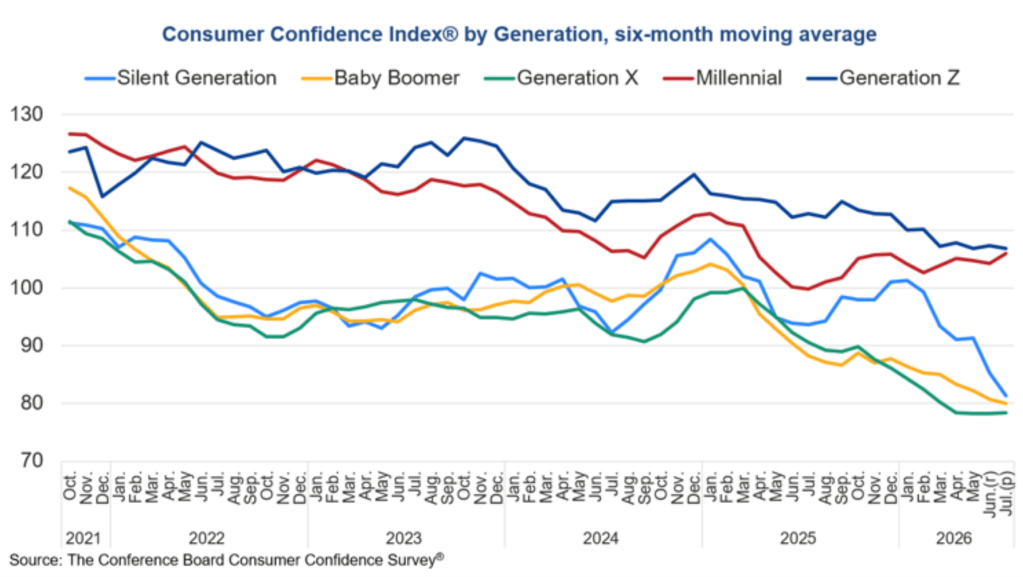
Good morning!

Most C-suite leaders today are obsessed with preparing employees for the AI era by teaching new technical skills. Brené Brown thinks they’re fighting only half the battle.

The billions being poured into AI, she says, will not pay off if companies fail to invest in the human foundationstrust, development, and culture that determine whether these tools actually improve performance.

“I don’t blame the C-suite for wanting to believe it’s about skills because that’s easier than creating a deep sense of mattering and courage and trust and agency,” author and researcher Brown told me last week.

New data suggests that whether AI improves performance may depend less on how much leaders use it than on the kind of culture they create around it. In a BetterUp survey of full-time workers in the U.S., Canada, and the U.K., managers with high AI usage in high-trust, high-development cultures saw team performance rise 6%. Managers with equally high AI usage in low-trust, low-development cultures saw performance fall 9%.

Across the board, leaders who paired AI investments with human ones—by building relationships with their employees or actively coaching their teams—saw 17% stronger performance across productivity, work quality, and effectiveness than leaders who prioritized AI while putting less of a focus on people.

The conclusion may sound intuitive. But BetterUp CEO Alexi Robichaux says only the top-performing managers are using time saved by AI to reinvest in their teams—mainly because most are burnt out. That has real consequences. 

If companies want workers to embrace AI rather than resist it as a threat, Robichaux says, leaders need to start by building real personal connections.

“The problem is we suck at the human part, but it is forcing our hand to get good at the human part because it’s the only thing left where we can compete,” he says.

His recommendation? Go back to basics. Take your employees out for coffee. Check in with them. At its core, it’s all about building trust.

Brown, who serves as executive chair of the BetterUp Center for Daring Leadership, says trust is earned in small, consistent moments when leaders show genuine interest in their employees’ lives.

“Those are seen as difficult because they’re time investments,” she says. “But you think building trust is expensive? Try not having trust. That’s going to cost you everything.” 

Kristin Stoller
Editorial Director, Fortune Live Media
kristin.stoller@fortune.com

This story was originally featured on Fortune.com

Personal AI use is collapsing the customer decision-making process into a single conversation, and most brands aren’t ready for it. The window of influence that once spanned dozens of touchpoints is shrinking to seconds.

What’s more, AI is now selling to AI. Brands themselves are using the technology to market to consumer AI intermediaries before they can ultimately sell to the people behind them. So, what can brands do today to effectively influence customer decisions in this new era? 

How AI is changing the game   

AI tools are transforming the way people make decisions. A lengthy pre-purchase research phase spanning multiple websites and platforms can now be replaced by a single interaction with an AI assistant. An assistant who understands the individual’s unique constraints and remembers their preferences.  

A strong 45% of consumers already say AI-generated recommendations matter more than advertising in shaping their perceptions, according to Omnicom’s Future of Brand Influence report. A strong 70% say they can become an expert in any product or service category just by using generative AI.  

Funnel-based planning frameworks that treat awareness, consideration, and decision-making as separate stages are becoming irrelevant as AI enables customers to experience all three simultaneously. Purchasing decisions can be made in seconds, leaving brands with minimal opportunity to connect authentically, build trust, and feel relevant in the customer’s environment.  

AI must persuade AI

Then there’s the big question of who’s making the decisions. AI assistants are booking hotel rooms, making medical appointments, recommending purchases, and renewing (and canceling) subscriptions on the customer’s behalf, based on what they’ve learned about individual needs and preferences.

Brands must convince these AI intermediaries before they can influence the people using them. And, with the majority of brands now actively using AI to influence customer actions (according to our  2026 CX Trends report), algorithms are actually doing the thinking on both sides of the customer experience. AI must persuade AI.          

Leading as AI rewrites the rules 

To succeed in this new age, brands must exert their influence across environments that operate with extraordinary scale, speed, and intelligence. But things like outdated organizational structures, siloed systems, poor-quality data, and questionable data sourcing are getting in the way.  

Brands will need to consider which organizational changes are required to facilitate customer experiences shaped by AI. What’s the internal governance structure for AI? Is an AI steering committee required? What role will the CMO and other key stakeholders play in shaping AI strategy?      

In addition, brands will need a proactive approach to AI-readiness, building a solid foundation based on four key pillars:  

Pillar one: Trustworthy data 

Brands are drowning in valuable first-party data. But it’s scattered across teams, channels, and systems. Changing that is simple.

The answer is to unify first-party data across the organization into a single data foundation. First-party insights can be enriched with high-quality second- and third-party data from ethical sources, including demographic, behavioral, and transactional data, to gain a 360-degree view of the customer.  Fueling AI solutions with complete data ensures algorithms have all the information they need to make the best decisions and reduces the risk of AI errors.   

Pillar two: Data hygiene  

Customer lives aren’t static. People move, get married (or divorced), change jobs, have kids, and take up new hobbies. Their data must keep up.  

A considered approach to data management, including ongoing data hygiene practices to regularly cleanse, validate, and update customer information, ensures AI is always using the most accurate and up-to-date information. Clean, connected data is a vital ingredient for AI-powered influence.   

Pillar three: Identity  

When a customer switches from mobile to laptop to in-store, most brands lose the thread entirely. Here’s how to fix that.

A robust solution that resolves identity across environments to recognize customers wherever they interact is vital for connecting data signals and powering AI. Using market-leading, interoperable identifiers to enable a unified view of the customer empowers AI to understand individual customer journeys and influence them through cohesive, personalized experiences.  

Pillar four: Privacy and consent  

People are more aware than ever of the data they generate as they browse, shop, and socialize, and they want to control how that data is used. So brands must deliver.

Data governance and respect for customer privacy aren’t just regulatory and ethical imperatives; they’re essential to building customer trust. Brands need to establish clear and  transparent data privacy practices that support a lawful basis for data collection and give customers full control over their data before it is used by AI.  

Turning influence into wins  

As AI use accelerates, the entire ecosystem in which brands operate is being reshaped. Today, brands can be present anywhere — across any screen or any platform. But if they aren’t showing up in the environment that matters, in the moment that matters, and influencing both customers and their AI intermediaries with relevant, personalized experiences, they might as well be nowhere at all. A connected and permissioned data foundation fuels the trust, relevance, and consistency brands need to succeed.

In the age of AI influence, invisibility isn’t a branding problem; it’s an existential one.

The opinions expressed in Fortune.com commentary pieces are solely the views of their authors and do not necessarily reflect the opinions and beliefs of Fortune.

This story was originally featured on Fortune.com

Good morning. For finance leaders trying to understand how the AI infrastructure race is being funded, CoreWeave just offered a revealing case study.

In the span of a few days, the Nvidia-backed startup locked in tens of billions in customer commitments and layered on multiple forms of debt. This underscores a defining feature of today’s AI boom: growth is being financed as aggressively as it is being engineered.

CoreWeave, which provides cloud-based GPUs powered by Nvidia chips, announced on Thursday a $21 billion deal with Meta running from 2027 to 2032. That brings Meta’s total commitment to more than $35 billion, which could be viewed as a significant vote of confidence in sustained demand for AI compute.

At the same time, the company raised roughly $3.5 billion in convertible senior notes, a hybrid instrument that blends debt with an equity upside. Investors collect interest, but can convert into shares if CoreWeave’s valuation rises. It’s a structure that limits near-term cash strain while effectively betting that future equity will be worth more.

And that wasn’t all. CoreWeave CFO Nitin Agrawal said in a LinkedIn post on Friday that the company also:

—Upsized a high-yield bond offering due to heavy demand.
—Secured an $8.5 billion delayed draw term loan at investment-grade ratings.
—Executed what it described as one of the largest dual-tranche raises of its kind.

Also on Friday, the company’s stock climbed as much as 13% after it announced a multi-year agreement with Anthropic. Taken together, it shows that capital is flowing freely to AI infrastructure—at least for now.

I asked Morningstar equity analyst Luke Yang what this shows for how AI-native companies are approaching capital formation right now. He pointed to three aspects:

—Cloud infrastructure companies will continue to use all kinds of tools available to get the funds necessary for capacity expansion. “For this Meta-CoreWeave deal specifically, we see the company leveraging delayed draw term loans, corporate bonds, and convertible notes. Neoclouds also use OEM financing, operating/financing leases, share issuance, etc. Growth is the top priority, and financing should not be a bottleneck for these companies’ growth.”

—Creditors are getting more comfortable with the business of neoclouds. “We see a sequential improvement in the interest rates and credit ratings of CoreWeave’s delayed draw term loans. The DDTL 4.0 facility is the first investment-grade facility with around a 6% interest rate. Going forward, we expect to see more neocloud companies securing investment-grade financing with take-or-pay deals from credible AI labs/hyperscalers.”

—The interest rate that neoclouds enjoy is critical to the viability of their business model. “Given the high leverage of these companies, even a 100- or 200-basis-point increase in overall interest burden can completely break the business model. The ability to borrow at investment-grade is very important for the preservation of equity holders’ value.”

The company’s recent moves highlight a defining dynamic of the AI era: infrastructure is being built at extraordinary speed, financed by equally aggressive capital strategies. The model appears to be working now because demand is strong, its customers are credible, and capital is available—and Morningstar maintains its $97 fair value estimate for CoreWeave, noting shares look fairly valued following recent gains. But it could all be tested when growth normalizes and the cost of all that financing comes due.

Sheryl Estrada
sheryl.estrada@fortune.com

This story was originally featured on Fortune.com
Nicholas Gordon, Fortune’s Asia editor, filling in for Allie Garfinkle.

Hong Kong is back.

IPOs in the Chinese city raised almost $14 billion in the first quarter of the year, a jump of almost 490% year-on-year. That number keeps Hong Kong at the top of the world’s IPO league tables, building on last year’s stellar performance of $35 billion raised over more than 100 new listings. 

Before, Hong Kong’s success was all about secondary listings. Chinese giants like Midea and CATL, already listed on mainland Chinese exchanges, went to Hong Kong to tap the city’s connections to international capital.

But in 2026, the Hong Kong story is all about AI. MiniMax and Knowledge Atlas (better known as Z.ai), two frontier AI labs, Biren Technology, a chip design company, and Insilico Medicine, an AI drug discovery company, are just some of the standout listings from the past few months. 

There’s more to come: Manycore, a spatial design company and one of the Hangzhou-based “Little Dragons” will list in Hong Kong this week; Victory Giant, which makes printed circuit boards, is also raising funds in the city. Other AI companies reportedly considering IPOs are Moonshot AI, the developer of Kimi; Rokid, a manufacturer of smart glasses; and Kunlunxin, the chip unit of Baidu.

Hong Kong and Beijing are “essentially trying to do for Chinese AI what Nasdaq did for the internet,” says Drew Bernstein, co-chairman of Marcum Asia, an accounting firm.

Hong Kong Exchanges and Clearing, the city’s stock exchange operator, calculated that companies that debuted in 2025 had an average first-day return of 40%. But that’s nothing compared to MiniMax and Z.ai, whose shares have jumped by over 500% and 700% respectively from their IPOs in early January. That’s despite both startups reporting less than $100 million in revenue while still losing hundreds of millions of dollars. 

Investors have grown more bullish on China’s AI sector even since DeepSeek shook up the AI narrative last year. “We believe that China is the big winner in this tech war for a number of reasons: valuation, wider adoption of AI, an advantage in power generation,” Mohit Kumar, Jefferies’s chief macro strategist, told me last month. (Be sure to check out my recent explainer on what’s happening in Chinese AI!)

To be sure, “Hong Kong doesn’t quite replicate what a U.S. listing offers,” says Bernstein, who helps Asian companies explore U.S. IPOs.  New York’s exchanges offer much deeper pools of capital, and one expects that Chinese issuers might prefer to list there if not for the geopolitics. Chinese companies are still raising lots of money on both U.S. and mainland Chinese exchanges. And there are also several bumper U.S. IPOs on the horizon—think SpaceX and OpenAI—that are likely to dwarf whatever’s in the pipeline for Hong Kong. 

Still there’s no question it’s a big shift from previous years, when a regulatory crackdown from Beijing made Chinese tech stocks anathema to global investors. “China went from uninvestable to unavoidable in a short period of time,” Bernstein adds.

Nicholas Gordon
X: 
@nickrigordon
Email: nicholas.gordon@fortune.com
Submit a deal for the Term Sheet newsletter here.

Joey Abrams curated the deals section of today’s newsletter. Subscribe here.

This story was originally featured on Fortune.com

My heart sank last week when I woke up to discover that The New York Times had “identified” Satoshi Nakamoto. I was less worried about the impact on the market than I was about the flood of well-meaning “Hey, did you see they found the inventor of Bitcoin” texts and emails I would soon be receiving. I suspected, correctly it turned out, that the Times had probably got it wrong like other publications had before.

In case you’ve been living under the crypto world’s version of a rock, the Times claims Adam Back, a crypto OG who founded the Bitcoin precursor Hashcash, is Satoshi. It’s not a bad guess but, for reasons I outline here, the reporter appears to have been led astray due to confirmation bias. 

Laura Shin, who like me has been on this beat forever and doesn’t have a dog in this fight, likewise thinks the Times whiffed. She delicately points out that Back has been all over the media in the last week, which would be odd behavior if he really were Satoshi—but is not so odd for someone who is trying to whip up enthusiasm for his Bitcoin treasury company.

Ultimately, the Times piece is interesting not so much for its conclusion but for what the piece says about the state of crypto and the world we live in. On the latter, my longtime tech-watcher pal Om Malik decries the “unmasking impulse” and how, in recent efforts to unmask both Banksy and Satoshi, something is being lost.

“Banksy and Satoshi weren’t hiding wrongdoing. They were hiding themselves. In Banksy’s case, the anonymity IS the art … With Satoshi, the anonymity IS the architecture,” Malik writes. “Unmasking either one isn’t just invasive. It is destructive to what they built.”

Malik rightfully laments how, in an always-on and attention-hungry online environment, the Times’ exposé seems to attack the very idea of anonymity. Meanwhile, anonymous or pseudonymous participation seems to be on the decline in the world of crypto, too. This is ironic given how privacy and decentralization have always been touchstone values in crypto culture. But it’s also understandable in light of pressure from governments, and from the sad fact that shady operators have so often used the “we’re anonymous like Satoshi” shtick as a pretext to rip people off.

That’s why the Times piece, and all the attention surrounding it, may ultimately be good for crypto. At a time when the industry is coming to be defined by Wall Street and backroom deals in Washington, D.C., it’s refreshing to go back to basics and recall an earlier time: A time when one man, disgusted by government profligacy and enchanted by the potential of blockchain, decided to build an alternate financial universe and, once he succeeded, chose to fade into the mists forever.

Jeff John Roberts
jeff.roberts@fortune.com
@jeffjohnroberts

This story was originally featured on Fortune.com

For Johanna Mercier, Gilead Sciences’ chief commercial and corporate affairs officer, leadership starts with a clear accounting of what sustains performance across a global role. In a job that rarely conforms to fixed hours, she focuses on her energy: what drains it, what restores it, and how to protect enough of it to lead with steadiness in a business where the stakes are measured in patients’ lives.

Mercier describes energy as a kind of running reserve, something she tracks with intention.  “I think about it like a piggy bank,” she told Fortune Next to Lead. Some meetings, tasks, and decisions draw heavily from it, particularly long discussions that go in circles, internal debates that take too long to resolve, and periods when reaching a decision is slowed by overly bureaucratic processes.

Other parts of the job restore it: visiting teams around the world, hearing what they are building, sharing best practices, supporting local strategies, clearing obstacles, and staying close to patient stories, healthcare professionals, and the communities Gilead serves.

What matters is how she responds when that reserve starts to run low. “It’s about taking a pause and taking a step back,” she says, “and being really strategic about how I spend my time there.” The habit reflects a broader discipline: In a role with constant demands across markets and time zones—and where the mission carries extra weight—Mercier protects her energy by staying close to the work that creates momentum and by limiting how much of herself she gives to conversations that do not.

That framework becomes especially important in drug development, where most efforts fall by the wayside long before a medicine reaches the market. Mercier calls it “scientific heartbreak” because teams grow attached to a medicine’s potential and to what it might do for patients.

She leads through those moments by placing each setback inside the longer arc of clinical discovery. Mercier points to Lenacapavir, Gilead’s HIV prevention drug, which took 17 years to reach its first approval and emerged only after scientists worked through roughly 3,000 candidate molecules. At Gilead, where more than 50 clinical programs are active across phases one through three, that kind of attrition is a constant feature of the work. Her job, then, is not to deny the sting of a canceled program but to help teams turn disappointment into learning and keep moving toward the next viable breakthrough, she says. And for Mercier, that is where the energy returns.

Watch the full interview with Mercier here.

Ruth Umoh
ruth.umoh@fortune.com

This story was originally featured on Fortune.com

  • In today’s CEO Daily: Diane Brady reports on a new product from a slimmed-down WeWork.
  • The big leadership story: An AI push didn’t spare Intuit from the SaaSpocalypse.
  • The markets: Mostly down as optimism for a Iran peace deal fades.
  • Plus: All the news and watercooler chat from Fortune.

Good morning. I’ve long been fascinated with companies that fail, often spectacularly, only to be reborn in a smaller but profitable form. Remember when Lego slapped its name on so much stuff that it almost went bankrupt? Companies like General Motors, Delta Air Lines, Starbucks, Apple, and Ford all had to pare back and refocus to get healthy. A more recent example: WeWork.

It’s launching a private office pod today that’s emblematic of a more focused and asset-light direction for the brand. Normally, I’d pass on getting an ‘exclusive’ on a product launch. But that changed when I saw ‘WeWork Go’ emblazoned on the side of what looks like a transparent phone booth, the company’s first new product since July 2022, when WeWork was still trading for around $5 on the New York Stock Exchange. 

Of course, you’ll remember that the coworking company once had a $47 billion valuation and cult-like CEO in Adam Neumann who promised to “elevate the world’s consciousness.” That iteration of WeWork became a bankrupt cautionary tale with $18 billion in debt in 2023, when Neumann was ousted. (He later tried unsuccessfully to buy the company back.) It’s now a private firm with a penny stock that trades for around a nickel and a CEO named John Santora, who spent the first half-century of his career at Cushman & Wakefield. 

It’s also, as Santora told me, a profitable company with 550,000 members in more than 600 locations. But many of those locations are now franchised and WeWork now has more than 2,000 third-party coworking partners in its network. 

WeWork’s new “private office pod” offers models for single users and a larger pod for up to four people. Santora says you’ll see them in airports, convention centers, hotel lobbies or other high-traffic areas visited by “busy professionals on the move.” Not a breakthrough technology, perhaps, but a smart move from a man who’s navigated the realities of real estate his whole career. 

WeWork Go “expands the ability for our people to access our spaces and our technology,” says Santora. He says WeWork still has “that entrepreneurial spirit,” and in the company’s new, slimmed-down era, transparent pods will test whether that culture can thrive on a smaller scale.

Contact CEO Daily via Diane Brady at diane.brady@fortune.com

This story was originally featured on Fortune.com

Good morning. On Fortune’s radar today:

  • Markets: Mostly down—but Wall Street still thinks the Fed will deliver cuts.
  • EXCLUSIVE: Citgo CEO imprisoned by Maduro still has hopes for the oil industry in Venezuela.
  • U.S. blockade of the Strait of Hormuz starts today.
  • Yes, Trump is at war with the Pope.
  • Airline ticket prices track Google search volume for “flights.”
  • The huge number of Americans who have no retirement savings.

This story was originally featured on Fortune.com

After a week when ceasefire hopes lifted sentiment and stock prices on Wall Street, the U.S. war on Iran could soon flare up again.

Talks between the two countries ended without a deal over the weekend, prompting President Donald Trump to announce that a naval blockade will be imposed on the Strait of Hormuz.

That would target Iranian oil shipments, which have continued flowing, while Tehran has bottled up supplies from other countries by selectively closing the strait with drone and missile attacks.

Futures tied to the Dow Jones industrial average fell 531 points, or 1.10%. S&P 500 futures were down 1.15%, and Nasdaq futures lost 1.32%.

U.S. oil futures jumped 8.63% to $104.90 a barrel, and Brent crude climbed 8.04% to $102.85. Gold fell 2.28% to $4,678 per ounce.

The U.S. dollar was up 0.49% against the euro and rose 0.32% against the yen. The yield on the 10-year Treasury was flat at 4.317%.

After the first month and a half of the war focused on aerial bombardments and missiles barrages, the next phase is poised to rely on naval forces as the U.S. follows a two-part strategy targeting Iran’s main economic lifeline as well as its control of the strait.

U.S. Central Command said the Hormuz blockade will begin on Monday at 10 am ET, and indicated it will also be selective, despite Trump’s vow that the strait should be open to everyone or no one at all.

“The blockade will be enforced impartially against vessels of all nations entering or departing Iranian ports and coastal areas, including all Iranian ports on the Arabian Gulf and Gulf of Oman,” it explained in a statement. “CENTCOM forces will not impede freedom of navigation for vessels transiting the Strait of Hormuz to and from non-Iranian ports.”

Preventing Iran from generating oil revenue would not only cripple its already-collapsing economy but also deny financial resources for the Islamic Revolutionary Guard Corps.

Meanwhile, the Navy sent two destroyers through the strait on Saturday to prepare for mine-clearing operations. Central Command said it is “establishing a new passage” for the maritime industry for the free flow of commerce.

The IRGC challenged the warships and warned them to leave. A drone was also reportedly launched at the ships, which destroyed it. On Sunday, the IRGC threatened to deliver a “strong and forceful response” to any warships that approach the Strait of Hormuz.

Until this weekend, U.S. ships had avoided the strait as Navy officials previously have described it as an Iranian “kill box” filled with numerous threats, including anti-ship missiles, drones, fast-attack boats, and mines.

The failure to reopen the strait has sent oil prices skyrocketing, and Tehran’s ability to scare away tanker traffic has emerged as its main source of leverage over the U.S.

But if the Navy can create an alternate path through the strait with manageable risks from Iranian attacks, then the regime loses its most potent weapon.

“One of the things that commercial ships were waiting to see was whether or not this strait was clear, and sailing two destroyers in is a big one,” Campbell University professor Salvatore Mercogliano, who specializes in military and maritime history, said on his podcast.

This story was originally featured on Fortune.com

The UK will not take part in the proposed US blockade of the Strait of Hormuz, setting up yet another point of contention between President Donald Trump and Prime Minister Keir Starmer over the conflict in Iran.

The British government said in a statement Sunday that it continued to call for freedom of navigation and the opening of the strait, following Trump’s announcement that the US would begin a full naval blockade of the strategic waterway that’s essential for global energy supplies.

“Effective immediately, the United States Navy, the Finest in the World, will begin the process of BLOCKADING any and all Ships trying to enter, or leave, the Strait of Hormuz,” Trump posted on Truth Social on Sunday. “Any Iranian who fires at us, or at peaceful vessels, will be BLOWN TO HELL.”

Britain won’t be taking part in that blockade, people familiar with the government’s position said on condition of anonymity to speak freely about the proposed US operation.

Discussing his plan to blockade the strait on Fox News, Trump said he understands that “the UK and a couple of other countries are sending minesweepers.”

The UK has discussed deploying autonomous mine-hunting drones in the strait if a viable plan emerges in conjunction with other allies to reopen it, with Starmer previously saying those systems were “in the region.” However, that is a separate proposal to Trump’s threat to blockade Hormuz.

Representatives from Britain and a coalition of other countries will take part in another meeting in the coming days to discuss a plan to open the waterway. Nonetheless, many of the countries taking part in those talks are unwilling to commit naval assets until a lasting peace agreement is reached. Most do not see opening the strait by military means as a workable option.

Trump used his Fox interview to renew his criticism of Starmer, again comparing him to Neville Chamberlain, the British wartime leader whose name is synonymous with the appeasement of Adolf Hitler. He also criticized the premier for offering to send military equipment after the war is over. 

“You need the equipment before the war starts or during the war,” the president said, calling Starmer’s position a “Neville Chamberlain-type statement.”

Relations between the two leaders have become strained after Starmer declined to allow US forces to use British military bases for their initial strikes on Iran, leading Trump to fire a volley of insults at Starmer.

Read More: Trump Ramps Up Criticism of Keir Starmer Over War on Iran

The UK has since permitted use of its bases for American assets taking part in what it calls “defensive” operations targeting Iranian missile launchers. Still, Starmer has insisted the conflict is “not our war.”

“I’m clear that for the United Kingdom, we have our principles, we have our values. We will be guided by them in everything that we do,” Starmer said in an ITV interview last week in which he criticized Trump’s rhetoric threatening the destruction of Iranian civilization.

“That’s why I’ve said — and obviously it’s caused a degree of criticism and pressure in the last few weeks — I’ve been saying we are not going to be dragged into this war,” the premier added, referring to Trump’s repeated criticism of him for not expanding Britain’s role.

This story was originally featured on Fortune.com

In parched southern Texas, a yearslong drought has depleted Corpus Christi’s water reserves so gravely that the city is scrambling to prevent a shortage that could force painful cutbacks for residents and hobble the refineries and petrochemical plants in a major energy port.

Experts said the city didn’t expect such a bad drought, and new sources of reliable water didn’t arrive as expected. Those problems arose as the city increased its water sales to big industrial customers.

“We just have not kept up with water supply and water infrastructure like we should have. And it’s decades in the making,” said Peter Zanoni, the city manager since 2019.

Corpus Christi, a city of about 317,000 people that also supplies water to nearby counties, is closely tied to its oil and gas industry. The region makes everyday essentials like fuel and steel and ships them to the world.

Zanoni said it is highly unlikely the city will run out of water, but without significant rainfall or new sources, residents may face forced cutbacks and industry may have to do with less. At a time when the Iran war is already raising gas prices, the shortage is hitting an area that produces 5% of the U.S. gasoline supply.

Droughts are common, but this one has dragged on for most of the past seven years. Key reservoirs are at their lowest point ever. The quickest fix is different weather.

“We are actively praying for a hurricane,” former city council member David Loeb said, half in jest. Loeb doesn’t want anyone injured, but after wrestling with previous droughts in his time on the council, he feels the lack of rain acutely.

The drought isn’t expected to lift by summer, leaving officials scrambling to tap more groundwater to avoid an emergency.

Lessons from last time

After the last drought in the early 2010s, the city approved a pipeline extension to bring in more water from the Colorado River and promoted conservation. In the years that followed, water use actually fell. The city, seeing opportunity, added a petrochemical plant and steel mill to its long list of industrial customers.

City officials had allowed for drought in their calculations — just not this kind of drought, Zanoni said. It has hit especially hard because reservoirs never fully recharged after the last one.

And it’s come at a bad time.

After many years, the pipeline extension finally delivered its full capacity only last year. Meanwhile, discussion of building a desalination plant that would remove salt from seawater — a potentially drought-proof solution recommended in 2016 — bogged down over concerns about costs as high as $1.3 billion and environmental impact.

“If the then-city council had followed through on that, we would have had that plant up and running by now,” Zanoni said.

It’s an industry town

Corpus Christi has followed its long-established plan for reducing water use. Stage 1 seeks voluntary actions from citizens like taking shorter showers and limiting how often they can water. Currently, the city is in Stage 3, which means pauses on many outdoor water uses.

Many residents are angry that they can’t water their lawns, that their bills are set to rise sharply and that they may face fines, said Isabel Araiza, co-founder of a grassroots group active on water issues. Some don’t feel industry will be asked to share in the pain, she said.

The city’s drought plan allows for charging residents and businesses extra if they use lots of water. But big industry, which Zanoni says consumes as much as 60% of the city’s water, can opt to pay a permanent surcharge to avoid the possibility of having a much larger fee added in times of drought.

Araiza calls it a bad system. Once industry pays the surcharge, she said, they have no incentive to conserve water.

The city has defended the system, saying in a statement that industry does not “get a pass on water conservation” or forced curtailment. The statement said the business surcharges have raised $6 million a year.

It is wrong to suggest industry isn’t helping, said Bob Paulison, executive director of the Coastal Bend Industry Association. Companies have stopped landscaping, they recycle water for essential cooling needs and they are looking for alternative water sources, he said.

The city hasn’t imposed extra costs on anyone yet.

But Zanoni said water rates may eventually double as the city invests roughly $1 billion on infrastructure — costs that some argue will disproportionately benefit industry and make life for residents more expensive.

What’s the way out?

The city is in a water emergency when it has 180 days before water supply can’t keep up with demand. Officials have run through different scenarios for getting new water and the drought easing, and have said an emergency could come as early as May, as late as October, or not at all.

The city has tapped into millions of gallons of new groundwater, and it hopes to get even more.

The biggest unknown is the Evangeline Groundwater Project, which involves a pipeline and about two dozen wells that could add enough water to head off an emergency. It still needs state approval but the city hopes water could be flowing as soon as November. New sources come with drawbacks – some have raised water quality concerns, and there are worries too much pumping could deplete groundwater.

If the city has to declare a water emergency, it would be able to more aggressively curtail water use – mandatory reductions that would apply evenly to all industry and residents. That is a sensitive decision and is likely to be a “knock-down drag-out bloodbath,” Loeb said.

Because residents on average have already reduced their water use, future mandatory cuts are likely to fall heavier on industry.

“It’ll be an unbelievable disaster,” said Don Roach, former assistant general manager of the San Patricio Municipal Water District that has lots of industrial customers in the area. “When you cut the cooling water off to most of these industries, they just have to shut down. There’s no other way around it.”

Paulison said companies that produce fuel, polymers, iron and steel “have the least amount of flexibility in just cutting water usage.” He added, however, that companies remain optimistic they can reduce usage, adapt and continue operations.

Zanoni said the city’s plans should buy time to avert the worst.

“We are hoping we don’t get there, but we don’t work on hope,” he said.

This story was originally featured on Fortune.com

China now has a word for token: ciyuan

Liu Liehong, the administrator of China’s National Data Administration, the country’s main data regulator, unveiled the term at a State Council press conference in March, explaining that tokens were now “the settlement unit linking technological supply with commercial demand.” 

The National Data Administration disclosed that China now processes 140 trillion tokens every day, up from just 100 billion at the start of 2024. Chinese AI models have now surpassed U.S. models on OpenRouter, a popular marketplace for AI models. 

Investors have bought into the AI boom. IPOs in Hong Kong are at a five-year high thanks to a steady stream of Chinese AI and tech startups, including AI labs MiniMax and Zhipu AI, and chip designer Biren. 

“We believe that China is the big winner in this tech war for a number of reasons: valuation, wider adoption of AI, an advantage in power generation,” Mohit Kumar, Jefferies’ global macro strategist, told Fortune in mid-March at the bank’s Asia Forum in Hong Kong.

China’s goal is now to build a “token economy,” backed by a proliferation of efficient, open-source models and a push into real-world AI applications. Yet like their U.S. peers, Chinese firms are grappling with expensive research costs and heavy capital expenditure pledges, while also fending off Washington’s export controls, designed to keep them one step behind in the chip race.

Big tech pivots

The AI boom rescued China’s big tech companies from years of regulatory purgatory.

Alibaba, the e-commerce giant, has invested in open-source models, which can be downloaded and modified freely by developers. That low barrier to entry has made its Qwen models a compelling option for startups unwilling to pay for proprietary models from OpenAI and Anthropic. Qwen has won over developers from Southeast Asia to the Middle East, and it’s also convinced Western users too: Meta’s most recent model, Muse Spark, is trained partly off of Qwen.

Unlike Alibaba, ByteDance has largely kept its AI models proprietary, instead leveraging its product design and consumer experience strengths to win users. The company’s chatbot, also called Doubao, is China’s most-used AI app, with 100 million daily active users over the Chinese New Year holiday in February. 

Tencent, which operates the ubiquitous WeChat messaging platform, has been a step behind its rivals when it comes to AI. The company launched ClawBot in March, which appears as a contact within WeChat, allowing its over one billion monthly active users to connect directly with OpenClaw and execute tasks through the messaging interface.

Competition is fierce within China’s tech sector. Last week, Alibaba revealed its newest video generation model, Happy Horse, which performs better than the current leader, ByteDance’s SeeDance, according to some analyses

And there’s still potential for another big tech company to shake things up. Xiaomi and Meituan, better known for smartphones and food delivery respectively, have launched their own large models.

Smaller startups

A new generation of Chinese AI startups are also winning converts in Silicon Valley. 

When vibe-coding startup Cursor launched Composer 2, its latest coding service, eagle-eyed users discovered that the model had been built on Kimi K2.5, an open-source model from Beijing-based Moonshot AI. Cursor’s co-founder later acknowledged it was “a miss to not mention the Kimi base…from the start.” 

Two other startups—Knowledge Atlas, better known as Z.ai, and MiniMax—have already listed in Hong Kong, giving some rare visibility into the economics of a frontier AI lab.

MiniMax reported $79 million in 2025 revenue, a 159% year-on-year jump, with 70% coming from overseas markets in an early signal of global appetite for Chinese foundation models. Yet it also posted an adjusted net loss of $250 million. Zhipu AI generated 724 million yuan ($104.8 million) in revenue, 132% higher than the year before, but its total losses ballooned to 4.7 billion yuan ($680 million), driven by R&D spending that jumped 45%.

Investors don’t seem to mind the massive losses. Zhipu’s shares are up more than 570% from its IPO price; MiniMax has risen more than 470%, at one point briefly exceeding the market cap of Baidu. Still, both stocks have swung wildly, rising and falling by double-digit percentages in single sessions.

Moonshot AI, backed by Alibaba and HongShan, is reportedly weighing a Hong Kong IPO, coming just a few months after a January funding round that valued the startup at $10 billion. 

One startup that’s been notably quiet this year is DeepSeek, the Hangzhou-based lab that reset the whole AI conversation last year with its V3 and R1 models. Developers are eagerly awaiting the public release of V4, the latest version of its model.

Physical AI

China is also surging ahead in physical AI, backed by supply chains that can cheaply manufacture advanced technology.

Unitree Robotics, perhaps China’s most prominent humanoid robot startup, has filed for a 4.2 billion yuan ($610 million) IPO on Shanghai’s STAR Market. Unlike many of its robotics peers in China and overseas, Unitree doesn’t lose money, posting an adjusted net profit of roughly 600 million yuan ($87 million). Other major Chinese robotics startups include Agibot and UBTech.

Chinese companies are also pushing hard in automated driving. Pony AI launched Europe’s first commercial robotaxi service in Zagreb, Croatia in early April, in partnership with Uber and Croatian operator Verne. WeRide has also partnered with Uber to offer fully commercial robotaxis in Dubai. 

Governments, consumers get on board

Chinese users are far more comfortable with AI than their Western counterparts. An Edelman survey from October found that 87% of Chinese respondents trust AI, against 32% in the U.S.

The country’s short drama industry is just one example of consumer comfort with AI. Video platforms launched roughly 470 new dramas every day in January, thanks to plummeting production costs. A short drama can now be generated with AI tools for around 100,000 yuan ($14,600), about ten percent of the conventional cost, with the production window shortened from 15–30 days to under five.

Chinese consumers are also embracing AI agents, with a series of major tech companies hosting workshops to walk potential users through the process of installing OpenClaw on their personal devices. 

Local governments are amplifying the push, offering subsidies to “one-person companies,” solo entrepreneurs building AI agent businesses. 

Beijing’s approach is more measured, both pushing AI as a strategic priority while also proactively moving to ward off some potential risks, such as by warning against security vulnerabilities in OpenClaw-based agents and proposing regulations for AI companion apps. 

Yet the most significant policy advantage may not be directly connected to AI at all. China has aggressively expanded its power generation and transmission capacity in recent years. Goldman Sachs estimates that China will have approximately 400 gigawatts of spare power capacity by 2030, roughly three times projected global data center demand. 

Constraints at home and abroad

Still, Chinese AI companies face numerous headwinds that constrain what they can do, particularly compared to the leading U.S. AI developers.

Due to U.S. export controls limiting the sale of the most advanced AI chips to China, domestic companies are forced to rely on domestically made chips, primarily from Huawei; overseas data centers; or on U.S. hardware sourced through grey markets. Chinese chips are getting better: on April 8, Alibaba unveiled a new data center run entirely on its own home-designed Zhenwu chips. Yet production yields and performance still remain far behind the U.S. chip supply chain.

China’s venture capital ecosystem is also thinner than Silicon Valley’s. Unease with Beijing’s tech regulation and U.S. regulatory pressure lead many global investors to avoid Chinese startups. Moonshot AI, at an $18 billion valuation, commands mostly China-based investors. Anthropic, by contrast, raised $30 billion in a Series G round in February 2026, at a $380 billion post-money valuation, backed  by a global consortium of deep-pocketed institutional investors including GIC, Coatue, Founders Fund, and ICONIQ. 

That funding pressure forced some founders to take radical action, with some going as far as skipping the Chinese market entirely. Manus AI, which launched a buzzy AI agent last year, reincorporated as a Singapore entity; Meta later acquired the agentic AI startup for roughly $2 billion in late 2025. 

Beijing has taken a dim view of the deal. Two Manus co-founders, CEO Xiao Hong and chief scientist Ji Yichao, are now subject to an exit ban, according to the Financial Times.

The token economy

Yet the biggest unresolved question in Chinese AI is much the same as in the U.S.: How to turn tokens into profits. 

Alibaba spent 123 billion yuan ($17 billion) on capital expenditure in 2025, which helped contribute to a 66% plunge in net income. Tencent hasn’t spent quite as much money, with capex of just 79 billion yuan ($11.6 billion). ByteDance, as a private company, faces less pressure from shareholders about profitability, but the Financial Timesreported late last year that the TikTok owner expects to spend $23 billion on AI infrastructure.

That’s still a lot smaller than what U.S. giants are spending. Alphabet spent $94 billion on capital expenditures last year; Meta spent $75 billion. Both companies plan to spend even more this year. 

But monetization pressure may already be pushing some of China’s tech companies to rethink their strategy. Both Alibaba and Z.ai have released some of their most recent models in a closed format, at least at first. Both companies, as well as others like Baidu, are also hiking prices for their models and cloud services. 

Going forward, China’s tech companies are going to put AI at the center of their business. Last month, Alibaba reorganized its entire AI operation into what it calls the “Alibaba Token Hub,” which consolidates five previously separate units, including Tongyi Laboratory (its foundational model research arm), Qwen, and an enterprise AI division called Wukong, under CEO Eddie Wu’s direct oversight. 

“ATH is built around a single organising mission: create tokens, deliver tokens and apply tokens,” Wu said in a letter announcing the reorganization.

This story was originally featured on Fortune.com

Hungarian voters on Sunday ousted long-serving Prime Minister Viktor Orbán after 16 years in power, rejecting the authoritarian policies and global far-right movement that he embodied in favor of a pro-European challenger in a bombshell election result with global repercussions.

Election victor Péter Magyar, a former Orbán loyalist who campaigned against corruption and on everyday issues like health care and public transport, has pledged to rebuild Hungary’s relationships with the European Union and NATO — ties that frayed under Orbán. European leaders quickly congratulated Magyar.

It’s not yet clear whether Magyar’s Tisza party will have the two-thirds majority in parliament to govern without a coalition. With 77% of the vote counted, it had more than 53% support to 38% for Orbán’s governing Fidesz party.

It’s a stunning blow for Orbán, a close ally of both U.S. President Donald Trump and Russian President Vladimir Putin. Orbán conceded defeat after what he called a ″painful″ election result.

“I congratulated the victorious party,″ Orban told followers. “We are going to serve the Hungarian nation and our homeland from opposition,″ he said.

‘’Thank you, Hungary!” Magyar posted on X, as thousands of his supporters thronged the banks of the Danube in Budapest, chanting “We got it! We did it!”

Orbán, the EU’s longest-serving leader and one of its biggest antagonists, who has traveled a long road from his early days as a liberal, anti-Soviet firebrand to the Russia-friendly nationalist admired today by the global far-right.

Voters showed up in droves

Turnout by 6:30 p.m. was over 77%, according to the National Election Office, a record number in any election in Hungary’s post-Communist history.

The parties of both Orbán and Magyar said they had received reports of electoral violations, suggesting some results could be disputed by both sides.

“I’m asking our supporters and all Hungarians: Let’s stay peaceful, cheerful, and if the results confirm our expectations, let’s throw a big, Hungarian carnival,” Magyar said.

Mark Radnai, Tisza’s vice president, also called for reconciliation after a tense campaign. “We can’t be each other’s enemies. Reach out, hug your neighbors, your relatives. It’s the day of reunification.”

‘Choice between East or West’

The EU will be waiting to see what Magyar does about Ukraine. Orbán repeatedly frustrated EU efforts to support Ukraine in its war against Russia’s full-scale invasion, while cultivating close ties to Putin and refusing to end Hungary’s dependence on Russian energy imports.

Recent revelations have shown a top member of Orban’s government frequently shared the contents of EU discussions with Moscow, raising accusations that Hungary was acting on Russia’s behalf within the bloc.

Orbán occupied an outsized role in far-right populist politics worldwide.

Members of Trump’s “Make America Great Again” movement are among those who see Orbán’s government and his Fidesz political party as shining examples of conservative, anti-globalist politics in action, while he is reviled by advocates of liberal democracy and the rule of law.

Casting his ballot in Budapest, Marcell Mehringer, 21, said he was voting “primarily so that Hungary will finally be a so-called European country, and so that young people, and really everyone, will do their fundamental civic duty to unite this nation a bit and to break down these boundaries borne of hatred.”

Strained relationship with the EU

During his 16 years as prime minister, Orbán launched harsh crackdowns on minority rights and media freedoms, subverted many of Hungary’s institutions and been accused of siphoning large sums of money into the coffers of his allied business elite, an allegation he denies.

He also heavily strained Hungary’s relationship with the EU. Although Hungary is one of the smaller EU countries, with a population of 9.5 million, Orbán has repeatedly used his veto to block decisions that require unanimity.

Most recently, he blocked a 90-billion euro ($104 billion) EU loan to Ukraine, prompting his partners to accuse him of hijacking the critical aid.

His challenger came from the inside

Magyar, 45, rapidly rose to become Orbán’s most serious challenger.

A former insider within Orbán’s Fidesz, Magyar broke with the party in 2024 and quickly formed Tisza. Since then, he has toured Hungary relentlessly, holding rallies in settlements big and small in a campaign blitz that recently had him visiting up to six towns daily.

In an interview with The Associated Press earlier this month, Magyar said the election will be a “referendum” on whether Hungary continues on its drift toward Russia under Orbán, or can retake its place among the democratic societies of Europe.

Tisza is a member of the European People’s Party, the mainstream, center-right political family with leaders governing 12 of the EU’s 27 nations.

Uphill election battle

Magyar faced a tough fight. Orbán’s control of Hungary’s public media, which he has transformed into a mouthpiece for his party, and vast swaths of the private media market give him an advantage in spreading his message.

The unilateral transformation of Hungary’s electoral system and gerrymandering of its 106 voting districts by Fidesz also will require Tisza to gain an estimated 5% more votes than Orbán’s party to achieve a simple majority.

Additionally, hundreds of thousands of ethnic Hungarians in neighboring countries had the right to vote in Hungarian elections and traditionally have voted overwhelmingly for Orbán’s party.

Russian secret services have plotted to interfere and tip the election in Orbán’s favor, according to numerous media reports including by The Washington Post. The prime minister, however, has accused neighboring Ukraine, as well as Hungary’s allies in the EU, of seeking to interfere in the vote to install a “pro-Ukraine” government.

Such accusations are part of why many in the EU see Orbán as a danger to the bloc’s future.

But across the Atlantic, Trump and his MAGA movement are all-in for another Orbán term. Trump repeatedly endorsed the Hungarian leader and U.S. Vice President JD Vance made a two-day visit to Hungary last week meant to help push Orbán over the finish line.

This story was originally featured on Fortune.com

The Iranian economy was already in shambles before the U.S. and Israel launched their war on the Islamic republic, and the relentless bombing since then has pushed the regime to the brink, according to reports.

Prior to the war, high inflation and a currency collapse triggered mass protests that prompted a brutal crackdown. But now with factories, energy facilities, bridges and railways destroyed—leaving many Iranians unemployed—conditions have gotten worse.

The rial has plunged 8% against the dollar on the black market since the war started, according to the Economist. That’s after it lost 60% of its value in the months after the 12-day war against Israel last June.

Meanwhile, prices have risen by 6% during the current war, according to central bank data cited by the Economist. Prior to that, food inflation had soared to an annual rate of 64% in October, then accelerated further to 105% by February, vaulting overall inflation to 47.5% on the eve of war.

High inflation forced the central bank last month to issue its largest-ever currency denomination, the 10 million rial note, just a month after putting the 5 million rial into circulation.

But official data may be downplaying the severity of inflation. Residents of Tehran and other cities told Reuters that some prices have shot up around 40% since the war began six weeks ago.

An insider close to the Iranian establishment said officials view the economy as the country’s Achilles heel, the report said, with fears of renewed unrest looming over the government.

Failure to reach a ceasefire deal with the U.S. over the weekend dashed hopes for sanctions relief or the release of Iranian assets that were frozen overseas.

Without an influx of funds, authorities will have trouble making payroll, eventually threatening the regime’s ability to govern Iran, the insider told Reuters. The war has already strained its financial resources, as it has subsidized people who fled their homes while also paying for emergency repairs to infrastructure.

An Iranian official said the country “will face a disaster” if sanctions aren’t lifted as the biggest industrial plants that power the economy will take months or ​years to repair, according to Reuters.

A young Iranian woman stands outside a small fast-food restaurant in downtown Tehran, Iran, on April 11, 2026.
Morteza Nikoubazl/NurPhoto via Getty Images

On top of those economic woes, President Donald Trump’s plan to impose a naval blockade on the Strait of Hormuz could choke off Iran’s main source of money.

Revenue from oil exports were estimated to be worth at least $30 billion last year. And energy products accounted for roughly one-quarter of government revenue in 2023, according to the Washington Institute.

Meanwhile, the Islamic Revolutionary Guard Corps, which is leading Iran’s military response to the U.S. war and its domestic repression, processes about half of the country’s oil exports and stood to collected billions of dollars from a toll imposed on ships seeking to cross the strait.

But a U.S. naval blockade would threaten the IRGC’s financial resources and further weaken the overall economy.

Dan Alamariu, chief geopolitical strategist at Alpine Macro, said in a note on Friday that economic mismanagement in Iran runs deep, adding that systemic corruption is a necessary feature that pays off loyalists.

“To survive, Iran’s regime will need to either reform (which it is incapable of) or export instability abroad through proxies and a missile and nuclear proliferation push (inviting further conflict),” he wrote. “Absent this, it will likely fall, though the timing could be 1-3 years away. Iran is probably the most unstable regime among large developing states, if looking at two gauges of regime instability (illegitimacy and youth misery).”

This story was originally featured on Fortune.com

President Donald Trump announced Sunday that the U.S. Navy would immediately impose a blockade on the Strait of Hormuz after ceasefire talks with Iran failed to produce a deal.

That would turn the tables on the Islamic republic, which has effectively kept the narrow waterway closed with missile and drone strikes, keeping one-fifth of the world’s oil and liquid natural gas bottled up in the Persian Gulf.

At the same time as it’s been halting global supplies, Iran is letting its own oil exports through the strait, capitalizing on the massive spike in prices for crude.

But a U.S. blockade of Hormuz would cut off the financial windfall Tehran is reaping and further hobble an economy that was crashing even before the war started six weeks ago.

Retired Admiral James Stavridis, who previously served as NATO’s supreme allied commander, estimated that blockading the Strait of Hormuz would require two aircraft carrier strike groups that would provide air cover, plus a dozen destroyers and frigates operating outside the Persian Gulf.

Another half dozen U.S. warships as well as vessels from the UAE and Saudi navies would also be needed inside the Gulf, he told CNN on Sunday.

“So you try and bottle it up on both sides,” Stavridis added. “The bottom line: this is a big task, and it’s a big gamble.”

Just before the U.S. and Israel began bombing Iran, 18 warships were in the Middle East, according to the Center for Strategic and International Studies. That included two aircraft carriers and the escort ships that are part of each strike group.

Since the war started, the U.S. has deployed a Marine Expeditionary Unit, which typically includes three warships and more than 2,000 Marines. Another MEU and a third carrier strike group are on the way to the Middle East.

Stavridis characterized a blockade of the strait as falling halfway between leaving it under Iranian control and Trump’s earlier threat to wipe out Iran as a civilization.

“It puts economic pressure on Tehran without destroying the oil facilities, which you should want to preserve into the future,” he said. “So big complicated undertaking, hardly a trivial move on the chess board we’ve been watching.”

Cutting off the trickle of oil that’s been coming out of the Persian Gulf would likely send energy markets into more turmoil. Futures have already soared, and prices for delivery of physical barrels are even higher as shortages mount.

Markets would also fear renewed fighting since a blockade would be perceived as a hostile act that triggers retaliation from Iran. U.S. warships near the strait could be vulnerable as Navy officials previously have described it as an Iranian “kill box” filled with numerous threats, including anti-ship missiles, drones, fast-attack boats, and mines.

But two destroyers crossed the strait on Saturday to begin setting conditions for clearing mines and eventually establishing “a new passage” for the maritime industry for the free flow of commerce.

Stavridis said that Iranian ships could try to look for ways around a blockade to smuggle oil or deploy more mines. He also warned Russia and China could come to Iran aid with cyberattacks.

Despite the risks of a blockade, analysts have touted it as an option that would avoid putting boots on the ground.

“The U.S. can implode Iran’s economy by shutting down its oil exports,” Robin Brooks, senior fellow at the Brookings Institution, wrote in a Substack on March 13. “That might open up the Strait of Hormuz a lot faster than anything else. Time to implode Iran’s economy and give the Ayatollahs a taste of their own medicine.”

While he has been skeptical that the U.S. Navy has enough ships to escort all the tankers that typically transit the Strait of Hormuz, he said it has the resources to blockade Iran’s oil exports.

Removing more supply from global oil markets should send prices even higher, but Brooks argued crude might do the opposite if a U.S. blockade is seen ending the war quickly.

China, which buys most of Iran’s oil, would be incentivized to lobby Tehran to reopen the strait, and a blockade of Iran’s exports would deprive the regime of hard currency needed to prop up its war machine, he added.

“An embargo of Iranian oil, if the collapse in Iran’s economy is deep enough, could convince markets that the closure of the Strait might end sooner rather than later. As a result, Brent might only spike briefly or even fall,” Brooks wrote in a later post.

This story was originally featured on Fortune.com

Does being an early adopter to AI protect a company in an AI-induced market panic?

Apparently not, based on the experience of Intuit, best known for TurboTax and QuickBooks—and the worst performing stock in the S&P 500 as this year opened. It was a twist in fate for the software company: Intuit is a big name in tax and personal accounting software, and its stock is Wall Street royalty, smashing the S&P Index over the company’s 33 years as a publicly traded company. But in January and February, even as tax preparation season began, it took a drubbing in a market scare—the so-called SaaSpocalypse. Investors were suddenly gripped with the fear that AI would annihilate software companies of every kind.

For Intuit CEO Sasan Goodarzi, the stock’s plunge was painfully ironic. Far from being caught off guard by AI, he was an early AI adopter. Years before most CEOs, he made AI a centerpiece of his company’s strategy, seeing it as a powerful tool, not a competitor. He told Fortune in 2020: “In five to ten years, undisputed, it will be as powerful as the impact of electricity and the internet.”

And he didn’t just talk the talk: That same year, Goodarzi laid off 715 employees—unprecedented at Intuit—and hired some 700 new employees who could advance AI throughout the company. Those moves made Intuit a leading-edge business model in the AI era—a high-profile example of how to go all-in on AI and simultaneously all-in on humans. The company’s example was seen by many as a portent of the AI future.

That reputation offered little protection during the SaaSpocalypse: Indeed, Intuit was the stock investors hammered most ferociously. “We got sold even more [than others] in the first six weeks of the year because we were trading so much better than our peer companies,” Goodarzi says. As the stock plunged, Intuit couldn’t fully respond to investors because a company quarter was closing at the end of January, so it had to observe the normal silent period.

Intuit’s stock price has rebounded partially to around $350 at publication time, with a valuation of shy of $100 billion—nowhere near its 2025 year-end level and less than half its all-time high of just over $220 billion, reached last summer. Many investors still think it’s only a matter of time until the major AI companies—OpenAI, Google Gemini, Anthropic, Perplexity—steamroll all companies that sell software-based services.

Intuit’s strategy, which has delivered double-digit annual growth over the past five years, is built not just on AI, but also on the ancient, deep-seated magic of human interaction, Goodarzi says: It has “combined software and people into one.”

Born in Tehran and sent to a New Jersey boarding school at age nine, Goodarzi joined Intuit in 2004 and rose quickly. Along the way, he was put in charge of the company’s biggest businesses, TurboTax and QuickBooks. When CEO Brad Smith handed off the job to him after his own highly successful run, he said, “Sasan is better prepared to be CEO than I was 11 years ago.”

On his way up, Goodarzi had three insights that formed his strategy as CEO. They are:

“People don’t want to do anything that has to do with their money. They want us to do it for them.” For consumers and owners of small and medium businesses, wrong financial decisions can be ruinously expensive. Most people need help avoiding these: They don’t want to be finance experts; they want to focus on their lives and running their businesses.

“In our category, the spend on experts—tax experts, accounting experts, bookkeepers, auditors—is 7x what it is on software.” The company’s customers liked Intuit software but didn’t think it was enough. Intuit’s software-based strategy wasn’t playing where the real money is. They also needed experts, whom they had to find by themselves.

“People don’t buy software. They buy confidence.” That’s why people were spending so much money on experts: Many customers weren’t fully confident without a human in the picture.

Thus the strategy: In addition to using AI to upgrade the company’s software and improve operations, Intuit offered customers the option of bringing humans into the picture, at a range of price points. Those humans are live, U.S.-based professionals including CPAs, bookkeepers, lawyers, and other experts who are available via on-screen chat and phone, or one-way video in which experts see customers and guide them through complex scenarios. For business owners, Intuit will even arrange a dedicated bookkeeper.

For Goodarzi to complete his overhaul of Intuit’s strategy, he bought two companies: Credit Karma, for its enormous cache of consumer credit data to combine with Intuit’s taxpayer data, at $8 billion; and Mailchimp, to help QuickBook users build their businesses through online marketing, for $12 billion. Those acquisitions were Intuit’s most expensive by far, almost quadrupling the capital invested in the company—often a red flag. Yet Intuit’s performance improved. “They’ve been able to digest those acquisitions, put them to work, integrate them—that was quite impressive,” says Bennett Stewart, a corporate finance authority. Of Goodarzi he said, “He’s doing a very good job.”

Still, those moves were not  enough for the SaaSpocalypse to spare Intuit. Goodarzi’s job now is to stay focused on the business, which means pushing past the stock price and confronting the fear that ignited the sell-off—that the leading AI companies will eat software makers.

“The big question with this massive technological transformation is, who will own the customer interaction layer?” he says. “Is it going to come down to a few companies like Google Gemini, Anthropic, Open AI?” He is intent on preventing that from happening. Intuit, as a heavy user of AI, has made deals with Open AI and Anthropic, and “it’s in the contract,” Goodarzi says, “we own the customer experience and the customer relationship.”

Investors remain leery. But Intuit is performing well by financial measures, and Wall Street analysts overwhelmingly rate it “buy” or “strong buy.”

The next few years will show the results of Intuit’s pioneering AI-plus-humans experiment. Whatever happens, Sasan Goodarzi owns it.

This story was originally featured on Fortune.com

Never-before-glimpsed views of the moon’s far side. Check. Total solar eclipse gracing the lunar scene. Check. New distance record for humanity. Check.

With NASA’s lunar comeback a galactic-sized smash thanks to Artemis II, the world is wondering: What’s next? And how do you top that?

“To people all around the world who look up and dream about what is possible, the long wait is over,” NASA Administrator Jared Isaacman said as he introduced Artemis II commander Reid Wiseman, pilot Victor Glover, Christina Koch and Canada’s Jeremy Hansen at Saturday’s jubilant homecoming celebration.

Now that the first lunar travelers in more than a half-century are safely back in Houston with their families, NASA has Artemis III in its sights.

“The next mission’s right around the corner,” entry flight director Rick Henfling observed following the crew’s Pacific splashdown on Friday.

In a mission recently added to the docket for next year, Artemis III’s yet-to-be -named astronauts will practice docking their Orion capsule with a lunar lander or two in orbit around Earth. Elon Musk’s SpaceX and Jeff Bezos’ Blue Origin are racing to have their company’s lander ready first.

Musk’s Starship and Bezos’ Blue Moon are vying for the all-important Artemis IV moon landing in 2028. Two astronauts will aim for the south polar region, the preferred location for Isaacman’s envisioned $20 billion to $30 billion moon base. Vast amounts of ice are almost certainly hidden in permanently shadowed craters there — ice that could provide water and rocket fuel.

The docking mechanism for Artemis III’s close-to-home trial run is already at Florida’s Kennedy Space Center. The latest model Starship is close to launching on a test flight from South Texas, and a scaled-down version of Blue Moon will attempt a lunar landing later this year.

NASA promises to announce the Artemis III crew “soon.” Like 1969’s Apollo 9, Artemis III aims to reduce risk for the moon landings that follow.

Apollo 9 astronaut Rusty Schweickart loved flying the lunar module in low-Earth orbit — “a test pilot’s dream.” But there’s no question, he noted, that “the real astronauts” at least in the public’s mind were the ones who walked on the moon.

Wiseman and his crew put their passion and feelings on full display as they flew around the moon and back, choking up over lost loved ones as well as those left behind on Earth.

During the their nearly 10-day journey, they tearfully requested that a fresh, bright lunar crater be named after Wiseman’s late wife, Carroll, who died of cancer in 2020. They also openly shared their love for one another and Planet Earth, an exquisite yet delicate oasis in the black void that they said needs better care.

Artemis II included the first woman, the first person of color and the first non-U.S. citizen to fly to the moon.

“Wonderful communicators, almost poets,” Isaacman said from the recovery ship while awaiting their return.

Apollo’s manly, all-business moon crews of the 1960s and 1970s certainly did not do group hugs.

For those old enough to remember Apollo, Artemis — Apollo’s twin sister in Greek mythology — couldn’t come fast enough.

Author Andy Chaikin said he felt like Rip Van Winkle awakening from a nearly 54-year nap. His 1994 biography “A Man on the Moon” led to the HBO miniseries “From the Earth to the Moon.”

“It’s amazing how far we’ve come and how different this experience is from back then,” Chaikin said from Johnson Space Center late last week.

The hardest part, according to NASA Associate Administrator Amit Kshatriya, is becoming so close to the crews and their families and then blasting them to the moon. He anxiously monitored Friday’s reentry alongside the astronauts’ spouses and children.

“You know what’s at stake,” Kshatriya confided afterward. “It’s going to take risk to explore, but you have to make sure you find the right line between being paralyzed by it and being able to manage it.”

Calling it “mission complete” only after being reunited with his two daughters, Wiseman issued a rallying cry to the rows of blue-flight-suited astronauts at Saturday’s celebration.

“It is time to go and be ready,” he said, pointing at them, “because it takes courage. It takes determination, and you all are freaking going and we are going to be standing there supporting you every single step of the way in every possible way possible.”

This story was originally featured on Fortune.com

President Donald Trump on Sunday said the U.S. Navy would “immediately” begin a blockade to stop ships from entering or leaving the Strait of Hormuz, after historic U.S.-Iran ceasefire talks in Pakistan ended without an agreement or next diplomatic steps in sight.

In his first public comments after the 21-hour talks, Trump sought to exert strategic control over the waterway that was responsible for the shipping of 20% of global oil supplies before the war, hoping to eliminate Iran’s key source of leverage.

The prospect of a U.S. blockade could further rattle global energy markets and prices for oil, natural gas and related products. It was not immediately clear how a blockade might be carried out, but Trump said the goal of the blockade was to ensure all ships could transit: “It’s going to be all or none, and that’s the way it is.”

Trump said he has “instructed our Navy to seek and interdict every vessel in International Waters that has paid a toll to Iran. No one who pays an illegal toll will have safe passage on the high seas.” Other nations would be involved in the blockade, he said, but did not name them.

Trump stressed that Tehran’s nuclear ambitions were at the core of the failure to end the war, and the U.S. was ready to “finish up” Iran at the “appropriate moment.”

No word on what happens after ceasefire expires

Face-to-face talks ended earlier Sunday, the highest-level negotiations between the longtime rivals since the 1979 Islamic Revolution. Both delegations later left Islamabad.

Neither side indicated what will happen after the 14-day ceasefire expires on April 22. Pakistani mediators urged all parties to maintain it. Both sides said their positions were clear and blamed the other, underscoring how little the gap had narrowed.

“We need to see an affirmative commitment that they will not seek a nuclear weapon, and they will not seek the tools that would enable them to quickly achieve a nuclear weapon,” Vice President JD Vance, leading the U.S. side, said afterward.

Iran’s parliament speaker Mohammad Bagher Qalibaf, who led Iran in talks, said it was time for the United States “to decide whether it can gain our trust or not.” Iranian officials earlier said talks fell apart over two or three key issues, blaming what they called U.S. overreach.

Pakistani Foreign Minister Ishaq Dar said his country will try to facilitate a new dialogue between Iran and the U.S. in the coming days.

Iran said it was open to continuing the dialogue, Iran’s state-run IRNA news agency reported.

The European Union urged further diplomatic efforts. The foreign minister of Oman, on the southern coast of the Strait of Hormuz, called for both parties to “make painful concessions.” And the Kremlin said Russian President Vladimir Putin had “emphasized his readiness” to help bring about a diplomatic settlement in a call with Iran’s president.

Iran’s nuclear program is a key sticking point

Since the U.S. and Israel launched the war on Feb. 28, the fighting has killed at least 3,000 people in Iran, 2,020 in Lebanon, 23 in Israel and more than a dozen in Gulf Arab states, and caused lasting damage to infrastructure in half a dozen Middle Eastern countries. Iran’s grip on the Strait of Hormuz has largely cut off the Persian Gulf and its oil and gas exports from the global economy, sending energy prices soaring.

Tensions have long centered on Iran’s nuclear program. Tehran has long denied seeking nuclear weapons but insisted on its right to a civilian nuclear program. It has offered “affirmative commitments” in the past in writing, including in the landmark 2015 nuclear deal, which took well over a year of negotiations. Experts say its stockpile of enriched uranium, though not weapons-grade, is only a short technical step away.

An Iranian diplomatic official, speaking on the condition of anonymity because of the sensitivity of closed-door talks, denied that negotiations had failed over Iran’s nuclear ambitions.

“Iran is not seeking to acquire nuclear weapons, but it has the right to nuclear energy for peaceful purposes,” the official said.

In Iran, there was fresh exhaustion and anger after months of unrest that had begun with nationwide protests against economic issues and then political ones, and then weeks of sheltering from U.S. and Israeli bombardment.

“We have never sought war. But if they try to win what they failed to win on the battlefield through talks, that’s absolutely unacceptable,” 60-year-old Mohammad Bagher Karami said in Tehran.

US moves to shift status quo in Strait of Hormuz

During the talks, the U.S. military said two destroyers transited the critical strait ahead of mine-clearing work, a first since the war began. Iran’s state media said the country’s joint military command denied that.

Before talks began, the ceasefire was already threatened by other deep disagreements and Israel’s continued attacks against the Iranian-backed Hezbollah in Lebanon.

Iran’s 10-point proposal had called for a guaranteed end to the war and sought control over the Strait of Hormuz. It wanted the end of fighting against Iran’s “regional allies,” explicitly calling for a halt to Israeli strikes on Hezbollah.

Pakistani officials earlier told The Associated Press that the U.S. 15-point proposal included a rollback of Iran’s nuclear program. Speaking on condition of anonymity as they weren’t authorized to discuss details, they said it also covered reopening the Strait of Hormuz.

Israel presses ahead with strikes in Lebanon

The impasse raises new questions about Lebanon. Israel has said the agreement did not apply there, but Iran and Pakistan claimed otherwise. Negotiations between Israel and Lebanon are expected to begin Tuesday in Washington after Israel’s surprise announcement authorizing talks despite their lack of official relations.

The day the Iran ceasefire deal was announced, Israel pounded Beirut with airstrikes, killing more than 300 people in the deadliest day in Lebanon since the war began, according to the country’s Health Ministry.

Though Israel’s strikes over Beirut have calmed, its attacks on southern Lebanon have intensified alongside the ground invasion it renewed after Hezbollah launched rockets toward Israel in the war’s opening days.

Lebanon’s state-run National News Agency reported six people were killed Sunday in an Israeli strike in Maaroub village near the coastal city of Tyre.

Israel wants Lebanon’s government to assume responsibility for disarming Hezbollah, but the militant group has survived efforts to curb its strength for decades.

This story was originally featured on Fortune.com
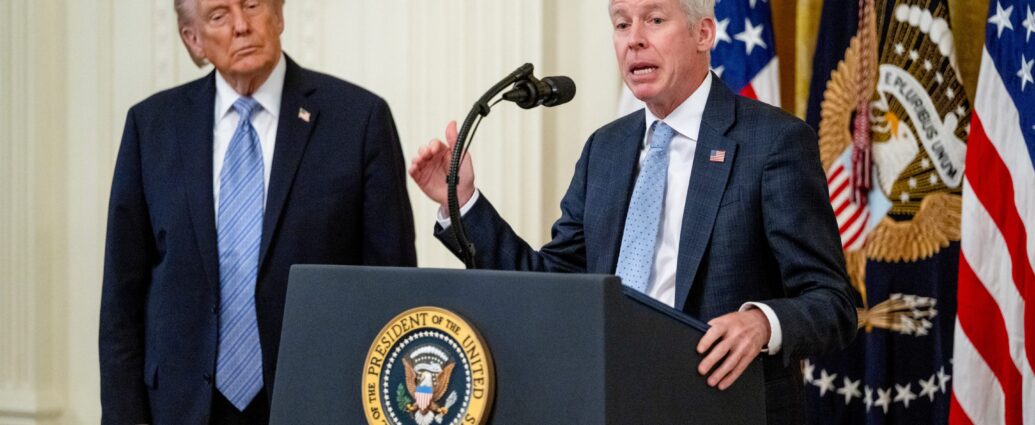
In 2011, President Barack Obama declared it was time for America to leave behind the wars in Iraq and Afghanistan and “pivot” to Asia to counter the rise of China. Fifteen years later, the U.S. finds itself still at war in the Middle East and has pulled military assets from the Asia-Pacific as it aims to eliminate the threat posed by Iran’s nuclear and missile programs.

The demands of the Iran war also caused President Donald Trump to delay by several weeks his highly anticipated trip to China, deepening worries that the U.S. is once again getting distracted at the cost of its strategic interests in Asia, where Beijing seeks to unseat the U.S. as the regional leader.

Those skeptical of the U.S. involvement in the Middle East say the war is preventing Trump from adequately preparing for his summit with Chinese leader Xi Jinping next month, when economic interests are on the line, and they warn that a failure to focus on Asia and maintain strong deterrence could lead to greater instability, if China should believe the time is ripe to seize the self-governed island of Taiwan.

“This is precisely the wrong time for the United States to turn away and be sucked into another intractable Middle East conflict,” said Danny Russel, a distinguished fellow at the Asia Society Policy Institute. “Rebalancing to Asia is highly relevant to America’s national interests, but it has been undercut by many bad decisions.”

Others defend the president’s approach, arguing that the forceful steps he is taking elsewhere, including in Venezuela and Iran, serve to counter China globally.

“Beijing is the chief sponsor for the adversaries that President Trump is dealing with sequentially, and it’s wise to do this sequentially,” Matt Pottinger, who served as a deputy national security adviser in the first Trump administration, said in a recent podcast.

NATO Secretary General Mark Rutte also said conflicts may not be confined to a single theater, suggesting that China could call upon its “junior partners” elsewhere to divert U.S. attention if it should move against Taiwan.

“Most likely it will not be limited, something in the Indo-Pacific to the Indo-Pacific,” Rutte said, speaking Thursday at the Ronald Reagan Institute in Washington. “It will be a multi-theater issue.”

Repercussions in Asia of the Iran war

Sen. Jeanne Shaheen, the top Democrat on the Senate Foreign Relations Committee, recently led a bipartisan group of senators to Taiwan, Japan and South Korea, where they heard concerns about the impact of the war on energy costs and about the departure of U.S. military assets, including missile defense systems from South Korea and a rapid-response Marine unit from Japan.

She sought to reassure them of the U.S. commitment to deterring conflicts in Asia and shoring up regional stability.

“Failure is not an option,” Shaheen told The Associated Press after returning from Asia. “We know China has already said they intend to take Taiwan by force if they need to, and they’re on an expedited time schedule. And we also know that what happened in Europe, in the war in Ukraine, in the Middle East is affecting those calculations.”

Kurt Campbell, who served as deputy secretary of state in the Biden administration, said he’s worried that the military capabilities that the U.S. had patiently accumulated in the Indo-Pacific region might not return in full even after the Iran war ends.

The longer the conflict goes on, the more it will pull resources and focus away from Asia, said Zack Cooper, a senior fellow at the American Enterprise Institute who studies the U.S. strategy in Asia. He added that future arms sales to the region also will be negatively affected.

“The United States has expended substantial numbers of munitions in the Middle East and will have to keep an increased force presence there, some of which has been redirected from Asia,” Cooper said. “Meanwhile, Xi Jinping’s wisdom in preparing a ‘war time’ economy by stockpiling and adding alternate energy sources has shown itself to be beneficial.”

Shaheen said the U.S. defense industry will struggle to meet the demand to replenish the weapons stockpile. “We’re working on a number of strategies to improve that, but at this point, timelines for weapons delivery are slipping,” she said.

The senator from New Hampshire said she’s encouraged that Taiwan, Japan and South Korea are stepping up their own defense.

After 15 years and 3 presidents, pivot to Asia remains elusive

Obama’s strategic rebalance to Asia reflected his understanding that the U.S. must be a player in the Pacific to harness the region’s growth and ensure continued U.S. leadership in the face of China’s rising influence.

“After a decade in which we fought two wars that cost us dearly, in blood and treasure, the United States is turning our attention to the vast potential of the Asia-Pacific region,” Obama said in a speech to the Australian Parliament. “So make no mistake, the tide of war is receding, and America is looking ahead to the future that we must build.”

But the strategy was set back when a proposed trade agreement known as the Trans-Pacific Partnership with key U.S. regional partners failed to get through the U.S. Senate. After Trump first took office in 2017, he withdrew the U.S. from the partnership and launched a tariff war with China.

His Democratic successor, Joe Biden, kept Trump’s tariffs on China and tightened export controls on advanced technology, while strengthening regional alliances to counter China.

Middle East again grabs US attention

By the time Trump rolled out his national security strategy in late 2025, the U.S. strategy in Asia had been narrowed to military deterrence in the Taiwan Strait and the First Island Chain, a string of U.S.-aligned islands off China’s coast that restrict its access to the Western Pacific.

The national security document says it’s in the economic interest of the U.S. to secure access to advanced chips, which are sourced primarily from Taiwan and are needed to power everything from computers to missiles, and to protect shipping lanes in the South China Sea.

“Hence deterring a conflict over Taiwan, ideally by preserving military overmatch, is a priority,” the document says. “We will build a military capable of denying aggression anywhere in the First Island Chain.”

The Middle East, it says, should be getting less attention: “As this administration rescinds or eases restrictive energy policies and American energy production ramps up, America’s historic reason for focusing on the Middle East will recede.”

Then came the Iran war.

This story was originally featured on Fortune.com
Two empty crude tankers attempted to make their way through the Strait of Hormuz and into the Persian Gulf on Sunday, only to make last-minute U-turns just as peace negotiations between the US and Iran broke down, threatening a fragile ceasefire.

Two very large crude carriers and one Aframax-class vessel — all without direct links to Iran — began to approach the narrow waterway from the Gulf of Oman late on Saturday, ship-tracking data show, arriving near Iran’s Larak island early on Sunday. At that effective checkpoint, Iraq-bound Agios Fanourios I and Pakistan-flagged Shalamar, destined for Das island in the United Arab Emirates, turned back. 

The first VLCC, Mombasa B, sailed ahead and successfully made its way between Larak and Qeshm islands, an Iran-approved route into the Persian Gulf. It is not currently signaling a clear destination.

Meanwhile, the Khairpur, a Pakistani oil product tanker, was transiting through the Iranian corridor toward the Gulf after earlier changing course twice on Sunday. The vessel originally performed a U-turn near Larak and Qeshm islands before executing a second about-face to resume its inbound course.

The specific reasons behind the about-turns are not clear, as both Iraq and Pakistan had earlier received approvals from Iran to transit the strait. But their change of heart came just as negotiators in Islamabad announced they had failed to reach a deal.

The Strait of Hormuz is one of the world’s most important energy thoroughfares and its effective closure since the US and Israel began strikes on Iran six weeks ago has resulted in unprecedented supply disruption. Its reopening has been a crucial point of discussion during weekend negotiations, but remains an area of disagreement.

In recent weeks, several ships have attempted to transit the strait only to abort their efforts, reflecting a constantly changing security situation and persistently high risks. The vast majority have been attempting to leave the Persian Gulf, but empty tankers are also needed inside, to be loaded with new cargoes.

Two Chinese container ships U-turned late last month before finally successfully exiting, while a liquefied natural gas carrier turned back last week.

A successful transit by all three crude tankers on Sunday would have continued a positive uptick in movement through the waterway, controlled by Iran and dominated by Iran-linked vessels since the end of February. On Saturday, two Chinese supertankers and a Greek vessel exited the gulf via Hormuz, laden with crude.

Agios Fanourios I is managed by Eastern Mediterranean Maritime in Greece, while Pakistan National Shipping Corp. owns Shalamar. The two companies did not immediately respond to emailed requests sent outside of working hours.

Mombasa B had recently switched its name from Front Forth. It is now owned by Haut Brion 8 SA that shares the same address as its South Korea-based manager, Sinokor Maritime Co. Sinokor did not respond to a request for comment outside of regular business hours. 

This story was originally featured on Fortune.com

Allison Ellsworth admits she’s not the typical founder story. She was, by her own telling, “a solid C student,” a partier, someone who got arrested during spring break and later found herself driving across the country working in oil and gas research. Even now, after selling Poppi for $2 billion, she doesn’t try to polish herself into the platonic image of a consumer founder.

 “I do TikToks in Crocs and socks with my hair in a ponytail,” she told Fortune. “I’m just a normal person.”

Pepsi, the soda and snack giant which bought her company, has taken notice. Since she sold her soda company, “they’ve been really big on ‘let Poppi be Poppi,’” Ellsworth said, adding that “I think they’re actually trying to learn from us.”

The 38-year-old built Poppi into one of the fastest-growing beverage brands in the country by leaning into a kind of marketing that was nimble, quick to respond and often very unserious. In fact, it got into a typical Tiktok-esque scandal by giving out vending machines of Poppi to influencers. But behind that was a deliberate strategy, Ellsworth recalled, one that Pepsi is now trying to understand and copy.

One of the clearest examples is pretty simple: Poppi will just send free cans to anyone who asks—no campaign, no targeting strategy, just an invitation. Now, she gets around 500 wedding invites a month alone. “Graduations, birthdays, all these things. We’re just shipping it out,” Ellsworth said. 

It sounds inefficient, but she argued it’s like Red Bull’s field marketing, where attractive young women gave out free cans of the energy drink during work events. The only the difference is that the demand is inbound. “No one needs to be out there with a backpack anymore. People are coming to you.”

That philosophy of being less controlling and more reacting extends to how she broadly thinks about the way marketing works. Ellsworth is often framed as a TikTok-native founder, and it’s true that Poppi’s rise was closely tied to social media and her bright colored packaging. She was the face of the brand early on, posting constantly and building familiarity with customers who felt like they knew her.

But she’s skeptical of the idea that TikTok alone can build a company at scale. Linear TV can influence a classic, older group with money to spend. 

What that means in practice is abandoning the usual safe, interchangeable ads that dominate commercial breaks. When Poppi started running TV spots, Ellsworth said the goal was to stand out as much as possible, doing the opposite of what’s expected. 

For example, she insisted that her bright pink-and-purple cans show up in commercials during NFL games, despite her drink being clearly marketed towards mostly college women. But Poppi broke the monotony of typical football ads of “dudes sitting around eating nachos or drinking beer.” 

“And then a bright pink can comes on the screen,” Ellsworth said. “It just breaks through because it’s so different.”

The same thinking carried into larger bets. Her recent Super Bowl ad featured Charli XCX and Rachel Sennott just droning the word “vibes” to each other, which garnered a big reaction, albeit mixed. But Ellsworth decided on the ad quickly and without the kind of prolonged testing that larger companies rely on. 

“We were just like, it’s a vibe,” Ellsworth said, adding that Pepsi initially was cautious but ended up trusting Poppi.

The ad ended up tripling brand awareness, according to Ellsworth. More importantly, it reinforced her belief that innovation, and not attention, is the real constraint in modern marketing. 

If you think TV is dead, you’re probably “just doing it the wrong way,” she said.

That view runs counter to how many startups are currently thinking about growth. In her conversations with founders, Ellsworth said she hears the same frustrations repeated: that funding is harder to get, that the market is saturated, that the odds are worse than they used to be.

Her response is a little harsh: “It’s probably because your business isn’t good.” 

More often, she sees founders trying to replicate what has already worked rather than creating something new. For decades, nobody dared to innovate on the soda category. Now, after Poppi’s success, “there’s like 100-plus prebiotic sodas.” Most, she believes, are too late. “You kind of missed the wave.”

The lesson, in her view, is not to copy a playbook but to build one. “Be the trendsetter. Don’t follow the trends.”

This story was originally featured on Fortune.com

The experience of being a parent may be priceless. But the reality is there’s a price tag on raising a child, and it’s up in the hundreds of thousands. 

The average cost of raising a child over the course of 18 years in the U.S. has reached $303,418, according to a new study from LendingTree

The total cost varies widely by state. Hawaii is the most expensive state to raise a child, with LendingTree projecting a price tag of $412,661. Alaska and Maryland follow behind with $365,047 and $326,360, respectively. Meanwhile, New Hampshire is the cheapest state to raise a child, costing $201,963, less than half the price of Hawaii. Washington, D.C.—which offers free preschool for three- and four-year-olds—and South Carolina come in second and third place for the least expensive places to raise a child. 

The cost of raising a child is up 1.9% from a year ago due to significant increases to rent and clothing costs. LendingTree found that the average rent has spiked from $1,128 from their last survey in 2025 to $1,680 this year, a nearly 50% increase. Clothing costs were up by more than 25% from a year ago. 

“Inflation is just taking a toll, clearly, on people, and it’s certainly one of the reasons why we saw such significant growth here,” Matt Schulz, chief consumer finance analyst at LendingTree, who authored the study, told Fortune

In some states, the costs associated with raising a child are increasing much faster than the rate of inflation. The study found that Kansas and Alaska’s projected 18-year child-rearing costs jumped 23.5% between LendingTree’s 2025 and 2026 analyses, and Montana increased by 21.7%. 

Childcare is the most expensive child-rearing cost

Childcare costs are by far the highest expense for families with children under 5, according to LendingTree’s analysis. Parents in Hawaii pay an average of $40,342 per year, whereas families in Maryland and Massachusetts pay $36,419 and $34,247, respectively. 

Fourteen states saw the cost of raising a small child increase by at least 10%. Sparsely populated states such as Nebraska, Montana, and Wisconsin all saw early childrearing cost jump by at least 23% due to the lack of options and high demand. 

“A few states and even areas within various states are what are called ‘childcare deserts,” where there’s just not nearly enough supply of daycare and child care centers to keep up with the demand for it,” Schulz explained. “So what happens is that the ones that are there—and especially the really good ones that are there—can charge basically whatever they want to charge, and it ends up driving up the rates quite a bit.”

Childcare is affordable if it consumes no more than 7% of household income, according to federal guidelines. With childcare costs averaging $28,190 a year, a household would have to earn $402,708 for it to be considered affordable, but the average two-child household has an average income of $145,656, just over one-third of that target. 

A February survey from the National Association for the Education of Young Children found 65% of childcare centers and 51% of public-school-based programs reported tuition increases. Nearly a third of home-based childcare providers raised tuition. 

“It’s a real challenge for people who really need the help,” Schulz said. “As much as we wish that people had a relative or a trusted friend that they could lean on for that sort of thing, a lot of people just don’t have that choice, so they have no other choice but to pay whatever they need to for daycare.” 

The long-term consequences of childcare costs

High childcare costs are detrimental to long-term savings like building an emergency fund or putting money away for college or retirement, Schulz said. 

“It just turns a really challenging situation into an almost unmanageable one for people, and that’s why we see so many people factoring in finances when it comes to deciding whether to start a family or how many kids they might have.” 

For some families, it’s the choice between a parent working or paying for childcare. 

“As much as we wish that we didn’t have to to think about the cost of being a parent, you’re doing yourself and your family a bit of a disservice if you don’t, because there are very, very few among us who, for for whom the cost of raising a child is not significant,” Schulz said.

This story was originally featured on Fortune.com
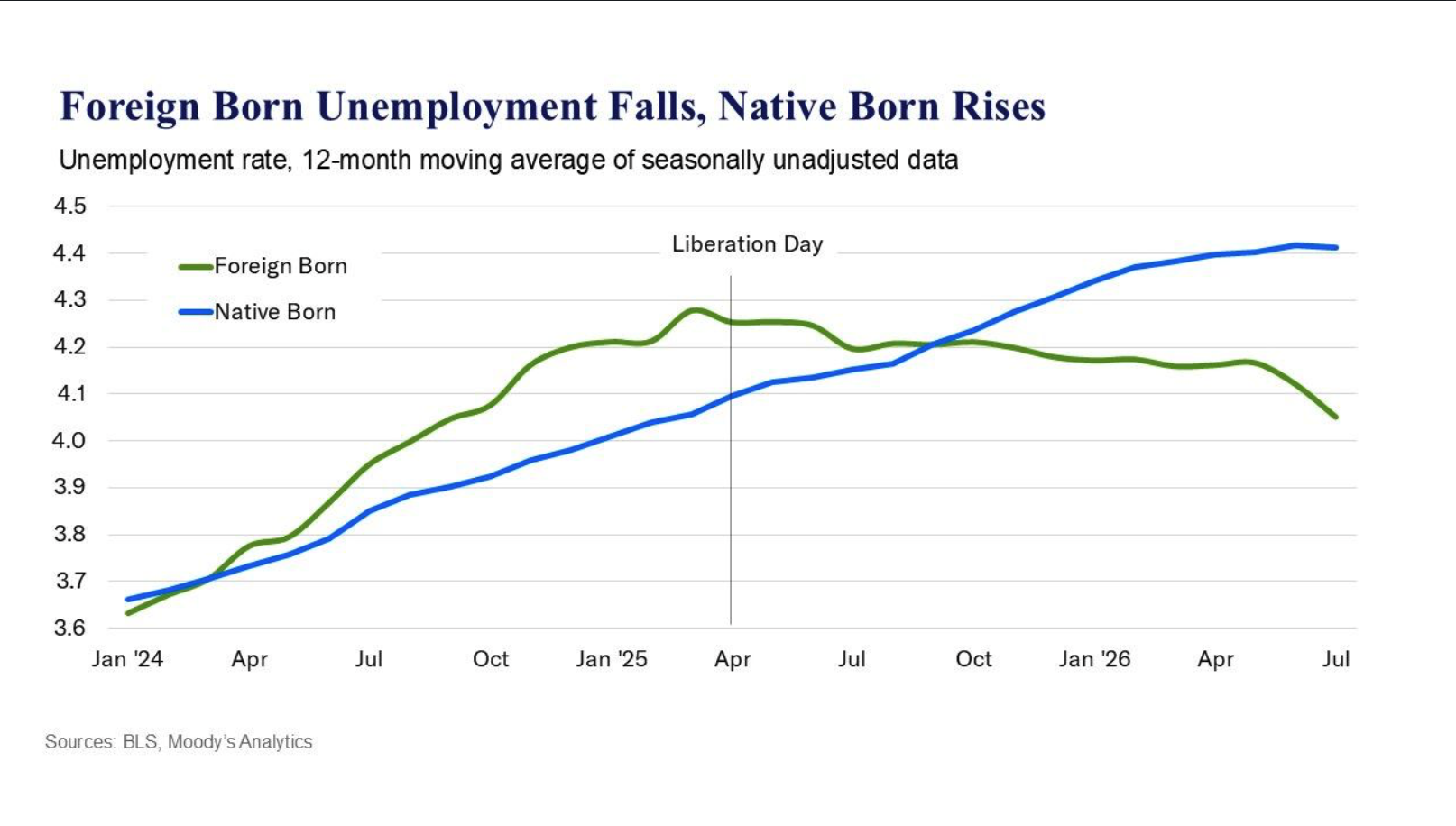
After a few years of sharing a 2019 Chevrolet Trax, Dana Eble and Tyler Marcus are finally looking for a second car. But as they jump into the market, the young married couple isn’t sure what they can afford.

“I just keep seeing a lot of different aspects of life getting more expensive, and it’s harder,” said Eble, an account manager for a public relations agency.

Car ownership has long been integral to the American dream. But as automakers slash the production of inexpensive models to cater to customers who can afford oversized pickups and sport utility vehicles, buyers find themselves facing sticker shock at the same time they are already frustrated by the lingering effects of high inflation.

Consumer prices rose 3.3% in March, the biggest yearly increase since May 2024, while new car prices were up 12.6% from a year ago, the Labor Department reported Friday.

New vehicles now sell for an average of nearly $50,000, up 30% in six years, and average monthly payments — based on 10% down and a 6-year note — recently hit $775. Looking for something on the cheap end? The share of vehicles listing for less than $30,000 is about 13% — down from 40% five years ago, per the car review site CarGurus.

To cope, buyers are spreading their payments out longer. Consumers choosing 7-year loans make up more than 12% of all sales, up from nearly 8% a year ago, according to auto buying resource J.D. Power. Such contracts wind up costing more in the long run because of interest payments.

“The ability to buy transportation is still out there. The question is just, what do you get for your money?” Charlie Chesbrough, a senior economist at Cox Automotive, said.

The rising cost of cars is contributing to increased concerns about affordability throughout American life. Consumers, especially young people, say they feel like everyday needs like housing, food, utilities and child care are getting costlier and wages aren’t keeping up.

It is a vulnerable position for Republicans ahead of this year’s midterm elections, especially as the Iran war has pumped up gas prices that makes getting behind the wheel even more expensive.

Size, technology and ‘must-have’ features add to costs

Sticker prices have been rising since automakers discovered Americans are willing to pay more for bigger, more expensive SUVs and pickup trucks that bring the companies more profit from each sale. They have largely phased out smaller, cheaper sedans.

That is especially true for domestic carmakers; the average selling prices for many vehicles from Ford Motor Co., General Motors and Jeep-maker Stellantis have generally trended higher than those for Asian companies Honda, Hyundai, Mazda and Subaru.

Car companies are also savvy about placing desired options in more expensive trim levels that can lure consumers into a vehicle that costs more than they planned, said David Undercoffler, the head of consumer insights at CarGurus.

Advanced safety technology — lane-keep assist, automatic emergency braking, blind-spot monitoring, collision warnings and more — all add to the cost of a vehicle. Automakers are required by federal industry rules to add some features, such as rear-view cameras.

The COVID-19 pandemic pushed up auto prices because production fell, affecting both the new and used markets. Though production recovered, other supply chain disruptions and tariffs have affected prices. Meanwhile, government data shows that car insurance prices have soared 55% compared with six years ago, or just before the pandemic, driving up the number of Americans going without. Car repairs, on average, are 48% more expensive.

The share of new car buyers earning below $100,000 fell to 37% last year, down from 50% in 2020, according to Cox Automotive.

Some carmakers have acknowledged affordability concerns. In February, Ford said it would have several vehicles prices under $40,000 by the end of the decade. GM has pointed to vehicles from Buick and Chevrolet, including the Trax, as cheaper options.

Looking to used market for relief

Chesbrough thinks consumers are sometimes unrealistic in their wants.

“There are vehicles out there for less than $30,000. What everybody wants is the mid-sized SUV with leather seats and the sunroof for $25,000, and that’s not available,” Chesbrough said.

Those buyers, he said, are being pushed into the used market.

But as those buyers shift to used, they are finding fewer affordable options there, too. The share of used vehicles priced less than $30,000 fell from 78% in 2021 to 69% in February, according to CarGurus. The average used vehicle sold for about $25,000 in February, and the average used monthly payments hit $560.

The inventory of used cars is being hit by a couple of trends. One is that consumers keen to avoid a big expense are hanging on to their cars longer — nearly 13 years on average now, 18 months longer than a decade ago, according to the Bureau of Transportation Statistics. And a downturn in the popularity of leasing means fewer two- and three-year-old cars hitting the market after leases expire.

J.D. Power estimates that consumers might spend up to $140 less on a lease payment than the average finance commitment, a good option especially for drivers whose annual mileage is predictable. But experts say there is still an affordability challenge.

What buyers can do

Sam Dykhuis, 27, of Chicago, needed to buy her first car recently when she started a new job as a scheduler for United Airlines. She searched for something used under $20,000, and eventually paid a little more than that for a 2021 Mazda CX-5. To hold down the cost, she tapped savings to buy the car outright. She pays insurance six months at a time to save a few bucks, too.

Still, “My paycheck went down and my expenses went up,” Dykhuis said. “Certainly, I have to be more just on top of it than I was previously.”

Eble, 30, and Marcus, 31, say they appreciate cool vehicles but don’t consider themselves “car people” and are hoping their search is easier as a result. Still, finding something in their $20,000 to $30,000 budget might not be as easy as it once was.

They are considering cars such as a newer Trax, a Mazda or maybe an electric vehicle. New EVs generally cost more upfront, but consumers can save in the long run. The used EV market will also soon be flooded with two- or three-year-old EVs that were leased at the time federal credits were generous.

Like Dykhuis, they say they also might buy their new ride outright to avoid a new monthly payment.

“It feels like if anything happens out of our control … it just seems so much more difficult to figure out how to orient our finances,” Eble said.

___

Alexa St. John is an Associated Press climate reporter. Follow her on X: @alexa_stjohn. Reach her at ast.john@ap.org.

___

The Associated Press’ climate and environmental coverage receives financial support from multiple private foundations. AP is solely responsible for all content. Find AP’s standards for working with philanthropies, a list of supporters and funded coverage areas at AP.org.

This story was originally featured on Fortune.com

For a factory worker in Haiti, the war in distant Iran means he now has to walk two hours to work and the same distance home each day, because he can no longer afford public transportation.

On a recent morning, Alexandre Joseph, 35, fretted about his family’s future in a loud voice, attracting the attention of passersby in Port-au-Prince, Haiti’s capital.

“The government raised the prices of gasoline, diesel and kerosene, hitting my family. I now am unable to feed my two children on the salary I have,” he said.

The conflict in Iran has caused oil prices in Haiti to surge, disrupting critical supply chains, doubling transportation costs and forcing millions of undernourished people to cut back on already scarce meals.

Haiti, the most impoverished country in the Western Hemisphere, has been hit the hardest by rising oil prices that experts warn will deepen a spiraling humanitarian crisis.

‘One of the most fragile countries in the world’

On April 2, Haiti’s government announced a 37% increase in the cost of diesel and a 29% increase in the cost of gasoline.

“The consequences are huge,” said Erwan Rumen, deputy country director for the United Nations World Food Program in Haiti. “It’s one of the most fragile countries in the world.”

Almost half of Haiti’s nearly 12 million inhabitants already face high levels of acute food insecurity. In recent months, Rumen noted, about 200,000 people dropped from the emergency phase to the acute one, a significant milestone.

“What is a bit frightening is to see that so many efforts could be basically wiped out by things that are completely out of our control,” he said. “This part of the population is extremely fragile. They’re on the verge of collapsing completely.”

Gang violence has exacerbated hunger, with armed men controlling key roads and disrupting the transportation of goods. An increase in food prices will only worsen hunger in a country where gangs easily recruit children whose families need food and money.

Emmline Toussaint, main coordinator of Mary’s Meals’ BND school-feeding program in Haiti, said that gas stations in some regions are selling fuel 25% to 30% higher than even what the government stipulated because of gang violence and difficulties with trucks trying to access certain areas.

She said the U.S.-based nonprofit is forced to use boats and take longer and multiple roads to feed the 196,000 children they serve across Haiti to avoid armed groups.

“The humanitarian crisis that we’re facing right now is at its worst,” she said. “So far, we are doing our best not to step back. Now, more than ever, the kids need us. … Most of them, it’s the only meal they receive.”

‘Everything will go up’

Fedline Jean-Pierre, a soft-spoken mother of a 7-year-old boy, sat under the shade of a tattered beach umbrella as she mulled increasing the prices of carrots, tomatoes and other produce she sells at an outdoor market in Port-au-Prince.

“People are not buying now because they don’t have money,” she said, noting she likely won’t have a choice but to increase prices to survive. “I have a child to feed.”

The 35-year-old mother said she and her son have lived for two years in a cramped and unsanitary shelter, among the record 1.4 million Haitians displaced by gang violence in recent years.

“The government doesn’t do anything for me,” she said. “Gas is up now, meaning everything will go up.”

Street vendor Maxime Poulard buys charcoal from suppliers to resell at a higher price. Occasionally he sells two bags of charcoal a day, but he thinks he soon will only be able to afford to buy half a bag to resell.

“Traveling is expensive; eating is expensive; everything is expensive,” he said. “I’m not sure if I will be able to hold on much more.”

Nearly 40% of Haitians are surviving on less than $2.15 a day, according to the World Bank. Meanwhile, Haiti’s economy contracted for the seventh consecutive year, with inflation reaching 32% at the end of fiscal year 2025.

Joseph, the factory worker, said he plans to sell soft drinks at night out of his home to try and earn more money, but even then, that won’t be enough: “We’re also going to reduce the way we normally eat.”

‘Impossible tradeoffs’

On April 6, Haitians dragged burning tires and other debris to block streets and protest the increase in fuel prices in Port-au-Prince, of which an estimated 90% is controlled by gangs.

Local media reported gunfire as some Haitians forced the drivers of small colorful buses known as tap-taps to disembark their passengers.

Marc Jean-Louis, a 29-year-old tap-tap driver, said passengers are increasingly bartering fares, but he can’t afford to offer discounts.

“All the money is going toward gas,” he said as he called on the government to reduced prices “so that everyone can breathe.”

Haitians fear more violence as the country’s poverty and hunger deepens.

Rumen, with the U.N.’s World Food Program, said they’ve been unable to reach 60,000 people in Haiti’s central region who are awaiting aid. A powerful gang recently attacked the area, killing more than 70 people, according to the U.N.

“We’re going to have more needs and less resources,” he warned.

Allen Joseph, program manager for Mercy Corps in Haiti, said rising oil prices are crushing the country’s fragile economy: “The families already spending most of their income on food will face impossible tradeoffs.”

He warned the increase will affect access to basic services, including potable water.

“This is not an abstract inflation,” he warned. “It will directly impact survival.”

___

Coto reported from San Juan, Puerto Rico.

This story was originally featured on Fortune.com