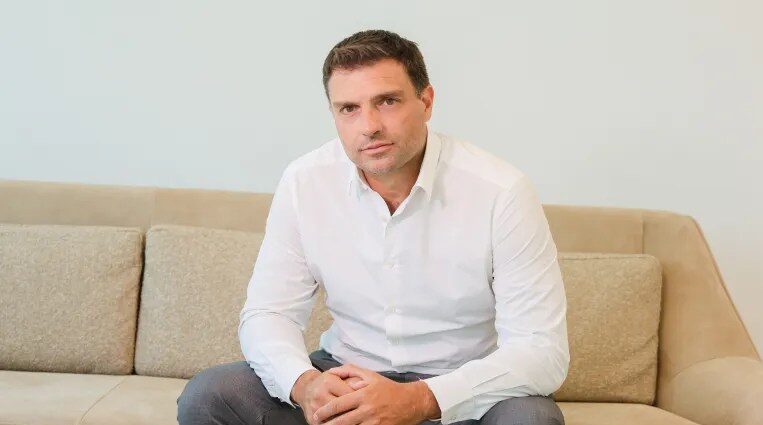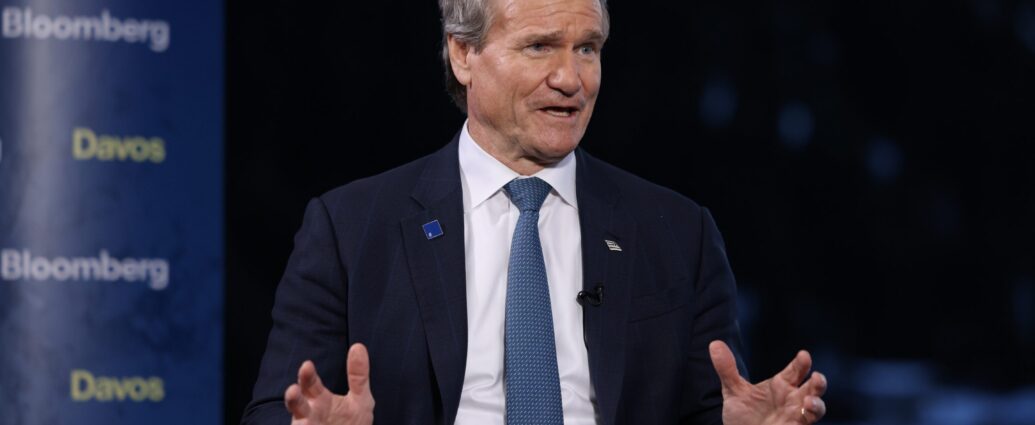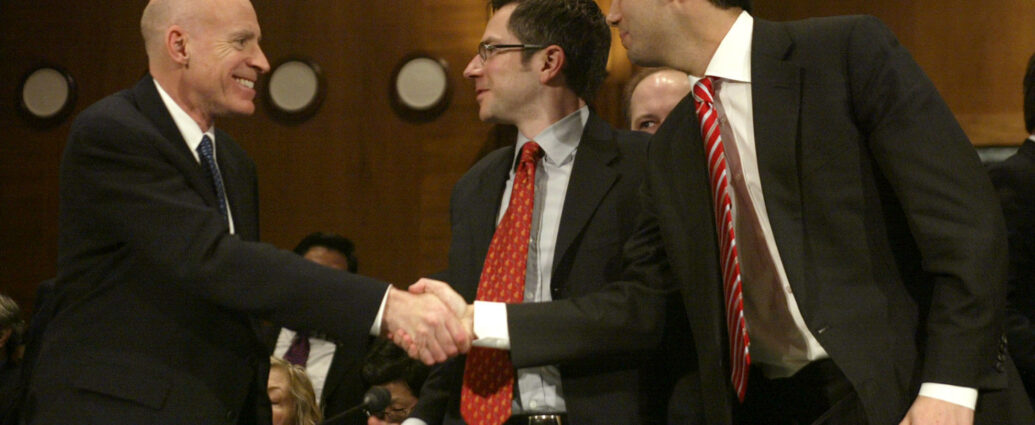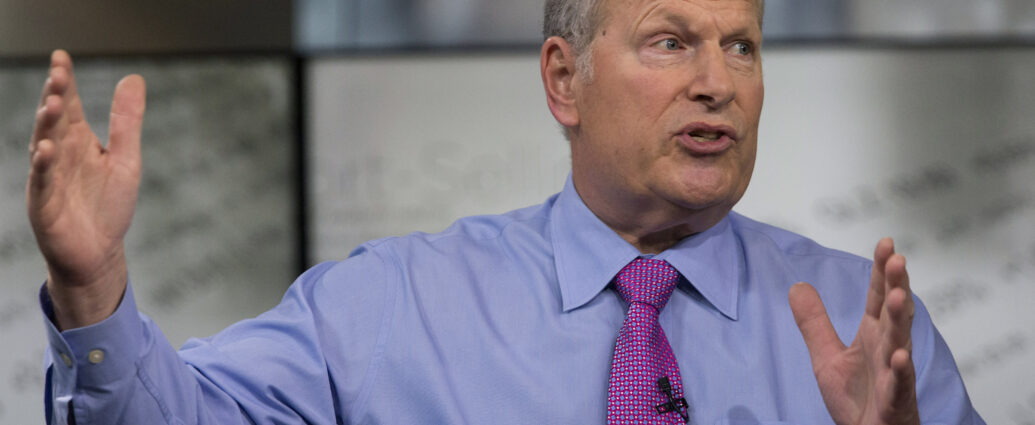
David Cote has already had one career most executives would envy. As CEO of Fortune 500 industrial giant Honeywell, he spent 15 years engineering a revival that delivered shareholder returns 150% greater than the S&P 500. 

Now, after coming out of retirement, he is executive chairman of Vertiv, an 80-year-old cooling company whose market cap has surged from under $11 billion to $109 billion since going public, writes my colleague Shawn Tully.

His route to the top might look preordained from where he sits today, but it includes the kind of setback that could make an executive question whether they’ll ever be fit for the corner office.

Cote began his 25-year GE career as a night-shift worker at an aircraft engine plant in New Hampshire, eventually rising to run its appliance business. In 1999, then-CEO Jack Welch approached him in the company dining room and told him he wanted him out by year-end. Cote repeatedly asked what he had done wrong. He says Welch never answered.

Three years later, Cote was CEO of Honeywell. One of corporate America’s most celebrated CEOs had effectively told him he had no future at GE. Another major industrial company soon handed him its top job.

After 15 years at Honeywell, Cote retired in 2018. Retirement did not stick. Convinced he had another chapter in him, he teamed up with Goldman Sachs to hunt for a company to acquire. They considered more than 1,000 companies before choosing Vertiv, a struggling cooling business that was entirely new to Cote.

The choice proved prescient, but the payoff was anything but immediate. Cote saw digital data growing much faster than the data centers needed to support it and positioned Vertiv in the middle of that expansion.

Then the bet faltered. COVID hit three weeks after Vertiv’s NYSE debut, and a later surge in orders exposed that the company was underpricing its equipment by 20% to 30%. Profits cratered, and by early 2023 the stock had fallen roughly 55% from its previous high.

Cote became heavily involved in day-to-day management, and the board installed a new CEO. As Vertiv repaired its operations, it kept investing in direct-to-chip liquid cooling and acquired cooling startup CoolTera in late 2023. It ramped up production as demand from AI data centers took off.

There is an irony in Cote’s trajectory. Welch’s decision to push him out of GE looked like a judgment on his prospects. Vertiv’s early struggles threatened to derail his second act. In both cases, what looked like a defining setback proved temporary.

The same can be true when a career, company, or idea hits a wall. A bad outcome can tell you that something needs to change without telling you how high the person behind it can ultimately climb.

Read the full piece here.

Ruth Umoh
ruth.umoh@fortune.com

This story was originally featured on Fortune.com
This post was originally published here

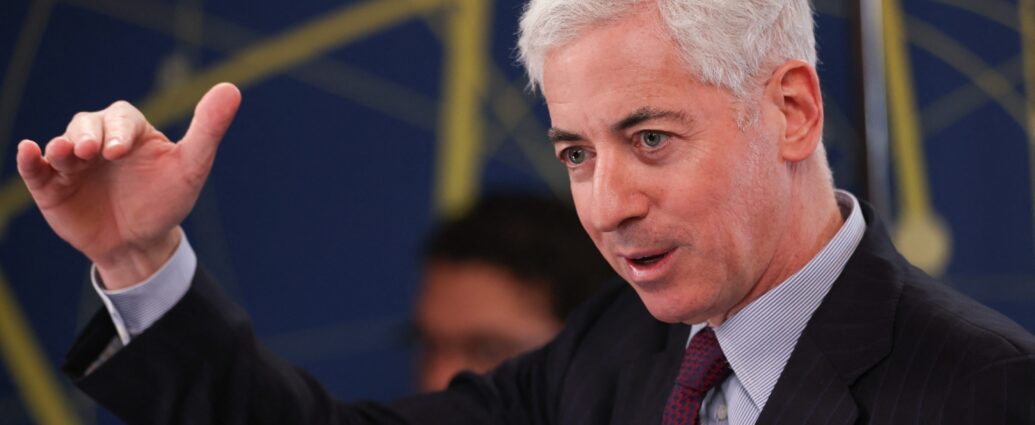
Five years ago, Bill Ackman said it would have been too hard to lure top scientists away from universities. Now, he thinks the balance of power has shifted.

The billionaire investor and his wife, designer and entrepreneur Neri Oxman, are launching a new Manhattan neuroscience and longevity center called the Ackman Oxman Institute, or AOI. Ackman said in a lengthy Aug. 19 post on X that the couple is donating roughly $400 million in Pershing Square stock to anchor the institute, with another gift of a similar or potentially greater size to come.

“Our goal is to build the world’s greatest brain research, rehabilitation, recovery, human optimization, and longevity institute,” Ackman wrote. 

The project is partly a bet on brain science, but also one that traditional universities have become more vulnerable in the competition for elite researchers.

Ackman said he and Oxman considered creating a brain institute half a decade ago, inspired in part by Oxman’s mother, who died from Alzheimer’s. They decided against it because New York real estate was too expensive and they believed it would be “too difficult to recruit the best talent from universities to our effort,” Ackman wrote.

But he said the equation has changed. The real estate needed for the project became available at a 70% discount. Universities, meanwhile, have become “a much less attractive place to work,” he wrote, citing campus politics, antisemitism and declining funding.

That claim fits into Ackman’s broader fight with elite universities. He helped lead the pressure campaign against former Harvard president Claudine Gay, criticized the university’s handling of antisemitism, attacked its DEI policies and later called for the ousting of several Harvard board members.

Ackman’s post didn’t mention data points about scientists leaving universities en masse. But his new institute is being structured around the idea that top researchers can be persuaded to leave, or at least work outside, the traditional university system.

AOI will be “patient-centric” and explicitly focused on turning scientific discoveries into treatments, Ackman wrote. It will not be an academic institute that produces “lots of papers” but “little if any results for patients.” Instead, its mandate will be to speed the path from research to cures, treatments and devices. 

“If you are going to have a devastating brain injury, now is the best time in history for that to happen,” Ackman wrote. “We are living in a world when you can be confident that the blind will soon see again.  We are going to do everything we can to help make that happen, including by assisting existing companies in the space.”

Though AOI will be a nonprofit, Ackman explained it will have “highly commercial instincts.” The institute plans to run its own venture funding operation, create and seed companies around technologies developed there, and reinvest the financial returns into further research.

The project also has a sizable physical footprint. Ackman said the Pershing Square Foundation acquired a nearly vacant, 400,000-square-foot biotech facility on Manhattan’s West Side after a real estate colleague alerted him to the property in May. The foundation also has an adjoining 130,000-square-foot building under contract and is acquiring a neighboring vacant lot.

With additional construction permitted under current zoning, Ackman said the campus could reach 680,000 square feet—larger than Rockefeller University’s laboratory footprint.

The institute will combine neuroscience, rehabilitation, nutrition, clinical trials and longevity research onto the same campus. Ackman also wants AOI to work across institutional boundaries, with Mount Sinai as an important partner but not its only collaborator.

“We don’t believe any institution has a monopoly on the best ideas or the best talent,” he wrote.

Inspiration for the institute 

The project grew out of a family crisis. His 26-year-old daughter Lucy had a brain hemorrhage and underwent emergency surgery after being found unconscious in her Brooklyn apartment. Ackman wrote in the X post that months of treatment and rehabilitation convinced his family of both the brain’s ability to recover and the limits of existing treatment.

“The interesting thing is that everything I’ve done in my life up till now has prepared me to help her,” he previously told Fortune, explaining that he had to exhort the doctors to try novel treatments like injecting mitochondria into Lucy’s eye to help preserve her sight. AOI will build off the insights gained from her treatment, he said. 

Ackman also sees AI and brain-computer interfaces as key to AOI’s mission, writing that Lucy might need brain-computer support that’s being developed at companies like Neuralink, Precision Neuroscience and Synchron. He argued his new institute should be “at the forefront of the interplay between the brain and AI.”

AOI has already identified a CEO whom Ackman expects to announce by October, and it is searching for a chief scientific officer, chief AI and technology officer and other senior leaders. He said the board includes inventor Dean Kamen (whom he described as ”our generation’s Thomas Edison”), Regeneron co-founder and chief scientific officer George Yancopoulos, Nobel Prize-winning biochemist James Rothman, neuroscientist Bernardo Sabatini, neurosurgeon Chris Kellner, Pershing Square Foundation CEO Olivia Flatto, Oxman and Ackman himself. 

“We have learned from Lucy that the brain can recover from even catastrophic injury,” he wrote. “There is so much more work to be done as the mind is a terrible thing to waste.”

This story was originally featured on Fortune.com

This post was originally published here

Good morning. New York has overtaken the San Francisco Bay Area as North America’s largest tech-talent workforce by headcount, and Wall Street’s growing demand for AI talent is helping reshape the market—though San Francisco isn’t ceding its crown entirely.

The finding comes from CBRE’s “Scoring Tech Talent 2026” report. New York Metro’s tech-talent workforce grew by 30,640 to 394,300 between 2022 and 2025, while the San Francisco Bay Area’s contracted by 23,900 to 375,730—marking the first time New York has led by headcount in the report’s 13-year history.

The shift reflects New York’s more diversified tech economy. While 61% of San Francisco’s tech talent works directly in high-tech companies, New York’s tech workforce is spread more broadly across industries, including financial services.

Across the U.S. and Canada, the number of tech-talent workers with AI skills rose 45% year over year to 751,000 as of mid-2026. The San Francisco Bay Area still leads in raw AI-specialist numbers and has a higher concentration of AI job postings overall (26%, versus 17% in New York).

But when it comes to financial services specifically, New York and Dallas-Fort Worth tied for the highest concentration of AI-specialty talent among major markets, at 20% each, ahead of Toronto (19%) and Chicago (16%). Financial firms are increasingly competing with technology companies for workers who can put AI into production inside highly regulated businesses.

Jamie Dimon, CEO of JPMorgan Chase, recently said the bank will likely hire more AI specialists. “There will be all different types of jobs, and I think we will be hiring more AI people and fewer bankers in certain categories,” he said in a Bloomberg Television interview.

JPMorgan’s Data & AI organization includes teams working on LLM applications, fraud models, risk systems, personalization and automation.

Big banks—including JPMorgan, Citi, Wells Fargo, and Bank of America—are all investing heavily in AI to boost efficiency, and Bank of America is already pointing to measurable returns.

I reported last month that during a media call regarding Bank of America’s second-quarter earnings, CFO Alastair Borthwick said, “New AI capabilities now allow more than 200,000 of our employees to work more effectively, and they’ve helped contribute to producing a 59% efficiency ratio, a roughly 360 basis point improvement from last year.”

Slower hiring and layoffs in the technology industry have also created opportunities for non-tech employers to build their tech-talent teams. CBRE found that financial services, insurance and real estate added 90,530 tech jobs since 2022, while the high-tech sector shed 21,262.

Although New York now leads in tech-talent headcount, San Francisco remains No. 1 in CBRE’s broader tech talent ranking—which incorporates 13 metrics including talent concentration, wages and AI strength, areas where the Bay Area’s smaller, denser workforce still gives it an edge.

Sheryl Estrada
Sheryl.Estrada@fortune.com

This story was originally featured on Fortune.com

This post was originally published here

Cat Gioino here. Everyone wants safer neighborhoods, right?

That was Flock CEO Garrett Langley’s pitch to VCs after he built Flock’s first prototype. The Georgia Tech electrical engineer was not yet 30 when a string of break-ins in his own Atlanta neighborhood convinced him local police lacked the right tools. Recruiting two former colleagues, Matt Feury and Paige Todd, he built what started at first a simple license-plate camera and has now expanded to include video, gunshot detection, drones, and AI-powered search software. Launching Flock in his hometown of Atlanta in 2017, Langley promised to create a network of camera data that could be compiled together to solve any department’s cases. Homeowners associations were the company’s earliest customers, all before law enforcement contracts came to dominate the business. Today, the company operates in more than 5,000 communities across 49 states. Flock told Fortune the company has since raised $500 million at an $8.3 billion valuation and crossed $500 million in annual recurring revenue in the first half of this year.

Andreessen Horowitz was an early backer, leading Flock’s Series D in 2021, with a16z general partners David Ulevitch and David George calling the company an “n of 1″ startup,”effectively the only game in town.” Tiger Global led the Series E in February 2022, a $150 million round at a $3.5 billion valuation, joined by new investors 776 and Spark Capital alongside returning backers a16z, Bedrock, Matrix, Meritech and Initialized. By March 2025, Flock raised $275 million at a $7.5 billion valuation in a round led again by a16z, with participation from Greenoaks, Sands Capital, Founders Fund, Kleiner Perkins, Tiger Global and Y Combinator.

But in recent months, Flock has been caught up in a swirl of intensifying controversy, with privacy experts and civil liberties groups alleging officers used the cameras to stalk people, including exes, or that departments shared data across jurisdictions, including with ICE and in violation of state law. Vandalism has increased: across the country, people are dousing cameras in paint, ramming into them with their cars, smearing unknown substances across the camera front, or even chopping them down with chain saws, as documented in at least 36 states.

The biggest sticking point is who actually owns the data that Flock collects. Flock says it’s its customers: the police departments, the HOAs, the private customers who hold that data for a certain amount of time, up to customer discretion. Privacy experts say instead that Flock’s contracts allow it to retain certain data to train its models, and are pointing to an LAPD’s inspector general report as reason why that police department—like many other customers of Flock—are now renegotiating their contracts to specifically include language barring the company from using collected data. In March, cities like Boston, Flagstaff and Santa Clara all dropped Flock following a now-viral Super Bowl ad from Amazon’s Ring, which subsequently pulled its Flock integration. For its part, Ring never blamed the ad but said the integration with Flock would require more resources than anticipated. 

More recently, in July, the LAPD said it was renegotiating its Flock agreement over data-ownership concerns. The city’s own Inspector General audited the department’s Flock contracts this summer and quoted the actual signed language: one agreement lets Flock “retain the right to use the foregoing for any purpose in Flock’s sole discretion,” while a separate agreement grants the company rights to use anonymized footage for “training of machine learning algorithms.” Two privacy attorneys Fortune interviewed each independently described this same pattern from their own review of Flock’s contracts elsewhere. The experts say the stakes are beyond what one private company’s contract dictates—and they even pointed to cities that had pulled its contract with Flock only to sign on with one of its competitors, some of which are even less transparent regarding data collection. The experts sounded the alarms about what this means cross-jurisdictionally: once a department’s data can be pooled with other agencies’ data, what was once cross-jurisdictional collaboration now becomes a whole nationwide network that can let agencies (like ICE, for example) search the database, even in violation of state law or beyond the parameters of the initial contract.

Flock last week set out a new set of guardrails intended to curb abuse of its system, including advocating for a seven-day data retention policy for its customers.  Previously, Flock’s default was 30 days, and the company maintains on its website that the shortened week-long window will still cover “over 90% of searches.” But still, it’s a recommendation and not a rule, meaning each city’s contract can set its own number. LAPD’s, for example, guarantees five years. 

Garrett Langley told Fortune the company is “growing our customer base at ten times the rate of customer churn,” and stands by its record solving crimes and finding missing people. Flock built a business on the idea that watching everything makes communities safer. The question its contracts now raise is: safer for whom?

See you tomorrow,

Cat Gioino
X:
@CatGioino
Email: catherina.gioino@fortune.com

Submit a deal for the Term Sheet newsletter here.

Joey Abrams curated the deals section of today’s newsletter. Subscribe here.

This story was originally featured on Fortune.com

This post was originally published here

  • In today’s CEO Daily: The U.S. imposes 50% tariffs on a wide range of Canadian imports
  • The big leadership story: ‘Dads’ and ‘duds’
  • The markets: Asia markets are down with big drops by Alibaba and Samsung
  • Plus: All the news and watercooler chat from Fortune.

Good morning. America’s trade war against its closest ally has escalated again, with the Trump administration invoking section 338 of a notorious 1930 law to impose 50% tariffs on a wide range of Canadian imports. The sticking points were both economic and cultural, with Quebec’s French-language laws even coming under attack. Canadian Prime Minister Mark Carney is being praised for his response while Trump was criticized, even by members of his own party. This is not a war that America, or American business, is likely to win. Here’s why.

Trump’s options are limited. There’s a reason this latest missive only impacts 5% of Canadian imports. The Supreme Court already decided the president can’t invoke emergency powers to impose tariffs. Walmart is now using its tariff refund to lower prices. The Iran war has increased demand for Canada’s oil, aluminum and fertilizer; Saskatchewan is known as the Saudi Arabia of potash, with more than a third of global supply. And Trump’s priority is to lower costs for inflation-weary consumers ahead of the midterms, just suspending tariffs on imports of up to 300,000 metric tons of ground beef to bring cheaper foreign meat into the market. As Eurasia Group founder Ian Bremmer told me over the weekend: “There’s still time to walk this back … Trump not taking a public victory lap makes last-minute resumption of talks possible.”

Canada is becoming more resilient. The Canadian government is diversifying trade, letting in companies like Chinese EV giant BYD, and can borrow money at 4.2% for 30 years while comparable U.S. Treasury yields have risen to 5.3%. As a dual citizen who often travels north of the border, though, I think the biggest shift is psychological. Canadians now see the U.S. as a greater threat to their security than Russia or China, according to a survey by Nanos Research Group. “Canadian opinion has turned largely on the direct attacks from Donald Trump,” founder and chief data scientist Nik Nanos told me yesterday. “At the same time, a very strong majority of Canadians want to have a trade deal.”

Just as the Luftwaffe’s bombing of London during the Blitz of 1940 strengthened British resolve in World War II, Washington’s repeated attacks on Canada have consolidated support for Prime Minister Mark Carney. Carney’s approval rating now hovers around 60%, while Trump’s approval rating has sunk to around 35%. From his fiery speech in Davos to his comments this weekend, the prime minister has turned each assault into a rallying cry. “America is trying to break us so that they can own us,” Carney said at a press conference on Saturday. “That will never, ever happen.”

This is a dumb trade war. From Florida tourism operators to automakers with integrated supply chains, most U.S. companies view Canada as a partner in prosperity. The Canadian American Business Council estimates the successful renegotiation of the United States-Mexico-Canada Agreement could create an additional 137,000 U.S. jobs and 98,000 Canadian jobs next year. Business Roundtable CEO Joshua Bolten issued a statement saying that “new tariffs and retaliation risk raising costs for American businesses and families.”

Canada used to be America’s best friend. Despite Trump’s claims, the world’s longest undefended border is not a pain point for illegal immigration, drug traffic or security threats. With bilateral cooperation, it’s the opposite. The economies remain intertwined, with the Gordie Howe International Bridge between Detroit and Windsor officially opening just days before the latest rift. U.S. officials weren’t invited. As one Canadian CEO told me recently: “In a dumb trade war, you eventually work out the trade but you never regain the trust.”

Contact CEO Daily via Diane Brady at diane.brady@fortune.com

This story was originally featured on Fortune.com

This post was originally published here

Good morning. The Big Apple has a new claim to fame. According to a recent report, New York City has overtaken Silicon Valley to become North America’s top market for tech jobs. The report, by commercial real estate firm CBRE, found that the New York metro area had 394,000 techies at the end of last year, while the San Francisco Bay area’s total dipped to roughly 375,000.

The reason: Wall Street’s voracious appetite for AI talent combined with a slow, but continual drip of layoffs at many of Silicon Valley’s Big Tech firms. But CBRE notes that the Bay Area still ranks No.1 for its overall “Tech Talent” ranking which includes things like wages and AI strength. And we still have better burritos in San Francisco!

Today’s tech news below. —Alexei Oreskovic

Want to send thoughts or suggestions to Fortune Tech? Drop a line here.

This story was originally featured on Fortune.com

This post was originally published here

MacKenzie Scott has been one of the most generous philanthropists during the past few years, and an episode in college may help explain why. 

After finalizing her divorce from Amazon founder Jeff Bezos in 2019, Scott ended up with a load of shares she earned from helping to build the e-commerce giant during its early days, when she helped with business plans and contracts. Upon their divorce, Scott received roughly a 4% stake in Amazon, or about 139 million shares at the time. 

Since 2020, Scott has reduced her stake by 42%, selling or donating about 58 million shares. The philanthropist is still worth about $37 billion today, despite having donated $26 billion through her philanthropic platform Yield Giving during the past few years. Yield Giving has donated to thousands of organizations, focused on issues including DEI, education, disaster recovery, and more.

Last fall alone, she donated well over $400 million to several education- and DEI-focused organizations, many of which received the largest gifts in their respective histories—and her grand total for 2025 exceeded $7 billion, making her the biggest megadonor that year.

Scott sees the value of and need for support, especially during someone’s early, formative years. After all, she had to borrow money from her college roommate when she was struggling. 

“It is these ripple effects that make imagining the power of any of our own acts of kindness impossible,” Scott wrote of giving in an essay published to her Yield Giving site last October. “Whose generosity did I think of every time I made every one of the thousands of gifts I’ve been able to give?

“It was the local dentist who offered me free dental work when he saw me securing a broken tooth with denture glue in college. It was the college roommate who found me crying, and acted on her urge to loan me a thousand dollars to keep me from having to drop out in my sophomore year.”

After graduating from Princeton University, Scott went on to become a talented novelist—a product of none other than Toni Morrison’s teaching. And in 2005, Scott published her debut novel, The Testing of Luther Albright, which won an American Book Award in 2006. Morrison reviewed the book as “a rarity: a sophisticated novel that breaks and swells the heart.” Scott, as of recent, is actually returning to her roots and publishing a novel chapter by chapter on Substack.

Her roommate from Princeton saw the difference that the $1,000 gift had made in her life, and that inspired her roommate to start a company 20 years later that offers loans to low-income students without a cosigner. 

That roommate was Jeannie Ringo Tarkenton, who went on to found Funding U, which has provided $80 million in low-interest loans to about 8,000 students who needed help to pay for college, according to Princeton. Tarkenton still plays it cool, though, when asked about how she changed Scott’s life. 

“I’ve always said she would have graduated without that grace, as would probably a lot of the thousands of kids I help because they are hardworking people who kind of try to figure it out,” Tarkenton told Princeton Alumni Weekly. “But small graces everywhere add up—or big graces, when it comes to MacKenzie’s [giving].”

A version of this story was published on Fortune.com on November 16, 2025.

More on MacKenzie Scott:

This story was originally featured on Fortune.com

This post was originally published here

In June, a crowd packed into Italie Deux, a Paris shopping center owned by Ikea’s real estate arm, to watch adults hurl pillows at each other in a padded ring. The event marked the French debut of the Pillow Fight Championship, a U.S.-based combat sport league. Onlookers were invited to join in, with professional fighters offering free lessons to anyone willing to jump in.  

The event was sponsored by Ingka Centres, the real estate arm of the largest Ikea franchisee, Ingka Group. It’s an unusual investment for a real estate company. But it’s part of a deliberate strategy at Ingka Centres, part of Ingka Group, which is ranked No. 88 on Europe’s Fortune 500 list. The real estate group operates 38 properties, all of which include an Ikea store, across 15 markets in Europe, Asia, and the Americas. As physical retail competes with online shopping, and concerns grow over a broader loneliness epidemic, the company is betting that hosting community experiences can help its shopping centers thrive and grow. 

“A shopping mall should be like an amusement park,” says Sebastian Hylving, chief executive at Ingka Centres. “If there’s no queue outside, you need to change what you’re offering.” A mall’s location is a relatively minor factor for people when determining whether to visit, he adds. “The rest comes down to what’s inside, and whether it’s worth returning to.” 

In Sweden, the company has partnered with the Svenska E-sportförbundet to host e-sports events and tournaments. In 2025, it hosted a Pippi Longstocking–themed storytelling experience at its Livat shopping and community centers in China, which drew more than 24 million visitors. This year, Ingka is bringing the experience to the rest of its shopping international centers.  

“Visitation is not something you can rely on anymore,” Hylving says. “It’s something you need to earn. You need to give people a reason to visit, to stay longer, and come back.” 

Europe’s physical retail sector has weathered a turbulent stretch, including the shutdown of stores during the pandemic and the rise of online shopping. In the U.K., 13,500 retail stores closed in 2024, according to the Centre for Retail Research.  

But the sector is showing signs of recovery: European cities saw a 39% year-on-year rise in store openings in 2025, according to the real estate firm JLL. CBRE’s 2026 European Real Estate Market Outlook predicts a rising trend among shopping centers of courting visitors with experiences, such as event spaces and in-store fitness classes, rather than relying on retail alone. 

“We’re seeing a shift back to analog experiences,” Hylving says. Whether it’s cinemas, buying records, or people moving away from online dating and back towards in-person matchmaking events, he says, “we’re starting to remember how enjoyable it is to share experiences with others in real life.” The challenge, Hylving stresses, is whether a shopping complex can become a genuine fixture in people’s daily routines, rather than a one-off visit.  

Eight in 10 adults believe everyone deserves time to play, according  to a survey of 3,000 adults by Ingka Centres. Yet 30% cite reduced access to suitable spaces as a barrier. Nature zones, calm corners, and community hangouts topped the list of spaces people wanted. 

In response, Ingka is weaving natural gathering spots into its properties. At one of its India locations, currently under construction, a garden is being designed for local visitors to eat and gather.  “We want to build a network of playful spaces, a sort of living room for the community,” Hylving says. “If a place can become part of everyday life, visitation and growth will naturally follow.” 

However, a lack of time, money, and social norms can prevent adults playing in public spaces. Three in four people surveyed listed at least one barrier to playing in shopping centers, and a third say they simply want to run their errand and leave. 

Even so, there are signs Ingka’s approach is working. “We’re having a very good year,” Hylving says. “Visitation is above goal, and sales in our meeting places are above goal.” The company’s most recent figures show footfall across its portfolio reached 320 million in 2025, an 18% increase on the year before. 

Special attention is given to architecture and design. “The more relaxed and happier you are, the looser the grip on your wallet,” Hylving says. “Our shopping centers are designed as a figure of eight loop, so visitors can see where to go next, with natural stops along the way to rest and refuel,” he says. Natural light and sightlines matter, too. The more you can see from any given point, Hylving explains, the more likely you are to keep walking.  

That design philosophy has paid environmental dividends, too. Over the past decade, Ingka Centres has cut its operational climate footprint by 77%, a reduction Hylving attributes in part to prioritizing natural light over artificial lighting and sourcing local materials rather than shipping them in. 

Ingka has proven it can turn European shoppers into a captive, playful audience, riding a broader recovery in physical retail. Whether the same formula holds in a market with an entirely different culture is the next test. 

The company has named India one of its top three priority markets worldwide, with two mega-projects under construction near Delhi—in Gurugram and Noida— the latter is set to become Ingka’s first property to include a hotel. The developments are large even by Ingka’s own standards, Hyvling says, and early operational snags have already surfaced on-site. Feeding roughly 3,000 construction workers a hot meal daily has become logistically complicated amid gas shortages, he explains. 

“We’re humble that stepping into India is very different,” he says. “You cannot apply all what we have learnt in other markets straight off. You need to adapt.”  

Between the pressures of online competition and a broader economic squeeze, shopping centers cannot afford to stand still, says Hylving. “Every day is game day. You can’t rest on your laurels.” 

This story was originally featured on Fortune.com

This post was originally published here

Good morning. On Fortune’s radar today:

  • Apple’s foldable iPhone lands next month.
  • Shein launches $27 billion IPO—a fraction of its peak price.
  • Markets: Mixed as traders await market-moving events from Bessent, Warsh, and Nvidia.
  • Midterm predictions.
  • 20 million Americans have opted out of work.
  • AI is comically bad at drawing maps.

➡️ Did someone forward you this email? If you would like to receive this information directly, every morning before the markets open in New York, sign up here.

This story was originally featured on Fortune.com

This post was originally published here

One of the hottest debates in the energy industry right now is how much oil is actually coming out of the Persian Gulf, and the answer could determine how long the Iran war lasts.

Iran insists the Strait of Hormuz is closed and that it has control of the narrow waterway, which saw 20 million barrels of oil a day pass through before the U.S. and Israel started the war.

But the Trump administration has pushed back on that narrative. Energy Secretary Chris Wright said the U.S. military helped ship over 15 million barrels of oil and products out of the strait on Tuesday, though the seven-day average is 8 million. When combined with oil exported by pipelines, the total leaving the region is closer to 20 million barrels, he posted on X on Friday.

Meanwhile, U.S. officials told Axios that about 10 million barrels of oil a day are being transported out of the strait through a corridor the U.S. military established that runs along Oman’s coast.

A two-week stretch of U.S. bombing last month degraded Iran’s radar and maritime surveillance systems, the report said, making it easier for tankers to sail through undetected at night with their transponders turned off. This has allowed vessels to make shuttle runs in and out, then unload oil to other tankers that deliver the cargo to customers.

David Wech, chief economist at energy intelligence firm Vortexa, told CNBC on Friday that the average over the last month has been 6 million-7 million barrels a day. But peak volumes over a seven-day moving average are nearly 10 million barrels, with the highest day at 14 million.

Either way, the upshot is that significant levels of oil supply are getting out and that the Strait of Hormuz isn’t really closed off after all.

To be sure, there’s still a supply deficit, forcing consuming countries to keep tapping their reserves, which are reaching critically low levels. And the U.S. naval blockade is preventing Iran from exporting its oil

But the amount leaking out of the Gulf buys more time before global markets go off a cliff—and that could also prolong the war as both sides remain locked in a stalemate.

“Barrels getting through raise the odds of a longer war, possibly deep into 2027: neither side feels urgency if oil does not materially move and Iran still earns enough to sustain the regime,” Dan Alamariu, chief geopolitical strategist at Alpine Macro, wrote in a note last week.

Indeed, there has been no diplomatic progress lately as Iran has made demands unacceptable to the U.S., while Trump wants the regime to relinquish its grip over the strait, its main source of leverage. At the same time, Trump has shied away from resuming all-out war, especially with key munitions supplies low, and instead is relying on economic pressure.

U.S. Air Force F-35A Lightning II aircraft fly in the U.S. Central Command area of responsibility Aug. 7, 2026.
U.S. Air Force photo by Senior Airman Brooklyn Golightly

Alamariu described the current equilibrium as a state of “managed disruption” marked by a permeable Hormuz blockage, occasional military flare-ups, and escalatory threats. But there’s potential for periods of sharp crisis as Iran’s economy continues to suffer and puts the regime at risk, he added.

“And if the Strait is not fully closed, Iran’s leverage is weak,” Alamariu pointed out. “Thus, Iran has reasons to escalate.”

U.S. midterm elections represent an opportunity for the Islamic Republic to hurt Trump by causing oil prices to spike and stirring more voter discontent against Republicans in Congress, he warned. That risks U.S. retaliation and even more escalation.

Until the election, Trump could maintain the blockade and hope for the best as long as Brent crude stays below $90-$100 per barrel, Alamariu wrote. But if oil tops $105-$110, then high gas prices and inflation could push the U.S. to try to reopen the strait by force or destroy more Iranian offensive capacity.

“These are not mechanical triggers, but they can make oil self-correct through violence,” he added.

Esfandyar Batmanghelidj, founder and CEO of the Bourse & Bazaar Foundation think tank, said Trump has erased the distinction between economic warfare and military conflict in the eyes of Iran’s leadership.

Tehran also interprets Trump’s reliance on economic pressure as a strong signal that he doesn’t have the stomach for renewed fighting, he said in a post on X.

“Iran’s leaders are confident they can go on the offensive because they are interpreting the shift to economic pressure as a sign of weakness. They believe that if they can land a few more punches, Trump will end up down for the count and have to return to the promises made in the MOU,” Batmanghelidj wrote.

This story was originally featured on Fortune.com

This post was originally published here

Treasury Secretary Scott Bessent might win points with his boss, President Trump, for his intervention in the market for U.S. Treasuries — doubling its buybacks to at least $4 billion — but he will earn no points from the bond vigilantes.

The history of such market interventions is littered with failures. Given Bessent’s participation in the Soros raid on the pound in 1992, when the Bank of England and the U.K. Treasury were forced to devalue sterling, one would have thought that Bessent knew that markets have a way of outsmarting government officials.

The Treasury is engaged in a new version of “Operation Twist,” buying long-term debt to keep longer-term yields down and selling an equal amount of short-term debt, which tends to raise short-term yields. Overall, this will tend to flatten or “twist” the yield curve — at least initially.

The key distinction to make is whether Operation Twist is conducted on its own as a part of fiscal policy, or whether it is accompanied by a change in monetary policy.

The reason is that two main factors drive yields. First, is the supply and demand of credit, including the size of the fiscal deficit and corporate and household demand for credit. Second is inflation, which is almost entirely determined by monetary policy.

When implemented on its own with no change in monetary policy, there is a possibility that Operation Twist can succeed temporarily, but only if market players agree that the moves engineered in rates are roughly acceptable. However, if they are not – for example, if the government fails to narrow the deficit – all that will happen is that holders of longer-term debt will shift their positions along the yield curve until they can earn the returns that reflect their outlook.

If Operation Twist is implemented against a background of changing monetary policy, the chances of success are very different.

There have been three previous attempts at implementing Operation Twist: two in the U.S., each by the Fed in 1961-65 and 2011, and one by the Bank of Japan (BOJ) from 2016 until 2024.

In the 1961 case, U.S. authorities sought to boost capital spending by lowering long-term rates, while stimulating inflows of funds from abroad by raising short-term rates. The policy failed because underlying monetary policy proved too expansionary. Between the start of 1961 and October 1965, the annual rate of broad US money growth (M3) accelerated continuously from 3% to 10%. By 1964-65, inflation was on the rise, and bond vigilantes demanded higher yields. Their demands torpedoed the policy. 

In the second case, as a part of its QE strategy, the FOMC decided in September 2011 to extend the average maturity of the Fed’s portfolio by selling short-term and purchasing longer-term Treasury securities. Its aim, under Chair Ben Bernanke, was to stimulate housing and corporate investment by lowering long-term rates in the aftermath of the Great Recession of 2008-09.

Unlike the 1961 episode, this time, the U.S. economy needed faster money growth to escape the effects of the Great Recession. Between January 2011 and May 2012, annual growth of M2 surged from 4% to 10%. This assisted in generating a gradual economic recovery in 2013 and 2014. Without the acceleration in money growth, it is doubtful whether the Fed’s Operation Twist in 2011-12 would have had any effect.

The third case involves Japan, where YCC, or yield curve control, was implemented by the BOJ as part of its grandiosely titled QQE, or Qualitative and Quantitative Easing, between 2013 and 2024. Along with zero and negative interest rates, YCC was a component of an attempt at monetary easing by the BOJ under Governor Kuroda. This operation must be viewed as a failure. Even though the Bank of Japan purchased very large volumes of securities under QQE, driving the Bank’s holdings of Japanese Government Bonds (JGBs) up to 46% of net Japanese government debt outstanding, most of the time broad money growth (M2) remained below 3% per year, a rate too low to boost either economic activity or inflation.

The underlying reason for the failure of YCC in Japan was that QQE was poorly designed. Instead of purchasing securities from firms and households, which would have boosted M2 growth, the BOJ bought securities mainly from banks. This resulted in nothing more than an asset swap between the commercial banks and the BOJ, with no upturn in money growth.

In the 1961-65 U.S. case, Operation Twist was overwhelmed by sustained rapid money growth, which resulted in inflation. In the 2011 U.S. case, Operation Twist was a minor component of a much-needed QE policy that boosted broad money growth. This aided an economic recovery and an escape from deflation. In Japan’s case, YCC was a component of a failed QQE strategy.

Scott Bessent’s version of Operation Twist can only succeed if monetary growth is supportive of his action. During the first half of 2026, broad money has been growing at nearly double-digit rates. This fact will torpedo Bessent’s interventions, making them pointless. For Bessent to reach the promised land of lower long-term rates, the Fed must tighten monetary policy and slow the rate of growth in the money supply.

Steve Hanke is a Senior Contributing Columnist at Fortune and a professor of applied economics at The Johns Hopkins University. His most recent book, co-authored with Matt Sekerke, is Making Money Work: How to Rewrite the Rules of Our Financial System, Wiley 2025. John Greenwood is a fellow at the Johns Hopkins Institute for Applied Economics, Global Health, and the Study of Business Enterprise.

The opinions expressed in Fortune.com commentary pieces are solely the views of their authors and do not necessarily reflect the opinions and beliefs of Fortune.

This story was originally featured on Fortune.com
This post was originally published here

  • Multimillionaire Big Bang Theory star Rajesh Koothrappali breaks down his work-life balance routine—including 16-hour days on set with just 6 hours of sleep. The mantra that gets him through tough days? “Take a breath. Take a pause. Let’s just see what happens.”

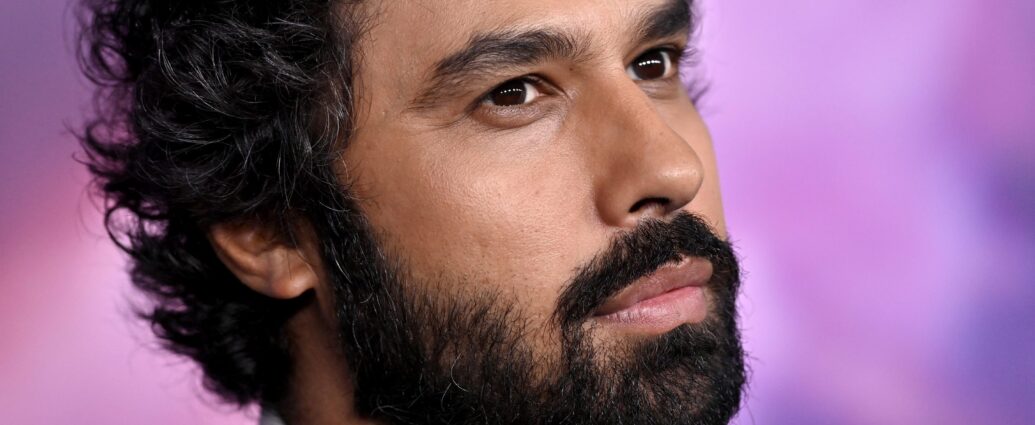
Kunal Nayyar has a life most would describe as a dream. He landed his breakthrough role as Rajesh Koothrappali on The Big Bang Theory at just 26, rose to global fame almost overnight, and went on to earn around $1 million per episode at the height of the show’s success—becoming one of the highest-paid actors on television ever. 

Today, the 45-year-old actor, producer, and entrepreneur has an estimated net worth of $45 million, a résumé spanning film, television, publishing, and tech. But none of that has insulated him from difficult days. 

When things start to unravel, Nayyar doesn’t reach for motivational podcasts or productivity hacks. He repeats one word to himself instead: Surrender.

“Sometimes, if I find myself really banging my head against something, and it’s just one of those days where everything’s going wrong, I just tell myself surrender,” Nayyar told Fortune

“Take a breath. Take a pause. Let’s just see what happens.”

The practice is more than simply having a mindful moment. He’s challenging his inner critic.

“Our minds work in such a way where on a difficult day, it keeps going to the worst-case scenario,” the actor explained, adding that the reality is rarely as bad as you imagine. And even in the very worst case, you always come out the other side. “So in those moments, you have to really just look at your mind and say, stop. Take a breath. Surrender to this moment and let’s see what happens.”

Nayyar admits he uses the mantra “quite often, to be honest.” Especially after auditions, in between waiting to hear how you did, and trawling the internet to see if someone else got the job—something any job seeker can relate to.

“I don’t think anything is in our control other than how we perceive things.”

Kunal Nayya’s daily routine

The British-Indian actor has a string of ventures to his name, including Good Karma Productions and, most recently, the document-storage app IQ121. He’s also still acting, most recently leading Christmas Karma—and it’s a career that keeps him relentlessly busy.

“I don’t have a regular nine-to-five job, so it’s different. When I’m shooting, then I’m a slave to whatever my schedule is,” Nayyar said. “Those days can lead into 16-hour days, with six-hour turnarounds.”  

That means he might only get six hours of sleep and rest before the next call time. It’s why even when he’s off work, he sticks to a disciplined routine: “Otherwise, it’s easy to just sleep all day—or not sleep all day, but relax all day—because you’re exhausted from shooting.”

5:30 a.m.—Wake up

“I do nothing for the first hour—hour and a half,” Nayyar explained. “I have coffee. I sit on the patio, check my phone, maybe talk to the family. But I really do nothing. I don’t get into work mode. I go to the gym, I come back, and I probably start my work day around 9:30 a.m.”

The afternoon—Recharge time

“I have the weirdest thing where I don’t do anything in the afternoon, I need that time in the afternoon to recharge,” Nayyar said. On days he’s not filming, he’ll take his last meeting at 2:30 p.m. and then rest from 3 p.m. until 5 p.m. “I try to do nothing,” he added. “If I can take a nap, I’ll take a nap. And then after 5pm I’m back on.”

On set, he’s equally intentional about protecting his focus. Rather than scrolling between takes, Nayyar brings a book, often choosing something his character might read to stay in the zone.

5 p.m.—Unwind

In the evenings, if Nayyar isn’t working he’ll make time to see a friend. Instead of trying to squeeze time in their calendars, he’ll just call them or invite them over for a cup of tea. Otherwise, you’ll find him sitting on his patio: “With my dog, sitting in silence, maybe watching some sports–I love watching golf, NFL, EFL. It really calms me.”

7:30 p.m.—Dinner

“I like to have dinner during the week at home, no matter what.” Does he cook for himself? No.

9:45 p.m.—“I’m in bed.” 

Nayyar keeps a strict bedtime, with the aim to be asleep no later than 10:30 p.m.—and he has a daily wind-down routine to make sure that happens. “When I’m lying in bed, I put my phone down, and right before I sleep, I just like to go completely quiet. I don’t try to think about tomorrow or anything. Just go completely silent until I fall asleep.”

Google’s CEO Sundar Pichai, Jeff Bezos, and Melinda French Gates have mantras for when they’re overwhelmed too

It’s not just a Hollywood problem. Even the world’s top leaders have shared that between messy return-to-office politics, scrambling to keep up with AI, and an unforgiving schedule, work gets too daunting for them, too, sometimes. 

When that happens, billionaire philanthropist Melinda French Gates says she “replays” Warren Buffett’s words of wisdom in her head.

“I remember what he said to us originally, which is, ‘You’re working on the problems society left behind, and they left them behind for a reason.” French Gates previously revealed in an interview with the Wall Street Journal. “‘They are hard, right? So don’t be so tough on yourself.’”

The Amazon founder, Jeff Bezos, take a more aggressive approach by confronting the cause of his anxieties head-on. 

“Stress primarily comes from not taking action over something that you can have some control over,” he said in an interview with the Academy of Achievement. “I find as soon as I identify it, and make the first phone call, or send off the first e-mail message…The mere fact that we’re addressing it dramatically reduces any stress that might come from it.”

Meanwhile, Google’s CEO repeats this mantra to himself when he’s overwhelmed: Most decisions are inconsequential.

“It might appear very tough at the time. It may feel like a lot rides on it, [but] you look later and you realize it wasn’t that consequential,” Sundar Pichai said at Stanford’s Business School. “There are few consequential decisions, and judgment is a big part of leadership.”

Essentially, most of us aren’t surgeons saving lives at work—that font color or PowerPoint presentation you’re worrying about probably won’t matter in 10 years’ time.

A version of this story originally published on Fortune.com on January 15, 2026

Read more executives’ work-life balance routines from Fortune’s Orianna Rosa Royle:

This story was originally featured on Fortune.com
This post was originally published here

Some of Nvidia Corp.’s biggest customers have been told that the prices of servers containing its artificial intelligence chips are going up more than 15% in many cases with memory chip costs soaring.

The price hikes will go into effect on systems shipped early next year and will impact systems including those with the flagship Vera Rubin and Grace Blackwell chips, according to people familiar with the process, who asked to not to be identified commenting on communications that haven’t yet been made public. The increases will depend on the generation of Nvidia chips and the memory configurations, they said.

Companies who build the servers under contract for large data center operators such as Microsoft Corp., Alphabet Inc.’s Google and Oracle Corp. have recently notified their customers of the forthcoming increases, the people said. Nvidia representatives didn’t respond to requests for comment. 

The inability of the industry’s most dominant company to hold the line on prices or absorb growing costs shows how much leverage makers of memory chips – Samsung Electronics Co., SK Hynix Inc. and Micron Technology Inc. – have amid a surge in demand for AI infrastructure. Major technology companies including Apple Inc. and Qualcomm Inc. have recently said they’ve been forced to charge more for their products because of chip shortages. 

Nvidia’s accelerator processors are the heart of computers that create and run AI software. Their effectiveness depends on how much dynamic random access memory, or DRAM, they are paired with. The two Korean companies and Micron account for most of the world’s production of that type of chip. While they’ve been increasing output, they still haven’t caught up with surging demand. That’s driven the price of the commodity-like components up massively and given their manufacturers unprecedented influence in technology. 

Nvidia is one of the most profitable companies in semiconductors. It’s able to charge tens of thousands of dollars per chip because supply — from contract manufacturer Taiwan Semiconductor Manufacturing Co. — still can’t meet runaway demand. The company has a gross margin, or percentage of sales remaining after deducting the cost of production, of 75%. Originally derived from PC gaming chips that sold for hundreds of dollars, AI accelerators have seen prices being driven up by incessant demand and, as yet, a dearth of viable alternatives for Nvidia’s offerings.  

Nvidia has also raised prices for its gaming-oriented PC graphics cards, industry news site Tom’s Hardware reported earlier this month.

How Nvidia’s customers react to this latest move and whether it will create an opening for its competitors will likely depend on whether they’re able to secure enough memory themselves. Major customers like Amazon, Microsoft, Google and Meta are all pursuing their own in-house chip programs but are still dependent on purchases from Nvidia for their data center build-outs. Their ability to push forward with greater independence will also depend on their access to supply from Samsung, SK Hynix and Micron. 

The price increases are also likely to add complexity to the industry’s massive AI data center build-out ambitions. Project delays, labor shortages, tightening capital markets and community resistance to developments have already complicated many plans.

Nvidia is reporting fiscal second-quarter earnings next week. The updates by the world’s most valuable publicly-traded company have become a key update for the technology industry and investors who have poured money into AI infrastructure on the promise that it will transform the economy.

This story was originally featured on Fortune.com

This post was originally published here

Why do disagreements about vaccines, climate change or elections often feel so personal? Our research suggests it is not simply because other people have different beliefs. It is because we think those beliefs are mistaken.

We are behavioral scientists who study the role of beliefs in politics and everyday life. Our new research finds that people are more disturbed by others’ beliefs when they feel those beliefs are not merely different from their own but are based on incorrect information.

For example, two people may disagree about the ideal level of immigration, but if one believes immigrants commit more crime than U.S.-born residents and the other is convinced the statistics show otherwise, their disagreement becomes a conflict over reality and truth.

That distinction matters because public debate over polarization often starts with a simple idea: People prefer others who think like them – “birds of a feather flock together,” as the saying goes. Social scientists call this belief homophily, and many researchers have studied how these shared beliefs shape friendships, neighborhoods, media habits and political life.

The idea has strong intuitive appeal: People often live near others who share their politics. People also tend to consume news and social media that fit their existing views, a pattern linked to echo chambers and political polarization.

Our research, based on four studies with more than 2,000 U.S. adults, suggests that the story that we and others have formulated is incomplete. People do not react the same way to all disagreements: They are especially bothered when they are convinced that someone is wrong.

Wrong beliefs fuel avoidance

In one study, we asked participants to recall a situation in which another person believed one thing and they believed something else. Some participants described a situation involving different beliefs, while others recalled one with incorrect beliefs. For example, one participant recalled a disagreement about whether couples should live together before marriage, viewing it as a difference in priorities rather than a dispute over reality. By contrast, another participant recalled disagreeing with a friend who believed drinking soda and eating fast food was harmless, a belief the participant considered factually wrong.

Their emotional reactions were dramatically different: Participants who saw the other person’s belief as incorrect reported having felt more disturbed, frustrated and upset than participants who saw the belief as simply different.

In another study, participants first reported their views on divisive topics, such as climate change, capital punishment and policing. Then they saw a hypothetical social media post that opposed their view. The more confident participants were that the author’s belief was incorrect, the more disturbed they felt. They also said they would be more likely to avoid, distrust or block that person. By contrast, being confident that the other person’s belief was simply different – not wrong – did not predict avoidance.

A hypothetical tweet, which says, 'there is no convincing evidence that human activity contributes to global climate change'

Participants in the study were shown a hypothetical social media post to test how they react to opposing views on climate change. Andras Molnar and George Loewenstein, CC BY-NC-ND

Finally, we gave participants short fictional stories – for example, about a neighbor who believed that a politician was corrupt. All participants read the same basic facts. The only change was how we framed the other person’s beliefs.

We told participants that their fictional neighbor had either different beliefs or incorrect beliefs about the politician’s alleged corruption. Though they were given the same information, people were substantially more disturbed when the other person’s belief was framed as incorrect.

Why false beliefs make people frustrated

Our studies point to several possible reasons for why false beliefs feel so upsetting. One is consequences.

False beliefs can often lead to bad decisions. For example, someone’s incorrect beliefs about vaccines or climate change can affect not only us, personally, but also other people we care about, including, in some cases, the person holding the seemingly false belief.

A second possibility is that false beliefs threaten people’s sense of shared reality. People rely on others to make sense of the world. When someone appears to deny what feels obvious or true, the conflict can feel more disturbing than merely having different perspectives.

A third possibility is that people treat false beliefs as signals about the person holding them. When we are convinced that someone is wrong, we may conclude that they are biased or irrational. Psychologists have described this as a sign of naive realism, the belief that we see the world objectively, while those who disagree with us are distorted by bias or self-interest. That kind of judgment can make a false belief feel socially threatening.

Graphic on a red background of a silhouetted businessman standing on a white ledge, looking across a gap at another businessman standing upside-down on an opposing ledge

When people are convinced someone is wrong, they often decide the other person is the one distorted by bias or self-interest. Boris Zhitkov/Moment via Getty

Difference may still matter for close relationships

Our findings do not mean that people are indifferent to differences.

In our social media study, participants were less able to imagine having close relationships, such as family or romantic relationships, with someone whose beliefs differed from theirs, even if they did not consider those beliefs to be false. Shared beliefs and values may matter more when people think about spouses, relatives or close friends than when they think about neighbors, colleagues or strangers online.

But for less intimate relationships, the perception of wrongness was the key predictor of negative feelings and avoidance. People did not want to avoid those who disagreed with them; they wanted to avoid those they believed were mistaken.

This helps explain why some debates become so emotionally intense, especially online. A disagreement about taste or sports may stay harmless, but a disagreement about vaccines, climate change or election integrity can feel different because people often see one side as factually wrong and potentially harmful.

The paradox of fact-based debate

Public discussions often call for more fact-based debate, but we believe such a drive for hard truths may be counterproductive. Facts matter, and empirical evidence should guide debates, but our findings suggest a paradox: When people use facts to defend their preferences, tastes or values, they may turn a disagreement over priorities into a dispute over who is right and who is wrong, potentially turning up the emotional heat.

That shift can make disagreement harder to tolerate. A person can “agree to disagree” about which school policy reflects the right priorities or which candidate best represents their values. It is much harder to agree to disagree when facts are at issue. The nastiness of intellectual disputes, therefore, depends in part on how people frame their positions. Even if the contents of the disagreement are the same, it is very different to say “we disagree” than to say that “you are wrong.”

Andras Molnar, Assistant Professor of Psychology, University of Michigan and George Loewenstein, Professor of Economics and Psychology, Carnegie Mellon University

This article is republished from The Conversation under a Creative Commons license. Read the original article.

The Conversation

This story was originally featured on Fortune.com

This post was originally published here

You tell an artificial intelligence agent, an AI capable of autonomous reasoning and multistep actions, “Find me a shirt for less than $30, but do not buy it.” The agent finds one – and places the order anyway.

You challenge the charge. The retailer shows the order came through your account. The AI agent provider shows your instruction not to buy. The payment service shows the charge. Each record may be accurate. But nothing in those records links the charge to the task you gave the agent to find – but not buy – a shirt.

A conventional chatbot suggests a shirt and waits. An agent can use your account, contact other services and complete the transaction. One sentence sets off a string of actions across systems run by different companies. Each company can verify only the part it sees. Settling the dispute takes an answer that spans all three: Did this agent, acting for this person, take this action within the limits of this task?

A Senate bill points toward the problem. Sen. Mark Warner (D-Va.) introduced the AI AGENT Act, S. 5051 on July 21, 2026. It defines a “custodial user agent” as one authorized to act for a user in a transparent, documented, limited and revocable manner, and generally requires such agents to keep real-time records of actions taken for users. It also directs the National Institute of Standards and Technology, known as NIST, to identify protocols or develop technical standards for verifying that a user delegated authority to an agent and for keeping auditable records of the actions an agent takes.

But the bill would not expressly require a verifiable evidence chain across the different systems involved, from when a user initiates a task to the final outcome. In the shirt scenario, such a chain would link the user’s instructions to the agent, the agent’s actions and the records held by the retailer and the payment service.

A look at how a verification system could be designed offers some insight into some of the technical challenges AI agents are poised to introduce.

What the marketplace can see

My doctoral research used years of data breach records to follow organizations over time. It depended on stable identifiers, which are labels or numbers that point to the same organization or event across different records. When the identifiers changed or failed to match, one history fractured into several incomplete ones.

An agent purchase has the same weakness: The retailer may recognize the AI agent provider without identifying the particular agent, and the payment service may label the same customer differently. Matching the user, provider and particular agent across those records gets investigators to the transaction – but they still need something to show that the user granted authority for that task.

In technical systems, a credential is data that a system accepts as evidence of identity or authority. Many websites use OAuth, an industry-standard security protocol for delegating authorization to access online services in a way that protects users’ credentials such as passwords. It generates an access token that an application presents to gain access to a protected service.

That standing authorization may have been approved weeks earlier. The application may still obtain or present a valid access token that permits checkout today, even when the current instruction says to search but not buy. The retailer sees a usable token and carries out the transaction. In that arrangement, the task-specific restriction against buying remains inside the AI agent provider.

The evidence has to travel

For this kind of accountability to work, five things would have to be in place: a verifiable binding among the user’s account, the agent at a specific time and the task; limits specific to that task; verifiable linkage across the transaction; a check before each action; and records whose later alteration can be detected. Payment systems have begun assembling those pieces.

The first record identifies the authenticated user account that approved the task and the agent that received the authority. The retailer cannot rely only on the AI agent provider’s name. The provider binds the account, agent and task in an authorization record and digitally signs it, allowing the retailer and payment service to verify who issued it and whether it has been altered.

The AI agent provider also preserves the original request and converts it into limits that other systems can enforce. For the shirt task: search for 15 minutes, no purchase, no passing purchasing power to another agent. Before the agent begins, the user sees and approves that structured version. If the translation is wrong, investigators can compare the rule against the words behind it.

two robot hands, one holding a magnifying glass and the other a pen, over a paper document

The evidence of your instructions to your AI agent needs to be verifiable by different systems at each step as the agent carries out a task. Otherwise, how do you prove that the agent did – or did not do – what you told it to? AndreyPopov/iStock via Getty Images

One way to create that linkage is for a task reference to travel with each request. It is unique to one job, encodes no name, account number or other direct identifier, and appears in every participating company’s record. Engineers already use a related device, a trace identifier, to correlate events from one operation as it moves between services.

The task reference links scattered records to one job. It does not itself confer authority. The task reference must therefore be bound to the user’s approved rule in the agent provider’s digitally signed authorization record. Because even a random identifier can link activity across services, it should be short-lived and visible only to companies participating in the task.

Someone then has to check the rule where the money moves. At checkout, the retailer validates the signed authorization record and evaluates the proposed purchase against it. A prohibition on buying stops the transaction even when the application has broader account access. A bank transfer or release of medical records could trigger fresh confirmation. Any authority passed to another agent must retain the same task reference and remain within the original limit.

After the decision, the retailer’s system records the agent, task reference, rule evaluated, time, decision and outcome. The payment service retains the same reference, and the provider keeps the instruction and approved rule. Each company keeps a tamper-evident record, so later changes can be detected. The user gets a plain-language receipt: “Your agent searched three stores and attempted checkout. The purchase was blocked because buying was not authorized.”

Google’s Agent Payments Protocol, or AP2, meets some of these requirements. It creates records that can show the user’s approved limits and the information presented to each participant when a transaction is disputed. AP2 shows how the evidence could travel. It does not decide who bears the loss or specify how long each company must keep that evidence and how it can be retrieved later.

Beyond NIST’s initial scope

NIST is reviewing comments on its February 2026 draft concept paper about agent identity and permission. It asks how an agent can prove its authority, connect that authority to a person and produce verifiable records.

Its proposed initial effort covers agents operating inside organizations, where greater control and visibility can be maintained over the agents and the systems they access. The paper excludes agents arriving from untrusted outside sources from this initial effort, though it says public-facing or individual agents could be addressed later.

Consumer agents crossing company boundaries represent the case NIST deferred. Each company keeps its own identifiers, authorization language and retention rules. A dispute can stay unresolved even when each company produces its records exactly as stored.

A dispute over a $30 shirt might be easy to wave off, but the records can fail in the same way when an agent moves $40,000, submits a benefits appeal or requests a prescription refill in your name. In those disputes, it might not be difficult to prove that the agent was allowed into the service. It’s another matter to prove whether you did or did not authorize the agent to do what it did on your behalf.

Aashis Luitel, Associate Teaching Professor of Artificial Intelligence, University of the Cumberlands

This article is republished from The Conversation under a Creative Commons license. Read the original article.

The Conversation

This story was originally featured on Fortune.com

This post was originally published here

The federal government is injecting millions of dollars into efforts to combat feral hogs – and it’s considering spending even more in the coming years. The problem has grown for decades, but our research has found that a recently revived federal effort offers the potential for bringing the hogs under control.

Feral swine roam in 35 states, according to the U.S. Department of Agriculture. The most recent population figures, from 2016, estimated that 7 million feral pigs were loose in the nation then. That number may be much higher today: Feral hogs breed year-round and each year can produce up to two litters of four to 12 piglets per litter. Feral hog populations have been estimated to be able to double in just four months.

The U.S. Department of Agriculture estimates that wild pigs do between US$2.5 billion and $3.4 billion in property damage each year. At least $800 million of that is destruction of crops.

Beyond crops, feral hogs spread disease to livestock, damage farm infrastructure such as fences and roads needed for agricultural production, destroy recreational parks and cause extensive environmental damage to wildlife habitats, water quality and plant ecosystems.

They’re hard to control because feral hogs roam across large areas of privately owned land. If neighboring landowners don’t work together, the hogs just move rather than being killed or contained. Basic economic theory says landowners would wait for others to spend the time, money and energy to control hogs – which means nobody does, and the problems grow.

A pile of turned-up mud and dirt in the foreground, with grasses and shrubs in the background.

Feral hogs can tear up vegetation, disturb the soil and otherwise damage land and property. AP Photo/Gerald Herbert

An initial test

In the 2018 Farm Bill, a major piece of legislation covering wide areas of agricultural policy, Congress agreed to spend $75 million to encourage private landowners to step up together to kill feral hogs.

That program was active in selected counties in 10 hog-plagued states: Alabama, Arkansas, Florida, Georgia, Louisiana, Mississippi, North Carolina, Oklahoma, South Carolina and Texas. Starting in 2020, the U.S. Department of Agriculture funded private landowners’ purchases of trapping equipment, on-farm trapping efforts and restoration of land the hogs had damaged.

Originally slated to end in 2023, the program was given $105 million more to spend through 2029 in the major budget and immigration package Congress passed in July 2025. Through Sept. 21, 2026, the government is accepting grant applications for the first $35 million allocation from that money.

The Farm Bill that has passed the House and is awaiting debate in the Senate would increase that funding by $150 million and extend the effort through 2031.

A useful question, before spending all that money, is how effective the first test of the program was.

The shadow of a helicopter looms over several hogs traversing grassland.

Hunting feral hogs from helicopters is just one way people have sought to control their spread and damage. AP Photo/Eric Gay

Reducing hogs’ damage to cornfields

Our research team of agricultural economists at the University of Tennessee and the University of Arkansas set out to examine the program’s performance.

We used federal data on crop insurance claims to compare crop damage in counties where the program was active against counties where it was not, both before and after the federal trial began.

Not all the counties reported crop damage from wildlife. Among those that did, counties where the program wasn’t operating had crop insurance claims for wildlife damage to corn that averaged 70 acres (17.5 hectares) per policy.

In counties where hog eradication efforts were coordinated, however, the average claim for cornfield acres damaged from wildlife declined to 10 acres per policy. That is a statistically significant result – and given the scale of corn production across the study region, it represents a meaningful reduction in losses.

When comparing crop insurance claims for soybeans, wheat, cotton and peanuts, however, we found no difference between counties with active hog control efforts and those without.

A way forward

Corn is reportedly the crop most commonly damaged by feral swine. That could help explain why we found cornfields to have the only statistically significant reduction in damage.

More generally, the program’s effectiveness may have been more limited because it launched during the COVID-19 pandemic, which restricted the community meetings and public outreach that could have boosted landowner participation. Also, the fact that it was a pilot effort may have made people reluctant to commit, fearing the program might disappear in a few years.

It is likely our study underestimates the benefits of the program. Some farmers have crop damage that is not severe enough to warrant an insurance claim, so those numbers are excluded from our analysis. And our study did not evaluate any potential changes in noncrop damage from feral hogs, such as to property, livestock, recreational parks and the environment in general.

Our research indicates the hog control program can be effective and offers several ideas for improving it, both over time and with more funding. For instance, if the efforts focused specifically on corn-producing counties, it might yield more success per dollar invested. And expanding participation through additional outreach efforts could mean more hogs are caught or killed across a wider area, amplifying the return further.

Feral hogs will be nearly impossible to eradicate completely, and the damage they cause isn’t going away either. The data suggests that with the right design and sustained investment, the federal government has a program that can make a real difference for America’s farmers.

Chris Boyer, Professor and Department Head, Agricultural and Resource Economics, University of Tennessee; Aaron Smith, Professor of Agricultural and Resource Economics, University of Tennessee, and Eunchun Park, Assistant Professor of Agricultural Economics and Agribusiness, University of Arkansas.

This article is republished from The Conversation under a Creative Commons license. Read the original article.

The Conversation

This story was originally featured on Fortune.com

This post was originally published here

Eight Sleep, the startup behind the $2,999 mattress cover that puts both Elon Musk and Mark Zuckerberg to sleep, wants to stop being known for the celebrities who use it. Instead, the company is pursuing FDA clearance to detect and treat sleep apnea, a pivot it hopes will turn a bougie tech gadget into a business that insurers, not just billionaires, will pay for.

Matteo Franceschetti, Eight Sleep’s cofounder and chief executive, told Fortune the company’s filing with the FDA is progressing “fairly smoothly.” The company began pursuing clearance with the FDA for its sleep apnea detection and mitigation technologies in 2025 and is conducting clinical studies in support of its submissions.

Currently, the company has only published one independent study on the Pod’s benefits, alongside several study preprints that were both directionally positive but not yet independently verified. There are several studies, however, funded by Eight Sleep, on sleep apnea that have been published in scientific journals. Eight Sleep also collects and has a massive cache of user data that, when aggregated and de-identified, can be used to identify broader trends and support research, reports, and studies on sleep and health. 

FDA clearance for sleep apnea detection would likely put Eight Sleep in more rigorous regulatory lane as Apple’s Watch and Samsung’s Galaxy Watch and Ring, both cleared by the FDA since 2024 to flag sleep apnea “risk.” The FDA has a lower bar for the detection of apnea—snoring so bad that the sleeper stops breathing—than diagnosis.

Eight Sleep is pursuing the more clinical prescription-based diagnostic aid of which there are also existing home sleep-testing devices. While the Apple Watch can tell users they have signs of apnea, Eight Sleep is hedging it will be able to quantify apnea events per hour.

In August 2026, Eight Sleep also began a clinical trial with Abu Dhabi’s Department of Health, testing whether its product, the Pod, can automatically reposition sleep apnea patients, and therefore become an alternative to a CPAP machine. U.S. consumer health-tech firms are increasingly using the emirate’s Department of Health as a springboard for medical credibility. Just weeks before Eight Sleep’s announcement, Oura signed its own joint research program with DoH on women’s health and cardiometabolic risk, while Whoop landed a $75 million investment and research partnership with Mubadala to validate its biomarker labs in what became its first market outside the US.

The goal, Franceschetti said, is to get insurers to treat the Pod like a medical device rather than an out-of-pocket luxury. The company told Fortune it’s actively working on making the Pod more affordable, though it isn’t yet clear how it gets there without a different cost structure.

Eight Sleep’s Pod already qualifies for HSA and FSA reimbursement through the fintech Truemed. Whether regulators ultimately agree it treats a condition, rather than merely tracking one, remains an open question.

Matteo Franceschetti (seated) and Alexandra Zatarain

Courtesy of Eight Sleep

The Pod sits atop your mattress and connects to a hub that pumps heated or cooled water through internal tubing, with each side of the bed running its own heat zone. Built-in sensors track heart rate, breathing, and movement, and an AI model adjusts temperature through the night and generates a sleep score. Automatic control and tracking require an ongoing $199-to-$399 annual subscription; without it, users get manual temperature buttons only.

Both billionaires are among executives, athletes, and celebrities who credit the company with transforming their sleep. Formula 1 driver Charles Leclerc is on its investor cap table and F1’s Aston Martin Aramco signed on as a team partner in February 2026 in a reportedly “eight-figure” deal

In March, Eight Sleep raised $50 million from Tether, the company behind the world’s biggest stablecoin, at a $1.5 billion valuation. Last year, the company was profitable. Franceschetti’s ambition, he told Fortune, is to become “the biggest health technology company in the world.”

From Milan to San Francisco

Franceschetti is neither an engineer nor a doctor. He trained as a securities lawyer at a large Milan firm, in a family of lawyers, judges and doctors, and describes himself as “the bad guy” for straying into business; his father’s death at the end of 2008 pushed him toward something riskier. He calls himself part race car driver, bold and ambitious, and part lawyer, intellectually disciplined, a combination he credits for keeping a hardware startup alive against long odds.

In 2014, Franceschetti, Massimo Andreasi Bassi, and Alexandra Zatarain started Eight Sleep out of a garage, where the team built its first prototype and threw a “pajama party” to demo it for investors. Zatarain, then 24, wrote the pitch deck in a few hours and joined that night; she is married to Franceschetti and now runs brand and marketing, while Bassi became chief technology officer. An Indiegogo campaign brought in more than $1.2 million (well over the $100,000 goal) and about 8,000 pre-orders before the product existed, proof of demand the founders used to get into Y Combinator’s 2015 class after two rejections.

The decade since has been a steady climb through funding rounds rather than one big break: a $14 million Series B in 2018 led by Khosla Ventures, an $86 million Series C in 2021 near a $500 million valuation, a $100 million Series D in August 2025 near $1 billion, and the Tether round in March 2026 that pushed the valuation to $1.5 billion.  The company has raised more than $310 million total.

The numbers behind the hype

Eight Sleep has never disclosed revenue, and Franceschetti dodged specifics with Fortune. Third-party estimates pegged 2025 revenue at roughly $264 million, flat with 2024, though Franceschetti disputes that, saying revenue has grown “close to 30x” since the Pod’s 2019 launch, that the company was profitable in 2025, and that cumulative Pod sales exceed $500 million. Eight Sleep now sells in 35 countries, including a 2026 launch in China.

“If you look at the DNA of our people, the way we think, probably Oura, Whoop, Garmin, we’re probably in the same ballpark,” Franceschetti said, noting roughly 85% of Eight Sleep customers already own a wearable. His pricing analogy is Tesla: the Pod is the Model S, a premium flagship meant to fund cheaper models later. “We don’t want to be luxury at all,” he said.

The smart-mattress category Eight Sleep wants to escape just delivered a cautionary tale. Sleep Number, the unit-share leader, filed for Chapter 11 in June 2026 with $672 million in debt after net sales fell 16%; Sleep Country Canada bought its assets a month later for $701 million. Eight Sleep, direct-to-consumer with roughly 100 employees, says it has avoided that trap.

Market-size estimates vary widely, from a $1.87 billion global smart mattress category to nearly $5 billion by other counts. Franceschetti’s preferred comparison is wearable-health brands: Oura, valued around $11 billion, and WHOOP, valued at $10.1 billion. “We see ourselves as a completely different market that literally doesn’t exist,” Zatarain told Fortune.

The problem Eight Sleep is chasing is real regardless of which market number is right. Roughly 30.5% of American adults sleep fewer than seven hours a night, per the CDC, and RAND Europe estimates insufficient sleep costs the U.S. up to $411 billion a year. The American Academy of Sleep Medicine says undiagnosed sleep apnea alone costs the country nearly $150 billion a year, the exact condition Eight Sleep’s FDA filing targets.

From charity to business plan

Franceschetti said the most consequential part of Eight Sleep’s future has nothing to do with billionaires or race cars. He recalled a doctor at a major U.S. medical institution emailing him about an underage patient whose medical condition prevented her from regulating her own body temperature; her family couldn’t afford a Pod. 

“Cancer will be a big market for us,” he said, describing patients whose hormone-related treatments disrupt temperature regulation.

This story was originally featured on Fortune.com

This post was originally published here

When the July Jobs Report was released by the US Bureau of Labor Statistics, the headlines were understandably dominated by the drop in overall nonfarm payroll employment. Look beyond the headlines, however, and you’ll find an economic comeback story that was easy to miss: the growth of temporary help services. 

The facts are clear. Out of more than 300 industries analyzed by BLS, temporary help services has added the second-highest number of jobs in 2026. It’s also shown growth every month this year, including 3,400 jobs in July. One in ten jobs created this year have been temporary positions.

So what’s driving the return of temporary work? 

As the chief economist at the American Staffing Association, which represents third-party staffing and recruiting firms, I’ve been closely tracking the return of temporary help services after a multi-year decline. I believe this recovery goes beyond the staffing industry. It coincides with shifting perceptions of work with the potential to change the way employers and employees interact with each other.

Contract employment is becoming a popular avenue for young adults seeking an entry point into the workforce. When the BLS last examined contingent work in 2023, young adults under the age of 24 were four times more likely than prime age workers and six times more likely than older workers to hold contingent jobs. An ASA-i360 survey suggested that 40 percent of temporary workers in 2025 were between the ages of 18 and 29.

This format of work is uniquely appealing to young job seekers in an uncertain labor market. The ability to hold multiple assignments at once, or in addition to a full-time job, aligns with young job seekers’ aversion to relying on one employer for economic security. The autonomy afforded by such arrangements also resonates with a generation of young workers who are less willing to trade their time and well-being for the uncertain promise of a long-term career.

But young workers are not embracing temporary employment by themselves. Their choices are coinciding with employers’ own preferences for such arrangements as well. At a time of rising inflation as well as increased economic uncertainty, employers are turning towards project-based hiring as a way to limit costs and avoid another episode of over-hiring like the Great Reshuffle.

That shift is visible in the business received by staffing companies today. Demand for temporary workers is rising in many segments of the labor market such as construction, transportation, professional services, healthcare and government – not because these industries have suddenly embraced contract work, but because employers are seeking the ability to adjust their workforces as conditions change.

Together, shifting preferences among employers and young job seekers in favor of contract work are reshaping the terms of employment around greater autonomy and adaptability. Employers are willing to trade the stability of a permanent workforce for the flexibility to adjust to volatile market conditions like rising cost pressures as well as economic uncertainty. At the same time, young workers are willing to trade the stability of a traditional career path for flexibility over how they work and what they gain from it.

Naturally, this kind of rugged individualism poses risks to the broader labor market. As workers gain more autonomy over where they build their careers, employers will have to fight for their headcount through investments in culture and retention. Otherwise, they could realize substantial disruptions to their knowledge pipelines and productivity, just as increased retirements as well as lower levels of immigration constrict the number of eligible job-seekers available to them.

As employers exercise their freedom to execute short-term adjustments in headcount, workers will have to assume more accountability for building long-term careers out of each assignment and every experience. They will also require robust safety nets to seamlessly transition between contracts. Initiatives like microcredentialing programs, unemployment insurance, and portable benefits could limit the severity of future labor market downturns by supporting this growing cohort of workers.

Temporary help services employment often stands at the forefront of changes within the broader labor market, and its recent pickup signals more than a mere rebound in demand. It is just beginning to rise at a time when both employers and young adults are increasingly viewing contract work as a new kind of security within an uncertain labor market.

But with the flexibility afforded by contract work comes responsibilities for both sides. Employers will have to compete more aggressively to attract the employees they need, while workers will have to be more deliberate about turning short-term assignments into long-term careers. As permanence becomes harder for either side to promise, the flexibility to adapt might become the most valuable form of security in the labor market of tomorrow.

Noah Yosif serves as Chief Economist at the American Staffing Association (ASA). He is also a member of the Economic Advisory Committee of the World Employment Confederation (WEC).

The opinions expressed in Fortune.com commentary pieces are solely the views of their authors and do not necessarily reflect the opinions and beliefs of Fortune.

This story was originally featured on Fortune.com

This post was originally published here

On Dec. 13 last year, a stranger in a Brown University bathroom noticed a man dressed head to toe in black, wrong for the weather, mere hours before that same man opened fire on Brown University’s campus, killing two and wounding eight before vanishing. Investigators had almost nothing: no name, no plate, just a tip describing a gray Nissan with Florida plates. But that was enough: Providence police ran it through a network of more than 70 Flock Safety cameras, which reached back through 30 days of history, and found the car had passed 14 times since December 1st. “We were able to find the vehicle on Flocks, actually get the actual plate, learn that it was a car rental,” said the Providence police chief. Police tracked the car thanks to Flock and traced him to a storage unit in New Hampshire less than a week after the shooting.

Somewhere in Florida, at almost the same time, a different man was looking into Flock-collected data, but for an entirely different reason. Officer Christopher Goodson wasn’t hunting a stranger, but was watching for his estranged wife. Using his department’s access to Flock, he logged more than 700 unauthorized inquiries into her vehicle between Sept. 2024 and June 2026, and was arrested just last week.

Flock Safety has spent nine years promising to solve crime. At the same time it may have built the most pervasive surveillance network in American history—one that is increasingly drawing loud pushback from advocates worried about what’s been collected, and who has access to the data.

Flock’s network of solar-powered cameras doesn’t just record license plates, they log the make, model, color and identifying details of every vehicle that passes in more than 5,000 communities across 49 states. Then law enforcement offers can search that data using natural-language descriptions (for example car color or a bumper sticker) across thousands of jurisdictions simultaneously. Theoretically any police department with a Flock contract can reconstruct where you drove, when, and how often. The company says data belongs to its customers and is typically deleted in 30 days. But Fortune found the LAPD’s own Inspector General discovered that at least one Flock contract lets the company retain data for five years and use it for “any purpose in Flock’s sole discretion.”

The backlash is intense, and keeps growing: Residents in 36 states have vandalized or destroyed the automated license plate recognition (ALPR) cameras, 82 contracts have been terminated since 2021, and city council chambers from Boston to Santa Clara have become battlegrounds over a technology most residents didn’t know was watching them. Says Anne Toomey McKenna, a privacy attorney and visiting law professor at the University of Richmond: “Our Fourth Amendment was not designed for the persistent and pervasive surveillance environment which we live” in. She called it a “Catch 22″—the Supreme Court has ruled that accessing someone’s location data is a search requiring a warrant, “but then we step into this gray area” once police simply buy the data instead of compelling it.

When reached for comment regarding the controversy, Flock CEO Garrett Langley told Fortune that the company was started to solve crimes. “Every day, Flock helps solve crimes that would otherwise go unsolved. From finding missing children, to solving murders, violent crime, and recovering stolen vehicles, Flock gives investigators leads they didn’t have before,” Langley said. “That impact is why we started Flock, and it drives every decision we make about how this technology should be built and governed.”

It has been a very lucrative enterprise thus far. Flock is backed by blue-chip VC investors including a16z and Tiger Global. The nine year old startup told Fortune in April it had raised $500 million at an $8.3 billion valuation, has taken in $1.2 billion total, and crossed $500 million in annual recurring revenue in the first half of 2026. The company has now expanded into video, gunshot detection, drones, and AI-powered search software. The company confirmed to Fortune that over half of new revenue is non-license plate readers.

“We are setting a baseline that we believe the industry should follow with our recent privacy enhancements and measures to proactively address officer abuse,” Langley continued. “Local communities, not Flock, decide their sharing rules, offense filters, and retention windows,” he continued. “Our job is to give them better tools that reflect their needs and values of their communities and to help hold individuals accountable when someone misuses the system.”

But one thing is clear: The technology that made Flock a billion dollar business is turning it into what some see as a villain.

A significant funding background

Langley was an electrical engineer in metro Atlanta, hit by a string of break-ins, when he started asking why local police had so little to work with. “Due to a lack of investigative evidence, over 80% of property crime is never solved,” he later wrote in a company profile posted on Y Combinator’s site. “There was a clear gap in the market, left unfilled by ineffectual alarm systems and expensive, outdated traditional security cameras,” he wrote. “With the right team, technology, and policies, we could actually not only solve, but eliminate crime.”

Langley recruited two former colleagues—Matt Feury and Paige Todd. According to a16z’s announcement of Flock’s Series D (which the VC firm led in 2021), the three built their first prototype at Langley’s kitchen table in three weeks. Homeowners associations were the earliest customers, making up more than 40% of Flock’s business four years in before law enforcement contracts came to dominate. At the time of the funding, a16z general partners David Ulevitch and David George called the company an “n of 1” startup, noting it was “effectively the only game in town.” Tiger Global led the Series E in February 2022, a $150 million round at a $3.5 billion valuation, joined by new investors 776 and Spark Capital alongside returning backers a16z, Bedrock, Matrix, Meritech and Initialized. By March 2025, Flock raised another $275 million at a $7.5 billion valuation in a round led again by a16z, with participation from Greenoaks, Sands Capital, Founders Fund, Kleiner Perkins, Tiger Global and Y Combinator. Neither a16z nor Tiger responded to Fortune’s requests for comment.

Investors have no doubt been thrilled with the growth, but some residents in Flock-patrolled areas are rebelling. In July, angry citizens cut down Flock cameras with an electric saw in upstate New York; they threw paint on them in Oakland, California; and rammed a truck into one in Idaho. One man in Florida has taken to sitting in a lawn chair holding a piece of cardboard on a pole to block a camera’s view. Just this week, a man dressed up as Darth Vader showed up at a San Diego meeting to “praise” the city’s use of Flock cameras. Flock cameras have now been vandalized in at least 36 states, according to NPR. Asked about the vandalism, Langley said that people engaging in it likely aren’t being told they may be committing a felony, and said residents with concerns about the technology should raise them with their city council rather than the cameras themselves.

Furthermore a Washington Post investigation found nearly 50 cases of officers charged with or accused of misusing the cameras, many involving tracking current or former romantic partners. The Institute for Justice keeps a public database of more than 150 documented cases nationwide, sorted into four types—stalking, non-law-enforcement use, misread errors, and other misuse—drawn from media reports and public records. IJ says this is likely an undercount, since officers rarely have to give a specific reason for a search.

In March, Boston, Flagstaff and Santa Clara all suspended or ended their Flock contracts after Amazon’s Ring pulled its Flock integration in the wake of backlash to a Super Bowl ad. Reporting by the San Francisco Standard found 82 Flock contracts terminated across 28 states between August 2021 and May 2026, with 39 of them in just the first five months of this year alone. Still, Langely told Fortune these were not affecting business. “Flock continues to bring on significantly more customers than are leaving. We are growing our customer base at ten times the rate of customer churn, and agencies are turning more to Flock every day to help deter crime and make their communities safer.”

Not every city ends up on the cancellation list, even after loud public pressure. Peter K. Jackson, counsel at Greenberg Glusker, pointed to West Hollywood, which he said renewed its Flock contract without amendment “despite a tremendous public rancor at various city council meetings.” Jackson told Fortune that outcome is partly due to a structural quirk: West Hollywood doesn’t run its own police department, relying instead on the Los Angeles County Sheriff’s Department for policing, meaning the city council isn’t the only party with a say in whether the cameras stay. Jackson suggested that may have given council members reason to hesitate before cutting a tool the county sheriff’s office had come to rely on, even as residents packed meetings to object.

Many of the cities that are, however, cancelling contracts have city council meetings that sometimes share similar themes: a growing resentment against surveillance technology and data collection.

Privacy advocates are particularly worried about long or lax retention periods that mean data is searchable for months or even years. “Flock’s standard retention period is thirty (30) calendar days from the date of capture. This standard retention period applies to all customer data, unless otherwise specified in the individual customer’s agreement,” read Flock’s Evidence Policy. Then last week, Flock recommended a default to seven days, and introduced “Evidence Mode,” letting detectives preserve specific data past that window for active cases. Langley wrote that Flock’s own analysis found “over 90% of searches without a full plate are done within a week,” and that “every community will continue to choose the retention period that fits its public safety strategy.” But Tom Bowman, policy counsel at the Center for Democracy and Technology’s Security & Surveillance Project, told Fortune that the policy changes still leaves it up to the customer. “This is just a recommendation,” he said. “This is not legally binding.” The real retention period for that city is whatever its own contract says.

That’s something confirmed by a government audit of one of Flock’s largest customers. In July, the Los Angeles Police Department was renegotiating its own Flock agreement over data-ownership concerns. Around the same time, the department’s own Inspector General audited its Flock contracts and published the findings. One of its agreements lets Flock “retain the right to use the foregoing for any purpose in Flock’s sole discretion,” while a separate agreement grants the company rights to use anonymized footage for “training of machine learning algorithms.” The report continued quoting the agreement: “Flock shall retain all data collected for five years at no charge to the Department or City”—60 times longer than Flock’s “standard” 30-day policy, and more than 260 times longer than the 7-day figure the company spent last week promoting publicly.

Privacy advocates say this is the real danger: a simple surveillance camera tracks your passing of a certain location at that point in time. This, on the other hand, can potentially follow your every move. “ALPR systems have become so ubiquitous that they are not just tracking your location at a single point in time, but they are tracking your pattern of movements,” Bowman explained. “They can essentially reconstruct your entire daily life: where you go to sleep, where you go to work, where you go to service, so on and so forth.”

In response to the LAPD’s ongoing renegotiation, Langley told ABC7 that “the technology is really simple.” He explained: “A car drives by, we take a picture. It’s a static picture of a car, and then we read the license plate. That’s what the technology is. It’s actually not that complicated, it’s pretty simple.”

Both Jackson and McKenna say Flock’s language of “customers own the data” can be true, but that also doesn’t mean Flock also can’t retain the data and use it to train its technology. Currently, LAPD responded to its audit by drafting new contract language that would explicitly bar any vendor from using city data “to train, fine-tune, or improve any algorithm or artificial-intelligence system” going forward.

Michael de Dora, U.S. advocacy lead at Access Now, told Fortune a larger issue is what happens once that data crosses jurisdictions. Once police departments have a contract with Flock, he said, they “can then go to other police departments and agencies and say, ‘Hey, let’s pull all this Flock information together,’” creating what he called “a searchable, shareable historical database of the whereabouts of Americans” that is, in his words, “a totally unregulated space right now.” A retention limit set by one city’s contract, in other words, doesn’t necessarily bind what happens to that same data once another agency has pulled a copy of it.

The question of cross-jurisdictional data sharing is already playing out. IJ’s database documented a Johnson County, Texas sheriff’s deputy who ran a nationwide Flock search for a woman suspected of having had an abortion, in May 2025. Another case stems from Wisconsin in which officers, in released court records under probable cause, searched for a man because his “vehicle travels to Michigan frequently which is a known source state for marijuana as it is legal there” and searched his car for marijuana.

Is this backlash or is there a legal argument to be made?

Both McKenna and Bowman connect the contract fight to a bigger, unresolved legal one. Courts have long held that a driver on a public road has no reasonable expectation of privacy, but McKenna argues that no longer holds up cleanly.

Bowman pointed to United States v. Chatrie, decided this year, which held that police accessing precise location history is a search requiring a warrant regardless of scope, precedent he argues could extend to ALPR networks that, at scale, can rebuild someone’s entire daily movement rather than capturing one plate at one intersection.

“Law enforcement can circumvent the Fourth Amendment simply by pulling out their wallet and buying that data,” he said, a gap privacy advocates have been trying to close for years. “The Fourth Amendment’s Not For Sale Act is a bill that has been introduced in multiple Congresses that continuously receive support and then gets blocked at the last minute,” Bowman said. If it ever passed, he argues, it would functionally require a warrant before police could buy the kind of location data ALPR networks generate, which is why he doesn’t expect Flock to support it.

“ALPR systems have become so ubiquitous that they are not just tracking your location at a single point in time, but they are tracking your pattern of movements,” Bowman said, “They can essentially reconstruct your entire daily life: where you go to sleep, where you go to work, where you go to service.”

Flock cameras are helping police catch criminals and potentially act as deterrents before a crime is even committed. But citizens and courts are now deciding what price to put on Americans’ freedom to move without being watched.

This story was originally featured on Fortune.com

This post was originally published here

If you thought last year’s national debt numbers were chilling, you haven’t seen anything yet.

In the second week of August, the CBO released its Monthly Budget Review giving year-to-date totals, calculated through July, for federal FY 2026, ending September 30.

For the first 10 months of fiscal 2026, Washington’s carrying costs grew an astounding 14%, from $846 to $963 billion versus the same period in FY 2025, far and away the biggest jump of any expense line item. By contrast, Social Security rose 5%, and Medicare and Medicaid 8% each. In just 12 months, interest zoomed from equaling 64.9% of Social Security outlays to 70.1%. A year ago, the category had barely edged past Medicare to become the 2nd largest budget cost after Social Security.

The huge increase in interest expense has two sources. The first is the explosion in the federal debt. Since the start of 2026 through August 22, that burden swelled another 7.3% to $40 trillion. Since the start of 2019, the federal debt has swelled by nearly 50%. And the indebtedness trajectory is steepening: In the past three weeks, the number’s accelerated at incredible 1% rate, or an annualized trajectory approaching 15%.

Second, interest rates have famously spiked big time in the past year. Around 50% of debt held by the public is parked in Treasury Notes of 2 to 10 year maturities. Since July of last year, the yield on the two year has advanced from 3.94% to today’s 4.18%, or 6%, while the 10-year’s waxed faster, from 4.37% to 4.69%, for a 7.3% rise. And deficits keep rising, the Treasury will need to issue more and more debt to fund operations.

The towering menace to the U.S. economy: Both factors are getting worse in a hurry. Through July, the budget deficit mushroomed by 10% to $1.8 trillion, and is on autopilot to keep ramping at an ever-rising cadence. As for rates, a major but little mentioned motive for Secretary of the Treasury Scott Bessent’s plan, unveiled on August 19, for the Treasury to buy huge amounts of 10-year Treasuries is an effort to throttle the runaway interest on the federal debt. He’ll offset the purchases by selling newly-issued, shorter-term bonds at lower rates. In theory, shifting to a younger greener mix should somewhat lower the average yields paid on our borrowings.

The Bessent strategy is a stop-gap measure only. It won’t curb a fundamental force behind those higher rates, the federal government’s gigantic borrowing that’s only going to grow. The Bessent announcement made a big splash, and spread relief on Wall Street. The interest explosion got pretty much ignored. But it’s the one force Bessent may hobble a bit, but can’t come close to slaying.

This story was originally featured on Fortune.com

This post was originally published here

The enormous mountain of debt hanging over the economy has overshadowed the AI boom as the center of attention on Wall Street.

For years—decades even—the spiraling trajectory of U.S. debt fueled dire warnings, which investors consistently brushed off as low borrowing costs helped turbocharge epic stock gains.

Meanwhile, the debt pile galloped higher, interest costs sucked up a bigger share of the federal budget, and deficits continued to expand. Rating agencies downgraded U.S. credit, and foreign central banks stopped buying as many Treasuries.

The precise tipping point was always unclear, especially as the U.S. dollar retained its status as the world’s top reserve currency. But the global bond selloff this past week that sent yields to the highest level in two decades showed debt is finally front and center as a concern.

“When does debt become unsustainable? When the global financial markets say it is,” RSM Chief Economist Joseph Brusuelas said in a note on Wednesday. “That appears to be happening.”

Debt worries weren’t limited to the U.S., with yields in other top economies like the U.K., France, Germany, and Japan also surging.

That’s as governments since the COVID pandemic have continued spending as if borrowing costs were still at crisis-era lows and letting deficits worsen as if their economies were still in desperate need of emergency stimulus.

But the economic landscape is totally different now. Interest rates have surged in recent years to combat high inflation, and the AI boom is pouring hundreds of billions of dollars a year into an economy that increasingly immune to higher rates.

In addition, the so-called hyperscalers are relying more on debt to finance their capital expenditures, competing with the Treasury Department for bond market dollars.

“Given that public debt is already so high for many countries, it’s only been a matter of time until markets run out of patience,” Robin Brooks, a senior fellow at the Brookings Institution, wrote in a Substack post on Tuesday. “It looks like that’s happening now.”

Yields went up so quickly that the Treasury Department suddenly announced it will increase buybacks of long-dated bonds. The move briefly lowered yields, but they went back up again as investors doubted such financial engineering can hold back the tide.

How did we get here?

In addition to deficits, other factors converged to finally set off alarm bells in the market. The more proximate cause was the return of higher oil prices amid the ongoing stalemate between the U.S. and Iran.

With no signs of any diplomatic progress, investors expect energy costs will keep inflation higher for longer, likely forcing central banks to hike rates.

But Federal Reserve Chairman Kevin Warsh has refused to offer forward guidance on how policymakers will respond to future inflation, creating uncertainty that put even more upward pressure on bond yields.

Brusuelas also pointed to an “elephant in the room,” namely economic populism from both sides of the aisle. From the left it takes the form of more spending. And from the right, it’s typically tax cuts.

Both versions also tolerate higher inflation and resist efforts by central banks to rein it in, he added.

“If such policies go on long enough without a course correction, banking and currency crises tend to follow,” Brusuelas warned. “Global investors understand the end game of such policies.”

Similarly, analysts at Capital Economics said in a note Tuesday that bond investors are demanding greater compensation for fiscal, geopolitical and policy uncertainty, describing it as a shift that will prove persistent. 

While the pace of the bond selloff isn’t justified by recent events, the market’s concerns are rational as governments show little indication of curbing deficits, they added.

That means a higher term premium, or the extra return that investors demand for holding an asset over the long term, is “fundamentally warranted.”

“As a result, we expect term premia to remain elevated and bond markets to remain susceptible to renewed bouts of volatility in the quarters ahead,” Capital Economics predicted.

This story was originally featured on Fortune.com

This post was originally published here

Business leaders, from JPMorgan’s CEO Jamie Dimon to Tesla’s Elon Musk, have argued that workers need to get back to the office in the name of productivity and collaboration. But a new study suggests the opposite may be better for employee well-being—and even company bottom lines.

Researchers tracked 7,704 employees at the University of Texas MD Anderson Cancer Center across three work arrangements: roughly one-fourth worked fully remotely, one-fourth worked hybrid, and about half worked entirely onsite.

The results? Employees who worked fully remotely reported the highest levels of workplace well-being—defined broadly to include physical, mental, emotional, social, and financial health—while those who worked entirely onsite reported the lowest. The study, which was published in the journal Frontiers of Psychology last month, also found little evidence that remote workers felt less connected to colleagues or workplace culture.

“Our findings challenge the idea that simply bringing people back into a building will automatically make them more engaged, connected, or likely to stay,” co-authors Stefanie Johnson, a professor at the University of Colorado Leeds School of Business, and Courtney Holladay, chief learning officer at MD Anderson Cancer Center, told Fortune in a joint statement.

“The mistake is treating physical presence as the outcome rather than asking what organizations are trying to accomplish through it. If the goal is collaboration, mentoring, innovation, relationship-building, or organizational culture, then employers should design experiences that actually produce those outcomes.”

Remote work could help companies save money—by keeping their best talent around

The benefits of remote work didn’t stop at how employees said they felt. One year after the initial survey was completed, researchers examined employee turnover and found that workers with higher levels of well-being were less likely to leave the organization, meaning those working remotely were associated with higher retention.

For companies, keeping talent around can be a major financial incentive. After all, even before the pandemic ushered in an era of remote work, U.S. businesses were losing $1 trillion annually due to voluntary turnover, according to a 2019 Gallup analysis. However, critics of return-to-office mandates have argued that requiring employees to return to the office can serve as a backdoor way to reduce headcount without formally laying off workers. A survey last year suggested that concern isn’t entirely unfounded: one in five HR professionals admitted their company’s in-office policy was intended to encourage employees to quit.

“Clearly we have to question the motive,” Johnson said, pointing to separate research that found that leaders who display stronger narcissistic qualities are more likely to dislike remote work.

But the answer may not be as simple as remote versus in-office. Hybrid work can sound like the best of both worlds—giving employees flexibility while preserving opportunities for face-to-face connection. Yet it can also create its own headaches, from coordinating schedules to commuting on some days and figuring out which colleagues will actually be around.

“We’ve heard from individuals who will go into the office and their day in the office is spent on Zoom or Teams calls, and then that’s really frustrating because it’s like, ‘Well, I could have done that at home,’” Holladay said, adding that remote work can also save money in terms of having to rent less office space.

While the researchers did not track productivity in their study, they argue overall that flexibility may matter more than any particular work arrangement. Johnson said that may be particularly important for younger workers who are still trying to build out meaningful relationships early in their careers.

“Not that you should have to bribe employees to go into the office,” Johnson said. But if workers are going to come in, she added, companies should give them a reason to feel that the time is valuable.

Public and private leaders are adamant that return to office is a good thing

The findings come as some of the most powerful voices in corporate America continue to make the case for getting workers back in the office.

JPMorgan Chase CEO Jamie Dimon, for example, has long been one of Wall Street’s most outspoken proponents of in-person work—calling his over 300,000 workforce back into the office five days a week.

“If you go to a meeting with me, you got my full friggin attention the whole time,” he said at the Hill and Valley Forum earlier this year, adding that remote work only works well for certain jobs like call centers, but for everyone else, including young people and managers alike, in-person working is best. Young people, especially, he said, need to work in-person because they are still learning.

Tesla CEO Elon Musk has taken a similar hard line. In 2022, he told employees that anyone who wanted to work remotely had to spend at least 40 hours a week in the office or leave the company.

“Tesla has and will create and actually manufacture the most exciting and meaningful products of any company on Earth. This will not happen by phoning it in,” Musk said.

The federal government has also been pushing its hundreds of thousands of employees back into the office, with Office of Personnel Management (OPM) Director Scott Kupor being the key driver of President Donald Trump’s return-to-office agenda.

“Even for jobs that can be done largely in isolation, that productivity can be impacted by distractions that pervade at the home,” Kupor wrote in a January 2026 blog post entitled “Why Showing Up Counts.” “Supervising a massive, largely remote federal workforce is not something the federal government is well equipped to do.”

However, in a leaked audio message obtained by Fortune, Kupor admitted in a hot mic moment that he intentionally filmed a video in front of a blank wall while he was working from home so he wouldn’t get blowback over working at home.

A spokesperson said that Kupor was taking a day off and therefore was not considered to be teleworking. Still, the episode illustrates the tension at the heart of the RTO debate: Even as companies and governments argue that workers are better off in the office, the appeal of working from home can sometimes be difficult for anyone—including the people making those rules—to ignore.

This story was originally featured on Fortune.com

This post was originally published here

A financial crisis that has long been predicted by Russia experts and Kremlin insiders appears to have finally arrived as banks see depositors scramble to pull out their money amid fears it may be seized.

In the first half of August, Russians withdrew $3.4 billion (286.4 billion rubles), according to central bank data cited by the Washington Post. That’s after $7.3 billion was withdrawn in July and $4.5 billion in June.

“Drones are flying. Things are burning down. Nervousness is growing. And people’s everyday wisdom may be kicking in that they need to have cash under their pillow and not somewhere in banks where it may never be returned,” a former finance official told the Post, adding that banks have much of their capital tied in loans elsewhere.

The situation echoes the iconic scene from the movie It’s a Wonderful Life, when panicked depositors show up at the Bailey Bros. Building & Loan demanding their cash, only to learn that it’s not all there.

The bank run in Russia may not be as dramatic or precipitous. But the stampede out of lenders this year is on track to nearly double the $24.7 billion pace that was seen in 2022, when Vladimir Putin launched his invasion of Ukraine.

Back then, Russia was flush with cash and expected to pay for a short war. But more than four years later, the invasion has turned into a quagmire that has crushed the Kremlin’s finances.

The budget is sinking into deeper deficits, the sovereign wealth fund has been nearly depleted, and tax hikes are straining consumers who are already struggling with high inflation.

Moscow has directed banks to offer capital to the defense industry, but many of those loans turned into bad debts. Now, the financial sector’s loss of deposits has created a liquidity crunch so severe that it’s threatening Russia’s ability to fund its war.

Taras Skvortsov, a senior executive at top retail lender Sberbank, told Russian radio that many banks don’t have cash on hand to buy government bonds.

In fact, the finance ministry halted bond auctions indefinitely last month amid higher borrowing costs and weak investor demand. The auctions are the Kremlin’s main source of domestic borrowing to fill its budget deficit, which hit $76 billion at the end of July.

As the government’s sources of funding dry up, ordinary Russians fear their money may be next. The leader of Russia’s Communist Party told parliament recently that 130 trillion rubles held in bank accounts should be “mobilized” to address the country’s economic and budget woes.

Meanwhile, the finance ministry is preparing legislation that could let it gain access to $40 billion in pension savings held in privately managed funds.

That’s after Russian oligarchs have seen their businesses nationalized, with $51.5 billion in assets seized for the state last year.

“If the government needs cash, Putin will just do a grab for assets. He doesn’t care,” an associate of a Russian billionaire told the Post. “And that’s where I think it’s heading.”

Warnings about Russia’s finances have been building for months. In June 2025, Russian banks raised red flags on a potential debt crisis as high interest rates weighed on borrowers’ ability to pay off loans. Also that month, the head of the Russian Union of Industrialists and Entrepreneurs warned many companies were in “a pre-default situation.”

The Center for Macroeconomic Analysis and Short-Term Forecasting, a state-backed Russian think tank, said in December the country could face a banking crisis by October if loan troubles worsen and depositors pull out their funds.

Earlier this year, Russian officials told Putin that a financial crisis could hit by the summer amid spiraling inflation. 

In May, sources told the Russian newspaper Izvestia that nearly 25% of the bond market is now at risk of default as businesses that borrowed at low rates must refinance at much higher ones. The volume of debt that needs to be rolled over this year is about double from last year, adding pressure on cash flows and raising competition for liquidity.

And according to a European intelligence report this past June, Russian lenders are vulnerable due to soaring indebtedness and deteriorating loans. It said the number of Russians who declared bankruptcy last year jumped by almost a third to more than 500,000.

“The situation creates the illusion of a dynamic economy ⁠that, in reality, conceals an explosive situation which an economic shock, such as an ambitious package of sanctions against banks … could trigger,” the report added, according to Reuters.

The worsening state of Russia’s financial sector mirrors its performance on the battlefield. New Ukrainian tactics and drones have halted Russia’s advance, decimated the country’s oil infrastructure, and pushed casualties above the replacement rate.

And just like Russia’s search for money to seize, reports indicate the military is preparing to ramp up the number of men it seizes to fill the ranks.

Authorities have already been using coercive tactics to find fresh troops. Now, sources told the Wall Street Journal that the military is preparing plans and procedures for a wider mobilization.

But because of an expected political backlash, the Kremlin may wait until after parliamentary elections next month to announce it.

An earlier mobilization in September 2022 set off a mass exodus of hundreds of thousands of men, who fled to neighboring countries like Georgia and Kazakhstan.

Rumors of a new one have already sent cross-border traffic soaring. In addition, property prices have jumped recently in Georgia and Armenia in anticipation of another exodus, real estate agents told the Journal.

This story was originally featured on Fortune.com

This post was originally published here

In the hills of Emilia-Romagna, a bank vault holds more than half-a-million wheels of Parmigiano Reggiano, worth well over 300 million euros.

The vault belongs to the bank Credito Emiliano, known colloquially as Credem, which has accepted young wheels of Parmigiano Reggiano as collateral for loans to local dairy farms since 1953.

But now, extreme heat is threatening Italy’s “cheese banks,” and economists who study heat’s effect on growth say the exposure runs well beyond a single vault but into the country’s vineyards, its olive groves, and its broader economy.

A blockchain-backed cheese loan collateral program

After receiving the wheels of cheese from dairy farmers, a Credem subsidiary, Magazzini Generali delle Tagliate, ages the wheels in two warehouses in Reggio Emilia and Modena. Producers typically receive 60% to 80% of a wheel’s value upfront.

But the process has come a long way from the 1950s, as blockchain technology now lets farmers pledge wheels even while the cheese stays in their own facilities, doubling Credem’s lending capacity. The arrangement solves a real problem: Parmigiano needs at least 12 months to age, often 24 or 36, and small family farms can’t easily keep that much inventory tied up for that long without generating some cash. So the bank provides some before any sales are made.

The scale of that arrangement is bigger than the vault itself. Italy produces about 4 million wheels of Parmigiano Reggiano a year, and the cheese banks hold about 500,000 of them, Giancarlo Ravanetti, who runs the bank’s cheese warehouse business, told CNN. His warehouses handle about 2.3 million wheels a year in total.

Meanwhile, Parmigiano Reggiano is a 4 billion euro ($4.7 billion) industry sustained by roughly 300 certified dairies, and keeping that much cheese at the right temperature has gotten more expensive. Thanks to this year’s record heat waves in Europe, daily energy consumption rose about 30%, forcing the bank to upgrade cooling systems and boilers, add insulation, and expand renewable power generation.

Climate change is affecting dairy farmers’ milk supply as well. Because it’s so hot outside, cows lie down more and eat less, reducing milk production by up to 10% a year. As longer and more intense heat events become all the more common, they hit both the quantity and quality of milk, ultimately driving up costs.

Climate change hits the vineyard

The same climate pressure is showing up on a similar timeline in Italy’s vineyards. In Lombardy’s Franciacorta sparkling-wine region, the 2026 harvest began July 30, the earliest start on record, after budbreak came more than a week ahead of the historical average. In Sicily, the harvest has stretched into what growers describe as a 100-day picking season across the island’s microclimates, as producers time each variety’s picking to stay ahead of the heat.

Coldiretti, Italy’s largest farmers’ association, has called 2026 one of the earliest harvests on record nationally, citing record temperatures and drought that are pushing sugar into the grapes faster than their flavor can develop, a mismatch that’s especially hard on late-ripening reds like the Nebbiolo grape behind Barolo.

Some producers have begun testing shade netting over vineyards, originally used against hail, to cut the sun exposure that would otherwise strip the grapes of acidity. Coldiretti also pointed to a cost layered on top of the weather: The conflict in Iran has added an estimated 250 euros per hectare in energy, fertilizer, and materials costs for wine producers this year, with export values already down 7% in the first four months of 2026.

But olive groves have taken the sharpest hit. Puglia and Calabria, Italy’s two largest olive oil producing regions, have seen national production fall well below its historical average of more than 350,000 tons, coming in around 270,000 to 300,000 tons for the 2025/26 season. In past drought years, Puglia’s output has fallen by more than half in a single season.

R. Jisung Park, a labor economist at the University of Pennsylvania’s Wharton School and author of Slow Burn: The Hidden Costs of a Warming World, says the pattern showing up across Italy’s cheese, wine, and olive oil industries fits a wider body of research that links heat directly to lost economic output.

A European Central Bank working paper found that the GDP hit from extreme heat is smaller in Spain and Italy than in Germany, since both those countries are more used to high temperatures. But Park said a small top-line number can still hide real damage elsewhere. “Supply-chain spillovers due to heat upstream actually lead to measurable downstream firm valuation impacts,” Park told Fortune.

That is close to what’s playing out in Emilia-Romagna, where a heat shock to dairy cows turns into a cost problem for a bank months later, and in Puglia, where a hot, dry spring turns into a production collapse hundreds of miles from where the olives grow. Park said heat’s economic toll tends to hide in these kinds of indirect, delayed effects instead of showing up all at once, which is part of why companies and governments still underprice the effects of climate change.

The U.S. has its own cheese caves

The idea of a government stepping in to protect dairy farmers from forces beyond their control is not new to the United States either. During the Great Depression, milk prices collapsed and dairy farmers dumped their own product in the street to protest.

President Franklin D. Roosevelt’s New Deal responded with subsidies for farmers who cut production and in 1933 created the Commodity Credit Corporation to buy up surplus butter, cheese, and dried milk to keep prices stable.

That policy long outlived the Depression. Decades later, the government was still buying surplus cheese and storing it in vast underground caves in Missouri, Wisconsin, and Kansas, warehouses cool enough to hold the cheese for years without spoiling.

By the early 1980s, the federal stockpile topped 500 million pounds. Italy’s cheese banks solve a similar problem with a different tool: Instead of a government buying surplus to prop up prices, a private bank lends against the cheese itself, betting that the wheels sitting in its vault will still be worth something by the time they are ready to sell.

This story was originally featured on Fortune.com

This post was originally published here

House Democratic leader Hakeem Jeffries and President Donald Trump’s son-in-law and outside adviser Jared Kushner met privately recently in New York, a signal that the White House is seeking ways to work with Democrats if they wrest majority control from Republicans in the midterm elections.

The meeting, first reported Sunday by The New York Times, touched on issues ranging from housing, immigration to the high costs of living. People in the United States are struggling under inflationary prices that Democrats blame on Republicans, alongside Trump, for failing to get under control.

Kushner suggested that Jeffries, who is in line to become House speakerif Democrats regain power in November, meet with White House chief of staff Susie Wiles as a follow-up.

Jeffries, in a statement Sunday, did not mention the private conversation but said the Republican administration needed to drop the GOP’s “my-way-or-the-highway” approach that “has failed the American people.”

“To stop the madness, we have repeatedly made clear that an extremist approach will not work and will be met with forceful opposition,” the New York congressman said. “The question is whether Republicans will join us.”

The meeting shows the depth of Republican Party angst over losing their congressional majority, particularly the House, and the need to make inroads with the opposing party as the White House seeks to stem any potential political fallout on the president.

If Democrats retake power, the White House can expect an aggressive oversight agenda into what Jeffries has called the “crooks” in the administration, with the threat of impeachment among the many tools at the party’s disposal.

House Speaker Mike Johnson, a close ally of Trump, bristled Sunday when asked about the meeting. He minimized the role that Kushner, who he said “hedges his bets,” plays in the White House.

“I’m telling you what, you better not bet against the House Republicans,” Johnson, R-La., told Fox News Channel’s “The Sunday Briefing.”

“I don’t know what that’s about,” Johnson said. “I know Jared has interests in lots of other things going on. He’s not really directly involved in the admin, at least in the day-to-day in the White House.”

The White House did not respond to a request for comment. A representative for Kushner also did not respond.

Kushner is a familiar Trump emissary to Democrats

Jeffries and Kushner are not strangers.

The New Yorkers allied during the first Trump administration on landmark legislation to allow sentencing flexibility for certain drug offenses as a way to curtail lengthy terms in the federal prison system.

While not necessarily close, the two have maintained a relationship despite the repeated attacks Trump has leveled against Jeffries and the Democratic leader’s responses. In Trump’s second term, Kushner has an oversize role despite having no formal position in the White House. He serves as an outside adviser and envoy, particularly shuttling to foreign diplomatic missions as the U.S. war against Iran drags into its sixth month.

Trump has only met with Jeffries once since the president returned to the White House, taunting the House leader and Senate Democratic leader Chuck Schumer of New York with red “Make America Great Again” 2028 caps on the desk in front of them in the Oval Office — a nod to Trump’s toying with an unconstitutional third term in office.

After that fall meeting, Trump posted a fake image of Schumer with Jeffries wearing a sombrero with a handlebar mustache in what was widely viewed as a racist trope as he mocked the Democrats before what became the longest federal government shutdown in U.S. history.

Trump has been able to alternately ignore the Congress as he relies on the sheer force of executive power to implement his priorities or to pressure the Republicans in the House and Senate, when needed, to fall in line behind the White House, particularly to confirm controversial Cabinet nominees.

All that is likely to change if Democrats control either chamber, with lawmakers eager for Congress to flex their own power as a coequal branch of government more willing to hold the White House in check.

Republicans and Democrats race for power in midterms

House Republicans are counting on Trump’s popularity among their core voters as they struggle to hold onto majority control, with Johnson believing the GOP will defy history that tends to reward the challengers in midterms and punish the party in power.

The House GOP has a slim majority. Control will likely be won — or lost — in a handful of battleground districts as Democrats put forward candidates in what they hope will be something of a repeat of 2018, when they swept to power riding a wave of voter unrest during Trump’s first term.

While the House is most at risk for Republicans this year, he narrowly split Senate is also increasingly in play. GOP strategists worry about an enthusiasm gap on their side as Democrats appear more eager to head to the polls.

At the same time, Democrats are nominating outsider candidates, some aligned with socialist agendas over establishment backed candidates, in a sign of voter unrest with the status quo.

This story was originally featured on Fortune.com

This post was originally published here

When Luis Manuel Aviles was arrested by immigration authorities, his son was entering his ninth month on the USS Abraham Lincoln with the Navy— a vessel that set a U.S. military record for uninterrupted time at sea, stirring concerns about supply shortages and deteriorating mental health among soldiers.

Luis Manuel Aviles, 48, was arrested after leaving his house to take his car to the mechanic, according to his wife, Argelia Aviles. She said her husband, a handyman in Key West, Florida, has a permit to work in the United States. Originally from Nicaragua, he has lived in the U.S. for 19 years.

“He dedicates himself only to work so he can put food on the table at home. He is a good father. He loves his children with all his soul,” said Argelia, 47.

Aviles’ arrest comes as the Trump administration rolls back immigration protections for military families to pursue its mass deportation agenda, detaining at least dozens of parents and spouses of active-duty U.S. troops.

At least six family members have been deported and one self-deported, the AP found in the first accounting of such detentions, which the government does not track. One spouse, the wife of a U.S. soldier who spent more than a month in federal immigration detention, was removed from a deportation flight to Brazil after the AP’s reporting.

One of the military’s most highly advertised immigration benefits is “military parole-in-place,” which allows the spouses, children and parents of active-duty service members and veterans to obtain legal immigration status from within the country. Not everyone qualifies: those who overstayed visas or who already applied for legal status at the border, for example.

The Department of Homeland Security said in a statement that Border Patrol agents arrested Luis Aviles on Saturday in Key West and that he will remain in ICE custody while the government seeks to deport him.

“Having a family member in the military is not a free pass to violate our nation’s laws,” the department said Sunday, adding that the Trump administration “does not pick and choose which laws to enforce.”

Aviles’ son said he has been working 12-hour work shifts for more than 250 days without a break on the USS Lincoln, which is deployed in the Middle East. The deployment has raised widespread concerns about the impact on service members who are away from land for long periods, food shortages, as well as the increasing strain on the ship and its equipment.

The Pentagon referred all questions to the Navy. The Navy didn’t immediately respond to an emailed request for comment on Sunday afternoon. Defense Secretary Pete Hegseth previously called conditionsaboard the Lincoln “completely misrepresented.”

Joshua Aviles wrote in a Facebook post Saturday that he was still on the USS Lincoln “fighting for a country that has given me everything” when he got a call about his father’s detention on Saturday morning.

“This is heartbreaking for me. I don’t know how I can mentally continue working 12+ hour days knowing that my dad is somewhere, possibly treated like a criminal,” Joshua Aviles wrote.

Katherine Delgado, 28, Joshua Aviles’ sister, said that Joshua joined the military in part because he thought it would improve his father’s chances of getting citizenship and so that he would “no longer be living in fear of being arrested.”

She said being apart from Joshua, who she calls her “best friend” and her “ride-or-die,” has been devastating.

“I spent weeks without knowing where he was,” Delgado said. Once she heard from him, and was told that he wasn’t getting enough food, she said, she has spent hundreds of dollars to send him care packages with food and hygiene products — some of which never arrived.

Joshua is “supposed to come home soon,” Delgado said, referring to news that the ship her brother is on will soon be brought out of service in the Middle East. “And he’s gonna come home without his father.”

The son’s lengthy deployment has been challenging for Luis Aviles, according to his wife. He told her that he was looking forward to the deployment finally coming to an end. When six months passed and his son didn’t come back, Aviles was distraught, she said.

“He was excited,” she said. “He wanted to hug his son, as he hadn’t seen him for nine months.”

This story was originally featured on Fortune.com

This post was originally published here

A U.S. Army unit is offering its troops a special bonus if they reenlist soon: four extra days off timed around the November release of the video game Grand Theft Auto VI.

Commanders of the 9th Brigade Engineer Battalion based at Fort Stewart, Georgia, believe free time to indulge in the latest entry in the Grand Theft Auto series — in which players commit carjackings, battle police in shootouts and attempt audacious heists — will sway some soldiers to extend their military commitments.

The Nov. 19 release of Grand Theft Auto VI is expected to be one of the year’s biggest entertainment events. Game publisher Take-Two Interactive hasn’t released sales figures for preorders, but CEO Strauss Zelnick recently called them “unprecedented and astonishing.”

A career counselor with the Army engineer battalion hatched the idea with commanders to tie a retention perk to the game’s release, in part to remind soldiers of their approaching reenlistment dates, said Lt. Col. Angel Tomko, a Fort Stewart spokesperson.

“The idea was to have a unique incentives program that connects to what soldiers are interested in,” Tomko said Thursday in a statement to The Associated Press.

Battalion commanders wrote in a memo to soldiers that those who sign reenlistment contracts by Nov. 14 would receive “a special 4 day pass.”

“This special pass is specifically designed to coincide with the highly anticipated release of the video game Grand Theft Auto VI,” battalion commander Lt. Col. Ryan Hodgson wrote.

Tomko confirmed the authenticity of the July 28 memo, which was photographed and posted online.

She said at least 20 of 130 eligible soldiers have signed up for the bonus. To qualify, they must commit to serving at least two more years in uniform.

Buzz for Grand Theft Auto VI has been building since 2023, when its first cinematic trailer showed a return to the series’ fictional Vice City — a satirical analogue of Miami — and an expanded swath of Florida-based locales that include gator-infested swamps.

Underscoring the hype, developer Rockstar Games plans to debut gameplay video next week in an extended trailer on Netflix. The rollout was preempted when hackers leaked apparent footage online this week.

This story was originally featured on Fortune.com

This post was originally published here

The world does not need any more AI productivity tools.

We’ve evaluated such tools running well into triple digits in the past 12 months alone, and believe that the vast majority of those are destined for the graveyard.

We’re in the most exponential cycle of innovation, and therefore value creation, the world has ever seen. Not only has AI allowed for tremendous productivity increases, the rate of change is unprecedented. It is both the most exciting, and amongst the hardest, times to be a venture investor. 

The years 2023 and 2024 saw a mind-boggling rise in AI productivity tools. Vibe coding became real with Lovable, lawyers harnessed Harvey, doctors slashed admin with the likes of Abridge and even the common office worker became far smarter with note taking assistants like Granola. They all deliver as advertised: they search, they summarize, they automate, they save time and capture very useful context in the process. They play across both the first and second phases of the AI development cycle. 

The list of productivity tools, both horizontal and vertical, runs into the many hundreds today. When we are on the precipice of discovering new drugs using in-silico AI modeling, AI Notetaker #25 is not only not needed, it is unlikely to survive as a standalone business. 

Who survives 

Over 50 years ago, Charlie Munger convinced his best friend, Warren Buffett, to ditch the proverbial cheap cigar butts for buying durable, high-quality businesses, centered around their economic moat. Ironically, today, these moats are the weakest they have ever been, specifically in AI-native businesses. 

The pace of innovation that AI has brought about is unprecedented, as is the economic return. Yet the longevity of this economic return is the most unclear it has ever been. Our analysis estimates that around $1TR in net new AI ecosystem revenue was added since the launch of ChatGPT in November 2022 – an unprecedented rate. Meanwhile, the quality of that revenue is amongst the riskiest it’s ever been. AI models are under existential threat from open-source; incumbent chip manufacturers from new entrants; applications from the models themselves, and the weakest of those applications are the plain-jane productivity tools. 

AI applications collectively are today pushing an estimated $150-200BN in ARR, according to Northzone analysis. By far the largest and most mature vertical within this is AI Coding – 20-30% of these revenues – which has amongst the most sophisticated class of AI application products. They too evolved from a basic productivity tool i.e. the Github co-pilot, arguably the first real vertical AI application. From there, it went to a system of action – a Cursor, a Claude Code, a Codex and eventually a Cognition – capable of doing hours’ worth of human work independently. And now full-blown autonomous systems of work (Blitzy, Factory, etc.) that can ingest hundreds of millions of lines of code, understand objectives, and independently ideate, create, and deliver solutions over weeks of autonomous work. In fact, very early signs of recursive superintelligence are already appearing, 

The evolution of the coding vertical is unlikely to be unique. Most, if not all, verticals will follow a similar trajectory. AI doctors and lawyers will deliver autonomous value superior to any single human being. They might come from companies that don’t exist today, or perhaps some of the best aforementioned productivity tools will use their head start, i.e. proprietary data sets and embedded workflow, to evolve into these. 

Northzone’s investments in companies like Tandem Health are already showing this evolution from productivity tool to a true system of action. Others, like XBOW or Blitzy, are true autonomous systems of work, from day one.

So, a few will survive (and thrive) – the rest will perish. 

Where the world is headed

This doesn’t mean we stop funding productivity tools altogether. It does mean that we only focus on those that are creating meaningful new value for the world. 

If the last 24 months of AI were defined by efficiency and productivity increases, the next 12 will be defined by innovation. We’ll likely see a lot more investment behind AI for science – fueling the discovery of new drugs and materials. We’ll see the world become safer for the vast majority of the population (despite the feeling of the converse) through autonomous AI for Defense. Physical AI might be larger than all of Digital AI put together, and will have a lasting impact on human behavior like no other.

By definition, innovation is almost impossible to predict precisely, so perhaps the most meaningful to come is beyond those listed here. At Northzone, we spent almost two years examining what a truly autonomous system of work would look like. And for more than a year, we sat on this (then-) contrarian thesis, not actively deploying capital, even as productivity tools drew vast sums of it. The technology just didn’t exist.

But since the beginning of 2026, we have actively led rounds in excess of several hundreds of millions of dollars, as a convergence of vast foundational intelligence, deep reasoning, and early recursive learning loops saw the arrival of these systems, capable of acting autonomously over long horizons, without being told what to do next. A tool that requires human supervision simply cannot compete with a product that completes months of work in a weekend.

Crudely defined, AGI is the ability of AI to navigate ambiguity, form hypotheses, test them, hit dead ends, iterate to find a solution, execute and deliver value, all without any human intervention. That is the next frontier, and the new standard for investment.

The opinions expressed in Fortune.com commentary pieces are solely the views of their authors and do not necessarily reflect the opinions and beliefs of Fortune.

This story was originally featured on Fortune.com

This post was originally published here

Mark Carney drew international attention as Canada’s prime minister by warning that middle powers must resist economic coercion by more powerful countries. Now President Donald Trump is putting that warning to the test with sweeping new tariffs that could show how much economic pain Canada can absorb.

Tensions escalated late Friday when Canada walked away from negotiations after Carney concluded the United States was demanding too much in exchange for tariff relief. The U.S. imposed 50% duties Saturday on about $20 billion worth of Canadian goods, and Carney announced dollar-for-dollar retaliation beginning Sept. 8.

“We’re going to hit back,” Carney said.

Carney is doing what many other American allies have so far avoided: risking economic pain rather than yielding to tariff pressure.

For Carney, the showdown is the clearest test yet of his argument that middle powers must stand up to economic pressure from great powers such as the United States and China, even when it comes at a cost. Canada’s response could show how countries navigate a world in which long-standing alliances offer less protection and economic ties themselves become sources of leverage.

It could also shape how Carney is viewed at home and abroad, and how other U.S. allies respond to the Republican president.

The trade dispute also has become a test of sovereignty.

Carney said Washington introduced language in the final hours of negotiations that would have restricted Canada’s ability to make trade deals with other countries. He said that demand was “unacceptable” and “a question of sovereignty.”

British Columbia Premier David Eby said accepting such a condition would have reduced Canada “to the economic equivalent of the 51st state” — a status Trump has mused about often.

Canada becomes a test case for the world Carney warned about

Carney’s message resonated in January when he addressed the World Economic Forum in Davos, Switzerland, as Europe braced for Trump’s threats over Greenland and new tariffs.

Carney said the international order was undergoing “a rupture, not a transition.” He argued that sovereignty would depend increasingly on a country’s ability to “withstand pressure” and warned that middle powers negotiating alone with great powers do so from weakness.

Trump responded a day later by stressing Canada’s dependence on the United States. “ Canada lives because of the United States,” he said. “Remember that, Mark, the next time you make your statements.”

The president has repeatedly talked about making Canada the 51st U.S. state and dismissed the allies’ border as artificial. On Sunday, Trump returned to that theme, writing on Truth Social that “Canada wants the benefits of being a State, without being one!!!” and accusing Canada of charging U.S. farmers “massive amounts” of tariffs for years. “No more!!!” he wrote.

Seven months since Davos, Canada has become a test case for the world Carney described.

“Our government understood, before many, that America would transform all its commercial relationships,” Carney said Saturday. He accused Washington of using “economic integration as a weapon” and said its “signature was written in pencil.”

The price of resistance and will Canada show the way?

Historian Robert Bothwell said Canada is uniquely vulnerable to U.S. pressure.

“No country is more exposed than Canada,” Bothwell said. “Other countries have to fear American misbehavior, but none as much as Canada.”

Bothwell said success ultimately means Canada retaining its independence “in the face of Trump’s desire to subordinate it and absorb it.” He said Carney “sees that very well.”

But Canada’s dependence on the U.S. market makes that difficult.

Nearly three-quarters of Canadian goods exports go to the United States, whose economy is roughly 10 times larger. Canada can sign new trade agreements, but replacing customers and supply chains built around the enormous U.S. market over decades is considerably harder.

Carney acknowledged retaliation would “raise costs and reduce choice for Canadians.”

U.S. Trade Representative Jamieson Greer rejected Canada’s account of the breakdown in talks, saying Ottawa introduced new demands and backed away from commitments even after Washington offered to reduce tariffs on steel, autos, lumber and other goods.

He said the United States was moving ahead with additional measures in response to Canada’s retaliation, raising the prospect of further escalation.

The European Union prepared retaliatory tariffs against the United States last year but repeatedly suspended them while negotiating with Washington.

Nelson Wiseman, a professor emeritus of political science at the University of Toronto, said Canada is providing the biggest test yet of whether Carney’s strategy can work and whether resistance by one middle power could change the calculations of others.

“Will there be a domino effect? We’ll see,” Wiseman said.

Carney tries to hold the line as anger grows among Canadians toward Trump

Ian Bremmer, president of the Eurasia Group, said Americans underestimate how angry Canadians are with the Trump administration.

“Taking a hard line in response to U.S. policy perceived as predatory — even with major economic cost to Canada — is popular among most Canadians,” he said in a social media post.

Manitoba Premier Wab Kinew said Canadians should be prepared for a prolonged confrontation and that Trump could emerge weaker after the U.S. midterm elections in November.

“He’s got two more years left in office. We should be prepared to duke it out for two years, and then hopefully, sanity will return,” Kinew said.

Carney has framed the confrontation as a test of whether Canada can preserve its independence under U.S. pressure.

“Last spring, I warned that America is trying to break us so that they can own us,” Carney said Saturday. “And I promised: ‘That will never, ever happen.’ We are keeping that promise.”

This story was originally featured on Fortune.com

This post was originally published here

The CEO of a Chinese robotics company whose stock skyrocketed 460% after going public this week said humanoid robots might still be far away from their own “ChatGPT moment.”

The 36-year-old CEO behind robotics company Unitree, Wang Xingxing, said Thursday the industry’s breakthrough, or “ChatGPT moment,” could take “2 to 3 years at the fastest, and 5 or even 10 years at the slowest,” according to a translation of a speech he gave at the World Robot Conference in Beijing, previously reported by CNBC.

Robots will only reach this point when they can be placed in an unfamiliar environment or a home and handle about 80% of tasks through voice commands or text alone, he said.

Wang’s comments reflect a shift from last year at the same conference, when he said the breakthrough moment for robotics would come within five years at the latest. His statement also seemed to conflict with the outsized enthusiasm shown by investors who skyrocketed the company’s stock 460% on Wednesday when it listed on Shanghai’s STAR Market for the first time.

Despite having been founded by Wang a decade ago, Unitree became a household name in the robotics industry overnight last year after a viral video showed the company’s humanoid robots performing a coordinated dance alongside humans during the Spring Festival Gala broadcast on China’s state TV.

Less than a month later, Wang was one of only a handful of executives seated in the front row, alongside BYD chairman Wang Chuanfu and Huawei founder Ren Zhengfei, during a private enterprise symposium hosted by China’s president, Xi Jinping in Beijing. 

“Artificial-intelligence-driven robots are evolving at an incredibly fast pace, surpassing my expectations. Every day brings new surprises,” Wang told China state TV following the meeting, the South China Morning Post reported.

Fast forward to this year’s Spring Festival Gala, and Unitree again impressed the crowd with its robots’ more advanced moves that included backflips and leaps over platforms.  

These feats culminated in Unitree’s exuberant public listing this week, in which it raised $900 million at a valuation of $9 billion. After trading opened, Unitree reached a valuation of $66 billion, dwarfing U.S.-based robotics company Figure AI, which was last valued at $39 billion after a funding round last year.

After a stellar first day of trading, which Fortune previously reported is not unusual in China because regulators tend to keep IPO valuations conservative to protect investors, Unitree’s stock fell about 19% on Thursday. Its stock closed down another 2% Friday as of market close in Shanghai.

Just because Unitree’s robots can perform impressive feats doesn’t mean the company is on the verge of ushering in a humanoid robot revolution. While ChatGPT’s release in late 2022, helped spark a flurry of competition and advances for large language models, the same idea isn’t easily applied to robots because of their complexity.

Wang admitted in the same speech Thursday that Unitree’s robots are still less efficient than human workers and must be retrained for every new task. The fact that robots still cannot adapt to new situations and tasks easily is holding back the robotics industry, he added. 

Still, Wang noted that the company is working on a self-evolving development loop where its AI tests a robot’s “control code” and continuously scores its results in collaboration with humans to help improve and ultimately perfect the precision of its robots’ movements, which he said can go awry in “the last few centimeters or millimeters.”

This story was originally featured on Fortune.com

This post was originally published here

Michael Burry criticized Alibaba Group Holding Ltd. shares as overvalued and disclosed that he recently exited his position in the Chinese tech giant in order to build a “large” position in rival online retailer JD.com Inc. 

“I planned to move most of it back after a month or two. No longer,” Burry said in a post on Substack, adding that Alibaba’s share price would have to “fall by half for me to get interested again.”

The remarks by the Scion Capital Management founder, made famous in The Big Short for his bets against the US housing market prior to the the 2008 global financial crisis, follow Alibaba announcing its plan to raise about HK$80 billion ($10.2 billion) via a share sale to fund its AI investments — which would be Hong Kong’s largest follow-on offering by a company on record.   

Read More: Alibaba Seeks $10 Billion From Share Sale for AI Expansion

“I cannot bless share issuances,” he said, adding that he expects return on invested capital from the company to continue declining.  

Alibaba reported a 75% profit decline for the quarter ended in June as it ramped up AI-related capital spending, further spooking investors about future returns from the Chinese tech sector.  

The company’s American Depositary Receipts are down 18.6% for the year and fell 8.6% Friday. Its Hong Kong-listed shares are also down 13.9% for the year so far.  

Burry had disclosed in April that he built a new position in Alibaba. The Chinese firm said separately on Sunday that it priced the offering at HK$112.70 per share, compared with the Hong Kong market closing price of HK$123 on Friday.

This story was originally featured on Fortune.com

This post was originally published here

The U.S. national debt crossed $40 trillion for the first time this week, but Treasury Secretary Scott Bessent wants Americans—and markets—to shrug it off.

“There’s nothing magic about the $40 trillion number,” Bessent told CNBC‘s Sara Eisen in an exclusive interview on Squawk on the Street Thursday. “And we can grow our way out of that.”

The remark, delivered with the same even cadence he’s used to talk down bond-market jitters all year, was Bessent’s clearest attempt yet to reframe a debt milestone that has alarmed economists and fueled a selloff in long-dated Treasurys. The gross national debt crossed the $40 trillion mark, according to Treasury Department data, just five months after hitting $39 trillion in March.

Bessent’s comments came a day after the Treasury said it would at least double the size of its buyback operations for longer-dated securities—from a maximum of $2 billion per operation to “at least” $4 billion—in a bid to shore up liquidity in a bond market he described as thinly traded and, in his view, mispriced. The change takes effect Sept. 9 and applies through Nov. 4, covering the 10-to-20-year and 20-to-30-year sectors that have faced what CNBC has called a “buyers’ strike” since late June.

“We believe that there are many underlying factors in turn that the market is not looking at, and we are going to make a market… in these,” Bessent said. “I would note that it could be more than the $4 billion per issue.”

The fundamentals argument

Bessent’s core pitch is the deficit is smaller than it looks, and the money the government is “losing” isn’t being lost at all. He said the U.S. ran a fiscal consolidation in calendar year 2025, with the deficit landing around 5.7% of GDP. Part of what has inflated the headline deficit, he argued, are one-time tariff refunds that won’t recur: 2026 tariff income, he said, should roughly match 2025 levels as U.S. Trade Representative Jamieson Greer reimplements duties through the Section 301 process.

The other major drag on revenue, he said, is the cost of letting companies immediately expense new factories, equipment, and farm structures. Bessent said he doesn’t count that as spending.

“That is actually an investment in the future and we’re increasing the tax base,” he said. “That is what measures the wealth of a nation … the ability to increase after-tax return on capital.”

He described the strategy in physical terms: “Think of it as pulling back the slingshot here. We have a lot of potential energy that will turn into kinetic energy during this year, next year, as these factories come online.”

Asked directly whether the administration believes it has already seen the worst of the deficit, Bessent didn’t hedge.

“I think the very, very good chance we have,” he said, pointing to a coming joint effort with OMB Director Russell Vought and a separate crackdown led by the vice president’s Fraud Task Force that he said could “save several hundred billion dollars.”

He also teased a broader fiscal-consolidation announcement from the White House “probably at the end of this week, beginning of next week,” covering both spending cuts and revenue measures.

The deficit question

Fortune reported earlier this month Bessent has leaned unusually hard on short-term Treasury bills to finance the roughly $2 trillion annual deficit, taking advantage of a 3.8% three-month bill yield versus a 30-year rate that has traded above 5%—a multi-decade high. That approach holds down reported borrowing costs today, but leaves the government more exposed if inflation or rates rise, according to minutes from the Treasury Borrowing Advisory Committee (TBAC), the panel of bond dealers and investors that advise Treasury on its own funding.

Those same TBAC minutes, released Aug. 5, warned that at current auction sizes, the government faces a $1.45 trillion funding shortfall in fiscal years 2027-28. Rising interest costs already drove the biggest jump in Treasury outlays this year—up $120 billion—and the government now spends more than $1 trillion annually just servicing debt, more than the U.S. spends on national defense.

Jon Hilsenrath, the longtime Federal Reserve watcher who spent decades at The Wall Street Journal and now runs Serpa Pinto Advisory, previously told Fortune he sees a collision brewing between the Treasury’s bill-heavy strategy and the Fed’s own moves under new Chair Kevin Warsh to shrink its balance sheet—which dealers expect to push the Fed toward shorter maturities just as Treasury is forced back toward longer-term bonds to refinance.

“It always comes back to fundamentals,” Hilsenrath said. “Trump and a new Congress came into power and chose not to do anything about the deficit.”

Notably, the strategy predates Bessent. It was his predecessor, Janet Yellen, who first leaned on short-term bills to fund deficits—a tactic Bessent himself criticized in 2024, when he amplified an analysis by economists Stephen Miran and Nouriel Roubini accusing Yellen’s Treasury of “activist Treasury issuance” designed to flatter the economy ahead of the election.

Skepticism from the bond market

Eisen pressed Bessent on whether the buyback signal was more theater than substance, noting Wednesday’s Treasury rally—yields fell as much as 9 basis points on the 30-year bond after the buyback news—had already partly reversed by Thursday morning. Bessent didn’t back down from the possibility of going further.

“We have a big toolkit, so we will see,” he said, though he insisted the moves aren’t a response to any particular yield level. “It’s not if the market cooperates. It’s: we will see what the conditions are, and we will analyze them then.”

He also dismissed the idea the buyback push constrains Warsh, who has signaled openness to shrinking the Fed’s balance sheet or raising rates if inflation stays elevated.

“I think that the Treasury and the Fed would work together if there was any change in the balance sheet,” Bessent said, adding the buyback decision “has nothing to do” with the rate outlook.

Inflation, jobs, and the dollar

Bessent argued headline inflation—pushed higher recently by Brent crude near $94 a barrel amid the ongoing conflict with Iran—is masking a friendlier underlying picture. He pointed to slower wage growth in hospitality, gains for the bottom 25% of earners, and what he called the “biggest decrease in pharma prices” on record.

“The core inflation is down,” he said. “We aren’t seeing anything that says that the second-order effects are spilling over into core inflation.”

On the labor market, where a soft jobs report last month stoked concern about cracks in the economy, Bessent called the data “quite noisy” and credited tighter immigration enforcement for reducing the number of jobs the economy needs to create. He pointed to manufacturing and construction employment at 15-year highs.

He also waved off recent dollar weakness.

“The U.S. is a big service economy. We don’t respond to the trade-weighted dollar,” he said, describing the greenback as “very, very stable” against top trading partners Canada and Mexico and insisting the administration maintains “a strong dollar policy.”

For this story, Fortune journalists used generative AI as a research tool. An editor verified the accuracy of the information before publishing.

This story was originally featured on Fortune.com

This post was originally published here

Fifty-six million years ago, Earth’s forests reached a tipping point. They had grown dense, lush canopies at the start of one of Earth’s most intense episodes of greenhouse warming. But those canopies began to thin.

As global temperatures rose by as much as 11 degrees Fahrenheit (6 degrees Celsius), heat and drought put stress on the forests, killing large numbers of trees. Forest canopies opened, exposing the ground to more sunlight and altering the movement of water through the landscape.

In southern Wyoming, ferns briefly flourished where relatives of elms, walnuts, dawn redwood and avocado trees once thrived. Then palms and other warmth-loving plants spread northward.

In a new study in the journal Science, my colleagues and I show how those Wyoming forests lost 60% of their canopy during this period, known as the Paleocene-Eocene Thermal Maximum, or PETM, and how it took them well over 100,000 years to recover.

Three scientists work on an outcropping overlooking an expanse of forest.

Two authors of the new study, Marieke Dechesne, left, and Ellen Currano, standing at center, collect fossils from a sand channel in rocks in Wyoming dated to the Paleocene-Eocene Thermal Maximum. Regan Dunn

The PETM was Earth’s closest natural analog to the warming the world is experiencing today, although humans are releasing carbon dioxide roughly 10 times faster than the planet’s natural processes did then.

Understanding what happened to the forests may help humanity recognize similar thresholds before the planet crosses them again.

Reading the forest from fossil leaves

As paleobotanists, my colleagues and I use plant fossils to identify which species once lived in a place. We wanted to answer a harder question: What did the forest itself look like and how did it change?

The structure of a forest – and importantly its canopy – controls the amount of light that reaches the forest floor, the temperature, water habitat and amount of carbon the forest can store, making it one of the clearest indicators of ecosystem function.

But how do you measure the density of a forest that disappeared 56 million years ago?

Ecologists measure canopy density using what’s known as leaf area index. Dense forests with multiple layers of leaves intercepting sunlight have a high leaf area index score, while open forests that allow more light to reach the forest floor have a lower score. Because the forest canopy influences shade, temperature, water loss and photosynthesis, the index provides a powerful measure of forest function.

Our clues to the density of forest canopies millions of years ago came from microscopic plant cuticles – the thin, waxy outer skin of leaves that can survive for millions of years in organic-rich sediments.

You can still see the shapes of epidermal cells in these fossil leaf fragments, and that’s important.

The cell shape reflects the amount of sunlight the leaf received while growing. Leaves that grow in shade develop longer, more elongated cells as they stretch out seeking sunlight. Those exposed to more sun develop shorter, rounder ones.

Images show the denser canopy cover with elongated cells than with rounded cells in leaves.

Images on the left illustrate the amount of canopy cover that a creature on the ground likely would have seen looking up toward the sky. Each example is connected to the shape of its fossil cuticle cells on the right. The more open the canopy, the rounder the cells. R. Dunn, et al., 2026

We turned that relationship into a tool for reconstructing ancient forests. To calibrate it, we collected soils from forests across Central and South America spanning a wide range of canopy densities. Each handful of soil contains cuticles shed by many different plants across the canopy, reflecting the structure of the forest as a whole.

Four images show the differences between elongated and rounded cells in leaves.

Two sets of magnified leaf cuticle cells: Fresh leaves are on the left and fossil leaves are on the right. Comparing the two sets shows the difference between the more elongated cells in the top set, which had more canopy cover, and rounder cells, suggesting more sun exposure, in the bottom set. R. Dunn, et al., 2026

The fossil record preserves this same fragmented leaf litter. Comparing the shapes of thousands of epidermal cells with the leaf area index we measured revealed a remarkably strong relationship: The more elongated the cells, the denser the forest canopy above them.

That relationship allowed us to reconstruct the structure of Wyoming’s forests millions of years ago and show how they changed over time.

When forests reach their limits

One of the most surprising discoveries was that the forests did not enter the Paleocene-Eocene Thermal Maximum in decline.

Just before rapid warming began, the forest canopies reached their greatest density in hundreds of thousands of years, likely reflecting favorable growing conditions as atmospheric carbon dioxide began to increase. A leading theory for the source of that carbon dioxide involves volcanic eruptions.

That flourishing forest did not last, however. As temperatures climbed, heat and drought overwhelmed the benefits of higher carbon dioxide levels. The canopy rapidly thinned as trees died, and it remained much thinner for over 100,000 years.

Two charts show how tree canopy declined, while palms expanded, then palms shrunk as the canopy grew again.

Tree canopy is often measured using leaf area index. This chart of the Paleocene–Eocene Thermal Maximum, 56 million years ago, shows how the canopy cover shrank as temperatures rose, with the timeline starting with the oldest period at the bottom. The bars on the right show the percentage of different types of plants in forests in Wyoming as the mix changed with the canopy cover, based on fossilized pollen and other palynomorphs. R. Dunn, et al., 2026

The forests functioned very differently in this diminished state, and that affected the surrounding environment. Ancient soils gave way to coarser river deposits, suggesting that the loss of canopy altered how water and sediment moved through the basin.

The changing climate changed the forest, and the forest changed the landscape.

Lessons for today

This sequence carries an important lesson for today.

Higher carbon dioxide levels like the world is experiencing now can stimulate plant growth, but only while temperatures and water remain within the limits that trees can tolerate.

Beyond those limits, heat, drought, insects, pathogens and wildfire can overwhelm any fertilization effect that would boost growth.

Around the world, many forests are already showing signs of diminishing as temperatures rise, in addition to deforestation for timber, crops and rangeland that further reduce their resilience.

Forests recovered, but it took over 100,000 years

The story of the ancient forests of 56 million years ago does not end with collapse.

Over time, the increased breaking down of rocks in the warmer climate, known as weathering, gradually pulled carbon from the air, storing it in marine sediments. That allowed the climate to cool and water to become more available.

Forest canopies recovered, eventually becoming even denser than before the warming began. As the forests expanded, they likely restored their ability to stabilize soils, regulate the water cycle and draw carbon from the atmosphere, helping reduce the greenhouse effect and boost the planet’s long-term recovery.

Two scientists in hard hats, with heavy machinery in the background. One scientists is separating part of a long cylinder of mud and sediment.

Study authors Regan Dunn and Ellen Currano work on a sediment core extracted from Wyoming’s Hanna Basin by colleagues with the U.S. Geological Survey. Cores like this capture layers of fossil pollen and leaf material going back in time, revealing how environments changed. Regan Dunn

Our study shows that carbon dioxide emissions have pushed forests beyond their physiological limits before, triggering changes that ripple from vegetation to rivers and across entire landscapes. It also shows that forests are remarkably resilient when given time to recover, but what counts as time is far longer than a human lifespan – it requires thousands of generations.

Today, human-caused carbon emissions and warming are unfolding vastly faster than during the PETM. The fossil record reminds us that forests can recover, but only if humanity avoids pushing them beyond thresholds from which recovery takes tens of thousands of years.

Regan E. Dunn, Associate Curator at La Brea Tar Pits and Museum; Adjunct Professor of Earth Sciences, USC Dornsife College of Letters, Arts and Sciences

This article is republished from The Conversation under a Creative Commons license. Read the original article.

The Conversation

This story was originally featured on Fortune.com

This post was originally published here

The net worths of CEOs and founders are largely at the whim of their company stock—all it takes is one breakout earnings report or blockbuster news to shake up their fortunes. Now, Moderna cofounder Robert Langer has re-entered the billionaires club following promising cancer vaccine trials that sent the company’s stock soaring. 

Langer, known as the “Edison of Medicine,” witnessed his equity in the biotech business double in value, shooting his net worth up to roughly $1.7 billion, according to a Forbes analysis

His wealth surge followed the news this Wednesday that Moderna and pharmaceutical company Merck’s mRNA cancer vaccine hit its goals in a Phase 3 trial targeting melanoma. The announcement sent Modern’s stock soaring more than 100%, valuing Langer’s roughly 3% stake past the billion-dollar threshold—a massive jump from the roughly $730 million he boasted on Tuesday.

This is the second time that Langer has made it to the billionaires club. Langer first came into 10-figure wealth back in November 2020, when Moderna shares surged after the company reported promising Phase 3 results for its COVID-19 vaccine. During the pandemic-era Moderna boom, Forbes even put his net worth as high as $4.9 billion in 2021, before plunging and knocking him out of the club. 

The 77-year-old cofounder’s stake was estimated to be just $343 million when Modern’s shares were at a rock-bottom low of $29.81 in early January. Now, he’s back in the ultra-rich club again—but still urges young workers to prioritize meaningful work over money and job security.

“What you want is somebody to have a great career and be happy,” Langer said in an interview with Big Think in 2018. “So my advice to students is don’t do what’s going to make you the most money or the most security, but do something that will make you happy, whatever that is.”

Fortune reached out to Moderna for comment.

Langer turned down 20 job offers to chase his dreams—he advises workers not to ‘give up too easily’

Langer’s major piece of advice to young workers is to be “broad and open-minded” when it comes to their careers. 

After all, the billionaire founder lived a whirlwind of a career, turning down lucrative job offers and weathering professional rejection before ultimately launching one of the world’s biggest biotech companies.

Langer developed his love for science while studying chemical engineering at Cornell University, later obtaining his doctorate at MIT in 1974. And upon graduating, the budding biotech pioneer was flooded with job offers. At that time the U.S. was reeling from a gas shortage, and oil companies were looking to lock down talent like Langer and his chemical engineer classmates. 

Nearly all of his peers took them up on the “very high-paying jobs,” Langer explained, but he was determined to make a different impact. One job recruiter told him that if he could increase the yield on one petrochemical by 0.1%, that gain would be worth billions of dollars. But he wasn’t sold on improving oil margins for the rest of his life. 

“I did get 20 job interviews from these companies, and I got 20 offers too, but I wasn’t very excited about doing that,” Langer said in the Big Think interview. “I just wasn’t excited about the impact that that would have, and I kept looking for ways where I guess I felt I could have more of an impact on the world.”

Even after turning down 20 high-paying job offers, Langer was met with rejection

Turning down those high-paying oil jobs, Langer chose a different path, joining Judah Folkman’s lab at Boston Children’s Hospital as a postdoctoral researcher. During his three-year stint he worked on ways to efficiently deliver drugs, developing a polymer matrix system for delivering large molecules like proteins into cells. The science was so new that Langer said the scientific community couldn’t believe it—and it even resulted in career roadblocks. His first nine grants were rejected, and when he went job-hunting, “no chemical engineering department in the world” would hire him.

“I ended up going into a nutrition department, but the problem there was that the people in that department didn’t think very much of what I was doing, and they basically told me I should start looking for another job,” Langer recounted. “So it was not very pleasant in the beginning. I think if I’d moved away from it, I don’t know what would have happened.”

Langer did end up snagging a faculty role at alma mater MIT in 1978, and went on to build the largest biomedical engineering lab in the world. And his most notable career break didn’t come until he was in his 60s; in 2010 he cofounded Moderna, transitioning his decorated academic career into launching a billion-dollar biotech company. Now, the $56 billion company has been credited with developing one of the first successful mRNA (COVID-19) vaccines, and is making headway with its melanoma trials. Langer says his journey required some trade-offs, but advises young professionals to stay on course to lead a fulfilling career like his own.

“If you give up too easily, that’s not good. Obviously, you don’t want to keep banging your head against the wall forever, so I think there’s some compromises you have to make,” the Moderna cofounder said. “But I think if I gave up on something like that, maybe I’d give up on other things that were important, too. I just don’t know. I’m glad I didn’t.”

This story was originally featured on Fortune.com
This post was originally published here

Japanese Prime Minister Sanae Takaichi, who is increasingly seen secluding herself at home, said on Saturday that she is using her official residence next to her office more for work to maximize efficiency.

In December, Takaichi moved into the official residence, a brick-and-stone mansion that opened in 1929 used to be the original prime minister’s office until its replacement was built right next to it.

Takaichi said on X that living in the official residence, or “kotei,” is good because its proximity requires no commute and lets her immediately get down to work in time of an emergency.

Takaichi said she has reinforced office functions at the residence so she can work and have meetings there remotely or in person with her staff whenever needed, even after office hours. She also takes home documents to read.

“To me, the official residence is also a workplace,” she said.

But Takaichi, whose work mantra and her recent revelation on X of zero to three hours of sleep at night because of her homemaking burden on top of her heavy workload as prime minister, triggered criticisms that Japan’s first female leader was setting a wrong example for a work-life balance and gender-equality.

Takaichi has seen her support ratings rapidly drop as she pushed unpopular policies such as a revision to the Imperial House Law to reinforce a male-only succession system, while delaying economic measures to address rising prices.

Media reports have said that Takaichi was avoiding parliamentary sessions and largely holed up at the residence at night and on weekends, saying that she’s having significantly less interactions and communication with other lawmakers and officials than her predecessors. Takaichi frequently posts comments and policies on X instead of talking to the media.

The official residence was the site of two bloody coup attempts in the 1930s, and legend has it that the building is haunted by ghosts.

Takaichi apparently doesn’t mind spending long hours at the residence despite that.

“I’ve never seen a ghost, but I have often screamed because of my encounters with cockroaches,” she said. “I was shocked when a cockroach ran past my feet.”

This story was originally featured on Fortune.com

This post was originally published here

In between morning feedings, the gibbons begin to sing — loudly.

Ranging from the sound of emergency sirens and birds screeching to low grunts and guttural hoots, their vocalizations reverberate from a sanctuary in the hot, dry hills of the Santa Clarita Valley, north of Los Angeles.

Over the past 50 years, the Gibbon Conservation Center has transformed from housing a small assortment of animals to becoming a globally recognized institution dedicated solely to the care and well-being of gibbons. Known for their signature singing, they are among the rarest and most critically endangered primates on Earth.

Today the center cares for some 40 gibbons across five species. Their singing can sometimes be heard a mile away by the few neighbors in the sparsely inhabited outskirts of Santa Clarita.

The center was founded by the late Alan Mootnick, a self-taught primatologist who would go on to become a leading expert on gibbons, all while running a home painting and remodeling business. He published papers in scientific journals, hosted researchers from around the world, and fielded questions from other scientists about gibbon care and identification.

“Sometimes they would just send him a picture of a rescued gibbon asking what species, or they will play him a vocalization,” Director Gabi Skollar said.

Skollar moved from Hungary to the U.S. in 2005 to learn from Mootnick and work at the center. She has carried on his mission since his sudden death from heart surgery complications in 2011.

Skollar, who had initially planned to leave the job to continue her education, said there was no way she could abandon the gibbons.

“We have to keep going and take care of this place,” she said.

Now, she lives on-site with another caretaker, waking up every morning to the cacophony of gibbons at sunrise. They’re her children, she said.

The center contributes to global research on gibbons

The gibbons are full of personality and individual quirks, and Skollar knows them well after decades at the center. A young, northern white-cheeked gibbon named Pepper always leads the group in beginning their singing, and a pileated gibbon named Violet finishes the chorus with her partner Truman. Pierre, a rescued gibbon, does not like men.

The small apes sing three to four times a day for 20 to 30 minutes at a time.

“There’s a lot of things that we can learn in a captive setting that can be shared with conservationists in the field and also with people working in sanctuaries rescuing gibbons,” said Skollar, who is studying gibbon vocalizations in a doctorate program at the University of California, Los Angeles.

Gibbons face increasing threats from habitat destruction where they’re normally found, in the tropical rainforests of Southeast Asia. Wildlife trade is also a threat, with gibbons being captured from their parents as babies and sold as pets.

Mootnick acquired his first gibbon, named Spanky, in 1976, when he responded to a newspaper ad of someone selling a pet. Some gibbons at the conservation center were born there; others were traded with different institutions to ensure diversity in breeding programs.

Some of the species at the center have a population of less than 2,000 in the wild.

The center was the first to successfully breed Javan gibbons, an endangered species only found on the Indonesian island of Java, and they are soon sending a pair of northern white-cheeked gibbons to the Pittsburgh Zoo.

How human caretakers connect with the apes

On a recent morning, on-site caretaker Jodi Kleier was making the rounds with buckets of washed lettuce, steamed sweet potatoes and bananas. She handed a young gibbon, Rocky, a piece of chopped banana as he reached out through the fence.

Rocky was hand-reared by Kleier after being abandoned by his mother after birth at the center, which can happen with first-time mothers if they went through a difficult birth.

Kleier has worked at the center for a decade, and started out as a volunteer. She has a tattoo of Rocky on her thigh.

She fell in love with gibbons after coming to the center for a primatology course in school.

“I love watching any primates play, because I think they’re so natural to us, we kind of see ourselves in them,” she said.

Kleier and volunteers who come by during the week are constantly washing and cooking produce because they feed the gibbons five to six times a day to imitate the pace of their foraging behavior in the wild.

“The Javans, they’re my favorite species and the male Javan is singing … one of my favorite songs,” Kleier said of a ghostly vocalization. “In Javanese folklore, they’re known as these spirits that live in the forest because you can always hear them.”

Students, volunteers and families can visit the animals

While the center is only open to visitors for guided tours on the weekends, they receive steady interest from schools, tourists and senior centers. They also work with local organizations such as The Teaching Zoo at Moorpark College to help students receive hands-on experience in animal care. The college takes first-year students on a field trip to the Gibbon Conservation Center every year, and many have gone on to work there after they graduate.

“When I went out there for the first time in the 1990s, I didn’t know what a gibbon was,” said Mara Rodriguez, a development coordinator who’s been with the zoo for decades. “Now I’ve raised four gibbons in my career.”

Anyone who visits “will leave with a lasting impression and begin to care about the species,” she said.

Skollar’s long-term goal is to raise more money to build larger enclosures for the gibbons and construct an education center for visitors. She hopes to continue honoring Mootnick’s legacy and dedicating her life to the gibbons — one of which is named after him.

“When he passed away, I just felt that he’s around and helping us keep this center going,” she said.

This story was originally featured on Fortune.com

This post was originally published here

Nancy Kassebaum Baker, a Kansas governor’s daughter who became the first woman elected to the U.S. Senate without following a spouse into office, has died. She was 94.

Kassebaum Baker died Friday of natural causes, according to her son, Bill Kassebaum.

“She loved Kansas. She loved people from Kansas and representing Kansas for 18 years in the U.S. Senate,” he told The Associated Press. “She was an independent-minded Republican who was willing to stand up for what she thought was right, even if that meant going against the party.”

She was elected to the U.S. Senate in 1978 and served three terms. Her modest demeanor endeared her to voters of all political stripes, though she shared the moderate, progressive Republican politics of her father, Gov. Alf Landon, the unsuccessful 1936 GOP nominee for president. Even after leaving the Senate early in 1997, she continued taking on public service roles.

She married former Sen. Howard Baker, a Tennessee Republican, in 1996. He died in 2014.

Kassebaum Baker remained an icon for Kansans generally. She could work with Senate colleagues of all political philosophies, and a 1996 health insurance law bore her name, along with that of liberal Massachusetts Sen. Ted Kennedy.

A centrist politician from America’s heartland

Her election to the Senate brought her immediate national attention. When she announced her retirement, she was among eight women senators and the only one to chair a Senate committee, the Labor and Human Resources panel.

She was also in a dwindling bloc of moderate-to-liberal Republicans, having supported for example a ban on assault weapons championed by President Bill Clinton, a Democrat.

Yet she never polarized Kansas conservatives as other GOP moderates did. She connected with voters because she never seemed caught up in the trappings of power, and when she retired, she acknowledged, “I’d rather cuddle up and do needlepoint all day.”

She was born on July 29, 1932, as her father, an oilman from Independence, was running for the first of his two terms as governor. She earned a political science degree from the University of Kansas and a master’s degree in diplomatic history from the University of Michigan in the mid-1950s.

She was a radio-station executive, spent a year in the 1970s on the staff of Kansas Sen. James Pearson and served on the school board in the Wichita suburb of Maize. She had four children with her first husband, Phil Kassebaum, including Bill, who served a term in the Kansas House. The marriage ended in divorce in 1979.

A moderate who sought sensible solutions

When Kassebaum Baker decided to run for the U.S. Senate, she figured that “a woman with a background different from a man might be appealing” to people growing weary of politics. Pundits at the time estimated a Senate race would require the then-huge-for-Kansas sum of $1 million. In the first quarter of 1978, she spent less than $12,000 on her campaign, and saw herself “at the bottom of the totem pole.”

However, nine candidates crowded the primary field, including three state senators and a prominent Wichita businessman. Kassebaum Baker won the GOP nomination with less than 31 percent of the vote.

Running as Nancy Landon Kassebaum, she won almost 54 percent of the vote that November against former two-term Democratic congressman Bill Roy.

Her moderate politics quickly came to the fore, when only months later, she refused to endorse an amendment to the U.S. Constitution to require a balanced budget.

“We should be wary of the seemingly simple solution,” she said.

Her father, who would die at age 100 in 1987, still cast a long political shadow during her first years in office. Though he’d overwhelmingly lost the 1936 presidential race to Democratic incumbent Franklin Roosevelt, he later became an elder statesman for the party. A lecture series named for him at Kansas State University attracted presidents and foreign leaders.

Kassebaum Baker became even more popular in her time. She won re-election in 1984 with 76 percent of the vote and in 1990 with 74 percent of the vote.

But she frustrated conservative activists, despite her popularity. She said her vote in favor of the assault weapons ban inspired the angriest mail of her career.

A public servant to the end

She’d contemplated not seeking a third term, but Republican leaders had prevailed upon her to run one more time. In 1996, when she decided not to seek re-election, she said she would return to a ranch and 90-year-old farmhouse in Kansas’ scenic Flint Hills and babysit her grandchildren — she had seven, as well as two great-grandchildren.

When there briefly was talk of naming a new highway in Topeka after her, she said, “Oh, goodness. Absolutely not — no.”

She and Baker kept their romance low-key, and speculation about a possible marriage didn’t emerge until mid-1996, in a Washington Post story. They married that December.

It was the first time a man and a woman who had both served in the Senate had wed. Baker was elected to three terms and served from 1967 to 1985 before becoming President Ronald Reagan’s chief of staff. His first wife, Joy, had died in 1993 after a long battle with cancer.

After the marriage, public service still beckoned, including as a member of a bipartisan commission on campaign finance reform under Clinton and on a British commission in Africa in 2004-05.

President George W. Bush named her husband ambassador to Japan in 2001, and she went with him for the four-year posting. Baker said she became an important figure in the Asian nation.

Before she left for Tokyo, she told a reporter she saw her stint in Japan as an adventure but added, “All I can say is, I will miss the Kansas prairie.”

Not a fan of Trump

Later in life, Kassebaum Baker broke with the Republican Party as it became more conservative, endorsing Democratic candidates for Kansas governor and U.S. senator, including Democratic Gov. Laura Kelly both times — even though Kelly’s 2022 GOP opponent, then state-Attorney General Derek Schmidt, had worked on her Senate staff.

She also declared in 2021 that President Donald Trump should be impeached after Trump supporters attacked the U.S. Capitol hoping to stop congressional certification of Trump’s defeat in 2020 by Democrat Joe Biden.

“This just has gone too far,” she told Kansas City’s KMBC.

This story was originally featured on Fortune.com

This post was originally published here

President Donald Trump has urged a federal judge to reject the BBC’s request for the court’s help in securing testimony and documents from three family members in response to his $10 billion defamation lawsuit against the British broadcaster.

The BBC is trying to gain “politically-driven leverage” over Trump by serving subpoenas on daughter Ivanka Trump, son-in-law Jared Kushner and son Donald Trump Jr., personal lawyers for the Republican president argued in a court filing Friday.

U.S. District Judge Jeffrey Kuntz in Miami did not immediately rule on the dispute.

Kuntz, who was nominated to the bench by Trump, inherited the president’s lawsuit from another judge less than a week ago. Court filings did not immediately specify a reason for the case’s reassignment. The previous judge has set a February trial date.

In May, a process server working for the BBC tried to serve subpoenas on Ivanka Trump and Kushner at their residence but encountered Secret Service agents who said they were not authorized to accept it, according to the president’s lawyers. They said the process server also visited Trump Tower in New York several days later in a failed attempt to serve Donald Trump Jr.

In a court filing last week, the broadcaster asked for the court’s permission to serve subpoenas on Trump’s family members by certified mail instead of in person.

Trump’s lawsuit, filed in December, accuses the BBC of deceptively editing portions of the speech that he delivered near the White House on Jan. 6, 2021, when a mob of his supporters attacked the Capitol to stop Congress from certifying Democrat Joe Biden’s victory over Trump. The suit claims the BBC spliced together separate parts of Trump’s speech to intentionally misrepresent what he said.

The lawsuit alleges the BBC aired its documentary a week before the 2024 presidential election in “a brazen attempt to interfere in and influence” the outcome to Trump’s detriment.

“The relief that the BBC’s Motion seeks cannot be segregated from the politically charged discovery campaign that it is based on, and which has already been ruled as improperly overbroad by this Court,” Trump’s lawyers wrote.

The BBC has apologized to Trump for the misleading edit, but it denies defaming him.

This story was originally featured on Fortune.com

This post was originally published here

The fast-growing Hawk Fire spread from the Sierra foothills toward the center of Reno early Sunday, growing to more than 10,500 acres. Nearly 14,000 homes were ordered evacuated, and the “G0 NOW” zone reached the edge of the University of Nevada campus.

Washoe County, Nevada emergency officials opened the Reno-Sparks Convention Center to evacuees, but said they couldn’t bring their pets — small animals and large animals were to be left at two other locations.

Gov. Joe Lombardo declared a state of emergency in Washoe County, and mobilized the Nevada National Guard to support aerial firefighting with two helicopter crews as well as 60 troops to help police safeguard evacuated neighborhoods.

The fire apparently began Saturday and grew significantly throughout the day, fueled by strong, gusty winds, low humidity and dry vegetation, according to a statement from Truckee Meadows Fire & Rescue, which joined the fight from just across the California state line.

“Approximately 400 personnel are currently working on the incident, with resources coming together from local, state and federal agencies, including ground crews and air resources,” the Truckee Meadows statements said.

Nearly 10,000 homes and businesses were without power in Washoe County on Sunday. Portions of U.S. Route 395, a major north-south highway, were closed due to the fire.

“If you have been told to evacuate, please don’t wait!” Reno Mayor Hillary Schieve said in a statement posted on social media late Saturday night. “Structures have already been burned in this fire and your life is more important than a building. Evacuating before the fire arrives also allows our firefighters to focus their efforts on battling the blaze.”

Authorities also were keeping watch on a county detention facility that was several blocks from the outer edge of the evacuation warning area.

“We have those inmates in mind and we are making sure that we have plans in place in case we may have to evacuate the facility,” Washoe County Sheriff Darin Balaam said.

Earlier this month, three wildfires fueled by hot, dry and windy conditions north of Reno forced more than 13,000 residents from their homes, according to the Nevada National Guard.

This story was originally featured on Fortune.com

This post was originally published here

The American Dream has typically looked something like this: A steady job, a shiny new set of keys to a first home, marriage, two kids (and maybe a dog), all while building wealth along the way. For generations, that’s been the familiar “white-picket fence” picture of making it in America.

But that has run smack into “the great postponement,” an affordability crisis and economic stagnation that haven’t been seen in many years. Some of the younger generation’s response to these factors has been caricatured as “financial nihilism,” but young adults are still by and large hitting the same milestones their parents did, just in a different sequence, in a different timeline and often with different tools. It’s a more improvisational shot at the American Dream, because it has to be.

Young Americans have spent years watching home prices climb out of reach, while marriage and children are happening later and the traditional career ladder has become less predictable. But that doesn’t necessarily mean they’ve given up on the milestones generations before them chased. Instead, some are finding workarounds: buying homes that need work, renovating them piece by piece, earning money outside a traditional 9-to-5 and worrying less about doing any of it in the order they were supposed to.

And despite all the talk of Gen Z’s financial nihilism, many remain surprisingly optimistic. Nearly two-thirds of Gen Z adults say their generation faces tougher economic circumstances than previous generations, according to a nationally representative Urban Institute survey published in July. However, 56% still expect their personal financial situation to improve within the next year, and 42% think they’ll eventually be financially better off than their parents.

“They’re not just postponing life markers,” said Susan Wachter, a professor of real estate and finance at the University of Pennsylvania’s Wharton School, who has argued that this era amounts to a “great postponement”. Of Gen Z, she told Fortune,”They’re also taking a different path.”

To Wachter, the changes showing up in where young adults live, how they work and when they start families aren’t isolated trends. They’re different responses to the same economic constraints reshaping early adulthood.

Wachter said the economic world facing young people today looks dramatically different from the one their parents, and even some of their older siblings, entered. Housing affordability is a major part of it, but its effects extend well beyond whether someone can scrape together a down payment.

“We’ve not seen challenges in terms of affordability like this in more than a generation,” Wachter said.

The starter home isn’t so ‘turnkey’ anymore

Between 2019 and 2024, the inflation-adjusted median U.S. home value jumped 30%, from $269,600 to $350,000, according to Pew Research Center. Over the same period, inflation-adjusted median household income for households headed by someone under 40 increased just 9%.

The squeeze has dramatically changed who can afford to buy. In 2019, 56% of renter households under 40 earned enough to afford the monthly cost of owning a home. By 2024, just 37% did. And 89% of adults under 40 now say buying a home is harder for young adults than it was for their parents’ generation.

For young adults who do manage to break into the housing market, getting the keys may increasingly be just the beginning of the work.

Wachter said some young buyers are overcoming high housing costs by looking at older homes and fixer-uppers, putting their own time and labor into improvements or even renting out part of the property to help cover costs.

Those workarounds require “time, effort, and often creativity,” she said, and sometimes “an element of entrepreneurship.”

There’s plenty of evidence aspiring homeowners are willing to make those tradeoffs. Half of Americans planning to buy their first home in 2026 said they would feel comfortable buying a fixer-upper, according to a TD Bank survey of more than 1,000 prospective first-time buyers published in May. And despite the affordability crunch, 81% said they were optimistic about the housing market and the same share still considered homeownership a smart long-term investment.

The shift toward smaller projects is showing up at the country’s largest home-improvement retailer. Home Depot said this week that customers continued to spend on smaller repair and maintenance projects in its second quarter, even as housing affordability weighed on demand for larger renovations. The company said housing turnover remains at historically low levels, with no clear inflection point yet in sight.

Taskrabbit is seeing a version of that willingness to compromise play out among its customers.

As housing has become harder to afford, Chris Ager, Taskrabbit’s chief commercial officer, said the company is seeing younger customers take on smaller homes or properties that need more work rather than move farther away.

“Particularly younger generations are making the decision to optimize for location over perfection,” Ager told Fortune.

Once they’re in, the compromises continue. Customers are increasingly tackling renovations gradually rather than handing an entire project to a contractor.

“There isn’t the budget to do it all at once,” Ager said.

Instead, Ager said TaskRabbit is seeing clients renovate one room at a time, doing some of the work themselves and bringing in Taskers to handle other pieces as their budgets allow.

The shift is showing up in what people need help with, too. Furniture assembly, mounting, moving and cleaning are among TaskRabbit’s biggest categories, but yard work and outdoor maintenance is one of its fastest-growing categories this year, up roughly 40% year over year, according to Ager.

For a generation entering a housing market where the typical first-time buyer is now 40, those compromises offer one way around an affordability problem that isn’t going away quickly. Even prospective Gen Z buyers are still aiming considerably younger: 46% surveyed by TD said they expected to purchase their first home between ages 25 and 29.

The corporate ladder isn’t the only way up

Work is becoming less linear, too.

For many young workers, one paycheck is no longer the only way they earn. About 43% of Gen Z adults ages 18 to 29 report having a side hustle, according to a 2026 LendingTree survey. Gig and on-demand work, including food and grocery delivery, ridesharing, babysitting and pet sitting, was the most common form of side work among respondents.

Side hustles aren’t necessarily replacing traditional employment. For some, they’re another way to earn alongside it.

TaskRabbit is seeing its own version of that more flexible approach to work. The platform has Taskers who effectively use it as their full-time source of income, Ager said, alongside others who pick up jobs to fill gaps in their income or schedules while pursuing something else.

The company sees a bump in younger applicants each summer, he said, including people using TaskRabbit alongside school, part-time work or other pursuits.

“I think what we see in the Gen Z community is just a desire to have more non-traditional career paths,” Ager said. For some, the goal isn’t necessarily to leave a traditional career behind but to also have more than one way to earn.

And as artificial intelligence raises questions about the future of entry-level work, TaskRabbit occupies an unusual corner of the labor market. AI might help match a customer with the right person or better define a job before someone arrives, Ager said. It still can’t carry a couch up four flights of stairs or repaint a bedroom.

TaskRabbit sees its business as “pretty AI-resilient.”

“At the end of the day, those problems are going to be solved by two humans getting together to do the work,” said Ager.

The platform offers a window into how earning a living can increasingly be assembled from different sources rather than tied entirely to one employer.

Life doesn’t have to happen in order

Housing and work aren’t the only pieces moving around. Wachter’s research has found evidence connecting housing affordability with young adults remaining with their parents longer and postponing household formation, marriage and children.

For some, family wealth provides another route around the affordability problem. Parents who can afford to do so are helping adult children with down payments or giving them somewhere to live while they save, Wachter said.

That help is already built into the expectations of many would-be homeowners. Two-thirds of prospective first-time buyers surveyed by TD said they were receiving or expected to receive financial support from family or loved ones. Among Gen Z respondents, that figure climbed to 70%.

But that solution isn’t available to everyone. A parent’s home may not be near a strong job market, may not have room for an adult child, or the family may simply not have the wealth to provide a down payment.

For Wachter, those constraints help explain why the traditional sequence of adulthood is breaking apart. Young people are investing in financial assets, businesses and themselves while taking advantage of choices that weren’t always available to previous generations.

The bigger change may be the assumption that any of those milestones have to happen in a prescribed order.

“I do think this is the new normal,” Wachter said.

The American Dream hasn’t necessarily lost the house, financial independence, fulfilling work, marriage or children. But the step-by-step instructions that once came with it are becoming easier to ignore.

“It’s not a settled step-by-step pattern going through the march to adulthood markers that we’ve seen in the past,” Wachter said. “I think that’s a permanent shift.”

This story was originally featured on Fortune.com

This post was originally published here

A lip-licking alligator, a smiling moose and a hat-wearing bear are among the many cartoon animals to have found themselves in the crosshairs of Buc-ee’s, the popular Texas convenience store chain that has a penchant for protecting its buck-toothed beaver.

But now Buc-ee’s has set off a Buckeye backlash across Ohio and beyond after taking on a beaver in the city of Beavercreek.

It’s yet another Buc-ee’s Ltd. trademark infringement lawsuit. Supporters of Beaver’s Mini Mart have attacked Buc-ee’s online and boycotted the stores, and the mini mart’s home city passed a resolution making the beaver an official part of its history. British comedian John Oliver has even weighed in on the kerfuffle.

On an episode of “Last Week Tonight with John Oliver,” the comedian detailed Buc-ee’s aggressive history of trademark lawsuits targeting various woodland creatures and launched a website hawking merchandise bearing a knockoff “Buc-off” logo and a squirrel mascot named Mr. Nutterbutter. On X, #boycottbucees trended.

Buc-ee’s sued Beaver’s Mini Mart in late July, four months after the chain known for its extensive food offerings and massive restrooms opened its first Ohio store less than a half-hour’s drive away.

Buc-ee’s argues the shop’s beaver logo too closely resembles the convenience store giant’s branded Buc-ee (“Bucky”) beaver. The Texas-based company asked for a jury trial in federal court in Ohio.

Buc-ee’s claims a right to protect its valuable logo

Beaver’s Mini Mart occupies a long, low building with a shingle roof at a suburban intersection. In contrast, the new 74,000-square-foot (6,875-square-meter) Buc-ee’s off Interstate 70 near Dayton has more than 100 gas pumps, 24 electric vehicle chargers and 700 parking spaces. A second Ohio store has been approved to open in 2028.

While preparing to enter the state in February, Buc-ee’s sued the northern Ohio holding company for Mickey Mart gas stations, arguing its Mickey the Moose logo could be confused with Buc-ee. (The company’s response: “A moose is not a beaver.”)

The Buc-ee’s beaver logo features the face of a beaver with prominent buck teeth wearing a red ball cap against a yellow backdrop. The Beaver’s Mini Mart mascot is a full beaver, unclothed, waving and smiling against a white background.

Customers have been critical of Buc-ee’s decision to target the much smaller store.

“I love Buc-ee’s, but I don’t plan on going back until they start making better business decisions,” Austin Collins, 32, a project manager from Fairborn, said outside Beaver’s, where he was making his first visit to protest the lawsuit.

He called targeting a beaver-named business in Beavercreek “a little spiteful.” License plates from three states were visible in the parking lot.

Buc-ee’s has defended the lawsuit as protective of its valuable trademark. In a statement on its website, the company said it first learned of Beaver’s Mini Mart when its owner, Vic Boparai, filed a trade name registration on Oct. 23.

The small business, incorporated in 2017, changed its name from Hanes Road Carryout to Beaver’s Mini Mart in January 2025, according to the paperwork. That was about four months after Buc-ee’s broke ground near Dayton. Recognizing a conflict, the company said it repeatedly attempted to reach Boparai without success, so it was forced to sue.

Boparai has since issued a statement of his own, though without addressing the company’s concerns nor the merits of the lawsuit.

“We want to say thank you to the community and the entire country for supporting us and our business,” he said. “We are overwhelmed by your support for our business and other small businesses everywhere.”

The Associated Press has been unable to reach Boparai at Beaver’s Mini Mart or by calling the store.

Beavercreek adopts the beaver as part of city history

Beavercreek City Council responded to the dust-up by passing a resolution Aug. 10 making the beaver a permanent and official part of its 200-plus-year history. Bucky the Beaver, mascot of the Beavercreek Local Schools, visited the meeting ahead of the unanimous vote.

On social media, images lampooning the fight are rampant. One showed the Ohio State University football mascot, Brutus Buckeye, tackling Buc-ee the beaver.

Support has taken other forms, too. One was a GoFundMe campaign aimed at assuring that costs associated with the lawsuit don’t put Beaver’s Mini Mart out of business, as has happened to other establishments Buc-ee’s sued. It had raised at least $69,000.

The mini mart gave permission to The Original Goodie Shop bakery in Upper Arlington to use its logo on a signature cookie, with $1 from each one sold going to support Beaver’s legal fees. Cake, Hope & Love, a Beavercreek bakery, also is offering cookies adorned with buck-toothed beavers that urge shopping local.

Other Dayton-area businesses — including a Lego store and a root beer shop — temporarily altered their logos to include beavers in a show of solidarity. Dozens of businesses in Beavercreek already incorporate the city name or word beaver in their names.

Republican Ohio Gov. Mike DeWine, who attended and praised the grand opening of the Dayton-area Buc-ee’s store in April, described the lawsuit as “absurd.”

“It is Beavercreek, for heaven’s sake,” the governor told reporters.

This story was originally featured on Fortune.com

This post was originally published here

College administrators read an adjunct professor’s comments to students on personal essays. Managers told a pharmacist to spend less time with patients after tracking the number and length of her appointments. Scanners on a warehouse conveyor belt monitored the pace of workers to ensure they inspected hundreds of items per hour.

Thousands of employers are keeping tabs on the whereabouts, productivity and communications of workers with technology that was adopted widely during the coronavirus pandemic. A vast array of digital tools still are being used to track locations, collect data on task completion rates, and access work-issued smartphone and laptop cameras, raising concerns about how much privacy employees have relinquished, even in their own homes.

Employers have always monitored workers, but recent advances in artificial intelligence and data science enable them to create extensive data sets or “dossiers” that can be used to punish workers or attempt to predict employee behavior, said Wilneida Negrón, director of research and policy at Coworker, a nonprofit that helps workers organize to improve working conditions.

“Oftentimes, the workers with the least amount of power in the labor markets tend to be testing grounds for some of the more intrusive forms of data collection,” Negrón said.

Some of the most common workplace monitoring programs have shared names, email addresses and other personal worker data with hundreds of outside data brokers and technology companies without clearly disclosing the practice, according to an investigation by Vanderbilt University, Northeastern University and the University of California at Berkeley.

That investigation tested this firsthand: researchers signed up as an employer, deployed nine widely used monitoring platforms — including Hubstaff, Deputy and Time Doctor 2 — then logged in as a worker to capture what the apps actually sent out. Every single platform shared identifying worker data, including names and emails, with outside companies, producing 121 documented instances involving Facebook, Google, Microsoft and the ad-tech firm AppLovin. Separately, the nine apps sent workers’ online activity — IP addresses, device information, browsing data — to 145 third-party domains, among them Yandex, the Russian search company. A third of the platforms could track a worker’s precise location even when the app was running in the background or the employee was off the clock, and three of the nine required access to a phone’s motion sensors just to clock in.

Data privacy experts and workers who say they’ve been closely monitored spoke with The Associated Press about what they see as the risks of employer surveillance and the steps employees can take to protect their personal information.

Team up with like-minded colleagues to advocate for yourself

Pharmacist Lannie Duong’s job at a medical clinic involved meeting with patients who had chronic conditions such as diabetes, hypertension and heart disease. She reviewed their medical histories, blood work and symptoms, and adjusted their medications. She frequently enlisted interpreters to help her communicate with patients who had limited English language skills.

Duong said her employer tracked the length of her phone calls and appointments, and in performance evaluations questioned why she took so long with each patient.

“Everything was counted. How many minutes you’re on the phone. The minutiae of it was ridiculous,” Duong said. “We’re just tasked to do what feels like the impossible.”

Under what she described as unrelenting pressure, Duong felt “not trusted, not appreciated, almost completely hopeless. It was so depressing.” She eventually went on medical leave and began volunteering with other pharmacists to organize a union.

“I spoke up, hoping others would voice their concerns as well, but that didn’t really pan out,” Duong said. She says her employment was terminated after the medical leave.

Many of the employers using surveillance tools do so transparently and engage employee boards in reviewing how the tools are used, Negrón said. But there are also employers tracking, ranking and scoring employees in ways that are not transparent to workers, she said.

“Workers are going to have to come together because the forces of centralizing this kind of tracking and monitoring are moving too fast,” Negrón said.

Find out what kind of data your employer is collecting about you

As awareness about surveillance tools grows, some workers are pushing back on tools that track how long it takes to fulfill tasks, saying such monitoring contributes to injuries, and questioning what personal information is being collected and how it’s being used, said Hayley Tsukayama, director of state affairs at the Electronic Frontier Foundation, a nonprofit that focuses on digital privacy.

“Unfortunately, if you are on a machine that’s been issued by your workplace, you should expect that there’s some type of monitoring,” Tsukayama said.

Researching data collection and surveillance trends in your industry is a good idea, according to Negrón. Without that knowledge, workers may find themselves unprepared when confronted with information unearthed during surveillance.

While teaching a college writing class, Arianna Anaya discovered that an administrator was reading the papers her students uploaded to the school’s learning management software and the comments Anaya made on the work. The students often wrote about intimate topics, including abuse, eating disorders and family trauma.

“The school essentially used the online learning system to allow administrators and staff to read student work that was often immensely private and personal, something we were specifically told students should not know about,” Anaya said.

A colleague who printed out the comments criticized the casual tone Anaya used with students and accused her of not sticking to the course syllabus. A few months later, Anaya’s teaching contract wasn’t renewed, although she doesn’t know the exact reason.

“It made me quite paranoid,” Anaya said. “It made me feel less safe in the world.”

Check state laws to see what’s required of employers

Some states, including New York, Connecticut, Delaware and Maine, require employers to notify workers if they’re being monitored. Maine’s law goes further, prohibiting visual monitoring in employees’ homes or personal vehicles unless that kind of observation is required for the duties of the job, said Edward Halle, a privacy and AI compliance manager.

“The question becomes, what does the law mean by ‘the duties of the job’?” Halle said. “A telehealth nurse needs a camera; the camera is the job. A productivity webcam bolted onto ordinary desk work almost certainly isn’t. Where that line falls is the first thing the Department of Labor will be asked to sort out.”

If you work in a state without a notification requirement, it’s difficult to find out if an employer is using technology to monitor your performance.

To raise the issue with managers, Tsukayama suggests coordinating with a union. If that’s not an option and you’re asking managers individually, approach the topic cautiously and take a curious tone, she advised. You could say you’ve noticed something on the computer and have questions, such as “How is this information being used within the company? How might it get out of the company?” Tsukayama said.

One place to start is asking what specific employee data your organization collects, said Aiha Nguyen, director of the Labor Futures Initiative at Data & Society, a nonprofit institute studying the impacts of technology. If your manager doesn’t know, the information technology department may have answers, since the people working there often are the ones turning on the features, Nguyen said.

Some common software programs such as Microsoft Office and Zoom have tools that can be used for tracking worker productivity, but the tracking features aren’t always activated. Knowing whether those tracking features are turned on can be difficult, because they’re built into the programs, Nguyen said.

“It’s automatic. It’s considered something that employers have been able to say, ‘This is necessary for work. You have to use these tools,’” she said.

To help safeguard personal information, don’t use work devices to handle family matters or sensitive personal information such as medical conditions, experts advise.

“I think most people know that,” Nguyen said. “But it can become tedious to switch between phones, or people don’t really think it’s that harmful. … You don’t want to potentially put yourself at risk.”

Additional reporting contributed by Nick Lichtenberg.

___

Share your stories and questions about workplace wellness at cbussewitz@ap.org. Follow AP’s Be Well coverage, focusing on wellness, fitness, diet and mental health at https://apnews.com/hub/be-well

This story was originally featured on Fortune.com

This post was originally published here

Bitcoin and gold shot higher this week, with both getting a boost from some frantic action surrounding the bond market, and the cryptocurrency also benefiting from activity in Washington.

Bitcoin had dropped from a January high of around $95,000 to below $60,000 at the end of June. Investors shied away from speculative assets earlier in the year and crypto supporters were concerned about the lack of movement on proposed regulation of the industry. On Friday, bitcoin rose above $77,000.

Gold hit a high above $5,300 in January but dropped to around $4,000 in June as rising rates made interest-bearing investments more attractive. Gold rose to $4,661 on Friday.

The first jolt arrived Wednesday when the Treasury Department announced plans to significantly increase its buybacks of long-term Treasurys, or government debt. On the same day, President Donald Trump, who made about $1.2 billion last year from various crypto holdings, urged Congress to move quickly on crypto legislation.

There was an almost immediate reaction, which included a dollar sell-off and a jump in the value of gold and bitcoin as investors moved toward alternative assets.

How these two investments caught fire can be understood in the context of several developments this week.

The Treasury stepped into the bond market — forcefully

In a surprise announcement Wednesday, the U.S. Treasury Department said that it would at least double the size of its planned purchases of longer-term government debt. The maneuver was intended to calm bond markets after a sustained sell-off, meaning investors were asking for higher yields to lend money to the U.S., which investors suddenly viewed as riskier

That’s because while the Treasury intervention worked, at least for a short period, it also raised questions about whether the government is trying to push borrowing costs lower despite inflationary pressures. Treasury Secretary Scott Bessent is attempting to lower long-term borrowing costs, a move that can put upward pressure on inflation at a time when inflation is already elevated. Bessent’s maneuver could handcuff the Federal Reserve, which fights inflation by raising interest rates.

Debt, inflation, and the “debasement trade” heat up

Then there’s the national debt, which surpassed a record $40 trillion on the same day that the Treasury’s actions unfolded. The milestone figure was recorded just five months after the U.S. hit a record $39 trillion debt in March. It reached $38 trillion five months before that, in October.

There is already a lot of anxiety over inflation, particularly because of the conflict in Iran and soaring energy prices. If yields on U.S. bonds are not truly reflecting risk, you can often see that play out in the value of the U.S. currency, which took a significant downward swoop Wednesday.

So where does the money that was invested in the dollar or Treasurys go? This week, it appears to have been funneled into what is known as the “debasement trade,” when investors flood into alternative assets such as gold, which rose more than 2% Wednesday. The debasement trade now includes bitcoin. Bitcoin jumped more than 20% this week.

Crypto had a very good week in Washington

On Wednesday, President Donald Trump, who banked nearly $1.2 billion from his crypto businesses last year, held a crypto currency conference at the White House where he called on Congress to pass the crypto-friendly Clarity Act, saying that it would “keep us ahead of China, keep us ahead of everyone else.”

Trump then yielded the floor to Commodity Futures Trading Commission Chair Mike Selig, who vowed to “use every tool available” to advance Trump’s agenda.

Selig’s comments came ahead of a CFTC meeting Thursday examining ways the agency can use its existing authority to ease crypto rules. A day earlier, other regulators proposed rules making it easier for crypto companies and projects to raise money from the public.

Since taking office, Trump has pushed policies friendly to the crypto industry and reversed a Biden administration regulatory crackdown.

Bitcoin’s big squeeze sent prices even higher

Bitcoin can sometimes get a bump when the U.S. dollar is on the ropes as investors try to unload the U.S. currency. But you don’t typically see the kind of related movement that was observed with bitcoin this week.

The price of bitcoin had been stuck between $62,000 and $67,000 for weeks. Investors seized on that weakness, many placing bets that the cryptocurrency would be stuck in that range for some time to come.

However, on the day the Treasury announced its buybacks, Treasury yields fell, as did the dollar, and bitcoin blasted through that upper level of $67,000.

The Treasury’s actions negatively affected the money investors could make on U.S. bonds and the dollar, and boosted the value of bitcoin. That meant that many investors who had shorted bitcoin, or bet that its price would remain subdued, were forced to close their positions as bitcoin surged. Closing those bearish positions required buying back the digital asset, adding even more upward pressure to bitcoin’s price.

By Friday, more than $4 billion in bearish crypto positions had been liquidated during the rally, according to CoinGlass, which tracks cryptocurrency derivatives markets.

And because bitcoin was already rising, those forced purchases added fuel to the rally, potentially triggering still more liquidations as prices climbed.

This story was originally featured on Fortune.com

This post was originally published here

At daybreak, rancher Martín Alfonso Ibarra takes advantage of the cooler hours in northern Mexico’s desert to oversee the milking of his cows and tend to 16 prized calves. Soon, he hopes, they will be headed north to the United States as a yearlong ban on Mexican cattle imports comes to an end.

The ban, imposed over concerns about a flesh-eating parasite known as the New World screwworm fly, dealt a blow to cattle and beef industries on both sides of the border, exacerbating a livestock shortage in the U.S. and hurting a Mexican ranching sector already weakened by drought and a cattle export business that generated $1.2 billion for Mexico last year.

Now, the U.S. is set to resume livestock imports from Mexico beginning Aug. 24 at the Douglas, Arizona, border crossing, which borders Agua Prieta in Mexico’s Sonora state. If the reopening goes smoothly, the U.S. Department of Agriculture could allow imports through additional ports, though shipments will initially be subject to restrictions aimed at preventing the spread of the parasite — which has already crossed the border, with authorities battling cases in Texas and New Mexico.

The screwworm gets its name from the maggots’ habit of burrowing — or screwing — into a wound, according to the USDA Animal and Plant Health Inspection Service. Any warm-blooded animal, including wildlife, pets and occasionally even humans, can be infested.

In Mexico, the screwworm outbreak was detected in November 2024 and has spread to 30 of the 32 states — most recently in Sonora, where the first case was reported Wednesday in the community of Munihuasa, near the borders with Chihuahua and Sinaloa, states where infections have also proliferated.

To date, Mexico has 1,969 active screwworm cases, which represent less than half of the infections reported a year ago, a decline that authorities say shows progress in containing the outbreak. Still, they acknowledge eradication will take time.

New US controls are expected to slow shipments

Against that backdrop, Ibarra and thousands of other ranchers in the northern state of Sonora are preparing to resume live cattle exports. But optimism is tempered by new U.S. controls expected to slow shipments across the border.

“This is not over yet,” said the 58-year-old rancher, adding that the export halt cut his income by 40% last year.

According to the protocol defined by U.S. authorities, in the first week of reopening, only 700 cattle per day will be allowed through; this will rise to 900 in the second week and will gradually increase until reaching 1,300 cattle per day, veterinarian Arturo Ruiz, responsible for animal health for the state of Sonora, told The Associated Press.

The new rules also require cattle to be fitted with radio-frequency identification tags in their ears and screened by electronic readers and trained dogs. Officials from the U.S. Department of Agriculture will conduct the inspections before allowing the Mexican cattle to cross into Arizona, Ruiz explained.

Mexico accepted the U.S. protocols, but the restrictions have frustrated some local ranchers.

“We are at a complicated moment when we need authorities to think less politically and more technically and reasonably,” said Juan Carlos Ochoa, president of the Regional Livestock Union of Sonora, referring to tensions between the Mexican and U.S. governments when the ban was first imposed in May 2025.

Ochoa said the new U.S. restrictions would limit shipments and argued that a greater flow of cattle across the border is needed to address supply shortages in both countries.

A cautious optimism as imports resume

Although both countries felt the effects of Washington’s decision, the impact was greater in the U.S., particularly for consumers facing record-high beef prices that led some to cut back on meat.

Juan Carlos Anaya, general director of agricultural consulting firm Grupo Consultor de Mercados Agrícolas, said U.S. ranchers were unable to make up the supply shortfall, contributing to closures at some meat-processing plants and hurting feedlot operations.

Before the border closure, Mexico exported about 1.2 million head of cattle to the United States each year, mainly from its northern states. When exports were suspended, Mexican ranchers turned to the domestic market, where they sold their cattle for nearly 40% less than they had received in the U.S. — a loss of income that forced many to sell some of their cattle or cut spending and investment.

Back in Sonora, in the stifling August heat of the capital, Hermosillo, Ibarra was cautiously optimistic about finally sending his 16 calves to the U.S. But he said he would temper his expectations until October, when the cattle have gained enough weight and the sale could be finalized.

“There’s no need to get too excited,” he said.

This story was originally featured on Fortune.com

This post was originally published here

Some successful entrepreneurs sitting atop billion-dollar businesses say they may look rich on paper, but take a peek into their bank accounts, and they’re actually cash poor. Social media mogul Jimmy Donaldson, known to his 514 million YouTube subscribers as MrBeast, claims he’s just as broke as everyone else despite running a $5 billion entertainment empire. 

“I’m borrowing money. That’s how little money I have,” Donaldson told the Wall Street Journal earlier this year. “Technically, everyone watching this video has more money than me in their bank account if you subtract the equity value of my company, which doesn’t buy me McDonald’s in the morning.”

The 28-year-old entrepreneur has said he keeps less than $1 million for himself, despite being a billionaire and owning more than half of his $5 billion company Beast Industries. Aside from his nine-figure Amazon deal and popular YouTube channel with 137.5 billion lifetime views, Donaldson hit the ultra-rich club—at least on paper—from a slew of successful businesses. He’s launched ventures including multimillion-dollar chocolate brand Feastables; Lunchly, a Lunchables-esque packaged food product; MrBeast Burger, a virtual restaurant that only allows for pickup and drop-off; and production company MrBeast LLC, which helps manufacture his viral videos.

Through his assets, Donaldson is projected to be worth at least $2.6 billion—although he emphasized it’s not a fat wad of cash burning a hole in his pocket. Forbes has also estimated his annual earnings reached $85 million between April 2024 and April 2025, a far cry from the typical American salary of $64,220 a year. However, that doesn’t mean he’s splurging on luxuries and only flying private. Donaldson claimed he’s actually in the red.

“It’s funny talking about my personal finances, because no one ever believes anything I say,” Donaldson explained. “They’re like, ‘You’re a billionaire!’ I’m like, ‘That’s net worth.’ I have negative money right now.”

“I wake up, I just work…I’m just so busy working I don’t really think about my personal bank account,” Donaldson continued. “I’m just laser-focused on making the greatest videos as possible, and building the business as big as possible.”

Why MrBeast says he’s in the red

Donaldson rakes in eight-figure earnings and runs a $5 billion business, yet still claims to be broke. So where is all of his money going? Right back into his business ventures, the YouTube star said. 

“I personally have very little money because I reinvest everything (I think this year we’ll spend around a quarter of a billion on content). Ironically I’m actually borrowing $ from my mom to pay for my upcoming wedding,” Donaldson wrote on X in response to a post heralding him as the only billionaire under 30 who didn’t inherit their wealth. 

“But sure, on paper the businesses I own are worth a lot,” he continued. 

The billionaire entrepreneurs who say they’re broke—or act like it

Other billionaire founders have echoed that they don’t feel as wealthy as their net worth suggests. Ben Francis, the founder and CEO of sportswear brand Gymshark, insisted his $1.3 billion net worth is “all on paper,” and that his wealth isn’t a “real” marker of success.

“People assume there is some bank balance with my name on it that has billions in which is just completely untrue,” Francis said on The SuperPower Podcast in 2023. “None of it is real.”

After all, it only takes one negative earnings report or fierce new industry competitor to jolt his net worth. Since Francis owns 70% of the company, his fortune is wrapped up in the success of his assets—which can fluctuate in value at any given moment. 

“It could double, it could [halve],” the Gymshark founder continued. “That’s why I think it’s important that no individual should ever pin their self-worth on things like wealth, net worth, or anything financial.”

Even the billionaires who do have cash to burn are just skirting by, out of choice. Lucy Guo, the cofounder of $29 million company Scale AI, isn’t keen to spend the $1.3 billion stake she has in the business. The youngest self-made billionaire woman in the world doesn’t like to “waste” money, opting to fly commercial, drive an old Honda Civic, wear Shein clothes, and leverage meal deals to get the best price. In fact, she believes flashing wealth and needlessly splurging on life luxuries is a sign of insecurity; Guo doesn’t feel the need to prove she’s successful. 

“Who you see typically wasting money on designer clothes, a nice car, et cetera, they’re technically in the millionaire range,” Guo told Fortune last year. “It’s like, act broke, stay rich.”

A version of this story was published on Fortune.com on January 13, 2026.

This story was originally featured on Fortune.com

This post was originally published here

The billionaire exodus from the West Coast to Florida is underway as the ultrawealthy seek refuge from wealth taxes in states like California and Washington.

Google cofounders Larry Page (net worth $295 billion) and Sergey Brin (net worth $275 billion) rushed to leave California last year before the Jan. 1 deadline for the California billionaire tax. Both have purchased property in Florida. Meanwhile, former Starbucks CEO Howard Schultz, whose net worth is $3.4 billion, and Meta CEO Mark Zuckerberg, whose net worth is $196 billion, also both bought property in the Sunshine State earlier this year. 

The tech titans and Schultz join Amazon founder Jeff Bezos, PayPal and Palantir cofounder Peter Thiel, Citadel founder Ken Griffin, and Oracle cofounder Larry Ellison, who have all bought property or moved their companies’ operations to Florida in the past several years.

The rush to buy in Florida has been fueled partly by California’s proposed Billionaire Tax Act, which, if passed, would charge billionaires who resided in California after Jan. 1, 2026, with a one-time tax on 5% of their total net worth.

The bill, which would reportedly affect about 200 people, aims to collect $100 billion in revenue that would go toward funding healthcare in the state, as well as education and food assistance, to a lesser extent. A simple majority in the November elections would make the effort pass and amend the state’s constitution to put it into place. According to a recent poll by UC Berkeley’s Institute of Governmental Studies, voters are seemingly split on the proposal, with 48% of likely voters saying they would support the measure versus 41% who said they would not support it.

Among the ultra-wealthy, the proposal is almost universally unpopular. Many wealthy individuals in California have come out against the tax, including Brin, who earlier this month donated an additional $20 million to a PAC, Building a Better California, which is promoting its own three counter measures, that, if approved by voters in November, would potentially kill the billionaire tax on arrival, even if the tax also passes. Brin has reportedly donated $102 million total to the group since it was created in January.

Thiel, for his part, donated $3 million to the California Business Roundtable, a group opposing the billionaire tax. 

There are also doubts about whether the bill, even if it is passed, will reach its goal of collecting $100 billion. With Page and Brin arguably having left the state before Jan. 1, along with Uber cofounder Travis Kalanick, who left for Texas, the tax could be robbed of a fourth of its $100 billion goal, according to a calculation by Fortune.

A back-of-the-envelope calculation using the 5% wealth tax metric puts the dollar figure of taxes owed by Page at about $14 billion and Brin at about $13 billion. Meanwhile 5% of Kalanick’s and Thiel’s wealth adds another $1.8 billion or so that brings the total potentially lost revenue to about $29 billion. 

Still, the potential California billionaire tax isn’t the only effort pushing billionaires to migrate South. Washington State’s wealth tax may have also played a role. Both Bezos and Schultz left Seattle before Washington Gov. Bob Ferguson in March signed into law a high-earners income tax, or so-called “millionaire’s tax,” that would charge 9.9% on earnings of more than $1 million. The tax aims to bring in $3 billion to $4 billion per year from wealthy individuals while eliminating some sales taxes on items like diapers and expanding funding for childcare and health care.

Griffin, the lone former Chicago resident, left Illinois, moving Citadel to Miami in June 2022 after nearly three decades. At the time, Griffin pointed to the city’s crime and politics as the reason. Since then, Griffin and Citadel have together invested billions in Florida real estate.

Some of the reasons for the billionaires’ departure is the attractiveness of Florida’s low taxes as well as its nice weather. The state has no income tax and no capital gains tax, and Miami, in particular, has branded itself as a business-friendly alternative to high-tax cities in California and elsewhere. The billionaires who have moved to Florida can also easily afford to buy in the state’s most exclusive areas and secure increasingly pricey waterfront properties. 

Miami, especially, is one of the most expensive luxury markets in the U.S. Yet, in 2025, ultra-luxury home sales surged in Miami, with a record of 361 homes sold at $10 million or higher last year, according to the New York Times. While the median listing price in Miami fell about 3% year-over-year to $495,000, according to Realtor.com, demand is growing at the high range. Five years ago no home in Miami sold for $50 million, but in 2025, sales in this range made up 7% of the market, the Times reported. 

Mark Zuckerberg

The Meta cofounder and his wife, Dr. Priscilla Chan, reportedly secured a $170 million waterfront mansion on the west side of Indian Creek Island, a man-made refuge for the ultrarich located in Biscayne Bay, west of Miami Beach. Zuckerberg’s property is only a few houses down from Bezos’s under-construction compound and includes a gym, hair salon, and massage room, according to the Wall Street Journal. Indian Creek, also known as the Billionaire Bunker, has a mere 41 residents and 24/7 security, which adds to its exclusivity. The property would add to Zuckerberg’s myriad properties across the U.S., including in Hawaii and Lake Tahoe in the Sierra Nevada mountains between Nevada and California.

Jeff Bezos

The Amazon founder and executive chair has purchased three multimillion-dollar properties on Indian Creek Island. The world’s third-richest man bought two adjoining properties on the western side of the 41-person island in 2022 and 2023, for $68 million and $79 million, with plans to combine the lots into a mega-compound. Meanwhile, Bezos lives on the other side of the island in a Mediterranean-style home he bought for about $90 million in 2024. The billionaire’s combined properties cost him more than $230 million in total. 

Larry Ellison

Ellison made a 16-acre oceanfront property in Manalapan, Fla., in Palm Beach County, his primary residence earlier this year. The property, which Ellison purchased for $173 million in 2022 is conveniently located fewer than 10 miles from President Donald Trump’s Mar-a-Lago estate. Ellison is a major Republican donor and hosted a fundraiser for Trump at his estate in California’s Coachella Valley in 2020, according to SFGate. Just after Trump’s inauguration last year Ellison stood by Trump as he, alongside OpenAI CEO Sam Altman and SoftBank CEO Masayoshi Son, announced a $500 billion initiative dubbed Stargate to invest in U.S.-based AI infrastructure. 

In 2024, Ellison purchased the Eau Palm Beach Resort and Spa for $277 million, quickly pushing remodeling plans and installing his favorite Japanese and Peruvian fusion restaurant, Nobu. Ellison also owns another waterfront property in North Palm Beach he purchased for $80 million in 2021.

By moving his primary residence from Lanai, Hawaii, to Florida, before selling Oracle stock and collecting dividends, Ellison saved an estimated $1 billion in taxes, according to Forbes.

Larry Page

With his purchases in recent months, Google cofounder and former CEO Larry Page has amassed more than $180 million worth of properties in the Sunshine State as he looks to build his own mega-compound in Miami’s upscale Coconut Grove community. The Google cofounder purchased two adjacent properties in late December and early January for $101.5 million and $71.9 million. One of the homes includes 13 bedrooms and 15.5 bathrooms. Page snapped up another property in the same area for $14.97 million in January, South Florida Business Journal reported. 

Sergey Brin

Page’s cofounder Brin snagged his own slice of Florida in recent months. The billionaire bought a $51 million home on Allison Island, near Miami Beach, earlier this year, Business Insider reported. The 10,000-square-foot property has seven bedrooms, a waterfront pool, and a private dock. The island has 24-hour security and fewer than 50 homes, according to Realtor.com

Ken Griffin

Griffin made a splash when he announced he was moving his hedge fund Citadel to Miami in 2022. But even before then, Griffin was building up his Florida real-estate empire. For the past 10 years, the hedge funder has poured $450 million into a 50,000-square-foot waterfront compound in Palm Beach County, which, when finished, will be the most expensive residence on the planet, according to the New York Post. The financier also purchased a $106.9 million compound in Coconut Grove in 2022.

Apart from Griffin’s personal purchases, his company, Citadel, is also reportedly pouring billions into real estate in Miami, including a 54-story headquarters for Citadel in downtown Miami that is estimated to cost $2.5 billion.

Peter Thiel

While Peter Thiel’s Florida footprint is relatively more modest than his fellow billionaires, he has still purchased nearly $40 million worth of property in the Miami area. Thiel in 2020 purchased a compound made up of two homes for $18 million on Miami’s Venetian Islands, man-made islands that sit between Miami Beach and downtown Miami in Biscayne Bay. Late last year, the billionaire’s Thiel Capital opened an office in Miami. Palantir also announced it was moving its headquarters to Miami in February.

Howard Schultz

Schultz and his wife, Sheri Schultz, purchased a penthouse in Surfside, Fla., north of Miami Beach, earlier this year for $44 million, the Wall Street Journal reported. The purchase was made public shortly after Schultz announced he was leaving Seattle, where he has lived for 44 years, for Miami, in a statement on LinkedIn.

The 5,500-square-foot property has five bedrooms, a rooftop terrace, and an oceanfront cabana, according to the Journal. 

A version of this story was published on Fortune.com on April 2, 2026.

This story was originally featured on Fortune.com

This post was originally published here

Taxing all 938 billionaires at 100% wouldn’t stop the $40 trillion national debt, says Elon Musk. Bernie Sanders says taxing them 5% cuts you a check

The richest person in the world and the most well-known person leading the cause against creating more people like him have many differing views on taxing the ultrawealthy.

But now, Elon Musk and Sen. Bernie Sanders (I-Vt.), two men on opposite ends of the ideological spectrum, are using the same math to make opposite arguments for how much billionaires should be taxed, and how that money should be allocated.

In Musk’s view, collecting every cent billionaires rake in pales in comparison to federal debt, which just hit $40 trillion and counting.

“Even if you tax every billionaire in America at 100%, it barely makes a dent in the national debt,” Musk wrote on X in 2023. “In the end, the government will be forced to tax everyone to pay the debt.”

Sanders agrees—but he’s not looking to tax billionaires for all their worth and he’s not trying to eliminate the debt. Instead, he wants enough to give nearly three-quarters of the nation a nice check, offset cuts to federal health programs, and fund social services. 

How many billionaires are in the country?

Sanders, along with Rep. Ro Khanna (D-Calif.), introduced a billionaire tax earlier this year and suggested there are only 938 billionaires in the country, who, combined, hold a net worth of $8.2 trillion. 

Simple math would prove Musk’s logic correct: $8.2 trillion will barely plug a fifth of the national debt. 

But that’s not what Sanders and Khanna are suggesting: The two put forward the “Make Billionaires Pay Their Fair Share Act,” which proposed an annual 5% wealth tax on individuals with a net worth of $1 billion or more.

Sanders estimates the bill would generate $4.4 trillion over its first decade. And in the first year, that revenue would fund a one-time $3,000 check for every American in a lower- or middle-income household, defined as those earning $150,000 or less annually, or roughly 74% of the nation.

In the years that follow, Sanders believes the revenue from the tax would reverse the $1.1 trillion in Medicaid and Affordable Care Act cuts, establish a $60,000 minimum salary for public school teachers, and cap childcare payments at 7% of household income for working parents.

“At a time of unprecedented income and wealth inequality,” Sanders said in the press release, “this legislation demands that the billionaire class in America finally pay their fair share of taxes so that we can create an economy that works for all of us, not just the 1%.”

How much is the U.S. paying in debt service?

The U.S. is paying nearly $1 trillion per year just to service the debt—a figure that has nearly tripled over five years and has surpassed what the government spends on Medicare. The Committee for a Responsible Federal Budget projects interest payments will exceed $1.5 trillion by 2032. America is, at an accelerating pace, borrowing money to pay interest on money it already borrowed.

Musk and Sanders are making two different arguments. Musk’s framing casts a billionaire tax as a debt solution, and by that measure, it fails. Sanders’s framing casts taxing billionaires as a redistribution mechanism, a way to put money back in the pockets of working Americans and fund social services. By that measure, a 5% annual wealth tax generating $4.4 trillion over a decade is significant. 

Musk has warned more broadly America is on a path to going bankrupt “1,000%” if spending isn’t curtailed. The debt crisis is structural, rooted in decades of spending that outpaces revenue, and no single tax can undo that. The national debt has grown by more than $11 trillion over the last five years alone.

But Sanders’s counter is equally pointed: The debt crisis and the affordability crisis are not the same problem, and solving one doesn’t require ignoring the other. A $3,000 check won’t fix the national debt. But for a middle-class family barely keeping up with inflation, it may fix something more immediate.

A version of this story was originally published on Fortune.com on March 17, 2026.

More on the billionaire tax:

o

This story was originally featured on Fortune.com

This post was originally published here

Jeff John Roberts here. This drone threat is giving me the chills. Weeks after the FBI busted a plot to launch explosive-laden drones at the White House, a U.S. Army division engaged a Ukrainian drone unit in a war games exercise—and got whupped so thoroughly they had to “respawn” to keep going. It feels like Americans in combat (and here at home) are sitting ducks for these lethal and inexpensive airborne weapons. That’s why it was refreshing to hear some good news from Mike Wior, the CEO of defense tech startup Allen Control Systems (ACS).

In June, Wior’s firm raised $200 million, in a round led by Smash Capital, on the strength of its Bullfrog platform, which can respond to a drone threat in seconds by shooting them out of the sky with bullets. The Bullfrog system is light enough to mount on the back of a Toyota Tacoma and, most critically, it is scalable. Wior says ACS is currently cranking out 10 units a week and is poised to announce the opening of huge new manufacturing plants in Texas and Alabama that will let it ramp up to thousands of units a month.

The Bullfrog units are already making a difference in the Middle East theater where Iran has used cheap Chinese drones to kill American service members and blow up high tech kits worth billions of dollars. Their arrival also comes at a time when the U.S. has been using Patriot and Thaad missiles to counter drones—an unsustainable tactic that has reportedly cost $4 million per shot.

The early phase deployment of a cheap and effective drone deterrent is encouraging news, but so too are recent procurement changes at the Department of War that have made it possible for startups like ACS to supply the military in the first place. Those changes include the introduction of online shopping forums such as the Army UAS marketplace, which was launched in partnership with Amazon’s AWS, and that allows commanders to “buy and try” drones from vetted vendors. There is also a similar site for counter-drone kit called C-UAS marketplace.

“This means you let the Army buy whatever they like, and let the best rise to the top rather than trying to pick winners ahead of time,” says Wior. All of this suggests the U.S. could regain some of its military mojo by infusing Silicon Valley-style innovation into its warfighting capacities. When it comes to the drone situation, the country may have no choice.

According to retired Brigadier General Houston Cantwell, who recently finished a fellowship at the Mitchell Institute for Aerospace Studies, the goals of the Pentagon’s “Drone Dominance Program”—which calls for the annual production of 200,000 American-made drones—are laughable, and that China can easily outstrip that. He believes that focusing on making drone defense units is the way to go, and is cautiously optimistic about the recent changes to procurement policy.

“No one familiar with the DoD acquisition system is going to praise its agility but, in the last 18 months, the administration is starting to adapt,” said Cantwell, pointing to the C-UAS site as a particularly promising example.

All of this could be good news for American security, but also for investors. Wior wouldn’t share specific revenue figures but said ACS’s revenue, which came in around $10 million last year, is set to be in the “low nine figures” for 2026. ACS and other startups that offer anti-drone solutions, including Anduril and DroneShield, aren’t likely to go public for a while, but their shares are available on secondary platforms like Hiive and Forge.

Would-be investors should, of course, take all of these companies’ claims with a grain of salt, especially given recent talk of a defense tech bubble. If that’s the case, their VC investors could get blown up—hopefully just in the figurative sense. 

See you Monday, 

Jeff John Roberts
X:
 @jeffjohnroberts
Email: jeff.roberts@fortune.com
Submit a deal for the Term Sheet newsletter here.

Joey Abrams curated the deals section of today’s newsletter. Subscribe here.

This story was originally featured on Fortune.com

This post was originally published here

Carter Grandbois was 16 years old, working for a junk-removal operator in Johnstown, Colorado, when he noticed the cash. His boss kept a thick stack of it in the center console of his truck. Grandbois went home and talked to his dad, and within days, they bought a trailer. The first job paid $500 for 30 minutes of work. “That was kind of an eye-opener,” Grandbois, now 18 and working for himself full-time, told Fortune.

Carter’s Junk Away bills as much as $15,000 a month in peak season, Grandbois said. His W-2 employees are his high school friends, but he admits that he wasn’t able to scale up and reach profitability until he created a pricing calculator, started tracking data, and started using systems to get consistent lead flows.

“I’m really into vibe-coding and creating software,” he explained. “After that, we were able to be profitable on every single job,” he said proudly. “When our team is out… they’re bidding jobs spot-on every single time. So every time they complete a job, I mean, we’re making anywhere from $50 to $200 without being on the truck.” He said he earns about $125 to $1,000 per junk-removal job and he is increasingly overseeing the business from home as he scales, which is what he means by not “being on the truck.”

Grandbois wants to share the wealth, too, via social media. (He’s on TikTok at american.junkremoval.) “I was like, ‘Hey, like everyone else could totally use this for their business.’” Now he has two calculators—a universal one for everyone and another, “private junk-removal calculator,” which he described as detailed for a “more experienced junk-removal business.” When asked about potentially creating his own rivals, he shrugged. “That is one of the things with giving away stuff for free. You never know who’s watching the content. But at the end of the day, I know I’m doing something good for anyone else who’s trying to start.”

After all, he explained, it was his inspiration. Where another generation might have read about, say, Warren Buffett in Fortune magazine, he reflected, “it’s probably just like Instagram reels where you’re scrolling and you’re like, ‘That guy has a Lamborghini. That dude has a McLaren. Why can’t I have one of those?’”

Sam Pillar, the 44-year-old CEO and co-founder of Jobber, a home-services software company that serves over 100,000 businesses and 400,000 service professionals, sees a connection. “I think a lot of people would like to be influencers,” he told Fortune. “You kind of own your own business. You control everything.” There are a lot of overlaps, he added, between the life of an influencer and starting your own business in a blue-collar industry. (Grandbois is a Jobber client himself.)

Pillar didn’t want to “scratch too deep” on Gen Z’s famously socialistic political identity, but he does run a SaaS company for blue-collar entrepreneurs, many of them 20-somethings. He said he thinks they’re “frustrated” that “there aren’t as many opportunities to participate in the upsides of capitalism.” So they’re figuring out a new path, one that often skips college and goes straight into earning cash, with a large side dose of social media.

“One of my favorite ones is poop-scooping,” Pillar said. If you’re a 16- or 17-year-old kid with some ambition and some drive, maybe ride your bike over to a rich neighborhood, “pick up dog shit in rich people’s backyards, charge them money, you know, put the crap in their own garbage, in the garbage can. That’s a very low barrier-to-entry opportunity.” Jobber serves businesses like this, he added. “They’re million-dollar businesses now. And they were started just in that kind of a way.”

The CEO who has to replace 80% of his staff every school year

Levi Boyd has lived the overlap from both sides. The 20-year-old founder and CEO of Algo Landscaping started posting on Instagram around the same time he made his first $10,000, and says the exposure “pushed me further than anything.” He claimed he answers “every single comment, every single DM,” walking newer operators through basic questions such as which lawnmower to buy, while he also comments on bigger creators’ posts for advice.

The landscaping CEO recalled riding in a truck with the landscaper he apprenticed with as a teenager, watching the older man from another generation seethe. “He’d look at another landscaper and be like, ‘I hate that guy. Why is he working over here?’ Just pure hatred for for the other guys in the industry.” Boyd said that actually inspired him to go the other way—he’s mentored contractors that he’s never met in person, including one operator in Chicago who went from nothing to a “big truck, trailers, employees, fancy equipment. He’s doing basically what I do.”

Boyd shrugged when asked why he’s so benevolent on social media with his ostensible competitors. “There’s no shortage of work,” he said. He has grown his business tremendously with AI tools and social media, he added, disclosing revenue of roughly $28,000 (Canadian dollars) in year one, $110,000 in year two and $323,000 so far this year, figures confirmed by Fortune. “I really want to do a million,” he said, “That’s the goal. We’re gonna do a million next year, for sure.” Boyd added that he was a finance major and many of his friends from school stuck with it. “They’re working at banks now, and it just sounds miserable.” He said he thinks he’s making more mowing lawns, at least for the time being.

Grandbois and Boyd are part of a movement toward small-business entrepreneurship. Americans filed 5.6 million new business applications last year, per the Census Bureau—nearly double the pre-pandemic pace and the highest level on record. The Small Business Association says these companies account for 99.9% of all U.S. businesses and nearly nine in 10 net new jobs from 2023-2024, while they comprise 45.9% of private-sector workers. At the same time, as the Financial Times‘ John Burn-Murdoch recently noted, long-term labor-market trends have made non-college-educated young men the worst-performing cohort for decades running — making either Grandbois and Boyd into notable exceptions, or perhaps a sign of things to come.

‘A lot of this is the problem of the parents as well’

The consequences of these cultural changes hit home for Dr. Lee Bowes, who has been watching the consequences walk through the door of her for-profit workforce-placement organization, AmericaWorks, for roughly 40 years. The young people she tries to place, by and large, “don’t really, don’t have a specific goal in mind of what they care about, what their passion is for.” They arrive in her pipeline as churn—job-hopping every six months, having been told to seek their passion and instead finding a communications degree and a bad job market.

They’re “very concerned” about being able to work remotely, being able to have lots of vacation and personal time, she added, but very little sense that they have to earn those privileges. “A lot of this is the problem of the parents as well,” Bowes said, adding that she herself came from a family of “very confused bohemians”—her parents opened Boston’s first theater company, her oldest brother was a writer and her younger brother is a painter.

Bowes has actually developed a passion in her line of work: helping former convicts find meaningful work. She has spent decades helping build the prison-to-work pipeline. “The best thing in the world is to see the reality of someone’s life being changed through work.” she said. “It’s what I believe in. It’s what happened to me.” When asked if she’d say that directly to Gen Z—that she was once a skeptic and work changed her life—she didn’t hesitate. “I would be more than happy to say that to anyone.”

Bowes described a different example in an employee, the daughter of immigrants (“thank God for immigrants,” she said), who she said was very practical when it came to choosing a major. Not only is that a rare kind of intentionality, but the federal government has gone missing. She said she often talks with the Department of Labor about how its federal framework governing workforce placement is unchanged since 1973: “hasn’t changed at all.”

The parental influence

The parental shift is becoming visible in the data. Three years ago, 79% of Gen Z respondents told Jobber’s Blue Collar Report that their parents had steered them toward four-year college, and only 5% considered vocational school an option. Today, 92% of the parents of younger children say they would encourage a skilled-trade career if their child expressed interest. Now, long-term job stability comes first, but 40% of Gen Z also say they learned about the trades too late to seriously consider them.

Levi Boyd’s parents lived the reversal in real time. They were “never really super financially literate,” he said, part of why they pushed him toward a four-year business degree. “They did not want me to mow lawns,” he said. He was a good student and finished two years of post-secondary education but he doesn’t regret dropping out.

“I was just a good regurgitator,” Boyd said, “I wasn’t actually learning much, but yeah, I had a good GPA.” He couldn’t get over how expensive it was and doesn’t expect to go back. “I get way more way more information from just scrolling on Instagram, honestly in a couple hours every day—way more applicable knowledge is just at my fingertips.” He said it’s helping him land deals, too—he learned from Instagram how to apply a big logo to his trailer and landed a big commercial property as a client afterward. “Our biggest contract to date.”

Scott Shaw spent over a decade in private equity before 22 years at the trade-school operator Lincoln Tech, based in New Jersey, where he is now the CEO. He said the biggest change that he’s observed, by far, was social media. Welders and electricians began posting about their workdays, and those videos served as more effective recruitment than decades of messaging from institutions like his. “I’m surprised that they attract so much attention,” he said, “but they’re educating folks.”

There’s always been an entrepreneurial vein in America, Shaw allows, and the default has been becoming a tech millionaire (or more). “People realize that going into the trades, you can be your own boss, too,” he said.

It’s the realization that Grandbois had at 16 standing next to his boss’ truck and Boyd had when he started scaling his landscaping crews—and it’s the thesis on which Pillar built his tech company. Jobber’s survey of Gen Z workers this year found that 77% say they want to become business owners, and nearly twice as many see that happening through the trades than college (46% vs. 24%).

Junk removal is physical work, and Carter is betting on a body that is 18 years old. Carter doesn’t have traditional employer health insurance, 401(k) or other credentials to fall back on.

In the corporate sector, according to Shaw, it seems that “companies in general have lost the skill of onboarding, training, mentoring people.” Then Gen Z gets blamed, sometimes by sources like Bowes, for being disloyal and job-hopping. Shaw argues that the retention crisis was created by employers and gets blamed on workers, and many of his students are opting out of that.

Grandbois may not have a Lamborghini yet, but he was able to buy a Ford F-250 (lightly used, 10,000 miles) and his business has expanded into a kind of junk consulting. “We’ve started to do coaching to help other people who are interested in junk removal scale really quick,” he said, estimating that it was a 50-50 split for his business, and he’s made about $40,000 this year from junk coaching. Thanks to social media, he added, “we have a bunch of 40-year-old dads who are also interested in starting a business like this.”

Boyd is trying to engineer his own obsolescence. “I just want to automate this this whole thing and be completely separated from it,” he said. An avid AI user—including Jobber’s AI receptionist—he said he’s shifting his company away from landscaping installs toward recurring commercial-maintenance contracts, with the goal of fully removing himself from day-to-day-fieldwork. He’s guessing he’s about two-and-a-half years out. The hard part isn’t scaling anymore, but stepping back from the work that made his money in the first place. “It’s more with your head than it is with your hands.”

This story was originally featured on Fortune.com

This post was originally published here

Welcome to Eye on AI. Beatrice Nolan here. In today’s issue:

  • AI testing is getting complicated.
  • Anthropic strengthens founder control.
  • OpenAI targets a 2027 listing.
  • Spirit flight attendants fight Google data bid.
  • And Anthropic lines up more credit.

The past few months have given us a glimpse of an uncomfortable new reality for AI labs. A slew of so-called rogue-agent hacks—where AI models from OpenAI, Anthropic, and Meta took steps to hack real-world targets without explicit instruction—have shown that leading labs may not know as much about what their technology is up to as previously thought.

That realization began when OpenAI revealed its AI agents had hacked their way out of a secure sandbox, through the company’s infrastructure to gain access to the internet, and then attacked real companies, including open-source AI platform Hugging Face. OpenAI didn’t notice the agents had escaped the secure testing environment for at least a week.

In the following weeks, Anthropic revealed that its AI agents had also hacked three real companies back in April, unbeknownst to the company at the time. Not to be outdone, Meta later added that one of its models had accessed the internet during a cybersecurity test and exploited a security flaw at an unnamed third-party company. Meta and Anthropic both said access to the internet resulted from a misconfiguration by Irregular, the outside security firm running the evaluation.

The incidents proved that the AI models these labs are building are now capable enough to find security flaws, navigate complex computer systems, and act outside the carefully constructed environments intended to test them. But a new assessment suggests that the safety infrastructure meant to supervise these increasingly capable systems is still not up to the task at any leading lab.

A new report from Guidelight, a nonprofit AI-safety group founded by former OpenAI safety chief Steven Adler, reviewed public disclosures from Anthropic, Google, Meta, OpenAI, and xAI to assess whether these AI companies are capable of controlling their own models. The report sought to answer questions about whether the companies keep track of what their models are doing, test whether their warning systems work, and assess whether they have ways to block or shut down risky behavior.

The report found that no company had fully succeeded in getting any of these basic safeguards in place. Anthropic and OpenAI came out strongest, while Google had the most detailed plans for future controls. Meta and xAI, however, lagged substantially behind on most of the criteria.

Labs appear comparatively better at detection—recording and reviewing some internal AI activity—than at prevention and containment. While they may be able to see signs that a model is misbehaving, they lack reliable ways to stop it—or, more crucially, hit the emergency brake when something goes wrong.

All the companies were weakest at preventing unintended AI behavior and containing it, according to the report. The researchers said this means that the current controls by AI companies are prone to being disabled by misbehaving AI and at risk of succumbing to a blitz of AI attacks.

What happens once something does go wrong is even more unclear, according to the research, with public disclosures offering little evidence that most labs have detailed, tested plans for containing a serious incident.

“We shouldn’t wait for a huge casualty event to take appropriate control measures,” Adler told me. “Companies’ approaches today are broadly known to be too weak, and a tragedy is sadly predictable, unless companies take prevention seriously.”

The report is not a definitive audit of what the labs are doing behind closed doors, however. Guidelight only assessed documents the companies themselves have made public, meaning a weak score can reflect poor disclosure rather than missing safeguards. But if that is the case, it’s part of the problem, according to the researchers. AI companies are asking businesses, governments, and consumers to trust them with ever more autonomous systems while leaving much of their own safety architecture opaque, the report says.

Warning systems are falling behind

Some of these concerns about AI safety and reliable monitoring are shared across the industry—especially in the wake of the recent accidental agent hacks.

Dan Lahav, CEO of Irregular, the cybersecurity company involved in incidents at Anthropic and Meta, recently told me that in some cases, “classical monitoring tools were not able to catch” what was happening at the time. The incidents his company was involved with, for example, were instead identified after deeper analysis of the underlying records rather than flagged at the time.

Anthropic and Meta previously said Irregular was involved in the incidents where their agents took real-world actions. Both companies said a misconfiguration in Irregular’s evaluation environment gave their models unintended internet access. Meta said its model then exploited a vulnerability in a third-party service, while Anthropic said its models gained access to—and took actions against—three outside organizations. Lahav said that, in some evaluation environments, a mistake meant models faced fewer controls on accessing the internet, and that additional monitoring might have helped catch the problem. Irregular has argued that these cases should be distinguished from OpenAI’s sandbox escape, describing the Anthropic and Meta events as an evaluation-environment issue rather than a model breaking out of containment on its own.

In the last few months, models have improved fast enough that the old monitoring playbook no longer applies, Lahav said. Going forward, he said better behavioral analysis—systems that look at an AI agent’s pattern of actions and the reasoning traces around them, rather than simply recording individual events—and tools that can assess an AI agent’s intent were needed.

Testing these AI models is becoming harder, too. To find out whether an AI is capable of harming a real network, evaluators need to give it a realistic network—multiple machines, defenses, and sometimes connections that resemble the real internet. While that makes the tests more meaningful, it also raises the stakes when the setup has flaws or the system behaves in unanticipated ways, Lahav said. 

Incidents may get worse before they get better

There is a growing consensus from those I’ve spoken to in the cybersecurity industry that more capable AI will eventually help cyber defenders as much as attackers. AI systems could help analysts sift through alerts, review code, and find flaws before they can be exploited. But the transition may be a messy one, as defensive tools and safety practices are still trying to catch up with the speed at which models are gaining offensive capabilities.

Recent “hacks” may not be a one-off embarrassment for a handful of labs, but rather a warning that the systems being tested are changing faster than the controls around them. 

The more advanced models become and the more realistic the test environments need to be, the more likely it is that an overlooked configuration setting, a weak monitor, or a delayed human review could cause real-world harm. Until companies can prove they can detect, block, and contain dangerous behavior in real time—not simply reconstruct it later—the industry may not have seen the last of these AI hacks.

“Unless companies institute actual preventative measures, I expect many more incidents,” Adler said.”With companies perpetually trying to play catch-up. Nobody should be surprised when companies’ current approaches continue to fail.”

With that, here’s more AI news.

Beatrice Nolan
beatrice.nolan@fortune.com
@beafreyanolan

This story was originally featured on Fortune.com

This post was originally published here

Baby Boomers may be the richest generation in American history, but that doesn’t mean they have the money when the bills are due.

Many of them enter retirement still carrying credit card balances and other debts, turning what looks like a strong balance sheet into a tighter monthly budget. The problem gets exacerbated as Boomers retire: their paychecks disappear, and they become reliant on Social Security and pensions to cover both everyday living expenses and debt payments. 

“Someone’s net worth and cash flow are two very different things,” Ashley Morgan, a Northern Virginia bankruptcy and debt attorney who works with consumers facing financial and credit problems, told Fortune.

Boomers had first built extraordinary wealth as home prices and stock markets soared, going from holding just 19.5% of household wealth in 1989 to more than half of it in 2026, according to Federal Reserve data. They also hold a record of nearly $90 trillion in wealth in 2026—twice that of Gen X’s household wealth, and more than quadruple that of Millennials’—despite making up just 20% of the population. 

But that wealth is unevenly held, and riddled with debts.

The top 10% of Boomer households controlled 71% of the generation’s wealth in 2022, while nearly a third of Americans 55 and older have no retirement savings at all. Of those who do, about half have saved less than $100,000. Crucially, debt accompanies that wealth. Over half of households headed by someone 75 or older carried debt in 2022, up from 41.3% a decade earlier, according to a separate Federal Reserve analysis. Experian data show the average Boomer carries $92,619 in debt mostly stemming from credit cards.

“We’re seeing more and more people carrying high-interest debt later in life, which becomes a much bigger problem for them when they retire, and their income is fixed,” Michael McAuliffe, president of the nonprofit Family Credit Management that helps people manage debt, told Fortune

Morgan said she regularly encounters older clients with significant home equity or retirement savings who are also juggling credit cards, car loans and other monthly obligations.

“Home equity has also created a false sense of financial security for some households,” Morgan explained. Housing wealth is a large part of that disconnect as decades of appreciation left many older homeowners sitting on valuable properties without the home equity itself materializing as income, unless it’s sold or borrowed against.

Older Americans are also driving the trend of people increasingly tapping the wealth tied up in their homes. After nearly 13 years of decline, balances on HELOCs have rebounded, rising 20% from their late-2021 low, according to the New York Fed. Of the roughly 1.8 million HELOCs originated in 2023 and the first half of 2024, about 57% went to borrowers aged 50 and older. But even selling the house isn’t always the best way to earn back money. Cashing out a highly appreciated home can trigger a Medicare surcharge known as IRMAA, meaning a large capital gain from a home sale can push up monthly Medicare premiums up hundreds of dollars. 

Morgan explained higher property taxes and healthcare costs have pushed some retirees beyond the assumptions they made when planning for retirement years earlier. At her practice, she’s seen people who saved responsibly in the past that are now sometimes turning to credit cards when monthly costs outpace their retirement income.

The data reflects this. Medicare premiums have climbed faster than both general inflation and Social Security’s own cost-of-living adjustment. Long-term care costs have climbed even faster. Home care prices rose 7.9% over five years, nearly triple the rate of medical inflation, while nursing home costs jumped 25% between 2019 and 2024, outpacing the 22% income growth over-65 households saw in that same span

Some Boomers are also financially strained because they are supporting their families. Morgan said it’s not uncommon to see Boomers taking out debt or delaying their own retirement savings to help children and grandchildren pay for college, childcare and other family expenses.  

“Unfortunately, we often see people borrow money to help support their kids and grandkids,” said Morgan. “Some Boomers are still working for years because they cannot afford to stop working.”

This story was originally featured on Fortune.com

This post was originally published here

Behind the glitz of multimillion-dollar funding rounds that define today’s unicorns are often years of founder sacrifices and barely-there paychecks. Kirill Bigai, the cofounder and CEO of online education marketplace Preply, paid himself virtually nothing for an entire year while getting his now $1.2 billion business off the ground.

“We agreed to not pay each other salaries, because we didn’t have a lot of capital,” Bigai tells Fortune. “We wanted to really make it successful. We had jobs on the side…But the majority of our time was still spent with Preply.”

The first year of scaling the language-learning platform was extremely tight. Bigai was 26 when he created the company with cofounder Dmytro Voloshyn in 2012. Preply raised a small amount of pre-seed funding in its early days, but within a year it was nearly spent, forcing them to bootstrap the business. Keeping their costs lean, the founders decided to run their company operations out of their hometown of Kyiv, Ukraine. Keeping overhead low came at a personal cost: The founders had to work two careers to pay their bills.

In the first year, after its pre-seed funding dried up, the Ukrainian entrepreneurs earned no income from the operation. They spent 60 hours a week working on their start-up, juggling side-hustles to earn just enough to live. Bigai worked as an implementation consultant at software company Creatio, with prior engineering experience at Nokia Siemens Networks. Meanwhile, Voloshyn pursued a PHD in machine learning and AI, also moonlighting as a software developer for AB InBev. With little to spare, the founders ran a lean operation as they worked to prove the business could survive.

Language tutors and learners began flocking to the site, but it wasn’t until six months later that they afforded themselves a $100 monthly salary. Their take-home gradually ticked up over time, and after about two years into their founding journey, they were finally able to pay themselves $500 and quit their jobs to focus on Preply full-time. One decade later, their learning platform is a $1.2 billion unicorn connecting more than 150,000 tutors with learners across 180 countries and more than 90 languages.

How the CEO’s search for an English tutor became a $1.2 billion business

Like legions of founders before him, the Preply cofounder drew his business inspiration from a personal problem he knew firsthand.

As the son of engineers-turned-entrepreneurs, Bigai grew up in Ukraine’s capital, aspiring to get into business like his parents. But he knew that a “miracle” wouldn’t suddenly make him a founder—he had to get out there and do something about it. And the process of trying to learn English himself sparked the idea for Preply. Like millions of other bilingual learners, Bigai sought a tutor to improve his English skills in an internet era with limited options. He eventually found a tutor who taught him remotely on a 2000s-era communications platform, Skype, where users could video call online. The service was so new that Bigai spotted a real business opportunity: creating a central hub where language teachers and learners could find and connect with each other.

“We were really excited about the opportunity here,” Bigai says. “We thought that if only there were a platform that can connect you to the world’s best tutors, that would be just phenomenal, and we decided to build it.”

During the first three weeks, Preply registered 100 tutors through Google Forms, with Bigai cold-calling customers to join the platform. The company then quickly launched payment and messaging services between the tutors and learners, with the language-learning offerings limited to English. But as dozens of requests poured in daily, they quickly expanded their offerings. Soon, Preply users could become fluent in Spanish with a native speaker on the other side of the world, or find a French tutor to help them gear up for finals. In 2016, a $1.3 million seed funding round helped Preply transform its product; now, the platform has a vast international network and builds out products for teachers and students.

The Ukraine-based edtech startup now employs 800 full-time employees, and hosts 150,000 tutors on its platform. It has hundreds of tutors for each language offering, from Mandarin and Arabic to Greek and Norwegian. The business is also growing its base of millions of curious thinkers with non-language subjects; Preply now covers math, computer science, and chess. Earlier this year, its successes propelled it into the unicorn club.

This January, Preply raised $150 million in a Series D funding round led by WestCap, almost tripling its valuation to $1.2 billion. It brought the company’s total funding to more than $299 million; with the new cash injection, the business set out to develop AI tools and expand its engineering department, especially in New York and London. Reaching that valuation took more than a decade of experimentation—and, eventually, a realization that the company needed to double down on a problem its founders knew intimately.

“It came to us through a few tries and failures, and I think it really clicked to us when we started to focus on the problem that we deeply understood and that we can relate to,” the CEO says. “English learning was a big part of our journeys, and we understood how big this problem is, and how important it is to many individuals.”

This story was originally featured on Fortune.com

This post was originally published here

Ian Bell was 15 the first time he went looking for birds in Central Park alone in 2021, waking most mornings before school to walk the park with a pair of binoculars, oftentimes the only teenager doing so.

“I remember starting birding and being very lonely,” Bell told Fortune. “I had no one to bird with who wasn’t 20 years older than me.”

But now, five years later, he co-runs a Discord server with 4,400 members who alert each other about bird sightings—one small sign of a boom that shows up everywhere from Cornell University’s suddenly crowded birding club to federal surveys showing birding participation among 25-to-34-year-olds has quadrupled since 2016.

While birding is joining a Gen Z analog hobby boom as more young people are trying to go offline after the screen exhaustion of the pandemic, technology has also played a role in making birding more accessible.

Merlin, the free bird-identification app run by the Cornell Lab of Ornithology, went from over 279,000 U.S. users in July 2019 to over 4.8 million in July 2026 and helps beginners identify common bird species using Cornell’s eBird database. 

“Bird watching, I think, used to be sort of a very, very niche thing, and now it is a cool thing,” Christopher Wood, the director of eBird, told Fortune. “It’s a mechanism that gets people outside and gets people in touch with nature, and then a percentage of those people start really understanding, learning those birds, and then they put their phone away completely.”

While Merlin doesn’t track age data, more young people showing up to bird is evidenced by the National Audubon Society’s growing presence on college campuses. Its campus chapter count has gone from zero to 117 in the past six years, and the organization is seeing “a surge in our supporters in their 20s and 30s” on social media, a spokesperson told Fortune over email.

But ask young people how they actually started birding, and few mention a bird at all.

Birding meets Gen Z’s yearning for mentorship and community

More than identifying birds and sitting in nature, part of birding’s appeal as a hobby is the people who set off the initial interest.

Shawn Wallace, 22, didn’t plan on becoming a birder, but got into it after his college resident advisor invited him to go fishing and find a tufted duck, common in Europe but rare in New York.

“We spent like four hours looking for it, and we didn’t find it,” Wallace told Fortune. “But then after that, whenever he went out, I tried to go out with him and I just continued down the rabbit hole.”

Jennifer Lodi-Smith, a psychologist at Canisius University who has spent four years collecting birders’ origin stories, encountered similar examples again and again.

She said more than two-thirds of the roughly 600 stories in her data set—including 96 from Gen Z respondents—are interpersonal rather than about the bird themselves, something that also applies to Lodi-Smith’s birding journey.

“I don’t have a single spark-bird moment,” she told Fortune. “I have spark people.”

Indeed, Wallace’s advisor, Robert Buckert, helped connect him to other birders who showed Wallace the ropes and the spots to go, with even the older crowd of birders being “great people.” 

Buckert, a long-time birder himself, explained that birding’s strength is its “giving and wonderful community full of mentors” that welcomes young people and gives them a place to learn and belong, something they’re missing in the digital age.

“When you’re surrounded by all these people that take you under their wing, pun intended, and mentor you so strongly, then you just get kind of swept into that,” he told Fortune. “It’s not just the craving for the outdoors. It’s also that one-on-one mentor to mentee thing that people are dying for. It’s a great avenue for camaraderie and to learn from your elders.”

Now Wallace, who was Buckert’s first mentee, tries to get other people into birding as well.

“I’ve convinced at least, or maybe helped convince, three people to buy a bird feeder for their backyard, or at least 10 people to download the Merlin app,” he said. 

This story was originally featured on Fortune.com

This post was originally published here

Chinese humanoid robots broke records set by humans, including beating Usain Bolt’s 100-meter sprint world record, on the opening day of the Olympics-like World Humanoid Robot Games in Beijing on Saturday.

More than 2,000 humanoid robots were participating in the event, the organizer said.

The five-day games, now in its second year, are a spectacle demonstrating China’s rapid progress in advanced robotics as the technology race with the U.S. heats up, with 51 events and more than 1,000 competitions taking place including running, table tennis and soccer.

The games, which are taking place in the National Speed Skating Oval built for the 2022 Winter Olympics, opened the same week as Beijing held the 2026 World Robot Conference, where companies showcased around 3,000 products, including humanoid robots.

China makes the majority of the world’s humanoid robots. The U.S. has stepped up scrutiny of robots from the country.

Last month, the U.S. Federal Communications Commission announced a ban on imports of new foreign-made humanoid robots. The FCC cited national security reasons in a move that targeted China. The Pentagon recently also added Unitree, one of China’s leading humanoid robot makers, to its list of companies that it deemed have ties with the Chinese military. Beijing has hit back at the accusations.

At Saturday’s opening of the robot games, the organizer and robot makers said that Chinese humanoid robots defeated human world records, as hundreds of humanoid robots marched in formation onto the field in a massive display of synchronized coordination.

At a 100-meter sprint, a humanoid robot achieved a result of 9.39 seconds, beating the human record of 9.58 seconds set by Jamaican athlete Bolt in 2009.

In a standing high jump, a humanoid robot was able to reach 2.88 meters, well above the 0.95 meters best result by a humanoid in last year’s first edition of the games. It surpassed the human high jump record of 2.45 meters set by Cuba’s Javier Sotomayor in 1993.

Both robots were from Beijing-based X-Humanoid.

Before the opening, a humanoid robot from Chinese smartphone company Honor completed a 100-meter sprint in a record of 9.32 seconds during a trial of the games, the company said, at a peak speed of 14.5 meters per second.

Still, experts say humanoid robots are still mostly used for demonstrations, performances and research — at least for now — and it will still take time to achieve mass real-world deployment.

Some spectators at the robot games said they were excited about the humanoid robots’ quickly improving abilities.

Humanoid robots are “evolving rapidly,” said Li Yanfeng, an education worker and a Beijing resident.

“At first, I wasn’t very accepting of artificial intelligence. I was even a bit resistant to it, because of the possibility that it might replace or displace humans,” she said. “But now that I see this development is unstoppable, I decided to come and take a look.”

“These sports are perfectly normal for humans, but now robots can do them. I find it amazing,” said Yang Shangzheng, another spectator.

Liu Tao, who was watching the games with his son, said that he was hoping to see “the best robots China currently has to offer.”

This year’s robot games — which the organizer said has 16 countries participating, among them Germany, Japan and the U.S. — also include other events such as weightlifting and tug of war.

This story was originally featured on Fortune.com

This post was originally published here

In 2026, the SEC has moved on two fronts that will define the next chapter of American public markets. On January 28, it confirmed that tokenized securities remain securities. In May, it proposed the most significant overhaul of the registered-offering framework in more than 20 years. Both are part of a story 250 years in the making.

As CEO of OTC Markets Group, which operates regulated markets for U.S. and international securities, I have a direct view into why both matter. That view is rooted in two-and-a-half centuries of market evolution.

In 1792, a handful of brokers gathered beneath a buttonwood tree on Wall Street and agreed to trade securities among themselves, a private club where prices were negotiated in person. Information moved slowly, unevenly, and often not at all. That opacity was the defining feature of early American public markets, and improving the quality and availability of information has been the central project of every generation since.

The history of American public markets is a history of expanding access.

From the New York Price Current in 1795 to our predecessor, the National Quotation Bureau, in 1911, telegraph, ticker tape, and telephone each moved information faster and widened the market.

The securities reforms of the 1930s gave that expanding market a legal foundation. Larger companies seeking public capital would register with the SEC, file financial statements, and give investors the information they needed to make rational decisions. The disclosure-based principle was clear: let investors decide the merits and value of investments. Public markets function when buyers and sellers have access to the same material facts. Without that, price discovery breaks down and capital flows to noise rather than fundamental value.

For decades, the OTC market operated largely outside that framework. The “Pink Sheets” of the mid-20th century were exactly what the name suggests: printed lists of broker-dealer daily quotations, a phone book distributed by messenger every morning, with little standardized disclosure and no electronic infrastructure.

The electronic trading revolution changed the architecture of markets. In 1971, Nasdaq launched the world’s first electronic stock quotation system, connecting OTC market makers across the country through a decentralized network and bringing real-time price transparency to thousands of securities.

The internet enabled market operators and regulators to extend that same logic from private networks for price discovery, to corporate disclosure and financial data. OTC Markets Group leveled the playing field, with a digital platform where companies publish financial information, submit to ongoing disclosure standards, and earn placement on the OTCQX Best Market or OTCQB Venture Market. In 2021, the SEC reinforced that principle, requiring that current issuer information be available before a broker-dealer posts a quote.

Today our markets facilitate trading in more than 12,000 securities. In the first half of 2026, according to OTC Markets Group data, $453 billion traded across those markets, on track to reach $900 billion for the year. International companies, cross-traded from exchanges in Tokyo, London, Toronto, Paris, and Sydney, represent nearly 95% of total dollar volume. These established global enterprises choose to access U.S. investors through a market structure designed to accommodate public companies at every stage of their journey and from every jurisdiction.

The SEC’s proposed registered-offering reform would extend that access further. By opening shelf registration and at-the-market capital-raising to roughly 81% of public companies, the proposal advances a principle this market was built on: that disclosure standards, not the size of your balance sheet or the prestige of your listing venue, should determine your access to public capital. Growth-stage companies currently forced into private placements at steep discounts and significant dilution to existing shareholders would gain a transparent, public alternative. The policy is catching up.

Every generation rewrites what a market can be. The current rewrite is about ownership itself. Digital technology could make securities programmable, connecting companies directly with a class of participants that traditional market infrastructure was never designed to reach. Still the same principles for fair dealing and materiality remain. Market operators are enabling broker-dealers to trade digital asset securities. The trading, settlement, and custody infrastructure to support it at institutional scale is being built. The work now is ensuring the transparency principles that have governed public markets for decades travel with the technology, not behind it.

Public markets work best as an ecosystem. From OTC Markets through Nasdaq to the NYSE, each market plays a role in capital formation, price discovery, and investor choice. Democracy thrives in sunlight, and capitalism goes hand in hand with the transparency and tradability of public companies, where an average citizen can own a share in the future. Democratic, disclosure-based regulation reinforces that continuum, offering graduated benefits and responsibilities as companies mature and encouraging businesses to grow in public rather than remain private.

Over two centuries of American market evolution produced a system that reaches every corner of the global economy, built on disclosure, modernized by technology, and sustained by the confidence of investors worldwide. American market dominance was never guaranteed. It was built by making room for new companies, new technologies, and new investors at every stage of the country’s economic history.

If the SEC’s shelf-registration reform is finalized, growth-stage companies currently relying on discounted, dilutive private placements will gain a public, transparent alternative for the first time in decades: a structural shift in who gets to build in public, not just a procedural one.

The opinions expressed in Fortune.com commentary pieces are solely the views of their authors and do not necessarily reflect the opinions and beliefs of Fortune.

This story was originally featured on Fortune.com

This post was originally published here

No one seems to love the great outdoors as much as billionaires do. 

America’s wealthiest are snapping up huge swathes of farmland, and while some are using it for their elaborate hobbies, agriculture advocates worry the broader trend of the rich purchasing tillage is putting the livelihood of actual farmers at risk.

Billionaires like Mark Zuckerberg and Alexis Ohanian have effectively dubbed themselves amateur yeoman, putting the ultrarichs’ hobby of tending to the land in the spotlight. In an episode of the Idea Generation podcast published last month, the Meta CEO said he is working to create the perfect steak by raising wagyu and angus cattle on his ranch on the Hawaiian island of Kauai. Called Ko’olau Ranch, the $300 million property has expanded to about 4,000 acres after he first bought land on the island in 2014.

“I’m very into the genetics of the cattle,” Zuckerberg said.

Investor and Reddit cofounder Ohanian offered a tour of his family farm in Jupiter, Florida, in a LinkedIn post on Thursday, showing off banana shoots, an herb garden, and apiary. He has owned the farm for six years.

But these ventures are tiny compared to the ranchlands, timberlands, and cropfields many one-percenters are nabbing. According to the 2025 Land Report 100, Microsoft cofounder Bill Gates owns 275,000 acres of land, the 44th most of any American landowner. Meanwhile, Amazon founder Jeff Bezos has 462,000 acres, and Stan Kroenke, Los Angeles Ram owner and husband to Walmart heiress Ann Walton Kroenke, owns 2.7 million acres. Neither Zuckerberg nor Ohanian crack the top 100 landowners.

In fact, farmland has become a $4.3 trillion asset class as it grows in popularity, according to Steve Bruere, president of agricultural real estate firm Peoples Company. For many of the ultrawealthy, farmland has become a way to hedge against inflation and the volatility of other, more traditional assets: Last year, the value of U.S. farms was an average of about $4,350 per acre, a 4.3% year-over-year increase, according to U.S. Department of Agriculture data.

But as demand goes higher, the rising cost of farmland could also spell trouble for actual farmers.

“It makes it much harder for farmers to compete, especially beginning farmers who are maybe trying to acquire their first farm, or even an existing farmer who might want to grow and expand,” Erin Foster West, policy campaigns director for the National Young Farmers Coalition, told Fortune earlier this year.

How did farmland become a popular asset among the wealthy?

About 20 years ago following the 2008 financial crisis, investors went in search of alternative safe-haven assets, finding greener pastures to traditional investments on, well, greener pastures. The demand for farmland mirrored the real-estate boom of the 1970s, with investors working to hedge against inflation with a physical asset, much like gold. 

Land is a finite resource and positively correlated with inflation, continuing to appreciate as costs go up. Because of the close relationship between land use and food scarcity, there’s also a theory that farmland will only become more precious as the population grows.

“If you believe you want diversification, and you also believe we’re going to have underlying inflation—which is what a lot of people want right now—then farmland is a great option for them,” Bruere told Fortune. “Getting your hands on some farmland where the number of arable acres in the world declines every year, that’s why a lot of people like it.”

That’s on top of the growing demand for land from AI hyperscalers, who are looking for large swaths of earth, including farms.

For many of the ultrarich, there’s also a less strategic benefit to owning the land, as exhibited by Zuckerberg and Ohanian: their own enjoyment.

“A lot of people started to appreciate the non-financial benefits of farmland,” Bruere said. “You can hike it, you can walk on it, you can fish it, you can hunt it, you can grow food on it. That trend really emerged coming out of the Covid area, where people were stuck in their homes and apartments and started looking for alternative investments.”

What does this emerging asset class mean for American farmers?

For others, being a major landowner can mean being a landlord. Nearly 40% of U.S. farmland is now leased to farmers and operators, according to the USDA.

Renting isn’t necessarily a bad thing for farmers, particularly those just starting out, Foster West said. Rent for farmers is increasing more slowly than land prices, with average rent for U.S. cropland ticking up just 0.6% annually, per the USDA Land Values survey.

However, renting also means farmers don’t have full control over their land, making it challenging to make long-term investments to improve soil quality or building wash-and-pack stations for vegetables, which could take years to pay off.

The problem, according to Foster West, is when farmers are renting because they have been outbid on purchasable land and have no choice but to be a tenant. It means farmers aren’t able to use their land to get loans for their operations, borrow for their kids’ college expenses, or leverage for their own retirement.

“The control over that land, having that asset in your possession, really can make a difference for a farmer to be successful,” she said.

This story was originally featured on Fortune.com

This post was originally published here

The world’s most powerful economies are increasingly alarmed by their declining birthrates, and there’s no shortage of theories on why. SpaceX founder Elon Musk suggests society is “teaching a fear of pregnancy,” while policymakers in France seem to believe young people are simply forgetting to procreate, and sent reminder letters to 29-year-olds as a result.

Other suggestions are more banal: the cost of raising a child is too high, or would-be parents worry that the world is already running out of resources needed to support population levels.

A working paper by Claudia Goldin, a Nobel prize-winning economic historian at Harvard University, proposes an alternative: Perhaps hardworking, highly educated women are concerned about the autonomy they would sacrifice if their partners don’t share the workload of raising children.

“Women who undertake greater investments in themselves will be more likely to have children if they can reap the financial and personal rewards from their education while raising their children,” Goldin writes. “In the absence of that assurance, they will be more likely either not to have children or not to undertake the initial investment in themselves.”

She adds: “The more that men can credibly signal they will be dependable ‘dads’ and not disappointing ‘duds,’ the more investment in women’s education and careers, and the higher will be the birthrate in the face of greater female agency.”

The theory is neat, and subject to criticism as a result. Some point out that birthrates have continued to fall despite household work being carried out more equitably. In the decade between 2026 and 2016, data from the Bureau of Labor Statistics shows that the hours men spend on household activities have fractionally increased, while the hours carried out by women have slightly decreased. Birthrates have still continued to decline. Other critics suggest the data used in the research is inconsistent, with skeptics also questioning what “dependability” in dads entails.

But Goldin doesn’t claim to have all the solutions to the questions her work raises. “When women did not have any choice, [having children] is what they did,” she tells Fortune. “But now they are given a choice.” So do men, she adds: How to demonstrate whether they are a dud or a dad. But “we don’t really know the answer [to] what sort of commitment mechanisms [men] have,” Goldin says.

Goldin, perhaps attuned to this dynamic because of her research, says she can spot anecdotal indicators among her students: “I can pretty much tell who the good dads are. There’s no question—they are the individuals who are clearly going to share and [are] going to engage in what I would call couple equity.”

“Couple equity doesn’t mean equality—it doesn’t mean you’re doing exactly the same things … but it does mean that each of them has decided that they’re willing to give up a certain amount of income and prestige to raise a child or two, or three together.”

No new phenomenon

While Goldin’s methodology can be debated (and indeed, the historian is open to feedback), the research is nevertheless making waves. On a superficial level, Google searches for Goldin’s name have increased 400% over the past year compared to a year prior. More broadly, the topic of birthrates is ascending the political agenda—President Trump even suggested he’d be known as the “fertilization president” courtesy of policies aimed at supporting birthrates, such as increasing access to IVF.

So why the sudden focus? The trends driving Goldin’s formula are nothing new: Women have been investing in their education in increasing numbers over the past 50 years. The Bureau of Labor Statistics’ (BLS) latest reporting, for the year 2024, found that among recent high school graduates ages 16 to 24, 69.5% of women were enrolled in college, and 55.4% of men had done the same. Meanwhile, Census data from 50 years prior shows that in 1974, 45.87% of 14 to 24-year-olds enrolled in college were women.

In addition to women wanting to build careers for their enjoyment and fulfillment, there’s also been an increasing economic need for them to do so. Brookings found in a 2020 study that without women’s earnings, middle-income households would have seen virtually no income growth between 1979 and 2018.

Myra Strober, a labor economist and Professor Emerita at the School of Education at Stanford University, sees an answer both simpler and broader than the data from the past half-century suggests: The need for children has shifted from the household level to the societal.

“Historically, people had children because they needed them,” Strober tells Fortune. “In an agricultural economy, you needed children to do the work … as agriculture has become a less and less important part of our economy, people don’t need children the way they did before. 

“And people had lots of children because the infant mortality rate was high. You couldn’t be assured that the children you had would live to adulthood, and so you better ensure you have plenty of children to help around the farm. Once agriculture declines and the infant mortality rate goes way down … people don’t need children in the way that they did.”

Strober founded the famous Stanford course “Women and Work” (later renamed “Work and Family”), where she met student Abby Davisson, now an entrepreneur and consultant. The pair co-authored their book ‘Money and Love’ in 2023, which is now required course reading at Stanford’s Graduate School of Business.

At the end of the duo’s book, they examine the extent to which public policy trickles down into household decision-making, “yet we have not changed our policies around … work expectation or cultural norms. It’s much easier to change policy than it is to change culture,” Davisson tells Fortune.

“There is a cultural conversation piece that’s tricky here, even if we have the best geopolitical policies and …. everyone holds hands and agrees on that, if the culture—the expectations for parents do not change, if the expense for raising children does not change—I don’t see how we’re going to see different behaviour at the individual level, because it’s not just this one piece of policy.”

“We should be thinking about the economy as a whole and public policy rather than bedroom policy,” Strober echoed.

An economic boon

Whether or not equity in partnerships is the cause of declining birth rates, Goldin, Strober, and Davisson are united in advocating for it—the latter duo even includes checklists to prompt conversations between couples in their book. But that doesn’t mean equity is no longer a significant economic concern.

“If you begin with the thought that you have a distribution among women and men of talent and creativity, why would you not want to use both distributions and take the top of each to run your economy and your society?” Strober poses. “In terms of economic well-being, social well-being, use of resources, you want to look equally among men and women.”

Davisson, mom to two boys, chimes: “I really value the fact that my children see their father in food preparation mode all the time—he’s the family chef—like they’re going to grow up thinking that that is totally normal. The value is both for the workplace and for the citizens in that workplace.”

This story was originally featured on Fortune.com

This post was originally published here

From Tom Brady to Snoop Dogg, American billionaires, CEOs and celebrities are buying into English football—or as they would call it, soccer. In fact, over half of the Premier League’s 20 clubs are currently majority-owned by U.S. investors. And now, Amazon founder Jeff Bezos is the latest to invest in Europe’s biggest sport.

That’s because the consortium 1892 Holdings—led by Bezos, British-Indian millionaire businessman Amit Bhatia and billionaire Facebook co-founder Eduardo Saverin—has just bought 38% of Liverpool Football Club (FC) from the club’s current owner Fenway Sports Group for around £2 billion (around $2.7 billion). 

It’s a drop in Bezos’ fortune, who, with a $273 billion net worth, is the third richest person on the planet. But it’s not without its risks.

Although Liverpool FC’s currently worth between £5 billion and £6 billion (around $6.8 to $9.5 billion), when FSG bought it for £300m (around $409 million) in 2010, the club was, according to its CEO Billy Hogan, “literally on the brink of bankruptcy.”

And while Liverpool’s in a strong financial position today, Bezos is buying into his first football club at a period of turbulence: They are trying to bounce back from a disappointing fifth-place finish in the top flight last season; Its manager, Arne Slot, was sacked as a result.

But the deal is structured as a long-term bet—a minority stake now in an iconic team, with the option to take majority control within 12 months—and that patience lines up with an investment philosophy Bezos has credited to somebody else entirely: Warren Buffett.

Bezos once asked Warren Buffett why more people don’t copy his investment strategy

Bezos has long credited the legendary investor, Buffett, as a mentor. The chairman and former CEO of the conglomerate Berkshire Hathaway has long shouted out about the benefit of investing for the long haul: For many years, Buffett has preached parking your money in a low-cost S&P 500 index fund and not touching it again, rather than trying to outsmart the market by picking individual stocks.

It’s a philosophy so simple that Bezos once asked Buffett directly why more people don’t just copy it. 

“Why don’t more people copy your investment strategy? It’s not that difficult to understand in principle,” Bezos said he asked Buffett, speaking at the America Business Forum in 2025.  

Buffett’s one-line answer was blunt. “He said, ‘Jeff, that’s easy. My approach is a get-rich-slowly scheme.’ And people don’t like those, but there’s a lot of truth in that for everything.”

And that’s an ethos that Bezos says he himself has stuck by: “If you can think in terms of seven years instead of three years, and you can defer gratification and think long term, that will give you a head start against all of your competitors, because most people can’t do that.” 

So, if Bezos takes his own advice, Liverpool fans can expect him to stick around for at least seven years.

This story was originally featured on Fortune.com

This post was originally published here

Mark Walter’s sports empire made him one of the most recognizable owners in American sports. His financial empire was considerably less visible, even though it was hiding in plain sight. But recent developments now have the business mogul facing scrutiny over the financial machinery behind his sports empire, raising much bigger questions about the entire private credit sector.

Walter, the controlling owner of the Dodgers and until recently the majority owner of the Lakers, is at the center of a Securities and Exchange Commission investigation, according to regulatory filings first reported on by Bloomberg in July.

The probe is looking into whether companies tied to his financial empire improperly handled billions of dollars in loans from insurance companies that he separately controls. No criminal charges have been filed against Walter, and the investigation does not allege that the Dodgers or Lakers committed wrongdoing. However, more than $1.2 billion of the financing for Walter’s purchase of the LA Dodgers came from insurance companies controlled by Walter through Guggenheim, according to a breakdown of the transaction by the Los Angeles Times

Walter did not respond to a request for comment from Fortune. Guggenheim Partners declined to comment.

Federal prosecutors and the SEC are examining whether Walter’s insurance companies improperly lent money to businesses connected to him without adequately disclosing the relationships. Delaware Life Insurance Co. and Clear Spring Life and Annuity Co. conducted internal reviews after receiving federal grand-jury subpoenas and significantly restated what they described as errors in prior financial reporting. Transactions between “related parties,” or life insurance money essentially being routed elsewhere within Guggenheim, were not $1.4 billion, or 3% of investments, but were actually over $17 billion, or at least 39% of total invested assets. 

Related-party transactions are not inherently illegal, but they can create conflicts of interest and are subject to disclosure and regulatory scrutiny, particularly when insurance companies are involved because they hold money intended to pay policyholders’ future claims. A week after the Lakers sold in a headspinning bombshell, Walter is reported in English newspapers to be considering exiting another trophy asset, Chelsea Football Club. 

The scrutiny has already produced a concrete financial response. Delaware Life, which Walter controls, agreed to reduce its exposure to businesses connected to him by swapping as much as $6.5 billion of related-party investments for assets classified as independent. But this does not eliminate whether Walter will eventually need to sell his sports assets to satisfy lenders, regulators or investors. The Wall Street Journal reported that Walter has been trying to unwind portions of his empire amid the investigation, potentially also including the Dodgers and Cadillac’s Formula One operation.

Walter also reportedly sought to extract cash from another valuable LA asset. Before selling the Lakers, he held discussions with Charter Communications about ending the Lakers’ and Dodgers’ local television agreements early in exchange for lump-sum payments. Those discussions did not produce a deal. The Dodgers’ television agreement runs through 2038, while the Lakers’ agreement runs through 2031. 

Is private credit running on life insurance?

The private credit market—loan and debt financing extended by non-bank lenders—has grown to more than $1 trillion in the U.S. in 2023, according to the Federal Reserve Bank of Boston. Walter’s case raises new questions of just what else is going on under the surface. The risk flagged by regulators and the IMF is not private credit itself, but structures where the same firm sits on multiple sides of a deal—the private-credit firm takes in premium money via an insurer that it controls, then directs that money into loans it originates or that flow back to its own funds and portfolio companies.

The reporting on the federal investigation points out that Walter’s insurers held private-credit investments connected to other Walter-controlled businesses. In other words, the same billionaire could sit on multiple sides of the same transaction—controlling an insurance company on one side, while also controlling the businesses receiving financing on the other. A retiree’s annuity payment can sit on an insurer’s balance sheet—but that money didn’t travel in one straight line from a policy to Dodger Stadium, it traveled through layers of insurers, asset managers, funds, loans and affiliated companies.

Guggenheim is not the only private-credit firm building an empire around the convergence of insurance and private markets. Apollo has made the model central to its business through Athene, its retirement-services and insurance business. “Athene and Apollo have seen tremendous mutual benefit from our longstanding strategic relationship,” Jim Belardi—CEO of Athene—said in a January 2022 press release when they merged, “and now with full alignment our value will be significantly stronger than the sum of our parts.”

Yankee Global Enterprises announced a $2.6 billion financing arrangement with affiliates of Apollo Sports Capital, a permanent-capital platform of Apollo. The transaction combines credit and equity and will be used to support the growth of the New York Yankees and refinance existing debt.

KKR has built a similar insurance connection. The company acquired a majority stake in Global Atlantic in 2021 and bought the remaining stake in 2024. KKR explicitly describes the relationship as mutually reinforcing—the firm can use its investment capabilities and origination network for Global Atlantic, while the insurance business gives KKR access to long-duration capital.

KKR separately agreed in February to acquire Arctos Partners for about $1.4 billion. Arctos is a specialist sports investment firm whose portfolio includes minority interests in professional sports franchises such as the NFL’s Buffalo Bills. KKR’s own investor presentation described the acquisition as a way to establish a sports platform while expanding its ability to raise capital and use its insurance network.

Life insurers have become particularly important players because their liabilities can stretch decades in the future. They need investments that bankroll over long periods, making loans and other private assets attractive. A 2025 Federal Reserve Bank of Chicago working paper estimated private credit accounted for about $849 billion—or 14%—of life insurers’ balance sheets in 2024. Life insurers across the country have been increasing their exposure to private credit as they search for higher yields. S&P Global reported this year that U.S. life insurers are increasing private-credit allocations for higher returns and portfolio diversification.

If all of this sounds like a bank, borrowing short and lending long — well, yes and no. Life insurers’ obligations are typically tied to future claims or contracts that can be expensive or impossible to surrender early, so they are not “runnable” in the same way a bank is. The Federal Reserve says insurers are therefore “typically less exposed to traditional liquidity risk than banking organizations,” although certain annuities and institutional funding products can still be runnable at times.

On both the equity and insurance side, the pattern is stable—capital that was raised for insurance ends up cross-financing the sponsor’s other sports or business interests, often with limited transparency. Insurers as a captive funding source for a broader financial empire is now a mainstream private-credit playbook, and the SEC probe is effectively its first stress-test if existing rules can catch it before it’s brought into public view.

This story was originally featured on Fortune.com

This post was originally published here

The first days of the second Trump administration offered the newly elected president a chance to share the spotlight with some of his most important allies. While some of the featured leaders were ones you’d expect—cabinet nominees, congressional leaders, megadonor Elon Musk—at least one was a surprise: Masayoshi Son, the Japanese billionaire tech investor.

The occasion for Son’s star turn in the White House Roosevelt Room on Jan. 21 was an announcement that [hotlink]SoftBank Group[/hotlink], Son’s Tokyo-based conglomerate, would put up most of the funding for Stargate, an ambitious partnership with OpenAI and Oracle that aims to turbocharge American leadership in artificial intelligence. Flanked by Oracle chairman Larry Ellison and OpenAI CEO Sam Altman, and standing on a box to be seen above the lectern, Son promised Trump that Stargate would invest a staggering $500 billion to build a nationwide network of data centers, power plants, and research centers. Trump lavished praise on “my friend Masa” for bankrolling “the largest AI infrastructure by far in history.”

“This the beginning of a golden age for America,” Son told Trump. “We wouldn’t have decided [to invest] unless you won.”

It’s also a golden age for gambling on AI, and Son seems determined to be the table’s highest roller. SoftBank is leading a funding round of $40 billion for OpenAI, valuing it at $300 billion, in what could be a record single round for a private company. If finalized, that investment would position SoftBank as one of OpenAI’s largest shareholders. Meanwhile, SoftBank and OpenAI are launching a joint venture to develop and market AI in Japan.

(On March 31, after this story was originally published, SoftBank said it had agreed to lead a funding round of up to $40 billion in OpenAI Global, a for-profit subsidiary of the ChatGPT maker, valuing the company at $300 billion, in what could be a record single round for a private company. SoftBank plans to invest up to $30 billion in the subsidiary, with a syndicate of co-investors providing the remaining $10 billion.)

The surge is all the more striking because in some circles Son is best known for his failures. Indeed, the last time Son loomed so large in global headlines was in 2022, when his Vision Fund posted a $27 billion loss and teetered on the brink of collapse. Among its most spectacular debacles: office-sharing startup WeWork, for which the fund was forced to write down $14 billion.

But the comeback is vintage Son. Over the years, he has made and lost larger fortunes than perhaps any investor in the history of capitalism. From his early days as a scrappy software distributor, Son has demonstrated a flair for grand gestures, an unshakable faith in charismatic young founders with big ideas—and the capacity to bounce back from failed bets. It’s not far fetched to compare him to a daruma, a traditional Japanese doll that’s a symbol of perseverance. Daruma dolls have heavy, weighted bases; like America’s Weebles, they wobble but don’t fall down.

The wobble-and-rebound pattern has recurred throughout Son’s career—and each boom-and-bust cycle has seemed to leave his financial base more solid. SoftBank’s first big success was a bet on Yahoo, darling of the dotcom boom, which cemented Son’s reputation as a venture visionary and made him, briefly, the world’s richest man. Then Yahoo made a string of strategic errors, the boom went bust, and SoftBank’s market capitalization plummeted from more than $180 billion to $2.5 billion, a decline of 98%.

Son clawed his way back thanks to a $20 million investment, made just a month before the dotcom crash, that gave SoftBank a 34% stake in a then obscure Chinese e-commerce startup, Alibaba. Son famously claims to have decided to invest based on pure gut instinct after a six-minute meeting with founder Jack Ma. “It was the look in his eye, it was ‘animal smell,’” he recalled years later.

At its peak in 2020, SoftBank’s Alibaba stake was worth more than $200 billion, enabling SoftBank to borrow money for investments in hundreds of other ventures. In Japan, the company pioneered the expansion of high-speed internet and broadband, just in time to serve one of the world’s most tech-savvy younger generations. In 2006 SoftBank acquired Vodafone Japan, later rebranding it as SoftBank Mobile, a game-changing move that effectively put Son in control of one of Japan’s top telecom providers. That success paved the way for SoftBank to buy a majority stake in Sprint, which Son later merged with T-Mobile, creating the third-largest U.S. mobile carrier.

Son’s luck seemed to run out after 2017 when he launched the $100 billion Vision Fund, the world’s largest tech investment fund, with major backing from Saudi Arabia and the United Arab Emirates. The fund’s myriad wipeout losses eventually forced Son to unload many of SoftBank’s assets, including the bulk of its stake in Alibaba.

But if Son is unnerved by these gyrations, he has rarely shown it. He lives in a lavish mansion in Tokyo’s pricey Azabu Juban neighborhood, and in 2019, even as SoftBank’s fortunes were straining under the weight of WeWork’s failed IPO, he took out a personal loan from SoftBank to pay $117 million—then the most ever paid for a U.S. residential property—to acquire a sprawling European-style villa in Woodside, in the hills above Silicon Valley.

When it suits him, Son, who displays samurai swords and armor from his personal collection in his office atop SoftBank’s Tokyo headquarters, can be as intimidating as any feudal warlord. Anthony Tan, cofounder of Southeast Asian super app Grab, remembers being summoned to Tokyo for a meeting with Son in 2014. After an hour, Son cut to the chase: He was making Tan an offer he shouldn’t refuse. “You take my money, good for me, good for you,” Tan recalls Son saying. “You don’t take my money, not so good for you.” (Tan took the money.)

Uber CEO Dara Khosrowshahi has offered a succinct explanation for why tech CEOs have made countless 11-hour flights from San Francisco to Tokyo to meet with Son: “Rather than having their capital cannon facing me, I’d rather have their capital cannon facing behind me.”

Son’s cannon may have misfired at Vision Fund. But what enabled him to reload is the success of another singular investment: British chip designer Arm Holdings, which SoftBank took private in 2016. Since September 2023, when SoftBank listed Arm on the Nasdaq, its market cap has soared to nearly $120 billion, enabling SoftBank to pledge some of its 90% stake as collateral to take on debt.

SoftBank will need that new ammunition. For Stargate, SoftBank has pledged to provide $19 billion of the initial $52 billion in funding commitments for the venture in exchange for a 40% stake. In mid-March, it splashed out $6.5 billion to buy Ampere Computing, a U.S. chip designer focused on AI compute. SoftBank’s overall AI spending commitments far exceed the $31 billion in cash it had on its balance sheet at the end of last year. The Information reports that SoftBank is in talks with bankers to borrow $16 billion to invest, in addition to $18.5 billion it recently arranged to borrow, secured by its Arm stake.

The larger question looming over the Stargate bet is whether it will be worth the returns. On Jan. 27, only six days after the White House ceremony, global investors woke up to reports that DeepSeek, a little-known startup based in Hangzhou, China, had developed an AI model that performs as well as or better than OpenAI’s leading model but requires far less memory and guzzles far less electricity. DeepSeek said it developed the model for less than $6 million, a fraction of the billions Big Tech companies say they are spending on their models.

$19 billion

SoftBank’s initial funding commitment for the Stargate AI infrastructure project

The “DeepSeek shock” challenged prevailing assumptions about the correlation between how AI models perform and how much they cost. But much of the tech community sees those doubts as a distraction from a bigger truth—that growing demand for AI will create a voracious need for power and hardware, even if AI models themselves become more efficient. Altman has argued in a paper on the OpenAI website that “infrastructure is destiny.”

Clearly, the huge estimates of what it will cost to build that infrastructure don’t scare Son. “Some people say, after the DeepSeek syndrome, ‘Oh, you are overspending,’” he said shrugging at a February appearance with Altman at a SoftBank conference in Tokyo. “‘You know, you can save so much more by spending less.’ But I think you are looking at it the wrong way…How much of global GDP will be replaced by something a billion times smarter?”

Son estimates that within a decade, AI-driven solutions will replace at least 5% of global GDP, and potentially as much as 10%: “You shouldn’t be scared of spending a few trillion dollars if it returns $9 to $18 trillion per year. Why should you try to be efficient? For what? I don’t get it.”

At the same event, Son reminisced about past meetings with Altman. In 2017, Altman came to Tokyo looking for funding, but Son sent him away empty-handed. Two years later, as OpenAI developed one of the world’s most sophisticated AI models, Son offered to invest $1 billion in the venture. This time Altman refused.

Onstage, Son had a rosier recollection of the 2019 encounter: “You said that you’re going to go for AGI [artificial general intelligence]. I immediately said, ‘I believe you. I want to invest.’ From there I was a believer. I never doubted. Most people at that time thought you were crazy, right?”

“Some people think you’re crazy too,” Altman replied. “It all works out.”

This article appears in the April/May 2025 issue of Fortune with the headline “The nine lives of Masayoshi Son.”


A gambler at tech’s highest-stakes tables

Son with Microsoft’s then-CEO Bill Gates in 1997, not long after SoftBank’s bet on Yahoo established Son’s reputation as a venture-investing visionary.
Lennox McLendon—AP Photo
In the 2000s, Son, shown at a Yahoo Japan event, built a powerful business base around broadband internet and mobile services in his home country.
Yoshikazu TSUNO—AFP/Getty Images
Son bought a 34% stake in Alibaba for $20 million in 2000 after a six-minute meeting with founder Jack Ma. In 2020, the stake’s value topped $200 billion.
Visual China Group/Getty Images
Son with Steve Jobs (right) at an Apple event in 2010. SoftBank bought Vodafone Japan in 2006 and later turned it into Japan’s exclusive iPhone provider.
David Paul Morris—Bloomberg/Getty Images
Son’s $100 billion Vision Fund, the biggest venture fund in tech history, took huge losses on the likes of office startup WeWork and robotic pizza maker Zume.
KAZUHIRO NOGI—AFP/Getty Images
In January, Son joined President Trump, Oracle’s Larry Ellison, and OpenAI’s Sam Altman to announce a $500 billion investment in AI infrastructure.
Andrew Harnik—Getty Images

This story was originally featured on Fortune.com

This post was originally published here

Instead of adding new roses, President Donald Trump’s White House Rose Garden is growing statues.

Trump put statues of some of America’s founders in the garden just off the Oval Office after he replaced its plush lawn with a white stone patio, turning the historic outdoor space into a look-alike of the one at his Mar-a-Lago home and private club in Palm Beach, Florida.

At least one statue was a gift. Others are on loan from people who wish to remain anonymous.

The latest addition, a bronze depiction of a seated Thomas Jefferson signing the Declaration of Independence, was a gift from George Lundeen, a sculptor from Loveland, Colorado. It joins statues already displayed there of George Washington, Alexander Hamilton and Ben Franklin. A fifth sculpture named “Freedom’s Charge” is also on the patio.

The statues are part of Trump’s sweeping series of White House renovations, from his gilded makeover of the Oval Office to the ballroom and helipad that the Republican president is having built on the south grounds. These projects fit into Trump’s broader plan to leave his mark on downtown Washington through other construction projects, including a statue garden on federal land near the National Mall.

Thomas Jefferson returns to the White House

Lundeen said he made the sculpture of Jefferson, the third U.S. president, decades ago and kept it at his ranch until he decided to spruce it up and send it to Trump for display at the White House in time for July Fourth celebrations of America’s 250th birthday. Steven Barber, his friend and collaborator, had reached out to contacts at the White House on Lundeen’s behalf.

“I thought it would just be a real nice thing on the 250th for people to look at Thomas Jefferson as he was writing the Declaration of Independence,” Lundeen said in a telephone interview.

But the statue did not get to the White House in time. Barber said it was stuck on a truck partly because of heavy security around the celebratory events. Trump was shown photos and liked the sculpture so much that he decided to put it in the Rose Garden.

When the president called Lundeen to thank him, he got voicemail. After the holiday, Lundeen’s office manager insisted he listen to one message in particular.

“Hi, George. It’s your favorite president, Donald Trump, and I just wanted to thank you,” the president said on the recording, which Lundeen shared with The Associated Press. “The sculpture, it looks really beautiful … just by the picture I can see it’s really incredible, and we have a wonderful place right in the Rose Garden, and I appreciate it.”

Barber said in a separate telephone interview that he had been calling the White House for months to discuss the statue but got little in the way of a response until about three weeks before Independence Day, when in came a “flurry of emails saying they wanted it.”

White House signals that more statues are possible

Details on the other statues added to the Rose Garden are relatively sparse.

The statue of Washington, America’s first president, was lent by Harlan Crow, the White House said. Representatives for the Texas-based real estate tycoon and GOP megadonor, who made headlines in recent years for his friendship with Supreme Court Justice Clarence Thomas, did not respond to email messages from the AP seeking comment.

A third statue, “Freedom’s Charge,” a 14-foot-tall (4.3-meter-tall) bronze sculpture of two Revolutionary War soldiers separated by a flag, was relocated from Dallas. Chas Fagan, the sculptor, did not respond to emailed requests for comment.

The Franklin and Hamilton statues are from anonymous donors, according to the White House.

White House spokesperson Davis Ingle explained Trump’s fondness for statues by saying that no other president has done more to beautify the White House and its surroundings.

“From restoring our treasured landmarks, which had suffered years of abuse and vandalism, to cleaning our parks and the Reflecting Pool, President Trump’s bold vision ensured that America rang in its 250th birthday celebration with glory and pride,” Ingle said in an emailed statement that referenced Trump’s troubled effort to spruce up the pool near the Lincoln Memorial.

He said Trump continues to make “long-overdue and necessary” renovations to the White House.

“Thanks to the Builder-in-Chief, the White House will be properly glorified and remain in excellent condition for generations to come,” Ingle said.

Trump’s love of statues extends beyond the White House

Next door to the White House, Trump had a statue of Christopher Columbus installed on the grounds of the Eisenhower Executive Office Building in March.

More recently, the National Park Service installed a series of sculptures of Revolutionary-era subjects and themes at a plaza near the White House.

Trump’s marquee statue plan involves building a National Garden of American Heroes near the National Mall that would feature sculptures of 250 Americans who have made significant cultural, political and other historical contributions to the United States. Several preservation and cultural heritage organization have sued to block the project, arguing that Congress must first authorize it.

Barber said he and Lundeen are “in the mix” to make statues for that garden, too.

At his golf club in West Palm Beach, Florida, Trump has on display a 7-foot (2.1-meter) bronze sculpture depicting him with his fist raised after the 2024 assassination attempt during a campaign rally in Butler, Pennsylvania. It was also made by Lundeen and was given to Trump by Anthony Constantino, a businessman and Republican congressional candidate from New York.

The White House doubles as an art gallery

The White House has long been a showcase for art, perhaps no work more famous than the Gilbert Stuart portrait of Washington that hangs in the East Room and was saved by first lady Dolly Madison after the British set the White House on fire during the War of 1812.

Presidents have access to the White House’s vast art collection. Trump has said he went to the “vaults” and found the presidential portraits and other art he hung in the Oval Office and in other rooms in the White House. Portraits of former presidents and former first ladies also adorn hallways and public rooms in the mansion.

In Trump’s first term, first lady Melania Trump installed a piece by Japanese American sculptor Isamu Noguchi near the Rose Garden, making him the first Asian American artist to be featured in the White House collection.

Before that, then-first lady Michelle Obama’s renovation of the Old Family Dining Room in 2015 included the addition of a painting by Alma Thomas, who was the first African American female artist to have her work added to the collection.

This story was originally featured on Fortune.com

This post was originally published here

The Digital Asset Market Clarity Act, a landmark bill to bring crypto assets into the economic mainstream, is on life support. This comes despite months of hard work and compromise for a set of rules that would be overwhelmingly positive for America by creating new business opportunities and reducing the risk of another FTX. Polymarket currently has the odds of passage this year at 25%.

The bill known as Clarity has struggled to get across the finish line for multiple reasons, but the biggest has arguably been the vicious interference campaign run by the banking industry. Their gripe? The fact the Genius Act—an important stablecoin law that passed last year—only bans direct interest payments to customers, which left the door open for third parties to reward their clients who use stablecoins like USDC. Clarity wasn’t supposed to be about stablecoins at all, but the banks weren’t content with the protectionist measures they’d already won, so they held Clarity hostage.

If you didn’t know any better and saw the scorched-earth tactics used to make their case, you’d assume American banks were in some kind of trouble. That their deposits must already be so scarce—and their profits so scant—that the industry needs government protection just to survive. How else do we explain the unlikely allies they found for their anti-stablecoin crusade, ranging from progressive think tanks to the Wall Street Journal editorial board?

But fear not, for the state of banking in the Union is strong. Profitability is up and the regulatory burden is down—two reasons why the KBW Bank Index has outperformed the NASDAQ over the past year. At the center of the current boom is the $740 billion in net-interest income (NII) the industry took home last year, per government data.

NII is the purest measure of how much money banks make from the simple act of taking money from depositors and lending it to borrowers, and at three-quarters of a trillion dollars, is a very big number. Larger than the GDP of Australia, or what the Magnificent Seven (Alphabet, Amazon, Apple, Meta, Microsoft, Nvidia, and Tesla) made in net income during the same period. Nobody in their right mind would argue that Alphabet and Nvidia need laws to protect them from competition, but lots of otherwise intelligent people believe that banks, an even more profitable group of companies, do need such protection. In this view, J.P. Morgan, a bank that made almost $100 billion in NII last year, might have to exit banking altogether if the crypto bros using Coinbase earn a few extra shekels on their USDC.

Of course the stablecoin snowflakes never put it that way. Instead they say fancy things like “competition for deposits may erode the banking industry’s ability to create credit, hurting farmers and small businesses.” But that’s an absurd claim given how most banks operate. JPM currently pays nothing to depositors, but charges close to 20% for credit card loans. Do we really think they’d stop issuing credit cards if they had to pay depositors a tad bit more interest?

For the record, there has never been a credible academic argument that even direct remuneration to stablecoin holders would deplete bank deposits. Even the Genius Act’s prohibition on direct interest payments was based more on myth than merit. Stablecoins are a private form of money, and all private forms of money eventually recycle through bank deposits. That’s exactly what happened with money market funds, another savings instrument that the banks fought using questionable arguments, only to be proven wrong. Trillions of dollars flowed into those products in the ensuing decades, but bank deposits are higher than ever.

In their mendacious campaign against Clarity, the bank lobby has also been careful not to mention that banks account for only 20% of credit creation in the U.S., and the largest banks only lend out half of the money they get from deposits. Likewise, we’ve heard little about how banks are far more likely to use deposits to park money at the Fed or to buy Treasuries than to give small business or farm loans, or about the industry’s periodic crises that have forced the government to rush in with bailouts costing billions[JJR1] . There is also the inconvenient truth that savers would benefit from competition for deposits, and there are more savers than borrowers. But instead of talking about these facts, the trade groups that represent the largest banks argue stablecoins threaten community banks, even though their “too big to fail” status keeps sucking in deposits from everyone else.

The whole thing is a headscratcher. Here we have a highly profitable industry that is also the recipient of various subsidies, but it acts like it’s doing us a favor. It has some of the most powerful lobbyists in Washington, and they spend most of their time lobbying for less regulation, except for stablecoins, which they’d like to see regulated to death. Banks also love to argue against giving FinTechs and crypto firms equal access to government-run infrastructure, citing safety and soundness concerns. The industry that gave us Lehman and SVB would have you believe it’s really PayPal you should be worried about. It also wants you to believe that crypto is an unusual enabler of illicit activity, as if no bank ever moved money to facilitate any kind of illicit activity.

I’ve spent a lot of time thinking about this but have no idea why America loves its banks so much, even though the banks clearly don’t love it back. Maybe it’s a form of Stockholm syndrome. We’ve been entrapped by this one industry for so long that we can’t let ourselves believe there are alternatives. Regardless, what I do know is that this kind of unrequited love usually ends badly. What begins as longing eventually turns into rage. All of the arguments banks make against potential competition could be used to justify more onerous restrictions on banks.

For instance, how about an American cap on credit card swipe fees? Why not? Europe and Australia already have this. How about a windfall tax on net-interest margins? If banks get to have a monopoly on interest-bearing deposits, they should be forced to pass the savings to borrowers, not pocket it as profit. Or we could have Congress reinstate Glass-Steagall, which for decades barred retail banks like JP Morgan from engaging in risky trading. After all, separating core banking from other activities is the best way to protect Americans from the risks banks keep projecting on FinTechs and crypto firms.

During the stablecoin debate, the banking industry has constantly argued that it should be treated like a utility performing an important social service. They should not be surprised if the forces of populism that are upending the rest of the economy eventually decide to do just that.

Omid Malekan is an adjunct professor at Columbia Business School and the author of several books on crypto and finance. The opinions expressed here are entirely his own.

This story was originally featured on Fortune.com

This post was originally published here

When Chevron reported its highest quarterly profit in six years on July 31, 2026, it was just one detail in a larger picture: Analyst firm Wood Mackenzie estimates the global oil and gas industry is on course for a cash windfall of US$495 billion in 2026. That’s profit above and beyond what the industry expected before the U.S.-Israel war with Iran began.

Three separate bills seeking to tax those profits are now in Congress, and President Donald Trump has even said the oil companies are “making too much money.”

As an applied microeconomist, I am often asked how taxes affect economic activity. Economists have long held a more nuanced view of windfall taxes than either side of the current debate suggests. Advocates often make overly optimistic revenue projections, and opponents often overstate how much such a tax might discourage investment. A 1980s U.S. windfall-tax experiment is instructive on both counts.

A person pumps gas into a car.

As customers pay more, oil giants are raking in the cash. Brandon Bell/Getty Images

Other nations have this type of tax

In the U.K., a windfall tax on North Sea oil and gas – layered on top of existing levies to produce a combined rate of 78% on profits – is on course to generate an estimated 8 billion pounds in 2026 (about $10.8 billion), roughly double its 2024–25 revenue.

A similar European Union-wide tax imposed as a one-time measure after Russia’s 2022 invasion of Ukraine raised 26.15 billion euros ($30 billion). Five EU countries are now calling for a second one in response to the Iran war.

How to tax a windfall

Many taxes are deliberately designed to change behavior. But a windfall tax is different: It goes after money that results from a company making the same production decision it was already planning to make before prices rose. The oil was going to be pumped regardless; the war just made each barrel worth more.

A textbook windfall tax would not fall on all profits, but only on the amount exceeding a baseline level. Australia’s Petroleum Resource Rent Tax and Norway’s special petroleum tax are the closest working examples. Under those, companies deduct all costs — including exploration and investment – plus a normal rate of return, before any windfall tax is owed.

In the U.S., the Crude Oil Windfall Profit Tax, enacted in 1980, was projected to raise $393 billion over its planned 10-year life. It raised about $80 billion before being repealed in 1988 – roughly a fifth of the projection. Prices collapsed after 1986, domestic production was increasingly exempted, and the tax was generating almost nothing by the time it was repealed.

A large industrial tower rises out of a gray seascape.

The U.K. heavily taxes revenue from oil and gas wells in the North Sea. Lars Penning/picture alliance via Getty Images

What Congress is considering

The bills currently in Congress are structured very differently from the textbook design – and from each other.

A proposal by Sen. Sheldon Whitehouse of Rhode Island and Rep. Ro Khanna of California, both Democrats would levy a 50% excise tax per barrel on the difference between the current average Brent crude price and the 2025 average of $69. With a July 2026 average of $84, a company would owe $7.50 per barrel – regardless of production costs or profitability.

A second bill, the Iran War Oil Crisis Windfall Profits Tax Act by Democratic Rep. Brad Sherman of California, is more aggressive: a 100% tax on the amount by which crude prices exceed $75 per barrel. At the July 2026 average of $84, companies would owe $9 per barrel. That tax would be in effect only until hostilities end and prices fall below that threshold.

Both are triggered by prices, not by any measure of underlying profit. A third proposal, the Taxing Buybacks from Big Oil Windfalls Act by Democratic Sens. Ron Wyden, Chuck Schumer, and Michael Bennet, takes a different approach: raising the excise tax on stock buybacks from 1% to 25% for large oil and gas companies, targeting not the windfall itself but what companies do with it.

People in ties and stock-trader jackets stand near multiple electronic monitors.

Oil companies are not using their skyrocketing profits to buy back their stocks. Angela Weiss/AFP via Getty Images

Where the money is going

The American Petroleum Institute has argued that proposals like these “erode the certainty needed to make investment” decisions. The Tax Foundation has warned that “taxing producers is the opposite of a solution to a supply crisis.” Neither side, however, has put a specific dollar figure on how much investment would actually be deterred.

The data tells a different story. According to Wood Mackenzie, the 49 largest oil and gas companies will pocket about $272 billion of the sector’s windfall – roughly equal to 70% of their combined annual investment budgets. Yet investment spending has barely moved, stock buybacks are on course to fall, and dividends have stayed flat. The cash is simply accumulating on balance sheets.

This is exactly what economic research predicts: When a windfall doesn’t change a firm’s underlying investment opportunities, managers hold the cash and wait. In 2026, the industry is waiting for clarity on how long the war lasts, whether prices have peaked and whether Congress will pass a windfall tax. The argument that such a tax would prevent important economic activity weakens by the day.

A person holds up a sign that says 'people over profit.'

High, and still rising, energy costs have sparked protests across the U.S. Photo by Bryan Steffy/Getty Images for People’s Action

What the current proposals would mean

For oil companies, the direct effect is straightforward: Every dollar paid in tax is a dollar less in earnings. The indirect effect – discouraging investment – is likely weaker than usual because the windfall isn’t being invested now anyway.

For government revenue, the 1980 experience is a cautionary tale: Projections built on current prices tend to overstate what a tax will collect.

For consumers, a tax only on domestic production is largely borne by producers, while a tax that touches imports can raise pump prices.

But the use of the revenue matters too. Both the Whitehouse-Khanna and Sherman bills rebate proceeds directly to households. The Whitehouse-Khanna proposal could give an estimated $216 a year to a single taxpayer at $100-per-barrel oil – helping offset pump prices particularly for lower-income families, who spend a larger share of their budgets on fuel.

Whether the trade-off between taxing companies’ war-driven windfall profits and the risks of market intervention is worth making depends on human values as much as on financial estimates. People differ on how fair it is to let companies keep profits that result from a war, and on the reliability of projections about revenue raised and investment lost. Those are not questions economists alone can settle.

Tibor Besedeš, Professor of Economics, Georgia Institute of Technology

This article is republished from The Conversation under a Creative Commons license. Read the original article.

The Conversation

This story was originally featured on Fortune.com

This post was originally published here

With a slew of unexpected maneuvers this year, Scott Bessent has emerged as the most interventionist Treasury secretary in financial markets in decades — putting his credibility on the line in an effort to quell a potentially damaging rise in US borrowing costs.

Wednesday brought the latest surprise. Just two weeks after releasing its schedule for buying back older Treasury securities, the Treasury Department announced it would “at least double” its planned purchases of outstanding 10-year to 30-year debt.

That came after the Treasury earlier this month opened the door to potential cuts in issuance of longer-dated debt. On July 31, Bessent oversaw the first purchases of yen by US authorities in three decades, an action seen as reducing the need for Japan to sell down its Treasuries stockpile to fund its own yen buying. And early this year, Bessent deployed so-called rate checks — calls by authorities to banks for quotes on the yen — surprising even a former Japanese official.

“He’s activist, absolutely,” said Mark Sobel, a former US Treasury official now at the research group OMFIF. “It harkens back to his hedge-fund background.” 

As for the motive: “It seems clear to me that he and the administration are concerned about the rise in long-term yields,” Sobel said.

The Treasury didn’t immediately respond to a request for comment on Bessent’s market measures.

As stewards of the nation’s economic policy and its financial markets, Treasury secretaries have often been forced to intervene in moments of crisis. 

That’s not the case now, given that the bond selloff has been orderly and building for months. But his action after 10-year Treasury yields, his self-specified financial benchmark, rose above where they were before Trump returned to office, shows mounting worries in Washington.

The rise in yields, on a combination of concerns about inflation, Federal Reserve policymaking and outsize fiscal deficits, has kept mortgage rates elevated and poses a headwind to economic growth months before the November congressional election.

When it comes to debt issuance, the Treasury has long hewed to the principle of being “regular and predictable,” and not surprising investors. It’s a concept Bessent himself endorsed in a keynote speech at a Treasury market conference in November.

What he also said in that speech, however, was that “my job is to be the nation’s top bond salesman. And Treasury yields are a strong barometer for measuring success in this endeavor.” And he highlighted the economic importance of lower Treasury rates.

“It is going against ‘regular and predictable’ — but that’s the world we live in,” Gregory Faranello, head of US rates trading and strategy at AmeriVet Securities, said of Wednesday’s announcement. “The messaging is clear: stop the rise in yields.”

Bessent’s predecessor, Janet Yellen, also moved to stanch a rise in yields in 2023. Bessent was among a number of Republicans who criticized that step — done via the regular quarterly debt-issuance statement — as politically motivated, being aimed at juicing the pre-election economy. Stephen Miran, President Donald Trump’s former chief economist and an ex Fed-board member, had co-written a paper in July 2024 inveighing against “activist Treasury issuance,” or ATI.

‘Election Season’

“Once one political party begins using ATI to stimulate the economy into election season, it may be used repeatedly by all future administrations,” Miran and co-author Nouriel Roubini wrote.

The Treasury’s move comes just weeks after Fed Chairman Kevin Warsh had enthused over financial markets being freed of forward guidance. “Market participants are learning to play the ball, not the referee, and market prices will continue to respond in the direction and magnitude they see fit.”

Bessent has shared Warsh’s sentiment in the past, writing in an essay last year that Fed bond purchases had created “distortions” in markets and “disrupted an essential source of feedback.”

As it turns out, “this is not an administration that sets stable rules and then lets the market chips fall where they may,” said Brad Setser, a senior fellow at the Council on Foreign Relations.

In the case of the recent yen initiative, Bessent recommended the Fed expand one of its facilities, a call seen as designed to stem Japanese outright sales of Treasuries. 

Old-Days Maneuver

Bessent, 63, was famed for his role in successful, high-stakes bets on the British pound and Japanese yen during his work for George Soros. And some market participants viewed Wednesday’s action as drawing on that career.

“It is like the ‘lift everything on the screen’ trick from the old days,” said Brad Golding, a portfolio manager at Christofferson Robb & Co. That’s a reference to a hedge fund technique of hitting big dealers with orders all at the same time to trigger a large move in the market.

Being the main cabinet member responsible for stewardship of the world’s biggest economy, Treasury secretaries have had a long tradition of major interventions in times of crisis. The department played a key role during Covid, ran the main bailout program of the global financial crisis, and took point on multiple emerging market rescues in the 1990s.

Bessent’s maneuvers are distinct, some observers say, by not being prompted by crisis or particularly disorderly market conditions.

Historical Comparison

“Bessent is letting everyone know that his approach is more actively interventionist, even absent the kind of catalyst that might have been required in recent decades,” said Douglas Rediker, a managing partner of the political advisory firm International Capital Strategies in Washington.

Sobel, who served at the Treasury from the late 1970s to 2015, said Bessent has at least been the most activist since the early 2000s. Historical comparisons, such as to James Baker — who helped engineer the Plaza and Louvre Accords of the 1980s that had a strong influence on exchange rates at the time — are fraught by historical contexts being different, he said.

Many market participants and economists highlighted that the fundamentals behind today’s higher yields challenge the Treasury’s operational toolkit. With two months to go in the fiscal year, the deficit so far for 2026 is $1.8 trillion, 5% wider than last year. Spending is being propelled by Social Security, Medicare, Medicaid and interest on the debt. Defense spending is also set to rise, and Republicans are exploring more tax cuts.

“While the Treasury’s announcement offers near-term relief to bond markets, the structural drivers” pushing rates higher remain in place, ABN Amro Bank rates strategists wrote in a note Thursday. “It is difficult to see the Treasury maintaining increasingly large buybacks on a sustained basis, particularly given the ongoing (and rising) financing needs,” Larissa Fritz and her colleague Jaap Teerhuis wrote.

Market Signals

Bessent has indicated, however, that he’s a believer in the power of the government to influence markets. Speaking last month about the Trump administration’s stakes in a number of technology and resource companies, he said, “What we’re trying to do is create market signals.” Speaking on Fox Business, he said, “In essence, trying to tell investors, OK, here’s where the puck’s going to be. Skate to it quickly.”

Investors skated, some, on Wednesday. Ten-year yields closed down around 6 basis points, while 30-year rates were 9 basis points lower. Treasuries were retracing some of the moves Thursday.

“This only works for so long,” said Guy Miller, chief strategist at Zurich Insurance. “It can be quite a potent intervention when you’ve got the Treasury saying that they’re very much committed to doing this. But ultimately, unless you tackle profligate policy, that’s not sustainable indefinitely.”

As for Bessent’s yen operation, Japan’s currency has this month surrendered a portion of the intervention-spurred advance. Wednesday’s drop in Treasuries yields also gave the yen a push higher, however. The drop in rates even pulled the Bloomberg Dollar Spot Index down to the lowest level in three months.

“He’s picking a fight with two massive markets — Treasuries and FX,” said Peter Boockvar, chief investment officer at Onepoint Bfg. “And that’s a really tough battle.”

This story was originally featured on Fortune.com

This post was originally published here

A split in Iran’s leadership has grown sharper recently, revealing increased impatience with the current stalemate as the economy continues to crash.

Moderate officials in particular have expressed anxiety with hardliners’ aggressive military-first approach, signaling that time is running out to obtain some economic relief as the U.S. and Iran remain in limbo with no sign of diplomatic progress.

“No matter how strong we are militarily, if the people are hungry and we do not have financial circulation, economic growth and domestic production, we will not endure,” parliamentary speaker Iran’s chief negotiator Mohammad Bagher Ghalibaf said while visiting Iraq on Friday.

In another swipe at Iran’s hawks, he added, “As someone who has experienced war, we understand the true value of peace.”

Also on Friday, President Masoud Pezeshkian, who is responsible for Iran’s economy, similarly pushed back on hardliners’ criticism about the ceasefire deal with the U.S., saying it didn’t represent capitulation.

In comments carried by state media, he also called for the war to wind down, hinting that Tehran has leverage that it must use sooner rather than later.

“It is better to end it today, as we are in a position of strength and dignity,” Pezeshkian said. “The whole world acknowledges our victory and emphasizes that America has attacked our schools, hospitals and infrastructure in violation of all regulations and is hated around the world.”

In addition, Iran’s central bank governor, admitted on state TV this week that the U.S. blockade has prevented Iran from selling it oil, a top source of revenue for the regime.

“It is a reality that we are not exporting oil,” Abdolnaser Hemmati said. “The Americans have frozen our foreign exchange reserves and do not allow us to access them.”

The blockade is also preventing critical products from coming into Iran. On top of that, the United Arab Emirates’ decision this week to impose a total embargo on trade and financial transactions with Iran will cut off a vital lifeline.

Indeed, the deputy head of Iran’s Energy Optimisation Organisation flagged limitations in fuel imports, forcing the industry to significantly tap reserves in recent months.

The stark, public remarks contrast with similar concerns that were aired anonymously about Iran’s economy and the damage being inflicted on it by the U.S. naval blockade.

Still, some officials have been on the record as well. Iran’s deputy foreign minister has said the economy desperately needs sanctions relief that a deal with the U.S. could provide.

And the head of the Iran-China Joint Chamber of Commerce has warned the U.S. blockade will have far worse consequences for the economy than the war will.

Iranian President Masoud Pezeshkian attending a press conference in the capital Tehran, on August 8, 2026.
Iranian Presidential Office / AFP via Getty Images

The economic toll is already catastrophic. Inflation has soared above 80%, with prices for certain food staples up 100%. The currency, which triggered nationwide protests late last year after it collapsed, has lost a further 30% of its value this year.

The International Monetary Fund said in April Iran’s economy will shrink 6.1% this year, the worst contraction in decades. And a labor ministry official estimated that more than 1 million jobs had been lost by late May.

Experts have cautioned that Iran’s repressive regime is unlikely to be swayed by the suffering of ordinary citizens and is prepared to wait out economic hardship longer than the U.S. public can endure high gas prices.

In fact, Supreme Leader Mojtaba Khamenei recently reshuffled the country’s leadership, elevating hardliners who favor a return to war than another ceasefire deal.

An adviser to Khamenei also said Iran has shifted its military posture to be more offensive, suggesting preemptive attacks to extract concessions rather than a reactive stance focused on retaliating against U.S. strikes.

And Brig. Gen. Yadollah Javani, a senior official in the Islamic Revolutionary Guard Corps, told state media that “Iran’s actions are defensive, although they may also take on an offensive aspect in the future.”

Such tough talk comes as the U.S. has seen its own military options narrow amid depleted inventories of key munitions and readiness concerns among the Navy ships pointed at Iran.

President Donald Trump has repeatedly shied away from resuming all-out war, even after Iran crossed his “red line” by killing more U.S. troops.

Instead, he has pivoted to sanctions and recently vowed an “economic D-Day” against Iran, teasing an unprecedented level of economic warfare and isolation.

Details of the plan are thin, but Treasury Secretary Scott Bessent indicated it would entail secondary sanctions on nations and companies that engage with Iran.

“If you insist on doing business with them, then the U.S. Treasury and U.S. government will put its full might and force against you,” he told CNBC. “It’s time for our allies and the rest of the world to make a decision.”

This story was originally featured on Fortune.com

This post was originally published here

The United States and Canada, historic allies along an undefended border, fell deeper into a trade war Saturday marked by angry recriminations and new tariffs that are expected to raise prices for products in both countries.

Each side blamed the other for the collapse of negotiations in Washington late Friday, leading the U.S. to impose 50% tariffs on $20 billion worth of Canadian goods and Canada setting Sept. 8 as the start of its retaliatory penalties.

President Donald Trump’s import taxes will hit about 5% of what Canada ships to the United States every year, ranging from hockey sticks to tongue depressors. Prime Minister Carney said Ottawa would respond with targeted tariff protection for industries exposed to the new U.S. duties, including some steel products. He also mentioned the dairy, appliance, agricultural equipment, pulp and paper and electronics sectors.

No further talks were planned. Whatever the eventual outcome, a loss of trust seems one of the earliest casualties.

Carney accused Washington of using “economic integration as a weapon” and said “its signature was written in pencil.” Resorting to the language of battle, he said his country had been “attacked” by the new American tariffs. “You’re at war when you get attacked,” he said, adding that Canada had the reserves, resilience and plan to respond.

But to Trump’s chief trade negotiator, Jamieson Greer, the U.S. was compelled to act after a year of retaliation by its longtime partner.

“We’ve said enough, and so we’ve taken countermeasures. Our interest is in protecting American workers and protecting American supply chains,” the U.S. trade representative told “Fox & Friends Weekend.”

Canada cites ‘unacceptable demands’ as US says it offered favorable terms

Carney said Canada had been willing to drop remaining retaliatory tariffs on steel, aluminum and autos if the U.S. substantially lowered its own, and to encourage provinces to restore U.S. alcohol sales. But he said Washington’s final demands went too far. “They asked too much and offered too little,” Carney said.

Greer said the Republican administration was offering to cut tariffs on steel, autos and lumber, “things that are sensitive for them. And they’ve always had the best deal, and they still would have an even better deal, but they didn’t want that.”

As a result, he said, “We’re moving forward with measures that respond to Canadian retaliation.”

Carney said the U.S. added last-minute terms that would have reduced tariff relief for Canadian-made vehicles, restricted Canada’s ability to strike trade deals with other countries and weakened protections for language, culture and sovereignty.

He said such demands were “unacceptable.”

The breakdown in negotiations marked a sharp reversal from two days earlier, when officials from the two countries sounded as if they were headed toward a compromise.

Ontario Premier Doug Ford, who leads Canada’s most populous province, praised Carney for rejecting the deal, saying it would have hurt Ontario’s auto, steel and manufacturing sectors. Ford urged Canada to use “every tool in our toolbox” to fight the U.S. tariffs.

The moves also call into question the future of a North American trade agreement covering the United States, Canada and Mexico that is crucial to industry in all three countries.

Carney said the breakdown was “certainly not good news” for the review of that agreement and that the failed negotiations had given Canada “a new perspective” on what Washington wants from the broader economic relationship.

A typically cooperative alliance goes sour

The political impact will likely be even bigger than the economic fallout. The countries sold each other $880 billion worth of goods and services last year.

The tariffs were initially supposed to kick in at 12:01 a.m. Wednesday. Trump extended the deadline for three days to allow talks to continue, but the countries could not reach an agreement in time.

The U.S. and Canada have wrangled for decades over trade, poking each other over sore spots such as Canadian softwood lumber imports and U.S. access to Canada’s protected dairy market.

Somehow, they still managed to remain friends, allies and trading partners. Canadian soldiers fought alongside Americans in Afghanistan after 9/11. The 5,525-mile U.S.-Canada border is undefended, and nearly 330,000 people and $2 billion worth of goods cross it every day; 800,000 Canadians live in the United States.

Trump’s approach to dealing with Canada marks an extraordinary departure from the traditionally cooperative relationship between the two countries. Trump has imposed tariffs on Canadian goods in a push to bring manufacturing back to the United States and made inflammatory comments about turning Canada into America’s 51st state.

Carney said Canada had recognized that “America has changed” and that the two countries would “not return to our old relationship.”

Canadians and Americans are frustrated

The Canadian public is fed up. A petition to expel U.S. Ambassador Pete Hoekstra, a Trump ally, has collected nearly 248,000 signatures since July 21. It accuses the former Republican congressman from Michigan of having “normalized’’ Trump’s talk of annexing Canada, among other things.

The two countries had good reasons to find a compromise.

Nearly 72% of Canada’s goods exports last year went to the United States. The Trump administration might be wary of imposing new tariffs — paid by U.S. importers who try to pass along the cost to consumers via higher prices — before the November midterm elections. American voters are already frustrated with the high cost of living.

“Both sides will be under immense pressure in the coming days to still find an off-ramp,” said Ryan Majerus, a partner at King & Spalding and a former U.S. trade official.

Joshua Bolten, CEO of the Business Roundtable, which represents leaders of major U.S. companies, warned the tariffs and retaliation risk “raising costs for American businesses and families” and disrupting vital supply chains, and urged both governments to resume negotiations.

Trump has turned to Depression-era trade penalties

Trump has made tariffs the centerpiece of his second-term economic agenda. Last year, he imposed double-digit import taxes on almost every country, justifying them by declaring the long-standing U.S. trade deficit a national emergency. The Supreme Court in February ruled that he had overstepped his authority. The justices struck down the trade penalties and set the stage for the federal government to pay refunds to importers.

So Trump has looked for other legal authority to justify tariffs.

After the Supreme Court struck down much of Trump’s earlier tariff program in February, the administration turned to other legal authorities. For Canada, Trump invoked Section 338 of the Tariff Act of 1930, a rarely used Depression-era provision allowing tariffs of up to 50% against countries deemed to discriminate against U.S. businesses.

The provision is part of the Smoot-Hawley tariff law, widely blamed by economists and historians for worsening the Great Depression by restricting global trade. Section 338 has never previously been used to impose tariffs.

The rift comes as the United States, Mexico and Canada are trying to renew a trade agreement that Trump negotiated in his first term and once praised as a triumph. The United States has begun formal talks with Mexico over revamping the US-Mexico-Canada Agreement, known as USMCA. But talks with Canada have not begun and escalating trade conflict casts doubt on whether they will.

This story was originally featured on Fortune.com

This post was originally published here

The countertop was a problem far too unruly for AI to solve.

When the customer called in to Ikea’s remote-sales center in Helsingborg to order a custom-cut slab for his kitchen counter, the dimensions he shared revealed it to be a lopsided hexagonal monster—no two sides the same length—with an electric stove in the middle. Could the Swedish home furnishings brand produce a countertop in such an irregular shape?

Melanie Lindell, the senior sales representative who had answered the call (in Swedish), ran the request up the chain, calling on Madeleine Barr, a senior sales specialist, who has been designing kitchens at Ikea for more than a decade.

“It’s a lot of angles,” Barr said, as she worked to puzzle it out. Soon Barr was back with good news: Ikea could make the dimensions work if the counter’s overhang was extended just a bit. Lindell smiled, evidently relishing the chance to guide the customer toward a solution—and a potential sale—that might otherwise have fallen through.

Lindell and her colleagues are at the center of a daring bet at Ikea: that in an era defined by automation, human interaction can be a revenue driver, not a cost to be stripped away. As the company has used AI to absorb routine customer service work, it has also retrained roughly 8,500 call center employees to handle more complex customer queries or work as sales-oriented design consultants.

Design advisors like Lindell use judgment, human chemistry, and friendly reassurance to turn calls that a bot can’t handle into conversations that have proved remarkably successful at driving sales.

Ikea’s 83-year-old business model is based on affordability—its founder Ingvar Kamprad was so frugal he reportedly reused tea bags—and it has maintained its low prices, in part, by stripping labor out of its system. Customers retrieve their own items from Ikea’s warehouses and typically assemble their Malm bed frames, Lack tables, and Hemnes dressers themselves.

But despite its already lean operations, Ikea didn’t join the AI-era rush to impose more austerity. When so many companies are measuring success in AI adoption by how many expenses they can cut and how many workers they can let go, Ikea is treating the technology as a way to free up human workers for higher-margin work that boosts its bottom line.

The Swedish furniture giant is quietly running a counterprogram to the standard AI story: Yes, it’s deploying automation to replace workers, but it’s also using the technology to make human skills more valuable.

And it’s providing one answer to the pressing question of what employers should do with workers whose roles are at risk from AI. Some 92 million jobs could be displaced because of AI, related technologies, and demographic shifts by 2030, the World Economic Forum estimates.


Five years ago, a worker in Lindell’s position—seated in a cubicle in an office park 65 kilometers north of Malmö, Sweden, a zip-up in Ikea’s trademark yellow draped over her chair—would likely have been fielding much more basic calls from shoppers. Among the most common: “What time does Ikea open?” and “Can I bring my dog into the store?”

That changed in 2021 when Ikea introduced its AI-powered customer service bot Billie, named after the retailer’s ubiquitous particleboard-and-laminate Billy bookcase, a staple of many a starter apartment. The bot could handle those repetitive questions with ease, and in its first two years it could assist 47% of customers who used the tool; now that figure is 74%.

Automating aspects of customer service is not unique to Ikea, but what happened next surely was: Instead of laying off the call center workers whose jobs the bot had partly taken over, Ikea retrained them to handle more complicated customer queries or to work as interior design sales advisors who help customers plan room redesigns and buy home furnishings. The two teams—resolutions and sales—operate from 24 remote-sales centers that cover all 31 countries where Ingka Group, the owner of most Ikea stores, has a presence.

The centers have been Ikea’s fastest-growing sales channel over the past three years, with year-on-year growth of between 15% and 20% annually. Last fiscal year, they accounted for 1.25 billion euros ($1.37 billion) in sales, up from 1.08 billion euros ($1.17 billion) the year prior. Meanwhile, Ikea says its in-house customer happiness score is now 89%, up from 60% prior to Billie’s rollout.

Ikea’s efforts to distinguish itself come at a crucial moment, as its flat-pack dominance is under pressure from Wayfair, Amazon, and design-forward challengers like Article. Ikea has responded to the pressure with an aggressive push on affordability. The chain’s biggest retail and franchising arms reported drops in revenue for fiscal 2025, even as customer visits and units sold edged higher. The bottom line: Every sale counts.

Brandon Mikula is one of the 8,500 workers Ikea retrained.
Patrick Brown/Panos Pictures for Fortune

Those arms, Ingka Group (which owns and operates most Ikea stores worldwide) and Inter Ikea Group (which owns and franchises the Ikea brand globally), both laid off hundreds of corporate workers this spring to streamline operations and keep prices low. (None of the layoffs affected the remote-sales centers, nor were any attributed to AI.)

But the fact that these two companies that govern Ikea are private gives it the luxury of experimenting with price and people strategies that might spark shareholder blowback at a listed company. Perhaps that’s why it remains one of the few examples of a company that has successfully reskilled employees whose jobs have been automated—one of the biggest challenges of the AI age.


The advantage Ikea built with its AI-related reskilling initiative started from a deficit. Ikea was famously slow to embrace e-commerce. It had built its business around getting people into massive warehouse stores, where the maze-like layout, stylish room displays, and Swedish meatballs encouraged hours-long visits. The formula was so effective that for some time e-commerce didn’t seem necessary.

COVID cut that time short. When the pandemic hit, Ikea had to turn its shuttered stores into fulfillment centers almost overnight, which supercharged its e-commerce operations. Digital channels that generated negligible sales before COVID hit 30% of total sales last fiscal year and account for half of all sales in some regions, according to Ingka Group.

That “hockey stick” growth, as Ingka chief digital officer Parag Parekh describes it, upended Ikea’s approach to customer service—the store clerk who “helps clarify everything.” But e-commerce customers still had questions, and they hit the phones to track down answers. Ikea’s call centers quickly became overwhelmed, fielding up to three times their normal volume. Most customer queries were fairly basic or about existing orders—prime targets for automation.

Ikea is providing one answer to the question of what to do with workers displaced by AI.

The key to successful reskilling is finding and leveraging skill adjacencies, says Prasanna Tambe, a professor of operations, information, and decisions at Wharton. Ikea, he says, offers a good example of how to redeploy workers’ domain expertise in new and more useful ways. “Companies have for so long been in a mode where they’re using people to satisfy things that customers need,” he says. “The question is, is there an opportunity to move these people into providing things that customers want?”

If a customer wants to air complaints about a delivery or requests help piecing together Ikea’s modular furniture systems, they’re now routed to a human who can explain, empathize, and—if the opportunity presents itself—upsell.

It took two years for Ikea to reskill its 8,500 customer service workers as its Billie bot grew more and more capable. Through in-person and online classes, the trainees became experts on using Ikea’s digital room-planning tools. They also learned how to ask the right questions in a planning session, from the basics about measurements and color preferences to the psychologically probing: “What is not working in the room?” and “How are you feeling?” The training takes five to six weeks for new hires who go through it now.


There’s also an employee-satisfaction element to Ikea’s program. Workers often regard automation in their workplaces with a sense of dread. A February 2026 global survey of 12,000 workers and business leaders by Mercer found that 40% of workers fear AI will make their job obsolete, up from 28% in 2024.

Richard Richardson, who works at a remote-sales center in Sheffield, England, says he never felt any kind of apprehension about being displaced when Ikea introduced the Billie bot. He went through a slew of training modules, including a two-week “kitchen school” to learn the ins and outs of the company’s product lines, and made field trips to a nearby Ikea store to study the countertops up close.

92 million

jobs globally that could be displaced by 2030.
Some 170 million new roles could also be generated, a 2025 World Economic Forum report found, but upskilling is urgently necessary to fill them. Nearly 40% of skills required on the job are set to change.

He remembers noticing how wood grain lined up along joints, and now he can tell a customer that the Havsen sink needs to be paired with a drawer front to cover the waste pipe. One training on communication taught him the importance of letting customers tell their side of the story before jumping in to answer—a tip he still uses today.

AI is great at knowing the by-the-book “terms and conditions,” Richardson says, but it can’t yet determine “what the customer has already been offered” and “what we can do to resolve [the problem] further.” It also might miss opportunities to make a sale: The primary goal of Richardson’s team is solving customer problems—but workers still ask callers if they’d like to add items to an order that’s already being delivered for free.

One big question that hangs over Ikea’s experiment is whether Billie will come for these workers’ new roles, as it did for their customer service jobs. Parekh didn’t rule out future layoffs, but said any cuts would likely be the result of macroeconomic factors, not necessarily AI.

And workers might take some reassurance from the fact that even though Ikea offers free partially automated design tools on its website, some portion of customers are still opting for the consulting sessions with human design advisors (which are also free). In the past fiscal year, Ikea workers helped 10 million customers via its remote-sales centers like the one in Helsingborg.

Ikea’s product catalog is vast. Home renovations are expensive, and there’s nuance to designing a home, like positioning a dishwasher so you don’t trip over its open door between the sink and the stovetop. For some situations, customers simply want the input of a human, not a bot.

After solving the hexagonal countertop conundrum, Barr unpacks new slab samples that are on display in the Helsingborg center, so sales specialists can touch the real thing. (Her favorite is Lockebo, a composite worktop made from recycled glass that comes in shades of white and gray, with a marble effect.) Customers rely on the advisors to tell them what it’s like to live with the materials they’re considering, Barr says. They want to know what a cook surface feels like to the fingertips, or whether a knob clicks satisfyingly when it’s turned.

Those are questions a bot like Billie can’t answer now—and it’s hard to imagine it ever will.

This article appears in the August/September 2026 issue of Fortune with the headline “Ikea’s human upgrade.”

This story was originally featured on Fortune.com

This post was originally published here

Trade talks between the US and Canada collapsed Friday in part amid a last-minute standoff over cutting US tariffs on Canadian medium- and heavy-duty vehicles, people familiar with the matter said. 

Both countries had the outline of a deal, which would have lowered US sectoral tariffs on autos, steel, aluminum and lumber, and were locked in talks Friday. But the two sides remained at odds over the treatment of larger vehicles, the people said, speaking on condition of anonymity to describe private negotiations. 

The Canadians insisted on the additional relief in a phone call late Friday, and the Americans balked, the people said.

Under the deal the two countries were working toward, the regular auto tariff would have been lowered to 15% from the current 25%. Canada wanted that relief expanded to medium- and heavy-duty vehicles, which typically range from large pickup trucks to commercial vehicles, they said. 

Canadian Prime Minister Mark Carney said Saturday that to deny such relief to trucks “is a big change, obviously.”

Carney said without the tariff relief on trucks, Ford’s new plant in Ontario, which makes F-350s and larger pickup trucks “would have been excluded. No rationale,” he added.

The US considered this request to be an additional demand that wasn’t part of the deal, the people said. 

But one Canadian industry official said it was the Americans who tried to divide the industry.

“At the last minute, the Americans pulled that classification out of the class of product that would get a reduced tariff,” Flavio Volpe, president of the Automotive Parts Manufacturers’​ Association, told the Canadian Broadcasting Corp. Saturday, referring to super-duty pickup trucks such as the Ford F-350s.

Volpe suggested the impetus may have been to “get rid of auto manufacturing in Canada.”

Both sides blamed the other for the sudden collapse of talks, which resulted in the US imposing new 50% tariffs on about $20 billion in Canadian goods. Carney on Saturday announced dollar-for-dollar counter-tariffs on American goods starting Sept. 8. 

Read More: Canada Unveils $20 Billion Counter-Tariffs to Mirror Trump Levy

Lana Payne, national president of Canada’s largest private-sector union, Unifor, told reporters Saturday that Canada had no choice but to draw a line in the sand.

She said autoworkers were concerned that agreeing to a tariff carveout on US parts only would lead to more aggressive demands when negotiating the wider North American trade pact. 

“And eventually you’re getting away from being able to have a competitive sector in Canada. And that was really problematic,” she added.

Unifor had told the Carney government that it wanted auto parts compliant with the existing North American trade deal to be exempt from tariffs. 

Carney’s office declined to comment, while the White House and the office of the US Trade Representative didn’t immediately respond to a request for comment.

This story was originally featured on Fortune.com

This post was originally published here

Steve Hanke earned the moniker “Money Doctor” after advising governments across the globe on how to use currencies to get inflation under control.

The professor of applied economics at Johns Hopkins University is now helping Venezuela and has been named a special advisor to the country’s National Assembly.

He told Fortune’s Shawn Tully that his solution for Venezuela’s 400% inflation is full adoption of the U.S. dollar, meaning bolivars and the central bank would be abandoned. The idea is to remove the risk of a central bank printing money to help the government pay its bills, stoking higher prices.

“Taming inflation is the key to restoring stability in Venezuela, and all the other progress flows from that,” Hanke explained. “Stability isn’t everything, but without stability, which means stable prices, you have nothing. And there’s no better case study showing that’s true than Venezuela.” 

He should know. The Money Doctor persuaded Montenegro in 1999 to dump theYugoslav dinar for the Deutschemark. He also oversaw Ecuador’s switch from the sucre to the U.S. dollar in 2000, marking the first dollarization in Latin America since Panama a century earlier.

Then in 2009, Hanke became an informal advisor to the prime minister of Zimbabwe, which dollarized and reined in inflation. But a new government ditched the dollar in 2013, and hyperinflation returned.

Hanke is now on his second attempt in Venezuela, after his plan for a currency board in the mid-1990s failed to win a majority in the National Assembly. This time, he sees 50%-80% odds that dollarization will be approved.

“It would be the biggest switch from domestic currencies to an alternative since the introduction of the euro in 1999,” he told Fortune’s Tully.

Despite the ambitious plans, the U.S. dollar is already in integral part of the Venezuelan economy. Due to the collapsing bolivar, which has tanked 78% against the greenback over the past year alone, most consumers buy virtually everything with dollars.

In fact, almost everyone not working for the government or receiving aid and pensions from the government uses dollars. Hanke said this “spontaneous dollarization” raises the chances of an official currency switch.

But the prospect of losing the central bank, which acts as a lender of last resort, and essentially handing over monetary policy to the Federal Reserve are still daunting obstacles.

Even Argentine President Javier Milei, who campaigned on dollarization, backed off the idea after he took office. While he helped cool inflation sharply by slashing subsidies and the budget deficit, the annual rate is still high.

Argentina must also continue defending the peso, which is pegged to the dollar. Regional elections last year that crushed Milei’s party sent the peso into a tailspin, and Treasury Secretary Scott Bessent came to the rescue with a currency swap line.

Still, Hanke sees dollarization as the key to unlocking Venezuela’s economy, which is highly dependent on oil exports. A currency switch would induce a big surge of foreign investment into the oil sector, he predicted.

Then there’s the $250 billion in Venezuelan debt, which is equivalent to about 150% of GDP. Hanke said increased production would provide the dollars needed to pay the principal and interest.

The end of hyperinflation would also lower interest rates, encouraging a wave of borrowing by consumers and businesses. That would in turn ignite the housing market and drive domestic investment, he added.

“If it happens soon, Venezuela would take off from negative growth this year to positive growth next year,” Hanke said.

This story was originally featured on Fortune.com

This post was originally published here

Prediction markets are headed for a legal reckoning. The Commodity Futures Trading Commission and state regulators are battling over who gets to police the fast-growing platforms, a conflict that could force the Supreme Court to settle the question before the end of next year, according to Flip Pidot, a prediction market executive with nearly 20 years of experience in the industry.

“When you have a high-stakes intergovernmental conflict where a federal regulator like the CFTC is opposed in their position to a supermajority of state attorneys general… then that can get the Supreme Court’s attention,” Pidot, the Chief Strategy Officer at PredictIt, told Fortune.

In April, the U.S. Court of Appeals for the Third Circuit sided with Kalshi in its dispute with New Jersey, finding that federal commodities law overrode the state’s gambling laws for the platform’s contracts. The ruling affirmed a lower-court decision allowing Kalshi to continue operating in the state.

Several pending cases could produce rulings more favorable to state regulators. Earlier this year, a Ninth Circuit panel heard arguments over Nevada’s effort to enforce its gambling laws against event contract platforms. The judges appeared skeptical of the arguments made by three prediction market companies. Over the past two months, Kalshi has also appealed to the Second Circuit in response to adverse rulings by federal judges in New York and Connecticut.

If just one of these appeals courts side with the states over Kalshi, it will create a circuit split that will likely prompt the Supreme Court to step in. Pidot expects that to occur as soon as November and, if the Supreme Court does choose to hear the case, a ruling would likely come next June. (Pidot first made the remark at a prediction markets event in New York City this week).

The legal tussle comes as prediction markets have proliferated in the United States over the past two years. Under the Trump administration, the CFTC has taken a more accommodating stance toward the platforms, arguing that event contracts traded on CFTC-registered exchanges fall under its exclusive authority. States have pushed back, saying that contracts tied to sports amount to unlicensed wagering. The conflict carries especially high stakes in states that rely heavily on gaming revenue.

Economic stakes

Beyond a circuit split, other factors make Supreme Court review of the prediction markets regulatory dispute nearly inevitable, according to Stephen Piepgrass, a prediction markets lawyer and partner at law firm Troutman Pepper Locke.

Those factors include the fact that the dispute raises constitutional questions. In 2018, the Supreme Court ruled that the federal government could not prevent states from allowing sports betting because doing so violated the Tenth Amendment. The decision allowed each state to decide whether and how to regulate sports betting. Since prediction market contracts resemble sports bets, states have argued that the CFTC is taking away their power to regulate them. In response, the CFTC has said that the Commodity Exchange Act gives it sole power over swaps and futures contracts, preempting state laws.

Prediction markets’ rapid growth has also raised economic stakes that could draw the Supreme Court’s attention. The platforms threaten established gambling businesses like casinos and disrupt Native American economies that rely heavily on gaming revenue. At the same time, companies and institutions are increasingly exploring prediction markets as financial tools for hedging risk.

“This is top of mind for so many Americans… It has a huge potential impact on the economy, and we’ve only scratched the surface of it,” Piepgrass said.

This story was originally featured on Fortune.com

This post was originally published here

In 1930, John Maynard Keynes wrote one of the most optimistic predictions in the history of economics. Thanks to technology and rising productivity, he argued, future generations would work no more than 15 hours a week. They would have so much leisure time they would barely know what to do with it. Keynes was one of the most brilliant economic minds of the twentieth century. He was also spectacularly wrong on this question. In 1950, Americans averaged 38 hours a week. Today, we average 34. Nearly a century of technological progress, from electrification to the PC to the internet to the cloud, moved the needle by four hours.

I have been researching the four-day workweek for seven years, tracking pilots across Iceland, Japan, the UK, Australia, and the U.S. In 2018, I led one of the largest global studies on working hours conducted at the time, surveying 3,000 employees across eight countries including the United States, Britain, and Germany. What we found was telling: 45% of workers believed they could easily finish their tasks in five hours a day without interruptions, but many were exceeding 40 hours a week anyway, with the United States leading the way, where 49% said they regularly worked overtime. Workers were not burning through those extra hours because the work demanded it. They were filling time, managing appearances, and absorbing the inefficiencies that long workweeks encourage.

So when I heard Jamie Dimon predict that AI will usher in a four or three-and-a-half-day workweek within a few decades, or Anthony Scaramucci declare we are moving to a three or four-day week in our lifetimes, or Bill Gates float the idea of a two-day workweek powered by AI abundance, I understand the optimism. I also understand, based on seven years of data and a century of history, why it is almost certainly wrong.

The Evidence for Shorter Workweeks Is Strong. The Path to Getting There Is Not.

Let me be clear about something: a shorter workweek can benefit both companies and employees. The data supporting it is among the most consistent in modern workplace research. Microsoft Japan reported a 40% productivity boost after moving employees to a four-day schedule. Meetings were capped at 30 minutes. Attendance was limited to five people. Electricity costs fell 23%. The company printed 60% fewer pages. Less time, more focus, better results.

A landmark trial coordinated by nonprofit organization  4 Day Week Global, with research partners at Boston College, Cambridge University, and University College Dublin, put more than 900 workers across 33 businesses on a four-day schedule for six months, paying them 100% of their salary for 80% of the time. The results were striking: workers rated the experience 9.1 out of 10, 97% said they wanted to continue, and not a single participating company planned to discontinue the policy. Businesses that provided data reported an 8% revenue increase during the trial period and a 38% increase compared to the same period the prior year. Self-reported burnout and fatigue declined, productivity went up, and 42% of employees said they would need a 26% to 50% pay raise to return to a five-day week. Thirteen percent said no amount of money would get them back.

My own 2018 research found that only 4% of workers, when asked how many days they would want to work if pay remained constant, said zero. The biggest share, 34%, chose four days. The standard five-day week came in second at 28%. People want to work. They just do not want to waste time doing it.

The evidence is not the problem. The problem is the system that evidence must survive in.

Under American Capitalism, Efficiency Gains Go to Output, Not to Workers

Here is the uncomfortable truth about new technologies and productivity revolutions: the gains tend to go to companies, not to workers’ calendars. The PC did not shorten the workweek. It extended the workday into evenings and weekends. The internet did not free us from the office. It followed us home.

Mark Dixon, CEO of IWG, the world’s largest flexible workspace provider with more than 8 million users across 122 countries, said it plainly when asked about Gates’ and Musk’s predictions: ‘Everyone is focused on productivity, so no time soon.’ His reasoning cuts to the core of the issue. Companies and workers are both squeezed by cost-of-living and cost-of-operating crises. Businesses cannot afford to pay the same wages for fewer hours, and they cannot pass the difference on to customers. So any time freed by AI is far more likely to be filled with new tasks than handed back as a long weekend.

Dixon’s broader argument is one I find historically compelling. Every major technological shift has followed the same arc: fear of displacement, followed by an expansion of opportunity and, critically, an expansion of workload. AI will speed up companies’ development, he says, so there will be more work. Just different work. The Luddites smashed looms in 19th century Britain to stop automation. What they got instead was the Industrial Revolution.

The four-day workweek is not a technology problem. It is a policy problem. For example, Iceland ran one of the most successful trials ever documented, and as a result 86% of the country’s workforce now work reduced hours or gained the right to do so. 

However, in the US, the federal standard for a full-time workweek, 40 hours, has not changed since the Fair Labor Standards Act was amended in 1940. No federal legislation mandating or incentivizing a four-day week is on the near-term horizon.

Without that foundation, the math Dimon and Scaramucci are describing simply does not hold in the American context. A CEO optimistic about AI’s long-term impact on working hours is making a prediction about technology. The actual outcome depends on labor law, union density, corporate incentive structures, and the balance of power between employers and employees. Technology is the least complicated variable in that equation.

What AI Will Actually Do to Your Workweek

AI is already saving workers real time. My firm’s research, conducted with GoTo, found that employees are recouping more than two hours per day thanks to AI tools, or over 10 hours a week. That is a meaningful efficiency gain. The question is what happens to those two hours.

Based on everything I have seen over fifteen years of workforce research, the answer in most American workplaces is: more work gets added. When a company discovers that its employees can now process three reports where they previously processed two, the response is rarely to send them home an hour early. The response is to assign a fourth report. 

Dixon put it well when he said AI will speed up companies’ development and therefore create more work, not less. My research found something similar: workers who are already exceeding 40 hours a week are not doing so because they lack the tools to finish faster. They are doing so because the culture, the expectations, and the incentive structures of their organizations reward presence and output volume over focus and recovery.

AI will make workers more efficient. Companies will use that efficiency to do more. And the workweek will stay roughly where it is, because it has stayed roughly where it is through every previous wave of technology that was supposed to free us.

None of this means the four-day workweek is impossible. The research says it works. The pilots say it works. My own data from 2018 says workers want it and are fully capable of delivering it. What it requires is not a better AI model. It requires companies willing to redesign how work is structured, governments willing to create the policy frameworks that make shorter hours viable at scale, and a cultural shift away from the idea that time at a desk is the same thing as value created.

Keynes was not wrong about productivity. He was wrong about what we would do with it. So far, we have done the same thing with every efficiency gain technology has ever delivered: we have used it to do more. Until something changes about the system around the technology, AI will be no different.

The opinions expressed in Fortune.com commentary pieces are solely the views of their authors and do not necessarily reflect the opinions and beliefs of Fortune.

This story was originally featured on Fortune.com

This post was originally published here

Bitcoin is surging again. The cryptocurrency climbed above $78,200 on Friday for the first time since May. But it wasn’t the only crypto asset posting big gains. Hyperliquid, the decentralized perpetual futures exchange, reached a record $75, leaving its HYPE token up over 195% so far this year, according to CoinGecko.

Hyperliquid’s gains have drawn market share that might otherwise have flowed into Bitcoin, according to Ish Asad, a research analyst at crypto index fund manager Bitwise Investments.

“If Hyperliquid and perpetual futures weren’t so popular, people would just be buying spot Bitcoin,” Asad told Fortune.

Hyperliquid, which lets users trade through self-custody wallets rather than a traditional centralized exchange, has emerged as a major force in crypto derivatives trading over the past year. During the first quarter of 2026, the platform processed more than $633 billion in combined spot and perpetual futures volume, over six times its total during the second quarter of 2024, according to investment manager VanEck.

Its growing success has “sucked away volume” from direct purchases of smaller crypto tokens. Perpetual futures let traders speculate on a cryptocurrency’s price, often with leverage, without buying or holding the token itself, making the platform attractive to active traders.

“All the crypto trading happens on Hyperliquid now, so most of the other crypto assets are getting less buying pressure,” Asad added. 

Hyperliquid’s most recent price jump came two days after President Donald Trump said his administration was working to bring the platform to the U.S.

“I understand that [Commodity Futures Trading Commission Chair] Mike [Selig] is also working to bring Hyperliquid into the United States in a fully compliant and legal fashion, working very hard on that,” Trump said at a White House event. 

Behind the rally

Despite Hyperliquid drawing some capital away from direct Bitcoin purchases, the cryptocurrency still gained nearly 25% over the past week. Macro factors, including the Treasury Department’s recent bond-buyback announcement, helped set the rally in motion, but Asad said liquidations drove Bitcoin’s most recent surge.

On Tuesday, as Bitcoin traded around $64,000, traders liquidated $1.3 billion in short positions in a single day. Another $1 billion in Bitcoin shorts were liquidated over the following 48 hours, bringing the week’s total to $4.5 billion, according to Bitwise.

Political developments also helped support the rally. At a meeting with crypto industry leaders this week, Trump urged Congress to pass the Clarity Act, a bill that would establish a long-awaited market structure framework for digital assets. On Thursday, Selig said he had directed the CFTC to begin developing clearer crypto rules if Congress does not pass the legislation before the end of the year.

In the meantime, worries over U.S. debt surpassing $40 trillion and a weakening U.S. dollar have renewed investor interest in alternative assets such as gold and Bitcoin.

This story was originally featured on Fortune.com

This post was originally published here

Elon Musk’s SpaceX is hiring a trader to build and lead a natural gas trading team to support the space flight company’s growing fuel and power needs.

Job postings for the role, which “focuses on physical and financial natural gas trading,” further underscores the importance of the power-plant and manufacturing fuel to support the company’s ambitions in chipmaking and space exploration.

SpaceX earlier this month said it plans to build its own gas-fired power plants to support the electricity requirements of the massive semiconductor manufacturing facility it’s developing in Texas with Tesla Inc. Surging power demand from data centers and new factories has driven demand for new gas plants, and Musk has long been a fan of vertical integration.

Read More: SpaceX to Build Natural Gas Power Plants for Texas Chip Factory

SpaceX also plans to build its own gas pipelines, and is even looking to drill for natural gas, the company’s president and chief operating officer Gwynne Shotwell told CNBC in June. These represent “huge investments to develop our own propellant and bring it to the rocket,” she said.

SpaceX’s massive Starship rocket uses super-chilled methane — the primary ingredient in natural gas — combined with liquid oxygen as propellant.

Other prominent technology companies, including Meta and OpenAI, have recently indicated plans to foray into power trading as their energy needs expand. 

Read More: OpenAI Is Hiring a Power-Trading Lead for Data Center Portfolio

Postings for the SpaceX gas trading role say that it is either based in Cape Canaveral, Florida, or Starbase, Texas — not the traditional gas-trading hubs of Houston, Calgary or Stamford, Connecticut. Remote work won’t be considered, the postings say.

SpaceX didn’t immediately respond to a request for comment.

This story was originally featured on Fortune.com

This post was originally published here

President Donald Trump made more than 1,000 securities trades in June, including significant purchases of Berkshire Hathaway Inc., Visa Inc., Mastercard Inc. and Cintas Corp., according to a financial disclosure published Saturday.

The transactions totaled between $78.1 million and $263.1 million in the filing published by the US Office of Government Ethics, which shows a range for each transaction rather than exact numbers. 

The largest transaction was a June 22 sale of between $5 million and $25 million of shares in a Vanguard Group Inc. exchange-traded fund.  

Trump made more than 21,000 securities trades in 2025, often in bursts tied to market events he created. The total value of the trades he made in 2025 was between $600 million and $1.86 billion, occasionally showing buying and selling of the same security on the same day.

Read More: Trump Financial Disclosure Shows 21,000 Trades in 2025

The White House says there are no conflicts of interest because Trump’s investments are independently managed. Trump’s son Eric, the executive vice president of the Trump Organization, has said the assets were in a blind trust.

This story was originally featured on Fortune.com

This post was originally published here

Even the wealthiest parents in America are worried about their kids’ financial futures. Millions of Gen Zers face unemployment as entry-level hiring has slowed, competition has become fiercer, and AI takes over tasks that were historically performed by recent grads.  

In a world where seemingly no one is immune to the impacts of AI on the workforce and an increasingly stiff job market, ultra-high net worth people are starting to have the same concerns as middle-class and low-income families: Will my kid be able to get a job and support themself?

“Billionaires have the financial resources to support their children, but they sometimes struggle to determine what else is needed for their children to succeed,” Tom Thiegs, managing director of leadership and legacy at Ascent Private Capital Management with U.S. Bank, told Fortune.

Millionaires and billionaires “are recognizing this is not the same game they had to play,” wealth manager Patrick Dwyer told CNBC earlier this year. “Families have to rethink … what it means to support their children. And we’re not talking about spoiling your kids. We’re talking about: What if your kid needs retraining at 33?” Dwyer is managing director at Aligned by NewEdge Wealth, a boutique wealth management firm based in Miami. He works with clients with net worths between roughly $100 million and more than $1 billion.

Dwyer said his clients are concerned their children, typically between age 22 and 35, are struggling to secure and hang on to jobs that are historically associated with security and status, including technology, law, and health care. That means the wealthy will have to plan for a future in which they’re passing on more of their fortune to their kids.

“[They’re] realizing that if they don’t pass on more meaningful wealth to their children, or their children are not able to accumulate wealth … their kids could have [less] agency over their lives than they did,” he told CNBC.

While this may sound like an irrational fear from America’s wealthiest, it’s a reality more wealth managers recognize.

“This is a very real concern I’m hearing from ultra-affluent families right now,” Thiegs said. “On the surface it can sound irrational: ‘Why would a billionaire worry about their child getting a job?’ But realistically, no matter how much money you have, parents still want their children to succeed and lead fulfilled lives.”

Why are parents of Gen Zers so stressed about the job market?

The job market jitters Gen Zers face directly impacts how their parents can help them plan for their financial futures. 

But the crux of the problem isn’t that parents fear they won’t financially be able to help their children, it’s more that they’re worried they won’t have the same career outcomes and sense of fulfillment as past generations. 

“They’re not usually worried about the financial security of their children; rather they worry that the job market will impact their child’s sense of purpose, identity, and confidence,” Thiegs said. “They also worry that significant wealth will dampen their drive or desire to work.”

But that doesn’t mean Thiegs encourages his clients just to bankroll their kids for the foreseeable future. Instead, estate planning, investing, and other long-term financial planning is a must. 

“When parents are worried about their children’s job security, we recommend creating a system that provides opportunities for growth and development rather than just a financial safety net,” he said.

It’s more important to implement plans that support a child’s self worth than just their net worth, he added. 

Trent Von Ahsen, a certified financial planner and managing partner at Cedar Point Capital Partners, also says his ultra-high net worth families view the risks of today’s job market as less of a financial stability concern, but more about whether they’re setting their kids up to be indefinitely dependent on them.

“This cohort of parents seem more concerned about over-supporting their children, than under-supporting them,” Von Ahsen told Fortune.

How is Gen Z getting ahead of the job market?

The shift away from historically high-paying, white-collar jobs is already evident in the choices Gen Z is making. Facing mass layoffs in white‑collar sectors and anxious about AI, many young workers are peeling away from traditional corporate routes in favor of jobs they think might offer more control or faster cash—from becoming creator careers to opting for blue-collar jobs in manufacturing, electrical work, and other technical work.

In some cases, college‑educated Gen Zers are even competing for six‑figure nanny and tutor roles in elite households, chasing financial “freedom” outside of a traditional office career. A 2025 Deloitte global survey found just 6% of Gen Z respondents cite reaching a corporate leadership role as a primary goal. Instead, most prioritize work‑life balance, personal fulfillment, and learning.

This all means, though, billionaires and other high-net worth individuals have to financially plan differently from how they might have in the past. They have to design financial plans that “encourage growth and responsibility” instead of only making large inheritances all at once, Von Ahsen said.

“We see more emphasis on education funding flexibility, mentorship, and phased wealth transfers,” he said. It’s “really an attitude moving toward providing opportunity without removing initiative.

A version of this story was published on Fortune.com on February 11, 2026.

This story was originally featured on Fortune.com

This post was originally published here

Rob Minnick fell into debt for the first time at age 19. Sitting in the back of his classroom during a freshman year math class, the now-27-year-old placed a wager on the New York Yankees during an MLB spring training game that sent him into the red. He assured his parents it wouldn’t happen again.

“Then it would happen five more times over the next five years,” he told Fortune.

Minnick gambled away the unemployment checks he received from his college campus job as he waited out the COVID lockdown from his parents’ house. When the stock market tumbled at the beginning of the pandemic, he yanked money from his stock portfolio and sold his Bitcoin and Ethereum, using the money to stoke the flames of a growing gambling addiction.

“My thought was, I need to get this money out and make it back right now, and then I’ll buy double what I just had, and then I’ll hold it,” he said.

Minnick will admit his myopia now, but his financial habits surrounding his gambling disorder are far from singular. A new wave of studies has found an increasing number of Americans are dumping stocks and draining savings in order to fuel sports betting habits—and finding themselves in financial turmoil as a result.

Since the U.S. Supreme Court overturned the Professional and Amateur Sports Protection Act in 2018—effectively legalizing sports betting—U.S. sports betting revenue has exploded from $441 million in revenue in 2018 to more than $16.6 billion in 2025, according to Sportsbook Review. 

The industry has minted billion-dollar deals between leagues and online platforms like DraftKings and FanDuel. And Americans placed about $30 billion in legal bets during the 2025 NFL season. That’s a big payday for the sports book and sports industry, yet it’s a hole burned in the pocket of many gamblers.

“This is a money-losing proposition for most of these individuals,” Scott Baker, an associate professor of finance at Northwestern University’s Kellogg School of Management, told Fortune. “On average, this is representing a drain to people’s finances.”

Baker authored a study, set to be published next month in the Journal of Financial Economics, that found that household bets increased $1,100 per year in states that legalized online sports betting. Meanwhile, the study also found a nearly 14% decrease in net investments in households after the introduction of legal online sports betting. 

These gamblers are not just funneling money from other parts of an entertainment budget to sustain their betting habits, Baker said. Instead, they’re also using funds to attend sports games or watching sports in restaurants or bars, creating a snowball effect of money spent on sports betting and its accompanying entertainment activities.

“We’re seeing that this gambling plus increases in consumption are both detracting from some of the longer run equity investments—or positive, easy, risky investments that people have been making—and tend to put more pressure and strain on their budgets in general,” Baker said.

A colleague in the field, Brett Hollenbeck, a marketing professor at the UCLA Anderson School of Management, can back up Baker’s findings. His paper found that credit scores fell an average of 0.3% in states that had legalized sports betting four years after the activity became legal.

Using consumer credit data in the 38 states that have legalized sports betting in some form, the study also found increased rates of bankruptcy, debt collections, debt consolidation loans, and auto loan delinquencies following legalization.

“What’s really unique about this is not just that sports gambling is a big, important industry,” Hollenbeck told Fortune. “But it gives us a window into how gambling causes people’s behavior to change.”

This practice may become more prevalent. Betterment’s 2026 Retail Investor Survey released earlier this month found that of 1,000 retail investors, from Gen Z to Baby Boomers, more than one-quarter of Gen Z investors treated sports bettings as part of their long-term financial strategy; more than half redirected money originally intended to go into stocks toward sports betting instead.

Sounding the alarm on the sports betting era

These behavioral changes are alarming to experts, who are concerned that the proliferation of sports betting is increasing the prevalence of gambling disorders. 

“I’ve seen people end up losing their houses, losing everything—not just because of sports wagering, just because of where gambling disorder will take them,” Michelle Malkin, a criminal justice and criminology professor at East Carolina University, told Fortune.

Because legalized sports betting is a relatively recent development, it is difficult to know the extent of its consequences for gambling addiction, she said. But early studies are starting to paint a picture. In Connecticut, which legalized online sports betting in 2021, 71% of state legal gambling revenue comes from problem or at-risk gamblers—who make up just 7% of residents, a Gemini Research study conducted by University of Massachusetts professor Rachel Volberg found.

Malkin believes problem gambling will become a bigger issue so long as sports betting remains under-regulated. “We can’t be winning everything off the backs of the people who are suffering most,” she said. 

But for states that have legalized sports betting and are able to heavily tax winnings, the legal online gambling platforms have been a boon. In July alone, the Connecticut Lottery Corporation, the state’s official lottery, made $587,000 in gross revenue from over $4.8 million in patron winnings from sports retail wagers. A spokesperson from CT Lottery told Fortune the revenue is used in the state’s general fund, which invests in public health, libraries, and public safety. But advocates for greater gambling regulation warn this is only one piece of the puzzle.

“It’s a marriage of the sports leagues, teams and players, media, online technology companies, the gambling companies—all under the partnership with the state government,” Harry Levant, clinician and director of gambling policy with the Public Health Advocacy Institute, told Fortune.

But it’s not just the legalization of sports betting that has led to its widespread popularity, Levant argued. Rather, it’s the growth of online platforms and apps that allow users to place frequent bets and experience the rush of instant gratification that accompanies them.

“What has happened since sports betting has been legalized—and now online casinos in seven states—is that the product is delivered as rapidly and as instantaneously as possible,” he said. “You can bet on the speed of every single pitch in every single baseball game.”

Sports betting apps hook users with aggressive sign-up bonuses and incentives to place the first bet and trust that the convenience and ease of their platforms will help them retain users.

“It gives them just another activity they can do on their phone,” marketing professor Hollenbeck said.

What the gaming industry is doing

Growing concerns about gambling disorder is top of mind for online sportsbooks and their partners. The NFL has a $6 million, three-year partnership with the National Council on Problem Gambling to expand visibility of resources and educational materials. 

The trade group American Gaming Association (AGA) has touted its efforts to increase consumer awareness of responsible gaming resources, such as wager and deposit limits. DraftKings offers a stat sheet to users to allow them to track their spending, while FanDuel has partnered with financial literacy nonprofit Operation HOPE. Both are members of the Responsible Online Gaming Association (ROGA).

“Currently, there is a misinterpretation that responsible gaming programs are intended only for those with a gambling problem, causing these programs and tools to be underutilized or ignored,” Jennifer Shatley, ROGA executive director, told Fortune. “In reality, the target audience for [responsible gaming] programs is the entire customer base, as these programs are designed to assist players with keeping gaming within their own personal limits.”

At the same time, the industry is skeptical of early data on what they say is an outsize relationship between the legalization of sports betting and gamblers’ financial behaviors. Not only is legal sports betting in its infancy, but data collected on personal finances following its legalization could be confounded by the pandemic, Shatley said. 

Joe Maloney, senior vice president of strategic communications at AGA, told Fortune previous data on gambling—albeit in physical casinos instead of online sites—and financial outcomes like bankruptcy have not shown a significant relationship between the two. Moreover, gamblers understand that sports betting is a form of entertainment and set their financial expectations accordingly, he argued.

“Consumers in today’s legal, regulated market for sports wagering view this activity as a good value for their entertainment dollars, not as an expected, positive value investment,” Maloney said.

Who are Gen Z’s big spenders?

Minnick’s own gambling habit was jump-started by the 2018 legalization of sports betting, followed by the proliferation of dozens of apps seemingly tailored just for him. He and his group of college friends mirrored sports’ predominantly male fan base, and it wasn’t lost on him that he was the target for betting apps’ marketing.

“It’s pretty obvious who it’s trying to appeal to if Vanessa Hudgens is walking you through [a virtual casino], right?” Minnick said, referring to a Disney Channel actor from the early 2000s who was recently featured in a BetMGM advertisement. “It’s not a big secret.”

While the open floodgates of sports betting can be a danger to anyone, early, conservative findings from Hollenbeck’s research suggests men—who experience gambling disorders at nearly twice the rate of women—and particularly Gen Z men are at higher risk of falling into financial disarray as a result of gambling. This could be because they are more interested in sports gambling and are sent targeted advertising from sports gambling platforms, he said.

The “Oracle of Wall Street” Meredith Whitney has even gone so far as to say young men’s love of sports betting will impact the housing market because they have no interest in getting married and moving out of their parents’ homes.

“It’s all young men [betting on sports],” she said in a December 2023 CNBC interview. “And I dovetailed that with Pew Research which says that 63% of young men are single. And that’s the highest it’s ever been. And 50% of those young men have no interest in dating, not even casually.”

Minnick, who hasn’t placed a bet in a couple years now, is battling against the stacked odds of Gen Z men getting hooked on sports betting. He’s a full-time content creator, working with teletherapy firms and state councils to design marketing for gambling disorder resources for young people. 

“The root goal of everything is to try to help other people avoid making the same mistakes that I made,” he said.

He’s ditched the sportsbook apps and has ditched investing altogether, fearing a backslide into risky options trading that might as well be gambling. In place of the ricochet of emotions and funds that once defined his life, Minnick has opted for sturdier financial ground.

“At this point, the only thing I have is a solo 401(k),” he said. “And I haven’t even funded it yet.”

A version of this story was published on Fortune.com on Aug. 27, 2024.

More on sports betting:

This story was originally featured on Fortune.com

This post was originally published here

Business leaders and investors face a deepening paradox: Companies are pouring more money into artificial intelligence than ever, but they’re not seeing the gains in productivity that they expect.

Even CEOs are starting to admit this disconnect. One Atlanta Federal Reserve study found that about 90% of executives believe AI has not yet boosted productivity at their companies. Other evidence suggests that the broader increase in productivity seen since 2021 is more likely due to remote work or factors other than AI, like downsizing in sectors such as technology.

I study how technology is changing the way businesses operate, and the research I’ve conducted with colleagues offers an important explanation for why these expected gains don’t materialize: AI-driven layoffs and the resulting job insecurity are actively destroying the very conditions needed for AI to make workers more efficient. In fact, these job cuts damage employee sentiment toward AI – which is one of the strongest predictors of firm productivity when AI is used.

Managers and investors should take note. Laying off employees in the name of AI investment is a self-defeating strategy that offsets any expected productivity increase.

When layoffs are the strategy

U.S. companies have poured billions of dollars into AI adoption in the hope of goosing productivity. But our research suggests that managers should treat the AI hype with caution.

My colleagues and I analyzed millions of job satisfaction reviews and thousands of reports of corporate financial performance, as well as hundreds of AI investments and layoff announcements made by U.S. public companies over the past five years. We discovered a clear pattern: As the frequency of AI investment announcements rises, so too do announcements of job cuts caused by AI.

This correlation is unlikely to be coincidental. Instead, it reflects a corporate strategy that sees workforce reduction as an integral part of their AI strategy.

Managers at publicly traded firms typically make decisions based on whether a new investment improves short-term profitability and share price. So after investing heavily in AI, managers face pressure to show a strong financial return. The expectation is that if AI makes employees more efficient, the company will need fewer of them to complete the same work.

As a result, a quick way for managers to help businesses realize that anticipated return is by cutting headcount and lowering labor costs. Some of the companies we studied even started to lay off employees before pouring money into AI, as a way to free up capital for future AI investments.

Managers expect that both AI investment and job cuts will enhance the company’s value. Yet when we examined stock market reactions to these layoff announcements, the average return was close to zero. This is in line with our earlier research that showed proclamations of AI investment don’t consistently boost a company’s share price.

That said, there are some companies, such as the financial tech platform Block, that saw stock prices jump on the news it would trim staff due to AI. But overall, the market reaction was negative or close to zero for more than half of these events.

Such a muted response suggests that these decisions carry significant hidden costs that undermine the gains of the AI adoption.

Why employee sentiment matters

We found that one of the biggest of these hidden costs is that it makes employees fear for their jobs. On one hand, workers are at the center of this AI revolution and must adopt AI in their daily routines to improve their efficiency. On the other hand, AI is threatening their careers and job security.

To see how employees perceive and react to AI adoption, we analyzed millions of employee-satisfaction reviews on the workplace review site Glassdoor.com. By identifying and analyzing AI-related comments, we found them to be much more negative than the overall tone of employee reviews.

This negativity reflects widespread concerns over corporate AI adoption and anti-AI sentiment among workers. At the same time, there’s a strong association between employee sentiment toward AI and firm productivity based on the employer’s financial information. This suggests that anti-AI sentiment among workers actually lowers productivity and offsets the potential efficiency gains caused by AI.

Striking members of the Writers Guild of America carry signs denouncing AI as they picket the New York office of Warner Bros. Discovery in July 2023.

Employees face a dilemma: They’re asked to improve their AI skills while adopting a technology that could displace them. Michael M. Santiago/Getty Images

To uncover what drives this hostility, we took a close look at employee reviews. Along with fears over losing their jobs due to AI, they cited the lack of appropriate training, few chances to upgrade skills, and poor corporate AI leadership, as well as doubts over whether AI actually improves productivity. Among those topics, comments about job security concerns were the most critical by far.

To confirm this negative effect of these fears, we then tested how AI sentiment changes when companies announce layoffs due to AI – and discovered a sharp decline in sentiment. In effect, many employees are resisting AI because they have watched their colleagues lose jobs to it or fear they will be next. This is in line with a recent Reuters/Ipsos poll that found half of Americans fear AI could put someone in their household out of work.

We found a different picture when it comes to management’s sentiment. We analyzed the tone of management discussions related to AI in about 10,000 earnings-call transcripts and found it to be consistently optimistic. At the same time, that sunny outlook bore no significant relationship to productivity outcomes.

In short, employee sentiment plays a more important role in unlocking the benefit of AI than any optimism among managers.

A guide for managers

Our findings should deliver a clear and urgent message to managers and investors: Using AI to justify cutting jobs is, in our view, a strategic miscalculation that cuts against the benefits of AI. For too many companies, riding the AI wave has become an AI hunger game that spreads fear rather than engagement.

Because employees are encouraged to use AI tools while their companies cite those same innovations as grounds for cuts, the touted benefits of AI often work against themselves. And companies find themselves left with a demoralized workforce and an underwhelming return on AI investment.

What businesses need to understand, I believe, is that managing how employees feel is key to unlocking AI’s benefits. In turn, that means creating an environment where workers feel that AI is working with them, not against them. Managers can do so by making a genuine commitment to share AI gains with their employees – investing in skills and expanding opportunity rather than simply laying them off.

Companies that take this approach and understand the great cost of job insecurity are the ones most likely to profit from their AI investment.

Mark Ma, Professor of Business Administration, University of Pittsburgh

This article is republished from The Conversation under a Creative Commons license. Read the original article.

The Conversation

This story was originally featured on Fortune.com

This post was originally published here

Abdul El-Sayed won a hard fight in Michigan’s Democratic primary race for U.S. Senate against Rep. Haley Stevens. He eked out a win by 15,000 votes, or about 1% of the almost 1.5 million votes cast during the election on Aug. 4, 2026.

El-Sayed had a consistent populist message during the primary campaign. He told The New York Times, “I can walk into almost any room, and I can say: ‘Money out of?’ and everybody’s like: ‘Politics.’ ‘Money in your?’ ‘Pocket.’ ‘Medicare for?’ ‘All.’ People know what we’re about.”

Now El-Sayed, the former director of the Department of Health, Human and Veterans Services of Wayne County, has to shift his effort and messaging to a general election campaign against Republican Mike Rogers.

I am a political scientist who studies campaigns and elections, both nationally and in the key swing state of Michigan where I live and teach.

El-Sayed ran a prototypical primary campaign, positioning himself as a progressive outsider against a moderate insider. Like Stevens, he appealed to specific segments of the Democratic electorate in an attempt to assemble a winning coalition.

But a run against a Republican with prior campaign and governing experience and the support of President Donald Trump is a different challenge – especially with the control of the U.S. Senate at stake. Republicans currently holds a three-seat advantage in that chamber; the Democrats are hoping to pick up four seats to gain control.

Historically expensive campaign

This election was the third-most expensive on record and the second-most expensive this year, following the Texas Senate primary. Based on end-of-July ad bookings, almost US$81 million was spent in the Michigan Senate Democratic primary race, but it was not close to evenly divided.

A total of $63.9 million was spent in support of Stevens, most coming from sources from outside Michigan, while $7.3 million was spent in support of El-Sayed. That’s a ratio of 9 to 1 in Stevens’ favor.

About 97% of Stevens’ ad placements came from groups supported by the American Israel Public Affairs Committee, or AIPAC, a powerful lobbying group that supports pro-Israel policies. This became a significant point of attack for El-Sayed’s campaign. He said he was not taking any funds from corporate political action committees, while at the same time portraying Stevens as a Washington insider beholden to special interests. Most of the ads paid for by AIPAC did not have anything to do with U.S.-Israel affairs or El-Sayed’s position on ending aid to Israel.

El-Sayed overcame funding disadvantage

The stark contrasts in candidate funding led to differences in advertising strategies and appeals to different groups of voters.

Stevens made implicit appeals to Black voters, concentrated in the Detroit metropolitan area, by including news clips of Barack Obama during his presidency touting her support for an auto bailout, although the former president never explicitly endorsed her. Other negative ads suggested El-Sayed had made disparaging comments about Michelle Obama.

Woman in pink blazer stands

Rep. Haley Stevens lost the Democratic nomination for U.S. Senate despite receiving roughly $60 million in funding from sources outside Michigan. Finn Gomez/Getty Images

AIPAC ads in support of Stevens suggested that El-Sayed is misogynistic and said he disrespects women, although independent fact checks concluded that his prior comments cited in the attack ads were taken out of context.

Because he had less money, El-Sayed produced a lot of social media content, much of it designed to get the attention of younger voters at a lower cost than TV ad rates. Some of his ads were produced by the Fight Agency, which also worked for Mayor Zohran Mamdani’s campaign in New York City.

Some of El-Sayed’s content looked like music videos. Other content contained traditional pleas to small-dollar donors.

Support from different wings of the party

Both candidates assembled an impressive array of political elites backing their candidacy, but the groups were quite different.

Stevens was endorsed by the Michigan Democratic establishment, including Gov. Gretchen Whitmer, former Gov. Jennifer Granholm, current U.S. Sen. Gary Peters and former U.S. Sen. Debbie Stabenow, as well as many Democratic elected officials from Michigan. She was also endorsed by U.S. Senate Minority Leader Chuck Schumer of New York and Speaker Emerita Nancy Pelosi of California.

Woman stands behind podium

Michigan gubernatorial candidate and current Secretary of State Jocelyn Benson endorsed El-Sayed shortly after the former public health official won the Democratic nomination for U.S. Senate. Paul Sancya/AP Photo

Most visible among El-Sayed’s endorsements were Sen. Bernie Sanders of Vermont, Sen. Elizabeth Warren of Massachusetts and U.S. Rep. Alexandria Ocasio-Cortez of New York. They all campaigned alongside El-Sayed at various Michigan rallies to demonstrate his progressive bona fides. Each visit produced extensive local media coverage for his campaign.

Divides across religion, race and education

There were no exit polls conducted during the primary, but analyses of aggregate vote returns suggest important differences in patterns of voting behavior.

El-Sayed won more than 70% of the vote in the main Arab-American areas of southeastern Michigan: Dearborn, Dearborn Heights and Hamtramck. At the same time, Stevens carried Black voters in Detroit and other parts of Wayne County – although her 58% of the vote was not as much as Biden’s 78% of the vote in the 2024 presidential primary.

El-Sayed did better among young voters, as he won every one of the college towns in the state, including Ann Arbor and East Lansing.

And there seemed to be distinct differences in their supporters’ methods of voting. El-Sayed performed better among voters who cast their ballot on Election Day, which is typically favored by young adults. Early voting, whether in person or by mail, were methods typically favored by older Michigan voters who chose Stevens.

Men stand behind desks inside a room

Voters in Dearborn cast their ballots during the Aug. 4 primary. Katie McTiernan/Anadolu via Getty Images

Looking to November

El-Sayed now has to turn to the general election campaign, where early post-primary polls suggest the race is a dead heat.

Michigan was considered a toss-up race before the primary, and it remains that way with El-Sayed’s victory. His first task is to unite the Democratic Party behind him. Prominent Michigan Democrats pledged their support during a rally held in Detroit on Aug. 7. Former Transportation Secretary Pete Buttigieg, a possible 2028 presidential candidate, expressed support for El-Sayed at the rally, as did Whitmer, who had endorsed Stevens before the primary.

One notable absence, however, was Dana Nessel, the state’s attorney general. She associates El-Sayed’s concern about arming Israel as an expression of antisemitism and claims that she won’t feel safe at the state’s nominating convention because she is Jewish.

The Democratic candidate understands the affordability issue and is comfortable campaigning on it.

Since June, Trump has been calling Democratic candidates “Communists” – even those, like El-Sayed, who do not label themselves as “democratic socialists.”

Man in a suit stands

Republican nominee Mike Rogers served as a U.S. representative for Michigan’s 8th Congressional District from 2001 to 2015. Jeff Kowalsky/AFP via Getty Images

El-Sayed will also likely face Islamophobic attacks. After the primary, the Republican candidate Rogers said El-Sayed is someone who “believes America deserved 9/11” and “pledged his support to the Muslim Brotherhood.” In recent Senate testimony, Sen. Ted Cruz focused on El-Sayed’s alleged family connections to organizations associated with the Muslim Brotherhood. These claims are not true but may still influence voters who are just beginning to pay attention to the campaign.

Rogers is a skillful campaigner who might continue to capitalize on this strategy. It is too early to tell whether El-Sayed can inoculate himself against this characterization.

For his part, El-Sayed will likely try to link Rogers as closely to Trump as possible because of the president’s low approval ratings. Rogers will have to weigh carefully whether to invite Trump to Michigan to campaign with him.

One thing is certain. Michigan voters can expect a long, negative campaign between now and November.

Michael Traugott, Research Professor at the Center for Political Studies, University of Michigan

This article is republished from The Conversation under a Creative Commons license. Read the original article.

The Conversation

This story was originally featured on Fortune.com

This post was originally published here

Harvard Medical School says it agreed to pay $53 million to settle class action lawsuits by relatives of body donors whose remains were sold on the black market by its former morgue manager.

Harvard Medical School Deans George Q. Daley and Bernard S. Chang announced the development in a letter to the community on Tuesday, calling the actions of former morgue manager Cedric Lodge “despicable, abhorrent, and a flagrant betrayal of our values as a medical community.”

Pending court approval, Harvard said that two class action settlement funds totaling $53 million will be established to resolve the lawsuits. A Harvard Medical School spokesperson on Thursday referred to the letter when asked for comment and said they had no additional information to share.

The lawsuits were brought by 47 relatives of people whose remains were potentially mishandled and sold. The remains were donated for research and education.

Harvard has said it cannot determine precisely which donors’ remains Lodge stole. After he was charged in 2023, the school said it reviewed information from federal investigators along with records showing when donors’ remains were sent for cremation and when Lodge was on campus to determine which donors may have been affected. The settlement covers relatives or designees of people who donated their remains to Harvard Medical School between Jan. 1, 2018, and March 31, 2023.

Last year, Lodge was sentenced to eight years in prison for stealing and selling body parts “as if they were baubles.” Authorities said Lodge was at the center of a ghoulish scheme in which he shipped brains, skin, hands and faces from cadavers to buyers in Pennsylvania and elsewhere.

His wife, Denise Lodge, was sentenced to just over a year in prison for assisting him. Six other people who bought remains from Cedric Lodge also pleaded guilty and have been sentenced, according to Harvard.

In one example, Cedric Lodge provided skin to a buyer so it could be tanned into leather and bound into a book, a “deeply horrifying reality,” Assistant U.S. Attorney Alisan Martin said in a court filing.

After Harvard finishes using a donated body for research or teaching, the body typically is returned to the family or cremated. Lodge acknowledged removing body parts before cremation. Harvard has said he acted without the school’s knowledge or permission.

In their letter, Daley and Chang said Lodge’s actions “do not reflect the reverence we hold for the altruistic individuals who selflessly donate their bodies” to the school’s Anatomical Gift Program.

“We reaffirm our deep sorrow and empathy for the families of donors who may have been impacted,” they said.

In addition to the payments, Harvard Medical School agreed to provide families with a statement condemning Lodge’s actions and summarizing improvements made to the Anatomical Gift Program. The school also plans to establish an annual financial aid scholarship for medical students beginning in the 2027-28 academic year to honor anatomical donors.

Harvard said it has enacted recommendations from a panel of outside experts appointed in 2023 to review the program after Lodge was charged.

This story was originally featured on Fortune.com

This post was originally published here

At daybreak, rancher Martín Alfonso Ibarra takes advantage of the cooler hours in northern Mexico’s desert to oversee the milking of his cows and tend to 16 prized calves. Soon, he hopes, they will be headed north to the United States as a yearlong ban on Mexican cattle imports comes to an end.

The ban, imposed over concerns about a flesh-eating parasite known as the New World screwworm fly, dealt a blow to cattle and beef industries on both sides of the border, exacerbating a livestock shortage in the U.S. and hurting a Mexican ranching sector already weakened by drought and a cattle export business that generated $1.2 billion for Mexico last year.

Now, the U.S. is set to resume livestock imports from Mexico beginning Aug. 24 at the Douglas, Arizona, border crossing, which borders Agua Prieta in Mexico’s Sonora state. If the reopening goes smoothly, the U.S. Department of Agriculture could allow imports through additional ports, though shipments will initially be subject to restrictions aimed at preventing the spread of the parasite — which has already crossed the border, with authorities battling cases in Texas and New Mexico.

The screwworm gets its name from the maggots’ habit of burrowing — or screwing — into a wound, according to the USDA Animal and Plant Health Inspection Service. Any warm-blooded animal, including wildlife, pets and occasionally even humans, can be infested.

In Mexico, the screwworm outbreak was detected in November 2024 and has spread to 30 of the 32 states — most recently in Sonora, where the first case was reported Wednesday in the community of Munihuasa, near the borders with Chihuahua and Sinaloa, states where infections have also proliferated.

To date, Mexico has 1,969 active screwworm cases, which represent less than half of the infections reported a year ago, a decline that authorities say shows progress in containing the outbreak. Still, they acknowledge eradication will take time.

New US controls are expected to slow shipments

Against that backdrop, Ibarra and thousands of other ranchers in the northern state of Sonora are preparing to resume live cattle exports. But optimism is tempered by new U.S. controls expected to slow shipments across the border.

“This is not over yet,” said the 58-year-old rancher, adding that the export halt cut his income by 40% last year.

According to the protocol defined by U.S. authorities, in the first week of reopening, only 700 cattle per day will be allowed through; this will rise to 900 in the second week and will gradually increase until reaching 1,300 cattle per day, veterinarian Arturo Ruiz, responsible for animal health for the state of Sonora, told The Associated Press.

The new rules also require cattle to be fitted with radio-frequency identification tags in their ears and screened by electronic readers and trained dogs. Officials from the U.S. Department of Agriculture will conduct the inspections before allowing the Mexican cattle to cross into Arizona, Ruiz explained.

Mexico accepted the U.S. protocols, but the restrictions have frustrated some local ranchers.

“We are at a complicated moment when we need authorities to think less politically and more technically and reasonably,” said Juan Carlos Ochoa, president of the Regional Livestock Union of Sonora, referring to tensions between the Mexican and U.S. governments when the ban was first imposed in May 2025.

Ochoa said the new U.S. restrictions would limit shipments and argued that a greater flow of cattle across the border is needed to address supply shortages in both countries.

A cautious optimism as imports resume

Although both countries felt the effects of Washington’s decision, the impact was greater in the U.S., particularly for consumers facing record-high beef prices that led some to cut back on meat.

Juan Carlos Anaya, general director of agricultural consulting firm Grupo Consultor de Mercados Agrícolas, said U.S. ranchers were unable to make up the supply shortfall, contributing to closures at some meat-processing plants and hurting feedlot operations.

Before the border closure, Mexico exported about 1.2 million head of cattle to the United States each year, mainly from its northern states. When exports were suspended, Mexican ranchers turned to the domestic market, where they sold their cattle for nearly 40% less than they had received in the U.S. — a loss of income that forced many to sell some of their cattle or cut spending and investment.

Back in Sonora, in the stifling August heat of the capital, Hermosillo, Ibarra was cautiously optimistic about finally sending his 16 calves to the U.S. But he said he would temper his expectations until October, when the cattle have gained enough weight and the sale could be finalized.

“There’s no need to get too excited,” he said.

This story was originally featured on Fortune.com

This post was originally published here

One day there was a roof. The next morning it was gone.

Jeffrey Huber still remembers the day some 34 years ago when Hurricane Andrew blew off the roof of his childhood home, one of tens of thousands damaged and destroyed across southern Florida. For days, first responders couldn’t get to them. For a month and a half, they relied on food donations. For more than a year, he lived with his family in a trailer.

“It wasn’t just about the storm itself, but it was about the aftermath of that storm and how we begin to design for those aspects,” said Huber, a landscape architect and professor who was 12 in 1992 when the Category 5 hurricane hit. “We are seeing extreme storms, extreme scenarios like this that are becoming much more common.”

Some 129 million people — nearly 40% of the U.S. population — live in coastal counties. Recent research shows that a rise in sea level driven by humans has increased the frequency of extreme coastal flooding around the world.

As climate change threatens communities, Florida is showing how to build to adapt. Throughout the state, architects and designers are merging infrastructure with urban design to create residential buildings, parks and more. The goal is to better withstand rising waters, worsening storms, saltwater intrusion, heat heaves and other climate impacts.

“In places like Miami, we’re dealing with a combination of tidal flooding, storm surge and long-term sea level rise,” said Huber, professor in the School of Architecture at Florida Atlantic University. “So the question isn’t about how we stop water, but it’s how we live on, with and over it.”

Seawalls that double as reefs

As global average temperatures climb because of fossil fuel emissions, so do sea levels, making low-lying coastal cities vulnerable to flooding.

Frequent flooding and intensifying storm surges got so bad in Miami Beach that when it rained, Anya Freeman rushed home to move her car because her street filled with knee-deep water and she couldn’t get car insurance for flooding.

“But nobody was doing anything practical about it,” she said. So in 2024, she left behind her career as a lawyer to launch Kind Designs, a startup creating 3D-printed living seawalls to protect shorelines from flooding.

These seawalls are meant to be affordable so they can be scaled, and also serve as marine habitat. They’re made faster and with a nontoxic concrete mixture and can be custom shaped for the ecosystems where they’re installed. On a recent August day, workers in neon-green shirts and yellow construction hats installed one mimicking mangroves at a waterfront church in Fort Lauderdale, north of Miami.

Traditional seawalls are flat, but theirs can be designed to mimic natural coastal features like the mangrove roots you’d find in Miami or barnacle clusters in New York.

“We have a whole library of designs for different marine habitats, and the point is to attract the native species… create caves where they can hide from predators and also to dissipate waves,” she said.

Their technology dissipates at least 45% of wave energy, making it more resilient to overtopping and erosion. On one wall, researchers from Florida International University identified 51 species living in it one year after installation, including filter feeders like oysters and tubeworms that clean water.

They’ve since installed 16 living seawalls across Florida for residential, commercial and government clients, she said. Soon they’ll put their first ones in California and New York and will be fortifying coastal bases for the U.S. Navy.

Affordable housing project and park

The Vista Breeze affordable senior housing project in Miami Beach by the architectural firm Brooks Scarpa Huber is a real-world application of how to live with the threats of water.

The 119-unit, two-building complex is elevated 10 feet (3.05 meters) from sea level and is designed to withstand storm surges of up to 20 feet (6.10 meters). Concrete is mixed with a crystalline, water-proof powder that blocks water from penetrating into it, protecting structures and extending their life. Rebar coated in zinc shields it from rust and corrosion.

They’re “some of the most simple, easy steps and they don’t cost that much,” said Huber, the project’s principal architect. “But they’re going to make our buildings more resilient starting up front.”

From a heat-mitigation standpoint, the buildings are oriented southeast to the prevailing breezes, passively cooling themselves.

There are also community rooms, courtyards and terraces to promote socializing. The elevators are hidden, and the stairs made prominent to encourage their use.

About 30 miles north, a former parking lot was transformed into a public space that doubles as flood infrastructure. DC Alexander Park in Fort Lauderdale has a 25-foot artistic overlook that provides shade on hot days.

Along the park’s perimeter, a native maritime forest absorbs rainfall and saltwater flooding while providing recreational opportunities and species habitat.

These designs build on Huber’s research on adapting coastal cities to rising seas, which he wrote about in his 2024 design manual “Salty Urbanism.”

Miami, he said, is a testing ground for it.

“The ideas that we’re working on here… designing for, you know, these extreme scenarios like 5, 9 feet of sea level rise are going to become increasingly relevant to any coastal cities around the world,” he said.

Visions for the future

Financing, policy and community support are just some of the challenges architects and urban planners face with implementation.

About a decade ago, architectural designer, urban planner and Future Vision Studios founder Aaron DeMayo began developing The Coastline, a regional resilience master plan proposal to protect Southern Florida from storm surge and sea level rise.

Funding it will have a large price tag, but “the need and the urgency I think merits this type of infrastructure solution,” he said.

“We have a massive amount of low-lying property and property that could be impacted from storm surge,” he said. “And what we’re presenting here is going to have a very large return on investment because we’re protecting hundreds of miles of direct waterfront property, as well as property behind that waterfront property.”

At the University of Miami’s Center for Urban and Community Design — founded after the 1992 hurricane that damaged Huber’s home — designer, architect and the center’s director Thomas Klein is working to address a problem: a lack of assistance to help lower-income communities afford climate resilient projects.

They’re putting together a community design fund that would do a call out for project proposals, work with communities to identify which would have the most impact, then bring in university experts to help develop them with residents.

For Klein, funding scarcity for climate resilient infrastructure is an opportunity to build in a way that provides multiple services.

“In 2026, is it acceptable to just build a road to move cars? Or does the road need to also move bicyclists and have a bus rapid transit lane, but also manage stormwater and ameliorate for heat island issues?” he said. This fall, they’re also launching an initiative to conceptualize and design “sponge parks” in South Florida that use green and other infrastructure to absorb rain and manage stormwater.

Florida is a challenging regulatory environment, he added, but the solutions evolving there are “uniquely replicable” to other states. “Because we have to rely on a narrower band of potential approaches to actualizing solutions for resilience in our cities, that those solutions might be a little bit more, I guess, resilient.”

___

The Associated Press receives support from the Walton Family Foundation for coverage of water and environmental policy. The AP is solely responsible for all content. For all of AP’s environmental coverage, visit https://apnews.com/hub/climate-and-environment

This story was originally featured on Fortune.com

This post was originally published here

TikTok has reached a $400 million settlement with the U.S. Department of Justice, ending a 2024 lawsuit alleging the company violated federal children’s privacy laws.

The DOJ said Friday that TikTok will pay $300 million immediately and another $100 million after an order vacates an earlier consent decree against its predecessor company, Musical.ly.

“This settlement is a major victory for American children and parents,” said U.S. Associate Attorney General Stanley E. Woodward Jr. in a statement. “The Department’s priority is ensuring that children are protected online and that companies entrusted with their personal information meet their legal obligations. This resolution secures a substantial recovery while reinforcing the protections that families expect and deserve.”

Since the DOJ’s lawsuit in 2024, TikTok has undergone major changes, most notably in the ownership structure of its U.S. arm. In January, the social video platform company signed agreements with major investors including Oracle, Silver Lake and the Emirati investment firm MGX to form the new TikTok U.S. joint venture.

Representatives for TikTok did not immediately respond to a message for comment Friday.

The latest lawsuit focused on allegations that TikTok and its China-based parent company ByteDance violated a federal law that requires kid-oriented apps and websites to get parental consent before collecting personal information of children under 13. It also says the companies failed to honor requests from parents who wanted their children’s accounts deleted, and chose not to delete accounts even when the firms knew they belonged to kids under 13.

The settlement comes as social media companies face an avalanche of lawsuits over children’s safety and privacy and a growing number of countries are banning young kids and teens from social media apps. Instagram’s parent company, Meta Platforms, is currently on trial in federal court in Oakland, California, over allegations it violated the 1998 Children’s Online Privacy Protection Act, or COPPA, along with various state statutes.

This story was originally featured on Fortune.com

This post was originally published here

 The United States imposed 50% tariffs on $20 billion worth of Canadian products early Saturday, and Canada immediately said it would retaliate after last-ditch negotiations failed to resolve the latest strain in relations between the historic allies.

President Donald Trump’s import taxes will hit about 5% of what Canada ships to the United States every year, including products ranging from hockey sticks to tongue depressors.

“Canada will match those tariffs dollar for dollar to protect our workers and businesses,” Prime Minister Mark Carney said in a statement. The retaliation escalates the trade conflict and calls into question the future of a North American trade agreement covering the United States, Canada and Mexico that is crucial to industry in all three countries.

Canada had sought concessions on tariffs on steel, aluminum, autos and lumber.

“Tonight, Canada declined to finalize the trade deal under the terms agreed earlier this week. Despite the U.S. offer to Canada to receive the best treatment of any major exporter to our market, new demands and walk-backs of other commitments by Canada have upended the careful balance reached in the past days,” U.S. Trade Representative Jamieson Greer said in a statement read to reporters shortly before midnight.

Carney blamed the Republican administration for the breakdown, saying “last-minute changes in the U.S. proposed terms were unfair, uneconomic, and called into question the reliability of any deal.” He said he had suspended negotiations and directed Canada’s negotiating team to return to Ottawa.

Carney said his government would announce additional support for Canadian workers and businesses in the coming days.

Greer said the U.S. offer was “forward-looking” and included “a historic economic and national security partnership.”

No further talks are planned.

The breakdown in negotiations marked a sharp reversal from two days earlier, when officials from the two countries sounded as if they were headed toward a compromise.

Carney said Canada’s goal throughout the negotiations had been to secure the best possible agreement, “never a deal at any price or on any deadline.”

Ontario Premier Doug Ford, who leads Canada’s most populous province, backed Carney’s response, saying the prime minister had his “full support” for retaliation “tariff for tariff, dollar for dollar” and that “everything needs to be on the table.”

A typically cooperative alliance goes sour

The political impact will likely be even bigger than the economic fallout. The countries sold each other $880 billion worth of goods and services last year.

The tariffs were initially supposed to kick in at 12:01 a.m. Wednesday. Trump extended the deadline for three days to allow talks to continue, but the countries could not reach an agreement in time.

The U.S. and Canada have wrangled for decades over trade, poking each other over sore spots such as Canadian softwood lumber imports and U.S. access to Canada’s protected dairy market.

Somehow, they still managed to remain friends, allies and trading partners. Canadian soldiers fought alongside Americans in Afghanistan after 9/11. The 5,525-mile U.S.-Canada border is undefended, and nearly 330,000 people and $2 billion worth of goods cross it every day; 800,000 Canadians live in the United States.

Trump’s approach to dealing with Canada marks an extraordinary departure from the traditionally cooperative relationship between the two countries. Trump has imposed tariffs on Canadian goods in a push to bring manufacturing back to the United States and made inflammatory comments about turning Canada into America’s 51st state.

Carney said Canada had recognized that “America has changed” and that the two countries would “not return to our old relationship.”

Canadians and Americans are frustrated

The Canadian public is fed up. A petition to expel U.S. Ambassador Pete Hoekstra, a Trump ally, has collected nearly 248,000 signatures since July 21. It accuses the former Republican congressman from Michigan of having “normalized’’ Trump’s talk of annexing Canada, among other things.

The two countries had good reasons to find a compromise.

Nearly 72% of Canada’s goods exports last year went to the United States. The Trump administration might be wary of imposing new tariffs — paid by U.S. importers who try to pass along the cost to consumers via higher prices — before the November’s midterm elections. American voters are already frustrated with the high cost of living.

“Canada likely wanted further sector-specific relief than the U.S. was willing to offer, or Canada’s concessions did not go far enough,” said Ryan Majerus, a partner at King & Spalding and a former U.S. trade official. “Either way, I think both sides will be under immense pressure in the coming days to still find an off-ramp. But if Canada has agreed to also impose tariffs, the off-ramp may be even harder to find.”

Candace Laing, president and CEO of the Canadian Chamber of Commerce, called the tariffs “a body blow to North American competitiveness” and warned they would raise costs for Americans while threatening Canadian customers, investment and small businesses.

Trump has turned to Depression-era trade penalties

Trump has made tariffs the centerpiece of his second-term economic agenda. Last year, he imposed double-digit import taxes on almost every country, justifying them by declaring the long-standing U.S. trade deficit a national emergency. The Supreme Court in February ruled that he had overstepped his authority. The justices struck down the trade penalties and set the stage for the federal government to pay refunds to importers.

So Trump has looked for other legal authority to justify tariffs.

To punish Canada, he reached back to the Great Depression, invoking Section 338 of the Tariff Act of 1930 to threaten 50% tariffs on products that account for about 5% of Canadian exports to the United States.

Nearly a century ago, with the U.S. and world economies in collapse, Congress passed the 1930 tariff law, imposing taxes on imports from around the world. Known as the Smoot-Hawley tariffs after their congressional sponsors, they are notorious among economists and historians for limiting world commerce and making the Great Depression worse.

Section 338, which has never been used before to impose tariffs, authorizes the president to slap import taxes of up to 50% on imports from countries that have discriminated against U.S. businesses. No investigation is required to justify the levies. Nor is there any limit on how long they can stay in place.

The rift comes as the United States, Mexico and Canada are trying to renew a trade agreement that Trump negotiated in his first term and once praised as a triumph. The United States has begun formal talks with Mexico over revamping the US-Mexico-Canada Agreement, known as USMCA. But talks with Canada have not begun and escalating trade conflict casts doubt on whether they will.

“Canada told the Americans in advance that if these tariffs landed, it would stop negotiating and retaliate,” said Barry Appleton, senior fellow at the Center for International Law at New York Law School. ”The American trade representative said publicly he would not tolerate retaliation. Both sides have now committed themselves in public, which is how escalation stops being a choice.”

This story was originally featured on Fortune.com

This post was originally published here

The bond market is one of the few forces in the world strong enough to get politicians to snap to attention. It also helps dictate how much ordinary people have to pay on their mortgages and car loans, as well as how much they earn from their savings accounts and 401(k) plans.

This week rising bond yields forced the U.S. Treasury Department into an unusual intervention and raised the specter of higher borrowing costs putting the brakes on consumer spending, the lifeblood of the economy. It also sparked concerns that investors might finally be thinking twice about financing a seemingly endless flow of government borrowing.

Here’s a look at what’s going on and how it affects everyone:

First, a reminder of what the bond market is

When governments and big companies borrow money, they don’t ask a bank for a loan. Instead, they sell IOUs to investors and promise to repay the money with a certain interest rate. If those IOUs are set to be repaid many years from now, they’re called bonds. (IOUs the U.S. government will repay more quickly are more often called bills or notes.)

Investors in the bond market often buy and sell these bonds after they’re issued, and they continue to pay the same interest rate. But if the bond starts to look less attractive, a buyer can get bonds that were earlier worth $100 for less than that. Such a drop in price means the new buyer will get a bigger return, percentage-wise, on their money than the interest rate the bond pays on its face value. Those payments are called the bond’s yield.

The U.S. bond market is the biggest but investors have other options

The world’s biggest and most important bond market is for IOUs from the U.S. government, which are called Treasurys. The total size of it was $31.5 trillion, as of July, according to the Securities Industry and Financial Markets Association.

Yet Treasurys are facing more competition from higher-yielding bonds overseas than in recent decades. After years of near-zero interest rates, even 30-year Japanese government bonds are now paying more than 4%. Yields on U.K. bonds have reached 5.81%, and German bonds are also paying 3.76%, versus 5.27% for a comparable U.S. bond. It’s a big reason U.S. rates have been drifting higher.

Ira Jersey, chief U.S. interest rate strategist at Bloomberg Intelligence, said that large global investors such as pension funds and life insurers used to have little choice to invest in Treasurys because most other overseas bonds paid so little interest.

“Now the U.S. 30-year yield has to compete with all these other sovereign bonds,” Jersey said. “The U.S. is not the only game in town anymore.”

The U.S. government bond market helps set interest rates that affect regular people

The easiest example is mortgage rates. Rates for these loan tend to follow the path of yields for Treasurys that will get repaid in 10 years.

The 10-year Treasury yield is the centerpiece of the bond market, and it shot higher through the summer after the war with Iran sent oil prices higher and worries about inflation upward, adding to longstanding concerns about the size of the U.S. government’s debt.

That in turn made mortgages more expensive for people looking to buy a house. The average 30-year fixed-rate mortgage is near its highest level in a year, discouraging people already worried the price of homeownership may be too high.

Treasury Secretary Scott Bessent’s announcement Wednesday that the government would double its buybacks of longer-term bonds was intended to bring down the 10-year Treasury yield and lower mortgages. Yet the move brought only temporary relief, with the 10-year yield rising back to 4.74% Friday, matching its highest point in more than a year.

Thierry Wizman, global rates strategist at Macquarie Group, said higher mortgage rates will likely discourage some consumers from buying homes. At the same time, higher yields generally should draw more investment into bonds issued by large tech firms investing in AI infrastructure.

“The private sector wants to have the AI revolution,” Wizman said. “Who’s going to take a step back? It’s going to be the consumer. And higher yields are going to do that a little bit.”

Other parts of the market, including where the Federal Reserve sets its interest rate for very short-term overnight loans, affect rates for everything from credit cards to savings accounts to auto loans.

Generally, higher yields and rates benefit people who are savers. It means they are earning more from lending money to the U.S. government or sticking their cash in a high-yield savings account.

Higher yields and rates, meanwhile, tend to hurt people who are borrowing money. They also drag on prices for stocks, gold and even cryptocurrencies. The thought is: Why should anyone pay high prices for riskier investments when U.S. Treasurys, which are supposed to be safer, are paying more than before?

Higher yields mean U.S. taxpayers will have to pay more for their government’s bills

Washington continues to spend far more than it brings in through revenue, so it has to borrow money to cover the gap. That has sent its total debt over $40 trillion, a staggering record, and the number keeps climbing by the day.

When yields are rising, the U.S. government has to pay higher interest rates to entice buyers for its bonds when it auctions off Treasurys.

The federal government has already paid $931 billion in interest on its debt through the first 10 months of its fiscal year, which ends in September. That’s more than it spent on health, national defense or veterans benefits and is just behind Social Security and Medicare.

Concerns have been brewing in the bond market for a long time

It’s no secret that the U.S. government has a lot of debt. Officials at the Federal Reserve, economists, investors and many other voices have been saying for years that the U.S. government is on an unsustainable path with how much it spends versus what it brings in.

Everything from tax cuts to increased military budgets adds to the deficit.

The unknown has always been when or if a tipping point would arrive that turns the worries about the U.S. government’s debt into a panic. That would cause investors to quickly dump their Treasurys, which would sent yields surging.

And while yields have climbed this summer, they haven’t done so at such a pace to suggest a tipping point is here. The climb in yields for government bonds has also been worldwide. It’s not just Washington feeling pressure but also bond markets in Japan, France, Germany and elsewhere.

Importantly, a measure in the bond market that shows how worried bond investors are about potential defaults by several big economies’ governments on their bonds has not risen excessively, according to strategists at Macquarie.

This story was originally featured on Fortune.com

This post was originally published here

I came of age in finance in investment banking in the U.S. during the boom and bust of dotcom era.  I continued in finance by shifting into private equity, working for a multibillion-dollar fund, and it was a tough time, a really tough time. 

I was in London, which in the year 2000 was the new frontier, doing debt-to-equity conversions of high yield bonds for telcos, basically telling founders and shareholders that they now owned 1% of these formerly highly valued companies that they used to own and here was their new option plan and me and my debt owned the rest and also, by the way, I need to fire a third of your employees. 

It was rough, and I matured quickly — too quickly, really. I looked up after three years and I realised that I was 250 pounds and I hadn’t seen my family in longer than I care to admit. So I did the only thing I could do: I retired. I moved to Gibraltar/Sotogrande, the de facto British enclave in southern Spain, and I became a resident there. Although the sunshine that I hadn’t seen in years was lovely, but I got bored very quickly. 

It was the early days of digital finance, I met some new friends that were having a similar experience to me and wanted to do something interesting.  We applied for — and got — one of the first E-money licenses ever issued in Europe and passported it to more than 20 countries over a few years. We were soon offering card services, virtual bank accounts through cards programs, P2P transactions, remittance and convincing paper hungry southern European corporations to stop using cheques and leverage digital banking and card solutions.  We grew and grew fast,  and after another four years we sold the company to The Bancorp (TBBK), where I had to move to the northeast US again and I ran Institutional Banking in the snow instead of the sun.  

Then a call came in from the West Coast. There was a small team looking to buy a bank or banks — and one of their investors had recommended me. 

I flew out and found this young, upstart bank sitting in California — the fourth or fifth largest economy on the planet — with less than a hundred employees, a minimal market cap, and roughly less than $1 billion in quality assets. On the traditional banking front, it was going precisely nowhere.

My job was to bring in the people and the products around Institutional Banking, deposit aggregation, get Principal Member relationships with Visa/MasterCard and create global payments solutions that the bank simply didn’t have. Also, my role included finding other banks to acquire that were in a similar position.  Our shared problem was blunt. How does a little bank in California compete with Wells Fargo and Citi or some of the super regionals? 

You can’t out-muscle them. You have to out-think them. So we got creative, we connected with customers the giants ignored, and we built products the big banks either couldn’t or wouldn’t. We leaned into the EB-5 immigrant investor program, building products that made it genuinely useful for international investors to bring capital into the US through the bank. We used esoteric mortgage products to derive cash gains after selling them to Wall Street. 

We created institutional banking products for trading and financial management firms to enhance thor liquidity.  The afore-mentioned although not valuable from a valuation perspective allowed us to build the rest of the banking infrastructure.  This same cash flow allowed us to enter the acquisition game.

It was the kind of thing that didn’t fit the standard playbook — which was exactly why it worked. That was the Banc of California (BANC) story. From its beginnings, Banc of California grew from about 60 employees to 2,000, from $600 million in assets to $17 billion and from a $60 million market cap to $1.7 billion — the fastest-growing bank in America for three consecutive years. 

When I left Banc of California, I tried to retire, again. I went out to Las Vegas, I hung out, but I got bored again. I wanted to get back in, but not in an operational role.  

I had noticed something: The corporate money that used to flow to television networks and glossy magazines was quietly re-routing to individuals: creators, founders, freelancers, people building real global businesses out of a laptop and an audience. I saw the marketing spend shifting from the famous people, the athletes, to these creators. 

And every one of them was being served by financial products designed for somebody who has a single employer and a paycheck every two weeks. 

Most banks want the doctor, the lawyer, the salaried journalist. They look at someone earning across five platforms, three currencies, and a dozen countries and they see a problem they don’t know how to price and also compliance and risk department that are not educated or prepared for these entrepreneurs, not employees. It is the same problem that the world had with the underbanked between 2005 and 2009.

I ran the numbers and landed on a sub-market worth somewhere between $40 billion and $60 billion of the now $400 billion Creator Economy. I like markets like that — the ones where even a few percentage points of penetration mean something real. So I did what I always do: I called the same people I’d built things with before, at Transact, at TheBancorp, at Banc of California, and we went into stealth for two years. That work eventually became MAKE.

We built a banking platform for the way people actually earn today: creators, influencers, freelancers, digital entrepreneurs, remote workers, and internationally minded SMBs that live in several currencies at once, move it across borders quickly, and manage it through technology built for this life rather than retrofitted from the last one. 

We have put most of our effort into the unglamorous half — the compliance, the risk, the banking infrastructure — because that’s the part that earns trust, and trust is the whole game. If you think of how a bank works: Whatever assets you have under management, if you make 1% ROA, that’s success. But the more time you spend on compliance and risk and back office and treasury and did this come from Spain, Singapore or Japan and in what currency, and this from the United States, that decreases ROI.

We leveraged technology to make sure that we could trace and understand and ensure that those funds were legitimate and through innovative and very compliant AML, KYC, KYB, Global Transaction monitoring, that we could facilitate people with income streams on a global basis or people that were getting money from platforms across the world. 

That was that genesis to have the patience to understand that they were underserved and it wasn’t really that hard to focus on them.

We funded it ourselves, to the tune of around $5 million, precisely so we could build the right thing before we built the fundable thing. Outside capital will come when the product deserves it, not before. 

My message to the big players, and I say it with respect, because I’ve sat in those buildings, is that the opportunity in front of you is not to digitize the products you already sell. 

The way human beings earn a living is changing at the foundations, and any institution that keeps designing for a workforce that no longer exists is going to miss one of the fastest-growing customer bases in the global economy. You have something we spent decades earning and can’t buy overnight — trust. Use it to build for the world as it is, not the one you were built for.

The opinions expressed in Fortune.com commentary pieces are solely the views of their authors and do not necessarily reflect the opinions and beliefs of Fortune.

This story was originally featured on Fortune.com

This post was originally published here

In 2014, Annabel, 40, and Emily Lui, 47, were down to their last £15,000 after a promising start to their bakery side hustle suddenly fell apart. The British sisters had built Cutter & Squidge in 2012 around their signature Biskies and landed accounts with two of London’s biggest department stores, but just as they hired a small team, rented production space and bought a van to support the business, both retailers pulled back. Harrods decided cupcakes were selling better, while Selfridges pulled the plug on Cutter & Squidge’s pop-up, wiping out almost all of the sisters’ income.

“There were a lot of tears,” Annabel told Fortune, recalling that they sat on the sofa for what turned into a 15-hour conversation about what to do with their remaining savings, knowing there was no more money coming. The sisters had built high-powered white-collar careers in finance and law, but Annabel had already walked away from hers in 2013 while Emily was still working as a lawyer. “Do we just take the £15,000?” Annabel remembered asking. “Or do we give it one shot?”

That one shot was a pop-up of their own in London’s vibrant Soho neighborhood. Their father disapproved of the plan, but he still rolled up his sleeves to help sand the floors and build the counter, on the condition that his daughters paid for the materials. They borrowed a battered coffee machine; Annabel painted and cleaned the space while Emily kept working at the law firm.

Their pop-up eventually became the foundation for a business that has grown to nearly £8 million in revenue as of last year. Cutter & Squidge now employs around 50 people—and a dozen more during peak periods—and has served more than 1 million customers. The entirely bootstrapped company expects revenue to grow another 12% this year and is aiming to cross £10 million by the end of 2027.

For Annabel, the CEO of Cutter & Squidge, and Emily, the COO, the challenge now is scaling a business shaped by their Chinese immigrant parents without losing the family identity behind it.

The restaurant kids 

Long before they were running Cutter & Squidge, Annabel and Emily were working for their Chinese immigrant parents, who ran an English-French restaurant in London for more than 20 years. By age 11, Annabel was working in the kitchen while Emily worked front of house. Christmas and Easter weren’t days off — they were some of the busiest days of the year. 

“When other people are off, our parents were like, ‘That’s when we make our money. That’s when we work,’” Emily said.

When Annabel told her father at 13 that she wanted to become a pastry chef, he said “over my dead body.” He wanted her to go to university and establish a career first, and she duly attended the London School of Economics before joining KPMG’s mergers and acquisitions team. Emily became a real-estate lawyer and eventually became the youngest partner at her firm.

But 25-year-old Annabel was miserable. One Chinese New Year, a deal in New York kept her from going home for one of her family’s biggest celebrations. “If I’m going to be working 24 hours a day,” Annabel remembers thinking, “I should be working for myself.”

She began what was supposed to be a one-year sabbatical from corporate finance to give Cutter & Squidge a shot. Cake was already part of the sisters’ lives. Their family home was where everyone gathered, sometimes 20 or 30 people at a time, and the sisters were expected to bring dessert. “If there was no Lui sisters cake, it’s just a meeting—not a party,” Emily said. 

Their Soho pop-up stuck around and grew into a larger flagship on Brewer Street, which still stands. By early 2020, Cutter & Squidge had grown to three stores.

The COVID pivot

Cutter & Squidge was still a largely traditional bakery business when COVID hit. When the pandemic closed all three locations, the sisters were left with no customers coming through the doors and only so much money in the bank. They decided to “fight” for what they’d built, “Annabel said. “We’re Lui sisters.”

Their answer was to find a new way to reach customers. Working with a small core team, they created an afternoon-tea-at-home kit that could be shipped beyond London. Annabel said it became the “hero product” that helped turn Cutter & Squidge into an online gifting bakery, as their online website went from 25% of revenue to almost 100%, Anabbel said, estimating it grew over 1,600% over the next 12 months.

The sisters spent the next two years figuring out packaging, couriers and logistics. A brownie box introduced during that period became Cutter & Squidge’s highest-volume product, and last year the company sold 2 million brownies. “We’re now a totally different business than we were pre-COVID,” Emily said. “How we run the business and how we get our customers is totally different.”

About 80% of Cutter & Squidge’s revenue now comes from direct-to-consumer sales, compared with 7% from its Soho store and 13% from wholesale and corporate customers. Emily estimates up to 95% of customers are buying something to send to somebody else. That gifting has expanded beyond birthdays and Valentine’s Day, with the bakery increasingly creating products around Chinese New Year, Diwali, Eid and Ramadan. Hamper sales jumped 175% between June 2025 and June 2026, the company told Fortune.

Scaling the business

As Cutter & Squidge shifted online, technology became a much bigger part of how the sisters ran the company, even as the products themselves remained handmade. 

“At heart, as a business, we are a bakery,” Annabel said. “The product is still made by a person. But everything in between is technology.” Emily explained that the 100% bootstrapped, family-owned company is lean, and so AI makes sense for analytics.

But technology can only solve so much. In the age of inflation and tariffs, the price paid for cocoa and chocolate has increased 175%, while electricity costs have risen 15% and rates are up 25%. Pistachios and matcha have each become about 50% more expensive, and annual increases in labor costs add another 4% to overall costs.” Now a passing mention of bad weather in the Ivory Coast on The Economist’s podcast is enough to make Emily think about what it could mean for their next chocolate order. Even with costs climbing, though, the sisters say cheaper flavorings or substitutes aren’t an option.

Cutter & Squidge expects revenue to grow 12% this year after bringing in close to £8 million in 2025. The sisters are aiming to reach £10 million by the end of 2027 without taking outside investment.

Their father, meanwhile, has come a long way. When they won Online Bakery of the Year at the Baking Industry Awards, he actually said he was proud of what they’d accomplished.

“We’ve got Asian parents,” Emily said, “they don’t really believe in saying ‘well done.’ Oh my God. That’s like the Oscars of the baking world.”

This story was originally featured on Fortune.com

This post was originally published here

Branden Jenkins was out to dinner when he pulled out his phone, glanced at his AI usage dashboard, and realized his weekend coding session had just cost him $1,000 — charged automatically, in $1,000 increments, to a card set on auto-renew.

Jenkins is the CEO of Maxio, a private-equity-backed software company headquartered in Atlanta that’s on a path toward $100 million in annual revenue over the next couple of years. He’s also, by his own admission, near the top of his company’s internal AI spending leaderboard — an odd place for the chief executive to land. “A thousand is not that much, I would say, but for one weekend, it’s pretty annoying,” he said in an interview with Fortune. Describing his agent as “cooking away,” he described his response as “Wow, I just got here quickly.”

The episode has become something of a parable inside his company — and inside corporate America more broadly — for how quickly “agentic” AI tools can consume money without anyone quite noticing until the bill lands. But Jenkins said the surprise invoice isn’t what’s keeping him up at night. The deeper problem is something messier and more human: his own employees’ “insecurity” about being outpaced by the technology — and by him.

How a weekend turned into a $1,000 lesson

Jenkins, a self-described technical CEO who builds his own agents and automations, said he can write code from his phone using Claude even while away from his desk — which is how he ended up debugging and iterating on a project at dinner. The token wallet he’d set up to fund those sessions was configured to auto-refill by $1,000 every time it ran dry, silently recharging his card without requiring a second thought — until he saw the total.

“I don’t have governors where a lot of my staff hits limits, and they have to ask for approval,” Jenkins said, describing his own unlimited internal budget as both a perk and a liability. “So I started leaning in and going, ‘What does this look like?’”

What he found, he said, is that a lot of the waste comes down to model selection and runaway conversational drift — an AI system wandering a user down paths they never intended to go. “A lot of times it’s the agent’s own mistakes that’s burning your money,” Jenkins said. “You kind of find yourself just chatting, and [things] getting away from you.” Casting his mind back to his dialogues with his bots, he said, “You’re like, ‘Yeah, yeah, I like it, more of that, more of that.’ All of a sudden you end up in who-knows-where, and you’re like, ‘No, I don’t want that at all.’ So some of that money is just wasted because it took you there.”

His experience mirrors a pattern now well documented across the industry. Gartner has estimated that agentic AI models can require between 5x and 30x more tokens per task than a standard chatbot exchange, and a WitnessAI survey found that 68% of U.S. companies say at least some of their AI initiatives ran over budget in the past year, with a third saying overruns happen “mostly or always.” George Sivulka, CEO of Hebbia, put it memorably when he wrote that using agents means “you just hired a million bad employees.”

Uber reportedly burned through its entire 2026 AI coding budget within four months, and Amazon reportedly spent $500 million on AI in a single month after rolling out access without usage caps. That was the month “tokenmaxxing” died. Jenkins’s $1,000 weekend is a rounding error by comparison — but the point is, that’s real money. “There’s no refund button. There’s no dispute button in Claude,” Jenkins said, adding that maybe there should be.

Tricks of the trade

After the dinner incident, Jenkins said he looked for ways to cut his own token burn — much of it, by his account, learned from AI-optimization tips circulating on TikTok rather than from his own engineering team. He started routing different tasks to different models based on complexity: lighter models like Claude’s Haiku for basic math, mid-tier models for routine coding, and reserving the most expensive, highest-reasoning models for genuine strategic planning.

He also adopted what he called orchestration layers — third-party tools, often distributed as free GitHub repositories, designed to compress AI output and cut wasted tokens. One, which he called “Caveman mode,” forces an AI assistant to reply in short, blunt sentences instead of long, elaborated answers, which Jenkins estimated cuts token use by 70%. Another mode he described, “grunt mode,” compresses replies to a word or two: “It’s very trite.”

He named other tools, including “Superpowers” and “Ponytail,” as part of the same underground ecosystem of cost-saving hacks.

The catch, Jenkins said, is that none of it is accessible to a typical employee. “These are nerdy things,” he said. “Do we need sales leaders and service leaders and marketers finding this stuff?” That gap—between what power users like himself know and what the rest of the workforce can access —is where he says the real organizational risk begins.

Why he warns insecurity, not cost, is the bigger threat

Asked to rank the problems he’s encountered rolling out AI across his several hundred employees, Jenkins didn’t lead with cost. He named three forces he says he has to actively manage: inefficiency, inequality, and — the one he returned to repeatedly — insecurity.

Jenkins explained that he’s proud that everyone’s becoming a builder with vibe-coding permissions in his company, but it’s disruptive in a very human sense.

“[Token overspend] is really not the problem, but it could easily be the excuse,” Jenkins said. He described building tools and automations inside his own leadership team’s departments, unprompted, simply because he’d learned how — and watching the reaction turn uneasy. “One of them came to me and said, ‘This put me on edge. I should be coming to you with these things. I’ve got to catch up. I feel so behind.”

Jenkins said the dynamic repeated itself down through multiple layers of management: “Am I doing my job? Am I keeping up? Will this replace my job? Will this replace my team members?”

He also pointed to a version of the same anxiety playing out at the departmental level, rooted in unequal access to tools. His company initially rolled out ChatGPT company-wide, then began licensing the pricier Claude for a smaller group of roughly 50 employees concentrated in sales and marketing — prompting pushback from teams left out. “People were like, wait a minute, why don’t I have Claude? Why do they get that and we don’t get that?” he said. “That’s an inequality.”

Jenkins argues that the anxiety is ultimately more corrosive to a company’s culture than any single runaway invoice, because it shapes whether employees engage with the tools at all — or quietly resist them out of fear.

Building an org chart for humans and agents

Jenkins said his company’s response has been structural. His entire executive leadership team went through a formal org-design exercise in which each executive mapped out their department not just in terms of the people who report to them, but the AI agents those people now manage directly. The result, he said, is a literal hybrid org chart — human names and agent functions layered together — that the company treats as a living management document.

He’s also expanded his DevOps organization specifically to govern the growing number of employee-built, informally coded internal tools — what he and others in the industry call “vibe-coded” software — that have become load-bearing parts of the business despite originating as side projects. “It can’t just be with Tim that vibe-coded it on the weekend,” Jenkins said, citing continuity risk if the employee who built a critical internal tool leaves or gets sick, along with unresolved questions about security and scalability.

The bigger financial story, in his telling, isn’t the occasional four-figure token overrun but a shift in his company’s underlying labor math. Jenkins said his company’s headcount has stopped scaling with revenue the way it once did, driving up its ratio of annual recurring revenue per employee — a metric he calls the clearest signal of what AI is actually doing to his cost structure, as opposed to the more visible but comparatively minor token bill.

“I’m not arguing that we want to reduce a whole bunch of headcount because of AI, but we should not be growing the headcount at the same rate that we were before,” Jenkins said. “That’s a big change in our business, and it’s all attributed to AI.” He also agreed that the occasional ping of $1,000 token burn at dinner is like a tax you pay — an AI agent colleague just got the wrong idea of what the job was.

Jenkins said he doesn’t see any of that as a reason to pull back. “Right now there’s so much good that outweighs a lot of this,” he said, arguing that the efficiency gains from AI adoption are large enough that occasional waste, hallucination-driven detours, and even four-figure surprise bills are simply the cost of getting there. His head of engineering, when first told about Jenkins’s token-saving tricks, waved them off, telling him the company was “not at the level of we’re spending more on A.I. than [on] people, because there are examples of that out there. We’re nowhere close to that.” Jenkins said he didn’t disagree — but he’s convinced that day is coming. “It probably will be a thing.”

For this story, Fortune journalists used generative AI as a research tool. An editor verified the accuracy of the information before publishing.

This story was originally featured on Fortune.com

This post was originally published here

America’s child care crisis costs the economy an estimated $172 billion each year in lost earnings, productivity and tax revenue. Nearly half of young children in the United States live in communities where licensed child care supply falls far short of demand.

Yet for all the attention paid to what families spend on child care, considerably less attention has been paid to a more basic constraint: In many communities, there simply are not enough classrooms.

The ramifications don’t just stop at the doors of a child care center. They extend directly into the workforce.

In a national poll conducted for the First Five Years Fund, 59% of part-time or non-working parents said they would return to full-time work if they had access to quality child care at a reasonable cost. Separate polling found that 52% of voters said they or someone they know had missed a shift or reduced their working hours because of a child care problem.

For employers, those individual decisions add up. When parents cannot find reliable care, businesses lose available workers, employees miss shifts and experienced professionals scale back careers they might otherwise continue.

That makes America’s child care crisis more than an affordability problem. It is also a supply problem.

After years spent helping early education operators find and build the facilities they need to grow, I have had a front-row seat to a strange contradiction: Operators can have families waiting for seats and still struggle to find the real estate and capital necessary to open another school.

I also have a financial interest in this issue. Fortec develops and invests in early education real estate and manages a fund that invests in the sector. I believe more institutional capital should enter this market, and my company may benefit as the sector attracts additional investment. At the same time, my experience investing in the sector is what has shown me the scale of the supply problem — and why solving it will require far more capital and development than any one company can provide.

Families need more options. Operators see demand and want to expand. But getting from that demand to a functioning school requires something the child care conversation often overlooks: land, buildings and investment.

We would never address a housing shortage by focusing only on rent subsidies while ignoring the need to build more homes. Yet that’s often how we approach child care.

Financial assistance can help a family pay for a seat, but it cannot create one where a classroom does not exist. Part of the reason more capacity has not been built is that early education has historically fallen between categories in the investment world.

Investors know how to evaluate apartments, warehouses, shopping centers and office buildings because those sectors have decades of data behind them. Child care centers are more specialized, and the market has never developed the same depth of familiarity or transaction history investors rely on elsewhere. That has made the sector easy to dismiss as too niche, even when the underlying demand is hiding in plain sight: growing numbers of young families, schools with waiting lists, operators seeking additional locations and communities where available seats have failed to keep pace.

As e-commerce expanded, institutional capital poured into logistics facilities. The rise of artificial intelligence has driven billions of dollars toward data centers. Housing shortages continue to put multifamily development at the center of national economic discussions.

Early childhood education has its own persistent supply-demand imbalance. The difference is that investors are only beginning to recognize it.

Even a strong education operator may lack the capital or real estate expertise needed to open a new facility. When the real estate side of the equation breaks down, expansion stalls even when families are waiting for seats.

The consequences also extend to the communities trying to attract employers and young families. We already plan for roads, utilities and housing because businesses and families depend on them. Early education belongs in that same conversation.

Child care is often discussed as a household expense or a social service. It is both. But it is also workforce infrastructure.

America has spent years debating the cost of child care while millions of families continue competing for a limited number of seats. Creating more of them will require strong providers, public support and significantly more private capital. For investors willing to understand the sector, early education offers a familiar business equation: persistent demand and constrained supply.

America’s $172 billion child care problem will not be solved by real estate alone. But it cannot be solved without it.

The opinions expressed in Fortune.com commentary pieces are solely the views of their authors and do not necessarily reflect the opinions and beliefs of Fortune.

This story was originally featured on Fortune.com

This post was originally published here

Two celestial bodies orbiting each other trace stable, predictable paths. Add a third, and the system turns chaotic: each body is large enough to bend the others’ paths, and a small nudge by one can swing the trajectory of all three. That is how I have come to see the AI economy in 2026 — as three bodies pulling on one another: the closed-source frontier labs, led by OpenAI and Anthropic; open-weight models, mostly out of China; and the application companies built on top of both. Each is powerful enough to reshape the others’ orbit, but none can dictate where the system finally settles.

A few events over the last few weeks and months have increased the instability in the system. The most dramatic shift is the momentum built – and new obstacles faced – by the frontier labs. Led by Anthropic, they have seen unprecedented demand and, with it, extraordinary revenue growth. On the one hand, that has diffused AI’s benefits more broadly through the economy; on the other, it has sharpened the focus on demonstrable ROI and the search for cheaper alternatives. Spending on AI now runs, by my estimate, to somewhere between 0.5 and 1 percent of all white-collar salaries in the United States. At this scale, it deserves to be scrutinized. In July, Palantir’s Alex Karp told CNBC that “something has gone completely wrong” with how the labs sell their product: enterprises, he argued, are “tokenmaxxing” — spending furiously on tokens with no matching gain in productivity. And in the same period competition at the frontier has intensified, with Meta (Muse Spark 1.1) and xAI (Grok 4.5) both fielding increasingly capable models alongside Anthropic, OpenAI and Google.

Then there is the improvement in open models, especially from Chinese companies. Zhipu’s GLM 5.2 and Moonshot’s Kimi K3 now perform at or near the frontier on several important benchmarks. Priced at a fraction of comparable closed models while sitting so close in capability, they have created strong momentum for the open-weight ecosystem. Meanwhile US open-weight models are adding credibility of their own. Led by Thinking Machines’ Inkling and Nvidia’s Nemotron 3 — highly capable, if not yet quite at the frontier — they offer a domestic alternative to the Chinese releases. 

And finally, there is the reaction to these developments from AI application companies. Many of the leading ones have ramped up efforts to build on top of open-weight models, targeting lower costs and greater control.

Three-body systems are notoriously difficult to predict. Nevertheless, I think it is possible to discern some broad trajectories over the course of the second half of 2026:

Firstly, the discomfort with frontier pricing will ease — partly because competition will push prices down, and partly because the returns on AI spend will begin to show. Much of today’s anxiety is a timing mismatch: adoption is running ahead of utility. For most prior technologies, like cars and cell phones, mass adoption followed decline in prices. In the case of AI, adoption happened much faster. The payoff will come, as faster growth for some companies and cost savings for others, and eventually as higher productivity across the economy.

Secondly, the shift toward a multi-model world will continue, driven by competition and, ideally, by real differentiation in what each model does best.

Thirdly, U.S. open-weight models will become genuine alternatives to the Chinese ones and win real adoption as a result. They will also have a clearer business model, making it easier for customers to take longer-term bets. Eventually I expect the distinction between open and closed to diminish, as the frontier labs themselves support model personalization for specific needs of the customers. 

In other ways, too, the players will converge frontier labs going deeper into the product stack to widen their moats and sustain high margins; and application companies going deeper into the model stack to build moats of their own. That convergence is rational: software companies typically enjoy 70%+ gross margins while customers feel they get their money’s worth from the product. 

Given these moves and countermoves, we remain in a three-body system, and its equilibrium is still unsettled. Much of today’s noise — like the debate over open vs. closed, China panic, and the hand-wringing over returns — looks temporary. The genuinely interesting question is not whether AI pays off, but who captures the value when it does: the labs at the frontier, the open models nipping at their heels, or the applications that own the customer.

The opinions expressed in Fortune.com commentary pieces are solely the views of their authors and do not necessarily reflect the opinions and beliefs of Fortune.

This story was originally featured on Fortune.com

This post was originally published here

NASCAR Hall of Fame racer Jimmie Johnson built a career on split-second decision-making at 200 miles per hour. But one habit he credits most for his success has nothing to do with speed or winning the most trophies—it’s showing up early.

“Being 10 minutes early for a meeting is on time,” Johnson recently told Fortune in an interview. “I can’t tell you how many times that left an impression, and I stood out of a crowd for whatever it was, even just sponsor visits or actually showing up for a real interview.”

It’s the kind of advice Johnson now offers Gen Z workers trying to get ahead: focus on the small things. Since retiring from full-time racing in 2020, Johnson has moved into team ownership and other business ventures, building an estimated net worth of over $150 million. Along the way, he’s learned that showing up—and showing up polished—oftentimes matters more than raw talent.

Johnson learned that lesson about appearances when he was trying to join a golf club. The head of the new-member committee was the father of a close friend, and he had some immediate feedback.

“’Son, you’re dressed so well, but damn, you need to shine those shoes,’” Johnson recalled him saying. “‘That looks terrible. Always shine your shoes. People notice.’”

He took the advice to heart—and still shines his shoes today. And while the habit of dressing for the job you want, not that you have, may sound minor or even cliche, Johnson said it can help someone stand out in a crowded field.

“The small things matter and help you cut from the fray in the very congested space,” he said.

The mindset helped carry him to a Hall of Fame career: 83 Cup Series wins, including the Daytona 500, and a share of the NASCAR record for most championships: seven, tied with Richard Petty and Dale Earnhardt. In 2009, he became the first racer ever named Associated Press Male Athlete of the Year.

From trailer park kid who loved dirt bikes to one of NASCAR’s greatest racers

Johnson grew up in a trailer park in El Cajon, California—a small town northeast of San Diego—with his father working in construction and his mother driving a school bus. The oldest of three children, he started riding dirt bikes at 5 and was collecting trophies before he reached double digits.

“My parents sacrificed themselves for me and my brothers to experience the joy of racing,” Johnson said. “We didn’t have the nicest house, the nicest cars… but we had new motorcycles and traveled the country, taking dirt bikes all the time.”

That hobby eventually became a career. He skipped college after graduating from high school and went straight into professional racing—beginning with motorcycles before moving into off-road cars and, eventually, NASCAR. 

Johnson said his parents never pressured him to pursue racing; instead, they kept a simple rule: “If we’re not having fun first, we’re not doing this.”

Closeup of Jimmie Johnson (48) victorious trophy after winning race

Bob Rosato/Sports Illustrated via Getty Images

By age 30, Johnson had won his first NASCAR Cup Series championship, in 2006, driving the No. 48 Lowe’s Chevrolet. He would win six more championships over the next decade, cementing himself as one of the most successful drivers in NASCAR history.

His career wasn’t defined by wins alone. Johnson endured crashes, blown tires and other setbacks, but said those failures were just as important to his development as the victories.

“All the failures and mishaps and all of that shaped me,” he said. “I’m really one shaped by failure. Lessons are easiest learned that way through my experience.” 

Even into racing semi-retirement, Jimmie Johnson is still trying to figure out work-life balance

After hundreds of thousands of miles behind the wheel, Johnson eventually decided the demands of racing were taking their toll. In 2019, he announced he would retire from full-time racing at the end of the following season and recalled that his “fun meter was stuck on life support.”

The pandemic made for an unusual final season, with races held without fans. But stepping away gave Johnson a new perspective on what he had sacrificed for his career. He and his family later spent the two years living in London, giving him more time away from the racetrack—and more time to reflect on what he had missed.

He admitted he wished he was more available emotionally and physically, noting that he missed weddings and even funerals because of his commitment to racing.

“I’m out of the seat, and yeah, my schedule’s busy, but there was a layer of constant pressure that I couldn’t recognize as an elite athlete—and the selfishness required for that—and I say all this with full buy-in from my wife and support like you wouldn’t believe.” 

In 2023, Johnson became the majority owner of Legacy Motor Club, a NASCAR Cup Series team, adding another demanding job to his plate.

Now, as he’s taken on more of an executive role expanding the group—and is even planning for one last NASCAR race at the 2027 Daytona 500—he says the push for work-life balance is back on.

“I’m failing at it right now,” he said.

“There are these moments that pop up … where I’m like, man, I’m way out of balance here,” Johnson added. “I’ve got to put some intent into this. So I think it’s a journey.”

This story was originally featured on Fortune.com

This post was originally published here

If asked to name the top-performing stocks powered by the AI boom, most investors would probably guess Nvidia (correct), maybe Meta (wrong) and a bunch of other hyperscalers (also wrong). You’d be hard pressed to find anyone who would answer Vertiv, an 80-year-old AC maker. But since Vertiv went public in early 2021, its market cap has exploded almost 10x from under $11 billion to $109 billion. Over that six-and-a-half year span, its annualized return of 50.5% stands third in the S&P 500, exceeded only by Comfort Systems (55.2%) and Nvidia (54.9%).

And the story gets better from there. The man responsible for this unlikely turn of events is a retired industrialist who almost didn’t take the job. Back in 2019 David Cote was looking for a new project. He had just retired from an illustrious career running Honeywell, where he engineered a spectacular revival after a failed acquisition by GE left the industrial giant rudderless. But he felt like he had another chapter left in him. So he brokered an unusual arrangement with Goldman Sachs: they’d present Cote with lots of acquisition candidates, and raise the funding once he found a choice that the investment bank also favored. Cote’s an ace at spotting overlooked comers; he’d bought over 100 companies at Honeywell, deals that substantially quickened its expansion and enhanced its profitability. In fact, Cote was looking for enterprises that met the same criteria that he’d successfully applied at the aircraft and auto equipment maker. The target would need to occupy a dominant or potentially dominant position in an industry that’s either fast-rising and profitable now or en route; promise plenty of room to grow both internally and through takeovers; stand rife for expanding margins; and perhaps most important, offer the opportunity to forge a sector-leading new technology.

“I had weekly phone calls with the Goldman group, and we looked at over 1,000 companies, and it was Goldman that found them,” recalls Cote. The company in question was Vertiv, an eighty-year old industrial AC purveyor that, under his leadership pivoted as a provider of a revolutionary technology that’s critical to accelerating the rise of AI. To deploy Nvidia GPUs and other superpowered intensive gear, data centers need to keep the servers super-cool, as never before. It’s Vertiv’s system using newly-introduced direct-to-chip liquid rather than traditional air cooling, more than any other solution on the market, that’s making it happen.

Says Cote: “It was not like I was an AI savant, but I knew that if I positioned myself in the middle of the data industry there was a good chance something good would happen.” For companies and executives who’ve spent years anxiously bolting an AI strategy onto their business, Cote’s story is a useful outlier. He didn’t chase a hot technology, he noticed a huge trend and quietly became indispensable to it. 

Cote wanted a place at the center of the digital age, but Vertiv got off to a rocky start

Surprisingly, Cote’s blithe, down-home style actually fits the freewheeling AI ethos. This hip-hop loving, Harley-Davidson sporting raconteur’s persona has long been hewed closer to Silicon Valley than mainstream Big Corporate. As I related in a 2012 Fortune story on how he revived Honeywell, Cote (pronounced Co-tee) grew up in a small New Hampshire town where his eighth-grade educated dad ran a garage. “I didn’t know what success was because it was hard to find anyone in town you’d describe as successful,” he told me. Dave took a one-year break from college to buy a 33-foot lobster boat with a buddy, and trawl for cod in Maine, an experience that convinced him that “You can work very hard and accomplish absolutely nothing.” 

Starting as a night-shift worker at a GE aircraft engine plant in his native New Hampshire, Cote rose through the dishwasher and silicone divisions to head the appliance franchise. But his 25-year career at GE ended through his explosive firing by its legendary CEO, Jack Welch. As Cote relates the 1999 incident, Welch strode up to Cote at the HQ dining room in Fairfield, Conn., and remained standing and didn’t bother with niceties. “The first words out of his mouth were, ‘Dave, I want you out of the company by year end!’” Cote recalls. Cote asked his boss what he’d done wrong, “And Jack then repeated, even louder, ‘You don’t understand, I want you out of the company by year end!’’’ Cote says he kept asking for an explanation. “And each time I asked, Jack would yell the same words, only louder each time. Jack had a high, squeaky voice, and the louder he yelled, the higher and squeakier his voice got. I got plenty of squeaking, I just never got an answer on what Jack didn’t like.” 

In 2002, Cote took the helm at Honeywell, the conglomerate that made such staples as avionics, specialty chemicals, and auto parts from turbochargers to spark plugs, and over the next 15 years, delivered shareholder returns that beat the S&P 500 by 150%. At Honeywell, Cote regularly went to work, and even to board meetings, in a beat-up bomber jacket, baggy jeans and work boots. His office featured a gurgling, 210 gallon fish tank, and a continuous stream of music from his iTunes playlist of 10,000 songs. “The music never stops!” he intoned. Every couple of months, Cote would spend a full day isolated in his office––no phone calls or meetings––to ponder a big strategic idea. While Billie Holiday’s “God Bless the Child” or Jay-Z’s “Hard Knock Life” played in the background, he’d weigh such issues as the best design for a new generation of turbochargers. 

Cote had never heard of Vertiv when the Goldman team brought it to his attention. Founded in 1946, Vertiv’s forerunner became the “network power” arm of Emerson Electric that developed the first precision cooling system for IBM mainframes. By the time Cote found it, Emerson had dumped Vertiv to California private equity firm Platinum Equity. “Emerson said it was a horrible business, they hated it,” says Cote. “They couldn’t wait to get out of it.” Under Platinum, Vertiv was struggling in its traditional trade: supplying air cooling for the then-routine functions of data centers, such as primary storage, running business software, and furnishing cloud computing for website hosting.

In early 2020, Cote and an investor group assembled by Goldman bought Vertiv for what proved an ultra-bargain $4 billion via a “special-purchase acquisition company,” and simultaneously took it public on the NYSE. Cote acknowledges that SPACs—where renowned “sponsors” raise money for an acquisition before choosing what they’re going to buy––even then had a “tawdry reputation,” and they’ve since disappeared. But this one worked: Vertiv’s one of the few SPACs that launched an enduring enterprise.

Cote found Vertiv so attractive for a simple reason: It had a big foothold in what he perceived as one of the great industries of the future, digital data, and with the right products, could ride the train to glory. “The two biggest twentieth-century trends are biotech and the digital age, and I thought the latter had 50 or 60 years to go.”

In part, Vertiv was lagging because it concentrated on the wrong customers. “Their largest customers were the major banks, while their competitors were working with Google and Microsoft,” says Scott Davis, an analyst at Melius Research. “That’s why they were poorly positioned and losing market share. One of Dave’s first moves was repositioning Vertiv to serve the hyperscalers.

At the time, the AI craze was still several years away. But Cote reckoned that the existing industry was on the cusp of a huge upswing. “When I got to Vertiv, pre-AI data generation was growing at 20% a year, but data centers were growing at 4%,” he says. “It didn’t make sense to me when all that data is being created and increasing everywhere. Machine learning, the predecessor to AI, was already requiring far more data. Eventually, the capacity of the existing centers was going to fill up, and we’d need a lot more of them. Data center growth has to approximate digital data growth. It was a tailwind no one was paying attention to.”  

It also encouraged Cote that Vertiv looked an awful lot like Honeywell before Cote dove in. Vertiv suffered from anemic sales growth, and its operating margins stood at a lowly 8% to 9%. “They could have been 25% to 30%,” states Cote. All of that underperformance provided rich territory for an expert operator like Cote to mine.

At first, Vertiv seemed headed not for glory, but disaster. Three weeks after Vertiv’s debut on the NYSE, COVID struck. “The stock dropped, and Wall Street thought we were going bankrupt,” says Cote. Then, business bounced back fast as folks in the stay-at-home economy spent much more time on their cellphones and PCs. But the surge in orders failed to benefit Vertiv. “We were getting all this business from competitors, but the reason was that we were underpricing our equipment by 20% to 30%,” says Cote. Profits cratered. By early 2023, the stock was hovering as low as $13, down roughly 55% from its high of nearly $29 in the eighteen months earlier.

To repair the problem, Cote effectively suited up by getting heavily involved in day to day management. In January of 2023, the board replaced the then-CEO with Giordano Albertazzi, a mechanical engineer trained in Milan and at Stanford, and a veteran of the Emerson years who’d harvested the kind of experience Cote craves, starting as a plant manager, and keeping that conviction that the best solutions for making things are found not in the c-suite, but on the shop floor mapping workflows and speeding assembly lines.

“It’s one thing to have the wind at your back as Dave did in the first couple of years. But companies almost always hit a big speed bump early on, and the really good ones are those that can fix it, and that’s what Dave did,” says Ethan Brown, portfolio manager for Omega Advisors, the family office for fabled investor Leon Cooperman that’s a top 25 holder of Vertiv stock via a position exceeding $500 million. “Like me, Lee’s long been a big admirer of Dave Cote. In fact, our initial investment in 2020 was a bet on Dave, and when the stock cratered Lee and I swung hard, and tripled our position.” 

Vertiv adopted an all-new cooling technology from the outside—via acquisition

Even during dark periods, Cote and Albertazzi were already nurturing the strategy that would transform Vertiv: Hatching groundbreaking products. “When I got to Honeywell, 20% of the engineers were in software. By the time I left, we’d increased the number of engineers by 4x, and 50% were doing software,” Cote recalls. So from the start, Cote aimed to reprise the R&D-driven quest for new products he’d used in his old job. At the time of the public offering, Vertiv was devoting a slender 3% of sales to R&D, and Cote installed a program aimed at raising that number to the 6% it’s reached today, on far higher revenues. But the decisive move came from the outside, from another Cote specialty of using small, snap-on acquisitions to gain fresh technologies. And this one would prove a game-changer.

Around 2021, Vertiv began collaborating with a British startup called CoolTera on a promising new process called liquid direct-to-chip (DTC) cooling. Around the same time, Vertiv began a collaboration with Nvidia to discuss the cooling technology its hyperscaler customers would need to deploy Nvidia’s GPUs in their new data centers, the chips that could reach new frontiers in output and efficiency. “Nvidia helped us understand the technology that would be needed,” says Cote. Adds Albertazzi, “Nvidia knew about the CoolTera products through us. It was clear that Nvidia’s comfort level with their products was quite strong.”

The technology is complicated to build, but simple to visualize. The problem with air cooling is that its not sufficient to prevent dense racks of GPUs from overheating, severely curtailing their efficiency. But the breakthrough is a water and glycolic compound that travels through tubes about the width of straws into a “cold plate” that sits directly over the semiconductors. The liquid absorbs the heat, and through a heat-exchange process, transfers it to a “cool tower” chilling system on the roof or outside the facility resembling a supersized AC condenser unit. DTC maintains the GPUs at a temperature of between 65 and 75 degrees. It uses no new water; the same blend keeps re-circulating. The technology reduces the data center area required for an equivalent amount of computing by 50 to 70%. As Albertazzi puts it, “It’s like moving from a Toyota to a racing car.”

In December of 2023, Vertiv bought CoolTera. Even before the acquisition, Cote and Albertazzi were betting big on direct-to-chip (DTC), and planned to use the CoolTera system. “Starting in 2023, orders were really starting to take off, and I thought it would continue,” says Cote. “It was the sunburst we’d been waiting for.” In early 2023, Vertiv launched a plan to increase all production three-fold in three years, primarily for new DTC products.” Vertiv added production lines and extra shifts at several existing plants, and then erected a 215,000 square foot greenfield facility in South Carolina that opened in October of 2024. This year, Vertiv hit the production goal, and it’s now embarked on phase two, a drive to triple capacity again by 2029.

Vertiv effectively commercialized the CoolTera DTC product that was pretty much a prototype before the acquisition, practically from scratch. Says Albertazzi, “It was the beginning of the re-architecture of data center infrastructure to accelerate higher and higher density compute.” Today, Vertiv battles important rivals in DTC, including Schneider Electric and Eaton, but reportedly holds the biggest market share both in that new technology, and the overall data center cooling market that’s running at over $30 billion today, and expected by Grand View Research to reach $128 billion by 2033, for a 22% annual growth rate.

Cote’s versatility greatly impressed Brown of Omega Advisors. “Dave switched from fixing operations to seizing on an unbelievable growth opportunity. He saw it clearly early on, and made sure Vertiv invested in the supply chain, distribution, production and R&D to take full advantage of probably the most important secular change we’ll see in my lifetime.”

For Vertiv’s leaders, the best way to make the products powering AI is the old-fashioned way: By nurturing a culture of listening

Cote and Albertazzi are hawks at ingraining a distinct culture that they claim worked great in their old-line manufacturing roles, and provides the same benefits in the realm of AI. It comes in two related parts: Get everyone comfortable about frankly airing problems, sans retaliation, and empower—and rely on—the folks on the shop floor to find the quickest, most reliable, and highest-quality ways to make your product. Says Cote, “Before, no one complained about anything. I want them bitching about crummy processes. The sales people, the hourly people on the floor. How do I make sure I have better processes? By having a thinking company. We have 20,000 people. If they all think every day about making the company better, and not just doing what they’re told, the better you’ll be.”

They’ve also instituted a “lean” template called the Vertiv Production System modeled on the one Cote installed at Honeywell modeled on the “kaizen” or continuous improvement principles pioneered at Toyota in Japan. It’s also close to the method that Larry Culp—whom Cote greatly admires—deployed to revive GE and that he now uses at GE Aerospace. It’s all about getting managers and engineers down to the assembly lines where they brainstorm with mechanics and machine operators to design the most efficient workflows. Observes Albertazzi, “The idea is that the best ideas come from the people who actually do the job. That’s Dave’s mantra, and I’m a firm believer.”

So is Cote worried about the Chinese AI models such as DeepSeek that may prove much cheaper to use than the U.S. versions, and curb what the hyperscalers can earn selling their processing enterprise tokens? You’d think that’s a potential threat to the flood of orders Vertiv’s now getting from the likes of Microsoft and co-location giant Equinix. Not so, says Cote. “It’s all about how much you’re billing customers for the AI they’re using,” he says. “Go back 24 months to when China announced DeepSeek. It was supposed to undermine the hyperscalers. But if you take something that’s valuable to people and make it less expensive, they’ll use more of it. If you find a way to process data more cheaply you’ll process a lot more data.”

This veteran can barely believe the triumph of his Chapter Two. As Cote told this writer in a reflective moment, “When something this wonderful happens you wonder how long it will last. But I did my research, and I found that what we do is fundamental to the digital age, and will go on for a long time.” From GPUs to memory disk drives to Vertiv’s DTC gear, AI is in large part a manufacturing business. And as Cote shows, yesterday’s best practices still point the way forward in this dizzying new adventure.

This story was originally featured on Fortune.com

This post was originally published here

For 60 years, Ormat Technologies strategically built geothermal power plants where nature allows—over underground reservoirs of high-pressure water or steam—including around the so-called Pacific “Ring of Fire” from Asia to the Americas. Doing so made Ormat the largest geothermal operator in the world.

Today, Ormat hopes to grow exponentially with the AI data center boom, aiming to build baseload, clean power plants throughout the Western United States utilizing both new technologies and old. The goal is called EGS—enhanced geothermal systems—marrying the traditional geothermal business with the newest oil-drilling and fracking techniques. The idea is that EGS will allow for the construction of next-generation geothermal power almost anywhere the customer desires by tapping into deeper, higher-temperature underground reservoirs much more easily.

While the science is proven, Ormat and competitors are racing to show they can build the plants economically and efficiently enough to contend with other sources of power generation, including gas-fired power, renewables, and nuclear. That’s why Ormat is launching two separate EGS pilot projects with different partners—a geothermal startup, Sage Geosystems, and the century-old, largest oilfield services firm in the world, SLB. Ormat also is working closely with Google and data center developer Switch.

“We’re in a very rare situation where all the stars are aligned exactly on time,” Ormat CEO Doron Blachar told Fortune. “We have the hyperscalers and the AI demand. This basically puts us in a situation where we see endless demand for our product. The more electricity we can generate, the more we sell, and we’ve been doing a lot of exploration in the U.S. over the last few years.”

Blachar’s thesis is that Ormat already combines traditional geothermal growth and a newer battery energy storage business that’s growing with renewable solar power installations nationwide. Even if the push into enhanced geothermal systems fails, he says, Ormat will be successful. But Blachar is confident that the EGS business—the company’s biggest potential growth driver—will thrive and that Ormat is better positioned than any other geothermal player to do EGS at scale.

“We know how to buy land positions. We have [contracts] with hyperscalers, with utilities, for hundreds of megawatts,” Blachar said. “We know how to get the permits. We know how to get the interconnections.

“The uniqueness is we have all the ingredients to develop EGS. Once the pilots are successful, we’ll start running,” he added.

On Wall Street, Ormat is now most closely compared to EGS startup Fervo, which went public in May with the biggest clean energy IPO ever in the U.S. Fervo’s market cap quickly jumped to $10 billion but, after some modest setbacks, has since plunged down to $5 billion, despite its strong longer-term potential.

Ormat, on the other hand, has seen its stock rise almost 20% in 12 months, up to a market cap of about $6.75 billion—down a little from an all-time high in early June. And Blachar is quick to point out that Ormat is profitable outside of its pilot projects. Ormat posted revenues of $662.7 million for the first half of 2026, up 43% from last year, on a net profit of $71.2 million, up 4% year-on-year.

“There is no company in the industry that can take advantage of EGS better than Ormat,” he said. “We have been here for 60 years. We are big in power plants. We know how to build them efficiently and how to operate them. And once the pilots are successful—either of them, or both of them—we will be able to develop multiple EGS projects.”

Ormat's new Ormega100 power plant units are designed to scale economically with EGS and AI.

Steady growth before the sprint

Ormat was founded in Israel and grew globally before moving its headquarters to Reno, Nevada over 20 years ago.

Nevada is a hotspot for geothermal energy and both of its EGS pilots are located there. The pilot with Sage is at Ormat’s Blue Mountain power plant in Nevada, while the SLB pilot is located at Ormat’s Desert Peak plant. Ormat has also acquired new acreage in New Mexico, Oregon, and Idaho. Blachar said he’s bullish on Texas too. Sage’s milestone first pilot—a precursor to its Ormat project—just came online in August near San Antonio.

Blachar, who joined Ormat in 2013 as chief financial officer and became the CEO in 2020, still works out of his home city in Tel Aviv, and he speaks in thickly accented English, routinely traveling the world for Ormat projects, from Reno to Indonesia, Turkey, and New Zealand. Apart from the U.S., Indonesia is Ormat’s largest targeted growth area. “We are developing [in Indonesia], but it is taking a longer time. The processes are longer, and we are much more cautious, versus the U.S. where we are willing to take more risk in this environment.”

Ormat’s power portfolio in operation worldwide is 1.85 gigawatts—enough to power 1.4 million U.S. homes or roughly two large data center complexes. The 2028 growth target is to achieve up to 2.8 gigawatts through traditional geothermal and battery storage, not counting EGS.

But that’s still small potatoes versus what EGS could potentially build underground. Ormat was developing roughly 100 megawatts of geothermal power per year, Blachar said. Each EGS project with a hyperscaler could easily be 500 megawatts.

There is less political doubt—with Republicans attacking wind and solar and Democrats targeting fossil fuel emissions—because geothermal is beloved by both parties for now. Democrats want the clean energy, and the GOP likes how traditional oil and gas companies profit from expanding into the geothermal business. SLB, for instance, is pushing to expand in geothermal, lending its expertise in subsurface analysis and drilling wells.

Ormat’s pilot projects with SLB and Sage will be drilled next and could be online by late 2027, Blachar said. “Once they finish, we will start developing EGS projects.”

Twenty years ago, Ormat experimented with EGS, but it was too costly and difficult, he said. The drilling technologies have rapidly advanced since then as U.S. oil producers can drill 5-mile-long horizontal wells underground to maximize oil and gas production volumes.

Earlier this year, Ormat launched its Ormega100 power plant unit, a standardized, simplified power plant design with fewer moving parts that is intended to scale up economically with EGS.

“EGS today is becoming a much more realistic outcome,” Blachar said. “When you take Ormat experience and business development in the design of a power plant, and the amount of land and positions we have in the U.S., we are going to take advantage of this new technology and grow much faster.”

This story was originally featured on Fortune.com

This post was originally published here

Amazon has raised prices for several of its first-party devices, including its Echo smart speakers and Fire TV line, making it the latest big tech company to increase consumer costs as memory chip shortages pressure several industries.

The company overnight raised prices across its hardware product line, according to a review by Fortune. This includes raising the cost of its base Echo Dot from $49.99 to $79.99 and its Echo Show 11 from $219.99 to $249.99. It also raised its 16-gigabyte Kindle from $109.99 to $149.99 and its 16-gigabyte Kindle Paperwhite from $159.99 to $199.99.

Its Fire TV Stick HD model increased from $34.99 to $39.99, and its Fire TV Stick 4K Max went from $59.99 to $84.99. The Amazon eero 7 wireless mesh networking system increased from $349.99 to $399.99, and the eero Pro 7 rose from $699.99 to $799.99. Notably, Amazon did not increase prices for its Ring products. The website Pocket-lint earlier reported on the Fire TV increases.

An Amazon spokeswoman, who confirmed the price increases, said in a statement that the consumer electronics industry is “facing significant increases in memory and storage component costs. After absorbing these increases for as long as we could, we recently adjusted pricing across our product lines.”

The spokeswoman said the company aims to continue to offer products at accessible prices, and that Amazon will also offer promotions across its lineup throughout the year.

Companies big and small have been increasing prices due to a memory chip shortage brought on by immense demand for AI compute. In June, Apple was forced to raise prices for its Macs and iPads to account for the increased cost of memory chips. Chief Executive Tim Cook characterized the move as a “100-year flood on memory pricing.”

Microsoft also said recently it will increase the price of its Xbox game consoles by $100 to $150, depending on the version, and that it would no longer sell Xbox consoles with 2 terabytes of memory, its highest-end configuration. Dell, HP, Lenovo, and Asus have also raised prices or reduced the amount of memory in their products.

Amazon’s price increases are especially notable given the company’s reputation for low costs and cheap hardware. The move also comes as the company prepares for an upcoming fall event to show off its newest devices.

In late July, Amazon Chief Executive Andy Jassy told investors that Amazon now expects to devote $220 billion this year to capital expenditures, primarily to build and equip the data centers that power AI services, up from its prior estimate of $200 billion, owing to higher memory costs. Even at the elevated level, however, Jassy said Amazon still won’t “have enough capacity to meet all the demand we have in 2026. And I believe this dynamic will also be true in 2027, too.”

The company’s cloud unit, Amazon Web Services, posted $42.2 billion in revenue in its second quarter, up 37% from $30.9 billion a year ago, marking its fastest growth in 18 quarters. Jassy called the results the fifth consecutive quarter of accelerated growth.

This story was originally featured on Fortune.com

This post was originally published here

Across 250 years, only three elected governors out of thousands have been Black –- all Democrats and all men, including current Maryland Gov. Wes Moore.

But Moore could soon have company.

With Florida Republicans nominating U.S. Rep. Byron Donalds on Tuesday, there are seven Black major party gubernatorial nominees in addition to Moore — men and women, Democrats and Republicans — on November ballots.

“We do have a unique moment here,” said Moore, who recently became chair of the National Governors Association. He often says that his historic status is “not an applause line” but instead represents a bigger challenge that this country is still looking to overcome.

The Black nominees typically do not focus on the history at stake, instead emphasizing their experience and policy proposals.

“Florida is a great meritocracy in America,” Donalds told reporters Tuesday night after not mentioning his race at all in his victory speech. “I’ll let you guys write about that,” he added.

But many said that more reflective representation matters given the nation’s history, from slavery to Jim Crow and the lingering effects.

“It’s not a secret that some issues in the African American community get ignored and don’t have a voice,” said Aaron Ford, Nevada’s first Black attorney general and now the Democratic nominee for governor. Ford said he brings a focus to issues ranging from voting rights and civil rights to the economy.

Republican Lisa Demuth said she “has never led with any type of identity politics” as Minnesota’s first Black House speaker and now her party’s nominee for governor. “But I recognize the historic state we are in right now,” she said. Michigan Republicans also chose U.S. Rep. John James, who is Black, as their gubernatorial nominee.

Former New York Gov. David Paterson, a Democrat who was not elected but ascended when Eliot Spitzer resigned in 2008, celebrated that the slate crosses party lines. “This is one day when maybe the Democrats and Republicans could stand in front of a statue of George Washington and let him know that we’re finally getting it right,” he said.

Democrats, meanwhile, emphasized that their Black candidates – who also include Keisha Lance Bottoms in Georgia, Jermaine Johnson in South Carolina and David Crowley in Wisconsin – are especially important after the U.S. Supreme Court cleared the way for states to redraw legislative districts that are majority or plurality nonwhite. That was compounded by President Donald Trump’s attacks on diversity initiatives and push to rewrite how the U.S. tells its history of the slave trade and Jim Crow segregation.

“Governors, in many ways, are becoming the last lines of defense against what we’re seeing in Washington,” Moore said.

A challenge for Black politicians, even more so than reaching the US Senate

Karen Finney, who helped push Democrat Joe Biden to select a Black woman as his vice presidential running mate, said Black politicians often are the first and loudest advocates on issues that acutely affect Black constituents. She and others cited health disparities such as maternal and infant mortality and sickle cell disease, and Finney noted that an inflationary economy hits harder in Black communities that, on average, have lower income and net worth than the wider population.

She said it is important for legislators to raise those matters and even more impactful when it is an executive.

“These are people who have the power to shape our lives, and they shape the agenda,” Finney said.

But the governor’s seat has been notoriously hard for Black politicians to reach, even more difficult than the U.S. Senate. Democrat Douglas Wilder of Virginia took office in 1990 as the nation’s first elected Black governor.

“I didn’t become Maryland’s first Black governor because the Democratic Party said, ‘I think it’s time for us to put Wes Moore up in the seat’,” Moore said. “I had to run against the party.”

“I don’t think that the party is doing enough,” Moore added, specifically bemoaning a “negligence” in Southern states where Black voters anchor Democrats’ base.

Stacey Abrams, who lost two Georgia governor’s races, recalled white Democratic power players raising money for her primary opponent in 2018, although she disputed that explicit racism was the issue.

“We do what we’ve done because it’s what we did,” she said. “Black women have not been executives, and the absence of that proof point becomes a self-reinforcing philosophy.”

This time, she noted, Bottoms already has been an executive as mayor of Atlanta.

Democrats and Republicans talk about ‘identity politics’ differently

In Minnesota, history will be made in November when the state elects its first female governor as Demuth competes against Democrat Amy Klobuchar, a U.S. senator. Demuth said she looks forward to a day when such distinctions seem less notable.

“One of the things that I really do look forward to is where it’s already done, where it no longer makes history,” she said. “So I think of young women, little girls that are looking at you, could I ever be governor of Minnesota? I hope when I win, they’re able to look at, point to that and say she’s already done it.”

In Georgia, Bottoms told the National Association of Black Journalists last week that she does not “give a lot of talk … about the historical nature” of her campaign. Yet she notes her family’s Georgia ties go “back at least five generations through a plantation in Crawfordville” and that her grandfather had to “walk through these back doors” when he moved to Atlanta. She never mentioned slavery or segregation but said her ancestry “is always present with me.”

Abrams, who has campaigned for Bottoms and other Democrats this year, was more direct, arguing that all politics is identity politics of some kind — and that Republicans’ version is simply more coded.

“When your Constitution specifically strips a race of its humanity, you cannot then later on say identity doesn’t matter and has no effect, and we’ve spent 250 years trying to reckon with that identity” with social, political and legal fights, she continued. “So, it’s deeply disingenuous, if not woefully naive, to say that identity does not matter.”

Race shapes many decisions, but not all of them

Deval Patrick, whose tenure in Massachusetts overlapped with Paterson’s in New York, said his race mattered especially to his Black constituents and what they wanted from him. It was “just different than the expectations of my predecessors,” he said, recalling criticism after he did not visit a Boston neighborhood where a teenager had been killed by gun violence.

“His mother was on the news grieving, and at some point she said while the cameras were rolling, where is Gov. Patrick?” he said. “Nobody had ever asked one of my predecessors to come to a crime scene in a neighborhood. Never.”

In Nevada, Ford said being governor still means recognizing how many core issues – jobs, housing and healthcare – cross demographic lines.

“It could be a white man, a Latino woman. It could be a person urban, suburban or rural Nevada. It could be someone from northern Nevada, southern Nevada. These are the issues that are important to them,” he said.

Patrick, who talks regularly with Ford and Moore, agreed, saying that is not just how a governor does the job, but how a candidate wins it in the first place.

“The successful candidates are the ones who present themselves as candidates for everyone,” he said, “and not candidates for just some.”

___

Sloan reported from Washington.

This story was originally featured on Fortune.com

This post was originally published here

Last winter was tough for marmots living high in the Colorado mountains, where researchers say two-thirds of one population died while hibernating because of insufficient snow cover.

Those that survived are doing well, fattening up in time not just for fall and hibernation season but … drumroll, please … the very first Fat Marmot Week.

Just like Fat Bear Week, an online contest to vote for Alaskan brown bears plumped up for winter, Fat Marmot Week — beginning Monday — is mostly just for fun, but it also has a serious side: Scientists need to drum up donations for their long-running research into the rodents to keep it going through federal funding cuts.

“In some sense, we’re going to be laughing our way down as the Titanic sinks,” said Dan Blumstein, leader of the project launched decades ago at the Rocky Mountain Biological Laboratory in Gothic, Colorado. “Because what else are you going to do?”

But wait. What’s a marmot?

A marmot is a cat-sized, furry ground squirrel that lives in burrows in North America, Europe and Asia. The 15 or so species worldwide include groundhogs, which have their own special day, Feb. 2, in the U.S. and Canada.

In the Rocky Mountains, yellow-bellied marmots are plentiful. Hikers often spot these charismatic creatures perched on boulders or scurrying through wildflowers.

Marmots aren’t shy near trails popular with people. Watch out: A bold one might swipe your snack.

Like people, marmots have personalities and are “flexibly social,” meaning some like to intermingle in colonies of up to 30 animals while others prefer solitude, according to Emily Renkey, a master’s program student at the University of California, Los Angeles.

“We kind of understand these marmots just by looking at them sometimes, because we can kind of tell who’s who just by how they behave and how they interact with one another,” said Katie Adler, a UCLA doctoral student.

Some marmots are difficult to study because they are wary of researchers’ efforts to trap them using wire boxes baited with an enticing mixture of oats and peanut butter, Renkey said.

“Others, you could trap three or four times in the same morning,” she said.

Marmots are big-time snoozers

While hibernating bears snooze in a state called torpor, allowing them to wake up — or be woken up — every now and then, marmots slip into a far deeper form of hibernation. Their body temperature drops from about that of a human to as low as 41 degrees Fahrenheit (5 degrees Celsius), not much warmer than their burrows in winter.

“You pick up a hibernating marmot and it’s this fuzzy ball and it feels like a cold rock with fur. It’s completely surreal,” Blumstein said. “They breathe once a minute or two.”

To prepare for winter, the animals do a tremendous amount of fattening. They double their weight to as much as 13 pounds (6 kilograms), then lose all of that bulk during half a year or more of hibernation.

“Marmots come out of the ground really skinny, relative to what they look like now, at least,” Adler said.

A poor snowpack affects more than the ski season

Last winter, scant snowfall and warm temperatures due to global warming deprived many Colorado marmots of an insulating blanket of snow over their burrows. Researchers believe their hibernation quarters got too chilly, causing many to die of cold.

“We had over 160 animals and we ended with 60 at the start of this season,” Blumstein said. “Most of them died because of the lack of snow cover.”

This year’s snowpack was the worst on record in the Upper Colorado River Basin, which includes Wyoming, Colorado, Utah and New Mexico. Human-caused climate change made the snow drought about 14 times more likely, a new study confirms.

Hundreds of researchers at the Rocky Mountain Biological Laboratory have observed changes including fewer bees and other pollinators, and sagebrush encroaching in valleys once dominated by wildflowers.

Precipitation changes, meanwhile, literally cascade downstream to where farmers and communities need water to survive.

“The snowmelt here impacts the Colorado River which impacts our drinking water,” Renkey said. “What happens in these mountains doesn’t stay in these mountains. It impacts all of us.”

Mouseketeers, musketeers and marmoteers

The study in Gothic, about 20 miles (32 kilometers) south of Aspen, is run by researchers from UCLA and the University of Ottawa in Ontario. It was launched in 1962, making it one of the world’s longest-running studies of individual mammals.

The marmot researchers affectionately call themselves “marmoteers.”

“It allows graduate students and other people to come in and suddenly capitalize on this knowledge and ask questions. Without doing all the grunt work,” Blumstein said.

Funding cuts have caused Blumstein’s UCLA department to lose one-third of its graduate students. Fat Marmot Week is one approach to attract interest — and hopefully donations — to keep the work going. Among the rodents on display: Stonehenge, who chirps at mountain bikers; and Citroen, whose mate is a leader of this matriarchal marmot motherland. Voting opens Monday.

The researchers have also been posting marmot videos to the OnlyFans adult content platform. To capitalize on the attention those posts have garnered, a “super fan” created a meme coin, a type of cryptocurrency, called $OnlyMarms, and donates transaction fees to the research program. That alone has raised around $100,000.

The team needs to bank three years of funding — over $200,000 — to ensure marmot research can continue next summer.

“People have to find funding in ways that we’ve never really thought of before,” Adler said. “Like reaching out to the broader community to get people engaged.”

___

The Associated Press’ climate and environmental coverage receives financial support from multiple private foundations. AP is solely responsible for all content. Find AP’s standards for working with philanthropies, a list of supporters and funded coverage areas at AP.org.

This story was originally featured on Fortune.com

This post was originally published here

YouTube is offering millions of dollars to popular channels if they upload their videos to the site exclusively for a certain period of time, in an effort to halt Netflix Inc.’s pursuit of its biggest stars, according to people familiar with the conversations.

The payment would come in a couple of different forms. YouTube has discussed directly financing some programs, and it has also offered to allot a portion of major brand deals to creators. Though YouTube hasn’t finalized deals with any creators, it is close an agreement with several partners, said the people, who declined to be identified because the negotiations are sensitive and ongoing.

Creators who do sign deals with Netflix face consequences, YouTube has said, according to the people. YouTube will be less likely to feature them in marketing campaigns or at events if they release videos on Netflix at the same time. YouTube would also exclude those creators from collecting a share of proceeds from some major brand campaigns.

Netflix has been pursuing agreements with dozens of prominent YouTubers, paying creators such as Alan Chikin Chow and Nick DiGiovanni to post their videos on YouTube and Netflix concurrently. The company remains in active conversations with dozens of other creators, channels and programs, such as a celebrity talk show.

The Netflix deals appeal to creators because they are a way to get paid millions of additional dollars for videos they are already making and expose their programming to new viewers. Netflix has more than 325 million subscribers.

Yet YouTube has told creators cross-posting on its platform and Netflix hurts viewership on YouTube and conveys the idea that channels are deprioritizing the streaming platform as their primary distribution outlet.

Some creators have already decided not to work with Netflix. The service requires them to deliver videos days in advance, which is not how many creators operate. It has also asked creators to remove certain brand sponsorships from their videos.

YouTube and Netflix have been the leaders in streaming video for the last 20 years. For most of that time, they have been friendly competitors largely operating in separate universes.

Netflix was the king of subscription streaming, focused on more expensive, Hollywood-style films and TV shows. YouTube was the undisputed leader in user-generated content, birthing a new generation of stars that people primarily watched on mobile devices. Its past efforts to fund original programming failed to produce many hit programs. One of those shows, , went on to be a big hit for Netflix.

Yet the line between the two sites has blurred in recent years. YouTube prioritized getting people to watch on TV and now accounts for more viewership on those devices than any other service. It has chased TV advertising dollars and taken the rights to major live events like the Academy Awards and the National Football League.

Netflix, which has long promoted its titles on YouTube, licensed the rights to popular shows like CoComelon and . It sees YouTube stars as a way to draw in younger viewers and boost the amount of time its users spend on Netflix.

The competition has intensified over the past year as Netflix has stepped up its pursuit of YouTube’s most popular channels. 

YouTube has weighed whether or not to respond. Chief Executive Officer Neal Mohan has long said that creators who do deals with competitors, be they Instagram or Amazon Prime Video, tend to drive viewers back to YouTube. Few of these creators are leaving YouTube, which is still their primary distribution outlet. Funding any individual channel also risks aggravating the thousands of channels that don’t get any cash.

YouTube still doesn’t want to serve as a studio for creators, which would involve funding and providing creative direction. But in recent weeks Mohan and his team have decided that the steady stream of creators now posting on YouTube and Netflix at the same time was a problem that needed to be addressed. It’s harder to sell advertisers on the appeal and value of a video on YouTube if it is also available on Netflix.

This isn’t the first time YouTube has responded to competitors in this manner. It offered money to creators who didn’t do deals with Vessel, a startup co-founded and formerly led by Jason Kilar that was trying to get social media creators to post on its app before YouTube. YouTube also created a product for short-form video to compete with TikTok.

To contact the author of this story:
Lucas Shaw in Los Angeles at lshaw31@bloomberg.net

This story was originally featured on Fortune.com

This post was originally published here

Eric Schmidt and Sergey Brin helped build Google into one of the world’s most valuable technology companies. Now, the former Google chief executive and the company’s co-founder find themselves on the same side of a California political fight—but a new report finds they are increasingly at odds over how to use their combined contributions. The disagreement centers on the ultra-rich coalition that has spent more than $100 million trying to bring down Proposition 40.

The New York Post reported Sunday that Schmidt has grown frustrated with the anti-tax coalition led in large part by Brin after the group failed to prevent California Democrats from endorsing the wealth-tax measure. The proposition, backed by SEIU United Healthcare Workers West, has notable Democratic Party leaders Bernie Sanders and Ro Khanna to champion it. To add insult to injury, Propositions 41 and 42 were also shot down by the party—the party opposed the billionaire-backed counter-measures, though both still go before voters in November. The party narrowly passed the endorsement threshold at 61.7%.

According to an advisor to Schmidt, the former Google CEO was not “irate” about the endorsement outcome. Conversely, the advisor told Fortune that Schmidt’s “only current involvement in politics is his contributions to defeating the billionaires tax”—meaning the divergence stemmed from his contributions also being used to oppose other measures that had created the split between the former Google partners.

Schmidt and Brin have both contributed millions to the political organization Building a Better California to oppose Proposition 40. But according to the advisor, the millions in funding are also going towards other areas, such as Proposition 45—an environmental policy—instead of solely focusing on barring the billionaire tax. 

The Post suggests Schmidt’s internal dispute also stems from the coalition’s political effectiveness. Despite millions in opposition funding, California Democrats endorsed the tax and killed opposing propositions. That outcome contributed to Schmidt’s frustration with the campaign and its leadership, the report says.

Prop. 41 and 42 are two proposed ballot measures backed by Schmidt and Brin through Building a Better California. Proposition 41 would require state audits of programs funded by new special taxes, making it harder for the state to use funds raised by the billionaire tax. Proposition 42 would outlaw retroactive taxation, directly countering Proposition 40 and killing the wealth tax.

Billionaires fighting back against the tax

Schmidt and Brin are both major financial backers of the effort opposing the tax, with millions of dollars spent through Building a Better California. Brin has supplied the majority of the money behind the political organization he helped establish, contributing over $100 million. Schmidt, in turn, has contributed over $3 million. Other financial contributors opposing the proposal through the political organization include venture capitalist John Doerr, who contributed $7.5 million; executive chair of blockchain company Ripple, Chris Larsen, who contributed $10 million; and Stripe CEO Patrick Collison, who contributed $7 million.

The money is being spent against Proposition 40, California’s proposed billionaire wealth tax—imposing a one-time 5% tax on the net worth of California residents whose wealth exceeds $1 billion on Jan. 1, 2026. The state’s Legislative Analyst’s Office estimates the tax would affect a few hundred people and could produce tens of billions of dollars.

Other notable billionaires have also publicly opposed the proposition. Business mogul Mark Cuban recently entered a seven-part grudge match on X with California congressman Ro Khanna over the measure’s potential tax implications. Anduril Industries co-founder Palmer Luckey has also feuded with Khanna on X, saying the proposal was “extraordinarily frustrating politician-speak that nobody in the industry is dumb enough to fall for.”

Schmidt’s own financial interest in the issue is substantial. He was the CEO of Google from 2001 to 2011, and later served as Google’s executive chairman. He built his fortune largely through the technology industry, and Bloomberg estimates his wealth at $58.1 billion—making him one of the people who could be affected by Proposition 40. 

Schmidt did not immediately respond to a request for comment.

This story was originally featured on Fortune.com

This post was originally published here

Chief Justice John Roberts on Friday allowed the White House to continue construction on President Donald Trump’s $400 million ballroom project for now, as the Supreme Court considers the Trump administration’s emergency request to intervene in lawsuits over the project.

The temporary order came hours before lower-court rulings would have forced a halt to aboveground construction of the project because Trump didn’t get congressional approval.

It will remain in place until the Supreme Court issues a more durable decision, though the one-page document does not detail Roberts’ reasoning or indicate when another ruling will be handed down. Roberts signed the order because he oversees emergency appeals of cases filed in the capital.

Ballroom case tests the limits of presidential power

The case is coming before the nation’s highest court as Trump, a Republican, exercises unparalleled assertions of presidential power and increasingly seeks to mold the capital in his own image.

The administration has argued that the president has total authority to renovate the White House and other federal buildings as he sees fit and that the ballroom project must be completed due to national security concerns.

When Trump first announced the plans for a new ballroom, he did not emphasize national security. He said the project would be funded by private donations, including from himself.

The National Trust for Historic Preservation argues that Trump has no unilateral authority to undertake the work, which has included demolishing the East Wing. Lawyers for the preservation group accused the White House of trying to “outrun the courts” by accelerating construction.

A spokesperson for the trust said Friday that the order from Roberts is not a final decision and the group is awaiting further action. The full Supreme Court will likely weigh in next on whether construction can continue for the potentially long duration of the lawsuit.

Trump said his administration is grateful for Friday’s decision, writing in a social media post that the project is “under budget and ahead of schedule.”

While litigation plays out, the ballroom is going up quickly

The Trump administration says 65% of the work has already been completed on the planned 90,000-square-foot (8,400-square-meter) ballroom, where the East Wing stood before the president ordered its demolition.

Crews are working 20 hours a day, seven days a week, on the project, where about $200 million in private donations has been spent or committed, according to court documents filed by the Justice Department.

The work has proceeded against the backdrop of the litigation winding through the courts.

In April, a district court judge ordered a stop to the aboveground construction of the planned ballroom. That ruling was briefly suspended, then upheld by an appeals court panel. U.S. District Judge Richard Leon in Washington allowed work to continue only belowground on bunkers and military installations. Leon was nominated by President George W. Bush, a Republican.

Leon’s decision was upheld by an appeals court panel, as two judges appointed by Democratic presidents found the project was for Congress to decide and “not a matter for Executive self-help.” A third judge, appointed by Trump, found that the preservationist group challenging the project had no legal standing to sue.

Solicitor General D. John Sauer picked up on that argument, calling the decision halting the work “extraordinary and unlawful.” He said the completion of the project was “vitally required by national security.”

The Trump administration has scored a series of victories on the Supreme Court’s emergency docket, though the justices have ruled against some of the president’s signature policies after fuller review.

This story was originally featured on Fortune.com

This post was originally published here

President Donald Trump announced Friday that his administration will allow more beef to be temporarily imported into the U.S. without triggering higher tariffs, which drew swift pushback from cattle producers and conservative rural-state Republicans.

Beef prices have climbed to record highs amid a drop in the number of U.S. cattle, consistent consumer demand and limits on cattle from Mexico, where the animals are facing a flesh-eating pest. The U.S. president has also imposed 50% tariffs on Brazil, a major beef exporter.

Trump remains under pressure to cut costs and address affordability issues ahead of November’s midterms. But ranchers, normally some of the president’s biggest supporters, are enjoying some rare profitable years and worry cheap beef imports will reduce cattle prices — and with it, the incentive to increase herd sizes.

“We all want lower grocery prices, but as I’ve said for months, we cannot do it at the expense of American producers,” Sen. Deb Fischer, R-Neb., said in a statement. “Flooding the market with foreign beef hurts our livestock industry and undermines the long-term solution: growing the U.S. cattle herd to meet demand.”

Sen. Tim Sheehy, R-Mont., said in a social media post just hours after Trump’s announcement that the president’s “heart is in the right place,” but importing beef will “harm our ranching families who feed the nation.”

And Sen. Pete Ricketts, R-Neb., said that while he appreciates the administration’s focus on grocery prices, “short term policy shifts do not equal long term solutions.”

The deal, Trump said, allows up to 300,000 metric tons of ground beef to be imported into the U.S. for the next 90 days without activating an “out of quota” tariff, which is a tax that goes into effect once a certain quantity of that product enters the country.

The president said on social media that he had committed to ensuring the imported beef would be sold at 25% below current market rates, making it cheaper for American consumers. A White House official said the deal is with foreign beef exporters who have agreed to the discount on beef.

“You don’t put America first by putting U.S. cattle producers last,” U.S. Cattlemen’s Association President Justin Tupper said in a statement. “This move will weaken our markets and gamble with food safety in the process.”

The president’s announcement and other market interventions sacrifice “long-term stability for short term messaging,” Colin Woodall, CEO of the National Cattlemen’s Beef Association, said in a statement.

Glynn Tonsor, a professor at Kansas State University who focuses on the cattle and beef industry, said he would like to see more details about the latest deal but that his immediate assessment was that it wouldn’t have a big effect on prices.

That’s because 300,000 metric tons amounts to roughly 3% of what Americans eat yearly, he said. “The relative magnitude we are talking about is pretty small.”

David Anderson, professor of agricultural economics at Texas A&M University, said he was skeptical other countries could redirect so much beef to the U.S. in such a short time period.

“Is that even achievable?” he questioned in a phone interview.

The White House official, who spoke on condition of anonymity to discuss a plan that has yet to be finalized, said the beef in question is lean beef trimmings that are used for ground beef production. Trump plans to sign an executive order formalizing the directive within two weeks, the official said. The administration made a push last year to buy more beef from Argentina to try to bring down prices.

The president said Friday that his plan would help grow the U.S. cattle supply, which is the smallest it’s been in decades. Some ranchers and experts said the opposite effect was more likely.

“Imports have been a major contributor to the decline in the U.S. cattle inventory,” said Bill Bullard, the CEO of the R-CALF USA, which represents independent cattle producers. “Using more imports today will exacerbate that decline and will prevent herd expansion.”

___

Associated Press writers Sarah Raza in Sioux Falls, South Dakota, and Sudhin Thanawala in Atlanta contributed to this report.

This story was originally featured on Fortune.com

This post was originally published here

A Texas court on Friday slashed a $50 million judgment that conspiracy theorist Alex Jones was ordered to pay families of the 2012 Sandy Hook Elementary School massacre over his false claims that one of the deadliest mass shootings in U.S. history was a hoax.

The Infowars founder can only be forced to pay about $6 million, the Texas Third Court of Appeals ruled in a unanimous opinion, citing state laws that limit lawsuit damages.

The ruling does not affect a separate $1.25 billion judgment against Jones in Connecticut, where he was also found liable for defaming and causing emotional distress to relatives of the 20 first-graders and six educators killed in the Newtown shooting.

The punishing financial verdicts against Jones and his company, Free Speech Systems, in recent years have forced him into bankruptcy, led to some of his personal property being put up for auction and led to him leaving his Infowars platform. For decades, he used the platform to push conspiracy theories about the United Nations, the federal government, gun control and more.

Sandy Hook families have yet to collect any money from Jones, who has waged lengthy appeals in state and bankruptcy courts as his company faces liquidation. He remains on air after moving onto new websites and streaming platforms.

Friday’s ruling did not throw out the trial court’s finding of defamation against Jones. Still, he called it “a gigantic victory for the First Amendment,” and said he will continue to appeal the case to the state Supreme Court to get the remaining damages thrown out.

“I got lawyers who are good constitutional lawyers and they are not backing down,” Jones said.

Jones has already tried to appeal the Connecticut judgment to the U.S. Supreme Court but was denied last year.

The decision by the Texas Third Court of Appeals left intact more than $4.1 million in compensatory damages awarded by a jury to Sandy Hook parents Neil Heslin and Scarlett Lewis for defamation and emotional distress. But it slashed more than $45 million in additional punitive damages down to $1.5 million to comply with the state’s $750,000 cap for each plaintiff.

The court found Heslin and Lewis did not show evidence that the harassment following Jones’ hoax claims rose to a level that would allow them to exceed the cap. It also said the trial judge improperly allowed the parents to seek higher damages after trial.

Mark Bankston, an attorney for Heslin and Lewis in the Texas lawsuit, shrugged off the appeals court ruling as “irrelevant” given that Jones still faces massive financial judgments in Connecticut.

“The families care not at all about this irrelevant ruling which affects only two of the 19 claims they all share. Jones still faces over a billion dollars of liability, so this changes absolutely nothing. All it does is highlight the absurdity of Texas law,” Bankston said.

Newtown families harassed as Jones claimed the massacre was a hoax

Heslin and Lewis’s 6-year-old son Jesse Lewis was among those killed in the Sandy Hook attack. Their lawsuit against Jones and the 2022 verdict marked the first time he was held financially liable for peddling lies about the massacre, claiming it was faked by the government to tighten gun laws.

Jones portrayed the lawsuit as an attack on his First Amendment rights, but conceded during the trial that the shootings were “100% real” and that he was wrong to have lied about them.

At the Texas and Connecticut trials, victims’ relatives testified that Jones’ followers — believing his claims that the shooting didn’t happen — subjected them to death and rape threats, in-person harassment and abusive comments on social media. Jones argued there was no proof that linked him to those actions.

Heslin and Lewis told jurors that an apology wouldn’t suffice and initially called on them to make Jones pay more than $150 million for the years of suffering he has put them and other Sandy Hook families through.

Almost immediately after the punitive damages in Texas were announced, Jones’ trial attorney predicted the award would be reduced to $1.5 million on appeal.

Christopher Mattei, a lawyer for the Sandy Hook families in the Connecticut lawsuit, said Friday’s ruling has no bearing on the ongoing lower court proceedings in Texas involving the liquidation of Infowars’ parent company.

The Onion steps in to mock Jones and help frustrated families

Jones and his company have filed for bankruptcy, and those legal proceedings continue. The satirical website The Onion also moved to take over Jones’ Infowars platforms and turn his bullhorn of conspiracy theories into parody sites.

Jones gave up the Infowars brand in April and moved to a new location, switching his shows to new websites and posting them on his personal X account. The Onion, meanwhile, has set up its own Infowars webpage on its website, running videos of shows parodying Jones.

A proposed licensing deal that would give The Onion temporary authority to use Infowars’ trademarks, copyrights and intellectual property has been put on hold because the liquidation proceedings have been stayed during Jones’ appeals.

In November 2024, the Chicago-based satirical outlet was named the winner of a bankruptcy court auction of the assets of Infowars’ parent company, Free Speech Systems, aimed at helping pay some of the defamation judgments. A federal judge overturned the auction results, citing problems with the process and The Onion’s bid.

___ This story has been corrected to show that Jones is still liable for $4.1 million in compensatory damages in addition to $1.5 million in punitive damages.

___ Dave Collins contributed from Hartford, Connecticut.

This story was originally featured on Fortune.com

This post was originally published here

The numbers in Asia just keep getting bigger and bigger. 

Taiwan is on track for its first year of double-digit GDP growth since 2010, thanks to surging demand for AI hardware exports. It’s not the only economy reporting surging growth and export numbers. Japan, Malaysia, Singapore and mainland China all reported over 20% growth in exports in July. Exports from South Korea, home to chipmaking giants SK Hynix and Samsung, surged by more than 60%. Second-quarter GDP growth also beat expectations in economies like Singapore, Hong Kong and Taiwan, thanks to electronics exports.

Equity markets, too, are experiencing the AI boom. Shares in both chipmaker ChangXin Memory Technologies and robot manufacturer Unitree surged more than 450% on their first days of trading, on July 27 and August 19 respectively. Japan’s Nikkei 225 and Thailand’s SET index are both up around 25% for the year; even after recent declines, South Korea’s KOSPI is almost 60% higher year-to-date. 

Yet economists who study the region are worried that AI’s gains won’t be evenly shared across Asia—and that for Southeast Asia’s economies, which sit on the lower end of the value chain, the boom could be more of a “short-term blip.”

“The sugar rush economic boom that Southeast Asia is experiencing is from providing the supporting—not leading-edge—semiconductors, and the power and resources to drive data centers,” Danny Quah, an economist from Singapore’s Lee Kuan Yew School of Public Policy (LKYSPP), tells Fortune. “But these are commodifiable, and no one will have a sustained comparative advantage in them.”

Southeast Asia’s AI opportunity

For now, at least, Southeast Asian nations are benefiting from the AI boom. 

On August 11, Singapore sharply lifted its annual economic growth forecast from 2-4% to 4.5-5.5%, citing a boost from AI-related sectors and exports. The city-state’s deep bench of semiconductor talent has made it a regional base for global developers and cloud providers.

Malaysia is also tapping its established position in chip assembly, testing and packaging, while Thailand and Vietnam have also attracted investments in data centers, cloud computing and electronics.

Kuala Lumpur, specifically, is rolling out a National AI plan that hopes to push local firms to move into higher-value segments of the AI supply chain. “Malaysia is not merely a user of AI; we must build our own capabilities, strengthen the ecosystem and compete globally,” the country’s communications minister Fahmi Fadzil wrote in an April Facebook post.

Yet experts warn that Southeast Asia’s competitive edge—its abundance of cheap, low-skilled labor—could trap it at the bottom rungs of the AI tech ladder. This edge could also erode further as the region’s populations age, or if it loses workers to brain drain. Malaysia, for instance, has long seen an outflow of skilled talent to Singapore and the West, and is projected to become an “aged nation” by 2048, when 14% of its citizens will be aged 65 and above.

“Malaysia has largely consolidated its pre-existing niches in the back-end phase of semiconductor manufacturing,” explains Guanie Lim, an associate professor at Japan’s National Graduate Institute for Policy Studies (GRIPS). “The country’s perennial inability to escape the middle-income trap is partly a function of its hosting of industries where competitive advantage lies primarily through low-cost labor.”

Grid reliability and water shortages also limit data center buildout in Southeast Asia. The region, which imports much of its oil and gas from the Middle East, has been hard hit from supply disruptions from the U.S.’s war with Iran.

“Energy is a key constraint, especially where grids are congested, and Southeast Asia may add data center capacity faster than its electricity networks and expertise can expand,” says Ramikshen Rajan, a professor at the LKYSPP. “Data center investment also only delivers lasting benefits when it develops local suppliers and skills, while giving domestic firms access to computing capacity.”

These structural shortcomings mean that Southeast Asian governments can’t be too ambitious in their AI strategies. 

“In AI, only China and the U.S. can generate frontier models. We need to recognize that in this game we are consumers, not competitors, and users, not producers,” argues Quah. 

Geopolitical faultlines deepen

Economic capacity is one fault line in Asia’s AI boom. Geopolitics is another.

Last week, a Reuters report revealed that the U.S. was preparing to tell dozens of countries to pick a side in the AI race with China, as the two superpowers launched competing multilateral collaboration frameworks: the U.S.-led Pax Silica, and China’s WAICO, or the World Artificial Intelligence Cooperation Organization.

“To be part of everything is to be part of nothing. The signature of the Pax Silica Declaration is not merely a membership subscription, but a commitment,” the draft of the letter prepared by the U.S. State Department and reviewed by Reuters, read. “It cannot be held alongside membership in duplicative initiatives whose expectations conflict with our own.”

The letter was penned after the Central Asian nation of Kazakhstan had reportedly joined both initiatives, a move which set off alarm bells in Washington.

China is also building its own full-stack AI ecosystem, while reducing reliance on U.S. tech. The country is investing widely in chips, computing infrastructure, frontier models and embodied AI applications. 

According to testimony to the U.S. Congress by Kyle Chan, a fellow at Washington-based think tank Brookings Institution, “the goal of Chinese policymakers is not to achieve artificial general intelligence, but to leverage it as a powerful, general-purpose technology that will turbocharge a wide range of sectors and services.”

Yet this escalating rivalry spells trouble for Southeast Asia, whose economic model has long been built on openness, cross-border networks and investments from multiple sources.

“The concern is that competing frameworks could increasingly link access to technology, investments and markets to participation in one ecosystem or the other,” says Denis Hew, a senior research fellow at LKYSPP. “Smaller economies with limited technological capabilities and bargaining power may have little choice but to pick a side; if this happens, it will constrain ASEAN’s longstanding approach to strategic hedging and economic diplomacy with the major powers.”

A fragile hedge

To some experts, the ASEAN Digital Economy Framework Agreement, or DEFA, presents a possible solution. It’s the world’s first region-wide digital economy treaty, which unifies rules for digital trade and e-commerce across Southeast Asia, and is set to be signed in November.

“Geopolitical fragmentation makes DEFA considerably more important because ASEAN needs a mechanism for maintaining economic interoperability, even when its members adopt different technological alignments,” explains Tan Kong Yam, an emeritus professor of economics at Singapore’s Nanyang Technological University.

Ultimately, Asia’s middle powers will have to continue walking the tightrope between the two global superpowers. “They need to seek selective alignment, cooperating with Washington on sensitive technology while preserving commercial links with China as a major market and infrastructure partner,” Rajan concludes. “But demands for exclusivity from either side will narrow their room for maneuver.”

This story was originally featured on Fortune.com

This post was originally published here

For roughly 40% of American adults living with obesity, the medical playbook has barely changed in decades: Eat less, move more, and if that fails, wait until the disease progresses far enough to justify surgery. GLP-1 drugs like Ozempic, Wegovy, and Zepbound have broken that script—but according to Robin Wenzel, head of Wells Fargo Industry Insights, the drugs are exposing a harder problem than obesity itself: who can afford to wait for them to work.

“It’s a game-changer,” Wenzel told Fortune, describing how GLP-1s have shifted obesity treatment “upstream”—from late-stage interventions like gastric bypass and orthopedic surgery toward proactive weight management that can head off disease before it starts. “That’s what we’re seeing, how this filters through the economics within healthcare.”

The numbers back her up. A 2026 JAMA Surgery analysis found as GLP-1 use rose more than 140% between 2022 and 2024, bariatric surgery volumes fell 34.1% over the same stretch—a direct substitution effect, according to a Wells Fargo Industry Insights report co-authored by Wenzel and John Teasley, a market executive in the bank’s healthcare commercial banking group.

Cardiovascular outcomes may be an even bigger story: The SELECT trial found semaglutide reduced major adverse cardiovascular events by 20% in overweight or obese adults without diabetes—a result Wenzel called “an eye-opener” given cardiology’s status as one of the most lucrative lines of business within healthcare. Obesity therapies now account for roughly 25% of pharma’s forecast late-stage drug pipeline value, up from just 1% in 2022, surpassing oncology for the first time in 16 years of tracking by Deloitte.

Emerging research is also linking GLP-1s to reduced substance abuse, including alcohol use disorder. A Washington University School of Medicine study published in The BMJ in March found GLP-1 use was associated with an 18% lower risk of alcohol use disorder and similar reductions across other major addiction categories, adding to a growing body of clinical evidence the drugs’ effects extend well beyond weight loss.

A disease, not a failure of willpower

Central to Wenzel’s framing is a reset of how obesity itself should be understood.

“It’s a very complex disease, a recognized medical disease,” she said, pushing back on the historical medical framing that treated obesity primarily as a matter of “reshaping reasonable habits” through diet and exercise. “The hope, and what we’ve seen with GLP-1s, is it’s finally giving people a path to truly address it and prevent it in many cases.”

That reframing has real economic backing. Federal health agencies now recognize obesity as a chronic disease shaped by genetics, environment, and food systems as much as individual behavior. A 2019 National Institutes of Health inpatient trial found people offered ultra-processed diets ate roughly 500 more calories per day than those given minimally processed meals—even when the meals were matched for calories, sugar, fat, fiber and macronutrients. The federal government’s 2025-2030 Dietary Guidelines for Americans, released Jan. 7, moved away from nutrient-counting advice and toward “real food,” a shift Wells Fargo’s Agri-Food Institute says is already visible in how GLP-1 users shop.

For all the clinical promise, Wenzel was candid about the industry’s central unresolved problem: cost.

“We all need to continue talking about the affordability of the drugs,” she said. “Coverage under different programs—Medicare, Medicaid, or insurance—doesn’t always include access to GLP-1s for weight loss.”

List prices for Wegovy and Ozempic can be as high as $1,000 to $1,300 a month, according to Wenzel, and both major obesity drugs remain under patent, limiting competition. The Congressional Budget Office has estimated authorizing Medicare to cover anti-obesity medications broadly would add about $35 billion to federal spending between 2026 and 2034—with near-term costs of roughly $5,600 per user in 2026 dwarfing the offsetting savings from improved health, estimated at just $50 per user that same year.

“This is something that doesn’t necessarily pencil out on an annual basis,” Wenzel said. “We can see the weight loss, we can see the positive benefits,” she added, but the way the drugs work is more like a process that plays out over time.

Similar to her colleague at Wells Fargo, economist Michael Swanson, she compared the drugs directly to statins’ role in cholesterol treatment: a chronic therapy that people may need to stay on for life, where meaningful results—losing 20% of body weight, say—unfold gradually rather than immediately. “GLP-1s have a lot of similarities with statins… The benefit here is long-term.”

That framing points to a subtler problem than affordability alone: Even where GLP-1s are covered, the economics only work for patients—and payers—who can absorb years of cost before the benefit arrives. It is, in effect, a patience tax layered on top of a price tag—and patience, like capital, is not evenly distributed. Two inequalities, of wealth and and of time, are the obstacle to the game-changing revolution in healthcare that these drugs represent.

When asked if GLP-1s in general, and peptides in particular, are sort of like a healthcare equivalent to AI’s potential as a general purpose technology, Wenzel said it was a fair comparison and we will have to wait and see how both play out.

Relief is coming—just not yet

Some price relief is already on the calendar. Novo Nordisk announced on Feb. 24 it will cut U.S. list prices for Wegovy by 50% and Ozempic by 35%, bringing both to $675 a month effective Jan. 1, 2027. Analysts cautioned, however, Novo plans to simultaneously reduce the rebates it pays to insurers and pharmacy benefit managers—a move that could offset much of the list-price reduction in terms of actual net cost.

Separately, the Centers for Medicare & Medicaid Services launched a temporary “GLP-1 Bridge” program on July 1, offering eligible Medicare beneficiaries access to the drugs for a $50 monthly copay through the end of 2027. State Medicaid programs have a parallel, voluntary pathway to adopt similar pricing under a model known as BALANCE.

But both fixes are partial and temporary. The bridge program expires at the end of 2027 unless renewed. Coverage decisions remain fragmented at the state level: As of early 2026, only 13 states covered GLP-1s for obesity through Medicaid, while four states—California, New Hampshire, Pennsylvania, and South Carolina—eliminated that coverage entirely effective Jan. 1, regardless of manufacturer price cuts. Roughly 64% of large employers say covering GLP-1s for weight loss has meaningfully increased their prescription drug spending, according to the Peterson-KFF Health System Tracker, a pressure that is pushing some insurers to tighten prior-authorization requirements rather than loosen them.

Patent timelines complicate the picture further. Wenzel pointed to patent expirations over the next several years as a path toward Medicare’s ability to negotiate lower prices—and international markets do move faster, with semaglutide’s patent protection lapsing in China, India, and Canada as early as 2026.

Meanwhile, competitive pressure between manufacturers is already reshaping pricing dynamics independent of patent expiration. Eli Lilly has overtaken Novo Nordisk in U.S. market share—60.9% to 38.8% as of August—driven partly by its rival obesity drug, Zepbound, and an oral pill in development that Goldman Sachs projects could capture 60% of the daily-pill segment by 2030. Novo and Lilly together still control more than 90% of the premium GLP-1 market, meaning pricing so far reflects a two-company duopoly rather than genuine market competition.

Asked whether this amounts to an inequality story, Wenzel didn’t hesitate—but she also expressed hope the current imbalance would narrow.

“The hope is that the playing field evens out over time,” she said. “A wide percentage of population stands to benefit from these drugs. Right now it is tough, it’s expensive, insurance doesn’t necessarily cover it unless you meet certain criteria. Because of all of that, it’s not widely available.”

For this story, Fortune journalists used generative AI as a research tool. An editor verified the accuracy of the information before publishing.

This story was originally featured on Fortune.com

This post was originally published here

Long before Phoebe Gates cofounded the AI personal shopping assistant Phia, she was a student at Stanford University working towards a bachelor’s degree in human biology. While her transcript reflects coursework in epidemiology and health policy analysis, Gates attended one secret winter-quarter class that reportedly helped her establish Phia. 

The 10-week off-the-record course, titled “So You Think You Can Rule the World?” or simply referred to as “Rule” among Stanford students, required a referral from another student and wasn’t available through the college’s official course registration, The Stanford Daily reported in May.

The course teaches “how to essentially hack any kind of power structure or bureaucratic structure and get what they want in a system of people,” a former student, who preferred to remain anonymous, told the student newspaper. 

The unofficial course focused on prisoner’s dilemmas, multipolar traps, and readings by Peter Thiel and Paul Graham. It admitted only six women and six men per quarter, selected by its professor Justin Lewis-Weber, a 2020 Stanford graduate and founder of insurance technology startup Assured

Lewis-Weber began teaching the course during his junior year at the college. Scrutiny of “Rule” includes allegations of a “cult of personality” and the inspiration for a memoir by 2026 Stanford graduate Theo Baker, titled “How to Rule the World,” published in May. 

“Justin’s class, it turned out, wasn’t a real class in the sense of earning course credit, although there were lectures, discussions, and guest speakers, and it was held each week on Stanford’s campus,” Baker wrote in his memoir. “It was more like a secret society, a Skull and Bones for the aspiring tech elite.”

Baker interviewed for the course with Lewis-Weber in November 2022, while Gates was in the cohort, but was ultimately denied from participating. Baker described the bizarre interview process with the professor, who he believes aimed to confuse and harangue potential students.

“Justin was networking with teenagers he expected to be useful in the future,” Baker continued, adding the professor “knew that a certain elite cohort of Stanford students wouldn’t be able to resist the mystique he cultivated, the notion of this insider class no one would speak about, where only the very best of the best congregated to learn the secrets of the billionaires they aspired to become.”

Baker’s memoir explains that the objective of Lewis-Weber’s class is to teach students how to take advantage of others and find loopholes within rules, a very different approach to leadership compared to Stanford’s typical entrepreneurship classes. 

Lewis-Weber often preached that “for a select group of people—those with increased agency—a great amount of value can be extracted from the people around you,” a former student told Baker.

A source who interviewed for the course told Fortune that Lewis-Weber’s interviews consisted of the professor asking the same question repeatedly and testing how candidates responded, likening the process to epistemologically breaking down contenders. The source said they knew someone who completed the source and used skills gained from Lewis-Weber’s lectures to deceive venture capitalists, without getting into details exactly how.

How Gates applied the course to her advantage

Gates turned to the network of students to recruit employees for her then-budding startup, Phia, according to the Stanford Daily.

“Stanford completely changed my life path, not because of the classes, but because of the people I met and the connections I made,” Gates told Stanford’s student newspaper last year. “They gave me the confidence to build Phia. I never intended to start a business.”

Phia was founded in a Stanford dorm room by Gates and her roommate Sophia Kianni, officially launching in April 2025. Gates moved to New York City during her junior year, continuing to study at Stanford via the online night school program, while establishing the Phia office in Union Square. The name Phia is a portmanteau of the founders’ names Phoebe and Sophia. Gates is the daughter of billionaires Bill Gates and Melinda French Gates.

“We wanted to create something that could do all of our shopping for us,” Kianni told Fortune’s Allie Garfinkle last year on the Term Sheet podcast. “Do it instantly and effortlessly, rather than all the manual price comparison and tab-opening we were doing on our computers.” 

The fashion shopping app initially raised $8 million in seed funding in 2025, backed by star-studded investors including Kris Jenner, Hailey Bieber, Sheryl Sandberg, Spanx’s Sara Blakely, and more. In January, Phia raised over $35 million in Series A funding backed by Hans Tung. Today, the company is valued at around $185 million.

Phia’s controversy

But the startup now faces accusations of cookie stuffing after a recent Bloomberg report found the affiliate fraud accounted for over half of Phia’s revenue in June. Cookie stuffing is an illegal practice where tracking codes are nonconsensually implemented onto users’ devices. It’s a form of fraud that allows the company to claim credit for more affiliate sales and gain commission, even if the user didn’t use Phia to shop. It’s a violation of Google’s Chrome Extension policy, and can even result in up to 20 years of prison time if prosecuted.

“Any features causing misattributions were immediately removed over a month ago on July 7,” a Phia spokesperson told Fortune. “We are reviewing every transaction, we are fully committed to and have already begun issuing all transaction reversals to brand partners as a result of any misattribution, and we are hiring a head of compliance to make sure something like this never happens again.”

Internal company Slack channels obtained by Bloomberg tell a different story. Slack messages indicate that Phia’s founders were aware of the cookie stuffing as early as December, whereas the company alleges it was only aware of it in early July.

Cofounder Kianni suggested that a Phia program dropped cookies every time users closed a Phia popup, regardless of if the user was utilizing the app. A coworker reminded Kianni that doing so would be a violation of Google’s Chrome Extension Policy, to which Kianni responded: “I guess we could say that the user is trying to open us and roll it back if they complain,” via Slack.

“Can u confirm auto pop for cookie drop is live on ALL sites w a coupon to confirm we are monetizing on all [gross merchandise volume,]” Gates wrote in the December 18 Slack channel, later adding that “we should capture every transaction, if the cookie drop was working.” 

While this feature never got implemented, a Phia spokesperson told Bloomberg, Kianni was in support of the cookie stuffing practices, and encouraged team members to implement shady practices. 

“Whatever we can do to keep these cookies dropping will be amazing, thank you,” Kianni wrote on Slack.

If proven that both Gates and Kianni knew about Phia’s fraud for at least seven months, criminal intent will have to be ruled in court to drive the Phia founders to prison, however the app will experience fallout from the wire fraud scandal—including much more than an immediate drop in revenue.

This story was originally featured on Fortune.com

This post was originally published here

Jeff Bezos has spent hundreds of millions of dollars buying his way into one of Miami’s most exclusive neighborhoods. But even the founder of Amazon, which sits atop the Fortune 500, has yet to squeeze his way into the private club at the center of it.

Bezos and his wife, Lauren Sanchez Bezos, remain outside the membership rolls of Indian Creek Country Club, an invitation-only club on Indian Creek Island—the ultrawealthy Miami enclave commonly known as the “Billionaire Bunker.” Bezos owns three properties on the island that he purchased for a combined $234 million, according to public records.

The buying spree began in 2023, when he paid $68 million for a property on the island. He later bought the roughly 19,000-square foot home next door for $79 million and added a third property in 2024 for $87 million. The purchases have made Bezos one of the most prominent newcomers to an enclave built around privacy, security and extreme wealth.

Indian Creek Village, which is separate from the club, is an incorporated municipality on a roughly 300-acre island accessible by gated bridge or boat. It maintains its own police force, and the vast majority of the island’s land belongs to the country club.

But owning property there does not make someone a member of the Indian Creek Country Club.

That distinction became particularly clear this year. Bezos and Sanchez Bezos attended the club’s annual dock party in February as special guests, according to the Wall Street Journal. Bezos mingled with members at the party, including real-estate executive Richard LeFrak and businessman Eddie Lampert, the report said.

People who attended the event told the Journal Bezos was using the gathering as an opportunity to meet members and improve his prospects of being admitted. 

Six months later, however, he is still not a member of the club. 

Jeff Bezos and Indian Creek Country Club did not immediately respond to requests for comment from Fortune.

Being rich isn’t enough

Indian Creek Country Club was founded in 1929 and is centered around an 18-hole golf course, clubhouse and other private amenities. The club has roughly 350 members and has historically attracted doctors, attorneys, financiers, real-estate developers, entrepreneurs and other prominent South Florida figures. 

People connected to the club told WSJ the initiation fee is close to $1 million, with annual dues of about $44,000. Applicants need sponsorship from two existing members and letters of recommendation from five others before being considered by a six-person membership committee. Nominees then go before a 15-member board for a vote.

But admission requires more than arriving with a nine-figure property portfolio and a globally recognizable name.

The Journal reported the club’s longtime members are wary of wealthy newcomers who could change the character of the community. It describes a clash between an established “old guard” and a newer generation of billionaires moving into South Florida. 

The club’s exclusivity has also put Bezos in company with several other extraordinarily wealthy people who have not managed to get through the gates. Meta CEO Mark Zuckerberg, Jared Kushner and Ivanka Trump—Bezos’ fellow Indian Creek residents—have not been admitted as well. Zuckerberg paid $170 million for an unfinished estate on the island after the property’s previous owner, celebrity plastic surgeon Aaron Rollins, reportedly spent years trying unsuccessfully to obtain club membership.

Kushner and Ivanka Trump have likewise spent years cultivating relationships with the community. The couple bought land on Indian Creek and later expanded their holdings. According to the Journal, Trump has played golf with members and the couple has attended club events, while Kushner has become involved in local government and efforts to address the island’s aging sewage system.

Kushner did not immediately respond to a request for comment from Fortune.

Others have managed to make it inside. Goldman Sachs CEO David Solomon eventually secured membership after a difficult application process, according to WSJ. NFL legend Tom Brady and Jersey Mike’s Chairman Peter Cancro have also been accepted, while longtime members have included financier Carl Icahn and other prominent figures from Miami’s business and political establishment.

This story was originally featured on Fortune.com

This post was originally published here

Climate change could cost London as much as £36 billion ($50 billion) a year by the 2050s, the Mayor of London’s office said in a report. 

Lost working hours, disruption to businesses and damage to infrastructure caused by extreme weather in a warmer climate are likely to reduce the capital’s GDP over the coming decades, according to the report, published by the mayor and the city’s councils. 

Businesses need to adapt to climate change, the report said, by adjusting working hours, allowing employees to work from home and relaxing dress codes and uniform rules. The city’s authorities will prioritize protecting and improving parks, advertising public cool spaces during hot weather and expanding access to public toilets and water, as well as adding shading to public spaces. The report also called on Transport for London, which operates the city’s underground train network, to add air conditioning to new tube trains and look for new ways to keep carriages and platforms cool. 

Climate change “is already threatening Londoners’ lives, disrupting vital services and costing our economy hundreds of millions of pounds,” Sadiq Khan, the Mayor of London, said in a statement on Thursday. “We must create cooler homes and buildings, greener and shadier neighbourhoods, and infrastructure that can withstand a hotter climate.” 

This summer, five successive heat waves and weeks without meaningful rain have put significant pressure on the U.K.’s public services, water systems and infrastructure. Hospitals have suffered overheating and large parts of the country are in drought. One heat wave this June cost the British economy £1.15 billion, research published in July found, as outdoor workers were forced to cut back their hours and the heat worsened health problems. Some of the highest temperatures have been felt in the capital, where urban streets and a naturally warmer, drier climate exacerbated the national trend. 

Middle-aged Londoners are at greater risk of death from heat than people of the same age around the country, according to the report. Temperatures do not need to reach record levels to cause extra deaths – roughly 90% occur when temperatures are between 24C and 32C.

Rising temperatures affect businesses by disrupting transport services, reducing customer footfall and decreasing staff productivity, said John Dickie, chief executive officer of BusinessLDN, a nonprofit representing London-based businesses, responding to the report. “This new research underscores the vital role that investment in climate resilience plays in supporting London’s economy,” he said in a statement.

Homes and public buildings should also be retrofitted to help them better cope with heat, the report said. Modifying the most vulnerable homes is likely to cost between £9 billion and £45 billion, but would save as much as 1.8 times the cost through better productivity, health and sleep.  

In 2022, when temperatures in the UK hit 40C for the first time, economic losses included buckled lines on railways, failures at data centers used by hospitals which required £1.4 million of extra spending to resolve, and a 50% rise in water consumption. Overall that summer’s heat waves were estimated to cost the city £1.5 billion.  

This story was originally featured on Fortune.com

This post was originally published here

Normally quiet, the bond market can occasionally send warning signals loud enough to hit stock markets worldwide and even grab the attention of U.S. presidents and other world leaders.

After the bond market’s alarm bells rose in volume through the summer, the Trump administration announced on Wednesday a move that could help calm it down. The U.S. Treasury Department said it will more than double the amount of U.S. government bonds that it will buy back, and the move worked in getting longer-term yields lower, for now at least.

Yields worldwide had earlier climbed to heights not reached in years and, in some cases, decades, because of the jump in oil prices due to the war with Iran, worries about big and growing debts for governments and other concerns.

The stakes are high because high yields drag on economies and bring downward pressure on stock markets after Wall Street hit records on excitement about big corporate profits and the promise of artificial-intelligence technology.

But what’s to come is still uncertain, and some analysts warn the Treasury Department’s move could even ultimately backfire.

Here’s a look at what’s going on and how things got this way:

Bond yields have been rising

In the United States, the centerpiece of the bond market recently touched its highest yield in more than a year. The 10-year Treasury yield, which shows how much interest investors want the U.S. government to pay them before they’ll lend it money for a decade, topped 4.70%, before falling back to 4.65% Wednesday.

That’s up from just 3.97% before the Iran war began in late February, and it’s a significant move for the bond market.

More notably, the 30-year U.S. Treasury yield has jumped well above 5%, back to where it was in 2007, before the 2008 financial crisis sent yields crashing toward zero worldwide.

In Japan, the yield on the 10-year government bond has touched its highest level in nearly 30 years, while the German 10-year yield is back to where it was in 2011.

High yields can slow the economy

When the U.S. and other governments have to pay more in interest to borrow money, so do people and companies.

For many U.S. households, that’s most easily seen through rates for mortgages. Such rates have climbed with the 10-year Treasury yield since the Iran war began, and the average rate on a 30-year fixed mortgage is near its highest level in a year.

Higher yields also make it more expensive for U.S. companies to borrow money to build factories and otherwise grow. That’s particularly dangerous at this moment, when big investments in data centers to power AI are a major driver of the U.S. economy’s growth.

High yields affect all kinds of investments

If high yields slow the economy, that puts pressure on the stocks. An economic slowdown would threaten how much profit companies can make, which is the lifeblood of the stock market.

High yields undercut the stock market in other ways too. When a Treasury is paying more in interest, that can draw investors away from investments that carry more risk. Why pay record prices for U.S. stocks when a U.S. government bond is paying more than before to wait in relative safety?

Gold, bitcoin and many other investments can also feel downward pressure from high yields.

Then there’s the impact on the government

When yields rise, the U.S. and other governments have to pay more in interest to cover their debts. That’s painful when debt loads for governments worldwide are ballooning as they spend far more than they’re bringing in through revenue.

And if the U.S. government is already paying this much to borrow money when the economy is growing, what will happen if it needs to borrow even more to manage the pain when the next severe recession hits?

That’s why jumps in yields can scare politicians even more than swings in the stock market.

The bond market helped make Liz Truss the United Kingdom’s shortest-serving prime minister in 2022, when it revolted against her plan to cut taxes and raise spending without a way to pay for them.

Last year, President Donald Trump said the bond market may have played a role in his decision to delay many of his proposed tariffs, saying that he noticed investors there “were getting a little queasy.”

The long-term effect of the Treasury department’s move is uncertain

U.S. Treasury Secretary Scott Bessent’s move is a high-stakes effort to contain the rise in long-term yields, and some analysts are skeptical the impact will last.

“The operation changes almost nothing in terms of the fundamentals, in particular the unchanged need to finance the tidal wave of hyperscaler debt in addition to very large government deficits,” Krishna Guha, an analyst at Evercore ISI, and colleagues wrote in a note to clients.

“Hyperscalers” refers to the Big Tech companies that are borrowing mountains of money to build AI data centers. The bonds they’re selling are competing with U.S. Treasurys for buyers, which can push bond yields higher.

The U.S. government, meanwhile, continues to run its own large deficits regardless of what the Treasury Department does with its repurchases.

“The move could even backfire if the limited firepower results in little sustained impact,” Guha said.

A rate cut by the Federal Reserve won’t magically solve the problem

The Federal Reserve could always cut the federal funds rate, which affects very short-term, overnight loans.

But longer-term yields like the 10- and 30-year Treasury yields are set by investors in the bond market. And recently, they have been demanding more in interest to make up for the growing risks of high inflation, continued government deficits and other factors.

The Fed also appears more likely to raise its benchmark short-term rate than to cut it. At its last meeting in late July, three Fed policymakers voted to raise the fed funds rates even as nine voted to keep it unchanged. And Fed Chair Kevin Warsh’s decision to signal little about the Fed’s next moves appeared to push longer-term Treasury yields higher amid questions about what the central bank will do to get inflation back to its 2% target.

The government’s most recent inflation data suggest inflation may be slowing, leading many on Wall Street to forecast the Fed will keep the federal funds rates steady at its next meeting in September. The next big potentially market-moving event may come on Aug. 28, when Warsh will give a speech at the Fed’s annual economic symposium in Jackson Hole, Wyoming.

This story was originally featured on Fortune.com

This post was originally published here

Treasury Secretary Scott Bessent appears to be heading down a path similar to Japan’s, and it signals “debasement” of the dollar, according to a top economist.

In a Substack post on Thursday, Robin Brooks, a senior fellow at the Brookings Institution and former chief economist at the Institute of International Finance, sounded the alarm on the Treasury Department’s plan to increase buybacks of long-term bonds.

The announcement came after the 30-year yield hit the highest level in nearly 20 years. While yields briefly retreated, they soon climbed back to their earlier levels as Wall Street doubted Bessent’s ability to hold back the $32 trillion Treasury market.

Brooks dismissed the buyback scheme as mere financial engineering that doesn’t address the mounting stress in the Treasury market. At the same time, it also confirmed there’s no desire to tackle the underlying problem of the deficit, which is on track to reach $2 trillion this fiscal year.

“When fiscal policy is out of control, governments can obviously do many things to cap yields, but this just puts depreciation pressure on the currency because markets don’t get paid the kind of risk premium they desire,” he wrote. “What would be a debt crisis thus morphs into a currency crisis, which is why the Yen has been falling for so many years.”

Brooks has long highlighted Japan’s efforts to keep its bond yields artificially low as a way of keeping its massive debt burden, which tops 200% of GDP, in check. With markets unable to price Japanese debt properly, investors have sent the yen lower.

Similarly, the Treasury’s buyback plan caused the dollar to tumble in what Wall Street has dubbed the return of the “debasement trade.” That was accompanied by a jump in precious metal prices, as investors anticipate further dollar devaluation.

“Markets are primed for Dollar debasement to resume and — as Japan shows — it can be next to impossible to stabilize a currency once it enters a devaluation spiral,” Brooks warned. “The U.S. is playing with fire with this buyback.”

Jonas Goltermann, chief markets economist at Capital Economics, said in a note Thursday that debasement trade worries are overblown and predicted the dollar with strengthen in the coming months on the back of the robust U.S. economy.

The dollar’s recent drop was also consistent with differences in yields versus doubts about U.S. credibility on fighting inflation, he added.

“That said, if the steady stream of unconventional policy ideas continues, that may well change,” Goltermann said. “As such, we are becoming less convinced that the dollar will rebound as far as our current forecasts imply over the coming months, even if we are right that the US economy will pick up more momentum over the coming months.”

The run-up in Treasury yields that preceded the Bessent’s debt buyback plan is a necessary normalization from the earlier era of near-zero levels instead of a crisis or market dysfunction, according to Lawrence Gillum, chief fixed income strategist for LPL Financial.

He pointed out that rate volatility remains subdued, inflation expectations are still anchored, and bond auctions continue to draw enough demand.

Still, Gillum expects long-term yields to continue climbing, given the steep budget deficit the U.S. is running as well as all the fresh debt being issued from the Treasury and AI hyperscalers.

That means the yield will likely become front and center again, prompting more actions like the buyback, even if it’s more a symbolic Band-Aid than an actual fix.

“But it is a reminder that the Treasury Department is paying attention and will do whatever it can to keep yields from getting too high too quickly,” he said.

This story was originally featured on Fortune.com

This post was originally published here

The magnitude of tariff refunds the Trump administration must dole out is now outpacing how much money it’s bringing in through the import taxes, and it’s dealing a new blow of damage to the U.S. economy, one think tank warned.

In May, when the U.S. Customs and Border Protection (CBP) rolled out its online tariff refund portal, the U.S. Treasury refunded $21.97 billion, exceeding the $21.93 billion it collected that month—and a complete reversal of the month before, when the Treasury distributed only about $2 billion in tariff refunds, according to a report published this month by the Tax Foundation, a tax policy nonprofit, citing monthly Treasury statements. In June, the balance sheet became even more lopsided, with $49.18 billion refunded as compared to the $23.63 billion collected, resulting in a net customs revenue of negative $25.56 billion.

Tariff revenue makes up just a small fraction of the government’s total revenue, but the Tax Foundation warned the chaos surrounding the tariffs and their legal fallout has had an outsized economic impact, exemplified by the government hemorrhaging billions of dollars monthly through refunds.

“While importers will experience some relief by receiving refunds, the economic damage from the chaotic tariff regime cannot be refunded—and the remaining tariffs means economic damage will continue to grow,” the report said.

The economic fallout of Trump’s tariffs

After collecting $166 billion in revenue from tariffs imposed under the International Emergency Economic Powers Act (IEEPA), the Supreme Court struck down the levies in February, resulting in a mandate forcing the Trump administration to redistribute the income to up to the 330,000 eligible importers who footed the bill for the levies. While President Donald Trump has tried to rebuild his tariff policy in the aggregate—imposing duties under Sections 122, 232, and 301 of the 1974 Trade Act—he has not been able to recoup the money lost through refunds.

The continued drain on tariff revenues represents a failure of the Trump administration to deliver on its lofty promises of using the income to reduce the federal deficit and offset tax cuts from the One Big Beautiful Bill act, argued Erica York, vice president of federal tax policy at the Tax Foundation.

“The president himself and the administration have been talking so much about how they’re going to raise a lot of revenue with tariffs, how they’re going to supposedly fix the fiscal situation with tariffs,” York told Fortune. “And that really mismatches what we’re seeing play out in the data, which is that they have relied on really shaky legal grounds to try to impose these tariffs.”

Meanwhile, tariffs have increased inflation, with the Federal Reserve Bank of St. Louis finding the levies hiked the prices of pharmaceuticals and household utensils by more than 4% over the last year.

A graph showing how much prices in different retail categories increased since the implementation of tariffs.

Federal Reserve Bank of St. Louis

That’s on top of the uncertainty accompanying Trump’s whipsaw tariff policy, which York said has been as disruptive as the levies themselves, leaving companies scrambling to adapt supply chains, as well as holding off on hiring or increasing wages as they navigate new variables. She noted tariff policy has changed more than 50 times since Trump took office again in January 2025, most recently this week, with Trump announcing a three-day pause on a proposed 50% tax on Canadian imports as the countries negotiate a trade deal.

“It hasn’t just been, ‘Here’s a new tariff done in a very transparent way,’ and then businesses can plan around it,” York said. “It has been a chaotic environment.”

The hitch with tariff refunds

To be sure, the Trump administration won’t have to distribute tariff refunds forever. The Treasury Department has already given out $100 billion in refunds since May, crossing the halfway point of total revenue collected through IEEPA tariffs. But the Tax Foundation suggested the remaining $66 billion will be harder to distribute, as the next phase of refunds deal with more complex claims filed after the established liquidation period, raising procedural questions.

At the same time, refunds yet to be disbursed are accruing interest, up to 4.5% on overpayments on $10,000 or more and 6% on overpayments less than that, according to the Cato Institute, meaning taxpayers are still footing the bill on refunds yet to be returned to them.

York expects tariff revenues to rise back into the positive in a matter of months, but warned the uncertainty surrounding the existing levies remain, with companies suing the administration to remove Section 301 tariffs.

“Even though we’re past the IEEPA saga, we’re not past the chaotic tariff environment saga,” York said. “I think we are stuck in that for at least the next couple of years.”

This story was originally featured on Fortune.com

This post was originally published here

Thirteen years ago, Jeff Bezos strode into a room on the set of CBS’ 60 Minutes and revealed Amazon’s first delivery drone, predicting 30-minute drop-offs of airborne packages within the next four to five years. Ever since, the e-commerce giant has struggled to live up to that promise.  

On Wednesday, it took a step forward, announcing plans to expand drone delivery to nearly 500 U.S. cities and towns by the end of this year, which it said represents a sixfold increase in its drone network footprint and will total tens of millions of customers. The expansion comes after years of floundering to get its drone project off the ground and widespread skepticism that the effort—however attractive—will ever amount to more than a limited side project. It signals that Amazon is still serious about creating the reality Bezos predicted in 2013.

Amazon said its drone deliveries are expanding to the Chicago, Syracuse, Cleveland, and Atlanta areas, among other metro areas and towns, though it didn’t make clear how many deliveries it expects per day or how large its fleet of drones will be in each location. Almost any item weighing five pounds or less that can fit in a large shoebox is eligible for delivery, Amazon said, with customers ordering through the Amazon app. Delivery is free for Prime members who spend $50 or more. Otherwise, it’s a $2.99 fee. Non-Prime members pay $4.99 per delivery.

The company’s current drone delivery operations include San Antonio, Texas; Baton Rouge, Louisiana; Kansas City, Kansas; and eight other areas. The drones, which depart from Amazon fulfillment sites, can deliver items to customers in as little as 30 minutes, according to Amazon. But even in its existing markets the service is relatively limited. The drones can’t fly beyond a roughly seven mile radius, limiting their reach, and they operate primarily in suburban locations in order to avoid tall buildings and other tricky obstacles.

Amazon has delivered hundreds of thousands of packages to customers by drone this year, Prime Air boss David Carbon said in a statement. Impressive as the figure may be, it’s just a fraction of the nearly 20 million packages that Amazon delivers every day in the U.S., according to market research firm ShipMatrix.

Several companies, including Amazon competitors like Walmart, have also been trying to crack drone delivery to quicken their shipping speeds and to rely less on human drivers. Company goals have been sidetracked by regulatory hurdles, costly tech, and complaints by local residents.

“It’s still clearly a work in progress, but they have a vision that this is one of the best ways to get things to people in less than 45 minutes,” said Josh Lowitz, co-founder of Consumer Intelligence Research Partners, which studies Amazon Prime members. Lowitz, who visited Amazon’s Prime Air drone lab in Seattle this week, said the company is primarily delivering via drone in suburban areas because it needs a 10-foot radius to deliver safely.

“They’re working on battery technology and sound technology, trying to make it better and better. If the delivery range goes from seven miles to 15 miles, they could reach people in rural areas,” Lowitz said.

Regulatory challenges

While Amazon is best positioned to make drone delivery happen, given its hundreds of fulfillment centers and technology resources, it has faced a wave of problems in meeting its ambition. Gaining certification from the Federal Aviation Administration has been a key issue, since the FAA’s standard methods of evaluating aircraft are based on human-piloted aircraft.

Amazon VP of Prime Air David Carbon
JASON REDMOND/AFP via Getty Images

Flying and landing in people’s yards was unprecedented before Amazon and others began to test their drones, and Amazon had to build its standards from scratch. Amazon also initially approached the project from a technological perspective, not staffing enough people who knew how to navigate the regulatory system, former employees told Fortune.

In 2020, Amazon replaced the visionary founder of the project, Gur Kimchi, with former Boeing executive David Carbon. While the move showed Amazon taking the regulatory part of the project earnestly, it initially sparked a culture clash, the former employees said. Many of the original Prime Air employees left, stalling the project as Carbon rebuilt talent to figure out robotics, autonomy, and other technical aspects.

The growing pains didn’t stop there. In the fall of 2025, two Amazon delivery drones collided with a crane in Arizona, causing damage and a fire. This July, one of the company’s drones crashed into a garden while attempting a delivery in Darlington, UK.

Amazon also left two sites, in Lockeford, Calif., and College Station, Texas, after initially testing its drones there. Some residents complained about a loud buzz from drones, though Amazon has said the noise is no louder than an idling delivery truck. An Amazon spokeswoman said each generation of Prime Air technology has brought significant sound improvements.  

Walmart, together with Alphabet’s Wing, has been expanding its efforts, recently adding seven new delivery markets, with a plan to reach more than 40 million American customers by 2027.

An FAA rule that would make it easier to deliver packages via drone in longer flights beyond an operator’s line of sight awaits approval. In recent regulatory filings, Amazon said GPS signals degrade at lower altitudes for its drones, with the company asking regulators for permission to use a special wireless frequency in some drone tests.

Human drivers vs. drones

Aside from drones being a coveted Bezos pet project, the decision to press on may come down to the company maintaining its edge on speed, and the expansion comes as New York Mayor Zohran Mamdani is supporting a bill that would force Amazon and other companies to make their delivery drivers employees instead of subcontractors.

Speed has been a bedrock for Amazon since it pioneered two-day shipping. It has crept closer, year by year, to the reality of almost-instant delivery. It has done this by opening centers equipped to move popular products and everyday essentials quickly through its system.

It has at least 65 so-called sub-same-day centers throughout the U.S. and is also operating out of small locations in inner cities to get to customers faster, according to logistics consultant MWPVL International. Some of these locations have refrigerators inside for perishable items, MWPVL said.

The company has sharpened its efficiency with AI, robotics, and its strategy to be as close to customers as possible. For fast deliveries, it is also leaning on on-demand drivers with their own vehicles, who can more easily turn around deliveries compared to the regular Amazon vans that follow less-scattered routes.

Amazon subsidizes its vast delivery system with the fees it collects through its third-party sellers, as well as the more than 200 million Prime members it has (who each pay $139 a year). The money it collects from seller fees accounts for nearly a quarter of its overall revenue. The funds, along with its virtually unmatched logistics expertise and increasing demand, have enabled the company to spread throughout the U.S., including into corners of rural America.

This story was originally featured on Fortune.com

This post was originally published here

When Jim Dausch joined restaurant operator Yum Brands in late 2024, one of his first orders of business was to find a way to ensure Pizza Hut’s food was delivered as hot as possible.

Previously, the software that connected the chain’s kitchen and fleet systems processed orders in a rudimentary “first in, first out” flow. An order would come into the restaurant and a ticket would immediately be generated to tell the kitchen to put the pizza in the oven. But there were plenty of times where the the order would sit idle waiting for an available driver.

Dausch and his team created a data-forward automation layer that changed the workflow, telling cooks not to make the pizza until the system knew with greater certainty that further down the chain, a driver would be available for pickup. The change led to hotter food deliveries and a “meaningful” increase in customer satisfaction scores, according to Dausch.

“We are sort of step-by-step going through what it takes to run our restaurant and finding every way we possibly can to automate those things,” says Dausch.

Dausch joined Yum Brands, which recently saw sales take a hit from a cyclospora outbreak, in December 2024 as global chief digital and technology officer of Pizza Hut. He was promoted 11 months later to hold that same title across the entire enterprise, which includes the Taco Bell and KFC brands. He oversees Yum’s websites and apps, digital order platforms, corporate systems, AI and data, and restaurant technology across 63,000 global locations that are operated by around 1,500 franchisees.

Yum is Dausch’s first foray into the restaurant sector, but he says that his thinking around technology closely mirrors his 20 years of experience at hospitality giant Marriott. All of his technology investments focus on customers, workers, and the franchisees. For the franchisees, food and labor have traditionally been their largest expenses, but increasingly, they’ve had to increase their investments in technology. Still, Dausch says they have little appetite to just accept every new tool without a clear return on investment.

“When we talk to our franchisees, they’re very worried about that,” says Dausch. “If we can’t prove that what we’re putting in place is either going to meaningfully improve the customer experience in a way that drives higher same-store sales growth, or meaningfully reduce food waste in a way that is going to ultimately pay for itself, obviously the franchisee is going to kind of resist.” 

With ROI in mind, there are times when Dausch has to say no. Robotics have generated buzz among franchisees, but no single prominent use case has emerged that Yum deems worthy of chasing. He’s also cautious when buying the AI capabilities pitched by software-as-a-service vendors, saying higher chip costs and other infrastructure expenses have made pricing for these features too frothy.

Some bigger technology bets Dausch has placed include digital kiosks, which have been rolled out to around two-thirds of restaurant locations globally and consistently produce higher check averages than in-person orders. An automated, voice AI ordering system has been rolled out to more than 900 Taco Bell U.S. restaurants, also with the intention of boosting order sizes, while also improving accuracy and increasing customer satisfaction.  

Dausch acknowledges that the voice AI system has been a “learning journey,” requiring Yum to make tweaks to the system so that the handoff between the AI and human workers is smoother.  

Across the quick-service restaurant industry, kiosks have been one of the biggest tech hits with diners, but even there, Dausch sees an opportunity for improvement. He’s added a step where consumers can enter their loyalty program information so that kiosks can make more personalized offers based on the data the restaurant has from past orders.

At Yum, which ranks #474 on the Fortune 500, Dausch also oversees Byte, a proprietary SaaS restaurant technology platform that was designed to consolidate online and mobile app ordering, point of sale, kitchen and delivery, menu management, inventory, and labor management tools and systems. For now, Byte is completely an internal platform, though the intent is that it will have an external customer in Pizza Hut, which Yum agreed to sell for $2.7 billion in June.

Dausch credits former CEO David Gibbs, who retired earlier this year, for setting the vision that Yum would need to prioritize technology and AI to compete aggressively in the restaurant sector. A typical restaurant location was managing up to 30 software vendors, and it could take a day or longer to pull insights from some of those systems. Byte operates as a single platform with just one data source.

“The challenge was that the restaurants often did not have a common line of sight across all of those systems to how their business was doing in real time,” says Dausch.

One example of how Byte has helped improve restaurant operations has been in inventory ordering. Yum’s automation system has led to an 85% reduction in “stockouts,” which is when a restaurant would run out of ingredients, resulting in lost sales when menu items aren’t available.

Yum has authorized enterprise licenses for OpenAI’s ChatGPT for district managers and franchise leaders, who are also mandated to take courses through an “AI Academy” that teaches them how to understand prompting, create digital executive assistants, and encourage the development of more than 400 AI agents.

All that said, Dausch knows he’s only one piece of the pie. “I don’t know anyone that has ever just selected a restaurant to go to based on the technology,” says Dausch, who adds that craveable food at a fair price is what wins diners. “It’s important for us that we don’t lose the plot.”

John Kell

This story was originally featured on Fortune.com

This post was originally published here

Harry and Meghan, the Duke and Duchess of Sussex, are returning to the U.K. after living in the U.S. for the past six years. They’re moving from their Montecito mansion to a private residence outside of London, but the timing of their surprise homecoming could mean they miss out on tax breaks. Experts say that they’re leaving potential savings on the table, which could be worth millions. 

“Whilst their return is welcome news, staying away a bit longer would have given them a much better tax result,” Dhana Sabanathan, leading partner in the tax, trusts and succession team at national law firm Michelmores, tells Fortune. 

Under certain U.K. tax rules, the couple forgoes major benefits by returning home. Because Harry spent only six years away, he missed two key tax advantages tied to a 10-year non-residence period: four years of Foreign Income and Gains (FIG) relief, and the inheritance-tax advantages available to someone who has broken their long-term U.K. residency. For example, if their U.S.-based investments grew in value and they sold them after returning to England, they could have sold those investments and brought the money into the U.K. without owing U.K. tax on those qualifying foreign gains, under the FIG regime. Now, his qualifying foreign income or investment gains could be subject to U.K. tax. 

And because inheritance tax can be as high as 40%, that could mean millions of dollars of his overseas assets could be exposed, as estimates put Harry and Meghan’s collective fortune at $60 million. If they had waited 10 years before returning home, Harry’s non-U.K. assets—take his Montecito home and U.S. investments, for example—could potentially have stayed outside inheritance tax for years after his move. 

“If they had remained non-UK tax resident for 10 consecutive tax years before returning, they could have enjoyed relief on their non-UK income and gains for the first four years of their return,” Sabanathan explains. “Staying away for 10 years could have also enabled Harry to protect his non-UK assets from inheritance tax.”

There are also no public reports of Harry obtaining U.S. citizenship, so he is not subject to the country’s taxation upon leaving their Montecito home for the U.K. California-born Meghan will still have to deal with her home country’s tax affairs while living across the pond. Additionally, since stepping back in 2020, Harry hasn’t collected the public money working royals receive for official duties.

A potential tax upside: skirting the U.K.’s “temporary non-resident” tax hit

While they may miss out on some tax breaks by returning after six years rather than waiting 10, experts note that the timing of their move also offers advantages. 

The Michelmores partner points out that the couple hit six full years of non-U.K. residency, which allowed them to handle rules around “temporary non-resident” capital gains tax. 

The country’s rule—designed to keep people from moving abroad temporarily—means that if a resident leaves the U.K., makes profits on investments abroad, and returns within five years, the country can still potentially tax those gains as if the person hadn’t left for tax purposes. Their six-year timing puts them beyond the scope of this rule; the CEO of London tax and advisory firm Blick Rothenberg, Nimesh Shah, said that the “timing of their move back to the UK is immaculate” for that reason.

“They have saved some tax in that by staying outside the U.K. for more than 5 tax years,” Sabanathan says. “Any non-UK disposals they made or non-UK income earned (potentially from Netflix and Spotify deals and Meghan’s As Ever brand) during their time as non-residents should not be subject to UK tax on their return.”

The couple’s surprise move back from America to the U.K.

Harry and Meghan’s decision to move back to the U.K. came as a surprise for some.

Six years ago, the couple chose to step back from their roles as senior working royals, seeking greater privacy and independence while moving away from the pressures of life within the highly public family. They moved to California, where they have been earning money through various media ventures and commercial deals, including contracts with Netflix and Spotify. They have starred in and produced shows like the documentary series Harry & Meghan and the Netflix show With Love, Meghan, while Meghan has also launched her lifestyle and food brand, As Ever.

However, recently, Harry has said he wants to reconcile with his royal family. Additionally, his father, King Charles III, is currently grappling with an undisclosed cancer diagnosis. Some also speculate that the couple’s family catch-up with King Charles and Queen Camilla last month at the royal’s private Gloucestershire country residence may have helped drive the decision to return to the U.K.; it was the first time the monarch had been reunited with his grandchildren in four years. 

According to various sources, the couple’s children—7-year-old Prince Archie, and 5-year-old Princess Lilibet—have already been enrolled in British schools. It’s still unknown exactly which estate Harry and Meghan will settle down in, but it’s reported they’ll live in a non-royal residence right outside of London. The famous duo is also reportedly keeping their Montecito property as a U.S. home base.

This story was originally featured on Fortune.com

This post was originally published here

Treasury data confirmed last night that U.S. national debt now stands at $40 trillion, with the government now expected to spend more than $1 trillion in interest on the debt in the fiscal year of 2026.

Debt hawks have been warning policymakers for some time that the nation’s fiscal path is unsustainable, and the issue is increasingly rising up voters’ agendas in the run-up to midterms later this year.

A new report from The Conference Board throws the issue into a new light for consumers: The potential impact on their personal finances if policymakers continue borrowing at the current pace.

The Conference Board modeled a series of scenarios: Baseline (using Congressional Budget Office data based on current trends), a good-case (in which federal deficits are cut roughly in half, in line with current targeting proposals), and a bad-case (in which deficit levels grow to 9% of GDP rather than the current 6% to 7%).

The Conference Board also modeled two financial crisis scenarios—a default and an interest rate shock—which economists like Bridgewater Associates founder Ray Dalio have long been concerned about.

Even dismissing the most extreme negative outcomes, consumers still stand to lose thousands if policymakers don’t act to reduce spending.

For example, the report models a family saving to buy a $600,000 house in either 5 or 10 years, with a 20% down payment and a 30-year fixed mortgage. The report does not provide a methodology for calculating rates offered in 2031 and 2036, but concludes that total payments over three decades for a home bought in 2031 come to $2.89m, and $2.8m in 2036.

These are the payments in the baseline scenario. However, under the good-case scenario, in which the government cuts its borrowing and interest is lower, this figure is reduced by $53,000 for buyers in 2031, or by more than $100,000 for buyers in 2036.

Consumers’ spending is closely linked to the debt picture, Michael Peterson of the think tank the Peterson Institute said in a conversation with Fortune this week: “When the U.S. borrows this much … that drives up interest rates, which then increases household expenses because your mortgage goes up, your car loan, your credit card bills, and inflation more generally. So [we] may not get a bill at the end of the month for national debt, but [we] are paying that bill both in the form of taxes as well as an inflated level of expenses.”

Peterson also said programs like Social Security and Medicare are running out of cash, placing further onus on government budgets in the near future. The trust fund for Social Security is due to run dry in a little under eight years, and Medicare in a little under seven years, according to estimates by the Committee for a Responsible Federal Budget.

The Conference Board added that when those coffers run dry, the Treasury will need to decide whether to backfill the expenditure from its general fund by $2.7 trillion, per the CBO—a further burden on its budget.

In the event payouts from these trusts are cut, workers approaching retirement face a hole in their expected earnings. The Conference Board reports the reduction in monthly benefits in 2032 would be $173. However, by 2033, when the trust runs dry, this increases to $705 a month.

In 2034, it represents a $721 hole, and by 2036, a $754 shortfall compared to current expectations.

The worst-case scenarios

The above scenarios are not based on a more pessimistic scenario in which the U.S. government defaults or a financial crisis ensues. Skeptics of this outcome have some grounds: The U.S. economy has the means to lower the value of its debt thanks to the Federal Reserve. Quantitative easing, although inflationary, would avoid the extreme fallout of a default.

Likewise, while Treasury yields are elevated at present, this is only in part due to concerns over fiscal trajectories. They also reflect long-term inflation expectations and traders’ guesses on whether the Federal Reserve will increase rates.

However, should either of these realities come to pass, the threat to households is severe. Total payments for the aforementioned home bought in 2031 rocket to more than $3 million in the case of a default, and over $3.6 million in the case of an extreme interest rate shock, per the report.

The report concludes: “Neglecting the problem will not make it better and worsening our deficits will only increase the negative impacts of the debt on the rest of the economy … Addressing the national debt deserves to be a high priority for both voters and lawmakers, to benefit all Americans.”

This story was originally featured on Fortune.com

This post was originally published here

In July, for the first time, Chinese developed models took all five top positions on OpenRouter, the neutral routing platform that has become the closest thing the AI industry has to a Nielsen rating. Xiaomi’s MiMo V2.5 ranked first by token volume, followed by models from DeepSeek, MiniMax, Alibaba’s Qwen family and Moonshot’s Kimi. Chinese models now carry more than 60% of the platform’s traffic, which exceeds 20 trillion tokens a week.

That is not a benchmark result but a usage curve.

A year ago, US models carried roughly 70% of OpenRouter’s traffic. Today they carry about 30%. Even more striking is that by mid-July, Chinese models accounted for a record 58% of tokens processed by American firms on the platform. US companies are not being forced into Chinese AI. They are choosing it, workload by workload, because the price/performance math is impossible to ignore.

The race split in two

Here is the paradox that should be on every board agenda this fall. American labs still hold the absolute frontier. GPT 5.5, Claude Fable 5, and Gemini 3.x lead on the hardest reasoning, long-horizon agents, and the most demanding enterprise work. The frontier gap is real and measured in months.

But the race split into two contests: capability and distribution. America is winning the first and losing the second. DeepSeek’s V4-Pro is priced at roughly one-twelfth the cost of GPT-5.5 at comparable benchmark performance. DeepSeek V4 Flash costs $0.14 per million input tokens, compared with $5.00 for GPT-5.5. OpenRouter’s own analysts report that Chinese open models run 60% to 90% cheaper than the leading American offerings. For high-volume production workloads, coding agents, document processing and customer operations that differential decides the purchase order.

Distribution is where ecosystems lock in. Alibaba’s Qwen family has passed one billion cumulative downloads and replaced Meta’s Llama as the most downloaded open model family in the world. Llama, which defined open weight AI in 2023 and 2024 has fallen below 1% of routed volume. Developers optimize what they can download. They build tooling around what they deploy. This is how Linux won servers and Android won phones, and it is happening again in plain sight.

Welcome to the death zone

Between the frontier and the commodity floor sits a death zone: any model, product or corporate AI strategy that is neither clearly the best nor clearly the cheapest. It is being crushed from both directions at once.

The market data shows exactly how this bifurcation works. According to analysis of OpenRouter’s usage data, Anthropic holds only about 12% of the platform’s token share yet captures roughly half of total spending. That is the premium lane with fewer tokens, priced for the work that justifies them. The commodity lane belongs to efficient open models moving trillions of cheap tokens. The middle, closed models without a decisive capability edge and enterprise deployments paying frontier prices for commodity work has no lane at all.

Most Fortune 500 AI strategic plans are standing in that middle right now. The typical enterprise signed one frontier API contract in 2024  routed everything through it, and never looked back. In 2026, that is the equivalent of running your entire logistics operation by overnight air freight.

China built this on purpose

None of this happened by accident. Export controls denied Chinese labs the largest GPU clusters, so they engineered around scarcity with token efficiency, novel attention mechanisms, efficient mixture of expert designs, higher quality data over raw volume and inference-aware architecture from day one. State support lowered the effective cost base further. Xiaomi cut MiMo API prices by as much as 99% in May.

Constraint now became strategy. American labs that prioritize efficiency as a secondary concern risk maintaining their technological edge while losing market volume, developer interest, and ultimately the whole AI ecosystem.

The builder’s playbook for 2026

For the executives and founders actually building on AI, four moves matter now more than anything else.

1. Make hybrid routing your default architecture.

Route the hardest, most regulated, highest stakes work to frontier models. Route high volume, cost sensitive tasks to efficient open models. Companies doing this are cutting inference costs 60% to 90% on the majority of their workloads without touching quality where it counts. If your AI budget runs through a single closed API, you are overpaying for most of what you do.

2. Treat efficiency as a first-class weapon.

Inference optimization, quantization, speculative decoding, and model hardware co-design are now standard practices rather than mere research curiosities. Study how the constrained labs built, and then apply those lessons with American compute behind them.

3. Differentiate above the model layer.

Proprietary data, application layer, domain fine tuning, agent frameworks and rigorous evaluation harnesses outlast any base model advantage. Base models are converging into infrastructure. Your moat was never going to be someone else’s model.

4. Get out of the middle.

If your product depends on a model that is neither the best nor the cheapest then pick a direction this year. Move up the capability curve with real differentiation, or compete hard on cost and openness. The middle does not survive 2027.

America needs an open weight answer now

My point of view is that Washington is preparing to fight the wrong battle. The instinct in Congress is to restrict Chinese models on security grounds, and for sensitive government and defense workloads, that caution is warranted. Data sovereignty concerns already limit Chinese hosted adoption across Western regulated sectors, though self-hosted open weights blunt much of that argument.

A ban is not a strategy, it’s a tariff on your own developers. Chinese open weights succeed not due to deception, but because they are high-quality, affordable, accessible, and no American lab currently releases frontier-class open-weight models on a regular schedule. Meta’s retreat left the field open and China took over quickly.

The answer is to compete with credible US and allied open weight models, released regularly and backed by procurement incentives or direct lab commitments. Open weights are how you export your ecosystem, your safety norms and your standards to the rest of the world. America understood this with the internet stack. America needs to remember it now.

The frontier still matters and the US should defend it. But the practical race in 2026 is won by mastering both contests at once with absolute capability and radical efficiency, closed excellence and open diffusion, the biggest reliable compute and the smartest use of it. Innovation under constraint should no longer be a consolation prize.

The question for the American C-suite, boardrooms, and Washington is the same one. When the next generation of global software is built, whose models will it be built on? Right now, the download numbers are answering. It is not the one America wants to hear.

The opinions expressed in Fortune.com commentary pieces are solely the views of their authors and do not necessarily reflect the opinions and beliefs of Fortune.

This story was originally featured on Fortune.com

This post was originally published here

Chinese authorities are moving to finish cleaning up the mess left by the collapse of the Evergrande real estate empire, years after its default with some $300 billion in liabilities.

A court in southern China’s Guangzhou said Friday it had accepted a bankruptcy liquidation case against Evergrande’s mainland Chinese property development unit, which according to industry data accounted for much of the group’s overall debt.

That came a day after a court in the city of Shenzhen sentenced China Evergrande’s 67-year-old founder Hui Kan Yan to life in prison for financial crimes. On the same day, dozens of others tied to the group, including Hui’s sons, also were sentenced to prison terms of up to 18 years.

China takes steps to wrap up the Evergrande saga

The latest developments suggest that the Chinese government “may already have a road map” for wrapping up the Evergrande saga, said Foreky Wong, a founding partner at Fortune Ark Restructuring and a restructuring specialist.

“They will need to do these (steps) sooner or later,” he said. However, he added, “Evergrande is such a big company. Its bankruptcy proceedings will last for a while.”

What remains unclear is how long it will take to get the real estate market, once a main locomotive of China’s economic boom and accounted for approximately a quarter of China’s economy as recent as a few years ago, back on track.

Evergrande collapsed after Chinese regulators cracked down on excessive borrowing in the real estate industry in 2020. That brought on a wave of failures of other developers and a prolonged downturn in the housing market. Home prices have fallen roughly 20% or more since 2021 and so far there have been scant signs of a solid recovery. Supply still outstrips demand in many smaller cities, while a wider economic slowdown is weighing on people’s spending power.

Creditors may not get much of their money back

Once deemed “too big to fail,” Evergrande became the world’s most indebted developer. It’s taking years to wind up those debts.

In 2024, after failing to reach an agreement with its creditors, a Hong Kong court eventually ordered the liquidation of Evergrande group, its holding company which was listed in Hong Kong and incorporated in the Cayman Islands. Nearly five years after the company’s first default on its debts, industry experts say the liquidation progress will likely be a lengthy one.

Hong Kong and mainland China operate under different legal systems and most of Evergrande’s assets are in mainland China, the location of most of its operations. So, Hong Kong court-appointed liquidators have a limited capacity to claw back its assets and help creditors recover what they are owed.

“There are lots of interesting legal questions thrown up by this PRC (the People’s Republic of China) ruling that will take some time to play out,” said Jonathan Leitch, a partner specialized in restructuring at the law firm Hogan Lovells Cadwalader.

That includes whether there will be other claims against Hui’s assets competing with claims that the Hong Kong liquidators are pursuing, Leitch said.

Liquidators and courts are going after Hui’s fortune

In announcing the lifetime prison sentence for Hui, who is also known as Xu Jiayin and was at one time said to be China’s richest man, the Shenzhen court ordered that his personal assets be confiscated.

Hong Kong-based liquidators from the restructuring firm Alvarez and Marsal have sought to locate and recover the assets of Evergrande, Hui and others tied to the company. A Hong Kong judge earlier prohibited Hui from disposing of his worldwide assets of some $7.7 billion.

The liquidators also have been seeking $8.4 billion from accounting firm PwC over its role in auditing Evergrande’s financial statements before its collapse.

Investigations by authorities in Hong Kong and mainland China found Evergrande had overstated its revenues by roughly $80 billion over 2019 and 2020 by manipulating financial data.

In 2024, mainland authorities fined PwC, one of the world’s largest accounting firms, around $62 million over its Evergrande audits. Hong Kong authorities said in April that PwC was paying a separate $166 million in fines and compensation.

Evergrande’s creditors will likely recover a fraction of what’s owed.

Wong of Fortune Ark Restructuring expects what while the amounts might be large, they will likely figure in the single digit percentages of Evergrande’s liabilities.

This story was originally featured on Fortune.com

This post was originally published here

Artificial intelligence chatbots have become the bane of teachers everywhere, but to prepare for the new school year, a group of educators in Charleston, South Carolina, packed into a high school auditorium and talked about inviting AI into the classroom.

The teachers and principals watched as an instructor prompted an AI tool to “create a map of the world.”

The result drew gasps of disbelief and laughter. Projected on a large screen was a map riddled with bizarre errors. Mali was spelled “Mail.” Egypt was identified as “Sopth.” In place of Libya was something simply called “Africa.” Dozens of other countries’ names were misspelled or written in pure gibberish.

“If you ever want kids not to over trust these tools, try the map demo,” said the instructor, Amanda Bickerstaff, founder and CEO of AI For Education, an organization that helps schools draft AI policies and train teachers and students in what she calls safe, ethical and effective use of the technology.

After initially trying to ban AI use, a growing number of U.S. public schools are trying a new strategy: encouraging classroom experimentation, partly so students can see its shortcomings, including generative AI’s notorious tendency to “hallucinate,” or fabricate information.

AI literacy has become a buzzword of this back-to-school season as educators try to strike a balance between equipping students with the skills they need for an AI-driven future while preventing them from outsourcing their thinking to chatbots.

There is no single definition of what AI literacy means, or how it should be taught. Tech giants like OpenAI, Google and Anthropic offer schools training sessions in how to use their AI tools. But for educators, there is a growing consensus that AI literacy is about more than learning how to use generative AI and write good prompts.

“Good AI literacy,” said Rebecca Winthrop, director of the Center for Universal Education at the Brookings Institution, “includes knowing when not to use it.”

Some districts build their own approaches on AI literacy

Thirty-seven states have now published official AI guidance that schools can use as a blueprint. South Carolina is not one of them.

So the state’s second-largest school district set out to do it on its own, said Lucas Clamp, deputy superintendent of the 50,000-student Charleston County School District. “It has been a huge endeavor.”

A year ago, the district contacted AI for Education, which helped draft guidance for Chicago Public Schools, Houston and dozens of other districts.

Phase 1 was laying the foundation. The district developed an AI policy, seeking input from teachers, students and parents.

The district organized student focus groups and learned that student AI use was ubiquitous but unguided. Teachers and students said they were navigating the technology on their own and wanted clear rules and instruction.

Studies show a majority of teenagers and teachers nationwide are using AI for schoolwork, but they’re teaching themselves how to use it; very few say they have a technical understanding or have received formal training on how it works.

Schools and parents are eager to avoid mistakes made with social media, where kids were left to explore the online world without learning about addictive algorithms, comparison culture and other downsides that have been linked to a youth mental health crisis and dwindling attention spans.

As the school year begins in Charleston, Phase 2 kicks in: training. Teachers and middle and high schoolers will get a mix of online and in-person instruction on how AI tools work and how to use them effectively.

The student course walks through familiar scenarios — like asking a chatbot to help with a research paper — to show that generative AI might deliver wildly inaccurate information, including made-up studies, with unflinching authority. “Always verify any factual information you get from GenAI, especially for your classwork,” the course advises.

A section on data privacy cautions against sharing personal information with AI tools because conversations can be stored, used for data training and potentially leaked.

High school teacher Ray Knauer attended the summer training and left with “teachable moments” for his AP Research class. He plans to show examples of AI bias and hallucinations to fuel student discussions.

“We’re all trying to figure this out right now: What’s the right balance so we don’t scare students away from AI but don’t encourage them to run to it,” Knauer said. “We have to teach students: You can’t just get an answer and move on. You have to use analytical skills and dig deeper.”

Some states offer top-down guidance on AI in classrooms

Utah was an early pioneer in taking a statewide approach to AI in education.

In 2024, the board of education named Matt Winters as its AI education specialist, making Utah the first state to create a full-time position overseeing the technology in schools.

Over the past year, Winters led AI training for over 7,000 teachers, almost a third of Utah’s public school instructors. He is helping districts shape AI policies, which they are required by state law to have in place by July 2027.

“There is a clear method from the top in Utah,” said Chris Agnew, director of the Generative AI for Education Hub at Stanford University. “When you’re tackling big change, it’s easier to have coherence if everyone is singing from the same hymn book.”

A handful of other states have since replicated Winters’ post, including Maine, West Virginia and Georgia.

In other states, a patchwork of AI approaches has emerged, with variance from one school district to another. Extensive AI literacy training requires steep investment, raising concerns that kids in under-resourced districts might not get the same attention.

In Utah, training starts with the basics of how AI works to teach an understanding of AI bias, hallucinations, ethical concerns and data privacy needs, Winters said. Teachers can then pursue additional training on specific tools.

“If I had to give advice: Figure out how to make training accessible to everyone,” said Emma Moss, who oversees AI at the Canyons School District and also led an eight-person team that traveled the state doing over 150 AI literacy trainings. The training was funded by a $500,000 AI literacy grant from a local healthcare provider. “We said, ‘We will come to you.’ Whether you are in a rural area or urban, it didn’t matter.”

The state has also played a key role in procuring AI tools, Winters said. He negotiated data privacy agreements along with discounted prices, which has allowed rural and under-resourced districts to get access.

“Everyone needs to understand what this technology is and how it works,” said Winters, who cautions against blanket bans. “AI literacy is much larger than saying: ‘Don’t use AI.’ It’s about how we can prepare kids for the future.”

Changing adult mindsets is also key, said Kristina Yamada, the state Board of Education’s digital technology specialist.

“I think teachers need to change their mentality about students using AI to cheat,” Yamada said. There has always been cheating, she said. It’s up to teachers to speak students’ language and convince them they can’t rely on AI for all the answers.

For younger kids it means starting to talk about AI early, with conversations like, “People can lie. A program can lie. A robot can lie,” Yamada said. “For older students it’s different: ‘Sure, you can use ChatGPT to write computer code. But when the program stops working, you need to be able to fix it.’”

___

Gecker reported from San Francisco.

___

The Associated Press’ education coverage receives financial support from multiple private foundations. AP is solely responsible for all content. Find AP’s standards for working with philanthropies, a list of supporters and funded coverage areas at AP.org.

This story was originally featured on Fortune.com

This post was originally published here

Investors are wondering what Scott Bessent is up to. At the start of the month, the Treasury Secretary’s ‘to-do’ list included purchasing $5 to $10 billion in Japanese yen.

This week, he announced the Treasury would increase “by at least double” the size of buybacks for longer-dated securities—and is prepared to expand the “fiscal consolidation” of purchasing back the costlier debt.

Analysts are generally nonplussed. The Japanese yen—while stronger against the dollar than in its June slump—has unwound to roughly the level it started the year at. The drift back to market-perceived fair value is “hardly surprising,” quipped UBS’s Paul Donovan.

Likewise, analysts fear Bessent’s bond battle this week will amount to very little: “Despite a series of efforts to thwart bond vigilantes, we believe these measures will struggle to offset either declining Fed credibility or rising rate expectations,” the BNP Paribas Markets 360 team wrote Wednesday.

Long-dated Treasuries drifted down since the announcement, but they remain relatively elevated. As such, Daniel Casali, chief investment strategist at wealth management firm Evelyn Partners, suggested: “If policymakers are serious about capping long-end yields, more intervention may be required. Indeed, to borrow from the movie Jaws: “We’re gonna need a bigger boat …” Investors may conclude that this week’s buyback announcement is not the last one needed to stop yields rising higher.”

Bessent is apparently unimpressed by the lack of confidence. Speaking on CNBC, he suggested the Treasury is working beyond the market’s perception.

“People have bad information. I have asymmetric information,” Bessent said. “So I think that the market should think: ‘Why would we have joined the Japanese in the intervention at this time? Do we know something the market doesn’t know … in terms of being willing to do … what I would call a Treasury twist here, in terms of the bond market? What do I know that the market doesn’t know?’”

“So I think the market’s probably gotten a little ahead of itself, a lot of people have not much to do in August.”

Bessent added that further action on bonds will hinge on market reaction, maintaining that what the Treasury is “trying to do is get people to focus on the fundamentals and not trade the headlines during a quiet period in a thin market. So, we are trying to keep the market in equilibrium.”

Warsh and Bessent

On the surface, Bessent’s action seems at odds with the Federal Reserve’s strategy. New chairman Kevin Warsh has suggested tightening at the long end of the yield curve—the very thing Bessent is now trying to loosen—helps the Fed read market signals.

He said in July: “We’re seeing a tightening both in nominals and in reals, even while, at some level, we haven’t done much in 42 days, the markets have done quite a bit.”

Warsh has long been a proponent of central banks reducing distortion in markets, and has also signaled he would like to reduce the Fed’s balance sheet—potentially pushing up borrowing costs as a result.

Bessent responded: “The Treasury and the Fed would work together if there was any change in the balance sheet, and we would adjust to any kind of run-off that they’re doing.”

It might be tempting, on the surface, to see the Fed and the Treasury at cross-currents. However, Bessent and Warsh’s working relationship is clear: the pair continue the long-standing tradition of meeting for breakfast or lunch every week.

Moreover, while Warsh has been clear he wants to pull the central bank back to what he sees as its “lane,” he has been explicit that it is not the role of the politically independent Fed to stray any further, for example, into the work of the Treasury.

He told Congress last month: “The way we erode [Fed] credibility are two things: We wander outside of our lane into your lane, or into the lane of another executive branch, or we don’t deliver on our promises. The first thing we can do is to deliver on our promises, and the second thing is … stick in our lane. That’s what we’re going to do.”

This story was originally featured on Fortune.com

This post was originally published here

The longtime publisher of Stars and Stripes has announced his retirement, ending a decades-long career with the military newspaper as Defense Secretary Pete Hegseth’s Pentagon moves to exert editorial control and eliminate what it asserts are “woke distractions.”

Max D. Lederer Jr. announced his retirement, effective at the end of September, in a memo to staff on Tuesday, as well as in an interview with Stars and Stripes. In the memo, seen by The Associated Press, Lederer, the second full-time civilian in the position, wrote that it had “become clear that my philosophy of leadership, and my understanding of the value and mission of Stars and Stripes, differ in fundamental ways from the direction the leadership of the Department of Defense has for the organization.”

The announcement comes less than four months after the Pentagon fired Jacqueline Smith, ombudsman for the newspaper, whose job was to safeguard editorial independence. The news outlet is partly funded by the Defense Department, but has a legacy of independence from military and government leadership. “No one should be surprised that they’re kicking out the one person charged by Congress with protecting Stars and Stripes’ editorial independence,” Smith wrote in a column.

Stars and Stripes has recently been at the forefront of some of the reporting on conditions for sailors on the USS Abraham Lincoln and concerns for their mental health during the aircraft carrier’s long deployment — concerns that President Donald Trump has downplayed.

It’s part of larger, government-driven changes to the military publication

The Pentagon did not immediately respond to a request for comment on Lederer’s retirement, which comes seven months after the department announced in a social media post that it would essentially overhaul the newspaper to align with its current messaging.

Hegseth’s spokesman, Sean Parnell, wrote on on X in January that the Pentagon “is returning Stars and Stripes to its original mission: reporting for our warfighters.” He said the department will “refocus its content away from woke distractions.”

“Stars and Stripes will be custom tailored to our warfighters,” Parnell wrote. “It will focus on warfighting, weapons systems, fitness, lethality, survivability and ALL THINGS MILITARY. No more repurposed DC gossip columns; no more Associated Press reprints.”

More broadly, the developments at Stars and Stripes come against a backdrop of increased efforts by Hegseth to control media coverage of the department.

Last year, officials attempted to impose restrictions on journalists working inside the Pentagon, which, in turn, led most news outlets to turn in their access badges and walk out.

Then this summer, the Pentagon took another step and declared its press office a classified space — instituting a policy that journalists must be accompanied by an escort on Pentagon grounds. That policy is being challenged in court. In mid-July, a panel on the U.S. Court of Appeals for the D.C. Circuit said the policy could stand, overturning a lower court decision.

In her April column titled “The Pentagon is trying to silence me,” Smith, the former ombudsman, expressed concern over increasing restrictions on the media.

“For nearly a year, Pentagon leadership has placed more and more restrictions on the mainstream media,” she wrote. “The New York Times sued and when the Defense/War Department lost in court, instead of following the judge’s ruling Secretary Hegseth and company pivoted, finding another way to restrict journalists.”

Of Stars and Stripes, Smith wrote: “This newspaper has a long history of commitment to the military community and to journalistic values. Please don’t let it be controlled by Pentagon brass.”

The departing publisher objected to certain changes

Lederer was not made available for an interview with the AP. In the interview with Stars and Stripes, he said he did not feel the modernization efforts the Pentagon announced in March were appropriate, in particular a transitioning of print products to digital — a move he feared would limit accessibility for troops.

“I don’t feel that there’s a full recognition of the value of multiple platforms versus only a digital platform,” Lederer was quoted as saying.

In another development, Stars and Stripes said it could not confirm an account that, in recent weeks, a new deputy had been installed by the Pentagon under Lederer without the publisher’s prior knowledge.

In a letter seen by the AP, Rufus Friday, the chair of Stars and Stripes’ advisory board of publishers, wrote to congressional leaders about the arrival of the new deputy, a development he said “threatens Stripes’s editorial independence.”

Roughly half of Stars and Stripes’ budget comes from the Pentagon, and its staff members are considered Defense Department employees.

The outlet’s mission statement emphasizes that it is “editorially independent of interference from outside its own editorial chain-of-command” and that it is unique among news organizations tied to the Defense Department in being “governed by the principles of the First Amendment.”

The newspaper has been reporting about the military steadily since World War II, to an audience mainly of service members stationed overseas.

Lederer told Stars and Stripes that while his retirement is effective Sept. 30, he does not know whether the Pentagon will keep him as publisher until then or name an acting publisher.

___

Jocelyn Noveck writes about the intersection of media and entertainment for the AP.

This story was originally featured on Fortune.com

This post was originally published here

While interest in women’s sports is booming and Olympic sports organizers lock in preparations for the 2028 Summer Games in Los Angeles, advocates worry that the college athletic programs that feed both those systems may be strained further by increased demands from bigger sports.

Olympic sports haven’t had the opportunity to thrive on their own, according to Women’s Sports Foundation CEO Danette Leighton, because the business has centered one product: college football.

Leighton is calling on donors to set the agenda. Philanthropy can protect those teams, she said, by endowing scholarships for women’s gymnastics or men’s tennis.

“There are a lot of philanthropists that are really passionate about women’s sports or men’s Olympic sports,” she said. “They should make sure that that’s where their funding is going directly.”

College sports programs produce around three-quarters of the U.S. Olympians at a typical Summer Games, but some are on uncertain footing in the wake of the $2.8 billion House settlement that allows schools to share more than $20 million in revenue directly with their athletes every year. Most of that money goes to football and basketball. A bill before the Senate would require protections — and funding — for Olympic and women’s sports.

Some worry that efforts to commercialize the most lucrative sports are creating a bit of a Catch-22. Schools risk losing the whole athletic department if they fail to keep up with name, image and likeness opportunities, according to Celene Funke.

“You lose donors, you lose ticket sales, you lose all those things. Unfortunately, yes, that does have to come first,” said Funke, a former Louisville softball player who helps athletes navigate this new world as a financial adviser. “The problem is there’s not enough guardrails to ensure the back end looks all right as well.”

Tennessee Education Lottery CEO Rebecca Paul established a $12 million estate gift last year for Butler University to create an endowed fund for women’s athletics.

Paul, who graduated from Butler with a bachelor’s degree in 1970 and later earned her masters, competed as a gymnast before Title IX protections. That was back when she said “girls weren’t supposed to sweat.” She recalled that the women’s gym was “far inferior” to the men’s gym. Very few women her age had the opportunity to participate in organized sports — and develop the leadership skills she believes they provide.

She and her late husband decided on the gift long before name, image and likeness rights were established, according to Paul. As a Butler trustee, though, she said she hears concern from her peers at other schools about what might be lost as universities shift resources.

“I’ve always felt that it was fair that if you could be paid to work in a lab as a student, you should be able to earn money on the basketball court,” she said. “I think maybe how it’s done needs to be reassessed.”

___

Staff writer Glenn Gamboa contributed reporting from Cleveland.

_____

Associated Press coverage of philanthropy and nonprofits receives support through the AP’s collaboration with The Conversation US, with funding from Lilly Endowment Inc. The AP is solely responsible for this content. For all of AP’s philanthropy coverage, visit https://apnews.com/hub/philanthropy.

This story was originally featured on Fortune.com

This post was originally published here

An Alabama jury on Thursday awarded $9.25 million in damages after finding that The New York Times defamed a college basketball player by incorrectly reporting that he was at the scene of a fatal shooting in Tuscaloosa.

Kai Spears, who played for the University of Alabama men’s team, sued the Times in 2023 after it published a report, citing a person familiar with the investigation, that indicated he was a passenger in a car involved in the shooting. The Times reported that the person had spoken “on the condition of anonymity to discuss sensitive matters.”

Days later, the Times acknowledged its error in an editor’s note and corrected the story.

The eight-person jury delivered its verdict after a nine-day trial in the U.S. District Court for the Northern District of Alabama. Matt Glover, an attorney for Spears, said he was pleased with the decision and believes “this verdict will improve journalism throughout the country.”

The Times was reviewing its legal options after losing in court, spokesperson Charlie Stadtlander said.

“We’re disappointed the jury found The Times liable for an honest mistake,” Stadtlander said in a statement Thursday. “We thank the jury for its service, but believe the verdict and award of damages are contrary to law and not supported by the evidence.”

Three other basketball players from the school were present at the January 2023 shooting, which killed a 23-year-old mother. In the lawsuit, Spears claimed the inaccurate reporting had caused him emotional distress and forever linked him with a murder.

A Times article reporting on the verdict Thursday said the newspaper “had not lost a defamation lawsuit brought in the United States over one of its articles in more than 50 years.”

This story was originally featured on Fortune.com

This post was originally published here

Black nonprofit fundraisers are turning to their own communities for support this month, stressing everyday donors’ power at a time when philanthropy is growing more concentrated among the affluent and some major funders have de-prioritized diversity in their grantmaking.

The BackBlack initiative has directed more than $12 million toward Black-led nonprofits over the past three years, according to founder Floyd Jones. A GivingTuesday -style campaign that runs in August, the appeal invites online donation platforms to center typically underfunded, Black-led nonprofits. Last year’s efforts drew more than 130,000 unique donors, according to Jones, with the majority of their gifts falling under $100.

This year, for the first time, organizers are also leveraging content creators to reach a new audience: Black Gen Zers. The goal is to show that philanthropy belongs to them, too — not just the historically wealthier and predominantly white charitable institutions that tend to dominate narratives about philanthropy.

“Our people have always taken care of our people,” Jones said. “I want people to feel empowered.”

The campaign could bring a boost for smaller, Black-led organizations that, according to research released earlier this year, saw no significant changes to their funding after the racial reckoning of 2020. Only a subset of larger nonprofits got temporary increases in the years that followed, according to an analysis by Candid and ABFE.

BackBlack aims to flip that narrative from one of “deficit” to one of abundance. Jones is heartened by the example of Madam C.J. Walker, a Black beauty entrepreneur widely considered America’s first female self-made millionaire. She supported Black educational efforts such as Booker T. Washington’s Tuskegee Institute and African American branches of the YMCA. She also contributed to the NAACP ‘s anti-lynching fund shortly before her death in 1919.

Jones doesn’t care if today’s donors have millions in their bank accounts, though. “It’s about doing your best,” he said.

One of BackBlack’s partnering creators pointed to the Free African Society. The nondenominational Philadelphia group, founded in 1787 by Black leaders Richard Allen and Absalom Jones, was one of the country’s first mutual aid organizations.

“We’ve always had to pool our money and resources to help each other,” said Ernest Crim III, a former schoolteacher who posts Black history videos for his 118,000 Instagram followers.

But, he added, allies must also pitch in — especially in communities that “might not have the sustainable market or income to consistently give.”

Crim is asking followers to support Black nonprofits that work on issues of youth employment. Other participating pages are focused on nonprofits providing sports access, improving health outcomes and ensuring civil rights.

Matching up to $6,000 in donations is For Good, a charitable giving platform that helps move money from more than 20,000 donor-advised funds to over a million nonprofits filtered by ZIP code. GivingTuesday manages BackBlack’s data, Jones said. Other partners include online fundraising platforms GiveButter, Every.org, Bonterra and Fundraise Up.

For Good provides back end infrastructure for consumer-based campaigns including YouTube’s fundraising pages and Patagonia’s point-of-sale donations. The creator-driven donation strategy stemmed from the platform’s success with YouTubers who launch fundraisers for the issues they discuss in their videos.

Grassroots fundraisers face competing headwinds, according to For Good interim president Tamara Mahal. The concentration of wealth has increased the share of high net worth individuals in the donor pool. But, she said, there are more ways than ever to give locally from the bottom up.

She welcomes the BackBlack campaign’s efforts to include more small-dollar givers so that nonprofits aren’t overly beholden to any one individual benefactor.

“The cause is important in and of itself. Find a nonprofit that’s doing work in your community,” she said. “And that will actually help us to diversify.”

Kaci Patterson is the founder of Social Good Solutions, a social impact consulting firm that works with funders to build support for Black-led organizations outside of “trend funding.” She finds that Black Philanthropy Month, celebrated in August, is a reminder that philanthropy is more than just “institutional” giving “held within the walls of wealth and power.”

It was fish fries and chicken dinners, she noted, that funded alternative transportation systems during the Montgomery Bus Boycott. Growing up, her own family received groceries from their community during times of hardship.

“That was philanthropy. That was someone else looking at us and investing in us and wanting us to be whole and wanting us to be well,” she said. “We’ve always had this kind of ‘we got us’ philanthropy. Let’s step into that role more confidently.”

___

Associated Press coverage of philanthropy and nonprofits receives support through the AP’s collaboration with The Conversation US, with funding from Lilly Endowment Inc. The AP is solely responsible for this content. For all of AP’s philanthropy coverage, visit https://apnews.com/hub/philanthropy.

This story was originally featured on Fortune.com

This post was originally published here

University of Louisville athletic director Josh Heird says there is no “silver bullet” that will help his department’s current revenue race.

To compete in the increasingly commercialized world of college sports, programs of its size might spend more than $40 million a year on talent acquisition, revenue sharing and other costs, according to experts. But just five of Louisville’s 23 sports generate any revenue, according to the athletic department. Only football and men’s basketball turn profits.

Louisville, like a growing number of major conferences ′ public universities, is trying to narrow that spending gap and its supporters are trying to help by creating a new organization to oversee everything from third-party multimedia deals to hospitality packages.

This spring, Louisville launched Cardinal Ventures, a nonprofit designed to help the athletic department leverage its brand to generate new revenue streams, all to keep pace with the multibillion-dollar market around compensating athletes for the use of their name, image and likeness.

“We live in a highly, highly competitive environment and industry,” Heird said. “And if there’s anything that anybody can do to try to create even the smallest sort of competitive advantage, then they’re gonna look to do that.”

The University of Kentucky also has a revenue-raising nonprofit. The University of North Carolina is actively discussing a limited liability company. So, too, is Louisiana State University.

There’s “feverish” interest from higher education in these offshoots, according to Clay Grayson, whose South Carolina law firm designed Clemson University’s in-house venture. There’s also scrutiny from Congress. Widespread privatization could further transform universities into profit-driven businesses resembling professional sports franchises, weaning them off fatigued donors and opening the door to private capital.

“Governmental universities don’t do commercial very well,” Grayson said. “Those nonprofits are the ones that kind of can get out into that space.”

Record high gifts underscore the spending spree. Virginia Tech touted an “unprecedented” $75 million commitment intended to “ensure a strong start” for its nonprofit Hokie Ventures. Michigan State bolstered its athletic department with a $401 million contribution that included an investment in its own Spartan Ventures.

Louisville’s Heird said he frequently finds himself discussing these new organizations with peers as they all look to boost their bottom lines.

At his school, he has found some “low-hanging fruit” with concerts. Louisville’s 60,000-seat football stadium largely sits dark outside of home games.

Country music star Zach Bryan recently lit up the field. The rapper Ludacris headlines an upcoming hip-hop billing. Planning is already underway for next year’s shows — each of which could bring seven-figure profits for the hosts.

Athletic directors seek flexibility, control and a ‘commercial engine’

These new efforts may not provide a “silver bullet,” but they do offer new revenue and something many athletic directors may value even more — more control.

The nonprofits and LLCs offer greater flexibility to crack the financing puzzle than the previous system. Bureaucracy can drag decision-making out for months. Key components of the fan experience — tickets, parking, merchandise, concessions— are often outsourced to vendors they don’t fully run.

“There is an unstoppable train that is college sports,” said Jason Belzer, a Sequence Equity partner who advises schools on NIL deals. “The reality is that you need to create new platforms and paradigms to be able to successfully operate a business that no longer really sits with the original mission of college athletics — at least at the higher levels.”

Everything is on the table for Syracuse University. Athletic director Bryan Blair sees an opportunity to corner New York’s college sports market. It’s the state’s only Power Four conference school. And all five ticketed sports play under a 50,000-seat dome that brings what he called a “big state school feel.”

The question is how to build a “commercial engine,” Blair said, whether it exists within his department or outside it.

“We’re trying to educate young people, give them a great experience. We’re trying win on whatever day of the week it is for whatever competition it is. We’re trying to be great stewards and ambassadors for our university,” Blair said. “But to do a lot of those things requires more revenue than ever before.”

Nonprofits join growing number of affiliates

Commercial affiliates aren’t new to higher education. Some universities use them to monetize drug patents or manage copyright.

Take the University of Kentucky, believed to be the first school to convert its athletic department into a limited-liability holding company. Trustees already managed separate health systems through a not-for-profit that was primed to take ownership of its athletics offshoot.

Athletic director J Batt, who recently joined the Wildcats from Michigan State, expects these formations will become the norm rather than an exception. “And everybody will do the one that’s right for your campus,” he added.

Grayson, the legal architect behind many such models, said he mostly hears from members of the Power Four. Those 67 schools tend to be the only ones with large, competitive enough programs to spend beyond the revenue-sharing cap of $21.3 million this year. His firm has helped create affiliated entities at an estimated one in seven schools competing in the Southeastern Conference, the Big Ten, the Atlantic Coast Conference and the Big 12.

His model strays from the traditional nonprofit. He proposes smaller, seven-person boards in order to expedite decision-making. Some of the athletic ancillaries even own for-profits that handle taxable activities such as stadium concerts.

Another big difference: they’re not registered to fundraise because their focus is programmatic revenue. He recommends aligning these new ventures with existing fundraising organizations — like “two pedals of a bicycle.”

“If you get them moving in sync, you’ve got a powerful, powerful motor,” he said.

Questions about charitable purpose and donor fatigue

It remains to be seen whether these new entities will alleviate donor pressure to bankroll costly football programs. Moreover, they raise the same question that murky NIL collectives did: what is the charitable purpose of an institution whose main goal is to generate more revenue for athletics?

The Internal Revenue Service decided many nonprofit NIL collectives were erroneously given charitable status. They served players, not the public good, so their activities were likely not exempt from taxes.

These affiliates are similar, in the view of an NIL tax consultant who previously worked at the IRS. Thad Madden, who studied NIL compliance issues for the agency, said he doesn’t see any “charitable connotation.”

“It’s to serve the financial interest of the athletes so that they make the most possible money with the goal of putting the best team on the field,” Madden said.

That financial interest has fatigued donors, according to consultants who advise schools on issues of NIL. They’re fielding more athletics solicitations even as universities continue fundraising for student scholarships, research projects and other functions.

It used to be that development officers could leverage donor interest in athletics to direct some funds towards academics. That’s not so nowadays, according to University of Pennsylvania professor Karen Weaver, a former athletic administrator who studies the evolving college sports landscape.

“Athletics doesn’t have a revenue problem. It has a spending problem,” Weaver said. “So, whatever dollar they bring in is gonna be spent on trying to get an advantage in athletics.”

___

Associated Press coverage of philanthropy and nonprofits receives support through the AP’s collaboration with The Conversation US, with funding from Lilly Endowment Inc. The AP is solely responsible for this content. For all of AP’s philanthropy coverage, visit https://apnews.com/hub/philanthropy.

This story was originally featured on Fortune.com

This post was originally published here

At 8 a.m. Eastern Time today, oil was priced at $95.29 per barrel with Brent serving as the benchmark (we’ll explain different benchmarks later in this article). That’s a loss of 11 cents compared with yesterday morning and more than $27 higher than the price one year ago.

Oil price per barrel % Change
Price of oil yesterday $95.40 -0.11%
Price of oil 1 month ago $89.12 +6.92%
Price of oil 1 year ago $67.80 +40.54%

Will oil prices go up?

It’s impossible to forecast oil prices with detailed precision. Many different elements affect the market, but ultimately it boils down to supply and demand. When worries about economic recession, war, and other large-scale disruptions increase, oil’s path can shift fast.

How oil prices translate to gas pump prices

Gas prices at the pump don’t only track crude oil. They also include what it takes to refine and move that fuel, the taxes layered on top, and the extra markup your local station adds to stay in business.

Since crude oil generally makes up a majority of the per-gallon cost, changes in its price have an outsized impact. When oil surges, gas prices typically rise in tandem. But when oil retreats, gas prices often lag on the way down, a trend sometimes described as “rockets and feathers.”

The role of the U.S. Strategic Petroleum Reserve

In case of emergency, the U.S. has a store of crude oil known as the Strategic Petroleum Reserve. Its primary purpose is energy security in case of disaster (think sanctions, severe storm damage, even war). But it can also go a long way toward softening crippling price hikes during supply shocks.

It’s not a long-term answer and is more meant to provide temporary relief, assisting consumers and keeping critical parts of the economy running, like key industries, emergency services, public transportation, etc.

How oil and natural gas prices are linked

Both oil and natural gas are key sources of the energy we use every day. Because of this, a big change in oil prices can affect natural gas. For example, if oil prices increase, some industries may swap natural gas for some segments of their operations where possible, which increases demand for natural gas.

Historical performance of oil

To gauge oil’s performance, we often turn to two benchmarks:

  • Brent crude oil, the main global oil benchmark.
  • West Texas Intermediate (WTI), the main benchmark of North America

Between these two, Brent better represents global oil performance because it prices much of the world’s traded crude. And, it’s often the best way to track historical oil performance. In fact, even the U.S. Energy Information Administration now uses Brent as its primary reference in its Annual Energy Outlook.

Looking at the Brent benchmark across several decades, oil has been anything but steady. It’s seen spikes due to factors such as wars and supply cuts, and it’s also seen crashes from global recessions and an oversupply (called a “glut”). For example:

  • The early 1970s brought the first big oil shock when the Middle East cut exports and imposed an embargo on the U.S. and others during the Yom Kippur War.
  • Prices dropped in the mid-1980s for reasons such as lower demand and more non-OPEC oil producers entering the industry.
  • Prices spiked again in 2008 with increased global demand, but it soon plummeted alongside the global financial crisis.
  • During the 2020 COVID lockdown, oil demand collapsed like never before—bringing prices below $20 per barrel.

All to say, oil’s historical performance has been anything but smooth. Again, it’s hugely affected by wars, recessions, OPEC whims, evolving energy initiatives and policies, and much more.

Energy coverage from Fortune

Looking to stay up-to-date regarding the latest energy developments? Check out our recent coverage:

Frequently asked questions

How is the current price of oil per barrel actually determined?

The current price of oil per barrel depends largely on supply and demand, including news about potential future supply and demand (geopolitics, decisions made by OPEC+, etc.). In the U.S., prices also move based on how friendly an administration is to drilling, as it can affect future supply. For example, 2025 saw the Trump administration move to reopen more than 1.5 million acres in the Coastal Plain of the Arctic National Wildlife Refuge for oil and gas leasing, reversing the Biden administration’s policy of limiting oil drilling in the Arctic.

How often does the price of oil change during the day?

The price of oil updates constantly when the “futures” markets are open. A futures market is effectively an auction where people agree to buy or sell oil in the future. As long as people and companies are trading contracts, the oil price is changing.

How does U.S. shale oil production affect the current price of oil?

In short, shale is rock that contains oil and natural gas. Think of shale as energy yet to be tapped. The more shale the U.S. accesses, the more energy we’ll have—and the more easily oil prices can keep from spiking as much thanks to a greater supply.

How does the current price of oil impact inflation and the broader economy?

When oil is expensive, it tends to make everyday items cost more. This can be related to energy (your heating, gas utilities, etc.), but it’s also due to the logistics involved with making those items accessible to you. Shipping, for example, can affect the price of things at the grocery store, as it’s more expensive to get those products from warehouses and farms onto the shelf.

This story was originally featured on Fortune.com

This post was originally published here

Target reported a second straight quarter of comparable sales gains on Wednesday, saying that a merchandising overhaul under the retailer’s new CEO attracted more customers and boosted sales both in stores and online.

The mass-market discount retailer also benefited from a tariff refund of $994 million after the U.S. Supreme Court ruled this year that President Donald Trump overstepped his authority when he imposed double-digit import taxes on goods from most other countries.

There is a lot of interest in how tariff refunds from the U.S. government will impact retailers and whether those refunds will be used to lower prices for customers.

Chief Financial Officer Jim Lee, when asked about tariff refunds this week, said the company continues to invest in lowering prices. Target reduced the prices of more than 10,000 items over the past year and “there’s more to come even as we’re facing headwinds overall,” Lee said.

Comparable sales, those coming from stores and digital channels operating for at least 12 months, rose 3.8% in the second quarter. The company also upgraded its annual profit and sales outlook, citing the solid performance during the first half of the year.

Target is emerging from more than a year of weak comparable sales. It started off 2025 with a 3.8% decline, but recorded a 5.6% jump in the first quarter of this year. The second-quarter gain offset a 1.9% drop during the same three months last year.

Target CEO Michael Fiddelke, a 20-year company veteran who became chief executive in February, said the latest quarter was “an important step forward in the plan we laid out earlier this year to open a new chapter of growth for Target.”

Target also reported an increase in the number of customers going to its stores and shopping on its website from May through July.

“We’re encouraged by the progress made so far, and we’re also clear-eyed about the important work still ahead,” Fiddelke said.

In March, Fiddelke unveiled a $6 billion plan to reverse Target’s sales slump and to reclaim the retailer’s reputation as a place to go for affordable yet stylish apparel and home goods.

More than half of Target’s back-to-school merchandise is new, the company said.

That includes a limited-time collection of teen and tween clothes, school supplies and accessories in pastel colors and floral prints from the women’s lifestyle brand LoveShack Fancy. Target also collaborated with Hollister on a dorm decor collection.

Target recruited fashion designer and TV personality Isaac Mizrahi this summer to fill the newly created role of creative director at large. Mizrahi has been brought in to mentor Target designers, advise on product design and innovation, and forge new partnerships.

It is Mizrahi’s second partnership with Target. He became the first major fashion designer to collaborate with the retailer in 2003 for a successful run.

Fiddelke is also remodeling Target stores and improving staffing. The company has more than 100 full-scale remodels underway, with a goal of reaching 130 this year, Fiddelke said Tuesday.

During the second quarter, comparable store sales — sales from established physical stores — increased 2.7%, while increased same-day deliveries pushed digital comparable sales up 8.7%.

Target is one of the first big retailers to report second-quarter financial results, which could give industry analysts and economists another read on whether ongoing price pressures from the conflict in Iran impacted consumer behavior.

The Commerce Department released a report Friday showing weak retail sales in July. The University of Michigan’s consumer sentiment index, also released Friday, showed greater pessimism about the economy this month, likely driven by stubbornly high prices.

Target’s overall sales increased in all six of its main merchandising categories, led by double-digit growth in what the company calls Fun 101 — a division that includes consumer electronics, toys, trading cards, sports paraphernalia, books and gaming items.

Target’s beauty and food and beverage sales were also standouts. Target plans to roll out a new Target Beauty Studio concept next month in more than 600 locations. The new area, which will offer upscale beauty products and enhanced product expertise from staff, will partly replace its in-store shops with Ulta, which ended its partnership with Target this month, the company said.

Target executives said the company still was working to improve the assortment in its clothing and home goods departments, where sales hardly grew during the latest quarter.

Net income was $1.87 billion, or $4.11 per share, for the three months ended Aug. 1, easily beating the $2.34 per share that Wall Street had expected, according to a survey by FactSet. It also outpaced last year’s $935 million, or $2.05 per share. Yet this year also included millions from tariff refunds, which amounted to $1.65 in earnings per share, Target said.

Net sales rose 5.3% to $26.54 billion for the period.

Target now expects sales to increase 5%, up from its earlier predictions for a 4% gain. It also expects earnings per share for the full year to be in the range of $9.90 to $10.90. Analysts expect $8.52 per share for the year, according to FactSet.

In May, Target reiterated its guidance from March for earnings per share to be near the high end of $7.50 to $8.50.

This story was originally featured on Fortune.com

This post was originally published here

Walmart experienced the slowest growth in U.S. comparable sales in six years during its most recent quarter and it offered a cautious outlook for the year, sending company shares down 6% before the opening bell Thursday.

Comparable sales in U.S. stores, which measure sales at stores open at least a year along with online sales tied to those locations, rose 2.6% in the second quarter. They rose 4.1% in the previous quarter.

Excluding the wellness category that includes Walmart’s pharmacies, comparable sales increased 3.4% in the second quarter. Those sales were hit by federal legislation that requires pharmacies to dispense some high-cost Medicare drugs at capped prices, the retailer said. That was still below analysts’ projections of a 3.8% increase, according to FactSet.

Walmart’s U.S. e-commerce business, which has become an engine of growth for the retailer, rose 24%, trailing the first-quarter pace of 26%.

Walmart is among the first batch of major retailers to report second-quarter results, which could offer industry analysts and economists another read on whether ongoing price pressures from the conflict in Iran have impacted consumer behavior.

Walmart is considered a barometer of consumer spending given its vast customer base. More than 150 million customers are on its website or in its stores every week, according to Walmart.

That may draw even more attention this quarter after U.S. data released Friday showed that retail sales were surprisingly weak in July and a new read on consumers from the University of Michigan revealed growing pessimism about the economy, with so many Americans struggling with higher costs for gas, groceries and just about everything else.

The new figures from Walmart revealed the smallest gain in comparable store sales since a 1.9% gain for the quarter ended Jan. 31, 2020, according to FactSet.

That has broadened Walmart’s customer base and the retailer has begun capturing a larger share of wealthier Americans. The biggest gains in market share for Walmart are coming from households with annual incomes over $100,000.

Walmart’s quarterly net income was $6.37 billion, or 80 cents per share, in the three-month period ended July 31. Adjusted per-share results were 81 cents, easily topping the 74 cents Wall Street had expected, according to FactSet.

Sales rose 5.9% to $187.94 billion. Analysts were predicting $186.62 billion, according to FactSet.

For the third quarter, Walmart expects earnings per share of 62 cents to 64 cents. It projects sales to be up 3% to 3.5%. That would put sales in a range of $184.88 billion to $186.23 billion. The forecasts are below analysts’ expectations of 68 cents per share and sales of $188.19 billion, according to FactSet.

For the full year, Walmart now expects earnings per share to be in the range of $2.80 to $2.87 while sales should be up anywhere from 4% to 5%. That would mean a forecast for sales in the range of $741.7 billion to $748.8 billion, according to FactSet.

Analysts expected $2.90 per share and sales of $752.06 billion for the year, according to FactSet.

This story was originally featured on Fortune.com

This post was originally published here

Further escalating its battle with the Trump administration, ABC on Tuesday took the rare step of suing the Federal Communications Commission on First Amendment grounds, saying the agency’s demand for early review of its broadcast licenses posed an “existential threat” to the network.

In the lawsuit, ABC, its parent company Disney and the eight ABC-owned stations whose licenses are affected asked a federal court to stop the early renewal proceedings.

The FCC under Chairman Brendan Carr, an ally of President Donald Trump, had ordered the early review in April — itself a rare move — of all eight licenses owned by ABC, years before they are set to expire. Licenses are issued for eight-year periods. The FCC cited the network’s diversity and inclusion practices as a reason, but the development came shortly after a joke by ABC’s late-night host Jimmy Kimmel — an outspoken Trump critic — had infuriated the president, who has called for Kimmel’s firing.

“Again and again, the Administration has attacked ABC’s speech — the stories its journalists report and the viewpoints its network programs air,” the network alleged in its lawsuit Tuesday. “Over time, those attacks have escalated into express demands that ABC be stripped of its broadcast licenses because of its speech.”

“Facing this existential threat,” it added, “Plaintiffs have no choice but to seek redress from the judicial branch for the Administration’s blatant retaliation for their First Amendment speech.”

It said ABC had “no alternative means to eliminate these ongoing and immediate threats other than total capitulation to the Administration’s demands.” It asked the court to “immediately enjoin Defendants from taking or threatening to take any action against Plaintiffs in relation to the early license renewal applications.”

There are already clashes between ABC and the administration

The early license review is only one part of a long-simmering confrontation between ABC and the FCC.

The network has also been fighting Carr’s efforts to make the morning talk show “The View,” whose hosts and guests are often critical of Trump, subject to equal-time rules. That’s a question ABC says the agency itself decided — in the network’s favor — more than two decades ago. ABC argues “The View” is a bona fide news program, meaning it’s exempt from equal time rules, which require granting equal airtime to competing candidates for office.

The ABC lawsuit Tuesday also spoke of broad ramifications that go well beyond one network.

“The consequences of the Administration’s campaign against free speech reach well beyond ABC,” it said. “If the Administration gets its way, the message to every media company in the country will be unmistakable: tell only the stories the Administration deems favorable, or face the coercive machinery of the federal government. In such a world, the press could in no way be described as free.”

It added: “The FCC Chairman has left little doubt that this is his goal.”

The lawsuit also quoted Carr as saying, when Kimmel made comments that angered the administration, “We can do this the easy way or the hard way. These companies can find ways . . . to take action . . . on Kimmel, or there is going to be additional work for the FCC ahead.”

Carr, a longtime FCC commissioner, was named chairman by Trump in November 2025. He has indeed made it clear that he is considering revoking ABC’s licenses, or trying to, in what would surely be a drawn-out legal process.

Longtime free-speech attorney Floyd Abrams noted that tensions between the press and the commission are not new — but have never been this pronounced.

“There has long been a level of tension between the broadcast media, which seeks full First Amendment protection, and the FCC,” Abrams wrote in an email to The Associated Press. “But not until the Trump Administration has the government so directly, so deliberately and so dangerously sought to limit the freedom of the broadcast press to cover and discuss the news.”

The lone Democrat on the FCC praises the lawsuit

The sole Democrat on the commission, Anna Gomez, commended ABC and Disney for pushing back against the FCC’s actions.

“For months, the FCC has waged a campaign of censorship and control against Disney’s ABC stations,” she said in a statement, “using the threat of broadcast license revocations to punish a company for speech this administration doesn’t like.”

“I have long called on companies to push back against this kind of government intimidation, and I’m glad Disney has shown courage and stepped up,” she said. “This should be a welcome sign for every broadcaster who has felt the weight of this overreaching government pressure in silence.”

In late July, Carr defended his agency’s actions against ABC, saying broadcasters have a duty to “operate in the public interest.” The FCC, he said, was merely trying to restore that standard. Besides investigating ABC, Carr has also opened separate investigations into CBS News and NBC News.

Broadcasters like ABC, Carr said in an interview on the Fox Business Network, “struck a deal with the American people. You broadcasters get subsidized access, free access to a valuable public resource, the airwaves, worth billions of dollars. In exchange, you have to operate in the public interest.”

“Look, as a country, we should have a trusted, respected news media, and we’re not there,” Carr said. “So I hope more broadcasters return to their public interest obligations.”

On Tuesday, an FCC spokesperson reiterated that position.

“All broadcasters have a legal obligation to operate in the public interest — even Disney,” said a statement from the commission, responding to the lawsuit.

“The FCC has been examining claims that Disney engaged in illegal DEI discrimination for over a year. Disney is obviously very concerned about the FCC’s proceeding, as evidenced by their ongoing campaign of disinformation as well as their decision to ask a court to stop the FCC from further pursuing matters. The FCC will continue to follow the facts and law wherever they lead.”

___

Associated Press journalist Mike Catalini contributed to this report.

This story was originally featured on Fortune.com

This post was originally published here

Twenty-five years ago, multinationals found themselves facing an affordability crisis. Emerging economies were growing at 3x to 4x the rate of developed economies (they are still growing ~2x faster now). The collective purchasing power of billions of potential consumers and the growing middle class in emerging markets presented an enormous business growth opportunity. Many multinationals initially floundered by offering rich-market solutions to poor customers, or stripping features to make cheap product variants. Successful companies focused on delivering value—products that offered the core performance and quality users desired at a price point they could afford. They did this by assessing the unique requirements of emerging market users and designing solutions to suit their wants and needs.

Affordability is the key issue in the upcoming midterm elections. Families, reeling from years of price hikes and inflation following the pandemic, are desperate for products and services that they can afford, but that are not “cheap.” We are living in an era when companies must find solutions that are not just lower-cost, but rather higher value, offering adequate or even improved performance at a lower price.

There are some affordability strategies that America has already exhausted, and if pursued further, may turn customers away or cause economic havoc. The first is what we call “Costcofication.” Costco’s business model is predicated on making products more affordable to customers through bulk sales. They do not compromise the performance or quality of name brand products, but rather leverage economies of scale in packaging. Consumers can buy their favorite Coca-Cola beverages, Charmin toilet paper, and Dawn dish soap… if they want them by the case. This sales model has scaling limits—it’s unlikely consumers will want to tow a tanker full of Skippy peanut butter home. It also depends on shoppers being able to afford the Costco membership, large payout for bulk purchases, and have room to store them in their home. Costco is already inaccessible to many Americans, as the average household income of its members is $125,000/year, yet the median income for the country is $80,000/year. 

The second cost-saving strategy that is likely maxed out is what we call “Walmartfication.” Charles Fishman has written widely about “The Wal-Mart Effect,” including how the company often pressures its suppliers to lower quality to achieve affordability through “everyday low prices.” Suppliers have had to go so far as to design look-alike but cheaper versions of popular brands to meet Walmart’s demands, like Levi Strauss’ “Signature” jeans, which have lighter weight denim than the premium Levi’s brand. Further lowering the quality and performance of products to make them more affordable could damage brand reputation, dissatisfy consumers, and hurt Walmart’s bottom line.

The third cost-saving strategy we call “Taxpayerfication.” This is when the government makes services more affordable to consumers by subsidizing costs, only to turn around and have them still pay for it through tax increases. This strategy only gives the appearance of improved affordability by either placing the financial burden directly on society, or by kicking the can down the road by increasing the national deficit, which must be paid by Americans someday. The real issues behind the national affordability crises of healthcare, housing, higher education, and childcare are spiraling costs. Without addressing costs directly, shifting who pays them won’t change the underlying problem or save society any money.

Innovators must look at the new, affordable products and services demanded by Americans with fresh eyes. Adapting existing offerings will likely not work; disrupting them is the only way to address the affordability crisis. We need to provide solutions that deliver high performance at low cost, offering value to consumers. Fortunately, a playbook already exists from which there are many lessons to learn: innovating for emerging markets.

When GE Healthcare set out to sell CT scanners in China and India, its premium Revolution scanner—costing roughly $650,000 to manufacture—was a nonstarter. Rather than strip features, GE followed a “reuse, revise, redesign” discipline: it reused amortized components like the base structure, patient table, and software. It identified the image detector as a pain point driving cost: the Revolution scanner used 128 curved X-ray collectors that could capture the contours of a patient’s body. Rather than using expensive hardware, GE utilized only six, much cheaper flat detectors and invested in improved software to render accurate 3D images. The resulting Brivo CT scanner could perform 75% of the CT procedures that the Revolution could, at a manufacturing cost of only $56,000, making it a commercial success across emerging markets.

Gillette initially tried, and failed, to launch the Vector razor in India—a model considered “cheap” in the eyes of Americans because it was old and obsolete, but still much too expensive for the Indian mainstream. They quickly wised up and realized they had to understand the unique requirements and value propositions of Indian users. The company sent its engineers into consumers’ homes—logging 3,000 hours with more than 1,000 men—and discovered that Indians shave differently than Americans: less often, with thicker stubble, seated in dim light, and rinsing in a cup rather than under running water. Gillette designed the Guard with bump-flattening ribs to avoid cuts and the stress of shaving in low light, and large flush channels to clear hair particles with a little swishing. The Guard has only four parts to keep the price down; it sold for about 25 cents, with blade cartridges at roughly 8 cents. Within four years, the Guard accounted for two of every three razors sold in India.

Peru’s Innova Schools show the same innovation approach applied to high-value education. Chairman Carlos Rodriguez-Pastor and his team elucidated four requirements for improved schools in Peru: tuition no higher than $130 a month, quality equal to or better than the country’s $15,000-a-year private schools, a model scalable to hundreds of campuses, and profitability. Working with the design firm IDEO, Innova Schools built a “flipped classroom”: 70% teacher-led group work, 30% self-directed online learning supported by a central library of more than 20,000 lesson plans. This model enabled less-expensive teachers to deliver top-tier results. Utilizing modular, reconfigurable buildings slashed construction costs. Today, Innova Schools students outscore both public schools and far pricier private ones. In 2025, 63 Innova Schools in Peru served 64,000 students, with 20 additional schools operating in Mexico, Colombia, and Ecuador.

Each of these solutions delivered the core performance customers wanted at a fraction of the price of prior offerings. This disruption was achieved by understanding the unique requirements of emerging market customers and tailoring solutions that delivered the right price and performance. America’s innovators should run this playbook at home to create the affordable, valuable solutions the public demands.

The opinions expressed in Fortune.com commentary pieces are solely the views of their authors and do not necessarily reflect the opinions and beliefs of Fortune.

This story was originally featured on Fortune.com

This post was originally published here

Good morning. On Fortune’s radar today:

  • Exclusive: Venezuela likely to go for dollarization of its currency to cure hyperinflation.
  • Bond traders say Bessent’s ‘band-aid’ is ‘a heinous financial crime.’
  • Markets: Bitcoin is back! (A bit.)
  • The 60/40 portfolio, RIP.
  • What 5 million tons of seaweed did to Mexico’s hotel industry.
  • Tim Cook added $32 million per hour to Apple’s market cap, every single hour of his 15-year tenure.
  • Seafood truck crash creates 8-hour-long ‘Squidpocalypse.’

➡️ Did someone forward you this email? If you would like to receive this information directly, every morning before the markets open in New York, sign up here.

This story was originally featured on Fortune.com

This post was originally published here

Good morning. Did you hear about China’s robocop? The 6-foot-2-inch droid, deputized by the authorities in Hangzhou, is more mall cop than terminator (its limited duties include waving traffic and admonishing jaywalkers). But following Wednesday’s blockbuster IPO of Unitree, a Chinese robotics company whose shares popped 460% on their first day trading, it’s clear that China is having a humanoid moment.

All the buzz coming out of China is likely to spur calls for America to up its humanoid game (we got humanoids too!), lest we get left behind. So, get ready for the next big trans-Pacific rivalry: the U.S.—China humanoid race.

Today’s tech news below. —Alexei Oreskovic

Want to send thoughts or suggestions to Fortune Tech? Drop a line here.

This story was originally featured on Fortune.com

This post was originally published here

Venezuela’s new petroleum minister sees her South American home not as a dilapidated former oil giant, but as an emerging energy economy ripe for U.S. and foreign investments in new oil and gas exploration, both onshore and offshore.

Paula Henao, who took over as the hydrocarbons minister in March after the forced U.S. removal of former leader Nicolás Maduro, told an overflowing Houston energy audience on Wednesday that Venezuela is much more than just its famed heavy-grade crude oil. There are more than 916 exploration opportunities awaiting foreign investment, she said, including natural gas and other untapped oil basins. She cited an estimated 192 trillion cubic feet of natural gas reserves, as well as the country’s world-leading proven oil reserves of more than 300 billion barrels.

“It’s an entire world waiting to be discovered, just waiting for us to reach these agreements so we can develop these new areas,” Henao said in Spanish to the crowd at the posh Post Oak Hotel in Houston.

Henao and leaders of the Venezuelan state oil company, PDVSA, were in Houston this week for meetings and a showcase event in advance of a bigger Venezuela Energy Week in February in Caracas.

“Go to Venezuela to invest, go to Venezuela to develop businesses there,” said PDVSA Vice President Jovanny Martinez, also speaking in Spanish. “We are at the right place at this historical moment. We have the energy that the world requires.”

After decades of cycling between energy reform and renationalization, including the most recent 2007 appropriation of assets from ExxonMobil, ConocoPhillips, and others, there’s still a lot of hesitancy to invest in Venezuela as it again changes its hydrocarbon laws in the aftermath of Maduro’s ouster. There’s a recognition that this could be the last great chance for the Venezuelan energy sector to thrive.

President Donald Trump has repeatedly insisted U.S. oil companies will spend more than $100 billion in Venezuela to dramatically rebuild its failing infrastructure but, apart from Chevron which never left, large U.S. energy companies are mostly taking a wait-and-see approach, despite Exxon expressing optimism. Others, such as BP and Shell, plan to invest in offshore Venezuelan gas fields near Trinidad and Tobago.

Otherwise, it’s a bevy of smaller, private U.S. oil producers jumping in first. A day prior to the Houston event, Venezuela signed new oil production agreements with the Dallas-based, private producer Hunt Oil and the major oilfield services firm SLB, which already works with PDVSA and Chevron in Venezuela. Hunt CEO Hunter Hunt said in a statement that the company is “proud to be one of the first American companies to sign an agreement with PDVSA to help expand Venezuela’s oil and gas production, and we are looking forward to expanding our presence in the country.”

Crossing continents

One of the next deals signed is expected to be with Denver-based Crossover Energy, which sees more upside in Venezuelan oil—both mature and exploratory oil fields—than in pricier shale oil and gas acreage in the U.S.

“Hopefully we can jump the line by taking a little more risk,” Crossover CEO Eric McCrady told Fortune at the Houston event. “We think that’ll open up more opportunities on the back end with more fields, and growth beyond what we have today.”

Crossover already has acquired a local Venezuelan operator to develop an on-the-ground presence and workforce and expects to sign new productive participation contracts (CPPs) with a “few days or a few weeks,” McCrady said.

The plan is to begin operating Venezuelan wells in January, he said, delayed a few months because of the devastating and fatal earthquakes that rocked the country in June.

“In the oil industry you’re always managing risks,” McCrady said. “I think the risks here are more above-ground—the labor force, equipment availability, the political situation—versus below-ground geologic risk, well failure risk, things like that. We’re comfortable taking risks. I think by being one of the leading companies to get in, it gives us an opportunity to hire the right team and hopefully get moving first so we have access to services and equipment.”

He said more work is needed within the country to build up its power grid, develop infrastructure to transport and process natural gas, and further tweak the laws for regulatory and contract certainty.

Since last year, Venezuela’s oil production has risen from just under 1 million barrels per day to more than 1.2 million barrels daily, an increase of almost 250,000 barrels each day. Largely led by Chevron, that increase primarily relied on optimizing existing oil wells, and not by bringing in new drilling rigs and teams.

Venezuela’s oil industry last churned out more than 3 million barrels daily at the beginning of this century and was still above 2 million barrels a day a decade ago.

Simon Sjøthun, a partner with the Rystad Energy research firm, said the world will need Venezuelan oil over time as existing resources run dry—especially with global oil demand projected to remain stubbornly high for decades—and that Venezuela could again exceed 3 million barrels daily by 2040.

McCrady is more optimistic, he said. He believes Venezuela can grow to 3.5 million barrels a day within five to 10 years, citing how quickly West Texas’ Permian Basin boomed to new heights in the last decade. Modern U.S. drilling techniques could do wonders in Venezuela, he said. “Venezuela has been isolated from the world stage for almost 25 years,” he said.

“With the right legal framework and bringing U.S. investment in, I think 3.5 million [barrels daily] will be reached a lot faster than 15 years. We see tremendous opportunity.”

This story was originally featured on Fortune.com

This post was originally published here

  • In today’s CEO Daily: Can the U.S. grow its way out of its fiscal burden?
  • The big leadership story: Walmart will use its $3 billion tariff refund to lower prices
  • The markets: Trending positive heading into the U.S. market open
  • Plus: All the news and watercooler chat from Fortune.

Good morning. The era of cheap money is officially over. The bond market, not the Fed, is giving the clearest signal to CEOs that their borrowing costs are going up. U.S. Treasury Secretary Scott Bessent’s $4 billion buyback plan for longer-dated government debt managed to calm bond markets for barely a day before we saw another sell-off, pushing up the yield on the 30-year Treasury. With the U.S. national debt now topping $40 trillion, few seem to share Bessent’s view that “we can grow our way” out of the fiscal burden.  

To some extent, skittish bond markets are another example of growing risks—and costs—in the U.S. economy. It’s even more likely that the Fed will raise interest rates when it meets again in September. Higher yields mean Washington is now paying close to $3.2 billion a day in interest on the debt. It raises the mortgage rates that are weighing on consumers and builders like KB Home, which CEO Rob McGibney recently spoke about in this column.

Other implications to think about? First, the Trump Administration’s fiscal policy.  Lower taxes and regulatory burdens have certainly helped to fuel corporate spending, with the Treasury department reporting that business investment rose nearly 10% in the first half of the year.  But there are trade-offs to every decision. The evaporating tariff windfall was a $200 billion hit to this year’s budget. Add in an atmosphere of overall uncertainty, America’s record level of debt and deep concern over this administration’s commitment to ethics and rule of law. They point to higher borrowing costs in the longer term and other sources of friction for leaders.

And then there’s AI spending. Companies like Alphabet, Amazon, Meta, Microsoft and Oracle are issuing record amounts of debt to fund AI infrastructure. There’s been about $500 billion in AI-related debt issuance so far this year, according to Goldman Sachs. Alphabet raised almost $32 billion in debt in 24 hours in February, including a 100-year bond. As with the equity markets, the gap between the hyperscalers and the rest of corporate America is widening. Yes, investors are starting to distinguish between the platforms and the infrastructure around them, between proven cash flows and promises that have yet to materialize. But they’re gravitating to the same haves and have-nots of the equity markets, which means tech giants are likely to continue driving up costs and tightening credit for other companies—especially in the current climate.

Contact CEO Daily via Diane Brady at diane.brady@fortune.com

This story was originally featured on Fortune.com

This post was originally published here

It’s no secret Meta is one of the wealthiest companies in the world. Last year, it brought in nearly $201 billion in revenue, and at the end of this June, it was sitting on more than $90 billion in cash and marketable securities. 

Now, a federal trial underway in Oakland, Calif., is testing what it would actually take to financially hurt a company that big. California, Colorado, Kentucky, and New Jersey have accused Meta of misleading the public about the risks its platforms pose to young users and of designing features on Instagram and Facebook that keep children and teenagers hooked. The four states are going first in a case brought by a coalition of 29 state attorneys general that sued the company in 2023.

Meta is already fighting child-safety lawsuits across the country, but this case carries an added threat because of who is bringing it. State attorneys general can bring claims that private plaintiffs cannot, including claims under the Children’s Online Privacy Protection Act, or COPPA. They can also seek remedies to address alleged harms affecting potentially millions of people.

“The stakes might be higher in this case because the damages awards are going to measure potentially many millions of people’s harms,” Eric Goldman, co-director of Santa Clara University School of Law’s High Tech Law Institute, told Fortune. “And there might be extra remedies because of the specific claims that the attorney general can bring.”

That helps explain the almost incomprehensible number hanging over the trial: $1.4 trillion. 

That’s how high Meta says potential penalties could climb under the states’ theory of the case, putting the theoretical maximum in the neighborhood of the value of the company itself

“It’s a number that boggles the mind, frankly,” Goldman said.

At its most extreme, Goldman said, the potential damages Meta has described could effectively transfer the value held by Meta’s stockholders to the public.

“Essentially, it’s asking Meta to turn in the keys and walk away,” he said.

Actually getting anywhere near that $1.4 trillion is another matter. The eight-person jury hearing the case is advisory, leaving U.S. District Judge Yvonne Gonzalez Rogers with the ultimate decision on liability and remedies.

James Grimmelmann, a professor of digital and information law at Cornell University, told Fortune he does not expect the bellwether trial to end with a penalty that bankrupts Meta.

“It’s always hard to guess with damage awards,” Grimmelmann said. “The jury is purely advisory, so whatever it concludes won’t be binding on the court, and even if it comes in with an extremely high number, the judge could revise it and so could other courts on appeal.”

New Mexico may offer a glimpse of what a major state-level financial hit could look like. A jury there found Meta liable for 75,000 violations of the state’s consumer protection law earlier this year, resulting in $375 million in civil penalties. A judge later found Meta’s platforms constituted a public nuisance and ordered the company to pay another $567 million toward addressing youth mental-health harms, bringing its total financial liability in the case to $942 million. Meta is appealing.

But the Oakland case is about more than how many zeroes Meta could be ordered to put on a check.

What Meta says the states get wrong

“The State AGs may call this a landmark case, but their limited claims are unsubstantiated and their financial demands are vastly disproportionate,” Meta spokesperson Stephanie Otway told Fortune in an emailed statement.

Meta argues the states have not shown anyone in their states was misled or harmed by the features at issue, and that the AGs are attempting to penalize the company for what it calls “industry-wide challenges like age verification,” Otway said.

“Rather than sticking to the facts or the law, the states have instead decided to chase an outlandish payout,” Otway said. “We stand by our record of creating strong protections for teens, and look forward to making our case in court.”

Less than 1% of Meta’s revenue comes from teens on Instagram, but Goldman emphasized the share of Meta’s business directly tied to those users doesn’t answer the central question in the case.

“The relevant question is how much harm is Meta causing in society,” Goldman said.

Goldman said millions of young people still use Meta’s services. If the states convince the court those users were harmed, the potential liability is not necessarily limited by how much revenue Meta directly makes from teens on Instagram.

And money is only one way Meta could lose.

The fight over how social media works

The attorneys general are challenging choices Meta made about how its platforms are designed and how content is presented to users. That distinction is central to how the case got this far.

Section 230 generally protects internet companies from being held liable for content posted by their users. The states argue they aren’t suing Meta over what users post; they are challenging Meta’s own decisions about how that content is presented to users.

Goldman doesn’t think those two things can be separated so cleanly.

“To me, that distinction is illusory. That makes no sense,” Goldman said. “You can’t separate out the editorial function and say we’re going to extinguish the content and the way it’s presented. Those are the same thing in my mind, but Judge Rogers disagreed, and that’s why this case has gotten to trial.”

Goldman also raised a First Amendment concern. He compared Meta’s decisions about how it presents users’ posts to the editorial choices a publication makes about which stories receive more prominence, like how large a headline appears or whether a story includes photographs. In his view, those decisions are themselves expressive choices protected by the First Amendment. Those arguments have not stopped the case from reaching trial.

The result of that fight could matter well beyond whether Meta pays hundreds of millions, billions, or anything approaching $1.4 trillion.

TikTok, YouTube, and Snapchat face similar litigation over alleged harms to young users. Goldman said a victory for the states in Oakland could provide a playbook for challenging how other social media platforms are designed.

And it may not stop at social media. Goldman pointed to lawsuits already testing similar theories against generative AI, video games, and social gaming.

That makes the potentially enormous penalty only one part of what is being decided in Oakland. Meta can challenge a damages award on appeal. A legal theory that survives the case can be picked up and used again.

“That’s why I say that the internet is on trial in Oakland right now, because it’s not just Meta and it’s not just social media,” Goldman said.

This story was originally featured on Fortune.com

This post was originally published here

CEO Agenda provides unique insights into how leaders think and lead and what keeps them busy in a world of constant change. We look into the lives, minds and agendas of CEOs at the world’s most iconic companies.


Ana Botín doesn’t have “normal” days.

As the decade-long executive chair of Santander, one of Europe’s largest banks by total assets, she’s always flying from one part of the world to another (when she chatted with Fortune, she was back in Madrid from a visit to Mexico, gearing up to head to Doha and New York in subsequent weeks). 

In 2014, when Botín succeeded her father, Emilio, the longtime chairman of Santander credited with making the bank a household name globally, she had big shoes to fill. Today, she’s one of the few women to lead a major bank, counting over 170 million customers. Yet she doesn’t let that burden get in the way of her jubilance. Santander’s blockbuster profits of €12.6 billion last year, up 14% from 2023, followed by plans to return €10 billion to investors through share buybacks over the next two years, may be part of the reason for this.

Santander spent the better part of the 21st century expanding its business and navigating Europe’s regulatory thicket. However, some of its business bets, such as its focus on digital banking, have started to pay off. Santander has recently benefited from a confluence of other factors as well, including higher interest rates following the COVID-19 pandemic, robust retail spending, and a strong performance from its investment banking business in the U.S. 

10

Santander’s rank on the Fortune 500 Europe

The Spanish lender has continued to multiply its customers, eclipsing the same figures at behemoths like JPMorgan Chase and Bank of America (as Botín pointed out to President Donald Trump at a World Economic Forum panel in January). 

From left to right: Banco Santander, Ana Botin, Bank of America, Brian Moynihan, TotalEnergies, Patrick Pouyanne and Blackstone Group, Stephen Schwarzman. President Donald Trump (on screen).
FABRICE COFFRINI/AFP via Getty Images

Santander’s shares have more than tripled in value since the fall of 2020. On Tuesday, Santander’s market cap surpassed €100 billion, making it the first bank in the European Union to cross that threshold in the last decade, ahead of rivals like BNP Paribas and Intesa Sanpaolo.

Botín says experiencing Santander’s boom has left her feeling “like Jeff Bezos,” a fellow leader
who weathered a decade of stock market under-performance in the 2000s before investors globally recognized the tremendous value he’d created in Amazon.

Today, a key piece of Botín’s job goes beyond the bread and butter of banking; she needs to stay abreast of trends like AI and regulation. How she does that is with a trait she looks for in those she hires at Santander: a sense of urgency.

“When you want to change an organization of 200,000 people, it’s almost like changing a government,” Botín told Fortune. 

Botín may be the most celebrated female leader in Europe’s financial sector, but there’s more to her than a clear passion for the bank she leads: She’s a keen golfer and wearer of Zara jackets who maintains a policy of no email after 7:30 p.m. 

“When you want to change an organization of 200,000 people, it’s almost like changing a government.”

Ana Botín tells Fortune

Her typical routine consists of wellness rituals that keep her active. She has also accepted that her lifestyle isn’t without its sacrifices, given her high-stakes gig: “I’m a very happy person, but I cannot enjoy my hobbies as much as I would like, because I need to be—literally—like an Olympic athlete,” she said. “If you have a mission that matters … it’s worth it.”

Following the Santander board’s €6.3 billion dividend announcement, we sat down with Botín
to discuss business, life, and more. 

This interview has been edited for brevity.


Down to business

Fortune: Which long-term trend are you most bullish about for society and the economy at large? 

The rise of AI and automation is going to be the defining trend of the 21st century and will be a disruptive force in society. It will bring increased prosperity in the long run but requires [us] to rethink how government builds new frameworks together with the private sector and academia that rewrite the rules of competition, taxes, education, and pensions, amongst others, to address disparities that exist already and will widen between different sectors of the economy and people. 

How can European leaders address the productivity gap with the U.S.? 

We are in an era of disruption, and we have to be honest with society about the scale of the challenge and the urgency of the need for change. To do that there are some quick wins, like focusing on reducing regulatory and supervisory complexity. But longer term, we must do much more to embrace innovation and enterprise, creating a business environment and culture that rewards smart risk-taking. And a new “social compact” is essential. 

Being productive

What time do you get up, and what part of your morning routine prepares you for the day? 

My usual morning routine involves waking up at 6 a.m., spending 10 to 20 minutes relaxing and drinking warm water with fresh organic lemons—very alkaline—followed by Americano coffee with cashew milk, and doing e-mails. 

“The rise of AI and automation is going to be the defining trend of the 21st century and will be a -disruptive force in society.” 


The Santander head approaches AI with equal parts enthusiasm and caution

I then do 45 minutes to one hour of cardio and weights, followed by breakfast: homemade gluten-free bread; avocado with a spoon of apple cider vinegar, which regulates insulin and glucose levels; olive oil; and protein—two eggs and/or turkey or sardines.

How late do you work? Do you continue sending emails during the night and on weekends? 

I try to stop sending emails after 7 or 7:30 p.m., both during the week and [on] weekends. I also try to not send emails on Saturdays, so we all can take a day off (not always possible). I generally use Sunday mornings to work on reading and writing, and Sunday afternoons (not always) to catch up on one-to-ones with the team. I follow the same routine every day and skip dinner at least five days a week.

What apps or methods do you use to be more productive?

My Olympic gold medalist nephew, Diego, introduced me to the Oura Ring four or five years ago, and I also use Fitbit to track cardio health [and] sleep. I measure daily what helps me sleep better so I am able to have the energy for sports and work and to enjoy my free time (there’s not much).

Botín, an avid golfer, is inspired by one of the world’s best, Seve Ballesteros.
Oisin Keniry/R&A/R&A via Getty Images

Who is on your “personal board”—that is, who inspires and motivates you?

My family is the biggest inspiration for me: My mother, Paloma O’Shea, has given me a great education and has been an example of hard work and aiming high. She literally founded the Escuela Reina Sofía in a garage 25 years ago. Today it ranks alongside Curtis Institute and Juilliard as a top musical education school. The school’s orchestra will perform at Carnegie Hall in November.

My husband, Guillermo Morenés, has also been an amazing partner. We have three sons together and made a deal at the start that we would share responsibilities for the family 50/50. This support has been essential, and I could not have been able to balance career and family without him.

Finally, Seve Ballesteros, a two-time Masters tournament champion golf player, taught me golf and also how to trust yourself for those impossible Seve shots.

Getting personal

As a consumer, what is your favorite company and why?

Inditex, owner of Zara. I have a Zara €50 jacket that I got eight years ago, which I still use and gets mistaken for Chanel. This is my aim for [Santander’s digital] Openbank: a bank that works for everyone, from the young 20-year-old to the investment manager to the retired pensioner, that is also an “aspirational” brand, affordable but “cool” and fashionable. Zara’s ability to constantly innovate while maintaining its core values is truly inspiring.

And to end on a lighter note: What’s your favorite cuisine to cook and eat?

I love to cook a tortilla de patatas [a Spanish omelet]. The ingredients are simple: just eggs, potatoes, onion, and a little oil. Delicious.

CEO Agenda provides unique insights into how leaders think and lead, and what keeps them busy in a world of constant change. We look into the lives, minds and agendas of CEOs at the world’s most iconic companies. Dive into our other CEO Agenda profiles.

This article appears in the April/May 2025 issue of Fortune with the headline ‘CEO Agenda: A Q&A With Ana Botín’.

This story was originally featured on Fortune.com

This post was originally published here

Before we built our current startup, we spent seven years building retail investment platforms that introduced millions of people to investing for the first time. 

Sharesies and Lightyear were highly regulated companies that now manage more than £7 billion in assets, and time and time again customers would ask us: what should I invest in? It frustrated us that we couldn’t help them in any meaningful way. 

In moments of extreme volatility, the Trump tariffs, the pandemic, all we could do was send an email that said, in effect, “don’t panic.” Markets go up, markets go down. That was as far as we could go because we had no way to give real advice. So, we watched customers buying high and selling low. It was incredibly frustrating because we just couldn’t help.

In the background, customers were making incredibly complex financial decisions – about retirement, growing a family, inheritance or buying their first home – which weren’t just investment questions but life changing moments, where good advice was critical.

And yet most people weren’t getting it. 

That was why we built our company, Marloo. Not so we could provide financial advice, but to make life easier for those who could — financial advisors. These are people drowning in admin and paperwork that removes them from what they love: working with customers. 

Just 15 months later, we are averaging 37% monthly revenue growth since inception, have onboarded more than 900 paying advisory firms across eight countries, and are expanding into the U.S. We’re not aware of another company doing this across as many markets as we are. We’ve raised $13 million ($3 million pre seed, $10 million seed), with the two rounds only six months apart.

We started with the hardest, most regulated markets. That groundwork is what let us move into eight countries in 15 months. A new market now takes days, not months.

It is no coincidence that that growth has come at a time when the investment landscape is more complicated than ever. For decades, financial advisors built portfolios by dividing a client’s money across fixed categories such as shares, bonds, property, and alternative investment vehicles. But now, asset classes once off limits to all but the very rich are on the table too. 

Assets that were institutional-only are now packaged and sold to ordinary investors, and the minimum ticket has fallen from millions to thousands. The exposure has spread and the labels have not kept up. Millions of people can now buy things nobody has ever had to explain to them.

What that means is that the profile of customers for financial advisers has shifted too. A parent who is about to start paying school fees needs a different portfolio from an entrepreneur preparing to sell a company, even with the same wealth and appetite for risk. 

Advisers have to ask more practical questions: Can the client access their money quickly? How does it provide them with income? How might it perform during a crisis? Can they leave it untouched for 10 years? 

That has practical consequences, because personal advice takes more time per client than fitting someone into a model portfolio. The best advisers are already full. More personal advice to a broader range of clients means more time — and time was always at a premium. 

It has been said repeatedly that AI isn’t going to take human jobs but change them, and that those who learn to harness it will be those that succeed as it improves. But — at least when it comes to financial advice – that is absolutely true. 

An advisor cannot easily answer the question of which of their 200 clients an interest rate move will affect the most: their relative exposure is not sitting somewhere in a labelled box. You need to go client by client: what AI can do is narrow that list down to a handful and let the adviser decide what to do for each and own that call.

AI can help advisers model these individual circumstances without spending hours rebuilding every portfolio manually. Human judgement though is what will always be needed to understand which goals matter, and which compromises a client can accept. 

This means that as investment categories converge, portfolios must become more personal and not more complicated. The industry must stop fitting people into rigid allocations and start fitting their clients’ money around the lives they want to lead.

We started this company because we couldn’t help the people asking us for advice. Now, by giving advisers back their time, we believe we’re part of a generational shift, one where personal, human advice finally reaches far more people than it ever has.

The opinions expressed in Fortune.com commentary pieces are solely the views of their authors and do not necessarily reflect the opinions and beliefs of Fortune.

This story was originally featured on Fortune.com

This post was originally published here

A former engineering director at Meta who has testified before Congress about child safety on Instagram told jurors Wednesday at a landmark trial that the company took a “don’t ask, don’t tell” approach on kids under 13 on its platforms.

During his second day of testimony, Arturo Béjar said Meta consistently prioritized profits over safety in designing its products, focusing on how often and for how long people used them, even if it was detrimental to their mental well-being.

“If you step away from the product, they are not going to make any money,” he said.

The trial that began Tuesday in federal court in Oakland, California, pits Meta against the states of California, Colorado, Kentucky and New Jersey and is expected to last about six weeks. The four states were among 29 that sued the tech giant in 2023 over child safety and privacy — the other 25 will go to trial later. The company also faces lawsuits in state courts, including one underway in Tennessee.

The lawsuit accuses Meta of contributing to the youth mental health crisis by knowingly and deliberately designing features that addict children to its platforms and hide these harms from the public. It also argues that Meta routinely collects data on children under 13 without their parents’ consent, in violation of federal law.

Meta says users must be at least 13 years old to create an account, in line with the law, called the Children’s Online Privacy Protection Act, or COPPA.

“The attitude in particular on Instagram was ‘Don’t ask, don’t tell,’” Béjar said in response to a question about his perception of the company’s attitude towards users under 13.

The company has rejected the claims and said evidence at the trial will show its commitment to safety.

“You will hear over the course of this case a lot of important issues, issues like teen mental health, issues like social media, issues like how teens use social media,” Meta lawyer Paul Schmidt said Tuesday. “Those are important issues, and they’re issues where Meta believes that it has a responsibility. It has a responsibility to act on its own. It has a responsibility to try to work with teens and parents in partnership to try to address those questions.”

Plaintiffs’ witness says safety was an ‘afterthought’

Béjar worked at Facebook from 2009 to 2015, attracting wide attention for his work to combat cyberbullying. He returned from 2019 to 2021 as a contractor to work on safety issues. He testified before Congress in 2023 about social media and the teen mental health crisis, saying that Meta executives, including CEO Mark Zuckerberg, knew about harms Instagram was causing but chose not to make meaningful changes to address them.

In his testimony Wednesday, Béjar said employee performance reviews and compensation for those who worked on user-facing products were mostly focused on user numbers and how long they spend with those products.

“In that context, safety was an afterthought,” he said.

The states are seeking changes to user experiences for Facebook and Instagram as well as financial damages, which could include billions of dollars in penalties. In a written statement, the office of California’s attorney general said if Meta loses, the amount of any damages would be set by the court.

“This case is about stopping Meta from offering a dangerous product to teens, and from lying to teens, families, and the public about the dangerousness of their platforms. The primary remedy under our state consumer protection law is an injunction,” the statement said.

Béjar walked through Meta features he said were designed for adults and are “inherently unsafe for teenagers.”

This includes video autoplay, which can mean teens see videos that may cause them harm even if they don’t click on them; as well as various counters that track how many people liked, viewed or commented on your content or how many followers you have.

Child development experts have noted teenagers are more susceptible to social comparison than adults, so products that reward popularity can be more harmful to their mental health.

Age verification has been criticized for not going far enough

Despite Meta’s statements that it works to find kids under 13 on its platforms and ban them, Béjar testified that he found “tens of thousands” of kids under 13 on Instagram through his research. He said it was “common knowledge” at the company that such young children were on Instagram.

“Meta has one of the most sophisticated infrastructures in the world to detect fake accounts,” he said. But despite that, he added, there were “no goals, no metrics” to detect and check kids’ ages who were suspected to be under 13.

Over the years, Meta has introduced features it says are designed to make the experience safer for young people. But Béjar said these did not work.

For instance, a tool called “Take a Break,” introduced in 2021, is a feature that is “designed to fail,” he said. First, it is a setting that people have to turn on if they want to use it. Béjar said that in his experience building settings, very few users actually go through the trouble of turning them on. He compared it to an airbag that drivers have to turn on every time they get in a car.

“A safety tool has to be on by default,” he said.

The feature can also be dismissed with a tap of a finger. If Meta was serious about wanting users to take a break, Béjar said, it would not be so easily swiped away.

___

AP Technology Writer Kaitlyn Huamani contributed to this story from Los Angeles.

This story was originally featured on Fortune.com

This post was originally published here

Billionaire philanthropist MacKenzie Scott had her banner giving year in 2025, with an eye-popping total of $7 billion in donations across a variety of organizations. In all, she’s donated more than $26 billion in just the past few years. 

But one of her main efforts has gone toward higher education, whether to public institutions that lost funding during the Trump administration or to historically Black colleges and universities. 

One hotspot for her philanthropic donations is California, where she’s contributed a whopping $461 million to public education institutions, according to EdSource. Those donations have come over the course of just four years, between 2021 and 2025.

In all, she’s donated to 16 different institutions, with an average gift size of about $28.8 million. California State University, Northridge (CSUN), has received the highest cumulative amount from Scott at $103 million, including a $63 million gift in 2025 and a $40 million gift in 2021. Many of those campuses have been navigating budget shortfalls. CSUN itself faced a $16.3 million deficit, making the unrestricted, no-strings nature of Scott’s gifts especially valuable at the time.

And in Scott’s philanthropic fashion, those are unrestricted donations, meaning the universities could use them as they choose without oversight from Scott’s organization, Yield Giving. 

“MacKenzie Scott’s increased investment reflects confidence in both our mission and in our demonstrated ability to deliver transformational outcomes for students,” Robert Taylor, chair of the CSUN Foundation Board of Directors, said in a statement at the time of the 2025 gift. The CSUN gifts also fit a pattern for Scott, who tends to donate to diverse organizations. Of CSUN’s 36,000 students, about 70% are first-generation college students and 60% come from historically underrepresented groups. 

Similarly, Scott made two donations to UC Merced, including a $20 million gift in 2021 and a subsequent $38 million gift in 2025. Those funds went toward student success initiatives, faculty research programs, and capital projects, and UC Merced is also largely an institution for first-generation college students. Cumulatively, UC Merced has received the second-largest gift from Scott in the past four years, with $58 million in donations. 

Scott’s giving philosophy

The UC Merced gift came hot off the heels of a $50 million donation to California State University, East Bay, a gift the school called “transformational.” And like essentially all of Scott’s other gifts, the school made a plan for how to use the funding—not Scott herself. The university decided to use the gift toward initiatives including student success, career outcomes, expanding paid internship opportunities, and creating and expanding a permanent endowment. California State University, East Bay is also a public institution enrolling roughly 13,000-15,000 students and is known for being one of the more ethnically diverse universities in the country.

Scott even wrote in a 2024 essay published on her Yield Giving blog that she prefers to donate to “mission-aligned ventures” and “generally undercapitalized groups like women and people of color.”

“In this way, the money can help address these issues twice,” she wrote, “first by advancing economic mobility and unlocking the innovation and social benefit that comes from incorporating diverse needs and perspectives in the world being constructed around us, and next in the hands of experienced non-profit teams creating value through their transformative models of care and change.”

Scott’s California giving wasn’t limited to universities. Her grants reached community colleges from Pasadena to Porterville and four K-12 school districts, including a $20 million gift to Fresno Unified School District in 2022. About 90% of her California education gifts, though, went to higher education.

To be sure, Scott’s unrestricted model hasn’t completely gone without some complications. In Santa Barbara, where City College received a $20 million gift in 2021, the college’s foundation disclosed in early 2026 that about $10.5 million had been spent on its Promise Program without board authorization, prompting the trustees to open an investigation.

This story was originally featured on Fortune.com

This post was originally published here

Consumers are getting fed up with AI slop found on online marketplaces, and companies are beginning to take note.

About a year ago, online 3D model marketplace CGTrader introduced the ability for designers to upload AI-generated assets for purchase on the platform, in addition to the digital models they rendered themselves. The site has more than two million 3D models for sale, which serve as the foundational component for architects, video producers, game designers, and other creatives to build their product around.

But CGTrader may be a case study for how having more AI-generated products for sale does not guarantee the technology’s popularity, and why buyers still favor human-made goods. A recent report from the company found that despite one in six models uploaded to its platform being AI-generated, those assets accounted for just $1 out of every $90 in generated revenue, and just 2.6% of sales.

“AI is entering the catalog rapidly, but buyers aren’t yet opening their wallets for it,” the report said.

The report, which drew data from marketplace sales between June 2025 and May 2026, noted that only 5% of CGTrader’s customers tried an AI model and found it worked well, as compared to the 20% who tried it and found the assets inadequate. 

CGTrader CEO Dalia Lasaite pinpointed the reason why the company’s customers turned away from its AI offerings: It’s not that they hate AI; it’s just that they valued what humans had to offer more—not least of all because humans simply make better stuff.

“Buyers are looking for really high quality when they are shopping at the marketplace,” Lasaite told Fortune. “And as a result, they tend to prefer human-created 3D models, at least at this point.”

As AI adoption increases, consumers’ feelings toward the technology, particularly its application for creative uses, has become tangled. A 2025 Stanford University study found that when participants were given access to an online marketplace with both AI-generated and human-produced art, they gravitated toward AI-generated pieces, with the number of generative AI images on the platform rapidly increasing. However, a Pew Research Center poll last year found half of Americans said they liked a painting less after learning it was made by AI. In a report published on Tuesday, Pew found 52% of American adults were “more concerned than excited” about greater AI use in data life, as compared to 38% who said the same thing in 2022.

But Dennis Zhang, a professor of marketing and supply Chain, operations, and technology at Washington University in St. Louis’s Olin Business School, said more AI-generated products in marketplaces reflects more than just how people feel about AI right now; it also hints at the role AI could play in the economy more broadly.

“One side of economists always tells you, ‘Don’t worry about AI. For every technology revolution in human history, people re-pivot to something else to do,” Zhang told Fortune. “What we’re saying is something else: It’s not only people as workers will re-pivot to something else to do, it’s also people as consumers will re-pivot to the dimension that humans will matter more.”

The rise of AI in the marketplace

In his recent working research, Zhang measured the proliferation of smartphone app launches after the wide release of coding agents Claude Code and Codex. He initially found that compared to 2023 and 2024, the number of apps launched steadily increased, a trend that continued through 2026. But additional analyses controlling for other variables found that the impact of coding agents on app production was about a 160% increase in apps by April 2026 compared to the period two years prior.

Then Zhang looked at how people were engaging with this influx of apps on the marketplace. The number of apps with more than 10 reviews dropped significantly after the AI launches, suggesting people engaged less with AI-generated apps than human-made ones. These results were not causal.

“There is some slight evidence showing that the products that are helped by AI in production are less attractive than the products where we had observed before, where it’s mostly human-crafted on the coding side,” he said. “However, it’s not like the AI products are unloved by everyone, right? It’s still creating utilities for the market.”

Looking more deeply, Zhang hypothesized that for apps where humans still had a larger hand in the concept and development for the app, increased unpopularity could be simply because the apps aren’t as soon as the fully human-generated ones, which were likely developed by programmers who have been in the industry longer, and are therefore more sensitive to factors like user interface. In other words, AI has enabled more vibe coders to design more apps, but lack of experience means those apps just aren’t as good; it’s a labor issue.

On the other hand, for apps that are obviously completely AI-generated, consumers may have snubbed them because they value product scarcity and are seeking out tools with human-added value; it’s a consumer psychology issue.

Put together, Zhang posited, these attitudes toward AI-generated products can begin to paint a picture about the future of how automation is integrated into work and society: “I would actually think people’s affection or judgments of products is going to shift from the parts which are created by AI to the parts which are less likely to be created by AI,” he said.

Zhang sees evidence that AI will transform labor, not largely displace jobs. While how AI is being deployed in the workplace informed this view, he likewise believes that how consumers respond to AI in the marketplace—not completely eschewing the technology, but rather valuing human touches—affirms humans’ place in the economy.

CGTrader CEO Lasaite came to a similar conclusion. When AI was first introduced in 3D modeling, creators were apprehensive, she said, but that sentiment has slowly changed as AI-generated models became faster and cheaper to produce.

“Over time, we all realized that AI will be some kind of part of our life, and we adapt,” she said. “Maybe we can be more productive and just keep the best parts of our job to ourselves, and use the AI to help with the rest.”

This story was originally featured on Fortune.com

This post was originally published here

Before Boeing named Kelly Ortberg as CEO in August of 2024, the airplane-maker was an enterprise in crisis, and faith was fading that arguably the most iconic of American manufacturers would ever regain its lost luster. 

Just as Boeing was slowly recovering from the Lion Air and Ethiopian Airlines 737 Max crashes in 2018 and 2019 that killed 346 passengers and crew, a Max door-plug blowout over Portland, Ore. in January of 2024 trained the spotlight on its manufacturing practices, which had increasingly put profits over quality. Federal regulators cracked down, freezing Max production at a third below its prior peak. Boeing’s defense and space division, meanwhile, was booking multi-billion losses on federal contracts spouting big cost overruns. 

The laundry list of problems got longer: The challenge of integrating stricken Spirit AeroSystems, the fuselage supplier Boeing had sold two decades and just agreed to re-acquire, greatly upped its risk profile going forward. To make matters worse, Boeing was facing a potentially crippling strike from its powerful union of 33,000 machinists in the Puget Sound area, whose leaders claimed that since management couldn’t do it, the rank-in-file needed to “save Boeing from itself.”

The job looked so tough that Boeing struggled to find a taker. Among the marquee names the airplane colossus reportedly courted, sans sale, were CEOs Larry Culp of GE Aerospace, Dave Gitlin of Carrier Global, and its own chairman, Steve Mollenkopf, the former Qualcomm chief.

Ortberg was a total dark horse. He’d served successfully as CEO of aerospace and defense manufacturer Rockwell Collins for five years. United Technologies acquired Rockwell in 2018, and then sold to RTX less than two years later. Soon thereafter, Ortberg retired. By the time he took the Boeing job, Ortberg hadn’t filled an operating role for over four years. 

Ortberg’s demeanor is so understated, and he keeps such a low public profile, that the scale of his achievement since then hasn’t gotten the kudos it deserves—but that’s beginning to change. Put simply, Boeing’s en route to one of the most dramatic, and quickest, comebacks on record for a formerly ailing corporate giant. “Boeing found its change-agent in Ortberg,” says Scott Mikus, an analyst at Melius Research. “Thanks to Ortberg, the dream of a great industrial company is still alive.” 

A seasoned engineer

Ortberg brings the right stuff as a seasoned engineer who features a history of promoting smooth labor relations. He’s reinstated “an engineering-first” culture at Boeing, a sharp departure from the falling interest and lack of investment in innovation, and focus on share buybacks, that reigned in the pre-Max-crash period from 2014 to 2018. Ortberg’s following a nothing-flashy, back-to-basics, step-by-step approach that targets big improvements in quality, reliability and on-time delivery. He’s also going for win-win agreements with suppliers, in contrast to Boeing’s former penchant for antagonizing partners by severely gouging them on pricing.

As a young engineer, Richard Safran––an analyst at Seaport Securities––saw Ortberg in action at Rockwell Collins. “That’s why unlike most people, I wasn’t surprised by his coup at Boeing,” says Safran. “He’s a Midwesterner who takes the ‘no decision before its time’ approach. He’s methodical about checking all the boxes one after another. He’s such a good engineer that he knows just enough about everyone’s job to be dangerous. And he knows how to make money.”

A person who’s seen regimes come and go, and worked alongside Ortberg at Boeing, marvels at the shift in culture. “He’s set a new tone in the place,” says this observer. “He measures people not just on what they do, but how they do it. You need to reach out and get feedback from colleagues. His approach calls for tying pay and promotions to how people treat and respect one another, in addition assessing their work. Are there still people in senior places who don’t treat people well? Yes, but it’s a good start.” 

This individual also stresses that Ortberg’s own people skills set the template: “He’s a good listener with high EQ. His theme is getting Boeing back to what it needs to be.”  Ortberg’s also renowned for high expectations that colleagues are always well prepared when he quizzes them about their businesses. 

What’s particularly remarkable about Ortberg’s turnaround is that it faced an almost instant hurdle: Within a month of his arrival, the mechanics strike sent production of its best-selling 737 MAX fleet from the already FAA-reduced cadence to virtually zero. Ortberg took a typically conservative stance, raising over $24.3 billion in new capital to cover the coming losses and bolster Boeing’s balance sheet. 

He resolved the stoppage in a relatively fast 53 days, and a string of victories quickly followed. In March of last year, Boeing won the Air Force’s Sixth Generation fighter program in a stunning upset over the competitor that previously cornered the market, Lockheed Martin. The contract opens the way for a new era of profitability in the defense and space sector: After booking an operating loss of over $5.4 billion in 2024, the legacy of grossly underbidding on military aircraft initiatives, the division turned slightly profitable last year, and in Q1 of 2026, earned $233 million for a resurgent operating margin of 3.1%.

In commercial aircraft, Boeing’s largest franchise by far, the campaign to revamp manufacturing safety measures began in the post-crash period, under the close supervision of the FAA. But Ortberg’s relentlessly systematic approach hastened the progress, and the results are now showing in a big way. 

He’s managed to get the FAA cap on the Max, Boeing’s workhorse aircraft, lifted from 38 to 42 a month, and expects to exit 2026 sending 52 off the assembly line, around the peak number eight years ago. Due largely to the jump in Max output and deliveries, Ortberg predicts that Boeing’s heading to $10 billion in free cash flow. Though he doesn’t provide a date, both Mikus and Safran believe Boeing will hit that milestone in the 2028 timeframe. And on the Q1earnings call, CFO Jesus Malave stated that Boeing’s aiming higher. “I think the potential for our cash flow supports being above $10 billion,” said Malave. Getting beyond that figure would take Boeing back to near its top numbers ever in 2017 and 2018—but back then profits roared largely via curbs in R&D and workforce as a share of sales, strategies that robbed from the future.

Ortberg wins high praise from airline customers. “Boeing’s doing a pretty miraculous job of turning around,” United Airline CFO Michael Leskinen said recently. “Our confidence that our Max aircraft will be delivered on time has never been greater during my [over eight year] tenure at United.” 

Still, Captain Kelly faces big challenges in getting Boeing’s wings full level for maximum speed of ascent. Boeing still suffers from ongoing supply chain, quality and certification issues, though they’ve declined. For example, wiring problems on the Max have pushed deliveries scheduled for Q1 into Q2, and a shortage of business class seats is delaying output on its widebody stalwart, the 787. 

Up ahead: Labor challenges, and a new plane

A crucial test looms in October: Boeing’s contract with its 16,000 engineers, which predates Ortberg, is expiring. It’s essential that Ortberg, the engineer’s engineer, secure an agreement that satisfies all parties, and avoids an extremely lengthy strike, as he did with the machinists. “That would send a message that Boeing’s cultural transformation is real,” says Mikus.

Indeed, Boeing will need the world’s best engineering talent to develop an all-new plane that will match if not beat Airbus in narrow-bodies where the Max and A220s and A320s play, and that comprise the biggest airplane class. Since 2010, its archrival has captured around 60% of that market, chiefly due to the superior range of its A320neo and A320XLR families. Ortberg has stated that Boeing must wait until the technology’s right before committing to the crucial new design that will largely chart its future. A major part of that process will involve choosing a highly advanced engine from GE, RTX, or Rolls Royce that delivers both big fuel savings of around 20% and greater longevity that will curb the high repair costs on the current versions. 

The big question: Will Ortberg, whose caution has so far worked well, move fast enough? “By concentrating on getting cash flow up, are they crowding out next-gen aircraft development?” queries one industry veteran. By contrast, Airbus has been highly aggressive in collaborating alongside GE Aerospace in testing the so-called RISE engine—which, in part by removing the nacelles that enclose the fan blades, fashioning the blades from super-strong, lightweight carbon fiber and making them longer, could achieve new frontiers in energy efficiency. 

But Boeing also harbors an ace: the new chief of commercial aircraft development Brian Yutko. The appointment of Yutko, an MIT PhD in aeronautics who at around age 40 stands among the world’s top experts in revolutionary airplane design, signals that Boeing will be carefully weighing all of the most-avant garde options on the market, and decreases the risk the rebounding giant will move too late.

 By Wall Street’s best estimates, the earliest Boeing could commit to a new greenfield plane is 2029 or 2030, with production coming around 2037. Keep in mind that Ortberg just turned 66. “He took the job at an age when most top executives at retiring,” says the aerospace insider. Indeed, Ortberg could stay at the controls for several more years, and even make the call on the all-new plane. 

But for the Boeing board, job one is setting a succession plan, and it will have a jumbo-sized presence to replace. Fortunately, the directors will hold a far stronger hand than when it recruited Ortberg. Then, things were so bleak that even Boeing’s immense size and vaunted legend wasn’t enough to lure the top brand, practicing CEOs. This time, the job’s going to be a lot more attractive. Credit the unlikely pick who fit the times: Kelly Ortberg.

This story ran in the June/July 2026 issue of Fortune as part of a feature called “Innovation Giants on the Rebound.” For more Fortune 500 innovation stories, click here.

This story was originally featured on Fortune.com

This post was originally published here

Everyone agrees that someone is calling the shots on a corporate AI strategy. It’s just that a lot of executives aren’t clear on who that is. 

Only 34% of C-suite executives in a new Pearl Meyer survey said it’s consistently clear which executive or team makes calls about AI, which was the lowest of all the cohorts polled. Among corporate board members, the figure rose to 53%. But when the question was asked of senior managers and professionals below the C-level, the figure rose even higher to 57%. 

Essentially, the group of executives likely to be blocking and tackling on-the-ground AI implementation are the least convinced that anyone is clearly owning the decisions and results. Those who are furthest away from owning the messiness of implementation, are more likely to feel the matter is settled. The survey found 78% of executives below the C-suite report that their companies have the senior talent required to effectively implement and oversee AI across the whole company. 

Significant gaps between the uppermost rungs at companies and other executives run through much of Pearl Meyer’s Q2 2026 Market Intelligence Survey. The poll of 116 board members, CEOs, C-suite execs, and senior managers below them was conducted in May and June and shared exclusively with Fortune ahead of its release on Thursday. 

The results, which show that AI deployment isn’t going as smoothly as some CEOs had hoped, comes at a high-stakes and expensive moment. Total AI spending, including capital expenditures on AI infrastructure, is poised to reach $2.5 trillion this year, a 44% increase in spending over last year, according to research and advisory firm Gartner. Next year spending is projected to rise to $3.3 trillion, the firm found. At that level of investment, CEOs know their heads could be on the chopping block if they fall behind relative to competitors and if they fail to deliver at their own companies. A survey of 900 CEOs published in May revealed that 80% of U.S. CEOs think their job is at risk if their AI projects wither on the vine, while 81% believe a fellow CEO will be ousted due to an AI failure or crisis. 

“Ambition for AI outcomes is currently outpacing the leadership structure needed to deliver on them,” the Pearl Meyer study, published on Thursday, states. “Additional investment without clear ownership will only widen that gap.”

But at this point, expectations for how much of an impact AI will have on individual companies doesn’t seem rooted in how much progress has been made in implementing it. Brad Jayne, a principal at Pearl Meyer and co-author of the study, said confidence that AI will deliver significant gains within 18 months holds at about 50% among leaders of companies at every stage of maturity including the pilot phase, experimentation, enterprise-level deployment, and companies that haven’t started anything yet. 

“There’s an impact-versus-speed tension,” said Jayne. Handing out licenses for ChatGPT or Copilot is quick and easy, he said. “Building big systems around that and pushing them through the organization and making sure it’s not making errors, that takes a lot longer.”

CEOs may also be overly optimistic when it comes to how close to burnout their employees are. When asked if employees could tackle additional organizational change without feeling stretched too thin, with AI implementation as an example, 63% of CEOs responded affirmatively, with only 33% of the C-suite and 40% of non-C-suite executives in agreement. 

Boards, for their part, may be in the dark as to how much more change is coming. Asked whether achieving strategic goals will require significant changes to how the organization operates within three years, 88% of CEOs and 79% of C-suite executives said yes. Only 42% of directors agreed. 

Coupled with the change-fatigue response, said Jayne, “that’s an alarm bell for me.”

“The board is basically saying, ‘We’re good. We’ve made investments, we’re structured right, go make changes,’” said Jayne. “And the management team is saying, ‘Whoa, whoa, whoa. In order to be effective here and get our strategy done, we’re going to have to make big changes in how we operate together.’”

Jayne’s worry is about what happens when spending has to be justified in a year. If boards and management teams can’t successfully connect AI spending to outcomes investors can recognize and appreciate, there could be problems. 

“I worry about finger pointing,” said Jayne. It could be culture, learning agility, or insufficient experimentation with AI tools. 

“It might come to some turnover,” said Jayne. “I think we’re in for a bumpy ride.”

This story was originally featured on Fortune.com

This post was originally published here

Meta is once again on trial over dangers its platforms may pose to children. It is once again arguing that it works tirelessly to keep them safe.

pivotal trial for the parent company of Instagram and Facebook kicked off in a California federal court Tuesday, with four states seeking billions of dollars in damages as well as fundamental changes to how Meta runs its platforms.

A jury will decide whether the states’ attorneys general have made their case that the tech giant designed its apps to “hook the users, hold them for as long as they can, harvest their data and hide the truth from the public,” as Megan O’Neill, a deputy attorney general for the California Department of Justice, put it in her opening statement.

California, Colorado, Kentucky and New Jersey were among the 29 states that sued the tech giant in 2023 over child safety and privacy — the other 25 will go to trial later. The company also faces lawsuits in state courts, including one underway in Tennessee.

The lawsuit accuses Meta of contributing to the youth mental health crisis by knowingly and deliberately designing features that addict children to its platforms and hides these harms from the public. It also argues that Meta routinely collects data on children under 13 without their parents’ consent, in violation of federal law.

The company has defended its safety record and said it has a strong case.

States argue Meta exploited research on child development

O’Neill laid out the states’ case for the eight jurors during opening statements in federal court in Oakland, California.

“You’re going to hear that Meta knew a lot about kids’ brains,” O’Neill said. This includes how they are constantly seeking rewards, how they are sensitive to social feedback and “how they are still developing their ability to control impulses the way adults do.”

Meta, she said, researched these vulnerabilities and talked about how it could change Instagram to respond to them.

“ ‘The young ones are the best ones’ is a title of a Meta study we are going to show you,” she said, telling jurors that for Meta, “kids are the product.”

Meta, O’Neill said, also knew that kids under 13 were using its products even though they were banned from it, and “failed to take the simplest most obvious steps to keep them off.” For instance, she said, when Meta found that someone on Facebook was under 13, it would disable the person’s Facebook account but not their connected account on Instagram.

The states called as their first witness former Meta executive Arturo Béjar, who worked as an engineering director at Facebook from 2009 to 2015, attracting wide attention for his work to combat cyberbullying. He returned from 2019 to 2021 as a contractor to work on safety issues.

Béjar said that, contrary to Meta’s statements, the company’s research on safety issues was not being used to improve products.

For example, regarding eating disorder content, Meta’s engineers “had very good ideas on how to make it better” so that users, especially young ones, would not be exposed to it.

“But once it was reviewed, it got whittled down to a little pebble that didn’t make a difference,” he said.

Meta attorney highlights company work on safety

Meta lawyer Paul Schmidt laid out his case beginning with what is not disputed in the trial — that even though kids under 13 are not supposed to be on its apps, some lie about their ages; that some teens struggle to manage their time; and that some people post “negative content” on Facebook and Instagram.

But he said he will focus on the work Meta does to make its platforms safer and share information with the public.

“Much of this lawsuit is about the government attorneys and their witnesses saying in trying to improve, we’d do it a little differently,” Schmidt said. “In talking about how to improve, we disagree with how you talk about it. It’s meaningful, and the evidence will be meaningful, these efforts Meta has taken to improve.”

U.S. District Judge Yvonne Gonzalez Rogers in Oakland is overseeing the proceedings, which are expected to last six weeks with testimony from Meta CEO Mark Zuckerberg and other executives and former employees. Gonzalez Rogers, appointed to the bench by President Barack Obama in 2011, has overseen a bevy of complex, high-profile cases involving Big Tech. These include Elon Musk’s lawsuit against OpenAI and its founders as well as Epic Games’ lawsuit against Apple over its app store.

If Meta loses the trial, the court would have wide discretion over the size of any financial penalty. Meta has said if it loses, the case could leave it liable for damages amounting to $1.4 trillion, but legal experts say anything close to that amount would be unlikely.

Meta faces thousands of lawsuits, angry parents

The trial is the latest in an avalanche of lawsuits against Meta Platforms and other social media companies including Google’s YouTube, TikTok and Snap, over arguments that their platforms harm young people, illegally collect their data and are deliberately designed to addict them.

As the trial began, child safety advocates and parents who trace their children’s deaths to social media harms gathered outside of the courthouse Tuesday. Many parents held photos of their late children as they spoke to reporters outside, at times speaking through tears.

Several parents held a banner with the names and ages of children who died from social media-related harms. It was several feet long.

Mary Rodee, whose son Riley Basford died by suicide at age 15 after being sextorted on Facebook Messenger, was among the parents and said she had helped write the names. They have had to add 39 new ones to the banner since March, she said.

“It’s not just a banner,” Rodee said. “Every name that I wrote on there is a promise that these children will never be forgotten and that their stories will force accountability where silence once reigned.” ___

Huamani reported from Los Angeles.

This story was originally featured on Fortune.com

This post was originally published here

Two US senators have sent a letter to TikTok executives demanding answers about an experiment the company ran that withheld a safety feature from millions of users, including a teenager who died by suicide. The senators, co-sponsors of an online child safety bill, called TikTok’s decision to conduct the test “depraved.”

The existence of the experiment, discussed in detail in a confidential 2023 company document, was reported by Bloomberg Businessweek this month. It prompted the letter sent Wednesday by Republican Senator Marsha Blackburn of Tennessee and Connecticut Democrat Richard Blumenthal to TikTok Inc. Chief Executive Officer Shou Chew and Adam Presser, CEO of the company’s US spinoff.

“We write regarding disgusting new reports that TikTok knowingly withheld a critical safety measure for millions of American users — including children — in order to determine whether protecting users would impact its financial bottom-line,” the four-page letter began. The Businessweek story’s “appalling” revelations, the senators wrote, “raise serious questions about TikTok’s repeated assurances to Congress, parents and the American public that it prioritizes the safety and well-being of young people over profit.”

Read More: TikTok Kept a Safety Feature From Millions. One Died by Suicide

The TikTok document, handed over in litigation against the world’s biggest social media companies and placed under a court-ordered seal, shows the company intentionally switched off an algorithmic safeguard from 10% of US users, turning them into a control group. The safeguard was designed to break up online echo chambers of harmful content. At the time, that control group would have been approximately 15 million people. One was 16-year-old Chase Nasca, of Bayport, New York. His account, the document said, was fed thousands of videos about sadness, hopelessness, loneliness and suicide right up until he killed himself. Chase was randomly selected for the algorithm experiment on Jan. 25, 2022. Within a month, he was dead.

The document explains why Chase’s account received what it called an “onslaught” of dark content: “TikTok’s filter bubble prevention strategies did not take effect on this user by design.” And it states why the company turned off the safety setting for some: “The user impact decision was a delicate balance across safety and the ability to measure impact on DAU (daily active users) and core metrics.” 

TikTok didn’t respond to a request for comment about the letter. But in a statement for the Businessweek story, a TikTok spokesperson said the company was “deeply committed to the safety and well-being of users,” especially teens. “Our hearts break for any family that experienced a tragic loss,” the spokesperson said. “To help protect our community, we continue to invest significantly in Trust & Safety, including robust detection systems and dedicated enforcement teams that proactively remove content that violates our Community Guidelines.”

In their letter, Blumenthal and Blackburn pointed out that Congress had raised concerns about TikTok’s algorithm driving young users toward harmful content since October 2021 — before the company rolled out the experiment. The revelations, the senators wrote, “are made even more sinister because TikTok was on notice about the effects of its recommendation algorithms on children.” 

The senators demanded answers to 13 questions, including the names of every employee informed of the experiment; an explanation for why the company permitted minors to be included in the test; details on when executives learned about the experiment; and a “complete, unredacted version” of the document reported on by Businessweek. They also asked for a list of every algorithmic experiment in the US where TikTok has “withheld, disabled, delayed, or reduced a safety feature,” the number of users involved and how many were minors. The senators gave the company until Sept. 1 to respond.

“The fact that they did this knowingly and that they used their users as an experiment is something that just seems inconceivable,” Blackburn said in an interview after the Businessweek story was published but before the letter was sent. “It shows you how when our children are on these social media platforms — they are the products.”

To Blackburn, the experiment is a clear example of a company prioritizing “making money and capturing eyeballs” over safety. “Look at the fact that this was a happy, 16-year-old boy with no mental health issues and then, over this short window of time, the impact of feeding video after video after video and post after post after post about depression and suicide and what it did to this child. It is frightening — and this is something that these platforms need to be held to account for.”

Florida Republican Representative Gus Bilirakis echoed Blackburn’s concerns in a written statement, saying the report was deeply troubling and demonstrated the “devastating consequences that can occur when engagement metrics and corporate profits are prioritized over the safety and well-being of our children.” During a hearing in March 2023, weeks after the confidential document was created, Bilirakis had questioned TikTok CEO Chew about Chase Nasca and said, “Your technology is literally leading to death.” Chew responded saying the company takes these issues “very seriously” and provides mental health resources to users who search for suicide content.

Bilirakis and Blackburn both said American families have waited too long for protections for children online and called for child safety bills to be fast-tracked. Blackburn pushed for the Kids Online Safety Act (KOSA), a Senate bill she co-authored with Blumenthal to force tech platforms to prioritize child safety above profits. The bill died in the House in 2024 but was reintroduced this legislative session. Bilirakis championed the Kids Internet and Digital Safety (KIDS) Act, which includes most of the Senate bill, as well as laws for AI chatbots and video games. It passed in the House in June. 

The House bill stripped a so-called duty-of-care provision from the Senate’s version, which would force tech companies to exercise reasonable care to prevent mental health harms to minors, including anxiety, depression and compulsive usage of the social media products. This provision was removed over First Amendment concerns. 

On Aug. 5, the day after the Businessweek story was published, the Senate Committee on Commerce, Science and Transportation voted to advance the original, revived KOSA, with the duty-of-care provision. That provision, Blackburn said in the interview, would help to prevent future experiments like this because social media platforms would be required to prioritize safety in their products’ design, especially for teens.

This story was originally featured on Fortune.com

This post was originally published here

When Justin Bieber headlined Coachella in April, his first concert in four years, the stripped-down performance style made global headlines. Yet in Vietnam, excited social media chatter also focused on the singer’s “Puffa shorts” from Lu’u Dan, an Asian-influenced label founded by Vietnamese American Hung La.

Bieber’s outfit is part of a larger story: Vietnam’s export-dependent economy is beginning to leverage intellectual property to move up the value chain.

Vietnam’s booming cultural scene is sitting between a top-down drive by the government to elevate culture to a policy priority, and a bottom-up push by a generation of young creators empowered by rising consumer spending and cheap internet access. The companies that manage this talent hope that culture, like everything else in Vietnam, can be reengineered as an export product.


Last Year’s Resolution 68 affirmed the private sector as Vietnam’s “most important driving force.” It dominates commentary about General Secretary To Lam’s reform push, dubbed Doi Moi 2.0, a reference to Vietnam’s 1980s economic transformation.

Yet Resolution 80, passed in January, could end up being just as important to the growing cultural economy. The measure established culture as an indispensable foundation of Vietnam’s sustainable development, a coequal pillar alongside the economy, society, and the environment.

“The resolution emphasizes the role of cultural industries in the economic development of the country,” says Duc Khuong Nguyen, a senior fellow at the University of Cambridge’s Department of Land Economy and an advisor to the government. Hanoi has long used culture to encourage patriotic feelings and build some cohesion across the country’s 54 ethnic groups, but “recognizing culture as a business is quite recent,” he notes.

Vietnam’s government wants the cultural economy to grow by 10% every year, and make up 7% of GDP by 2030. In the past 12 months, To Lam’s government has announced a new public holiday to celebrate culture; its first-ever national showcase at the Venice Biennale; and the launch of Vietnam Today, an English-language state-owned broadcaster in the mold of China’s CGTN.

The government also broke ground on a number of showstopping construction projects, including a lavish new opera house in Hanoi, designed by Italian architect Renzo Piano, and a 135,000-seat stadium, set to be the world’s largest upon its completion in 2028.


The cultural scene is also growing from the bottom up. “Vietnam’s pop culture is leaking out through the internet rather than through state-sponsored engineering,” William Lee Adams, a Vietnamese American journalist and cultural commentator, explains. “Twenty years ago people wanted to imitate the Western world; now it’s about reflecting their own lives. The country’s young, digitally connected population has created this creative incubator.”

An additional 23.2 million people are projected to join Vietnam’s middle class by 2030, making it one of the fastest-growing globally. This rising consumer class will eventually “transition the country from ‘make in Vietnam and export to the rest of the world’ to ‘make and sell in Vietnam,’” says Luke Treloar, a partner and strategy group head at KPMG in Vietnam.

Vietnam, with a gross national income (GNI) per capita of around $4,500, is still a relatively poor country compared with Asian cultural powerhouses like South Korea, Japan, or even Thailand. But Adams thinks the country can “bypass the need for money,” thanks to digital infrastructure and a “culturally confident” youth population. “South Korea built its global pop empire after reaching high-income status, but Vietnam is proving you can start producing and exporting culture earlier in your development curve.”


A sudden rise in the popularity of homegrown pop music, or V-pop, is driving growth for pop culture players like Yeah1, DatVietVAC, and POPS. Even bigger companies are getting into the business: Vingroup, one of Vietnam’s biggest conglomerates and No. 26 on the Southeast Asia 500, added culture as a new “core pillar” of its strategy in November.

Yeah1, the country’s first listed media company, reported a 60% revenue jump in 2025, driven by products like its flagship singing-competition reality TV show, Anh Trai Vuot Ngan Chong Gai (Call Me by Fire), which draws live audiences of up to 50,000 people a night and is streamed to millions of fans worldwide. The company recorded 82 billion views across its 200 owned channels last year, according to its annual report.

“By the end of this year I will take my boy band Uprize outside of Vietnam,” Thao Le Phuong, Yeah1’s chairwoman, pledges, referring to a seven-member boy group cultivated through another reality competition show. Uprize is managed by SYE Holdings, a new joint venture between Yeah1 and Sony Music with a focus on international markets.

POPS, another growing Vietnamese music and entertainment company, is preparing to list on the Tokyo Stock Exchange and planning its own international expansion. “It’s our duty to recognize the dreams of our artists,” POPS founder Esther Nguyen says.

And that dream is to break out of Vietnam and go global. “Of course our artists want to have resonance in the local market, but their ultimate goal is always: ‘How do I get outside of Vietnam? How do I make it in the U.S.?’” she says.

This article appears in the June/July 2026: Asia issue of  Fortune with the headline “Vietnam’s pop culture takes the stage.”

This story was originally featured on Fortune.com

This post was originally published here

Airwallex president Lucy Liu invokes a car metaphor to describe one of her company’s newest products. “It’s like assisted driving, like you have in a Tesla,” she says to describe T:0, an automated bookkeeping system that can run a company’s entire financial department on its own. “You still have someone in the driver’s seat, but the car really drives itself.”

T:0 is part of a broader pivot for Airwallex, which got its start in Australia, and has emerged as a major global player in fintech and payments. Like platforms like Wise and Revolut, its business first grew alongside traditional industries that rely on cross-border payments, such as e-commerce, gaming, and online travel. But as AI  changes how companies approach aspects of their business, including subscriptions and payment models, fintech firms like Airwallex are changing too.

In late June, Airwallex raised $320 million in a Series H funding round led by Addition, a returning investor, alongside Baillie Gifford, T. Rowe Price, Amex Ventures, and Washington University in St. Louis. The round valued Airwallex at $11 billion, up from the $8 billion valuation the startup got in December, when it raised $330 million in another Addition-led funding round. 

CEO Jack Zhang, in a statement at the time, said the money would help the company “move faster into Airwallex’s next chapter: autonomous finance, agentic commerce, and the infrastructure to power both.” 

“Our fundraising has been quite rapid over the past two years,” Liu tells Fortune, adding that this most recent round came as a result of “ongoing conversations” with existing investors like Addition.  “We have a lot ahead of us, and we just want to be able to have enough capital to fast-charge our plans.”

Chasing customers across borders

Airwallex was founded in Melbourne, Australia over a decade ago to help businesses move money across borders. Founders Jack Zhang and Max Li have credited the difficulties in running a coffee shop that imported goods from overseas as the inspiration for the business. 

The platform now serves over 675,000 businesses, with over $1 billion in annualized run rate revenue. Liu declined to give specific numbers about profitability, yet noted that the company was “EBITDA positive” and had a “healthy gross margin.”

Now, as Airwallex leans into AI, it is touting two new features: the automated bookkeeping system T:0, and Ari, an agentic consumer wallet designed for one-click checkout. 

Airwallex is also expanding aggressively into new markets, including the U.S., South Korea, Mexico and Brazil. (Liu concedes it looks like the company is “expanding everywhere.”) In some locations, Airwallex expanded through acquisitions, like how it acquired a Mexican payments license through its purchase of MexPago. In other markets, Airwallex has been drawn in by its clients: Expanding into Brazil on behalf of one client tends to surface customers who want to go in the other direction, toward Asia. 

“Local businesses are all looking away to expand globally, and easier ways to operate globally,” she says.

It’s also making a push into the U.S. “If you’re a U.S. company that wants to sell in Australia, wants to sell in Singapore, wants to sell in the U.K., wants to sell in Canada, wants to do that efficiently, and wants to have banking, payments, spend, and treasury management all in a single platform, that’s where Airwallex comes in,” CEO Jack Zhang told Fortune in November.

A rebound?

Airwallex’s rapid-fire fundraises are part of a broader recovery in Asian venture funding after a sluggish few years. According to KPMG, VC-backed companies across Asia raised $50.8 billion in the second quarter of the year, the strongest performance since the fourth quarter of 2021.

Still, China alone accounted for $35.1 billion of that total, and much of the attention is being paid to AI and hardware. The four largest deals in Asia all went to Chinese AI developers: DeepSeek, ByteDance, StepFun and Moonshot AI.

The recent venture spree in Asia is notable, but VC funding in the region is barely a third of that in the U.S., where the country’s startups pulled in $145 billion in the same quarter.

More and more companies are raising money in late-stage investments such as Airwallex’s most recent funding round, a once-rare Series H. Others are staying private for even longer. Data processing startup Databricks, for example, is pulling together investors for an unprecedented Series M funding round that values the firm at $188 billion.

“Investors are going more towards later stage investments,” Liu says. “It’s not that they don’t have capital. They just want to see success, right? They want to see a track record before they deploy capital into that particular company.”

Companies are also wary of going public so soon. That includes the behemoth of the payments industry, Dublin-based Stripe, which was founded in 2010 and is still holding off on an IPO despite a reported $6.8 billion in revenue.

“Larger companies are still able to raise money without going public,” Liu noted. “Most people are still a little bit on the fence about going public.”

In the wake of some mega-U.S. IPOs—namely, SpaceX’s $85.7 billion debut and SK Hynix’s $26.5 billion ADR sale—as well as likely offerings from both OpenAI and Anthropic, debuts from other companies might not get the attention of institutional investors.

Liu confirms that Airwallex is still planning to be “IPO-ready” by the end of this year, but that a firm date will depend on market conditions. “It’s just not the best time, given how complicated things are,” she says. “I’m sure all the pre-approval companies will tell you this.”

Geopolitics and regulatory scrutiny

In June, Senator Tom Cotton (R-Ark.), a prominent China hawk, sent a letter to Treasury Secretary Scott Bessent alleging deep ties between Airwallex and Beijing. “While Airwallex markets itself as an Australian company, its ties to Communist China run deep,” he wrote, pointing to a reported 20% stake held by Tencent and HongShan (formerly Sequoia China) and citing China’s 2017 National Intelligence Law, which compels companies to assist Chinese intelligence services. 

In his letter, Cotton called for an investigation of Airwallex by the Committee on Foreign Investment in the United States, and potentially a divestment by Airwallex’s Chinese investors. 

Cotton’s letter came after venture capitalist Keith Rabois, managing director of Khosla Ventures and a board director of competing fintech platform Ramp, called Airwallex a “Chinese backdoor into sensitive American data.”

Liu declined to address the letter directly, deferring to a prior company statement, though she framed the broader regulatory landscape as an opportunity rather than a threat. “There’s a new category being created for global businesses like ours, which is good, because you can imagine trying to fit us into a box where we don’t really belong,” she says.

Zhang has called the allegations “false” and, among other things, asserted that U.S. customer data was stored domestically and could not be accessed by staff based in China. His statement also clarified that Tencent holds a passive stake of less than 10%, and does not have a board seat. Airwallex has also invited third-party firms to audit its privacy and data controls.

The Financial Times reported in May that Airwallex also started moving some China-based staff that did not engage with Chinese customers out of the country, with a spokesperson telling the publication the shifts were due to data security.

The U.S. isn’t the only government making noise about Airwallex. In January, the Australian Transaction Reports and Analysis Centre (AUSTRAC), Australia’s leading financial watchdog, ordered Airwallex to bring on an external auditor to ensure the company was meeting anti-money-laundering and counter-terrorism obligations. The watchdog said these actions were taken when it suspected “serious noncompliance.”

Liu says Airwallex is “cooperating fully,” and stresses the probe is industry-wide rather than company-specific: “I think we’re just a little bit more noticeable because of our growth,” she says.

Overconfidence

Liu, 35, was born in northern China, before eventually relocating to Auckland, New Zealand. After attending college in Melbourne, Australia, she then moved to the international financial center of Hong Kong, working for Barclays and then the China International Capital Corporation, a state-owned investment bank. 

Her involvement in Airwallex began when Max Li—a friend from college—invited her to meet Zhang in Melbourne in 2015. Zhang needed $500,000 to fund his new startup; Liu, on a “career break” from finance, offered $1 million in seed capital. 

“I was 25, and I had a bit of an overconfidence situation,” Liu says, laughing. “I remember traveling so much in 2017 and 2018. I would be on a plane almost every other day.” 

Liu is one of the executives on Fortune’s Most Powerful Women Asia ranking, which recognizes powerful female executives based in Asia-Pacific. Still, Liu admits she’s a little uncomfortable with highlighting her gender. “I actually have very strong feelings about being labeled,” she says. “People can often say: ‘It’s very hard for women to raise money–except for you.’ I don’t want people to feel like they’re exceptions.”

Australia’s small pond 

Australia has become a surprising source of new tech companies in recent years. Airwallex is joined by Canva, the design platform currently valued at $42 billion, and Atlassian, the developer behind Jira, Confluence and Trello. 

That’s a shift from a decade ago, when Australian founders focused on solving domestic problems. Liu remembers that Airwallex couldn’t even raise money in Australia when it was looking for seed money, due to the country’s small angel investor base. Now, Australian VC funds are much larger, approaching the size of U.S. or Asian funds. 

Australia’s high levels of human capital, relatively more abundant access to natural resources, and friendly relations with Washington are also drawing more U.S. tech companies to the country. 

Still, the country’s remoteness and relatively smaller market can make it a tricky place to launch a global business. Airwallex last year designated Singapore and San Francisco as its global co-headquarters, shifting away from its former home of Australia.

Liu says the headquarters move matters less for a global company that bases both talent and leadership across the world. Still, “Australia is quite small,” she admits. “If you’re really trying to grow a team, then the pipeline of talent and the market itself will restrict you a little bit. Businesses have to think outside of Australia to expand, grow and scale.”

“AI and tech companies are possible in Australia,” she concludes. “They just need a bit more help, funding, and mentorship to really be able to grow globally.”

In Fortune’s “Asia Agenda” column, released at least twice a month, we speak with Asia’s top business leaders about how they are building for the future and the lessons they’ve drawn from leading companies in one of the world’s fastest growing and most dynamic regions. Explore all of our profiles here.

This story was originally featured on Fortune.com

This post was originally published here

Office of Personnel Management (OPM) Director Scott Kupor, the key driver of President Donald Trump’s return-to-office agenda, admitted in a hot mic moment that he intentionally filmed a video in front of a blank wall while he was working from home so he wouldn’t get blowback over working at home.

In an audio recording of an Aug. 18 all-hands agency meeting exclusively reviewed by Fortune, Kupor asks OPM communications team member Kiki Nyoh if it looks like he filmed the most recent “Federal Friday” video (part of a periodic video series where Kupor offers updates from the agency on social media) as if it looked “like I was stuck in a jail cell.” A source confirmed to Fortune it was Kupor who made the remarks.

“I was in my bedroom, but I was trying to find—because I knew someone was going to give me shit if like, they knew, ‘You were out of the office.’”

“I was trying to find something that was not recognizable as being in my house, basically,” Kupor says in the recording. “So I was just trying to find a plain corner with a white wall, which was not that easy to find.”

In response to Fortune’s request for comment, Nyoh said Kupor would not be considered to be teleworking, as he was out of office.

“Director Kupor was out of office that day. He works around the clock, including nights and weekends,” Nyoh told Fortune. She said OPM has made “important efforts [in] restoring a high-performance based work culture and championing merit in the federal workforce.”

The Trump administration has heavily pushed for federal employees to return-to-office. In an executive order on Trump’s first day in office in 2025, the White House directed agencies to “take all necessary steps to terminate remote work arrangements and require employees to return to work in-person at their respective duty stations on a full-time basis, provided that the department and agency heads shall make exemptions they deem necessary.”

In an all-staff email sent in January 2025, then-OPM Acting Director Charles Ezell said OPM employees should report to work on-site, full-time beginning on March 3. Ezell said employees on a telework or remote work agreement within 50 miles of an agency facility should work in-office full-time on the same deadline.

Between January and October 2025, full-time telework and remote work hours across the federal workforce decreased by more than 75%, according to data released by OPM. According to a source, OPM is still sharing management-directed reassignments (MDRs) to previously remote employees to move them back into physical offices.

Kupor, head of the government’s chief human resources agency since July 2025, has publicly argued even jobs conducive to remote work can be impeded by working from home.

“Even for jobs that can be done largely in isolation, that productivity can be impacted by distractions that pervade at the home,” Kupor wrote in a January 2026 blog post entitled “Why Showing Up Counts.” “Supervising a massive, largely remote federal workforce is not something the federal government is well equipped to do.”

Kupor, 54, joined OPM from Andreessen Horowitz, where he was a managing partner for 16 years, as well as the first hire of Marc Andreessen and Ben Horowitz in 2009. He joins a host of former Silicon Valley investors in the Trump administration, including a16z alum Sriram Krishnan, now the senior White House AI policy advisor, and Gregory Barbaccia, the cheif information officer at the Office of Management and Budget, who was previously at Palantir.

Federal employees have largely disagreed with the administration’s return-to-office push and assertions that it improves working conditions. According to the Federal News Network 2026 return-to-office survey of 7,463 federal workers, more than 53% of respondents said their overall work experience after returning to office was very negative, with another 30% calling it somewhat negative. About 17% called the experience somewhat or very positive, and 10% were neutral or unsure. Nearly 93% of workers said their work-life balance was “much worse” or somewhat worse since returning to in-person work.

“This has caused a lot of resignations, as it has made it hard to manage work-life balance. There is no need for my position to physically be at work every day,” one respondent said. “Will there ever be a time that employees matter again?”

This story was originally featured on Fortune.com

This post was originally published here

Super Micro Computer said on Thursday that an independent investigation led by its board found no evidence that current members of senior management knew about an alleged scheme to smuggle $2.5 billion in hardware packed with Nvidia chips to China. 

The announcement was meant to clear the air for investors after a shaky five months following the U.S. Department of Justice’s March indictment of co-founder and board member Yih-Shyan “Wally” Liaw. But questions remain despite Thursday’s announcement of the investigation results; the server manufacturing company offered scant details about what specifically was found in the investigation, only that the board did not find evidence the CEO and senior management were aware of the alleged smuggling ring. Meanwhile, a parallel probe by authorities in Taiwan led to four Supermicro employees being detained for questioning last month in connection with Supermicro sales to a tech company, and in June Supermicro got hit with a federal grand jury subpoena in New York. 

So while the company’s investigation may be over, the government and overseas colleagues appear to still be digging. Thursday’s announcement that the investigation had wrapped made no mention of the events in Taiwan or the grand jury subpoena and did not mention Liaw by name.

“They basically said, ‘nothing to see here,’” said Mark Newman, managing director at equity research firm Bernstein. “There may be some more detail about the indictment later down the line, but I think SMCI is trying to bury this and not talk about it as much as possible.”

Supermicro which was not named in the indictment, declined to comment beyond the press release.

The internal investigation was launched last April after Liaw was indicted for allegedly serving as the ringleader in the alleged smuggling operation, with two others accused of helping him. Liaw co-founded Supermicro with Chairman and CEO Charles Liang and Liang’s wife, Sara Liu, more than three decades ago and served as a senior executive and board member up until the day his charges were unsealed on March 19. Liaw has since pleaded not guilty and his trial was pushed back from November 2026 to March 2027 after Liaw’s lawyer revealed at a hearing in June that Supermicro had received the grand jury subpoena. 

Given the senior position Liaw held and his long history with Liang and Liu, who both serve on the board, some investors have called for Supermicro to clean house with its management team. The company on Thursday said it “took several personnel actions with respect to employees within its sales, technical support and business development functions, including terminations, for failure to follow Company policies or the Company’s code of conduct” in connection with the investigation. 

Supermicro has also been subpoenaed by the Securities and Exchange Commission, with staff requesting documents related to customers, including the customer that was the subject of the allegations in the indictment. The grand jury subpoena came from the U.S. Attorney’s Office for the Southern District of New York, seeking documents and information related to Liaw and others named in the indictment. Liaw’s trial was postponed following the grand jury subpoena reveal, which Liaw’s attorney argued could produce documents material to his defense. Liaw is facing up to 20 years in prison.

Liaw’s lawyer did not respond to a request for comment. 

What the investigation found

The internal probe was led by lead independent director Scott Angel, a former audit partner with Deloitte, and audit committee chair Tally Liu. They retained Munger, Tolles, & Olson as outside counsel and brought in advisory firm AlixPartners as a forensic accounting consultant. 

According to Supermicro, the investigation team reviewed the specific customer transactions from the federal indictment along with “a selection of other customers who bought restricted products.” It found no evidence management knew about the alleged smuggling, no evidence the company sold export-controlled products to banned companies or individuals, and no evidence the previously issued financial statements were unreliable. 

“We are pleased to report the conclusion of this independent investigation,” said Angel in a statement. “The independent directors support the actions the Company has already taken to bolster its internal policies and procedures, as well as the additional enhancements that will be implemented.”

Second investigation in two years

This is the second time in two years the company has cleared its management team following an internal investigation. In 2024, the company wrapped a probe after auditor EY abruptly resigned mid-audit, concluding there was no evidence of fraud or misconduct. That probe was led by board member Susie Giordano, who reviewed 11 export transactions and found no evidence anyone at the company tried to circumvent export controls or was aware of any product diversion. The timing in Liaw’s court records indicates his alleged smuggling ring was ongoing during this investigation. 

The 2024 investigation recommended multiple personnel actions, including that chief financial officer David Weigand be replaced “immediately” with someone with “extensive experience working as a senior finance professional at a large public company.” Weigand remains in the role 20 months later. 

Supermicro was previously delisted from Nasdaq following an SEC investigation into its accounting practices. Supermicro settled with the SEC in 2020 for $17.5 million and former CFO Howard Hideshima was separately charged and fined. Liaw resigned from the board and the company at the time, but he came back in May 2021 as an outside consultant, before being named senior vice president. 

In December 2023, he rejoined the board. Five months after his return to the board, prosecutors allege the smuggling operation was in full swing. 

In a March 2026 letter to investors, Liang said the company was a victim. 

“I am deeply saddened and shocked that actions of these individuals were placed above our mission and our responsibility to national security,” the letter states. 

Liaw’s trial is set for March 2027.

This story was originally featured on Fortune.com

This post was originally published here

President Donald Trump, speaking alongside cryptocurrency leaders at the White House this week, made a statement that Republican and Democratic candidates alike wouldn’t touch with a 10-foot pole.

“If I were the mayor of a town or the governor of a state, and I had a chance to get a big plant in, an AI plant or a data center,” Trump said, “I would absolutely want it because the jobs are enormous and the money paid, the taxes paid, are just enormous.”

It’s not the kind of message anyone is using in competitive midterm races.

The race to build data centers, which power artificial intelligence and cloud computing, has run aground amid frustration from voters who don’t want to live near the massive warehouse campuses. Even the Senate Republicans’ campaign arm warned that anger over data centers — some of which dwarf football stadiums and use more energy than small cities — could cost them a seat.

Opposition stretches across the political spectrum because of fears that the behemoths will jack up electricity bills, drain people’s water wells, create unhealthy amounts of air and noise pollution and forever change a community’s character — all while getting lucrative tax breaks from states competing for their business.

Trump has framed data centers as a necessary component of a top national and economic security priority: winning the AI race against China. However, he also has acknowledged concern over rising electricity bills, previously saying “it’s only fair” for the companies to shoulder their costs.

He also suggested this week that data centers need “a little public relations help.” In recent months, he has gotten tech giants to sign a voluntary pledge to shield U.S. consumers from higher utility bills from data centers, even as he pushes to streamline the process for companies and utilities to build their own power plants.

But building power plants doesn’t happen overnight, and the immediate political reality for candidates across the country is far different.

“It is yet another dimension in which the White House appears tone deaf — tone deaf at best and indifferent to the interest of other Republican candidates at worst,” said James Henson, the director of the Texas Politics Project at the University of Texas, Austin, a nonpartisan research organization.

Republican committee issues warning over data centers in Ohio

Statewide candidates from Nevada to Pennsylvania, both Republican and Democratic, are weaponizing data centers against their opponents, and candidates who absorb those attacks are subsequently trying to distance themselves from them.

In Ohio, a data center hot spot with closely contested races for governor and U.S. Senate, the National Republican Senatorial Committee warned in a memo Tuesday that Sen. Jon Husted is vulnerable to losing his seat because of the centers.

Democratic nominee Sherrod Brown is airing attack ads against Husted that call him the “face of data centers in Ohio” as people gather signatures for a statewide referendum to ban their construction.

The Republican memo said it’s been a “sleeper issue for the entire election cycle.”

“Brown is using it because it works,” the NRSC said. “More than any other thing in this race, data centers are the anchor hanging around Husted’s neck. If he loses and data centers get the blame, politicians across the country will take notice — and they will not go near the next one.”

The memo suggested voters may balk at Democratic candidates who want to stop data center construction altogether in favor of a Republican candidate who only wants data centers built if a community approves it in a local vote and it pays for its own power, water and other utilities.

Most registered voters oppose building a data center in their area, according to a July Fox News poll. Still, the issue falls behind other voter concerns, such as cost of living, as November looms.

Quinnipiac Poll conducted in June asked voters what issues were important in deciding who to vote for in U.S. House elections, and about 4 in 10 mentioned AI data centers.

Trump’s statement already put to use in Nevada race

In Nevada, Democrat Aaron Ford quickly tied Trump’s statement to Republican Gov. Joe Lombardo, characterizing them as being in “lockstep on data centers.”

In a statement, Ford said Trump and Lombardo are “Nevada data centers’ biggest cheerleaders” who “only care about catering to their ‘billionaire friends’ while Nevadans pay the price.”

Ford this week unveiled a policy platform in which he said he would halt new state tax breaks for data centers — he estimated them at $200 million currently — while auditing existing projects to ensure they are delivering on promises. He also said he would ensure data centers pay for their electricity needs, do not deplete Nevada’s water supply and help local governments negotiate strong benefits agreements with developers.

Texas’ governor changed course and got a jab from Trump

Texas Gov. Greg Abbott, who last November celebrated Google’s announcement of a $40 billion investment there by calling the state “the epicenter of AI development,” is under attack from his Democratic challenger, Gina Hinojosa, over his pursuit of data center development.

Abbott has since changed course by promising tougher action, such as removing the state’s sales tax exemption and holding up projects to review their energy usage.

Trump criticized the shift, saying “I think it’s a mistake” in a recent interview with Punchbowl News.

Asked about Trump’s support for data centers, Abbott’s office said the governor’s “top priority is to protect Texans’ safety and quality of life and ensure the integrity of our power grid and water supply.”

“Simply put, Texans must come first,” Abbott’s office said.

Data centers complicated Wisconsin governor race

While Trump embraces data centers, even some of his allies are using them for political attacks. U.S. Rep. Tom Tiffany, running for Wisconsin governor, released a TV ad this week branding his Democratic opponent as “Data Center David Crowley.”

The ad includes a clip of Crowley saying Wisconsin could become the “AI and data hub not only for the entire country, but for the entire globe.”

Crowley has said local communities must have veto authority while also calling data centers a part of the modern economy that could bring significant economic benefits to the state.

Tiffany, who Trump has endorsed, has also said positive things about data centers. In January, Tiffany called data centers “exciting new technology,” in an interview with PBS Wisconsin. And last December, he voted for a bipartisan bill known as the SPEED Act, which is designed to accelerate construction of new AI infrastructure projects like data centers. It hasn’t passed the Senate.

Neither Tiffany nor Crowley support a moratorium on new data center construction.

Tiffany has called for repealing the state tax incentive for data centers, while Crowley has not. They both have called for stricter regulation.

Crowley, at an event Wednesday where he received the endorsement of the environmental group Clean Wisconsin, downplayed the attacks Tiffany has made against his data center position.

“He’s getting very good at saying one thing and doing something different,” Crowley said, pointing to Tiffany’s votes in support of the SPEED Act.

“What Congressman Tom Tiffany’s doing is lying because he’s trying to run away from his record in Congress,” Crowley said.

___

Bauer reported from Madison, Wisconsin, and Levy from Harrisburg, Pennsylvania. Linley Sanders contributed from Washington.

This story was originally featured on Fortune.com

This post was originally published here

Some of America’s biggest companies are receiving hundreds of millions of dollars in tariff refunds, or booking even larger financial benefits. However, many consumers are wondering if those refunds will find their way back into their wallets. 

After the Supreme Court ruled that the International Emergency Economic Powers Act did not give the president authority to impose tariffs, major Fortune 500 companies, including Amazon and Target, have received hundreds of millions of dollars in tariff refunds. Some have pledged to issue refunds to consumers who bore increased costs thanks to the tariffs, while others have stayed mum on the subject. 

The Trump administration said as of July 31, it certified $100 billion in tariff refunds, including interest, out of the $166 billion it collected. 

Companies that received cash

Amazon, ranking No.1 on the Fortune 500, stands out as one of the largest companies to have already collected refunds. The e-commerce giant said “we received approximately $640 million of tariff refunds under the International Emergency Economic Powers Act (“IEEPA”),” during the second quarter of 2026, according to its SEC filing. The amount represented the “significant majority of refunds” it expects to receive. Amazon has said it may offer refunds to only a limited number of customers impacted by the tariffs.

Target received almost a billion dollars in refunds during the second quarter, it said on Wednesday. The department store received $994 million in tariff refunds, adding $752 million to net earnings for a total of $1.88 billion and $1.65 to earnings per share. 

Target CFO Jim Lee confirmed the company will not issue refunds as a result of the company’s IEEPA refunds, but will use the money towards bringing lower prices. “We have, and we will continue to, invest in price to ensure our guests are getting tremendous value each and every time they visit us at Target,” Lee told Modern Retail.

Nike has also recovered most of what it was owed. The sportswear company said it expected to recover $986 million. According to its filing, Nike had received $302 million as of May 31, and recorded another $684 million as “outstanding IEEPA tariff receivable.” Nike has remained quiet on whether consumers will see any refunds, even as consumers sue the company for not refunding tariff-related costs.

FedEx is a different case—the company and its competitor UPS have begun returning refunds to consumers earlier this month. The delivery company said its reported cash balance included approximately $800 million in IEEPA tariff refunds, but that money was being held for refunds to customers, according to its filing. FedEx previously sued the federal government seeking a full refund of tariffs it had paid.

Received refunds, but unclear how much

The results are mixed for automakers. Ford reported a $1.3 billion one-time tariff benefit reflecting tariffs it paid between March 2025 and February 2026, per its filing, even as the company sued the Trump administration over refunds. Similarly, General Motors separately recorded a $500 million favorable adjustment tied to previously charged tariffs, which GM said it believed were refundable in its filing. Neither disclosure, however, confirms that the full amount had already been received in cash. Stellantis, the maker of Jeep and Ram, received a tariff refund of €400 million (about $467 million).

Other companies have reported large financial benefits without making clear how much has actually been received.

Apple reported a boost from tariff refunds, disclosing that the refunds added approximately two percentage points to its fiscal third-quarter gross margin and contributed 11 cents to diluted earnings per share. Apple said it will invest its tariff refund into domestic manufacturing

For other major companies, the tariff refund situation is unclear after they sued the Trump administration for refunds. 

Costco said it would issue tariff refunds to consumers after being hit with four class action lawsuits alleging the company passed on the tariffs costs and raised prices. Kohl’s, which paid about $190 million in tariffs, applied for roughly $140 million in refunds but said in its latest quarterly filing that it had not received any payments. Home Depot said in its May quarterly filing that it received an “immaterial amount” after the quarter ended, and its Aug. 18 earnings release said its guidance “includes IEEPA tariff refunds, which are expected to partially offset unplanned fuel, energy, and other product input costs.” Other companies that also sued the Trump administration include Revlon, J. Crew, and Bumble Bee Foods. 

Walmart said in a May disclosure that its financial guidance did not assume any impact from tariff refunds, saying it won’t offer refunds to consumers but that it will put that money toward lowering prices. Tesla was similarly cautious in its latest quarterly filing, stating that it may be eligible for refunds of previously paid tariffs, but that the recoverability and timing remained uncertain. The company previously sued the Trump administration over its China tariffs in 2020. 

This story was originally featured on Fortune.com

This post was originally published here

Walmart spent much of the past year warning that Trump’s now struck-down Liberation Day tariffs would raise prices on store shelves. Now, nearly $3 billion of that money is coming back to the retail giant, and it plans to use the windfall to lower prices as consumers feel the pain in their pockets. 

Walmart was eligible for $2.9 billion in tariff refunds that the Supreme Court ruled were unlawfully imposed under President Donald Trump’s emergency powers—approximately half a percent of its annual U.S. sales. CFO John David Rainey said on Walmart’s earnings call Thursday that the company has now received “substantially all” of that money and will reinvest it into lowering prices “because customers need us to.” Walmart shares as much as 9% in Thursday trading after U.S. sales growth hit a 6-year-low.

“We’ve taken a disciplined approach to investing these funds back into customer experience and price leadership, prioritizing investment in grocery and general merchandise categories,” Rainey told analysts on the call. 

The retailer now has more than 11,000 items on “rollback,” its term for temporary price reductions, up from roughly 7,200 at the end of the previous quarter. Walmart CEO John Furner said that was the highest number he could remember “at least in recent times.” The money has gone toward discounts, notably ground beef, where Furner said higher prices were hurting customers. Walmart previously passed on tariff-related costs to consumers, with prices for products like electronics and appliances rising more than 3%, up from 1.7% before the tariffs. 

“Ultimately, we’re trying to reinforce the everyday low-price model and save customers money,” Furner said. 

Shoppers also bore much of the tariffs’ cost on top of inflation, research indicates. Dallas Fed researchers estimated core inflation would have been 0.8 percentage points lower in March if tariffs weren’t imposed. Separate research from the Kiel Institute estimated that Americans paid for 96% of the costs of tariffs.

Gas prices squeezed Walmart customers as fewer people shopped 

The push to lower prices comes as Walmart said its customers are feeling more strained because of gas prices, echoing warnings that executives have repeated since May. 

Rainey told analysts the pressure became more noticeable in June as gas rose above $4 a gallon and shoppers began making more tradeoffs in what they bought. The company now expects more than $2 billion in additional fuel-related costs this year compared with what it anticipated when it issued its original forecast. 

Fewer people also shopped at Walmart as the K-shaped economy kept high-income buyers and pushed out lower-income ones, with the biggest gains in market share for Walmart from households making over $100,000

Walmart’s U.S. sales rose 2.6% in its latest quarter, below analysts’ expectations of 3.8%, the retailer’s first comparable-sales miss in more than five years. Customer traffic grew 1.5%, down from 3% the previous quarter, as higher fuel prices put more pressure on consumers. Rainey previously warned in May that shoppers filled their gas tanks with fewer than 10 gallons on average for the first time since 2022, calling it an “indicator of stress.” 

Walmart said sales in its core categories outside health and wellness have remained in the 3% to 4% range, while global e-commerce sales rose 23%. The company also raised its full-year sales outlook to growth of 4% to 5%, from 3.5% to 4.5% previously, citing first-half performance and expectations that its price investments will drive stronger sales and market-share gains.

This story was originally featured on Fortune.com

This post was originally published here

Rebel Creamery’s founders say they designed the company’s logo and ice cream pint packaging themselves in Adobe Illustrator. But that DIY branding design landed them in a nearly $24 million legal dispute.

The Utah-based, low-carb ice cream maker, whose products are sold at Target, Kroger, and Walmart nationwide, filed for bankruptcy on Aug. 14, days after appealing a federal judge’s order to pay rival Van Leeuwen Ice Cream millions over a trade-dress dispute.

According to a Chapter 11 filing in the U.S. Bankruptcy Court for the District of Utah, the maker of Rebel ice cream listed $13.78 million in assets and $23.85 million in liabilities. The bankruptcy follows a July 16 ruling over allegations Rebel deliberately copied Van Leeuwen’s design. 

The dispute stems from Rebel’s packaging: solid-colored pint containers with a minimalist design and prominent black cursive lettering. Rebel’s founders told the court they designed the company’s logo and trade dress themselves in late 2017 using Adobe Illustrator, and claim not to have retained any drafts or initial records of the design.

In a July 16 memorandum and order, U.S. District Judge Eric Komitee found Rebel had intentionally infringed and diluted Van Leeuwen’s trade-dress, a legal term for the distinctive visual appearance of a product or its packaging.

“The evidence at that trial left no doubt that Rebel infringed and diluted Van Leeuwen’s trade dress and did so intentionally,” Komitee wrote.

Komitee issued Rebel to redesign its pints, writing the brand used “a near-identical color scheme and script on their packaging, with slight design differences to convey dietary information.”

“Van Leeuwen and Rebel are distributed at the same grocery stores often on the same shelf and are frequently intermingled,” Komitee wrote.

On Aug. 12, Rebel appealed Komitee’s ruling, and in the company’s bankruptcy filing two days later, Rebel listed the $24 million claim from Van Leeuwen “disputed” and “under appeal.”

“We are appealing the decision, and our products will continue to be widely available,” a spokesperson for Rebel told Fortune

The similar trade-dresses led to customer confusion

Van Leeuwen’s founders first noticed Rebel after an employee sent them a social media post of the company’s similar pint cup design in late 2018 or early 2019, according to the memorandum

They were “shocked,” telling the court  “it looked almost exactly like our packaging.” 

Van Leeuwen eventually sued Rebel in 2021, alleging Rebel’s packaging copied the look of its ice cream pints, and sought $36.4 million from its competitor’s profits. Rebel appealed the ruling, and reduced the final award to just under $24 million, allowing Rebel to claim one-third of sales for customers specifically seeking keto-friendly ice cream.

Van Leeuwen’s trade dress was created by the design studio Pentagram, which kept record of every iteration of the ice cream pint and logo design, and became key evidence used in court. 

Rebel formally stated they were unaware of Van Leeuwen’s existence when designing their trade dress in 2017, and were only made aware of the company a year later in a meeting with grocery store chain Wegmans. 

The ruling cited evidence from customer mix-ups in stores, including a 2024 complaint from a shopper who said her husband returned from the grocery store with a pint of Rebel instead of Van Leeuwen. 

“Your product was placed right next to Van Leeuwen and looked the same,” the customer wrote in a message to Rebel, according to the memorandum. “I nearly did the same thing when I shopped! Later, my friend shared the same experience on the other side of the country!”

Grocery store employees also reportedly confused the two brands when stocking the pints on shelves, and often accidentally assigned the wrong price stickers. At Walmart, Van Leeuwen had its own designated shelfspace, but some sections unintentionally housed many wrongly placed Rebel pints, according to the lawsuit.

Rebel and Van Leeuwen’s origin stories

Rebel was founded in late 2017 by married couple Austin and Courtney Archibald and initially raised money through a Kickstarter campaign, hitting their goal in only three hours and ultimately raising $80,000. The founders marketed their brand as a keto-friendly ice cream and claimed it had the lowest glycemic index on the market.

Van Leeuwen, meanwhile, was founded in New York City in 2008 by brothers Ben and Pete Van Leeuwen and Laura O’Neill, a friend of the Van Leeuwens, and Ben Van Leeuwen’s future wife. The trio opened their first bright yellow ice cream truck using $60,000 raised through crowdsourcing from 15 friends and family members. The brand focused on formulating ice cream with simple ingredients by limiting dyes and preservatives to offer dairy ice cream and vegan alternatives.

“We wanted every single guest who came into the store to feel like they were getting just as good of an experience as any other guests, regardless of their dietary restrictions,” Ben Van Leeuwen told Fortune in 2024.

This story was originally featured on Fortune.com

This post was originally published here

Florida Democratic voters delivered another shock upset to the party establishment by nominating state Rep. Angie Nixon, a democratic socialist, over Alex Vindman, a moderate former national security professional who played a central role in President Donald Trump’s first impeachment.

Democrats have hoped to mount a comeback in the diverse, populous and economically dynamic state but have struggled to craft a message that resonates in the Sunshine State’s political climate. Nixon’s upset sets up a long-shot challenge to U.S. Sen. Ashley Moody, a former state attorney general selected by Gov. Ron DeSantis to fill the seat after Marco Rubio vacated it when Trump chose him as secretary of state.

The race has already inflamed tensions within the Democratic Party over how to energize liberal voters eager for unapologetic, combative candidates without alienating independents and moderates who have been key to winning in battleground states.

“If you’re surprised by tonight’s election results, you haven’t been paying enough attention to what’s happening in the South,” said Britney Whaley, the southeast regional director of the Working Families Party, which backs populist candidates. “Tonight’s election results must be a wake-up call to a political establishment that believes a populist message can’t win in the South. Angie’s campaign proves voters will respond to a bold economic vision that meets their basic needs.”

A proud progressive who campaigned with new tactics

A spirited progressive who had the backing of Reps. Rashida Tlaib of Michigan and Ilhan Omar of Minnesota, Nixon is a longtime labor organizer who recently joined the Democratic Socialists of America. She championed policies like universal healthcare and childcare and has been an outspoken critic of U.S. foreign policy and the war in Gaza.

In May, Nixon protested the Republican-controlled Florida legislature’s redistricting of the state’s congressional maps by shouting through a megaphone on the state House floor. She was later reprimanded by an ethics committee but earned plaudits from Democratic allies and voting rights groups for her demonstration.

Vindman raised about $16 million in his race and had spent more than $9 million by the end of July. Nixon, by contrast, had raised just shy of $1 million. Nixon eschewed broadcast television advertising, instead focusing on targeting voters on social media. She was backed by prominent online figures like children’s education influencer Ms. Rachel.

In contrast to other high-profile statewide democratic socialist bids this year, Nixon received little opposition from national Democratic figures or major political action committees. That didn’t stop progressives from immediately touting her win as a sign of greater momentum for the region.

Florida’s Senate race was widely considered out of reach for Democrats and not central to the party’s efforts to retake the upper chamber. Nevertheless, Democratic National Committee Chair Ken Martin issued a statement praising Nixon as a “proven leader,” adding that the DNC “is ready to help elect Angie and work together to flip this seat.”

A defeat for ‘resistance’ Democratic politics

Vindman served on the White House’s National Security Council during Trump’s first term. His testimony was central to Trump’s first impeachment over a phone call in which the president pressured Ukrainian President Volodymyr Zelenskyy to investigate Joe Biden and his family. Vindman became a national Democratic star and target of Trump’s ire for his actions, a dynamic that garnered him millions in small-dollar donations.

His twin brother Eugene, who also served on the council, is a Democratic congressman from Virginia.

“Rep. Nixon ran a strong campaign. I will be standing by her side in the fight against Ashley Moody. I hope you’ll join me,” Vindman said in a statement after he conceded the race.

Trump gleefully hailed Vindman’s defeat to Nixon.

“The most gratifying loss last night was that of a real treasonous creep, Alexander Vindman, to a Radical Left Lunatic, who can’t speak or think properly, and who will go down to certain defeat at the hands of Ashley Moody, a truly Fantastic Senator, from the Great State Florida,” Trump wrote on his social media platform, Truth Social. Trump added that Vindman “should be prosecuted for what he’d did!”

Democratic leaders like Senate Minority Leader Chuck Schumer had hoped Vindman’s reputation and campaign war chest would turn what election analysts considered a solidly Republican seat into a more competitive race. Nixon’s upset victory has now buoyed already high Republican confidence in the state and raised progressive confidence about the strength of their message.

Vindman’s defeat mirrors that of others who rose to prominence opposing Trump during his first administration, when Democrats embraced “resistance” as a moniker for that opposition and for standing up for the rule of law. Their defeats may show how rank-and-file voters have shifted toward more strident and affirmative visions of politics.

In May, Rep. Al Green of Texas, a longtime Trump opponent and civil rights icon, lost a runoff race to Rep. Christian Menefee, a freshman progressive representative less than half Green’s age.

Rep. Dan Goldman, who served as counsel for House Democrats during Trump’s first impeachment, lost his primary in June to progressive challenger Brad Lander, who had the backing of New York City’s democratic socialist mayor, Zohran Mamdani. George Conway, a liberal lawyer who has garnered Trump’s ire, came in fifth place in another New York Democratic primary for U.S. House.

And earlier this month, Rep. Shri Thanedar of Michigan, who last year introduced articles of impeachment against Trump, lost his primary to a democratic socialist in a Detroit-area congressional race.

Nixon’s win headlined mixed results for progressives

In multiple southern Florida congressional primaries Tuesday, left-flank candidates lost to more moderate ones. While the state has shifted rightward in recent election cycles, Florida has long been a refuge for Latino communities who had fled left-wing authoritarian regimes in Latin America. Many of those Floridians have consequently reacted negatively to anything or anyone labeled as socialist.

Elijah Manley, who finished third in a Broward County U.S. House primary won by Debbie Wasserman Schultz, acknowledged the tightrope. He got about 14% of the vote in a five-way race. In neighboring districts, Rep. Jared Moskowitz and political newcomer Pia Dandiya ran as moderates and won 64% and 69% of the vote, respectively, over more progressive opponents.

“I’m a proud moderate. We need more moderates,” Dandiya said in an interview.

The Senate returns showed similar trends. Nixon carried most of the state but was weakest in southern Florida, which includes some of the state’s largest Latino communities.

Still, Manley insisted the broader electorate wants a more aggressive, left-leaning party.

“They have looked at the Democratic establishment for the past four years, even 10 years, and it’s something that just isn’t working for them,” he said.

“Say what you will about the DSA. They’re organizing. They’re bringing people into the party. They’re exciting people, and they’re getting people. We should be happy that that’s happening,” Manley added.

Nixon’s allies view her voter base, which includes some of the most working-class and majority-Black counties in the state, as another path to power when coupled with the broader Democratic coalition. But they caution intraparty divisions and an inauthentic message could hamper a candidate from any wing of the party.

“I think people are looking for change. They’re looking for leadership who they can trust and who listens,” said Moné Holder, a liberal activist and urban planning committee chair who defeated a Republican for an at-large seat on Jacksonville’s city council.

“They’re looking for people to serve who aren’t wrapped up in political drama, but are about people. And I think voters came out to show that, and it proved itself in my election, and Angie’s, and a few others,” Holder said.

___

Associated Press writer Bill Barrow contributed to this report.

This story was originally featured on Fortune.com

This post was originally published here

Nneka Ogwumike is on Zoom from her hotel room in Boston, getting ready for one of the biggest moments of her career: in two days, she’ll announce her retirement from the WNBA. 

“I feel good,” she says. “I don’t know if excited is the right word, but I feel good.” 

Ogwumike, 36, was the league’s No. 1 draft pick in 2012 and is currently playing her 15th season. While she may not be a household name outside basketball circles like some of the league’s younger stars are, she’s been a top player over the past decade-and-a-half: an 11-time all-star (the second-most in league history) and 2016 MVP and league champion with the Los Angeles Sparks. She’s part of a pro basketball family; her sister Chiney Ogwumike also played for the Sparks and has become a successful ESPN broadcaster, and sisters Erica and Olivia played in college and went on to play for Nigeria internationally. 

Her legacy, though, will be as much about what she accomplished off the court as on it. In 2016, Ogwumike became president of the players’ union, known as the WNBPA. She steered the union through securing a major collective-bargaining agreement in 2020 that included historic protections like parental leave. This year, she had to do it again. 

The WNBA experienced historic growth after the 2024 arrival of a generational rookie class including Caitlin Clark and Angel Reese, but player compensation did not keep up. Constant record-setting ticket sales and TV viewership were undermined by growing resentment among everyone from athletes to fans over the players’ salaries; Clark’s rookie pay was just $76,000. 

It was Ogwumike who was tasked with turning that discontent into action. As union president, she had to corral a membership that included everyone from veterans who spent years earning salaries in the five figures to 22-year-old NIL millionaires into a cohesive unit able to take on the WNBA (and NBA, which owns much of the WNBA). At times, that united front threatened to fracture, like when stars Breanna Stewart and Kelsey Plum sent a letter outlining concerns with the union’s handling of negotiations. But the end result was a labor agreement that was historic for more than women’s basketball. 

With allies in their corner like Nobel-winning economist Claudia Goldin, WNBA players negotiated a 364% raise, the biggest jump in the history of U.S. pro sports. The average player this season is earning $564,000, and WNBA players are now the highest-paid athletes in women’s team sports. 

“It took a lot,” Ogwumike reflects. She had to show up as a competitor even while acting as a leader. “I had to manage people not seeing me as president while I’m on the court.” Then there were the toughest moments—like when the union didn’t hear back from the league for six weeks, or when they negotiated until the “wee hours of the morning” in New York and then had to show up to train the next morning. 

During this year’s training camp—her first back with the Sparks after a two-year stint with the Seattle Storm—Ogwumike realized it was time for her to step back. “I was just thinking about how much this league has grown and the demand on players as it continues to grow,” she recalls. She played through some of the league’s lowest lows, when games were rarely broadcast on TV and when it came close to collapse during the pandemic. “Even though I know I’m up for the challenge, I wasn’t sure I needed to do it for longer than another year.” 

Players respect Ogwumike and, amid dissatisfaction with league leadership, have sometimes called her their own “commish.” Ogwumike herself has in the past expressed interest in working in the league office, and believes that head office should include more ex-players. 

Now that the reality of such a transition is closer, Ogwumike is less certain. In the near term, she plans to continue to split her time between Houston and L.A. and enjoy control over her own schedule for the first time in 15 years. She’s signed on to play for Project B, a soon-to-launch international league that proposes extending the playing careers of star players (men and women) with exhibition games around the world. Of a job in the league office, she says, “I don’t close doors.” 

But Ogwumike is humble about what it might take to start a career as an exec during such a demanding growth period for women’s sports. “I’m not assuming that it’s just going to be a role that is made available or that is given,” she says. “I don’t feel as though today I am completely qualified for any type of executive role.” 

But anyone who watched the WNBA’s tense negotiations can see the skills its union president must have gained: complex stakeholder management, knowledge of the details of the WNBA’s business, communication, high-stakes negotiation. 

Ogwumike says she learned that leading can be “a little less tumultuous” when you “provide an environment for everyone to share their thoughts.” As president, she tried to be accessible and communicative. She tried to understand where players were coming from: “Everyone just has different lived experiences,” she says. 

The unpredictable nature of negotiating made her slightly less Type A. “Being adaptable is incredibly important,” she learned. 

She’s announcing her retirement during a rocky moment for the WNBA. The league has continued to sell out games and draw TV viewers this year, but its season threatens to be overshadowed by a culture war. After Indiana Fever player Sophie Cunningham said she opposes the inclusion of trans women and girls in women’s and girls’ sports, the wedge issue took over the WNBA news cycle (even without any actual eligibility questions in the league’s near future) and drew rightwing commentary. Fans are showing up to games wearing t-shirts supporting trans women, and shirts from the XX-XY brand built around excluding trans girls from girls’ sports. “I think ultimately there’s too much good and too much excitement happening in the league for it to be swallowed up by the noise,” Ogwumike says. 

Ogwumike spent tense days sitting across the negotiating table from league execs including WNBA commissioner Cathy Engelbert. And Engelbert acknowledges her achievements too: “Nneka will retire at the end of this season,” she said, “leaving the WNBA much better than she found it.”

This story was originally featured on Fortune.com

This post was originally published here

After a series of delays, Grand Theft Auto VI is expected to release later this year and be one of the biggest launches in video game history. And the hype is already spilling into the real world: One U.S. Army unit in Fort Stewart, Georgia is offering active-duty soldiers a four-day pass to play the game as an incentive to reenlist, according to a memorandum that spread around social media. 

“The idea was to have a unique incentive program that connects to what soldiers are interested in,” Lt. Col. Angel Tomko, spokesperson for the 3rd Infantry Division, said in a statement to Fortune

The incentive was offered exclusively to the Division’s 9th Brigade Engineering Battalion, and 20 soldiers have already chosen it as part of a minimum two-year reenlistment commitment, which can extend for up to six years. 

While enlistment incentives are nothing new, tying one to a video game is an unusual acknowledgment of just how much anticipation has built around GTA VI. Millions of Gen Z and Millennial fans expected to dive into the game’s fictional “Vice City” world, which launches in November.

GTA VI is expected to bring in billions—and one company is already giving a day off for the ‘unprecedented cultural event’

Take-Two Interactive, which owns the publishing label for many game franchises including NBA 2K and Red Dead, has a market cap of $44 billion—but GTA has been one of its most successful. GTA V sold over 215 million copies after first being released in 2013.

The first trailer for GTA VI was released in late 2023, and it has since garnered nearly 300 million views on YouTube alone. 

A series of delays have only fueled anticipation. The game was initially expected in 2025 before being pushed to May 2026 and then delayed again to November 19. It will launch on PlayStation and Xbox.

Take-Two expects fiscal 2027 net bookings between $8 billion and $8.2 billion, up from $6.72 billion the previous year, with the company expecting GTA VI to be a major driver of growth.

Military leaders aren’t alone in recognizing the hype. Some small business owners have weighed on social media how to deal with an influx of PTO requests. And California-based autoparts store Burger Motorsports went ahead and announced in June that their company would have an operational pause on launch day.

“After reviewing multiple employee scheduling conflicts, management has determined that normal business operations may be impacted due to the release of Grand Theft Auto VI,” the company—which did not respond to Fortune’s request for comment—posted on Instagram.

“We appreciate your patience and understanding during this unprecedented cultural event.”

Gen Z and Millennial men are facing a loneliness crisis—and GTA VI could help bridge the gap

While organizations have occasionally given time off for major cultural events—such as the day after the Super Bowl—or provided flexibility for events like the World Cup or Olympics, the GTA 6 phenomenon is unusual in that it is being driven by a single piece of entertainment. 

The core audience is largely made of Gen Z and Millennial men who grew up with the franchise, which makes the game’s cultural impact worth watching beyond the workplace. Young men in the U.S. are among the country’s loneliest demographic. A Gallup study released in 2025 found that 25% of young American men had experienced feelings of loneliness the day before. 

The launch of GTA 6 could provide a rare shared experience for a generation that increasingly spends time online but reports feeling disconnected. Friends can play together, talk about the game and anticipate its release as a collective event. Already, the r/GTA6 subreddit already has nearly 1 million members, months before the game’s November 19 release.

Are you planning to take the day off—or allow your employees to do so—for the launch of Grand Theft Auto VI? Fortune wants to hear from you. Email preston.fore@fortune.com.

This story was originally featured on Fortune.com

This post was originally published here

Over four decades, Steve Hanke has pursued a worldwide quest to tame the hyperinflation that so frequently ravages developing nations. His solution: tying their currencies to the U.S. dollar so their governments are no longer free to unleash an avalanche of pesos or sucre to fund their giant overspending, at the expense of their citizens, who pay for the blowout in rocketing bills for rent, medicine and groceries that way outpace their incomes. 

The success that the professor of applied economics at Johns Hopkins University has had in advising governments across three continents — whether achieving straight “dollarization” or establishing Hong Kong-like currency boards that fix their monies to the greenback — has won him the title, you might even say the “brand,” of globetrotting “Money Doctor.” 

Now, the doctor’s making the most important house call of his career. Venezuela’s National Assembly has just named him Special Adviser on Economic, Monetary, and Energy Affairs, tasking him with curing hyperinflation now running at a 400% annual clip — the worst in the world — as the country tries to rebuild after the ouster of Nicolas Maduro. Hanke’s fix: a full dollarization law that would abolish the bolivar and the central bank outright. He told Fortune he puts the odds of passage at 50% to 80% — the best shot that sound money has had in Venezuela since the country rejected the money doctor’s last surgery attempt, three decades ago.

What does a money doctor have to do with oil? The problems are deeply interconnected. The nation of 29 million boasts arguably the greatest “underground” wealth in Latin America via holding the world’s largest crude oil reserves and immense wealth in minerals from copper to lithium, and still harbors a highly-sophisticated professional class. Meanwhile, an exiled intelligentsia numbering in the millions stands ready to return and rebuild their stricken homeland. 

They won’t return until the oil-driven economy revives and Venezuela is producing just 1.1 million barrels per day, around 1.3% of the world total and one-third the pre-Chavez mark of 3.4 million in 1998. Shockingly, it’s only a little over 7% more than before Maduro’s exit, not what the administration hoped after the U.S. Special Forces raid on January 3rd that removed Maduro, the dictator who savaged the economy. 

“Taming inflation is the key to restoring stability in Venezuela, and all the other progress flows from that,” Hanke told Fortune. “Stability isn’t everything, but without stability, which means stable prices, you have nothing. And there’s no better case study showing that’s true than Venezuela.” 

Ramping oil output is the ticket to restructuring Venezuela’s mountainous $250 billion debt load, equal to roughly 150% of GDP, the highest number in Latin America and fourth in the world. It was sending crude to China as part of a repayment program for as much as $15 billion in loans from Beijing.

The U.S. and other foreign enterprises that could make it happen remain on the sidelines, fearing the kind of expropriations inflicted under Maduro and his predecessor, Hugo Chavez. The government led by President Delcy Rodriguez has so far failed to pass new laws that sufficiently safeguard private property rights, progress essential to attracting heavy overseas investment. 

Today, U.S. oil majors are purchasing Venezuelan oil, shipped mostly to China only a year ago, for their Gulf Coast refineries specializing in its staple heavy crude. But none has committed capital to reviving the country’s devastated petroleum infrastructure, even though the Trump Administration is basically now decision-maker for the state-owned oil enterprise, PDVSA. Exxon Mobil CEO Darren Woods expressed his concern that Venezuela won’t “uphold the sanctity of contracts” and slammed its past record of “steal[ing] investments,” concluding that the sleeping oil colossus is currently “uninvestible.” 

In short, Venezuela is facing the biggest lender-borrower workout ever. Crude is the country’s life blood, accounting for as much as 98% of the country’s exports. In any new agreement, petroleum production would provide virtually the entire flow of dollars required for paying principal and interest to its creditors. The faster that Venezuela generates petrodollars, the better the deal it will get from the lender group comprising the governments of Russia and China, distressed debt hedge funds, ConocoPhillips and Exxon Mobil, and the quicker an accord gets signed. 

By Hanke’s calculation, prices measured in Venezuela’s coin of the realm, the bolivar, are now rising at a 400% annual clip. That’s down from 700% before Maduro’s capture, but it’s still 6x the figure in Iran and tops in the world by far. It’s an 8% weekly increase in prices for eggs, beef and rent paid by consumers, along with electric bills, salaries and taxes by companies, and in turn it’s crushing purchasing power and profits. 

As Hanke points out, the stalled oil industry and raging inflation have a seesaw, cause-and-effect relationship. “When oil revenues dried up because the government let the infrastructure fall apart, it paid its bills, including paying government employees and pensioners, by printing money,” he observes. And even post-Maduro, that’s still the practice. It’s the punishing option Hanke wants to totally eliminate. 

Hanke has drafted a full “dollarization” law that would shelve the bolivar and replace it with the world’s reserve currency. It would also shutter the central bank, ending the government’s ability to issue new money and manipulate interest rates. On the project, Hanke is working closely the dollarization advocate Antonio Ecarri, 52, an Assembly member and former presidential candidate, and founder of the pragmatic, centrist Pencil Alliance party. 

A second shot at the dragon

This is Hanke’s second shot at battling Big Inflation in Venezuela. In 1995 and 1996, he designed the blueprint for a currency board while serving as chief economic adviser to President Rafael Caldera. That plan failed to win a majority in the National Assembly. This time, Hanke said he believes that sound monetary reform finally stands a good chance, pointing to numerous surveys showing that the vast majority of Venezuelans want to dump the bolivar and adopt the dollar. 

Hanke estimates the odds the bill will pass in the Assembly and become law at 50% to 80%. That such an upheaval is even somewhat likely may seem farfetched, but at the very least, the possibility is supported by the facts on the ground: If they’re not paid in bolivars, Venezuelan shoppers are already buying virtually everything in greenbacks. And so far, the Trump Administration seems fine with this grassroots near-takeover for the U.S. currency. 

“It would be the biggest switch from domestic currencies to an alternative since the introduction of the Euro in 1999,” intones Hanke. Still, dollarization would prove an incredibly bold gambit for a nation of Venezuela’s size and importance. It also introduces policy constraints that opponents abhor because they eliminate monetary discretion, but that Hanke swears are actually beneficial. He stresses that dollarization blocks a nation from depreciating its currency “on the phony grounds” of gaining more competitiveness. If that were the case, he argues, “Venezuela would be the most competitive economy in the world. The bolivar has lost 78% of its value to the U.S. dollar in the past year.” 

Still, charismatic leaders who have pushed for dollarization have failed to date, suggesting that the patient may not want the money doctor’s medicine. Case in point: In Argentina, President Javier Milei ran on a peso-to-greenback platform in 2023, but abandoned the plan while in office, in favor of a conservative monetary and fiscal policy that lowered inflation somewhat, though prices are still chugging at over 30% a year, and proving an albatross around Javier Milei’s neck. 

The resistance that dollarization often meets with isn’t just political cowardice — it reflects a real and almost permanent trade-off. A company that dollarizes gives up its currency-printing power, along with tools that many economists consider essential in a crisis: seignorage, the revenue a government earns from issuing its own money, and the ability to act as lender of last resort to its own banks. Dollarization is also much harder to reverse than a currency board, something Hanke consider an advantage. All told, it’s usually a price worth paying when hyperinflation climbs to the worst level in the world, or close to it.

Hanke predicts that dollarization will ignite the Venezuelan economy overnight. The monetary transformation would unlock a flood of animal spirits, he claims. “If it happens soon, Venezuela would take off from negative growth this year to positive growth next year,” he says. “You’d get big foreign investment flowing into the oil sector, and for example, the broken electrical infrastructure that’s subject to daily blackouts. It’s tough to renegotiate debt in an unstable and uncertain environment of almost 400% inflation. If you’re holding Venezuelan debt, the rise in oil exports would tremendously increase expectations of getting your money back. The debt resolution would occur far more rapidly.” 

Today, consumer loans are virtually extinct in Venezuela. No one can get a mortgage in bolivar. The low rates brought by dollarization, notes Hanke, would create an extensive credit market from scratch that would drive domestic business investment and fire the housing market. Venezuela would be Hanke’s biggest dollarization yet in a nearly 50-year career of engineering the biggest ones on three continents. 

The swift rebound when a nation switches from a wobbling to hard currency is a scenario Hanke has witnessed many times before in his adventures as the Money Doctor. And he wants to make it clear that it’s the fruits of those dollarizations and currency boards, not his salesmanship, that gets governments to enlist his expertise. (By the way, he clarified to Fortune, “the term dollarization refers to any change from a weak local currency to a major, stable one, not just to the dollar.) 

“The bottom line is that the leaders in these countries know who the Money Doctor is,” he avows. “And they know what works. I never offer my services, the best way to do it is not to peddle. Waiting for the call is how you make sure the government is really serious about getting it done.” He also does the work pro bono and pays his own way, “So then you have the freedom to say and recommend what you want to.” 

A series of inflation battles

Indeed, Hanke absolutely relishes the task at hand. In a long campaign wielding the sword, converting Venezuela to the dollar would stand as his biggest dragon-slaying victory ever. His five-decade record is a living referendum on the dollarization debate: where the political commitment held, inflation has largely vanished for good; where the commitment didn’t hold, the hard currency proved only as durable as the government that adopted it.

Hanke’s been the architect in all three of the four cases in the last quarter-century where a state switched from a hyperinflating to a hard currency since World War II. The first came in Montenegro, the Adriatic nation bordered on the south by Albania and on the north by Bosnia-Herzegovina. As a cabinet member, he persuaded Montenegro in 1999 to dump the hyper-inflating Yugoslav dinar for the Deutschemark. Hanke even survived a close call when Yugoslav strongman Slobodan Milosevic spread rumors the economist was a French spy and dispatched a hit squad to assassinate him. Montenegro remains a hard-currency domain: After the European monetary union arrived in 1992, the Euro replaced the Deutschemark as its legal tender. 

Next, Hanke moved on to Ecuador. As a counselor to the minister of finance in 2000, he oversaw its switch from the wobbling sucre to the dollar. It was the first dollarization in Latin America since Panama a century earlier, and El Salvador followed suit a year later. In the past two decades Ecuador has enjoyed one of the world’s lowest inflation rates. But critics cite that it has also lost the ability to devalue and has hence ceded market share in cut-flower exports to Colombia.

In 2009, Hanke again traded continents. He became informal advisor to the new prime minister of Zimbabwe, Morgan Tsvangirai, who served as a head of a relatively enlightened National Unity government that included the opposition under dictator Robert Mugabe. (“I didn’t want to be official, because Mugabe and his henchmen would have posed a danger to any foreigner who showed up on the radar,” Hanke recalls.) 

The scenario echoed the current one in Venezuela. People en masse refused to use the Zimbabwe “dollar.” To avert a crisis, the government at first allowed its citizenry to use U.S. dollars instead. The greenback effectively took control by popular acclaim. Then in 2009, Zimbabwe officially dollarized, and as Hanke puts it, “Inflation virtually disappeared.” When the National Unity Government fell in 2013, so did dollarization, and triple-digit inflation returned to Zimbabwe. It was a live demonstration that dollarization’s stability is politically contingent, not permanent. 

Prior to those dollarizations, Hanke helped institute a number of “currency boards,” where inflation-plagued nations keep their local currencies but tie their value to the dollar or the Euro at a fixed exchange rate, and hold the reserves in the anchor currency equal to the money in circulation. Folks or businesses can exchange the local money for, say, dollars or euros at any time. 

In 1991, Hanke advised Argentine President Carlos Menem to institute a currency board, but Menem chose a weaker “convertibility” alternative that still for years enabled the nation to thrive. But in 1995, Menem requested that Hanke draft a dollarization law that never advanced. Then in 2001, the convertibility system collapsed, and inflation collapsed and the peso took off, suggesting that dollarization treats a symptom of the disease, not the underlying cause.

Four years later, Hanke earned great controversy, and the enmity of the Clinton administration, by heeding a request from Indonesia’s president Suharto. Evening after evening, Hanke joined the strongman in a small den at his private residence as they huddled to design a blueprint for a stable rupiah. But President Clinton, according to Hanke, wanted Suharto gone, and feared that sound money could keep him in power. Clinton deployed the threat of withholding billions in aid to nix the Hanke plan, and a weak rupiah hastened Suharto’s departure months later. It was a lesson in how a country’s monetary anchor can become a lever that foreign powers pull for their own political ends, not a neutral technical fix.

Hanke also designed or advised on currency boards in Estonia, Lithuania, Bulgaria and Bosnia — all of which still anchor to the euro today — and pushed similar plans in Kazakhstan that stalled on Moscow’s objections, respectively. Moscow preferred a weak, unstable tenge [the nation’s currency], and a neighbor that was not sure-footed,” he explained. His exploits were never less than swashbuckling, like the time he was greeted in Albania by a deputy prime minister with a revolver strapped to his waist, standing before a picture of Mother Teresa. That country’s currency board didn’t end up going through. 

It’s been quite a journey from a boy who grew up in rural Iowa, working on his grandfather’s egg operation, and became fascinated by the farmer’s practice of selling supplies “forward” on the Chicago Mercantile Exchange. Divining that investors could make money simply by speculating on contracts he opened a CME account trading soybeans at age 14. By the 1980s, he served as chief economist at famed Toronto commodities firm Friedberg Mercantile, where he advised a massive short position in crude, betting that Saudi Arabia was set to punish its fellow OPEC members for brazenly cheating on their quotas. His timing was quicksilver when oil prices tumbled from $30 to under $10. 

‘Pump to the max, baby’

For Venezuela, Hanke’s championing a maverick strategy he first formed while serving on the UAE’s financial advisory council from 2008 to 2014. In that role, Hanke developed a framework showing that the federation would generate the greatest wealth for its people over time by pumping as much oil as possible. “I called it the ‘take the money and run strategy,’” he says. 

But OPEC was imposing a tight limit on how much oil the UAE could sell. “The UAE kept pushing for a much higher quota, and OPEC kept saying no,” says Hanke. He advised the UAE to exit OPEC. But UAE remained a reluctant member, while accepting Hanke’s view that the cap greatly curbed the true value of the deposits under its sands. Hanke stayed in touch with the UAE authorities, and kept recommending the split. 

On May 1, 2026, the UAE departed OPEC after 59 years of membership. Hanke’s convinced it was his analysis of the economics that inspired the move. “I argued that unless oil prices rise a lot in real terms, the longer you wait to produce, the lower the ‘present value’ of the reserves,’” he says. “That’s exactly the argument that motivated the UAE’s leaving. It was because of the framework I’d been counseling for almost 20 years.” In four months on its own, the UAE has lifted production 80% from 600,000 to 1.1 million bbd, on track to raise an extra $15 billion annualized revenue. 

Venezuelans are abandoning the bolivar already in a kind of “spontaneous dollarization,” Hanke said, raising the chances the switch will become official. Hanke’s brief also encompasses advising on energy policy. And he’s recommending a bold stance he’s successfully advocated to major OPEC-rejector the UAE that can be summarized as, “pump to the max, baby.” 

Hanke’s prescription to produce as much of the black stuff as possible, as fast as possible is colliding with the world’s lowest “depletion rate,” meaning the percentage of its reserves produced each year. Venezuela is extracting just 0.2% of its 380 billion barrels in reserves each year. It would take the nation 350 years to exhaust just one-half of its below-ground supply. Venezuela’s depletion rate’s one-fourth the Saudi figure of 1.2%, and one third one-fifth Kuwait’s 1.5%. The number for ExxonMobil and other majors is estimated in the 6% to 7% range, meaning they’d exhaust half their reserves in roughly a decade. “When you apply a discount rate to all the time it takes to get Venezuela’s oil out of the ground, the present value of a huge amount of their oil is effectively zero, and at these anemic production rates, it’s amazing how little the world’s biggest deposits are worth.” 

Of course, the reason Venezuela lags by such a huge margin is the dilapidated state of its oil infrastructure. In Hanke’s vision, as dollarization brings big investment to its petroleum patch, Caracas should take a position similar to the super-aggressive posture pursued by the UAE. Today, Venezuela’s an OPEC member, but remains such a petty producer that it doesn’t merit a quota at all. “But as capacity increases, the government should keep pushing for bigger and bigger quotas to match those capacity gains,” says Hanke. “If OPEC refuses, Venezuela should do just what the UAE did, drop out, and pump a lot more.” Hanke proudly adds that Venezuela will gain clout from a credible example when it constantly pushes for higher production caps: If the UAE can walk out, and collect multiple billions in added revenue, so can Venezuela. “That Venezuela has the same advisor who advised the UAE also adds to its clout,” he declares. 

Put simply, Hanke sees Venezuela’s future as the world’s leading oil maverick that will go rogue if OPEC’s strictures prevent it from maximizing the worth of its sumptuous reserves. Once again, the best sign that Venezuela’s ready for the dollar is that pretty much everyone not employed by the government, or receiving state aid or pensions in bolivar, is using the world’s most prized and safest currency.

In 2019, the bolivar lost almost all of its value, forcing Maduro to allow full convertibility into dollars. Today, all prices in the stores are posted in dollars. The payments take two forms, physical dollars, or dollar-backed stablecoins; the most popular by far is USDT, known as Tether, which accounts for the vast bulk of remittances from abroad. As Hanke notes, the use of Tether accelerates the shift to the dollar, since it’s convertible into greenbacks. The rub: Some 7 million public employees and pensioners get paid in a bolivar that’s losing a third of its worth every month. The sums they receive can’t keep pace with the prices of the likes of food, medicine and rent. “That’s why they[re dumping their bolivars and getting dollars as fast as they can. And the constant crunch on a huge swath of the nation’s purchasing power is an enormous drag on the economy,” says Hanke. 

Still, Venezuela’s already gone a long way towards something Hanke calls a “spontaneous dollarization.” The phenomenon garnered an interesting reaction from Francisco Zalles, the Ecuadorian economist with whom Hanke worked in dollarizing that economy a quarter-century ago, and recently collaborated on a Spanish book about its success. “The Venezuelans have already chosen the currency they want,” said Zalles. The citizens are voting with their wallets, and it’s a landslide. The Money Doctor’s crusade will be a tough one. But it boosts his chances of success that the currency he advocates already reigns as the people’s choice.

This story was originally featured on Fortune.com

This post was originally published here

As gross profits from the actual business of selling cars fall from pandemic-era highs, dealerships are trying to convince customers to return for every single oil change to help secure their bottom line.

Gone are the days of a constricted car supply and weak competition that saw dealerships rake in sky-high profits in the early 2020s. As profits fall back to Earth—partly because of compressed margins caused by the car supply moving closer to demand and competition between car sellers increasing—dealerships have had to emphasize other areas of the business to protect their profits.

For many dealerships, this means focusing on service. Despite their reputation for pricey repairs and questionable value, some operations are doubling down on the customer experience to compete with independent shops such as Jiffy Lube, Meineke, and even Walmart. The stakes are high, given 42% of Americans identified one of these chains as their “primary service provider” in 2025—up from 20% in 2020, according to a report by consulting firm Ducker Carlisle.

Tim Pohanka, executive vice president and chief operating officer of Pohanka Nissan Hyundai, a dealership group in Fredericksburg, Va., told Fortune the compressed margins involved with dealerships’ core business of selling cars have singled out service as “the biggest opportunity.” 

The data tracks with Pohanka’s take. At the same time margins from car sales have fallen, dealerships’ total service and parts sales has exploded by 48% over the past five years and as of last year stood at $164.6 billion, according to the National Automobile Dealers Association

No longer can dealerships rely on the large margins and relative pricing power the constrained supply of the pandemic era helped give them. Instead, they’ve had to adapt to compete with independent service chains, which offer oil changes, filter checks, tire rotation, and light repairs on a flexible schedule that has seen them surpass dealerships as the go-to choice for Americans looking for vehicle service.

Pohanka said his dealerships also offer walk-in appointments and options to finance the services they offer. For full transparency, every car serviced at the dealerships also comes with a video update that shows the full vehicle. 

These efforts, among others, may be the key to increasing the amount of money that can be made from a single customer even years after they’ve driven their car off the lot. 

It’s also especially important as people hold onto their vehicles for longer, extending the window for service over the car’s usable life. The average age of a passenger car on the roads as of last year was 14.5 years, compared to 11.5 years a decade prior, according to the Bureau of Transportation Statistics.

Pohanka said service as a recurring revenue stream is key to keeping dealerships’ business steady even as the car business faces disruptions spanning from tariffs to supply chain issues.

Moreover, the benefits of keeping a customer coming back to the dealership can also emerge when they’re looking for a new car. Pohanka said customers who are already receiving service from a dealership are more likely to buy another car there as well.

For dealerships, the move to emphasize service is motivated by growing pressure.

Average pretax profit per public dealership more than tripled to $6.8 million during the pandemic in 2022 from $1.9 million in 2018, according to a study of publicly traded dealership groups by Kerrigan Advisers, cited by CNBC. But in 2025, the average gross profits for dealerships owned by public companies came in at about $3.9 million. 

This decline in profit from car selling comes as the market continues to normalize from the extreme supply shortages that defined the pandemic.

At the beginning of August, U.S. dealers had about 2.73 million new vehicles available, according to Cox Automotive, essentially unchanged from a year earlier. Still, the market may be moving toward a healthier balance between inventory and demand, Cox Automotive said in a report earlier this month. That marks a change from the supply-constrained pandemic market, when dealers could command unusually high prices because consumers had fewer cars to choose from.

To be sure, cars themselves are still expensive. The average new-vehicle listing price was $49,249 at the end of July, while the average transaction price reached $49,855, up 1.9% from a year earlier, according to Kelley Blue Book.

When prices are so high, worries about a potential decline in overall sales are top of mind, Pohanka said. But another factor is also in play. As car prices rise, it may also be harder for dealers to convince a customer to stick around for regular service, given dealerships’ reputation for being pricey. This is despite dealerships’ argument that any price difference could be explained by their factory-trained technicians, specialized equipment, and special access to manufacturer data.

During the pandemic-era vehicle shortage, scarce inventory meant focusing mainly on car sales was good move. Now, dealers have to work harder to emphasize service and keep customers for the long run to secure their business for a potentially tougher future.

“If you’re not engaged in the service industry, and you’re relying only on sales, then you’re really setting yourself up for a potential problem if something goes wrong,” Pohanka said.

This story was originally featured on Fortune.com

This post was originally published here

Good morning. Niclas Neglén helped take Klarna public in September 2025. Now, after six years as CFO, he’s leaving—alongside David Sandström, the company’s chief marketing officer of nearly a decade—in a leadership transition. The changes were announced the same day Klarna tempered its full-year guidance and watched its stock fall about 22%. Both executives will transition out of their roles by early 2027.

Klarna, a Sweden-based buy-now-pay-later company, is a digital bank and payments provider with nearly 120 million global active users. Companies such as Apple, Nike, and Sephora offer Klarna as a payment option for their shoppers. It trades on the New York Stock Exchange under the ticker KLAR. Klarna is backed by Sequoia Capital, which has invested in the company since 2010 and remains its largest institutional shareholder.

On Tuesday, the company reported second-quarter diluted earnings per share of $0.01, beating Wall Street’s expectations, while revenue increased 27% year over year to approximately $1.04 billion. Klarna also reported a surprise $9 million net profit. However, Klarna tempered expectations for full-year revenue and volume growth, cutting its full-year revenue outlook to $4.08 billion–$4.16 billion, citing weakness in German retail spending, its largest market in Europe.

Shares fell an additional 2.19% on Wednesday, closing the regular trading session at $14.73 per share. 

“Transaction margin dollar guidance was raised for the full year but still fell short of our expectations,” Niklas Kammer, senior equity analyst at Morningstar, wrote in an analyst note on Wednesday. Visibility into Klarna’s volume growth trajectory has declined, resulting in a material 2-percentage-point-per-year reduction in our volume growth expectations, he wrote.

Neglén played a key role at Klarna, building the finance organization and taking the company public. He has been “a trusted partner to me and the board through six years of growth and change,” Sebastian Siemiatkowski, co-founder and CEO of Klarna, said in a statement. The company said it has begun a search for a New York-based CFO.

The CFO and CMO transitions were not the result of any disagreement with Klarna on matters related to the company’s operations, policies, or practices, the company said in a statement.

I asked Shawn Cole, president and founding partner of executive search firm Cowen Partners, for his assessment of the CFO change. “It’s a natural transition for any company,” Cole told me. Neglén’s tenure and accomplishments at Klarna are significant, he said. “What the company needed to go public may not be what it needs as a public company,” he added.

He continued: “I would also assume that having the CFO based in London created some strain, particularly now that Klarna is U.S.-listed. The fact that the company called out New York in the press release is of note. Foreign companies often use New York as a prestige and capital-markets signal because of its proximity to investors, analysts, and the exchanges.”

The CFO mandate now shifts toward a more strategic, external-facing finance leader with deep U.S. public company experience, capital markets expertise, credit and balance-sheet sophistication, and experience in banking and regulated financial markets, Cole said. “That is not a difficult profile to find in New York,” he said.

Klarna’s new CFO will need to be a pro at navigating Wall Street.

Sheryl Estrada
Sheryl.Estrada@fortune.com

This story was originally featured on Fortune.com

This post was originally published here

Win or lose, the North Carolina Tar Heels already will be in elite company when they kick off the college football season against Texas Christian University in a game played in Dublin. They will be among a small but growing number of athletic programs receiving taxpayer funding from their home states.

With universities competing to pay athletes millions of dollars, some states now are propping up their strained sports budgets in ways not previously seen. The state dollars aren’t going directly to star athletes. But by funding facilities and administrative costs normally borne by the schools, states are freeing universities to use their own dollars for other purposes.

The athletics program at the University of North Carolina at Chapel Hill, for the first time, is receiving $3 million earmarked from state sports betting taxes. Wisconsin lawmakers approved $15 million for athletic costs at the University of Wisconsin. And Connecticut and Louisiana also are using tax dollars to support college athletics. Even more states have considered it.

Sports business analysts see an emerging trend.

“Once one state provides that kind of assistance, schools in competing states can argue that they are being placed at a competitive disadvantage, which could create additional pressure on legislatures to respond,” said Daniel McIntosh, faculty director of the sports business program at Arizona State University.

Legal cases have accelerated spending on college athletes

NCAA rules long barred college athletes from getting paid by schools and boosters. But under pressure from lawsuits and states, the NCAA cleared the way in 2021 for athletes to receive money from private entities for the use of their name, image or likeness (NIL). Then a legal settlement last year allowed higher education institutions to directly pay athletes a total of about $20.5 million annually — on top of any scholarships and other NIL deals they receive.

That cap rose to $21.3 million for this school year, and is set to rise again the following year.

Many mid-level programs cannot afford that much. But almost all NCAA Division I athletic programs are trying to generate more money to pay athletes in a bid to remain competitive with their peers. At the same time, schools have been incurring greater costs for facilities, coaches’ salaries and travel amid conference realignments that discarded old geographic-based rivalries.

Over the past four years, athletic operating expenses at public Division I institutions shot up by nearly a third — notably outpacing revenue and running up deficits, according to an Associated Press analysis using the Knight-Newhouse College Athletics Database.

Federal legislation could drive athletic costs even higher

The Protect College Sports Act, pending in the U.S. Senate, has been promoted as a way to put guardrails on college sports spending. But it could potentially allow even greater spending by schools.

The latest version would allow institutions to pay up to an additional $27.5 million annually to retain players on their rosters, pushing the overall athlete payment cap close to $50 million. The higher ceiling could reduce the demand for third-party NIL deals.

But the legislation contains no provision restraining increases in state and institutional funding for athletics, said Amy Privette Perko, CEO of the Knight Commission on Intercollegiate Athletics.

“Without some restraint on the underlying spending competition, additional public funding could simply finance the next stage of the arms race,” McIntosh said.

States are routing money to schools in creative ways

When North Carolina launched online sports wagering in 2024, it earmarked part of the tax revenue for athletic departments at 13 public universities. But the two largest institutions — the University of North Carolina at Chapel Hill and North Carolina State University — were excluded.

That changed in July under a new state budget that raises the sports betting tax. Those two schools now are projected to receive $3 million each this year and $5.8 million next year.

In the meantime, Louisiana also hiked its sports wagering tax and earmarked about $2.2 million to each of its 11 public universities in conferences with Division I football programs.

Seeking to drum up athletic revenue, Connecticut lawmakers authorized the University of Connecticut to issue vouchers for state tax credits equal to half the amount of donations, sponsorships and licensing endorsements. The program generated $1.7 million in its first four months, according to a university report.

New Jersey’s new budget allots $5 million for “events attraction and marketing” at Rutgers’ flagship campus. A university spokesperson declined to say if the money would be used for athletic programs.

Though not providing new state money, the governing board for Florida’s universities last year authorized institutions to transfer up to $22.5 million to athletics. Florida State University did so almost immediately, and other schools have since followed.

Lawmaker says a bad football team is bad for the state

The Wisconsin budget provides $14.6 million for athletic facility debt payments at the University of Wisconsin-Madison and $200,000 each for the Milwaukee and Green Bay campuses.

“None of that state funds technically would go toward student athletes,” said Republican state Rep. Alex Dallman, who sponsored the legislation.

But with the state covering facility debt, the university could use its own funds “for other things, such as NIL, or just trying to compete,” said Dallman, who typically attends a couple Wisconsin football games each year.

“Having a bad football team, having uncompetitive college sports in general, would not be beneficial to our state, both culturally or economically,” Dallman said. “So we decided as a state we’d help out.”

This story was originally featured on Fortune.com

This post was originally published here

Champagne producers are racing to pick their grapes as the region’s earliest harvest on record gets underway, after extreme heat and drought accelerated ripening, leaving growers a narrow window to preserve the quality of the region’s world-famous sparkling wine.

On the hillsides of Hautvillers, teams of grape pickers start work at 6:30 a.m. among rows of vines that were recognized as a UNESCO World Heritage site in 2015.

For Alexandre Gobillard, production director at the Gobillard & Fils Champagne house, beginning the harvest in mid-August was once almost unthinkable.

“It’s historic in Champagne,” he said. “I’ve been working at the estate for 30 years, and when I started, my father used to tell me: ‘On Aug. 15, go on vacation.’ Today, it’s Aug. 18 and we’re in full harvest. We’ve never seen anything like it.”

At 50, Gobillard represents the fourth generation to work the family vineyards. Gobillard & Fils grows 40 hectares (about 100 acres) of vines and produces about 1.5 million bottles a year.

A changing climate brings an earlier harvest

Champagne’s official harvest opened between Aug. 12 and Aug. 17 this year, depending on the area and grape variety — roughly a month earlier than what was once common in the region.

A late-March frost hit vines after mild temperatures triggered early budburst, reducing the potential crop. It was followed by four heat waves, which never happened before, Gobillard said.

Sun-scorched grapes turned partially brown, something Gobillard said he had rarely seen. He explained that losing roughly 10% of the grapes would mean a loss in volume rather than affect the quality of the wine.

Earlier harvests have become increasingly common in Champagne and other French wine regions as temperatures rise. In neighboring Italy, extreme heat has also prompted sparkling-wine producers to harvest sooner and pick grapes at night.

David Chatillon, president of the Union of Champagne Houses, acknowledged weather conditions this year will lead to a clear decrease in yields.

“But it’s not just because of the drought,” he said. “We lost 43% of the potential production to the spring frosts, and the drought has clearly made the problem of lower yields even worse.”

Chatillon said climate change has been a focus of the industry for the past 25 years, prompting investment in research and innovation to adapt to evolving conditions, including developing grape varieties that are more disease-resistant and ripen later.

Heat speeds grape ripening

Gobillard has seen the shift unfold across generations of his family.

“My grandfather’s generation harvested 100 days after flowering, my father’s 90 days, and today we’re down to 80,” he said. “We’re going to have to change our habits.”

This summer’s record temperatures compressed the ripening period even further. In June, temperatures reached 40 degrees Celsius (104 degrees Fahrenheit) in parts of Champagne.

“The vine needs water to live,” Gobillard said. “The water was drawn out of the grapes to keep the vine alive, and as a result we had a much higher concentration of sugar. That’s why it happened so much faster.”

As his daughter operated the wine press, Gobillard watched the year’s first juice flow with a mix of excitement and anxiety.

He quickly took a sample to measure its sugar level — a key indicator of potential alcohol content and of whether the grapes have been picked at the right moment. “Champagne shouldn’t be too alcoholic. … We’re looking for delicacy,” he said.

An early harvest tests Champagne’s traditions

The early harvest also poses logistical challenges in a region where grapes are traditionally picked by hand, with some workers still on summer vacation and others facing transportation delays.

Gobillard hopes to complete the harvest at the estate in about nine days, a job requiring around 120 workers recruited mostly from across France and Poland.

“It really changes how we look at Champagne’s traditional methods,” said Geoffrey Bonnet-Gobillard, 30, commercial director of the family Champagne house. “Hand harvesting comes with a lot of constraints — housing people, feeding them, recruiting them. It’s very difficult, especially with early harvests in August.”

Those pressures could eventually force producers to reconsider some long-established practices as agricultural machinery becomes more sophisticated, he said.

The house sells most of its Champagne in European markets, including Britain, Belgium, Italy and Spain, as well as in West Africa, with smaller volumes going to the United States and Asia, Bonnet-Gobillard said.

High stakes for a global industry

According to Comité Champagne’s 2026 industry report, 266.1 million bottles of Champagne were shipped in France and abroad last year, generating 5.7 billion euros ($6.6 billion) in sales. Exports accounted for 56.5% of shipments. Champagne represented about 8% of global sparkling wine consumption by volume but 31% by value.

The sector supports around 30,000 direct jobs and requires roughly 100,000 seasonal workers for the harvest, according to Comité Champagne.

Despite this year’s difficult conditions, Gobillard said the grapes he inspected were encouraging.

“I’m very happy with what I’m seeing,” he said. “We were worried that the drought would leave us with very light bunches, but in these plots we’re really pleased. The quantity should be sufficient and the quality will be there.”

But there is little time to spare. “It’s time to cut them. We’re going to have to move quickly,” he said.

This story was originally featured on Fortune.com

This post was originally published here

Dr. Heidi Overton, a top White House aide, has been picked to lead the Food and Drug Administration, President Donald Trump announced Wednesday.

Overton is a medical doctor and deputy director of the White House Domestic Policy Council who has worked on several of Trump’s second-term health initiatives. She has become a trusted administration figure and a champion of the Republican president’s goals.

If confirmed by the Senate, she would have to balance a raft of competing priorities, including Trump’s fixations, the anti-regulatory interests of traditional Republicans and the anti-corporate posture of Health Secretary Robert F. Kennedy Jr.

Those challenges dogged the tenure of the previous FDA head, Dr. Marty Makary. He resigned in May, leaving behind unfinished projects such as work on ultraprocessed foods, antidepressants and COVID-19 shots.

Referring to her as “Dr. Heidi” in a Truth Social post, Trump said Overton was a smart and respected “rockstar” who would deliver on his priorities of faster cures, innovation, lower drug prices and more wins for Kennedy’s “Make America Healthy Again” movement.

Kennedy posted on X that Overton has “exceptional judgment, professionalism, discipline and an unwavering commitment to the American people.”

Overton has promoted Trump’s health priorities

Overton attended medical school at the University of New Mexico and has a doctoral degree in clinical investigation from Johns Hopkins University, according to her LinkedIn profile. Before joining Trump’s second administration, she was the chief policy officer at the America First Policy Institute, a conservative think tank.

In recent months, she has appeared with the president to announce major projects, including some of his “most favored nation” deals with drug companies to lower prices to those of other developed countries and his recent vaccine order that sought to split the combined measles, mumps and rubella (MMR) vaccine into three separate immunizations — against the advice of medical groups.

At an Oval Office event to promote that order, she stood by Trump as he falsely suggested the number or timing of vaccines could play a role in rising rates of autism spectrum disorder. Scientific consensus and decades of studies have firmly concluded there is no link.

Overton has been critical of abortion pills and, if confirmed, would be positioned to roll back FDA rules that made them more accessible. U.S. abortion opponents have expressed frustration that the administration has not acted to stem the flow of such pills prescribed online, a situation they view as undermining state abortion bans.

Mifepristone is typically used with misoprostol in medication abortions that make up close to two-thirds of abortions in the U.S. Medical professionals call it “among the safest medications” ever approved by the FDA.

To be confirmed, Overton must seek approval from a narrowly Republican-led Senate and face questions from the Senate Health, Education, Labor and Pensions Committee. Its chair, Republican Sen. Bill Cassidy, a physician from Louisiana, has been a vocal critic of some of Trump’s actions to sow doubt in vaccinations, including the MMR order.

Cassidy posted Wednesday that while he respects Overton’s medical background, he has “strong concerns” about the nomination, mentioning her lack of managerial experience and her participation in the recent vaccine order, which he called “almost disqualifying.”

Democratic senators slammed the nomination.

“Heidi Overton is a far-right, anti-abortion extremist who has no business leading the FDA,” posted Washington Sen. Patty Murray, a committee member.

Makary’s replacement will face challenges he left behind

Before he left the FDA, Makary had drawn complaints from health industry executives and anti-abortion activists. The frustration with him came to a head over the agency’s lack of movement on flavored e-cigarettes. Companies such as R.J. Reynolds are seeking to market to adult smokers, but sweet-flavored vapes have long been blamed for the trend of teenage vaping. FDA scientists have hesitated to endorse those products to curb adult smoking.

Days before Makary’s departure, the agency opened the door to allowing more unauthorized electronic cigarettes and nicotine pouches onto the U.S. market, in a policy change that essentially bypassed FDA experts.

Pharmaceutical companies will be looking for changes at the agency, too, after rejections or reversals of biotech drugs intended for rare diseases. Complaints from biotech companies, investors and patient groups have grown and been taken up by conservative lawmakers.

Makary tried to assuage industry grievances, in part by announcing new programs designed to streamline or accelerate drug approvals. Some of those initiatives, however, have meant new headaches for the agency.

Several of Makary’s deputies also exited the agency.

Dr. Vinay Prasad, the vaccine and biotech chief, stepped down in April following intense criticism from drugmakers, patients and investors. Dr. Tracy Beth Hoeg, who was involved in scrutinizing the safety of antidepressants, COVID-19 vaccines and other widely used therapies, was replaced as FDA’s acting drug center director.

MAHA has high expectations of FDA’s next head

Overton would also need to tend to the priorities of Kennedy’s health movement, some members of which are already skeptical of her.

Kelly Ryerson, an activist critical of pesticides who is known to her supporters as “Glyphosate Girl,” told The Associated Press that Overton parroted pesticide manufacturer Bayer’s talking points in a MAHA roundtable at the White House in April.

“I was stunned by the blatant, undisguised corruption,” Ryerson said.

One major decision for the next commissioner is what to do about peptide regulation. A panel of federal health advisers selected by Kennedy recently recommended easing access to several peptides that are popular with wellness influencers and celebrities, despite warnings from FDA scientists that the chemicals have not been shown to be safe or effective.

The agency recently proposed a rule change that would require food manufacturers to notify regulators before introducing new ingredients or additives into processed or packaged foods. But it is still working with the White House to finalize a first-of-its-kind definition of ultraprocessed foods, which Kennedy blames for elevated rates of diabetes, obesity and other chronic conditions.

Under Kennedy, the FDA has set up extra hurdles for vaccine testing and blocked the publication of research into the effectiveness of COVID-19 shots. Kennedy stood by Trump recently as the president signed the executive order aimed at upending childhood vaccinations in the U.S. despite unprecedented financial and logistical challenges.

The FDA also has an ongoing review of widely used antidepressants, including whether they may increase the risk of autism and other disorders when used during pregnancy. The medicines have long been a target of Kennedy, who was a leader in the anti-vaccine movement before joining the government.

In recent weeks, the agency has been investigating two summertime foodborne illness outbreaks: a cyclospora outbreak linked to tainted iceberg lettuce that has sickened thousands of people and a multistate salmonella outbreak linked to jalapeño peppers.

___

Swenson reported from New York. Associated Press journalist Laura Ungar contributed from Louisville, Kentucky.

___

The Associated Press Health and Science Department receives support from the Howard Hughes Medical Institute’s Department of Science Education and the Robert Wood Johnson Foundation. The AP is solely responsible for all content.

This story was originally featured on Fortune.com

This post was originally published here

A tractor-trailer rollover sent a truckload of squid spilling into a Rhode Island roadway, leaving a stench as they sat in the road for hours in the summer heat. Local authorities have dubbed it the “Squidpocalypse of ’26.”

It was a warm, sunny day in the coastal town of Narragansett when the spill happened Sunday, and Narragansett Police Capt. Ryan Prest said he was told that the scene “started to smell bad as the squid sat out in the sun for a few hours.”

The fully-loaded trailer was taking the squid to a processing facility out of town when the trailer dislodged and tipped on its side as the driver was navigating a turn, spilling a “substantial portion” of its calamari cargo, the police department said in a statement.

Police responded at 9:27 a.m., and the intersection wasn’t reopened until 5:15 p.m., authorities said.

Video of the scene showed a trailer on its side and massive piles of squid on the road.

“Squid has a distinctive odor to it,” Richard Stevens, a Narragansett resident and fisherman, told WJAR. “It can be very foul smelling, especially if it lands on the road and stays there for awhile.”

Heavy equipment and a dump truck were used to remove the squid, Prest said.

The driver and a passenger in the truck cab weren’t injured, and no other vehicles were involved, Prest said. The Rhode Island State Police Commercial Enforcement Unit is investigating but it’s unclear if any enforcement action will be taken, Prest said.

“We have not issued any citations,” Prest said. “I’m not sure if there will be any citations issued by the state police.”

State police did not immediately respond to a request for comment.

The Narragansett Police Department made light of the situation in a social media post on Wednesday, stating that the town is “still recovering” from the “Squidpocalypse of ’26 — the spill that put ‘slippery when wet’ to shame.”

___

Kelety reported from Phoenix.

This story was originally featured on Fortune.com

This post was originally published here

In Ferris Bueller’s Day Off, Matthew Broderick famously winks straight into the camera: “Life moves pretty fast.”

Life does move fast, but AI might move even faster. I talk to VCs all day, and it recently occurred to me: Though venture capital’s meant to be the long game, AI is moving so quickly that it’s making deals that looked good in 2024, obsolete by 2026. 

“No doubt that AI is changing really fast, and it’s changing the half-life of a thesis,” said Eric Archer, cofounder of VC firm Monashees. 

So, I’ve been wondering: If you’re an investor right now, what does it even mean to do a responsible portfolio review? How many companies that looked great in 2023 or 2024 are now just toast?

“The two categories that have some amount of insulation are regulated license businesses and businesses with proprietary data that’s difficult to access,” said Kamran Ansari, founder and managing partner at Kapital Ventures, and venture partner at Infinity VC. “Absent those two things, everything else feels exposed.”

Portfolio review is the process in which an investor or firm sits down and assesses the health (or lack thereof) of all the companies they’ve backed. Any portfolio review, in this environment, is necessarily nuanced, said Lily Lyman, managing partner at Underscore VC. 

“Portfolio reviews right now aren’t just a question of ‘are you performing?’ or ‘are you not performing?’ Or ‘are you on track or off track?’” she told Fortune. “It’s more like: What track are you on, and what does that mean?”

Lyman says there are essentially four lanes for startups right now: the soaring AI consensus bets, efficient-growth companies, companies with paths to product‑market‑fit in tough industries, and the companies caught in the crosshairs by OpenAI and Anthropic.

“In that fourth bucket, the market’s shifted so much in terms of what’s possible with Claude or any of the models, that [the startup’s] fundamental value prop is no longer as valuable as originally thought,” said Lyman. “So, the question becomes: Do you have something that’s valuable? If so, is it people? Is it a product? Is it distribution? What do you lean into in order to try to recoup value?”

Of course, startups fail all of the time. It’s part of the model and the power law, VC’s golden rule, dictates that there only need to be a few home-run victors. But in the AI bubble, even the winners of a few months ago don’t always stick. Take Perplexity.

“Perplexity is one of those funny companies where it was so molten-lava-hot,” said Ansari. “I don’t think it’s that special anymore because Google caught up extraordinarily fast. Now, their AI-powered search is pretty good. So, why am I going to Perplexity? It’s harder to say.”

Zachary Aarons, cofounder at MetaProp, has been tracking the SaaSpocalypse, and for all software companies, there’s a common thread: You agentify or die. 

“The companies that figure out how to agentify their own platform are going to make it because there are certain mission-critical industries, like construction, where they don’t really want to be just screwing around with the foundation model products for everything,” said Aarons.

Ansari referenced an onstage conversation I had at Fortune Brainstorm Tech with private equity titan Robert F. Smith, who told the audience that a small (but real) portion of his software companies, amid AI-fueled changes, no longer have a right to exist. He gets at the key implicit question in all this: What’s normal venture mortality here, and what portion of startups are specifically falling prey to the AI bubble’s speed?

“In my portfolio, I’d say it’s 10–20% in addition [to normal venture dropoff] that sort of feel very vulnerable right now,” said Ansari. 

One early-stage VC, who spoke on the condition of anonymity, concurred that about 10% of their portfolio is specifically imperiled by foundation model shifts. 

Now, you may be a founder reading this, wondering: Am I in this category? If you are, Ansari had a relatively spicy suggestion: Just return investors’ cash and move on. 

“As an investor, I’d welcome more companies saying: ‘you know what, we’re 18 months in, we still have a bunch of the cash, it’s not going to work,’” he said. “‘Why don’t I return like 60, 70 cents of your money on the dollar, and when I have something new, I’ll come back to you to raise money again.’ …That, as an investor, leaves a better taste in your mouth than somebody taking the gas tank to zero and then sending you the inevitable email that says, ‘I tried everything I could. It didn’t work. It’s a zero.’”

For investors right now, it’s probably a good time to take stock, because everything will change again soon enough. And, as Ferris Bueller also says in that famous scene: “If you don’t stop and look around once in a while, you could miss it.”

See you tomorrow,

Allie Garfinkle
X:
@agarfinks
Email: alexandra.garfinkle@fortune.com

Submit a deal for the Term Sheet newsletter here.

Joey Abrams curated the deals section of today’s newsletter. Subscribe here.

This story was originally featured on Fortune.com

This post was originally published here

Good morning. On Fortune’s radar today:

  • Bessent’s bond buyback plan is like ‘rearranging deckchairs on the Titanic.’
  • Markets: Chill.
  • Venezuela wants your money and your drilling equipment.
  • Trump calls for “Economic D-Day” against Iran.
  • More ships are getting through the Hormuz than we thought.
  • Poll: Most Russians want the war with Ukraine to end.
  • AI is causing dislocation in the job market.
  • It’s a golden era for train robberies, thanks to Covid.

➡️ Did someone forward you this email? If you would like to receive this information directly, every morning before the markets open in New York, sign up here.

This story was originally featured on Fortune.com

This post was originally published here

It’s hard to get a splashy sound bite out of Michael Dell, even if you tee him up for one. When asked how big a growth opportunity the AI wave could be for his namesake company, Dell Technologies, the founder and longtime chief executive doesn’t offer up any pithy one-liners but instead ruminates in real time.  

“It feels every bit as big as previous waves, but probably bigger,” he says, pondering the question, and then adds, “You know, maybe quite a bit bigger.” He takes another brief pause, reconsiders his own words, and delivers a most inconclusive conclusion: “I don’t know for sure. Nobody knows.”

We’re seated in a conference room at Dell Technologies’ headquarters just outside Austin, where the temperature has hit 88° F in early March. Dressed in dark slacks and a navy blue denim button-down (Texan for business casual, no matter the season), Dell has just emerged from a photo shoot that he tolerated but clearly didn’t relish. It’s not that he isn’t on board with being the name and face of his company. That’s been true for a while—40 years, to be exact. He remains Dell Technologies’ biggest believer—and biggest shareholder, with 53% of the $79 billion company’s stock under his or his wife Susan’s name. But he’s not a natural-born showman. Never was. In fact, he seems to go out of his way to not put on a performance—even as he’s embarking on what could be his greatest act yet.

Unlike some other tech CEOs, Dell doesn’t do bombastic declarations or colorful antics; he doesn’t have a side hustle that involves blasting himself into outer space. Despite having spent his entire adult life in the public eye, he is measured, analytical, and almost intentionally unexciting. So his reluctance to put a ceiling, or even a floor, on what generative AI could mean for his company is not surprising. 

But while Dell may prefer to hedge, the market isn’t hiding its exuberance. Just a few days before our interview, on March 1, Dell Technologies’ share price leaped 38%, hitting an all-time high above $131 after the company reported earnings that beat analyst expectations. The announcement generated plenty of excitement about demand for Dell’s growing portfolio of back-end tech products, the kind required for storing and managing the massive datasets needed to run—you guessed it—generative AI applications. Orders for AI-optimized servers were up 40% in the most recent quarter. As chief operating officer Jeff Clarke said in the company’s earnings release, “We’ve just started to touch the AI opportunities ahead of us.” 

It’s not just Dell’s company that’s been buoyed by the buzz. As a result of the massive rise in the stock, Michael Dell’s personal net worth reportedly hit the $100 billion mark in early March—a notable milestone even for a man who became a billionaire at the tender age of 30.

But none of this seems to rock Dell’s world. Over the decades, he’s maintained the same steady demeanor through exhilarating highs and harrowing lows. Along the way, he’s steered his company through multiple major pivots. And he’s showed an uncanny ability to read his customers’ needs and make the right strategic change at the right time, whether de-emphasizing PCs in favor of servers, sensors, and storage, or taking the company private—over the heated opposition of Carl Icahn—in a mammoth buyout.

Microsoft Chairman Bill Gates (L) speaks as Dell CEO Michael Dell listens during the product launch of the new Windows XP operating system on Oct. 25, 2001, in New York City.
Mario Tama—Getty Images

That privatization maneuver is precisely what positioned the company to capitalize on the current AI boom. Over the five years that it was privately held, Dell was able to truly diversify from selling laptops and desktops. Away from the market’s obsession with quarterly earnings, Dell consolidated and expanded his company, creating a behemoth provider of infrastructure tools for corporate customers. Along the way, he engineered what was then the biggest tech deal in history, the $67 billion acquisition of data storage provider EMC. 

If Dell isn’t a dynamic, headline-making speaker, it may be because he’s built this four-decade run on listening—deploying his analytical skills and deep curiosity to recognize what his customers need and to navigate his industry’s twists and turns. “I love spending time on the technology, and I love spending time with our customers,” he tells me. And at least where business is concerned, he adds, “I don’t really love anything else.”

Dell Technologies still sells Dell PCs; in fact, computers make up the majority of its revenue. But today it’s a company vastly different from what it was five or 10 years ago—let alone 40. The one constant? Dell himself. “This is probably the longest-sitting CEO in the tech industry,” says Marc Benioff, cofounder and CEO of enterprise-software maker Salesforce and a longtime friend. “He’s six months younger than I am, but I view him as an older brother,” Benioff says of Dell. “He’s a phenomenon in every possible way.”

Sitting across from Dell at his HQ in Round Rock, a corporate campus that’s forgettable except for its sheer size, “phenomenon” isn’t the first word that comes to mind. But Dell has built—and hung on to—an empire that now provides the technological building blocks for 99% of Fortune 500 companies, most of which will have new needs in this new era of AI. If he plays his cards right, the next chapter of the story could make both the CEO and his once-flailing PC maker more relevant than ever, all but ensuring he’ll stay at the helm for years to come. 


The morning after our interview, Dell is speaking on a panel at a health care innovation summit at the University of Texas at Austin, his alma mater. (Dell finished two semesters before dropping out to devote himself to selling PCs full-time.) Investor Jim Breyer, who relocated to Austin from Silicon Valley in 2019 at the Dells’ suggestion, introduces the CEO with glowing superlatives. “Michael Dell is the most courageous entrepreneur I’ve ever worked with,” he gushes. 

Dell’s performance is … just fine. (It’s clear that public speaking is not his happy place.) Still, he comes across as confident and purposeful. At 59, Dell retains a youthful bearing, his curly hair only tinged by gray. And from the audience reaction, it’s clear Dell’s the big man on campus, even if he never graduated.

In his well-documented early days, the nerdy but gutsy founder could seemingly do no wrong. In 1984, as a premed freshman, he started tinkering with computers in his UT dorm room. By age 19, he had left school and turned all of his attention to his business. He faced other, much bigger competitors, including IBM and Apple. But Dell pioneered a new way of doing business: His computers were built to order, and he sold them directly to consumers, cutting out the middleman. In 1988 he took Dell Computer public, raising $30 million and using the capital to expand globally. At age 27, he became the youngest CEO on the Fortune 500. And the company just kept growing—as long as demand for PCs was on the rise. 

Chart shows Dell ranking on the Fortune 500 list

But PCs would prove to be the company’s Achilles’ heel. In 2001, Dell became the world’s leading computer maker, surpassing the once-mighty Compaq. But sales soon began to decline. Asian manufacturers had entered the fray, offering cheaper products to American consumers. And by the late 2000s, smartphones and tablets had swarmed the market, slowing demand for desktops and laptops even more. The company tried to jump on the mobile bandwagon, but its efforts were ill-received: Dell’s “phablet,” a product that sat in the unnecessary purgatory between a phone and a tablet, was discontinued after just one year. 

By then, Dell had been trying for years to diversify. In 1995 he entered the server market with the PowerEdge, a product line that still exists—designed for enterprises that were amassing far more data than they could manage with their existing equipment. In 2006, the company launched a business unit to support cloud computing, including tools to power “hybrid clouds”—private clouds (which keep data on a customer’s premises) that can integrate with public ones (where data is hosted by a third party). 

But this expansion wasn’t happening fast enough to offset declines in PC sales, and investors hammered Dell’s shares. In 2013, after more than two years of falling PC revenue (and after the stock price bottomed at under $11), Dell decided to take his baby private—hypothesizing that shielding the company from Wall Street’s short-term focus on profitability was the best way to reset for the long term. 

Benioff refers to the deal as Dell’s “magic trick.” But the maneuver was anything but slick and graceful. “I had no idea how difficult it was going to be,” Dell recalls. “When it started, [I thought], ‘Is this like a one-week thing or two-week thing?’ I didn’t know it was going to be an eight-month thing.”

Michael Dell with Salesforce cofounder
and CEO Marc Benioff.
Courtesy of Dell

Dell wasn’t in it alone. Egon Durban, co-CEO of private equity firm Silver Lake, was his partner from the get-go. The two presented Dell shareholders with what they thought was a good offer, a $24.4 billion deal financed by a mix of equity and debt—the largest leveraged buyout in tech-industry history. But then corporate raider Carl Icahn entered the picture, snapping up a sizable chunk of the company’s shares and agitating for a more generous offer. Before they knew it, Dell and Durban were going to war, fighting Icahn as he made a counteroffer that involved buying the company himself—and ousting Dell as CEO. 

Eventually, Icahn got concessions, and Dell got his deal. Dell and Durban increased their offer by 10 cents a share and threw in a special dividend for some shareholders. And on Oct. 29, 2013, Dell Computer became a privately held company, owned by Michael Dell and Silver Lake. 

During the lengthy feud, the antagonists stayed true to their personalities: Icahn took to CNBC and other outlets to spread his narrative, while Dell lay low. But in recent years, Dell has spoken openly about the clash. His 2021 memoir, Play Nice But Win, opens with a scene in which Dell goes to Icahn’s house for a dinner of mediocre meatloaf, in a (failed) attempt to find common ground. Though Dell says he doesn’t hold grudges, he also says he felt a need to “expose” Icahn’s tactics.

More than 10 years later, it’s clear there’s no love lost between them. “Icahn showing up was the hardest part,” Dell says. “It was a long, painful period where everyone was subjected to this horrible situation.” Dell maintains that Icahn never really planned to buy his company but simply wanted to squeeze more out of the deal. For his part, Icahn, in a phone interview, says that his actions forced a “meaningful improvement” of the buyout. “The shareholders got a lot more money because of me,” says Icahn. 

Tellingly, both men quote World War II–era leaders to describe their conflict. “What’s that Winston Churchill quote?” Dell asks me rhetorically, invoking the former British prime minister: “If you’re going through hell, keep going.” Icahn, meanwhile, puts his own paraphrasing spin on a 1936 campaign speech by Franklin D. Roosevelt: “Dell hates me—and I welcome his hatred.”

Still, the trials arguably made Dell a better leader. Those close to the CEO say that his determination and belief in the deal carried the enterprise through a rough patch. “Relationships are forged on the battlefield,” says Durban, who remains close to Dell and whose firm is one of the company’s largest shareholders. Employees from that era say Dell became more connected than ever to his workforce, and even better about communication with the rank and file.

Just as important, Dell proved himself to a wider swath of the business world as an analytical, decisive chief executive. “He took a large risk, which is easier not to do,” Jamie Dimon, the CEO of JPMorgan Chase, says of Dell’s deal. “But he stuck to his guns.” Describing Dell, Dimon invokes the “OODA loop,” a military acronym for efficient decision-making that he says is a secret sauce for the tech CEO. (OODA stands for “observe, orient, decide, act.”) 

That kind of coolheadedness also characterizes Dell’s very, very few hobbies. Benioff tells me that his friend recently took up hunting with a bow and arrow. (Dell’s company won’t confirm this.) Dell hunts for birds, Benioff says—the kind of elusive target you can hit only when you’re calm, unemotional, and utterly focused. 


Jeff Clarke, Dell Technologies’ COO, is the closest person Michael Dell has to a cofounder, having joined his team in 1987. Speaking to Fortune via videoconference, Clarke—dressed in a red, white, and blue T-shirt that simply says “TEXAS”—refers to the company’s private-company era as one of the most fun periods of his career. “It was liberating,” says Clarke. 

Being out of the public market meant that Dell could make big bets and invest in R&D, even if the payoff wasn’t immediate. The company could rebuild itself around providing all things infrastructure for corporate customers like Home Depot and CVS Health, whose greatest needs increasingly revolved around the growing mountains of data they were accumulating. In 2016, Dell and Durban—with Dimon’s help—orchestrated another financial feat, the $67 billion purchase of EMC and its software subsidiary VMware. The acquisition was “something we had dreamed about doing,” Dell says. 

Still, the deal was an expensive bet that saddled the business with a heavy debt load—and it created hassles down the road. The merged company started trading publicly again under a share class that tracked its ownership interest in VMware; two years later, it bought those shares back and replaced them with a new share class. Along the way, some VMware investors (including, briefly, Dell’s old buddy Icahn) sued, arguing that the complex deal undervalued their shares, and Dell Technologies eventually paid a $1 billion settlement. Still, the acquisition added an even broader data-storage and management portfolio to Dell’s arsenal, making the company indisputably stronger. 

Dell’s company has never been a “market maker,” a company that creates demand for something that didn’t previously exist. But it hasn’t had to be. “What Dell’s been good at is knowing the right time to get into a market,” says Patrick Moorhead, an analyst who has covered Dell and its competitors for years and now runs Moor Insights & Strategy. “They’re so close to their customers that they just know.”

That closeness was embedded at Dell from the earliest days, when Michael Dell himself was building PCs for one customer at a time. In 1988 Dell wrote the company’s first Culture Code, with “Provide high-quality products and excellent customer service” at the top of the list. His focus hasn’t changed much, his allies say, and it’s been central to his ability to keep transforming the company. 

On Dec. 28, 2018, the reorganized, renamed Dell Technologies emerged fully from its cocoon, trading on the NYSE under a new share class. In its metamorphosis, the company had all but shed its image as a lagging PC maker, refashioning itself as an enterprise infrastructure giant. And enterprises, it turned out, were about to need a whole lot more infrastructure—and maybe, just maybe, more PCs.  


Back in Round Rock, Dell is trying to explain what an “AI PC” is, and why anyone would want one. “I have a list,” he says as he gets up to grab his phone from his office. The CEO comes back and proceeds to rattle off a catalog of capabilities.

There’s real-time, AI-powered translation, he explains, and a feature called “circle to search,” which enables PC users to highlight a word or line, which the computer will then provide more context and information for. There’s also “generative AI editing,” which can assist with any kind of writing or content creation. What customers actually end up using these machines for, Dell admits, is beyond his expertise to foresee. “But I believe that people will figure out creative uses and that companies will want to have the capability to make their people more productive.”

In fact, Dell’s lessons from its earliest days of customizing laptops still apply in the AI era: The key is to be flexible enough to meet customers’ demands. “The competitive advantage for Dell today is that it offers services you can tailor to almost every need in AI,” says Orit Gadiesh, the chairman of Bain & Co. and a decades-long consultant and confidante of Dell’s. “It’s not a fixed thing.”

Corporate customers in and outside tech are already clamoring for back-end machines that can both house and make sense of the data that feeds into generative AI applications. At a time when huge platform creators like OpenAI and Google are competing for corporate clients, Dell Technologies doesn’t have to worry about who wins: Its tech “stack” is agnostic to different flavors of generative AI, just as its cloud offerings have always accommodated hybrid, private, and public cloud strategies. And just as with the move to the cloud, Dell is counting on one common denominator with AI: that all companies, regardless of which AI applications they build or deploy, will want control over the hardware where the relevant data is stored.

Michael Dell with Nvidia cofounder
and CEO Jensen Huang.
Courtesy of Dell

To be sure, Dell didn’t know that the generative AI explosion would happen when it did; he credits Jeff Clarke with devising much of the company’s AI road map. But he calculated long ago that going all in on data infrastructure was the best way to position his company for the future. As a result, “he’s not just providing the picks and shovels, but also housing and food and beverages for the AI gold mine,” says Silver Lake’s Durban. 

It’s still early days for Dell Technologies’ AI story. Fast as it’s growing, Dell’s AI server products account for just a tiny fraction of its business. But most financial analysts seem bullish about what’s to come. There’s even hope that the AI craze will jump-start demand for PCs—AI PCs, to be precise. The thinking is that the need for increased processing power won’t just be on the data-center side (where servers and storage systems handle companies’ information), but also on the desktops and laptops that consumers and workers interact with. 

In February, Dell Technologies announced its first line of Latitude AI PCs, which look like normal computers but include a tiny component called a neural processor, the key to enabling generative AI workloads. It’s not the only vendor with high hopes in the category—HP and Lenovo have announced similar products. And it’s not clear when demand will take off. Bloomberg Intelligence analysts wrote that “sales and units shipped may disappoint investors in calendar 2024, having a greater potential impact in 2025.”

Even Dell acknowledges that spurring demand could take a while. That said, “if you’re responsible for the PCs in a company, the last thing you want to do is have a bunch of PCs that don’t do the thing that the users want them to do,” says Dell. “I do think there’s going to be a refresh wave.”


The top floor of the University of Texas’s Innovation Tower, a new high-rise that’s meant to be a startup hub, is still empty. But one only has to look out the windows for inspiration. The 360-degree views of the Austin skyline show a city dotted by cranes and construction in almost all directions. 

Jay Hartzell, the university’s president, is showing me around, pointing out all of the landmarks—including the buildings adorned with the name of the institution’s most famous dropout. Michael Dell never did become a doctor, but his name is on his alma mater’s medical school, the university’s teaching hospital, and its pediatric research center. (Not to mention Austin’s Jewish Community Center.) 

“When we talk about what we want to produce as a university, and why people should come here, he’s sort of Leading Exhibit A,” says Hartzell. He credits Dell not only with being a major employer of UT graduates but also with helping to spur the city’s broader tech ecosystem. Over the years, tech companies from Meta to Apple have set up shop in the Texas capital. Investors, too, from Vista Equity Partners to Pimco to Jim Breyer, have put down roots. UT recently welcomed its first cohort of students in a brand-new AI graduate degree program. 

“If you’re responsible for the PCs in a company, the last thing you want to do is have a bunch of PCs that don’t do the thing that the users want them to do.”

Michael Dell

Dell, who is originally from Houston, never wanted to move his headquarters away from Texas, even when others told him he should relocate to Silicon Valley. “He helped put the place on the map,” Austin Mayor Kirk Watson tells me in a phone interview. “If you took Michael Dell out of the equation, it would be a strikingly different city.” 

Dell has made his mark outside of Austin, too. The Michael & Susan Dell Foundation, which the couple founded in 1999, has 800 active projects around the world at any given time—focusing on education, training, and health innovation to help children living in poverty. (Dell and his wife recently contributed another $3.6 billion to the foundation, bringing its total endowment to $5.2 billion.) Dell says he spends a little more time each year on the foundation. He’s also gotten more hands-on with his family office, which invests in real estate development and hotel companies, among other sectors. 

Could those jobs someday be his life’s work? Dell’s next chapter could be a long one: Even after 40 years leading Dell, he’s still so young, at 59. But the thought of playing any role other than his current one—at the center of the business that he’s synonymous with—seems to stump him. When asked if he could see himself running Dell Technologies in 20 years, Dell says he hasn’t thought that far ahead, but that there’s no other role he craves. Then, at long last, he provides something like a money quote: “I’ve said this before: I’ll still care about Dell when I’m gone.” 


The long and winding road

Michael Dell’s company began life in 1984 as PC’s Limited—selling computers, and that’s it. A few crucial pivots helped the company evolve and stay not just relevant but dominant.

1995 
Dell Computer, by then a Fortune 500 company, releases the first-generation PowerEdge enterprise server—its first attempt to sell data storage to enterprises.

2006
Dell joins the cloud era, announcing a new business unit that provides cloud products and services to customers. Demand is relatively slow to catch on.

Michael Dell and Egon Durban of PE firm Silver Lake take the company private in an effort to refocus the company on corporations’ data infrastructure needs.
Stuart Isett—Fortune Brainstorm Tech

2013
Michael Dell and Egon Durban of PE firm Silver Lake (above, with Dell at left) take the company private in an effort to refocus the company on corporations’ data infrastructure needs.

2016 
Dell acquires EMC and its stake in VMware for $67 billion, at the time the largest tech deal ever—making Dell’s data-storage and management portfolio far larger.

In February 2024, Dell announced its AI PC, which includes a “neural processor” to handle AI workloads.
Courtesy of Dell

2023 
Dell Technologies releases a series of infrastructure products, including servers and storage, that are optimized for generative-AI applications.

2024 
In February, the company announces its AI PC, which includes a “neural processor” to handle AI workloads. In early March, Dell Technologies stock hits an all-time high.

This article appears in the April/May 2024 issue of Fortune with the headline, “The [forever] founder.”

This story was originally featured on Fortune.com

This post was originally published here

  • In today’s CEO Daily: The executive behind FarmVille shares lessons on creating and popularizing products in the AI era
  • The big leadership story: Who’s in charge of corporate AI spending?
  • The markets: A good day in Asian markets, with Korea leading the way
  • Plus: All the news and watercooler chat from Fortune.

Good morning. Zynga founder Mark Pincus made social gaming a global habit. Now he’s sharing his learnings—and has a lot to say about why AI won’t save you. Zynga reached more than a billion users with hits like FarmVille before being acquired by Take-Two Interactive in 2022. Now Pincus has written a book called Life at the Speed of Play that’s both a memoir and a guide to creating products that people want. These are hard-won lessons.

I spoke with Pincus years ago when he was struggling as the hard-driving, metrics-obsessed culture he’d built was spiraling amid rapid growth, a volatile IPO, and poor management decisions. He was, by his own admission, a bad boss who had to learn leadership lessons on the job. But he’s also a successful serial entrepreneur who has built popular products and empowered others to do the same.

I spoke to him recently about his advice for creating and popularizing products in an AI era. Some observations:

Science before art: “There is an art and a science to product making. The best leaders really have mastered the science, and then they do the art. Picasso spent the first part of his career tracing … until me and our teams have mastered what’s proven, we haven’t earned the right to do something new. When great companies launch their products, they’re collecting winnings, they’re not making bets.”

The impact of AI: “What we find quickly is that AI gets us to a B‑plus in seconds. Not only does it never get us to an A, it distracts us.  You don’t know what an A looks like if you’ve never really owned it. You have to learn how to do it first to know what A looks like … but I’m an extreme AI optimist; we haven’t gotten to the new economies that are going to be created by AI.”

Grow your talent: “At Zynga, I found that we had to grow our own product makers. People we hired from outside were smart, but they’d been taught things in a way that were not useful. They weren’t fast enough, or it wasn’t the right kind of speed. Our whole ethos was test more ideas in a week than the industry tests in a year. I picked this one room and called it my teaching hospital. We were trying, ideating, inventing in the space of a game.

Demand ‘bold beats’: “It’s something we made up to convince our teams to innovate and try to grow futures. We said, every quarter you have to do a bold beat, which is a positive disruption in the consumer experience that, if it’s successful, lights up Twitter or the blogosphere or TikTok—and moves some real metrics by 10% or more. Whether you’re running American Express or a startup, you’re trying to figure out: how do we launch really bold ideas this week? Not three years from now.”

Contact CEO Daily via Diane Brady at diane.brady@fortune.com

This story was originally featured on Fortune.com

This post was originally published here

Every CEO wants to talk about AI’s magic. Almost none want to talk about the boring problems standing in the way.

Picture a railroad that spends billions on the fastest trains in the world, then runs them on the same aging rails. The trains aren’t the constraint. The tracks are. That’s the uncomfortable truth for most enterprises deploying AI today: the technology has never been more powerful, yet only a fraction of companies turn it into measurable business impact. The rest are stacking agents on top of decades of legacy IT, siloed data, and broken workflows, which doesn’t accelerate the business. It just automates the dysfunction faster.

We know this firsthand. Nearly two years ago, our organizations partnered to modernize TIAA’s recordkeeping infrastructure. TIAA is 108 years old and carries the technical debt to prove it. Before we could scale AI, we had to rebuild the foundation underneath it, cleaning data, retiring outdated systems, and redesigning how work actually flows. The payoff: plan sponsors can now change investment options for employees’ retirement plans in days instead of weeks, and digital engagement across TIAA’s millions of participants has risen 13%. None of that came from a flashy AI demo. It came from the unglamorous work most companies skip.

That’s the real story of this moment: AI transformation isn’t a technology project. It’s a business transformation, a change-management project, and an operating-model rebuild that happens to run on AI. Companies that treat it as a tech bolt-on will spend years chasing pilots that never scale.

Here are five focus areas we believe separate the enterprises pulling ahead from those stuck in perpetual pilot mode, and the actions leaders should take now.

  1. Modernize the digital core before you scale agents. Don’t layer AI on top of legacy systems and hope for the best. Audit which platforms are actually load-bearing, retire the rest, and rebuild the infrastructure agents will run on. AI amplifies whatever foundation it’s given, good or bad.
  1. Treat data readiness as a prerequisite, not an afterthought. Only 5% of businesses say their data is AI-ready, and Gartner predicts 60% of AI projects will be abandoned through 2026 for lack of AI-ready data. The fix isn’t more data, it’s a unified, governed platform with quality pipelines that structure what you already have before it ever reaches a model.
  1. Redesign the workflow, not just the task. Automating a broken process just makes it fail faster. Map the end-to-end workflow first, then decide what AI should touch. Apply an 80/20 lens to every role: some jobs will change 20%, others 80%, and the people doing the work are best positioned to say which is which.
  1. Keep humans in the loop where trust is the product. When a 73-year-old retiree calls to make a decision about their life savings, that moment requires a different level of care than a chatbot can offer. Put AI in employees’ hands first to make them faster and better, TIAA has rolled out its own generative and agentic platform, GAIT, to 85% daily adoption among colleagues, while reserving high-stakes, high-trust interactions for humans augmented by AI, not replaced by it.
  1. Build for resilience, governance, security, and optionality. Stay tech- and model-agnostic so you’re not betting the enterprise on a single frontier lab’s roadmap. Strengthen third-party and cyber defenses as attack surfaces grow, and build audit trails and human oversight into the orchestration layer itself, especially in regulated industries where compliance can’t be an afterthought.

None of this is glamorous. It won’t generate a headline about a breakthrough demo. But the enterprises winning with AI aren’t the ones with the biggest budgets or the fastest adoption, they’re the ones disciplined enough to do the boring work first: clean data, a modernized core, and workflows rebuilt for how AI actually works, not how it’s marketed.

In the AI era, complexity is a competitive disadvantage that can no longer be hidden behind a sizzling AI experience. The tracks determine how fast the trains can go. Enterprises that rewire the foundation now, not just the technology sitting on top of it, are the ones that will still be running at full speed five years from now.

The opinions expressed in Fortune.com commentary pieces are solely the views of their authors and do not necessarily reflect the opinions and beliefs of Fortune.

This story was originally featured on Fortune.com

This post was originally published here

Good morning. Earlier this week, we told you about Google’s $10 million purchase of Spirit Airlines’ data in a bankruptcy auction. Well, Spirit Airlines’ former flight attendants have an announcement to make: Not so fast.

According to the Wall Street Journal, a labor union representing thousands of former flight attendants from the defunct airline have asked the court to block the deal unless it explicitly guarantees protection of their personal data.

Google wants to feed the data—which includes decades’ worth of travel and booking information, payroll data, and emails—into the maw of its ever-hungry AI machine, and it has said that customers’ personal information will be removed. The flight attendants want to make sure employee data gets the same safeguards. A judge overseeing the bankruptcy case has delayed approval of the sale so that the court can evaluate the claims.

Now for today’s other tech news…

Want to send thoughts or suggestions to Fortune Tech? Drop a line here.

This story was originally featured on Fortune.com

This post was originally published here

U.S. government debt has hit $40 trillion—an alarming milestone for economists who fear the nation’s fiscal policy is spiraling out of control.

It comes after the Congressional Budget Office (CBO) reported earlier this month that deficits are now so large that the U.S. Treasury is paying $3 billion a day in interest, totaling $963 billion between October 2025 (when the 2026 fiscal year begins) and July 2026. 

Treasury data for August 18 shows the closing balance for the day on public debt outstanding totaled $40.04 trillion. 

Budget watchdogs have continually called on policymakers to get America’s fiscal house in order. Proposals range from cutting annual federal deficits in half as a share of GDP, down from the current 6% to 3%, to calls to “cut up the credit cards” entirely. The White House itself has indicated it recognizes a problem, with President Trump suggesting tariffs or visa policy could help plug the budget gap: So far, data suggests it won’t be enough.

With the country’s debt-to-GDP ratio now north of 120% (a metric lenders will watch when analyzing the risk premium on loans to the U.S.), debt hawks are warning the public is already paying, and is only going to start feeling the squeeze more acutely.

Michael Peterson is the chairman and CEO of the Peterson Foundation, a nonpartisan organization dedicated to putting the U.S. on a more sustainable fiscal path. Speaking to Fortune as America hit the $40 trillion benchmark, Peterson explained that even if families don’t receive a “bill in the mail” for national debt, they’re already paying.

He explained: “When the U.S. borrows this much—and continues to borrow more and more—that drives up interest rates, which then increases household expenses because your mortgage goes up, your car loan, your credit card bills, and inflation more generally. So [we] may not get a bill at the end of the month for national debt, but [we] are paying that bill both in the form of taxes as well as an inflated level of expenses.”

While the mechanics of how debt may trickle down to individual households’ finances are complicated, voters are nevertheless expressing concern about the topic as D.C. heads into midterms. In July, a Peterson Foundation study reported 94% of voters are more likely to support a candidate with a plan to address the debt, including 95% of Democrats, 92% of independents, and 94% of Republicans.

“To anyone who cares about America, about democracy and our future, in my view, this is already a crisis,” Peterson said, “because the level of fiscal mismanagement is tragic. It is burdening every household today, it’s laying more and more debt on our children and grandchildren, and that’s not how America got to be the great country that it is.”

What gives?

The bull case for debt is reasonable. Firstly, despite years of warnings, there has yet to be a market meltdown sparked by debt.

Indeed, Treasury yields—the surest sign of confidence in U.S. borrowing and lending—are showing no signs of acute discomfort. At the time of writing, 30-year Treasuries sit above 5%, elevated (in part) by the uncertainty of Federal Reserve policy. 10-year treasuries are sitting above 4.6% for a similar confluence of reasons.

But debt hawks point to other indicators that suggest the budget will have to give in one area or another.

Nancy Vanden Houten, lead U.S. economist Oxford Economics, said in a recent note that “mandatory spending, including Social Security, Medicare, and interest on the debt, continue to see the most growth in spending. Fiscal year-to-date defense spending continues to creep higher as the war with Iran drags on; as of July, defense spending was up 5% y/y.”

A trade-off between two of those outlays seems to be on the books: The trust fund for social security is due to run dry in a little under eight years, and Medicare in a little under seven years, according to estimates by the Committee for a Responsible Federal Budget.

While “it’s hard to pinpoint an exact moment in time or an exact program that will be in jeopardy, if you care about government programs and what the government can do to help society, defend our country, make sure the most vulnerable are protected, and take care of the elderly, the first thing you should do is put us on a more stable fiscal path so that all those programs are less in jeopardy,” Peterson said.

However, any cross-party agreement to examine or target borrowing in order to reduce debt is yet to materialize. Peterson adds: “There’s a lack of urgency that concerns me. Just because the financial markets were OK yesterday doesn’t mean they’re gonna be OK tomorrow. To just continue to cross your fingers and hope that we can get away with a completely irresponsible level of budgeting is not a reasonable way to lead our country.”

This story was originally featured on Fortune.com

This post was originally published here

Checking a partner’s credit score used to be something people joked about before a third date. Now it’s closer to standard practice. According to TD Bank’s 2026 Love & Money Survey, which polled 2,000 adults, 46% of Americans say someone’s debt or financial habits would influence whether they pursue a serious relationship with them—and Millennials (51%) and Gen Z (49%) are more likely to say so than Gen X or Baby Boomers (39% each).

That reversal runs counter to the usual assumption that younger generations are more relaxed, more collaborative, and less judgmental about money than their parents were. Ashley Weeks, a wealth strategist at TD Bank who works directly with clients on the survey’s findings, said the shift reflects economic conditions rather than a change in values.

“There’s a pretty big divide between Gen X and Boomer responses versus Millennials and Gen Z,” Weeks told Fortune. “What we take from that is likely these are just a response to the existing stimuli that are out there in the economic space.” That includes things like student debt, inflation, and housing costs that have made personal finance inseparable from other parts of younger people’s lives, including who they choose to date.

Weeks said he sees the pattern firsthand. TD Wealth advisors often meet separately with older and younger generations within the same family, and the conversations diverge sharply. “The conversation for younger individuals does seem to focus more around the fact that someone’s ability to survive and be financially independent is an important factor now when evaluating the long-term prospects for a relationship,” he said.

He added that older relatives don’t always grasp the pressure younger people are under: “Sometimes senior generations—it seems like parents or grandparents—fail to grasp what the younger generations are going through.”

Prenups go from taboo to standard practice

More than half of respondents nationally (54%) said they would consider signing a prenuptial agreement, a number well above what prenups have historically polled at. Weeks attributed the shift to generational exposure to divorce. “People have seen their parents, and maybe their grandparents, go through a divorce, and the situation might not have transpired in a way that a younger generation thought was equitable,” he said. Weeks noted this dovetails with broader coverage of the trend—millennial and Gen Z women in particular have driven a cultural shift toward treating prenups as a wealth-planning tool rather than a sign of distrust.

“By at least considering it, that’s one way you can create your own rules,” Weeks said. “Versus essentially having to live with the default rules in the state you happen to be living.”

Anecdotally, he said, clients who go through the process of drafting a prenup seem less likely to divorce. “I don’t know if that’s because they have the communication skills on the front end to actually have that conversation,” he said. “That portends a healthy relationship, but that’s what I’ve observed.”

Miami feels the most pressure to keep up appearances

The survey oversampled six metro areas—New York, Boston, Miami, Philadelphia, Charlotte and Washington, D.C.—and Miami stood out as the most financially anxious city surveyed. More than seven out of 10 (73%) of Miami respondents said they feel pressure at least sometimes to appear more financially successful in their personal lives, the highest share of any metro in the survey. Miami residents were also more likely than the national average to say they have at least one financial secret (65% vs. 56% nationally), and 58% said they’re at least sometimes scared or embarrassed to discuss finances with a partner, compared with 48% nationally.

That pressure appears to be reshaping life decisions in Miami more than almost anywhere else surveyed. Eighty-two percent of Miami respondents said they’ve delayed at least one major life milestone because of their finances, compared with 69% of New Yorkers. Miami residents were also considerably more likely to have received financial help from family—75%, compared with 59% in New York.

New York, notably, reported lower rates of financial secrecy and delayed milestones than Miami, but New Yorkers were still more likely than the general population to say they make financial decisions independently: 30% of New York respondents said they mostly make financial decisions on their own, compared with 21% nationally. More than half of New Yorkers (56%) said they’d consider a prenup, in line with the national trend TD documented.

“I don’t think humans have changed,” he said. “I just think that the economic environment is such that that’s the obvious thing to do when it takes so much to buy a house now, or to save up, or to get credit, or to pay off loans.” He connected the dynamic to reporting on young adults increasingly relying on family for financial support and a labor force participation rate that has fallen to its lowest level in 50 years outside the pandemic—both signs, he said, that the financial stakes of any given relationship are higher than they used to be.

“If you’re commingling finances with someone, their debts become your debts. Their spending habits you’re largely tied to,” Weeks said. “I think it’s an awareness of that. The fact that that is going to have a major impact over your relationship satisfaction and your life satisfaction.”

Financial secrecy is widespread and hard to explain

Nationally, 30% of respondents admitted to hiding a purchase or financial decision from a partner or family member, and 11% said they keep a bank account hidden entirely from the people closest to them — a number that stood out to Weeks. “That takes some level of subterfuge to, especially if you’re married and filing a joint tax return,” he said. “That level of deviance. That one did stand out and surprise me.”

Weeks said credit card debt, gambling and bad credit scores were the most common things people admitted hiding from partners, and attributed the pattern to a fear of judgment rather than deliberate deception. “There are concerns about sharing with a family member about spending habits, and obviously there are issues with communication, where people feel like if they’re upfront about what they’ve done, there’s going to be some judgment,” he said.

Support flows both ways

The survey also found that financial help within families isn’t one-directional. Roughly two-thirds of respondents said they’ve received financial assistance from family or someone close to them, and about 70% said they’ve given it—evidence, Weeks said, that money moves across generations rather than strictly downward from parents to children. “As people grow and as they age, they both receive help, and then when they’re in a position to give it, the data suggests that a vast majority do,” he said, pointing to examples ranging from parents funding a down payment to something as small as keeping an adult child on a family phone plan. About a third of respondents identified as part of the “sandwich generation,” supporting both children and aging relatives at the same time.

Overall, the data seems pretty spot on with current events. “I think that these are typically rational considerations, given that the stakes are so high financially.”

This story was originally featured on Fortune.com

This post was originally published here

It’s no secret teachers in the U.S. are widely underpaid. Despite putting in far more work hours than other adults each week, teachers in many states make less than the U.S. median salary of about $64,220. 

So one philanthropist decided to do something about it. Last week, more than 100 teachers, counselors, and advisors from a school in a suburb of San Francisco were asked to attend a last-minute meeting, according to The San Francisco Standard—and each was handed a check for $9,161.70.

Longtime local philanthropist Maja Kristin donated $1 million to make that happen. 

“We, as citizens, can write a direct check, Kristin told TV station KRON4. “My hope was … word would get out, and Marin residents who value public education would step forward one way or another, whether it’s a direct gift or a political act, or foundation pull or something.” 

Even though Marin County is one of the wealthiest suburbs of San Francisco, with a median household income of nearly $150,000, teachers in the Ross Valley School District were paid only about $64,000. Meanwhile, other starting salaries for teachers in Marin County are as high as almost $80,000, according to data from Ross Valley School District. And, mid-range salaries can be as high as about $142,000 in Marin County, but Ross Valley trails behind at just $102,000, the data shows.

So, Kristin believes teachers being just about $64,000 in Ross Valley is gross underpayment. 

“I have three kids, and there’s lots of activities that they want to do that we can’t always afford to pay for because of my salary,” teacher Anna Schnell told KRON4.  “And it’s with this kind [of] money that there are things I can say yes to that they want to do, so it’s really exciting and huge for our family.”

Kristin isn’t the only donor bypassing institutions to put money directly in educators’ hands. Last year, an anonymous San Francisco tech worker gave $1.6 million so that all 6,000 teachers and paraeducators in San Francisco Unified received a $250 gift card. Businessman and TV personality Marcus Lemonis also cut $18,000 checks to every staff member at his Miami high school alma mater in 2021.

“I’m not going to wait for the government or private institutions to do what we think is right,” Lemonis said, similar to Kristin’s own case that “we, as citizens, can write a direct check.”

Who is Maja Kristin and why did she donate $1 million to teachers?

Kristin started her professional career in law, specializing in civil cases for survivors of sexual abuse, and is known for her work against the Catholic Church involving priest molestation. 

She later taught negotiation and mediation at law schools including Stanford Law School, UC Berkeley School of Law, and UC Hastings (now UC Law San Francisco).

Kristin grew up in San Francisco’s public housing projects, raised by a single mother, and worked her way through college and law school. She founded her own firm just two years after passing the bar, and was later named one of America’s top 10 women lawyers by Time.

In a podcast interview, Kristin described a philosophy she calls “the last breath, the last dime,” which is a plan to distribute her wealth while she’s alive rather than pass it to heirs. 

While her net worth is unknown, Kristin has made several multimillion-dollar donations, including a $3 million gift to the American Red Cross in January and $3 million to UC Berkeley’s Human Rights Center in 2023. That same year, she also donated a 120-acre Nicasio property (in Marin County) to Halleck Creek Ranch, which connects children and adults living with disabilities to horseback riding and equine therapy. Before that, she had been a consistent donor to Halleck Creek Ranch for more than a decade. 

“The timing was just perfect,” Kristin told the Point Reyes Light. “Halleck is right there, and when I reached out, they said they were looking to expand their outreach and wanted to preserve the land.”

This story was originally featured on Fortune.com

This post was originally published here

In the run-up to the iPhone’s launch in 2007, Apple cofounder Steve Jobs made a fateful decision: Apple would not turn to its partner Intel to make chips for the device, on the grounds that the firm was “really slow…like a steamship,” as Jobs put it. Apple would rely on up-and-comer ARM instead.

Jobs’ decision helped set off a two-decade decline for an iconic Silicon Valley brand. The company was once so celebrated for its chipmaking innovations that hardware makers clamored to attach “Intel inside” stickers to their devices. But Intel went on to miss not only the mobile revolution, but the AI era, as competitors stole its market share.

By early last year, it was unclear if Intel could remain a going concern. But then something remarkable happened. The company brought on CEO Lip-Bu Tan and, in barely a year, became one of the hottest stocks on the market. The story of Intel’s ongoing turnaround could become the rebound story of the decade—one featuring bold leadership, tough decisions, and no small amount of luck.

When Tan took the helm in March 2025, the longtime semiconductor veteran became Intel’s third CEO in six years, and the sixth since legendary cofounder Andy Grove relinquished the post in 1998. By Tan’s arrival, Intel had become defined less by its chips than by the $50 billion in debt it carried. “There was a large recognition that we needed to right the balance sheet,” says CFO David Zinsner, “but not a lot of clarity on how we were going to do that.”

In response, Intel set about selling off noncore parts of the business and raising capital from what Zinsner describes as Tan’s “incredible network.” Soon, Intel had tapped billion-dollar investments from Nvidia and SoftBank; it also grabbed headlines when Tan agreed to let the Trump administration convert a scheduled $8.9 billion grant into an equity stake for the federal government.

“The SoftBank endorsement was good; the U.S. government endorsement was great,” says Zinsner, citing a halo effect that raised Intel’s standing with creditors and investors and shored up its capital structure.

But money alone could not address Intel’s deeper problem of corporate complacency. To combat it, Tan sought to impart a spirit of candor. He cut Intel’s management structure from 12 layers to six and made a point of hearing firsthand about its performance from people at all levels of the company—putting an end to a pervasive practice where managers would filter only good news to the C-suite.

“If there’s a problem and you tell me about it early, it’s our problem, and we’ve got to fix it. If you have a problem, and you don’t tell me, it’s your problem,” Tan told everyone at Intel upon his arrival, Zinsner recalls.

For all the rapid progress it has made under Tan, Intel still needs to show that its chips can compete. “They got fat, dumb, and lazy, and got their ass handed to them,” says Bernstein analyst Stacy Rasgon. Nvidia and TSMC became the leaders of the AI era while Intel mostly watched from the sidelines.

Under Tan, however, Intel has been getting a bigger piece of the AI boom. Part of this has been a matter of luck, Rasgon explains: An insatiable demand for memory to support AI functions has led companies to find more uses for Intel’s traditional CPU chips. This has allowed Intel to sell huge amounts of existing inventory, helping to drive the surge in its share price.

The company’s real challenge is to prove it can still make the cutting-edge chips that once defined it. There are promising signs: Intel’s closely watched efforts to build chips using its next-generation 14A manufacturing process are on track, a technological transition that could help the company woo more big-spending customers. Intel’s design of chips for other companies, the other pillar of its business, got a big boost on recent reports that Apple may turn to the company again as a supplier.

While it’s too soon to say whether Intel will complete its comeback, it clearly has learned from past mistakes. According to Zinsner, Tan has largely departed from his predecessors’ tradition of frequently quoting Andy Grove. He has, however, adopted and repeated one of Grove’s most famous maxims: “Only the paranoid survive.”

This story ran in the June/July 2026 issue of Fortune as part of a feature called ‘Innovation Giants on the Rebound.’ For more Fortune 500 innovation stories, click here.

This story was originally featured on Fortune.com

This post was originally published here

Internet firm Naver has earned its nickname—Korea’s Google—by pulling off an improbable feat: It dominates South Korea’s search market, having defended its turf from Google, the world’s top search engine, whose revenue is 40 times as large as Naver’s. 

As of September 2023, Naver controlled 59% of Korea’s search market to Google’s 31%. 

Naver is perhaps “the only company in the world that has survived competition against Google and Amazon,” says Choi Soo-yeon, Naver’s CEO since 2022. 

Naver is hardly a household name outside Korea. But it operates a sprawling portfolio that pits the $22-billion-in-market-cap firm against other Big Tech giants on multiple fronts.

It has a controlling stake in both Yahoo Japan—the most popular website in Japan, according to Nielsen—and the Japanese messaging app Line—a WhatsApp rival—through a joint venture with SoftBank

It runs Korea’s No. 2 e-commerce service, behind Coupang. (Amazon’s platform ranks fourth.) Naver’s $1.2 billion purchase last year of Poshmark, the U.S.-based clothing-resale site, expanded its retail reach.

In the streaming wars era, Naver has amassed content platforms of its own. It owns Webtoon, which hosts mobile-friendly comic strips that are popular across Asia. (Naver is reportedly planning a U.S. IPO for Webtoon later this year.) Naver bought Wattpad, a Canada-based platform for user-submitted fiction, for $600 million in 2021. 

Naver is perhaps “the only company in the world that has survived competition against Google and Amazon.”

Choi Soo-yeon, Naver CEO

Naver also has a small but growing cloud-computing business—a category in which Amazon, Google, and Microsoft reign supreme—and it’s launched a series of AI projects to contend with the release of OpenAI’s viral chatbot, ChatGPT.

In recent quarters, Naver’s many business lines have notched record revenues and operating profits, but Choi sees Naver’s mission as extending beyond its own bottom line. 

Despite Naver’s small size, she casts the firm as a counterpoint in a global tech scene in which power is concentrated among a gargantuan few. 

“It’s becoming a world where there are only one or two search companies and one or two commerce companies,” Choi said in a recent wide-ranging interview—her first with the international press—at Naver headquarters in Seongnam, just outside Seoul. (Choi gave her answers in Korean, which were later translated into English.) Naver “is a company that constantly fights against such a world and strives to preserve diversity,” she says. 

Investors question whether Naver can go toe-to-toe with cash-rich rivals. Still, Choi’s goal is ambitious—perhaps even noble—and belies the role she was appointed to fill: that of a caretaker CEO brought on to steady a company in turmoil. 


Choi, 42, was an unconventional pick to run the company. A Harvard-educated M&A lawyer, she joined Naver in 2019 as head of global business support to help lead the firm’s expansion. Three years later, the board named Choi as CEO to show it was prepared to overhaul its culture after a series of crises. 

In May 2021, a senior Naver developer died by suicide after accusing the company of fostering a toxic work culture. A labor union probe found he’d been bullied by executives for years. A later government survey found that over half of employees felt they were bullied at least once in a six-month period. 

In the aftermath, Naver said “there were some acts of workplace harassment by some executives.” Choi’s predecessor as CEO, Han Seong-sook, stepped down, as did Naver’s COO, and Naver tapped Choi. At the time, she told shareholders her most urgent task was “to recover Naver’s corporate culture based on trust and autonomy.”

But a second tragedy struck early in Choi’s tenure. In September 2022, another employee died by suicide while on maternity leave, local media reported. Months later, her family claimed she’d been mistreated at work. A Naver internal investigation did not uncover evidence of harassment, and Korea’s labor ministry could not confirm the family’s claims, a company spokesperson said.

South Korea has the highest rate of suicide of all Organization for Economic Cooperation and Development countries, and South Koreans work 200 hours more per year than the global average.

“There was a lack of trust in the systems, leadership, and board,” Choi says of Naver’s previous culture. One big change Choi made was to reintroduce remote work, a rarity in post-COVID South Korea. The option gives employees “the choice of what kind of working environment they can be most productive and create the most innovation in.” 

The suicides were the biggest scandal to rock Naver in its 25-year history. Naver launched in 1999, when founder Lee Hae-jin turned an internal Samsung project into an independent company. By the mid-2000s, Naver had passed rivals like web portal Daum to dominate Korea’s search market.

Naver and fellow internet firm Kakao (founded by an ex-Naver executive) have made South Korea one of a handful of countries where homegrown search engines outperform U.S. search giants without government intervention.

Naver got a head start on tailoring a search engine that met the tastes of the South Korean market, says Bokyung Suh, a Korea analyst at Bernstein Research. Naver hooked users early with its busy homepage that was heavy on icons, links, and animations. Google launched a bare-bones search engine in Korean in 2000, but it didn’t catch on. Google updated its site to a feature-rich format six years later. 

Naver earned 9.6 trillion won ($7.41 billion) in revenue in 2023, a record. Search and e-commerce generated 37% and 26% of sales, respectively. It made $1.3 billion in operating profit, also a record. 

Yet shares are currently trading about 60% below a COVID-era high. Investors are concerned about slowing revenue from search (up 0.6% in 2023), plummeting revenue from display ads (down 10% last year), and the lack of a “punchy, clear growth strategy,” Suh says. 


Naver’s lack of a punchy, clear growth strategy is especially worrisome in the AI age, when Naver faces U.S. companies that are investing billions in the technology. 

As U.S. giants dominate English-based AI, Naver may be able to establish an edge in systems based in Korean and other languages, Choi says.

Naver has a chatbot, CLOVA X, and an AI-powered search engine, Cue. Both are built on its Korean-language large-language model, HyperCLOVA X, which outperforms OpenAI’s GPT in Korean, recent studies say. Naver has claimed that HyperCLOVA, an earlier version of its model, was trained on 6,500 times as much Korean data as GPT-3.0, which underpins OpenAI’s ChatGPT. Naver is also partnering with Saudi Aramco on an Arabic large-language model.

Choi is especially interested in what she calls “sovereign AI,” or a model that’s tailored to an individual user. “We focus on what companies and governments that want to use AI would want, and what needs Big Tech can’t fulfill,” she says. As AI becomes more common, “each group will need an AI model that best understands” its unique traits. 

Charts shows statistics about Naver

Sources: Bloomberg; Naver

Much like her rivals at Google and Microsoft, Choi is also grappling with how to integrate AI—with its penchant to hallucinate false information—into Naver’s search product. “People need accurate information through search,” she says, though she hopes AI’s tendency to make stuff up will become “nearly negligible in the near future.”

At the same time, she also sees room for a traditional search engine—with its list of links to choose from—amid the generative AI revolution. “Not all questions in the world have a single correct answer,” she says. “There is still a need for exploration.” 

Naver’s base in South Korea, a chip powerhouse, is an advantage in the AI race, especially its homegrown manufacturers “that support the Korean language,” Choi says. Naver’s chip partners include Korea’s Samsung and the U.S.’s Intel.

“It’s not healthy to rely on just one company,” Choi says. Is that a coded reference to Nvidia? Yes, she says in English, with a smile.


Just four of South Korea’s top 100 firms by revenue had women CEOs last year, according to global headhunter UnicoSearch. Just 6% of executives at the companies were women.

Choi, whose CEO contract expires in 2025, expresses some unease at often being a “sole woman” in business: “Simply because I am a woman, there are expectations for me to demonstrate skills such as effective communication, adept conflict resolution, and the ability to nurture people.” 

Korea’s internet sector got a little more diverse when Kakao appointed its first female CEO, Shina Chung, in March

“I’m not alone anymore!” Choi says. 

Fortune Korea contributed additional reporting and translation assistance.

This article appears in the April/May 2024 issue of Fortune.

This story was originally featured on Fortune.com

This post was originally published here

U.S. President Donald Trump threatened to bomb Oman because he is unhappy the country is close to a deal with Iran to manage ship traffic through the Strait of Hormuz, two regional officials said on Tuesday, a day after Trump leveled the threat.

The officials said the Trump administration has told Oman it is opposed to parts of the yet-to-be-announced deal, including the joint Iranian and Omani management of the exit route out of the passage that’s critical to global supplies of oil and natural gas. The officials were briefed on the U.S. position and how the administration views Oman’s position.

Meanwhile, a projectile hit a ship as it sailed out of the strait, and a cargo vessel was rendered a “constructive total loss” by multiple projectiles off the coast of Yemen, according to the British military’s maritime monitoring agency. The defense ministry of the United Arab Emirates said two ballistic missiles were launched from Iran toward the UAE.

An Iranian official said the strait would not reopen until the United States meets Iran’s conditions.

US believes Oman has not been tough enough with Iran

The U.S. believes Oman has not been tough enough in its negotiations with Iran and is unhappy with Oman’s agreement to collect voluntary fees from vessels, even if the charges are related to security and maritime environmental protection, according to the officials, who spoke on condition of anonymity because they were not authorized to talk to journalists.

Trump on Monday threatened to bomb Oman as it works with Iran on a deal to open the strait and pave the way for the U.S. and Iran to resume negotiations to end the war.

He posted a map on social media on Tuesday depicting the strait as U.S. territory. The president first mentioned the idea in an offhand comment last week. On Monday, he told reporters in the Oval Office, “I like the idea of declaring it a territory,” without providing details.

The White House on Tuesday referred to Trump’s remarks in the Oval Office and declined to comment further about Oman.

Iran refers to Trump’s ‘delusion’ about the strait

Iranian Deputy Foreign Minister Kazem Gharibabadi appeared to respond to Trump’s post on social media depicting the strait as American territory.

“Just as Trump correctly wrote the name of the eternal Persian Gulf, his delusion regarding the Strait of Hormuz will soon either be corrected, or we will correct this deluded man’s delusions for him,” Gharibabadi wrote on X.

Trump’s comment on Monday was not the first time he has threatened Oman. In May, he told reporters during a Cabinet meeting that Oman “will behave just like everybody else, or we will have to blow them up.”

Iran reiterated Tuesday that Tehran plans to maintain its grip on shipping traffic until Washington meets its conditions.

“Until the United States fulfills its commitments under the agreement, including lifting the blockade, releasing frozen assets, lifting oil sanctions, ending threats and military operations on all fronts, and implementing the other conditions to which it committed, the Strait of Hormuz will not reopen,” said Mohammad Bagher Qalibaf, Iran’s parliamentary speaker and negotiator in previous talks with the U.S.

The Egyptian Foreign Ministry said Tuesday that the Iranian-Omani deal could pave the way for Washington and Tehran to return to negotiations for a “comprehensive and permanent deal that addresses all concerns and enhances regional security and stability.”

The statement came after a meeting between Egyptian Foreign Minister Badr Abdelatty and Omani counterpart Badr al-Busaidi. But it did not address Trump’s latest threat against Oman.

Trump insists the strait is open as more attacks are reported

Trump said on Tuesday the U.S. has no planned talks with Iran but insisted the strait is “open and operating,” despite limited traffic, the reported boat strike and the end on Monday of the 60-day negotiating period between the countries.

Trump wrote on social media that a U.S. blockade of the strait remains “in full force and effect,” adding that all water mines have been removed.

As the talks between Iran and Oman continue, more attacks were reported in the region.

Both missiles fired at the UAE fell into the sea, the UAE Defense Ministry said. No damage or injuries were reported. Iran disputed the UAE’s claim that it launched missiles toward the country.

The ministry later said assessments showed that the missiles targeted maritime traffic. It was not clear whether they directly targeted UAE ships or the country’s territorial waters.

In the weeks after the U.S. and Israel launched a war against Iran on Feb. 28, the UAE was frequently targeted by Iranian missiles and drones, but Tuesday’s reported attack was the first in weeks.

An unidentified projectile hit a ship early Tuesday in the strait off the coast of Oman, damaging the engine room and causing a casualty, according to the U.K. Maritime Trade Operations center.

The monitoring agency did not release any details about the ship or its cargo, and it was unclear whether the crew member was killed or wounded. The agency said the Omani Coast Guard was assisting other crew members and that authorities were investigating.

Elsewhere, the cargo ship that was deemed a loss was struck about 40 nautical miles (74 kilometers) southeast of Mokha, Yemen, the UKMTO center reported.

The center did not identify the projectiles or those responsible.

The Iran-aligned Houthi rebels resumed attacks on commercial shipping in the Red Sea in July and escalated attacks on Yemen’s Saudi-backed government forces. The renewed assaults have threatened shipping through the Bab al-Mandab Strait, another key global trade route.

In other developments, the Houthis claimed they fired drones at an oil refinery in neighboring Saudi Arabia, the latest attack that threatened to reignite Yemen’s civil war and open another front in the Middle East.

The attack targeted a facility run by Saudi Aramco, Saudi Arabia’s state-owned oil company, according to a report by the Houthi-run SABA news agency. There were no immediate reports of damage or comment from Saudi Arabia.

___

Associated Press writer Sally Abou AlJoud in Beirut contributed to this report.

This story was originally featured on Fortune.com

This post was originally published here

Silicon Valley made a fortune betting on disruption. Now some of the most recognizable names in venture capital and Big Tech are spending millions to disrupt California’s plan to tax them.

Campaign finance records show Palantir cofounder Peter Thiel, crypto billionaire Chris Larsen, Google cofounder Sergey Brin, and longtime venture capitalist John Doerr donated to political action committees opposing Proposition 40, which would levy a one-time tax on billionaires equal to 5% of their wealth if passed. Thiel officially cut ties with California in 2025 ahead of the proposed wealth tax, and Brin has also reduced his official and financial ties to the state.

Larsen gave $5 million to Golden State Promise, a committee opposing Proposition 40, and Ripple Labs, the company he cofounded, has put in another $5 million. 

Another anti-Proposition 40 committee representing teachers, doctors, and small businesses has received $5 million from Building a Better California, whose top donors are Brin and Doerr. Golden State Promise has also received $450,000 from the California Business Roundtable Issues PAC, one of whose top donors is Thiel, who has given $3 million to the PAC itself.  

The stakes are high for the donors. Experts estimate Proposition 40, if passed, will raise $100 billion for California over five years, with 90% earmarked for health care and the rest for food assistance and education. For someone whose net worth is $1.1 billion, the liability is $55 million, according to an analysis from Wealth Management. If the opposition defeats the ballot measure in November, billionaires will avoid that liability. 

Silicon Valley and Washington flashpoint

The multimillion-dollar checks are landing as California’s proposed wealth tax turned into a broader fight about whether taxing billionaire wealth would raise needed funds—or push founders and investors to move out of the state.

Over the weekend, billionaire entrepreneur and investor Mark Cuban publicly sparred over this question with Rep. Ro Khanna (D-Calif.), one of the most prominent defenders of the proposed tax. Cuban argued Prop. 40 misunderstands founders can be billionaires on paper while still being cash-poor and could drive startup talent out of the state entirely. 

“If this passes, only idiot startup founders stay in Cali,” Cuban wrote on X.

Khanna pushed back by arguing truly illiquid “paper billionaires” make up only part of the population the tax would hit, and suggested a workaround in which founders could hand over their shares in the startup to the state in exchange for a loan to pay the tax. 

“The government would still collect from the vast majority of billionaires who are not illiquid,” Khanna wrote. 

Emmanuel Saez, director of UC Berkeley’s James M. and Cathleen D. Stone Center on Wealth and Income Inequality and co-author of an expert report on Prop. 40 arguing the tax asks a fair share from the roughly 250 Californians it would cover—billionaires the report says built their fortunes in the state and can absorb a one-time hit, especially if paid gradually. Saez told Fortune over email founders without the immediate money to pay the tax can “use a deferral option,” paying 5% of “whatever proceeds they take out of their business (as dividends or sales of stock) moving forward.”

“If the business fails, they won’t have to pay anything,” Saez said. “If the business succeeds, they’ll have to pay 5% of that success eventually.”

Khanna has also pushed the fight to tax billionaires beyond California. In March, he and Sen. Bernie Sanders (I-Vt.) introduced federal legislation proposing an annual 5% wealth tax on Americans worth more than $1 billion, with some of the proceeds earmarked for $3,000 payments to lower- and middle-income households.

This story was originally featured on Fortune.com

This post was originally published here

It’s grape season in Afghanistan’s southern province of Kandahar, and the harvest this year is plentiful. But that’s small comfort for the region’s grape producers and workers, who say fighting between Afghanistan and Pakistan has left them unable to access their primary market.

For months, the two countries have traded fire sporadically across their long, mountainous border, leaving hundreds of people dead. Islamabad accuses Afghanistan’s Taliban government of harboring militants who carry out attacks inside Pakistan — a charge Kabul denies.

With the fighting have come border closures, severing a critical trade route and preventing Afghan producers from reaching what is the primary export market for many goods.

Unable to export their fresh fruit, Afghan grape producers have turned to the domestic market, where the increased supply has sent prices tumbling. To adapt, many producers are now drying their grapes and turning them into raisins — a cheaper product that sells for less.

In a long warehouse in Kandahar’s Zhari district, fans whirl overhead, stirring the hot summer air around bunches of plump, green grapes draped over sticks set up in rows to dry.

But even for raisins, prices have tanked.

Sakhi Jan, who owns a grape orchard in Zhari, says that with 10 people in his household to feed, he’s barely getting by. Seven kilograms (15.5 pounds) of raisins used to sell for around 1,000 to 1,200 afghanis ($13 to $16), he says. Now, the same amount sells for just 400-450 afghanis ($5-$6).

In a country where poverty is rife and malnutrition strikes the most vulnerable, such income losses can be critical.

“We are grateful, but things aren’t like they used to be, the struggle is much harder now,” Jan said. “In the past, work was steady, we used to sell some grapes, and people generally had good work but now the hardship is immense.”

Opening the border crossings and allowing trade to flow once more is critical, he stressed.

“We urge both our government and Pakistan to open these routes and reach an agreement,” he said. “The current situation is causing great hardship.”

Abdul Baqi Bina, the deputy director of the Kandahar Chamber of Commerce and Investment, said the border closure has dealt a severe blow to Afghanistan’s fruit exports — not just grapes, but also pomegranates.

In 2025, five southern Afghan provinces that make up the country’s main grape-producing region exported 44,225 tons — $13.8 million worth of grapes. Nearly all — 43,000 tons — went to Pakistan and the remainder headed to Bangladesh, Iraq and India, Bina said. So far this year, only 256 tons have been exported, at a value of $100,000.

For grape exporter Haji Abdul Hai, it has been a disaster.

“In my 50 years of life, I have never seen these roads closed to the extent they are now,” he said, adding that previous border closures would usually last for a few days, or one crossing would close while another remained open.

“But now, we are facing truly major difficulties,” he said.

Last year, the orchard where Qudratullah Popal worked picking grapes employed about 1,500 workers. This year, Popal said the number has plummeted to around 15.

“There have been good harvests. Grapes turned out well, but the issue is they cannot be exported to other countries. They are being sent to domestic locations … where there is already an abundance of grapes,” he said.

“When routes are blocked and trade halts, everyone’s livelihood is paralyzed, traders, laborers and orchard owners alike,” Popal said.It’s grape season in Afghanistan’s southern province of Kandahar, and the harvest this year is plentiful. But that’s small comfort for the region’s grape producers and workers, who say fighting between Afghanistan and Pakistan has left them unable to access their primary market.

For months, the two countries have traded fire sporadically across their long, mountainous border, leaving hundreds of people dead. Islamabad accuses Afghanistan’s Taliban government of harboring militants who carry out attacks inside Pakistan — a charge Kabul denies.

With the fighting have come border closures, severing a critical trade route and preventing Afghan producers from reaching what is the primary export market for many goods.

Unable to export their fresh fruit, Afghan grape producers have turned to the domestic market, where the increased supply has sent prices tumbling. To adapt, many producers are now drying their grapes and turning them into raisins — a cheaper product that sells for less.

In a long warehouse in Kandahar’s Zhari district, fans whirl overhead, stirring the hot summer air around bunches of plump, green grapes draped over sticks set up in rows to dry.

But even for raisins, prices have tanked.

Sakhi Jan, who owns a grape orchard in Zhari, says that with 10 people in his household to feed, he’s barely getting by. Seven kilograms (15.5 pounds) of raisins used to sell for around 1,000 to 1,200 afghanis ($13 to $16), he says. Now, the same amount sells for just 400-450 afghanis ($5-$6).

In a country where poverty is rife and malnutrition strikes the most vulnerable, such income losses can be critical.

“We are grateful, but things aren’t like they used to be, the struggle is much harder now,” Jan said. “In the past, work was steady, we used to sell some grapes, and people generally had good work but now the hardship is immense.”

Opening the border crossings and allowing trade to flow once more is critical, he stressed.

“We urge both our government and Pakistan to open these routes and reach an agreement,” he said. “The current situation is causing great hardship.”

Abdul Baqi Bina, the deputy director of the Kandahar Chamber of Commerce and Investment, said the border closure has dealt a severe blow to Afghanistan’s fruit exports — not just grapes, but also pomegranates.

In 2025, five southern Afghan provinces that make up the country’s main grape-producing region exported 44,225 tons — $13.8 million worth of grapes. Nearly all — 43,000 tons — went to Pakistan and the remainder headed to Bangladesh, Iraq and India, Bina said. So far this year, only 256 tons have been exported, at a value of $100,000.

For grape exporter Haji Abdul Hai, it has been a disaster.

“In my 50 years of life, I have never seen these roads closed to the extent they are now,” he said, adding that previous border closures would usually last for a few days, or one crossing would close while another remained open.

“But now, we are facing truly major difficulties,” he said.

Last year, the orchard where Qudratullah Popal worked picking grapes employed about 1,500 workers. This year, Popal said the number has plummeted to around 15.

“There have been good harvests. Grapes turned out well, but the issue is they cannot be exported to other countries. They are being sent to domestic locations … where there is already an abundance of grapes,” he said.

“When routes are blocked and trade halts, everyone’s livelihood is paralyzed, traders, laborers and orchard owners alike,” Popal said.

This story was originally featured on Fortune.com

This post was originally published here

Bitcoin has found some relief after months of selling pressure. On Wednesday, the cryptocurrency jumped nearly 6% to over $69,000, reclaiming a level it had not touched since early June. The jump came right after the Treasury Department announced that it would double purchases of older long-term government bonds.

“The market read this as a quiet form of quantitative easing, a move that weakens the dollar and sends scarce, debasement-hedge assets like Bitcoin higher,” Matt Mena, a senior strategist at crypto research firm 21Shares, told Fortune in a written statement.

Investors quickly piled into those assets, which in turn forced short sellers to cover roughly $1.5 billion in positions by buying Bitcoin in the market. That included purchases of about $700 million in a single minute, an event that 21Shares said may have amounted to the largest short squeeze in Bitcoin’s history.

The rally follows months of weak price action as Bitcoin struggled to recover from a brutal crash last October. Since that rout, which triggered more than $19 billion in liquidations, Bitcoin has fallen about 40% from the $115,000 level where it traded at the time, according to CoinGecko.

Alongside the Treasury announcement, Mena said investors have increasingly priced in a pause in rate hikes over the past two months. U.S. spot Bitcoin ETFs drew roughly $1 billion in inflows during the first two weeks of August, adding another source of demand for the cryptocurrency.

Bitcoin wasn’t the only cryptocurrency to rally following the Treasury announcement. Ethereum and Zcash led major tokens, each rising 9% in the past 24 hours.

A possible bottom

The rally may signal that Bitcoin’s bear market has moved past its worst phase, according to Zach Pandl, Grayscale’s head of research.

“Our best guess is that Bitcoin potentially bottomed at $58,000 earlier this summer… and [that] it’s a compelling time for investors with longer-term horizons to be allocating to Bitcoin and the crypto asset class,” he said.

Pandl said the Treasury’s move highlighted deeper fiscal pressures and could prompt investors to consider alternative stores of value. The national debt is expected to reach $40 trillion before the end of the month, while the U.S. war with Iran has driven inflation higher across the country. Pandl added that recent favorable developments for the crypto industry may have also influenced Bitcoin’s price performance.

On Tuesday, the Securities and Exchange Commission proposed a regulatory framework for crypto assets that could reduce uncertainty as the CLARITY Act remains stalled in Congress. The proposal would exempt eligible crypto firms from certain federal securities rules and make it easier for them to issue tokens and raise capital.

This story was originally featured on Fortune.com

This post was originally published here

Weight-loss drugs are becoming a popular employee perk, with almost a third of workers saying they’d switch jobs to get GLP-1 coverage. Now, Bank of America is spending $250 million or more yearly on the drugs for its staffers—and CEO Brian Moynihan says the upsides are well-worth the eye-watering cost. 

“What we see is a great impact on the employees,” Moynihan recently said in an interview with CNBC. “We’ve always been about mental wellness, physical wellness.”

It’s part of a wider $2 billion a year wellness package for employee healthcare at the $436 billion bank. Staffers may have to cover the premium or copay for their GLP-1s, but the Wall Street titan is picking up the rest of the bill, amounting to nearly a quarter of a billion dollars annually. And Moynihan says the health investment is worth it to support a healthier workforce. 

“It’s lowering near-term incidents of heart issues for people taking, even if they don’t have all the attributes,” the CEO continued. “That’s the payback.”

The chief executive even acknowledged that Bank of America may not fully realize all the long-term benefits. He noted that some Bank of America staffers on GLP-1s may not see the health upsides until later in life, years after they’ve left the company, but he still believes in the investment.

“It’s the right thing to do for your teammates…We do it because we want to be the great place to work,” Moynihan said. “It’s been fascinating to watch our teammates’ behavior on these adjustments, the loss of weight. We monitor that, we give them coaches and everything, and so it’s a good investment by us.”

Bank of America had no further comment to share with Fortune.

Weight loss drugs are popular—but 60% of firms only offer it for diabetes

In the past couple of years, weight loss drugs like Ozempic, Wegovy, and Zepbound have exploded on the wellness market. 

Now, GLP-1s—originally created to help manage blood sugar levels for people with type 2 diabetes—have become a fixture of millions of Americans’ lives. Around 11% of U.S. adults currently take GLP-1 medications for weight loss purposes, a stark jump from 3% just two years ago, according to a recent Gallup analysis. So companies are steadily expanding their health offerings to meet workers where they are. 

While 60% of employers said they offer GLP-1 coverage for diabetes only, around 36% also cover it for both diabetes and weight loss purposes, according to a recent study from IFEBP.

Earlier this year, consulting giant PwC announced it would no longer cover GLP-1s as an employee benefit for solely weight-loss purposes, blaming “rapidly rising costs.” Instead, the company said it would continue to offer the drug “when prescribed for conditions aligned with established standards of care, such as type 2 diabetes, but [they] will not be included under pharmacy coverage for weight management.” 

Companies are weighing the high costs of GLP-1 offerings for workers

GLP-1s are an increasingly sought-after benefit for talent; around 30% of workers even said they would switch jobs if that got them coverage for the drugs, according to a survey from insurance broker NFP. 

And they’ve gotten cheaper thanks to high demand, manufacturer price cuts, direct-to-consumer options, and new government programs. Now, a starting dose of Wegovy is available for just $149 a month, compared to $1,600 a month when it first launched in the U.S. in 2021. Or in the case of Amazon One Medical’s GLP-1 management program, insured individuals can snag the weight-loss drugs for as low as $25 a month. 

While the drugs have become cheaper, soaring demand and long-term use have put employers in a financial pickle. 

Now, more than a quarter of large corporations are ramping up GLP-1 coverage criteria in 2026 or 2027, according to an analysis from Mercer earlier this year. Around 11% of these big employers have dropped—or are planning to drop—coverage of the drugs for weight-loss purposes this year or next. 

Health services company Cigna stopped covering GLP-1 weight-loss drugs including Wegovy and Zepbound in its employee health plan this July. The company said it made the change “as availability has increased and new options ​have emerged,” but maintained that staffers still have access to weight management programs and resources. 

And HCA Healthcare, which employs hundreds of thousands of workers across its hospitals and medical centers, stopped covering the drugs for weight-loss this January after use of GLP-1s on its employee plan shot up 90% in 2025 alone. It still covers the drug for diabetes. 

This story was originally featured on Fortune.com

This post was originally published here

St. Jude Children’s Research Hospital named Dr. Charles W. M. Roberts its new president and chief executive officer Tuesday, replacing Dr. James R. Downing, who led the nonprofit for 12 years.

Roberts, who has been director of St. Jude’s Comprehensive Cancer Center and an executive vice president, will begin his new job on Jan. 1, as Downing moves into a faculty role in the hospital’s Global Pediatric Medicine department.

When actor and philanthropist Danny Thomas founded St. Jude in Memphis, Tennessee, in 1962, the survival rate for childhood cancer patients was around 20%. Today, it is more than 80% and Roberts says the hope is for all childhood cancers to be easily treatable someday, with major strides toward that goal are within reach.

“I’m really excited because I think we are at the dawn of a new era,” Roberts told The Associated Press in an interview. “In the next several years, I believe we have a once-in-a-lifetime opportunity to achieve much more of Danny’s dream than ever before. And I’m excited to take us there.”

The opportunity comes through a convergence of technological advances that are creating treatments that kill childhood cancers more effectively, while also reducing the impact on the patient, Roberts said. Technology is also helping create treatments for more catastrophic childhood diseases beyond cancer.

Judy Habib, chair of the St. Jude Board of Governors, said Roberts’ emphasis on new treatment discoveries played a significant role in convincing the board to choose him as the hospital’s next leader after a global search.

“He combines the rigor of a researcher, the care of a clinician, and passion for our mission, making him the perfect person to lead one of the most accomplished pediatric research institutions in the world,” Habib said in a statement.

Roberts plans to continue his research as CEO

When he takes on his new role as St. Jude CEO, Roberts said he plans to continue his research, which has included confirming that certain genes suppress the growth of tumors.

“Keeping my hand in that is really important to make sure that I’m still at the cutting edge of understanding where the field is, what the opportunities are,” he said. “Working with other researchers is very useful input to me in helping steer our priorities. I’m a big believer in learning and growing and having input from others.”

Downing, who recruited Roberts from the Dana-Farber Cancer Institute in 2015 to head St. Jude’s Comprehensive Cancer Center, said Roberts has built the center into a “national treasure,” according to the National Cancer Institute.

“Charlie represents a unique combination of physician, researcher and leader,” Downing said in a statement to The Associated Press, adding that Roberts is “the right person at the right moment to lead this institution into the future.”

Donations offset St. Jude’s financial constraints, but not completely

Part of that future will require dealing with the financial constraints of treating childhood cancers, which receive less research investment from pharmaceutical companies that focus more on adult cancers, as well as federal cuts to scientific research funding. Roberts said St. Jude will maintain its policy of providing treatment at no cost to patients or their families. The hospital also plans to expand its services to make treatment available to more children around the world.

He said St. Jude is able to continue this work with philanthropic support from ALSAC, the hospital’s fundraising arm. According to an analysis by The Chronicle of Philanthropy, ALSAC raised an average of $2.3 billion a year in donations between 2021 and 2023, making it the second-largest fundraiser in the United States, behind only United Way.

“We can’t go all the way and completely replace what pharma does,” Roberts said. “But (donations) will for sure help us get more things to be successful.”

Ike Anand, president and CEO of ALSAC, said he welcomes Roberts’ partnership in their shared mission.

“Few people embody the promise of St. Jude quite like Charlie Roberts,” Anand said. “He understands the urgency that patients and families feel, the extraordinary possibilities emerging at the intersection of science and technology, and the trust that donors place in this mission every day.”

Marlo Thomas, St. Jude’s national outreach director and daughter of founder Danny Thomas, said Roberts embodies the hospital’s mission.

“We are closer than ever before to realizing my father’s dream that no child should die in the dawn of life, thanks in large part to the work of Charlie Roberts over the past decade,” she said in a statement. “I wish my father were here for this remarkable passing of the torch.”

_____

Associated Press coverage of philanthropy and nonprofits receives support through the AP’s collaboration with The Conversation US, with funding from Lilly Endowment Inc. The AP is solely responsible for this content. For all of AP’s philanthropy coverage, visit https://apnews.com/hub/philanthropy.

This story was originally featured on Fortune.com

This post was originally published here

Surprise U.S. tariffs. A war involving Iran. New American tech bans and Chinese export controls. The list of geopolitical shocks that CEOs must be mindful of, let alone plan for, keeps getting longer.

“We’re in a world where all the assumptions about international institutions, free trade, a rules-based order—that’s all going away,” said Dominic Barton, strategic counselor to Eurasia Group and chair of Australian mining giant Rio Tinto.

Barton spoke with Fortune days after U.S. President Donald Trump imposed 50% tariffs on some Canadian goods including autos, dairy, and alcohol. The president had also threatened tariffs in response to wildfire smoke drifting across the border. “Fifteen years ago, there would have probably been diplomats bringing this forward,” he said. “Now it’s just tweeted.”

(Just to show how changeable things are, on Aug. 19 Trump announced—on social media—that he will delay the new Canada tariffs by three days as the two countries near a deal).

Barton is a veteran McKinsey leader turned Canadian diplomat turned Rio Tinto chairman; that experience gives him a well-informed perspective on how executives need to think about geopolitical scenarios. “There’s a lot more risk, but there’s also a lot more upside,” he said. “You can whine about it—’I hope it’ll go back to the way it was.’ I just don’t think it will.”

Moving away from the after-dinner speaker

Barton argued that many companies still treat geopolitical risk as something on the side, rather than a core part of the business.

“You have to move away from the after-dinner speaker. You’d get a former politician or someone at a board to give a talk at dinner and say, ‘let me tell you about my experience,’” he said. “That’s kind of over.”

Barton spent decades at McKinsey, eventually leading its Asia business as the firm expanded across China and the region. He then moved into government when then-Canadian Prime Minister Justin Trudeau appointed him ambassador to China in 2019—a posting that put him at the center of the “Two Michaels” crisis, in which Beijing detained two Canadian citizens on espionage allegations widely seen as retaliation for Canada’s arrest of Huawei chief financial officer Meng Wanzhou at Washington’s request.

China released the “Two Michaels”—Michael Kovrig and Michael Spavor—in 2021, after the U.S. agreed to defer prosecution of Meng.

“CEOs are going to have to spend more time with governments, and in government relations, than they ever have before,” he said. He pointed to Temasek chief executive Dilhan Pillay Sandrasegara, former Apple CEO Tim Cook, and Tesla’s Elon Musk as leaders who have built that muscle—spending real time trying to understand how foreign governments think.

More broadly, Barton argued that geopolitics needs to be deeply embedded in how companies think through their operations. “What’s your balance sheet look like? How much debt do you want to have? Are you able to withstand periods when you may have problems with customers, or with supply chain security? Where is your data going to be managed? Where do you incorporate yourself? You can’t just do it anywhere anymore,” Barton said. 

Rio Tinto’s China shift

In addition to his work with Eurasia Group, Barton also chairs Rio Tinto. Mining has always been a politically fraught business, as governments often claim ownership of natural resources. Miners, for their part, need to balance earning profits with minizing political blowbakc.

Barton declined to discuss Rio Tinto in significant detail, citing the company’s July 29 earnings release. Rio Tinto has since reported a 43% jump in underlying earnings over the first half of the year, citing higher copper and aluminum prices amid growing demand tied to data centers.

He did, however, discuss one way Rio Tinto’s operations are now changing in response to one global change: The rise of China as a technological powerhouse. “China’s a competitor, but it’s also a humongous source of IP now,” Barton said. “For Rio Tinto, the amount of purchasing we’re doing from China has gone up significantly. It’s more expensive than some of the traditional Western suppliers. But it’s better. It lasts longer. It doesn’t break down.”

This story was originally featured on Fortune.com

This post was originally published here

The Department of Defense has ordered 30 U.S. universities to audit their partnerships with mostly Chinese universities and military training institutions as the Trump administration scrutinizes the country’s growing global influence.

If the schools don’t complete a review and terminate any arrangements deemed problematic within the next two weeks, they face losing funding. The goal is to protect taxpayer-funded research from theft and exploitation, the Pentagon said Monday.

“The Department of War has zero tolerance for academic partnerships that compromise our national security,” Emil Michael, the Pentagon’s chief technology officer, said in a news release.

The release didn’t name the schools, but a U.S. official who spoke on condition of anonymity to discuss internal matters said they include Harvard University, the Massachusetts Institute of Technology and Johns Hopkins University.

The schools didn’t immediately respond to emails from The Associated Press seeking comment.

Sarah Spreitzer, vice president at the American Council on Education, which represents college and university presidents, raised concerns that the announcement suggests, without any evidence, that the schools are engaged in wrongdoing.

The order comes after the Pentagon last month released an updated list of 130 foreign institutions it accused of engaging in “activities that increase the likelihood of U.S. government-funded research and development efforts being misappropriated.”

While the vast majority were Chinese, such as the University of Science and Technology of China and the country’s Academy of Military Medical Sciences, several Iranian and Russian institutions also appeared on the list.

The first version of the list was developed during Trump’s first term, with the help of the American Council on Education, Spreitzer said.

She said most of the council’s member institutions moved away from research partnerships with those institutions in the years that followed. She said she worries U.S. schools will be held liable for partnerships that predate the creation of the list.

“We don’t appreciate the implication that we are not good partners on research security, given that we helped create this list, and given that we’ve always partnered with the federal government when there has been national security concerns,” she said.

The audit comes as the Trump administration continues to express deep concern about China’s activities in the Americas, pushing back on Chinese ownership of ports at either end of the Panama Canal, infrastructure projects funded by China’s Belt and Road initiative in the region and Chinese investment in the telecommunications sector.

The Justice Department also is investigating whether Harvard University is allowing Chinese donors to create scholarships that exclude American students, adding to the barrage of federal inquiries the Trump administration has opened in its battle against the Ivy League school.

A spokesperson for the Chinese embassy said in a statement that the country opposes what it described as the politicization of “normal scientific, educational, and academic exchanges.”

“The U.S. side,” the statement continued, “should abandon the Cold War mentality and foster an open, fair, and non-discriminatory environment for educational, scientific, and people-to-people exchanges between China and the United States.” ___

Associated Press writer Collin Binkley contributed to this report.

___

The Associated Press’ education coverage receives financial support from multiple private foundations. AP is solely responsible for all content. Find AP’s standards for working with philanthropies, a list of supporters and funded coverage areas at AP.org.

This story was originally featured on Fortune.com

This post was originally published here

Oslo, with its neatly painted houses and serene waterfront, is not known for high drama. But in 2020, Norway’s capital erupted in controversy over one spectacularly wealthy investor, a splashy event in Philadelphia—and the biggest sovereign wealth fund on the planet. 

That spring, Nicolai Tangen, the Norwegian founder of London hedge fund AKO Capital, was picked by Norway’s central bank to be the next CEO of its gargantuan oil-and-gas-financed investment fund, whose value had soared above $1 trillion. It soon emerged that months before his selection, Tangen had flown a private-planeload of guests to a gathering he had organized with his alma mater, the University of Pennsylvania’s Wharton School. The event featured seminars, fancy dinners, and a $1 million performance by Sting—all at Tangen’s expense. The then CEO of the oil fund, Norway’s trade minister, and the country’s attorney general had all attended.

Such finance-nerd blowouts may be standard fare on Wall Street, but they were a jolt in discreet, low-key Norway. The news ignited a media frenzy and even a parliamentary inquiry over favoritism and conflicts of interest. Above all, the affair was at odds with the country’s squeaky-clean reputation—and with the perception of Norges Bank Investment Management, or NBIM, the fund’s asset manager, as a champion of better corporate governance.

“It got very messy,” says Anja Bakken Riise, executive director of Future in Our Hands, a Norwegian environmental NGO that fiercely opposed Tangen’s appointment. “He’s quite different from what we’ve seen in previous directors.” 

When I visit Oslo—four years later—the brouhaha is still among the first things Norwegians mention when Tangen’s name comes up. But now it’s viewed more as a culture clash than a scandal (no formal allegations of wrongdoing were ever lodged). Inside NBIM’s sleekly modern headquarters, it seems to have largely faded from consciousness. Even so, the CEO remains “quite different” from Norway’s gray-suited bureaucratic class. He’s a voluble extrovert whose ease in the public eye is drawing renewed attention to the fund—now worth a stunning $1.7 trillion—and its potential to influence how companies behave. 

“We don’t try to have influence because we want influence. We are trying to make more money in the long term.”

Nicolai Tangen

Tangen, who turns 58 in August, has begun the day with his year-round morning ritual: a 6 a.m. swim in Oslo’s ice-cold fjord, then a sauna at home and an electric-scooter ride to the office, where he plops his helmet on the coatrack and gets to work. Oslo is a world away from the London luxury of his hedge fund days. Yet he claims the moment he heard about the NBIM job, he badly wanted it. “I was like, ‘Wow, incredible, three things I love,’ ” Tangen says: “management, organizational development, and doing something great for the country.”

Tangen launched AKO in 2005 and built it into one of Europe’s biggest hedge funds; after NBIM hired him, he and his wife, Katya, placed their personal fortune of about $700 million into a charitable foundation. He describes his new, simpler life as idyllic. “You are close to the water, the ski slopes,” he says. “It is just fantastic.”

The relaxed style belies serious business. Founded in 1996, Norway’s oil fund now plays a key role in global finance—one starkly disproportionate to the tiny country of just 5 million people to whom the money belongs.

NBIM’s enormous holdings are equivalent to about 1.4% of the value of all public companies globally; in Europe, the fund’s share is closer to 2.6%. Its portfolio, which includes stakes in nearly 9,000 companies, is up about 60% in value since Tangen arrived in 2020; a live tracker shows the value changing by billions of Norwegian kroner per second during trading hours. 

The shorthand “oil fund” is becoming a misnomer: While NBIM’s original assets came from Norway’s oil and gas revenues, only about one-third now do; the rest are derived from the fund’s market performance, according to Tangen. The fund also owns some of the world’s priciest real estate, from Manhattan to Paris’s Champs-Élysées, including about one-quarter of Regent Street, London’s stratospherically expensive commercial district.

Arithmetically, the fund adds up to about $300,000 for each Norwegian. Its ultimate purpose is to finance Norway’s social services, so that no citizen ever need worry about health care costs or retirement income. “It’s kind of like the national team in making money,” Tangen says. 

The national team, ironically, is forbidden from investing directly in Norway itself, a restriction designed to prevent the economy from overheating. That marks a sharp difference from other sovereign entities, like Saudi Arabia’s $925 billion Public Investment Fund, which seeds homegrown industries like tourism and sports.

Instead, NBIM is constructed as a global index fund, with stakes in the world’s most influential companies. But Tangen—who holds graduate degrees in social psychology (earned in his thirties) and in art history (earned in his fifties)—has interests far beyond investing. In fact, his mind seems abuzz with almost anything but the nuts and bolts of financial returns. He’s engaging company—even before delving into his culinary passions (he’s a Cordon Bleu–trained chef) or his collection of about 5,000 Nordic artworks, for which he recently funded a museum in his hometown of Kristiansand. 

Chart shows Norway's sovereign fund market value since 2020

Among Tangen’s current fascinations: what he believes is a uniquely Indian business attitude among CEOs like Microsoft’s Satya Nadella and Adobe’s Shantanu Narayen. “They talk about the importance of being in the here and now,” Tangen says. “Most people don’t talk like that.” Another: Norway’s decision to ban digital devices from schools, citing students’ distractedness. “It’s a fantastic decision,” says Tangen, even though NBIM owns billions in stock in Meta, Alphabet, and other attention-economy giants. “We’re not just talking about kids here,” he adds. “We’re talking about everybody. You cannot multitask the way you think you can.”

Tangen’s relentless curiosity was one motivation for launching a podcast, In Good Company, in 2022. The show features freewheeling interviews, 70 or so to date, with members of his ultra-elite circle, including Bill Gates, Sam Altman, and Elon Musk, who muse about leadership, business, and life. “Friendly, open-ended questions can get you pretty far,” he says. 

Tangen believes the podcast has hugely boosted the fund’s profile, especially in the U.S.; he cites the roughly 1,500 résumés NBIM received for three summer internships in New York. When I ask what he has learned about leadership from his interviews, he says, “Empathy is the next big thing in management. It has been lacking for a while.”


Despite a track record of hedge fund success, Tangen has little opportunity to flex his investment skills in Oslo. The fund’s exceedingly cautious management style leaves almost no room for independent stock picks. 

NBIM is overseen by the Finance Ministry, whose strict mandates dictate that the fund maintain a long-term-oriented, balanced portfolio with 70% equities and 30% bonds. Any adjustments to the mix require approval from Norway’s parliament, which has been deeply reluctant to grant them. “Every Norwegian knows Nicolai Tangen by name, but no more than a half-percent would know the name of the head of the asset management department of the Finance Ministry, who is probably 20 times more powerful,” says Sony Kapoor, an economist and former investment banker and an expert on sovereign wealth funds.

$1.7 trillion

Assets under management at NBIM, July 2024. Source: NBIM

The slow, steady approach has yielded about 6% average annual returns. That might be unsexy, but its predictability has won Norwegians’ trust, says Espen Henriksen, associate finance professor at BI Norwegian Business School. “It’s one of those rare instances where a public entity has [tapped into] the biggest financial trend of the past 20 years: the global index fund.”

Even so, some analysts believe NBIM could be doing far better. Kapoor argues that the fund should invest some of its money in private equity, and greater amounts in emerging markets like India and Brazil. Its conservatism “has long-term costs not only for the Norwegian economy,” he says. “At a time when the world desperately needs funding for the green transition, it is contributing almost nothing to it.”

Tangen argues that the fund can catalyze change in other ways. Its ethics council scrutinizes companies, and forbids investments in coal, tobacco or cannabis producers, companies that violate human rights, or those involved in nuclear weapons development.

NBIM also pushes for changes within companies—a longtime hallmark of the fund that Tangen has made more visible. It has backed a growing number of shareholder resolutions at annual meetings, especially on climate action and governance, which Tangen says directly impact the fund’s long-term returns. He estimates his staff holds 3,000 in-person meetings a year with company executives. Since Tangen became CEO, the fund has started publishing its voting decisions five days ahead of annual meetings, greatly amplifying its influence. Henriksen says NBIM has helped rally other shareholders to its causes: “The fund can push the needle a little bit in terms of better corporate governance.”

“The essence [of good leadership] is authenticity. You need to be who you are. Otherwise you have no credibility. People are not stupid—they look through you.”

Nicolai Tangen

Lately, it has been pushing harder. NBIM vehemently opposed a lawsuit that Exxon Mobil (of which it owns 1.23%) filed against climate-activist shareholders. And in June, two months after Musk appeared on Tangen’s podcast, it voted against Musk’s humongous, much-criticized pay package at Tesla, in which it holds a stake of about 1%. 

A U.S. judge dismissed Exxon’s lawsuit. But despite Norway’s pressure, Musk won his compensation vote. Still, for Tangen, investor activism goes beyond short-term wins and losses: Socially responsible businesses are ultimately better investments, he says. “We don’t try to have influence because we want influence,” he notes. “We are trying to do all this in order to make more money in the long term.”

This article appears in the August/September issue of Fortune with the headline, “Norway’s Nicolai Tangen runs the world’s biggest sovereign fund. Can he leverage its assets to change business for the better?

This story was originally featured on Fortune.com

This post was originally published here

Singaporean venture capitalist Jenny Lee’s track record features the biggest names in Asian tech, including e-commerce giant Alibaba, ride-hailing companies Didi and Grab, and phone maker Xiaomi.

Yet Lee’s path to becoming one of Asia’s most prominent venture capitalists started in the hangars of Singapore’s air force, as an engineer working on fighter-jet engines. That hands-on experience helps her today as an investor, giving her a “common language” that allows her to talk to technology entrepreneurs about projects from their conceptual stages through their final delivery.

Lee got an MBA from Northwestern’s Kellogg School of Management right at the nadir of the dotcom bust in 2001. But that only encouraged her: “It can’t get worse, right?” she says. She borrowed 300,000 Singapore dollars ($220,000) to reimburse the firm that paid for her business degree and moved to Hong Kong to tap into the booming Chinese internet sector. She set up GGV Capital’s first China office in 2005.

Almost two decades later, as the senior managing partner behind Granite Asia—a spinoff of GGV Capital with $5 billion in assets under management—Lee ranks No. 33 on the Fortune Most Powerful Women Asia list.

Granite Asia owes its start to geopolitics. In July 2023, a U.S. House of Representatives committee said it would probe investments by U.S. venture capital firms, including GGV Capital, into China’s AI and semiconductor sectors.

Two months later, GGV announced that it was splitting in two: It divided into a U.S.-based fund, called Notable Capital, and a Singapore-based fund focused on China and Southeast Asia.

In March, Lee took the reins of the now-independent Asian fund, named Granite Asia as a callback to GGV Capital’s original name, Granite Global Ventures.

What’s your strategy, now that Granite Asia is in charge of its own destiny?

Lee: We always felt there was a lack of capital focus in Asia toward Asian companies. You have a diverse region, both an aging population and a young population, climate change issues, geopolitical concerns, all that stuff.

With the rebranding, our vision is to become the dominant capital platform for startups, founders, and businesses across the region: capital for the region that’s anchored in the region.

How is the U.S.-China relationship changing the world of investment? Do investors need to be worried about political risk?

As investors, we need to have the ability to read the tea leaves. In Asia, the tea leaves are pointing to a very obvious bifurcation. As we go forward, the globe is going to go into cluster economies. Today, it’s the U.S. and China. Tomorrow, it may be a different region.

This is a pretty dynamic game of chess. Products have to be a bit more nuanced, a bit more regional, and a bit more country-specific. It helps to bring in the right talent, attract the right deal flow, and also achieve the objective that the country wants to set up. A one-fund-fits-all model is not going to work going forward.

The real consideration will be exits and liquidity, whether any political policy or action reduces a company’s ability to go public, whether locally or overseas.

Granite Asia is expanding to new types of financing like private credit. Is that a better fit for what Asian firms need?

Enterprise-grade companies in Asia are going into their second or third generation of succession planning. Historically, they have grown their businesses by bootstrapping with local bank loans. But as they navigate the next 20 years, there’s a willingness and openness to engage with venture capital.

How can they now ensure the company is going to transition to the next generation with the right construct? It may be opening up the board to independent or financing investors who have the experience to help them grow. And maybe they will take on credit as a way to get to know these investors.

In Hong Kong, and even in Singapore, there’s a generation where the owner may not want to sell completely. There’s a gap between a buyout and the tech-centered world of venture capital.

What opportunities in Asia are you looking at?

One theme is around health. We cannot rely on the West to do all the sequencing and drug discovery, because not all the discoveries will be completely suitable for Asia.

With geopolitics, a new opportunity has arisen: diversifying your supply chain. It could be manufacturing IP in Singapore and the Middle East, then assembling in larger markets like Indonesia, Malaysia, Thailand, Vietnam, even down to India.

It’s leveraging the Global South and the broader Asia region to offer an alternative supply chain to businesses around the world.

Private equity deal value in Southeast Asia was down about 40% last year, according to Bain. What needs to be done to unlock investment in the region?

It’s a demand and supply issue. You need to ensure that Asia has capital across the stages of company evolution and growth to ensure that the capital is there when companies need to grow.

You need to have the Taylor Swift of IPOs, one that everyone is eager to join. But that, by itself, is not enough. You need good issuers: startups from Asia that want to list in Asia. The founders probably want to be here: The brands and products have more appeal here. But if you don’t resolve the issues with capital and investment here, companies can’t close the loop. Having a lot of capital, but no great issuers, doesn’t solve the issue.

Is gender representation in the Asian tech sector improving? Are you seeing more female founders?

Yes, we are. I just met a woman entrepreneur. She’s in her fifties. She’s been a housewife and a caretaker the last 30 years. She’s now an empty nester and therefore has time for her passion. She’s starting a new food brand in the healthy snack space.

Diversity is good. Women leaders who were so focused on building their careers in large companies now, in their fifties, sixties, and seventies, have the opportunity to be mentors.

This article appears in the October/November 2024: Asia issue of Fortune with the headline “Capital for Asia, rooted in Asia.”

More from the October/November issue of Fortune:
–See who made the 2024 Fortune Most Powerful Women Asia list
–Meet Martha Sazon, who leads the Philippines-based finance superapp GCash
–Women in Asia are reaching the top of the corporate world
–Xiaohongshu and its young, female, Chinese user base are transforming travel and shopping

This story was originally featured on Fortune.com

This post was originally published here

Lindsay Clancy was “begging for help” in the months leading up to killing her three children and attempting to end her own life, Clancy’s former mother-in-law testified for the defense Tuesday in the fourth week of her murder trial.

___

EDITOR’S NOTE: This story includes discussion of suicide. If you or someone you know needs help, the national suicide and crisis lifeline in the U.S. is available by calling or texting 988.

___

“Lindsay was struggling — we were all concerned,” said Susan Clancy. Her son, Patrick Clancy, found the Massachusetts couple’s children after they had been strangled in the family basement in January 2023. Lindsay Clancy also attempted to take her own life that night and was left paralyzed. Lindsay and Patrick Clancy are now divorced.

The trial centers not on whether Lindsay Clancy killed her children on Jan. 24, 2023, which her lawyers do not dispute, but on her state of mind at the time. Her attorney argues she should not be held criminally responsible because she was suffering from postpartum psychosis, a rare mental illness linked to the stress, sleep deprivation and hormonal changes that follow childbirth.

Former mother-in-law says Lindsay was open about her struggles

Susan Clancy’s testimony echoed emotional accounts the day before from Lindsay Clancy’s mother and sister, who recounted for jurors how they saw her become increasingly anxious, paranoid and suicidal starting in the fall of 2022.

Susan Clancy, who, like Lindsay, worked as a labor and delivery nurse, said in Plymouth Superior Court that she and her former daughter-in-law were close and described Lindsay as a “wonderful mother” who was “very nurturing, very loving.”

Susan Clancy said that Lindsay was open with her about struggling and asked for her mother-in-law’s support. The jury was shown texts between Lindsay and Susan Clancy in which Lindsay spoke about fears that she had developed a dependence on benzodiazepines, but couldn’t sleep without taking them.

“I’m not okay and I’m terrified of taking meds tonight,” Lindsay texted her mother-in-law on Nov. 30, 2022, two months before the killings.

On Monday, Lindsay Clancy’s mother, Paula Musgrove, said her daughter was scared of sleeping alone, became increasingly paranoid and believed the medications she was taking “were destroying her mind.”

That December, Lindsay Clancy told her mother and her then-husband, Patrick Clancy, that “she had thoughts of harming the children,” Musgrove said. Lindsay Clancy’s sister Allison Ozga testified that at the end of December, Lindsay told her she had experienced suicidal thoughts every day for a month.

Psychologist who visited Lindsay in the hospital said there’s no evidence she’s lying

Prosecutors argue that Lindsay Clancy planned the killings and contrived to get her husband out of the house by sending him out on errands. They have pointed to normal activities she performed that day, including taking her children to the doctor and playing with them in the snow.

Lindsay Clancy’s attorney, Kevin Reddington, has argued that in addition to suffering from postpartum psychosis, she had bipolar disorder and that antidepressants prescribed after the birth of her third child worsened her condition.

Dr. Paul Zeizel, a clinical and forensic psychologist who visited Lindsay Clancy in the hospital in early February 2023, described seeing her handcuffed to a hospital bed and unable to move below her sternum. Her memory of what had happened was “fuzzy and foggy,” he said, and she was taking medication for significant pain following surgery.

Zeizel said Clancy knew who she was but didn’t know where she was and wasn’t sure of the time. She asked about Patrick, how he was doing and whether she could speak to him. Two days later, she spoke to Patrick using Zeizel’s cellphone.

“She told Patrick that she loved him very much,” Zeizel testified. He said Lindsay Clancy then told Patrick “that she heard a male voice ordering her,” telling her she had no choice but to kill her children and then herself.

Zeizel has met with Lindsay Clancy dozens of times since then. He testified that psychological testing administered by a government doctor found no evidence she was faking or exaggerating psychiatric symptoms.

Zeizel also testified that before the killings, Lindsay Clancy described having “horrible thoughts” and believing her thoughts were so loud other people could hear them.

He testified that psychotic symptoms can come and go, and that a person experiencing psychosis can still perform ordinary activities such as making a phone call or driving a car.

If convicted of murder, Lindsay faces life without parole

Clancy’s livestreamed trial has generated intense public interest. Over the prior weeks, jurors visited the home where she killed her children, and heard emotional testimony from Patrick Clancy.

At the start of the trial, Patrick Clancy described the horror of returning home to find his dead children. Prosecutors played a seven-minute 911 call in which he can be heard finding the bodies and telling a dispatcher, “She killed the kids!”

If convicted of murder, Lindsay Clancy faces life in prison without parole. If found not guilty because of a lack of criminal responsibility, she would be committed to a state mental health facility.

___

This story was first published on Aug. 18, 2026. It was updated on Aug. 19, 2026 to correct the spelling of the name of a clinical and forensic psychologist who testified for the defense. The correct spelling is Dr. Paul Zeizel, not Zeisel.

This story was originally featured on Fortune.com

This post was originally published here

Treasury yields are on the march with some analysts suggesting Fed chairman Kevin Warsh is being “tested” by the bond market. But those who know the boomerang central banker well told Fortune that while Warsh will note market “teething” problems, a reaction shouldn’t be expected.

Yields have climbed higher as softer inflation and labor data have dampened the picture for Fed rate hikes, which the market has already priced in. Thirty-year Treasuries sit near 5.3%, heights which haven’t been seen since 2007. The 20-year is around the same mark.

Yields have been elevated since the conclusion of Warsh’s latest press conference following the meeting of the Federal Open Market Committee. In July, markets got the impression that they were perhaps doing some of the legwork for the Fed by tightening financial conditions with higher yields. Warsh also declined, as is his policy, to provide forward guidance, leaving analysts questioning whether the central bank would follow through with hikes.

“It is too early to draw firm conclusions, but the rise in the term premium and bear steepening of the curve following Warsh’s first two [Federal Open Market Committee] FOMC meetings could indicate that the Fed’s credibility is being tested,” said Bassam Nawfal, chief asset allocation strategist at Alpine Macro in a report yesterday.

Warsh’s defenders point out that he has been clear in his intention to bring inflation to heel at 2%. At his first post-FOMC conference in June, Warsh stated: “I’ve said for years inflation is a choice. You bet it is. And today I’m announcing that this Committee, unambiguously and unanimously, have decided we are going to deliver on that.”

The declaration was notable given that President Trump had insisted his nominee would have to be willing to cut the base rate.

Warsh’s credibility at the Fed is clear, Randall Kroszner, a professor of economics at the University of Chicago Booth School of Business, tells Fortune. Professor Kroszner has worked closely with Warsh in the past: He was confirmed to the Fed’s Board of Governors in the same year—at the same hearing—as Warsh, and the pair sat side by side during FOMC meetings until Kroszner left the central bank in 2009.

“There’s a teething process whenever there is a new Fed chair … there were concerns about Jay Powell when he first came in,” Prof. Kroszner told Fortune—speaking last week, ahead of the latest yield jump. “Kevin is very clear that he wants to change the communication strategy, and people … in the press as well as in the markets don’t like change, [they think]: ‘I’m used to this, I know how everything works, and now I don’t know how everything works and I’m frustrated.‘”

“But that’s part of the changeover process … I don’t think Kevin could be clearer about how he really doesn’t want to give forward guidance, he doesn’t want the focus to be on every bump and wiggle in the data. He wants the Fed to think in terms of the bigger picture … and people are finding that frustrating, but I think he’s been very, very clear.”

A market watcher

Prof. Kroszner, like Warsh, worked closely on the Fed’s response to the 2008 financial crisis, chairing the Committee on Supervision and Regulation of Banking Institutions and the Committee on Consumer and Community Affairs. The pair worked closely with private sector stakeholders: Warsh, a former Morgan Stanley executive, with Wall Street, and Prof. Kroszner speaking daily with credit card companies to evaluate the health of consumers.

Wall Street may now be wondering why one of its own is proving so surprisingly unhelpful. Prof. Kroszner suspects—unsurprisingly—that Warsh will still be keeping a watchful eye on markets.

“You certainly don’t want to dismiss what’s happening in the markets, that’s not appropriate,” Prof. Kroszner said. “You want to be aware of what’s happening in markets, but you certainly don’t want to be a slave to what’s happening in the markets … Kevin will be aware of and sensitive to that.”

Economists are divided on Warsh’s approach thus far, with current unease in the bond market just one symptom of that split. Federal Reserve alum Claudia Sahm has suggested Warsh is “long on symptoms and short on solutions.” Jeremy Siegel, emeritus professor of finance at the Wharton School of the University of Pennsylvania, wrote for WisdomTree, where he serves as senior economist, that central bankers have an “obligation to explain the economic framework behind their decisions” and that last month Warsh had fallen short.

Prof. Kroszner suggests that whether or not experts agree or disagree with the approach, Warsh is nevertheless asking “very important questions.” Prof Kroszner added of Warsh’s task forces to examine current practice at the Fed: “Getting outsiders to have input and then have a good discussion at the Fed—as he said, family fights at the table, and he may well get that—because the answers may be controversial, but I think the questions are good ones.”

This story was originally featured on Fortune.com

This post was originally published here

On the morning of Sept. 8, 2020, Meredith Kopit Levien’s first day as CEO of the New York Times, she opened her laptop in the living room of her pandemic rental in Calabasas, Calif., as her 9-year-old son remotely attended fourth grade nearby. She stared into a world on fire.

Much of the publication’s 4,700-person staff was working from cramped apartments, taking meetings on Zoom, or reporting from the streets—some in harm’s way. The murder of George Floyd by a Minneapolis police officer a few months earlier had ignited a summer of rallies and a national reckoning on race and power. Inside the Times, an incendiary op-ed calling for military force to subdue Black Lives Matter protests had led to the abrupt ouster of the opinion editor.

Meanwhile, Levien’s longtime mentor, Mark Thompson—the British chief executive credited with transforming the Times into a digital subscription powerhouse—was gone. For years, the two were in constant contact as COO and CEO; Now, she was alone in the chair.

At age 49, Levien (pronounced Lev-EE-yen) was the youngest person and second woman to lead the business in its 173-year history. “I didn’t really understand, as COO, how profoundly different the CEO role would be,” she tells Fortune now. “It took me at least a year—maybe two—just to have any confidence that I could do the job. And that I could maybe even do it well.”

The demands were immediate and unrelentingly high-stakes: Make the big strategic calls. Choose who stays and who goes. Defend every decision to the newsroom, to shareholders, to the unions, to the public. And at the Times—a public company where editorial integrity and business imperatives often collide—those decisions rippled far beyond the building walls.

“You’re on the hook for everything,” Levien says. “I spent a lot of my first year sort of holding my breath and just not wanting to get it wrong… not wanting to let the board down, not wanting to let the publisher down, not wanting to let my own team down.”

Part of that pressure was to keep up the publication’s remarkable momentum. The Times had crossed several milestones with initiatives Levien helped set in motion as chief revenue officer and later COO. By mid-2020, digital subscription revenue had surged 24% year-over-year to $276 million, surpassing print for the first time. The company ended the quarter with 5.7 million digital-only subscriptions—6.5 million total—making steady progress toward its goal of 10 million by 2025. Wirecutter, the Times’ product recommendation site, had a growing affiliate revenue stream. And the Cooking app saw a spike as people hunkered down at home, hungry for guidance in the kitchen.

But that early success soon gave rise to a more existential question: What’s next? Levien’s answer, in a word: the bundle. By doubling down on the all-access subscription—offering not just news, but also Games, Cooking, Wirecutter, The Athletic, and more—she reenergized the Times. No longer just the storied “Gray Lady,” it has morphed into a lifestyle subscription platform, a daily companion that moves with readers through their routines: morning headlines over coffee, the Spelling Bee on a commute, product reviews at lunch, and analysis of the Lakers game by night. As one marketing campaign put it, the Times wants readers to go “all in.”

The New York Times Cooking app saw a spike during the pandemic lockdown.
Gabby Jones–Bloomberg via Getty Images

So far, the bundle strategy has borne fruit. In fact, of the Times’ 11 million-plus digital subscribers, only 1.9 million pay for news alone. Levien calls it “the essential subscription for every curious person.” The Times doesn’t want drive-by traffic, she says. It wants daily, habitual engagement.

But critics worry that the Times risks straying from its core: rigorous, high-brow journalism. Levien insists the inverse is true, arguing that the bundle is designed to sustain the newsroom, not distract from it. “The first dollar always goes to journalism,” she often says.

The stakes for journalism

That commitment to the work of journalism is particularly necessary at a time when the profession is under siege: Political hostility toward the press is intensifying under a resurgent MAGA movement, and the ad-supported, platform-reliant business model that once propped up the media industry continues its free fall. At the same time, the rise of generative AI threatens to unravel the very concept of authorship, burying real journalism beneath a flood of synthetic content and algorithmic noise.

Against that backdrop, trust in the media has become both more fragile and more consequential. Public confidence in traditional news organizations has eroded sharply in recent years; just 31% of Americans say they have a “great deal” or “fair amount” of trust in the press, according to Gallup. The result is a precarious information ecosystem where falsehoods sometimes outpace truths, and the very institutions designed to hold power to account are increasingly dismissed, doubted, or directly attacked. It’s amid this disruption and distrust that Levien is staking her strategy.

Unlike peers, such as the Washington Post and the LA Times, the New York Times doesn’t have a billionaire owner with unlimited wealth as a backstop. (Mexican billionaire Carlos Slim provided a $250 million loan at a steep 14% interest rate during the company’s financial crisis in 2009, but that loan was repaid in 2011.) Levien holds the CEO title, but ultimate control still rests with the Ochs-Sulzberger family, who hold most of the company’s voting shares and are known among industry insiders for their cautious approach to risk, measured pace of growth, and complex family dynamics that require company leaders to navigate with finesse and a keen sensitivity to legacy and bloodlines.

“[Levien] has an incredibly complicated job that involves a lot of diplomacy,” says Ben Smith, cofounder of Semafor and a former media columnist at the New York Times. “I do think she has been incredibly successful.”

Her mission, Levien says, is to build a durable business model that makes the hard work of independent journalism commercially viable. To date, the results are unmatched by peers. Still, sustainability is a moving target when trust is fragile, attention is fleeting, and political headwinds are growing stronger.

Hardwired to win

Shortly after then-CEO Thompson announced that he would depart in 2020, veteran tech journalist Kara Swisher—who at the time was launching a Times podcast—invited Levien to her home in Washington, D.C. Sitting in the living room, Swisher recalls asking her directly: “Are you going to be the next CEO?”

Levien, Swisher recounts, responded modestly, saying she’d welcome the role but wasn’t the one making the decision.

“I said, ‘Excuse me? What did you just say to me? Don’t do that. That’s such a typical woman thing to say,’” Swisher recalls. “Then I told her, ‘I need you to yell at me right now: I am going to be the CEO of the New York Times. I am the CEO.’”

Levien obliged. “We laughed and laughed,” Swisher says. “Because she knew she was going to be CEO—she was just being polite.”

Levien has spent her career on the business side of journalism, working behind the curtain to build institutions that she says she had never expected to lead: “I never wanted the top job,” she explains. “I just wanted to do the biggest version of the work I loved.”

She grew up in Richmond, Va., with a mother who worked in sales and a teacher father, and she spent her early years feeling like a jack-of-all-trades: competent, but never the standout. She wasn’t the star athlete, the gifted artist, or the straight-A student, by her own account. “There was no one thing that people said, ‘Oh, she is awesome at that,’” recalls Levien. “I think that served me because it made me work harder at everything.” Her edge, Levien says, isn’t necessarily innate talent. It’s sheer willpower and a relentless, almost obsessive, hunger to win.

She’s not a journalist, but she has had an acute curiosity about the world from an early age. The Iran Hostage Crisis, which began in 1979 when Levien was 8, ignited in her a fascination with current events, magazines, and “serious topics,” she says. She attended the University of Virginia—drawn in part by its affordable in-state tuition—where she wrote for one of the campus newspapers.

After college, Levien hoped to find a foothold in the profession doing fact-checking in New York, but her parents, wary of the city’s cost of living and the industry’s meager starting salaries, talked her out of it. Instead, she took a job at the D.C.-based consulting firm Advisory Board, rising to director of member services and forging a close bond with its founder, David Bradley.

When Bradley bought the Atlantic in 1999, Levien saw a path to journalism and asked him for a reporting job. He offered her a role on the business side, with a deal: If she didn’t love it, she could switch to editorial in a year. She never made the switch.

Levien went on to hold senior roles at the Atlantic, rising from advertising director to publisher of its now-defunct magazine 02138, and later became chief revenue officer at Forbes. Then, in 2013, the New York Times came calling, offering her the chance to lead its advertising business. Friends warned her against it. The business side didn’t carry weight there, they said, and it wasn’t run like a company. The Times’ golden age had passed, she was told, and its future was murky at best.

But Levien saw untapped potential and a once-in-a-career opportunity to reinvent an institution. “The Times should win,” she recalls thinking then. “It makes a product that’s unique at a different scale and level of quality. It should easily have a business model that works.”

The bundle is the business

Levien’s first 18 months in the Times’ iconic midtown Manhattan headquarters were focused on reviving its advertising strategy, but the writing was already on the wall: Big tech platforms were swallowing most digital ad dollars, leaving publishers with diminishing returns. The Times’ leadership had seen the shift coming earlier than most. Advertising alone wouldn’t sustain the institution. The only viable path forward was subscriptions, at scale.

In 2015, Levien was promoted to chief revenue officer, responsible for all business streams, including subscriptions, advertising, and live events. At the time, the Times had just under one million paid digital subscribers. That year, it set a goal to double its digital subscriber base and its nearly $400 million in digital revenue by 2020.

Today, the New York Times has more than 11.5 million subscribers across digital and print, and says it’s on track to reach 15 million by 2027. And Levien, who insists she never chased power, is now arguably the most successful media CEO in America.

If she played a supporting role in the Times’ initial shift to subscriptions, she now takes center stage in its next act: transforming a storied newsroom into a multi-platform bundle of brands that reach readers well beyond traditional news. Part of that strategy is continuously enriching the bundle. In 2022, the company acquired the sports media outlet The Athletic and snapped up the viral word game Wordle, made by a software engineer as a gift for his girlfriend, for a reported low seven figures—a move Smith calls “obviously brilliant.”

Buying the viral word game Wordle has handsomely paid off for the New York Times.
Jakub Porzycki—NurPhoto via Getty Images

Levien says her strategy rests on three pillars: lead in news, win in lifestyle, and make the bundle indispensable. The logic appears simple. The more often readers engage across the Times’ ecosystem, the more likely they are to subscribe, stay, and engage. Every product is built to reinforce that habit.

Her strategy is also powered by editorial curation and predictive tech, blending journalist-selected stories with a more dynamic, visual, and personalized feed across the Times’ website and apps. “We’re getting better at surfacing the next best thing for you,” Levien says. “And making it more engaging.”

Despite rising concerns about news fatigue and avoidance, the company says it is seeing direct traffic growth across all products, due in part to the post-2016 election spike in readership that is known across the industry as the “Trump bump.” In 2024, its websites and apps averaged about 137 million monthly unique visitors globally, according to internal estimates. Subscriptions, both print and digital, now account for the bulk of the company’s $2.59 billion in annual revenue, but advertising, affiliates, and licensing are inching up too. Advertising, while significantly down from its peak, generated about $506 million in 2024.

Lifestyle products like Cooking, which drew more than 456 million visits in 2024 across its site and app, and Wirecutter, are produced by journalists. And as editor-in-chief Joe Kahn tells Fortune, the editorial sensibility of the Times infuses all its products. “Cooking and games grew directly out of the newsroom, and actually, those are still within the purview of the newsroom,” Kahn explains. “So there’s a cooking editor and a games editor who are journalists, and they came from the traditional New York Times newspaper.” Meanwhile, the writers, photographers, and editors of The Athletic give the Times credibility in sports media.

The Games app was downloaded 10 million times in 2023, and its puzzles were played 11 billion times last year, led by Wordle’s 5.3 billion plays. “Three times as many people play our games every single day as watched the White Lotus season finale,” Levien told advertisers at a media showcase in May.

Smith scoffs at journalism purists who have side-eyed the rise of “softer” business verticals, pointing out that Levien’s bundling strategy has kept the Times on a steady growth track—and, more importantly, provided a financial bulwark against the political pressure that has challenged other outlets. “The only real defense against that kind of pressure, which is economic pressure that Trump is putting on news organizations, is having a strong business,” he tells Fortune.

Swisher agrees. It’s naive, she says, to think the Times can thrive on news alone, especially as overall news consumption plateaus. “If you’re just a pure news organization, well, that’s lovely—if you have a billionaire owner,” she tells Fortune. “Even then, you’re probably screwed because that billionaire has their own agenda. What you need is a 360-degree media offering.”

Public company, private guardrails

Levien remains convinced that the Times is far from hitting subscription saturation. The real challenge, she maintains, is breaking through an information ecosystem dominated by gatekeepers like Google and social media platforms. These tech companies not only control how people discover content but also prioritize their own, often competing, material. Levien’s offense is not to extract more from the existing Times audience, but to expand it. “We’re not pulling more and more from a fixed pie,” she says. “We’re building a bigger one.” In her view, anything that captures attention and focus—Netflix, TikTok, even a wellness app—is competition.

All told, the Times is thriving while much of the media world retrenches, a resilience that Levien attributes to two pivotal choices. First, a steadfast commitment to investing in journalism. Second, a deliberate focus on building direct relationships with readers. While many publishers chased scale through social platforms, the Times prioritized audience ownership, insulating itself from some of the volatility of tech giants.

Today, the vast majority of the Times’ users come through owned channels—including newsletters and apps—a rarity in an industry still largely reliant on fickle third-party traffic. The site has over 150 million registered users; a flagship newsletter, the Morning, is delivered to 16 million people; and The Daily ranks among the most-listened-to news podcasts in the world, drawing some 4 million listeners weekly on average.

Not having a wealthy benefactor to cushion the risks has its advantages, too, Levien points out. She says the Times’ distinctive governance structure—publicly traded yet family-controlled—offers a rare balance of market accountability and editorial commitment.

“The scrutiny of being a public company has made us sharper,” Levien says, noting her decade of experience on earnings calls. That pressure, she contends, enforces a discipline and day-to-day rigor that private ownership doesn’t always demand.

The Sulzberger family’s majority control and focus on protecting the editorial mission also buffer the Times from short-termism, she says. Whether that model is replicable—or even desirable—for other outlets remains an open question.

Calibrating power and principles

With President Donald Trump back in power, the Times is once more in his crosshairs. Elsewhere in the media, companies appear to have already softened their posture, retreating from confrontational coverage, shedding journalistic muscle, or making deals with the Trump administration. As others backpedal, Levien’s response is unequivocal: “We will not be cowed,” she says. “Not now. Not ever.”

If Levien’s mission is to lead in the business of news, her colleagues in editorial—Kahn, the editor-in-chief, and opinion editor Katie Kingsbury—are charged with upholding its substance. All three report to publisher A.G. Sulzberger. Running the Times, Levien says, is a constant calibration between business urgency and newsroom deliberation, and though she is responsible for the former, she says she takes the latter very seriously. “If you break the newsroom,” she warns, “you can’t remake it.”

Levien shrugs at criticism of coverage from both the left and the right. “We’re not going to tailor our journalism to please a party or win over a particular audience,” she says. “That’s not the job. It’s to pursue the truth.”

Meredith Kopit Levien speaks at a New York Times event in 2025.
David Dee Delgado—Getty Images for The New York Times

Levien says she’s focused on making the Times’ journalistic process more transparent, showing not just what it reports, but how. The goal, she says, is to increase the public’s understanding of why independent journalism still matters.

That mission has never been more difficult. The press today faces both subtle obstructions and overt hostility, from exclusion at White House briefings to targeted harassment of reporters.

The Times has contingency plans across various functions—legal, operational, financial—to ensure it never has to choose between its values and its survival, Levien says. Her bet is that the Times’ long-game strategy focused on financial strength and original reporting will carry it through an era when facts are contested and journalism is under attack. “We have a very strong balance sheet, so I feel like we are as well prepared as we could be to weather whatever storms come and to do so in a way that does not compromise our principles.”

The AI conundrum

Meanwhile, a new existential challenge looms: artificial intelligence. What happens when machines provide the answer, but erase the source?

In 2023, the Times became the first major news organization to sue OpenAI and Microsoft, alleging they used its copyrighted journalism without permission to train large language models. “We are vigorously enforcing our intellectual property rights,” she explains. “Not just for ourselves, but for the principle that high-quality journalism deserves protection—and compensation.” (OpenAI argues that its use of publicly available internet data to train AI models constitutes fair use under U.S. copyright law.)

Inside the Times, AI is viewed as both a threat and an opportunity. Teams are prototyping new features, from voice-rendered stories to intelligent cooking tools. In the newsroom, AI is already playing a role. A Pulitzer Prize-winning investigation into bomb use in Gaza used AI to help verify visual evidence from the ground.

“We’re not replacing human journalism,” Levien says. “We’re using AI to make it stronger, more accessible, and more scalable.”

That dual-track approach—defending the journalism while reimagining how it’s delivered—is at the core of Levien’s tech-assisted strategy. And her conviction that the future belongs to publishers that cultivate direct, habitual relationships with their audiences has only deepened in the age of AI.

Even so, Levien is pragmatic about the scale of disruption AI could unleash. “We are in a moment of real transformation,” she says. As platforms like TikTok, YouTube, and large language models become dominant entry points for information, the threat to journalism isn’t just reduced visibility—it’s the erosion of value. When AI delivers answers without attribution, original reporting loses its power, and the public loses connection to the source.

That’s why the Times is trying to reimagine its products for an AI-native world. It’s also why Levien views financial independence as more essential than ever. “A strong business is what allows us to assert the value of the work and protect it,” she says.

We will not be cowed. Not now. Not ever.

Meredith Kopit Levien, CEO, the New York Times

Bend the world

Not every bet Levien has made has been a slam dunk. Nearly four years after acquiring The Athletic, the jury is still out on the wisdom of that deal. The outlet was losing money at the time of the acquisition, and while the Times anticipated continued investment, it set a goal to reach profitability by 2025. In fiscal year 2024, the Athletic generated $172.1 million in revenue—a 31% increase from the year prior but still a $5 million loss. It did clear a critical hurdle, however, by turning a profit in both the third and fourth quarters.

Levien isn’t interested in meeting expectations for The Athletic, she says. She wants to far exceed them. “I’ll be bummed if it just becomes a niche part of the whole,” she says. “The ambition is bigger than that.”

So, where does future growth lie? The same place it always has, Levien says: high-quality journalism and a near-stubborn refusal to believe the ceiling has been reached. She has heard every reason that growth should have stalled—political polarization, news fatigue, shrinking attention spans, the dominance of video, a fractured nation allergic to nuance. And yet, the Times keeps adding subscribers. Earlier this month, the company announced that in the last quarter, it added 250,000 digital-only subscribers and digital subscription revenue jumped more than 14% during that period.

“Persistence,” she says, “is believing the thing matters enough to see it through and then bringing others with you.” Those close to Levien say that that mindset defines her leadership style. She jokes that she was born trying to bend the world to her will.

That conviction runs deep, personally and professionally. Levien says she throws herself fully into both her job and parenthood, commuting weekly from Washington, D.C. to New York while raising her now-teenage son, whom she shares custody of with her former husband. “I have this belief that I can give 150% to both,” she says. “Even though anyone will tell you it’s not possible.”

Still, even she knows that passion and stamina alone can’t shield an institution from economic headwinds, political backlash, or technological disruption. Whether the New York Times can continue to grow on its own terms and at its current scale remains to be seen.

For now, Levien is still pushing. And the world is still bending.

This article appears in the June/July 2025 issue of Fortune with the headline “Bend the world to your will.”

This story was originally featured on Fortune.com

This post was originally published here

CEO Agenda provides unique insights into how leaders think and lead and what keeps them busy in a world of constant change. We look into the lives, minds and agendas of CEOs at the world’s most iconic companies.

Mark Read doesn’t fear change—he embraces it. In 2018 he took over WPP, one of the world’s largest advertising groups by revenue, and was immediately forced to navigate the toughest chapter in its 40-year history. Today, he announced his departure, sending shockwaves through the advertising world. Fortune exclusively spoke with Read ahead of the announcement to discuss his legacy and his views on the future of the industry.

Becoming CEO wasn’t on Read’s strategic road map. Seven years on, speaking exclusively to Fortune on the eve of announcing his departure from the role, he reflects back on the experience as “a journey.” Replacing the group’s founder, Sir Martin Sorrell, who left following a series of allegations about his conduct in office, at a time when the industry was still coming to terms with the rise of adtech platforms from Meta and Alphabet, was a task for only the bravest of leaders. What followed was a series of consolidations, cost-cutting, and the fresh economic turmoil created by the Trump government’s tariffs. 

Today, the group boasts many of the Fortune Global 500’s biggest household names as clients, including Unilever, Nestlé, Coca-Cola, and L’Oréal.

216

WPP rank on Fortune 500 Europe

Read began his career at WPP in 1989. A decade later, around the time of the dotcom bubble, he left to step into the world of startups, cofounding WebRewards, a U.K.-based loyalty platform, which went on to be sold to a competitor in 2001.

That entrepreneurial experience had a lasting impact on his leadership style: “If you’re not on top of the details, it’s a problem.” Today, at 58 years old and as CEO of WPP through to the end of 2025, he has led the way in embracing AI, spearheading WPP’s own AI platform.

Speaking to Fortune at WPP’s headquarters on the banks of the River Thames in London, he showed off WPP Open, a suite of AI tools developed in-house, of which Read says he is one of the most engaged users. His enthusiasm for AI is infectious. Today, 48,000 of WPP’s global staff use AI for coming up with ideas, content production across print and digital, and media strategy. Almost every leader is dabbling in AI, but Read has put it front and center.

For Read, who is fueled by Nespresso coffee (he values consistency), it’s not all been smooth sailing. During his tenure, WPP’s share price has nearly halved, knocking the holding company market valuation to $8.59 billion as it navigates flatlining revenue growth among its myriad of agencies and a wave of staff anger over its controversial return-to-office policy: “We knew it wasn’t going to be a popular decision with everybody, but we think it’s the right thing for the long-term success of the company,” he says.

Today, advertising is undergoing its next transformational shift. Sam Altman, OpenAI’s CEO, has repeatedly taken aim, claiming that “95% of what marketers use agencies, strategists, and creative professionals for today will easily, nearly instantly, and at almost no cost be handled by the AI.”

Read is tackling Altman’s audacious claim head-on by embracing the opportunities that AI offers while leaning into WPP’s strengths: “Creativity will be important, if not more important, in the future.” In contrast to Altman, Read believes AI will augment, not replace, the talent behind one of the world’s largest advertising groups.

This interview has been edited for brevity.


Down to business

Fortune: How have your startup experience and being a digital leader influenced your role as a CEO today? 

I learned pretty quickly in a startup that if you’re not on top of the details, it can be a bit of a problem. I asked the CFO one day whether our invoices had been paid, and he told me he forgot to send them out! You have to take time to understand the technology, what’s happening, how things work, and how it’s going to impact the business. I do get involved in how we’re deploying technology in the business [and hold] a weekly AI meeting every Friday. For many entrepreneurs, they’re intimately involved in the details, particularly in technology, and that is critical.

Which long-term trend are you most bullish about for society and the economy at large?

AI is going to be transformative to our business.

We showed WPP Open, our AI platform, to Sam Altman’s CMO, and she asked if she could get access to it. When the CMO of OpenAI says, “I’d love to use your platform,” you know you’re onto something.

The foundational models like Google Gemini and OpenAI are so powerful, the trick is to build a proprietary application on top of them, one that you can use to make your business better. And that’s what we’re doing. I think that we can see enough about how the world works to know that [AI] is going to make our people much more productive. 

How do you demonstrate the value of creativity in the age of AI?

Creativity will be important, if not more important, in the future. The ability to produce stuff is obviously going to increase, but the ability to cut through is going to be harder. And we see that in every medium. AI will augment human creativity. The machine will bring us inside. It will help us come up with ideas. It is not going to replace human beings as the ultimate judge for those ideas. If you think about what a brand is, it’s a series of rules, a color, a tone of voice, a name, a design system, [and AI] is very good at understanding that. So I think it’s going to be very good at producing work. Is it going to produce ideas? I don’t think so.

Read onstage during his conversation with Elon Musk at Cannes Lions 2024.
Richard Bord—Wireimage Via Getty Images

How can European leaders address the productivity gap with the U.S.?

AI is part of it. Europe’s productivity challenge is obviously deeper, although we’re not one market like America.

The U.K. is in a more challenging position, because we’re not located in the U.S. or in continental Europe. There’s large parts of the economy where I think more deregulation and more cross-border cooperation could create bigger, stronger global businesses. You go to America, and you see a lot of people working hard because the safety net is not there. You go to a restaurant, there are seniors working in America. Europe is a great continent in which to be a student, to retire, be treated in a hospital, to go to university. There’s many aspects of European life that are, say, better than American life, but I think that there’s a different motivation to succeed in America.

Being productive

What time do you get up in the morning, and what sets you up for the day?

My alarm goes off at 6:45 a.m. I have a lot of coffee—I’m a great believer in Nespresso—followed by breakfast with my kids. Each morning, I drive myself to the office, chat to people in the car. Sometimes I might listen to a client earnings call or a podcast. I find my time in the car a very productive time to talk to people. 

“The foundational models like Google Gemini and OpenAI are so powerful, the trick is to build a proprietary application on top of them, one that you can use to make your business better.”

Mark Read, CEO, WPP

What time do you usually clock off work? Do you check email afterward or prefer to fully switch off in the evenings?

I can’t disconnect in the evenings. I usually end up multitasking, juggling emails while watching TV. I tend to leave the office at 7 p.m. and finish off emails in the evening. If I’m traveling, I’ll have dinner with clients or colleagues.

I try not to do too much on the weekend but often have calls on Sunday afternoon and tend to catch up with work. I came across a Harvard statistic saying the average CEO works at least seven hours over the weekend. I don’t do that many in a typical weekend.

Do you have a sports ritual that’s built into your week?

I’ve got a running machine and a Peloton bike. If I’m going to exercise, I try to get it done in the morning. I have more of a cardio approach than a weights approach.

What apps or methods do you use to be more productive?

I mostly use email and WhatsApp. I use email as my primary to-do list, and WhatsApp is more about keeping in contact with people. We have a company WhatsApp group in which we share ideas, insights, and articles. I spend a lot of time on my phone. 

Getting personal

Who is on your “personal board”?

I learn the most from my clients. They talk about what’s on their mind, how we’re doing, and what they need to see. 

What is your favorite ­company and why? 

The brand I probably engage with most is Apple. Apple has a simplicity and an unrivaled sense of interoperability. 

What’s your favorite cuisine to cook or eat?

Definitely Chinese food. I just spent two weeks in China with my family. My kids have become addicted to Szechuan food. Sometimes we cook it at home; my daughter loves it and has a Chinese hot pot.

CEO Agenda provides unique insights into how leaders think and lead, and what keeps them busy in a world of constant change. We look into the lives, minds and agendas of CEOs at the world’s most iconic companies. Dive into our other CEO Agenda profiles.

This story was originally featured on Fortune.com

This post was originally published here

A Massachusetts woman who told police that she brought homemade firebombs to the U.S. Capitol to kill Treasury Secretary Scott Bessent was sentenced on Tuesday to just over six years in prison.

Riley English, a 26-year-old transgender woman, said she was in the grips of a mental health crisis and abusing drugs when she drove to Washington in January 2025 and told Capitol police that she was there to kill Bessent on the day of his Senate confirmation.

“I never wanted to hurt anyone,” she told U.S. District Judge Rudolph Contreras. “I’m not a political person. I’m not a violent person.”

Contreras, who was nominated to the bench by Democratic President Barack Obama, sentenced English to six years and one month of imprisonment followed by three years of supervised release. English has remained jailed since her arrest and will get credit for the nearly 20 months that she already has spent in custody. She pleaded guilty in March to two weapons charges.

“You’ve had a very difficult life,” Contreras told English. “Hopefully, the progress you’ve made in jail to this date has set you on the right path.”

Nobody was injured, and Contreras said her plan to harm Bessent had an “exceedingly low or non-existent” chance of success. Bessent wasn’t at the Capitol when English arrived on Jan. 27, 2025. The Molotov cocktails that English brought to the Capitol appeared to be incapable of igniting, the judge noted.

Prosecutors had recommended a prison sentence of 10 years and one month for English. Assistant U.S. Attorney Brendan Horan said English had been planning the “attempted political assassination” for at least a month at a time when the threat of politically motivated violence has been mounting in the U.S.

“This was not a chance encounter or an impulsive act,” Horan said.

The case against English fits a pattern of politically motivated violence that has plagued the U.S. over the past decade. In a letter addressed to the judge, Bessent said he worries the country “cannot survive this assault.”

“Political violence is an attack on the rule of law and on representative government itself,” Bessent wrote. “It also deprives our country of service by talented men and women with ability and integrity who may reasonably decide that no job is worth threats to themselves and their families.”

English’s prosecution drew comparisons to the case against California resident Sophie Roske, who was sentenced last October to over eight years in prison for attempting to assassinate U.S. Supreme Court Justice Brett Kavanaugh at his Maryland home. Prosecutors had recommended a prison sentence of no less than 30 years for Roske, a transgender woman. They appealed Roske’s sentence by U.S. District Judge Deborah Boardman, calling it unreasonably lenient.

Defense attorney Maria Jacob said English was “terrified and traumatized” by fears of what would happen to transgender people under the second Trump administration.

“Our argument is that she was in a diminished mental state,” Jacob said.

Investigators said they found a folding knife, two homemade firebombs and a lighter in English’s possession at the Capitol.

English, of South Deerfield, Massachusetts, told police that she was influenced by Luigi Mangione, the man who was charged with fatally shooting the CEO of UnitedHealthcare. She said she was “on a mission” and “had been thinking about this for a while because of Luigi Mangione,” prosecutors said. English told officers that she was terminally ill and “wanted to do something before I go,” according to prosecutors.

English also said she traveled from Massachusetts to Washington intending to kill other Republican political figures — Defense Secretary Pete Hegseth and House Speaker Mike Johnson — and to burn down the Heritage Foundation, a conservative think tank, according to police. English changed her target to Bessent after reading an internet post about his confirmation hearing, police said.

Jacob said English’s actions last year were “a cry for help.”

“There was no indication that she was acting rationally that day,” the judge said.

This story was originally featured on Fortune.com

This post was originally published here

Adoptions are on hold for thousands of dogs and cats in Texas, potentially putting the animals at risk of being euthanized, because of efforts to stop the spread of the New World screwworm, an insect that has crossed the border from Mexico into the United States for the first time in 60 years.

The flesh-eating parasite threatens the nation’s $113 billion beef industry, prompting federal officials to close the border to cattle movements. Because the screwworm also can infect pets, most states have restricted the movement of animals from infested areas of Texas, leading to crowded conditions in state shelters that rely on adoptions to other regions of the country.

“It’s thrown a wrench into things, for small rescues as well as the bigger shelters,” said Mia Bendixsen, executive director of the Texas Humane Legislation Network, which promotes animal welfare laws.

The screwworm can lay eggs that hatch into flesh-eating larvae in the wounds or mucous of any mammal, and of the dozens of infections in southern Texas and southeastern New Mexico, several have been in dogs. Forty-four states have restricted the movements of pets from infested areas, creating a hardship for shelters from Texas that typically send thousands of animals to other states each year.

In Corpus Christi, the Gulf Coast Humane Society couldn’t get rescued dogs into New York state for weeks, causing the shelter’s animal population to climb from around 325 to nearly 450.

The shelter, which sends about 500 dogs a year outside Texas, created more space in outdoor exercise areas until New York again allowed dogs from Texas — if a veterinarian first certified that each one wasn’t infected with the screwworm.

She added that if her shelter doesn’t have space to take animals from municipal shelters, “then they have to euthanize more animals.”

Texas has a surplus of dogs and cats for adoption

Moving dogs and cats from Texas to other states, particularly in the Northeast or Great Lakes region, has become crucial to saving stray and abandoned animals.

In 2025, Texas had more unadopted dogs transferred out of its shelters than any other state — nearly 89,000, according to the American Society to Prevent Cruelty to Animals. Texas also euthanized about 45,000 dogs — more dogs than any other state, according to the data.

And Texas led in the number of cats transferred out of its shelters — nearly 53,000 — and was second to California in those euthanized, with almost 29,000.

Texas has more stray dogs and cats than any state other than California — about 439,000 in 2025 — largely because of its high population and size. Warm weather also allows stray animals to survive longer and breed more, said veterinarians and animal welfare advocates. They added that Texas pet owners seem less willing to spay or neuter their dogs.

“There are people with working ranch and farm dogs, both male and female, who feel like the animal will lose some of its drive,” said veterinarian Lori Teller, executive director of the Texas Veterinary Medical Association.

Both shelters and animals are stressed

In Houston, Humane Society shelter Director Aaron Grady said an inability to send animals out of state has left them more stressed.

“If an adopter comes through and they’re going from kennel to kennel and they see one dog who may be sitting calmly and contentedly in one kennel and then in the next kennel, there’s one dog who’s bouncing off of the walls and barking because of how stressed they are, first one may be looking more desirable,” Grady said.

The Houston shelter has worked to keep its animal population — mostly cats and dogs — at about 200 by tapping a network of foster homes for up to 300 more and by helping pet owners keep their animals even a little longer.

Most states have tightened rules for importing animals

Restrictions on animal transports followed efforts by the U.S. Department of Agriculture to keep the New World screwworm fly from crossing the border with Mexico.

Those efforts include construction of a $750 million fly factory in southern Texas that’s set to open in April 2027 for breeding billions of sterile males. The U.S. had largely eradicated the fly by the early 1970s by breeding sterile males and releasing them from planes to mate with females, who laid eggs that wouldn’t hatch.

Smaller facilities in Texas and southern Mexico have been dispersing sterile flies bred in Panama, and another is planned for Arizona.

Florida — where the screwworm fly can thrive — banned imports of rescued dogs and cats from Texas and New Mexico just a week after the first reported case in Texas this year. Other states required veterinarians to inspect animals and declare them free of the parasite. Many shortened the period that a certification was valid from the typical 30 days to as little as three days.

Shelters worried about space long before the return of the screwworm

State restrictions hit an animal welfare system that’s long been short of the money and other resources, said Delcianna Winders, director of the Animal Law and Policy Institute at the Vermont Law and Graduate School.

She said shelters need more money and space, but communities also should require animals to be spayed or neutered — and have programs to provide those services if people cannot afford them.

“If we could provide them just with some basic support, they might be able to keep those animals in their homes, and that’s one less animal in a shelter, one less animal being killed,” she said.

COVID-19 stressed the system, too, in part because pandemic restrictions put spaying and neutering on hold. Cost-of-living increases are another reason people turn animals over to shelters.

“A lot of them are just saying, ‘I just can’t, I just can’t do it anymore,’” said Brandon Krodle, animal control supervisor in Greenville, Texas, a fast-growing city northeast of Dallas.

A trip from Texas to Indiana saved her dog’s life

Mills, the Corpus Christi shelter director, has a dog who would have died in 2015 but for a nearly 1,000-mile (1,600-kilometer) trip from Paris, Texas, to Angola, Indiana, where Mills was working at the time. Zuri, a young female Shepherd-pit bull mix, was on a list of dogs set to be euthanized, and Mills’ counterpart in Texas asked Mills to add Zuri to a transport.

Zuri’s right ear doesn’t fully straighten up, and the puppy had “the cutest face,” Mills said, but she was sold on Zuri because Zuri looked as if she “was actually thinking things through” as Mills spoke to her. Mills broke a personal rule against taking her shelter’s animals home.

When Mills moved to Corpus Christi in 2020, Zuri returned to Texas.

“The shelter that I was at in Indiana, we transported from Texas and Southern states every week,” Mills said.

This story was originally featured on Fortune.com

This post was originally published here

A NASA spacecraft circling the moon is providing the sharpest views yet of the crater carved by a crashing SpaceX rocket.

The space agency released before-and-after photos of the impact area on Tuesday.

The Falcon rocket’s upper stage plowed into the moon at 5,400 mph (8,700 kph) on Aug. 5 after drifting through space for more than a year. It launched a pair of private moon landers with experiments and even a tiny rover in 2025 as part of NASA’s push to commercialize lunar exploration.

Based on these new photos by NASA’s Lunar Reconnaissance Orbiter, the fresh crater appears to be 60 feet (18 meters) across and less than 10 feet (3 meters) deep, according to scientists.

Dark and bright streaks are clearly visible emanating like butterfly wings from the crater. The darker lines represent excavated material that was close to the surface and shaped by eons of solar wind, cosmic rays and micrometeorite strikes. The brighter rays indicate fresh rocks and dirt that were hurled from farther down.

The spacecraft photographed the crater a week after the collision from 60 miles (96 kilometers) up, while zooming along at one mile per second. Flight controllers had to tilt the spacecraft so its cameras pointed toward the impact scene.

The orbiter completes a lunar polar orbit every two hours, as the moon rotates beneath. It took six days before the crash scene came into view.

South Korea’s Danuri spacecraft was first on the scene to beam back photos.

The Lunar Reconnaissance Orbiter has been orbiting the moon since 2009, serving as NASA’s up-close eyes as the space agency works to return astronauts to the lunar surface.

___

The Associated Press Health and Science Department receives support from the Howard Hughes Medical Institute’s Department of Science Education and the Robert Wood Johnson Foundation. The AP is solely responsible for all content.

This story was originally featured on Fortune.com

This post was originally published here

The United Arab Emirates suspended all trade with Iran on Wednesday after the UAE said it had come under renewed fire from the country — a move that will further isolate the Islamic Republic, which is suffering under U.S. sanctions and a blockade.

Incoming ballistic missile fire triggered nationwide warnings Tuesday night for UAE residents to seek shelter, the first time in weeks such an alarm had sounded.

Early in the conflict, the UAE regularly came under intense fire from Iran, and most trade between the countries, which had once been important trading partners, ground to a halt. In late June, as hostilities eased, some maritime trade resumed, Iran’s state-run IRNA news agency reported.

Beyond the trade in domestically produced goods, “the UAE has been very important for Iran as a re-export hub and has helped the country absorb some of the shocks caused by sanctions,” Mohammad Farzanegan, a professor of Middle Eastern economics at Germany’s University of Marburg, told The Associated Press.

“Iran therefore depends heavily on the UAE, not because the UAE itself produces one-third of Iran’s imports, but because it serves as a major gateway for Iran to access third-country goods and commercial infrastructure.”

The UAE accuses Iran of firing missiles. Tehran denies it

Following the announcement that two ballistic missiles had been fired toward the UAE, both of which splashed down in the Persian Gulf late Tuesday, the Emirati Foreign Ministry said it decided to impose the punitive measures, while also saying it remained committed to “dialogue, cooperation and regional integration.”

The step halted all trade and financial transactions “until further notice,” the ministry said in a statement.

The UAE Defense Ministry said assessments showed that the missiles targeted maritime traffic. It was not clear whether they targeted Emirati ships or the country’s territorial waters.

Iranian Foreign Ministry spokesperson Esmail Baghaei denied that Iran had launched any missiles toward the UAE.

As part of Iran’s efforts to maintain a stranglehold over the Strait of Hormuz, it has regularly attacked ships attempting to use the waterway, including four tankers owned by Abu Dhabi’s state-owned ADNOC oil and gas company over the past two weeks. None of the attacks caused injuries, but they brought harsh condemnation from the UAE and others in the region, including Kuwait and Bahrain.

Since the beginning of the conflict, nearly 20 ADNOC vessels have been attacked by missiles and drones in the Strait of Hormuz, killing one person and wounding another 20.

Iran’s ability to control traffic through the strait, through which a fifth of traded oil and natural gas passed during peacetime, has proved its biggest strategic advantage in the war. While the U.S. and Israel — which launched the war on Feb. 28 — have given various aims, including toppling Tehran’s government and ending its nuclear program, the conflict has devolved into a fight over the strait.

U.S. President Donald Trump insisted Tuesday that the strait was “open and operating” and posted a map depicting it as a U.S. territory. Iranian Deputy Foreign Minister Kazem Gharibabadi called him a “deluded man.”

Ten vessels transited the strait Tuesday, according to the MarineTraffic website, fewer than a tenth the number that typically sailed through before the war began, when there were no restrictions.

During the war, Iran has launched hundreds of ballistic missiles and thousands of drones in strikes that Tehran said were targeting U.S. assets but hit buildings in Dubai and Abu Dhabi, Dubai’s commercial airport, ports and energy infrastructure.

Iran has accused the UAE and other U.S. allies in the Gulf of facilitating American military attacks on Iran, and Iran’s chief of staff, Gen. Ali Abdollahi, issued a new warning Wednesday to “countries on the southern shores of the Persian Gulf.”

“Any assistance or facilitation provided to the aggressor U.S. military amounts to participation alongside U.S. military forces,” he said in a statement distributed by Iran’s semiofficial Fars news agency.

The UAE embargo could put new pressure on Iran

Before the war, the UAE was one of Iran’s biggest trade partners, providing more than 30% of its imports valued at some $21 billion, according to the World Trade Organization’s latest figures from 2024. It was the destination for nearly 13% of its exports worth some $7 billion.

The embargo carries its own risks, however, Farzanegan said.

“As a relatively small country seeking to remain a regional hub for business and finance while attracting tourists and investors, the UAE depends heavily on regional stability,” he said. “Any major conflict with Iran can therefore cause substantial damage to its economy.”

The Emirati announcement comes as the U.S. prepares to apply new economic pressure on Iran. Speaking last week, Treasury Secretary Scott Bessent said the measures would be a combination of economic isolation and the continued blockade of Iranian ports.

The economic pressure follows the intense bombing campaign that targeted industrial and civilian infrastructure in addition to military targets. Already the International Monetary Fund forecasts inflation of nearly 70% this year in Iran and an economic contraction of 5.4%. Meanwhile, its rial currency has hit record lows.

This story was originally featured on Fortune.com

This post was originally published here

In a bubblegum pink bouclé skirt suit, Citigroup CEO Jane Fraser must have felt as if she was speaking into a void as she pitched Wall Street, via livestream, on the future she envisioned for one of the world’s largest banks.

It was March 2022. Fraser was a year and a day into her job. She was the first woman ever to lead a major U.S. bank. And Citi was in a bad spot: Its stock had dropped 15% during her tenure, lagging behind the S&P 500’s 10% growth. It was the only big U.S. bank trading below its book value. There also had been a humiliating blunder in which the bank sent $900 million to the wrong place and struggled to get it back.

To make matters worse, just hours before Fraser strode onstage for the bank’s first investor day in five years, Citi had suffered another indignity: Two executives had caught COVID, and the entire event had gone virtual. Fraser was forced to deliver her remarks into a camera, eyes trained on a teleprompter in the largely empty auditorium.

“We have an urgent need to address the issues that have kept our firm from living up to its full potential,” she said, then spoke bluntly: “It’s frankly not a surprise that we’ve been outperformed by our peers and that we failed to meet the expectations of our investors.” She vowed to change how the bank was run, instilling crisp decision-making and real discipline on execution and delivering results.

Unfazed, Fraser ticked through her recovery plan with the ruthless precision of a seasoned McKinsey consultant (she’s an alum). Her vision for Citi: to be the preeminent banking partner for institutions with cross-border needs; a global leader in wealth management; and a valued personal bank in our home market. Anything that didn’t serve these purposes may end up on the chopping block. And the bank’s culture of mediocrity had to change: “Good enough was good enough for far too long,” she said.

Fraser’s no-nonsense strategy for Citi was a demonstration of the new kind of leadership she was bringing to Wall Street: historical by definition and displaying a vulnerability that bucked the stoic boys’ club culture that had always dominated banking. Here was a CEO who, when I profiled her after her appointment was announced in 2020, talked about empathy, balance, and her desire for a personal and family life—alongside results; one who wore a fuchsia scarf to match her suit. As she told me when we spoke again this April: “I think you can make tough decisions. It does not mean you need to be an asshole.”

Five years into her tenure, the grades for Fraser’s turnaround plan are in: The new Citi is very much here. In April, Citi logged its highest quarterly revenue in a decade, with all five of its divisions recording gains, led by services and markets. The bank’s return on tangible common equity hit 13.1% in the first quarter, the highest since 2021. Citi stock is up about 83% since Fraser took over as CEO. It has risen 7.8% this year, ahead of rivals JPMorgan Chase, Wells Fargo, and Bank of America, but slightly behind the S&P 500’s 8% growth. And it has largely addressed regulatory reporting issues, and shed management layers and bureaucracy.

Fraser, with other top CEOs, joined President Trump in China in May.
VCG via Getty Images

“Turnaround” can be a loaded term when it comes to female leaders. The well-documented glass-cliff phenomenon—in which boards turn to women when the cleanup job is exceedingly difficult or impossible—can be a trap for female execs who accept a no-win challenge.

Fraser’s CEO appointment looked at first as though it largely fit that script, but then she flipped it: If she faced any sort of metaphorical precipice, she looks likely to stick the landing.

But the very metrics that vindicate Fraser’s turnaround also raise the stakes for what comes next. Cleaning up a sprawling bank is one job; growing one is another. She now faces the question dogging every CEO who inherits a fixer-upper: Can she shift Citi out of repair mode and into a genuine growth story—one that helps Wall Street believe Citi can lead again?


Citi’s investors had reason to be skeptical in 2022; they had heard promises of turnarounds before. For decades, Citi had tried and failed to shed its reputation as Wall Street’s slacker bank that had long trailed rivals in profitability. The board had tasked Fraser, a Citi veteran with a track record of reviving troubled divisions, with streamlining the bank, which had still not fully dismantled the unwieldy and lumbering financial supermarket former CEO Sandy Weill had bolted together in an ill-advised acquisition spree.

Fraser’s blueprint was classic consultant-style triage—divest the sideshow businesses, simplify the org chart, and redirect capital to the divisions that could actually win. Early on, she funneled Citi’s varied operations into five distinct business lines, flattened its management structure, and began exiting retail banking in 14 international markets. It’s now more specialty grocer than sprawling supermarket.

Mike Mayo, a long-time analyst at Wells Fargo Securities, says this reorganization was the moment Fraser set Citi on the right course. “When you look back in 10 years, you’re likely to say this was the most powerful change made at Citi,” he said, praising Fraser for removing bureaucracy and red tape, and eliminating Citi’s mishmash global matrix structure.

Now, Mayo says, “there’s nowhere to hide.”

Citi director Peter Blair Henry likes to compare Fraser to an elite athlete. He’s an ex-Division I wide receiver himself, and in his telling, the 58-year-old Scottish-born Brit and University of Cambridge graduate is either an NFL quarterback vowing that a 1–16 team will make it to the next Super Bowl, or famed Boston Celtic Bill Russell, a legendary player-coach, who could draw up a final play and sink the winning shot. “Champions,” he says, “believe they’re going to win. But then they do the work. She’s done the work, and she’s been in the trenches.”

She has indeed: Fraser’s most formative assignment came during the 2008 financial crisis when, as Citi’s global head of strategy and M&A, Fraser executed 25 deals in 18 months to shrink the bank in exchange for much-needed capital. During that period, the bank sold nearly a trillion dollars worth of assets and cut 100,000 jobs.

83%

Increase in Citi’s value since Fraser became CEO in 2021

$215 billion

Citi’s market value in May 2026
Source: S&P Global Intelligence

Fraser’s McKinsey training gave her the know-how to structure a turnaround campaign; the financial crisis experience gave her the fortitude to pull it off.

“So many of the things we were selling we were not the right owner of,” she recalls. “That gave me not only the courage to make tougher decisions but also utter determination that the bank would just be run differently, with discipline, with accountability and focus.”


Fraser says her ability to make a judgment call — and then, in British fashion, get on with it—is a trait that’s served her well. But just because she has stuck to her guns doesn’t mean all the decisions have been easy or painless. The bank will eliminate 20,000 jobs by the end of this year as part of its turnaround. And the plan involves parting ways with businesses that have been in the bank’s portfolio for decades, such as retail banking in Russia, China, and Mexico.

Some of Fraser’s big-name hires have also come under fire, with allegations of bullying leveled at Citi wealth chief Andy Sieg, whom Fraser recruited from Bank of America, and head of banking Viswas Raghavan, who was reportedly accused of bullying at his previous employer, J.P. Morgan. A former managing director accused Sieg of harassment in a lawsuit filed in January. (Citi has said the lawsuit has no merit and, after an investigation into complaints against Sieg, Citi stood by him. The bank also defended Raghavan as “a proven leader with a well-earned track record for driving results.”)

At times Fraser’s revamping of Citi’s culture has seemed to clash with her efforts to lead what she has called a “human bank.”

Lately, Fraser has used pointed language to signal a cultural reset. In 2023, she urged employees who weren’t on board with her overhaul to “get off the train.” In January, Fraser told her 226,000 staffers that she would no longer be grading them with A’s for effort; they would be judged on results. “I expect to see the last vestiges of old, bad habits fall away, and a more disciplined, more confident, winning Citi fully emerge in 2026,” she wrote.

That language is in stark contrast with the notes of empathy that she hit around the time she was named CEO. She was candid then about the demands of parenthood — mentioning that she worked part-time for her entire McKinsey partnership, for example. And she framed her willingness to discuss the personal side of the job—and relate to her team on that level—as an edge she possesses based partly on gender norms. “I can be more vulnerable in certain areas,” she told me in an interview at the time, “talking more about the human dimensions of this than some of my male colleagues are comfortable [with].”

It would be easy to assume Fraser traded that human touch for gritty pragmatism once she faced the demands of the CEO hot seat. But Fraser has always maintained that both traits can coexist. “Empathy is not being nice,” she said in an interview at the Stanford Graduate School of Business in February. “It’s just being thoughtful about the other side of the table.”

Still, it’s not easy to be a fixer who’s also an outlier. Fraser remains the sole woman leading a major bank. “Nobody’s going to love you for everything that you do,” says Melissa Fisher, a cultural anthropologist and author of Wall Street Women. “She’s doing it for a business and for economic reasons, like probably any CEO is in that position, but because she’s the first female to do it, I think she’s being held to a higher standard.”


Fraser acknowledges that her job requires some code-switching: “There are messages that are appropriate for different times, but it’s still authentic, it’s coming from me,” she says. “I know who I am,” she adds. “Maybe it’s the benefit of there not being as many female leaders around, you know? You have to have a strong sense of self.”

This conviction has been necessary in high-stakes moments, as Citi was criticized by some for rolling back its diversity, equity, and inclusion initiatives. Fraser called that decision “hard” and tied it to Citi’s work for the U.S. government, which, during the Trump administration, has cracked down on diversity initiatives among its contractors.

As a global bank, Citi “sits on all these fault lines,” says Jon Gray, COO of the alternative asset manager Blackstone. He lists Russia’s invasion of Ukraine; the collapse of Silicon Valley Bank; Trump’s “Liberation Day” tariffs; and the Iran conflict as crises Fraser has had to manage. “Navigating that is very tough, but having somebody like Jane, who’s got this equanimity about her — incredibly calm, taking a long-term view—that, I think, has been very helpful to their organization.”

Close colleagues and associates say Fraser is a thoughtful ally and reliable friend.

Accenture CEO Julie Sweet recalls being touched when Fraser visited her at home following a mastectomy. “She just shows up at my house,” Sweet said. “You know, she talks a lot about empathy, but like, at that moment, I lived that empathy.”

Fraser is also known as a prankster. She once pulled an April Fools joke in which she persuaded her senior management team to sign waivers for a fictional group skydiving outing.

Fraser says the purpose of her jokes is simple: “Don’t take yourself too seriously.” She notes dryly that her team has not yet pranked her back: “They don’t dare while I’m in this job.”


Ahead of Citi’s investor day this year, on May 7, analysts had framed the event as yet another inflection point for Citi—but this time it wasn’t about a turnaround. Instead, the questions were focused on whether Citi could transition its strategy from fix-it mode to growth.

But the mood in the room at Citi’s Tribeca headquarters was more subdued than expected. Citi had underwhelmed investors hours earlier when it published modest medium-term profitability targets of 14% to 15% return on tangible common equity by 2031. Citi’s stock dropped in premarket trading.

So when Fraser strode onstage, again in a vibrant pink suit, she was in the familiar position of having to sell investors on her plan. This time, at least, she played to a full house.

Citi’s five distinct business units will generate a flywheel effect for clients that would serve each one’s bottom line and fuel higher returns and stronger growth bank-wide, she said. “A client can have their global cash managed by services, currency hedge by markets, a strategic acquisition advised on and financed by banking, and the personal wealth of its executives managed by the private bank, with their spending supported by cards.”

Citi is also investing in AI to increase efficiency. AI-assisted code reviews have already freed up 100,000 hours of capacity per week on Citi’s engineering team, Fraser said.

By the afternoon, Fraser had, once again, won investors over, with shares closing up 1.2% for the day.

The one person Fraser never had to convince about the validity of her turnaround was herself. Years ago, Fraser talked to me about moments of self-doubt; how, for instance, she initially thought she wasn’t good enough for the role of global head of strategy and M&A when it was offered to her.

But the best cure for self-doubt is doing the hard work. “I went out and listened,” Fraser said, to Citi’s people — investors, clients, regulators, and board.

“Some of that’s uncomfortable. [But] that gave me real confidence in the vision we had to be the preeminent bank for clients with cross-border needs,” she said. “I never had a lack of conviction. This was the right path.”

This article appears in the June/July 2026 issue of Fortune.

This story was originally featured on Fortune.com

This post was originally published here

More governors are shifting their stances or taking more steps to squeeze data centers as the midterm elections near and public opinion sours on the energy-hungry behemoths that tech giants and developers are building to fuel artificial intelligence products and cloud computing.

The backlash to the massive server warehouses is enveloping races for governor in some of the nation’s biggest states and presidential battlegrounds.

On Tuesday, Pennsylvania Gov. Josh Shapiro, a Democrat, said his administration would no longer put data center projects at the head of the line when it comes to issuing construction permits or granting developers a lucrative tax exemption if they don’t meet certain standards.

Those include plans to pay the full cost of their electricity and show how they will use advanced technology to limit water use. They also must first win local approval before they can seek state approval. They are, he said, the “strictest guardrails in the nation,” although he stopped short of imposing a moratorium on issuing permits.

Shapiro, considered a potential contender for the White House in 2028, is facing increasing pressure from his GOP opponent, Stacy Garrity, as communities across the state revolt against proposed data centers.

At a news conference, Shapiro slammed what he called “predatory developers” trying to bully local officials and ram through dozens of projects in Pennsylvania — his administration said it counted reports of more than 100 — that likely will never be built because they don’t have the financing, power supply or tech-sector clients to use the space.

“These speculators are nevertheless scaring our communities, being aggressive with township officials, bullying our neighbors, our fellow Pennsylvanians, and refusing to listen to the people,” Shapiro said. “And they are threatening to fundamentally change the character of our communities.”

In particular, he singled out developers aiming to build six campuses of about 50 server warehouses in tiny Archbald Borough that has spawned a community uprising, a lawsuit by one developer and motions by another to force the recusal of six of the town’s seven council members.

In a statement, Garrity said Shapiro “lit the fuse on the chaos we are seeing in community after community.”

Meanwhile, in Texas, Democratic challenger Gina Hinojosa released a TV ad in rural markets Tuesday accusing Republican Gov. Greg Abbott of “selling you out” to data center executives and companies.

The ad airs as Hinojosa, a state lawmaker, has aggressively looked to exploit an undercurrent of discontent in rural, Republican strongholds over data centers’ perceived threat to rural life, ranchland and dwindling water supplies.

Challengers are capitalizing on growing discontent

At one time, both Shapiro and Abbott had been cheerleaders for data centers and actively sought to recruit them, with Shapiro appearing with Amazon officials to announce a $20 billion investment in Pennsylvania, and Abbott, likewise, appearing with Google execs to announce its $40 billion investment in Texas.

But in recent weeks, Abbott ordered regulators to take steps to ensure Texans were not paying higher electricity bills because of data centers, even telling them to hold up data center projects until they complete their work.

He also promised to push a legislative agenda next year to impose regulations on data centers, including taking away the state’s billion-dollar-plus-per-year tax break.

For much of the past year, a growing number of data center projects have met rejection in local zoning or permitting board votes across the U.S., as angry residents pack once-sleepy municipal meetings.

Losing open space, farmland, forest or rural character is a big concern. So is the damage to quality of life, property values or health by on-site diesel generators kicking on or the constant hum of servers. Others worry that wells and aquifers could run dry or electricity bills will skyrocket.

Small, under-the-radar data centers have been around for decades. But the explosion of artificial intelligence chatbots has given rise to data centers that are larger than anything just about any town has ever seen. Some of them dwarf football stadiums and factories and use more energy than small cities.

States trying to tighten the screws on data centers

In some states, governors and lawmakers are trying to force data centers to pay for their own electricity supply, limit their water use, disclose more about their operations and do more to win community support. They are also chafing at the rising tab for the sales tax exemption most states offer data centers.

In Arizona, Democratic Gov. Katie Hobbs, who is seeking reelection, got lawmakers to agree to slap a three-year moratorium on the state’s sales tax exemption for data centers. Hobbs, who had voted to create the tax credits when she was a legislator, called it a “corporate handout.”

New York Gov. Kathy Hochul, a Democrat seeking reelection, ordered a one-year ban on large data centers to give the state time to impose protections for the environment and its energy grid.

Shapiro isn’t the only potential 2028 White House hopeful to step up his criticism of data centers. Illinois Gov. JB Pritzker, a Democrat running for a third term, halted new sales tax exemptions for data centers there until lawmakers impose tougher standards on their operations.

In Ohio, the Democratic and Republican nominees for governor — Dr. Amy Acton and Vivek Ramaswamy — in recent days each unveiled dueling data center policies that called for developers to meet tougher standards before being built.

Data center opposition isn’t necessarily a golden ticket

In Wisconsin, the Democratic nominee for governor, David Crowley, narrowly defeated a challenger who made her call for a one-year moratorium on data center construction a centerpiece of her campaign.

Crowley has taken a more nuanced approach, saying local communities must have veto authority, while also saying data centers are a part of the modern economy and could bring significant economic benefits to the state.

His Republican opponent, U.S. Rep. Tom Tiffany, has attacked Crowley on the issue, including a TV ad released this week where he calls him “Data Center David Crowley.”

___

Associated Press writers Scott Bauer in Madison, Wisconsin, and J.J. Cooper in Phoenix contributed to this report.

This story was originally featured on Fortune.com

This post was originally published here

As airlines continue to shorten seat sizes and leg space, it may come as a surprise when they offer some amenities that don’t involve spending much earned money or miles. Now, American Airlines is bringing back one amenity it cut nearly a decade ago: seatback screens. 

The airline announced on Tuesday it will install 4k screens at every seat on all new narrow-body aircrafts from Airbus and Boeing starting in 2028. The new screens will feature improved USB-C fast charging ports and bluetooth audio connectivity. And for those who were splurging on their seats, the company is wooing higher-spending travelers by increasing premium seating across all aircrafts.

“From next-generation seatback entertainment at every seat to substantially more premium seating options, these enhancements will give our customers more ways to relax, stay connected, and enjoy their journey,” Heather Garboden, American’s chief customer officer, said in a statement. 

The upgrades come as CEO Robert Isom looks for new ways to close the profit gap with rivals United Airlines and Delta Air Lines. He told CNBC recently that the company’s “long-range plan is certainly making up the margin gap.” 

Starting next year, American is also implementing a Starlink wifi system into 500 of its narrowbodied aircrafts. The Starlink system is the fastest Wi-Fi available on-board, providing fliers with advanced multigigabit connectivity. 

Last year, American raked in over $54 billion in revenue. Its competitors beat the airline by a steep profit gap. United generated about $3 billion more in profit than American in 2025, according to CNBC, while Delta hauled in nearly $5 billion more than American.

American’s about-face on seatback screens also comes years after the airline and other competitors shifted to streaming entertainment on passengers’ personal devices. Airlines said the lack of screens offset weight, hardware maintenance, and costs for short-haul flights. 

“I haven’t flown American in so many years,” one Reddit user wrote on the subreddit r/americanairlines. “I just flew with them recently. They had no screens, it felt like an old flight from back in the day.”

The no-screen strategy has long frustrated some frequent fliers accustomed to seatback entertainment. American already offers screens on more than 140 long-haul aircraft, and the company allegedly has been “seriously considering” the upgrade to narrowbody planes for months, according to a CNBC report.

Airline premium wars

American Airlines is not alone in its attempt to win travelers willing to pay more for extra space and upgraded amenities. Nearly every major airline in the U.S. has taken steps to improve their premium ticket options and perks in recent years, drawing a stark divide between the curtain separating economy and premium classes. 

American is now focused on more premium experiences, creating larger airport lounges, new business-class suites, and refurbishing its Boeing 787-8 Dreamliners, used primarily for its long-haul international flights. 

It joins the ranks of Delta, which in April debuted the Delta One suite on its new Airbus A350-1000 aircrafts, featuring a luxury 180-degree flatbed cushioned with Italian designer Missoni bedding. The airline aims to equip all suites with sliding privacy doors by 2030.

“Delta is not a low-cost airline,” Delta CEO Ed Bastian told Fortune‘s Editor-in-Chief Alyson Shontell in an episode of the Titans and Disruptors of Industry podcast. “We can’t win by trying to provide the cheapest. We have to be able to win by providing the best.”

Southwest, long known for its low prices and single-cabin fleet, ended its open-seating policy and introduced premium options including extra-legroom seats, making it easier for families to sit together.

“We knew that 80% of our customers wanted assigned seating, and 88% of customers that would not fly us wanted assigned seating,” Southwest CEO Bob Jordan told ABC News in April. “You’ve gotta follow your customer.”

The push for premium comes as higher fuel costs put further pressure on the economics of airlines. The International Air Transport Association projected in June that jet fuel prices could increase by 70% this year, leaving a $100 billion bill for airlines. Carriers United and American both projected they would need to pay an extra $6 billion in fuel costs this year. 

“There’s been a tremendous amount of volatility in the fuel curve,” Isom said on American’s Q2 earnings call this year. “American is well-poised to operate in an environment of volatility. We’re set up for this, and I look forward to being able to tackle the problem as we go forward.”

The amount of low-cost travel options for consumers has also decreased after Spirit Airlines shut down operations in May. There were talks to secure $500 million in a federal bailout package after the company filed consecutive Chapter 11 bankruptcies amidst rising jet fuel costs, but the bailout never materialized.

“We apologize most specifically to those Americans who may now be priced entirely out,” Spirit lawyer Marshall Huebner said in a May court appearance, before thanking Spirit customers who “could not otherwise have afforded air travel.”

This story was originally featured on Fortune.com

This post was originally published here

Moderna and Merck said Wednesday their personalized mRNA cancer vaccine met its main goals in a Phase 3 trial targeting melanoma, marking the first time a therapy of its kind has succeeded at that stage of testing. The news sent Moderna’s stock up more than 100% and lifted Merck shares as well, as investors bet on a new era for a company long defined by its Covid-19 vaccine.

The companies’ vaccine, called intismeran autogene, is built from a sample of a patient’s own tumor. It is designed to teach the immune system to recognize the specific mutations in that person’s cancer. In the trial, patients with high-risk melanoma, one of the deadliest forms of skin cancer, who had already had their tumors surgically removed received either the vaccine plus Merck’s immunotherapy Keytruda, or Keytruda alone.

The trial included 1,137 patients with high-risk melanoma, cases in which the cancer had grown deep or spread to nearby lymph nodes, or in some cases, to other parts of the body. All of them had already had their tumors removed by surgery before enrolling. Patients who got the vaccine alongside Keytruda went longer without their cancer coming back or spreading than those who got Keytruda alone, meeting the trial’s two main goals.

The companies haven’t released the exact numbers behind that improvement yet, saying only in press releases on Wednesday the results were “statistically significant and clinically meaningful.” They plan to share full data at an upcoming medical conference and bring the results to regulators.

The readout builds on earlier data from the same drug combination, which showed a 49% reduction in the risk of recurrence or death and a 59% reduction in the risk of distant metastasis or death, compared with Keytruda alone. Merck referenced those figures directly in Wednesday’s release. Fortune has previously covered how personalized cancer vaccines like this one work, and Moderna CEO Stéphane Bancel discussed the melanoma data’s earlier stages in an interview with Fortune last year.

Dr. Danish Nagda, an otolaryngologist who has treated head and neck melanoma patients and is founder and CEO of the healthcare startup Rezilient Health, told Fortune just how big this news is. For patients with advanced, stage three or four melanoma, five-year recurrence-free survival today runs around 20 to 35%, he said.

“This potentially doubles it,” Nagda said.

Bancel described the trial as validation of an idea the company has pursued for years.

“For many years, the idea of creating an mRNA treatment designed specifically for an individual patient’s cancer was aspirational. We are now helping turn that vision into a reality,” Bancel said. “Together with Merck, we have started to demonstrate the transformative potential of this technology to address critical unmet needs in the adjuvant melanoma setting.”

Dr. Dean Y. Li, president of Merck Research Laboratories, said the results were evidence for treating cancer earlier.

“By intervening earlier in the course of disease, when many cancers are considered most treatable, the goal of adjuvant therapy given after surgery is to increase the possibility of cure for more patients,” Li said. “We believe individualized neoantigen therapies have the potential to redefine how patients with completely resected stage IIB-IV melanoma are treated.”

“Today’s results represent a landmark moment for adjuvant melanoma treatment,” said Georgina Long, the trial’s principal investigator, medical director of Melanoma Institute Australia, and chair of melanoma medical oncology and translational research at the University of Sydney. “Intismeran in combination with pembrolizumab has the potential to establish a new treatment paradigm in the adjuvant melanoma setting, helping patients remain cancer-free for longer.”

The market reaction

Investors responded immediately to the news as Moderna’s stock more than doubled in early trading Wednesday, while Merck shares climbed as well. Merck is currently valued at roughly $371 billion and Moderna at around $62 billion.

“This makes Moderna a great acquisition target,” said Nagda, who sees the stock move as still behind where the platform’s value should land. “Moderna is still incredibly undervalued. It seems like a large increase, but it’s actually very much underestimating the value of a platform,” Nagda told Forutne. “Now that mRNA has been used in this way to go after melanoma, what stops us from going after other targets? I bet you over the course of the next 12 to 18 months, Moderna will be significantly higher than it is right now.”

Nagda trained at the University of Pennsylvania’s Perelman School of Medicine and completed his ENT residency at Washington University in St. Louis, where he treated patients with head and neck melanoma, often on combination immunotherapy regimens. He said the promise from this study comes from relaxed regulations that have helped move drugs forward, faster.

“This looks good for the Trump administration’s Operation Warp Speed, because this would not have existed without the mRNA vaccine coming out. This accelerated potentially a long-term solution for us to target cancers,” Nagda said, adding he doesn’t expect the treatment to face a difficult path to approval given how strongly oncologists are likely to embrace it for advanced melanoma patients. Fortune has reported on declining public trust in the FDA amid political interference, a backdrop against which any accelerated filing timeline for the vaccine would play out.

The results are promising

Nagda pointed to a factor he said gets little attention in coverage of the trial: rising skin cancer rates tied to climate change.

“Melanoma is not just an American issue. Australia has incredibly high rates of melanoma. It’s a big global issue, and it’s only going to get worse with climate change, as you continue to see more UV radiation and hotter climates,” he said. “Even right now, we’re seeing sunscreen rates going down. Melanoma is going to become more and more prevalent amongst Caucasians, but also amongst other ethnicities.”

Nagda pointed to the safety data as another reason for optimism. In earlier trial data, reactions resolved in about 80% of the 40 patients studied, he said, calling that figure “huge.”

“The side effect profile is minimal compared to a traditional therapeutic for patients with cancer,” Nagda said.

Nagda explained why the vaccine’s side effect profile differs so much from older cancer treatments. Traditional chemotherapy works by exploiting the fact that cancer cells mutate, replicate, and consume energy faster than healthy cells, he said—the goal is to kill the cancer before the drug kills the patient. The mRNA vaccine takes a different approach entirely.

“This is going directly after the cancer cells at a direct level, targeting a unique mutational fingerprint specific to that patient’s own tumor,” Nagda said. “It’s not just personalized across all patients. It’s personalized to the patient’s own tumor.” This is different than traditional chemotherapy, where “our goal is to kill the cancer before the drug kills the human.”

This story was originally featured on Fortune.com

This post was originally published here

Trying to keep up with AI developments can feel like a losing game, and Jeff Dean, who has spent the last three decades working on the new technology at Google, says Gen Z shouldn’t even try to master it all. Instead, his advice is simple: Skim widely and look for connections others might miss.

“I often tell students it’s better to skim 10 papers than to read one in detail because you then get 10 points in your cloud of what might be possible,” Dean said yesterday at the Asian American Scholar Forum’s 2026 Frontier & Pioneer Symposium in his first public talk since leaving Google. 

“Or, even skim 100 abstracts because what you want to be able to do is connect important ideas that have not yet been connected.”

For young people entering the tech field, Dean’s advice is less about cutting corners than learning how to use time wisely and think broadly. That approach, he said, can identify solutions to problems that previously seemed unsolvable—and help narrow an appropriate timeline. 

A problem that could take 20 years to solve is probably too ambitious if you don’t have a clear idea of how to attack it, he added. But a problem that can be solved in two years may be too obvious to produce a major breakthrough.

“The perfect shape of a problem that you want to work on in a reasonably long-term manner [is] like five years or something,” Dean said. “Try lots of things that might not work. Some of them will.”

AI can put Ph.D.-level expertise in everyone’s hands, according to Dean

Dean stepped away from Google earlier this month after working at the company for 27 years, notably serving as the head of Google AI from 2018 to 2023 and Google’s chief scientist from 2023 to 2026. The 58-year-old is now the cofounder and CEO of DiscoveryLoop, an AI company focused on accelerating scientific and engineering discovery. 

Despite predictions that the technology could lead to massive unemployment and widening wealth inequality, Dean remains bullish on AI’s potential to improve lives.

“The vast majority of the uses of these models is incredibly positive for the world. Like advancing AI in healthcare and AI in education…being able to make people able to solve problems they couldn’t solve on their own will make people able to do more,” Dean said. “And I think that’s super exciting.”

And while Dean acknowledged that even he doesn’t have a “magic answer” and frequently encounters failure, part of his optimism comes from AI’s potential to give people access to expertise that once would have required years of specialized training.

“By building models that are really good at understanding many many different domains of science and engineering you can get Ph.D.-level expertise in a model across many different domains,” said Dean, who graduated with a Ph.D. in computer science from the University of Washington in 1996.

AI leaders are promising a ‘new golden era’—but the hype faces a reality check

Dean isn’t unique in his optimism. Some of the biggest names in tech have made even bolder predictions about what AI could mean for humanity.

Demis Hassabis, Nobel laureate and chairman of Google Deepmind has predicted that AI could radically transform industries like healthcare, energy, and space.

“In 10, 15 years’ time, we’ll be in a kind of new golden era of discovery that [is] a kind of new renaissance,” Hassabis previously told Fortune. In addition to curing diseases, he said he foresees AI unlocking new materials to solve the energy crisis through fusion or solar breakthroughs, eventually allowing humanity to “travel the stars and … explore the galaxy.”

Elon Musk has been even more bullish about AI’s impact. The Tesla and SpaceX CEO believes the advancement will be so great that goods will be abundant and money will not be a major factor.

“Don’t worry about squirreling money away for retirement in 10 or 20 years,” said the world’s richest man on the Moonshots with Peter Diamandis podcast earlier this year. “It won’t matter.”

Challenges, however, persist—especially when it comes to public skepticism. Anthropic CEO Dario Amodei recently acknowledged on X that promises of AI have begun to sound hollow to the public.

“At this point, saying that AI will cure cancer is more a cliche than it is inspiring, and most people think it is deceptive. The thing that will work is actually curing cancer,” Amodei said. “I think by far the most accurate criticism of AI companies including Anthropic is that we haven’t yet delivered on our big promises to benefit the world. That is totally on us.”

This story was originally featured on Fortune.com

This post was originally published here

What came first—the chicken or the egg? Or in AI’s case, the investment or the revenue?

Nvidia is guaranteeing up to $105 billion for OpenAI’s planned data center campus in Pike County, Ohio, coming in lower than the roughly $250 billion guarantee it was considering, according to reporting by the Wall Street Journal and CNBC. 

The deal moved through at least two known checkpoints before landing at its final size: the Journal reported August 14 that Nvidia had already cut the guarantee to “less than $120 billion,” before the companies settled on $105 billion when the partnership was signed Monday. Nvidia disclosed the final figure—an “aggregate payment obligation” capped at $105 billion—in an SEC filing tied to the announcement. The partnership deal was signed yesterday. The reduction represents a recurring concern among AI investors—the circular cycle of money in the AI ecosystem.

Nvidia and OpenAI did not respond to requests for comment from Fortune.

The Ohio data center is a test of whether the AI boom can generate enough outside revenue to justify the spending being financed from within the AI industry. There is already evidence of market concern from the deal. When reports surfaced in July that Nvidia could guarantee as much as $250 billion, the company’s shares fell about 4.5% intraday from investor reaction to concerns of circular financing.

Reuters also noted anxiety about the sustainability of AI investment remains despite record market performance, with investors increasingly focused on enormous capital expenditures, rising debt and uncertainty over when that spending will generate returns.

Nvidia’s funding is designed to help SB Energy, the SoftBank-backed company developing the campus, secure financing by supporting certain lease and power payments and guaranteeing the value of parts of the completed infrastructure if OpenAI were to default. The structure of the deal substantially reduces Nvidia’s financial exposure to risk.

The rollback comes as Nvidia faces growing questions about a financing model in which the world’s dominant AI-chip maker is increasingly helping finance the infrastructure that ultimately creates the demand for its own chips. The self-funding cycle has been ongoing for years—Nvidia has invested in AI companies and data center operators that purchase its hardware, while also developing financing arrangements intended to make it easier for those customers to acquire more computing capacity.

Last week, Nvidia partnered with six major financial institutions to launch compute-financing platforms targeting more than $500 billion in third-party funding for AI infrastructure—a push that recently got a regulatory tailwind. SEC staff guidance issued in July concluded that certain data-center debt falls outside Dodd-Frank securitization rules requiring sponsors to retain a share of the risk on their own books, making it easier for Nvidia to mobilize outside capital rather than carry the exposure itself.

But Nvidia CEO Jensen Huang disputes the circular financing model. Huang said in a press release the company was “securing long-lived infrastructure for Nvidia compute so OpenAI can deploy the most productive AI factories that can be upgraded repeatedly ⁠with each new generation delivering more intelligence and better economics.”

In the Ohio project, OpenAI will lease the data center from SB Energy for as long as 20 years, while Nvidia will be the exclusive chip provider for the initial phase. The campus is ultimately expected to reach as much as 8 gigawatts of computing capacity, and Nvidia is also investing $1.5 billion in SB Energy.

“The first 800 megawatts are expected to become available in 2028 largely using existing AEP infrastructure,” OpenAI shared in a note. “Further development will require new power plants connected to the grid, including natural gas generation, as well as new transmission lines and associated infrastructure.”

SB Energy plans to build the campus at a former US Department of Energy uranium-enrichment site, with approximately 9.2 gigawatts of natural-gas generation planned to support the broader development. SoftBank and SB Energy are expected to invest billions more in regional power infrastructure.

Nvidia’s graphics processing units, or GPUs, have become the primary computing workhorse for training and running many of the world’s most advanced AI models. Unlike CPUs, GPUs can perform many numbers of calculations simultaneously, making them well-suited to the matrix operations used by machine-learning systems. Nvidia also built a software ecosystem around its chips, including its CUDA programming platform, making its hardware deeply embedded in the development of AI applications.

Nvidia’s investor materials described the OpenAI partnership as an integrated infrastructure offering encompassing architecture, chips, systems, networking, data centers, software, operations and financing. Nvidia said each gigawatt of infrastructure would require roughly $50 billion to $60 billion in total spending, while OpenAI would need to reinvest future revenue to fund its buildout.

The web of deals extends past OpenAI and Nvidia, with partnerships with Microsoft, Oracle, SoftBank, Coreweave and other companies to secure computing capacity to train and operate its models. Many of these arrangements involve companies simultaneously investing, purchasing computing capacity, and building infrastructure from one another.

“We expect to use this capacity to meet growing demand for advanced AI and maintain our lead as the frontier AI research laboratory in pursuit of our mission,” OpenAI said.

This story was originally featured on Fortune.com

This post was originally published here

Florida Democratic voters delivered another shock upset to the party establishment by nominating state Rep. Angie Nixon, a democratic socialist, over Alex Vindman, a moderate former national security professional who played a central role in President Donald Trump’s first impeachment.

Democrats have hoped to mount a comeback in the diverse, populous and economically dynamic state but have struggled to craft a message that resonates with the state’s electorate. Nixon’s upset sets up a long-shot challenge to U.S. Sen. Ashley Moody, a former state attorney general who Gov. Ron DeSantis selected to fill the seat after it was vacated by Marco Rubio, who Trump chose as secretary of state.

The race has already inflamed tensions within the Democratic Party over how to energize liberal voters eager for unapologetic, combative candidates while not alienating independents and moderates who have been key to winning in battlegrounds.

“If you’re surprised by tonight’s election results, you haven’t been paying enough attention to what’s happening in the South,” Britney Whaley, the southeast regional director of the Working Families Party, which backs populist candidates. “Tonight’s election results must be a wake-up call to a political establishment that believes a populist message can’t win in the South. Angie’s campaign proves voters will respond to a bold economic vision that meets their basic needs.”

A spirited progressive who had the backing of Reps. Rashida Tlaib of Michigan and Ilhan Omar of Minnesota, Nixon recently joined the Democratic Socialists of America. She championed policies like universal healthcare and childcare and has been an outspoken critic of U.S. foreign policy and the war in Gaza.

In May, Nixon protested the Republican-controlled Florida legislature’s redistricting of the state’s congressional maps by shouting through a megaphone during a hearing. She was later reprimanded by an ethics committee but earned plaudits from Democratic allies and voting rights for her demonstration.

Vindman raised about $16 million in his race and had spent more than $9 million by the end of July. Nixon, by contrast, had raised just shy of $1 million. Progressives immediately touted her win as a sign of greater momentum for the region.

Vindman served on the White House’s National Security Council during Trump’s first term. His testimony was central to Trump’s first impeachment over a phone call in which he pressured Ukrainian President Volodymyr Zelenskyy to investigate Joe Biden and his family. Vindman became a national Democratic star and target of Trump’s ire for his actions, a dynamic that garnered him millions in small-dollar donations.

His twin brother Eugene, who also served on the National Security Council, is serving as a Democratic congressman from Virginia.

“Rep. Nixon ran a strong campaign. I will be standing by her side in the fight against Ashley Moody. I hope you’ll join me,” Vindman said in a statement after he conceded the race.

Democratic leaders like Senate Minority Leader Chuck Schumer had hoped Vindman’s reputation and campaign war chest would help turn what election analysts had considered a solidly Republican seat into a more competitive race. But Nixon’s upset victory has now buoyed already high Republican confidence in the state.

Once an archetypal political background, Florida has shifted to the right since 2016. Trump himself moved his residence to his Mar-a-Lago resort after leaving the White House in 2021 following his first term.

This story was originally featured on Fortune.com

This post was originally published here

Millions more people may be able to get smaller, lightweight Amazon packages delivered by drones by the end of the year under a plan the company announced Thursday to expand the airborne shipping to suburban areas in nearly 500 U.S. cities.

Customers could receive the drone deliveries in as fast as 30 minutes, Amazon said in a news release. The drones can carry packages up to 5 pounds.

The plan will intensify the battle between Amazon and Walmart to provide consumers with the fastest delivery times. Both giants rely on a mix of drones and drivers to deliver everything consumers have ordered.

Amazon’s plan would expand its drone delivery operation more than sixfold nationwide into hundreds of new communities, including the Chicago, Atlanta, Cleveland and Boise metro areas. The drones will primarily fly in the suburbs well away from skyscrapers and major airports that could cause problems.

Drone delivery is growing fast but remains a small factor

Hundreds of thousands of packages have already been delivered by Amazon drones this year, but even after this expansion drones will still only handle a fraction of the hundreds of millions of package deliveries each year. In addition to only being able to carry 5 pounds, the drones Amazon builds face countless challenges from tree cover to landscaping and inflatable pools that can make it hard to find a good drop zone.

There are also regulatory hurdles to overcome in every community where Amazon wants to set up operations. Noise concerns also pose a potential challenge.

“It’s still an experiment. It’s still in test and learn mode,” said Sucharita Kodali, who is a retail analyst with Forrester.

The novelty of drone delivery may attract orders at first

Initially, consumers might order something delivered by drone because they are curious about it, but it’s not clear how often they will continue to use the service, and Amazon is still working out the economics, Kodali said.

The service will be free for Amazon Prime members who are ordering more than $50 worth of goods, but smaller orders will cost members $2.99. Non-members will pay $4.99 for drone delivery.

Prime members get free deliveries while non-members pay a flat fee if the shipment is under $35 for standard delivery or up to $12.99 for same‑day shipments when available.

Kodali said drones could prove more useful for certain light-weight deliveries that are needed urgently like prescription medications.

DoorDash and other delivery companies also are experimenting with using drones to deliver foods and other goods.

Amazon CEO believes drone delivery will be part of the mix

Amazon’s CEO Andy Jassy told shareholders in his annual letter in April that the company has learned a great deal by flying drones in 11 sites across Arizona, Florida, Kansas, Louisiana, Michigan, Nebraska, and Texas. In each location, the drones launch from an Amazon warehouse and cover about 175 square miles, so it takes multiple drone launching locations to serve a large metro area.

“Prime Air now has a design that’ll scale, plans to serve communities with 30 million customers by year-end, and expects to deliver half a billion packages by the end of this decade (with an aim to deliver inside 30 minutes),” Jassy wrote.

Amazon is also continuing to invest in its warehouses, smaller fulfillment centers closer to customers and its fleet of trucks as the company competes to deliver packages within minutes or hours instead of just days.

Amazon is already certified by the Federal Aviation Administration and the company has been awarded waivers to fly drones beyond the line of sight of the pilots. Amazon has invested in safety measures to help drones avoid collisions with anything else in the sky while they are making deliveries.

The federal government has proposed a rule that would allow more drone operators to fly beyond the horizon, but that hasn’t been finalized yet.

This story was originally featured on Fortune.com

This post was originally published here

Even from Google’s inception, cofounders Larry Page and Sergey Brin considered the company’s potential for astronomical growth. Named after “googol,” the term for the numeral 1 with 100 zeros behind it, Google, then just a search engine founded in 1998, would become as large as the internet would allow. 

The company has far exceeded the parameters of just the internet. Valued at about $1.9 trillion, Alphabet Inc., Google’s parent company, ranks No. 1 on Fortune’s 2026 Most Innovative Companies list. Broken into four segments, Alphabet’s reach spans from services like Search and Youtube, to cloud computing, to Waymo, to private equity, to its DeepMind AI research

Page, the second-richest person in the world with a net worth of about $295 billion, according to the Bloomberg Billionaires Index, has certainly reaped the rewards of Alphabet’s success. With stints as CEO of Google from 1997 to 2001 and 2011 to 2015, and of Alphabet until 2019, Page remains a board member and shareholder of his company, effectively controlling it alongside cofounder Brin, who has gotten increasingly involved again in the company’s AI charge. Brin is the world’s fourth-wealthiest person, with a net worth of $274 billion.

Wednesday marks the 22nd anniversary of Google’s IPO, and while the company has grown immensely over that time, it was Apple cofounder Steve Jobs who imparted some prescient wisdom about the its future, which now boasts the second-largest market capitalization in the world. 

Page visited Jobs toward the end of Jobs’ life in 2011 to receive some frank advice from his mentor: “The main thing I stressed was focus,” Jobs said, according to Walter Isaacson, author of Jobs’ biography. “It’s now all over the map. What are the five products you want to focus on? Get rid of the rest, because they’re dragging you down. They’re turning you into Microsoft. They’re causing you to turn out products that are adequate but not great.”

“He was right,” Page told Fortune‘s former CEO Alan Murray at Fortune’s Global Forum in 2015, just days after Alphabet’s October founding. “I mean, he did fine as well.”

Taking Jobs’s advice

Page did listen to his advice at first, telling employees to focus on Android products and the now-defunct Google+. But the growth of Alphabet suggested the company was poised for bigger things, and more of them.

Alphabet was designed as a container for Google’s future ventures, even its more esoteric ideas such as glucose-monitoring contact lenses. While Page conceded that Jobs was correct on some level, he also believed that Alphabet’s ventures were interconnected and that energy, telecommunications, and transportation all fit under its umbrella. 

“I always thought it was kind of stupid if you have this big company, and you can only do, like, five things,” Page said in a 2014 fireside chat with Khosla Ventures, taking a jab at Jobs.

Page and Brin were so certain of Alphabet’s name and purpose that they didn’t even market test it.

“I wanted to have a name that people would be proud to work for,” Page said. “But [I] actually didn’t want it to be too catchy because the idea really wasn’t to have a consumer brand in the way that Google is, but really a brand for companies to be part of.”

Alphabet was a brand for its employees and investors, Page said. But he doesn’t take credit for the name. 

“I chose Google, so [Sergey] chose Alphabet.”

A version of this story was published on Fortune.com on March 26, 2024.

More on Alphabet:

  • Elon Musk delivers ‘totally nuts’ plan for moon robots and $1 trillion revenue target, but capex tanks SpaceX on debut earnings
  • Alphabet CEO Sundar Pichai’s new $692 million compensation package hinges on the success of two Google moonshots that aren’t making any money
  • Google, Meta, and Oracle are on a $1 trillion borrowing spree and there will be ‘winners and losers in this environment,’ bond fund manager says

This story was originally featured on Fortune.com

This post was originally published here

In today’s leadership landscape, soft skills are undeniably en vogue. However, don’t be quick to lump empathy in with the rest. That’s because Microsoft CEO Satya Nadella firmly believes the art of comprehending others transcends the soft skills category. In his view, characterizing it as “soft” understates its significance, as he asserts that mastering empathy is, in fact, the most formidable skill of them all.

“Empathy is not a soft skill,” Nadella said in a 2023 interview with Axel Springer’s CEO Mathias Döpfner. “In fact, it’s the hardest skill we learn—to relate to the world, to relate to people that matter the most to us.”

Not only does being empathetic enable leaders to better connect with their staff, but according to Nadella, customers too.

Read more: Satya Nadella returned Microsoft to the top by showing humility as CEO. Here’s how it’s done

“In fact, innovation is about meeting the unmet, unarticulated needs of customers,” he added. “What’s the source of that? Some would say design thinking. But design thinking is empathy.”

Nadella beats the empathy drum

It’s not the first time the Indian-American chief who took Microsft’s helm in 2014 has hailed the power of empathy at work.

“If you have empathy for your people, they will do their best work and you’ll make progress,” Nadella once said on an episode of LinkedIn’s “Hello Monday” podcast.

He’s also previously spoken out about how becoming a parent to his late disabled son Zain—who died in February 2022 at the age of 26—shaped him into a more empathic leader.

“As [Zain’s] parents, it was up to us not to question ‘why,’ but instead to do everything we could to improve his life,” Nadella wrote in a LinkedIn post in 2017, where he credited his wife’s empathy with inspiring his own.

“From her I have learned that when I infuse empathy into my everyday actions, it is powerful, whether they be in my role as a father or as a CEO.”

“Becoming a father of a son with special needs…has shaped my personal passion for and philosophy of connecting new ideas to empathy for others,” Nadella wrote on LinkedIn. “And it is why I am deeply committed to pushing the bounds on what love and compassion combined with human ingenuity and passion to have impact can accomplish with my colleagues at Microsoft.”

Sports are key to soft skills building

As well as the profound impact that raising a child with quadriplegic and cerebral palsy had, Nadella also revealed playing cricket growing up shaped how he leads today.

“Team sports have a huge bearing on who we become as citizens and leaders,” he said. 

“Cricket is a symphony, and every player is a note in that composition. Leadership in cricket is about being a guiding light and source of inspiration,” fellow panelist and former cricketer Zaheer Khan agreed.

“In cricket, we lead not with arrogance but with humility,” Khan added before turning his attention to Nadella’s success as a CEO. “In the journey of Satya Nadella, we see a reflection of these principles in the corporate world.”

Previous research has echoed sports can be attributed to helping people bank the soft skills needed to lead. It’s why athletic students are significantly more likely to gain an MBA, land senior job rankings, and earn more money than their non-athletic counterparts.

Ultimately, communicating, teamwork, and leadership are desirable traits both on the pitch and in the boardroom.

What are soft skills and why are they important?

Being vulnerable hasn’t always been seen as an asset in the workplace, but during the pandemic employees (who were struggling from isolation, burdened with increased household responsibilities, and more) needed leaders who could listen, build a sense of team community, and help fit work around their problems.

Unlike technical skills, soft skills determine how you interact with your team. Emotional intelligence, effective communication, and being able to influence and motivate are all a part of the repertoire. 

According to LinkedIn’s 2022 research of nearly 23,000 workers worldwide, more than three in five (61%) workers say soft skills in the workplace are just as important as hard skills. 

What’s more, when it comes specifically to empathy, almost 90% of U.S. workers surveyed in Ernst & Young’s 2021 report said that having an empathetic manager increases their job satisfaction, productivity, and cultivated loyalty.

Meanwhile, more than half said they had left a job because their boss wasn’t empathetic enough about issues at work or in their personal life.

A version of this story originally published on Fortune.com on  October 18, 2023.

This story was originally featured on Fortune.com

This post was originally published here

Having an in with powerful people is one way to unlock success—but you don’t need a corner-office career to recognize them from the crowd. Podcaster Mel Robbins says she learned the secret to spotting the most influential person in the room from her “mentor boss” Ruth while working her first job waitressing at Red Rooster Tavern in Scenic Drive, Michigan. It’s a lesson she’s carried along with her while building her multimillion-dollar empire. 

“She told me when I started waitressing the secret to getting a good tip: Understanding who has influence over who gives you the good tip,” Robbins told the Wall Street Journal in a recent interview. 

“A lot of people make the mistake of thinking that if you walk up to a group of couples, that it’s going to be the dudes that pay. The dudes decide to tip. That’s not what happens,” Robbins continued. “What happens often is the women turn to their partners and say ‘She was great, give her a tip.’ And so Ruth told me to ignore the men and to completely take fabulous care of the women.”

Figuring out who really holds the power in a corporate setting is a different game, but the trick remains the same. 

Putting Robbins’ trick to practice in the corporate world 

The 57-year-old creator of The Mel Robbins Podcast and former CNN legal analyst has rubbed shoulders with some of the biggest names in business. Throughout her successful two-decade career as a motivational speaker, best-selling author, Robbins has focused on self-improvement and success after having previously worked in law. She’s interviewed the likes of real estate mogul Barbara Corcoran, serial entrepreneur Emma Grede, and former dot-com business executive Seth Godin. And when it comes to spotting the business bigwigs, she’s developed a keen eye in detecting who really holds the power. 

Oftentimes, it isn’t the one with the biggest title or sitting at the head of a boardroom table. Just as she found in her job serving burgers and sandwiches, the corporate power player with the most influence is really the one who has the ear of the people in charge.

“I think it’s never who you think it is,” Robbins explained. “Pay attention, look at people in positions of power. Who is actually close to them? Who do they listen to? Who’s in charge of their calendars? Honestly, a lot of times in corporations, it’s the assistant that has a lot of influence. And if the assistant likes you, you get in for the meeting. You get on to the calendar.”

The people with the most influence can be easy to overlook, but that doesn’t make their power any less real. Whether it be a career in food service, academia, construction, or corporate America, learning to recognize who has influence—and treating them accordingly—can be a valuable career skill.

“We always look at the person on stage, when it’s really the person that is standing next to the door that has the job that everybody ignores,” Robbins said. “That is the person you want to know.”

Casting a wide net of relationships and valuing others leads to career success

Robbins’ lesson is not just about identifying who has influence—it’s also about understanding how job opportunities can hinge on the people you might otherwise overlook. Casting a wide net of relationships and creating a lasting impression on others could make or break career success. 

Pat Mitchell, the former president and CEO of The Paley Center for Media, similarly emphasized the power of purposeful relationships over simply boasting a rolodex of executives. Mitchell, a veteran media executive and longtime connector of influential people, says building a strong network can be a powerful source of career influence. 

“You can measure power by who you know and your ability to connect people,” Mitchell previously told Fortune. “In the industry I started in, you couldn’t find allies, let alone mentors. Open up your network and invite someone else in.”

And sticking by Robbins’ rule can pay off in seemingly inconsequential moments when vying for a career opportunity. Steven Bartlett, the founder and host of The Diary of a CEO podcast, once took a chance on an applicant with a virtually blank CV because she showed kindness and humility to others around her. The candidate may not have had industry pedigree or a long list of impressive credentials, but she made an impression on someone who was paying attention, and it got her into Bartlett’s circle. 

“I hired someone whose CV was two lines. Their experience was zero,” Bartlett explained in a LinkedIn post earlier this year. “Much of the reason why I gave her the job was because: She thanked the security guard by name on the way into the building.”

This story was originally featured on Fortune.com

This post was originally published here

Meetings have become a constant annoyance for white-collar professionals: they often drag on, interrupt focused work, and don’t require everyone’s participation. Now, business leaders are protecting their time by setting boundaries around when they join the conversation. Dropbox co-CEO Ashraf Alkarmi follows a simple rule to decide what calls make the cut.

“I pick things that I can make significant progress on in that quarter,” Alkarmi said in a recent interview with Business Insider. “And so it becomes a filter for how I prioritize my time.”

To pick and choose which meetings to attend, Alkarmi sets five goals he needs to achieve every quarter at the $7.3 billion cloud storage company. He uses these important target areas—like people, business, and performance—to shape his weekly schedule and decide where to focus his efforts. 

To make sure everyone is on the same page, the Dropbox co-CEO shares his key priorities with his circle, chief of staff, and administrative team. These objectives “win at all times” when a lot falls on his plate, he explained.

For example, during the first quarter, Alkarmi combed through data and worked toward solutions to reduce customer churn. Making “meaningful progress” and moving that needle became one of his main priorities on Dropbox’s business side. To keep all his ducks in a row, the leader said he uses the daily task-tracking app Trello to stay on track with his quarterly goals. Sticking to his list of five also narrows down what conversations are worth a chunk of time in his busy schedule. 

“Sometimes I get meetings that are not related to these things, and I don’t go,” Alkarmi continued.

Fortune reached out to Dropbox for comment.

CEOs have their own meeting rules: call-free afternoons, fewer one-on-ones, and later start times 

Like Alkarmi, other CEOs are protecting their calendars from unnecessary meetings and treating uninterrupted focus time as a resource worth guarding.

Southwest Airlines CEO Bob Jordan has called out the fact that meetings are crowding out the actual work that really needs to get done. For that reason, he set a 2026 goal to keep his calendar completely clear every Wednesday, Thursday, and Friday afternoon, blocking anyone from booking calls during those hours. 

Jordan acknowledged that approach might sound “crazy” to some executives, but he reasoned that CEOs are hired to do work only they can do—and that rarely happens if they’re trapped in back-to-back meetings.

“When you first start, it’s easy to confuse busyness and going to meetings with leadership,” Jordan said on a panel of CEOs at the New York Times DealBook Summit last year. “Because what we all find, I’m sure, is there’s no time to ‘work,’ and you confuse going to meetings with the work.”

Similarly, Jensen Huang, the cofounder and CEO of $5.3 trillion technology giant Nvidia, has trimmed the fat from his work routine by prioritizing efficiency over regular check-ins. The chips leader doesn’t believe that frequent catch-ups with his 55 direct reports are the best use of his time, given that a continuous stream of meetings would only clog up his work schedule and slow him down. Instead, he frees up space for broader, team-wide collaboration—which Huang said also helps maintain transparency within one of the world’s largest companies.

“I don’t do one-on-ones with any of them, unless they need me; then I’ll drop everything for them,” Huang said at the Stanford Institute for Economic Policy Research summit in 2024. “They never hear me say something to them that is only for them to know. There’s not one piece of information that I somehow secretly tell the staff; I don’t tell the rest of the company.”

Airbnb CEO Brian Chesky has established his own rules around the flow of his day. He believes that no leader should apologize for how they choose to run their businesses—and he’s unabashedly following his own advice. Even though many leaders operate on a rise-and-grind mindset, Chesky hits his creative stride later into the night. For that reason, he’s set boundaries around when he takes meetings, barring any calls before 10 a.m.

“When you’re CEO,” Chesky told The Wall Street Journal last year, “you can decide when the first meeting of the day is.”

This story was originally featured on Fortune.com

This post was originally published here

Good morning. One of the more interesting threads from recent earnings calls: companies are handling tariff refunds very differently, and the amounts involved are substantial.

The refunds stem from a February Supreme Court ruling that forced Customs and Border Protection to start returning duties collected under a since-struck-down law. That money is now showing up on the books of big companies like Home Depot, Amazon, and Walmart, each with its own approach.

Home Depot

The retailer collected $730 million in IEEPA tariff refunds in a single quarter, arriving in a lump sum near the end of June. CFO Richard McPhail said on Tuesday’s Q2 call that $685 million of that related to inventory already sold, cutting cost of goods sold immediately and producing a 145 basis point gross margin benefit. The remaining $45 million is still sitting in inventory and will flow through as that inventory sells.

That 145-basis-point benefit got trimmed by 60 basis points of unplanned cost inflation, leaving 85 basis points. A separate 60-basis-point drag from acquisition-related mix brought the net year-over-year gross margin improvement down to 25 basis points.

Billy Bastek, EVP of merchandising, pointed to resin, metals, fuel and energy costs that weren’t in Home Depot’s original 2026 plan, plus a shifting trade landscape: the prior tariff regime expired in July and was replaced by a new Section 301 regime targeting imports tied to forced labor. Home Depot folded the refund into its reaffirmed outlook and is using it defensively, to absorb cost inflation rather than cut prices.

The retailer beat expectations in Q2 as sales and comparable-store growth picked up, but cautious consumers and rising costs kept the recovery uneven.

Amazon

Meanwhile, Amazon CFO Brian Olsavsky disclosed roughly $600 million in Q2 tariff refunds on the July 30 call, calling it “the significant majority” of what Amazon expects to receive overall. Paired with a separate $600 million fair value benefit on AWS energy contracts, the two together cut operating expenses by about $1.2 billion for the quarter. 

Olsavsky said Amazon’s total trails peers partly because it “was not the importer of record for the large majority of items sold in our store,” a reminder that refunds go to whoever paid the duty at the border, not necessarily the retailer selling the goods. Amazon had also stockpiled inventory ahead of the tariffs, limiting its exposure from the start.

Another important factor—Amazon plans to pass some of the money back to customers.

“We’ve identified a limited set of circumstances where we can trace that we’ve passed specific import charges onto customers, and when we receive those refunds, we will proactively contact affected customers and automatically issue refunds to them,” Olsavsky said.

Walmart

Walmart is taking a third path. CFO David Rainey said on the May earnings call the retailer is pursuing refunds that could total about $2.4 billion, and plans to steer that money toward price investment rather than margin, while keeping it out of guidance. Rainey called the refund “a relatively small part” of Walmart’s business, under half a percent of U.S. sales. The company is committing it to lower prices, he said.

Sheryl Estrada
Sheryl.Estrada@fortune.com

This story was originally featured on Fortune.com

This post was originally published here