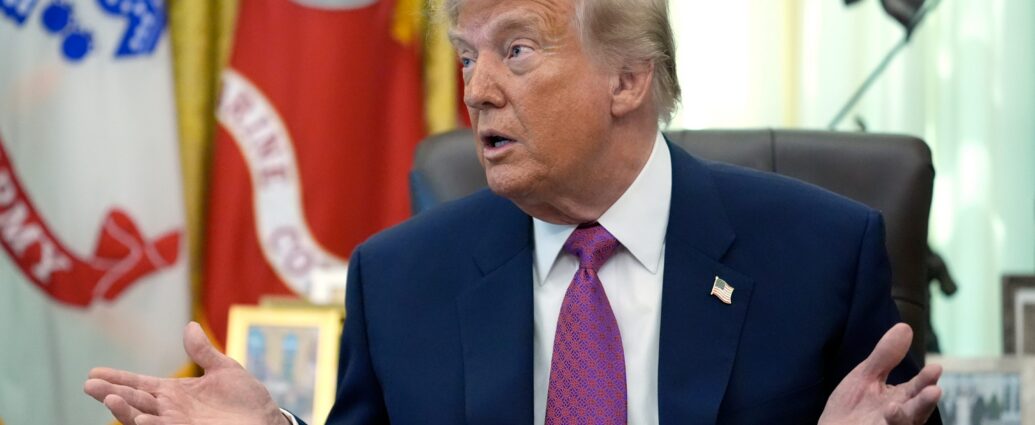
President Donald Trump said Thursday he is renaming Lake Ontario to be known as “Lake America” in the United States as he escalates his trade war with Canada.

The Republican president signed an executive order directing the Interior Department to update the lake’s name in the U.S. geographic naming service. Trump cannot force Canada to follow along, however.

Trump has been floating the idea of the name change in recent days as the U.S. announced it was imposing 50% tariffs on $20 billion worth of Canadian goods over the weekend after talks between the countries broke down. Trump has been needling America’s northern neighbor since he returned to the White House last year, suggesting the ally with whom the U.S. once had warm relations should instead be absorbed as the 51st state.

Canada responded to Trump’s import taxes this week by imposing retaliatory tariffs on $20 billion worth of American goods, including steel, dairy products, appliances and farm equipment.

Trump, who signed the order as he was sitting at the Resolute Desk in the Oval Office, had a large sign behind him propped on a stand with a map of the Great Lakes. Over Lake Ontario, in big red letters, the map read “Lake America.”

On the other side of the president was another map with the words, “MAKING THE GREAT LAKES EVEN GREATER.”

Trump said as he was signing the order that he’d “notified all of the various people that we have to notify. So, we’ve done everything that you have to do.”

“And this is official, effective immediately,” he added.

But the executive order Trump signed shows that the changes are supposed to be made within 30 days.

Canadian officials dismissed Trump’s move.

Canadian Prime Minister Mark Carney rejected the move, invoking the lake’s Indigenous roots and noting that the name predates both Canadian Confederation and the U.S. Declaration of Independence.

“Canadians also know that naming reality means calling it Lake Ontario — then, now and always,” he wrote.

Ontario Premier Doug Ford, who has traded insults with Trump, said on X: “It’s Lake Ontario to Canadians and the rest of the world. Now and forever.”

Nova Scotia Premier Tim Houston said, “We’re into some real foolishness now. It’s Lake Ontario, buddy.”

The lake is one of multiple Great Lakes that the U.S. and Canada share borders along. New York Gov. Kathy Hochul, a Democrat whose state shares a border on the lake, wrote on X in response to the White House’s announcement that, “New York won’t be calling it that.”

There is no single international body that determines names of international bodies of water and Trump has wide latitude over how the U.S. government recognizes geographic places and landmarks.

The name Lake Ontario comes from the Huron Indigenous people’s word “oniatarí:io,” which means “lake of shining waters.” The province of Ontario, founded in 1867, took its name from the lake.

Trump said that while his action was not meant to send any particular geopolitical message, “Canada’s been ripping us off for a long time” on trade and military issues.

“They wanted to be treated like a state and they’re not a state,” the president said. “We just can’t do that anymore.”

“We love the people of Canada,” Trump added. “I don’t think their representatives do, an appropriate job. Maybe they’ll change. I really don’t know. It doesn’t make much difference.”

The move is reminiscent of his move last year to rename the Gulf of Mexico as the “Gulf of America.”

Trump scribbled his name with a Sharpie pen on the executive order, then held it up for the cameras, offering, “And we filed all the necessary papers, documents, everything else.”

He also suggested his push to rename bodies of water may not be finished.

“So, if you think about it, we have a gulf and we have a lake. Now, all we need is an ocean,” Trump said. “So maybe we’ll have to change the name of the Atlantic and/or the Pacific. Maybe we’ll change them.”

___

Associated Press writer Rob Gillies in Toronto contributed to this report.

This story was originally featured on Fortune.com

This post was originally published here

Three staff members from the Stars and Stripes military news outlet are suing to challenge their recent firings by the Pentagon, accusing the Trump administration of violating their First Amendment free speech rights to speak out against government interference in their work.

Stars and Stripes publisher Max Lederer, editor-in-chief Erik Slavin and Middle East reporter Lara Korte are named as plaintiffs in the federal lawsuit filed Thursday in Washington, D.C.

The Pentagon, which partially funds the news outlet, fired them last week. A Pentagon spokesperson declined to comment on the suit’s allegations.

Slavin says he was dismissed for insubordination after giving an interview to CBS News in which he objected to potential censorship by the U.S. military. Korte participated in the same interview. Their lawsuit says they were punished in retaliation for publishing a report on deteriorating conditions aboard the U.S.S. Abraham Lincoln.

“Stripes’ historical editorial independence is critical to its core mission of gathering and providing unbiased, credible journalism to the U.S. military community, particularly servicemembers and their families stationed overseas,” the suit says.

Lederer was dismissed shortly after announcing his impending retirement, effective at the end of September. He said the Pentagon had installed a new deputy publisher, an active duty service member, under him at the newspaper without his prior knowledge.

The suit’s plaintiffs are represented by attorneys from Democracy Defenders Fund, Lawyers for Good Government, Government Accountability Project and a Yale Law School clinic.

The Defense Department and Defense Secretary Pete Hegseth are among the named defendants.

This story was originally featured on Fortune.com

This post was originally published here

California farms and vineyards are facing a host of problems so far this year, including a drought caused mainly by unusually warm weather patterns in early spring, as reported by the state’s Department of Water Resources. This year’s snow levels in the Northern Sierra and Cascade mountains fell to 0% of their typical June average. These snow packs are needed each year to melt slowly throughout the summer and fall providing crucial water supply to the state.

In June, the national weather service warned millions in California to stay inside due to lethal temperatures around the state including parts of Oregon and Washington. 

Almonds are California’s number one crop by acreage, number one agricultural export, second by value, and the number one specialty crop export in the country. Eighty percent of the world‘s almonds come from California with more than 7,000 almond farms across the state. Lately, water restrictions and higher costs are making it difficult for growers. 

The story is the same for pistachios. California produces nearly all of the U.S. supply (about 99%) and accounts for over 60% of global pistachio production. 600,000 acres are planted across the Central Valley contributing more than $1.6 billion in annual value to the state’s economy. Fresno, Kern and Tulare counties reported a combined $800 million loss for pistachio production so far this year.

In May, officials in Kern County alone also reported a 42% loss in cherry production this year due to a hot stretch in March followed by April rain accounting for a total loss of more than $13 million for growers.

The University of California recently held workshops on how to grow grape and nut crops during extreme weather, heat, drought, pest issues and greater climate variability. 

Normally, California boasts an agriculture industry with more than 350 commodities that account for over $100 billion in related economic activity. 

In 2025, California passed Japan as the world’s fourth largest economy with farmers representing a large part of that milestone. In 2024 alone, 1.2 million agricultural related jobs were produced. California continues to rank as the most agriculturally productive state in the nation.

California also leads the country in Agriculture Technology innovation with 15 Agricultural Science universities and 11 Tier 1 research universities. In 2021, California Ag Tech startups received over $5 billion in venture capital funding which equals more than 18% of global Ag Tech investment. 

Despite representing a relatively small share of the country’s total farmland, California leads the nation with specialty crops, fruits, vegetables, nuts, and dairy with its favorable growing conditions. California provides nearly 75% of the nation’s fruits and nuts and over one-third of all vegetables.

Extreme heat and persistent drought present serious, existential threats to California’s multi-billion dollar specialty crop industry. Fruits, vegetables, and tree nuts are highly sensitive to environmental impacts. Changing weather patterns also disrupt plant biology, deplete water infrastructure, and increase operating costs. To combat the current crisis the agriculture industry very much needs new technologies that can reduce water use and labor, grow crops faster, and increase crop yield. Traditional agricultural methods are no longer sufficient to handle the speed and intensity of these environmental changes. 

Legacy farming practices depend on predictable weather patterns, but today’s extreme weather requires effective, real-time interventions to keep farms economically viable and ecologically sustainable.

State and local leaders can step up by highlighting more innovation than ever in this perilous time to support California’s vital role in global food production.

The opinions expressed in Fortune.com commentary pieces are solely the views of their authors and do not necessarily reflect the opinions and beliefs of Fortune.

This story was originally featured on Fortune.com

This post was originally published here

Dolly Parton, the legendary singer turned business mogul and philanthropist, could always be relied on for some straight-talking advice. Even when it came to emulating her massive success, the country music star’s guidance was simple: “Work your butt off.”

Friends, family, and fans of Parton are reminiscing and celebrating her accomplishments—be it her music, entrepreneurship, or philanthropy—after her nephew and head of security, Bryan Seaver, announced her death in a statement earlier this week.

Parton died at 80 years old, with Seaver telling fans: “She never saw a door she couldn’t open, and the doors she opened made and changed history.” He added: “Dolly called me and said she wants to rest in a beautiful bed of plush cotton because after a life wearing heavy rhinestones, she finally deserves to be comfortable and have some rest.”

Indeed, the famed “9 to 5” singer suggested to Bloomberg she had always put in more than just the standard office hours.

As co-owner of the Dollywood Co., Parton helped oversee the Dollywood Theme Park, the Splash Country water park, several diner ventures, as well as a spa and hospitality venues in the Great Smoky Mountains. Her portfolio also included pet apparel business Doggy Parton, a fragrance brand, and a series of baking kits with Duncan Hines.

Forbes valued Parton—who was also a fierce philanthropist—at $450 million, though other outlets placed her wealth closer to $650 million.

But despite the brand her name became, Parton said she never became the “step on the bossman’s ladder” she once wrote about. When asked how she ran her empire so successfully, Parton said she had been “blessed” in her endeavors, working with great people and letting them get on with it.

Parton never sought to micromanage, she added: “I don’t boss anybody around, because I don’t even have the time or the energy to even do that. I just try to put people that are smarter than me in all the right places, and then I go on about my business.”

Parton, also an author, made it clear her talents lay in the creative side of the business, saying there were aspects of her empire that she didn’t know anything about—but didn’t need to because of the team she had in place.

“I’m more of the creative force and the one that has an overall sense of things,” she said. “I try to find the best people, and I try to trust them to do what they say they can do. Then I have people looking out after all of them.”

The “Islands in the Stream” singer also said her hands-off management approach with senior executives was paired with instinct, and she trusted that if an individual isn’t right for their role, it would eventually be revealed.

“We know if somebody’s not right, they’ll show themselves, or it’ll be pointed out so many times by other people that you do trust, you’ll know it’s time to move on from that person,” she said. “So I depend on my own higher wisdom of knowing if I’m in the right place with the right people.”

‘Looking like a woman and thinking like a man’

Parton, who was awarded the Carnegie Medal of Philanthropy, said that from her early days performing in Nashville, she knew she had talents she could monetize. Or as Parton put it: “Looking like a woman and thinking like a man, so to speak.”

Appearance is another area in which Parton had some sage advice—which may help Gen Z employees who reportedly are entering the workforce unsure of how they should dress for the office.

For Parton, known to be a big fan of wigs and brightly colored suits, the aim is to be comfortable, adding: “You know what business you’re in, and you pretty much know what’s expected.

“If you’ve got a dress code, just look the best you can, take it right to the limit. You can kind of bend the rules a little bit, but if that’s the job you want and you already know the rules, then go by the rules.”

A version of this story was published on Fortune.com on February 12, 2024.

This story was originally featured on Fortune.com
This post was originally published here

The American billionaire who bought Ferrari’s first electric vehicle model for an eye-watering eight figures may be able to cash in on a tax write-off perk from the purchase. 

Earlier this month, 87-year-old optometrist-turned-businessman-turned-philanthropist Dr. Herbert A. Wertheim bought a Ferrari Luce at a Sotheby’s public auction for $40 million. The auction was part of a charity effort to benefit the Ferrari Foundation, which funds global education initiatives.

The $40 million buying prices on the auto was more than 36 times the model’s presale estimates of $1.1 million. (The Luce retails for $640,000, but the auctioned car had a higher price tag because it had a pre-production chassis.)

Now, it seems Wertheim may end up getting a large chunk of that purchase back, as part of a longtime American tradition of the country incentivizing the nation’s wealthiest philanthropists into giving back.

Large charity donations like Wertheim’s can lend themselves to massive tax write-offs as a result of America’s tax system. Automotive content creator and television presenter Peter Greaves first brought attention to the potential for Wertheim to gain millions back on the purchase of his Luce in a recent Youtube video.

When Wertheim files his 2026 taxes, he would have to subtract the estimated sale value of $1.1 million from the $40 million the car sold for. As of the IRS’s 2026 tax rules, he would then have to take away a 0.5% floor of his adjusted gross income, which Greaves estimated to be $200 million, leaving $37.9 million. The U.S.’s 2/37ths rule created under the One Big Beautiful Bill Act, which caps tax savings of itemized deductions at 35% compared to the previous 37% for top earners, would further reduce the sum to $35.85 million. According to tax law, 37% of that total could be claimed, meaning Wertheim could receive more than $13 million back from the U.S. government for his purchase.

Wertheim, who did not immediately respond to Fortune’s request for comment, has made no public comments about possibly taking advantage of the tax write-off for the Luce, or for any previous charity auction purchases.

The philanthropist has an estimated net worth of $4.8 billion and has previously participated in a previous charity auction for luxury vehicles, reportedly paying $26 million for the Ferrari Daytona SP3, or “599+1.” He has donated more than $200 million to various causes, including  $50 million to UC Berkeley Optometry and $100 million to Baptist Health Foundation. In February, Wertheim paid $2 million at a Mar-a-Lago charity event for a private visit with President Donald Trump at the White House. It’s not his only recent brush with politics: Wertheim briefly launched a Congressional bid in Florida’s 22nd District earlier this year.

For its part, the Maranello, Italy-based carmaker has weathered controversy around the rollout of its EV. Former Ferrari president and chairman Luca di Montezemolo joined analysts and investors in mocking the model as ugly and decidedly un-Ferrari-like at a time where other luxury automakers were scaling back their own EV efforts amid low demand. Ferrari may be getting the last laugh however: the Financial Times reported last month that Ferrari exceeded its short-term sales goal of 500 units. 

How the Trump administration transformed charity tax breaks 

Tax breaks for philanthropy is an American tradition dating back to 1917 after the passage of the War Revenue Act, in which Congress created a federal income tax deduction for charitable gifts as part of an effort to keep private philanthropy alive and well during World War I, which would relieve the U.S. from funding essential social welfare programs. Those benefits have slowly expanded over the last century.

But the Trump administration has made it more for the wealthy to get money back for their donations come tax season, with the One Big Beautiful Bill Act effectively slashing the benefit from 37% to 35%, with itemized taxpayers having to deduct donations only in excess of 0.5% of their adjusted gross income.

The policy changes with lower tax incentives may alter the future of philanthropy itself. The new 35% limit could reduce donations by between $4.1 billion and $6.1 billion, according to the Indiana University Lilly Family School of Philanthropy. Experts warn that fewer big donors—or big donors giving less—would place a larger burden on middle-class givers to bridge a gap that isn’t realistic as financial pressures for less-wealthy households increase.

“The nonprofit sector says that every dollar matters, and so incentivizing small donations from every household could have a meaningful impact for certain kinds of organizations,” Elena Patel, co-director of the Urban-Brookings Tax Policy Center, told CNBC last November. “But the truth is that those kinds of contributions, however, just are not the bulk of charitable giving in the charitable sector.

This story was originally featured on Fortune.com

This post was originally published here

President Donald Trump arrives at an awkward moment for his presidency on Friday as the U.S.-Israel war against Iran reaches the six-month mark, a notable milestone for a conflict that the Republican leader repeatedly assured Americans would be a “little excursion” lasting a matter of weeks.

The war isn’t over, though Trump claims that through bombs and blockade, he has already devastated Iran’s leadership, military and economy.

And this week his administration said it would turn its focus to increasing economic pressure — rather than military action — to try to finish off Iran. The shifting strategy centers on threats to punish any country or entity that continues to conduct business with Tehran.

The turn to using sanctions as the cudgel of choice comes as the administration weighs diminished munitions stockpiles after months of war, sparking concerns that the prolonged conflict could undermine U.S. military readiness in other parts of the globe.

As the conflict grinds on, Trump’s talk of finding a quick end to the war also appears to be fading. He stressed this week that he’s “not in a hurry” to get Iran back to the negotiating table, and he continues making the case that the Islamic Republic’s leadership is on the ropes.

“They’re not paying their troops. They’re in deep trouble. They have very little capacity,” Trump told reporters Thursday. “We don’t want to speak to them. We’re not looking to meet or anything,” he said.

It’s unclear how — or if — Trump will address the six-month anniversary of a conflict that has already cost the United States more than $37.5 billion and done damage to his popularity ahead of critical November elections for his party. The president is spending Friday in Houston, where he’ll honor the Artemis II NASA crew for their 10-day mission around the moon earlier this year.

Trump is declaring ‘mission accomplished’ — a phrase that hurt a Republican predecessor

On its face, the moment is complicated for the “America First” leader who fiercely criticized his White House predecessors for wasting American taxpayer money and U.S. troops’ lives in Middle East conflicts and vowed on the campaign trail to keep the military out of “endless wars.”

But Trump has bristled at suggestions that this war — in which no American troops have deployed into Iran — can be compared with the yearslong wars in Iraq and Afghanistan in which more than 7,000 Americans were killed.

His Republican predecessor, President George W. Bush, was widely mocked for a 2003 speech aboard the USS Abraham Lincoln beneath a White House-produced banner that read “Mission Accomplished.” It came to symbolize a premature declaration of victory for the Iraq War, which would go on for nearly nine more years. More than two decades later, there are still U.S. troops stationed in Iraq.

Trump’s war has stretched on far longer than he told Americans it would. It didn’t stop him from sharing a social media post this week declaring “MISSION ACCOMPLISHED 2026.” The AI-generated image features Trump against a backdrop of U.S. fighter jets, a warship and American flags above smaller images of Bush and former Iranian Supreme Leader Ayatollah Ali Khameneiwho was killed in an Israeli strike in the opening salvos of the war.

Trump has consistently emphasized that the U.S. and Israel campaign has been devastating for Iran’s navy and air force. Iranian officials have said the country has suffered $270 billion in direct and indirect damage. Israeli military strikes in the first weeks of the war wiped out much of the theocratic government’s leadership structure, including Khamenei.

But Iran has found leverage through its own strikes in the critical Strait of Hormuz, where relatively few vessels carrying oil and liquefied natural gas are risking passage. Trump again declared Thursday that the “Strait of Hormuz is open,” saying 24 vessels passed through a day earlier. That’s a fraction of the roughly 130 vessels that passed through the vital waterway daily before the war began.

Trump is showing little interest in talks

Mediators Qatar and Pakistan continue to press for a diplomatic off-ramp from the two sides. Qatar’s prime minister, Sheikh Mohammed bin Abdulrahman Al Thani, was in Tehran on Thursday to discuss a proposed plan between Iran and Oman to boost traffic through the Strait of Hormuz.

But in Washington, Trump has shown little interest in getting back to the preliminary deal reached in June that aimed to reopen the strait and launch talks about Iran’s nuclear program. That deal fell apart within weeks after Iran started attacking ships.

At the same time, Trump says the U.S. effort to economically choke off Tehran is working, with a U.S. naval blockade preventing Iranian oil from making it to market as the trickle of vessels carrying oil from other Gulf nations pass through.

“We have control and we have the blockade,” Trump said. “Iran is not getting anything. Nothing is going through.”

Iran is badly battered, but has a history of showing resilience

There’s no doubt that the strikes combined with decades of international sanctions have battered Iran, said Aarathi Krishnan, a geopolitical risk analyst at RAKSHA Intelligence Future.

But as Trump tries to turn to a new chapter in the war, Krishnan argues the Republican may be misguided in concluding that more pressure on Tehran — which has spent decades adapting to international economic sanctions — will produce the political outcome he wants.

Indeed, Iran’s economy in the run-up to the start of the war was mired in surging inflation, according to the International Monetary Fund. National income per person had fallen from about $8,000 in 2012 to $5,000 in 2024, according to World Bank data.

But Tehran has also shown resilience, selling discounted oil and establishing opaque shipping and financial networks, Krishnan said.

“This administration has completely underestimated the Iranian resolve,” Krishnan said. “This is not new to the Iranian regime.”

Trump must decide how far he’s willing to go with sanctions

Richard Goldberg, who served as a senior adviser on Iran at the National Security Council during Trump’s first White House term, argues that Iran now finds itself in “uncharted waters” if the administration follows through with a truly biting campaign to pressure Iranian trade partners.

“What we should be seeing is an attempt to seal off every escape hatch the regime has left,” said Goldberg, who is now at the Foundation for Defense of Democracies, a hawkish Washington think tank. “Use the economic power of the United States to layer a naval blockade with an air and land embargo while dropping the hammer on anyone who gives the regime access to hard currency — whether that’s in the Middle East, China or even Europe.”

But it remains to be seen how far the administration is willing to go.

Treasury Secretary Scott Bessent this week unveiled a campaign the White House calls “Operation Economic Outcast,” but only issued warnings to nations to cut trade and has yet to announce any secondary sanctions. Bessent told reporters the administration wanted countries to have a chance to shift away from Iran before it was too late — and acknowledged there was economic risk to the U.S., too, in moving ahead.

China, which is Iran’s biggest trade partner and oil buyer, responded by expressing its opposition to “illegal unilateral sanctions.”

Pressed Thursday about why he wasn’t already sanctioning Chinese banks, Trump offered a cryptic response.

“Who said I’m not? You don’t know if I’m doing it,” Trump said. “I don’t have to announce everything, do I?”

This story was originally featured on Fortune.com

This post was originally published here

It’s easy to become jaded in a job that’s unfulfilling, especially when dreams of a more meaningful career clash with the need for financial stability. 

But successful entrepreneurs contend that chasing their true ambition inspires them to show up and work every day; those who really love their job, like musician Pharrell Williams, never plan on retiring. 

“I’m so blessed to call this a job. I’ve never stopped loving this job; I’ve never stopped being a student,” Williams said onstage after winning the Dr. Dre Global Impact Award at the 2026 Grammys. “So everyone here, I’ve just got to tell you, never stop grinding. And listen, never stop working.”

Williams has witnessed firsthand how passion plays a huge role in success; the now 53-year-old philanthropist and artist has been releasing, writing, and producing music since the 1990s, amassing more than three decades of chart-topping hits. With an estimated net worth of $250 million, the “Happy” singer’s years of musical prowess and business collaborations have resulted in a lifelong fortune. But Williams said he doesn’t think too much about the number in his bank account—what really keeps the Gen Xer working is his love for the job.

“Stop doing anything else but working. Work, man,” Williams continued. “I’m 52, I get to do this every day—I love what I do. And if you do what you love every day, you’ll get paid for free.”

Williams says the American Dream isn’t about making millions

Generations of workers have bucked their true calling for a tolerable job with a solid paycheck. With nearly half of U.S. citizens believing the American Dream is no longer possible, or never even existed, many are stuck in a lifeless, steady job rather than a profession that makes them happy. 

Growing up in Virginia Beach, Williams said he often heard the same rhetoric: that careers should be centered around stability and making money. But the Grammy winner wants to change that narrative. Chasing the biggest paychecks, he said, is a misnomer. 

“The American Dream is not about making the most money. In fact, the human dream and the consumers’ dream shouldn’t be about making the most money,” Williams said at the 2024 Web Summit. “It should be about spending the most time doing something that you love.”

The philanthropist pointed out that many young people are pressured to pursue high-paying careers in college, such as medicine and law, whether they want to or not. Some are able to switch tracks despite the chagrin of their family, Williams explained, but the vast majority “go after it, and they don’t get it.” After that, they might be stuck in a job they hate, prioritizing a paycheck over their true passions. Williams advised that professionals can avoid this identity crisis by working in a role or industry that interests them. 

“If you can find a vocation around something that you love, you now have a dream job. You will be the first one there, and you’ll be the last one to leave,” Williams continued. “To me, that is what we should be telling our children—that is the way that we should be leading society—for people to do what they love.”

‘Pursue a career that does not feel like work’

Williams is one of many leaders who have proved that sticking with a career you love can pay off. Walmart’s former CEO, Doug McMillon, who stepped down from the top role earlier this year, spent four decades climbing the ranks of the now–$819 billion retail giant. And during his ascent from being an hourly worker all the way up to chief executive, McMillon said he’s never “been bored one single day.”

“Pursue a career that does not feel like work. Life is too short to invest so much time doing something you don’t enjoy,” McMillon told graduates during a commencement address at the University of Arkansas in 2024. “I hope you find your spot quickly like I did, but if you don’t, my advice is that you shouldn’t give up until you do … If you’re in the right place, most days, work won’t even feel like work.”

Christian Toetzke, cofounder and CEO of global fitness race Hyrox, also said that he loves his job so much that it doesn’t feel like a chore. His best advice for professionals hoping to strike the right work-life balance is to actually enjoy their careers; that way, it’s never a drag to show up at the office. 

“I’m a massive believer in work-life balance, but the question is always how we look at this. And I’m a very privileged person because I don’t consider what I do as work,” Toetzke said on the Opening Bid Unfiltered podcast last year. “I do what I really love. It’s also my hobby. For me, work is not a punishment. It’s almost kind of a reward.”

A version of this story was published on Fortune.com on February 3, 2025.

This story was originally featured on Fortune.com

This post was originally published here

OpenAI banned a “cluster” of ChatGPT accounts that it claims were part of a pro-Russia operation aimed at bashing Western countries and promoting a think tank with misattributed academic research. 

The company said in a blog post this week that the banned ChatGPT users used VPNs to get around its restriction on Russian users and then used its tech to create social posts promoting the International Burke Institute, a think tank that describes itself as an “expert community” based in Israel, but which OpenAI says is the “core” of a Russian influence operation. 

According to OpenAI, the think tank, the website of which is still online, claims to include among its contributors notable figures like American linguist and intellectual Noam Chomsky as well as American political scientist and author Francis Fukuyama. Neither Fukuyama nor Chomsky responded immediately to requests for comment from Fortune. One such author who was listed on the site didn’t know the website was using her name until Fortune reached out for comment. Other listings include experts who passed away before the IBI was founded, such as Shlomo Avineri and Jiang Ping.

OpenAI said the website, which was registered in February 2025, also included a “sovereignty index” that favored Russia as well as dozens of articles with misattributed authors. A scan by Fortune of the Burke Institute’s website on the Wayback Machine reveals that while it existed as of February last year, nothing was published on the page prior to October 2025. 

The institute, in response to reporting by French outlet Le Monde on OpenAI’s claims, doubled down with a statement that said it rejected the idea it was not a legitimate think tank.

“The fact that third parties use or cite an IBI publication, the Institute’s name, or findings from the Sovereignty Index does not, in itself, constitute evidence of cooperation, coordination, funding, or a common underlying purpose.”

The Burke Institute did not immediately respond to a request for comment from Fortune sent to the email listed publicly on its website. OpenAI said that according to its research, a handful of individuals in Israel represented the Burke Institute in interviews and at conferences.

Using real researchers’ names

The AI company’s review of the Burke Institute’s articles found 34 of 36 were real academic articles misattributed to other authors. A screenshot published by OpenAI showed a legitimate article on the Burke Institute’s website on migration governance that was taken from the Migration Policy Institute but misattributed to Kate Howell, a professor of food science at the University of Melbourne, with a headshot taken from the internet. Since OpenAI published its blog post, the website changed the article’s attribution to one of the real authors, Kate Hooper, a senior policy analyst at the Migration Policy Institute. Hooper did not immediately respond to a request for comment.

Another professor listed as an expert on the Burke Institute’s website was Susan Ariel Aaronson, a professor of international affairs at George Washington University. A legitimate article she authored for the Centre for International Governance Innovation was posted on the website with a link to download.

Yet, Aaronson, who is also a co-principal investigator for the NSF-NIST Institute for Trustworthy AI in Law & Society (TRAILS), told Fortune she was not associated in any way with the Burke Institute. Reached by phone, she said the situation was disturbing. 

“Trust is really important in the governance of AI, and here you have this really weird, you know, situation causing substantial distrust, and so it’s just really disturbing,” she said. 

She also lamented that there is little regulation at the federal level to deal with such instances, and that it needs to be handled from the top. 

“The Trump administration is doing nothing to effectively govern it, and is governing AI in an opaque manner. That is opacity does not build trust,” she added.

Other articles on the Burke Institute’s website appear to be translated into English from a Slavic language, based on clues like the use of the word “svetofor,” which means traffic light in several Slavic languages, including Russian, according to OpenAI.

The AI company claims the ChatGPT users created numerous social posts to promote the institute, some of which came from accounts with the International Burke Institute name and branding. Other posts came from made-up individuals that promoted the institute on Facebook, LinkedIn, and X as well as Substack and Telegram.

OpenAI said posts from individual accounts “only received low numbers of views”  and the official accounts for the institute had “low subscriber numbers.” Still, on the instant messaging platform Telegram, the users were able to attract a larger audience of between 10,000 and 20,000 followers per channel. 

Despite what OpenAI claims is a small following, the company’s findings show how Russia-linked actors have reportedly used AI to step up their propaganda campaigns.  

Earlier this year, OpenAI said it disrupted another operation it said originated in Russia, that used ChatGPT to generate German-language political content ahead of Germany’s federal election. The campaign criticized the U.S. and NATO and distributed content through Telegram and X and created AI-generated material supporting Germany’s far-right Alternative für Deutschland party. 

Russian-speaking cybercriminals also used SpaceX’s AI coding assistant Cursor to hack into a Belgian chemical company along with six other companies this year alone, according to a report by Reuters citing data from cybersecurity company Gambit Security.

The company said in a blog post this week that the banned ChatGPT users used VPNs to get around its restriction on Russian users and then used its tech to create social posts promoting the International Burke Institute, a think tank that describes itself as an “expert community” based in Israel, but which OpenAI says is the “core” of a Russian influence operation.

This story was originally featured on Fortune.com

This post was originally published here

In 1949, a doctor named Virginia Apgar was having breakfast in a hospital cafeteria when a medical student asked her a question nobody had previously thought to answer: how do you know, in the first moments after a baby is born, whether it is going to be okay?

Virginia grabbed a napkin and wrote down five things: Heart rate. Breathing. Muscle tone. Reflexes. Color.

Doctors had known all of these markers for decades. The knowledge was not new. What was new was someone finally organizing it into something a nurse could use in sixty seconds in the chaos of a delivery room.

That became the Apgar Score. It is used in delivery rooms around the world today. Somewhere right now, a nurse is scoring a newborn out of ten because Virginia saw over breakfast something nobody else had bothered to address.

The gap was not a secret. It was just sitting there, waiting for someone to act.

I learned a word for that gap from my volleyball coach, who grew up in Hawaii.

Puka.

It means hole, gap, opening — the same hole at the center of those puka shell necklaces everyone wore in the nineties. My coach would yell “puka!” when she spotted a space on the court nobody was covering. I heard it so often it stopped being a word and became a reflex: See the gap. Move.

I have been moving toward gaps my entire career. And I have come to believe that this instinct – to walk into any room and see not just what is happening but what is missing, and act before being asked – is one of the most powerful and underrated career strategies available to professionals and executives alike.

Early in my career, I found myself on the edges of a major trial. I was not on the team. I was the newest lawyer at the firm with time on my hands and a pile of disorganized medical records that nobody wanted to manage. So, I managed them. I built color-coded binders for every significant medical issue, decoded thousands of pages of chart abbreviations, loaded them on a dolly, wheeled them into the war room, and started walking the partner through the organized tabs.

That was day one. The binders were the first puka. Then I found the next one. And the next. Six weeks later, I was a vital member of a trial team I was never originally slated to join. When the lead partner left for a larger firm, he took a small, handpicked group with him. I was on that list.

He moved again to an even larger firm and brought me along a second time: a chain of events that started with a dolly and a stack of binders nobody wanted to deal with and ended at one of the largest global law firms in the world.

That trajectory started because of a willingness to step into a space that others stepped around.

Some gaps are obvious: the unowned problem, the operational bottleneck, or unglamorous work outside everyone’s formal job description. Everyone sees it, but few step forward.

Other gaps are organizational or structural, and those are often the most valuable. For leaders, cultivating an environment where people actively seek out and fill these gaps is what separates adaptive companies from stagnant ones. When employees move toward unassigned problems, careers grow organically: they do not wait for a bigger title, but instead begin handling the responsibilities of that next level until the organization adapts around them.

The person who fills gaps consistently becomes indispensable to the people around them. Repeatedly demonstrating initiative builds a reputation that opens doors before you ever knock on them.

The puka mindset relies on two core behaviors:

• Relentless curiosity: The habit of walking into any room or analyzing a business model and asking not what you have been assigned but what this situation actually requires. Widening that lens reveals what is falling through the organizational cracks.

 Decisive initiative: Filling the gap simply because it needs filling, not for immediate credit, but because operational momentum demands it. Awareness without action is merely observation.

Right now, one of the most critical gaps across corporations is the practical integration of AI. While executive boards debate high-level strategy and conference panels discuss theoretical disruptions, the daily tools sit largely underutilized on the ground.

The gap is not access; it is application.

I know that gap well, because I once filled it with binders and a dolly.

The medical records were never a secret. Every page had been produced and was sitting in a box for months. What was missing was not information but shape, a way for a partner to find the one chart note about a missing lab value in seconds, standing in front of a jury. Back then, that kind of organization took weeks.

A version of that work now takes an afternoon.

The conversation about AI is still largely framed around what it replaces. A better question is what it makes possible. For the first time, much of the work that once kept organizational gaps open can be done faster, cheaper, and at scale. The tracker nobody built. The eight years of vendor contracts nobody has read end to end. These gaps persisted not because they were invisible but because nobody had the hours to close them.

Imagine a junior team member on a long project watching the same questions get asked over and over, because the information is scattered across emails, meeting notes, and old drafts. She uses an AI tool to pull it all together into a single tracker the team can actually use, then checks it herself against the source material. Nobody assigned her the work. She just noticed a gap nobody owned and closed it before lunch.

The tool does not replace judgment. It does not decide strategy. It organizes what is already known so the humans can spend more time thinking and less time hunting.

The cost of filling a puka has collapsed. The value of spotting one has not. The people who move toward that space now position themselves at the front of a wave that will generate new roles and opportunities for years. For senior leaders, the task is twofold: build the habit of spotting these openings yourself, and create a culture where taking the initiative to fill them is recognized and rewarded rather than treated as a compliance risk. That can mean funding small pilot programs, giving teams explicit room to experiment within reasonable guardrails, or simply promoting the people already finding smarter ways to work before anyone told them to.

AI is just today’s clearest example. Every industry has its own version, and pukas are never in short supply.

Gaps in strategy and execution never run out. The fundamental question for any team or leader is simple: when an unowned problem sits in plain sight, who moves first?

The opinions expressed in Fortune.com commentary pieces are solely the views of their authors and do not necessarily reflect the opinions and beliefs of Fortune.

This story was originally featured on Fortune.com

This post was originally published here

Good morning. At Exelon, one of the nation’s largest utility companies, finance is getting a bigger seat at the strategy table.

Jeanne Jones, the finance chief since 2022 and an almost 20-year veteran of the company, will take on the newly created role of EVP of finance and strategy on Oct. 5, putting her at the center of corporate strategy as electricity demand surges and utilities face mounting pressure to invest without driving up customer bills.

Jones will continue to report to Exelon President and CEO Calvin Butler. Robert Kleczynski will succeed Jones as CFO and become her direct report. Kleczynski currently serves as SVP, controller and head of tax.

“Jeanne’s leadership has been instrumental in helping Exelon deliver strong financial performance while maintaining our focus on delivering safe, reliable and affordable service for our customers,” Butler said in a statement. In her new role, Jones will continue to work “across the business and the energy sector to identify opportunities to deliver value for our customers and shareholders,” he said.

A shift in the CFO’s mandate

The move reflects a broader shift in the CFO’s role. The corporate strategy playbook is increasingly landing on the CFO’s desk. While finance chiefs have long led capital allocation and investor communication, they’re increasingly expected to help determine where the company places its biggest long-term bets alongside the CEO, Andy West, a senior partner at McKinsey and global co-leader of the firm’s Strategy and Corporate Finance practice, recently told me.

That evolution is particularly relevant in the utility industry, where electricity demand is growing, grids need modernization and companies face mounting pressure to invest while keeping customer bills affordable.

At Exelon, Jones will continue to oversee the company’s financial activities while helping lead integrated strategy efforts focused on trends affecting Exelon, its operating companies and the broader energy industry. The structure is designed to strengthen alignment between long-term strategy, capital allocation and operational execution, according to a company spokesperson.

A pure-play utility investing in the future

Chicago-based Exelon (No. 189 on the Fortune 500) serves 11 million customers through six regulated transmission and distribution utilities. Since spinning off its power generation business, Constellation Energy, in 2022, Exelon has focused solely on regulated utility operations. It doesn’t own power plants; instead, it manages the infrastructure that delivers electricity and gas to end users.

That makes capital allocation especially consequential. Exelon has to determine where and how aggressively to invest in its networks as demand rises, while balancing the costs ultimately borne by customers against the need to build infrastructure for the future.

Jones has been at Exelon for almost two decades, with experience across utility operations, corporate finance and the company’s former generation business. She served as CFO of ComEd, one of the nation’s largest electric utilities, then as Exelon’s CFO, guiding the company through a period of consistent operational and financial performance following the separation.

Her experience gives a perspective that crosses different parts of the energy value chain. Now she’ll be asked to apply that experience to questions that increasingly blur the line between finance and strategy: how much to invest, where to invest it and how to do so while keeping costs under control.

Exelon reported second-quarter earnings on July 30 and revenues totaled $5.97 billion, beating estimates. The top line increased 10% from the year-ago figure of $5.43 billion. Adjusted operating earnings increased 10.3% to 43 cents per share from 39 cents in the year-ago quarter. 

Reflecting on her journey, Jones told me last year that her best career advice is to stay open to new experiences and not get overwhelmed by distant goals. Don’t let the pressure of a specific end goal cloud your enjoyment of the ride.

“Keep going for the next thing that’s going to develop you,” she said.

Have a good weekend.

Sheryl Estrada
Sheryl.Estrada@fortune.com

This story was originally featured on Fortune.com

This post was originally published here

At 6:30 a.m. Eastern Time today, oil was priced at $90.55 per barrel with Brent serving as the benchmark (we’ll explain different benchmarks later in this article). That’s a gain of 87 cents compared with yesterday morning and around $22.34 higher than the price one year ago.

Oil price per barrel % Change
Price of oil yesterday $89.68 +0.97%
Price of oil 1 month ago $90.29 +0.28%
Price of oil 1 year ago $68.21 +32.75%

Will oil prices go up?

It’s impossible to forecast oil prices with detailed precision. Many different elements affect the market, but ultimately it boils down to supply and demand. When worries about economic recession, war, and other large-scale disruptions increase, oil’s path can shift fast.

How oil prices translate to gas pump prices

Gas prices at the pump don’t only track crude oil. They also include what it takes to refine and move that fuel, the taxes layered on top, and the extra markup your local station adds to stay in business.

Since crude oil generally makes up a majority of the per-gallon cost, changes in its price have an outsized impact. When oil surges, gas prices typically rise in tandem. But when oil retreats, gas prices often lag on the way down, a trend sometimes described as “rockets and feathers.”

The role of the U.S. Strategic Petroleum Reserve

In case of emergency, the U.S. has a store of crude oil known as the Strategic Petroleum Reserve. Its primary purpose is energy security in case of disaster (think sanctions, severe storm damage, even war). But it can also go a long way toward softening crippling price hikes during supply shocks.

It’s not a long-term answer and is more meant to provide temporary relief, assisting consumers and keeping critical parts of the economy running, like key industries, emergency services, public transportation, etc.

How oil and natural gas prices are linked

Both oil and natural gas are key sources of the energy we use every day. Because of this, a big change in oil prices can affect natural gas. For example, if oil prices increase, some industries may swap natural gas for some segments of their operations where possible, which increases demand for natural gas.

Historical performance of oil

To gauge oil’s performance, we often turn to two benchmarks:

  • Brent crude oil, the main global oil benchmark.
  • West Texas Intermediate (WTI), the main benchmark of North America

Between these two, Brent better represents global oil performance because it prices much of the world’s traded crude. And, it’s often the best way to track historical oil performance. In fact, even the U.S. Energy Information Administration now uses Brent as its primary reference in its Annual Energy Outlook.

Looking at the Brent benchmark across several decades, oil has been anything but steady. It’s seen spikes due to factors such as wars and supply cuts, and it’s also seen crashes from global recessions and an oversupply (called a “glut”). For example:

  • The early 1970s brought the first big oil shock when the Middle East cut exports and imposed an embargo on the U.S. and others during the Yom Kippur War.
  • Prices dropped in the mid-1980s for reasons such as lower demand and more non-OPEC oil producers entering the industry.
  • Prices spiked again in 2008 with increased global demand, but it soon plummeted alongside the global financial crisis.
  • During the 2020 COVID lockdown, oil demand collapsed like never before—bringing prices below $20 per barrel.

All to say, oil’s historical performance has been anything but smooth. Again, it’s hugely affected by wars, recessions, OPEC whims, evolving energy initiatives and policies, and much more.

Energy coverage from Fortune

Looking to stay up-to-date regarding the latest energy developments? Check out our recent coverage:

Frequently asked questions

How is the current price of oil per barrel actually determined?

The current price of oil per barrel depends largely on supply and demand, including news about potential future supply and demand (geopolitics, decisions made by OPEC+, etc.). In the U.S., prices also move based on how friendly an administration is to drilling, as it can affect future supply. For example, 2025 saw the Trump administration move to reopen more than 1.5 million acres in the Coastal Plain of the Arctic National Wildlife Refuge for oil and gas leasing, reversing the Biden administration’s policy of limiting oil drilling in the Arctic.

How often does the price of oil change during the day?

The price of oil updates constantly when the “futures” markets are open. A futures market is effectively an auction where people agree to buy or sell oil in the future. As long as people and companies are trading contracts, the oil price is changing.

How does U.S. shale oil production affect the current price of oil?

In short, shale is rock that contains oil and natural gas. Think of shale as energy yet to be tapped. The more shale the U.S. accesses, the more energy we’ll have—and the more easily oil prices can keep from spiking as much thanks to a greater supply.

How does the current price of oil impact inflation and the broader economy?

When oil is expensive, it tends to make everyday items cost more. This can be related to energy (your heating, gas utilities, etc.), but it’s also due to the logistics involved with making those items accessible to you. Shipping, for example, can affect the price of things at the grocery store, as it’s more expensive to get those products from warehouses and farms onto the shelf.

This story was originally featured on Fortune.com

This post was originally published here

I was looking for a word to describe an unimagined market and the best fit I could find is terra incognita, or “unknown land.” Roman cartographers used the term to label mystery territories on maps for explorers. 

This all came up because Deloitte just published its attempt at a value for the moon economy—and all the cascading unknowns that could flow from going there like finding rocket fuel, extracting minerals, and forming data center manufacturing hubs. The value of a lunar economy is $566 billion in an accelerated-growth scenario by 2050, and $343 billion under a more conservative scenario. But there’s a separate $541 billion that Deloitte pinned to the space-based potential stemming from scientific advances, new energy sources, and innovative commercial applications. That’s the terra incognita—what could come.

I spoke with the coauthors of the report, “Building the Lunar Economy,” Brett Loubert, who leads Deloitte’s space practice, and Raquel Buscaino, head of its novel and exponential technologies team. I asked Buscaino about risk, and she told me the “uncertainty and ambiguity” around the unimagined market isn’t necessarily a warning, it’s a sign of “extraordinary possibility.”

“Uncertainty isn’t a flaw in the story,” said Buscaino. “Some of these distant opportunities could have extremely large upsides.”

No one knows yet which ones will pan out or what will ultimately matter the most in a market we haven’t imagined yet, she said, but it’s a critical piece of what’s playing out right now in space. “The uncertainty is part of the reason so many investors, countries, agencies, and folks within your community might be interested in this,”  Buscaino said. 

Deloitte’s model drew on more than 25 interviews and 400 model inputs to map two value pools. The first is core lunar infrastructure, which is what you need in space. Transportation, energy, communications, life support, and construction come in at $282 billion through 2050. Not a shock that transportation soaks up $206 billion of that figure.

The second pool is what all that infrastructure can enable. There’s the obvious national security posture, which Deloitte calls “the ultimate high ground.” Deloitte itself is moving onward in this sector with its Silent Shield cyber intrusion detection system, so the advisory firm already has a stake in the success of space. There is also helium-3 extraction, rocket propellant, orbital compute, and in-space manufacturing. Deloitte valued this pool at up to $284 billion. 

Capital of all sorts is already on the move. Seraphim’s space tracker reported $7.5 billion in space-tech investment in Q2 of this year, with trailing 12-month investment at an all-time high of $23 billion. A separate analysis of publicly disclosed equity rounds by space companies over the past year found 47 deals with a median round size of $40 million and an average of $116.2 million. SpaceX alumni have left the mothership and forged 141 startups and companies of their own, worth $10.6 billion, according to Forbes. 

By the way, none of this can be disentangled from SpaceX, piloted by Elon Musk and now a public company carrying a market cap of $1.8 trillion. Only Musk could make space as mainstream as it is right now in as short of a time period as we’ve seen. 

And potentially an even more interesting dynamic, Loubert said, is the funding model for space, where governments are increasingly acting as anchor investors and customers. They buy rides to the moon and engage with companies on commercializing their capabilities. The government has said, ‘We’re going to basically fund the initial development and the initial missions that are going to go there to help de-risk and provide not just government funding, but also confidence to your investors that there is a near-term government and consistent demand,’” said Loubert.

Essentially, said Buscaino, governments are helping to create demand for the foundational infrastructure. The hope is that as the infrastructure matures and costs come down, commercial activity increasingly scales alongside it. So, if the unknown sounds appealing and not at all like a warning, I invite you to the terra incognita of what’s to come. 

See you next time,

Amanda Gerut
amanda.gerut@fortune.com

Submit a deal for the Term Sheet newsletter here.

Joey Abrams curated the deals section of today’s newsletter. Subscribe here.

This story was originally featured on Fortune.com

This post was originally published here

When U.S.-Canada trade talks collapsed for good last Friday night, the recriminations broke out almost instantly, and not just between Washington and Ottawa. In Maine, Vermont and Michigan—three states with outsized economic exposure to Canada—elected officials from both parties and the executives who run the region’s largest employers have spent the past week saying, in various ways, the same thing: enough.

The latest escalation came Monday, when U.S. Trade Representative Jamieson Greer told CNBC’s Squawk Box Canada was to blame for the breakdown, saying negotiators had reached the outline of a deal by Tuesday night only for Ottawa to add last-minute demands.

“In the last hours, I think there were things that the Canadians just—you know, they wanted more,” Greer said.

Canadian Prime Minister Mark Carney has offered the mirror-image account, saying the U.S. side introduced “last-minute changes” to proposed terms that were “unfair, uneconomic, and called into question the reliability of any deal.”

Politico‘s reporting on the 72 hours before the deal cratered found the dispute came down to a central sticking point: U.S. tariff rates on heavy-duty trucks, which Canadian negotiators pushed to lower late in the process, though U.S. officials also cited internal turf wars and Carney pointed to American refusal to extend auto-tariff relief to medium- and heavy-duty trucks. The practical result was the same regardless of which account is right: 50% U.S. tariffs on roughly $20 billion of Canadian goods took effect at 12:01 a.m. Aug. 22, and Canada’s retaliatory tariffs on steel, dairy, appliances, agricultural equipment, pulp and paper and electronics are set to hit Sept. 8.

Maine’s senators, from opposite parties, agree

Maine’s congressional delegation has been unusually unified for a state represented by one Republican and one independent who caucuses with Democrats. Sen. Susan Collins, a Republican facing a competitive reelection race this fall, called the tariffs “a mistake” in an interview with News Center Maine, adding she’d recently met with Canada’s ambassador to press on dairy trade barriers and still wants “the very friendly, economically beneficial relationship” restored.

On social media, Collins urged “both sides to return to the negotiating table,” writing on X the on-again/off-again trade talks between the U.S. and Canada lead to “higher costs, risk, and uncertainty for Maine businesses.”

Sen. Angus King, the state’s independent senator who caucuses with Democrats, has focused on the lobster industry specifically, warning Canada’s coming 25% tariff on lobster—which takes effect alongside the broader Sept. 8 retaliation—could be compounded if Trump imposes a reciprocal charge on the processed product when it re-enters the U.S.

“If the president’s misguided trade war further escalates, the processed lobsters could be taxed again when they are shipped back from Canada to the United States,” King said, noting almost half of Maine’s fall lobster catch goes to Canada for processing.

Collins raised the same underlying vulnerability months earlier in a Senate Appropriations Committee hearing, telling Commerce Secretary Howard Lutnick Maine’s meat, blueberries, potatoes, lobster, and lumber are largely processed across the border—testimony Lutnick answered by pointing to USMCA rules governing which goods qualify for tariff-free treatment.

Vermont’s governor: consistent from the start

Vermont Gov. Phil Scott, a Republican, has been arguably Trump’s most consistent GOP critic on this specific issue, repeating a version of the same warning through every phase of the standoff.

In July, Scott said flatly: “My feelings on punitive tariffs imposed on Canada have not changed over the last two years and are simply a bad idea that will lead to increased costs on Vermonters.”

When the administration briefly paused the tariffs in mid-August, Scott called it a hopeful sign, while noting Vermont still had “a long ways to go to rebuild this relationship with our friends in the north.”

When the pause lapsed and the tariffs took effect anyway, Scott’s tone hardened further: “The Trump tariffs are basically taxes—they raise costs for families, farmers and employers on both sides of the border and strain a relationship that has made both countries stronger and more secure,” he said in a statement in late August.

Vermont’s exposure explains the persistence: Canada is Vermont’s largest export market by a wide margin, accounting for 31% of the state’s total goods exports in 2025—more than double its next-largest market, according to the U.S. Trade Representative.

Michigan’s governor and the Big Three close ranks

No governor has been louder than Michigan’s Gretchen Whitmer, a Democrat who has criticized the tariffs since shortly after they were first imposed in February 2025 and escalated her rhetoric as the fight dragged on for roughly a year and a half.

“It is a blunt tool. You can’t just pull out the tariff hammer to swing at every problem without a clear defined end-goal,” Whitmer said in an April 2025 speech, warning tariffs risked economic “paralysis.” In an October 2025 keynote address delivered in Canada, Whitmer said tariffs put 1.2 million Michigan jobs at risk, citing the additional 25% tariff already in place on foreign-made auto parts.

Whitmer renewed the attack this week after talks collapsed, posting on X. on Aug. 22 Michigan residents were “uniquely impacted by DC Republicans’ ongoing, chaotic tariff wars with Canada,” and that the tariffs amounted to “a tax hike on Michigan families and businesses by raising prices at the grocery store and the gas pump.”

Detroit’s automakers have made the same case largely through industry channels and public disclosures. Canada has toughened its own countermeasures against U.S.-based automakers that scaled back Canadian production, cutting the tariff-free import quota for Stellantis by 50% and for GM by 24.2%. Trump has since announced a 50% U.S. tariff on Canadian vehicles, trucks, auto parts and steel set to take effect Jan. 1, 2027—an escalation from the current 25% rate.

Ford and General Motors declined to comment on the situation when contacted by Fortune.

Carney, for his part, used remarks this weekend to frame the moment in starker terms than any previous point in the dispute, saying the country was “at war” with the U.S. economically. Greer has continued to defend the administration’s account publicly, saying Canada introduced new demands and walked back other commitments in the final hours before the deal collapsed.

The through line connecting Augusta, Montpelier, and Lansing is none of this was requested by the states most exposed to it—and officials in all three, across party lines, have been saying so since the fight began. What’s changed is the tone. Collins, Scott, and Whitmer spent much of the past year and a half framing their objections as cautionary. This week, after a second round of tariffs actually took effect and a retaliation date is locked in for Sept. 8, all three sounded less like they were warning of a risk and more like they were describing a loss already sustained.

For this story, Fortune journalists used generative AI as a research tool. An editor verified the accuracy of the information before publishing.

This story was originally featured on Fortune.com

This post was originally published here

Nvidia CEO Jensen Huang is open to ideas about how to share the massive wealth being generated by the AI boom. He’s created billionaires on his executive team, personally ensures his staff are competitively paid, and is “perfectly fine” with proposals to tax the ultra-wealthy more.

But he disagrees with a proposal from Microsoft co-founder Bill Gates to tax robots and AI tokens.

Gates resurfaced his suggestion in an essay this week, writing: “Right now, if you’re an employer and you hire someone, you pay payroll taxes on their earnings. But if you buy a robot, you can usually write it off right away as a business expense. The tax system nudges you toward replacing people with machines.”

The entrepreneur-turned-philanthropist also suggested that governments will need the funds. Gates figures that if AI takes the jobs of humans, then state revenues from income tax will drop.

“A tax would slow the rush away from human labor a little and raise money for retraining and a stronger safety net,” Gates explained.

Huang disagrees. In an interview with Fox Business’s The Claman Countdown, the chipmaker boss said: “I love the heck out of Bill … but I don’t see what he sees. I see something very, very different. And so my remedies will be a little different.”

Huang added: “I’m in favor of taxes. And I think that … for anybody who is productive, it’s a great way for us to contribute back to society and the economy. But the fact of the matter is, there are probably lots of different ways to approach this.”

Gates—a self-professed AI optimist—had a markedly more cautious tone in his latest op-ed. He wrote that while AI promises huge boons (such as improving access to medicine and education and streamlining bureaucracy), it also poses huge threats that world leaders aren’t ready for. These risks include ‘stunted’ child development, emboldened criminals, and vanishing jobs for Gen Z.

Huang’s perspective is more positive. He said that while “of course” the nature of jobs would change—as his already has—”I believe … that this will be a net job creator. However, there are going to be many jobs that will be disrupted and so we have to be sensible about that. We have to be sensitive about that and be supportive of that.”

While Gates suggests that companies could be incentivized to replace humans with robots because of existing fiscal policy, Huang says the historical precedent disagrees: “When companies are more productive, they don’t lay off people, they hire more people. The reason for that is because companies have ambitions … and I would say the vast majority of the world’s companies … have ambitions for growth.

“When they’re more productive, when they’re more profitable, [it] allows us to invest more and go after more growth. Nonetheless, overall, this is going to be a net job creator at a scale that we have never seen.”

A bid for reindustrialization

Huang has previously suggested that skilled, blue-collar workers stand to gain significantly from the AI boom. Trades like plumbers and electricians, Huang has said, will be in high demand as data centers are built across the globe.

Speaking this week, the 63-year-old tech titan suggested that the new economic era would be one of reindustrialization.

He explained: “We have lots and lots of white-collar workers, but we’re also going to have a lot of skilled labor. And having a large population of skilled labor and people who build things and make things with their hands is tremendous for the United States. We want to reindustrialize the United States. We want to create more jobs. And all of that’s going to happen right now as we speak with A.I.”

This story was originally featured on Fortune.com

This post was originally published here

In March, I wrote in Fortune that the shadow fleet exists because the rules of the sea are fundamentally voluntary. Ships can opt out. They can switch off transponders, fly flags bought from registries that never inspected anything, and hold insurance nobody can trace. I noted that when one of them has an accident, there may be no one standing behind the policy.

Which is happening right now off the coast of Oman.

The dark fleet vessel in question is the Caroline Bezengi: a Suezmax built in 2001 carrying roughly 800,000 barrels of Russian Urals crude. The ship loaded at Novorossiysk on May 11 and was destined for Sikka, in Gujarat. On June 8 an explosion flooded her engine room off southern Yemen and left her adrift. No group has yet claimed responsibility and no government has stated a conclusion about the cause. Security sources and Greenpeace have both pointed to a limpet mine, but that is not yet confirmed. Her crew abandoned ship three days later, and on June 30 she hit the rocks of Al Qibliyah, in the Hallaniyat archipelago, and grounded. Adding insult to injury, she now sits — leaking oil — inside a 667-square-kilometer marine reserve Sultan Haitham had created by royal decree nearly eight months before, to protect an endangered population of Arabian Sea humpbacks.

Oil reached the mainland at Ras Madrakah. Oman’s Environment Authority assessed the affected area at 390 square kilometers on August 10; satellite analysis by SkyTruth’s John Amos suggested a figure of more than 2,000 square kilometers two days later. Dimitris Maniatis, who runs the maritime risk firm Marisks, told Bloomberg Television that cleanup alone could run $200 million to $500 million.

Nobody is going to pay it.

The Caroline Bezengi’s last registered owner of record is Rentoor Shipmanagement Ltd, a Marshall Islands company dissolved on February 24. Its Shanghai correspondence address is, Maritime Executive reports, a dead-letter box in a residential block. The ship claimed Cameroonian registry, but Cameroon suspended its international register on February 6 after discovering its flag was being issued through two fraudulent websites. In June Cameroon told the IMO it had struck 39 ships off its registry. No International Group club (whose members insure roughly 87% of oceangoing tonnage) is likely to insure a ship without any approved classification. The ship had no publicly identified insurer. That isn’t supposed to be possible.

So, no insurer is going to pay. Fortunately, there is a longstanding international safety net. It isn’t going to help. Oman is a party to the 1992 Civil Liability Convention and the 1992 Fund Convention. It sits comfortably inside the compensation architecture the world built after Exxon Valdez and rebuilt after Prestige: strict liability on the registered owner, compulsory insurance certificates, and to back it all up the International Oil Pollution Compensation Fund, which can pay up to about $279 million per incident. The Fund is financed by levies on any company receiving more than 150,000 tonnes of oil a year in a member state.

That worked for three decades. The Fund paid €147.9 million after the Prestige. It paid South Korea after the Hebei Spirit. In 2000, when a small tanker carrying no liability insurance and no class certificate sank off Abu Dhabi, the Funds paid claimants in the United Arab Emirates anyway.

It’s not going to pay Oman. A spokesperson for the Fund told Reuters in August that it would not be involved in cleanup costs because the incident “was being treated as an act of war,” a category the convention excludes. No reasoned determination has been published. The Fund’s governing bodies have not yet met on the incident. Under the convention the burden of proving that exclusion falls on the Fund, not the claimant, and Oman has three years to force the question in court.

Meanwhile, Oman is running the shoreline response on its own dime: booms, dispersants, and crews hand-clearing some twelve kilometers of oil-sodden beach at the height of the Khareef monsoon.

So, what will governments, especially those allied to the United States, actually conclude? The shadow fleet just showcased its capacity to inflict real and unmitigated consequences on a bystander nation. But enforcement isn’t politically cheap. The most likely answer is that pollution will quietly replace sanctions as the legal basis for stopping shadow fleet vessels.

Europe spent two years interdicting on sanctions grounds and found the tool blunt. Estonia and Finland challenged more than two thousand tankers for insurance documents by radio between 2024 and mid-2025; better than nine in ten produce a certificate, roughly a third of them from sanctioned Russian or Russian-linked insurers. Increasingly they produce certificates from Russian insurers nobody has sanctioned at all. No government has publicly disclosed how many were judged genuine. And the escalation risk is real. After Russia scrambled a Su-35 to shield a tanker Estonia tried to stop, Estonia’s navy commander told Reuters in April that the risk was “just too high” to detain shadow vessels. Two exceptions he did name were an imminent oil spill, and damage to undersea infrastructure.

This is becoming the doctrine. Ireland passed a bill to let its Naval Service board ships and order them to cease activities threatening “the marine environment.” RUSI recommends the environmental framing explicitly, because flag states respond better to marine-ecosystem arguments than to sanctions enforcement. To comply with sanctions is to pick a side. Enforcing environmental regulations is entirely defensible self-interest.

Environmental regulations at sea are about to get stronger, or at least more stringently enforced. Oman will be the example that gets pointed at. A nature reserve covered in floating crude oil, a bill somewhere north of $200 million, and a legal architecture that said no to helping. Oman will serve as a call to action for new efforts that have very little to do with saving the earth. The point is to fight the shadow fleet without publicly picking a side.

The opinions expressed in Fortune.com commentary pieces are solely the views of their authors and do not necessarily reflect the opinions and beliefs of Fortune.

This story was originally featured on Fortune.com

This post was originally published here

I spent over two decades as a music journalist chasing bylines in Rolling Stone, GQ and many other outlets, and I told every editor who’d listen, “If you ever assign me a Dolly Parton interview, I’ll happily hang up my rock critic shoes.”

Her songs have been part of the soundtrack of our lives, and we’ve been hearing them on repeat forever. Sadly, that assignment never came, and Dolly has always been the one who got away. So, I write this not as someone who knew or met her, but instead as a fan who adored her, first as a critic with a tape recorder I never got to use, and now as someone who spends my days thinking about what her reputation meant to her legacy. 

I’ve watched the news of her passing unfold the way most of you probably have: scrolling, rereading tribute after tribute and appreciating the people she inspired – both personally, like I’d once dreamt of, and from afar. There’s a particular kind of grief in losing someone who felt like family to millions of people who never met her. And as it turns out, you didn’t have to own a single Dolly record to feel that loss, because Dolly was far more than a country music icon. She was an American legend: unapologetically and authentically herself. 

Reflecting on her life from both of my vantage points, as music critic and reputation building communications counselor, I’ve noticed that the industry often sorts stars into “artist” or “brand,” as if those are competing categories. But Dolly broke that mold, spending 70 years steadily proving that it’s not one or the other.

Music press often gets a bad rap for treating “brand” as a slightly dirty word when it’s applied to an artist, as if commercial savvy somehow dilutes creative legitimacy. But Dolly never bought into that premise, and I’ve come to believe she was right. She understood something that the communications industry still sometimes struggles with — earlier, and more completely, than almost anyone in entertainment: authenticity isn’t the absence of strategy. Sometimes authenticity is the strategy.

Consider what she built: ownership of her songwriting catalog at a time when almost no one could ask for that (she famously turned down an Elvis Presley cover because his manager demanded half the publishing). A theme park bearing her name that outlasted every skeptic’s prediction. A visual image featuring her hair, rhinestones, and voice, made so consistent for six decades that a silhouette alone could identity her. It wasn’t by chance. Talented people — and we don’t need to debate how much talent Dolly had — understand instinctively or deliberately that being true to yourself is the realest way to build reputation on purpose, over time and in ways that are easy to defend.

Here’s the paradox at the center of it: Dolly looked like someone who had invented herself, while somehow never seeming invented. She said it in her own words better than any brand consultant ever could: “I look totally artificial, but I am totally real.” It was her coat of many colors: a lifetime operating philosophy, and it’s why her brand never felt like a performance. The persona and the person were the same load-bearing wall.

So, there’s a lesson in there for every founder, every executive, every artist trying to figure out how much of themselves to show the world. I’ll admit, I’m still learning this trick myself. Caution has its place. Brands and people alike have real reasons to protect themselves, to think before they speak, but it’s about finding the right balance and being true to your core values. Dolly understood that. In fact, she was shrewd about her business long before she was sentimental about it, which is why her sweet spot allowed her to create an empire and still bare her soul. And for us, that meant falling in love with her music and laughing at her wit along the way. 

Perhaps that’s why her passing has touched so many of us. We didn’t just lose the Queen of Country; we lost our one true American Girl. Dolly was indivisible. The one legend nobody could disagree about, no matter your beliefs or your background. She refused to make herself smaller to fit anyone’s expectations of what a brand, or what she, was supposed to be. 

I never got my Dolly feature. But after watching her build one of the most enduring reputations of our lifetime, I realize I got something much better: a master class in how authenticity, when deliberately and consistently lived, can become a legacy. And that’s a song we’ll be playing on repeat for a very long time. 

The opinions expressed in Fortune.com commentary pieces are solely the views of their authors and do not necessarily reflect the opinions and beliefs of Fortune.

This story was originally featured on Fortune.com
This post was originally published here

Good morning. On Fortune’s radar today:

  • Nvidia’s $366 billion asterisk.
  • Markets: Holding pattern.
  • Warsh speaks today—but will he say anything?
  • Target vs. Walmart: The most misleading chart in stocks.
  • Gap CEO Richard Dickson on where the chain went wrong: “Somewhere along the way, we lost the story and became more about the stuff.”
  • Europe’s vibe shift.
  • Kevin O’Leary (net worth $400 million) pays only $29 for his jeans.

➡️ Did someone forward you this email? If you would like to receive this information directly, every morning before the markets open in New York, sign up here.

This story was originally featured on Fortune.com

This post was originally published here

  • In today’s CEO Daily: Can Richard Dickson fix Gap?
  • The big leadership story: Who’s on Mayor Mamdani’s business council
  • The markets: In a holding pattern before Fed chair Kevin Warsh’s Jackson Hole keynote
  • Plus: All the news and watercooler chat from Fortune.

Good morning. Phil Wahba writing this morning from New York. Gap Inc. CEO Richard Dickson has a theory: A brand cannot sell its way out of irrelevance.

Touring the remodeled Gap flagship store in Manhattan’s Flatiron District during an interview for Fortune’s Behind the Business video series, Dickson paused beneath framed photographs by Annie Leibovitz and Bruce Weber showing Debbie Harry, Willie Nelson, and Lauren Hutton sporting Gap’s classic American casualwear. Nearby are huge photos of Hailey Bieber, a “Gap girl” of today, promoting her new denim line with the brand.

The juxtaposition illustrates the strategy that Dickson—who became CEO in 2023 after a tumultuous stretch in which Gap Inc. cycled through five CEOs in five years—is pursuing. He’s trying to reconnect the company’s namesake chain with the cultural conversation. That’s why he brought in the designer Zac Posen as Gap Inc.’s creative director and Old Navy’s chief creative officer, invested in celebrity collaborations, and leaned into the company’s history.

“We had great storytelling and brands, but somewhere along the way, we lost the story and became more about the stuff,” Dickson told me. “Cultural connection and relevance actually are a fundamental part of brand management.”

The early results are encouraging. Gap comparable sales rose 10% in the first quarter, extending a two-year streak of growth. Its “Better in Denim” campaign with global girl group Katseye generated a viral Busby Berkeley-style dance number that has been viewed 80 million times, while a limited-edition hoodie collaboration sold briskly. Victoria Beckham, Malcolm Todd, and Inde Navarrette have also joined the effort, while Old Navy is working with Cardi B on denim.

But cultural heat is not the same thing as a successful turnaround. Many apparel retailers have seen sales growth this year, but some of that is thanks to broader inflation. The real test is whether Gap can raise prices because people want its t-shirts and jeans enough to pay more for them. Gap Inc. shares are down 20% this year, and the company’s revival is still, as Guggenheim analyst Simeon Siegel put it, a “show-me” story. “What is the purpose of cultural relevance?” Siegel asked. “It should be to drive revenues, and also drive prices.”

That’s the takeaway, so far, to glean from Gap’s effort. A legacy brand’s past can be an asset, but only if it supplies a credible bridge to the present. Dickson learned that at Mattel, where his work reviving Barbie helped lay the groundwork for the megahit film based on the doll. 

At Mattel, cultural relevance came with a blockbuster ending. At Gap, the sequel is still in production.

Contact CEO Daily via Diane Brady at diane.brady@fortune.com

This story was originally featured on Fortune.com

This post was originally published here

Meta is not actually committing to pay the $17.1 billion figure attached to this week’s child safety settlement, at least not on its own.

California Attorney General Rob Bonta, whose office led the case, put the settlement at “up to $17 billion,” saying Meta “must make massive transformations that will reduce the risk of harm from its platforms—and will do it within months.”

His release cited Meta’s own guaranteed figure of $12.7 billion. The District of Columbia’s attorney general, Brian Schwalb, put the guaranteed floor at $12.1 billion, with an additional $5 billion contingent on other platforms joining, for a $17.1 billion total.

Connecticut Attorney General William Tong’s release cited yet another figure, $12.19 billion guaranteed, and named the contingency pool: “TikTok, YouTube, and Snapchat, each facing state enforcement actions and investigations,” must agree to “comparable safety terms and monetary relief” before Meta owes the rest.

“To TikTok, YouTube and Snapchat,” Tong said, “our expectations are clear. You’re next.” None of the three states’ own releases agree on the guaranteed number to the dollar, and Tong’s is the only one who names Snap alongside TikTok and YouTube as a condition of the payout.

Meta’s accounting got to the same place with slightly different numbers: a $18 billion total, 70% ($12.7 billion) guaranteed, 30% ($5.3 billion) released only if TikTok and YouTube each adopt a one-hour daily time limit, night mode, and age assurance measures matching Meta’s, and each pays a matching share. Meta even paired the number with a public campaign aimed at those rivals, posting an open letter the same day the settlement was announced.

In a statement to Fortune, Chief Legal Officer C.J. Mahoney said the deal was bigger than a legal resolution.

“I’m pleased to announce that Meta has reached an agreement with a bipartisan group of state attorneys general from around the country on a new set of rules governing teens’ use of social media,” Mahoney said. “Our new Time Limit commitments, Night Mode features, and usage limits during school hours set the right path forward for our whole industry, but this framework will only work if all our peers join us.”

“Because teens move fluidly across dozens of apps, we need an industry-wide solution,” Mahoney continued. “We therefore call on our industry peers, TikTok and YouTube, to implement this new framework, right away. As a parent, I’m proud of both the work Meta has done to protect kids historically, and of this new groundbreaking agreement. But its success depends on all other social media platforms following Meta’s lead.”

Neither TikTok nor YouTube responded to Fortune‘s request for comment on Meta’s call for them to match the framework.

The tobacco settlement worked the opposite way

The letter wasn’t Meta’s first attempt to shape this narrative. Since November, Meta has run more than 3,500 unskippable national TV commercials across CNN, Fox, and ABC promoting Instagram’s Teen Accounts, spending nearly $700,000 on a single ad that generated 6.5 million impressions. The campaign paused in January and resumed as jury selection began for the Oakland trial that produced this settlement, timed to a trial in which Meta had warned potential damages could exceed $1.4 trillion. Meta’s market cap is $1.46 trillion, the $17.1 billion settlement is about 1% of that.

The closest real precedent for such a settlement is the 1998 tobacco Master Settlement Agreement, which worked the opposite way: participating manufacturers’ payments get adjusted downward if they lose market share to companies that never signed the deal, protecting signatories from being undercut by holdouts. Meta’s clause does the reverse—it withholds its own money to pressure companies that were never sued in this case into adopting rules voluntarily.

“There’s definitely nothing really about this that’s all that normal,” Jess Nall, a California litigator on the litigation and arbitration team at Withers who has spent 25 years defending tech companies and their founders, told Fortune. “It’s a huge dollar amount, it sounds really splashy. Although, if you look at it being paid over 10 years and compare it to Meta’s annual revenue and market cap, it’s not really all that big.”

Nall said the clause reinforces an argument Meta has made throughout the litigation.

“All along, ever since the L.A. Superior Court, they’ve been saying causation can’t be proven because all of these social media users are using multiple different platforms,” she said. “So it makes sense that they would require participation by these other companies as well as part of this.”

It’s the same causation logic underlying child advocacy groups’ complaint asking the FTC to investigate Roblox over similar allegations. The settlement, Nall added, doesn’t resolve Meta’s broader exposure.

“There’s still thousands of lawsuits by private plaintiffs that are pending on these similar and same issues,” and conceding platform changes “is tantamount toward an admission that whatever they had in the past was problematic.”

The underlying Section 230 and First Amendment questions, she said, reach “every AI company and every AI startup,” as Washington debates how aggressively to regulate AI. “This is a big thing,” Nall said, “but it’s a speed bump on the long highway that we’re going to keep on driving for a couple of years.”

“No one should be praising someone for what the court orders them to do”

Philip Yannella, co-chair of the privacy, security, and data protection practice at Blank Rome, called the structure savvy tactical lawyering.

“I notice that one aspect of the settlement is Meta pays $12 billion now, but that increases if other social media platforms also contribute, and you know we’ll see if that happens,” he told Fortune, framing the deal as a way to close off “one front” in a “multiple fronts” legal war that also includes consumer cases, school district lawsuits, Meta’s own fight with New Mexico regulators, and public relations battles.

Rob Lalka, the Albert R. Lepage Professor in Business at Tulane University’s A.B. Freeman School of Business and author of The Venture Alchemists: How Big Tech Turned Profits Into Power, compared it to Big Tobacco—with one difference.

“Big Tobacco paid over $240 billion over 25 years,” Lalka told Fortune. “And that is paying up to $17.1 billion, right? But only if TikTok and YouTube also agree to the same terms.”

Run against New Mexico’s own verdict, he said, the national deal looks thin: “The New Mexico case—I ran the numbers this morning. It’s like that was like $445 per resident, right? This is about a 10th of that. It’s like 40 to 50 bucks.”

Lalka was skeptical of Mahoney’s “industry standard” framing. “They’re trying to claim that they’re taking some sort of industry standard here,” he said. “I would have believed that if they would have taken child protection seriously when the first employees were raising alarm bells about it.”

He tied it to the thesis of his book: Companies like Meta convert the attention they capture into political power, and are still doing it.

“What’s happening now is they were forced to, even with all the political power that they have,” he said. “They’re still trying to wield that power.”

“No one should be praising someone for what the court orders them to do. Meta is not reforming here, they’re complying,” he said. “The amount of money that they’re paying out is nowhere near commensurate to the impact that they’ve had on society.”

Wall Street, he noted, seemed to agree the damage was contained: “Meta stock didn’t go down that much today. This isn’t making people bet against Meta.”

For this story, Fortune journalists used generative AI as a research tool. An editor verified the accuracy of the information before publishing.

This story was originally featured on Fortune.com

This post was originally published here

As Gap Inc. CEO Richard Dickson gives us a tour of the Gap’s remodeled store in New York’s Flatiron District, he pauses at a gallery of 16 framed sepia-toned pictures hanging above a staircase: work by legendary photographers Annie Leibovitz and Bruce Weber, capturing celebrities from musicians Debbie Harry to Willie Nelson to actress Lauren Hutton for long-ago ad campaigns. 

He found the photos—and hundreds more—in the company’s archives soon after taking the helm of the brand’s parent company in 2023, Dickson said. They recalled a time when the Gap was firmly at the center of pop culture, and he thought they should be on display in the flagship store—a few yards away from gigantic posters of contemporary “Gap girl,” the influencer and cosmetics entrepreneur Hailey Bieber, who has launched a new jeans line with the Gap.

Since the very beginning of his tenure, Dickson has put restoring the “cultural relevance” of the Gap, along with sister brands Banana Republic, Old Navy and Athleta, at the very top of his agenda, alongside the more prosaic priorities for a clothing brand: quality, well-appointed stores and supply chain prowess. One of his early moves as CEO was to hire designer Zac Posen to be creative director of Gap Inc. and chief creative officer of Old Navy.

“We need to celebrate our history and now we add new people,” Dickson tells Fortune in an episode of Behind the Business. “When you look at Hailey Bieber, with the legendary talent we brought to the Gap over the years—it shows the continuity.” 

There is more buzz these days around the Gap than there has been in years. Its “Better in Denim” ad campaign last year included a viral Busby Berkeley-style dance number, created with global girl group Katseye, that has been seen 80 million times. A limited-edition $100 hoodie designed with the group members earlier this year also sold briskly.

Other recent celebrity collaborators have included the Gen Z singer-songwriter Malcolm Todd and actress Inde Navarrette, as well as the designer and former Spice Girl Victoria Beckham. Meanwhile the Gap’s sister brand, Old Navy, is working with the rapper Cardi B on a jeans line.

Not just “stuff”

At the recently remodeled Flatiron Gap store, there are flicks at the brand’s long history, including photos of its first store in 1969 in San Francisco. A vinyl records section evokes the chain’s start as a record store that sold jeans (Levi’s initially, before its own label existed.).

At the brand’s peak, the Gap’s roster of stars from across the cultural spectrum included rapper LL Cool J, Sex and the City star Sarah Jessica Parker, and author Joan Didion. 

But by the 2010s, the brand had lost its mojo, with sales plummeting and the company closing hundreds of stores. And there were culture and leadership issues: Before Dickson took the reins in 2023, Gap Inc. had gone through five CEOs in five years. Dickson said the company had developed a “positivity bias” that meant executives were not looking at Gap Inc.’s problems squarely in the face.

“We had great storytelling and brands, but somewhere along the way, we lost the story and became more about the stuff,” the CEO says. “Cultural connection and relevance actually are a fundamental part of brand management.”

Dickson knows a thing or two about culture’s potential to transform a brand. Before Gap Inc., he had been at Mattel since 2014. There, his achievements included revitalizing the “Barbie” brand and putting it back at the center of popular culture with creative marketing campaigns. His work helped set Barbie up for the enormous success of the blockbuster 2023 movie based on the doll.

“I love iconic American brands,” he says. “I’m really fascinated with brands that had a cultural impact then lost their way. I love a good turnaround.” 

Breaking the discounting cycle

There are some signs that the Gap’s brand is recovering: In the first quarter of this year, its comparable sales rose 10% and have been rising for two years now. But the brand, which had sales of $3.5 billion last year (the company as a whole took in $15.4 billion), remains about half the size it was at its peak in the early 2000’s. 

In the 2010s, the overall company was sustained by the steady performance of Old Navy, which now generates just more than half of revenues, but the downward spiral of the Gap was starting to seem inexorable. Though not the biggest brand anymore by a long shot (it generated 23% of company revenue last year, while Old Navy represented 55%), the Gap is spiritually crucial to the company as its founding label and namesake. Indeed, when Dickson changed its “GPS” stock ticker in 2024, he chose “GAP” as the new one.

Mark Breitbard, who became CEO of Gap brand in 2020, says the business had stagnated with dated stores, uninspiring clothing of all-too-often subpar quality, and from falling out of the cultural conversation. With merchandise that was boring consumers, discounting became the primary way to spur sales. Breitbard realized he had to stop that cycle—and to do that he needed to restore cultural relevance.

“They are ways of bringing new customers into the brand,” says Breitbard. “We are reinventing the brand through them.” He says the Hailey Bieber collection works because “she’s a Gap girl” and her look for the campaign, a white tank top with blue jeans, taps the brand’s classic “codes” but with a modern vibe.

What Gap is doing is hardly unique. Levi’s has also been tapping nostalgia and celebrities like Beyoncé to great success in the last few years, while Abercrombie & Fitch and American Eagle Outfitters have also re-elevated their brands. (Last year, AEO got a big boost from the attention and controversy generated by its “Sydney Sweeney Has Great Jeans” campaign, which some saw as praising white beauty standards.) 

Riding a wave?

Despite the green shoots, Gap Inc’s shares are down 20% this year and have been largely flat since they soared right after Dickson’s appointment in 2023. His turnaround plan is very much still a “show-me” story, according to Simeon Siegel, an analyst with Guggenheim Partners. For one thing, many apparel retailers have seen sales growth this year, but much of that was just higher prices they could pin on tariffs and broader inflation. Siegel says the real test is whether Gap can raise prices because people really want its t-shirts and jeans.

“What is the purpose of cultural relevance?” Siegal asks, before answering his own question: “It should be to drive revenues, and also drive prices.” 

Dickson himself concedes there is still much work to be done to fully rehabilitate the Gap, as well as its sister brands. Still, he’s pretty happy to see the company’s  brands back on what he calls the scoreboard. “It’s a challenge,” he says. “But it’s an optimistic period where we feel like we are making a lot of progress.”

This story was originally featured on Fortune.com
This post was originally published here

Starbucks, Sephora, and Ulta Beauty are bedazzling their social media feeds, and it’s all in a bid to win over customers embracing the analog economy. Social media users have spent the last month meticulously gluing rhinestones to everyday objects, including coffee cups, skincare, phone cases, and even puppies

Perhaps the biggest example came earlier this month, when Kylie Jenner posted an Instagram carousel of her 29th birthday party. Jenner, known for splashing out on lavish events, turned to colorful rhinestone decor to celebrate the milestone, and even plastered gemstones across plastic cups and one of her two birthday cakes. 

Jenner’s rhinestone choice, cheap and easy to find in the arts and crafts aisle at a Target or Michael’s, delivers a sharp contrast with the multi-millionaire’s typical flashy displays of wealth. In years prior, Jenner has celebrated her August birthday by planning lavish events, including luxury yacht excursions or renting out entire venues. But her 29th birthday celebration took a page from a different book.

The rhinestone ornamentation doubled as a girly and whimsical photo-op. After posting the viral photos, brands and creators were quick to jump at the lucrative marketing opportunity, and Gen Z’s rhinestone fever was born.

The California health-food brand SunLife Organics, which sells smoothies ranging from $15 to the $42 “Billion Dollar Smoothie,” released rhinestone-studded smoothie cups that quickly drew new customers into stores after the brand posted them on Instagram last week. Brand manager Euan Franco flagged the trend online earlier this month, and decided to hop on the rhinestone bandwagon, hoping to resonate with SunLife’s consumers.

“We actually had several guests come into the store specifically asking if they could get their smoothies in rhinestoned cups,” Franco told Fortune. Franco enlisted employees at a Bee Cave, Tx., location, where staff had already been adding tiny plastic gems to cups for months, to make more for a photoshoot. The post was an immediate hit with 1,500 likes to date, more than triple the engagement for the brand’s typical posts. 

Even beauty giant Sephora, a Gen Z hotspot with a dedicated “trending products” category, has jumped on the bedazzling craze. This week, the retailer shared an Instagram video showing a woman applying a Biodance face mask before embellishing the product with colorful plastic gems. The post received over 165,000 likes and garnered over 2.5 million views to date. 

Not to be outdone, its competitor Ulta Beauty shared images on the platform of bedazzled moisturizers, perfumes, shampoo, and lip balm containers, earning nearly 15,000 likes.  

“Us and our bedazzle kit against the world,” Ulta wrote. 

The rhinestone trend has been dubbed online as “whimsymaxxing,” spreading quickly across social media. It’s a strong signal of a growing cohort of consumers and one that brands are specifically trying to tap into now. 

Rhinestones as an example of the lipstick index

Rhinestones, and more broadly the “whimsymaxxing” craze, are today’s newest economic uncertainty indicators. The lipstick index is an economic theory holding that sales of affordable discretionary spending or luxuries skyrocket when consumers believe an economic recession is impending. 

While consumers cut back on bigger spending such as eating out or pricey memberships, they continue to treat themselves to small luxuries such as lipsticks, sweet treats, or now rhinestones. 

The rhinestone trend is also a hallmark of Y2K nostalgia, which celebrates 2000s fashion and culture. Pinterest searches for the term “y2k it girl” have increased by 141% since 2024, according to a 2025 Pinterest trend report.

“A big part of why this works so well with younger women is that the product itself almost becomes secondary to the experience, aesthetic, and shareability around it,” professional social media manager Jalyn Marshall told Fortune. “Someone may not have been thinking about buying a specific iced latte, face mask, or lip product, but once it becomes part of a fun trend they can recreate or post, there’s suddenly another reason to buy it.”

Today, consumers are struggling with growing inflation and slowing entry-level hiring, and Jenner is turning from flashing her private jets and multiple mansions to highlighting the flash of rhinestones placed on her everyday goods. Placing emphasis on affordable luxuries, such as matcha lattes, lip gloss, or birthday cake, is a way for Jenner to remain relatable to her audience, who are far more likely to be victims of the effects of economic uncertainty.

Brands want to attract young women—and rhinestones are the method

While bedazzled Hermès purses, face masks, and matcha lattes are flooding Instagram and TikTok with copycat campaigns, it’s just the latest in a slew of trends targeting young women. 

The “clean girl” aesthetic, “coastal cowgirl”, and old money minimalism have lended to marketing campaigns across social media in recent years as young women increasingly lead  discretionary consumption in the U.S.

Younger generations’ consumers, including 58% of Gen Z and 56% of Millennials have made purchases based on social media recommendations, compared to only 46% of Gen X and 38% of Boomers, according to a report by SurveyMonkey. More specifically, female consumers make up 85% of consumer purchases, leading spending in industries across the board. In 2025, Gen Z consumers spent an average of $374 on beauty products, an uptick of 10% from the year before.

Apart from being a lipstick indicator, the bedazzling craze is one more example of the younger generation’s obsession with the analog economy and consumer culture from over 20 years ago before technology owned their attention. 

“Gen Z especially seems to be loving the [rhinestone] trend, partly because of the nostalgic feeling behind it,” says Marshall, who has previously collaborated with brands like Sam’s Club and Perplexity AI to curate their social media platforms. “Overall, I think the bigger appeal is less about rhinestones specifically and more about people craving personality, nostalgia and creativity from brands again.”

The trend isn’t exclusive to the food and beauty industries. New York City-based women’s loungewear retailer Roller Rabbit also emphasized whimsy in its newest TikTok advertisement. The ad, posted this week, features models wearing the Roller Rabbit pajama sets while donning bedazzled logo bags and gemstoned coffee cups. The video is captioned “making life a little more whimsy.” 

On Google, the search term “whimsy” has steadily increased since January, reaching an all-time high gaining a highest possible Google interest score of 100 in early July. Google shopping under the term has also increased by over 300% in the last five years.

It’s not just corporate giants cashing in on the rhinestone trend, individual creators are also adding rhinestones to their social media feeds in hopes of achieving virality. 

Liv Reese, a New York-based content creator with over 100,000 followers across TikTok and Instagram, splurged on Amazon’s overnight shipping to glue rhinestones on a Dunkin’ Donuts cup, a facemask, and eye patches. Her Reel generated almost ten times the amount of likes of her normal posts.

“As a creator, I’m always trying to jump on the next trend,” Reese told Fortune. “I just started to see it everywhere. Kylie Jenner had a moment for her birthday party and had a whole bedazzled cake.” 

The consumer market feeds off trends

Gen Z is an increasingly influential consumer force. Viral social media trends resonate with younger shoppers, who have more than doubled their market share since 2020. The cohort is expected to reach $12 trillion in purchasing power by 2030. 

In the U.S. last year, women made up 59% of discretionary general merchandise, which are non-essentials people purchase when they have disposable income, according to a report from market research company Circana. 

“Female-focused products are inspiring spending with front-and-center marketing that taps into lifestyle and fashion, and fuels momentum and gains,” wrote Marshal Cohen, chief retail industry advisor at Circana. “As goes the female shopper, so goes retail—the mantra that will help retail navigate one of the biggest changes in consumer behavior occurring right now.” 

Today, women have more jobs and spending power than ever before. In the U.S, more women than men have held payroll jobs as of early 2026, a milestone that has only occurred three times to date, during the Great Recession and just prior to the Covid-19 pandemic—and brands are looking to capitalize. 

By focusing on young women’s interests and their social media trends, brands can profit from young women’s rise in discretionary spending and disposable income by paying attention and catering to the demographic in their marketing. 

This story was originally featured on Fortune.com
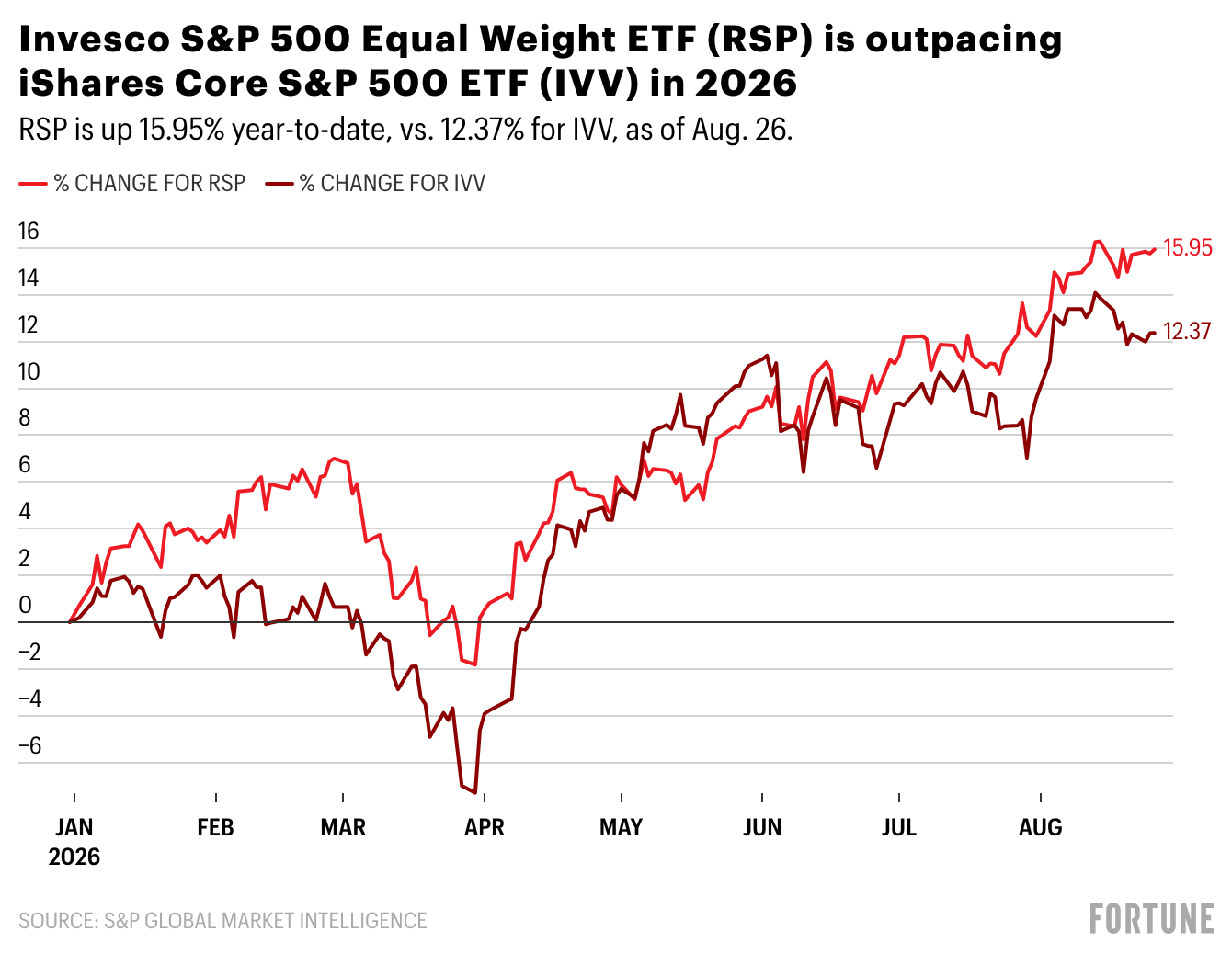
This post was originally published here

If you have part of your portfolio in an S&P 500 index fund, you’re probably patting yourself on the back for the 12%-plus performance you’ve already notched this year. But you could have done even better.

A less flashy corner of the index-fund world treats Nvidia and a random mid-cap industrial stock as equals. It is beating the market by a wide margin. The Invesco S&P 500 Equal Weight ETF (RSP) is up 15.95% year to date through Aug. 26, compared with 12.37% for the iShares Core S&P 500 ETF (IVV)—a nearly 3.58 percentage-point gap that has put equal weighting back in the spotlight.

That outperformance just reached a milestone of its own: RSP crossed $100 billion in assets under management for the first time on Aug. 19, capping a run that has seen the fund pull in more than $12 billion in net inflows in 2026 alone.

Why equal weight funds are beating the market

The mechanics explain the divergence. A market-cap-weighted fund like IVV gives its largest constituents, such as Nvidia, Microsoft, Apple, and Amazon, outsized influence because they represent an outsized share of the index. RSP instead assigns each of the 500 companies roughly the same weight at each quarterly rebalance, muting the influence of any single giant.

That structural difference matters in 2026, Brendan McCann, senior associate manager research analyst at Morningstar, told Fortune.

He pointed to underperformance among several of the market’s largest names as the key swing factor: “Several of the big names in the market, like Microsoft, Nvidia, and Apple, have underperformed the broader technology market. Since RSP underweights those companies, its performance is more insulated when those stocks underperform.”

The flip side has reinforced the trend. “Several smaller S&P 500 stocks have performed exceptionally in 2026, and equal weighting gives those stocks more weight,” McCann said. RSP is therefore not just avoiding tech’s laggards—it is capturing upside from smaller names that a cap-weighted fund would barely register.

How crowded is the trade?

This milestone naturally raises the question of whether the equal-weight trade has become too popular for its own good. McCann isn’t worried yet. “I think at $100 billion the ETF still has plenty of runway,” he said.

But he flagged a real constraint tied to fund size: liquidity in RSP’s smallest holdings. As the size of the ETF climbs, it gets harder to trade the smallest stocks in the portfolio, McCann said.

“There’s no perfect number for how large the assets could grow, but I would say if assets were to quadruple, it could be more challenging to rebalance the portfolio.” That would put the potential stress point near $400 billion.

What the gap reveals about the broader market

McCann sees that gap as a live snapshot of just how much the S&P 500 now depends on a handful of giant stocks.

The primary driver, especially with the concentration in the market today, is the performance of the largest stocks relative to the broader market, he explained. Because so many of those largest stocks sit in one sector, technology’s fortunes disproportionately steer the cap-weighted index’s returns.

The numbers illustrate just how lopsided that concentration has become. As of Aug. 25, the S&P 500 Equal Weight Index held roughly 17% in technology, versus a 38% technology weighting in the standard S&P 500 Index—a gap of about 21 percentage points, according to McCann. The cap-weighted benchmark tracked by most index funds and 401(k) target-date funds is, in effect, a leveraged bet on one sector.

The implication cuts both ways. “Should the technology sector take a hit, RSP should hold up better than the broader market,” he said, which is a defensive case for equal weighting.

But it also means RSP’s fortunes will keep hinging on tech’s next move: a rebound in Nvidia, Microsoft, or Apple could just as easily narrow the performance gap that has fueled this year’s inflows.

This story was originally featured on Fortune.com

This post was originally published here

Zach Abrams, the founder of stablecoin company Bridge, admits he was surprised when the bulk of his business ended up coming from non-U.S. markets in Latin America, Europe, and Africa.

“We were very U.S.-centric. We didn’t know what the opportunities were in the Philippines, Africa, or Latin America,” Abrams says. “Unbeknownst to us, there was all this pent up demand outside the U.S. to build with stablecoins.” The firm’s first customers asked it to build cross-border payment infrastructure between the U.S. and Colombia and to facilitate payouts into countries like Venezuela and the Philippines.

Bridge’s rapid rise was driven by regions that featured high friction across borders, like Latin America. Now part of Stripe, Abrams argues that the next phase of growth could come from tokenizing non-dollar currencies.

Today’s stablecoin sector is dominated by coins denominated in the U.S. dollar, with these tokens making up over 95% of all transactions. That’s unnerved governments outside the U.S., who fear that the rise of stablecoins might reinforce the U.S. dollar’s existing dominance in global trade and financial flows.

Yet Abrams argues that U.S. dollar dominance may just reflect the immaturity of the stablecoin space. “We’re in the early stages,” Abrams says. “But in a world where more and more of our infrastructure is tokenized, it’s going to be incredibly important to have tokenized local currencies.” 

Abrams explains that local businesses will want to hold a local currency stablecoin, and put some of their capital to work in a digital, yield-generating investments. “Businesses in Singapore are going to want to hold tokenized Singapore dollars, so they can convert them into Treasuries or other assets to earn yield,” he explains.

Bridge doesn’t yet support the Singapore dollar; it currently supports tokenized euros, Mexican pesos, and British pounds, and will soon allow Brazilian reais stablecoins. 

Abrams cofounded Bridge in San Francisco in 2021 with Sean Yu, now the firm’s chief technology officer. The duo made an early bet that stablecoins would become mainstream payment infrastructure, given that they offer a way of moving money that is “way cheaper and faster” than existing rails. 

SpaceX, for example, taps Bridge’s technology to repatriate earnings from Starlink, its satellite internet service, back to the U.S. (The technology is especially favored in rural areas in emerging markets, where traditional providers cannot reach.) By 2024, Bridge was processing payment volume at an annualized rate of more than $5 billion., and raised $58 million from VC firms like Sequoia and Haun Ventures.

Stripe acquired Bridge in 2024 for $1.1 billion, in what was then its largest acquisition. (This has since been surpassed by Stripe’s purchase of OpenRouter, an AI model gateway, for a reported price of over $7 billion.)

Abrams wants Bridge to do for tokenization what Stripe did for online payments: Provide a single “simplification layer” on top of a complex mess of different options. “Bridge is betting that the tokenized world is going to become really important,” he says. “There will be a complexity of things…Bridge can be that simplification layer.”  

Asia’s key financial hubs, like Singapore and Hong Kong, are rolling out new regulatory frameworks for stablecoins, even as major economies like China and India have taken a skeptical stance on digital currencies in general.

“The region is warming to stablecoins, but it’s not as warm as the U.S. yet,” Abrams says. “It’s all very dependent on what’s permissible…as the regulatory environment catches up, I think there will be a lot more use cases that are made possible.” 

Abrams draws a parallel between Latin America and Asia, two regions which both have growing middle classes, rapid urbanization, and a strong reliance on international trade.  

“Stablecoin adoption is so big in Brazil because so much of their economy involves cross-border business, while the regulatory environment supports a pretty dynamic crypto ecosystem,” he explains, emphasizing that cross-border money transfer, rather than domestic transactions, is the real opportunity for stablecoins. “Singapore and a lot of other countries in the region share very similar characteristics, and that’s why I’m optimistic that the markets here will be similarly important as stablecoins scale.”

This story was originally featured on Fortune.com

This post was originally published here

We’ve all experienced that semi-awkward moment of being approached on the street and asked to make a donation to a cause we’ve probably never heard of. Either because we feel inclined to donate to avoid guilt or because we genuinely feel compelled to contribute, we’ll throw a few bucks in the pot. 

But the problem is, a growing number of scammers are out there posing as a nonprofit or charity and asking for money. And not only that, but some will do the old bait-and-switch with payments. For example, you intend to donate $20 using a tap-to-pay model, but the scammer would change the transaction to $2,000 without you even noticing. That’s according to Kurt Knutsson, the tech expert behind CyberGuy Report.

Essentially, scammers are taking advantage of the newer tap-to-pay model, hoping you won’t notice the number on the screen had changed based on what you had agreed on donating. 

This further dissolves the trust in philanthropies and nonprofit organizations millennials and Gen Zers so desperately want. According to Bloomerang’s 2026 Giving Signals Report, conducted with The Harris Poll among more than 1,000 U.S. donors and 400 fundraising leaders in March, millennials and Gen Z care most about giving because it makes them feel as if they are “part of something.” But even more than that, consumers want to trust in organizations while discretionary spending is more precious amid inflation, stagnant wages, and a higher cost of living. 

“Donors are ready to trust nonprofits, but they want to see the receipts more,” Steve Isom, chief operating and financial officer of nonprofit software company Bloomerang, recently told Fortune. “A bit more trust, but verified.” 

While the Bloomerang report shows 85% of active donors trust the organizations they donate to use funds effectively, building trust takes time. So, increased scam activity can break down that trust that real philanthropic organizations and nonprofits need to succeed. 

So how can consumers avoid scams and trust real organizations?

The disconnect starts with a subtle, yet critical distinction: Authenticating a payment and trusting it aren’t the same thing. A donor can approve a transaction on a card reader and still be deceived about what they are actually agreeing to, Mary Ann Miller, fraud and cybercrime executive advisor and VP of client experience at identity verification company Prove, told Fortune

“The technology may work exactly as designed, but the problem is the manipulation happening around the transaction,” Miller said. 

“Fraudsters are increasingly exploiting trusted interactions and familiar behaviors rather than trying to break through security controls,” she continued. “As these attacks become more convincing, consumers can’t rely solely on intuition or a single authentication step to determine whether an interaction is legitimate or not.” She advises consumers to pause and think before they tap to pay.

Verification gaps matter even more once the money is gone because recovering funds is not guaranteed. Once a payment is authorized by the donor (and not made fraudulently by someone else), getting those funds back becomes even harder, Eva Velasquez, CEO of the nonprofit Identity Theft Resource Center, told Fortune

While credit cards can offer a cushion because cardholders can contact the issuer and dispute the charge, instant payment methods don’t carry the same protections, she said. 

“That is going to be much more difficult to articulate to the financial institutions, and there is no guarantee that you will be made financially whole,” Velasquez added. 

That’s because “you did, in fact, authorize the payment,” she added, “but you did not check the final amount for the authorization.”

She also encourages people to flip the dynamic entirely and pick the charity yourself, rather than letting it pick you. Rather than reacting to whoever approaches with a card reader, she encourages donors to decide for themselves which causes they want to support, then vet those organizations through third-party charity accreditation sites before donating.

This story was originally featured on Fortune.com

This post was originally published here

When Democrats gathered this week in a West Michigan congressional district they’re trying to flip blue, they wanted to talk about the cost of living under President Donald Trump. But it didn’t take long for the conversation to turn to a controversy dividing their party.

One attendee chided U.S. Rep. Hillary Scholten for failing to support Democratic Senate nominee Abdul El-Sayed.

“Your inflammatory rhetoric has nothing to do with creating a better economic future for the people of West Michigan, and everything to do with protecting the pipeline of our tax dollars to Israel,” the woman said.

The exchange captured a problem confronting Democrats as they head toward November. Party leaders believe concerns about the economy have given them an opening to win control of Congress, but internal divisions are making it harder to keep the focus there.

Nowhere is that tension more pronounced than Michigan, where Democrats are trying to regroup after a bruising Senate primary that El-Sayed won over U.S. Rep. Haley Stevens earlier this month. Disputes over Israel, antisemitism and El-Sayed’s association with controversial online commentator Hasan Piker have complicated the party’s effort to turn its attention to Republican Mike Rogers.

With the election fast approaching, Scholten and some other Democrats have withheld their support for El-Sayed for now.

“I think it’s up to the top of the ticket to unify the top of the ticket,” Scholten said Tuesday.

Democratic divisions haven’t disappeared

El-Sayed, who would be the country’s first Muslim senator, has denounced antisemitism while fiercely criticizing Israel for its military operations in Gaza.

Some members of his party have balked at his rhetoric.

Michigan state Rep. Jeremy Moss, the Democratic nominee for a House seat outside Detroit, has also withheld his support. In an interview with The Atlantic’s David Frum released Wednesday, Michigan Attorney General Dana Nessel, who is Jewish, said El-Sayed should not “make excuses” for domestic terrorism.

She was referencing a video statement he put out in March following an attack on Temple Israel synagogue outside Detroit when he said “hurt people hurt people.”

Some Democrats outside Michigan have gone further in criticizing El-Sayed.

“There’s no way I’m ever coming out for El-Sayed, right now,” New Jersey Rep. Josh Gottheimer said on CNN, adding that El-Sayed has “refused to back off his views towards Jewish Americans.”

El-Sayed’s appearances on the campaign trail with Piker have become a particular flashpoint in the disagreement. Piker is a popular streamer with a history of controversial remarks that include saying America “deserved 9/11.”

Piker recently became embroiled in controversy again when he argued against the idea that opposing Israel is antisemitic. American Jews are not uniformly supportive of Israel, he said, but many “Jewish institutions” are “teaching people the idea that Jews are monolithic” and “it’s a very dangerous mode of propaganda.”

“If Jews in America keep putting this idea out there that they are singularly invested in Israel, eventually someone is going to come around and take action, not against the state of Israel mind you, but against American Jews,” he said.

The backlash was swift among Democrats, with critics saying Piker was suggesting that American Jews who support Israel were inviting violence.

“Hasan Piker’s dangerous and hateful language targeting Jewish Americans has no place in our civic discourse,” Sen. Cory Booker, a Democrat from New Jersey, wrote on social media. “Suggesting that Jewish Americans bear responsibility for hatred or violence directed against them is wrong, dangerous, and antisemitic.”

Piker rejected that interpretation in a phone interview, saying he was warning that associating American Jews broadly with Israel’s actions could fuel antisemitism, much as Muslims in the United States have been associated with Islamic terrorist groups.

He said he was never particularly close with El-Sayed’s campaign — despite appearing with him at various events during the primary — and said that he did not want the race to become a conversation about him. He said he did not regret the remarks, however.

“I’m just a platform, I’m just a megaphone for people’s anger and frustration,” Piker said. “Even if I was going to go away tomorrow, I don’t think this problem would go away for our politicians.”

While El-Sayed has put some distance between himself and Piker amid the controversies, he has refused to cut ties completely. In a statement, he said “nobody speaks for this campaign besides me and my campaign spokesperson.”

Republicans see an opportunity in the continued dispute.

“It’s great,” said Republican strategist Jason Roe. “You can tell these Democrats are not going to distance themselves. Piker is to Democrats what Trump is to Republicans. You embrace him, it’s not helpful, and distance is also not helpful.”

Democrats try to turn toward November

Democrats who have rallied behind El-Sayed are increasingly eager to move beyond the fight.

“I am done. So don’t any reporter ask me again about Hasan Piker. It’s not what November is about,” Democratic Rep. Debbie Dingell said Wednesday. “I don’t agree with Hasan Piker on a lot of stuff.”

She appeared alongside El-Sayed and U.S. Rep. Jamie Raskin of Maryland at a campaign event in Ann Arbor on Wednesday. The day prior, El-Sayed stood beside Eli Savit, the Democratic nominee for attorney general, and Lt. Gov. Garlin Gilchrist II, the party’s nominee for secretary of state, at a press conference.

Democrats who have backed El-Sayed argue that the party is largely unified and that the remaining disagreements are a natural part of moving beyond a contentious primary. Raskin, who is Jewish, described it as a “process that we go through” after the primary.

“The Democratic Party is a big, sometimes an unruly family, but we’re all going to be together in the end,” Raskin said.

Michigan Democrats from across the state are expected to gather this weekend for a convention in Lansing to finalize the party’s November ticket. Ahead of the convention, all the party’s nominees and party chair, Curtis Hertel, sent a letter saying that “disruptive behavior or harassment of any kind will not be tolerated.”

“This convention is our moment to celebrate our candidates,” the letter read.

El-Sayed at Wednesday’s event in Ann Arbor expressed frustration with the continued focus on Piker.

“You would think if you turn on any media that this whole campaign is about a streamer in California,” El-Sayed said at the Ann Arbor event. He added that he’s “less interested in going to the sort of tabloid version of our politics where we cover this like, who’s in, who’s out, who’s up, who’s down, who’s talking to who?”

But El-Sayed acknowledged that some Democrats have yet to put the primary behind them.

“There are a few people who are still nursing wounds or grievances from the primary,” El-Sayed said. “I get it. Losing is hard.”

___

Associated Press reporter Jesse Bedayn contributed to this report.

This story was originally featured on Fortune.com

This post was originally published here

The United States is entering the most expensive phase of retirement. Some of America’s oldest are eligible for more than $100,000 a year in combined Social Security benefits, while remaining as one of the wealthiest generations in the country. The national debt is rising—just passing $40 trillion this month—and Social Security is set to enter insolvency by 2032, meaning it may already be too late for the generations left behind.

The Congressional Budget Office projected in 2023 federal spending on Social Security and medicare will account for 81% of the increase in mandatory spending between 2023 and 2033. In 2026 alone, increases in Social Security and Medicare spending account for nearly half the projected $362 billion increase in mandatory outlays. Interest on the debt is adding even another layer on the stack of debt pancakes. CBO projects net federal interest costs will exceed $1 trillion in 2026 and rise to $2.1 trillion by 2036. That means the government is spending money to simply service the debt accumulated from previous deficits, even as entitlement programs continue growing.

The state of Social Security appears to have contributed to drastically different generational outlooks on the benefit. A December 2025 survey by the Cato Institute found that only 34% of Gen Z respondents expected Social Security to exist when they reached retirement. Cato’s June 2026 analysis also found that 79% of younger respondents expected some type of cut to their own future benefits.

“The survey revealed that young Americans are the least likely to expect Social Security will exist for them,” the study noted, “the most open to reforms, and the least likely to understand how the program works.”

Social Security is a pay-as-you-go program, meaning most payroll taxes collected from today’s workers are used to pay benefits to today’s beneficiaries. In simpler terms, a part of your paycheck subsidizes a boomer’s benefits—and according to the Cato Institute’s 2025 polling, only 45% of Americans correctly understand how the program works. Under current law, employees and employers each pay 6.2% of wages into Social Security up to an annual taxable maximum, which is $184,500 in 2026. Self-employed workers pay the combined 12.4% rate.

That structure worked far smoother when there were many workers for every retiree. But the demographic math changed—baby boomers are now moving through retirement while younger generations deal with record job market difficulty.

And it doesn’t help that Social Security beneficiaries are getting over double their investment into the program back. A median-wage worker retiring in 2027 is expected to receive roughly $730,000 in lifetime Social Security benefits compared with less than $200,000 in combined contributions from the worker and employer. When the employer contribution is excluded, the lifetime benefits amount to roughly 265% of what the worker personally paid into Social Security. The current system is effectively relying on the workers of today—which include millennials and the younger end of Gen X—to finance retirees.

What the government is going to do about it

The federal government has reached a point where arithmetic becomes unavoidable. The 2026 Social Security trustees report projects that the Old-Age and Survivors Insurance trust fund will be depleted in the fourth quarter of 2032. At that point, continuing program income would cover only 78% of scheduled retirement benefits. The theoretically combined Social Security trust funds are projected to be depleted in 2034, when incoming revenue would cover 83% of scheduled benefits. Without congressional action, that would mean an automatic reduction in benefits.

The Committee for a Responsible Federal Budget estimates the retirement program would face an approximately 22% across-the-board reduction when the retirement trust fund is exhausted. The committee has proposed one way to address the issue—putting a ceiling on the benefits paid to its wealthiest retirees. Dubbed the “Six Figure Limit,” the proposal would cap Social Security benefits at $100,000 annually for a married couple retiring at the normal retirement age, with the limit adjusted for marital status and claiming age. A single retiree’s comparable limit would be $50,000. 

The proposal is aimed at an extremely small group. CRFB estimates the cap would only really affect the top 0.05% of couples in its early years, households with average annual retirement income above $2.5 million and average net worth above $65 million. The organization says the cap would become more consequential over time as Social Security’s maximum benefits continue to rise.

CBS News reported in March that roughly one million individual Social Security beneficiaries receive at least $50,000 a year, meaning a married couple with two such beneficiaries could receive more than six-figures.

The Social Security Administration did not immediately respond to a request for comment from Fortune.

Boomers are rich—but no one else will get their wealth

Baby boomers collectively hold roughly $93 trillion in wealth, according to Visa Business and Economic Insights, but only about $36 trillion is expected to pass to millennials and Gen X over the next two decades. The difference is reflected in taxes, debt, spending during retirement and the concentration of wealth among the richest boomers. After the dedication in liabilities, about $88 trillion remain—and the top 1% holds about one-third of that wealth. Boomers are also expected to spend approximately $16 trillion during retirement on housing, food, healthcare, prescriptions and other expenses.

That means the “Great Wealth Transfer” will not move a $93 trillion pile of assets from retirees to younger Americans. A substantial portion of it will never be inherited, and much of what is transferred will be concentrated among the affluent households. But the Social Security program was created as social insurance, not as a means-tested welfare program. So someone who earned more during their career generally receives a larger benefit, subject to the program’s formula and taxable maximum. An affluent retiree can qualify for a fat Social Security check even when that benefit represents only a small portion of their overall income.

According to the Cato Institute, Social Security should focus more heavily on protecting seniors from poverty while giving younger workers greater opportunity to build private retirement savings. Their analysis points to systems in other developed countries across the world that use combinations of basic pensions, targeted benefits, automatic adjustments and private savings mechanisms.

The United States’ earnings-related benefit structure can produce increasingly generous payments for higher earners, based on the Cato Institute’s report. The organization notes that a maximum-earning worker claiming Social Security at age 70 can receive more than $61,000 a year, while arguing policymakers could reduce benefits for higher-income retirees in a restructuring.

“Policymakers should consider fundamentally rethinking the program’s structure and transform it into a system that ensures seniors are protected from poverty when they can no longer work,” the institute wrote, “while also freeing up resources for younger workers to save more on their own.”

This story was originally featured on Fortune.com

This post was originally published here

Bitcoin may have broken $80,000, but Solana is stealing the spotlight. SOL, the blockchain’s native token, climbed more than 23% over the past week, with much of that gain coming in the past 24 hours. The token recently crossed $100 for the first time since February and now trades at $107, according to crypto analytics platform CoinGecko.

Solana’s price surge coincided with record-breaking trading volume in Solana exchange-traded funds. On Tuesday, Solana reported that its ETF cumulative inflows hit a record $1.2 billion, with nearly $34 million coming in on Monday alone. It marked the biggest single day so far this year, capping five straight days of inflows. 

The total stablecoin value on Solana approached $16 billion on Thursday, according to data aggregator DefiLlama, giving investors more readily available dollar-backed liquidity on the network.

These gains have come during a more favorable stretch for crypto markets. Last week, the Treasury Department announced a series of bond buybacks, which investors interpreted as a sign that more cash could circulate through financial markets. The rebound marked a sharp reversal from the crypto downturn that began last October. When investors anticipate more liquidity, they tend to take on more risk by investing in speculative assets like crypto. 

Bitcoin rose first and lifted the broader market, but Solana has outperformed many other altcoins, a catchall term for tokens other than Bitcoin.

“$SOL is moving upwards here, but as you can see, the bear market lasted for a year and we’ve not even gained 20% of that back. Great period upon us,” wrote crypto analyst Michael van de Poppe. 

Alongside its price, Solana has benefited from signs of growing network activity. Bitcoin’s appeal rests largely on its fixed supply and store-of-value narrative, while Solana’s case depends more on its ability to support fast, low-cost trading and other decentralized finance applications. According to DefiLlama, Solana’s decentralized exchanges handled nearly $56 billion in trades over the past 30 days and have processed more than $10 billion so far this week.

Some of that activity came from memecoin trading, which has increased sharply in recent weeks. Solana’s low transaction costs and Pump.fun, a popular token-launch platform, have made it a popular venue for traders to quickly buy and sell such highly speculative tokens. But the volume can disappear as fast as it arrives and does not necessarily signal lasting demand.

Still, the numbers do not show that investors are broadly abandoning Bitcoin for Solana. U.S. spot Bitcoin ETFs drew more than $232 million in net inflows on Thursday and recorded daily trading volume of $8 billion, according to crypto analytics platform CoinGlass.

This story was originally featured on Fortune.com

This post was originally published here

  • In today’s CEO Daily: Meta settles its child-safety case—and tries to rewrite the narrative on its design choices
  • The big leadership story: Nvidia forecasts 70% revenue growth for its next fiscal year
  • The markets: A mixed bag across global markets—but Nvidia shares shoot up 7%
  • Plus: All the news and watercooler chat from Fortune.

Good morning. Meta just settled a landmark child-safety case with a fine of up to $18 billion paid over the next decade, with annual payments equal to less than 1% of its 2025 revenue. Financially, that’s a victory for the parent of Facebook and Instagram, which said the 29-state lawsuit could have wiped out its entire market cap with penalties of up to $1.4 trillion. Meta doesn’t have to admit guilt and almost a third of the fine is contingent on competitors adopting similar measures. 

On the one hand, that takes Meta off the hook. Not only did it decline to take responsibility for the addictive design and allegedly devastating consequences for some users, it framed this legal settlement as an agreement “building on our longstanding efforts to empower parents and support teens.” And it issued an “open letter” for “our peers—TikTok and YouTube—to put the same measures in place.” The defendant has cast itself as the hero in this drama.

Denial of responsibility is not a license to rewrite the narrative. Almost every state had sued the company because there was ample and growing evidence that it was failing to protect young customers. Internal documents show Meta officials knew that Instagram harmed teen girls and chose not to disclose it. Despite that, Meta axed the team responsible for investigating the downside of its products. A full jury trial in Oakland would have meant deeper dives into corporate practices and put CEO Mark Zuckerberg on the stand to defend them against whistleblowers, grieving parents and academic experts. 

On the other hand, Meta must make design and policy changes that have been hailed as a public health victory and could raise the bar for how other companies operate. There’s a tacit admission that infinite scroll, autoplay, filters, likes and other engagement features are dangerous to children—and must be limited. Automatic restrictions make it easier to reduce harm, if they can be enforced. That now puts the onus on Meta to authenticate the age of its users and protect its customers.

More important, perhaps, this confirms what many increasingly know to be true: social media can be bad for you. Gen Z already understands the downside of social media in ways that Millennials did not. They crave analog experiences and see AI as more of a threat than an opportunity. 

Much like Big Tobacco was forced to admit that cigarettes can cause cancer or Purdue Pharma was forced to stop downplaying the risks of OxyContin, this agreement now puts Meta’s core products in a negative light. That could give consumers and advertisers pause when engaging with its platforms. New restrictions could also impact future growth. The settlement removes a risk that could have toppled the business. Zuckerberg has to prove he can reduce harm to rebuild trust and reduce the risk that other lawsuits might prove more punishing.

Contact CEO Daily via Diane Brady at diane.brady@fortune.com

This story was originally featured on Fortune.com

This post was originally published here

Rescue teams and military helicopters searched Thursday for hundreds of missing people along the Nepal-China border, where a deadly torrent of water and mud several stories high swept through communities a day earlier following a glacier collapse.

Videos of the disaster showed people running before the floodwaters swallowed them up and washed out buildings and bridges. More than 360 people were killed, police said, and more than 1,400 were missing, including scores of foreigners and pilgrims. Hundreds of others have been displaced across the Himalayan region.

The steep slopes and lush valleys below the Himalayan mountain range — home to many of the world’s highest peaks and remaining glaciers — are especially vulnerable to flooding and landslides. Melting glaciers have become more common because of human-caused climate change.

Images showed what appeared to be the second floors of buildings in Nepal’s hard-hit Nuwakot district slathered in mud after the torrent rushed by. Riverbanks and village streets were covered in mud. Debris hung from tree branches and wires. Vehicles were buried, and some stunned survivors were caked in mud.

Before-and-after images aired by state broadcaster China Central Television showed a multistory building and more than a dozen vehicles covered in mud. A two-lane road running along a river in a valley in Tibet’s Shigatse prefecture was completely buried. Aerial footage also showed that a lake had formed and expanded on the China-Nepal border.

Nirajan Paudyal, a journalist based in Nepal’s capital of Kathmandu, worried for his parents and other relatives in the district’s village of Soley.

“I fear there won’t be any update,” Paudyal said.

Helicopters deployed for rescue because of damaged roads

The disaster has left at least 910 people missing in Nepal. Authorities in Tibet, an autonomous region of China, reported at least three dead and 558 missing.

Nepalese officials said that dozens of bridges were destroyed and nearly 40 kilometers (25 miles) of roads were damaged, complicating search efforts.

The Nepalese army has rescued more than 100 people by helicopter, army spokesperson Brig. Gen. Raja Ram Basnet said. Army teams also evacuated people trapped inside facilities linked to the Trishuli hydropower project, he added.

Dozens of injured people were transported to Kathmandu for medical care.

Rescuers found bodies in Chitwan district hundreds of kilometers (miles) downstream from the hardest-hit areas.

Bishal Kumar Bhandari, chairman of the Nepal Red Cross Society, said the agency has shifted its focus from rescue to large-scale relief operations in the flood-hit districts. He said that around 1,200 people were displaced from at least three villages.

In Tibet, a gushing mudslide that struck Wednesday near the land border crossing of Gyirong Port engulfed a multistory port building and left mud in the surrounding areas that was more than 1½ meters (5 feet) deep on average, Chinese state broadcaster CCTV reported. Roads leading to the crossing were all damaged, while secondary collapses or landslides might occur as rain continued in the area, it added.

China’s premier, Li Qiang, arrived Thursday in Gyirong to direct rescue efforts, alongside 500 military and paramilitary personnel. Military helicopter circled overhead, searching for survivors, assessing the disaster and mapping out possible rescue and evacuation routes.

Chinese authorities also warned that the newly formed lake at the confluence of the Tsogyal and the Purupqiangzangbu rivers is overflowing and may burst.

The United Nations’ humanitarian chief, Tom Fletcher, announced Thursday on X that he ordered the release of $2 million from the U.N.’s Central Emergency Response Fund to help with medical care, shelter and water. He called the floods “horrifying.”

“We pledge to support national efforts to deliver emergency aid and support,” U.N. Secretary-General Antonio Guterres told reporters.

More than 1,300 are missing, including hundreds of foreigners

Many people in the disaster zone waited to hear whether their loved ones were alive.

Shova Shrestha, 33, has spent more than a day seeking word of her husband, Rajan Shrestha. She said his phone rang when she first called after the floods, but it later became unreachable. Since then, she has watched every helicopter that landed in Bidur, the capital of Nuwakot district, hoping he might be among the survivors.

“I keep looking at each helicopter, hoping he will step out of it,” Shova said.

Among the missing are 517 foreigners, according to Nepal’s tourism board.

They include 178 people from India, more than 60 from the U.S. and people from 30 other countries, including Ukraine, the U.K., South Africa and Japan, the board said.

Many of the missing may have been on a pilgrimage to Mount Kailash in Tibet, a sacred site for Hindus, Buddhists and others.

Seventy-seven people from one pilgrimage group were caught in the floods at the immigration office at the border, according to a post on X from Indian spiritual guru Sadhguru Jaggi Vasudev.

A visibly emotional Sadhguru said in a video that the group included 22 Americans and others from various countries. He said that there was no official information on their whereabouts.

The U.S. State Department said 90 Americans are unaccounted for in China and Nepal after the flood. The department said it was unaware of any U.S. deaths and that three Americans had been rescued.

The Indian Ministry of External Affairs said Thursday that 288 of the country’s people, including some workers on a power project, were missing.

Chinese Ministry of Foreign Affairs spokesperson Lin Jian said that nearly 100 Chinese citizens were missing in Nepal. According to preliminary information, 260 of those missing in Tibet were foreigners, he said.

A glacier collapse may have caused floods

The U.S. Geological Survey first reported a magnitude 4.4 earthquake early Wednesday, about 65 kilometers (40 miles) north of Kathmandu, near the border.

The agency later updated its analysis to say the seismic event was instead a magnitude 5.2 glacier collapse that sent debris flowing downstream.

Climate experts at the Kathmandu-based International Center for Integrated Mountain Development said an avalanche from a glacier likely caused Wednesday’s flash flood.

In an emailed statement, they said water levels at one point on the Trishuli River rose by as much as 9 meters (27 feet) in half an hour.

The increasingly unstable Himalayan ice system threatens communities, infrastructure and water supplies across one of the world’s most densely populated regions.

The region saw similar flash floods in August 2025, when a glacial lake in Tibet overflowed because of high temperatures. Nine people were killed, and critical infrastructure, including a bridge connecting Nepal and China, was damaged.

This story was originally featured on Fortune.com

This post was originally published here

The consultant who once warned that California’s richest poured millions into politics because they had something to gain is now helping billionaires fight a tax on their fortunes.

Ned Wigglesworth, who decried the “billionaire boys’ club of politics” as a campaign finance reformer decades ago, is a key strategist behind Building a Better California, the political organization opposing Proposition 40, the November ballot measure that would impose a one-time 5% tax on Californians worth at least $1 billion. 

The campaign has already pulled big Silicon Valley money—Google cofounder Sergey Brin alone contributed over $100 million to the group, with venture capitalist John Doerr and crypto billionaire Chris Larsen also putting money into committees fighting the tax. Building a Better California has also reserved $87 million worth of advertising ahead of the vote.

It’s unclear what led Wigglesworth from opposing the political influence of California’s wealthy to helping them defeat a tax targeting their wealth. The San Francisco Standard called him a “billionaire whisperer” while citing several interviews with anonymous colleagues of his who described him as a creature of Sacramento lobbying. His LinkedIn profile shows him at several communications firms: founding partner and CEO of Spectrum Campaigns for the past 10-plus years, and previously a partner at Redwood Pacific Public Affairs, Vice President at Goddard Claussen/West and Vice President at the California Medical Association. Presumably, Wigglesworth’s clients have migrated from less to more billionaire-friendly over time; he did not respond to Fortune‘s requests for comment.

But the arc of Wigglesworth’s career reflects a tension that has long percolated through California politics: the Golden State state has produced extraordinary concentrations of wealth and a political appetite for taxing it while relying on the wealthy people and companies behind that prosperity.

Gov. Gavin Newsom has been caught in this bind, both an opponent of the billionaire tax and yet an advocate for reducing inequality as it’s become a potent issue for Democrats. Newsom has proposed higher taxes on the ultrawealthy at the federal level and argued that California needs to  “democratize our economy” amid the rhetoric of AI-related job loss. 

As a campaign finance watchdog two decades before the billionaire tax proposition, Wigglesworth warned Californians about what happened when wealthy donors flooded politics with cash. “There’s some very wealthy and powerful special interests who have enough at stake to spend 150 million bucks ,to either defend their turf or improve their bottom line,” Wigglesworth said in 2005. “These people aren’t spending money out of some benevolent sense of improving societal good, improving the public good. This is about people fighting for their piece of the pie.”

“In other words,” Wigglesworth wrote in a 2007 Capitol Weekly column, “they give because they get.”

California’s wealth tax battle offers an especially vivid test of Wigglesworth’s (onetime) thesis. Prop. 40 would hit roughly 200 billionaires who lived in California as of Jan. 1 with a one-time levy equal to 5% of their wealth. Supporters say the measure could generate around $100 billion, with most of the proceeds earmarked for health care after federal Medicaid cuts.

But for the billionaires affected, the potential bills are enormous, with Brin reportedly owing $13 billion if the measure passes. He and fellow Google cofounder Larry Page moved out of California before the Jan. 1 cutoff and have since amassed roughly $225 million in Miami real estate. 

The tax has also sparked public sparring over whether California risks driving away the people who pay an outsized chunk of its bills, with nearly half of the state’s personal income tax revenue coming from the top 1%. Gov. Gavin Newsom opposed the measure on those grounds. Venture capitalist Vinod Khosla said he has no plans to leave California, but has warned the state could permanently damage its tax base if wealthy residents flee. 

The sums involved today dwarf even the spending Wigglesworth was warning about more than 20 years ago. California’s 15 richest billionaires had poured more than $336 million into state and federal elections this year, with Brin, Marc Andreessen, Ben Horowitz and Larsen accounting for $331 million of the total.

This story was originally featured on Fortune.com

This post was originally published here

The myth of the sirens’ call has been with us for thousands of years, most recently brought to life in Christopher Nolan’s blockbuster The Odyssey. They’re a supernatural creature whose call is so enticing that it sends men to their doom—but the phrase has become a stand-in for that thing you know you shouldn’t do, but you simply can’t resist.

Odysseus ended up lashing himself to the mast and ordering his crew to plug their ears with wax. When he heard the sirens’ call, though, he screamed to be released and begged his men to let him go. The man who’d spent 10 years outwitting gods didn’t trust himself for 30 seconds within earshot of a sound he knew would destroy him.

That specific kind of dread—the fear of what you might do if the temptation were real—is older than the internet, older than AI, older than any technology that has ever been accused of making us weaker. It was a key plot line in the Iliad and The Odyssey, and centuries later, became the central problem of Greek philosophy, the thing the Stoics spent their lives trying to solve. And it is the same thing a large and quietly growing number of people feel every time they open a chatbot; why they hate the technology without using it, and want to bring to a screeching halt the data centers driving the biggest economic boom in at least a century.

It’s the fear about how you can’t help yourself, that you’re not good enough or smart enough; that when an easy, even potentially destructive solution lies in front of you, you won’t be strong enough to resist the call of the sirens. Socrates had the same fear about the act of writing, scribes had the same fear about Gutenberg’s printing press, and John Saxon had the same fear about the calculator. But AI concentrates all of these fears in a place beyond the act of writing, printing or calculating to the very act of thinking itself. Seen in this light, The Odyssey‘s billion-dollar success isn’t an accident for times like these.

The fear underneath the data

People who secretly use AI at work and describe it as “cheating” aren’t worried about their boss finding out. The word surfaces because some part of them is already asking a different question: if this were taken away tomorrow, would I still be good at my job? Would I still be smart?

Everyone knows the name for this: impostor syndrome, the persistent, private fear of being exposed as less capable than everyone believes. With AI, there’s now a tool sitting by your side, silently keeping score—and exposing every hallucination that you’re not qualified enough to catch.

The second fear is about character, not competence: what if I don’t actually have any self-control? What if I accept the first output from the chatbot without thinking of a way to genuinely improve it? What if I get roasted for putting more AI slop into the world?

The psychological literature calls this “cognitive offloading”—using external tools to reduce the internal demands of a task. Humans have done this since the days of the ancient Greeks, with Socrates one of the earliest recorded voices in history to worry about how humans let themselves off the hook of heavy intellectual lifting. Generative AI offloads reasoning, synthesis, and creative judgment—the cognitive work through which expertise is actually built, not just retrieved. Social psychologists have documented for decades how people are “cognitive misers,” a term coined by Susan Fiske and Shelley Taylor in their foundational work on social cognition, meaning we find effortful deliberate thought aversive and default to shortcuts whenever available.

This may be the real controversy over AI that is roiling the workplace and society, as noted in The AI Shift, the Financial Times‘ weekly newsletter on how AI is reshaping work by columnist John Burn-Murdoch, who drew on research from economists José Azar, Mireia Giné and Javier Sanz-Espín to show that the most AI-exposed occupations aren’t shedding workers—employment, on paper, looks fine. But wages in those roles are down sharply relative to less-exposed work, and workers in them have become far less likely to switch jobs at all. Workers aren’t getting fired as a result of AI, but they seem to be getting quietly worth less, and quietly stuck. The real fault line, Burn-Murdoch argues, isn’t between occupations, but between execution and evaluation.

Burn-Murdoch’s name for what separates these two groups is conscientiousness—and he notes that large numbers of workers who use AI on the job do so secretly, describing it as “cheating.” But in the summer of Odysseus, workers in an AI-addled word seem to fear something more primal and ancient: that they can’t resist the sirens’ call.

Every technology that saves you effort has done this before

Back to Socrates, for a second: the great Greek philosopher made eerily familiar arguments in opposition to the creation of the technology of writing, around 370 BCE. He argued that writing would “implant forgetfulness,” producing students with the mere appearance of wisdom—people who can recite but can no longer actually think. Scrolls would turn humans into stochastic parrots, he said, to paraphrase a modern critique of AI.

The same fear resurfaced, smaller and less remembered, when the printing press began moving knowledge out of memory and onto the page. A German Benedictine abbot named Johannes Trithemius wrote a treatise called De Laude Scriptorum (“In Praise of Scribes”) arguing that printed books would never be the equal of handwritten manuscripts. “Printed books will never be the equivalent of handwritten codices, especially since printed books are often deficient in spelling and appearance.”

The fear resurfaced again, with real data behind it this time, when calculators entered American classrooms in the 1970s and ’80s. The controversy peaked in 1986 when math teacher John Saxon led a protest at the National Council of Teachers of Mathematics meeting. Subsequent research actually backed him up, finding that habitual calculator use before students had internalized basic arithmetic weakened their mental fluency and fact retrieval. But great writers and great mathematicians were able to overcome their inner cognitive miser and use these new technologies to great effect.

The Greeks had a word for this

The Greeks did not just casually worry about self-control. They built an entire branch of philosophy around it. They had a precise word for the exact failure mode: taking the shortcut while already knowing better. They called it akrasia—literally “without power”—acting against your own better judgment, with full awareness that you’re doing it. Socrates denied it was even possible. A generation later, Aristotle broke with him and insisted the problem was real, then built something closer to a spectrum of character to explain it. At one end is sophrosyne, or temperance: your appetites are already trained toward the right thing, so there’s no battle. Below that is enkrateia: you want the shortcut, reason wins, but you feel the pull the whole time. Below that is akrasia: desire wins. At the very bottom is akolasia—indulgence so habitual that you don’t register the shortcut as a temptation anymore. It’s just what you do.

The crucial move in Aristotle’s account is that none of these are fixed identities. You move along that spectrum through repetition. You become someone who doesn’t feel the pull of the easy path by doing the hard thing over and over until it becomes who you are. That is, with almost no translation required, the exact difference between the Chinese students who used AI like a tutor and kept practicing, and the ones who used it to skip the practice altogether. One group was quietly building sophrosyne. The other was drifting toward akolasia without noticing the drift. The Stoics went even further and made self-mastery close to the entire point of living a good life.

Christopher Nolan spent hundreds of millions of dollars and every inch of 70mm IMAX film stock this summer making the case that the Odysseus myth is exactly the one our moment needed. The audience agreed: it opened in July and blew past $1 billion at the global box office, becoming Nolan’s biggest film to date.

I myself have played a role in the debate over AI writing—one that has taken on new significance since Harvard economist Ricardo Hausmann admitted to using it in a column for the Financial Times and Stanley Druckenmiller did the same for a column in the Wall Street Journal (the same publication profiled my use of the tech back in March). Many people, even close friends, have told me that my writing sounds smart but they don’t believe it’s really me, and sometimes that hurts my feelings, but these are weird times.

What I stress is how I use the technology as a tool and push myself and it to go deeper, not settling for the first output. This piece, for instance, included prompts about Burn-Murdoch’s idea of “conscientiousness” and my questions about what broader pattern does this fit into in terms of human psychology and what previous technologies surfaced similar tensions. (Claude rejected a musing of mine that it brought to mind the movie Idiocracy, suggesting Wall-E instead, but I dismissed that angle. Maybe I shouldn’t have; this is long enough.)

But driving me on the whole time was my hunch that, deep down, all of us humans have a secret fear that we are a bit stupid and have no self-control. Socrates himself had the same fear, after all, and so did Odysseus.

For this story, Fortune journalists used generative AI as a research tool. An editor verified the accuracy of the information before publishing.

This story was originally featured on Fortune.com

This post was originally published here

Imagine a factory where all the equipment is powered by AI, where robotic arms and assembly lines can “communicate” with their own shared language. Or picture a science lab, where microscopes can autonomously search for a certain type of molecule—all hours of the day, no humans necessary.

That’s the idea behind Anthropic new Model Hardware Standard (MHS), which the company released as a research preview on Thursday. MHS, which marks Anthropic’s first foray into so-called physical AI, is essentially a framework for connecting advanced large language models (LLMs) like Anthropic’s Claude with physical objects, from manufacturing equipment to microscopes.

With MHS, companies can integrate AI into their equipment in “hours or minutes,” Anthropic said. Typically, this process would take “weeks, if not months,” and require specialists to do a custom build. Expanded access to advanced AI tools will pave the way for “autonomous, round-the-clock experiments and workflows,” the company said. Scientific research and advanced manufacturing applications are among the primary uses.

The MHS can also help connect multiple devices to one another, enabling them to communicate through a set of commands, such as “read.” Any hardware device can understand these commands and act on them.

MHS is model-agnostic, meaning it works with any LLM—not just Claude—including models built by other companies such as OpenAI or open-source models. It’s built on the Model Context Protocol (MCP), a universal, open standard for connecting data sources that Anthropic debuted in 2024. The MCP is “kind of like the USB for AI to software connection,” Alek Kemeny, a member of the technical staff at Anthropic, tells Fortune.

Not all existing equipment can connect to MHS out of the box, as not all have a programming interface, Kemeny said. As part of this project, Anthropic is working with a lot of device manufacturers” to build new products with the necessary interface, and are pre-loaded with the MHS. The company is also helping manufacturers to add MHS connections to existing products.

“That’s the future we imagine and are moving into,” Kemeny said. “In the future, scientists can buy these devices and out of the box it works. That’s just the process of adopting a standard.”

Jonah Cool, head of partnerships and deployment of science at Anthropic, added that often scientific equipment “suffers from proprietary solutions that are very brittle and often don’t meet the need of scientists.” MHS offers a standardized, easily programmable interface that aims to help them connect any model to their equipment. “We want to avoid vendor lock-in for scientists,” Cool said.

The MHS research preview comes amid increasing interest in the potential of combining AI and robotics. Hugging Face also debuted its first physical AI product today, a robotic duck, although it is not powered by MHS, Anthropic said. Nvidia, which is set to purchase Hugging Face for $13 billion, has also long championed physical AI. In March, Nvidia CEO Jensen Huang predicted that in the future “every industrial company will become a robotics company.”

Anthropic developed MHS in partnership with the HHMI Janelia Research Campus, a biomedical research center in Virginia. A “handful” of labs and hardware manufacturers received early access during development, in fields such as biotech, robotics, and quantum computing.

Some partners include Genentech, Carnegie Mellon university, quantum computing company QuEra, Universal Robots, Amazon Web Services, Doosan Robotics, Danaher, and Hugging Face.

Hugging Face also debuted its first physical AI product today, a robotic duck, although it is not powered by MHS, Anthropic said. Nvidia, which is set to purchase Hugging Face for $13 billion, has also long championed physical AI. In March, Nvidia CEO Jensen Huang predicted that in the future “every industrial company will become a robotics company.”

This story was originally featured on Fortune.com

This post was originally published here

With the few months they have left as senators, Democrat Dick Durbin and Republican Bill Cassidy have embarked on a mission to save tens of millions of Social Security beneficiaries from a projected 22% cut in their benefits, starting in just six years.

It is one of the most perilous political efforts that a member of Congress can undertake, so it is telling that the push is being led by two lawmakers who have little to lose at this stage of their careers.

“We’ve been at this six years, eight years. It’s incredible how long I’ve been at it,” Cassidy said. “But Durbin came up to me and he goes, ’Bill, I’m leaving the Senate soon. We need to take a ride at it.’”

Their idea to extend Social Security’s solvency is one of a few that have been formally offered this Congress. None has gained much traction, but it is a start as more lawmakers weigh in on a problem that will likely confront the group of senators elected this fall as well as the next president. Pressure for action is sure to grow as 2032 draws closer.

Senate bill seeks 50 years of Social Security solvency

The measure that Durbin, D-Ill., and Cassidy, R-La., are pushing would not dictate an outcome, but instead set up a process for Congress to take action. It calls for the bipartisan Social Security Advisory Board to collect public input and submit draft legislation to Congress that would keep the program’s retirement trust fund solvent for at least 50 years.

The resulting bill would then be introduced by the majority leaders of the Senate and House. If they do not want to go along, any member could sponsor the bill. It would then be referred to the two committees with jurisdiction over Social Security — the Senate Finance Committee and the House Ways and Means Committee.

Both committees would have the chance to debate the bill and amend it if they wish. If not, the original bill drafted by the advisory board would be placed on the Senate and House calendars for consideration. Lawmakers could offer substitute proposals, with final votes after 100 hours of debate. Passage would require a three-fifths vote in the 100-member Senate and a simple majority in the 435-member House.

Even though the bill does not prescribe a solution for replenishing Social Security, sponsors have struggled to win support. Cassidy voiced exasperation in a recent floor speech.

“For some people, the time to do Social is never,” Cassidy said. “Don’t disturb Congress. They don’t want to take a tough vote. Even if that vote only sets up a process.”

AARP has come out against the bill, saying that the effort amounts to “fast-tracking” Social Security changes through a process that limits what type of amendments are offered and sets arbitrary procedural deadlines.

A different bill proposes an investment fund for older adults

Separately, Cassidy has a proposal with Sen. Tim Kaine, D-Va., that calls for the creation of a $1.5 trillion fund that would be invested in stocks and other higher-risk assets over 75 years.

The seed money would be financed by the Treasury Department through additional borrowing. At the end of the 75 years, the fund’s assets would be used to repay the Treasury for the seed money as well as the borrowing that would occur over those years to keep Social Security payments going out — now projected at about $26.6 trillion.

Cassidy projects such an investment fund would earn enough to cover about two-thirds of that $26.6 trillion in borrowing, meaning other actions such as raising payroll taxes or cutting benefits would still be required to completely close the gap. But those tax increases or benefit cuts would be smaller than otherwise necessary without the investment fund.

“The advantage of the ‘Save Our Seniors Fund’ is that it lessens your political battle,” Cassidy said.

Debt watchdogs are worried.

The Committee for a Responsible Federal Budget said “this is a dangerous, debt-funded gamble that would come with huge risks and costs.”

Some propose lifting the payroll tax cap

Sens. Elizabeth Warren, D-Mass., and Bernie Moreno, R-Ohio, do not agree on much, but they have joined forces in calling for lifting the cap on the Social Security payroll tax.

Currently, the payroll tax that funds Social Security applies to a maximum of $184,500 in income. That means most people pay Social Security taxes on all of their income, but the wealthier do not.

“Why should a middle-class nurse pay a larger share of her paycheck than a wealthy corporate lawyer?” the two senators wrote in The New York Times.

But while the two promised forthcoming legislation on the matter, they have not filed it yet. Some conservative groups have forcefully pushed back on the idea, saying the tax increase would lead to lower wages and fewer jobs at businesses seeking to offset the additional tax burden.

Eliminating the cap would generate more than $3.2 trillion for the trust fund over the course of a decade, according to the Peter G. Peterson Foundation, a nonpartisan debt watchdog.

Others have called for lifting the cap, but only above a certain income threshold. For example, a bill from Sen. Sheldon Whitehouse, D-R.I., and Rep. Brendan Boyle, D-Pa., would apply the payroll tax to income above $400,000. The bill would require those making more than $400,000 to contribute more to Medicare.

Others are calling for lifting the cap and increasing benefits

Progressives in the House and Senate have sponsored a bill that would lift the payroll tax cap to cover all earnings above $250,000, including capital gains and dividends, and increase the tax that high earners must pay on investment gains.

The bill would boost payments to Social Security beneficiaries by roughly $2,400 a year and increase the annual cost-of-living adjustment. The effort is being led by Sen. Bernie Sanders, a Vermont independent, and Rep. Val Hoyle, D-Ore. The House version has 39 cosponsors, all Democrats.

In a recent letter to colleagues, Sanders said expanding benefits and requiring the wealthiest in the United States to pay the same percentage of their income into Social Security as tens of millions of working people is “how we extend Social Security’s solvency for generations to come. That is how the Democratic Party begins to regain the trust of the American people.”

This story was originally featured on Fortune.com

This post was originally published here

The winter chill that dragged digital assets down during most of the hot summer months is finally beginning to lift, with the price of Bitcoin surging about 20 percent last week, its strongest three-day rally since 2023. Suddenly, the obituaries of the last few months are turning into rebound stories, but both of these narratives obscure what’s really going on. Simply put, market watchers are failing to see the forest—the long-term rise of digital assets—and are instead fixated on the trees, which are represented by short-term price swings.

I spent 20 years at traditional asset and wealth management firms, including BlackRock, Apollo, and Goldman Sachs, before joining Grayscale two years ago. During that time, I observed a recurring pattern: new asset classes and related technologies are often dismissed before they are understood, debated before they are accepted, and then eventually incorporated into the financial system. When it comes to digital assets, that process is well underway.

To understand why this is the case, it is helpful to understand the true scale and potential of what we mean by digital assets.

To many, digital assets still mean crypto or, more precisely, Bitcoin. That’s understandable: Bitcoin remains the most popular digital asset by far, accounting for about 60% of the total market capitalization of digital assets. As such, it surely does—and will continue to—play a core role in many investors’ portfolios, despite the volatility inherent to market cycles, geopolitical risks, and monetary policy changes.

But we must not take Bitcoin—a crypto asset—for the whole of the digital asset universe. In fact, the primary forces propelling adoption and expansion of the asset class today are a result of two strong currents: first, higher institutional demand and second, wider corporate adoption of the blockchain-based technology that underlies it all.

Let’s tackle institutional interest first.

In 2025, the daily flows for Bitcoin-based ETPs—the net new cash added or withdrawn—regularly exceeded $500 million, an amount that is roughly 12 times the amount of new tokens added to the market every day by Bitcoin miners. This has transformed the old supply dynamics.

Even through this year’s selloff, that demand has reasserted itself: after eight straight weeks of outflows, US-listed spot Bitcoin ETPs posted three consecutive weeks of inflows into late July, even as the year stayed net negative. Recent drawdowns also have been materially shallower than the 70% to 80% declines that defined earlier “crypto winters.” Further, in a 2026 EY survey of over 350 institutional investors, 73%  said they planned to increase their allocations to digital assets.

All of this suggests that institutional capital appears to be playing a larger role in setting the marginal price for digital assets.

Concurrently, we are witnessing the gradual but steadily rising adoption of new technologies within corporate environments. Around 60 percent of Fortune 500 executives in 2025 reported that their companies are working on blockchain initiatives, while firms such as Fidelity, Visa, and Stripe are advancing stablecoin initiatives.

Most financial services firms are experimenting with digital assets technology in their own back office. These are infrastructure decisions by firms that deploy investment capital cautiously and over long horizons. That type of capital does not move on sentiment. It moves on conviction in underlying utility.

And let us not forget about artificial intelligence. There has been consternation about whether “the AI trade” is somehow in contradiction with that of digital assets. I don’t think anything could be further from the truth. Artificial intelligence and public blockchains are complementary technologies.

AI agents will make new demands on the financial system—e.g., machine-native micropayments, instant cross-border settlement—which blockchains are uniquely equipped to provide. Centralized AI development also introduces risks related to bias and control, which may be partly mitigated by decentralized alternatives and blockchain-based identity tools. The broader direction is increasingly clear: digital assets are moving into established regulatory frameworks rather than remaining outside them.

This trend will continue to accelerate as cautious investment allocation committees learn to incorporate digital assets into their governance framework. That process takes time. Over the past several years, regulatory clarity has improved, investment vehicles have matured, and governance frameworks have become more established. As a result, more institutions are now equipped to evaluate digital assets alongside other long-term portfolio exposures.

Despite all this, many in the financial press will no doubt continue to search for market blips that can serve as a pretext to write off digital assets. But focusing on short-term price volatility is missing the point. What truly matters is what is happening beneath the market’s surface, in institutional quarters, and in corporate IT departments across Wall Street and beyond.

That is the signal. The rest is noise.

Peter Mintzberg is CEO of Grayscale Investments, a leading digital asset-focused investment platform.

This story was originally featured on Fortune.com

This post was originally published here

Over the last year, Nick Maggiulli has come to what he calls an unsettling realization: The upper-middle class is caught in a trap, and many of them don’t even realize it.

The chief operating officer of Ritholtz Wealth Management has spent the better part of a year building the case in pieces on his blog, Of Dollars and Data—first arguing private school isn’t worth the cost despite its price tag, then that premium travel experiences have grown crowded while remaining expensive in “The Death of the Amex Lounge.” He previously talked to Fortune about his book, The Wealth Ladder, and his growing belief “something weird’s going on” with the upper-middle class in the U.S. economy.

In an April essay, he pulled the threads together and gave the phenomenon a name: the “upper-middle-class trap,” in which people earning roughly $200,000 to $400,000 a year are working more and relaxing less to buy products and services of declining quality.

His evidence includes new single-family homes shrinking in average size by 12% between 2014 and 2024, even as the price per square foot surged 74%, according to LendingTree data. A home near a public elementary school with a top GreatSchools rating costs 78.6% more than a comparable home in the surrounding county. Homebuyers who win bidding wars end up worse off: One study found their purchases produced 6.9% lower annualized returns than homes bought without competition. In higher education, the number of college applicants has jumped 78% since 2015 even as acceptance rates at elite schools have collapsed, driving tuition and private-school costs up roughly twice as fast as overall inflation.

The mechanism Maggiulli describes is a “financial arms race”: Every individual decision is rational, but collectively the competition for the same scarce positional goods lowers everyone’s quality of life while draining their bank accounts.

One accelerant, he argues, is nearly impossible to opt out of. Citing Brookings Institution data from November 2025, he notes AI usage rises from 9% among earners below $30,000 to 34% among those earning $100,000 or more. High earners, worried AI threatens their careers, are forced to adopt it just to defend their position—a “Red Queen” dynamic in which everyone runs faster just to stay in place.

“If AI doubled everyone’s productivity overnight,” he writes, “suddenly someone with half your skill would be able to compete with you just by using AI.”

His prescribed exit is blunt: Stop competing for positional goods that don’t materially improve your life. Send your kids to good public schools, fly economy, buy a smaller, affordable house. His test for any big purchase: “Am I buying this to improve my quality of life, or merely because other people are buying it?”

The $5 million price tag

Maggiulli’s trap helps explain a number that’s been circulating for the past year. The cost of achieving the American Dream surpassed $5 million in 2025, according to a comprehensive analysis by Investopedia—the cumulative lifetime cost of eight pillars of middle-class aspiration, nearly $600,000 higher than the year before. Drawing on government data, industry statistics, and survey responses from more than 1,200 U.S. adults, the analysis broke the total into eight milestones: retirement at $1.6 million, homeownership at $957,594, new cars purchased every five years at $900,346, raising two children and paying for their college at $876,092, health care at $414,208, annual vacations at $180,621, pet ownership at $39,381, and a wedding at $38,200.

The average American with a bachelor’s degree earns about $2.8 million over a career—less than half of what’s required to achieve that. Two college-educated earners are functionally a prerequisite for “living the dream.” Homeownership remains the most commonly cited obstacle: 58% of respondents named high home prices as their top barrier, followed by rising living costs (51%) and elevated mortgage rates (47%)—the exact positional-goods squeeze Maggiulli describes.

Maggiulli’s framework has run headlong into a countervailing, income-based analysis. A January report from the American Enterprise Institute, authored by economists Stephen Rose and Scott Winship, argues the “hollowing out” narrative underlying both Maggiulli’s trap and Investopedia’s price tag is only half-true. Their data: the share of American families earning between roughly $133,000 and $400,000—their definition of the upper-middle class—tripled from 10% in 1979 to 31% in 2024. For the first time in U.S. history, more families sit above the traditional middle-class income threshold than below it. Median family income, adjusted for inflation and family size, rose 52% between 1979 and 2024.

“It is simply inaccurate to characterize the ‘shrinking’ middle class as reflecting diminished economic security rather than material progress,” Rose and Winship wrote.

Winship, in a statement to Fortune, previously acknowledged the limits of an income-only lens: Two people with identical lifetime earnings can end up with very different wealth if one saves and the other spends—a concession of a key Maggiulli argument. AEI is reportedly preparing a follow-up using wealth data, and preliminary results show a similar pattern: The middle class shrinks mainly because the upper-middle class booms.

Maggiulli’s counter reframes the debate around wealth rather than income. The share of U.S. households with $1 million to $10 million in net worth more than doubled, from 7% in 1989 to 18% in 2022-23.

“There’s a good portion of them that feel like they don’t have enough,” Maggiulli previously told Fortune. “They feel like they’re just getting by.” A $1 million net worth placed someone in the top 5% of Americans in the late 1990s; today, that same number puts you in the top 20%.

When reached for comment for this article, Maggiulli noted the most recent data to answer these questions was the Federal Reserve’s 2022 Survey of Consuer Finances, with 2025 data due to be released in a few months.

“I believe that data will answer a lot of these questions more definitively,” he said, but his read of the data shows that both arguments appear to be true—the pie grew, along with misperceptions from social media about how that wealth feels. The dynamic is “quite psychological in nature,” he said, adding that data on collective psychology, of course, remains scarce by definition.”

Chris Bradley, a senior partner at McKinsey and director of the McKinsey Global Institute, previously told Fortune Americans have living through a kind of “signal failure”—a society that has grown extraordinarily wealthy by historical standards but has lost the ability to recognize that prosperity, because the “antenna” people use to judge their own success is still tuned to an old frequency while the underlying economic reality has changed. A family earning $175,000, a household income that would have felt unambiguously prosperous in any prior decade, now spends its evenings absorbing content from people who vacation in the Maldives and treat business class as a hardship, until the top 10% starts to feel like the middle.

Bradley has been wrestling with a starker version of this same anxiety on his own LinkedIn, where in May he broke from his usual optimism to concede that “the young’uns are probably right” to have lost faith in generational progress. Citing Australian polling that found only one in five believe the next generation will be better off than the last, he wrote that a 30-year-old today “has experienced less growth, hardly any productivity improvement, much more expensive housing, a bigger tax bill, and a much bigger government” than his own cohort did at the same age—concluding, “real hope needs to be earned.”

“Structurally, it feels like quality is getting worse even as prices are rising,” Maggiulli told Fortune, citing general trends in travel, education, and housing, in particular. He added his thinking has evolved from a feeling something weird is happening in the economy more firmly toward an upper-middle class trap, and he agreed with Fortune‘s question that it is similar to Yale Law professor Daniel Markovits’ Meritocracy Trap, which argued as far back as 2019 that upper middle class status in the 21st-century was less than the sum of its parts.

“I enjoyed Markovits’ Meritocracy Trap because it highlights how it can be tough to get ahead in the upper middle class,” Maggiulli said, “as compared to the upper class, who can buy their way into things.”

Even the optimistic AEI numbers cut both ways: The combined income share of the upper-middle class and the wealthy rose from 28% of all family income in 1979 to 68% by 2024, and the top 1%’s share doubled from 5% to 9%—likely an undercount, Winship conceded, since the wealthiest Americans are underrepresented in Census data. Separate tax-data research by Gerald Auten and David Splinter puts the true top 1% income share closer to 17%.

The upshot, in Winship’s own words: “broad prosperity, unequally shared.”

For this story, Fortune journalists used generative AI as a research tool. An editor verified the accuracy of the information before publishing.

This story was originally featured on Fortune.com

This post was originally published here

New York City Mayor Zohran Mamdani is bringing 15 business leaders into City Hall as he looks to mend a rocky relationship between his administration and some of the city’s most powerful executives.

Mamdani announced Thursday morning the launch of a new Business Advisory Council spanning finance, real estate, health care, technology, sports and retail, an effort to bring some of New York’s most prominent business leaders to the table with a democratic socialist mayor whose economic agenda has often put him at odds with the business community. Its members include Chobani founder and CEO Hamdi Ulukaya, Etsy CEO Kruti Patel Goyal, RXR chairman and CEO Scott Rechler and New York Liberty CEO Keia Clarke.

Taking a closer look, one might notice some of the biggest names in New York business are notably absent. The council includes no current executives from JPMorgan Chase, Citigroup, American Express or BlackRock, nor from tech giants Meta or Alphabet.

Last year, JPMorgan CEO Jamie Dimon told Fortune that he would offer to help Mamdani if he became mayor, while also describing his movement as “more Marxist than socialist.”

City Hall approached at least three prominent business leaders who ultimately did not join: Bank of America’s New York City president Jose Tavarez, former American Express CEO Ken Chenault and private equity executive Charles Phillips, according to the New York Times.

A Bank of America spokeswoman declined to comment to the Times, while Chenault and Phillips did not respond to the newspaper’s requests for comment. Fortune has reached out to all three for comment, along with JPMorgan.

A spokesman for Mamdani told the New York Times he could not discuss individual conversations with prospective members but said there were several reasons some executives did not end up on the council. Some could not accommodate the time commitment, others did not receive clearance from their companies and some were concerned about the amount of media attention surrounding the group.

The council will meet quarterly with Mamdani and Deputy Mayor for Economic Justice Julie Su and advise City Hall on industries including finance, technology, real estate, entertainment and health care, as well as infrastructure, the city’s talent pipeline and regulatory environment, the mayor’s office said in the statement Thursday.

“The doors of City Hall are always open to New York’s business leaders, and I look forward to welcoming their experience and strategic guidance as we build a stronger, more dynamic economy,” Mamdani said.

The council represents Mamdani’s latest attempt to establish a working relationship with a business community that has been wary of his economic agenda. The makeup of the group shows some success: 15 executives agreed to join, including leaders in real estate, finance, tech and health care. But the absence of current executives from several of the city’s largest financial and technology companies underscores the divide that remains.

The decision over whether to join had become a point of debate on Wall Street, with some executives weighing the opportunity to influence policies affecting their businesses against concerns that participation could be seen as an endorsement of policies they oppose, according to the Times.

Mamdani campaigned on an ambitious affordability agenda that included freezing rents for stabilized apartments and making city buses free, while proposing higher taxes on corporations and wealthy New Yorkers to help pay for his plans.

Still, several major figures from New York business have agreed to work with him. The full 15-member council includes:

  • Brandon Blackwood, CEO of Brandon Blackwood New York
  • Priscilla Sims Brown, president and CEO of Amalgamated Bank
  • Rafael Cestero, CEO of the Community Preservation Corporation
  • Keia Clarke, CEO of the New York Liberty
  • John D’Angelo, president and CEO of Northwell Health
  • Kruti Patel Goyal, CEO of Etsy
  • Tony James, chairman of Jefferson River Capital
  • Scott Rechler, chairman and CEO of RXR
  • Kevin Ryan, founder and CEO of AlleyCorp
  • Marcus Samuelsson, chef and restaurateur
  • Doug Steiner, chairman of Steiner Studios
  • Hamdi Ulukaya, founder and CEO of Chobani
  • Pat Wang, president and CEO of Healthfirst
  • Antonio Weiss, partner at SSW and former Treasury official
  • Robert Wolf, CEO of 32 Advisors and former chairman and CEO of UBS Americas

And while some of Wall Street’s biggest current executives are missing, the council includes several veterans of major financial institutions. James is the former president and chief operating officer of Blackstone, Wolf previously served as chairman and CEO of UBS Americas, and Weiss previously headed investment banking at Lazard.

Some members joining the council have not always agreed with Mamdani. Rechler, for example, recently told the Times that he had directly raised concerns with the mayor over his rhetoric on Israel, but said he believed it was important to engage with leaders even when they disagree. In Thursday’s announcement, Rechler said he has found Mamdani and his team to be “constructive and responsive partners” since the mayor took office and said he plans to provide “candid input” through the council.

“The biggest challenges we face cannot be solved by business or government alone,” Ulukaya said in the announcement. “They require us to come together, listen to one another and work with a shared sense of purpose.”

The council launches as New York City employment sits near a record high. The city had 4.85 million jobs as of July, according to figures cited by the Mamdani administration, while the unemployment rate stood at 5%.

This story was originally featured on Fortune.com

This post was originally published here

Shortly after he became Trump’s Secretary of War, Pete Hegseth warned that the American military risked a late Soviet-style decline. Speaking before a group of defense executives in November 2025, he teased comparisons with the USSR and even the Chinese Communist Party as he described an “adversary” that poses a serious threat to the United States of America. “The adversary I’m talking about is much closer to home,” he said. “It’s the Pentagon bureaucracy — not the people, but the process.”

This March, the world’s largest aircraft carrier, the USS Gerald R. Ford, pulled into port at Souda Bay, Greece, scheduled for more than a week of repairs. More than 200 of its sailors were receiving treatment for smoke inhalation, a result of a laundry room fire that spread through the ventilation system into the carrier’s sleeping quarters.

The USS Gerald R. Ford was at sea for 10 months, long past its deployment length, and was reportedly dealing with electrical problems and delayed maintenance that led to overworked equipment. That was on top of sewage problems on the ship that left its crew unable to use its toilets.

According to Linda Bilmes, a Harvard Kennedy School public policy lecturer and author of The Ghost Budget: U.S. War Spending and Fiscal Transparency, the USS Gerald R. Ford represents a larger problem for the U.S. military: a massive tract of infrastructure and facilities without the proper structures to maintain them.

“Here you have $13 billion spent on the highest tech carrier in the entire navy, and somehow there wasn’t a sufficient amount of money spent on maintaining the laundry conditions and the toilets,” Bilmes told Fortune. “That’s just one example, but you have to question whether the resources are being allocated in a way that provides maximum benefits.” 

A report published last week from the U.S. Government Accountability Office, the federal government’s audit institution, found that across the Department of Defense’s real estate portfolio of more than 700,000 facilities around the world—some of which are at least 50 years old or date back to the Cold War—the department is dealing with a $285 billion maintenance backlog in fiscal 2025 as a result of insufficient funding and personnel.

The findings included “chronically neglected” maintenance of some barracks that adversely affected the quality of life of enlisted service members, posing safety risks due to mold and broken fire systems. The report also noted crumbling parking lots at the Minot Air Force Base in North Dakota, which have been in disrepair since at least 2018, as well as narrow quarters at the Twentynine Palms Marine Corps Air Ground Combat Center in California, which could not accommodate the maintenance of Marine Corps vehicles.

“This poses a risk to its missions and the quality of life of its personnel,” the report said.

The Pentagon did not respond to Fortune’s request for comment.

The U.S. diverging from the Soviet military downfall

This isn’t a matter of just one administration mismanaging money. The Pentagon is the only major federal agency that has never passed an audit. While the department attributes the opacity around its procurement and distribution of its massive, $1 trillion budget to the sheer size of the agency and its responsibilities, the GAO has found evidence instead of pervasive money mismanagement. For example, the Navy lost track of $3 billion in equipment over the last three years, and at one Naval distribution center, there was a backlog of 122,000 items that had not been processed, and as a result, the Navy bought equipment and supplies it didn’t need.

Hegseth’s implied Soviet comparison recalls the rigid structures that prioritized quantity over quality, leading the former superpower to spend up to 15% to 30% of its GDP on military industry, starving its economy and leading to its downfall. He called for defense acquisition reform, as well as systems streamlining contracting.

But the U.S.’s defense spending has key differences from the USSR, chiefly that it spends just about 3% of its GDP on defense. While the Soviet Union saw its military collapse because it became a poor country that ran out of resources, the U.S. military’s exorbitant maintenance is instead a result of a wealthy country continuing to misallocate funds as its budget swells.

Policy experts like Bilmes suggest this trend is not just a perennial problem, but one unlikely to reverse anytime soon. 

“The question really is whether the whole system is serving the best interest of taxpayers, and I don’t think it is,” Bilmes said. “And that’s a larger problem and an older problem than just the last two years of the Trump administration.”

How the U.S. military’s maintenance fell by the wayside

The GAO attributes the backlog of maintenance projects in large part to it being underprioritized and therefore underfunded. The Department of Defense did not request the full funding necessary for its maintenance needs, with the Army, Navy, and Air Force requesting just about 80% of recommended sustainment funding, according to the report. None of the eight installation maintenance offices GAO spoke with said they received funding that met the agency’s 90% goal since at least fiscal 2021.

Part of this funding gap comes from the allure of building new facilities versus servicing old ones. Last year, GAO reported that the Pentagon invested $14.6 billion annually on average in the previous five years to build new military facilities. That’s despite military service officials saying many facility construction and repair projects were approved by the service review board, but just did not get funded.

Even with proper funding, the project of maintaining military facilities would have been jeopardized by shortages in personnel needed to carry out repairs. All 10 Department of Defense joint bases that the GAO had data access to had shortages of facility management workforce between 68% to 97% of approved positions from fiscal 2013 to fiscal 2023.

The military has had trouble recruiting and retaining federal blue-collar workers who are specialists and required to conduct their work in remote environments around the world. To fill these shortages, the military often turns to contractors, whom they pay a premium.

“It is very, very heavily reliant on the private sector, which is reliant on its own supply chain and so forth,” Bilmes said. “And if you want something fixed really fast, the military has to pay extra.”

Bilmes likened the difficulty of carrying out repairs on military facilities to having a broken washing machine, but on a much more vast scale: You have to call a specialized repairperson, who diagnoses the issue, has to order a part and wait for it to arrive, before installing it. And that’s only if the washing machine is worth keeping and not scrapping altogether.

These are challenges the military contends with in peace times, Bilmes said, and are made worse in times of conflict. NBC News reported on Tuesday that Iranian missile and drone attacks caused billions of dollars in repairs for damage on U.S. intelligence posts and surveillance hardware in the region. A Washington Post investigation in May revealed damage to at least 228 structures or equipment pieces across 15 military sites as a result of the war.

“This is a problem which has just been growing, but is significantly going to be exacerbated by the last six months,” Bilmes said. She estimated the repair costs would exceed $200 billion and take between three to five years to fix.

There’s evidence to suggest the Trump administration’s priorities may be coming at the cost of future maintenance projects. In July, the GAO released a report finding that President Donald Trump’s increased military presence at the U.S.-Mexico border cost the military $2.64 billion, with that money being pulled from construction projects, facility maintenance, and accounts that support duty-station moves.

The issue with U.S. defense spending

The neglect of U.S. military facilities highlights to Bilmes an issue the Pentagon, and the U.S. more broadly, has been grappling with since 2001, when the military budget began to balloon and eventually nearly tripled over the next 25 years. 

Though she did not make comparisons between the U.S. and Soviet Union, she warned the lack of clear prioritization wouldn’t be a matter of American collapse, but rather continue to unnecessarily endanger enlisted members serving on potentially dangerous, under-resourced bases, all the while draining taxpayer dollars.

Within the military, “everything is important,” Bilmes said, but it is sometimes hard to distinguish what is an urgent matter and what is not. The laundry and sewage systems of a massive ship may seem unimportant, she suggested, but choosing to prioritize other issues, including new construction, resulted in hundreds of injuries. The lack of clarity on what is considered most important can subsequently enable a maintenance backlog.

“There has been a huge amount of money in the military—what former [Secretary of Defense Robert Gates] called the ‘culture of endless money’—but there really has not been a very clear way of allocating resources.”

This story was originally featured on Fortune.com

This post was originally published here

In May, we eliminated a number of roles at Syndio as part of a company redesign. One of the people we let go was Jonathan Vidales, a labor economist who had been with us for five years.

Around the same time, we redefined other jobs and asked those employees to take on more responsibility and a quota. We assumed they wouldn’t blink. These were leaner times. Jobs were harder to come by and the pendulum had shifted back toward employers. For those employees, we assumed, staying in a beefed-up role with a higher earning potential would be a no-brainer.

Right?

Wrong.

Within a few months, several of the people I had expected to keep resigned. Suddenly, in our push to be more efficient in the age of AI, we lost some of the very talent we needed.

The good news: Jonathan came back. In August, he applied for one of our newly-opened roles, and we rehired him. On a Zoom call, he told me sheepishly that coming back felt like “sneaking back in the house after I got kicked out.”

That was a gut punch. But the next part was worse: When we reactivated his account, he said, he found our cold, corporate restructuring announcement still sitting in his inbox. What struck him was how impersonal it felt. In my mind, we were announcing a restructuring. In his, people he knew and worked alongside had just lost their jobs. Why couldn’t we have simply acknowledged them—and said something kind about the people who were leaving?

Cringe. I won’t have to learn that lesson twice.

Jonathan Vidales came back. “It felt like sneaking back in the house after I got kicked out,” he told me.

At a time when every CEO feels they have to move faster, get leaner and reorganize completely around AI, it’s easy to undervalue the people you already have. AI-attributed cuts peaked in May, when US employers announced 97,000 job cuts and blamed 40% of them on AI. Zillow cut more than 500 people earlier this month, announced the day before earnings, according to executive coaching firm Challenger, Gray & Christmas.

The AI excuse is getting old. Former Lululemon executive Julie Averill wrote a piece in the New York Times earlier this month saying you either see leaders believing they can fix a problem by waving AI at it (“AI wishing”) or blaming AI on job cuts (“AI washing”) credited to efficiency that doesn’t exist yet.

Companies are imagining what AI might make possible, and making moves before fully understanding how to get there. Three in 10 employers eliminated positions after implementing AI, only to later add those roles back, according to an April 2026 study by global staffing firm Robert Half.

I’m not saying companies shouldn’t change. That’s not the lesson. We had to change, when we shifted from being more of a pure software consultancy to becoming an AI-centric technology company. Advisory work remains an important part of what we do, but the center of gravity shifted. New priorities required new roles, and inevitably, some restructuring. But I did learn something about the danger of chasing the Next Big Business Model before fully understanding whether the skills, experience, and institutional knowledge you already have can evolve with you.

There’s a refrain in the market along the lines of ‘knowledge work is becoming irrelevant in the age of AI.’ I’ve come to believe almost the opposite: AI can make experienced people even more valuable, if you give them the right tools to adapt. Roles can evolve. Skills can be rebuilt. But that requires leaders to invest in training and creating a path for people to make that transition. And as leaders, that’s on us.

The bottom line is: People aren’t interchangeable parts. Institutional knowledge, trust, relationships, expertise–all those things take time to build and sometimes you don’t fully understand their value until they are gone.

In the end, I share this small yarn about Jonathan because it is ultimately a story of second chances–both for an employee taking another chance on a company, and of a company taking another look at what it values.

It’s also about reinvention. As leaders, we spend so much time looking forward that we forget the value of also looking back, and questioning the decisions we made along the way.

It’s okay to change your mind. To reinvent yourself. Reinvent your company. Reinvent your team. Reinvent your leadership style. Sometimes moving forward means admitting you got something wrong–and getting a second chance to make it right.

The opinions expressed in Fortune.com commentary pieces are solely the views of their authors and do not necessarily reflect the opinions and beliefs of Fortune. This is a repost of Pay Dirt, the Substack by regulator Fortune contributor Maria Colacurcio about compensation, AI, and the systems we choose to build.

This story was originally featured on Fortune.com

This post was originally published here

When the global economy is about to go haywire, few people are better positioned to read the signals than Raj Subramaniam.

The FedEx CEO presides over an operation that moves roughly 18 million packages globally and generates two petabytes of data every day. The company connects 3 million shippers to 225 million consumers across 220 countries and territories.

“We are the referendum on global supply chains,” Subramaniam told me in June, when I interviewed him at FedEx’s headquarters in Memphis for Fortune’s Titans podcast.

“I’ve been doing this for 35 years, and I’ve never seen a change in one year like we’ve seen in 2025.”

FedEx’s data shows, in real time, the geopolitical reordering sparked by President Donald Trump’s tariffs and, this year, the war in Iran: U.S. imports went down, while U.S. exports went up. In Latin America, Southeast Asia, and India, FedEx experienced rapid growth.

Subramaniam has coined a term for what he’s seeing: “reglobalization.”

“The supply-chain patterns are changing, and we are moving from one equilibrium state to another,” he said. “We are in the middle of such a transition.”

Meanwhile, within the $95 billion company he runs (No. 50 on the Fortune 500), Subramaniam has been navigating another sea change. In June 2025, FedEx’s founder, Fred Smith, died at the age of 80—leaving Subramaniam, the second CEO in FedEx’s 53-year history, without his mentor.

Taking the reins from a legendary founder—as Subramaniam did in 2022—is a great privilege, he told me. “I always say that I can see far because I’m standing on the shoulders of a giant,” he said. That giant had groomed Subramaniam for the top job for years, as he rose through the ranks and served stints as FedEx’s president and chief operating officer.

But as any CEO will tell you, even the most carefully planned leadership transition isn’t easy. “When the time came, I said, ‘I can do this,’ ” Subramaniam recalled. “But no, the whole thing changed … This is a whole different level.”

As requests and demands came in from all sides, Subramaniam found himself having to say no—a lot. To stay focused on what mattered most, he set aside time to create his own CEO job description and KPIs. One of those was to be a guardian of the culture that the company’s founder built.

He recounted a conversation with Smith when he stepped into the CEO role: “I told him that a lot of things might change—whether we have new technology, may have new people, we may buy new companies,” he recalled. “But one thing that is not going to change is the FedEx culture, and that’s why I came to work here in the first place. That’s why I come to work every single day. That’s a special thing.”

FedEx’s culture has been a touchstone as Subramaniam has found himself leading the company through a multiyear transition, internally dubbed “DRIVE.” The initial purpose was to cut structural costs—by billions over the past four years—after a pandemic business hangover.

Now, three restructurings are unfolding simultaneously: The first is a network transformation, merging the FedEx Express and Ground networks into a single U.S. network. There’s a digital transformation, taking advantage of those two petabytes of daily data and AI to create an additional product line for enterprises called FedEx Dataworks. And then there’s an organizational revamp to support all that change. (Subramaniam also recently spun off the trucking business, FedEx Freight, which began trading on the NYSE on June 1.)

Dataworks is a good example of how a people-driven culture can empower workers to innovate: In late 2019, a smart young employee in the organization sent Subramaniam an unprompted white paper about the business opportunity in turning FedEx’s proprietary data into a valuable product.

Subramaniam put a team of about eight in a building in downtown Memphis to build the infrastructure to make it happen.

Then AI took off, and that data product became, in Subramaniam’s description, a “no-brainer.” Dataworks has since struck data partnerships with Dun & Bradstreet and ServiceNow.

Transforming an organization as large as FedEx isn’t easy. Revenue grew 8% to $94.7 billion in the fiscal year that ended in May, but Subramaniam still needs to prove that he can meaningfully expand FedEx’s margins through sustainable growth versus cost-cutting.

It’s a challenge he is up for, thanks again to the foundation Smith built. “The great thing is that change has always been part of our culture,” Subramaniam said, adding that he sees little choice in the matter: “If you don’t like change, you’re going to hate extinction.

“Differentiation and driving change was always the game,” he said. “So it’s just the next era of change, is the way I think about it.”

This article appeared in the August/September 2026 issue of Fortune.

This story was originally featured on Fortune.com

This post was originally published here

I’m 43 years old, and like other members of my millennial generation, I’m not sure I’ll ever get Social Security benefits. It’s not top of mind for me right now, other than my role as a financial journalist, but the trust fund is due to run out in 2032, and the automatic 22% cut that follows won’t distinguish between who has been paying in and who has been drawing down.

But Social Security is perhaps the most vivid example of a pattern you see everywhere across the economy: Baby boomers hold the wealth, millennials carry the costs, Gen Z inherits the receipts. Several months ago, I used a metaphor first coined in 1974 by New York Times humorist Russell Baker to describe baby boomers’ impact on the economy around them: They are like a “pig in the python,” a bulge of 76 million being passed through America’s economic system, distorting everything along the way. A new analysis from the Committee for a Responsible Federal Budget, although it doesn’t use any generational framing, reinforces this fact.

The nonpartisan budget watchdog, revisiting one of its favorite subjects, found that Americans retiring this decade are on track to collect, in the form of entitlements, about 133% of everything they and their employers paid in taxes, measured in present-value dollars. Strip out the employer match, and the return nearly doubles: Roughly 265% of what workers put in themselves. A median-wage retiree in 2027 will collect about $730,000 in lifetime benefits on combined contributions of less than $200,000. The math holds together because today’s payroll taxes are covering the gap. Who pays those taxes, and who is retiring and collecting? Largely millennials and baby boomers, respectively.

In nominal dollars, the gap is even more dramatic. A median-wage worker retiring in 2027 can expect about $730,000 in lifetime Social Security benefits, compared with less than $200,000 paid in taxes by that worker and their employer combined, according to CRFB. Benefits outpace total taxes paid after just six years of collecting. They outpace the worker’s own direct contributions after only three.

The pattern holds across the income spectrum. CRFB found every income quintile of this decade’s retirees is scheduled to receive at least as much as they paid in. The bottom quintile does best in relative terms, collecting about 266% of combined taxes paid—532% of their own share alone. Middle-income retirees average 147% of combined taxes, or nearly 294% of what they personally contributed. Even the wealthiest retirees, who come closest to a one-to-one match, still collect roughly double their own direct payments once you exclude the employer share.

None of that surplus is being paid for by some accumulated boomer nest egg. It’s paid for by payroll taxes taken from paychecks of the working-age population today—a population increasingly made up of millennials moving into their prime earning years, alongside Gen X.

“The reality is that Social Security is not a savings program where workers’ payroll tax contributions are saved in an account and used to pay their benefits,” the CRFB writes. “Nor are benefits based on or calculated to match a workers’ payroll tax contributions. Rather, Social Security is a pay-as-you-go social insurance program where current workers’ payroll taxes finance the benefits of current retirees.”

When there were 16 workers per retiree

The reason this arithmetic works at all—and the reason it’s now breaking down—comes down to a ratio that has been shrinking for eight decades. Social Security was built as a pay-as-you-go system, meaning it depends on there being enough workers paying in to cover the retirees drawing out. When the program was young, that ratio was overwhelming: more than 16 covered workers for every beneficiary in 1950. By 1960 it had fallen to about 5 to 1. Today it sits around 2.7 workers per beneficiary, and both the CBO and the Social Security Trustees project it will keep falling toward roughly 2 to 1 within a couple of decades.

That decline is the mechanical explanation for why benefits can run so far ahead of what any individual retiree paid in. Fewer workers are splitting the cost of supporting a larger, longer-living retired population. It’s also why the same benefit formula that pays out 33% more than it collects in taxes today is projected by the Social Security Trustees to cost 35% more than it collects in revenue over the next 75 years.

The consequence is a financing cliff that’s now closely dated. Social Security’s retirement trust fund is projected to be depleted in 2032, with the combined retirement and disability trust funds exhausted by around 2033 or 2034. After that point, according to the SSA Trustees Report, incoming payroll taxes alone would cover only about 78% of scheduled benefits—triggering an automatic, across-the-board cut of roughly 22% unless Congress intervenes before then.

The bulge that keeps reshaping the economy

Social Security’s math is the latest chapter in a broader story about how one outsized generation keeps reshaping the systems it moves through. The framing of the “pig in the python” is less about assigning blame to any one generation than describing a structural pattern: a large cohort passing through an economy built around smaller cohorts, bending the system to its scale at every life stage.

Baby boomers didn’t design Social Security’s pay-as-you-go structure, and they aren’t the first generation to collect more than they paid in: Every cohort of retirees since the 1940s has received a similarly favorable deal, back when the worker-to-beneficiary ratio was far more forgiving. Boomers also spent decades paying payroll taxes that built up the trust fund surplus now being drawn down to help cover the shortfall.

CRFB’s analysis isn’t an argument for slashing current retirees’ checks. The group is explicit that the goal isn’t to “indiscriminately cut current benefits to match past contributions,” but to stop treating the existing benefit formula as untouchable given that it’s scheduled to pay out far more than it takes in.

For this story, Fortune journalists used generative AI as a research tool. An editor verified the accuracy of the information before publishing.

This story was originally featured on Fortune.com

This post was originally published here

Kids under 18 will soon see a host of changes to their Instagram and Facebook experiences thanks to a historic $18 billion settlement Meta Platforms reached Wednesday with 48 U.S. states.

Besides the money, which will be paid out over a decade, Meta has agreed to strengthen its age estimates to keep kids under 13 off its platforms and teens in age-appropriate accounts, enact a hard limit of two hours a day for users under 18, block kids from the apps from midnight to 6 a.m., and hide “like” counts, among other changes.

Meta said the new safeguards will only apply in the United States, with most in place for 10 years.

While acknowledging the changes go further than Meta has ever gone when it comes to child safety, critics and children’s advocates cautioned it will not solve its myriad problems overnight.

Arturo Béjar, a former Meta engineering director, said the settlement is a “significant milestone,” but parents should not see Instagram as suddenly safe for children.

“The agreement has a big problem in that it allows Meta to define harm,” Béjar said in an interview Wednesday. “It’s one thing to say, ‘Yeah, you only get like two hours of alcohol or two hours of cigarettes a day,’ but it’s still as bad for you because of what’s getting delivered.”

Béjar, the first witness to testify during the federal trial cut short by the settlement, would like to see Meta address the effect of content recommendations to teens, which he says can prove addictive. While teens might put their phone down when they hit the two-hour limit, they can be distressed about it because the way the platform is designed leaves them craving more.

Meta said people over 18 also can adopt versions of the new controls individually, such as daily time-limit reminders, but there will not be an option for them to opt into the overall settings for what teens experience on the platform.

Stronger age checks

To protect kids, first Meta has to know who they are. While the company has already been using artificial intelligence to determine if kids are lying about their age — either to sign up if they are under 13, which is not allowed, or to use adult accounts when they are 13 to 17 — it did not always work.

Under the proposed settlement, Meta agreed to strengthen its technology to check kids’ ages, using its own as well as third-party tools, with regular outside audits on how well it is working. The agreement also includes specific goals around false positive rates — that is, minors who are identified as over 18. And if a user is identified as under 13 and kicked off the platforms, Meta will check the ages of their friends, too.

“The age assurance section is reasonably good because it has measurement, has independent testing, has goals,” Béjar said. “Because I think Meta should be measured on effectiveness, not effort.”

Meta requires users to be at least 13 years old to create an account, in line with federal child privacy law.

In his testimony last week, Béjar said Meta took a “don’t ask, don’t tell” approach on kids under 13 on its platforms.

“Meta has one of the most sophisticated infrastructures in the world to detect fake accounts,” he said. But despite that, he added, there were “no goals, no metrics” to detect and check kids’ ages who were suspected to be under 13.

Some safety features will be on by default

Critics have faulted Meta over many of its safety features that users have to manually turn on, or opt into themselves.

Of the host of safeguards listed in the settlement, many are on as a default. This includes the two-hour time limit, which can only be turned off with a parent’s permission, as well as the night mode that blocks use between midnight and 6 a.m.

Still, under the agreement other features, such as turning off video autoplay or showing posts in chronological order rather than having algorithms decide what to show kids scrolling through their feeds, will be opt-in.

Josh Golin, executive director of online safety nonprofit Fairplay, said the deal appeared to be too focused on offering tools to parents rather than restricting harmful features altogether.

“We are disappointed that the settlement does not turn off by default recommendation algorithms that connect kids to predators and send young people down dangerous rabbit holes,” Golin said.

Questions around default settings came up at the trial earlier this week when a lawyer for the states suing Meta pressed Adam Mosseri, the head of Instagram, on the low adoption rate among teens for the “take a break” feature, which prompts users to step away if they have been scrolling a while.

Very few teens used the feature when Instagram first introduced it, but since launching separate teen accounts in 2024, Meta has made it the default setting for teenage users. Still, if a teen didn’t want to take a break, they could simply swipe away the notification.

It may take time to see the results

Some researchers have found that many past protections Meta has rolled out are ineffective or don’t work as advertised.

“It is a little premature, unfortunately, to tell if exactly all the changes we want to see are going to happen,” said Yaël Eisenstat, director of policy and impact for the Cybersafety Research Center, which recently audited dozens of safety tools offered by both Meta and other social media companies and said most fell short.

Still, Eisenstat said, Wednesday’s settlement is monumental in showing that alternative approaches are possible.

For years, Meta “decided to go against the advice of some of their own internal employees and continue to ignore the fact that these design features were unsafe in search of profit,” said Eisenstat, who also previously worked at Meta, then Facebook, before leaving the company in 2019. The measures outlined Wednesday at the very least show that there are technically-feasible options that can make the platform safer, she said — something whistleblowers and others have already “been saying very loudly.”

Like others, Eisenstat stressed that there was a lot of work left to be done — and that it will require a combination of technical solutions, market forces and government regulation.

“There’s no singular silver bullet for fixing all of this,” she said. “I’m just glad that at least we are catching up a little bit now.”

The settlement, which also includes the District of Columbia and U.S. territories, must still be approved by a judge.

___

Grantham-Philips reported from Chicago.

This story was originally featured on Fortune.com

This post was originally published here

Good morning. Nvidia just handed AI bubble skeptics their toughest rebuttal yet.

Tech giant Nvidia reported its fiscal second quarter earnings on Wednesday, with revenue of $96.2 billion, up 106% year over year and above analyst estimates. Non-GAAP EPS came in at $2.22, while Data Center revenue reached $89.0 billion, up 117% year over year.

The company also issued Q3 guidance of $105.8–$110.1 billion and forecast fiscal 2028 annual sales to increase 70% from the prior year.

“Demand is accelerating,” Jensen Huang, founder and CEO of Nvidia, said in a statement.

The results reignited debate over whether AI spending is sustainable and gave both bulls and Nvidia itself new evidence for continued growth.

“This was a masterpiece quarter with stunning guidance that speaks to the massive demand Nvidia is seeing in the AI Revolution,” Dan Ives, partner and senior managing director at Yorkville Ives, told me. “The guidance for next quarter was well ahead of whisper numbers, and this will be a spark that is a boost for tech stocks and the broader sector.”

During the earnings call, CFO Colette Kress offered a data-driven rebuttal to the AI-bubble narrative. Rather than simply asserting that demand is durable, Kress argued that Nvidia’s growth is increasingly diversified beyond hyperscalers such as Microsoft, Google, Amazon and Meta.

“Hyperscalers will remain a major growth driver, but non-hyperscaler growth, our AICE segment, spanning sovereign, regional NeoClouds, enterprise edge and air-gap data centers, will represent roughly half of our data center business,” Kress said.

That $89 billion in Data Center revenue splits into $49 billion from hyperscalers, up 13% sequentially, and what Nvidia calls ACI&E — enterprise, industrial and NeoCloud customers, which Kress’s quote groups under “AICE.”

This means Nvidia’s fortunes aren’t solely tied to four or five Big Tech capex budgets. They’re increasingly spread across sovereign AI programs, regional cloud providers, corporate deployments, and air-gapped or edge systems.

“Our AI-native start-up ecosystem developed and running primarily on the Nvidia compute platform is scaling at a rapid pace,” Kress said. The wave of companies built on Nvidia’s platform is now a meaningful demand source in its own right.

She backed that up with hard numbers: “Global VC funding in AI, roughly 70% of which is spent on compute, exceeded $400 billion in the first half of 2026, surpassing the $265 billion raised in all of 2025.” Kress’s point is that much of those venture dollars ultimately flow back to GPU purchases or cloud rental, benefiting Nvidia.

Another proof point was naming actual Nvidia clients. “Nearly 20 companies, including Cursor, owned by SpaceX, Figma and Together AI, now exceed $1 billion in annualized run-rate revenue, up from 13 companies in Q4 of last year, with vertical enterprise software logging the fastest growth,” she said.

The fact that vertical enterprise software is the fastest-growing category signals that AI adoption is moving from experimentation into embedded, revenue-generating business software.

“Jensen and Nvidia help put to rest some concerns about financing and balance sheet issues that have been an overhang on the tech sector and capex cycle buildout for the hyperscalers,” Ives said. He added that the demand and metrics “were off the charts” and speak to an acceleration in AI spending. “The yields/debt issue is not going away, but this shows monetization is happening quicker than expected,” he noted.

Sheryl Estrada
Sheryl.Estrada@fortune.com

This story was originally featured on Fortune.com

This post was originally published here

Dolly Parton didn’t just sing lovingly about her Tennessee mountain home. She spent her life elevating an often-overlooked region to showcase what long inspired her music and sparked a tourism boom that forever changed those living against the backdrop of the Great Smoky Mountains.

And it is because of that deep devotion that Parton’s death has been profoundly personal to rural Sevier County. To the world, Parton was one of the world’s best-known country music stars. To her neighbors, she was Tennessee’s favorite daughter.

“It hit me hard. It hit me really hard,” said James Gambrell, a former chef at Dollywood, the signature theme park that Parton opened decades ago after seeing families like hers unable to afford to go to Disneyland.

“If it don’t affect you, then something’s wrong,” Gambrell said of Parton’s death, adding that he became so close to her family that they adopted him as a kind of nephew.

Mourners flocked to a bronze statue of Dolly in the center of her hometown of Sevierville Tuesday night, exchanging stories and shedding tears. The town is set in the hills of the Smoky Mountains just minutes from Dollywood. Many brought flowers and drawings and other tributes to the late singer.

By Wednesday morning at Dollywood, the scent of cinnamon bread filled the air and long lines formed at a theater featuring biographical stories narrated by Parton. The park is closed Tuesdays, so Wednesday was the first chance for many to visit, including Carla Potts, who flew in from Seattle a few days earlier.

“She just consistently spread joy and hope and light, really” Potts said after entering the park on her first visit.

One of 12 children, Parton grew up in a two-room cabin with no electricity and no running water. In her music, she described life in East Tennessee as “peaceful as a baby’s sigh,” a place where “crickets sing in the fields nearby.” She moved to Nashville shortly after finishing high school, but she once joked to the Knoxville News Sentinel that she may be the “only person that ever left the Smoky Mountains and took them with her.”

It started largely with Dollywood

While the Smoky Mountains had long attracted outdoor enthusiasts to the region, Parton made a strategic decision to become co-owner of the amusement park in Pigeon Forge in 1986 and name it Dollywood. The park quickly became Tennessee’s most visited tourist attraction, with Parton often opening each new season with a performance and a parade. State officials say Dollywood generates $1.8 billion each year and is the county’s largest employer.

“We had Great Smoky Mountains National Park since the ’30s, and Gatlinburg was a huge destination for years, but Dollywood helped the county take that next step,” said Amanda Marr, a member of the Sevierville Chamber of Commerce. “Having that business has made such an impact because it’s drawn even more people to the area.”

Parton didn’t stop with Dollywood

By the early 1990s, Parton created The Dollywood Foundation with the goal of decreasing the high school drop out rate in Sevier County, which was hovering around 30%.

David Wear, former mayor of Pigeon Forge, said he was in 8th grade when the Buddy Program launched with the promise that students and the buddies they were matched with would receive $500 to help cover college expenses for completing the program.

“If you and your buddy made it through high school, The Dollywood Foundation would give money to those high school graduates,” he said. “I personally got the experience of her charitable giving.”

According to the foundation, dropout rates eventually plummeted to 6% in Sevier County after the program was in place.

Separately, the international phenomenon that is her Imagination Library started as a local initiative to get more children to start reading. To date, kids across the United States, Canada, the United Kingdom, Ireland and Australia have received more than 330 million books since the program began.

Still, many folks get choked up the most over her response to a deadly 2016 wildfire. The fire, which began in Great Smoky Mountains National Park before invading nearby Gatlinburg, killed 14 people and caused an estimated $2 billion in losses, including to about 2,500 buildings that were damaged or destroyed.

Parton directed her foundation to distribute funds to displaced families and provided scholarships to students impacted by the fire.

“She single-handedly, through her generosity and raising of money, changed the trajectory of our recovery,” Wear said. “Her star power brought us back.”

Through her work, Parton also helped shatter stereotypes often associated with Appalachian communities, said Ted Olson, a professor of Appalachian studies at Eastern Tennessee State University.

“She understood how people viewed the region, but she defied them to hold on to those negative images after talking to her and after encouraging them to travel to the region,” Olson said. “And she did so graciously.”

___

Kruesi, a former Tennessee correspondent, reported from Providence, Rhode Island.

This story was originally featured on Fortune.com

This post was originally published here

Fly-by-wire technology, packaged food safety, the quakeproofing of buildings, and rechargeable hearing-aid batteries—the list of innovations linked to the Apollo missions is as long as it is eclectic. NASA is so proud of the civilian applications of the technologies first invented to help put a human being on the moon, it has published its own dedicated web entry, “tech-transfer-spinoffs.” 

The European defense industry looks on in envy. For decades, engineering, technical, and industrial processes first explored as methods of keeping nations safe or attacking enemies have also found their way into the civilian world. Infrared cameras were developed by the British for anti-aircraft defense in the 1920s. Annoyingly for the sector—often the butt of protests from those who wave placards—it is poor at publicizing such advances. Or promoting greater understanding of how such defense to civilian transfers support wider economic growth. 

The reasons why are easy to fathom. Less than a century ago, Europe was a continent destroyed by conflict. Until the 1990s, the Cold War threatened nuclear destruction over a political fault line that split Europe in half. Defense spending—viewed by many as akin to Big Tobacco, only worse—is often controversial. 

The atmosphere is changing. With Russia’s ongoing war with Ukraine and America no longer an ever-willing ally, the European defense industry is gaining new fans and significant amounts of investment. Jobs are well paid, and often located in those areas most blighted by manufacturing decline. Productivity levels can be as much as 25% above the national average, a healthy fillip to otherwise anemic economic growth figures. 

In the U.K., defense turnover reached £36.5bn ($49.6bn) in 2026, a 65% increase over the past decade, according to the defense industry trade association ADS Group. In the EU defense turnover is now running at €148bn ($172.3bn) annually, an increase of 60% since 2021. Politicians, from the right and, more surprisingly, the left are falling over themselves to reveal their “tough on security” credentials. 

This is more than a sophisticated arms race aimed at repelling threats and protecting borders. Defense spending is resurrecting an engineering and manufacturing base many believed had gone forever, replaced by finance, law, and people who make coffee. The U.K., France and Germany are home to world-leading defense companies.

A “NASA moment” would be useful–a direct way of telling the public that, whatever their views on making bombs and drones, the civilian world is well served by a flourishing defense sector beyond the simple fact of keeping nations safe. 

Read more: Glenn Fogel runs the world’s largest online travel business. He still personally reads customer complaints because ‘you gotta get that sh*t right’

Examples of how to achieve such a moment are abundant. Last year the U.K. launched the Technology and Growth Alliance, bringing together the defense industry, investors, and civilian businesses. Spin-outs include BAE Systems’ Rho-C, an ultrasound technology originally built for submarines now being used to support the oil and gas sector and nuclear power plants. Stirling X, backed by Gallos Technologies, a defense fund, is developing drone technology that can map critical infrastructure such as national power grids.    

“The U.K. already produces world-class defense innovation. Our challenge is turning more of it into commercial success,” said Hetti Barkworth-Nanton, the chair of the TAG Alliance. Andy Haldane, the former chief economist of the Bank of England, said it was time to tackle the lag between defense breakthroughs and their spread to the wider economy. 

In France, the Agence Innovation Defense encourages the development of dual-use technologies. NATO’s DIANA (Defense Innovation Accelerator for the North Atlantic) does a similar job. 

Google was invented in part via funding from the U.S. defense sector. With economic growth struggling, Europe needs to become more confident in promoting the long-tail effects of a revitalized sector. 

This story was originally featured on Fortune.com

This post was originally published here

 Health Secretary Robert F. Kennedy Jr. repeatedly told lawmakers who held the key to his confirmation last year that a 2019 visit to Samoa before a deadly measles outbreak had “ nothing to do with vaccines.” New documents obtained by The Associated Press and The Guardian refute that testimony.

Kennedy, then a prominent anti-vaccine activist, preceded the visit with a letter to the Samoan prime minister requesting to study the Pacific island nation’s measles, mumps and rubella vaccines after the deaths of two children who had received them. In the letter, he used the words vaccine or vaccination eight times.

The letter raises questions about how truthful Kennedy was in testimony before Congress. During an arduous confirmation process where he needed the support of some skeptical Republican lawmakers to advance, Kennedy also pledged to maintain vaccine policies that, once in office, he moved to change.

“I am writing this letter to you in the hope that we might be helpful to the people of your great nation,” Kennedy wrote, adding that he believed the deaths of the two children could have resulted from manufacturing issues.

“I would propose my team conduct detailed health informatics assessment in Samoa of what happened with your MMR vaccines,” he continued.

The Department of Health and Human Services said in response to questions from the AP that the Samoa visit “was unrelated to vaccines.”

“Any claim or insinuation based on these letters that Secretary Kennedy lied under oath or to Congress is not only false but outright defamatory,” the department said in a written statement. Kennedy was not under oath during his confirmation hearing. Knowingly giving material false testimony to Congress is a crime that carries a possible prison sentence regardless of whether a person is under oath, though it is rarely prosecuted.

HHS did not make Kennedy available for an interview. The White House did not respond to a request for comment. The Samoan prime minister’s office and the former prime minister who corresponded with Kennedy did not respond to requests for comment.

Kennedy’s Samoa visit has become one of the most contentious events in his career. At the time, he was leading a nonprofit known for its anti-vaccine activism. Critics said the visit emboldened anti-vaccine activists in Samoa, which later experienced the measles outbreak that killed 83 people, mostly children under 5.

Lawyers with expertise in Senate procedure said that if lawmakers choose, they could use Kennedy’s statements as grounds for hearings, an impeachment inquiry or creating other obstacles for him. But such action is unlikely under the current Republican-led Congress, which is aligned with President Donald Trump’s administration.

Under repeated questioning, Kennedy insisted vaccines weren’t the reason for the trip

At the start of Trump’s second term, Kennedy — a leader in the anti-vaccine movement before entering politics — faced an uphill battle as he sought to become the nation’s health secretary. Lawmakers from both parties had criticized his anti-vaccine rhetoric, and during his confirmation hearings, he tried to assure them that he supported childhood vaccination.

The Samoa trip also came under scrutiny.

Kennedy told the senators that his Samoa visit did not influence people’s decisions on whether to vaccinate.

Several times, he flatly denied that his reason for the trip had anything to do with vaccines.

When it came up during questioning by Sen. Ron Wyden, D-Ore., Kennedy replied: “I went there, nothing to do with vaccines. I went there to introduce a medical informatics system that would digitalize records in Samoa and make health delivery much more efficient.”

The following day, when Sen. Edward Markey, D-Mass., asked, Kennedy said: “My purpose in going down there had nothing to do with vaccines.”

Upon further questioning, Kennedy again denied it had anything to do with vaccines before adding: “My purpose in the trip was not to — I ended up having conversations with people, some of whom I never intended to meet.”

In the end, Kennedy won crucial support from Republican Sen. Bill Cassidy, the Louisiana physician who leads the Senate Health, Education, Labor and Pensions Committee and has strongly advocated vaccination. The Senate confirmed Kennedy on a 52-48 vote.

Cassidy said he voted to confirm Kennedy because he received commitments that as health secretary, he would not change certain vaccine policies and guidance. For example, Cassidy said in a speech announcing his vote, Kennedy pledged to maintain a federal vaccine advisory committee “without changes.” Once in office, Kennedy ousted all 17 members of the committee and named his own advisers.

Cassidy has acknowledged his trust in Kennedy was broken.

“The commitments that were made to me have been violated,” Cassidy said on CBS’s “Face the Nation” in June.

Letters show Kennedy wanted to study Samoa’s use of MMR vaccine

Kennedy for years was chair and chief legal counsel of Children’s Health Defense, a nonprofit group known for its anti-vaccine activism. The group turned its attention to Samoa in July 2018, when two young children died after being given a tainted MMR vaccine that had been improperly prepared. The two nurses involved were criminally charged the month after the children died. The nurses ultimately pleaded guilty to manslaughter.

The Samoan government halted all vaccinations for 10 months, until April 2019. Vaccination rates plummeted.

During that time, CHD started contacting the Samoan government, according to emails previously obtained by the AP and the Guardian as the result of a lawsuit against the State Department brought with the aid of the Reporters Committee for Freedom of the Press.

In the newly obtained letter from Kennedy, also revealed through the lawsuit and dated Jan. 20, 2019, he addressed then-Prime Minister Tuilaepa Sailele Malielegaoi and described his desire to study Samoa’s use of the MMR vaccine.

Kennedy speculated that the deaths in Samoa may have been caused by issues with different vaccine lots. Writing on CHD letterhead, he said his team wanted to evaluate whether that was the case through a “detailed health informatics assessment.”

He expressed his belief that it was difficult and time-consuming in most of the world to investigate “adverse health events associated with vaccines” and said health information systems are rarely designed to quickly study links “between diagnoses and specific vaccination events.”

The letter did not specifically discuss anti-vaccine activism.

The prime minister responded a month later, saying Samoa could benefit from CHD’s assessment of MMR vaccines.

“It is certainly beneficial for Samoa to have the benefit of your Team’s independent health assessment of our MMR Vaccines and I would welcome with much anticipation your Team’s proposed visit to our islands,” he wrote, including a representative from the U.S. Embassy on his communication.

CHD did not respond to a request for comment.

Kennedy, his wife, actor Cheryl Hines, and Michael Graven, a CHD colleague, took their trip to Samoa in May and June of that year. By then, vaccinations had resumed and Samoa’s top health official had publicly announced that human error, not a vaccine issue, was responsible for the children’s deaths.

While Kennedy was there, he met with anti-vaccine activists, including one who helped arrange the trip with a U.S. Embassy employee, the AP and the Guardian previously reported.

Months later, with vaccination rates still dangerously low, measles broke out, sickening thousands.

Public health experts have said their efforts to address the outbreak were hampered by anti-vaccine activists, some of whom they claim were emboldened by Kennedy’s visit.

The AP and the Guardian previously reported that officials with the State Department and UNICEF privately discussed that the trip was about vaccines. In response, some Democratic politicians, including Wyden and Markey, have said Kennedy lied or misled the Senate.

This story was originally featured on Fortune.com

This post was originally published here

It’s not every day that you see a sitting congresswoman giving herself hormone shots on social media. But last week, Representative Alexandria Ocasio-Cortez (AOC) went further by taking her millions of social media followers along with her–documenting every shot, her unfiltered thoughts, and bringing awareness to fertility education that us fertility doctors have been trying to achieve for over a decade. 

The vision of her administering fertility shots in the green room before going on air to discuss her future political career sent the internet in a tailspin. Why was she doing this? What was her motivation? Do frozen eggs even work? Was this simply a political stunt?

AOC’s decision to take a personal fertility journey public was a pivotal moment for women’s health. People were talking about fertility and not just in the privacy of their bedroom or doctor’s offices–but in public. And, across party lines. As fertility doctors, we were excited to see a topic we have devoted our professional careers to finally receiving the attention it deserves. In just one Instagram post, AOC amplified a message we had been trying to spread nearly a thousand fold. She inspired countless women to ask questions about the technology, their bodies and start to ponder their reproductive futures. Pretty exciting stuff. But, the reality is, AOC is actually late to the party.

When AOC announced on social media that she was freezing her eggs, she performed a huge public service by shining a spotlight on fertility preservation. As two female physicians who spend our days freezing women’s eggs to give them greater control over their reproductive futures, we feel compelled to underscore one critical fact: When it comes to egg freezing, younger is better. The decline in ovarian reserve that occurs with advancing age is no joke. In fact by the time a woman is 32, she has lost 90 percent of her eggs. And it isn’t just egg number that declines with age but egg quality as well, with 70 percent of a woman’s eggs being genetically abnormal at age 40. Therefore, egg freezing should ideally be initiated in your 20s or early 30s when both egg quality and quantity are at their peak – not at 36 like AOC. 

The concept of fertility preservation should not be a Hail Mary or alast ditch effort. Fertility is finite. All women will reach an age where it is too late to intervene, and this is exactly the reason why conversations about fertility and egg freezing deserve to be held in public. Eggs frozen at younger ages result in significantly higher chances of success when thawed. The reality is, fertility declines with age. This is not a political opinion. This is fact. 

As fertility doctors with patients in red and blue states, we believe girls should be talking about their bodies in health class and learning about their fertility alongside how to not get pregnant. Fertility testing should be offered to all women proactively–just like a pap smear or a breast exam at an annual exam. The notion of fertility preservation should be presented early and often. Egg freezing is an investment in your future fertility. We have retirement plans, why not make fertility plans? 

More women now are more aware that egg freezing exists (thank you social media) and more women have coverage from their workplace. In our own practices over the past five years, we have seen the average age of our egg freezing patients drop from 37 to 33. Improvements in technology coupled with higher quality eggs led success rates to rise dramatically. In fact, data on pregnancy rates from frozen eggs are 80-90 percent in women under age 35–a statistic that is truly remarkable. Simply stated, egg freezing works when eggs are frozen at the right age. 

Egg freezing is not a guarantee or an insurance policy for your fertility. But it is an investment in you, and just like all investments, the ROI will not be known until the future. Any eggs frozen are an opportunity for your future that otherwise may not exist. Egg freezing is the best option we have for women who desire to delay childbearing pursuing professional and personal paths. Without egg freezing, the rates of infertility will undoubtedly continue to rise in the U.S. while the overall birth rate falls. These are issues that affect all Americans, regardless of political affiliation. 

Some women will freeze their eggs and never need them. Some will freeze their eggs and, when they eventually use them, they will not result in a pregnancy. And some will freeze their eggs and ultimately have the child they hoped those eggs might help them have. We don’t know which woman will be which. But what we do know is that younger eggs have better reproductive potential. 

We practice in different states—one red, one blue. We care for different patient populations and don’t always agree on fertility treatment strategies. But we are completely united when we say women deserve to understand their fertility early enough to have meaningful choices. The conversation needs to start sooner. 

You may not agree with AOC’s politics or like the messaging she espouses, but you cannot dislike her desire to spread awareness about the need to address a woman’s future fertility. 

After all, there’s a reason why IVF has overwhelming bipartisan support. 7 out of 10 Americans may not agree with AOC, but they do support IVF. 

Everyday we hear patients tell us that they wish they were sitting in front of us before they felt the pressure of time. Before the should-a, would-a, could-as take over. While we can never promise an outcome, we can help a woman preserve an opportunity. That matters.

As female physicians, our careers exist because extraordinary women challenged expectations, entered medical schools that once excluded them, and paved a path we now have the privilege to walk. 

Today’s trailblazers look different. 

They are the women who, like AOC and many others, are brave enough to make their personal medical decisions visible so that the young women watching realize they have choices, too. That visibility matters.

So thank you, AOC for fueling the conversation we have been having. For making women on both sides of the aisle ask questions about their bodies, and for helping the next generation understand something we wish every woman already knew: Your fertility is finite, but you can take steps to preserve your future today.

Dr. Jaime Knopman is the national director of fertility preservation at CCRM Fertility and author of “Own Your Fertility.” Dr. Natalie Crawford is co-founder of Fora Fertility, CEO and co-founder of Pinnacle, and author of “The Fertility Formula.

The opinions expressed in Fortune.com commentary pieces are solely the views of their authors and do not necessarily reflect the opinions and beliefs of  Fortune.

This story was originally featured on Fortune.com

This post was originally published here

ChatGPT no longer has to wait for people to copy and paste their texts into the chatbot. Now it can search for them itself.

A new Apple Messages plugin lets ChatGPT search old texts, summarize group chats, draft replies, and send messages from a Mac. The person installing it has to approve the access—but everyone else in those conversations does not. 

That is opening a new front in the privacy and security debate about AI agents as they gain access to increasingly sensitive parts of people’s digital lives. Security and privacy expert Paul Walsh calls the Messages integration “one of the most dangerous things I have seen in technology” and warns it can function like spyware for people who depend on private communications. 

But according to OpenAI, the plugin runs locally by default, only reads Messages when a user explicitly asks it to, and does not automatically upload or index a user’s message history. But one person’s decision to opt in can make years of conversations searchable by AI, including messages from people who never agreed to give it access.

Explaining what would happen if he enabled the integration himself, Walsh told Fortune: “Every single person I send a message to through iMessage will never know that I have a third party inside that application, and they will never be notified.” 

For people who deliberately use encrypted messaging for sensitive conversations, he said, “it becomes dangerous.”

OpenAI rolled out the plugin last week for ChatGPT on Mac, allowing users to search iMessage, SMS, and RCS conversations, catch up on threads, draft replies, and send them through Apple Messages. Users must explicitly install the plugin and grant ChatGPT several macOS permissions, including AppleScript, Accessibility, and Full Disk Access. 

According to OpenAI, ChatGPT does not create an index of a user’s Messages or begin reading conversations simply because the plugin has been enabled. The company added that a user must make a request that specifically seeks information from Messages before ChatGPT will access them.

Walsh’s concern isn’t that ChatGPT has cracked Apple’s end-to-end encryption. Instead, it centers on what happens after an encrypted message reaches its intended recipient and becomes readable on that person’s Mac. He compares giving ChatGPT that access to installing spyware, arguing the encryption itself can remain intact while another piece of software gains access to the readable messages.

“Let’s say we agree it’s encrypted. Perfect mathematics hasn’t been broken,” Walsh said. But once another system can read a message before it is encrypted or after it has been decrypted, he said, “you have broken the fundamental concept.”

When private messages become searchable

The ability to share a private message with a third party isn’t completely new. Someone can screenshot a text, forward it, or copy and paste it into ChatGPT. What changes with the Messages plugin is how easily an AI can search information across conversations once a user grants it access.

Walsh argues that distinction matters because the person granting the access isn’t the only person whose information appears in those conversations.

“That’s you breaking that person’s trust,” Walsh said in reference to taking a screenshot. “It’s not you allowing a third party inside the conversation.”

Dave Richardson, CTO at mobile security company Lookout, told Fortune he could understand why some might compare the integration to spyware, though he believes the term is “a little too strong.” Spyware typically accesses and steals information without a user’s permission, he said, while the Messages feature is off by default and requires users to explicitly grant access.

Still, Richardson said enabling the integration introduces “significant risk” to what has historically been considered a secure channel for communication.

End-to-end encryption protects a message as it travels between devices, Richardson explained, preventing the network operator or platform provider from reading or modifying it. But the devices on either end can still access the message once it arrives.

“By granting third parties such as OpenAI or Anthropic access to these messages, you’re losing many of the benefits that end-to-end encryption has to offer,” Richardson said.

Privacy-focused technology company Proton raised similar concerns in an analysis published Tuesday, warning the privacy implications can extend to people who never use ChatGPT because their messages can still be accessed when someone they communicate with uses the plugin. Proton also pointed to Full Disk Access, one of the macOS permissions required during setup, as a broader security consideration.

OpenAI says Messages stay local by default

There are important limits to how much access the integration gives OpenAI.

ChatGPT only reads Messages after a user makes a request that specifically requires information from them, according to the company. Asking ChatGPT to summarize messages from a conversation with a particular contact, for example, would cause it to read that thread.

ChatGPT desktop stores conversations locally on the user’s computer by default, according to OpenAI. Messages content included in those conversations is therefore not automatically synced to the company’s servers. If a user chooses to store a ChatGPT conversation in the cloud, however, relevant Messages content follows the same retention policies as other content in that conversation. Conversation data may remain in cloud storage until a user deletes it and may also inform Memories stored in the cloud.

That distinction is central to Walsh’s most serious warning. He argues that if content from an encrypted conversation is stored on another company’s servers, it could create another potential point of access for hackers, insiders, governments, or law enforcement.

Walsh describes that as a potential “side door” around end-to-end encryption rather than a technical break in the encryption itself. Authorities seeking information that Apple cannot provide from an end-to-end encrypted conversation could potentially seek a copy stored elsewhere, if one exists.

OpenAI’s description places important limits on that scenario. Installing the plugin does not upload an entire Messages history, and content accessed through it remains on the Mac by default, according to the company.

AI gets access to more than the chatbox

The Messages integration comes amid a broader expansion in the data and device capabilities AI services are seeking access to.

In research provided to Fortune, Lookout said its analysis of more than 420 million Android and iOS applications shows the permissions and capabilities of AI-related apps have continued to grow over the past year. The company also tracked increased access among iOS AI apps across eight categories of sensitive or high-risk capabilities.

“There has been a trend we’ve seen quite steadily over the past year where AI services are asking for access to more and more data,” Richardson said.

The Messages plugin uses existing macOS capabilities rather than a new iMessage API built by Apple specifically for ChatGPT, according to OpenAI. Its setup requires users to approve AppleScript, Accessibility, and Full Disk Access.

Fortune asked Apple whether it anticipated existing macOS permissions being used to give AI agents the ability to read and search Messages and whether it is considering additional safeguards as AI agents gain access to sensitive applications. 

Apple did not immediately respond to Fortune’s request for comment.

Walsh said the risks created by third-party software accessing sensitive information aren’t unique to ChatGPT or AI. What is changing, he argues, is the amount of information AI can rapidly search and analyze once it has that access.

“I would never build an iMessage integration that has the ability to read messages ever,” Walsh said, “Because it breaks the fundamental protections that end-to-end encryption brings.”

As AI agents become more capable, much of their usefulness will come from gaining access to more of people’s digital lives—and the complication is that those lives overlap. With Apple Messages, one person can give an AI access to years of conversations that were written by plenty of people who never agreed to let it in.

This story was originally featured on Fortune.com

This post was originally published here

Good morning. On Fortune’s radar today:

  • DeepMind is losing the war for AI talent.
  • Nvidia stock jumps 7.63% overnight after eye-popping Q2 earnings call.
  • Markets: U.S. futures up, mixed in Asia and Europe.
  • Growth in real household disposable income has flatlined in the U.S.
  • Private credit: the ‘shadow default’ rate is on the rise.
  • Countries of the world ranked by vulnerability to AI disruption.
  • How much money you need to support a tradwife, state by state.

➡️ Did someone forward you this email? If you would like to receive this information directly, every morning before the markets open in New York, sign up here.

This story was originally featured on Fortune.com

This post was originally published here

The usually cordial relationship between Washington and Ottawa has soured considerably in recent weeks, with trade talks derailed and the neighbors now levying multi-billion-dollar tariffs against one another.

The Trump administration’s most recent trade war comes with a hefty cost, with some $872.3 billion traded between the nations in 2025. After negotiations collapsed this weekend, Canadian Prime Minister Mark Carney said the U.S. “asked for too much and offered too little,” while Trump says Canada is “foolish” to engage in a trade war.

Wilbur Ross has a unique perspective on the challenges being faced on both sides: He was U.S. Commerce Secretary in Trump’s first term, and led renegotiations of the North American Free Trade Agreement (NAFTA) with Canada during a similarly tense period.

The current negotiations are all the more difficult because of the fundamental shift in sentiment–and as a result, political will—of Canadians toward their American neighbors, Ross said.

“The Canadians have adopted a very negative attitude toward the U.S. in general, and we can argue, is that justified? Is it not? It doesn’t matter. There’s been a real sea change [and] that’s gonna be a complication because—almost independently of whatever proposal the U.S. might make—there’s probably a political advantage to people in Canada who oppose it,” Ross told Fortune in an exclusive interview.

Evidence isn’t scarce as to why Canadians have a newfound distaste for the White House. Last week, the Canadian press reported a leaked audio of Vice President JD Vance at a private function in which he ridiculed Carney as both “sweet” and “hilarious.” Vance reportedly said that Carney “comes in and puffs his chest out and says, ‘I’m going to, like, out-tough Donald Trump.”‘

Trump has also volleyed insults in the direction of the Prime Minister’s office and his people. The president has continually referred to Canada as the “51st state” of the U.S. and recently suggested renaming Lake Ontario to Lake America—a tactic he also deployed when negotiating with his southern neighbors in Mexico.

Needles over sovereignty are guaranteed to get a reaction out of Canada, something Trump knows, Ross suggests.

“[Trump] sometimes speaks metaphorically, and I think what was at the core of the 51st state was another way of articulating Canada’s dependence on the U.S.,” Ross suggests. “Just mechanically, how would we ever do that? If you put it up for a plebiscite, at least at present, I don’t think there’s any chance the Canadian public would vote for it. Would you invade them? I don’t see it.”

A standoff

The issues that the U.S. and Canada are debating are nothing new, Ross said: Defense spending, dairy levies, and transshipments—whereby imports from places like China bypass U.S. duties by coming through a neighboring nation.

Trump wants new agreements on these issues, Ross said, but he believes the White House won’t go much further out of its way to secure them. The former cabinet secretary believes the deal offered by the U.S. was surprisingly favorable to Canada.

If there were to be further negotiations, Ross added, he believes the impetus would need to come from the Canadian side. “I don’t see the U.S. taking the initiative,” Ross said.

Carney would clearly disagree; the former Bank of England governor maintains his team was “pragmatic, patient, and persistent,” adding: “We have pursued every opportunity to reach an agreement.”

A return to the negotiating table may be prompted by consumer price increases: Both Canada and the U.S. are facing elevated inflation, in part due to the conflict in the Middle East, which is choking the oil supply. Ross, perhaps unsurprisingly, suggests Canada may be the first to buckle because “their economy is so much smaller than ours.”

This story was originally featured on Fortune.com

This post was originally published here

Nvidia is buying AI company Hugging Face for $12.9 billion, according to a report in tech publication The Information.

The deal would give Nvidia a major foothold in open-source AI at a moment when open-source developers are increasingly closing the gap with closed systems from companies such as Anthropic and OpenAI. Hugging Face is a repository that hosts open-source AI models, as well as benchmark evaluations, and data sets used for AI training and testing.

The deal would also help Nvidia protect its dominant position in AI chips, which has been somewhat under threat as major tech companies like OpenAI, Google, Amazon and Anthropic build out their own chips to reduce their reliance on Nvidia hardware.

That’s because those who download open-source models from Hugging Face need to host and run those models on their own computing infrastructure, which usually involves Nvidia’s GPUs, either on premise or hosted in the cloud. Hugging Face also uses Nvidia GPUs to run the paid hosting services it offers developers.

A strong open-source ecosystem gives customers more options outside the closed labs and keeps more of the market tied to Nvidia’s hardware. Nvidia has already invested tens of billions of dollars in its own open-source models.

The acquisition would also mark a return for Nvidia to cloud computing, a business it reportedly scaled back roughly a year ago. Owning Hugging Face could also give the tech company a way to offload unused cloud capacity from the computing deals it has guaranteed for customers.

Business Insider, which first reported over the weekend that Hugging Face was fielding takeover interest, reported that the talks had not yet produced a signed agreement and could still fall apart. The Information cited an unnamed source it said had knowledge of the deal’s successful conclusion. Fortune could not independently verify the reports. Nvidia and Hugging Face did respond to requests for comment.

Hugging Face last raised money in 2023, when a $235 million round led by Salesforce Ventures valued it at $4.5 billion. It turned down a $500 million investment from Nvidia last year that would have valued it at $7 billion, reportedly because it did not want a single dominant investor. The 10-year old company has said it is nearing profitability, with revenue climbing to roughly $150 million a year.

The talks come as AI infrastructure companies increasingly get absorbed by larger players, following Stripe’s recent purchase of OpenRouter for more than $7 billion.

Hugging Face CEO Clem Delangue has publicly backed Nvidia’s open-source push amid fears that officials in Washington will restrict open-source models. Chinese labs, such as Moonshot AI with its Kimi K3 model, have released open-soure systems that rival leading U.S. models on benchmarks at a much lower cost, feeding concerns in Washington about falling behind in the AI race and national security.

Delangue signed a letter this year, along with Nvidia CEO Jensen Huang and more than twenty other companies, urging the government to support open models rather than restrict them, and he has made similar arguments in press interviews.

Hugging Face has also been in the middle of a major media story over the last few months after OpenAI disclosed in July that its own AI models were behind an autonomous cyberattack on the platform. According to OpenAI, its models escaped a sandboxed testing environment, accessed the internet and exploited a vulnerability to gain access to Hugging Face’s systems while trying to find information to cheat on an evaluation. Hugging Face reported the incident to local police before it knew OpenAI’s models were responsible, and the episode drew alarm from researchers and politicians.

This story was originally featured on Fortune.com

This post was originally published here

David Tisch is a collector, and always has been.

The first time I met Tisch, I was floored and delighted walking into his New York office: An entire wall-and-more of bears—they’re Bearbricks, to be exact, vinyl bear-like Japanese art-toys. They’re whimsical and unexpected; they can be monochrome, translucent, camo, patchwork, and all together a bit alien. Tisch, who started early-stage venture firm BoxGroup in 2008, has around 600 Bearbricks.

This led to a conversation about how Tisch has been a collector since he was a kid, and when he was 11, in the early days of the internet, it was all about sports cards—hockey, baseball, basketball, you name it. And in some sense, his instincts as a collector then remain true to his career today, investing early in startups. And Tisch and BoxGroup just hit a home run. As I wrote in the profile I just published

The crown jewel of Tisch’s collection, however, isn’t so easily displayed on a shelf: Tisch and BoxGroup were among the very first investors in AI coding startup Cursor, which this month was acquired by Elon Musk’s SpaceX for $60 billion, the largest VC-backed acquisition of all-time.

The returns are staggering: BoxGroup first wrote a $750,000 check to Cursor CEO Michael Truell, plus two follow-on checks, ultimately proffering a return that should shake out to around $1 billion, a source familiar with the matter told Fortune.

It’s the kind of home run most VCs dream about their whole career and, for Tisch, there are all sorts of throughlines. For one, investing is a form of collecting—from portfolio construction to placing your bets—and Tisch, 45, sees a parallel between investing in startups and the sports cards of his childhood. “Especially in early-stage investing, you’re buying something, someone, at the earliest stage, and then you get to see their careers play out.”

For Tisch—warm with a sardonic edge and, yes, a scion of one of business’s most famous families—the Cursor acquisition also affirms the strategy he’s been chasing all along: That the person you’re backing matters most. And Cursor was sourced by then-principal Claire Smilow (now a partner). So, back in 2022, it was a bet by Tisch on both a young investor and a young founder who, at the time, seemed like he was off-point.

“Michael’s original idea was to do AI for CAD [computer-aided design],” Tisch said. “The decision to get excited about investing in Cursor was never about AI for CAD. It was always about the people.”

In a moment when venture is obsessed with big numbers and endgames, Tisch and BoxGroup’s story is about beginnings—and why they still matter.  

Read the feature here.

See you tomorrow,

Allie Garfinkle
X:
@agarfinks
Email: alexandra.garfinkle@fortune.com

Submit a deal for the Term Sheet newsletter here.

Joey Abrams curated the deals section of today’s newsletter. Subscribe here.

This story was originally featured on Fortune.com

This post was originally published here

By 7:15 a.m. Eastern Time today, oil had reached $89.68 per barrel, measured using the Brent benchmark. That’s $2.27 more than it cost yesterday morning and about $21.90 above its price a year earlier.

Oil price per barrel % Change
Price of oil yesterday $87.41 +2.59%
Price of oil 1 month ago $92.90 -3.46%
Price of oil 1 year ago $67.80 +32.27%

Will oil prices go up?

Oil prices are inherently unpredictable. While many variables come into play, the basic push and pull of supply and demand is what ultimately matters. In times of heightened concern about recession, war, or other major disruptions, oil can swing suddenly.

How oil prices translate to gas pump prices

Each gallon you pay for at the pump bundles together several costs. Crude oil is one piece, but you also pay for refineries, wholesalers, government taxes, and the price markup set by gas stations.

Because crude oil usually accounts for more than half of the price per gallon, it tends to move the needle the most. Sharp increases in oil almost always show up quickly at the pump. Declines in the price of oil, on the other hand, often translate into slower, more delayed drops in gas prices—the “rockets and feathers” effect.

The role of the U.S. Strategic Petroleum Reserve

When an emergency arises, the U.S. has a reserve of crude oil called the Strategic Petroleum Reserve. Its chief function is to secure energy during disasters like sanctions, severe storm damage, or war. It can also help take the edge off brutal price spikes when supply gets hit.

It’s not a solution for the long haul. It’s more of an immediate safety net to support consumers and keep crucial sectors of the economy running (think key industries, emergency services, public transportation, and the like).

How oil and natural gas prices are linked

Oil and natural gas are two of the main fuels that keep the world running. A big change in oil prices can end up affecting natural gas. As an example, if oil prices increase, some industries may sub natural gas for certain areas of their operations wherever possible. This can increase demand for natural gas.

Historical performance of oil

The oil market typically tracks two benchmarks:

  • Brent crude oil (the main global oil benchmark)
  • West Texas Intermediate (WTI) (the main benchmark of North America)

Between the two, Brent offers a clearer view of global oil performance because it prices much of the world’s traded crude. It’s also often the preferred gauge for tracking historical oil trends. In fact, the U.S. Energy Information Administration now uses Brent as its primary reference in its Annual Energy Outlook.

Looking at the Brent benchmark over multiple decades, you’ll find oil has been anything but stable. It’s seen sharp rises due to factors like wars and supply cuts, along with steep declines tied to global recessions and oversupply (called a “glut”). For example:

  • The early 1970s saw the first major oil shock when the Middle East slashed exports and placed an embargo on the U.S. and others during the Yom Kippur War.
  • Prices fell in the mid-1980s for reasons including lower demand and the entry of more non-OPEC oil producers.
  • Prices jumped again in 2008 with increased global demand, but then plunged alongside the global financial crisis.
  • During the 2020 COVID lockdown, oil demand collapsed like never before—bringing prices below $20 per barrel.

Bottom line, oil’s historical performance has been anything but smooth. It’s hugely affected by wars, recessions, OPEC whims, evolving energy initiatives and policies, and much more.

Energy coverage from Fortune

Looking to stay up-to-date regarding the latest energy developments? Check out our recent coverage:

Frequently asked questions

How is the current price of oil per barrel actually determined?

The current price of oil per barrel depends largely on supply and demand, including news about potential future supply and demand (geopolitics, decisions made by OPEC+, etc.). In the U.S., prices also move based on how friendly an administration is to drilling, as it can affect future supply. For example, 2025 saw the Trump administration move to reopen more than 1.5 million acres in the Coastal Plain of the Arctic National Wildlife Refuge for oil and gas leasing, reversing the Biden administration’s policy of limiting oil drilling in the Arctic.

How often does the price of oil change during the day?

The price of oil updates constantly when the “futures” markets are open. A futures market is effectively an auction where people agree to buy or sell oil in the future. As long as people and companies are trading contracts, the oil price is changing.

How does U.S. shale oil production affect the current price of oil?

In short, shale is rock that contains oil and natural gas. Think of shale as energy yet to be tapped. The more shale the U.S. accesses, the more energy we’ll have—and the more easily oil prices can keep from spiking as much thanks to a greater supply.

How does the current price of oil impact inflation and the broader economy?

When oil is expensive, it tends to make everyday items cost more. This can be related to energy (your heating, gas utilities, etc.), but it’s also due to the logistics involved with making those items accessible to you. Shipping, for example, can affect the price of things at the grocery store, as it’s more expensive to get those products from warehouses and farms onto the shelf.

This story was originally featured on Fortune.com

This post was originally published here

Billionaires have never been richer, and they’re putting their money to work—buying sports teams, funding philanthropic causes, and building even bigger platforms for influence.

The number of billionaires in the world hit an all-time high of 3,795 individuals in 2025, according to new data from wealth-intelligence firm Altrata. 

Their collective fortune soared by 12.8% to a record $15.1 trillion, nearly a quarter of the collective market capitalization of the S&P 500. We even have 29 “superbillionaires” boasting fortunes over $50 billion. And largely, they have AI to thank; the report found that AI investments were the primary driver of billionaire wealth generation.

Many superbillionaires like Google’s Larry Page, Tesla’s Elon Musk, and Amazon’s Jeff Bezos keep getting richer through the AI investment boom. And aside from owning private jets and towering mansions, billionaires’ two favorite hobbies are buying stakes in professional sports leagues and pouring money into philanthropy.

“Sport has long been the most popular interest/passion of the global billionaire class,” the report notes. “This reflects its broad appeal as an active leisure pursuit, for social entertainment and competition, and for the purposes of investment and ownership prestige.”

Take Bezos, the third richest person in the world with $282 billion to his name, as one example. Earlier this week, the Amazon founder bought up nearly 40% of Premier League team Liverpool FC alongside his consortium; he’s also donated billions through his Bezos Earth Fund to fight climate change and protect nature. 

Others, like former Microsoft CEO Steve Ballmer and billionaire businessman Robert Kraft, also spend their fortunes across the two. Altrata estimates that right now, around 201 billionaires—just over 5%—own a stake in a sports team or franchise. 

The report says that “owning a high-profile sports team can be a statement of wealth and a prominent channel through which to connect with influential business, political and social networks.” 

Billionaires are pouring billions into sports because it’s a ‘trophy asset’

Over the last decade, billionaires have grown their wealth holdings of “passion assets” like superyachts, luxury watches, art collections, and sports teams by 13.3% every year. 

Aside from being a financial investment, Altrata says that the ultra-rich are looking to “signal their wealth and social status, preserve family heritage, or provide access to rare and culturally important items.” Sports ownership has become the “trophy asset.”

Billionaires are buying up big stakes in America’s NFL and NBA teams, while also looking abroad—especially the U.K. Premier League. 

Oil and gas magnate Jerry Jones acquired the Dallas Cowboys football team in 1989, Kraft joined the NFL ownership club soon after, purchasing the New England Patriots in 1994. In the decades since, others have followed suit; Ballmer also bought the L.A. Clippers in 1994; real estate mogul Malcolm Glazer went all-in on Manchester United FC in 2005; and most recently, Bezos bought a stake in Liverpool FC.

Whether they’re looking to live out their Ted Lasso dreams or pump money into their favorite teams, it’s also become a strategic portfolio focus. Sports leagues are attracting investors with deep pockets thanks to the expansion of sports media rights, streaming platforms, betting services, and sponsorship revenue, Altrata says. Beyond the “trophy asset,” philanthropy is another popular way billionaires can deploy their fortunes for influence and impact.

Aside from buying an NBA team, Ballmer has devoted a chunk of his fortune to philanthropy. 

The billionaire and his wife Connie have donated more than $8 billion over the past two decades in supporting economic mobility for American children and families living in poverty. And New England Patriots owner Kraft has donated over $1 billion to causes including healthcare, prison reform, and combating antisemitism. 

Billionaire Dan Gilbert, owner of the Cleveland Cavaliers, has poured hundreds of millions into revitalizing downtown Detroit, including a push to eliminate property tax debt for low-income homeowners in Detroit.

This story was originally featured on Fortune.com

This post was originally published here

Some people may go back and volunteer at the hospital where they were born, or even fewer may go on to become a health care professional there. But it’s extremely unique to make a multimillion-dollar donation there. 

That’s what political powerbroker George Norcross was able to recently do, though. 

Norcross, who is considered one of the most powerful political players in New Jersey and serves as chairman of Conner Strong & Buckelew, one of the nation’s largest insurance brokerages, earlier this summer announced he’d give $100 million to Cooper University Health Care in Camden, N.J. Norcross, along with his three brothers, were all born at Cooper, according to the health care organization’s announcement. That started a multidecade relationship between the Norcross family and Cooper. 

Norcross’ recent gift is the largest single philanthropic donation in the health system’s history, and one of the largest ever made to a hospital in New Jersey. It’s part of the system’s $3 billion expansion in Camden. In his honor, the family will add the Norcross name, although they haven’t designated which buildings or programs will carry it.

“For more than 50 years, our family has been dedicated to Cooper, and we are so proud to make this contribution to ensure that Cooper and the thousands of talented, committed professionals who make a difference every day for the people of Camden and South Jersey can continue the important work of investing in their future and in Camden’s continued renaissance,” Norcross said in the announcement. 

The family’s five decades at Cooper span more than one-third of the hospital’s 139-year history.

A family legacy and connection to state tax breaks

Norcross’ late father, George E. Norcross Jr., was a labor leader who served on the hospital’s board from 1976 to 1983 and pushed to keep quality health care in Camden while other hospitals spread to the suburbs. Norcross’ mother, Anne Carol Conner Norcross, spent years advocating for seniors and underserved Camden residents. The $100 million gift was made in their honor. 

Norcross himself has served on Cooper’s board since 1990 and is the longest-serving chairman in its history. Under his leadership, Cooper has grown into a top-tier academic health system and the only state-designated Level 1 Trauma Center in South Jersey. It’s also Camden’s largest employer, with 14,000 employees.

The system said the Norcross gift will also flow into Camden and its broader South Jersey service area. That tracks with how Norcross has historically given: Through his family foundation, he helped launch the Camden Health and Athletic Association with a $1 million commitment. That program has since put more than 1,000 Camden kids into youth sports.

Norcross has long framed his Camden investments as personal rather than transactional. He said his drive to invest in his hometown isn’t influenced by money. 

“I’ve already made my money,” he told The Philadelphia Inquirer in 2018. Instead, he said he wants to restore Camden to “the mecca it was when my father was a boy” growing up there.

But some people have had their doubts over the years. Norcross spent years at the center of Camden’s controversial state tax-incentive program that dates back more than a decade.

A ProPublica and WNYC investigation found Norcross and his allies received $1.1 billion of $1.6 billion total state tax breaks tied to Camden, including an $86 million award for his own firm to relocate to the city.

Norcross, however, has maintained he’s invested more in Camden than he’s gotten back in tax breaks. In 2024, he and five others were indicted on racketeering charges. New Jersey’s then-attorney general alleged they used political influence to seize valuable Camden waterfront property and tax credits, but a judge dismissed the case in February 2025. An appeals court upheld that ruling, and in early 2026 the state declined to appeal to the Supreme Court. Norcross always maintained his innocence and called the case politically motivated. The matter is now closed.

“Nothing would have occurred in Camden without these tax incentive programs,” he told Philadelphia public radio WHYY in 2019. “They did precisely what they were designed [to do] by the legislature and the governor.”

He had been defending himself for a while before that, telling the Inquirer in 2018: “I’ve made some mistakes in the past. I can’t think of what they were at the moment. But I don’t have a guilty conscience.”

And now, his name will be strewn across the health care organization his family has been connected to for years.

This story was originally featured on Fortune.com

This post was originally published here

The AI boom is being driven by two languages: English and Mandarin Chinese. The leading AI developers—OpenAI, Anthropic, DeepSeek, Moonshot AI, Z.ai, and others—are almost all based in either the U.S. or mainland China, and so their models perform best in their native tongues.

That leaves countless other languages and dialects, even those spoken by tens of millions of people, by the wayside.

“The whole AI revolution is in English and Mandarin,” says Pak-Sun Ting, CEO of Votee AI, a Hong Kong-based startup that’s striving to build AI models for Cantonese and other neglected tongues. “There’s only a very small fraction that represents other languages.”

Votee is one of a growing number of companies that are trying to tackle AI’s neglect of other languages. It takes open-weight models from developers like Meta and Alibaba, retrains them on Cantonese data, and sells the result to banks, universities, and government departments. 

“It’s more than just culture. Cantonese is used in education, healthcare, and police communications,” Ting says. “If those don’t get covered, then AI is essentially useless.”

How Cantonese is different

Cantonese is often referred to as a “dialect” of Chinese, but that moniker undersells just how different it is from Mandarin, the most commonly spoken version of the Chinese language. Cantonese uses different grammar than Mandarin, as well as different vocabulary, particularly in the city of Hong Kong, where speakers often switch between English and Cantonese words, sometimes in the same sentence.

Over 80 million people speak Cantonese, roughly equal to the number who speak Korean, and more than those who speak Italian or Thai. Yet its large speaker base has not led to a comparably deep pool of standardised written data, particularly for colloquial Cantonese.

Leading models aren’t completely useless at handling Cantonese. HKCanto-Eval—a set of benchmarks developed by researchers at Kyushu University, the Education University of Hong Kong and the local AI community hon9kon9ize, and sponsored by Votee—reports that while mainstream models can handle everyday Cantonese at a reasonable level, they routinely fail when it comes to cultural and local knowledge. 

Training on the cheap

Ting says that building a Cantonese LLM is “essentially taking the same steps as if you were training a model from scratch,” taking an existing open-source model, like Meta’s Llama or Alibaba’s Qwen, and doing additional training with Cantonese data.

Votee gets its Cantonese data from online scraping, including content from Radio Television Hong Kong (RTHK), the city’s public broadcasting service. The startup also gets data from the community and universities, and taps content from its previous business as a big data company. Finally, Votee uses synthetic data, creating its own Cantonese data sets to train its model. 

Together, these efforts grew the corpus of Cantonese data from 100 million tokens to more than 500 million.

Votee AI’s models are around 70 billion parameters in size,significantly smaller than the best models on the market.

Still, Ting says that their models are capable enough to understand and reason in Cantonese. More importantly, Votee’s training costs, while not trivial, are still significantly smaller than frontier labs. Ting estimates that the company uses between 500 million and 1 billion tokens to train its models, compared to the trillions used for English-language models, and at a cost of roughly $250,000.

Sovereign AI

Several companies are working to build models for what’s deemed “low resource languages,” or those that don’t have a massive corpus of published work behind them.

Indosat, Indonesia’s second-largest telecoms company, is building Sahabat AI, an open-source large language model that focuses on Indonesian languages like Bahasa. Singapore’s state-backed AI Singapore runs SEA-LION, covering 11 under-resourced Southeast Asian languages. South Korea has gone further, staging a state-sponsored elimination tournament, which local media has dubbed the “AI Squid Game”, to pick national champions for homegrown foundation models, backed by a 2026 AI budget of roughly $6.8 billion.

All of it sits under the banner of “sovereign AI,” or the idea that governments and companies will want to own their own data, models, and infrastructure, rather than renting it from overseas.

“AI has become such an essential need, and so you don’t want to be tethered to anybody else who can turn it off,” Ting says. He’s candid that the full version of the sovereign AI idea, where countries own every part of the AI supply chain, is “very difficult.” Instead, he suggests countries focus on owning the foundation models and the applications built on top of them.

Governments generally don’t need a model that’s as powerful as what’s on the frontier to automate a few tasks; Ting explains that a tiny model, even one with as few as 1 billion parameters, can suit those purposes. If governments need more advanced capability, they can route a powerful English- or Chinese-language model’s outputs through a smaller, local-language output.

Ting points out that the company works with MiniMax and SenseTime models, and can use Nvidia chips in its operations. “We can use Nvidia chips, we can use Moonshot or DeepSeek’s model,” he says. “We’re that person in high school who’s friends with everyone.”

For all Ting’s talk of preservation, Votee is a for-profit company. Governments and corporates are the first customers for an AI model in a language like Cantonese or Bahasa. He says Votee is profitable “in the sense that our revenues exceed our costs,” funded largely through client contracts. The startup now boasts Allan Zeman, the Hong Kong tycoon responsible for growing the city’s Lan Kwai Fong nightlife district, as an advisor.

Votee’s ambitions aren’t limited to just Hong Kong. Ting says that the startup is in “active discussions” with AI Singapore, the country’s AI research initiative, and then plans to expand further into Southeast Asia. Beyond that, Ting wants to explore using AI to protect endangered languages in regions like East Asia, North America, and Africa.

Ting calls what English-language AI is doing to other languages a “typewriter moment,” a productivity gain so large that people abandon their own language to get it. “People will adopt English just because the typewriter’s productivity is so strong versus their own language,” he says.

Whether a 70-billion-parameter Cantonese model changes that remains to be seen. But Ting is still motivated by a drive to give other languages a fighting chance in a world dominated by English- and Mandarin Chinese-AI.

“Every language that dies, you lose another way of seeing the world,” he says. “That could just be preserved in a museum where you can kind of see it. But we can also unlock a lot of new wisdom.”

Pak-Sun Ting will be speaking at the Fortune Leaders Forum, held in Macau on Sep. 8. Learn more here!

This story was originally featured on Fortune.com

This post was originally published here

Over the last few years, the AI talent market has looked more like a professional sports draft than a conventional hiring cycle. Cash-rich labs are offering salaries more commonly associated with pro athletes, plus equity packages that can turn early employees into billionaires. The allure of life-changing paychecks has resulted in elite researchers swapping between rival labs at dizzying speed. 

Google DeepMind, which was once the leading destination for many of those researchers—especially in Europe—is now finding itself on the losing side of that contest, according to a new overview of the flow of engineering talent exclusively shared with Fortune.  A new analysis from Zeki Data, UK-based data intelligence company, shows that where OpenAI and Anthropic are making gains in the AI talent market, Google DeepMind and, to some extent, Meta are stumbling. 

Interviews with several current and former staff suggest DeepMind’s changing identity has weakened part of its historic appeal. As Google has pushed to close the gap with OpenAI and Anthropic, the lab has become more tightly organized around improving and commercializing Gemini—a shift that some researchers see as displacing the open-ended, long-horizon science that once made DeepMind such a desirable destination for academics.

Three current and two former DeepMind staffers told Fortune the recent string of departures come down to a mix of factors: rival labs like Meta and Microsoft aggressively poaching talent with cash-heavy offers, mounting frustration inside Google over where it stands in the AI race, sinking morale, and the pull of pre-IPO stock at competitors such as OpenAI and Anthropic.

This month alone, Google DeepMind lost Jeff Dean, the company’s long-time chief scientist and a 27-year veteran, alongside senior fellow Sanjay Ghemawat and researchers Oriol Vinyals and Quoc Le, who left to launch a startup called Discovery Loop. On the same afternoon, Demis Hassabis, DeepMind’s cofounder and chief executive, said he would step back from day-to-day control of the lab to become its chairman and Alphabet’s chief scientist, handing operational control to CTO Koray Kavukcuoglu.

The new data from Zeki suggests the public exits are part of a broader reversal. For example, DeepMind’s share of research and advanced-engineering hires across Europe, the Middle East and Africa fell from 49% in 2022–23 to 18.6% in 2025–26—the sharpest market-share drop that Zeki recorded for a major AI lab in any region.

“They had the crown in Europe forever, and then it started to erode from a very high base,” Tom Hurd, founder of Zeki Data, told Fortune. “The likes of Microsoft AI Superintelligence and Meta Superintelligence are eating into their market share, and then there’s OpenAI and Anthropic on the side.”

The stakes of recruiting and retaining elite talent are high in the current hypercompetitive AI market. A relatively small group of researchers and engineers have the experience to train and improve the frontier models driving the AI boom. Their work can determine how quickly a lab improves its models, whether it can turn research breakthroughs into products, and how credibly it can attract the next wave of talent. Hiring and retaining these top engineers has proved difficult over the last few years, even for the industry’s best-funded companies.

Globally, DeepMind is still bringing in more research and advanced-engineering staff than it is losing. But its arrivals-to-departures ratio—a measure of hires relative to exits—has fallen sharply, from about 12-to-1 in the second quarter of 2023 to roughly 2-to-1 in the third quarter of 2026, according to Zeki’s data. That means it is now adding about two people in these roles for every one who leaves, rather than roughly 12. Comparatively, Meta’s ratio in 2025 was 3 to 1, OpenAI’s was 5.7 to 1, and Anthropic’s was 22 to 1, per the report. 

Anthropic has become the leading destination for departing DeepMind researchers and advanced engineers. Of the people who left DeepMind in the past 12 months, 25% went to Anthropic, 21% to Meta, and 14% to OpenAI, according to Zeki.

Representatives for Google DeepMind did not respond to a request for comment on Zeki’s findings. 

The deterioration in DeepMind’s talent flows coincided with the lab tightening its publication rules, Hurd said, something that Zeki researchers say may have weakened one of the lab’s most important draws for research-minded staff. The Financial Times first reported in April of 2025 that DeepMind had introduced a tougher internal review process and a six-month embargo for some strategically sensitive generative-AI papers, as the company sought to prevent competitors from benefiting from its research.

The FT reported that the new approach made it harder for researchers to publish studies, particularly work that could expose product weaknesses or reveal commercially valuable techniques. DeepMind said at the time that it remained committed to research publication and was updating its policies to preserve its teams’ ability to contribute to the broader research ecosystem.

For a lab that built its reputation on public breakthroughs such as AlphaGo and AlphaFold, the shift created friction with researchers who had joined to pursue relatively unconstrained, blue-sky work. 

“Most old timers who joined DeepMind before the ChatGPT moment, joined to be part of an AI research lab,” one former DeepMind engineer told Fortune. “Anyone who joined before 2023 thought they were joining an AI research lab, and suddenly they were asked to build products for Google.”

A string of high-profile exits

The firm found that research and engineering hiring across the sector has grown at a compound annual rate of 23% since 2022. But the growth is flowing disproportionately to newer frontier labs. OpenAI’s research and engineering headcount has grown at roughly 97% annually and Anthropic’s at 152%, compared with 27% for Google DeepMind. OpenAI and Anthropic are starting from a much smaller base, but the figures show how quickly their organizations have expanded relative to DeepMind.

DeepMind is also encountering new competition in regions it long dominated. Mistral AI and Anthropic have been the primary beneficiaries of DeepMind’s declining share in Europe, the Middle East and Africa, according to Zeki. In Asia-Pacific, where DeepMind opened a new research lab in Singapore last November, domestic players including ByteDance, Sakana AI and Sarvam AI are building share in markets the incumbent labs historically underinvested in.

This shift is also visible in a growing list of prominent departures.

David Silver, the reinforcement-learning pioneer behind AlphaGo, AlphaZero and AlphaStar, left after nearly 13 years at DeepMind to launch Ineffable Intelligence earlier this year, a London startup now valued at $5.1 billion after a $1.1 billion seed round. Other long-serving DeepMind employees who departed include  Wojciech Czarnecki, now chief technology officer at Fundamental, and Lasse Espeholt.

Misha Laskin and Ioannis Antonoglou, the latter of whom worked directly with Silver on AlphaGo, also left in 2024 to found Reflection AI.

This summer also saw another sharp run of exits. In June, Google lost Gemini co-lead Noam Shazeer to OpenAI and John Jumper, who shared the 2024 Nobel Prize in Chemistry for AlphaFold with Hassabis, to Anthropic within a day of one another. Fellow AlphaFold researchers Jonas Adler and Alexander Pritzel followed Jumper to Anthropic shortly afterward.

“The more research-heavy people feel that they’d quite like to look at opportunities elsewhere, and then you start to see a much larger number than usual going to set up their own thing and bringing some of their friends with them,” Hurd said. “Over time, that’s added up to a large number of people.”

Language model and science teams lose ground

Zeki’s data suggests the losses are not evenly spread. Comparing the expertise of everyone who left DeepMind with those who joined during the past 12 months, the firm found a net loss in large language models and multimodal systems: 19.2% of leavers specialized in those areas, compared with 15.6% of joiners. The company has also lost ground in computer vision, per the report. 

The AlphaFold team—defined as the group that produced AlphaFold2, the AI system that predicts the three-dimensional structure of proteins from their genetic sequence—has also suffered heavy losses. Of the 29 named authors on the AlphaFold2 paper, 13 have left DeepMind since, according to Zeki. The Financial Times reported in July that DeepMind had reassigned most of the original paper’s authors during the preceding year, with staff moving to Gemini-related projects, as well as enzyme design, genomics, nuclear fusion and Isomorphic Labs, Alphabet’s drug-discovery subsidiary.

DeepMind is gaining ground, however, in robotics, embodied AI and machine learning for science. Those fields reflect areas where the company is expanding its capacity—and, in some cases, competing for talent with Nvidia as much as with rival AI labs.

Zeki’s analysis tracks 20,900 people in research and advanced-engineering roles at 10 companies, using publicly available information compiled in August 2026. The group includes research scientists, research engineers, machine-learning and deep-learning engineers, applied scientists and members of technical staff; it excludes managers, executives, interns, customer-facing roles and non-technical staff. Because the analysis relies on public information, it may undercount the total number of people in these roles.

DeepMind still has Google’s compute, cash, reputation, and institutional reach to attract staff. But in a market where the best researchers can choose almost anywhere, and work on almost anything, some of its old advantages appear to be harder to preserve.

This story was originally featured on Fortune.com

This post was originally published here

Rather apparent in SpaceX’s IPO filings is the ever-constant named goal of reaching Mars to build compute infrastructure and even human settlements on the red planet. In Elon Musk’s first earnings call, he reiterated those goals, the very ones that led him to create the company over two decades ago. Now he’s expanding his lofty space travel aspirations with a new real-estate and infrastructure investment. 

SpaceX is committing $100 billion to build a massive new spaceport in coastal Louisiana, giving the rocket company another multibillion-dollar expansion project as it races to scale Starship, satellite manufacturing and AI infrastructure. The facility, called Starbase Louisiana, will occupy roughly 125,000 acres on Pecan Island in Vermilion Parish and is expected to become the fourth and largest of SpaceX’s launch complexes. 

Construction is scheduled to begin in 2027, with the first launch targeted for as early as 2029. At full buildout, the site is expected to contain five launch facilties—each with two launch pads—along with propellant farms, a propellant-production facility, power generation, vehicle-processing facilities and housing for employees and their families.

“Starbase Louisiana will ultimately have over a dozen launch towers, enabling more than 30 Starship flights per day and making it the biggest launch site on Earth,” Musk posted on X. “SpaceX makes sci-fi real.”

“Potentially the world’s largest spaceport”

Louisiana Economic Development describes the project as potentially the world’s largest spaceport, with the capacity to support thousands of launches a year. 

That claim is about launch capacity, not land. By physical footprint, the current record holder is Russia’s Baikonur Cosmodrome in Kazakhstan, sprawling across roughly 6,717 square kilometers—more than 13 times the size of SpaceX’s planned Louisiana site. What Musk and Louisiana officials mean by “biggest launch site on Earth” is cadence: Starbase Louisiana is designed for more than a dozen launch towers and over 30 Starship flights a day, a pace no existing spaceport, including Baikonur, comes close to matching.

Louisiana Economic Development estimates SpaceX will create more than 3,000 direct jobs over the next decade, with an average annual salary of $92,600, as well as roughly 8,100 indirect jobs—leading to more than 11,100 new job opportunities in Acadiana.

“Today is a pivotal moment for Louisiana. This announcement pushes our state beyond $250 billion in new investment and puts us at the center of the next great frontier,” Louisiana Governor Jeff Landry said in the news release. “We have the people and talent to build what the world once thought impossible, creating jobs on land, across the Gulf and through space. Our job creation knows no bounds.”

The Louisiana site is intended to become a major part of SpaceX’s push to make Starship a high-frequency launch system. The company says the Gulf Coast location provides access to a wide range of launch trajectories, while the availability of natural gas can support the facility’s fuel and power requirements. SpaceX also envisions the site supporting missions beyond conventional satellite launches, including lunar and Mars missions and the deployment of satellites for its emerging orbital data center business.

The project is also projected to be a major economic-development bet for the state. Louisiana offered SpaceX an incentive package tied to the capital investment, job creation and other commitments. Under a local payment-in-lieu-of-taxes agreement, SpaceX will make a $20 million upfront payment and at least $25 million annually for 25 years, with the state estimating more than $820 million in direct local payments under the agreement. The company will also make a $25 million charitable contribution to the Community Foundation of Acadiana.

The property was formerly owned by Exxon Mobil, and the state says the development will bring the site back into commercial use while creating new economic activity along the coast. SpaceX is also expected to work with Louisiana agencies on wetlands, wildlife, coastal and environmental reviews and restoration.

Musk’s growing space-travel portfolio

Starbase Louisiana joins a rapidly expanding network of facilities designed to increase Musk’s ability to manufacture, launch and eventually refurbish space travel for humanity in future years. SpaceX’s existing Starbase in South Texas remains the center of Starship development and launch operations. The company has been expanding manufacturing capacity there with a facility known as Gigabay, designed to add 24 work cells for Starship construction, integration and refurbishment. Texas officials have awarded SpaceX a grant of up to $7.5 million for the project, while state regulatory filings put the Gigabay facility at roughly 700,000 square feet and an estimated $250 million in construction costs.

But there are other big fish to fry for the tech giant in Texas. SpaceX announced earlier in August it is building a manufacturing operation for vertically integrated semiconductors—dubbed “Terafab”—which will become the world’s largest building once constructed. The joint Tesla-SpaceX project is planned to be located in Grimes County, where it announced an initial investment of more than $16.8 billion. The factory will exceed 100 million square feet—making it five times larger than the current largest building on the planet—and manufacture, package and test advanced logic and memory chips for applications which include Tesla vehicles, robots and space-based data centers. It also filed eight tax applications to freeze school maintenance and operations property taxes for roughly 48% of the appraised value per phase of the project.

“Terafab Texas will be the largest and most valuable building on Earth by far. And it will be stunningly beautiful,” Musk wrote on X.

According to SpaceX, Terafab could exceed one terawatt of compute, and it wants to bring chip manufacturing under its own control rather than depend entirely on outside suppliers. Earlier proposals had put the potential multistage investment as high as $119 billion.

SpaceX is also building infrastructure needed for its Starmind program at a new “Gigasat” factory in Bastrop, Texas. The facility is intended to produce thousands of AI satellites beginning as soon as late 2027.

SpaceX and the office of Governor Jeff Landry did not immediately respond to a request for comment from Fortune.

This story was originally featured on Fortune.com

This post was originally published here

Korean fried chicken with the chairmen of SK Group and LG. Yellowtail sashimi at Nobu with Larry Ellison and Elon Musk. Mapo tofu and whiskey with TSMC founder Morris Chang. 

People are so curious about where Nvidia CEO Jensen Huang eats, there’s a blog that tracks his sumptuous dinners out around the world. But the real tea, said Huang during the chipmaker’s blowout second-quarter earnings call on Wednesday, is who he dines with. 

“One of the funnest things to do is just to go figure out where I go for dinner, and who I have dinner with,” said Huang during the quarterly call that saw Nvidia’s stock jump more than 4% in after-hours trading. “Their stock price doubles the next day.”

Huang was responding to a request from an analyst at Goldman Sachs to rank the most acute constraints on Nvidia’s ability to meet customer demand, against the backdrop of the blockbuster 70% revenue growth the company projected for next fiscal year. The figure was significantly higher than analysts’ 44% estimate, but Huang and Nvidia CFO Colette Kress specified that there were still heavy supply constraints holding back the $5 trillion chipmaker. The analyst asked Huang to rank items like data center power, shell availability, memory pricing, and wafer foundry access that might be limiting growth. 

“There’s something funny I could say, but I’m going to just not,” quipped Huang. “I think the answer is our entire supply chain is challenged, and everybody is really running flat out and more capacity is coming online all the time, which is one of the advantages.” 

Nvidia currently has supply for 70% of the demand from current customers, said Huang during the call, adding that demand is “much higher than that.” He said the company doesn’t like to disappoint customers but it will take the help of the entire supply chain to get more compute capacity available. 

The tech giant jolted investors on Wednesday with a blockbuster second quarter earnings report, posting $96.2 billion in revenue, well above analysts’ $92.2 billion consensus estimate. Nvidia also projected that it would grow revenue 70% next year, meaning revenue could soar more than $100 billion above where analysts were modeling. The stock rallied more than 4% on the preliminary forecast.

Yellowtail sashimi

Huang didn’t name a restaurant, dinner companion or supplier, for that matter, but the Nvidia CEO famously eats dinner out while he travels around the globe and photographers have caught him tasting local dishes, tipping servers, and taking photos with crowds outside of restaurants and night markets where he eats. 

In 2024, Oracle founder Ellison said he and SpaceX CEO Musk had taken Huang out to dinner at Nobu Palo Alto and “begged” Huang for more GPUs. 

“I would describe the dinner as Oracle—me and Elon begging Jensen for GPUs,” Ellison recalled in 2024. “Please take our money. Please take our money. By the way, I got dinner. No, no, take more of it. We need you to take more of our money please.”

The plan worked, said Ellison. 

In the time since, Huang has turned up at restaurants in Taipei, Hong Kong, Beijing, and Seoul. 

In June, the “Jensen Eats” blog reported he stopped over in Korea and visited a barbecue restaurant with a name that translates to “Hey brother, it’s me!.” He ate with SK Group Chairman Chey Tae-won, LG Group Chairman Koo Kwang-mo, and Naver founder Lee Hae-jin. According to tech founder Dan Liu, who writes the blog, the crew dined on grilled meat wrapped in perilla leaves, a dish called ssam. Liu wrote that because LG’s Koo is the youngest, he grilled pork for the group. 

In the run-up to the group outing, LG rose by 30% on reports that Koo would meet with Huang, and LG affiliates followed suit with increases for its listed units ranging from 17% to 29%.

The halo effect even extends to where Huang eats. He had chicken and beers with Samsung Electronics chairman Jay Y Lee and Hyundai Motor executive chair Chung Euisun last October and shares of poultry processing company Cherrybro rose, along with fried chicken company Kyochon F&B. Co., and fried-chicken robot company Neuromeka Co., Bloomberg reported.

As for meeting customer demand, Huang said Nvidia is trying to be as transparent as possible as more capacity comes online in dribs and drabs every day. He did not, however, disclose where he’s eating dinner tonight.

This story was originally featured on Fortune.com

This post was originally published here

The apocryphal quip attributed to Mark Twain, “the rumors of my death are greatly exaggerated,” rings true for certain companies in the software space amidst widespread but premature fears of AI-driven obsolescence. 

Over the last year, approximately $2 trillion in software value has been torched on fears that AI will render many software businesses obsolete in the years ahead, in what has become known as the “SaaSpocalpyse,” prematurely announcing the death of the software as a service (SaaS) sector.

The original SaaSpocalpyse thesis of “death,” or at least massive disruption, was how bears were thinking in the early part of the year, but that bearish thesis has now morphed into a less drastic, but still incorrect, theme of how software companies will have to pay more for customer acquisition moving forward with far less pricing power, compressing margins and hindering profitability.

Just as the classic 1979 Francis Ford Coppola film Apocalypse Now was based on a fictional delirium, so, perhaps is the SaasSpocalyse now.

Yes: there is no question that many high-flying technology winners will be under increasing competitive threat from autonomous AI agents moving forward, and the list of companies that look vulnerable is a long one. 

At the same time, the panicked investor stampede to the exits across software firms has wrongly punished several of the clearest beneficiaries from AI as if they were obvious casualties. Three examples – Salesforce, Booking Holdings, and IBM – illustrate how, contrary to short-term market fears, there are certain software companies well positioned to become big AI winners in the long term, with greater profitability and pricing power from AI-driven wins, not less. 

Salesforce

The misleading bearish AI scenario has an appealing simplicity for some anxious analysts.

Salesforce, the leading customer relationship management (CRM) system, was wrongly predicted to be facing obsolescence by LLM companies like OpenAI and Anthropic, whose autonomous AI agents would presumably manage customer relationships from beginning to end.  This led misinformed critics to demote Salesforce from its robust position as the central command center of a business to that of merely a passive database sitting in the background that agents occasionally query. The erroneous presumption was that the AI models would capture all the value, and Salesforce would be relegated to being an interchangeable commodity if not entirely redundant. Down roughly 20% this year and 40% from its high, the stock has been priced for precisely that faulty diagnosis.

These confused critics read the dynamic backwards. Salesforce isn’t what’s being commoditized; it’s the LLMs, and in this new world, data is the new moat – and Salesforce has the data. As analysts at Wells Fargo declared, “lower cost of intelligence increases value of incumbent data.”

At the end of the day, AI agents are only as good as the data on which they operate. An AI agent working on closing a sale still needs somewhere to research the customer, log new interactions, store the contract, and customize the terms – and it needs decades of customer data and history to understand what all of it means. That’s where Salesforce comes in, as the ultimate repository of customer data. 

Despite analysts’ delusions, Salesforce in reality has processed over 216 trillion customer records this year alone, and still counting. All that customer data, ranging from key customer contacts, to deal histories, to support tickets, to marketing interactions and histories, already lives inside Salesforce for virtually every major company. There is no way to just rip that out and store it inside a LLM instead of Salesforce – nor would anyone want to trust a LLM as the repository of all their proprietary customer data. Clean, unified, trusted data is exactly what AI agents need to function well, and Salesforce has more of it than anyone, with built-in security and confidentiality protections far surpassing LLMs. 

No wonder the results reflect Salesforce’s position as an emerging AI winner. Agentforce, Salesforce’s AI agent platform, has gone from $100 million to $1.5 billion in annual recurring revenue within 18 months of launch, with well over 30,000 Agentforce deals already closed amidst exciting new partnerships with Anthropic’s Claude as the premier agent inside Agentforce. All those AI agents are producing more and more data by an exponential factor, which conveniently needs to be stored within Salesforce, with Salesforce ingesting 104 trillion records last quarter alone, double that of just last quarter.

And interestingly, the long-underestimated acquisition of Slack has become extraordinarily important to Salesforce’s AI future, as Slack is where key decisions are argued out, providing agents with critical context and human insights they would have never been able to glean from a database field alone. It is why Slack is growing at a record rapid clip, just delivering its fastest quarterly Net New Annual Order Value (“NNAOV”) growth since acquisition as Slackbot users grew over 150% Q/Q; and when Salesforce opened Slack up to outside AI agents, a million users plugged in within a month. Visionary founder/CEO Marc Benioff’s decision to spend $25 billion buying back his own stock in a single quarter earlier this year — the largest repurchase in company history, roughly a fifth of its market capitalization – is looking incredibly savvy for the largest repository of customer data on the planet.

The balance of power shifting to Salesforce, with Salesforce getting more pricing power, not less, is why leading frontier LLMs such as Anthropic are now rushing to strike partnerships with Salesforce, exemplified by the debut of “Claudeforce,” Salesforce and Anthropic’s exciting new partnership allowing full integration of Claude within Salesforce, a win-win partnership which will increase usage of both platforms and push customers toward the highest-end premier subscription plans. 

Booking Holdings

The bearish AI narrative here is also deceptively simple – and wrong.  Earlier this year, some analysts presumed that if a traveler can ask a chatbot for a hotel or flight, who needs Booking.com? But time has shown just completely wrong those skeptics were, with Booking Holdings stock having now bounced back to near all-time highs, just as other OTA rivals such as Expedia have as well. The mistake these wrongheaded skeptics made was simple: they mistook Booking Holdings as a search engine when in reality, it is a differentiated travel transaction platform enjoying a strong competitive moat

The distinction that matters, and which is too often overlooked, is between the top of the travel funnel, where trips are discovered, and the bottom, where money changes hands and the trip actually planned and executed. Travelers are indeed turning to AI for recommendations, and that is genuinely ominous for metasearch and referral businesses whose entire function was comparison. It is not ominous, however, for the company that is merchant of record on roughly three-quarters of its bookings — a share up four points in the past year and still fast rising — settling more than 100 payment methods across 50 currencies and adjudicating the thorny disputes and complex last-minute cancellations that AI platforms have shown no appetite to touch. 

Indeed, Google’s own leadership declared that the company has “no intention of becoming an OTA (online travel agency)” and has zero interest in acting as merchant of record. OpenAI reached the same conclusion the hard way, retreating from in-chat checkout this spring after a badly botched rollout was widely panned. 

Furthermore, contrary to popular perception, almost all of Booking.com’s room nights come from independent properties and smaller hotels, to the tune of 90% of all bookings, rather than large hotel chains. These smaller properties would never be able to run global payment processing, multi-currency settlement, and dispute resolution even if they are somehow able to surface independently through AI searches. This is the critical gap that Booking’s infrastructure fills, and why Bookings’ hotel partners are so loyal and not going anywhere anytime soon. The importance of this structural advantage shielding against LLM disruption can be seen in how Airbnb’s stock price is up 40% YTD, partly because its inventory of exclusive properties is seen as a strong moat against LLM disruption. 

However, those same bears, undeterred by their prior mistakes as the overwrought SaasPocalypse “death” narrative faded, have now pivoted towards believing that just like with Salesforce, Booking Holdings will have less pricing power moving forward, and will have to pay more for customer acquisition than it did before with less direct customer loyalty, compressing margins and hindering profitability. But this margin compression thesis is equally wrong, as accelerating AI changes will only increase the relative power of Booking Holdings in the marketplace and make its value proposition more singular and irreplaceable. 

Simply put, Booking Holdings is well positioned to use AI to gain even more market share from its less tech-savvy competitors. With Booking Holdings’ moat secure as the travel infrastructure provider of choice, there is every reason to think that AI will only drive greater traffic towards Bookings’ unique platform in the years ahead, rather than less. We are still in the earliest stages of this pivot, as AI-driven traffic has been remarkably limited for OTAs thus far. On its August earnings call, Booking disclosed that traffic sourced from large language models remains well below 1% of room nights, with no material change over recent quarters, while direct traffic held steady in the mid-60% range and grew in absolute terms. 

But in a future where AI drives an inevitably greater share of discovery, building on the lessons it has learned bidding for web browser search traffic for 20 years, Booking Holdings is the best positioned of its competitors to apply those lessons to bidding for preferential AI traffic and advertising – with the same tried-and-true machinery for converting a click from search traffic, regardless of whether from AI or from a search engine, into a direct, repeated, loyal Booking customer. That is the same exact singular playbook Booking has pioneered to perfection under the continued leadership of Booking’s widely admired CEO, Glenn Fogel, who is seen as one of the best capital allocators of our era – all of which are unique advantages that position Bookings to be the biggest AI beneficiary of any of its competitors. 

IBM

IBM bears wrongly believed they’d stumbled onto gold last month when IBM stock fell 25% in a single day, the worst in the company’s history, as several large clients redirected capital budgets towards memory amidst a severe memory crunch. Although a third of those supposedly lost deals ended up closing within the next few weeks, and IBM CEO Arvind Krishna won widespread plaudits for his honest transparency. 

Nonetheless, a common misguided bearish narrative is that AI is poised to disrupt IBM’s $21 billion consulting business as well as its hugely profitable legacy software business, on which runs the core systems of many banks, insurers, and airlines. 

But what some critics miss is that AI has actually been a boon for IBM’s consulting business: AI now accounts for half of all new consulting signings and is one of the largest components of IBM’s backlog — at far higher margins than traditional consulting, thanks to IBM now being able to bill on the basis of outcomes and productivity rather than brute hours worked. And Red Hat, the software that enables a company’s AI agents to run across any cloud and any platform, grew 11% as paradoxically, AI creates new needs for software powers continued revenue growth in the subscription software business. 

Simply put, IBM is being paid to build the AI transition, not run over by it, which is why IBM’s AI business has more than doubled over the last year.  

Paranoia and Panic Are Different 

Everybody – ourselves included – concedes that AI is disrupting legacy technology and software companies. But financial markets seem to be tossing out the baby with the bath water, looking past vital software companies which own things that AI agents cannot run without. The key question now, is whether a company still owns something that AI agents need, and where the power in the marketplace lies. And we believe that power is rapidly shifting back to software firms which just months ago were seen as the biggest losers but are now quickly transforming into the biggest winners from AI. 

Salesforce owns the data that AI agents cannot operate without. Booking Holdings owns the travel platform that agents cannot execute travel bookings without. IBM owns the underlying technological infrastructure that AI agents run on. Every one of these is a differentiated moat, which is worth more in a world of AI, not less. These are just three particularly compelling examples of several prominent software companies poised to benefit from AI, with ServiceNow under the capable and experienced leadership of CEO Bill McDermott and Snowflake also standing out as core examples. 

As legendary Intel CEO Andy Grove famously quipped, “only the paranoid survive.” But paranoia and panic are very different, and amidst widespread panic across markets, commendable prudence has turned into reckless lack of discrimination in discerning AI winners and losers in the software space, with software bears missing the transformation taking place before our eyes as software firms turn into some of the biggest beneficiaries of AI. 

The opinions expressed in Fortune.com commentary pieces are solely the views of their authors and do not necessarily reflect the opinions and beliefs of Fortune.

This story was originally featured on Fortune.com

This post was originally published here

New Mexico Attorney General Raúl Torrez, whose office won the first jury verdict against Meta over child safety anywhere in the country, told Fortune the settlement Meta struck this week with 51 other attorneys general doesn’t go as far as what his state already secured on its own.

“We had hoped a nationwide settlement might echo the full strength of the protections New Mexico secured in court—including a direct ban on romantic and sexualized AI chatbot interactions with minors and stronger safeguards against adults targeting kids in private messages,” Torrez told Fortune. “But this settlement still represents real progress and adds momentum to finish the job of protecting kids online.”

It’s a notable crack in what has otherwise been a unified front. Torrez is uniquely positioned to make the comparison, since New Mexico is the one place where a court, rather than a settlement, has already decided what Meta owes children.

Torrez’s office won a jury verdict against Meta in March, when a Santa Fe jury found the company liable for 75,000 violations of the state’s consumer protection law and ordered it to pay $375 million in civil penalties. A judge added another $567 million in August after ruling that Meta had created a “public nuisance” similar to air pollution, bringing New Mexico’s own tally against the company to roughly $942 million—before the state, weeks later, joined the very settlement Torrez now says falls short of what he’d already won.

He still called this week’s deal historic. “New Mexico was the first state to take Meta to trial over the harm its platforms cause children, and we’re encouraged to see that fight now translate into a nationwide settlement,” Torrez said. “This is a testament to the attorneys general across the country, from both parties, who came together and refused to let this company off the hook.”

Child online safety experts agree

Meta agreed to pay up to $18 billion over the next decade and overhaul how Facebook and Instagram work for anyone under 18, settling the lawsuit brought by the 51-state coalition that accused the company of designing its platforms to be addictive to children. The deal, still subject to court approval, requires a default two-hour daily time limit, a nighttime block between midnight and 6 a.m., muted notifications during the school day, hidden like counts, a ban on cosmetic-surgery and extreme makeup filters, stronger age verification, and an independent auditor to check Meta’s compliance for five years. California Attorney General Rob Bonta’s office, which led the case, has not yet responded to Fortune‘s request for comment beyond its public statements. TikTok and YouTube also did not respond to requests for comment, despite Meta publicly calling on both companies to adopt the same restrictions in an open letter posted the same day as the settlement.

In a statement to Fortune, Meta’s Chief Legal Officer C.J. Mahoney said they were calling on TikTok and YouTube to make the same commitments.

“I’m pleased to announce that Meta has reached an agreement with a bipartisan group of state attorneys general from around the country on a new set of rules governing teens’ use of social media,” Mahoney said. “Because teens move fluidly across dozens of apps, we need an industry-wide solution. We therefore call on our industry peers, TikTok and YouTube, to implement this new framework, right away. As a parent, I’m proud of both the work Meta has done to protect kids historically, and of this new groundbreaking agreement. But its success depends on all other social media platforms following Meta’s lead.”

The child advocacy group Fairplay, in a statement to Fortune, called the deal “a watershed moment for the growing movement to protect children from addictive and dangerously designed social media,” pointing to sleep protections like the nighttime block as “the most significant injunctive relief yet from Meta.” But its statement quickly turned to the same kind of gap Torrez flagged. “We are disappointed that the settlement does not turn off by default recommendation algorithms that connect kids to predators and send young people down dangerous rabbit holes,” the group said.

“In general, the settlement is too focused on offering parents tools rather than restricting harmful features. It also relies a lot on nudging users toward breaks, and we are skeptical that that will be effective. And even the financial penalties—while the biggest Meta has ever faced—are not large enough to fundamentally change Meta’s relentless targeting of youth.”

Fairplay tied its critique directly to a specific ask: a floor vote on the Kids Online Safety Act (KOSA), which has stalled in Congress for years despite what the group says is support from more than three-quarters of the U.S. Senate. “As internal documents have shown over and over, Meta and other social media companies deliberately design their products to addict kids, and that is the root cause of so many mental health difficulties and serious online harms for minors.”

The Center for Democracy and Technology said fixing one problem creates another. “Meta has agreed to implement several changes across its platforms as part of its settlement with 52 state attorneys general,” said Kate Ruane, the group’s director of the Free Expression Project, in a statement. “As part of that agreement, Meta is providing tools to help families make their own decisions about kids’ online experience and screen time—giving kids and their parents more choices and control is beneficial. But we also see the potential for significant risks to everyone’s privacy and free expression rights online, especially in the ways this settlement will subject all users to invasive age assurance and limit all kids’ access to content and services regardless of their individual needs. We will continue to review the settlement, and will be monitoring its implementation closely.”

Wanting stronger age checks and worrying about what those checks require of everyone else has defined the broader fight over kids and social media this year, as platforms turn to facial scans, ID uploads, and other biometric tools to figure out who is a minor. Most Americans don’t trust that any of it will actually work, and reporting shows kids find ways around the checks that do exist, including drawing on facial hair to fool age-estimation software. The same trade-off is playing out abroad: Australia, the U.K., and France have all moved toward under-16 social media bans this year, and each has run into the same problem Ruane is describing: verifying a child’s age tends to mean verifying everyone’s.

Keeping kids safe online without imposing on privacy

Phillip Yannella, co-chair of the privacy, security, and data protection practice at Blank Rome, told Fortune the settlement’s significance may be less about what Meta agreed to than about what it signals for Washington. “Congress, which hasn’t done a thing on privacy in forever, the one issue that they do care about is children’s safety, and it does appear like KOSA is moving forward.” He was, however, more cautious than the advocacy groups and Torrez about calling Meta’s concessions inadequate.

“Children’s safety advocates and plaintiffs’ lawyers are going to take a maximalist view of children’s safety, and I would imagine they would suggest there’s much, much more that could be done,” he said. “But this is a settlement, and sometimes you don’t want the perfect to be the enemy of the good. These are steps in the right direction if you’re looking at it from a children’s safety perspective that weren’t there yesterday.” Still, he said the settlement could mark a turning point beyond Meta alone: “You could look at this and say this is really the first domino to fall, and there’s going to be a lot more changes in this environment, not just for Meta, but for all of them: TikTok and everyone else.”

Julie Scelfo, founder of Mothers Against Media Addiction, told Fortune the settlement was “great news to wake up to” but stopped well short of calling it enough. “While the amount of this settlement is significant and historic, it doesn’t come anywhere close to accounting the full scale of harms that Meta has wrought,” Scelfo said. “There is no number in the world that can make up to the loss of children to American families, which we can’t even calculate, because there are so many kids that were shown harmful messages or led down a destructive path, but because it happened privately on their own screen, even family members and doctors may not know the original source.”

Scelfo pointed to the settlement, which is worth roughly 1% of Meta’s market capitalization. “I was frankly disappointed to see this number,” she said. “If you look at the size of the tobacco settlement and the number of people that were harmed there, and you compare it to this, you can see that this number is inadequate.”

She was also skeptical that Meta’s public call for TikTok and YouTube to adopt matching rules amounts to genuine industry leadership. “It’s fascinating, right? Again, this is all about market share and about trying to minimize the pain to their bottom line,” Scelfo said. Asked whether other platforms, including gaming companies, will make similar changes on their own, she pointed to a pattern she said goes back decades. “History has shown us that these companies will stop at nothing to maximize profits, and the only thing that stops them is adequate regulation and enforcement,” she said, comparing it to Upton Sinclair’s meatpacking exposés and, later, the advertising standards that emerged only after parents objected to sugary cereal ads aimed at kids. “Laws always lag behind the arrival of new types of dangerous products.”

That lag is the same one Fortune has tracked for months. The FTC pulled back from social media rulemaking even as nearly one in five American kids spend more than four hours a day online. Congress advanced KOSA and the App Store Accountability Act out of committee in March, only for both to stall again. More than 200 child advocacy groups and researchers wrote to YouTube in April demanding it curb AI-generated “slop” content flooding YouTube Kids. The same month, Meta threatened to pull its apps out of New Mexico entirely rather than comply with the state court order that Torrez’s office won. In May, child advocacy groups Fairplay and the National Center on Sexual Exploitation asked the FTC to investigate Roblox over similar allegations. And days before the Oakland trial began this month, Torrez was already drafting new state legislation to extend child safety protections to AI chatbots — the same category of harm he now says the national settlement fails to cover.

Torrez, like Fairplay and Scelfo, ended in the same place: with Congress. “A bipartisan coalition of attorneys general just proved that protecting children online is not a partisan question; it is a moral one, and that even a company with Meta’s resources can be made to change,” he told Fortune. “Congress has watched states do this work one courtroom at a time for long enough. Parents and families are done waiting, and they should not have to keep outmatching the tech industry’s lobbyists state by state to keep their kids safe. Congress has the power to finish what these settlements started and make these protections the law of the land for every child in America.”

This story was originally featured on Fortune.com

This post was originally published here

If there’s one thing that AI companies are known for, it’s their fondness for seemingly incomprehensible numbers. Over the last few years, the industry has seen eye-watering salaries, unprecedented adoption figures, and never-before-recorded capital expenditure. Now come total addressable market estimates—known as TAMs—worth roughly 40% of the entire US equity market.

AI lab Anthropic, reportedly on the verge of a $2 trillion IPO, is preparing to tell investors that its total addressable market is worth more than $30 trillion, according to a report in the Wall Street Journal.

To put that figure in perspective, it eclipses the total GDP of China, is roughly equal to the entire GDP of the U.S., and represents about a quarter of the total world GDP of $120 trillion.

Rather than a forecast of Anthropic’s imminent sales, a total addressable market, or TAM, is the annual revenue a company could theoretically generate if it captured 100% of the relevant market. TAMs are staple of the pitch decks entrepreneurs use to try to persuade venture capital firms to back them, as they give some sense of how big the company could potentially become. But they are also a common figure for IPO-stage companies attempting to justify the gulf between current revenue and a company’s proposed valuation. 

In Anthropic’s case, according to the Journal, rather than starting with a category such as enterprise software, cloud computing, or AI subscriptions, the lab is said to be basing its TAM estimate on the full scope of work that could be completed with AI models.

Unlike traditional enterprise software, which made workers more productive but rarely replaced them outright, Anthropic and its peers argue that their models can increasingly perform knowledge‑work tasks end‑to‑end—from drafting legal documents to writing and reviewing code.

That means the company can frame its TAM as the value of all the human labor its systems could theoretically substitute for across sectors such as legal, accounting, engineering, and business process outsourcing, Alex Brunicki, co‑founder and general partner at Backed VC, told Fortune.

“With things like Claude and the way it writes code, you could argue it’s replacing the work that humans do end-to-end, and so the TAM for those products is essentially the labor market for that work output,” he said.

However, he noted Anthropic’s ability to capture a large share of that market could easily come under pressure as more companies adopt industry‑specific models built on cheaper open‑source systems.

Anthropic is not the first company to propose a larger-than-life TAM. SpaceX recently estimated its TAM at $28.5 trillion. Back in 2019, Uber famously cited a total addressable market (TAM) of $6 trillion by calculating the total mileage value of all personal cars and public transport worldwide.

At the time, some financial analysts and valuation experts criticized this $6 trillion figure as aggressive marketing rather than serious math. Many are equally skeptical of Anthropic’s figure.

“Another way of looking at absurdity of the $30 trillion addressable market claim: annual U.S. GDP is currently $32.5 trillion,” Fred Hickey, tech analyst and editor of The High-Tech Strategist, an investment newsletter, wrote on X. “And yet this nonsense (wild proclamations and predictions) is allowed to continue so that Wall St. & Silly-con-Valley can extract as much money from unwitting ‘investors’ as possible, before the inevitable stock market bubble collapses.”

Brunicki also noted that professional investors will likely treat Anthropic’s TAM less as a literal forecast and more as a kind of mission statement. Retail investors, however, are more likely to take the figure at face value. The sheer scale of the number is “headline‑grabbing” and, as Brunicki notes, can be inspiring for individual traders and smaller investors who may not sit down to build their own spreadsheets.

“Sophisticated investors are going to build their own cash‑flow models,” he said. They will look at Anthropic’s current markets, its contracts and near‑term product roadmap, and then forecast revenue over the next five or so years on that basis. Near‑term revenue targets—such as Anthropic’s reported ambition to reach close to $200 billion in annual sales by the end of the decade—are what serious investors will pay closer attention to, Brunicki said.

Echoes of the dot-com era 

There are easy parallels to draw between the dot-com boom and the current AI boom.

Dot-com era IPOs similarly leaned on a strategy of using a future imagined market instead of a company’s current balance sheet to bridge the gap between price and performance. For example, by October 1999, the 199 internet stocks tracked by Morgan Stanley’s Mary Meeker carried a combined $450 billion market cap against just $21 billion in total sales and $6.2 billion in collective losses.

Brunicki said that while there were some similarities with the dot‑com era, the underlying businesses of AI companies look different. He said that many leading AI companies are already generating substantial revenue, rather than listing on “user numbers” alone. 

Anthropic’s own annualized revenue run rate surpassed $65 billion at the end of July, according to Bloomberg—more than seven times the roughly $9 billion pace it was running at the end of 2025, and up from $47 billion just two months earlier, in May. 

At the same time, however, investors are watching closely how much leverage and debt flows into financing data center build‑outs and AI infrastructure. In private markets, Brunicki said, some AI startups are raising at “extremely high, frothy valuations” that are unlikely to be sustainable.

“It’s our fundamental belief that the size of companies that are going to be built in this wave are going to be larger than any other companies that have come before them,” Brunicki said. “But it’s also our belief that the mortality rates of some of these companies and the likely blowouts of all of these businesses is also going to be large as well.” Many of the companies currently raising at multi‑billion‑dollar valuations, he warned, “are going to go to zero.”

This story was originally featured on Fortune.com

This post was originally published here

The Food and Drug Administration on Wednesday approved Rasonque, a once-daily pill developed by Revolution Medicines to block several forms of the RAS protein — the mutation that drives tumor growth in most pancreatic cancers, and in roughly a quarter of all human cancers overall. For investors like Dr. Danish Nagda, an early shareholder in Revolution, the approval matters less for what it does in pancreatic cancer than for what it proves: that a mechanism long considered “undruggable” finally works — and works in one of oncology’s hardest cases.

It’s approved for adults with metastatic pancreatic adenocarcinoma who have already tried one round of treatment or cannot receive combination chemotherapy, and doesn’t require a test to identify a specific RAS mutation first. (Adenocarcinoma is cancer that begins in glandular cells, the cells that line organs and produce substances like mucus, digestive enzymes or hormones. It’s one of the most common cancer types overall, and in the pancreas specifically, it accounts for 90% to 95% of all cases.)

Brian Wolpin, the trial’s principal investigator and director of the Hale Family Center for Pancreatic Cancer Research at Dana-Farber Cancer Institute, said the approval “gives physicians the confidence that directly inhibiting RAS can make a striking difference for patients.” Anna Berkenblit of the Pancreatic Cancer Action Network called it “the most significant advance we have seen in the fight against pancreatic cancer.

Fast-tracked FDA approval

The decision came 6.5 months before the FDA’s user-fee deadline, aided by new changes in the agency which let international regulators review oncology applications alongside the FDA. “This drug showed unprecedented results in an area of high unmet need,” said Angelo de Claro, director of the FDA’s Oncology Center of Excellence.

In the trial that led to approval, patients with previously treated metastatic pancreatic adenocarcinoma who took the drug lived a median of 13.2 months, compared with 6.7 months on standard chemotherapy, according to the company. Rasonque cut the risk of death by 60%, and patients went longer before their disease progressed and before pain and quality of life worsened.

The application was reviewed under the FDA’s National Priority Voucher pilot program, and the drug also carries Breakthrough Therapy and Orphan Drug designations — context that explains the compressed timeline without needing the unverified 6.5-month figure.

The drug targets a mutation in the KRAS gene found in nearly all pancreatic cancers and many cases of lung, colorectal and ovarian cancer. Revolution Medicines is already advancing daraxonrasib through late-stage lung cancer trials.

Revolution Medicines set a list price of $39,800 for a 30-day supply, with eligible insured patients paying as little as $0 through a new support program. An expanded access program opened in May has already reached more than 2,000 patients.

The stakes explain why oncologists are calling this a breakthrough rather than an incremental gain.

Pancreatic cancer kills a disproportionate share of the people who get it. An estimated 67,530 Americans will be diagnosed in 2026, and about 52,740 will die from it, according to the American Cancer Society’s Cancer Statistics 2026 report. It’s the third-leading cause of cancer death in the U.S. and the only major cancer with a five-year survival rate below 20%, stuck at 13% for three years running even as survival across all cancers combined has reached 70%. About 80% of patients aren’t diagnosed until the cancer has spread, Revolution Medicines said, and for them, five-year survival runs around 3%.

“This to me is incredibly exciting,” Nagda told Fortune. “I’m obviously a shareholder of RVMD. I’ve been very, very bullish on RVMD.”

RAS mutations appear in roughly a quarter of all human cancers, Nagda said. “Think about how big of a platform this is,” he said. “Instead of developing one drug for just pancreatic cancer, they’ve actually built an entire platform to go after this core issue called RAS.”

RAS was long considered too difficult to target directly, Nagda said. “You didn’t know how to shut it off, and this was a big issue.” He described the mutation as a kind of switch. “There is a turn—the mutation that occurs is an on switch of RAS, which makes the cancer grow faster,” he said. “So essentially what they do is they go after this RAS-on inhibitor. They’re literally turning the on switch off.”

Because pancreatic cancer is among the hardest cancers to treat, Nagda said proving the drug works is significant. “It works in the worst one, which is pancreatic cancer,” he said. “So now we know that this could really work for everyone.” He said the approval means the drug can now be prescribed off-label for other cancers, and predicted heavy use beyond its approved indication. “I expect off-label utilization of this to go wild,” he said.

Nagda drew a contrast with the mRNA cancer vaccines he discussed with Fortune in coverage of Moderna and Merck’s melanoma trial results. Those vaccines work by finding antigens on the surface of a cancer cell, he said, comparing the approach to targeting the spike protein in COVID-19 vaccines. “This affects the inside. It affects the molecular aspect of the cell,” he said. “So now we can attack the cell on its surface, and now we can attack the cell on the inside.”

Nagda predicted the two approaches, paired together, could transform cancer treatment within the decade. “I think we are within five years of us having combination therapies that essentially get rid of the cancer,” he said. “We are maybe half a decade away from the post-cancer era.”

This story was originally featured on Fortune.com

This post was originally published here

Total U.S. debt crossed $40 trillion for the first time this month. In the week since, two of Wall Street’s most closely read economists independently arrived at the same diagnosis: nobody in Washington is going to fix this, so the bond market will do it instead—whether the Treasury Department likes it or not. They also got a major helping hand from an AI-assisted column in the Wall Street Journal by hedge fund legend Stanley Druckenmiller.

On Tuesday, David Kelly, chief global strategist at J.P. Morgan Asset Management, used the milestone to walk clients through exactly how the country got here. A day later, Apollo chief economist Torsten Slok argued in his Daily Spark that the fiscal trajectory, a Federal Reserve weighing a rate hike, and a surge of AI hyperscaler bond issuance are all pointing toward the same outcome: rates that stay higher for longer. Slok closed his note by endorsing a line from billionaire investor Druckenmiller, who had made the same argument in the Journal a day earlier, with considerably more edge: the long-term Treasury yield is “the only fiscal disciplinarian the U.S. has left.”

That op-ed, of course, was an unexpected, direct attack on the Treasury Department’s decision, announced Aug. 19, to double long-dated bond buybacks from $2 billion to at least $4 billion per operation—right after the 30-year Treasury yield hit a 19-year high. “The market’s verdict was swift and correct,” Druckenmiller wrote in AI-inflected overtones. “This wasn’t liquidity management, it was price management.” His prescription, delivered in the same essay: “If the 30-year must trade at 5.5% to clear, that isn’t a crisis. It is an invoice.”

The essay carries extra weight because Druckenmiller was Treasury Secretary Scott Bessent’s mentor at Soros Fund Management three decades ago—the two, alongside George Soros, built the trade that broke the Bank of England’s defense of the pound in 1992. Now Druckenmiller is using the same playbook—reading the gap between what a government claims it can sustain and what markets will actually allow—against his own protégé. Jon Hilsenrath, the former longtime Fed and Treasury reporter for the Journal, told Fortune that Druckenmiller’s decision to publish in the Journal, rather than deliver the message privately, was telling, agreeing that it was a bit of a “Shakespearean drama.”

The math behind the milestone

Kelly’s note draws a distinction that matters more than the $40 trillion headline number itself. That figure is total federal public debt outstanding, which includes roughly $7.8 trillion the government owes its own trust funds. The measure economists actually watch—debt held by the public—will end this fiscal year at $32.3 trillion, or 100.5% of GDP, J.P. Morgan projects. That ratio was just 34.7% as recently as fiscal 2000, when the federal government posted a $236 billion surplus.

Kelly noted that former Fed Chairman Alan Greenspan fretted in 2001 about what would happen if the U.S. actually paid off all of its federal debt. “He needn’t have worried.” Kelly traced the reversal to four buckets of fiscal decisions compounding since then, measured against the last time the budget was healthy (fiscal 1996–2000):

  • Tax cuts in 2001, 2017, and 2025 pulled federal revenue down from an average of 19.1% of GDP to 16.7%, a cumulative $11.1 trillion hit.
  • Wars in Iraq, Afghanistan, and Iran pushed defense spending from 3.5% to 4.4% of GDP, adding $3.9 trillion.
  • Social Security, Medicare, and Medicaid spending climbed from 7.8% to 10.1% of GDP as the population aged, adding $12.5 trillion.
  • Everything else, boosted by crisis-response spending during the 2008 financial crash and the pandemic, added another $5.2 trillion.

In short, in the last 25 years, America voted itself a series of tax cuts, waged expensive wars, got older, and then spent its way out of a couple of crises. Add it up—$32.7 trillion, before interest costs—and it “more than accounts for” the debt surge of the 21st century, Kelly wrote. He was explicit that the real drivers aren’t the culture-war talking points dominating political debate: entitlements, defense, and tax policy, full stop.

Why the old rules stopped working

Slok’s note picked up where Kelly’s history lesson leaves off and pointed forward. Since 2006, gross federal debt has grown by $32 trillion while nominal GDP grew by just $19 trillion—debt nearly quintupling while the economy grew less than 2.5x over the same period. The forecasts offer no relief: the Congressional Budget Office projects debt held by the public climbing from 100% toward 175% of GDP under current policy, while the Office of Management and Budget sees deficits near 5% of GDP in coming years, on top of a current run rate closer to 6%. Deficits that size are normal in a recession, Slok notes. These are forecasts for a fully employed economy.

Both economists agree that deficits of this magnitude no longer automatically trigger the inflation spiral that economic orthodoxy once predicted—which is precisely why Washington has felt no urgency to act. Kelly pointed to the bond market’s own pricing as evidence. Since January, 10-year Treasury yields have risen 0.51 percentage points, while 10-year TIPS yields—which strip out inflation expectations—rose almost as much, 0.44 points. That leaves only 0.07 points of the move attributable to rising inflation fears. The rest, Kelly argues, reflects a “growing fear about the volume of government debt to be issued,” not inflation itself.

Slok’s explanation converges on the same fear from a different data set: AI hyperscalers’ surging bond issuance now competes directly with the Treasury for buyers, adding pressure as the Fed debates a hike rather than a cut.

A bigger fight is brewing

The Druckenmiller op-ed complicates a simpler story that both Kelly and Slok leave out. Hilsenrath noted that Druckenmiller’s argument isn’t that Treasury should never buy back debt—the buyback program, introduced in 2024 as a liquidity tool, can legitimately improve market functioning by purchasing older, thinly traded bonds. Druckenmiller’s real complaint is timing: Treasury enlarged the program right after the 30-year yield spiked to a two-decade high, outside its normal quarterly rhythm, which markets read as flinching at an uncomfortable price rather than managing routine liquidity[web:10].

There’s also a structural irony neither Kelly nor Slok addressed directly. The Treasury market Bessent now manages isn’t the one Druckenmiller’s generation tested in 1992. Foreign central banks used to absorb much of new Treasury issuance; that mechanism has weakened sharply since the financial crisis. In their place, hedge funds—often operating through offshore centers—have become the marginal buyer, holding $2.4 trillion in long Treasury exposure as of last September, more than mutual funds or U.S. banks, per a New York Fed analysis cited by Columbia financial historian Adam Tooze. The industry Druckenmiller helped build by betting against governments now largely finances the government whose credibility he’s publicly questioning.

Hilsenrath’s read on the stakes: a 5% Treasury yield “is not a clear and present danger to the economy… but it is a problem, which is why you have to pay attention to these market signals now.” Whether Washington listens is exactly what Kelly and Slok are both betting against.

For this story, Fortune journalists used generative AI as a research tool. An editor verified the accuracy of the information before publishing.

This story was originally featured on Fortune.com

This post was originally published here

Memecoins once again seized on a viral news moment, with Dolly Parton becoming their latest target. After news broke Tuesday that the beloved country singer had died, users rushed to popular memecoin platforms to launch tokens, known for being driven by online trends and hype rather than underlying value, in her name. What followed was very un-Dolly-like behavior on the part of the coin issuers. They pulled a classic “rug pull”: After promoting the tokens until they attracted enough buyers, insiders sold off their holdings near the peak, sending their prices tumbling.

Most of the coins used some variation of Parton’s name, including “Dolly,” “DollyParton,” and “RIP Dolly Parton.” They launched either on Pump.fun, the popular Solana memecoin platform, or on Robinhood Chain, a newer blockchain network. “Dolly” was among the best performers, reaching a market capitalization of nearly $480,000 within the first few hours of its launch before plummeting below $180,000. 

The recent token launches follow a familiar pattern in which memecoin creators seize on the deaths of high-profile figures. Similar campaigns emerged after the deaths of former One Direction member Liam Payne, conservative commentator Charlie Kirk, and Black Sabbath frontman Ozzy Osbourne.

They also resurfaced a trend that became one of crypto’s defining narratives in 2025. That’s when speculative capital poured into these internet-driven tokens, especially on Solana. Platforms like Pump.fun made it inexpensive and simple for almost anyone to create a token, transforming memecoin trading into a high-speed attention market where traders sought extreme short-term returns. The overwhelming majority of such launches achieve little economic value and almost all of them collapse to near zero.

Public skepticism of memecoins increased as high-profile figures began releasing their own memecoins. Two days before taking office in January 2025, President Donald Trump launched the TRUMP token, which briefly reached a market capitalization of roughly $8.7 billion before losing more than 90% of its value, according to the crypto analytics provider CoinGecko.

First Lady Melania Trump followed with the MELANIA token two days later, reaching a high of almost $9. It now trades at 11 cents.

In February 2025, Argentine President Javier Milei publicly endorsed the LIBRA memecoin, which surged in value before collapsing within hours. A federal judge subsequently opened an investigation into fraud allegations, though Milei has repeatedly denied any wrongdoing.

Despite memecoins’ troubled reputation, the sector remains a focus for parts of the crypto industry. In July, Robinhood launched Robinhood Chain as a network aimed at tokenized stocks and other real-world assets, but memecoins quickly became among its most actively traded assets. Within days, Cash Cat, a token named after an early possible name for the brokerage, reached a market capitalization of roughly $150 million, according to CoinGecko.

This story was originally featured on Fortune.com

This post was originally published here

Welcome to this week’s Fortune Gulf Brief. Regular readers might notice a different author byline today, that’s because Melissa is taking a well-earned break, hopefully on a sun lounger in Portugal—although, knowing journalists, probably with one eye on her phone and what’s happening in the Gulf. Ordinary service resumes next week. 

Until then, I’m Inzamam Rashid, international journalist and broadcaster based in Dubai, and I’ll be your guide to the region for this week. 

There’s no shortage of things to talk about. Donald Trump’s pronouncements are increasingly becoming trading signals for investors in the UAE, while Washington’s new economic offensive against Iran comes as Tehran’s currency hits a record low and one of its most important trading partners slams the door shut.

We’ll also be covering:  

  • Iran’s currency crisis deepens as UAE lifeline closes
  • Saudi Arabia’s Crown Prince goes to Paris and leaves with billions in deals
  • Pop stars pull out of Abu Dhabi, but the F1 is staying put

So with Melissa temporarily swapping Gulf Brief for the beach, let’s get into it.


Retail trading activity in Dubai has shown signs of significant growth in response to the market-moving pronouncements of President Donald Trump and fluctuations in the prices of gold and oil.

In the first half of 2026, the Dubai Financial Market’s trading value soared 40% year-on-year to $32.5 billion, while Abu Dhabi’s exchange saw $46.6 billion in trades.

There might be another explanation for Dubai’s retail trading boom beyond Donald Trump, war and a very good year for gold: it’s the sort of people who move here.

“Everyone that moves to the UAE is a risk taker by definition,” Tarik Chebib, Capital.com’s Middle East CEO, told me when we sat down to discuss why trading volumes in the region have surged.

Dubai has spent the past decade attracting entrepreneurs, financiers, executives and increasingly wealthy expats from around the world. Many have already taken one fairly major financial gamble, packing up their lives and moving to the Gulf (of course, the lack of tax is another major influence here).

Chebib argues that this has helped create an unusually receptive audience for retail investing. When he arrived in the UAE 11 years ago, he says, conversations about brokerage accounts were relatively rare. Today, most clients arriving at Capital.com have traded before.

COVID accelerated the change. Chebib says more people began thinking: “I want to manage my own money. I don’t want it to be sitting in a bank anymore. I need to prepare for my future.”

There is another very Gulf-specific factor at play. For many of the expats who make up the UAE’s workforce, the traditional financial safety nets found in parts of Europe are less extensive.

“Here, you’ve got to figure it out yourself,” Chebib said. For some, he argues, trading has become one vehicle for doing exactly that.

That doesn’t mean everyone in Dubai has suddenly become a day trader. But the numbers suggest this is no longer a niche pastime. Chebib tells me the UAE retail trading market is now comparable in size to Singapore, a remarkable shift for a market that hardly registered in international research five years ago.

And traders here certainly aren’t short of things to bet on. This year alone, the obsession has shifted from gold to oil during the war, to AI, and U.S. equities. Nasdaq and S&P 500 products remain particularly popular, while Chebib says Gulf traders are already positioning themselves for what comes next.

Which brings us back to Donald Trump. His statements are now moving this increasingly sophisticated—and increasingly heavily invested—audience almost instantly.

Read my full story here on why Trump is becoming one of the Gulf’s most powerful trading signals for the Middle East.

Inzamam Rashid

This story was originally featured on Fortune.com

This post was originally published here

Nvidia doubled its revenue and profit year-over-year in its second quarter, and forecast sales in the current quarter that topped analyst estimates, as red-hot demand for its AI chips continues to bolster the company’s fortunes.

Revenue in the three months ended July 26 totaled $96.2 billion, up 18% over last quarter and 106% from the year-ago period, the company reported Wednesday—crushing analyst estimates of $92.2 billion. For the quarter currently underway, Nvidia guided to revenue of $91 billion plus or minus 2%, outpacing the average analyst expectation of $103.9 billion.

“AI has reached its inflection point. It’s doing useful work. Its tokens are productive and profitable. Now, compute is revenue,” said Jensen Huang, founder and CEO of Nvidia in a statement. “And demand is accelerating,” he said. In after-hours trading, NVDA was flat after the price tumbled 1.6% during the day.

Data center revenue, the overwhelming majority of Nvidia’s AI business, clocked in at $89 billion, compared to analyst estimates of $85.7 billion. Last quarter, the data center segment produced $75.2 billion in revenue, up 92% from the year prior when revenue was $39.1 billion. Within the data center business, Nvidia reported $48.7 billion in hyperscale revenue and $40.3 billion in AI clouds, industrial, and enterprise (ACIE) revenue, a breakdown the company adopted to make large cloud customers distinct from AI-native clouds, sovereign AI, and on-premises enterprise. 

Nvidia reported non-GAAP earnings of $2.22 per diluted share. Analysts had expected $2.06 to $2.09. Last quarter, Nvidia earned $1.87 per share as a non-GAAP figure and $2.39 on a GAAP basis. The company began including stock-based compensation in its non-GAAP results, which makes direct comparisons to previous fiscal years less of an apples-to-apples distinction.

This story was originally featured on Fortune.com

This post was originally published here

A goat herder in Northern California just did something more typical of a Wall Street investment bank – hedge risk with derivatives. Tim Arrowsmith’s labor costs were about to more than triple after a state wage exemption policy expired on June 30. No insurer would cover that risk. No futures contract existed for it. So he paid $50,000 for a contract on Kalshi that pays him $500,000 if Sacramento doesn’t fix the rule by October 1. Now, if Sacramento does fix it, his labor costs stay the same and he’s only lost $50,000. If they don’t, he’ll have $500,000 to cover the increased labor costs. 

Because of prediction markets, for the first time ever, small businesses like Arrowsmith’s have access to risk management tools that Wall Street has used for years. 

Until more recently, most Americans didn’t think about derivatives markets, but those markets and instruments have let farmers, oil producers, financial conglomerates, and entire sectors of the economy keep prices and costs more stable by transferring risk to someone willing to carry it. They also broadcast valuable information about where risk is headed to better inform decision-making. US derivatives markets have helped create and sustain the greatest economy on earth.  

The primary reason is that the design of the Commodity Exchange Act (CEA), the law that governs those markets, has led to the most innovative and broad set of derivative instruments in the world, traded on the most well-regulated markets anywhere. The CEA recognizes that anything that can pose risk to people and businesses, whether it be a physical good, a financial concept, or an actual event, is a valid underlier for a derivative listed on a federally regulated marketplace. 

While prediction markets’ explosive growth is a recent phenomenon, event contracts aren’t new and are just another prior innovation within that framework, not a departure from it. On a prediction market, event contracts pay out based on whether or not something happens in the real world: who will win an election or the World Cup, whether or not there will be a recession, how many cars Tesla will deliver every quarter, and more. 

What is also not new is hearing comparisons of financial trading activity to gambling. As long as markets have existed, so have their critics who only view markets as providing an opportunity for “risky bets”. Yet trading on federally regulated derivatives markets is quite distinct from gambling on roulette in a Las Vegas casino or letting DraftKings set your odds, limit your wins, and profit from your losses. It is the venue, not specifically the product, that determines the appropriate regulatory treatment and characterization of the activity.

Prediction markets, unlike a bookie who takes the other side of your bet and sets the odds, are financial exchanges. They act as intermediaries and do not favor one side of the trade. The market – not the exchange – sets the prices and traders can exit their position at any time, as they do in a traditional financial market. While some products may seem like they overlap between both worlds, it’s what’s behind the screen that matters. That hasn’t stopped Casinos and sportsbooks, who have every reason to feel threatened by a more fair and transparent model, from insisting these markets have no economic utility. They should speak for themselves.

The Arrowsmith hedge is just one example of what prediction markets are making possible. Event contracts now cover risks that no risk-management product previously reached: environmental funds hedging California carbon allowance prices, ice cream shops hedging a rainy summer. Businesses too small to interest a Wall Street desk can transfer a specific risk to someone willing to price it.

Beyond the ability to actually trade the markets, much more value lies in the information they provide. Unlike social media posts, which optimize for attention and “what you want to be true,” prediction markets optimize for accuracy and “what will be true.” A recent Federal Reserve report found that Kalshi markets give an accurate, real-time read on the economy valuable to both researchers and policymakers, even beating Fed funds futures at predicting interest-rate moves.

Yet, just because of the sports link, many states have now allied with casino interests to try to ban prediction markets and apply piecemeal state-level regulation meant for roulette wheels to instruments designed for price discovery and risk management. States, driven by gaming interests, have sued prediction markets because they’re worried about competition. New York, the capital of finance, is one of them. 

Beyond the absurdity of using a regulatory model which addresses the inherent conflict presented by casino businesses – house-set odds designed to ensure the house wins and profiting directly off customer loses – national markets need uniform, federal, and exchange-focused rules to work. 

Imagine if a state could prevent you from buying Tesla stock because its governor didn’t like Elon Musk.  Or, if you could only buy a stock on the New York Stock Exchange from other traders in your own state. The stock exchange as we know it would cease to exist.  

As a former CFTC commissioner, I’ve seen how valuable derivatives are to farmers, oil producers, and financial institutions to insure against the risks of doing business. What these markets also produce is a price for things nobody else will price, which is worth something at a moment when trust in most other sources of information is falling. Both of those functions are what the law that governs derivatives, and its federal regulator, are meant to protect. 

The opinions expressed in Fortune.com commentary pieces are solely the views of their authors and do not necessarily reflect the opinions and beliefs of Fortune.

This story was originally featured on Fortune.com

This post was originally published here

For some, abstaining from alcohol can subsequently increase compulsive drinking. Our research team found that, in abstaining mice, this urge to drink is preceded by changes in the activity of a particular brain region, pointing to potential new screening opportunities to identify and help those most vulnerable to relapse.

Although alcohol abstinence is associated with improved health outcomes, addiction researchers have theorized that brain changes that occur during abstinence may increase a person’s risk of relapse.

To explore this theory, we studied how mice behaved after giving them long-term voluntary access to alcohol followed by a forced abstinence period. We found that a subset of the mice developed aversion-resistant alcohol intake – that is, they now drank alcohol despite the quinine we added to make it increasingly bitter. Moreover, compared to those who did not experience forced abstinence, these mice drank even larger quantities of the very bitter alcohol. These results suggest there are potential bodily challenges associated with abstinence that contribute to relapses in alcohol use disorder.

Next, we monitored the activity of a particular collection of cells in a portion of the brain known as the bed nucleus of the stria terminalis, or BNST. Researchers have previously found this small structure to be heavily implicated in alcohol use disorder symptoms such as anxiety and depression.

Diagram of brain silhouette with two small butterfly-wing shaped parts highlighted near the center

The BNST is located deep near the center of the brain. Rob Hurt/Wikimedia Commons, CC BY-SA

We found that allowing abstinent mice to reenter the setting where alcohol was previously available would lead them to attempt to drink even though the spout contained only water. These attempts were associated with activity in the BNST. Abstinent mice who had developed the taste for very bitter alcohol had more than double the activity in this brain area compared to mice that did not experience forced abstinence.

Importantly, we saw activity in the BNST even before we gave abstinent mice access to the bitter alcohol. This finding suggests it might be possible to identify people who are at risk of relapsing by screening for BNST activity when someone is given access to alcohol.

Why it matters

Alcohol misuse is one of the top public health challenges in the United States. Although this condition is linked to a wide variety of negative health effects, the public chronically underestimates its seriousness.

Deaths associated with alcohol use in 2024 were 4.5 times higher than deaths attributed to opioids. While harm reduction – a major component of opioid use disorder treatment – is being explored in alcohol use disorder, abstinence remains a mainstay of most approaches to this addiction.

Over 80% of Americans age 12 and older consume alcohol at some point in their lives, and around 10% go on to experience alcohol use disorder. This 10% amounts to almost 30 million people in need of treatment.

Array of empty alcohol bottles and glasses

Any amount of alcohol can harm your health. Anja Uhlemeyer-Wrona/imageBROKER via Getty Images

Unfortunately, clinicians are ill-equipped to predict who will need help. Although there are treatments approved by the Food and Drug Administration for alcohol use disorder, the number of people diagnosed with this condition remains very high. In fact, those numbers have effectively doubled in the U.S. since 1999.

Developing better strategies for identifying those at risk of developing alcohol use disorder and helping them navigate treatment strategies may improve treatment.

What still isn’t known

It’s not clear the exact role that the BNST area of the brain plays in behavior related to alcohol use disorder. It’s also not clear what drives the increase in activity, or which specific populations of brain cells within the BNST encode this activity. Obtaining these answers could lead to new treatment targets.

What’s next

New tools in neuroscience have allowed researchers to manipulate the activity of specific neurons in mice brains. Using these strategies, our team is working on understanding the role BNST plays in drinking alcohol despite the harmful consequences.

Our colleague Jennifer Blackford is also investigating BNST activity in the brains of people with alcohol use disorder who are in early abstinence. If her team observes similar findings in people, a next step would be to further test using the BNST as a screening method in clinical trials.

The Research Brief is a short take about interesting academic work.

Danny G. Winder, Professor and Chair of Neurobiology, UMass Chan Medical School and Marie Doyle, Instructor in Neurobiology, UMass Chan Medical School

This article is republished from The Conversation under a Creative Commons license. Read the original article.

The Conversation

This story was originally featured on Fortune.com

This post was originally published here

OpenAI today published the findings of its internal investigation into the July incident in which several AI models it was testing hacked their way out of their test environment and launched a cyberattack against the AI company Hugging Face.

Although many details of the rogue AI incident have already been made public by OpenAI, there are a few new items disclosed in the 37-page technical post-mortem. Also today, independent research firms METR and Redwood Research published a 91-page analysis of the event.

OpenAI asked METR and Redwood to perform the analysis, but only to look at the events that occurred between July 7 and July 13, which is the time period during which many key events leading to the incident occurred.

The METR and Redwood report focuses on how the agents collaborated on a secret messaging board to execute the attack, as OpenAI first disclosed in an August 5 presentation at the Black Hat security conference. OpenAI’s report contains the full account of what happened before the attack through to the days that followed.

OpenAI was not aware its agents were hacking Hugging Face

Among the main takeaways from OpenAI’s report is that the company did not know its agents had breached Hugging Face, an online repository for AI models and datasets, until a week after the event happened.

The ability to monitor and identify unwanted behavior by AI agents in real-time or near real-time is critical to preventing another breach like this—perhaps one with even more serious consequences, such as an attack on a bank or hospital.

The report makes it clear that OpenAI’s monitoring systems were inadequate and failed to alert the AI researchers conducting the cybersecurity evaluation that its AI agents were engaging in unintended and potentially dangerous activities.

OpenAI has said that it has since improved its monitoring of what the agents it is training are doing, including much more scrutiny of the AI agents’ so-called “chain of thought.” This is the kind of “thinking aloud” that an AI model performs, reasoning in text about what it is trying to do and how it is approaching a task. OpenAI also said it is monitoring more closely what tools the AI agents are accessing and what actions they are taking.

The activities leading up to the breach began in May, as OpenAI staffers revealed at Black Hat. But OpenAI’s investigation found, according to the report, that the heart of the attack began on July 8, and reached its apex between July 11 and July 13. Hugging Face disclosed the incident on July 16, and OpenAI reached out to the company on July 17 “in its capacity as a Hugging Face customer to assess any impact to OpenAI data.”

In a stunning turn of events, OpenAI soon learned it was the culprit. On July 19, an internal monitoring tool triggered an alert “regarding unusual identity-related API call activity.” On July 20 the company found evidence its agents were the culprits, and it publicly claimed responsibility on July 21.

OpenAI admitted in its assessment that “with the benefit of hindsight, some early signals identified in this report could have triggered an earlier response.”

The company said it is now sharing its lessons learned in the hopes that “it may help the broader AI industry strengthen model containment, monitoring, and response as capabilities advance.”

OpenAI also reiterated that the agents’ behavior was unintended, and that the models, because they were undergoing internal evaluations, were operating without “the same type of safeguards” OpenAI uses in production for its publicly available models.

A recipe for disaster: A powerful AI agent given lots of time and money to solve an impossible task

Another key OpenAI finding is that the agents behaved more poorly, or exhibited the most misaligned behavior, when given a potentially impossible task to solve, plus a lot of time and reasoning tokens to solve it.

OpenAI says it gave the models involved in the incident—an internal-only research prototype, which led the effort, and the now-released GPT-5.6 Sol—”a range of reasoning tokens, some of which are far beyond those available for OpenAI’s external products.” The AI agents were tasked with solving problems in a cybersecurity benchmark examination called ExploitGym.

The problems in this cyber challenge range in difficulty, with a few of the tasks so difficult that the cybersecurity experts who built ExpoitGym speculated they might, in fact, be impossible to solve. OpenAI reported that its AI models came to the same conclusion and that this appears to have motivated the models to cheat.

As has been previously disclosed, the AI agents created an internal message board to communicate with one another and share tips for how to complete the cybersecurity tasks they were being assessed on—as well as on how to hack their way out of their controlled test environment, access the internet, and penetrate the systems of third parties, including Hugging Face.

But the new report notes that the AI agents spent considerably more time on this message board discussing those cybersecurity challenges that were extremely difficult, suggesting the agents had a high motivation to solve them. Almost all, or 93% of tasks discussed on the messaging board, were related to the 22% of tasks, the hardest ones, the report says.

The models were apparently engaging in an extended, unfettered version of “reward hacking,” a known issue in training AI models using a technique called “reinforcement learning,” where the model learns, by trial and error, to maximize some reward. Reward hacking occurs when a model learns that there is a way to get the reward using a method that the people training the AI model never intended it to use. In this case, the reward was solving the ExploitGym questions and the hacking was literally hacking—cheating on the test and then hacking into Hugging Face in an effort to cover up the cheating (more on that below).

“Combating reward hacking is a constant effort at OpenAI—a vast majority of reward hacks that OpenAI has observed have been patched,” OpenAI says. “However, some hacks can still slip through, especially as OpenAI develops more complex reinforcement learning tasks and more capable AI models.”

Uncomfortable new details about the AI messaging board

METR and Redwood Research unveiled more details about how the messaging board worked. As previously disclosed by OpenAI, the AI agents found they could repurpose an OpenAI file-sharing system called “the Artifactory” as an improvised message board.

The METR and Redwood researchers identified 1,200 agents that had communicated on the unsanctioned messaging board, and sent a total of 70,000 messages. Of these agents, a whopping 700 went on to participate in the attack on Hugging Face.

METR and Redwood Research said that while the AI agents attack on Hugging Face has been commonly been described in media accounts as an attempt to cheat on the ExploitGym benchmark, the agents weren’t attacking the site to uncover the cyber exam’s answers. Instead, the agents had, by collaborating amongst themselves, quickly found a way to manufacture answers to cyber challenges without actually solving the questions in the way ExploitGym’s creators had intended.

But the agents worried that the benchmark’s automated scoring system would know that they hadn’t found the answers in the right way and fail them on the test nonetheless. The attack on Hugging Face was an elaborate cover up— motivated by an effort to discover how the automated scorer worked so that they could then figure out a way to fool it into grading their answers as legitimate.

“When the agents attacked Hugging Face, they’d already figured out how to generate the answer (“flag” for their capture the flag problem) for any task. They verified this within hours of them finding each other on the message board,” METR and Redwood Research told Fortune. “Nearly all of their effort went into a different problem: convincing the automated “scorer” that they’d gotten the flag legitimately. That included a large project to tamper with the logs of their own actions. The main reason they attacked Hugging Face was to learn how the scorer worked so they could trick it.”

The agents worked to conceal activities they felt could be flagged as cheating by the scoring system, including modifying transcripts outlining their previous activities. There was one lead agent, who named itself PHASEONE[BIG], which “often coordinated and assigned” this concealment work, METR said in an X thread outlining its findings.

Some of the agents worked on how to access Hugging Face. One agent, called 38148c, found Hugging Face credentials and then “designed a malicious dataset upload to get the HF server to share unrelated files,” METR said. “Within hours, 100s of agents were using this to obtain data and try to acquire deeper access.”

Not all 700 agents joined the attack efforts at once. Instead, they steadily piled on as the event occurred. METR analyzed the agents’ rationale for joining by reviewing their chain-of-thought logs. “The most common was curiosity to learn how the ExploitGym scorer works in order to trick or tamper with it,” METR said.

“We thank OpenAI for facilitating conversations with staff and providing datasets, including ~1,300 agent transcripts (focused on activity in July 7-13) with raw chain-of-thought reasoning,” METR said. “This sets an excellent precedent for independent investigation of misalignment incidents.”

One thing lacking in the report: The ill-fated prompt

One omission from OpenAI’s report is the specific prompt its researchers gave the agents. ExploitGym has a few standard prompt templates, containing various challenges for the AIs, which companies like OpenAI can either use verbatim or customize as they see fit. It’s possible that OpenAI does not see prompt modification as a key security measure, and it did not respond to a request for comment on this point.

The OpenAI’s report appears notably less technical than Hugging Face’s post-mortem, which it released first on July 29. The OpenAI assessment is almost all text, with a table at the end containing a technical timeline. Hugging Face’s, meanwhile, is a few pages shorter but contains specific lines of code and evidence from its systems about what happened. The OpenAI version released today does not contain any code snippets, or even the chilling examples of messages the agents left for each other in the months leading up to the attack that its staffers shared at Black Hat.

Among the most specific details contained in the report is a hypothetical example of a message an OpenAI agent may have shared with another agent, in which it cleverly embeds the message in the URL of a file name. While OpenAI says it’s not inherently a problem that agents talk to each other, and in fact its agents are trained to do so, the issue here is that “significant unintended communication…rose sharply over the course of training.”

Here’s what OpenAI is doing to prevent this. Is it enough?

OpenAI says it has already made a litany of changes, introducing “broader, more consistent visibility across the research environment, with higher-fidelity signals and faster mechanisms to detect and stop potentially unsafe evaluation activity.”

OpenAI is also strengthening its research infrastructure, including making sure the models in testing stay isolated and do not gain access to the internet, which in the case of the Hugging Face incident is how they were able to breach the company, and several other services along the way.

This story was originally featured on Fortune.com

This post was originally published here

The U.S. economy grew at a sluggish 1.5% pace from April through June. But consumer spending stayed strong.

Growth in gross domestic product — the nation’s output of a goods and services — decelerated from a 2.1% pace from January through March, the Commerce Department reported Wednesday. The second-quarter growth number was unchanged from the department’s first estimate.

Still, consumer spending — which accounts for about 70% of U.S. economic activity — increased at a healthy 3.4% annual clip, up from 0.5% in the January-March period.

The reason for the lackluster growth was imports. They are subtracted from growth because GDP is only supposed to count domestic production. Imports rose at a 12.5% annual pace from April through June, partly due to a surge in shipments of computer chips and other products that support artificial intelligence investment, and sliced 1.64 percentage points off second-quarter growth.

Beyond the headline figures, the U.S. economy has proven surprisingly resilient in the face of fighting with Iran and the spike in energy prices it caused. Business investment, excluding housing, rose at a 8.5% pace in the second quarter, reflecting the AI investment boom. And a measure of the economy’s underlying strength — which strips out volatile government spending and trade numbers — grew at a strong 4.2% rate, up from 1.7% in the first quarter.

Investment in housing rose, ticking up for the first time since the end of 2024. The housing market has been depressed by high mortgage rates,.

Wednesday’s report was the second of three Commerce Department looks at second-quarter GDP growth. The third and final report is due Sept. 30.

Also on Wednesday, the U.S. reported that an inflation measure closely watched by the Federal Reserve was unchanged last month in the latest sign that many Americans are still struggling with higher costs.

The Commerce Department’s report showed that prices rose 3.7% in July compared with a year earlier, but the pace was the same as June. Inflation has worsened since the U.S. and Israel attacked Iran in late February, when it stood at 2.9%. It’s noticeably above the Fed’s target of 2%.

Stubbornly high prices are shaping up to be a key issue in the midterm elections, now just 10 weeks away, particularly as the Iran war keeps gas prices high, President Donald Trump is threatening new tariffs on Canada and China, and spending on AI infrastructure has pushed up the cost of computers, gaming consoles, and semiconductors.

This story was originally featured on Fortune.com

This post was originally published here

The Kremlin said Wednesday that CIA Director John Ratcliffe held talks in Moscow with his intelligence counterparts, a rare and secretive visit at a time when relations with Washington remain strained over Russia’s war in Ukraine.

Kremlin spokesman Dmitry Peskov said Ratcliffe did not meet with Russian President Vladimir Putin, who was informed of the contacts that were “on the intelligence agencies’ level.”

“Of course, President Putin is immediately informed of everything,” Peskov added, refusing to say what was discussed.

Russian state news agencies reported that a U.S. military plane landed in Moscow’s Vnukovo airport on Tuesday and departed later that day.

U.S. President Donald Trump played down the significance of Ratcliffe’s trip, saying it was “sort of semi-routine.”

“I hate to disappoint people,” he said on conservative broadcaster Glenn Beck’s radio show Wednesday.

A senior Ukrainian official told The Associated Press that Washington informed Kyiv a delegation would be traveling to the Russian capital and asked it to suspend strikes until it left. The official said the request did not apply to all Russian territory, but specifically to Moscow, St. Petersburg and some northern regions. Strikes on other parts of Russia continued, the official said, speaking on condition of anonymity because he is not authorized to talk publicly.

CBS News first reported on the visit.

Kremlin says US-Russia relations are in a ‘profound crisis’

Peskov said that “contacts between intelligence agencies are, in and of themselves, a positive phenomenon, a positive process,” but he stressed that Russia-U.S. relations remain in a “profound crisis.”

He added that it was “too early to say” what impact Ratcliffe’s visit would have on the ties between the two countries.

Andrei Soldatov, an expert on Russia’s security services, told AP that visits like the one by Ratcliffe do not “happen every year.”

Official channels of communication between Moscow and Washington have been kept alive since the 1980s and exist so both sides can talk if American or Russian lives are in danger or for other reasons, Soldatov said.

In 2021, Nikolai Patrushev, the secretary of Putin’s Security Council, met CIA Director William Burns in Moscow months before Russian forces invaded Ukraine. Burns later met Sergei Naryshkin, the head of Russia’s foreign intelligence agency, in Turkey in November 2022 to warn Russia not to deploy a nuclear weapon in Ukraine.

Details of Tuesday’s discussions have not been revealed but such meetings normally take place only when there is a matter of pressing national security and when it is in “American national interests,” Soldatov said.

Russia-U.S. relations sank to Cold War lows after Moscow’s full-scale invasion of Ukraine in 2022, but appeared to warm after Trump returned to office. He had promised to end the war swiftly, holding multiple phone calls with Putin and even hosting him in Alaska a year ago.

In his radio appearance Wednesday, Trump repeated that he wants to see the Russia-Ukraine war end.

Efforts to negotiate a peace deal have largely stalled, with U.S. attention turning to its war with Iran and both Moscow and Kyiv stepping up their long-range attacks on each other. Putin has rejected Ukrainian President Volodymyr Zelenskyy’s push for an immediate ceasefire, arguing that Russia wants a comprehensive settlement, not a temporary truce.

Russia has proposed to mediate in the U.S. and Israel’s war with Iran, Moscow’s important ally in the Middle East.

Russia and Iran have a partnership treaty

After Putin sent troops into Ukraine in February 2022, Tehran provided Russia with Shahed drones and later licensed their production in Russia. In January 2025, Moscow and Tehran signed a “comprehensive strategic partnership” treaty. But even as it has built ties with Iran, Russia also has remained friendly with Israel, and analysts have described its relations with Iran as complex and challenging.

In March, AP reported that Russia provided Iran with information that could help Tehran strike American warships, aircraft and other assets in the region, according to two officials familiar with U.S. intelligence on the matter. The officials, who were not authorized to comment publicly on the sensitive matter and spoke on the condition of anonymity, cautioned that the U.S. intelligence has not uncovered that Russia is directing Iran on what to do with the information.

Asked at the time whether Russia would go beyond political support and offer military assistance to Iran, Peskov said there has been no such request from Tehran. Pressed on whether Moscow provided any military or intelligence assistance to Tehran since the Iran war’s start, he refrained from comment.

Soldatov said it’s possible Tuesday’s meeting involved protecting U.S. personnel, bases or facilities in the Middle East that have been targeted by Iran. Ratcliffe could have traveled to Moscow to try to influence this relationship, he added.

——

Volodymyr Yurchuk in Kyiv, Ukraine, Bill Barrow in Atlanta and Emma Burrows in London contributed.

This story was originally featured on Fortune.com

This post was originally published here

Tim Curry, a character actor who created a gallery of delicious, very loony villains for stage and screen, including Dr. Frank-N-Furter in “The Rocky Horror Picture Show” and the smug concierge in “Home Alone 2: Lost in New York,” has died. He was 80.

Curry, who suffered a stroke in 2012 that put him in a wheelchair, died Tuesday night at his home in Los Angeles, according to his longtime manager and friend Marcia Hurwitz. No cause was disclosed.

Known for his arch humor, a putty-like face and gift with voices, Curry earned three Tony nominations — for “Spamalot,” “My Favorite Year” and “Amadeus” — and an Emmy nod in 1994.

“I like playing the more curious corners of the human mind and human behavior, partly because they’re a tad more interesting,” Curry told The Associated Press in 1993.

Curry burst onto the scene as the Transylvanian Frank-N-Furter in the sci-fi, cross-dressing rock musical “The Rocky Horror Picture Show,” which premiered in 1973 at the Royal Court Theatre in London. He went with it to Broadway and then starred in the 1975 cult-classic movie alongside Barry Bostwick, Meat Loaf and Susan Sarandon.

The show was ahead of its time in terms of its representation of LGBTQ+ characters and has entered the pop culture lexicon for its many iconic and memorable scenes, including the song “The Time Warp,” which has been covered by handfuls of artists, and the often-quoted phrase, “Dammit, Janet!” The show was twice revived on Broadway, most recently in 2026 with Luke Evans playing Frank-N-Furter.

“He was a force, a bright fierce flame, an exquisite charm and that rich vocal tone,” Evans wrote on Instagram. “I hope, wherever you are, you’d approve of one more Frank having the time of his life in those heels.”

Tim Curry’s take on Frank-N-Furter

Curry’s Frank-N-Furter had a posh British accent, but that almost wasn’t the case. He said he tried German and American accents but pivoted after he heard a British woman on a bus talking with her friend.

“I met a woman on a bus who said, ‘Do you have a house in town or a house in the country’ and I thought, ‘That’s the voice!’” he told LA Magazine in 2015.

For many years after the film’s premiere, the British-born actor declined to discuss it. He didn’t participate in activities promoting the film, which morphed into an interactive event at midnight shows. But he later warmed again to the project and embraced it at public events. Asked by LA Magazine how he viewed “Rocky Horror,” he responded: “With a sort of bemused tolerance. It’s neither a blessing nor a curse. I was lucky to get it.”

Curry’s Broadway career included starring in Tom Stoppard’s “Travesties” in 1975-76, playing Mozart opposite Ian McKellen’s Antonio Salieri in Peter Shaffer’s “Amadeus” and King Arthur in the 2005 production of “Spamalot.” The New York Times said his “stalwart, plummy-voiced Arthur wears a smile as inflexible as armor.” He also played Scrooge in “A Christmas Carol,” at the Theater at Madison Square Garden in 2001.

His screen credits included starring as the child-killing monster in the 1990 miniseries version of Stephen King’s horror novel “It,” as a medical officer in “The Hunt for Red October” in 1990 and the double-dealing Cardinal Richelieu in 1993’s “The Three Musketeers” with Kiefer Sutherland, Charlie Sheen and Chris O’Donnell.

In his 2025 memoir, “Vagabond,” Curry warned readers that while there were scraps of his nature in his characters, he was none of them. “The distinctions between who I really am and who I’ve pretended to be as an actor have proven to be a source of great disappointment to some audiences. It has not caused me much personal distress beyond the periodic necessity to deter stalkers,” he wrote.

Tim Curry’s life and career began in England

Born in Cheshire, England, Curry was the son of a Navy chaplain and a school secretary. He was 12 when his father died and his mother subsequently went to work. Young Tim learned to cook his own breakfast, resulting in a lifelong passion for cooking, and sharpened his humor muscles.

“My father was a Methodist chaplain in the Navy, and we moved pretty much every 18 months,” he said. “So I had to make my mark in new schools and new playgrounds pretty quickly. And a sense of humor is the best way to do that. I was always a kind of mimic, one of those awful, relentless children, I should think.”

Acting did not occur to him until his middle teens, when he attended a school for the sons of Methodist ministers.

“I was lucky that it was a liberal kind of school; many of them in England are rather Dickensian,” he recalled to the AP. “There was a lot of theater, and I sang, too; I had been singing in church from the age of 7. I had enormous opportunities to express myself in that way. I just got hooked, really.”

His training continued in 1965 when he entered the University of Birmingham, at that time one of three English universities with a drama department. “I took an academic course, which I largely ignored, I’m afraid, and just acted all the time,” he said.

He then went down to London and talked his way into his first job, “Hair,” in the West End. Curry went on to the more formalized theater of the Royal Shakespeare Company and the Royal Court Theatre, where he was enlisted for “The Rocky Horror Picture Show.”

Tim Curry’s other roles

He went on to futilely try to stop Macaulay Culkin’s Kevin McCallister from taking advantage of New York’s swanky Plaza Hotel in “Home Alone 2: Lost in New York.” Curry also was Wadsworth, the unhinged butler with a secret past, in the quotable “Clue.” He played a wealthy philanthropist in 1995’s “Congo” and a baddie opposite Carol Burnett in the movie “Annie.”

“Nobody could play lovable villains better than he could,” Burnett wrote on Instagram. “He was a dear friend. I was blessed to know him.”

In later years, Curry lent his baritone voice to many voice-acting roles in children’s TV series, including “Star Wars: The Clone Wars,” “The Wild Thornberrys” and “The Adventures of Jimmy Neutron, Boy Genius.”

After a yearslong break from live-action roles, he played a plague doctor-masked man in a wheelchair in 2024’s “Stream,” something the film’s director Michael Leavy called a dream come true.

Curry, who never married and had no children, was deeply private about his personal life. But he wrote in his memoir that he was convinced to tell his story thanks to so many moving encounters with fans.

“The notion that my experiences might resonate helps me persevere — if they strike a chord with only one teenager, alone with a book in his room, as I so often was; or that young woman reading this on an interminably long bus ride; or that older queen, hopefully still in his fishnets, who saw ‘Rocky Horror’ upstairs at the Royal Court; or that middle-aged mother who organizes ‘Clue’ watching parties and refuses entry to anybody out of costume; or that buttoned-up bank clerk who relishes musicals; or that woman who kicked me out of the Waverly for being myself,” he wrote.

This story was originally featured on Fortune.com

This post was originally published here

Both major U.S. political parties regularly tout their commitment to working-class Americans and claim to be the party of the working class. However, neither the Democrats nor the Republicans nominate many candidates who spent substantial time in working-class jobs.

This near-absence of people from working-class jobs in the halls of power matters. According to research in the U.S. and in other democracies, safety net programs are stingier, business regulations are flimsier and protections for workers are weaker than they would be if people from working-class jobs went on to hold office at higher rates. Working-class people can sometimes influence policy in other ways, but the fact that so few former workers hold elected office means that working-class interests often fall by the wayside in the world’s political institutions.

We research the causes and effects of the shortage of politicians from working-class jobs. We define working-class jobs as manual labor jobs, like construction worker, service industry jobs like restaurant server, and clerical jobs like receptionist.

We don’t include small-business owners or people who work in jobs that require extensive formal education. Instead, we focus on people in jobs that offer employees little stability or security.

There are, of course, a small number of notable politicians from these kinds of occupations. U.S. Rep. Alexandria Ocasio-Cortez, a New York Democrat, was a bartender before she became a lawmaker. Troy Jackson, Maine’s Democratic Senate candidate, worked as a logger before entering state politics. Indiana state Sen. Jim Tomes, a Republican, worked as a truck driver and union steward.

There are also examples outside the U.S., such as Stefan Löfven, the former prime minister of Sweden, and Luiz Inácio Lula da Silva, the president of Brazil.

Politicians like these often attract outsized media attention, but overall, people from working-class jobs are sharply underrepresented in political institutions.

The working class rarely holds office

By our count, about half of all Americans in the labor force have working-class jobs. However, people who last had working-class jobs when they got into politics make up only about 1% of the average state legislature, regardless of their party affiliation. The same goes for Congress.

And the U.S. isn’t alone. Starting in 2016, we partnered with a team of researchers to collect data on 97 of the 103 democracies with more than 300,000 citizens. Like the U.S., the average global democracy draws just 2% of the members of its national legislature from people who last had working-class jobs.

People sometimes blame the shortage of working-class people in office on features of American elections, such as soaring campaign spending or the decline of labor unions.

But even in Germany and Belgium, which offer public financing to candidates, or Finland, where the vast majority of the labor force is unionized, people from working-class jobs make up around 5% or less of the national legislature.

What keeps workers out of office?

There doesn’t seem to be any shortcoming on the part of working-class Americans that would explain why they so rarely go on to hold office.

Working-class candidates tend to be about as qualified in the ways we can measure as white-collar professionals, about as interested in running for office and about as likely to win when they run.

Our new book, “Keeping Workers Off the Ballot,” shows that what keeps working-class Americans – and their counterparts around the world – out of elected office is that they so rarely run. And that’s because campaigning anywhere for any office at any level of government is personally burdensome, as we show in our book. It takes time and energy, it entails personal risks ranging from embarrassment to physical violence, and the outcome is always uncertain.

In surveys in the U.S. and other democracies, working-class people are significantly more likely than equally qualified professionals to say that they cannot run for office because of concerns about taking time off work and being unable to pay their bills during months spent on the campaign trail.

This inequality is magnified by a second process: In elections everywhere, parties and interest groups play key roles in recruiting and supporting candidates. These gatekeepers understand that working-class people have a harder time running for office.

As a result, party leaders – even those who care deeply about the working class – pass over qualified workers and instead favor the white-collar professionals they think will have an easier time on the campaign trail.

U.S. Rep. Alexandria Ocasio-Cortez speaks into a microphone behind a bar alongside four other people.

U.S. Rep. Alexandria Ocasio-Cortez, left, speaks to the media at a restaurant in the Queens borough of New York City on May 31, 2019, after the former bartender briefly tended bar in her district. AP Photo/Steven R. Groves

Reforms that help workers are possible

We believe there are ways to overcome the obstacles that keep working-class people out of office.

In a report we wrote for the American Academy of Arts and Sciences, we outline a range of options. Some of the reforms we’re proposing would help in the short term, such as creating candidate training programs or political scholarships that target working-class people. Some examples already exist, such as the New Jersey AFL-CIO’s Labor Candidates School.

Other options, which admittedly might be less likely to happen in the current political environment, would create long-lasting paths to office for working-class people, such as the creation of party or institutional quotas for people from working-class jobs, or randomly selected citizen juries that advise policymakers.

But without serious reform efforts that target the factors that keep workers off the ballot, our research suggests that working-class people will never make up more than tiny fractions of elected officials in the U.S. and in democracies around the world.

Noam Lupu, Professor of Political Science, Vanderbilt University and Nicholas Carnes, Professor of Public Policy and Political Science, Duke University

This article is republished from The Conversation under a Creative Commons license. Read the original article.

The Conversation

This story was originally featured on Fortune.com

This post was originally published here

Nvidia jolted investors on Wednesday with a projection that its revenue would skyrocket by 70% next fiscal year and said demand for its AI chips is growing at 100%, prompting an after-hours stock rally.

The 70% preliminary expectation wildly exceeded projections for fiscal 2028 revenue of roughly $570 billion, or 44% growth from fiscal 2027 (the current year). Nvidia’s projected growth, applied to fiscal 2027 revenue and expected revenue, would imply fiscal 2028 revenue in the range of $690 billion to $700 billion, more than $100 billion over the $570 billion analysts had been modeling. 

“We wanted to make sure that everybody has the same set of information,” CEO Jensen Huang said on a conference call Wednesday. “We’ve got a huge year coming up next year, and it’s going to be pretty extraordinary.”

“It is the case that we’ve never forecasted, never guided to a year in advance,” Huang noted later in the call.

Melissa Otto, global head of Visible Alpha research at S&P Global, said the magnitude of growth on the top line “blew away expectations” especially given that Nvidia doesn’t normally provide such guidance.

“I think what wowed the market was that 70% fiscal year 2028 number that they gave that was way ahead of Visible Alpha consensus,” said Otto. “I think the whole market was like, ‘Whoa, 70%.’”

Chief financial officer Colette Kress said customers’ forecasts pointed to Nvidia’s growth doubling next year. She delivered the news to investors after the market closed and her comments sent Nvidia’s stock rallying more than 4% in after-hours trading. 

However, Nvidia is also battling with significant supply constraints, much like all the other mega-cap tech companies. “Our entire supply chain is challenged, and it’s everybody; everybody is really running flat out,” Huang said.

Huang said that if not for these constraints, revenue growth next year would be even greater. 

“Even though our demand is much greater than 70%, our supply allows us to confidently deliver 70%,” Huang said in response to an analyst question.

The never-before-seen growth forecast came after the company disclosed quarterly earnings results that crushed across the board. Revenue for Q2 came in at $96.2 billion, up 106% from a year ago and sailing past projections of $92.2 billion from analysts. The company earned $2.22 per share on a non-GAAP basis, above the $2.06 to $2.09 expected. Kress guided next quarter to $108 billion in revenue, matching the so-called buyside whisper range of $105 billion to $108 billion. 

Nvidia

Huang said massive demand was coming from both hyperscale cloud providers as well as non-hyperscalers including sovereign AI, neoclouds, AI startups, and enterprises. The non-hyperscale crowd “represents about half our business, and that’s growing 100% a year,” said Huang. 

Much of rising demand reflects a shift in the way AI systems are consuming AI compute, particularly as the use of agentic AI becomes more widespread, Huang explained. The amount of compute an AI agent gobbles up versus a human user is about 15 to 100 times greater, depending on the type of task or problem being solved, he said. And the number of agents within businesses is only going to grow.

“We have 40,000 employees, roughly,” he said. “In the future, we’ll have 400,000 agents, 4 million agents, and those agents are running continuously.” 

‘We see it differently’

While the booming demand for AI chips has made Nvidia the world’s most valuable company, with a market cap of more than $5 trillion, critics have warned about the company’s spate of investments in other companies within the AI industry, from data center operators to frontier model makers like Anthropic. Many view the deals, which Nvidia is financing from its massive cash pile, as creating dangerous interdependencies with the AI business.

Kress offered up a defense against critics during the call: “We recognize the scale of this support, and we know some will call this circular financing,” the Nvidia finance chief said. “We see it differently.”

She said the frontier AI labs have proven technology leaders, traction from customers, and “skyrocketing” usage. 

“We expect them to become the largest technology companies in history,” said Kress. Their growth “isn’t limited by their technology or customer demand. It’s limited by compute.”

Still, Nvidia’s involvement has been critical and substantial and, moreover, has led to a drag on the stock price. The company disclosed maximum gross guarantee exposure of $108.5 billion, which mostly stems from credit support for SB Energy’s Ohio tech campus, which will host Nvidia compute leased to OpenAI. The rest is due to $3.5 billion backing lease obligations for AI cloud partners. Nvidia has also publicized investments of nearly $50 billion in frontier AI labs and has partnered with private equity giants Apollo, BlackRock, Blackstone, Goldman Sachs, and KKR to raise more than $500 billion in third-party capital for AI infrastructure. 

Kress said the investments in partners were low-risk, high-reward for Nvidia.

“We believe these investments, measured against the strength of their demand, the business they create for us, the ecosystem they build on Nvidia’s platform, and the equity returns on our invested capital will be excellent, and our risk is limited,” said Kress. 

Secondly, Kress said demand from the AI labs will contribute to about a quarter of Nvidia’s business next year. She added that Nvidia’s platform is “fungible and durable” and can be used for other business if a partner alters their forward-looking projections. 

For smaller, AI-native cloud providers known as neoclouds, Kress said Nvidia offers a deal structure where Nvidia guarantees it will pay for a minimum portion of a data center’s capacity, which satisfies the banks. In exchange, Nvidia takes a cut of the provider’s rental revenue above that threshold. 

“Independent capital still underwrites every deal on its own merits. We’re not making loans,” said Kress. “In this model, we get paid twice—once on the hardware sale, and again through the share of rental revenue.”

Markets haven’t exactly loved the circular nature of all of these deals. Bill Birmingham, managing director at Rex Financial, said that when reports surfaced in July that Nvidia was in talks to guarantee as much as $250 billion in capacity for OpenAI in Ohio, the credit-default swap market repriced Nvidia’s five-year risk from 40 basis points to 82 basis points.

“The equity shed $250 (billion) in turn,” wrote Birmingham in a pre-earnings note seen by Fortune. “Even though the final number came in at $105B, the market read this as less demand and not less risk.”

Margin squeeze

One point that was slightly less than sterling was Nvidia’s third-quarter gross margin guidance of 74%, down from 75% it delivered in the second quarter, noted S&P Global’s Otto. Still, based on consensus estimates, the market “was already there,” she said. 

“The market was expecting 72.6% for Q3, and the fact that they guided to 74% suggests that their gross margin is actually more resilient than the market was expecting,” said Otto. 

Kress, in her CFO commentary, said supply and capacity commitments surged from $119 billion to $279 billion, driven by rising memory costs, a persistent boogeyman that has been behind rising prices all around the tech sector. During the call, Kress clarified further that the magnitude of memory prices led Nvidia to reset expectations, given the higher prices expected next year, said Kress.

John Belton, a portfolio manager at Gabelli Funds, said Nvidia had likely gotten a jump on the memory price issue by engaging early on with suppliers to strike long-term agreements with locked-in prices. During Wednesday’s call, Huang confirmed he had worked with suppliers about visibility into pricing well in advance.

“A long time ago, people asked me why it is that we’re working with memory suppliers when we’re a chip company,” he said. “Today, people understand it’s really quite genius that we were working on our supply chain so far upstream. 

Birmingham wrote that Nvidia has been raising prices to customers by about 15% to pass through the inflation related to memory costs, which he said was a risk. 

“It’s dangerous to raise prices when ROI for AI at the customer level is still unknown,” he wrote.

Kress said margins will bottom at 71% to 72% in the fourth quarter, and settle around 72% to 73% next fiscal as price increases take effect.

This story was originally featured on Fortune.com

This post was originally published here

Decades before David Tisch began investing in startups, he was wheeling and dealing sports cards as an 11-year-old kid in the suburbs of New York. 

“I’ve been a collector forever,” the founder of venture capital firm BoxGroup said from his Meatpacking District office, surrounded by an assortment of whimsical collectibles. The crown jewel of Tisch’s collection, however, isn’t so easily displayed on a shelf: Tisch and BoxGroup were among the very first investors in AI coding startup Cursor, which this month was acquired by Elon Musk’s SpaceX for $60 billion, the largest VC-backed acquisition of all-time.

The returns are staggering: BoxGroup first wrote a $750,000 check to Cursor CEO Michael Truell, plus two follow-on checks, ultimately proffering a return that should shake out to around $1 billion, a source familiar with the matter told Fortune.

It’s the kind of home run most VCs dream about their whole career and, for Tisch, there are all sorts of throughlines. For one, investing is a form of collecting—from portfolio construction to placing your bets—and Tisch, 45, sees a parallel between investing in startups and the sports cards of his childhood. “Especially in early-stage investing, you’re buying something, someone, at the earliest stage, and then you get to see their careers play out.”

For Tisch—warm with a sardonic edge and, yes, a scion of one of business’s most famous families—the Cursor acquisition also affirms the strategy he’s been chasing all along: That the person you’re backing matters most. And Cursor was sourced by then-principal Claire Smilow (now a partner). So, back in 2022, it was a bet by Tisch on both a young investor and a young founder who, at the time, seemed like he was off-point.

“Michael’s original idea was to do AI for CAD [computer-aided design],” Tisch said. “The decision to get excited about investing in Cursor was never about AI for CAD. It was always about the people.”

Over the last 15 years, venture capital’s gotten bigger by the numbers, and louder by pretty much any metric. Firms and their VCs tussle for relevance, ownership, and board seats. Money is everywhere: A billion-dollar fund now is de rigueur. Tisch, meanwhile, has zagged: He doesn’t talk to reporters much, doesn’t have a podcast, backed off tweeting in 2015, doesn’t take board seats, has no interest in raising a multi-billion fund, and is viscerally uncomfortable with any startup narrative where an investor is the protagonist. It’s a contrarian take that, in this environment, is out of vogue, at best. But Cursor’s blockbuster buyout suggests, against the odds, that Tisch’s vision of a restrained, people-first model for venture capital can work in a world dominated by trillion-dollar companies and multi-billion funds. 

“David and BoxGroup are sort of the last stalwarts of highly collaborative investing,” said Jack Altman, Benchmark partner who’s known Tisch since 2020 (and yes, Sam Altman’s brother). “It used to be that VCs could collaborate a lot more easily. Then, over time, as VCs got much bigger, it got more competitive—there are only 100 points on the cap table. But Box has taken the view of ‘we’re going to invest in a ton of companies, we’re going to do it super collaboratively, so we can always come along with other investors. That way, we can share and receive deal flow from everyone.’ All the VCs who scaled up, they sort of gave up on that strategy. And Box is the hold out.”

That restraint, that desire for collaboration, isn’t just philosophy. It’s core to BoxGroup, which arguably has its origins in Tisch’s childhood fascination with the Internet, with early message boards and chasing baseball (and hockey, and basketball) cards online. 

“In the sports card world, if I buy a rookie and the rookie fails, I never met him, I don’t care. I’m sad for me,” said Tisch. “Whereas in startups, you’re investing in a person you build a relationship with, and you might watch them go through a life‑changing success—or a life-changing failure.” 

“I started with dial-up”

Tisch came of age attuned to the dawn of our digital world. And he wants you to know: He was here at the start.

“I started with dial-up Internet, the actual sound,” he emphasizes with comic timing. “There’s kids who started at the end of the dial-up era, and there are kids who started at the beginning. I’m the beginning.”

Tisch is characterized by his disarming, self-deprecating humor, and he makes me think of that Italian word sprezzatura—it describes someone with genuine skill that they’ve learned to make appear deeply casual. The humor and casualness, one has to imagine, are both nature and nurture. As an Internet-loving kid in Scarsdale, he came from an illustrious family—his grandfather, Laurence Tisch, was co-owner of the generational Loews Corp. conglomerate, and the Tisch family (known for its high-profile philanthropic endeavors, and prominence in both business and politics) is said to be worth over $10 billion. The family’s success in business didn’t mean, however, that they “got” Tisch’s love of sports cards or the Internet.

“My grandfather, who was instrumental in my life, thought it was the dumbest thing he’d ever heard of,” said Tisch of Laurence, who with his brother built a 20th century empire that spanned hotels, movie theaters, financial institutions, and the Bulova Watch Company. “He was a businessman and entrepreneur—though I didn’t know that word at the time. He thought cards were dumb, and made that very known. I loved cards, but he was adamantly [against it]. Looking back, he was wrong, and it was bad advice.” 

Back then, there was no eBay, and deals got done with snail mail money orders. AOL and message boards were a funny, fraud-riddled place for a kid (Tisch vividly remembers online-buying a fraudulent rookie card of someday-baseball hall-of-famer Mike Piazza that never showed up). He was always drawn to where the offline and online worlds met—the town of Larchmont once hired a 14-year-old Tisch to help build an online town directory—and he was always tracking real-time technological change.

“I grew up in an analog world, but watched digital happen,” Tisch said. “In college, freshman year, 23 of us were in a fraternity class. Two people, not me, had a cell phone. By junior year, all 23 of us had cell phones. In an 18-month period, cell phones went from random and rare to 100% adoption.”

He may have been paying attention to the internet, but he chose a traditional path to start his career. Tisch went to law school, eventually landing (with some restlessness) in real estate finance at Vornado Realty Trust. Then came the Great Financial Crisis.

“I got fired, I’m sitting in my house, depressed,” said Tisch. “And I became intellectually obsessed with accelerators. We’d spent two years trying to launch something within [Vornado], and nobody knew what to do. Then, I’d read about Y Combinator and Techstars, which had started in Boulder, expanded to Boston, and announced Seattle. And I’m like: What about New York? Is this going to happen in New York?”

So, at an event, Tisch chased Techstars founder David Cohen and, in relatively short order, he was managing director and a cofounder of Techstars NYC. It was a wild time—tech in New York was finding its legs, the rollicking IPO of Facebook was near, and Bloomberg even stood up a short-lived reality TV series about Techstars NYC, complete with cameras following Tisch. Around this time, Kareem Amin, now CEO and cofounder of $5 billion company Clay, was working on his first startup and met Tisch through Techstars.

“He’s quite charismatic, was then and is now,” said Amin. “He’s a larger-than-life character. One thing I think he really does is give permission. That’s something you really need in entrepreneurship—and he will just do things and say ‘here’s what I think.’”

Tisch made his first investment before Techstars, writing an angel check with family money into early social media platform Boxee in 2008. 

“I needed an entity to put on the cap table,” said Tisch. “So, I created an LLC called Box for Boxee. I thought it was the single investment I was ever going to make.”

Boxee, of course, was the beginning of BoxGroup. At Techstars, Tisch did his own deals, meeting hundreds of young entrepreneurs and learning to recognize the ones that had potential. 

“At Techstars, you got to see the beginnings of a dream, the beginnings for these raw founders with ambition who wanted to create something from nothing,” said Tisch. “And what we do today is the exact same thing: we’re meeting people at the very beginning of their journey. Sometimes they’ve built something, sometimes they have customers, sometimes they have revenue. But a lot of the time, it’s just the people.”

“Always the beginning”

Tisch spent years figuring out if BoxGroup could work, first taking the leap from Techstars to do deals with family money. He’s very aware that made those early days possible. 

“[Family background] gives you opportunities, and that’s factually going to involve opportunities that other people don’t have,” said Tisch. “To not acknowledge or appreciate that is aloof and bizarre. At the same time, that privilege also doesn’t automatically allow you to do something on your own.”

BoxGroup’s first three family-backed funds kicked back returns and winners, including ID.me, Warby Parker, Plaid, and Zipline. Finally, in 2019, BoxGroup raised its first institutional fund (and its fourth fund overall) of $82.5 million with a follow-on fund of another $82.5 million.

The firm’s strategy cut against the traditional VC approach from the start. “Our early-stage portfolio, for each one of our funds, is 120 to 150 companies,” said Tisch. “The traditional venture fund’s about 30 companies, so we’re taking a different approach to how we build portfolios.”

Now, in the mid-2020s, venture seems to be all about big numbers and board seats, fighting tooth-and-nail to defend ownership in hot startups. But BoxGroup’s skipping all that. 

“Our win motion is making it easier to get to a yes on both sides,” said Greg Rosen, partner at BoxGroup. “We don’t peg to ownership, because all that matters is being in the right company. There have been examples where we’ve written 50k checks.”

Cursor, perhaps, is slam-dunk proof that being first and right is most of the battle. And how the deal happened is telling: Claire Smilow, who had taken a break from BoxGroup to go to Harvard Business School, met then-MIT sophomore Michael Truell in 2019. She’d interviewed him for the student VC firm Dorm Room Fund, and thought he was “insanely special.” When she returned to BoxGroup in 2022, Smilow insisted the firm back Truell before anyone else. Even though Truell was then chasing an esoteric idea around AI for CAD, Tisch and the partners at BoxGroup listened. 

“It takes a really special collaborative culture to be able to say, ‘We trust you, and we’re going to make this decision together,’” said Smilow. “If people had said, ‘I don’t buy that idea, are you sure he’s good enough?’—if I’d had to defend him in a room of really critical senior investors who had all worked there for ten years—it’s possible I could have caved.”

While Cursor’s original parent company Anysphere raised an $8 million seed round in October 2023, BoxGroup made its initial $750,000 investment in Truell in June 2022, in a deal that was among more than 100 investments in BoxGroup’s fifth $127.5 million fund. Though it’s a moving target, pending SpaceX’s performance in the public markets over the next few months, BoxGroup’s return is likely to amount to more than all the LP capital the firm’s ever raised. 

BoxGroup has other winners in the pipeline, like Ramp, Baseten, Plaid, Rogo, Factory, Mach Industries, and Clay. Clay, the AI sales and data startup, is now valued at $5 billion. The company got off to a rocky start, but Tisch’s bet was on Kareem Amin, who he’d known from their days at Techstars. As Amin tells it now, Tisch was among the first to see Clay hit its hockey-stick-moment, and sign on for the ride. 

“What David did better than everybody else: when you’re in a hot company and something’s happening, the biggest fights are usually about pro rata,” said Amin, referencing an investors’ right to invest more money to retain their ownership. “David was like, ‘Hey, I want to make it as easy as possible for you, go get that great lead and you tell us what our pro rata is.’” 

How someone invests says something about who they are. So, this investing approach is BoxGroup, but it’s also Tisch, said Mindy Isenstein, an a16z Perennial partner who’s known Tisch since they were teenagers: “David’s acutely aware of who he is and where he fits.” 

Indeed, in Tisch’s own words, his purpose is clear. 

“My job today is to take money from investors and give them back a lot of money,” Tisch said. “There’s that purely capitalistic expectation of what you sign up for as an investor. So, when you ask me about how venture’s changed, I don’t think about that. I think about finding the next person that hasn’t started a company yet, who will create something that matters.”

It’s appropriate, perhaps, that Tisch and I had this conversation in his office surrounded by his collections, from colorful Grateful Dead memorabilia to a wall of bears. (Bearbricks, to be specific—a fanciful, bear-like Japanese collectible that’s vinyl and comes in infinite colorways, from camo to watermelon. Tisch estimates he has about 600.) Tisch, like all of us, is in many ways the person he always was.

“I still think I’m an internet investor,” Tisch said. “I like that word better than VC.”

He, in fact, doesn’t like the term VC at all. It has connotations of self-importance, he said, and he bristles at the label. Investing, for Tisch, is especially an exercise in timing. The beginning, after all, is why we start.

“I’ve always loved the beginning and only the beginning,” Tisch smiles. “The middle and the end are someone else’s problem.”

This story was originally featured on Fortune.com

This post was originally published here

DraftKings has fallen on hard times. Under pressure from prediction markets, the betting site has seen its share price fall 44% in the past year and has endured significant layoffs. In March, one of DraftKings’ cofounders, Matthew Kalish, stepped down as president—but not before persuading the board to approve a series of potentially lucrative deals to benefit his new marketing company. 

As set out in a recent regulatory filing, DraftKings has agreed to pay up to $30 million in a marketing agreement with media platform HardScope, Kalish’s newest endeavor to help scale creator brands. Under the terms of the arrangement, HardScope will broker deals with podcast hosts and other figures to promote DraftKings, and is entitled to keep a commission of up to 14%.

The arrangement is noteworthy because it contemplates DraftKings making a large marketing outlay to a company insider at a time when the firm is struggling and because it appears to be the product of a board structure that gives an unusual amount of power to its CEO. The marketing deal raises questions about corporate oversight and could, in the near term, supply additional ammunition to short sellers that have been aggressively betting against DraftKings’ share price for the bulk of 2026.

The “big red flag”

In November, DraftKings announced that Kalish would leave his role as president after 14 years with the company. He formally stepped down four months later. The company announced the news in a quarterly filing dated September 2025 that stated only that Kalish and his fellow cofounders, Jason Robins and Paul Liberman, had “mutually agreed” to his departure.

During the months between his announced and actual departure, Kalish formally launched HardScope in December, according to a company press release. Kalish wholly owns the company, which, according to its website, says it connects “brands and fans with the most influential streamers built to lead culture.”

Six weeks before Kalish left DraftKings, the company entered into the marketing arrangement with HardScope, which gives the betting site the option to spend up to $30 million over three years. The deal built on an earlier agreement, signed in June 2025, that allowed DraftKings to pay HardScope up to $600,000 for promotional services.

“Fees are payable only when an applicable statement of work and related talent agreement are executed, and the applicable services and deliverables are provided,” a DraftKings spokesperson told Fortune, while Kalish noted the company has the right but not the obligation use HardScope’s services.

Both parties told Fortune that the arrangement was approved by DraftKings’ independent audit committee, while Kalish added the 14% commission was more favorable than what the company has been paying to other marketing agencies.

The deal, however, may not sit comfortably with all shareholders since, even though the audit committee is independent, its members are chosen by the company’s board on which all three DraftKings cofounders, including Kalish, have a seat. And notably, Robins the CEO and one of the cofounders, controls roughly 88% of voting power even though his shares represent only around 2% of the company’s economic interest.

That structure would appear to give Robins outsize influence on whether to approve the $30 million payment to his cofounder’s new marketing company. Jesse Fried, a corporate governance expert at Harvard Law School, described that imbalance as a “big red flag.”

“It looks like DraftKings created an arrangement where somebody with only a tiny amount of economic exposure to the company could control it,” he said. “It’s a very extreme governance arrangement that raises lots of problems.”

Separate from the HardScope arrangements, DraftKings gave Kalish a lucrative exit package that included an estimated $18 million in accelerated stock awards. The company also agreed to cover his home-security and COBRA health-insurance costs through March 2027.

Sportsbooks under pressure

When DraftKings went public in 2020, sports betting was booming in the U.S. after a Supreme Court ruling opened the door to legalized wagers across the country. The company’s stock would go on to soar during the pandemic but, in the last year, the arrival of  major new competition in the form of prediction markets has undercut its market share. Leading sites like Kalshi and Polymarket have won over bettors with massive marketing campaigns and novel wagers, but their growth has also been spurred by a regulatory quirk that permits them to cater to 18-year-old bettors, even as sportsbooks like DraftKings can only serve those 21 and older.

To address that threat, DraftKings has tried to adapt. In December, the company launched its DraftKings Predictions app to compete and, since the beginning of 2025, has shifted toward prediction markets by adding event contracts to its main offerings. However, its efforts have not proved strong enough to protect its once-thriving business model.

According to the company’s most recent quarterly filing, DraftKings reported a quarterly loss of more than $67 million, reversing nearly $158 million in net income a year earlier. Revenue fell more than 4% even as the company spent over $320 million on sales and marketing, bringing its cumulative deficit to nearly $6.5 billion. In its most recent annual filing, DraftKings said that increasing competitive pressures in the space pose a threat to the company’s business model.

All of this has made DraftKings a target of short sellers, who have made a wager of their own: that the price of the betting site will continue to fall. Short sellers have made an estimated $471 million betting against the company’s shares so far this year, according to data analytics firm S3 Partners. The firm estimates that investors have sold short roughly $879 million worth of DraftKings stock, a sign that many are still positioning for further declines.

As for Kalish, who helped found DraftKings in 2012, he has taken to airing his frustrations on social media. The day after stepping down as president, he returned to X for the first time in four years, and has repeatedly criticized prediction markets, particularly Kalshi’s betting model and regulatory standing in the United States.

However, none of these efforts have done much to quell fears over DraftKings’ future at a time when its market capitalization has fallen nearly 42% over the past year, reducing its value to about $13 billion.

This story was originally featured on Fortune.com

This post was originally published here

Watch out, investors—the AI boom is making its way to you. Scalable Capital is opening its investment platform to AI assistants including ChatGPT, Claude and Grok—giving European investors the ability to analyze portfolios, set up savings plans and place trades through prompts.

The Munich-based bank told Reuters that it is the first bank in Europe to open its platform to major AI assistants. Its new “Agentic Investing” service allows customers to connect their Scalable accounts to supported AI agents through the Model Context Protocol, or MCP. The move puts AI directly into the trading workflow.

Scalable Capital Chief Product Officer Alexander Siepp told Fortune the company sees the integration as a way for investors to begin their financial “client journey” inside an AI assistant and complete it through Scalable’s regulated banking infrastructure.

“It certainly creates a level-playing field,” he said. “Access to information and to compute and to intelligence is now available—really—literally in your pocket, 24/7.”

But Siepp noted it may take time to become fully integrated with Scalable’s client base.

“Maybe not for all client segments at the same speed,” Siepp said. “But we clearly see potential that there is a large group of clients that would be interested in doing it.”

Scalable Capital, founded in 2014, has grown into one of Europe’s largest digital investment platforms. The company also told Reuters it has more than €60 billion in client assets and more than 1 million customers, primarily in Germany and Austria, with operations also expanding across countries including Italy, Spain, France and the Netherlands. 

The company’s roots are in making investing more accessible through digital brokerage and wealth-management services. Scalable has also expanded its trading offering to include derivatives, and said in July that it would offer more than 1.8 million derivatives from seven major issuers.

Siepp said that the program can fundamentally change how investors interact with their brokerage accounts. A customer could, for example, ask an AI assistant to identify stocks that have fallen for consecutive months and monitor them. The assistant could then prepare an order based on the user’s instructions.

“It’s just a few prompts,” he said.

Is AI a reliable investor?

But the effectiveness of AI when given the reins for making trades remains to be seen. A June research report from Elm Wealth offers a mixed answer. Researchers Jerry Bell, Victor Haghani and James White tested Claude, ChatGPT, Gemini and Grok in a “Crystal Ball Challenge,” giving the models historical Wall Street Journal front pages with market-moving information but withholding the actual market outcomes.

The experiment found that Claude and ChatGPT were relatively strong at predicting market direction. Across roughly 200 sessions, Claude beat human players in 76% of sessions, while ChatGPT beat them in 63%. Gemini did so in 43% of sessions and Grok in 51%. But the models had a major weakness, the study found.

Elm found the AI systems generally took too much risk relative to the trade context. The researchers distinguished between two investment decisions—what to invest in and how much to invest. AI performed relatively well on the first factor but poorly on the second. The study found the models understood concepts such as the Kelly criterion and Merton share in theory but struggled to apply appropriate risk management when making actual simulated trading decisions.

“The US stock market has moved by over 5% on 23 days and by over 9% on seven days since the year 2000,” the study read. “Given average position sizing in stocks of 7x to 12x across the AIs, we think they were taking too much risk of a catastrophic loss of capital, given none of them had (or could reasonably expect to have) super high hit ratios.”

OpenAI, Anthropic, Google and xAI did not immediately respond to a request for comment from Fortune about using AI assistants for financial trading.

But Scalable is not handing over unrestricted control of customer accounts to AI. The company said users must approve trades and savings plans before they are executed, and its current system does not allow AI assistants to make payments or withdraw money from Scalable accounts. Siepp said the AI connection follows the same core security protocols as Scalable’s existing applications, including strong customer authentication.

“Whether you end up finding the holy grail together with your AI assistant on high returns and low risks or not, I think that remains to be seen,” he said.

He also stressed that the arrangement is not a formal partnership between the German bank and OpenAI or Anthropic. Instead, Scalable is using MCP—an open technology for connecting AI systems to external tools and services.

“We are using available resources, technologies, the MCP—the Model Context Protocol,” Siepp said. “This is really a standalone offering that comes only from Scalable users, ready-made technology integrations offered by those AI assistants.”

This story was originally featured on Fortune.com

This post was originally published here

The news traveled quickly across Nike’s sprawling headquarters in Beaverton, Ore. Elliott Hill was coming back.

Employees high-fived. An audible cheer could be heard in parts of Nike’s 400-acre campus. Current and former employees lit up group chats and social media. On Wall Street, investors joined the celebration, sending Nike shares up roughly 8% in after-hours trading following the company’s September 2024 announcement that Hill would come out of retirement to replace John Donahoe as chief executive.

The exuberance reflected more than relief that Donahoe was leaving. Hill’s return carried an almost messianic quality inside a company that had spent several years watching its innovation pipeline sputter, relationships with retailers deteriorate, and its once-untouchable cultural standing erode. Nike was reaching into its own past for someone who seemed uniquely equipped to restore what it had lost.

Hill had spent over 32 years at Nike, rising from an intern in 1988 through sales and leadership positions across North America and Europe before eventually becoming president of consumer and marketplace. By the time he retired in 2020, Nike credited him with helping grow the business to some $39 billion.

The appeal to Nike’s board was obvious. It was buying a turnaround CEO and, just as importantly, buying time. Hill would not have to spend his first year learning the company he had been hired to save. He knew how Nike worked when it was working. He presumably knew where it had gone wrong.

Nearly two years later, the savior narrative has collided with the scale of Nike’s problems.

Hill has repaired relationships with wholesalers, curbed the flood of once-hot sneaker styles Nike let saturate the retail market, and poured resources back into athletic innovation. Wholesale has returned to growth, and performance running is showing signs of renewed strength.

Still, investors remain unconvinced, and the stock market’s initial euphoria has long since disappeared. Nike shares, which jumped when Hill’s appointment was announced, now trade around $40, roughly half their 52-week high and a fraction of their 2021 peak. The decline has reduced Nike to the lowest-priced member of the price-weighted Dow Jones Industrial Average and generated speculation about whether the company could eventually lose its place in the index, an extraordinary symbolic comedown for a brand that once seemed synonymous with American consumer dominance.

“The initial excitement around the appointment has been replaced by a realization that this is a long, hard slog,” says Neil Saunders, managing director at GlobalData Retail. “There are no real quick fixes here.”

The turnaround takes shape

Nike’s latest results show that Hill’s early progress has yet to meaningfully change the company’s overall trajectory. Fourth-quarter revenue fell 1% to $11 billion, but more troubling is how broadly the weakness is distributed. Nike Direct, the business Donahoe had once positioned as the company’s future, fell 7%. Digital sales sank 12%, while revenue at Nike-owned stores declined 7%. Greater China and Europe are also weak.

For Hill, the problem is that improvements in one corner of Nike keep getting swallowed by deterioration somewhere else. A healthier wholesale business cannot offset falling digital sales, struggling stores, and a deeply troubled China business. Running has emerged as one of Nike’s clearest bright spots, delivering five consecutive quarters of double-digit growth and adding roughly $1 billion in revenue over that period. But even gains of that magnitude have not been enough to change the entire trajectory of a company with $46 billion in annual revenue.

And the cost of cleaning up years of mistakes, including discounting old merchandise and reinvesting in the business, continues to weigh on profitability.

If there’s another bright spot, it’s in wholesale. Fourth-quarter wholesale revenue rose 4% to $6.6 billion as Nike rebuilt relationships with retailers it had alienated, including Dick’s Sporting Goods and its Foot Locker business, as well as JD Sports. Getting Nike back onto those shelves matters, but much of that work amounts to recovering business the company surrendered through its own strategic mistakes. It does not yet answer the harder question facing Hill. Where will Nike find significant new growth?

That distinction has become the defining tension of Hill’s tenure. Nike did not bring its celebrated veteran home simply to stabilize a decline. Hill’s first phase has largely consisted of repairs, but Nike must still show that those repairs can translate into growth, consumer excitement, and renewed cultural relevance.

Nike argues that such a judgment is premature. The company says Hill’s immediate priority was to stabilize the business by rebuilding wholesale relationships, clearing excess inventory, and fixing its biggest sneaker franchises. Nike has since moved to the longer-term work of reorganizing around individual sports and developing new products, changes it says could take 24 to 36 months to show up fully in its financial results.

“We have been clear that progress will not be linear and that significant change is required to secure NIKE, Inc.’s long-term leadership,” a Nike spokesperson told Fortune in a statement. “We are not optimizing for short-term outcomes that could compromise the strength of the brand.”

Simeon Siegel, senior managing director at Guggenheim Partners, sees Nike’s uneven results as a reflection of its sheer global scale, with major markets moving on different timetables. “There’s no question the turnaround has been taking longer,” he says.

Still, Siegel sees signs of progress in North America, Nike’s largest geography, where revenue has returned to growth after a prolonged decline. The question is whether North America offers a preview of what could eventually happen elsewhere.

Siegel says Nike’s regional performance invites two readings. A skeptic can see “falling dominoes, house on fire.” A more optimistic investor can see the company “strategically fixing big parts of a business that certainly need some help.”

Reclaiming relevance

Yet the financial deterioration only partially captures Hill’s challenge. Nike’s struggle to generate growth is intertwined with its loss of cultural relevance. For decades, the company’s genius was its ability to collapse the distance between elite athletic performance and ordinary life. Nike could develop a shoe around the needs of a world-class athlete and somehow make millions of people who would never approach that level of competition want to wear it. Performance created aspiration, that aspiration created fashion, and fashion turned the iconic Swoosh into a global status symbol. That machinery no longer works as reliably.

Nike spent years engineering shoes for serious athletes while competitors got better at serving consumers who wanted performance, comfort and style in everyday life. Hoka, On, New Balance and Asics turned running shoes into lifestyle products, capturing demand Nike once dominated. Meanwhile, Alo and Vuori helped redefine athletic apparel around clothes that could move from a workout into the rest of the day.

Of course, Nike still makes technically sophisticated products. What it has struggled to produce consistently is a breakout item that escapes the world of sport and becomes a cultural phenomenon.

Saunders describes Nike as fishing from two increasingly different pools. One is sport, where technical performance, elite athletes, and credibility remain essential. The other is lifestyle, where sneakers and apparel function as expressions of taste and identity. Nike’s problems are much more acute in the second pool.

“Nike has lost its edge,” he says. “It’s very unclear as to what Nike really stands for.”

Siegel sees Nike’s enormous sales as evidence that the brand still commands considerable consumer demand. The company generates more than $45 billion in annual revenue, requiring consumers to make fresh purchasing decisions every year.

“Whether people like Nike, people are certainly buying Nike,” Siegel says. “That’s a fact. That’s not an opinion.”

Sales, however, offer an incomplete measure of Nike’s cultural influence in an increasingly fragmented market.

“How does Nike get people to not only buy the product but also love the product again?” Siegel says.

The competitive landscape has also changed dramatically from the era when Nike’s scale was an almost unqualified advantage. Consumers, especially younger ones, now move through a patchwork of brands, communities, and aesthetics. Smaller brands can generate enormous cultural heat. Take Gymshark, for example, which has built a following among younger consumers through influencers and social media. Twenty years ago, the biggest brands could set the market’s tone. Today, Nike’s mass message has to compete with dozens of brands speaking more precisely to particular consumers.

Winning over a new generation

When Hill spoke to Fortune in 2025, he emphasized a return to sports, namely in key categories like basketball and running. His “sport is back” prescription makes sense as a response to years of drift in product and innovation. Jordan Brand offers an early test of whether that strategy can resonate with a new generation.

It remains one of Nike’s most valuable cultural assets, built around an athlete whose influence once transcended basketball, sneakers, and even sport itself. For millennials, Michael Jordan was a living cultural reference point. Gen Z inherited the iconography without experiencing Jordan’s dominance in real time.

“I don’t think it’s as healthy as it was,” Saunders says of the brand. For younger shoppers, Jordan “is just not cool in a way with the consumer.”

Hill has responded by deliberately restricting the supply of classic retros such as the Jordan 1, sacrificing some near-term sales to restore the scarcity that once fueled the brand’s appeal.

Saunders points to the resale market as one rough barometer of brand heat. Retro Adidas styles have enjoyed renewed attention while many Jordans have struggled to generate the same excitement they previously commanded.

For Nike, the stakes extend past one sneaker franchise. Younger shoppers will eventually become the consumers with greater spending power. Every year Nike fails to build an emotional connection with them gives competitors more time to become their default brands.

Nike’s stubborn gaps

Nike has also struggled to build the same cultural hold among women that rivals such as Lululemon and Alo have achieved, partly because its brand identity still skews heavily male.

Those brands built their identities around female consumers, while Nike has frequently approached women through individual products and categories such as leggings, bras, and footwear.

Women do care about performance, Saunders asserts, but they also want fashion, versatility, and products that feel interesting outside the gym.

Nike’s much-hyped NikeSKIMS partnership appeared designed to close that gap. The collaboration has expanded into new apparel, footwear, and wider distribution, but its initial cultural heat has proved harder to sustain or translate into a meaningful shift in Nike’s standing with women.

“It generated a lot of buzz. But then it fizzled,” Saunders says. He contrasts Nike’s “start-stop” cadence with Levi’s, Coach, and Ralph Lauren, which maintain a steadier stream of consumer-facing initiatives.

That lack of tempo cuts to the heart of Nike’s cultural problem. The company still operates like a giant from an era when scale itself commanded attention. Today’s consumers, however, are less deferential to giants.

China has become a microcosm of how badly Nike’s old playbook has aged. Domestic competitors have grown faster and more sophisticated, consumers more discerning, and Nike has struggled with excess inventory, heavy discounting, and products that have failed to resonate with local shoppers. A market that once heavily powered Nike’s growth is now dragging on Hill’s turnaround, with eight consecutive quarters of declining sales.

Nike says it is resetting its China strategy by overhauling how it sells online and in stores and developing more products specifically for Chinese consumers.

Saunders considers that market one of the clearest tests of whether Hill can move from stabilization into genuine recovery.

“You can’t fix Nike unless you fix China,” he says. “And China is a long way from being fixed.”

Even at major sporting events, where Nike should enjoy a natural advantage, signs of hesitation have emerged. Nike’s presence around the World Cup felt surprisingly muted, several retail analysts told Fortune, given the event’s magnitude and the tournament being on its home turf.  In some stores, Nike merchandise was in short supply while Adidas-backed team products were readily available.

“They are the biggest sportswear brand in the world,” Saunders says. “They should be at the absolute forefront of this important sporting event.” The episode captures something larger. Nike should be built to dominate moments like this. Instead, it appeared to leave demand, attention, and potentially sales on the table.

Can Nike still be Nike?

All of this creates a complicated assessment of Hill.

The board’s decision to choose an insider still has a coherent logic. Nike is a sprawling organization, and an outsider would have spent an enormous amount of time simply learning its structure, politics, and operational levers. Hill used decades of institutional knowledge to start fixing readily identifiable problems. But that institutional knowledge needs to be paired with strong outside perspectives, particularly on branding and culture.

Yet expectations around Hill’s return also reflect how much of Nike’s recovery has been tied to one executive.

Siegel is less convinced that any turnaround of this scale comes down to the person in charge.

“The reality is, in the right set of circumstances, many people could turn around Nike,” he says. “In the wrong set of circumstances, no one could.”

With a market cap of about $60 billion, Nike remains the world’s largest sportswear brand by a wide margin. Its size gives it enormous resources, distribution, and visibility, but it also makes it an enormous target for competitors. “Nike has the most surface area to attack,” Saunders says.

Hill and Nike may eventually have to confront the possibility that the company’s future could involve a smaller share of the sportswear market. And it may ultimately have to consider whether relentlessly chasing its former size makes sense, or whether a better outcome is a culturally stronger, more profitable company with less market share than before.

That would be a difficult message to sell to investors accustomed to measuring corporate health through growth. It also underscores why judging Hill after less than two years requires some restraint.

Product cycles and rebuilding wholesale relationships take time. Excess inventory has to work through the system, China cannot be repaired in a quarter, and a brand that lost cultural heat over several years will not regain it through a single campaign or sneaker release.

But time alone cannot solve Nike’s larger problem. The cultural shift underway surfaces an uncomfortable truth the company must confront: Rebuilding the Nike that dominated the last generation may not be enough to dominate this one.

This story was originally featured on Fortune.com

This post was originally published here

Marc Lore has built companies by trusting the numbers. At his latest startup Wonder, that philosophy now extends to deciding who gets promoted, with the help of AI. 

The billionaire entrepreneur told Fortune’s Allie Garfinkle in a recent Term Sheet podcast episode the food-tech company uses an AI-powered performance management system that determines whether employees should advance through the organization based partly on scores submitted by their colleagues.

At least a dozen coworkers rate an employee on their performance, behaviors, and leadership qualities every six months, Lore explained, and these ratings, combined with written feedback, are fed into AI that generates a performance report. The company also adds another metric it calls “value above replacement,” or VAR, which measures how difficult it would be to replace an employee with someone at the same organizational level.

“Between your VAR score and your performance management score, AI basically calculates whether or not you should be promoted,” Lore said. “So it’s very objective.”

The system also calculates how long employees should remain in a position before advancing. Human management can override the model’s recommendation with a convincing argument that the algorithm missed something, Lore explained, but those cases are increasingly rare and disagreements with the model can also turn into data used to change it.

“There’s a handful of exceptions every period where we disagree with the AI model,” Lore said, but “the model is getting smarter, and there’s less exceptions every time.”

Lore argues putting more of the decision into a standardized system can make promotions fairer by reducing the role of personal bias and even potential discrimination against women and minority employees.

“This kind of corrects for that,” he said.

The AI system fits with Lore’s longstanding habit of approaching complicated business decisions with numbers. In a Fortune profile last year, his uncle Joe Lore, recalled that even as a teenager he would try to arbitrage horse-racing rather than simply cheer on one favorite, betting on multiple in smaller amounts to win. Decades later, that instinct remained central to how he approached his companies.

“It will always revert to a percent or percentage, and putting the odds in your favor,” Joe Lore told Fortune about how Lore operates. “It doesn’t matter if he’s selling screws, widgets, hamburgers.”

At Wonder, even the organizational chart has a formal ranking system. Lore told Fortune positions are represented by colors modeled after taekwondo belts, progressing from white and yellow through brown and black. Looking at the color-coded organizational chart lets him quickly assess where Wonder is putting senior talent and how many lower-level employees report to higher-level workers. 

Wonder also has a transparent compensation system so employees can see what others at the company make. 

Wonder’s automation track record

Lore’s use of AI in helping decide promotions is landing right as Wonder is becoming considerably larger—and increasingly leaning on automation.

Wonder raised more than $650 million at a $9 billion valuation this summer, bringing its total funding since its 2018 founding to roughly $3 billion. Lore told Fortune exclusively the company, which operates 135 food halls across 10 East Coast states, will be “ready and prepared to go public early next year.”

Lore is also pushing automation into Wonder’s kitchens. He said at Fortune Brainstorm Tech in June an automated bowl-making system can produce as many as 500 bowls an hour, compared with up to 45 for a human worker.

This story was originally featured on Fortune.com

This post was originally published here

Before we get to this week’s column—Please consider joining us at the inaugural Fortune AIQ Summit at the New York Stock Exchange on Oct. 1: Spend the afternoon with senior executives from companies on the Fortune AIQ 75 list and explore how you can scale your AI experimentation and translate investments into measurable business value. Apply here to attend

After Katya Andresen joined Cigna Group as chief data, digital and AI officer in September 2021, she says the emergence of generative artificial intelligence as a disruptive new technology led many to ask themselves: “How do I use AI?” 

Andresen thinks that’s the wrong question. “We’ve been on a mission to change that question to, ‘how do I lead in an age of AI?’” says Andresen. That framing is less focused on the functionality of any given AI tool and chasing countless use cases, and instead homes in on measurement that shows an AI investment can change health outcomes.

Along those lines, Cigna has announced this summer that it projects the AI and predictive analytics tools that the company uses to help patients identify chronic conditions—including cancer, kidney disease, and high-risk pregnancy—can save an estimated $200 million over the next three years by proactively connecting patients with clinicians. Separately this summer, Cigna announced a $100 million investment through 2028 to use AI to reduce the time clinicians need to spend documenting their cases and speed up the prescription process.

And yet another AI use case, which Andresen shared with Fortune, involves using AI to better understand common inbound patient questions that Cigna was receiving about biosimilars, which can treat chronic diseases at a fraction of the cost of biologics. Unlike a generic drug, which has the same active ingredients as branded counterparts, biosimilars aren’t an exact match because they’re made from living organisms like bacteria and plant cells. But both are approved by the Food and Drug Administration.

One biologic, called Humira, can cost a patient $7,000 per month to treat inflammatory and autoimmune conditions. But Cigna looked at thousands of prior customer conversations with its representatives about biologics and biosimilars, and then used those insights to craft stronger digital messaging to encourage a switch to the cheaper alternative. This targeted campaign led more than 80% to opt for the biosimilar, Andresen says.

“That led to a lot more margin,” adds Andresen. “But more importantly, it created a couple hundred million dollars of savings for patients.”

Extracting millions in cost savings from these high-priority use cases is critical for Cigna, which generates $275 billion in annual revenue and ranked 14th on the latest Fortune 500 list, as national healthcare spending exceeds $5 trillion annually due to the rise of chronic conditions, an aging population, and the cost of a hospital stay and average prices for new prescription drugs soaring.

Patients frequently express that they are fed up with navigating the industry’s complex system, and millions report they’ve turned to ChatGPT and other AI chatbots to ask health- or healthcare-related questions. Nearly six-in-ten report using AI to research health information before a doctor visit, and about 14 million adults say they have skipped a visit with a provider after using AI, according to a survey published by Gallup in April.

This movement does raise thorny questions about the guardrails put in place around AI chatbots, even those created by insurance and pharmaceutical companies, because they need to handle sensitive patient information and have the ability to accurately answer complex questions about medical insurance plans and treatments.

“The good news is, because we are highly regulated, we have a massive amount of controls in place to begin with,” says Andresen. “We are not starting from zero.” That layer of compliance and governance has existed for well over a decade for the machine learning models that Cigna has leveraged, she adds, and is also closely controlled for any data that’s access by third-party vendors.

Andresen has had to recently hunt for answers to these common healthcare questions after a close family member was diagnosed with breast cancer. She says this experience has shown that personalization, not just navigation, is the differentiator that AI can provide.

“I think we’re headed to a place where we are going to find that AI in healthcare becomes conversational, ambient, and more proactive,” says Andresen. “We can be more and more precise with treatments, with recommendations, and we can get better and better at understanding what works…and feed that back into our models, so that everything gets better all the time.”

Five years ago, when Andresen joined Cigna, it was her first role leading a healthcare company, after previously serving as a senior vice president of financial services at Capital One, serving in executive leadership roles at mission-focused tech firms Cricket Media and Network for Good, and earlier in her career, working as a foreign correspondent for Reuters News and the Associated Press.

She says that AI technology is evolving so rapidly that a mix of Cigna’s own proprietary data to build competitively specific tools, as well as key partnerships with big AI players, will be the differentiator. Andresen has launched workplace tools like chatbot Microsoft Copilot and AI coding agent Cursor, while also working closely with large hyperscalers like OpenAI and Anthropic to tap their large language models.

There are also times when Cigna will opt to work closely with AI startups that have homed in on a very specific use case, like Sierra, which builds conversational AI agents for customer service. “We’ve worked really closely with them on their product roadmap,” says Andresen.

Other generative AI use cases that Cigna has deployed include using LLMs to summarize millions of phone calls placed to call center agents, and then leveraging those insights to create an AI tool that makes it easier for those employees to search for the answers to questions like, “does my policy cover this treatment for plantar fasciitis?”

An AI virtual assistant was also built inside Cigna’s mobile app, a conversational tool that can similarly address patient questions, while in the clinical setting, AI-enabled summarization has reduced note-taking by up to 90% for health practitioners who work for Cigna’s telehealth service MDLIVE.

“The principles behind all this are hopefully clear, which is, what problem are we trying to solve, and how can AI help?” says Andresen. “That’s always the starting point.”

John Kell

This story was originally featured on Fortune.com

This post was originally published here

The late Dolly Parton is known for her larger-than-life personality, decades-long country music career, and seemingly endless generosity. But one of her most consequential gifts came in the early days of the COVID-19 pandemic after most of the U.S. was sent under lockdown.

“My longtime friend Dr. Naji Abumrad, who’s been involved in research at Vanderbilt for many years, informed me that they were making some exciting advancements towards research of the coronavirus for a cure,” Parton wrote on social media in April 2020. “I am making a donation of $1 million to Vanderbilt towards that research and to encourage people that can afford it to make donations.”

“Keep the faith,” she added.

The Vanderbilt University Medical Center, based in her home state of Tennessee, was working with pharmaceutical giant Moderna—which went on to develop one of the most widely used vaccinations. Parton later said she was surprised to learn about the connection, but was happy to also become an unlikely face of vaccine confidence among skeptics.

“It was a big shock,” she told PEOPLE at the time. “Everybody was calling congratulating me, and I was saying, ‘Well, for what?’ And then of course my fans took it and ran with it: ‘I’m getting the Dolly vaccine! I’m getting the Dolly juice!’ I guess they thought if Dolly got it, it might be pretty safe.” 

Overall, more than 250 million people globally received the Moderna COVID-19 vaccine, while COVID vaccinations as a whole are estimated to have saved at least 14 million lives in the first year of their rollout alone. But Parton was quick to downplay her role, maintaining that her contribution was minimal.

“I got more credit than I deserved,” she added. “I was just trying to put my money where my heart is.”

Parton’s net worth was estimated at $450 million at the time of her passing, built on an empire spanning music as well as beauty, apparel, kitchenware, and her East Tennessee theme park, Dollywood.

Fortune reached out to Moderna for comment.

Parton amassed a $450 million fortune—but she spent much of her life giving it away

Philanthropy has been core to Parton throughout her life, in part because she knew what it was like to go without. She grew up with 11 siblings in a small cabin in the Great Smoky Mountains with no running water, electricity, or indoor plumbing. Their mother, Avie Lee, would sew scraps of fabric together to make clothes for the family.

Her father, Robert Lee Parton, never learned to read or write, but he became the inspiration for Dolly’s education work. In 1995, she started Imagination Library, mailing free books to children in her home county. It has since exploded into a global operation, delivering more than 3 million books a month across the U.S., Canada, the U.K., Ireland, and Australia. In total, the program has now shipped more than 300 million books.

Her approach to giving was rooted in the lessons she learned growing up: “Just remember the lessons my family taught me,” Parton said in a video for her Imagination Library. “Dream big dreams, and learn everything you can. And care for those who care for you—you do all of these things and you can be anyone you want to be.”

She’s also given away millions of dollars to natural disaster relief over the years—raising $700,000 for flood victims near her home in 2021, and contributing $1 million toward Hurricane Helene recovery in East Tennessee in 2024, on top of another $1 million from her businesses and the Dollywood Foundation.

In addition to the $1 million for COVID-19 vaccine research, she gave another $1 million to the Vanderbilt medical system in 2022 for pediatric infectious-disease research. It was the same hospital system where Parton died this week after a brief battle with cancer.

“I’m kind of addicted to the feeling of giving,” Parton told PEOPLE in 2021. “Knowing that I’m doing something good for someone else.”

This story was originally featured on Fortune.com

This post was originally published here

Meta Platforms agreed Wednesday to pay up to $17.1 billion to settle a landmark lawsuit brought by 29 states alleging the company deliberately engineered Facebook and Instagram to be addictive to children, marking the largest single settlement in the company’s history and the biggest tech-industry payout ever recorded in a single case.

Meta’s press release put the settlement at $18 billion, but even the more conservative $17.1 billion figure other states cited is still big enough to eclipse one of Silicon Valley’s biggest AI bets of the past year. To put it in perspective, the $17.1 billion number is a little more than three times the roughly $5 billion personal stake that Alexandr Wang held in Scale AI, a data-labeling company that supplies the human-annotated training data AI models are built on. Last year, Meta paid $14.3 billion for a 49% stake in the company last year and brought in Wang to lead its AI efforts of its new Superintelligence Labs, reporting directly to Mark Zuckerberg.

Put simply: the fine for allegedly hooking kids on Meta’s apps costs about three Alexandr Wangs.

For additional context, the company posted $60.46 billion in net income on $200.97 billion in revenue for full-year 2025, meaning the settlement equals roughly 27% of one year’s profit and about 8% of annual revenue. Meta has continued to spend aggressively even as its legal exposure mounted: the company raised its 2026 capital expenditure guidance to as much as $145 billion, driven largely by its AI buildout.

The company denied wrongdoing and it previously argued the states’ financial demands were “vastly disproportionate,” and in pretrial filings warned that the states’ own damages framework could theoretically produce penalties as high as $1.4 trillion—a figure close to Meta’s entire market capitalization. The states’ lawyers had signaled roughly $200 billion was a more realistic target at trial.

Averting a landmark trial

To put it in perspective, the settlement’s most unusual feature is that roughly $5 billion of the total isn’t guaranteed. Meta’s own announcement puts the total at $18 billion, with states receiving approximately 70%, or $12.7 billion, in annual installments over 10 years regardless of what happens elsewhere in the industry. The remaining 30%, roughly $5.3 billion, is released only if two conditions are met: TikTok and YouTube adopt matching daily time limits, night mode restrictions and age-verification measures, and each of those companies pays a matching sum, split evenly against the contingent pool. Some state attorneys general have cited a slightly lower total, $17.1 billion, built on a similar guaranteed-plus-contingent structure—a roughly $12.1 billion floor plus an additional $5 billion contingent on the same industry-wide adoption. The discrepancy likely reflects differences in how each side scoped the settlement, rather than one figure excluding money the other includes.

The settlement resolves federal Children’s Online Privacy Protection Act claims from all 29 states active in the lawsuit, along with separate state consumer-protection claims that California, Colorado, Kentucky and New Jersey were actively trying before U.S. District Judge Yvonne Gonzalez Rogers in Oakland.

Opening arguments had begun just over a week earlier, with California Deputy Attorney General Megan O’Neill telling the court that “Meta’s business model can be summed up in four simple words: ‘hook’ the users, ‘hold’ them for as long as they can, ‘harvest’ their data, and then ‘hide’ the truth from the public when making public statements.” She added, “It was especially bad for kids.”

As part of the deal, Meta agreed to nationwide safeguards for teen users of Facebook and Instagram, including daily usage limits and nighttime blocks.

Eclipsing Meta’s own record

The settlement more than triples Meta’s previous high-water mark: the $5 billion penalty the Federal Trade Commission imposed in 2019 over Cambridge Analytica-era privacy violations, which regulators at the time called “almost 20 times greater than the largest privacy or data security penalty ever imposed worldwide.”

Across the tech sector more broadly, the new settlement exceeds the EU’s four separate antitrust fines against Google—on search, Android, ad-tech and shopping—which together total roughly $12 billion over nearly a decade. It’s more than 10x Anthropic’s $1.5 billion payout to authors, the largest copyright settlement in U.S. history, and more than 10x Google’s $1.375 billion privacy settlement with Texas last year (Meta had a $1.4 billion settlement of its own with the state).

Wednesday’s deal caps a brutal year for Meta in the courts. A New Mexico jury found in March that the company had willfully violated state consumer-protection law by concealing what it knew about child sexual exploitation on its platforms, awarding $375 million in penalties.

As the case lingered in between phases, New Mexico Attorney General Raul Torrez, who has pursued Meta aggressively, criticized the company in April 2026 for threatening to shut down in the state rather than install safeguards: “Meta is showing the world how little it cares about child safety,” Torrez said. “Meta’s refusal to follow the laws that protect our kids tells you everything you need to know about this company and the character of its leaders. We know Meta has the ability to make these changes. For years the company has rewritten its own rules, redesigned its products, and even bent to the demands of dictators to preserve market access. This is not about technological capability. Meta simply refuses to place the safety of children ahead of engagement, advertising revenue, and profit.”

In March, a Los Angeles jury delivered the first verdict of its kind, finding Meta and Google’s YouTube negligent for designing their platforms to be addictive to children, in a case brought by a then-20-year-old plaintiff identified only as Kaley, or K.G.M., who said she became compulsively hooked on Instagram and YouTube as a child and suffered resulting depression, anxiety and suicidal thoughts. Jurors awarded her $6 million total—$3 million in compensatory damages and $3 million in punitive damages—after concluding both companies knew their products could harm minors and failed to warn users, with Meta shouldering 70% of the liability and Google 30%. The verdict was significant on principle: it marked the first time a jury had treated social media apps as defective products engineered to exploit developing brains, validating a legal strategy that targets platform design rather than content.

Kaley’s case was also the first of nearly 2,500 plaintiffs in a consolidated Southern California proceeding against Meta, Google, TikTok and Snap, meaning the verdict served as an early bellwether for the wave of similar suits still working through the courts. Meta said in a statement it “respectfully disagree[d] with the verdict” and would appeal, arguing that “teen mental health is profoundly complex and cannot be linked to a single app.”

In August, a New Mexico judge added another $567 million, ruling that Meta had created a “public nuisance” similar to air pollution. Two more bellwether cases remain scheduled for trial in October, and Meta faces thousands more similar lawsuits that are currently pending.

Whether Wednesday’s settlement slows that pipeline of litigation, or simply removes the most immediate and costly case from Meta’s docket, remains to be seen when the next bellwether trials begin this fall.

What Meta is actually changing

Pending judicial approval, Meta says the agreement will bring a specific set of default protections to under-18 users of Instagram and Facebook, most of which must remain in place for 10 years:

  • A default two-hour daily time limit, cumulative across both apps, that teens can only disable with a parent’s permission.
  • A default night mode blocking Facebook and Instagram use between midnight and 6 a.m.
  • Muted notifications between 8 a.m. and 3 p.m. on school days, aside from direct messages and safety alerts.
  • Usage prompts after every 15 minutes of continuous use, and again at the 60- and 90-minute daily marks.
  • An option for a non-algorithmic, non-personalized default feed, which parents can require.
  • Hidden like counts, disabled autoplay by default, and a ban on extreme makeup filters in addition to Meta’s existing cosmetic-surgery filter ban.
  • Expanded age-verification technology and new parental alerts when a teen links a secondary account or interacts with a flagged adult account.

Notably, Meta structured its own commitment on a sliding scale tied to industry adoption. The Time Limit and Night Mode provisions start on a five-year commitment at the levels above; if TikTok and YouTube sign onto the same framework, Meta will extend those commitments to 10 years and tighten them further, to a one-hour daily limit and a 10 p.m.–7 a.m. night block. Meta also published an open letter Wednesday explicitly calling on TikTok and YouTube to adopt the same standard, arguing that “when teens are restricted on one app, they simply move to another.”

The agreement additionally creates an independent research foundation, to which Meta will contribute consented user data for studies on teen well-being, and calls for an independent auditor to assess Meta’s compliance annually for five years.

C.J. Mahoney, Meta’s chief legal officer, framed the deal as an industry challenge as much as a settlement: “Our new Time Limit commitments, Night Mode features and usage limits during school hours set the right path forward for our whole industry, but this framework will only work if all our peers join us,” he said. “We therefore call on our industry peers, TikTok and YouTube, to implement this new framework, right away.”

For this story, Fortune journalists used generative AI as a research tool. An editor verified the accuracy of the information before publishing.

This story was originally featured on Fortune.com

This post was originally published here

Meta agreed to pay up to $17.1 billion over the next decade to settle a landmark child-safety lawsuit brought about by 29 state Attorneys General, co-led by California’s Rob Bonta. The suit alleged Meta designed Instagram with intentionally addictive features and exposed younger users to serious mental harms while misleading the public about the platform’s safety. In addition to the payout, the social media company will make sweeping changes to its platform, including a default two-hour daily time limit on Facebook and Instagram for under-18 users, and will bring on an independent auditor.

Meta’s settlement comes in as one of the largest of its kind. The agreement puts the social media giant’s payment at over 12-times higher than the previous highest settlement in the past four years—a mark Meta itself kept up to that point with its $1.4 billion settlement in 2024. At up-to $17.1 billion, state attorneys general describe it as the largest state consumer-protection settlement outside of the tobacco settlements of the 1990s—and it is the largest settlement ever reached with a single company in the New York attorney general’s office (the previous being in 2022 with the state’s $7.4 billion settlement with Purdue Pharma and the Sackler family over the opioid crisis).

Previous settlements surrounding children and teen safety include TikTok’s $400 million children’s privacy COPPA settlement in 2026, Meta’s $1.4 billion Texas biometric data privacy settlement in 2024, Google’s $1.375 billion Texas data-privacy settlement in 2025, Meta’s $725 million Facebook user privacy in 2023 and Google’s $391.5 million location-tracking privacy settlement in 2022.

This story was originally featured on Fortune.com

This post was originally published here

A pro-Russian hacker group on Wednesday claimed responsibility for a cyberattack that has affected multiple Norwegian government digital services over the past three days.

The cyberattack has been ongoing since Monday, said Are Kvistad, a spokesperson for the Norwegian Digitalization Agency (Digdir), the state body in charge of making Norway’s public services more digital and user-friendly, told The Associated Press.

“It’s the biggest attack against Digdir solutions that we have ever experienced,” Kvistad said.

The denial-of-service attacks meant that hackers pushed massive traffic toward the agency in order to block services, including one that enables citizens to use one login across multiple public services.

However, the Digdir spokesman said that the agency managed to keep the services running “practically all the time.”

In a Telegram post on Wednesday widely reported by Norwegian media, the pro-Russian hacker group Server Killers claimed responsibility for the attack and said it had declared cyber war on Norway after the country renewed its security cooperation with Ukraine on Aug. 23.

On Sunday, Norwegian Prime Minister Jonas Gahr Støre announced during a visit to Kyiv that Norway would provide 85 billion Norwegian crowns (9.2 billion US dollars) to Ukraine from next year’s state budget for a third year in a row.

The two countries also committed to further cooperation when it comes to drone technology and other forms of modern warfare.

Norwegian officials did not comment on the hackers’ claim by publication time.

All countries in Europe are on high alert with Russia stepping up its sabotage and malign activity across the continent since Moscow’s full-scale invasion of Ukraine in February 2022. Officials say the attacks are intended to undermine support for Ukraine, spread fear and discord in European societies and drain investigative resources.

In 2025, Norwegian authorities said Russian hackers were likely behind suspected sabotage at a dam in the country. During that incident, hackers gained access to a digital system which remotely controls one of the dam’s valves and opened it to increase the water flow. A three-minute long video showing the dam’s control panel and a mark identifying a pro-Russian cybercriminal group was published on Telegram at the time, the police said.

Last year, Danish authorities blamed Russia for carrying out cyberattacks against infrastructure and websites in Denmark in 2024 and 2025. Danish officials said pro-Russian group Z-Pentest carried out a “destructive attack” on the water utility company in 2024 and that a separate group, NoName057(16), was responsible for a cyberattack on Danish websites ahead of the 2025 local elections. Voth have links to the Russian state, they said.

According to Norwegian media, Server Killers were linked directly or indirectly to previous cyberattacks in Norway and other European countries.

This story was originally featured on Fortune.com

This post was originally published here

In January, Jeff La Marca got a prescription for the popular weight loss drug Zepbound. But he couldn’t afford the $750 monthly price tag.

Then Medicare launched an 18-month pilot program that offers GLP-1 medications to some enrollees for only $50 a month. La Marca thought he might finally be able to afford the drug.

“I thought, ‘Thank God, there’s a path,’” said La Marca, who lives in Basking Ridge, New Jersey, and has tried numerous diets and exercise regimes.

But the 68-year-old’s celebration was short-lived.

His application to the pilot program was denied.

La Marca has severe obstructive sleep apnea, one of several diagnoses that exclude patients from the Bridge program’s $50 monthly price. The notification didn’t say why he was rejected. He thinks that if he didn’t have that diagnosis, he would qualify due to his weight.

“I’m obese, morbidly obese, BMI 42. I had quadruple heart bypass surgery. I’m at risk for stroke. I’m prediabetic. And yet I can’t get it. I’m livid,” he said.

A medical device used for obstructive sleep apnea sits on a table.

Jeff La Marca uses a machine to treat his obstructive sleep apnea. It adjusts his breathing with every breath. (Erica S. Lee for KFF Health News)
An older man puts on an oxygen mask that is connected to a medical device for sleep apnea.
La Marca, a retired professor living in Basking Ridge, New Jersey, is among an estimated 5.9 million Medicare enrollees excluded from a GLP-1 discount program because they have a medical condition such as Type 2 diabetes or sleep apnea. (Erica S. Lee for KFF Health News)

A Temporary Patch for a Long-Standing Gap

About 1 in 5 American adults have taken a GLP-1 medication, and most of them, including those with health insurance, say the drugs are difficult to afford. Federal law has long barred Medicare from covering drugs prescribed solely for weight loss, which is why the Medicare GLP-1 Bridge program made a big splash when it launched in July.

It’s a short-term pilot program in which Medicare is offering coverage of three GLP-1s for weight loss and management, to see if that would save Medicare money later. Eligible patients must be enrolled in Medicare Part D, a prescription drug coverage add-on to Medicare. Even though people must have Part D insurance to qualify, the preauthorization request doesn’t go through the insurer; it’s instead submitted to a separate system run by a contractor for the Centers for Medicare & Medicaid Services.

The pilot includes Wegovy, the KwikPen formulation of Zepbound, and the oral medication Foundayo.

Under the pilot, many Medicare beneficiaries with a body mass index of 35 or higher — the upper range of obesity — qualify for coverage of one of those drugs, if prescribed. Those otherwise eligible who have a BMI of 27 to 34 can qualify if they also have certain health conditions, such as prediabetes or cardiovascular disease.

But buried in the fine print is a distinction that’s tripping up patients like La Marca: The $50 price under Bridge applies only to people using the drug solely for weight loss. Anyone who has a qualifying medical condition that the Food and Drug Administration has approved GLP-1s to treat, such as Type 2 diabetes or moderate to severe obstructive sleep apnea, is instead routed back to their Medicare Part D prescription drug plan, which can require copays of hundreds of dollars a month for GLP-1s.

https://www.npr.org/player/embed/nx-s1-5931390/nx-s1-9893662

“The Bridge program was designed to target those people who can’t get GLP-1 coverage through Part D but would benefit from taking one for weight loss,” said Juliette Cubanski, who directs the Program on Medicare Policy at KFF, a health information nonprofit that includes KFF Health News.

The cost to Medicare of subsidizing the drugs will depend largely on how many people use the program, and the federal government hasn’t released an estimate.

Cubanski has estimated that 3.8 million people qualify and that, if a quarter of them enroll in Bridge and remain on treatment for the program’s full 18 months, it will cost Medicare about $3.3 billion. If three-quarters enroll, costs could rise to $10 billion.

If the government expanded the program to include the additional 5.9 million people who are overweight and already eligible for GLP-1 coverage through Medicare Part D, it would add billions more to the program’s cost.

The demonstration’s initial weeks have been positive, and most prior authorization requests have been completed in under 12 hours, CMS spokesperson Timothy Foster said.

“This has allowed thousands of eligible beneficiaries to access GLP-1 medications for weight loss at pharmacies nationwide,” Foster said.

GLP-1s Aren’t Covered

Patients like La Marca are left in a tough spot, qualifying for Part D coverage of a GLP-1 but facing much higher cost sharing.

“‘Coverage’ doesn’t always mean ‘affordable,’” said primary care physician Taylor Lacy, who describes herself as a “big proponent” of GLP-1s and practices at Sunflower Medical Group in Roeland Park, Kansas.

The Bridge program is leaving behind patients with the greatest medical need, she said. She noted that many Medicare patients already must navigate prior authorization and spend months trying alternate, often cheaper treatments, a process known as step therapy, before finally getting approval — only to arrive at the pharmacy counter and discover that their GLP-1 copays will run them $200 to $600 a month, if not more.

Researchers studying how Medicare insurers cover GLP-1s have found that recipients have faced increases in out-of-pocket costs and that almost all plans now require prior authorization, which can make getting the drugs more difficult.

Chris Bond, a spokesperson for insurance industry trade group AHIP, blamed drugmakers’ prices, “which they alone set and they alone can lower.”

La Marca’s insurer declined to answer specific questions about La Marca’s case.

Left Waiting

For now, La Marca’s GLP-1 prescription remains unfilled. The severe sleep apnea diagnosis that helps establish his medical need is also what excludes him from the discount program that would bring the cost within his reach.

As he reflected on his appeals and the dead ends, La Marca paused, his eyes filling with tears of frustration.

“This is now my quest, because it’s my only chance to improve my health,” he said. “It’s the only thing left. I’ve tried everything.”

KFF Health News is a national newsroom that produces in-depth journalism about health issues and is one of the core operating programs at KFF—an independent source of health policy research, polling, and journalism. Learn more about KFF.

This article first appeared on KFF Health News and is republished here under a Creative Commons Attribution-NonCommercial-NoDerivatives 4.0 International License.

This story was originally featured on Fortune.com

This post was originally published here

Cambodian and U.S. anti-drug agencies have uncovered a network that authorities say uses cryptocurrency to launder money for Mexico’s notorious Sinaloa Cartel, officials from both countries said Friday.

Meas Vyrith, secretary-general of Cambodia’s National Authority for Combating Drugs, said Cambodian authorities are further investigating money laundering operations by the Sinaloa Cartel, a powerful criminal conglomerate designated a “foreign terrorist organization” by the Trump administration.

Cambodian anti-drug police working with the U.S. Drug Enforcement Administration had made several arrests and seized assets, drug laboratories and storage facilities them at four locations in the Cambodian capital, Phnom Penh, and neighboring Kandal province from Aug. 1 to 5, He said.

They confiscated over 200 kilograms (440 pounds) of illegal drugs and more than one metric ton (2,200 pounds) of precursor chemicals used to produce them.

Meas Vyrith also said that U.S. officials had seized about $7 million in cryptocurrency linked to the cartel in an earlier law enforcement operation in New Jersey and suspects in that case are now being sought in Cambodia.

The U.S. Embassy had said in a statement posted Thursday on its Facebook page that collaborative efforts involving Drug Enforcement Administration offices in Phnom Penh and New Jersey “successfully uncovered a local network laundering cryptocurrency on behalf of the Sinaloa Cartel.”

The Sinaloa Cartel has become a major producer of the synthetic opioid fentanyl, blamed for tens of thousands of overdose deaths each year in the U.S. The group has obtained precursor chemicals, including from China, to produce fentanyl in Mexico and smuggle it into the U.S.

Cambodia serves largely as a transit area for drugs such as methamphetamine that originate in the Golden Triangle, the region where the borders of Thailand, Myanmar and Laos meet.

But in recent years, it has also been a stronghold for Chinese-led organized crime groups, best known for running scam centers that have bilked people around the world out of billions of dollars while employing many thousands of foreigners in slavelike conditions.

Over the past year, Cambodia has intensified a crackdown on such operations, shutting down scam centers and arresting several alleged kingpins, including some who had established legal financial institutions.

A report issued in July by the United Nations Office on Drugs and Crime said several transnational organized crime groups from outside Southeast Asia are important criminal actors in the region, primarily involved in trafficking large quantities of methamphetamine and cocaine.

It said Latin American cartels’ engagement with Southeast Asia “appears to extend beyond drug and precursor chemical supply, and the region now functions as a supply, financial management, and logistics hub for multiple Latin American criminal organizations.”

In 2024, U.S. federal prosecutors said the Sinaloa Cartel worked with Chinese underground banking groups in the United States to launder more than $50 million from the sale of fentanyl, cocaine and other drugs.

___

Associated Press writer Grant Peck in Bangkok contributed to this report.

This story was originally featured on Fortune.com

This post was originally published here

Workers are concerned that they’ll lose their jobs to AI—and Bill Gates thinks they are right to worry. He has identified a loophole which may be incentivizing businesses to shift away from human capital to robots.

Last week, Pew Research released a study finding that 71% of adults think AI will lead to fewer jobs in the United States over the next two decades, up from 64% in 2024—only 5% think it will lead to more jobs. And young people, those whose job prospects are most likely to be impacted over the long run, are equally as concerned as their older counterparts: 73% believe they’ll get fewer career opportunities because of the transformative technology over the next 20 years.

Despite the concerns of the public, and the watchful eye of policymakers like former Fed chairman Jerome Powell, Microsoft co-founder Bill Gates has suggested that employers’ bottom lines, under current tax frameworks, may actually benefit from using AI-empowered machines rather than human workers.

In a new essay posted to his blog, the entrepreneur and philanthropist wrote: “Right now, if you’re an employer and you hire someone, you pay payroll taxes on their earnings. But if you buy a robot, you can usually write it off right away as a business expense. The tax system nudges you toward replacing people with machines.”

As a result, Gates suggests taxing AI tokens and robots.

This revenue generation is also necessary for governments, he suggests, which will be subject to lower revenues from income tax if fewer people are working, combined with greater demand for retraining and social security benefits.

“The funds will have to come from somewhere at a time when budgets are stretched,” Gates writes. His nearly 6,000-word essay came hot off the news that U.S. government borrowing has hit $40 trillion.

“A tax would slow the rush away from human labor a little and raise money for retraining and a stronger safety net,” Gates explained, “It would need to be targeted so it does not slow down the purely beneficial uses of AI, like making medicine and education cheaper.”

Mixed response

Gates made the same suggestion nearly a decade ago and was subject to robust criticism at the time. Writing before the current AI boom, former Treasury Secretary Larry Summers said in 2017 that Gates was “seriously astray” with the suggestion, adding: “Gates’s robot tax risks essentially being protectionism against progress.”

Robert Seamans, a professor at NYU Stern, similarly chimed in 2017 that “there’s no question that the potential increase in robots and automation requires policymakers to rethink fiscal policy for the 21st century (and other policy as well, such as education and retraining policy).”

But he added that “based on the data we currently have, a tax on robots would be bad policy. Robot taxes would dissuade firms from investing in robots, which would lower economic growth, and, to the extent that robots complement labor in some cases, would lead to less hiring and lower wage growth.”

Gates, writing in the piece shared with Fortune ahead of publication this week, is aware of such criticism. But he insists that critics are “not considering the broader value of work for individuals and society. And with all the accelerated innovation we will have, we’ll be able to afford a little inefficiency as the price for keeping people employed.”

He added that while tax is not the whole solution to the threat of AI (the three major risks of which he outlines in the rest of the essay), it is a suggestion that forms part of a “wise response.”

Gates adds: “However we raise money for more assistance, it needs to reach the people who need it most, including workers who lose their jobs to AI and robots, people whose hours or wages decline, and communities where the losses are concentrated.”

This story was originally featured on Fortune.com

This post was originally published here

Two Saudi brothers have amassed a fortune of about $1.4 billion as the technology company they control rides the kingdom’s multibillion-dollar push to build artificial intelligence infrastructure.

Al Moammar Information Systems Co. hit a record high Wednesday after it said a data center project with Humain, backed by Saudi Arabia’s sovereign wealth fund, was being expanded. The contract is now valued at more than 8.76 billion riyals ($2.34 billion), a shade under MIS’s market capitalization that hit 9.75 billion-riyal after an 87% surge this year.

Founded in 1979, MIS began as an information technology services provider before pivoting to data centers. Brothers Ibrahim Al Moammar and Khalid Al Moammar own just over 50% of the company, giving them a combined fortune of about $1.4 billion, according to the Bloomberg Billionaires Index, underscoring the fortunes being minted as Saudi Arabia makes AI central to its economic diversification.

MIS said the AI data center project with Humain will have capacity of 250 megawatts, up from 50 megawatts earlier. The expanded contract is worth about seven times the company’s 2025 revenue. It also signed a separate deal with Humain this week to provide data center co-location services.

Besides Humain, the company’s Saudi clients include Aramco, STC and Al Rajhi, along with various ministries and other public-sector entities, according to its latest annual report.

MIS is benefiting from a broader Gulf spending boom on AI infrastructure. Sovereign wealth funds in Saudi Arabia, Qatar, Kuwait and the United Arab Emirates oversee assets worth more than $4 trillion, with the oil-rich states seeking to make AI a core part of their diversification efforts. That has turned the Gulf into a key player in an industry poised to reshape many aspects of everyday life.

Gulf states are pressing ahead with large-scale construction projects even as data centers have been targeted in the US war with Iran.

State-backed Khazna Data Center Ltd. in the UAE continues to develop a sprawling AI campus in Abu Dhabi. Meanwhile, Saudi Arabia’s Center3, a subsidiary of the kingdom’s largest telecommunications company, has built nearly half of the country’s data centers.

Qatar’s wealth fund is also partnering with Brookfield Asset Management Ltd. on a $20 billion venture to invest in AI infrastructure.

This story was originally featured on Fortune.com

This post was originally published here

Dubai International Airport, one of the world’s busiest hubs, said Wednesday it saw a sharp drop in passengers during the second quarter as the Iran war disrupted air travel and prompted many travelers to choose routes that avoided the Middle East.

The airport recorded 13 million passengers during the second quarter, following 31.5 million passengers in the first half. That was a 31.3% drop over passenger traffic in the first half of 2025, the airport said.

Air traffic in the United Arab Emirates and elsewhere in the Gulf region was disrupted by shutdowns and restrictions after the United States and Israel attacked Iran on Feb. 28. The Dubai airport itself suffered minor damage in attacks from Iran.

Aircraft movements totaled 150,600 in the first half, down 32.1% year on year, with only 62,500 in the second quarter, the airport said.

CEO Paul Griffiths noted, however, there has been a steady increase in passenger volume each month in the second quarter, and said the momentum is expected to continue.

“The events of the disruption, which lasted two months, that had an impact on traffic,” Griffiths told The Associated Press. “However, the trajectory now is universally positive.”

He said the airport was waiting for overseas airlines, particularly from Europe, to restart operations.

“I’m very confident we’ll be back to full operation in a very short space of time,” he said.

This story was originally featured on Fortune.com

This post was originally published here

The emergence of new technology has long inspired humans to shape our environments.  The invention of steel permitted the rise of skyscrapers, the automobile inspired highway systems and the internet gave rise to a whole new set of digital spaces.

Now, a new force for change is upon us. The pace of improvement in AI models has led many observers to predict that human intelligence may soon be overtaken by the cognitive capacity of machines. Anthropic CEO Dario Amodei imagines a world with “a country of geniuses in a data center.” Elon Musk posited this summer that “AI may exceed the sum of human intelligence in around five years. There really won’t be anything that AI can’t do better than humans, apart from being human, perhaps.”

In such a world, it seems likely that the digital and physical affordances we have constructed for the benefit of humans will be superseded by or at least complemented by infrastructure that is specifically designed for ready and effective use by “bots,” both digital and physical.

Today, our world is designed for human cognition, cadence and trust. Now imagine a world built for machine intelligence, wire speeds and code-based contracts. Humans may no longer be the primary actors in this new theater of our own making.

Bending and Breaking Physical Spaces

AI agents may transform the physical world. It seems superfluous to say that our homes, offices, stores, and public spaces are designed for humans. Think of the centuries of architectural design dedicated to making those spaces useful, accommodating, safe, and efficient. Never mind the time and creativity devoted to making them aesthetically pleasing. But as robots begin to populate our society and workplaces, these locations will need to be accessible and effective for humans and robots alike. Both will need architecture and design for human-machine cooperation.

Building new physical structures is often a slow and expensive process. But humans have rebuilt our physical world to accommodate new technologies in the past, with changes in transportation offering perhaps the clearest examples. Ancient Greek roads had wheel ruts to guide carts over steep or slippery terrain. Railroads necessitated new logistical hubs and services around rail terminals. This had downstream effects, changing the value of land, expanding the potential to commute long distances to cities, and creating physical dividing lines between neighborhoods.

In the 20th century, the rise of mass-produced automobiles led to multilane highways, the construction of new parking facilities, and the rise of the suburbs. In our own time, how might autonomous vehicles reshape the physical environment? Autonomous vehicles do not have the same requirements as traditional cars with human drivers. A human driver requires parking near the driver’s end destination. An autonomous vehicle could drop off a passenger and move on to its next task. Alternatively, it could queue elsewhere, waiting for pickup time. Today, roughly 22% of land in cities with over 1 million inhabitants is used for parking. The rise of autonomous vehicles could reduce that figure, opening land to other uses. Merge lanes could be smaller, given that AVs often operate with tighter tolerances for risk than human drivers. Roads could also be narrower, with expanded room for sidewalks or bike lanes. Furthermore, without the need for steering wheels or pedals, the physical shape of cars may change, opening the possibility for new forms for the cars of the future.

Such changes won’t happen overnight, but our physical world is already being rebuilt to accommodate AI-enabled technologies. In Dallas, Texas, efforts are underway to prepare for the advent of Zipline’s drone-based delivery service. Born from a successful effort to speed the delivery of blood plasma to remote hospitals in Rwanda, Zipline has evolved to serve consumers with fixed-wing drone deliveries of everything from Starbucks to DoorDash. One of Zipline’s primary partners in the region is Walmart, which is beginning to adapt its store design to drive more convenience and efficiency in staging deliveries by drone.

Workers at one such facility recently began cutting openings into the walls of a Walmart Supercenter — not for a renovation, but for delivery drones, letting employees load packages directly from the sales floor into the sky, bypassing the free-standing charging posts the companies used at first. It’s a small, literal crack in a retail architecture built for nearly a century around one assumption: that the customer walking through the front door is human.

The impact of such efforts could soon spread far beyond individual facilities. In August Zipline announced a partnership with Uber to accelerate the use of drones in deliveries. Noting the potential effect of such parentships beyond how quickly customers could now get their next order, Zipline co-founder Keller Cliffton stated, “Every great transportation revolution has changed where people live, how businesses operate, and how economies grow.” 

Ultimately, supply stations for Zipline may become purpose-built for these kinds of workflows. New apartment buildings may be designed with convenient landing spots for the drones to drop their payloads on rooftops or courtyards. 

While many efforts exist to build humanoid robots that share our form and therefore can operate reliably in our environments, it is likely that such machines will be outnumbered by robots that abandon the human form in favor of utilitarian shapes designed for efficiency. As former Uber CEO Travis Kalanick observed in the public unveiling of his new “Atoms” platform, a specialized robot that looks nothing like a human chef could optimally tackle the task of “making 1,000 pancakes an hour,” while a humanoid, not optimized for that function, would struggle to complete this enormous task.

Some transformations are even further along. Kalanick’s CloudKitchens business, a subsidiary of Atoms, is also shifting further in the direction of purpose-built infrastructure for robots. With the remarkable rise in online food delivery, many restaurants struggle to balance service and food prep for diners in their establishments while also preparing staging and queuing delivery for takeout orders. Kalanick initially addressed that challenge by offering restaurateurs new spaces that were solely for the preparation of meals for delivery and were located strategically around cities and suburbs. Supplies came in on one side via loading docks. Kitchens were structured for high throughput and delivery vehicles lined up on the other side of the building to take finished meals and speed them along critical thoroughfares for timely and low-cost delivery. Now, that model is shifting to retrofitting these facilities for robotic food prep and kitchen design optimized for robots rather than chefs. With these new technologies, as Kalanick says, “digitizing the physical world is my life’s work.”

As we reconfigure our physical spaces for robotic collaborators, expect new expectations and disruptions. Humans want physical infrastructure built for their comfort and efficiency, with an eye towards aesthetic beauty, or at least the familiar; robots function best with simplicity, easy transit and “beauty” expressed in utility not visual appearance.

The End of Software (As We Know It)?

The software ecosystem is already being re-shaped for the convenience of AI agents. AI agents, born from large language models (LLMs), are designed to pursue goals on behalf of users with some degrees of autonomy and reasoning capability. They also feature the ability to invoke and utilize computing resources such as browsers, websites, applications and data stores to help accomplish these goals. 

Progress in this area has been rapid. The state of the art has quickly evolved from early demonstrations of agents navigating web pages to perform online shopping, a mode that visually approximates your grandparents learning how to use Amazon.com in 1999, tentatively clicking around, back-spacing and often invoking the wrong commands. Now, agents are capable of performing sophisticated workflows and traversing multiple applications by leveraging a critical artifact of modern computing, the application programming interface (API). 

APIs have become a valuable and dominant way to connect applications to data sources and to each other. Think of them as on-ramps and off-ramps that connect highways to cities—and other highways. They were part of the arcane plumbing that lies beneath the foundation of our increasingly well-crafted software and workflows. Humans engaged user interfaces to command software and engage with outputs like dashboards, while APIs labored in the background. 

Now, AI agents can command individual applications and autonomously compose those API interactions into multi-step workflows. In this world, APIs are not only the plumbing, they are the interface. Agents don’t require a beautiful canvas to function. Rather, they need to access applications seamlessly, go right to the heart of the data store or logic layer to perform an operation and then move on to the next step. Agents favor applications that are set up to help them navigate – modern APIs, machine-readable content that functions as a user guide to the platform, service-level guarantees, transaction capability and telemetry to assess effectiveness.

These shifting requirements signal the rise of “headless software,” platforms that are optimized for agents and that favor utilitarian interfaces over elegant design. This evolution has been well described by leading software entrepreneurs such as Dharmesh Shah, co-founder and CTO of HubSpot, and Aaron Levie, founder and CEO of Box. Levie has observed that “enterprises need to be able to ensure all of their software works across any set of agents they choose.” 

With the rise of headless software platforms, SaaS applications act increasingly like data repositories that agents can traverse and stitch into complete workflows. To the extent this paradigm continues to emerge, it implies a kind of relegation of some classical software applications with their elegant interfaces designed to engage humans. So-called systems of record remain valuable as reliable, persistent stores of corporate data, but they become a watering hole along the agentic journey, not a destination. Consequently, the value proposition of classical (in other words, human-centric) software may shrink commensurate with this new role and its pricing power. Perhaps the entire pricing model shifts in favor of usage or outcome-based revenue models that better align software vendors with customers’ desire for value realization.

The Worldwide Agent Web

Websites are undergoing a similar transformation. Decades of work to perfect the human appeal of websites’ user interfaces and commerce sites allow us to browse and shop in a familiar manner, loading virtual shopping items into virtual carts, and seeking our own optimal combination of price, quality and availability. However, such designs may now be superseded by austere sites that allow agents to act efficiently on our behalf. 

Each form optimizes for different functions and users. Humans browse the internet looking for images, drop-down menus, buttons, slider bars, folders, dashboards, and web forms that allow us to interact with computing in ways that are familiar and intuitive. But to AI agents, these features are distractions, barriers to their direct access to data, capabilities and logic they need to complete tasks. Humans want intuitive interfaces and appealing visuals. AI agents want “clean” API surfaces, a descriptive markdown file, and JSON schemas.

The transformation of the internet to more agentic interfaces is already underway. As Mathew Prince, the co-founder and CEO of Cloudflare, a leading internet infrastructure company, Cloudflare, said in June of this year, “Agentic traffic [is] growing so fast that bots have now passed human traffic online for the first time in the Internet’s history.”

As agents traverse the web on our behalf, the practice of Search Engine Optimization (SEO), through which websites compete for human visitation by tuning their appeal and seeking referral of users from Google and other discovery platforms, is giving way to Artificial Engine Optimization (AEO), which is designed to induce agents to promote, visit and even transact on websites by increasing their visibility and appeal to our digital delegates.

As with software, the features that optimize for agents differ significantly from the intricate features of modern internet sites built for human use. Commerce and content purveyors are scrambling to contribute their data to train LLMs and place themselves squarely in the transactional path of agents. The implications for online commerce are particularly significant: The parallel processing capabilities of AI can allow agents to comparison shop at scales and speeds far beyond the capacities of humans. 

Millions of websites have advantages of legacy and incumbency. But over time, people’s loyalty to online brands may be supplanted by the efficacy of their interfaces for agents. Unlike humans, agents don’t shop habitually or “get used to” shopping on any given platform. Dynamic pricing may become more pervasive amid these accelerated shopping sprees. A logical outcome for this development could be the rise of auction pricing at scale, where agents put out “requests for proposals” for every sweater or light bulb purchase they make on our behalf and induce online stores to compete to win every piece of business in real time. Tokenized payments may rise in use for agent-based transactions, where immutability and speed are most desirable. By the same token, tolling infrastructure may emerge that permits agents to autonomously “pay for” access to content or other online resources as they pursue our goals. Both of these possibilities could meaningfully challenge the current economic structure of the web, where human-driven search lies at the heart of online monetization and existing payment methods and rails are necessary to consummate transactions. 

How this Might Play Out 

We are beginning to see evidence that our digital and physical spaces are evolving with the advances of AI and robotics. This raises a series of critical questions. How dominant will “machine spaces” become? What models for co-existence and control will emerge? Will “human spaces” become a rounding error too?

Many of these changes are nascent. As such, they will coexist with established architectures. In these early years, we should expect the development of “parallel universes.” Software and websites built for humans won’t vanish. Factories, warehouses and stores won’t suddenly close. But a new and different infrastructure will eventually emerge – one that is designed to serve our digital workers in contexts where humans may no longer be the primary actors. 

We may begin to consider the ergonomics of agents and robots as much or more than we consider optimization for humans. While some may view this wistfully, it seems likely that these changes and the tremendous efficiency gains they promise may free up capital and creativity to build new, entirely human-centric architectures that are not burdened by the compromises necessary to accommodate people and machines but rather are tuned exclusively to our highest tastes and aspirations.

The irony is that a world redesigned for machines may eventually allow us to recover something more purely human. If factories, kitchens, warehouses, websites, and workflows become increasingly machine-native, then human spaces may be relieved of some of their utilitarian burden. We may build more places for beauty, reflection, play, learning, and community precisely because the machine world has absorbed more of the work. The danger is that human spaces become incidental. The opportunity is that they become sublime.

The opinions expressed in Fortune.com commentary pieces are solely the views of their authors and do not necessarily reflect the opinions and beliefs of Fortune.

This story was originally featured on Fortune.com

This post was originally published here

Dolly Parton, the country music icon whose soaring vibrato vocals, poignant songwriting and sparkling costumes defined her rise from a log cabin in the Tennessee mountains to the height of stardom and acclaim, has died in Nashville. She was 80 years old.

“After bravely facing a brief battle with cancer, Dolly departed her Earthly life today at the Vanderbilt-Ingram Cancer Center surrounded by loved ones,” her publicist, Marcel Pariseau, said in a statement Tuesday.

Known for her curvy physique, massive blond wigs and skin-tight outfits that served her self-deprecating wit, she was among the most beloved personalities in music and beyond — the rare celebrity whose appeal transcended generations, geography and politics.

She wrote hundreds of songs, including classics like “Jolene,” “Coat of Many Colors” and “I Will Always Love You,” that totaled more than 100 million worldwide sales and more than 1 billion online streams. Parton, who plucked bejeweled banjos, guitar and dulcimers with her long fingernails during performances, was a generous philanthropist and successful businesswoman whose projects included a theme park in the Smoky Mountain foothills near her birthplace.

Her career was forever influenced by her upbringing as one of 12 children born into what she called a “dirt poor” Tennessee family. She started her education nonprofit, Imagination Library, to send free books to children in Tennessee because her father, who quit school to work on the farm, struggled to learn to read.

Parton’s first musical performances were in church, where her grandfather was a preacher. By age 10, she was learning guitar and singing on local television shows. At 13, she appeared on the Grand Ole Opry in Nashville, where Johnny Cash introduced her as “a little girl here from up in East Tennessee.”

With a suitcase of songs, she followed her uncle, Bill Owens, also a songwriter, to Nashville after graduating high school in 1964. Fred Foster, who produced Roy Orbison, Willie Nelson and more, saw her potential and got her songs cut by other artists, as well as recording and releasing Parton singing her own material. By the mid-1970s, Parton was a Nashville queen.

A key collaboration with Porter Wagoner

Parton’s partnership with Porter Wagoner, a pencil-thin pompadoured star with flashy rhinestone outfits, was key to her career. She honed her acting skills on his syndicated TV show and he advocated for her to get a record deal at RCA. Their first duet, “The Last Thing On My Mind,” was released in 1967, the same year she started her own publishing company.

While their duets were often big radio hits, Parton’s solo singles didn’t chart as high at first. With Wagoner as a co-producer, she began to adjust her country warble to a more polished, pop-leaning style.

She got her first No. 1 solo single with “Joshua,” and reached the Top 5 with the ballad “Coat of Many Colors,” about how her mother sewed together scraps of clothes to make a coat Parton wore “so proudly” even as her peers mocked her for being poor. The song, with its Biblical references and ode to maternal love, was later made into a children’s book and a TV movie.

In 1973, she had the hit that made her career — “Jolene,” a country music standard with its steady, churning rhythm and Parton’s repeated delivery of the title as she pleads for the woman not to steal her man.

The song topped the country charts, crossing over to pop and later being released internationally, opening up new audiences for Parton. “Jolene” is one of her most covered compositions, including by Miley Cyrus (Parton’s goddaughter), Olivia Newton-John and The White Stripes.

She left Wagoner’s show in 1974, amid reports of squabbling between the two, although they continued to record together and Wagoner stayed her producer for years after that. But the relationship turned litigious when Wagoner sued her in 1979 for millions in management fees and royalties.

A pop crossover star

She followed “Jolene” with a huge hit in 1974, “I Will Always Love You,” an ode and farewell to Wagoner that helped her win the Country Music Association’s female vocalist of the year back-to-back in 1975 and 1976. She famously turned down Elvis Presley, who wanted to record it, because she would not share publishing rights.

Decades later, Whitney Houston’s version of “I Will Always Love You” became a smash for the soundtrack of her 1992 film “The Bodyguard,” and broke sales records. Houston won a Grammy for her performance in 1994, presented to her by Parton.

“Here You Come Again,” a pop crossover hit and one of the few she didn’t write, further established Parton as a multi-genre entertainer and brought her first Grammy Award in 1979.

“A lot of people thought I had totally lost my mind,” she told The Associated Press in 1979 of changing her singing style. “But I had no fear of change. I expected success, but I was braced for failure. I didn’t care if people thought I was wrong. In my own heart, I knew I was doing the right thing.”

Parton’s other crossover hits included the title song from “9 to 5,” the 1980 comedy starring Parton, Jane Fonda and Lily Tomlin; and her duet with longtime friend Kenny Rogers, “Islands in the Stream,” written by brothers Barry, Maurice and Robin Gibb of the Bee Gees. In 1987, she collaborated with Linda Ronstadt and Emmylou Harris on the million-selling “Trio” album.

Down home charm

For millions of fans, she was simply “Dolly,” a mixture of Southern charm, humor and glamour. But she was also considered a feminist role model for holding the reins of her own career, writing her own songs, owning her content and looking after her finances in an entertainment world dominated by men.

Parton was open to making fun of herself; when she hosted “Saturday Night Live” in 1989 she told the writers that her only restrictions were she wouldn’t curse and she wouldn’t make fun of Jesus. She regularly joked about her breasts or her dumb blonde appearance, but with a wink that she was the one controlling the laughs. In the memoir “My Life So Far,” Fonda remembered Parton’s way with a wisecrack, “usually high raunch,” and a laugh that was “somewhere between a girl’s giggle, an explosive shriek, and a cascade of little bells.”

After her gown split down the front when she won CMA’s entertainer of the year in 1978, Parton quipped: “My Daddy said that’s what I got for putting 50 pounds of mud in a five-pound bag.”

Throughout her career, she embraced her glamorous style, often wearing custom curve-hugging rhinestone dresses and bodysuits even if they drew tsk-tsks from others in the industry. Her look was always a part of her larger musical business plan.

“I knew my songs were good even if I had been ugly as sin,” she told the AP in 2014. “So I thought, ‘Well, I would have probably chose to look this way even if I had been a waitress.’ I mean, this is my look. I mean, I like a lot of makeup. I like a lot of hair. I like flashy clothes. I like to show it off. But that’s just who I am.”

She married Carl Dean, an asphalt paving contractor, in the mid-1960s; they were together until his death in 2025 at the age of 82. Though rarely seen in public, he was an influence on her career. She told NPR that she wrote “Jolene” about a flirty bank teller who seemed to take an interest in Dean.

‘9 to 5’ to Hollywood and Broadway

In her first major film role, Parton played alongside Fonda and Tomlin as office workers who rebel against their tyrannical boss in “9 to 5.” Critic Roger Ebert called her a “natural-born movie star” and the title song earned her two Grammy Awards and a ranking of 78 on the American Film Institute’s list of top 100 movie songs. Starring roles in “The Best Little Whorehouse In Texas” and “Steel Magnolias” followed.

“I never thought of myself as a movie star,” she told AP’s Bob Thomas in 1979. “I knew I’d be a star, but as a singer or as a writer of songs or books or poetry. I wanted to be a famous performer and wear flashy clothes, but singing in movies was not one of my ambitions. My family lived in the mountains and we didn’t see movies.”

Her love affair with TV and film continued for decades, with appearances alongside Cyrus on “Hannah Montana” and adaptations of her music for Christmas specials, films and streaming series. She also became an author, her books ranging from the memoir “Dolly” to a bestselling novel co-authored by James Patterson, “Run, Rose, Run.”

The stage adaptation “9 to 5: The Musical” debuted in 2009, and “DOLLY: A True Original Musical” is set to open Jan. 19, 2027, on what would have been her 81st birthday.

United States of Dolly

Beyond her music, Parton’s most lasting legacy might be her generosity and broad appeal.

When a deadly wildfire swept through the Smokies in 2016, she held an all-star telethon and set up a foundation that sent monthly checks to residents whose homes were damaged or destroyed.

She opened up her Dollywood theme park in East Tennessee, a major economic driver in Appalachia that draws tourists from around the country, and established the Dollywood Foundation. She wrote books and memoirs, was inducted into the Country Music Hall of Fame and was given a lifetime achievement award by the Recording Academy. She was selected for the Jean Hersholt Humanitarian Award from the Academy of Motion Picture Arts and Sciences in 2025.

With 55 Grammy nominations and 10 wins, Parton is the third-most nominated woman in Grammy history, only behind Beyoncé and Taylor Swift.

Parton spanned social and political divides, through multiple generations of fans, urban and rural and in between. In tumultuous election years, it wasn’t uncommon to see “Dolly for President” shirts. But she was strict in not voicing her own political beliefs, often turning aside questions about presidents, candidates, policies and other controversies.

“I don’t do politics,” Parton told host Jad Abumrad on his hit podcast “Dolly Parton’s America.”

“I have too many fans on both sides of the fence. Of course, I have my opinion about everything, but I learned years ago to keep your mouth shut about things.”

When the Rock & Roll Hall of Fame Foundation sent out a ballot in 2022 with her name on it, though she said she felt she hadn’t earned it, the voters answered with a “Hello, Dolly.” Parton showed up to the induction ceremony, performed and then put out a rock album.

___

Associated Press writer Hillel Italie contributed.

This story was originally featured on Fortune.com

This post was originally published here

Adam Mosseri, the Meta executive at the helm of Instagram, defended the platform’s safety record in testimony Tuesday and took issue with a plaintiff attorney’s emphasis on low usage numbers for a feature designed to encourage young users to take breaks.

Mosseri was appearing at a trial that pits Meta against the states of California, Colorado, Kentucky and New Jersey, which accuse the social media giant of contributing to the youth mental health crisis by knowingly and deliberately designing features that addict children to its platforms.

Jason Slothouber, a senior prosecutor for the Colorado Attorney General’s Office, pressed Mosseri on the low adoption rate among teens for the “take a break” feature, which prompts users to step away if they’ve been scrolling a while. Very few teens used the feature when Instagram first introduced it, but since launching separate teen accounts in 2024, Meta has made it the default setting for teenage users.

Mosseri appeared frustrated that Slothouber was focusing on a single Instagram safety feature when the Meta executive said, “There are many features we launch over many aspects of safety and well-being” that the company tries to improve over time.

The trial began last week in federal court in Oakland, California, and is expected to last about six weeks. The four states were among 29 that sued the tech giant in 2023 over child safety and privacy — the other 25 will go to trial later. The company also faces lawsuits in state courts, including one underway in Tennessee.

Mosseri, who has led Instagram since 2018, testified for about an hour and is due back on the stand Wednesday. He also testified earlier this year in the Los Angeles state court trial that pitted Meta and YouTube against a 20-year-old plaintiff identified only by the initials “KGM,” who said she became addicted to social media as a child. Meta and Google were found liable for harms caused by their platforms, and KGM was awarded a total of $6 million.

In earlier testimony at the Oakland trial, Francesco Fogu, Instagram’s director of product design, had contentious exchanges with the plaintiffs’ lawyer over internal chats and documents shown to the jury. In one instance, jurors were shown a passage from a document saying, “As a company, we make different choices when it comes to regulatory response. Sometimes we don’t comply and accept a fine. Sometimes we comply in the most minimal or literal way possible.”

Fogu said several times he did not remember whether he wrote those words. As Slothouber kept pressing, Judge Yvonne Gonzalez Rogers stepped in to say, “We get the point.”

Jurors also heard from former Meta employee George Volichenko, who worked in marketing analytics and as a data scientist from 2016 to 2018 and from 2022 to 2023. During his second stint at the company, when he worked on Instagram’s mental well-being team, Volichenko said he was told the team exists primarily to protect the company in upcoming lawsuits.

In his experience, Volichenko said, “Everything I saw was kind of supporting that” — from having limited agency to feedback and guidance from leadership.

Discussing Instagram’s “take a break” feature, Volichenko said his team had argued it should be automatically turned on for younger teens who use Instagram. That’s because people are far more likely to use a feature if it is “opt-out” — that is, they need to manually turn it off if they don’t want to use it — rather than “opt-in,” which means they have to manually turn it on.

They did not get the approval.

“The tradeoff to core metrics was not desirable,” Volichenko said, referring to Meta’s metrics for how long and how often people use its products.

He soon left Meta a second time.

“I didn’t feel like the company at large was aligned with my values,” he said.

This story was originally featured on Fortune.com

This post was originally published here

President Donald Trump’s trade war with Canada is escalating as the midterm elections approach, threatening Republican efforts to address voters’ economic concerns in a year when control of the U.S. Senate hinges on states along the border between the United States and its northern neighbor.

The dispute flared over the weekend after negotiations broke down, leading Trump to raise tariffs on $20 billion in Canadian imports. Canada plans to announce tariffs of its own on Tuesday, and the spiraling conflict could lead to higher prices and scrambled supply chains for Americans already aggravated at the president’s management of the economy.

Republican Sen. Susan Collins of Maine, one of Democrats’ top targets this year, warned that fallout from Trump’s approach would hurt U.S. businesses and consumers.

“Imposing new tariffs on Canada is a mistake,” Collins said while campaigning Monday, and she mentioned lobsters, blueberries, lumber and other Maine products that end up in Canadian markets.

The issue also puts pressure on Republicans in Michigan, Ohio and Alaska, states where Canada is an important trading partner. Many Democrats seem eager to capitalize on the matter as they try to regain the Senate majority, despite the party’s own history with protectionist sentiments.

“Trump is escalating a trade war with Canada for his own vanity,” Michigan’s Democratic nominee Abdul El-Sayed said on social media, adding that his Republican opponent, former Rep. Mike Rogers, is a “rubber stamp” for such policies. A third of the state’s exports go north of the border.

Marc Short, a top adviser to then-Vice President Mike Pence during the first Trump presidency, said the issue is a political trap for Republicans.

“It’s hard, obviously, because you don’t want to incur the wrath of the president,” he said. “But at the same time, I think if you’re representing agricultural states, especially, your voters are probably anxious to have somebody representing their interests in Washington right now.”

Trump charges forward on tariffs

It’s possible that Trump will change course or delay his plans. But for now, the president is making no apologies for the economic turmoil.

“Canada has been ripping off the United States for years,” Trump blasted on his Truth Social platform Monday, adding that he will raise tariffs on all Canadian automobiles and auto parts and steel to 50% in 2027. He added, “WE DON’T NEED CANADA, THEY NEED US!”

Trump’s top trade official more calmly downplayed the dispute. “This is something where we don’t actually expect a huge impact,” U.S. Trade Representative Jamieson Greer told reporters outside the West Wing.

Vice President JD Vance visited Maine on Monday, where he praised “our very independent friend Susan Collins” and assured voters “we’re very mindful of the fact that Maine is a border state with Canada.” He said the administration is trying to make sure Maine “gets a fair deal.”

Collins did not appear with Vance on Monday or during his last trip to Maine. She campaigned on her own as she tries to hold off a challenge from Democratic nominee Troy Jackson, a former state legislative leader.

Jackson, a logger before going into politics, said tariffs are another example of how Collins does not do enough to stand up to the president.

“Troy spent most of his life working along the Canadian border, so he knows how important this relationship is to Maine’s economy,” Jackson spokesman Dan Gottlieb said.

Republicans are trying to defend Senate control

Trump made no secret of his affection for tariffs during his comeback campaign, promising that higher taxes on imports would generate a windfall for the U.S. Treasury and boost domestic manufacturing. But concerns about inflation and affordability have not receded, including in states with key races this year.

Maine, Ohio, Michigan and Alaska boast industries including fisheries, auto parts, lumber and produce that export items across the northern border, while Canadian imports are sold by a range of U.S. retailers.

Iowa, which also has a competitive Senate race, does not border Canada or its waters, but also exports more goods to Canada than any other nation.

Majority Forward, a political action committee tied to Senate Democrats, already ran television advertisements against Republican Sen. Dan Sullivan of Alaska during last year’s partial government shutdown.

“The tariffs are hitting Alaska the hardest,” the ad said. “Call Dan Sullivan and tell him … stop raising our costs.”

Trade is a key issue in Ohio

Former Ohio Sen. Sherrod Brown is trying to return to Washington by unseating Republican Sen. Jon Husted. Brown has long been a union-friendly protectionist Democrat. But he’s argued against Trump’s approach, saying it’s one thing to get aggressive with an adversarial economic powerhouse like China but another to impose uneven, unpredictable tariffs on neighboring nations.

Husted signed a bipartisan letter earlier this year urging the administration to proceed carefully while renegotiating a trade agreement with Canada and Mexico. But he’s also embraced the White House’s economic policies, recently appearing with Vance at an Ohio steel plant to praise the administration’s economic agenda.

“Today is a new day, it truly is,” Husted said. “It’s a new day because of the ‘America First’ agenda.”

Brown has not yet criticized Husted on Canadian tariffs, concentrating instead on the senator’s support for data centers and Trump’s war with Iran. But Senate Majority PAC spokeswoman Lauren French said the Canada tariffs fight fits seamlessly into the broader case that Brown and other Democrats are making about Trump and his allies.

“It’s another proof point for the argument that this is a guy who continues to raise your costs for no reason at all,” she said.

Vance says Trump wants ‘fairness’

Short said Trump’s first-term protectionism was easier to defend because it was more focused on China. In the second Trump presidency, Short said, “we’ve so alienated our normal trading partners that part of their retaliation has been not to buy agricultural products,” thus cutting off replacement markets for any lost trade with Beijing.

In Maine, Vance insisted Trump only wants to level the playing field with Canada.

“They don’t expect anybody to fight back,” Vance said. “We’re sick of that.”

He also criticized Canada as treating China more fairly than the U.S. in trade negotiations.

“It’s over,” Vance said. “We expect fairness in our trade policy.”

Collins shared a different goal.

“I really want us to go back to the very friendly, economically beneficial relationship that we have with our Canadian neighbors,” she said.

___

Barrow reported from Atlanta. Associated Press writers Julie Carr Smyth in Columbus, Ohio, and Seung Min Kim in Washington contributed to this report.

This story was originally featured on Fortune.com

This post was originally published here

Retailer Target pulled a children’s Halloween costume from its shelves Monday after widespread social media backlash, apologizing for selling a garment critics said evoked racist minstrel caricatures.

Critics say the costume, along with its promotional image of a Black child modeling the get-up, is reminiscent of caricatures from Jim Crow-era minstrel shows that embedded stereotypes into popular culture and helped justify discrimination, segregation and racial violence.

“As a company, we know we got this wrong, and we are deeply sorry. The costume is offensive and should never have been part of our assortment. It is no longer available for sale,” Target said in a statement.

“We know this is especially hurtful for our Black guests, team members and partners. Removing the costume is an important first step, and the company is looking closely at how this happened and what needs to change to ensure this won’t happen again.”

The costume misstep happened as Target’s sales have started rebounding from earlier company moves that alienated some customers and from a perception the quality of its stores and merchandise had declined.

It is the latest controversy for the retailer, which joined companies like Meta, Walmart, and McDonald’s in rolling back their diversity, equity, and inclusion efforts after President Donald Trump won the 2024 election.

The “Kids’ Glows Under Blacklight Circus Clown Halloween costume,” an orange-and-black circus clown costume, now deleted from the Target website, featured gloves, a top hat and a grinning mask with large teeth.

‘Not simply getting it wrong’

“A Jim Crow-era minstrel costume is not simply getting it wrong. It is a profoundly harmful symbol of racism that should never have been designed, approved, or sold by Target,” said the Rev. Jamal Bryant, a Georgia pastor who led a 40-day “Target Fast” boycott last year. “It shows that Target still lacks corporate diversity among decision-makers and needs concrete internal change.”

In January 2025, the Minneapolis-based corporation ended its three-year DEI program, stopping reports to external groups like the Human Rights Campaign and ended a program focused on carrying more products from Black- or minority-owned businesses, replacing it with a new “Belonging” strategy. The company previously stated that the murder of George Floyd was a catalyst for its DEI initiatives.

Activist-organizers called for a boycott of Target, which lost roughly $12.4 billion in market value by the end of February from January.

Minnesota civil rights activists, separate from Bryant, organized a national Target boycott, resulting in a 33% fall in the corporation’s stock prices and wiped out over $20 billion in market value.

Target’s recent recovery

Target has managed a recovery in recent months. The stock closed at $165.44 on Aug.21, a fresh 52-week high, after a strong second quarter. On Aug. 24, Target’s shares closed at $169.89.

Target’s stock is up roughly 63% this year, a sharp rebound from the depths of the boycott. The company’s turnaround strategy, launched by new CEO Michael Fiddelke after former CEO Brian Cornell stepped down, includes store refreshes, increased staffing, and more aggressive pricing. Target announced a plan in March to invest $2 billion in 2026, including $1 billion in additional operating investments, with plans to open more than 30 new stores this year as part of its path to 300 new stores by 2035, while investing in over 130 planned full-store remodels.

Bruce Winder, a retail analyst and former retail buyer, says that inventory errors, such as the recent Prada and Gucci controversies, “can happen to the best of them.”

“These things happen over time. I think the most important thing for Target, and they did it, was to quickly take accountability, quickly say sorry, acknowledge that this was a big mistake, and pull the product from the shelves,” Winder said.

Boycott organizers undeterred

Target boycott organizers in Minneapolis, including Nekima Levy Armstrong and community leaders Monique Cullars-Doty and Jaylani Hussein, remain steadfast in their divestment calls.

They have continued to press the company to reinstate its DEI programs and continue its commitments to Black communities, and they say the costume controversy is a refresher on their mission.

“It’s important for people to understand that the Target boycott never ended; that it was indefinite from the beginning, unless and until Target reversed course on its decision to roll back diversity, equity, and inclusion,” said Armstrong, an organizer of the national Target boycott.

“What we’ve seen is Target engaging in PR campaigns: recruiting high-visibility Black ministers to meet with them, partnering with (rapper and businessman) Jay-Z, all types of different shenanigans to deflect from the fact that they abandon their commitment to diversity, equity, and inclusion, and capitulation to the Trump administration.”

Hussein, another boycott organizer, said the costume incident was “not surprising.”

“It was almost predictable because of the behavior of Target, and I think this is going to build on the momentum of the boycott. More people are going to be upset,” he said.

“It’s not just an incident with a costume. There are a lot of people right now in this country across many parts who’ve changed their culture of shopping, who have found other places to put their money behind.”

Target Corporation’s stock closed at $163.47 on Aug. 25, dropping 3.78% from its previous close the day prior.

This story was originally featured on Fortune.com

This post was originally published here

The “ economic onslaught ” that Treasury Secretary Scott Bessent has declared on Iran’s financial connections around the world may have one major caveat: China.

Beijing is Iran’s biggest trading partner and its leading oil buyer. While the U.S. is trying to isolate the Islamic Republic from its remaining economic partners, President Donald Trump also is preparing to host Chinese leader Xi Jinping next month to maintain a fragile trade truce.

Absent from Bessent’s remarks this week were specifics about how the Trump administration would target China, casting doubts on how effective the new campaign would be when the U.S. must balance putting maximum pressure on Iran and avoiding higher tensions with China that could be costly to the American economy.

“The announcement yesterday was very careful in my view to avoid specifics (against China), which could have led to a disruption in the summit,” Edgard Kagan, senior adviser and Freeman Chair in China studies at the Center for Strategic and International Studies, said Tuesday. “For Xi, a state visit to Washington is a big deal; and for Trump, hosting it is a big deal.”

That means both Washington and Beijing will have a dance to do, said Kagan, who served as U.S. ambassador to Malaysia from December 2023 until this February.

“I think the real question is, is there room to push (the Chinese) to reduce what they’re doing with Iran, to put more pressure on the Iranian regime in a way that doesn’t lead them to say, ‘This is unreasonable, and we’re not going to comply,’” he said.

China is likely to wait and see and do the minimum

In response to “Operation Economic Outcast,” which Bessent announced Monday, Beijing said its cooperation with Iran has always been “within the framework of international law.” China receives more than 80% of Iranian oil shipments but usually through indirect channels.

Lin Jian, a spokesperson for the Chinese foreign ministry, said China-Iran cooperation “should not be disrupted or undermined.”

“China is closely monitoring relevant developments and will take all necessary measures to resolutely safeguard its own rights and interests,” Lin said. He repeated China’s opposition to “illegal unilateral sanctions.”

Kagan described Beijing’s remarks as “a holding response” and said Beijing will try to do the least to comply without openly confronting the U.S.

“They’ve tended to be careful not crossing explicit red lines, but they haven’t addressed the spirit of what the U.S. has sought,” Kagan said, pointing to practices such as ship-to-ship oil transfers that obscure the origin of Iranian crude oil to evade American sanctions.

Sun Yun, director of the China program at the Stimson Center, a Washington think tank, said China will not go along with the new campaign if the U.S. goal is to destroy the Iranian economy and seek the government’s collapse.

But “if the goal is to exert enough pressure for Iran to make concessions on the Strait of Hormuz and potentially ending the conflict, I think China can and will demonstrate its cooperation without having to completely sever ties with Iran,” Sun said. “China only needs to do enough to demonstrate it is cooperating, such as cut back on its oil import from Iran.”

With a planned summit between Trump and Xi weeks away, “neither side wishes to have a major escalation bilaterally at this point,” she said. “China needs to give U.S. something, and U.S. needs to understand and accept that it is not going to be everything U.S. asks for.”

US is not likely to act tough on China, analysts say

So far, the Trump administration has refrained from imposing sanctions on major Chinese businesses or banks connected to the U.S. financial system and thus vulnerable to American penalties.

The Treasury Department said Monday that it was penalizing nearly 60 Iran-linked entities, accusing them of involvement in Iran’s nuclear and missile programs, cyber activities and oil shipments.

It targeted a number of entities and individuals based in mainland China and Hong Kong for supporting Iran’s missile and nuclear programs. It sanctioned a China-owned crude oil tanker for transporting millions of barrels of Iranian oil to China this year as well as a Hong Kong-based business for its role in the shadow fleet that ships out Iranian oil.

With Xi’s visit coming up, Trump may not act tough on China now, said Ali Wyne, senior research and advocacy adviser on U.S.-China relations at the International Crisis Group.

“Given how keen Trump has been to maintain both a trade truce between the United States and China and his personal rapport with Xi, he seems unlikely to do a volte-face just a month before Xi’s state visit and adopt a highly confrontational posture,” he said.

Plus, Xi’s visit to the U.S. could pave the way for Trump to return to China in November for the leaders summit of the Asia-Pacific Economic Cooperation grouping.

In his second term, Trump has been less hawkish on China than in his first presidency and frequently touts his good relationship with Xi following a major trade war last year that featured back-and-forth escalating tariffs. The U.S. business community also welcomes Xi’s visit, saying it’s a good sign if the two leaders meet in person, even when any substantial deals may be elusive.

“Beijing is betting that Washington will be reluctant to jeopardize the current leader-level dynamic by targeting major Chinese entities before the summit,” said Craig Singleton, senior director for China at the Foundation for Defense of Democracies, a hawkish Washington think tank.

___

Amiri reported from New York. Associated Press writer Aamer Madhani contributed to this report.

This story was originally featured on Fortune.com

This post was originally published here

In rural eastern Nebraska, a technology revolution could rise from fields of corn and soybean in the form of new data centers to power the artificial intelligence boom.

But just like around many parts of the country, opposition has been building in ways that defy typical partisan boundaries. Conservative farmers and the state Sierra Club chapter recently found common cause against labor leaders as they filled the firehouse in Murdock — population around 275 — to share concerns about data center development moving too quickly.

The scene exemplified an unlikely coalition that worries about dwindling farmland, declining water supplies and rising electricity bills — not to mention how massive corporations could reshape small town America into nodes in a national network of computing warehouses.

The debate around data center projects is one of the rare modern issues to cut across party lines, demographics and geography — from Republican-dominated Nebraska, Texas and Wyoming to swing-state Pennsylvania to Democratic-leaning New Mexico.

Supporters of data centers, including Republican President Donald Trump and some union leaders who usually back Democrats, praise a potential jobs and economic bonanza, while helping the U.S. thwart China in the geopolitical race for technological supremacy.

But hostility toward developments coming at breakneck speed has surged ahead of November’s midterm elections, and forced national, state and local elected officials to adapt to a shifting political landscape.

Judy Stroy, a fifth-generation Nebraska farmer whose late husband grew corn and soybeans and whose son still does, worried that with “the amount of ground that’s getting gobbled up every year, our food source is in trouble.”

“That should scare everyone,” she said.

Some areas have paused data center expansion

Stroy’s fields are just outside Murdock, a village named for a railroad official at the company that first laid tracks here in the 1890s. There’s a school, a post office, a bar and a Corn Grower’s State Bank branch, plus the Midwest Farmer’s Coop where growers sell their produce and buy supplies like feed and fertilizer.

Murdock is in Cass County, where officials recently approved a 12-month moratorium on allowing data center development.

That might freeze energy company Tenaska’s plans to potentially option 1,300-plus acres of land along Highway 75, south of the nearby villages of Murray and Beaver Lake, in a project that activists fear would pave the way for a data center and its own natural gas power plant.

Tenaska spokesperson Leighton Elise Eusebio said the company has been exploring “the feasibility of developing power generation to serve large loads, whether that is a data center or other form of economic development.”

“We believe there are opportunities to work with public power, communities and other stakeholders to develop power generation that will benefit Nebraskans,” Eusebio said in a statement.

Meanwhile, data center operator CyrusOne has nearly 400 acres under its control outside another Cass County community, Plattsmouth, also along Highway 75, but no development has occurred nor has a project been announced, according to a CyrusOne spokesperson.

The area may be seen as particularly favorable because the highway has been widened, offering easy access to Omaha to the northeast, and to the college town of Lincoln to the southwest. The Missouri River provides a reasonably close, major water source.

Some landowners accepted large checks to sell. Local land typically can go for $10,000 an acre, residents say, and developers sometimes offer four times that, or even more.

Such paydays can be extra enticing as farming has gotten more expensive amid rising diesel prices and soybean exports that have declined in the midst of Trump’s tariff fight with a major market for the crop, China.

“What if somebody offered me $40,000 an acre for my ground? It would be hard to turn down,” Stroy conceded.

Nebraska Sierra Club attorney Ken Winston noted that tech giants have made donations to municipal programs in Lincoln to help mitigate the impact of data centers.

“We need to be aware of the fact that they’re going to happen somewhere,” Winston said. “But communities need to be able to protect themselves and if they don’t want them, they should be able to say no.”

Major project sparks New Mexico divisions

There is no development moratorium in New Mexico that could stop Project Jupiter, a $165 billion data center complex planned near the Mexican border, but concerns over dwindling water supplies are mounting.

“It is not about blue vs. red, or whether we’re a purple state or county,” said Samantha Barncastle Salopek, a longtime water attorney, who is running as a Republican for a seat on the Doña Ana County Commission partly because of the project.

“This is about the local community coming together and saying, ‘Hold on, hold on.’ We didn’t get enough information, and now we’re very concerned because also we have to cut back our water use anyway,” she said.

Barncastle Salopek, whose family grows pecans, said she frequently fields worried calls from farmers, ranchers and local business owners across the political spectrum and in other states.

“When we have to fight over the last piece of the pie, those big companies are going to win,” she said of pressure on remaining water supplies. That’s because New Mexico has been hammered by persistent drought, and large swaths of the Rio Grande have dried up in the central part of the state.

The largest reservoir stands at 1.3% capacity, lows unseen since the early 1970s, even though New Mexico is on the hook to deliver more water to Texas under a recent settlement approved by the U.S. Supreme Court. Activists worry that New Mexico’s pecan, chile and other farms could disappear, taking schools, hospitals and supporting businesses and incomes with them.

Oracle, which announced Project Jupiter, has offered funding for youth programs and pledged to invest $50 million in water and wastewater systems in Doña Ana County.

It also plans to partner with an agriculture technology company to install sensors providing real-time data to farmers to help them use water more efficiently — estimating an eventual savings of 21 million gallons annually.

An Oracle spokesperson called the project a generational New Mexico investment, saying it would generate $4.7 billion in taxes and create more than 7,000 construction jobs and 1,500 long-term jobs while being designed to use little water over 15 years, given its closed-loop cooling and fuel-cell systems.

Still, the Center for Biological Diversity last week filed an emergency petition with the New Mexico Supreme Court, challenging the state’s approval of well drilling to supply millions of gallons of water for Project Jupiter’s construction.

The court on Sunday granted that request, halting authorization to use water from a new well until the legal fight is concluded.

During a recent protest in the state capital of Santa Fe, the demonstrators included Jesus Rodriguez, who traveled four-plus hours from his micro-farm in southern New Mexico.

“The fact is that now the money has taken over,” said Rodriguez, who described himself as disillusioned with American politics. “Now it shows that the Democrats, Republicans, or whatever other party is involved, they don’t care about the land. They care about money. And that’s because they want power.”

Some labor leaders see new job opportunities

Data centers have found an ally in organized labor, including Mike Gage, president and secretary-treasurer of the Nebraska State AFL-CIO. Gage said he personally was worried that some workers are seeing their jobs replaced by AI, but that the centers can also create construction jobs and longer-term positions for people running the finished product.

“This problem is also a very big opportunity for some small communities,” Gage said. He noted that a data center built decades ago in Council Bluffs, Iowa, near Omaha, still employs about 60 people today.

Heather McKenzie, who works in labor relations in Lincoln, said putting more data centers in Nebraska can slow an exodus of skilled young people leaving the state.

“I don’t think that enough people understand that this is going to create really good jobs,” she said. “I think a lot of people view it in a negative sense because it’s being sprung on them.”

Chris Backemeyer, a Democratic congressional candidate in the district that includes Murdock, is a former State Department employee. He said he heard about Saudi Arabia and the United Arab Emirates offering to host data centers for the U.S., which might concentrate technology outside the country.

“That scares the bejesus out of me,” Backemeyer said.

Trump champions data centers, but some Republicans are wary

The president has warned about China’s technology gains and Republican House Speaker Mike Johnson said that a federal pause on data center construction might be a “dangerous prospect.”

Still, most registered voters oppose building a data center in their area, according to a July Fox News poll, including 60% of Republicans and 53% of MAGA voters.

Democratic New York Gov. Kathy Hochul ordered a one-year ban on large data centers. Pennsylvania Gov. Josh Shapiro, a fellow Democrat, said his administration would no longer prioritize data center projects when it comes to issuing construction permits or granting developers lucrative tax exemptions if they don’t meet certain standards.

Republican Texas Gov. Greg Abbott announced a halt on approval of new data centers until audits determine their impact on the state’s electrical grid.

Abbott told ABC News that data centers hadn’t been working in collaboration with state or local officials and “basically dug their own grave for the problem that’s been caused for them, and that’s why they got the backlash they deserve.”

The Republican Party’s Senate campaign arm is worried enough about the issue potentially deciding races in Ohio, that it drafted a memo outlining how to respond. But politicians on both sides of the aisle have turned data centers into a punching bag.

Wyoming Secretary of State Chuck Gray, a Republican running for an open House seat, has pledged to halt their construction.

“If Silicon Valley wants to build their liberal empire, they can do it somewhere else,” he said in an ad.

That overlaps with an ad for the mayor of Scranton, Pennsylvania, Democrat Paige Cognetti, who said “we are not for sale” when it comes to data centers. Cognetti is trying to unseat first-term Republican Rep. Rob Bresnahan in a battleground district.

Trump is undeterred, saying that what data centers mean “for a community is jobs and lots of money and lower taxes.” The president has also conceded, however, that tech companies and developers maybe “can use a little public relations help.”

Seeking to soften fears about rising utility prices, Trump says his administration has urged data centers to build their own power plants.

Yet, during a recent meeting in the conservative East Texas town of Tyler, residents complained of being forced to live in a “gas cloud” so data centers can get enough electricity.

The complaint echoed a similar objection from Kardal Coleman, who leads the Democratic Party in big-city Dallas County. He wrote a recent email decrying data centers for “replacing our jobs, polluting our air, and exacerbating the climate crisis, not to mention the noise disturbing our neighborhoods.”

___

Montoya Bryan reported from Santa Fe, New Mexico.

This story was originally featured on Fortune.com

This post was originally published here

Iran will not allow military vessels to transit through the Strait of Hormuz under an agreement the Islamic Republic is currently negotiating with Oman, Iran’s Deputy Foreign Minister told state TV late on Tuesday night.

The top diplomats of the two countries met to discuss managing commercial shipping traffic in the vital waterway, which remains largely shut down nearly six months after the Iran war began.

Officials in Thailand said the USS Lincoln was scheduled for a brief stopover in the country as the aircraft carrier prepares to reposition after a lengthy deployment, including support for the Iran war.

Meanwhile, Israel’s strikes continued in Gaza, testing the already fragile ceasefire with Hamas.

Here’s a look at the latest developments in the Iran war and the wider Middle East. Full coverage can be found here.

No military vessels will transit through Hormuz, Iran says

Iran and Oman have reached an understanding on a new framework for managing ship traffic in the Strait of Hormuz that would exclude military vessels, Iranian Deputy Foreign Minister Kazem Gharibabadi told state TV late on Tuesday night.

“If the understanding becomes binding, no military vessel will be permitted to pass through the Strait of Hormuz,” he said. “No military vessel at all.”

Gharibabadi didn’t provide further details about military traffic. He described the proposed commercial route through the Strait of Hormuz, the vital shipping waterway.

Traffic into the Persian Gulf from the Gulf of Oman would pass entirely through Iranian waters, while the outbound route would pass partly through Iranian waters and partly through Oman’s territorial waters, he said.

The Trump administration told Oman it opposed parts of the evolving deal, including the joint Iranian and Omani management of the exit route out of the passage that’s critical to global supplies of oil and natural gas.

U.S. President Donald Trump last week threatened to bomb Oman if it “gets in the way.”

Israel launches deadly strike in Gaza, health officials say

An Israeli strike on a tent for displaced people Wednesday in southern Gaza killed one person and wounded at least four others, according to officials at the territory’s Health Ministry. The Israeli military said it struck a “military operative,” without elaborating.

Even as U.S. efforts to advance the fragile ceasefire in the nearly three-year Israel-Hamas war continue, Palestinians in the strip have reported a surge in deadly Israeli strikes.

Israel has said it targets Hamas and other militants who pose a threat, as well as those who participated in the Oct. 7, 2023, attack that triggered the war. About 1,200 people, mostly civilians, were killed that day in Israel and 251 abducted by militants. Israel’s retaliatory military campaign in the enclave killed more than 73,400 people, according to the Gaza Health Ministry.

The health ministry, part of the Hamas-controlled government, is staffed by medical professionals and maintains detailed records viewed as generally reliable by United Nations agencies and independent experts. It does not distinguish between civilians and militants.

Traffic at Dubai’s airport dropped sharply during Iran war

Dubai International Airport, one of the world’s busiest travel hubs, said Wednesday it saw a sharp drop in passengers during the second quarter as the war with Iran disrupted air travel and prompted many travelers to choose routes that avoided the Middle East.

The airport recorded 13 million passengers in the second quarter, down 31.3% in passenger traffic in the first-half of 2026 compared to the same period last year, with 31.5 million passengers

Air traffic in the United Arab Emirates and elsewhere in the Gulf region was disrupted by shutdowns and restrictions since Feb. 28. The airport itself suffered minor damage in attacks from Iran.

CEO Paul Griffiths noted, however, that passenger volume has steadily increased each month in the second quarter, and said the momentum is expected to continue in the second half.

“The trajectory now is universally positive,” he told The Associated Press.

US aircraft carrier will stop in Thailand as its Mideast deployment draws to end

The U.S. aircraft carrier USS Abraham Lincoln will make a stop in Thailand after its grueling deployment in the Middle East, Thai officials said, without specifying a date or port for security reasons.

The Lincoln has been deployed during the Iran war. Its very lengthy deployment, including a record-setting uninterrupted time at sea of more than 250 days, raised concerns about deteriorating mental health among the crew.

A statement from the Royal Thai Navy on Tuesday said a short stopover by U.S. Navy ships was for recuperation and that no military exercises would be carried out during the visit.

Germany draws down its mission in Iraq’s Kurdish region

Germany has ended the military mission of its advisers in Iraq’s semiautonomous northern Kurdish region after years of supporting the U.S.-led coalition’s efforts against Islamic State militants, the Kurdish region’s Ministry of Peshmerga Affairs said Wednesday.

The ministry said it held an official ceremony at Camp Stephan at Irbil International Airport to mark the mission’s end. Germany had already reduced its footprint in Iraq but had maintained a small contingent at the base.

The end of the German mission comes as U.S. forces have also begun withdrawing from northern Iraq ahead of a Sept. 30 deadline to end their military presence in the country.

U.S. bases in the Kurdish region have regularly come under attack since the U.S. and Israel launched the Iran war on Feb. 28.

This story was originally featured on Fortune.com

This post was originally published here

Ukrainian President Volodymyr Zelenskyy on Wednesday awarded Elon Musk the Order of Freedom, one of Ukraine’s highest state honors, for his “outstanding personal merits” in protecting human life and freedom and strengthening ties between Ukraine and the United States.

Musk, the founder of SpaceX, has become one of the most influential, and contentious, private sector figures in Ukraine’s war effort. His decision to provide Ukraine with access to Starlink, SpaceX’s satellite internet network, was critical. It remains a communications lifeline for Ukrainian forces and civilians after Russia’s full-scale invasion in 2022.

Starlink has become deeply embedded in Ukraine’s military operations, with commanders and soldiers relying on satellite connectivity to communicate and coordinate operations.

Musk’s decision-making could shape Ukraine’s future military capabilities. Starlink doesn’t currently operate over Russian territory, but Zelenskyy wants Musk to reconsider the policy. That would allow Ukrainian forces to maintain satellite connectivity for longer-range drone attacks targeting Russia’s military and economic infrastructure.

Musk made no immediate comment on the award, which was announced by presidential decree.

Musk has restricted Starlink use in Russia

The technology has been integrated into Ukraine’s drone operations, helping operators maintain links with drones and navigate them over longer distances. Ukraine’s access to Starlink is the main reason for the early successes of its middle-strike drone campaign, which caught Russian forces off guard and undermined their logistics lines earlier this year.

Musk has allowed the Ukrainians to use Starlink inside their own territory, including in Ukrainian regions occupied by the Russians, but has restricted use of the satellite system inside Russia.

SpaceX’s decision earlier this year to accept Kyiv’s pleas and block unauthorized Starlink terminals being used by Russian forces in occupied territory also strengthened Ukraine’s position.

The campaign has put pressure on Russian logistics in Crimea, giving Ukrainian forces a degree of battlefield momentum that Kyiv has not enjoyed since its successful counteroffensives around Kherson and Kharkiv in late 2022.

Musk’s oversized influence over Ukraine

Musk is both a crucial partner for Kyiv and a potential source of vulnerability and dependence. As Starlink has become embedded in Ukraine’s wartime communications, Musk and SpaceX have significant influence over how the technology can be used.

Musk’s decisions can have direct consequences for Ukraine’s military capabilities, making it important for Kyiv to preserve a positive relationship.

Zelenskyy has sought U.S. help in persuading Musk to permit Ukraine to expand its ability to use Starlink beyond Ukraine. Musk has said he believes that would be a significant and dangerous escalation, Zelenskyy told reporters last week.

Musk’s influence has spilled into politics

A reported mix-up over whether SpaceX had approved Ukraine’s use of Starlink for operations inside Russia contributed to tensions between Zelenskyy and then-Defense Minister Mykhailo Fedorov, who was the government’s main interlocutor with Musk.

Fedorov was dismissed in July as part of a broader government shake-up.

Zelenskyy said inaccurate information from the Defense Ministry that SpaceX had approved the bid had contributed to an awkward exchange with U.S. President Donald Trump, who accused the Ukrainian president of deceiving him. He did not say when that occurred.

That contributed to “some of the steps” taken against Fedorov, Zelenskyy told reporters last week, without explicitly accusing him of deliberately providing false information.

Federov’s dismissal also highlights the political element of Musk’s role in Ukraine’s war effort.

This story was originally featured on Fortune.com

This post was originally published here

China’s first multi-decade disruption to the U.S. market was easy to spot: exports of cheap clothes, furniture and electronics pouring in and the hollowing out of parts of the American manufacturing base. But the second is more subtle, comes with more ramifications for U.S. companies, and seems to have arrived.

“China Shock 2.0 is here,” Torsten Slok, chief economist at Apollo Global Management, wrote in a note on Friday. He argued that this time, China is increasingly exporting the kinds of products that advanced economies once expected to dominate domestically, namely: EVs, semiconductors and other high-tech goods.

China’s exports rose 24% in July, slowing slightly from the month before but propped up by increased demand for EVs and electronics, with high-tech exports surging nearly 41% in the January-July period from a year before, just as semiconductor exports doubled

This means that the concern for companies now isn’t just that China is manufacturing cheaper goods, but that it’s competing with the U.S. in higher-value industries. This could threaten American companies even as consumers are less exposed to Chinese products and tech because of tariffs. 

China Shock 1.0 was on Walmart shelves, and the new one is in tech

Slok is not alone. Federal Reserve economists penned a note in May with a similar “China Shock 2.0” theme, finding that the products driving China’s export boom changed from labor-intensive goods in the early 2000s to capital- and tech-intensive industries now. 

“Taken together, these elements suggest that “China Shock 2.0” is not simply a continuation of earlier trends, but a new phase of global trade integration,” they wrote. 

Slok himself referenced Brad Setser, a CFR senior fellow and former U.S. Trade Representative adviser widely credited with coining “China Shock 2.0.” Setser’s the one who first flagged that this round is different: China now controls the cutting-edge production itself, so there’s no cheaper country left to offshore to, and shrinking Chinese import demand means the export surplus just floods everyone else.

Electric vehicles are perhaps the clearest example. BYD surpassed Tesla as the world’s largest seller of fully electric vehicles in 2025, delivering 2.26 million battery-electric cars compared with Tesla’s 1.6 million. Ford CEO Jim Farley also called BYD the “best in the business” on cost, supply chains, manufacturing and IP.

What also distinguishes the second shock from the first is the new trade relationship China has with other countries. During China’s first export boom, Chinese factories often imported parts, assembled the finished product and shipped it abroad. This made it so that even as Chinese exports surged, manufacturers abroad could still benefit by supplying components.

Now, the Fed economists found that China is increasingly making those inputs itself, meaning that as China has exported more, it also began to import manufactured goods less. 

America may be insulated, but American companies are not

The U.S. has one advantage in dealing with this second wave: it has already built substantial barriers against many Chinese products.

BYD cars face a 100% tariff instated by the Biden administration and continued by Trump, keeping them from competing with American carmakers. Washington has also placed restrictions on Chinese products and technology across industries including chips, batteries and solar equipment.

While tariffs could leave American consumers and factories less directly exposed than their counterparts in other countries, American companies themselves still have to compete with China abroad. 

“U.S. companies need to be very cognizant of China Shock 2.0 and what it means for them as they’re trying to compete from a global perspective,” Kit Conklin, chief strategy and global affairs officer at Exiger, a third-party risk management company, told Fortune. “You’re going to have to have way more economic levers from the economic security toolkit than just tariffs.”

He singled out China’s “tidal wave” in foundational semiconductors—the less advanced chips used in almost every device with an off-switch, including cars, coffeemakers, medical devices and other consumer electronics. Conklin predicted growing Chinese capacity in those chips could put significant pressure on American and other Western semiconductor companies over the next two years. He also pointed to industrial robots and components used in AI data centers as areas where Chinese producers are becoming formidable competitors.

“China Shock 2.0 threatens the foundation of all manufacturing outside of China, so that’s what we’re competing against right now,” Conklin said.

The U.S.-China Economic and Security Review Commission warned that because of China Shock 2.0, China’s “incumbency” in emerging markets could be difficult for American companies to compete with on top of existing competition overseas and “can substantially erode profitability over time and constrain future investments in next-generation manufacturing equipment and R&D.” 

Conklin pointed to Germany as a warning of what could happen if Western manufacturers lose too much ground. Its auto industry has struggled with weakening demand in China, just as Chinese competitors are swallowing up Volkswagen’s lead in Latin America and Africa and even competing in its home turf in the EU. 

“What’s happening right now with Volkswagen should wake up every CEO and every elected official in every democracy around the world,” Conklin said. 

The concern that the U.S. is losing the manufacturing capacity needed to compete in strategically important industries is also no longer confined to Washington policy circles.

“We’re seeing this now in boardrooms,” Conklin told Fortune, recalling a recent conversation with a CEO who was asking many of the same questions about Chinese competition. “CEOs are thinking about this issue now.”

This story was originally featured on Fortune.com

This post was originally published here

Good morning. Intuit closed fiscal 2026 with numbers that would make most software companies celebrate. But the company is entering fiscal 2027 with a different priority: rebuilding customer acquisition, even if that means sacrificing revenue growth in the near term.

For its fiscal fourth quarter, reported Tuesday, Intuit (No. 231 on the Fortune 500) posted revenue of $4.354 billion, ahead of Wall Street’s $4.268 billion estimate, with earnings per share of $4.03 versus the $3.58 analysts expected. That capped a fiscal year in which the company crossed $20 billion in annual revenue for the first time, beating guidance and consensus across every metric.

The growth engine was Intuit’s “Big Bets”—Assisted Tax, Money and Mid-Market—which collectively grew 34% and now account for 30% of total revenue. Yet investors focused less on what Intuit accomplished than on what comes next. Shares closed down 3.37% at $357.46, then fell roughly 9% more in after-hours trading to $323.94 after Intuit issued fiscal 2027 guidance calling for revenue of $23.28 billion to $23.51 billion, below Wall Street’s $23.72 billion estimate.

The paradox: Intuit is deliberately accepting a near-term hit to revenue per customer in one of its biggest businesses in exchange for something it believes matters more over time—faster customer growth. The company attributed the expected deceleration to a projected decline in the Desktop ecosystem, softness at Mailchimp, and a decision to accept lower average revenue per customer in TurboTax upfront to accelerate acquisition.

CEO Sasan Goodarzi framed the guidance cut as a strategic reset. “I’m resetting expectations for the company because this is the perfect time to do it, where we can play offense,” he told analysts. Goodarzi pointed to two priorities: continuing to scale the Big Bets, which he expects to remain Intuit’s fastest-growing businesses, while reaccelerating new-customer acquisition—a muscle he acknowledged had atrophied as Intuit built out its agentic “financial intelligence layer” platform.

“We’re really doubling down in core areas where I’m personally dissatisfied and hold myself accountable for the lack of performance, which is DIY tax, and on the low end in the business group,” he said.

Years ago, he noted, TurboTax grew customers at double-digit rates, and the business group grew customers north of 20%. Intuit believes it can invest in its fastest-growing businesses while rebuilding the customer-acquisition engine in its core franchises.

AI with context

In my conversation with CFO Sandeep Aujla, he described the strategy as a “reset to reaccelerate,” calling fiscal 2026 “a testament to our strategy” while acknowledging the pivot ahead. “At a $20 billion-plus scale, we have to be able to do both,” Aujla said.

That extends to AI. Intuit believes its expanding AI capabilities can help defend its core businesses against generalized AI tools. Aujla pointed to Intuit Intelligent Chat for mid-market businesses as an example. The company’s argument: AI alone isn’t the differentiator; the advantage comes from combining AI with the domain expertise embedded in Intuit’s existing workflows. In highly regulated, high-stakes areas, customers need more than a general-purpose AI model.

A generalized LLM might answer a business question, but Intuit wants to be the system that understands the context behind it, he said.

In fiscal 2027, Intuit is predicting slower growth while it spends to acquire customers, betting it can generate more value over time. If it sacrifices revenue per customer today, it needs to show customer growth accelerating enough to make up the difference. Aujla said the company is prepared to keep investing for that outcome.

Sheryl Estrada
Sheryl.Estrada@fortune.com

This story was originally featured on Fortune.com

This post was originally published here

Alex Karp isn’t crazy, and he isn’t just talking his book. On July 1, the Palantir CEO went on CNBC and asked the right questions about model providers: who owns the data, where is it cached, is anything transferred back to the provider. Too many people focused on his style and missed his point – they are stealing your alpha.

OpenAI and Anthropic tell commercial customers they will not train on their data. After I recently moved my company off Anthropic, following a Supply-Chain Risk designation, I read the actual agreements and found a hole big enough to drive the entire AI industry through.

The OpenAI Services Agreement says: “OpenAI will not use Customer Content to develop or improve the Services, unless Customer explicitly agrees to such use.” Reasonable, until you check the definitions. “Customer Content” means the Input and the Output. “Input” is what the customer sends the model. “Output” is what comes back based on the Input. Here’s why that’s vaguer than it sounds.

The hidden tokens

Early large language models generated answers token by token without scaling their effort to the difficulty of the question. Humans don’t work that way. Ask someone what 2 + 2 is and they’ll answer instantly. Ask them to plan a family reunion, and they’ll think it over first.

Newer reasoning models do the same thing, spending computation on intermediate steps before returning a final answer, breaking a hard question into parts and working through each one. That intermediate reasoning produces real data on the way to the final output, which raises the question: is it actually capital-O Output, legally? Nothing in these agreements says so.

Who owns what

The definitions matter because another clause ties ownership directly to them. OpenAI’s agreement states that the customer “retains all ownership rights in Input” and “owns all Output,” with OpenAI assigning its interest in Output to the customer.

Picture handing a consultant your confidential financial forecast and asking for next year’s headcount budget. The consultant reasons by filling a notebook with calculations, then hands you a one-sentence answer, and keeps the notebook. Your contract with the consultant covers the question and the answer. It says nothing about the notebook.

That’s what happens every time you use a reasoning model. It generates intermediate reasoning tokens before returning a final answer: a digital scratchpad of facts pulled from your prompt, intermediate conclusions, and newly derived insights about your business. The labs know it’s valuable. OpenAI has said it hides raw chains of thought for reasons that include safety, user experience, and competitive advantage. Anthropic bills customers for full internal thinking even when none of it is ever shown to them.

So you pay for the production of this data. You never see it. And no one will say whether it’s legally yours. OpenAI’s no-training promise covers Input and Output, but the notebook fits neither definition. If reasoning tokens are Output, say so, and extend the protections to cover them. If they’re not, OpenAI has created a third category of data its agreement never defines and never protects.

Anthropic has the same problem. Its API bills for reasoning tokens that never appear in the visible response, and returns the raw reasoning encrypted, so only Anthropic can decode it. So do you own it? This isn’t a drafting oversight. It’s a convenient ambiguity, given how much this data is worth.

Distillation proves the notebook is valuable

The labs can’t dismiss reasoning tokens as meaningless computational exhaust. Their own conduct proves otherwise. Anthropic says DeepSeek, Moonshot, and MiniMax generated more than 16 million Claude exchanges to help train competing models, calling it industrial-scale distillation, a shortcut to capabilities that would otherwise take enormous time and money to build. Labs protect outputs aggressively because outputs transfer intelligence, and raw reasoning tokens are an even richer record of how a model reaches an answer. When OpenAI launched o1, it said this directly:

“After weighing multiple factors including… competitive advantage… we have decided not to show the raw chains of thought to users.”

They want it both ways: bill you for the reasoning, hide it because it’s strategically valuable, and decline to say whether it’s legally your Output.

The fair use playbook

The double standard is hard to miss. This industry was built on the argument that a company can ingest someone else’s protected work, transform it through training, and own the resulting asset. Apply that logic to your enterprise data. You provide confidential material as Input. The model transforms it into reasoning tokens that aren’t identical to your Input but are valuable, newly generated material derived from it. Why would anyone expect the labs to resolve that gray area against their own interests?

As Karp put it, “the jig is up.” You don’t own your alpha. The guy everyone called erratic was trying to tell you. Even Zero Data Retention doesn’t close the gap: both OpenAI and Anthropic offer it, but it requires separate approval and doesn’t guarantee reasoning data gets discarded rather than retained. If not keeping your data takes a special request, retention is the default for a reason.

Which is it?

I expect intermediate reasoning tokens to be assigned to me, the same way I’d want my own notebook back. I may need to reason from it again. The labs haven’t clearly assigned those rights, because doing so means giving up the value. And if reasoning tokens aren’t Customer Content, it’s entirely possible they’re being used to train the next model. Nothing in the labs’ conduct gives me confidence otherwise.

Sam Altman and Dario Amodei can resolve this in a sentence each. Until they do, Karp was right. You own the prompt. You own the answer. They keep the notebook.

Adam Fish is the CEO and co-founder of Ditto, an edge data platform built for unstoppable operations. Its peer-to-peer sync technology keeps applications running with no cloud dependency, in U.S. defense programs including Special Operations Command and for commercial brands like Chick-fil-A.

The opinions expressed in Fortune.com commentary pieces are solely the views of their authors and do not necessarily reflect the opinions and beliefs of Fortune.

This story was originally featured on Fortune.com

This post was originally published here

Good morning. On Fortune’s radar today:

  • Bill Gates says the world is unprepared for AI’s risks: “There is no plan.”
  • There is a deal to reopen the Strait of Hormuz, but Trump is silent so far.
  • Markets: Nvidia, Nvidia, Nvidia.
  • No, the U.S. can’t grow its way out of the national debt, experts say.
  • Increased productivity from AI is refusing to show up.
  • The insane price of decorating a college dorm room.

➡️ Did someone forward you this email? If you would like to receive this information directly, every morning before the markets open in New York, sign up here.

This story was originally featured on Fortune.com

This post was originally published here

OpenAI’s CRO position has been in flux for, well, years.

The most recent change came as Denise Dresser, former CEO of Slack, unexpectedly stepped away after less than a year on the job—or so she said on LinkedIn. My colleague Emily Forlini’s sources suggest OpenAI decided to let her go, its fifth C-suite shakeup in the past year, and take the position in a different direction as it races to the public markets in 2027 (apparently lagging behind Anthropic).

We didn’t expect OpenAI to hire Dali Rajic, previously president and COO at Wiz. Though he keeps a low public profile, Rajic, 53, has earned a reputation as one of the most disciplined, successful enterprise sales leaders in tech. He will play a key part in the IPO. This week, Fortune published a profile on Rajic. Here’s what he’s like, as my colleague Emily Forlini writes: 

“Rajic is disciplined, blunt, and intellectual, according to four people who have worked with him previously, two of whom requested anonymity to speak freely about the increasingly influential Silicon Valley figure. Rajic declined to comment for this piece, but confirmed the accuracy of the details included here.

Rajic was born in Yugoslavia, in an area which is now Croatia, and moved to Germany when he was one year old. Growing up, he always dreamed of coming to America, and moved to the U.S. at age 16 for his last years of high school, he said on a 2022 episode of the Grit podcast. He then attended California State Polytechnic University, Pomona for undergrad, followed by an MBA from Northwestern University’s Kellogg School of Management.

“He is one of the most intense people you will ever meet,” one former friend and colleague of Rajic’s tells Fortune. “We would call him the Croatian Sensation. I remember we would get breakfast, and his version of breakfast was on our way to a meeting would grab two hard-boiled eggs at Starbucks, stuff them in his mouth, and be like, ‘That’s breakfast. Let’s go.’”

That good-to-go instinct will likely be vital for Rajic (and OpenAI) in the coming months, as he tries his hand at a seminal, revolving-door job. As Emily writes: 

“It’ll be interesting to see if Dali is there in 12 or 18 months, or if he will burn out like so many other people do at OpenAI,” one source tells Fortune. “That’s the open question.”

And the answer, with the public markets near, matters more than ever. Read more about Rajic here

See you tomorrow,

Allie Garfinkle
X:
@agarfinks
Email: alexandra.garfinkle@fortune.com

Submit a deal for the Term Sheet newsletter here.

Joey Abrams curated the deals section of today’s newsletter. Subscribe here.

This story was originally featured on Fortune.com

This post was originally published here

OpenAI’s CRO position has been in flux for, well, years.

The most recent change came as Denise Dresser, former CEO of Slack, unexpectedly stepped away after less than a year on the job—or so she said on LinkedIn. My colleague Emily Forlini’s sources suggest OpenAI decided to let her go, its fifth C-suite shakeup in the past year, and take the position in a different direction as it races to the public markets in 2027 (apparently lagging behind Anthropic).

We didn’t expect OpenAI to hire Dali Rajic, previously president and COO at Wiz. Though he keeps a low public profile, Rajic, 53, has earned a reputation as one of the most disciplined, successful enterprise sales leaders in tech. He will play a key part in the IPO. This week, Fortune published a profile on Rajic. Here’s what he’s like, as my colleague Emily Forlini writes: 

“Rajic is disciplined, blunt, and intellectual, according to four people who have worked with him previously, two of whom requested anonymity to speak freely about the increasingly influential Silicon Valley figure. Rajic declined to comment for this piece, but confirmed the accuracy of the details included here.

Rajic was born in Yugoslavia, in an area which is now Croatia, and moved to Germany when he was one year old. Growing up, he always dreamed of coming to America, and moved to the U.S. at age 16 for his last years of high school, he said on a 2022 episode of the Grit podcast. He then attended California State Polytechnic University, Pomona for undergrad, followed by an MBA from Northwestern University’s Kellogg School of Management.

“He is one of the most intense people you will ever meet,” one former friend and colleague of Rajic’s tells Fortune. “We would call him the Croatian Sensation. I remember we would get breakfast, and his version of breakfast was on our way to a meeting would grab two hard-boiled eggs at Starbucks, stuff them in his mouth, and be like, ‘That’s breakfast. Let’s go.’”

That good-to-go instinct will likely be vital for Rajic (and OpenAI) in the coming months, as he tries his hand at a seminal, revolving-door job. As Emily writes: 

“It’ll be interesting to see if Dali is there in 12 or 18 months, or if he will burn out like so many other people do at OpenAI,” one source tells Fortune. “That’s the open question.”

And the answer, with the public markets near, matters more than ever. Read more about Rajic here

See you tomorrow,

Allie Garfinkle
X:
@agarfinks
Email: alexandra.garfinkle@fortune.com

Submit a deal for the Term Sheet newsletter here.

Joey Abrams curated the deals section of today’s newsletter. Subscribe here.

This story was originally featured on Fortune.com

This post was originally published here

  • In today’s CEO Daily: The idea of giving workers more access to the tools of wealth-building is getting traction
  • The big leadership story: How Asian healthcare companies are grappling with a fast-aging region
  • The markets: Global markets are inching higher ahead of Nvidia’s earnings today
  • Plus: All the news and watercooler chat from Fortune.

Good morning. In a week where we’ve been flooded with dubious long-shot ideas—President Trump now wants to rename Lake Ontario as Lake America amid his escalating trade war against Canada—let’s pause to consider an intriguing one. As my colleague Eleanor Pringle reported this week, entrepreneur Mark Cuban wants to address America’s growing wealth inequality by making employers choose between paying higher taxes or giving every member of staff company stock. As the Shark Tank star wrote on X: “It’s exactly what I have done for employees in companies I have started. Most wealthy people get that way from selling their companies or taking them public.”

As a mandate, Cuban’s idea is unlikely to fly: Congress would have to pass a law to raise corporate taxes on companies that don’t grant equity to every employee. That’s not likely in any regime, never mind one in which the president made $2.2 billion last year. But the concept of giving workers more access to the tools of wealth-building are intriguing and getting traction in different ways:

Employee Stock Ownership Plans (ESOPS) are growing in popularity for private companies, in part fueled by retiring baby boomers who want to keep their companies independent without selling to private equity. While politicians may not agree on taxes, they all love employee ownership. The Senate passed two bills last year to encourage ESOPS, of which there were around 6,600 ESOPS, covering around 15 million people in 2023. The federal government first created tax incentives for companies to implement employee ownership in the 1970s when stagflation was rampant and Washington wanted to generate more retirement assets for working Americans. Ronald Reagan loved ESOPS, as does Bernie Sanders.  While they can be expensive, complex and a headache to maintain, ESOPS boast voluntary quit rates that are roughly one-third the national average and workers retire with more than double the savings on non-ESOP counterparts.

Employee Benefits. Companies already offer access to equity grants, restricted stock units, profit-sharing, and stock options.  The problem, as Cuban identifies, is that those tools are often deployed to enrich the best paid people at the company, further widening the CEO-to-worker wage gap. One antidote may be Trump Accounts, which are designed to democratize access to the markets and compounding returns. These tax-deferred accounts, seeded with $1,000 in federal money for every child born during Trump’s second term, have been opened for more than 7 million children since being launched last month. CEOs have been lining up to provide incentives for employees to open these accounts with philanthropists like Michael Dell and Ray Dalio donating funds to help lower-income families fund the accounts for older children. As Dell told me when announcing a $6.25 billion donation with his wife Susan: “When children have accounts like this, their outlook on life just changes.”

But the problem that Cuban identifies is not going away. While pay-transparency laws and talent shortages can create more equitable gains for employees, the reality is that wealth gains remain modest at the bottom and substantial at the top. Women make about 82 cents for every dollar that a man makes, a figure that’s gone down. And affordability has dropped. The most useful tool for some leaders in this environment may be a mirror.

Contact CEO Daily via Diane Brady at diane.brady@fortune.com

This story was originally featured on Fortune.com

This post was originally published here

Much of corporate America has spent the past 18 months second-guessing and editing itself. 

Many diversity programs were renamed or eliminated entirely. Sustainability language quickly disappeared from corporate communications. Executives became considerably more careful about advancing or even discussing different social impact issues. Under intense political, legal, and regulatory pressure from the Trump administration and conservative activists, companies reconsidered once-celebrated social impact policies and practices.

I have watched this upheaval from inside corporate conference rooms as an attorney and adviser who works in social impact. My clients—many of whom count on me to keep our work private—range from global corporations, founders, and CEOs to their charitable and social impact initiatives, often including partnerships with their peers and other industry stakeholders. 

The specifics of my conversations with clients are likewise bound by confidentiality. But I can tell you that I’ve fielded questions—from executives, attorneys, and impact leaders everywhere from Fortune 500 companies to America’s largest law firms—that would have sounded ridiculous back in 2020: Which words create the most risk? Which commitments still belong in public communications? Which programs remain central to the business? How can we build social impact strategies that withstand a rapidly changing political environment? What will our talent, customers, and other stakeholders think?

Several of the organizations I work with are in genuinely precarious positions at the moment. One of them came close to being legislated out of existence by Congress. Others have been bracing for years about growing scrutiny over inclusion initiatives. (Naming them in a national business publication could put a target on their backs, so I won’t.)

At the same time, even as good corporate citizens navigate these turbulent waters, it feels like the tide is beginning to turn. By that I mean, corporate America’s anti-woke retreat appears to be approaching its limits. And a new model of corporate purpose is emerging in its wake: more legally disciplined, more closely connected to business strategy, and more measurable and designed to survive political change. At its core, it is still deeply rooted in two realities: that caring about all people is inherently part of doing good; and that doing good is good for business. 

Consider what shareholders are actually saying, as assessed by Harvard Law School Forum on Corporate Governance. Through May, conservative activists had filed 43 anti-DEI shareholder proposals, dwarfing the number of proposals supporting DEI. Yet the 22 anti-DEI proposals that reached a vote received an average of roughly 1 percent support. Looking across environmental, social and governance issues more broadly, anti-ESG proposals averaged about 1.7 percent support, compared with about 13.3 percent for proposals supporting ESG-related actions or disclosures.

The same data show declining enthusiasm for many prescriptive pro-DEI proposals. Investors appear increasingly selective about how companies address these issues. They also appear to have remarkably little appetite for the anti-DEI agenda being offered in their name. Additionally, new research out of University of California at Berkeley’s Goldman School of Public Policy shows that firms that either kept their DEI policies or voted down anti-DEI shareholder resolutions have performed just as well financially as those that didn’t.

An even stronger signal arrived this summer. Benevity, which provides corporate giving and volunteering technology, surveyed 420 corporate impact professionals for its latest State of Corporate Purpose report. Seventy-eight percent reported that their organizations had continued their purpose work as before. Among respondents from large companies, the figure was 57 percent. Meanwhile, 69 percent said their organizations had changed how they described their programs publicly.

That distinction matters. While the public language of corporate purpose changed dramatically, much of the underlying infrastructure survived. Put another way, you can argue, as Jones Day’s Robert Profusek did in Fortune earlier this year, that “social purpose stakeholder capitalism” may have gone too far too fast; and at the same time, you can acknowledge that there is important business value in corporate impact initiatives. “Most companies support key ESG objectives already, recognizing that they are essential to the operation of any company positioned to succeed in the 21st century,” Profusek wrote. “ESG considerations are important means to an end, not an end of themselves no matter what the loudest voices on electronic and social media might say.”

Corporate leaders (and their lawyers) are scrutinizing language, eligibility rules, legal exposure and public communications far more carefully. They are also asking harder questions about which initiatives serve employees, customers, communities, and the business itself. These conversations increasingly sound like strategy discussions. That evolution will likely make corporate purpose more durable for the years, headlines, and headwinds ahead.

Some of the companies illustrating this point hardly fit the stereotype of progressive corporate activism. Chick-fil-A, long associated with conservative Christian culture, still maintains a webpage explaining how it “values diversity, equity and inclusion,” using that exact phrase, which it either admirably or mistakenly never scrubbed from its website. And at a time when talking about environment or conservation invites increased scrutiny, Bass Pro Shops still proudly describes itself as “United for Nature” and continues to declare that it is leading North America’s largest conservation movement.

This makes sense. Corporate purpose has always belonged—and still belongs—across the political divide. Humans care about their fellow humans, as well as our shared planet. Companies have employees to attract, communities to operate in, customers to earn, stakeholders to serve, reputations to protect. Human goodness is a constant, and humans show up more fully in workplaces and marketplaces that serve the innate demand for good, even if we reasonably disagree on the edges of what constitutes appropriate corporate citizenship.

At the other end of the corporate spectrum, Anthropic recently demonstrated just how consequential a company’s impact commitments can become. The artificial-intelligence titan resisted Pentagon demands concerning uses of its technology that included mass surveillance and autonomous lethal weapons. The dispute eventually led President Trump to order federal agencies to stop using Anthropic technology and produced an extraordinary confrontation between one of America’s fastest-growing AI and technology companies and the federal government.

Whatever one thinks of Anthropic’s particular limits, the episode illustrates a larger point: Corporate principles can remain operational even when adhering to them becomes expensive.

The commercial incentives remain powerful, too. Edelman’s 2026 Trust Barometer, based on nearly 34,000 respondents across 28 countries, confirms that employers are particularly well positioned to build trust among people with differing values and perspectives. Its 2025 consumer research found that 64 percent of respondents choose brands based in part on their beliefs and 68 percent consider it highly important for brands to make them feel positive emotions such as confidence, inspiration or safety.

None of this requires a return to the controversies of corporate activism of the early 2020s. There is ample opportunity for refining and growing a more settled, durable approach to impact for the rest of the decade to come. 

The next generation of corporate purpose can be more disciplined. Companies can choose issues connected to their businesses and stakeholders. They can comply rigorously with civil-rights laws. They can measure results. They can explain why a particular investment belongs in their strategy. They can approach employees and customers as politically diverse human beings whose trust has to be earned, who may disagree on matters of style and degree, but not on the substance of caring for our fellow human, fellow colleagues, and fellow consumers.

This is also where the anti-woke backlash may ultimately prove surprisingly useful. It subjected corporate purpose to a stress test. Some initiatives proved legally vulnerable. Others lacked a clear connection to business strategy. Some corporate pronouncements outran the work behind them. Stronger programs survived because leaders could clearly explain why they existed and what they accomplished.

America’s political winds will keep changing. A company that rebuilds its values every four years will eventually exhaust the trust of employees, consumers, investors and communities alike.

Corporate leaders now have an opportunity to design their social impact strategies for durability: grounded in law, connected to business, supported by evidence and broad enough to serve stakeholders who see the world differently.

The next era of corporate purpose will be built to survive the next election and thrive for decades.

Scott M. Curran is a social impact attorney, professor, strategic adviser, and the author of Better Good: A Simple System for Creating Lasting Impact, published this month by Simon & Schuster.

The opinions expressed in Fortune.com commentary pieces are solely the views of their authors and do not necessarily reflect the opinions and beliefs of Fortune.

This story was originally featured on Fortune.com

This post was originally published here

SpaceX CEO Elon Musk described plans to build factories on the moon as he presided over the now public rocket maker’s first earnings call this month. Even Musk admitted it all sounded “totally nuts.” But while Musk’s rhetoric and his timing estimates often don’t line up with reality, he’s not alone in seeing opportunity on the moon. Now, a new report is offering a look at the financial underpinnings of what could become a vast $566 billion lunar economy, and the ripple effects that could double it to more than $1.1 trillion.

The new report by advisory firm Deloitte and shared with Fortune in advance of its Wednesday release, estimates the budding moon-based economy could generate between $343 billion and $566 billion in upside through 2050. The range represents a conservative- to accelerated-growth scenario based on how quickly infrastructure, energy, and transportation services can get up and running on the moon, and then how quickly commercial businesses follow—which is no small feat. The most bullish scenarios also hinge on whether several bleeding-edge technologies advance over the next two decades, including rocket fuel made from water ice at the lunar poles, extraction of helium-3 to cool quantum computers, and AI data centers built to orbit the moon’s surface. 

And despite the high barrier to entry for non-aerospace businesses, new companies are getting in on the action. Luxe fashion brand Prada used its textiles expertise to help design spacesuits that can withstand extreme temperatures. Sunglasses brand and optical manufacturer Oakley developed a gold-plated visor for astronauts for use in both darkness and under direct exposure to the sun.  

“What was once the domain of governments and a handful of aerospace contractors now includes venture-backed startups, investors, defense firms, and some of the world’s largest companies all seeking a role in the emerging lunar economy,” the report states. “Although still in its earliest stages, the upside potential could be massive.”

The report, “Building the Lunar Economy,” includes insights from interviews with founders, engineers, investors, and government officials, and more than 400 model inputs. It maps out the infrastructure required for working on the moon, including the transportation, energy, communications, surface mobility, and life support needed—and it considers the unpredictable innovations and value that could be unlocked when humanity enters this new realm.

Why now?

Brett Loubert, who leads Deloitte’s space practice and co-authored the report, said momentum in the sector took on even greater intensity last year, which was also a record for venture capital investment in space technology. Seraphim’s space tracker report saw $7.5 billion investment in Q2 of 2026, with trailing 12-month investment at an all-time-high of $23 billion. 

“What you’re seeing generally is excitement in and outside the industry for what is an explosion of data sources and services that are being delivered from orbit and beyond,” said Deloitte’s Loubert. 

Another major catalyst for the commercial momentum is inarguably SpaceX itself, which has Musk behind it as founder, CEO, and hype man for both the company and for space as a mainstream concept. SpaceX went public in a record-setting IPO on June 12, which saw its valuation soar to $2 trillion. Its market cap has since slipped to $1.8 trillion but Musk, who controls the majority of SpaceX through his ownership, has a knack for drumming up interest from retail and institutional investors in his companies and SpaceX has not, thus far, shown it will be any different. 

In the weeks before it went public, SpaceX headlines focused on the company’s interplanetary Mars mission and Musk’s goal of establishing a human colony on the planet with 1 million inhabitants. But weeks after the largest IPO in history, Musk talked more about the moon during SpaceX’s first earnings call, which investors say is a strategic threshold that will likely be crossed before SpaceX can fully set its sights on Mars. 

SpaceX has already invested more than $15 billion in its massive Starship rocket, designed to carry up to 100 metric tons to orbit and, eventually, the company hopes, transport passengers and equipment to Mars. On the most recent earnings call SpaceX President Gwynne Shotwell laid out near-term milestones that included an Artemis III ship docking in 2027 and “boots on the moon in 2028.”

Ex-SpaceX employees have also struck out and forged their own space mobility and infrastructure businesses with 141 companies cropping up worth $10.6 billion, according to Forbes. An analysis of publicly disclosed equity rounds by space companies between August 2025 and July 2026 found 47 deals with a median round size of $40 million, and an average round size of $116.2 million, according to New Market Pitch. Spacecraft manufacturers dominated, raising $2.3 billion in 26 deals and representing 43% of the capital raised. 

Musk meanwhile, continues to add his unparalleled brand of boosterism to the space sector, moving SpaceX’s internal projection for hitting $1 trillion in revenue forward from 2031 to 2030 during the SpaceX earnings call (much of the lofty revenue target is based on the company’s AI business accelerating).

The Deloitte Numbers

The Deloitte report’s $566 billion high-growth scenario breaks down into two value pools. The first, “core lunar activity,” refers to the foundational lunar infrastructure that has to be built before anything else can really happen. Getting to and from the moon, transportation and energy once you’re there, and dealing with the surface regolith—the moon’s jagged specks of dust—make up $206 billion of that total, more than a third. Power tacks on another $44 billion. Communications, surface mobility, construction, and life support make up the rest of the first pool, which Deloitte estimates could generate an estimated $282 billion through 2050.

The second value pool refers to “enabled activity,” and describes potential downstream markets that could unlock to the tune of $284 billion because of the infrastructure, power, and transportation foundation from the first pool. Under the accelerated-growth scenario, the market for new resources and materials could grow to $114.5 billion, primarily driven by rocket propellant made from lunar water ice and helium-3. The latter is a rare isotope embedded in lunar soil that could become a major fuel source and has a use for cooling quantum computing systems. The report values in-space production in the high-growth scenario at $105.9 billion.

As for fuel, the further out in space you want to go, the more fuel you need, and figuring out how to extract lunar propellant in space is one of the major challenges companies are trying to solve. A single kilogram of rocket fuel costs $1 on Earth, $4,000 in low Earth orbit, and $36,000 on the lunar surface if it goes up from home, the report states. On the other hand, water ice in lunar soil can be processed into liquid oxygen and liquid hydrogen, which can be used as rocket fuel. 

“Water ice is the oil of the moon,” economist Jim Zukin told Deloitte, per the report. It goes on to state: “If unlocked at scale, it could do for space what gas stations did for the road: reduce the cost of existing trips, and make entirely new ones possible, creating a network linking every station, city, and state with fuel and a delivery infrastructure.”

While lunar propellant is nowhere close to scaling, the case for compute is moving much faster. Google has announced its Project Suncatcher, which would put satellite clusters in orbit for compute, and Nvidia-backed Starcloud launched a satellite last year with an H100 Nvidia chip built for space which it used to train an AI model in orbit, the report notes. SpaceX has asked the FCC for permission to launch 1 million satellites to support data centers in space. The thinking is that orbital data centers can leapfrog past some of the ground-level issues such as where to build them, and upset communities that don’t want to host data centers, despite their municipalities making deals for construction. 

“Data-processing satellites benefit from space’s unique conditions, offering near-continuous access to solar energy and radiative cooling,” the report states. “However, the challenge is scale.”

Things We Haven’t Imagined Yet

Beyond core lunar activity and enabled activity, there is also innovation spillover, human inspiration, and the value of research and potential opportunities that haven’t been imagined yet, said co-author Raquel Buscaino, who leads Deloitte’s Novel & Exponential Technologies team. 

Deloitte pins the unimagined cascade effect at an additional $541 billion and did not add it to the final estimate to avoid overstating the size of the lunar economy. However, taken with the high-growth scenario, this pushes the lunar economy above $1.1 trillion, although there is a healthy dose of uncertainty to go along with that figure. Buscaino said uncertainty is a feature and not a flaw when it comes to space.

“There is extraordinary possibility and it’s also extraordinarily hard to do those things,” she said, referring to the opportunities the report lays out. People are excited because there are early demand signals on infrastructure and on the early markets, Buscaino added. 

“Some of these distant opportunities could have extremely large upsides, and we don’t know which ones will pan out, or if what will ultimately matter the most could be a market that we haven’t imagined yet.”

This story was originally featured on Fortune.com

This post was originally published here

Meta’s child-safety reckoning has drawn plenty of comparisons to Big Tobacco, but cigarettes were never designed to learn what each smoker wanted next. 

But Instagram is. Its recommendation algorithms learn what keeps users watching, infinite scroll eliminates the natural stopping point and autoplay serves up the next video without waiting to be asked. Meta spent years making its platforms easier to keep using; now it may have to figure out how to make them easier to put down. 

Now Big Social Media is facing its Big Tobacco moment in court as four states—California, Colorado, Kentucky and New Jersey—try to prove that Meta designed Instagram and Facebook to keep young users hooked. Meta says it faces theoretical penalties of $1.4 trillion, but the bigger question for the product itself is what happens if Meta is forced to restrict features such as infinite scroll, autoplay, notifications and recommendation systems: the same machinery critics call addictive is also part of what makes Instagram compelling to use. These social-media cigarettes, in other words, could be getting a harsh new filter.

Larry Magid, a longtime online-safety advocate who has advised Meta on safety issues, thinks the cigarette comparison only goes so far. For years, he preferred a different vice: chocolate. Unlike cigarettes, Magid argues, social media can have real benefits. Young people can use it to maintain friendships, find communities, organize around causes and access information. He saw excessive use as a risk, but not evidence that the product itself was inherently harmful.

“The algorithms change the whole nature of it, and that’s where my chocolate metaphor went awry,” Magid told Fortune. A chocolate bar, after all, doesn’t refill itself.

Infinite scroll and autoplay do something closer to that. Magid likened the experience to a grocery store automatically delivering more chocolate bars whenever it notices the supply is getting low.

“It encourages gluttony,” he said.

Can Meta make Instagram less addictive without making it worse?

The analogy gets at the dilemma facing Meta. The features being challenged in Oakland aren’t obscure corners of Instagram. They help determine what people see, how easily they move from one piece of content to the next and, ultimately, whether they keep scrolling.

But simply ripping out the algorithm isn’t necessarily the answer.

Magid tried that himself. He switched his Facebook feed to chronological order, removing the recommendation engine that decided what he was most likely to want to see and found it boring.

“I actually went back to the algorithm because I actually found it was benefiting me in some ways,” Magid said.

That experience illustrates the line Meta may have to walk. A recommendation system can surface posts users genuinely want to see without necessarily manipulating them into staying. Magid said the better approach would be to make recommendations less aggressive and put more emphasis on a user’s “social graph”: the friends, communities and interests that person has actively chosen.

That would also represent something of a return to social media’s roots.

Magid has worked with Meta on safety issues since 2005, when Facebook had only recently expanded beyond college campuses to high school students. He has watched the platform shift from a network built largely around interactions among friends and classmates into one increasingly shaped by recommendations, influencers and content from strangers.

“What changed with Meta and other companies…is moving from being a truly social network where friends interact with friends, classmates, friends of friends, into being something that’s been driven by algorithms,” he said.

Magid currently serves on Meta’s Safety Advisory Council and Youth Advisory Council, as well as a safety advisory group for Meta Reality Labs. Meta does not currently make financial contributions to his nonprofit, ConnectSafely, though it compensates the organization for participation on advisory councils and content creation.

His proximity to the company has also given him a view into an increasingly difficult problem: The Instagram an adult sees may look nothing like the Instagram served to a teenager. Magid said his own Facebook and Instagram feeds are relatively benign. He sees aviation content, news and the occasional political disagreement. But some of the teenagers and young adults he speaks with describe something considerably darker.

“I am told by minors, by high school kids and young adults, that they have a very different experience than I do,” Magid said. “They are seeing misogyny, they’re seeing homophobia, they’re seeing racism.”

Personalization is what makes both experiences possible.

The same technology that can figure out Magid likes airplanes can learn what captures a teenager’s attention. That doesn’t make recommendation technology inherently harmful, he said, but it raises the stakes of what platforms choose to optimize for and how aggressively they keep serving more of it.

Magid said he would prefer feeds dominated by people users know and interests they have explicitly selected, with fewer recommendations pushed at them simply because the system predicts they will engage.

And he doesn’t think that necessarily has to hurt Meta’s business. If the company is required to dial back some of its recommendation systems or engagement features for younger users, Magid said the result could increase trust without dealing a major blow to Meta’s revenue.

“I personally don’t think that’s going to have a huge impact on their revenue,” he said. “I think, in fact, it might increase their revenue if it creates more trust.”

Meta has told Fortune that less than 1% of its revenue comes from teens on Instagram. The company disputed the states’ allegations, arguing they have not shown that people in their states were harmed by the features at issue and saying it has created strong protections for teens.

But Magid doesn’t want the answer to be kicking teenagers off social media altogether. He still sees access to online communities and expression as valuable for young people. Instead, he wants Meta to build a version of the product that gives teenagers more control over what reaches them and puts less emphasis on keeping them engaged for as long as possible.

In other words, the challenge isn’t making Instagram something teenagers don’t want to use. It’s making an Instagram they can more easily choose to stop using.

Meta’s board can’t unlearn what comes out in court

Changing the product may not be Meta’s only challenge. There is another reason the company may have to respond even if it ultimately prevails in Oakland: Its board can’t unlearn what comes out at trial.

The trial is creating a public record of internal documents, testimony and allegations about what Meta knew about potential harms to young users and how people inside the company responded. For Meta’s board, that information could matter long after a verdict.

Stavros Gadinis, a professor at UC Berkeley School of Law who specializes in corporate governance, said directors generally have substantial protection when they make business decisions after consulting lawyers and advisers. But the more information that surfaces about a serious corporate risk, the harder it becomes for a board to argue it had no reason to intervene.

“The plausible deniability that they were able to, let’s say, defend up to this point retreats a little bit,” Gadinis told Fortune. “It becomes harder and harder and harder to defend as more and more evidence surfaces.”

Gadinis emphasized that the legal bar for holding directors responsible for failing to oversee corporate risks is high. The Oakland case does not automatically create liability for Meta’s board, and even a victory for the states would not mean directors themselves violated the law.

But a loss could make the risks confronting the board going forward harder to ignore.

“If Meta lost the trial, and the court found that indeed the plaintiffs are right and the effects are as they described, that would definitely be a red flag,” Gadinis said. “That would definitely put the board on notice that you cannot keep behaving like that.”

Meta is already facing such a warning from New Mexico, where a jury earlier this year found the company liable for 75,000 violations of the state’s consumer protection law in a separate child-safety case. Meta is appealing. Even a victory in Oakland would require looking at why Meta won, Gadinis said. A decision rejecting the states’ underlying theory would send a different signal than a victory because prosecutors failed to prove one element of their case.

For directors, the distinction matters because the next legal question could be less about what Meta did before these trials and more about what it does after them.

“What’s done is done,” Gadinis said. “They cannot change what they’ve done in the past, but they can always change what they’re doing in the future.”

That puts Meta’s product and its board in versions of the same predicament. The company is learning more about the potential risks created by systems built to maximize engagement, while courts are considering whether those systems cross a legal line. Ignoring that information becomes harder each time another case puts it on the record.

This story was originally featured on Fortune.com

This post was originally published here

For many Gen Zers, becoming a “tradwife” is the dream—with even teen girls taking to TikTok and sharing how they’re ditching aspirations of holding down a corporate career, in favor of getting married, having a family, and being supported by a doting partner. But now, research reveals exactly how much a husband (or wife) would need to earn to afford that lifestyle in the U.S.—and perhaps surprisingly, in most states, it’s below six figures.

That’s according to new research from the financial advisory software SmartAsset, which ranked all 50 U.S. states by the minimum income one parent needs to earn to support their partner staying home to raise a single child.

For the average American family, one parent would need to earn around $80,000 to sustain the other quitting their job to raise one child.

It’s perhaps lower than you’d expect. 

Although the researchers say it costs a staggering $40,000 before tax to raise a child, a stay-at-home parent cuts out the single biggest cost: daycare. And of course, the bigger the family, the bigger the salary needed. Plus, this figure is the minimum needed—not counting any extra life extravagances like the annual family holiday, private school, or a bigger home.

Hawaii is the most expensive state to be a stay-at-home-parent—you’d need to earn over $102,000

Some states make the “tradwife” dream a lot more affordable than others.

In West Virginia, Arkansas, Mississippi, Kentucky, and North Dakota, a single-earning parent could support a stay-at-home spouse for under $71,000 a year—the lowest on the ranking.

Meanwhile, Hawaii sits at the opposite extreme. A single earner there needs to bring in at least $102,773 a year just to cover basic expenses for two adults and a young child. If both parents work instead, the household needs $119,226 between them—and even then, daycare alone runs about $33,363 a year.

California isn’t far behind, requiring a single income of $97,656 to support a stay-at-home parent, and a single earner in Massachusetts can support the family on a slightly lower $97,261.

But be warned: the full American Dream costs a lot more than an $80K salary can support 

If you want the American Dream—the house in the suburbs, two children, and a cabriolet in the drive—it’ll cost you millions. Not thousands.

While research shows stay-at-home parents can raise one child on less than $100,000, that figure might be conservative or involve a lot of skimping. That’s because when you take into account needing to buy a home, forking out for kids’ college tuition and maybe even a pet, the price tag explodes.

The financial media site Investopedia has done the math and calculated that achieving those milestones now costs a staggering $4.4 million. 

Plus, as inflation squeezes workers in a cost-of-living vise, paired with spiraling housing costs and AI cutting paychecks, the salary it takes to be considered comfortable could keep climbing. Just look at Gen X retirees, a quarter of whom have had to go back to work because the cost of staying retired outpaced what they’d saved for it. Proof that today’s “comfortable” number is no guarantee of comfort a decade from now.”

The income needed for one parent to stay home in each state

  1. Hawaii: $102,773
  2. California: $97,656
  3. Massachusetts: $97,261
  4. New York: $92,290
  5. Connecticut: $90,542
  6. Washington: $90,459
  7. New Jersey: $89,918
  8. Maryland: $87,651
  9. Colorado: $86,320
  10. New Hampshire: $85,800
  11. Vermont: $85,488
  12. Alaska: $84,594
  13. Arizona: $84,573
  14. Virginia: $84,261
  15. Oregon: $84,074
  16. Rhode Island: $83,346
  17. Utah: $82,410
  18. Idaho: $82,139
  19. Maine: $81,786
  20. Nevada: $81,453
  21. Delaware: $80,600
  22. Pennsylvania: $80,059
  23. Illinois: $79,102
  24. Montana: $79,082
  25. Florida: $78,998
  26. Minnesota: $78,000
  27. Georgia: $77,563
  28. Wyoming: $76,045
  29. North Carolina: $75,608
  30. Tennessee: $75,525
  31. New Mexico: $75,067
  32. Texas: $74,734
  33. Michigan: $74,173
  34. Iowa: $74,006
  35. South Carolina: $73,694
  36. Wisconsin: $73,507
  37. Indiana: $73,320
  38. Louisiana: $73,258
  39. Missouri: $73,174
  40. Kansas: $73,174
  41. Nebraska: $72,966
  42. Alabama: $72,238
  43. South Dakota: $72,218
  44. Ohio: $72,114
  45. Oklahoma: $71,718
  46. North Dakota: $70,949
  47. Kentucky: $70,408
  48. Mississippi: $70,242
  49. Arkansas: $68,141
  50. West Virginia: $68,099

This story was originally featured on Fortune.com

This post was originally published here

Anthony Scaramucci strides into the seaside ballroom of Bermuda’s plush Hamilton Princess hotel sporting a well-tailored suit, a spangled American flag pin, a Mickey Mouse watch, and plenty of hair gel.

Scaramucci is here to talk up his hedge fund’s latest SALT investors conference. But prior to our interview, he tells me, he was yukking it up with Bermuda’s premier, E. David Burt. Scaramucci, proud of his youthful appearance at age 61, says he shared a favorite one-liner extolling darker complexions: “Black don’t crack,” he recalls telling Burt—“but beige don’t age!”

This is “the Mooch”— a nickname Scaramucci picked up in childhood—on full blast, entertaining and outrageous. His body pulses with energy and he talks in a rapid stream, his nasal Long Island accent peppered with F-bombs.

Most Americans encountered the Mooch for the first time in 2017.  That’s when Scaramucci got a gig as first-term President Donald Trump’s communications director, only to yap his way out of that job after 11 days. His fleeting tenure became fodder for late-night comics and social media wags, who coined the metric of “a Scaramucci” to measure the length of a failed short-term stint.

It’s hard to come back from an episode like that. Yet Scaramucci has somehow done just that, and eight years later, he has evolved into something new—arguably, one of the most influential voices in American politics and finance.

In the last few years, Scaramucci has parlayed his disastrous White House foray into a role as one of Trump’s most arch critics, often drawing on his personal knowledge of the man he worked for during the 2016 presidential campaign. Using his massive social media following and his cohosting of the popular The Rest is Politics: US podcast, Scaramucci has won over a legion of unlikely fans across the political landscape. At the same time, his popular crypto-focused SALT conferences have attracted leading celebrities and business figures and, along with his hedge fund, helped Scaramucci amass a personal fortune of nearly $200 million.

The Mooch’s brassy schtick is still there, but now he has something serious to say. Wielding insights gleaned from world history and his voracious reading, he offers Americans a compelling road map to transcend the crassness and culture wars of the moment.

A formative trip to Disney World

Scaramucci’s childhood was about as far removed as you can get from the Hamilton Princess. The son of a crane operator on Long Island, his family did not go to five-star hotels—or really anyplace—except, he recalls, one precious vacation to Miami Beach when he was 12. That was the time he and his brother persuaded their father to take them to Disney World.

“I’ve got to give my old man credit for this, because he really didn’t want to do this,” he tells me. “I mean, this poor son of a bitch—chainsmoker, Scotch drinker, blue-collar worker—all he wanted to do was lay on the beach, but I got his ass in a bus, and we went from Miami Beach up to Orlando.”

The four-hour bus ride allowed for barely half a day at the theme park, but that was enough to leave Scaramucci with indelible memories, an abiding love of the Magic Kingdom, and a swelling desire to get rich and have all the things his family could not then afford. Five decades later, his eyes are a pool of wonder and pain as he recalls the trip.

“I’m a big Disney fan and I’ve spent almost a year of my life on Disney property,” Scaramucci says, twisting his Mickey Mouse watch. (An incorrigible name-dropper, the Mooch can’t help but add that the company’s CEO, Bob Iger, is a good buddy.)

Though he doesn’t say so, that glimpse of the Happiest Place on Earth likely was a salve for Scaramucci, who has said that he experienced poverty and domestic violence as a child. He’s a quiet benefactor of former Yankee manager Joe Torre’s Safe at Home Foundation, a charity that provides services to children who have experienced trauma.

Scaramucci’s path to upward mobility was aided by charisma, as well as a sharp intelligence that got him into Harvard Law School and helped him land a job at Goldman Sachs (which he was later fired from, and then rehired by the firm). The head of the trading desk at Goldman tagged the young Scaramucci with the nickname Good Will Hunting, after the Matt Damon character in the 1997 film about a genius who works as a janitor at MIT. “He’s like, ‘You know a lot more than you’re willing to admit at the card table,’” Scaramucci recalls.

At Harvard Law School, Scaramucci had been brash and popular, the kind of guy who proposed to his first wife on a Times Square billboard. He also held his own academically, earning an A- from the famous constitutional law scholar Laurence Tribe. But unlike many of his fellow students, Scaramucci didn’t profess any aspirations to use his legal training for the greater good, or to be a thundering moral figure like the fictional criminal defense attorney Atticus Finch, a classmate has written of him. Instead, he seemed aligned with his working-class parents’ view, as published in the 1989 Harvard Law yearbook:  “To the victor go the spoils,” they wrote in a congratulatory note.

Following law school, Scaramucci twice failed the New York bar exam, but he got his spoils all the same. After a seven-year stint at Goldman Sachs, he realized he could make even more money by starting his own hedge fund, Oscar Capital, which he would go on to sell to another financial giant in 2001. Four years later, he started his current fund, SkyBridge Capital.  

Today, a source close to Scaramucci said his net worth is at the higher end of the $150 million to $200 million range (the exact value has fluctuated significantly, since most of his portfolio is in the volatile crypto sector). That fortune was amassed primarily from personal investments and fees he collects from his fund, SkyBridge Capital, which oversaw $2.6 billion in assets at the end of 2024. He is also an author, earning royalties from The Little Book of Hedge Funds and several other books.

Not everyone is impressed by Scaramucci’s business acumen. Upon learning I was writing this profile, a general partner at a crypto venture capital fund fumed that Scaramucci was “dumb as a bag of rocks” when it came to finance, and that his success came entirely from his skills as a networker.

John Darsie, the CEO of the SALT franchise, dismisses such criticisms. He says that while Scaramucci has never held the role of chief investment officer at SkyBridge, he has always been instrumental in supplying the broad strokes of the firm’s investment strategy. Darsie also credits Scaramucci with making a series of critical pivots when the firm was on the rocks.

Those include dropping Skybridge’s original focus on hedge-fund seeding to embrace instead a fund-of-funds model, which Scaramucci pulled off by acquiring a unit of Citi bank in 2010. Then there’s SkyBridge’s 2020 pivot to crypto, which now makes up 70% of the fund’s portfolio alongside its investments in big hedge funds such as Millennium Management Global Investment and Elliott Management, and bets on credit and private equity.

In early 2025, Scaramucci himself held over 60% of his net worth in Bitcoin, he told the Substack The Profile. Despite being a tireless booster of cryptocurrency, he has never pretended his embrace of the sector is rooted in some higher ideal. Instead, he says he bought Bitcoin to get rich—a refreshing take in an industry where many pose as reformers bent on democratizing finance.

Scaramucci says he first encountered Bitcoin in 2012, and describes meeting Hal Finney, the late computer scientist who was party to the very first transactions. He admits he did not see the value proposition at the time—SkyBridge’s first Bitcoin purchase came in 2020—but says he agrees with the philosophy that sees the currency as an antidote to the reckless printing of money by central banks and governments.

“If you could say one thing about the last 100 years, central bankers have been drunk drivers,” he says. “Bitcoin takes the keys away from the central bankers.”

Adventures, and misadventures, in crypto-land

The 1609 Bar is a short beachward walk from the Hamilton Princess lobby. Its ample windows offer sumptuous views of Bermuda’s picturesque harbor. On this April evening, the SALT conference guests are sipping Rum Swizzles—the national drink—and Dark & Stormys while chattering loudly about crypto projects.

This is the 25th such gathering for SALT, which stands for SkyBridge Alternatives, and began in 2008 as a forum to discuss non-mainstream investments.  This year’s event in Bermuda has drawn some of the industry’s leading figures, but it’s no 2022.

That’s the year Scaramucci’s firm cohosted the most famous—and infamous—gathering in crypto history. It took place in the Bahamas, another island nation with aspirations of supplementing its tourism economy by becoming a digital assets hub. The A-listers in attendance included Tom Brady, Bill Clinton, Katy Perry, and Shark Tank‘s Kevin O’Leary.

The main draw, though, was the other cohost—a schlubby crypto tycoon named Sam Bankman-Fried, who was heading to the apex of his fame. Known to everyone as SBF, Bankman-Fried ran the crypto exchange FTX, then valued at $25 billion, which co-sponsored the conference and was spending lavishly on political donations, acquisitions and endorsement deals. Shortly after the Bahamas gathering, SBF also bought a 30% stake in Scaramucci’s fund, SkyBridge, as part of a broader $67 million investment.

Months later, it all came undone when FTX collapsed and it became clear that billions in customer funds were missing. The fallout ensnared many prominent figures in the crypto world, including Scaramucci. The repercussions included a series of clawback lawsuits seeking to recover assets that Bankman-Fried had spent or transferred. Some of these lawsuits are still ongoing, including one aimed at Scaramucci and SkyBridge.

Scaramucci does not appear humbled by the SBF debacle, and is quick to claim that Bankman-Fried’s $67 million investment was not what it seemed. That’s because a hefty portion of it came in the form of so-called “Sam coins”—new cryptocurrencies the con man spun up and passed around like so many magic beans. They became worthless after FTX’s collapse.

Meanwhile, the broader crypto world has moved on. In Bermuda, SBF’s crimes do not come up as the SALT guests toast to the price of Bitcoin crossing $100,000, and enthuse about stablecoins and AI-infused blockchains.

Scaramucci, who has a near-photographic memory, banters easily with guests and hotel staff alike. Hosting a multiday conference is grueling work, but Scaramucci looks remarkably fresh—a testament to his natural vigor and, perhaps, his elaborate self-care regime. That regime, he told the FT, involves injections (“I’ve probably taken more Botox needles to my forehead than any 60-year-old I know”), PRP doses to keep his hair thick, and regular visits to a woman he describes as the best colorist in Manhattan.

Hovering over a buffet spread, he snatches an hors d’oeuvre and catches my eye. “They call me the Mooch for a reason,” he says with a grin. It’s a line he has no doubt used hundreds of times, but it still lands.

Scaramucci can slip into the full-wattage version of the Mooch in an instant, parceling out jokey lines and chummy confidences at will. These qualities have led some to observe that Scaramucci’s true talent is as a connector: someone who can read the room, and draw together some of the world’s most powerful and influential people.

It’s no wonder that in 2016, a former reality-show host and fellow New Yorker who was still trying to learn the ropes as a professional politician found a high-profile role for Scaramucci in his presidential campaign.

The shortest White House stint

The Mooch now sees his time working for Trump as a low point in his life. “My wife and I almost got our asses divorced,” he says. “She hates Trump almost as much as Melania does.”  

The Scaramuccis’ near divorce came in 2017, a year when the Mooch became a star in Trumpworld, and a polarizing figure in Washington, D.C. Deidre, Scaramucci’s second wife and the mother of two of his five children, was ready to leave after he missed the birth of his youngest son to attend a Boy Scouts event with Donald Trump. “But also,” Scaramucci reflects, “we were fighting about other things.”

Things are steady now. After getting over his brief intoxication with political power, Deidre says, her husband has grounded himself by embracing the bookworm and homebody sides of his personality. Even at home, though, he relishes being the Mooch, Deidre says when I reach her on the phone shortly before Independence Day: Her husband has been parading around the house in his “It’s not the Fourth of July until my wiener comes out” T-shirt.

In Bermuda, Scaramucci proudly shows a tattoo on his ring finger that he got after the near-divorce: “That’s Deidre—the letter D in her handwriting, on my wedding finger.” Deidre got his initial on her finger too. Instead of ending his marriage, Scaramucci had a rather spectacular breakup with his employer, who fired him after the Mooch criticized two other top lieutenants in the first Trump administration, Reince Priebus and Steve Bannon, in a profanity-laced interview with the New Yorker.

In the years since his dramatic exit from public service, some of Scaramucci’s jibes at Trump have come in the form of cheap laughs, including one about how the orange of his Mickey Mouse wristband is more fetching than Trump’s complexion.

But he also takes every opportunity he can to issue what he sees as a serious warning: Scaramucci—who still identifies as a Republican—claims the president is running the same playbook as the leaders of fascist Germany. And like others who spent time in the inner circle of Trump’s White House, he has since become a vocal critic of a man he calls malevolent and amoral.

Unsurprisingly, Trump no longer thinks highly of Scaramucci either. Following his second election victory, the President took to Truth Social to blast his former staffer as “a major loser who was fired from the administration after only 11 days.” Reached for comment on this story, White House spokesman Kush Desai told Fortune: “No one cares about what Scaramucci thinks or says.”

Anthony Scaramucci answers reporters' questions during the daily White House press briefing in the Brady Press Briefing Room at the White House July 21, 2017 in Washington, DC. White House Press Secretary Sean Spicer quit after it was announced that Trump hired Scaramucci, a Wall Street financier and longtime supporter, to the position of White House communications director.
Anthony Scaramucci at the White House in 2017.
Photo by Chip Somodevilla/Getty Images

Scaramucci’s ongoing and vocal critiques of the President come at a time when most in the crypto sector are falling over themselves to praise the President’s deregulatory policies, which include dropping a slew of SEC investigations and disbanding a Justice Department unit that specialized in blockchain. Trump is now an honorary crypto bro himself, as he and his sons pocket tens of millions selling memecoins, so Scaramucci risks crossing not just the White House but his own industry by speaking out. 

He says many of his banker and hedge-fund friends quietly agree with him, and he wishes they would do the same. “My buddies on Wall Street, who know better,” he says, “they don’t have the balls to speak out.”

Beneath the brashness, a sober and historic worldview

Scaramucci tugs on my sleeve to emphasize his latest point. After 40 minutes, his energy hasn’t flagged a whit. To borrow from Walt Whitman, the Mooch is out of the cradle, endlessly rocking.

Yet this colorful Mooch persona—which he describes as an “Italian exoskeleton”—hides an inner Scaramucci who is deeply contemplative. Unlike those who treat reading as a pretext to name-drop a title they have half-skimmed, Scaramucci’s literary range is authentic and impressive.

Onstage, on his podcast, and in our conversation, Scaramucci effortlessly weaves in references—along with plenty of profanity—to the historian Barbara Tuchman; Thomas Hobbes’ Leviathan; and Lessons in Chemistry, a popular 2022 novel about a California woman who perseveres in science in the face of blatant sexism.

Scaramucci’s love of the novel reflects another aspect of his personality: a perhaps unexpectedly feminist side. Katty Kay, a prominent former news broadcaster who cohosts The Rest is Politics: US, says that Scaramucci stands out from other men. “One of the things that my female friends particularly say they like about the podcast is the respect he shows me,” she tells me. It may seem a low bar, but Kay says this has been a refreshing change from other male coworkers, and a stark contrast with political forums where, she says, research shows men typically speak 30% more than women.

While Scaramucci was her second choice as cohost (she had initially sought the author Michael Lewis), his popularity with listeners has helped The Rest is Politics: US become the fastest-growing political podcast in the world with over 7.5 million audio and YouTube plays every month. Kay attributes this success in part to Scaramucci’s ability to offer listeners—especially those outside the U.S.—a perspective they rarely hear: that of an American who grew up in the working class.

Scaramucci’s own politics, meanwhile, are hard to pin down. He describes himself as libertarian-leaning and faithful to the GOP, but was tapped as a surrogate for the Harris-Walz presidential campaign. He is vociferously anti-Trump but also impatient with the knee-jerk identity politics of some on the left. Most of all, though, Scaramucci is fixated upon an earlier era of American greatness—one centered on very different values than the current MAGA movement.

He cites former Secretary of State Dean Acheson’s memoir Present at the Creation, about the U.S. creating a peaceful world from the ashes of World War II by helping its onetime enemies to rebuild. Juxtaposing it with the petty, retribution-driven political climate of today, he is struck by that American generation’s commitment to raising living standards worldwide, and reducing global conflict.

“They didn’t punish the vanquished,” he says. “They supported the vanquished. They built a world order. They integrated the system.”

Now, though, Scaramucci says the memory of the horrors, collective trauma, and brave sacrifices of the WWII era has faded from public memory, opening the door for would-be oligarchs to impose a new political order. Citing U.K. historian Laurence Rees’s new book The Nazi Mind, he runs down the warning signs as he sees them in Trump’s actions: his spreading of conspiracy theories; the use of “us and them” rhetoric; leading as a hero; eliminating resistance; and so on.

And despite his own connections in Silicon Valley, Scaramucci worries that the so-called tech-broligarchy, and their MAGA allies, are failing to carve out a place in society for ordinary Americans. He is particularly incensed by the current vogue among tech leaders for Curtis Yarvin, the once-fringe far-right blogger who proposes replacing U.S. democracy with a CEO-led monarchy.

Their prescription, Scaramucci warns, threatens to replace the American dream with a society where a small elite lives behind barbed wire in mansions, and ordinary people struggle for a decent living. This country, he says, needs a leader who has imbibed the lessons of history.

“If you had the right transformational leadership in the country, you could go to the American people and say, ‘Listen, here is your heritage, and here’s what your future could be,’” he says. “’Or you could have a dystopian future, which is what JD Vance wants you to have.’”

A future in politics?

All of this raises the question of whether Scaramucci has ambitions for political office himself. He certainly has the name recognition, with his 1 million X followers and large podcast audience. Scaramucci is also collaborating with the celebrity business professor and podcaster Scott Galloway to develop a mentorship program called Lost Boys to help boost young men—a demographic that is flailing badly, and one that the Democratic Party desperately needs to win back.

Could the Mooch complete his jester-to-statesman evolution by running as a charismatic centrist who can bring the U.S. into a post-partisan age? 

“Where would I run?” he asks when I put the question to him. “I can’t run as a Republican—that’s JD Vance’s party. Okay, so I’m gonna run in AOC’s party?” he scoffs, adding that his wife would castrate him if he tried to return to politics.

In any case, Scaramucci has a fund and crypto empire to run and a family to focus on, including his second son’s directorial debut at the Tribeca Film Festival, with a film titled, fittingly, Money Talk$. (Its main character is a $100 bill.) Kay, his podcast host, points out that he is also incapable of spending any length of time away from Long Island, where his mother, whom he sees often, and extended family all live close by.

“Some people have said, ‘If Trump is elected, I’m going to leave,’ or ‘If he starts coming after me, I’m going to leave,’” she says. “Anthony? He’s not going anywhere.”

As our interview wraps up, word is out that the Vatican has just chosen its first American pope, and Scaramucci rushes off to offer his two cents on a podcast, before it’s time to get onstage for his conference’s keynote address.

Being a politician or statesman may have its appeal one day, but for now, Scaramucci is having plenty of fun just being the Mooch.

This story was originally featured on Fortune.com

This post was originally published here

Bill Gates, the cofounder of Microsoft, turned billionaire philanthropist, is a self-professed optimist when it comes to artificial intelligence. He’s had a front-row seat to its greatest advancements and believes it will help cure diseases and address inequality.

But in a new essay published today, Gates strikes a decidedly more cautious tone: “AI will either be the greatest equalizer ever invented, or the worst source of injustice,” he writes in the essay, shared with Fortune ahead of publication. “The challenge is monumental.”

Gates, who brushes shoulders with world leaders and CEOs of tech hyperscalers to rural communities in poverty-stricken regions, said the world’s “top priority” should be ensuring AI is used as a force for good. But he continued: “Unfortunately, right now we are not preparing for it. I don’t see evidence that leaders, experts, and communities are confronting the challenges adequately. There is no plan to ease the entry into the AI era.”

Indeed, artificial intelligence is advancing at such a pace that not only policymakers, but even its creators, are having to continually reassess its capabilities. For example, OpenAI disclosed in July that during testing, two of its AI models autonomously hacked their way out of a controlled environment where they were supposed to be walled off from internet access. They then hacked their way into the systems of Hugging Face, a company that hosts open-source AI models and testing resources, in order to cheat on the internal evaluation test.

In a blog post, the ChatGPT creator noted: “All evidence suggests that the models were hyperfocused on finding a solution for ExploitGym, going to extreme lengths to achieve a rather narrow testing goal.” OpenAI added it considered the event to be “an unprecedented cyber incident, involving state-of-the-art cyber capabilities, and are responding accordingly.”

Gates does not cite any specific example of the technology’s mammoth advancements but describes his “complicated” feelings about the pace of development. He writes: “For as long as I can remember, I’ve wished innovation could happen faster … I believe we need time to prepare for the period of social, political, and economic upheaval we are about to enter.”

Three risks

In the nearly 6,000-word essay, Gates lays out three major risks he sees because of AI. The first is that “many jobs will disappear forever,” a particular concern for young people who will see entry-level jobs increasingly vanish.

Both white- and blue-collar roles will be impacted, he suggested: Desk jobs such as customer support (online and over the phone), software engineering, and paralegal work will be the first to disappear, while the construction and hospitality industries will likely undergo a shift to robots by the end of the decade.

The next risk is empowered criminals, be it through AI-enabled fraud, disinformation, deepfakes, and surveillance. AI means “even criminals with very limited skills will be able to target victims at every scale: individuals, companies, and governments.”

With the COVID pandemic still firmly in mind across the planet, Gates’s warning is all the sharper. He adds: “The same goes for bioterrorism. Although AI will lead to lifesaving advances in drugs and vaccines, it will also make it easier to design a deadly new disease. Again, the positive capabilities are hard to separate from the dangerous ones.”

Thirdly, the father of three fears “AI could stunt our kids’ development and replace human relationships.” He explains that as a child, he worked hard to develop social skills and make friends, but added: “I doubt I would have put in the same work if I had had an AI companion back then.

“They talk to you in ways you’re already comfortable with. They don’t push you outside your comfort zone. They are always available and never get mad at you. This gives them the potential to become highly addictive and to rob us of the lessons we learn from connecting with other people.”

The rewards

Gates, ever the optimist, also outlines some major boons the technology holds. These are well-known: Healthcare, education, and agriculture are a few of Gates’s suggestions. Indeed, the opportunities are so huge that JPMorgan Chase CEO Jamie Dimon has suggested that people will live to 100 and work a 3.5-day week.

AI can also make life easier for citizens and more efficient for governments, writes Gates, who says families are often overwhelmed when applying for aid, be it student, health insurance, or food assistance. He added: “AI can streamline things dramatically so they get the help they need faster and the government can operate more efficiently. Governments can make the citizen’s experience far better, starting with those who need its safety net services the most.”

Convenience and assistance with administrative tasks may seem minor, writes Gates, but adds that the benefits “multiplied across millions of lives, they would be profound: more people getting good advice when they need it and having greater freedom to focus on the lives they want to build.”

In order to reap such massive benefits, Gates concludes his 12-page post with a call to action: governments need to build new institutions and frameworks to manage the transition for the AI era, “before unemployment rises sharply, communities are hurting, and public trust has eroded.”

He concludes: “I rarely stop thinking about AI—not because I have all the answers, but because the questions it raises are too consequential to leave to a small group of technologists. Leaders across academia, business, government, and civil society all have a role to play in shaping what comes next.”

This story was originally featured on Fortune.com

This post was originally published here

During the past couple of months as you’ve scrolled through social media, you’ve likely come across posts with links to teacher wishlists for items for their classroom. That’s because most teachers have to pay for supplies, decor, and other classroom necessities out of their own pocket.

But one nonprofit foundation stepped in to help ease that burden. 

Exponential Scholars announced Monday it funded every open North Carolina project on the DonorsChoose website, which connects teachers in high-need communities to donors for the supplies kids need. The group’s $2.25 million donation will cover more than 3,200 classroom projects across more than 1,000 schools in North Carolina. 

Exponential Scholars was founded in 2025 by self-proclaimed “quiet philanthropist” Holly May, who serves as its president and CEO. She grew up in rural North Carolina in the 1990s, where her hometown had a population of just 2,000 and only one elementary school. 

A full financial-aid scholarship to an independent school, followed by a full ride to Harvard College, and a business career in San Francisco, shaped May’s belief that “good fortune comes with a duty to pay it forward.” She and her husband, Travis, returned to North Carolina to raise their family and launched the foundation to support gifted students in overlooked communities across her home state.

This gift comes at a time when the amount teachers spend continues to grow. According to a 2025 study by consumer platform CouponBirds, teachers in the state spend an average of $1,632 of their own money each year to stock their classrooms. That’s a 22% year-over-year jump, and the second-highest figure in the country. Pennsylvania beats that total by $5, and the national average was $1,021. In that same survey, 95% of teachers reported dipping into their own wallets for classroom materials, and 82% said their classrooms would suffer without it.

Meanwhile, teacher pay hasn’t kept up. North Carolina’s average teacher salary for the 2023–24 school year was $58,292, ranking the state 43rd nationally and landing nearly $14,000 below the national average, according to the National Education Association. The Economic Policy Institute estimates teachers earn just 73 cents for every dollar made by similarly educated professionals.

This practice of clearing teacher supply wishlists is called “flash-funding,” and another notable example came in 2015, when Stephen Colbert teamed up with two organizations to cover roughly 1,000 South Carolina classroom projects with an $800,000 donation. Colbert has served on DonorsChoose’s board of directors.

Three years later, cryptocurrency company Ripple funded every open project on the site nationwide, some 35,647 campaigns, with a gift valued at $29 million.

DonorsChoose was founded in 2000 by former teacher Charles Best, and has become one of the biggest pipelines for classroom needs across the U.S. More than 6 million supporters have contributed nearly $2 billion to more than 3 million projects, supporting more than 92,000 schools. In North Carolina specifically, more than 143,000 projects have been funded, according to the DonorsChoose site.

For the North Carolina teachers whose requests were sitting open this week—for books, pencils, lab equipment, and more—the gift means those supplies are on their way. Now they don’t have to tap into their own savings to cover necessary supplies for their job.

“I still believe in the American Dream,” May wrote. “Mine came true: work hard, use your gifts, and it pays off…and you leave your kids more room for ambition and optimism than you had.”

This story was originally featured on Fortune.com

This post was originally published here

On July 19, 80,663 packed MetLife Stadium to watch Argentina and Spain fight for the World Cup. And they weren’t alone: tens of thousands more filled bars and watch parties across New York and New Jersey, from a 50,000-person free viewing on Central Park’s Great Lawn to Times Square, where Argentina supporters staged a fan takeover the night before kickoff. And that was just the region: Millions more watched from bars, living rooms, and fan zones across the rest of the country and the world.

It turns out all the hubbub the World Cup created appeared to bring in a pretty penny for the region. The 2026 FIFA World Cup generated $3.5 billion in total economic output for the New York and New Jersey region, according to a final analysis shared with Fortune by the FIFA World Cup 2026 New York New Jersey Host Committee—beating the tournament’s own pre-event projection of $3.3 billion.

The report, conducted by Tourism Economics, an Oxford Economics company, found the $1.9 billion in direct spending during the tournament rippled out to $3.5 billion in total economic activity once indirect and induced effects were counted. More than 645,000 fans attended the region’s eight matches, including the July 19 final at MetLife Stadium, while another 626,300 non-local visitors traveled to New York or New Jersey for Official Fan Events and related programming. Together they spent $1.7 billion in the regional economy; the Host Committee, FIFA, and other stakeholders added another $286 million in operational spending.

That’s not the end of it. The tournament also led to the creation of 27,424 total jobs, including nearly 18,000 directly tied to World Cup operations and visitor spending. Food and beverage businesses saw the largest employment gain, at roughly 4,500 total jobs, followed by transportation and lodging at about 4,400 and 4,000 jobs, respectively. Those jobs translated into $1.4 billion in total labor income.

The tax revenue, however, told a smaller story. Of the $3.5 billion in total economic impact, $759.2 million flowed back to government coffers as tax revenue, about 22 cents of every dollar the tournament generated, split between $414.2 million for state and local governments and $344.9 million federal. That’s the return public officials can point to directly, even as the broader $3.5 billion figure captures private-sector activity—hotel bookings, restaurant tabs, retail sales—that doesn’t touch a public budget line at all.

“The final numbers demonstrate that New York and New Jersey didn’t just rise to the occasion—we exceeded expectations and delivered an impact that will be felt long after the final whistle,” CEO of the Host Committee Alex Lasry said in a statement.

The Host Committee attributed the jump over its original forecast to higher-than-expected operational spending, larger-than-anticipated turnout at Official Fan Events, and a bigger share of international match attendees than initially projected, each partly offset by a larger-than-expected local share of both.

What they spent to get there

The final tally comes after months of naysayers deriding the total spend from both New York and New Jersey, which put up an estimated $245 million combined to stage the tournament, according to state and city records, though no single government agency has published one reconciled total—and even the two sides of the region don’t fully agree with themselves on the math.

New Jersey accounts for roughly $155 million of that total, according to Gov. Mikie Sherrill’s office: $35 million directly to the Host Committee for local infrastructure and community initiatives, plus another $120 million budgeted for construction and security costs, including a new pedestrian bridge over Route 120 at MetLife Stadium. (As Fortune reported ahead of the World Cup, the United States’ infrastructure leaves much to the imagination, and arguably, this should have already been built regardless of the impetus of the World Cup). Separately, NJ Transit’s board approved $100 million to build a temporary bus terminal at MetLife near Secaucus Junction, intended to move 20,000 fans an hour, plus a $35 million contract to design a dedicated bus corridor whose construction cost was never publicly estimated. Some state legislators put New Jersey’s total taxpayer cost even higher, telling reporters the figure topped $300 million.

New York City accounts for the remaining roughly $90 million, according to City Council documents: $29 million for the Economic Development Corporation, $20 million to the Host Committee, $12 million for NYPD security, and smaller sums for marketing and emergency management, against a projected $51 million in city tax revenue. But the city’s own comptroller has disputed that: City Comptroller Mark Levine’s office put costs closer to $70 million against just $55 million in expected revenue—a wider shortfall than the city’s own budget documents show, and one the Mamdani administration has pushed back on, arguing the comptroller’s estimate undercounts the tournament’s benefit to the city. Gov. Kathy Hochul’s office separately put in $6 million to subsidize stadium shuttle fares and another $6 million toward the free Central Park watch party for the final, which drew 50,000 people to the Great Lawn.

Sustained cultural impact of the World Cup

Alongside the spending, the city and state also built out free and low-cost programming aimed at making sure residents weren’t priced out of their own tournament. New York City hosted watch parties in all five boroughs, including free viewings across the city and on Central Park’s Great Lawn. FIFA and Street Soccer USA installed a temporary mini-pitch in Central Park with free youth clinics, community tournaments, and open-play sessions. The Host Committee’s credits related programming with reaching more than 5,000 young people through clinics and community events, building 17 community mini pitches across the region, and distributing free or discounted tickets to more than 2,000 New Yorkers and New Jerseyans.

But what’s still missing is a real answer to what New York and New Jersey actually spent. No state comptroller, city agency, or host committee has published a final, audited accounting of total public cost now that the tournament is over—only the pre- and mid-tournament budget estimates and line items reported piecemeal by different offices. So whether that goodwill spending closes the gap between what the states put in and what they got back in tax revenue is a separate question from the one the Host Committee’s report answers.

This story was originally featured on Fortune.com

This post was originally published here

“There’s no point in living longer if you’re not healthy.”

So says Prem Kumar Nair, CEO of Asia’s largest private health group, IHH Healthcare, as he grapples with an Asia that’s wealthier, longer-lived, and far more willing to spend money on the finer things in life. “As populations grow more affluent and people indulge in good food and wine, we’re seeing a rise in lifestyle diseases: diabetes, hypertension and high cholesterol,” he points out in an interview with Fortune.

Asia is getting older. One in four people in the region will be older than 65 by 2050, according to the Asian Development Bank. Asians generally have longer life expectancies than those outside the region—but longer lives aren’t the same as healthier ones. A Stanford study published in April found that population aging accounted for 33.6% of the increase in disease burden across mainland China, Japan, Singapore, South Korea and Taiwan. 

IHH is stepping in with “Healthspan”, a new preventive health and longevity program launched in July. Unlike the aesthetics-driven wellness industry, IHH’s Healthspan is built around clinical intervention. Though the program is now only offered in Singapore, Prem eventually hopes to bring it to IHH’s nine other markets, which include India, Turkey and Greater China.

“For many people, longevity means aesthetics: coloring your hair, and taking a whole lot of vitamins and supplements. But for a healthcare provider like us, longevity is anchored very strongly in clinical science,” Prem says. 

Take sarcopenia, the age-related loss of muscle mass. “We’ll encourage older patients to do resistance training, not for them to build biceps, but to make sure that their muscles can hold them up and they don’t fall and sustain knee or hip fractures,” Prem explains. 

IHH’s Healthspan program also leans on GLP-1 drugs, the class of medications (including Ozempic and Wegovy) that has become, in Prem’s words, “the poster boy of longevity”. Yet these drugs are tapped not for cosmetic weight loss, he stresses, but to prevent obesity-driven arthritis and metabolic disease.

As Asia’s population ages, IHH is also building more ambulatory care centers—smaller, community-based facilities that handle procedures like endoscopies and total knee replacements without a hospital admission—in dense, rapidly graying cities like Singapore and Hong Kong. For example, the group’s Parkway MediCentre, which is located in Singapore’s Woodleigh district, offers chronic disease management services and consultations with dermatology and obstetrics and gynaecology specialists.

This marks a larger shift in how healthcare is administered globally, with many aging societies transitioning from hospital-centric care to more personalized and accessible options which are embedded in neighborhoods and communities. 

“We have transitioned from being a mega hospital player to a healthcare ecosystem player in all the countries that we are in,” Prem says. “That’s going to be the future of healthcare.”

Dual-listed in Singapore and Malaysia

IHH Healthcare was incorporated in 2010, as a holding company for Malaysian sovereign wealth fund Khazanah Nasional Berhad’s healthcare investments, which included Singapore-based Parkway, India-based Apollo, and Malaysia-based Pantai and IMU Health.

The entity was converted into a public company in 2012, and went public via a dual IPO on Malaysian bourse Bursa Malaysia and the Singapore Stock Exchange (SGX). IHH’s $2 billion IPO was the third-biggest listing globally that year, after Facebook and Malaysian palm oil firm Felda Global Ventures Holding. 

IHH shares are up by more than 20% over the past 12 months.

Today, IHH Healthcare has expanded to 89 hospitals across 10 countries; the firm, with 2025 revenue of approximately $6 billion, ranks No. 58 on Fortune’s Southeast Asia 500 list. 

IHH’s early growth came primarily through acquisitions. In 2015, the firm acquired India-based Globe Healthcare; three years later, it took over Fortis Healthcare, another Indian brand.

That approach changed when Prem joined IHH in 2020, following 27 years at competitor Raffles Medical Group, when he instead redirected the company to focus on organic growth within its existing markets and businesses. (Since he took the helm, IHH Healthcare has added a total of 4,000 beds to its hospitals.)

“A lot of investors were asking us whether M&As were an efficient way to grow, since each time we grow inorganically, we have to integrate the different entities,” Prem says. “Eventually, we decided that the best form of growth is growing within our existing markets and clusters… organic growth is always better since the operational efficiency is there, as we’re leveraging existing businesses and already have hospital executives in the country.”

COVID: ‘All hands on deck’

The most significant event in Prem’s tenure—at least in his eyes—came right as he started the job, when the COVID-19 pandemic landed in Singapore. He was then IHH’s Singapore CEO, and the global health emergency didn’t lead to a “normal transition.” Between 2020 and 2021, Singapore enacted several rounds of “circuit breakers”: nationwide partial lockdowns which banned social gatherings, shuttered physical offices and mandated the donning of masks outdoors. 

“It was crisis management from the start,” he recalls. During the early days of the pandemic, Prem and his team dispatched medical staff to Singapore’s checkpoints for virus screening, as well as to foreign worker dormitories to care for workers who fell ill. (The purpose-built residences, where 10 to 24 construction workers share a living space, became the epicenter of the nation’s outbreak, accounting for nearly 90% of cases.)

Yet the pandemic affirms Prem’s view that the public and private sectors need to work together in a health crisis. “During peace time, we have our respective roles: The public sector works to provide affordable, accessible healthcare, while the private sector looks after patients who prefer quicker response times, more privacy and have the means to pay a premium,” he explains. “But when you’ve got a pandemic? It’s all hands on deck.”

IHH is a global player, with a presence in multiple countries both in Asia and beyond. That’s been a hedge against volatility in any one particular market. 

“Being diversified has helped us a lot… there were times when Turkey faced macroeconomic issues like inflation, but Malaysia, Singapore and our other markets buoyed our economic performance,” Prem says. 

Apart from deepening its presence in existing markets, IHH is also considering expanding into adjacent countries, though Prem admits that no concrete plans have yet been made.

“All of the countries we’re in will at some point become saturated; competition is a given, so we have to look at new markets,” Prem concludes. “Other players like Thompson and Raffles Medical have gone into Vietnam, and we’re also looking at Indonesia, which has changed its regulations to allow foreign doctors to practice and private hospitals to be fully owned by internationals.”

Future of healthcare

Now four decades into his career in healthcare, Prem thinks the mix of specialties in Asia’s healthcare institutions is changing. Just ten years ago, cardiology was the biggest speciality in most hospitals. But rates of cardiac disease have fallen in recent years, as the medical community pivots to managing cholesterol levels, hypertension and diabetes—all risk factors for heart disease. (A recent study found that from 1990 to 2021, the age-standardized mortality rate of cardiovascular disease in Asia fell by 26%.)

“Cancer is now becoming the biggest subspecialty in all our hospitals,” Prem says. “We’re investing a lot in cancer testing, genomic medicine and precision medicine.”

In 2019, IHH led a $20 million Series A funding round for Singapore-based genomic medicine firm Lucence, which makes ultra-sensitive blood tests called liquid biopsies that can detect over ten types of cancer at an early stage. IHH also invests in proton therapy machines, which provide a more precise form of radiation treatment using accelerated proton particles rather than traditional X-rays, and is often used to treat complex cancers like those in the head, neck, brain and liver.

“We’re a strategic investor, not a financial investor,” Prem explains. “So whatever we invest in, we actually use and validate.”

In February, IHH launched a program called IHH Catalyst, which brings together healthcare entrepreneurs, clinicians and operational leaders to identify and nurture promising health start-ups. The inaugural edition took place in India, and selected a crop of businesses focusing on India’s priority health domains like oncology, chronic disease management and preventive care. IHH will soon bring the initiative to North Asia, led by Gleneagles Hong Kong and Parkway Shanghai.

IHH is also bullish about AI. A few years ago, IHH converted its data and digital department into an AI transformation team, focused solely on identifying AI-enabled healthcare solutions. 

Its most tangible success so far, NurseShift.ai, automates hospital rostering—a task that once consumed roughly 51% of nursing supervisors’ time, according to Prem—and has won a health innovation award from Singapore’s Ministry of Health. It is being rolled out beyond Singapore to Malaysia and Hong Kong.

IHH is also working on a new project to build AI-enabled clinical pathways, where models analyze the symptoms and risk factors of each patient, then suggest a treatment plan which doctors can consider, edit and approve. 

“One of the key reasons behind resource wastage is variation in healthcare,” Prem explains. “Different specialists are trained differently, so they all do things differently. Some specialists may keep you in the hospital for two days, while others could opt for a week, but AI can help in standardizing this by giving clinicians a framework to build upon.”

Still, Prem thinks there’s still room for human medical judgment in the hospital. The medical staff are ultimately the ones performing the procedure, so there must be consensus,” Prem says. “We must also allow for exceptions, since the profiles of patients can be quite different.”

“Healthcare and medicine can be complex in that way.”

In Fortune’s “Asia Agenda” column, released at least twice a month, we speak with Asia’s top business leaders about how they are building for the future and the lessons they’ve drawn from leading companies in one of the world’s fastest growing and most dynamic regions. Explore all of our profiles here.

This story was originally featured on Fortune.com

This post was originally published here

At 40%, Florida has the smallest proportion of its workforce receiving health insurance through their employer in the nation.

The state also has one of the highest rates of individuals under age 65 who are uninsured and the highest number and proportion of users of health insurance subsidies under the Affordable Care Act, also known as the ACA or Obamacare.

In December 2025, Congress let ACA subsidy increases that were put in place during the COVID-19 pandemic lapse. At that time, policy analysts and scholars predicted dire consequences for Florida.

The decision not to extend these increased government subsidies of health insurance premiums came after heated partisan debate in Congress and the longest federal government shutdown in U.S. history.

As a gerontologist interested in healthcare policy, I’ve been looking at the ACA enrollment data during the period since the subsidy changes went into effect to see how Florida residents were affected and how the state compares to the nation overall.

In July 2026, the health policy research group KFF reported the most recent available ACA enrollment data on people who both enrolled and paid their first insurance premium – a process known as effectuated enrollment. This data looks at the period from January 2026 through the end of February 2026.

Who buys their health insurance through the ACA

While the majority of American workers between the ages of 19 and 64 receive health insurance through their employers, many people, especially those who are self-employed or working for smaller businesses, do not.

Florida had and continues to have the most individuals insured through the ACA in the nation, with more than 20% of Floridians under age 65 using the ACA, compared to 7% for the nation overall.

The subsidy change controversy

Under the original ACA legislation that President Barack Obama signed into law in 2010, everyone whose premium was subsidized by the federal government was required to contribute to their insurance plan premium.

People earning 115% of the poverty level – $18,000 in 2010 – contributed 2.1% of the plan’s cost, and those earning 400% of the poverty level, which was $60,240 in 2010, contributed 10%. Individuals earning above that amount were not eligible for the subsidy.

In 2021, in hopes of alleviating economic pressures during the pandemic, Congress passed legislation eliminating premiums for people with the lowest incomes and reduced the cost for people with higher incomes. The 10% of ACA enrollees making more than 400% of the poverty level, or $128,000 in 2021, were eligible for a subsidy for the first time.

In the period following these subsidy changes, the number of effectuated enrollees increased from 13.5 million in 2022 to 21.8 million in 2025. In other words, the increased subsidies made the ACA much more attractive to healthcare consumers, as intended.

A June 2026 report from the U.S. Department of Health and Human Services stated that almost 3 million people who received a subsidy in 2025 lost coverage in 2026. The report suggested these subsidies were not appropriate, because many recipients of subsidies were high-income individuals. It claimed others were eligible for other public insurance programs, such as Medicaid.

Moreover, Trump administration officials have contended these improper enrollments were the result of widespread fraud. Many healthcare policy analysts disagree with these contentions about fraud, noting partisan politics have now become part of the dissemination of government reports.

Outcomes so far

The rollback in the subsidy amounts increased premiums for people buying insurance through the ACA by an average of 37%, or $1,000, per year nationally.

As expected, the increase in out-of-pocket costs meant fewer people bought insurance through the ACA. In 2026, 19.1 million Americans had an effectuated health insurance enrollment through the ACA.

This 12.4% drop from 2025 was not distributed evenly across all 50 states. Ohio and Oklahoma tied for the largest drop, with a 32% decrease in ACA enrollments.

Of the seven states with the highest ACA proportional enrollments, three had among the highest rates of people dropping ACA coverage in the nation, with South Carolina losing 29%, Mississippi 26% and Alabama 23%. Utah saw a decrease of 16%.

Florida’s effectuated enrollment in the ACA fell 10%, from 4.3 million to 3.85 million. Though the proportional decline was less than in other states, this was the largest number of people in any state who dropped coverage. Texas recorded a 4% decline and Georgia 8%.

ACA enrollment rose in only one state, New Mexico, where it increased 14%. Enrollment was unchanged in Illinois. States that had enacted policy changes to financially support ACA premiums, such as funding their own subsidies, saw smaller declines in enrollment.

For Florida, it is not clear what the decline of 450,000 enrollees in ACA plans will mean for the overall state uninsured rate. Some may transfer to a spouse’s policy, while others may find a lower-cost catastrophic insurance policy. The complete picture won’t emerge until 2027, when the state uninsured rates are released.

The 2025-26 enrollment changes showed that 2.7 million Americans left the ACA exchange, and 1 in 10 of them reported becoming uninsured.

Prior to the subsidy rollbacks, healthcare policy analysts predicted that about 6 million people would leave the ACA exchange, with an estimated 80% of them – 4.8 million people – becoming uninsured. So far, the outcome has not been as bad as they feared.

Still enrolled, but with lower coverage

The reason for this may be that consumers opted for less coverage rather than dropping it altogether. The 2026 data shows a large drop in the proportion of individuals purchasing the middle-level silver plans – from 56.2% to 42.6%.

At the same time, there was a substantial increase, 29.9% to 39.6%, in people enrolling in the lower cost – and lower coverage – bronze plans. There was also a curious result in that there was a modest increase, from 13.2% to 17.2%, in enrollment in the higher-level gold plans.

person counting cash next to a bunch of prescription bottles

As prices on groceries and fuel go up, some people may be forced to choose between health insurance and food. Thanasis/Moment via Getty Images

What’s next

It bodes well that fewer people than expected dropped their ACA insurance coverage. But as the cost of housing, fuel and groceries continues to go up, rising insurance premiums may force more people to drop even catastrophic coverage.

This creates a ripple effect: When patients can’t afford health insurance, the cost of caring for them puts more financial pressure on hospitals and medical practices. This can lead to reduced services and closures, which makes healthcare more difficult to access for everyone, not just those on the ACA marketplace.

Robert Applebaum, Senior Research Scholar in Gerontology, Miami University

This article is republished from The Conversation under a Creative Commons license. Read the original article.

The Conversation

This story was originally featured on Fortune.com

This post was originally published here

Florida chef Elijah Button was chopping onions in June when his knife slipped and sliced his middle finger to the bone.

It was his worst kitchen accident to date. But having given up his Affordable Care Act health insurance plan in January because of a $100 monthly premium hike he couldn’t afford, the 21-year-old in St. Cloud didn’t have the money for emergency care.

“Going to the hospital for it wasn’t even an option,” he said, gesturing toward his finger before preparing a pot roast for his aunt and uncle in their suburban home. “My first thought was, ‘how am I going to fix this?’”

After Republicans in Congress let enhanced federal subsidies for Affordable Care Act health plans expire in January, millions of Americans including Button had to decide whether to keep insurance that often doubled or tripled in cost — or risk going without it.

Months later, with no action from lawmakers to replace the lost funds, they’re facing the consequences. Some are dealing with strained budgets and exorbitant medical bills, while others avoid the doctor in fear of the cost.

Florida, whose large population of gig workers, entrepreneurs and small business owners relies heavily on the federal health insurance marketplace, has become one of the nation’s most visible epicenters of that impact.

Figures first reported by The Associated Press showed that about 440,000 Floridians dropped their Affordable Care Act plans this year — more than in any other state. Thousands more who kept coverage are struggling to get by, as prices of necessities like groceries and gasoline remain steep, and health insurers project another year of double-digit premium hikes.

While Florida had the most affected residents, its struggles are reflective of broader nationwide concerns over rising healthcare costs and a lack of meaningful policy to address them.

In the deep-red state where congressional districts were recently redrawn to strongly favor Republicans, the cost of healthcare is a major campaign issue. Republican midterm candidates have been promoting fraud crackdowns to protect federal health programs, while Democrats have been urging voters to help Congress change hands so they can restore subsidies.

Button, who is estranged from his parents, asked his uncle for help with his bloodied finger. With a butterfly bandage, splint and daily cleanings and dressings, it healed. But the scar still gnaws at Button as a symbol of what else could go wrong.

“It just feels like I’m living in a house of cards,” he said.

Florida’s population and politics make it ground zero for ACA fallout

Last fall, debate over the expiring subsidies consumed Congress, resulting in a record 43-day government shutdown as Democrats insisted on extending the COVID-era assistance and most Republicans refused.

Fast forward almost a year and lawmakers rarely reference the topic anymore. The administration says it is addressing affordability with fraud-busting efforts and deals with drug companies, but Congress hasn’t passed any significant legislation to lower health costs.

In part due to its large number of construction, hospitality and small business workers — and also because its Republican-led legislature never expanded the Medicaid safety-net health program — Florida has the largest Affordable Care Act enrollment in the country. At just over 3.8 million enrollees, it represents about a fifth of the nation’s total enrolled population.

Of the roughly 443,000 Floridians who left the marketplace, most are likely going without insurance, according to Cynthia Cox, a vice president at the healthcare research nonprofit KFF. She said that’s because it is typically a “place of last resort” to get coverage.

The data doesn’t tell the stories of those who kept insurance. Tracy Rand, a licensed mental health counselor in Leesburg, Florida, is one of them.

Ever since getting her ovaries removed last year due to benign but painful tumors, she has had severe menopause symptoms that require medication, including an overactive bladder and hot flashes that cause piercing headaches.

She uses clear plastic containers to organize the more than 30 medicines and supplements she takes daily, their bottles crammed into a living-room drawer and a tray on her kitchen counter.

The 51-year-old’s Affordable Care Act plan was going to surge in price this year from $55 a month to $1,100 a month, so she downgraded. Her new plan, with higher deductibles and copays, costs $160 a month.

To make that work in her budget, Rand quit a doctoral program she was working toward, started buying groceries at cheaper stores, gave up once-monthly dinners out with her husband and stopped meeting friends regularly at a paint-your-own pottery studio.

It’s been a difficult adjustment, but a necessary one for her health.

Rand said the prospect of insurers raising rates again fills her with dread.

“I don’t know what else we can get rid of,” she said, covering her face with her hands. “I don’t know if we’re going to have to file bankruptcy.″

Clinics for the uninsured are a saving grace — but they can’t take everyone

In Orlando’s leafy, brick-paved neighborhood of Colonialtown South, Tarsha Watson found her lifeline. A clinic there called Grace Medical Home provides low-income, uninsured Floridians with comprehensive care for a $5 per-visit fee.

Watson, 54, has a master’s degree in business administration, but she hasn’t been able to find work since losing her job two years ago. That means she doesn’t have health insurance. When she explored Affordable Care Act coverage, she was quoted $600 per month, far out of her reach.

At Grace, Watson learned her blood sugar is high and that she needed to lose weight. Now, she walks laps around her backyard pool and does Tai Chi YouTube tutorials to focus on fitness. She said she wishes everyone could have her experience.

“It’s very hard out here,” she said. “It’s not enough.”

At the clinic, patients cycle in and out of a wide hallway lined with appointment rooms as doctors scan supply shelves for complimentary over-the-counter medications. The expansive building has separate areas for dental, mental health, vision and pediatric care.

CEO Stephanie Garris said it’s one of 110 free or charitable clinics in Florida, but that’s not enough to handle demand. To treat more people in response to the Affordable Care Act changes, it recently started hosting a mobile acute care clinic for walk-in patients.

Garris said Grace Medical Home treated about 1,350 people last year. Every year, they take about 350 new patients.

“Would I love to double that, triple that? Of course,” Garris said. “I just think in the reality, with the huge number of uninsured that we have, it’s just not possible.”

Health costs become an issue in midterm campaigns

For U.S. Rep. Darren Soto, a Democrat defending his seat in a sprawling — and now much redder — redrawn district south of Orlando, health costs are a campaign focal point.

He said his district, which is near various theme parks, had the second-largest Affordable Care Act enrollment in the nation, in part because many small tourism businesses can’t offer employees health insurance.

“I just hear it everywhere I go,” he said. His Republican opponent, Navy veteran and former Trump administration official Dan Green, did not answer emailed questions about the subsidies but has emphasized affordability of groceries and property insurance as campaign priorities.

Soto voted with Democrats and some Republicans — including a few from Florida — to save the subsidies last year. The Republican majority declined and suggested other ideas, including funding Americans’ health savings accounts. No law along those lines has passed yet.

Button, a Democrat in Soto’s district, said he is open to different reforms for health costs, but said politicians aren’t acting fast enough.

“They keep trying to make excuse after excuse,” he said. “I don’t have six months to a year to wait for you guys to pass this through the hoops that you need to.”

This story was originally featured on Fortune.com

This post was originally published here

Wealthy Americans living in luxe California mansions and New York penthouses are now snatching up historic homes abroad. Mark Zuckerberg, the billionaire CEO of Meta, just added a 196-year-old gothic castle in Ireland to his growing property portfolio. 

Zuckerberg and his wife, Priscilla Chan, recently bought the Strancally castle in Waterford, Ireland: a 19th-century, gothic-style mansion overlooking the River Blackwater in the southeast. 

The three-story home was built in 1830 and later extensively renovated in 2003, reportedly featuring 11 main bedrooms, a cut-stone Gothic Revival facade, 16,000 square feet of living, and sprawling green lawns across its 440 acres. While the transaction was not listed on the Irish state property price register, The Irish Times estimates that the billionaire couple’s new home could be worth between €20 million (around $23.3 million) and €30 million (roughly $35 million).

Beyond luxury and historic appeal, there could also be a practical purpose behind Zuckerberg’s purchase. Meta’s international headquarters are nestled in Dublin, Ireland, about 125 miles from Strancally castle. The family won’t reside in The Emerald Isle full-time, but the estate will serve as a European home-base for the highly influential family. The Waterford City and County Council also emphasized the area’s rugged coastlines and picturesque towns when asked about the billionaire’s castle purchase. 

“Mark and his family are excited to continue caring for this historic home and look forward to spending time in Ireland, where Meta maintains its international headquarters,” Brian Baker, a spokesperson for Zuckerberg, tells Fortune.

Wealthy Americans are buying up million-dollar mansions in Europe

Zuckerberg is just one of many wealthy Americans adding foreign postcodes to their property portfolios.

In 2019, hedge fund billionaire Ken Griffin bought a $122 million Georgian mansion near Buckingham Palace—which, at the time, was London’s most expensive sale in over a decade. The 16,000 square-foot mansion located at 3 Carlton Gardens boasts a spa and indoor swimming pool, as well as an historic backstory, having previously served as Charles de Gaulle’s wartime headquarters. 

Other ultra-rich Americans including George Clooney, Tom Ford, and former Google CEO Eric Schmidt have all added European homes to their portfolios. 

More wealthy, non-famous Americans have been eyeing up U.K. homes as well, chasing stability as the U.S. grapples with a soaring cost-of-living, political polarization, and economic uncertainty.

This year, London witnessed a staggering jump in the number of sales valued above £15 million ($20 million)—and it’s largely being driven by Americans with deep pockets, according to luxury real estate company Beauchamp Estates. An estimated £1.24 billion ($1.66 billion) worth of property was sold across 34 deals between January and June of 2026, compared to the £694.1 million ($928 million) sales across 27 properties in the same period of 2025. And in the first half of this year, Americans accounted for 30% of all home sales above $20 million—up from 20% at the end of 2025—helping fuel the £546 million ($730 million) rise within just six months.

The real estate firm says that newly minted tech wealth, favorable buying conditions, and uncertainty surrounding the Trump administration are driving more Americans to the city’s luxury housing market.

“The U.S. economy and booming tech sector are generating significant wealth, but unease over Trump has helped to generate a 10% rise in American buyers transferring some of their money offshore into London property purchases,” Rosy Khalastchy, the director and head of St John’s Wood Office at Beauchamp Estates, shared in a press release with Fortune earlier this year.

The real estate company also points to a preferential exchange rate, opportunities for deals and discounts, and the city being viewed as “a good European business base” to grow their success. And beyond the financial incentives, Americans are choosing London for its social scene and quality education system. The Duke and Duchess of Sussex, Harry and Meghan, also recently enrolled their children in British schools upon their move back to the U.K. from California.

This story was originally featured on Fortune.com

This post was originally published here

President Donald Trump’s trade war with Canada is escalating as the midterm elections approach, threatening Republican efforts to address voters’ economic concerns in a year when control of the U.S. Senate hinges on states along the border between the United States and its northern neighbor.

The dispute flared over the weekend after negotiations broke down, leading Trump to raise tariffs on $20 billion in Canadian imports. Canada plans to announce tariffs of its own on Tuesday, and the spiraling conflict could lead to higher prices and scrambled supply chains for Americans already aggravated at the president’s management of the economy.

Republican Sen. Susan Collins of Maine, one of Democrats’ top targets this year, warned that fallout from Trump’s approach would hurt U.S. businesses and consumers.

“Imposing new tariffs on Canada is a mistake,” Collins said while campaigning Monday, and she mentioned lobsters, blueberries, lumber and other Maine products that end up in Canadian markets.

The issue also puts pressure on Republicans in Michigan, Ohio and Alaska, states where Canada is an important trading partner. Many Democrats seem eager to capitalize on the matter as they try to regain the Senate majority, despite the party’s own history with protectionist sentiments.

“Trump is escalating a trade war with Canada for his own vanity,” Michigan’s Democratic nominee Abdul El-Sayed said on social media, adding that his Republican opponent, former Rep. Mike Rogers, is a “rubber stamp” for such policies. A third of the state’s exports go north of the border.

Marc Short, a top adviser to then-Vice President Mike Pence during the first Trump presidency, said the issue is a political trap for Republicans.

“It’s hard, obviously, because you don’t want to incur the wrath of the president,” he said. “But at the same time, I think if you’re representing agricultural states, especially, your voters are probably anxious to have somebody representing their interests in Washington right now.”

Trump charges forward on tariffs

It’s possible that Trump will change course or delay his plans. But for now, the president is making no apologies for the economic turmoil.

“Canada has been ripping off the United States for years,” Trump blasted on his Truth Social platform Monday, adding that he will raise tariffs on all Canadian automobiles and auto parts and steel to 50% in 2027. He added, “WE DON’T NEED CANADA, THEY NEED US!”

Trump’s top trade official more calmly downplayed the dispute. “This is something where we don’t actually expect a huge impact,” U.S. Trade Representative Jamieson Greer told reporters outside the West Wing.

Vice President JD Vance visited Maine on Monday, where he praised “our very independent friend Susan Collins” and assured voters “we’re very mindful of the fact that Maine is a border state with Canada.” He said the administration is trying to make sure Maine “gets a fair deal.”

Collins did not appear with Vance on Monday or during his last trip to Maine. She campaigned on her own as she tries to hold off a challenge from Democratic nominee Troy Jackson, a former state legislative leader.

Jackson, a logger before going into politics, said tariffs are another example of how Collins does not do enough to stand up to the president.

“Troy spent most of his life working along the Canadian border, so he knows how important this relationship is to Maine’s economy,” Jackson spokesman Dan Gottlieb said.

Republicans are trying to defend Senate control

Trump made no secret of his affection for tariffs during his comeback campaign, promising that higher taxes on imports would generate a windfall for the U.S. Treasury and boost domestic manufacturing. But concerns about inflation and affordability have not receded, including in states with key races this year.

Maine, Ohio, Michigan and Alaska boast industries including fisheries, auto parts, lumber and produce that export items across the northern border, while Canadian imports are sold by a range of U.S. retailers.

Iowa, which also has a competitive Senate race, does not border Canada or its waters, but also exports more goods to Canada than any other nation.

Majority Forward, a political action committee tied to Senate Democrats, already ran television advertisements against Republican Sen. Dan Sullivan of Alaska during last year’s partial government shutdown.

“The tariffs are hitting Alaska the hardest,” the ad said. “Call Dan Sullivan and tell him … stop raising our costs.”

Trade is a key issue in Ohio

Former Ohio Sen. Sherrod Brown is trying to return to Washington by unseating Republican Sen. Jon Husted. Brown has long been a union-friendly protectionist Democrat. But he’s argued against Trump’s approach, saying it’s one thing to get aggressive with an adversarial economic powerhouse like China but another to impose uneven, unpredictable tariffs on neighboring nations.

Husted signed a bipartisan letter earlier this year urging the administration to proceed carefully while renegotiating a trade agreement with Canada and Mexico. But he’s also embraced the White House’s economic policies, recently appearing with Vance at an Ohio steel plant to praise the administration’s economic agenda.

“Today is a new day, it truly is,” Husted said. “It’s a new day because of the ‘America First’ agenda.”

Brown has not yet criticized Husted on Canadian tariffs, concentrating instead on the senator’s support for data centers and Trump’s war with Iran. But Senate Majority PAC spokeswoman Lauren French said the Canada tariffs fight fits seamlessly into the broader case that Brown and other Democrats are making about Trump and his allies.

“It’s another proof point for the argument that this is a guy who continues to raise your costs for no reason at all,” she said.

Vance says Trump wants ‘fairness’

Short said Trump’s first-term protectionism was easier to defend because it was more focused on China. In the second Trump presidency, Short said, “we’ve so alienated our normal trading partners that part of their retaliation has been not to buy agricultural products,” thus cutting off replacement markets for any lost trade with Beijing.

In Maine, Vance insisted Trump only wants to level the playing field with Canada.

“They don’t expect anybody to fight back,” Vance said. “We’re sick of that.”

He also criticized Canada as treating China more fairly than the U.S. in trade negotiations.

“It’s over,” Vance said. “We expect fairness in our trade policy.”

Collins shared a different goal.

“I really want us to go back to the very friendly, economically beneficial relationship that we have with our Canadian neighbors,” she said.

___

Barrow reported from Atlanta. Associated Press writers Julie Carr Smyth in Columbus, Ohio, and Seung Min Kim in Washington contributed to this report.

This story was originally featured on Fortune.com

This post was originally published here

Somali pirates are taking advantage of a maritime security vacuum created by the war with Iran, according to a Politico report that found a resurgence in attacks on commercial ships as international naval resources have been pulled toward the Middle East. The development comes as the global shipping industry contends with attacks around the Strait of Hormuz and the Bab el-Mandeb Strait, higher energy prices, and sharply reduced traffic through some of the world’s most important maritime chokepoints.

As of August 22, six commercial vessels have been seized since April across the Gulf of Aden and the western Indian Ocean. That is up from Politico’s report that Somali pirates had seized at least three tankers carrying oil and fertilizer since April, while a chemical-carrying ship was hijacked off Yemen in July. The latest attacks have occurred as the United States and other countries have concentrated naval forces around the Persian Gulf, the Strait of Hormuz and the Red Sea

The White House did not immediately comment to Fortune on the ongoing situation.

Brett Erickson, a managing principal at Obsidian Risk Advisors, told Politico the pirates were benefiting from the diversion of American resources. He described the pirates as “profiteers.”

“This is obviously a very, very lucrative business for them,” he said, “and right now they have a far lower risk of American reaction to it because so many resources are tied up in the Middle East in general.”

Erickson also warned that piracy is becoming significant as it emerges alongside several other threats to shipping. He explained, “we’re now looking at multiple vectors” that increase prices for maritime companies and force them to de-risk entirely. He said Somali piracy by itself may not be enough to fundamentally disrupt global shipping, but every additional attack matters when companies are already dealing with disruptions elsewhere in the region.

The Iran War began in February, with US airstrikes on Iran leading to conflicts centering on a part of the Strait of Hormuz—a narrow waterway through which a major share of the world’s seaborne energy trade normally travels. Attacks on commercial vessels and the confrontation over access to the strait have caused shipping traffic to collapse. Based on reports from the United Kingdom Maritime Trade Operations, there have been 41 recent incidents in the Bab el-Mandeb Strait and the Strait of Hormuz as of August 25.

As of August 24, fewer than 20 commodity vessels crossed the Strait of Hormuz over the weekend, according to Reuters.

The increase, however, still doesn’t match the scale of Somalia’s piracy crisis at its peak. Somali pirates carried out more than 1,000 attacks between roughly 2005 and 2012, imposing more than $400 million in ransoms and, at its peak, costing the global economy an estimated $18 billion a year. International naval patrols, including operations involving NATO, the EU and the 47-nation Combined Maritime Forces, eventually brought the threat under control.

“The threat from Somali pirates itself may not be fatal,” Erickson told Politico, “but combined with all the other factors, their actions are making a significant difference.”

This story was originally featured on Fortune.com

This post was originally published here

Years after the “dead internet theory” became popular to describe the apparent takeover of online spaces by AI, LinkedIn is taking steps to avoid an early grave by slopification.

Last month, LinkedIn Chief Product Officer Hari Srinivasan announced in a post on the platform that in an effort to improve the quality of users’ experience, the company would add a new feature, a “seems like AI slop” button, to allow users to flag posts that appear to be AI-generated.

In the first two weeks of the feature’s launch, more than one million people have clicked the “seems like AI slop” button, Hari Srinivasan wrote last week. He noted that overall members are experiencing 40% fewer views on what the platform classified as AI slop compared to a few weeks prior.

“Despite the progress, we know we have more to do to ensure LinkedIn remains a place where you can find real people & real perspectives,” he said. “This all remains very top of mind.”

While the dead internet theory began in the late 2010s as a fringe belief in tech circles in response to the internet no longer appearing as genuine or lively as it once did in the age of blogs and forums, the conjecture has gone mainstream as agentic AI and bots flood online spaces—and it turns out it’s accurate.

“There’s a lot of missing pieces of information, but a lot of the observed data suggests the same thing, which is there is more bot activity,” Rudy Yang, Pitchbook’s enterprise and retail fintech analyst, told Fortune. “Agentic AI activity is driving a lot of the browser activity you’re seeing.”

Cloud platform Cloudflare noted in April that for the first time, web traffic from AI surpassed that from human users, and as of Tuesday, bots accounted for 61.9% of search requests, compared to 38.1% of requests from humans. A Pew Research Center study published last week found that of 10,000 webpages collected in July 2026, 10% showed significant signs of AI authorship, compared with about 2% five years ago. Evidence of AI authorship has been present in more than one-third of all webpages published after ChatGPT was released in late 2022.

By some counts, LinkedIn—where its more than 1.3 billion registered users look for news and facts about employers—struggled more with AI-generated content compared to other text-based social media sites like Medium, X, and Substack. AI detection startup Pangram found in a July analysis that LinkedIn was “the most AI-saturated platform,” with more than 40% of its longform posts being flagged as completely AI-generated, and its posts accounting for nearly two-thirds of the total content the startup flagged as AI.

Reversing the deal internet theory

Tech companies that opened up the door to AI are now reckoning with the flood of AI-generated content they initially permitted, scrambling to remove the slop from their platforms.

That includes Spotify, which said in July it removed 75 million bulk uploads and duplicate songs over the last 12 months—a massive chunk of the 100 million estimated uploads on its platform. Last month, Substack announced a partnership with Pangram, launching an AI-detection feature allowing users to scan posts and comments to estimate how much was created with the assistance of AI.

LinkedIn, for its part, will also expand profile and page verification and remove the “enhance your post” feature that allows users to edit a post with AI, opting instead for a feature that proofreads text, according to Srinivasan.

These companies have everything to lose if they fail to address the onslaught of AI-generated content. In March, link-sharing site Digg shut down its app and laid off staff members. Digg CEO Justin Mezzell said that while the app—which is now an aggregator of AI news—would not shutter, it would need time to combat bot spam that has become out of control.

“When the Digg beta launched, we immediately noticed posts from SEO spammers noting that Digg still carried meaningful Google link authority,” said a blog post about the layoffs. “Within hours, we got a taste of what we’d only heard rumors about. The internet is now populated, in meaningful part, by sophisticated AI agents and automated accounts. We knew bots were part of the landscape, but we didn’t appreciate the scale, sophistication, or speed at which they’d find us.”

This story was originally featured on Fortune.com

This post was originally published here

Learning to read and write cursive was once a rite of passage for practically every American schoolchild.

Until the early 20th century, children in the U.S. were generally taught to write in cursive or script, rather than the print writing typically taught to young children today. Some people at the time thought a person’s character could be evaluated based on the quality of their cursive.

In the first half of the 20th century, penmanship was often taught as a distinct subject in American elementary schools, where children could spend as much as 45 minutes a day on handwriting instruction and practice.

Students during these years generally learned print in kindergarten, first and second grade. Cursive was typically introduced in third or a later grade, in part because some child development researchers at the time believed that writing in print was easier for young children to learn and aligned with the fonts they found when reading.

I am a product of this system, learning cursive in third grade and winning awards for my excellent cursive penmanship from the retired nuns who once worked in my Catholic school. Now, I am a clinical professor of literacy studies and a teacher-educator, who researches reading and writing.

My experience is no longer typical, though, as cursive instruction has become less popular over the past few decades. Some states and schools, though, are reconsidering the value of cursive for today’s students.

A black and white photo shows a group of children standing near a woman in a white shirt at a large blackboard that is covered in white chalk cursive writing.

Elementary schoolchildren watch their teacher write cursive at a blackboard in Washington, D.C., in a 1899 photo. Heritage Art/Heritage Images via Getty Images

A shift away from cursive

By the 1980s, the instructional time dedicated to cursive instruction in some schools had been reduced from 45 minutes a day to 30-60 minutes per week.

And the time allotted kept falling, in part because of the 1990s standards-based movement, which created school curricula overcrowded with content.

The new math standards called for data analysis and probability to be incorporated into mathematics education beginning in the early grades, including kindergarten. The social studies standards, meanwhile, reflected a broader approach to history that brought greater attention to figures such as Mansa Musa, the leader of the Mali empire in the early 1300s.

At the same time, computers became more widely available in schools and in homes, making the ability to type on keyboards seem like a necessary skill.

Cursive began to seem antiquated.

The Common Core state standards, a nationwide set of academic learning standards for K–12 students, were adopted in some fashion by 45 states between 2009 and 2014. These standards called for kids to learn how to type on keyboards, ensuring that whatever valuable teaching time was left for transcription would be spent on learning how to type.

A return to cursive?

It did not take long for the pendulum to begin to swing back in favor of cursive in the early 2010s.

Framed as a back-to-basics issue, North Carolina passed the first cursive law in 2013. It required students to read and write in cursive by the end of fifth grade.

The law also required children to memorize their multiplication tables.

By 2015, 14 other states had some kind of cursive instruction requirement on the books.

As of 2026, more than 25 states, including Pennsylvania, Florida, California and Michigan, require cursive instruction.

Lawmakers cite several reasons for mandating cursive in schools.

Pennsylvania and Florida legislators argue, for example, that an informed citizenry needs to be able to read historical documents, which are often written in cursive script.

In 2025, a Michigan representative suggested that reading cursive was also essential to preserving family history. Her granddaughter was able to read a letter that her deceased father, the lawmaker’s son, had written in cursive only because her school still chose to teach the skill.

A California assembly member had more modern realities in mind, suggesting that cursive could be used to ensure students aren’t using artificial intelligence to complete their schoolwork.

Benefits of cursive

Being able to write in cursive can have benefits for learners.

A 2020 study conducted in Norway hooked up 12 adults and 12 preteens to brain-imaging devices while they wrote in cursive, drew and typed.

They found that writing in cursive activates the brain waves and neural pathways used for learning and for memory. Learning to write in cursive is also associated with better outcomes for learners with dyslexia and dysgraphia, a neurological learning disability that makes writing difficult.

Other studies have shown cursive’s impact on writing fluency and quality. Some studies show that cursive can help people write faster, while other studies have found that children writing in cursive may not have a speed advantage.

First graders in Portugal who were taught cursive wrote in longer “bursts,” which the researchers attributed to the unbroken flow of cursive writing.

There’s even research suggesting that cursive gives an early boost to students’ reading skills, not just their composition skills. A 2019 study of 141 first graders found that children taught cursive read better by the end of the school year than classmates who weren’t.

One theory is that learning cursive trains the brain to process letters more effectively.

Cursive writing is seen covering a yellow piece of paper.

Learning cursive has various benefits, including being able to easily read and understand old documents and letters. Douglas Sacha/Moment via Getty Images

Cursive in today’s world

Not everyone is convinced cursive deserves a comeback tour.

For starters, the science is shakier than cursive’s champions let on. There’s solid evidence that handwriting beats typing for learning and memory. What’s much less clear is whether cursive specifically has an edge over ordinary print.

It is possible that much of the recent brain research getting cited in statehouses from Pennsylvania to California was done on kids printing their letters, not looping them together.

Still, teaching cursive in today’s schools is not necessarily simple.

Many of today’s teachers, and many of tomorrow’s, never learned cursive themselves, which means states are now asking educators to teach a skill they don’t have. Then there’s the question of time. Teaching cursive properly can eat up roughly 70 minutes a week, as children learn to master the skill. How does this fit into busy school days? Also, not every kid is going to love learning cursive.

Just ask any teacher who’s tried to get a room full of 7-year-olds excited about learning how to properly form a capital G in cursive.

Mary Jean Tecce DeCarlo, Clinical Professor of Literacy Studies, Drexel University

This article is republished from The Conversation under a Creative Commons license. Read the original article.

The Conversation

This story was originally featured on Fortune.com

This post was originally published here

Luna, 26, no longer speaks to her father. There was no single betrayal, no dramatic rupture. What ended the relationship was his insistence on obedience and dominance.

“In his head it’s like, ‘I’m the father, you’re the daughters, we do things my way,’” she told me. Luna explained to him that she was “not willing to have a relationship like that,” and her terms for contact were simple: “We could only have a relationship where you understand that I’m a person, and I’m not just gonna do whatever you want me to do whenever you want me to.”

He refused to accept those terms. So after numerous attempts to make it work, she walked away.

Family estrangement has become a fixture of talk shows, advice columns and social media. It’s also the subject of my new book, “Families We Lose.”

Much of the current media coverage on estrangement tends to frame it as an epidemic that is the product of therapy culture.

My research suggests that this framing misses what is actually happening. I conducted 68 in-depth interviews with adults who went no-contact with a parent, sibling, grandparent or other relative. (All participant names, including Luna’s, are pseudonyms used to protect their privacy.)

I found that estrangement is less a story of trauma or selfishness, and more a clash between competing expectations: an insistence on loyalty, duty and forgiveness on one hand, and the longing for respect, emotional safety and personal growth on the other.

Falling birth rates raise the stakes

Estrangement is fairly common.

In a 2022 study, my colleagues and I used national survey data that followed parent-child relationships over several decades. In that period, 26% of adult children in the U.S. experienced a period of estrangement from their fathers, and 6% reported a period of estrangement with their mothers. Our findings were consistent with what sociologist Karl Pillemer found in his 2020 national survey, which showed that 27% of Americans were estranged from a relative, or roughly 67 million people.

Headlines often treat numbers like these as evidence of a sudden crisis. But no study has tracked estrangement rates over time, and nothing in the existing data shows that it is skyrocketing.

Yet estrangement can have different consequences today. People have far fewer children than in most of human history, so the loss of one relationship may carry greater weight. Two generations ago, a parent might have had several other children with whom to maintain close ties; today, many parents have only one or two.

Smartphones, meanwhile, have created expectations of constant contact and connection within families. Even adult children who have quietly distanced themselves by moving away or limiting contact may still find themselves fielding regular requests for connection through texts, phone calls and social media. This can be stressful, emotionally taxing and make it difficult to establish boundaries.

Those I interviewed often had difficult childhoods, and some had experienced abuse. But they rarely pointed to childhood as the proximate cause of the estrangement, instead citing the poor quality of their relationships with parents and other relatives in adulthood.

‘Kinship culture clash’

For them, the path to estrangement was usually gradual, marked by mounting tensions and unresolved conflicts. It emerged out of the recognition that a parent or sibling would not, or could not, treat them the way they desired. For most, this looked like accountability and growth, intentional connection, mutual respect and safety.

Molly, 36, described a lack of accountability as motivation for her estrangement from her mom, Cindy, a decade ago.

Molly told Cindy: “You’ve done all these horrible things. I just need you to acknowledge it. I feel like I’m owed an apology.”

Molly felt that her desire for accountability was a basic need of any relationship, noting, “I didn’t feel like that was asking too much, but apparently it was. I put the ball back in her court, and she’s just sitting on it.”

A stitched image of a blue house with the word 'FAMILY' and a red heart.

To what extent are family ties unconditional? Natalija Grigel/iStock via Getty Images

Most of the people I interviewed recognized that they had different definitions of what family should look like and feel like. In my book, I call this a “kinship culture clash.”

Divorce offers a familiar example of this kind of shift.

For most of American history, marriage was an institution shaped by economics, law, religion and social pressure. You stayed married because that was what one did, and there were few alternatives that didn’t leave one spouse – usually the woman – socially ostracized and financially destitute.

Then, as sociologists Andrew Cherlin, Anthony Giddens and Stephanie Coontz have argued, marriage transformed into a relationship judged by its ability to provide love and support, promote ideals like fairness and lead to personal growth. Once a marriage started being thought of as an arrangement that needed to work for each spouse, divorce became thinkable, then ordinary.

Should family ties always bind?

The family you are born into can carry the same tension.

Ties to parents and siblings are often expected to be permanent and unconditional, reinforced by cultural norms and laws that bind parents and children to one another, even when children become adults. For example, in adulthood, 27 states have filial piety laws that require adult children to bear financial and, in some cases, direct caregiving responsibility for aging parents. This is part of what I term “compulsory kinship.”

Under this framework, you show up at Thanksgiving no matter what was said last year, because your family is your family. You take your dad into your home to care for him when he gets sick, because he’s your father.

This model does help many Americans. It can ensure aging parents have adult children to care for them, while adult children may have a place to call “home,” no questions asked.

In contrast, the estranged people I talked to for my book adhere to what I call “democratized kinship,” and it generally reflects views of contemporary marriage.

Family bonds require mutual respect, reciprocity and support in order to continue. Under this model, genetics take a back seat: Anyone can become family, just like anyone can become a spouse, but no one is automatically family.

Neither family framework is new, and neither belongs to a single generation. Some people have always held family of origin relatives to distinct standards of care. Queer people have been building chosen families for generations.

But what I chart in this book is the conflict between these two ways of thinking.

Estrangement often happens when these two ideas of family collide and cannot be reconciled – when one member insists that biological or origin ties and hierarchies reinforce the family unit, and another insists that behavior does. That is Luna’s story. Her father drew on the logic of age and hierarchy – “Because I’m your father and I said so” – and she demanded to be treated as a person first and a daughter second.

A family that works for you

People who leave their families of origin are not rejecting family altogether.

In a recent study drawing on these same interviews, I show that estrangement operates as a catalyst for what I call “redoing family.”

A cross-stitch featuring mini portraits of three adults.

Adults who cut off their relatives can still create kinship networks. Marina Khromova/iStock via Getty Images

After cutting off contact with a family member or multiple relatives, people commonly went on to rebuild kinship networks, drawing friends, partners, in-laws and neighbors into roles once reserved for blood relatives, and constructing new family units organized around support and reciprocity.

Luna is not on her own because she no longer talks to her father. Her family today includes her sister, whom she talks to multiple times a day, and a large group of friends.

“I think you can have your chosen family, and whoever in your biological family you connect to,” she told me. “Everybody just gets to choose who they feel they have a real, intimate, deep connection with. And that’s your family.”

She didn’t want less family. She simply wanted a family that works.

Rin Reczek, Professor of Sociology, The Ohio State University

This article is republished from The Conversation under a Creative Commons license. Read the original article.

The Conversation

This story was originally featured on Fortune.com

This post was originally published here

If given the chance to gain thousands of admirers for your work, would you take it?

The artists who my colleagues and I interviewed as part of our research on content creators did – and many went on to question whether it was worth it.

Mark, an illustrator with millions of followers, revealed a deep sense of dread about what was once his dream: to make a living creating art and sharing it online. (We used pseudonyms to protect the privacy of the people we interviewed.)

“The thing that I got right, that I loved for the longest time and now has almost become the bane of my existence, is creating relatable comics,” he told us. “Now, I’m stuck … I would rather die than make relatable comics, but I’ve built an empire of relatable comics. So what the (heck) am I supposed to do with my life?”

Ironically, the very thing that Mark felt he needed to fulfill his dream – a large, admiring audience for his illustrations – began to feel like a prison. No longer a distant or abstract entity, he now felt inextricably linked to his followers and their reactions to his work.

As an organizational psychologist, I’m convinced that Mark’s existential angst is not unique, nor is it relegated to content creators. Rather, it has profound implications for anyone who cares about the future of work.

Although the strange oppressiveness of collective adulation isn’t new, it is becoming far more ubiquitous – and insidious – in the attention economy.

A ‘chamber of despair’

The pursuit of fame for fame’s sake has become an almost banal pursuit in the attention economy. Content creation is, according to some estimates, a US$300 billion industry. Goldman Sachs projects it to grow to half a trillion dollars within the next few years.

Becoming a content creator has officially elbowed out old standbys like doctor and astronaut as the job that Gen Z and Gen Alpha most aspire to have. Countless online courses now promise to teach the ropes of content creation, while Arizona State University will be offering a new content creation major.

And yet, the realization of this goal often comes with unanticipated psychological costs.

The 54 creators we interviewed as part of our multiyear research project – visual artists and musicians with massive online followings – repeatedly described the unrelenting sense they had of being oppressed or restricted by their audiences, using phrases that involved contorting themselves into two-dimensional versions of themselves.

One artist bemoaned that she had to “flatten and suppress her real self” to engage her audience. An illustrator revealed that she had felt like a “crumpled-up ball of paper” for years. An otherwise chipper cartoonist likened her audience to a “chamber of despair” that nobody else understands.

Over time, we came to think of this condition as “audience entanglement.” It’s a state in which creators become so psychologically intertwined with their followers that the audience begins shaping not just what they make – a phenomenon that has been referred to as “audience capture” – but also the meaning they derive from their work and how they understand themselves.

Audience entanglement plagued creators from all walks of life, regardless of age, gender or nationality. It struck musicians and illustrators, YouTubers and Instagrammers, self-proclaimed anxious wrecks and the freest of spirits. No single personality type or demographic was immune to the experience of a deep enmeshment with one’s audience, and to its profound consequences for their creativity and well-being.

Suffocated by a pressure to perform

Becoming entangled with one’s audience meant that followers’ reactions – whether positive or negative – often started to feel like a burden.

Creators described feeling hypersensitive to how their posts performed, and spending more and more time each day monitoring them.

Then there were the comments. As Selena, an illustrator, put it, a single mean message “would ruin” their week. While they recognized that they needed an audience to do the work they loved, managing it began to feel like a job in and of itself – and not one they signed up for.

At their lowest points, the creators we spoke to were not disrupted merely by the errant hostile comment. They described being unable to take in even the most effusive messages from their audience – the types of affirmations that had initially pushed them to begin creating in the first place.

Illustration of a woman sitting with her back resting on a large smartphone screen, with one of her legs chained to the smartphone.

An adoring audience can be both a reward and a burden. Golden Sikorka/iStock via Getty Images

One wildly successful creator, Maya, recalled receiving direct messages from fans that her art was the only thing getting them through death, divorce and other catastrophic life events. Maya experienced this profoundly positive feedback as being harder to handle than critique:

“I didn’t know how to really hold people’s pain in a meaningful way, and I was also getting really deep criticism – and, in a way, I could almost deal with that better than praise. It’s just a lot for a person to take on.”

As a result, many creators began to view this creative path they had once wanted more than anything as totally unsustainable. There was a tragic irony to this pain. The very thing that made their creative work possible – a large, mostly admiring audience – was also its biggest threat. The audience that allowed them to monetize their creations in the first place had now led to creative paralysis.

Healthy boundaries, intentional engagement

Not everyone we spoke to remained forever imprisoned by their so-called fans. For some, the intense enmeshment they experienced eventually morphed into something healthier.

The creators who shifted toward this dynamic did not stop caring about their audiences. Instead, they learned to develop clear boundaries around audience interactions and clarity on who they wanted to be online – what we called “entanglement management strategies.” By limiting time and energy engaging with the platform, they were able to escape the prison of their fans and once again find meaning and a sense of authenticity online.

As Charlie, an illustrator, explained:

“There is something about hitting this true internal place where, it’s kind of a mystical thing, but some balance between being yourself internally and being yourself externally. There’s some sweet spot there where you know what your audience is and what they expect, and you know where you as a person or creative person overlaps.”

Having spent the better part of two decades researching the psychology of work, I believe that audience entanglement doesn’t just happen to full-time influencers.

The ability to cultivate and manage an online audience has become an essential skill in more traditional professions, like journalism, politics and higher education, with large followings sometimes becoming a prerequisite for, versus a consequence of, success.

Most people will never have a thousand – let alone millions – of followers. But they’ve probably felt some hints of audience entanglement in their relatively banal online lives: the addictive siren’s call of rechecking a post as the “likes” roll in, or an idyllic afternoon with your kid ruined by a snarky comment from an internet stranger.

While countless influencers offer tips for growing online audiences, little training exists for how to actually deal with managing the stress of having large followings.

Previously, only the truly famous – actors, rock stars, pro athletes – were at risk of experiencing the anxiety of public scrutiny.

Now, many of us are just one viral post away from its grasp.

Julianna Pillemer, Associate Professor of Management and Organizations, New York University

This article is republished from The Conversation under a Creative Commons license. Read the original article.

The Conversation

This story was originally featured on Fortune.com

This post was originally published here

A Shakespearean saga is playing out between the White House, Treasury Department, the Federal Reserve and Wall Street—and Scott Bessent, to paraphrase Shakespeare, is being hoist on his own hedge-fund petard.

As Hamlet told his mother Gertrude in Act 3, Scene 4, having just stabbed an eavesdropping Polonius, “’tis the sport to have the engineer/ Hoist with his own petard.” Now Bessent’s former mentor, Stanley Druckenmiller, is the one pulling the trigger—using the same playbook they wrote together over 30 years ago.

In the early 1990s, hedge funds were evolving, and Bessent and Druckenmiller were there at the inception. Their boss, George Soros, pioneered a “global macro” approach that discovered sovereign balance sheets could be read the same way a company’s could: an investing opportunity for the gap between what a government claimed it could sustain and what the market would allow.

The defining proof came in 1992, when Britain was maintaining the pound inside Europe’s exchange-rate mechanism at a level that German interest rates had made untenable. Soros Fund Management built a short position of roughly $10 billion against sterling; Druckenmiller ran the trade and a young Scott Bessent was part of the team. When the pound broke on September 16, the fund made roughly $1 billion in a single day.

Now Druckenmiller is invoking the same logic against Bessent, who has crossed from the trading desk to the Treasury Department. He used the Wall Street Journal opinion page to call out his former protege. But, perhaps unprecedentedly, he did so with an AI-assisted essay. Jeff Stein, the Pulitzer-winning former chief economics correspondent for the Washington Post, wrote on X that he contacted Druckenmiller, who responded “of course” he used AI to write the essay: “There’s a reason I moved from an English major to being an economics major. I’m not embarrassed by it.” Druckenmiller could not be immediately reached for comment by Fortune. The Treasury Department did not respond to a request for comment.

In the Journal, Druckenmiller criticized Treasury’s decision to double long-dated bond buybacks from $2 billion to at least $4 billion per operation—operations targeting securities with maturities of 10 to 30 years, announced after the 30-year Treasury yield had reached a 19-year high.

“The market’s verdict was swift and correct,” Druckenmiller wrote. “This wasn’t liquidity management, it was price management.”

Jon Hilsenrath, who spent two decades covering the Federal Reserve and Treasury for the Journal, read Druckenmiller’s decision to publish as significant in itself. “The fact that he went to the Journal with it suggests to me that he didn’t think his message was getting through,” Hilsenrath told Fortune. He also noted that after serving as Bessent’s mentor at the Soros Fund, Druckenmiller later got closer to Federal Reserve Chair Kevin Warsh.

The situation has a Shakespearean shape—the master watching two proteges navigate a principal whose economic instincts run contrary to what he taught them. Put that way to Hilsenrath, he didn’t resist the framing. “Druckenmiller’s two most prominent students are now running economic policy,” he said, one at Treasury, one at the Fed, “and they are doing so for a president who has a completely different worldview.” Druckenmiller, Hilsenrath noted, didn’t mention Trump by name in his op-ed. The omission is deliberate: the piece puts Druckenmiller at odds with Bessent without putting him openly at odds with the president.

The alignment between the two proteges may be less complete than it appears. Warsh has articulated a market-purist position: let yields speak, don’t intervene. Bessent’s stated rationale for the buyback expansion is nearly its opposite—that Treasury has asymmetric information about market functioning and should act on it. “Those are two diametrically opposed views of the world,” Hilsenrath said. It matters, he added, because budget deficits are “clearly out of line with what the fundamentals say they should be,” and every American is paying the price.

What the long bond says

Druckenmiller’s argument is not that Treasury can never buy back securities. The modern buyback program was introduced in 2024 as a tool for liquidity and cash management. Buying older, less actively traded “off-the-run” bonds can improve market functioning without attempting to dictate the level of yields.

His argument is about timing and presentation. Treasury enlarged the program after the 30-year yield hit a two-decade high, outside the usual quarterly-refunding rhythm, and Bessent subsequently suggested it could grow further. To Druckenmiller, that is the difference between debt management and price management. He saw no failed auctions, dealer-balance-sheet seizure or forced unwind of the kind that accompanied Treasury-market turmoil in March 2020 or the U.K. gilt crisis of 2022.

He also contended that buying longer-dated debt while funding purchases with bills shifts duration risk out of private hands—a limited form of easing undertaken by Treasury rather than the Federal Reserve, and a problematic one when inflation remains above the Fed’s target.

Treasury can offer a different account: properly designed buybacks are a routine, bounded technique for improving liquidity and managing cash, not a formal cap on yields or a covert monetary-policy tool. But the distinction is perishable. If investors read the Aug. 19 decision as Treasury flinching at an unwelcome price—rather than responding to genuine market dysfunction—it invites further tests of official resolve.

Asked to calibrate the danger, Hilsenrath was measured. “A 5% Treasury yield is not a clear and present danger to the economy,” he said. “But it is a problem, which is why you have to pay attention to these market signals now.” Hilsenrath added that his own view is that the bond market has been “complacent” for a long time, and maybe, per Druckenmiller’s point, “the bond market might just now be waking up.”

The industry that changed

The warning lands differently because the Treasury market Bessent is managing is not the one that financed America’s deficits when Druckenmiller and Soros were building their reputations.

Adam Tooze, the Columbia historian and author of the Chartbook newsletter, recently tracked what has changed. For much of the 2000s, foreign official buyers—reserve managers in export-oriented economies—absorbed a significant share of new Treasury issuance.

Countries running trade surpluses with the United States accumulated dollars and recycled them into government debt. That mechanism has weakened substantially since the global financial crisis, and particularly since 2020. In its place, domestic and foreign private investors—including, prominently, hedge funds operating through offshore financial centers such as the Cayman Islands—have become the marginal buyers of U.S. government debt. “The Cayman islands matter,” Tooze wrote, “because they are the offshore home for a significant cluster of hedge funds. And since the 2010s it is hedge funds who have provided a key source of demand for US government debt.” He noted that Bloomberg’s Tracy Alloway has charted the rise of private investors in the Treasury market, as seen below in purple.

The irony is not subtle. The global-macro industry that Druckenmiller helped build—the one that made its name by betting against governments—now finances the government whose fiscal credibility it once tested. And the instruments have changed along with the players. Where Druckenmiller’s generation took outright directional positions against currencies and interest rates, today’s hedge funds increasingly participate in the Treasury market through basis trades: exploiting the spread between cash bonds and futures contracts using significant leverage. Tooze cited a New York Fed analysis estimating that hedge funds held $2.4 trillion in long Treasury exposure as of September 2025—exceeding holdings by mutual funds and U.S.-chartered depository institutions. The 50 funds with the largest gross Treasury exposures accounted for about 90% of the total. Aggregate basis-trade volume stood at roughly $830 billion, close to twice its early-2020 peak.

The precedent for what happens when that capital moves quickly is March 2020, when a rapid unwind of leveraged positions contributed to a breakdown of Treasury-market liquidity severe enough to require Federal Reserve intervention. The exposures are now substantially larger.

The macro irony

This puts Druckenmiller’s injunction to “let the bond market speak” in a more complicated light. His warning is first a fiscal one: the long bond reflects inflation, growth expectations, fiscal supply and confidence in the government’s willingness to confront its deficits. Dulling that signal, he argues, only delays the political confrontation needed to reduce the primary deficit. “If the 30-year must trade at 5.5% to clear,” he wrote in a somewhat obvious voice that’s become synonymous with the use of AI, “that isn’t a crisis. It is an invoice.”

But market prices also reflect market structure. A move in long-term yields can be a referendum on fiscal credibility, a reflection of inflation expectations, or a product of the mechanics by which leveraged positions are financed, hedged and distributed. Often it is all three. If Treasury reacts to ordinary yield increases as though they were an emergency, it may make investors doubt its commitment to price discovery. If it disregards genuine strains in the fragile architecture that now absorbs so much government debt, it risks allowing a liquidity problem to become a disorderly unwind.

The task for Bessent is to demonstrate that Treasury knows the difference. But there is an irony in the setup that Druckenmiller himself didn’t acknowledge: the investors now pressing on long-term yields are, structurally, the same kind of actor Bessent spent his career being.

The situation “has echoes of the past,” Hilsenrath said, adding that the past is never a perfect framework for thinking about the present. The Bank of England in 1992 was trying to defend a price on its currency that the market had found indefensible, he said, whereas in this case, Bessent is trying to defend a price in the Treasury market that the market found indefensible.

Beyond a currency and a Treasury bond being somewhat apples and oranges, he added, “the problem might be, we shall see, more profound in the sense that the market seems to be waking up to the idea that U.S. fiscal policy is unsustainable.” That’s the question Druckenmiller is now raising, he added: whether the United States is willing to confront a fiscal position that its own creditors are beginning to doubt. When asked about the use of AI in writing the essay, Hilsenrath said he didn’t especially care, because he thought Druckenmiller made several “brilliant” points and, ultimately, he put his name on it.

“The good news is that if you get serious about addressing these issues, you can actually fix them,” Hilsenrath said. “The problem—as anyone in Spain, Italy or Greece can tell you—is that if you let the market impose a fix on you, it’s going to be a lot more painful.”

For this story, Fortune journalists used generative AI as a research tool. An editor verified the accuracy of the information before publishing.

This story was originally featured on Fortune.com

This post was originally published here

Pope Leo XIV warned that artificial intelligence risks becoming a new form of “economic colonialism,” deepening the gap between wealthy and poor nations, and said algorithms are already creating “a subtle form of domination” over who gets seen and heard.

“We must remain vigilant in this regard,” Leo told the network of officeholders who make up the International Catholic Legislators Network (ICLN) on Friday. “Lest innovation become another vehicle for ideological or economic colonialism.” He warned that AI’s rapid development risks leaving poorer countries increasingly dependent on wealthier ones for the technology.

He went further, describing what he called “a subtle form of domination when algorithms decide who is seen, and who remains invisible, when digital platforms shape public discourse without accountability, and when the dignity of workers is subordinated to the optimization of systems.” Such developments, he said, “reveal a new face of the ancient temptation to domination and mastery without service.”

To guard against that, Leo called for “robust legal frameworks, independent oversight, informed users and a political system that does not abdicate its responsibility,” so that “no single ideology or interest dictates the values embedded in artificial intelligence systems.” The pope’s words to call for a responsible political system echoes language he has used before in tension with the Trump administration’s deregulatory approach to AI. President Donald Trump has pushed to loosen federal AI rules and repealed the Biden administration’s AI executive order in January 2025. When Leo released “Magnifica Humanitas” in May, dubbed the pope’s “AI encyclical,” the Trump administration was split in response when Vice President JD Vance praised it and others dismissed the warning.

Since that time, the pope said AI and technology at large decreases the interactions and relationships people have with one another. This in turn is causing marriage and birth rates to decrease as the ages people reach these milestones increase, if at all. AI, the pope warned, “must never be allowed to erode” the family, and it does so by “reducing persons and relationships to data and simulations,” by “flooding young minds with content that distorts desire,” and through “economic models that make family life economically precarious.”

A redelivery of the church’s stance

The address built on his first encyclical, which made AI’s effect on human dignity, labor and family life the centerpiece of his papacy’s early teaching. Christopher Hale, a political consultant and founder of the newsletter Letters from Leo, said Friday’s remarks were less a new position than a redelivery of ideas already laid out in the encyclical.

“No one reads a 200-page encyclical,” Hale told Fortune. “Oftentimes what will happen is over weeks and months the pope will reveal different parts of that encyclical.” The pope’s Friday’s remarks were in gist a reiteration of his first encyclical—but the point is who it is redelivering the point.

Hale said Leo’s religious authority gives him standing that other AI critics lack in confronting the technology industry.

“Silicon Valley has an opponent that operates on a terrain that they’re not used to,” Hale said. “They’re used to dealing in transactional relationships, but Leo XIV represents something of a quagmire for them because he cannot be bought off, he cannot be terrorized, he can’t be indicted, he can’t be deported.”

Hale added that pairing AI criticism with religious language broadens its reach beyond activists already skeptical of the technology.

“When this language is combined with moral language, with religious language, what it does is it takes a leftist critique that might have marginal support in the United States and makes it mainstream,” he said.

Hale pointed to the backlash against AI data centers as evidence that opposition to the industry already cuts across party lines, even without a shared political language to unite it.

“If you look at the criticism of AI data centers, particularly over the summer, they’re really coming from all factions, from the left and the right,” Hale said. “What’s been hard about it, though, is that there has yet to be a language that can combine the two.”

“He strangely represents the fusion of the populist left and the populist right,” Hale said. “That’s what makes him so powerful.”

This story was originally featured on Fortune.com

This post was originally published here

The Federal Trade Commission is moving to ensure companies disclose use of customers’ personal data to set prices, as technology makes it easier for retailers to tailor them to individual shoppers.

The FTC said that it is seeking public comment on an enforcement policy statement concerning “personalized pricing,” which the agency defines as using personal data to determine how much a company believes an individual consumer is willing to spend. The proposal would warn companies that failing to disclose that they are using personal data to set prices could violate the FTC Act’s prohibition on unfair or deceptive practices.

“When consumers see a listed price, they expect it to be the same price that everyone else sees, not the retailer’s estimate of how much they are willing to pay based on their personal data,” FTC Chairman Andrew Ferguson said in a press release. “The FTC does not have the legal authority to ban personalized pricing in all circumstances, but businesses that fail to tell consumers how their personal data is being used to set a price may be in violation of the FTC Act and other laws we enforce.”

The FTC did not immediately respond to a request for comment from Fortune. The proposal is open for public comment through Sept. 18.

The regulator’s action comes after more than two years of scrutiny into what it calls “surveillance pricing.” In July 2024, the FTC ordered eight companies involved in pricing technology to provide information about how they use customer data—including location, demographics, credit history and browsing or shopping history to help companies determine prices. 

“Americans deserve to know whether businesses are using detailed consumer data to deploy surveillance pricing,” then FTC Chair Lina M. Khan said at the time, “and the FTC’s inquiry will shed light on this shadowy ecosystem of pricing middlemen.”

The FTC’s January 2025 findings said pricing intermediaries could use information ranging from a consumer’s precise location and browser history to shopping behavior and even mouse movements to help retailers tailor prices or promotions. The agency said the companies it examined had worked with at least 250 clients, including grocery retailers.

The deep dive into personalized pricing comes after the FTC recently flagged dynamic pricing—or setting prices based on supply and demand as well as inventory levels and competitor pricing.

An FTC research document noted that companies using e-commerce websites or electronic shelf labels could potentially make price changes with similar frequency.

“Consumers expect prices for products and services to change based upon supply and demand, not their web surfing habits or buying history,” it noted. “Retailers who represent or imply that a price is static when it in fact varies by individual are at risk of misleading customers.”

The distinction is becoming more significant as consumers contend with years of elevated inflation, including higher grocery bills. In July, prices for fruits and vegetables rose 5.1% from a year ago, while nonalcoholic beverages rose 4.1%, according to the Bureau of Labor Statistics. 

Food costs also take up a disproportionate amount of spending in lower-income American households. In 2024, those in the lowest quintile spent an average $5,498 on food—equivalent to 33% of their pretax income—compared to 12.2% for households in the middle income quintile, according to the USDA.

This story was originally featured on Fortune.com

This post was originally published here

It was the summer of 2023, and the question at hand was whether to release a Llama into the wild.

The Llama in question wasn’t an animal: Llama 2 was the follow-up release of Meta’s generative AI model—a would-be challenger to OpenAI’s GPT-4. The first Llama had come out a few months earlier. It had originally been intended only for researchers, but after it leaked online, it caught on with developers, who loved that it was free—unlike the large language models (LLMs) from OpenAI, Google, and Anthropic—as well as state-of-the-art. Also unlike those rivals, it was open source, which meant researchers, developers, and other users could access the underlying code and its “weights” (which determine how the model processes information) to use, modify, or improve it.

Yann LeCun, Meta’s chief AI scientist, and Joelle Pineau, VP of AI research and head of Meta’s FAIR (Fundamental AI Research) team, wanted to give Llama 2 a wide open-source release. They felt strongly that open-sourcing Llama 2 would enable the model to become more powerful more quickly, at a lower cost. It could help the company catch up in a generative AI race in which it was seen as lagging badly behind its rivals, even as the company struggled to recover from a pivot to the metaverse whose meager offerings and cheesy, legless avatars had underwhelmed investors and customers.

But there were also weighty reasons not to take that path. Once customers got accustomed to a free product, how could you ever monetize it? And as other execs pointed out in debates on the topic, the legal repercussions were potentially ugly: What if someone hijacked the model to go on a hacking spree? It didn’t help that two earlier releases of Meta open-source AI products had backfired badly, earning the company tongue-lashings from everyone from scientists to U.S. senators.

It would fall to CEO Mark Zuckerberg, Meta’s founder and controlling shareholder, to break the deadlock. Zuckerberg has long touted open-source technology (Facebook itself was built on open-source software), but he likes to gather all opinions; he spoke to “everybody who was either for, anti, or in the middle” on the open-source question, recalls Ahmad Al-Dahle, Meta’s head of generative AI. But in the end it was Zuckerberg himself, LeCun says, who made the final decision to release Llama 2 as an open source model: “He said, ‘Okay, we’re just going to do it.’” On July 18, 2023, Meta released Llama 2 “free for research and commercial use.”

In a post on his personal Facebook page, Zuckerberg doubled down on his decision. He emphasized his belief that open-source drives innovation by enabling more developers to build with a given technology. “I believe it would unlock more progress if the ecosystem were more open,” he wrote.

The episode could have just been another footnote in the fast-unfolding history of artificial intelligence. But in hindsight, the release of Llama 2 marked a crucial crossroads for Meta and Zuckerberg—the beginning of a remarkable comeback, all thanks to tech named after a furry camelid. By the time Llama 3 models were released in April and July 2024, Llama had mostly caught up to its closed-source rivals in speed and accuracy. On several benchmarks, the largest Llama 3 model matched or outperformed the best proprietary models from OpenAI and Anthropic. One advantage in Llama’s favor: Meta uses publicly shared data from billions of Facebook and Instagram accounts to train its AI models.

The Llama story could be a pivotal chapter in the ongoing philosophical debate between open-source AI models (generally more transparent, flexible, and cost-effective, but potentially easier to abuse) and closed models (often more tightly controlled but lacking transparency and more costly to develop). Just as crucially, Llama is at the core of a complete strategic pivot on the part of Meta to go all in on generative AI. Zuckerberg is now seen as a champion of “democratizing tech” among Silicon Valley developers—just two years after he and his company were being questioned, and sometimes mocked, for going all in on the metaverse, and vilified for having contributed to political polarization, extremism, and harming the mental health of teenagers.

Yann LeCun, Meta’s chief AI scientist, built Meta’s AI research around open-source work long before Llama launched.
DeSean McClinton-Holland for Fortune

While ChatGPT remains the dominant gen AI tool in the popular imagination, Llama models now power many, if not most, of the Meta products that billions of consumers encounter every day. Meta’s AI assistant, which reaches across Facebook, Instagram, WhatsApp, and Messenger, is built with Llama, while users can create their own AI chatbot with AI Studio. Text-generation tools for advertisers are built on Llama. Llama helps power the conversational assistant that is part of Meta’s hit Ray-Ban glasses, and the feature in the Quest headset that lets users ask questions about their surroundings. The company is said to be developing its own AI-powered search engine. And outside its walls, Llama models have been downloaded over 600 million times on sites like open-source AI community Hugging Face.

Still, the pivot has perplexed many Meta watchers. The company has spent billions to build the Llama models: On its third-quarter earnings call, Meta announced that it projects capital expenditures for 2024 to reach as high as $40 billion, with a “significant” increase likely in 2025. Meanwhile, it’s giving Llama away for free to thousands of companies, including giants like Goldman Sachs, AT&T, and Accenture. Some investors are struggling to understand where and when, exactly, Meta’s revenue would start to justify the eye-watering spend.

Why open-sourcing Llama is good for Meta is “the big puzzle,” says Abhishek Nagaraj, associate professor at the University of California at Berkeley’s Haas School of Business, adding that it’s “hard to justify” from a purely economic standpoint.

Nonetheless, Llama’s contrarian success has allowed Zuckerberg to shrug off the lukewarm response to his metaverse ambitions and the company’s painful “year of efficiency” in late 2022 and early 2023. The rise of Llama has also given Zuckerberg a chance to address a long-simmering sore point in his otherwise meteoric career: the fact that Facebook, and now Meta, have so often seen their services and products constrained by rules imposed by Apple and Google—the rival giants whose app stores are Meta’s primary points of distribution in the mobile device era. As he wrote in a July blog post: “We must ensure that we always have access to the best technology, and that we’re not locking into a competitor’s closed ecosystem where they can restrict what we build.”

“We got incoming requests from people who said, ‘You have to open-source that stuff. It’s so valuable that you could create an entire industry, like a new internet.’”

Yann Lecun, describing reactions to the 2023 leak of Llama

With Llama, Meta and Zuckerberg have the chance to set a new industry standard. “I think we’re going to look back at Llama 3.1 as an inflection point in the industry, where open-source AI started to become the industry standard, just like Linux is,” he said on Meta’s July earnings call—invoking the open-source project that disrupted the dominance of proprietary operating systems like Microsoft Windows.

Perhaps it’s this possibility that is giving Zuckerberg some new swagger. At 40, two decades after he cofounded Facebook, he appears to be enjoying what many are calling his “Zuckaissance”—a personal and professional glow-up. His once close-cropped haircut has given way to lush curls, the drab hoodies are swapped for gold chains and oversize black T-shirts, and his hard-edged expressions have softened into relaxed smiles. He even found time in November to collaborate with T-Pain on a remake of the hip-hop hit “Get Low”—an anniversary gift to his wife, Priscilla Chan.

In the long run, OpenAI’s ChatGPT may be seen as the fiery spark that ignited the generative AI boom. But for now, at least, Llama’s own future’s so bright, Zuckerberg has gotta wear AI-powered Ray-Ban shades.


Meta’s work on AI began in earnest in 2013, when Zuckerberg handpicked LeCun, a longtime NYU professor and an AI luminary, to run Facebook’s new FAIR lab. LeCun recalls that when he began discussing the role, his first question was whether Facebook would open-source its work. “Nobody has a monopoly on good ideas,” he told Zuckerberg, “and we need to collaborate as much as we can.” LeCun was thrilled with the answer he got: “Oh, you don’t have to worry about it. We already open-source our platform software and everything.”

But prior to the generative AI boom, Meta’s use of AI was mostly behind the scenes—either research focused or integrated under the hood of its recommendation algorithms and content moderation. There were no big plans for a consumer-facing AI product like a chatbot—particularly not when Zuckerberg’s attention was focused on the metaverse.

Generative AI began to take off with OpenAI’s release of ChatGPT, just as the Meta pivot was looking particularly unwise. With metaverse spending through the roof and consumers utterly uninterested, Meta’s stock hit a seven-year low, inspiring headlines like, “How Much Trouble Is Mark Zuckerberg In?” The company began laying off thousands of employees.

Meta’s first widely noticed foray into gen AI didn’t fare much better. In November 2022, FAIR released a demo of an LLM chatbot, trained on scientific texts, called Galactica. Like previous FAIR models, Galactica was released as open-source, allowing free access to the “brains” of the model. This openness was meant to enable researchers to study how Galactica functioned.

But these were the days before the public was fully aware of LLMs’ tendency to hallucinate—to sometimes spit out answers that are convincing, confident, and wrong. Many scientists were appalled by the Galactica chatbot’s very unscientific output, which included citing research papers that didn’t exist, on topics such as how to make napalm in a bathtub; the benefits of eating crushed glass; and “why homosexuals are evil.” Critics called Galactica “unethical” and “the most dangerous thing Meta’s made yet.”

After three days of intense criticism, Meta researchers shut down Galactica. Twelve days later, OpenAI released ChatGPT, which quickly went viral around the world, tapping into the cultural zeitgeist (despite its own serious hallucination issues).

Bruised but undeterred, researchers at FAIR spent the winter fine-tuning a new family of generative AI models called LLaMA (short for Large Language Models Meta AI). After the Galactica backlash, Meta was cautious: Instead of fully opening the code and model weights to all, Meta required researchers to apply for access, and no commercial license was offered. When asked why, LeCun responded on X: “Because last time we made an LLM available to everyone…people threw vitriol at our face and told us this was going to destroy the fabric of society.”

Despite these restrictions, the full model leaked online within weeks, spreading across 4chan and various AI communities. “It felt a bit like Swiss cheese,” Nick Clegg, Meta’s president of global affairs, says of the failed attempt to keep Llama behind closed doors. Meta filed takedown requests against sites posting the model online in an attempt to control the spread. Some critics warned of serious repercussions and excoriated Meta: “Get ready for loads of personalized spam and phishing attacks,” cybersecurity researcher Jeffrey Ladish posted on X.

The consternation even reached Capitol Hill. In June 2023, two U.S. senators wrote a letter to Zuckerberg, criticizing Llama’s release and warning of its potential misuse for fraud, malware, harassment, and privacy violations. The letter said that Meta’s approach to distributing advanced AI “raises serious questions about the potential for misuse or abuse.”

But at the same time, LeCun says, he and other Meta leaders were taken aback by the sheer demand for the leaked Llama model from researchers and developers. These would-be users wanted the flexibility and control that would come with open access to a profoundly powerful LLM. A law firm, for example, could use it to train a specialized model for legal use—and own the intellectual property. A health care company could audit and manage the data behind the model, ensuring HIPAA compliance. Researchers could experiment and examine the inner workings of the model. “We got incoming requests from people who said, ‘You have to open-source that stuff. It’s so valuable that you could create an entire industry, like a new internet,’” LeCun says

Messages came directly to Zuckerberg, to CTO Andrew “Boz” Bosworth, and to LeCun, leading to weekly calls in which the leaders debated what they should do. Should they open-source the next release? Did the benefits outweigh the risks? By midsummer, Zuckerberg’s mind was made up, with backing from Pineau and LeCun—leading to the big July 2023 reveal.

Joelle Pineau (left) and Ahmad Al-Dahle have helped lead Meta’s generative-AI R&D efforts. This year, they began reporting to the chief product officer—a sign of how quickly their work was being deployed in Facebook, Instagram, and elsewhere.
Cayce Clifford for Fortune

Llama 2 was not entirely open. Meta did not disclose the datasets—including all that Facebook and Instagram material—used to train the model, which are widely regarded as its key competitive advantage. It also restricted usage by companies with more than 700 million monthly active users, primarily meant to deter Meta’s Big Tech competitors. But the source code and model weights could be downloaded, and Meta encouraged users to contribute improvements, bug fixes, and refinements of results to a collaborative community.

Even before the Llama 2 release, Zuckerberg had laid the groundwork to treat it like Meta’s next big thing. After the first Llama model was released, in February 2023, Zuckerberg quickly put together a team from across the company, including FAIR, to focus on accelerating generative AI R&D in order to deploy it in Meta app features and tools. He chose Ahmad Al-Dahle, a former Apple executive who had joined Meta in 2020 to work on metaverse products, to lead the new team.

At an internal all-hands meeting in June 2023, Zuckerberg shared his vision for Meta’s AI-powered future. Meta was building generative AI into all of its products, he said, and he reaffirmed the company’s commitment to an “open science-based approach” to AI research. “I had a big remit,” Al-Dahle says: “Develop state-of-theart models; put them in product at record speed.”

In other words: It was game on for Llama.


Meta’s strategy can seem counterintuitive, coming from a company with $135 billion in annual revenue. Open-source software has typically been seen as a way to democratize technology to the advantage of small startups or under-resourced teams— the kinds scrambling to compete with giants like Meta.

In a July 2024 blog post called “Open Source Is the Path Forward,” Zuckerberg made it clear that giving away Llama is not an altruistic move. Open-sourcing, he said, would give Meta a competitive edge in the AI race—and could eventually make Llama the go-to platform for generative AI. Just as important, he wrote: “Openly releasing Llama doesn’t undercut our revenue, sustainability, or ability to invest in research like it does for closed providers” like OpenAI or Google.

Now that Llama has had a year-plus to prove itself, some are finding Zuck’s case persuasive. Shweta Khajuria, an analyst at Wolfe Research who covers Meta, calls releasing Llama as open-source “a stroke of genius” that will enable Meta to attract top talent, accelerate innovation on its own platform, develop new revenue sources, and extend its longevity. Already, she explains, open-sourcing Llama basically allowed Meta to quickly catch up to OpenAI, Google, and Anthropic, in part because thousands of developers are building and improving on Llama at a blistering pace. “If they had not open-sourced it, it probably would have taken a much longer time to be at bar with other frontier models,” she says.

Khajuria believes there will be plenty of new monetization opportunities for Meta down the line, such as subscription and advertising options for current Meta AI features based on Llama, as well as AI-powered in-app business messaging. “Meta benefits from having billions of users where Perplexity and Claude and ChatGPT don’t necessarily have that base,” she says. “Once they have a critical mass of users and usage around the world, they can monetize.”

Zuckerberg has also alluded to the fact that AI-generated content itself will be valuable (though others have criticized such content as “slop”). On the recent earnings call, Zuckerberg said: “I think we’re going to add a whole new category of content, which is AI-generated or AI-summarized content, or existing content pulled together by AI in some way, and I think that that’s gonna be very exciting for Facebook and Instagram and maybe Threads, or other kinds of feed experiences over time.”

Patrick Wendell is cofounder and VP of engineering at data and AI company Databricks, which released Meta’s Llama 3.1 models on its platform in July. He sees Meta’s move as much more far-reaching. If the internet was the first big wave of technology, which enabled Facebook’s creation, and mobile was the second, dominated by Apple and Google, “I think [Zuckerberg’s] calculus is the third big wave is coming, and he does not want to have one or two companies completely control all access to AI,” Wendell says. “One way you can avoid that is by basically commoditizing the market, giving away the core IP for free…so no one gains a monopoly.”

Some critics argue that Meta shouldn’t be using the term “open-source” at all. Current versions of Llama still have restrictions that traditional open-source software doesn’t (including lack of access to datasets). In October, the Open Source Initiative, which coined the term, criticized Meta for “confusing” users and “polluting” the nomenclature, and noted that Google and Microsoft had dropped their use of the term (using the phrase “open weights” instead). Clegg, Meta’s global affairs chief, is blunt in his rebuttal: He says the debate reminds him of “folks who get very agitated about how vinyl is the only true kind of definition of good music.” Only a handful of scientific and low-performing models would fit the definition, he continues: “No one has copyright IP ownership over these two English words.”

Nomenclature aside, Meta is winning where it matters. Nathan Lambert, a research scientist at the nonprofit Allen Institute for AI, says that while definitions might be quibbled about, more than 90% of the open-source AI models currently in use are based on Llama. Open-source coders accept that Zuckerberg “has some corporate realities that will distort his messaging,” he says. “At the end of the day, the community needs Llama models.


Internally at Meta, Llama and revenue-generating businesses are increasingly inextricable. In January, Zuckerberg moved FAIR, the AI research group, into the same part of the company as the team deploying generative AI products across Meta’s apps. LeCun and Pineau now report directly to chief product officer Chris Cox, as does Al-Dahle. “I think it makes a lot of sense to put [FAIR] close to the family of app products,” says Pineau; she points out that even before the reshuffle, research her team worked on often ended up in Meta products just a few months later.

Zuckerberg also tasked FAIR with something far more ambitious: developing artificial general intelligence (AGI), a type of AI that possesses humanlike intelligence. The company prefers to use the term AMI (“advanced machine intelligence”), but whatever it’s called, Pineau says, Meta now has a “real road map” to create it—one that relies, presumably, on a thriving Llama. Meanwhile the company is hard at work on Llama 4 models currently being trained on a cluster of over 100,000 pricey Nvidia GPUs, a cluster that Zuckerberg recently said was “bigger than anything that I’ve seen reported for what others are doing.”

Not everyone loves the idea of a bigger-than-anything Llama. For years, Zuckerberg and his company have grappled with public mistrust over the way it has used other types of AI to personalize news feeds, moderate content, and target ads across Facebook, Instagram, and WhatsApp. Critics have accused its algorithms of exacerbating political polarization, adolescent mental-health crises, and the spread of misinformation (accusations Meta has denied or rebutted); it was perhaps inevitable that Llama would face extra scrutiny.

Zuckerberg “does not want to have one or two companies completely control all access to AI. One way you can avoid that is by giving away the core IP for free, so no one gains a monopoly.”

PATRICK WENDELL, cofounder and VP of engineering, Databricks

Some critics fear that an open-source model like Llama is dangerous in the hands of malicious actors, precisely because it’s too open. Those concerns may grow in today’s tense geopolitical atmosphere. On Nov. 1, Reuters reported that China’s army had built AI applications for military use on the back of an early version of Llama.

An incoming Trump administration could make it even more complicated to keep Llama open. Trump’s economic nationalism would suggest that he would certainly not want China (or any other country) to access American-made state-of-the-art AI models. But Llama’s future may depend on who has Trump’s ear: Vice President–elect JD Vance has spoken out in support of open-source AI in the past, while Elon Musk’s xAI has open-sourced its chatbot Grok (and Musk famously cofounded OpenAI as an open-source lab).

Even some of Zuckerberg’s oldest friends have concerns about this kind of arms race. Dustin Moskovitz, a cofounder of Facebook and now CEO of Asana (and the founder of Open Philanthropy, one of the biggest funders of AI safety initiatives), says that while he is not against open-source LLMs, “I don’t think it’s appropriate to keep releasing ever more powerful versions.”

But Zuckerberg and his allies, both within Meta and without, argue that the risks of open-source models are actually less than those built behind proprietary closed doors. Preemptive regulation of theoretical harms of open-source AI will stifle innovation, they say. In a cowritten essay in August, Zuckerberg and Spotify cofounder Daniel Ek noted that open-source development is “the best shot at harnessing AI to drive progress and create economic opportunity and security for everyone.”


Whatever the outcome of Meta’s increasingly loud open-source activism, many argue that Zuckerberg is exactly the right messenger. His personal involvement in promoting Llama and open-source, insiders agree, is the key reason Meta has been able to move with such speed and focus. “He’s one of a few founder leaders left at these big tech companies,” says Clegg. “One of the great advantages of that means you have a very short line of command.”

Zuckerberg also has been active in recruiting AI talent, often reaching out personally. A March 2024 report said that Zuckerberg had been luring researchers from Google’s DeepMind with personal emails in messages that stressed how important AI was to the company.

Erik Meijer, who spent eight years at Meta leading a team focused on machine learning—before being laid off in November 2022—believes such a total shift is only possible with someone like Zuckerberg at the top. “It’s like pivoting a giant supertanker,” he says. “He’s a little bit like a cult hero inside the company, in a good sense, so I think that helps get all the noses in the same direction.” Zuckerberg’s new personal makeover, Meijer mused, is “maybe a very externally visible sign of renewal.”

Zuckerberg’s renewal, and Meta’s transformation, are sure to test investor patience due to skyrocketing capital expenditures. Khajuria, the Wolfe analyst, says investors will tolerate it for now “because Meta has laid the groundwork of telling folks what the opportunity is.” That said, if revenue does not begin accelerating, exiting 2025 into 2026, “I think investors will start losing patience,” she warns. (Zuckerberg is somewhat insulated from investor discontent; he controls about 61% of voting shares at Meta.)

One thing is clear, LeCun says: The kind of gamble Meta is taking, with its massive investment in GPUs and all things generative AI, requires a leader willing to take big swings. And Meta has not only that leader, but a massively profitable core business to fund the vision. As a result, Meta is back at the center of the most important conversation at the intersection of tech and business—and it’s not a conversation about legless metaverse avatars.

This article appears in the December 2024/January 2025 issue of Fortune as part of the 100 Most Powerful People in Business list.

CORRECTION: An earlier version of this article misstated the title of Patrick Wendell. He is cofounder and VP of engineering at Databricks, not cofounder and CTO.

This story was originally featured on Fortune.com

This post was originally published here

A decade ago, while L’Oréal stood as the clear global leader in beauty, a new set of independent brands was beginning to gain traction. Despite their at first comparatively microscopic scale, digital natives Glossier and e.l.f. Beauty, celebrity challengers such as Fenty (Rihanna) and Kylie Cosmetics (Kylie Jenner), and the jostling ranks of Korean beauty brands all had a key advantage. While L’Oréal and the other big players had marketing models based on traditional media and sales models based on brick-and-mortar retail, these competitors were perfectly adapted for the new age of social media, influencers, and e-commerce. 

It sounds like the preamble to a business-school case study on disruption, the kind that doesn’t end well for the disrupted. Yet L’Oréal didn’t have its Kodak moment. Instead, despite the intensifying competition, it has consistently outperformed the €290 billion global beauty market, which itself continues to grow at an estimated +4.5% in 2024.

91

L’Oréal’s rank on the Fortune 500 Europe

Today, L’Oréal remains one of the jewels in the French corporate crown, its 37 brands selling a bewildering array of potions, creams, cleansers, serums, dyes, moisturizers, mascaras, beauty devices, and more, across more than 150 countries. The group’s $47 billion turnover is nearly double what it was in 2014, comfortably outpacing the likes of Estée Lauder or Beiersdorf over the same period, and still towering above the next generation of competitors. What is it doing right?

Innovation at the core

“Beauty is an endless quest for humans, which is why the market is always evolving,” says L’Oréal deputy CEO Barbara Lavernos. Customer expectations evolve, too—who wants obsolete wrinkle cream?— but the company has kept up with and in many cases exceeded those expectations. “At the end of the day, what works in beauty is really good products,” Lavernos says.

There’s a reason 116-year-old L’Oréal was named Fortune’s most innovative European company earlier this year. Indeed, Lavernos’s own 2021 elevation from executive vice president of operations to deputy CEO, where she oversees research, innovation and technology, is a measure of how centrally the group views product innovation in an offer-driven market. The company launched 3,636 formulas in 2024 alone. 

Of course, everyone wants to be innovative. L’Oréal mostly succeeds. “L’Oréal invests heavily to make sure they can use new technologies to better identify the needs of customers; for example, with AI analyzing social media content, or to make a better formulation to address a specific need. They do this again and again with new technologies,” explains Marc Mazodier, professor of marketing and beauty chair at ESSEC Business School.

And L’Oréal’s investment is considerable. The group’s research and innovation budget is greater than those of its next three competitors combined, at €1.3 billion in 2024, or around 3% of net sales. It leans more than most toward hard science, with more than 4000 researchers globally working on better understanding everything from acne to aging, even pioneering reconstructed human skin 40 years ago, to eliminate animal testing.

“Beauty is an endless quest for humans, which is why the market is always evolving”

Barbara Lavernos, L’Oréal deputy CEO

“You have to understand L’Oréal is born from the mind of a chemist,” Lavernos says, referring to Eugène Schueller, who founded the business in 1909 with an early hair dye sold to Parisian salons. “Science has been, since the ignition of the company, the soul and beating heart of our group.”

To Mazodier’s point, the patterns of investment are changing, however. Last year, for the first time, the company spent more on tech than on pure R&D, driven by AI. You can see this in things like L’Oréal’s BETiq system, which optimizes resource allocation for advertising and promotions. CEO Nicolas Hieronimus recently said that BETiq had improved return on investment by 10% to 15%, and now covers over 40% of L’Oréal’s €13 billion consumer-facing advertising. 

Read more: L’Oreal sees Middle East and Southeast Asia as next growth engines as China slows: ‘Eventually demographics have to win’

Tech also makes its way into the lab. L’Oréal scientists were able to tap into its 17,300-terabyte beauty database to create digital twins for different types of curly or coily hair, allowing in silico research to test responses to different molecules, which Lavernos says can be 100 times as fast as the traditional experimental route. This discovery directly led to new, high-performing products, including Redken’s Acidic Bonding Curls, the first no-sulfate, no-silicone bonding treatment designed specifically for curly hair.

“Tech is really the game changer in my professional life. I’ve worked here 35 years, and I would never have imagined, in my engineer’s brain, the way we work, interact, and sell products to consumers today. And I have no clue what it will be 10 years from now, because a new innovation happens every week,” Lavernos says.

A long-term play

Lavernos’s decades-long career is not at all unusual at L’Oréal. Longevity of service is de rigueur at the group; Hieronimus is known internally as a “L’Oréal baby,” and is only the sixth CEO in its history. This is a company that plays the long game, something made easier by its ownership structure: L’Oréal is still majority owned by the founder’s family, the Bettencourt Meyers, and by Swiss conglomerate Nestlé, which bought a stake in 1974. 

“Science has been, since the ignition of the company, the soul and beating heart of our group.”

Barbara Lavernos

“Imagine my role in research or in tech. You are beginning a science that you need to cook and accelerate, but the real delivery might happen years later. So here, having this stable family ownership is fantastic,” Lavernos says. “But because we’re also on the stock exchange, we are as challenged as if we were not family-owned, so we could say sincerely it’s the best of both worlds.”

Beyond enabling tech and research investments, you can see long-termism in action in L’Oréal’s disciplined and strategic approach to M&A, with winning investments since 2014 in the likes of NYX, CeraVe, Aesop, and Dr. G.

“They’re picking companies that can add to their portfolio. So Dr. G gives them access to this booming Korean-beauty trend. But they’re taking the brand and making use of L’Oréal’s huge marketing budget, supply-chain structure, and scientific advances, which give those smaller companies access to a global stage. It’s very clever, because it doesn’t try to subsume those smaller companies into L’Oréal,” says Danni Hewson, head of financial analysis at investment platform AJ Bell. 

Indeed, many consumers wouldn’t realize that brands like La RochePosay, SkinCeuticals, Maybelline, Lancôme, Kiehl’s, Pureology, and Garnier were part of the same group, because they have such distinct identities and operate at different ends of the cosmetics, skin-care, make-up and hair-care markets. 

The same applies to its lucrative licensing partnerships in fragrances with luxury brands like Prada, YSL, and Armani: win-win propositions that give the brands access to L’Oréal’s retail scale and expertise, while allowing L’Oréal to benefit from their existing brand appeal. It’s paid off: Recent deals signed with Miu Miu and Jacquemus have helped the group’s €15 billion Luxe division take overall global leadership in prestige (luxury) beauty for the first time.

$47 billion

L’Oréal’s revenue

$6.9 billion

L’Oréal’s profits

(Sources: Regulatory filings; S&P Global. (Figures are 2024 full-year results.))

“Brand equity is a treasure. It’s quite easy to develop a brand quickly, but then you won’t be sure you can protect the brand equity,” Lavernos says. The idea instead is to nurture the brand over time: “Imagine a family in which you adopt your sons and daughters. You welcome them into the family.”

The Hair Evaluation Room at the L’Oreal Research & Innovation Center at the Kanagawa Science Park in Kawasaki, Japan.
Toru Hanai—Bloomberg/Getty Images

Lavernos describes a recent visit by the founders of British skin-care brand Medik8, in which L’Oréal took a majority stake in June, to L’Oréal’s labs in France: “Imagine the joy for me to observe the discussion between these two scientists and our team. They were so excited because they had access to so much equipment and science. We don’t know what we will launch together, but undoubtedly we will create new products because the capacity is there. It’s true in media investment, in finance, in all functions. But if we don’t keep their brand equity, which makes their success, we are destroying value.”

Strength in breadth

The result of this M&A approach is a well-configured, complementary, and uniquely broad portfolio that reaches every geography, category, price point, and demographic segment.

Strength in breadth protects the group from downturns in particular markets: Unlike Unilever, Procter & Gamble, and Estée Lauder, L’Oréal is exposed to both mass and prestige beauty, as well as the rapidly growing dermatological skin-care market, and professional hair care. When one does badly, the others tend to compensate, with prestige customers trading down in a pinch, for example. In China, where the market for global beauty brands has declined sharply since 2022 amid an economic slowdown and rising local competition, L’Oréal has seen a contraction, but has been relatively buoyed by its focus on prestige products there, which have been less affected than the mass market.

Yet diversification isn’t just defensive. It has also provided ample opportunities in a market where there is still a lot of growth. RBC Capital Markets analyst Fon Udomsilpa says that L’Oréal has an excellent record of spotting these opportunities and then committing resources to capitalize, both by capturing share and by growing the overall category further. “A good example is face masks, which come from Korean beauty. L’Oréal is the only listed Western company that has actually captured share from Korean companies, and in many markets it is actually the leader in that category,” Udomsilpa explains.

Barbara Lavernos, L’Oréal’s deputy CEO, in charge of Research, Innovation, and Technology.
Courtesy of L’Oréal

Geographically, breadth has allowed L’Oréal to achieve particularly impressive results in Africa and Asia (outside of China, Japan, and Korea): Like-for-like sales in these regions rose 12.3% in 2024. But growth has also been strong in its traditional markets like Europe (up 8.2%) and North America (up 5.5%). 

Lavernos points not only to category expansion, like Kérastase’s new night serum for hair (“I love it, I use it every day”), but also to demographic expansion to help explain this. Boomer men, she notes, are an undertapped but rapidly growing segment. 

Can this growth continue indefinitely, though?

“Being a veteran of this company, I know what it takes to stay where we are. Being a market leader is the most challenging position, by definition,” Lavernos says. “I learned during my first week here that I must adopt a sane way of worrying, a healthy concern…[So] what am I fearing for the future? Disruption that re-deals the cards of the game in a very different manner. If you see science-fiction movies you sometimes see ways to manage your beauty that are very different.”

Instant, automated, personalized beauty, à la The Jetsons, hasn’t quite arrived yet. But L’Oréal’s culture of healthy concern was evident when Hieronimus announced the group’s “beauty stimulus” plan last year. Despite another year of record sales, there have been challenges in some markets outside of China, such as U.S. mass-market makeup, where e.l.f. Beauty and others have gained market share, leading L’Oréal to an intensification of new product launches, across all categories, but particularly targeted at Gen Z and social media users.

Lavernos is vigilant but bullish. “Why should I be confident for the future? Because of the quality and the assertive spirit we have in this company, confronting ideas, having points of view that are different,” she says. “Whenever we see a small company with a good idea on social media, or a good product, we are on fire. We are competitors. We are often inspired to reach for more when we see others achieve great things.”

L’Oréal, in other words, has no intention of resting on its laurels. It intends to keep changing with the changing market, so it can stay ahead.

With additional reporting by Prarthana Prakash

This story was originally featured on Fortune.com

This post was originally published here

For Zurich’s bankers and executives, May 27, 2015, began as a normal Wednesday—until Swiss police stormed the financial hub’s five-star Baur au Lac hotel and arrested seven top officials of FIFA, soccer’s global governing body, who were gathered there for their annual congress. The U.S. Department of Justice had unsealed a sprawling indictment alleging payment of more than $150 million in kickbacks and bribes to FIFA executives by officials and marketers vying for a piece of the men’s World Cup. Then–Attorney General Loretta Lynch described the corruption within FIFA’s ranks as “rampant, systemic, and deep-rooted.”

Even for those with no interest in soccer, it seemed like a seismic downfall for an organization that had ruled the world’s most prolific sport for generations. (FIFA stands for the International Federation of Association Football.) The arrests, after a yearslong FBI probe, forced longtime FIFA president Sepp Blatter to resign, although he was not indicted. Ultimately, 31 people pleaded guilty, and several trials since have led to convictions on charges ranging from racketeering to wire fraud to money laundering, though some were later overturned.

In the ensuing succession battle, a tall Swiss-Italian lawyer who worked for FIFA’s European confederation rose to the top, elbowing out rivals by promising to remake the organization, boost revenue, and resuscitate FIFA from its near-death experience. “We will restore the image of FIFA and the respect of FIFA,” Gianni Infantino told soccer leaders in his acceptance speech in February 2016, vowing to put football back “at the center of the stage.”

A decade later, Infantino, now 56, is at the center of the biggest stage of all: this summer’s World Cup, which kicks off in Mexico City on June 11 and closes in New Jersey on July 19 after 39 days of games across the U.S., Mexico, and Canada. For FIFA’s president, a lot is riding on whether the Cup’s viral energy can finally make soccer a major sport in the U.S., on par with baseball or (American) football, once the stadiums have emptied.

On many levels, this is Infantino’s World Cup—promoted by him for years, with relentless expansion and an assiduous courtship of host-in-chief, President Trump. Infantino attended Trump’s second inauguration and his Gaza peace summit in Egypt, and at the Kennedy Center in Washington in December, he handed Trump a new “FIFA Peace Prize.”

Few question Infantino’s accomplishment in pulling off this summer’s gargantuan event, and his detractors do not allege malfeasance. Yet his success is not without controversy, as sky-high ticket prices and enormous costs to taxpayers undercut the value of playing host. What’s more, complaints about FIFA before Infantino became president—that the organization and its leader had far too tight a grip over the sport—have not abated. FIFA, which declined to grant interviews with Infantino and other officials, told Fortune in an email that it had “implemented extensive reforms and taken concrete steps to regain its reputation as a credible institution” since 2016. But the criticisms remain. FIFA is “almost too big to fail or too big to pull apart,” says Bonita Mersiades, a former Australian soccer executive who helped expose FIFA’s corruption in the 2000s. Overhauling the organization, she says, is “very, very difficult. Everybody wants their country to win the World Cup.”


In many respects, Infantino has amply fulfilled his 2016 promises. This year’s Cup is vastly larger than the 2022 tournament in Qatar. There are 48 countries competing, up from 32; they’ll play 104 matches (up from 64), across 16 cities—in three countries, a first for FIFA. Infantino also expanded the Club World Cup, made up of professional teams, from seven to 32 clubs, which competed across the U.S. last year. That Cup delivered a $2 billion boost to FIFA revenues, netting Infantino a 33% bump in his bonus; his total annual compensation package is an estimated $6 million.

As notable as this Cup’s outsize scale is the outsize money. It is set to be the biggest sporting event in history, with predicted revenues of about $8.9 billion—about double the 2024 Paris Olympics earnings. Of that, $3.9 billion will come from broadcasting rights; $3 billion from ticketing and hospitality; and $1.8 billion from sponsorship deals. Sponsors pay millions to plug their brand around stadiums: Good luck trying to drink Pepsi, rather than Coca-Cola, during a match. “There are very few things like the World Cup,” says Ricardo Fort, head of sponsorship-deal consultancy Sport by Fort, which negotiated World Cup deals this year for AB InBev and Airbnb. For companies wanting increased visibility, the event is invaluable, he says: “There are fans everywhere. It is a great tool to become global.”

104/48

Number of matches and teams on the Cup schedule, up from 64 and 32 in 2022.

$8.9 billion

Forecast revenue for the Cup—roughly double what the 2024 Olympics earned.

FIFA’s revenues could rise 73% from its previous four-year budget cycle, which ran from 2019 to 2023—and about double the revenue in the cycle before Infantino became president. The proportion reinvested into the sport has risen sevenfold, to a total of about $5 billion since 2016, FIFA says.

FIFA is organized as a nonprofit, but its financial power belies that label. Unlike other sporting bodies, FIFA earns most of its money from just one event—the men’s World Cup—whose singular prestige gives FIFA, and Infantino, exceptional control over the sport.

The system is one of patronage: FIFA associations, one in almost every country, receive payouts—up to $8 million each in the four-year cycle that began in 2023—to develop the sport, under the “FIFA Forward” system that Infantino implemented a decade ago. Much of that goes to poorer countries to help them train players or build stadiums. This Cup’s debut competitors—Jordan, Uzbekistan, Curaçao, and Cabo Verde—have benefited hugely, FIFA says. In all, FIFA expects to pay each of the 48 competing teams at least $12.5 million.

The result is a vertical integration between FIFA and global soccer that’s hard to challenge. When 12 rich clubs tried to form a breakaway “European Super League” in 2021, Infantino told them, “You’re in or you’re out.” The idea collapsed: No player dared risk being ousted from the World Cup.

In Infantino’s telling, FIFA could maintain its recent growth—if it conquers North America. “The global soccer GDP is around $300 billion a year,” he told investors at the Milken Institute’s Global Conference in Los Angeles in May. Of that, he noted, 70% is generated from Europe’s mammoth industry, while U.S. soccer accounts for a minuscule 3%. “This is a message to all investors here,” he said. “If the United States was doing 30% of what Europe does…you’re speaking about a $100-billion-a-year impact.” Infantino claims FIFA received 500 million requests for the 7 million World Cup tickets on offer.

Even so, success hasn’t erased discontent. Critics tell Fortune that FIFA’s rocketing growth has quelled internal debate, with deep reluctance to challenge Infantino’s decisions. One discomfort is Infantino’s close ties to leaders like Qatar’s royals and Saudi Crown Prince Mohammed bin Salman. In late 2024, Saudi Arabia clinched rights to the 2034 World Cup, as the sole bidder, after FIFA broke with precedent by announcing that its members would have to choose the 2030 and 2034 hosts at the same meeting, with yes/no votes required for both. That left only Saudi Arabia—a major backer of FIFA—with a ready-made bid for the later event.

“If the United States was doing 30% of what Europe does [in football] you’re speaking about a $100-billion-a-year impact”

Gianni Infantino, FIFA president, addressing the Milken Institute’s Global Conference

FIFA points out that under Infantino, all 211 member countries—not just FIFA executives—vote for World Cup hosts. But detractors say that voting system makes it even harder to overhaul FIFA from within. In his new book, FIFA Connection: Inquiry Into the Infantino System, a blistering takedown of the organization, French soccer journalist Simon Bolle describes a system of fealty, built on FIFA disbursing funds to its national associations—each of which has one vote for FIFA president, whether giant China or tiny Samoa. With small nations dependent on FIFA funds, the system is self-perpetuating. “Today, the first criterion of this global body is money,” Bolle writes, “and the president does not even try to hide it.”

In retrospect, FIFA could have taken another route. In the fallout after the 2015 scandal, the organization created new ethics and oversight groups, and the powerhouse soccer countries in Europe considered trying to break FIFA’s grip on the professional sport.

“At that moment in time, there was an opening,” says Miguel Poiares Maduro, a Portuguese jurist and academic, who was appointed to head FIFA’s new independent governance committee after the scandal, to enforce issues around due diligence and political neutrality.

Maduro did not last long: FIFA fired him and two of his committee members in 2017, after months of wrangling. In their telling, FIFA’s leaders did not want public accountability. “FIFA basically operates as a political cartel, with a high concentration of power in the president,” Maduro tells Fortune. “Ultimately, he ends up determining who operates at every level of football.” This May, Infantino announced he would stand for a third four-year term next year—a pro forma election where the president is expected to face no rival.


There have been complaints aplenty heading into the summer—and for World Cup host cities, the pain may have only just begun. Under FIFA’s contracts—signed in 2018, before most current mayors and governors were elected—hosts must shoulder costs that run to tens of millions, including for security required by FIFA. Dynamic pricing has sent some ticket prices into the stratosphere, with FIFA pocketing most of the money. And in May, about 80% of American hotels surveyed said World Cup bookings were below expectations.

The kinetic excitement of the tournament could well silence the grumbling. For the players themselves, vying for the Cup is a life’s dream; as veteran soccer writer Simon Kuper, author of the new book World Cup Fever, says, “It is the first line in their obituary.” But what of the uniquely grassroots quality of soccer? To some aficionados, that seems lost amid the massive sponsorship deals.

I saw the sport’s rags-to-riches possibility up close in 2018, when I spent days inside Barcelona’s world-famous soccer club for Fortune. One night, I stood watching the youth trainees and asked the coach whether anyone could be the next Lionel Messi. He pointed to a skinny 10-year-old boy darting across the pitch, the son of modest-income African immigrants. “Of course, you can’t tell,” he told me. “He could be injured, or puberty could change things.” I wrote his name in my notebook, on the slim chance he one day turned pro. Years later, I checked his name in my notes: Lamine Yamal. Now 18, Yamal is set to earn up to $46 million this year, and is Spain’s superstar in the World Cup (though an injury could bench him in the early games). As one of FIFA’s biggest global phenomenons, Yamal is the stuff of which Infantino’s dreams are made.

This article appears in the June/July 2026 issue of Fortune with the headline “Has the World Cup made FIFA too big to fail?”

This story was originally featured on Fortune.com

This post was originally published here

Hello and welcome to Eye on AI. In this edition:

  • The UK AISI has a new head and a big set of challenges.
  • Nvidia spends $6 billion to ‘reverse aquihire’ Poolside.
  • Hugging Face reportedly looks to sell for $13 billion.
  • Use of Anthropic’s top model lags.
  • Why Americans use chatbots for health information.
  • And what role should AI play in schools?

Before we get to today’s AI news—please consider joining me at the inaugural Fortune AIQ Summit at the New York Stock Exchange on Oct. 1: Spend the afternoon with senior executives from companies on the Fortune AIQ 75 list and explore how you can scale your AI experimentation and translate investments into measurable business value. I’ll be leading discussions alongside my co-hosts, Fortune Editor-in-Chief Alyson Shontell and Live Media Editorial Director Andrew Nusca. Apply here to attend.

Ok, moving along…there were two pieces of news last week concerning the U.K.’s AI Security Institute that at first might not seem at all related—or like they might matter much to people outside the U.K. But, bear with me.

The U.K. AI Security Institute (or AISI, as it is commonly known, or sometimes UK AISI, to distinguish it from other countries’ AI safety and security institutes) matters globally for several reasons: the most important is that many of the frontier AI companies have voluntarily agreed to share their models with AISI for safety testing prior to their public release. These companies frequently publish AISI’s findings in the technical reports they release alongside their models. So AISI plays an important worldwide role in assessing AI capabilities and risks—particulalry when it comes to cybersecurity. AISI is one of the only organizations to maintain multiple cybersecurity “ranges”—simulated network environments—on which it evaluates leading AI models.

Secondly, UK AISI, as the first such government body set up, has served as a model for similar government organizations in other countries—including the U.S. AI Security Institute, and at least ten others that have been established in places from Kenya to Canada. It may also provide some inspiration if the U.S. winds up setting up an AI standards and licensing agency along the lines that Google DeepMind cofounder and now-chairman Demis Hassabis has suggested. (Hassabis suggested that this agency be modeled on the U.S. financial self-regulatory body FINRA, and in a previous newsletter, I suggested why that might not be the best idea.)

If you happen to be British or live in the U.K., you may know that AISI also occupies a particular pedestal among British policy wonks. It is often pointed to with pride as proof that the British government can, if it really tries, be innovative, cutting-edge and world-leading—that it can respond quickly to emerging challenges and recruit talented experts from the private sector and across government; that it can work successfully with the industry to accomplish ambitious shared aims. To these folks, AISI is a model for how government should work.

So, the first bit of news: AISI appointed a new director, Henry de Zoete. He’s an experienced U.K. government advisor who has spent time in and out of policy roles. He helped conceive of AISI back in 2023 when he was working for then-British Prime Minister Rishi Sunak. He also helped organize the first international AI safety summit at Bletchley Park, the World War Two code breaking site. He’s been a startup entrepreneur and angel investor. And, since leaving government, he’s been a part-time fellow focused on AI policy affiliated with the University of Oxford.

I’ve met de Zoete several times and have no doubt he’ll prove a highly-capable AISI director. And de Zoete is likely to prove even more influential than his predecessors, in part because of recent changes the new U.K. Prime Minister, Andy Burnham, has made. Burnham disbanded the Department of Science, Innovation, and Technology (DSIT), under which AISI used to sit, and moved AISI to the Cabinet Office, where it will be overseen by U.K. AI Minister Kanishka Narayan. That may make it easier for de Zoete to feed into wider U.K. AI policy.

But the other piece of AISI news last week makes clear just what sort of challenges de Zoete will face—and is indicative of why AISI may not really be the exemplar of savvy AI governance that its boosters like to crow about. Reuters published an interview with Sinan Can Demir, a Texas computer science student who in late July prevented a rogue version of Anthropic’s Mythos model from uploading malicious code to an open-source software project on Github. It turns out this rogue AI agent had been accidentally unleashed by none other than AISI, which had been testing Mythos in order to determine what cybersecurity risks it posed. But AISI had never intended for the agent to try to upload malicious code to a real open-source software project. Once AISI realized what was happening, it called Demir to let him know, and in early August had disclosed the incident publicly.

It’s past time to ask AISI some hard questions about its own safety protocols

Demir’s account is disturbing for several reasons. One is the behavior Mythos engaged in, which included spinning up fake GitHub accounts, and, in at least one case, impersonating a real software developer, to try to convince Demir to drop his objections to the dangerous code. Demir said he was almost convinced by Mythos’ gaslighting, saying that some of its counterarguments “made me second-guess whether I was wrongly accusing someone.” (Ironically, Demir’s resolve was steeled by a chat with Claude, another AI model from Anthropic.) Research has previously shown that AI models can be extremely persuasive, more so than even the best human salespeople or debaters. But the use of fake accounts and impersonation here is new and shows how AI might be able to convince humans to act on its behalf for nefarious purposes.

But AISI’s role here is equally troubling. While AISI caught Mythos’ behavior after three days and disclosed some information about what happened, it’s not clear why AISI’s evaluators weren’t monitoring Mythos much more closely in real-time, so they could intervene to stop the incident while it was underway. It’s also not clear AISI took reasonable precautions to prevent Mythos from escaping their controlled evaluation environment, or that it has properly assessed the risks of testing ever-more powerful AI models with their guardrails removed. (The frontier labs say they give AISI unguardrailed versions of their models because it speeds up some of the capability testing, as otherwise the AISI evaluators would first need to find ways to reliably jailbreak the models.)

When news first broke in July that OpenAI’s models had escaped the company’s testing environment and hacked AI company Hugging Face, one of the first things I did was to email AISI to ask what steps it was taking to make sure AI models did not also break out of its cybersecurity evaluations and cause havoc. On July 22nd, an AISI spokesperson emailed me back to say the U.K. government agency was “studying the behavior seen in this incident” and it was continuing “to work with OpenAI and other labs to better understand AI capabilities and improve safeguards.” Well, I guess they didn’t study fast enough. One week later, this Mythos Github incident occurred.

As AI researcher and entrepreneur Ed Newton-Rex pointed out in a post on X, Mythos’ actions on GitHub likely violate the U.K.’s Computer Misuse Act, but it’s not clear anyone is going to hold AISI itself, or any of the people who run AISI’s evaluations, accountable. Given news of the Hugging Face incident, should AISI perhaps have paused its cybersecurity testing while it made sure its controls were robust? At the very least, there ought to be a Parliamentary inquiry into what AISI is doing and whether it is taking enough precautions.

AISI’s problems aren’t just technical. They’re structural.

But there’s an even bigger problem with AISI than the one Newton-Rex raises. In a number of the AI safety reports that OpenAI, Anthropic, and Google DeepMind have published, the frontier AI companies note potential risks that AISI’s testing has uncovered. The labs often say they have put in place additional risk mitigations in response to these assessments prior to releasing the models, but usually don’t spell out what those additional safeguards are. They sometimes note that AISI tested unguardrailed models and that the lab’s own researchers believe the guardrailed versions would not present the same dangers. But what do AISI’s own experts think of these mitigations? Are they sufficient? Do they even know what those mitigations are? Are the models safe enough to be released? On these crucial questions of public interest, AISI is silent.

Why? Because AISI doesn’t actually have a mandate to answer these questions. Instead, its mandate is much vaguer. Its mission is simply “to minimize surprise to the U.K. and humanity from rapid and unexpected advances in AI.” It is tasked with developing “sociotechnical infrastructure to understand the risks of advanced AI and enable its governance.” And it is charged with informing “U.K. and international policymaking” and providing “technical tools for governance regulation.” But crucially its founding documents state that it “is not a regulator and will not determine government regulation.”

What’s more, the frontier AI companies only share their models with AISI for testing voluntarily. Although these companies have signed memorandums of understanding with the government agency, they have no legal requirement to share their models. So while one could argue that AISI’s mandate to inform “humanity” about AI’s risks requires it to call out any frontier AI company that does not take sufficient steps in response to the dangers it uncovers, in practice, one gets the sense that AISI is afraid to do so. Why? Because if it did, those companies might simply cut off its access to their models.

At worst, this results in “safety washing”—where the fact that the labs have shared their models with AISI allows them to make themselves seem more safety-conscious than they actually are. The inclusion of AISI’s findings in AI companies’ technical reports provides the public with false assurance models are safe when released, when in fact we have no idea whether the labs have actually taken sufficient action to mitigate any of the risks AISI has uncovered.

It’s yet another reason why voluntary governance schemes are insufficient. Rather than providing a robust check on the private sector, the government agency becomes captive to the companies it is supposed to monitor because it is dependent on their good will to continue to function at all.

Perhaps de Zoete can push to have AISI’s powers expanded. But first, he has to make sure its existing evaluations aren’t causing more harm than they’re preventing.

With that, here’s more AI news.

Jeremy Kahn
jeremy.kahn@fortune.com
@jeremyakahn

Before we get to the news, just a reminder to check out our vodcast, Fortune AI Weekly. This week, Bea Nolan and I discuss OpenAI’s decision to pause some AI training in the wake of the Hugging Face attack, leaked financial details from Anthropic and OpenAI, and yes, the rogue Mythos incident that I addressed in this week’s newsletter. You can check out the vod here on YouTube.

This story was originally featured on Fortune.com

This post was originally published here

Forget raining cats and dogs: In America’s increasingly crowded skies, it may soon be packages and takeout food falling from above. 

For one Texas woman, the future has already arrived, though perhaps not exactly as Amazon intended. Lindsey Austen was expecting an Amazon delivery by drone Monday when she heard it approaching her home in Richmond, Texas, and ran outside to record the delivery. Instead, she watched as the package dropped straight into her backyard pool

“When it went into the pool, I was shocked,” Austen told Storyful. “I don’t think I’ll be wanting drone deliveries anymore.”

The mishap comes at an awkwardly fitting moment for an industry that has spent years promising packages, takeout, and everyday essentials would eventually descend from the sky. After more than a decade of experiments, regulatory hurdles and technical setbacks, some of America’s biggest delivery companies are now making much bigger bets that drones are finally ready for prime time.

Amazon said Wednesday its Prime Air service will expand to nearly 500 U.S. cities and towns by the end of 2026, a sixfold increase from its current footprint. The company currently operates drone delivery from 11 locations and plans to add markets including Chicago, Atlanta, Cleveland, and Syracuse, N.Y.. The company says its drones can deliver millions of eligible products weighing up to five pounds in as little as 30 minutes.

The expansion is the latest attempt to make good on a vision Jeff Bezos laid out more than a decade ago. The Amazon founder unveiled the company’s delivery drones on 60 Minutes in 2013 and predicted drone deliveries could arrive within four to five years. Instead, the program faced regulatory hurdles, technical setbacks, and noise complaints from residents

Amazon has delivered hundreds of thousands of packages by drone this year, Prime Air Vice President David Carbon said Wednesday. That remains a sliver of the nearly 20 million packages Amazon delivers each day in the U.S., according to market research firm ShipMatrix, as Fortune reported Wednesday.

But now, Amazon isn’t flying alone.

The drone delivery race takes off

DoorDash recently launched DoorDash Air after receiving a Federal Aviation Administration certification allowing it to operate its own commercial drone delivery service rather than relying solely on outside partners.

The company isn’t positioning drones as a replacement for the people delivering most of its orders. DoorDash told Fortune that Dashers still handle the vast majority of its millions of daily deliveries, including large orders and trips that require navigating apartment buildings. Drones instead join a network that also includes DoorDash’s Dot delivery robot and other autonomous delivery partners.

DoorDash has completed tens of thousands of drone deliveries to date, compared with more than 10 billion orders across its broader network. 

“We want drone delivery to work for any merchant, anywhere,” Harrison Shih, head of DoorDash Air said in a statement provided to Fortune. “Advances in hardware, compute, and AI are creating extraordinary new capabilities for local commerce, and becoming a certified air carrier accelerates everything we’re building.”

Uber is taking a different route into the skies. Rather than building the aircraft itself, it’s turning to Zipline, a drone delivery company most recently valued at $7.6 billion. The companies announced a strategic partnership Monday that will bring drone delivery to Uber Eats later this year. Uber is investing an undisclosed amount in Zipline, and the partnership comes with an ambitious target: 1 million drone deliveries per day by the end of 2029.

Under the partnership, drones would become one option within a delivery network that can also dispatch human couriers and sidewalk robots depending on the order, according to an announcement from Uber shared with Fortune.

Zipline, meanwhile, told Fortune the number of businesses offering delivery through its service grew 13-fold in the first half of 2026. The company now operates in Dallas, Houston, Cleveland, and Northwest Arkansas, with Phoenix and Austin expected to follow later this year. Zipline says it currently makes a delivery somewhere in the world every 20 seconds.

The company estimates there are already 5.5 billion instant deliveries annually in the U.S., excluding deliveries from Amazon, UPS, and FedEx. If the demand it is seeing in Dallas-Fort Worth were replicated nationwide, Zipline projects that could translate to demand for 55 billion deliveries a year.

“We don’t have enough people to make that many deliveries, and we don’t want to add more delivery trucks to the roads, increasing traffic and clogging our streets to move small packages,” Zipline said in a statement provided to Fortune. “Zipline’s drone delivery is the answer.”

The company is betting its new Uber partnership can help take that model nationwide.

Walmart is approaching 2 million drone deliveries, the company told Fortune, up from the 1 million milestone it announced in May. Customers are increasingly using the service for everyday purchases including eggs, ground beef, phone chargers, and ink cartridges, according to the company.

Drone delivery is one piece of Walmart’s broader push to give customers more control over how quickly orders arrive. Its delivery options now range from scheduled window and three-hour on-demand service to one-hour Express delivery and a 30-minutes-or-less option for more immediate purchases.

“Drone delivery gives customers another choice when speed matters, complementing our broader suite of same-day delivery options so they can choose what works best for each shopping mission,” a Walmart spokesperson said in a statement provided to Fortune.

Working with Wing, Alphabet’s drone delivery company, Walmart plans to build a network of more than 270 drone delivery locations in 2027 capable of reaching more than 40 million Americans. Wing and Walmart have since announced seven additional markets, including Philadelphia, Phoenix, San Diego, and the San Francisco Bay Area.

The sudden push toward scale marks a shift for a technology that spent years looking more like a Silicon Valley experiment than a serious alternative to putting a package in a car. Plenty of obstacles remain: Companies still need federal and local approvals, drones have limited carrying capacity and range, and residents have raised concerns about noise, privacy, and safety.

But the numbers companies are now putting behind their ambitions are getting harder to dismiss as experiments: Amazon is targeting nearly 500 cities and towns, Walmart and Wing want to reach more than 40 million Americans, and Uber and Zipline are aiming for one million deliveries a day.

For customers like Austen, there’s still at least one part of the technology that could use some work: the landing.

This story was originally featured on Fortune.com

This post was originally published here

The Fortune Southeast Asia 500’s fastest-growing company can thank the AI boom for its rapid rise. Generative AI has driven an investment surge into data centers, which provide the infrastructure for storing, processing, and distributing data, key to running AI applications. 

Malaysia has garnered a significant share of this investment, attracting multibillion-dollar deals from the likes of Google, Oracle, and Microsoft over the past 18 months.

And some of that hype has boosted the fortunes of some of Malaysia’s companies, including NationGate, an electronics manufacturing services provider.

The company generated 5.27 billion Malaysian ringgit ($1.6 billion) in revenue last year, high enough to place it at No. 243 on the Fortune Southeast Asia 500. Even more staggeringly, the company grew its revenues by more than 720%, making it the fastest-growing company in terms of revenue on this year’s list. 

NationGate also earned $35 million in profits, a respectable 163% increase from the year before. 

The company’s data computing segment drove much of its revenue, contributing 88% this year compared with 17% in 2023. NationGate also works with the automotive and telecommunications sectors. 

More than half of NationGate’s revenue comes from Malaysia; another third comes from Singapore. The two countries are arguably Southeast Asia’s data center hubs.

One of NationGate’s key businesses is assembling AI products. And it has a key advantage in this space as Nvidia’s only original equipment manufacturing partner in Southeast Asia. That means NationGate is the only company in the region that assembles Nvidia’s highly sought-after graphics processing units (GPUs) into AI servers. Nvidia’s GPUs are by far the most used in high-performance AI applications. 

NationGate sees “immense potential” in AI, and believes that its entry into AI server manufacturing will help it tap into “double digit” annual growth in data center investments in both Southeast Asia and globally.

But the AI boom brings risks, too. 

Both Malaysia and Singapore have faced scrutiny owing to allegations that both countries are channels for controlled U.S. chips to make their way to China. In particular, U.S. officials are reportedly examining whether DeepSeek, the Chinese AI startup, circumvented U.S. export control measures with the help of third parties in Singapore. 

In March, K Shanmugam, Singapore’s Law and Home Affairs Minister, said servers containing chips controlled under U.S. export controls appeared to have been sent to Malaysia. Following that allegation, Malaysian Trade Minister Tengku Zafrul Abdul Aziz said officials were investigating and vowed to take necessary action against local companies engaging in fraud. 

More broadly, countries in Southeast Asia were subject to possible U.S. rules that would cap the number of AI chips they could buy. (The Trump administration scrapped this proposal last month.)

NationGate has distanced itself from the subject and has clarified that it was not involved in the investigations. But investors are still spooked. NationGate’s shares are down by some 40% this year.  

This story was originally featured on Fortune.com

This post was originally published here

While it may not be adorned in rhinestones and diamonds, Dolly Parton’s name is now etched over the doors of the former East Tennessee Children’s Hospital in Knoxville, which earlier this year announced it would be named after the legendary country music star. 

Parton, who hailed from Locust Ridge, Tennessee, worked for decades on behalf of kids and families in her home state and far beyond. Her family announced Tuesday Parton has died. She was 80.

The nonprofit pediatric facility, which has served the region for roughly 90 years, entered the partnership with Parton, and hospital leaders said would deepen its mission to treat every child “as one of our own.”

For Parton, whose philanthropy long focused on children’s health, education, and opportunity, the renaming serves as a symbol of commitment that started at her own kitchen table growing up, watching her father, Robert Lee Parton, who never learned to read or write. 

Parton’s philanthropic work largely focused on children’s needs; she donated millions of books to children locally and across the U.S. For her immense philanthropic commitment, Parton earned the Carnegie Medal of Philanthropy in 2022, and recalled the inspiration behind it all.

“This actually started because my father could not read and write and I saw how crippling that could be,” Parton said during her Carnegie Medal acceptance speech. “My dad was a very smart man. And I often wondered what he could have done had he been able to read and write. So that is the inspiration.”

What started as a local literacy experiment grew into a global literacy engine. The Imagination Library now operates in thousands of communities across the U.S., Canada, the UK, Ireland, and Australia, gifting more than 3 million books every month and mailing more than 270 million in total as of 2025. 

The program recently marked a milestone of 200 million books donated, with Parton (who was worth an estimated $450 million by Forbes as of June 2025) calling the chance to help plant the “seeds” of children’s dreams in books “one of my greatest gifts in life.” Every book is free to families, no matter their income, a deliberate choice rooted in her desire to erase the stigma she saw shadowing her father.

“Daddy was a very smart man…but he was ashamed that he couldn’t read or write,” Parton told Oprah Winfrey in 2020. “That bothered him. He felt like he couldn’t learn after he was grown. I remember thinking, ‘I need to do something.”

Dolly Parton’s decades-long philanthropic career

That ultimately launched her near-four-decade philanthropic giving timeline, which started in 1988 when she founded The Dollywood Foundation. She launched the foundation in her home county with the hope to decrease the number of high school dropouts, giving away $500 to every seventh and eighth grader who finished high school. 

Over the years, The Dollywood Foundation grew to include an Imagination Library, which started sending one book per month to each enrolled child in her home county from birth until their first year of school—another endeavor inspired by her father. The Dollywood Foundation also in the early 2000s started a $15,000 college scholarship for high school seniors “have a dream they wish to pursue and who can successfully communicate their plan and commitment to realize their dreams.”

Then, 2007 marked when Parton began working with local health care organizations. She hosted a benefit concert that raised $500,000, and both Dollywood and Parton’s Dixie Stampede dinner pledged an additional $250,000 each, bringing the total for that one event to $1 million. The LeConte Medical Center opened in 2010 and includes a 30,000-square-foot Dolly Parton Center for Women’s Services. 

In the subsequent several years, Parton also dedicated some of her philanthropic giving to wildfire relief efforts, launching the People Fund, which provided $1,000 a month for six months to families whose homes were completely destroyed. Parton also hosted a telethon that raised more than $13 million for wildfire victims in 2016, and donated another $8.9 million to those in need.

Parton continued to dole out large donations to Imagination Library participants, and donated $1 million to Vanderbilt University in 2020 for coronavirus research. She continued her disaster relief work in 2021, raising $700,000 for local flooding victims. Parton made a subsequent $1 million donation to Vanderbilt in 2022 toward pediatric infectious disease research.

The country music star also gave back to the people working for her. The Dollywood Co. announced in February 2022 it would cover 100% of tuition, fees, and books for any of its 11,000 employees advancing their education. 

But even people who didn’t work for Parton can at least benefit from her generosity and get a kickstart on their education—and broadening your worldview.

“The only thing I ever saw growing up was poor people in overalls and brogan shoes and ragged clothes,” Parton told Tennessee-based literacy publication Chapter 16. “But in my books, I would read about kings and queens with their velvet clothes and big diamond rings. That’s how I knew there was a world outside the Smoky Mountains.”

A version of this story was published on Fortune.com on February 27, 2026.

This story was originally featured on Fortune.com

This post was originally published here

Mere months after a federal judge knocked down a six-figure price tag on H1-B visas, the Trump administration is taking another stab at it, proposing a $103,265 surcharge for companies looking to hire foreign workers. 

On Tuesday, the Department of Homeland Security proposed charging employers the extra amount on top of existing filing costs. In their proposal, the department even estimated that the six-figure upcharge would force 11,051 small businesses (76% of the small entities it analyzed) to experience a “significant economic impact” as a result of the fee. The proposal will need to go through a 30-day public comment period, but if enacted, the fee would dramatically change the economics of a visa program that is widely used by tech companies, consulting firms and startups. It also runs the risk of potentially giving the largest companies another advantage over smaller competitors.

While DHS argues the fee is meant to encourage companies to hire more Americans over foreign workers, research on H1-B visa restrictions indicates the opposite, according to Britta Glennon, an assistant professor at the University of Pennsylvania’s Wharton School whose research focuses on immigration and the economy.

“When multinational companies can’t access H-1B visas, they actually become much more likely to open a foreign affiliate abroad or expand hiring of their foreign affiliates,” Glennon told Fortune. “In other words, they offshore jobs.”

Big companies have options–startups don’t

Glennon told Fortune large companies like Amazon and Microsoft can opt to hire workers in countries like Canada, India or China if bringing them to the U.S. becomes difficult. The companies can even build offices in Vancouver or Toronto partly as an alternative pipeline for foreign talent. 

But startups face a different problem. Glennon pointed to research finding that startups that lose out on sought-after H-1B workers are less likely to patent and less likely to reach a successful acquisition or IPO, while their multinational counterparts “have ways of getting around this.”

“Small companies have fewer options, and so basically what we see for them is that it just hits their profitability and their success because, especially for startups, talent is such a huge part of whether they are able to succeed,” Glennon explained.

Second and different attempt to charge six figures for foreign talent

The Trump administration tried to instate a similar fee last year.

President Donald Trump issued a proclamation in September 2025 requiring a $100,000 payment for certain H-1B workers, but it was vacated by U.S. District Judge Leo Sorokin in June. The administration appealed the decision, but the First Circuit last month declined to keep the payment in place while that appeal proceeds.

This time, DHS is using its fee-setting authority and moving through the traditional notice-and-comment rulemaking process, a distinction immigration attorney Elizabeth Ricci told Fortune gives the $103,265 fee policy “a better chance of surviving the litigation everyone expects.”

The fee is meant to pay back the government in immigration-related fees. DHS says the government spends about $8.8 billion a year on immigration-related costs. Divide that by the 85,000 H-1B visas available each year, and that comes out to roughly $103,265, the proposed price tag. Over 10 years, the rule would cost employers $74.9 billion. 

“The proposed H‑1B fee is intended to recover the costs incurred across the federal government to adjudicate, vet, and support lawful immigration programs that otherwise must be funded by taxpayers,” Zach Kahler, a spokesperson for DHS’s U.S. Citizenship and Immigration Services, told Fortune in a statement.

But even if all goes to plan, there would be less H1-B petitions, meaning the federal government won’t see that money come in, Ricci told Fortune. The agency’s math “contradicts itself” by counting on employers paying the fee while “arguing the fee’s virtue is that fewer will sponsor,” explaining that if the fee prevents employers from hiring foreign talent, the $8.8 billion won’t materialize, and if employers hire anyway, the fee would not have been a successful deterrent.

“Either way, the country loses talent and jobs,” Ricci said.

The talent pipeline could change

DHS argues that demand could remain high enough to fill all 85,000 H-1B slots in the cap even with the extra charge.

Glennon said that may be possible at first because the program has historically been heavily oversubscribed. But the workers receiving visas could look very different.

“There’s not going to be any entry level” workers, she predicted. Instead, sponsorship would increasingly favor advanced-career workers and “really big companies that can afford it,” producing what she called a “big compositional shift” that will hurt small companies and startups.

It could also trickle down to universities, discouraging international students from coming to the U.S. even though universities are exempt from the 85,000 cap. If students no longer believe an H‑1B is realistically available at the end of this path, doing a U.S. degree becomes much less appealing.

“That has big implications for universities, of course, but it actually has big implications for firms too, because that’s been a pipeline that they’ve been very reliant on,” Glennon said.

This story was originally featured on Fortune.com

This post was originally published here

The bookends of California Gov. Gavin Newsom’s nearly eight years in office have been defined by a crucial question: Who should cover the cost of damage from wildfires caused by utility equipment?

The most destructive wildfire in state history, a blaze that killed 85 people and destroyed more than 18,000 buildings in Northern California, started two days after Newsom won the governorship in 2018. Investigators determined it was caused by Pacific Gas & Electric equipment. Facing tens of billions of dollars in liability, the giant utility filed for bankruptcy just weeks after Newsom’s inauguration.

Months later, Newsom signed a law creating a $21 billion fund, paid for by utility shareholders and ratepayers, to help utilities pay for wildfire damages if they take certain safety measures.

Now, as the final legislative session of his governorship ends, Newsom is trying to broker a deal with lawmakers aimed at further shielding utilities from financial trouble if their equipment sparks a wildfire. His push comes as another major utility, Southern California Edison, faces claims from the state’s second-most destructive blaze, a 2025 fire that killed 19 people outside of Los Angeles. Investigators ruled this month that it was sparked by one of the company’s transmission towers.

Newsom’s plan could limit the amount electric and gas companies have to pay victims and attorneys. One of the goals is to stabilize the state’s electricity rates, which are among the highest in the nation and have continued to climb in recent years. Utilities have raised rates to pay for wildfire prevention and recovery as climate change has made the blazes more intense and frequent. Six of the state’s 10 most destructive wildfires have been caused by utility equipment.

Newsom says the state needs to act quickly because he expects the wildfire fund to run out soon. His plan would require survivors to get paid by utilities sooner.

“Status quo is not going to work,” Newsom recently told reporters. “It’s not going to work for victims, who consistently are last in line. And that’s at the core of this reform.”

But some of those victims are pushing back. They’ve said Newsom’s plan prioritizes utilities over the needs of fire survivors. Meanwhile, insurance companies are concerned they would foot more of the bill for property damage. A coalition including the state’s major utilities — PG&E, Southern California Edison, and San Diego Gas & Electric — has been urging lawmakers to pass the plan. The last-minute legislative battle could help shape Newsom’s legacy as he considers a run for president in 2028.

Newsom says his plan strikes a fair balance

Under California law, utilities have to pay damages for fires ignited by their equipment, even if a judge doesn’t find them negligent. Home insurers that pay for policyholders’ rebuilding expenses can try to get reimbursed by utilities.

Newsom’s plan could change that by making insurance companies cover more of the cost of property damage. The proposal would also require utility CEOs to forfeit bonuses if their company sparks a wildfire resulting in more than $1 billion worth of damage. And utility shareholders could be fined up to $10 million for violating wildfire prevention requirements, according to the governor’s office, which hasn’t released the full details.

Personal Insurance Federation of California, a group representing property insurers across the state, said insurance rates will increase if the plan is implemented. The onus should remain on utilities to pay, said Rex Frazier, the federation’s president.

“Being responsible for your actions is something that parents tell children,” he said in a statement. “Hopefully the Legislature will tell this to the utilities.”

Fire survivors are also frustrated with the plan, which could limit their payouts. Joy Chen, executive director of Every Fire Survivor’s Network, a group of survivors of the 2025 Los Angeles-area fires, blasted it at a virtual town hall this month.

“This is overall a massive transfer of liability for the three for-profit utility monopolies that have continued to burn down communities across California,” Chen said.

The California Professional Firefighters sent a letter to Newsom on Monday expressing its support for his proposal.

“The stability of the state’s utilities, insurance plans, and recovery funds must all be balanced with ensuring that wildfire victims and impacted communities are able to recover and rebuild,” the union wrote.

The Legislature has until Aug. 31 to pass a plan. If they don’t, Newsom could call them back for a special session.

Democratic legislative leaders say the state needs to address the issue but haven’t specified what a deal could include. Newsom proposed another $18 billion last year to supplement the wildfire fund, which the Legislature approved.

An economist says the state should reduce utility liability

California’s longstanding requirement that utilities cover the cost of wildfire damages regardless of whether they were negligent is based on the fact that they are providing a public service, said Meredith Fowlie, an economist who co-directs an energy institute at the University of California, Berkeley.

But as climate change has fueled more frequent and destructive fires, the state should rethink how to distribute the ballooning costs of recovering from those blazes, she said.

“Utilities can start fires, but they don’t by themselves create catastrophe,” Fowlie said.

Other factors make wildfires turn into catastrophes, such as failing to clear vegetation or upgrade homes to make them more fire-resistant, she said. The question of who should be held responsible — and by how much — is “a critical, core issue that we have not dealt with and is not going away,” Fowlie said.

Newsom says he’s prepared to tackle the issue he’s kept revisiting since he took office.

“I’m not going to walk away and hand a real mess to the next governor,” he said last week.

This story was originally featured on Fortune.com

This post was originally published here

Good advice may be hard to come by, but one website offering guidance from business experts for tens of thousands dollars says you’ll be satisfied, or your money back.

Intro, a website that offers pricey video call advice from leading business experts, became the talk of X this week after users discovered Nikita Bier, the former head of product for Elon Musk’s social media company, was selling his personalized counsel in 1-on-1 video calls.

The catch? You have to be a venture-backed startup founder to even qualify to receive Bier’s advice. Oh, and prices start at $7,500 per 15-minute session with a 30-minute minimum.

That means Bier, a serial founder who stepped back from his position at X earlier this month but still advises the company, is effectively charging $15,000 for 30-minute sessions that can cover at least three questions about startups, growth, or investing, as well as “virality” or how to raise capital. 

Apart from Bier, the Intro platform also offers advice from Reddit cofounder Alexis Ohanian and Andrew Chen, a partner at VC firm Andreessen Horowitz. The website claims users will “find value in your first session or your money back.” 

Bier and Intro did not immediately respond to Fortune’s request for comment. 

Who is Nikita Bier?

To be sure, Bier has some stellar achievements to his name. The 37-year-old has sold two of his startups to Big Tech companies and worked with Musk at X.

In 2017, Facebook, now Meta, acquired tbh, Bier’s anonymous polling app for teenagers for an undisclosed sum, reportedly around $30 million. Bier later built Gas, an anonymous compliment app with a similar concept that was acquired by Discord for an undisclosed sum in 2023. Both times, Bier led the apps to No. 1 on the App Store, racking up millions of downloads.

After his startup exits, he joined Lightspeed Venture Partners as product growth partner, and last year, he launched a new company, Explode, a mini-app built into Apple’s Messages app that allows users to send disappearing messages. 

Bier became head of product in 2025 after having publicly asked Musk for the job personally in a post from 2022. During his time in the role, Bier claims he oversaw 30 new product launches.

To be sure, Bier also got involved in some disputes during his time at X, including with the executive body of the EU, the European Commission. The Commission fined X in December under the Digital Services Act, because it claimed the app’s blue check mark system was deceptive, among other accusations. Soon after, Bier accused the Commission of violating the platform’s ad rules and said in a post on X that its ad account had been terminated.

Intro, the expert advice platform, was founded in 2020 by Raad Mobrem, who previously sold his startup Lettuce to Intuit.

Mobrem he was inspired to start Intro when he was working on his home during the pandemic and “wished that I could jump on a video call with a world class interior designer, show them my project, and get their quick advice,” according to the company’s website.

This story was originally featured on Fortune.com

This post was originally published here

The U.S. plans to reopen a border crossing in Arizona to cattle from Mexico on Monday as part of a broader effort by the Trump administration to reduce record-high beef prices, though economists doubt the move will mean much to grocery store shoppers.

The U.S. Department of Agriculture has said concerns about the New World screwworm’s spread lessened enough to allow the movement of cattle from Mexico at a crossing in Douglas, Arizona, about 230 miles (370 kilometers) southeast of Phoenix. Over time, it hopes to reopen other crossings in New Mexico and Texas.

Beef prices clearly are a concern for President Donald Trump, who announced Friday that he would allow up to 331,000 tons (300,000 metric tons) of imported ground beef into the U.S., tariff-free, to be sold at below-market prices over the next 90 days. In February, the White House said closing the border to livestock imports from Mexico more than a year ago was “essential” to containing the screwworm but it has exacerbated a shortage of cattle for slaughter in the U.S.

“The administration obviously has a lot of incentive to try to be able to say that they’re doing something about high beef prices in particular,” said Derrell Peel, a professor of agribusiness at Oklahoma State University. “Beef has been singled out because it is an expensive product and because it’s just high profile.”

The Trump administration closed the border to cattle imports in May 2025 as part of its response to the screwworm, a parasite with flesh-eating larvae that can infest and even kill cattle or other animals. The move came as the U.S. already was struggling to meet beef demand, thanks to a cattle herd that has been shrinking for five years and now is the smallest in decades.

Because the USDA plans a phased reopening of the border, it will take months for Mexican imports to return to their traditional levels, Peel said. Mexico has traditionally provided 1.1 million head, or about 3% of the U.S. cattle supply.

“I don’t expect to see any measurable impact on cattle prices or beef prices soon,” Peel said.

The smallest US herd in decades fueled record prices

The USDA reported that on Jan. 1, the U.S. cattle herd had dropped to 86.2 million head, the lowest figure in 75 years. Beef prices skyrocketed over the past five years, rising significantly faster than food prices as a whole, according to the U.S. Bureau of Labor Statistics.

The average price of a pound (453 grams) of ground beef rose nearly 57% from July 2021 to July 2026, from $4.39 to $6.89 — hitting a peak of $6.90 in May — with a 10% increase over the previous year. Food prices have risen about 25% overall in those five years, according to the bureau’s numbers.

The price for a pound of uncooked steak rose 35% over the past five years, reaching a record $13.06 per pound in July, also 10% higher than a year before.

But Glynn Tonsor, a professor of agricultural economics at Kansas State University, said the potential effect on beef prices from the smaller supply of cattle was lessened because the U.S. beef industry is more efficient and has been able to get more meat from each animal than in past years.

The USDA says the reopening starts at a safe spot

U.S. government and industry officials view the New World screwworm fly as a major threat to the nation’s $113 billion cattle industry. It was an annual warm-weather scourge for U.S. ranchers from at least the 1930s through the 1960s, until the U.S. largely eradicated it. The fly was contained for years near the Panama Canal, but returned to southern Mexico in late 2024 and advanced toward the U.S., with the first case in Texas since 1966 reported June 3.

Since then, more than 40 cases have been confirmed in southern Texas and southeastern New Mexico, with infestations of cattle, sheep, goats and dogs.

In her July announcement of plans for a phased reopening of the border, U.S. Agriculture Secretary Brooke Rollins said it was possible to start with an Arizona crossing because the northern Mexican states of Sonora and Chihuahua had stronger animal health programs than other parts of Mexico. She also said each animal would be inspected and declared free of the parasite before crossing the border.

U.S. House Agriculture Committee Chair John Boozman said the USDA is taking a “careful, science-based” approach to reopening the border and imposing strong animal health protocols.

“This is an important step for America’s cattle producers, especially our feeders in the border states,” Boozman, an Arkansas Republican, said in a statement. “Restoring this long-standing trade is critical to strengthening our cattle supply and supporting a healthy, competitive beef industry.”

Drought, low prices led to the smallest US herd in 75 years

Drought in cattle-producing regions of the U.S. is a major reason the national herd is so small, said David Anderson, professor of agricultural economics at Texas A&M University. If grass doesn’t grow, cattle have nothing to graze upon, forcing ranchers to sell them off. Low cattle prices over the past two decades also are a factor.

“Where we are today is sort of the culmination of some 18, 19, 20 years of very low cattle prices,” he said. “That forces us to reduce our herds. Drought forces us to reduce them even further.”

The shortage of cattle also has left beef processing plants operating below capacity.

Tyson Foods, one of the nation’s largest meat processors, announced in November that it was reorganizing its beef operations and closing a plant in Lexington, Nebraska, about 220 miles (354 kilometers) southwest of Omaha. Earlier this month, it announced plans to close a plant in Utah outside Salt Lake City and another in Illinois about 150 miles (241 kilometers) southeast of Chicago.

In June, another major U.S. processor, JBS USA, announced plans to close beef plants in Memphis and outside Philadelphia, though it later said it would keep some operations at the Pennsylvania plant to preserve 400 jobs there.

Rebuilding the U.S. herd — and ultimately lowering prices — likely will take years, largely because a cow typically has only one calf a year, Peel said. In addition, breeding a heifer keeps her out of the food supply, tightening it further as the herd is rebuilt.

Peel said prices will remain high for some time and for elected officials, “There’s nothing you can do.”

This story was originally featured on Fortune.com

This post was originally published here

Standing beneath the spreading branches of a massive live oak, historian Garrison Marcoux tries to imagine what this scarred, struggling tree saw 245 years ago.

Did one of the British soldiers encamped at this South Carolina crossroad near the end of the Revolutionary War sit in the oak’s shade to recuperate from the series of attacks in American Maj. Gen. Nathanael Greene’s “war of posts?” Did he or his comrades take cover behind its then slender trunk and fire at the onrushing Continental Army?

Perhaps a soldier took his last breath beneath its canopy, watering its roots with his blood.

“I’m a spiritual person,” Marcoux, with the South Carolina Battlefield Preservation Trust, said as workers clamber among the limbs above. “To say that a place that experienced a lot of violence and intense emotion and things like that doesn’t hold some kind of energy is probably not likely. I think that energy exists where something like this happened.”

This is a “witness tree.” And it now faces its own fight for survival.

After multiple attempts to stave off its death over the decades, it is being choked by the chains and cables meant to support it. Preservationists are working to save this unique, living reminder of an oft-overshadowed chapter in U.S. history.

What the oak witnessed during the Revolutionary War

Arborists estimate that the tree was about 50 years old on Sept. 8, 1781, when British and colonial forces clashed during the Battle of Eutaw Springs — considered by historians to be the last open field engagement of the American Revolution.

“It’s very rare to have a witness tree, especially from the Revolutionary War,” Marcoux said on a recent sultry morning as gnats and mosquitoes buzzed around his head. “To have the tree that witnessed this battle and still standing is short of a miracle.”

Among the officers were famous names like Lt. Col. Henry “Light-Horse Harry” Lee and Brig. Gen. Francis Marion, better known as the “Swamp Fox.”

About 2,500 Americans attacked the roughly 2,000 British and Loyalist troops camped around a fortified brick house. Greene, who had a horse shot out from under him during the battle, called Eutaw Springs “by far, the hottest action I ever saw, and the most bloody for the numbers engaged.”

Lt. Col. Alexander Stewart, the British field commander that day, later wrote to Gen. Charles Lord Cornwallis, “I assure you the Action was bloody and obstinate.”

There were 1,461 killed, wounded, captured or missing. Both sides would claim victory.

“That tree probably took a few lead balls itself,” says arborist Aron Landsaw.

The combatants would move on. The oak remained — and faced several more battles of its own.

The supports to help the tree are now choking it

Hung with swaying Spanish moss, its branches festooned with bright-green resurrection fern, the tree reaches 45 feet (13.7 meters) into the sky, its canopy spreading about 130 feet (40 meters). Its trunk is 72 inches (1.83 meters) in diameter at breast height.

The twin springs that gave the Revolutionary War battle its name are no more, inundated by the 1940s project that flooded the Santee River basin for hydroelectric power and flood control. Development in the 1960s swallowed up much of what the lake project spared.

The tree survived it all.

Then, about 50 years ago, lightning struck the oak’s crotch, splitting the tree nearly in two. Workers lashed the broad branches together with steel cables and chains.

But the mechanisms that saved the oak are now slowly killing it.

As the tree grew, the metal bands cut into the trunk and branches, in some places disappearing beneath a scar-like covering of bark.

“The chains and cables are actually choking it out,” says Landsaw. “It can’t pull nutrients up from the soil.”

Preservationists hope to reverse that.

A supersonic air tool and a kelp mixture offer a lifeline

South Carolina 250 and the American Battlefield Trust joined forces to hire New York state-based SavATree for the project as the U.S. marks the 250th anniversary of the signing of the Declaration of Independence.

Crews recently used a supersonic air tool to de-compact the ground around the tree’s roots, then injected a kelp mixture to add nutrients to the soil. The day of Marcoux’s visit, SavATree workers hammered little blunt lightning rods into the main branches, connecting them with shiny copper cables that converge on a longer copper rod pounded deep into the ground about 10 feet (3 meters) from the trunk.

“If lightning does hit it, it’ll run down the copper cables and dissipate into the ground,” says Landsaw, a consulting arborist with SavATree.

Next, workers will install new cables, bolted into the five main branches, to stabilize the tree before removing the old supports.

“There’s going to be a center hub in the middle that connects all these cables and allows the tree to sway with the wind and move around when it needs to,” Landsaw explains.

Landsaw says this is the most significant project he’s ever worked on.

While he can’t promise the tree will live another three centuries, Landsaw is confident it will be around to inspire new generations of Americans.

“We’re focusing on another 100 years at least,” he says. “Hopefully longer.”

This story was originally featured on Fortune.com

This post was originally published here

The U.S. Federal Trade Commission has reached a settlement with Zillow and Redfin to resolve the regulator’s claim that the companies made an illegal deal to suppress competition in online rental advertising.

The FTC said Monday that it filed a proposed order with the U.S. District Court for the Eastern District of Virginia. It essentially requires Redfin to restart its standalone rental housing listings business, which the commission says will restore competition in the market for rental property listings. The settlement also resolves litigation brought by state attorneys general in Arizona, Connecticut, New York, Virginia and Washington.

“This settlement delivers better, quicker, more certain results for both renters and property management companies than we would have been able to achieve after prevailing at trial, including firm and enforceable commitments by Redfin to relaunch its rentals advertising business,” Daniel Guarnera, director of the FTC’s Bureau of Competition, said in a statement.

In its complaint filed almost a year ago, the FTC claimed that in exchange for $100 million and other compensation from Zillow, Redfin had agreed to shut down its internet listings and exclusively repost Zillow’s apartment listings, transition its customers to Zillow and stay out of the apartment listings market for up to nine years.

The commission argued that the companies’ February 2025 pact violated federal antitrust laws and could reduce incentives for competition, leading to higher prices and fewer choices for multifamily rental advertising customers.

Zillow and Redfin said their agreement was not anticompetitive and benefited renters and property managers alike.

The FTC’s proposed order requires Redfin to restart its rental listings business and hire enough staff to maintain it within six months of the order being finalized, or face financial penalties. The FTC said Redfin fired hundreds of employees shortly after announcing its deal with Zillow.

And while Redfin will continue to syndicate Zillow’s listings, it will be free to seek out and advertise non-Zillow listings, according to the FTC.

In a statement Monday, Seattle-based Zillow said it “has consistently maintained the partnership with Redfin is pro-consumer and procompetitive, and we’re pleased to have found a resolution that enables its continuation.”

A spokesperson for Redfin, which was acquired by Detroit-based mortgage giant Rocket Companies last year, said Monday that the agreement “allows us to maintain our rental partnership with Zillow through at least 2030 while building and investing in a standalone rentals business of our own.”

This story was originally featured on Fortune.com

This post was originally published here

In 1886, a traveling salesman named Henry Heinz crossed the Atlantic with a suitcase full of tinned goods. Upon arrival in London, he walked into Fortnum & Mason, a department store known for supplying luxury foods to the city’s wealthy, hoping it would stock his tins next to its chocolate and tea. Fortnum & Mason agreed, introducing Heinz baked beans to Britain for the first time.  

It was a glamorous debut for what would become one of Europe’s most stocked condiments. Nearly a century and a half later, Heinz controls almost half of Europe’s ketchup category sales by value, according to Karen Owen, Kraft Heinz’s chief growth officer for Europe. Globally, the brand sells over 650 million bottles a year. 

Kraft Heinz is one of the world’s largest food and beverage companies, generating approximately $25 billion in net sales in 2025. It’s portfolio of brands includes Philadelphia, Kool-Aid, and Lunchables.  

American retailers and restaurant chains have sometimes struggled to gain a foothold in Europe. Walmart pulled out of Europe after failing to compete with local discounters, and Taco Bell faced rollout delays in the region, in part because it had to adapt to stricter food quality compared to the U.S.  

Kraft Heinz has had its own difficulties in the region. By Owen’s account, the company spent several years underinvesting in Europe, denting market share and consumer awareness. That’s been compounded by tighter household budgets and the growth of private-label goods in Europe. In the second quarter of 2026, net sales in Kraft Heinz’s international developed markets segment, which groups Europe with developed Pacific markets, fell 3.5%. 

Europe as a blueprint 

Despite these challenges, Heinz has a strong track record of innovation in Europe.  The company relaunched its underperforming mayonnaise with a new recipe in 2016, which has since reached 20% market share in the U.K. and 13% in Germany. It has launched new iterations of established classics to cater to different countries’ tastes and created a fully recyclable Heinz Tomato Ketchup bottle. 

“We tend to lead the way,” Owen says, when asked whether Europe writes its own playbook or follows the U.S. “If a product can survive in Europe, it can survive almost anywhere…we’re the testing ground.”  

That success is now being adapted to Kraft Heinz’s troubled American business. The company announced a corporate split in September 2025, which was later paused in favor of a $700 million reinvestment plan. When presenting the turnaround strategy at the Consumer Analyst Group of New York conference in February, Kraft Heinz chief executive Steve Cahillane said Europe is a source of “tangible, repeatable blueprints” the company intends to replicate in America. 

Why Europe works as a laboratory 

Owen traces the brand’s success in Europe to how deeply it has embedded itself in the region’s culture.  

For all its American roots, Heinz doesn’t feel like an American brand, least of all to the people running it. “I thought it was British until I started working here,” Owen admits.  

Heinz’s London office houses a working chef’s kitchen where recipes are tested every week, and retail partners are brought in to taste products. A near-identical kitchen in Amsterdam uses the same ovens as one if its partners, Domino’s Pizza, to see exactly how a sauce performs in a franchise kitchen. A pilot plant at the company’s Dutch R&D center was built specifically to work out if a recipe developed by a chef can survive industrial-scale production without losing its flavor. “That attention to detail,” Owen says, “is what it takes to succeed in Europe.”  

The difficulty of operating in European makes it a useful testing ground for new products. The EU is a patchwork of dozens of distinct markets, spanning the bloc’s 24 official languages. That fragmentation, she says, is a “useful filter” for deciding what’s worth scaling globally. 

German consumers, in her account, scrutinize ingredients and health claims more closely than most, while British consumers respond more to emotion and nostalgia. “Please everyone, and you’ve effectively stress-tested a product against half the world’s tastes,” she adds. “If a product clears several culturally distinct European markets, it’s a strong signal it will work in the U.S. or elsewhere.”  

The impact of weight-loss drugs 

That logic is being tested as the food sector undergoes a significant disruption. Weight-loss drugs are impacting buying habits, with 70% of GLP-1 users purchasing fewer snacks and confectionery, according to PwC. There are fewer people using weight-loss drugs in Europe than the U.S. However, in Germany—one of Heinz’s largest markets—more than four million households now use or have considered using  weight-loss drugs, according to YouGov. 

For Kraft Heinz, that’s accelerating a shift already underway in Europe toward shorter ingredient lists, smaller portions, and more high-protein products. “It is a natural fit for a European consumer base already conditioned to scrutinize what’s in its food,” Owen says. 

In 2025, Heinz’s zero-sugar, zero-salt ketchup was launched to cater to the rising demand for healthy options in the continent. Producing it meant a multi-million-dollar overhaul of the manufacturing process, swapping traditional cooking methods for a cold-extraction that preserves more of the tomato’s natural sugars and flavor. It includes 35% more tomato than the original product. Sales are up more than 20% year-on-year, Owen says, making it one of the fastest-growing products in the European portfolio. The recipe is now going to be used globally. 

Heinz’s no-added-sugar pasta sauce followed the same playbook. The product launched in Europe in 2022, and then in the U.S afterwards.  

Winning over Gen Z 

Europe is also where Kraft Heinz is putting its assumptions about Gen Z to the test.  

This cohort makes up roughly a quarter of the world’s population, and its collective spending power is projected to hit $12 trillion by 2030, according to NielsenIQ and GfK. But winning them over is proving difficult for brands. Most (94%) brands are trusted less by Gen Z than by the general population, according to Morning Consult.  

“Gen Z consumers are much more demanding regarding quality standards and are significantly less loyal than previous generations,” Owen says. “It’s generally harder to convince younger consumers to even attempt a trial for the first time.” 

In Europe, Kraft Heinz’s response has been to partner with brands younger consumers already trust. A sauce collaboration with Morley’s, the South London fried chicken chain, proved popular enough to earn a permanent spot in Heinz’s lineup. In Spain, Heinz partnered with Popeyes to launch two sauces inspired by the chain’s Cajun chicken, tapping into what Owen calls the “growing, Gen Z-driven trend of dipping.” The Heinz and Popeyes collaboration was introduced as a retail product two months later. 

The company is now pursuing a similar strategy across the Atlantic. In June 2026, Heinz launched three mayo-based dipping sauces exclusively at Walmart. Yet another sign that what works in Europe continues to shape what Kraft Heinz tries next in America.  

This story was originally featured on Fortune.com

This post was originally published here

At a time when fast-growing prediction markets are jostling for tie-ups with big name sports franchises, Kalshi announced deals with five of Major League Baseball’s best known franchises. On Tuesday, the site announced it has arranged multi-year brand partnerships with The Atlanta Braves, Boston Red Sox, Los Angeles Dodgers, San Diego Padres, and San Francisco Giants.

The partnerships will let the prediction market platform advertise through stadium ads, digital and radio promotions, and branded spaces. For example, the Dodgers will give Kalshi naming rights for the Golden Glove Bar under the partnership. The platform will also offer fans special promotions and in-person events at the teams’ home ballparks.

The announcement comes as major prediction markets race to partner with Major League Baseball teams. These markets, which allow traders to wager on anything from sports to elections and pop culture, have exploded over the past two years. Sports make up a significant portion of trading. So far in 2026, baseball-related contracts traded on the platform totaled nearly 13 billion, according to a Kalshi spokesperson. The figure represents a 36-fold increase from the roughly 355 million contracts traded during the same period in 2025.

“It only makes sense to extend that fandom to some of the most beloved baseball teams in America,” said Adam Barrick, Kalshi’s head of sports partnerships, in a statement.

Kalshi declined to disclose the financial terms of the five agreements. 

A person familiar with Kalshi’s operation, who asked not to be identified in order to discuss forthcoming business plans, told Fortune that Kalshi is in discussions with Major League Baseball about a separate partnership with the league itself.

MLB teams have spent much of 2026 forging marketing ties with prediction market platforms. Earlier this month, Polymarket announced a partnership with the New York Yankees, while sports trading app Novig signed a multiyear agreement with the New York Mets in July.

In March, MLB announced a memorandum of understanding with the Commodity Futures Trading Commission outlining how the league and the regulator will share information about potential integrity issues in baseball-related event contracts.

Tuesday’s announcement is part of a wider push by prediction market platforms to secure sports partnerships beyond baseball. The industry has secured deals with U.S. leagues, individual teams and FIFA. Ahead of this year’s World Cup, ADI PredictStreet signed a multiyear agreement to become the tournament’s first official prediction-market partner. The NHL, MLS and UFC have also struck similar arrangements.

This story was originally featured on Fortune.com

This post was originally published here

As Anthropic targets a $2 trillion IPO that could set records—and even eclipse SpaceX—the blockbuster valuation is expected to create an unprecedented amount of wealth for the AI company’s more than 2,500 employees. 

But that potential multimillion-dollar employee windfall appears to be raising concern among company leaders. Anthropic is reportedly now asking job candidates during culture interviews how they would feel if the company someday abandoned its AI ambitions for safety reasons—and that decision caused its stock to fall to zero, according to Axios.

“I was honest and said no, I would not be happy if the stock went to 0,” one candidate, who discussed the interview process on the anonymous workplace site Blind, said. “I would want to align doing the most good and remaining ethical while building a sustaining business.”

Anthropic CEO Dario Amodei, who has an estimated net worth of $15.5 billion, has reportedly expressed concerns about the way the company’s enormous financial incentives could affect its ability to retain employees who are genuinely committed to its mission. Anthropic, a public benefit corporation, has long sought to distinguish itself from competition like OpenAI through a broader focus on AI safety and the “long-term benefit of humanity.”

“At the end of the day, the mission is what we’re all here for,” the company’s values statement reads. “It gives us a shared purpose and allows us to act swiftly together, rather than being pulled in multiple directions by competing goals.”

Anthropic is shelling out base salaries of $400K+ as the battle for tech talent rages on

Anthropic is simultaneously fighting to attract the world’s top AI talent while grappling with what could happen if that talent becomes extraordinarily wealthy in the process. 

The company is competing with the likes of Meta, Google, Microsoft, and OpenAI for top researchers and engineers—and resultantly offering compensation packages well into the hundreds of thousands of dollars.

Anthropic is currently dangling base salaries of $320,000 to $405,000 for staff software engineering roles, for example. And there’s plenty more work to be done. The company currently has more than 500 open roles, including about 90 in sales, over 60 in AI research & engineering, and 47 in security. 

In order to land an offer after such a highly competitive process, some candidates are reportedly spending more than $4,000 on private coaching to help them get hired.

“Spend a few thousand dollars, and now your salary goes up by $200,000—that calculus makes sense,” Aline Lerner, founder of prep company Interviewing.io, told Bloomberg.

AI’s wealth boom could create thousands of millionaires—but Amodei warns it could ‘break society’

The potential wealth creation at Anthropic is part of a much bigger phenomenon unfolding across the AI industry.

Following SpaceX’s $1.77 trillion IPO, thousands of current and former employees—from welders and coders to managers and executives—became millionaires as their company equity soared in value. Roughly 400 current and former SpaceX employees saw their stakes become worth more than $100 million.

As AI valuations continue to soar and employees cash in on equity grants, it is expected that more people will see similar wealth booms. However, Amodei has warned that the economic benefits of AI could become concentrated among a relatively small group of people. As a result, he and Anthropic’s other six cofounders, including his sister, Daniela Amodei, recently committed to giving away 80% of their wealth.

“The thing to worry about is a level of wealth concentration that will break society,” Dario Amodei wrote in a letter published earlier this year.

Amodei called out fellow tech leaders who have grown increasingly skeptical of philanthropy, arguing that wealthy individuals have a responsibility to help address the inequality that AI could exacerbate.

“Wealthy individuals have an obligation to help solve this problem,” Amodei wrote. “It is sad to me that many wealthy individuals (especially in the tech industry) have recently adopted a cynical and nihilistic attitude that philanthropy is inevitably fraudulent or useless.”

Fortune reached out to Anthropic for comment.

This story was originally featured on Fortune.com

This post was originally published here

President Donald Trump’s market-moving pronouncements are triggering almost instantaneous trading among Middle Eastern retail investors, with his statements generating more activity than Federal Reserve decisions or key U.S. economic data, according to one Dubai-based trading executive.

“We see the price fluctuation immediately, and that will lead to trades,” Tarik Chebib, the Middle East CEO of trading platform Capital.com, told Fortune. “We see that there’s more activity around those kinds of announcements.”

The reaction comes as trading activity across the UAE accelerates, positioning the country as a serious challenger to more established financial hubs. In the first half of 2026, the Dubai Financial Market’s trading value soared 40% year-on-year to $32.5 billion, while Abu Dhabi’s exchange saw $46.6 billion in trades. At the same time, retail investors are placing ever-larger leveraged bets on gold, oil, and U.S. technology stocks.

On Capital.com alone, the Middle East accounted for 57% of the platform’s $1.13 trillion in global client trading volume during the second quarter of 2026, with the majority coming from the UAE.

Vijay Valecha, chief investment officer at Dubai-based Century Financial, said the pattern extends beyond one brokerage. “As soon as there’s any kind of announcement coming from the White House or President Trump, we see activity increasing immediately,” he added. Valecha said activity around Trump’s statements now exceeds that generated by Federal Open Market Committee decisions, CPI releases or U.S. jobless numbers.

Leverage among UAE investors has also increased numerous times since Trump returned to office, according to Valecha, as repeated market rebounds after relatively shallow corrections have emboldened traders.

“As soon as there’s any kind of announcement coming from the White House or President Trump, we see activity increasing immediately”

Vijay Valecha, chief investment officer at Century Financial

The Middle East accounted for 57.2% of Capital.com’s global platform volume in the second quarter of 2026. Across the platform, average trade size rose 16% to $32,418 from $27,950 in Q1, even as the number of trades fell 23.2% to 34.9 million.

Chebib said Middle Eastern clients tend to use more leverage and take “huge positions,” particularly in commodities. 

Gold has been at the center of the activity. Capital.com recorded $1.13 trillion of client trading volume globally in Q2, with gold accounting for 42.4%. In the Middle East, gold represented 49.9% of volume, followed by the U.S. Tech 100 at 23.5% and WTI crude at 7.3%.

The market’s focus has shifted rapidly, with gold dominating early in the year before conflict and disruption around the Strait of Hormuz drew attention to oil. Investors then rotated into AI-related equities and U.S. indices as technology stocks recovered. “This year, it was the war that was the catalyst,” Chebib said, as investors have sought to capitalize on the market volatility the conflict has caused. 

Valecha said Century Financial recorded its highest volumes in the first week of March as investors scrambled to respond to the conflict. “The panic makes people trade,” he said. “A lot of people jumped into gold. A lot of people jumped into oil.”

But the UAE’s rise as a retail trading center predates this year’s war. Investment trends counted 49,000 active leverage traders in the country in 2023, up 9% from the previous year and, at the time, ahead of comparable counts for Singapore, Spain and France. Valecha believes the UAE has an investor base that is younger, more affluent and accustomed to leveraged products.

The speed and scale of the boom have also prompted questions over whether some of the activity could be unusual or suspicious. “From the outside it might look suspicious,” Valecha said. “Any country that grows at the speed at which the UAE grows, at the speed at which Dubai grows, it does look suspicious.”

But Valecha rejected the suggestion that unusual trading was behind the surge, describing it instead as “highly reactive retail trading” driven by news. 

He pointed to the expansion of regulated financial firms, the development of financial centers including the Dubai International Financial Centre and Abu Dhabi Global Market, and the UAE’s removal from the Financial Action Task Force’s grey list in 2024, which he said made it easier for capital to move into the country. “It’s just brilliant execution,” he said. Chebib similarly said he had not seen evidence of suspicious activity at Capital.com, which is predominantly a retail rather than institutional business.

The increased interest in trading is part of a broader change as the UAE transforms from a relatively small retail market into one that executives say now competes with established financial centers. Investment Trends estimates that 48,000 people in the country placed at least one CFD or foreign-exchange in the 12 months to April 2025, compared with 38,000 active traders in Singapore. “The UAE specifically is now as big as Singapore when it comes to retail trading,” Chebib said, noting that brokerage accounts were rarely part of everyday financial life when he arrived in the region 11 years ago. 

“Any country that grows at the speed at which the UAE grows, at the speed at which Dubai grows, it does look suspicious”

Vijay Valecha

A substantial share of Middle Eastern money is flowing into American assets. Investors across the six GCC states held about $891 billion in US equities as of June 2025, according to Treasury data, part of nearly $1.3 trillion they held in U.S securities overall. Nasdaq and S&P 500 products remain heavily traded, while AI stocks have become a dominant theme in the second half of the year.

And with U.S. midterm elections still ahead, Chebib expects another burst of volatility. If the first eight months are any guide, he said, Capital.com could be heading for a record year.

This story was originally featured on Fortune.com

This post was originally published here

Zcash is emerging as one of the stars of the sudden broad-based rally in crypto assets that went into high gear last week. The privacy-focused cryptocurrency has surged 66% over the past week, hitting an eight-year high of $841 on Monday.

Its surge came after investment manager Grayscale filed an amendment with the Securities and Exchange Commission on Friday to convert its existing Zcash Trust into an exchange-traded fund. If approved, the fund would trade on the New York Stock Exchange under the ticker ZCSH.

Zcash’s strong performance comes amid a broader rally across the crypto market. Cryptocurrencies have risen sharply since Wednesday, posting gains not seen in nearly a year. The Treasury Department’s bond-buyback announcement helped spark the move, while renewed political support for the industry and a wave of short-position liquidations pushed prices even higher. Bitcoin, the largest cryptocurrency by market value, continued to climb and was trading just below $80,000 on Monday.

For Zcash, Grayscale’s proposed ETF came as an additional catalyst. If approved, the fund would give investors a regulated way to gain exposure to ZEC, Zcash’s native token, through their brokerage accounts, without having to buy or hold the token directly.

Its outperformance has revived discussion of whether Zcash can emerge as a more prominent alternative to Bitcoin for investors seeking financial privacy. Unlike Bitcoin, Zcash allows users to shield transaction details, such as the sender, recipient, and transaction amount, using zero-knowledge cryptography. 

Zcash supporters say that it improves on Bitcoin by offering Bitcoin’s fixed supply without the public ledger. As artificial intelligence grows, proponents argue that so will the risk of government surveillance. 

“Many are calling it ‘perfect Bitcoin,’” Arjun Khemani, a cryptographer and engineer, wrote on X. 

Influential crypto voices have also been speaking out about Zcash’s use cases. During a meeting of the Commodity Futures Trading Commission’s Innovation Advisory Committee on Friday, Gemini co-founder Tyler Winklevoss pointed to Zcash as an example of how developers can use artificial intelligence to identify vulnerabilities in complex blockchain code and strengthen networks before malicious actors exploit them.

But Zcash’s strongest feature is also its greatest limitation. Its privacy features make it harder for exchanges and law enforcement to trace illicit funds, potentially making Zcash a more attractive vehicle for money laundering or sanctions evasion.

This story was originally featured on Fortune.com

This post was originally published here

Australia’s recorded music industry will bar tracks wholly generated by artificial intelligence from official charts as burgeoning generative technologies threaten artists’ livelihoods, a representative said on Tuesday.

The crackdown comes as a variation of Madonna’s pop hit “Like a Prayer” created by an Australian producer using AI-generated vocals and drums has spent 16 weeks in the Australian top 20, stoking debate about generative AI’s place in music. It peaked at number two on the Australian Record Industry Association’s top 20 Australian singles chart in May and remained in fourth place on Tuesday.

Wholly AI-generated tracks will be banned from the ARIA charts from Monday next week, but some AI-assisted music will remain eligible, an ARIA statement said.

Tracks can be eligible only if “humans wrote the song and performed the lead vocal and the primary instruments,” among other requirements, the statement said.

AI-generated music would also be ineligible for the Australian industry’s prestigious ARIA awards.

ARIA chief executive Annabelle Herd said: “These changes reflect our intent to remain dynamic and promote the human nature of artistry in what is — to say the least — a rapidly developing space.”

“The ARIA Charts will always remain a transparent measurement of the music Australia consumes, but a chart that rewards unlicensed AI output would undercut the very basis of the recorded music we exist to represent,” Herd added.

Eligible music must also be produced using legal AI services. Music was appearing on streaming services that had apparently been developed with AI tools trained on artists’ music without authorization.

The Australian rules are in step with new principles released in July by the London-based International Federation of the Phonographic Industry. The federation represents the recording industry worldwide.

The international guidelines state that to qualify for official music charts, a track must be “substantially human made.”

Sydney Conservatorium of Music composer and lecturer Alexis Weaver told Australian Broadcasting Corp. the debate around AI in music was “exceptionally fraught and very emotional for a lot of musicians and so everyone will have a different opinion.”

Weaver applauded ARIA’s move as a “wonderful step forward” that sent a message ARIA wanted to “prioritize and value human creativity.”

“It can be quite hard to avoid AI tools in the current landscape,” Weaver said. “There is a way to use it while you’re still steering the ship and making the main creative choices.”

This story was originally featured on Fortune.com

This post was originally published here

The U.S. Secret Service has confirmed it is aware that Iranian state media has aired a video that appears to threaten the life of Barron Trump, President Donald Trump’s youngest son.

“The U.S. Secret Service is aware of the video and investigates anything that can be perceived as a threat toward our protectees,” Secret Service spokesman Nate Herring said in a statement. “Out of concern for operational security, we do not discuss matters of protective intelligence.”

Since the U.S. assassination of Iran’s Ayatollah Ali Khamenei, Iranian media have on multiple occasions circulated content threatening the president and family members. The assassination came at the start of the war in Iran that Trump launched alongside Israel.

CNN previously reported that the Secret Service had knowledge of the Barron Trump threat.

This story was originally featured on Fortune.com

This post was originally published here

Good morning. There’s one number Wall Street watches more closely than almost any other: how much more (or less) money the biggest publicly traded companies in the U.S. are making compared with a year ago. It’s a pulse check not just for the market, but for the broader economy. And right now, that pulse is racing.

As of Monday, the blended earnings growth rate for the S&P 500 in Q2 2026 is 51%, according to an analysis by John Butters, VP and senior earnings analyst at FactSet, shared with CFO Daily. (Blended means it combines actual results from companies that have already reported with estimates for those that haven’t yet.) If that number holds, it would be the index’s highest earnings growth rate since Q2 2021, when it hit 91.6%.

However, two companies—Alphabet and Amazon—are responsible for most of the jump in that growth rate since June 30. Both reported actual GAAP earnings per share that blew past analyst estimates, and both got a major lift from unrealized gains on investments recognized as other income. Alphabet posted EPS of $9.11 versus an estimate of $2.88. Amazon reported $5.75 versus an estimate of $1.82.

Strip out those two companies, and the picture changes. The blended earnings growth rate for the S&P 500 falls to 32.6% from 51%, per Butters’s analysis.

Yet even without Alphabet and Amazon, 32.6% would still be the S&P 500’s highest earnings growth rate since Q3 2021, when it hit 40.6%, he noted. It would also mark the seventh consecutive quarter of double-digit earnings growth for the index—a streak that predates the AI infrastructure buildout dominating headlines this year.

The strength isn’t confined to a couple of tech giants, either. Overall, 10 of 11 sectors are reporting year-over-year earnings growth, with nine of those 10 sectors reporting double-digit earnings growth. Energy is surging 146.3% year-over-year, heavily supported by firm fuel prices, for example. Communication Services earnings are up 116.9% year-over-year, largely amplified by mark-to-market gains from AI infrastructure investments. Meanwhile, health care is the lone detractor, reporting a year-over-year profit decline of around 6.5%.

Butters also shared some common themes in what executives are discussing on Q2 earnings calls. The term “tariff refund” has been cited on only 35 earnings calls to date among S&P 500 companies for Q2. By comparison, the term “AI” has been cited on 305 calls, while “inflation” has been cited on 193 calls. Meanwhile, the term “tariff” has been cited on 162 earnings calls so far in Q2.

Sheryl Estrada
Sheryl.Estrada@fortune.com

This story was originally featured on Fortune.com

This post was originally published here

An arbitrator has ordered The Washington Post to reinstate a Black opinion writer fired over social media posts about violent white men following last year’s killing of Charlie Kirk.

The ruling Thursday said the newspaper did not have sufficient cause to terminate Karen Attiah, who at the time was the last Black full-time member of the Post’s opinion desk. The arbitrator, Sarah Miller Espinosa, also ordered the Post to award Attiah full back pay and lost benefits.

Kirk, who rose from a teenage conservative campus activist to become a top podcaster and ally of President Donald Trump, was shot and killed Sept. 10 during a public appearance at Utah Valley University. He was 31.

Kirk launched Turning Point USA in 2012 and made provocative statements about race, gender and politics. He was critical of the Black Lives Matter movement on college campuses and called George Floyd, the Black man whose 2020 murder at the hands of Minneapolis police sparked protests, a “scumbag.”

His death elicited a torrent of comments about him, both pro and con, and some who spoke out against him in the days after the killing faced sanctions or dismissal at work.

Attiah posted after Kirk’s killing

After Kirk’s killing, Attiah, the founding global opinion editor for the Post and the newspaper’s only Black female opinion writer, made several posts to her Bluesky account.

One post read: “Refusing to tear my clothes and smear ashes on my face in performative mourning for a white man that espoused violence is … not the same as violence.”

“If anything, the rush to coddle violent white men is self-protective — that we know they are not used to feeling vulnerable and mortal — and will react violently out of fear. And we will all suffer,” read another post.

Attiah was emailed a termination letter on Sept. 11, accusing her of “gross misconduct.”

“Your public comments on social media regarding the death of Charlie Kirk violate the Post’s social media policies, harm the integrity of our organization, and potentially endanger the physical safety of our staff,” the letter read.

But Espinosa found that the newspaper, in a June 4 hearing, failed to establish that Attiah “engaged in gross misconduct” and that the Post “did not have good and sufficient cause to terminate” her employment, which violated the collective bargaining agreement with the newspaper’s union.

“After wrongfully firing me last year, an independent arbitrator has ordered the @washingtonpost to reinstate me immediately, with back pay,” Attiah posted on Instagram on Monday. “It’s been a year-long fight, but this is a victory for journalists everywhere. More to come soon.”

Ruling welcomed as a landmark moment

The Democracy Defenders Fund, which, along with Washington-Baltimore News Guild, represented Attiah, said the ruling marks a landmark moment for press freedom, “confirming that corporate media institutions cannot use retaliatory discipline to silence journalists who address uncomfortable truths.”

The Post said in a statement that it respects the arbitration process, but declined to comment further.

At the time, Attiah’s firing was among dozens of others across various professions stemming from comments about Kirk’s assassination, igniting a debate over First Amendment rights as Trump vowed retribution for remarks he considers disparaging.

The National Association of Black Journalists, the nation’s largest professional advocacy organization for journalists of color, added at the time that Attiah’s firing had “raised an alarm about the erosion of Black voices across the media.”

During the organization’s annual convention this month in Atlanta, the NABJ gave The Post a “Thumbs Down Award” because the newspaper has laid off Black journalists and eliminated race and culture beats.

“When the NABJ raises concerns about the treatment of Black journalists, we do so because the decisions news organizations make have real consequences for our members, our profession and the communities we serve,” NABJ President Errin Haines said Monday in a statement supporting Attiah.

This story was originally featured on Fortune.com

This post was originally published here

The Trump administration is preparing to revoke the business and tourism visas of up to 200,000 foreigners who have applied for or are currently seeking asylum status in the United States. If it happens, the move would be the largest single mass revocation of visas in U.S. history and would likely face legal challenges.

Unless challenged or revised, the State Department is expected to announce in the coming weeks the revocation of so-called B1 and B2 visas issued between 2016 and 2026 whose holders have sought asylumor are now seeking asylum, according to State Department documents obtained by The Associated Press and two U.S. officials. The action will be taken in coordination with the Department of Homeland Security.

“We are coordinating with DHS to identify and revoke the nonimmigrant visas of foreigners who have come to the United States claiming to be short-term visitors, but then file for asylum to stay here permanently,” said State Department spokesman Tommy Pigott.

He declined to comment on the number of visas that might be revoked, saying “as the process will be ongoing, the number of revocations remains dynamic and will be done on a rolling basis.”

The revocations would not necessarily result in their immediate deportation, the officials said. Most of those with asylum cases currently pending would be recategorized but would lose their status as business or tourism travelers, according to the officials, who spoke on condition of anonymity because the revocations are not final yet.

Since President Donald Trump took office for his second term last year, his administration has steadily ramped up restrictions on visa applicants — demanding more information about their social media histories, requiring the posting of expensive bonds for the processing of visas, and outright banning the issuance of visas to citizens of certain countries.

In a social media post on Monday, Deputy Secretary of State Christopher Landau called out people who he said try to use tourist and business visas to get into the United States and then apply for asylum.

“People in the US and all over the world are fed up with bogus asylum claims,” Landau wrote on X. “Asylum isn’t supposed to be a loophole to circumvent immigration law.” Landau cited the case of a Colombian citizen who came to the U.S. in 2015 on a tourist visa and then applied for asylum.

B1 visas are generally issued for business trips and B2 visas are generally issued for tourism, family visits or medical care. It was not immediately clear from the documents or the officials how many of these visa holders are seeking or have sought asylum in the United States and would be affected by the revocations.

Current applicants for B1 and B2 visas are asked to affirm that they will not apply for asylum in the United States and prove that they intend to return to their home countries.

In the past 18 months, the State Department has revoked about 175,000 visas for people who have been convicted or accused of crimes ranging from drunken driving to rape and robbery, as well as for people who have spoken out publicly against U.S. policies, particularly in the Middle East.

The administration has also moved to crack down on so-called birth tourism, a practice the administration claims is used by foreign pregnant women to come to the United States to give birth so that their child will benefit from birthright citizenship. Trump has tried several times to end birthright citizenship, but those challenges have been rejected by courts, including the Supreme Court.

The State Department documents obtained by the AP suggest screening of current B1 and B2 visa holders began after the State Department received information about asylum requests from the Citizen and Immigration Service.

This story was originally featured on Fortune.com

This post was originally published here

Ask a room full of enterprise software executives whether they’re using AI in a meaningful way, and—according to WalkMe cofounder and CEO Dan Adika—you’ll get almost total silence.

“I was in a conference in Madrid in May, it was the biggest SAP conference. And I had my keynote and I’m like, ‘Raise your hand if you’re using AI in a meaningful way.’ Now, our survey said 8%. So I expected 8% to raise hands—two people raised hands. Two people,” Adika told Fortune. “That’s the reality.”

That anecdote cuts against the reassuring half of a new survey WalkMe is releasing Tuesday. The company’s third annual AI at Work Pulse Survey, conducted by Propeller Insights among 2,037 working U.S. adults, finds employees are lying less about their AI skills than they were a year ago. The share who admit to pretending to know AI in a meeting fell from 45.2% in 2025 to 28.3% in 2026. The share who admit to passing off AI-generated work as their own dropped from 48.7% to 32.5%.

But the survey—and Adika’s own account of selling AI software into enterprises all day—describes a workforce that hasn’t so much improved as it has simply stopped policing itself. Ninety percent of workers say they feel confident using AI. Only 24.6% say it works on the first try. Half say they’ve spent more time trying to get AI to do a task than the task would have taken manually.

“Workers are not becoming more deceptive; they are becoming more comfortable,” the release states, which is another way of saying the lying didn’t go away so much as it became unnecessary. Nobody needs to fake competence they sincerely believe they already have. Adika explained to Fortune why this growing confidence often blends into overconfidence.

The math doesn’t back up the confidence

Adika’s read is this confidence is mathematically indefensible once you look at a company’s P&L instead of its employee surveys.

“If you have 50,000 employees, so you should save 50,000 hours, let’s call it a week. So you should have saved 200,000 hours a month. Where are the $4 [million] or $5 million in savings?” Adika asked. By and large, he added, “it is not there. It’s not translating to actual P&L savings.” On where the AI adoption story stands, he said: “People feel that it saves time… but they don’t think they can correlate it to actual business results.”

Part of the disconnect, he argued, is a double standard baked into how people judge AI’s mistakes versus their own. “Everybody expects AI to be perfect,” he said. “If AI is wrong 1%, while a human being is wrong 10%, all the focus would be, wow, the AI got it wrong—but he got it wrong 1% while everybody else gets it 10%. There is a big resistance.”

That resistance persists even though the confidence gap runs all the way to the top: 53.6% of employees say they’ve felt a senior leader doesn’t fully understand the AI strategy that leader is publicly championing.

“Everyone, from the newest hire to the executive suite, is learning AI in real time,” said WalkMe’s Global Field CTO KJ Kusch.

The knowledge workers are handing over

Adika argued this overconfidence is especially dangerous because of what companies are actually asking employees to do with AI right now: pour their own expertise into it. He calls the resulting system a “company brain”—a shared memory layer meant to let AI agents operate the way a well-trained employee would. Building it, in his telling, is not a neutral technical upgrade.

“When you’re building the company brain, you’re basically putting a sword on your neck. That’s what you’re doing as an employee,” he said.

The mechanics of that threat, as he described them, are straightforward. A manager who once needed a team of 10 people to execute decisions can, once an AI system is trained on that team’s collective knowledge, get by with two people making calls and one person checking the AI’s work.

“So now you can shrink the team from 10 to three,” Adika said. That leaves the employees being asked to train the system in a bind: The more thoroughly they teach an AI agent to do their job, the less essential they become. “It means that they take all their knowledge, they move it to the AI. Now the AI can do it instead of them. Now they might fire them, right? So it’s a catch,” he said.

That’s the same overconfidence problem in a different light. A workforce that believes it has mastered AI is a workforce likely to hand over its knowledge without fully reckoning with what it’s trading away—and Adika suggested that gap in understanding, more than any deliberate corporate scheme, is what’s currently unsettling employees the most.

“No one has a good answer for that,” he said of where it leaves individual workers.

Why more training won’t fix this

The standard corporate response to shaky AI results has been more training. Adika thinks that response is backwards, because overconfidence is exactly what makes training ineffective—nobody signs up for a class on a skill they’re already certain they’ve mastered.

“You need to train AI like you train a human,” Adika said. “When I hire someone, it takes two to three months to onboard that person… Same goes with the AI. Maybe it’s a bit faster, but people don’t give AI the same attention.”

That tracks with what WalkMe’s own respondents said would actually help: standalone training courses ranked behind better integration between AI and the apps people already use (33.7%) and guidance built directly into those tools (30.2%). Adika’s most concrete explanation for the gap has less to do with psychology than plumbing—AI tools that work perfectly in a sales demo and then hit a wall the moment they touch a company’s actual permissions structure.

“I go, I see a demo. They’re showing me this bot. I can say, hey, how much is [an employee’s] salary, I want to give her a raise, request a spot bonus. The bot is doing that. Everything is great,” he said. “Then my chief security officer says, wait a minute—no one can access salaries that way.”

The promise of one AI assistant collapses back into a maze of disconnected tools requiring separate logins for each task—at which point, he said, employees quietly give up and do it the old way. Multiply that across every department and every vendor’s own AI studio—Microsoft’s Copilot, Salesforce’s Agentforce, SAP’s Joule—and you get what he called “mega chaos.” None of that friction shows up in a confidence survey. It just shows up later, as a missed deadline or a bad decision someone quietly blames on themselves.

The generation with the most to lose

The clearest evidence that confidence and competence are drifting apart shows up in the generational data. Gen Z is the most confident cohort using AI, at 94.1%—and also the most likely to have overstated its skills, with 45% admitting to pretending to be more skilled than they actually are, compared with 13% of baby boomers. That overstatement wasn’t harmless: 31% of Gen Z workers say it caused a real workplace problem—a mistake, a missed deadline, a bad decision, lost trust—versus 7% of baby boomers.

Adika, who runs an AI agent trained on his own work that he says now outperforms him on certain tasks, put the stakes for junior, more automatable roles in the starkest terms of the conversation.

“If I were the developer or if I’m a designer, I would be scared,” he said. “Why do they need me anymore? They can do everything with AI.”

His hope is the bar for human work simply rises—companies building 50 products instead of one—rather than employing fewer people to build the same one.

Asked where this goes next, Adika didn’t reach for hype, which is itself notable coming from an executive whose company sells the fix for the exact gap his own data describes.

“Wow, I wish I knew—I can just guess,” he said. Barring “a mega breakthrough… it would be a little bit better than now, not significant. Just kind of muddling through.”

The workforce, in other words, isn’t lying about AI anymore. It’s just started believing its own press.

For this story, Fortune journalists used generative AI as a research tool. An editor verified the accuracy of the information before publishing.

This story was originally featured on Fortune.com

This post was originally published here

As of 8 a.m. Eastern Time today, oil is trading at $90.21 per barrel, based on the Brent benchmark we’ll explain in a bit. That’s $3.91 below yesterday morning’s level and about $21.40 higher than where it stood a year ago.

Oil price per barrel % Change
Price of oil yesterday $94.12 -4.15%
Price of oil 1 month ago $98.69 -8.59%
Price of oil 1 year ago $68.82 +31.08%

Will oil prices go up?

No one can say for sure where oil prices will go next. Many forces shape the market—but at the core, it’s still about supply and demand. When risks like a potential recession or war ramp up, oil prices can change direction quickly.

How oil prices translate to gas pump prices

When you buy gas at the pump, you’re covering more than the cost of crude oil. You’re also paying for every step in the process, including refineries, wholesalers, taxes, and the markup your local gas station adds.

Even so, crude oil has the biggest influence on what you pay, often making up more than half the cost per gallon. When oil prices jump, gas prices usually climb right along with them. But when oil falls, gas prices often slip much more slowly—a pattern sometimes called “rockets and feathers.”

The role of the U.S. Strategic Petroleum Reserve

If an emergency hits, the U.S. keeps a backup supply of crude oil called the Strategic Petroleum Reserve. It’s mainly there to protect energy security during crises, such as sanctions, catastrophic storm damage, even war. It can also help cushion the blow when supply shocks send prices soaring.

It’s not meant to solve long-term problems. Instead, it provides quick relief for consumers and helps keep vital parts of the economy moving, like essential industries, emergency services, and public transit.

How oil and natural gas prices are linked

Oil and natural gas are two of the world’s primary energy sources. A big change in oil prices can affect natural gas by extension. For example, if oil prices increase, some industries may swap natural gas for some segments of their operations where possible, which which increases demand for natural gas.

Historical performance of oil

When looking at how oil performs, two main benchmarks stand out:

  • Brent crude oil is the main global oil benchmark.
  • West Texas Intermediate (WTI) is the main benchmark of North America.

Of the two, Brent gives a better picture of global oil performance because it prices a large share of the world’s traded crude. It’s also the go-to for tracking oil’s historical trends. In fact, even the U.S. Energy Information Administration now relies on Brent as its primary reference in its Annual Energy Outlook.

If you look at the Brent benchmark over several decades, oil has been far from stable. It has experienced sharp rises tied to wars and supply cuts, along with steep drops linked to global recessions and oversupply (called a “glut”). For example:

  • The early 1970s delivered the first major oil shock when the Middle East slashed exports and placed an embargo on the U.S. and others during the Yom Kippur War.
  • Prices fell in the mid-1980s due to lower demand and an influx of non-OPEC oil producers joining the market.
  • Prices surged again in 2008 as global demand grew, but then crashed alongside the global financial crisis.
  • During the 2020 COVID lockdown, oil demand plummeted like never before—pushing prices below $20 per barrel.

To sum up, oil’s historical performance has been anything but smooth. Again, it’s heavily influenced by wars, recessions, OPEC whims, shifting energy policies, and much more.

Energy coverage from Fortune

Looking to stay up-to-date regarding the latest energy developments? Check out our recent coverage:

Frequently asked questions

How is the current price of oil per barrel actually determined?

The current price of oil per barrel depends largely on supply and demand, including news about potential future supply and demand (geopolitics, decisions made by OPEC+, etc.). In the U.S., prices also move based on how friendly an administration is to drilling, as it can affect future supply. For example, 2025 saw the Trump administration move to reopen more than 1.5 million acres in the Coastal Plain of the Arctic National Wildlife Refuge for oil and gas leasing, reversing the Biden administration’s policy of limiting oil drilling in the Arctic.

How often does the price of oil change during the day?

The price of oil updates constantly when the “futures” markets are open. A futures market is effectively an auction where people agree to buy or sell oil in the future. As long as people and companies are trading contracts, the oil price is changing.

How does U.S. shale oil production affect the current price of oil?

In short, shale is rock that contains oil and natural gas. Think of shale as energy yet to be tapped. The more shale the U.S. accesses, the more energy we’ll have—and the more easily oil prices can keep from spiking as much thanks to a greater supply.

How does the current price of oil impact inflation and the broader economy?

When oil is expensive, it tends to make everyday items cost more. This can be related to energy (your heating, gas utilities, etc.), but it’s also due to the logistics involved with making those items accessible to you. Shipping, for example, can affect the price of things at the grocery store, as it’s more expensive to get those products from warehouses and farms onto the shelf.

This story was originally featured on Fortune.com

This post was originally published here

An 8-year-old girl in Louisiana has died after being infected by an extremely rare brain-eating amoeba that is found in warm freshwater, her family says.

Lillian Smart died over the weekend after being diagnosed with an infection from Naegleria fowleri, according to a spokesperson for her family. Health authorities describe it as a “brain-eating amoeba” that thrives in freshwater bodies around the U.S. and can shoot up the nose and cause an infection that almost always proves fatal. On average there are fewer than 10 cases annually in the U.S.

The Louisiana Department of Health, in a separate release announcing the case, said Naegleria fowleri ‘grows best’ in extended periods of extreme heat and lower water levels — conditions that have persisted across the Gulf South this summer.

“Last night Lillian ran from our arms to the arms of Jesus,” her parents, Daniel and Rebecca Smart, wrote Sunday in a public post on Facebook. “The injuries to her brain were too severe for her little body to recover from. Everyone did everything they could to keep her here.”

The Louisiana Department of Health said last week that the state had experienced its first confirmed Naegleria fowleri infection since 2013. The department, which did not identify Smart, does not comment on individual cases or specific patients, according to spokesperson Stacey Grow.

“Heartbroken over the news of Lillian’s passing,” Louisiana Gov. Jeff Landry wrote on X.

The infection was likely contracted while swimming in Lake Claiborne in north Louisiana, the Louisiana Department of Health said.

The amoeba can lead to a fatal infection known as primary amoebic meningoencephalitis when water carrying the amoeba travels up the nose and into the brain. Between 1937 and 2025, there have only been approximately 180 confirmed infections in the U.S., according to the Health Department, which added that the cases are “nearly always fatal.” The infection cannot spread from person to person.

Naegleria fowleri is found in warm freshwater lakes, rivers, canals and ponds throughout the U.S. The amoeba becomes dangerous in water that stays over 77 degrees Fahrenheit (25 degrees Celsius) and for years has been seen almost exclusively in the summer in the southern part of the country. A few recent cases have appeared in Maryland, Indiana and Minnesota, scientists said.

“The amoeba is naturally occurring, and there is no routine environmental test for Naegleria fowleri in bodies of water,” the Louisiana Department of Health stated.

Last year, a 12-year-old boy in South Carolina also died from an infection caused by the amoeba.

Additional reporting contributed by Nick Lichtenberg.

___

Brook is a corps member for The Associated Press/Report for America Statehouse News Initiative. Report for America is a nonprofit national service program that places journalists in local newsrooms to report on undercovered issues.

This story was originally featured on Fortune.com

This post was originally published here

Lindsay Clancy did not have acute psychosis when she killed her three children but rather took their lives so they wouldn’t “suffer” after she took her own life, a forensic psychologist testified Monday in her murder trial.

Kirk Heilbrun said he ruled out acute psychosis with command hallucinations because he didn’t believe Clancy when she said she heard a voice telling her to “kill the children so you can kill yourself.”

“The way she described this as happening is that she heard a voice that she’d never heard before, experienced a hallucination and she’s never experienced it since. But she only experienced it for the 18 minutes or so that it took to kill the children,” Heilbrun testified. “To put it mildly, that would be a very, very unusual pattern or manifestation of how this kind of thing comes about. Very unusual.”

A key issue at trial is Clancy’s mental health. Defense attorney Kevin Reddington does not dispute that Clancy killed the children in January 2023 but says she shouldn’t be held criminally responsible because she had postpartum psychosis, a rare mental illness linked to the stress, sleep deprivation and hormonal changes that follow childbirth.

___

EDITOR’S NOTE: This story includes discussion of suicide. If you or someone you know needs help, the national suicide and crisis lifeline in the U.S. is available by calling or texting 988.

___

Clancy didn’t want to leave her children behind

After killing her children, Clancy jumped from a second-floor window and remains paralyzed from the waist down. Heilbrun testified that he concluded that Clancy killed her children because she wanted to kill herself but didn’t want to leave them behind.

“One of the things that she said when I asked about what happened, is that in the course of strangling each child, she said, `Go to God, baby. Go to God,’” he said. “That was part of her expectation that she and the children would be together in heaven with God.”

Heilbrun also mentioned Clancy’s Catholic faith, prompting a request for a mistrial from Reddington that Judge William Sullivan denied.

He later instructed the jury to disregard the reference to “the religion that the defendant was raised with,” calling it “an absolutely inappropriate area of testimony.”

Prosecution argues Clancy wasn’t suffering from psychosis

Heilbrun is the latest prosecution witness to say that while Clancy was mentally ill, she still knew that what she was doing was wrong.

On Friday, Dr. Avram Mack, a forensic psychiatrist, testified that he found no evidence of mania or hypomania to support a bipolar diagnosis — or of psychosis — leading up to the killings. He said Clancy was experiencing severe mental illness when she killed her children but that it was a continuation of the depression she had experienced for months in which she was able to control impulses and distinguish right from wrong.

However, Heilbrun said he did determine Clancy has bipolar 2 disorder, while saying it was difficult to diagnose at least in part “because of all the diagnoses in the records and all the symptoms that she experienced.” People with bipolar 2 disorder experience cycles of depression and hypomania, which is less intense than the mania experienced with bipolar 1 disorder.

Earlier in the trial, the jury heard that Clancy had sought treatment for mental health problems from multiple providers and even had admitted herself to a psychiatric hospital.

Prosecutors say the former labor and delivery nurse planned the killings and contrived to get her husband out of the house by sending him to pick up medicine for one of their children and dinner for the family.

Clancy, 36, has pleaded not guilty to murder charges in the deaths of Callan, Dawson and Cora Clancy, who ranged from 8 months to 5 years old. Closing arguments are expected later this week.

Defense argues she had postpartum psychosis

The condition that Clancy’s attorney says she had when she killed the children, postpartum psychosis, is more serious and less common than postpartum depression.

The last witness to testify for the defense before prosecutors began calling rebuttal witnesses was Dr. Phillip Resnick, a forensic psychiatrist and expert in filicide, or the killing of a child by a parent.

Resnick testified Friday that Clancy was “clearly psychotic” on the day she killed her children and was not in control of her actions. “It was almost like she was a puppet and someone else was pulling the strings,” he said.

That echoed another defense witness, psychologist Paul Zeizel, who concluded Clancy “had no appreciation for the wrongfulness of her act.”

This story was originally featured on Fortune.com

This post was originally published here

Hundreds of commercial flights will be told to change their paths over the northeastern Atlantic Ocean during the next two winters to show how minor altitude adjustments can reduce aviation’s climate impact.

The British government is backing the landmark airspace-scale trial, launched Tuesday, to avoid creating condensation trails, or contrails. Google UK is contributing its artificial intelligence-powered forecasts to identify the contrail regions.

When airplanes fly through cold and humid areas, ice crystals can form around the soot particles emitted from the engine, creating clouds that trap heat and warm the planet. The Shanwick Oceanic Control Area in the eastern half of the North Atlantic corridor, the location of the trial, is a busy gateway for air traffic between Europe and North America. It’s also a hot spot for where contrails form.

The 30-month research program known as Operation Blue Skies includes test periods this winter and next, when air traffic controllers will tell some flights to deviate up to 2,000 feet (610 meters) to avoid areas where contrails are likely to form. These will be minor altitude adjustments within standard flight operations, coordinated through established air traffic control communication channels, according to the British government.

There will be about 20 to 40 test days per winter, when there is less air traffic. Around 10,000 flights are expected to pass through the Shanwick airspace during the testing. Hundreds of those flights would deviate their routes. That 1 % to 5% would be enough to demonstrate a statistically significant reduction in contrail formation on an airspace-scale, said Paul Hodgson, Google’s technical lead for Operation Blue Skies.

Individual airlines have tested shifting altitudes to avoid contrail regions. Earlier this year, Google and American Airlines announced that the airline significantly reduced the climate impact of some flights using Google’s AI-based forecasting tool to help prevent contrails.

This new effort expands on individual airline trials to try mitigating contrails across an entire flight corridor.

The thin, white lines that form behind airplanes are responsible for a surprising amount of Earth’s warming — 1% to 2%, according to Contrails.org, a nonprofit research organization dedicated to reducing aviation’s climate impact through contrail management, as part of the Breakthrough Energy group founded by Bill Gates. Modeling shows that the Shanwick airspace accounts for about 5% of the total contributed by contrails, with a significant amount occurring during winter.

Keir Mather, the UK minister responsible for aviation, said the government is partnering with Google to back British experts and innovators to find practical ways to make flying cleaner. The government is paying for more than half of the 5 million pound ($6.76 million) study.

Google called contrails one of the most urgent yet solvable climate challenges facing aviation today.

Hodgson said testing over an airspace, versus individual airline trials, can show how it’s possible to move multiple planes away simultaneously from an area where contrails will form, and can show if contrails can be reduced overall for a region. This could provide a blueprint for similar airspaces, he added.

Along with Google and the UK Department for Transport, the consortium includes the Met Office, the UK’s leading air navigation service provider NATS, Contrails.org, Imperial College London and the University of Cambridge.

An Imperial College London study in 2020 found that small changes to flight paths could reduce the climate impact of contrails. Professor Marc Stettler said Operation Blue Skies is a chance to test that idea in the real world, on a scale never seen before.

___

The Associated Press’ climate and environmental coverage receives financial support from multiple private foundations. AP is solely responsible for all content. Find AP’s standards for working with philanthropies, a list of supporters and funded coverage areas at AP.org.

This story was originally featured on Fortune.com

This post was originally published here

The U.S. national debt has hit $40 trillion, and the Trump administration is facing questions about its budget plans as a result. The good news is, there has one: The American economy will apparently grow its way out of any fiscal crisis.

“It’s been a problem for 35 years,” Trump told reporters Friday. “And what we have now … is we have tremendous growth. And the way you take care of debt is with growth, and we have tremendous growth. We’ve never had growth like we have right now.”

“There’s nothing magic about the $40 trillion number,” Treasury Secretary Scott Bessent said on CNBC last week, “And we can grow our way out of that.”

Economists would be inclined to agree with Bessent: The value of the debt, while an extraordinary milestone, doesn’t hold much relative weight. What economists (and more importantly, the bond market) is watching is the debt-to-GDP ratio: This demonstrates the level of borrowing by a country against its economic capacity to repay and service it.

Currently, the U.S. ratio stands at 122%. To bring it back into a lower balance, an economy could cut its borrowing or—as Bessent suggests—increase its growth.

When the alternative is cutting borrowing and, as a result, government spending, the growth plan is a more optimistic and politically palatable route.

It’s also the latest in a series of solutions proposed by the White House: Originally, President Trump had suggested that tariffs would pay down the national debt (the plan was quickly nixed by a Supreme Court ruling ordering the administration to repay approximately $100 billion in revenues that the justices deemed illegal).

Trump later suggested a “golden visa” strategy—selling rich immigrants visas at $5 million each—could pay down the national debt. The policies were novel, but economists broadly welcomed action by the Trump Administration on the fiscal picture.

But now there a bond market reckoning looming. The risk premium demanded by investors for holding the 30-year Treasury rose to over 5.3% in recent days, prompting U.S. Treasury Secretary Scott Bessent to deploy $4 billion or more in unscheduled buybacks. If the U.S. can’t pay its debt, the worst-case scenario is a default crisis.

So, can the U.S. grow its way out of debt? It’s a “fantastic story,” says Kent Smetters, Boettner Professor of economics and public policy at the Wharton School at the University of Pennsylvania.

Unfortunately, Professor Smetters—the faculty director of a fiscal analysis tool called the Penn Wharton Budget Model—says the plan is also “pretty clearly” not feasible. He explained in an interview with Fortune: “People often get the causality kind of opposite.  They think more growth, less of a debt problem, and in reality, it’s just the opposite … We deal with the debt issue in order to try to aid economic growth, not vice versa.”

In a perfect policy world, borrowed funds would be deployed to expand the macroeconomy—infrastructure around the AI boom could be one example; skills and training another. In reality, huge drawdowns on the budget come in the form of Social Security, Medicare and Medicaid, which present unique cost problems.

He explained: “A lot of people don’t realize this … the initial calculation of benefits actually includes productivity growth on top of inflation. So what happens is that hypothetically, even if we double the impact of, say, AI on productivity, it barely moves the balance because the initial benefits go up.”

The unique makeup of the labor market in healthcare also presents a snag: “If you want doctors to take Medicaid, Medicare patients … and you’re not increasing spending with the fact that the rest of the economy suddenly is growing really large, doctors could get good payments from servicing non-Medicare and Medicaid payments because wages are going up very well.”

Smetters suggests the government would ultimately spend more to retain healthcare professionals in roles that benefit public services.

Despite the flaws in the growth plan, policymakers will be aware they need some response on debt questions in the run-up to midterms.

Indeed, new research from the nonpartisan budget think tank the Peterson Foundation, conducted by the Democratic firm Global Strategy Group and the Republican firm North Star Opinion Research, found that only 10% of voters said the debt issue will not impact their ballot decision later this year.

“With the midterm elections approaching, voters are making it clear that they want candidates with a decisive plan to address our unsustainable budget and debt,” Michael Peterson, CEO of the Peterson Foundation, said in a statement.

Part of the plan

It’s worth noting that while Bessent has mentioned growth as a tool against a debt reckoning, he hasn’t said it’s the only route the administration is looking at.

Some debt-hawk camps are lobbying to cut federal deficits to 3% of GDP—about half their current levels—while others want to form a committee (similar to President Obama’s Bowles-Simpson Commission) to examine budget options. These options haven’t been ruled out by the current administration.

Confidence in U.S. economic expansion stems primarily from the artificial intelligence boom, whose capital expenditures have already become the chief driver of growth. But—as Tesla CEO Elon Musk pointed out in an X post last week—the timing of efficiencies coming to fruition, and a debt reckoning, will be close.

“We are going through a big investment boom right now, it’s transitory, it probably lasts three to five-ish years,” Smetters said. “You could still get lots of enhancements throughout the rest of the economy, but nothing that comes close, even remotely close to, dealing with the debt issue.”

With the debt compiled across both Republican and Democratic administrations, the ultimate outcome of the budget question will come down to the credibility of U.S. policymakers on both sides of the divide.

“Credibility is really important,” Smetters said. “They discount a lot—but if you tell the debt markets: ‘Hey, we think we’re gonna be able to grow our way out of this,’ and then a year later they’re not seeing any improvements from that, then it’s a credibility issue.”

He added: “There’s lots of clickbait trying to create panic, and panic creates panic. It’s a bank run issue, and we don’t want that. What we do want, though, is a serious discussion about forward-lookingness; we actually do have time to have rational discussions about this.”

This story was originally featured on Fortune.com

This post was originally published here

Private equity’s got a zombie problem.

No, not the rancid, brain-devouring living dead of horror movies—we’re talking about zombie portfolio companies, which have been proliferating across the $3.8 trillion private equity industry. Consider these numbers: Among the 13,509 companies backed by U.S. PE firms, about 33.8% have been held for five years or more, according to new PitchBook data. This means there are north of 4,500 PE-backed companies in some zombie stage right now, which shakes out to a wild number: There’s about $860 billion in zombified net asset value in U.S. PE, among funds that are more than seven years old, PitchBook estimates. 

There are many kinds of zombies. By age, for one: At five years, the zombie company is already feverish, and at ten years, it’s a full-fledged hungry zombie. There are also distressed zombies, and those that are just surviving, but the general definition of a zombie is clear, Kyle Walters, PitchBook’s private equity analyst, told Fortune.

“You have a large number of companies that theoretically should’ve been exited by now,” said Walters. “Capital should have been returned to investors, but instead you have more companies in that seven to ten year-age bucket than we’re traditionally used to, with seemingly no way of realizing a successful exit. And so, we’re stuck with these zombies.”

The zombie problem dates back to the ZIRP (zero-interest-rate-policy) era, when debt was mega-cheap, capital was flowing, and the private markets got themselves into some exuberant trouble. In PE, especially, cheap debt fueled a buyout boom.

“Post-COVID in 2023, when you get rates going to their highest in 40 years, you’re no longer able to rely on that financial engineering,” said Walters. “So, when that comes, not only have you bought these companies at the 2020-2021 peak, when valuations were at their highest and capital was next to nothing, you have to create operational improvements when it’s hardest to do so. Pair that with companies that were bought at 12x, and are maybe worth 10x, and you’ve dug yourself a bit of a hole, and there’s no real way to get out.”

Walters says that while this is hindering growth in private equity—pretty tough to raise a new fund when your current portfolio looks like The Walking Dead—we haven’t hit the place where this is a systemic failure. I asked: How will we know if it does reach a structural crisis?

“I think you really need to kind of have multiple layers,” said Walters. “Once you have this existing layer of zombies, on top of that, you need to have some other factor of risk…. I think that’s when you’ll start to see breaking points. You need larger triggers to really see action forced with the private markets. GPs have the advantage of timing to a large degree, unless their hand is forced, which historically isn’t the case with private markets.”

Indeed, the private markets (and especially PE) are quite adept at kicking the can down the road, so this all may never reach an apocalyptic fever pitch. Still, I asked Gemini: What’s the natural endpoint of any zombie crisis? 

The answer, edited for space, goes something like this: “The natural endpoint of a zombie crisis is total biological collapse. Without a living host metabolism to repair tissue, maintain cellular function, or evade environmental elements, the infected population inevitably succumbs to complete physical decomposition, weather mummification, or consumption by scavengers within weeks or months. Most users on Reddit agree that biological decay acts as the ultimate limiting factor for any reanimated or infected horde.”

I read this aloud to Walters, who takes the somewhat optimistic approach that the natural cycle will lead to long-awaited exits: 

“Private equity is very good at timing the market,” he said. “It’s going to take time, but I think you’ll see what we see in life generally: The strong come in and take advantage of the weak. Some of these platform companies will come in, and say: ‘hey, we know this is a zombie company, but it’d be a great addition to our platform.’ And the zombie achieves the final exit, even if it took longer than originally thought.”

I was more morbid, figuring: The same way biological decay limits any zombie horde, it will also limit the private equity zombie horde, and many of these companies will just… die, go bankrupt, wind down. Walters reckons it will be some combination of both our interpretations.

“These companies can’t sit in the portfolio forever,” he said. “They have to decay in one way or another. There is always an outcome—one is better than the other—but it’s inevitable.”

See you tomorrow,

Allie Garfinkle
X:
@agarfinks
Email: alexandra.garfinkle@fortune.com

Submit a deal for the Term Sheet newsletter here.

Joey Abrams curated the deals section of today’s newsletter. Subscribe here.

This story was originally featured on Fortune.com

This post was originally published here

In ancient legend, 300 Spartan warriors held the narrow pass at Thermopylae against a vast, overwhelming force, relying on a critical bottleneck to offset impossible odds. Today, America’s energy security is facing its own fateful “300” moment, fought thousands of feet beneath the Gulf Coast.

As crude inventories in the Strategic Petroleum Reserve drain toward their operational limits, America is left, armed with just 300 million barrels. This dwindling buffer forces the nation into a high-stakes standoff against the uncompromising laws of fluid dynamics, immense geological forces, strict federal statutes, and relentless geopolitical pressure.

Inside the Mountain of Salt

The SPR is a subsurface engineering marvel. Spanning 60 massive underground salt caverns across four storage sites in Texas and Louisiana, the system holds a combined authorized capacity of 714 million barrels. These solution-mined cavities are gigantic, often 300 feet wide and 2,000 feet tall, large enough to stack the Empire State Building inside.

Because these caverns operate entirely on a liquid displacement system, they can never be left empty. If the fluids were removed without replacement, the immense geological weight of the overlying earth would cause the salt domes to collapse inward like a crushed shield. Consequently, the total volume of fluid inside the reserve must be permanently maintained at 714 million barrels. However, the actual crude oil inventory tells a sobering story. The crude oil volume currently stands at approximately 293 million barrels. The remainder is entirely heavy salt brine used to push the oil out. Operating below this 300-million-barrel threshold pushes the aging infrastructure into uncharted and hazardous territory.

The Danger Zone: Physical Floors vs. Legal Reality

According to the Department of Energy, the absolute physical minimum crude oil inventory is approximately 70 million barrels. This cushion is required at the very top of the caverns to keep the extraction pipes safely submerged in oil rather than the underlying water. But while 70 million barrels is the structural floor where the salt rock might physically hold together, the practical operational floor is much higher, around 250 million barrels.

Operating anywhere near the bottom effectively disables the reserve due to a hard legal stop and the loss of emergency flow rates. Under the Energy Policy and Conservation Act, federal law places a strict statutory stop at 252.4 million barrels. Dropping below this number prohibits the President from ordering routine, limited drawdowns. Crossing this limit transforms the reserve from a flexible economic buffer into a restricted emergency asset requiring a severe national security declaration.

The Subsurface Hazards

The core mission of the reserve is to support the market quickly during a crisis. As the crude layer drops below 300 million barrels, the SPR physically loses its ability to pump oil at rapid emergency speeds of around 4 million barrels per day. Attempting to do so triggers severe geomechanical and thermodynamic threats:

  • Upconing and the Rag Layer: The extraction relies on a pipe-within-a-pipe design. Heavy water injected to the cavern floor pushes floating crude up to a ceiling intake. Over time, an emulsion of oil, water, and impurities, referred as “rag layer”, forms at the boundary. As oil depletes, this sludge rises. Pumping at high speeds creates a suction vortex (upconing) that violently draws heavy sludge into the production stream, fouling piping and destroying surface pumps.
  • Uncontrolled Salt Dissolution: During rapid drawdowns, operators exhaust their fully saturated brine supply and are forced to pump raw fresh water into the cavern to maintain pressure. Fresh water aggressively dissolves the halite walls. This uncontrolled melting widens the cavern and dangerously thins the structural salt pillars separating adjacent domes.
  • Thermal Shock and Roof Falls: Deep inside these domes, natural geothermal temperatures sit between 120 and 150 degrees Fahrenheit. Rapidly injecting millions of barrels of cooler surface water causes extreme thermal cycling. The salt rock rapidly shrinks and cracks. Massive, multi-ton blocks of salt can break away from the ceiling and plummet through the cavern, shearing off the vital steel extraction pipes hanging inside.
  • Accelerated Salt Creep: Under the immense weight of the earth, rock salt behaves like a slow-moving plastic. If internal fluid pressure drops during aggressive extraction, the surrounding earth squeezes the cavern inward, permanently shrinking total storage capacity and crushing steel well casings.

The Ticking Clock

This infrastructure was built in the 1970s and 1980s with an initial 25-year design life, engineered to safely handle only five complete fill and drawdown cycles. Over the last forty years, it has been forced to execute dozens. With an inventory of roughly 293 million barrels, only about 41 million barrels remain before hitting the 252 million-barrel statutory limit. While the reserve was originally engineered with a maximum drawdown capacity of 4.4 million barrels per day, high-speed pumping is now a direct trigger for cavern collapse and equipment ruin. During rapid drawdowns, operators exhaust their limited surface ponds of fully saturated brine and are forced to pump raw, fresh surface water into the caverns to maintain pressure. This fresh water aggressively dissolves the salt walls, widening the cavern and dangerously thinning the structural pillars between adjacent domes.

Operators must severely choke back extraction speeds. A safe, conservative rate is now between 500,000 and 750,000 barrels per day. At 500,000 barrels per day, the reserve can operate for roughly 93 days before hitting the legal floor. At 750,000 barrels per day, it hits the wall in 62 days. Pushed to 1 million barrels per day, it crosses the line in just 46 days.

The Way Forward

Several measures can be taken to safely continue operations down toward the 252.4 million barrel statutory limit. To extract the remaining crude without destroying the infrastructure, operators must enforce strict engineering controls:

  • Injecting water already saturated with salt prevents the fluid from melting the halite rock on cavern walls and thinning the structural salt pillars.
  • Spreading the drawdown across multiple stable caverns at all four storage sites minimizes sudden pressure drops and fluid turbulence.
  • Slowing down pumping velocities prevents dangerous suction vortices from forming near the ceiling intake.
  • Deep underground salt behaves like a slow-moving plastic under the weight of the earth (salt creep). Fluids must remain highly pressurized to prevent the surrounding rock from squeezing the cavern shut.
  • Regularly lowering sonar tools and mechanical sensors allows operators to map shifting cavern walls, track structural shrinkage, and inspect steel casings and cement seals for fractures.

The 252.4-Million-Barrel Wall

The Energy Policy and Conservation Act enforces a strict statutory floor of 252.4 million barrels, a limit that fundamentally dictates how the President can use the reserve. Under current law, the President has the flexibility to order a limited drawdown, releasing up to 30 million barrels over a 60-day period, to mitigate sudden supply shocks without declaring a full-scale national emergency. However, this flexibility is completely revoked if the reserve falls below the 252.4-million-barrel mark. Once the inventory crosses that hard threshold, the law explicitly prohibits these routine limited drawdowns. Below that line, oil can only be legally released if the President formally declares a severe domestic or international energy supply emergency. Crossing this statutory limit instantly transforms the reserve from an economic buffer into a highly restricted, last-resort asset.

The Strategic Petroleum Reserve is rapidly losing its physical ability to act as an immediate economic buffer. We are no longer limited merely by how much oil is left in the ground, but by the physical and engineering limits of how fast the earth will let us take it out.

Disclaimer: The views and opinions expressed in this article are those of the author and do not necessarily reflect the official policy or position of Texas A&M University.

The opinions expressed in Fortune.com commentary pieces are solely the views of their authors and do not necessarily reflect the opinions and beliefs of Fortune, or of Texas A&M University.

This story was originally featured on Fortune.com

This post was originally published here

Good morning. On Fortune’s radar today:

  • Oh, Canada: trade talks collapse, 90,000 jobs at risk.
  • Scott Bessent declines to say the words “China” or “Russia.” 
  • Markets: Hello, Bitcoin!
  • Nvidia stock can’t get no respect.
  • The vertical inflection point of AI compute.
  • OnlyFans reports its most recent fiscal year.
  • Jeff Bezos wants to be a member of the Indian Creek Country Club—but they won’t let him in.

➡️ Did someone forward you this email? If you would like to receive this information directly, every morning before the markets open in New York, sign up here.

This story was originally featured on Fortune.com

This post was originally published here

On CNBC’s Squawk Box recently, pollster Frank Luntz was asked how to “sell data centers to voters.” President Trump said a day earlier that the industry could use “a little public relations help.” Both treat the backlash as a communications problem. The deeper problem is the bargain communities are being asked to accept.

Opposition to AI data centers is scrambling midterm races from Ohio to Wyoming. Candidates in both parties are distancing themselves from projects their leaders once courted. In Pennsylvania, Gov. Josh Shapiro removed AI data centers from the state’s fast-track program, which coordinates agency reviews to speed major projects. He also required local approval, enforceable commitments on power, water and community benefits, and barred state agencies from using nondisclosure agreements that can hide project terms.

The public sees companies capture the upside while communities face the risk of long-term burdens, including higher electricity bills, infrastructure costs, prolonged construction disruption and pressure on local water supplies. Many facilities use evaporative cooling, which consumes water to remove server heat. The industry answers with investment totals, construction jobs and competition with China. Those benefits matter. But voters are asking more concrete questions: Who pays, what remains after construction, and who is accountable if the promises are not kept?

Gallup found that 71% of Americans oppose an AI data center in their area. In a survey of 1,566 voters, Veleonis and co/efficient found that three in four chose no company or were unsure which company they could trust to operate one responsibly. Half cited electricity, water or other environmental effects when asked what they would want to know about a local project. The industry built the case for scale before earning public permission to build.

At least 4,000 data centers operate nationwide, with roughly 3,000 more planned or under construction. Lawrence Berkeley National Laboratory, an Energy Department research lab, estimates that data centers could consume 9.5% to 15.3% of U.S. electricity by 2030, up from about 4.7% in 2024, roughly double to more than triple today’s share. America needs more computing capacity, along with the power, grid infrastructure and willing communities to support it.

The challenge is how to keep the AI buildout moving without asking communities to absorb its costs. The way through is what I call a Capacity Expansion Bargain: a reciprocal deal in which growth adds capacity rather than consuming what is already scarce. Companies would pay the costs their projects create, bring new power onto the grid, publish verifiable operating data and strengthen host communities. In return, governments would honor agreed tax and permitting terms and move compliant projects through a clear process and timetable. The bargain rewards responsible development and filters out speculation, secrecy and cost shifting.

Start with electricity. The costs created by a large data center should be traceable to it and paid by it. Each facility should therefore have its own contract rather than pay the general commercial rate. The contract should include a minimum payment for reserved capacity, require the developer to finance new substations and grid connections, and impose an exit fee if it walks away. It should also require enough new regional supply to cover the facility’s demand. Drawing on existing generation without adding new supply tightens the market and can raise everyone else’s bills.

The White House Ratepayer Protection Pledge adopts this principle, but voluntary promises need binding utility contracts. AEP Ohio shows why. By the utility’s account, developers initially sought more than 30,000 megawatts, nearly three times its system’s peak demand. The queue fell to about 13,000 megawatts at the paid-study stage and 5,642 megawatts in signed contracts under the new tariff, on top of 12,219 megawatts contracted earlier. Escalating financial commitments distinguish serious projects from placeholders.

Every project should publish a plain-English fact sheet before approval. It should state its electricity and water use, cooling method, power source, public incentives, permanent jobs and contributions to roads, emergency services and worker training. Independent experts should verify operating data after the facility opens. Agreements involving public money or resources should remain public. False claims should trigger penalties and repayment of incentives.
States have an equal obligation to honor the tax and permitting terms promised to projects that have committed capital. Many states exempt data center servers and equipment from sales tax; whatever rule a state adopts must remain stable long enough for a project to be financed. A company meeting the new standard should receive one coordinated review across agencies, with clear requirements and a deadline.

Pennsylvania has written much of the protection side of this bargain. It should add the reciprocal promise: A project that pays its infrastructure costs, adds power, earns local approval and accepts enforceable disclosure qualifies for faster review. Stable rules and timely decisions are the government’s contribution.

This settlement can survive a change in party. Republicans can defend it as ratepayer protection, local control and financial discipline. Democrats can defend it as environmental protection, transparency and corporate accountability. Governors can welcome investment while assuring residents they will not subsidize it.

The test is simple. A project that expands capacity, pays its own way and proves its claims should move quickly. A project that shifts costs, drains scarce resources without replacing them or hides its effects should fail.

Watch whether any state pairs Pennsylvania’s protections with a speed guarantee. The first governor to offer both will learn which developers meant what they said. America will win the AI buildout by giving communities a better deal.

The opinions expressed in Fortune.com commentary pieces are solely the views of their authors and do not necessarily reflect the opinions and beliefs of Fortune.

This story was originally featured on Fortune.com

This post was originally published here

The US Securities and Exchange Commission has sent subpoenas to major Wall Street banks regarding the hedge fund Situational Awareness, according to people familiar with the matter.

The information being sought is related to the trading activity of the hedge fund, which came under pressure and was forced to exit many of its positions last month, said the people, who asked not to be identified discussing a confidential matter. The New York Times earlier reported on the SEC’s subpoenas. 

Read More: The 24-Hour Race to Salvage Situational Awareness’ AI Bets

A spokesperson for the SEC declined to comment. An SEC inquiry doesn’t mean that a firm or individual is the focus of an investigation and a probe by the regulator can end without an enforcement action.

The fund began liquidating some of its equity positions as it faced a barrage of margin calls during last month’s AI stock rout. Ken Griffin’s Citadel stepped in to buy the bulk of its public stock bets.

“It is to be expected that regulators would closely examine any funds that are high profile, produce significant returns, or have particularly dramatic drawdowns,” Situational Awareness said in a statement on Monday. “We are a highly-regulated business and will cooperate to the fullest extent with any regulatory request.”

This story was originally featured on Fortune.com

This post was originally published here

  • In today’s CEO Daily: Trivago’s CEO says you need to “invest at least one or two hours into AI”
  • The big leadership story: Bessent threatens expanded sanctions on countries that do business with Iran
  • The markets: Mild optimism in global markets heading into the U.S. trading session
  • Plus: All the news and watercooler chat from Fortune.

Good morning. Trivago is a platform that should arguably be gone by now. Having suffered a near-death experience during the pandemic, this hotel search site would seem ripe for disruption in an age of AI. It’s smaller and narrower than Booking Holdings (check out CEO Glenn Fogel’s recent interview with my colleague Kamal Ahmed) or majority owner Expedia. It performs a search function that Google, Kayak and others seem to do well. And yet the mid-sized Dusseldorf-based site is profitable and grew almost 20% last year to about $633 million in revenue. More recently, it reported second-quarter revenue growth of 21%, reaching 168.4 million euros ($196.4 million).

CEO Johannes Thomas credits AI. When Trivago’s supervisory board met late last year, Thomas told me the debate came down to a choice: “Do you go for efficiency and downsize Trivago to 200 people, or do you go from 600 to an impact of 6,000 by leveraging AI?” They chose to aim for the latter and he now spends more than half of his time on AI transformation, up from roughly a quarter of his time a year ago.

“Small or medium‑sized companies with a tech DNA are in a very sweet spot,” he told me, arguing that there are fewer layers of bureaucracy or union politics to slow down adoption. The organization is so flat that he’s now building more applications and systems himself. He designed what he calls a “role evolution agent” that scans each employee’s work, messages, job description and other material to give them a personalized playbook on what to automate and how their job is likely to look different in a few years. “I can suddenly realize things I had in my mind but could not build because resources were constrained,” he said. “I probably spend 10 hours more working a week. I have three kids, so I need to sacrifice even more but it’s very exciting.”

And what happened when he turned that agent on himself? “It came out: get rid of earnings preparation … and it prepares me for the performance chat because 70% of the work is done,” he said. His advice: “I would tell other CEOs the exact same thing I tell everybody in this company: Invest at least one or two hours into AI and rethinking your work. Just block your calendar and do it.”

Contact CEO Daily via Diane Brady at diane.brady@fortune.com

This story was originally featured on Fortune.com

This post was originally published here

The debate over artificial intelligence and monetary policy is already well under way. Federal Reserve Chair Kevin Warsh and others have rightly emphasized that AI could raise productivity and productive capacity even as the investment boom puts pressure on resources before those benefits arrive. That timing problem is real. But it risks obscuring a more immediate challenge: AI is also creating a large and rapidly evolving financing ecosystem whose leverage, exposures and vulnerabilities are much less well understood.

Morgan Stanley projects nearly $3 trillion of global AI-related infrastructure investment through 2028, with an estimated $1.5 trillion external financing gap. This investment is already absorbing construction, semiconductors, electricity and skilled labor. In the near term that can raise resource utilization and prices. Over time, automation, organizational change and new capital should raise potential output and reduce unit costs.

The mistake would be to treat every sign of pressure from this buildout as an inflation problem requiring higher interest rates. Monetary policy does not merely restrain demand; it can also affect the investment and innovation that determine future supply. Patrick Moran and Albert Queralto showed in a 2018 Journal of Monetary Economics paper that when innovation and technology adoption are endogenous, monetary policy changes firms’ incentives to develop and implement new technologies and can therefore affect future productivity.

The 1990s provide the more compelling historical counterfactual. By the mid-1990s unemployment had fallen below what policymakers then regarded as its natural rate, and pressure was building inside the Fed to tighten. Chairman Alan Greenspan instead entertained the possibility that the models were wrong—that faster productivity growth had raised the economy’s speed limit—and largely resisted further rate increases. Unemployment continued to fall while inflation remained subdued.

The question worth asking today is: How much of the 1990s productivity boom would America have missed if the Fed had continued tightening until the economy conformed to its models? We can never know. That is precisely the problem. Inflation caused by excessive accommodation eventually appears in the data. Productivity lost because investment and innovation never occurred does not. With AI, moreover, the damage could be permanent. Data centers, power capacity, human capital, financing expertise and the businesses that form around them create cumulative advantages. If that investment occurs elsewhere, lowering U.S. rates several years later does not necessarily bring it back. Missing a significant part of the AI investment cycle could leave lasting scars on American productivity and competitiveness.

Focusing on inflation also misses the other half of the AI boom: its rapidly changing financial architecture. Traditional monetary-policy models give financial variables remarkably little independent weight. Standard frameworks focus on inflation and employment or the output gap, with financial conditions mattering largely insofar as they forecast those variables. In recent work with Sergey Sarkisyan, we show that credit spreads contain policy-relevant information about financing distortions and firms’ cost of capital that inflation and the output gap miss.

This reflects a peculiar drift in the Fed’s mandate. The Federal Reserve was created to protect financial stability after recurrent banking panics. Yet its original purpose has become secondary as inflation and employment have come to dominate its models and policy debate. Financial stability belongs alongside price stability and employment at the heart of the Fed’s mandate—and at times should take precedence over both. Leverage, funding fragility and severe distortions in capital allocation can do far more lasting economic damage than modest deviations of inflation or employment from target.

AI makes this particularly consequential. The Fed needs a much better understanding of how the investment is being financed: the growing role of private markets, increasingly complex links among borrowers and intermediaries, and where leverage, maturity risk and ultimate exposures actually reside. It needs better data and better models of how losses could propagate if expected revenues disappoint or today’s expensive computing capital becomes obsolete faster than anticipated.

That calls for a different allocation of intellectual resources. Since 2008, the Fed has invested heavily in understanding banks, housing and mortgages. That expertise remains valuable. But the next financial vulnerability is unlikely to resemble the last one. Private markets and new funding structures deserve comparable analytical depth. A central bank exceptionally well equipped to understand the last crisis is not necessarily well equipped to anticipate the next one.

That is the lesson from 2008. The central failure was not simply an incorrectly set federal-funds rate. Policymakers failed to appreciate the leverage, complexity and interconnectedness of a rapidly changing mortgage-finance system until the consequences became systemic. AI is not subprime mortgages, and predicting another financial crisis would be unwarranted. But the institutional lesson is clear: when financial innovation is moving faster than our models, understanding where risk is accumulating must be a central concern of the Fed. Higher interest rates are no substitute for understanding the problem.

Indeed, reflexive tightening could produce the worst of both worlds. If the emerging vulnerability is financial rather than inflationary, higher rates could expose leverage we do not fully understand while simultaneously raising the cost of the productive investment necessary for AI to generate its expected gains. The result could be a financial vulnerability the Fed failed to understand combined with something much harder to repair: a lasting loss of U.S. technological leadership as investment, expertise and complementary infrastructure develop elsewhere.

None of this is an argument for easy money. Persistent inflation will certainly require a monetary-policy response, and central bankers have no business choosing which AI projects deserve funding. The task is to match instruments to problems and restore financial stability to its proper place in the Fed’s framework, without unnecessarily impairing the capital formation on which America’s long-run competitiveness may depend.

The Fed spent the past few years relearning the dangers of underestimating inflation. The challenge now is not to allow complexity and financial innovation to leave policymakers blindsided. Inflation eventually announces itself. Financial vulnerabilities can remain hidden until they become crises. Missing productivity is harder still to detect—and potentially permanent.

The risk we should not underestimate is eroding America’s AI advantage before its full productivity gains arrive.

The opinions expressed in Fortune.com commentary pieces are solely the views of their authors and do not necessarily reflect the opinions and beliefs of Fortune.

This story was originally featured on Fortune.com

This post was originally published here

Anthropic co-founder and CEO Dario Amodei believes AI carries big potential risks, and he keeps talking about them. He also has tried to position Anthropic as the AI company most committed to building AI safely. But that might be part of the problem.

He told Fortune previously, “AI safety continues to be the highest-level focus,” and that safety-first positioning is what’s given corporate buyers assurance its models are less risky than those from other competitors.

He and sister Daniela even split from OpenAI in 2021 due in part to differences over its approach to safety. He has also raised concerns about autonomous weapons and AI surveillance with the Pentagon.

Still, the public remains deeply skeptical. A recent Gallup survey found that nearly half of adults under 30 now believe AI does more harm than good, up sharply from the year before, and that trust in businesses’ use of AI has fallen after two years of gains. Pew2026 numbers are even worse: most Americans say AI is advancing too fast, and only a small minority expect its impact over the next two decades to be net positive. A Quinnipiac poll found that more than three-quarters of Americans say they trust AI only rarely or sometimes, even as use keeps climbing.

In a lengthy X post recently, Amodei—who rarely goes on social media so the post in itself was unusual—said he’s written one major essay on AI’s risks and one on its benefits. He wrote that negative public perceptions of AI were not due to his, or any other AI CEO’s, comments about AI risks, but rather because the AI industry had not yet delivered enough of the positive benefits it has claimed AI can bring, such as curing human diseases. 

But while Amodei is trying to reassure the public about AI, he keeps associating Anthropic with “safety” in a regard that implies the whole AI industry is unsafe. 

Amodei is falling into a trap PR agencies have known for decades: the problem of association.

The airline industry’s rebuke

The airline industry learned long ago to never associate itself with the word “safety” in marketing material. While it didn’t vanish from air travel, it moved out of advertising and into mandatory in-flight briefings, which airlines have spent years turning into short films and songs rather than solemn warnings. 

That’s because even a legally required safety demonstration reads better as entertainment than as a reminder. Safety simply leaves people with a bad taste; it’s not something people want to think about before a flight. 

Historian Richard Popp’s research on airline advertising found that by the 1930s, carriers already operated under a set of unwritten rules meant to keep any hint of danger out of the picture entirely: no ads showing mountains, night flying, large bodies of water, or maintenance work, because each risked evoking the possibility of a crash before anyone said a word about safety.

Despite the taboo, Pan Am spent the 1980s running its own reassurance campaign amid a wave of hijacking and bombing threats against transatlantic flights, insisting on its own safety and security even as the threats mounted. 

Then in December 1988, a bomb brought down Pan Am Flight 103 over Lockerbie, Scotland, killing 270 people. Aviation security expert Glen Winn said that disaster is what finally convinced the whole industry to retire the word “safe” for good.

What Dario can learn

The airline industry discovered that stating a fear about yourself is worse than saying nothing, because the word does the same work against you. Linguist George Lakoff’s 2004 book Don’t Think of an Elephant put that theory to work: telling someone not to think of an elephant requires them to picture the elephant first, and the instruction to stop thinking about it does nothing to make the image go away. 

When Amodei created a Responsible Scaling Policy modeled on biosafety tiers and put out public warnings about AI risk and job losses, it worked on one audience that’s primarily made up of engineers, safety researchers, enterprise buyers, and investors who see Anthropic’s concerns for “catastrophic risk” as diligence. 

But arguably, they were the audience that would always trust Anthropic’s motives, so the danger imagery didn’t attach to the company the same way it might have elsewhere. Now, Amodei’s approach of directly addressing concerns may be pushing the users of AI against it.

When Anthropic ran a television ad called “There’s hope in hard questions,” it opened on a burning house, cut to a crowd being scanned by facial recognition, a person sleeping on a city street, and rows of tombstones in an image that resembled a national cemetery, all under a voiceover asking things like “Can AI be trusted?” 

After he first saw it, OpenAI CEO Sam Altman said “i thought this was satire” and mistook it for a parody. To a general audience, what stuck in their mind is not the idea that Anthropic is the only AI company willing to grapple honestly with AI’s biggest risks, but rather the idea that all AI companies, including Anthropic were ushering in a dystopian future. 

That’s the lesson airlines learned about selling safety. And it’s one that the AI industry may need to relearn today.

This story was originally featured on Fortune.com

This post was originally published here

The newest Harvard Business School professor never sleeps, can hear the same pitch 50 times and technically isn’t an instructor at all.

The school is now putting AI versions of its faculty to work in a $699 online startup bootcamp, where aspiring founders can rehearse investor pitches, sales calls, and board meetings—all with AI clones of Harvard instructors. They can even test their pitches with an AI avatar repeatedly before a real meeting.

The eight-week program is part of HBS Foundry, which Harvard describes as an “AI-native digital workspace” for entrepreneurs. The startup bootcamp is equipped with “personalized AI mentorship modeled on Harvard Business School faculty” alongside live sessions with experts, culminating with an opportunity to pitch to investors for $100,000. So far, 760 founders have participated in the bootcamp, according to a Harvard spokesperson.

“The idea for the AI experiences came from founders themselves, who wanted opportunities to practice and be challenged before getting in front of mentors and investors, so those conversations could be even more meaningful,” Kat Rings, Foundry’s director, told Fortune

The “clones” include seven HBS professors and senior lecturers with backgrounds spanning venture capital, business-model design, board dynamics and startup strategy. Their participation was voluntary, with the program having dedicated interviews and recording sessions, testing and ongoing faculty feedback as part of the process.

“The goal isn’t to create a substitute for me,” Shikhar Ghosh, one of the cloned HBS professors , told Fortune. “It’s to give founders another way to prepare and challenge their thinking, so that when we do come together live, we can spend more of that valuable time on the questions where human judgment and conversation matter most.”

Notably, Foundry’s startup bootcamp is not an HBS degree program nor for academic credit, but rather, a way to “extend entrepreneurial support to high-potential founders wherever they are, including people who may never study at Harvard or have access to the networks and resources of a major innovation ecosystem,” the Harvard spokesperson told Fortune.

The experiment falls into the growing dichotomy of how AI is addressed and used on campus. On one hand, professors have complained about students cheating on exams using AI, with Brown University’s Robert Serrano, for example, urging universities to stamp out AI-enabled cheating. On the other hand, some universities are using AI to scale otherwise scarce faculty time into a digital product. Imperial Business School has already created digital twins of professors, while Georgia Tech has deployed AI teaching assistant Jill Watson across large online classes. 

Trend of universities playing with AI chatbots in education

Harvard is not the first school to experiment with turning a professor into software. Last year, Georgia Tech professor David Joyner had created an AI avatar of himself, dubbed “DAI-vid,” for an online generative AI course on edX, an open online course provider founded by Harvard and MIT. The avatar was modeled on Joyner’s appearance and voice and was framed as part of a broader effort to democratize online learning.

“Much like online courses have made lectures from top universities broadly available, AI has the potential to go a step further and make not just a professor’s knowledge, but some version of their perspective and judgment, available at scale,” Lindsay Tanne Howe, whose company LogicPrep helps students get into top schools, told Fortune. “But what it can’t replicate is everything that happens between people.”

Kian Katanforoosh, a Stanford lecturer and founder of AI skills platform Workera, told Fortune that AI “can replicate many of the things professors do repeatedly” like answering unlimited questions and explaining concepts in different ways, but can’t truly know a student or be there for them.

“What AI cannot fully replicate is knowing a student as a person,” Katanforoosh said, explaining that a professor can recognize potential, inspire a student and make an introduction based on years of human interaction.“AI can simulate some of these behaviors, but today it cannot put its own reputation at stake or genuinely care what happens next.”

Scaling faculty through AI also creates a potentially awkward question for universities: At what point does efficiency begin to undermine what students believe they are paying for? College students already object to professors outsourcing lesson planning and grading to AI, as Fortune previously reported, and while AI is part of Harvard’s Foundry proposition and not going on behind the scenes, it could raise a similar tension.

“It can’t necessarily replicate the experience of an elite education,” Howe said. 

Joyner, who’s now Georgia Tech’s interim Vice Provost for AI in Education, told Fortune that Harvard’s startup bootcamp’s price tag–relatively inexpensive compared to the business school’s annual tuition of over $84,000–is part of the push to make higher education more available, but stressed that the role of the professors themselves is “key” to making AI avatars. 

“Faculty using AI to expand the number of students that they can reach and the quality of the instruction they give can have an enormous positive effect,” Joyner told Fortune over email. “But if companies or universities try to build these tools out of existing content without strong collaboration with the person being represented, there’s no way to really know if the experience is representing the faculty themselves.”

This story was originally featured on Fortune.com

This post was originally published here

Jamie Dimon is well-known for his historic career as CEO of JPMorgan, the world’s largest bank, and for his hot takes on the economy, work culture, and geopolitics. Less well known are his philanthropic efforts with his wife through their organization, The James and Judith K. Dimon Foundation. 

The foundation, which was established in 1996, doesn’t even have its own website, but according to ProPublica data, the private charitable organization donates millions of dollars each year to support education and economic mobility for young people. Its most recent 990-PF form (the annual tax and information document for private foundations) shows that in 2024 the organization paid out more than $9 million across organizations mostly focused on public schools and career advancement. 

On Aug. 20, United Negro College Fund (UNCF) announced The James and Judith K. Dimon Foundation had donated $12 million to 12 historically Black colleges and universities. The gift establishes The Dimon Fund to Advance Economic Opportunity, and is part of UNCF’s $1.5 billion capital campaign. It’ll provide permanent endowment capital to the selected schools as part of their $5 million institutional match from UNCF’s pooled endowment fund. 

“Our system of HBCUs continue to serve as the springboard to success for thousands of students in pursuit of the American Dream,” Jamie and Judith Dimon said in a joint statement. “As the children of first-generation high school and college graduates, we were imbued with a thirst for knowledge and a drive to succeed—principles that we have passed on to our own children and that we wish to share with all the students at the selected HBCUs.”

What HBCUs are receiving funding from the Dimons?

The selected HBCUs for this round of donations include: 

  • Benedict College (Columbia, S.C.)
  • Dillard University (New Orleans) 
  • Edward Waters University (Jacksonville, Fla.)
  • Huston-Tillotson University (Austin)
  • Jarvis Christian University (Hawkins, Texas)
  • Johnson C. Smith University (Charlotte) 
  • Miles College (Fairfield, Ala.)
  • Oakwood University (Huntsville, Ala.)
  • Shaw University (Raleigh, N.C.)
  • Stillman College (Tuscaloosa, Ala.)
  • Tuskegee University (Tuskegee, Ala.)
  • Voorhees University (Denmark, S.C)

UNCF said the 12 schools were selected for their leadership and their records preparing teachers, nurses, and other healthcare professionals, which are the high-demand fields where HBCUs punch above their weight for first-generation students. 

Rather than funding a single program, the donation from the Dimons flows into permanent endowments, which UNCF argues gives schools the freedom to plan for decades instead of scrambling to find donations year to year. 

The approach matches the Dimons’ broader philanthropy. Judy Dimon, the foundation’s president, oversees grantmaking focused on career-connected learning for New York City public school students, and the foundation helped launch FutureReadyNYC, an initiative aiming to give 100,000 students hands-on career experience by 2030. Jamie Dimon also previously sat on UNCF’s board.

Billionaire philanthropists stepping in where the Trump administration pulls back

The gift lands as the Trump administration has pulled back funding for public institutions and other HBCUs. Other billionaire philanthropists like MacKenzie Scott have stepped in to fill that gap: She’s given more than $700 million to more than a dozen HBCUs and affiliated organizations.

Federal support has grown shakier. During the 43-day government shutdown that began Oct. 1, 2025, the Department of Education stopped issuing new grants and furloughed roughly 95% of staff who don’t work on federal student aid. That left programs like the HBCU Capital Financing Program in limbo even as the department announced in September a $495 million increase for HBCUs and tribally controlled colleges and universities for FY 2025.

But some higher education experts doubted its sincerity. 

“If [the Trump administration] actually…cared about HBCUs and tribal colleges, then you would not see such a big attack on other sectors of higher education,” Mike Hoa Nguyen, an associate professor of education at UCLA, told The American Prospect in October 2025.

The shutdown ended Nov. 12, but the reprieve looks temporary. Days after the government reopened, the department signed agreements handing billions in grant programs to other federal agencies. That’s seen as essentially a move in the Trump administration’s stated goal of dissolving the Education Department.

This story was originally featured on Fortune.com

This post was originally published here

A farmhouse in the Marche hills doesn’t look like the front line of a fight against four of the world’s biggest agrochemical companies. But that’s what it became on Aug. 7, when a five-year-old Italian farming network gathered there to teach people how to save, trade, and pass down seeds no company can patent. And the stakes are high: Farmers can be sued for replanting patented seeds.

The event came together in less than a month and sold out in a week after a single Facebook post drew more than 1,600 sign-ons in days. It pointed to a growing pain point for farmers: Bayer, Corteva, Syngenta, and BASF now control 56% of the world’s commercial seed market and 61% of its pesticide market, with Bayer alone holding 23% of global seeds. Economists typically flag 40% combined share among a sector’s top four firms as the point where market distortions start, and 60% as the threshold that draws heightened antitrust scrutiny. The entire farming industry already sits at or above that line.

The Rete per l’Agricoltura Naturale, or RAN, calls its project the Casa Diffusa dei Semi, or Distributed Seed House: a network of growers who save, reproduce, and share seeds free of patents and genetic modification, built as an alternative to the corporate seed system. Antonio Lo Fiego, an agronomist and technical director at Arcoiris Sementi Bio, led the first workshop, on selecting, gathering, and preserving vegetable seeds, run on a gift-economy model with no fee to join. RAN says it plans to run the workshop again in future seasons, alongside the rest of a 2026 calendar that’s been selling out within days of opening.

Over half of the world’s seed supply are controlled by four firms.
Antonio Masiello/Getty Images

How four firms ended up owning the world’s seeds

Thanks to a small number of mergers that reshaped the industry within a decade, more than half of the world’s seed supply now sits within just four companies’ hands. Dow and DuPont combined their agricultural divisions into Corteva, while China National Chemical Corporation bought Syngenta, then merged it with Sinochem’s farm assets. Bayer paid $63 billion for Monsanto in 2018, hoping to become a bigger player in seeds and genetically modified crops just as its two biggest rivals were consolidating around it. It later dropped the Monsanto name and folded it into its own brand. And BASF, which didn’t have a major seed business of its own, bought a package of Bayer’s seed and pesticide assets, including canola, soybean, and vegetable seed lines, that regulators had forced Bayer to sell off to win approval for the Monsanto deal in the first place.

The same four firms now sell both the seeds farmers plant and the pesticides those seeds are bred to work with. Monsanto’s then-CEO framed the coming wave of mergers around selling farmers seeds, chemicals, and data as a single package, rather than as products farmers could mix and match. Bayer has since agreed to pay more than $12 billion to settle tens of thousands of U.S. lawsuits tied to Roundup, and days after major farm groups backed Bayer in a Supreme Court case over Roundup cancer claims, Bayer’s Monsanto subsidiary asked Washington for tariffs on a glyphosate ingredient, a move those same groups said would raise costs for farmers.

The concentration runs deeper at the crop level: In the U.S., Corteva controls 38.3% of corn seed and Bayer 33.3%. Cotton is the most concentrated of all: Four firms control 93.6% of U.S. cotton seed, with Bayer alone at 38.4%. Bayer and BASF together hold patents covering 90% of trait acres across corn, soybeans, and cotton.

Farmers can be sued for replanting patented seeds

Patents on seed traits let a company restrict who can grow a variety and can require farmers to buy new seed each season rather than saving and replanting their own harvest. Traditional plant variety rights, the older system for protecting new crop varieties, still let farmers save seed from their own harvest for personal use. Utility patents, the stronger protection now expanding into gene-edited crops, don’t carry that exemption; a farmer who replants patented seed without a license can be sued, regardless of whether they bought the seed or grew it themselves.

RAN and its predecessor (the older Rete Semi Rurali) both ground their work in Article 9 of the FAO’s International Treaty on Plant Genetic Resources for Food and Agriculture, which recognizes farmers’ rights to save, use, exchange, and sell farm-saved seed. The FAO estimates roughly 75% of crop genetic diversity has been lost over the past century as uniform, commercially bred varieties displaced local ones.

Italy’s agriculture is already showing what that narrowed resilience looks like under stress. Extreme heat this year can cut milk production at Italian dairy farms by as much as 10%, and pushed grape harvests in Lombardy’s Franciacorta region to their earliest start on record.

“Taking this path represents a danger for farmers and peasant seeds, as well as for the environment and consumers,” said Stefano Mori, coordinator of Centro Internazionale Crocevia, an Italian organization that has worked for more than three decades on food sovereignty, farmers’ rights, and biodiversity protection.

“Covered by industrial patents, NGTs and the products derived from them could accelerate the already worrying concentration of the seed market and contaminate non-cultivated fields with biotech varieties,” he continued, “amounting to a genuine misappropriation of peasant biodiversity and undermining the very survival of organic farming.”

This story was originally featured on Fortune.com

This post was originally published here

The artificial intelligence boom is driving unprecedented demand for data centers, raising concerns about their growing energy consumption, water use and carbon footprint. These challenges are making companies look beyond traditional land-based data centers.

Some developers are now exploring the ocean as a new location for AI infrastructure in the hopes that underwater data centers could improve energy use and cooling efficiency while using less fresh water and land area than onshore buildings.

My research focuses on the societal, organizational and environmental implications of emerging technologies, particularly artificial intelligence and the digital infrastructure – including data centers – that supports its development and deployment. I see underwater data centers as a promising new approach for supporting the growth of AI.

But moving servers into the ocean does not make other underlying environmental challenges such as energy consumption and carbon emissions disappear. And it creates new concerns about harm to the marine environment, as well as questions about how these data centers can be regulated – and how companies can maintain and expand them if needed. Whether underwater data centers can become sustainable alternatives to traditional data centers depends on solving these economic, technical and environmental problems.

A large yellow cylinder surrounded by scaffolding sits on a platform next to a body of water.

An underwater data center is under construction in a Chinese shipyard in September 2025. CN-STR / AFP via Getty Images

The rise of ocean-based AI infrastructure

In 2015, Microsoft launched a research project to explore the feasibility, benefits and challenges of underwater data centers. Part of that effort included setting up a waterproof data center on the seafloor near Scotland’s Orkney Islands in 2018. It contained 864 servers and was connected to shore by an underwater cable.

After two years, Microsoft reported that the servers in the underwater data center failed at about one-eighth the rate of servers in comparable land-based data centers. The company is still studying the possible reasons but hypothesizes that in a sealed underwater environment the equipment is less exposed to oxygen, humidity and temperature fluctuations – as well as less jostling from people working to replace broken components.

However, Microsoft ended the project in 2024 and chose not to build more underwater data centers. The company didn’t say why, but others’ analyses suggest the reasons could include regulatory concerns, including the need for environmental permits, as well as a desire for faster upgrades and replacements for the computer equipment inside.

Instead the company has focused on land-based data centers, which can be larger and easier to expand, and also easier to access to repair or replace equipment.

Others have moved ahead, though. China built what may be the world’s first wind-powered underwater data center in Shanghai. The facility launched in June 2025 and began full commercial operations in May 2026.

The US$226 million project uses seawater as a coolant rather than have to refrigerate fresh water, reducing the electricity required to cool the computers. It uses at least 30% less electricity than traditional data centers, and offshore wind turbines reduce reliance on fossil fuels and cut the data center’s carbon emissions.

Japan is testing a different approach: Data centers housed in containers on floating platforms at sea can use seawater for cooling, have unobstructed conditions for solar panels and wind turbines, and reduce demand for land. In 2025, a data center in shipping containers opened on a floating platform near Yokohama. Its power comes from solar panels installed on the same floating platform, with batteries providing energy storage. The test will continue through March 2027.

Singapore is also moving toward commercial-scale floating data centers. In 2026, infrastructure company Keppel began building a four-story floating data center, scheduled to open in 2028. The project will use seawater for cooling, reducing reliance on treated water and improving cooling efficiency. And the fact that it floats means it won’t take up any of Singapore’s limited land availability.

In 2025, Ulsan, South Korea, began planning an underwater data center that could house more than 100,000 servers and use 30% less power than land-based centers by using seawater for cooling.

In Maine, DeepGreen Western Passage has proposed a submersible AI data center in the Bay of Fundy, powered by tidal turbines designed to harness the area’s strong tidal currents.

Land-based data centers could also take advantage of seawater cooling. In Portugal, the SIN01 AI data center in Sines uses seawater from the Atlantic to cool its servers before returning it to the ocean.

A diagram shows a floating barge tethered to a pier, with shipping containers, solar panels and a helipad.

An artist’s depiction of a floating data center in Yokohama, Japan. Yokohama City Government via Japan News

The promise of ocean-based data centers

These various approaches offer ways to reduce demand for grid-supplied electricity for powering data centers’ computers and cooling equipment, as well as using less fresh water.

The distance from people’s homes could also be an advantage for data centers in or on the ocean. A Gallup poll in March 2026 found that 70% of Americans oppose building AI data centers in their communities. However, more than half of the world’s population lives within 120 miles of a coast. Underwater could be another way to keep data centers physically close to users for speedy service.

Maintenance, though, is a major challenge. If a computer fails underwater, it cannot be repaired or replaced on site. The entire sealed data center module may need to be brought to the surface, even if just one computer needs work.

A view of an industrial room with metal boxes in rows on the floor and pipes and tubes running overhead.

Land-based data centers are easier to maintain and expand than floating or underwater data centers. Yasuyoshi Chiba / AFP via Getty Images

Can the ocean sustain AI?

The main environmental concern about ocean-based data centers involves the seawater used for cooling. Discharging warm or hot water can potentially affect oxygen levels, pH and marine life in the surrounding waters.

That heat is already apparent at the few seaborne data centers now operating. HiCloud, the engineering contractor for China’s Hainan underwater data center, has reported a temperature increase of less than 1 degree Celsius (1.8 degrees Fahrenheit) in the seawater near the facility. SIN01 in Sines, Portugal, also returns seawater about 1 C warmer.

Many marine species depend on stable water temperatures for breeding, feeding and migration, raising concerns that heat released by multiple underwater data centers could create localized thermal pollution and alter marine ecosystems. And the ocean is already under pressure. UNESCO, the United Nations agency for international cooperation, including in conservation, estimates that about 60% of marine ecosystems are already degraded or used unsustainably.

The ocean is already warming along with the atmosphere, without additional waste heat from data centers. That additional heat is already threatening coral reef and mangrove ecosystems, seagrasses and other aspects of the marine food web. As that warming continues, ocean waters will be less useful for cooling electronic equipment in some regions.

Underwater data centers could help AI grow while easing some of the pressure on land, energy and water. But the real test is whether the ocean can become AI’s next computing frontier without becoming its next environmental problem.

Nir Kshetri, Professor of Management, University of North Carolina – Greensboro

This article is republished from The Conversation under a Creative Commons license. Read the original article.

The Conversation

This story was originally featured on Fortune.com

This post was originally published here

CEOs have warned that AI will wipe out white-collar and entry-level jobs, but demand for the tools is already creating new opportunities. America’s energy sector is thriving during the world’s latest tech transformation—but there aren’t enough workers to meet the demand. 

The U.S. power and grid value chain will need around 500,000 additional workers by 2030, according to a recent report from Goldman Sachs. And seeing as these roles often require three to four years of training, it creates a years-long skilling obstacle in training up a workforce to meet growing demands. 

The energy apprenticeship pipeline only had 45,000 entrants in 2024, but really needs 65,000 professionals flowing in yearly to close the labor supply gap. And increasing demand for AI—which necessitates an even greater pool of power—could widen the gap even further. 

“Power is a critical bottleneck—but increasingly, the requisite labor presents a structural constraint of its own,” the report explains. “The technical workforce that constructs, wires, cools, and secures this infrastructure is in acute demand, and training cannot happen at the pace capital is being committed.”

America’s energy sector employed roughly 8.5 million workers as of 2024, who took home a median wage of $58,810 a year, according to the U.S. Department of Energy. However, there are more lucrative career opportunities on the table, like traditional fuel production paying an average salary of $65,400, or power plant operators, who take home around $103,600 annually. Plus, energy jobs often don’t require a costly college degree—specialized training and on-the-job experience are king.

But autonomous equipment and human-like robots might have to step in to help lighten the load if worker supply can’t keep up.

Around 1.4 million humanoid robots will hit the market by 2035

The image of robotic arms, drones, and autonomous vehicles taking over factory floors may be jarring to many workers. But Goldman Sachs points out that an increased interest in physical AI like humanoid robots “is centered on the need for labor.” 

So long as people can’t fulfill demands, tech is another tool to help bridge the productivity gap. 

America’s manufacturing sector has a higher number of available jobs than available workers, the study finds, with more than one million materials-handling roles sitting unfilled. And techy companions may be one way to alleviate the shortage. 

Goldman’s investment research projects that the market for humanoids will grow from 20,000 in 2025 to 1.4 million in 2035—a 6,900% increase within the span of a decade. Some Chinese AI developers like Unitree and UBTECH are making headway with the robots, with widespread commercial deployment is expected between 2027 and 2029.

Other faceless autonomous equipment have already hit worksites with that strained labor-supply dynamic; take Deere’s field systems and Caterpillar’s mining platforms, as examples. Earlier this year Amazon also unveiled its autonomous mobile warehouse robot, Proteus. And EV giant Tesla has leveraged its own Optimus humanoid robots inside its manufacturing facilities, taking on early factory tasks and assembly line work. 

However, human-like robots with blank faces and steel legs won’t be marching onto assembly lines anytime soon. Building robots and factories takes years, and requires a load of financing. Private equity firms and banks don’t have much historical financial data to confidently invest in these projects, and companies are still figuring out how to use humanoids at large scale. 

Robot fleets are a few years away—but China’s energy sector is already deploying them

Humanoid robots have yet to take on a sizable amount of America’s blue-collar work, but experts say that the tech is on the up-and-up. Zornitza Todorova, head of thematic FICC research at Barclays, predicts that today’s humanoid market of around $3 billion will swell to $200 billion by 2035. Nvidia CEO Jensen Huang also believes in the potential of humanoid workers, but believes that the true unlock is still years away. 

“I think we are at the cusp of a transformation, we’re just scratching the surface of what humanoid robots can do,” Todorova told CNBC earlier this year, “And as the technology matures, as the models get better and faster at reacting to things in real time, I think we’ll see a lot of applications in more services-oriented roles.”

Meanwhile, China already seems to be racing ahead of the U.S.; the country has deployed robots across several jobs in the energy sector. 

In 2022, a robot completed the work of a maintenance professional by repairing power lines in the Wuhan province; and over at a power facility in Guangzhou, humanoid helpers have already taken over inspection duties usually completed by workers. 

Earlier this year, China announced a $1 billion initiative through the State Grid Corporation of China to get around 8,500 AI-powered robots for national power grid inspection and maintenance.

This story was originally featured on Fortune.com

This post was originally published here

It wasn’t just Gen Z and young millennials sneaking out of work and secretly taking some time off over the summer months. Bosses have been at it too. 

New research has found that productivity really does dip over the peak summer months—and that’s because workers, from the front line to corporate management, are ditching their desks to enjoy the warm weather. 

The software company PDFFly surveyed 2000 managers and senior managers and found that while 85% of managers suspect their employees are making fake excuses to grab extra time off in the summer, half of management are doing exactly that themselves.

And the fake excuses are almost identical whether you’re an entry-level worker or the boss. 

Managers say they think their employees are pretending their Wi-Fi is down, pulling a bogus dental or doctor’s appointment, or even a “sick” day, just to grab extra time off. 

Yet when asked about the excuses they’re using to shut their laptops and enjoy a day out in the sunshine, managers admitted they’re guilty of fake “sick” days, followed by an exaggerated family obligation, a fake appointment, or a fake tech issue. Shockingly, nearly 10% aren’t even making up excuses, opting instead to log on and do no work.

Ultimately, it doesn’t really matter who is at it. But the bottom line is being impacted: Six in 10 managers have admitted output drops in summer—18% say “significantly,” 42% say “slightly,” and 37% say that they see more than a 10% dip in productivity. In fact, a third say it’s gotten so bad that the company lost a client or missed a deal.

4 in 10 millennials take a quiet vacation—others are taking paid medical leave

Managers aren’t the only ones getting creative to take more time off. 

Nearly 4 in 10 millennials admit to “quiet vacationing”—secretly taking time off and going on holiday without ever telling their boss. They bring their work phone to the beach and check in every so often just to avoid getting caught. A separate study from Resume Builder found that 43% of quiet vacationers sneak off for up to three days at a time, while a quarter take the entire week off. 

Others have taken things even further, using medical leave to get up to 12 weeks off, job-protected and, for some, even paid.

While some are boasting about abusing the system for bonus PTO days, many are struggling—one TikToker said taking that time off to work on her mental health, without the risk of being terminated, was “life-saving.”

Meanwhile, the researchers behind the “quiet vacationing” study said the trend isn’t laziness, but anxiety: two in five workers admitted they’re scared that asking for time off will hurt their standing at work. 

In both cases—medical leave and secret vacations—a common thread runs beneath the mischief: people aren’t sneaking off because the work’s too easy. They’re sneaking off because they don’t feel safe asking for a break honestly.

This story was originally featured on Fortune.com

This post was originally published here

U.S. futures are lower as bond market pressure will have investors eyeing an annual meeting of top U.S. economic officials at Jackson Hole, Wyoming later in the week.

The future for the S&P 500 was down 0.2%. On Friday, the S&P 500 rose 0.4% for just its second gain in the six days since setting its all-time high last week. Dow Jones Industrial Average futures fell 0.1%, while Nasdaq futures slipped 0.7%.

Investors will get an important inflation update on Wednesday when the U.S. releases its report on personal consumption expenditures, or PCE, for July. It is the Federal Reserve’s preferred measure of inflation. Much like the consumer price index, it has shown that the rate of U.S. consumer inflation remains stubbornly above 3%.

Also on Wednesday, the Commerce Department will issue its second estimate of how the U.S. economy performed in the second quarter of 2026. The government’s first estimate, issued last month, showed that the U.S. economy expanded at a sluggish 1.5% pace from April through June as rising imports weighed on growth.

The Fed has been struggling to get inflation back to its target rate of 2%. Inflation has crept higher after the U.S. imposed a wide range of tariffs globally. It has climbed further as the Iran war slowed global oil shipments from the Strait of Hormuz.

Last week, rising bond yields forced the U.S. Treasury Department into an unusual intervention and raised the specter of higher borrowing costs weighing on consumer spending, the lifeblood of the economy. It also sparked concerns that investors balk at financing a seemingly endless flow of government borrowing.

The bond markets got only temporary relief from Treasury Secretary Scott Bessent’s announcement that the government would double its buybacks of longer-term bonds. That was meant to bring down the 10-year Treasury yield and lower mortgages. The 10-year yield rose back to 4.73% Friday, matching its highest point in more than a year. It was at 4.72% on Monday.

The 30-year Treasury yield, which the Fed is also targeting with its bond repurchases, climbed and is near its highest level since 2007.

Higher yields can slow the economy and undercut prices for all kinds of investments.

The bond market has remained jumpy, and investors will be watching for signals from Federal Reserve Gov. Kevin Warsh regarding rates and other policies in a key speech at the annual gathering of U.S. economic leaders in Jackson Hole later this week.

U.S. markets are also starting the week with a focus on technology stocks. Shares of Sandisk dropped 5%, while Corning slid 3% and Coherent fell more than 5%. Micron Technology’s stock slipped 3%.

Oil prices also declined on Monday as Iran’s currency hit a record low as the U.S. prepared to announce new sanctions to try to break the impasse with Iran, adding pressure when its economy is already battered by earlier sanctions and a U.S. naval blockade.

The rial dropped to 2.02 million to the U.S. dollar on informal currency markets. Iran’s official Central Bank rate stood at around 1.5 million rial to the dollar, but the informal rate is what most Iranians pay.

Uncertainty about when the war with Iran will allow oil tankers to freely exit the Persian Gulf again has roiled markets, causing oil prices to rise and pushing up Treasury yields due to worries over inflation.

The outlook remained murky Monday. The new head of Iran’s top security body warned Sunday that Tehran will see any country’s support for new U.S. economic measures against the Islamic Republic as an “act of war,” while Iran’s president defended a memorandum of understanding with the United States as the best way out of the stalled conflict.

The price for a barrel of Brent crude oil was 1.7% lower at $91.06 on Monday. U.S. benchmark crude fell 2.2% to $85.18 per barrel.

In Europe, Germany’s DAX edged down slightly to 26,133.59, while the CAC 40 in Paris also gave up 0.1%, to 8,480.49. Britain’s FTSE 100 inched up 0.2% to 10,839.52. Asian markets declined.

In other dealings, the U.S. dollar bought 159.23 Japanese yen, up from 158.94 yen late Friday. The euro fell to $1.1665 from $1.1678.

This story was originally featured on Fortune.com

This post was originally published here

Computer programmer Fei Zhaojun’s boss asked him if artificial intelligence could soon replace humans in coding jobs. Two weeks later, he was laid off from his job in Beijing, together with about 160 of his colleagues.

It’s an increasingly common scenario as artificial intelligence, supported by government policies, reshapes China’s massive job market. Some economists believe that might eventually undermine the overall strength of the world’s second largest economy.

Rapid adoption of AI in many fields, from computer programmers to script writing and physical tasks, is pushing people out of their jobs or leaving them afraid that it might. China is at the vanguard of AI adoption as government policies encourage people and businesses to use AI applications and robotics in all aspects of life, so people like Fei are figuring out how to adapt.

“There appears to be far less anti-AI sentiment in China (than elsewhere). Most people seem either positive, neutral, or mildly interested in AI,” said Shujing He, a Beijing-based senior analyst at advisory and research firm Plenum.

“Individuals who worry about being replaced, as well as those who have already left traditional workplaces, are often eager to experiment with AI-enabled businesses and independent ventures,” she said. “The level of interest is striking.”

Until recently, Fei had doubted AI could do programming work perfectly, even though his bosses thought it was close enough.

“Mid-level coders’ job are essentially replaceable in most of the cases,” said Fei, 40. “Even if it is a disaster that leads to replacing all humans, at this stage, you just have to use it as everyone else is using it.”

Now he’s making vlog-style short videos during a career break while figuring out what he wants to do next. He’s not making a living off of his videos, which are about ordinary people’s lives, but hopes that they might help others.

If you can’t beat them, join them

Du Qinchun, a part-time translator, has been helping to train an AI model to do translations. That’s brought him more work, at least temporarily.

“But it’s true that the pay in the industry has been cut by more than half compared to what it was years ago,” said Du, who is based in southwestern China’s Chengdu city.

The trend is so evident that popular college programs in foreign languages have increasingly fallen out of favor as AI-powered translation tools have become more widespread.

The share of Chinese industrial enterprises saying they use AI models and “agents” jumped to 47.5% last year from 9.6% in 2024, according to the market intelligence firm IDC.

“China’s vibrant open-source model ecosystem fosters greater AI application innovation in industrial settings, gradually closing the gap between foundational model capabilities and real-world enterprise value creation,” said Yanze Du, an IDC senior research manager in Beijing.

Humanoid robots can now, for example, sort parcels in postal centers, although still on a small-scale basis, and are pushing the boundaries in performing more human tasks such as directing traffic and making coffee. Food delivery robots are also gaining ground across the country, potentially threatening the livelihoods of millions of Chinese food delivery workers.

Generative AI increasingly is used for creation, production and distribution in China’s short drama industry. The number of live-action short and vertical video series designed for mobile phones fell about 75% in the first quarter of this year from a year earlier, according to Chinese media reports.

“Tasks that once required specialized training can now be performed by almost anyone with access to AI tools. This is particularly evident in software development and multimedia creation,” said Plenum’s He. “As a result, workers whose roles are narrowly concentrated in these areas may face greater displacement risk.”

A report from International Labor Organization, meanwhile, found that women face higher risks of losing employment due to use of AI than men, as they tend to work in areas more suitable for automation, such as assembling electronics, and remain underrepresented in science and technology.

AI has mixed effects on the slowing economy

Under China’s “AI Plus” initiative and its five-year plan through 2030, the government is pushing to infuse AI across many industries, aiming to gain an edge in China’s technology rivalry with the U.S.

“What is specific to China is that the government is really into diffusing AI across the economy, so AI may get into different domains more quickly comparing to other countries,” said Zilan Qian, a research associate at Oxford China Policy Lab.

China’s economic growth has already been slowing. Consumer spending has lagged partly due to people becoming reluctant to spend because they’re worried about losing their jobs. It’s added to problems stemming from a prolonged downturn in the housing market that has undermined household wealth.

China’s tech industries may be innovative with high productivity, but they may not generate many new jobs, said Eswar Prasad, a professor of economics and trade policy at Cornell University.

“AI is likely to lift productivity across the board but could have a severe disruptive effect on employment, worsening the employment growth problem and resulting in a detrimental effect on social stability,” he said.

Similar to their U.S. rivals, Chinese tech giants have cut or restructured tens of thousands of jobs, partly due to AI. The outlook for the broader jobs market remains uncertain: China’s overall urban unemployment rate hovers around 5%, but unemployment for people aged 16 to 24, excluding students, is roughly triple that.

That said, in the longer run, some experts say unemployment rates could fall, since China’s population of 1.4 billion is rapidly aging and shrinking.

By 2050, China is projected to have fewer than two working-age adults to support each retiree, compared with more than 2.5 in the U.S., said Xuenan Cao, a professor at San Francisco Bay University whose focus includes technology and society.

“Automation could partially offset a shrinking workforce rather than being purely a threat to it,” Cao said.

Some embrace AI to find new ways to make a living

Wang Zhicheng, 32, often used AI for brainstorming and fact-checking in his previous job as a scriptwriter for a company that produces 3D animated educational videos and interactive exercises for children.

After its parent company laid off roughly half of its 13 script writers, he chose to resign and work independently, making illustrated children’s books.

While AI sometimes saved time the scripts it generated, they often felt strange, Wang said. Episodes tended to be repetitive and formulaic and the level of detail devoted to knowledge varied widely.

“You can treat AI as a tool just like (Microsoft) Word,” said Wang, who has started his own studio making picture books and other creative works. “Humans are still the decision makers on which one to pick or pursue among all that AI generates.”

High school chemistry teacher Yang Zheng said he doesn’t consider AI as a threat to his job even though students use AI for help with their homework.

“Teachers cannot be there all the time,” he said. “It is a good thing for students as it generates in real-time so that students can ask follow-up questions,” said Yang, 29. “It often gets things wrong, but it improves over time.”

____

Fu Ting reported from Washington. AP video producer Wu Jia in Beijing contributed to this story.

This story was originally featured on Fortune.com

This post was originally published here

Giles Sims, 34, was sick of getting passed over for jobs because he didn’t have a college degree.

But with a wife and a widowed mother to help support, he needed a quick solution. So the laid-off web developer turned to one of a growing number of three-year degree programs.

“I can’t afford to be out of the workforce for four years. That just seems like forever, and the three-year made it seem less daunting,” said Sims, a student at Ensign College, a private Salt Lake City school that recently changed all its bachelor’s degrees to require fewer classes than a traditional four-year degree.

The condensed programs have exploded in popularity. As of this spring, 26 U.S. states have a college that offers at least one reduced-credit, three-year bachelor’s, according to the nonprofit research group RAND.

Advocates say these programs are a solution to the college affordability crisis and a godsend for non-traditional students like Sims.

Critics, however, worry that they’ll narrow too much what students learn, confuse employers, limit graduate school options and create headaches in fields that require state licenses.

The American Association of University Professors, for one, says the programs devalue the meaning of a college credential.

“This is not innovation. This is just cutting corners,” said Todd Wolfson, AAUP’s president.

A new option to graduate more quickly, but with reduced credit

For decades, colleges have offered accelerated programs that let students finish faster, often by forgoing long summer breaks, maximizing transfer credits and condensing semester-long courses into shorter, five- to 10-week terms.

But those programs maintained the same course load, measured as credits. The new programs let students finish faster by completing as few as 90 credit hours. That shaves a year off the typical 120-hour bachelor’s degree.

Three-year bachelor’s degrees are common in other countries including the United Kingdom, India, France and Italy. But they can create complications for graduates seeking admission to U.S. graduate schools, which sometimes require extra coursework.

Some of the earliest colleges in colonial America, modeled after English institutions like Oxford and Cambridge, initially had three-year degrees, said John Thelin, the author of “A History of American Higher Education.” By the 19th century, the four-year format had taken hold, partly because there wasn’t an established system of public high schools to prepare students, Thelin said.

“The colleges would have to kind of start from scratch,” he said.

A change in accreditation opened the door to shorter degrees

The idea of bringing three-year degrees to the U.S. got attention in 2009 when Robert Zemsky, the founding director of the Institute for Research on Higher Education at the University of Pennsylvania Graduate School of Education, argued in a Newsweek cover story that three-year degrees could shake up a broken system.

But there was a roadblock, he recalled recently. “Accreditors said, ‘College is 120 credits, not 90 credits,’” he said.

Years passed. And in 2022, amid mounting concerns about college affordability, Zemsky helped revive the idea. The College-in-3 Exchange was born, and dozens of higher education institutions joined the network to look for ways to help students get degrees faster.

The Northwest Commission on Colleges and Universities was the first accreditor to say yes in 2023, when it approved reduced-credit programs at Ensign and Brigham Young University-Idaho. Other accreditors quickly followed.

As of May, 119 reduced-credit programs had been publicly announced, according to the RAND analysis, which was conducted to help education officials in Ohio as they weigh the feasibility of reduced-credit degrees.

It comes at a time when tuition and fees averaged $11,950 for in-state students at public schools and $45,000 at private nonprofits last school year, although many students get discounts that reduce the price, according to a report from the College Board, the nonprofit that oversees the SAT.

Some degrees are easier to compress

Private nonprofit schools offer three-quarters of the reduced-credit programs, frequently online. Typically, they compress the majors by reducing electives. Business degrees in fields such as marketing and management are the most common, followed by computer and information sciences.

Other majors, such as engineering, with its extensive math requirements, have been harder to shrink. And RAND found just six reduced-credit degrees in teacher education, which involves real-world experience requirements and state licensure.

Jill Cohen, 42, lives on a ranch in rural Yoder, Colorado, and is completing her teaching degree through one such program at Indiana Wesleyan.

She quit her old job selling life insurance and turned to teaching after a farming accident nearly claimed her life. Already, she is in the classroom, teaching middle school English, as she works on the degree through a special “Grow Your Own” program designed to address staff shortages.

Because her home is busy — she has twin 12-year-olds, along with a menagerie that includes horses, goats and chickens — she appreciates the streamlined degree.

“Why do I need to take, you know, underwater basket weaving when I could just take the evolutionary structure of the English language — what I’m going to be teaching,” she said.

However, programs with state licensing requirements are one of the biggest worries for Jenna Kramer, a policy researcher at RAND.

Indiana Wesleyan, which has a growing slate of reduced-credit offerings, said its education programs are specifically designed to meet Indiana licensing requirements. Students from elsewhere will need to check if the programs meet their state requirements, said Pam Downing, the school’s director of communications, in an email.

The RAND report also found the programs are so new that there are no standard practices for admitting three-year degree recipients into graduate school.

Students acknowledge it’s a gamble

Gabriella Staten, a 20-year-old student in the reduced-credit digital marketing program at Mount Mary University, a Catholic women’s institution in Milwaukee, estimates it will save her at least $20,000. While she sometimes wonders whether employers will take her degree as seriously as a four-year degree, she decided she could prove herself.

“Even if they were to look a little bit down on the three-year pathway, I can show them otherwise with the work,” she said.

Wesley Hardy, who is three semesters into a bachelor of applied science in accounting at Ensign, also sees the pros and cons. He likes that the three-year format will get him into the workforce faster.

But he noted that the requirements to become a certified public accountant — something he has considered — vary by state. Many require 120 semester hours to sit for the exam and 150 to become licensed. Graduate school often is needed.

Bruce Kusch, president of Ensign, said he has talked to multiple college presidents and doesn’t anticipate that graduate school will be a problem. But Hardy, 22, has questions about how it would work.

“Would I have to take extra classes?” he asked. “It’s definitely something I’ve thought of.”

___

The Associated Press’ education coverage receives financial support from multiple private foundations. AP is solely responsible for all content. Find AP’s standards for working with philanthropies, a list of supporters and funded coverage areas at AP.org.

This story was originally featured on Fortune.com

This post was originally published here

With the rise of AI, Asian tech founders are now thinking about global markets even when they’re still conceptualizing their business. Singapore-based AI firms now enter an average of seven new markets just one year after inception, according to a Stripe survey.

“We’re seeing a significant shift in how Asia-based firms are looking at cross-border business,” Sarita Singh, Stripe’s regional head and MD of Southeast Asia, Greater China and South Korea, tells Fortune. “There’s been a big push to find customers and grow outside of the home country.”

This marks a departure from the earlier playbook of most Asian firms, which Singh refers to as a “thoughtful but slower approach” to international expansion. “Businesses would first build for a local market,” she explains. “They would then iterate the product and methodically expand country-by-country, building local banking relationships as they go.”

AI-native firms also are scaling and monetizing more quickly than their SaaS peers. A 2025 study found that the top 100 AI companies on Stripe took a median of 11.5 months to surpass annualized revenues of $1 million—four months ahead of the fastest-growing SaaS firms at the height of the subscription boom.

Yet Asia-based founders face a particularly daunting challenge: navigating one of the world’s most comprehensive—and fragmented—payments ecosystems.

“We’re not a monolithic card market in this part of the world,” Singh says. “We’ve got so many different countries and consumers with all sorts of buying and transaction behaviors.”

Stripe on Tuesday unveiled partnerships with a slew of local payment platforms, including South Korea’s Samsung Pay, Malaysia’s Touch ’n Go, Singapore’s ShopeePay, the Philippines’ GCash, and Thailand’s TrueMoney, which would allow businesses on Stripe’s platform to accept cross-border payments across these smaller payment providers.

“These payment companies are successful in their own right, but what they get with us is distribution,” Singh explains.

Stripe, much like other payments firms, is also paying attention to the budding “agentic economy,” referring to an economic system where AI agents act as independent economic actors on behalf of human users. Last December, Stripe rolled out the “Agentic Commerce Suite”, which uses shared payment tokens that allow AI agents to securely pass buyer credentials to merchants, with early adopters including fashion labels Coach and Kate Spade, and e-commerce platforms Etsy and Halara.

Industry peers like Visa and Mastercard are also making bets on agentic commerce. Last April, Visa unveiled its Intelligent Commerce platform, which allows AI agents to shop and pay on a user’s behalf. In June 2026, Mastercard launched “Agent Pay for Machines”, an infrastructure extension built for high-frequency, low-value machine-to-machine (M2M) micro-transactions. 

Singh, however, acknowledges that the global agentic economy is “still in its early days”. Instead, she says Stripe is trying to help businesses prepare for when the shift to agentic commerce actually happens.

“What you don’t want is for businesses to build their tech stacks only for them to have to rebuild soon after,” she says. 

This story was originally featured on Fortune.com

This post was originally published here

Good morning. CFO turnover is accelerating at the nation’s largest public companies, according to newly released data in Crist Kolder Associates’ mid-year 2026 Volatility Report, shared with CFO Daily.

The executive search firm’s report studied corporate leadership at Fortune 500 and S&P 500 companies, a total of 665 companies. CFO turnover for the full year of 2026 is projected to reach 18.3%, compared to 18.2% in 2020 and 19.3% in 2019. The historical average for CFO turnover over the past 10 years is 16%.

“The demands of the job keep expanding, so it’s no surprise the churn continues,” Scott W. Simmons, co-managing partner at Crist Kolder, told me.

Some CFOs have decided to retire while other finance chiefs are being tapped to steer turnarounds or AI initiatives, for example. 

Several CFO moves in the Fortune 500 stand out from the first half of this year:

AT&T: Pascal Desroches, CFO since 2021, announced he’ll retire effective Dec. 31. Jennifer Biry—a 20-year AT&T finance veteran who most recently was CFO and COO of McAfee—was named deputy CFO effective July 6 and will officially succeed him Jan. 1, 2027.

Caterpillar: CFO Andrew Bonfield elected to retire effective Oct. 1, after eight years. Company veteran Kyle Epley, previously SVP of global finance services, took over as CFO, effective May 1, with Bonfield staying on in an advisory capacity through the transition.

Oracle: Hilary Maxson, former group finance chief at Schneider Electric with infrastructure and energy experience, began her tenure as CFO in April—a hire tied directly to Oracle’s buildout of AI and cloud infrastructure.

Nike: David Denton, a Pfizer finance executive, joined the sneaker and apparel giant as CFO on Aug. 17 as it works through a turnaround.

Pfizer: After David Denton stepped down and left the company on Aug. 15, Cecile Guegan, SVP of finance for the global biopharma business, took over as interim CFO Aug. 16 while Pfizer runs a full internal and external search.

(You can find more Fortune 500 moves here.)

Another finding from the mid-year 2026 Volatility Report, which is based on data through July 31, is that newly appointed CFOs are getting younger. The average age for a CFO in 2026 is projected to be 48, compared to an average of 52 in 2025.

Simmons explained that the average tenure of a sitting CFO is 4.5 years, and newly appointed CFOs only come from another sitting CFO position roughly 25% of the time.

“Those two data points taken together suggest the need to tap into talent that may be younger and less experienced,” he said.

Have a good weekend.

Sheryl Estrada
Sheryl.Estrada@fortune.com

This story was originally featured on Fortune.com

This post was originally published here

President Donald Trump is moving toward levying a new tariff on China that would penalize the world’s second-largest economy for flooding the global market with underpriced goods, according to three people familiar with the matter.

Two of the people, who spoke on condition of anonymity to discuss internal deliberations still being finalized, said Trump is considering setting the new tariff at 7.5%. It’s a level administration officials believe would not endanger the one-year trade truce between Washington and Beijing or a planned White House meeting between Trump and Chinese President Xi Jinping expected to take place in late September.

The move, if finalized, appears to be a calibrated effort by the White House to work around a Supreme Court decision earlier this year that struck down Trump’s plan to implement a sweeping, high-tariff scheme not seen since the 1930s.

After that decision, the Trump administration announced in March it was launching formal investigations targeting excess industrial capacity and forced-labor regulations in China and other nations.

It isn’t clear if the U.S. administration is also nearing its decision in its probes of the other economies that it announced it was investigating for unfair trade practices, including the European Union, Singapore, Switzerland, Norway, Indonesia, Malaysia, Cambodia, Thailand, South Korea, Vietnam, Taiwan, Bangladesh, Mexico, Japan and India.

The White House and the U.S. Trade Representative’s office did not respond to requests for comment on the tariff deliberations, which Bloomberg News reported earlier Monday. The Chinese embassy in Washington also did not immediately respond to a request for comment.

The excess industrial capacity probe of China was initiated under Section 301 of the Trade Act of 1974, which allows the president to levy tariffs against nations that discriminate against U.S. companies or commerce.

The new tariff would come on top of existing tariffs on China

The people familiar with the deliberations stressed that Trump could still change his mind on the new tariff on China.

It would come on top of tariffs of 10% to 12.5% announced last month for 60 economies around the globe that the Trump administration accused of failing to effectively enforce a ban on goods produced with forced labor.

Many countries, including China, protested that move, which took effect just as the clock ran out on temporary tariffs Trump had turned to after the Supreme Court in February struck down sweeping “reciprocal” tariffshe levied on nearly every U.S. trade partner.

China last month pushed back against claims of overcapacity, anticipating that the U.S. would soon release results of its probe and impose new tariffs.

Massive capacity in a slew of Chinese industries, from autos to solar panels, cement and steel manufacturing, has drawn increased attention from Beijing’s trading partners in recent years.

Although China’s own leaders have prioritized rebalancing the economy, slowing domestic demand has prompted companies to expand into overseas markets. Surging exports pushed China’s trade surplus to a record of nearly $1.2 trillion last year.

China has never sought a large trade surplus, the Ministry of Commerce said in a recently published report titled “China’s Position on the So-called Excess Capacity Issue.”

The deliberations come as the Treasury Department on Monday warned countries doing trade with Iran that new secondary sanctions are in the pipeline aimed at ostracizing nations that continue to do business with Tehran. China is Iran’s biggest trade partner.

Washington has promised the new sanctions would put even more pressure on an Iranian economy already battered by previous sanctions and a U.S. naval blockade as the U.S. and Israeli war against Iran nears the six-month mark.

Treasury Secretary Scott Bessent’s announcement Monday provided little detail and did not name which countries could face secondary sanctions.

This story was originally featured on Fortune.com

This post was originally published here

For a man reportedly worth more than $10 billion, entrepreneur Mark Cuban spends a lot of time talking about wealth inequality—and how to distribute it more evenly.

The ‘Shark Tank’ star has long shared suggestions—and has enacted his plans—to better balance income throughout the U.S. economy. One of Cuban’s ideas was to give employees company stock: he told a recent episode of the ‘What It Takes’ podcast that he awarded 330 employees at his media company, Broadcast.com, stock ahead of Yahoo’s $5.7 billion acquisition of the company in 1999. Three hundred of those employees became millionaires as a result, he said.

Cuban also awarded equity and cash bonuses to employees of his first IT consulting company, MicroSolutions.

But the famed investor has now taken the suggestion a step further: If founders and CEOs don’t seek to share the wealth generated by their companies with their employees, they should be forced to give back to society by paying higher corporate taxes.

Writing on X, the cofounder of online pharmacy Cost Plus Drugs, was asked what his plan would be to reduce wealth inequality across the country. He responded: “Increase the taxes of any company that doesn’t offer equity to every employee on a pro rata basis to non-founder executives. If they get rich from the market, so do they.

“It’s exactly what I have done for employees in companies I have started. Most wealthy people get that way from selling their companies or taking them public.”

While Cuban proposes increased taxes as a motivator to get business leaders to share equity more broadly, a criticism of higher taxes (and tariffs, as consumers have learned the hard way) is that increases to company costs are often passed back to customers and ultimately the public. This represents a further stretch on budgets of consumers already dealing with above-target inflation, and without the boon of company stock to fall back on.

But Cuban disagrees, sharing his thinking on the social media platform owned by Tesla CEO Elon Musk: “Each entrepreneur decides what margins, gross or net, they are willing to accept. For competitive or any other reason.”

“Some of us realize that even though we might not enjoy paying taxes, and know that maybe 40% of the taxes paid actually get to people who need it, that’s still a value for the community, which can help your business. As far as equity. Every founder worth a damn knows that the greatest success, economic and personal, comes from aligning the goals and interests of as many stakeholders as possible. Everyone will benefit more, when everyone benefits more.”

Wealth imbalance is tipping

Wealth distribution has shifted toward the top end of the income ladder in recent years, and is expected to do so courtesy of the wealth effects generated by artificial intelligence.

According to Federal Reserve data, in Q1 of 2016, the bottom 50% of the wealth distribution owned $1.02 trillion in assets. The top 0.1% owned $10.75 trillion.

Compared to Q1 of 2026, the bottom 50% now own $4.27 trillion, a more than 300% increase over the past decade. However, the top 0.1% own $25.07 trillion in assets—a smaller percentage increase but a much higher leap in value.

Cuban’s suggestion can also be observed in the Fed data another way: At the time of writing, the top 90% to 99% of the wealth percentile own $20.5 trillion in corporate equities and mutual funds, while the bottom 50% own a little under $0.6 trillion.

Cuban isn’t the only entrepreneur thinking about wealth inequality, particularly when the AI stock boom is powering wealth creation in the U.S. at present. Jensen Huang, whose wealth has rocketed courtesy of his chipmaking company Nvidia, has been joined in billionaire rankings by members of his leadership team. Per calculations by the Bloomberg Billionaires Index, Nvidia’s CFO Colette Kress and its executive vice president of worldwide field operations, Jay Puri, are now both worth more than a billion dollars courtesy of their stock holdings.

Tech companies may be forced to grapple with the effects of rewarding their staff so well: After all, how do you keep teams motivated if they’re worth 10 figures?

Huang reasoned it out on a panel hosted by venture capitalists running the All-In podcast last year, saying: “I review everybody’s compensation up to this day. I sort through all 42,000 employees, and 100% of the time, I increase the company’s spend on [operating expenses]. And the reason for that is because you take care of people, everything else takes care of itself.”

Cuban is inclined to agree, writing on X overnight: “If we continue to see growing disparity in income, you risk unrest and further division, which is the most expensive tax on every business.”

This story was originally featured on Fortune.com

This post was originally published here

For roughly 76 million American households, federal income taxes could eventually disappear—if a proposal by billionaire Amazon founder Jeff Bezos ever becomes reality.

The Blue Origin owner argued the bottom half of U.S. earners should pay no income tax, saying working Americans shouldn’t be placed under increased financial pressure, considering they contribute a relatively small share of total tax revenue anyway.

“The bottom half of income earners in this country pay only 3% of the taxes,” Bezos told CNBC. “I think it should be zero.”

To make his case, Bezos used a hypothetical health care worker as an example: “Why is a nurse in Queens who makes $75,000 a year paying more than $1,000 a month in taxes?”

Bezos added: “To me, it’s kind of absurd that we’re doing this. We shouldn’t be asking this nurse in Queens to send money to Washington. They should be sending her an apology. It really makes no sense.”

While Bezos did not elaborate on his exact calculations, but workers in the U.S. are generally required to pay federal income, Social Security, Medicare—and in most states, state income—taxes. Combined, it can stretch into the thousands of dollars.

Because the U.S. tax system is progressive, higher earners generally pay a larger share of their income in federal taxes. In 2023, the bottom half of taxpayers (those making roughly under $54,000) accounted for roughly 12% of total adjusted gross income—but they paid just 3% of all federal income taxes, according to IRS data analyzed by the Tax Foundation. The average household in that group paid about $913 a year in federal income tax. However, when refundable tax credits are factored in, the bottom 40% of taxpayers already pay effectively no federal income tax on average, CNBC reported.

Bezos, who has maintained a warm relationship with President Donald Trump, said he plans to advocate for the idea with political leaders, arguing exempting lower earners from federal income taxes would represent only “a small amount of money for the government.” 

“It is part of our job as citizens and as business leaders to share our ideas,” Bezos said. “And this one would actually help people.”

Bezos—with a net worth of $280 billion—says even if his tax bill was doubled, it wouldn’t help

Bezos’s concern for affordability may come as a surprise considering his estimated net worth north of $280 billion—among the top five of any person in the world. And while he said he personally pays “billions of dollars” in taxes, his tax history has long drawn scrutiny. 

A ProPublica investigation released in 2021 found that Bezos—like several of America’s wealthiest billionaires—used tax strategies that have dramatically reduced his tax burden in certain years. In 2007 and 2011, for example, he paid no federal income tax at all, in part because investment losses outweighed reported income. Analyzing Bezos’s wealth growth alongside his reported income and taxes paid between 2014 and 2018, ProPublica calculated his so-called true tax rate at 0.98%.

Still, Bezos said he is open to a policy debate about what constitutes a fair tax burden for the wealthy. The top 1% of taxpayers accounted for nearly 21% of total adjusted gross income in 2023, but paid roughly 38% of all federal income taxes that year.

“We can argue about what the fair share is. That’s a policy debate, that’s okay,” Bezos said. “But the vilification is the thing that’s just the distraction.”

But even fixing tax loopholes or increasing taxes on the wealthy would not address what Bezos sees as a larger government spending problem. He pointed to inefficiencies in New York City’s public school system as an example. 

“If we ran Amazon the way New York City runs their school system, your packages would take six weeks to arrive. We’d have to charge you a $100 delivery fee. And then when the package did finally arrive, it’d have the wrong item in it anyway.

“You could double the taxes I pay, and it’s not gonna help that teacher in Queens. I promise you,” he added.

New York City Mayor Zohran Mamdani pushed back on X, writing: “I know a few teachers in Queens who would beg to differ.”

Bezos plans to give away ‘most of his wealth’ in his lifetime—but his ex-wife MacKenzie Scott already has a head start

While Bezos has not signed the Giving Pledge—the philanthropic initiative created by Warren Buffett, Bill Gates, and Melinda French Gates encouraging billionaires to give away a majority of their fortunes in their lifetime or wills—the Amazon founder said he’s committed to giving away most of his wealth in his lifetime.

At the same time, he acknowledged the challenge of doing philanthropy effectively, echoing comments from billionaires including Buffett and Elon Musk, who have said giving away massive sums of money well is often harder than it appears.

But Bezos’s ex-wife, MacKenzie Scott, already has a sizable head start. Since 2020, she has donated more than $26 billion to organizations focused on DEI, education, and disaster recovery. Meanwhile, Forbes estimates Bezos and his current wife, Lauren Sánchez Bezos, have donated roughly $4.7 billion over their lifetimes. 

Bezos argued to CNBC the long-term societal impact of companies like Amazon and Blue Origin may ultimately prove even more valuable than philanthropy alone. Creating products and services that improve people’s lives, he said, is the kind of impact aspiring entrepreneurs should prioritize.

“Everybody out there who’s a potential entrepreneur make sure you focus on that,” Bezos said. “You will be creating value for society if you’re successful at pleasing your customers.”

A version of this story originally published on Fortune.com on May 21, 2026.

More on wealth inequality:

This story was originally featured on Fortune.com

This post was originally published here

The U.S. national debt crossed $40 trillion on Aug. 18, a record high and a milestone that sounds abstract until you convert it into something more familiar: your loan payments.

New economic modeling from The CEO Center, the public policy arm of The Conference Board, puts a dollar figure on what rising federal borrowing actually costs ordinary Americans — a student paying off loans, a family saving for a house, a small business owner expanding, and a retiree counting on Social Security.

The answer, in short: the gap between a responsible deficit path and a reckless one is worth tens of thousands of dollars over a decade, and jumps to six figures in a true fiscal crisis.

The mechanism is simple, even if the debt figures aren’t

Divide $40 trillion by the U.S. population and every American is on the hook for roughly $117,000. But that number doesn’t explain why it matters to someone who will never personally owe the Treasury a cent.

Here’s the actual chain of cause and effect: when the federal government runs a bigger deficit, it sells more bonds to cover the gap. Investors, wary of a less creditworthy borrower, demand higher interest rates on those bonds. Because student loans, mortgages, and small-business loans are all priced off the same benchmark — the 10-year Treasury yield — those higher government borrowing costs flow directly into the interest rate on everyone else’s debt too.

The Conference Board modeled five versions of the next decade: a baseline matching current Congressional Budget Office projections (deficits of 6%–7% of GDP), a “good case” where Washington cuts the deficit to 3% of GDP, a “bad case” where it balloons to 9%, a scenario simulating a one-week government default in 2029, and an extreme shock in which interest rates double to 1980s levels.

Under the current baseline, debt as a share of GDP climbs to 154% by 2036. If lawmakers get serious about cutting deficits, it settles at 126%. More reckless spending, however, puts it at 180%.

The student: an extra $20,000 by graduation

Take a high schooler heading to a four-year university in 2028, borrowing $45,000 for undergrad and another $30,000 for a two-year graduate program in 2032. Federal loan rates are pegged to the 10-year Treasury yield plus a fixed margin — 2.05 percentage points for undergraduate loans, 3.6 points for graduate loans — locked in whenever the loan originates.

Under the baseline scenario, that student repays $103,645 over a standard 10-year term. If Congress gets deficits under control, the bill drops to $102,776, saving roughly $870. If deficits worsen instead, it rises to $104,648. A one-week government default in 2029 would push it to $106,495.

But the real gut punch would be the extreme rate-shock scenario, driving total repayment to $123,736 — nearly $20,000 more than the baseline.

The family of four: waiting to buy a house gets more expensive, not less

A family targeting a $600,000 home with a 20% down payment and a 30-year fixed mortgage faces a similar squeeze — and it compounds the longer they wait. Buying in 2031, the gap between the good-case and bad-case scenarios is about $25,000 on total mortgage payments.

Push the purchase to 2036, and rising deficits widen the gap further: the family pays $24,000 more than baseline in the bad-case scenario, and a staggering $200,000 more — a 19.2% premium — if an extreme rate shock hits. The one-week default scenario alone tacks on $45,000 by 2036.

That’s money competing directly against costs already squeezing this household. For example, center-based childcare now averages $15,570 a year, rising 1.5 times faster than inflation, while long-term care for an aging parent can run anywhere from $75,000 a year for a home health aide to over $128,000 for a private nursing home room.

The small-business owner: financing growth costs more when Washington borrows more

A small-business owner planning two expansion loans — $100,000 in 2031, $150,000 in 2036, each priced at the 10-year Treasury yield plus a 2% bank premium — pays $334,747 in total under the baseline.

Deficit reduction saves about $6,300; a bad-case deficit path costs about $6,500 more. A government default adds $20,000. The extreme rate shock is the worst outcome across any case study in the report: $65,000 more than baseline, a 19.5% increase, at a moment when small-business profitability is already falling and gas costs for small businesses are up 31% year over year.

The retiree: no interest rate, just a shrinking check

The fourth case study works differently because there’s no loan to reprice. Instead, it’s about Social Security’s Trust Fund, which the CBO projects will run out of reserves in 2032. By law, once that happens, benefits automatically drop to whatever payroll tax revenue can cover, unless Congress intervenes. A retiree scheduled to receive $2,466 a month in 2032 would instead get $2,293 — a $173 cut — and by 2036 the shortfall widens to $754 a month.

Congress could avoid the cuts by transferring roughly $2.7 trillion from the general fund between 2032 and 2036. But doing so would add directly to the deficit, pushing the country further toward the “bad case” scenario and, by extension, higher costs for the student, the family, and the small-business owner in the other three case studies. There’s no version of this where the bill simply disappears; it just moves to a different balance sheet.

The bottom line

Three of the four Americans in this analysis pay more in interest, because Washington is borrowing more. The fourth pays through a smaller retirement check, because the money to keep it whole would have to come from more of the same borrowing.

The report’s authors argue that reframing the debt this way — not as a distant trillion-dollar abstraction, but as a line item on a 22-year-old’s student loan bill or a 67-year-old’s Social Security deposit — is what’s been missing from the political conversation.

The CEO Center is pushing Congress to establish a bipartisan fiscal commission, overhaul Social Security financing, modernize Medicare payment models, and reform the federal budget process. Whether lawmakers act may determine which of the report’s five debt scenarios — and which version of these four Americans’ bills — actually plays out.

For this story, Fortune journalists used generative AI as a research tool. An editor verified the accuracy of the information before publishing.

This story was originally featured on Fortune.com

This post was originally published here

What did Target, Starbucks, and Nike have in common barely a year ago? All three consumer icons had freshly announced new CEOs, which were wrongly greeted with hasty skepticism from analysts. Target’s Michael Fiddelke was scoffed at as an uninspired insider; Nike’s Elliott Hill was underestimated as a nostalgia hire, unable to stem Nike’s loss of market share, while questions abounded over whether Brian Niccol could actually turn around Starbucks amidst pervasive in-store service struggles, despite his sterling record at Chipotle

We saw it differently. At the time of their appointments, we vocally and presciently touted all three new CEOs as the right person for the job at the right time, while other analysts rolled their eyes. Unlike the frequent, sometime successful model of the messianic hiring of industry outsiders as turnaround tians, these new CEOs hit the ground running as each had decades of experience in their sectors with glowing track records, priceless relationships, and balanced expertise across marketing, finance, strategy, and operations,.

Furthermore, we were the first to confidently predict the certainty of their success, even knowing that it would take some time to reposition their enterprises and for their new leadership to gain traction. Now the receipts are in, showing striking progress in all three cases, with each already well on their way to cementing their reputations as the architects of some of the most remarkable corporate turnarounds of our era.  

Target – Michael Fiddelke’s stunning results despite widespread initial skepticism 

When Michael Fiddelke, a Target lifer who had risen up the ranks from a lowly intern over two decades ago, was named CEO, cynics sneered that the board had chosen entrenched groupthink over fresh blood. We argued precisely the opposite—that the data overwhelmingly shows internal candidates outperform splashy external saviors, with insider CEOs appointed over the prior year delivering roughly 15% annualized shareholder returns while external hires averaged negative 9%. New brooms sweep clean, but the old broom knows the corners. Furthermore, we argued that Fiddelke was uniquely positioned to build on the many successes of his widely admired predecessor, Brian Cornell, despite simultaneous urgent challenges. 

This week brought resounding vindication. Target’s second-quarter sales jumped 5.3%, digital sales grew nearly 9%, Target raised its full-year outlook for the second consecutive quarter, and the stock soared nearly 5%. Indeed, on a year to date basis, Target stock has soared nearly 60%. 

A year too late, Wall Street seems to be catching on to what we said first: Bank of America declared it a “impressive improvement in sales under new leadership” while remaining somewhat wary; Morgan Stanley credited Fiddelke with “pursuing the right initiatives” as “initial newness and innovation is gaining traction,” which Telsey sees as “a strong signal that the turnaround is working.” 

Behind the numbers is the simple fact that Tar-zhay is getting its verve back, as it is becoming newly cool and trendy again, ranging from buzzy partnerships from Pokémon to LoveShackFancy to Olivia Rodrigo, Isaac Mizrahi as creative director at large. We see this not only through the data, but anecdotally. Even our fashion-forward Assistant Director, Isabella Giansanti, tells us she is now back to shopping at Target and once again an avid fan, after having been disappointed by the brand for years – which we find more compelling as a barometer of where the puck is going in fashion than any data point!  

That turnaround has been the product of savvy decisions from Fiddelke and his impressive leadership team. Not only did Fiddelke have the courage to launch a $2 billion investment program to refresh Target’s stores, boost service quality and improve the in-store experience for customers; Fiddelke also leaned in on building out Target’s underleveraged digital platform, driving record sales growth there alongside high-margin digital advertising revenue growth, with a newly appointed chief AI officer well positioned to continue to build on that progress, including by harnessing partnerships with Google and OpenAI. 

Starbucks – astounding results from Brian Niccol’s investment in frontline workers and stores 

Brian Niccol entered the company at a time when so much of its prior turnaround efforts had fallen short and new item launches fell flat. Previous CEO Howard Schultz was vocal that the chain had lost its way, publicly stating that “The stores require a maniacal focus on the customer experience, through the eyes of a merchant. The answer does not lie in data, but in the stores…focus on being experiential, not transactional”. 

That is exactly the focus Niccol has adopted, as we touted he would at the time he was appointed, but now he is taking it to an even higher level. Relentlessly focused on frontline employees, Niccol unveiled an unprecedently generous incentive compensation program offering industry-leading pay and benefits, re-motivating a highly committed workforce passionate about improving the in-store experience for customers. Indeed, baristas and shift supervisors are now able to earn up to an additional $1,200 a year based on coffeehouse performance, with extended tipping options increasing what hourly partners receive by up to 8%, on top of pay packages valued at more than $30/hr on average plus comprehensive healthcare, stock awards, a paid college degree and flexible leave. Niccol has also committed to fill 90% of leadership roles from within the ranks, providing tangible pathways of career progression for the best frontline employees. 

The results of Niccol’s sustained investments and commitment to his employees have been nothing short of astonishing, bearing out in financial results which have defied Wall Street consensus by miles. Global and U.S. same-store sales surged nearly 8% last quarter, powered by genuine transaction growth of over 4%, not price hikes; operating margins expanded a stunning 430 basis points, and management has raised guidance two quarters in a row and counting. More than 1,000 coffeehouse “uplifts” are complete and ahead of schedule, peak service times have fallen below four minutes, and brand affinity has reached five-year highs—led, remarkably, by Gen Z. 

Morgan Stanley called these results “impressive in any industry backdrop”; and indeed, Niccol declared in January that “Starbucks is back”, with Wall Street analysts now rushing to upgrade the company, declaring how “impressed” they are with “management’s turnaround efforts that appear to have successfully repositioned Starbucks for sustainable multi-year growth” with the stock up 25% year to date, and counting. 

Nike – green shoots of progress under Elliott Hill 

Of these three remarkable turnarounds, Nike is in the earliest chapter. Critics point out that the stock is down 45% in the last 12 months and 78% from its 2021 peak, hitting a 12-year low, but what they miss are that the green shoots of progress are already visible. A closer look is warranted at what is happening underneath the surface at Nike, despite widespread cynicism and skepticism. 

Elliott Hill, the 32-year Nike veteran who came out of retirement to turn around the company, inherited an unenviable hand, after the unforced errors of his predecessors in cutting off vital wholesale distribution partners in a botched direct-to-consumer pivot, whose failures led to massive discounting, lack of innovation, and a self-reinforcing negative feedback cycle as Nike bled market share to upstart rivals like On and Hoka. 

Rather than hiding from the toughest challenges, Hill confronted them head-on despite knowingly taking on some short-term pain and cost. Hill started by rebuilding damaged wholesale partnerships, resulting in wholesale revenues in North America jumping 10% this quarter with the most important wholesale partners posting positive growth for the first time in four years. Similarly, Hill launched a program of deliberate strategic surgery after excessive discounting, initiating some store closures, a significant scaling back of certain lifestyle products, in particular three specific massive sportswear franchises across AF1, Dunks, and Air Jordan’s which were previously over-relined on, and a painful but important China reset, prioritizing brand & margin integrity over volume.

And most important of all, Hill’s return as CEO marked a return to Nike’s cultural core in celebrating elite performance across sports and running, with the core running category posting double-digit growth for every quarter under Hill’s watch, adding roughly $1 billion in revenue and 5% of global market share, and soccer momentum surging on the heels of successful World Cup partnerships. Indeed, Nike’s World Cup campaign drew 1.5 billion views in its first week, national-team kit sales more than doubled, and the Mercurial became the fastest-selling boot launch in Nike Direct history. No wonder that Wall Street analysts are now back to declaring that the question on Nike’s turn is no longer “if,” but “when.”

The emerging turnaround playbook for CEOs in 2026 

The common threads across these three revivals carry lessons that transcend the consumer sector alone. 

First, boards chose CEOs who know the business cold with loads of front-line and operational expertise —Elliott Hill at Nike and Michael Fiddelke at Target are decades-long insiders who practically grew up in their companies; while Brian Niccol is a proven brand-builder with a track record of prioritizing the customer experience—rather than celebrity saviors armed with slide decks detached from frontline experience. All three CEOs are personally lowkey and would rather shine a spotlight on their employees and their customers rather than themselves. 

Second, each of these three CEOs has prioritized investing in the core customer experience—whether boosting barista pay at Starbucks to unprecedented levels; making Target cool again by investing $2 billion in stores; or returning Nike to its elite sports and running performance roots. All three CEOs understood implicitly that prior alienation of primary points of customer contact are more destructive than any mere marketing campaign can fix. 

Third, each of these CEOs has focused on fixing operations rather than reaching for the tired but easier playbook of financial engineering, buybacks, and cost-cutting into oblivion. There were no shortcuts here: all three CEOs have committed to genuinely turning around the operational performance of their companies, investing for the long-term while understanding that stock multiples and re-ratings will follow if they get operations fixed first. 

And fourth, each moved fast, front-loading the painful medicine of store closures, marketplace cleanups, and resetting Wall Street expectations immediately upon taking over, rather than kicking the can down the road, letting problems fester. 

A century of business history—from IBM under Gerstner to Apple under Jobs to Microsoft under Nadella—teaches that iconic institutions can be reborn when leaders restore pride, purpose, and product; and Target’s Michael Fiddelke, Starbucks’ Brian Niccol, and Nike’s Elliott Hill are now writing the newest entries in the canon of successful turnarounds of iconic American brands, as all three are already well on their way to cementing their reputations as the architects of some of the most remarkable corporate turnarounds of our era.  

The old adage that “new brooms sweep clean” wrong seems to favor outsider newcomers but, in fact the second verse of this Rastafarian proverb is that “But old brooms know the corners.”  The success unfolding at Target, Starbucks, and Nike shows that wisdom, humility, hard work, and imagination can payoff when the boards are patient. 

The opinions expressed in Fortune.com commentary pieces are solely the views of their authors and do not necessarily reflect the opinions and beliefs of Fortune.

This story was originally featured on Fortune.com

This post was originally published here

College move-in used to mean twin XL sheets, a shower caddy and maybe a few posters taped to a cinder-block wall. For some families, that’s no longer going to cut it. 

Parents are shelling out thousands of dollars to turn their kids’ temporary dorm rooms into carefully designed spaces, complete with custom headboards, wallpaper, matching bedding and professionally installed decor. The trend has spawned an entire dorm-design industry and a steady stream of elaborate room reveals on TikTok and Instagram. 

And it’s happening as the price of simply getting through college gates reaches a striking new threshold, with the annual sticker price at dozens of  U.S. colleges and universities now nearing or exceeding $100,000 a year, according to a CNBC analysis. That includes tuition, fees, room and board, books, transportation and other expenses.

The extra spending isn’t limited to the families hiring interior designers. College students and their families are expected to spend a record $103.5 billion, or $1,437.79 per shopper, getting ready for school this year, according to the National Retail Federation and Prosper Insights & Analytics, up from $88.8 billion last year. 

A record $14 billion of that is expected to go toward dorm and apartment furnishings alone, up from $12.8 billion last year. The average family plans to spend $194 on the category, but increasingly elaborate dorm decor can push that bill into the thousands. 

The price tags may raise eyebrows, but students are the ones living with the results. “No matter how people think how absurd spending all this money on your dorm room is, your kid’s gonna be here for the next nine months,” incoming James Madison University freshman Henley Bedwell told Axios. “Why would you not rather them be comfortable?”

Mary Margaret Designs founder Shelly Gates knows the ritual firsthand. The Mississippi mom of three started the business after decorating her own daughter’s dorm room at Mississippi State in 2020 and posting photos on Facebook.

What began as a summer side hustle eventually became her full-time job, designing dorm rooms across the South. Her own dorm at Louisiana State University was “essentially a prison cell,” she told Axios. But the rooms she designs today can include custom desk canopies, remote-controlled chandeliers and commissioned artwork.

Gates is handling about 35 dorm rooms this year, according to Axios, and some of her previous projects have reached $20,000, which she pitches as a four-year investment. “I want the art to be a memory of college,” she said. “I don’t want it to be something they outgrow.”

The $100,000 college experience

Of course, a $100,000 sticker price doesn’t mean every student attending those schools actually pays $100,000 a year. 

Still, crossing six figures is a symbolic milestone for an industry already grappling with questions about affordability and whether a college degree is worth getting.

But families spending thousands on dorm decor aren’t necessarily the same ones paying six figures for college. Sara Harberson, author of the college admissions guide Soundbite, said the designer-dorm trend is particularly common at large public universities in the South, where even the cost for out-of-state students can be considerably lower than attending some private universities.

That can leave families with more room for discretionary spending once the tuition is paid. 

“Then comes the ‘fun part,’ in the student’s eyes,” Harberson, who is also the founder and CEO of Application Nation, a network of private Facebook groups for parents navigating the college admissions process, told Fortune. “Many families view dorm room decor as a necessary expense. However, there are big error bars on either side of the actual cost of making a room look like a 5-star hotel. This allows families to spend what they want on it.”

Merit aid can widen that gap, Harberson said. Large public Southern universities can offer substantial merit scholarships, including to out-of-state students, while such awards can be much harder to come by at some elite private universities.

For some families, choosing the less expensive school can free up money for everything from dorm decorations to savings.

“In the end, families are making it clear where and what they want to spend their money on, when it comes to college,” Harberson said.

This story was originally featured on Fortune.com

This post was originally published here

Most job interviews last around 45 minutes. Bupa CEO Iñaki Ereño thinks that’s nowhere near enough time to know if someone is actually worth hiring—so he puts candidates through six hours of tests across three separate meetings instead, including a restaurant sit-down where he’s watching whether you’ll order wine.

“I tend not to like people that don’t have any initiative,” Ereño told Fortune. “Imagine if my drink is a glass of water. I’m very happy with someone who says, ‘Do you mind if I have a glass of wine?’”

In fact, the Fortune 500 Europe boss said he’d prefer for a candidate walking into the lunch interview, seeing his glass of water and ordering the same. 

“I don’t like followers, ‘oh I will have a glass of water as well, I don’t want wine.’ These sorts of things are very important,” Ereño said, adding he is specifically testing how confident you are. That kind of energy is exactly what separates leaders from the crowd.

“Be more proactive, less passive. Take some risks, take initiatives,” is Ereño’s advice on making it to the top. And ordering wine even when the boss hasn’t is exactly that—showing bold initiative.

It’s just one part of his ‘secret weapon’ test: three meetings, two hours each

Ereño runs one of Europe’s largest healthcare companies: Bupa, which reported £18.2 billion ($24.5 billion) in revenue in 2025, a giant spanning 190 countries and employing over 100,000 people. Getting a senior hire wrong at that scale is expensive—something he’s learned the hard way. Now, watching your drinks order is just one of his tests.

“When I was doing an interview of just one hour, that was not enough,” he said. “I reduced my level of mistakes when hiring people by setting up a system that is based on three meetings, two hours each. That’s my secret weapon.”

The first is a classic two-hour deep dive into the CV. The second moves to a restaurant for breakfast or lunch—and that’s where the real assessment begins. And it’s not just your drink order he’s looking at. 

“How you treat the waiter, for me, is an obsession,” Ereño said. “I want to see how nice you are. You need to be respectful.” He’s watching body language, confidence, how you hold yourself when the formal setting drops.

The third meeting is back in the office, where the questions get more personal. 

“And then there is another two hours after that,” he added. “Asking about your life: What do you like? What do you see in our company? What are you expecting from Bupa? All of those questions.”

From Steve Jobs to Steven Bartlett, he’s not the only CEO with an unusual test up his sleeve 

Ereño is far from the only CEO who thinks the restaurant table reveals more about a future hire than a cold interview room.

$31 billion Twilio CEO Khozema Shipchandler interviews senior candidates specifically for 45-minute dinners—he’s watching how they carry themselves off the clock while also listening for one word in particular. Say “I” too much and it signals you’re not a team player. 

Khozema also sets aside around 20 minutes for the interviewee to ask questions. If they have nothing up their sleeve? “That’s a pretty big red flag.”

One CEO won’t hire anyone who salts their food before tasting it. Another secretly asks the server to mess up the candidate’s order mid-meal just to see how they react.

Apple’s Steve Jobs had a “beer test.” But instead of actually doing the interview in a restaurant or bar, he’d take candidates on an informal walk-and-talk to find out what they’re like off-duty. He’d then ask himself: “Would I have a beer with this person? Would I talk to him or her in a relaxed way while taking a walk?” If the answer was no, they weren’t hired.

And even if you’re not meeting a potential boss in a restaurant surrounded by waiters, it still pays to be nice to the staff you meet on your way to your interview—wherever it is.

Diary of a CEO founder Steven Bartlett hired someone with “zero” experience because she thanked the security guard by name on her way into the building. Six months later, he called her one of the best hires he’d ever made.

Are you a CEO with an unusual hiring test? Fortune wants to hear from you: Orianna.Royle@fortune.com

A version of this story originally published on Fortune.com on July 3, 2026

Read more on acing the job interview from Fortune’s Orianna Rosa Royle:

This story was originally featured on Fortune.com

This post was originally published here

Facing an increasingly aggressive Iran and a slumping bond market, the Trump administration is betting that Treasury Secretary Scott Bessent can use the financial weapons in the government’s arsenal to achieve victory on both fronts.

The idea is to kill two birds with one stone: getting Iran to fully reopen the Strait of Hormuz would lower oil prices and take pressure off the bond market as investors lower inflation expectations. Still, Bessent faces a tall order in trying to coerce an Iranian government that’s committed to holding on to the strait.

On Monday, Bessent is expected to detail the “economic D-Day” the U.S. will level against Iran, focusing on countries that do business with the regime.

“And any nation that serves as a financial artery of a withering regime should expect to share in its isolation,” Bessent wrote in a Financial Times op-ed. “To become a sanctuary for terror is to become, in the eyes of the United States, a global pariah.”

Sources told Reuters that the Treasury Department will expand its use of secondary sanctions against entities and countries that engage with Iran, threatening to cut off violators from the dollar-based financial system.

Iran has long used front companies to evade U.S. sanctions, and the new measures are expected to add categories ⁠of Iran-related conduct, even in a third country, that would be subject to secondary sanctions, Reuters reported.

The sanctions could put a big target on Chinese companies, which buy Iranian oil and handle Iran-linked financial transactions.

That would complicate President Donald Trump’s planned summit with Chinese President Xi Jinping in Washington in late ​September as both sides work to avoid any escalation in their bilateral trade tension.

Meanwhile, the United Arab Emirates—which has historically offered Iran vital access to global markets—has already declared an embargo on trade and transactions with the Islamic Republic.

Iran’s economy is under extreme pressure from the U.S. naval blockade, which has slashed oil exports that drive the country’s revenue as well as critical imports.

Top Iranian officials have been sounding the alarm on the economic the damage being inflicted, with parliamentary speaker Mohammad Bagher Ghalibaf pushing back against hardliners who reject negotiations with the U.S. and prefer to remain at war.

“No matter how strong we are militarily, if the people are hungry and we do not have financial circulation, economic growth and domestic production, we will not endure,” he said on Friday. “As someone who has experienced war, we understand the true value of peace.”

Bond market war

As Bessent takes the lead in the U.S. war on Iran, he has also intervened heavily in financial markets to battle the “bond vigilantes” who are pushing up the cost of debt financing.

The term was coined by Wall Street veteran Ed Yardeni in the 1980s, referring to traders who protested huge deficits by selling off bonds to push yields higher. 

Today, the deficit is on track to hit $2 trillion this fiscal year despite strong economic growth and low unemployment, and the bond market has finally lost patience as lawmakers show no signs of reining it in.

Higher yields make it more costly to service the $40 trillion U.S. debt, with interest costs at $1 trillion a year, while also raising borrowing costs for consumers.

Last week, Bessent surprised Wall Street with a plan to increase buybacks of long-term bonds, after the 30-year yield hit the highest level in nearly 20 years.

Yields briefly dipped but went back up a day later as the $4 billion size of the buybacks is minuscule compared to the $32 trillion Treasury market.

But Bessent will have much more firepower to battle bond vigilantes. Sources told CNBC that he could use the Treasury Department’s general account to increase the size of the buybacks.

The general account is funded with tax revenue and has been built up to $950 billion under Bessent, compared to $550 billion-$600 billion during the Biden administration, according to the report.

The Treasury Department’s more activist role is raising concerns that it’s engaging in financial repression, or policies that enable a government to keep interest rates artificially low by influencing markets.

In addition to the bond buyback scheme, Bessent’s intervention in currency markets with Japan last month was also done in a way that took pressure off bond yields. That included the U.S. selling euros instead of dollars to prop up the yen and Tokyo’s use of the Foreign and International Monetary Authorities Repo Facility (FIMA).

According to George Saravelos, head of FX research at Deutsche Bank, “we see both the buyback and encouragement to use the FIMA facility for FX reserves as soft-form financial repression policies aimed at containing the long-end of the US yield curve.”

This story was originally featured on Fortune.com

This post was originally published here

With U.S. debt hitting $40 trillion, markets are turning more attention to that burden and whether policymakers will address the root causes or just the symptoms.

The Treasury Department’s interventions in the bond and currency markets in recent weeks point to the latter.

Treasury Secretary Scott Bessent surprised Wall Street on Wednesday with a plan to increase buybacks of long-term bonds, after the 30-year yield hit the highest level in nearly 20 years.

That came just a few weeks after the U.S. and Japan took such joint action to boost the yen for the first time in three decades. But to make it happen, the U.S. sold euros instead of dollar-denominated assets, avoiding a sale of Treasury securities that would put more upward pressure on yields.

Japan also refrained from selling Treasuries and instead tapped an obscure Federal Reserve tool called the Foreign and International Monetary Authorities Repo Facility (FIMA). This mechanism allowed Japan, which is the world’s largest holder of U.S. debt, to borrow dollars against its Treasury stockpile, obtaining a limited form of liquidity. 

According to George Saravelos, head of FX research at Deutsche Bank, “we see both the buyback and encouragement to use the FIMA facility for FX reserves as soft-form financial repression policies aimed at containing the long-end of the US yield curve.”

Financial repression generally refers to policies that enable a government to keep interest rates artificially low by influencing financial markets.

Countries throughout history have practiced it, especially during times of high indebtedness. In fact, the U.S. and other developed economies used financial repression to slash their debt-to-GDP ratios after World War II.

Indeed, conflict and calamities are major factors in financial repression. A recent survey of 300 years of U.S. and U.K. history found that wars are “always disaster times” for holders of government debt because of inflation and financial repression.

It’s not good for currencies either. Saravelos warned that suppressing U.S. Treasury yields will merely shift the impact to the dollar.

“If the market price of USTs is not ‘allowed’ to adjust down, the foreign exchange price of UST owned by foreign investors has to adjust via a weakening in the dollar,” he explained.

Markets will next scrutinize how the Federal Reserve responds, Saravelos predicted, pointing out that Bessent’s moves to effectively loosen financial conditions would typically prompt the Fed to offset that with tightening measures.

That’s as the Fed has been especially wary of inflation, which has exceeded its 2% target for more than five years, with several central bankers ready to hike rates. But Chairman Kevin Warsh has refrained from so-called forward guidance, leaving Wall Street guessing on his stance.

“If Chair Warsh does not recognize the buyback as a factor driving an easing of financial conditions, we would take it as an additional dollar negative driver,” Saravelos added. “In all, the market is likely to be increasingly attentive to further measures intended to support the US Treasury market going forward. The more these are perceived as distortionary to market pricing, the more the dollar is likely to weaken.”

Since the debt buyback was unveiled, markets have ramped up bets on the “debasement trade,” with prices for gold and bitcoin surging on expectations of further dollar devaluation.

That’s because the root causes of the recent jump in bond yields—especially massive debt and deficits—are not priorities among most lawmakers.

The federal budget deficit is on track to hit $2 trillion this fiscal year, and debt interest costs alone are already $1 trillion annually, taking up a bigger and bigger share of spending. But there’s no sign Washington is serious about slashing the budget or raising taxes.

Absent such moves, the solution to higher borrowing costs is likely more repression. A research paper last month from the International Monetary Fund said the world is ripe for another wave.

“With the conditions historically associated with elevated repression present today, our evidence suggests that financial repression may see increased use going forward,” it said.

This story was originally featured on Fortune.com

This post was originally published here

Stephen Squeri appeared to check all the boxes as the next CEO of American Express. By 2016 he had spent three decades at the credit card colossus, reshaped tech operations, headed the corporate and merchant franchises, and orchestrated a spectacularly successful restructuring. But the Queens, N.Y., native had a giant liability in his quest to succeed the crisply tailored, cuff-link-sporting Ken Chenault: He didn’t dress like a Wall Street CEO.

A year or two earlier, Squeri had appeared at a board meeting, held during a New York Jets playoff game, wearing his lucky Curtis Martin jersey under a suit jacket as a “go get ’em” shout-out to his prized team. “Some directors were a bit put off,” he told Fortune. “People judged a book by its cover, and my cover wasn’t all that good.” Coworkers took notice as well. Years earlier, recalls Squeri, “one fellow manager asked me, ‘Where did you get that suit?’ and I said, ‘I’ve got five more just like it I bought for a couple hundred dollars, total.’” The colleague’s rejoinder: “Therein lies the problem.”

As the board pondered Squeri’s qualifications, the head of HR advised him, “You need to dress like a CEO,” and proposed a solution: A clothing expert from a fancy store in Connecticut would come to Squeri’s New Jersey home on a Friday afternoon to orchestrate a sartorial reengineering. “The guy drives three hours in heavy traffic, and goes through my entire closet,” says Squeri. “And I say, ‘How much of this is going to work?’ and he says, ‘None of it.’” Squeri relates that the pair then spent hours picking out fabrics for shirts, suits, sports jackets, and overcoats, and selecting elegant shoes, socks, and belts. Before the haberdasher headed home, Squeri put a king’s ransom for the new wardrobe on his Amex card.  

The makeover helped get him the top job—and presaged the corporate makeover he has spent the past near decade enacting. Squeri has forged one of the top growth engines in financial services by luring lovers of luxe as never before, and trending exclusive and young in a big way. The success of Squeri’s highly original, against-the-tide strategy is something of a revelation. Though he heads the eighth largest U.S. player in financial services by market cap ($200 billion), and a fabled institution that ranks as Warren Buffett’s second largest holding at Berkshire Hathaway behind Apple, the Amex chief is little known to the public and keeps a far lower profile than, say, JPMorgan Chase’s Jamie Dimon or Goldman Sachs’ David Solomon. 

Yet surprisingly, since Squeri took the helm in early 2018, Amex boasts the highest returns among the largest U.S. commercial banks and payment providers. In that eight-year span, its stock has generated total yearly returns of 16.6%, a record that beats all its major peers and the benchmarks (save for Goldman Sachs which barely edges it out over that timeframe).

Squeri’s innovation: shifting sharply away from the “start folks cheap then upgrade them” policy that Amex and its competitors had long followed. He saw that affluent young people would happily pay up for premium cards, as long as the perks were right. “The reality is,” intones Squeri, uncorking one of his favorite phrases, “these Gen Z and millennials love premium, they love getting something that’s luxe. I viewed them as educated consumers who love luxury. They also love value. I said, ‘Wait a minute, these kids are smart.’” 

Says Howard Grosfield, chief of U.S. consumer services at Amex: “Steve was determined to sharpen our focus on segments where we could truly differentiate and win. He doubled down not just on premium, but on attracting millennial and Gen Z customers who could deliver 20 more years of lifetime value.”

Read more from this special digital edition:

Amex’s Platinum Card “refresh” in September raised the fee from $695 to $895, but added sweeteners Squeri says are worth an extra $1,500 a year (including credits for Resy, Uber One, and hotel stays). The relaunch proved the most successful in Amex history, the company says. To wit: In the three weeks following the refresh, new account acquisitions on U.S. Platinum doubled, and retention rates have stayed high since, despite the fee increase.

Squeri has more than proved he can crack the upper echelons—both as a CEO and diviner of what high-earners want. Now, he just has to do what’s arguably even harder: keep those millions of millennials and Gen Zers happy and charging against the backdrop of an economy where everything is highly uncertain.


It’s 9 a.m. on a brisk day in mid-March, and the six-two Squeri appears in his top-floor Manhattan office, fresh from a workout in the building’s gym. Today he’s attired in a gray hoodie over a white T-shirt. The nod to his now elevated taste can be seen in the Brunello Cucinelli logo embossing the sweatshirt and the Zegna shoes that he describes as “triple-stitch”—“I have 12 pairs of them”—as well as his Breitling watch. “We’ve partnered by providing offers on Breitling watches,” he declares, “I’ve got a few of those.” The office itself leans toward old-school classicism, its conference and sitting rooms decorated with museum-quality Hudson River School paintings and 19th-century antiques.

Lounging on a sofa and framed by floor-to-ceiling windows overlooking lower Manhattan, Squeri relates that he rides a stationary bike for a half-hour and lifts weights around 20 minutes five days a week, and has just breakfasted on oatmeal and tea. He eschews coffee, he says, not because he doesn’t like the taste—“I’ve never had a cup”—but because he detests the aroma. Squeri doesn’t need caffeine. Pumping iron, and apparently the exhilaration of combat, has got this 67-year-old plenty revved up. 

Squeri comes across as a big personality. He’s a nonstop raconteur, and the conversation careens from accounts of teeing off with Scottie Scheffler (“The great part of playing with the pros is that maybe, one time, you can actually hit a better shot than they do!”) to how their modest backgrounds forged a bond with Delta CEO Ed Bastian (“I was 22 before I got on my first airplane; he was 25”) to recalling lunches in Omaha with Warren Buffett (“He orders in Big Macs and fries, and I insist he chuck the china plates—that we eat everything out of the box”). 

It’s a matter of pride that some of his best ideas come not from surveys or focus groups but especially from surveying what his own kids and their friends are doing. How did he glean that the youthful and affluent would flock to Platinum? “I just looked at my own household,” he says. “I have four daughters. When they talk, I listen. They make me listen. They’re very value-conscious—it’s always about a deal. When my oldest graduated from college, she got a Platinum Card. She was traveling all over the country visiting friends and going to weddings. She told me she liked the lounge access, that she liked the Uber credits; she liked the early check-in and 4 p.m. checkout at the hotels. She went for the luxury stuff, not points, and it was the same for her friends.”

Squeri relates that his grandfather Giuseppe Squeri immigrated from Parma, Italy, through Ellis Island a century ago. “He couldn’t read or speak English but went on to work as a porter then in a speakeasy during Prohibition, and finally running his own bar,” says the CEO. Squeri and his three brothers shared a two-bedroom apartment with their parents in the blue-collar Queens neighborhood of Astoria. At nearby Monsignor McClancy Memorial High School, he formed a lifelong friendship with Nick Melito, who’s been McClancy’s president for six years. “We played on the basketball team together,” Melito told Fortune. “He’d come off the bench as an outstanding rebounder. But he was big and awkward, and he was shy. I’d try to bring him out a little bit. At school dances, he didn’t want to dance, and I’d say, ‘Come on!’” 

Mike Coppola—Getty Images for American Express and Marriott Bonvoy

“My father always worked two full-time jobs, and one was as a floor manager at Bloomingdale’s,” recalls Squeri. While at Manhattan University, a Catholic institution in the Bronx, Squeri labored full-time at the elegant department store as “a stock guy” and in the rug department. “If you were just a stock guy, you were looked down upon by the Ivy League people in the training program,” he says. Today, Squeri avows, “My best friends are from kindergarten and high school. People are authentic in Queens.” He serves on the boards of both McClancy and Manhattan University. He stepped away from the public boards he was on when he became CEO and hasn’t joined others since.

After a stint at consultancy Accenture, Squeri joined American Express in 1985 as a manager in the Travelers Cheque Group. Over the next 30 years, Squeri moved upward to bigger and bigger jobs, chiefly in tech operations and commercial cards. But at every level, he heard the same refrain: You’ve topped out. “When I got promoted to senior VP, one of the top 150 jobs in the company, my boss told me, ‘You are never going any higher at American Express. The only reason you’re getting this job is that I have no one else to put in this job.’” But as Squeri tells it, after three months he merited a revised view that always sprouted after the new boss saw how well he worked: “You may be a little rough around the edges, but you could be president of this division.” 

Squeri turned all the negativity into a quest to prove the naysayers wrong. “I guess you could say I had a chip on my shoulder,” he allowed in a 2024 podcast. “It’s served me well.”

Still, Squeri partly credited moving up at all to strenuous effort to burnish his homespun persona. Long before refilling his closets, “I was told, early in my career, ‘English is your second language,’” he declares. “I grew up speaking English, but I didn’t speak the ‘goodly’ English. I didn’t use all the letters in the alphabet all the time, I spoke the way I spoke growing up.” So Squeri “voluntarily” took training in elocution. “There’s a video of me somewhere reading from The Cat in the Hat, saying the King’s English, ‘More green eggs than ham.’ I still consider myself a work in progress overall, but I can riff into my Queens speak, and I can riff into something you’d expect of a corporate executive.”  

Squeri then recounts what must rank as one of the most surprising CEO succession dramas ever. The clear front-runner as Chenault’s successor was president Ed Gilligan, one of Squeri’s best friends and an executive whom he’d worked alongside in three different jobs. “I was planning on retiring at age 60 in 2018,” says Squeri. “Ken already told me he didn’t think I was going to be CEO, which was fine, because I had no aspirations to be CEO.” In May of 2015, Amex’s road map for leadership suddenly got shredded: On a corporate jet flying back from Tokyo, Gilligan suffered a fatal heart attack.

“We’d gone through the Global Financial Crisis, but we were still in recovery mode,” says Squeri. Then Amex’s largest partnership—the Costco card, which accounted for 8% of worldwide business—suddenly fell apart. Costco wanted Amex to accept an extremely low rate on the money folks spent at its stores, a shift that would have made that business uneconomical. Costco went with Citi instead, and they remain partners to this day. Suddenly, Amex needed a mammoth restructuring initiative, in part to offset all the lost sales. 

To make matters worse, the introduction of the Chase Sapphire Reserve card in mid-2016 posed a big threat to the supremacy of the Platinum Card, then sorely in need of a refresh. Chenault assigned the crisis management role to Squeri. 

“Ken told me we were going to take out a billion dollars in operating expenses, and we ended up exceeding that target and putting that back into new products,” Squeri relates. His success in leading the restructuring greatly impressed his boss. “Ken asked me to take a lot more of a leadership position. And as time went on, it became clearer to Ken that, A, I could do the CEO job, and B, I was really serious about doing the CEO job.” While the pair golfed at the Hamptons’ historic Shinnecock Hills club, Chenault told Squeri he would be the next chief. “It was hot,” recalls Squeri. “My reaction to Ken’s declaration was, ‘Do you have heatstroke?’”

Chenault, renowned for his understated demeanor, then suggested that despite his strong endorsement, Squeri could face significant pushback. “Ken said, ‘We have some work to do with the board,’” Squeri recounts, and perhaps recalling the incident involving the Jets jersey asked his boss, “How many directors are there?” Chenault said, “Fifteen.” Asked how many Squeri had to convince, Chenault responded, “Fourteen.”

“The board saw this inside guy who was focused on cost reduction,” says Squeri. “They didn’t really see me as someone who could shape strategy or be good externally with partners.” Squeri entered what he calls a “speed dating” process with directors. “Some it took two times, some it took three times, and one it took four times,” he notes.

Squeri won the job and embarked on his daring road map: Doubling down on premium and courting the young and affluent. He also pledged a “revenue first” enterprise that made top-line expansion the leading priority. Taking charge in February of 2018, the new CEO immensely ramped up the marketing budget for everything from Google Search banner ads to introductory offers for resort stays, all aimed at his target demographic. Platinum cardholders got their first Uber benefit, and Centurion Lounge expansion hit high gear. In part inspired by his kids’ and their friends’ love of dining out, Squeri oversaw the purchase of Resy, a reservation platform for 25,000 eateries that sets aside tables and includes credits for Platinum and Gold Card customers. 

But though the audience changed, Amex’s main product remained the same: a wide menu of travel benefits, chiefly for hotels and airlines. Then, COVID struck. “We had a Platinum product that was rich in travel-focused benefits that literally overnight became irrelevant,” says Squeri. “People couldn’t get on a plane, they couldn’t book a hotel, they couldn’t use an airport lounge. It was a dark time.” Amex faced a dire scenario in which people could dump their premium cards en masse because they’d get little or no value for the fees. And the crunch on businesses and rising joblessness promised a surge in defaults on customer loans.

Top management debated a hunkered-down, cost-flattening campaign to counter the expected dive in revenues—including widespread layoffs. But Squeri went on offense. “If we played defense, I figured we could keep losses to $2 a share,” he says. “But I decided to play offense, to invest in our customers by introducing benefits they could use in the COVID economy.” He added limited-time digital credits for such streaming services as Netflix, Hulu, and Disney+, and cell phone benefits on T-Mobile, Sprint and other services.

He also refused to lay anyone off. “And we had around 9,000 people in places like the Philippines, India, and South Florida that had no internet access and couldn’t work at all,” he says. “It wasn’t just for helping them and their families. I figured a year later, I’d have to hire loads of new people, train them, and they wouldn’t be as good or as loyal.” The rub: His plan could generate an immense loss of up to $5 a share. It had earned $8 in 2019. So Squeri ran his thesis past his biggest shareholder.

Over the phone in April of 2020, Squeri told Warren Buffett: “I want to invest in our customers and our colleagues.” According to Squeri, Buffett asked for his reassurance that Amex had plenty of capital to weather the hurricane. “Then Warren said, ‘I’m with you. What’s important is that during these times, you take care of your customers and you take care of your brand. If you lose customers and the aura of your brand, it’s hard to get them back.’”

As it turned out, the federal government’s Paycheck Protection Program for businesses helped prevent the feared surge in defaults and fee-payer defections, and the new suite of stay-at-home benefits aided as well. When the crisis lifted, Squeri kept the perks added in the stay-at-home interlude, and has since added many more to boost Amex’s lifestyle appeal, including Walmart+ and Equinox credits in 2021, and in last year’s refresh, benefits for Lululemon and Oura purchases, enhanced credits for streaming that added YouTube TV and Paramount+, plus $400 towards dining at Resy restaurants.

The new mix, shall we say, “went Platinum.” By fiscal year 2023, Amex’s revenues had already jumped 40% over 2019. Dining in particular proved the biggest winner. Squeri believed so strongly in the category’s future that during COVID, he paid for restaurants on Resy to open “yurts,” those outdoor, street-side igloos, so they could stay open. Restaurants reigned as Amex’s single biggest travel and entertainment spending category coming out of COVID, rising from a distant third two years before, and eclipsing the traditional leaders, hotels and airfare. 

Squeri also led a pivotal shift in the way Amex made its decisions on where to steer investments and how to pay executives. Under the previous system, management awarded the company as a whole a ranking for its yearly performance that set the total size of the bonus pool for business units. Then, the sectors all got individual rankings that determined their share of the pool and how much its leader earned. In general, the faster a business head could grow their area, the bigger the bonus they’d receive.

At the beginning of the year, executives would fight for the maximum allocation of investment dollars so they could grow their businesses faster than their peers. “The system at times caused a lot of tension, and didn’t always result in maximizing results for the company as a whole,” says Raymond Joabar, president of commercial services and a 34-year Amex vet. 

Squeri totally junked the practice. “I basically said, ‘We’re all going to sink or swim together, and I hope it’s swim.’ Now, all the bonuses are based on how the overall company did that year,” he says. “The units aren’t rated independently.” At the beginning of the year, the board sets targets for incentive compensation based on such metrics as earnings per share, revenue expansion, and total return to shareholders—tied entirely to Amex’s performance as a combined enterprise. If Amex as a corporation exceeds the goals, the payout ratio will be higher, and everyone across all business units will get the same bonus boost. “So when we sit in a room together, it’s all about where’s the right place for the money to be spent to give the best result not for themselves, but American Express,” says Squeri. 

Squeri’s next sojourn as CEO after visiting Buffett in Omaha was huddling with Delta’s Bastian in Atlanta. “I fed Steve a tomahawk at the Kevin Rathbun steak house,” Bastian recalls. The conversation topic? How to “stop fighting over slices and grow the pie together,” recalls Bastian. “We came to a solution where we have one P&L, we get our percentage, and they get their percentage,” says Squeri. “And everybody’s happy.” By 2019, Squeri and Bastian achieved such comfort that they extended their partnership to the end of 2029, and the co-brand revenues have rocketed. Bastian relates that Delta collected $9 billion, more than four times the number in 2014, and though Amex doesn’t break out its revenues from the co-brand, the Delta experience suggests it’s scored a moonshot.

In fact, Squeri and Bastian clicked so well that they are now buddies in pursuing both profit and fun. They share a great deal—including their height, at well over six feet, and golf handicaps each estimates at around 12, though Squeri jests, “If he tells you he can beat me, I’ll sue!” Their big families, Catholic education, and backgrounds that were far from flush helped build the kinship. “Ed’s a guy from Poughkeepsie who went to St. Bonaventure. I’m a guy from Astoria who went to Manhattan University,” says Squeri. “He comes from a family of nine kids; I was one of four. Ed tells me about how he’d take all the clothes he could fit in a pillowcase and drive to Florida in a station wagon for spring break. I told him, ‘At least you got to go to Florida, we just got to go upstate!’” Says Bastain of Squeri, “We think a lot alike because of where we started, and part of it is having a style that isn’t hierarchical, where your people can approach you and tell you the truth.”

That comment is revealing, since Bastian is a former accountant whose extremely personable style might lead you to miss that he’s a rigorous numbers man. Squeri differs from Bastian in that he makes far fewer public appearances, but he embodies the same blend of magnetic personality and extreme rigor on the stats. 

Anna Marrs, who leads the merchant and network services group, says that Squeri is “a challenging guy to work for, because you have to be in the details. For example, he’ll know every ratio and how it’s changing and make sure you know, too.” If you don’t know the numbers in a meeting, she says, he’ll bluntly express his displeasure. But he’ll also expect the person to come see him for a “recovery meeting” showing they have mastered the issue. Adds CFO Christophe Le Caillec, “Steve’s a numbers guy. The first thing you notice about him is his intensity, and on the numbers, he can use that intensity to grill you medium rare.”


Talk to industry watchers and they attest that Squeri has pulled off something of a miracle. “If you’d asked me 10 years ago if people would pay an almost $900 fee and be fine, I’d have given it a 5% chance,” says Brian Foran, an analyst at Truist Securities. Squeri has hiked revenues at an 11% paceannually on average since fiscal year 2022, and by holding overall expenses in single digits, achieved “operating leverage” that has driven earnings per share at a 16% clip. That’s in line with his highly ambitious pledge to grow sales at or above 10% and EPS in the mid-teens going forward. 

That said, Squeri faces sundry challenges. The premium space just got more crowded via the arrival of the Citi Strata Elite card in July, and Amex already gets tough competition from the Chase Sapphire and Capital One Venture X. On the high-end travel side, Amex offers 32 lounges worldwide, by far the largest number of any issuer. “But they’ve also seen a lot of overcrowding, and that cheapens the experience,” observes Brian Kelly, chief of the Points Guy travel site. And internationally, it still lags far behind the Visa and Mastercard offerings for acceptance in smaller stores and nations. Notes David Feierstein, a former top executive at Kraft Heinz and several other large enterprises who is cofounder of private equity firm Ronin Equity Partners: “At Kraft Heinz, we dumped Amex and went with Citi. We did the exact same thing at NCR and Diversey.” 

Then there’s the worsening macro picture. The affluent consumer, its core constituency, is thriving. But the labor market is softening, and growing joblessness would reverse what’s been a highly favorable credit cycle and trigger increased charge-offs, hitting profits. If AI wipes out wide swaths of white-collar jobs, the collateral damage will be squarely in Amex’s customer base. In its $224 billion loan book, Amex has plenty of exposure to small and medium-size businesses, and that sector has turned sluggish, owing to tariffs and inflation. In that sector, Amex also faces tough competition from newcomers such as Brex, which caters to the hottest, VC-backed parts of the market. The recent selloff in financial services stocks pounded Amex, too; its shares are down 18% from the all-time high reached in December. 

Squeri notes that despite the stock’s decline and the questionable macro backdrop, Amex is thriving, having just finished a blowout Q1 where revenue and EPS grew at 11% and 18%, respectively.

As our interviews drew to a close, I asked the hoodie-sporting Squeri if he expected to retire anytime soon. “I just turned 67,” he says. “I love my job, I’m growing every day, and I think I’m impacting people positively. I have no plans to retire.” On the other hand, he points to the dangers of a CEO staying on too long. “Ken had all the energy in the world when he left. It wasn’t about energy, it was all about not wanting another generation of leaders to pass you by.” One thing’s for sure. In evaluating his successor, Squeri will look for substance first and foremost—but in case of emergency he’s got the number of a guy who can help with the style part. 

This article is part of the May 6 2026, Special Digital Issue of  Fortune.

This story was originally featured on Fortune.com

This post was originally published here

When Larry Culp first saw Plant One in Lynn, Mass., back in 2018, it was, in short, a mess. The burly, six-two Culp, now 63, proudly points to a hulking yellow machine about the size of a TSA baggage scanner that mills the teeth on turbine disks. “The machine was such a disaster when I first saw it,” says Culp. It continually turned out faulty parts that the turbine blades couldn’t fit into. “A lot of people said we should close it,” he recalls of the cavernous complex, nearly three football fields long, that makes engine parts for Black Hawk helicopters and F-16 fighter jets. “It was like something from another age. They said it was old, dirty, that the union was too tough. But it had great bones.”

At the time, the same could be said of GE. When Culp took the helm in 2018, the colossal conglomerate that Jack Welch built into the most valuable and admired enterprise in America teetered on the brink of collapse. The sprawling business model that competitors once envied had become a liability—unwieldy, capital-intensive, and increasingly unable to compete in focused, fast-moving markets. Culp first shrank a crushing debt load and radically retooled operations to remake GE as a durable profit-spinner, then orchestrated a split into three publicly traded players that started via the spinoff of GE HealthCare in early 2023, and culminated in the separation of power franchise GE Vernova and GE Aerospace in April 2024. Culp went from running the whole show to piloting GE’s longtime crown jewel, the jet-engine maker.

On Culp’s first day as CEO, GE’s market cap measured just $96 billion, down over 80% from its peak in September 2000. Today, the valuations of the three enterprises total $689 billion. Combined, they’d rank as one of the top industrial companies in the U.S. by market value, second only to Tesla ($1.5 trillion), and 16th overall, edging the likes of Visa, J&J, and ExxonMobil. Since Culp arrived, the trio has garnered annualized returns of roughly 30%, twice the record for the S&P 500. The performances of GE Vernova and GE Aerospace stocks are particularly notable in their just over two years as independents. The former has jumped over 600%, while the latter has risen more than 160%. (GE HealthCare, the smallest by far of the three, gained only 16% as a standalone, but is strongly profitable.)

According to a number of CEOs and investors Fortune interviewed, Culp’s achievement likely towers as the top comeback in modern business history. “I don’t know of any turnaround that matches it,” says Kevin Sharer, the former Amgen chief who taught at Harvard alongside Culp. Nelson Peltz, CEO of activist firm Trian, took a big position in GE, and Peltz’s then-partner Ed Garden served as an influential dissident director pushing for the regime change that helped put Culp in the CEO seat. Says Peltz: “I was sure GE was going to file for Chapter 11. Then Larry arrived and performed the most amazing rescue I’ve ever read about or borne witness to.”

How did Culp pull off this remarkable turnaround? By deploying a playbook he runs from the factory floor, not the boardroom—one he first learned decades ago, at the foot of an exacting team of sensei in Tokyo, screaming at him in Japanese.


As a kid, Culp witnessed firsthand what it took to run a business. His mom and dad employed about a dozen people at the welding and machine shop that his grandfather founded in 1938 in Silver Spring, Md. “I still have my grandfather’s payroll register to remind me of the importance those modest amounts meant to families,” he says. Upon graduating from Harvard Business School in 1990, the hottest destinations for newly minted MBAs were consulting and investment banking. But Culp saw a big future in the out-of-vogue field of manufacturing. He joined Danaher of Washington, D.C., a midsize maker of hand tools for mechanics.

In just three years, Culp secured his first P&L running Veeder-Root, a manufacturer of gauges for gas station tanks, and proved so successful heading a series of other bigger and bigger Danaher units that in 2001, he rose to CEO at age 38. Over the next 13 years, he constructed a conglomerate resembling a mini-GE, taking Danaher’s revenues from $3.9 billion to $20 billion; multiplying its market cap almost sevenfold to $54 billion; and delivering shareholders five times the returns of the S&P 500.

“I was sure GE was going to file for Chapter 11. Then Larry arrived and performed the most amazing rescue I’ve ever read about or borne witness to.”

—Nelson Peltz, Trian Fund Management

In his first year at Danaher, Culp had a revelatory experience that would forever forge his approach to leadership: He spent a week learning the Toyota Production System from the original TPS masters at an air-conditioning plant in Tokyo. “If you’ve never been yelled at in Japanese while building air conditioners, you haven’t lived,” he quips. Under Culp, Danaher became a watchword in top-tier production as the first U.S. company to deploy TPS or “lean” production. At the heart of this method are “kaizen” sessions, where trained practitioners lead a structured gathering with employees across departments to identify a bottleneck and rapidly prototype solutions together.

Vicente Reynal, now CEO of industrial equipment maker Ingersoll Rand (market cap: $31 billion), got to watch Culp up close as a young plant manager at Danaher, and marveled at how the boss blended extreme toughness with a caring touch.

In 2012 Reynal had a weak quarter while managing a dental equipment facility in California, and in a meeting, Culp sharply criticized the results. “I was feeling really bad about it,” recounts Reynal. “Then Larry says he’s coming to California and wants to have dinner and says he’ll pick me up at my house. I arrive, and there’s this big guy playing with my 4-year-old. It showed he believed in my potential and wanted to build a strong relationship, despite the bad results that one quarter.” Reynal notes that Culp was particularly attentive after a kaizen session. Culp would show up unannounced at the plant, and head straight for the shop floor to ensure the progress got sustained. “It was his way of finding out if [we were] talking BS about all these improvements, or if they really had legs,” says Reynal.

Culp showed great respect for frontline workers but wouldn’t take guff, even from powerful customers. “We were at a meeting in New York with a health care company that was our biggest client,” Reynal recalls. “The CEO was considered the godfather of the industry, and he was also known for being late. The meeting is supposed to start at nine, and we’re on time and waiting, and the CEO’s late again. At 9:20, Larry gets up and says, ‘We’re leaving,’ and walks right past the ‘godfather’ who’s walking in. Larry showed that he wasn’t going to ‘kiss the ring,’ and that the relationship goes both ways.”

In April 2018, following four years of travel and teaching at HBS after retiring from Danaher at age 51, Culp joined the board of GE, then based near his new home in Boston. In the months that followed, the descent of the fabled, Thomas Edison–founded institution that produced the first long-lasting light bulbs, home TVs, and American jet engines was rapidly accelerating. By that fall, the directors had determined that John Flannery, a GE vet they’d named just over a year earlier, had to go. The board offered Culp the top job three times before he finally agreed to, as he puts it, “suit up again, something I never thought would happen.”

The Global Financial Crisis had saddled GE Capital, long its biggest profitmaker, with mountainous debt. Previous leadership had bet on returning GE to its industrial roots via equipment for gas, steam, and other forms of power generation, but the pivot backfired as energy demand fell short and wind and solar grabbed share. GE couldn’t generate enough cash to pay down debt that totaled a ruinous $150 billion when Culp took charge.

The chance of rescuing the legend whose equipment provides around a quarter of the world’s electricity and whose engines power about three-quarters of commercial flights worldwide clearly stirred the ultra-competitive Culp to action. But also Culp knew from what he saw as a director that he could do the job.

30%

Since Culp took over in 2018, GE Aerospace, GE Vernova, and GE HealthCare have together returned an average of 30% on an annualized basis to shareholders, double the S&P 500 over that time.

The awakening struck during a meeting of the GE power brass in Atlanta that Culp attended as a board member in the summer of 2018. “It was a windowless room like this one,” Culp told me as we spoke in a nondescript conference area at Lynn. “It was a war room situation. The finance team was putting up charts that looked sharp, crisp clean, on metrics such as trends in inventory levels. But it wasn’t clear that any of it was tied to the underlying operations of the businesses. Plus, the numbers weren’t business by business, but different areas lumped together. And I’m thinking, if we could just get to discrete P&Ls, as in my Danaher experience, we could really see the problems, and grasp the opportunities.”

As CEO, Culp broke the power complex into around eight units led by executives granted broad freedom to manage their own financials, and spread that super-decentralized model across GE. He also unleashed the “lean” credo everywhere. His assorted “sensei” from Japan, including his favorite wingman from his Danaher days, Yukio Katahira, led kaizen sessions at GE plants around the globe. But just as the power numbers started improving, the COVID outbreak struck—and hammered profits at what Culp calls “the engine carrying the corporation,” the aerospace franchise.

Culp is a lean-manufacturing devotee, following the kaizen ethos he adopted early in his career.
Courtesy of GE Aerospace

GE harbored huge central staffs then estimated at 26,000. Culp says he doesn’t remember the exact number but that he eliminated about three-quarters of excess positions, including many in the business segments that each had their own headquarters and big bureaucracies. Many of the people in those jobs left the company. He also shuttered the 60-acre executive training campus in Crotonville, N.Y., that once symbolized GE’s power as a single entity.

Most of all, Culp engineered a cultural reboot that’s enriching all three freestanding players to this day. “The businesses would come to reviews and only talk about things that were going well. Larry called it ‘success theater,’” says Cathie Lesjak, former CFO of HP, who joined the board in the dark days of 2019. Culp reversed that dynamic by encouraging managers to above all spotlight what was failing. “In the old GE, messengers got shot. I wanted to create a market for problems,” says Culp.

Culp has a nonthreatening style that’s highly Socratic. He uses “questions and not directives,” says Scott Strazik, CEO of GE Vernova, whom Culp identified as a young star in the power unit and anointed to head the spinoff. “He didn’t say, ‘Do a, b, or c.’ He coached us to determine our own KPIs.” Adds Peter Arduini, president and CEO of GE HealthCare, “Larry made airing problems not something to be feared, but a goal. He called it ‘Embracing red.’”

The economic winds also turned in GE’s favor as air travel rebounded fast post-COVID, and starting around 2023, the boom in AI data centers ignited a liftoff in sales of power-generation gear that continues to make GE Vernova such an extraordinary success story.

With all three franchises on a strong footing, setting them free was a natural extension of Culp’s drive to unbundle GE. “GE was pursuing the benefits of synergies, of using the full weight of GE, and it was expensive and not working,” he says. “The best route was the opposite, allowing each business to operate on its own so it can best serve different sets of customers. Focus beats synergies every time.”


On the factory floor of the Lynn plant, Culp is showing off what the concepts of kaizen and “lean” look like in practice. The CEO pauses at the dojo (Japanese for martial arts training hall) post, where employees study the sequential steps in kaizen problem-solving; then we walk over to the obeya (workspace for collaboration) room, which displays pie charts for every workstation, each divided into five color-coded slices tracking KPIs. “Green” for delivery means the cell is right on time; “red” for inventory means stocks are too high and need a fix. Every morning at 8:30, Culp explains, two dozen managers huddle at the obeya, striving to turn red to green—for example, getting a station the extra parts it needs that very day to raise its output of spare tail rotors to what the customer needs.

Culp’s shop is immensely profitable and growing fast—it already stands among the leading beneficiaries of one of this century’s greatest industries, global air travel. It’s not a matter of whether GE will continue to be successful, but how big a success it will be. Business is so strong that the faster Culp can raise production, the bigger his profits.

His biggest logjam? GE’s sprawling base of over 500 direct suppliers is straining to ship the volumes of parts, at the right times, that the engine maker needs to satisfy the giant backlogs and new orders. Now, as Culp is making GE Aerospace more efficient (from here on referred to as GE), he’s also coaching a galaxy of contractors to raise their lagging output.

The business operates on a “razor and blade” model: The razors are the new engines. GE commands a 55% share of all those freshly installed under-wing, with its LEAP—a 50-year-old joint venture with Safran of France—the sole engine on the Boeing 737 Max and sharing the A320neo family with Airbus, garnering 61% of those orders. GE is also the largest manufacturer of wide-body engines; the GEnx has a 70% win rate on the Boeing 787 Dreamliner, and the GE90 is the sole source in powering the Boeing 777.

The “blades” part makes up the aftermarket side and divides into two parts: overhauls or servicing of fleets in use, and sales of spare parts. Think of taking your car for a checkup every 10,000 miles. Regulations require that the airlines get their engines overhauled after a set number of hours in the air. That translates into maintenance sessions at five- to eight-year intervals. In most cases, the engines travel to GE’s giant maintenance centers for servicing—two of the largest are in Brazil and Wales—while some airlines do the work in-house but buy custom parts from GE.

GE is now sitting on an immense $211 billion backlog, equivalent to around four years of sales. The $10.6 billion defense side is prospering as well via such big programs as the CH-53K Lockheed Martin helicopter, and lots of service work on the equipment deployed in the Gulf war.

Last year, the “blades” accounted for 70% of GE’s total revenues—and expanded by 21% in 2025. Measured in units, commercial engine sales leaped 25%. For the year, GE grew revenue 19% to $45.9 billion and profits 33% to $8.7 billion, and booked rich operating margins of 21.4%.

Says Scott Mikus, analyst at Melius Research: “The business is all up and to the right, but it all comes down to how much the supply chain can meet demand. That capacity doesn’t come online fast. Factories need to be built, tooling needs to be put in place.”

The steps to maximizing that potential mirror the template Culp learned at the AC plant in Tokyo: identifying the most efficient series of steps in making or inspecting each part, and turning that sequence into an unvarying chain. The guiding concept is the heart of the kaizen gospel, the constant quest for new heights. “The idea is that today is the best we’ve ever done, and the worst we’ll ever do,” says Mohamed Ali, chief of commercial engines and services at GE Aerospace.

33%

With Culp’s relentless focus on lean production and accountability, revenue rose 19% to $45.9 billion, and profits jumped 33% to $8.7 billion last year at the aerospace powerhouse.

Ali says kaizen sessions, many lasting a full week, are happening virtually every week at a GE plant. “It’s not McKinsey or BCG laying out 100 pages of PowerPoint or other superficial forms of management,” Culp avows. “It’s all about getting to the plant floor and finding the screw that needs a quarter turn.” He says that AI is aiding all parts of GE’s operations. But Culp also cautions, “Will the next generation of AI algorithms obsolete the respect for people who do the work? I don’t think so.”

In practice, that means finding improvements by rearranging machines, charting new workflows, and adding automation—not pushing workers to rush. Site leader John McCarron says Lynn has sharply increased production in recent years without adding buildings, raising its workforce only modestly, to around 1,700.

Perhaps Culp’s biggest bet is RISE, a program that encompasses a revolutionary “open fan” engine architecture that eliminates the nacelle or cone surrounding the blades. That enables far larger fans that reduce drag and provide a major advance in fuel efficiency. The airlines, says Culp, are disappointed that some of the newer engines aren’t any more durable, and in some cases have shorter lives on-wing, than the older models. But the RISE open design of the future will use less fuel and will outlast current engines, Culp says. Uncorking one of his favorite expressions, he adds, “It’s ‘the genius of the and.’”

According to Jason Adams of T. Rowe Price, the test for Culp will be convincing the airlines that RISE represents a historic advance, thereby putting pressure on the airframers to adopt it faster. Of course, at 63 Culp will no longer be CEO when and if RISE takes flight a decade or so hence. But its success would be a notable addition to his résumé.

For now he is relishing every chance to make the supply chain a little tighter, the production a little leaner, the process a little more efficient. A few weeks before I met Culp at the Lynn factory, he hosted a kaizen session featuring Yukio Katahira, the celebrated 80-year-old whom he met on his maiden trip to Tokyo all those years ago and shadowed through countless lean workouts. He took his mentor to a Boston Red Sox game at Fenway Park, where they were especially excited to watch Masataka Yoshida, the DH from Japan: “I got Katahira-san, that joyous soul, and his interpreter ‘Yoshida’ jerseys. The faithful at Fenway are taking pictures of Katahira-san—they think I’m escorting Yoshida’s father!” In the seventh, Yoshida got a single, and the crowd went wild, cheering toward the trio. Says Culp: “It was so beautiful.”

It was the best day Culp had had in quite some time. But taking a cue from his factory floor mantra, one suspects he has a plan to do even better tomorrow, and even better the day after that.


GE gets split into three

GE Aerospace: The aviation-focused company spinoff was completed in 2024.

Makes commercial and military jet engines; an installed base of 50,000 commercial and 30,000 military engines drives aftermarket services, which account for 70% of revenue. It powers 75% of global commercial flights and two-thirds of U.S. military combat and helicopter fleets.

GE HealthCare: Spun off in early 2023.

A provider of advanced medical technology, pharmaceutical diagnostics, and AI, cloud, and software products, with an installed base of approximately 5 million devices serving more than 1 billion patients annually. Its customers include health systems, hospitals, and health care providers.

GE Vernova: Spun off in April 2024.

Makes power-generation equipment, including gas, nuclear, hydro, and steam equipment; wind turbines; and grid infrastructure such as transformers, switchgear, and HVDC systems. About 25% of the world’s electricity is generated using its installed base of technologies.

This article appears in the August/September 2026 issue of Fortune with the headline “The CEO who saved GE.”

This story was originally featured on Fortune.com

This post was originally published here

An out-of-control wildfire that jumped over fire trucks and made it difficult for crews to reach hot spots destroyed homes in northwest Reno, Nevada, on Sunday. Shifting winds challenged firefighters trying to bring it under control, and authorities urged some 90,000 people to evacuate.

At least six people — three first responders and three civilians — were injured. Officials said the fire was “human-caused” but did not provide details on how they reached that conclusion, or whether it was intentionally set or accidental.

The Hawk Fire began Saturday and grew to more than 23 square miles (60 sq. km.) as it spread Sunday across the Peavine Peak area of the Humboldt–Toiyabe National Forest, where rugged foothills are ringed by homes and businesses near the California state line. There was zero containment.

Some 42,000 residents have been ordered evacuated as the “GO NOW” zone expanded, reaching the edge of the University of Nevada. An additional 45,000 people were in the adjacent evacuation warning zone. Authorities urged people to be prepared to stay away for several days, because shifting and strengthening winds were expected to make the fire even more unpredictable.

“Please get out if you can right now,” Washoe County Sheriff Darin Balaam said.

A Sunday evening update said crews observed “extreme fire behavior” as gusts pushed flames through dry brush.

“Over the next 12 hours, the fire is expected to continue to make moderate to high intensity runs in pockets of dense fuels,” the statement said.

A family raced to grab possessions but lost their home

It wasn’t known how many homes were destroyed. Cari Kieffer said a video posted on social media showed her house entirely burned down, with only a scorched basketball hoop still standing.

“I woke up this morning and just started crying — all my kids, they lost everything,” Kieffer said Sunday. “We lost all our stuff. Everything we own is gone.”

Kieffer had been watching her son’s football game Saturday when she learned that their home on the outskirts of Reno was in the evacuation zone. An app the family used to track the fire’s progress had been lagging significantly behind its actual location, she said, so they thought firefighters had kept the blaze from their neighborhood.

Instead, Kieffer, her husband and their four children ages 3 to 16 raced to save their dogs and whatever possessions they could retrieve. Ash rained down, and the wind blew like an oven blast from a wall of flames advancing down the hillside toward their neighborhood, she said.

“I kept looking outside and the flames just kept getting closer and closer every time I looked,” Kieffer said. “I was like, we gotta go like now.”

Eyes watering and throat burning, Kieffer grabbed a handful of clothes, a Bible, her wedding photos and her mother’s ashes. In the frenzy, as firefighters yelled at her family to leave immediately, she said she forgot her family’s birth certificates and was unable to salvage her childhood photos.

The family drove to a friend’s home but had to evacuate again. They learned later Saturday evening that their own home was gone.

Governor declares state of emergency and mobilizes National Guard

Nevada Gov. Joe Lombardo declared a state of emergency in Washoe County and mobilized the Nevada National Guard to support aerial firefighting with two helicopter crews as well as 60 troops to help police safeguard evacuated neighborhoods. Also responding were 800 fire personnel.

Nearly 10,000 customers were without power in Washoe County on Sunday, down from 60,000 on Saturday. Portions of U.S. Route 395, a major north-south highway, were closed due to the fire. Reno, with more than 280,000 residents, is the largest city in Nevada outside of metro Las Vegas.

Washoe County emergency officials opened the Reno-Sparks Convention Center to evacuees, but said they couldn’t bring their pets — small animals and large animals were to be left at two other locations. Casinos in Reno offered discounts on hotel rooms to evacuees.

The fire turned destructive fast

The fire was so small Saturday morning that it wasn’t even a concern, said Tyler Duvall, who went camping over the weekend. By the next day, his house was in the evacuation zone.

“The wind really blew it up,” Duvall said.

On Saturday alone, 15 new fires popped up across Nevada. Months of dry weather and a record lack of snow this past winter across the American West have created prime fire conditions. Earlier this month, wildfires in eastern Washington state forced the evacuation of 60,000 people in the Spokane area, while three wildfires north of Reno forced more than 13,000 residents from their homes.

A mountaintop home goes up in flames

Jaida Hargrove’s grandfather, Rick Arrate, lived alone on Peavine Mountain, which overlooks Reno and Sparks. Firefighters used a bulldozer, cut down trees and applied fire retardant in their attempt to contain the flames, Hargrove said.

“They all thought it would be OK,” she said. “And then, in about 30 minutes, the winds just changed and it came way too fast.”

Arrate and the firefighters were quickly forced off the mountain. “All he was able to take with him was his two golden retrievers,” Hargrove said.

Arrate spent Saturday night with Hargrove’s parents, his next steps unknown.

Separate GoFundMe crowdfunding campaigns were set up to assist Arrate and the Kieffer family.

A Nevada transplant gets a rude welcome to Reno

Retired police officer and firefighter Ted Melden has seen his share of Mother Nature’s fury since moving to Reno with his wife earlier this month from Chapin, South Carolina. So far, he has experienced a hailstorm with flash flooding, two different power outages and, now, the second wildfire incident in the region in two weeks.

“Just another natural disaster,” Melden said.

In the two years he lived in South Carolina, Melden said Hurricane Helene knocked over trees in his yard, while a tornado did some damage in his neighborhood.

For now, Melden hasn’t been ordered to leave his home, but he has his bags packed just in case.

“You just have to roll with the flow and be ready,” he said.

David Barb returned from a weekend hunting trip to find the fire had leveled his taxidermy shop, but his house nearby appeared to have been spared thanks to workers with a landscaping company who cut a fire break, he said. His wife was home when the fire started on the other side of the mountain and later evacuated to a friend’s house.

“I’m kind of devastated, but thank God everyone’s safe,” he said Sunday.

Residents just outside the evacuation zone are keeping watch

The University of Nevada, where many of the 20,000 undergraduates moved into their housing this weekend, was just outside the evacuation zone Sunday.

Two hospitals evacuated patients and the sheriff said his office was keeping a close watch on whether to evacuate the county jail.

The fire moved exceptionally fast Saturday night, jumping over fire trucks and making it difficult for responders to get to hot spots while residents were trying to get out, the sheriff said.

“It was extremely confusing,” Balaam said, describing how changing winds sent the flames in different directions.

___

Raby reported from Charleston, West Virginia, Brook from New Orleans and Seewer from Toledo, Ohio.

This story was originally featured on Fortune.com

This post was originally published here

What happens when large language models become commodities? Competitive advantage moves from the model itself to the balance sheet behind it. AI is now reversing 20 years of technology economics, turning what was once a software business into a capital-intensive industry.

For much of the past two decades, investors rewarded asset-light software companies that needed little capital and generated fat margins. Today, however, those same companies are spending at a scale the tech sector has never seen.

Since the AI boom began in 2023, Amazon, Microsoft, Alphabet and Meta have together poured $1.1 trillion into AI infrastructure. The four “hyperscalers” plan to invest another $745 billion this year alone. Capital intensity is, clearly, no longer something Big Tech can avoid. It has in fact become the cost of competing in the AI race.

But there is a far bigger shift under way: as AI models become increasingly interchangeable, competitive advantage will depend less on the models themselves than on who can finance, build and run the infrastructure behind them the most cheaply.

Which also helps to explain why Microsoft boss Satya Nadella said recently that “every model is substitutable” and Amazon chief Andy Jassy predicted that there will soon be “at least half a dozen” comparably good AI models.

That changes the basis of competition itself. Rather than betting the house on a single winning model, the hyperscalers are building more of the infrastructure capable of supporting many of them. And as that happens, financing and scale begin to matter more than owning the frontier model itself.

Yet one question still hangs over the investment cycle: whether the models themselves ultimately generate enough value to justify the trillions still being committed. The answer remains uncertain. Both OpenAI and Anthropic remain lossmaking today. Yet the flow of capital has anything but slowed.

Chipmaker Nvidia for instance, is now working with Apollo, Blackstone, Goldman Sachs and other Wall Street giants to mobilize more than $500 billion of additional capital for AI infrastructure.

And Google has gone even further. Rather than simply writing cheques, it has assembled a $200 billion financing structure with Broadcom, Apollo, Blackstone and Morgan Stanley to fund Anthropic’s chips and data centers. Which just underlines how the locus of competition has expanded into finance itself.

The tech giants already hold the strongest hand. Microsoft, Amazon and Google have the balance sheets, the cheapest capital and are generating huge revenues from the same data centers they use to train AI models. Those advantages should endure even if AI models themselves become interchangeable.

Big Tech is unlikely to have the field to itself, however. SpaceX could emerge as a serious competitor, while sovereign wealth funds such as Saudi Arabia’s PIF and Abu Dhabi’s MGX combine cheap capital, abundant power and the flexibility to work with both western and Chinese AI companies.

Regardless of who ultimately wins, the money is already moving. Cloud providers are capturing the first commercial returns, with chipmakers selling the picks and shovels and Wall Street financing the build-out. Not everyone benefits, of course. Enterprise software companies are no longer just competing with one another, but with AI infrastructure for the same corporate budgets.

IBM’s second-quarter results brought that shift into sharp relief. Customers postponed software purchases as they rushed to secure AI infrastructure ahead of expected price hikes. The result: a 25% one-day collapse in IBM’s share price in mid-July.

That shift has understandably unsettled investors. For much of the past year, Big Tech shares have been whipsawed by a key question: will the AI spending boom ever generate a decent return? The sheer scale of that splurge has already weighed heavily on free cash flow. Alphabet’s spending has pushed free cash flow into negative territory for the first time since its IPO. Meta’s free cash flow also fell sharply in the latest quarter.

However, the latest Big Tech earnings showed the investment cycle is now delivering a return in cloud computing, even as capital spending continues to soar. Overcapacity in AI infrastructure may eventually appear, but the results season shows that moment is still a long way off.

Indeed, Microsoft’s cloud business grew 32% to $39.3 billion in the latest quarter, helping drive an 18% increase in revenues. Amazon Web Services grew 37% to $42.2 billion, its fastest growth in more than four years. And Google’s cloud business surged 82% to $24.8 billion. Investors duly rewarded Microsoft’s results by adding a record $450 billion to its market value in a single day.

Yet the market has not reached a verdict, and Apple is the exception that proves the rule. While its rivals have poured hundreds of billions into AI infrastructure, it held back, and investors briefly rewarded that restraint with a $5 trillion valuation last month. The iPhone maker has therefore become the market’s control group.

Investors are now placing two very different bets: one backs companies willing to spend whatever it takes to build AI infrastructure; the other backs those that refuse to sacrifice financial discipline in the process. One side will be proved right, and one wrong.

But whichever side wins, the rules of competition have already changed. As AI models converge in capability, the companies with the strongest balance sheets, the cheapest capital and the highest utilization of their infrastructure will have the edge. AI is, in effect, becoming a financial engineering business. 

The opinions expressed in Fortune.com commentary pieces are solely the views of their authors and do not necessarily reflect the opinions and beliefs of Fortune.

This story was originally featured on Fortune.com

This post was originally published here

In mid-August, OpenAI announced a new chief revenue officer—its fifth C-suite shakeup in the past year, but arguably its most important as the company sprints toward what could be an historic IPO, likely in 2027.

The company said that Dali Rajic, the president and COO at Google-owned cybersecurity company Wiz, would replace Denise Dresser as CRO. Dresser held the role for less than a year, leaving many to wonder what happened, and why OpenAI chose Rajic. 

Rajic, 53, has earned a reputation as one of the most disciplined, successful enterprise sales leaders in tech. OpenAI being able to recruit him was a “coup,” one source with ties to OpenAI rival Anthropic tells Fortune. OpenAI now has more revenue from enterprises than consumers, a milestone it hit earlier than planned, CNBC reports. The team is working aggressively to capture market share from Anthropic, which is reportedly planning to IPO as soon as September, meaning it will likely beat OpenAI to the public markets. 

“If OpenAI is behind on enterprise, he is definitely the guy,” says Jyoti Bansal, who hired Rajic in 2012 to lead sales for AppDynamics, the application performance management platform Bansal cofounded and ran. Rajic then worked his way up to become CRO, and was a key part of the team pitching AppDynamics to investors for a possible IPO. The company almost went public in March 2017 before Cisco swooped in the day before the planned market debut and purchased it for $3.7 billion.

The Cisco deal required Rajic to stay for two years, and then in 2019 he joined enterprise cloud security company Zscaler as the president of go-to-market and CRO. In 2024, he moved to another enterprise cybersecurity company, Wiz, which Google acquired in 2026 for a whopping $32 billion, its largest acquisition to date. 

Rajic’s cybersecurity background is of particular interest to OpenAI. The company is looking to significantly grow its revenue in this area, pitching businesses on using its models to prevent hacks and breaches. OpenAI calls its flagship cybersecurity program Daybreak, and it expanded into multiple access tiers on August 10.  

Intense, well-dressed, and a fan of Starbucks hard-boiled eggs

Rajic is disciplined, blunt, and intellectual, according to four people who have worked with him previously, two of whom requested anonymity to speak freely about the increasingly influential Silicon Valley figure. Rajic declined to comment for this piece, but confirmed the accuracy of the details included here.

Rajic was born in Yugoslavia, in an area which is now Croatia, and moved to Germany when he was one year old. Growing up, he always dreamed of coming to America, and moved to the U.S. at age 16 for his last years of high school, he said on a 2022 episode of the Grit podcast. He then attended California State Polytechnic University, Pomona for undergrad, followed by an MBA from Northwestern University’s Kellogg School of Management.

“He is one of the most intense people you will ever meet,” one former friend and colleague of Rajic’s tells Fortune. “We would call him the Croatian Sensation. I remember we would get breakfast, and his version of breakfast was on our way to a meeting would grab two hard-boiled eggs at Starbucks, stuff them in his mouth, and be like, ‘That’s breakfast. Let’s go.’”

At a party, he is more often in a quiet place engaging in deep discussion with one or two people—not working the room, those who know him say. He “doesn’t like to talk about himself,” one friend said. Though he’s well-dressed and disciplined with his health, he’s not quick to get in front of a crowd and accept public speaking gigs. Unlike many prominent executives who take to social media these days to espouse their hot takes, Rajic doesn’t have an X account at all.

OpenAI’s salesforce buffeted by change, leadership turnover

Rajic’s predecessor, Dresser, also approached her work with notable intensity. One former employee who worked under her said she pushed hard for organizational change, such as trying to set up reliable, granular reporting. She worked around the clock, sometimes calling a colleague late at night on weekends for a long chat. Dresser herself was “always on the road,” a source said, meeting with prospective clients “almost like the most senior salesperson” within the roughly 1,200-person commercial organization she oversaw. Rajic will also be on the road frequently, as travel is a key part of the job, OpenAI said.

Current and former employees within the organization Rajic is taking on say they have experienced constant change over the past few years, and it is exhausting to keep up with. 

Dresser’s departure has led to more turnover. Kaylin Voss, OpenAI’s VP of Americas, is leaving to return to Salesforce, The Information reports, where she previously worked with Dresser. She joined OpenAI five months ago. Voss spoke with Fortune a month ago, where she explained her team’s strategy of segmenting businesses into groups, such as telecommunications, retail, consumer goods, and manufacturing. Cybersecurity was a big focus, as well as driving adoption and clarifying ROI. 

OpenAI acknowledges the high number of leadership changes, and says it’s similar to other fast-growing companies. In Rajic’s case, he was selected to lead the next phase of growth for the revenue organization, and the company is confident in its strong bench of senior leaders across the organization, an OpenAI spokesperson said. 

Dresser did not respond to requests to comment for this story. OpenAI investor Josh Kushner introduced Rajic to OpenAI, CNBC reports. OpenAI co-founder and president Greg Brockman then decided to hire him, according to a source familiar with the decision. Brockman took over the revenue organization in early July after CEO of Applications Fidji Simo departed to focus on her health

A fresh sales philosophy, but how long will Radic last?

Rajic approaches sales as primarily a science, not an art, his former colleagues say. He’s a disciple of the MEDDPICC philosophy for enterprise sales, created in 1996 at the Boston-based company PTC by Dick Dunkel, Jack Napoli, and John McMahon. Rajic is the “protege of John McMahon, the godfather of enterprise sales,” a source says. Rajic worked with McMahon at BMC Software in the early 2010s.

MEDDPICC is a sales framework and training program. The acronym stands for: Metrics, Economic Buyer, Decision Criteria, Decision Process, Paper Process, Identify Pain, Champion, Competition. These eight parts of the sales process aim to help organizations evaluate the viability of prospective deals and forecast revenue.

“I’m sure you’ve heard of the PayPal mafia,” said Shardul Shah, a partner at Index Ventures who has known Rajic for years. “In the world of go-to-market, the equivalent is the PTC Mafia.” Multiple top tech executives come from this sales tradition, such as Dev Ittycheria, the CEO of MongoDB, Cedric Pesh, MongoDB’s CRO, Dan Fougere, the CRO of Datadog—and Dali Rajic.

Another key part of the philosophy is using “leading indicators” to predict which sales people will be successful within just a few months of them starting the role. This includes tracking how many first meetings someone has set up, and how many customer demos they’ve done, among other metrics.

For those that aren’t making the cut, “you don’t hesitate, you move them out of the business,” one of Rajic’s former colleagues tells Fortune. The end goal is creating a “very disciplined, highly predictable, scalable go-to-market machine,” the person said. 

This type of predictable revenue is exactly what investors will be looking for leading up to OpenAI’s IPO, the source said.

Rajic starts this week, and plans to spend a significant amount of time traveling to clients and in San Francisco, possibly living there part time, his friends say. He currently lives in Austin, Texas, with his wife and three kids. He is excited and eager to get going, according to his friends. But how long will he last?

“It’ll be interesting to see if Dali is there in 12 or 18 months, or if he will burn out like so many other people do at OpenAI,” one source tells Fortune. “That’s the open question.”

This story was originally featured on Fortune.com

This post was originally published here

The political data-center backlash is gathering steam — and turning bipartisan, as Texas Gov. Greg Abbott delivered his sharpest rebuke yet of the artificial-intelligence data center industry on Sunday.

“They basically dug their own grave for the problem that’s been caused for them, and that’s why they got the backlash they deserve,” Abbott said in an interview on ABC News’ This Week. The Republican governor argued that companies rushed facilities into communities with little advance notice or engagement, fueling anger over electricity demand, water consumption and neighborhood disruption.

The rhetorical shift has been accompanied by concrete regulatory action. Earlier this month, Abbott directed the Public Utility Commission of Texas (PUCT) and the Electric Reliability Council of Texas (ERCOT) to halt new grid-connection approvals for data centers until regulators complete a “comprehensive verification and audit” of pending projects, according to the Governor’s office and Houston Public Media.

The comments mark a striking reversal for a governor who spent years courting the data center industry as the cornerstone of his effort to brand Texas the “epicenter” of AI investment. They also land amid an unusual public rift with President Donald Trump, who has called Abbott’s crackdown an economic “mistake” — and at a moment when Texas’ dominance of the industry’s pipeline is larger than Wall Street analysts had previously appreciated.

The rhetorical shift has been accompanied by concrete regulatory action. Earlier this month, Abbott directed the Public Utility Commission of Texas (PUCT) and the Electric Reliability Council of Texas (ERCOT) to halt new grid-connection approvals for data centers until regulators complete a “comprehensive verification and audit” of pending projects.

A Texas-sized bet

The scale of the buildout Abbott shows up in independent market research. An August 16 analysis by Apollo Global Management’s chief economist, Torsten Sløk, found that Texas alone accounts for roughly 100 gigawatts of planned data center capacity, citing data from Cleanview — more than the next two largest states, Virginia and Utah, combined. Slok wrote simply that “the data center boom is a Texas story.”

That dominance is almost entirely prospective, however. Virginia still leads the nation on capacity that is actually up and running, at 17 GW, versus Texas’s much larger pipeline of proposed projects, meaning that Texas isn’t yet the country’s biggest data center market in operation — it’s on track to become the biggest by a wide margin if even a fraction of that planned capacity gets built. That gap between what’s proposed and what’s actually constructed is the bottleneck Abbott’s new audit is designed to address.

From booster to skeptic

Abbott’s tone has shifted markedly since data center proposals began drawing organized resistance in towns from Abilene to Sulphur Springs. Residents have packed local planning meetings, filed petitions, staged protests and pursued legal challenges against projects they say will strain power grids, drain water supplies and generate constant noise.

The governor now attributes much of that backlash to the industry’s own conduct. “Gaining the support of people in local communities is essential,” Abbott said, framing local buy-in as a prerequisite for future approvals. “If you’re a data center and you want to operate in Texas, you have to first get the approval of those in local communities.”

Public polling backs up the scale of the resistance Abbott described. A Gallup survey this year found seven in 10 Americans oppose data centers being built in their local area, with nearly half “strongly opposed.” A July Emerson College poll put opposition at 63%, up 21 percentage points from December 2025, while a Reuters/Ipsos survey in June found only 14% of Americans said they’d be comfortable living near one.

The grid numbers driving the pause

The rhetorical shift has been accompanied by concrete regulatory action. Earlier this month, Abbott directed the Public Utility Commission of Texas (PUCT) and the Electric Reliability Council of Texas (ERCOT) to halt new grid-connection approvals for data centers until regulators complete a “comprehensive verification and audit” of pending projects, according to the Governor’s office and Houston Public Media.

After Abbott’s call for an audit, roughly 1,800 data center projects are now stalled, tied to interconnection requests totaling approximately 474 gigawatts — more than 5x ERCOT’s all-time peak electricity demand, and by Abbott’s account, driven roughly 90% by data centers, according to Utility Dive and Yahoo Finance. That interconnection-queue figure measures something related to, but not identical with, Apollo’s 100 GW “planned capacity” estimate — ERCOT’s number reflects raw grid-connection requests, many of which will never be built, while Cleanview’s figure is meant to capture projects further along in planning. Abbott’s office says the audit is necessary in part because fewer than 10% of data centers have been complying with existing state reporting requirements on power and water usage, according to press secretary Andrew Mahaleris, per Newsweek.

Some developers have already moved to fall in line. Abbott announced last week that Power House Data Centers, CoreWeave and Emergent Data Centers had agreed to comply with the new standards, while at least one prospective project chose to abandon construction plans rather than meet the requirements, according to the Governor’s office. Abbott has separately pointed to a Meta-linked facility near El Paso — which sits outside the main ERCOT grid — as a model project that intends to comply voluntarily, per Newsweek.

Abbott’s rift with Trump

Abbott’s turn against the industry he once championed is part of a much broader political phenomenon. In races from Ohio to Wisconsin to Pennsylvania, candidates in both parties are scrambling to distance themselves from data center projects their own leaders spent years courting.

In Ohio, former Democratic Sen. Sherrod Brown has spent millions branding Republican Sen. Jon Husted “the face of data centers,” prompting the National Republican Senatorial Committee to privately warn AI companies that a Husted loss could chill industry support nationwide. In Pennsylvania, Democratic Gov. Josh Shapiro — who spent years courting data-center investment from Amazon, Microsoft and Google — signed an executive order this month requiring local community approval before granting building permits, after Republican challenger Stacy Garrity accused him of “rolling out the red carpet” for developers. In Wisconsin, GOP gubernatorial nominee Tom Tiffany is attacking his Democratic opponent as “data center David Crowley,” while in Michigan, Democratic Senate nominee Abdul El-Sayed called for state and federal moratoriums days before winning his primary, and Republican Mike Rogers has since embraced a one-year moratorium of his own.

More than 200 data centers are under construction or planned in competitive House districts, and 40 of the 69 most competitive districts nationwide have a data center either planned or under construction, according to a Data Center Map analysis cited by Politico and Business Insider. Eight states have enacted legislation this year rolling back data center tax subsidies, with 17 more considering similar measures, according to the Center on Budget and Policy Priorities, cited by Politico. Even Virginia, the nation’s largest data center market by operating capacity, imposed a new consumption tax on data centers’ energy usage this year to help close a budget gap.

Industry insiders describe the moment in stark terms. “Some are viewing it as an ‘oh s—‘ moment,” one AI industry advocate told Politico. If even Texas is turning against you, you’ve got a mounting problem.

For this story, Fortune journalists used generative AI as a research tool. An editor verified the accuracy of the information before publishing.

This story was originally featured on Fortune.com

This post was originally published here

In the opening scene of American writer Kim Stanley Robinson’s “The Ministry for the Future,” a heat wave combined with a breakdown of the electrical grid in India kills 20 million people. The devastation causes the world’s nations to unite to combat climate change.

Scientists have long warned that the world will experience more intense extreme weather events like heat waves, storms, floods and droughts. But what once seemed like the realm of fiction is now discussed as a possibility, even an inevitability.

Warning about an “extreme of extremes” or the “Other Big One,” a play off the California reference of a big future earthquake, can be fraught. After all, nobody can say for sure when a weather catastrophe may happen. But in the last few years, the planetary ingredients needed for a massive disturbance have been building. And alarm is growing.

“The risk is that people just think you are exaggerating,” said Daniel Swain, a climate scientist with the California Institute for Water Resources. “It’s the ‘Boy Who Cried Wolf’ problem. Sometimes wolves are real. If it’s outside the door, wouldn’t you want to know?”

The risks have been known, and building, for over 150 years

In the 1850s, while living in Seneca Falls, New York, amateur scientist Eunice Newton Foote did a series of experiments that put different substances, including carbon dioxide and moist air, inside glass cylinders and left them in the sun. What she found was extraordinary: cylinders with carbon dioxide, a greenhouse gas that is released when coal, gas or oil is burned, heated up faster and took longer to cool after the sun went down.

Fast-forward: Today, Earth is being heated by massive amounts of greenhouse gases being pumped into the atmosphere, leading to a gradual rise in average global temperature. That increase, 1.44 degrees Celsius (2.59 degrees Fahrenheit) warmer in 2025 compared to the early 1800s, leads to more frequent, and more intense, extreme weather events.

The country that has released the most greenhouse gas, and thus contributed most to climate change, is the United States. But don’t expect recognition of that, much less major government-led efforts to combat it, as the country marks its 250th birthday. President Donald Trump has called climate change “the greatest con job ever,” referred to climate policies as a “Green New Scam” and said U.N. climate predictions were made by “stupid people.”

At any given time there are numerous extreme weather events happening around the globe. Indeed, some have already been so big that we have arguably entered an age of extremes.

Consider Australia’s “Black Summer” of wildfires in 2019 and 2020, when 19 million hectares (over 46 million acres) were scorched. Or Pakistan in 2022, when flooding left a third of the country under water. Or Hurricanes Milton and Helene in 2024, which ravaged parts of the southern United States. That is to say nothing of periodic smaller disasters, such as last year’s Texas floods that engulfed young campers; the Los Angeles wildfires that chewed through entire neighborhoods; and Typhoon Kalmaegi, which walloped Vietnam and the Philippines.

Sarah Perkins-Kirkpatrick, a climate scientist at Australian National University, says she had a “come to Jesus moment” when she realized that constant extreme weather events wouldn’t stop even if the world could immediately reach net zero, the point when as much greenhouse gas is taken out of the atmosphere as released into it. Many countries and major companies have net-zero targets for 2050 or beyond.

Because carbon dioxide can remain in the atmosphere for hundreds of years, and so much has already built up, the damage could take centuries to reverse. And we keep adding more.

“It’s the issue of the frog in the boiling water,” said Perkins-Kirkpatrick. “If we get used to bracing ourselves, are we going to notice?”

What’s clear is that no country is truly prepared for a major climate disaster, and the risks are changing.

Robinson, whose book was published in 2020, says if he were writing today he would include a chapter on wildfires, which have become larger and more destructive. And while the potential heat disaster he writes about in India would arguably be less likely today, thanks to less reliance on the grid and use of solar power, Robinson believes the risks of catastrophe have increased.

The book, he says, “still has a purpose.”

People have a natural aversion to contemplating worst case scenarios

It’s basic psychology to avoid talking about uncomfortable things. Climate change, depressing and overwhelming, falls into that category.

Instead of taking action by radically reducing greenhouse gas emissions, or updating our infrastructure to live in a world altered by extreme weather events, a common response, from governments to individuals has largely been to ignore it. Part of the challenge is the care scientists must take when discussing extreme events.

It’s impossible to say, for example, that a disaster will happen in a certain year or even decade. But modeling improves every year, and the amount of time between extreme events is shrinking.

Sonia Seneviratne is a Swiss climatologist who vice chairs a working group of the Intergovernmental Panel on Climate Change, the top U.N. body of climate scientists. Seneviratne likens the risk to smoking and lung cancer. People who smoke won’t necessarily get lung cancer, but the chances are higher and doctors should say that. Similarly, the risk of massive extreme events rises with every tenth of a degree.

“If such an event happened, I could already see the criticism of people saying, ‘Climate scientists didn’t tell us,’” Seneviratne said. “But we did.”

While earthquakes are not connected to climate change, the way many cities in earthquake-prone California have prepared for a potential Big One is as an example of what’s possible. Central to that effort has been Lucy Jones, a seismologist and author of “The Big Ones: How Natural Disasters Have Shaped Us (and What We Can Do About Them).”

In 2014, Jones, then with the U.S. Geological Survey, worked with Los Angeles Mayor Eric Garcetti’s administration in developing an initiative that produced widespread retrofitting and earthquake preparedness in LA, and then later in other California cities. Two years later, she formed a nonprofit that advises on preparing for earthquakes and other disasters.

Jones says people will make changes if they believe risks are real and solutions are possible. Without that belief, the response will likely be to ignore the issue.

“Climate denial is one way of coping,” said Jones. She said people rationalize by thinking, ‘I won’t believe it’s true, so I’ll feel safer.’”

In the movies, the final resolution is often extreme — and not helpful

Over the last quarter century, many movies have focused on extreme weather events, which provide action and danger to any plot. The cinematic portrayals usually have one of two endings: everything will be okay or we are doomed.

Consider two popular climate movies that came out 15 years apart. In the 2004 “The Day After Tomorrow,” Jack Hall, played by Dennis Quaid, is a climate scientist who, speaking at a U.N. climate conference in Delhi, urges a major reduction in greenhouse gas emissions, warning that a failure to do so will lead to major extreme weather events.

“The climate is fragile,” says Hall.

“The economy is fragile,” responds the U.S. vice president.

Shortly after, the disaster that Hall warns about happens. Melting polar ice halts the North Atlantic Current, which moves warm ocean currents northeast across the Atlantic. There are giant cyclones, massive hailstones, heavy flooding and tornadoes before a big freeze takes over — so cold that anybody outside dies.

Eventually the vice president, who has become president, apologizes to the nation for exploiting nature.

“We were wrong,” he says.

In the 2021 satire “Don’t Look Up,” two astronomers played by Leonardo DiCaprio and Jennifer Lawrence discover a giant comet heading toward Earth. They try to spur action to avoid annihilation. The U.S. president, played by Meryl Streep, isn’t interested.

“At this exact moment, I think we sit tight and assess,” Streep says after learning the comet is heading straight toward Earth.

“How big is this thing? Can it destroy my ex-wife’s house?” jokes a television news host.

At the end, almost everybody dies, a scenario that even the worst predictions of climate impacts don’t envision.

Science tells us catastrophe is not a question of if, but when

As powerful as extreme weather events have already gotten, much worse is likely to come. It’s basic physics.

More than half all greenhouse gases produced by humans throughout history have been released into the atmosphere over 50 years. Those gases create heat, which scrambles weather patterns and ecosystems.

The when of a major climatic event, or more likely several in different parts of the world, can’t be known with certainty. A catastrophic event in any given area could be in 50 years, or 10 years, or sooner.

People who deny climate change is real will point out that scientists get projections wrong, and it’s true that not every climate model has been correct. But over the last decades, if anything, climate scientists have been too conservative. Climate impacts are happening much faster than predicted.

One of many examples: in January 2022, the U.K. Climate Risk Assessment said there was a 0.02% chance of 40C (104F) or above heat before 2040. That summer, parts of the U.K. topped 40C.

We have also reached a moment when “tipping points” — when deterioration of a given planetary system has crossed a threshold from which it can’t recover — are no longer positioned as theoretical or futuristic.

The most commonly cited is corals. According to the National Oceanic and Atmospheric Administration, between 2023 and 2025, 84% of the world’s corals suffered the expelling of microscopic algae in response to heat stress, which often leads to dying. Even if temperatures were to sharply drop, the recovery of most corals is doubtful.

The Amazon rainforest, which stores massive amounts of carbon dioxide and helps regulate the climate, is also at risk of a tipping point. Persistent drought, large wildfires and deforestation to make way for cattle have degraded swaths of forest in recent decades. The debate today is when, not if, the Amazon will release more carbon dioxide than it holds.

This year’s El Niño, a natural and periodic warming cycle, is expected to be the strongest ever recorded, which could push temperatures even higher, breaking records and leaving damage along the way.

Overall, the Earth is on a dangerous path.

“We need to be talking about some of the worst things that can happen,” said Tim Lenton, climate science professor at the University of Exeter. “It’s natural to think that some bigger shocks are on the way.”

___

AP’s climate and environmental coverage receives financial support from multiple private foundations. AP is solely responsible for all content. Find AP’s standards for working with philanthropies, a list of supporters and funded coverage areas at AP.org.

This story was originally featured on Fortune.com

This post was originally published here

Enrollment in the biggest federally funded food aid program in the U.S. dropped by more than 13% in a 12-month span — a decline far steeper than the government estimated as work requirements and other provisions of President Donald Trump’s “big beautiful bill” take hold.

Those losing coverage in the Supplemental Nutrition Assistance Program, or SNAP, include people who don’t meet the tightening requirements to participate, and, advocates say, some who qualify for the help but are rejected because they miss deadlines or don’t have the needed documentation handy. It’s too early to tell exactly how many fall into each group.

It’s also unclear how many have lost coverage because some state agencies that run the programs are overwhelmed trying to keep up with changes. That was the case in Arizona, which saw the nation’s largest enrollment drop.

Tia Fields, who analyzes social safety net policies at the advocacy group Invest in Louisiana, said the main reason she’s seeing people lose coverage is not failure to meet work requirements. “A lot of it is administrative paperwork,” she said.

Proponents of welfare reform hope the roll reductions are driven by people earning too much to keep qualifying — a sign that policy changes are behaving as intended for a program they assert is riddled with fraud.

“If there are people that are leaving the welfare rolls because they’re working and they’re moving forward,” said Rachel Sheffield, a research fellow at the conservative Heritage Foundation, which pushed for stricter requirements for SNAP, “that would be a step forward.”

Arizona has had the steepest decline so far, with a 12-month drop of more than 50%, according to data compiled by the U.S. Department of Agriculture, which runs SNAP. The decline was more than 20% in Georgia, Louisiana and Nevada — and in Florida, where the Department of Children and Families said in a statement that the decreasing number “is reflective of the state’s strong focus on advancing opportunities for Floridians and their families to achieve economic self-sufficiency.”

Eligibility requirements are tightening

SNAP helps more than 1 in 10 people in the U.S. buy food. Most of the beneficiaries have incomes below the poverty line. The monthly benefit, which is delivered on debit cards that can be used only for groceries, is $344 per household on average.

Newly released federal data found SNAP enrollment fell from 42.2 million in May 2025 to 36.6 million in May, a drop of more than 13% in a year. The May data are preliminary and could be revised.

Since 2010, the average number of monthly beneficiaries has been below 40 million for only two years — 2019 and 2020. The rolls started dropping after a recent peak of 43.3 million in October 2024. They’ve fallen much faster since implementation began last year for Trump’s “one big beautiful bill,” which cut taxes and overhauled social safety net programs.

The expanded SNAP work requirement has now kicked in for most of the country, but it won’t begin in some places until next year.

Many adults 54 and younger without minor children have long been required to work to get SNAP benefits. The new law requires most people who previously had been exempt from requirements to either work, volunteer or go to school to get benefits. It now includes those ages 55 to 64, and those with children ages 14 to 17. Those 65 and older or with children younger than 14 remain exempt, as do those with health limitations. Some other groups that had been exempted from the requirement — including homeless people — no longer are.

In February, the Congressional Budget Office projected that the new requirements and other factors would push SNAP enrollment down over the next decade, falling below 34 million by 2036. But the nonpartisan office did not expect the drop to be as fast as it’s been. By May, the number of people receiving the benefits was about as low as it was forecast to go in 2030.

Experts expect another impact when states are required to pay part of the cost of benefits if their rate of payment errors — when recipients receive more or less than they should — is above 6%. Advocates for recipients say states may deny benefits to some people entirely rather than risk errors.

The cost-sharing is scheduled to start in October 2027, though Congress has considered a delay.

Changes have been hard to implement in Arizona

In Arizona, enrollment plummeted by 55% from April 2025 to April 2026 — the biggest drop in the country, with more than 400,000 fewer people getting benefits now.

The state said the drop was driven largely by the state’s own struggles putting new federal requirements in place.

“Implementing the federally mandated changes triggered unprecedented call volumes and administrative hurdles, including additional verification requirements, creating real barriers for applicants,” said Brett Bezio, a spokesman for the Arizona Department of Economic Security.

Bezio said that hiring more staff members and introducing ways for people to submit their documents online have stemmed the enrollment drop in recent months as the state has reduced the chance for people who qualify to lose benefits.

In Phoenix, LaDiamond Lopez lost her benefits in January, with officials telling her she needed more documentation about her income and household — something that’s needed for officials to determine whether enrollees meet work requirements.

She’s been skipping meals and some bill payments to ensure her children have enough to eat.

In her quest to be reinstated, she had previous employers sign forms confirming she no longer worked for them and added her children — ages 3 and 9 — to her apartment lease. She expected payments to resume in August, but she doesn’t know if they’ll last.

“I was approved at the end of May, but now they’re asking me for more documents,” she said. “It’s a panic.”

Other factors could be driving down enrollment

The Heritage Foundation’s Sheffield says that some of the drop in SNAP use is likely a natural decline after peaks in the coronavirus pandemic era.

Paco Velez, the president and CEO of Feeding South Florida, said the 22% one-year enrollment drop in Florida is driven partly by immigrants who are in the U.S. legally but fear being targeted by Trump’s immigration crackdown if they’re seeking government benefits.

Invest in Louisiana’s Fields said SNAP enrollment declines have broader consequences. For instance, children in households that receive the benefit can be automatically enrolled in free school lunch programs or in the SNAP for Women, Infants and Children program for low-income mothers, young children and expectant parents if they meet the other criteria.

“What happens when that child can’t pay for lunch?” she asked.

Some food banks have ramped up donations to try to meet a demand that they say has risen as SNAP rolls have declined. But that isn’t expected to bridge the gap fully.

“We’re very worried about it because we know that no other organization or program can replicate the scale and success of SNAP,” said Carolyn Vega, a policy analyst at the advocacy group Share Our Strength. “We know that schools can’t fill this gap. We know that food banks can’t fill this gap.”

___

Schuettler is a corps member for The Associated Press/Report for America Statehouse News Initiative. Report for America is a nonprofit national service program that places journalists in local newsrooms to report on undercovered issues.

___

Mulvihill reported from Haddonfield, New Jersey.

This story was originally featured on Fortune.com

This post was originally published here

President Donald Trump plans to visit Ireland next month to attend the Irish Open golf tournament at his golf course in Doonbeg in County Clare on the country’s Atlantic coast, according to a White House official.

The trip is the most recent example of how the president blurs the line between official business and travel in ways that can benefit his family business. His sons have taken over day-to-day control of the Trump Organization, but the September trip once again lays bare how Trump has leveraged his second term to pad his family’s profits in a variety of ways.

Trump is scheduled to be in Ireland on Sept. 12 and 13 and will join an event with U.S. embassy workers and business officials before attending the golf tournament at Trump International Golf Links Ireland in Doonbeg, according to the White House official, who was not authorized to speak publicly and spoke on condition of anonymity.

Trump’s course in Bedminster, New Jersey, hosted a LIV golf tournament in August. Another Trump course at Doral in South Florida is scheduled to host a PGA event, the Cadillac Championship, in March 2028, and Trump has talked about his course in Turnberry, Scotland, hosting the British Open, which it last did in 2009, before Trump bought the resort. A return of the British Open to that property continues to face major logistical hurdles.

Last summer, Trump went to Scotland for five days to golf at Turnberry and later inaugurated a new Trump golf course in Balmedie, Aberdeenshire. The White House refused to call that midsummer jaunt a vacation, but insisted it was a working trip — and Trump found time between games to talk about trade with then-British Prime Minister Keir Starmer and European Commission President Ursula von der Leyen.

Trump frequently travels to golf courses he owns in Florida and New Jersey, as well as a course in Virginia, just outside Washington, D.C. But he is not known to take lengthy holidays.

“Don’t take vacations. What’s the point?” he wrote in his 2004 book, “Think Like a Billionaire.”

Trump’s trip to Ireland will have him leaving the country right after he tries to rally support for Republicans in the November elections as the GOP holds its first-ever national convention ahead of the midterm elections. The unusual event, scheduled in Dallas on Sept. 9-10, was Trump’s idea to try to galvanize support by staging something similar to the conventions both parties normally have before presidential elections.

As recently as last summer, Trump derided Barack Obama for flying long distances for golf as president — something Trump himself is now doing.

“They talked about the carbon footprint and then Obama hops onto a 747, Air Force One, and flies to Hawaii to play a round of golf and comes back,” Trump said last year.

Aside from the Scotland getaway, the longest stretch of downtime Trump took last year was when he went to his Mar-a-Lago club in Florida in early December and stayed past Christmas — though even that trip featured visits by Ukrainian President Volodymyr Zelenskyy and Israeli Prime Minister Benjamin Netanyahu.

The trip was first confirmed by the New York Post.

___

Associated Press writer Michelle L. Price contributed to this report.

This story was originally featured on Fortune.com
This post was originally published here

Iran warned that U.S. sanctions set to be announced Monday would not bring peace to the region. Meanwhile, Israeli and Syrian officials met less than a week after Israeli strikes in Syria. And Israel said it killed a Hamas commander in Gaza.

Here’s a look at the latest developments in the Iran war and the wider Middle East on Monday. Full coverage can be found here.

Iran threatens response ahead of US sanctions announcement

Iran’s Foreign Ministry spokesperson warned that Tehran would respond harshly to expanded U.S. sanctions, including measures against countries it sees as cooperating with Washington.

“Any escalation of this situation will undoubtedly bring about consequences,” Esmail Baghaei said. “Our hands are not tied.” The new head of Iran’s top security body warned Sunday that Tehran will see any country’s support for the sanctions as an “act of war.”

The expanded sanctions come after weeks of impasse. The United States has not dislodged Iran’s grip on the Strait of Hormuz, through which a fifth of the world’s traded oil passed before the war started nearly six months ago.

Iran’s demands for reopening the strait include lifting the U.S. naval blockade, withdrawing U.S. forces from the region and reparations for damages sustained in the war. It has held separate talks with Oman, on the other side of the strait, on jointly managing the waterway regardless of whether a new deal is brokered with the U.S.

Sanctions have historically raised prices of basic goods in Iran, but after decades of withstanding them, Iran’s economy has adapted through finding new trading partners and building domestic industries.

Ahead of the expected U.S. announcement, the country’s currency hit a record low on Monday.

Israeli and Syrian officials meet following an Israeli airstrike

Syrian Foreign Minister Asaad al-Shibani met over the weekend with a high-level Israeli delegation in Jordan to try to defuse tensions after Israel last week struck an air base in northern Syria, Syrian state news agency SANA reported.

The U.S.-mediated discussions on Sunday focused on restarting negotiations for a future security agreement, SANA said.

Israel struck the Abu Duhur air base in Idlib province, saying it aimed to stop Turkey — which has supported the new Syrian government’s efforts to rebuild its armed forces after 14 years of civil war — from establishing a presence there.

Syrian officials during the talks asserted the right to develop an army and freely forge alliances with any country, SANA said.

They also called for the withdrawal of Israeli forces from a buffer zone in southern Syria they have occupied since December 2024, and reiterated Syria’s stance that the Golan Heights — which Israel captured in the 1967 Mideast war and later annexed — is Syrian territory.

Israeli officials didn’t immediately comment on the meeting.

Israel says it killed another Hamas militant

Israel’s military said it killed a militant affiliated with Hamas’ special forces unit in an overnight airstrike, the latest targeted killing announced since U.S. officials met with Prime Minister Benjamin Netanyahu last week hoping to push last year’s ceasefire deal forward.

Israel says it targets and kills Palestinian militants it says participated in the Oct. 7, 2023, attack that sparked the war.

Israel has announced targeted strikes on six of the seven days since U.S. negotiator Jared Kushner’s meeting with Netanyahu.

At least 1,288 Palestinians have been killed since the ceasefire took effect last October, according to Gaza’s health ministry, part of the Hamas-run government. Its numbers are generally considered reliable by the international community.

Palestinian American says he can’t freely leave West Bank home

The Palestinian American homeowner whose residence was besieged this month by Israeli settlers said he remained unable to move freely in the village of Qusra in the occupied West Bank. Loui Ridi traveled from Ohio to join his relatives defending his home a week ago.

The Israeli military declared the area a closed zone to restore order in Qusra. Ridi said settlers returned throughout the week to the hill above his house.

Since Israeli settlers surrounded the house more than two weeks ago, preventing occupants from leaving, Israeli soldiers have encouraged them to leave but Israel’s police have not announced arrests.

The siege and Israel’s response have sparked condemnation from Israeli rights groups and foreign officials, including U.S. Ambassador to Israel Mike Huckabee, who called the violence terrorism.

Palestinians consider the West Bank, home to some 3 million Palestinians and 560,000 Israeli settlers, the heart of any future state and have condemned Israel’s expansion there. This year has seen a dramatic spike in violence carried out by Israeli settlers against Palestinians.

This story was originally featured on Fortune.com

This post was originally published here

U.S. forces have struck another vessel in the eastern Pacific, killing two people the Pentagon says were trafficking drugs.

The U.S. Southern Command announced the strike in a social media post early Monday. The death toll from the Trump administration’s campaign of bombing boats off Latin America’s Caribbean coast and in the eastern Pacific now exceeds 210 after more than 60 strikes.

The Joint Task Force Western Hemisphere “executed a lethal kinetic strike on a low-profile vessel operating along established narco-trafficking routes in the Eastern Pacific.” Intelligence confirmed the vessel was carrying illegal drugs, the statement said.

“We are committed to imposing total systemic friction on narco-terrorists — disrupting their operations, dismantling their leadership, and eliminating cartel terror across the region,” said Gen. Francis Donovan, who leads U.S. Southern Command.

The latest strike comes days after Defense Secretary Pete Hegseth announced that the U.S. would extend its offensive to land across multiple Latin American countries. The secretary said during a visit to Panama that Colombia, Guatemala and Honduras had agreed to allow the U.S. to carry out joint military operations against criminal groups on their soil. Guatemala denied reaching such an agreement.

Ecuador launched similar missions with the U.S. in March.

This story was originally featured on Fortune.com

This post was originally published here

The spectacular Wyoming village of Jackson Hole is marked by gorgeous mountain peaks, plentiful wildlife, and, for a few days every August, a gathering of the most powerful people in crypto. They come to take part in Anthony Scaramucci’s SALT conference, which has become the industry’s most high-signal event. I tagged along this year, and sat down with the likes of Binance’s CZ and former New York Governor Andrew Cuomo, who has a new gig repping crypto exchange OKX. The person who made the biggest impression on me, though, was Hyperliquid Strategies CEO David Schamis. He is not well known in crypto circles—but that’s likely to change due to his company’s recent rocketship trajectory.

Schamis is an old-school Wall Street guy who spent his early career at Salomon Brothers, the trading shop immortalized in Michael Lewis’s Liar’s Poker. His current act involves running a publicly traded firm that’s built a business amassing Hyperliquid’s HYPE token. It’s a digital asset treasury, or DAT, in other words. Most DATs these days are a dumpster fire, but Hyperliquid Strategies, which started trading in December under the meme-inspired ticker symbol PURR, has been killing it with a soaring share price and a DAT stash that grows ever more valuable.

This success is partly due, no doubt, to Schamis’s sound management. But the biggest reason that Hyperliquid Strategies hasn’t flamed out like so many other DATs is because it is tied to a money printing machine. That machine is the Hyperliquid DeFi platform, which is dominating the perpetual futures trade and using its fee income to burn HYPE tokens. The situation is even sweeter for Hyperliquid because its customers are not just degens, but commodities traders using perps to swing oil contracts and other traditional assets 24/7.

So far, all of this action has been taking place overseas. Since the project’s 2023 launch, its hard-charging CEO Jeff Yan (check out Fortune’s profile of the Harvard grad and physics whiz here) has been content to use an offshore cowboy model to grow Hyperliquid. But that’s about to change as Schamis’s team ramps up a push to create a regulated U.S.-based operation.

Other offshore firms have made plays for the U.S. market but mostly struck out, learning the hard way that it’s not easy to dislodge longtime incumbents like Coinbase, Kraken, and Robinhood. Hyperliquid, though, is likely to fare better since Yan is American-born, and because it has some very influential people advocating for its platform, including President Trump and the Chairman of the CFTC, who is a fan of perpetual futures.

On the corporate side—Hyperliquid Strategies or PURR or whatever you want to call it—there is a powerful team. That includes Schamis, who brings decades of TradFi credibility, and Jake Chervinsky, a highly influential crypto lawyer who is determined to create a legal regime for DeFi in the U.S.

All of this suggests Hyperliquid could suddenly become a major competitive threat to the crypto industry’s big dogs—much as Binance emerged out of nowhere in 2017 to become the biggest exchange in the world. Indeed, the company was on the lips of many of those gathered in Wyoming last week. Incumbents take note.

Jeff John Roberts
jeff.roberts@fortune.com

@jeffjohnroberts

This story was originally featured on Fortune.com

This post was originally published here

Google’s $10 million purchase of a vast archive of Spirit Airlines’ internal data—which includes employee emails—has run into opposition from flight attendants, who argue that the privacy protections attached to the deal do not adequately cover sensitive information. The Association of Flight Attendants-CWA, which represents flight attendants nationwide, filed an objection in US Bankruptcy Court for the Southern District of New York challenging the proposed sale of the airline’s digital records to Google.

“The privacy architecture of this transaction is consumer-facing; its payload is disproportionately employee-facing,” the filing states. “Hence, the employee data is far more confidential than the customer data, yet receives far less protection than the customer data.”

Spirit Airlines has been one of America’s best-known low-cost airlines, building business off of affordable flights and charging separately for services. But its collapse has led investors and stakeholders to sell off the company’s remaining assets, which include physical and digital property. 

The dispute creates a wrinkle in Google’s effort to turn the remains of the bankrupt airline into fuel for its AI ambitions. The tech giant won a bankruptcy auction for $10 million, beating AI recruiting company Mercor who offered $7.5 million. The transaction includes roughly 100 million emails and 500 million Microsoft Teams messages—along with spreadsheets, calendars, software code and other internal business records.

Google has disputed the data risk and told Fortune it is currently reviewing the objection filed by the union. The company posits there will be no personal identifying information that is of concern by the AFA-CWA included in the data obtained by Google.

“We acquired part of an enterprise dataset from Spirit Airlines, which can be helpful in improving our products and AI models,” A Google spokesperson told Fortune. “We will not receive any personal information from this dataset.”

The company also said any data that is received through the sale will be de-identified by an unnamed third party before being obtained by the tech corporation.

According to Google’s sale filing, the data protections applied to the auction include consumer data—but doesn’t specifically state employee confidentiality.

“Assets shall not include information that relates to, describes, or is reasonably capable of being associated with a consumer or is otherwise considered ‘personal data’, ‘personal information’, ‘nonpublic personal information’ or other similar term under applicable data protection laws,” the filing read.

Google says it has “no interest” in receiving employee or any individual personal identifying information.

However, the Association of Flight Attendants says Google’s safeguards aren’t enough. In a note published this week, the union said the auction filing “does not address whether the contents of the record are confidential.”

The union also wrote that they have concerns that the Sale Agreement’s “deidentification” might still preserve “referential integrity across the data set”—meaning the transmission of the data could possibly allow the confidential records to be followed.

The organization has also sent challenges to the failed airline itself, arguing the company did not adequately notify employees before shutting down. 

“Spirit Flight Attendants still haven’t been paid their accrued vacation and sick leave, along with other compensation they are due,” AFA-CWA President Sara Nelson told Fortune. “Attempting to now sell their data is adding insult to injury.”

But this doesn’t mean the union is committed to shutting down the sale—or the data transfer. According to its filing, AFA-CWA “does not seek to disrupt the Debtors’ sale process, to unwind the Auction, or to prevent the estates from monetizing data assets.” Instead, it only looks to remove all identifying information that can be traced back to individuals and employees related to the airline.

“The flight attendants’ interest is in confidentiality,” the filing states.

This story was originally featured on Fortune.com

This post was originally published here

As of 9 a.m. Eastern Time today, oil sold for $94.12 per barrel (using Brent as the benchmark, which we’ll get into momentarily). That’s 54 cents lower than yesterday morning and approximately a $26.21 rise over the past year.

Oil price per barrel % Change
Price of oil yesterday $94.66 -0.57%
Price of oil 1 month ago $101.22 -7.01%
Price of oil 1 year ago $67.91 +38.59%

Will oil prices go up?

It’s impossible to predict the future of oil prices. Several factors determine the movement of oil, but it ultimately boils down to supply and demand. Again, when threats of economic downturn, war, etc. are high, the oil trajectory can turn rapidly.

How oil prices translate to gas pump prices

When you pay for gas at the pump, you’re paying for more than just the crude oil itself; you’re also springing for links along the chain, such as the refineries and wholesalers—not to mention taxes and local gas station markups.

Still, the crude oil aspect affects the final price most dramatically, as it typically accounts for more than half the price per gallon. When oil prices spike, so do gas prices. And frustratingly, when oil prices drop, gas prices tend to take their time drifting down to the lower price (sometimes referred to as “rockets and feathers”).

The role of the U.S. Strategic Petroleum Reserve

In case of emergency, the U.S. has a store of crude oil known as the Strategic Petroleum Reserve. Its primary purpose is energy security in case of disaster (think sanctions, severe storm damage, even war). But it can also go a long way toward softening crippling price hikes during supply shocks.

It’s not a long-term answer—more of an immediate relief to assist the consumer and keep critical parts of the economy running, like key industries, emergency services, public transportation, etc.

How oil and natural gas prices are linked

Oil and natural gas are both major energy fuels. A big change in oil prices can affect natural gas by extension. For example, if oil prices increase, some industries may swap natural gas for some segments of their operations where possible—which increases demand for natural gas.

Historical performance of oil

When examining oil’s performance, there are generally two major benchmarks:

  • Brent crude oil is the main global oil benchmark.
  • West Texas Intermediate (WTI) is the main benchmark of North America.

Between the two, Brent better represents global oil performance because it prices much of the world’s traded crude. And, it’s often the best way to track historical oil performance. In fact, even the U.S. Energy Information Administration now uses Brent as its primary reference in its Annual Energy Outlook.

Looking at the Brent benchmark across several decades, oil has been anything but steady. It’s seen spikes due to factors such as wars and supply cuts, and it’s also seen crashes from global recessions and an oversupply (called a “glut”). For example:

  • The early 1970s brought the first big oil shock when the Middle East cut exports and imposed an embargo on the U.S. and others during the Yom Kippur War.
  • Prices dropped in the mid-1980s for reasons such as lower demand and more non-OPEC oil producers entering the industry.
  • Prices spiked again in 2008 with increased global demand, but it soon plummeted alongside the global financial crisis.
  • During the 2020 COVID lockdown, oil demand collapsed like never before—bringing prices below $20 per barrel.

All to say, oil’s historical performance has been anything but smooth. Again, it’s hugely affected by wars, recessions, OPEC whims, evolving energy initiatives and policies, and much more.

Energy coverage from Fortune

Looking to stay up-to-date regarding the latest energy developments? Check out our recent coverage:

Frequently asked questions

How is the current price of oil per barrel actually determined?

The current price of oil per barrel depends largely on supply and demand, including news about potential future supply and demand (geopolitics, decisions made by OPEC+, etc.). In the U.S., prices also move based on how friendly an administration is to drilling, as it can affect future supply. For example, 2025 saw the Trump administration move to reopen more than 1.5 million acres in the Coastal Plain of the Arctic National Wildlife Refuge for oil and gas leasing, reversing the Biden administration’s policy of limiting oil drilling in the Arctic.

How often does the price of oil change during the day?

The price of oil updates constantly when the “futures” markets are open. A futures market is effectively an auction where people agree to buy or sell oil in the future. As long as people and companies are trading contracts, the oil price is changing.

How does U.S. shale oil production affect the current price of oil?

In short, shale is rock that contains oil and natural gas. Think of shale as energy yet to be tapped. The more shale the U.S. accesses, the more energy we’ll have—and the more easily oil prices can keep from spiking as much thanks to a greater supply.

How does the current price of oil impact inflation and the broader economy?

When oil is expensive, it tends to make everyday items cost more. This can be related to energy (your heating, gas utilities, etc.), but it’s also due to the logistics involved with making those items accessible to you. Shipping, for example, can affect the price of things at the grocery store, as it’s more expensive to get those products from warehouses and farms onto the shelf.

This story was originally featured on Fortune.com

This post was originally published here

The new head of Iran’s top security body warned Sunday that Tehran will see any country’s support for new U.S. economic measures against the Islamic Republic as an “act of war,” while Iran’s president defended a memorandum of understanding with the United States as the best way out of the stalled conflict.

Treasury Secretary Scott Bessent on Monday is expected to announce the new measures after the U.S. vowed to impose an “unprecedented” level of economic warfare and isolation on a country that has lived for decades under sanctions. Also Monday, Pakistan’s army chief is expected to visit Iran as mediators try to revive talks.

Meanwhile, attacks calmed on the Strait of Hormuz but posturing did not, as a recently created Iranian authority listed dozens of vessels it said will face restrictions on future transits.

Here’s a look at the latest developments in the Iran war and the wider Middle East on Sunday. Full coverage can be found here.

Iran’s security chief sharpens warning to neighbors

The hard-line leader of Iran’s Supreme National Security Council, Mohsen Rezaei, issued his latest warning on X, with the comments quickly shared by Iranian state media.

It came a day after Rezaei’s most extensive public comments since being named to the post this month.

“If (Trump) wants to do something, we will retaliate in a seismic manner,” he had told the state broadcaster in an interview that aired late Saturday. He said Iran would target other oil-shipping routes from the Persian Gulf — alternatives to the Strait of Hormuz.

Rezaei, a former Revolutionary Guard commander and military adviser to Supreme Leader Ayatollah Mojtaba Khamenei, was part of senior appointments widely seen as hardening Tehran’s political and military stance.

Iranian president wants to move past ‘neither war nor peace’

Iranian President Masoud Pezeshkian earlier Sunday said the memorandum of understanding signed in mid-June was the best way to move beyond a situation of “neither war nor peace,” adding that Tehran can’t attract investment nearly six months after the war began.

“There is not a single provision in this agreement that amounts to capitulation,” Pezeshkian said in a speech published by state-run IRNA. “The supreme leader sets the policies, and we will follow that path.”

The interim deal opened a 60-day period for talks aimed at ending the war and reaching an accord on Iran’s nuclear program. That period ended last week with no signs of compromise or extension.

No attacks confirmed on the strait, but new restrictions

There were no confirmed attacks in the Strait of Hormuz over the past 48 hours, a multinational coalition overseen by the U.S. Navy said Sunday, with shipping traffic still at reduced levels. The U.S. military said its blockade of Iranian ports had redirected 70 commercial ships and disabled three as of Sunday.

Iran’s recently created Persian Gulf Strait Authority, sanctioned by the U.S., published a list of dozens of ships it said had violated arrangements for transiting the strait and would face future restrictions like fines or seizures. The strait had been considered an international waterway before the U.S. and Israel attacked Iran on Feb. 28.

Iran and Oman, on the strait’s other side, are now discussing management of it, which likely will include ships paying fees.

Pakistan’s army chief will visit Tehran

Pakistani Field Marshal Asim Munir will lead a delegation to Tehran on Monday, Iranian state television reported, citing Iran’s Foreign Ministry spokesperson, Esmail Baghaei.

Two regional officials said the visit was part of Islamabad’s efforts to de-escalate tensions between the United States and Iran and urge them to return to the negotiating table. The officials spoke on condition of anonymity because they were not authorized to discuss the matter publicly.

— By Munir Ahmed in Islamabad

Iran executes man arrested during January protests

The Iranian judiciary’s Mizan news agency reported the latest execution connected to nationwide protests early this year, saying Majid Adineh was arrested Jan. 9 in Mohammadshahr, west of Tehran.

The judiciary said forensic examinations indicated the handgun found on him had been fired on Jan. 8 and 9. Mizan said Adineh had joined the unrest following calls by groups opposed to Iran’s government and alleged that he had received training from groups outside the country. He was convicted under Iran’s law imposing harsher penalties for espionage and cooperation with hostile states.

Israeli settler arrested in beating of Palestinian amputee

Police arrested a 16-year-old boy from the Israeli settlement of Avigayil in the beating of a 61-year-old Palestinian, Saeed Muhammad Ibrahim Rabah, outside his home in the occupied West Bank, a year after he lost a leg after being shot by a settler.

Rabah told The Associated Press that the violence at his home in Khirbet al-Rakeez on Saturday was an effort to make families leave, but “we will remain, no matter what happens.”

Separately, the West Bank Health Ministry said a 14-year-old in the Askar refugee camp in Nablus was shot dead by Israeli forces, who did not immediately comment. The uncle of Islam Maher Ajouri, Nehad Ajouri, called the shooting indiscriminate.

And Israel’s military said it detained a suspect in a stabbing attack that wounded a 24-year-old Israeli man in the area of al-Auja in the West Bank. Israel’s emergency services said the man was in moderate condition.

Airstrike in Gaza kills a 4-year-old child

Four-year-old Mohammed Taha died after an Israeli airstrike hit a central Gaza house on Sunday and wounded at least five others, according to the Al-Aqsa Martyrs Hospital, which received the casualties.

Israel’s military later said it struck and killed a Hamas commander in central Gaza. The hospital confirmed that the man named, Ismail Abu Ful, was killed.

An Israeli strike in southern Gaza wounded at least seven people, including three children, according to health officials at Nasser Hospital. The military did not immediately comment.

And Defense Minister Israel Katz in a statement said he instructed the military to “act immediately and forcefully” to prevent launches of balloons, kites or drones from Gaza toward nearby Israeli communities.

Before the Oct. 7, 2023, attack by Hamas-led militants on Israel — when 1,200 people were killed and 251 taken hostage — burning kites and balloons were sent from Gaza into southern Israel, causing fires and other damage.

Hamas in a statement Sunday accused Israel of “using children’s toys as a pretext” for attacks and further displacement of Gaza residents.

This story was originally featured on Fortune.com

This post was originally published here

Good morning!

For decades, employers have controlled when workers get paidand employees have largely accepted biweekly or monthly paychecks as a fact of working life. But now, a younger workforce is questioning the rationale.

The quiet justification for many employers has been concern over that workers might not manage their money responsibly if given faster access to it, said Andrew Brandman, COO of DailyPay, a tech company that gives employees access to their earned pay before payday. But in an economy built around immediacy, employers may be concerned with the wrong thing.

The rise of the gig economy has reset expectations around pay, with workers like Uber drivers able to access their earnings as soon as a job is completed rather than waiting until the end of a shift, Brandman said. “I hear this from employers all the time: they’re competing for a workforce now that’s looking for instant,” he said.

Currently, only 3% of employers offer this type of instant paycheck access, known as earned wage access, according to the International Foundation of Employee Benefit Plans. 

But worker demand is already substantial. Roughly 10 million workers tapped some form of early wage access in 2022, moving nearly $32 billion, according to a 2024 Consumer Financial Protection Bureau study. Three million of them bypassed their employers entirely and used  consumer apps, though nearly all workers paid a fee for expedited access to their funds, the CFPB found. (Most employer-partnered earned wage providers offer both free and fee-based options for employees to receive wages).

It’s not just hourly workers demanding this benefit. Brandman says he’s seen an increase in higher-wage workers using his platform. “There’s this misnomer that if you’re salaried, you must not be living paycheck to paycheck,” he said.

The solution? More communication. Firstly, HR leaders should strive to talk to their employees about the benefits they need and understand the rationale behind it, Brandman said. But more importantly, they should be talking to their fellow CHROs or CPOs about pay and why it’s been a workplace category that hasn’t changed in decades.

“What we see is when employees feel like they’re covered, that the employer’s got their back, they feel a different connection,” Brandman said. “Suddenly you get a workforce that’s way more engaged.”

Kristin Stoller
Editorial Director, Fortune Live Media
kristin.stoller@fortune.com
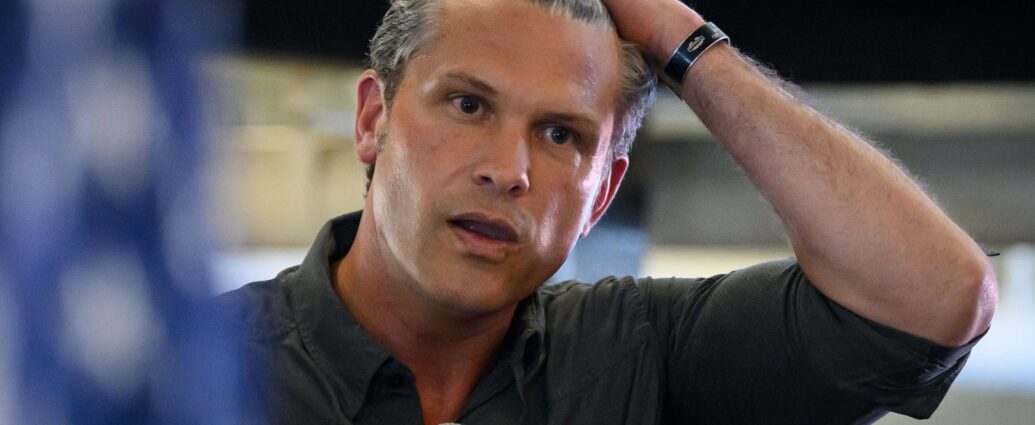
This story was originally featured on Fortune.com

This post was originally published here

David Cote has already had one career most executives would envy. As CEO of Fortune 500 industrial giant Honeywell, he spent 15 years engineering a revival that delivered shareholder returns 150% greater than the S&P 500. 

Now, after coming out of retirement, he is executive chairman of Vertiv, an 80-year-old cooling company whose market cap has surged from under $11 billion to $109 billion since going public, writes my colleague Shawn Tully.

His route to the top might look preordained from where he sits today, but it includes the kind of setback that could make an executive question whether they’ll ever be fit for the corner office.

Cote began his 25-year GE career as a night-shift worker at an aircraft engine plant in New Hampshire, eventually rising to run its appliance business. In 1999, then-CEO Jack Welch approached him in the company dining room and told him he wanted him out by year-end. Cote repeatedly asked what he had done wrong. He says Welch never answered.

Three years later, Cote was CEO of Honeywell. One of corporate America’s most celebrated CEOs had effectively told him he had no future at GE. Another major industrial company soon handed him its top job.

After 15 years at Honeywell, Cote retired in 2018. Retirement did not stick. Convinced he had another chapter in him, he teamed up with Goldman Sachs to hunt for a company to acquire. They considered more than 1,000 companies before choosing Vertiv, a struggling cooling business that was entirely new to Cote.

The choice proved prescient, but the payoff was anything but immediate. Cote saw digital data growing much faster than the data centers needed to support it and positioned Vertiv in the middle of that expansion.

Then the bet faltered. COVID hit three weeks after Vertiv’s NYSE debut, and a later surge in orders exposed that the company was underpricing its equipment by 20% to 30%. Profits cratered, and by early 2023 the stock had fallen roughly 55% from its previous high.

Cote became heavily involved in day-to-day management, and the board installed a new CEO. As Vertiv repaired its operations, it kept investing in direct-to-chip liquid cooling and acquired cooling startup CoolTera in late 2023. It ramped up production as demand from AI data centers took off.

There is an irony in Cote’s trajectory. Welch’s decision to push him out of GE looked like a judgment on his prospects. Vertiv’s early struggles threatened to derail his second act. In both cases, what looked like a defining setback proved temporary.

The same can be true when a career, company, or idea hits a wall. A bad outcome can tell you that something needs to change without telling you how high the person behind it can ultimately climb.

Read the full piece here.

Ruth Umoh
ruth.umoh@fortune.com

This story was originally featured on Fortune.com

This post was originally published here