In a boost for greater clinical trial transparency, the European Medicines Agency (EMA) is taking what consumer advocacy groups are calling unexpectedly “rapid action” to ensure that study results are made public as required by law.

The move comes after a recent analysis found results for less than half of the studies registered in a key European database were reported within the required time frame and complete results were fully reported for only 42%. The researchers contended that overall compliance with legal reporting requirements was weak and regulatory oversight is lacking.

This was the first analysis to examine the Clinical Trial Information System (CTIS) that was created in 2022 as part of an effort to enhance transparency across the European Union and the European Economic Area. The registry contains more than 8,400 mid- and late-stage trials and, in the coming months and years, sponsors will be legally required to make results public.


Continue to STAT+ to read the full story…

This post was originally published here. 

You’re reading the web edition of D.C. Diagnosis, STAT’s twice-weekly newsletter about the politics and policy of health and medicine. Sign up here to receive it in your inbox on Tuesdays and Thursdays.

In this announcement that HHS is on TikTok, Dr. Oz is represented by a stethoscope and RFK Jr. by a slab of red meat. Send news tips and your avatars to John.Wilkerson@statnews.com or John_Wilkerson.07 on Signal.

A flurry of health care bills

This is the last week that the House and Senate will be in session together until Sept. 14. Lawmakers are scrambling to get a lot done, including on health care. (Each chamber will be in session alone during a portion of that time.)

Continue to STAT+ to read the full story…

This post was originally published here. 

Molina’s second quarter was complicated, with stability in Medicaid and outperformance in Medicare Advantage overshadowed by problems in the ACA exchanges. The trend was “unfortunate,” according to the insurer’s CEO.

This post was originally published here. 

What does it take to develop a therapy for an ultra-rare disease? What are the allegations against a telehealth company that’s partnered with Novo Nordisk? And has a wanted fugitive been posing as a biotech executive?

We discuss all that and more on this week’s episode of “The Readout LOUD,” STAT’s biotech podcast. We speak with our colleagues Jason Mast and Matthew Herper about their impactful look at one father’s mission to develop a treatment for his daughter’s ultra-rare disease. The subject of that feature, Matt Wilsey, also joins us.

Read the rest…

This post was originally published here. 

Want to stay on top of the science and politics driving biotech today? Sign up to get our biotech newsletter in your inbox.

The FDA is weighing a politically charged decision on compounded peptides, Revolution Medicines is advancing a promising pancreatic cancer drug toward approval, and new evidence suggests Merck’s Ebola vaccine may help blunt the DRC’s Bundibugyo outbreak.

Read the rest…

This post was originally published here. 

Nearly 18 months after taking office, President Trump has nominated a leader for the federal agency that oversees mental health and addiction policy. 

If confirmed by the Senate, Timothy Westlake, a Wisconsin-based physician with decades of experience in both clinical and policy roles, would serve as assistant secretary of mental health and substance use. The position would also make him head of the Substance Abuse and Mental Health Services Administration, which has operated without a long-term leader since Trump was inaugurated in January 2025. 

Notably, the White House did not formally announce its pick for a key role overseeing an agency that controls billions of dollars in funding and regulates the practice of psychiatry and addiction medicine. Instead, it quietly included his name in a list of nominees sent to the Senate on July 14. By contrast, Trump announced former Fox News correspondent Sara Carter as his nominee for a related agency, the Office of National Drug Control Policy, in a post on Truth Social in March 2025. 

Continue to STAT+ to read the full story…

This post was originally published here. 

WASHINGTON — A Trump administration nominee to lead an agency focused on public health disasters had his confirmation vote postponed amid a lack of support just minutes before it was scheduled to take place, after he was lambasted during a confirmation hearing last week for his past anti-vaccine statements.

Sean Kaufman, the nominee for assistant secretary for preparedness and response (ASPR), faced tough questions during last week’s hearing after STAT reported that he made a number of comments questioning the safety of vaccines. 

The Senate health committee was supposed to vote on approving his nomination and sending it to the full Senate floor on Thursday morning alongside Erica Schwartz,, who is nominated to be director of the Centers for Disease Control and Prevention. 

Continue to STAT+ to read the full story…

This post was originally published here. 

Brian Manning, who previously worked at health tech companies like Bamboo Health and Zocdoc, replaces the AI company’s co-founder and former CEO Alex LeBrun.

This post was originally published here. 

Top of the morning to you, and a fine one it is. Sunny skies and mild breezes are enveloping the Pharmalot campus once again, making it possible for the official mascots to eat breakfast on the deck and take long naps. As for us, we are firing up the coffee kettle to make another cup of stimulation. Our choice today is hot buttered rum, an old standby. Please feel free to join us. Meanwhile, here is the latest menu of tidbits to help you on your journey. We hope you have a meaningful and productive day and, of course, do stay in touch. …

Eli Lilly reported more results showing its next-generation obesity drug is highly effective at weight loss, but data from the study, focused on people with heart disease, are not enough to answer a critical question — whether it reduces cardiovascular risk, STAT points out. The Phase 3 study enrolled nearly 2,000 people with severe obesity and heart disease, with or without diabetes. Those on the highest dose of the drug, called retatrutide, lost 22.6% of their weight after 80 weeks, while those on placebo lost 3.2%, when analyzing only participants who stayed on treatment. However, on prespecified analyses that looked at the occurrence of major cardiovascular events such as death, heart attack, or stroke, those taking retatrutide did not have a statistically significant lower risk of major events than those on placebo. 

Many patients have opted for injectable forms of the popular GLP-1 obesity medications through a pilot program of the U.S. government’s Medicare health ​insurance program for Americans aged 65 and older, Reuters says. The U.S. Centers for Medicare & Medicaid Services this month ‌launched an 18-month trial program that for the first time opens access to Novo Nordisk’s Wegovy and Eli Lilly’s Foundayo and Zepbound as weight loss treatment alone for a monthly cost of $50. Millions of people are expected to qualify, and doctors are being flooded with interest from patients. Many pharmaceutical industry experts had expected that patients would ​prefer pills over injections, for convenience, but 8 of 10 doctors interviewed and three pharma sector analysts said many are opting ⁠for injectables.

Continue to STAT+ to read the full story…

This post was originally published here. 

A leading advocacy group petitioned the U.S. Food and Drug Administration to ban direct-to-consumer advertising of prescription medicines, a move that comes as the Trump administration leans on drugmakers to provide more balanced information in their ads.

In arguing its case, Public Citizen maintained that director-to-consumer, or DTC, ads often “mislead consumers because they are designed to persuade rather than to inform or educate patients.” The ads sometimes “employ emotional manipulation techniques or visual distractions to highlight information about benefits” while minimizing risks.

The advocacy group hopes to persuade the FDA after the Trump administration last September announced a “crackdown” on what it called deceptive drug advertising. At the time, the administration disclosed plans for new rules and stronger enforcement, which was followed by dozens of letters sent to companies regarding problems with their ads.

Continue to STAT+ to read the full story…

This post was originally published here. 

You’re reading the web edition of STAT’s Health Tech newsletter, our guide to how technology is transforming the life sciences. Sign up to get it delivered in your inbox every Tuesday and Thursday.

The White House and the Department of Health and Human Services will convene experts to discuss the benchmarking and evaluation of clinical artificial intelligence with the goal of arriving at “a consensus set of principles,” according to an invitation to participate that I reviewed. 

The invitation from the White House’s Office of Science and Technology Policy, the Food and Drug Administration, and the Office of the National Coordinator for Health Information Technology, describes a one-month “sprint” broken into a written phase and a discussion phase. 

Continue to STAT+ to read the full story…

This post was originally published here. 

Get your daily dose of health and medicine every weekday with STAT’s free newsletter Morning Rounds. Sign up here.

Good morning. We’re almost through the week. But first, we’ve got two days of an FDA peptides panel to get through. Scroll all the way down for a preview. 

Read the rest…

This post was originally published here. 

Eli Lilly reported more results Thursday showing that its next-generation obesity drug is highly efficacious at weight loss, but the data from the study, focused on people with heart disease, aren’t enough to answer a critical question about the therapy — whether it reduces cardiovascular risk.

The Phase 3 study enrolled nearly 2,000 people with severe obesity and heart disease, with or without diabetes. Those on the highest dose of the drug, called retatrutide, lost 22.6% of their weight after 80 weeks, while those on placebo lost 3.2%, when analyzing only the participants who stayed on treatment.

However, on secondary endpoints that looked at the occurrence of major cardiovascular events such as death, heart attack, or stroke, those taking retatrutide did not have a statistically significant lower risk of major events than those on placebo. Lilly said the trial was not powered to study cardiovascular outcomes and there were fewer heart events than anticipated.

Continue to STAT+ to read the full story…

This post was originally published here. 

The Men’s Health Act, a bipartisan bill to establish an office of men’s health within the Department of Health and Human Services, will be introduced in the U.S. Senate on Thursday by Ruben Gallego (D-Ariz.), with co-sponsorship from Roger Marshall (R-Kan.).

Mirroring the bipartisan bill that was introduced in the House this year, the measure would require a study from the Government Accountability Office on the state of men’s health in the U.S. to be presented within a year of the law’s enactment. Following the report, and incorporating its findings, the office would coordinate existing and new research and raise awareness about men’s health, both physical and mental. 

Read the rest…

This post was originally published here. 

As more Americans experiment with synthetic peptides despite warnings about their unproven benefits and potential risks, an advisory panel to the Food and Drug Administration will meet on Thursday and Friday to discuss changes that could make peptides more accessible. 

At issue is whether to allow compounding pharmacies to manufacture seven peptides that are currently designated as unsafe for them to make. The panel discussion is expected to be unusual in more ways than one. 

First, many of the newly appointed members on the panel hold what critics (including FDA staff) say are conflicts of interest. The panel roster includes several physicians who prescribe peptides to patients as well as pharmacist and Tennessee state Sen. Bobby Harshbarger, whose mother, U.S. Rep. Diana Harshbarger (R-Tenn.) has advocated for looser peptide regulations. Many of these panelists were selected by the Health and Human Services Department, FDA officials previously told STAT. 

Continue to STAT+ to read the full story…

This post was originally published here. 

A change is coming to the codes OB-GYNs use to bill for maternity care services: Starting Jan. 1, 2027, we will shift from a bundled “global obstetric payment” to a fee-for-service model. This change impacts almost every U.S. family with a pregnancy. Under the current system, families receive a bill that does not distinguish the actual prenatal and postpartum costs from labor and delivery, which makes things incredibly confusing for patients.

In fact, the bundled payment’s impacts have been widespread: It has complicated billing for patients and clinicians, limited access to care, cut back the ability to provide patients with more personalized care, and slowed progress in better understanding U.S. maternal health outcomes.

Read the rest…

This post was originally published here. 

The approach to paying obstetricians and midwives is changing. These changes will likely raise the cost of childbirth, with no guarantee of better maternity outcomes.

The American Medical Association (AMA), at the recommendation of the American College of Obstetrics and Gynecology, will eliminate the global payment codes for deliveries used by obstetricians and midwives at the end of this year. The AMA will replace these global fees, where health plans paid for professional services based on a single bill after delivery, with fee-for-service, or pay-as-you-go, codes for prenatal and postpartum visits, fetal monitoring, and various procedures.

Read the rest…

This post was originally published here. 

STAT is co-publishing this article by The War Horse, an award-winning nonprofit news organization educating the public on military service and veterans.

When the Covid-19 vaccine was released in 2020, Daniel Pendergast was intrigued.

“I honestly thought it sounded kind of ingenious at first,” he said.

Continue to STAT+ to read the full story…

This post was originally published here. 

You’re reading the web edition of STAT’s AI Prognosis newsletter, our subscriber-exclusive guide to artificial intelligence in health care and medicine. Sign up to get it delivered in your inbox every Wednesday. 

Every time I interview someone from an AI scribe company, I ask if it’s OK to record the interview for my notes and make a joke about the ironic situation.

Turns out, not everyone is asking, and people have started to record their daily conversations, such as first dates, without asking. “This Conversation is Being Recorded. They All Are” is the Wall Street Journal’s headline. What a hellscape.

Continue to STAT+ to read the full story…

This post was originally published here. 

New data from a study in humans provides additional support to the idea that Merck’s Ebola vaccine Ervebo, licensed to target the Zaire species of ebolaviruses, could also offer some protection against another species currently circulating in a rapidly expanding outbreak in the Democratic Republic of the Congo.

The new paper, published Wednesday in the New England Journal of Medicine after previously having been posted online before peer review, is one of a growing number of studies pointing to the possibility that the vaccine could be used to target the Bundibugyo species of ebolaviruses. 

Read the rest…

This post was originally published here. 

BUNIA, Congo — More than 1,000 people have died in the Ebola outbreak in Congo, according to Africa’s top health body, a grim toll in the fastest Ebola outbreak in history, as conflict, community resistance and an uneven response fuel its spread.

Speaking at a health summit in Ghana on Wednesday, Dr. Jean Kaseya, director-general of the Africa Centres for Disease Control and Prevention, said 1,031 deaths have been confirmed.

Read the rest…

This post was originally published here. 

The new proposed rule is meant to prevent states from guaranteeing providers will be refunded for their taxes, and should save Washington $246 billion over the next decade, regulators said.

This post was originally published here. 

Argentina taught me a lesson about hospitals this summer.

Four years ago, Argentina won the World Cup with a solid team led by Lionel Messi. Messi provided extraordinary talent, but the championship was also built on cohesion, discipline, sacrifice, and players who seemed to understand exactly what they owed to one another. It was a truly well-oiled machine with a genius brain.

Read the rest…

This post was originally published here. 

Want to stay on top of the science and politics driving biotech today? Sign up to get our biotech newsletter in your inbox.

Good morning. All my social media feeds have been filled with Jimothy the raccoon, and I hope your feeds now will be too.

The need-to-know this morning

  • Celldex Therapeutics said its experimental drug barzolvolimab failed in a Phase 2 study in the skin condition prurigo nodularis, sending its shares down in premarket trading. The company is continuing to test the drug in a number of other indications, with data expected in September or October from Phase 3 trials in chronic spontaneous urticaria, which causes chronic hives. 
  • Summit Therapeutics released updated survival data from its Phase 3 HARMONi trial testing the drug ivonescimab in a form of non-small cell lung cancer. The FDA is set to make an approval decision on the drug in the disease by Nov. 14.  

Pharma tries to tamp down broad China restrictions

From STAT’s Daniel Payne: Pharmaceutical leaders are trying to convince policymakers to back off pushes for aggressive restrictions on investments in Chinese firms.

Continue to STAT+ to read the full story…

This post was originally published here. 

Good morning, everyone, and welcome to the middle of the week. Congratulations on making it this far, and remember there are only a few more days until the weekend arrives. So keep plugging away. After all, what are the alternatives? While you ponder the possibilities, we invite you to join us for a needed cup of stimulation. Our choice today is blueberry cobbler, one of our pantry favorites. Meanwhile, here are a few items of interest to help you on your way. We hope you conquer the world and have a wonderful day. And as always, please do stay in touch. …

President Trump plans to impose tariffs on imported generic medicines, his latest threat aimed at bringing pharmaceutical manufacturing back to the U.S., The New York Times points out. The planned levy will start at 100% in August 2028, Trump said in a social media post. He said it would rise to 200% in August 2029, months after the end of his second term. He has repeatedly threatened steep tariffs on imported pharmaceuticals but has not followed through on imposing them. Doctors and supply chain experts have been sharply critical of the idea of taxing imported generics, saying it threatened to raise costs, spur rationing and lead to shortages of crucial drugs. Until now, the administration had said that generic drugs would be exempted from tariffs.

Meanwhile, Trump’s plan to impose steep tariffs on generic medicines has unsettled Indian drugmakers and put the spotlight on their strategy in their biggest export market, Bloomberg News tells us. Indian drugmakers are the largest source of generic therapies for the U.S. In 2024, medicines from India accounted for more than half of all prescriptions for birth control, antidepressants, and hypertension treatments. India, often dubbed the “pharmacy of the world,” also hosts the highest number of manufacturing plants approved by the U.S. Food and Drug Administration outside the U.S.

Continue to STAT+ to read the full story…

This post was originally published here. 

Want to stay on top of the science and politics driving biotech today? Sign up to get our biotech newsletter in your inbox.

Good morning. I admit that I didn’t finish rereading “The Odyssey” before I saw the movie last weekend, but it’s never too late. For now, scroll down to read a related First Opinion essay and to sign up for office hours with Bob Herman, STAT’s own Homeric chronicler of the business of health care.

Read the rest…

This post was originally published here. 

Europeans can now receive a device that can partially restore their vision loss. Americans may not have to wait long to get it, either.

Science Corporation announced Wednesday that European regulators had approved the commercial sale of the startup’s retinal implant that improves eyesight for patients with age-related macular degeneration in their central vision, enough to read books and road signs more clearly. 

“We have a cochlear implant for vision now,” said Science founder and CEO Max Hodak.

Continue to STAT+ to read the full story…

This post was originally published here. 

Dozens of researchers funded by the federal Agency for Healthcare Research and Quality received notices last week that they would not receive future installments of funding for their ongoing research grants. While frustrating, the development was largely not a surprise to these researchers, many of whom had been waiting months for renewed funding or been unable to get explanations as to why the funding spigots had run dry from staffers at the agency. 

The notices punctuated nearly a year of uncertainty for health services researchers funded by AHRQ and left those who lost funding concerned about the future of their field. AcademyHealth, a professional organization representing health services researchers, has confirmed at least 78 grants worth $200 million have been affected. In all, those grants had $109.2 million in funding remaining, it  estimated.

Grant recipients were told in a letter of “non-award” that “AHRQ is adjusting its discretionary health services research award portfolio in order to better prioritize agency resources towards the above-mentioned priorities to best serve the interests of the Federal Government,” according to one such letter reviewed by STAT. The letter states the agency is prioritizing research on patient safety, antibiotic resistance, AI, long Covid, nutrition, and understanding autism, among others. 

Continue to STAT+ to read the full story…

This post was originally published here. 

A long-awaited moment in preventive cardiology arrived last week, when enlicitide (which Merck is selling under the name Lipfendra) was approved by the FDA to lower blood cholesterol levels.

As the first oral PCSK9 inhibitor — powerful cholesterol-lowering medications, that, until now, have only been injectable — enlicitide itself is an impressive achievement. It punctuates a story of pharmaceutical innovation that has glided from the stories of families enrolled in the Dallas Heart Study at the bedside, to drug targets discovered at the lab bench, all ultimately transforming care back at the bedside.

It also comes at an opportune time. With new clinical guidelines supporting a more aggressive approach to lowering cholesterol levels, enlicitide may be particularly useful for people with either established or at high risk for cardiovascular disease. For the millions of Americans who fit into these groups, it has already been hailed as a game changer. But the story here — of whom it would actually help, and what it implies about prevention today — is more complicated.

Continue to STAT+ to read the full story…

This post was originally published here. 

Walk into almost any U.S. hospital today and you will find AI doing some of the important work of medicine: drafting clinical notes, flagging sepsis, screening imaging, conducting prior authorizations, and answering patient messages. Adoption is moving fast, and the benefits are real.

But there’s a problem. Most health systems are monitoring the safety and performance of these tools the same way they govern a new MRI scanner in 2010: a subcommittee, a checklist, a quarterly meeting, an approval or a rejection. The process could take six months or longer.

That approach was already strained for older digital tools. For AI, it is dangerously inadequate, and the responsibility for fixing it rests not with IT, but with senior leadership.

Continue to STAT+ to read the full story…

This post was originally published here. 

LĀHAINĀ, Hawai‘i — About once a month, Alika Maunakea and Ruben Juarez and their staff fly medical equipment from the University of Hawai‘i on O‘ahu to the west side of Maui. On the edge of the Lāhainā burn zone, the two researchers transform the local health center into an impromptu lab. They collect blood, urine, DNA, and health measures like mental health and lung function scores for the Maui Wildfire Exposure Study or MauiWES, one of the largest and most comprehensive postfire investigations in the country.

Scientists still understand little about how wildfire exposure harms health, particularly wildland and urban ones like the fires that burned down Lāhainā and thousands of acres on Maui in August 2023. The hope is that data collected over the decade after the fire will show how to better mitigate the risk of cancers, lung diseases, or other health conditions that have been linked to fire exposure. It’s also knowledge that’s urgently needed, as the threat of wildfire is growing throughout Western states and beyond.

Read the rest…

This post was originally published here. 

An increasing number of adults are slogging through jobs they don’t like solely because they don’t want to lose their health insurance.

This phenomenon — known as “job lock” — has existed in the U.S. workforce for decades. The worry of losing health benefits inhibits the ability for people, especially those with more health problems or complex conditions, to switch jobs or careers. Economists have also said job lock prevents people from starting their own businesses. 

Almost a quarter of all U.S. workers say they want to leave their current job but won’t because they want to keep their health benefits, according to a new survey of more than 2,000 employed people from Gallup and West Health. That’s up significantly from 16% in 2021, the last time Gallup measured job lock among working adults.

Continue to STAT+ to read the full story…

This post was originally published here. 

The Trump administration on Tuesday said it was deferring more than $1 billion in Medicaid payments to Minnesota and California because of “suspected fraud and noncompliance,” the latest in a series of punitive steps it has linked to allegations of fraud in mostly Democratic-led states.

Health Secretary Robert F. Kennedy Jr. said the new actions — which come after previously announced Medicaid funding deferrals in those states — are part of the administration’s strategy to “stop the fraud before it happens” rather than claw back problematic spending after bad actors are prosecuted, as previous administrations had done.

Read the rest…

This post was originally published here. 

You’re reading the web edition of D.C. Diagnosis, STAT’s twice-weekly newsletter about the politics and policy of health and medicine. Sign up here to receive it in your inbox on Tuesdays and Thursdays.

“You best step back before I bust a smack, yak!” That’s not what RFK Jr. said before fending off a shaggy beast with a phone thump to the nose, but it would’ve been cooler if he did. Send news tips and missed opportunities to John.Wilkerson@statnews.com or John_Wilkerson.07 on Signal.

Messaging wars: affordability vs. fraud

Rising out-of-pocket health care costs remain voters’ top health priority overall, but Republicans are more worried about fraud in government health programs, according to a KFF poll.

Continue to STAT+ to read the full story…

This post was originally published here. 

The past week has brought us two similar ideas of masculinity, separated by 4,000 years. When Defense Secretary Pete Hegseth announced the initiation of testosterone screening in all U.S. servicemembers 30 and older under the title “The High T Department of War,” his vision was as clear as an IMAX projection of Odysseus: a warrior in his physical prime, lethal in battle, unquestionably ascendant in the home, anointed by god.

Both of these men, the classical hero and the optimized modern soldier, are fantasies. But I’m worried Hegseth’s vision is a tragedy in the making

Read the rest…

This post was originally published here. 

WASHINGTON — Community-based groups that provide HIV testing and prevention tools are pushing federal health officials to renew a crucial funding program that recently lapsed. 

If the funding isn’t renewed, expanded access to HIV preventive care would be in jeopardy, and some groups may be forced to close, Jeremiah Johnson, executive director of advocacy group PrEP4All told STAT.

“We’ve heard from some CBOs [community-based organizations] that they won’t survive the cuts,” he said. 

Continue to STAT+ to read the full story…

This post was originally published here. 

Want to stay on top of the science and politics driving biotech today? Sign up to get our biotech newsletter in your inbox.

Good morning. We’re sending the newsletter a bit earlier today to get you some news out of federal court.

The need-to-know this morning

  • Novartis reported second-quarter earnings and reaffirmed its 2026 guidance. 
  • Agios Pharmaceuticals is discontinuing the development of a next-generation drug called tebapivat for sickle cell disease. A Phase 2 study did not establish a “differentiated profile to support continued development,” the company said.

Novo sues Lilly as GLP-1 fight escalates

Novo Nordisk this morning sued Eli Lilly for allegedly running a “deceptive” ad campaign that uses “outdated clinical trials” to make its obesity and diabetes drugs appear more effective.

Continue to STAT+ to read the full story…

This post was originally published here. 

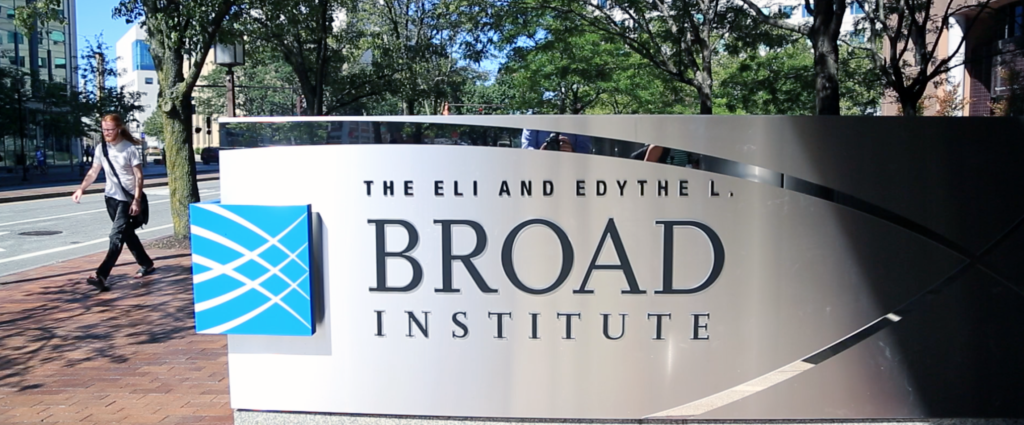
The Broad Institute, Boston Children’s Hospital, and Maine’s Jackson Laboratory announced a collaboration Tuesday to develop gene therapies for people with rare diseases and to make the life-saving therapies cheaper and more accessible to patients.

With relatively few gene therapies on the market, families of children with rare genetic disorders have few options but to partner individually with researchers and raise millions of dollars to develop treatments for their conditions.

The newly formed non-profit Center for Therapeutic Genetics will create precision medicines and share those methods, data, and training with other clinicians so they can do the same. The goal is to make these personalized treatments more like clinical procedures, such as organ transplants, so doctors don’t have to seek separate regulatory approvals for each use, said Winston Yan, founding director of the new center.

Continue to STAT+ to read the full story…

This post was originally published here. 

Rise and shine, everyone, another busy day is on the way. Sadly, gray skies are hovering over the Pharmalot campus again, but our spirits remain sunny, nonetheless. Why? We recall a bit of insight from the Morning Mayor, who taught us, “Every day should be unwrapped like a precious gift.” To celebrate the notion, we are firing up the trusty tea kettle for a cuppa ginger peach and invite you to join us. Meanwhile, here are a few items of interest. Hope you have a meaningful and productive day and, of course, do stay in touch. …

Novo Nordisk sued Eli Lilly for allegedly running a “deceptive” ad campaign that uses “outdated clinical trials” to make its obesity and diabetes drugs appear more effective, marking a new phase in one of the pharmaceutical industry’s most intense rivalries, STAT tells us. In a lawsuit filed in federal court in New Jersey, Novo argued that Lilly has been comparing the highest doses of its weight loss drug Zepbound and diabetes drug Mounjaro with lower doses of Novo’s Wegovy and Ozempic. Novo claimed Lilly’s ads, which have been broadcast nationally and been disseminated on social media platforms like TikTok and Facebook, are “causing irreparable harm.”

Biotech companies are lobbying the Trump administration to exclude treatments for rare diseases from programs that lower brand drug prices in Medicare, STAT reports. The Rare Disease Company Coalition met last week with the White House Office of Management and Budget to discuss two pilot programs that are part of President Trump’s plan to get drugmakers to lower prices in the U.S. to levels charged in other rich countries, a policy generally referred to as most-favored nation. The OMB is reviewing both pilots: the Guarding U.S. Medicare Against Rising Drug Costs, or GUARD, Model, which would apply to Part D retail drugs, and the  Global Benchmark for Efficient Drug Pricing, or GLOBE, Model, which would apply to physician-administered drugs in Part B. 

Continue to STAT+ to read the full story…

This post was originally published here. 

Get your daily dose of health and medicine every weekday with STAT’s free newsletter Morning Rounds. Sign up here.

Good morning. Sending thoughts and prayers to all the bagged salad girlies out there. For news, don’t miss Sarah Todd’s great story on THC beverages, which was spurred by a colleague’s rant in one of our regular team meetings. 

Read the rest…

This post was originally published here. 

Novo Nordisk on Tuesday sued Eli Lilly for allegedly running a “deceptive” ad campaign that uses “outdated clinical trials” to make its obesity and diabetes drugs appear more effective, marking a new phase in one of the pharmaceutical industry’s most intense rivalries.

In a lawsuit filed in federal court in New Jersey, Novo argued that Lilly has been comparing the highest doses of its weight loss drug Zepbound and diabetes drug Mounjaro with lower doses of Novo’s Wegovy and Ozempic.

“What has brought us to this moment is what we now see as a nationwide pattern, by Lilly, of deceptive advertising. They are intentionally confusing consumers,” John Kuckelman, Novo’s general counsel and senior vice president, said in an interview.

Continue to STAT+ to read the full story…

This post was originally published here. 

Nabla, the Paris-based maker of ambient scribes used to automate clinical documentation, says it’s playing the long game. On Tuesday the company announced a new leader and reiterated its commitment to fundamentally new AI technology it believes can help it beat the competition.

The company, which last raised a $70 million Series B last summer, announced a new CEO, Brian Manning, who has served as chief revenue officer at care coordination software company PatientPing and its acquirer, Bamboo Health, before taking over as Bamboo’s president. The shift “marks the next phase of Nabla’s go-to-market strategy,” the company wrote in a press release.

“We really haven’t built our brand in the United States. We really haven’t accelerated our go-to-market in line with what others are doing. And as we look towards 2027, that’s something we’re absolutely going to be doing,” Manning said in an interview with STAT. Chief operating officer Delphine Groll said that 100% of the company’s revenue is from the U.S.

Continue to STAT+ to read the full story…

This post was originally published here.