Want to stay on top of the science and politics driving biotech today? Sign up to get our biotech newsletter in your inbox.

We’re leaving room for popcorn and intrigue tonight: The new A24 documentary, “You Can See Everything,” hits theaters today.

I remember back at the American Chemical Society meeting in 2016, a skeptical pathologist told me in advance of a purported Theranos data unveil: 

Continue to STAT+ to read the full story…

This post was originally published here. 

Get your daily dose of health and medicine every weekday with STAT’s free newsletter Morning Rounds. Sign up here.

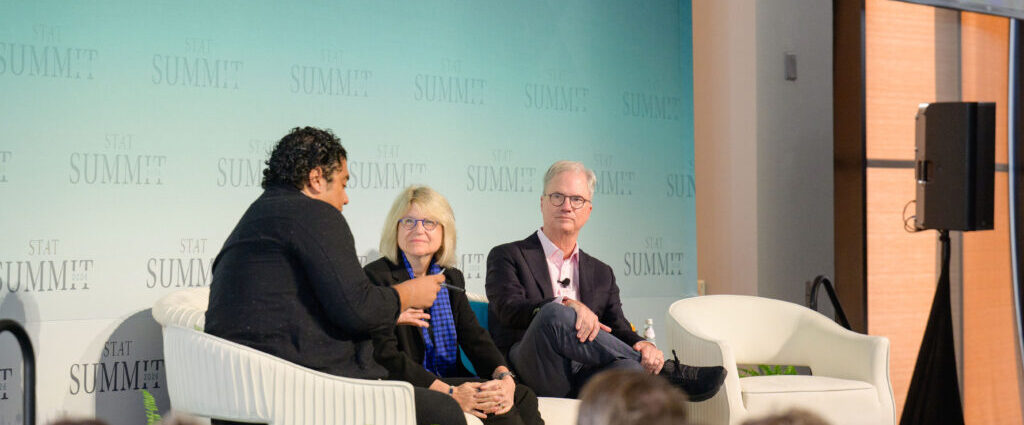
Happy Friday from sunny San Diego. This is Jonathan Wosen, West Coast biotech & life sciences reporter. We’ve got a strong lineup to help you kick off the weekend, featuring the lively final day of our STAT Summit, a pharmacist’s insights into why patients sometimes stop taking medication, and a recap of the highlights (or, depending on your perspective, lowlights) of STAT’s coverage of Elizabeth Holmes, for those looking to refresh their memory before watching a newly released documentary of the former Silicon Valley wunderkind’s fall from grace.

Read the rest…

This post was originally published here. 

Was world-renowned molecular biologist David Sabatini a manipulative mentor who coerced a younger colleague into sex and cultivated a hostile work culture at his research lab in Cambridge? Or was he the victim of a spurned former lover and a #MeToo movement gone too far?

A dozen jurors in Boston are weighing these starkly opposing interpretations following a bruising, three-week civil trial that exposed the intense power dynamics and permissive sexual norms inside the world-famous Whitehead Institute, where Sabatini ran his own laboratory. Standing between the jury and a verdict are scores of hours of conflicting testimony, bitter recriminations, and a vast trove of unfiltered texts exchanged by two brilliant scientists.

The yearslong feud offers a rare window into the insular world of top-tier science labs, where directors wield outsized authority. It also highlights a broader challenge confronting modern workplaces: How to maintain professional boundaries within close-knit, diverse teams as behavioral standards evolve.

Continue to STAT+ to read the full story…

This post was originally published here. 

WASHINGTON — Changes to the annual performance review process are the latest flashpoint in tensions between federal workers across the Department of Health and Human Services and the Trump administration, federal employees told STAT. 

Staff have been told to submit 6,000-character self-assessments of their performance by Friday, a task officials say is necessary because of administration guidance to “calibrate” employee rankings to make a high rating more meaningful and to promote “more consistent and credible ratings across agencies.” 

But federal health workers, traumatized by DOGE-era layoffs and continued departures, regard the assignment with suspicion. 

Continue to STAT+ to read the full story…

This post was originally published here. 

Welcome to Friendly Argument, a new STAT First Opinion series in which two experts who disagree but respect each other’s point of view engage in a debate about medicine and health policy. In this installment, John E. McDonough, author of the new book “America’s Wrong Turn: U.S. Healthcare in the Neoliberal Era,” discusses the roots of U.S. health care dysfunction with Stuart Butler, a scholar in residence in economic studies at the Brookings Institution. Their discussion was held on Zoom.

Below is a lightly edited, AI-generated transcript.

Read the rest…

This post was originally published here. 

During my years as a clinical pharmacist, I thought I understood why patients stopped taking long-term medications — one of the biggest challenges in medicine. They forgot to take them, became frustrated with side effects, or didn’t fully understand their conditions. But over time, my clinical experience showed me that these explanations only told part of the story.

I first noticed this pattern across very different medical specialties. In psychiatry, I saw patients with schizophrenia experience psychotic episodes after stopping their antipsychotics. Patients who abruptly discontinued their antidepressants often suffered withdrawal symptoms. Later, when I worked in a kidney transplant center, I encountered a surprisingly similar situation when patients stopped taking one or more of their immunosuppressants and developed acute rejection of their new kidneys. Colleagues in cardiology, primary care, and other specialties described similar experiences.

Read the rest…

This post was originally published here. 

After public school teacher Gary Keblish was diagnosed with melanoma in 2019, a surgeon cut out the tumor. But he wasn’t out of the woods. In some patients, melanoma aggressively recurs after surgery, so his doctors referred him to a new trial: For Merck and Moderna’s personalized mRNA cancer vaccine. 

Speaking by video at the STAT Summit on Thursday, Keblish compared the journey — in all its physical and emotional turbulence — to a trip on Ms. Frizzle’s Magic School Bus. “Seatbelts, everyone!,” he said, quoting the iconic line.

Read the rest…

This post was originally published here. 

Rep. Jake Auchincloss (D-Mass.) has some advice for fellow lawmakers: unapologetically support the biotech industry, vilify insurance companies, and focus on making America a biotech research haven, instead of relying on protectionism.

Right now in Washington, it’s popular to support protectionist policies against China in industries like tech. China is rapidly gaining on the U.S. biotechnology industry, and there is bipartisan support to extend those protections to the biotech sector. 

Read the rest…

This post was originally published here. 

Joining forces could give the two Chicagoland systems a leg up in the region’s fragmented and competitive hospital market — if regulators approve.

This post was originally published here. 

It’s Zocdoc’s first acquisition in its nearly 20-year history as the online medical scheduling company works to scale its business. Sohar already provides insurance eligibility checks within Zocdoc’s appointment scheduling platform.

This post was originally published here. 

When drugmakers Merck and Moderna announced promising results in August from a late-stage trial of adding an mRNA cancer vaccine to immunotherapy, it was heralded as potentially powerful new way of fighting tumors. But the data don’t show what such a treatment can mean for an individual patient.

At the STAT Summit in Boston on Thursday, a patient in the clinical trial for the treatment, intismeran autogene, told his story virtually. Gary Keblish, a schoolteacher, was diagnosed with melanoma and felt lucky to be in the trial for intismeran and to be in the treatment arm.

Read the rest…

This post was originally published here. 

Want to stay on top of the science and politics driving biotech today? Sign up to get our biotech newsletter in your inbox.

I, too, wanted to express how devastated I am over losing our colleague Helen Branswell.  She was kind, scrupulous, brilliant, and truly inspiring in action. Thank you, Helen. 

The need-to-know this morning

  • Privately held U.K. biotech OMass Therapeutics raised $310 million to support the clinical development of a drug to treat congenital adrenal hyperplasia, an inherited endocrine disorder. 
  • The investment firm Orbimed raised nearly $3 billion for two, new private equity funds that will invest in U.S, European and Asian health care companies. 

Investor: China’s biotech boom threatens U.S. venture capital

From STAT’s Allison DeAngelis: The rise of Chinese biotech isn’t just impacting U.S. companies, one investor is warning. It’s threatening VC firms.

Continue to STAT+ to read the full story…

This post was originally published here. 

You’re reading the web edition of D.C. Diagnosis, STAT’s twice-weekly newsletter about the politics and policy of health and medicine. Sign up here to receive it in your inbox on Tuesdays and Thursdays.

It’s the last day of the STAT Summit. If you’re not attending in-person, you can still register to watch. Send news tips and what you learn today to John.Wilkerson@statnews.com or John_Wilkerson.07 on Signal.

The need-to-know at STAT Summit

  • Rep. Jake Auchincloss (D-Mass.) will discuss how Congress should protect biotech innovation, defend U.S. drugmakers against China, and stabilize the FDA.

  • Hear from a whistleblower who is pushing employers to take on health insurers.

  • Three top investors will discuss AI and the rise of China’s biotech industry.

  • An executive who was saved by a cystic fibrosis breakthrough and an expert in drug-pricing policy search together for solutions to the problem of costly drugs.

STAT’s Helen Branswell dies at 69

Helen Branswell, STAT’s renowned infectious disease reporter, died Tuesday of complications from cancer.

Continue to STAT+ to read the full story…

This post was originally published here. 

You’re reading the web edition of STAT’s Health Tech newsletter, our guide to how technology is transforming the life sciences. Sign up to get it delivered in your inbox every Tuesday and Thursday.

Good morning health tech readers!

Day two of the STAT Summit is just kicking off as this newsletter lands in inboxes.

Continue to STAT+ to read the full story…

This post was originally published here. 

Top of the morning to you. And a fine one it is. Lots of sunshine and clear blue skies are greeting us as we prepare for another day on the road, which means we are as busy as ever hunting and gathering items of interest, as well as an acceptable cup of stimulation. We can be fussy, you know. So while we roam the streets, you can enjoy the latest menu of interesting items assembled below. Hope you have a grand day and do stay in touch — but only real people, please, no AI bots. …

Three former U.S. Food and Drug Administration chiefs lit into the Trump administration, criticizing the now former FDA officials who oversaw a massive staff exodus and saying they robbed the agency of institutional knowledge that will take years to restore, STAT reports. “DOGE will go down as one of the biggest disasters in American history,” said Robert Califf, who was FDA commissioner under Presidents Obama and Biden. The DOGE cuts of 3,500 workers preceded a larger staff exodus under the tumultuous leadership of former FDA Commissioner Marty Makary, who resigned in May.

The Trump administration is delaying by 90 days a federal rule that could prevent Americans from obtaining prescription drugs from licensed international pharmacies, STAT writes. The move follows growing criticism that the rule, which was initially slated to go into effect on Oct. 22, could drastically reduce the flow of medicines from Canada and other countries. In recent weeks, patient advocacy groups and dozens of congressional lawmakers urged the administration to rethink its approach. The administration is trying to crack down on illegal goods — particularly opioids — that it says enter the U.S. through low-value foreign shipments and for which shippers generally do not pay tariffs or submit data for tracking.

Continue to STAT+ to read the full story…

This post was originally published here. 

This story first appeared in Adam’s Biotech Scorecard, a STAT newsletter. Sign up here to get it delivered to your inbox. And subscribe to STAT+ to get an unabridged version, with exclusive content.

Biotech investors were happy with the way the year was turning out. Then summer ended, and now, they are glum.

The XBI is still up 24%, although it’s down 11% from the August high. The retreat doesn’t look that alarming relative to the depths of the biotech winter experienced in early 2025. The real trouble, and the reason for investor angst, lies below the surface of the XBI’s performance.

Continue to STAT+ to read the full story…

This post was originally published here. 

About 40% of high school students reported binge eating in the past month in a large new government survey, putting a spotlight on how widespread this common form of disordered eating is among young people in the U.S. 

This is the first time the biennial survey, conducted by the Centers for Disease Control and Prevention, has asked about binge eating, and the first data on disordered eating collected by the Youth Risk Behavior Survey in a decade. Among its other striking findings: 17% of nearly 7,000 students said they had engaged in binge eating within the last three days.  “It was extremely alarming seeing how high those numbers were,” said Ariel Beccia, a researcher in the adolescent and children’s medicine division of Boston Children’s Hospital. 

Read the rest…

This post was originally published here. 

I have spent my career studying nurses and why that workforce so often fails the people it is meant to serve. But my understanding of the system changed deeply the day my daughter died.

She was 21 years old. She had intellectual and developmental disabilities and had just moved into a group home in New Jersey. Within 48 hours, she was gone. Her caregivers accidentally gave her too much medicine.

Read the rest…

This post was originally published here. 

The CEO of Compass Pathways said Wednesday that the company, which is preparing to complete the submission of its psychedelic therapy for regulatory review this quarter, will “go slow before we go fast,” warning that negative patient or provider experiences early in the launch could damage the broader sector.

As the psychedelics field races toward its first potential approval by the Food and Drug Administration, the executive, Kabir Nath, underscored that a cautious rollout would be essential. But he also said the mental health field was on the brink of a major change. 

Read the rest…

This post was originally published here. 

BOSTON — Three former Food and Drug Administration chiefs lit into the Trump administration Wednesday, criticizing the now former FDA officials who oversaw a massive staffing exodus and robbed the agency of institutional knowledge that will take years to restore.

“DOGE will go down as one of the biggest disasters in American history,” Rob Califf, former FDA commissioner under Presidents Obama and Biden, said during the STAT Summit, referring to the Elon Musk-led initiative that conducted mass layoffs of government employees. The DOGE cuts of 3,500 workers preceded a larger staff exodus under the tumultuous leadership of former FDA Commissioner Marty Makary, who resigned in May. White House official Heidi Overton has since been nominated to replace Makary, though she has yet to face a Senate confirmation vote. 

Read the rest…

This post was originally published here. 

BOSTON — This fall, the Massachusetts Institute of Technology, where 95% of students are STEM majors, enrolled nearly 500 fewer graduate students — a 20% drop compared to 2024. The reduction is a direct result of a $100 million cut in federal research awards to the institution in that same timespan, MIT President Sally Kornbluth said at the STAT Summit Wednesday in Boston. 

Graduate students are largely supported with these grants, and “if we admit someone, we don’t want them to be partway through their Ph.D. and run out of funding, so we tend to be conservative on the front end,” Kornbluth said. “I wish I had a crystal ball and knew when things were going to turn around, but for now we’re just being cautious.”

Read the rest…

This post was originally published here. 

The Trump administration is delaying by 90 days a federal rule that could prevent Americans from obtaining prescription drugs from licensed international pharmacies.

The move follows growing criticism that the rule, which was initially slated to go into effect on Oct. 22, could drastically reduce the flow of medicines from Canada and other countries. In recent weeks, patient advocacy groups and dozens of congressional lawmakers urged the administration to rethink its approach.

The administration is trying to crack down on illegal goods — particularly opioids — that it says enter the U.S. through low-value foreign shipments and for which shippers generally do not pay tariffs or submit data for tracking. The rule targets the de minimis exemption, which previously allowed shipments valued under $800 to pass through customs more easily.

Continue to STAT+ to read the full story…

This post was originally published here. 

Whoop has never been known for marketing to an older population. Performance athletes headline ads for the wearable company, which aims to turn continuous streams of physiological data into useful insights for behavior change — mostly, for a young, fit customer base.

But this year, Whoop became one of the first consumer wearable companies to be accepted into Medicare’s ACCESS program, making it available at no cost to many traditional Medicare patients, 65 and up. On Wednesday, at the STAT Summit in Boston, Whoop’s newly-appointed chief medical officer Ami Bhatt spoke about how the company is moving to build experiences — and demonstrate outcomes — for a very different population.

Read the rest…

This post was originally published here. 

Prosecutors say the company filled unnecessary prescriptions that fueled the opioid epidemic. A spokesperson for CVS said the company admitted to no wrongdoing and “strongly disagreed” with the case’s claims.

This post was originally published here. 

Good morning. Yesterday, we got the devastating news that STAT’s infectious disease correspondent, Helen Branswell, passed away. She was a reporter I always looked up to and was also an incredibly generous colleague. Please take the time to read this tribute to her.

The need-to-know this morning

  • Liquidia and United Therapeutics reached a settlement agreement that resolves their ongoing patent litigation over Liquidia’s treatment for pulmonary arterial hypertension. 

New trial to test effect of GLP-1s on social outcomes

Researchers in Pittsburgh are launching a novel type of GLP-1 trial — testing not only if the drug will help people with addiction, but also if it will help reduce recidivism while improving other employment, health, and housing outcomes.

The Center for Addiction Science, Policy and Research (CASPR), a non-profit organizing the effort, and the Allegheny County Department of Human Services are planning to launch the trial in early 2027. They will enroll up to 1,200 adults with alcohol use disorder, opioid use disorder, or both, who are also at high risk of criminal-justice involvement. Half will be randomly assigned to take Novo Nordisk’s Wegovy, according to a press release issued yesterday.

Continue to STAT+ to read the full story…

This post was originally published here. 

This is the web edition of STAT’s AI Prognosis newsletter, our guide to artificial intelligence in health care and medicine. Sign up to get it delivered in your inbox every Wednesday. 

Today is the first day of the STAT Summit in Boston! If you’re not attending in person (tickets for tomorrow are still available!), you can tune in virtually. Subscribers get a 40% discount on both virtual and in-person tickets.

I’m looking forward to “When the Promise of AI Doesn’t Pan Out,” which is scheduled for just after noon ET today, and STAT executive editor Rick Berke’s interview with Katelyn Jetelina, better known as “Your Local Epidemiologist,” whom I’m still starstruck by. 

Continue to STAT+ to read the full story…

This post was originally published here. 

Good morning, everyone, and welcome to the middle of the week. Congratulations on making it this far, and remember there are only a few more days until the weekend arrives. So keep plugging away. After all, what are the alternatives? While you ponder the possibilities, we invite you to join us for a needed cup of stimulation, which we hope to find shortly since we are on the road. Perhaps we can meet? Meanwhile, here is the latest menu of tidbits to help you on your way. We hope you conquer the world and have a wonderful day. And as always, please do stay in touch. We appreciate feedback, tips, and criticism. …

Martin Shkreli is back, but the U.S. Federal Trade Commission is not happy, STAT says. The agency and seven states asked a U.S. court to hold Shkreli in contempt for “flagrantly and repeatedly” violating a court order banning him from working in the pharmaceutical industry. Shkreli, known as “pharma bro” for imperiously defending his decision to raise the price of a drug by 5,000%, was sentenced to seven years in prison for defrauding investors in 2018. Before his release in 2022, a court banned him from ever working in the industry again, saying he illegally tried to prevent generic competition to the drug. Since then, he became a prolific trader in pharma stocks, broadcasting his analysis in posts and livestreams on X and other platforms.

European Union antitrust regulators accepted concessions from Sanofi to settle an investigation into an allegedly “misleading” campaign that disparaged the only rival flu vaccine recommended for vulnerable patients at risk for developing the illness, STAT tells us. In doing so, the company avoided being fined. The European Commission had suggested that Sanofi portrayed the Fluad vaccine marketed by CSL Seqirus as inferior to its own Efluelda vaccine in a communication campaign that primarily targeted health care professionals in Germany and France. Sanofi holds a dominant position in both countries, according to the EC.

Continue to STAT+ to read the full story…

This post was originally published here. 

European Union antitrust regulators accepted concessions from Sanofi to settle an investigation into an allegedly “misleading” campaign that disparaged the only rival flu vaccine recommended for vulnerable patients at risk for developing the illness. In doing so, the company avoided being fined.

The European Commission had suggested that Sanofi portrayed the Fluad vaccine marketed by CSL Seqirus as inferior to its own Efluelda vaccine in a communication campaign that primarily targeted health care professionals in Germany and France. Sanofi holds a dominant position in both countries, according to the EC.

To resolve the probe, Sanofi committed to a corrective communication campaign rectifying its “possible disparaging behavior” and to refrain from such behavior in the future, according to Teresa Riberta, the European Commission executive vice president for Clean, Just and Competitive Transition. The agreement is legally binding.

Continue to STAT+ to read the full story…

This post was originally published here. 

We got devastating news yesterday. The inimitable Helen Branswell has died at age 69. We’ll miss her so much.

A huge loss for science, journalism, and STAT

Helen Branswell — STAT’s renowned infectious diseases reporter, our best baker, and the biggest hater of the email function “reply-all” — died yesterday due to complications from cancer. Please read Andrew Joseph’s beautiful obituary all the way to the end.

Read the rest…

This post was originally published here. 

Influential lobbying groups for doctors and hospitals, a health insurer, technology companies, and representatives from state governments met behind closed doors in Washington, D.C., in early October to develop guidelines for how to regulate artificial intelligence in the practice of medicine.

Executives from the American Medical Association, American Hospital Association, artificial intelligence giant Anthropic, and insurer Elevance Health are part of a 22 member AI workgroup convened by the Federation of State Medical Boards, or FSMB, a national organization that advocates for state boards. A spokesman said the workgroup “was built to balance expertise across medical regulation, AI development, care delivery, academic medicine, state AI policy, and patient safety,” and that its recommendations would be open for feedback before being formally adopted.

The discussions within workgroup meetings are being kept confidential, but the goal is to draft guidelines to aid local medical boards, with “particular attention … to AI tools that perform clinical functions with limited or no direct physician supervision,” Humayun Chaudhry, the FSMB’s president and CEO, told STAT. A draft of the recommendations could be made public in “weeks to months,” said Chaudhry. They could ultimately form the basis of legislation in states, which individually regulate medical licensure and the practice of medicine.

Continue to STAT+ to read the full story…

This post was originally published here. 

Vaccine skepticism has worked its way from the fringes of the public to the highest levels of the federal government. The Trump administration is reportedly considering changes to a critical policy, the Vaccine Injury Compensation Program, that has protected domestic vaccine supply for 40 years, which could further jeopardize vaccine access and even create shortages in the United States. These attacks on vaccines could have much more far-reaching impacts than may appear at first blush: They could effectively blow up a key pillar of the industrial policy that has maintained stable vaccine access in the U.S. for four decades. 

This could create a situation where Americans who want vaccines can no longer get them. But as I explain in a new paper,  the Trump administration doesn’t have to have the final word. Policymakers at the state level can step in to directly produce vaccines to prevent shortages and harm to the American people.

Read the rest…

This post was originally published here. 

Picture a baby sleeping in a crib.  

Every second, her brain is forming more than a million new neural connections. The scaffolding for language, memory, attention, and thought is going up in real time, wire by wire. We don’t yet know who she will become; yet much of her future self depends on what reaches her now, in the earliest months of her life.

Read the rest…

This post was originally published here. 

One in five Israeli have not yet returned to normal function since October 7, with young women showing the highest rates of persistent psychological distress, a study from Clalit Health Services’ Research Institute and the Myers JDC Brookdale Institute found.

Among participants who had initially reported significant symptoms of anxiety, depression, or post-traumatic stress disorder (PTSD) over 60% continue to experience signifcant distress.

Three years on from the October 7 massacre approximately 20% of the population reported a severe impairment in daily functioning due to their mental health, the latest National Mental Health Barometer survey found out.

The National Mental Health Barometer is an ongoing survey based on a representative sample of Israel general population. It found that although the majority of the country is recovering, a significant group continue to experience distress.

Unprecedentedly high levels of exposure to significant trauma post October 7

The findings show an unprecedented level of exposure to significant trauma compared to international standards, with around 15% of all respondents describing themselves as having experienced the highest level of exposure, meaning that they were either personally present during the attacks or had a close relationship to someone who was injured, taken hostage, or killed either on October 7 or during the subsequent fighting.

In contrast, following the September 11 attacks in the US approximately 4% of the population experienced the highest level of trauma.

The study also found direct links between exposure to distrubing content through media and videos, and reports of PTSD, depression, and anxiety. Researchers noted that “the study cannot establish that this relationship is causal,” however they nonetheless emphasized recommendations to avoid unnecessary exposure to disturbing media when possible.

“The data once again demonstrate just how unprecedented October 7 was globally in terms of the scale of the population’s exposure to trauma, both directly and indirectly through exposure to disturbing videos and media content,” Prof. Ran Balicer, Deputy Director General and Head of the Innovation Division at Clalit Health Services said.

Women reported higher levels of impairment

Young women aged 18-35 reported the highest rate of continued impairment at 32%. The rate fell to 26% among women over 35, and just 19% among men of all ages.

Woman under 35 also have the highest rates of exceeding the clinical threshold for symptoms of PTSD, depression, or anxiety.

More than 60% of participants who displayed significant PTSD symptoms shortly after the October 7 attacks continue reporting significant symptoms, which is suggestive of a group experiencing chronic suffering long after exposure to the events.

“One of the issues of particular concern is the impact on the social dimension of people’s lives. People are reducing their leisure activities, struggling to maintain close relationships and in some cases becoming more isolated, precisely when family, friends, routine and activity are among the key sources of support they themselves identify as helping them cope,” Hadar Samuel, a researcher on the Health Policy team at the Myers JDC Brookdale Institute said.

Desire to attend, availability of mental health services don’t match

Additionally, around 33% of the population feel a need to seek mental health treatment, although only half of those people actually sought out treatment. Those who did not seek treatment said either that the wanted to cope on their own, or explained that they weren’t interested in the mental health treatment offered by Israel’s healthcare system.

“We have much work ahead to continue expanding mental health services, remove barriers to access and make proactive and diverse treatment more accessible, tailored specifically to groups at risk,” Balicer explained.

Samuel said, “As we expected, most of the population is recovering. Alongside this, there is a substantial core of people who continue to struggle and fight, and it is therefore important to continue supporting them through existing approaches while also diversifying and offering new ways of coping.”

“The study also shows that as the follow up progressed, family and community support networks were significantly associated with people’s ability to cope.”

“This finding underscores that the response to the mental health consequences of the war cannot rely solely on the mental health system,” Samuel explained.

“Family, community and social connections are an integral part of the resilience infrastructure. Alongside expanding treatment services, strengthening these networks may be an important component of helping the public cope with the consequences of the war.”

This post was originally published on here. 

Humana is swapping out private equity sponsors for its CenterWell Senior Primary Care clinics. Good bye, Welsh, Carson, Anderson & Stowe. Hello, BlackRock. 

The health insurer announced Tuesday that BlackRock is buying out Welsh Carson’s majority stake in its network of 150 Medicare Advantage-focused clinics in a transaction valued at $2.8 billion. Over the next two years, Humana said the deal would help the company fund existing clinic operations, add new clinics, and make other strategic acquisitions.  

It’s been more than six years since Welsh Carson’s initial investment in CenterWell, making this precisely the time you’d expect a private equity firm to head for the exit. Welsh Carson has poured at least $1.8 billion into the venture since 2020. 

Continue to STAT+ to read the full story…

This post was originally published here. 

Nearly 40% of Food and Drug Administration advisory committee meetings held over a recent 20-year period included either a patient or consumer representative with active ties to an advocacy group funded by pharmaceutical companies, according to a new analysis. And for several committees, the number of such reps exceeded 50%.

In addition, more than one in 10 advisory committee meetings included a rep who was affiliated with an organization that received funding from the drugmaker whose medicine was being reviewed by the committees. Yet most of these organizational ties were not disclosed at the meetings, raising questions about voting behavior.

The analysis, which was published in Health Affairs Scholar, noted the FDA has well-established conflict-of-interest policies for its scientific advisory committee members, but policies concerning patient and consumer reps are not as well developed, especially concerning industry funding of advocacy groups whose members appear on committees.

Continue to STAT+ to read the full story…

This post was originally published here. 

Helen Branswell, a renowned infectious disease reporter who earned the respect of experts and public health officials around the world with her accessible, prescient dispatches on scourges from influenza to polio and Ebola to Covid-19, becoming a vital source of information for the public during the most chaotic of times, died Tuesday at age 69.

The cause was complications from cancer, said her sister, Brenda Branswell. 

Read the rest…

This post was originally published here. 

October 13, 2026 | JBizNews

NEW YORK — UnitedHealth Group raised its full-year profit forecast Tuesday after stronger third-quarter earnings, positioning the healthcare giant to pursue Medicare Advantage growth in 2027 following a year of shrinking enrollment and tighter cost controls.

The company reported adjusted earnings of $4.69 per share, beating Wall Street’s $4.14 estimate. It now expects at least $20.50 in adjusted earnings per share for 2026, up from its previous forecast of $19.50 to $20.

Net earnings attributable to common shareholders rose to approximately $4.1 billion from $2.35 billion a year earlier. Revenue slipped to $112.7 billion from $113.2 billion, showing that the recovery came from improved profitability rather than expanding sales.

The results give UnitedHealth more room to compete for seniors as Medicare’s annual enrollment period opens October 15. Its strategy centers on coordinated-care plans and specialized coverage for people with chronic illnesses or eligibility for both Medicare and Medicaid.

Lower Medical Expenses Lift Earnings

UnitedHealth’s medical-cost ratio—the share of insurance premiums spent on members’ healthcare—fell to 88.4% from 89.9% a year earlier. The company credited pricing adjustments, benefit changes and medical-cost management.

A $610 million favorable claims adjustment also helped. Medical bills for services provided earlier in 2026 came in below the company’s previous estimates, reducing expenses recorded during the quarter. Part of the earnings improvement therefore came from revising earlier claims estimates.

UnitedHealthcare, the insurance division, generated $2.8 billion in operating earnings, up from $1.8 billion. Its operating margin improved to 3.3% from 2.1%, even as revenue declined to $86.3 billion from $87.1 billion.

Medicare Growth Follows a Major Pullback

UnitedHealth’s renewed growth ambitions follow a substantial reduction in its Medicare business.

The company said seniors served through Medicare Advantage, including certain complex-care programs reported within Medicaid, declined by 935,000 since the end of 2025. Revenue in its Medicare and Retirement division fell to $42.4 billion from $43.4 billion a year earlier.

For 2027, UnitedHealthcare is prioritizing health maintenance organization plans, chronic-condition special needs plans and dual special needs plans that coordinate Medicare and Medicaid benefits.

Those products connect coverage with networks of physicians, pharmacies and other providers. For the insurer, better coordination offers an opportunity to manage expensive conditions and reduce avoidable medical spending. For healthcare businesses, participation in those networks can influence patient volume, referrals and reimbursement.

UnitedHealthcare says approximately 90% of Medicare-eligible consumers with access to its Medicare Advantage offerings will have a zero-premium option in 2027. Its chronic-condition plans will be available to approximately 48 million Medicare-eligible individuals, while its dual-eligible plans will reach roughly 74% of people eligible for both programs.

Those figures represent access to coverage, rather than expected enrollment.

Optum Recovery Strengthens the Business

UnitedHealth’s Optum division also contributed to the earnings recovery.

Optum reported $3.7 billion in operating earnings, compared with approximately $2.5 billion a year earlier. Within that division, Optum Health’s operating earnings increased to $735 million from $41 million.

Optum Health’s revenue declined as it served fewer patients in markets where the company said it lacked sufficient presence to support its care model. The financial improvement reflects a more selective approach to contracts and care delivery.

UnitedHealth is also introducing AI-powered Medicare Advantage recommendations based on members’ care histories and locally available plans. Management says the tools will help simplify coverage selection during enrollment.

Employers and Seniors Still Face Cost Pressure

The stronger earnings do not mean healthcare costs have stopped rising.

Executives said commercial medical-cost trends are exceeding the company’s initial 11% expectation, driven by specialty drugs, more intensive medical services and expenses associated with billing disputes. Those pressures remain relevant to employers budgeting for health benefits.

For seniors, the immediate issue is how the 2027 offerings compare with their current coverage. A zero-premium plan can still carry copayments, prescription expenses and restrictions on participating doctors and hospitals.

Medicare’s annual enrollment period runs from October 15 through December 7. Beneficiaries reviewing their options should compare physician networks, drug coverage and annual out-of-pocket limits alongside the monthly premium.

UnitedHealth enters that enrollment season with stronger earnings and a clearer growth strategy. Its next test is whether it can rebuild Medicare enrollment while maintaining the financial improvements delivered this year.

JBizNews Desk | New York
© 2026 JBizNews. All rights reserved.

The most influential names in health and medicine will take the stage this Wednesday and Thursday at the STAT Summit in Boston. Be there (virtually or in person) or be square. Send news tips and the panels for which you’re most eager to John.Wilkerson@statnews.com or John_Wilkerson.07 on Signal.

Doctors give big

The next two years could be a crucial time for doctors as Congress considers the first major overhaul of how Medicare pays physicians, and the left flank of the Democratic party rallies around Medicare for all.

With so much on the line, doctors are showing up for candidates with medical degrees.

Continue to STAT+ to read the full story…

This post was originally published here. 

This is the online version of STAT’s weekly email newsletter Health Care Inc. Sign up here.

Hello! We’re here a day later due to Indigenous Peoples’ Day. A big thanks to everyone who emails in. I read all of them. And keep ’em coming: bob.herman@statnews.com.

A fireworks display

One way employers can save money on health care is by making it cheaper for their workers to visit specific hospitals and doctors. An extremely contentious example of this is playing out in North Carolina, and now is moving into the courts.

Continue to STAT+ to read the full story…

This post was originally published here.