



STAT+: A new health care blueprint from a key Democratic think tank
You’re reading the web edition of D.C. Diagnosis, STAT’s twice-weekly newsletter about the politics and policy of health and medicine. Sign up here to receive it in your inbox on Tuesdays and Thursdays.
In which RFK Jr. says the “government lies to us” while sitting in front of an HHS seal. Send news tips and podcast recommendations to John.Wilkerson@statnews.com or John_Wilkerson.07 on Signal.
First, control health care costs
Last month, a group of 12 Senate Democrats proposed a framework for rebuilding the health care system. The idea was to spur input from others ahead of when Democrats might get a chance to act on those plans.


STAT+: 5 years after lupus breakthrough, CAR-T is still surprising autoimmunity researchers
Georg Schett had two things: a young patient deathly ill with lupus, and a couple of mouse studies raising the possibility that special T cells could tame the condition.
The German physician-scientist could produce the cells — chimeric antigen receptors, or CARs — at his institution, which was half the battle. Another hurdle: The patient’s parents. “They were like, ‘Don’t do that. You’re crazy,’” recalled Fabian Müller, Schett’s collaborator at the University of Erlangen-Nuremberg. A widespread fear at the time was that T cells would trigger or worsen autoimmune disease.
The rest of the story is the rare scientific fairy tale: The patient got better. Five years on, she is still in remission, and working in the very clinic where she was treated. Her case upended the world of autoimmune disease, driving a flood of experimentation and investment and offering new hope to millions of patients.

STAT+: FDA rejects an industry proposal to deregulate some AI devices
You’re reading the web edition of STAT’s Health Tech newsletter, our guide to how technology is transforming the life sciences. Sign up to get it delivered in your inbox every Tuesday and Thursday.
Good morning health tech readers!
Everyone told us the Trump administration was going to deregulate medical AI and let developers do whatever they want. And yet, there are some ideas that go too far, it seems.


C-section rate in 2025 highest in a decade
Get your daily dose of health and medicine every weekday with STAT’s free newsletter Morning Rounds. Sign up here.
A First Opinion essay today argues that “tastiness is not why people overeat.” But I may beg to differ — and so may a friend of mine who recently gave me a stuffed scolding after I convinced her to order pad thai for the table in addition to our meals.

STAT+: Genetics may shape GLP-1 outcomes, slightly
Want to stay on top of the science and politics driving biotech today? Sign up to get our biotech newsletter in your inbox.
PhRMA CEO Steve Ubl is stepping down. Biotech investors are grappling with pressure from AI and rising competition from Chinese labs, even though firms sit on large cash reserves.
Also, the Trump administration is stepping back from the “indirect cost” fight at the NIH, and new data suggest genetics may modestly influence responses to GLP-1 drugs.

STAT+: Pharmalittle: We’re reading about top pharma lobbyist stepping down, genes and GLP-1 drugs, and more
Top of the morning to you, and a fine one it is. Sunny skies and mild breezes are enveloping the Pharmalot campus once again. And to celebrate, we are brewing still more cups of stimulation and inviting you to join us. Our choice today is Jack Daniel’s. Yes, this is a real thing. And remember, a prescription is not required. So no need to mess with rebates, coupons, or TrumpRx. Meanwhile, here are a few items of interest. Hope you have a smashing day and conquer the world. And of course, do stay in touch. We appreciate feedback, criticism and tips. …
Steve Ubl, the chief executive of Pharmaceutical Research and Manufacturers of America, plans to step down at the end of the year, after more than a decade of leading the main trade group for brand-name drug makers, STAT notes. Ubl led the organization during tumultuous times that included the Covid-19 pandemic and aggressive political attacks on prescription drug pricing. Democrats passed a law directing Medicare to negotiate drug prices and the Trump administration struck voluntary deals with individual drugmakers aimed at lowering U.S. prices to levels in other high-income countries. The next head of PhRMA will face increasing political pressure on prices and an increasingly populist mood.
Specific changes in two genes appear to help predict whether patients will lose substantial weight on GLP-1 drugs used to treat obesity — and whether the drugs will cause nausea or vomiting, which are some of their most common side effects, STAT writes, citing a paper in Nature. “I think we have proof of concept here that genetics is playing a role in terms of GLP-1 efficacy and side effects,” said Adam Auton, a vice president at the 23andMe Research Institute and the senior author on the paper. Outside researchers were impressed and intrigued by the findings, but some doubted whether the genetic results would impact patient care. Still, consumers who use what 23andMe calls its Total Health platform will have access to information about these genes and what they predict about GLP-1 use.

STAT+: Trump promised to clamp down on health insurers. His policies are enriching them
President Trump and his health leaders have repeatedly directed their ire toward health insurance companies, painting them as fat cats that need to be reined in.
But almost every major decision Trump officials have made since reclaiming the White House has benefitted insurers and their bottom lines. The most recent action — finalizing higher payments to Medicare Advantage plans in 2027 — will funnel an extra $13 billion toward the industry while abandoning a reform that would have led to more accurate, and lower, payments.
“It really does seem like the rhetoric is going one way, and now these actions seem very industry-friendly,” said Neil Patil, a senior fellow and Medicare policy expert at Georgetown University’s Center on Health Insurance Reform.

Opinion: As a palliative care physician, I’m nervous about the Medicare infusion of $100 million for ‘functional or lifestyle medicine’
On Thursday, the federal government closes the letter-of-intent window for MAHA ELEVATE, a $100 million initiative to fund “functional or lifestyle medicine” interventions for Medicare beneficiaries. The stated goal is to test evidence-based approaches to chronic disease prevention alongside conventional care. The unstated risk is that it will open a federal funding pipeline to interventions that sound integrative but can’t survive contact with a plausibility filter.
I’m a palliative care physician. I spend my days managing pain, breathlessness, nausea, and the existential weight of serious illness. My field should be cheering this investment in whole-person care. Instead, I’m watching it with one eye on the evidence and the other on a pattern I’ve seen up close: When uncertainty is high and emotions are higher, sectarian certainty moves in fast.

STAT+: Biotech VCs, used to a winning formula in drug development, face disruption
For decades, venture capitalists have relied on a tried-and-true recipe to make money in biotech: Start with compelling scientific research — usually out of a U.S. university lab — add a dash of veteran executives from a pharmaceutical goliath or big biotech, and finish with tens of millions of dollars. The approach has led to scores of new medicines, successful companies, and financial returns for VC firms and their investors.
Now, it’s being disrupted.
In the aftermath of biotech’s Covid-era rally and subsequent decline, the industry has been startled to find that Chinese scientists are conducting innovative research, faster and at lower costs, than their U.S. counterparts. In the United States and elsewhere, meanwhile, investors are being wooed by artificial intelligence, drawing attention and dollars away from biotech.

Opinion: Tastiness is not why people overeat
“Betcha can’t eat just one!”
This slogan for Lay’s potato chips seemed endearing in mid-20th-century America, before the rise of the obesity epidemic. Looking back from today, it foreshadowed a food industry that, critics contend, engineers irresistible products designed to make us overeat.

Opinion: The Pasteur Institute of Iran illustrates important truths about global public health
In the past weeks, the international media have reported explosions in central Tehran, including in the politically sensitive Pasteur Street area, home to key state institutions. But there is a deeper irony here: Pasteur Street, where the Iranian supreme leader was traced and killed, is not only about political power. It is also about microbes. Close by is the Pasteur Institute of Iran, which itself was hit on Thursday, April 2, rendering it “unable to continue delivering health services,” according to the World Health Organization.
The name “Pasteur” evokes a very different form of power: scientific authority grounded in the germ theory revolution led by Louis Pasteur and Robert Koch in the 19th century. What began in Paris as the Institut Pasteur in 1888 evolved into a global network of Pasteur Institutes stretching from North and West Africa to Southeast Asia and Latin America. Many of these institutes were established by the colonial power in contexts shaped by empire, trade, war, and epidemic disease. Their founding logic was often blunt: Infectious disease undermined economic productivity, military capacity, and imperial stability. Public health, in other words, was never separate from geopolitics. Over time, Pasteur Institutes were set up in places such as Dakar, Senegal; Tunis, Tunisia; and Phnom Penh, Cambodia, often in response to local disease burdens and the need for vaccine production capacity.

STAT+: Which U.S. metros have the highest health spending? The answer might surprise you
At first blush, it might seem like Charleston, W.Va., New York, N.Y., and Janesville, Wis., have little in common.
But those three metros were flagged in a new report as having some of the country’s highest per-person health care spending. And there are other surprises, too. Three metros in California — a state known for its high prices — are among the lowest spenders, and two in West Virginia are among the highest.
The Health Care Cost Institute, a nonprofit, independent research group, released the report today along with a new data tool called Health Cost Landscape, which allows users to search for specific U.S. metro areas and examine the factors behind health spending there.

Team approach to lowering high blood pressure worked even in ‘a tough landscape’
It’s the leading risk factor for the leading cause of death in the United States and around the world: high blood pressure, the prime mover in heart attacks and strokes.
High blood pressure is treatable, but despite having access to effective and affordable medications, more than half of Americans still have uncontrolled hypertension, with rates going up in sync with adverse social determinants of health.

STAT+: Trump administration drops court fight to cap NIH payments for research overhead costs
The Trump administration will not be asking the Supreme Court to take up its fight to slash federal support for funding that the nation’s science enterprise relies on for basic operating costs. The deadline to do so came and went this week without a petition from Trump’s Department of Justice, effectively ending the 14-month standoff over a controversial policy to drastically reduce the rate of reimbursement for “indirect costs” on federal grants.
The legal battle between the administration and the research community started last February, when the National Institutes of Health abruptly announced it would cap payments for research overhead at 15%. Three lawsuits opposing the caps were immediately filed by state attorneys general and organizations representing private and public universities, hospitals, and academic medical centers.
Under the previous policy, these institutions would negotiate with the NIH for individual rates — to cover expenses not directly linked to the goals of a particular project, like facility upkeep and salaries for grant management staff. Many of the nation’s most elite research institutions typically receive 50% or more of their direct research expenses to cover indirect costs.

STAT+: Influential Democratic think tank pushes plan for government to lower health care costs
WASHINGTON — An influential progressive think tank is proposing that Democrats assert more federal government control over hospitals and private insurers to make health care more affordable.
Democrats have set out to gather ideas for overhauling the health care system in preparation for potentially regaining control of the government. Democrats see themselves in a “blue sky moment” following Republicans’ big cuts to health care funding, and they want to give themselves plenty of time to devise a fresh approach so they’re ready to strike if and when they get the chance.
The latest blueprint comes from the Center for American Progress, first reported by The Bulwark.

STAT+: Steve Ubl to step down as CEO of PhRMA
WASHINGTON — Steve Ubl is stepping down as CEO of the Pharmaceutical Research and Manufacturers of America after more than a decade leading the brand drug industry’s main trade group.
Ubl plans to depart by the end of the year and will remain in his position until a new leader is found, according to a PhRMA statement.
Ubl led the organization during tumultuous times that included the Covid-19 pandemic and aggressive political attacks on drug prices. Democrats passed a law directing Medicare to negotiate drug prices, and the Trump administration struck voluntary deals with individual drugmakers aimed at lowering U.S. prices to levels in other high-income countries.

Smart contact lens monitors eye pressure and delivers glaucoma drugs in early tests
Glaucoma is the second-leading cause of blindness, and a silent one at that. It’s estimated that half of the patients who develop it are unaware of their condition, as they lose peripheral vision only when the disease is more advanced, and the damage is irreversible.
There isn’t a cure, and while medication can control hypertension in the eye to slow or stop further damage to the optical nerve, it has shortcomings.


STAT+: Terns’ drug may not be as competitive as many initially thought
Want to stay on top of the science and politics driving biotech today? Sign up to get our biotech newsletter in your inbox.
Good morning. I jinxed it yesterday by saying spring is upon us. It’s still cold and my heat has been turned off due to a small gas leak.
But we’ve got news to get to.


STAT+: 23andMe finds genetic changes appear to help predict response to GLP-1 drugs for weight loss
Specific changes in two genes appear to help predict whether patients will lose substantial weight on GLP-1 drugs used to treat obesity — and whether the drugs will cause nausea or vomiting, which are some of their most common side effects.
“I think we have proof of concept here that genetics is playing a role in terms of GLP-1 efficacy and side effects,” said Adam Auton, a vice president at the 23andMe Research Institute and the senior author on the paper, which is being published in Nature on Wednesday.
Outside researchers were impressed and intrigued by the findings, but some doubted whether the genetic results would impact patient care. Still, consumers who use what 23andMe calls its Total Health platform will have access to information about these genes and what they predict about GLP-1 use.

STAT+: Are AI scribes actually driving higher health care costs?
You’re reading the web edition of STAT’s AI Prognosis newsletter, our subscriber-exclusive guide to artificial intelligence in health care and medicine. Sign up to get it delivered in your inbox every Wednesday.
This perspective in Neuron about how AI doesn’t know what it’s like to have a body reminded me of this poem by Catarine Hancock about how AI can’t know what the air smells like when it rains.
Another thing a robot can’t truly have? Friends. If you have a friend (or co-worker) or two who want to get a discounted STAT subscription, we are having a sale where you can save more than $170 per person. It’s like a family plan, but for STAT.
Is there proof that AI scribes drive increased costs?
You may have seen this study from health data research firm Trilliant floating around in the last month. It says it shows that following the adoption of AI scribes, doctor visits have gotten more expensive.
But after talking to the authors and some outside experts, I agree with Peterson Health Technology Institute Executive Director Caroline Pearson: “I think that the point that the Trilliant study is trying to make is absolutely correct — and I have a lot of problems with the actual study.”
STAT+: Pharmalittle: We’re reading about FDA seeking new powers over DTC ads, an EU pledge to fight AMR, and more
Hello, everyone, and welcome to the middle of the week. Congratulations on making it this far. It is an accomplishment, after all. The next step is to … keep going. And why not? Just consider the alternatives. On that optimistic note, please join us for a needed cup of stimulation. Our choice today is orange creme. Meanwhile, here are some items of interest to get you going. We hope you have a meaningful and productive day, and conquer the world. Best of luck…
Activist investor Shah Capital plans to vote against the re-election of board nominees and the executive compensation package at Novavax’s upcoming annual meeting, renewing pressure for changes at the vaccine maker, Reuters writes. In a letter to the company, hedge fund founder Himanshu Shah said management has failed to implement aggressive cost-cutting measures and urged leadership to reduce costs and opportunistically buy back 10 million to 20 million shares. Shah Capital, which owns 9% of Novavax and is its second-largest shareholder, has been pushing the board to pursue strategic changes, including a potential sale. The firm wants a like-minded strategic long-term investor to take a 10% to 20% ownership stake to reshape the company. In its letter, the firm said a partnership with Sanofi has not benefited Novavax.
The U.S. Food and Drug Administration is seeking new powers to hold companies accountable for misleading direct-to-consumer ads, adding legislative weight to its pushback against deceptive drug advertising, Fierce Pharma explains. Last year, President Trump ordered the agency to ensure companies provide balanced information on the benefits and risks of drugs in DTC ads. Days later, the agency published letters alleging violations of federal pharma marketing rules by companies including Bristol Myers Squibb, Eli Lilly and Novartis. The FDA has continued to send letters to companies accused of breaking the rules. Now, the FDA has included its 2027 budget proposal to request new powers to regulate DTC ads. The agency said it “needs additional authorities to more effectively address DTC advertising that lacks fair balance and is frequently misleading and confusing to consumers and patients.”


What does MAHA look like these days?
Get your daily dose of health and medicine every weekday with STAT’s free newsletter Morning Rounds. Sign up here.
Good morning. I’ve got a couple fun programming notes for you. The “First Opinion Podcast” is back! This season will focus on the intersection between culture and medicine, and opens with an episode on sports betting.

STAT+: Everyone agrees AI scribes are increasing health care costs. No one agrees what to do about it
To hear health systems tell the story, artificial intelligence tools like ambient scribes are helping not only reduce doctor burnout, but also increasing payments from insurers that haven’t been compensating them properly. But on insurer earnings calls, the payers position themselves as white knights sounding the alarm on providers using AI to raise health care costs to an unsustainable level.
However, at least behind closed doors, both sides appear to agree that AI scribes are driving up health care costs.
“The investors, the health plans, and the providers, in private, were like, ‘OK, well, it’s quite clear scribes are increasing coding intensity. One hundred percent,’” said Caroline Pearson, executive director at the Peterson Health Technology Institute, describing a roundtable PHTI held earlier this year. The nonprofit institute, founded in 2023, evaluates the impact of new technologies on health care costs and quality.

Opinion: What American hospitals can learn from India about waste
The first time we stepped into an operating theater in the United States as medical students, we were shocked by the sheer amount of waste produced from just one surgery. In fact, health care is responsible for nearly 10% of total carbon emissions in the United States, contributing approximately 5 million tons annually. Thirty percent of that waste comes from operating rooms, much of it due to disposable gowns, drapes, instruments, and plastic packaging.
As we continued with our medical training, we grew used to the idea that high-quality care inevitably produces high waste. But reading several published articles on the resource efficiency of hospitals in India forced us to question that assumption. How were they providing thousands of surgeries a day with a fraction of the waste — and no compromise in safety?

STAT+: A decade ago, these drugs tore apart the FDA. Today, they might be some patients’ best hope
A year after the worst day of her life, Debra Miller received a voicemail she couldn’t quite make out. In a thick accent, a man said something about research and left a phone number. She called but couldn’t get through. “I didn’t know what country code to put in,” she said.
Debra moved on, but the voice kept tumbling through her brain. She was desperate. Her first child, Hawken, had been diagnosed 13 months before with Duchenne muscular dystrophy. In blunt tones she would never forget, a doctor had told her that her 5-year-old boy would slowly lose the ability to walk and die by 18.
When she finally figured out the digits, a Dutch scientist explained he was launching a startup around one of the most counterintuitive ideas in modern genetics: that sometimes you can fix a broken gene by breaking it just a little bit more.
That strategy, known as exon skipping, would taunt Debra for two decades, always promising a therapy just out of reach. It prompted her to raise $1.3 million for the Dutch scientist and helped turn her fledgling advocacy group, CureDuchenne, into a powerhouse. Eventually, the idea spread far beyond the Netherlands and Debra’s home in Newport Beach, Calif., stirring tenuous hope for a life-altering treatment.
Exon-skipping drugs sparked a civil war within the Food and Drug Administration. Under pressure from advocates and companies, a top official overrode reviewers to approve the first of several candidates. One company, Sarepta Therapeutics, has since earned over $5.5 billion from from drugs that may or may not provide much benefit.
Throughout, by the fickle winds of scientific misfortune, mother and son remained waiting — until about two and a half years ago. That’s when Hawken enrolled in a clinical trial for a new exon-skipping drug Debra helped support. The results from him and 38 other patients have since stunned some of the field’s top experts.

Opinion: How sports betting is hooking some young men
Ahead of Monday’s NCAA men’s basketball final, much of the news coverage focused on two overlapping dynamics: what bets to make, and how the rise of sports betting is causing damage.
According to Isaac Rose-Berman, a fellow at the American Institute for Boys and Men, the skyrocketing popularity of sports betting is a burgeoning public health crisis, especially for young men.
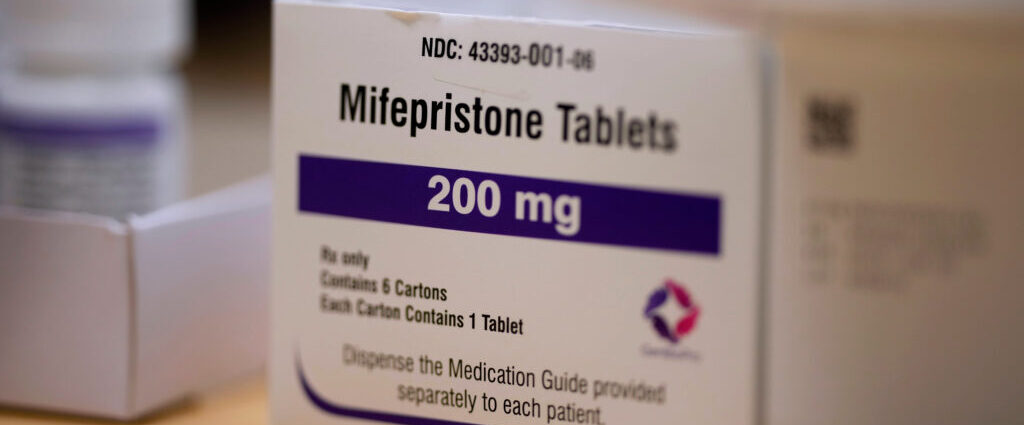
Judge refuses to block sending abortion pill by mail for now, but says FDA must finish review
A federal judge Tuesday refused to block filling prescriptions for the abortion pill mifepristone by mail across the U.S. — at least for now — in a setback to Louisiana’s effort to stifle groups that send it into states where abortion is banned.
U.S. District Judge David Joseph, who sits in Lafayette, Louisiana, ruled against Louisiana Attorney General Liz Murrill, who asked that U.S. Food and Drug Administration rules that allow mifepristone to be dispensed through the mail be paused while a challenge to those 2023 regulations moves through the courts.
STAT+: Novo Nordisk launches high-dose Wegovy
Want to stay on top of the science and politics driving biotech today? Sign up to get our biotech newsletter in your inbox.
Good morning. Here in Chicago, cherry blossoms are blooming, rat birth control is working, and it finally feels like spring may be upon us.
Budget proposals aim to boost U.S. drugmaking
As part of President Trump’s 2027 budget blueprint, the FDA has proposed policies aimed at encouraging domestic development and manufacturing of drugs, such as making it easier for drugmakers to move into clinical testing in the U.S. and giving an “exclusivity” period to U.S.-based generics manufacturers.
STAT+: Trump budget’s ‘America First’ drug policy proposals
You’re reading the web edition of D.C. Diagnosis, STAT’s twice-weekly newsletter about the politics and policy of health and medicine. Sign up here to receive it in your inbox on Tuesdays and Thursdays.
The 2026 STAT Madness competition was stacked with research on topics like smart dental floss that monitors stress, Baby KJ’s personalized gene therapy, and an artificial intelligence model designed to predict cell behavior. Check out the winner, unveiled this morning. And as always, send news tips to John.Wilkerson@statnews.com or John_Wilkerson.07 on Signal.
Budget reruns
The 2027 budget that the Trump administration released on Friday is in many ways a repeat of last year’s proposal: It includes deep cuts to the National Institutes of Health, the elimination of a health research agency, and the creation of a new agency devoted to chronic diseases called the Administration for a Healthy America.
STAT+: States looking to regulate use of chatbots
You’re reading the web edition of STAT’s Health Tech newsletter, our guide to how technology is transforming the life sciences. Sign up to get it delivered in your inbox every Tuesday and Thursday.
Good morning health tech readers!
Today, a deep dive into why America’s most powerful health insurer is looking more and more like a technology company.
STAT+: Many cancer patients don’t get genomic tests to guide treatment, study finds
For some advanced cancers, sequencing the tumor genome should be one of the first steps patients and physicians take. But a new study finds that many patients never receive genomic testing and so never get the chance to know if they might have benefitted from newer, more targeted therapies.
The study, published on Tuesday in JAMA Network Open, examined how many patients diagnosed with one of five different metastatic cancers received genetic sequencing for the cancers. For most cancers in the study, roughly half of patients in the cohort received genetic sequencing. Patients with low income, Medicare or Medicaid coverage, and Black or Hispanic race or ethnicity were also less likely to receive sequencing.
Cancer medicine and research have made enormous progress over the last few decades. The overall five-year survival rate has pushed up to 70% as of 2026, and the five-year survival rate for metastatic cancer has doubled since the 1960s. That’s in large part thanks to advances in medicines and technologies that can help treat cancer, like targeted therapies that work by exploiting key cancer mutations.
STAT+: Pharmalittle: We’re reading about FDA backing domestic production, another Gilead deal, and more
Rise and shine, everyone, another busy day is on the way. And it is getting off to a good start here on the Pharmalot campus, where clear blue skies and comfortable breezes are greeting us. Who could ask for anything more? Actually, we could — it is time to reheat the kettle for another cuppa stimulation. Our choice today is ginger peach. And here is a helpful tip — a teaspoon of honey enhances the flavors splendidly. Of course, you are invited to join us. For the full experience, we are now hawking replicas — take a look. Meanwhile, here are a few tidbits to help you along. As always, do keep in touch. We appreciate feedback, criticism, and tips. …
The U.S. Food and Drug Administration used the president’s budget to propose policies aimed at encouraging domestic development and manufacturing of drugs, STAT notes. FDA Commissioner Marty Makary has said the agency needs “giant, big ideas” to counter China’s dominance in early-stage clinical development of drugs. Among the FDA’s ideas are proposals to make it easier to run early-stage trials in the U.S. and to hand an advantage to U.S.-based generics manufacturers. The Trump administration has been using a variety of policy levers to try and bring drug manufacturing to the U.S. One of the legislative proposals in the FDA’s budget justification would let domestic manufacturers of generic drugs challenge brand drug patents a month before foreign companies, a major advantage in an intensely competitive process.
Two more drugmakers, AbbVie and Genentech, will officially start selling their medicines on the TrumpRx website, CBS News tells us. Abbvie, which struck a deal with the Trump administration in January to cut the cost of certain medicines, will sell Humira, a popular medication used to treat rheumatoid arthritis, Crohn’s disease, and ulcerative colitis, on the site at an 86% discount. The prescription prices on the site, however, are only available to patients who are uninsured, or whose insurance does not cover it, and who must pay the full list price out of pocket. Those with insurance coverage generally pay lower prices already. TrumpRx now sells over 61 drugs at a lower price, up from about 40 when the website went live in February.
STAT+: Gilead to buy cancer biotech Tubulis for more than $3 billion
In a move that will grow its oncology pipeline, Gilead Sciences is spending more than $3 billion to buy the German biotech Tubulis, the companies said Tuesday.
The deal includes an upfront payment of $3.15 billion and up to $1.85 billion more if certain milestones are reached. It also highlights both the therapeutic and commercial promise of antibody-drug conjugates, the next-generation chemotherapy treatments that the privately held Tubulis is developing.
Gilead’s latest move comes just months after it said it would acquire Arcellx in a deal worth $7.8 billion. The two companies had already been working together on a multiple myeloma CAR-T therapy that could be approved later this year. Gilead last month also announced that it was buying Ouro Therapeutics, which is focused on drugs for autoimmune disease, for up to $2.18 billion.
If you cap insulin at $35 a month, people with type 2 diabetes stick to treatment, study finds
Get your daily dose of health and medicine every weekday with STAT’s free newsletter Morning Rounds. Sign up here.
Good morning. Amid all the tasks that demand to be addressed each day, are you having trouble finding your sense of wonder and awe re: the moon mission? I am too. Reading this and this yesterday helped me access it.
STAT+: Merck’s experimental HIV prevention pill could be made for less than $5 a year, researchers say
An experimental HIV prevention pill being developed by Merck could be mass produced for less than $5 per patient a year according to a new analysis. Advocates argue the low cost means the company should find it easier to license the drug so that low- and middle-income countries can gain easy access.
The pill, dubbed MK 8527, is currently undergoing a pair of late-stage clinical trials that are expected to determine whether the medicine can lower HIV transmission when given to people at high risk of infection. The results are due in the latter half of 2027, according to ClinicalTrials.gov.
Already, the pill is generating considerable interest after Merck released mid-stage results last summer showing its drug holds promise. In addition to being safe and effective, the study found it could protect against infection, a form of prevention known as pre-exposure prophylaxis or PrEP, within 24 hours after being taken. Merck noted the pill works in a novel way.
STAT+: University of Michigan wins 2026 STAT Madness for new insights into abdominal aortic aneurysms
An abdominal aortic aneurysm is a life-threatening vascular condition with limited treatment options.
Now, researchers from the University of Michigan Frankel Cardiovascular Center have identified a driving force behind the condition, opening up a potential target for new therapies. Their paper uncovering the causal link between triglycerides and abdominal aortic aneurysms won the STAT Madness 2026 popular vote.
Triglycerides have long been considered a biomarker for vascular disease. But using three different mouse models, the Michigan team demonstrated that the common type of fat plays a direct role in aneurysm development, and that lowering triglyceride levels with certain drugs can stop them from forming and rupturing.
STAT+: Research revealing how the brain flushes waste named STAT Madness Editors’ Pick
For her new research on the brain’s plumbing system, neuroscientist Maiken Nedergaard had to hone many techniques. Among them — coaxing her lab mice into restful sleep, even as they lay on microscope beds with tiny fiberoptic wires threaded into their brains.
“It was really hard to get the mice to sleep naturally,” said Nedergaard, who spent weeks cuddling the animals in her hands, so they’d learn to feel safe. “But then we said, ‘we really want to not have them disturbed.’”
The reason for this care? Nedergaard studies the glymphatic system, which removes waste from the brain during sleep, so ensuring her test subjects achieve a restorative snooze is central to her work.
STAT+: FDA backs proposals to entice pharma companies to test, make drugs domestically
WASHINGTON — The Food and Drug Administration used the president’s budget to propose policies aimed at encouraging domestic development and manufacturing of drugs.
FDA Commissioner Marty Makary has said the agency needs “giant, big ideas” to counter China’s dominance in early-stage clinical development of drugs. Among the FDA’s ideas are proposals to make it easier to run early-stage trials in the U.S. and to hand an advantage to U.S.-based generics manufacturers.
The Trump administration has been using a variety of policy levers to try and bring drug manufacturing to the U.S. For example, many of the brand drugmakers that struck deals to lower U.S. prices also promised to increase domestic manufacturing, under the threat of tariffs.
A star scientist showed that better genetics lessons could reduce racism. It was the death knell for his career
Every year, the Genetics Society of America bestows the Elizabeth W. Jones Award for Excellence in Education, recognizing someone who has helped the public better understand the science of DNA. It’s understood to be a lifetime achievement award; past recipients tend toward retirement age with decades of work behind them and stacks of textbooks to their names.
When this year’s winner, Brian Donovan, was announced at the end of February, many geneticists and science educators found it hard to celebrate the news. Not because he’s undeserving of the honor. Far from it. But because it seemed to confirm what many feared: that Donovan’s incandescent research career was over before it had barely begun.
Opinion: STAT+: Former Geisinger CEO: U.S. health systems must replace huge numbers of people with AI
About 20 years ago, I stepped on stage at one of our Geisinger town halls and looked out upon a sea of people: thousands of full-time employees at an integrated health system charged with the health and well-being of millions of Pennsylvanians.
Only a fraction of the people in that room were clinicians.
That was the first time I fully visualized the problem: We employed more people in our revenue cycle department to process bills and reconcile data than we did doctors. And we weren’t alone. It’s the same story at every health system in America, large and small, and over the past two decades, the ratio has become dramatically more disparate.