WASHINGTON — Two powerful House committees with jurisdiction over health care policies are expected to get several fresh faces after the midterms.

The combined impact of a potential wave election and multiple departing lawmakers could open up plenty of seats on the Energy and Commerce and Way and Means committees. Similar jockeying is going on for key Senate committee roles, as STAT previously reported.

The new cast of characters will mean that lobbyists will be busy visiting the offices of lawmakers with which they might not have had much interaction. 

Continue to STAT+ to read the full story…

This post was originally published here. 

Some Medicare patients owe more in coinsurance than the hospital paid for their drug. That arithmetic sounds impossible. It is a consequence of the 340B drug discount program and Medicare’s payment formula. Now the Department of Health and Human Services, where I work, is proposing to narrow that gap.

Congress created the 340B drug discount program in 1992 to financially support safety net hospitals that serve low-income patients. Drug manufacturers must give them steep discounts. But Medicare, Medicaid, and commercial insurers generally reimburse them at the full amount, allowing these hospitals to keep the spread above the discounted purchasing costs.

Read the rest…

This post was originally published here. 

In September, “Baywatch” star Pamela Anderson opened up about her hepatitis C diagnosis in the 1990s. “It was a death sentence,” she said while accepting the Award of Courage from amfAR, an organization supporting HIV/AIDS research and advocacy. When she was diagnosed, she said, her doctor told her that she might only live another 10 years.

Her story is a good reminder of the amount of global progress that has been made in preventing and treating hepatitis C in just the last decade — and how far the U.S. has to go to catch up to our European neighbors.

Read the rest…

This post was originally published here. 

“Don’t wait. Choose to be informed.” 

That’s the call to action that patients will find on the site for digital health company Everlywell, which has offered at-home lab tests directly to consumers for a decade. But last week, it wasn’t marketing a prick to measure blood glucose or screen for celiac disease: It was launching one of a new generation of AI-based risk prediction algorithms for medical images. 

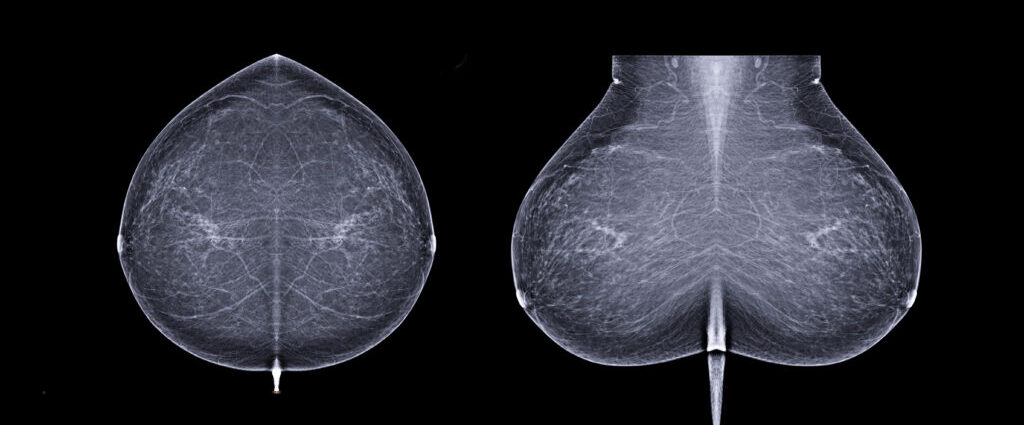
For $249 in cash, eligible patients can now come to the site, share a recent mammogram, and receive a prediction of their five-year breast cancer risk. It’s generated by an AI algorithm called Clairity Breast, which received de novo authorization from the Food and Drug Administration last May. 

Continue to STAT+ to read the full story…

This post was originally published here. 

Of all the factors that can increase a person’s risk of breast cancer, age is among the most significant. Almost half of people diagnosed with breast cancer are at least 65, and about 20% are 75 or older. Despite these rates, older women are frequently excluded from clinical trials; one study of breast cancer trials found that only 9% of participants were 65 or older, leaving physicians with a poorer understanding of how drugs behave in older adults and fewer guidelines with which to treat them.

There’s increasing evidence that these patients could benefit from more tailored treatments. Neil Carleton, a cancer biologist and first-year resident physician at Brigham and Women’s Hospital, said that breast tumors can develop and grow differently in older patients than in younger ones because of hormone levels and inflammation. 

Read the rest…

This post was originally published here. 

Rise and shine, everyone, another busy day is on the way. And it is getting off to a pleasant start here on the Pharmalot campus, where clear blue skies and comfy breezes are greeting us. As for the official mascots, they are happily snoozing in their respective corners. As for us, we are firing up the trusty kettle for another cuppa stimulation. Our choice today is honeybush vanilla turmeric. Of course, you are invited to join us. For the full experience, we are now hawking replicas — take a look. Meanwhile, here are a few items of interest. As always, do keep in touch. We appreciate feedback, criticism, and tips. …

The Trump administration is advancing the first government-funded clinical trials of the psychedelic drug ibogaine to treat opioid addiction and ​post-traumatic stress disorder, Reuters says. The initiative ⁠follows an executive order signed last April by President Trump that dedicated $50 million ​to the federal ibogaine research, as well as recent calls by experts and ​veterans for strict safety standards on psychedelic treatments. The U.S. Food and Drug Administration said it has opened a public docket seeking feedback on trial design, dose selection, patient ​eligibility, safety monitoring, study-stopping rules, and oversight by Nov. 20.

AstraZeneca’s pivot towards the U.S. market has continued with the opening of a new R&D center in the biotech hotspot of Cambridge, Mass., the centerpiece of a $1 billion investment program in the state, Pharmaphorum explains. The new facility in the Kendall Square area — which is one of the densest biotech clusters in the world, with hundreds of small and large biopharma companies present — covers 570,000 square feet of lab and office space over 18 stories. The center is part of a major investment program by the U.K.-based company that was first announced in 2024 and dramatically expanded to around $50 billion last year.

Continue to STAT+ to read the full story…

This post was originally published here. 

Retinitis pigmentosa is a genetic disorder that causes degeneration of the light-sensing cells in the retina. Generally diagnosed in childhood or early adolescence, patients gradually lose peripheral and night vision, often becoming legally blind by young adulthood. 

With the exception of a subset of patients who present a specific genetic mutation and can be treated with gene therapy, there is no cure for the condition. Cases are addressed by measures to slow degeneration and preserve what is left of the vision.

Optogenetics  — the technology just recognized with a Nobel Prize — could offer hope, according to a new paper published on Wednesday in the New England Journal of Medicine. 

Continue to STAT+ to read the full story…

This post was originally published here. 

As part of its ongoing bid to more tightly regulate international students, the Trump administration on Wednesday announced a proposed $70,000 fee for a popular work authorization program meant to give students professional experience.

The Department of Homeland Security said the fee would help combat alleged fraud and abuse in the work program, known as Optional Practical Training, which allows students to get hands-on work experience related to their field of study while still on a student visa. The department also said the restrictions would help U.S. citizens compete against international applicants in the job market. 

“Optional Practical Training was never meant to be a back door into the American workforce, a subsidy for cheap labor, or a prize for those who game the system,” said a department spokesperson in a press release. “American workers should not have to compete against a program that has been turned into a pipeline for cheap foreign labor.”

Continue to STAT+ to read the full story…

This post was originally published here. 

WASHINGTON — The brand drug industry’s main trade group is suing the Trump administration over a pilot program tying Medicare drug prices to those in peer countries.

The Pharmaceutical Research and Manufacturers of America said Wednesday that it had filed a complaint in the U.S. District Court for the District of Columbia asserting that the “most-favored nation” pilot in Medicare Part B exceeds Medicare’s statutory authority. 

The pilot, called GLOBE, is not expected to have much impact because the administration exempted all but a handful of companies in return for their agreement to voluntary deals to charge Medicaid MFN prices. 

Continue to STAT+ to read the full story…

This post was originally published here. 

Hanlon, who has worked in a variety of leadership roles at Highmark during nearly three decades with the company, will be the organization’s first-ever female CEO.

This post was originally published here. 

In a setback for Merck, a Dutch court ruled that the company infringed on a patent pertaining to a subcutaneous formulation of its Keytruda cancer treatment and was ordered to halt manufacturing and marketing the medication in several European countries, including France, Italy, Sweden, Switzerland, and the Netherlands.

The ruling came as part of a widening patent infringement dispute with Halozyme Therapeutics over the best-selling cancer treatment. Patients requiring Keytruda will still have access to the existing intravenous version, which is not affected by the patent dispute or court order.

We asked Merck for comment and will update you accordingly.

Continue to STAT+ to read the full story…

This post was originally published here. 

This is the web edition of STAT’s AI Prognosis newsletter, our guide to artificial intelligence in health care and medicine. Sign up to get it delivered in your inbox every Wednesday. 

I have refused to read or watch “The Love Hypothesis” — I referred to it as the “Title IX movie” the other day when I forgot its name. But the clips are inescapable on my Instagram feed, and the science gaffes seem … real bad. Absolute butchering of how academia works? The impossible chemistry on the poster? Wearing miniskirts in the lab? Vortexing a test tube? *shudders*

Once again: I firmly believe STAT would allow me to consult on science-related elements on film sets. Offers for Hollywood gigs, health tech story tips, comments: aiprognosis@statnews.com

Continue to STAT+ to read the full story…

This post was originally published here. 

Want to stay on top of the science and politics driving biotech today? Sign up to get our biotech newsletter in your inbox.

Good morning. Today, STAT released our 2026 Wunderkinds, a group of early-career researchers recognized for doing innovative work in health and medicine. I had the pleasure of speaking with one NIH researcher who has been figuring out how GLP-1 drugs work in the brain. But check out all of the profiles here!

The need-to-know this morning

  • Cerevance said its experimental pill solengepras reduced Parkinson’s patients’ daily off-time, alongside other symptoms, in a Phase 3 trial. The privately held company, which will now talk to regulators about a potential approval, touts the pill as one of the first potential Parkinson’s drugs that does not act directly on dopamine, sparing patients certain side effects.
  • Henri B. Kagan and Kenso Soai were awarded the 2026 Nobel Prize in chemistry for discovering how to manipulate “mirror image” molecules, paving the way for manufacturing more precise and safer drugs.

Doudna-founded Caribou is shutting down

Caribou Biosciences is shutting down after failing to raise enough money to fund a late-stage clinical trial of its off-the-shelf CAR-T therapy for lymphoma.

Continue to STAT+ to read the full story…

This post was originally published here. 

Good morning, everyone, and welcome to the middle of the week. Congratulations on making it this far, and remember there are only a few more days until the weekend arrives. So keep plugging away. After all, what are the alternatives? While you ponder the possibilities, we invite you to join us for a needed cuppa stimulation. Our choice today is ginseng peach, a favorite from our pantry. Meanwhile, here is the latest menu of tidbits to help you on your way. We hope you conquer the world and have a wonderful day. And as always, please do stay in touch. We appreciate feedback, tips, and criticism. …

The World Health Organization released its first guidelines addressing the sharp rise in obesity among children and adolescents, Health Policy Watch says. In 2024, 170 million children and adolescents aged 5–19 years were living with obesity, including 70 million children aged 5 to 9 years and 100 million adolescents aged 10 to 19 years. Obesity prevalence in this age group quadrupled since 1990, rising from 2% to 8%. But the WHO does not recommend pharmacological treatment, bariatric surgery, or weight loss devices for children aged 0 to 9 years. For adolescents aged 10 to 19 years, treatment with approved drugs may be considered only when a supervised multimodal lifestyle program has not achieved desired results.  

Caribou Biosciences is shutting down after failing to raise the money necessary to fund a late-stage clinical trial of its off-the-shelf CAR-T therapy for lymphoma, STAT notes. The biotech, borne from the research lab of CRISPR scientist and Nobel laureate Jennifer Doudna, will discontinue clinical development of its two CRISPR-based CAR-T therapies, including vispa-cel for the treatment of advanced B-cell non-Hodgkin lymphoma. Over the past year, Caribou had worked successfully with the Food and Drug Administration to finalize the design of a Phase 3 trial for vespa-cel. Unfortunately, raising the money to pay for the study proved too difficult.

Continue to STAT+ to read the full story…

This post was originally published here. 

In a warning to life sciences companies, the U.S. Department of Justice last week issued a new directive for combating fraud that made a point of noting the agency will pursue violations of a federal law that tightly regulates the pharmaceutical industry.

Typically, the agency has pursued health fraud cases centered on providers, clinics, home health agencies, and hospices. By expressly including the Federal Food, Drug, and Cosmetic Act in the directive, the National Fraud Enforcement Division appears to be placing drug and device makers, among others, more clearly in its crosshairs.

“This is a subtle but significant expansion of their jurisdiction,” said Kevin Lowell, a member of the Miller & Chevalier law firm, who spent a decade at the DOJ, where he most recently had been a deputy chief in the National Fraud Enforcement Division’s health care fraud section.

Continue to STAT+ to read the full story…

This post was originally published here. 

Get your daily dose of health and medicine every weekday with STAT’s free newsletter Morning Rounds. Sign up here.

Good morning. We’ve got a heartbreaking story from Jason Mast today on two friends with Duchenne muscular dystrophy. Read that now, and if you need a pick-me-up afterward, read about our 2026 class of Wunderkinds. 

Read the rest…

This post was originally published here. 

Henri B. Kagan and Kenso Soai were awarded the 2026 Nobel Prize in chemistry on Wednesday for “the discovery of non-linear effects and autocatalysis in asymmetric organic synthesis.” 

Kagan, 95, and Soai, 76, solved a chemical mystery: Some molecules exist in the world that are mirror images of one another. This is a phenomenon known as chirality, from the Greek word from hand (as hands are mirror images of one another). Amino acids are among chiral molecules, and a living organism can only contain one of the versions. The other mirror molecule is found rarely elsewhere in nature. How such imbalance could occur was not understood.

Read the rest…

This post was originally published here. 

The company’s virtual care platform has integrated artificial intelligence scribing and camera-based vitals monitoring as it works to recover from significant financial setbacks.

This post was originally published here. 

Caribou Biosciences is shutting down after failing to raise the money necessary to fund a late-stage clinical trial of its off-the-shelf CAR-T therapy for lymphoma, the company said Tuesday. 

The Berkeley, Calif.-based biotech, borne from the research lab of CRISPR scientist and Nobel laureate Jennifer Doudna, will discontinue clinical development of its two CRISPR-based CAR-T therapies, including vispa-cel for the treatment of advanced B-cell non-Hodgkin lymphoma. 

Over the past year, Caribou had worked successfully with the Food and Drug Administration to finalize the design of a Phase 3 trial for vespa-cel. Unfortunately, raising the money to pay for the study proved too difficult, Caribou CEO Rachel Haurwitz told STAT. 

Continue to STAT+ to read the full story…

This post was originally published here. 

There’s a boy like you in Minnesota, Yannick’s mom told him a few years ago. He has the same disease. He has the same kind of smile. Maybe you could talk?

They clicked. After school and on weekends, the two boys boot up their computers, Yannick in San Diego and Brecken in a suburb of St. Paul, Minn. They play Roblox or build virtual worlds on Minecraft: a zoo, for example, like the real-world one 13-year-old Yannick wants to build when he grows up, full of lions, tigers, and giraffes. 

They seldom talk about Duchenne muscular dystrophy, the rare fatal muscle-wasting disease they live with. But lately it’s all their moms can talk about. In stolen phone calls on the way to coffee or back from school, they compare the two boys: how quickly Yannick is declining and how steadily Brecken is — shockingly — improving.

Last winter, Brecken, 12, started receiving an experimental drug developed by Avidity Biosciences. The medicine makes the cell’s protein-building machinery “skip” part of the gene, called an exon, behind Duchenne, allowing patients to make a shortened but functional version of a protein essential for muscle survival. In trials, it appeared to virtually arrest the disease in some patients. 

The approach, however, is out of most patients’ reach. In principle, “skipping” strategies could benefit about 70% of the 10,000 to 15,000 Duchenne boys and men in the U.S. (The disease almost exclusively affects males.) But the medicines have to be targeted to a patient’s specific mutation. Only about 7% of patients — or roughly 900 Americans — are eligible for Avidity’s drug, called Del-zota, which is now under Food and Drug Administration review.

Continue to STAT+ to read the full story…

This post was originally published here. 

WASHINGTON — Democrats are building bridges to a major new constituency: the Make America Healthy Again voter.

As the midterms near, leaders across the party have been meeting with MAHA activists, discussing potential openings with consultants, and rolling out food and environmental agendas meant to entice these voters.

But the MAHA agenda Democrats are offering differs from that of health secretary Robert F. Kennedy Jr., the leader of the movement. Left-leaning candidates are focusing on food and disregarding one of Kennedy’s signature (if relatively fringe, according to pollsters) issues: vaccine injuries.

Continue to STAT+ to read the full story…

This post was originally published here. 

When my term life insurance policy expired in 2013 and I had to get a new one, I thought my widow-maker heart attack in 2005 might be a sticking point. Instead, eight insurers turned me down because they said I had “untreated cancer.”

They were referring to the tiny amount of prostate cancer found three years earlier.

Read the rest…

This post was originally published here. 

Good morning, everyone, and welcome to another working week. We hope the weekend respite was relaxing and invigorating. Now, though, that oh-too-familiar routine of meetings, deadlines, and the like has returned with a vengeance. You knew this would happen, yes? After all, the world — such as it is — continues to spin. So to nudge it in a better direction, we are relying, as always, on a cuppa stimulation. Our choice today is blueberry hibiscus. Of course, you are welcome to join us. Meanwhile, here are a few items of interest. Best of luck accomplishing your goals, and we hope you conquer the world. And, of course, do keep in touch. …

Vaxcyte disclosed that its experimental pneumococcal vaccine hit the primary endpoints in a Phase 3 clinical trial, setting up a competition with Pfizer and Merck, STAT writes. Vaxcyte’s shot, VAX-31, is designed to protect against 31 serotypes, or strains, of bacteria that can cause pneumococcal disease, including pneumonia, compared to 20 strains for Pfizer’s Prevnar and 21 strains for Merck’s Capvaxive. The company needs two more trials to deliver results before it can file for approval: a study looking at VAX-31 administered alongside an influenza vaccine and a study in adults who previously received a different pneumococcal shot.

The U.S. Food and Drug Administration has extended its review of an experimental hemophilia A drug from Novo Nordisk due ​to ongoing remediation work at a manufacturing facility, Reuters notes. Novo had submitted the application for the drug, called denecimig, in ​September 2025 and was expecting an FDA decision in the third quarter of 2026. While the regulator has not yet set ​a new timeline for its decision, Novo said ​the FDA did not raise any concerns regarding the safety ‌or ⁠effectiveness data from the drug’s clinical trials. Novo added that the manufacturing site issues do not impact any of its other medicines currently on the market.

Continue to STAT+ to read the full story…

This post was originally published here. 

Welcome to the debut of ID Consult, a new STAT column from infectious disease physician Krutika Kuppalli about diseases, outbreak response, global health, and health policy.

A 28-year-old laboratory worker in Siberia develops severe pneumonia and dies. She worked at an institute that studies plague and other high consequence infectious diseases. At least one hospital is placed under quarantine with close to 200 contacts reportedly being monitored. Simultaneously Russian public health officials descend on the region.

Read the rest…

This post was originally published here. 

For patients willing to pay thousands of dollars out of pocket, prestigious hospitals across the country are offering a new speciality: longevity. Cash-pay longevity clinics promise to monitor all sorts of health indicators and provide guidance on how to live a longer, healthier life.

A couple of weeks ago, I tagged along with STAT commercial determinants of health reporter Sarah Todd as she tested out one of these new clinics at Weill Cornell Medicine in New York City. At Weill, Sarah underwent a battery of physical, written, and blood tests, performed frog jumps, ran down a hallway, and wore a VO2 Max mask that made her feel “like an elephant.” 

Read the rest…

This post was originally published here. 

You’re reading the web edition of D.C. Diagnosis, STAT’s twice-weekly newsletter about the politics and policy of health and medicine. Sign up here to receive it in your inbox on Tuesdays and Thursdays.

Celebrity doctor Mike Varshavski has been contacted by The Bachelor for its 30th season. Send news tips and hot physicians to John.Wilkerson@statnews.com or John_Wilkerson.07 on Signal.

A lame lame-duck

On Friday, President Trump said he will give $90 to more than 20 million seniors to help pay for Medicare premiums.

Continue to STAT+ to read the full story…

This post was originally published here. 

Want to stay on top of the science and politics driving biotech today? Sign up to get our biotech newsletter in your inbox.

Good morning. From DC to Boston to Utah, we’ve got news from all over today.

The need-to-know this morning

  • BridgeBio said the FDA granted priority review to its oral treatment for children with achondroplasia, a common form of dwarfism. An approval decision on the drug, called infigratinib, is expected by Feb. 4, 2027. 
  • Japan’s Shionogi has acquired for $2 billion the U.S.-based biotech IntraBio, the maker of an approved drug that treats the neurological symptoms of two rare diseases. 
  • Arrivent Biopharma said its experimental treatment for exon 20-mutated lung cancer failed to delay tumor progression in a Phase 3 study.

Trump admin says drug price disclosures are coming

Trump administration officials said yesterday they will start developing a system for health insurers to disclose prescription drug prices, and a “hopeful” final plan will come out by next May.

Continue to STAT+ to read the full story…

This post was originally published here. 

You’re reading the web edition of STAT’s Health Tech newsletter, our guide to how technology is transforming the life sciences. Sign up to get it delivered in your inbox every Tuesday and Thursday.

Good morning health tech readers!

Just one week until the STAT Summit in Boston. I’ll be on stage. If you are interested in coming but are on the fence, give me a shout.

Continue to STAT+ to read the full story…

This post was originally published here. 

Get your daily dose of health and medicine every weekday with STAT’s free newsletter Morning Rounds. Sign up here.

Today’s newsletter answers some pressing questions — what is optogenetics? When should I get my flu shot, as cases rise in parts of the United States? And perhaps most importantly — why do longevity clinics include scratch-and-sniff smell tests as part of their treatments? All will be revealed if you read on.

Read the rest…

This post was originally published here. 

Pulse oximeters gained prominence during the Covid-19 pandemic, offering anyone a handheld tool to take stock of their blood oxygen level. 

But their newfound popularity also brought new attention to their limitations — several studies have shown that pulse oximeters overestimate blood oxygen levels when used on darker skin tones. This can make patients of color appear more healthy than they really are, resulting in worse health outcomes and exacerbated inequality. 

Read the rest…

This post was originally published here. 

When Blue Cross Blue Shield recently published research suggesting that hospitals use artificial intelligence tools to extract more money from insurers without providing additional care, people were mad. Amid growing concerns about AI, one glimmer of hope has been its potential to improve health — and yet, here it was: inflating health care costs without yielding any benefits.

As a doctor who has used the kinds of tools being criticized, I’m frustrated, too: We can document honestly and still wind up inflating hospital bills. This is because comorbidities function as an on-off switch with respect to billing, even though they affect patient care in nuanced ways.

Read the rest…

This post was originally published here. 

There must be some mistake. A company studies its cancer blood test in a randomized trial of 140,000 people using a suboptimal surrogate endpoint, fails to meet that endpoint, yet is recommended for approval by a Food and Drug Administration advisory panel. And because of the Medicare Multi-Cancer Early Detection Screening Coverage Act passed earlier this year, the company appears to be on track to have taxpayers foot the bill. 

How does this happen?

Read the rest…

This post was originally published here. 

CHICAGO — I was walking briskly on a steep treadmill, wearing a mask that evoked the villain Bane from “Batman.” Prince crooned back-handed compliments over an iPad speaker to keep my energy up, promising I had to be neither rich nor cool to be his girl. Every so often, the woman standing next to me asked me to point at the color-coded sheet ranking my state of exertion from 1 (roughly, “I could do this all day”) to 10 (“I not only hate this but am about to keel over if you don’t slow this thing down”). The goal was to get to 10. Pushing myself to achieve difficult physical goals does not come naturally. I can’t go on, I thought. I went on.

This was the VO2 Max test, which shows how efficiently the body uses oxygen (“V” stands for volume, “O2” for oxygen) and is considered medicine’s most accurate measure of cardiorespiratory fitness. It was the last in a barrage of assessments I’d undertaken at a shiny longevity clinic affiliated with Northwestern University — part of a $5,500 annual package. 

The quest to defeat the indignities of aging has long provoked costly and questionable practices, from the 1920s doctors who believed in the rejuvenating power of grafted monkey testicles to Bryan Johnson’s since-abandoned blood transfusions from his teenage son. Now some of the nation’s most prestigious health systems are jumping into the growing business of longevity. They promise a rigorous scientific approach to helping people preserve their youthful vigor for as long as they can, with assessments that give patients more detailed pictures of their current physical conditions and aging trajectories than they’d get at a typical doctor’s visit.

Some critics, however, question how to reconcile the clinics’ high out-of-pocket costs with hospitals’ nonprofit status and charitable missions, and warn that in their zeal to attract paying customers, they’re offering tests that lack sufficient evidence showing they actually improve people’s health. 

Continue to STAT+ to read the full story…

This post was originally published here. 

It is probably impossible to overstate how complex a brain is: A network of billions of intertwined neurons forming an intricate anatomy, capable of working on the millisecond scale to perceive reality, detect sensations, create plans, and take actions. 

“All of this is incredibly complicated, and so of course the challenge that we face as neuroscientists and as physicians treating brain disorders is how can we hope to make headway without tools that match the complexity and the precision of the brain?” said Karl Deisseroth, a Stanford University and Howard Hughes Medical Institute researcher who on Monday won the 2026 Nobel Prize for Medicine, alongside German colleagues Peter Hegemann and Georg Nagel, for work developing such tools. 

“Our perception of reality and all our inner subjective states come from cells, and so the appropriate tool that would be matched to how the brain works would be something that was fast and could be targeted to individual cells or individual types of cells,” he said in an interview after the announcement. 

Continue to STAT+ to read the full story…

This post was originally published here. 

Federal appeals court judges didn’t take kindly to the Trump administration’s arguments Monday in a hearing on Humana’s lawsuit against the government over its rules for auditing Medicare Advantage plans. 

The country’s second largest Medicare Advantage insurer argued in its 2023 lawsuit, Humana v. Kennedy, that the Health and Human Services Department’s final rule for auditing Medicare Advantage plans diverged significantly from its proposed rule and that stakeholders weren’t given proper notice and opportunity to comment on the change, which they said would be detrimental to insurers. 

In September 2025, a federal judge agreed and invalidated the rule, called the risk adjustment data validation, or RADV, rule. HHS appealed in November. During Monday’s oral arguments, a three-judge panel of the U.S. Court of Appeals for the Fifth Circuit seemed poised to toss the rule out, again.

Continue to STAT+ to read the full story…

This post was originally published here. 

About 20.8 million beneficiaries will receive a direct deposit or check this month, the latest in a growing list of cash payments promised by the White House in advance of the November midterm elections.

This post was originally published here. 

On Monday, the HHS and Labor and Treasury Departments finalized a rule meant to strip out junk cluttering cost disclosures, among other reforms. Employers cheered the changes, which are a mixed bag for insurers.

This post was originally published here. 

The Trump administration released new regulations Monday that will force health insurance companies to publish cleaned-up spreadsheets of the prices that they pay hospitals and doctors, while stripping out meaningless data that clogged up the files.

Trump officials also said they will start developing the system for disclosing prescription drug prices next month. A “hopeful” final plan for drug pricing data will come out by next May, said Mehmet Oz, the head of Medicare and Medicaid, at an event Monday. The government will enforce those requirements by the end of 2027. 

Last year, the Trump administration punted on finalizing drug price disclosure rules, in a victory for drug companies and pharmacy benefit managers that have fiercely guarded their prices. 

Continue to STAT+ to read the full story…

This post was originally published here. 

Utah regulators on Monday announced a plan to allow an artificial intelligence product to evaluate patients and write new drug prescriptions without prior human review. 

A startup called Nolla Health will launch an AI-powered service in the state that will assess a patient for mild-to-moderate acne treatment using a structured intake and by analyzing photos of their skin. The product may determine whether one of a list of low-risk drugs is appropriate. In the first stages of the pilot, the decisions of the AI will be reviewed by a licensed clinician who will sign off on prescriptions, but Nolla may eventually be allowed to prescribe drugs without this review. The company last year announced it raised $4.5 million from investors including General Catalyst, and Nolla aspires to direct treatment for a host of conditions using AI.

The new pilot is part of a significant expansion of a closely watched “AI sandbox” program that allows Utah’s Office of Artificial Intelligence Policy, or OAIP, to waive regulations for companies that want to test AI products under state supervision. 

Continue to STAT+ to read the full story…

This post was originally published here. 

Want to stay on top of the science and politics driving biotech today? Sign up to get our biotech newsletter in your inbox.

I’m hanging out with my 8-year-old pal, Silas Mirza-Ladd, who wants to be featured in a newspaper one day. So, Silas, you’re the inspiration for today’s Readout — along with stem cell hijinx and drug pricing woes.

“Meow,” Mirza-Ladd says.

Continue to STAT+ to read the full story…

This post was originally published here. 

Vaxcyte said Monday that its experimental pneumococcal vaccine hit the primary endpoints in a Phase 3 clinical trial, setting up the California-based biotech to compete with Pfizer and Merck.

Vaxcyte’s shot, VAX-31, is designed to protect against 31 serotypes, or strains, of bacteria that can cause pneumococcal disease, including pneumonia, compared to 20 strains for Pfizer’s Prevnar and 21 strains for Merck’s Capvaxive.

In the trial, just over 3,500 adults age 50 and older were randomized to receive VAX-31, Prevnar, or Capvaxive. Investigators then measured the strength of their antibody responses against different strains. 

Continue to STAT+ to read the full story…

This post was originally published here. 

Workers and employers are drowning in their health insurance premiums. The reason for that deluge: the health care industry’s high and inscrutable prices.

Health insurers don’t set their premiums in a vacuum. The biggest factor is the care people receive. And the biggest factor driving the cost of that care, STAT has found, is not how often people are going to the hospital or doctor’s office, but the out-of-control prices charged by every part of the health care industry, which workers and businesses are often powerless to stop.

For Gerard Anderson, America’s high prices are as obvious, yet unnoticeable, as the oxygen we breathe. He has studied health care spending and policy for the past four decades, even helping design Medicare’s hospital payment system in the 1980s. He co-wrote a seminal paper in 2003, and again in 2019, that blared the culprit of America’s outlier health spending figures: “It’s the prices, stupid.” 

“Some things don’t change,” Anderson, a professor at Johns Hopkins, told STAT. 

Continue to STAT+ to read the full story…

This post was originally published here.