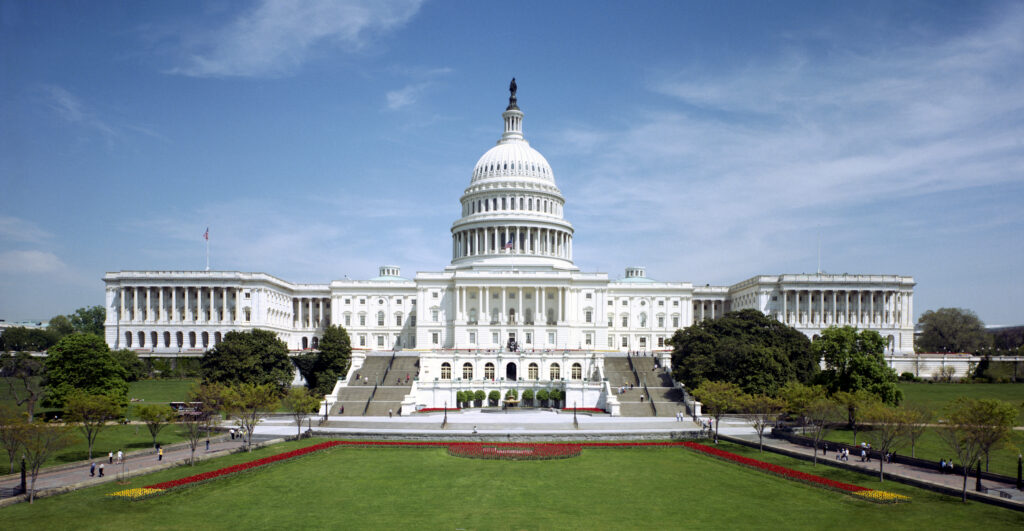
Photo: Architect of the Capitol / Public domain
Democrats have won 228 House seats in the races called so far. Republicans have won 139. That is 89 more Democrats than Republicans, close to 100. Another 68 seats have not been called.
What is the House?
The House of Representatives is one of the two parts of Congress. The other is the Senate. Congress makes federal laws.
The House has 435 voting seats. Each seat belongs to a district. Voters in each district choose one person to represent them.
When all 435 seats are filled, a party needs 218 seats to have more than half. That is called a majority. A majority can choose the House speaker and help decide which bills the House votes on.
The Associated Press, NBC News, CBS News and Fox News have called control of the House for Democrats. The new House takes office in January.
What does “called” mean?
A news organization calls a race when its election team decides that one candidate has won, even if officials are still counting some votes.
The 228 Democratic seats and 139 Republican seats come from an AP-based tracker on Fox News. It was updated at 5:51 a.m. Eastern on November 4, 2026.
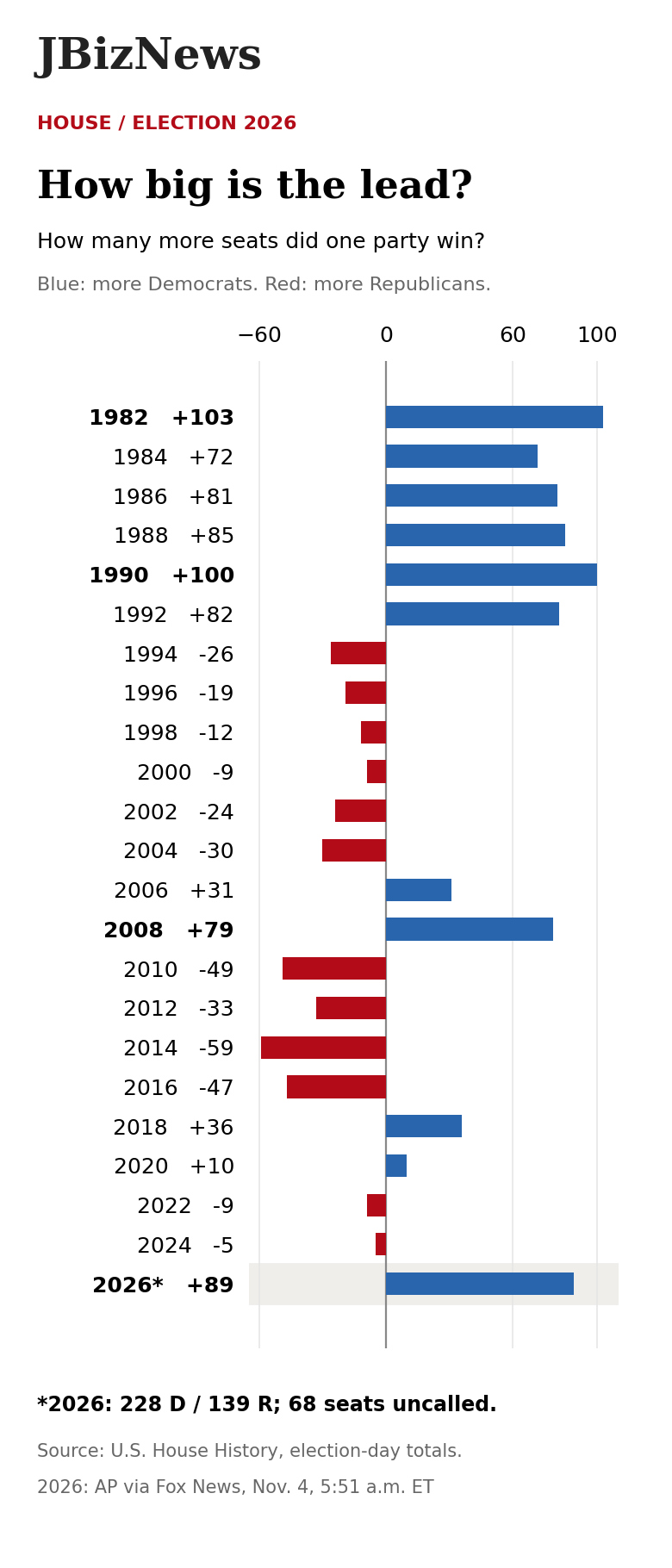
How to read the chart
Each row shows an election year. The number shows how many more House seats Democrats had than Republicans, or Republicans had than Democrats.
A blue bar goes to the right. That means more Democratic seats. A red bar goes to the left. That means more Republican seats.
For example, Democrats won 257 seats in 2008. Republicans won 178. The difference was 79 seats. That is why the chart shows +79 for 2008.
The 2026 row is different from the older rows. It shows only the races called so far. The older rows show the official House history table's election results.
Is this the biggest lead ever?
No. Democrats have had bigger leads before.
In 1990, Democrats won 267 seats and Republicans won 167. The gap was 100 seats.
In 1982, the gap was 103 seats. In 1964, it was 155 seats. After the 1936 election, Democrats had 334 seats and Republicans had 88, a gap of 246. Other parties held some seats too.
If today's 89-seat gap stays the same after all the races are decided, it would be the biggest Democratic lead since the 1990 election.
The NBC House estimate
NBC News has a separate estimate of how the whole House may end up. It estimates 258 Democratic seats and 177 Republican seats. That would be a gap of 81, not 89. Different news teams can make calls at different times.
An 81-seat gap would be smaller than the 82-seat gap after the 1992 election.
Why does a bigger lead matter?
Imagine a class voting on an idea. If one side has only one more student, one person changing sides can change the result. If one side has many more students, a few people can change sides and that side can still win.
The same idea helps explain the House. A bigger lead gives party leaders more room when some of their members disagree.
But winning the House does not change a law by itself. A bill must also pass the Senate and go to the president. The president can sign it or say no. Congress can overcome that “no” only with a large enough vote in both parts.
The Senate, state by state
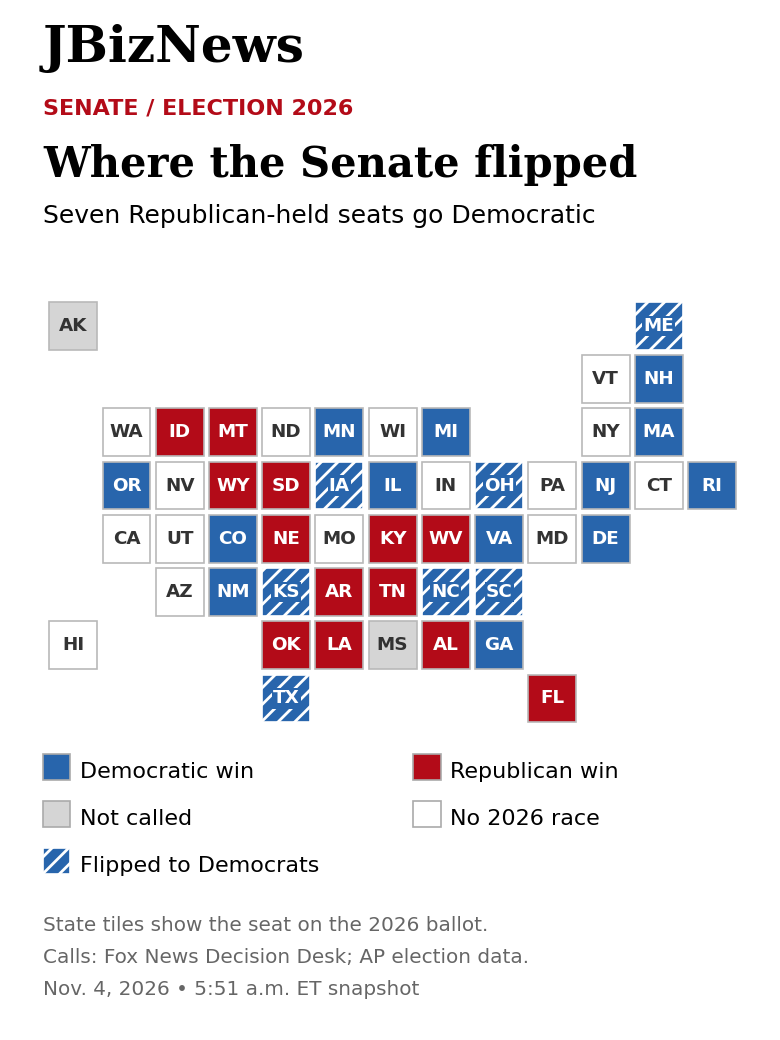
Blue tiles show Democratic wins. Red tiles show Republican wins. Stripes mark seven seats that switched from Republican to Democratic. Gray tiles are not called. White tiles have no Senate election this year.
For families and businesses, this election changes who will lead the House in January. It does not automatically change taxes, health care or prices.
Sources: Fox Senate calls and AP data (November 4, 5:51 a.m. ET); U.S. House History; AP Congress control; NBC House estimate; CBS; Fox control; House guide to making laws.
JBizNews Desk | Washington
© JBizNews.com. All rights reserved. Unauthorized reproduction or redistribution is strictly prohibited.