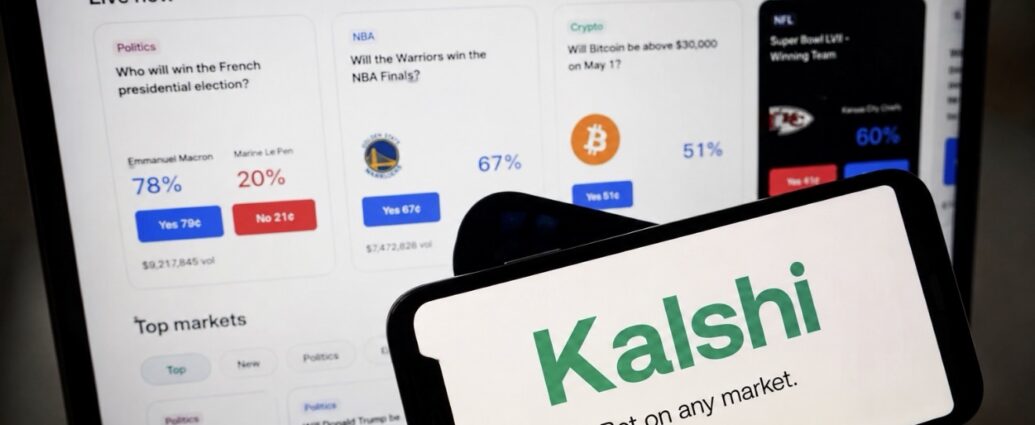
A King County Superior Court judge in Seattle has ordered the prediction market Kalshi to stop taking wagers from Washington State residents on sports, elections, politics, entertainment, culture, technology and science, and mentions, after finding the company was likely running an illegal gambling operation under the Washington Gambling Act and the state’s Consumer Protection Act. The order was signed Wednesday and is already in force. Judge John McHale gave Kalshi until Aug. 19 to put up a geofence based on internet address and residency, and until Sept. 2 to replace it with a stricter third-party blocking system.
Strip away the terminology and the dispute is simple. Kalshi sells contracts that pay out if a stated event happens and expire worthless if it does not. The company calls that trading. Washington State law defines gambling as staking something of value on the outcome of a contest of chance or a future contingent event, and the state argued Kalshi’s contracts fit that definition. The judge agreed the state is likely right.
The list of banned categories does not cover everything on the platform, but it covers the part that pays the bills. The state attorney general’s office said the restricted markets amount to a substantial share of Kalshi’s business, which in recent years has leaned increasingly on sports wagering. Washington State Attorney General Nick Brown said the company has grown wealthy promoting wagers on sports, elections, natural disasters and events tied to the Iran war. The order also bars Kalshi from advertising the covered wagers to consumers in the state.
McHale wrote that Kalshi had willfully ignored guidance issued by the Washington State Gambling Commission in December, which said offering or participating in event-based contracts is not authorized there. That finding matters beyond this case, because it goes to whether the company knew where the line was.
Kalshi’s defense is the same one it has run everywhere: that it answers to federal regulators in Washington, D.C., not to Olympia. A company spokeswoman said Kalshi is regulated exclusively by the Commodity Futures Trading Commission. The company holds a CFTC designation as a contract market and argues the federal Commodity Exchange Act overrides state gambling law. McHale rejected that argument outright. Kalshi asked the Washington State Court of Appeals to put the injunction on hold, and the appeals court refused.
That preemption question is now splitting courts along state lines, which is the real business problem. The Third Circuit affirmed an injunction on April 6 that stops New Jersey from enforcing its gambling laws against Kalshi. Three months later, on July 7, U.S. District Judge Analisa Torres denied the company’s bid to block New York from enforcing its own. A firm operating out of one federal registration now faces one answer in Trenton and the opposite answer across the Hudson.
The scoreboard has been running against the company. Gaming attorney Daniel Wallach counted 23 judicial rulings on injunctions in prediction-market cases, with states winning 19 — roughly five out of every six. Kalshi is already barred from offering sports event contracts in Nevada, Michigan and Massachusetts. Washington State now joins them, with a broader list of blocked categories than most.
The compliance side is where the cost lands. An address-and-residency geofence is due in six days, and a more robust system built on a third-party platform follows two weeks later. Building location controls that satisfy a court is standard work for licensed sportsbooks, which have run them for years. It is newer for a company that has spent its short life arguing that state borders do not apply to it. Every state that wins a ruling adds another set of rules, another map to maintain and another category list to enforce.
The local market shows what Kalshi was competing against. Legal sports wagering in Washington State exists only in person at tribal facilities, with no licensed online sportsbooks, which meant a phone app taking sports bets had the field to itself. The judge cited research finding structural and functional similarities between prediction markets and online gambling, and pointed to a 2021 study in the state showing online gamblers were close to four times as likely to develop problem gambling as those betting at tribal casinos.
None of this settles the underlying question. This is a preliminary injunction, meaning the state has shown it will probably win, not that it has won. The lawsuit filed in March is still ahead of both sides, and the split between federal appeals courts points toward an eventual answer from the U.S. Supreme Court. Until then, Kalshi has to run a different product menu in every state, and the menu in Washington State just got a great deal shorter.
JBizNews Desk | Seattle
© JBizNews.com All Rights Reserved. Reproduction or distribution without written permission is prohibited.