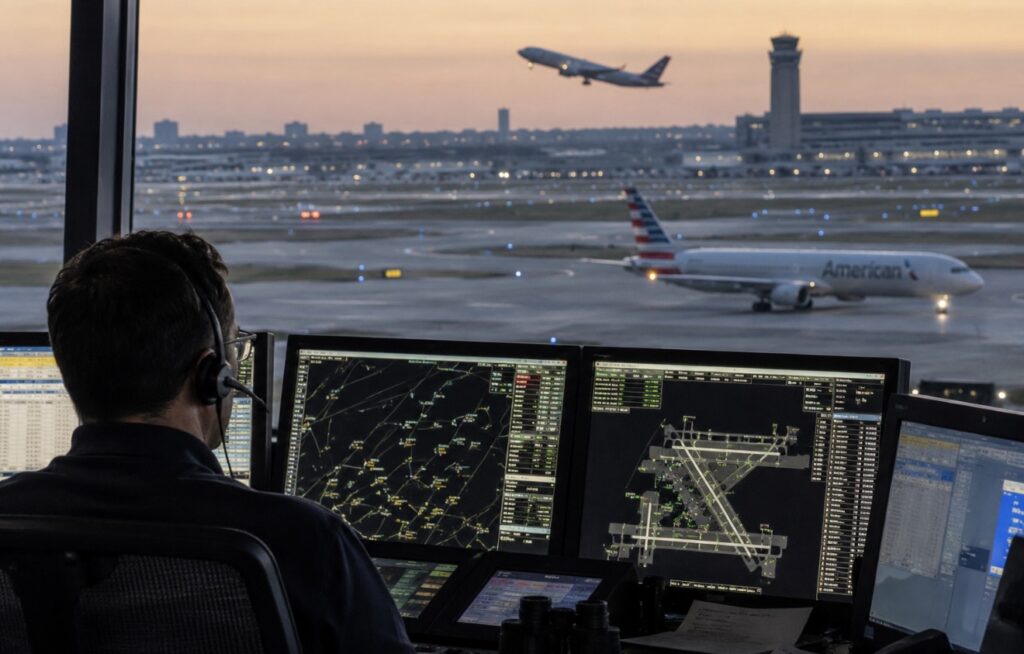
The FAA’s air traffic control upgrade is going to cost a lot more than Congress has already handed over, and the agency’s own administrator told lawmakers Tuesday exactly how much.
Here’s the plain version of what’s happening: back in 2025, Congress gave the FAA $12.5 billion to fix the country’s aging air traffic system, the old radar, outdated phone lines and paper-thin backup systems that have caused outages and near-misses at major airports. FAA Administrator Bryan Bedford told the House on Tuesday that just finishing the first phase of that fix will actually cost $16 billion, about $3.5 billion more than what Congress already approved. The FAA says it will cover that gap itself. Then, for phase two, the agency wants Congress to hand over another $10 billion on top of that.
Add it up and the total price tag for a fully modernized air traffic system is now pushing toward $26 billion or more, roughly double the original down payment.
For everyday travelers, this isn’t an abstract budget fight. The system Bedford is talking about is the one that decides whether your flight leaves on time, gets rerouted around a storm, or sits on the tarmac because a control tower is running short-staffed on old equipment. Progress has been real: as of September 1, the FAA says it has replaced 64% of its outdated copper-based communication lines, upgraded more than 400 radio sites, and installed new surface-awareness systems at 101 airports that help controllers track planes and vehicles on the ground.
But there’s a catch. A government watchdog report released just before Tuesday’s hearing found that the FAA still doesn’t have a complete cost estimate or master schedule for the whole modernization project, which spans 13 separate programs and more than 11,000 individual project timelines. In other words, lawmakers are being asked to keep writing checks for a project whose full price and finish line aren’t fully mapped out yet.
That combination, real progress paired with an uncertain final cost, is exactly what puts pressure on Congress heading into budget season. Airlines, Boeing, Airbus and pilot unions have already pushed lawmakers publicly to approve the extra funding, arguing that flight delays tied to outdated equipment cost the industry, and travelers, real money every year. The FAA is targeting the end of 2028 to finish this overhaul, compressed from an original 15-year timeline.
JBizNews Desk | Washington
© JBizNews.com All Rights Reserved. Reproduction or distribution without written permission is prohibited.