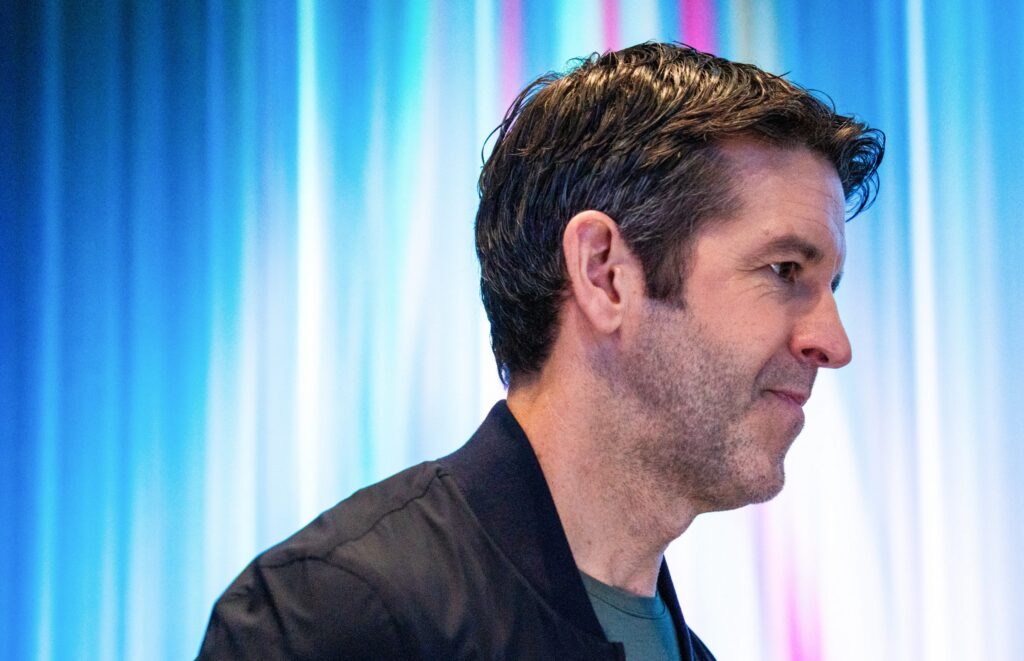
John Ternus, Apple’s new CEO, has spent the first two months in his new post celebrating a batch of new products, particularly the release of the foldable iPhone Duo. On Monday, the 51-year-old executive introduced himself to Wall Street for his first quarterly earnings call.
The reception was not so friendly.
While Apple beat September-quarter earnings expectations, investors traded the stock down in after-hours trading due to the company’s outlook on margins, which it said will continue to be squeezed by a shortage in memory chips, and slowing growth in its Services segment without a clear answer to how that may rebound. The $4.9 trillion company has also attempted to tell its AI story through its revamped Siri AI product, but investors don’t seem convinced yet that Apple has the winning formula for the AI age.
On the call with analysts following earnings, Ternus fielded some questions but also delegated answers to Chief Financial Officer Kevan Parekh and Chief Operating Officer Sabih Khan, who Apple said would participate in earnings calls moving forward, something the company hasn’t done for years. Ternus projected confidence on the call, but he appeared to stick mostly to scripted marketing points, such as “Apple is the greatest company in the world,” that subdued the conversation.
While by some measures Apple is performing at its best ever (its September iPhone sales set a record), the more nuanced reality is that it has offset some of its headwinds by raising prices, and it is relying on its massive install base to carry it forward. Compounding the pressures are supply chain shortages for products that include the iPhone Duo, with new orders for the phone not arriving until the end of January.
“What we’re seeing with memory pricing right now is unprecedented,” Ternus told analysts on the Monday call. “That has put pressure on our prices.” He added that beyond the December quarter, the company expects the pricing for memory purchases to continue to increase.
Apple said it expects its gross margin for its December quarter to be between 45% and 46% after posting a margin of 47.9% for its September quarter, when tariff refunds provided an approximately one-percentage-point boost. The decline, the company said, reflects the continued cost of memory, as well as costs associated with ramping up Siri AI.
“We’re going into this [holiday period] with more downside than upside,” Apple investor Gene Munster told Fortune in an interview prior to Apple’s earnings. On X, Munster wrote after the earnings posted that, “It’s clear they don’t want to talk about personalized agents. They’re the biggest risk to the Apple ecosystem.”
The Siri situation
Ternus and Parekh offered few details when asked by analysts about the roadmap for Siri AI, the company’s revamped assistant. When asked about the industry shift toward consumer AI agents such as Meta’s Muse assistant, Ternus noted that Siri is “primarily request-based today,” though he said the assistant is built on an architecture that makes it possible to substantially expand its capabilities over time
He described agentic capabilities as “promising tools for users,” but cautioned that users must be fully aware of what access they grant, and he stressed user security and privacy.
Apple has touted Siri AI, which has been rolling out to users in beta mode, as a key upgrade that is central to new products such as the home devices it recently launched, which included its first smart home display. The new Siri is designed to understand what is on a user’s screen and act on it, help with writing, and search a user’s device for context, among other features.
Reviews have been mixed on the revamp. Some analysts have said they liked the new features, but overall, the assistant has lagged well behind leading chatbots from OpenAI and Anthropic, as well as a wave of personalized agents from Meta and others that have ushered in a new kind of AI assistant capable of shopping, checking bank statements, and other tasks on its own.
“Siri AI is much more capable and functional today, but how do you take it to the next level?” Wamsi Mohan, an analyst at Bank of America, told Fortune.
Asked about Apple’s plans to handle its slowdown in its Services unit, which includes iCloud, the App Store, and other services, and how the company may find new revenue streams, Ternus and other executives on Monday mostly spoke about the company’s active installed base surpassing 2.5 billion devices, which they said will lead to future monetization possibilities. They added that there will be some usage limits on features that rely on AI that does not run locally, and that iCloud tiers historically focused on storage will evolve.
A wave of hardware
The start of Ternus’ tenure has mostly comprised a new wave of hardware. In early September, at his first public event as CEO, Ternus unveiled the iPhone Duo. The phone has shown strong demand, with orders backed up, but supply constraints have made it difficult to gauge the scale of sales. Some units dealt with cracked screens, which Apple acknowledged and said it was replacing.
When an analyst asked about the rollout of the Duo phones, and hinted at “supply chain” issues, Ternus let Khan respond. The product ramp is going well, said Khan. “It’s really hard to predict when supply and demand will be in balance.”
Analysts at Yorkville Ives predict Apple can sell roughly 10 million iPhone Duos over the next few quarters.
Apple has moved to a staggered iPhone release, with its Pro, Pro Max, and Duo models now available but the base model and iPhone Air not expected until the spring. The approach, together with the rising component costs and a slowdown in Services growth, could affect its future performance, according to BofA’s Mohan.
Sales in Greater China, a key market for Apple, jumped 21% year-over-year in the September quarter, though the sum was $1 billion short of Wall Street targets according to Bloomberg estimates. Apple also plans to launch AI features for China-based iPhone customers after working out a deal with Alibaba Group Holding following a long period of negotiations, though the launch is not equivalent to a full Siri AI experience for Chinese customers.
“We have everything we need to be extraordinarily successful,” Ternus said. “With this team, this vision, this mission, and these values, I have no doubt that we will.”
This story was originally featured on Fortune.com