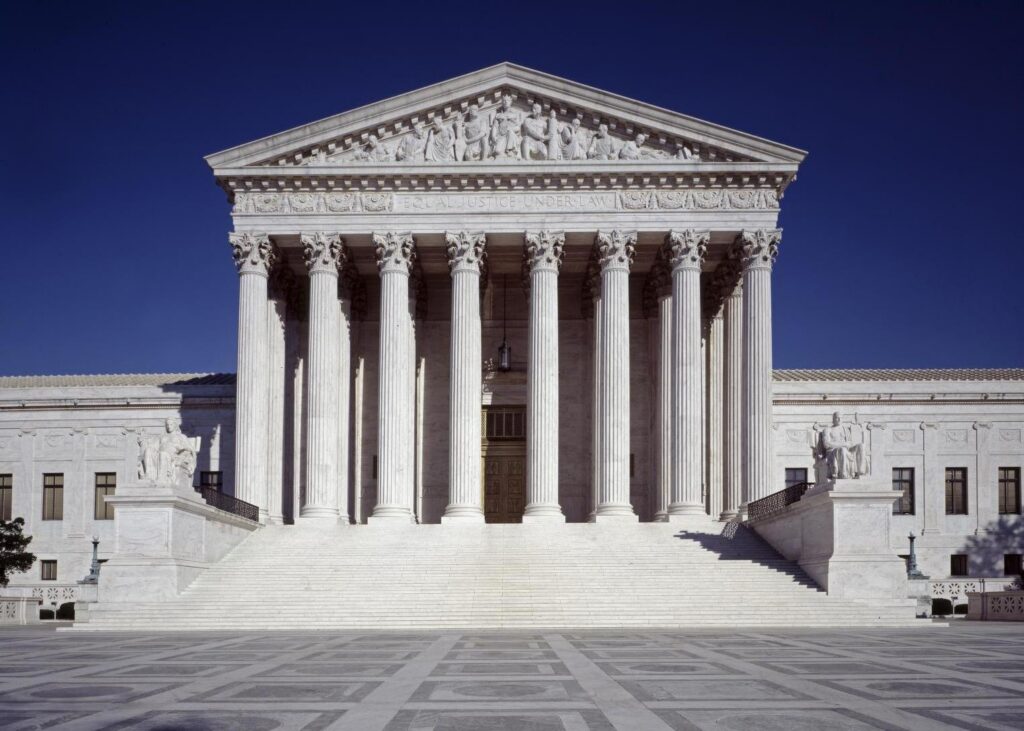
Photo: Carol M. Highsmith / Library of Congress (archive)
Conservative Supreme Court justices appeared sympathetic Tuesday to Catholic preschools challenging Colorado’s conditions for receiving state funding, in a case testing the boundary between religious freedom and equal access to publicly supported education. The court heard arguments, not a ruling, and has not decided the case.
The dispute, St. Mary Catholic Parish v. Roy, asks whether Colorado must give religious schools an exemption from enrollment nondiscrimination requirements to let them participate in its universal preschool program. The Archdiocese of Denver and other challengers say the conditions conflict with Catholic teachings; the state says every provider receiving public money must follow the same rules.
Tuesday’s arguments put a practical funding question before the court: when government opens a benefit to private providers, how far must it accommodate religious institutions that cannot accept all of the program’s conditions? The answer could affect families choosing preschools and the terms under which religious schools receive taxpayer support.
A public benefit with enrollment conditions
Colorado’s preschool program began in 2023 and provides up to 15 hours of publicly funded preschool a week at participating providers, according to SCOTUSblog. Public, private, secular and religious schools can take part, subject to state requirements.
The program’s nondiscrimination agreement requires equal enrollment opportunity regardless of characteristics including race, religious affiliation, sexual orientation, gender identity, income or disability. The Catholic challengers seek an exemption because their admissions policies require families to support church teachings, including on marriage and gender identity.
The Archdiocese oversees 34 Catholic preschools, according to reporting by Fox News. The challengers argue that excluding them from the funding program because of those policies violates the First Amendment’s protection for religious exercise. The Trump administration supported their position at the argument.
Colorado Deputy Solicitor General Helen Norton defended the requirements as neutral rules that apply equally to religious and secular providers. “Colorado welcomes religious preschools” to the program, she told the court, according to Fox. The state says schools may teach their faith while receiving funding but cannot turn away families in violation of the enrollment conditions.
Justices debate equal treatment and exemptions
Justice Amy Coney Barrett questioned the distinction between excluding religious schools directly and imposing a condition the state knows those schools cannot accept. Justice Brett Kavanaugh asked why Colorado could not seek a “win/win” that respected religious believers while leaving families other suitable preschool options, Fox reported.
The court’s liberal justices questioned whether the schools were seeking preferential treatment rather than equal treatment. Justice Elena Kagan said earlier cases established that states cannot treat religious institutions differently, then asked: “Do you have to treat them better?”
Chief Justice John Roberts pressed both sides. He noted that an earlier Maine law expressly excluded religious schools, unlike the Colorado rule, but also questioned the state about whether the effect of its funding condition was effectively the same, according to SCOTUSblog’s account of the argument.
A central comparison was the court’s 2022 decision in Carson v. Makin, which rejected Maine’s exclusion of schools providing religious instruction from a tuition-assistance program. Colorado argues that its case is different because religious instruction is permitted; the dispute is over admissions requirements shared by all participants.
Lower courts sided with Colorado. Tuesday’s argument also touched on Employment Division v. Smith, the 1990 precedent addressing neutral laws of general application, and on whether the state’s conditions should face a tougher constitutional test. The justices’ questions do not establish how any member will ultimately vote.
For families, the immediate issue remains access to financial support at their chosen school. For preschool operators and state officials, it is whether receiving public funding can be conditioned on enrollment rules that conflict with religious admissions policies. No requirement was struck down Tuesday, and the timing and scope of any eventual relief remain undecided.
JBizNews Desk | Washington
© JBizNews.com. All rights reserved. Unauthorized reproduction or redistribution is strictly prohibited.