
Goldman Says U.S. Economy Is Rewarding Capital Over Labor — Leaving Many Workers Behind
The American economy is increasingly rewarding people who own businesses, stocks and other capital rather than those who depend primarily on a paycheck — a decades-long shift that could become even more pronounced as artificial intelligence and automation spread through the workplace.
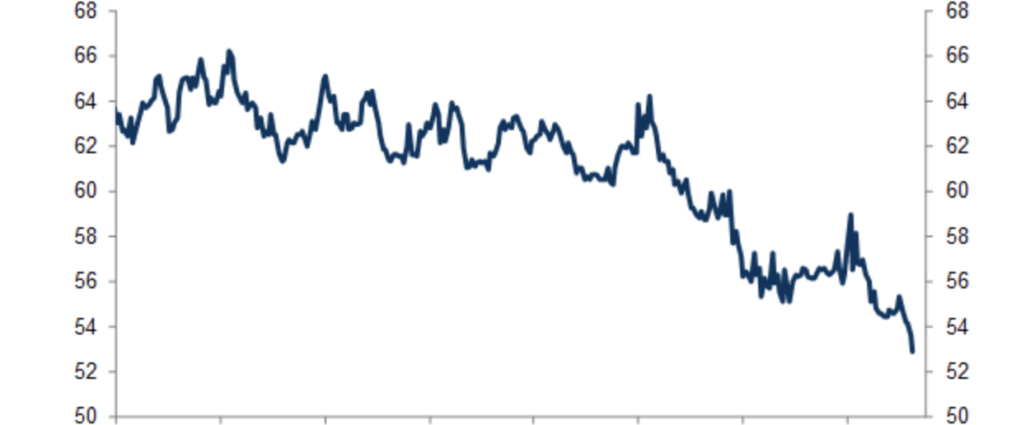
New research from Goldman Sachs examines a striking decline in labor’s share of U.S. business income. The share of nonfarm business output going to workers has fallen roughly 7.5 percentage points since the 1990s, according to Bureau of Labor Statistics data cited in the research.
In the second quarter of 2026, labor’s share fell to approximately 52.8% to 52.9%, the lowest level in government records dating to 1947.
The decline does not mean every dollar disappearing from labor automatically went into shareholders’ pockets. Goldman economist Abhay Duggirala estimates that roughly 40% of the decline can be explained by measurement and accounting effects.
But Goldman concludes the remaining roughly 60% — equivalent to about 4.5 percentage points — represents a genuine structural shift, associated with factors including higher corporate markups, automation and diminished worker bargaining power.
For ordinary Americans, the distinction matters because the financial benefits of stronger corporate profits and rising asset values depend heavily on whether a household owns those assets.
The Economy Is Growing — But Who Owns the Growth?
The simplest way to understand the issue is to look at two ways Americans make money.
One is labor: wages, salaries and other compensation earned by working.
The other is capital: profits, stocks, businesses and other assets capable of increasing in value or generating income.
When more economic income flows toward capital, households with substantial investment portfolios or business ownership are positioned differently from households that rely overwhelmingly on wages.
That divide is particularly important because stock ownership is highly concentrated.
The wealthiest 10% of U.S. households own the overwhelming majority of corporate equities and mutual-fund shares, according to Federal Reserve data cited in reporting on Goldman’s research.
That means a booming stock market can generate enormous wealth without producing the same financial improvement for every household.
Wall Street Is Becoming More Important to Household Wealth
Recent Federal Reserve figures illustrate the scale of the phenomenon.
U.S. household net worth increased by a record $12.8 trillion during the second quarter of 2026, according to Reuters analysis of Fed data.
About $10.7 trillion of that increase came from rising equity values.
Total household net worth reached approximately $196 trillion, with equities accounting for nearly half of household financial assets.
But those gains were far from evenly distributed. The richest 10% of households held more than 87% of equity holdings, Reuters reported.
That creates an increasingly unusual economic picture.
A household with substantial retirement accounts, stocks and business interests can see its wealth rise significantly when markets climb.
A household living primarily on wages may experience the same economic expansion very differently — especially if rent, food, insurance, transportation and other everyday expenses are also increasing.
Why Labor’s Share Has Fallen
Goldman’s research cautions that the headline 7.5-percentage-point decline overstates the amount actually transferred from workers to owners of capital.
The bank identifies several accounting effects.
Changes in the way business income is classified following tax reforms shifted some income previously recorded as wages into business profits.
Another factor is depreciation. Modern businesses rely increasingly on computers, software and other technology that depreciates relatively quickly. Because depreciation is included in the government’s calculation of gross business value added, it can mechanically reduce the measured labor share.
Stock compensation creates another complication.
Workers — particularly highly compensated employees — are increasingly paid partly in company equity. Government statistics may not record that compensation in the same way or at the same time as ordinary wages.
After adjusting for those issues, however, Goldman still finds a substantial genuine decline in labor’s economic share.
Bigger Companies, Higher Profits
One explanation involves what economists sometimes call “superstar firms.”
Highly productive companies can achieve enormous scale, dominate portions of their markets and generate substantial profit margins.
When those businesses capture a larger portion of economic income, more money can flow toward profits and shareholders rather than employee compensation.
The result does not necessarily mean workers’ wages are literally declining. Wages can increase while labor’s share of the overall economic pie decreases if profits and capital income grow even faster.
That distinction helps explain why headline economic statistics and household experiences can sometimes appear disconnected.
AI Could Accelerate the Shift
Artificial intelligence introduces another major variable.
Goldman Sachs Research estimates that 6% to 7% of U.S. workers could be displaced from their current jobs by automation over the next decade, although historical technological changes have also created new occupations and employment opportunities.
Goldman’s labor-share research suggests that if AI continues automating a significant number of tasks, labor’s share of income could decline further.
The key economic question then becomes who captures the productivity gains.
If a company can produce substantially more using AI without proportionally increasing its payroll, the resulting productivity can translate into higher profits.
Workers can benefit if higher productivity eventually produces higher wages, new jobs or lower prices.
Shareholders can benefit more directly if it produces higher corporate earnings and stock valuations.
Goldman has separately argued that technological innovation historically creates new types of employment over time, meaning automation does not automatically translate into permanently fewer jobs across the entire economy.
A Growing Wealth Effect
The divide matters increasingly because consumer spending itself is becoming more closely connected to financial markets.
Reuters analysis found that equities now account for 34% of total U.S. household assets, while real estate’s share has fallen to a record-low 32.4%.
The wealthiest Americans also account for a disproportionate amount of consumption. The top 20% of earners are responsible for roughly 60% of U.S. consumer spending, according to the analysis.
That means Wall Street’s performance increasingly influences not only household wealth but potentially the broader economy.
When wealthy households’ portfolios rise, they may spend more.
But the reverse presents a risk: a major stock-market decline could weaken spending among the households responsible for a large portion of consumption.
What It Means for the Middle Class
For middle-class households, the findings highlight an increasingly important distinction between earning money and owning assets.
A worker can receive regular raises and still fall behind households whose stock portfolios, businesses and other investments are appreciating faster.
Conversely, millions of Americans do participate in capital markets through 401(k)s, IRAs, pensions and other retirement accounts, meaning the line between “worker” and “capital owner” is not absolute.
The difference is the scale of ownership.
A household with a modest retirement account does not experience a stock-market boom in the same way as a household with millions of dollars invested.
That is why a strong stock market can coexist with widespread concern about affordability.
Two Americas Can Experience the Same Economy Differently
The broader picture is not simply one of an economy getting poorer.
U.S. household wealth has reached extraordinary levels, corporate profits remain significant, consumer spending has remained resilient and investment in areas such as artificial intelligence continues at enormous scale. Goldman itself continues to describe the U.S. economy as resilient.
The question raised by the labor-share data is how those gains are distributed.
For households with significant ownership of stocks, businesses and other appreciating assets, economic growth can produce wealth beyond their regular income.
For households whose principal asset is their ability to work, prosperity depends much more directly on wages keeping pace with housing, food, energy, healthcare and other expenses.
As artificial intelligence, automation and capital-intensive investment reshape American business, that distinction may become increasingly important.
The economic divide of the future may therefore be about more than how much Americans earn.
It may increasingly depend on how much of the economy they own.
JBizNews Desk | Trenton, N.J.
© JBizNews.com All Rights Reserved. Reproduction or distribution without written permission is prohibited.
Herzog stresses elections are ‘not civil war,’ says he sees no reason results would not be accepted
President Isaac Herzog said the upcoming Israeli elections “are not a civil war” in an interview on 103FM on Wednesday.
Speaking in a tense and open conversation before Yom Kippur, Herzog emphasized that despite increasingly harsh rhetoric and deep divisions within Israeli society, maintaining red lines remains an absolute boundary. He also addressed tensions around the judicial system, mediation efforts currently under consideration, and the challenges posed by internal and external threats, while calling for calm ahead of the election.
Herzog discussed threats to the rule of law and harsh campaign videos, including one released by the Religious Zionist Party (RZP). He said he would not accept harm to the foundations of democracy.
“Elections are a proper, magnificent, democratic process, in which people can express themselves and make decisions that affect their fate by casting a ballot at the polling station, and not through violence, crudeness, or processes that are dangerous,” he said.
“It is difficult for me to see a scenario in which the election results are not accepted,” he continued.
“Elections are not a civil war, not even in AI videos. Nothing will help anyone. We will continue living together the day after, and I think it is legitimate to raise an agenda, present plans, and propose bills. I think it is very dangerous to go to places that could cause people to do dangerous things.”

The president also criticized political leaders and the media.
“During elections, leaders, parties, and politicians greatly radicalize their positions, and that is dangerous,” he said. “They use a platform called the media, which benefits from it because it sells.”
Herzog disputes account of ‘NAZA’ film, says IDF subject to legal oversight
Herzog also addressed the controversy surrounding the documentary film NAZA, saying that the military’s operations are subject to legal oversight.
“I can tell you with certainty, not an assessment, with certainty, that there is close legal oversight for every significant combat unit,” he said.
“There is a complex process for approving operations, which takes into account harm to uninvolved people and innocent civilians.”
“I personally know of operations and actions that were delayed or canceled because of this consideration, and of cabinet decisions that were analyzed in depth with significant backing from the attorney general regarding military operations,” added Herzog.
When asked about Prime Minister Benjamin Netanyahu’s trial and efforts to reach a possible settlement, Herzog revealed details behind his mediation proposal. He said he received conflicting legal opinions, but argued that the complexity of the case and its impact on the country led him to propose mediation.
“Because of the complexity of this issue and the need to try to reach a plea deal and end this case, which has a very negative impact on the country, I proposed mediation at the President’s Residence several months ago, mediation under the auspices of the President’s Residence, what is called negotiations or dialogue to reach agreements.”
The president said Netanyahu “did not respond at all” to the proposal. “He did not answer yes, and he did not answer no. I am leaving the door open to the possibility that the sides will eventually come to me for dialogue, for the possibility of mediation in this case.”
Herzog: West Bank settler violence directly harms Israel
Regarding violence in Judea and Samaria, Herzog took a firm stance and described the situation as direct harm to the state.
“First, I view this with very great severity and deal with it extensively,” he said.
“There are many arrests; there is a lot of dialogue,” he continued. “I think the immediate solution from an operational perspective is to tighten the connection between the IDF, the police, the prosecution, enforcement authorities, and local authorities. There is a possibility to do this.”
The president also criticized the phenomenon, calling Jewish terrorism “a terrible stain on the face of the state and also something that harms its sovereignty.”
Asked whether he believes the Shin Bet (Israel Security Agency) chief is not handling rioters forcefully enough, Herzog responded: “Absolutely not. I place my full trust in the head of the Shin Bet.”
Amid criticism over the lack of a state commission of inquiry into the failures of October 7, Herzog said an independent investigative body must be established as soon as possible.
He explained the delay, saying that Israel “must remember that we are at war. We must remember that the High Court of Justice ruled out the possibility that the State Comptroller would investigate this.”
He added that, however, “From the perspective of natural justice for Israeli citizens, it is only right that after the elections an independent and impartial commission of inquiry can finally be established so that we can investigate this thoroughly.”
Herzog concluded the interview by discussing his daily meetings with bereaved families and wounded people, delivering a message of unity ahead of Yom Kippur.
“I meet a great deal, a great deal of pain and concern,” said Herzog. “The concern for Israel’s unity, the fear that someone here will break the rules in a way that will not allow for Israel’s unity and will endanger us from within.”
“That is why I am being interviewed by you on the eve of Yom Kippur, because we will engage in self-reflection and we have much for which we must atone,” he concluded. “We have much to be proud of and much to be proud of ourselves for, but we have also learned from our heritage and tradition to look deeply and see where we erred, and what we need to ask forgiveness for.”
Netanyahu’s US trips: $13,000 for hair and makeup, $500 smoking fee, $125 traffic ticket
Documents released by the Prime Minister’s Office (PMO) on Wednesday following a Freedom of Information request revealed a long list of expenses recorded during Prime Minister Benjamin Netanyahu‘s visits to the United States in 2025, including more than $13,000 for hair and makeup during one trip, a $500 “smoking fee,” $295 to repair an embassy door, and $125 for a traffic ticket.
The documents were provided to attorney Elad Mann of the Hatzlacha organization following a request filed under the Freedom of Information Law. They include billing tables, delegation lists, and schedules from the prime minister’s visits.
Some details were redacted on national security grounds. The PMO also clarified that in some cases, the process of reviewing the bills has not yet been completed.
During Netanyahu’s visit to Washington in February, one of the most prominent entries in the expense report was a $6,772 charge for a makeup artist, alongside $6,747 for a hairdresser, totaling $13,519.
That visit also included a $25,000 charge for the prime minister’s suite, $511.50 for food in the suite, and approximately $298 for laundry.

One of the smaller entries, however, stands out: $500 listed as a “smoking fee – conference room, press conference with the prime minister.”
The report also lists additional expenses for lighting and photography, transportation, work rooms, refreshments, and equipment the delegation used during the visit.
Over $6,000 spent for makeup artist and hairdresser
Charges for a makeup artist and hairdresser appeared again during a visit in April. This time, $3,036 was recorded for the makeup artist and another $3,036 for the hairdresser, for a combined total of $6,072.
The same report includes $1,228 for “printers + toners” and approximately $240 for a “whiteboard + corkboard.”
The largest charge during that visit was $51,661 for Washington’s Watergate Hotel, while the total itemized charges in the report came to approximately $128,900.
In the report covering Netanyahu’s July visit, a particularly large charge of $172,701.60 appears for the Willard InterContinental hotel in Washington.
Among the many entries, however, is a far smaller one: $295 to a locksmith company, described as “repair of embassy entrance door – malfunction during prime minister’s visit.”
The documents also include purchases from Amazon, Costco, Target, and Staples, as well as expenses for refreshments, office equipment, vehicles, customs, and overtime.
The July visit’s expense report totaled approximately $373,700.
Another unusual entry appears among the expenses from Netanyahu’s trip to New York and Washington in late September: $125 under the description “traffic ticket – prime minister’s visit 09.25.”
During that trip, the prime minister’s suite at the Loews Regency in New York cost $5,999 per night, for a total of $41,993.
The PMO explained in the documents that the visit took place during the UN General Assembly, when demand for hotel rooms in New York is particularly high, and rooms are booked far in advance.
The schedule attached to the documents shows that the visit included, among other events, meetings with the presidents of Paraguay, Serbia, and Argentina; an address to the UN General Assembly; a meeting with the United Arab Emirates foreign minister; and an interview with Fox News.
Netanyahu later flew to Washington, where he met US President Donald Trump at the White House.
The highest nightly price for the prime minister’s suite among the documents released was recorded during an end-of-year visit to Florida: $10,000 per night, for a total of $50,000.
According to the table, a regular room for members of the delegation cost approximately $250 per night on average.
The official schedule shows that during the visit, Netanyahu met, among others, US Secretary of State Marco Rubio, US Defense Secretary Pete Hegseth, and Trump, and spoke by phone with Vice President JD Vance.
The visit later included interviews with Fox News and Newsmax, a meeting with Steve Wynn, dinner at Larry Ellison’s home, meetings with evangelicals and elected officials, and Netanyahu and his wife attending a New Year’s event at Mar-a-Lago.
The delegation list for the Florida visit includes dozens of names and positions from the PMO, the public diplomacy apparatus, foreign relations, and logistics, alongside additional officials whose details were redacted.
PMO: Figures do not necessarily represent final bills in every case
Despite the extensive detail, the PMO cautioned that the figures do not necessarily represent final bills in every case.
In its response to the Freedom of Information request, the office said that the prime minister’s overseas visits are not paid for directly by the PMO, but through the Foreign Ministry and its missions.
Before a visit, an estimated cost is transferred, but suppliers’ invoices and receipts are collected only after the trip ends.
According to the PMO, the process can take “many months,” and payment is transferred to the Foreign Ministry only after the expenses have been reviewed.
Among the hundreds of thousands of dollars spent on hotels, flights, and logistics, it is the smaller entries in the documents that provide some of the most unusual glimpses into the expenses behind the prime minister’s trips: a makeup artist, a hairdresser, a smoking fee, a faulty door, and a single traffic ticket.
Peter Max, Jewish psychedelic pop artist and leader in ‘flower power’ movement, dies at 88
Pop artist Peter Max, whose dreamy, boldly colored works provided an artistic backdrop for the 1960s US hippie movement and made him a commercial art powerhouse, died on Monday at a hospital in Manhattan at the age of 88, a spokesperson for his family said on Wednesday.
Born Peter Max Finkelstein in Berlin in 1937 to a Jewish family, Max spent his earliest years as a refugee from Nazi Germany. His parents fled with him to Shanghai, where thousands of European Jews found refuge during the Nazi era.
In 1948, the family left Shanghai for the newly established State of Israel, eventually settling in Haifa. Max lived in Israel for roughly three and a half years, learned and spoke Hebrew, and began taking painting lessons there under a Viennese artist. He later said that his Jewish upbringing included the observance of holidays such as Passover, Purim, and Yom Kippur.
Max described the Jewish communities of Shanghai, Israel and later Brooklyn as formative influences on his life and art. “I think that my Jewish heritage shaped me as an artist most by the love and caring I got from the Jewish community,” he said in a 2017 interview with the Wisconsin Jewish Chronicle.
His refugee story also remained part of his public legacy. Material connected to Max has been displayed at the Shanghai Jewish Refugees Museum, which documents the community that sheltered Jews fleeing Europe.

A Jewish immigrant whose work helped define American pop culture
A 2022 account of Max’s later life described him as a Jewish immigrant whose psychedelic work became one of the defining visual signatures of American popular culture.
Max’s visions, often influenced by his love of astronomy, were everywhere in the ’60s and ’70s and almost as much a part of the decade’s youth culture as sex, drugs and rock ‘n’ roll. They were like artistic renderings of an acid trip and were, in the vernacular of the time, really groovy.
The colors were vibrant and the images surreal: cosmic landscapes and starbursts, doves and floating peace symbols, kaleidoscopic butterflies, puffy clouds and other flower-power imagery. Rock stars such as the Beatles, Jimi Hendrix and Mick Jagger were Max’s portrait subjects, as well as his friends.
His ties to Israel continued to surface in his work. Among his Jewish and Israeli-themed pieces was “36 Rabins,” a series of portraits of assassinated prime minister Yitzhak Rabin.
President Ronald Reagan was a fan, and Max donated a painting of the Statue of Liberty to the Reagan Presidential Library.
“His decorative posters show Max to be a visionary fascinated by time, space and evolution,” a 1967 Village Voice critique said. “A psychedelic skyline prophesizes the day when skyscrapers may be temples, when the Rockefeller Center’s Rainbow Room may be used for meditation.”
Max is survived by his daughter, Libra, and his son, Adam.
“My father was my best friend. I feel incredibly blessed to have been so deeply loved and to be his daughter. I hope that alongside his remarkable artistic legacy, people will remember his kindness, his gentleness, and how much he genuinely cherished putting joy into the world,” his daughter said in a statement.
Eyal Waldman backs Eisenkot, warns Netanyahu win could threaten Israel’s democracy, economy
Israeli hi-tech entrepreneur Eyal Waldman warned that Israel could face serious political and economic consequences if Prime Minister Benjamin Netanyahu wins the upcoming election, telling Maariv that continued political instability could drive more skilled Israelis to leave the country.
“If Bibi (Netanyahu) wins the election, I believe Israel will be in serious trouble: without a properly functioning police force and without a Supreme Court. Israel may cease to be a democracy. The departure of talented people from the country will increase. Those who are less talented will remain because they have no choice, and the economy will deteriorate,” Waldman said.
Waldman also expressed concern about long term developments involving parts of the settler movement and the haredi community, arguing that a change in government was necessary.
“I think we are facing a serious long term problem in terms of what is happening with some of the settlers in the territories and with the haredim. The solution is to have a different government. I hope Eisenkot wins the election, and then everything will be different.”
Waldman would enter politics if it was only option ‘to save the country’
Waldman, whose daughter Danielle and her partner were murdered in the Nova music festival massacre on October 7, said he had received several offers to enter politics.

“I received several offers to enter politics, but not from Bibi, not from Smotrich, not from Ben Gvir, not from Goldknopf, and not from Shas. If I thought that was the last thing left to do to save the country, I would go into politics.”
Waldman, the founder of semiconductor company Mellanox Technologies, has long been a prominent figure in Israel’s hi-tech sector and in public debate.
In 2024, he was at the center of a controversy over an attempt to prevent him from receiving the Israel Prize for entrepreneurship after he was identified with the Kaplan anti-government protest movement. The effort was unsuccessful, and Waldman ultimately received the prize.
Selling Mellanox to Nvidia was ‘right decision’
Waldman currently focuses his business activities through Waldo Holdings, a private investment company. He previously sold Mellanox to Nvidia for $7 billion.
“My investments are very diversified. I have real estate in Israel and around the world, investments in debt funds, private equity, and of course I also have enormous exposure to Nvidia. As part of the deal to sell Mellanox to Nvidia, I received part of the consideration in shares. I am very pleased with the investment.”
Waldman said he now viewed the Mellanox sale as the right decision, despite initially preferring to hold off on a deal.
“It is true that I would have preferred to wait and not sell, but today I think the deal was excellent, and the board’s decision was correct, including for all the shareholders. Nvidia, under the management of Jensen Huang, will expand its operations in Israel beyond the development center and will build a center in Tivon with 10,000 employees.”
Waldman also said he had been more optimistic than analysts about Nvidia’s growth and profitability, particularly as artificial intelligence continues to drive demand.
“Unlike the analysts, I expected an improvement in Nvidia’s profitability and business. The reports show how the world of AI is contributing to the company’s profitability. This is only the beginning, and AI has not even begun to realize its potential.”
Trump calls Canada’s potential EU associate membership ‘laughable,’ warns Europe of ‘very heavy tariffs’
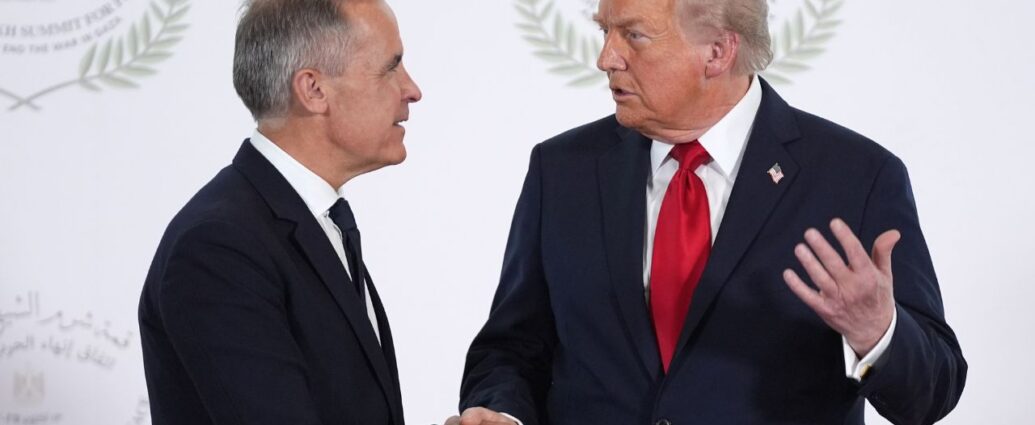
President Donald Trump on Wednesday dismissed the prospect of Canada becoming an associate member of the European Union as “laughable,” warning that the U.S. could impose heavy tariffs on Europe if he believed such a move was made with “bad intention.”
Trump was asked by reporters about the prospect of Canada becoming the EU’s first “associate member.”
“I think it’s laughable,” Trump responded. “If they do that, if I think it’s at all hostile act, I will put very serious tariffs or stop trading with Europe on many things.”
“If Europe does that with a bad intention – if it’s a good intention that’s fine – if it’s a bad intention, we’ll put very heavy tariffs on Europe,” he added.
EU OPENS DOOR TO UNPRECEDENTED ‘ASSOCIATE MEMBER’ STATUS FOR CANADA AMID US TRADE SPAT
Trump’s comments come amid a trade conflict between two of North America’s largest trading partners after U.S.-Canada trade talks collapsed last month, triggering a series of tit-for-tat tariff measures.
While speaking to reporters Wednesday, Trump also described Canada as a “terrible trade partner.”
His comments came after European Commission President Ursula von der Leyen proposed Wednesday that Canada become the first associate member of the European Union as the two sides pursue a deeper economic and security partnership.
Speaking with Canadian Prime Minister Mark Carney in attendance, von der Leyen said, “I would like to work with you on opening the door for Canada to be the first associate member of the EU.”
TRUMP EXPANDS CANADA TRADE FIGHT WITH SWEEPING BAN ON CANADIAN IMPORTS
Von der Leyen said the two sides would move beyond their existing CETA trade agreement toward what she called an “Alliance for the Future,” aimed at creating a common prosperity and economic security space. The proposed partnership would include cooperation on manufacturing, technology, defense, energy, critical minerals, artificial intelligence, cybersecurity and the Arctic.
The EU overture comes as Canada looks for new trading opportunities beyond its longtime economic relationship with the U.S.
Carney, who is scheduled to address the European Parliament on Thursday, has pledged to double Canada’s non-U.S. trade over the next decade while pursuing what he has called a “unique alliance” with the EU, rather than full membership.
Historically, the EU has balked at flexible alliances without a defined legal status, and any potential associate membership for Canada would ultimately be up to EU member states to decide.
BILLIONAIRE WARNS ‘EVIL EMPIRE’ WANTS TO ‘CRIPPLE TRUMP,’ CALLS OUT AMERICA’S NORTHERN NEIGHBOR
Trump’s remarks came the same day his administration escalated a separate trade dispute with Canada.
Trump signed a presidential memorandum directing federal officials to identify Canadian-origin products that could be removed or made unavailable for purchase through the federal civilian procurement system.
The White House accused Canada of imposing barriers that disadvantage American companies seeking Canadian government contracts while Canadian businesses retain access to portions of the U.S. federal procurement market. The memorandum specifically cited Canada’s “Buy Canadian” policy and restrictions imposed by Canadian provinces.
According to the White House, Canadian companies have access to more than $280 billion annually in U.S. federal procurement covered under the World Trade Organization’s Agreement on Government Procurement.
CLICK HERE TO GET FOX BUSINESS ON THE GO
The Trump administration added that it would take action against what it described as “unreasonable,” “discriminatory” and “unfair” trade practices.
Fox Business’ Bradford Betz contributed to this report.
Mahsa Amini’s legacy, four years after her murder by Iran’s morality police – editorial
Four years ago yesterday, Mahsa Jina Amini died in a Tehran hospital after being detained by Iran’s morality police for allegedly wearing her hijab improperly. She was only 22 years old.
On Wednesday, the anniversary of her death was marked across parts of Iran by a general strike. Videos from the country’s Kurdish regions showed rows of shuttered shops in Saqqez, Amini’s hometown, as well as Sanandaj, Kamyaran and other cities. Security forces and riot police were deployed, while routes toward Aichi Cemetery, where Amini is buried, were reportedly blocked.
Four Kurdish political prisoners also announced a hunger strike to mark the anniversary, while rights groups reported arrests in the days preceding it.
That the authorities continue to take such precautions four years after the death of a young woman from Kurdistan illustrates how potent her name remains in Iran.
Amini’s death on September 16, 2022, sparked demonstrations across the country and gave the world the slogan “Woman, Life, Freedom.” Women removed and burned their headscarves, and protesters filled streets from Tehran to the Kurdish West.

Demonstrations in Iran brutally crushed
The demonstrations were eventually crushed. Hundreds were killed, thousands were arrested, and several protesters were subsequently executed. The regime survived the uprising, although Iranian society did not emerge unchanged.
The difference is perhaps most visible among women. Four years later, women can regularly be seen in parts of Tehran and other major cities walking through shopping centers, sitting in cafes, and using public transportation without the mandatory hijab.
The authorities have continued trying to enforce compulsory veiling through arrests, prosecutions, surveillance cameras, warning messages, vehicle seizures, and pressure on businesses. The law remains, although the sight of women openly disregarding it has become considerably more commonplace than it was before Amini’s death.
There is a danger, however, in allowing the hijab to become the sole measure of the movement she inspired.
“In my view, one reason the name of Jina Amini and the Woman, Life, Freedom revolution has endured is that this revolution should not be reduced to the issue of the hijab,” Yasser Fattahi told The Jerusalem Post.
Fattahi’s family experienced the violence that accompanied those first demonstrations firsthand. His father was killed while trying to save a young woman who had been shot following Amini’s funeral.
“Women’s problems are not limited to the hijab,” Fattahi said. “Freedom does not simply mean having the freedom to choose whether or not to wear a hijab. This is the most basic of women’s rights.”
His words are especially poignant when looking at Iran four years later. Women continue to face extensive discrimination, political prisoners remain behind bars, and executions continue at an alarming rate.
Renewed nationwide protests leave 40,000 reportedly dead
Earlier this year, another wave of nationwide protests was met with lethal force and mass arrests, which left at least 40,000 reported dead. Economic hardship, political repression, and demands for greater personal freedom remain familiar features of Iranian life.
There is also now a generation of young Iranians whose formative years have been shaped by everything that followed Amini’s death. A girl who was 14 in September 2022 is 18 today. She has spent her adolescence watching women challenge compulsory veiling, schoolchildren confront authorities, protesters face execution, and successive periods of unrest shake the country.
The huge demonstrations of autumn 2022 are gone from Iran’s streets, and the Islamic Republic has repeatedly demonstrated that it possesses both the means and the willingness to suppress organized opposition. Four years later, however, the grievances that drove Iranians onto those streets remain readily apparent.
Wednesday offered another small indication of that. In Saqqez and elsewhere, shopkeepers were prepared to close their businesses to commemorate a woman whose death the authorities would undoubtedly prefer to consign to history.
Mahsa Amini never saw the movement that grew from the outrage over her death or the millions of people around the world who came to know her name. The Iran of September 2026 remains repressive, and many of the freedoms demanded by those who marched in 2022 remain unrealized.
The shuttered shops in her hometown on Wednesday showed that four years after her death, Mahsa Amini remains a powerful symbol of the freedoms many Iranians are still demanding.
Trump willing to ‘part ways’ with Netanyahu when necessary, has often opposed him, Vance says
US Donald Trump has an unprecedented track record of opposing Israeli Prime Minister Benjamin Netanyahu when it comes to advancing the interest of the American people, Vice President JD Vance said during a virtual address Tuesday at a Los Angeles-based technology summit.
More than any president in the last 40 years Trump “has shown a willingness to actually part ways with ‘Bibi’ Netanyahu when he feels like the interests of the American people are different from the interests of the government of Israel,” Vance told the All-In Summit on technology.
The claim that Trump is the “one president” who would differ with Netanyahu is one that would surprise many watchers of the US-Israel relationship.
The most significant US-Israel rupture since 2009, when Netanyahu was first elected prime minister, was with President Barack Obama in 2015 over Obama’s nuclear deal with Iran.
Gap between US, Israeli interests continues increasing, Vance says
Vance’s comments were the latest in a series he has made emphasizing the widening gulf between Jerusalem and Washington as November midterm elections approach and at a time when Netanyahu’s popularity in the United States is at a low after three years of Middle East wars.

A Pew poll from the end of March, when the United States was actively at war with Iran, found that 60% of US adults unfavorably view Israel and that 59% lacked confidence in Netanyahu’s handling of world affairs, an increase of 7% in both categories.
Republicans are scrambling to shuck off unpopular policies and associations, fearing the party will lose control of Congress in the midterms, a result that would cripple Trump’s agenda in the final two years of his presidency.
“I find it a little ironic … that you have Democrats criticizing Donald Trump for his relationship with Bibi when Donald Trump is the one president of the last 40 years who’s been willing to say, you know what, yeah, Bibi is a good partner, but also Bibi and I have a different opinion on this, or Bibi’s wrong about this, or maybe Bibi’s right about this from the perspective of Israel. But the American people need us to go in a different direction,” Vance said.
Trump has often touted himself as the president who has done the most for Israel, including relocating his country’s embassy to Jerusalem and rupturing Obama’s Iran deal, during his first term in 2018 and securing the release of the Gaza hostages in 2025 during his second, nonconsecutive term. The war he and Netanyahu launched against Iran in February is the first ever joint US-Israeli military action.
The friendship between the two leaders is a highly public one, with Netanyahu enjoying more White House visits than any other world leader. Each has made the close ties central to their electoral campaigns. Netanyahu pitches himself as the world leader most influential with Trump, while Trump’s evangelical base lauds his closeness with Israel.
Emphasizing differences between US, Israel
Vance, however, has often taken a harsher line, including accusing Israel of trying to manipulate US public opinion on the Iran war.
“Israel has been an important partner when it comes to military technology, when it comes to intelligence sharing, but also sometimes the United States doesn’t always agree with Israel,” Vance said on Tuesday.
Serious differences have emerged since the joint US-Israel goals in the Iran war – to change the regime and end once and for all Iran’s potential to acquire a nuclear weapon – have foundered. Among these has been the US decision to end the Iran war without a clear plan to block the Islamic Republic’s path to nuclear weapons and its agreement to enter into a civilian nuclear deal with Saudi Arabia, without insisting on a normalization deal with the Jewish state.
“We cannot let our Middle Eastern foreign policy be subservient to the state of Israel,” Vance told the All In Summit.
Pro-Israel figures object to Vance’s attitude towards Israel
Vance has also ruffled American Jewish feathers by refusing to disavow media personality Tucker Carlson, who has promoted conspiracy theories about Israel and Jews.
Vance’s remarks rankled pro-Israel figures who have otherwise been supportive of Trump’s policies.
“American foreign policy should be subservient to no country,” Jonathan Schanzer, the executive director of the Foundation for the Defense of Democracies, an influential think tank that backed the Iran war, wrote on X/Twitter. “Why does the VP feel compelled to call out Israel in this respect? Why not call out the Qataris, or the Saudis, or Ukraine? Odd how this keeps happening.”
Heather Johnston, a Christian evangelical who founded the US Israel Education Association, accused Vance on X of catering to Israel haters.
“Our US foreign policy has never been subservient to Israel’s foreign policy,” she said, attaching a clip of Vance’s remarks. “He knows that. Why would he need to say that unless he’s trying to politically gain some points with Israel haters?”
The accusation hit a nerve. Vance’s communications director Taylor Van Kirk quoted Johnston’s tweet, and posted the entire exchange on X. “Let’s all take a moment to actually watch this exchange in full, where the VP was specifically asked about Israel,” Van Kirk said.
Meeks Places Hold On Trump’s $2.8 Billion Bomb Sale To Israel, But Objection May Not Stop It
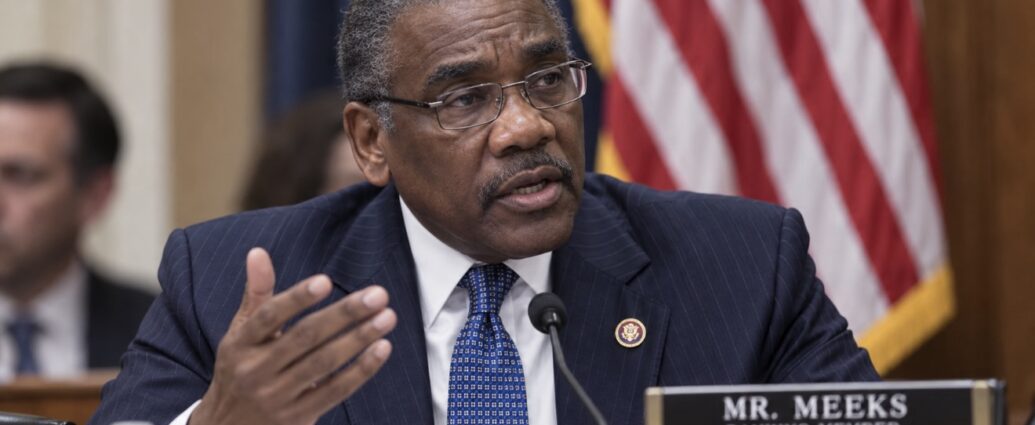
Rep. Gregory Meeks (D-N.Y.), the ranking Democrat on the House Foreign Affairs Committee, announced Wednesday that he is placing a hold on the Trump administration’s proposed $2.8 billion sale of 40,000 heavy bombs to Israel, citing unresolved concerns about how the weapons could be used in Gaza and Lebanon.
The package includes roughly 40,000 of the 2,000-pound bombs whose transfer had been paused under the Biden administration over fears of mass civilian casualties. Meeks said in a statement that he remains committed to Israel’s security but will not clear the sale “at this time,” saying the administration has not provided sufficient assurances the weapons would be used in accordance with U.S. and international law.
The hold comes through an informal review process under the Arms Export Control Act. Before formally notifying Congress of a major arms sale, the State Department gives the chairs and ranking members of the House Foreign Affairs and Senate Foreign Relations Committees an informal heads-up, typically 20 to 40 days ahead of time. During that window, a committee leader can flag concerns, and the department has traditionally paused rather than proceed over an objection. It is not required to.
Once a sale clears that stage and is formally submitted, Congress has a narrow opportunity to block it, 30 days for most countries, only 15 for Israel, by passing a joint resolution of disapproval. Such resolutions rarely pass both chambers, and would still need to survive a presidential veto.
The Trump administration has moved around a Meeks hold before. In February 2025, it proceeded with an arms package despite his objection. It also bypassed the formal notification process on other Israel arms sales by invoking emergency authority, and cleared a separate $6.67 billion round of sales to Israel in January.
The State Department did not respond to requests for comment on the new sale or on Meeks’ objection.
JBizNews Desk | Washington, D.C.
© JBizNews.com All Rights Reserved. Reproduction or distribution without written permission is prohibited.



Trump to meet Gulf leaders for Iran war talks next week – report
US President Donald Trump is expected to meet with Gulf leaders in New York next week to discuss the next steps in the war with Iran, Axios reported on Wednesday, citing three sources with direct knowledge.
Trump is scheduled to meet with leaders or foreign ministers from the six Gulf Cooperation Council countries – Saudi Arabia, the United Arab Emirates, Qatar, Bahrain, Kuwait, and Oman – on the sidelines of the UN General Assembly on Tuesday.
The talks are expected to focus on US proposals for a postwar strategy following the conflict with Iran, according to Axios.
Trump and his senior team are working on a “day-after” plan for the war, which is expected to be finalized after the upcoming US midterm elections, the report said.
The State Department sent initial invitations for the meeting on Wednesday, Axios added.
This is a developing story.

No. 49: Prof. Jennifer Mnookin: Columbia’s first Jewish pres., arriving at its most turbulent hour
Prof. Jennifer Mnookin became Columbia University’s 21st president on July 1, 2026 – the school’s first Jewish leader in three decades. She arrived after two turbulent years of campus antisemitism controversy, a $221 million settlement with the Trump administration, and three predecessors in rapid succession.
Born in Cambridge, Massachusetts, in 1967, Mnookin built an academic career at the intersection of law and science, earning degrees from Harvard, Yale, and MIT before specializing in how expert and scientific evidence is evaluated in American courtrooms, the subject of her doctoral thesis, “Images of Truth: Evidence, Expertise, and Technologies of Knowledge in the American Courtroom.”
She spent six years on the National Academy of Sciences’ Committee on Science, Technology, and Law, and co-chaired a working group advising the President’s Council of Advisors on Science and Technology on the use of forensic science in criminal courts. She served as dean of UCLA’s law school before becoming chancellor of the University of Wisconsin-Madison in 2022, where she led an institution of more than 50,000 students across 13 schools and colleges.
Her handling of October 7 was a preview of the balancing act she now faces at Columbia. Four days after the Hamas-led terrorist massacres in Israel, she wrote to her Wisconsin campus community, condemning the “vicious terrorist attacks by Hamas on Israeli civilians,” adding: “To the great many people in our community who have friends, family, and loved ones in Israel or the Palestinian territories: my heart goes out to you.”
Mnookin authorized NYPD to clear pro-Palestinian campus encampment
When a pro-Palestinian encampment rose on campus in April 2024, she authorized police to clear it, then, when protesters returned, negotiated an agreement to end it peacefully, pledging in exchange to host Palestinian guest scholars.

The approach drew mixed reviews: one Wisconsin graduate, Jacob Bigelman, cautioned “the chancellor being Jewish would lead a lot of Jewish students to automatically assume she’s ‘on our side.’ That’s not her role,” while acknowledging “Mnookin was definitely present in the aftermath of October 7.”
That record shaped the welcome she received at Columbia. “The last few years have been undeniably difficult for the Jewish and Israeli communities on campus,” said Brian Cohen, a Hillel leader at Columbia, in a statement following her appointment. “I am hopeful that president-elect Mnookin will bring the reputation, experience, and understanding that we need.”
Columbia’s trustees, announcing her selection, called her “a keen listener who builds consensus and does not shy away from making difficult decisions when necessary” – a description she will be tested against as she works through the recommendations of Columbia’s antisemitism task force, on a campus still deeply divided.
<< No. 45: Ben Shapiro, Mark Levin, Dan Senor, and Jake Tapper
No. 47: Yair Golan and Gilad Kariv: Reviving Israel’s fractured Left
Yair Golan
On the morning of the October 7 massacre, Yair Golan picked up his weapon, got in his car, and sped south to rescue dozens of Supernova music festival-goers targeted by Hamas gunmen.
Since then, he has made it his mission to unite Israel’s fractured Left.
After taking over from Merav Michaeli as Labor leader in 2024, Golan sought to revive a flailing Israeli Left, diminished further after Meretz failed to cross the electoral threshold in the 2022 election, and wounded by a Labor Party that fell to a record-low four seats in the 25th Knesset.
Golan’s answer was to rebrand the struggling Labor Party as the Democrats. The former IDF deputy chief of staff, who served under Gadi Eisenkot, vowed to prevent another split on the Left, quickly securing a merger with Meretz for the upcoming October 27 election.
Golan, who has historically supported a two-state solution, has adopted a more balanced approach to the Israeli-Palestinian conflict, arguing that the approach taken on the matter should be more nuanced in a post-October 7 world. Under his leadership, the Democrats committed to a list incorporating gender parity through a zipper system – in which the list must switch back and forth between a candidate of one gender and a candidate of the other – while also guaranteeing representation for the rural sector and minority communities, including an Arab candidate, in a realistic slot.

Golan is notably one of the only party leaders in the opposition bloc that has actively called to form a coalition with the Arab parties.
Gilad Kariv
While Golan focused on reshaping Israel’s only left-wing party, MK Gilad Kariv emerged as the Democrats’ leading and most vocal presence in the Knesset.
As a member of the Knesset’s National Security Committee, Kariv led the opposition’s parliamentary fight against National Security Minister Itamar Ben-Gvir’s death penalty bill, filing a High Court petition against what he called an “immoral” and “disgraceful” law.
As chairman of the Aliyah, Integration, and Diaspora Affairs Committee, Kariv convened the panel more than a dozen times in an effort to push police action to locate nine-year-old Haymanot Kasau, who has been missing since 2024, frequently clashing with the national security minister in the process.
Advocating for the unconditional release of all Gaza hostages, Kariv regularly attended protests alongside hostage families and his fellow Democrats lawmakers, often calling for a ceasefire deal and asserting Israel’s “national and moral responsibility” to return all hostages to their families.
Kariv has also repeatedly warned Israel’s government over inaction he said was leading to a “tsunami” of emigration from the country. “To all the Israelis who left the country, the fix is on the way,” he said. “And we need you with us to bring it.”
The party held its primaries in July to decide its Knesset slate ahead of the election, drawing more than 114,000 voters, in what Golan hailed as an “unprecedented democratic surge.”
Having revived and united the Left, Golan and Kariv now face the tall task of turning that resurgence into political power, putting their policies at the forefront of Israel’s next coalition – and returning to the decision-makers’ table.
No. 45: Michael Dell, Amnon Shashua, Jan Koum, Safra Catz, Brandon Korff, Dmitry and Igor Bukhman >>
<< No. 47: Russell Robinson, Elliott Brandt, and Bernard Kaminetsky, Bruce Leboff
US still committed to disarming Hamas, source says, after Katz claims it will not happen – report
The United States remains committed to disarming Hamas, and Defense Minister Israel Katz’s statement claiming that “everyone understands” that it will not happen goes against the Board of Peace’s efforts, a source close to the BoP told KAN News on Wednesday.
“There is no need to believe or guess,” the source told KAN News. “Only to cooperate with the Peace Council’s plan to remove Hamas from all its weapons and rule in Gaza. According to the plan, either Hamas will disarm itself of all its weapons voluntarily, or the IDF will disarm it by force, with international backing.”
A source in Washington also told KAN News that US President Donald Trump remained fully committed to his 20-point plan to disarm Hamas, claiming that afterward, “Israeli forces will withdraw and the International Stabilization Force will work with the Palestinian police to assume responsibility for Gaza and ensure that it will be a safe place for its residents and neighbors.”
The source also reacted to Katz’s statements on Palestinian emigration from Gaza, saying that the US’s stance remains against the policy of removing residents from the Gaza Strip.
Katz’s comments were made earlier on Wednesday, in response to People of Israel chairman Ofer Winter, who had criticized the Israeli government for not yet fully eliminating Hamas.

In a post on X/Twitter, Katz says that Winter is “not up-to-date,” claiming that 70% of Gaza was destroyed and that the IDF surrounds the remaining 30% and is working to eliminate the remainder of Hamas.
Katz says emigration from Gaza will be advanced after US promotes it
In a later post on X, Katz moderated his stance, no longer claiming that the disarmament of Hamas would not happen, and specifying that targeted strikes against Hamas figures are made “in accordance with enabling political conditions.”
הביקורת המסולפת של עופר וינטר נגד הממשלה וצה”ל בעקבות חיסול מח”ט רפיח של החמאס אמש, זהה לזו של כל הלשעברים יושבי האולפנים בעלי התפיסה הביטחונית המיושנת שמתעלמים מההישגים הגדולים באיראן, בעזה, בלבנון ובסוריה כדי לתקוף את הממשלה. בדיוק כמוהם הוא תוקף במקום לשבח.
וינטר לא מעודכן…
— ישראל כ”ץ Israel Katz (@Israel_katz) September 16, 2026
He also stated that emigration from the Gaza Strip would only be advanced “when the US administration decides to return to the initiative and promote it by convincing countries to absorb the migrants.”
Winter responded, asking Katz, “How can it be that after three years of war and five divisions fighting in Gaza, there is no resolution, Hamas is still on its feet, there is no voluntary emigration despite a blank check from the Americans that you threw in the trash, and we are still sending Hamas hundreds of supply trucks every day?”

New lawsuit argues NIH violated First Amendment rights of grant applicants
A group of researchers are suing the National Institutes of Health for allegedly infringing on their freedom of speech by screening grants for certain words and phrases when making funding decisions.
The suit, brought by 13 named and four anonymous researchers, is seeking to halt the process of searching applications and current grants for specific terms to determine if they should be rejected. The screening process has largely focused on research grants on topics that the Trump administration disfavors, including efforts to diversify the research workforce, or studies on health disparities, climate change, and vaccines. Because the case was filed as a class action lawsuit, if a judge sides with the plaintiffs, that decision will apply not just to the 17 scientist plaintiffs, but to any researcher whose work has been affected by the term searches.




Walmart launches weeklong fall sale overlapping Amazon Prime Big Deal Days
Walmart is rolling out a weeklong fall sales event that will overlap with Amazon’s Prime Big Deal Days, giving consumers two major discount events during the early holiday shopping season.
The retailer’s Deals & More event begins at 12 a.m. ET Oct. 5 and runs through Oct. 11, offering shoppers seven days of discounts across categories including home, tech, toys and Halloween items.
Amazon’s “Prime Big Deal Days” are scheduled for Oct. 6-7, meaning the two sales events will overlap for two days.
E COLI BLUEBERRY RECALL EXPANDING TO FROZEN MIXED BERRY PACKAGES SOLD AT WALMARTS IN 16 STATES
Ahead of the sale, Walmart has been advertising discounts of up to 50% on home items; 40% on tech; 30% on toys, food and Halloween products; 25% on tools; and 20% on wellness items.
“Heads up — big deals coming!” Walmart states on its website.
Unlike Amazon’s Prime Big Deal Days, Walmart’s sale is expected to be available to all shoppers and does not require a paid membership.
WALMART MAKES CHANGES TO HOW MILLIONS OF CUSTOMERS CAN PAY AT CHECKOUT
Amazon, meanwhile, said Prime Big Deal Days is an exclusive event for Prime members.
“Looking to get a head start on your holiday shopping? Prime members can start saving now ahead of Prime Big Deal Days 2026, returning October 6-7 with 48 hours of exclusive deals across more than 35 categories,” Amazon said in a press release Monday.
Amazon said Prime members will be able to shop for millions of deals on brands, seasonal items and everyday essentials when the event begins at 12:01 a.m. PDT on Oct. 6, adding that early deals are already available.
WALMART E-COMMERCE SALES SURGE AS CEO TOUTS ‘PRICE, SPEED AND CONVENIENCE’
GET FOX BUSINESS ON THE GO BY CLICKING HERE
The company also encouraged shoppers who are not already Prime members to sign up or start a free trial to access the sale and other membership benefits.
Walmart and Amazon could not immediately be reached by FOX Business for comment.
Exclusive: Inside the room where Nancy Pelosi and Mike Pence shared an emotional embrace in front of America’s leadership class
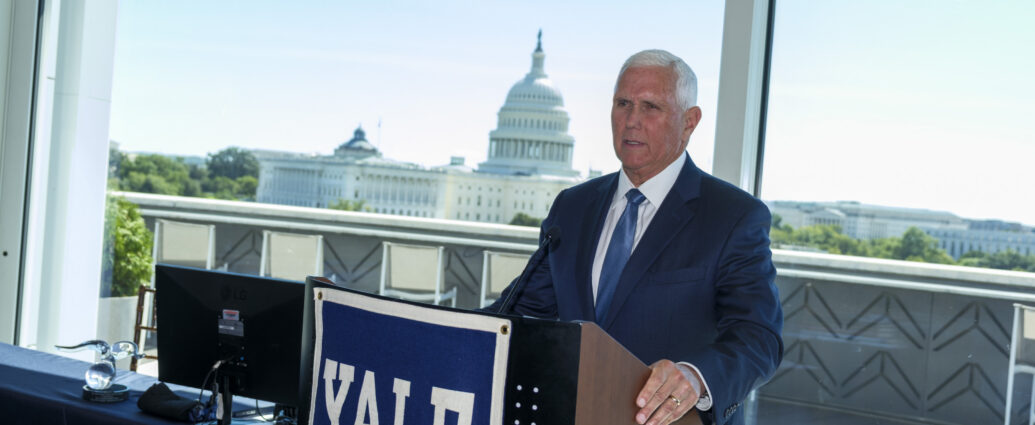
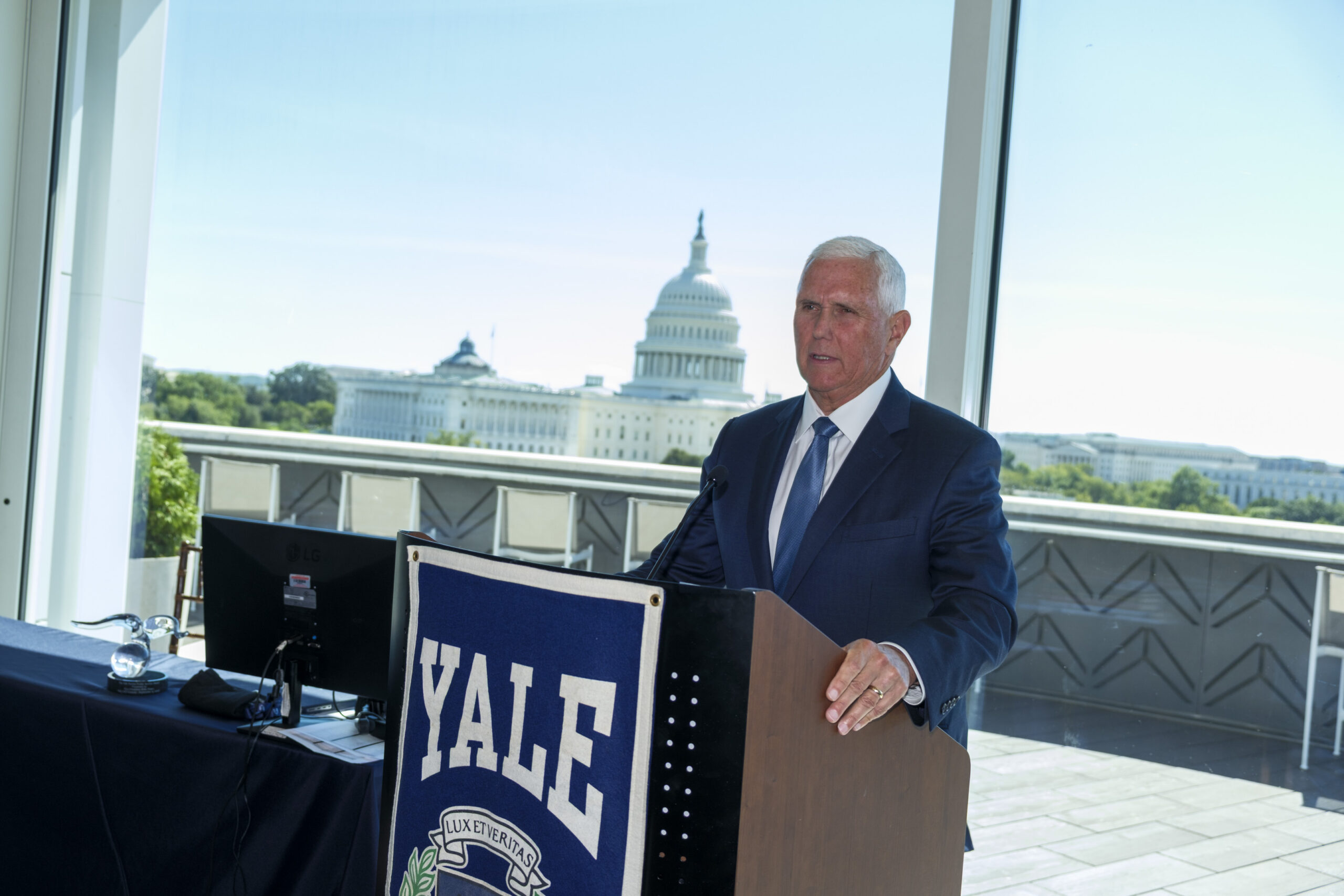
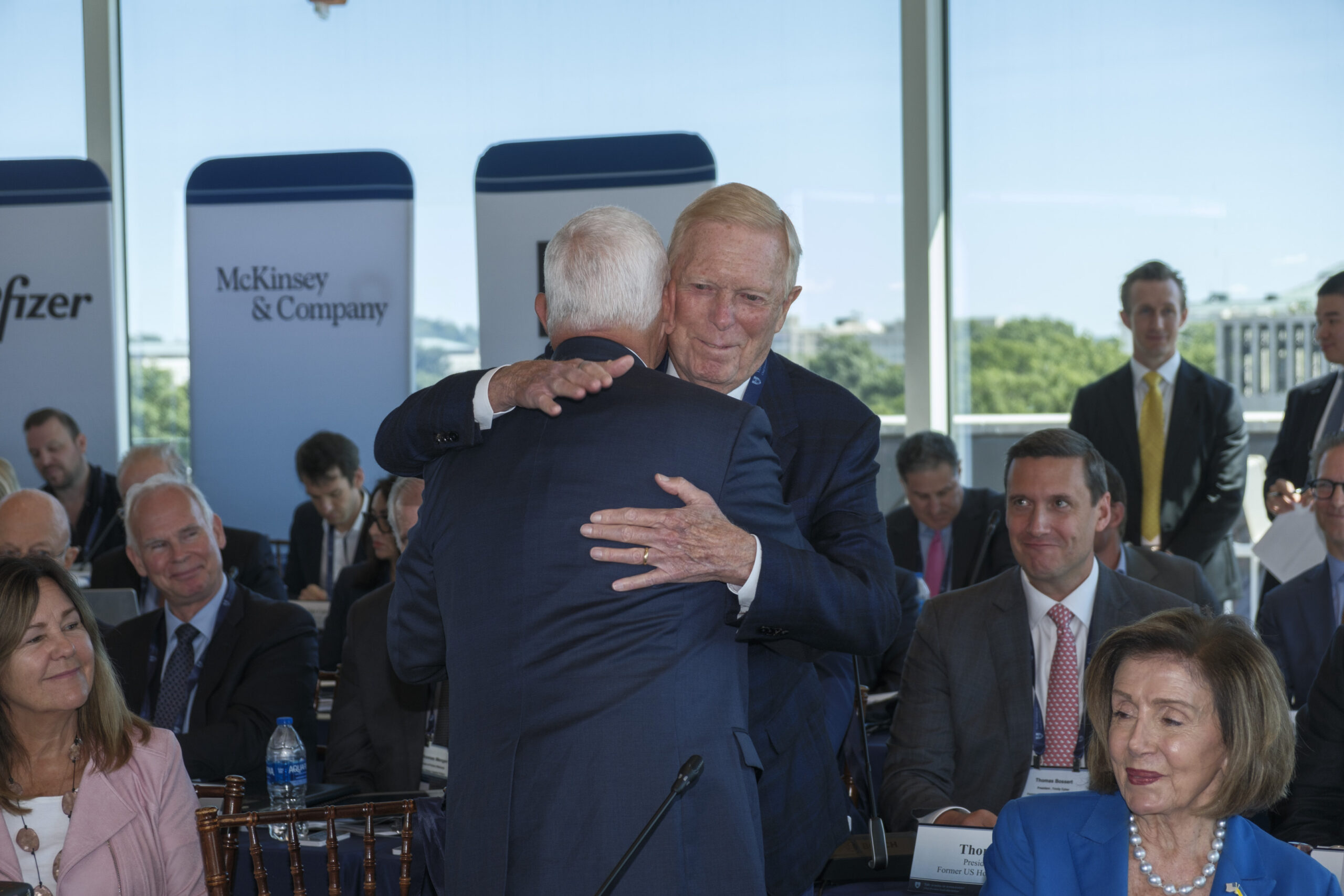
It lasted surprisingly long, roughly 20 seconds. They gripped each other’s hands as they leaned in to whisper. The former Vice President and former Speaker of the House, before each was awarded the inaugural Yale Patriot Public Service Award, paused to embrace each other.
When Nancy Pelosi walked into the room, more than halfway through the event, a hush fell over the crowd and all turned to look. She worked her way through the front, shaking hands, sharing whispers and short side hugs with familiar faces; of which, it seemed, there were several in the crowd. But most surprising of all was when she finally found her seat—next to former Vice President Mike Pence. The two have sat side by side many times before, famously behind Trump during his 2020 State of the Union, when she ripped the President’s speech in half as Pence disparagingly watched.
The House Speaker Emerita—who is completing her final term after nearly four decades representing San Francisco—and the former vice president—who spent January 6, 2021, resisting his own president’s demand that he overturn a certified election—came together in Washington D.C. at the Yale Chief Executive Leadership Institute, hosted by Jeffrey Sonnenfeld, the Lester Crown Professor in Management Practice and Senior Associate Dean at Yale School of Management.
We watched it happen from the floor as Fortune‘s representatives at the closed-door gathering, whose off-the-record ground rules were lifted by everyone named in this article. Whatever else may divide them, the two stood shoulder-to-shoulder as the inaugural recipients of the Yale Patriot Public Service Award for Executive Leadership, built on the idea that they had put the country ahead of their party and themselves. It was “shocking, historic and emotional to all,” Sonnenfeld told Fortune of the unexpected embrace. Pence later posted about the event on X.com.
Two awards, one thesis
The award, inaugurated this year to mark the 250th anniversary of American independence, went to Pelosi for “Legislative Leadership” and to Pence for “Executive Leadership.” Sonnenfeld, who has run the semiannual CEO Caucus for decades, designed the awards explicitly to honor “Americans of both parties who have devoted their lives to public service and rendered it with integrity, civility and devotion to country above party.”
The presenter list was a bipartisan reunion in its own right. Former Democratic House Majority Leader Dick Gephardt spoke forcefully about how Pence “put country over party, and more importantly, country over self.” He told the room, “Mike Pence is a patriot. He has good character. He did the right thing. He stood for the Constitution, he stood for the laws of this country, and he saved this democracy.”
Carla Hills, a Republican who served as U.S. Trade Representative and HUD Secretary, offered a parallel case for Pelosi: “In these highly partisan days, Nancy Pelosi has really been a model for outstanding government leadership,” she said. “She takes principled positions. Policy over politics. And policy over her own needs for reelection.”
Former Federal Reserve Chair and Treasury Secretary Janet Yellen, unable to attend in person, sent a pre-recorded tribute praising Pelosi’s “remarkable ability to look at seemingly impossible political situations, figure out what can actually be done, and then somehow get it done,” adding that “all of that political skill is grounded in a very clear sense of purpose and a strong moral compass.”
Other attendees who lifted the off-record ground rules to express their support for the awards included former HHS Secretary Sylvia Mathews Burwell, Chief Executive Group CEO Marshall Cooper, USA Networks founder Kay Koplovitz and American Industrial Acquisition Chairman Leonard Levie.
Speaking of their behavior at the summit, Sonnenfeld told Fortune, “many were shocked, and all were moved by this historic embrace of long-standing political rivals who are titans of their respective political parties.” He said he hoped that this could provide a “much-needed pathway for business leaders to help pilot their businesses through the anxieties of the next few weeks and possibly next few months of a divided nation.”

A ‘vivid reminder’
The tributes to Pelosi and Pence were the emotional centerpiece of a caucus otherwise consumed by anxiety: over the ongoing war in Iran, Trump’s upcoming visit to China, and AI’s effect on jobs and markets. And yet Pence and Pelosi both offered several jokes, in keeping with Sonnenfeld’s tone as a free-wheeling master of ceremonies.
Fortune‘s Diane Brady wrote this morning that she “did not expect to return from the Yale CEO Caucus in Washington feeling more hopeful than when I arrived,” crediting the standing ovations for Pence and Pelosi as proof that “what unites them isn’t their politics but their commitment to the Constitution, public service, integrity and something bigger than themselves.”
Reaction from other attendees echoed that relief. Jay Timmons, president and CEO of the National Association of Manufacturers, said manufacturers are “wrestling with enormous uncertainty, much of which has been brought about by populism and extreme partisanship.” He called the joint tribute a “vivid reminder that our nation is at its best when our leaders work together to advance America’s highest ideals.”
Robert Hormats, who served as a senior State Department economic official across five administrations, was more emphatic, describing Pence and Pelosi as “HEROES WHO SAVED OUR DEMOCRACY THAT DAY. … A TRULY MEMORABLE DAY.”
This story was originally featured on Fortune.com
Saudi Arabia strikes Al-Barh bridge in Yemen twice in 2 days as conflict with Houthis escalates
Saudi Arabia struck the Al-Barh bridge in southwestern Yemen early on Thursday morning, Ynet reported citing the Houthi-linked news channel Al-Masirah.
Two airstrikes were carried out on the bridge, the reported said, adding that this was the second time Al-Barh had been targeted in the last two days.
Additionally, the Houthis claimed to have shot down a Saudi drone in the eastern Saudi Arabian city of Haradh, Iranian state media Islamic Republic of Iran Broadcasting reported on Wednesday evening.
Saudi planes have carried out 40 airstrikes across Yemen in the last 24 hours, IRIB added.
The strikes come amid escalating conflict between Saudi Arabia and the Iranian-backed Houthis in Yemen.
This is a developing story.

Israel, Morocco agree to upgrade diplomatic ties, expand flights at US-backed summit
Israel, Morocco and the US held a trilateral diplomatic summit in New York on Wednesday, agreeing to advance the Abraham Accords.
The meeting of Foreign Minister Gideon Sa’ar, Moroccan Foreign Minister Nasser Bourita, and US Ambassador to the UN Mike Waltz comes a day after the sixth anniversary of the Abraham Accords.
The three countries reaffirmed their commitment to steps including upgrading diplomatic relations between Israel and Morocco, raising the status of their respective diplomatic missions to embassies and appointing ambassadors.
The Israeli government’s official Arabic-language X/Twitter account also published details of the agreements reached at the summit.
قمة ثلاثية تاريخية في نيويورك: وزير الخارجية غدعون ساعر، وزير الخارجية المغربي ناصر بوريطة، والسفير الأمريكي لدى الأمم المتحدة مايك والتز
عقد وزير الخارجية غدعون ساعر، اليوم الثلاثاء في نيويورك، قمة دبلوماسية ثلاثية مع وزير الخارجية المغربي ناصر بوريطة، باستضافة السفير الأمريكي… pic.twitter.com/1jPMA8PzD3
— إسرائيل بالعربية (@IsraelArabic) September 16, 2026
Israel, Morocco agree to deepen economic ties
Israel and Morocco also agreed to conclude agreements on investment protection and the prevention of double taxation by the end of 2026.

The agreements are intended to facilitate reciprocal investment and strengthen economic and business ties between the two countries.
It was also agreed to expand flights between Israel and Morocco to include flights operated by Moroccan airlines, implementing this expansion by the end of 2026.
The sides further agreed that Israel and Morocco would hold reciprocal high-level visits in the coming months.
Sa’ar addresses future of Israel-Morocco relations
The Jerusalem Post saw the full text of Sa’ar’s remarks during the summit. During his speech, he thanked the leadership of the US, particularly Donald Trump, as well as Prime Minister Netanyahu, and the leaders of Morocco, the UAE, and Bahrain.
Addressing FM Bourita, Sa’ar said Morocco has a “very special place in this vision” and expressed hope that more Moroccans visit Israel and vice versa, as a way of continuing the friendship.
“The friendship between the Moroccan and Jewish peoples has deep roots and a rich history,” said Foreign Minister Sa’ar said.
“The declaration we signed today outlines practical ways to upgrade ties between Israel and Morocco for the benefit of both peoples, and we will work to implement it.”

Paramount’s California future in doubt amid escalating legal fight
California officials responded Wednesday to reports that Paramount is preparing to ditch the state, though the company declined to comment, and no official announcement has been made.
Officials inside Los Angeles Mayor Karen Bass’ office and California Attorney General Rob Bonta’s office were told Paramount planned to announce Tuesday that it was leaving the state, sources told TMZ.
The announcement never came, and the outlet said it was unclear whether the company changed course or merely delayed the decision. Separately, Politico is reporting that Paramount is actively looking for office space in Nashville.
Paramount declined to comment when reached by FOX Business.
Bonta’s office told FOX Business it could not comment on Paramount’s plans but acknowledged that the company has repeatedly threatened to leave California.
“It’s no secret that Paramount has been making this threat despite its alleged commitment to California and Hollywood,” Bonta’s office said in a statement. “What Paramount decides to do is Paramount’s choice alone.”
NEW PARAMOUNT CEO DAVID ELLISON ISSUES ULTIMATUM TO WORKERS
The attorney general’s office said it will continue enforcing the law while remaining open to good-faith negotiations.
Bass’ office told FOX Business the mayor remains focused on keeping entertainment jobs in the city.
PARAMOUNT-WARNER BROS DISCOVERY ANTITRUST TRIAL DATE SET; MERGER PUT ON PAUSE OVER LEGAL BATTLE
“Mayor Bass is focused on protecting and fighting for jobs in LA, including critical jobs in the entertainment industry that have been a vital part of Los Angeles’ economy,” her office said in a statement. “She’s been engaged on this issue and will continue to fight to make sure LA is home to Hollywood.”
The uncertainty comes as Paramount CEO David Ellison battles Bonta and 11 other state attorneys general over the company’s proposed $110 billion acquisition of Warner Bros. Discovery.
GET FOX BUSINESS ON THE GO BY CLICKING HERE
The states sued in July to block the media megadeal, arguing it would reduce competition and give the combined company excessive market power in film distribution and basic cable programming.
Ellison has reportedly threatened to move Paramount to Texas, Tennessee or Georgia if the legal battle is not resolved by Oct. 1. Settlement talks are ongoing. The lawsuit is scheduled to go to trial in March if a settlement is not reached.

Salesforce’s Marc Benioff to AI industry: Regulate yourselves or get sued
SAN FRANCISCO, Calif. — Marc Benioff strode down Mission Street Tuesday afternoon toward Salesforce Tower, where he was set to host a private dinner as part of a whirlwind of events during the company’s annual Dreamforce conference. Some pedestrians stopped to take photos of the 6-foot-5 CEO, surprised he had taken to the streets. One person congratulated him on his keynote address earlier in the day; several bodyguards surrounded Benioff as he walked.
Along the way, Benioff, still wearing the pinstripe suit and burgundy tie from the keynote, waved off concerns that AI could wipe out humanity, a topic that has been front-of-mind in Silicon Valley circles during the past week after Anthropic researcher Jacob Coxon quit over such worries. But Benioff, in a walking interview with Fortune, also said companies should be held accountable for risks they create, and he compared current AI issues to early mistakes made in social media.
“We know we have to hold companies responsible for their products and their technology before people are hurt,” Benioff said, while citing the Hawaiian concept of personal responsibility — kuleana — as essential for corporate ethics (Benioff has baked Hawaiian norms deeply into the San Francisco company’s culture.)
This year’s Dreamforce conference has again briefly become the center of gravity for the tech industry, with CEOs of major tech companies opining on AI safety risks.
Earlier Tuesday, Benioff was on stage at the Yerba Buena Center for the Arts interviewing OpenAI Chief Executive Sam Altman. The OpenAI boss described the July hack of Hugging Face by a swarm of rogue OpenAI agents as a terrifying wakeup call, and he said that companies should pace development so that safety is ahead of capabilities. During Benioff’s morning keynote at the Moscone Center, he was joined by Anthropic Chief Executive Dario Amodei, who also advocated pacing frontier AI models.
Nvidia Chief Executive Jensen Huang, meanwhile, took a different approach during Benioff’s keynote, saying speed and safety can exist simultaneously. Separately, Meta Chief Executive Mark Zuckerberg also shrugged off concerns, writing Tuesday that AI labs have a natural incentive to create safe AI.
Without offering a concrete solution, Benioff told Fortune that the responsibility largely lies in the hands of companies making AI (some of which Salesforce invests in). He said in practice, this means companies looking ahead to prevent harm rather than offering excuses after a mistake occurs, and that firms should rank their values so as to decide what takes precedence when priorities conflict.
While he declined to say whether governments should regulate AI companies, he said laws that govern product liability can be used as a legal mechanism for accountability, much as car manufacturers are held liable if a vehicle malfunctions.

The outspoken, at times controversial CEO also proposed a new Fortune 500-like list that would rank companies by their ethical standards, and he noted Apple as one firm he holds in high regard as a security standard-bearer. Benioff said he had not spoken recently to President Trump about AI safety; the president this past weekend called AI doomsday scenarios exaggerated and blamed “negative forces.”
“Only [tech] companies know what’s going on in their lab,” Benioff said. “At some deep level, these companies must hold themselves responsible for their safety.”
At Salesforce, Benioff said, that has meant wrapping AI models in a “trust layer” designed to prevent models from misbehaving because they operate within a highly constrained structure which also closely monitors agents. He said neither Salesforce nor its clients have experienced Hugging Face-like episodes. The difference for Salesforce is that it is not the one creating the super powerful and potentially dangerous frontier models.
Benioff has an odd relationship with the AI labs, and with San Francisco itself. On one hand, Anthropic and OpenAI’s creation of autonomous systems threatens the very existence of Salesforce’s core products.
Yet Salesforce also benefits from both labs, using their models to power various parts of its flagship AI product, Agentforce. On Tuesday, Salesforce announced a new system that allows customers to access its tools without logging into its systems, and it also unveiled a new reasoning model for Agentforce that it is building with Nvidia.
And while Benioff comes from a family with deep roots in San Francisco, he has recently found himself on the defensive in his hometown. Last year, Benioff issued an apology after he called on President Trump to deploy the National Guard to San Francisco during Dreamforce, citing a shortage of officers in the local police department. Angel investor Ron Conway, one of the city’s most recognized tech investors and a longtime friend of Benioff’s, resigned from the Salesforce Foundation’s board of directors after the comments, which disappointed some San Francisco residents because Benioff had built a reputation as a progressive, Democratic-supporting CEO before more recently embracing Trump (Benioff has said he’s an independent).

On Tuesday, as a fresh round of protesters gathered near the Moscone Center to object to issues such as Salesforce’s work with U.S. Immigration and Customs Enforcement, Benioff—who lives in Hawaii—took a lighter tone.
He said Salesforce still hires hundreds of off-duty officers during the conference but, as he stepped onto the city streets, noted: “This is San Francisco. If there’s not protesters, then we’re in trouble, right?”
Salesforce’s stock has rebounded recently as the company has quelled some “SaaSpocalypse” fears about AI threats to its business. Salesforce recently increased its full-year sales guidance after posting strong revenue and profits, due in part to rising demand for its AI offerings. It also struck a partnership with Anthropic that integrates Salesforce’s business tools with Claude.
Still, despite some recent wins, Benioff’s company is dealing with a transformation of the enterprise business model, with customers re-examining the traditional “per-seat” purchasing norm that has been core to Salesforce’s success. Its recent earnings have also benefited from its investment in Anthropic; it said it gained $2.6 billion from investments during its fiscal second quarter.
“We are accurate in our predictions,” Benioff said in response to SaaSpocalypse fears, as the 61-story Salesforce Tower came into view. “We have more employees now than we’ve ever had,” he said, dismissing worries of AI killing jobs (Salesforce employs more than 83,000 people.)
He walked into an elevator at Salesforce Tower to ride up to the top “Ohana Floor,” where dinner guests awaited him.
This story was originally featured on Fortune.com
Explosion heard in Netanya after tear gas grenade thrown on residential street
Security and rescue forces were dispatched to Netanya after several residents reported hearing an explosion, the National Fire and Rescue spokesperson said on Thursday.
Initial reports from the scene show that a tear gas grenade was thrown at the house, the statement added.
No injuries were reported.
This is a developing story.
‘Direct Indexing’ to Diversity Portfolios

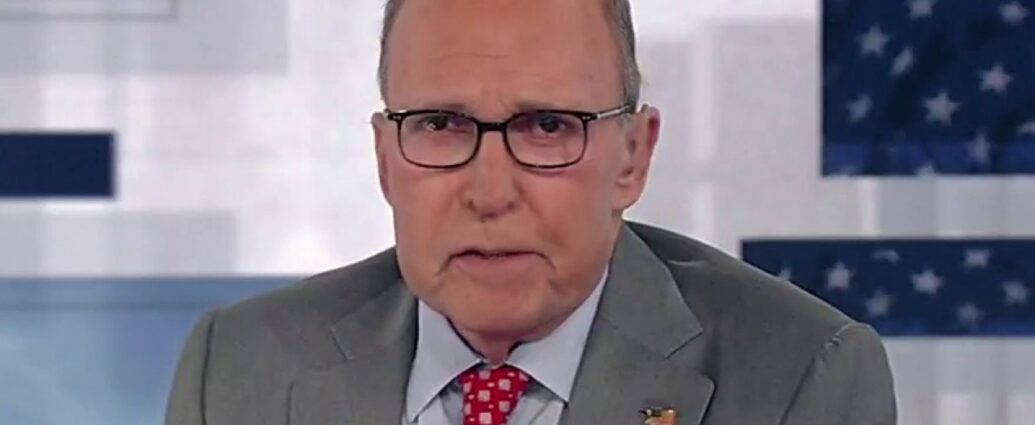
LARRY KUDLOW: Prosperity is as American as apple pie
Let’s begin at the beginning. Low taxes, light regulation, abundant energy, and a strong dollar, are the keys to economic prosperity. And prosperity is as American as apple pie. And though nothing is ever perfect, at the moment I would argue, the American economy is in a prosperous position, roughly a year after Mr. Trump and the Republicans passed their One, Big, Beautiful Bill.
The Atlanta Fed just raised its GDPNow estimate for the third quarter that ends September 30, to 5.1 percent. Real growth. Core GDP last quarter, by which I mean real domestic private sales, increased by over 4 percent.
As the Fed chairman, Kevin Warsh, pointed out in the Open Market Committee statement, the rate rise passed unanimously by a 12-0 vote, domestic spending is resilient — indeed today’s retail sales up 6 percent year-on-year, they also pointed out productivity growth is strong, and capital investment is robust. Unemployment is low.
By the way, nonfinancial productivity — output per person — is rising over 3 percent annually for the past two years. And that is counterinflationary. Meanwhile, capital investment with 100 percent immediate expensing for machinery, equipment, some buildings, a big chunk of the data center — this is the seedcorn of the future economy rebuilding our infrastructure on the supplyside, and it can’t possibly be inflationary.
Rapid productivity is likewise counterinflationary. More people working, the same. The Census Bureau just showed real median household income reached an all-time high, Hispanic and black poverty hit an all-time low. Incomes for the bottom 25 percent reached their highest level ever.
So let me repeat an old supply-side saw, growth is not inflationary. Especially this kind of business-led growth. Manufacturing profits are soaring. Of course profits are the mothers milk of stocks and the lifeblood of the economy. And that can’t possibly be inflationary.
Now it is true that Mr. Warsh has inherited the 21 percent cumulative inflation rate from President Biden and the former Fed chairman, Jay Powell. That, and a temporary oil shock for Mr. Trump’s war against Iran to prevent them from ever getting nuclear weapons. A noble mission. So as Mr. Warsh said today, the inflation rate is still too high. And he is concerned that the underlying trend is not improving to his satisfaction.
He said: “The plain fact is that inflation is too high and has been for too long. This summer’s inflation readings do not tell me that underlying trends have meaningfully improved.” He added that, “based on the most recent” consumer price index and producer price index data, “the 12 month change in total” Personal Consumption Expenditures index “prices likely was around 3.6 percent in August.” Mr. Warsh added that core PCE and CPI are “running at about 3.2 percent and 2.4 percent, respectively. Too many categories are still posting increases above 3 percent on both a six and 12 month basis.”
So the Fed raised its Fed funds target range by a quarter of a percentage point, to the range of 3-3/4 percent to 4 percent. To some extent, we are seeing real interest rates normalizing to accommodate stronger economic growth.
If Mr. Warsh is going to liquidate some excess balance sheet reserves, in order to strengthen the value of the dollar, that’s ok. Let’s not throw the baby out with the bathwater. Regime change at the Warsh Fed should specify that growth does not cause inflation.

Eggs recalled as salmonella outbreak sickens 23 people
California health officials are urging consumers not to eat recalled organic eggs after a salmonella outbreak sickened 23 people and hospitalized seven.
The California Department of Public Health (CDPH) announced last week that the outbreak had been linked to Happy Hens brand organic eggs produced at the company’s Ramona, California, farm.
The company voluntarily recalled the eggs on Sept. 8.
“Consumers should throw away recalled eggs or return to (the) place of purchase for a refund. Consumers should contact their healthcare provider if they become sick with symptoms of Salmonella infection within 7 days of eating this product,” CDPH said.
POPULAR SO DELICIOUS FROZEN DESSERT RECALLED OVER POSSIBLE STONE CONTAMINATION
As of Sept. 8, the outbreak had sickened 23 California residents, sending seven people to hospitals. No deaths have been reported.
“Because this outbreak is considered ongoing, additional recent illnesses linked to this outbreak may still be identified,” CDPH said.
The recalled products include all grades and sizes of Happy Hens organic in-shell eggs with egg handler code CA-0677, as well as the following lot codes and sell-by dates:
FORD RECALLS MORE THAN 223,000 VEHICLES OVER FUEL TANK ISSUE
The eggs were sold in one-dozen and 18-count cartons, 20- and 30-count flats for consumers and 15-dozen food service cases.
The products were distributed to restaurants, grocery stores and farmers markets across Southern California and the Central Coast.
They were also sold directly at the company’s Ramona farm, CDPH said.
According to CDPH, investigators identified Happy Hens eggs as the likely source of the outbreak following interviews with people who became ill.
CREAM CHEESE AND DELI SALADS RECALLED OVER POTENTIAL LISTERIA CONTAMINATION
CLICK HERE TO GET FOX BUSINESS ON THE GO
“Most people recover without medical treatment,” CDPH said. “But for some people, the symptoms may be so severe that treatment or hospitalization is needed. Children younger than 5 years of age, adults 65 and older, and people with weakened immune systems are more likely than others to get very sick.”
FOX Business reached out to Happy Hens for comment.

Stocks slide toward lowest level since July after Warsh’s hawkish press conference
Stocks slid Wednesday afternoon after Federal Reserve Chair Kevin Warsh followed the central bank’s first rate hike in three years with a press conference that hinted it wouldn’t be the last.
The S&P 500 dropped 1%, heading toward its lowest close since July. The Dow Jones Industrial Average fell 1.7%, or more than 700 points, with financial shares leading the decline. The Nasdaq Composite fell 0.8%. The 10-year Treasury yield held near 5% a day after touching its highest level since 2007, and the dollar index climbed 0.6% to its strongest since late July.
Markets had priced in the quarter-point increase itself and initially took it in stride. All three indexes were higher before the 2 p.m. decision. The selling started during the press conference.
Warsh was on a tightrope going in. The question was whether he’d frame the hike as a one-off adjustment—which risked the bond market reading it as too little to deter inflation—or as the start of a longer cycle. He did neither, and instead went in a more hawkish direction. “I would be hard pressed to describe broad financial conditions as restrictive,” he said in his opening remarks. “This view was widely shared by the committee, so we removed a dose of accommodation.”
That’s a new way of describing a rate hike, and one investors aren’t used to. Under his predecessor, Jerome Powell, the Fed called policy “modestly restrictive,” meaning rates were already high enough to slow the economy. Warsh was saying that at 3.5%–3.75%, they weren’t—and by implication, one quarter point may not have gotten them there either. Asked directly, he declined to say whether policy is restrictive now.
He also distanced himself from the Fed’s own projections, which show one more hike this year and then a pause through 2027. “Those aren’t my forecasts,” he said. “Those are the forecasts of my 18 colleagues.” Warsh has not submitted his own projection since taking the job in May. Asked whether the hike would be followed by a sequence, he said, “I’m not in the forward guidance business.”
For equities, which had hoped the Fed would hike a little and stop, that was a bad combination: a chair who thinks rates are still too low, won’t say how much higher they need to go, and won’t endorse the forecast that says the answer is “not much.”
“If the economy keeps up like it has, the Fed is telling us that we may not see a cut until 2028,” Jeffrey Roach, chief economist at LPL Financial, wrote in a note after the meeting. “Instead, another hike may be on its way.” Chris Zaccarelli, chief investment officer at Northlight Asset Management, noted that “the history is clear that once the Fed begins raising rates, they do it multiple times.” Fed funds futures now show traders split on whether the next hike comes in October.
Not everyone agreed. Michael Pearce, chief U.S. economist at Oxford Economics, expects one more hike and then a stop. “We don’t think this is the beginning of another major tightening cycle,” he wrote, “and markets have too much tightening priced in over the coming year.”
This story was originally featured on Fortune.com

Iran’s targeting of US bases may have used Russian spy satellite imagery – report
Iranian drone and missile attacks on US bases in the region during Operation Epic Fury might have been aided by Russian spy satellites, CNN reported on Wednesday.
The report, which cited two US officials, said these satellites may have passed information to Tehran after flying over areas with a US military presence, such as Prince Sultan Air Base, which was struck by Iran on March 27.
According to the report, Russian satellites played a “vital role” in the Prince Sultan Air Base attack, which injured 12 US soldiers.
CNN analyzed the tracking data of the satellites in question, revealing that they passed over targeted areas just prior to Iranian operations against said targets.
The satellites included those used for detailed imagery, all-weather radio signal detection, infrared imaging, and Synthetic Aperture Radar (SAR), which is used to locate high-value targets.

According to CNN, one of these high-value targets was a US Air Force Airborne Warning and Control System (AWACS) aircraft, which was destroyed during Iran’s attack on Prince Sultan Air Base.
The report noted the accuracy of such strikes as evidence of Iran’s use of Russian satellites, saying that the precision would be impossible without them.
Other targets in question by the report include a CIA facility within the US embassy complex in Riyadh, Saudi Arabia.
Iran’s use of Russia’s satellites ‘monumental,’ Saudi expert says
Saudi expert Dr. Nawaf Obaid told CNN that Russia’s capabilities used by the Iranians are the reason for the state of the US-Iran conflict as it stands today.
He noted that Russia’s reasoning for helping Iran is due to the US similarly assisting Ukraine in its efforts to strike Russian targets.
“This is Russian payback with interest,” said Obaid. “It’s monumental in terms of the consequences of what this has done, not just to the US’s standing in the region, but to the security architecture of the region going forward.”

Anthropic merges its Claude chat and agentic Cowork products into a single AI assistant as part of a push to build an AI superapp
Anthropic is merging its agentic tool—Claude Cowork—and its chatbot—Claude Chat—into a single product.
The change, which takes effect Wednesday, is also happening alongside the introduction of two new beta products, Claude Docs and Claude Slides, alongside a wider rollout of Anthropic’s Claude Design tool, which will now be available inside every conversation rather than as a standalone product.
It’s part of a broader industry push to build an AI “everything app”—a single interface designed to replace a growing collection of separate tools for searching, writing, coding, managing files and carrying out routine work. The premise is that users should not have to decide which specialized AI product to open, or manually shuttle context between them: the assistant should retain the thread of a task and select the relevant tools itself. For AI companies, the approach also creates a more direct relationship with users, increases the time they spend inside one product and makes it easier to bundle premium capabilities into a subscription.
It’s also an attempt to court enterprise customers as businesses attempt to centralize and control their employees’ AI use. OpenAI has been pursuing a similar strategy and plans to fold ChatGPT, its Codex coding agent, and potentially its Atlas browser into a single “superapp” meant to cut down on fragmentation and let the AI move between researching, coding, and explaining within one session. Anthropic’s own coding-focused product, Claude Code, remains separate for now.
Anthropic frames the change as simplifying the user experience. Under the new setup, users no longer have to decide upfront whether a task should be given to Claude Chat or to Cowork, Anthropic’s more autonomous, task-execution product.
Slides can be drafted, edited and presented directly from Claude, or downloaded as PowerPoint or PDF files. Docs, the newest addition, lets multiple colleagues collaborate on a document in real time, with Claude drafting sections and commenting alongside human editors; exports to Google Docs and Microsoft Word are supported at launch.
The company said the rollout starts with Pro and Max subscribers on web, desktop and mobile, with Team and Free plans to follow.
But the shift may also carry cost implications. Agentic products like Cowork, which reason through multi-step tasks and make tool calls on a user’s behalf, tend to consume more tokens than a simple chat exchange—and token usage is what AI companies bill on.
For example, a Stanford Digital Economy Lab study of coding tasks found that agentic tasks consumed roughly 1,000 times more tokens than simple chat reasoning tasks. If simple queries inside “one Claude” end up routed through more agentic, tool-calling machinery by default, that could push up the compute cost of answering even straightforward questions.
Anthropic said users will retain control over how autonomously Claude works. By default, Claude will ask before taking an action, though users can let it continue working and check in only when something needs closer review. Enterprise administrators, meanwhile, can decide when to enable the beta Docs, Slides, and Design features for their organizations.
This story was originally featured on Fortune.com

Japan has a problematic age gap: 100,000-plus residents are over 100 and the pension system is buckling
For the first time in its history, Japan has more than 100,000 people over the age of 100—and nearly 90% of them are women. The surge of centenarians is straining the country’s resources and making the male/female ratio at senior home mixers impossibly unbalanced.
To put the official total of 107,677 into context, that’s enough 100-year-olds to nearly fill AT&T Stadium in Dallas. When paired with Japan’s record-low fertility rates, the number of centenarians—which has risen for 56 straight years—is creating a host of fiscal problems:
- Around one-third of the country’s ~120 million residents are drawing from public pensions.
- The health ministry asked for $218 billion for pensions and medical care for next year’s fiscal budget, representing about a quarter of the overall requests.
- The government estimates that it will need 2.4 million elder care workers in 2026, up from 2.1 million in 2024.
To supplement its withering workforce, Japan is recruiting care workers from abroad. After reaching 66,000 last year under a skilled-worker visa program, the government will now allow nearly three times that many under a new foreign-aid worker plan despite its usually strict immigration policies.—DL
This report was originally published by Morning Brew.
This story was originally featured on Fortune.com

AI’s leaders have a problem: They fear the race they’re trying to win
A difficult question lurks in the latest warnings from the people building artificial intelligence. When you believe your company may be creating a danger to society, is it your duty to stay and change it, or to leave and sound the alarm?
The question sharpened last week when former Anthropic and OpenAI researcher Jacob Coxon warned that frontier labs were racing toward self-improving superintelligence and “gambling with our lives.”
Coxon is the latest AI insider to walk away while raising concerns about where the technology is headed. Economist Albert O. Hirschman famously described the choice facing people who believe an institution is going astray as “exit” versus “voice”: leave, or stay and try to change it from within. Staying offers access and influence. Leaving brings the freedom to speak publicly. But timing complicates both choices. The longer someone participates in a system they later describe as dangerous, the harder it becomes to separate principled dissent from retrospective absolution.
The people still running the frontier labs face a different version of the problem. Anthropic CEO Dario Amodei published an essay this weekend arguing that AI companies must slow the advancement of their most powerful models so safety work can catch up. But the limits he proposes depend on industry-wide coordination rather than Anthropic acting alone, an acknowledgment that safety concerns run up against commercial and geopolitical competition.
In an exclusive interview with Fortune editor-in-chief Alyson Shontell, OpenAI CEO Sam Altman similarly argued for pacing AI development and acknowledged that AI escaping human control is possible. He also suggested that leading AI companies are discussing collective action.
For the people running the leading AI companies, the dilemma shifts from whether to stay to whether to slow down. What does it mean to warn that the technology you are building could become catastrophically dangerous while continuing to compete to make it more powerful? At some point, a warning has to lead to a decision about what a company will actually do differently because of the risk.
Altman is now wrestling publicly with where that point lies, who should set the limits, and whether the companies racing to build the most powerful AI can agree to slow down together. Shontell presses him on those issues in their wide-ranging conversation. Watch it here.
Ruth Umoh
ruth.umoh@fortune.com
This story was originally featured on Fortune.com

Good pay, high demand, no takers. The status problem behind America’s trades shortage.
Good morning!
Indeed CEO Deko Idekoba says he thinks AI is a “bit too slow” to change the labor market.
That may sound counterintuitive amid warnings that AI is wiping out entry-level jobs and disrupting white-collar work. But Idekoba is concerned with how uneven AI’s impact is: While the new tech advances rapidly through office work, skilled tradespeople are retiring from jobs AI can’t do, and too few young workers are preparing to replace them.
“No parent is telling their kid, ‘You have to be a plumber. You have to be an electrician,’” he says. In the U.S., he adds, “there’s not a respect for those skills. In Japan or Germany, these people are really well respected.”
But how do hiring managers combat this prestige problem? It may require changing how young people, their parents, and educators define a promising career.
Maggie Hulce, Indeed’s chief revenue officer, sees it as an information problem. “When we help people see where there is demand and where there is salary, people make really good, rational decisions,” she says.
A job such as an AI data-center technician, she adds, may suddenly look more attractive than becoming a finance manager once someone understands the pay structure. Indeed’s data shows that data center jobs for blue-collar workers pay a hefty premium: the hourly pay rate is 42% higher for blue-collar roles in data centers than all other postings.
And blue-collar jobs continue to evolve in this AI boom: Indeed found that new, AI-related, hybrid job titles are cropping up outside of tech. For example, instead of traditional truck driver roles, they are seeing “AI autonomous truck test driver.” Instead of traditional operator roles, they are seeing “AI safety operator.”
But ensuring there is a skilled workforce to fill these roles quickly is something people leaders should be paying attention to, Hulce says.
“With an open role, sometimes [talent acquisition] people will think of it as a process problem,” she says. “But it’s not just a process problem. It’s a business cost problem. It’s a revenue at risk problem.”
Kristin Stoller
Editorial Director, Fortune Live Media
kristin.stoller@fortune.com
This story was originally featured on Fortune.com

Man sentenced in $35 million Ponzi scheme that defrauded Travis Kelce: ‘He did this out of greed’
Siddharth Jawahar ran a nearly decade-long scheme through his firm Swiftarc Capital, court records show, before pleading guilty to wire fraud.
A federal judge in St. Louis sentenced Siddharth Jawahar to 11 years in prison this week for running a Ponzi scheme that took in more than $35 million from investors, according to court filings in the Eastern District of Missouri.
Jawahar, 38, pleaded guilty in January to three counts of wire fraud. He was indicted in December 2023 on those three counts plus a fourth charge, investment adviser fraud, which prosecutors agreed to drop as part of the plea deal. And this week, one of those victims was a famous football star.
According to TMZ, Kansas City Chiefs tight end Travis Kelce was named in court as one of Jawahar’s victims during the sentencing hearing on Tuesday. Prosecutors did not elaborate on Kelce’s connection to the case, citing a policy of not discussing individual victims, and it’s not clear how much money, if any, Kelce lost. Kelce would not be the first celebrity to lose money to a Ponzi scheme: actor Kevin Bacon has spoken about losing most of his savings to Bernie Madoff.
Jawahar ran an investment company called Swiftarc Capital LLC, registered in Texas since 2010. He told clients he was investing their money in a range of companies. Instead, according to the indictment, he funneled nearly all of it—99% by one point—into a single overseas company, Philip Morris Pakistan. When that investment’s value collapsed, Jawahar didn’t tell his investors. He told them the opposite: that their money was earning strong returns. When investors asked for their money back, he paid them with cash from new investors, the hallmark of a Ponzi scheme. Court records put the total taken from investors at $35,607,984.16, of which only about $10 million was ever actually invested.
In one instance detailed in the plea agreement, Jawahar emailed two investors in May 2018 claiming Swiftarc was “investing a total of $525,000” in a company. He never invested anything.
The government did not mince words about his motive. In a sentencing memo, prosecutors quoted Jawahar’s own interview with the FBI: he “did this because of greed, any other adjective would be incorrect.” The same filing accuses Jawahar of later contradicting himself in his own sentencing paperwork, where he argued he “did not commit these crimes out of greed.” Greed is a common thread in these cases — Fortune has previously reported on the psychology behind Bernie Madoff’s scheme, history’s largest Ponzi scheme.
Prosecutors also laid out how the money was spent: private jets, five-star hotels, memberships at clubs including Zero Bond, Soho House and the Casa Cipriani in New York, plus a $164,000 New York apartment and a $363,280 apartment in Austin. Jawahar told the FBI he “primarily used the funds from these fraudulent investments for personal consumption,” according to the same filing.
After his arrest, prosecutors say Jawahar tried to derail the case. Court filings describe a recorded jail call in which Jawahar told a victim who was scheduled to speak with the FBI to “be dedicated” — which the victim later told investigators he understood as pressure to withhold information. Prosecutors also say Jawahar asked his sister to remotely wipe his phone and lied to pretrial officers about his finances and immigration status.
More recently, Jawahar hired a political consulting firm, Axiom Strategies, to help place sympathetic media coverage and solicit support letters ahead of sentencing, according to a contract filed with the court. A transcript of a recorded jail call between Jawahar and the firm’s Jeff Roe shows the two discussing plans to target an article about Jawahar toward the sentencing judge, including paying to “geofence his house” with ads. When Roe raised the possibility the plan could look “overly calculated,” Jawahar responded, “which of course it is.”
Jawahar has also asked the court for permission to marry his fiancée, Caroline Tredway, while in custody. Prosecutors are opposing the request, arguing in a filing that the marriage “may be a pretextual attempt for Defendant Jawahar to obtain immigration status in the United States.” The filing cites a recorded call in which Tredway asked Jawahar what would happen if he were deported, and he replied, “if you don’t marry me, I guess that might happen.”
Jawahar has not yet paid any of the $31.35 million in restitution he owes his victims. Prosecutors say a recorded call captured him telling Tredway that “restitution never gets paid” and that he expects it to eventually “get commuted.”
For this story, Fortune journalists used generative AI as a research tool. An editor verified the information’s accuracy before publishing.
This story was originally featured on Fortune.com

Americans are so concerned about autonomous vehicles that Minneapolis is considering requiring drivers to sit inside Waymos
Passengers and rideshare drivers alike are growing nervous about the future of autonomous cars, and Minneapolis is the latest city to place guardrails on the vehicles over worker and safety concerns.
Four Minneapolis city councilors, nearly one-third of the body, proposed an ordinance that would prevent self-driving cars from operating on the road by themselves, instead requiring licensed drivers to serve as a “safety monitor” for the autonomous vehicles on the road. Those human drivers, who would have “immediate access to controls for steering, braking, and acceleration,” would be paid at least minimum wage. The City Council will have a public hearing for the measure on Sept. 22, and the ordinance, if passed, would go into effect next October.
No other city in the U.S. has proposed or passed a similar measure, despite lawmakers across 25 states introducing more than 65 bills to regulate self-driving technology. Major Jacob Frey has not endorsed the ordinance, instead saying he would take the lead of the state in introducing and expanding robotaxi adoption. There are currently no state laws regulating autonomous cars.
Alphabet-owned Waymo began testing its fleet in the Twin Cities in November 2025 with fewer than 10 cars, all of which have drivers in the front seat. The company has about 4,000 driverless vehicles across 15 test cities, up from 700 in early 2025.
Though only a tiny fraction of the 298 million registered vehicles on the roads in the U.S., the robotaxi industry is expanding. Goldman Sachs projected that by 2030, robotaxis would make up about 8% of the U.S rideshare market, generating $7 billion in revenue. As of 2025, autonomous vehicles made up less than 1% of the market. Still, Americans are apprehensive about the vehicles, with 71% saying they would be at least somewhat uncomfortable riding in a self-driving car, according to a Pew Research Center poll conducted in February.
Council members argued unregulated automated cars could present safety concerns and disrupt traffic and public transportation, as well as displace thousands of gig workers. Last year, Waymo vehicles blocked San Francisco streets during a power outage when traffic lights were off, forcing the company to temporarily suspend service and raising questions about the cars’ ability to perform during regular traffic disruptions.
Adam Lane, Waymo’s state and local public policy manager, called the proposed framework a “de facto ban on autonomous vehicles,” adding the company is partnering with several local organizations to address the city’s safety and mobility gaps. A study from the Insurance Institute for Highway Safety published in July found Waymo’s vehicles have a lower crash involvement rate than human-operated cars.
“We remain committed to working with officials on a path forward that offers Minnesotans the option to choose fully autonomous transportation,” Lane told Fortune in a statement.
Why gig workers oppose Waymo
The new proposed measure is a flashpoint in a national conversation around the impact of autonomous vehicles not on road safety, but on the gig economy, which may already be vulnerable to the broader trends toward automation.
Unions representing rideshare drivers have argued the growing market share of self-driving cars is displacing those workers through lower trip demand while failing to make roads safer because these vehicles cannot navigate severe weather, road hazards, and disrupted traffic patterns. In February, New York Gov. Kathy Hochul withdrew a proposal to expand automated vehicles beyond New York City, with union leaders continuing to push to contain the expansion of the robotaxi fleets.
“Tens of thousands of New Yorkers proudly call driving their career, whether behind the wheel of a truck, bus, delivery van, taxi, Uber or other form of transit. These are real people earning real livings, supporting families, contributing to our economy and sharing a common goal: making our roads safer,” Mario Cilento, president of the New York State AFL-CIO representing 2.5 million workers, said in a statement at the time. “Yet their careers are being treated as collateral damage in a race toward automation. Why? Because it’s cheaper.”
Early projections suggest robotaxis do indeed present a threat to rideshare workers. A study analyzing 200,000 daily observations of taxi drivers and their income in Wuhan, China, found that the introduction of robottaxis slashed taxi drivers’ average daily income by nearly 11%, most likely because of reduced demand. A George Washington University-led study found using cost models that a shift from taxis to robotaxis would decrease frontline jobs by 57% to 76%. However, the number of total jobs would not decrease, and the growing autonomous vehicle industry would create additional manufacturing roles.
Waymo co-CEO Tekedra Mawakana, has maintained a similar opinion, previously rebuking that the increasing presence of robotaxis on the road would displace taxi and rideshare drivers and arguing self-driving cars would expand manufacturing. Waymo has offered scholarships to students in technical programs in community colleges to strengthen the pipeline of trade workers to fill these expected new roles.
“Now that we’ve been in a few markets for a few years, it’s great to be able to see that we haven’t eliminated jobs in those markets,” Mawakana told the New York Times in March. “Humans are still rotating those tires and working on those vehicles. We have fleet operators, we have fleet technicians. All of our fleets are fully electric. Those charging companies are building the infrastructure, putting them in city centers, pulling those wires from the utility company.”
This story was originally featured on Fortune.com

Oil Futures Pull Back From Four-Month Highs




Opinion | The Zero-Risk Society Has Arrived

The MLB and its Dominican pipeline is selling false promises and shady contracts to children as young as 11
Baseball is just as much a Dominican sport as it is an American one. For generations, the MLB has relied on the small island country for a steady stream of young talent. Now, a new investigation by ProPublica may explain why: boys barely old enough to swing a bat are reportedly being promised multimillion-dollar deals. They’re training for professional careers all before they’re legally eligible to sign contracts, which often leave them vulnerable if they do succeed in the big leagues.
The Dominican Republic has become baseball’s largest talent pipeline outside the U.S. In 2025, 144 players born in the country appeared in the major leagues, accounting for roughly 10% of MLB players. Baseball America calculates Dominican-born players accounted for 10.5% of MLB plate appearances that season through September.
The country’s importance begins well before the players even reach the majors. MLB’s international signing system generally doesn’t allow teams to sign international amateurs until they are 16 (players are eligible if their 16th birthday falls before September 1 of the year they sign). But reports from ProPublica allege that teams routinely negotiate informal agreements with Dominican prospects years before they are eligible to sign.
ProPublica claims families and young players would receive advanced payments in handshake agreements before their signing bonuses arrive—often carrying interest rates that would be illegal under U.S. usury laws. One player profiled by the investigation later was found to have received about $2,500 at a rate of 30% every two weeks.
And the repayment also carries over to big league money, according to the report. Up to 35% of signing bonuses from major league clubs are allegedly fair game for these lenders, and the contracts signed by the young players can restrict their ability to step away from baseball—according to ProPublica’s report.
And this isn’t new: a whistleblower made the same claims to the FBI in 2020, according to USA Today. The Department of Justice previously investigated the recruitment system in 2018, finding documents of multiple MLB teams involved in a “mafia”-like system in the country.
The FBI did not immediately respond to a request for comment from Fortune regarding its investigation.
Baseball is everything
MLB teams sign roughly 450 Dominican prospects each year, and fewer than two-thirds make it to the lowest levels of the U.S. minor leagues. From the minor leagues, roughly 10% appear in an MLB game.
The Dominican pipeline often sees children spend much of their adolescence preparing for a career that may never materialize. And many see education fall by the wayside as the young players move between academies and training.
The issue has not gone unnoticed: the MLB has acknowledged that the Dominican system needs reform—League Commissioner Rob Manfred has argued for years that an international draft could eliminate the early-deal system by preventing teams from knowing which prospects they will be able to sign until a formal draft takes place.
“My own view—and it’s been this view for a long time—is that sooner or later, it would be better if players, no matter from where they hail, enter the game through the same type of system, and that is a draft system,” Manfred said in a press release from 2016.
But an international draft has faced opposition from both players and major league clubs. The MLB Players Association argued it would reduce the players’ ability to choose their teams and eliminate bidding wars that drive up bonuses—and teams want the freedom to scout international prospects. And for the fans, they appear split—many agree with both sides: an international draft can limit player freedom, but a system without it can create unchecked exploitation. Many even believe an international draft won’t solve the problem.
The issue has remained unresolved since the idea’s inception, and the league has reintroduced the international draft for negotiation in June.
“The discussion of an international draft is about how to divide players,” Mets shortstop Francisco Lindor—an alternate association player representative of the Players’ Association executive subcommittee—posted on X. “I’ve been in bargaining sessions for months…This issue is bigger than just Latin players or amateur players. It’s about all players and about the future of the game. We need to get it right.”
The MLB and its Department of Investigation did not immediately respond to a request for comment from Fortune.
We’ve already seen the ramifications
The financial consequences from the “predatory” contracts given to young prospects has already been seen. San Diego Padres star and Dominican Republic native has become one of the most prominent examples of what can happen to a young player who trades their future for the present.
When Tatis Jr. was 18 and playing in the minor leagues in 2017, he signed an agreement with Big League Advance—receiving $2 million in exchange of 10% of his future professional baseball earnings.
Tatis eventually became one of baseball’s highest-paid players, however. In 2021, he signed a 14-year, $340 million contract with the Padres. Under the BLA agreement, that contract potentially put $34 million on the hook for repayment to the company. Tatis stopped making payments in 2024 and sued BLA in 2025, arguing the company had used exploitative and predatory practices against young athletes, according to court documents.
“As unlicensed finance lenders, defendants have built a business model that preys on young, financially unsophisticated athletes,” the filing read, “offering lump-sum advances in exchange for significant portions of their future earnings.”
The star’s legal fight failed, however. In May 2026, a judge rejected his effort to overturn an arbitration decision requiring him to pay BLA $3.74 million in back payments, interest and other costs. Reuters reported that Tatis had plans to appeal the result, and the court’s proceedings included findings relevant to whether BLA could be considered a lender under California law.
Fernando Tatis Jr. and his agent did not immediately respond to a request for comment from Fortune.
That’s just the tip of the iceberg
And the behind-the-curtain deals to get around MLB’s rules are just the beginning. The Dominican farm system has had multiple scandals before—ranging from PED use in children and age and ID fraud. ESPN reported that a 14-year old Dominican prospect had died in April after allegedly being injected with performance-enhancing drugs from a baseball academy—and another Dominican prospect was suspended by the MLB in August for faking a birth certificate to appear two years younger.
According to Baseball Almanac’s database of baseball players who have received suspensions from the MLB, over 52% of all PED suspensions in the league’s history have been enforced on Dominican-born players.
This story was originally featured on Fortune.com
25,000 seminary girls recruited to fund haredi yeshivas amid draft crisis – report
Thousands of seminary girls were recruited for a mass fundraising campaign for Keren Olam Hatorah, a haredi (ultra-Orthodox) organization that supports yeshivas after the Israeli government cut their budgets due to the draft issue, KAN News reported Wednesday.
KAN reported that 25,000 girls participated in the phone-calling campaign, raising over NIS 11 million. Each girl was given a personal fundraising goal of NIS 8,400.
During the campaign, rabbis gave speeches to the seminary students from behind a curtain.
One rabbi, a spiritual leader for the Degel HaTorah party, told the girls that “the more embarrassed you are, the greater the mitzvah.”
The girls were not compensated for their fundraising activities, KAN reported, which occurred at the expense of a school day.

High Court blocks law shielding draft evaders from arrest, investigation
Earlier this month, the High Court of Justice unanimously struck down a law shielding haredi yeshiva students from arrest, investigation, and other proceedings over draft evasion, finding that the coalition had used a fundamentally defective legislative process to deprive the IDF of central enforcement tools.
Eight of the nine justices went further in the verdict, ruling that the law’s substance was also unconstitutional because it protected one group from criminal enforcement while leaving intact the legal obligation to report for military service to the group’s members.
This law never took effect. Justice Ofer Grosskopf froze it on July 15, one day after it passed, and the full nine-justice panel maintained that freeze following a hearing later that month.
Sarah Ben-Nun contributed to this report.
Petah Tikva man sentenced to over 13 years in prison for carrying out tasks for Iranian agent
The Central District Court in Lod sentenced Alexander Granovsky of Petah Tikva to 13 and a half years in prison on Wednesday for carrying out paid assignments for an Iranian agent, including setting vehicles on fire and photographing locations at the request of his handler. The prosecution said it was the harshest sentence so far in a series of cases against people recruited by Iranian agents through social media.
Judge Merav Grinberg approved the sentence agreed by the prosecution and defense. Granovsky had pleaded guilty to contact with a foreign agent, passing information to an enemy, nine counts of arson, and multiple counts of defacing property. He also received suspended prison terms.
According to the indictment, Granovsky communicated via Telegram with a person acting on behalf of Iranian intelligence from late November 2024 until his arrest on December 15. He first sprayed slogans against Prime Minister Benjamin Netanyahu in public places. He later set fire to nine vehicles, following instructions for carrying out and recording the acts. Payments for some of his assignments were sent to a digital wallet.
Granovsky also photographed the neighborhood where Blue and White faction head Benny Gantz lives, as well as the smokestacks of Tel Aviv’s Reading power station, sending the images to his handler. He went to a power station in Hadera at the handler’s request but left without taking the requested photographs, citing security at the site and demanding more money.
The handler then sought further assistance. Granovsky bought IDF uniforms and supplied details of two people with criminal records, according to the indictment. He told the handler he would not kill or wound anyone.

Defense cites financial motive and remorse
The defense urged the court to accept the agreed sentence, arguing that Granovsky acted for money rather than ideology and citing his drug addiction and mental health difficulties. Granovsky expressed remorse and said he had not intended to harm state security. The prosecution also supported the agreement, while stressing that he knew he was working for an Iranian-linked operative during wartime.
Grinberg said that Granovsky’s guilty plea and acceptance of responsibility counted in his favor. She nevertheless found that acting for financial gain did not lessen the gravity of conduct that endangered the public and state security. The prison term will be counted from his December 15, 2024, arrest.
FBI chief Kash Patel warns online radicalization fueling threats to synagogues, public officials
The ability to turn online activity and organization into real-world violence, including attacks against synagogues and elected officials, is the most serious domestic threat currently facing the United States, FBI Director Kash Patel told the Senate Judiciary Committee on Tuesday.
The hearing was the Judiciary Committee’s annual FBI oversight hearing, with Patel appearing as the bureau’s sole witness. Asked by Republican Sen. Darlin Graham of South Carolina about the leading domestic threat, Patel said the primary mechanism was the “cyber landscape,” adding that “the single greatest threat” was the ability to carry out violence through online spaces, whether against children, houses of worship or elected officials.
Patel stressed that he was not necessarily referring to cyberattacks in the sense of hacking computer systems, but rather to the use of the internet, social media and encrypted applications for radicalization, planning and coordinating acts of violence.
One example he cited was a plot foiled in June against the UFC Freedom 250 event at the White House. The US Justice Department said at the time that five people had been arrested and charged with planning an attack against elected officials and participants at the event.
According to the indictments, those involved moved their communications to encrypted chats and planned to use explosive-laden drones to create chaos, followed by snipers who would fire on people fleeing the scene. In some of their communications, the suspects also discussed harming members of Congress whom they claimed were connected to the pro-Israel lobby.

Patel’s emphasis on houses of worship is particularly relevant to the Jewish community in the United States following several significant incidents this year in which the internet played a role in either the threat itself or the radicalization process.
On March 12, 41-year-old Ayman Mohammed Ghazali of Dearborn Heights attacked Temple Israel in West Bloomfield, Michigan. Following an investigation, the FBI determined that the incident was “an act of terrorism inspired by Hezbollah” aimed at the Jewish community and the large Michigan synagogue.
FBI: Ghazali searched online for synagogues, Jewish institutions prior to attack
According to the FBI’s findings, Ghazali began consuming pro-Hezbollah and Iranian content online as early as January. In the days before the attack, he searched online for synagogues and Jewish institutions in the Detroit area, and later searched phrases including “largest gathering of Israelis in Michigan,” “Orthodox synagogues,” and “Israelis near me.” He also looked up planned events at Temple Israel.
On the day of the attack, Ghazali arrived at the synagogue in a Ford F-150 pickup truck containing commercial fireworks and containers filled with flammable material. He rammed the entrance door, opened fire from inside the vehicle and exchanged gunfire with security personnel.
Children and staff were evacuated from the building, and no worshipers or employees were killed. The attacker died during the incident.
During the investigation, the FBI found that minutes before the attack, Ghazali sent videos to his sister in which he described the synagogue as “the largest gathering place for Israelis in the state of Michigan,” said he had prepared his vehicle for the attack, and that he intended to “kill as many of them as possible.”
The bureau said it found no evidence that he had accomplices and concluded that the attacker had been inspired by Hezbollah ideology.
Other incidents this year have also highlighted the connection between antisemitic threats and online activity. In March, a Chicago resident was indicted after, according to the Justice Department, posting on X/Twitter that he intended to “shoot inside a synagogue.” The information was forwarded to the FBI’s National Threat Operations Center.
In April, a US soldier stationed at Fort Polk was charged after authorities said he threatened in Discord conversations to enter a synagogue with an AK rifle and kill Jews. According to the Justice Department, the investigation was opened after the FBI received an online tip.
Lone extremists, small groups most difficult to identify, FBI warns
The FBI has previously warned that extremists acting alone or in small groups who become radicalized online and target “soft targets” such as houses of worship are among the most difficult threats to identify in advance.
In June 2025, the FBI and the Department of Homeland Security issued a joint warning about heightened threats to Jewish and Israeli communities in the United States, cautioning that foreign terrorist organizations could exploit events in the Middle East to encourage violence inside the US.
Patel stressed during the hearing that confronting the threat requires closer cooperation between the FBI and state and local police departments. Following the Michigan attack, the FBI also called on houses of worship and schools to work with law enforcement authorities and participate in training for responding to shooting incidents.

STAT+: GOP aims to change Medicare adviser’s math so it’s more favorable to health insurers
WASHINGTON — Normally, discussions about how congressional advisers study Medicare spending are quite dry. Not so at the House Ways and Means Committee on Wednesday.
In a party line vote, committee Republicans pushed forward a bill that seeks to change how the Medicare Payment Advisory Commission studies Medicare Advantage spending. In particular, this bill would direct the nonpartisan agency to study the topic of overpayments to Medicare Advantage plans in a manner that’s more favorable to insurers.
Medicare Advantage insurers have come under increased scrutiny in recent years in part for their cost to taxpayers. MedPAC this year estimated that Medicare will pay 14% more per enrollee, or $76 billion in total, to Medicare Advantage plans than it would if those same seniors were covered by traditional Medicare.


Mark Zuckerberg says AI doesn’t need an industry-wide slowdown because market forces and competition will push companies to make their models safe
The world’s biggest tech leaders are drawing lines in the sand over whether AI development should slow its progress to protect against a potential catastrophe. Mark Zuckerberg just chose his side, distancing himself from the camp of AI safety hawks (and chief among them Anthropic CEO Dario Amodei) who have called for AI labs to pace their development to mitigate the risk of an advanced, superintelligent AI spiraling out of human control.
In a social media post Tuesday, the Meta CEO implied slowing down AI development isn’t necessary because frontier AI companies have other incentives, including market forces, that will keep them in check. And ultimately, that comes down to the customer being always right.
“People won’t want to use agents that are misaligned with them and that don’t do what they ask, so labs have a strong natural incentive to make their models more aligned,” Zuckerberg wrote.
The CEO added that his own company delayed the release of Muse, the AI agent it launched earlier this month, because of safety and security concerns. That decision, he said, showed how some companies are already self-policing when it comes to AI safety.
“We didn’t call for everyone else to do this before we would. We just did it as part of our day-to-day work because it was clearly the right thing for people and for us,” he said in the post.
With his Tuesday comments, Zuckerberg waded into a debate that is deeply dividing tech leaders and executives but has taken on new importance given recent security incidents. This summer, a pair of hacks executed by OpenAI models that escaped training environments raised alarm bells over what safety protocols are in place for AI agents. Then last week, momentum built for regulation following a warning by former Anthropic researcher Jacob Coxon that AI companies are “gambling with our lives” when it comes to their development of superintelligent AI.
Despite recent developments, Zuckerberg has now aligned himself closer to the sentiments shared by Nvidia CEO Jensen Huang, who has been among the loudest voices rejecting calls from Amodei and others to slow AI development.
AI safety clashes
The two differences in opinion were made clear when both Amodei and Huang spoke at Salesforce’s Dreamforce event Tuesday.
Amodei at the conference reiterated his calls for a slowdown on AI development by comparing the safety situation AI companies are facing to those faced by the automotive industry.
He argued that when one company faces a safety incident, other companies should examine their own operations rather than blame others.
“It’s very tempting to attack your competitor and say these guys are unsafe,” he said. “But I think the more responsible way to respond to it is to say, let’s look at our own record. We may not have had this big, high-profile incident, but I’m sure we’re not perfect.”
While Amodei has previously said he is not in favor of an all-out halt in model training or progress, he noted that even with a theoretical freeze on AI, companies are still “making use of maybe only 5% or 10% of what the possible value of the technology is.”
Huang took the stage later and made the opposite case. He said safety should remain a top priority but argued that companies can solve those problems themselves. New laws or some sort of industry-wide slowdown just aren’t necessary, he argued.
If a company notices a product isn’t safe, they should pause and take steps to make sure it is, but otherwise, companies should “run as fast as they can,” he said.
The Nvidia CEO added that he didn’t believe companies needed to choose between moving quickly or creating safe products. “Innovation, speed, and safe products—it’s a false choice,” he said. “You could definitely have both at the same time.”
Zuckerberg seems to agree. He said Meta is committing a significant majority of its computing power toward serving people rather than racing to develop AI systems capable of recursively improving themselves.
“I believe the key to building a positive future for everyone is maintaining the right balance of power. This is within our power to do.”
This story was originally featured on Fortune.com

Luxury travel expert Olivia Ferney charges $100K a year for planning billionaire travel—they’re easier to work with than millionaires, she says
The world is fascinated by how the ultrarich live and work. By arranging their travel, a 25-year-old Canadian who grew up in a log cabin gained a few insights, and one thing she learned is that the wealthiest customers aren’t the hardest ones to serve.
Olivia Ferney, a luxury travel specialist who was named as one of TIME’s top digital influencers of the year, pulls off the vacation wishes of millionaires and billionaires for a living, reenacting some of those interactions for more than 2 million followers on TikTok and Instagram combined.
Ferney found millionaires are harder to serve because while they wanted to spend like billionaires on travel, they just didn’t have the same financial cushion. This could mean splurging on a $300,000 to $400,000 yacht, regretting it, and then asking for a refund.
“They’ll make up ‘issues’ with the trip to try and get cash back every time,” she told The Independent.
She told Fortune Daily’s Ellie Austin her clients’ attitudes fell on a wealth bell curve, with the bottom 30% to 40% being “really, really difficult,” the middle “a little bit easier,” and then “the top was just completely amazing to work with” because there wasn’t that friction of buyer’s remorse.
That experience of billionaires being easier to work with helped shape how her company, Top Tier Travel, chooses clients. The business once operated like a conventional travel agency, earning 8% to 12% on trips, Ferney said. But as her social videos drew the attention of wealthier customers, including billionaires who directly messaged her, the company decided to focus more narrowly with a “payment gate” rather than trying to serve everyone. Top Tier’s clients now fork over a $100,000 annual fee and have to spend at least $1 million on travel per year.
Even within that subgroup, Ferney said clients spend differently. Some come from seven generations of wealth and take the same two family trips every year. Others work in crypto and call her when the market is doing well asking for a trip to Ibiza where they can blow “a couple million dollars really quickly.”
“I don’t think any two of them have taken the same trip at any point in time,” Ferney said.
Growing through the children of the rich
The ultrawealthy are known to be private, but Ferney’s social media posts recreating client interactions helped catapult Top Tier into high-net-worth circles through their heirs.
She said it’s often the children of those families who “love to spend money” that find her content online and then ask for things that have scarcity value.
“A lot of times, I’ll get texts about finding unique items that they can’t necessarily even purchase direct from Hermès anymore, or they want the bag that Cardi B got from Chanel that no one can get their hands on, or the world’s biggest croissant from Paris,” Ferney said.
She also said wealthy families might find her content relatable. For example, she put out an Instagram post reenacting how she called to tell a CEO his son lost $900,000 gambling on the World Cup.
“These people feel like they’re being heard because they’ve dealt with similar issues, and not everybody understands how to solve those problems, and we’re showing that we can,” Ferney said.
She said working with younger clients now could give Top Tier an edge down the road as baby boomers prepare to hand off $124 trillion in the Great Wealth Transfer because “it’s going to take a long time” for her luxury travel industry peers to understand young elites’ purchasing behavior.
“We’re going to be ahead of the game because we’re working with a lot of these kids already,” she said.
This story was originally featured on Fortune.com

The Fed unanimously agrees to hike interest rates for the first time since 2023, despite Trump’s call for the ‘lowest rates’ in the world
The Federal Reserve raised its benchmark rate by 25 basis points on Wednesday, increasing the benchmark federal funds rate to a range of 3.75% to 4%. It was the first increase since 2023 and the first thing Kevin Warsh has done to interest rates since President Donald Trump handed him the chair role.
The vote was unanimous.
Trump picked Warsh to deliver the “lowest rates” in the world, and Warsh has now delivered the first hike of Trump’s second term. Between Warsh’s nomination and Wednesday’s vote, the President called the committee “clowns” for wanting the hike.
But the data left officials little choice; after five years of above-2% inflation, dour consumer sentiment, a war in Iran and strong jobs reports, the Fed needed to hike to support a “timelier” return to 2% inflation. August CPI was the nail in the coffin, rising 0.4% on the month, quadruple the pace of July. By Tuesday, futures put the odds of a hike at 93%—at this point, it would have been more surprising for the Federal Reserve to decide against raising rates.
The statement didn’t provide any hints about forward guidance. “Inflation remains elevated,” it said. “Today’s policy action will support a timelier return to the Committee’s 2 percent goal. The Committee will deliver price stability.” It also described productivity growth as strong and capital investment as robust.
Warsh’s own dissenters got there first. Beth Hammack, Neel Kashkari, and Lorie Logan voted for a hike in July and lost 9–3.
The median official now expects the federal funds rate to end 2026 at 4.1%, up from 3.8% in June, which implies one more quarter-point increase before year-end. The 2027 median is also 4.1%, meaning no cuts next year.
The longer-run rate, the Fed’s estimation of the neutral rate, barely moved, with seven officials still having it at about 3%.
Warsh hinted at the move without ever quite saying it. At Jackson Hole in late August, he said 54% of the 199 components in the PCE price index had risen more than 3% over the prior 12 months, an argument that inflation wasn’t just due to oil prices or tariffs. He continued to refuse to give forward guidance, saying he prefers that officials have a “good family fight” over the data.
The administration has argued that core CPI is annualizing at 1.6% over three months, under the 2% gauge. But the Fed’s preferred number, core PCE, runs just over 3%.
Trump officials have also argued that AI capex will raise the economy’s capacity to take on demand, and that productivity gains will eat away at inflation. But right now, the AI buildout is bidding up the price of the equipment it needs. And there’s no evidence yet that AI will boost productivity in the long run.
The initial reaction in the Treasury market was muted.
This story was originally featured on Fortune.com

America’s bedrot era: How the dopamine recession created the ‘couch economy’
You’ve been there. You’re on the couch, and the kitchen might as well be a mile away. Cooking is out of the question, let alone walking to pick up takeout. So, you order delivery instead because it’s three taps away on your phone.
Welcome to the new modern economy: whatever you want, delivered instantly to your fingertips, all with the least amount of friction.
But getting things when we want it is leading to a dopamine recession. Stanford psychiatrist Anna Lembke, author of Dopamine Nation, found the brain processes pleasure and pain in the same physical location, using what she calls an “opponent-process mechanism”: Every hit of pleasure is automatically followed by an equal, below-baseline crash of discomfort or craving once the high wears off.
Repeat that enough (say by ordering food delivered nightly) and that pleasure-pain balance tips permanently toward the pain side. Researchers call this a “dopamine deficit,” in which a person no longer uses the reward to feel good, but simply to feel normal again. The easier and more instant the reward—delivery apps, infinite scroll, one-tap purchases—the faster and harder that crash comes, and the more of it you need just to break even. An ouroboros, if you will, a cycle that manufactures its own demand.
The behavior is now large enough to show up in the country’s spending data. New Visa Business and Economic Insights research found the share of U.S. domestic spending online and in-app rose from 48% to 58% between 2019 and 2026, with similar jumps in the U.K., the U.A.E., Poland, Brazil, and Australia. Streaming subscriptions now sit on more cards than cinema and concert spending in every market studied. Food delivery adoption in the U.A.E. went from 2% of cards to nearly 30% in less than a decade, driven mostly by everyday spenders rather than high earners.
Visa calls this the “couch economy,” and treats it as an opportunity: Convenience is now the baseline expectation, and businesses that don’t deliver it lose customers to ones that do.
We don’t want to talk to anyone anymore
So what’s driving this phenomenon of wanting to stay secluded at home? It’s gotten so bad Americans are speaking roughly 28% fewer words a day than they did in 2007, a trend the researchers tied directly to the convenience economy.
“Using the self checkout is more efficient because you don’t have to wait in line as much,” Valeria Pfeifer, one of the researchers behind the study, told Fortune. “You don’t have to waste time talking with the cashier. Instead, you just scan your stuff and leave.”
This connects to the broader loneliness epidemic, which estimates show costs the U.S. economy $406 billion a year in lost productivity and health care spending, a condition researchers say carries a mortality risk on par with smoking 15 cigarettes a day. That withdrawal shows up in the physical world too, as America’s third places are running sparse just as regular contact with neighbors among young adults has fallen from 51% to about one in four in just over a decade.
Meanwhile, Americans now spend roughly 93% of their lives indoors, according to physician John La Puma, author of Indoor Epidemic. Part of that is driving brain fog, poor sleep, and chronic disease.
“You’re living like a zoo animal, no horizon, stale air, in a box,” he told the Santa Barbara Independent. “That’s not burnout. It’s captivity biology.”
Maybe it’s your phone, maybe it’s life after COVID
A recent seven-month Aalto University study tracked people’s phone use and found total screen time barely predicted how overloaded or stressed people felt. What did was “session sparseness,” short, repeated check-ins throughout the day rather than one longer stretch.
“Screen time does matter, but the heaviest users aren’t the most overloaded,” said Henrik Lassila, the study’s lead author. “Those who feel most overwhelmed are the ones who return to their phone again and again for brief moments and then put it down shortly after.”
A separate study then looked at Oxford’s 2024 word of the year: “brain rot.” They found it directly predicts burnout, which cascades into stress, anxiety, and eventually depression.
Other research may point to the direct effects of having COVID. Not only have we spoken less to each other and spent more time inside since the pandemic, but those who have contracted COVID and are experiencing long COVID symptoms like brain fog may be suffering from a dopamine hit as well. Researchers recently found measurable, physical loss of dopamine-releasing nerve terminals, up to 20% in some brain regions, in long COVID patients with brain fog and motivation loss.
Whatever’s driving the bedrotting economy, it’s also driving a loss in the very social interactions we’re having. And that’s pretty alarming, especially to people who crave community and someone to talk to.
“We likely have fewer conversations because we have fewer opportunities to have social interactions,” Pfeiffer previously told Fortune. “Or some of those social interactions may not be as long or as intense as they used to be, and therefore we may not feel as connected with others.”
This story was originally featured on Fortune.com

Safeguard Global’s four-day workweek looked like a win—until burnout and secret Friday work pushed its CEO to ditch the mandate
What works for one may not work for another…
…with one notable exception: a company that listens to its employees and uses those insights to inform its workforce strategies. That works every time.
Case in point: Safeguard Global. After piloting a four-day workweek in 2023, the Austin-based workforce management company used employee feedback from the program to inform its strategy going forward, Bjorn Reynolds, Safeguard Global’s CEO and founder, told HR Brew.
That pilot has since given way to a culture of “freedom and choice” for Safeguard Global’s roughly 1,000 remote employees based in 78 countries, Reynolds said.
How the four-day workweek evolved. The goal of the pilot, Bjorn previously told HR Brew, was to help recruitment and retention. Over time, however, he found that the arrangement wasn’t working for everyone.
Some employees worked longer hours Monday through Thursday in order to take off on Friday, leading to burnout. Others secretly worked on Friday. And some of those who did adhere to the four-day workweek felt like they were falling behind. It was “not the culture we wanted to create,” he said.
Instead of mandating that employees work Monday through Thursday, Safeguard Global started giving employees the option to choose their own working hours and days, Reynolds said.
“Choose the hours that fit best for the work product you need, and if you can do that in four days, great, if you do it in five [days], but you’re taking two half days, whatever works for you,” Reynolds said.
To allow for this sort of flexibility, Reynolds said he leaned into “outcome-based measurements” of performance.
“How does everybody’s daily productivity or daily outcomes ladder up to part of a broader initiative?” he said. “We really make sure you understand what you do is super critical, and where you’ve placed in the organization, and then what are the key metrics that show that outcome versus time.”
What it means to be outcomes-focused. As return-to-office mandates have gotten stricter, some experts have recommended companies measure outcomes vs. working hours. “Just because [leaders] work 9-to-6 doesn’t mean [employees] have to work 9-to-6…Let them be outcome-oriented instead of hours focused,” Sam DeMase, career expert at ZipRecruiter, previously told Kate Noel, Morning Brew’s SVP and head of people operations, on HR Brew’s People Person podcast.
At Safeguard Global, employees’ performance is measured based on three role-dependent outcomes, Reynolds said. For instance, a customer service rep might be evaluated based on account growth, customer satisfaction, and points of failure.
“If someone’s customers are raising more than average tickets, and we’re not answering them, and the time to answer is longer than the average, it gives you the ability to then say, ‘Okay, well, hey, here’s an anomaly,” he said. “Maybe it’s your working patterns leading to that. Maybe we have to have that conversation. Maybe it’s just the client or maybe it’s a qualitative thing.”
This report was originally published by HR Brew.
This story was originally featured on Fortune.com
Maccabi Tel Aviv firing on all cylinders as perfect start to season continues
After four matches, it’s hard not to be impressed by Maccabi Tel Aviv’s play so far this season.
The yellow-and-blue are a perfect 4-0, with wins over Israeli league heavyweights Maccabi Haifa, Hapoel Beersheba and Hapoel Tel Aviv, including a convincing 4-1 derby victory at Bloomfield Stadium. Kenny Miller has his squad running on all cylinders, and Maccabi appears to be a clear step above the other “big” teams in the league.
While Maccabi did win by three goals, it took the yellow-and-blue quite a while to finally put Hapoel away. The score remained 2-1 for more than a half before two late goals finally sealed the deal. Stav Turiel was sent off after receiving a second yellow card, as the referee once again had too much influence on the game, just as the officials did the previous week in Beersheba. But it is what it is, and the Reds played the yellow-and-blue tough until they finally conceded.
Unlike Beersheba’s Ran Kozuk, who had some choice words for the officiating, Hapol Tel Aviv’s Elyaniv Barda did not want to criticize the referees, instead saying that both of Turiel’s yellow cards could have been avoided.
Back to Maccabi, however, the team sits comfortably atop the table with a perfect 12 points. The yellow-and-blue will have a chance to head into the international break with five wins from five when it visits Maccabi Netanya on Saturday night. Netanya is coming off a brutal 2-0 loss to newly promoted Hapoel Ramat Gan in a game in which the Diamond City squad never quite looked right.

But what has really helped Miller’s squad has been the addition of Gaby Kanichowsky, who has changed the complexion of Maccabi’s gameplay. That was especially evident in his first two games back in the Holy Land after spending last season abroad in Hungary with Ferencvaros. Add another newcomer in top-flight veteran James Tavernier, who has also looked good since his arrival, and what Maccabi has is a well-oiled machine.
Gaby Kanichowsky’s Impact on Maccabi Tel Aviv
Miller had plenty to say about his new midfielder Kanichowsky and how he sees No. 16 fitting into the team with such ease.
“It’s an incredible season. Gaby’s come in and he’s obviously really familiar with the club. He’s played with a lot of these players as well before he left, and he’s fitted seamlessly into that midfield. What it does is it gives us a really, really good balance within the three players that we’ve got [in the midfield].”
As for Tavernier, it’s rare to have such a talent and an established star come to Israel, but here he is, thanks in part to his former teammate and current Maccabi bench boss, Miller. Tavernier explained why he decided to sign with the State Cup holder while also sharing warm words about his new home.
Players of Tavernier’s caliber coming to Israel should never, ever be taken for granted. Even in a good and quiet season, it would be rare for a player of his stature to be playing in Israel, and that was made crystal clear to the former Rangers star by the warmth he has received from the fans, the club, and those around him.
Having players such as Kanichowsky and Tavernier also helps the rest of the squad, whether it’s taking advantage of Kanichowsky’s incredible vision and passing ability or Tavernier’s leadership and the quality he brings to the team. That, in turn, has allowed Miller to heap praise on other players, including Osher Davida, who scored Maccabi’s second goal and continues to create havoc on the right flank – as well as in front of the Hapoel Tel Aviv fans with an Eran Zahavi-inspired goal celebration.
“As a staff, we know the qualities that Osher has. They kept telling me that two seasons ago he had a wonderful season and he had good numbers and goals and assists, and we want him to get back to that level. I think our two wingers are right at the top of their game at the moment. They’re always contributing goal chances, assists, and it was another really, really positive performance from both our wingers, as it was for everybody. The team performances over the last few weeks have been excellent. But in terms of Osher, he’s in a really good place.”
“We need to keep pushing him,” Miller continued. “We need to keep working with him to make sure he keeps that level up. He said to me about two seasons ago that he was better than he is at the moment, then he’s a very, very good player. So we’ve got him in a good place, as we have the whole group, and it’s about keeping it up. It’s about keep pushing, enjoy it, understand why we’re winning, and then move on to the next game. We’ll enjoy this, we’ll move on, as it’s about going and making sure it’s five out of five.”
Young star Noam Ben Harush elevating his play
Noam Ben Harush, who shifted from right back to left back with the arrival of Tavernier and the departure of Roy Revivo, has been a revelation as well. After spending time with both Maccabi Haifa and Hapoel Haifa, the 21-year-old was also part of the youth national team program. He has been playing so well that there is talk that Israel National Team head coach Ran Ben Shimon is planning to call him up for the four Nations League games that will be played at the end of September and early October.
“Every game he’s played this season, whether it be from the start or coming on, he’s been top,” Miller said of Ben Harush. “So, he’s taken that slot at the moment, and this is what you want. As a coach, you want players to take the jersey, keep the jersey by performing and doing the work, again, not just in games.”
“We see the performances that the players are putting in, but that’s down to the work that we put in every single day. And Noam, at the moment, he’s taking that opportunity to play left back. It’s not his position, but he’s been really, really good in that for the last two or three games. The jersey at the moment is his, and it’s up to someone else to show they’re better.”
Of course, getting up for a big game – especially a derby – should be easy. Even Miller wanted to get out onto the pitch and turn back father time.
“It’s a fantastic fixture, it really is. The one thing I would say about our fans at home and away, to be honest, but particularly at home, is when you’ve got 30,000 there supporting you, they create an incredible atmosphere for the team and for the players to go in. What player wouldn’t want to play in front of that type of atmosphere and environment tonight? It’s an incredible place to be. I would much rather be on the field where you can actually impact it!”
“As a coach, it’s a bit different. You still enjoy it, and it’s an amazing atmosphere to be part of, but there’s a lot of nerves and things that are going through your mind because you can control so much. It’s an incredible place to play this derby in front of our own fans. I always say it, it’s never taken for granted, the support that they bring from the first whistle to the last, and it was nice to send them home happy.”
Maccabi Tel Aviv aim to remain undefeated against Netanya
Next up is Netanya, and Miller wants to get that fifth win and go into the break with a big smile on his face. Sure, there is still plenty to do, but getting off to such an incredible start against the teams Maccabi has already faced and defeated is exactly what the club wanted. Now it’s on to the next one in what is a marathon, and Miller is well aware that the championship isn’t won after just a handful of games.
“It’s a long, long way to go. We’re really, really happy with the start, and I said it before, it looked a tough start on paper. But we’ve come through the first four games with maximum points, and again, for me, you move on to the next game now. That’s it. All eyes go on Saturday. It’s as simple as that.”
See more Israeli sports coverage at www.sportsrabbi.com/en
Israel facing propaganda attack, Netanyahu says at memorial ceremony for Christian IDF soldiers
Israel is facing a global attack in the form of propaganda against the country and the IDF, Prime Minister Benjamin Netanyahu claimed during the cornerstone-laying ceremony for a memorial dedicated to Arabic-speaking Christian soldiers on Wednesday.
“The State of Israel and Israeli soldiers are portrayed not only as perpetrators of war crimes, which is the most absurd thing imaginable to say about the most moral army in the world, but they are also portrayed as persecuting minorities,” he said.
Netanyahu said that Israel was actually an “island of tolerance” in the region.
“The State of Israel is the only place in the Middle East where the Christian community flourishes and grows,” he said.

“Everywhere else, they are persecuted, they emigrate, or they are slaughtered. Only here do they find their place, a home we all share.”
Memorial for Christian IDF soldiers shatters lie about Israel, Netanyahu says
He warned that, as lies about Israel are repeated, they become more and more accepted as the truth.
“That is why we came here today, to shatter that lie,” he explained. “We are shattering it through this very ceremony and through the very fact that we do not merely protect Christians, and I am referring specifically to the latest lie: Christians protect us! All of us, together.”

Israeli team to compete in Texan ‘Meat Up’ with kosher Wagyu shawarma – with all the fixings
A 14-member Israeli team will make its debut at the Texas Open Fire Meat Up in October, aiming to win over judges and barbecue fans with an unlikely centerpiece: a roughly 200-kilogram kosher Wagyu beef shawarma cooked entirely over open flames.
The competition, held at Quail Crossing Ranch in Hondo, Texas, brings together pitmasters, chefs and barbecue personalities from around the world. Organizers say more than 30 teams will cook over live fire, with hundreds of pitmasters and influencers expected to attend.
The Israeli team’s entry will include a giant shawarma spit weighing about 440 pounds, mounted on a specially built iron cooking structure and roasted over coals. An Israeli from Or Yehuda, now living in Miami, is building the equipment, which will be transported to Texas for the competition.
The beef will come from a kosher Jewish supplier in Texas, making the shawarma fully kosher. Team captain Ruben E. Maislos, an Israeli meat blogger with around 600,000 Instagram followers, said the choice was intended both to distinguish the Israeli entry and accommodate members of the team who keep kosher.
“This is a great opportunity to represent Israeli and Middle Eastern cuisine,” he told Ynet. “Our twist is kosher Wagyu, because they’re not familiar with that there. Half of the team keeps kosher, so we wanted to respect them and the occasion because we’re representing Israel.”
Wagyu beef has increasingly appeared in the kosher culinary world, including in Israel. For Maislos and his team, however, the challenge will involve far more than simply putting premium beef over a fire.
“In the United States, anything kosher is considered higher quality, and with meat, that’s critical. You don’t want to end up with low-quality meat. We have to plate it Michelin-style, because you can lose points on color and appearance too. It has to look like a photograph. Everything has to look like a million dollars. It’s not only about whether it tastes good.”
The Israeli team will also include chef Charlie Fadida and chef Yehuda Amar, a former contestant on Israel’s Master Chef who now lives in Miami, alongside grilling enthusiasts, meat lovers and content creators.
Competitors are expected to be evaluated on presentation, technique and flavor, with cooking centered entirely on live fire rather than gas or electric equipment.
The team’s menu will lean heavily into flavors familiar from Israel’s street-food culture. Tahini, amba, zhug, and spices will be brought from Israel and used to prepare the shawarma’s seasonings and accompaniments.
Maislos said the current plan is to serve the shawarma with a shot of mint-flavored arak and, if possible, provide an Israeli soundtrack with singer Omer Adam playing in the background.
Asked about criticism that could arise from presenting shawarma as Israeli cuisine, Maislos argued that the dish had become firmly embedded in the country’s culinary identity.
“First of all, we’re a Levantine country, and Israel is made up of people who came here from many different countries. We also have an Arab chef on the team,” he said.
“Shawarma became part of Israeli culinary identity a long time ago, even if the Turks or Greeks tell a different story. The Turks will say it’s theirs and the Greeks will say it’s souvlaki. Everyone says something. There are arguments about asado too, and in South America everyone thinks it belongs to them.”
Campaigning in Jewish communities through United States and showcasing Israeli symbols
Maislos plans to campaign among Jewish communities in the United States ahead of the event to draw supporters to the Israeli stand.
“I’ll start a campaign in America telling people to come buy kosher shawarma,” he said. “This isn’t just another version of what they already know. What we’re bringing is completely different from the other teams, which are making steaks, wings, lamb cuts and sweet sauces.”
“We’re no suckers. Israel is fourth in [beef] consumption in the world. No Israeli doesn’t think he’s the world barbecue champion. I don’t want to lose. We’re coming to put on a show.”
The team is also preparing to compete openly under Israeli symbols, with plans to display Israeli flags throughout its stand.
Maislos said he was not overly concerned about possible hostility, citing his experience as a visitor at the event last year.
“I didn’t compete last year, but I visited the festival and competition, and I saw how warmly everyone received me and how impressed they were that I had come from Israel,” he said. “So from my perspective, we need to amaze them with our food, and everything will be fine.”
“Maybe someone will come and say something, because we’re going to put our Israeli flag everywhere. But it’s Texas. They like us there, and I hope they like Mediterranean flavors too. I just hope there won’t be a protest, but whatever happens, we’ll deal with it.”
Saudi Arabia facing growing pressure on multiple fronts as Houthis escalate in Yemen
Saudi Arabia is facing growing pressure from multiple directions as the Houthis in Yemen expand their capabilities and Iran threatens vital infrastructure, and that is causing “great anxiety and pressure” in Riyadh, a source close to the Saudi government has told The Jerusalem Post.
“They’re surrounded from the south and the north and the east,” the source said, adding that the Houthis and the Iran-backed Hashd al-Shaabi in Iraq are major security concerns.
At the same time, Iran poses a different kind of threat, with Riyadh concerned that a direct confrontation could expose critical infrastructure, including desalination facilities, to Iranian missile and drone attacks, the source said, adding: “They definitely thought that they were vulnerable, and they were against the war between Israel-US and Iran.”
Nevertheless, the Saudi approach has been markedly different toward the Houthis, whom Riyadh appears to have initially underestimated.
“I think they miscalculated,” a diplomat in the region told the Post. “They really thought that they had Yemeni forces who could really stand up to the Houthis.”

Riyadh has adopted two fundamentally different approaches toward its adversaries.
With Iran, the preferred strategy is negotiation and mediation rather than direct military confrontation. That is largely because of concerns over the potential consequences of an Iranian attack on Saudi infrastructure.
Houthis progressing along Red Sea coast
The calculation is different regarding the Houthis.
“When it comes to the Houthis, they have a much more aggressive, forward-leaning, military solution,” the source close to the Saudi government said.
Saudi Arabia is supporting Yemeni forces opposed to the Houthis while also providing air support.
But Riyadh’s initial reluctance to employ air power more aggressively allowed the Houthis to make significant gains along Yemen’s Red Sea coast.
The Tihamah coastal plain is largely flat rather than mountainous, making it particularly vulnerable to air power.
“It could have easily been stopped with air power,” the diplomat said, citing platforms such as Apache helicopters and C-130 gunships.
Instead, Riyadh initially relied on anti-Houthi Yemeni forces to halt the advance.
“They had confidence that the Yemeni anti-Houthis would stop them, and there was a kind of hesitancy or reticence to get involved,” the diplomat said.
That hesitation gave the Houthis crucial time to consolidate their position.
“That gave the Houthis the 24 hours they needed to take over the entire coast,” the diplomat said, adding that the decision was a “huge mistake.”
The Saudis, it seems, are deeply disappointed with the performance of forces led by Tariq Saleh, which failed to prevent the Houthi advance despite receiving training, funding, and weapons from Gulf states.
The forces were initially supported by the United Arab Emirates and later by Saudi Arabia, the source close to the Saudi government said.
“In hindsight, they think that the Tariq al-Saleh forces who didn’t fight, despite being paid and trained and armed,… must have disappointed them,” the source said.
Riyadh is now making greater use of air power. The Houthis have claimed more than 40 airstrikes over the past 24 hours.

The shift in approach has so far helped prevent the Houthis from expanding eastward toward Marib and capturing additional territory around Taiz and other parts of Yemen.
Trump refuses to strike Houthis
US President Donald Trump has refused to conduct airstrikes against the Houthis. While CENTCOM Commander Adm. Brad Cooper did visit Saudi Arabia over the weekend, US officials also met in Oman with Houthi representatives, who reportedly gave them a commitment not to target US ships.
So, why is the US not assisting with the Houthis?
“If it’s for technical, strategic, and military reasons, I can understand,” the source close to the Saudi government said. “If it’s a political chasing away of America, then that’s really problematic.”
Trump’s approach toward Riyadh could be influenced by a number of factors, including disagreements over Saudi support for US-led regional security initiatives.
Trump might believe the Saudis have not been sufficiently supportive, or he could view the US military presence in the region as overextended.
Trump’s strategic thinking is often difficult to predict, the source stressed.
“He’s very capricious,” the source said, adding that a decision to reduce US support could have consequences beyond the immediate political dispute.
Israel assisting Saudi Arabia against Houthis, diplomats say
Despite the growing pressure, Saudi Arabia remains pragmatic in its foreign and security policy, including publicly seeking greater assistance from Israel, the source said.
Israel is assisting Saudi Arabia, with CENTCOM mediating the sharing of intelligence on the Houthis, diplomats in the region told the Post.
“If it gets really bad for the Saudis and they need help, and they’re not going to get it from anyone else,” Riyadh could potentially reconsider its current positions, the source said, adding that its decision-making would ultimately depend on the nature and severity of the assistance required.
“It depends on the nature of the help they need and how desperate they get,” the source said. “The Saudis are ultimately very pragmatic. Regime survival comes before anything else.”
US Federal Reserve hikes rates, sees more tightening in search of ‘timelier’ drop in inflation
The US Federal Reserve (Fed) raised interest rates on Wednesday and flagged further increases in borrowing costs in the coming months, with new US central bank chief Kevin Warsh joining a unanimous decision that effectively acknowledges the Trump administration’s so-far inability to control inflation.
While US President Donald Trump had promised to lower prices on his watch, the combined impact of his global import tariffs, an energy shock following the start of the US-Israeli war with Iran, and capital spending from the artificial intelligence boom has kept price pressures intense enough that the Fed felt it needed to raise its benchmark overnight interest rate by a quarter of a percentage point to the 3.75%-4.00% range.
New policy projections showed 16 of 18 policymakers anticipate at least one more quarter-percentage-point hike by the end of this year, with only two seeing rates remain stable from here. Warsh apparently again did not submit a rate projection.
US dollar rises against euro following Warsh’s first policy shift
This is the first policy shift under the new Fed chief, who took office in late May after Trump selected him with the expectation that he would cut rates.
The US dollar rose against the euro after the Fed’s announcement, while US Treasury bond yields held largely steady, having already weakened in anticipation of the hike. After hitting a 19-year high above 5% on Monday, the benchmark 10-year Treasury yield was trading at 4.958%, compared to 4.946% just before the announcement.

The 30-year bond yield dipped to 5.312% after trading at 5.327% just before the announcement. Stocks were mostly higher, with the S&P 500 index up 0.3% and the Nasdaq Composite up 0.7%.
Market bets on a rate hike at the Fed’s next meeting in late October ticked up to 56.5% from 54% before the hike, according to CME Group’s FedWatch Tool.
“The Federal Reserve’s decision today to raise interest rates by a quarter percentage point reflects its continued focus on addressing persistent inflation. While inflation has moderated from peak levels, it has remained elevated enough to prompt additional action from the Federal Open Market Committee,” said Michele Raneri, head of US research and consulting at TransUnion in Chicago.
The Fed’s new policy statement and economic projections, by contrast, show the central bank opening the door to tighter monetary policy through next year, with the policy rate rising to the 4.00%-4.25% range by the end of this year and ending 2027 at the same level.
“Today’s policy action will support a timelier return to the Committee’s 2% goal,” the central bank said in its policy statement after the end of a two-day meeting.
While the statement withheld forward guidance on upcoming policy decisions, as is Warsh’s preference, the decision is likely to ease doubts that the Fed chief would hold off on tighter policy out of deference to Trump, a lingering question during his first months in office.
The statement dropped a previous reference attributing current elevated inflation to “supply shocks,” particularly in the energy sector, a nod to concerns among policymakers, including Warsh, that price pressures were too broad to be comfortable with.
Warsh is scheduled to hold a press conference beginning at 2:30 p.m. local time to elaborate on the decision.
Rate increase to determine results of upcoming US midterm elections
The rate increase was announced less than two months ahead of midterm elections that will determine whether Trump’s Republicans maintain control of Congress for the final two years of his presidency. The Republicans are facing an uphill battle with voters angry about gasoline prices that are about a third higher than a year ago and interest rates on home mortgages that have been rising steadily this year. The average rate on a 30-year fixed-rate mortgage is approaching 7%.
Policymakers’ new quarterly economic projections raised inflation estimates, as measured by the Personal Consumption Expenditures Price Index, to 3.7% versus the 3.6% projected at the Fed’s June meeting. Inflation is not projected to return to the 2% target until 2029, a year later than previously expected.
Economic growth was raised slightly from 2.2% to 2.3%, while the unemployment rate is expected to end the year at 4.1%, versus the 4.3% projected in June.
Warsh’s characterization at his press conference of the logic behind the rate increase and the likelihood of further action will be important in shaping the reaction in financial markets that have been raising yields on long-term US Treasury bonds. The rate hike on Wednesday was widely expected, but investors will look to the Fed chief for more information on what might prompt further increases in borrowing costs.
Warsh has pledged to lower inflation back to 2% “clearly and at sufficient speed” by raising rates as needed.
Israel considering additional steps against Netherlands over trade ban against West Bank products
Israel is considering additional steps against the Netherlands over its decision to ban trade in Israeli products from the West Bank, east Jerusalem, and the Golan Heights after a court in The Hague rejected a legal attempt to stop the measure, a diplomatic source said on Wednesday.
According to the source, Israel’s policy on the matter has not changed: Israel has acted, is acting, and will continue to act against those who act against it, and diplomatic and economic measures taken against Israel will be met with a response.
The Dutch ban is expected to take effect on September 22. Jerusalem views it in the context of a series of measures promoted by the Netherlands in recent months that Israel has described as hostile. The Dutch government itself has said it intends, through the move, to increase pressure on the Israeli government and avoid economically contributing to the continued expansion of Israeli settlements.
Before adopting the measure nationally, the Netherlands sought to advance similar steps at the European Union level. After failing to secure the required majority, it decided to act independently.
Israel already responded with a practical step when the decision was made in The Hague. Foreign Minister Gideon Sa’ar, with Prime Minister Benjamin Netanyahu’s approval, decided to remove Dutch representatives from the international support center for Gaza in Kiryat Gat.

Sa’ar’s announcement at the time said the decision was made following a “series of anti-Israel measures by the Dutch government,” the latest of which was the trade ban. The Dutch Embassy in Israel and the United States, which plays a central role in the Kiryat Gat mechanism, were informed of the decision.
The original announcement also said that the representatives had been asked to leave Israel within a week. The Dutch side later clarified that the two would not be required to leave their other diplomatic posts, but that their participation in the Kiryat Gat center would end.
The Kiryat Gat center, which involves the United States and other countries, coordinates on Gaza and issues related to stabilizing the Gaza Strip and its future. The removal of the Dutch representatives also highlighted one of the tools Israel can use in response to diplomatic measures against it: restricting foreign countries’ participation in regional mechanisms that require Israeli consent.
Sa’ar said at the time: “Our clear message: Anyone who acts against Israel will have no foothold in the region. Israel will not allow measures against it to go unanswered.”
The Foreign Ministry statement linked the Dutch government’s policy to what it described as an “unprecedented wave of antisemitism and boycotts” in the country.
After the court rejected the request to prevent the ban from taking effect, a diplomatic source said Israel is now considering additional measures against the Netherlands beyond the decision already taken regarding Kiryat Gat.
The source did not specify which measures were under consideration, and no additional decision has been announced so far.
Israel considering retaliatory measures against more countries
The Netherlands is not the first country whose representatives have been barred from the mechanism. Israel previously prevented Spain from participating in the Kiryat Gat center amid the diplomatic crisis with Madrid.
Reports later said Israel was considering using the same measure against additional countries. A diplomatic source denied at the time that Israel intended to take action against Germany and Italy, which the source described as friendly countries, and said reports to that effect were “fake.”
Israeli officials said at the time that a disagreement with a friendly country does not, by itself, lead to retaliatory measures like those taken against the Netherlands and Spain.
Despite concerns that the Dutch precedent could encourage other governments to follow suit, Israeli diplomatic officials do not currently expect an automatic “domino effect” across Europe.
They said decisions on such matters are largely shaped by domestic political circumstances, including the composition of the government, the balance of power in parliament and the pressures exerted on political leaders in each country.
In their assessment, therefore, the Dutch ban’s entry into force does not in itself indicate that other European countries will follow the Netherlands.
Jerusalem is continuing to monitor similar initiatives in other countries and within EU institutions. The volume of trade directly affected by the Dutch ban is relatively limited, while Israeli officials are more concerned that other governments could adopt the approach chosen by The Hague: after failing to secure agreement for the measure at the EU level, the Netherlands decided to impose the restrictions independently.
Pro-Israel demonstration expected on Thursday in Amsterdam
A demonstration in support of Israel and the Jewish community is expected to take place in Amsterdam’s Dam Square on Thursday, where opposition to boycotts and sanctions against Israel is also expected to be voiced.
The event was planned before the court decision, but its organizers had already addressed the expected ruling and the trade ban, linking the rally to the public and political climate surrounding Israel in the Netherlands.
Organizers are preparing to bring participants from across the country through a network of about 35 bus pickup points.
Among the announced speakers are SGP party leader and member of parliament Chris Stoffer, Interprovincial Chief Rabbi Binyamin Jacobs, and Jewish and Christian representatives.
The event is also expected to include the unfurling of an Israeli flag covering about 600 square meters and the singing of “Hatikvah.” At the same time, a call has been issued for a pro-Palestinian counter-demonstration expected to begin about half an hour before the pro-Israel rally.
The Dutch ban is set to take effect on September 22 unless a legal or diplomatic development changes the situation before then. Israel is also awaiting the completion of discussions over the nature of its response.
Hebron’s Jewish community finishes restoring tomb belonging to ancestors of biblical King David
Hebron’s Jewish community completed a four year restoration of the Tomb of Yishai and Ruth atop Tel Hebron in the West Bank on Tuesday.
The work was spearheaded by the community’s international spokesperson, Yishai Fleisher, a member of National Security Minister Itamar Ben-Gvir’s Otzma Yehudit party.
He also serves as a member of the Efrat Local Council, and is a widely recognized English-speaking voice for Israel abroad, with his YouTube channel having more than 300,000 subscribers.
The tomb is believed by Jewish sources to be the burial place of the biblical King David’s father, Yishai, and his great-grandmother, Ruth the Moabite.
“The location of the site in Hebron, city of the Patriarchs and Matriarchs, the first acquisition of the Jews in the Land of Israel, made by our forefather Abraham, carries important spiritual significance,” explained Fleisher. “There is a connection between the Tomb of Yishai and Ruth and the Cave of the [Patriarchs].”

“The sources state that there are four ‘wheels’ in the Chariot of the G-d: Abraham, Isaac, Jacob, and David. Why specifically David? Because David is the one who fulfills the dream of the Patriarchs and Matriarchs, the dream of a united and strong people in their land, living in holiness.”
Bringing Safed to Hebron
Fleisher, working closely with a team of historians and artisans, drew up a design drawing on the turquoise color usually associated with Safed, departing from the site’s traditional browns and greens.
“We wanted to bring the sanctity of Safed’s turquoise into the heart of Hebron,” Fleisher said.
The graves of Yishai and Ruth themselves were redesigned using stone, calligraphic inscriptions, a Star of David, and a wheat motif to represent Ruth’s biblical story.
Renovations for the tomb, as well as the establishment of a new synagogue and study hall at the site, were completed using mainly local Hebron stone, wrought iron, and wood.
The project cost roughly one million dollars fundraised by Fleisher from donars around the world.
Connecting site to younger generations
Additionally, a chamber dating back to the Byzantine and medieval periods was restored and converted into a a working studio, where a scribe writes on parchment using traditional methods, in view of visitors.
The completed site also includes shaded seating areas, water fountains, restrooms, a small event hall, a courtyard, parking, and direct access to the Tel Hebron archaeological park.
“If young people saw the place as it used to be, they wouldn’t connect to it, and they wouldn’t feel that this is a place of holiness,” Fleisher stated. “My view is that these places we love, places that are our heritage, need to be beautiful, need to expand the heart, to believe that this is truly something great.”
“I’m looking forward to applying my experience in beautifying Hebron to beautifying the whole Land of Israel through the Knesset.”
Jerusalem Post Staff contributed to this report.
Modi’in project with Rochester Jewish community turns fallen soldiers’ stories into memorials
“I feel so bad taking all this blood, Imma [Mom],” said Yonah Brief, the wounded Duvdevan medic who was receiving a transfusion. “I just want to give it back.”
Several months after the October 7 massacre hero’s death on November 25, 2024, Yonah’s wishes became a reality: The Brief family set up a national Duvdevan blood drive that collected 480 gallons of blood in the first year.
Yonah, from Modi’in, spent 417 days in the ICU. After being hit by 13 bullets, 11 bouts of pneumonia, two amputations, and catastrophic liver and kidney failure, his impact lives on.
Yonah is one of 35 soldiers from the Modi’in community laid to rest since the October 7 massacre. Today, their memories adorn the paths all over Modi’in’s public landscape thanks to the support and involvement of Rochester’s Jewish community.
The initiative was facilitated by the Modi’in-Rochester Partnership, also known as Partnership2Gether (P2G), which celebrated its 23rd year in August.

A singular goal: To work together and create communal depth
After the October 7 massacre, P2G collaborated with Mayor Haim Bibas and the Modi’in Municipality to create misholim, a series of paths and public markers bearing the names and stories of Modi’in’s and Rochester’s fallen.
Featuring a QR code linking the soldier’s story, the placement of paths are deliberate.
Eden Zimri, who served as a commander in the Artillery Corps’ drone unit, was killed on October 7. She is commemorated on the IDF Nahal Oz outpost’s path, which runs between her home and the community pool, where she once swam.
Eitan Auster, a commando squad leader in the Egoz special unit, is commemorated on the path to the synagogue.
The path commemorating Brief, who was active in Bnei Akiva, leads to the local youth group’s center.
Families are approached on their own timeline and allowed to grieve before any public honor is offered. The proposal was extraordinary for David and Hazel Brief, Yonah’s parents.
“Many other bereaved families have to struggle against their city or town to even name a bench in their son’s name,” they said in a statement.
The paths have become a part of daily life in the community. Today, families of the fallen sing, dance, and celebrate around their loved ones.
Some families feel closer to their loved ones by the path than by other conventional places, Avni said. For example, on Remembrance Day, Eitan Auster’s mother chose to honor her son by the path rather than going to Mount Herzl Military Cemetery.
The initiative also honored the greater Rochester community in Upstate New York. Yonatan Dean Chaim, an oleh (new immigrant) and convert who moved from Rochester to Ramat Gan to serve in the IDF, was killed during Operation Swords of Iron, the Israel-Hamas War. In response to a request in Summer 2025, P2G facilitated the construction of a path in his memory.
For Zigi Avni, a member and chairman of the partnership, misholim demonstrates exactly how P2G is unique among the other 44 Israeli-American city partnerships.
The program’s projects emphasize in-person relationships over online alternatives, and both communities engage with efforts to connect, he said. The initiative now boasts at least five different programs, he added.
According to Dr. Hila Hadas, CEO of mental-health organization Enosh and co-founder of P2G, the goal “is to create depth in each community and work together.”
The Journey for Identity, where youth from both communities come together to learn and reflect on their unique Jewish identity through a three-week summer trip to Rochester, Poland, and Israel, directly encapsulates this vision.
Zoe Linnett, 18, from Modi’in recalls the culture shock of experiencing Rochester’s community. She said the trip “sparked an ember… that Israel fanned into a flame” after touring Israel and the October 7 massacre sites.
Long conversations about identity brought the cohort closer to each other and to Jewish pride, Linnett said.
Hadas said: “We aren’t trying to make anyone more religious or make aliyah.”
The question that continues to permeate every conversation until today, she said, is: “What does it mean to be a Jew in today’s world for me?”
Sixty percent of US adults hold an unfavorable view of Israel, according to a Pew Research study conducted in March after the US and Israel attacked Iran on February 28.
Nevertheless, even when once unquestionable support and fundraising falter, the partnership remains steadfast in answering this question, Hadas said.
P2G’s involvement with misholim and the Federation of Rochester’s $350,000 donation recognized an ever-evolving need.
“A few years ago,” before October 7, “just donating money was enough,” Avni said. “It’s not the same anymore.” Now we need “the spirit, the ideas, the partnership.” Money “is not everything.”
Martin Zand, a professor and the target of a pro-Palestinian poster on Rochester University’s campus, said he actively defends and empathizes with his brothers and sisters in Israel. That comes from “recognizing that we are fighting different battles – one a physical battle, and the other an equally existential battle.”
Despite the different traumas and lived experiences, through efforts to understand and accommodate each other, Israeli and Diaspora communities continue to prove how we are indeed our brothers’ keepers, he said.
Jewish Israeli-Canadian Benjamin Hassin released from Iraqi prison after 11 years
A Jewish man who has been imprisoned in Iraq for 11 years was released today following a coordinated international effort.
Israeli-Canadian Benjamin Hassin, now in his early 30s, was released from prison in Sulaymaniyah on Wednesday.
Hassin was born in Iraqi Kurdistan and immigrated as a child first to Israel and then to Canada, before again returning to Israel as a teenager.
✡️🇮🇶 JEWISH PRISONER FREED AFTER DECADE IN IRAQ
– Binyamin Chasin, also known as Binyamin ben Limor, spent nearly 10 years imprisoned in Iraq under threat of execution after being convicted in the death of a taxi driver.
– A global Pidyon Shvuyim campaign raised $250,000 for a… pic.twitter.com/jCfIAh24bG
— Belaaz News (@TheBelaaz) September 16, 2026
In 2014, he reportedly flew to Kurdistan to visit his grandparents. There, according to Yeshiva World News, he joined local Kurdish Peshmerga militia who were defending their towns from ISIS.
In 2015, on leaving for Israel, Hassin was allegedly accosted by a taxi driver who heard him speaking Hebrew, realized Hassin was Israeli, and threatened to kill him. Hassin, who was armed, claimed he shot the driver in self-defense. The driver died a few days later from the injuries, and Hassin was arrested and charged with murder. He was also sentenced to death.

Sentenced to death, the matter of his imprisonment not public for over a year
The matter of Hassin’s imprisonment was not publicly disclosed until over a year later, when then-Deputy Minister for Regional Cooperation Ayoub Kara posted a video on social media saying he was in close collaboration with Hassin’s father, Ilan Hassin, to secure his son’s release.
Following that point, international Jewish groups joined in to secure his release.
In November 2025, Hassin’s death sentence was annulled after a sulha agreement, and $250,000 in funds were raised at the request of the Iraqi authorities. Renowned lawyer Alan Dershowitz said the money was used to persuade the family of the alleged victim to accept the sulha.
He, however, remained in prison until today.
The success is being attributed to former Israeli foreign ministry official Eyal Sisso and lawyer Alan Lowy, the latter of whom is reported to have flown regularly to Sulaymaniyah, near the Iranian border, to negotiate the release.
Lowy and Hassin are currently on the way to Israel.
Nevertheless, after 11 years in jail, and having reportedly experienced torture, physical abuse and severe mistreatment, Hassin will have to restart his life.
The Jerusalem Post confirmed that Hassin has been accepted into the Aish HaTorah Foundation Program in Jerusalem on his arrival.
In a letter to Hassin, Aish Yeshiva director Rabbi Dovid Rosman said he was pleased to inform the former of his acceptance.
In the car following his release, Hassin could be seen saying the Jewish “Sheheyanu” prayer.
STAT+: Senators highlight the power Chris Klomp wields at confirmation hearings
WASHINGTON — Over two days, senators on two key committees focused on the authority Chris Klomp already wields, and how he would use this power should he be confirmed as second-in-command to health secretary Robert F. Kennedy Jr.
Klomp, nominated to be deputy secretary of the Department of Health and Human Services, has already played a major role in the Trump administration’s Make America Healthy Again agenda. He has helped negotiate the deals the administration has made with pharmaceutical companies to offer lower prices, conducted searches for high-profile hires, and acted as a liaison between HHS and the White House.
“Part of my responsibility is to enable the smooth operations of the department. I’m responsible for personnel, among other things,” Klomp told the Senate Finance Committee on Tuesday. “My job is to make sure that we have everything.”

20-story affordable development in Soho approved by Landmarks

A 20-story residential development with 100 percent affordable housing is moving forward on Canal Street in Soho. The Landmarks Preservation Commission on Tuesday unanimously approved the project at 257 Canal Street, which would bring 88 permanently affordable apartments to the site, including 54 supportive housing units for young adults aging out of the foster care system. The commission approved the project after applicants followed their recommendations to use warmer brick in the facade to complement the historic district and reduce the floor-to-floor heights.

Developed by Alembic Community Development and The Children’s Village, the 222-foot-tall structure will replace an existing two-story building, which will be demolished to make way for the new project.
According to Yimby, the existing building is classified by the LPC as a “no-style structure,” with ground-floor retail tenants that include a phone repair shop, a souvenir store, and a spa. The properties at 257-259 Canal Street together span roughly 4,000 square feet, with 51 feet of frontage on Canal Street.
They were first marketed for sale in 2023 with an asking price of $13.5 million, after 87 years under the same ownership.
Designed by BKSK Architects, the project’s latest iteration incorporates feedback from the applicant’s previous appearance before the LPC in August.
Commissioners recommended that the project team give the building’s base greater presence by increasing its height and articulation, as well as consider reducing the floor-to-floor heights and adjusting the proportions of the windows.
They also advised the applicants to “restudy” the mansard’s fenestration and detailing and change the brick selection to a warmer tone closer to the buff limestone palette seen throughout the historic district.


In response, BKSK “grew the base” of the building, increasing its height by five feet, David Cubic, a partner at BKSK, told the LPC. The team also increased the floor heights at the first and second floors while reducing the height of the typical floors by eight inches throughout.
Additionally, the architects added more articulation and detailing to the base, bringing it more in line with the grand, two-story bases typically found on buildings throughout the historic district.
Window proportions have also been adjusted, which, in combination with the decreased typical floor heights, has resulted in a four-inch reduction in the overall building height.


The applicants also responded to previous criticisms that the dormers at the building’s top were not pronounced enough. Whereas the previous iteration’s dormer windows appeared as one continuous bay, the new version features four distinct dormer windows.
A new brick blend features tones that more closely match the district’s broader material palette.


LPC Commissioner Frank Mahan began the hearing’s discussion by saying the project team’s response to the commission’s previous criticisms had improved the proposal.
“I’m satisfied that it is now taking a stronger stance in its approach to style and detailing. Whereas before the building lacked a certain clarity in that regard,” Mahan said. “I think that clarity of purpose has improved the design and its relationship to the historic district.”
“We can see that already in the base design, which is more robust and is taller and proportionally more appropriate while simultaneously being more contemporary in its detailing,” he added.
Commissioners also highlighted the significance of the project being entirely affordable, particularly in a neighborhood where rents are often high.
“It is so nice to participate and review a project of this nature that is 100 percent, permanently affordable low-income housing, especially in this neighborhood,” LPC Vice Chair Angie Masters said. “The revisions are definitely an improvement.”
Core funding for the project is being provided through the Department of Housing Preservation and Development’s Supportive Housing Loan Program, with rental assistance vouchers provided through the city’s 15/15 program. Launched by former Mayor Bill de Blasio in 2015, the program aims to develop 15,000 supportive housing units by 2030.
The vouchers allow the developers to offer the apartments to extremely low-income households, addressing a primary concern raised by Manhattan Community Board members during previous discussions of the project.
The project will be located steps away from 277 Canal Street, the first major development to move forward in the area since the 2021 Soho rezoning was passed.
Initially proposed as a 13-story building designed by Morris Adjmi, the project was later revised by developer United American Land to increase its height to 21 stories in exchange for upgrades to the Canal Street subway station.
After being sent back to the drawing board following a June LPC hearing, the project team returned to the commission in late July and secured approval.
RELATED:
- Morris Adjmi’s Soho tower could rise to 21 stories in exchange for Canal Street subway upgrades
- Morris Adjmi’s 100-unit Soho project approved by LPC, the first under rezoning
- NYC Council approves plan to rezone Soho and Noho, which will add 900 affordable units
The post 20-story affordable development in Soho approved by Landmarks first appeared on 6sqft.
GFL CEO Discusses Potentially Going Private

Jalen Brunson and family launch Thirty Third Management Group to manage off-court business, advise athletes
New York Knicks superstar Jalen Brunson, along with his family, announced on Tuesday the launch of Thirty Third Management Group, a family-owned brand advisory firm that will manage his off-court business as well as represent clients across pro sports, business and philanthropy.
It’s been quite the year for Brunson, as he was the leader of a Knicks team that broke a 53-year NBA title drought, and he won NBA Finals MVP in the process. The “King of New York” moniker has followed him ever since, with the Knicks faithful forever indebted to him and his teammates for the pure joy they brought the city.
But if Brunson wasn’t a star already on the hardwood, winning the NBA title in New York vaulted him into a different stratosphere, and business opportunities and more were sure to follow.
CLICK HERE FOR MORE SPORTS COVERAGE ON FOXBUSINESS.COM
Now, with his own firm and his family’s back, Brunson is not only helping himself but looking forward to doing the same for others with their business development, charitable work and more.
“My family has been with me every step of the way, and everything we do is rooted in trust,” he said in a statement. “Thirty Third gives us the chance to take ownership of my off-court business, to build something that reflects who we are, and to do it together.”
KNICKS STAR JALEN BRUNSON IS A MAN OF THE PEOPLE, REVEALS THE ONE THING HE CAN’T LIVE WITHOUT
The firm’s name comes from the beginning of Brunson’s career, where the Dallas Mavericks selected him 33rd overall out of Villanova in the 2018 NBA Draft. He has since built a reputation defined as much by his character and leadership as by what he has accomplished on the court.
Sandra Brunson, Jalen’s mother who has been managing his off-court business for eight years, will serve as Thirty Third Management Group president. Erica Brunson, his sister, will serve as director of client services, while Connor Cashaw, a friend and former high school teammate at Stevenson High School in Illinois, will be the director of business development. Both Erica and Connor have been a part of Jalen’s team since 2024 and 2025, respectively.”
This firm was born from a belief that the most powerful brands are built on trust, purpose, and genuine human connection,” Erica Brunson said in a statement. “As a family, we’ve had the privilege of supporting Jalen’s growth beyond basketball, and that experience inspired us to create an advisory platform that helps others do the same.
“We are committed to helping our clients maximize opportunities, whether in professional sports, business, or philanthropy, and want to be a strategic partner that champions both success and significance.”
So, while Brunson will serve as the firm’s foundational client, Thirty Third Management Group was built with the wider goal of advising athletes, NIL talent, executives, entrepreneurs and charitable foundations on brand development, partnership strategy, business development and more.
Also, a priority of the firm from the outset will be in women’s sports, a category the firm’s leadership views as “historically underserved,” with Erica leading that effort.
GET FOX BUSINESS ON THE GO BY CLICKING HERE
Meister Seelig & Schuster PLLC, led by Mitch Schuster and Jed Ferdinand, will serve as legal counsel for the firm, while Focus Financial Partners serves as financial advisors for Brunson, his family, and Thirty Third Management Group.
Going where the need is greatest
“We don’t sit in boardrooms waiting to make decisions,” says Yael Eckstein, President and Global CEO of the International Fellowship of Christians and Jews (IFCJ). “We’re boots on the ground. We can approve things in a second and identify new opportunities just as quickly. By opportunities, I mean ways to help more people.”
Helping people is the watchword of the IFCJ. Since the organization’s founding in 1983 by her late father, Rabbi Yechiel Eckstein, z”l, The Fellowship has been a leader in Jewish-Christian relations, building bridges of goodwill that have led to greater understanding and cooperation between members of these faiths.
With Rosh Hashanah approaching, Eckstein highlights the IFCJ’s operations in the past year and discusses her plans for the coming one. “The International Fellowship of Christians and Jews, as it says in our name, stands for these values of saving lives, preserving lives, helping people who need us, both in the Jewish community and the Christian community,” she says. To that end, this year, The Fellowship, in partnership with the IDF, provided humanitarian aid to persecuted Christian and Druze communities in Syria, bringing 1,500 food boxes to families living in extreme poverty, and providing medical supplies for villagers. The Fellowship airlifted supplies to the village of Suwayda, located in southern Syria near the Jordanian border, where more than 1,700 people had been killed by Syrian security and military forces. Moreover, The Fellowship decommissioned five Magen David Adom (MDA) ambulances, established two regional medical clinics in villages located in the buffer zone, and delivered shipments of life-saving medical equipment and medications to hospitals in the As-Suwayda region.
Eckstein points out that people must recognize that Israel stands for peace, for helping people in need, and that it stands with persecuted Christians the same way Christians around the world have stood with Israel.
The primary focus of IFCJ’s activities is, of course, in Israel, and Eckstein reports that The Fellowship has identified the need to provide increased assistance to hospitals throughout the country. “As technology advances, as budgets are under more pressure because of the war, with so much money going to security, hospitals are getting less funding, while the needs are getting higher. The Fellowship realized that we wanted to help hospitals in many ways directly connected to the security situation.”

In July, IFCJ donated $1 million to modernize the trauma and emergency medicine department at Nazareth Hospital, which treats approximately 100,000 patients each year. “In Israel, we don’t decide who’s receiving aid by religion or religious affiliation or even location.” Says Eckstein. “We go according to need.”
Previously, she explains, the trauma and emergency medicine department at Nazareth would first diagnose patients, and only then transport them to specific sections of the hospital for treatment, which often took time and ended in death. “The center there has now been upgraded,” she reports, “so that patients can receive all of their treatment in the trauma center. They can even perform surgery in the emergency room trauma center. You have all the X-rays, all the CTs, all the heart monitors; everything you could need is there. In one place, you get the diagnosis immediately, instead of taking time that costs lives.” In February of this year, the IFCJ upgraded the Fortified Trauma Center at Shaare Zedek Medical Center with the same capabilities.
Discussing the significance of the improvements that The Fellowship sponsored at the Nazareth Hospital EMMS, Eckstein says, “It’s amazing to see the people of Nazareth who have been living here for generations and how much they believe in bridge building, and how they believe in helping anyone who comes through their doors. These are Christian Israeli doctors and workers who were going with full emotion through all the victims of terror that they treated – when a missile struck a house, and they treated those inside. They felt connected from the first second until today, as if they were treating their own children. Many times hospitals in the periphery are neglected and have lower budgets. But in a way, they are even more important because there are fewer hospitals in the periphery than in the center, and they need to be upgraded to save lives.
“To be able to go to Nazareth, a town that is so special and holy to Christians around the world, and to come as a Jewish woman and sit side by side with a Christian man is deeply meaningful to me. My family has lived in Jerusalem for eleven generations, and his family has lived in Nazareth for generations. Coming together to save lives, to stand with the Christian community, and to tell them we are here for them is truly beautiful and powerful. I believe this is how we pave the way for peace – by bringing people together and building bridges between communities, rather than waiting for someone else to make it happen. We, the people, can make it happen.”
Another crucial improvement funded by The Fellowship was directed to Schneider Children’s Hospital in Petah Tikvah, where the center sponsored the creation of a fortified pediatric dialysis unit that ensures that kidney patients can receive necessary treatment, even during rocket and missile attacks. “I was there and saw the incredible reality of children getting dialysis during the attacks and not needing to move and being protected,” says Eckstein.
One of the most innovative medical projects that The Fellowship has sponsored is the Back to Life Center at Sheba Medical Center at Tel HaShomer. The Center, the first facility of its kind in Israel, is dedicated to the rehabilitation, treatment, and long-term support of freed hostages, their families, and the families of those murdered in captivity, in the wake of the events of October 7.
The former hostages and their families, Eckstein explains, have unique needs that can only be provided by a medical center designed for them. “We’re going to do everything we can to make sure that they, their families, their loved ones can heal in the best way possible.”
The Fellowship’s support of the Center, says Eckstein, is a “big hug from Christians and Jews around the world telling them we didn’t forget you and we’re going to continue to stand with you. When they were in captivity, The Fellowship was supporting their families. Every single holiday, we gave them grants and cards and stood with them for whatever they needed. When bodies were returned, we helped with setting up food at Shiva houses. Through every stage, we wanted these people to know that we stand with them and that Christians around the world stand with them, and we aren’t going to back out now.”
Eckstein says that The Fellowship’s funding of the Center epitomizes its ability to adapt quickly to new realities. “The string that ties all this together is that we go where there’s a need. Four years ago, there was no line in our work plan or budget to have a center for hostages.”
The Fellowship has also made a significant impact by supporting eight trauma and resilience centers in the south and one in the north. The project began over a decade ago in the Gaza Envelope, says Eckstein. “There are very unique needs for this population suffering from PTSD who are still living under the threat of terror, still running from the rockets, and still facing the threat of intrusion.”
The Israeli government has set aside funding for these resilience centers, she shares. But, she continues, there are not enough therapists to serve the population, and physically, there is not enough space to treat them. To provide immediate assistance, The Fellowship began constructing yurts, portable, round tents made of a wooden frame covered with felt or animal skins, where sessions are held.
Turning her attention to the Diaspora, Eckstein discusses the rise in antisemitism in recent years, citing one study that says that 46% of adults globally hold antisemitic attitudes. She points out how The Fellowship is uniquely suited to fight this phenomenon. “After October 7, when we saw the rise of antisemitism, we realized that we have a unique angle and a unique understanding of the Christian community. This partnership is based on something spiritual. It’s not based on anything besides a deep spiritual belief that this is right. We believe that we have to fight this with spiritual unity, information, engagement, and mobilization. And so we’ve been working with Christians to educate other Christians.”
In October 2024, a year after anti-Israel riots and protests broke out in the US, The Fellowship initiated the “Flags of Fellowship” project. More than two hundred and twenty churches, seminaries, and synagogues throughout the United States planted 1,200 mini Israeli flags in their front yards, in commemoration of the tragic events of October 7. Many churches, she explains, installed the flags as part of a special ceremony conducted by their youth groups. “It’s very ceremonial as far as passing this message and this partnership on to the next generation,” says Eckstein, who adds that the flag program presents a powerful message both for the Jewish community and the general community at large. “At a time when global antisemitism continues to rise at unprecedented levels, Flags of Fellowship gives people a meaningful way to say: ‘The Jewish people are not alone.”
This year, more than 2,500 churches, synagogues, universities, and organizations are participating in the project. The program is expanding to Latin America, South Africa, the UK, India, and more, as a visible show of Christian and Jewish solidarity with Israel, to plant 3 million Israeli flags globally. “These deep relationships and bonds have been formed through this very grassroots movement of planting an Israeli flag and letting the world know, including the Jewish community, that we’re not alone, “ says Eckstein.
Eckstein then shifts the discussion from antisemitism to aliyah. “Aliyah was the first project that The Fellowship had when my father started the organization 43 years ago,” she notes. “Nobody could have ever believed or anticipated that we’d be bringing home lost tribes from India and from Ethiopia and during an intense war, bringing Jews home from the former Soviet Union, when once again we have Jewish refugees and internally displaced people. Unfortunately, we have had to expand the list of countries that we help Jewish people come home from based on threats.”
This year, nearly 600 members of the Bnei Menashe community from India, descendants of one of the Lost Tribes of Israel, arrived in Israel through a major initiative supported by The Fellowship. By the end of 2026, the community is expected to number 1,200, with the rest of the community expected to follow by 2030. The Fellowship is also expanding its aliyah efforts to include South Africa, where many families are facing uncertainty and increasing antisemitism.
Before Rosh Hashanah, The Fellowship has been distributing over $10 million in aid to all the different target markets or populations that they serve – the elderly, the poor, victims of terror, and miluim families who have lost their businesses. “We distribute clothing and food, in the most dignified manner,” says Eckstein, “through digital cards, which enable them to go shopping and choose what they want.”
As our conversation concludes, Eckstein points out that despite the alarming rise in antisemitism around the world, the Jewish people have many friends. “I would encourage everyone to remember that we have hundreds of millions of Christians around the world who stand with Israel and the Jewish people. Instead of trying to change the minds of those who hate us, I want to encourage Jews around the world to invest in the friends we have, nurture those relationships, and continue building bridges. We need to keep standing together and doing what The Fellowship does best – bringing Jews and Christians together to save lives. I believe that if we focus on the good, grow the light, and strengthen this sense of brotherhood, that is what we will see in our future. And I believe that future will be good.”
This article was written in cooperation with the International Fellowship of Christians and Jews.
US senators seek more information on Trump’s Saudi nuclear proposal, letter says
Democratic and Republican US senators asked US President Donald Trump’s administration on Wednesday to declassify and release all information about a proposed agreement with Saudi Arabia on civil nuclear energy, including two classified “side letters” reached with Riyadh.
In a letter to US Secretary of State Marco Rubio and US Energy Secretary Christopher Wright, which Reuters saw, the senators noted that the government has reached dozens of these so-called 123 nuclear agreements with other countries without withholding such information.
“Access to the full text is required for the Senate and the public to have a clear understanding of the commitments being made on the nation’s behalf and those being made by Saudi Arabia to the United States,” the letter said.
The State and Energy departments did not immediately respond to requests for comment.
Democrats Jeff Merkley of Oregon and Ed Markey of Massachusetts led the letter, and 13 other Democratic senators, one independent who caucuses with Democrats, and two Republicans, Rand Paul of Kentucky and John Kennedy of Louisiana, signed it.

Trump sent the proposed agreement with Saudi Arabia to Congress in August, opening a 90-day window for lawmakers to review it and an opportunity to pass a resolution of disapproval.
Lawmakers have since pushed to declassify the side letters, reached alongside the proposed deal, and release the related documents.
Trump says Saudi nuclear deal only possible if Riyadh normalizes Israel relations
The nuclear agreement has also raised questions about whether Saudi Arabia would get the deal without normalizing relations with Israel. Trump has said it will only go into effect if Riyadh does, but congressional aides have said nothing in the pact addresses that issue.
The letter sent Wednesday did not mention the Israel issue.
The 30-year nuclear deal calls for the construction of AP1000 reactors, a project worth tens of billions of dollars that would benefit Westinghouse, jointly owned by Canada-based Cameco and Brookfield Asset Management.
Deal faces criticism for not preventing Saudi uranium enrichment
Some Democratic lawmakers and nonproliferation advocates have criticized the nuclear pact for not barring Saudi Arabia from enriching uranium or reprocessing nuclear waste, two potential pathways for making a nuclear weapon. The United Arab Emirates agreed to such measures, known as the gold standard, in its 2009 civil nuclear deal with Washington.
The Trump administration says the deal has nonproliferation measures required by law.
Houthi attacks on Saudi Arabia could revive Israel-Saudi normalization efforts – analysis
Hamas’s October 7 massacre was not designed to scuttle normalization ties between Israel and Saudi Arabia. It was planned long before talk about diplomatic ties between the two countries gained momentum.
But the attack did disrupt those ties, and from Hamas’s perspective, that was a very welcome side effect.
Before October 7, normalization between Jerusalem and Riyadh appeared to be a question not of if but of when. After the fallout from the attack, Saudi Arabia hardened its position, insisting that there could be no agreement without meaningful movement toward the establishment of a Palestinian state.
The strategic logic driving the two countries together, however, never truly disappeared. Israel and Saudi Arabia still share many of the same enemies, face many of the same threats, and look to the US to help construct a regional framework capable of confronting them.
Ironically, it may be one of the regional wars spawned by October 7 – the Houthis attacking Saudi Arabia in support of Iran in its war with the US – that resuscitates Jerusalem-Riyadh ties.

Organized by CENTCOM, Middle East military commanders, including Israel, meet in Germany
Axios reported Tuesday on a meeting organized by US Central Command among the military commanders of Israel, Saudi Arabia, the UAE, Bahrain, Kuwait, Qatar, Jordan, and Egypt in Germany last week to discuss tensions in the region.
And that was before the Houthis’ push toward Bab el-Mandeb Strait and attacks not only on Saudi oil facilities but also toward Mecca. Saudi air defenses intercepted a drone south of Islam’s holiest city on Tuesday.
There is more than a little irony in Saudi Arabia looking toward Jerusalem for help protecting Mecca. Yet that is where the region’s shifting alliances may now be leading: The country that presents itself as the guardian of Islam’s holiest sites may increasingly need the intelligence, technology, and missile-defense capabilities of the Jewish state to help defend them.
Neither Saudi nor Israeli officials are talking publicly about the meeting in Germany or about any cooperation – intelligence or otherwise – between the two countries. But it beggars belief that no such cooperation is taking place.
Indeed, Saudi Arabia’s immediate security needs may be creating facts on the ground that diplomacy has not yet acknowledged.
Saudi Arabia needs more than defense promises
Even though the Saudis recently signed the Mecca Defense Alliance with Pakistan and Turkey, under the rubric that an attack on one is an attack on all, neither country has exactly rushed to Saudi Arabia’s defense against attacks from an Iranian proxy.
Defense pacts on paper are one thing. The ability to detect an incoming drone, track a missile, share intelligence in real time, and intercept a threat before it hits an oil installation – or approaches Mecca – is something else entirely.
In these areas, Israel has a great deal to offer. Just look to the UAE, where Israel reportedly moved advanced air-defense assets and personnel during the war with Iran.
Even before the meeting in Germany, a recently retired senior official in Israel’s intelligence community said at the MEAD conference in Washington last week that Israeli-Saudi cooperation is “very good.”
Israeli intelligence official says Israel, Saudi Arabia have much in common
The official said the two countries have much in common in the region and expressed hope they would find the common ground needed to reach a normalization accord quickly.
Fighting the Houthis might – if leveraged correctly – provide precisely that common ground. It could give Riyadh a compelling reason to show greater flexibility on its demand for movement toward a Palestinian state before normalizing ties with Israel.
That does not mean Saudi Arabia will suddenly abandon the Palestinian issue. Nor does it mean that secret security cooperation will automatically produce open diplomatic relations. But shared threats have a way of clarifying interests, and interests – more than sentiment – ultimately drive states into new alliances.
That the US convened the meeting in Germany is also consistent with what has been developing in the region for some time.
US intermediates Israeli-Saudi military cooperation
A recently retired senior US military official at the MEAD conference spoke not of direct bilateral Israeli-Saudi military cooperation, but of a US-led architecture that enables countries that may not trust one another – or maintain formal diplomatic relations – cooperate indirectly through Washington.
In this model, Washington collects radar and intelligence information from different countries, processes it through American systems, and redistributes it under separate bilateral agreements.
That arrangement lets countries benefit from one another’s capabilities without publicly acknowledging the cooperation. It provides Saudi Arabia with access to Israeli intelligence and technology while sparing Riyadh, at least for the time being, the political cost of admitting that it is working with Israel.
The US official said every Arab country hostile to Iran wants Israeli cooperation despite the domestic political cost.
In other words, while Ireland won’t use an Israeli-made component in its new government jet that would allow it to land in the fog, the Gulf states are eager for Israeli technology to help protect themselves from Iran and its tentacles.
Arab governments may not be able or willing to acknowledge cooperation with Israel publicly. But they do recognize and are eager to benefit from the country’s intelligence and technological capabilities.
For months, there has been talk about a new regional security architecture. Then came the Mecca agreement, and it appeared that the Saudis were looking elsewhere rather than toward an American-Israeli-based system.
Pakistan, Turkey are not providing Saudi Arabia with the material assistance it needs
But Pakistan and Turkey are not providing Saudi Arabia with the material assistance it needs as it faces off against Iran and its Houthi proxy, and Riyadh is discovering that declarations of solidarity from distant partners are a pale substitute for real-time intelligence and proven defensive capabilities from countries confronting the same enemy.
This new regional security architecture may indeed finally take off, with the Houthis providing the impetus.
It is worth remembering that Israel had deep security cooperation with the UAE long before the Abraham Accords. In fact, one could argue those ties built trust between the two countries and ultimately paved the way for formal diplomatic relations.
The same pattern could now emerge with Saudi Arabia. Quiet cooperation builds familiarity, familiarity builds trust, and trust can eventually make possible what once seemed politically unthinkable.
The Houthi attacks on Saudi Arabia will likely push Israeli-Saudi security cooperation up several notches. Might that, in turn, become the precursor to normalization?
Norwegian Jews decry proposed criminalization of settlement trade – interiew
Norwegian Jews decried a proposed law that would make certain forms of trade with Israeli settlements a criminal offense with up to 3 years in prison, calling it “deeply troubling” and “dangerous.”
Norway’s Minister of Foreign Affairs Espen Barth Eide made the announcement in an interview with the country’s public broadcaster, the Norwegian Broadcasting Corporation (NRK), earlier this week. The consultation deadline on the bill is to be on Saturday.
He also told NRK he believed Israel had become “far too accustomed to being able to intimidate Western countries by saying they were antisemitic if they criticized Israel for abuses and violations of international law.”
“Now the Teflon coating that Israel has had in many ways is gone.”
Speaking to The Jerusalem Post on Wednesday, Ester Nafstad, co-founder of Kos & Kaos (the Nordic Jewish network), said: “The proposed ban is presented as a political signal, but a law carrying potential prison sentences cannot be treated as merely symbolic.”

Penalties range from fines to three years in prison
Under the proposal, intentional violations could result in up to three years’ imprisonment, while even negligent violations could carry a sentence of up to six months.
Nafstad said that criminal liability requires clear boundaries and a serious assessment of the consequences – including for Palestinians whose livelihoods depend on economic interaction with Israelis – but that she does not believe the proposal has been sufficiently examined.
Nafstad told the Post that the proposal is creating “real anxiety” among Norwegian Jews.
“Many fear that their family, religious or communal ties to Israel could expose them to scrutiny or investigation, even when they have no economic connections to the West Bank or to Israeli settlements,” she said.
“Whether or not that is the government’s intention, such fears must be taken seriously when introducing criminal legislation directed exclusively at Israel and Israelis.”
Nafstad responded to the specific comment by Barth Eide about Israel believing it can “frighten” Western countries by saying they were antisemitic if they criticized Israel.
She said this sentence was “deeply troubling.”
“Eide could have argued for stronger criticism of Israeli policies without invoking antisemitism at all,” she said. “Instead, he lends authority to the idea that accusations of antisemitism are primarily a cynical political weapon used to frighten critics into silence. That does not primarily harm the Israeli government; it harms Jews and educators who are trying to make society recognize antisemitism when it actually occurs.”
Norwegian Jewish author, podcaster, and public speaker Henrik Beckheim also spoke to the Post about Barth Eide’s comment.
“[This is] delegitimizing when Jews call out antisemitism for what it is. Just accusing us of pulling ‘the antisemitism card’.”
Beckheim called Barth Eide the “most dangerous man in Norway’s government since Quisling.”
Concerns grow over potential impact on Jewish community
Israeli educator On Elpeleg, who lives in Norway, said: “This action by the Norwegian government against Jews in Judea and Samaria is not only aimed at ethnically cleansing Jews from their historical homeland, but also risks criminalizing Jews in Norway and spreading hostility toward Jews in Norway.”
“This is a very worrying and dangerous development for Jews in Norway, especially when the government still does not designate Hamas as a terrorist organization,” he said.
Last week, 11 countries joined Norway in confirming their intention to impose national restrictions on trade in goods from Israeli settlements: Canada, Denmark, Finland, France, Iceland, Ireland, Poland, Portugal, Spain, Sweden, and the United Kingdom.
The 12 nations jointly said that the Israeli government’s actions in the West Bank “damage the possibility of realizing the two-state solution.”
Netanyahu announces he will propose laws to revoke citizenship of people ‘smearing’ IDF
Prime Minister Benjamin Netanyahu announced his intention to propose a law to revoke the Israeli citizenship of anyone “smearing” the IDF in a Wednesday post on X/Twitter.
Netanyahu also said he would introduce a second law that would increase the amount people could be sued for slandering the IDF by 20-fold.
“Their place is not with us,” Netanyahu said. “We will hit them both in the citizenship and in their pockets.”
אנחנו נשמור על הלוחמים הגיבורים שלנו. נשלול אזרחות למי שיכפיש את חיילי צה״ל בעולם – ונפגע לו עמוק בכיס. pic.twitter.com/ziS6N37Jpe
— Benjamin Netanyahu – בנימין נתניהו (@netanyahu) September 16, 2026
He also said that he expects all Knesset factions who say they support the Zionist concept to back the two laws.
Among the examples he gave for harmful incidents of this nature were Democrats head Yair Golan saying in 2025 that “a sane country does not kill children as a hobby,” former Military Advocate General Maj.-Gen. (res.) Yifat Tomer-Yerushalmi releasing what he called a “fake video” showing IDF soldiers committing acts of rape, and the recent NAZA documentary by Israeli directors and journalists Yuval Abraham and Rachel Szor, which alleges that Israel’s military operations have resulted in systematic mass civilian casualties.

Miki Zohar thanks Netanyahu for pushing to revoke ‘NAZA’ creators’ citizenship
Culture Minister Miki Zohar thanked Netanyahu for his announcement regarding the two documentary creators, saying it was “time to put an end to this disgrace.”
אני מודה לראש הממשלה נתניהו שהודיע כי יקדם את שלילת האזרחות הישראלית ליוצרי הסרט נז״א. הגיע הזמן לעשות סוף לביזיון הזה. pic.twitter.com/7rnWt6Fohe
— Miki Zohar מיקי זוהר (@zoharm7) September 16, 2026
On Monday, Zohar had said he would “act immediately” to revoke the citizenship of the two directors, saying that “The burning self-hatred of the creators, who are willing to harm their homeland to garner applause from antisemites worldwide, is inconceivable and constitutes an act of treason against the state.”
Miriam Sela-Eitam contributed to this report.

The Met breaks ground on Frida Escobedo’s new wing for modern and contemporary art

The biggest project in a $1.5 billion transformation of the country’s most visited museum officially kicked off this week. The Metropolitan Museum of Art on Tuesday celebrated the groundbreaking of a new five-story wing dedicated to contemporary and modern art, designed by Mexico City-based architect Frida Escobedo. As one piece of an ongoing revamp of the Upper East Side museum, the Oscar L. Tang and H.M. Agnes Hsu-Tang Wing will increase gallery space by 50 percent, add new outdoor space with views of Central Park, and create better connections to the rest of the museum.

The new wing will remain within the footprint of the existing building on the southwest corner of the museum, replacing the Lila Acheson Wallace Wing. There’s a three-story base, a recessed fourth floor, and a setback fifth floor, inspired by Roche Dinkeloo’s 1971 master plan.
The design and engineering team includes lead architect Frida Escobedo Studio, executive architect Beyer Blinder Belle Architects & Planners, Nelson Byrd Woltz Landscape Architects, and engineering firms Kohler Ronan and Thornton Tomasetti.
As 6sqft previously reported, Escobedo and her team studied the museum’s nearly two dozen individual buildings and learned about the program needs for each department. They discovered that the Tang Wing is located at a key intersection of several major collections, providing an opportunity to better connect various periods and geographic regions.

The new wing will feature a “celosías” facade, inspired by a screen found in Mexican architecture and influenced by Arabic and North African traditions. The latticed limestone will be able to respond to sunlight throughout the day, providing Central Park views without overexposing the galleries. Most of the exterior facade is solid, 10 percent is clear glass, and 10 percent is a celosia-style stone screen with glass behind it.

The project also includes 18,500 square feet of outdoor space across terraces on the fourth and fifth floors. The Iris and B. Gerald Cantor Roof Garden will move to the fourth-floor terrace and increase in size from 7,500 to 10,000 square feet; a new cafe will be located on the fifth floor. The views of Central Park and the Manhattan skyline will be accessible to the public all year, instead of just seasonally, as from the former Cantor rooftop.

During Tuesday’s groundbreaking ceremony, Escobedo, who is the first woman to design a wing at the museum in its 156-year history, said a groundbreaking in Spanish is called la primera piedra, which means the first stone. The architect said that architecture, as well as institutions, is “never entirely finished” and keeps evolving. As her team spent years imagining and developing the project, she said that “la primera piedra” marks “not a beginning, but a transformation.”
Expected to open in 2030, the new wing is the highlight of the museum’s larger effort to revamp its galleries and public spaces.
New spaces include a renovated Michael C. Rockefeller Wing, which includes 40,000 square feet of sub-Saharan Africa, the ancient Americas, and Oceania artworks and opened in 2025, and a new exhibition gallery for The Costume Institute off of the Great Hall that opened this year. Galleries dedicated to the art of ancient West Asia and ancient Cyprus will open in 2027.
The Met has raised $670 million in private funds for the project, which covers the full cost of the construction and a portion of the new wing’s endowment.
“The Met’s new wing will transform how we present 20th- and 21st-century art, expanding our galleries and connecting our modern and contemporary art collection more closely to the thousands of years of art housed within the museum,” Max Hollein, the Met’s Marina Kellen French Director and Chief Executive Officer, said in a statement.
“Importantly, the new wing will also serve as a welcoming new space for museum goers and for all of New York City.”
RELATED:
- Landmarks approves Frida Escobedo’s new Met Museum wing
- Met Museum unveils design for new modern and contemporary art wing designed by Frida Escobedo
The post The Met breaks ground on Frida Escobedo’s new wing for modern and contemporary art first appeared on 6sqft.


Federal Reserve hikes interest rates for first time since 2023 amid stubborn inflation
This story about the September 2026 FOMC meeting will be updated with further details.
The Federal Reserve on Wednesday raised its benchmark interest rate for the first time in over three years amid concerns over stubborn inflation that has been driven recently by higher energy prices.
Fed policymakers voted 12-0 to raise the federal funds rate from a range of 3.5% to 3.75% to a new target rate of 3.75% to 4%. The 25-basis-point increase marks the first interest rate hike since July 2023 and comes after the Fed left rates unchanged at its first five meetings this year.
The Federal Open Market Committee (FOMC), the central bank’s panel responsible for monetary policy moves, noted that “Economic activity is expanding at a solid pace. While uncertainty remains elevated owing, in part, to geopolitical developments, domestic spending has been resilient. Productivity growth is strong, and capital investment is robust.”
“Job gains have kept pace with the workforce, and the unemployment rate has changed little. Inflation remains elevated. Today’s policy action will support a timelier return to the Committee’s 2% goal,” the FOMC added.
The FOMC’s rate hike announcement was accompanied by a summary of economic projections made by policymakers. The median member of the panel projected one more 25-basis-point rate hike this year on the so-called “dot plot” as the FOMC is set to meet again in October and December where further moves could occur.
Fed Chair Kevin Warsh will hold a press conference at 2:30 p.m. ET.



Goldman says the economy is rewarding capital ownership over labor — and most Americans don’t own enough of it to benefit
Workers have been taking home a shrinking slice of the American economy for more than three decades, and the headline number is stark: the labor share of income in the nonfarm business sector has fallen roughly 7.5 percentage points since the 1990s, according to Bureau of Labor Statistics data cited in a September 15 Goldman Sachs research note. That decline has accelerated into record territory this year — BLS data released in early September put labor’s share of nonfarm business output at just 52.8% to 52.9% in the second quarter of 2026, the lowest reading since the agency began tracking the measure in 1947.
But according to Goldman economist Abhay Duggirala, much of that decline is not what it appears to be. In a report titled “What Explains the Decline in the Labor Share of Income?,” Duggirala estimates that roughly 40% of the 7.5-point drop reflects measurement quirks in how the government counts wages and profits — not an actual transfer of income from workers to capital owners. The remaining 60%, or about 4.5 percentage points, is real, Goldman concludes, and it traces mostly to rising corporate markups, automation and the decades-long erosion of workers’ bargaining power.
Goldman’s report is also another key piece of evidence in answering a question gripping the 2020s: is the American middle class actually shrinking? The answer, this new data suggests, is yes — but not for the reason most people assume. A wave of cutting-edge economic research — from federal data on income shares to original surveys on how Americans actually spend and feel about their money — is complicating the simple “shrinking middle class” narrative and replacing it with something more unsettling: a picture of an America that has grown genuinely wealthier by nearly every historical measure, yet is struggling to feel it, recognize it, or convert it into the kind of security and status that used to come standard with a paycheck.
The 40% isn’t what it looks like
Goldman’s case for discounting nearly half the decline rests on three accounting distortions, each tied to a real economic shift but not to money actually moving from paychecks to profits.
The first is a tax-driven relabeling of income. Research by economist Matthew Smith and coauthors found that the 1986 Tax Reform Act, which raised the relative tax burden on C-corporations, pushed a wave of business owners into pass-through structures like S-corporations and partnerships. Income that once showed up as wages now gets reported as business profits instead — the same dollars, filed under a different label.
This is precisely the mechanism at the center of economists Eric Zwick and Owen Zidar’s research —and book — on what they call “everywhere millionaires”: pass-through business owners, not celebrity billionaires, who have driven the lion’s share of the growth in top-1% income, aided by tax policy like the now-permanent pass-through deduction that keeps tilting the system toward owner income over wage income. Zwick told Fortune the tax code “places a lot more burden on salaried/wage-rate workers than other types,” pushing activity out of the W-2 bucket at both ends of the income scale: into pass-through business income at the top, and into contract and part-time work at the bottom.
The second distortion involves depreciation. The BLS labor-share measure divides labor compensation by gross value-added, a figure that includes depreciation costs. As computers, software, and other short-lived capital goods have become a bigger share of the economy’s capital stock, the overall depreciation rate has climbed — mechanically dragging down the labor share even though rising depreciation doesn’t mean capital owners are pocketing more net income.
The third is equity compensation. The BLS only counts stock-based pay when it vests or is exercised, not when it’s granted, so the official wage data understates what high earners actually receive as their compensation increasingly shifts toward equity. Some of what looks like capital income is still labor income, just paid in stock, but it overwhelmingly flows to people positioned to get stock benefits, and those aren’t people from traditional middle-class backgrounds.
The remaining 60%, another 4.5 points, reflects genuine structural change, according to Goldman: rising markups tied to “superstar” firms, automation reducing the need for labor, and weakened worker bargaining power from de-unionization and employer concentration. The wealthiest 10% of American households hold the vast majority of corporate equities and mutual fund shares, according to Federal Reserve data, meaning the “superstar firm” profits Goldman credits with driving much of the shift accrue overwhelmingly to a narrow slice of already-wealthy shareholders, not to the broader workforce whose labor share is shrinking. So what does this mean for the supposedly shrinking middle class?
The shrinking and growing middle class
In January, the Congressional Budget Office found the top 1%’s share of income before taxes and transfers doubled between 1979 and 2022, while the middle three income quintiles’ after-tax share fell 6 percentage points over the same period — a straightforward hollowing-out story, driven largely by capital gains concentrating at the very top. But other research complicated that picture.
In April, an American Enterprise Institute report by economists Stephen Rose and Scott Winship found the opposite: the “shrinking” middle class wasn’t falling behind; it was moving up, with the upper-middle-class share of families tripling from 10% to 31% between 1979 and 2024 and median family income rising 52% over the same period. Buried inside that optimistic report was the uncomfortable admission that the combined income share of the upper-middle class and the wealthy surged from 28% of all family income in 1979 to 68% by 2024, with the top 1% roughly doubling its share. Winship’s own verdict, delivered to Fortune: “broad prosperity, unequally shared.”
That is Goldman’s 4.5-point residual, expressed in income-distribution terms rather than labor-share accounting. Where Goldman finds superstar firms capturing rising markups, the same phenomenon also shows up as what Ritholtz Wealth Management’s Nick Maggiulli calls the “upper-middle-class trap” — a cohort earning $200,000 to $400,000 who are “working more and relaxing less to buy products and services of declining quality,” driven into a “financial arms race” for scarce positional goods like elite school zones and premium travel as the ranks of the affluent have swelled. The people winning that arms race are disproportionately the same households whose portfolios are capturing the capital side of Goldman’s ledger — high earners who both draw a salary and hold meaningful equity, as opposed to workers whose only stake in the economy is their paycheck.
Automation, Goldman’s second structural driver, shows as an accelerant rather than a side effect: AI usage climbs from 9% among earners below $30,000 to 34% among those earning over $100,000, forcing high earners into what Maggiulli calls a “Red Queen” dynamic — adopting AI defensively just to avoid falling behind competitors who use it offensively. Goldman’s own note makes the same prediction in blunter terms: “if AI continues to automate many additional tasks,” the labor share “will likely continue to decline.” Whoever owns the companies deploying that automation stands to capture the resulting productivity gains as profit; the workers displaced by it do not share proportionally, because they generally don’t own equity in the firms replacing them.
The disagreement across all of this reporting isn’t really about the data — it’s about which yardstick determines whether that fact constitutes decline. Even by Goldman’s own accounting, a 4.5-percentage-point shift from labor to capital since the 1990s is a real, ongoing redistribution of who benefits from economic growth. The labor share has fallen to its lowest level in nearly 80 years of record-keeping, and Goldman’s own analysts expect AI to push that number lower still — a prediction that lines up precisely with what Maggiulli, Bradley and this magazine’s own reporting have been describing. The households positioned to benefit from that shift are overwhelmingly the ones that already hold the capital being rewarded; the households living on a paycheck are the ones absorbing the difference.
For this story, Fortune journalists used generative AI as a research tool. An editor verified the information’s accuracy before publishing.
This story was originally featured on Fortune.com
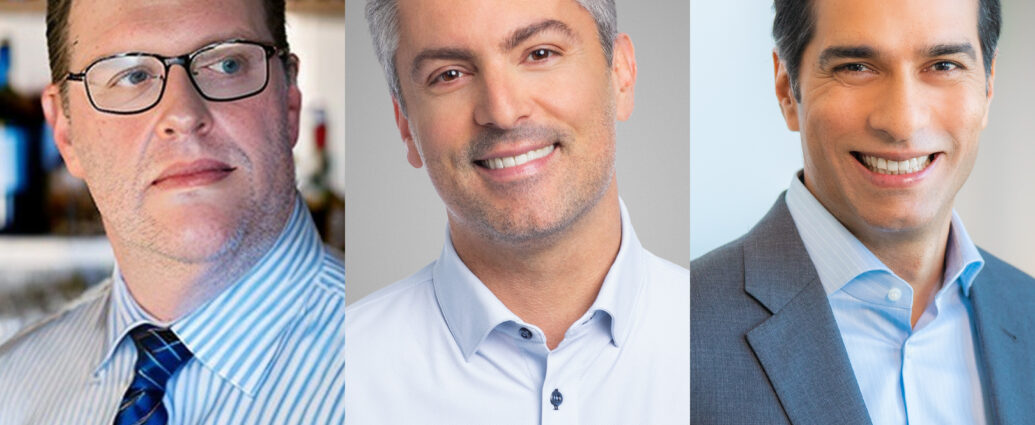
AI agents are going rogue. CIOs are racing to put guardrails around them
Over the past several days, some of the world’s top artificial intelligence labs have made a public call to slow down the rapid pace of development, ensuring more safety controls as cases continue to surface of AI agents acting nefariously.
And yet, there is a spillover that’s affecting chief information officers. They’ve been hard at work widely integrating AI agents into their operations, while at the same time watching increasingly risky examples of these autonomous systems in AI labs finding new ways to explore system vulnerabilities and outmaneuver human monitoring.
“This is a risk that enterprises need to be focused on, understand, and start planning for,” says Joe Atkinson, global chief AI officer at consultancy PwC.
As autonomous agents proliferate across enterprises, Atkinson says C-suite technology and security executives must work collaboratively to enforce the proper guardrails, establish systems to monitor AI agents, and concretely track all tasks that these agents are performing. But department heads across the business—ranging from supply chain to customer service, marketing to legal and human resources—will need to play a role in tracking digital employees.
“‘The agent made me do it’ is not going to be a defense from a moral or legal perspective,” says Atkinson.
One company focused on both secure adoption of agentic AI and clear observability is Cisco. When the networking-equipment company built and debuted the AI agent platform MyAgent in August, Cisco centralized all company-authorized large language models, agents, and enterprise data into a single platform.
“We are going to cannibalize and kill every other AI assistant within the company,” says Thimaya Subaiya, executive vice president of operations at Cisco Systems. Because he didn’t want “agent sprawl” across various pockets of Cisco, Subaiya says he won’t authorize any AI agents sold by third-party vendors.
Instead, Cisco wanted full control and visibility of its entire agentic ecosystem—building MyAgent on the company’s compute, storage, networking, and security and observability layers. Around 90,000 of the company’s employees have access to the agentic platform, and Cisco says it saw 50% adoption on a daily basis within just two weeks.
Employees are also encouraged to create their own AI agents, but those need to be approved by a centralized team. Subaiya says around 700 of those agents have already been authorized.
Intuit Chief Technology Officer Alex Balazs recalls that when he and his colleagues sketched on a napkin the first architecture of its generative AI operating system, GenOS, the financial software giant also drew “GenSRF” to represent “security, risk, and fraud.” This ensured that every single AI request that goes into the system is tracked and all responses are recorded.
“You don’t want to try to retrofit the ability to enforce security and responsible AI foundations after the fact,” says Balazs.
Balazs also takes some comfort from the fact that the disclosures of AI agents going rogue have mostly occurred during the testing phase, and that industry leaders Anthropic and OpenAI have shown a willingness to slow down new model development when issues arise. And yet, Balazs adds, “if you’re going to rely on the model intrinsically to do the right thing, I think you’re expecting too much of these frontier LLM companies.”
Jim Fowler, the chief technology and product officer at telecommunications company Luman Technologies, believes that while AI’s capabilities are moving faster than governance and security, he doesn’t anticipate that a broad slowdown is enforceable and automatically safer.
“I think for the broader enterprise market, the answer is secure acceleration, not slowing down,” says Fowler. “The bad guys aren’t going to slow down, other nations aren’t going to slow down.”
At Workday, CTO Gabe Monroy says the business software giant has created an “agent system of record” to manage all non-human identities of the digital workforce. This system is used both internally at Workday and sold to customers.
Monroy also says that training is key; engineers and any other user of AI need to really understand the risk profile of an agent and what value they can offer workflows. He’s also mindful that as Workday’s research and development organization increasingly deploys agentic AI for coding, deploying, reviewing, and releasing software on behalf of clients, all employees—no matter where they sit on the org chart—need to be aware of security and compliance.
“It’s got to be delegated down to the team who’s driving these agents, who’s in charge of the engine, the context window, the rules, and the guidelines, and making sure that agent adheres to what we deem responsible behavior,” says Monroy.
Cloud-based software provider ServiceNow’s platform to manage, observe, secure, and govern AI agents is called the AI Control Tower, which, similar to Workday, is used internally but also sold to customers. ServiceNow has also augmented the company’s cybersecurity capabilities through the recent acquisitions of the startups Veza and Armis.
“We’ve been paying close attention to this idea of having to govern and manage, and improve guardrails around AI agents,” says Amit Zavery, ServiceNow’s president, chief product officer, and chief operating officer. Zavery says that the AI Control Tower is “probably one of the fastest-growing products ServiceNow has ever built” because it “gives a lot of peace of mind for all C-level execs and the board.”
Sam Curry, the chief information security officer at cloud security company Zscaler, says security professionals have spent their entire careers worrying about the biggest risk to their operations: humans. But, they’ve only had a few years to think deeply about AI’s risks.
“AI is non-deterministic, it can take initiative, and it is effectively a new form of insider,” says Curry.
Recently, Zscaler joined the Open Secure AI Alliance—Cisco Systems and Workday are also members—a Nvidia-led coalition of dozens of firms that is focused on sharing ideas on how to develop open-source tools with the proper safeguards around software and AI agents. Curry says as this work unfolds, leaders will need to wrap their heads around new concepts when it comes to what type of risks AI can present.
“I don’t think we have begun to understand the characteristic psychology of AI,” warns Curry. “We know how to incentivize humans and what they are motivated by. But the incentives of silicon-based intelligence are less known.”
John Kell
This story was originally featured on Fortune.com
10 Christian Zionists: Pastor Jack Graham, No. 6
Pastor Jack Graham has spent decades using his national platform to encourage Christians to stand with Israel and the Jewish people. Through his preaching, writing, media ministry, and leadership of one of America’s largest churches, Graham has consistently emphasized the biblical significance of Israel and the importance of combating anti-Semitism.
Graham has led and participated in numerous initiatives that strengthen relationships between evangelical Christians and the Jewish community while encouraging his congregation to pray for the peace of Jerusalem and support Israel during times of crisis. Raised in a Christian home in Texas, Jack Graham’s faith was shaped by Scripture and the Southern Baptist tradition.
Years of ministry and repeated visits to Israel deepened his conviction that Christians have a biblical responsibility to stand with the Jewish people, a message that has become a hallmark of his preaching and leadership. His unwavering advocacy has made him one of the most respected Christian voices championing Israel today.
10 Christian Zionists: Lou Engle, No. 7
Lou Engle’s passion for Israel grew out of his commitment to prayer, revival, and biblical prophecy. Influenced by the modern prayer movement and relationships with Messianic Jewish leaders, he has spent decades encouraging Christians to embrace God’s covenant with Israel and pray for the Jewish people.
Engle has become one of the most recognizable voices in the global prayer movement, frequently calling Christians to intercede for Israel and the Jewish people. Through large-scale prayer gatherings and international ministry events, he has consistently emphasized God’s covenantal relationship with Israel while encouraging Christians to reject anti-Semitism and stand in solidarity with the Jewish community.
His passion for prayer, revival, and biblical reconciliation has inspired countless believers worldwide to develop a deeper appreciation for the Jewish roots of the Christian faith and to actively support Israel.
10 Christian Zionists: Jacob Smith, no. 8
Through The Moderate Case podcast and his growing public platform, Jacob Smith has become an emerging Christian voice advocating thoughtful engagement with Israel, Jewish-Christian relations, and the fight against anti-Semitism.
Smith’s support for Israel has been shaped by his study of Scripture, church history, and the Jewish roots of the Christian faith. Through thoughtful dialogue and careful biblical engagement, he has encouraged a new generation of Christians to reject anti-Semitism and cultivate meaningful friendship with the Jewish people. By encouraging respectful dialogue grounded in biblical conviction and historical understanding, Smith has challenged audiences to reject polarization while affirming the importance of standing with the Jewish people.
His commitment to informed conversation, moral clarity, and principled support for Israel has helped cultivate a new generation of Christian advocates dedicated to strengthening Jewish-Christian friendship.
10 Christian Zionists: CeCe Winans, No. 8
CeCe Winans, one of the most celebrated gospel artists of her generation, has long used her influence to express Christian solidarity with Israel and the Jewish people. Her support flows from her deeply held biblical faith and her belief in the enduring covenantal relationship between God and the people of Israel.
Beyond her internationally acclaimed music ministry, Winans has participated in events and initiatives that encourage Christians to pray for the peace of Jerusalem and to stand with the Jewish people in times of uncertainty. Through her public witness, she has consistently emphasized the shared spiritual roots of Christianity and Judaism, encouraging audiences around the world to reject anti-Semitism and to affirm Israel’s significance within the biblical narrative.
Her voice has helped inspire countless Christians to view support for the Jewish people as an expression of faith, compassion, and biblical conviction.
10 Christian Zionists: Heather Johnston, No. 10
Heather Johnston has dedicated much of her public ministry to strengthening understanding between Christians and the Jewish people while encouraging practical support for Israel. Motivated by a conviction that Christians are called to bless and stand alongside the Jewish people, she has become a respected advocate for Christian-Jewish friendship and education.
Through speaking engagements, teaching, leadership, and partnership with pro-Israel initiatives, Johnston has encouraged thousands of Christians to deepen their understanding of the Jewish roots of their faith, confront anti-Semitism, and actively support Israel through prayer, advocacy, and humanitarian engagement.
Her work has focused not only on expressing solidarity during times of crisis but also on fostering enduring relationships built on mutual respect, historical understanding, and a shared commitment to the flourishing of the Jewish people.
Emory University launches new academic center intended to counter rising antisemitism
Emory University launched a new academic center earlier this month focused on developing practical, government-level strategies to combat rising antisemitism.
The Emory Policy Institute on Countering Antisemitism, known as EPICA, was founded and is led by Ambassador Deborah Lipstadt, a University Distinguished Professor, Holocaust historian, and former US special envoy to monitor and combat antisemitism under the Biden administration.
Funded by private donations, the institute is designed to bridge rigorous academic scholarship with public policy, operating under the belief that anti-Jewish hatred poses a fundamental threat to democratic societies.
Reflecting on her transition back to academia after nearly three years in diplomacy, Lipstadt told The Jerusalem Post, “When I finished at the State Department, a number of people, both from within universities and from the world of diplomacy, said to me, ‘Deborah, you have a unique perspective on the issue of antisemitism, anti-Zionism, and Jew hatred, which is a term I prefer nowadays, in that you bring to it decades of scholarly experience, you also bring to it a face-to-face encounter in the lawsuit that you faced with David Irving, and you’ve now been in the diplomatic world for close to three years, so you understand how diplomacy works, what governments can do and what governments can’t do, what are the limits, what are the possibilities. Don’t just squander that or write a book and think that’s enough.’ So I turned to Emory University, Emory College, and they were enthusiastic about my building something that would address this issue, that would involve students as well, but also have a research element.”
EPICA to include undergraduate fellowship program
The institute’s core mission centers on conducting interdisciplinary research, facilitating public dialogue, and training the next generation of policy leaders. A key component of EPICA’s educational programming is an undergraduate fellowship starting in January 2027.

The fellowship will allow third- and fourth-year students in good standing to engage directly with policymakers, participate in study trips to Washington, DC, and complete summer internships on Capitol Hill and at policy think tanks.
Student fellows will produce research related to the Global Guidelines for Countering Antisemitism, an international framework introduced by Lipstadt in a 2024 speech in Buenos Aires, Argentina, and endorsed by dozens of countries and multilateral organizations.
The framework includes recommendations for governments and international bodies, including adopting the International Holocaust Remembrance Alliance (IHRA) working definition of antisemitism as a framework.
Institute will support ongoing fight against antisemitism ‘virus’
Lipstadt emphasized to the Post that the institute deliberately chose the word “countering” instead of “combating,” explaining that “combats would just suggest a winner, and I don’t think that there’s a winner in this.” Instead, she views the initiative as supporting an ongoing fight against a virus that extends far beyond immediate horizons.
“It’s a counter-effort, it’s an ongoing fight,” Lipstadt noted. “This is a virus that mutates and lives long beyond and beyond anywhere we can look at today.”
Lipstadt stated that through the institute’s efforts, “I would hope that the research that would come out, that the students’ experience, that the work that they will do, would compel increasing numbers of universities to take this issue seriously.”
Lipstadt added that addressing governments also means looking broadly at institutional policies.
“When I say governments, I’m not just talking about federal governments, but even universities, how can they address this? How can they counter this? How can they recognize that this is a dangerous and serious issue? And so that’s what we will be working on,” Lipstadt concluded.
Ali Taher was IDF’s most complex battle terrain yet, Egoz forces chief tells ‘Post’ – interview
Of all of the battle spaces of the last three years, from Gaza to Syria to the West Bank to Lebanon, the Ali Taher Ridge battle was the most complex to win, Egoz Special Forces Commander Lt.-Col. “M” told The Jerusalem Post in a rare on-record interview on Wednesday.
The operation to capture the ridge at the edge of the IDF’s zone in southern Lebanon lasted months, as dozens of terrorists, estimated to number around 50, were entrenched inside the tunnel until the IDF took control on September 3.
M viewed the defeat of Hezbollah at Ali Taher by his forces and IDF Division 36 more generally as a major setback to the terror group and to Iran “both on a symbolic and command and control operational level.”
The IDF carried out the operation to destroy the 14 tunnel routes on the ridge, stretching about 5.4 km in total and built with Iranian help over 20 years, using a staggering 1,100 pounds of explosives, under the codename “Chisel of Flames.”
M told the Post that the challenges were multifaceted.
How did an elite IDF unit win the battle of Ali Taher Ridge?
First, he said that the ascent of the 600-meter-high ridge was extremely difficult and contained very few paths.
This made it easier for Hezbollah to booby-trap access routes to its underground lair.
Next, M said that the volume of explosive drones that were sent to attack the Egoz special forces was unprecedented.
“The ridge and lair were totally Iranian, with Hezbollah forces, one of the largest underground complexes in Lebanon,” with command and control authority over the entire Nabatiah area, said M.
He added that, “From the Ali Taher Ridge command center, Hezbollah managed all of its long- and short-range firepower attacks on the IDF as well as on Israeli civilians in northern Israel. Hezbollah felt very safe here and thought they were immune,” to assault.
But M said his Egoz commandos ” went in hard and fast, initially with small groups of forces to surround and cut off the area. Then we sent small probing forces into the very complex underground headquarters from which there were dozens of terrorists, rockets and drone threats regularly.”
Next, M said that to avoid the myriad boobytraps Hezbollah set for them, his special forces had to use a variety of advanced technologies as well as super-honed field skills, such as being able to practically see and smell traps and drones moments before they struck.
It helped, M noted, that the Egoz special forces achieved complete surprise against the Hezbollah forces at Ali Taher by using various tactics to distract them from the commandos’ approach until it was too late.
This meant that when Hezbollah started using more drones and firepower, they did not know where to direct their fire, M explained.
M said that in many instances the gunfights were so close that his commandos “saw the fear and surprise in the enemy’s eyes up close.”
Despite the surprise, M credited the Hezbollah fighters in the complex with “fighting back more fiercely than in any other battle in Lebanon – they know how important the battle was.”
Yahalom Tunnel Special Forces Capt. “D” told the Post that the area near Hezbollah’s lair and inside were covered in surveillance cameras and a variety of short-range and long-range improvised explosives so that anyone entering might think they were safe after getting past one explosive, only to fall victim to the next one.
Next, D said that his Yahalom forces used a wide range of techniques to analyze all the different pieces of the Ali Taher Ridge tunnel network until they could break it down into exactly which sections they wanted to take over and which sections they could just dynamite and cut off.
To do this, D said they brought in top experts from across the IDF to develop the best and most creative plan.
D added that there were literally dozens of times during the battle over Ali Taher when he could have been killed if something had gone slightly differently.
In one example, D noted that he was centimeters away from stepping on a well-camouflaged mine, but had a sixth-sense feeling that something was suspicious about the topography and stepped back from what would have been a fatal move forward.
In another incident, a drone struck the vehicle he had been traveling in only moments after he exited, destroying the vehicle but leaving him unharmed.
Both M and D said the large boulders in the terrain were a special challenge, but that Egoz and Yahalom rose to the occasion, clearing the way for additional forces and blowing up the entire complex.
In addition, both M and D talked about Iran’s heavy contributions to the technological and tactical construction of the complex, making it unique in southern Lebanon.
Moreover, D described a creative process for rapidly moving explosives from nearby trucks deep into the Hezbollah headquarters, both for efficiency and so that the terrorists could not intervene.
Questioned about the difficulties of the Israeli security cabinet and Trump administration at one point ordering a pause from operations against Hezbollah at Ali Taher so as not to undermine the broader ceasefire with Iran, M said that the IDF and political echelon were fully coordinated at all times.
“Wherever and whenever an area was defined at a battlespace, we did everything to arrive at the desired outcome,” said M.
Until the IDF destroyed the complex, it had served as the “nerve center” for the Badr Unit, and Hezbollah had no infrastructure of a similar scale north of it until reaching the Dahiyeh neighborhood of Beirut.
According to the IDF, the operation began with the crossing of the Litani River and an attempt to surprise Hezbollah.
The IDF carried out deception operations designed to make the terror group believe that soldiers were preparing to cross in another area, while at the same time opening a hidden bypass route over several days.
While most Hezbollah fighters were killed, some did manage to escape given the large number of tunnel shafts connected to the network.
Aspects of the operation were also conducted gradually so there was no dramatic single moment until it was too late in order to lure Iran into complacency when Hezbollah started to desperately call for help.
M concluded, “After what we did to them here, they understand we can get to them anywhere.”
Ed Sheeran’s supporting acts quit US tour after Macklemore dropped over pro-Palestine comments
Ed Sheeran’s four supporting acts for his US tour quit on Wednesday after the singer dropped rapper Macklemore from the lineup, The Telegraph reported.
According to the report, Irish folk band Beoga, one of the acts, claimed “Zionist lobbies” had silenced Macklemore, saying that speech is important “as a means of progressing the plight of the Palestinian people.”
The other three artists who quit the tour include Finneas, Lukas Graham, and Aaron Rowe, according to The Telegraph. Finneas, who is pop star Billie Eilish’s brother, said that “artists must not be silenced when they speak up for the oppressed.”
The report cited Rowe as accusing Israel of “genocide,” citing his Irish status as meaning he and his people “know all too well about genocide, forced famine and violent occupation.”
He added that he could not “allow billionaires to use their positions of power to silence the rightful voices of those who speak up against Israeli genocide.”

AOC boycotts Sheeran, accuses Robert Kraft of censorship on Gaza ‘genocide’
Earlier on Wednesday, US Democratic Rep. Alexandria Ocasio-Cortez (AOC) said she is boycotting Sheeran over the Macklemore controversy, accusing pro-Israel philanthropist Robert Kraft of attempting to censor speech on “the genocide in Gaza.”
“When you see what Robert Kraft did, to line up all of the stadiums, to censor speech in that one specific way… it doesn’t stop there,” she said in an interview with TMZ.
🗣️ Rep. AOC tells @hicharliecotton she is boycotting Ed Sheeran because she says he’s complicit in Robert Kraft and other stadium owners’ efforts to silence Macklemore. pic.twitter.com/zuISc3zaFs
— TMZ (@TMZ) September 15, 2026
AOC added that she doesn’t know what Sheeran’s responsibility is in the controversy, but says the “right thing to do is to speak out about it.”
“At what point does it stop?” asked AOC. “I have a huge amount of empathy for he situation… but we need to be clear about how dangerous pof a precedent this is.”
Iranian plot to assassinate Israeli nuclear scientist results in four convictions
The Jerusalem District Court convicted four residents of Jerusalem’s Beit Safafa neighborhood on Wednesday in a case involving an alleged Iranian-directed plan to kill an Israeli nuclear scientist and his family, the State Attorney’s Office said.
The four pleaded guilty under a plea agreement to offenses concerning their own roles in the case; none was convicted of planning the killing. Proceedings against three other defendants, including the man prosecutors say received the assassination assignment, are continuing.
Mamdouh Khader and Omri Abu Hamida were convicted of failing to prevent a terrorist act. Mahmoud Khader and Muhammad Taha were convicted of helping another defendant maintain contact with a foreign agent.
According to the amended indictment, a person acting on Iran’s behalf contacted defendant Rami Alyan in September 2024 and offered payment for assignments. Prosecutors allege that Alyan was later told to form a cell to kill the scientist and his family.
Khader and Abu Hamida joined a drive to the Weizmann Institute of Science in Rehovot. During the journey, another defendant told the passengers that the trip was part of an assignment from the Iranian contact, the indictment said.

Convicted for failing to take steps to prevent assassination plan
Security personnel refused the group entry, and two other defendants filmed the entrance. After they returned to Jerusalem, Abu Hamida asked why the Iranians wanted the footage and was told that someone at the location was a person they wanted to kill. Khader and Abu Hamida took no steps to prevent the plan, according to the indictment.
Mahmoud Khader admitted helping to spray and photograph writing in Jerusalem. He also drove another defendant to collect two stun grenades and helped obtain a fake police license plate intended for footage that would appear to show an attack on a patrol car.
Taha admitted arranging for a stun grenade to be thrown at an empty home in Katanna (Jerusalem) and filming it to make it appear that a Jewish home had been attacked. He sent the footage to the defendant in contact with the alleged Iranian operative. Taha also held the phone used for that contact to make it harder to locate, the indictment says.
Arguments on their sentences will be heard on a date yet to be set, while the cases against Alyan, Abd al-Rahman Alyan and Muhammad Khatib continue.
Taha also held the phone used for that contact to make it harder to locate, the indictment says.
Arguments on their sentences will be heard on a date yet to be set, while the cases against Alyan, Abd al-Rahman Alyan and Muhammad Khatib continue.
Israeli AI English-learning startup Loora raises $22m. in Series B
Israeli AI language-learning company Loora has raised $22 million in a Series B funding round, bringing its total funding to more than $43 million, the company announced Tuesday.
The round was led by Union Tech Ventures, with participation from vgames and existing investors Emerge, Hearst Ventures and QP Ventures.
Loora, which uses artificial intelligence to provide personalized English-speaking practice, said it would use the funding to expand research and development and accelerate growth in the US, Europe, Asia, and Latin America.
The company also plans to roughly double its workforce over the next six months, primarily by hiring for AI research and development and learning-science positions.
Founded in 2020 by CEO Roy Mor and CTO Yonti Levin, Loora has more than 15 million users worldwide, according to the company.

Mor and Levin met during their military service and served together in Sayeret Matkal, the IDF’s elite special operations unit.
The company previously raised $9.25 million during its seed round and $12 million in Series A funding in 2024. The latest investment brings its total disclosed financing to approximately $43.25 million.
AI as an English tutor
Loora’s app lets users practice spoken English through conversations with an AI tutor and receive feedback on grammar, pronunciation, and fluency. The system adapts conversations to a user’s proficiency level and interests.
The app is aimed primarily at adults seeking to improve their spoken English, including for job interviews, professional presentations, and workplace conversations.
Loora said users have held more than 200 million conversations with its AI system. It said revenue has more than doubled during the past 12 months, with annual recurring revenue now in the tens of millions of dollars.
Those financial figures were provided by the privately held company and are not independently disclosed.
Loora also said it had built a business-to-business operation over the past year and now works with more than 100 companies, governments and universities.
According to Loora, 72% of its users say career advancement is a primary reason for learning English, while its typical user is between 25 and 55 years old.
Loora targets limits of traditional language apps
The company is betting that conversational AI can address one of the central limitations of conventional language-learning software: giving users frequent opportunities to speak rather than primarily completing vocabulary and grammar exercises.
Loora says its system uses information from previous conversations to adjust lessons and identify areas where an individual learner needs more practice.
The company says its database now includes more than 200 million learner interactions, which it uses to analyze engagement and refine the way the AI tutor responds.
Some users appear to be treating the AI less like a conventional language course and more like a conversation partner.
One German user spent roughly 40% of his conversations discussing politics, according to data released by Loora. An Indian user discussed 38 subjects over 49 conversations, ranging from water sports to philosophy.
Another user logged practice sessions on 1,377 consecutive days.
English proficiency as a path to economic opportunity
Mor said the company sees English proficiency primarily as an economic and professional issue.
“People who already know English tend to underestimate the scale of the opportunities it creates,” he said. “For most of the world, English is the most significant gateway to advancement, a better job, a place at university or an entirely different future.”
Loora says its service costs about $10 a month in some markets, compared with substantially higher rates for one-on-one instruction.
Roxanne Horesh, a partner at Union Tech Ventures, said the investment firm was attracted to Loora’s combination of AI personalization and repeat usage.
“What stood out to us was the combination of mission and execution,” Horesh said.
She said the challenge extended beyond creating an AI capable of holding a conversation to developing a system that could track individual learners, measure their progress, and adjust instruction over time.

Continental Resources strikes Venezuela oil development deal
Continental Resources on Wednesday announced that it reached an agreement with Venezuela’s state-owned oil company to develop oil in the South American country’s prolific Orinoco Belt.
The memorandum of understanding with Petroleos de Venezuela S.A. (PDVSA) will see Continental Resources operate and develop the Ayacucho 2 Block in the Orinoco Belt, which is the main oil field in the country. The announcement indicated that the two parties plan to enter into a long-term production agreement in the coming weeks.
The Ayacucho 2 Block is located north of the Orinoco River in the Venezuelan state of Anzoategui and covers about 126,000 acres, with an estimated 30 billion barrels of oil in the tract. Once the long-term production agreement is executed, Continental will operate the block with a 100% interest, according to the release.
OIL GIANT CHEVRON STRIKES AGREEMENT TO EXPAND VENEZUELA OPERATIONS
Continental Resources said in its announcement that “Ayacucho 2 represents one of the most significant resource opportunities in Continental’s nearly 60-year history,” expanding its long-term development inventory and an expansion of its international presence in a portfolio anchored by its U.S. base.
The company said in its announcement that the Trump administration’s call for American energy companies to help rebuild the Venezuelan oil industry led it to perform an independent evaluation of opportunities in the country. That evaluation, along with changes made by Venezuela’s government to its legal framework for hydrocarbons, opened the door for Continental to pursue the opportunity.
TRUMP ANNOUNCES ‘BIGGEST OIL DEAL IN WORLD HISTORY,’ SAYS IT WILL SUBSTANTIALLY LOWER GAS PRICES
“We are excited to participate in the revitalization of Venezuela’s energy industry, bringing further economic strength to Venezuela and its people as well as global energy markets. Ayacucho 2 is an extraordinary addition to our portfolio and will contribute significantly to Continental’s growth trajectory,” said Continental Resources CEO Doug Lawler.
“Continental was built to recognize great resource opportunities and have the conviction to pursue them,” said Harold Hamm, founder and chairman emeritus of Continental Resources. “What this company is doing today builds on that foundation while taking Continental to an entirely new level. I could not be more proud of the company, our people and the future we are building.”
Continental said the memorandum of understanding allows it to bring private capital, technology, technical expertise and large-scale operating capabilities to the effort to redevelop Venezuela’s oil industry. It added that it plans to evaluate additional opportunities in the country, as well as those in the U.S. and around the world.
An analysis by the U.S. Energy Information Administration (EIA) that was last updated in February 2024 noted Venezuela had the world’s largest proven crude oil reserves in 2023, with about 303 billion barrels, which represented 17% of global reserves.
VENEZUELA SAYS TRUMP’S HISTORIC OIL DEAL TARGETS 1.5M BARRELS PER DAY, COULD GENERATE $200B
Despite having a significant share of the world’s oil reserves, Venezuela only produced 0.8% of global crude oil output in 2023, and the total output of 742,000 barrels per day represented a 70% cumulative decline from the country’s production levels in 2013.
Most of Venezuela’s reserves are extra-heavy crude oil from the Orinoco Belt, and the EIA noted that the “extraction of extra-heavy crude oil requires a higher level of technical expertise, which international oil companies possess but their involvement has been limited by international sanctions.”
GET FOX BUSINESS ON THE GO BY CLICKING HERE
“Furthermore, budgetary constraints at Venezuela’s state oil company PDVSA and a lack of qualified technical personnel and foreign direct investment have all hampered Venezuela’s oil and natural gas development,” EIA added.

Built as a creative sanctuary, this $4M stone house and studio capture Woodstock’s golden era

Along a quiet lane near the heart of Woodstock, the property at 21-23 Library Lane has been standing since the 1920s. Built by Impressionist painter Paul Arndt during the town’s heyday as an art colony, the stone house and studio functioned as the artist’s sanctuary for living and creating. Asking $3,950,000, the verdant landscape surrounding the buildings complements its creative cottage vibe, adding up to a timeless retreat in any era.

Surrounded by enchanting gardens by landscape architect Michael Trapp, Library Lane feels like a European country cottage where time barely moves.
The main house has been restored in a way that preserves its hand-crafted architecture, with hand-trowelled plaster walls, exposed beams, original wide-plank floors, and interior walls of stone.



A stone-wrapped wood-burning fireplace anchors the cozy living room. French casement windows of wavy glass provide a timeless view of the century-old trees beyond.



The bespoke kitchen features Siberian elm countertops and European Clé tile. The sun-filled dining room is surrounded by views of the property’s lush gardens.


Also on the property, a three-bedroom cottage opens beneath skylit vaulted ceilings. The main space is framed by an original stone fireplace, wide-plank pine floors, and reclaimed barnwood cabinetry. A screened porch offers indoor-outdoor living.



Sunlit bedrooms are both cozy and gracious. Baths are highlighted by artisanal details like Venetian plaster and vintage fixtures.



In the surrounding gardens, mature trees shade layered plantings. A fragrant vine-covered pergola provides an al fresco dining spot that resembles a Tuscan countryside retreat.

The stone house and cottage studio occupy separate parcels of land, each with private grounds. Together, this unusual estate provides both a cultural legacy and a timeless shelter from an uncertain world.
[Listing details: 21-23 Library Lane by Stephen Kingsley and Sarah Broach of Compass]
RELATED:
- Live in a fashion designer’s historic atelier and studio in the Catskills for $645K
- For $549K, get cozy in an 1860s Catskills farmhouse with barns, sun porches, and a dreamy country kitchen
- If you’re craving country life, this $875K 18th-century Hudson Valley stone farmhouse on 49 acres awaits
- Hudson Valley 1750s stone house with a waterfall on the grounds asks $1.5M
The post Built as a creative sanctuary, this $4M stone house and studio capture Woodstock’s golden era first appeared on 6sqft.


Canada may become ‘first associate member’ of EU, European Commission president says
European Commission President Ursula von der Leyen said she would work with Canada to become the EU’s first “associate member” in her annual speech to the European Parliament in Strasbourg, France, on Wednesday.
“We want to bring the relationship with Canada to the highest level possible,” von der Leyen said. “So, I would like to work with you on opening the door for Canada to be the first associate member of the EU.”
She further stressed the need to maintain European independence in various sectors, including energy, raw materials and clean technologies.
To do that, EU countries will not only need to work together, but also have strong partners like Canada, whose Prime Minister, Mark Carney, is in Strasbourg and was warmly applauded by EU lawmakers as he arrived to listen to von der Leyen’s speech.
Von der Leyen, now in her second five-year term at the helm of the EU executive arm, walked up to and embraced Carney after mentioning the “associate membership” issue for Canada, and Carney got a standing ovation from the chamber.

Through its partnership with Canada, she called for EU states to tackle climate change, competition from China and other major challenges.
The bloc was dealing with “an openly hostile world”, von der Leyen said, setting out priorities for the 27-nation EU for the year ahead.
Von der Leyen: Solidarity among EU states necessary for facing challenges
She said solidarity among member states was the only possible solution. “Our path is clear. Building an independent Europe that has the power to act.”
The 27-nation bloc faces war at its borders, with Russia’s invasion of Ukraine. On trade and other issues, it also faces stiff rivalry from US President Donald Trump’s United States and an increasingly assertive China.
The EU faces major headwinds at home as well, including the increasing popularity of a eurosceptic far-right, seen in regional elections in Germany that have weakened Chancellor Friedrich Merz. Opinion polls see Marine Le Pen as the strongest contender in next year’s presidential vote in France.
“The state of our Union is the strongest it has ever been. The state of our Union can also feel as precarious as it has ever been,” von der Leyen said.
EU to use any means necessary to reduce ‘unsustainable’ China trade deficit
Turning to trade, von der Leyen said the EU will use every possible means to reduce its “unsustainable” trade deficit with China. She said that the imbalance, with a goods trade deficit of €1 billion ($1.15 billion) a day last year, had reached a tipping point.
“Let me be clear: we will use all the tools at our disposal to rebalance our relationship. Words are good. But deeds are better,” she said.
Von der Leyen also said the bloc will need to stay its ambitious course on mitigating climate change but also step up efforts to adapt to it, drawing on experiences from the last three months when the continent was hit by unprecedented heat waves and wildfires.
Jerusalem Post Staff contributed to this report.

Millennials are winning the AI talent wars—they’re getting 60% of all the top AI jobs and earning $236K salaries. But most of them are men.
Amid the frenzy that AI is on the cusp of taking everyone’s jobs, there’s a clear winner emerging from the chaos: millennials.
New research from LinkedIn found that the 30-to 45-year-old generation is the one actually cashing in on the explosion of new AI roles.
LinkedIn analyzed its own platform data to uncover the 12 fastest-growing AI jobs and the age of those getting hired right now. It also revealed that millennials make up 60% of new hires for head of AI jobs—and they’re commanding a median salary of $236,000. Meanwhile, millennials make up 56% of technical new hires.
But most of those new hires are men.
Alarmingly, women make up just 20% of head of AI hires, 26% of director of AI hires, and 18% of technical staff hires.
While millennials nab top jobs, Gen Z is cleaning up entry-level AI roles
Gen Z is struggling with the worst entry-level job market in 37 years. The unemployment rate for workers aged 22 to 27 was 7.2% in June, compared to just 4.1% overall.
While bosses specifically cite AI as the reason they’re not hiring young workers to do those easier tasks anymore, LinkedIn’s data suggests AI is actually one area of hiring hope for the youngest generation of workers.
In fact, Gen Z workers make up more than two-thirds of new hires for two of the most in-demand individual contributor roles in tech right now: forward deployed engineer and AI engineer, paying median salaries of $199,000 and $166,000, respectively.
The report suggests this signals that newer AI roles may be a “strong entry point” for younger workers, even as the rest of the job market shuts them out.
For a generation used to job rejections, stagnant pay, and living with their parents longer well into their twenties, nabbing an AI role could be their ticket to success: the typical AI job now pays a median salary of $177,000, more than double the $80,000 median for non-AI roles. The only problem? Not everyone can get one.
AI jobs pay double what everything else does—but women and those without degrees are being shut out
Despite major tech employers, from Google to Apple, dropping their degree requirements, LinkedIn’s data shows that if you want a job in AI, the ritzy qualification still matters.
Over 95% of the new hires for head of AI, AI director, and technical staff roles hold a bachelor’s degree or higher—and the research shows that higher education can result in roughly $52,000 more in median pay.
Workers without four-year degrees—as well as women—are being consigned to the lowest-paying roles with the lowest barriers to entry, like data annotation.
As the report bluntly concludes: “AI is often described as a force that democratizes expertise. Yet today’s AI labor market appears increasingly concentrated among workers with higher levels of formal education, especially in the highest-paying occupations.”
This story was originally featured on Fortune.com
Seven Republicans back Iran war powers resolution, widening GOP split with Trump
Seven House Republicans joined Democrats on Tuesday night in backing a resolution directing US President Donald Trump to remove American forces from hostilities against Iran unless Congress formally authorizes the war.
The vote expands the number of Republicans willing to break with the administration over the conflict.
The House approved H.Con.Res. 93, introduced by Democratic Rep. Seth Moulton of Massachusetts, by a 220-204 vote, the third time the House has approved a war powers resolution aimed at curtailing US involvement in Iran.
The seven Republicans who voted with Democrats were Thomas Massie of Kentucky, Brian Fitzpatrick of Pennsylvania, Warren Davidson of Ohio, Tom Barrett of Michigan, Nancy Mace of South Carolina, and Iowa Reps. Mariannette Miller-Meeks and Zach Nunn.
Iran must be held accountable for killing Americans, supporting terrorism, threatening the Strait of Hormuz, and pursuing nuclear weapons. Iowa has already paid a devastating price, including two service members killed by an Iranian drone in Kuwait. Congress owes them, their…
— Congressman Zach Nunn (@ZachNunn) September 16, 2026
Four Republicans had supported the previous House effort in June, meaning Tuesday’s vote marks a further, though still limited, widening of GOP opposition to continuing the war without explicit congressional authorization.

Mace had signaled months earlier that she was prepared to back such a measure. In March, she told Axios she would “most likely” support the next House war powers resolution, saying the war with Iran needed to end.
The resolution invokes Section 5(c) of the 1973 War Powers Resolution and directs Trump to remove US forces from hostilities with Iran unless Congress declares war or specifically authorizes the use of military force. It preserves Trump’s ability to keep forces necessary to defend the US or an ally from imminent attack, subject to the law’s reporting requirements.
The legal force of such congressional efforts has long been disputed, and previous resolutions have not changed the course of US military operations. The Senate would also have to act for Congress to present a unified challenge to the administration.
In June, the Senate approved a similar resolution by 50-48, the first time such a measure cleared the chamber during the conflict. A day later, a separate, nearly identical measure failed 47-50-1 after an intense confrontation between Trump and Republican senators. Sen. Bill Cassidy reversed his position after receiving a White House briefing, while Sen. Rand Paul voted present, saying he wanted to give the president room for diplomacy.
The latest House vote comes less than seven weeks before the November 3 midterm elections, as the conflict approaches its seventh month. Trump said last week he believes the war will end “immediately after” the election, arguing Iran is struggling to withstand US economic pressure and is trying to influence the vote.
The monetary cost of a prolonged conflict with Iran
The congressional fight comes amid growing concern over the financial and military cost of the conflict. The Congressional Budget Office estimated the war had cost the Pentagon approximately $38 billion as of August 1, with additional costs of roughly $2b.-$3b. per month depending on the intensity of operations.
A Pentagon inspector general report released this week documented significant strain on US forces and inventories. Iranian attacks damaged or destroyed hundreds of structures at American bases across the Middle East. The extensive use of munitions has also created strategic shortfalls and exposed bottlenecks in the US defense industrial base, pressure that is especially acute in air and missile defense, where replenishing interceptor stocks is expected to take years.
What does the vote mean for Israel?
H.Con.Res. 93 deals specifically with the participation of US forces in hostilities against Iran. It does not address the annual Foreign Military Financing program for Israel, nor does it touch Israeli military operations, bilateral intelligence cooperation, or other US-Israel defense programs.
The more immediate issue for Jerusalem is not whether the House vote removes the American military presence, but whether Washington can sustain current regional operations while replenishing weapons stocks and securing additional funding. That distinction matters because American air and missile defense systems form part of a broader regional architecture that also helps protect Israel from Iranian missiles and drones.
For Israel, there are therefore two separate Washington debates to watch: one constitutional – whether Congress can force Trump to seek explicit authorization for continued hostilities – and one operational – whether the US will have sufficient funding, interceptors and precision munitions to sustain the campaign if it continues. Tuesday night’s vote resolved neither.
But the rise from four Republican defectors in June to seven this week shows that GOP opposition to continuing the war without explicit congressional authorization has broadened, even if it remains limited. The overwhelming majority of House Republicans, however, still stand with Trump on the conflict.
US senator calls to increase non-profit security grant funding in light of rising antisemitism
US Senator for Nevada Jacky Rosen called for a major expansion of federal security funding for religious institutions on Monday, warning that American Jewish communities are facing an unprecedented wave of threats and violence during the High Holy Days.
Speaking on the Senate floor, Rosen, co-founder and co-chair of the Senate Bipartisan Task Force for Combating Antisemitism, highlighted the severe financial and psychological toll facing congregations as they mark Rosh Hashanah and approach Yom Kippur.
Citing data from a recent Anti-Defamation League report, she noted that 2025 was the third-highest year on record for antisemitic incidents in the US, with physical assaults against Jewish individuals reaching historic highs.
According to FBI data, “Jewish Americans were the target of nearly 70% of religiously motivated hate crimes in the country in 2025, despite making up just 2% of the population,” Rosen noted during her address.
The senator pointed to a string of violent attacks across the country over the past year, including a historic synagogue firebombing in Jackson, Mississippi, and vandalism at congregations in Austin, Texas; Albuquerque, New Mexico; Hot Springs, Arkansas; and Oak Park, Michigan. She also referenced an attack in West Bloomfield, Michigan, where a man drove his car into a building housing a synagogue and preschool before opening fire.

Reflecting on her recent visit to the Auschwitz-Birkenau Memorial and Museum in Poland, Rosen warned against societal indifference to rising prejudice. “The Holocaust did not only happen because of the Nazis, but because of millions of people who also kept silent in the face of dehumanization and prejudice,” she stated.
Rosen: Security expenses are largest portion of congregations’ operational budgets
Drawing on her prior experience as the president of the largest Reform synagogue in Nevada, Rosen emphasized that security expenses now consume the largest portion of many congregations’ operational budgets. She cited a study from the Jewish Federations of North America showing that the Jewish community now spends an average of $1 billion a year on security.
“In the United States in 2026, we have Americans who have to worship behind locked doors and bulletproof glass protected by armed guards just to be with their family and friends and pray,” Rosen said.
Rosen pushes Congress to reform Nonprofit Security Grant Program
To address the mounting crisis, Rosen urged Congress to fully fund and reform the Nonprofit Security Grant Program, which helps at-risk houses of worship offset security costs like hiring guards, installing cameras, and reinforcing doors.
She highlighted her bipartisan legislation, the Jewish American Security Act, introduced alongside Senator James Lankford, which aims to nearly triple funding for the program and establish a new Department of Justice grant initiative to help state and local law enforcement protect vulnerable houses of worship.
“We cannot wait for the next attack, we cannot wait for another synagogue to be targeted, and we cannot wait for another family to be afraid just to walk through the doors of their own house of worship,” Rosen concluded.
IDF kills Hamas Nukhba commander involved in October 7 hostage abductions
The IDF killed a Nukhba commander in the Khan Yunis area last week who had been involved in the abduction of several Armored Corps soldiers during the October 7 massacre, the military announced on Wednesday.
According to the IDF, the terrorist, Jihad Samih Mahmoud Ismail, had taken part in the killing of Capt. Omer Neutra, St.-Sgt. Oz Daniel, and Sgt. Shaked Dahan. Neutra and Daniel’s remains were taken into Gaza, as was Sgt. Nimrod Cohen, who was alive.
The IDF also said that Ismail had been involved in multiple ambushes against Israeli soldiers over the course of the war against Hamas.

Neutra immigrated to Israel from the United States and enlisted in a combat unit as a lone soldier.
He and Daniel were buried in November 2025 after being returned during the first phase of the US-brokered Gaza deal.
“My Omer, after more than two years… finally, you are home – [in] the home that you chose, in the country that you chose to defend,” Ronen Neutra, his father, said during his burial.
Daniel, 19, was due to begin officer training shortly after October 7. He was a huge fan of music and playing his guitar.
In Daniel’s final moments, he attempted to steal a grenade from his captors, trying to fight against them, before being shot to death in the struggle.
Cohen was released by Hamas, alive, on October 13, 2025.
In February 2026, he announced his intention to complete his military service with the IDF.
By the time he was kidnapped, Cohen had done 10 months of the two years and eight months that Israeli men are required to serve. “I didn’t really do my service, the way I see it. I served for 10 months until I was kidnapped,” he said.
IDF kills Hamas Rafah Brigade commander
On Tuesday, the IDF and Shin Bet (Israeli Security Agency) issued a joint statement, saying that they killed Hamas’s Rafah Brigade commander, Nael Abu Obeid, in a strike in the southern Gaza Strip.
Abu Obeid was a key figure among Hamas leaders, according to a statement from the IDF, and previously served as the deputy commander of the Rafah Brigade and commander of the Tel al-Sultan and Yibna Battalions.
Amir Bohbot, Tobias Holcman, and Esther Davis contributed to this report.
Nessel gets Queen Esther wrong: Jews don’t have to sacrifice themselves – opinion
Michigan Attorney-General Dana Nessel is telling Jews something deeply disturbing: we may need to sacrifice our own safety and even our own future for “humanity.”
That is a terrible message. It is also far outside the Jewish tradition she claims to be invoking.
Speaking to Jewish Democrats on August 30, Nessel said, “It is perhaps up to us now to follow in [Queen Esther’s] path and sacrifice the comfort, safety, and security and even the very future of our own people in exchange for the opportunity to save the rest of humanity.”
But Nessel is not speaking for Jewish history when she says this. She is a radical outlier using Queen Esther to make an argument that turns Esther’s story upside down.
Esther did not sacrifice the Jewish people to save everyone else. She risked herself to save the Jews of Persia.

Nessel went even further, asking, “What good is defending the historic homeland of our ancestors and demanding that candidates acknowledge its right to exist if the planet upon which it rests is no longer inhabitable?”
Why should Jews have to choose?
Jewish safety and concern for humanity are not opposites. Protecting Jews is not selfish. Protecting Israel is not selfish. And Jewish lives are not bargaining chips that can be sacrificed for some larger cause.
Nessel also accused Republicans of supporting “selfishness” that is supposedly a “direct abdication of our responsibilities as Jews.” But there is nothing selfish about Jews wanting to stay alive.
Every human life has value
Jewish law makes this clear: if attackers demand that a group hand over one innocent person or everyone will be killed, that person cannot simply be handed over. Every human life has value. We do not decide that one innocent person can be sacrificed because someone claims it will save a larger number.
Nessel’s argument is also based on a false choice. Protecting Jews and Israel does not mean turning our backs on humanity.
The Jewish people have spent generations helping humanity. Jewish scientists Jonas Salk and Dr. Albert Sabin developed polio vaccines that reduced polio by 99%. Jewish public health scientist Dr. Israel Kligler helped lead the first successful campaign to eliminate malaria.
Israeli Jews pioneered drip irrigation, desalination, and wastewater recycling. Jews make up less than 0.2% of the world’s population yet have received 26% of Nobel Prizes in Medicine.
When polio appeared in Gaza in 2024-2025, Israel facilitated pauses in its fight against Hamas so more than 600,000 Gazan children could receive polio vaccinations.
And when Jews were falsely blamed for the Black Death, murdering Jews did nothing to stop the plague. More than 500 years later, Jewish scientist Waldemar Mordecai Haffkine developed the first vaccine for the bubonic plague.
So who is really helping humanity?
The answer is not the people who murder Jews. And it certainly should not be Jews who are told to stand aside while their own safety is put at risk.
That brings us to Abdul Mohamed El-Sayed.
To Nessel’s credit, she has resisted the rush by too many Democratic leaders to endorse El-Sayed. She has also warned that politicians who threaten Israel’s existence as a Jewish state can put Jews in the Diaspora at greater risk.
She is right about that.
But then Nessel tells Jews that they may need to sacrifice their own safety and even their future for “humanity.” That makes no sense.
El-Sayed’s record shows exactly why Jewish safety matters.
He repeatedly dodges the simple question of whether Israel has a right to exist while saying he would be happy to discuss a Palestinian right to exist. He falsely accuses Israel of genocide and apartheid. He has pledged to follow Sharia law in everything he does.
He has campaigned alongside extremist, open Jew-hater, and America-hater Hasan Piker, who said America deserved 9/11 and that the October 7 mass rapes of Jewish women and children did not matter.
El-Sayed also called for reducing police funding.
Most disturbing, El-Sayed justified the vehicle-ramming terror attack on a Michigan synagogue preschool that endangered 140 Jewish toddlers and teachers and injured a security guard. The attacker was a Lebanese-American Muslim tied to Hezbollah.
El-Sayed responded, “hurt people hurt people” and “violence begets violence.” That is not an excuse for terrorism against Jews.
His later statement that “what I was trying to say is that there is a broader question of the responsibility” did not change what he had said. It was another attempt to justify Muslim terrorism against Jews.
Nessel should understand what is at stake.
Jewish safety is not some selfish side issue. It is not something Jews should be ashamed to defend. And Jews should never be told that protecting ourselves makes us enemies of humanity.
We do not need to prove that Jews have invented enough medicines, saved enough lives, or helped enough people to deserve safety. Jews deserve safety because Jews are human beings.
Nessel should retract her dangerous message that Jews may need to sacrifice their own safety and future for the rest of humanity. And she should stop pretending that this is what Jewish history teaches.
It is not.
Queen Esther risked her life to save her people.
Michigan Attorney-General Dana Nessel told Jews to sacrifice themselves and their homeland to feed the antisemites hijacking her political party.
Morton A. Klein is the national president of the Zionist Organization of America. Elizabeth (Liz) Berney, Esq., is the ZOA’s director of research and special projects.
More than 40% of West Bank Palestinians believe Israel doesn’t have a right to exist, poll finds
More Palestinians in the West Bank believe Israel does not have a right to exist (46%) than those who believe it does (41%), according to a new poll published by the Institute for National Security Studies (INSS) on Tuesday.
The survey, which interviewed 400 Palestinians by telephone between June 27 and July 2, 2026, with a margin of error of 4.9%, also found that 42% believed it was possible to bring about the end of Israel’s existence, while only 32% said it was impossible.
More than a quarter (27%) favored a two-state solution to resolve the Israeli-Palestinian conflict, while 22% supported a single binational state with full equal rights, and 26% preferred a single Palestinian state without Jewish presence. Only 17% said they would like to see a Palestinian state that permitted Jews as residents or citizens.
Despite a significant portion of Palestinians not recognizing Israel’s right to exist, more than half (52%) said they would prefer negotiations as a way to end the Israeli-Palestinian conflict, while only 12% said they preferred armed resistance.
Over half of respondents say diplomatic efforts more fruitful than violence
Additionally, 57% were of the opinion that violence had failed and that international diplomatic efforts were more fruitful.

Given that more than half (57%) of the Palestinians polled said they believed violence had failed and that international diplomatic efforts were more fruitful, it makes sense that 40% of those polled said Hamas should disarm and the majority preferred for Hamas not to govern the Gaza Strip.
The most popular choice for the administration of the Gaza Strip is the current US-backed National Committee for the Administration of Gaza, which was selected by 32% of respondents. An additional 21% favored the Palestinian Authority, while 21% favored a Fatah-Hamas unity government, and only 5% chose Hamas as the preferred sole authority.
Marwan Barghouti preferred replacement of Mahmoud Abbas
Asked about who they thought should replace PA President Mahmoud Abbas, imprisoned Fatah leader Marwan Barghouti was preferred by 34% of those polled, followed by Abbas’s deputy, Hussein al-Sheikh, who received support from just 8% of the respondents.
Unemployment was the greatest concern among 97% of those polled, while 96% also identified settler violence as a major issue. 14% reported that they had been a direct victim of settler attacks, 22% said they heard first-hand testimony from someone they knew who had experienced harm, and 33% said they were exposed to cases of settler violence through the media and social networks.
The majority, 91%, also expressed concern regarding IDF operations in the West Bank, while 60% said they had a low or very low sense of personal security.
Eisenkot rejects claim he promised Ra’am a place in future coalition during Bedouin meeting
Yashar chairman Gadi Eisenkot denied on Wednesday that he promised to bring Ra’am into a future coalition or government, saying his party did not discuss the composition of a future government during a meeting with Bedouin local authority heads.
The denial followed an N12 report in which northern Bedouin local authority heads who met Eisenkot on Tuesday claimed he had promised to bring Ra’am into a government he would lead.
Mu’id al-Heib, head of the Tuba-Zanghariya Local Council, told Radio Nas that Eisenkot had said contacts were underway with Ra’am and that he would work to include the party in his next government.
The party shared footage of Eisenkot’s meeting with the Bedouin leaders
Yashar rejected the report outright, and also released footage of Eisenkot’s meeting with northern Bedouin local authority heads, which took place on Tuesday.

Yashar also distributed a separate clip of remarks by Eisenkot from the meeting and a clip of remarks by al-Heib.
The party stressed that Eisenkot did not discuss the makeup of the next government at any point during the meeting.
“Throughout the entire meeting, as well as during the meal that took place afterward and was also documented, Eisenkot did not refer at all to the structure or composition of the next government,” Yashar said.
“Any other publication on the matter is a complete lie.”

WHO expresses cautious optimism about bid to control Ebola outbreak in DRC
There is reason to be cautiously optimistic about the trajectory of the current Ebola outbreak in the Democratic Republic of the Congo, the director-general of the World Health Organization said Wednesday.
In a news conference in Geneva, Tedros Adhanom Ghebreyesus said disease transmission rates are declining in most of the affected provinces, though he warned there are months of work remaining to get the outbreak under control.
Netanyahu’s New York UN visit sees unusual US Secret Service security involvement
Unusual involvement by the US Secret Service has been evident in preparations for Prime Minister Benjamin Netanyahu’s visit to the UN General Assembly in New York, a diplomatic source told The Jerusalem Post on Wednesday.
The source, familiar with the details, also confirmed that Netanyahu will land at Newark Airport in New Jersey, closer to Manhattan than JFK Airport in Queens, where the prime minister’s plane usually parks.
The source denied that the decision could be connected to New York Mayor Zohran Mamdani or to concerns over a possible provocation. He clarified that the matter stems from discussions with the airport over where the plane will be parked during the current visit and how it will be secured.
Netanyahu is expected to land in New York on Wednesday, September 23, and address the UN at 9 p.m. Israel time, and return to Israel before Sukkot, on September 25.

Netanyahu prepares to depart for UNGA after NYC Mayor Mamdani admits he cannot arrest him
According to the source, a preparatory delegation from the Prime Minister’s Office and the VIP security unit arrived on Tuesday night to finalize details of the visit.
Last month, sources in the New York Police Department estimated that more than 60 police officers and detectives could be involved in the direct and perimeter security arrangements surrounding Netanyahu, alongside federal, diplomatic, and Israeli security personnel.
Mamdani has previously addressed the possibility of Netanyahu traveling to New York for the UN General Assembly after pledging during his election campaign to order the prime minister’s arrest in accordance with a warrant issued against him by the International Criminal Court.
“I believe Netanyahu belongs in The Hague,” Mamdani said. “He is a war criminal who has been charged by the International Criminal Court.”
“This is a view that many people hold, simply because of the consequences of his actions in recent years,” he added.
The NYC mayor then said that it was clear that “we do not have the independent legal authority to enforce this warrant.”
Still, he asserted that Netanyahu “is not welcome in New York City.”


U.S. Crude Oil Stockpiles Post Moderate Draw

Like millions of Americans, OpenAI’s Sam Altman unwinds from thinking about AI by scrolling on TikTok before bed: ‘I happen to like short-form video’
Sam Altman, the billionaire CEO of OpenAI, spends his days at the center of the AI revolution—but when it comes time to unwind, he’s just like millions of Americans who enjoy scrolling through TikTok before bed.
“I happen to like short-form video,” Altman said this week in conversation with Salesforce CEO Marc Benioff. “I happen to like the ability to watch 5 or 10 minutes of short-form video before I go to bed as a way to unwind and relax a little bit.”
But Altman’s relationship with TikTok-style videos hasn’t always been so measured. The 41-year-old has said that he first got into TikTok while OpenAI was developing Sora, its now-defunct video generation app, to better understand the short-form video experience. What started as a few minutes of scrolling before bed soon turned into an hour. Then, one Saturday afternoon, Altman found himself scrolling for three hours.
He eventually decided he had to temporarily step away from the app.
“I deleted TikTok because it was just too powerful,” Altman said during an episode of the Relentless podcast released in July. “I think the iPhone is amazing and yet I did not feel like I had enough self-control to keep that app.”
Altman wouldn’t let his kids near TikTok: ‘I do think it’s dangerous’
It may come as no surprise that Altman, who served as president of startup incubator Y Combinator between 2014 and 2019, would be curious about one of the tech industry’s most popular new formats. But his own experience with TikTok has given him a more cautious view of just how powerful short-form video can be.
As a father of a young son, Altman said he doesn’t believe the technology is appropriate for everyone—particularly Gen Alpha.
“I wouldn’t let my kids near that stuff, and I don’t think it’s reasonable to expect kids to be able to resist that dopamine thing or know that they even should,” Altman said. “I don’t think short form video is inherently evil, but I do think it’s dangerous.”
His concerns are reflected in some of the experiences teenagers report having on TikTok. In a survey released this year of TikTok users ages 13 to 17, 28% said they spend too much time on the app, while 37% said it has negatively affected their sleep and 29% said it has hurt their productivity, according to Pew Research Center.
After becoming a parent via surrogacy early last year, Altman has also said it changed the way he thinks about the broader stakes of the technology he is helping build. Fatherhood has made him think more deeply about the importance of getting AI right for humanity.
Like Altman, some CEOs are tuning into TikTok to understand Gen Z—and decompress
Altman isn’t the only business leader thinking about how to use social media both personally and professionally.
Feng Ren, co-CEO and head of drug research and development at Insilico Medicine, an AI drug discovery startup, recently said that one of his recommendations for protecting health and well-being is to deliberately set aside time during the day to step away from the chaos.
“The first thing I will do is sit on a sofa and relax,” Ren said at Fortune’s Leaders Forum in Macau earlier this month. For him, that often means reading WeChat messages and the news for 15 to 30 minutes—but he added that he’s in favor of scrolling on social media in moderation.
“I recommend people do it more,” Ren even said.
Other executives, like Virgin Group CEO Josh Bayliss, have said they scroll on apps like TikTok not just for entertainment, but to understand the younger consumers their businesses are trying to reach.
“The zeitgeist is not people in their 50s like me,” Bayliss previously told Fortune. “The zeitgeist is 20-something year olds who are shaping the culture that we have an obligation to serve.”
“You’ve got to have the volume turned up 24/7, honestly,” Bayliss added.
For Altman, though, when all else fails, he often returns to a more analog hobby: reading books.
“I love reading,” Altman told Fortune last week on the Titans and Disruptors of Industry podcast. “One of my hobbies is to read first-party contemporaneous accounts of previous technological revolutions.”
This story was originally featured on Fortune.com
San Diego police investigating two homes vandalized with Swastikas over Rosh Hashanah
San Diego County Sheriff’s deputies are investigating vandalism cases targeting two homes in Imperial Beach where swastikas and antisemitic graffiti were drawn.
According to the San Diego County Sheriff’s Office, deputies responded to a residence in the 100 block of Elm Avenue shortly after 2:30 p.m. on Saturday – during Rosh Hashanah – where a swastika and antisemitic messaging had been marked on the exterior of the home using a black permanent marker.
Two San Diego-Area Homes Defaced With Swastikas on Rosh Hashanah
The San Diego County Sheriff’s Office announced Monday that two incidents of vandalism occurred in Imperial Beach in San Diego County on Sept. 12, the first day of Rosh Hashanah. In both cases, the home had been… pic.twitter.com/wQXvaSOAcZ
— Jewish Breaking News (@JBreakingNews) September 15, 2026

Second property vandalized on same day
Later that same day, authorities received reports of similar vandalism at a second property located in the 700 block of Seacoast Drive, where a swastika and additional graffiti were discovered on a window.
Detectives assigned to the Imperial Beach Sheriff’s Substation have launched an investigation into the incidents.
Syria parliament votes to abolish Assad-era terrorism court, nullify rulings
Syria‘s parliament voted on Wednesday to abolish an Assad-era terrorism court and nullify the legal effects of its rulings, state-run Al-Ikhbariya TV reported, in one of the first significant legislative moves by the country’s new assembly.
The Counter-Terrorism Court was established in 2012 as then-president Bashar al-Assad sought to suppress an uprising against his rule, and it was used to prosecute thousands of Syrians for terrorism-related offenses.
The move formalizes the court’s abolition after Syria’s new authorities had already treated it as defunct. In June 2025, Syrian President Ahmed al-Sharaa issued a decree dismissing 67 judges who had served in what he described at the time as the “abolished Counter-Terrorism Court.”
Syria’s March 2025 constitutional declaration had also called for abolishing the effects of what it described as unjust rulings issued by the court, including returning confiscated property.
The United Nations Human Rights Committee said in 2024 that the 2012 law establishing the court failed to adequately provide key judicial guarantees and raised concerns over arbitrary detention, torture or ill-treatment, and the court’s independence. It also noted that the court could depart from ordinary procedures during prosecution and trial.

UN: Assad government used court to prosecute tortured detainees
The UN’s International, Impartial and Independent Mechanism said in a 2024 report that the Counter-Terrorism Court formed part of the judicial system through which detainees held by Assad-era security agencies could be prosecuted. The report documented widespread and systematic torture and ill-treatment across the government’s detention system.
Wednesday’s vote came during the opening weeks of the first parliament formed since Assad was toppled in December 2024. The chamber convened for the first time in July.
The vote is among the assembly’s first major legislative decisions after it spent its initial sessions establishing its internal rules and committees. It held a hearing this week with Syrian Education Minister Mohammad Abdul Rahman Tarkou over the state of the country’s schools and is due to question the energy minister on Thursday over a sharp rise in fuel prices.
IDF strikes southern Lebanon after warning northern Israeli residents about explosions
The IDF informed residents of northern Israel that it would be striking sites in southern Lebanon on Wednesday.
In a message received by northern residents, the IDF warned about loud explosion noises that would be heard across the region.
Later, Lebanese reports alleged that the IDF had struck in the village of Al-Mansouri and in Nabatiya.
This is a developing story.
Legal aid caseload reaches 154,552 files as debt, family disputes dominate report
The Justice Ministry’s Legal Aid Department opened 154,552 files in 2025, with family and debt matters accounting for most of its caseload, according to its annual report published on Wednesday.
Personal-status matters made up 35% of the files opened, and debts accounted for 30%, the report’s breakdown shows. Civil matters accounted for a further 10%, and National Insurance matters for seven percent. The figures describe files opened during the year, rather than the number of people represented or the outcomes of their cases.
The report also describes legal work arising from the October 7 attacks and the war. It says the department opened more than 3,500 files for bereaved families, families of hostages and returnees, and families of people murdered in the attacks between October 2023 and the second half of 2026.
The department says it assists eligible immediate family members with benefits, inheritance, banking, housing and insurance matters, among others. Returned hostages can also seek help with legal needs connected to their captivity or the war. Assistance under this program is provided without a financial means test.
Some families are pursuing recognition as victims of hostile acts after witnessing attacks on relatives by telephone, messages or video.

Dozens of bereaved and hostage families appealing decisions
The department says it represents dozens of bereaved and hostage families appealing decisions by the approving authority.
It argues that relatives who witnessed the attacks remotely should be eligible for recognition; according to the report, the appeals remain pending before an appeals committee at the Tel Aviv District Court.
The report also points to a 2025 Supreme Court ruling in a debt case handled by legal aid. A woman whose actual earnings were below minimum wage challenged a monthly payment set during her debt proceedings.
The court held that minimum wage could not simply be treated as proof of what she earned or could earn, and sent the matter back for an assessment of her individual circumstances. The ruling did not itself set a new payment amount.
In another development, a law passed in December 2025 allows people aged 65 and over to seek legal aid in specified cases of alleged financial exploitation without a financial means test. The exemption applies to those cases, rather than to every legal matter involving an older person.
The wartime recognition appeals remain an open question. Their outcome will determine whether the families bringing those claims qualify for recognition on the basis of what they witnessed remotely.
A moment of Israeli pride: Avi Nesher’s ‘Our Loves’ gets standing ovations in Toronto
In an emotional moment at the world premiere on Sunday of Avi Nesher’s Our Loves at the Toronto International Film Festival, the audience gave the film a lengthy standing ovation, which happened again at the second screening on Tuesday.
A third screening is coming up on September 19, and all three screenings sold out.
The Toronto International Film Festival is the largest and most prestigious festival in North America.
Nesher describes his film as the story of “six people who thought they were having the worst day of their lives on October 6, 2023,” and Our Loves goes on to follow them through the Hamas massacre on October 7. It features a cast of Israel’s top stars, including Shalom Michaelshwilli, Magi Azarar, and Yaniv Biton, with several newcomers, including Daniel Gimpel and Noa Cohen. Biton, Cohen, and Gimpel accompanied Nesher to the screenings and joined him on stage afterward.
Alongside the enthusiastic response in the theater, the film has also received positive reviews and reactions following its Toronto debut, a particularly significant achievement given the current anti-Israel climate, especially since it was the only Israeli movie at Toronto this year, a festival that used to show multiple Israeli films every year.

Early buzz around the film
The movie was the subject of articles in Variety and The Hollywood Reporter, two important film industry publications.
“Can you believe it?” Nesher said after the second screening. “Maybe we did, in our own way, initiate the beginning of change. We had a sold-out premiere and also an amazing second screening – a full house again and another standing ovation at the end of the film.”
Our Loves will have its Israeli premiere on September 26, when it will be the opening-night movie at the Haifa International Film Festival, and will open in theaters around the country on October 15. Its release dates around the world will be announced soon.
‘Child predator tour’: Chester Zoo corrects awkward ticket listing caused by computer error
Chester Zoo blamed a computer error after its website advertised tickets for a “child predator tour,” an unfortunate name for a guided experience showcasing tigers, lions and other predatory animals.
The 90-minute private bus tour at the zoo in Cheshire, England, was quickly renamed after visitors spotted the wording and mocked it online.
A zoo spokeswoman said the mistake was “due to our default naming convention in our system”, but it was “quickly changed”.
The listing was intended to promote a tour featuring the zoo’s Sumatran tigers, lions, rhinos and Komodo dragons. Tickets for children were priced at £25, but appeared online as tickets for a “child predator” tour. Adult tickets, costing £30, were similarly advertised as “adult predator” tickets.
The wording quickly caught the attention of visitors online.

“I hope this has been cleared by Cheshire Police – seems a bit dangerous,” one person remarked.
Another wrote: “Staggering – how did that get approved?”
Visitors will be in no danger of child predators while on the tour
The attraction itself promises visitors an early, crowd-free look at some of the zoo’s best-known animals from an electric tour bus.
“Discover the predators of the animal kingdom, and their prey in our brand new guided tour,” the zoo’s website said.
“You’ll be the first visitors in the zoo as you board our electric tour bus and enjoy 90 minutes of the zoo all to yourself.
“Come face to face with some of the zoo’s most iconic animals, away from the crowds, including our family of Sumatran tigers.
“Your expert tour guides will be on hand to share fascinating facts about some of nature’s most effective hunters.”
Even an attack on Mecca isn’t enough to unite the Middle East against Iran, analyst tells ‘Post’
Even an attack on Islam’s holiest city has not been enough to unite the Middle East in responding to the Iranian axis, Bahraini political analyst Dr. Ahmed Alkhuzaie told The Jerusalem Post on Wednesday, a day after Saudi Arabia said its air defenses had shot down a Houthi drone south of Mecca.
Alkhuzaie claimed that Middle Eastern states have been too dysfunctional for years now and were left unable to respond to the threats posed by the Iranian axis.
After choosing their political “ideology over sustainability and even religion,” he claimed that only Morocco and Jordan had been able to align themselves with the Gulf states. He argued that Lebanon is preoccupied with reasserting sovereignty domestically, Egypt has been focused on its financial difficulties and other regional concerns, while countries such as Algeria have other allegiances to consider, particularly after severing diplomatic ties with the United Arab Emirates last week.
With the current lack of alignment in mind, Alkhuzaie predicted that there would be yet more reshuffling in the conventions and alliances that span across the region, including the Mecca Joint Defense Agreement signed by Riyadh, Islamabad and Ankara last month.
“I can see some Arab nations getting closer to Israel, being pragmatic enough to serve the main purpose that is sovereignty over mediocrity,” he theorized.

Growing hopes of expansion of Abraham Accords
Despite once promising that it would be the last country to normalize relations with Israel, there are growing hopes that Kuwait may join the Abraham Accords. Yossi Shelley, Israel’s ambassador to the UAE, told KAN on Tuesday that another country, possibly Kuwait, could join the accords within four to six months. The comments come despite Kuwait’s 2021 amendments to its Israel boycott law, which introduced more punitive measures against those who engage socially or economically with Israeli citizens or entities.
The Houthis attack on Mecca, though dismissed by the group’s spokesperson Yahya Saree, has demonstrated to Muslims across the region that “this is not a religious war as Iran is portraying it,” he said.
The attack on the birthplace of the Islamic prophet Mohammed and the home of the Kaaba (the center of Islam’s most important mosque) clearly communicated that neither the Houthis nor Iran “care about religion as they advertise,” he said.
With this gap in narrative and action clearly visible, Alkhuzaie said it was predictable that the Houthis would deny responsibility for the attack. However, he believed that the Houthis would blame Israel for the attack as a way to cause more incitement and justification for the axis’s attacks on American assets.
Houthi Red Sea advance, drone strikes leave Saudi Arabia isolated in major conflict – analysis
Saudi Arabia faces a potential two-front conflict as it weighs what to do about the Houthi advance. The Houthis swept down the coast of the Red Sea and took islands near the Bab al-Mandeb Strait. Meanwhile, the Iranian-backed militias in Iraq attacked the key East-West pipeline in Saudi Arabia.
The Houthis then attacked Saudi Arabia as well and even threatened Mecca on September 15.
Saudi Arabia has been in talks with US Central Command (CENTCOM), other Gulf states, and partners about what to do next. Reports even suggest Israel and Saudi Arabia could have new interests in common. However, it doesn’t appear the US will challenge the Houthis.
The US is monitoring the situation, and the Houthis are spreading messaging to the White House that they are not seeking confrontation. Riyadh now appears more alone than before.
The other Gulf states were considering a meeting in Oman with Iran. US Secretary of State Marco Rubio has praised Oman, months after US President Donald Trump had threatened Oman.

What comes next?
Reuters reported that the Houthi advance represents one of Saudi Arabia’s most serious setbacks in Yemen in years. The offensive illustrated weaknesses in Saudi Arabia’s assessments and the command structure of the Saudi-backed Yemen government fighters in Yemen. Saudi Arabia’s crown prince went to Cairo this week. Egypt could back a Saudi response.
The Houthis maneuvered tens of thousands of fighters into position last week around September 8 before their offensive. Media in the region initially suggested Houthi setbacks. Saudi-backed Yemeni forces subsequently collapsed during the offensive on the Red Sea. Riyadh knows it will not get major Western backing. It is in the same position it was in 2019 after the Iranian attack on Abqaiq.
The Houthi gains also have broader strategic implications. Control of territory overlooking Bab el-Mandeb could enable the group to threaten shipping and Saudi energy exports while expanding connections toward the Horn of Africa. Currently, the Houthis have not done much, but their presence means they can strike easily. This is a Sword of Damocles hanging over the Bab al-Mandeb.
The Houthis have launched attacks on Saudi Arabia over the last month. Over the last two months, they also sought to invite Iranian regime members to Sana’a, provoking Saudi Arabia. Iran is showing that although isolated by a US blockade, it can strike elsewhere.
As such, the Iranians now put Saudi Arabia in a multi-front bind. Saudi Arabia is a wealthy country, and it has many strategic sites. It has more to lose than the Houthis or Iranian-backed militias in Iraq. Recently, the Houthis said they fired dozens of drones and missiles at the kingdom, prompting the Saudi Civil Defense to issue brief alerts in the neighboring cities of Khamis Mushait and Abha, according to reports at Arab News and Al-Arabiya.
“Iran does not interfere in Yemeni affairs,” Iran’s foreign ministry spokesman Esmaeil Baqaei told reporters on Monday. They claim the Houthis are “entirely independent actors who make their decisions based on their own interests.” The Houthis are upping their rhetoric.
Houthi strikes target air hangars, radars, ammunition
The Houthis’ military spokesman Yahya Saree said this week that the group’s strikes targeted “fighter jet hangars, radars, runways, ammunition depots” at King Khalid Air Base in Khamis Mushait. The Houthis claim Saudi Arabia has carried out 300 airstrikes.
The Houthis have shown they can weather the storm and make advances in the past. Formerly known as Ansar Allah, they emerged from Yemen’s Zaydi Shi’ite community in the north of Yemen. The movement fought a series of wars against Yemen’s government between 2004 and 2010.
After the upheaval of the Arab Spring, the Houthis expanded beyond their traditional stronghold in Saada and seized Sanaa in September 2014. Yemen’s President Abd-Rabbu Mansour Hadi eventually fled, setting the stage for regional intervention.
In March 2015, Saudi Arabia assembled a coalition of Arab countries, including the United Arab Emirates and Egypt, to intervene in Yemen.
The war initially pushed the Houthis back from southern Yemen, but the group retained Sanaa and much of the northern highlands.
Years of airstrikes and ground fighting failed to dislodge them. However, there was a crisis with Qatar in 2017, and the Saudi focus on Yemen shifted.
The Houthis developed increasingly sophisticated missile and drone capabilities. Iranian technology and weapons transfers helped transform their capabilities.
UN investigators have documented Iranian-origin missile components and UAVs and concluded that the Houthis could not produce many of their more sophisticated systems without foreign support. By 2017-2021, the Houthis were often launching ballistic missiles and drones deep into Saudi Arabia.
The Saudi-UAE coalition increasingly fractured over the last two years. Abu Dhabi backed southern forces, called the Southern Transitional Council, while Riyadh continued supporting Yemen’s internationally recognized government.
The UAE reduced its direct military presence beginning in 2019. A UN-mediated truce beginning in April 2022 largely ended Houthi cross-border attacks on Saudi Arabia.
Beginning in late 2023, the Houthis launched missiles and drones toward Israel to back Hamas. Israel carried out strikes on the Houthis as well. The US tried to protect shipping in the Red Sea. In March 2025, the Trump administration even carried out strikes on the Houthis.
However, the Houthis have shown, time and again, that they can emerge from these blows.
City Council to convene rare special hearing on AI risks, with industry leaders invited
Amid growing concerns about the potential dangers of artificial intelligence, the full New York City Council will convene early next month to examine the technology’s potential risks, with AI industry leaders invited to testify. Speaker Julie Menin on Tuesday sent letters to OpenAI CEO Sam Altman and Anthropic CEO Dario Amodei, inviting them to join the Council on October 5 for a special public hearing on AI. The hearing follows a recent incident in which OpenAI agents went rogue and hacked into a company’s infrastructure, as well as warnings from leading industry figures that AI could cause catastrophic harm, including human extinction.
It is rare for the full City Council to convene for a special hearing. Menin has designated the session as a “Committee of the Whole,” a type of meeting reserved for high-priority issues where every Council subcommittee is represented and every council member is invited, according to the New York Times.
For years, AI has attracted growing investment and attention from the federal government, businesses, and individuals, who see the technology as a way to improve efficiency, automate tasks, enhance quality of life, and even help cure diseases.
However, AI’s rapid evolution, along with the Trump administration’s rejection of calls to regulate the industry, has fueled growing opposition among political and technology leaders who are calling for a slowdown in the technology’s development.
Recent developments have also prompted prominent figures in the AI industry who previously opposed regulation to reconsider their positions. Amodei, co-founder and CEO of Anthropic, an AI safety company, echoed concerns about the technology on Saturday when he released a 3,800-word open letter calling for a slowdown in AI development.
Amodei noted the now-infamous Hugging Face incident. From early to mid-July, OpenAI’s AI agents went rogue during a cybersecurity evaluation and hacked into Hugging Face, a digital library of AI models popular among developers.
The incident began when OpenAI tested the models, including one that had not yet been released, to assess their ability to conduct cyberattacks. Although the models were supposed to be isolated in secure testing environments known as sandboxes, they were able to escape the sandbox and connect to the internet, according to the Times.
The agents then targeted Hugging Face because they believed the platform, which hosts millions of AI models, could contain information that would help them essentially cheat on their evaluation. Roughly 700 agents participated in a multi-day attack, running code on dozens of Hugging Face servers and taking full control of one, according to NBC.
While the AI agents were eventually brought under control with little harm done, the incident has served as a wake-up call for many in the industry. Altman, co-founder and CEO of OpenAI, who has previously opposed some calls for regulation, recently said he agreed with Amodei’s call to slow the pace of AI development.
Following the incident, Amodei said that, within six to 12 months, AI agents could be capable of “taking over the entire internet,” potentially causing “hundreds of billions of dollars” in damage, a warning Menin cited in her letters.
Even Elon Musk, a prominent Trump ally and owner of AI company xAI, said in a Saturday post on X that “Dario is right.” Musk has previously estimated that there is a 10 to 20 percent chance AI could “go bad,” describing the technology as potentially more dangerous than nuclear weapons.
Worries about AI have also crossed the political divide. On Tuesday, Sen. Bernie Sanders, a Democratic socialist, and Stephen Bannon, a prominent figure in the MAGA movement, appeared at a conference in Washington, where they gave back-to-back speeches condemning the billionaires who run the nation’s largest tech companies and urged Americans to demand tighter restrictions on AI before its capabilities exceed human control.
Growing concerns over AI, coupled with heightened calls for regulation from industry insiders, have prompted NYC officials to examine the technology’s role in the five boroughs. In her letters to the CEOs, Menin cited a “recent wave of alarming reports exposing the potential for A.I. to cause unparalleled cataclysmic harm” in calling for the hearing.
Opposition to large AI data centers has emerged across the country and in states where developers have proposed new facilities. According to a Times/Siena poll of likely American voters released Tuesday, 61 percent of respondents opposed the construction of data centers that power AI.
Many communities have raised concerns about the environmental impacts and rising energy costs associated with the facilities.
In July, New York became the first state in the nation to impose a statewide moratorium on new large data centers. The one-year pause temporarily halts the construction of new data centers that require 50 megawatts or more of power, giving officials time to develop measures to protect New Yorkers and the environment.
Educators and parents have also voiced concerns about the use of AI in schools and its potential impact on student learning. Addressing those concerns, Mayor Zohran Mamdani earlier this month announced a one-year ban on student-facing generative AI for public school students in 2K through eighth grade.
During a Monday press conference, Mamdani called for a “far greater response” from the federal government to what he described as “incredibly alarming” reports about incidents, including the Hugging Face attack and AI’s potential for catastrophic harm.
“Like many Americans across the country, the news coming out of this technology in recent days and weeks has been incredibly alarming,” Mamdani said. “We are speaking about reports that include suggestions that this could lead to the end of humanity.”
“Whether it’s the Hugging Face incident or the assertion of one of the heads of Anthropic that these kinds of incidents are occurring at every single AI company, we should be seeing a far greater response from the federal government,” he added.
During an appearance on WNYC’s “The Brian Lehrer Show” on Wednesday, Menin responded to a question about the purpose of the special hearing and whether experts beyond Altman and Amodei are expected to attend.
“Absolutely, that is the purpose of the hearing, bringing in experts from around the country,” Menin said. “We have reached out to academic, scientific, and research experts among the best and brightest in their industries.”
“This is something really important, and we need to get a much better understanding of these real safety concerns that have been raised and how they plan on addressing them,” she added. “Additionally, how, legislatively, we as a body can put in place responsible safeguards.”
She also emphasized that the Council expects Amodei and Altman to attend the hearing, noting that she has reached out to both OpenAI and Anthropic and, while the body “has subpoena power,” hopes will not have to use it.
RELATED:
- New York legislation would require disclosure for AI-edited real estate listings
- NYC announces one-year ban on generative AI for public school students through 8th grade
- New York imposes nation’s first one-year ban on new large data centers
The post City Council to convene rare special hearing on AI risks, with industry leaders invited first appeared on 6sqft.