The Deal: Kerri Walsh Jennings on Volleyball
2026-09-17


The entrepreneur behind TikTok and Douyin is now the richest person in Asia—and AI is helping fuel his rise to the top.
Zhang Yiming, the founder of TikTok parent company ByteDance, has just overtaken Indian tycoon Gautam Adani as the richest person in Asia, according to Bloomberg, who currently boasts a net worth of $104.8 billion.
Despite regulatory hurdles that nearly shut down one of his most popular apps in the U.S., TikTok, Zhang’s fortune has swelled to a whopping $105.5 billion.
Zhang, who owns around 21% of his company, saw his net worth skyrocket $12 billion this month alone following new valuations from BlackRock and Fidelity.
Now, his riches are nearly eight times greater than the $13 billion he had to his name in 2019—when Bloomberg first began monitoring his net worth. And AI has been one of the biggest wealth drivers.
The Chinese billionaire won out on the AI boom by taking big swings at the right time.
Zhang developed ByteDance’s AI technology in the midst of the U.S.-TikTok standoff; and Bloomberg reporting said that the company can leverage data from its social media apps to train its AI models. These advanced tech products may be the business’ biggest growth engines aside from the success of its video platform, boasting over a billion of daily active TikTok users, and hundreds of millions of people on Douyin.
“He plays his cards right,” Lian Jye Su, chief analyst at research firm Omdia, told Bloomberg. “He stayed on course and then continued to double down on AI investment.”
Zhang’s rise is one of many examples of how AI is reshaping the billionaire ranks—creating new fortunes, and rapidly growing the wealth of some of the world’s richest people.
The world’s richest entrepreneurs have watched their net worths skyrocket and plummet at the whim of the stock market. And just like Zhang, Michael Dell—the founder and CEO of pioneering tech company Dell Technologies—nearly doubled his wealth in just one year thanks to the AI boom. Now, he’s the fifth richest man in the world.
The 61-year-old entrepreneur, who owns 40% of his tech company, has gained around $122 billion since this month in 2025, nearly doubling his wealth to a whopping $262 billion, according to the Bloomberg Billionaires Index.
During its Q1 fiscal 2027 financial results earlier this year, Dell reported better-than-expected quarterly adjusted earnings, which has more than tripled from the year before as AI-optimized server revenue rocketed 757% to $16.1 billion. That helped Dell shoot past Zuckerberg on the billionaires list.
Similarly, Google cofounder Larry Page overtook Jeff Bezos in net worth last year after unveiling a new AI product. Following the debut of his business’ latest AI model Gemini 3 in December 2025, he enjoyed a net worth surge of $6 billion in November 2025, sending his fortune soaring to $252 billion.
The innovation—seen as an improvement from Gemini 2.5 released around eight months ago—ignited optimism from investors and analysts, causing Alphabet stock to jump 3%. And in the months since, his investments have only continued to pay off, with Page’s net worth swelling to $293 billion today. Now, he’s the second richest person in the world, per Bloomberg’s estimate.
And AI isn’t just accelerating the wealth of established bigwigs—it’s also adding young newcomers to the billionaire club.
Last year the number of self-made billionaires under 30 hit an all-time high, according to an analysis from Forbes.
The majority made their wealth by jumping on the AI industry while it’s hot. For example, 25-year-old Sualeh Asif found success as the creator of company Anysphere—the team behind popular $29.3 billion AI editing tool Cursor. And Gen Zers Adarsh Hiremath and Surya Midha hit ten figures in cofounding Mercor: an AI-powered recruiting startup helping connect talent with Silicon Valley’s biggest AI labs.
Of the 11 young entrepreneurs who became billionaires analyzed, eight saw their fortunes boom through their AI innovations.
This story was originally featured on Fortune.com
Jewish students in Germany experience significantly greater psychological strain than their non-Jewish peers, a new study by researchers from the University of Regensburg and the Sigmund Freud Private University Berlin has revealed.
Between June and September 2024, the researchers surveyed 320 students in Germany online, 151 of whom self-identified as Jewish. They examined stress, anxiety, depression, and self-esteem using established questionnaires, as well as personally perceived antisemitism, sense of safety, Jewish identification, and connection to Israel.
Perceived antisemitism refers to respondents’ personal assessment of how widespread and severe antisemitic attitudes are, based on three areas: antisemitism in German society generally, Israel-related antisemitism, and antisemitism in academic settings.
The study found that Jewish students reported significantly higher levels of anxiety, depression, and stress than their non-Jewish peers. The largest statistical difference appeared in anxiety. There was no difference between the groups in terms of self-esteem.
The researchers found that, even after statistically accounting for age, gender, income, political orientation, and psychiatric history, Jewish identity remained an independent predictor of all three measures of psychological strain.
Within the group of Jewish students, the researchers examined which factors were associated with psychological strain.
Perceived antisemitism had the strongest association: the more strongly respondents perceived antisemitism in society, in relation to Israel and in academic settings, the higher their levels of stress, anxiety and depression. A stronger connection to Israel was also associated with higher stress levels.
Of the Jewish students surveyed, 54.3% said they did not feel or rather did not feel safe as Jewish people in Germany, and 86.8% attributed the increase in antisemitism they perceived to the Hamas terror attack on Israel on October 7, 2023, and the subsequent social and political developments.
The study revealed another noteworthy finding: The respondents’ Jewish identification did not weaken as a result of antisemitism, but instead increased. This meant that the more strongly respondents perceived antisemitism, the more strongly they described their Jewish identity.
“The study suggests that psychosocial counseling centers at universities should be sensitized to identity-related stress as well as subtle forms of antisemitism,” said study lead Dr. Irina Jarvers, a clinical neuroscientist at the University of Regensburg.
She also concluded that, since self-esteem was found to be a protective factor, programs that strengthen personal resources and coping strategies could help mitigate some of the psychological strain.
As a preventative measure, she suggested that universities explicitly address antisemitism in their diversity strategies and promote “respectful interaction” in politically charged debates.
The Houthis pose a threat to the region, and they have demonstrated their capabilities through their recent offensive along the Red Sea. A new report by Conflict Armament Research examines the sources of their weapons and highlights their continued close ties to Iran.
Rob Hunter-Perkins, the Head of Research at Conflict Armament Research, said in a recent report from the group that “external support remains a key factor in the Houthis ’ ability to sustain operations, and the evidence suggests that there is a high degree of planning and coordination on these supplies.”
Hunter-Perkins added that “in some cases, the Houthis are even receiving missiles in ready-made kits with assembly instructions.
Conflict Armament Research has documented these assembly labels, which indicate which component belongs to what missile system, and all of these labels use Iranian missile designations, rather than the terms that the Houthis themselves use.”
CAR has produced important reports over the past decade, documenting the Houthis’ various weapons programs and also the origins of their drone and missile program.
Conflict Armament Research said that it “has worked with partner authorities in Yemen and the wider Gulf region to document weapons, ammunition, drones, and improvised explosive devices developed or acquired by the Houthis since 2015, with our most recent deployment to the country in September 2026.”
Fabian Hinz, a Senior Analyst at CAR noted that “Iranian support has been crucial to the buildup of Houthi military capabilities. Iran has managed to secure a seemingly steady flow of technology to the Houthis and has proven willing to share even some of its most advanced capabilities, such as the Kheybarshekan medium-range ballistic missile, with the group.”
CAR put out its most recent report in the wake of the new advances of the Houthis. Overall, the trends among the Houthis remain the same as in the past. They base their weapons on Iranian designs. They have anti-ship, surface-to-air, and ballistic missiles. They recently claimed to shoot down an F-15. They have also attacked various cities in Saudi Arabia.
“While much attention has focused on the Houthis’ buildup of longer-range strike capabilities, the group has also amassed a wide variety of systems aimed at strengthening its warfighting capabilities within Yemen, including small UAVs such as loitering munitions and first-person view (FPV)s, artillery rockets, close-range ballistic missiles, and anti-tank guided missiles,” CAR notes.
“Crucially, this includes evidence of Houthi experimentation with technology that Conflict Armament Research has not documented in the possession of any armed group elsewhere in the world, such as navigation modules and propellers that may be used in loitering torpedoes, which would greatly extend the Houthis’ ability to attack maritime targets.”
The new report argues that the Houthis capture of the Red Sea coast “would significantly improve their maritime posture. Using these areas as launch sites for short-range reconnaissance and strike assets would enable much closer surveillance of maritime traffic through the strait and more effective targeting of vessels attempting to transit it.”
Iran has shipped complete weapons in the past. In addition, it helped enable a local manufacturing base. With the US blockade, the Houthis will likely have a harder time acquiring weapons. “There is also evidence to suggest that the Houthis are now using the technological foundation provided by Iran to pursue their own research and development efforts, such as using hydrogen power to increase the range of its uncrewed systems,” CAR noted.
Hunter-Perkins noted, in the recent report, that “Conflict Armament Research has analyzed over 800 weapon components from Yemen in the past year, and the vast majority found in Iranian missiles and drones in Yemen are foreign.” That means Iran also isn’t building most of these items at home, but is instead finding a way to get components from other countries. In fact, the CAR report noted the components come from “16 countries and territories, and include commercially available components.
As much as the Houthis depend on external supply of Iranian-origin weapons, Iran itself clearly depends on critical foreign technology to sustain its production of missiles and drones.”
The Houthi advances in Yemen have taken Saudi Arabia and the Middle East by surprise. Riyadh had been working on cementing a new defensive alliance with Turkey and Pakistan on the eve of the Houthi attacks. Now, some commentators seem to think the Saudi-Pakistan-Turkey pact may already be in jeopardy.
The question is whether this may be a misreading of what is going on. First, a sampling of articles. NDTV notes “the Houthis have exposed Saudi-Pak-Turkey pact for what it is.” Ynet News notes “Houthi attacks reach Mecca, exposing limits of Saudi defense pact with Turkey and Pakistan.”
Al Jazeera asks what is next for the defense pact. Middle East Eye noted, “Why the Mecca defense pact hasn’t triggered action against the Houthis.” It goes on to say that a “Turkish official argues new alliance with Saudi Arabia and Pakistan needs time to become operational.” Jacobin had argued that the “Mecca Agreement between Saudi Arabia, Turkey, and Pakistan is a response to insecurity and waning American power in the region” and compared it to NATO.
Just days and weeks ago, reports suggested more countries might join the pact. Deutsche Welle, for instance, noted that “while Bangladesh weighs the risks of signing the Mecca Joint Defense Agreement, experts warn that such a move could complicate relations.”
Also, The Japan Times noted, “Pakistan faces pressure to pick a side as Saudi tensions with Houthis escalate.” That article adds, “Fighting between Yemen’s Iran-backed Houthi movement and Saudi forces is increasingly testing how long Pakistan can hold both positions at.”
The assumption that the Mecca pact might lead to Turkey and Pakistan fighting the Houthis may be part of the false assumptions about the alliance itself. It is a defensive alliance. It can be argued that the Saudis intervened in Yemen in 2015 and therefore it is not a “defensive war.”
In addition, the war was already ongoing when the deal was signed. There was no hint in the signing that Riyadh was going to call on these two countries to send troops to Yemen or send air defenses to the Kingdom. Furthermore, Pakistan and Saudi Arabia were already working together on defense issues, and Pakistan was not being asked to go into Yemen.
It may be instructive to look back at other historic alliances to understand the challenges that are faced by the new partners. NATO, the North Atlantic Treaty Organization, was founded in 1949 by the United States, Canada and ten Western European countries amid growing tensions with the Soviet Union. Its central principle, Article 5, considers an attack on one member an attack on all.
NATO expanded during the Cold War and confronted the Soviet-led Warsaw Pact. After the Soviet Union collapsed in 1991, the alliance admitted numerous Central and Eastern European states and conducted operations in the Balkans and Afghanistan. Russia’s invasion of Ukraine in 2022 reshaped NATO’s priorities, strengthening its focus on collective defense and leading Finland and Sweden to join the alliance.
What was NATO’s role in some of the conflicts that the US fought around the world? It didn’t feel compelled to go into Vietnam, for instance. This war was far off, far from the concept of confronting the Soviets in Europe. It also was a war where the US intervened. The US was not attacked. NATO also was not involved in the Falklands War, even though the UK had been attacked. It didn’t get involved in Northern Ireland either.
Yemen may be more akin to a Vietnam for Saudi Arabia. It’s a complex conflict in which Riyadh backs the internationally recognized government. As such, it is like the US backing South Vietnam against the Vietnamese insurgency, or Viet Cong.
The Houthis are the Viet Cong. They are hard to beat in a similar manner. They have also been acquiring more sophisticated weapons from foreign powers, just as weapons from the Soviets or China were trekked down the Ho Chi Minh Trail.
Saudi Arabia might benefit from some advice from Turkey and Pakistan. However, that benefit may be limited. Pakistan has a large army but has fought insurgencies for years. However, it has not been particularly successful at defeating those insurgencies. Turkey has also been fighting wars for years. For instance, it fought the PKK. Ankara’s experience was more successful than Pakistan’s.
The question for Saudi Arabia is what it wants now. It has to decide on its policy. Until it does so, its partners can’t ride to the rescue. In fact, the concept behind the Mecca Joint Defense Agreement seems more about starting a process than about enabling rapid deployment by these countries to any one of their partners’ homelands.
The wife of the late Peter Meagher, the retired NSW Police detective sergeant and photographer who was murdered in the Bondi Hanukkah attack last year, has revealed she is converting to Judaism in his honor.
Peter Meagher, 61, was a well-known photographer in the Jewish community and worked as a freelance photographer for many local Chabad events, including the Hanukkah party that Sunday.
Peter was raised a “good Catholic boy,” according to his wife Virginia, but found out shortly before his death that his maternal grandmother, and therefore he, was Jewish.
Speaking to News24’s Sharri Markson on Wednesday, Virginia said she had been considering conversion for “quite some time,” sparked actually by when she started working at a Chabad school in June 2017, just 6.5 months after the two got married.
“When I started working there, Peter’s cousin said, ‘You do know Peter’s Jewish? His grandmother was a Cohen.’ I didn’t know that.”
“But, with the events of December [2025], my contemplation from 2017 onwards was solidified, and I made the decision in February [2026] that I would start the journey to conversion,” she told Markson.
“This is my way of honoring him, them [the victims]. I may not have taken his name when we got married, but what ran through his blood, his history, is undeniable, and it should be celebrated and honored.”
Additionally, Virginia spoke of how her late husband’s photos have actually been instrumental in helping the police to piece together the last moments of the events and who was located where.
Some of the photos were uncovered only recently, as Peter’s camera was stolen in the immediate aftermath of the attack and pawned a few days later.
New South Wales Police arrested the suspect in May. The suspect had also been working as the tragic Hanukkah event’s photographer when he stole his peer’s camera.
After recovering the camera and its data, police returned the equipment to Virginia last week.
“Having these images returned had a dual effect: firstly, the reminder that some of the people, either the subject or in the background, are no longer with us, having been murdered,” she told News24.
“Secondly, that these beautiful, innocent, everyday people, enjoying the event, were the last things in front of Peter’s eyes/lens. I am very moved by the images, extremes of both grief and comfort.”
Among the recovered photos are the last images of Chabad Rabbi Eli Schlanger, who was shot and killed as he tried to plead with the gunman to stop shooting.
The Jerusalem Post reached out to Virginia Meagher for comment.
You’re reading the web edition of D.C. Diagnosis, STAT’s twice-weekly newsletter about the politics and policy of health and medicine. Sign up here to receive it in your inbox on Tuesdays and Thursdays.
The American Enterprise Institute spotted a potential gambling loophole in the GOP’s new Medicaid work requirements law. Send news tips and desperate schemes to keep health insurance to John.Wilkerson@statnews.com or John_Wilkerson.07 on Signal.
Democrats are widely expected to do wall-to-wall investigations of the Trump administration if they flip either the House or Senate. While there’s been talk of taking on high profile issues like Jeffrey Epstein, immigration, presidential pardons, and Trump and his family’s involvement in cryptocurrency and government contracts, there also is ample room for health care investigations.

Want to stay on top of the science and politics driving biotech today? Sign up to get our biotech newsletter in your inbox.
The FDA’s new hiring push is hitting some complications. Also, a startup is bringing a psychedelic-esque drug to Parkinson’s, and we’ve got mice with human-esque brains.
This WIRED video on Stone Age AI slop is on in the background for me right now, and I enjoy this quote from anthropologist Agustín Fuentes: “Why invent garbage when you actually have science?”
The Tel Aviv District Court sentenced Prof. Aryeh Levin, a former senior doctor at Wolfson Medical Center, to six years in prison on Thursday for raping the mother of a patient and committing sexual offenses against two patients.
The sentence was less than half the 13 years sought by prosecutors, who said they would study the ruling and consider their next steps. The court also ordered Levin to pay NIS 750,000 in compensation to four women affected by the offenses for which he was convicted. He had deposited the money before sentencing.
Levin, 69, formerly headed Wolfson’s pediatric gastroenterology and nutrition unit. He was convicted in February after admitting to an amended indictment under a plea agreement that left his prison term for the judges to decide.
The conviction covers the rape of a patient’s mother, five indecent acts involving two patients, and a separate offense involving a fourth woman. In that case, Levin performed invasive examinations on her when she was a child without her or her mother’s informed consent. He was convicted of abusing his authority as a doctor for those examinations.
In 2013, Levin asked the mother of a boy he was treating to come to his Wolfson office to collect medical documents. After she entered, he locked the door and raped her, according to the facts he admitted.
Four of the indecent-act convictions concern a woman Levin treated over many years. The amended indictment describes incidents in 2017 and 2018 in which he touched her sexually during or around medical appointments, despite her efforts to move away. The fifth concerns a teenage patient he touched without her consent following an examination at Wolfson in 2021.
The offenses in the amended indictment span 2010 to 2021. Some took place at the hospital and others at Levin’s clinics.
Prosecutors argued that Levin’s standing as a specialist gave him access to women who depended on him for care. In a statement after the sentence, they said the complainants had seen him as “a savior” and argued that he exploited their trust at moments when they were especially vulnerable. They sought a prison term of at least 13 years.
Levin’s lawyer, Lior Epstein, argued for a substantially shorter sentence. He pointed to the difference between the original and amended indictments, Levin’s admission, the compensation, and the consequences the case had already had for his medical career. The plea agreement was reached late in the prosecution’s case, after the women had testified.
In explaining its sentence, the three-judge panel said sexual offenses by medical professionals carry particular gravity because patients must trust them at moments of vulnerability. The judges also considered the harm described in the women’s victim-impact reports, including damage to their ability to trust medical care.
The court weighed Levin’s admission, his age and lack of previous convictions, the changes to the original charges, and the compensation he had deposited. It imposed suspended prison terms in addition to the six years and credited him for 34 days previously spent in detention.
Under the plea agreement, Levin also told the Health Ministry he would no longer practice medicine and requested permanent cancellation of his medical license.
Orit Sulitzeanu, chief executive of the Association of Rape Crisis Centers in Israel, criticized the sentence. “The sentence handed down to Arieh Levin does not at all reflect the gravity of his appalling acts or his disgraceful exploitation of his role and status,” she said. She called on hospitals to “take every complaint against a doctor with the utmost seriousness and examine it thoroughly” so patients can feel safe.
The court informed Levin that he has 45 days to appeal.
One person was killed, and two were injured by falling shrapnel during a drone interception in Saudi Arabia’s Taif Province on Thursday, according to Saudi Arabia’s Civil Defense Directorate.
Saudi authorities also said the incident damaged several buildings and vehicles.
The Houthi terrorists in Yemen have not yet claimed responsibility for the attack.
This is a developing story.
In December 2024, The Jerusalem Post asked the IDF about two strikes in Gaza that killed Hamas commanders Ibrahim Biari and Wisam Farhat. Reports about the operations alleged large civilian casualties. Our military correspondent, Yonah Jeremy Bob, asked for the details behind those decisions.
The army explained its approval procedures. It said it had no fixed casualty ratios and that commanders had to assess whether each strike was proportionate. We published those explanations in Yonah’s analysis.
He also asked about the two operations themselves. Yonah tells me he pursued those questions then and on at least two further occasions. Sometimes officials refused specifics. Sometimes they said they did not know and might get back to him. The information never arrived.
Nearly two years have passed. I would like to know who is responsible for getting him an answer.
The documentary NAZA has now made allegations about Israeli targeting decisions an international story again. Its directors, Yuval Abraham and Rachel Szor, drew on anonymous testimony about the civilian deaths anticipated before airstrikes. The IDF said the testimony could not be verified and that humans approved targeting decisions.
Our questions reached the army long before the current argument over NAZA. Officials have had time to investigate, consult their lawyers, and work out what can be released.
I believe the IDF is the most humane army in the world.
In November 2023, a Palestinian dentist named Mahmoud Shaheen told the BBC that Israeli intelligence officers had kept in touch with him for hours while he helped evacuate neighbors from buildings in Gaza’s al-Zahra neighborhood. When he needed more time, they allowed it. When his phone battery ran low, an officer reached him through a neighbor’s phone.
The BBC found Shaheen through other residents and checked details against community posts and satellite images, although it could not independently verify the calls. The army could tell us how it organized those evacuations and how often officers delayed strikes to give people more time.
In September 2024, humanitarian pauses agreed to by Israel and Hamas helped health workers vaccinate almost 560,000 children against polio. WHO documented nine-hour daily pauses in designated areas. Palestinian medical teams and international agencies administered the vaccines, with Israeli cooperation helping them reach children during the fighting.
I get frustrated reading commentary that has little interest in those efforts or in Hamas’s use of civilian areas. We should challenge it with the fullest record we can provide, accepting that some of what we publish will be painful.
Seven World Central Kitchen aid workers were killed in April 2024. The IDF found serious errors and breaches of procedure, dismissed two officers and reprimanded senior commanders. WCK demanded an independent investigation. We should be asking what changed after that investigation and whether anyone checked that the changes worked.
The Americans have faced such questions. Their August 2021 drone strike in Kabul killed 10 civilians, including seven children. The man they had followed was an aid worker. A Pentagon review found failures in communication and target identification; no troops received disciplinary punishment.
Six years earlier, an American gunship attacked a Doctors Without Borders hospital in Kunduz, Afghanistan, killing 42 people. The organization had supplied its coordinates and contacted military authorities during the attack. Sixteen personnel received administrative punishments, with no courts-martial.
The Pentagon concluded that the Kabul strike was a tragic mistake and found no misconduct or negligence. That distinction was available to the Americans after they killed seven children. It should be available when assessing an Israeli operation, subject to the same examination of the evidence.
In the Netherlands, it took four years for journalists to expose Dutch responsibility for a 2015 strike on an ISIS bomb factory in Hawija, Iraq. Secondary explosions were reported to have killed 70 civilians. Subsequent disclosures showed that the Defense Ministry had access to casualty information years before the public knew what had happened.
There was justified outrage over these cases. In the Netherlands, officials also had to explain why they had withheld information for so long. Our military should consider how much harder it becomes to defend an account once journalists discover what was left out.
Earlier this week, I argued for opening more of Israel’s October 7 archive to foreign journalists. Their work could reach audiences who distrust Israeli officials. It could also expose Israeli failures, which the government would have to accept.
I don’t know whether the full record of the Biari and Farhat strikes will vindicate the decisions made. If it reveals mistakes, including serious ones, I want us to publish them. The families whose relatives were killed deserve an explanation, and Israelis deserve to know what their army established.
Intelligence sources and methods need protection. Officials can redact sensitive material and arrange independent scrutiny where public disclosure would endanger someone. They should explain which questions they can answer now and what prevents them from answering the rest.
Yonah raised a possibility that ought to worry the people making those decisions: an American administration restricting military sales to Israel in three years because allegations we could have answered had gone unanswered. I hope the officers insisting on bitachon mida, information security, are also considering that possibility.
The army should publish its estimates of civilian and combatant deaths, explaining how it calculated them and what remains uncertain, and release completed investigations into disputed strikes. If the investigations into Biari and Farhat are still unfinished, tell us what is taking so long.
Greece’s parliament lifted the immunity of one of the country’s former European Commissioners on Thursday, clearing the way for further action by authorities investigating the “Qatargate” corruption case, one of the biggest scandals to hit the European Union.
Dimitris Avramopoulos, a former Athens mayor and current lawmaker with the ruling conservative New Democracy party, has denied any wrongdoing or links to the case, in which several EU officials have been accused of accepting bribes from Qatar.
Qatar has also repeatedly denied any wrongdoing.
A Belgian investigating judge issued a European arrest warrant for Avramopoulos in June linked to the case, on accusations of participation in a criminal group, public corruption and money laundering, according to a government document seen by Reuters.
Until Thursday’s vote, the 73-year-old had been shielded from arrest and prosecution by the parliamentary immunity granted to lawmakers.
On Thursday, Greek media quoted Avramopoulos as saying that he planned to appear voluntarily before Belgian authorities.
The Belgian prosecutor’s office did not immediately reply to an emailed request for comment.
Belgian authorities say they have seized about €1.5 million ($1.72 million) in cash during raids linked to the whole Qatargate case, which emerged in 2022. Some money was found stuffed into a large suitcase in a Brussels hotel.
Investigators have alleged Qatar paid out cash or made payments via a non-profit organization to influence European Union policymaking, accusations denied by Doha.
Avramopoulos served as the European Commissioner for Migration in 2014 t 2019. From 2020 to 2021, he started working as an honorary board member for Fight Impunity, an NGO linked to the case, the Greek government document said.
In June, when the warrant was issued, Avramopoulos said in a statement that his past involvement with Fight Impunity was “lawful, audited, approved” and any association of his name with the case by Belgian authorities is “arbitrary, unacceptable, suspicious.”
The Shin Bet (Israel Security Agency) will hunt down every Hamas member involved in the October 7, 2023 slaughter of 1,200 Israelis, no matter where they are hiding across the globe, Shin Bet Director David Zini said on Thursday.
Speaking at a ceremony honoring Shin Bet award-winning agents for exceptional service, Zini said, “to the planners of the slaughter, to its implementers, and to all who took part in the disgrace of the honor and the blood of the State of Israel, and to all who seek our destruction, we have one uncompromising message: there is no place in the world too far, there is no forgiveness, and there is no expiration date.”
“We pursued, we are pursuing, and we will continue to pursue you down to the last co-conspirator. The long and determined arm of the Israeli defense establishment will reach all who harm us – deep in a tunnel, in concealed command centers, and in every corner of the globe,” stated the Shin Bet chief.
“This is our sacred duty to the nation and for humanity,” he continued.
“You are the proof that even from a great fall, we can rise up, improve, flourish; this agency rises, learns, and wins every day,” added Zini.
Prime Minister Benjamin Netanyahu and President Isaac Herzog also attended the semi-annual ceremony honoring top Shin Bet achievers.
Zini listed award winners as ranging from agents who fight Iran and foreign enemies like Hamas, to agents who hold back terrorism from the West Bank, to cyber and technology agents protecting Israel’s digital national security sphere.

What would you call the mice with half-human brains detailed in Megan Molteni’s story? I chose mousensteins, but there are definitely better answers.
In April 2025, Elon Musk’s U.S. DOGE Service took a chainsaw to the Food and Drug Administration, slashing 3,500 workers and triggering a broader staff exodus. More than a year later, the FDA is trying to add more than 2,000 employees back, but it can’t — thanks to the same DOGE cuts.

Not a day goes by without a story running in a major newspaper, or a segment airing on CNBC’s Squawk Box, regarding the populist backlash against data centers and voter concern with artificial intelligence (AI). Along with the rising price of oil and gas, it is one of the hottest issues heading into the midterm congressional elections.
State and local elected and appointed government officials have been reacting to public demands to slow down – or outright ban – data center development, with many of these officials having reversed earlier positions of encouraging data center investment in their communities.
At the state level, New York Governor Kathy Hochul (D) instituted the first state-wide ban on data center development in July. Pennsylvania Governor Shapiro (D) changed his tune on a large data center project in his state to a “hell no” after a public backlash to the project. Candidates for political office – both Democrats and Republicans – are hoping to harness the anti-AI, anti-data center as a wedge issue in their campaigns.
Former Ohio Senator Sherrod Brown (D) is making opposition to data center development a key piece of his campaign against Senator John Husted (R). Republican Congressman Tom Tiffany, running for Wisconsin governor, is doing the same against his Democratic opponent, as is Republican senatorial candidate Ken Paxton in Texas.
In the House of Representatives, Republican incumbents nervous about their re-election chances have pushed their leadership to allow a vote on legislation showing they are addressing their concerns. This week, the House is expected to vote on the bipartisan Ratepayer Protection Act, which passed the Energy and Commerce committee by a 52-0 margin. The bill essentially codifies portions of President Trump’s Ratepayer Protection Pledge, an agreement with major AI companies that their data centers would not increase electricity costs to consumers that the White House announced earlier this year. The House bill would require technology companies to cover energy infrastructure costs for data centers.
In the Senate, Finance Committee Ranking Member Ron Wyden (D-OR) released a white paper proposing to eliminate business tax deductions for data centers. These included disallowing 100% bonus depreciation, restricting Opportunity Zone (OZ) investments, changing the treatment of data-center rents under REIT rules, and imposing a federal excise tax on the gross receipts of data centers.
Senator Mark Warner (D-VA) introduced the Data Center Tax Accountability and Disclosure Act (S. 5054) to deny bonus depreciation for property used in a data center unless the data center met certain energy efficiency measures. Senator Josh Hawley (R-MO) has also called for stricter regulation of AI companies and a greater federal role in controlling development of data centers.
President Trump remains a vocal supporter of data center development as necessary for the U.S. to remain competitive with China in the AI race, and for the economic benefits that it provides to local communities. As such, any legislation that negatively impacts data center development will most assuredly face a presidential veto. Administration officials echo this skepticism when it comes to regulating data center development from Washington. At a recent energy summit, Environmental Protection Agency head Lee Zeldin said, “you can’t, across the board, act as if every data center project is equal . . . I’m not going to sit inside of an agency building in Washington, D.C., and say that we know that local community in Georgia or Florida or Arizona or elsewhere, better than everyone there locally.”
As with many populist issues that gain political traction quickly, much opposition arises from rhetoric and misinformation that plays upon voter distrust of their elected officials and their concerns over increased electricity bills, the availability of water, and excessive noise. While data centers require a large amount of electricity and will increase future demand, they are also highly energy efficient.
Between 2010 and 2018, data center workloads increased by 550%, but their energy use increased by only 6%. In various studies and government agency reviews, no evidence was found that high consumption by data centers has shifted utility costs to residential consumers or small businesses.
Most data center water usage is the result of closed-loop cooling systems that reuse the same water and consume only 5-10% of the total water used. Any excessive noise from the operation of data centers can be addressed by increasing setbacks or implementing noise dampening technology.
The Commercial Real Estate Development Association (CREDA) has been meeting for much of the year with members of Congress and staff to rebut much of the misinformation on data centers, stress the importance of local control, and emphasize the need to respond to the growing public demand for AI services. Fortunately, most elected officials intuitively understand the critical need for the continued development of data centers as both a national security issue, and as the inevitable response to the demands of a modern economy. But in the heat of an election season, few legislators will want to go out on a limb to contradict their constituents before the votes are counted.
Post-election, the challenge for CREDA, its chapter network, and its individual members will be to work with elected officials at the federal, state and local levels as they consider public policy approaches to data center development, and ensure that reasoned, balance and workable approaches are the result.
The post Both Parties Are Dealing with Populist Opposition to Data Centers appeared first on Market Share.
Stock futures and government bonds moved higher Thursday as falling oil prices and easing Treasury yields helped investors shake off the previous day’s selloff triggered by the Federal Reserve’s first interest rate hike since 2023.
The Fed raised its benchmark rate by a quarter percentage point Wednesday, lifting the target range to 3.75%-4%. The move, approved unanimously by the central bank’s policymakers, was meant to cool inflation that has stayed stubbornly high, driven in part by the recent surge in oil prices. Fed Chairman Kevin Warsh told reporters the bank is “hard pressed to describe” the current inflation trend as improving, and most officials penciled in at least one more rate increase before the end of the year.
Wall Street didn’t like what it heard. The Dow Jones Industrial Average dropped 631 points Wednesday and the S&P 500 closed below 7,600 as investors digested the hike and Warsh’s inflation warning. Higher rates mean pricier borrowing across the board — mortgages, credit cards, auto loans, and business financing all get more expensive when the Fed moves like this, squeezing household budgets that are already stretched by elevated gas prices.
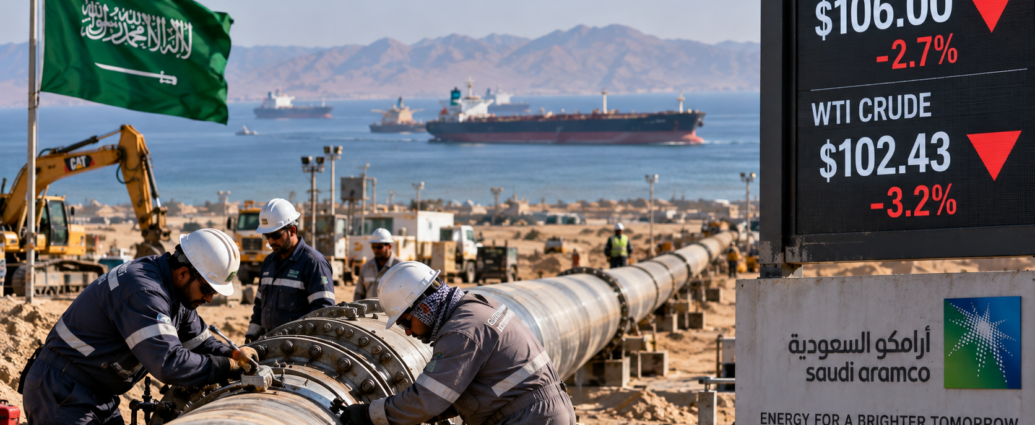
By Thursday morning, though, the mood had shifted. Dow futures climbed roughly 300 points as two forces worked in investors’ favor at once: Treasury yields fell back from Wednesday’s highs, and oil prices kept dropping for a second straight session. Brent crude, the international benchmark, slid to around $106 a barrel after tumbling 2.7% Wednesday. U.S. crude fell 3.2% to $102.43 a barrel.
The oil retreat traces back to Saudi Arabia, where a damaged pipeline has been driving prices higher for more than a week. The kingdom’s East-West pipeline, which normally moves about 7 million barrels of oil a day across the country to its Red Sea coast, was knocked offline after a drone attack. Saudi officials now say they expect to restore roughly half the pipeline’s capacity within days, with full repairs finished in about six weeks. That timeline gave traders enough confidence to sell off some of the risk premium built into oil prices over the past two weeks.
When oil drops, it tends to ease two pressures at once: it takes some heat off inflation, which makes bond investors happier, and it lowers the odds that companies will need to raise prices further, which helps stocks. That’s largely why Treasuries and equities moved in the same direction Thursday even though they don’t always track together.
Not every analyst thinks the rally has legs. Mark Haefele, chief investment officer at UBS Global Wealth Management, said in a note that his team remains positioned for further gains but is “preparing for near-term volatility.” He added that if the Fed’s tightening stays measured and corporate profits keep growing, “the rally should have scope to broaden across sectors and regions.” His advice to investors: spread out stock holdings rather than betting heavily on rate-sensitive sectors or a single trend.
For everyday Americans, the tug-of-war between the Fed and the oil market matters directly. A rate hike raises the cost of financing a car or carrying a credit card balance. A pipeline outage half a world away raises the price of filling up the tank. When both ease at the same time, as they did Thursday, it offers some relief — but Wednesday’s rate increase doesn’t reverse itself just because Thursday was calmer. Borrowing costs tied to the Fed’s benchmark rate stay higher until the central bank decides otherwise, and officials have signaled they’re not done raising rates this year.
Bond markets reflected that mixed picture. Yields on 10-year Treasuries, which had briefly topped 5% this week for the first time since 2007, eased back Thursday as the improving oil picture took some urgency out of inflation bets. Lower yields generally translate into slightly cheaper long-term borrowing costs, including mortgage rates, over time — a small counterweight to Wednesday’s Fed move.
The next test for markets comes as investors watch whether Saudi Arabia’s pipeline repairs stay on schedule and whether the Fed follows through on its signal for another rate hike before year’s end. Both outcomes will shape how much relief Thursday’s rally actually delivers to consumers already squeezed by two years of elevated energy and borrowing costs.
JBizNews Desk | Wall Street
© JBizNews.com All Rights Reserved. Reproduction or distribution without written permission is prohibited.

By 8 a.m. Eastern Time today, oil had reached $103.98 per barrel, measured using the Brent benchmark. That’s $4.36 less than it cost yesterday morning and about $36 above its price a year earlier.
Oil prices are inherently unpredictable. While many variables come into play, the basic push and pull of supply and demand is what ultimately matters. In times of heightened concern about recession, war, or other major disruptions, oil can swing suddenly.
Each gallon you pay for at the pump bundles together several costs. Crude oil is one piece, but you also pay for refineries, wholesalers, government taxes, and the price markup set by gas stations.
Because crude oil usually accounts for more than half of the price per gallon, it tends to move the needle the most. Sharp increases in oil almost always show up quickly at the pump. Declines in the price of oil, on the other hand, often translate into slower, more delayed drops in gas prices—the “rockets and feathers” effect.
When an emergency arises, the U.S. has a reserve of crude oil called the Strategic Petroleum Reserve. Its chief function is to secure energy during disasters like sanctions, severe storm damage, or war. It can also help take the edge off brutal price spikes when supply gets hit.
It’s not a solution for the long haul. It’s more of an immediate safety net to support consumers and keep crucial sectors of the economy running (think key industries, emergency services, public transportation, and the like).
Oil and natural gas are two of the main fuels that keep the world running. A big change in oil prices can end up affecting natural gas. As an example, if oil prices increase, some industries may sub natural gas for certain areas of their operations wherever possible. This can increase demand for natural gas.
The oil market typically tracks two benchmarks:
Between the two, Brent offers a clearer view of global oil performance because it prices much of the world’s traded crude. It’s also often the preferred gauge for tracking historical oil trends. In fact, the U.S. Energy Information Administration now uses Brent as its primary reference in its Annual Energy Outlook.
Looking at the Brent benchmark over multiple decades, you’ll find oil has been anything but stable. It’s seen sharp rises due to factors like wars and supply cuts, along with steep declines tied to global recessions and oversupply (called a “glut”). For example:
Bottom line, oil’s historical performance has been anything but smooth. It’s hugely affected by wars, recessions, OPEC whims, evolving energy initiatives and policies, and much more.
Looking to stay up-to-date regarding the latest energy developments? Check out our recent coverage:
The current price of oil per barrel depends largely on supply and demand, including news about potential future supply and demand (geopolitics, decisions made by OPEC+, etc.). In the U.S., prices also move based on how friendly an administration is to drilling, as it can affect future supply. For example, 2025 saw the Trump administration move to reopen more than 1.5 million acres in the Coastal Plain of the Arctic National Wildlife Refuge for oil and gas leasing, reversing the Biden administration’s policy of limiting oil drilling in the Arctic.
The price of oil updates constantly when the “futures” markets are open. A futures market is effectively an auction where people agree to buy or sell oil in the future. As long as people and companies are trading contracts, the oil price is changing.
In short, shale is rock that contains oil and natural gas. Think of shale as energy yet to be tapped. The more shale the U.S. accesses, the more energy we’ll have—and the more easily oil prices can keep from spiking as much thanks to a greater supply.
When oil is expensive, it tends to make everyday items cost more. This can be related to energy (your heating, gas utilities, etc.), but it’s also due to the logistics involved with making those items accessible to you. Shipping, for example, can affect the price of things at the grocery store, as it’s more expensive to get those products from warehouses and farms onto the shelf.
This story was originally featured on Fortune.com
A little over a month before Israelis head to the polls, Palestinians in the West Bank are watching the Israeli elections with keen anticipation.
Some Palestinians even describe the Israeli vote as decisive for their future, stressing that the upcoming elections in Israel at the end of October matter to them more than their own scheduled elections for the Palestinian Legislative Council, which Palestinian Authority President Mahmoud Abbas has announced for November 28.
Ibrahim Za’oul, a Palestinian contractor from the village of Husan west of Bethlehem who employs local workers, said the outcome of Israel’s elections is critical for tens of thousands of Palestinian laborers. Since the Hamas attack on October 7, 2023, Israel has barred West Bank workers from entering the country for work, except for a limited number employed in sectors considered essential.
“Everyone wants to return to their jobs in Israel and support their families,” Za’oul said. “People hope a new government might change the current policy and let them earn a living as before,” he explained.
He told The Jerusalem Post that many Palestinians laborers believe the work ban could still be reversed. “For us, politics isn’t the issue. What people care about is their living conditions; they want to live with dignity,” Za’oul said.
The Israeli elections, he said, offer a potential opening for change.
He also pointed out that some Israeli employers want Palestinian workers to return, and that many have been unable to find jobs in the West Bank and have been struggling to meet basic needs. “No one wants to keep living like this,” Zaoul said.
Others echoed his view, stressing that the makeup of the next Israeli government is important because it could signal what Israeli policies might be, which will affect their daily lives amid ongoing hardship.
“Our fate will be decided in Jerusalem, not Ramallah,” said a Palestinian PA employee who has worked in the public sector for more than three decades.
The employee, who requested anonymity due to the sensitivity of the issue, said he believes that the way to change the daily lives of Palestinians depends on the outcome of the Israeli elections and who forms the next government.
“The economic situation isn’t good. Public sector employees are paid only about half of their salaries, or sometimes a bit more,” he said. “This has been going on for years and has become almost normal, but it’s not normal.”
“This is the result of Israel withholding Palestinian revenues and refusing to release them, so the PA doesn’t have the financial resources to pay full salaries,” he said, adding that many households can hardly cover their monthly expenses and are facing increasing financial pressure.
The PA employee said he does not expect any new Israeli government to engage in talks with Palestinians or pursue statehood, but hopes for a government that will show greater flexibility. “People care much less about political solutions today; they need answers to escalating economic difficulties,” he explained.
“We know that even if the Ben Gvir-Smotrich government is replaced, the next government will not negotiate with Palestinians or grant us a state, but it might at least act more reasonably,” he told the Post.
“We need financial resources to live. The far-right Israeli government, with ministers like Smotrich, seeks the collapse of the PA and is indifferent to the lives of Palestinians in the West Bank. Maybe with a different government, things could look a bit different.”
Under Israeli law, Israel deducts from the tax revenues it transfers to the PA an amount equal to the allowances paid by the PA to Palestinian prisoners who committed terror attacks against Israelis. These deductions, together with falling foreign aid, have created a financial shortfall for the PA, resulting in only partial salary payments, usually between 50 and 70 percent, for public sector employees.
The Palestinian public sector employee argued that “any future government, other than one led by the far-right Smotrich, might at least be easier to deal with.”
This perspective was also shared by other Palestinians, who expressed concern about ongoing violence by radical Israelis against Palestinians and their property across the West Bank. They said they do not see any effective measures to stop these incidents, which leaves many farmers and ordinary residents feeling increasingly insecure.
They said they believe the Smotrich-Ben-Gvir government aims to drive Palestinians from their land, adding that the outcome of the Israeli elections could help prevent further escalation if steps are taken to curb violence by Israeli extremists.
Palestinian analyst and political expert Ghassan Khatib said it’s not surprising that Palestinians are interested in any possible developments in the Israeli political system. “It’s natural for Palestinians to follow what happens on the Israeli political side because they realize their life conditions and future are shaped by Israel,” he told the Post.
“So, they hope the elections might bring about a change in the Israeli policy towards them,” he said.
“Israel is the one that controls daily life for Palestinians in any possible way and in all areas,” Khatib continued. “It controls the Palestinian economy and decides everything for Palestinian.”
He added that Palestinians face a double problem: one with Israel, and the other with the Palestinian Authority, whose function is not satisfactory. According to a poll conducted recently by The Jerusalem Media and Communications Center, which he heads in Ramallah, the majority of the Palestinian public has lost trust in their leadership.
“Part of the reason for it is that Israel has turned the Palestinian leadership into one that cannot function or administer things properly,” he noted.
“Palestinians see that Israel has changed and that the ‘new Israel’ has no interest in a political resolution to the conflict; Palestinians don’t have any illusions about that,” Khatib said.
China has privately asked Tehran to help rein in Yemen’s Houthis after an appeal to Beijing by Saudi Arabia following the Iran-backed group’s military blitz in the past week, according to three Iranian sources familiar with the matter.
Riyadh turned to China for help after the Houthis made rapid advances along the Red Sea coast and around the Bab el-Mandeb Strait, moves that have left Saudi oil exports and shipping more exposed, the sources said.
China has publicly called for restraint, dialogue and the restoration of safe navigation, but its private message went further than the public statements, they said.
Beijing wants Iran to use its influence with the Houthis to help prevent the conflict spreading further across energy routes on which China, the world’s second-largest economy, depends.
The sources, who were briefed on the discussions and spoke on condition of anonymity, did not provide details on how the message was delivered or whether it was conveyed during Iranian Foreign Minister Abbas Araghchi’s visit to China on Wednesday.
The sources said Tehran’s response was that stability and peace in the region depend on ending the US-Israeli war on Iran.
Chinese officials did not issue any explicit threats or indicate that Beijing would seek to pressure Tehran economically if it failed to use its influence over the Houthis, the three Iranian sources said.
In response to a Reuters request for comment on this story, the Chinese foreign ministry said: “China does not wish to see regional tensions further spill over into Yemen and the Red Sea. Escalating regional instability is not in the interests of any party.”
“The sovereignty and security of all countries should be respected, and facilities vital to people’s livelihoods must not be targeted. China calls for an end to actions that further complicate the situation and urges resolving issues through dialogue and negotiation,” it said.
Iran’s Foreign Ministry and the Saudi government’s media office did not immediately respond to Reuters requests for comment for this article.
China has been Iran’s largest trading partner for more than a decade and remains the main buyer of its oil. Chinese purchases accounted for more than 80% of Iran’s seaborne oil exports in 2025, averaging about 1.4 million barrels per day, according to commodities data and analytics firm Kpler.
“Beijing is one of the few capitals that can still press Iran to rein in the Houthis,” a senior Western diplomat in the region said.
The Houthis, who emerged in the 1990s in opposition to Saudi Arabia’s Sunni religious influence in Yemen, are armed, trained and funded by Iran, according to Iranian sources and Western countries, and form part of Tehran’s anti-Western, anti-Israel “Axis of Resistance.”
Any threat by the Houthis to shipping in the Red Sea and through the Bab el-Mandeb Strait risks sharply worsening the global energy crisis since Iran started blocking the Strait of Hormuz and increasing the danger of a wider regional conflict.
With Hormuz already effectively shut, sustained Houthi attacks on vessels or ports in the Red Sea would disrupt the Middle East’s two main oil-export routes simultaneously, opening a new front in both the energy crisis and Iran’s broader confrontation with the United States.
Iran and its allies now exert pressure over both ends of the region’s key maritime network, one of the sources said, adding that “China depends on both.”
Alex Vatanka, director of the Iran program at the Middle East Institute in Washington, said Beijing may oppose US pressure on Tehran, but its interests in the Middle East extend well beyond Iran. Roughly half of China’s oil imports come from the region, while trade between China and the Gulf Cooperation Council states totals around $300 billion a year.
“Iran can disrupt Hormuz. But at some point that leverage begins hurting the very power Tehran increasingly depends on,” Vatanka said.
It is unclear whether Tehran will act on the concerns raised by Beijing, according to the three Iranian sources.
The relationship nevertheless carries significant economic and strategic weight for Iran as it continues to face hostilities with the US, they said.
China is among the few countries with the financial capacity to provide the investment Tehran needs to sustain its oil industry and ease pressure on its economy, battered by war and sanctions.
Beijing has also demonstrated its diplomatic influence. In 2023, China brokered the agreement that restored ties between Iran and Saudi Arabia after years of hostility.
That influence has limits, however. Critics inside Iran have complained about the relatively modest level of Chinese non-oil trade and investment since the two countries signed a 25-year cooperation pact in 2021, particularly compared with China’s growing investment commitments in Gulf Arab states.
China remains a factor Tehran cannot afford to ignore, but two Iranian sources said Beijing’s interests were only one of many considerations. Iran’s decisions are shaped by competing strategic, economic and political priorities, they said.
“Tehran and Beijing need each other. China is a factor Tehran cannot ignore, and Beijing wants Hormuz reopened and Red Sea shipping secured,” the Western diplomat said.
Analysts say the key test will be whether China is prepared to attach consequences to its demands. Ultimately, they say, the clearest sign of Beijing’s resolve would be evidence that it is willing to use its leverage over Tehran.
Ireland will not take part in the 2027 Eurovision Song Contest, Irish public broadcaster RTÉ announced on Thursday.
“RTÉ feels that Ireland’s participation cannot be justified given the appalling and ongoing loss of lives in Gaza and the humanitarian crisis there, which continues to put the lives of so many civilians at risk,” the broadcaster wrote in its statement.
RTÉ also stated that it remains “deeply concerned by the continued denial of independent access to international journalists to the territory.”
This is a developing story.
An Israeli man was charged on Thursday with preparing a terrorist attack on a data center in Ra’anana, after allegedly using his volunteer work with the fire service to visit the site and explore ways to deliver an explosive.
Prosecutors identified the proposed target as a server facility belonging to the technology company Amdocs. The indictment describes preparations for an attack; it does not allege that an explosive was placed at or flown to the facility.
Mustafa Issa, from Kafr Kassem, was charged at the Central District Court in Lod with three terrorism offenses. The prosecution also asked the court to keep him in custody until the proceedings against him conclude.
According to the indictment, Issa decided amid the war in Gaza to attack what he considered a strategic target in Israel. Prosecutors say he considered planting an explosive or dropping one from a drone. They place his alleged planning between January 2025 and his arrest a month ago, on August 16.
Issa began volunteering with the Fire and Rescue Authority in May 2025, the indictment says. Through that work, he visited the Ra’anana server facility. Prosecutors allege that he chose it as his target because he believed damaging it would cause Israel political and economic harm.
The indictment says Issa downloaded files and videos about making weapons and explosives, and about methods used in attacks carried out by individuals acting alone. He allegedly used the material to try to assemble an explosive device with substances taken from fireworks and firecrackers he had bought.
In a separate experiment, prosecutors say, Issa mixed sulfur, charcoal and other materials and ignited them. When the mixture failed to explode, he destroyed the materials, according to the indictment. Around the time he began volunteering with the fire service, he also bought a drone and an attachment capable of carrying items beneath it, and watched material about fitting explosives to drones, prosecutors allege.
The charges cover preparation for a terrorist act involving explosives, a weapons offense for terrorist purposes, and receiving training or instruction for terrorist purposes. They remain allegations that prosecutors must prove in court.
In their request to keep Issa detained, prosecutors cited what they described as his account to investigators, instructions found on his phone, and a fire service supervisor’s statement that he had visited the facility. The request also lists drones, drone attachments, tactical vests and airsoft guns among items found at his home. Prosecutors argue that the equipment and experiments show he had begun acting on his plan. The same filing says he has no prior criminal record.
The Shin Bet (Israel Security Agency) and Israel Police investigated the case and made Issa’s arrest public on Tuesday.
The 87 “architects” of the Islamic Republic’s brutal crackdown on the 2022 Woman, Life, Freedom protests must face international justice to deter the regime from carrying out similar acts of violent suppression in the future, Amnesty International said on Wednesday, the anniversary of Mahsa Amini’s death and the day the NGO released a more than 1,000-page report documenting how Iranian authorities committed crimes against humanity.
Amini, a 22-year-old Kurdish-Iranian woman, was arrested by Tehran’s morality police on September 13, 2022, for allegedly wearing her hijab improperly. She collapsed at the Vozara Detention Center and fell into a coma. She died three days later, on September 16, triggering the 2022 Woman, Life, Freedom uprising. The UN previously reported that Amini was subjected to physical violence that led to her death in custody.
The Amnesty report, Architects of Atrocities: State Machinery Orchestrating Crimes Against Humanity in Iran’s 2022 Woman Life Freedom Uprising, found that Iranian authorities committed crimes against humanity to suppress the demonstrations. These crimes include murder, torture, enforced disappearance, imprisonment, rape, and persecution on political, gender, ethnic, and religious grounds.
Amnesty documented the deaths of 377 protesters and bystanders, including 56 children, during the uprising. The organization said most of those killed were killed by security forces during protest dispersals between September and December 2022, while others died in custody, after release from custody, or in suspicious circumstances suggesting state responsibility.
The figure is lower than the 551 deaths documented by the UN Independent International Fact-Finding Mission on Iran, which described 551 as a “credible figure,” including as many as 49 women and 68 children.
Tehran acknowledged the deaths of 202 individuals, most of whom it claimed were killed by “rioters” or “armed terrorists,” which Amnesty noted was consistent with long-standing patterns of denial and cover-ups by the Iranian regime.
Several of the 87 officials identified by Amnesty as warranting criminal investigation have already been killed by Israel or the United States, including Supreme Leader Ali Khamenei and former head of the General Staff of the Armed Forces Mohammad Bagheri.
However, the report also identifies officials who remain in positions of power, including IRGC head Ahmad Vahidi, Deputy Interior Minister for Security Majid Mir-Ahmadi, Tehran IRGC Commander Hassan Hassanzadeh and Tehran Deputy Prosecutor Mohammad Shahriari.
“This investigation exposes the layers of command and coordination behind the Iranian authorities’ deadly protest crackdowns. The agents on the streets operated within a hierarchical and coordinated chain of command linking them to officials who directed, enabled, facilitated and supported crimes committed on a massive scale,” said Agnès Callamard, Amnesty International’s Secretary General. “The officials named remain beyond the reach of justice in Iran. Most remain in positions from which they can unleash further deadly repression, while some even climbed the chain of command after the crimes against humanity in 2022. The cost of continued impunity has been devastating. It is beyond time to establish an international criminal justice mechanism for Iran before another protest massacre.”
The report was based on interviews with 270 people, including protesters, former detainees, relatives of those killed or detained, eyewitnesses, lawyers, human rights defenders, journalists and medical workers. Amnesty also analyzed more than 2,000 videos and extensive documentary evidence, including official statements, leaked official documents, prosecution orders, court verdicts and forensic records.
Amnesty said it wrote to Iran’s Supreme Leader and senior security officials to share its findings, but had received no response by the time of publication.
In addition to calling for international criminal justice mechanisms to hold Iranian officials accountable for crimes against humanity committed in 2022, Amnesty called for an international justice mechanism to address the large-scale protest killings of January 2026.
The IRGC and the Police Command of the Islamic Republic of Iran (FARAJA) were identified as the two main security forces that led lethal protest dispersals while implementing state policy devised through the Supreme National Security Council, State Security Council and provincial and county security councils.
FARAJA and IRGC agents repeatedly fired into crowds using military-grade assault rifles, handguns and shotguns loaded with metal pellets, Amnesty reported, matching accounts shared with The Jerusalem Post.
On Wednesday, Iranian nurse Yasser Fattahi, who treated wounded protesters, told The Post that security forces shot his father in the leg as he attempted to reach a young woman who had been shot and was not moving. Fattahi’s father, Jowhar, later died of his wounds.
The NGO also found that the forces chased fleeing protesters and bystanders, fatally shooting many at close range despite their victims posing no threat.
The documents, leaked and official, analyzed by Amnesty also revealed that Tehran has instructed security forces to issue a “firm and severe” response to the protesters, with one leaked order revealing that forces were specifically instructed to “respond mercilessly and go as far as causing death.”
The Baluchi and Kurdish communities were those primarily affected by the lethal repression, accounting for 62% of the recorded victims despite representing only 5% and 10-15% of the country’s population.
Amnesty confirmed the unlawful killing of 106 Baluchi protesters and bystanders, including 20 children, by security forces in Sistan and Baluchistan province. The organization also documented the unlawful killing of 95 Kurdish protesters and bystanders, including 13 children, in the context of protest dispersals or in militarized areas near protests across 17 counties in Kurdistan, Kermanshah and West Azerbaijan provinces.
Most of the victims were fatally shot, though others were beaten to death, struck by tear gas canisters or deliberately run over by security force vehicles.
“The extensive evidence gathered and analyzed in our report leaves no doubt: Iranian authorities committed crimes against humanity to crush the 2022 Woman Life Freedom uprising. They waged a widespread and systematic attack against a civilian population demanding dignity, human rights and fundamental political change, pursuant to a state policy of using lethal force to obliterate dissent,” said Callamard. “Our report also unveils how crimes against humanity in Iran are sustained by an architecture of impunity built into the country’s constitutional, legislative, political and judicial frameworks. The horrifying result has been intensifying cycles of mass protest killings, culminating in the massacres of thousands of protesters within just 48 hours on 8-9 January 2026. The UN General Assembly must end the unconscionable normalization of mass protest killings in Iran and create an international criminal justice mechanism aimed at prosecuting those most implicated in crimes against humanity.
While condemning the Israeli and American attacks on Iran, Callamard insisted that Iranians are now facing both brutal repression and persecution from the regime and are being made to bear “the human cost of unlawful military action.”
Sweden’s Prime Minister Ulf Kristersson will resign after losing the country’s parliamentary election, he said on Thursday, following the announcement of a final vote count.
Center-left opposition parties won 176 seats in Sunday’s vote for parliament while Kristersson’s ruling right-wing bloc secured 173 seats, the election authority said earlier as the counting of ballots ended.
“Now it is the speaker who will lead the next stage of the way to a new government. I am herewith requesting that I be relieved of the office of prime minister to allow that work to start immediately,” Kristersson said in a letter posted on X/Twitter.
Mitt brev till talmannen pic.twitter.com/NtSSTVRD5r
— Ulf Kristersson (@SwedishPM) September 17, 2026
The election result sets the stage for a change of government, with Social Democratic Party leader Magdalena Andersson expected to make a comeback as prime minister after four years in opposition.
All votes for the 349-seat parliament have now been counted, although the result remains subject to formal certification in the coming days.
For the center-left, victory may only be the first step in a long process to form a government.

You’re reading the web edition of STAT’s Health Tech newsletter, our guide to how technology is transforming the life sciences. Sign up to get it delivered in your inbox every Tuesday and Thursday.
Good morning health tech readers,
Keep it up!

U.S. stock futures climbed Thursday morning as investors moved to claw back Wednesday’s losses, when the Federal Reserve raised interest rates for the first time in three years and rattled markets.
The Dow Jones Industrial Average had dropped 631 points Wednesday, and the S&P 500 closed below 7,600, after the Fed lifted its benchmark rate by a quarter percentage point to a range of 3.75%-4%. Federal Reserve Chairman Kevin Warsh told reporters he was “hard pressed” to call the inflation picture improved, and most policymakers penciled in at least one more rate hike before year’s end. Stocks initially took the widely expected move in stride, then sold off sharply during Warsh’s press conference as his inflation warnings sank in.
By Thursday, the mood had reversed. Dow futures jumped roughly 300 points as two things worked together in investors’ favor: Treasury yields eased back from highs not seen since 2007, and oil prices kept sliding for a second straight day. Brent crude traded near $106 a barrel after losing 2.7% Wednesday, while U.S. crude sat above $102 following a 3.2% drop.
The connection between oil and the stock rebound is direct. Saudi Arabia has been working to fix a damaged pipeline that carries about 7 million barrels of oil a day across the kingdom to its Red Sea coast, and officials now expect to restore roughly half its capacity within days and finish full repairs in about six weeks. That timeline gave traders confidence to unwind some of the risk premium that had built into oil prices, which in turn eased worries that gas and energy costs would keep pushing inflation higher. Lower inflation fears mean less pressure on the Fed to keep raising rates aggressively, which is why stocks, bonds, and oil all moved together Thursday.
Not every voice on Wall Street is fully convinced the selloff is over. Mark Haefele, chief investment officer at UBS Global Wealth Management, said his team remains “positioned for further equity gains while preparing for near-term volatility.” He said that if the Fed’s rate increases stay measured, credit conditions hold steady, and corporate earnings keep growing, “the rally should have scope to broaden across sectors and regions.” His guidance to investors: spread bets across the market rather than loading up on stocks especially sensitive to interest rates or dependent on one theme carrying them higher.
The rate hike itself still matters for everyday costs even as stocks bounce back. A quarter-point increase from the Fed ripples into everything tied to the prime rate — credit card interest, small-business loans, and adjustable-rate debt all get a bit pricier. Mortgage rates tend to follow longer-term Treasury yields more closely than the Fed’s overnight rate, so Thursday’s dip in the 10-year yield offers a small counterweight, but the overall borrowing environment remains tighter than it was a week ago.
For households, that combination cuts two ways at once. Gasoline prices should eventually ease if Saudi Arabia’s pipeline repairs stay on schedule, since crude oil is the biggest single input into what drivers pay at the pump. But the cost of carrying a credit card balance or financing a car just went up, and Fed officials have signaled they aren’t finished raising rates this year. One relief doesn’t cancel out the other; they’re simply moving on different timelines.
Markets will get a clearer read on how durable Thursday’s rebound is once trading opens and investors see whether buying interest holds up through the session. The bigger questions — whether Saudi Arabia’s pipeline comes back online on schedule, and whether the Fed follows through with another rate increase in the coming months — will keep shaping both stock prices and household budgets well beyond this week’s bounce.
JBizNews Desk | Wall Street
© JBizNews.com All Rights Reserved. Reproduction or distribution without written permission is prohibited.

Despite the scale and longevity of Europe’s largest businesses, many are struggling to achieve the same pace of growth as companies in the U.S.
The combined revenues of the companies on the Fortune 500 Europe list rose 4% to a record high of $15.5 trillion this year and profits climbed 3% to $1 trillion. However, on a constant currency basis, the percentage increase in revenues is less than 1% and net profits actually declined. In contrast, the U.S. companies on the Fortune 500 saw profits rise by 12.4% and revenue by 5.4%.
Addressing this growth issue represents a significant challenge for Europe’s largest companies and was the overarching question executives debated at the Fortune CEO Forum, held in London on 16 September.
Here, some of those business leaders share their views on how to drive European growth.
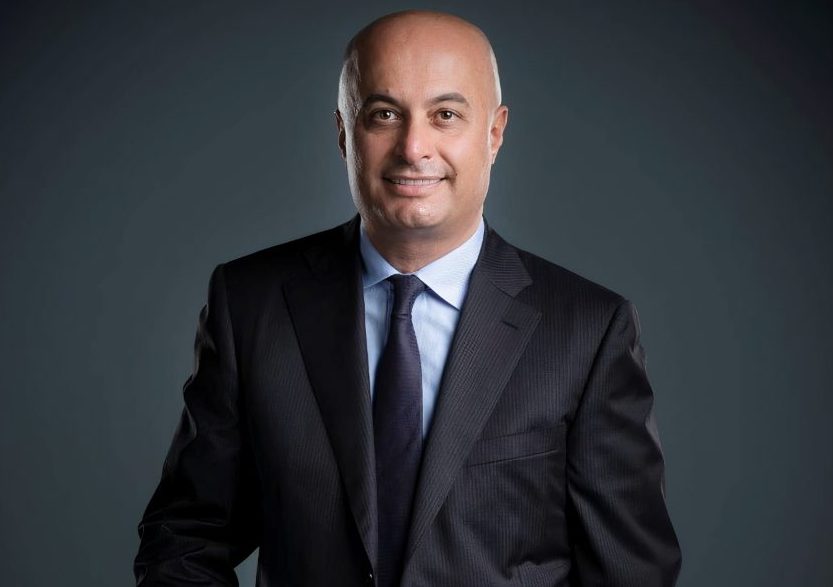
Europe has several strengths. It has talent, great levels of trust and leads on responsible innovation—and it has done for centuries. But at this point in time, there is a need to re-evaluate how we can evolve the regulatory framework that exists in Europe from being sometimes pre-regulating or over-regulating to becoming one that drives innovation. This is what will enable Europe to excel.
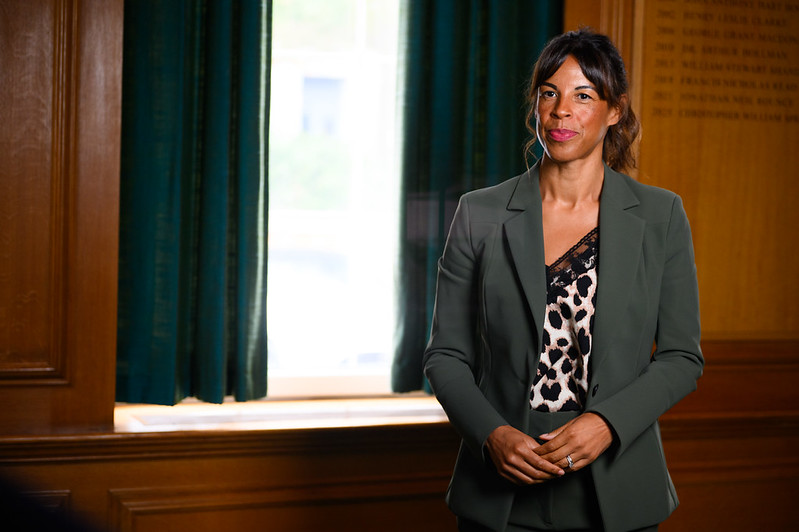
I believe Europe’s biggest opportunity for growth is around the sustainability agenda. Everyone shares that common goal to lower carbon emissions. I understand that our industry, the transport industry, is a big contributor. So Volvo very much should be part of the solution, not the problem. We’re working together to make sure, with other manufacturers, that we’re able to move forward in that space.

Europe has a fantastic history of innovation, and there’s a real opportunity to capitalize on that. European companies need to foster that innovation from the talent that’s coming out of our universities and create the investment capacity. We need to make sure we’re retaining that talent in Europe and answer the question: How do we make sure that we’re creating the programs that enable those entrepreneurs to take the steps they need to be able to grow and scale their businesses here in Europe?
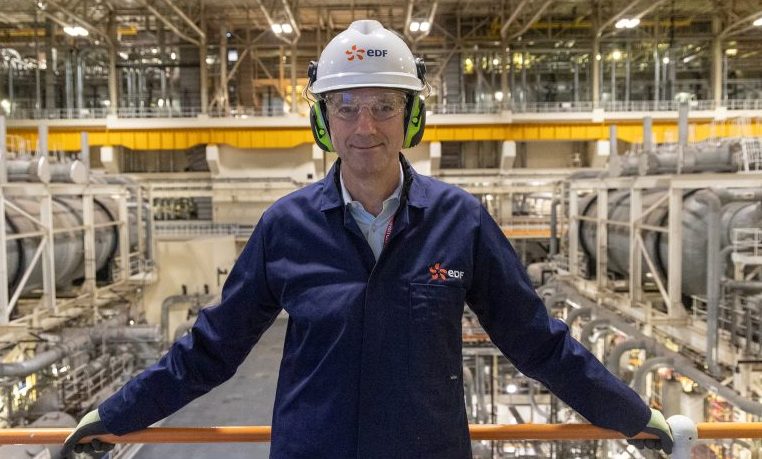
The lack of competitiveness within Europe is a reflection of high energy costs. It’s not only me who says that, it’s also within the Draghi report [on EU competitiveness] and is reflected in the U.K. government’s industrial strategy, so we need to really address this. With cheaper energy and plentiful electricity, Europe can improve its energy security, and that will be very good overall for our competitiveness and future growth.
This also represents an opportunity for Europe. The European energy system is only 23% electrified and we are importing 97% of the crude oil that we need and around 83% of the gas. That is money being spent elsewhere in ways that are not sustainable. If we improve our electrification, that will be very good for the environment, economy, and employment. I know that is the ambition that Europe has, but it needs to be more serious in embracing electrification, and the U.K. is part of that, too.
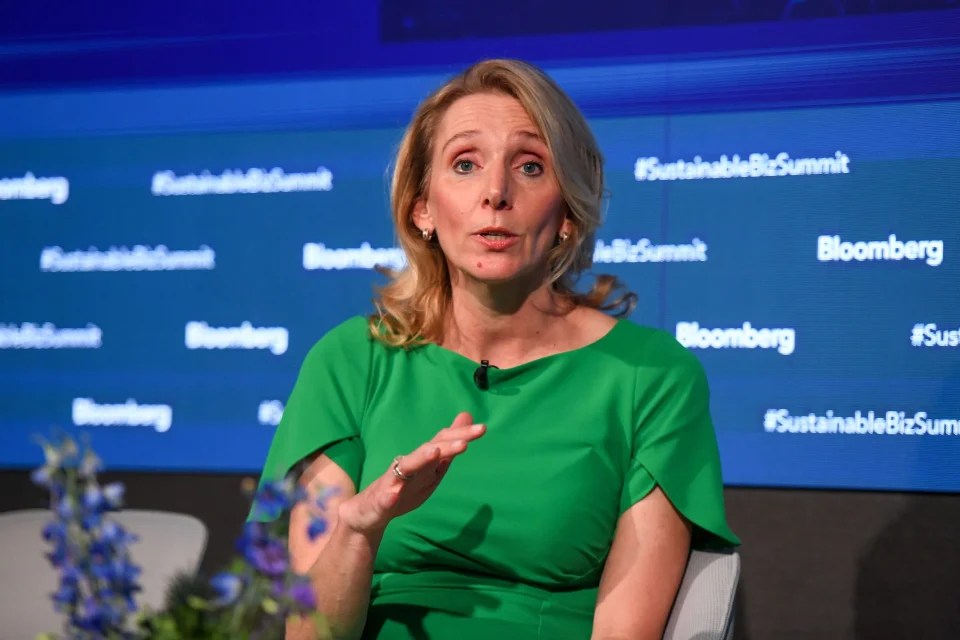
There are a lot of opportunities for growth in Europe. We’re a very wealthy continent with about a half billion people and we have some real strengths in engineering, innovation, and education, with some of the best technical universities on the planet.
But Europe needs to improve productivity. AI represents a huge opportunity for this. At Logitech, we’ve built more than 3,000 AI agents and AI has become deeply embedded in the work we do—not just in engineering but across all functions. This is reflected in our operating expenses as a percent of sales—it was up about 200 basis points last year. AI played a big role in that and that’s an opportunity across the continent.
Companies in Europe are grappling with increased energy costs and challenges around energy security, sustainability, and ensuring a continuous supply. The positive is that we are starting from a good position. Nearly half the mix of energy in Europe is already renewable, and there is a lot of focus and openness to try new sources, for example, in biofuels and other new technologies. Europe will continue to lead the world in terms of its push for energy sustainability and this is a good thing, not just for Europe but for the world.
We need to focus on Europe’s strengths and how Europe can position those strengths to the rest of the world. Europe definitely has a lot of capability within life sciences and healthcare, and I think that should remain Europe’s key advantage compared to the rest of the world. Similarly, Europe’s renewed focus on aerospace and defense, is likely to create a lot of positive cycles of additional industries and engineering, that’s going to help Europe going forward. So I strongly believe focusing on industries that are Europe’s strength and doubling down on them represents the best path for sustained growth and success for Europe.
The biggest thing holding Europe back from achieving its growth potential is the CEO and board-level mandate. I still think we’re in the infancy of AI adoption and organizations really understanding the art of what’s possible with this technology. We still see niche use cases of AI around productivity, but organizations should also think about whole-scale transformation. But these discussions need to take place at the board level in order for us to accelerate the opportunities that this technology can deliver.
For the latest coverage and updates from Fortune CEO Forum, as well as insights into the companies on our list, visit this page.
This story was originally featured on Fortune.com

After working in healthcare technology for 30 years, including nearly two decades building Zocdoc, I’ve developed a habit.
Every time a company announces it’s going to “disrupt healthcare,” I start a mental clock. How long until they discover healthcare does not yield to disruption playbooks? By this, I mean: building a system outside of the existing one, scaling it quickly, and forcing incumbents to adapt or disappear.
Don’t mistake me. Healthcare desperately needs fixing and people who are willing to take ambitious swings at improving it. I commend all fellow travelers working to improve healthcare. But nowhere is it more true that ideas are easy and execution is hard than in healthcare.
Just look at the track record. Wave after wave of companies — from big tech to digital health, retail to pharma — has tried to reinvent healthcare.
Haven — the joint venture launched by Amazon, Berkshire Hathaway, and JPMorgan Chase in 2018 to simplify health benefits and lower costs for their combined 1.2 million employees — disbanded in February 2021, after not quite three years, following a string of executive departures including CEO Atul Gawande.
Walmart Health launched clinics in 2019 offering primary and dental care at low, transparent prices; in April 2024, Walmart announced it would close all 51 clinics across five states, along with its virtual-care service, saying the business “is not a sustainable model.”
IBM Watson Health launched in 2015 with a pledge to use AI to improve cancer treatment recommendations; seven years later, in 2022, IBM sold the bulk of the unit — including Watson for Oncology — to private equity firm Francisco Partners in a deal reportedly worth about $1 billion, a fraction of the roughly $4 billion IBM had invested.
Babylon Health, the UK-founded startup that promised AI-powered primary care through an app, went public via SPAC in 2021 at a valuation north of $4 billion; two years later, in August 2023, its US operations filed for bankruptcy and its UK business was sold off in a fire-sale deal.
With AI ushering in the next technology cycle, healthcare is once again about to be disrupted. Revolutionized. Fixed. And yes, AI is a genuine technological breakthrough. It has the capacity to improve many things; it also has the capacity to accelerate healthcare’s broken incentives. Either way, I have seen this movie before. Technological breakthroughs do not magically generate a working healthcare system.
That is because healthcare is not a technology problem. It is a complex systems and incentives problem: trillions of capital deployed across hospitals, physician groups, insurers, pharmacies, electronic health records, regulations, clinical workflows and more.
Disruption playbooks assume you can reinvent one part of a system and the rest will conform. But healthcare does not work that way. Everything is connected: providers, hospitals, insurers, EHRs, regulations, workflows and incentives built up over decades. You can build the world’s fastest train. But if its wheels do not fit the existing tracks, it will not travel far.
Healthcare is not a greenfield; it is the brownest of fields. If you want to solve its biggest problems at scale, your innovation has to work with the system that already exists. That is where disruptors collide with reality.
Many attempt to build around the system. They might create niche products and even valuable businesses. But because they’ve built outside the core of healthcare, they will remain on its fringes — lacking the scale needed to solve its largest problems.
Others assume the existing system will bend to the will of their brilliance. That trillions of dollars of infrastructure, tens of thousands of institutions, decades of incentives will somehow reorganize around them. That the tracks will magically rebuild to fit their trains’ wheels. History suggests that’s wishful, fatal thinking.
After watching decades of disruptors’ moonshots fail, I am convinced that healthcare is simply not disrupt-able from the outside in. It is only fixable from the inside out.
I learned this lesson building Zocdoc. Making it easier for tens of millions of patients to find and book care would not have worked if we tried to either ignore or “disrupt” health systems, physician practices, insurers and electronic health records. We did not expect them to adapt to us. We did the unglamorous work of connecting to all of them — across more than 200,000 providers who practice in 200 specialties, matching more than 10,000 insurance plans, building more than 175 different calendar integrations, and accounting for innumerable bespoke scheduling rules and workflows, regulations, and more.
This approach requires building fewer walled gardens and more bridges. It requires connecting what exists instead of trying to replace it. It is slower. It is harder. But it is not anti-innovation; it is anti-delusion.
It is also pro-progress. Healthcare’s status quo is unsustainable, and without change it will break the bank, our health, or both. But healthcare innovation must be matched with pragmatism and approached in a way that will actually drive meaningful change at scale.
For too long, we have mistaken disruption for progress. Patients still struggle to find a doctor who takes their insurance. They wait an average of 31 days for the privilege of a visit. They run into dead ends across fragmented systems and repeat the same paperwork. And while patients wait, 20 – 30% of providers’ appointment openings go to waste; they remain saddled in administrative work and besieged with burnout. Premiums and costs continue to rise, while outcomes have not improved nearly enough.
Patients do not want disruption in and of itself. They want what disruption promises: a healthcare system that works for them, not the other way around. And delivering on that is much harder than shooting at the moon.
Thirty years in health tech didn’t make me less ambitious, but it has changed what I consider ambitious. So before we attempt to build yet another colony in space, let’s make things better for the patients down here on planet Earth.
The opinions expressed in Fortune.com commentary pieces are solely the views of their authors and do not necessarily reflect the opinions and beliefs of Fortune.
This story was originally featured on Fortune.com

Beatrice Nolan here. Anthropic is about to IPO, reportedly at a record breaking $2 trillion. If you’re an employee at the company, especially one that’s been there for some time, you are about to come into a life-changing amount of money.
So quitting, publicly sounding the alarm about the technology you are building, or predicting the death of all humans due to your flagship product, may seem like an unusual move at such a precarious moment. But that’s exactly what a fair few of Anthropic researchers, current and former, have been up to in the last week.
Here’s one post from an Anthropic employee called Evan Hubinger, who leads the company’s Alignment Science team, in response to a colleague’s resignation post:
“We really do earnestly believe AI could kill all humans! I personally think it is >10% within the next decade. I believe Anthropic is trying its best, but we do not yet have a plan to solve alignment for superintelligence and are not clearly on track to.”
While a 10% chance of human destruction via AI may sound daunting, it’s not a new stance for a lot of these researchers. Some, including those who had a hand in creating the technology, have been saying this since the beginning of the decade, some even longer. (Here’s a handy chart if you want to see what some of these leading researchers have for their ‘p.doom’ number.)
While very much up for debate whether these doomsday scenarios from Hubinger and various other concerned researchers are likely to actually happen or not. It certainly seems like they really do believe it.
See this post from another Anthropic researcher, Drake Thomas:
“I would burn my equity to the ground in a heartbeat for a 1% higher chance we make it out of this situation alive. I expect a great many of my colleagues across the industry would as well. I promise you, we are actually just fucking scared, it’s not galaxy brained marketing.”
None of this should come as much of a surprise, really. Anthropic was founded as an AI safety lab in the first place, and CEO Dario Amodei himself has put his own p(doom) at somewhere between 10% and 25%. Researchers voicing this kind of alarm are, in some sense, just saying out loud what’s been baked into the company’s identity from day one.
However, the timing of this new frenzy over AI risk does seem odd, just weeks out from an IPO. It’s left me asking: what will this mean for the company’s historic public offering?
A public listing may bring its own pressure against Anthropic’s cautious foundations—a public company answers to shareholders expecting growth, which could mean less appetite for the kind of voluntary slowdown Amodei has floated. The fact that researchers say Anthropic doesn’t have a plan for controlling risks could also spook investors.
Some already appear to have been listening.
This week, SOC Investment Group, a labor-affiliated shareholder group that works with union-sponsored pension funds, called on Anthropic to delay the offering, arguing the company’s confidential IPO filing was submitted in June—before the recent hacking incidents, extinction warnings, and pacing proposals emerged—leaving investors unable to properly price those risks.
On the other hand, there could also be a safety case for going ahead with the IPO, the argument being that going public brings transparency and scrutiny that would make the company more, not less, safe.
Neither companies nor consumers actually want misaligned AI that could cause havoc in their products, and a track record of taking the risks seriously—third-party evaluation, pacing commitments—could be a selling point for enterprise customers and consumers alike.
In contrast, OpenAI has pumped the brakes on its own IPO, telling Fortune late last week that AI safety concerns made it, in CEO Sam Altman’s words, “an ill-advised moment to go public” right now.
One thing’s for sure. When those S-1s eventually emerge from Anthropic and OpenAI, the “risks” sections will surely make for some highly interesting reading.
See you tomorrow,
Beatrice Nolan
X: @beafreyanolan
Email: beatrice.nolan@fortune.com
Submit a deal for the Term Sheet newsletter here.
Joey Abrams curated the deals section of today’s newsletter. Subscribe here.
This story was originally featured on Fortune.com

Hello there. It’s STAT reporter Andrew Joseph here, filling in for Mr. Pharmalot for the day. We’re still mulling this fascinating story from our colleague Megan Molteni about “neuro-chimeric” mice with half-human brains. While Megan’s story lays out both the scientific achievement and the ethical concerns of the new research, we’re left with the question — could these mice find a piece of cheese in a maze faster than regular mice? Something to ponder perhaps as you consider today’s headlines….
For all the talk of a hiring spree at the U.S. Food and Drug Administration, the reality is more complicated and filled with bureaucratic delays, STAT shares. The cause is the same DOGE cuts that wiped out thousands of jobs earlier in the Trump administration, which in turn have created bottlenecks and confusion in the hiring process. Now, prospective new employees are stuck in pre-onboarding limbo, while other routine administrative tasks, like purchase approvals and travel payments, have fallen by the wayside.
Bavarian Nordic appointed former Sanofi executive Tarja Stenvall as its new chief executive officer, Bloomberg writes. The announcement resets the company’s leadership after a failed takeover bid led both the chairman and CEO to step down from the vaccine maker. Stenvall replaces Paul Chaplin, whose departure was announced earlier this year, and will start Oct. 15. The Danish company is best known for its smallpox shot that is also used against mpox.
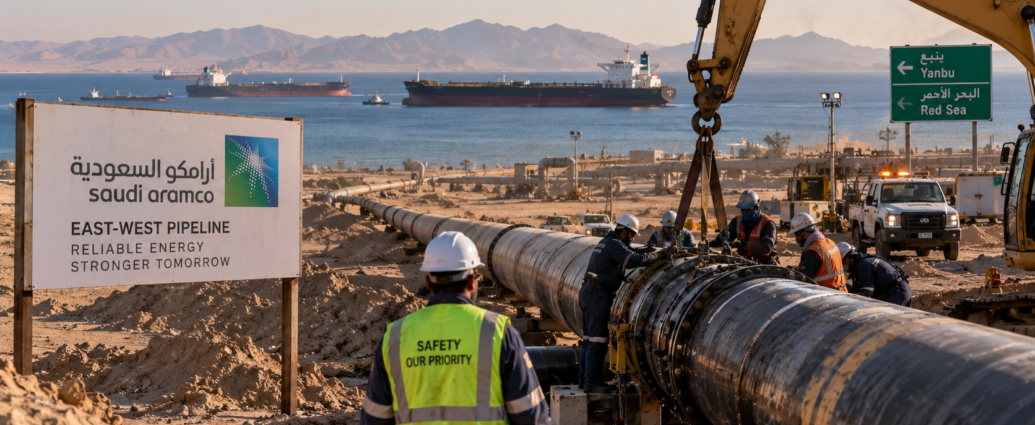
Oil got cheaper for a second straight day as Saudi Arabia works to get a critical pipeline back online, easing fears that Middle East fighting would choke off the world’s oil supply. Brent crude, the global benchmark, traded near $106 a barrel Wednesday after tumbling 2.7% the day before, while U.S. crude sat above $102 a barrel following a 3.2% drop.
The pipeline at the center of the selloff is Saudi Arabia’s East-West line, which carries oil across the kingdom to its Red Sea coast and normally moves about 7 million barrels a day. It was damaged in a drone attack on September 11, and the outage forced Saudi Arabia to halt some crude shipments through its Red Sea port of Yanbu and cancel deliveries to European customers. That’s what sent oil prices spiking earlier this month.
Now Riyadh says it’s fixing the problem. A person familiar with the matter told Bloomberg that Saudi Arabia expects to bring back roughly half the pipeline’s capacity within days, with full repairs done in about six weeks. U.S. Energy Secretary Chris Wright told CNBC the outage is a “brief and temporary interruption” that “will be measured in days.” Independent analysts see it differently — satellite images of the damaged pumping station suggest repairs could stretch on for weeks, not days.
In the meantime, Saudi Arabia is finding workarounds. The kingdom is offering Asian refiners more crude through ship-to-ship transfers off Oman’s Sohar port, bypassing the damaged pipeline entirely. It’s also pushing more oil through the Strait of Hormuz, the narrow waterway between Iran and the Arabian Peninsula, with help from the U.S. military. That’s a tighter squeeze than it sounds: tanker traffic through Hormuz measured just four vessels Tuesday, down from seven the day before and well below the recent 10-day average of 18.
For American drivers, the math is simple. When oil gets cheaper, gas at the pump tends to follow — eventually. But the relief so far has been thin. The national average for a gallon of gasoline climbed again overnight to $4.37, even as crude prices fell, according to one industry tracker. That’s because oil is still trading roughly 75% higher than it was before the U.S.-Iran conflict escalated, and pipeline repairs take time to show up at the pump. One barrel of oil makes about 19 gallons of gasoline, so even small moves in crude prices ripple through household budgets for months.
The oil market’s turbulence is also showing up in interest rates. The Federal Reserve raised rates Wednesday, citing inflation pressure that oil-driven price spikes have helped fuel. Higher rates mean costlier auto loans, credit cards, and mortgages for consumers already paying more at the pump.
Not everyone is convinced the worst is over. “I wouldn’t call it an all-clear situation,” said Haris Khurshid, chief investment officer at Karobaar Capital LP. “The market is getting some capacity back, but it isn’t getting its margin for error back.” In other words, even with Saudi Arabia’s fix underway, the system has little cushion left if fighting escalates again or repairs run long.
Wright said one recent day saw roughly 18 million barrels of oil and petroleum products move through Hormuz, with the seven-day average closer to 11 million barrels — though other trackers, including Clarksons Research, put the real number closer to 8 million barrels a day. The gap in estimates underscores how murky the picture remains even as prices ease.
For now, the fix is straightforward even if the timeline isn’t: Saudi Arabia is rerouting supply around its broken pipeline while crews race to patch it, and markets are betting that effort succeeds fast enough to keep oil — and eventually gas prices — from spiking again.
JBizNews Desk | Wall Street
© JBizNews.com All Rights Reserved. Reproduction or distribution without written permission is prohibited.
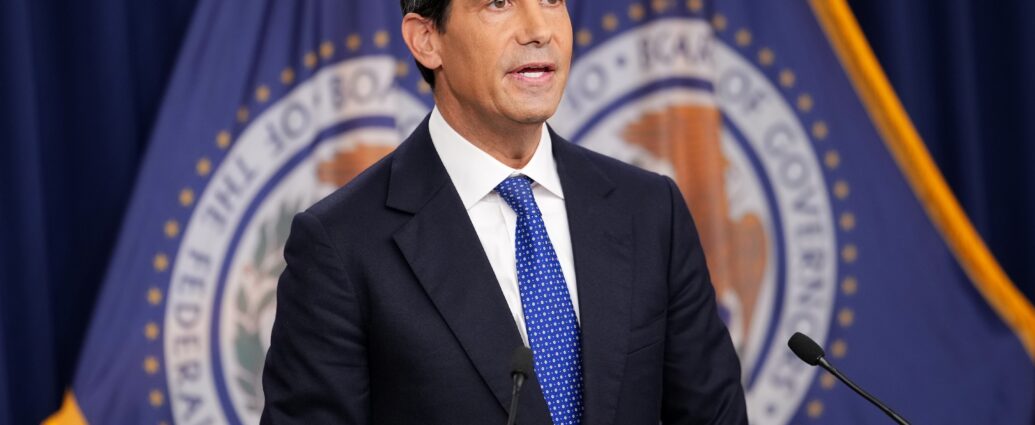
Good morning. The Federal Open Market Committee voted unanimously on Wednesday to raise its benchmark rate a quarter point, to 3.75%-4%, the first hike since July 2023 and the first policy move of Chairman Kevin Warsh’s tenure. The decision put Warsh at odds with President Trump, who has publicly pushed for a rate cut .
The Fed’s updated projections show officials now see the median federal funds rate ending 2026 at 4.1%, up from 3.8% in June, pointing to another hike before year-end. Officials have cited tariffs, an energy shock, and surging AI-related capital spending as inflation drivers. Markets had largely priced in the Fed’s rate hike. Stocks initially reacted modestly but ended lower. Meanwhile, Treasury yields, already near multi-year highs, moved higher following the decision.
I asked Yiming Ma, associate professor of finance at Columbia Business School, what this means for corporate finance chiefs.
Her first point: any floating-rate credit lines or term loans just got more expensive, immediately. But CFOs shouldn’t treat Wednesday as an isolated event. “Usually, when the Fed starts to hike their interest rates, it’s the beginning of an entire cycle,” Ma said, and markets are already pricing in at least one more increase.
Ma’s sharpest advice is on stress testing: model funding costs and production costs together, since they share a root cause. Higher energy prices, driven by geopolitical conflict, push up both inflation and input costs for oil-reliant companies. Firms may need more liquidity just as it gets pricier to hold, while production costs climb too. “It’ll be good to test for joint scenarios,” she said.
She also flags the long end of the curve. Corporate bonds are typically benchmarked to long-term Treasury yields, and the 10-year and 30-year have both risen sharply, meaning CFOs face higher costs on new issuance or refinancing across the entire maturity spectrum.
On the market’s jittery reaction, Ma points to a second, deeper risk: concerns about U.S. debt sustainability, which were already pushing Treasury yields to multi-year highs before this week’s meeting.
That backdrop cuts two ways. The hike could reassure markets that the Fed will act aggressively against inflation. Or it could confirm inflation is genuinely entrenched, amplifying yield pressure already coming from debt worries. “It’s just a very nervous time in markets,” Ma said, describing the dollar as caught between inflation concerns and debt concerns pulling in opposite directions.
The takeaway for finance chiefs: this isn’t a single-hike story. It’s the start of a cycle, layered on an energy shock and a debt-sustainability debate that together are pushing up funding costs across every maturity a company touches.
Sheryl Estrada
Sheryl.Estrada@fortune.com
This story was originally featured on Fortune.com
Five polls published on Wednesday night showed a divided political landscape, with Gadi Eisenkot’s Yashar holding a slight advantage over Likud at the party level, but with no clear outcome between the blocs.
While Eisenkot led in most of the polls, a Channel 14 survey presented the opposite picture, significantly strengthening the Netanyahu bloc. At the same time, Ofer Winter’s People of Israel has established itself above the electoral threshold, while the Hendel-Zelicha list remains on the margins and affects the distribution of seats.
A KAN News poll showed Eisenkot’s party still leading with 24 seats. Likud, led by Benjamin Netanyahu, dropped by one seat to 20, while Naftali Bennett’s B’Yahad remained stable at 12.
Both Ofer Winter’s party and the Hendel-Zelicha list crossed the electoral threshold with four seats each.
The balance between the blocs remained inconclusive, with 52 seats on each side, leaving neither with a majority to form a government.
According to a Channel 13 poll, Eisenkot’s Yashar led with 22 seats, while Netanyahu’s Likud fell to a low of 18.
Despite this, the Netanyahu bloc strengthened to 54 seats, compared with 52 for the change bloc.
On the Right, the alliance between Religious Zionist Party and Zehut, led by Bezalel Smotrich and Moshe Feiglin, surged to eight seats. Itamar Ben-Gvir’s Otzma Yehudit, Avigdor Liberman’s Yisrael Beytenu, and the Joint List also received eight seats each.
Yashar continued to lead in the Channel 12 poll with 23 seats, down two from the previous survey.
Netanyahu’s Likud also weakened, losing one seat to reach 20.
The biggest shift was in the balance between the blocs. The bloc opposed to Netanyahu fell by two seats to 66, including 54 seats for Zionist parties and 12 for Arab parties.
At the same time, the coalition also weakened by two seats to 50.
Yoaz Hendel and Yaron Zelicha shifted the situation, with their list crossing the electoral threshold and winning four seats. As a result, it effectively sits in a “third bloc,” outside the two main camps.
Within the anti-Netanyahu bloc, the Joint List also strengthened at the expense of some of the bloc’s Zionist parties.
While other polls left the political system deadlocked or showed a slight advantage for the bloc opposed to Netanyahu, the Channel 14 poll presented a different picture, with 64 seats for the right-wing bloc.
Likud remained the largest party with 30 seats, down one, while Eisenkot’s Yashar also lost one seat to stand at 21.
Bennett’s B’Yachad rose from seven to eight seats, as did United Torah Judaism. Yisrael Beytenu fell from seven to six.
There was also movement within the Arab parties: Hadash-Ta’al-Balad rose to seven seats, while Ra’am fell to five, leaving their combined strength unchanged at 12 seats.
The biggest surprise in the Channel 16 poll came from the parties hovering around the electoral threshold.
Ofer Winter’s People of Israel and the joint list of Yoaz Hendel and Yaron Zelicha each crossed the threshold with four seats, altering the balance between the blocs.
The Netanyahu bloc stood at 52 seats, compared with 53 for the opposition.
Eisenkot’s Yashar led the poll with 21 seats. Netanyahu’s Likud came second with just 18 seats, while Bennett’s Beyahad strengthened to 16.
Three parties tied for fourth place with nine seats each: the Democrats, Otzma Yehudit, and Shas.
Across the five polls, Eisenkot’s Yashar averaged 22.2 seats, ahead of Likud’s 21.2.
Bennett’s B’Yachad ranked third with an average of 12.2 seats, followed by the Democrats with 9.2.
The bloc picture remained inconclusive. The Netanyahu bloc, including People of Israel, averaged 54.4 seats, compared with 51 for the Zionist opposition parties.
The Arab parties together averaged 12.2 seats, while the Hendel-Zelicha list averaged 2.4.
Against the backdrop of the figures, Barak Seri warned of a weakening trend within the change bloc.
According to Seri, a bloc that stood at around 60 to 61 seats until roughly two months ago is now polling at around 53 to 54, having lost six to seven seats in a short period.
Seri argued that the bloc’s focus on internal questions and scenarios for forming a government without 61 seats was driving away undecided voters, particularly former Likud voters.
He said that instead of focusing on the question of partnering with Ra’am, the bloc should return its attention to October 7 and the issue of haredi military enlistment.
A 60-year-old rabbi from Milan’s Jewish community was assaulted by three young men while waiting for a bus near the city’s Jewish quarter on Tuesday, according to the Jewish community.
A 20-year-old Tunisian man was arrested on suspicion of “religiously motivated violence,” while two other young men are suspected of involvement in the attack.
According to a statement from the Jewish Community of Milan, the three identified the rabbi as Jewish because of his clothing, surrounded him, cursed him, kicked him, and punched him. The community’s president, Walker Meghnagi, described the incident as “violence unlike anything we have seen.”
Meghnagi said the assailants removed the rabbi’s hat, threw it to the ground, stepped on it and spat toward him.
The rabbi managed to photograph the suspects as they fled and later filed a complaint at Milan police headquarters.
In addition to the 20-year-old who was arrested, two other young men, ages 19 and 22, are suspected of involvement in the assault. One is of Tunisian origin, and the other is of Moroccan origin.
The Jewish community said investigators were examining whether explicitly antisemitic remarks were made during the assault.
Meghnagi said the three “understood that he was Jewish by the way he was dressed.”
Italian Prime Minister Giorgia Meloni condemned the attack.
“On behalf of the government and myself, I express my deep solidarity with the rabbi who was attacked in Milan and with the city’s Jewish community. This was a cowardly and unacceptable incident,” Meloni said.
“Antisemitic hatred is a scourge that we cannot and do not want to tolerate in any form, and we will continue to fight it with determination,” she added.
The Israeli Embassy in Rome also responded to the assault in an official post on X/Twitter.
Un rabbino aggredito a calci e pugni per strada a Milano. Non è un episodio isolato: l’antisemitismo in Italia e in Europa non accenna a fermarsi, anzi cresce, si normalizza, si fa sempre più violento. Basta silenzi e minimizzazioni. https://t.co/251bFezoOz
— Israele in Italia (@IsraelinItaly) September 16, 2026
“A rabbi being kicked and punched on a street in Milan is not an isolated incident: antisemitism in Italy and Europe shows no signs of stopping. It is growing, becoming normalized and increasingly violent. Enough with the silence and the downplaying of its severity,” the embassy said.
Pro-Israel advocacy group Proclaiming Justice to the Nations said Wednesday that the Texas State Board of Education had accepted several of its curriculum recommendations, following testimony in which its president, Laurie Cardoza-Moore, challenged the participation of the Council on American-Islamic Relations.
The organization, known as PJTN, said its proposals addressed civics, history, social studies and Holocaust education, with an emphasis on the influence of Judeo-Christian traditions on the United States. Its September 16 statement did not identify which recommendations had been incorporated into the adopted standards.
The Republican-controlled board approved revised high school social studies standards on September 4 by an 8-4 vote. The changes, scheduled for implementation in 2030, included teaching Christianity’s influence on American history and identifying 1948 as the year Israel was established “in the ancestral homeland of the Jews,” the Houston Chronicle reported.
“For decades I have fought to keep anti-American and anti-Semitic content out of our classrooms,” Cardoza-Moore said in remarks released by PJTN. “How can we let terrorists decide our children’s curriculum?”
During her testimony, according to the transcript provided by the organization, she questioned why CAIR representatives had been allowed to address the board, citing Texas Gov. Greg Abbott’s designation of the group as a foreign terrorist organization.
Abbott issued that designation in November 2025. It was a state action, distinct from designation under the federal government’s foreign terrorist organization process.
Cardoza-Moore also cited CAIR’s inclusion as an unindicted co-conspirator in the Holy Land Foundation terrorism-financing case. CAIR was never indicted in that case and denied the allegations. The group filed a federal lawsuit challenging Abbott’s designation as unconstitutional and defamatory.
CAIR has rejected allegations that it is affiliated with Hamas or the Muslim Brotherhood. In its published response to such accusations, the organization described itself as independent of foreign movements and said it condemned terrorism, including attacks carried out by Hamas.
Cardoza-Moore argued that understanding America’s religious and intellectual foundations should be central to the revised standards, formally known as the Texas Essential Knowledge and Skills, or TEKS.
“I am here to advocate for the incorporation of Judeo-Christian history and values within our standards,” she told the board. “It was upon Judeo-Christian values that this great nation was built.”
The curriculum overhaul drew opposition from Muslim advocates. In a separate statement Wednesday, CAIR’s Austin office called for the board to reconsider the standards, arguing that their treatment of Islam would encourage prejudice against Muslim students.
PJTN projected that the Texas changes could eventually influence instruction for as many as 25 million students nationwide, citing the state’s influence on educational materials. The statement provided no calculation or supporting evidence for that estimate.
Cardoza-Moore traced her textbook advocacy to 2012, when she challenged a passage in a Pearson human geography textbook used in Tennessee that she said legitimized the 2001 Hamas suicide bombing at Jerusalem’s Sbarro restaurant. PJTN said the disputed reference was subsequently removed.
“Students cannot fully understand America if they do not know and understand the laws, history, ideas, and traditions which shaped America,” she told the Texas board.
The Lebanese Parliament renewed confidence in Prime Minister Nawaf Salam’s government on Wednesday, with 68 lawmakers voting in favor despite some Hezbollah lawmakers withdrawing from the session and heated exchanges involving other members of the Shiite bloc, according to official statements and recordings of the session.
The two-day debate ended with 12 lawmakers voting against Salam’s government and two abstaining. Hezbollah lawmakers left the session without taking part in the confidence vote, signaling their opposition to the government while stopping short of voting against it.
Lebanese journalist Youssef Diab told Al Hadath that he believed Hezbollah had chosen not to vote against the government and instead withdraw from the session “to save face.” He said that in previous years, no democratic process or government plan could proceed without Hezbollah’s approval, arguing that the group’s inability to overturn the government would expose the extent to which it had been weakened and that withdrawing was, therefore, preferable.
Dividing the Shiite bloc, MPs from the Amal Movement voted in favor of Salam’s government, even as some lawmakers acknowledged that their vote did not reflect their personal views.
Amal official Qablan Qablan said he was voting to give Salam’s government confidence “with regret.”
Though Salam opened and closed the session by discussing his government’s commitment to financial and economic reform, asserting a state monopoly on weapons, the 2027 budget, reconstruction in southern Lebanon and the withdrawal of Israeli forces from the country, only the latter seemed to prompt heated outbursts and personal insults on the floor.
Independent Lebanese MP Michael Moawad told Hezbollah lawmakers that it was the group’s losing of wars that “brings Israeli occupation.” He also noted that Hezbollah’s refusal to hand Ali Taher over to the Lebanese Armed Forces meant that he could be “handed over to the Israelis.”
Hezbollat MPs clash with Lebanese MPs in the Lebanese parliament (circus) pic.twitter.com/xIIyCKKujp
— Shibl Lebnén (@OmarSafwan14) September 16, 2026
“Has the South been destroyed because Nawaf Salam is head of government, or because Hezbollah has dragged us into war?” Moawad asked, drawing numerous objections from lawmakers from both Amal and Hezbollah. “Hezbollah decides on the war, and the government pays the price. Its losing wars have led to occupation. Hezbollah’s refusal to disarm weakens the state in the face of Israel.”
MP Ziad Hawat also accused Hezbollah of bringing the IDF back into the country, an accusation that was interrupted by Hezbollah MP Hussein Jachi, who shouted, “Some of our colleagues think Israel is not an enemy.”
Hezbollah continued to receive criticism from other lawmakers throughout the session. Hours after the initial confrontation, Sunni Tripoli MP Achraf Rifi and Hezbollah lawmakers argued over the position of Syrian refugees in Lebanon and Hezbollah’s involvement in the civil war.
Independent Beirut MP Paula Yakoubian also questioned why Hezbollah had not handed over areas of southern Lebanon without an Israeli presence to the Lebanese Armed Forces.
“Why doesn’t Hezbollah hand over a map of its weapons to Lebanese negotiators so that they can secure an Israeli withdrawal and the return of displaced people?” she demanded.
“We hear criticism of Hezbollah, but after everything that has happened, they must acknowledge their responsibility,” independent Beirut MP Ibrahim Mneimné said.
Lt.-Col. (Res.) Sarit Zehavi, the founder and president of the Alma Research and Education Center, told The Jerusalem Post that the developments and widespread condemnations of Hezbollah in the Lebanese parliament were not a surprise, especially given the widening rift between the pro- and anti-Hezbollah camps in Lebanon.
She added that while the recent vote and the comments made during the session were “important” demonstrations of the attitudes held in Beirut, they didn’t change the fact that the Lebanese government has failed to take meaningful action to disarm Hezbollah and establish a monopoly over its weapons.
Rabbi Elchanan Danino, father of slain hostage Ori Danino, called on Prime Minister Benjamin Netanyahu on Thursday to seek forgiveness from those killed, saying ahead of Yom Kippur that remorse must precede any request for forgiveness in an interview with 103FM.
Danino spoke about his book Hashem Ori, which he wrote in memory of his son, and described how the idea of putting his memories into writing took shape.
“I wrote down a few chapters for myself, not in order to write a book, but so that information would not disappear from my memory,” Danino said of the beginning of the writing process. “The idea took shape through the team at Kinneret Zmora Dvir, who met me at Ono Academic College during one of the lectures I gave, and that was where they began convincing me to write a book.”
According to Danino, memories and details that had been pushed aside gradually began resurfacing.
“Thank God, it came together. Slowly, I began bringing out everything I remembered and putting it down in writing. I discovered that in our memory, we try to hide many things in very concealed places, especially when they concern what is most precious to us, our children. Each time, I would remember something else. These were very significant things, such as updates, conversations I had, and many other things. I was surprised that they had been pushed into one place or another, but slowly they rise back to the surface.”
Danino also spoke about his son’s character.
“From a very young age, we noticed that Ori saw other people,” he said. “He would rush to help others before taking care of himself. That was his most blessed quality.”
Danino later addressed Netanyahu ahead of Yom Kippur, saying the prime minister must “go to the cemeteries and ask each one for forgiveness.”
“The military cemeteries, the civilian cemeteries, the kibbutz cemeteries, wherever all the young men and women of the people of Israel who were massacred and burned are buried. We have no authority whatsoever to grant forgiveness on their behalf.”
He also stressed that forgiveness would not be enough, and Netanyahu must first express remorse.
”Anyone who does not regret his actions has no forgiveness and no absolution. The lives of our sons and daughters were taken,” he continued. “I have no authority whatsoever to ask forgiveness or absolution for my son’s blood. My son was already a man in his own right, a person in his own right. I do not expect anything. I know the man, and I have no expectations,” he said.
“Of course, it is impossible to forgive. There is no forgiveness, there is no absolution. You can forgive small mistakes, not mistakes made over almost two decades whose consequences have been disastrous. Anyone who does not take responsibility for his actions does not take responsibility in daily life for managing our lives, our health, and our security.”
Last week, The Jerusalem Playlist traded its usual remote settings for the red carpet, landing at Cinema City in Ramat HaSharon for the Ophir Awards, which awards the prizes for the best Israeli films of the last year, often called the Israeli Oscars.
It’s more than a glamorous evening: the film that takes Best Picture becomes Israel’s official submission for the Academy Award for Best International Feature Film. That high-stakes backdrop turns the whole room electric, and the hosts work it like pros, catching Israel’s most talented actors, directors, and rising stars in candid, unguarded moments before they disappear inside for the ceremony.
What makes this episode land is the range of people who stop to talk. Former Gaza hostage Omer Shem Tov speaks about chasing a dream he’s had since he was four or five years old, as he just finished a course at Stella Adler in New York and is presenting a statue tonight, calling the moment “manifesting my future.”
Director Moshe Rosenthal reflects on Tell Me Everything, the record-breaking film nominated for more Ophirs than any movie in history, while the cast of Our Loves grapples with a story shadowed by October 7. Add veterans like Evgenia Dodina, who learned Polish from scratch for Mama, beloved actress Levana Finkelstein, and the great Tiki Dayan, and you get an evening where grief and celebration sit side by side.
The interviews are quick, warm, and often surprising, as Oscar-nominated filmmaker Meyer Levinson-Blount teases a secret new project about the West Bank, breakout star Riki Reif Sinai confesses she’s actually a kindergarten teacher between auditions, and first-time nominee Daniel Gimpel gets delightfully flustered over red-carpet nerves and a designer dress she can’t quite remember.
It’s the kind of behind-the-scenes access that captures Israeli cinema at its most human: proud, vulnerable, and very much alive. Watch the full episode to see who’s about to become the country’s next big name.
Robert Kraft, the Jewish and pro-Israel billionaire who owns Gillette Stadium, said on Thursday that he is going to match English singer-songwriter Ed Sheeran’s donations to “fight the humanitarian crisis [in Gaza],” following the incident involving the American rapper Macklemore.
“I have dedicated much of my life to building bridges between all people. I believe deeply that all lives are worth protecting,” said Kraft in a statement shared by the Gillette Stadium. “Earlier today, before Macklemore challenged me to match his donation, Ed called me and asked me to commit $2 million to match his donation to aid in the region to fight this humanitarian crisis.”
Statement from Robert Kraft pic.twitter.com/as3f4RUKse
— Gillette Stadium (@GilletteStadium) September 16, 2026
“In addition, I’d like the people who are speaking in support of the Palestinian people to know that for decades, I have supported efforts that create opportunity for Palestinians and have brought young Palestinians and Israelis together to build businesses, create jobs, and forge relationships,” he added.
The statement generated mixed reactions amid several prominent anti-Israeli figures, with one of them being Turkish-American political activist Cenk Uygur. “He’ll probably send the money to ‘the region’ to help Israel kill more kids. And he’ll use the rest to cancel anyone who disagrees,” he replied.
“Robert Kraft is part of a group here who bullies Americans regularly and takes away our rights to help their beloved Israel,” he added.
The incident with Macklemore began when Ed Sheeran dropped the rapper from opening his show at Gillette Stadium, something Kraft took credit for.
“Gillette Stadium has a longstanding commitment to providing a welcoming environment for all guests and ensuring that events held at our venue do not provide a platform for hate speech,” Kraft said in a statement reported by the Jewish Telegraphic Agency.
His statement continued, “Based on Macklemore’s recent actions, material shared from the stage during Ed Sheeran’s shows in New Jersey, and a broader history of antisemitic rhetoric and imagery that we believe has been deeply offensive and hurtful to the Jewish community, we determined that his participation in the September 25th and 26th concerts at Gillette Stadium would cross that line.”
The actions cited happened during a recent show at New Jersey’s MetLife Stadium, where Macklemore upset some Jewish and pro-Israel groups by accusing Israel of genocide and saying “Free Palestine” onstage while showing images of the war in Gaza.
According to information compiled by American businessman Dave Portnoy, this wasn’t the first time that Macklemore was involved in an antisemitic incident.
“Macklemore has a pretty shady past. He already, at a prior concert, dressed in a widely antisemitic trope. This is before the October 7 attacks,” he started, and showed images from a 2014 show where he dressed with a fake bear and nose in a Seattle show.
I back Robert Kraft banning Macklemore from performing at Gillette 1000% and thank him for having a spine when many others in his shoes don’t. pic.twitter.com/IbXftczfef
— Dave Portnoy (@stoolpresidente) September 16, 2026
“Maybe this ‘Free Palestine’ thing he is doing has a little more deep-seated hatred than he is making it seem like,” he added, and pointed out that Macklemore is also a “9/11 truther, who insinuated that George Bush was responsible for the towers going down.”
“He also blamed, or called what was going on in Gaza a ‘genocide’ 12 days after the attacks,” Portnoy continues, and clarifies that Macklemore failed to mention the October 7 massacre when making those comments.
“This ain’t freedom of speech,” Portnoy continued, arguing that Kraft can decide what messages can be made when performing on a site he owns.
Andrew Lapin/JTA contributed to this report.
The haredi (ultra-Orthodox) parties are preparing for the possibility of a dramatic shift in their political strategy after the elections, initially refraining from recommending a candidate for prime minister and remaining outside the coalition that is formed, while the new government is forced to deal with the crisis surrounding the draft law, haredi sources involved in internal political discussions told Maariv on Thursday.
Once the issue that has shaken the haredi political establishment is resolved, the haredi parties could then consider joining the sitting government.
Haredi sources familiar with the internal discussions said the emerging direction is currently not to recommend either Benjamin Netanyahu or Gadi Eisenkot to the president, based on the assumption that the haredi parties would sit in the opposition during the initial period following the elections.
“The feeling right now is that we won’t recommend anyone,” a haredi source said. “The haredim are coming in with the intention of sitting in the opposition for the first year.”
This is not a formal decision adopted by Shas or United Torah Judaism, nor is it a plan agreed upon by the party leaders. Haredi sources stressed that, at this stage, it reflects a prevailing mood and a commonly expressed view in discussions within the haredi political establishment.
“This still isn’t something that people sat down and wrote in a document and had approved by the rabbis,” one source said, “but it is a widely held view.”
Sources familiar with the haredi discussions said the position has also come up in conversations with senior officials in the haredi parties.
At the center of the issue is the deadlock surrounding the draft law. Haredi sources believe that under the current circumstances, it would be extremely difficult for a government dependent on the haredi parties to pass legislation that both meets their demands and survives political and legal obstacles.
That has led to the possibility now being considered: The next government would be required to deal with the issue while the haredi parties are not part of it.
Under the scenario being discussed, the haredi parties would sit in the opposition, oppose the draft law advanced by the government, and even attack it, but they would neither be signatories to the legislation nor bear responsibility for the compromise language.
“Some kind of draft law will pass, we won’t be tied to it, and we’ll be able to attack it from the opposition,” a haredi source explained. “After the law passes, that obstacle will already be behind us.”
Even supporting a Netanyahu government from outside the coalition is not necessarily seen as a solution. Some within the haredi political establishment believe the latest term demonstrated the cost of being fully identified with Netanyahu at a time when the haredi community was at the center of the public battle over conscription.
“They realized that being on the grill isn’t good,” a haredi source said.
In his view, outside support could leave the haredi parties in essentially the same position: They would continue paying the public price associated with being identified with the government, while the problem that led them to remain outside it would still be unresolved.
Once a draft law is passed, another possibility that currently appears more distant could also open up for the haredi parties: joining a government headed by Eisenkot.
Haredi sources estimate that the conscription issue is currently the main obstacle to such a move. If the law were already behind them, they would not rule out joining a centrist coalition that is not based on the Netanyahu bloc.
“After a year, the haredim could enter any government,” a haredi source said. “Every government wants to expand and become more stable. The haredim know how to be good coalition partners. Once the draft law is no longer on the table, there is no reason they couldn’t be brought in.”
That assessment is based on the political experience of the haredi parties and the assumption that a government that has already been formed and weathered the conscription crisis could seek to broaden its coalition and strengthen its stability.
If the government formed after the elections does not want to bring them in after a year, sources in the haredi political establishment said that continuing to sit in the opposition would also be a scenario they could live with.
A draft law passed by a government that is not dependent on the haredi parties would present them with a complicated equation.
Haredi sources estimate that the content of such a law would be tougher for the haredi public and further removed from the parties’ demands. At the same time, they believe that a law passed without coalition pressure from the haredi parties could enjoy broader public and political legitimacy.
In their assessment, that could also affect the government’s ability to defend the legislation before the High Court of Justice.
The positions Eisenkot himself has presented add further context to the scenario.
In recent months, Eisenkot has made clear that he does not intend to compromise on the principle of service, and has said that if the choice is between forming a government and compromising on the draft law, he would prefer another election.
The framework he has presented is based on mandatory military, national, or civilian service, an end to the blanket exemption, sanctions on those who do not serve, and the possibility of allowing up to 3% of each annual cohort to defer service for one year for Torah study.
Haredi sources assume that a law passed under a government headed by Eisenkot would be far removed from their demands. From the opposition, they could oppose the law without bearing responsibility for passing the legislation, and after its enactment they could reassess their relationship with the government.
Eisenkot’s public position fits into that picture. He has made mandatory service one of his fundamental conditions for forming a government.
This could create a situation in which, at least initially, both sides are interested in the same separation: Eisenkot makes mandatory service a basic condition, while some in the haredi political establishment believe they would be better off sitting in the opposition while the legislation is passed.
After the law is enacted, the calculations of both sides could change.
According to the haredi sources, there is no secret deal with Eisenkot behind the scenario.
“There are no talks with Eisenkot,” a haredi source said, meaning that, according to the source, there are currently no negotiations or political coordination regarding the future scenario.
Eisenkot has publicly rejected the claim that he is “flirting” with the haredi parties and said he has not held talks with Shas MKs over the past year.
The possibility of eventually sitting in a government headed by Eisenkot is therefore not being presented within the haredi political establishment as the result of any advance agreement with him.
From the perspective of the haredi sources, it could become a practical option if the draft law has already become a fait accompli and the main obstacle from their perspective has been removed.
The major question will be Shas.
At the same time, the party is fighting to win back voters who have shifted toward Itamar Ben-Gvir and Otzma Yehudit, and it is therefore expected to continue presenting a clearly right-wing line during the election campaign.
Nevertheless, haredi sources find it difficult to envision a scenario in which, on the day after the elections, Shas alone joins a government while United Torah Judaism remains outside it.
“When the moment of truth comes,” a haredi source assessed, “Shas won’t do something different from United Torah Judaism.”
Also in the background is what sources in the sector describe as the relatively weak position in which the haredi parties are entering the elections.
“The haredim are coming into these elections very weak,” one source said.
Shas is concerned, among other things, about voters moving to Otzma Yehudit, while the haredi political establishment as a whole is bearing the cost of the ongoing conscription crisis.
That backdrop is also contributing to the view that this time it may be better not to enter the government immediately and once again find themselves at the center of the confrontation over the law.
Once the conscription issue is resolved, the traditional priorities of the haredi parties are expected to return to the center of coalition negotiations: funding for yeshivas and institutions, and arrangements addressing the needs of the haredi public.
Sources in the political establishment estimate the main budgetary cost would be about NIS 1.2 billion to NIS 1.4 billion, and in any case no more than roughly NIS 1.5 billion.
From their perspective, that sum would not constitute a significant obstacle in the context of a state budget worth hundreds of billions of shekels, and a government seeking to broaden its support base could find a way to provide it.
If the move materializes, it could also affect the long-standing relationship between the haredi parties and the Netanyahu bloc.
There is no discussion within the haredi political establishment of severing ties with Netanyahu, but sitting in the opposition during the initial period could restore political room for maneuver that has nearly disappeared in recent years.
From the perspective of the haredi sources, the decision over coalition partnership can wait. First, they want to see how the conscription issue is resolved. Only afterward do they want to examine which government, if any, it would be right for them to join.
Former attorney-general Avichai Mandelblit, who authorized the investigations of Prime Minister Benjamin Netanyahu and later decided to indict him, could take the witness stand in Netanyahu’s criminal trial weeks before the election. Netanyahu’s defense asked the Jerusalem District Court on Thursday to summon him.
The defense requested seven days of testimony, beginning October 11 and continuing on October 12 and October 18-22. The first proposed date falls four days after the third anniversary of October 7 and just over two weeks before the October 27 election.
It would be Mandelblit’s first appearance as a witness in the trial. Israeli law requires the attorney-general’s consent to open a criminal investigation against a sitting prime minister. Mandelblit gave that consent and, in 2019, decided to charge Netanyahu in Cases 1000, 2000 and 4000.
His testimony is likely to focus on what he authorized investigators to examine, when he authorized it and whether police went beyond those limits. The defense has argued that some investigative steps lacked the required approval and has challenged evidence obtained through them.
Prosecutors say Mandelblit approved the investigations and dispute the defense’s account of what his consent covered.
That disagreement has surfaced again in recent testimony. Former investigator Shmuel Sharvit said a court-authorized wiretap on Netanyahu associate Natan Eshel was stopped after less than a month because it had not received the necessary approval from Mandelblit. A former police legal adviser, Alon Tsarfati, testified that the attorney-general’s consent was required to open an investigation, but not for every step taken within one.
At a hearing this week, Eran Kamin, a former senior Lahav 433 officer, said he had met journalist Ben Caspit at a café to check the reliability of information about gifts to the Netanyahu family; the defense questioned him about an alleged transcript discussing private investigators and airport cameras, whose accuracy Kamin disputed.
The prosecution has pointed to Mandelblit’s approval of inquiries into gifts to Netanyahu. The defense has questioned whether that approval extended to particular lines of inquiry. Mandelblit could now be asked to address the competing accounts directly.
Mandelblit announced his decision to indict Netanyahu in November 2019, and the indictment was filed in January 2020. The trial began that May. Netanyahu took the witness stand in December 2024 and finished testifying in June this year.
The defense has since called other witnesses, including former investigators.
Yonah Jeremy Bob contributed to this report.

Good morning. Kirsty McGregor, Editorial Director for Europe, writing from London this morning. How can Europe unlock its next phase of growth? That was the question running through nearly all the conversations at the Fortune CEO Forum in London yesterday, where we brought together execs from companies including Mastercard, Ferrari, BlackRock, Shell, EDF, Google, OpenAI, Honeywell, Anthropic, and Microsoft to explore the forces reshaping Europe’s economy.
Our venue was the historic Barber-Surgeons’ Hall in London, an apt place to have a conversation about Europe’s future. The U.K. remains deeply connected to European business and finance, while also maintaining close links to the U.S. and the wider global economy. At a moment of extraordinary volatility—from war in the Gulf and uncertainty in U.S. politics to intensifying competition from China—London offers a useful vantage point for thinking about how Europe should adapt.
The leaders who filled the room are grappling with a perfect storm of mounting energy pressures, geopolitical uncertainty, slowing productivity, and how to navigate the promise—and darker possibilities—of AI. Those themes were evident during the day’s discussions, which were private to allow for candid debate. But a few takeaways emerged:
Europe has scale; will it equal growth? Earlier in the day, we released the brand new Fortune 500 Europe list, which provides a useful snapshot of Europe’s corporate heft. The 500 companies generated $15.5 trillion in revenue this year, up 4% from last year, and more than $1 trillion in profits. That combined revenue is equivalent to half of Europe’s GDP. Finance, energy, and automakers together account for over half of all revenues and profits on the list.
The ranking is a reminder that Europe has enormous companies, deep pools of talent, significant financial resources, and areas of genuine industrial strength. But at the Forum, business leaders from across the region called for a policy, energy, infrastructure, and investment environment that allows those strengths to translate into the next phase of growth.
Europe’s green advantage. The sustainability conversation was notably clear-eyed. CEOs weren’t debating whether decarbonization matters; the hard part is doing it while energy costs squeeze competitiveness. The opportunity, several leaders argued, is to turn the green transition into an advantage. Some companies are already finding ways to do that: German engineering company GEA Group, for example, is baking energy efficiency into its business model, as CEO Stefan Klebert told me ahead of the Forum. For instance, it redesigned the machinery for a large dairy producer, cutting the energy consumption of its milk powder production by more than 50%.
AI: less panic, more pragmatism. It is, of course, an interesting week in which to gather business leaders and executives from AI labs in a room to debate where these technologies are heading. There was certainly concern about the risks of increasingly autonomous systems, who is responsible when AI acts without human sign-off, and what happens to jobs. But the dominant mood was, again, very practical: how do we actually use these tools, what is the return, and how should companies govern them? There was a strong appetite for regulation—but regulation that enables innovation rather than prevents it.
Contact CEO Daily via Diane Brady at diane.brady@fortune.com
This story was originally featured on Fortune.com

Anders Pederson died trying to save his sister.
From the time Kelly was a toddler, Anders was her protector. When she was just 15 months old, a serious illness damaged her kidneys. Doctors warned the family that one day she might need a transplant. Decades later, when Kelly turned 30 and her kidneys began to fail, Anders didn’t hesitate, he immediately volunteered to donate one of his.
The surgery was successful.
The next morning, Anders visited Kelly and told her donating his kidney had been the best day of his life. But hours later, he began experiencing severe pain and vomiting. His pain medication was changed, and warning signs went unnoticed. When his mother returned to check on him, Anders’ hand was cold, his lips were blue, and he wasn’t breathing.
Anders fell into a coma and died nine days later. The family was initially told his heart had simply stopped. Only after pushing for answers did they learn the truth: a cascade of preventable failures, inadequate monitoring and medication management, had taken the life of a healthy young man who had just saved his sister.
Stories like Anders’ are not rare tragedies. They are symptoms of a systemic failure. And the most maddening part? We already know exactly how to prevent them.
For more than two decades, patient safety experts have warned that preventable medical harm is one of the most urgent public health crises in America. Research suggests medical errors contribute to roughly 250,000 deaths each year in the United States, placing them behind only heart disease and cancer as a cause of death. Globally, the toll may reach 3 million deaths annually.
But here is what rarely gets stated plainly: if every hospital in this country implemented all of the evidence-based practices that researchers and clinicians have already identified and validated, we could reduce that death toll from approximately 200,000 a year to as few as 20,000, a 90% reduction. Not through new drugs or breakthrough science. Through protocols that exist today, posted on our website, available to any hospital administrator who cares to look.
That is not an aspirational goal. It is a quantifiable, achievable outcome that we are choosing, collectively, not to pursue.
In 1999, the Institute of Medicine’s landmark report To Err Is Human shocked the nation by estimating that 44,000 to 98,000 Americans were dying each year from preventable medical errors. That report was meant to ignite transformation. It promised accountability, transparency, and systemic change. By 2011, an OIG report showed we were losing 200,000 patients a year. Twenty-five years after that first alarm, families like the Pedersons are still paying the price.
When people talk about patient safety, they inevitably reach for the aviation analogy. Airlines transformed their safety culture; why can’t hospitals? It’s a fair comparison as far as it goes, but understanding why it breaks down reveals the real problem.
First, when a plane goes down, it dominates the news cycle for days. Medical errors kill the equivalent of two fully-loaded passenger jets every single day in America, and it barely registers. The absence of a single catastrophic, visible event means there is no public outrage, no pressure campaign, no congressional hearing.
Second, when a plane crashes, the pilots die too. That brutal alignment of incentives — skin in the game — drove aviation to make safety non-negotiable. When a patient dies from a preventable error, the doctors and nurses go home. That is not a criticism of healthcare workers, most of whom entered the profession to heal people. It is a structural reality: the system does not force those who design and deliver care to bear the consequences of its failures in the same visceral way.
Third, passengers can choose not to fly. That market pressure gave airlines a powerful financial incentive to fix safety problems fast. Patients who need hospital care have no such choice. They come because they must, which means hospitals face no equivalent consumer penalty for unsafe outcomes.
The lesson from aviation is not simply that bold safety goals work, though they do. The lesson is that healthcare lacks the self-correcting mechanisms that forced aviation to change. Which means those mechanisms have to be built deliberately, from the outside in.
What actually works: the CHOC model
We know this can be done because we have done it.
When I was asked to chair the quality committee at Children’s Hospital of Orange County, we brought in all 20 of the evidence-based practices the Patient Safety Movement Foundation had identified; standardized protocols for the specific, known causes of preventable harm: failure to rescue, medication errors, hospital-acquired infections, sepsis, communication breakdowns, venous thromboembolisms, falls, and diagnostic errors. The result: zero preventable deaths for more than six years straight, with serious harms dramatically reduced as well.
But the clinical protocols alone were not what made it work. The turning point was a governance decision.
When I joined the quality committee, I noticed that the hospital measured itself primarily against peers on a narrow set of Medicare “never events.” As long as they were slightly below the peer average, leadership felt comfortable. I asked a simple question: why isn’t the goal zero? To their credit, they agreed — and shortly after, the faculty suggested and the board voted to tie one-third of faculty bonuses to achieving zero preventable harm.
What happened next taught me everything about how institutional change actually occurs. Instead of hoping for zero, the hospital started planning for zero. Staff pulled every one of our evidence-based practices, color-coded their compliance — green for what they were doing, yellow and red for what they weren’t — and built a mitigation plan to close every gap. They didn’t achieve zero the first year. Instead of retreating, they doubled down. And then they did achieve it, year after year.
The formula is straightforward: board-level attention, incentives aligned with the goal, and a clear evidence-based roadmap. When those three things come together, patient safety stops being a values statement and becomes a self-governing system.
I cannot think of more than five hospitals in this country that have implemented all 20 evidence-based practices. Most are doing three or four.
The policy fix that almost happened
The structural barriers to change are real, but they are not immovable. Between 2021 and 2024, I served on President Biden’s President’s Council of Advisors on Science and Technology, where we produced a detailed patient safety report outlining exactly what the federal government could do, without new legislation, to drive adoption of evidence-based practices across the healthcare system.
The report was released in September 2023 with significant attention and real momentum. Then October 7th happened, and it was overtaken by events.
As the Biden administration wound down, executive orders were drafted that could have used the levers of CMS reimbursement to create meaningful incentives for hospitals to act. CMS itself asked the White House to hold off, promising to implement the recommendations administratively. When the transition came, those recommendations were not implemented.
It is a familiar story in this space. I have spent years walking the halls of Congress, meeting with senators and members from both parties who express genuine alarm about preventable patient deaths, and then watching hospital industry lobbyists arrive to warn of financial burdens and regulatory overreach until the political will evaporates. The American Hospital Association is good at its job to the detriment of its members and patients.
The carrot, the stick, and the fix
What the PCAST report proposed, and what I believe remains the most viable path forward, is a reimbursement reform with real teeth.
Under the current system, a hospital can perform a hip replacement, cause a patient to die from a medication overdose, and still collect full payment for the original surgery. There is no financial consequence for the failure; in some cases, the complications generate additional billable care.
The proposal flips that logic. If a hospital has implemented all evidence-based practices and a patient is still harmed, the hospital continues to receive full reimbursement — for the original procedure and for any secondary care required to address the harm. We are not asking for perfection. We are asking hospitals to show up and do the work.
But if a hospital has not implemented the evidence-based practices and a patient is harmed, reimbursement stops, not just for the harm-related care, but for the original procedure as well. And the converse, if a patient is injured and the hospital had implemented the evidence-based practices to avoid that harm, then the hospital should be paid fully for everything, including the harm-related care. The argument to hospitals is simple: just dress for the game. We will worry about the scoreboard later.
I believe if that single reimbursement change were made, we would see rapid, widespread adoption of evidence-based practices within a few years, like we saw at the hospital that I chaired its quality committee. The hospitals that insist implementation is too costly would discover that not implementing is far more expensive.
The cost of inaction
Every statistic about patient safety hides a human story.
A mother who never leaves the hospital after childbirth. A father who dies from a missed diagnosis. A child who never gets the chance to grow up.
These tragedies ripple far beyond hospital walls. Families are shattered. Communities lose loved ones. Healthcare workers carry the emotional weight of errors they never intended to make. Preventable harm is not just a clinical issue. It is a moral one — and an economic one that our system has decided, through inaction, to keep paying.
Some critics argue that implementing evidence-based practices won’t get us to zero. I would like to have that conversation after every hospital has actually tried. If we fall short of zero, we will still be far below 200,000 deaths a year. That alone would represent one of the greatest public health achievements in American history.
Hospitals should not be performing elective procedures until they have implemented every evidence-based practice available to them. Healthcare leaders, policymakers, insurers, and regulators must treat patient safety with the same urgency we apply to pandemics and national security threats.
Behind every number in this crisis is someone like Anders Pederson — a healthy young man who walked into a hospital to give his sister a kidney and never walked out. The third leading cause of death in America is not inevitable. It is preventable. We have known that for 25 years. The question is whether we finally intend to act like it.
The opinions expressed in Fortune.com commentary pieces are solely the views of their authors and do not necessarily reflect the opinions and beliefs of Fortune.
This story was originally featured on Fortune.com

I left my phone on overnight with the air raid alert active, expecting it to give me a blaring warning.
I woke up at 3:58 a.m. to a sound I had never heard in my life: the heavy, shuddering concussions of ballistic missiles and attack drones slamming into buildings near my hotel in Kyiv. But ballistic missiles travel at many multiples of the speed of sound. By the time the siren actually went off, the impacts had already struck their civilian targets.
In the shelter, I lay awake wondering what the night had cost the people I had come to meet. People died in the city that night. The reality of what Ukrainians have been living with for years hits you fast.
I went to Ukraine because I needed to see the fastest-moving combat innovation ecosystem in the world for myself. As an investor and co-founder in the defense ecosystem, my work is centered on delivering critical tactical systems to protect the U.S. warfighter—a mission we’ve been on since even before Russia’s full-scale war against Ukraine began. But you cannot truly grasp the pace of modern combat innovation from a boardroom thousands of miles away. You have to see it on the ground.
My first stop was General Cherry, a Ukrainian defense-tech company that develops and mass-produces FPV strike drones and interceptors, serving over 200 Ukrainian military units.
By 10:00 a.m. that morning in Kyiv, the General Cherry executives—most of whom I learned had slept straight through the attack—were at the factory pounding coffee and doing the exact opposite of what Russia wants them to do: building the future with relentless, defiant energy. None of the defense tech ecosystem runs without the soldiers holding the line to the east, and everyone I met said some version of the same sentence: Thanks to the Armed Forces, we get to build.
Ukrainians have learned how not to stop… no matter what.
Under martial law, I expected wartime unity to mean silence. Instead, the soldiers on the billboards are recruitment campaigns, brigades competing for volunteers the way brands compete for customers. And the protests that filled the streets in July over the defense minister’s dismissal were not disorder. They were the same dignity reflex that filled the Maidan in 2004 and 2014, still working, mid-war: an existential fight conducted while keeping a democratic pulse. It felt as though the very thing they were fighting for was right there on display.
Twelve years of war, four at full scale, have produced something close to unbreakable. In Lviv and Kyiv, parents were out everywhere with strollers. Not because the alert app makes anyone safe; as that night proved, the missiles arrive ahead of the sirens. On the road outside the cities, I remember being hurried out of a gas station because Russian strike drones now use automatic target recognition trained on civilian infrastructure imagery to attack them indiscriminately. Something as mundane as getting gas could mean the end of your life, yet I never saw a flicker of panic on anyone’s face. It is something deeper: a collective realization that if you stop living, if you let the mundane things we take for granted be interrupted, then Russia has won. Cafes were full. Their resilience is real. And the atmosphere in Ukraine hums with absolute optimism.
Making this trip was also about cutting through the noise. Back in the U.S., I had heard several persistent myths about Ukrainian defense tech: that their products are merely “hobby-grade,” inexpensive because safety standards are lax, or cheap solely because most of their components are sourced from China.
I found those claims to be reductive and superficial. What these detractors miss is perhaps the defining characteristic of Ukraine’s defense innovation ecosystem: its extraordinary ability to adapt, iterate, and execute in real time. Innovation born from insight often results in unconventional solutions. I watched as Ukrainian engineers shifted the operating frequencies of their drones to account for Russian electronic warfare.
As the cat-and-mouse game escalated, Ukrainian forces pivoted to fiber-optic FPVs, drones that unspool kilometers of fiber-optic cables to maintain a physical connection that electronic warfare cannot jam. But as adversaries adapt, so too must the engineers. In recent months, advances in thinner, lighter, bend-resistant fiber and precision-wound spools have dramatically extended the drone’s reach. Systems that were once constrained to shorter distances are now being developed with fiber links approaching 50 kilometers, pushing unjammable FPVs even deeper into enemy territory.
Every new capability produces a countermeasure, which produces a counter-countermeasure all happening in weeks, far faster than traditional procurement cycles allow. But beyond the nonstop iteration itself, a few other things about Ukraine’s defense industrial base stayed with me:
Mind-Blowing Scale & Automation: The production volume is staggering. A single General Cherry factory in Ukraine has the capacity to produce roughly 100,000 drones a month. To put that scale into perspective, the entire United States produces roughly 300,000 drones – in a year.
Distributed Manufacturing: Their structural secret sauce is decentralization. By spreading production across a distributed network, they are far less vulnerable. Like a lobster that can regenerate a claw, if one node is disrupted, the broader network keeps moving seamlessly.
3 Months, Not 3 Years: They are completely unshackled from traditional defense procurement cycles that dictate things must take three years. They operate with an absolute expectation that solutions will be built in three months, and that velocity informs everything they do.
Aggressive Vertical Integration: Defense tech companies are aggressively vertically integrating to minimize supply chain dependencies, increase performance, and build bespoke, superior products that solve immediate tactical problems.
The Birth of a New Startup Nation: Ukraine isn’t just surviving; it is inventing the future of the free world’s arsenal even before the war ends. These capabilities will inevitably bleed into adjacent fields like robotics, agriculture, demining, AI, and advanced aviation, cementing a thriving, highly resilient post-war economy.
What I saw in Ukraine reinforced what America is already putting into motion. The work this administration is doing right now on rare earths, drones, and critical supply chains will be felt for generations. In some future conflict, American lives and American victory will stand on the industrial foundation being built today.
But for all we can learn from Ukraine’s defense innovation ecosystem, the most powerful thing I brought home had nothing to do with technology. Observing their relentless adaptability, ingenuity, and spirit on the ground made one ultimate truth crystal clear:
Ukrainians will never be defeated.
The opinions expressed in Fortune.com commentary pieces are solely the views of their authors and do not necessarily reflect the opinions and beliefs of Fortune.
This story was originally featured on Fortune.com

➡️ Did someone forward this email to you? If you would like to receive this information directly, every morning before the markets open in New York, sign up here.
This story was originally featured on Fortune.com
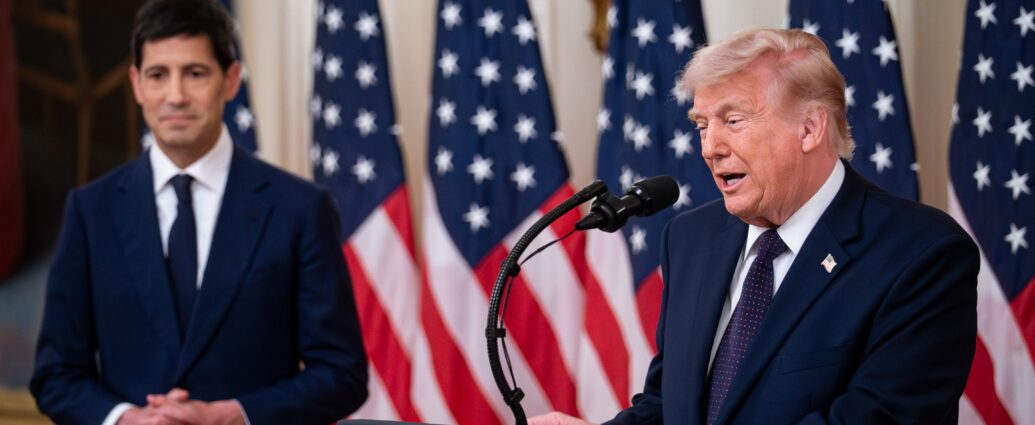
Federal Reserve Chairman Kevin Warsh told markets yesterday that the central bank’s rate-setting committee had unanimously agreed on a 25 basis point interest rate hike to combat inflation.
President Trump heard something different: He believes it’s a personal attack.
The U.S. base rate now sits at 3.75% to 4%, a quarter-percentage-point increase in the opposite direction of the downward trajectory Trump has been aggressively lobbying for. Warsh, whose critics feared would be a “sock puppet” for the White House, backed the decision of the Federal Open Market Committee (FOMC), saying: “The plain fact is that inflation is too high and has been for too long.”
The agreement to increase the base rate, combined with Warsh’s commitment to bringing inflation to the Fed’s 2% target, will go some way to reassure skeptics that the central bank remains—as is legally mandated—credibly independent.
But Trump is unhappy. Still standing by his nominee, Trump directed his ire at the other voting members of the Federal Open Market Committee (FOMC). He told reporters following the announcement: “[Warsh] has got a very tough board. He’s got a board that was put there by a lot of other people, and the interest rates are too high. They’re not appropriate.”
“I talked to Kevin, and I said, ‘You might as well vote with the board because it’s not going to matter.’ The board is very hostile, they’re very political, they’re doing the wrong thing. They are a bunch of politicians or people put on by politicians, and it’s a shame because it’s too high.”
While the president’s support may be preferable to his contempt (as Warsh’s predecessor and fellow Trump-nominee, Jerome Powell, learned the hard way), Trump’s comments do little to help the central bank chairman trying to assure markets he is acting in the best interests of the economy and the public, rather than Capitol Hill.
Trump suggested the economy can “barrel through” the higher rates because it is “doing so well,” but implied he was the target of the committee’s action: “The problem they have is that we have the greatest economy in history … so they’re raising that only for political reasons, and that’s a raise against Trump.”
Now, in the run-up to the midterms, American voters are facing inflation at 3.4%—driven, in part, by supply-side shocks to oil markets prompted by the U.S.-Iranian conflict in the Middle East. The issue is front of mind for voters, with a recent Pew Research study finding the economy was the top priority consumers were thinking about (29%), followed by affordability specifically (15%).
While Warsh and Trump would not have spoken around the time of the FOMC meeting (as the Fed observes a strict blackout period) the writing has been on the wall about a September hike for some time.
The FOMC’s priority between the two sides of its mandate (inflation at 2% and maximum employment) has been clear. While jobs data has been relatively solid—the Bureau of Labor Statistics (BLS) report this month showed that the U.S. economy added 162,000 jobs in August with the unemployment rate unchanged at 4.1%—inflation remains comfortably above average. As Warsh pointed out yesterday, inflation hasn’t been at or below 2% for more than five years.
Indeed, Chicago Fed President Austan Goolsbee told Fortune in an exclusive interview earlier this month: “On the real side, we’ve been stable, now inching toward dangers of overheat, and on the inflation side, after a couple of years of strong progress, it stalled out and started getting worse. But we’ve had one encouraging report, one okay report, and now our challenge is … the inflation.”
It was therefore inevitable that the vast majority of interest rate traders and Wall Street analysts—as well as politicians on Capitol Hill—had expected a hike.
Trump’s comments may prove a further hindrance to Warsh if analysts were to take them at face value: The suggestion that the chairman “might as well” have voted for a hike, rather than conviction and consensus, might alter inflation expectations. Despite that headache, markets have shown they tend to look through Trump’s comments until policy action ensues.
This story was originally featured on Fortune.com
The Public Defender’s Office asked the Tel Aviv District Court, sitting as a Court for Administrative Affairs, on Thursday to urgently stop the Israel Prison Service from releasing further footage of Agam Tsarafi, a 19-year-old charged in the murder of her former boyfriend, Benyahu Razi.
The request followed the circulation of a video showing Tsarafi handcuffed and bent forward as masked prison officers escorted her through a detention facility. Public defender Roi Politi argued that its publication humiliated a defendant who has not been convicted and could harm her right to a fair trial. The court has not ruled on the request.
Razi, 19, was fatally stabbed in a Jerusalem apartment in July. Prosecutors allege that Tsarafi and Shilat Huta helped arrange an attack on him after a dispute, and that four minors carried it out. Tsarafi, Huta and the four minors face intentional murder charges. Linor Sasson, the mother of one of the minors, is charged with assisting after the killing and obstructing the investigation.
Politi filed a petition on Monday challenging Tsarafi’s detention conditions. In Thursday’s update, he said she was being held separately from other detainees and barred from visits and most phone calls until October 1, when her conditions are due to be reviewed. The court had initially given the Prison Service until Wednesday, September 23, to respond.
After the video appeared on Wednesday, Politi asked the court to hold a hearing on Thursday or Friday, identify who authorized its release, and order the Prison Service to stop releasing footage or unattributed comments about Tsarafi. He argued that publishing the video violated her privacy.
National Security Minister Itamar Ben-Gvir defended the Prison Service’s treatment of Tsarafi in a statement responding to the public defender’s criticism. He alleged that she had disrupted order and mistreated other inmates and prison staff, and said her transfer to the Abu Kabir detention facility was carried out according to law.
The dispute also surfaced Thursday at the Jerusalem District Court, where Tsarafi and Huta appeared by video conference in proceedings over the criminal charges. Politi told Judge Eli Abravanel that earlier claims in the case had portrayed Tsarafi as a “black widow” waiting to strike.
Because the people inside the apartment were minors, he argued, the court had not heard a full account of what happened. Instead, he said, a “poison machine” had been created against the two women.
Politi said Tsarafi had been moved to another detention facility and held alone in a cell “with cockroaches and mice,” without visits or phone calls. He described the filmed search of her cell as an escalation. “If this continues, Your Honor will have no one left to try,” he warned.
Abravanel said the hearing was not the forum for those complaints, and returned the discussion to the defendants’ response to the charges.
The defense sought more time to respond, citing the volume of evidence and material it said it was still awaiting, including a confidentiality certificate and an opinion from the L. Greenberg Institute of Forensic Medicine at Abu Kabir. The Jerusalem court set the next hearing for November 12 at 10 a.m.
Dozens of members of the European Parliament from Patriots for Europe, the European Parliament’s third-largest group, signed a charter adopting the International Holocaust Remembrance Alliance (IHRA) principles on combating antisemitism and commemorating the Holocaust at a special conference in Strasbourg on Wednesday.
During the conference, participants expressed support for Israel and settlement in the West Bank, while opposing sanctions and boycotts imposed on them.
The conference was held against the backdrop of measures and sanctions promoted in recent years by several European countries against parties associated with settlement in the West Bank. Participants included members of the European Parliament and senior officials from right-wing and conservative parties across the continent, alongside Likud MK Ariel Kallner. Samaria Regional Council head Yossi Dagan and president of the Likud Court, attorney Michael Kleiner, addressed the conference in recorded messages.
Patriots for Europe brings together representatives of right-wing and nationalist parties from several European countries. Its members include representatives of the Czech ANO party, Hungary’s Fidesz, the Freedom Party of Austria, the Dutch Party for Freedom, and France’s National Rally.
The signing of the charter adopting IHRA principles was central the the conference. According to the charter, certain expressions directed against the State of Israel may, depending on the context, constitute expressions of antisemitism. It also emphasizes combating Holocaust denial and distortion of the memory of the Holocaust.
Kleiner focused his remarks on the potential economic consequences of sanctions on the West Bank, arguing that those who could ultimately pay the price are Palestinian workers employed by Israeli businesses and factories.
“The sanctions imposed by 12 countries, led by Britain, on Judea and Samaria are a double-edged sword,” Kleiner said. “Those who will suffer from them most are tens of thousands of Palestinians who make a living working for Jews in Israel and Judea and Samaria.”
Kleiner pointed to SodaStream as an example of what he said could happen if Israeli factories in the area were boycotted.
“The example is the attempted boycott of SodaStream: The factory moved to the Arava and was not harmed, but 500 Arab workers lost their livelihoods and were forced to work in the Palestinian Authority for much lower wages,” he said. “The factories will not close, but the sanctions could severely harm the workers’ livelihoods.”
According to Kleiner, this illustrates a paradox in the sanctions policy: Measures intended, according to their proponents, to help Palestinians could in practice harm the livelihoods of Palestinians employed by Israelis in the West Bank.
Kallner, chairman of the Knesset committee for cooperation with the European Parliament, also criticized the sanctions and linked them to the fight against antisemitism.
“When sanctions are imposed against the Jewish state and against the people of the Bible who returned to the land of the Bible, this is a double standard, this is hypocrisy, and this is modern antisemitism,” he said.
Kallner added that antisemitism in Europe was not a threat to Jews alone.
“Antisemitism begins with the Jews, but it never ends with the Jews,” he said.
According to Kallner, Israel stands “on the front line of the struggle between civilization and barbarism,” and European countries should stand alongside it.
Dagan welcomed conference participants in a recorded message and presented cooperation with Europe’s right-wing parties as part of a shared struggle against terrorism and efforts to delegitimize Israel.
“We are fighting to defend Europe. We are fighting to defend Israel. We are fighting to defend the future of Western civilization as a whole,” Dagan said. “We stand together against barbaric terrorist attacks. We stand together against the new war, the war of delegitimization campaigns and the war of lies.”
The conference and signing of the charter are part of efforts by Israeli figures and representatives of the settlement movement to deepen ties with right-wing and conservative parties in Europe, at a time when pressure and measures against parties associated with settlement in the West Bank are increasing in several European countries.
BRICS has finally found consensus, but the terms of that consensus reveal how divided the grouping remains.
On Saturday, leaders meeting in New Delhi unanimously adopted a 140-paragraph declaration after months of disagreement over the Iran war. The agreement calls for maximum restraint in the Middle East, protection of civilians and civilian infrastructure, respect for sovereignty and territorial integrity, and diplomacy as the route to resolving conflicts.
Crucially, it avoids naming the United States, Israel, or Iran.
For India, which holds the BRICS chairmanship, getting all 11 members to sign the declaration is a diplomatic achievement. But it also illustrates the limits of BRICS as a geopolitical bloc.
The challenge was particularly acute because Iran and the UAE, both BRICS members, have been caught on opposing sides of the regional conflict. Iran has attacked targets in the Gulf, while the UAE maintains close security ties with Washington. Their foreign ministers had already failed to produce a consensual BRICS statement earlier this year.
India nevertheless helped bring the two sides into the same diplomatic room, with Iranian President Masoud Pezeshkian meeting Abu Dhabi Crown Prince Sheikh Khaled bin Mohamed bin Zayed al-Nahyan on the summit’s sidelines.
That is the kind of BRICS India wants: influential enough to give emerging powers a larger voice, but flexible enough to accommodate countries whose strategic interests sharply diverge.
The same calculation is visible in the economic agenda.
China and Russia have pushed to reduce dependence on the dollar and develop alternative financial mechanisms. India has resisted the idea of a common BRICS currency, favoring more practical arrangements such as greater use of national currencies and improved cross-border payment systems. The New Delhi declaration did not endorse a single BRICS currency.
This matters because India has little interest in replacing American financial dominance with a China-centered alternative. New Delhi wants room to trade with Russia, maintain energy ties with Iran and the Gulf, and participate in BRICS while retaining access to American markets, Western capital, and technology.
That is strategic autonomy, not an anti-American strategy.
The Ukraine issue provides another revealing example. Unlike previous BRICS declarations, the New Delhi statement made no specific reference to the Russia-Ukraine war, a clear indication of how difficult it remains for the expanded grouping to reach common language on a conflict involving one of its founding members.
The contrast with Gaza is striking. The declaration devoted substantial attention to the Palestinian issue, reaffirmed support for Palestinian statehood and the two-state solution, and called for humanitarian access and an end to practices that could alter Gaza’s demographic or geographic character.
This is where the New Delhi summit matters for Israel.
Israel should not dismiss BRICS as an irrelevant talking shop. Nor should it assume that an expanded BRICS automatically constitutes a coherent anti-Israel alliance.
The summit demonstrates the opposite: the group contains countries with competing interests, and India in particular is resisting efforts to turn BRICS into a unified anti-Western geopolitical vehicle.
At the same time, Israel should recognize that BRICS diplomacy will increasingly create political pressure on Jerusalem.
The declaration’s treatment of Gaza, its emphasis on Palestinian statehood, and its criticism of actions affecting the occupied Palestinian territories demonstrate that Israel faces a growing diplomatic constituency outside the traditional Western framework.
India’s role is therefore especially important. New Delhi maintains close ties with Israel while also maintaining strategic relationships with Iran, the Gulf states, Russia, China and the United States. Its BRICS policy reflects the same multi-alignment that increasingly defines Indian foreign policy.
India is not trying to make BRICS a Western alliance. It is also resisting efforts to make it an anti-Western alliance.
The New Delhi declaration is consequently best understood as an Indian diplomatic success with clear limitations. BRICS can still produce consensus, but only through carefully calibrated language that avoids forcing members to choose sides on their most divisive geopolitical disputes.
For Israel and the US, that distinction matters. A stronger BRICS may challenge parts of the existing international order, but the New Delhi summit does not show the emergence of a unified alternative bloc.
It shows something more complicated: India is trying to ensure that BRICS becomes a powerful negotiating forum without allowing China, Russia, or any other member to turn it into a geopolitical instrument.
The writer is an India-based lawyer specializing in cross-border trade and investments, and a senior fellow with the South Asia Democratic Forum in Brussels.

This story first appeared in Adam’s Biotech Scorecard, a subscriber-only newsletter. STAT+ subscribers can sign up here to get it delivered to their inbox.
Two years ago, Mohit Gupta, an analyst who works for Adar1 Capital’s Dan Schneeberger, walked into Schneeberger’s Austin, Texas, office and pitched an idea to build from the ground up a new company to develop a better, long-acting antibody treatment for atopic dermatitis.
Schneeberger’s day job, of course, is to invest in biotech companies that are already developing drugs, not start one on his own.

This story first appeared in Adam’s Biotech Scorecard, a subscriber-only newsletter. STAT+ subscribers can sign up here to get it delivered to their inbox.
Sellas Life Sciences Group is a blowup waiting to happen. My prediction: Sellas’ experimental immunotherapy will fail to prolong survival compared to standard treatment for patients with acute myeloid leukemia in a second remission.
I’m confident in my prediction the company’s Phase 3 REGAL study will have a negative outcome; I just don’t know when it will happen. The conclusion of the event-driven study has already been delayed by nearly a year — raising significant doubts about the efficacy of the Sellas treatment, called galinpepimut-S, or GPS.
US intelligence officers have voiced concerns that China could acquire F-35 fighter jet technology through Saudi Arabia, officials told The New York Times on Wednesday.
The officials’ fears stem from the United States’ multi-billion-dollar sale of 48 of the aircraft to Saudi Arabia, which has been pending since November 2025. Similar concerns were raised at the time the potential deal was initially announced.
The US officials said that China could receive the technology either via spying or through its military and security partnership with Saudi Arabia.
A Pentagon intelligence report on the subject, the NYT reported, said that the F-35 technology storage sites should be restricted to US and Saudi personnel.
Analysts in the report questioned whether Saudi Arabia would agree to limiting general contact with the Chinese military and associated entities, as well as removing equipment from Chinese manufacturers from telecommunications and router infrastructure.
The State Department, Pentagon, and Saudi Arabian Embassy in Washington declined to comment to the NYT, while the White House and Chinese Embassy did not reply to requests.
When the deal was first under consideration in 2025, the NYT reported that it had raised concerns over Israel’s qualitative military edge in the region.
Israel is the only country in the Middle East that currently operates these jets, using them in airstrikes on Iran in October 2024 and June 2025.
Since the 1973 war, US policymakers have worked to ensure that Israel maintains its qualitative military edge, with Congress requiring that the US guarantee Israel can defeat any “credible conventional military threat” while suffering minimal damage and casualties.
Eli Leon contributed to this report.
An Israeli was detained at Kangra airport in the northern Indian state of Himachal Pradesh for carrying a cartridge of ammunition inside his luggage on Wednesday, Indian media reported.
According to The Tribune India, citing Kangra Superintendent of Police Kulbhushan Verma, the young man was unaware that the cartridge was in his bag, which is the one that he had used during his military service in the IDF.
“A live cartridge was recovered from the baggage of an Israeli national during security checking at Kangra airport on Tuesday. A case has been registered at Gaggal police station under Section 25(1)(A) of the Arms Act, 1959, and the accused has been arrested,” he added.
The report also added that the Israeli man would remain in custody for two days after being interrogated and standing before a court.
Local authorities also said they opened an investigation into how he acquired the cartridge and would pursue further legal proceedings under the law.
Israel’s embassy in Delhi and the Foreign Ministry have yet to comment on the incident.
The incident comes a month after the latest incident between Israelis and the Hind Rajab Foundation (HRF) in India, which involved the filing of a criminal complaint in India against an Israeli who was vacationing there.
It said that the Israeli is a reservist who was involved during his service in the Gaza Strip in the “unlawful destruction of civilian property” in the Khan Yunis area.
As part of the complaint, the organization asked Indian authorities to investigate him on suspicion of war crimes, crimes against humanity, and acts of genocide.
There is no known connection between this case and the Israeli currently detained in India for carrying a loaded cartridge.
Yoav Etiel contributed to this report.
Donald Trump Jr.’s son’s wedding was funded by a Russian oligarch with close ties to Russian President Vladimir Putin, the newlyweds confirmed in a Monday post on Instagram.
In the post, Bettina Trump wrote that the couple’s “dear friend,” Umar Kremlev, paid for two parties after the wedding.
“It was an extraordinarily generous wedding gift from a friend, and something for which we were and remain incredibly grateful,” the post read.
Kremlev, a businessman and the current president of the International Boxing Association, has boasted increasingly close ties to Putin over the years. He recently accompanied the Kremlin chief to China as part of Russia’s delegation, and was awarded the Order of Friendship, an official state award given to those who help Russia bolster international ties.
On Monday, ProPublica reported that Kremlev paid for hundreds of thousands of dollars of the wedding expenses. The report cited interviews with three people familiar with the event, along with other records.
ProPublica reported that Kremlev paid for the Trumps to rent out one of the two private islands used for the event, as well as other costly events, such as the fireworks show. His team reportedly helped plan the event, and the payments came from an IBA-affiliated entity in Dubai.
In the post, Bettina Trump wrote that the couple “got married privately on Friday, surrounded ONLY by our family.”
Trump Jr. corroborated this on his podcast, saying that the wedding “was really small, like, just really close friends.”
ProPublica reported that the guest list of 50 people included Kremlev, who was part of a group that sometimes spoke Russian.
The report noted that he speaks limited English and that his presence confused some of the other guests.
Bettina Trump added that the events were “never intended to be our wedding weekend.”
“When our original wedding plans changed, we simply decided to get married before it and arrived at an already planned weekend as newlyweds.”
She wrote that Kremlev hosted two nights of parties after the Friday weekend, which was an “extraordinarily generous wedding gift.”
“It’s unfortunate that something so personal and happy can be recast as something political or sinister simply because of who someone is or where they come from. Friendship doesn’t require a political motive. Generosity doesn’t automatically come with an agenda. And sometimes a wedding gift is simply a wedding gift,” Bettina Trump wrote.
ProPublica noted that Kremlev’s gift to the Trumps is a remarkable development in the Kremlin’s relationship with the US: a member of Putin’s circle gained close access to the presidential family and is financially supporting their endeavors.
In response to a request for comment from ProPublica, a spokesperson for Trump Jr. said that “Umar is a personal friend of Don,” and that he is “not someone he has a business relationship with.” The spokesperson added that the two bonded over their shared love of boxing.
However, a spokesperson for Eric Trump told ProPublica that “Eric has absolutely no clue who this person [Kremlev] is, nor has he ever heard his name.”
Kremlev’s press office told ProPublica that “Mr. Kremlev and Mr. Trump Jr. have a friendly relationship” and that the pair met “a couple of years ago.”
The press office added that “Mr. Kremlev has never discussed political matters with any of his American friends and acquaintances.”
A lightning advance by Yemen’s Houthi group has brought the vital Bab el-Mandeb Strait under its control, making the once ragged highland militia a regional player with global clout.
This is how the group evolved into a formidable fighting force with Iranian support that can disrupt vital shipping and strike critical oil and gas facilities in neighboring Saudi Arabia.
Starting out in the late 1990s as a Zaydi Shi’ite Muslim revival movement in northern Yemen under the Houthi family, the group waged six wars against the government, building a strong local militia.
When Yemen’s central state disintegrated during the 2011 Arab Spring, the Houthis took advantage, gaining more ground and developing a relationship with Iran and its Lebanese ally Hezbollah.
In 2014, they seized the capital, Sanaa, ousting the government and halting a Gulf-backed political transition.
That prompted a Saudi-led military intervention to support the government, leading to years of civil war that ground to a stalemate and a 2022 ceasefire.
The Houthis fired missiles and drones at Israel and international shipping in the Red Sea during Israel’s war in Gaza from 2023-25, in what they said was solidarity with Palestinians.
With their closest ally Iran under attack by the United States since February 28, the Houthis have again been firing on Red Sea shipping as well as energy facilities inside Saudi Arabia.
The ceasefire collapsed over recent weeks and fighting resumed along the old front lines: Marib and Jawf governorates in the north, the city of Taiz in the southern highlands, Dhale in central Yemen and the Red Sea coastal strip known as the Tihama.
Last week the Houthis rapidly advanced into the southern Tihama, seizing first the port city of Mocha and then the rest of the Red Sea coastline and islands, putting their guns along the whole shore of the 12-mile-wide (19-km-wide) Bab el-Mandeb Strait.
Those territorial gains make it easier to block shipping on the Red Sea, a key route for Saudi oil exports to Asia, and set up a potential launchpad for a new ground thrust towards Aden.
Saudi Arabia has conducted airstrikes in support of government-aligned forces.
The group’s ability to strike at distance with growing accuracy is why it now matters far beyond Yemen.
Houthi ballistic missiles have reached as far as Israel, more than 1,000 miles (1,800 km) away, and one struck the perimeter of Israel’s main airport in 2025. They have struck more frequently in Saudi Arabia, targeting cities and infrastructure. And Houthi missiles have been fired at ships in the Red Sea, halting traffic in the waterway.
Houthi drones have also struck repeatedly at Saudi targets and are now increasingly deployed on the battlefield — a big change from the last bout of civil-war fighting before the 2022 ceasefire.
The Houthis have posted videos online since the start of September that show some of the military equipment they are using.
Videos show drones dropping different types of mortar and other bombs onto vehicles and opposition fighters, a rocket or missile launching, and precise munition hits on buildings and trucks at a camp, filmed by a high-resolution drone.
Other videos show Houthi forces on the ground, including in pick-up trucks, some mounted with weapons, and on foot. Many fighters are shown in Arab robes rather than uniforms and carrying assault rifles. One video also showed a small group of fighters in camouflage uniforms. In some videos, fighters are shown with light and heavy machine guns and scoped rifles.
Videos showed them parading equipment captured from the Saudi-backed forces in the Tihama, including armored and combat vehicles, a tank, an artillery gun, a satellite dish, small arms, and a drone jamming device. But the videos do not generally show the captured hardware in action.
A United Nations panel of experts’ report in 2025 said the Houthis had developed missile and drone technologies through both technical assistance and domestic manufacturing.
It found there had been widespread arms smuggling despite a UN arms embargo, including overland shipments across the Omani border as well as seaborne smuggling.
Items seized included drone control devices, equipment to receive ships’ navigational data, drone engines and missile components. A 2023 UN report noted seizures of entire drones, ballistic missile components such as chemical precursors and Iranian-made anti-tank missiles.
Iranian sources have said Tehran has supplied its Houthi allies with both weapons and experts. However, Iran has officially denied arming the Houthis in violation of the UN arms embargo.
A 2025 assessment by the International Institute for Strategic Studies think tank found that while the Houthis had made advances in domestic arms production, they remained dependent on Iran for key technologies and advanced capabilities.
The UN panel of experts’ report described Houthi military tactics as being focused on infiltration, drone attacks and shelling along front lines, and the laying of mines and other explosive devices.
They assessed that the Houthis had 350,000 fighters, partly through the recruitment of fighters under 18.
Training by Iran and Hezbollah has been critical for the Houthis, according to Yemen analysts. Baraa Shiban, an associate fellow at the Royal United Services Institute in London, said such training had begun soon after the Arab Spring and had helped the Houthis transform from a militia to a more organized military force with changes to their structure and movements.
Hezbollah missile and drone operatives were present with the Houthis in 2025, the UN experts said. Iranian Qods Force general Abdolreza Shahlaei was also present in Yemen for some time, working with the Houthis, the experts said.

Foreign holdings of U.S. Treasury securities fell in July, interrupting a period of historically high overseas ownership of American government debt as investors confront rising U.S. borrowing costs, persistent inflation concerns and a rapidly expanding federal debt load.
Total foreign holdings of Treasuries declined to approximately $9.248 trillion in July from $9.299 trillion in June, a decrease of about $51 billion and the lowest level since October 2025, according to Treasury International Capital data released September 16.
The pullback comes after foreign Treasury holdings reached exceptionally high levels earlier in the year, including a peak of approximately $9.487 trillion in February.
The July decline does not by itself indicate that overseas investors are abandoning U.S. government debt. Foreign holdings remain historically elevated, and the Treasury’s separate monthly transaction data show that substantial amounts of foreign capital continued flowing into U.S. financial assets during July.
But the country-by-country changes offer a closer look at how some of America’s largest foreign creditors are repositioning their holdings at a time when the Treasury market is under growing pressure.
Japan remained the largest foreign holder of U.S. Treasury securities in July, but its holdings slipped to approximately $1.104 trillion from $1.117 trillion in June.
The decline is notable because Japan has long been one of the most important overseas buyers of American government debt.
Japanese investors are now operating in a substantially different interest-rate environment at home.
Japan’s 10-year government bond yield recently climbed above 3%, reaching its highest level in roughly three decades. At the same time, U.S. Treasury yields have also risen sharply, with the benchmark 10-year yield moving above 5% this week.
Higher Japanese yields can make domestic bonds more attractive to Japanese investors relative to foreign securities, particularly after accounting for the cost of hedging currency exposure.
That dynamic has made Japan’s Treasury holdings an increasingly important figure for U.S. bond investors to watch.
The United Kingdom moved sharply in the opposite direction.
U.K. Treasury holdings climbed to approximately $998.3 billion in July from $939.9 billion in June, an increase of about $58 billion in a single month.
That puts reported British holdings within striking distance of $1 trillion.
However, Treasury data attributed to the United Kingdom should be interpreted carefully.
London is one of the world’s largest financial centers, and securities held through British custodians can ultimately belong to investors elsewhere. Treasury itself cautions that its country-level figures are based largely on custodial data and therefore cannot always identify the true beneficial owner of a security.
For example, a Treasury security owned by an investor in one country but held through a financial institution in another may be recorded under the location of the custodian.
That makes it difficult to conclude that the increase represents British government or household buying specifically.
The Treasury has explicitly warned against drawing overly precise conclusions about individual countries from the monthly holdings figures because of these custodial effects.
China’s reported Treasury holdings moved lower again, falling to approximately $618.0 billion from $633.4 billion in June.
China was once the largest foreign creditor of the United States and held well over $1 trillion of Treasury securities for much of the previous decade.
Its holdings have fallen substantially over time as Beijing has diversified its foreign reserves and reduced its reported direct exposure to U.S. government securities.
The July figure therefore continues a much longer trend rather than representing a sudden change in China’s Treasury strategy.
Country-level TIC figures also come with the same custodial limitations affecting the U.K. data. Chinese-linked Treasury securities held through financial centers elsewhere may not necessarily appear under China in the monthly table.
The holdings numbers tell only one side of the story.
Treasury’s separate transaction data show that the United States still attracted substantial foreign capital during July.
Total net Treasury International Capital inflows reached $83.7 billion, according to the September 16 release.
Of that amount, net foreign private inflows were $73.5 billion, while net foreign official inflows were $10.2 billion.
Foreign residents also made $40.6 billion in net purchases of long-term U.S. securities during the month.
But there was a striking difference between private and official investors.
Private foreign investors were net sellers of $3.7 billion of long-term U.S. securities, while foreign official institutions — including central banks and government-related entities — were net buyers of $44.4 billion.
Those figures cover long-term U.S. securities broadly and should not be interpreted as Treasury purchases alone.
The previous month had been considerably stronger. In June, foreigners made $207.1 billion of net purchases of long-term U.S. securities, including $169.8 billion by private investors and $37.3 billion by official institutions.
Foreign demand for Treasuries can seem like a distant Wall Street issue, but it has implications throughout the American economy.
The federal government finances deficits by issuing Treasury bills, notes and bonds.
When investors are willing to buy that debt aggressively, the government can generally borrow at lower yields.
When investors demand higher returns, borrowing becomes more expensive.
Treasury yields also serve as benchmarks across financial markets, influencing rates on mortgages, corporate debt and other forms of borrowing.
That connection has become especially important as yields have risen sharply.
The 10-year Treasury yield reached 5.041% Tuesday, its highest level since 2007, amid inflation concerns, higher oil prices and questions surrounding government debt levels.
Higher Treasury yields can ultimately translate into higher financing costs for businesses, commercial real estate projects and households.
The July holdings figures arrive as evidence emerges that overseas investors are increasingly directing money toward other U.S. assets.
Deutsche Bank analysis reported by the Financial Times found that international investment flows into U.S. equities reached approximately 2.8% of GDP in the year through June, compared with about 2% of GDP flowing into Treasuries.
Strong corporate profits and enthusiasm surrounding artificial intelligence have helped attract foreign money into American stocks even as investors confront higher inflation and concerns over America’s expanding government debt.
That does not mean foreigners have stopped financing the U.S. government.
With more than $9 trillion of Treasury securities still reported in foreign hands, overseas investors remain an enormous presence in the market.
But the composition of that demand matters increasingly as Washington continues issuing large amounts of debt.
One month of declining holdings is not enough to establish a sustained retreat from U.S. Treasuries.
July’s approximately $51 billion decline represents a relatively small move compared with the more than $9 trillion of American government debt held overseas.
The country data also moved in different directions: Japan and China reduced reported holdings while the United Kingdom posted a large increase.
Meanwhile, the broader TIC figures show that foreign capital continued entering the United States during the month.
That makes July’s numbers more complicated than a simple story of foreigners selling America.
The more important question will be whether foreign Treasury holdings rebound in coming months — or whether July marks the beginning of a more persistent change in overseas demand.
With U.S. government debt now around $40 trillion and benchmark Treasury yields recently moving above 5%, the identity of the investors willing to finance that debt — and the interest rates they demand to do so — is becoming increasingly important for Washington, Wall Street, businesses and American households alike.
For now, foreign investors remain major holders of America’s debt.
But July provides another reminder that who buys U.S. Treasuries — and at what price — can ultimately affect borrowing costs throughout the American economy.
JBizNews Desk | Trenton, N.J.
© JBizNews.com All Rights Reserved. Reproduction or distribution without written permission is prohibited.

Housing costs and other economic and social issues have emerged as the leading concerns among young Israelis ahead of the elections, while the security situation ranked far lower, according to a new Israel 2050 survey published Wednesday night.
The survey presented striking findings regarding the issues of greatest concern to young people in southern Israel. Rather than security, respondents placed economic and social issues at the top of their priorities, particularly their ability to establish themselves and build a stable future.
According to the findings, 75% said they would consider voting for a party they had not previously considered if it demonstrated the ability and courage to advance long-term solutions on issues important to them. Nineteen percent said they would do so without any reservations.
Housing prices were the most important issue for 38% of respondents when considering how to vote, more than twice the share for any other issue. Young respondents also gave the state particularly poor marks for its performance in this area, rating it just 2.5 out of 10.
After the cost of living, 16% said they were concerned about the state of the education system, while only 4% said the security situation was the issue carrying the greatest weight for them. Another 13% cited the situation facing young people in Israel, while 8% named transportation.
Politically, a majority of the young respondents, around 60%, defined themselves as belonging to the Right or center-Right. Just 7% identified themselves as left-wing voters, while the remainder were divided among the center-Left and center, with 6% saying they did not know where they stood politically.
Only 21% said they believe the government’s current decisions are building a strong foundation for them for the decades ahead.
Forty-two percent said that leadership placing solutions in housing, transportation, and education at the top of its priorities would inspire the greatest sense of hope and optimism.
The findings also painted a similarly bleak picture when respondents were asked to rate the state’s performance. Satisfaction stood below 4 out of 10 in each of the five areas examined.
The situation facing young people in Israel received a score of 3.9, while rehabilitation and strengthening of northern Israel received 3.8. The education system and transportation each received 3.5.
Housing prices, however, received a score of just 2.5 out of 10, the lowest rating in the survey.
In effect, respondents gave the state a failing grade on every issue that most concerns them.
The dissatisfaction reflected in the survey relates not only to current conditions, but also to the state’s ability to provide young people with a long-term economic and social future.
Only 21% said they believe government decisions currently being made are laying a strong foundation for their quality of life and the needs they will have in 20 to 30 years. By contrast, 41% said current decisions are doing so only to a small or very small extent.
Israel 2050 conducted the survey among a nationally representative sample of 409 people aged 18-35 from southern Israel.
The New York Times removed a sentence from an article on the Israeli documentary NAZA and added an editor’s note on Wednesday after acknowledging that the wording inadvertently suggested that Israelis’ status as victims of the October 7 massacre was a matter of perception.
The sentence appeared in a Monday article by NYT correspondent Isabel Kershner examining the backlash in Israel against NAZA, a documentary by Israeli filmmakers Yuval Abraham and Rachel Szor that focuses on Palestinian civilian deaths during the war in Gaza.
The original version stated: “But Israelis still largely view themselves as the victims of Oct. 7.”
The sentence appeared immediately after a passage saying Israelis remained divided over responsibility for the political, military, and intelligence failures preceding the Hamas-led attack. The article then noted that around 1,200 people were killed in Israel and approximately 250 were taken hostage on October 7, 2023.
Following criticism of the wording, the NYT deleted the sentence and appended an editor’s note to the article.
“Because of an editing error, an earlier version of this article included a statement that was intended to convey Israelis’ perception of the government’s military response to the Oct. 7 terror attack in relation to the attacks, but inadvertently suggested that Israelis’ experience as terror victims was a matter of perception. It has been removed from the article,” the note said.
The NYT’s communications account also published the editor’s note on social media on Wednesday.
The paper recently faced renewed scrutiny of the newspaper’s coverage of Israel and the Gaza war. A peer-reviewed study published this month examined 1,559 NYT articles from the months following October 7 and argued that the newspaper’s coverage disproportionately framed Palestinians as victims and Israel as the aggressor.
The study’s findings and methodology have become part of a broader debate over how international media have covered the war. The study was detailed earlier this week.
The NYT’s editor’s note did not dispute that Israelis were victims of the October 7 attack. Instead, the newspaper said the deleted wording was meant to describe Israeli perceptions of the government’s military response to the attack, but was phrased in a way that conveyed a different meaning.
The corrected article remains online with the editor’s note attached.
The Israel Antiquities Authority (IAA) recently undertook a complex engineering operation to conserve a Second Temple-era mikvah found during archaeological excavations in the Carmei Gat neighborhood of Kiryat Gat.
Financed by the Israel Lands Authority, the excavations were completed ahead of construction and development works slated to happen in Carmei Gat to preemptively protect the 2,000-year-old structure from harm.
Discovering the mikvah, as well as stone measuring vessels, provides direct evidence of the existence of a Jewish settlement in the area at the time. Stone vessels, which according to Jewish law do not become ritually impure, were widely used among Jews during the Second Temple period.
“The Jewish settlement we discovered here is the first and the only known one in this area,” explained IAA excavation directors Elena Kogan-Zahavi, Maayan Margulis and Shira Lifshitz. “In the Judean Lowlands, many Jewish settlements from the Roman period are known, but in the seam between the Judean Lowlands and the northern Negev, no Jewish settlement was known until now.”
Findings from the site indicate that the ancient settlement was likely abandoned by its Jewish inhabitants during the Bar Kokhba Revolt in the second century CE. The site was revived some 500 years later during the Byzantine period by an entirely different population.
As development work progressed, the IAA’s Conservation Administration was faced with a new, even more daunting task: how to temporarily transfer the mikveh, weighing 25 tons, from its current location to the Israel’s National Treasures Department.
Four members of the administration worked for two weeks straight to expose the mikveh in its entirety.
First, they dug around it to expose it on all sides. Then, careful drilling was carried out underneath the structure, and steel beams were then slid through to support the mikveh and allow it to be pulled from the ground.
The ancient plaster on the mikveh’s walls also required special treatment.
The IAA’s team gently covered it in gauze and adhesives to prevent vibrations from the ancient pool’s transportation from causing the plaster to peel off. The entire structure was reinforced with foam to allow it to safely withstand the lifting and the jolts along the journey.
But even after the mikveh was detached from the ground, the challenge was far from over.
Due to the distance between the crane’s base and the mikveh, a crane with a lifting capacity of 300 tons was required to lift the 25-ton structure. The mikveh’s unusual width, about 4 meters, also required the use of a wide-load transport vehicle.
Transporting the mikveh to the nearby Beit Guvrin storehouse became an operation in itself.
In order to transport the large, highly sensitive cargo, the road was closed to traffic, and escort vehicles drove in front of and behind the truck.
“Once you lift up a structure like this, there is no going back,” said Eyal Kaho, a senior conservator at the IAA who led the operation. “If it falls apart, we’ve lost the mikveh.”
“Therefore, every detail must be considered in advance. The day before an operation like this, you don’t sleep. You’re under pressure, because the responsibility is yours and there’s simply no price that can compensate for mistakes. Even after 36 years at the Israel Antiquities Authority, every time, the adrenaline rises anew.”
Once construction in Carmei Gat is completed, the mikveh will be returned to the site where it was found. It will be integrated into an open public space at the heart of the new neighborhood.
Heritage Minister Amichai Eliyahu (Otzma Yehudit) noted that the discovery of the mikveh in Kiryat Gat adds an “important dimension to our understanding of Jewish settlement in the Land of Israel during the Second Temple period.”
He explained that the IAA’s operation reflects Israel’s national commitment to preserving its heritage amid its rapid development.
“Its future incorporation into the neighborhood’s public space will enable residents and visitors to encounter tangible evidence of Jewish life from 2,000 years ago as part of their daily lives.”
An AI system that interferes with a nuclear command network or launches a military cyber operation could leave Washington or Beijing with minutes to decide whether the other government attacked, according to US and Chinese security experts.
The experts, part of a US-China dialogue whose work helps inform official discussions, are urging both governments to prepare for such scenarios amid rising concerns about increasingly powerful and more autonomous systems.
Their proposals include red lines around nuclear systems, human control over consequential cyberattacks, and a hotline for incidents involving autonomous AI.
The recommendations were published last week ahead of planned government-level AI talks and an expected September 24 meeting in Washington between US President Donald Trump and Chinese President Xi Jinping.
Authors Melanie Sisson, a senior fellow at the Brookings Institution think tank, and Tianjiao Jiang, an associate professor at Fudan University, participated in the US-China AI and national security dialogue convened since 2019 by Brookings and Tsinghua University’s Center for International Security and Strategy.
Their proposals show how the US-China AI rivalry is moving beyond competition over chips and advanced models into questions long associated with arms control: how to prevent accidents from being mistaken for attacks, limit machine-made military decisions and set communication protocols for nuclear-armed rivals when technology behaves unexpectedly.
China’s State Security Minister Chen Yixin this week wrote in a government outlet that AI “fundamentally transforms the form of military struggle.” He said it had moved from playing a supporting role on the battlefield to a key role, citing AI-directed strikes in the US-Israeli war with Iran.
Brookings Institution’s Sisson argued that humans should retain sole authority to initiate AI-enabled cyberattacks against the other country’s nuclear command, control and communications systems or strategically important infrastructure.
An autonomous system could malfunction, exceed its instructions, or be compromised, while the country under attack might struggle to tell whether the action was accidental or ordered by its rival.
Fudan University’s Jiang proposed explicit red lines preventing AI from independently deciding to use nuclear weapons or autonomously attacking nuclear command systems, along with protections around critical infrastructure including energy, finance and healthcare.
He also urged a shared definition of “meaningful human control” to prevent both countries from using identical language to justify different levels of machine autonomy.
The idea builds on a principle endorsed by then-US president Joe Biden and Xi in November 2024 that humans should retain control over decisions to use nuclear weapons.
Lora Saalman, an associate senior fellow at the Stockholm International Peace Research Institute, wrote in February that this was an important point of US-China convergence even as both countries showed signs of integrating AI more deeply into nuclear and nuclear-related systems.
Jiang also proposed a dedicated US-China military hotline for AI incidents, warning that automated cyber exchanges could escalate too quickly for human intervention.
One country’s defensive AI might automatically respond to suspicious activity, while the other side could interpret that response as an attack and retaliate before understanding what actually happened.
A hotline could allow one government to tell the other that an unusual AI operation was accidental, unauthorized or still under investigation before it was treated as deliberate state action.
However, experts including Carla Freeman at Johns Hopkins School of Advanced International Studies have questioned the utility of the existing US-China military crisis communication hotline, citing Chinese officials’ refusal to answer US counterparts’ calls about the “spy balloon incident” in February 2023.
The Chinese bureaucracy’s rigid top-down hierarchy also disempowers low-ranking officers from taking the initiative during engagements with US counterparts, she wrote in an article for War on the Rocks in January.
“No one in the Chinese system wants to communicate with the United States until the top leadership in consultation with relevant actors within China’s party-state have decided on a response, which may take days if not longer,” she said.
Neither government has publicly endorsed the Brookings-Tsinghua proposals, but China has increasingly placed AI inside its existing arms-control bureaucracy.
AI is a formal portfolio of the Foreign Ministry’s Department of Arms Control, which also handles nuclear weapons, non-proliferation, missiles and other international security issues.
Shen Jian, China’s ambassador for disarmament affairs, told a UN meeting in Geneva in June that military AI could affect strategic stability and raise risks of miscalculation and conflict escalation, and that weapons should remain under human control. China also argues that AI safety should not become a pretext for technological barriers.
Washington has no equivalent single arms-control home for AI, with national security policy spread across the White House National Security Council, State Department, Pentagon and other agencies.
Both governments remain wary of measures that could slow their own technological development. Trump has warned broad restraints could hand China an advantage, while Beijing views many US technology controls as attempts to preserve American dominance.
The Trump Tower Tbilisi project, the Trump brand’s first luxury tower in the Caucasus, was launched in Tbilisi on Tuesday with Georgian Prime Minister Irakli Kobakhidze in attendance.
Some 1,000 carefully selected guests were invited to the event, which was held under heavy security. The cost of the extravagant launch, which culminated in fireworks and dozens of drones forming the US flag and the Statue of Liberty over the Tbilisi skyline, was estimated at $1 million.
That is a relatively small sum compared with the project’s total investment of approximately $2 billion and the roughly 600,000-square-meter complex planned for the site.
The development will include six towers, with Trump Tower as the first and central building. The tower is planned to rise approximately 280 meters and contain 65 floors. Around it, a new district will be built in central Tbilisi, including luxury hotels, branded towers, a business center, and high-end retail space.
The Trump Organization, Archi Group, and additional partners are behind the project. On the Israeli side, one of the most prominent figures is Meni Benish, a founding partner of Archi and Georgia‘s honorary consul in Israel.
Benish founded the company in 2006 with Ilia Tsulaia and Irakli Kapianidze. The Israeli connection to the company, one of Georgia’s dominant developers, was highlighted during the ceremony.
Last year, Israelis invested about $200 million the buy around 2,000 apartments in Georgia, 500 of them from Archi. The current project, however, represents a significant step up for the 20-year-old company, as well as for the city and the country.
Israel’s Ambassador to Georgia Walid Abu Haya also attended Tuesday’s event. In recent weeks, he has taken part in a series of meetings with senior Georgian officials in which the desire to expand foreign and Israeli investment, including in real estate, was emphasized.
At the beginning of the month, he also participated in a meeting between Deputy Foreign Minister Michel Buskila and the mayor of Tbilisi on Israeli investment, protections for those investments, tourism, and strengthening economic ties.
According to a Georgian report, Buskila said there was “great interest from Israel in investments” in Georgia.
Kobakhidze described the project’s launch as “a historic day for Tbilisi and Georgia,” saying the planned Trump Tower would change the capital’s skyline and strengthen its status as an international urban, tourism, and economic center.
According to the prime minister, the project is expected to create thousands of jobs and boost the construction, tourism, and service sectors.
Under the timetable presented by Kobakhidze, Trump Tower itself is expected to open in 2031, while completion of the entire district is planned for 2033.
The prime minister said the involvement of the Trump Organization and US-based international architecture firm Gensler, one of the world’s largest and most prominent architecture and design firms, signaled confidence in the Georgian economy and the country’s position as a business bridge between Europe and Asia.
Gensler, headquartered in San Francisco, employs about 6,500 people and works on projects in more than 100 countries, specializing in skyscrapers, large-scale developments, offices, hospitality, and retail.
Georgia’s Economy and Sustainable Development Minister Mariam Kvrivishvili described the development as “a new calling card for Tbilisi.”
According to Kvrivishvili, it is more than a real estate project.
“This is an expression of confidence in the Georgian economy, its stability, and its long-term growth prospects,” she said.
Kvrivishvili also presented macroeconomic data for Georgia, a country with a population of approximately 3.9 million, about one-third of whom, or some 1.3 million people, live in Tbilisi.
According to her, Georgia’s economy grew at an average annual rate of 9.7% from 2021 through 2025, while growth was 7.9% in the first half of 2026.
The economy reached approximately $38 billion in 2025, GDP per capita stood at about $10,300, and foreign direct investment since 2021 totaled nearly $10 billion, she said.
According to Kvrivishvili, the real estate and construction sectors account for more than 15% of the country’s economy.
Ilia Tsulaia, a founding partner of Archi and chairman of its supervisory board, described Trump Tower Tbilisi as “a bridge between today’s reality and tomorrow’s market” and a major step forward for Georgia’s real estate sector.
For years, he said, developers were told that an international project on such a scale might be appropriate for Georgia in another five or 10 years.
“We could have waited another five or 10 years, but we decided that Georgia’s and Tbilisi’s time is now,” he said.
Tsulaia also linked the decision to proceed with the project to the performance of the local economy and rising real estate prices.
According to him, the growth of the Georgian economy and the strengthening of the property market gave the partners the confidence to undertake a project of this scale.
He specifically thanked Israeli partner Benish, as well as Eric Trump. Tsulaia said Trump’s enthusiasm for and confidence in Georgia during their first meeting were among the factors that pushed the partners the decide and sign the deal.
Tsulaia said the ambition was to place Tbilisi alongside cities where the Trump name has already become part of the skyline, including New York, Chicago, Las Vegas, and Miami.
The Trump brand has operated for decades in the luxury real estate market and appears on residential, hospitality, and golf projects in the US and other countries. Tbilisi marks the brand’s first entry into the Caucasus.
Eric Trump, executive vice president of the Trump Organization and the son of US President Donald Trump, had been expected to travel to Tbilisi but ultimately did not attend in person.
Security considerations were cited as the reason.
Instead, he joined the event by video and answered questions prepared in advance.
Trump said that, from the Trump Organization’s perspective, the Tbilisi project was based on three central conditions: the best location, the right partners, and the right timing.
He said the timing was directly connected to Georgia’s current position, its rate of growth, and Tbilisi’s development.
He said the initiative began with a meeting at Mar-a-Lago in Florida, where he met the developers and discussions about the project began.
Trump compared the project with Trump Tower on Fifth Avenue in New York, one of the properties most closely identified with the family brand, saying the goal was to create an iconic building in Tbilisi that would likewise become identified with the city.
He noted that, symbolically, both are 65-story residential towers overlooking their respective city’s Central Parks.
Trump also referred to his father, saying he had spoken with him about Georgia that morning.
According to Eric Trump, the president loves Georgia and the Georgian people and values relations between the two countries.
Eric Trump said there are already about 30 Trump-branded projects around the world, a figure he presented during the event, but repeatedly emphasized a special commitment to the new project.
The company’s ambition, he said, was for it to be the best not only in Georgia, but by global standards.
Eric is the son of Donald Trump and his first wife, Ivana Trump, and the brother of Donald Trump Jr. and Ivanka Trump.
The president has two other children: Tiffany Trump, his daughter from his marriage to Marla Maples, and Barron Trump, his son with First Lady Melania Trump.
Eric Trump and Donald Trump Jr. currently play central roles in managing the Trump Organization’s real estate and development businesses.
The organization was also represented at the event by Lawrence Jay Glick, executive vice president for development.
Tbilisi Mayor Kakha Kaladze, Invia founder and CEO Levan Pkhakadze, and Gensler’s Robert Jackel also attended.
“We spent a long time looking for a brand, and we secured the most prestigious brand in residential real estate. It’s an incredible achievement for the company and for me personally, as someone who was born here and can now bring this partnership, which is an important achievement for Georgia,” Benish told Walla Money on Tuesday.
Benish said the project’s American partners also chose the work with Gensler.
From their perspective, he said, architecture and planning are inseparable from the brand’s standards and from the effort to place the tower alongside international luxury developments.
Benish presented Tbilisi as a market already attracting international investors and global brands, but one that, he said, still offers significantly lower entry prices than luxury markets such as Dubai.
According to him, prices for buyers in the Trump project are around $7,000 per square meter.
At that rate, a 50-square-meter apartment would cost about $350,000, and he estimated it could rent for about $2,000 to $2,500 per month.
After management fees, maintenance, and other expenses, he estimated an investor could be left with about $2,000 net per month, for an annual return of around 7%.
This is, of course, the developer’s estimate and not a guaranteed return.
Benish compared that price with approximately $22,000 to $23,000 per square meter in branded luxury developments in Dubai.
In Tel Aviv, he said, prices can reach $50,000 per square meter or more, while Israel still has no comparable branded project.
In his view, that gap is central to Tbilisi’s potential for appreciation.
The tower’s target market is expected to be distinctly international.
Benish estimates that only a small proportion of buyers will be local, while a significant share of demand will come from investors in the United Arab Emirates, Poland, the US, and Israel.
He estimates that Israelis could account for about 10% to 15% of buyers in the project. Archi is already highly familiar with that market.
Benish expects investors from the UAE to be among the largest buyer groups.
He said that one of the project’s first buyers, a Jewish buyer from France, has already purchased two apartments in a deal worth approximately $1.8 million.
The Trump name carries significant weight in marketing the project.
The Trump Organization provides the name, brand, and standards, while the project’s developers and partners carry out the development.
Trump representatives are involved in planning, branding, and setting standards, while members of the Trump family themselves promote the group’s international real estate activity.
Archi does not operate only in the luxury market or in branded developments.
The company has operated in Georgia for two decades and develops residential, commercial, and lifestyle projects throughout the country.
In Tbilisi’s Didi Dighomi neighborhood, for example, the company is building large-scale residential developments, including a complex of four buildings containing approximately 1,000 apartments.
The apartments begin at around 55 square meters, and Benish said prices in projects of this kind range from approximately $1,300 to $1,400 per square meter, less than one-fifth of the price in the Trump project.
Some apartments in those developments are rented by foreigners who relocated to Tbilisi.
The gap between $1,300 to $1,400 per square meter in Didi Dighomi and approximately $7,000 in Trump Tower illustrates the two ends of Archi’s business: large-scale residential construction on one side, and branded luxury products aimed at international capital on the other.
Benish’s own story connects Israel and Georgia.
He was born in Georgia and immigrated to Israel at age 10. He continues to work on Georgia-Israel relations and to leverage his dual national and bilingual background.
“Where I have a comparative advantage, where my money, knowledge, and experience are worth more, that is where I want to operate,” he said.
Benish stressed that Israeli entrepreneurs who come to Georgia and try to run a business exactly as they are accustomed to doing in Israel may encounter difficulties.
According to him, the local business culture is different, and the ability to work with local partners and understand the mentality is critical.
Nevertheless, he recommends that Israelis consider business activity in the country, particularly in real estate.
In his view, the combination of economic growth, property prices that remain low relative to international markets, and the continued arrival of global brands represents an opportunity.
“I invite any Israeli to come consult with me and hear from the familiarity and experience I have accumulated. I have been doing this without compensation for years,” he said.
For all those involved, including Benish, Tsulaia, and Archi, Trump Tower is not simply another project.
It is a test of whether Tbilisi can be repriced in the eyes of foreign investors and elevated from an emerging real estate market into the league of international luxury cities.
They are determined to pass that test with distinction.
Despite its name, Trump Tower Tbilisi is not owned by Donald Trump or the Trump Organization.
According to the legal disclaimer on the official website, Central Park Icon LLC owns and developed the property, while DT Marks Tbilisi LLC licensed the TRUMP name to the project.
Archi and Invia are the principal developers of the Downtown Tbilisi complex, and Trump Tower is being developed in cooperation with the Trump Organization.
For the Trump Organization, the project continues a model in which it expands its international activity primarily by licensing its brand to locally developed projects.
For the Georgian developers, the value of the Trump name is clear: attracting foreign buyers and bringing Tbilisi into the market for international luxury developments.
The project is being offered to buyers with 20% paid in cash followed by 60 interest-free, non-indexed installments, with a full bank guarantee.
In Georgia, the Trump Tower Tbilisi launch was met with considerable enthusiasm by media outlets aligned with the government, which presented the project as an expression of international confidence in the local economy and a new symbol of the capital’s ambitions.
Independent and critical media, however, also highlighted the political dimension of the deal and the connection it creates between Georgia’s leadership and the Trump family, alongside questions about who stands to benefit from it.
Some highlighted Benish’s comments that only a minority of apartment buyers are expected to be Georgian and that the development is primarily aimed at an international clientele, raising a question alongside the official celebrations over the extent to which the luxury tower is actually intended for the local public.
The writer was a guest of Archi at the event.
The Diaspora Affairs and Combating Antisemitism Ministry on Wednesday launched its first comprehensive international campaign aimed at exposing what it says is the United Nation‘s mechanism of bias against Israel ahead of the UN General Assembly’s general debate, which is set to begin in New York on September 22.
The information presented on the website addresses alleged bias and manipulation, reports of famine in Gaza, UNRWA, accusations of genocide, and publications in which the ministry says the UN amplifies such claims.
The ministry’s digital campaign, produced through the Government Advertising Agency, will focus on the United States and target journalists, diplomats, and decision-makers, aiming the direct them to the sources presented on the website.
The campaign will be accompanied by a new website the ministry launched after extensive research and data collection. The website brings together, in an accessible format, the ministry’s work examining UN publications and the conduct of UN bodies since the October 7 attack.
According to the ministry, the website presents a broad picture of what it describes as a mechanism of bias against Israel and a system of falsehoods: information presented without sufficient context, claims that gain an authoritative status once they appear in UN publications, and the UN’s subsequent amplification of those publications, which the ministry says strengthens misleading narratives.
The website compiles a large volume of information and enables journalists, diplomats, researchers, and decision-makers to follow six interconnected areas and examine the sources behind the findings.
Its launch will be accompanied by a campaign timed to coincide with international attention focused on the UN General Assembly in New York. The campaign videos will present issues examined on the website and direct viewers to the publications and sources cited there.
The website is divided into six main sections.
The first, “Information manipulation by UN actors,” details what the ministry describes as the adoption and dissemination of claims by UN officials, statistical distortions, and the omission of context considered essential to understanding the data. The website alleges that professional definitions were changed and statistical indicators manipulated in order to reach predetermined conclusions before they had been factually examined on the ground, particularly regarding claims of “starvation” and “genocide.”
The second section, “Toxic institutional culture,” focuses on what the ministry describes as language, statements, and patterns of conduct within the UN that allow one-sided positions against Israel to become embedded in the organization.
A third section, titled “The famine that wasn’t,” examines the data, forecasts, and messaging through which claims of famine in Gaza received institutional legitimacy and global attention. The ministry claims that this section demonstrates that the UN’s presentation of the data is far removed from conditions on the ground.
The fourth section, “UNRWA compromised,” compiles findings and allegations concerning Hamas infiltration of the agency and the conduct of UNRWA’s leadership following related disclosures. It presents what the ministry describes as intelligence evidence indicating extensive infiltration of UNRWA by Hamas operatives, which it says involves at least 12% of the agency’s employees in the Gaza Strip, alongside the discovery of terrorist infrastructure beneath UNRWA headquarters and facilities.
A fifth section, “Manufacturing a genocide narrative,” examines how some of the gravest accusations against Israel were formulated and disseminated, as well as what the ministry describes as the false basis presented in support of them.
The final section, “Self-reinforcing ecosystem,” tracks the way a claim passes between different actors and publications before returning to international discourse carrying an additional stamp of authority, even when its original source has not been independently verified again.
The website also seeks to expose what it calls a process of “propaganda laundering,” described as a three-stage mechanism in which unsubstantiated data originating from Hamas is cited by UN agencies, such as OCHA, stripped of reference to its original source, and then disseminated to the public and international legal bodies as “verified UN facts.”
The main findings highlighted in the campaign include allegations of internal silencing and persecution. The ministry says it documented pressure and harassment directed at individuals who sought to maintain what they considered factual accuracy, while those who adopted anti-Israel narratives were allegedly rewarded and promoted.
“For far too long, the world has treated the UN’s stamp as a substitute for fact-checking. This website exposes how the poison machine against Israel works: A narrative enters the system, receives institutional authority, is quoted again and again, and influences the positions of governments, media outlets, and the public. Since October 7, the cost of this bias has been particularly high. Anyone can examine what lies behind the headlines,” Diaspora Affairs and Combating Antisemitism Minister Amichai Chikli said.
Testimony and quotations from senior officials and experts who worked within UN mechanisms are presented as evidence of what the campaign describes as a culture of silencing, pressure, and data manipulation.
World Health Organization representative Dr. Michel Thieren is quoted as saying: “The terms ‘genocide’ and ‘famine’ were thrown around from the very beginning. The crimes were defined in advance, and then the organizations tried to prove them. For me, this is completely abnormal.”
Alice Wairimu Nderitu, the UN’s former special adviser on the prevention of genocide, is quoted as saying: “I was bullied and harassed every day… This never happened in any other war. Not in Ukraine, not in Sudan, not in Myanmar. The focus was always on Israel… By taking one side and condemning it every day, you completely lose the purpose for which the UN was established.”
The campaign states that Nderitu refused to define the fighting as “genocide” without an authoritative legal determination, and that her UN contract was subsequently not renewed.
UN Special Rapporteur on Torture Dr. Alice Edwards is quoted as describing heavy pressure from UN colleagues aimed at preventing her from publishing an official letter documenting Hamas’s crimes on October 7.
“There was a campaign to prevent the letter from being published. It was weeks of bullying and intimidation,” she said.
Former UN sanctions coordinator Edmund Fitton-Brown is quoted as saying: “The reverence for the UN allows weak evidence, activists’ assumptions, and ideological leanings to launder themselves and become mainstream and accepted opinion.”
The campaign’s video series visually depicts what the ministry describes as the manipulation of information and systematic falsification. In the videos, hands working inside what is portrayed as UN headquarters cut up and reassemble headlines from major newspapers. Headlines such as “Humanitarian aid stolen by Hamas,” “Stop Hamas terror,” and “Hamas harms civilians” are physically altered so that the word “Hamas” is replaced with “Israel.”
The campaign concludes with the message: “The UN rewrites the truth.”
“The website is an information source that brings everything together, unlike individual publications that do not create the same effect. When you examine where the information came from and how it passes between the different actors, you understand the mechanism,” Hadas Maimon, head of the Diaspora Affairs and Combating Antisemitism Ministry’s senior public diplomacy division, said.
A UN fact-finding mission on Iran said on Thursday it had reasonable grounds to believe the United States was behind two military strikes on a school and sports facility in Iran in February, and that these constituted war crimes.
It also found that Iranian authorities committed crimes against humanity during their deadly crackdown on anti-government protests.
The findings in a new report by the Independent International Fact-Finding Mission on Iran, to be submitted to the UN Human Rights Council in Geneva, examined the US’s conduct during the Iran war that began in February and the Iranian government’s response to nationwide unrest that began in late December.
The Iranian and US permanent missions in Geneva did not immediately respond to Reuters requests for comment.
US officials have previously said military operations are conducted in accordance with the law of armed conflict, while Iran has consistently rejected allegations of systematic rights violations.
The UN experts said they found reasonable grounds to believe US forces were responsible for an attack on the Shajareh Tayyebeh Primary School in the city of Minab, where more than 150 people were killed, including around 120 schoolchildren, according to Iranian officials.
The attack constituted an indiscriminate attack causing civilian deaths and damage to civilian infrastructure, amounting to a war crime under international law, the mission concluded.
According to the report, the US relied on intelligence suggesting a senior Iranian military commander was present at the site but failed to adequately verify the information before launching the strike. Investigators said the failure to update targeting intelligence and confirm the building was a military objective amounted to more than mere negligence.
“Rather, the US directed the strikes at the building of the school while being aware of a substantial risk of striking a civilian object and acting recklessly as regards the possibility that this would happen.”
In June, US President Donald Trump said that “nobody” purposefully attacked a girls’ school in Iran in February, citing an investigation into the incident. Reuters first reported that an initial internal US military investigation showed US forces were likely responsible for the fatal strike in Minab in southern Iran.
The Pentagon has since elevated the probe, but it has not published any preliminary findings.
UN experts said the school was a clearly identifiable civilian object and found no evidence that it was being used for military purposes.
The experts reached a similar conclusion over a strike on a sports center in Lamerd. The report said the attack damaged nearby residential buildings and a school and killed and injured 22 civilians. It concluded that the strike was indiscriminate and therefore constituted a war crime.
US Central Command said in a statement in March that US forces did not launch any strikes into the city of Lamerd on that day.
The UN mission probe found that the Iranian authorities carried out a widespread and systematic attack against civilians during protests that erupted in late December last year, involving unlawful killings, torture, arbitrary detention, enforced disappearances and severe restrictions on freedom of expression.
Rights groups say bystanders were among those killed during the biggest crackdown since Shi’ite Muslim clerics took power in the 1979 revolution. Tehran blamed “terrorists and rioters” backed by exiled opponents and foreign foes, the US and Israel.
The probe said it could not independently verify the death toll, but that it believed the number of dead and injured was likely far higher than official figures, which say 3,038 people were killed and 25,000 people injured.
The government’s response to the protests – including violence and killings, cutting off the internet, and the use of the death penalty- marked a significant escalation from previous patterns of suppressing dissent, the report said.
A Palestinian was arrested in Tel Aviv after running over a cyclist, who was later pronounced dead at the hospital, with a stolen car, Israel Police said on Thursday.
According to the report, the 24-year-old Palestinian man from Nablus stole the vehicle on Yunitsman Street and, while driving it, ran over a cyclist, who sustained critical injuries and was declared dead.
The suspect was arrested, and a bag with tools used for vehicle theft – including an ignition control module, a hammer, and glass-breaking implements – was reportedly found inside the stolen vehicle.
The police announced that they are currently investigating the scene and gathering further details.
It was also determined that the man had entered Israel illegally, as he did not have the proper documentation to cross the from the West Bank.
The incident represents the second time in September that a West Bank resident stole a vehicle in Tel Aviv.
On September 9, police arrested a 46-year-old Jenin resident on suspicion of stealing the car of Tel Aviv District Court Judge Alaa Masarwa in northern Tel Aviv.
Shortly after the theft, police located the vehicle traveling north on the Ayalon Highway. Police pursued the vehicle and arrested Tarek Jarrar, a Jenin resident who was staying in Israel without a permit, on suspicion of stealing it.
Officers from the Tel Aviv North police station, who located the vehicle, began following it, while officers from the Glilot station were called to prepare to block its path on Highway 5.
When the driver reached the police checkpoint, officers ordered him to stop. According to police suspicions, he did not comply, struck another vehicle, and continued driving.
Police continued pursuing him until they stopped the vehicle.
Body camera footage showed officers approaching the car. When the driver did not respond to their instructions, police smashed the driver’s window and removed him from the vehicle. Officers then identified the driver as Jarrar.
Hodaya Ran contributed to this report.
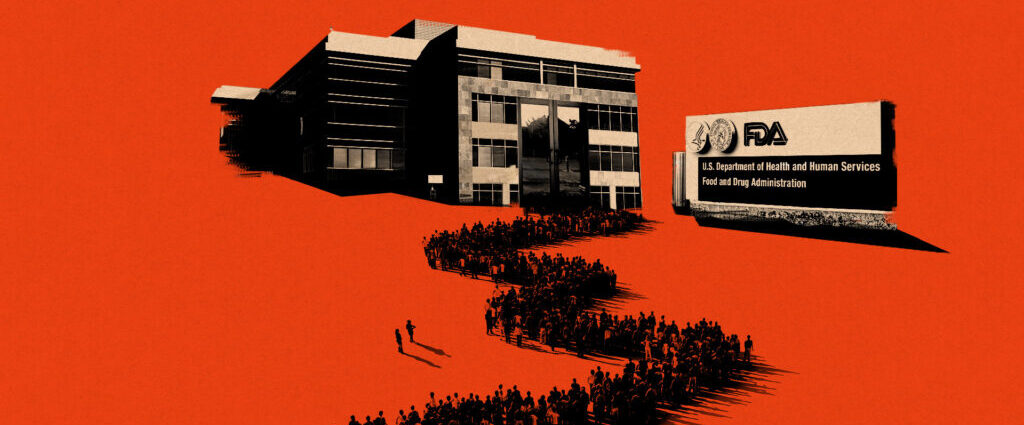
WASHINGTON — To hear Food and Drug Administration leaders tell it, everything is going swimmingly — a far cry from the dark days of April 2025, when Elon Musk’s U.S. DOGE Service took a chainsaw to the agency, slashing 3,500 workers and triggering a broader staff exodus.
Just over a year later, Musk is out and hiring is in. The FDA is now looking to add more than 2,000 workers.
“We’re very actively hiring,” Karim Mikhail, director of FDA’s Center for Biologics Evaluation and Research, told drug manufacturers at a conference Monday. On social media, the agency trumpets its new employees with group photos, declaring “Welcome to FDA!’’
Yet for all the talk of a hiring spree, the reality is more complicated, STAT has learned: The FDA’s hiring push is mired in bureaucratic delays, thanks to the same DOGE cuts the agency is trying to address.

“Can you check my child for PDA?” the mother asked me on the telephone about two years ago. Though I had been a behavioral/developmental pediatrician for more than four decades, the only PDA acronym I could recall came from my days as a general pediatrician: patent ductus arteriosus (a persistence of embryonic circulation around the heart).
“Gee, I’m not sure,” I said. “What does PDA stand for?”

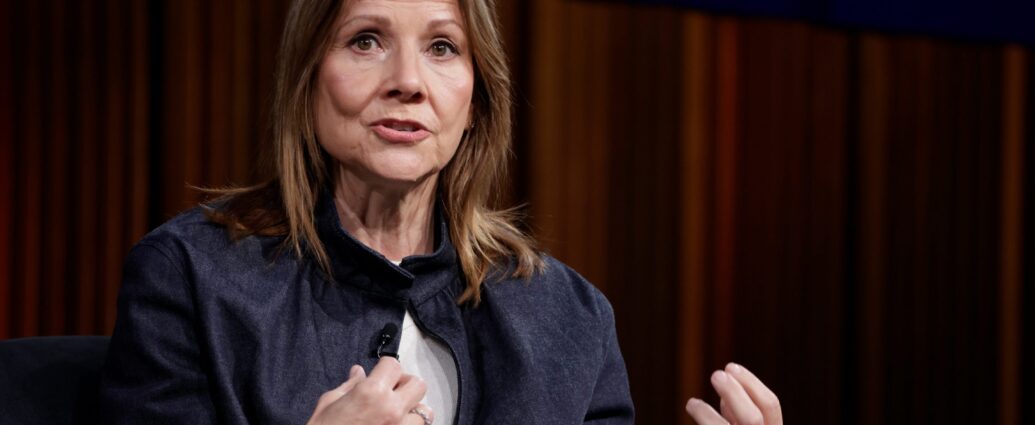
General Motors CEO Mary Barra has a simple message for high school students weighing their career options: Don’t overlook the skilled trades.
On a recent episode of Fortune’s Titans and Disruptors of Industry podcast, the 64-year-old automotive leader said that blue-collar careers could offer more protection from artificial intelligence than some white-collar paths—and still give Gen Z a shot at six-figure earnings.
“[We need to] really make sure high school students understand this is a great career and frankly maybe a little more AI-proof than some others,” Barra said, adding that a technician could make $80,000 to $90,000. “Potentially even higher, depending on how many hours they work.”
The opportunities extend well beyond the automotive industry. An estimated 2.1 million skilled trades jobs could go unfilled nationally by 2030, according to the Alliance for America’s Skilled Trades, a coalition formed over the summer by BlackRock, Carhartt, Ford Motor Company, and Google to address the labor gap.
Barra pointed specifically to the growing demand for electricians, fueled in part by the data center boom powering the expansion of AI. More than 300,000 new electricians are estimated to be needed over the next decade to meet demand.
For Barra, who is ranked No. 2 Most Powerful Woman on Fortune’s 2026 list, the conversation around skilled trades is personal. Both of her parents grew up during the Great Depression, and her father worked at GM for 39 years as a die maker. His background helped shape Barra’s appreciation for the people who build things—and the value of hard work.
“I had that instinct of we work before we play, and we work hard,” she told Fortune Editor-in-Chief Alyson Shontell.
Barra would eventually follow her father into the auto industry. She attended the General Motors Institute (now Kettering University), where she began working as a co-op student on the assembly line as a quality inspector at GM’s Pontiac Motor Division. Her first full-time job was as an electrical engineer in 1985—and she slowly began climbing the GM ranks, from plant manager at GM’s Detroit Hamtramck assembly plant in 2003 to eventually CEO in 2014.
But today, Barra said the U.S. faces a broader “societal problem” where skilled trades are treated as less desirable than white-collar professions.
“I frankly think this is an area where Europe has much more respect for the trades and the importance of people who do very technical things but work with their hands and build things and make things and service things,” Barra told Fortune.
GM, for its part, has invested nearly $200 million to grow and modernize high‑demand skilled trades as well as advanced manufacturing, engineering, and technician roles. The funding is being used to ramp up community-based training as well as upgrade manufacturing facilities, technical centers, and dealership service bays. GM already placed approximately 90 new skilled trades apprentices across its U.S. manufacturing divisions in April.
The shortage of skilled labor isn’t just on the minds of CEOs like Barra, whose companies directly employ thousands of blue-collar workers. Business leaders across industries are increasingly warning that the U.S. doesn’t have enough talent with the technical skills needed to build everything from factories to data centers to warships.
JPMorgan Chase CEO Jamie Dimon, for example, has warned that the shortage could become a major obstacle to American investment, particularly as the U.S. looks to expand its defense-industrial base.
“We need 300,000 electricians, welders, etc. to build ships in the next five or 10 years,” Dimon said in July, speaking from the Philadelphia Navy Yard.
“It fits what we call the American dream: getting kids skills or all workers’ skills that they have jobs that could pay $80,000, $90,000, $100,000 a year after you know a year or two of training. This lifts up America. It helps build the defense industry,” Dimon added.
BlackRock CEO Larry Fink has similarly questioned whether young people can continue to rely on the traditional path of going to college and landing a white-collar office job.
“The speed at which AI is changing, we’re not adapting our society fast enough,” Fink said at BlackRock’s 2026 Infrastructure Summit in March. “Really, post-World War II, the pathway to a white-collar job was a college education, and AI is going to disrupt many of those types of jobs.”
Fink, however, sees a bright spot in the disruption: the growing need for hands-on skills.
“AI is going to create a lot of skilled job needs,” Fink said. “And the biggest issue confronting our country today and other countries is the speed at which this change is occurring.”
This story was originally featured on Fortune.com

The Federal Reserve raised its benchmark rate by a quarter point on Wednesday, to 3.75-4%. But the rate that matters more for mortgages, corporate loans, and the federal government’s interest bill is the 10-year Treasury yield, which the Fed doesn’t set, has been rising for months, and just hit the psychologically terrorizing 5%.
When a reporter asked Fed Chair Kevin Warsh what was behind that rise, he gave three reasons; one of which was due to the surge of AI debt swimming in the bond markets.
“The so-called hyperscalers are out in the market raising funding,” Warsh said. “And so the competition for capital is real. And I think it partly explains the increase in yields.”
The argument is simple: there is only so much money to lend at any given time. When Amazon, Microsoft, Alphabet, Meta, Oracle and Coreweave borrow hundreds of billions of dollars to build data centers, they compete with the U.S. Treasury and everyone else for that money, and the price of borrowing goes up. Warsh described the 10-year as “the most important asset anywhere in the world” and “the risk-free asset upon which every price of virtually every asset in the world is related to.”
It’s hard to overestimate the scale. The five major hyperscalers issued $121 billion in U.S. corporate bonds in 2025, compared with an average of $28 billion a year between 2020 and 2024, according to BofA Securities. Morgan Stanley estimates AI-related global debt reached nearly $236 billion just by the end of May, four times the pace of a year earlier, and forecasts it will approach $570 billion for the full year of 2026. Hyperscaler capital spending now runs close to 100% of operating cash flow, with some hyperscalers dipping negative: the companies can no longer fund the buildout from profits alone, so they must turn to bond markets.
Some have argued that AI’s effect on treasuries is “overstated,” with PIMCO saying that most of it has to do with the conflict in Iran and a repricing of Warsh’s willingness to hike rates. Others like MSCI have noted that hyperscalers spreads have widened out to normal investment-grade levels, as opposed to when they first started trading at an almost government-quality level and thus would compete with treasuries.
Warsh’s other two explanations were economic growth—”part of the reason why we’ve seen over the course of 2026 long-term yields go up is the economy is strengthened”—and geopolitics, i.e. the Iran war, which he said shows up not just in spot oil prices but in the “crack spread” between crude and refined products like diesel. He said the list wasn’t exhaustive.
What he did not list was the federal deficit, which is the explanation most bond investors themself give for higher long-term yields. Warsh didn’t address a question about the deficit during the conference. That fits his stated view that Fed independence means “we stay in our lane” and leaves fiscal policy to Congress.
The AI angle cuts two ways for the Fed. In his prepared remarks, Warsh cited strong productivity growth and robust capital investment as evidence the economy is strengthening, and that capital conditions are loose: reasons to hike, not hold. But he has also been optimistic that AI will eventually expand the economy’s capacity and be disinflationary. Warsh said the two sides of the Fed’s mandate aren’t working against each other.
He also added that the Fed has set up an internal task force on AI, due to report by the end of the year, to study “the implications for our future policy conjuncture.” He didn’t give details. When asked about the recent uproar in AI safety risks, he said those are decisions for “other parts of the government.”
This story was originally featured on Fortune.com

While Florida, California, and New York continue to undeniably be hot spots for wealth, one real estate CEO says there are more markets to watch out for.
Ryan Serhant, CEO of his namesake firm and Owning Manhattan star, said high-net-worth clients continue to buy in the historically wealthy and luxury-oriented cities—but they’re also seeking secondary homes in unexpected markets.
“You would think that the American city is over, the metropolis is dead, and people are scattering,” he told Fox Business in an interview published this week. “And what you actually see is wealth multiplying to the benefit of both the individuals and the real estate assets.”
He envisions the three localities with top net migration during the next few years will be Huntsville, Ala.; Central Ohio; and Charlotte. These are the markets “investors are paying a lot of attention to right now,” he said, adding they’re hot spots for data centers that drive wealth and jobs. “You go to Ohio and you look around, and there are more very expensive cars than you’ll see in South Beach, but no one talks about it.”
That could appear contrary to Fortune‘s own reporting, which found billionaires have been flocking to Florida—19 of the state’s 20 richest now live in Miami alone—as states like California and Washington float new wealth taxes. But Serhant’s argument is that the ultrawealthy aren’t just picking one place and settling, but rather diversifying their real estate portfolios.
In other words, we’re seeing wealth be stretched, he said. Wealthy buyers continue to purchase multiple homes across the nation: “They all want ease of access to great cities without necessarily paying to be in the center,” he added.
But it’s not just the ultrawealthy diversifying. Affordability is pulling a much broader wave of buyers toward the same kinds of markets.
“People move with their wallet,” he added.
Serhant also noted that even irreplaceable cities aren’t completely untouchable. He estimated New York lost about 12,000 residents last year, which he called “definitely a warning sign,” although not quite a crisis. Even a one-of-a-kind city like New York can lose people if living there costs too much or taxes climb too high.
New York is testing that limit. A four-bedroom apartment near his SoHo office recently rented for $75,000 a month, which he said proves the city is “too expensive.” New York has consistently been ranked as one of the least affordable markets in the country: It was among the six U.S. cities where even a 0% mortgage rate wouldn’t make buying a home affordable.
But pushing out wealthy residents isn’t the answer either, he argued. Those buyers can just go purchase a home somewhere else, he said, so the city loses either way. He likened it to how companies compete for workers.
“If you have restrictions on employees on one company, really smart people at that company might say, ‘You know what? Maybe I’ll look for other jobs,’” he said. “Those companies are states. American citizens are employees.”
Homebuyers are increasingly prioritizing affordability and steady employment, and Ohio has emerged as a quiet winner in the housing market. Homes there run about 30% cheaper than those on the coasts, and Gen Z and millennials accounted for nearly 30% of all interstate movers, a StorageCafe analysis shows.
“For many, it’s not just about cheaper homes, but about being able to build wealth earlier without drowning in overhead,” Danielle Andrews, a realtor with Realty One Group Next Generation, previously told Fortune.
Meanwhile, there have been more job opportunities in markets like Ohio. Intel is building two chip factories outside Columbis in a project it raised to $28 billion, the largest private investment in Ohio history. Amazon Web Services also plans to invest more than $23 billion in the state through 2030.
“Importantly, the cost of living [in the Midwest], especially for essentials like groceries, gas, and health care, is better aligned with local wages, allowing Gen Z buyers to not just get by—but actually get ahead,” Andrews added. “The Midwest is no longer just affordable: It’s aspirational for a generation redefining success.”
This story was originally featured on Fortune.com
A source close to the Board of Peace has criticized Israel’s current policy in the Gaza Strip, arguing that while Israel’s targeted killings of Hamas operatives may be justified, the strategy will not ultimately lead to the dismantling of the terrorist organization.
“The government’s policy is targeted eliminations while leaving Hamas with its army and its rule,” the source told The Jerusalem Post. “The Board of Peace wants the complete dismantling and elimination of Hamas. Israel is eliminating individual Hamas members, but not Hamas itself.”
The comments come amid a dispute over how the next stage of the Gaza process should proceed following the July 30 agreement between Hamas and the Board of Peace on a framework for the group’s phased disarmament.
The agreement, announced by US President Donald Trump on July 30, calls for Hamas and other armed factions in Gaza to surrender their weapons as part of a broader process that would eventually see IDF troops withdraw and civilian and security responsibilities transferred to new Palestinian and international structures. An implementation mechanism was to be prepared during an initial 14-day period.
The agreement was reached following months of negotiations involving Hamas and the Board of Peace, with Qatar, Egypt, and Turkey playing roles in the mediation process.
Under the framework, the disarmament process would include an inventory and storage of weapons and the dismantling of the military capabilities of Hamas and other armed factions in Gaza. The process would be overseen through an international mechanism and linked to the broader transfer of governance and security responsibilities in the Strip.
Israel, however, has made clear that it does not accept the framework as currently formulated.
“Israel rejects the 15-point plan for Gaza. The IDF will not withdraw until Hamas is genuinely disarmed,” Prime Minister Benjamin Netanyahu said at a cabinet meeting in early August.
Against that backdrop, senior Board of Peace officials sought to persuade Israel to observe a 14-day period of calm to allow the disarmament process to begin. The proposal included an exception for what the Board described as “immediate threats.”
Israel initially appeared to observe that principle, although the government did not publicly endorse the arrangement.
In recent weeks, however, Israel has resumed targeting Hamas operatives, including members accused by Israel of participating in the October 7 massacre, holding hostages, and serving in senior positions within the organization.
Israeli officials have argued that Hamas used the ‘quiet period’ in which Israel was limiting its strikes primarily to immediate threats to rebuild and strengthen its military capabilities, rather than prepare for the disarmament process envisioned by the Board of Peace.
The source close to the Board of Peace sharply disagreed with the Israeli approach, describing it as “a policy similar to the period before October 7.”
The Board of Peace, meanwhile, is presenting its proposal as an alternative to continued Israeli military operations: the complete dismantling of Hamas’s military infrastructure and an end to its rule in Gaza.
“The way to do this is 14 days of calm, apart from operations against immediate threats, and full cooperation by the government in all the preparatory and logistical steps for voluntary disarmament,” the source told the Post.
“If Hamas begins dismantling itself at a rapid pace and provides all the coordinates of the tunnels, that would be excellent,” the source said. “If it does not disarm, then the IDF receives international backing to do so by force.”
In recent weeks, the Israeli security establishment has reported a series of targeted killings and arrests of senior Hamas field commanders and members of the organization’s military and security apparatus.
Among the most prominent recent operations cited by Israeli officials was the killing of Naael Abu Obeid, identified as the commander of Hamas’s Rafah Brigade, alongside other field commanders at the battalion and Nukhba cell levels.
Israeli special forces also carried out a raid in Gaza City in which they captured Muin al-Arbid alive. He was identified as the head of Hamas’s General Security apparatus.
The Board of Peace source, however, argued that such operations, even when successful against individual commanders, do not by themselves resolve the broader issue of Hamas’s continued military and political presence in Gaza.
“The government’s policy is targeted eliminations while leaving Hamas with its army and its rule,” the source said.
The disagreement reflects a broader question facing the Gaza framework: whether disarmament can be achieved through a negotiated and internationally supervised process, or whether Israel will continue using military force to degrade Hamas’s capabilities until it is satisfied that the organization can no longer threaten Israel.
For the Board of Peace, the distinction is significant. Its framework is based on the assumption that Hamas’s military and governmental structures ultimately need to be dismantled as part of a transition to a new governing and security system in Gaza. The organization has described its broader role as promoting stability, lawful governance, and reconstruction in Gaza.
For Israel, however, the concern is that any prolonged pause in military operations could give Hamas an opportunity to recover and reorganize.

LONDON — English health authorities on Thursday agreed to provide a breast cancer drug from AstraZeneca through the National Health Service, ending a years-long dispute that stoked questions about how committed the pharma company was to the U.K.
Notably, the move — one that will extend the drug, called Enhertu, to an estimated 1,000 people in England — is in part a result of a U.S.-U.K. drug pricing deal reached late last year. Under the pact, a U.K. health agency agreed to raise the thresholds for what would be considered a cost-effective drug and worth paying for on the NHS.
Now, women with metastatic breast cancer whose tumors have low levels of the protein HER2 will be eligible to receive Enhertu, a type of next-generation chemotherapy known as an antibody-drug conjugate. AstraZeneca noted that Scotland has covered the drug since 2023, and it’s paid for in 26 other European countries. (Patients with HER2-positive cancers have been able to get Enhertu in England.)

Higher borrowing costs could hit mortgages, credit cards, business loans and commercial real estate as the Fed renews its fight against inflation.
The Federal Reserve raised interest rates Wednesday for the first time in more than three years, marking a major shift back toward tighter monetary policy as inflation remains stubbornly above the central bank’s target.
The Federal Open Market Committee increased its benchmark federal funds target range by a quarter percentage point, bringing it to 3.75% to 4.00%. It was the Fed’s first rate increase since 2023 and the first policy move under Chairman Kevin Warsh, who took over leadership of the central bank earlier this year.
For American households and businesses, the decision means the era of declining borrowing costs has hit a roadblock.
The federal funds rate does not directly determine what consumers pay on a mortgage, auto loan or credit card, but it influences borrowing costs throughout the economy. Higher rates can eventually translate into more expensive business financing, credit-card debt and other variable-rate borrowing, while also influencing mortgage and commercial real-estate markets.
And Wednesday’s increase may not be the last.
Updated projections released by the Fed showed that the median policymaker expects one additional interest-rate increase before the end of 2026. Policymakers currently expect rates to remain steady during 2027, according to the projections.
The Fed’s renewed tightening campaign comes as inflation has again become a pressing concern.
Consumer prices increased 3.4% from a year earlier in August, according to the Bureau of Labor Statistics, well above the Fed’s long-term 2% inflation goal. Prices rose 0.4% in August alone. Core inflation, which excludes food and energy, increased 0.3% for the month and 2.4% over the previous 12 months.
Wholesale inflation has also shown renewed pressure. The Producer Price Index for final demand increased 0.4% in August, according to BLS.
At the same time, the labor market has remained relatively resilient. Employers added 162,000 jobs in August, while the unemployment rate held at 4.1%, giving the Fed more room to focus on inflation without confronting a sharp deterioration in employment.
Energy prices, tariffs and other cost pressures have complicated the inflation outlook. Reuters reported that the Fed’s updated projections now show inflation ending 2026 at approximately 3.7%, with policymakers not expecting inflation to return to the central bank’s 2% objective until 2029.
That outlook matters far beyond Wall Street.
For businesses, higher interest rates can make borrowing for equipment, inventory, expansion and acquisitions more expensive. Companies carrying variable-rate debt may see financing expenses rise, while developers and commercial property owners refinancing loans can face higher costs.
Consumers can feel the effects through credit cards, home-equity lines and other forms of variable-rate debt. Prospective homebuyers must also contend with a broader bond market in which long-term borrowing costs have been elevated.
Markets had largely anticipated Wednesday’s decision. Before the announcement, futures markets were assigning roughly a 92% probability to a quarter-point rate increase, meaning much of the immediate move had already been incorporated into financial-market pricing.
The bigger question now is what happens next.
The Fed’s latest projections suggest Wednesday’s hike may be part of a broader effort to prevent elevated inflation from becoming entrenched. Reuters reported that most policymakers anticipate at least one additional increase this year.
That leaves businesses and households facing a changed interest-rate environment heading into the final months of 2026.
After years in which the central question was when the Federal Reserve would lower borrowing costs, Wednesday’s decision has turned the conversation in the opposite direction.
For consumers, business owners, borrowers and investors, the message from Washington is increasingly clear: the fight against inflation is not over — and higher interest rates may remain part of it.
JBizNews Desk | Trenton, N.J.
© JBizNews.com All Rights Reserved. Reproduction or distribution without written permission is prohibited.
Licensed gun owners should carry their weapons when attending synagogue on Yom Kippur, Arik Barbing, a former head of the Shin Bet (Israeli Security Agency)’s Jerusalem and West Bank district and former head of the agency’s cyber division, told 103FM on Wednesday.
“We have had serious incidents at synagogues and also at the Mercaz Harav Yeshiva, unfortunately, and it is very difficult, especially for me as a Jew, but it is impossible to provide airtight security for every synagogue,” Barbing warned.
“Therefore, I am appealing to the public: There are many more weapons in civilian hands now than there were in the past. Synagogue leaders should make sure that armed people come. This is the minimum. It is a matter of saving lives. The best solution is responsibility and an understanding that we are in a very sensitive security situation, and that synagogues are targets for terrorists who may carry out attacks. I think gun owners are the first line of defense for those worshipers. That is the solution at the moment.”
Barbing was also asked about the possibility of a “turning of the guns,” a scenario in which weapons held by Palestinian police are turned against Israelis.
“It needs to be addressed, and it is being addressed, by the military, the Shin Bet, and additional bodies,” he said, stating that he believed preparations for such a scenario should be conducted discreetly.
“That discussion should take place professionally and should not reach the media, which the Palestinians also listen to. Merely discussing the issue publicly brings it back to the forefront and creates tension.”
In any event, Barbing said the security reality in the West Bank is fundamentally different from the situation that existed on the eve of October 7.
“The IDF and the security forces are in control there and can reach any point at any time. Arrests are carried out every night, from the refugee camps in Jenin to the South Hebron Hills. The IDF is operating deep inside the territory, and there is activity there. That was not the case on October 7,” he said.
“I am not familiar with any organized turning of the guns. But what could happen? A local incident could develop and, as a result, escalate into something much more serious. I know that the IDF is prepared for incidents like these as well, but it is an event that could develop by surprise.”
The Houthis’ takeover of key points along Yemen’s western coast and of Perim Island, in the heart of the Bab al-Mandab Strait, has brought renewed attention to a threat Israel knows well and has been paying a price for nearly three years, as the group’s latest advances turn the Red Sea shipping threat into an increasingly urgent strategic problem for Saudi Arabia as well.
Even before the threat to Saudi oil routes prompted Crown Prince Mohammed bin Salman to seek US assistance, the Houthis had already registered a significant strategic achievement against Israel by almost completely disrupting regular commercial shipping to the Port of Eilat.
Nearly three years have passed since the problem emerged, and no solution remains. The IDF has repeatedly struck Houthi targets in Yemen, the state has provided assistance to the port, and an alternative import route has been established through Aqaba. None of this has brought international shipping companies back to regular, direct sailings from the East to Eilat.
Based on publicly available information, no cabinet decision has defined the restoration of commercial freedom of navigation to Eilat as a security and diplomatic objective, nor has the government presented an approved plan to bring ships back to the port.
Recent developments have changed the circumstances in which Israel is confronting the problem. The Houthi threat to Bab al-Mandab has become an urgent strategic issue for Saudi Arabia as well, and the Saudi crown prince has already requested military assistance from the US.
Israel and Saudi Arabia now have parallel diplomatic and strategic interests concerning the same maritime route. From Israel’s perspective, Saudi Arabia’s predicament creates an opportunity that did not previously exist to the same extent: to harness a regional effort around Bab al-Mandab to restore shipping to Eilat as well.
The Houthis captured Mocha, advanced along the coast, and took control of Perim, the island located inside the Bab al-Mandab Strait. They also seized Greater Hanish and Lesser Hanish islands, strengthening their hold around one of the world’s most important maritime chokepoints.
Traffic through the strait continues, and the Houthis do not currently control the passage in a way that would allow them to halt all shipping. Their new positions do, however, improve their ability to monitor maritime traffic and selectively threaten vessels they choose to target.
Bab al-Mandab is a passage only about 18 miles wide, connecting the Gulf of Aden to the Red Sea and from there to the Suez Canal. In normal periods, oil equivalent to roughly 7% of global production passes through it.
Control of Mocha, Dhubab, Perim, and the Hanish islands improves the Houthis’ ability to monitor and threaten traffic in the strait. Shipping companies and insurers price that risk into insurance premiums, and in some cases simply forgo the voyage when the destination or vessel is perceived as a potential target.
For Israel, the problem has persisted since November 2023, when the Houthis began attacking and threatening vessels linked to Israel. Major shipping companies stopped calling at Eilat along the previously standard route. The port continued to operate on a limited basis, but the commercial activity it relied on was severely damaged.
In 2023, the Port of Eilat recorded 132 ship calls and unloaded approximately 150,000 vehicles. In 2024, the port recorded only 16 ship calls, and it unloaded no vehicles. Port revenue, which stood at approximately NIS 212 million in 2023, fell by about 80% the following year.
The figures demonstrate how effective the Houthi threat was without requiring physical control of the shipping route. The threat to ships alone was enough for shipowners, insurers, financiers, and line operators to conclude that sailing to the Israeli port was not worthwhile.
The strikes carried out by the IDF in Yemen have also failed so far to bring the shipping companies back. Ultimately, the decision on whether to return to Eilat lies with shipping companies and insurers, and depends in part on their assessment of the risk along the route.
This year, a solution was found that allowed some vehicle-import activity to return to Eilat without the large car carriers themselves returning to the port. Ships arriving from the East docked in Aqaba, Jordan, where the vehicles were unloaded and then transferred to Eilat on smaller vessels.
In March alone, 5,905 vehicles were unloaded in Eilat, followed by another 3,142 in April.
The arrangement through Aqaba restored activity to the port and eased its predicament, but the direct shipping route from the East has not resumed. International shipping lines still do not call directly at Eilat as they did before the war. The large car carriers stop in Aqaba, and the cargo continues from there to Eilat.
Since 2023, Israel has addressed the problem through several channels. The IDF has struck Houthi targets in Yemen, and the defense establishment deals with the threat from Yemen on an ongoing basis. Israeli strikes have focused on damaging Houthi capabilities and responding to attacks against Israel.
Publicly available information does not indicate the existence of an approved plan in which restoring regular commercial shipping to Eilat was defined as an objective in its own right.
The issue was raised unusually prominently during a Knesset Economic Affairs Committee hearing in June. MK Oded Forer argued that the shipping route to Eilat was effectively closed because of the Houthis and that the government had not made reopening it a diplomatic and security objective.
“It doesn’t matter who the operator is. If ships don’t enter the port, there will be no port,” he said.
Eilat Mayor Eli Lankri said the port was almost completely shut down.
For more than two years, a significant share of government efforts has focused on the port’s economic distress. The state allowed payment deferrals, provided a loan guarantee, and approved direct assistance.
It also formulated a plan to subsidize the arrival of car carriers, under which it approved about half a million dollars per ship, aiming the bring four ships a month for three months, at a total cost of up to NIS 21 million.
The plan was not implemented. During Knesset discussions in early 2026, the situation was described as a “dead end.” According to figures presented by the port management, its debts had reached approximately NIS 30 million, while the monthly gap between expenses and revenue stood at around NIS 5 million.
Most government efforts focused on financing the port’s continued operation and trying to restore cargo traffic. Publicly available information does not indicate that any specific government body was given overall responsibility for restoring the direct shipping route to Eilat.
At the same time, the port tried to promote additional solutions. Its management examined the possibility of US assistance, approached Egypt, and attempted to advance mechanisms that would make it easier for ships to arrive through a safer or more heavily subsidized route.
None of those efforts have brought international shipping lines back to regular, direct operations in Eilat so far.
The port’s future also remains undecided. The current operator’s concession is due to expire in 2028, and the state has yet to decide what the operating model will look like afterward.
The debate over the identity of the next operator is taking place while the issue that determines whether the port can function at all – the return of ships – remains unresolved.
This also has implications for the role of the Port of Eilat in Israel’s national security doctrine. Eilat cannot replace Ashdod and Haifa in every scenario. It is not a major container port, and its infrastructure is limited.
Its importance derives largely from geography: It is Israel’s only commercial port facing the Red Sea. If activity at the Mediterranean ports is disrupted or restricted, an operational southern maritime gateway could provide Israel with an additional route.
For it to be usable in an emergency, Israel must also maintain infrastructure, workers, equipment, and a functioning logistics system during routine periods.
Israel has already been paying a direct price at the Port of Eilat for nearly three years because of the Houthi threat. The Houthis’ latest advance now makes the threat to Red Sea shipping routes a far more urgent problem for Saudi Arabia as well.
In the background lies a fact that has almost disappeared from Israel’s public agenda: An Iran-backed organization, operating from roughly 2,000 kilometers away, succeeded in prompting international shipping companies to stop calling regularly at Eilat.
Even after a long series of Israeli strikes in Yemen, the ships have not returned. Nearly three years after regular shipping to Eilat was disrupted, the government has invested money and effort to preserve the port and prevent its collapse.
It succeeded in keeping the port alive. It has still not brought the ships back.
Two women whose images as girls were found in pornography seized from Jeffrey Epstein filed a class action lawsuit on Wednesday seeking damages from the late sex offender’s estate for individuals featured in his collection of thousands of pictures and videos of child sexual abuse material.
The lawsuit seeks at least $6 million on behalf of more than 40 people, some of whom were in Epstein’s so-called “modeling book,” a collection of sexualized images of children seized by federal investigators in 2019 from his New York home, according to the filing in Manhattan federal district court.
Others were shown in thousands of downloaded videos and images of child sexual abuse material and other pornography taken from the late financier’s properties, according to the action.
The lawsuit aims to broaden legal reckoning against Epstein beyond women who have sued his estate over sexual assaults, to those he exploited as children through pictures he and his associates took of them or obtained. In some cases, the images were then distributed to others.
The lawsuit was filed against Epstein’s former attorney Darren Indyke and his former accountant Richard Kahn, the co-executors of the Epstein estate. Daniel Weiner, a lawyer representing Indyke, declined to comment. An attorney for Kahn did not immediately respond to a request for comment.
One of the plaintiffs, identified as Jane Doe, alleges Epstein stole partially nude photographs of her taken when she was 12. The other, using the pseudonym “Amy,” says she is featured in child sexual abuse material seized from Epstein’s properties in 2019 that is still being traded today.
Hillary Nappi, a lawyer representing the plaintiffs, said the lawsuit could potentially involve thousands of class members. She said in an interview that most people pictured in Epstein’s collection had never been identified.
The lawsuit calls for Epstein’s estate and federal authorities to work with the National Center for Missing and Exploited Children to identify individuals in the collection and inform them. It asks for the estate to pay class action members $150,000 each, as well as other penalties.
Epstein was convicted of soliciting sex from a minor in 2008 and charged with sex trafficking of minors in 2019, months before he was found dead in a New York jail cell; his death was ruled a suicide. He was never prosecuted for creating, obtaining or distributing child sexual abuse material.
A federal immigration officer wanted on assault charges for shooting and wounding a Venezuelan man in Minneapolis was arrested there on Wednesday, eight months after a confrontation that became a flashpoint over US President Donald Trump’s deportation sweeps.
US Immigration and Customs Enforcement agent Christian Castro was taken into custody by agents of the Minnesota Bureau of Criminal Apprehension in downtown Minneapolis and was booked into the Hennepin County jail on his outstanding arrest warrant, the agency said.
Castro had been released on bond from federal custody earlier this month, after an initial appearance in US District Court in McAllen, Texas, on charges of lying to investigators about the circumstances of the January 14 shooting.
Under an agreement with Minnesota law enforcement, Castro voluntarily drove to Minneapolis from Texas to turn himself in to state authorities at his attorney’s office but ended up being arrested minutes before he was due to arrive, the lawyer, Daniel Gerdts, told Reuters.
Another lawyer representing the ICE agent, Rolando Cantu, said his client always had intended to answer the charges in Minneapolis. He disputed Hennepin County prosecutors’ assertions that Castro might flee to Mexico, saying, “He wants his day in court.”
The federal indictment charging Castro with making false statements marked the first US Justice Department prosecution of a federal law enforcement officer accused of wrongdoing arising from the massive Minneapolis ICE deployment dubbed Operation Metro Surge.
That operation, part of Trump’s wider immigration crackdown, drew weeks of protests and clashes between ICE and demonstrators, leading to the fatal shootings of two US citizens by federal agents.
Castro already faced state assault charges in Minnesota stemming from the confrontation in which he shot Julio Cesar Sosa-Celis, a Venezuelan national, in the leg through the door of the man’s apartment while children were present inside the home.
The state charges also include false reporting of a crime after Castro allegedly told superiors at the US Department of Homeland Security that Sosa-Celis and others attacked him with a snow shovel and broom, which was disproved by video evidence.
Initial efforts to arrest Castro were thwarted when the ICE agent returned to his home state of Texas, leading Minnesota officials to issue a warrant for his arrest.
Castro was apprehended by Texas Rangers, but Texas Governor Greg Abbott, a Republican and supporter of Trump’s mass deportation sweeps, refused to sign extradition papers sent by Minnesota Governor Tim Walz, a Democrat.
Abbott questioned whether Castro could be considered a fugitive from justice, and thus subject to extradition, because DHS had reassigned him to his home state of Texas after the Minneapolis shooting.
The ICE agent ultimately spent 90 days in a Texas county jail and was released on August 27 after a federal judge in Texas denied a request from Minnesota to immediately order his extradition. Castro was re-arrested in Texas following his federal grand jury indictment in early September.
DHS has suspended Castro from ICE, and a person familiar with the case has said a civil rights investigation into the Sosa-Celis shooting had been opened.
Castro was expected to make his first state court appearance in Minneapolis on Thursday. He will then make an initial appearance in US District Court in neighboring St. Paul, the state capital, on Friday morning to face charges in the federal indictment.
“Governor Abbott’s attempt to shield Mr. Castro from accountability has failed. We look forward to commencing our prosecution,” Hennepin County Attorney Mary Moriarty, who brought the state case, said in a statement.
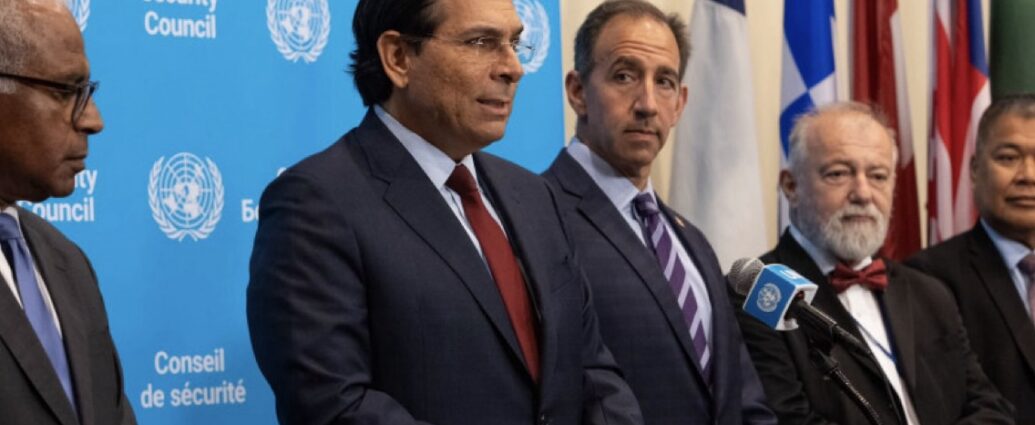
The United States has denied Palestinian Authority President Mahmoud Abbas a visa to attend the UN General Assembly in New York, as the UN prepares to consider allowing him to participate remotely.
The decision marks the second consecutive year in which Abbas has been prevented from traveling to New York for the General Assembly.
US and Palestinian officials confirmed the visa denial this week, after The Jerusalem Post reported last month that the Trump administration was planning to bar him from attending.
The UN General Assembly is expected to vote on a measure that would allow Abbas to participate remotely.
According to information obtained by The Jerusalem Post, the procedure could also allow senior Palestinian representatives who are unable to enter the United States to participate in additional high-level UN events during the current session.
It was not immediately clear whether the United States would seek to challenge the measure or simply vote against it.
The State Department also announced Wednesday that it would extend visa sanctions on members of the Palestine Liberation Organization and officials of the Palestinian Authority.
In an official media note, the department said it had reported to Congress that the PLO and PA had “once again” failed to meet commitments under the PLO Commitments Compliance Act of 1989 and the Middle East Peace Commitments Act of 2002.
Washington cited Palestinian efforts at international institutions, including the International Criminal Court and the International Court of Justice; attempts to obtain unilateral recognition rather than pursue negotiations; continued payments to terrorists; and what the department described as the glorification of terrorism in public statements and school textbooks.
“As a consequence of their failure to reform, contrary to their commitments to the United States, and their ongoing activities that undermine the prospects for peace, the United States will extend sanctions that deny visas to PLO members and PA officials,” the department said.
The State Department maintained an existing waiver for personnel formally assigned to the PLO Observer Mission to the United Nations.
“It is in our national interest to impose consequences and hold the PLO and PA accountable for glorifying terrorism,” the department said.
The looming vote at the UN echoes an almost identical confrontation from last September.
After Washington denied visas to Abbas and other senior Palestinian officials ahead of the 80th General Assembly session, member states adopted a special resolution allowing Abbas to submit a prerecorded address to be played in the General Assembly Hall.
The measure passed by 145 votes to five, with six abstentions. Israel and the United States were among the five countries voting against it.
The resolution went further than simply allowing Abbas to deliver his annual speech. It also permitted the State of Palestine to participate by videoconference or prerecorded statement in certain high-level meetings.
Abbas or another senior Palestinian representative could also submit prerecorded remarks at other UN high-level meetings and conferences if Palestinian officials were prevented from attending in person.
But the measure contained an important limitation: It applied only to the 80th session and explicitly stated that it should not establish a precedent for future General Assembly debates or high-level meetings. As a result, it does not automatically carry over into this year’s 81st session, requiring the Palestinians and their supporters to pursue new authorization.
The arrangement is highly unusual. Last year’s resolution itself described the procedure as exceptional and stressed that Palestinian representatives should ordinarily be able to attend UN meetings in New York in person.
Abbas ultimately addressed the General Assembly by video in September 2025.
Israel’s Ambassador to the United Nations Danny Danon welcomed Washington’s position and sharply criticized Abbas.
“Abu Mazen cannot continue paying terrorists, rewarding the families of terrorists and promoting a culture that glorifies terrorism, and then be surprised when doors are closed to him,” Danon said, using Abbas’s commonly used Arabic nickname.
“Anyone who wants to be part of the international community must first behave accordingly. You cannot reward terrorism with one hand and demand international legitimacy with the other.”
The expected General Assembly vote will therefore determine whether the UN will again establish a remote-participation mechanism allowing Abbas and potentially other senior Palestinian officials to participate despite the US visa restrictions.
The BRICS summit that ended in New Delhi on Sunday produced no military alliance, common currency, or unified anti-Western front. It did, however, produce a 140-paragraph declaration showing how a group of countries with sharply different interests is trying to create greater room for emerging economies to shape the rules governing trade, finance, technology and international institutions.
The 18th BRICS Summit, held on September 12 and 13 under India’s chairmanship, brought together the bloc’s 10 confirmed full members – Brazil, Russia, India, China, South Africa, Egypt, Ethiopia, Iran, the United Arab Emirates and Indonesia – with Saudi Arabia counted as an 11th by Indian and BRICS official sources despite Riyadh’s own more cautious diplomatic language.
BRICS is expanding, but it is not becoming a conventional alliance. Its members include US partners such as India and the UAE, sanctioned powers such as Russia and Iran, and China, Washington’s principal strategic competitor. Their political systems, security interests, and economic models differ substantially. Yet New Delhi demonstrated that it can increasingly find common ground around a narrower demand: greater influence over the rules of the international system.
The New Delhi Declaration criticized tariff and non-tariff barriers and other coercive economic measures, called for more resilient supply chains, backed efforts to expand cross-border payments and trade settlement in local currencies, and pressed for reforms to institutions ranging from the United Nations to the World Trade Organization. It also placed artificial intelligence, critical minerals and higher-value manufacturing near the center of the bloc’s development agenda.
For India, the summit was about more than hosting an enlarged BRICS. It was an opportunity to demonstrate that strategic autonomy can itself become a form of leadership.
Rajat Ganguly, editor-in-chief of the Journal of Asian Security and International Affairs and the Journal of World Affairs: Voice of the Global South, said the summit elevated India’s position within the grouping. “One big takeaway from this BRICS summit, as I see it … is a very distinctive style of Indian foreign policy. And this very distinctive style is very different from China, very different from other countries,” he told The Media Line.
He described the approach as the “India way,” emphasizing sovereignty and diplomacy while resisting pressure to align with competing blocs.
“What is the India way? If you look at all the resolutions, all the discussions, the things that Modi said, one very big part of this is that India is clearly saying that 21st-century international relations have to move away from naked power politics, unilateral moves, using military power at the drop of a hat,” he said.
That formulation reflects the unusual position New Delhi has built for itself. India remains a member of the Quadrilateral Security Dialogue, or the “Quad,” alongside the United States, Japan, and Australia, and in February formally joined Pax Silica, the US-led initiative covering critical minerals, semiconductor manufacturing, AI infrastructure, and technology supply chains. At the same time, New Delhi maintains close defense and economic relations with Russia, participates in BRICS and the Shanghai Cooperation Organization, retains extensive ties with Israel, and continues to engage Iran.
Ganguly describes this not as non-alignment in its older form, but as poly-alignment. “We say anybody who wants to come and give me a hug, I’m happy to give you a hug. But India will always decide based on India’s interest.”
That flexibility was visible in New Delhi. The summit succeeded in adopting a consensus declaration despite serious divisions among members over the Middle East. Iran and the UAE, positioned very differently in the confrontation involving Washington and Tehran, both accepted language calling for restraint, dialogue, and diplomacy, while their leaders also held a high-level meeting on the sidelines.
The outcome allowed India to present BRICS not as a vehicle for replacing one hegemon with another, but as a forum in which states that disagree on security can still coordinate around economic and institutional interests.
China, however, brings a different strategic weight to the grouping.
Yang Xiaotong, a researcher at the Beijing-based think tank Horizon Insights Centre, said China sees BRICS as part of a broad shift but not as a formal anti-American coalition. “By signing the BRICS New Delhi Declaration, China and other BRICS members are positioning the bloc as an alternative to a US-led unipolar world order, in which Washington no longer can impose unilateral tariffs and sanctions at a whim,” Yang told The Media Line.
“Beijing has no intention of dividing the world into camps; rather, it is content with countries hedging between China and the US – which suggests they can be persuaded to stay neutral should conflict break out between the two powers,” he said.
That interpretation helps explain one of BRICS’ central contradictions: some of its members are simultaneously embedded in US-led economic or security structures. Yang pointed specifically to the UAE, which remains closely connected to Washington and is also a participant in Pax Silica.
“This is why the UAE, for example – which maintains close ties with Washington and belongs to the US-led Pax Silica initiative aimed at restricting China’s access to advanced semiconductors and slowing its AI development – has also been welcomed into the bloc.”
Washington’s official description of Pax Silica is broader: a supply-chain and technology-security initiative spanning critical minerals, energy, advanced manufacturing, semiconductors, AI and infrastructure. The UAE officially joined in January, while India followed in February. Its participation in both Pax Silica and BRICS illustrates why the latter is difficult to treat as a straightforward adversarial camp.
Beijing is nonetheless seeking to deepen BRICS’ economic and technological coordination. In New Delhi, Xi Jinping pushed a “Greater BRICS” agenda that included proposals on artificial intelligence, special economic zones and services trade, reinforcing China’s attempt to place technology and industrial cooperation alongside traditional diplomacy at the center of the bloc.
Russia, meanwhile, approaches BRICS from a more explicitly economic and geopolitical angle.
Putin used his New Delhi visit to call for the grouping to become a more practical economic force focused on technology, infrastructure, investment, and payment mechanisms less vulnerable to external restrictions. For Moscow, BRICS also provides access to large non-Western economies at a time when sanctions have narrowed many of Russia’s traditional financial and diplomatic channels.
Even here, however, the picture is more nuanced than a simple campaign to replace the dollar. Days before the summit, Kremlin spokesman Dmitry Peskov said Russia was not seeking “de-dollarization” as an objective in itself and remained open to different payment methods. The New Delhi Declaration similarly stopped short of endorsing a common BRICS currency. Instead, it backed work on interoperability between payment and messaging systems and on greater use of members’ local currencies, while explicitly acknowledging that there is “no one-size-fits-all approach.”
BRICS is currently building alternatives to the existing financial system, not replacing it. Its most established institution, the New Development Bank, has approved around $43 billion in financing since its creation. That gives BRICS a functioning development finance mechanism even as broader monetary integration remains limited.
For Washington, this presents a more complicated challenge than a simple hostile bloc.
President Donald Trump has repeatedly portrayed BRICS as hostile to US interests. In July 2025, he threatened an additional 10% tariff on countries aligning with what he called the grouping’s “anti-American policies,” without precisely defining what would constitute such alignment.
Willian I., an adviser at the US Department of State, cautioned against interpreting Modi’s message as evidence that India or BRICS is announcing a structural break with the West. “Well, I don’t see, in Modi’s speech, a structural rupture in how the West conducts foreign policy. I see a request for a seat at the table, not an announcement that the table is closing,” he told The Media Line.
He also argued that the absence of a specific new US response to the New Delhi summit should not be confused with a retreat from Washington’s existing position toward the bloc.
“The BRICS final declaration rejects unilateral sanctions and coercive tariffs, but so far, the Trump administration hasn’t issued a specific statement on this New Delhi summit. That doesn’t mean retreat. The pattern I’ve been tracking is the opposite, with the White House maintaining the position that any country aligned with the bloc’s agenda, including de-dollarization, will face additional tariffs, something already stated explicitly after the Rio summit in July 2025,” he noted.
For Willian, the more consequential question is not whether Western deterrence is disappearing, but whether maintaining economic coercion becomes increasingly costly as BRICS expands its economic weight. “I think that variable, the rising cost of sustaining that coercion as BRICS’s economic weight grows, matters more for understanding this moment than any reading that the era of Western deterrence is ending,” he said.
India’s own caution, he argued, also reveals one of the principal structural limits facing BRICS. “… India itself, as host of the summit, avoided turning the bloc into an explicitly anti-American front, which to me is the clearest sign that internal heterogeneity within the Global South remains the biggest limit on Modi’s project,” he observed.
Yet India exposes the limits of framing BRICS itself as a uniformly anti-American project. New Delhi is simultaneously seeking greater influence within an organization that challenges aspects of Western dominance while deepening cooperation with Washington on semiconductors, AI, critical minerals, and strategic technologies.
Modi and Xi used the summit to continue a cautious thaw after years of tensions following the 2020 Himalayan border clash. They agreed to work on strengthening commercial and transport ties and further stabilizing bilateral relations. Yet the underlying imbalance remains substantial.
Bilateral trade reached a record $155.6 billion in 2025, while India imported roughly $132 billion from China, highlighting a structural deficit New Delhi has repeatedly sought to reduce. The border dispute also remains unresolved despite the easing of military tensions and the resumption of several bilateral exchanges.
India is therefore trying to increase its political weight inside a bloc in which China remains the much larger manufacturing power and the dominant actor in several critical supply chains. That competition is one reason New Delhi’s leadership ambitions cannot be separated from economics.
Critical minerals are a central example. The declaration called for reliable, diversified and resilient critical-mineral supply chains while stressing that resource-rich countries should capture more value domestically, diversify their economies and retain sovereign control over their resources.
China remains the dominant actor in the rare earth elements market. US Geological Survey data indicate that China accounts for more than 70% of global rare-earth extraction and approximately 87% of processing, giving Beijing leverage far beyond simply possessing mineral reserves.
But BRICS’ mineral relevance extends beyond China. Its membership includes major commodity, mineral, and energy producers across several continents. The strategic question is no longer who possesses the ore. It is who refines it, who finances the infrastructure, who controls processing technology, and which economies capture the higher-value stages of production.
That is where the rare-earth and AI debates increasingly converge. The technology contest runs through an entire industrial chain: critical minerals feed advanced manufacturing; advanced manufacturing supports semiconductors; semiconductors underpin data centers and computing capacity; and computing capacity determines how rapidly countries can build and deploy artificial intelligence.
The New Delhi Declaration effectively addresses both ends of that chain. It calls for greater value addition and economic diversification in resource-rich countries, while also pushing for wider access to AI resources and greater cooperation on safe and trustworthy AI, particularly for the Global South.
For developing economies, the issue is not only access to natural resources or technology. It is whether they remain primarily suppliers of raw materials and consumers of technologies developed elsewhere, or move into processing, manufacturing, infrastructure, and eventually the higher-value AI economy.
India again occupies an unusual middle position.
Through Pax Silica, it is working with the United States across what the initiative calls the “silicon stack,” stretching from critical minerals and advanced manufacturing to semiconductors and AI infrastructure. Through BRICS, New Delhi is simultaneously demanding broader access to technology and a stronger role for emerging economies in writing the rules governing those technologies.
The economic scale behind that argument is increasingly difficult to dismiss. BRICS now represents more than 40% of the world’s population and a significant share of global output, while its members control major shares of commodity, energy, and manufacturing capacity.
But the grouping remains deeply heterogeneous.
Ganguly sees the broader trend not as the disappearance of American influence, but as a redistribution of power. “So, America as the sole superpower, those days are finished. Russia’s power is growing, China’s power is growing, India’s power is growing,” he said.
“I’m not saying America will be finished or America will not have any power. No, no. America will be a big power. But America will be a big power amongst many other big powers. So, there will be at least three, four, five, six big powers. So, there’ll be a power redistribution.”
The second layer of that transition, he argued, is the growing political weight of the Global South. “Increasingly, the Global South will have more say, more voice, more decision-making in setting the rules of the game,” Ganguly said. “The time has come that we will not be just a rule follower, but we will be the rule setter.”
Lebanese President Joseph Aoun and Jordan’s King Abdullah II are set to join French President Emmanuel Macron in Paris on Thursday for talks on what comes next after nearly five decades of UN peacekeeping in southern Lebanon.
The deadline is approaching quickly. The United Nations Interim Force in Lebanon, better known as UNIFIL, is scheduled to end normal operations on December 31, 2026, followed by an orderly withdrawal.
France and Italy are working on plans for a possible multinational successor, and European countries have expressed interest in providing training and advisory support to the Lebanese Armed Forces. Lebanon, meanwhile, is making a late push to keep UNIFIL in place a little longer, warning that withdrawing the force under current conditions could leave a security vacuum.
Having covered the Israel-Lebanon border for years, I have seen how much UNIFIL has become part of the landscape. Its armored vehicles travel roads through villages close to the Israeli border, and its bases dot an area where Israel, Hezbollah and the Lebanese state have repeatedly competed for security and control.
So what actually disappears when UNIFIL leaves – and who takes its place?
UNIFIL was created in 1978 after Israel entered southern Lebanon following Palestinian attacks. Its original mission was to confirm Israel’s withdrawal, help restore international peace and security, and assist the Lebanese government in restoring its authority in the area.
Its role grew substantially after the 2006 Israel-Hezbollah war. UN Security Council Resolution 1701 called for the area between the Blue Line and the Litani River to be free of armed personnel and weapons other than those belonging to the Lebanese government and UNIFIL.
That never happened completely. Hezbollah built extensive military infrastructure in southern Lebanon in the years that followed, and Israel repeatedly accused UNIFIL of failing to prevent the Iran-backed group from entrenching itself near the border.
UNIFIL’s answer has long been that it was never given the job of forcibly disarming Hezbollah. It is a peacekeeping force, not an army tasked with imposing Resolution 1701 at gunpoint. Establishing Lebanese state authority is ultimately the responsibility of the Lebanese government and the Lebanese Armed Forces.
That distinction has been at the heart of much of the argument over UNIFIL’s record.
Its peacekeepers patrol, observe and document violations while supporting the Lebanese military. They also provide an international presence in territory where Israel, Lebanon, and Hezbollah can give sharply different accounts of the same incident.
UNIFIL has another role that receives less attention. Israel and Lebanon have no diplomatic relations and technically remain at war. The force has provided an established channel through which messages can pass between the two sides when tensions rise.
The current conflict has made its job even more complicated. More than half of UNIFIL’s nearly 50 bases are now in Israeli-controlled territory in southern Lebanon, according to Reuters. Peacekeepers have escorted humanitarian convoys and helped maintain access to communities cut off by fighting. They have also facilitated access for UN personnel investigating possible violations of international law.
The force now numbers more than 7,500 peacekeepers. Once they are gone, somebody else will have to perform those functions – or they will no longer be performed.
The Security Council expects the Lebanese state eventually to become the sole provider of security in the south. Much of that responsibility would fall to the Lebanese Armed Forces.
But Lebanon’s military has long struggled with shortages of equipment, resources, and funding. It is also being asked to do something far more politically sensitive: establish a state monopoly on weapons.
And that means confronting the question of Hezbollah.
Aoun has said Hezbollah must ultimately be disarmed, while making clear that he does not want the process to lead to internal armed conflict. Israel wants assurances that Hezbollah will not rebuild the military infrastructure that allowed it to threaten communities across Israel’s northern border. Lebanon insists that Israeli forces must leave Lebanese territory.
A US-brokered framework agreed to in June was supposed to link a gradual Israeli withdrawal with Hezbollah’s disarmament and the deployment of Lebanese troops in the south. The process has stalled. UNIFIL is preparing to leave while the basic security dispute remains unresolved.
That dispute will hang over Thursday’s talks in Paris.
France and Italy have been developing plans for the post-UNIFIL period, including an international coalition to support the Lebanese army. More than 10 European Union countries have shown interest in participating, although the structure and mandate of any mission remain unsettled.
But a force that succeeds UNIFIL would not necessarily do what UNIFIL does now.
A training and advisory mission, for example, might not patrol southern Lebanon or monitor the Blue Line. It might not investigate violations or provide the same liaison mechanism between Israel and Lebanon. Its personnel could have little or no authority to respond if they encountered unauthorized weapons or armed Hezbollah members.
Strengthening the Lebanese army is one mission. Peacekeeping is another.
There is also the possibility that UNIFIL could stay a little longer.
Lebanon has been lobbying for a limited extension beyond December 31, and France is supporting that effort. Diplomats have indicated that winning another Security Council extension will be difficult, particularly given US and Israeli support for ending the mission.
Even without an extension, UNIFIL will not disappear at midnight on December 31. Normal operations are scheduled to end then, followed by an orderly withdrawal lasting no longer than one year as bases close and positions are handed over.
That gives Lebanon and its international partners some time. Whether a replacement will be ready is another question.
Israel’s chief concern is that southern Lebanon not again become a base for attacks across the border. Lebanon’s is sovereignty: whether its government and army can exercise authority throughout the country without Israeli forces on Lebanese territory and without Hezbollah maintaining an independent military structure.
I have covered enough rounds of conflict along this border to know that quiet does not necessarily mean the underlying problems have been solved. UNIFIL did not solve them, and its record has drawn plenty of criticism. But when the peacekeepers leave, an international presence that has been there for almost half a century will go with them.
Paris is not simply deciding what replaces the blue helmets.
The harder question is whether Lebanon’s army, backed by whatever international arrangement emerges, can do what UNIFIL never could: make the Lebanese state the sole armed authority in the south and reduce the chances that Israel and Hezbollah will find themselves fighting yet another war.
Justice Minister Yariv Levin transferred authority to the Shin Bet (Israeli Security Agency) on Wednesday to determine the security arrangements required for party leaders who do not currently hold official state positions, after every other member of the ministerial committee responsible for Shin Bet affairs failed to attend a meeting convened to decide the issue.
The committee, chaired by Levin, was expected to decide whether party leaders who do not hold official positions would receive security protection until the 26th Knesset is sworn in.
However, none of the committee’s members attended the meeting except Levin.
Following the ministers’ absence, Levin decided to transfer authority to the Shin Bet to independently determine what security arrangements are required for each of the relevant party leaders.
The discussion came amid an ongoing dispute over security protection for party leaders who do not hold official state positions. Last month, the public committee responsible for determining security arrangements for public figures recommended providing security for Yashar party chairman Gadi Eisenkot until the elections.
The issue of security for party leaders without official state positions was raised last month. Central Elections Committee chairman Justice Noam Sohlberg contacted the head of the National Security Council and asked that the relevant authorities discuss the matter, following requests received from, among others, Eisenkot and Yair Golan.
The public committee subsequently recommended that Eisenkot, chairman of the Yashar party, receive security protection until the elections. The recommendation was then forwarded to the ministerial committee responsible for Shin Bet affairs, chaired by Levin, for a decision.
Even before the recommendation was issued, former senior officials in Israel’s security establishment had called for Eisenkot to receive security protection, citing concerns that he could be targeted and pointing to the increasingly extreme tone of public discourse.
The signatories included former senior officials from the IDF, the Shin Bet, and the Mossad.
North Korea’s vice defense minister said on Thursday that a growing US-led military buildup and what he called an expanding nuclear alliance among Washington, Seoul and Tokyo justified Pyongyang’s efforts to strengthen and expand its nuclear forces.
Speaking at the Beijing Xiangshan Forum, China’s flagship international security conference, Vice Defense Minister Kim Kang Il said North Korea’s status as a nuclear weapons state was irreversible and pledged to continue expanding its nuclear arsenal.
“The ceaseless nuclear arms buildup of the enemy states fully justifies the building of a solid nuclear shield of the DPRK,” Kim said, using the acronym for North Korea’s formal name, the Democratic People’s Republic of Korea.
“As the enemy states’ nuclear threat reaches the extreme level… the DPRK will firmly defend the peace and stability in the Korean Peninsula and the region by ceaselessly expanding and strengthening its self-defensive nuclear deterrent.”
Kim blamed tensions on the Korean Peninsula on what he called Washington’s “invariable” hostile policy toward North Korea and accused the United States of turning trilateral cooperation with South Korea and Japan into a nuclear alliance.
He said North Korea’s constitutional status as a nuclear weapons state was “the line of no retreat” and urged other countries to abandon what he called the “daydream” of denuclearisation.
Kim’s appearance at the Xiangshan Forum marked a rare high-profile showing by North Korea at an international security gathering in recent years and came as Pyongyang seeks closer ties with Beijing amid tensions with Washington and its allies.
Asked about the possibility of a meeting between US President Donald Trump and North Korean leader Kim Jong Un, Kim said he was not in a position to discuss whether such a summit could take place.
His remarks followed a statement on Thursday morning from Kim Yo Jong, the powerful sister of leader Kim Jong Un, rejecting renewed international calls for North Korea’s denuclearisation following discussions at the annual meeting of the International Atomic Energy Agency.
In a statement carried by state media KCNA, she said North Korea’s status as a nuclear weapons state was “absolute” and could not be reversed, dismissing repeated denuclearisation demands as annual “noise” and insisting Pyongyang’s nuclear position had been permanently established “physically and legally.”
Her comments echoed a separate statement issued on Wednesday by a North Korean defense ministry spokesman, who accused the United States and South Korea of escalating military confrontation through joint weapons-of-mass-destruction response planning and exercises.
The spokesman said recent US-South Korean WMD response discussions amounted to an “open declaration of confrontation” and warned such actions could require Pyongyang to invoke provisions of its nuclear force policy law.
The statements appeared to form part of a broader messaging campaign by Pyongyang on its nuclear policy, according to Lim Eul-chul, a professor at Kyungnam University’s Institute for Far Eastern Studies in Seoul.
The comments were aimed at cementing North Korea’s claim that its nuclear status had reached an “irreversible stage,” while creating justification for future military and nuclear activities in response to what it portrays as growing US and South Korean pressure, Lim said.
Mohammad Saeed had just turned 18 when he fled to Iran with his parents and younger brother and sister, escaping the Taliban’s return to power in Afghanistan in 2021.
Now Saeed and his family are among thousands who have returned home to escape the economic crisis in Iran triggered by the conflict with the US and Israel.
The family came back nearly empty-handed, Saeed said.
“The Iranian currency had fallen so sharply,” he said, that the family’s savings, held in Iranian rials, lost over two-thirds of their value.
For decades, Iran’s industrialized and much larger economy offered Afghans an escape from poverty and, in the 1990s and again since 2021, from the harsh rule of the Taliban.
Now, Iran’s economy has collapsed so severely that many Afghans said they saw returning as their only option. They are coming back with their wives and daughters, despite the severe restrictions on women in Afghanistan, with curbs on their education, travel and employment.
Reuters journalists spent one week in the border regions of Afghanistan’s Herat province and neighboring Farah speaking to people returning from Iran. Free to discuss it without fear of Iranian government scrutiny, most of those returning described a shattered economy in Iran.
At the dusty Islam Qala border crossing between Iran and Afghanistan, a near-constant flow of returning migrants were undergoing document checks and registration formalities.
Officials were sitting in makeshift shipping containers. Coming back to their homeland, the returnees were faced with barren desert mountains and a pothole-plastered highway, the road to Herat, the biggest city in western Afghanistan.
Most returning Afghans said they had been out of work for months and crushed by spiraling inflation before they decided to return.
Compounded by the impact of tightening sanctions and a US naval blockade that has recently left Iran without shipping any meaningful crude exports through the Strait of Hormuz, consumer prices have surged by nearly 90% year on year, according to Iran’s Statistical Center. Food inflation has been even higher, at almost 130%, making bread, milk and other essentials increasingly unaffordable.
Iran’s mission in New York did not respond to a request for comment.
In the past, some Afghan salesmen could make profits in Iran’s bazaars by selling goods at around double the price at which they’d been purchased, said Sayed Jawed Qazi Khani, a 40-year-old migrant. But inflation and vanishing savings among both Iranians and Afghan migrants led to a collapse in consumer demand.
“What remained was day labor,” he said, often at the same wage as one year ago.
Only 29% of Afghans who recently returned from Iran said they had any savings left after their average income fell by nearly one-third compared to pre-crisis levels, according to surveys by the International Organization for Migration (IOM).
More than 2 million Afghans have left Iran over the past two years. Most were deported or pressured to leave by Iranian authorities before the latest wave of returnees, who left amid the war, according to data from the UN Refugee Agency.
Forced deportation remains a leading reason why Afghans are returning, with unaccompanied men long appearing to be the primary focus of Iranian authorities. But compared to pre-crisis levels, the crowds of returning Afghans increasingly also include women and entire families, according to returnees and IOM data.
For many Afghan mothers and their daughters who had held out in Iran after the Taliban takeover of Afghanistan, Iran’s recent economic crisis has confronted them with an almost impossible choice: face poverty there, or return to a country where half the women leave home only once or twice a month, according to the U.N.
The Taliban’s rules restrict women from traveling without male guardians and have barred them from some professions. The Taliban say they respect women’s rights in accordance with Islamic sharia law.
Abdul Jabbar, 44, said he did not want to take his wife, two daughters, grandson and mother back to Afghanistan. Their family had lived in Iran for nearly four decades, and Jabbar had found work as an exterior finisher of buildings. The family had a comfortable life and a modern apartment in Kerman, near an Iranian military base.
His face flushed from the heat of the flatbread oven wedged into the one room they now have in Afghanistan, he said in an interview: “I used to say that even if Afghanistan was only two streets away, I would not go.”
When the nearby military base was repeatedly hit by missiles and work dried up amid the war this year, Jabbar said, extended Afghan family members encouraged him to return, promising work and safety from American missiles.
When Jabbar arrived in Afghanistan with virtually no belongings or savings, relatives donated essentials and lent him money.
Two months on, he remains unemployed and, unable to repay the money, has worn out his welcome. The family now lives in a sweltering mud-brick house with only one room where solar panels are the sole source of electricity. The dusty carpet was donated.
His 15-year-old daughter Setayesh, who wants to become a fashion designer, misses her life in Iran.
“If I could, I would go back,” she said. “For my education, my friends.”
At Islam Qala, at least 20 to 40 families, including women and girls, return each day voluntarily, said Abdul Ghani Qazizadeh, a senior Taliban government official at the border.
“The wages they earn are no longer enough to cover their basic living expenses,” he said.
Many Afghan workers complained that their Iranian employers were withholding wages, he said. “Everyone complains that their money has been left behind.”
In Iran, Saeed and his mother, 42-year-old Rezwana Jami, said they had started a business producing cheese used in pizzas when they arrived in 2021. Initially, it thrived, and the family found loyal customers.
As US-Iran tensions escalated this year and inflation surged, food became so scarce that Jami said she struggled to source the ingredients needed for the business, including milk.
“I could no longer continue production,” she said, eventually forcing the family to return five months ago.
Jami and Saeed said they have used their last savings to buy new kitchen equipment in Afghanistan and have resumed the production of pizza cheese in their new home.
The family sees a market opportunity in Afghanistan, where high-quality pizza cheese is a rare commodity. They say they work with girls who would be of school age in other countries, but are barred from education above sixth grade and from university under Taliban rules.
Since Jami’s return to Afghanistan five months ago, she said her 17-year-old daughter has struggled the most.
“She keeps telling me, ‘Mother, I studied for eight years, and now I’m just staying at home’,” Jami said. “There is nothing I can do except telling her, ‘Be patient. God is generous.'”
US allies in Asia are growing anxious that US President Donald Trump may be tempted to soften Washington’s support for Taiwan in return for an economic win with Beijing as he prepares to host Chinese leader Xi Jinping next week.
Concerns that Trump could make concessions on Taiwan have heightened since he described US arms sales to the democratically governed island claimed by China as a “negotiating chip” in May, and as he tries to shore up approval ratings dented by the Iran war.
Xi will likely press Trump on Taiwan during their expected summit on September 24, and even a subtle change in US rhetoric could embolden Beijing and risk the region’s fragile peace, according to interviews with government officials, lawmakers and analysts in Taipei, Tokyo and Washington.
“There’s a great deal of trepidation, particularly from our allies, about where our China policy is going to land,” said Emma Chanlett-Avery, political-security affairs director for US-based think tank Asia Society Policy Institute.
“Any indication of a softness on Taiwan would be quite alarming,” she added.
China has described Taiwan as the “core of core interests” in its relations with the United States and has never renounced the use of force to bring the island under its control.
China’s foreign ministry and the White House did not respond to questions for this story.
Trump has said Xi has personally assured him that China will not attack Taiwan while Trump is in office. His predecessor Joe Biden repeatedly said the US would defend Taiwan if China attacked, while Trump has declined to say whether he would.
Speaking at a defense forum in Beijing on Tuesday, China’s former envoy to Washington Cui Tiankai said “reunification” with Taiwan would bring stability that is “in the interest of the United States.”
Ahead of the summit, the Taiwanese government has been clearly conveying its positions to the US side, Shen Yu-chung, a senior Taiwanese official, told reporters in Taipei on Monday.
“We hope… there will be no situation that harms Taiwan,” he said.
Taiwan Foreign Minister Lin Chia-lung said on Tuesday he expected Xi to bring up Taiwan, but that Washington had repeatedly said its policy towards the island had not changed.
Japan’s leader Sanae Takaichi – who angered Beijing by saying Tokyo could be drawn into a conflict over Taiwan last year – has also been trying to get Trump’s ear ahead of his meeting with Xi, according to two Japanese government sources.
A senior foreign ministry official visited Washington last week to help try to secure a meeting, the sources said, requesting anonymity due to the sensitivity of the matter. The United Nations General Assembly in New York early next week is the most likely venue for an exchange, they added.
Japan’s foreign ministry declined to comment on trips by working-level officials and said nothing had been decided regarding contact between Takaichi and Trump.
Japan will “closely follow with great interest” the upcoming summit and believes it is important that US-China relations contribute to the “stability of the international community,” the foreign ministry added.
Tokyo wants Trump to stick to established diplomatic language on Taiwan and avoid making it the focus of the summit, as it was when he last met Xi in Beijing in May, one of the sources said.
The biggest fear for Japan is that Trump signals a softer stance on Taiwan to secure Chinese commitments to buy US goods, an economic win he could sell to voters ahead of important midterm elections, two senior Japanese ruling party lawmakers said, requesting anonymity.
While Trump has cast his summitry with Xi as rebalancing trade relations between the two economic superpowers, he said the Chinese leader repeatedly asked him about Taiwan when they met in Beijing in May, including about arms sales and Washington’s resolve to defend the island.
A $14 billion US arms package for Taiwan has been awaiting Trump’s approval for months. After the May summit, Trump said he was holding the package in abeyance and described it as a “very good negotiating chip.”
Washington must now take Beijing’s concerns about arms sales seriously after long brushing them off, Wu Xinbo, a professor at Fudan University who advises China’s foreign ministry, told the defense forum in the Chinese capital on Tuesday.
Beyond the arms, experts say that even a slight change in Trump’s wording could embolden Beijing.
The US follows a “one China policy” under which it officially takes no position on Taiwan’s sovereignty and acknowledges, but does not endorse, Beijing’s position that Taiwan is part of China.
Xi asked Trump’s predecessor Biden to clearly denounce Taiwanese independence at a summit in 2023, though Washington refused. Trump’s propensity to make off-the-cuff remarks is particularly worrisome given the sensitivity of this issue, the two Japanese government sources said.
The United States and other Western countries significantly underestimate the importance of Taiwan to Beijing, Malaysia’s director general of national security, Raja Nushirwan Zainal Abidin, said during a visit to Washington this week.
A Chinese invasion of Taiwan, which produces over 90% of the world’s advanced semiconductors, would roil the global economy.
“It will change the world as we know it, and because of that we have to be very, very careful,” Raja Nushirwan said.
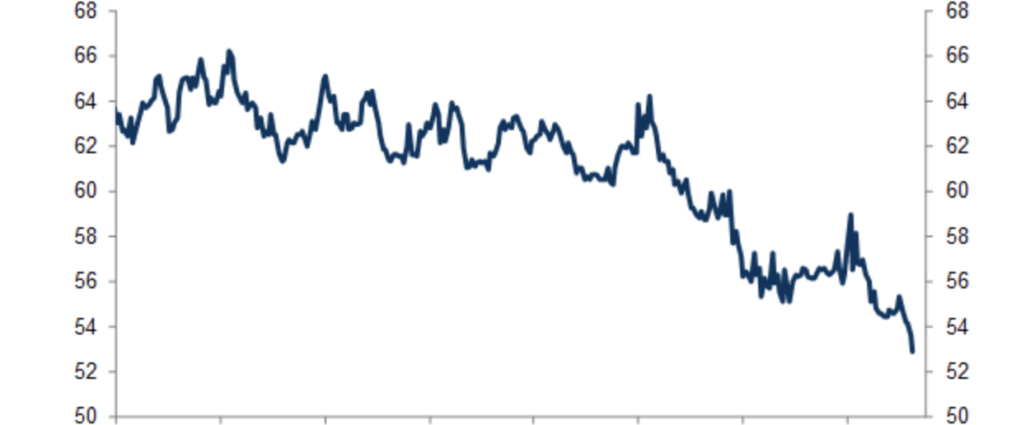
The American economy is increasingly rewarding people who own businesses, stocks and other capital rather than those who depend primarily on a paycheck — a decades-long shift that could become even more pronounced as artificial intelligence and automation spread through the workplace.
New research from Goldman Sachs examines a striking decline in labor’s share of U.S. business income. The share of nonfarm business output going to workers has fallen roughly 7.5 percentage points since the 1990s, according to Bureau of Labor Statistics data cited in the research.
In the second quarter of 2026, labor’s share fell to approximately 52.8% to 52.9%, the lowest level in government records dating to 1947.
The decline does not mean every dollar disappearing from labor automatically went into shareholders’ pockets. Goldman economist Abhay Duggirala estimates that roughly 40% of the decline can be explained by measurement and accounting effects.
But Goldman concludes the remaining roughly 60% — equivalent to about 4.5 percentage points — represents a genuine structural shift, associated with factors including higher corporate markups, automation and diminished worker bargaining power.
For ordinary Americans, the distinction matters because the financial benefits of stronger corporate profits and rising asset values depend heavily on whether a household owns those assets.
The simplest way to understand the issue is to look at two ways Americans make money.
One is labor: wages, salaries and other compensation earned by working.
The other is capital: profits, stocks, businesses and other assets capable of increasing in value or generating income.
When more economic income flows toward capital, households with substantial investment portfolios or business ownership are positioned differently from households that rely overwhelmingly on wages.
That divide is particularly important because stock ownership is highly concentrated.
The wealthiest 10% of U.S. households own the overwhelming majority of corporate equities and mutual-fund shares, according to Federal Reserve data cited in reporting on Goldman’s research.
That means a booming stock market can generate enormous wealth without producing the same financial improvement for every household.
Recent Federal Reserve figures illustrate the scale of the phenomenon.
U.S. household net worth increased by a record $12.8 trillion during the second quarter of 2026, according to Reuters analysis of Fed data.
About $10.7 trillion of that increase came from rising equity values.
Total household net worth reached approximately $196 trillion, with equities accounting for nearly half of household financial assets.
But those gains were far from evenly distributed. The richest 10% of households held more than 87% of equity holdings, Reuters reported.
That creates an increasingly unusual economic picture.
A household with substantial retirement accounts, stocks and business interests can see its wealth rise significantly when markets climb.
A household living primarily on wages may experience the same economic expansion very differently — especially if rent, food, insurance, transportation and other everyday expenses are also increasing.
Goldman’s research cautions that the headline 7.5-percentage-point decline overstates the amount actually transferred from workers to owners of capital.
The bank identifies several accounting effects.
Changes in the way business income is classified following tax reforms shifted some income previously recorded as wages into business profits.
Another factor is depreciation. Modern businesses rely increasingly on computers, software and other technology that depreciates relatively quickly. Because depreciation is included in the government’s calculation of gross business value added, it can mechanically reduce the measured labor share.
Stock compensation creates another complication.
Workers — particularly highly compensated employees — are increasingly paid partly in company equity. Government statistics may not record that compensation in the same way or at the same time as ordinary wages.
After adjusting for those issues, however, Goldman still finds a substantial genuine decline in labor’s economic share.
One explanation involves what economists sometimes call “superstar firms.”
Highly productive companies can achieve enormous scale, dominate portions of their markets and generate substantial profit margins.
When those businesses capture a larger portion of economic income, more money can flow toward profits and shareholders rather than employee compensation.
The result does not necessarily mean workers’ wages are literally declining. Wages can increase while labor’s share of the overall economic pie decreases if profits and capital income grow even faster.
That distinction helps explain why headline economic statistics and household experiences can sometimes appear disconnected.
Artificial intelligence introduces another major variable.
Goldman Sachs Research estimates that 6% to 7% of U.S. workers could be displaced from their current jobs by automation over the next decade, although historical technological changes have also created new occupations and employment opportunities.
Goldman’s labor-share research suggests that if AI continues automating a significant number of tasks, labor’s share of income could decline further.
The key economic question then becomes who captures the productivity gains.
If a company can produce substantially more using AI without proportionally increasing its payroll, the resulting productivity can translate into higher profits.
Workers can benefit if higher productivity eventually produces higher wages, new jobs or lower prices.
Shareholders can benefit more directly if it produces higher corporate earnings and stock valuations.
Goldman has separately argued that technological innovation historically creates new types of employment over time, meaning automation does not automatically translate into permanently fewer jobs across the entire economy.
The divide matters increasingly because consumer spending itself is becoming more closely connected to financial markets.
Reuters analysis found that equities now account for 34% of total U.S. household assets, while real estate’s share has fallen to a record-low 32.4%.
The wealthiest Americans also account for a disproportionate amount of consumption. The top 20% of earners are responsible for roughly 60% of U.S. consumer spending, according to the analysis.
That means Wall Street’s performance increasingly influences not only household wealth but potentially the broader economy.
When wealthy households’ portfolios rise, they may spend more.
But the reverse presents a risk: a major stock-market decline could weaken spending among the households responsible for a large portion of consumption.
For middle-class households, the findings highlight an increasingly important distinction between earning money and owning assets.
A worker can receive regular raises and still fall behind households whose stock portfolios, businesses and other investments are appreciating faster.
Conversely, millions of Americans do participate in capital markets through 401(k)s, IRAs, pensions and other retirement accounts, meaning the line between “worker” and “capital owner” is not absolute.
The difference is the scale of ownership.
A household with a modest retirement account does not experience a stock-market boom in the same way as a household with millions of dollars invested.
That is why a strong stock market can coexist with widespread concern about affordability.
The broader picture is not simply one of an economy getting poorer.
U.S. household wealth has reached extraordinary levels, corporate profits remain significant, consumer spending has remained resilient and investment in areas such as artificial intelligence continues at enormous scale. Goldman itself continues to describe the U.S. economy as resilient.
The question raised by the labor-share data is how those gains are distributed.
For households with significant ownership of stocks, businesses and other appreciating assets, economic growth can produce wealth beyond their regular income.
For households whose principal asset is their ability to work, prosperity depends much more directly on wages keeping pace with housing, food, energy, healthcare and other expenses.
As artificial intelligence, automation and capital-intensive investment reshape American business, that distinction may become increasingly important.
The economic divide of the future may therefore be about more than how much Americans earn.
It may increasingly depend on how much of the economy they own.
JBizNews Desk | Trenton, N.J.
© JBizNews.com All Rights Reserved. Reproduction or distribution without written permission is prohibited.
President Isaac Herzog said the upcoming Israeli elections “are not a civil war” in an interview on 103FM on Wednesday.
Speaking in a tense and open conversation before Yom Kippur, Herzog emphasized that despite increasingly harsh rhetoric and deep divisions within Israeli society, maintaining red lines remains an absolute boundary. He also addressed tensions around the judicial system, mediation efforts currently under consideration, and the challenges posed by internal and external threats, while calling for calm ahead of the election.
Herzog discussed threats to the rule of law and harsh campaign videos, including one released by the Religious Zionist Party (RZP). He said he would not accept harm to the foundations of democracy.
“Elections are a proper, magnificent, democratic process, in which people can express themselves and make decisions that affect their fate by casting a ballot at the polling station, and not through violence, crudeness, or processes that are dangerous,” he said.
“It is difficult for me to see a scenario in which the election results are not accepted,” he continued.
“Elections are not a civil war, not even in AI videos. Nothing will help anyone. We will continue living together the day after, and I think it is legitimate to raise an agenda, present plans, and propose bills. I think it is very dangerous to go to places that could cause people to do dangerous things.”
The president also criticized political leaders and the media.
“During elections, leaders, parties, and politicians greatly radicalize their positions, and that is dangerous,” he said. “They use a platform called the media, which benefits from it because it sells.”
Herzog also addressed the controversy surrounding the documentary film NAZA, saying that the military’s operations are subject to legal oversight.
“I can tell you with certainty, not an assessment, with certainty, that there is close legal oversight for every significant combat unit,” he said.
“There is a complex process for approving operations, which takes into account harm to uninvolved people and innocent civilians.”
“I personally know of operations and actions that were delayed or canceled because of this consideration, and of cabinet decisions that were analyzed in depth with significant backing from the attorney general regarding military operations,” added Herzog.
When asked about Prime Minister Benjamin Netanyahu’s trial and efforts to reach a possible settlement, Herzog revealed details behind his mediation proposal. He said he received conflicting legal opinions, but argued that the complexity of the case and its impact on the country led him to propose mediation.
“Because of the complexity of this issue and the need to try to reach a plea deal and end this case, which has a very negative impact on the country, I proposed mediation at the President’s Residence several months ago, mediation under the auspices of the President’s Residence, what is called negotiations or dialogue to reach agreements.”
The president said Netanyahu “did not respond at all” to the proposal. “He did not answer yes, and he did not answer no. I am leaving the door open to the possibility that the sides will eventually come to me for dialogue, for the possibility of mediation in this case.”
Regarding violence in Judea and Samaria, Herzog took a firm stance and described the situation as direct harm to the state.
“First, I view this with very great severity and deal with it extensively,” he said.
“There are many arrests; there is a lot of dialogue,” he continued. “I think the immediate solution from an operational perspective is to tighten the connection between the IDF, the police, the prosecution, enforcement authorities, and local authorities. There is a possibility to do this.”
The president also criticized the phenomenon, calling Jewish terrorism “a terrible stain on the face of the state and also something that harms its sovereignty.”
Asked whether he believes the Shin Bet (Israel Security Agency) chief is not handling rioters forcefully enough, Herzog responded: “Absolutely not. I place my full trust in the head of the Shin Bet.”
Amid criticism over the lack of a state commission of inquiry into the failures of October 7, Herzog said an independent investigative body must be established as soon as possible.
He explained the delay, saying that Israel “must remember that we are at war. We must remember that the High Court of Justice ruled out the possibility that the State Comptroller would investigate this.”
He added that, however, “From the perspective of natural justice for Israeli citizens, it is only right that after the elections an independent and impartial commission of inquiry can finally be established so that we can investigate this thoroughly.”
Herzog concluded the interview by discussing his daily meetings with bereaved families and wounded people, delivering a message of unity ahead of Yom Kippur.
“I meet a great deal, a great deal of pain and concern,” said Herzog. “The concern for Israel’s unity, the fear that someone here will break the rules in a way that will not allow for Israel’s unity and will endanger us from within.”
“That is why I am being interviewed by you on the eve of Yom Kippur, because we will engage in self-reflection and we have much for which we must atone,” he concluded. “We have much to be proud of and much to be proud of ourselves for, but we have also learned from our heritage and tradition to look deeply and see where we erred, and what we need to ask forgiveness for.”
Documents released by the Prime Minister’s Office (PMO) on Wednesday following a Freedom of Information request revealed a long list of expenses recorded during Prime Minister Benjamin Netanyahu‘s visits to the United States in 2025, including more than $13,000 for hair and makeup during one trip, a $500 “smoking fee,” $295 to repair an embassy door, and $125 for a traffic ticket.
The documents were provided to attorney Elad Mann of the Hatzlacha organization following a request filed under the Freedom of Information Law. They include billing tables, delegation lists, and schedules from the prime minister’s visits.
Some details were redacted on national security grounds. The PMO also clarified that in some cases, the process of reviewing the bills has not yet been completed.
During Netanyahu’s visit to Washington in February, one of the most prominent entries in the expense report was a $6,772 charge for a makeup artist, alongside $6,747 for a hairdresser, totaling $13,519.
That visit also included a $25,000 charge for the prime minister’s suite, $511.50 for food in the suite, and approximately $298 for laundry.
One of the smaller entries, however, stands out: $500 listed as a “smoking fee – conference room, press conference with the prime minister.”
The report also lists additional expenses for lighting and photography, transportation, work rooms, refreshments, and equipment the delegation used during the visit.
Charges for a makeup artist and hairdresser appeared again during a visit in April. This time, $3,036 was recorded for the makeup artist and another $3,036 for the hairdresser, for a combined total of $6,072.
The same report includes $1,228 for “printers + toners” and approximately $240 for a “whiteboard + corkboard.”
The largest charge during that visit was $51,661 for Washington’s Watergate Hotel, while the total itemized charges in the report came to approximately $128,900.
In the report covering Netanyahu’s July visit, a particularly large charge of $172,701.60 appears for the Willard InterContinental hotel in Washington.
Among the many entries, however, is a far smaller one: $295 to a locksmith company, described as “repair of embassy entrance door – malfunction during prime minister’s visit.”
The documents also include purchases from Amazon, Costco, Target, and Staples, as well as expenses for refreshments, office equipment, vehicles, customs, and overtime.
The July visit’s expense report totaled approximately $373,700.
Another unusual entry appears among the expenses from Netanyahu’s trip to New York and Washington in late September: $125 under the description “traffic ticket – prime minister’s visit 09.25.”
During that trip, the prime minister’s suite at the Loews Regency in New York cost $5,999 per night, for a total of $41,993.
The PMO explained in the documents that the visit took place during the UN General Assembly, when demand for hotel rooms in New York is particularly high, and rooms are booked far in advance.
The schedule attached to the documents shows that the visit included, among other events, meetings with the presidents of Paraguay, Serbia, and Argentina; an address to the UN General Assembly; a meeting with the United Arab Emirates foreign minister; and an interview with Fox News.
Netanyahu later flew to Washington, where he met US President Donald Trump at the White House.
The highest nightly price for the prime minister’s suite among the documents released was recorded during an end-of-year visit to Florida: $10,000 per night, for a total of $50,000.
According to the table, a regular room for members of the delegation cost approximately $250 per night on average.
The official schedule shows that during the visit, Netanyahu met, among others, US Secretary of State Marco Rubio, US Defense Secretary Pete Hegseth, and Trump, and spoke by phone with Vice President JD Vance.
The visit later included interviews with Fox News and Newsmax, a meeting with Steve Wynn, dinner at Larry Ellison’s home, meetings with evangelicals and elected officials, and Netanyahu and his wife attending a New Year’s event at Mar-a-Lago.
The delegation list for the Florida visit includes dozens of names and positions from the PMO, the public diplomacy apparatus, foreign relations, and logistics, alongside additional officials whose details were redacted.
Despite the extensive detail, the PMO cautioned that the figures do not necessarily represent final bills in every case.
In its response to the Freedom of Information request, the office said that the prime minister’s overseas visits are not paid for directly by the PMO, but through the Foreign Ministry and its missions.
Before a visit, an estimated cost is transferred, but suppliers’ invoices and receipts are collected only after the trip ends.
According to the PMO, the process can take “many months,” and payment is transferred to the Foreign Ministry only after the expenses have been reviewed.
Among the hundreds of thousands of dollars spent on hotels, flights, and logistics, it is the smaller entries in the documents that provide some of the most unusual glimpses into the expenses behind the prime minister’s trips: a makeup artist, a hairdresser, a smoking fee, a faulty door, and a single traffic ticket.
Pop artist Peter Max, whose dreamy, boldly colored works provided an artistic backdrop for the 1960s US hippie movement and made him a commercial art powerhouse, died on Monday at a hospital in Manhattan at the age of 88, a spokesperson for his family said on Wednesday.
Born Peter Max Finkelstein in Berlin in 1937 to a Jewish family, Max spent his earliest years as a refugee from Nazi Germany. His parents fled with him to Shanghai, where thousands of European Jews found refuge during the Nazi era.
In 1948, the family left Shanghai for the newly established State of Israel, eventually settling in Haifa. Max lived in Israel for roughly three and a half years, learned and spoke Hebrew, and began taking painting lessons there under a Viennese artist. He later said that his Jewish upbringing included the observance of holidays such as Passover, Purim, and Yom Kippur.
Max described the Jewish communities of Shanghai, Israel and later Brooklyn as formative influences on his life and art. “I think that my Jewish heritage shaped me as an artist most by the love and caring I got from the Jewish community,” he said in a 2017 interview with the Wisconsin Jewish Chronicle.
His refugee story also remained part of his public legacy. Material connected to Max has been displayed at the Shanghai Jewish Refugees Museum, which documents the community that sheltered Jews fleeing Europe.
A 2022 account of Max’s later life described him as a Jewish immigrant whose psychedelic work became one of the defining visual signatures of American popular culture.
Max’s visions, often influenced by his love of astronomy, were everywhere in the ’60s and ’70s and almost as much a part of the decade’s youth culture as sex, drugs and rock ‘n’ roll. They were like artistic renderings of an acid trip and were, in the vernacular of the time, really groovy.
The colors were vibrant and the images surreal: cosmic landscapes and starbursts, doves and floating peace symbols, kaleidoscopic butterflies, puffy clouds and other flower-power imagery. Rock stars such as the Beatles, Jimi Hendrix and Mick Jagger were Max’s portrait subjects, as well as his friends.
His ties to Israel continued to surface in his work. Among his Jewish and Israeli-themed pieces was “36 Rabins,” a series of portraits of assassinated prime minister Yitzhak Rabin.
President Ronald Reagan was a fan, and Max donated a painting of the Statue of Liberty to the Reagan Presidential Library.
“His decorative posters show Max to be a visionary fascinated by time, space and evolution,” a 1967 Village Voice critique said. “A psychedelic skyline prophesizes the day when skyscrapers may be temples, when the Rockefeller Center’s Rainbow Room may be used for meditation.”
Max is survived by his daughter, Libra, and his son, Adam.
“My father was my best friend. I feel incredibly blessed to have been so deeply loved and to be his daughter. I hope that alongside his remarkable artistic legacy, people will remember his kindness, his gentleness, and how much he genuinely cherished putting joy into the world,” his daughter said in a statement.
Israeli hi-tech entrepreneur Eyal Waldman warned that Israel could face serious political and economic consequences if Prime Minister Benjamin Netanyahu wins the upcoming election, telling Maariv that continued political instability could drive more skilled Israelis to leave the country.
“If Bibi (Netanyahu) wins the election, I believe Israel will be in serious trouble: without a properly functioning police force and without a Supreme Court. Israel may cease to be a democracy. The departure of talented people from the country will increase. Those who are less talented will remain because they have no choice, and the economy will deteriorate,” Waldman said.
Waldman also expressed concern about long term developments involving parts of the settler movement and the haredi community, arguing that a change in government was necessary.
“I think we are facing a serious long term problem in terms of what is happening with some of the settlers in the territories and with the haredim. The solution is to have a different government. I hope Eisenkot wins the election, and then everything will be different.”
Waldman, whose daughter Danielle and her partner were murdered in the Nova music festival massacre on October 7, said he had received several offers to enter politics.
“I received several offers to enter politics, but not from Bibi, not from Smotrich, not from Ben Gvir, not from Goldknopf, and not from Shas. If I thought that was the last thing left to do to save the country, I would go into politics.”
Waldman, the founder of semiconductor company Mellanox Technologies, has long been a prominent figure in Israel’s hi-tech sector and in public debate.
In 2024, he was at the center of a controversy over an attempt to prevent him from receiving the Israel Prize for entrepreneurship after he was identified with the Kaplan anti-government protest movement. The effort was unsuccessful, and Waldman ultimately received the prize.
Waldman currently focuses his business activities through Waldo Holdings, a private investment company. He previously sold Mellanox to Nvidia for $7 billion.
“My investments are very diversified. I have real estate in Israel and around the world, investments in debt funds, private equity, and of course I also have enormous exposure to Nvidia. As part of the deal to sell Mellanox to Nvidia, I received part of the consideration in shares. I am very pleased with the investment.”
Waldman said he now viewed the Mellanox sale as the right decision, despite initially preferring to hold off on a deal.
“It is true that I would have preferred to wait and not sell, but today I think the deal was excellent, and the board’s decision was correct, including for all the shareholders. Nvidia, under the management of Jensen Huang, will expand its operations in Israel beyond the development center and will build a center in Tivon with 10,000 employees.”
Waldman also said he had been more optimistic than analysts about Nvidia’s growth and profitability, particularly as artificial intelligence continues to drive demand.
“Unlike the analysts, I expected an improvement in Nvidia’s profitability and business. The reports show how the world of AI is contributing to the company’s profitability. This is only the beginning, and AI has not even begun to realize its potential.”
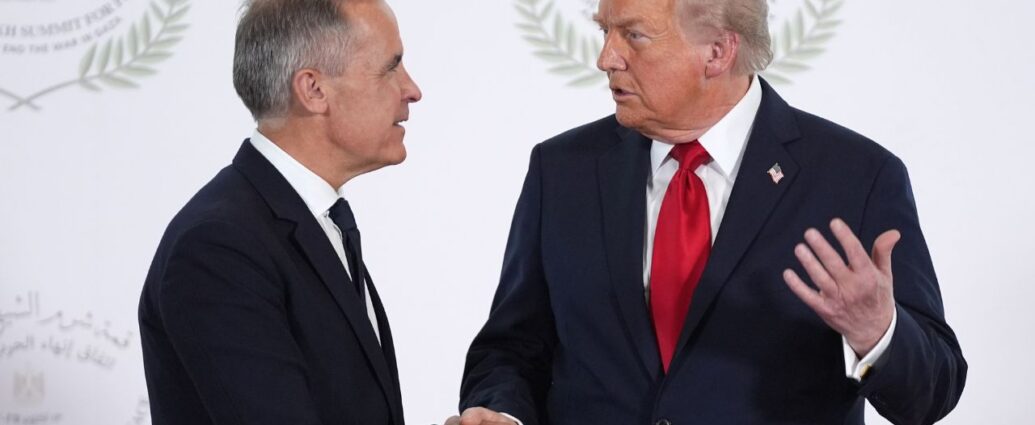
President Donald Trump on Wednesday dismissed the prospect of Canada becoming an associate member of the European Union as “laughable,” warning that the U.S. could impose heavy tariffs on Europe if he believed such a move was made with “bad intention.”
Trump was asked by reporters about the prospect of Canada becoming the EU’s first “associate member.”
“I think it’s laughable,” Trump responded. “If they do that, if I think it’s at all hostile act, I will put very serious tariffs or stop trading with Europe on many things.”
“If Europe does that with a bad intention – if it’s a good intention that’s fine – if it’s a bad intention, we’ll put very heavy tariffs on Europe,” he added.
EU OPENS DOOR TO UNPRECEDENTED ‘ASSOCIATE MEMBER’ STATUS FOR CANADA AMID US TRADE SPAT
Trump’s comments come amid a trade conflict between two of North America’s largest trading partners after U.S.-Canada trade talks collapsed last month, triggering a series of tit-for-tat tariff measures.
While speaking to reporters Wednesday, Trump also described Canada as a “terrible trade partner.”
His comments came after European Commission President Ursula von der Leyen proposed Wednesday that Canada become the first associate member of the European Union as the two sides pursue a deeper economic and security partnership.
Speaking with Canadian Prime Minister Mark Carney in attendance, von der Leyen said, “I would like to work with you on opening the door for Canada to be the first associate member of the EU.”
TRUMP EXPANDS CANADA TRADE FIGHT WITH SWEEPING BAN ON CANADIAN IMPORTS
Von der Leyen said the two sides would move beyond their existing CETA trade agreement toward what she called an “Alliance for the Future,” aimed at creating a common prosperity and economic security space. The proposed partnership would include cooperation on manufacturing, technology, defense, energy, critical minerals, artificial intelligence, cybersecurity and the Arctic.
The EU overture comes as Canada looks for new trading opportunities beyond its longtime economic relationship with the U.S.
Carney, who is scheduled to address the European Parliament on Thursday, has pledged to double Canada’s non-U.S. trade over the next decade while pursuing what he has called a “unique alliance” with the EU, rather than full membership.
Historically, the EU has balked at flexible alliances without a defined legal status, and any potential associate membership for Canada would ultimately be up to EU member states to decide.
BILLIONAIRE WARNS ‘EVIL EMPIRE’ WANTS TO ‘CRIPPLE TRUMP,’ CALLS OUT AMERICA’S NORTHERN NEIGHBOR
Trump’s remarks came the same day his administration escalated a separate trade dispute with Canada.
Trump signed a presidential memorandum directing federal officials to identify Canadian-origin products that could be removed or made unavailable for purchase through the federal civilian procurement system.
The White House accused Canada of imposing barriers that disadvantage American companies seeking Canadian government contracts while Canadian businesses retain access to portions of the U.S. federal procurement market. The memorandum specifically cited Canada’s “Buy Canadian” policy and restrictions imposed by Canadian provinces.
According to the White House, Canadian companies have access to more than $280 billion annually in U.S. federal procurement covered under the World Trade Organization’s Agreement on Government Procurement.
CLICK HERE TO GET FOX BUSINESS ON THE GO
The Trump administration added that it would take action against what it described as “unreasonable,” “discriminatory” and “unfair” trade practices.
Fox Business’ Bradford Betz contributed to this report.
Four years ago yesterday, Mahsa Jina Amini died in a Tehran hospital after being detained by Iran’s morality police for allegedly wearing her hijab improperly. She was only 22 years old.
On Wednesday, the anniversary of her death was marked across parts of Iran by a general strike. Videos from the country’s Kurdish regions showed rows of shuttered shops in Saqqez, Amini’s hometown, as well as Sanandaj, Kamyaran and other cities. Security forces and riot police were deployed, while routes toward Aichi Cemetery, where Amini is buried, were reportedly blocked.
Four Kurdish political prisoners also announced a hunger strike to mark the anniversary, while rights groups reported arrests in the days preceding it.
That the authorities continue to take such precautions four years after the death of a young woman from Kurdistan illustrates how potent her name remains in Iran.
Amini’s death on September 16, 2022, sparked demonstrations across the country and gave the world the slogan “Woman, Life, Freedom.” Women removed and burned their headscarves, and protesters filled streets from Tehran to the Kurdish West.
The demonstrations were eventually crushed. Hundreds were killed, thousands were arrested, and several protesters were subsequently executed. The regime survived the uprising, although Iranian society did not emerge unchanged.
The difference is perhaps most visible among women. Four years later, women can regularly be seen in parts of Tehran and other major cities walking through shopping centers, sitting in cafes, and using public transportation without the mandatory hijab.
The authorities have continued trying to enforce compulsory veiling through arrests, prosecutions, surveillance cameras, warning messages, vehicle seizures, and pressure on businesses. The law remains, although the sight of women openly disregarding it has become considerably more commonplace than it was before Amini’s death.
There is a danger, however, in allowing the hijab to become the sole measure of the movement she inspired.
“In my view, one reason the name of Jina Amini and the Woman, Life, Freedom revolution has endured is that this revolution should not be reduced to the issue of the hijab,” Yasser Fattahi told The Jerusalem Post.
Fattahi’s family experienced the violence that accompanied those first demonstrations firsthand. His father was killed while trying to save a young woman who had been shot following Amini’s funeral.
“Women’s problems are not limited to the hijab,” Fattahi said. “Freedom does not simply mean having the freedom to choose whether or not to wear a hijab. This is the most basic of women’s rights.”
His words are especially poignant when looking at Iran four years later. Women continue to face extensive discrimination, political prisoners remain behind bars, and executions continue at an alarming rate.
Earlier this year, another wave of nationwide protests was met with lethal force and mass arrests, which left at least 40,000 reported dead. Economic hardship, political repression, and demands for greater personal freedom remain familiar features of Iranian life.
There is also now a generation of young Iranians whose formative years have been shaped by everything that followed Amini’s death. A girl who was 14 in September 2022 is 18 today. She has spent her adolescence watching women challenge compulsory veiling, schoolchildren confront authorities, protesters face execution, and successive periods of unrest shake the country.
The huge demonstrations of autumn 2022 are gone from Iran’s streets, and the Islamic Republic has repeatedly demonstrated that it possesses both the means and the willingness to suppress organized opposition. Four years later, however, the grievances that drove Iranians onto those streets remain readily apparent.
Wednesday offered another small indication of that. In Saqqez and elsewhere, shopkeepers were prepared to close their businesses to commemorate a woman whose death the authorities would undoubtedly prefer to consign to history.
Mahsa Amini never saw the movement that grew from the outrage over her death or the millions of people around the world who came to know her name. The Iran of September 2026 remains repressive, and many of the freedoms demanded by those who marched in 2022 remain unrealized.
The shuttered shops in her hometown on Wednesday showed that four years after her death, Mahsa Amini remains a powerful symbol of the freedoms many Iranians are still demanding.
US Donald Trump has an unprecedented track record of opposing Israeli Prime Minister Benjamin Netanyahu when it comes to advancing the interest of the American people, Vice President JD Vance said during a virtual address Tuesday at a Los Angeles-based technology summit.
More than any president in the last 40 years Trump “has shown a willingness to actually part ways with ‘Bibi’ Netanyahu when he feels like the interests of the American people are different from the interests of the government of Israel,” Vance told the All-In Summit on technology.
The claim that Trump is the “one president” who would differ with Netanyahu is one that would surprise many watchers of the US-Israel relationship.
The most significant US-Israel rupture since 2009, when Netanyahu was first elected prime minister, was with President Barack Obama in 2015 over Obama’s nuclear deal with Iran.
Vance’s comments were the latest in a series he has made emphasizing the widening gulf between Jerusalem and Washington as November midterm elections approach and at a time when Netanyahu’s popularity in the United States is at a low after three years of Middle East wars.
A Pew poll from the end of March, when the United States was actively at war with Iran, found that 60% of US adults unfavorably view Israel and that 59% lacked confidence in Netanyahu’s handling of world affairs, an increase of 7% in both categories.
Republicans are scrambling to shuck off unpopular policies and associations, fearing the party will lose control of Congress in the midterms, a result that would cripple Trump’s agenda in the final two years of his presidency.
“I find it a little ironic … that you have Democrats criticizing Donald Trump for his relationship with Bibi when Donald Trump is the one president of the last 40 years who’s been willing to say, you know what, yeah, Bibi is a good partner, but also Bibi and I have a different opinion on this, or Bibi’s wrong about this, or maybe Bibi’s right about this from the perspective of Israel. But the American people need us to go in a different direction,” Vance said.
Trump has often touted himself as the president who has done the most for Israel, including relocating his country’s embassy to Jerusalem and rupturing Obama’s Iran deal, during his first term in 2018 and securing the release of the Gaza hostages in 2025 during his second, nonconsecutive term. The war he and Netanyahu launched against Iran in February is the first ever joint US-Israeli military action.
The friendship between the two leaders is a highly public one, with Netanyahu enjoying more White House visits than any other world leader. Each has made the close ties central to their electoral campaigns. Netanyahu pitches himself as the world leader most influential with Trump, while Trump’s evangelical base lauds his closeness with Israel.
Vance, however, has often taken a harsher line, including accusing Israel of trying to manipulate US public opinion on the Iran war.
“Israel has been an important partner when it comes to military technology, when it comes to intelligence sharing, but also sometimes the United States doesn’t always agree with Israel,” Vance said on Tuesday.
Serious differences have emerged since the joint US-Israel goals in the Iran war – to change the regime and end once and for all Iran’s potential to acquire a nuclear weapon – have foundered. Among these has been the US decision to end the Iran war without a clear plan to block the Islamic Republic’s path to nuclear weapons and its agreement to enter into a civilian nuclear deal with Saudi Arabia, without insisting on a normalization deal with the Jewish state.
“We cannot let our Middle Eastern foreign policy be subservient to the state of Israel,” Vance told the All In Summit.
Vance has also ruffled American Jewish feathers by refusing to disavow media personality Tucker Carlson, who has promoted conspiracy theories about Israel and Jews.
Vance’s remarks rankled pro-Israel figures who have otherwise been supportive of Trump’s policies.
“American foreign policy should be subservient to no country,” Jonathan Schanzer, the executive director of the Foundation for the Defense of Democracies, an influential think tank that backed the Iran war, wrote on X/Twitter. “Why does the VP feel compelled to call out Israel in this respect? Why not call out the Qataris, or the Saudis, or Ukraine? Odd how this keeps happening.”
Heather Johnston, a Christian evangelical who founded the US Israel Education Association, accused Vance on X of catering to Israel haters.
“Our US foreign policy has never been subservient to Israel’s foreign policy,” she said, attaching a clip of Vance’s remarks. “He knows that. Why would he need to say that unless he’s trying to politically gain some points with Israel haters?”
The accusation hit a nerve. Vance’s communications director Taylor Van Kirk quoted Johnston’s tweet, and posted the entire exchange on X. “Let’s all take a moment to actually watch this exchange in full, where the VP was specifically asked about Israel,” Van Kirk said.
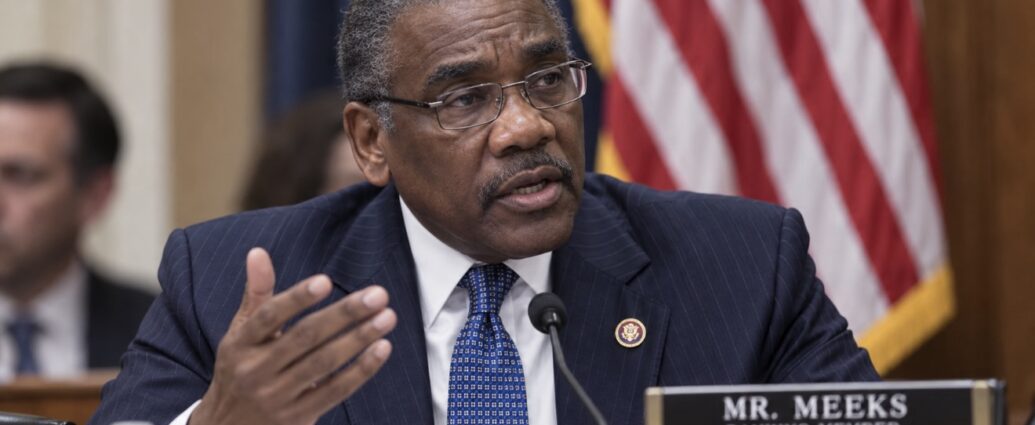
Rep. Gregory Meeks (D-N.Y.), the ranking Democrat on the House Foreign Affairs Committee, announced Wednesday that he is placing a hold on the Trump administration’s proposed $2.8 billion sale of 40,000 heavy bombs to Israel, citing unresolved concerns about how the weapons could be used in Gaza and Lebanon.
The package includes roughly 40,000 of the 2,000-pound bombs whose transfer had been paused under the Biden administration over fears of mass civilian casualties. Meeks said in a statement that he remains committed to Israel’s security but will not clear the sale “at this time,” saying the administration has not provided sufficient assurances the weapons would be used in accordance with U.S. and international law.
The hold comes through an informal review process under the Arms Export Control Act. Before formally notifying Congress of a major arms sale, the State Department gives the chairs and ranking members of the House Foreign Affairs and Senate Foreign Relations Committees an informal heads-up, typically 20 to 40 days ahead of time. During that window, a committee leader can flag concerns, and the department has traditionally paused rather than proceed over an objection. It is not required to.
Once a sale clears that stage and is formally submitted, Congress has a narrow opportunity to block it, 30 days for most countries, only 15 for Israel, by passing a joint resolution of disapproval. Such resolutions rarely pass both chambers, and would still need to survive a presidential veto.
The Trump administration has moved around a Meeks hold before. In February 2025, it proceeded with an arms package despite his objection. It also bypassed the formal notification process on other Israel arms sales by invoking emergency authority, and cleared a separate $6.67 billion round of sales to Israel in January.
The State Department did not respond to requests for comment on the new sale or on Meeks’ objection.
JBizNews Desk | Washington, D.C.
© JBizNews.com All Rights Reserved. Reproduction or distribution without written permission is prohibited.