Defense Companies Ride Record Backlogs as Washington Plans to Spend More
Defense contractors are heading into the second half of 2026 with the strongest order books in years, propped up by a Middle East war and a Washington spending plan that keeps getting bigger. The fiscal 2027 Department of War budget request earmarks roughly $60 billion for munitions development and procurement, including about $52.9 billion for critical munitions — a sign of how the government is rewiring the way it buys and replenishes weapons.
The political backdrop is even larger. President Donald Trump has proposed a $1.5 trillion defense budget for 2027, a substantial jump from the $901 billion approved for fiscal 2026. Spending bills of that size set the demand picture for the entire industry years in advance because most defense work is locked in through multi-year government contracts.
The urgency comes from the wider world. The war between the United States and Iran, ongoing since late February, along with tensions in Eastern Europe, has made military spending — in the words of Stifel analyst Jonathan Siegmann — “more urgent and less controversial.” When lawmakers from both parties agree that weapons stockpiles need refilling, the companies that build them gain unusually clear visibility into future sales.
Lockheed Martin, the world’s largest defense contractor, sits at the center of it. The company is anchored by the F-35 fighter jet, missile defense systems, and a large classified space business, and it has reported a record backlog of $194 billion. Lockheed has guided 2026 sales to a range of $92 billion to $93 billion. The stock trades around $525, up about 10% so far this year. The picture is not flawless: first-quarter adjusted earnings of $6.44 a share missed the $6.70 consensus estimate, dragged down by a $125 million unfavorable F-16 charge — a reminder that locked-in contract prices can cut both ways.
Northrop Grumman carries two of the military’s biggest long-term programs, the B-21 Raider stealth bomber and the Sentinel intercontinental ballistic missile program, with a backlog around $90 billion. Its shares trade near $542. General Dynamics builds the Navy’s submarines, one of the cleanest growth stories in the sector, while RTX, the parent company of Raytheon, manufactures many of the missiles and air-defense systems currently in highest demand and was the only major contractor to recently raise its 2026 outlook.
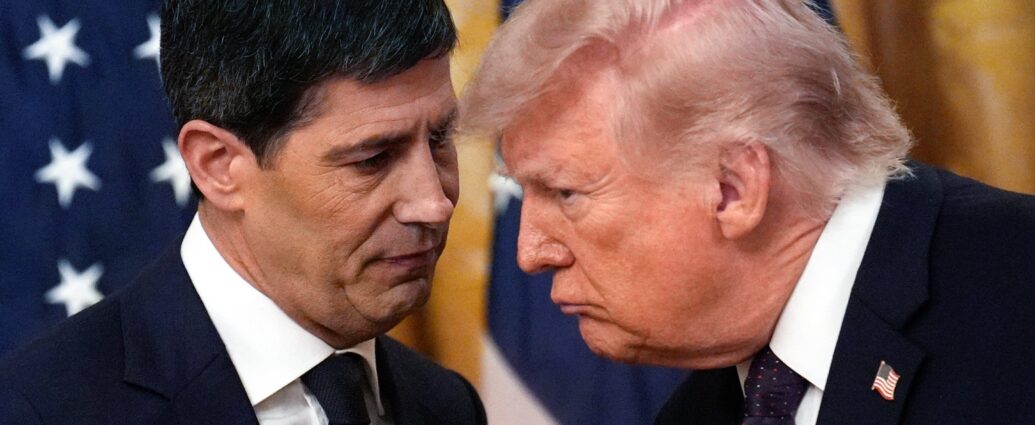
RTX has also drawn attention from the White House in a less favorable way. President Trump complained that Raytheon had been among the least responsive contractors to the needs of the Department of War and threatened to block contractors from paying dividends or repurchasing shares until they accelerate weapons production. The remarks briefly rattled defense stocks before they recovered, underscoring that the same government driving the spending boom can also pressure the companies benefiting from it.
The spending surge extends well beyond the household-name defense giants. Drone manufacturer AeroVironment has climbed more than 40% this year as militaries around the world invest heavily in unmanned aircraft and counter-drone systems. In Europe, where governments are boosting defense budgets under both domestic security concerns and U.S. pressure, shares of Britain’s BAE Systems, Italy’s Leonardo, Sweden’s Saab, and Germany’s Rheinmetall have all posted strong gains.
The broader story for taxpayers is where all that money ultimately goes. A $1.5 trillion defense budget means billions of dollars flowing into factories and facilities across states including Texas, Connecticut, California, Alabama, and Maryland, where major contractors and their suppliers employ tens of thousands of workers. Larger budgets typically translate into more hiring, more overtime, and more orders flowing through the vast network of subcontractors that provide everything from electronics and engines to software and specialized materials.
The industry’s optimism is reflected in its order books. Companies with large backlogs effectively have years of future revenue already committed under signed contracts. That visibility is rare in most industries and gives defense firms a level of predictability many technology, retail, and manufacturing companies would envy.
There are reasons for caution. Major defense contractors currently trade at roughly 22 to 25 times forward earnings, above their historical averages, meaning investors have already priced in much of the expected growth. Budget priorities can change with politics, and fixed-price government contracts have repeatedly created losses when development costs rise unexpectedly, as Lockheed’s recent F-16 charge demonstrated.
Still, the larger trend is difficult to ignore. Military conflicts, geopolitical competition, and the rebuilding of weapons inventories have created a powerful tailwind for defense spending across much of the world. As long as those conditions persist and Washington continues expanding military budgets, the companies sitting on record backlogs may enjoy one of the clearest growth runways available in the market.
JBizNews Desk | Washington
© JBizNews.com All Rights Reserved. Reproduction or distribution without written permission is prohibited.
Your Investments: How you can have a financially responsible summer vacation
With older children, trying to coordinate schedules for a family vacation is nearly impossible. My wife and I decided to do shorter vacations with just some of the kids.
We threw around ideas like a girls-only long weekend or maybe a jaunt to Europe with the boys to catch a sporting event.
Whether anything will actually happen is another matter. What’s important is that we spoke about doing something.
Searching for trips has me trying to find a short, cheap flight somewhere with our two younger children.
I am quite comfortable using the word ‘cheap’ because I’m pretty confident that they won’t read my column! Trying to come up with a destination has been difficult, and we still have yet to book anything.
While I throw out Cyprus or Greece, I am met with Austria, Italy, and Montenegro.
When we start researching and find that, as teenagers, they will be bored in some of these places, and that in Cyprus or Greece, at least, there is water, they are not impressed.
I’ve started to think that we should just stay here; they can sit around and play on their phones, and maybe I’ll take them out for hummus.
I had to pick up our youngest earlier this week from a school trip. We were discussing vacation plans, and then all of a sudden, one of my favorite songs played on the radio.
It was the classic Bananarama hit, “Cruel Summer.” Needless to say, she didn’t appreciate it when I started laughing at the lyrics:
“The city is crowded, my friends are away, and I’m on my own.
It’s too hot to handle, so I got to get up and go.
It’s a cruel, (cruel), cruel summer.
Leaving me here on my own…”
Entertaining kids raises summer expenses
As we know, keeping kids busy during summer can be costly.
Whether it’s summer camp, swimming lessons, baking, drama camp, or family vacations, the costs can break any well-intentioned budget. The next three to four months will be sunny and hot, with no rain.
These drought-like conditions are eerily similar to the family financial forecast over the next few months.
What’s a financial drought? It’s getting sucked dry of your money.
It happens in summer, when paying for vacations; summer camps; books; and clothes shopping for the upcoming school year; and spending money for the kids to go to movies and meet up with friends all hit your wallet at once, depleting your bank account.
A couple of years ago, I wrote, “A few weeks ago, as I was driving some of my kids to school, I was listening to a morning talk show. The segment was about increasing government subsidies for summer day camps.
“As if the topic of government subsidies doesn’t raise my blood pressure enough, they had a guest who was complaining about how expensive summer is for her. Aside from sending three kids to camp in July, she said that she has to pay for additional camps and a family vacation to Europe in August.
“That’s when I lost it. I started talking out loud about her complaining about how much it costs to go to Europe for a family vacation.
Parents don’t need to abandon financial responsibility
Yes, summer is expensive, and I understand that parents get stuck and need to have a plan for their kids, and that costs money. What I don’t get is the need for parents to lose all sense of financial responsibility in order to finance their summer vacation.
In fact, if the kids see that the parents aren’t disciplined financially, there is a great chance that they will grow up and lack that same discipline. Whatever happened to the golden rule of personal finance – If you can’t afford it, don’t buy it?
If you can’t afford a trip to Europe, don’t go.
Over the last two to three weeks, I have received all kinds of messages from my bank and credit card company offering me loans for the summer.
There is nothing wrong with kids, especially teens, working and making their own money so that they can spend it and not be constantly hitting up their parents for cash.
Parents need to be smart. Start planning and saving well in advance for the summer vacation so that the sudden expenses don’t send you scrambling to try and find the money to pay for it.
In addition, there are plenty of ways to keep children occupied that won’t break the bank.
Use the summer to be a good example for your children and spend only what you have budgeted for and can truly afford.
The information contained in this article reflects the opinion of the author and not necessarily the opinion of Portfolio Resources Group, Inc. or its affiliates.
Total humiliation: Iran war marks the beginning of the end for Netanyahu – opinion
It may be that when Israelis look back on the war with Iran, they will remember it not because of the operations, assassinations, or brief euphoria, but as the moment one of Prime Minister Benjamin Netanyahu’s most important political assets finally collapsed: the belief that he was the man who knew how to preserve Israel’s standing in the United States.
That was always central to his image.
Even Israelis who disliked or distrusted Netanyahu often still believed one thing: that he understood America better than any other Israeli politician.
That he knew how to speak to the American system, manage presidents, and keep Israel close to the center of global power – not only militarily, but as a respected sovereign ally. Which is why the spectacle of recent months has been so jarring.
The president of the United States now speaks publicly about Israel’s prime minister as though he were subordinate. President Donald Trump openly boasts that he decides what Israel can or cannot do.
He speaks as if Israeli military operations require his approval, while reports suggest that he cursed Netanyahu privately, describing him as “difficult” and implying that the prime minister is dragging America into conflicts that do not serve US interests.
Israel has always depended strategically on the United States – for weapons, diplomatic cover, intelligence, and deterrence. But for decades, American presidents at least maintained the appearance of a relationship between sovereign allies.
Even during fierce disputes – from Eisenhower through Bush Sr., Obama, and Biden – US presidents generally avoided publicly portraying Israel as a client state acting on their personal instructions.
Ironically, it was Trump – long presented by Netanyahu and the Israeli right as proof of Netanyahu’s diplomatic brilliance – who shattered that convention.
The irony is sharper because the Israeli right reacted with near hysteria to former US president Biden’s much milder conduct during the Israel-Hamas War.
When Biden briefly delayed weapons shipments over Rafah and demanded a plan regarding civilians and hostages, this was portrayed in Israel as humiliation and proof that Democrats were “anti-Israel.”
Yet the weapons arrived, Israel entered Rafah, and Biden never spoke about Israel as a vassal requiring his permission to act. Trump does exactly that – and Netanyahu’s camp swallows the humiliation in near silence.
The real problem with this war, of course, beyond the disgrace, is that it follows a war whose strategic results increasingly resemble failure.
The war against Iran was sold as a historic opportunity to reshape the Middle East: eliminate the nuclear threat, weaken Iran’s axis, and perhaps even destabilize the regime itself.
At first, it seemed dramatic progress was being made. Israeli and American forces struck deep inside Iran, killed senior figures, and damaged infrastructure. For a moment, it appeared the regime had entered real shock.
But the familiar gap between tactical and strategic success quickly reappeared. Iran understood it did not need to win militarily to shift reality.
Threats to the Strait of Hormuz, disruptions to trade routes, cheap drones, and regional instability were enough to pressure the global economy.
Energy prices rose, Gulf states panicked, and Western governments rushed to pressure Washington to stop escalation. At that point, a central weakness of the US-Israeli strategy became obvious: there was a plan for the opening military phase, but almost none for what came afterward.
There was no real strategy for regime change, no serious preparation for prolonged economic warfare around Hormuz, and little Western willingness to absorb the cost of a long conflict. Once again, the West lost patience before Iran did.
Moreover, Trump entered the confrontation after already weakening America’s alliance system for years.
He insulted NATO allies, started tariff wars with them, treated strategic partners as props for domestic politics, and even threatened, outrageously, to invade Greenland, the territory of NATO ally Denmark.
What once would have seemed utterly absurd became normalized.
This severely weakened the West’s ability to coordinate pressure on Iran. Many European elites appeared to despise Trump more than the regime in Tehran.
European governments did not want a nuclear Iran, but they were also reluctant to politically rescue a president who many blamed for the escalation itself – after years of unilateralism, bullying, and contempt for allies.
As a result, the final outcome looks very far from the original promises. The Iranian regime survived. The nuclear program was not really destroyed. The ballistic missile system remains intact, without even demands to limit it. Hezbollah was not dismantled.
The Houthis still threaten shipping lanes. Hamas still exists. Iran is expected to receive sanctions relief that could strengthen both the regime and its regional proxies – and face no demands to end this outrageous aggression against the Middle East.
Indeed, the regime faces no demands for democratic reforms or even for a promise not to massacre protesters again – even though that was the impetus for the war.
Israel, meanwhile, is left with less international legitimacy, deeper dependence on Washington, and the image of a country capable of striking hard militarily but unable to translate military achievements into a stable political outcome.
From tactical gains to strategic failure
What makes this especially painful is how different things might have been. In December 2023, Israel had a rare strategic opening.
After October 7, much of the world genuinely sympathized with Israel. Hamas had already suffered severe losses, and many Arab states understood that it threatened regional stability as well.
Most importantly, Israel still possessed broad international legitimacy.
It was still viewed primarily as a country responding to a horrific massacre – not as a country trapped in an endless war without a clear political objective, driven partly by revenge and collective punishment that killed tens of thousands of civilians.
At that stage, the Biden administration attempted to advance a sweeping regional deal, perhaps Israel’s greatest strategic opportunity in decades.
The proposal included a hostage deal, a gradual end to the war, normalization with Saudi Arabia and other Arab states, and major international and Arab pressure to remove Hamas from power in Gaza and replace it with a reformed Palestinian Authority backed by international support.
It could have been a historic turning point. Israel might have emerged from October 7 with stronger regional alliances, normalization with Saudi Arabia, renewed standing in the West, and at least some hope for a more stable regional future.
But Netanyahu chose differently. He prolonged the war without a clear political strategy, partly because any such regional solution would have forced him to confront both the Palestinian issue and his far-right coalition partners.
As the war dragged on, Israel’s international legitimacy eroded sharply.
Democratic support in America weakened, younger Western audiences turned away, and Europe – Israel’s main trading partner – grew increasingly hostile. Instead of isolating Iran, Israel ended up exhausted, politically dependent on Trump, and facing an Iranian regime that remains standing and perhaps is even strengthened.
For years, Israelis told themselves that the world respects power above all else. There is truth in that. But the world also respects wisdom, responsibility, strategy, and the ability to offer hope. It does not respect brutality and stupidity.
This is what Netanyahu’s Israel increasingly looks like: a thug with polished English.
And it is becoming harder to imagine Netanyahu convincing enough Israelis that he is still the man who can deliver security, status, or dignity. The clock is ticking to the October elections. Since Netanyahu is not a man to walk into defeat, expect trickery.
Johnson & Johnson Says It Will Sit Out the Weight-Loss Drug Gold Rush and Focus on Cancer Instead
Johnson & Johnson has made a surprising decision at a time when much of the pharmaceutical industry is racing toward obesity treatments: it is staying out of the market entirely.
Speaking Tuesday at the Economic Club of Washington, D.C., Johnson & Johnson CEO Joaquin Duato said the healthcare giant has no plans to develop or acquire drugs in the booming GLP-1 category, the class of medicines behind blockbuster weight-loss and diabetes treatments that have transformed the industry over the past several years.
“We are not going to be in the GLP-1 area,” Duato said during a discussion with Carlyle Group co-founder David Rubenstein.
The statement places J&J among a small group of major pharmaceutical companies choosing not to chase one of the fastest-growing markets in healthcare history. While rivals have spent billions of dollars acquiring obesity-drug developers and launching their own programs, Johnson & Johnson is betting that its future lies elsewhere.
Instead, Duato said the company will focus its resources on two areas where it believes it can achieve greater medical and commercial success: cancer treatment and neuroscience.
“Our goal is to be No. 1 by 2030,” Duato said of the company’s oncology business.
The company already holds a strong position in multiple cancer categories. Johnson & Johnson markets leading treatments for multiple myeloma, one of the most common blood cancers, and maintains a growing portfolio of lung cancer therapies. Last year, the company expanded its oncology pipeline through a $3.05 billion acquisition of Halda Therapeutics, gaining access to a promising oral prostate cancer treatment.
The decision reflects the reality of a market already dominated by a handful of powerful competitors.
Eli Lilly and Novo Nordisk currently control the obesity-drug landscape through blockbuster products that have generated tens of billions of dollars in annual sales. Demand for GLP-1 medications has surged as studies continue to show benefits extending beyond weight loss, including improvements in diabetes management and potential cardiovascular benefits.
Lilly has emerged as the dominant player. The company became the first pharmaceutical manufacturer to surpass a $1 trillion market valuation last year, driven largely by demand for its obesity and diabetes drug tirzepatide. Lilly executives have estimated that the company captures roughly 70% to 75% of new patients entering the GLP-1 market.
For Johnson & Johnson, competing against such entrenched leaders may not represent the best use of research and development dollars.
The company’s position also aligns with a broader strategic transformation that has been underway for several years.
Johnson & Johnson has streamlined its operations to concentrate on higher-growth healthcare businesses. The company spun off its consumer-health division into Kenvue, separating well-known brands such as Tylenol, Band-Aid, and Listerine from the parent company. It has also restructured portions of its medical-device operations while increasing investments in pharmaceuticals and advanced medical technologies.
Duato highlighted the company’s recent performance, noting that Johnson & Johnson delivered a 47% total shareholder return in 2025, reflecting investor confidence in its current strategy.
Technology is also expected to play a major role in the company’s future growth.
Duato said artificial intelligence has the potential to accelerate drug discovery, improve clinical development, and enhance the effectiveness of medical devices, particularly in the field of robotic surgery.
“We are just at the beginning,” he said, describing healthcare as entering a period of significant technological change.
For investors and patients alike, the announcement underscores a growing divide within the pharmaceutical industry. Some companies are betting heavily on obesity treatments, viewing them as the defining medicines of the next decade. Others are choosing to focus on diseases where competition is less intense and unmet medical needs remain substantial.
Johnson & Johnson’s decision means one fewer major competitor pursuing obesity drugs, a market where additional competition could eventually help lower prices and improve access for patients. At the same time, the company’s vast research budget will remain focused on cancer and neurological disorders, areas where millions of patients continue to face limited treatment options.
As the obesity-drug market continues its rapid expansion, Johnson & Johnson is making a different wager: that breakthroughs in cancer and neuroscience will ultimately prove more valuable than joining the industry’s biggest gold rush.
Whether that strategy pays off will become clearer as the company works toward Duato’s goal of becoming the world’s leading oncology company by 2030.
JBizNews Desk
New Brunswick, N.J.
© JBizNews.com All Rights Reserved. Reproduction or distribution without written permission is prohibited.

Four rules for underwriting secondary Texas markets in a slower cycle
For the better part of a decade, the Texas growth playbook was remarkably simple.
If you wanted scale, liquidity and appreciation, you went to the Texas Triangle: Austin, Dallas–Fort Worth, Houston, and San Antonio and tried to be early to the next ring of rooftops.
Those four metros captured the lion’s share of population and job growth, with national capital following.
That script is changing.
Texas is still outgrowing most of the country, though the pace has cooled. The Dallas Fed notes that the state’s economy is “moderating toward a more historically normal pace” after the extraordinary post-pandemic run-up, with job growth easing even as conditions remain broadly expansionary. Private forecasts expect Texas to remain among the best-performing state economies in 2024 and 2025, but no longer in “everything works” mode.
For builders and investors, that slowdown is less a warning sign than a filter. As capital becomes more selective, markets that can still deliver absorption, pricing power, and entitlement velocity rise to the top of the list. Increasingly, those markets are not the usual suspects inside Loop 1604 or along the Dallas North Tollway. They are places like Weatherford and College Station, secondary markets with real economic anchors and enough pricing headroom to make deals pencil.
Growth normalizes, but demand doesn’t disappear
Step back, and the macro picture still looks attractive. Texas continues to add jobs faster than the U.S. as a whole, though the gap has narrowed as the post-COVID hiring surge fades. Consumer spending and business investment remain solid, even as higher interest rates cool the most rate-sensitive sectors.
In housing, statewide single-family permits are projected to grow modestly in 2025, about 2.5% above 2024 levels, following a period of adjustment to higher financing costs. The Texas Real Estate Research Center expects this to be the second consecutive year of rising starts, signaling that demographic demand and in-migration remain strong enough to support new construction despite tighter affordability.
The nuance is where that demand wants to live. After years of double-digit price growth in premium submarkets, many buyers are no longer willing—or able—to stretch for the same house in the same ZIP code. They are open to trading an extra fifteen minutes in the car for meaningful monthly savings and a different lifestyle. That buyer psychology is the wind at the back of Texas’ secondary markets.

Weatherford: the attainable edge of DFW
Nowhere is this shift more evident than in Weatherford, a city of roughly 30,000 on the western edge of the DFW metroplex. Long known for its courthouse square and cutting horse culture, Weatherford has quietly become one of the country’s fastest-growing affordable suburbs.
In 2025, a national analysis of the fastest-growing affordable suburbs ranked Weatherford 14th in the U.S., one of only four DFW suburbs with fewer than 50,000 people to make the list. The ranking highlighted the city’s ability to combine genuine population growth with home values that remain within striking distance of median incomes.
Current housing data paints a picture of a market transitioning from overlooked to in-demand:
- The average home price in Weatherford is about $350,000, up modestly year over year but still well below many inner-ring DFW suburbs.
- The market is moderately competitive, with homes receiving multiple offers and selling in about two to three months.
- Local analyses show that active new development reshaping the housing stock, with builders responding to population growth by delivering planned communities and modern product.
Buyer behavior is highly instructive for underwriters of new lots. A recent industry piece on Weatherford described the local demand band as concentrated between roughly $350,000 and $850,000, with a strong emphasis on attainable family housing. That range captures move-up households leaving older stock in Fort Worth, as well as first-time buyers priced out of more central submarkets.
On the supply side, Weatherford still offers what core DFW has largely lost.
- Scalable land positions near major infrastructure but outside the most constrained entitlement environments.
- A municipal mindset receptive to growth, particularly in master-planned communities that help the city manage infrastructure and school needs.
- Room for a mix of national, regional, and local builders, rather than a handful of publics dominating the landscape.
For national builders, Weatherford checks several critical boxes: proximity to a major employment engine, visible in-migration, and a buyer profile that supports production-scale communities at price points with meaningful depth. For investors, it offers an opportunity to buy income and appreciation at a discount relative to neighboring submarkets, while benefiting from the halo of DFW’s long-term growth.
College Station: A university market that behaves like a stable metro
If Weatherford is the edge-of-metro story, College Station is the university-anchored growth story. Together with Bryan, it forms a mid-sized metro that has outgrown its college-town label, largely thanks to Texas A&M University’s expansion and a growing ecosystem of research, healthcare, and professional services.
Demand for housing in College Station has been rising steadily. A 2025 market analysis reports that the city has seen a significant increase in demand over the past year, driven by population growth, economic stability, and the continued expansion of Texas A&M. The data support that:
- The average single-family home price is approximately $400,000, reflecting about an 8% increase over the prior year.
- Entry-level homes cluster around $275,000, while luxury properties routinely exceed $750,000, giving builders ample room to segment their product line from student rentals to executive housing.
- Inventory remains tight. Average days on market are near 32, down from 45 a year earlier, and well-priced homes often draw multiple offers.
- Even as some local brokers note a recent tilt toward buyers, with a modest increase in months of inventory, values have largely leveled rather than rolled over.
Compared with Austin or parts of suburban Houston, College Station remains relatively affordable, yet it offers many of the same amenities that attract higher-income residents: strong schools, modern master-planned communities, and access to major metro areas via highway.
For investors, the market offers two distinct yet complementary theses:
- For-sale housing is attracting faculty, professionals, and immigrants seeking a permanent foothold in a stable, growing community.
- Rental product, both traditional and student-adjacent, serving the constant churn of students, staff, and visitors at a major university.
The result is a market in which builders can underwrite both end-user and investor demand, and in which developers can justify amenity-rich projects that serve a broad, resilient tenant base.
Underwriting secondary Texas markets in a slower cycle
For builders and investors trained to chase cranes in Austin or Dallas, reallocating capital to places like Weatherford and College Station requires a shift in mindset. The metrics that matter in a normalized growth environment are slightly different from those that dominate during a boom.
Several principles stand out:
- Follow employers, not just rooftops. In secondary markets, a handful of major employers or institutions can drive a disproportionate share of demand. In Weatherford, that might be regional healthcare and logistics; in College Station, it is Texas A&M and its orbit of vendors and research partners. Underwriting these anchors is as important as underwriting the dirt.
- Prioritize attainable price bands with real depth. The sweet spot in both markets lies where local incomes and out-of-metro buyers overlap: roughly the mid-300s to the high-400s for primary residences, with optionality to go higher for move-up and luxury. That is where absorption is strongest and where builders can still manage incentives and buydowns without destroying margins.
- Lean into entitlement and velocity advantages. Secondary markets often allow developers to assemble larger, more contiguous tracts with less friction and move through approvals faster than in core metros. That time-to-market advantage matters in an environment where interest carry is expensive and exit timing is less forgiving.
- Design for permanent demand, not just the next trade. In a slower macro environment, products tied to deep structural demand—education, healthcare, logistics, and energy—will outperform purely speculative plays. The more a community aligns with those drivers, the more durable its takedown schedule becomes.
The opportunity set: from nice-to-have to core strategy
For years, secondary markets in Texas were treated as optional add-ons – a nice seasoning in a portfolio dominated by the big four metros. In a normalized growth environment with higher financing costs, that hierarchy is being rewritten.
Weatherford, College Station, and similar markets offer something that is increasingly hard to find near the urban core:
- Buy-in points that benefit both builders and buyers.
- Enough entitlements and land flexibility to design real communities instead of just subdivisions.
- Economic anchors are strong enough to support multi-cycle investment.
- The macro may no longer deliver automatic double-digit appreciation in the state’s marquee ZIP codes, but the micro in the right secondary markets can still generate outsized risk-adjusted returns.
- For capital willing to follow jobs, universities, and infrastructure rather than just headlines, Texas’ next yield curve is taking shape west of Fort Worth and along Highway 6. This time, the smart money is getting there on purpose.
P.S. – A quick homebuilder cheat sheet: Weatherford vs. College Station
Israel and Hezbollah Agree to a New Ceasefire as US-Iran Talks Are Put Off
Israel and Hezbollah agreed to a fresh ceasefire in Lebanon on Friday, June 19, 2026, halting the deadliest flare-up of the war just as it threatened to wreck the broader effort to end the fighting across the region. A senior U.S. official said the truce took eff The Times of Israelect at 4 p.m. local time and was brokered by the United States and Qatar through talks with Israel and Iran respectively, an arrangement the official said further highlighted Tehran’s ability to influence events in Lebanon. Reuters first reported the agreement, which three diplomats briefed on it confirmed to CBS News. CBS News
The deal came together only after the bloodiest day on the Lebanon front in weeks. Lebanese authorities said Israeli airstrikes killed 18 people, while Israel said four of its soldiers were killed in one of Hezbollah’s deadliest attacks of the war CBC News. The Israeli military said its troops struck 150 targets and killed dozens of Hezbollah operatives in southern Lebanon The Times of Israel before the truce took hold.
The same escalation forced a postponement of the most important diplomacy of all. Peace talks between the United States and Iran, set for Friday in Switzerland, were called off after Iran held back its delegation amid the Lebanon strikes. Iran’s Foreign Ministry said the Switzerland meeting had been postponed, with arrangements underway for talks in the coming days. The Times of Israel
For Israeli Prime Minister Benjamin Netanyahu, the moment was politically delicate. He stayed mum on the new ceasefire itself while touting the military’s strikes on his personal social media accounts, saying troops had hit Hezbollah “just as I instructed.” The Times of Israel The mixed message captured the strain inside Israel’s government, where hardline ministers have insisted the military will not be bound by the wider U.S.-Iran agreement.
That agreement is the thread connecting everything. The interim U.S.-Iran deal reached days earlier stipulated that all fighting on all fronts, including Lebanon, must end immediately NBC News. Lebanon was the loophole that kept reopening: earlier ceasefire arrangements tied to the Iran war did not formally include Lebanon, contributing to continued hostilities Wikipedia, and Hezbollah had rejected an earlier conditional truce that called for it, but not Israel, to stop attacks NPR. Friday’s deal is the latest attempt to close that gap.
For businesses watching from a distance, the relevance runs straight through the energy market. Since the war began in late February, oil has carried a risk premium tied to fears over the Strait of Hormuz, the shipping lane that moves a large share of the world’s crude. Every flare-up revives the worry that the corridor could be disrupted; every ceasefire eases it. A durable calm in Lebanon removes one source of that anxiety, which can take some pressure off oil prices, gasoline costs, and the shipping and insurance bills that ripple through global supply chains.
The stakes are just as real for inflation at home. Energy has been the main force pushing U.S. prices back up this year, and the longer the conflict drags on, the longer markets expect inflation to stay elevated — keeping the Federal Reserve cautious and borrowing costs high. A genuine step toward de-escalation, if it holds, is the kind of development that could eventually loosen that grip.
But the history of this conflict counsels caution. A ceasefire was reached in mid-April, establishing a short truce meant to create conditions for further negotiations Wikipedia, and U.S.-mediated talks in Washington in early June produced a conditional arrangement Al Jazeera that Hezbollah then rejected. Each pause has bought time without resolving the core disputes over Israeli forces in southern Lebanon and the future of Hezbollah’s weapons.
What makes Friday’s agreement notable is who delivered it. The role of Qatar, working through Iran to rein in Hezbollah, points to the same channels that produced the U.S.-Iran framework and suggests the two tracks are now tightly linked. If the Lebanon ceasefire holds, it clears a major obstacle to restarting the Switzerland talks; if it collapses again, it could drag the larger negotiations down with it.
For now, the guns in Lebanon have fallen quiet, and the postponed U.S.-Iran meeting has been pushed only days, not derailed. That is a fragile kind of progress, but it is progress — and for companies that depend on stable fuel costs, steady shipping, and predictable consumer spending, even a fragile calm beats another deadly escalation. The test will be whether this ceasefire outlasts the ones before it.
JBizNews Desk © JBizNews.com All Rights Reserved. Reproduction or distribution without written permission is prohibited.
Italy’s Meloni says Trump ‘totally invented’ story that she begged him for photo
Italian Prime Minister Giorgia Meloni accused her one-time close ally US President Donald Trump of fabricating a story about her on Friday, after the US President told an Italian TV channel that she had “begged” him to take a photo with her at a G7 summit.
Meloni said she was “astonished” by his comments, which were “completely made up.” She also chided him for acting with far greater deference to the enemies of the West than he does towards old, established allies.
Underscoring how much Trump’s comments have angered Meloni‘s government, Italian Foreign Minister Antonio Tajani announced he was canceling a planned visit to the US next week.
Le gravi e offensive parole del Presidente Trump nei confronti del Presidente del Consiglio Giorgia Meloni offendono tutta l’Italia. Per questo motivo ho deciso di annullare la mia visita negli Stati Uniti prevista per i prossimi 21 e 22 giugno.
— Antonio Tajani (@Antonio_Tajani) June 19, 2026
The latest exchange marks a sharp deterioration in ties, coming just days after signs emerged at the G7 summit that the two right-wing leaders had steadied a previously strained relationship following tensions this year over the war on Iran.
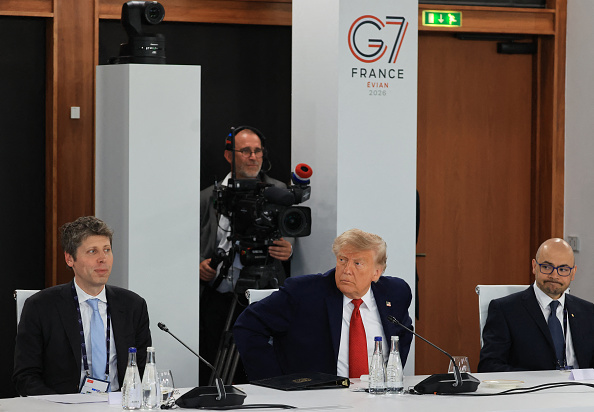
Video from the event in France showed Meloni and Trump deep in conversation, sitting side-by-side on a small sofa, but the US leader suggested he had merely indulged her by chatting with her.
“She’s probably happy I talked to her. I didn’t have to talk to her,” Trump was quoted as saying by La7 TV channel in a brief interview, after he himself asked the journalist about Italy’s prime minister.
“She begged me to take a picture with her. She wanted a picture with me so badly. I wouldn’t have taken it, but I felt sorry for her,” Trump said, according to La7’s translation.
The channel did not release the original audio, just a dubbed version.
Meloni hits back in sharply worded statement
Meloni responded: “Donald Trump’s statements are completely made up. I am frankly astonished. I don’t know why the president of the United States behaves like this towards his allies: it is not the first time, moreover.”
Io e l’Italia non imploriamo mai. pic.twitter.com/sTpKlqWB67
— Giorgia Meloni (@GiorgiaMeloni) June 19, 2026
“I can only say it is disappointing that he does not show the same determination with the enemies of the West and of the United States, whose leaders he instead treats with far greater indulgence,” she said, adding: “There is one thing he should remember: neither I nor Italy ever beg.”
Announcing the cancellation of his planned US trip, Foreign Minister Tajani said on X: “The serious and offensive words of President Trump towards Prime Minister Giorgia Meloni offend the whole of Italy.”
Top Meloni official says Trump is destroying historic ties
One of Meloni’s closest political allies, who usually shuns the media spotlight, struck out at Trump using a tone that would have been unthinkable beforehand.
“It is unclear whether out of intent or ineptitude (Trump) is wrecking the historic relations between the United States and Europe,” Giovanbattista Fazzolari, undersecretary to the prime minister’s office, said in a statement.
“With his inappropriate outbursts, he has managed no easy feat, to make the United States unpopular across the entire European continent, damaging not only Europe but above all the United States,” he added.
Meloni was once a vocal supporter of Trump and was the only European leader to attend his inauguration in 2025.
However, she criticized him this year for lashing out at Pope Leo over his condemnation of the Iran conflict. That in turn prompted a blunt rebuke from the US president, who accused her of lacking courage.
Iran to lodge formal complaint over US World Cup visa conditions for players and coaches
Iran plans to lodge a complaint with football’s world governing body FIFA over travel restrictions its team is facing in the US at the World Cup.
Due to uncertainty over visas and the conflict with the U.S., the Iranian team are commuting from their tournament base in co-host Mexico for their three group games in the U.S.
US authorities require them to enter within 24 hours of a match and leave the same day, leading team coach Amir Ghalenoei to say Iran were the “most oppressed” team in the tournament.
“The Football Federation of Iran believes these restrictions are inconsistent with the principles of providing equal conditions for participating teams and may affect their technical preparation,” the federation said in a statement on Friday announcing its protest to FIFA.
Neither FIFA nor the US Department of Homeland Security immediately responded to Reuters requests for comment.
Iran’s remaining group stage games will also be played in the US
Ghalenoei said the disruption had prejudiced Iran in Monday’s 2‑2 draw with New Zealand.
“Under the coaching staff’s plan, the national team needed to travel to the host city two days before each match in order to achieve optimal technical and physical condition, and then return to their base the day after the match,” the federation said.
“However, for the opening match against New Zealand, this request was not approved.”
Iran face Belgium on June 21 in Los Angeles and will conclude their Group G fixtures against Egypt on June 27 in Seattle.
Bed Bath & Beyond-Fathom deal part of industry’s new-ish ecosystem push
Bed Bath & Beyond is making an unexpected push into residential real estate, agreeing to acquire technology-focused real estate services company Fathom Holdings in an all-stock transaction valued at $53.38 million.
The deal brings brokerage, mortgage, title, insurance and homeowner financial services under the retailer’s expanding umbrella as it pursues an “Everything Home” strategy.
The transaction marks Bed Bath & Beyond’s latest move beyond retail as it seeks to build a platform that serves consumers throughout the entire homeownership journey.
Recent acquisitions — including F9 Brands, The Container Store, Installed Right and SFV Services — have strengthened the retailer’s offerings in home improvement and services.
What it means for real estate professionals
For agents and brokers, the acquisition reflects a broader shift toward integrated consumer platforms rather than standalone brokerage models.
Some industry observers argue consumers are unlikely to trust a retailer best known for home goods with one of the largest financial decisions of their lives. Others believe the acquisition mirrors broader efforts across the industry to combine brokerage, mortgage, title and ancillary services into a single customer experience.
If Bed Bath & Beyond invests heavily in Fathom’s technology and agent network, the brokerage could become the primary customer acquisition channel instead of relying on retail shoppers to generate real estate business.
For agents, that could eventually mean greater access to cross-selling opportunities, referral business and integrated homeowner services.
Brokers may also face additional pressure to compete with companies offering consumers a one-stop shop that extends well beyond the transaction itself.
Other recent similar moves
Amazon partnered with Realogy, later known as Anywhere Real Estate, to launch the TurnKey program in 2019 — connecting homebuyers with agents from brands such as Coldwell Banker, Century 21 and Better Homes and Gardens Real Estate.
Buyers received Amazon products and home services credits after closing before the initiative was cancelled in 2020.
Rocket is perhaps the strongest current example of the ecosystem strategy. The company has spent years assembling mortgage, brokerage, title and servicing businesses — including acquisitions of Redfin and Mr. Cooper — to create an end-to-end homeownership platform.
Home Depot once operated a real estate business before exiting after the 2006 housing downturn, while Sears previously owned both Coldwell Banker and Dean Witter Reynolds.
Whether Bed Bath & Beyond succeeds where others struggled remains uncertain. Still, companies are increasingly viewing buying and selling a home as just one piece of a broader, lifelong relationship with the consumer.
This article was written by Jonathan Delozier and generated with the assistance of HousingWire Automation. It was reviewed by a HousingWire editor before publication.
ICE executives detail AI cybersecurity efforts through Project Glasswing
At the start of June, Intercontinental Exchange (ICE) announced it had joined Anthropic’s cybersecurity initiative, Project Glasswing. ICE will deploy Anthropic’s Claude Mythos Preview across its operations, including the New York Stock Exchange, to identify and remediate vulnerabilities before they can be exploited.
By participating in Project Glasswing, ICE joins a select group of organizations using advanced AI tools to secure critical financial and technology systems. ICE said it’s overseeing the AI tool’s deployment, security architecture and governance internally as it works to strengthen protections for critical financial infrastructure.
In an interview with HousingWire just a few weeks into the inititative, Bob Hart, president of ICE Mortgage Technology, and Steve Pugh, ICE’s chief information security officer, shared how the initiative supports the company’s efforts to enhance cybersecurity resilience efforts.
Editor’s note: This conversation has been lightly edited for length and clarity
Sarah Wolak: Can you give an overview of Project Glasswing and what the pilot entails?
Steve Pugh: Mythos came out right after the RSA conference. It was [Anthropic’s] next generation of model. They had a core group of folks within that program to really help them figure out what to do with this thing. There was a lot of excitement, but they knew it was pretty powerful. So they created this program called Project Glasswing.
A number of companies have been in it. The U.S. government got involved and started talking about how these models should be rolled out, given they’re incredibly powerful. We got invited as part of one of the waves and have been using it for the last few weeks.
From everything we’ve seen, it is living up to all expectations. It’s certainly a step change in the models we’ve been using historically. It’s not a doomsday scenario; it’s just part of the journey we’re on with AI. At ICE, we’re trying to figure out how we leverage this to make our products and our customer data as safe as possible.
Wolak: What kinds of AI-enabled threats are you preparing for?
Pugh: The nuance there is that the AI models aren’t necessarily creating new exploits. They’re basically taking advantage of things that were already there, stuff humans may have found or overlooked. It’s not a new AI-type attack pattern.
The one difference is the speed at which AI moves. That’s what’s been interesting about Mythos is how broad it will scan and how quickly it can determine whether something is a defect versus a vulnerability that could lead to exploitation or lead to full control over your system.
That speed that it does that is quite remarkable. For us, we’ve been on this journey for a while. We started leaning in last year around AI-powered attack patterns, and we’ve always measured ourselves on that time scale. While that time continues to compress, I believe somebody came up with the “zero-day clock”— the time it takes to go from a vulnerability to a zero-day. That’s in a matter of minutes now.
Wolak: Cybersecurity has long been a board-level issue for mortgage companies. What are ICE customers telling you about cybersecurity concerns in the era of AI?
Bob Hart: Cyber has always been one of the top priorities of the executives we talk to. That being said, I personally have not seen the emergence of concerns yet around AI. At this point, it feels like people are viewing AI more as an altruistic means of efficiency gains.
I do think there is going to be more curiosity and concern around the capabilities AI will bring to cybersecurity. So I suspect this will bring a heightened level of awareness and interrogation. You’re also seeing an emergence of a lot of new tech vendors, and what is the level of scrutiny they need to go through to make sure the end customer is protected?
We’re just at the cusp of starting to see that. On security, I’m not seeing as much of it yet. I’m seeing more around governance of how you use AI, not as much yet on security. I’ve had a couple of customers, based on the press release we did around Mythos, reach out and say thank you for being a part of this, but I don’t think we’ve seen a tipping point on the security side.
Pugh: I do think what Mythos did was push the conversation around security — and specifically AI security — into the boardrooms and into the executive staff meetings. We’ve always heavily invested in security. We’re highly regulated. Leadership has always felt that security was important to invest in, and it’s become a strategic enabler and a market differentiator.
But what we also do is pull in lessons learned from other business units — things like the New York Stock Exchange and our energy business. These are unique attack surfaces. We’re able to centralize that, create a common defense and push that out.
Hart: I think it also would be good to understand why ICE got included in Project Glasswing.
Pugh: I think it’s a sort of nod from Anthropic and others, certainly at high levels of government, that we are a critical company on the national and international stage. Getting Mythos in our hands early helps give us a head start in finding and fixing some of these vulnerabilities that other models may discover in time. We’ve got about nine months before open-weight models are freely available to everyone. So we’re trying to get ahead of that. As a systemically important financial market utility and owner of the New York Stock Exchange, it was important for us to get into the program early and start testing and providing feedback.
Wolak: Does participation in the partnership create new standards or best practices that you think could eventually benefit the broader mortgage ecosystem? Or is there work to address these capabilities to be applicable to the mortgage market?
Pugh: I think it’s going to go both ways. There have been a lot of lessons learned around how to handle vulnerabilities we discover and the quickest way to remediate them. It’s not just ICE software — we’re also looking at open-source software that everyone uses. Pretty much every participant in Glasswing is looking at open source, and that vibrant community will benefit from vulnerabilities being discovered and fixed.
Over time, this will trickle down, and everybody will be at a new standard. The one thing Mythos has showed us is that we can’t just sit back and use the same security paradigms we have historically. It’s a brave new world and we need to be positioned to essentially deal with the onslaught of vulnerabilities.
Wolak: How does ICE validate AI findings and avoid false positives?
Pugh: A lot of people’s immediate reaction is just to fix everything thay Mythos finds. That’s not the most judicious way to do it. Maybe sometime we’ll get there, but there has to be prioritized remediation. How you would treat a remote code execution vulnerability is different from a simple inefficiency.
One of the nice things about Mythos is that it can create a proof-of-concept exploit for the vulnerability, so you know it’s real. … It’s running an adversarial run against the findings to try to eliminate the false positives, and so what you’re left with at the end of all of this is a really tight, consolidated viewpoint of the vulnerabilities and what’s real versus what’s potentially a false positive.
Hart: I’ll piggyback a little bit off your previous question around security questions coming out of the boardroom. While I’m not seeing as many yet, although we are starting to see more, particularly on the depository side, I do think regulators are going to start digging into this more … so I think safety and soundness around customer data is going to become more of a focus.
I think back to Steve’s point that, even from the top down, from our CEO down, in terms of protecting both our customers and the consumer data that we have, I think this will become a much larger conversation in mortgage going forward, particularly now that Mythos is getting more press.
Wolak: Internally, what metrics will ICE use to determine whether its participation in the program has been successful? How will that influence feedback given to Project Glasswing?
Pugh: Metrics are something we think about a lot, and I think the efficacy of the model and finding the real stuff is probably the truest measure. And then the question becomes, “What made that better than hiring a team of pen testers? What made that better than using an application like a static and application security scanning tool?”
And the way that we’re thinking about that right now is one, as you mentioned, the false positives. Is the output of the model giving us what we would want to know about? The other thing is the speed: Is it finding stuff faster than our other tools are finding it? And then the third is, are we able to actually turn that into a fix fast enough for the benefit of our customers?
We have pretty good confidence in what it costs to find a critical vulnerability in our software and things like that. It’s still pretty early days, but I’m really interested in those numbers. So we’re looking at it from a number of different angles, and certainly feeding that back to the other participants within Glasswing as well as Anthropic themselves.
Wolak: Broadly speaking, what does ICE’s participation in Project Glasswing mean for the broader mortgage industry?
Hart: If you think about the customer base that we have — and you think about the consumers that are leveraging our technology from origination all the way through servicing — we think what it means for the industry is we’re taking cybersecurity incredibly seriously. Steve and his team worked with the Anthropic team to get us into Project Glasswing. Our security posture is critical.
I do believe our customers expect us to be at the forefront of this, because they don’t want their name to be on a headline. And they also don’t want to have to deal with the fallout — both from a reputation perspective but also a financial perspective of a vulnerability or an exploit that’s discovered.
Pugh: I think the results will be a new high-water mark for security standards across the mortgage industry. I think that customers will come to expect a high level of security, and I don’t think you could be in the mortgage business without coming with a very mature security backing.
Mythos certainly has the first mover advantage with Project Glasswing, but OpenAI has Daybreak. We’re also part of that program, and so as we look to deploy additional capabilities, ICE is going to continue to lean forward with these various models to ensure that our customers and our customers’ data are secure as they can be.
Israel after Oct. 7: a strategic assessment nearly three years on – analysis
Nearly three years after Hamas’ devastating attack on Israel on October 7, which plunged the country into a multifront war, Israel finds itself at a strategic crossroads as a new US-Iran memorandum of understanding reshapes the regional battlefield.
Israel remains largely isolated on the international stage, maintains a military presence in Gaza, Lebanon, and Syria, and is still far from achieving long-sought normalization with Saudi Arabia. None of its conflicts has been conclusively resolved, and its relationship with its major ally in Washington has grown more complicated.
The preliminary US-Iran framework reached earlier this week is a significant turning point.
Israel has projected its military might throughout the region, causing massive destruction in Gaza and southern Lebanon while conducting airstrikes in Syria, Iran, Yemen, and Qatar. The strike in Qatar, carried out in September 2025, targeted Hamas leaders in Doha and drew international condemnation for violating Qatari sovereignty.
“There is a great gap between the military picture and the strategic picture, which is one of overall defeat and collapse of Israel’s strategy,” Chuck Freilich, a former Israeli national security adviser and currently a professor at Tel Aviv University and Columbia University, told The Media Line.
Despite that military prowess, Israel is far from reaching its goals.
“It did not succeed in destroying Hamas or unseating it from power, Hezbollah is coming back despite downgrading its capabilities greatly, and Iran believes with good reason that it won the war by surviving an attack by the world’s superpower and greatly out-negotiated the US, coming ahead on the diplomatic level as well,” Freilich added.
Israeli Prime Minister Benjamin Netanyahu vowed to overthrow Hamas in Gaza, destroy all of Hezbollah’s military capabilities, and remove Iran’s nuclear threat over the Jewish state.
Still, budding alliances between Israel and several Arab states under the Abraham Accords survived the war, despite initially seeming fragile. Relations with Saudi Arabia, long coveted by Netanyahu and pursued by several American administrations, remain out of reach.
“All of Israel’s enemies are significantly weaker; there is wider interest in the Abraham Accords because of the threat from Iran, but Israel’s diplomatic and political situation internationally is much worse, particularly in the United States,” Prof. Jonathan Rynhold, a senior researcher at the BESA Center for Strategic Studies at Bar-Ilan University, told The Media Line. “Israel has been far more isolated than this during its history.”
Israel’s war fronts remain complex
The picture across Israel’s main fronts remains complex.
For decades, Israel has viewed Iran as its most significant strategic threat and the driving force behind the network of armed groups that surround it. Israel entered the latest confrontation determined to degrade Iran’s nuclear program and military capabilities. Tehran sought to demonstrate resilience and preserve its regional posture.
The joint American-Israeli strikes inflicted significant damage on Iranian military infrastructure and reportedly set back elements of Tehran’s nuclear program. Yet the conflict ended without the collapse of the Islamic Republic, perhaps amplifying its nuclear ambitions, and without a broader regional realignment in Israel’s favor.
Iranian officials and state media quickly declared victory, arguing that Tehran had survived direct attacks by both Israel and the US while maintaining its regime and much of its strategic posture.
“Iran believes that it won the war, doing so by withstanding a major American and Israeli operation,” said Freilich. “They come out feeling stronger and invigorated. Israel and the US helped them achieve progress towards their goal of being a regional hegemon.”
The memorandum of understanding with Iran, announced by Washington, demonstrated Israel’s dependence on American diplomatic backing while also revealing differences between Netanyahu and President Donald Trump over the desired endgame. While Israel views Iran as an unresolved threat requiring continued pressure, Washington has sought to prevent a wider regional war, reopen maritime traffic through the Strait of Hormuz, and stabilize the situation.
For now, neither side appears to have achieved a decisive outcome. Iran emerged weakened militarily but intact politically, while Israel demonstrated unprecedented military reach without fully removing the threat it sought to eliminate.
“Israel faces a real problem,” said Rynhold. “If Iran is not limited in its conventional missile stockpile, Israel will want to attack, and it will be constrained by the US.”
The future of sanctions against Iran is also unclear, as the sides have agreed on a 60-day period to negotiate the final terms of a deal.
“From Israel’s perspective, the worse the Iranian dilemma between survival and building military power is, the better,” Rynhold continued. “Sanctions relief would be a strategic failure if it becomes part of any future agreement between the US and Iran.”
The shock of October 7
When Hamas launched its surprise attack on Israel on October 7, 2023, Israel was shocked. Thousands of terrorists stormed across its southern border, and Netanyahu vowed to retaliate, promising to release all 251 hostages Hamas took and remove the terrorist group from power. Israel launched a major offensive, which also resulted in significant international backlash. Critics, including some close allies, accused Israel of excessive force and war crimes—claims Israel categorically denies.
More than two and a half years later, a fragile ceasefire is in place, and all of the hostages, including the bodies of those killed in captivity or taken to Gaza after they were killed, have been returned. Israel controls more than half of the Gaza Strip, with Hamas still controlling the other half. The next phase of the ceasefire, which is meant to see an Israeli withdrawal, is conditioned on Hamas’ disarmament, something the terrorist group refuses to do. Netanyahu has said Israel will continue to maintain a presence in Gaza and has implied that the military will inch deeper into Palestinian territory.
The US administration mediated the ceasefire while backing Israeli moves in the Palestinian territory.
“Hamas’ military capabilities are a fraction of what they were,” said Freilich. “They no longer constitute a military threat, but they constitute a threat to the forces in Gaza, and they are still in power politically. Israel will be forced to withdraw from Gaza sooner or later, whether it likes it or not.”
Israel’s leadership has vowed to move further into Gaza to complete its mission of removing Hamas from power and destroying all of its capabilities.
“This may be done because there are no longer hostages in Gaza,” Freilich continued. “It’s also possible that Trump will try to compensate Netanyahu a little by giving him some free rein in Gaza for a while, especially before an election.”
Netanyahu, who leads a far-right government, has support from within his coalition to intensify military pressure on Hamas, while the international community has become increasingly critical. From allegations brought by South Africa that Israel is committing acts of genocide to growing cultural, academic, and weapons embargoes, the Jewish state is increasingly isolated.
“Any Israeli government will not move in a hurry,” said Rynhold. “There are a number of reasons for this—psychologically for the Israeli public, it keeps Hamas further away from the border and also because withdrawal is a hard thing to do.”
Senior members of the current government favor resettling Gaza with a Jewish population. Netanyahu has pushed back on that desire, but the voices from within his coalition are dominant and loud, drawing international attention and outcry.
“As long as Israel won’t allow settlers in, Israel has the ability to shape what goes on there—possibly keeping military control but giving other Palestinian factions civilian control,” said Rynhold.
Israel is scheduled to hold national elections by late October, and the outcome will have a major impact on the future of Gaza.
The Iranian-backed Hezbollah terrorist organization was once seen as Israel’s most immediate and substantial threat. The group joined Hamas days after the October 7 attack. Israel retaliated, and Lebanon became another arena in the multifront war that engulfed the Middle East. Israel believed it had nearly defeated Hezbollah at the end of 2024, only to see the strategic equation between the two rivals shift again. Iran is now using the group as a deterrent, not only through Hezbollah’s own force but also by threatening to attack Israel if Israel attacks its most prized proxy.
“Israel cannot allow itself to live with that equation,” said Freilich. “This is another failure of its strategy.”
Yet Hezbollah is also reeling from more than two years of war with Israel.
“Hezbollah is infinitely militarily, financially, and politically weaker than it was before October 7,” said Rynhold.
Hezbollah began firing at Israel two days after the joint American-Israeli attack against Iran began in March of this year, prompting an Israeli campaign in Lebanon that lasted into June. Fighting has eased since the US-Iran memorandum was announced, but Israeli forces remain in southern Lebanon, and Hezbollah has said its position on the ceasefire depends on Israeli compliance. Israel has continued to strike Hezbollah targets in southern Lebanon, further cementing its presence in an area Hezbollah says should be covered by earlier ceasefire understandings.
“Hezbollah now has a partial shield, by virtue of the agreement between the US and Iran; whether it becomes more or less, is another matter,” Rynhold said.
Iran’s threats have made the Dahieh neighborhood in Beirut, Hezbollah’s strategic stronghold, more difficult for Israel to target. President Trump made it clear to Netanyahu that Israeli action there would threaten attempts to reach a broader arrangement with Iran. Analysts say Hezbollah and Iran may emerge from the situation with greater leverage, even as both have absorbed heavy blows.
In the almost three years since October 7, Israel stands in a paradoxical position. It has showcased extraordinary military capabilities and weakened its enemies. Yet many of the political and strategic objectives that justified the war remain unresolved. Hamas remains a force in Gaza, Hezbollah continues to challenge Israel from Lebanon, and Iran has survived and, according to Freilich, may feel emboldened, while Israel faces growing international isolation. As Israelis prepare to head to the polls again, the country finds itself confronting a question that military victories alone cannot answer: how to translate battlefield achievements into a lasting, sustainable, and favorable regional order.
Major AI models reproduce centuries-old antisemitic stereotypes, Israeli study finds
A new academic study has found that some of the world’s leading Artificial Intelligence models consistently reproduce centuries-old antisemitic stereotypes.
‘From Myth to Model: Representation of “The Jew” in Generative AI’, by Israeli academics Michael Gilead and Gal Gutman, found that historical antisemitic tropes appear embedded in modern AI systems.
The researchers employed a novel approach intended to identify underlying representations of “the Jew” by forming chains of associations that allow the LLM to reveal implicit biases. They focused specifically on ChatGPT-4 Turbo, which they instructed to create a list of names for Jewish and non-Jewish Americans, aged 18 to 80. The list included one male and one female name for each of the two categories, resulting in a total of 252 names.
Examples of Jewish names include Ethan Katz, Noah Weiss, and Gabriel Horowitz; non-Jewish examples include Tyler Johnson, Kyle White, and Dylan Wilson.
For each of the 252 names, the LLM was prompted to write a short, 100-word biography, with the LLM imagining itself as a novelist adept at selecting names that correspond with specific character traits.
Religious identity markers were then removed, and the AI systems then evaluated personality and social traits of each character.
LLM-generated content stereotypes Jews as low on warmth-related traits
The researchers found that characters associated with Jewish names were consistently rated as more competent, more privileged, more dominant, and more obsessive. At the same time, they were rated as less likable, less collectivist, and lower in perceived warmth.
The findings were then replicated on DeepSeek-V3 and Mistral.
The researchers’ analysis found that Jews in LLM-generated content are consistently stereotyped within the high-competence, low-warmth quadrant, alongside groups such as East Asians. Biographies generated from Jewish names were rated consistently high on competence-related traits (e.g., intelligent, efficient, assertive) and notably low on warmth-related traits (e.g., friendly, likable).
Historical antisemitic discourse portrays Jews as agents of social disruption
In terms of the relevance of these findings, the researchers noted that historical antisemitic discourse has frequently portrayed Jews as agents of disruption, undermining traditional order, and social cohesion. Instead of being relegated to the past, this historical association between Jews and “the ailments of modern subjectivity […] persists and may now be encoded in LLMs,” the researchers explained.
They also predicted that increases in anti-modernization sentiment, such as backlash against the consequences of industrialization, capitalism, and technology, including AI itself, could co-occur with increases in antisemitic discourse.
“Our analysis reveals how an ancient prejudice persist in modern technological systems through complex patterns of trait association and cultural coding,” the researchers concluded, adding that, in order to address bias in AI systems, one must pay attention not only to explicit stereotypes but also to the “subtle ways in which seemingly neutral traits combine to reproduce traditional prejudices.”
Middle Israel: ‘Epic Fury’ is now Trump’s ‘Epic Fiasco’ – opinion
The setting could hardly be more proverbial.
A few steps from the Oval Office, in which American presidents once fought slavery, Nazism, and Communism, a pair of shirtless oafs were exchanging kicks and blows to a delirious multitude’s roar.
And the gladiators weren’t squatting or trespassing. They were there because the leader of the free world invited them to duel on the White House lawn.
The free wrestling event that US President Donald Trump choreographed as a highlight of his country’s 250th birthday took place just when he – the successor of Washington, Lincoln, Roosevelt, Kennedy, and Reagan – was betraying everything for which they stood and fought.
At this writing, Trump’s deal with Iran has yet to be fully unveiled, but the general outline is clear, and it means he has thrown the Iranian people, the Jewish state, and his friend Bibi Netanyahu under the bus.
Diehard Trumpists will disagree, but, in this country, it is clear to everyone, from Yair Golan to Itamar Ben-Gvir, that the deal stinks.
First, it leaves the jihadist Iranian regime intact, emboldened and brazen, and grants it redoubled legitimacy. Second, it ignores the Iranian missile industry. Third, it allows Iran to continue nurturing its proxies. Fourth, it accepts, and prizes, Iran’s maritime bullying. Fifth, it funnels billions to the Revolutionary Guards’ pockets. And above all, through a vague promise signed on ice, the deal keeps Iran’s atomic plot alive.
The gullibility to which all this adds up is second only to Neville Chamberlain’s.
Trump’s boasting that Iran “agreed to never have a nuclear weapon” has been Tehran’s formal position all along. Sober people never believed them, especially after North Korea’s violation of its promise in 2012 to suspend its own nuclear program in return for Western aid.
One of the people who didn’t believe the Iranians all those years was Trump himself. That, he said, is why he canceled Barack Obama’s deal with the mullahs and why he went to war with Iran.
Now there is a new Trump, one who claims there is a new, trustworthy Iran. That’s as pitiful as his bewildering statement that Iran’s leaders are now “rational.” In fact, whether in their aims, motivations, or tactics, Iran’s leaders are mad. Then again, when it comes to their judgment of the interlocutor they face, they indeed are rational.
Iran’s negotiators understand all too well that the American president – whose head is full of prizefights, ballrooms, victory arches, and self-aggrandizement – will not stand his ground, because he does not believe in any value, least of all his own country’s ideals, including those that ostensibly made him attack their land.
OPERATION Epic Fury’s stated aim was moral. “Help is on the way,” Trump assured Iran’s courageous rebels as they braved the regime’s bullets and buried their dead.
Thousands died because they took this vow at face value. Little did they know that Trump would join their battle not for them, but for himself; that he would readily send an army to their shores, provided the effort would be brief, victory would be swift, and glory would be his; that if the going would get tough, he would flee the battlefield and abandon the rebels to their butchers’ devices.
Why would he care?
And why would he care? Why would the American who inspired a mob’s assault on the American democracy’s holy of holies care about other people’s liberty? Only this reactionary populist’s blind followers could expect him to fight for democracy, or indeed for any humanistic ideal.
Yes, the Trumpian bravados that animated Operation Epic Fury have made way for strategic surrender and moral collapse. And yet, from a Middle Israeli viewpoint, Trump is not the point. Trump is not our leader. Our leader is Bibi Netanyahu, and in terms of our interests and his pretensions, this fiasco is all his.
NETANYAHU’S MAIN political card was his worldliness in general, and his clout in America in particular. The American-Israeli attack on Iran was supposed to be, from his viewpoint, the climax of a great statesman’s career, the incontrovertible proof that he knew more, saw farther, and did better than everyone else. That is why he hastened to celebrate the attack as a massive success, mistaking its tactical achievements for a strategic breakthrough.
And then came reality – a strategic fiasco – that reared its ugly head.
Iran’s leaders were killed, but the regime survived. Iran’s army was decimated, but its missiles traveled on, night after night. The proxies had been crippled, but the Lebanese front returned to sizzle. Israel and Lebanon were talking, but the hopeful American-Israeli-Saudi alliance was replaced by a Saudi-Turkish-Pakistani-Qatari axis.
And on top of all this, Netanyahu’s harmony with Trump evaporated – so much so that Bibi was ignored while Trump waltzed away with Iran. The American-Iranian deal’s draft was not even shown to the humiliated Netanyahu, who had to learn its damning clauses from the press.
Does this mean that the war should not have been waged? It doesn’t. Does it mean it should have been waged differently? It doesn’t. It does, however, mean that Bibi is not the great statesman he and his followers thought he was. Not because of what happened in Iran, but because of what happened in Washington.
The man who prided himself on knowing Washington’s corridors of power better than any other Israeli has lost the White House’s appreciation, trust, and respect.
Signs of this diplomatic meltdown were evident already before February’s attack on Iran. As this column claimed a year ago, Netanyahu thought he could ride the Trumpian beast, only to see it turn on him like a tiger on its trainer. “The declining statesman,” it said, “thought Trump was his stooge” (“The nude statesman,” May 16, 2025). In fact, it was the other way around. Now, as the tiger enjoys his gladiatorial entertainment, we are left with the stooge.
www.MiddleIsrael.net
The writer, a Hartman Institute fellow, is the author of the bestseller, The Jewish March of Folly (Yedioth Books 2026), now available in English on Amazon.
Home flipping slowed in early 2026 but investors saw returns tick up
ATTOM data shows that home flipping activity declined in early 2026 even as investor profits edged higher, signaling a modest rebound in returns after a prolonged downturn.
A total of 64,348 single-family homes and condominiums were flipped in the first quarter of 2026, representing 8% of all home sales from January through March, according to ATTOM’s Q1 2026 U.S. Home Flipping Report, released Thursday.
That share rose from 7.2% in the prior quarter but was down from 8.2% during the same period last year. The number of flips also fell from 69,711 in Q4 2025 and 70,579 in Q1 2025.
Profitability improved slightly, with typical gross returns rising to 25.4%, up from 24.7% in the fourth quarter, which marked the first quarterly gain in nearly two years. Even so, margins remained below year-ago levels, when flipped homes generated a typical return of 29.6%.
Gross profits increased to $66,000, up from $64,300 in the prior quarter, but they also trailed the $74,172 figure recorded in the first quarter of 2025.
“The first increase in flipping returns in nearly two years is a welcome sign for investors,” ATTOM CEO Rob Barber said in a statement. “The market remains far more competitive than it was during the peak profit years, but this quarter’s gains suggest that conditions may be stabilizing.”
Flipping activity rose on a quarterly basis in 77% of the 174 metro areas analyzed, although it declined year over year in 56.3% of markets. The highest flipping rates were in Columbus, Georgia; Atlanta; Canton, Ohio; York, Pennsylvania; and Spartanburg, South Carolina.
Among large metros, Dallas; Kansas City; and Memphis, Tennessee, posted some of the highest flipping rates, while Seattle; Tulsa, Oklahoma; and Honolulu had some of the lowest.
Cash purchases accounted for 61.1% of flipped homes, down slightly from the prior quarter but higher than a year earlier. Flips took a median of 165 days to complete, up modestly from both prior periods. Buyers who utilized Federal Housing Administration (FHA) financing made up 10.2% of flipped-home purchases, down from a year earlier.
Margins varied widely by price tier, with homes purchased between $100,000 and $200,000 producing the strongest typical returns at 32%, while properties bought for less than $50,000 posted a 14% loss.
Industry participants cautioned that rising gross margins do not necessarily translate into stronger net returns. Sean Faries, CEO of Land Gorilla, said the headline figures mask meaningful cost pressures.
“I’d be cautious reading this as flippers suddenly making more money,” he said in a statement. “What the data really shows is a more selective market, where the deals that don’t pencil are getting screened out and the operators still active are buying better. That’s discipline, not a rebound.
“The headline here is a gross margin, not a profit. It’s the spread between what an investor paid and what they sold for, before rehab, financing, carrying costs, and the cost to sell,” he added.
Megan Castleton, chief credit officer at Constructive Capital, said the current environment is forcing a more disciplined approach.
“The lesson for brokers is simple: stop selling ‘flip activity’ and start selling ‘flip viability.’ In this market, the difference between a fundable opportunity and a bad trade can be just a few points of margin,” Castleton said.
“Agents are in a strong position to add value because today’s flip market is less about buying cheap and more about buying right. … The market is rewarding discipline again.”
This article was written by Sarah Wolak and generated with the assistance of HousingWire Automation, then reviewed by a HousingWire editor before publication.
Federal Student Loan Borrowers to Receive 1% Interest Rate Cut Through 2028
The U.S. Department of Education announced Thursday that federal student loan borrowers who use automatic payments will receive a full one-percentage-point cut on their interest rate starting July 1, a temporary break designed to pull millions of people back into steady repayment.
The reduction runs through June 30, 2028. Borrowers already enrolled in auto pay do not need to act — their servicer will apply the lower rate automatically. Those not yet enrolled have until September 30, 2026 to sign up and still qualify.
The math is simple and lands directly in household budgets. Auto pay has long carried a small discount of a quarter percentage point. An undergraduate borrower paying the current 6.39% rate would see it fall to 5.39% under the new, larger break. For a borrower already enrolled, the servicer adds another 0.75 percentage points on top of the existing quarter-point cut to reach the full one percent.
Under Secretary of Education Nicholas Kent tied the move to repayment behavior, not relief.
“The Trump Administration is making student loan repayment easier than ever, and borrowers should not wait to take advantage of this temporary interest rate reduction,” Kent said, adding that the department expects the incentive to raise repayment rates and improve the health of the federal loan portfolio.
That portfolio is the real reason behind the announcement. Before the COVID-19 pandemic, more than 80 percent of borrowers in active repayment used auto pay. After millions opted out during the long repayment pause — some making no payments for years — that share has fallen, and the federal student debt load has swelled past $1.7 trillion. The department now puts auto-pay enrollment at roughly 40 percent. Getting borrowers back on automatic monthly payments lowers default risk and keeps money flowing into the system.
The interest cut arrives alongside a broader overhaul of how Americans repay college debt. Two new repayment plans open July 1 under President Trump’s Working Families Tax Cuts Act: an income-driven plan called the Repayment Assistance Plan, known as RAP, and a new Tiered Standard plan.
Each works differently. Under RAP, a borrower’s monthly bill is based on income and number of dependents, and borrowers who make full, on-time payments are shielded from runaway interest while their balance steadily declines. The Tiered Standard plan sets fixed terms of 10, 15, 20, or 25 years based on total balance, giving borrowers with larger debts smaller monthly payments stretched over more time.
Enrolling in auto pay is straightforward but does require action for those not signed up. Borrowers who are not enrolled must log in to their loan servicer account, select auto pay, and enter their bank account details. Borrowers in default must first log in to StudentAid.gov, consolidate their eligible loans, and apply for a new repayment plan before they can enroll.
There is a catch worth noting for anyone weighing the offer. The discount only lasts as long as the borrower stays in auto pay; drop out, and the reduction disappears. The benefit applies to federal Direct Loans originated after July 1, 2012, and reaches both student and parent borrowers, including those who were enrolled in the now-defunct SAVE plan once they choose a new repayment option.
For households, the practical takeaway is a lower monthly interest charge in exchange for committing to automatic withdrawals. The timing matters as federal student debt approaches $2 trillion and the administration looks to restart repayment in earnest. A one-point cut will not erase anyone’s balance, but on a typical undergraduate loan it trims real dollars off interest every month for two years — and for borrowers juggling rent, groceries, and car payments, that is money that stays in the checking account.
The deeper bet is behavioral. By making auto pay the cheapest way to carry a federal loan, the department is nudging borrowers toward the one habit that most reliably prevents missed payments and default. Whether the incentive moves the 60 percent currently sitting outside auto pay will become clear over the next two years.
JBizNews Desk | New York & Washington
© 2026 JBizNews.com. All Rights Reserved. Reproduction, redistribution, republication, or retransmission of this content, in whole or in part, without prior written permission from JBizNews.com is strictly prohibited.
Income needed to afford a median-priced home has nearly doubled since 2020, report finds
A new report on the U.S. housing sector finds that activity remains subdued through the first part of the year as high costs suppress demand.
The Joint Center for Housing Studies of Harvard University released its annual “State of the Nation’s Housing” report on Wednesday, which found that existing home sales remain near the lowest level in three decades that was first reached in 2023.
Sales of new homes remained relatively unchanged, while rental retention rates rose and new occupancies declined. New construction starts dipped 1% over the last year, driven by a 7% decline in single-family starts.
“Although supply shortages are still a major concern, depressed demand became a headline in housing over the past year,” the report said, noting slower growth in the number of homeowner households as well as the number of renters compared with a year ago.
MEDIAN US HOME PRICE PROJECTED TO HIT $1 MILLION BY 2050 – RIGHT AS MILLENNIALS RETIRE
The rate of growth of homeowner households declined by half and caused homeownership rates to decline for the second straight year. Additionally, the year-over-year increase in the number of renters in the first quarter of 2026 was less than half of what it was a year earlier.
Economic uncertainty has weighed on housing demand, with employment growth slowing from a gain of 1.5 million in 2024 to just 116,000 in 2025.
Consumer confidence dropped by more than 20 percentage points in 2025 and fell further in the first part of 2026 due to the Iran war, reaching an all-time low in April.
MORTGAGE RATES TICK HIGHER, BUT BUYERS SHOW SIGNS OF CONFIDENCE
“Without a job, graduates are less likely to form a new household or move to a new region,” the report said. “Without confidence in employment, families are less likely to move or make a big purchase like a house.”
High costs and the lack of affordable housing options is also contributing to the weaker demand, as households are struggling with high home prices and interest rates.
MIDWEST AND SOUTHERN STATES DOMINATE HOUSING REPORT CARDS: SEE HOW YOURS SCORED
The report said that the median prices for new and existing homes are both over $400,000 and that existing home prices have risen 54% since 2020 and are about 5-times the median income – a level well above the ratio of 3-times that prevailed in the 1990s.
Mortgage rates are over 6%, which makes the payment on a median-priced home $3,100 in the fourth quarter of 2025, up from $1,700 in early 2020. That has pushed the income needed to afford that payment to more than $120,000 – a significant increase from $66,000 in 2020.
This post was originally published here
Sovereignty without conquest: Israel must not surrender its autonomy to US – opinion
For decades, Israel and the United States have proudly described their relationship as one built on shared values, shared interests, and shared threats.
The relationship survived political disagreements, military conflicts, and changing administrations because it rests upon something deeper than temporary policy alignment: mutual respect between two sovereign democracies.
Yet recent developments surrounding American negotiations with Iran raise an uncomfortable question that many Israelis are increasingly asking:
Can a nation remain fully sovereign if another country, even its closest ally, expects it to comply with agreements it neither negotiated nor approved?
The issue is not whether the United States has the right to pursue diplomatic engagement with Iran. Every sovereign nation has that right. Nor is the issue whether Israel and America should occasionally disagree. Healthy alliances are built to withstand disagreements.
The issue is whether Israel’s security decisions are gradually being subordinated to American political calculations.
Recent media reports suggest that Washington has negotiated understandings with Tehran without meaningful Israeli participation and has subsequently expected Israel to conform to arrangements whose details remain unclear.
If true, this represents more than a diplomatic disagreement. It raises fundamental questions about sovereignty itself.
The irony is difficult to ignore.
When the United States concluded that Iran’s nuclear ambitions represented a threat to global stability, it was prepared to project military power halfway around the world. American leaders justified such actions under the universally accepted principle that nations have the right, and indeed the obligation, to protect themselves and their citizens from emerging existential threats.
Israel shares that assessment regarding Iran.
Israel has lived under direct Iranian threats for decades. It has absorbed attacks from Iranian proxies. It has watched Hezbollah accumulate one of the world’s largest missile arsenals along its northern border. It has endured October 7 and understands perhaps better than any nation the catastrophic consequences of underestimating declared enemies.
Yet Israel increasingly finds itself being told that while America can act decisively to defend its interests, Israel must exercise restraint when defending its own.
This contradiction is becoming increasingly difficult to explain.
Hezbollah transformed southern Lebanon into military zone
For months, international attention has focused on Israeli military actions while often overlooking the strategic reality that created them. Hezbollah did not suddenly emerge as a threat after October 7. For years, it systematically transformed southern Lebanon into a heavily fortified military zone under Iranian direction.
The organization’s objective was never hidden.
Just as Hamas prepared for years to launch its assault from Gaza, Hezbollah developed its own plans for a future northern invasion. The difference was primarily one of timing, not intent.
Yet much of the current international conversation treats Israeli operations as though they exist in a vacuum, disconnected from the years of missile deployments, terrorist infrastructure, and openly stated objectives that preceded them.
This inversion of cause and effect has become increasingly common.
The aggressor becomes the victim.
The defender becomes the cause of destabilization.
The nation responding to threats becomes the nation accused of creating them.
Perhaps most concerning is the emerging rhetoric suggesting that Israel itself has become an obstacle to regional stability.
Only months ago, Israel was widely praised for standing shoulder to shoulder with the United States against Iranian aggression. Today, some commentators portray Israel as an inconvenient partner whose insistence on security complicates broader diplomatic ambitions.
This is a dangerous narrative.
Not because it harms Israel politically, but because it misunderstands the nature of deterrence itself.
History repeatedly demonstrates that peace agreements unsupported by credible deterrence rarely produce lasting stability. They merely postpone future confrontations under less favorable conditions.
The challenge is not whether Iran signs agreements.
The challenge is whether Iran changes behavior.
A regime may agree not to pursue nuclear weapons while continuing to expand ballistic missile programs.
It may pledge restraint while continuing to finance proxy organizations across the Middle East.
It may participate in negotiations while simultaneously strengthening the very networks that destabilize the region.
A focus on a single threat while ignoring the broader ecosystem of threats can create a dangerous illusion of progress.
Consider a simple analogy.
Imagine concerned parents informing a school administration about a troubled student with a history of violence and access to dangerous weapons at home. The administration assures everyone that it will ensure the student never brings a firearm onto school grounds.
The following week, the student arrives with a large knife and attacks classmates.
Technically, the promise was fulfilled.
No firearm entered the school.
Yet the danger remained.
The threat was never solely the weapon. The threat was the individual and the environment that enabled the violence.
The same logic applies to Iran.
If policymakers focus exclusively on preventing a nuclear weapon while ignoring ballistic missile development, proxy warfare, regional destabilization, and global terror financing, they risk solving only part of the problem while leaving the larger threat architecture intact.
This is why Israel’s concerns cannot simply be dismissed as impatience, stubbornness, or opposition to diplomacy.
Israel’s concerns emerge from geography.
From experience.
And from the reality that Israeli citizens, not American policymakers, will live with the consequences if deterrence fails.
The broader question extends beyond Iran.
It concerns the future of alliances in the democratic world.
Strong alliances are not built when one partner dictates terms to another. They are built when both partners recognize each other’s sovereign right to make decisions regarding national survival.
The United States would never accept another country determining its military red lines.
Nor should Israel.
Friendship does not require obedience.
Partnership does not require submission.
Alliance does not require surrendering sovereignty.
The greatest strength of the US-Israel relationship has always been that it united two independent democracies pursuing common objectives while retaining the freedom to protect their own interests.
That principle should not change simply because one partner is larger than the other.
Israel does not seek confrontation with America.
Nor should America seek confrontation with Israel.
Both nations benefit enormously from strategic cooperation.
Both face common adversaries.
Both remain committed to a safer and more stable Middle East.
But genuine partnership requires honesty.
And the honest conversation that must now take place is whether current policies are strengthening Israel’s security or merely managing threats temporarily while transferring long-term risks to future generations.
For decades, American leaders have repeated a simple pledge: Iran will not obtain a nuclear weapon.
That remains an important objective.
But nuclear weapons are not the only instruments through which regimes threaten regional and global stability.
The ultimate question is not whether Iran acquires a bomb.
The ultimate question is whether the broader threat posed by Iran and its proxies is being reduced, or simply repackaged.
Sovereignty without conquest is possible.
Alliances without domination are possible.
But only when allies remember that protecting a friend should never require diminishing that friend’s right to defend itself.
The writer is a global strategist and a strategic adviser at the Jerusalem Center for Security and Foreign Affairs. He can be reached at globalstrategist2020@gmail.com.
Iran deal is Israel’s chance to reshape its own MoU with the US – opinion
The war with Iran is coming to an end, and the sense of disappointment in Jerusalem could hardly be greater.
The Iranian regime has for now survived. Its missile production infrastructure remains largely intact, and whatever agreement ultimately emerges from the current negotiations will almost certainly leave Tehran with the ability – whether in 15 or 20 years – to resume uranium enrichment on an industrial scale.
Yes, Iran was weakened. Its nuclear program has been set back, and its military capabilities suffered significant damage. But while the threat has been degraded, it has not been eliminated.
This does not mean that the war was a mistake. Israel had an opportunity to deepen its military partnership with the United States and strike at a regime that has spent nearly five decades funding terrorism, destabilizing the region, and openly working towards Israel’s destruction.
The campaign may not have achieved its most important objective – toppling the ayatollahs – but it demonstrated an unprecedented level of operational cooperation between Israel and the United States and inflicted meaningful damage on Iran’s military and nuclear infrastructure.
Yet – and this is the source of the disappointment – when Israel embarked on this war at the end of February, it did so with a vision of fundamentally changing the reality posed by Iran. The agreement now taking shape does not deliver that outcome. Part of this has led to reactions by prominent Israelis that can only be described as ridiculously immature.
Some are portraying President Donald Trump as a traitor, a flip-flopper, and a man who abandoned Israel. One news magazine put a headline on its front page with the title: “No longer a friend.” Journalists aligned with the Right who proudly posted photos of themselves interviewing Trump in the past are now putting Xs over those pictures.
Unfortunately, these people misunderstood how relations work with the United States.
Trump went to war expecting a certain outcome, and when that outcome did not materialize, he made a decision to cut his losses and do what he believes serves America’s interests: to end the war now, under terms that many of us wish were stronger and more favorable. We can disagree with the deal and think it’s deeply flawed – I definitely do – but Trump’s decision was never about Israel’s interests alone. It was about America’s interests.
What these Israelis are also failing to recognize is that now is not the time to grieve and just think about what we failed to achieve, but rather to use this moment to try and benefit from the strategic opportunities that emerge from this new reality. One way to do that is to stop focusing on the US-Iran MoU and to instead get working on a new US-Israel MoU.
To some extent, this is a similar situation to what happened after US president Barack Obama concluded his landmark nuclear agreement with Iran in 2015.
Netanyahu takes advantage of Obama’s nuclear deal with Iran
Prime Minister Benjamin Netanyahu waged an unprecedented campaign against the deal, culminating in his controversial speech before Congress. He invested enormous political capital in trying to stop it, and even though he failed, once the agreement was signed, he quickly pivoted.
Rather than stay stuck on the failure to stop the deal, Netanyahu understood that he had an opportunity to bolster Israel’s military capabilities and the alliance with the United States.
The result was the largest MoU in the history of the US-Israel relationship – a $38 billion military assistance package spread out over 10 years.
Netanyahu was able to tell Israelis that although he had failed to stop the nuclear deal, he had secured the largest military aid package in the country’s history. Obama was able to reassure Americans that despite disagreements with Israel over Iran, the United States remained fully committed to Israel’s security.
Both sides benefited, and the episode demonstrated that even when Washington and Jerusalem disagree on Iran, they can still find ways to strengthen the broader strategic relationship.
Today, as another Iran agreement takes shape – one that Israelis are deeply concerned about – there is an opportunity to replicate that model.
Technically, the Obama-era MoU expires next year, and if a new package is to be negotiated, discussions need to already be underway.
Nevertheless, simply negotiating a larger version of the existing arrangement – under which Washington provides funding that Israel uses to purchase American weapons – would be a missed opportunity.
The last two-and-a-half years have transformed the region and exposed new strategic realities, allowing for a more ambitious vision.
One possibility, for example, would be to explore the possibility of the Americans opening a base in Israel either instead of, or in addition to, the major military installations the US already has throughout the Middle East.
Israel has a good case to make. It is a stable democracy, shares similar values as the US, is a proven military power, and, as the recent war has shown, is America’s most capable partner. It is true that an American base would raise questions about Israeli operational freedom, but this might be outweighed by the level of deterrence a US presence in Israel would provide.
An adversary would know that an attack on Israel would be risking a direct confrontation with the United States. This is something no aid package, no matter how generous, would be able to provide.
If permanent basing proves unrealistic, there are other options such as America deploying F-22 Raptor fighter jets or the strategic B-2 bombers in Israel, or even a framework that would allow Israel access to such platforms under certain circumstances.
These are just some ideas being thrown around within the defense establishment. Whatever the government decides to ask for, it will do so with the recognition that the war with Iran, the regional upheaval that has followed October 7, and the prospect of a new nuclear agreement have together created a rare strategic moment.
Israel may not get everything it wanted from the war, and it may not get everything it wants from the negotiations that will now begin. But just as Netanyahu turned the disappointment of 2015 into a major strategic achievement, Israel has an opportunity to do so again.
The writer is a co-founder of the MEAD Forum, a senior fellow at the Jewish People Policy Institute, and former editor-in-chief of The Jerusalem Post. His latest book (with Amir Bohbot), While Israel Slept, is a bestseller in the United States.
‘Wingmen’ aircraft takes spotlight at ILA Berlin airshow as Europe continues rearming
Several defense firms unveiled new ‘wingmen’ aircraft designed to accompany fighter jets at the ILA Berlin airshow as European nations begin to rearm.
As conflicts in Ukraine and the Middle East continue, the US and European countries have increased their focus on developing and procuring unmanned AI-powered drones to complement their fighter jets and carry extra sensors, jammers, and weapons.
At ILA Berlin, the world’s oldest airshow and one of the most important aerospace trade fairs, several defense firms unveiled their latest designs to Western militaries last week.
Collaborative Combat Aircraft (CCA), also known as wingman aircraft, range in size from small interceptors to planes. They fly in what is known as a “loyal wingman” system to accompany manned fighter jets such as the F-35.
Unlike traditional military drones that are remotely operated by human crews for isolated surveillance, Collaborative Combat Aircraft (CCAs) are autonomous, jet-powered “wingmen” driven by artificial intelligence to fly in direct, high-speed combat formations alongside human fighter pilots.
Interest in the technology comes as European powers debate over building their own sovereign defense capabilities that are less reliant on the US.
“The AI agent, of course, the brain of these systems, needs to be controlled in a sovereign fashion,” Stephanie Lingmann, head of air domain at the German startup Helsing, told Reuters at the airshow.
The war in Ukraine has demonstrated how electronic warfare can be as impactful as kinetic weapons systems.
Boeing Australia, Rheinmetall unveil new Collaborative Combat Aircraft
Boeing Australia and German defense contractor Rheinmetall collaborated to build their own CCA, the MQ-28 Ghost Bat, which they unveiled at the Berlin airshow.
“It can go out ahead of crewed platforms, provide situational awareness, analyze data, it can fuse that data and provide decision-making quality information back to a human,” the managing director for Boeing Australia, Amy List, told Reuters reporters at ILA Berlin.
Wingman aircraft are a relatively new technology and have not yet been seen on the battlefield. Although General Atomics says its CCA, the YFQ-42A, is ready to go.
“We have certainly spoken to Germany many, many times about our CCA and what there is to offer,” General Atomics spokesperson C. Mark Brinkley told Breaking Defense. “It’s the most advanced CCA in the world. We don’t need to go to block whatever to add a weapons bay and all the rest, we’re ready today.”
General Atomic’s CCA is in testing and has already been selected by the US Air Force to receive funding for prototype development.
Police order last-minute ban of Iranian opposition rally in Paris, no reason given
Paris-based Iranian opposition group NCRI said on Friday that the city’s police had banned a rally it was due to hold on Saturday and that it had appealed what it said was a “bogus” decision.
The sudden ruling came hours after a call between France’s Foreign Minister Jean-Noel Barrot and his Iranian counterpart Abbas Araghchi, where they discussed the latest developments to end the Iran war. The French foreign ministry rejected an allegation by the Iranian group, the National Council of Resistance of Iran, that the ban was linked to the call.
“This allegation is false. The (Iranian) minister did not mention this protest or request its cancellation,” the ministry said in a statement sent to Reuters.
The Paris police were not immediately available for comment on the NCRI statement, which did not say what reason had been given for the ban.
“After business hours on the evening of Thursday, June 18, the Paris Police Prefecture banned the planned demonstration of 100,000 people against the wave of political executions in Iran, scheduled for Saturday, June 20, citing bogus reasons,” it said.
Organizers had coordinated with police for two months and followed all the legal procedures, the statement said.
Group had faced ban in 2023
The Paris-based NCRI, political arm of the People’s Mujahideen Organisation of Iran, has held frequent rallies in the French capital over the years. They have been attended by thousands of people, including high-profile former US, European and Arab officials critical of the Islamic Republic.
It is unclear how much support it has in Iran, but along with its bitter rival, the monarchists backing Reza Pahlavi, exiled son of the toppled shah, it is one of the few opposition groups able to rally supporters.
Tehran, which has banned the NCRI in Iran, has long called for a crackdown on its activities in Paris, Washington and the Saudi capital Riyadh. The group, whose sources of funding and support are unclear, is regularly lambasted by Iranian state media.
NCRI said it was appealing the decision to ban its rally.
In 2023, a court reversed an initial decision by the French capital’s police to ban an NCRI rally. At the time the police had said the ban had been motivated by security concerns.
That ban came just days after the release of an Iranian diplomat convicted of masterminding a plot to bomb the group in 2018 during a gathering on the outskirts of Paris.
Barrot calls Iranian population biggest victims of war
Speaking earlier on French TV, Barrot said Iran’s population had been the biggest victims of the war and that the killing of Iranians during protests in January should not be forgotten.
He said France was setting up a platform to allow artists in exile to fully express themselves independent of any political considerations.
“Iran is, above all, a great people, and we distinguish between the Iranian regime and Iran itself,” he said.
One in three adults under 35 lives with parents as housing costs soar, data shows
The empty nest is filling back up.
Millions of young adults are delaying life on their own as high housing costs keep them living with mom and dad. In 2025, 25.2 million adults under 35 lived with a parent, according to new data from Realtor.com. That amounts to roughly one in three people in that age group.
The numbers point to a housing market that remains difficult to break into, even for young adults with jobs and college degrees, the outlet reported.
“The adults living with their parents today are largely employed, and many hold college degrees,” Hannah Jones, senior economist at Realtor.com, said in a statement. “What’s holding them back isn’t a lack of qualifications, but rather, at least in part, a lack of housing they can actually afford. This is a supply story, not an employment story.”
GOVERNMENT REGULATIONS ADD NEARLY $132K TO COST OF NEW HOME, BUILDERS SAY
That supply problem has been years in the making. The U.S. is short roughly 4 million homes, with entry-level properties especially scarce. The gap has widened since construction slowed following the 2008 financial crisis, Realtor.com reported.
About 70% of 25- to-34-year-olds living with their parents have jobs. In 2000, about one in nine employed adults in their late 20s lived at home. By 2025, that share had climbed to nearly one in seven.
For many young Americans, moving out has become increasingly expensive.
The national median home listing price is $430,000, up 34.4% from 2019, while the median asking rent has climbed to $1,673, up 17.9% over the same period, according to Realtor.com.
MEDIAN US HOME PRICE PROJECTED TO HIT $1 MILLION BY 2050 — RIGHT AS MILLENNIALS RETIRE
The delayed move into independent living could eventually translate into a wave of future housing demand.
As affordability improves or more homes are built, millions of young adults who postponed renting or buying could enter the market, Realtor.com reported.
“Twenty-five million adults living with their parents represents a generation of latent demand the market hasn’t absorbed,” Jones said. “Every adult still in a childhood bedroom is a household not formed, a lease unsigned, a starter home unpurchased. The typical first-time buyer is now 40 — that’s not a coincidence, it’s the math of a market that hasn’t built enough.”
The delay can also have long-term financial consequences.
Each year spent living at home can delay a young adult’s ability to build housing equity, Realtor.com noted.
MIDWEST AND SOUTHERN STATES DOMINATE HOUSING REPORT CARDS: SEE HOW YOURS SCORED
GET FOX BUSINESS ON THE GO BY CLICKING HERE
The outlook is not getting easier. According to new projections from National Association of Realtors (NAR) chief economist Lawrence Yun, the national median home price is on track to hit $1 million by 2050 — just as millennials reach the traditional retirement age.
“Essentially, in about 25 years the national median home price will be a million dollars,” Yun said at a conference in Washington, D.C., on Tuesday. “It may be hard to envision that, but back in 1990, the national median price was $90,000.”
FOX Business’ Kristen Altus contributed to this report.
Nvidia Raises $25 Billion in Bonds, Its Biggest Debt Deal, to Fund AI Buildout
Nvidia priced a record $25 billion bond sale on June 15, according to the company’s SEC pricing term sheet, its first trip to the corporate debt market since 2021 and the largest borrowing ever by a chipmaker.
The offering drew roughly $85 billion in orders — more than three times what the company sold — and was structured across seven tranches maturing between two and thirty years. Strong demand let Nvidia raise the deal from an initial target of about $20 billion.
The size of the order book did the talking. Heavy demand forced borrowing costs lower during pricing, with the longest piece — a 30-year note maturing in 2056 — tightening from early guidance of around 0.9 percentage points above U.S. Treasuries to a final spread of 65 basis points. Goldman Sachs, JPMorgan Chase, and Morgan Stanley managed the transaction.
The obvious question is why a company this flush needs to borrow at all. Nvidia generated billions in operating cash flow in its most recent quarter and was not borrowing to meet payroll. The answer, as bond-market participants framed it, has less to do with immediate funding needs and more to do with establishing a liquid benchmark for Nvidia’s credit in the investment-grade market.
In plain terms, Nvidia wanted a reference point — a set of widely held, actively traded bonds that price its name for lenders the way a benchmark stock price tracks its equity. Once that benchmark exists, future borrowing becomes easier and cheaper.
The cash itself is earmarked for the buildout driving the whole industry. Nvidia said the proceeds will refinance existing obligations and fund general corporate purposes tied to AI data center and infrastructure expansion. Refinancing existing debt is the primary use.
The deal also places Nvidia inside a much larger borrowing wave. The chipmaker joined a string of jumbo debt offerings from technology heavyweights as investors rush to get a piece of the artificial intelligence boom. Industrywide AI capital spending is expected to exceed $700 billion in 2026, as cloud providers, large enterprises, and startups keep buying Nvidia chips at a record pace.
That spending is the business story underneath the bond math. Nvidia releases new chips on an annual cadence, which demands steady investment in research, development, and manufacturing commitments — the kind of long-horizon spending that benefits from a deep, established presence in the debt market. The seven-tranche structure stretching out three decades suggests the company is locking in long-term financing at current rates rather than waiting.
For a firm that was known mainly as a maker of gaming graphics cards five years ago, the reception marks how far its standing has shifted. Raising $25 billion in investment-grade debt and attracting $85 billion in demand is a measure of how completely the AI era has transformed Nvidia’s identity, with the bond market now treating it as one of the most creditworthy technology companies in the world. Revenue in fiscal 2026 has grown to roughly $216 billion.
Investors rewarded the move in the stock as well. Nvidia shares climbed about 2.8% to $210 on Thursday, helped by a rebound in semiconductor stocks after a Federal Reserve-driven selloff earlier in the week. Intel, Micron, and AMD also posted gains amid related chip-manufacturing news.
What the deal signals to the broader economy is a company preparing to keep building. The AI data centers that Nvidia’s chips power require land, power, cooling, and construction — physical infrastructure that ripples into electricity demand, real estate, and skilled jobs far beyond Silicon Valley. By securing $25 billion in long-dated money now, Nvidia is giving itself room to fund acquisitions, manufacturing partnerships, and expansion without dipping into operating cash or issuing new stock.
Whether the company deploys all of it soon or holds some in reserve, the structure points one direction. This is a balance sheet being arranged for a long, capital-heavy stretch — one Nvidia plainly expects to sit at the center of.
JBizNews Desk | New York & Washington
© 2026 JBizNews.com. All Rights Reserved. Reproduction, redistribution, republication, or retransmission of this content, in whole or in part, without prior written permission from JBizNews.com is strictly prohibited.
Gundlach Says Warsh Won’t Be the Easy-Money Fed Chief Wall Street Expected
Bond investor Jeffrey Gundlach said on CNBC’s “Closing Bell” on Wednesday, June 17, that the nation’s new top central banker is not the rate-cutting dove that markets spent the winter betting on. The DoubleLine Capital chief executive said Federal Reserve Chairman Kevin Warsh sounded far tougher on inflation than investors had expected, and that anyone still waiting for cheap money is likely to be disappointed.
Gundlach’s verdict landed hours after the Federal Reserve finished its first meeting under Warsh and left its benchmark interest rate unchanged. He pointed to the central bank’s plain promise, written into its own policy statement, that it will deliver price stability — language Warsh returned to again and again at his first press conference as chairman.
“He is absolutely telling you that he plans on delivering on price stability,” Gundlach said. That, he argued, means the easy-money policy that traders counted on back in the first quarter of this year, when nearly everyone was expecting rate cuts, is off the table. The new chairman, he added, doesn’t sound like that at all anymore.
The shift matters because President Donald Trump handpicked Warsh for the job in hopes he would push borrowing costs lower. Instead, Warsh spent his debut stressing that the Fed is committed to getting inflation back down to 2%, a level the country hasn’t seen in five years. He called the failure to hold that line a problem the central bank intends to fix.
Warsh also broke from recent custom in two notable ways. He declined to submit his own interest-rate forecast to the Fed’s closely watched “dot plot,” the grid that shows where each policymaker expects rates to head. And he signaled a broad review of how the central bank communicates with the public, suggesting the institution’s habits around forward guidance are due for an overhaul.
For Gundlach, the tougher tone is a reason to like long-term government bonds. When a chairman pledges to keep prices stable, the risk that runaway inflation eats into the value of a 10- or 30-year Treasury falls. “There’s a greater reason to own long-term Treasuries today now that the new sheriff is in town,” he said. He went further, arguing that Warsh has effectively staked his own credibility on the outcome — and that if he fails to bring inflation under control, he will have announced his own failure on day one.
The billionaire investor’s bottom line: with a chairman this focused on prices, aggressive rate cuts are unlikely, and investors no longer have to fear the kind of over-easing that would punish long-term bonds.
Markets read the day much the way Gundlach did. The Dow Jones Industrial Average dropped 507.12 points, or 0.98%, to close at 51,492.55, after touching a fresh record high earlier in the session. The S&P 500 lost 1.21% to finish at 7,420.10, and the Nasdaq Composite fell 1.34% to 26,021.66. Big technology names led the slide, with Microsoft, Meta Platforms, Alphabet, and Amazon all closing lower.
That 1.2% drop in the S&P 500 was the worst first “Fed Day” for the index under a new chairman since 1994, according to Bespoke Investment Group. The only other newcomers in that span were Ben Bernanke, Janet Yellen, and Jerome Powell, and none saw a debut sting like this one.
Bond yields, which move opposite to prices, jumped as traders repriced the path ahead. The 2-year Treasury yield climbed more than 16 basis points to 4.216%. The cause was the Fed’s own forecast: the dot plot now puts the year-end rate at a median of 3.8%, up from 3.4% in the March projections. In plain terms, the committee that three months ago leaned toward a cut now leans toward at least one hike this year. The Fed held its target range at 3.5% to 3.75% on Wednesday.
The change in mood traces back to prices at the gas pump and the grocery store. Since the conflict in the Middle East began in late February, higher energy costs have pushed inflation up, with the Consumer Price Index running at a 4.2% annual rate in May, the hottest reading since April 2023. Claudia Sahm, chief economist at New Century Advisors, said the market reaction was driven mainly by how hawkish the dot plot turned out to be, noting that the inflation picture has shifted sharply.
Fed funds futures now point to a possible rate increase as soon as October. For households hoping for cheaper mortgages, car loans, and credit cards, the message from Warsh’s first meeting — and from one of Wall Street’s most-watched bond voices — is to stop counting on relief anytime soon.
AP Pic: AI-generated AP-style news photo of Federal Reserve Chairman Kevin Warsh speaking at a podium after a Fed meeting, Federal Reserve seal visible in the background, reporters and cameras in the foreground, serious monetary-policy atmosphere, realistic news photography.
JBizNews Desk
Washington
© JBizNews.com All Rights Reserved. Reproduction or distribution without written permission is prohibited.
Ambani’s Jio Could Be India’s Biggest IPO
Oaktree Credit Fund Redemptions Ease Back Below the 5% Cap
The wave of investor withdrawals that rattled the private credit industry this spring appears to be receding. The Oaktree Strategic Credit Fund told shareholders in an update dated Wednesday that requests to cash out fell to about 4.5% of its shares, back below the 5% ceiling the fund offers each quarter when its latest tender expired on June 12, allowing it to honor every redemption request in full.
That marks a sharp turnaround from three months ago. During the first quarter, redemption demand at the same fund surged to 8.5%, representing roughly $400 million, well above the standard cap. To meet the unusually high demand, Oaktree repurchased approximately 6.8% of the fund’s shares while its parent company, Brookfield, purchased another 1.7%. The fund also reduced its monthly distribution from 18 cents per share to 16 cents, and its net asset value had declined from its original $25 offering price to approximately $22.64.
The latest tender paints a calmer picture. About 8.9 million shares were offered for redemption, and because requests remained below the 5% threshold, every investor who wanted to sell was able to do so without restrictions.
To understand why investors were paying close attention, it helps to understand the structure. The Oaktree Strategic Credit Fund is a non-traded business development company (BDC), a vehicle that lends directly to companies and distributes interest income to investors. These funds have become popular among retirees and income-focused investors seeking higher yields than traditional fixed-income products. However, unlike a bank account or publicly traded stock, investors can generally redeem only during designated quarterly windows and are often subject to a 5% redemption cap.
That structure came under pressure earlier this year as concerns spread across the rapidly growing $2 trillion private credit industry. The bankruptcies of First Brands and Tricolor shook confidence in parts of the market, while JPMorgan Chase CEO Jamie Dimon warned that additional problems could emerge within the sector. At the same time, concerns that advances in artificial intelligence could disrupt certain software companies that rely on private credit financing added to investor unease.
The result was a rush for liquidity across multiple funds.
Oaktree was not alone. Redemption requests exceeded 10% of shares outstanding at funds managed by Morgan Stanley, Apollo, and Ares during the first quarter, while Blue Owl reportedly faced approximately $5.4 billion in withdrawal requests. Some managers limited redemptions to the contractual 5% cap. Others, including Oaktree and Blackstone, elected to satisfy all requests in an effort to reassure investors and prevent broader concerns from spreading through the market.
Recent developments suggest the pressure may be easing. Blackstone reported that withdrawal requests slowed during the latter portion of its most recent quarter and said investor sentiment had begun to stabilize as fresh capital started returning. Oaktree’s own portfolio metrics also remain relatively strong. According to the fund, it has met every redemption request since launching in June 2022, generated an annualized net return of approximately 8.8% over three years, and continues to report minimal levels of non-performing loans.
For individual investors, the events of the past several months may ultimately serve as a reminder about the nature of these products. Much of the concern stemmed from a misunderstanding of liquidity. Many investors were attracted by the steady income streams but did not fully appreciate that access to their capital could be limited during periods of market stress.
In many respects, the funds performed exactly as designed. Redemption gates functioned as intended, and firms backed by large, well-capitalized parent companies were able to satisfy elevated demand without being forced into distressed asset sales. Still, the episode highlighted that investments offering attractive income can behave very differently from traditional savings accounts when markets become unsettled.
The decline in redemption requests below the 5% threshold does not settle the broader debate surrounding private credit. Regulators, investors, and analysts continue to scrutinize how private loans are valued and how liquidity risks are managed during periods of stress. Yet for income investors watching the sector closely, Oaktree’s latest filing offers an encouraging signal: redemption pressure has eased, confidence appears to be improving, and for now, the line at the exit is getting shorter.
JBizNews Desk
New York
© JBizNews.com All Rights Reserved. Reproduction or distribution without written permission is prohibited.
Netanyahu: IDF will exact ‘very heavy price’ from Hezbollah after deaths of four soldiers
Prime Minister Benjamin Netanyahu instructed the IDF to strike at Hezbollah “with full force” in response to four IDF soldiers being killed by Hezbollah on Friday.
“My directive is clear: Israel will not tolerate attacks on our soldiers or our territory, and it will exact a very heavy price from Hezbollah for these attacks,” Netanyahu wrote in a post on X/Twitter. “The IDF will act to thwart any threat to our forces and our territory.”
He also stated that IDF troops would remain in the security zone in Lebanon “for as long as required to protect the settlements in the north.”
אני משתתף מעומק הלב בצער משפחותיהם של מפקד גדוד 52 בשריון, סגן-אלוף דור גדליה בן שמחון, ושל שלושה לוחמים גיבורים ששמם טרם פורסם, השם ייקום דמם, ואני מאחל החלמה מלאה לפצועים בחילופי האש אתמול.
בעקבות ההתקפה הנפשעת של חיזבאללה, שהיא הפרה בוטה של הפסקת האש, הנחיתי אמש את צה״ל…
— Benjamin Netanyahu – בנימין נתניהו (@netanyahu) June 19, 2026
Avigdor Liberman, chairman of the Yisrael Beiteinu party, called for Netanyahu and Defense Minister Israel Katz to strike Dahiyeh.
“If after the difficult event in which four fighters fall, and families are destroyed, then Dahiyeh is still standing tall – this is a direct failure of the Prime Minister and the Defense Minister,” Liberman posted on X/Twitter.
“IDF soldiers are not ducks at a shooting range. For every injury to our soldiers, we must exact a heavy price that the other side will not forget.”
אם אחרי האירוע הקשה שבו ארבעה לוחמים נופלים ומשפחות נהרסות, הדאחייה עדיין עומדת על תילה – זהו כישלון ישיר של ראש הממשלה ושר הביטחון. חיילי צה״ל אינם ברווזים במטווח. על כל פגיעה בחיילינו חייבים לגבות מחיר כבד שהצד השני לא ישכח.
— אביגדור ליברמן (@AvigdorLiberman) June 19, 2026
Defense Minister Israel Katz confirmed that, in the wake of Hezbollah’s repeated violations, the IDF would remain within the security zone in Lebanon.
“On behalf of the entire defense establishment, I send my deepest condolences to the families of the fallen, and I strengthen the wounded and their comrades in arms who continue their mission,” he stated.
“We will not allow harm to our soldiers and citizens, and any violation of the ceasefire by Hezbollah will be met with great force. The IDF will remain in the security zone in Lebanon, from the coast to the heights of Beaufort, to protect the northern communities, thwart threats, and destroy the terrorist infrastructure in the field – below and above ground.”
National Security Minister Itamar Ben-Gvir demanded that Israel strike at Lebanon in revenge, declaring, “All of Lebanon must burn!
“With all due respect to the Americans, Israel must make it clear to the entire world that the blood of our sons and the security of our citizens are not forfeit,” he wrote in a post on X/Twitter. “Our supreme duty is to protect the citizens of Israel and the soldiers of the IDF, and this commitment takes precedence over every other consideration.”
“I told the Prime Minister, even in our private meetings: For every tear of an Israeli mother, a thousand Lebanese mothers must weep,” he added.
על כל דמעה של אמא ישראלית, אלף אמהות לבנוניות צריכות לבכות. לבנון כולה צריכה לבעור!
עם כל הכבוד לאמריקאים, ישראל חייבת להבהיר לעולם כולו שדם בנינו וביטחון אזרחנו איננו הפקר. לבנון כולה צריכה לבעור. חובתנו העליונה היא להגן על אזרחי ישראל ועל חיילי צה״ל, והמחויבות הזו קודמת לכל…
— איתמר בן גביר (@itamarbengvir) June 19, 2026
“Enough with the ping-pong. In the Middle East, you don’t win with measured responses and restraint – you need to go berserk. To obliterate. To crush the terror.”
Finance Minister Bezalel Smotrich also called for attacks on Lebanon, saying “Time to speak with fire. To open the gates of hell.”
בוקר קשה.
וידום אהרון.F
זמן לדבר באש. לפתוח את שערי הגיהנום.
— בצלאל סמוטריץ’ (@bezalelsm) June 19, 2026
Moshe Davidovich, chairman of the Mateh Asher Regional Council situated along Israel’s northwestern border with Lebanon in the Western Galilee, expressed his deep frustration with the lack of security in an interview on 103 FM.
“Really? I have no expectations,” Davidovich admitted at the beginning of his speech.
“This dissonance between what’s happening in Lebanon right now, when we’re losing soldiers every day, and what’s happening in the center of the country, where they’re acting as if we’re in another universe, it’s just crazy. I don’t expect anything from the government because it’s incapable of producing anything. The disconnect between the head and the body is complete.”
“For every drone that crosses the border, three towers in Dahiya fall. As long as the fire spreads in the settlements on the confrontation line, no one in Lebanon will sleep, neither day nor night. I would have taken down all the systems there.”
Lapid shares condolences with fallen soldiers’ families
Opposition leader Yair Lapid also reacted to the four soldiers’ deaths, mourning their loss and expressing condolences to their families.
הלב נשבר עם הידיעה על מותם של מג”ד 52 בשריון סא”ל דור גדליה בן שמחון ו-3 לוחמים נוספים בדרום לבנון. בניה הטובים של הארץ הזו. כאב שאין לו סוף.
אני משתתף בצער המשפחות מעומק ליבי. יהי זכרם ברוך. pic.twitter.com/dTBkJwFoVR— יאיר לפיד – Yair Lapid (@yairlapid) June 19, 2026
“The heart breaks with the news,” he wrote in a post. “Endless pain. I share in the family’s grief from the depths of my heart. May their memory be blessed.”
President Isaac Herzog said that the fallen soldiers “join a long and anguished list beyond words of daughters and sons who fell in defense of the homeland and the people.”
בוקר קשה וכואב מאוד. בצער עמוק מאוד התעוררנו לבשורה המרה על נפילתם של ארבעה מבנינו בקרב בלבנון, ובהם סגן-אלוף דור בן שמחון ז״ל, מפקד גדוד 52 בחטיבה 401. לפני כחודשיים, לאחר שמפקד הגדוד נפצע באורח קשה בלחימה, קיבל על עצמו דור את הפיקוד, ומאז הוביל את לוחמיו בחזית, בנחישות… pic.twitter.com/iV3HotDzZ2
— יצחק הרצוג Isaac Herzog (@Isaac_Herzog) June 19, 2026
“Together with the entire people of Israel, we embrace the beloved and precious families and send them condolences from the depths of our hearts in this difficult hour. We pray for the healing of the wounded and the safety of all IDF soldiers and security forces. May the memory of our heroes be a blessing,” he wrote.
Former prime minister Naftali Bennett expressed his condolences as well, saying that “The heart refuses to believe.”
הלב מסרב להאמין.
סא”ל דור גדליה בן שמחון בן 32 מבית השיטה, מפקד גדוד 52, נפל בקרב בדרום לבנון.דור היה מפקד נערץ, לוחם אמיץ ומנהיג אמיתי שהתייצב לקרב בראש חייליו.
הוא הקדיש את חייו כדי להגן על החיים של כולנו. ושילם את המחיר הנורא מכל.דור ז”ל הותיר אחריו אישה ושתי בנות.
אני… pic.twitter.com/qi0jAEOX7v— Naftali Bennett נפתלי בנט (@naftalibennett) June 19, 2026
“He dedicated his life to protecting all our lives. And paid the most terrible price of all,” he wrote about the fallen commander whose name has been released to the public. “I share in the family’s heavy grief over this horrific loss. May his memory be a blessing.”
Former defense minister Yoav Gallant shared memories of meeting the fallen commander.
“Throughout the war, I met Dor many times during my visits to the Northern Command headquarters, when he served as the Major General’s aide-de-camp,” he wrote. “I was impressed by his intelligence, determination, and devotion.
בכאב גדול קיבלתי את הידיעה על נפילתו של סגן-אלוף דור בן שמחון, מפקד גדוד 52 של השריון.
דור היה קצין מצטיין ומפקד מוביל בשדה הקרב וגילה יכולות מרשימות גם כקצין מטה לצידו של אלוף פיקוד הצפון.
לאורך המלחמה פגשתי את דור פעמים רבות בביקוריי במפקדת פיקוד הצפון, כאשר שימש כרל״ש האלוף.… pic.twitter.com/zrzB4R3DQY
— יואב גלנט – Yoav Gallant (@yoavgallant) June 19, 2026
“In this difficult hour, my heart and thoughts are with his family, friends, and fighters. May his memory be blessed.”
Democrats chairman Yair Golan said that it was “An unbearable hard morning.”
בוקר קשה מנשוא.
סא״ל דור גדליה בן שמחון, מפקד גדוד 52, מבית השיטה נפל הלילה בלבנון.
אני מבקש לחבק ולשלוח תנחומים גם לשלוש המשפחות הנוספות, שאיבדו הלילה את היקר להן מכל באירוע וטרם הותר לפרסם את שמותיהן.
מחיר המלחמה כבד מנשוא. מחובתנו להיות ראויים להקרבה.יהי זכרם ברוך. pic.twitter.com/R7DsYogbo9
— Yair Golan – יאיר גולן (@YairGolan1) June 19, 2026
“The price of war is unbearable. It is our duty to be worthy of the sacrifice,” he wrote.
Blue and White leader MK Benny Gantz expressed his condolences, saying that the IDF soldiers had been killed during the “false ceasefire.”
בוקר קשה מאוד. הלב נשבר על נפילתם של סא”ל דור בן שמחון ז״ל, מפקד גדוד 52, ושלושה לוחמים נוספים בלבנון, בזמן הפסקת האש המדומה.
אני מבקש לשלוח תנחומים מעומק הלב למשפחות הנופלים בשעתן הקשה כל כך, ולאחל להחלמתם המהירה של הפצועים.
— בני גנץ – Benny Gantz (@gantzbe) June 19, 2026
“I wish to send heartfelt condolences to the families of the fallen in their time of such great hardship, and to wish a speedy recovery to the wounded,” he wrote.
Democrats MK Rabbi Gilad Kariv also mourned the fallen soldiers, stating that “The heroism of the fighters and our eternal debt to them compel us to also say things as they are.”
אסון נורא בדרום לבנון.
הלב עם משפחותיהם וחבריהם של ארבעה חללי צה״ל, ביניהם סא״ל דור בן שמחון, שנפלו הלילה בלחימה מול חיזבאללה.
גבורתם של הלוחמים וחוב הנצח שלנו כלפיהם מחייבים אותנו גם לומר דברים כהוויתם.
תפקידו של צה״ל לנצח בשדה הקרב. תפקידה של ממשלה לתרגם את עוצמתו של צה״ל…
— גלעד קריב (@KarivGilad) June 19, 2026
“The role of the IDF is to win on the battlefield. The role of the government is to translate the IDF’s strength into diplomatic moves that will prevent the need to return to the battlefield time and again,” he continued.
“We owe this to the soldiers and commanders, to the children and grandchildren of us all.”
The IDF announced on Friday that four soldiers were killed while fighting in southern Lebanon, with the commander of the 52nd Battalion, 401st Brigade, Lieutenant-Colonel Dor Gedalia Ben Simhon, aged 32, among the fallen troops.
At approximately 00:20, a suspicious object struck a tank belonging to Battalion 52 forces under the Givati Brigade who were operating in the area of the village of Tebnit, the IDF stated.
The incident is under investigation.
Elder fraud cases jump 61% in Israel as abuse reports rise, Welfare Ministry says
Elder fraud cases jumped by 61% in Israel over 2025, the Welfare Ministry announced on Monday in a report for World Elder Abuse Awareness Day.
In the cases where an elder was defrauded, 92% of the perpetrators were family members of the victim, with 48% their children and 33% their spouse.
There was also a 26.5% increase in financial exploitation of elders by family members or other people close to them.
The report also detailed a 39% increase in sexual abuse towards elders, and a 35% increase in violations of their rights, including their autonomy.
The victims were mostly women (67%), and the report specified that the group at highest risk was people above the age of 75.
The report also described how the public is more aware of the potential for elders to be abused, and how treatment centers are protecting the victims through legal and judicial action.
Over the course of 2025, the public reported 22% more cases of elder abuse than the previous year, the report stated. There was also a marked increase in cases where a professional accompanied an elder to file a police report or court filing (50%), cases where elders requested judicial assistance (37%), and cases in which elders submitted requests for replacement housing and legal aid (24%).
Welfare Minister calls on public to work against elder abuse
“The Welfare Ministry is working with the best tools at its disposal to detect, prevent, and treat cases of exploitation and abuse of senior citizens, while recruiting additional government agencies,” said Haim Katz, Minister of Welfare and Social Affairs. “The data requires vigilance and involvement. When there is suspicion, there is no room for hesitation. I call on the public to report and contact the treatment agencies and authorities in any case of potential harm to a senior citizen. We will continue to act decisively against this despicable phenomenon.”
Director-General of the Ministry of Welfare and Social Affairs, Yinon Aharoni, stated that “The report reflects the complex reality that senior citizens in Israel face, but also the ability of the social services system to identify vulnerabilities and intervene in a timely manner.
“The increase in inquiries from the community, in referrals for legal assistance, and in the use of tools to protect victims indicates that the ministry’s investment in training, in the development of professional tools, and in raising awareness is bearing fruit,” he said. “At the same time, the increase in fraud and economic exploitation requires expanding cooperation with all relevant bodies in order to provide a broader protective envelope for the senior population.”
Elder abuse is more than physical violence
Yariv Mann, head of the Senior Citizens Administration at the ministry, said that the report’s findings emphasized that harm to senior citizens is not always physical violence.
“More and more cases involve economic exploitation and fraud, violation of rights, abuse of trust, and loneliness that increases the risk,” he said. “The increase in reports from the community proves that the public now better understands the warning signs and knows how to seek help. We will continue to strengthen the detection, treatment, and prevention system, and work together with local authorities, the health system, the police, and civil society organizations to protect senior citizens in Israel.”
Elder fraud cases jump 61% in Israel as abuse reports rise, Welfare Ministry says
Elder fraud cases jumped by 61% in Israel over 2025, the Welfare Ministry announced on Monday in a report for World Elder Abuse Awareness Day.
In the cases where an elder was defrauded, 92% of the perpetrators were family members of the victim, with 48% their children and 33% their spouse.
There was also a 26.5% increase in financial exploitation of elders by family members or other people close to them.
The report also detailed a 39% increase in sexual abuse towards elders, and a 35% increase in violations of their rights, including their autonomy.
The victims were mostly women (67%), and the report specified that the group at highest risk was people above the age of 75.
The report also described how the public is more aware of the potential for elders to be abused, and how treatment centers are protecting the victims through legal and judicial action.
Over the course of 2025, the public reported 22% more cases of elder abuse than the previous year, the report stated. There was also a marked increase in cases where a professional accompanied an elder to file a police report or court filing (50%), cases where elders requested judicial assistance (37%), and cases in which elders submitted requests for replacement housing and legal aid (24%).
Welfare Minister calls on public to work against elder abuse
“The Welfare Ministry is working with the best tools at its disposal to detect, prevent, and treat cases of exploitation and abuse of senior citizens, while recruiting additional government agencies,” said Haim Katz, Minister of Welfare and Social Affairs. “The data requires vigilance and involvement. When there is suspicion, there is no room for hesitation. I call on the public to report and contact the treatment agencies and authorities in any case of potential harm to a senior citizen. We will continue to act decisively against this despicable phenomenon.”
Director-General of the Ministry of Welfare and Social Affairs, Yinon Aharoni, stated that “The report reflects the complex reality that senior citizens in Israel face, but also the ability of the social services system to identify vulnerabilities and intervene in a timely manner.
“The increase in inquiries from the community, in referrals for legal assistance, and in the use of tools to protect victims indicates that the ministry’s investment in training, in the development of professional tools, and in raising awareness is bearing fruit,” he said. “At the same time, the increase in fraud and economic exploitation requires expanding cooperation with all relevant bodies in order to provide a broader protective envelope for the senior population.”
Elder abuse is more than physical violence
Yariv Mann, head of the Senior Citizens Administration at the ministry, said that the report’s findings emphasized that harm to senior citizens is not always physical violence.
“More and more cases involve economic exploitation and fraud, violation of rights, abuse of trust, and loneliness that increases the risk,” he said. “The increase in reports from the community proves that the public now better understands the warning signs and knows how to seek help. We will continue to strengthen the detection, treatment, and prevention system, and work together with local authorities, the health system, the police, and civil society organizations to protect senior citizens in Israel.”
Iran’s Revolutionary Guards set up covert Iraqi cells to attack Gulf neighbors, sources say
Iran’s Islamic Revolutionary Guard Corps (IRGC) has set up secretive new cells in Iraq to carry out attacks on Gulf countries that host American forces, bypassing established militia networks to avoid detection, eight Iraqi sources told Reuters.
Three or four cells, each comprising about 10 elite Iraqi Shi’ite Muslim fighters, launched at least seven drone attacks from desert locations near the southern cities of Basra and Samawa against sites in Kuwait, Saudi Arabia and the United Arab Emirates between April 20 and May 17, three of the sources said.
A number of their members were drawn from Islamic Resistance in Iraq, an umbrella group of hardline Shi’ite factions with thousands of fighters. But the new groups operate outside its command structure, reporting directly to the IRGC, according to the sources, who include two Iraqi military officials, another security official and five local militia commanders.
The establishment of the new Iraqi cells, which has not previously been reported, reflects a shift in IRGC tactics aimed at preserving Iran’s ability to project force across the region at a time when its armed proxy groups are greatly diminished and its own military and economic resources are depleted, the five militia commanders said.
Iraq, a Shi’ite-majority country, has a host of militias, many of which maintain close ties to Tehran. They form a key pillar of Iran’s regional “Axis of Resistance,” stretching from Gaza and Lebanon to Yemen and Iraq.
Groups acting under the banner of Islamic Resistance in Iraq have claimed responsibility for dozens of drone and rocket attacks against American assets in the country, drawing deadly retaliatory airstrikes, since the US and Israel attacked Iran on February 28. But there has been no mass mobilization of Iran’s proxies inside Iraq’s borders.
Several powerful Shi’ite factions there have been signaling since last year that they are ready to disarm and focus on domestic politics to avert an escalating conflict with the administration of US President Donald Trump. That development may have spurred the IRGC to set up groups under its direct control, according to Jasim al-Bahadli, a retired Iraqi army general, and two lawmakers from the Shi’ite governing alliance.
Two of these factions, Asaib Ahl al-Haq and the Imam Ali Brigades, announced this month that they would begin surrendering their weapons to state authorities following repeated US warnings to Iraq’s government to disband armed groups operating on its soil.
“The newer groups established by the IRGC appear smaller, more ideologically hardened and more tightly controlled, reflecting Iran’s need to conserve resources amid economic strain,” said Bahadli, who is an expert on Shi’ite armed groups.
US-Iran deal does not address Tehran’s support for proxies
The US and Iranian presidents signed an interim agreement on Wednesday to end the war, with negotiations to follow on difficult issues like the future of Tehran’s nuclear program. But Iranian officials have said Tehran’s support for “resistance groups” is not up for discussion, and the agreement does not address the issue.
Iran’s foreign ministry and its missions to the United Nations in New York and Geneva did not immediately respond to detailed questions for this article.
The US State Department reiterated “expectations that the Iraqi government take immediate measures to dismantle all the tools of Iran’s destabilizing activities in Iraq to include the IRGC and Iran-aligned terrorist militias in Iraq.”
At a meeting on Monday, Iraq’s new prime minister, Ali al-Zaidi, and US envoy Tom Barrack discussed Iraqi plans to ensure “the complete disarmament and disbandment of all armed groups” operating outside Iraqi state control and to ensure “Iraqi territory cannot be used by any side to threaten regional peace,” according to a joint statement.
Zaidi’s military spokesman, Sabah al-Numan, declined to comment for this article.
Kuwait’s information ministry, the Saudi government communications office and the UAE foreign ministry did not respond to requests for comment.
The war in Iran has battered the world’s most important energy-producing region, disrupting supplies and sending inflation surging. Tehran responded to US-Israeli bombing runs by effectively closing the Strait of Hormuz, through which roughly a fifth of the world’s trade in oil and liquefied natural gas passes, and launching a sweeping campaign of drone and missile strikes on Gulf neighbors.
New groups that emerged in Iraq during the conflict, often operating under unfamiliar names and with minimal public profiles, carried out at least three drone attacks targeting Kuwait, two targeting Saudi Arabia and two aimed at the UAE, the three Iraqi security sources said, citing a combination of human intelligence, intercepted communications, and evidence gathered from launch sites.
Targets included Kuwait’s Ali Al Salem Air Base, where US forces are deployed, and a military terminal at the country’s international airport, the sources said without elaborating. The attacks aimed at Saudi Arabia and the UAE were intercepted, according to the sources who could not confirm the intended targets.
Reuters could not independently verify their accounts.
Early test for Iraq’s new prime minister
Iraqi officials said the IRGC turned to the new cells to maintain plausible deniability, deflect blame from the country’s main Iran-backed groups and reduce US pressure on Baghdad to disarm them.
The Iraqi security forces have limited information about the groups but are working to uncover their chains of command to help prevent future attacks, the officials said. The groups include elite fighters with expertise in drone operations and communications, they added.
Tehran spent decades and billions of dollars building up its network of regional alliances, which has been severely weakened since the Iran-backed Palestinian terrorist group Hamas attacked Israel on October 7, 2023.
Israel has hammered Hamas in Gaza and Hezbollah in Lebanon, while the Houthi movement in Yemen has been targeted by US and British airstrikes. Syrian President Bashar al-Assad was toppled in December 2024, cutting off an important supply route for Iraqi militias and further isolating the Islamic Republic.
Rather than maintain a broad network of well-funded groups in Iraq, Iran now appears to be relying on a limited number of “more radicalized cadres willing to operate with leaner financial support, prioritizing loyalty, deniability and operational impact over mass recruitment,” said Bahadli, the militia expert.
The new groups pose an early test for Iraq’s Zaidi, who took office last month following US pressure on the dominant alliance of Shi’ite political blocs to prevent the return of former Prime Minister Nouri al-Maliki, who has close ties to Iran. Baghdad has long walked a tightrope between its two closest allies, Washington and Tehran, a balancing act that became more difficult during the war.
Attacks emanating from Iraq also risk unraveling Baghdad’s painstaking efforts to rebuild ties with wealthy Gulf neighbors, which have been strained since Saddam Hussein invaded Kuwait in 1990 but had started to thaw in recent years.
Kuwait, Saudi Arabia and the UAE summoned Iraq’s envoys in April to protest the strikes.
Iraqi authorities are investigating whether they include a May 17 drone attack that caused a fire at the Barakah Nuclear Power Plant, security officials said. Saudi Arabia said it intercepted three drones that entered its airspace from Iraq the same day, an attack the Iraqi officials said was carried out by a new group.
Zaidi condemned the two attacks, describing them as criminal acts, and promised a joint inquiry with both Gulf countries to verify whether Iraqi territory was used to target them. Numan, Zaidi’s spokesman, did not answer questions about the status of the investigation.
Iran’s Revolutionary Guards set up covert Iraqi cells to attack Gulf neighbors, sources say
Iran’s Islamic Revolutionary Guard Corps (IRGC) has set up secretive new cells in Iraq to carry out attacks on Gulf countries that host American forces, bypassing established militia networks to avoid detection, eight Iraqi sources told Reuters.
Three or four cells, each comprising about 10 elite Iraqi Shi’ite Muslim fighters, launched at least seven drone attacks from desert locations near the southern cities of Basra and Samawa against sites in Kuwait, Saudi Arabia and the United Arab Emirates between April 20 and May 17, three of the sources said.
A number of their members were drawn from Islamic Resistance in Iraq, an umbrella group of hardline Shi’ite factions with thousands of fighters. But the new groups operate outside its command structure, reporting directly to the IRGC, according to the sources, who include two Iraqi military officials, another security official and five local militia commanders.
The establishment of the new Iraqi cells, which has not previously been reported, reflects a shift in IRGC tactics aimed at preserving Iran’s ability to project force across the region at a time when its armed proxy groups are greatly diminished and its own military and economic resources are depleted, the five militia commanders said.
Iraq, a Shi’ite-majority country, has a host of militias, many of which maintain close ties to Tehran. They form a key pillar of Iran’s regional “Axis of Resistance,” stretching from Gaza and Lebanon to Yemen and Iraq.
Groups acting under the banner of Islamic Resistance in Iraq have claimed responsibility for dozens of drone and rocket attacks against American assets in the country, drawing deadly retaliatory airstrikes, since the US and Israel attacked Iran on February 28. But there has been no mass mobilization of Iran’s proxies inside Iraq’s borders.
Several powerful Shi’ite factions there have been signaling since last year that they are ready to disarm and focus on domestic politics to avert an escalating conflict with the administration of US President Donald Trump. That development may have spurred the IRGC to set up groups under its direct control, according to Jasim al-Bahadli, a retired Iraqi army general, and two lawmakers from the Shi’ite governing alliance.
Two of these factions, Asaib Ahl al-Haq and the Imam Ali Brigades, announced this month that they would begin surrendering their weapons to state authorities following repeated US warnings to Iraq’s government to disband armed groups operating on its soil.
“The newer groups established by the IRGC appear smaller, more ideologically hardened and more tightly controlled, reflecting Iran’s need to conserve resources amid economic strain,” said Bahadli, who is an expert on Shi’ite armed groups.
US-Iran deal does not address Tehran’s support for proxies
The US and Iranian presidents signed an interim agreement on Wednesday to end the war, with negotiations to follow on difficult issues like the future of Tehran’s nuclear program. But Iranian officials have said Tehran’s support for “resistance groups” is not up for discussion, and the agreement does not address the issue.
Iran’s foreign ministry and its missions to the United Nations in New York and Geneva did not immediately respond to detailed questions for this article.
The US State Department reiterated “expectations that the Iraqi government take immediate measures to dismantle all the tools of Iran’s destabilizing activities in Iraq to include the IRGC and Iran-aligned terrorist militias in Iraq.”
At a meeting on Monday, Iraq’s new prime minister, Ali al-Zaidi, and US envoy Tom Barrack discussed Iraqi plans to ensure “the complete disarmament and disbandment of all armed groups” operating outside Iraqi state control and to ensure “Iraqi territory cannot be used by any side to threaten regional peace,” according to a joint statement.
Zaidi’s military spokesman, Sabah al-Numan, declined to comment for this article.
Kuwait’s information ministry, the Saudi government communications office and the UAE foreign ministry did not respond to requests for comment.
The war in Iran has battered the world’s most important energy-producing region, disrupting supplies and sending inflation surging. Tehran responded to US-Israeli bombing runs by effectively closing the Strait of Hormuz, through which roughly a fifth of the world’s trade in oil and liquefied natural gas passes, and launching a sweeping campaign of drone and missile strikes on Gulf neighbors.
New groups that emerged in Iraq during the conflict, often operating under unfamiliar names and with minimal public profiles, carried out at least three drone attacks targeting Kuwait, two targeting Saudi Arabia and two aimed at the UAE, the three Iraqi security sources said, citing a combination of human intelligence, intercepted communications, and evidence gathered from launch sites.
Targets included Kuwait’s Ali Al Salem Air Base, where US forces are deployed, and a military terminal at the country’s international airport, the sources said without elaborating. The attacks aimed at Saudi Arabia and the UAE were intercepted, according to the sources who could not confirm the intended targets.
Reuters could not independently verify their accounts.
Early test for Iraq’s new prime minister
Iraqi officials said the IRGC turned to the new cells to maintain plausible deniability, deflect blame from the country’s main Iran-backed groups and reduce US pressure on Baghdad to disarm them.
The Iraqi security forces have limited information about the groups but are working to uncover their chains of command to help prevent future attacks, the officials said. The groups include elite fighters with expertise in drone operations and communications, they added.
Tehran spent decades and billions of dollars building up its network of regional alliances, which has been severely weakened since the Iran-backed Palestinian terrorist group Hamas attacked Israel on October 7, 2023.
Israel has hammered Hamas in Gaza and Hezbollah in Lebanon, while the Houthi movement in Yemen has been targeted by US and British airstrikes. Syrian President Bashar al-Assad was toppled in December 2024, cutting off an important supply route for Iraqi militias and further isolating the Islamic Republic.
Rather than maintain a broad network of well-funded groups in Iraq, Iran now appears to be relying on a limited number of “more radicalized cadres willing to operate with leaner financial support, prioritizing loyalty, deniability and operational impact over mass recruitment,” said Bahadli, the militia expert.
The new groups pose an early test for Iraq’s Zaidi, who took office last month following US pressure on the dominant alliance of Shi’ite political blocs to prevent the return of former Prime Minister Nouri al-Maliki, who has close ties to Iran. Baghdad has long walked a tightrope between its two closest allies, Washington and Tehran, a balancing act that became more difficult during the war.
Attacks emanating from Iraq also risk unraveling Baghdad’s painstaking efforts to rebuild ties with wealthy Gulf neighbors, which have been strained since Saddam Hussein invaded Kuwait in 1990 but had started to thaw in recent years.
Kuwait, Saudi Arabia and the UAE summoned Iraq’s envoys in April to protest the strikes.
Iraqi authorities are investigating whether they include a May 17 drone attack that caused a fire at the Barakah Nuclear Power Plant, security officials said. Saudi Arabia said it intercepted three drones that entered its airspace from Iraq the same day, an attack the Iraqi officials said was carried out by a new group.
Zaidi condemned the two attacks, describing them as criminal acts, and promised a joint inquiry with both Gulf countries to verify whether Iraqi territory was used to target them. Numan, Zaidi’s spokesman, did not answer questions about the status of the investigation.
WATCH: IDF strikes 80 Hezbollah targets, kills dozens of terrorists following ceasefire violations
The IDF struck over 80 Hezbollah targets across Lebanon overnight in response to repeated violations of the ceasefire by the terrorist group, the military announced on Friday.
“Overnight, the IDF struck more than 80 command centers, terrorists, launch positions, and additional terrorist infrastructure sites in the area of Nabatiya and additional areas in southern Lebanon, within the Security Zone and beyond it,” the IDF said.
After four Israeli soldiers were killed, the IDF also announced that they had attacked two Hezbollah command centers in the Bekaa Valley, while terrorists were inside.
Throughout all the strikes, dozens of Hezbollah terrorists were killed, the IDF stated.
IDF destroys rocket launcher, kills terrorists
The IDF also stated that, overnight, several terrorists had launched rockets at IDF forces operating in southern Lebanon.
“Following the identification, the IDF eliminated two terrorists who fled the launch area on a motorcycle. The IDF subsequently struck and dismantled the launcher from which the rockets were fired toward the soldiers,” the military announced.
WATCH: IDF strikes 80 Hezbollah targets, kills dozens of terrorists following ceasefire violations
The IDF struck over 80 Hezbollah targets across Lebanon overnight in response to repeated violations of the ceasefire by the terrorist group, the military announced on Friday.
“Overnight, the IDF struck more than 80 command centers, terrorists, launch positions, and additional terrorist infrastructure sites in the area of Nabatiya and additional areas in southern Lebanon, within the Security Zone and beyond it,” the IDF said.
After four Israeli soldiers were killed, the IDF also announced that they had attacked two Hezbollah command centers in the Bekaa Valley, while terrorists were inside.
Throughout all the strikes, dozens of Hezbollah terrorists were killed, the IDF stated.
IDF destroys rocket launcher, kills terrorists
The IDF also stated that, overnight, several terrorists had launched rockets at IDF forces operating in southern Lebanon.
“Following the identification, the IDF eliminated two terrorists who fled the launch area on a motorcycle. The IDF subsequently struck and dismantled the launcher from which the rockets were fired toward the soldiers,” the military announced.
My Word: The dangers of Iranian spins – opinion
It’s giving me a headache. That’s my answer to those asking, “What do you think of ‘The Deal’?” It’s a headache in the literal and figurative sense.
When the full Memorandum of Understanding between the US and the Islamic Republic of Iran was signed and published on Wednesday, I doubt I was the only one tempted to add question marks and exclamation points to the text.
There is meant to be a 60-day period after the signing of the MoU in which a final deal should be drawn up focusing on such issues as Iran’s nuclear enrichment and stockpiles of uranium. Even before these issues are resolved – if they are resolved – the strategic Strait of Hormuz will reopen to shipping and the US blockade of Iranian ports will be lifted, giving Iran money, oxygen, and a reward for simply returning to the negotiating table. The last factor is a mistake that the West has also made repeatedly with the Palestinians.
Most peace deals can be made to sound good. It’s all a matter of spin – and interpretation. The Farsi and English versions literally might not be on the same page. The devil lies in the details. When it comes to the Iranian regime, those details could be devilish indeed
I feel dizzy at the thought of Iranian centrifuges, oil wells, and armament programs picking up speed. The leaders who congratulated the deal are probably looking at the future business opportunities. But while money makes the world go round, it can also cause it to spin out of control. The influx of money to Iran boosts its available funds for its terrorist proxies while simultaneously diverting attention and funding from places like Sudan and Yemen, where Muslims murder Muslims with little international intervention.
President Macron raises issue of Iranian ballistic missiles at G7
Surprisingly, it was French President Emmanuel Macron – hosting the G7 Summit in Paris this week – who raised the matter of Iran’s ballistic missiles rather than concentrating on its nuclear program. Macron is aware that these missiles can threaten his own country and Europe, not just the Jewish state. With typical double standards, however, even though Israel met the French government’s demands to display only defensive weapons systems at this week’s Eurosatory arms exhibition in Paris, Israeli defense industry pavilions were boarded up at the last minute.
Any eventual deal will affect not only the Strait of Hormuz but, beyond that, in the Red Sea, where Iran’s Houthi proxies have long carried out acts of piracy and terror. In this context, it was interesting to note that by chance Abdirahman Mohamed Abdullahi, the president of Somaliland, a Muslim republic across from Yemen’s shores, came to Jerusalem this week to open an embassy and meet Israeli leaders.
The MoU and deal had one interesting side-effect – it united the opposition and coalition against the reported terms, although each camp had a different take on who is to blame. Although US President Donald Trump received cross-party praise for acts like moving the US embassy to Jerusalem and drawing up the Abraham Accords in his first term in office, and for supporting Israel’s strikes on Iran in this term, this week’s announcement was seen as destroying many of those achievements.
President Barack Obama’s disastrous 2015 Joint Comprehensive Plan of Action continues to haunt us. One meme doing the rounds on social media shows Trump peeking at Obama’s paper in an exam-room setting with the words “How to deal with Iran” written on the blackboard.
As with the “ceasefire” Trump imposed on Israel and Iran after last year’s war, my first question was: Does this agreement include Iran’s proxies, particularly Hezbollah and the Houthis? If Iran continues to attack Israel (and the Gulf states) via its partners in crime, then its victory will be almost complete – its goals delayed rather than destroyed. Like most Israelis, I would welcome an end to rocket and drone attacks, but this agreement doesn’t make me feel safe.
Although Israel, together with the US, made some impressive progress in reducing the number of Iranian ballistic missiles and damaging its nuclear facilities, these can be restored over time.
The deterrence factor has been struck a serious blow by the MoU. And spare a thought for those poor Iranians brave enough to stand up to the murderous regime, encouraged by Trump’s promise of help on the way. They have been thrown under the proverbial bus with Trump driving erratically at the wheel. Similarly, those opposed to Hezbollah’s grip over Lebanon have been seriously undermined.
Clearly, the relationship between Prime Minister Benjamin Netanyahu and Trump has sustained a hit, although it has known its ups and downs in the past. Each must act as they see best for their own country (and, like all politicians, they keep their personal interests in mind).
Interests don’t always align, even among allies. But it’s not only allies who are watching. Beyond the eyes of the Abraham Accords partners and possible future partners, there is a different axis taking a keen interest in these events. Russia, China, and North Korea will also be looking for flaws and weaknesses to exploit. The fact that Pakistan served an absurdly elevated role as a mediator will no doubt be a cause of concern to India.
As chance would have it, after news of the MoU broke this week, I attended Asia Day at the Hebrew University of Jerusalem, my alma mater, where I earned a degree in international relations and Chinese studies many wars and peace accords ago.
One of the attractions was the screening of a clip of the Taiwanese documentary A Chip Odyssey and the panel discussion afterward. Patty Lin, director of the Taiwan Trade and Innovation Center in Tel Aviv, noted the relevance of the movie about Taiwan’s semiconductor industry to Israel as the “Start-up Nation.” Chen-Wei Ku, first secretary of the Taipei Economic and Cultural Office in Israel, said that Taiwan had been actively involved in helping Israeli communities hit during the October 7, 2023, Hamas-led mega-atrocity and subsequent war “because friends help each other.” She said that Taiwan could also learn a lot about social resilience from Israel.
The movie shows the development of Taiwan’s semiconductor industry – essential to the world in the AI era and “a matter of national security” for Taiwan. The dedication and passion of the early developers were hard to miss. The industry was a gamble made necessary when US aid to Taiwan (the Republic of China) ended in 1975. The need was reinforced when the island was ousted from the United Nations and replaced by the People’s Republic of China, which doesn’t recognize Taiwan’s independence.
One refrain in the movie particularly resonated. Minister of economic affairs Sun Yun-suan told the group of young engineers who were sent to the US to learn about the technology that would transform Taiwan into a powerhouse: “We must succeed. Failure is not an option.”
Nothing in the Iranian regime’s behavior or rhetoric indicates that it has come to terms with Israel’s existence or changed its jihadist ideology.
Any final deal depends not only on the wording of the clauses but on compliance and enforcement. Trusting your partner not to cheat is not enough, especially given past experience with Iran. Israel cannot afford to return to the situation it was in pre-October 7, 2023, when it didn’t take the threats along its borders seriously enough.
Preventing the terrorist regime in Tehran from realizing its nuclear ambitions and attaining huge quantities of ballistic missiles is of global importance. US Vice President JD Vance declared the agreement would “fundamentally transform the Middle East for the next 50 years.” He seems to think this would be in the positive sense. The deal might be “historic,” but what history will make of it remains to be seen.
My Word: The dangers of Iranian spins – opinion
It’s giving me a headache. That’s my answer to those asking, “What do you think of ‘The Deal’?” It’s a headache in the literal and figurative sense.
When the full Memorandum of Understanding between the US and the Islamic Republic of Iran was signed and published on Wednesday, I doubt I was the only one tempted to add question marks and exclamation points to the text.
There is meant to be a 60-day period after the signing of the MoU in which a final deal should be drawn up focusing on such issues as Iran’s nuclear enrichment and stockpiles of uranium. Even before these issues are resolved – if they are resolved – the strategic Strait of Hormuz will reopen to shipping and the US blockade of Iranian ports will be lifted, giving Iran money, oxygen, and a reward for simply returning to the negotiating table. The last factor is a mistake that the West has also made repeatedly with the Palestinians.
Most peace deals can be made to sound good. It’s all a matter of spin – and interpretation. The Farsi and English versions literally might not be on the same page. The devil lies in the details. When it comes to the Iranian regime, those details could be devilish indeed
I feel dizzy at the thought of Iranian centrifuges, oil wells, and armament programs picking up speed. The leaders who congratulated the deal are probably looking at the future business opportunities. But while money makes the world go round, it can also cause it to spin out of control. The influx of money to Iran boosts its available funds for its terrorist proxies while simultaneously diverting attention and funding from places like Sudan and Yemen, where Muslims murder Muslims with little international intervention.
President Macron raises issue of Iranian ballistic missiles at G7
Surprisingly, it was French President Emmanuel Macron – hosting the G7 Summit in Paris this week – who raised the matter of Iran’s ballistic missiles rather than concentrating on its nuclear program. Macron is aware that these missiles can threaten his own country and Europe, not just the Jewish state. With typical double standards, however, even though Israel met the French government’s demands to display only defensive weapons systems at this week’s Eurosatory arms exhibition in Paris, Israeli defense industry pavilions were boarded up at the last minute.
Any eventual deal will affect not only the Strait of Hormuz but, beyond that, in the Red Sea, where Iran’s Houthi proxies have long carried out acts of piracy and terror. In this context, it was interesting to note that by chance Abdirahman Mohamed Abdullahi, the president of Somaliland, a Muslim republic across from Yemen’s shores, came to Jerusalem this week to open an embassy and meet Israeli leaders.
The MoU and deal had one interesting side-effect – it united the opposition and coalition against the reported terms, although each camp had a different take on who is to blame. Although US President Donald Trump received cross-party praise for acts like moving the US embassy to Jerusalem and drawing up the Abraham Accords in his first term in office, and for supporting Israel’s strikes on Iran in this term, this week’s announcement was seen as destroying many of those achievements.
President Barack Obama’s disastrous 2015 Joint Comprehensive Plan of Action continues to haunt us. One meme doing the rounds on social media shows Trump peeking at Obama’s paper in an exam-room setting with the words “How to deal with Iran” written on the blackboard.
As with the “ceasefire” Trump imposed on Israel and Iran after last year’s war, my first question was: Does this agreement include Iran’s proxies, particularly Hezbollah and the Houthis? If Iran continues to attack Israel (and the Gulf states) via its partners in crime, then its victory will be almost complete – its goals delayed rather than destroyed. Like most Israelis, I would welcome an end to rocket and drone attacks, but this agreement doesn’t make me feel safe.
Although Israel, together with the US, made some impressive progress in reducing the number of Iranian ballistic missiles and damaging its nuclear facilities, these can be restored over time.
The deterrence factor has been struck a serious blow by the MoU. And spare a thought for those poor Iranians brave enough to stand up to the murderous regime, encouraged by Trump’s promise of help on the way. They have been thrown under the proverbial bus with Trump driving erratically at the wheel. Similarly, those opposed to Hezbollah’s grip over Lebanon have been seriously undermined.
Clearly, the relationship between Prime Minister Benjamin Netanyahu and Trump has sustained a hit, although it has known its ups and downs in the past. Each must act as they see best for their own country (and, like all politicians, they keep their personal interests in mind).
Interests don’t always align, even among allies. But it’s not only allies who are watching. Beyond the eyes of the Abraham Accords partners and possible future partners, there is a different axis taking a keen interest in these events. Russia, China, and North Korea will also be looking for flaws and weaknesses to exploit. The fact that Pakistan served an absurdly elevated role as a mediator will no doubt be a cause of concern to India.
As chance would have it, after news of the MoU broke this week, I attended Asia Day at the Hebrew University of Jerusalem, my alma mater, where I earned a degree in international relations and Chinese studies many wars and peace accords ago.
One of the attractions was the screening of a clip of the Taiwanese documentary A Chip Odyssey and the panel discussion afterward. Patty Lin, director of the Taiwan Trade and Innovation Center in Tel Aviv, noted the relevance of the movie about Taiwan’s semiconductor industry to Israel as the “Start-up Nation.” Chen-Wei Ku, first secretary of the Taipei Economic and Cultural Office in Israel, said that Taiwan had been actively involved in helping Israeli communities hit during the October 7, 2023, Hamas-led mega-atrocity and subsequent war “because friends help each other.” She said that Taiwan could also learn a lot about social resilience from Israel.
The movie shows the development of Taiwan’s semiconductor industry – essential to the world in the AI era and “a matter of national security” for Taiwan. The dedication and passion of the early developers were hard to miss. The industry was a gamble made necessary when US aid to Taiwan (the Republic of China) ended in 1975. The need was reinforced when the island was ousted from the United Nations and replaced by the People’s Republic of China, which doesn’t recognize Taiwan’s independence.
One refrain in the movie particularly resonated. Minister of economic affairs Sun Yun-suan told the group of young engineers who were sent to the US to learn about the technology that would transform Taiwan into a powerhouse: “We must succeed. Failure is not an option.”
Nothing in the Iranian regime’s behavior or rhetoric indicates that it has come to terms with Israel’s existence or changed its jihadist ideology.
Any final deal depends not only on the wording of the clauses but on compliance and enforcement. Trusting your partner not to cheat is not enough, especially given past experience with Iran. Israel cannot afford to return to the situation it was in pre-October 7, 2023, when it didn’t take the threats along its borders seriously enough.
Preventing the terrorist regime in Tehran from realizing its nuclear ambitions and attaining huge quantities of ballistic missiles is of global importance. US Vice President JD Vance declared the agreement would “fundamentally transform the Middle East for the next 50 years.” He seems to think this would be in the positive sense. The deal might be “historic,” but what history will make of it remains to be seen.
Middle Israel: Trump’s Iran deal leaves Netanyahu politically exposed – opinion
The setting could hardly be more proverbial.
A few steps from the Oval Office, in which American presidents once fought slavery, Nazism, and Communism, a pair of shirtless oafs were exchanging kicks and blows to a delirious multitude’s roar.
And the gladiators weren’t squatting or trespassing. They were there because the leader of the free world invited them to duel on the White House lawn.
The free wrestling event that US President Donald Trump choreographed as a highlight of his country’s 250th birthday took place just when he – the successor of Washington, Lincoln, Roosevelt, Kennedy, and Reagan – was betraying everything for which they stood and fought.
At this writing, Trump’s deal with Iran has yet to be fully unveiled, but the general outline is clear, and it means he has thrown the Iranian people, the Jewish state, and his friend Bibi Netanyahu under the bus.
Diehard Trumpists will disagree, but, in this country, it is clear to everyone, from Yair Golan to Itamar Ben-Gvir, that the deal stinks.
First, it leaves the jihadist Iranian regime intact, emboldened and brazen, and grants it redoubled legitimacy. Second, it ignores the Iranian missile industry. Third, it allows Iran to continue nurturing its proxies. Fourth, it accepts, and prizes, Iran’s maritime bullying. Fifth, it funnels billions to the Revolutionary Guards’ pockets. And above all, through a vague promise signed on ice, the deal keeps Iran’s atomic plot alive.
The gullibility to which all this adds up is second only to Neville Chamberlain’s.
Trump’s boasting that Iran “agreed to never have a nuclear weapon” has been Tehran’s formal position all along. Sober people never believed them, especially after North Korea’s violation of its promise in 2012 to suspend its own nuclear program in return for Western aid.
One of the people who didn’t believe the Iranians all those years was Trump himself. That, he said, is why he canceled Barack Obama’s deal with the mullahs and why he went to war with Iran.
Now there is a new Trump, one who claims there is a new, trustworthy Iran. That’s as pitiful as his bewildering statement that Iran’s leaders are now “rational.” In fact, whether in their aims, motivations, or tactics, Iran’s leaders are mad. Then again, when it comes to their judgment of the interlocutor they face, they indeed are rational.
Iran’s negotiators understand all too well that the American president – whose head is full of prizefights, ballrooms, victory arches, and self-aggrandizement – will not stand his ground, because he does not believe in any value, least of all his own country’s ideals, including those that ostensibly made him attack their land.
OPERATION Epic Fury’s stated aim was moral. “Help is on the way,” Trump assured Iran’s courageous rebels as they braved the regime’s bullets and buried their dead.
Thousands died because they took this vow at face value. Little did they know that Trump would join their battle not for them, but for himself; that he would readily send an army to their shores, provided the effort would be brief, victory would be swift, and glory would be his; that if the going would get tough, he would flee the battlefield and abandon the rebels to their butchers’ devices.
Why would he care?
And why would he care? Why would the American who inspired a mob’s assault on the American democracy’s holy of holies care about other people’s liberty? Only this reactionary populist’s blind followers could expect him to fight for democracy, or indeed for any humanistic ideal.
Yes, the Trumpian bravados that animated Operation Epic Fury have made way for strategic surrender and moral collapse. And yet, from a Middle Israeli viewpoint, Trump is not the point. Trump is not our leader. Our leader is Bibi Netanyahu, and in terms of our interests and his pretensions, this fiasco is all his.
NETANYAHU’S MAIN political card was his worldliness in general, and his clout in America in particular. The American-Israeli attack on Iran was supposed to be, from his viewpoint, the climax of a great statesman’s career, the incontrovertible proof that he knew more, saw farther, and did better than everyone else. That is why he hastened to celebrate the attack as a massive success, mistaking its tactical achievements for a strategic breakthrough.
And then came reality – a strategic fiasco – that reared its ugly head.
Iran’s leaders were killed, but the regime survived. Iran’s army was decimated, but its missiles traveled on, night after night. The proxies had been crippled, but the Lebanese front returned to sizzle. Israel and Lebanon were talking, but the hopeful American-Israeli-Saudi alliance was replaced by a Saudi-Turkish-Pakistani-Qatari axis.
And on top of all this, Netanyahu’s harmony with Trump evaporated – so much so that Bibi was ignored while Trump waltzed away with Iran. The American-Iranian deal’s draft was not even shown to the humiliated Netanyahu, who had to learn its damning clauses from the press.
Does this mean that the war should not have been waged? It doesn’t. Does it mean it should have been waged differently? It doesn’t. It does, however, mean that Bibi is not the great statesman he and his followers thought he was. Not because of what happened in Iran, but because of what happened in Washington.
The man who prided himself on knowing Washington’s corridors of power better than any other Israeli has lost the White House’s appreciation, trust, and respect.
Signs of this diplomatic meltdown were evident already before February’s attack on Iran. As this column claimed a year ago, Netanyahu thought he could ride the Trumpian beast, only to see it turn on him like a tiger on its trainer. “The declining statesman,” it said, “thought Trump was his stooge” (“The nude statesman,” May 16, 2025). In fact, it was the other way around. Now, as the tiger enjoys his gladiatorial entertainment, we are left with the stooge.
www.MiddleIsrael.net
The writer, a Hartman Institute fellow, is the author of the bestseller, The Jewish March of Folly (Yedioth Books 2026), now available in English on Amazon.
ICC chief prosecutor Khan suspended by British bar association after sexual misconduct allegations
Britain‘s Bar Standards Board said on Friday it had imposed an interim suspension of Karim Khan, who had been the International Criminal Court’s chief prosecutor before he was suspended by the court on June 8 over sexual misconduct accusations.
“Under the BSB’s Enforcement Regulations, the interim suspension must now be considered by an Interim Suspension Panel at a hearing within the next four weeks,” the board said, adding that the suspension was effective immediately.
Khan, 56, denies the allegations made against him.
ICC rules Khan committed serious sexual misconduct
A diplomatic source briefed on the ICC‘s decision to suspend Khan told Reuters the court’s governing body’s executive bureau has ruled that he had committed serious misconduct following an 18-month-long probe into accusations that the prosecutor had non-consensual sexual interactions with a lawyer in his office.
The source added that the bureau has recommended that the prosecutor be removed from office.
The ICC‘s governing body will send its conclusion on to all 125 ICC member states, which will vote on Khan’s fate in a special session convened at a later date.
IDF legal chief to issue key rulings on Gaza war crimes allegations in coming weeks – exclusive
IDF Military Advocate General Maj.-Gen. Itay Offir will issue multiple major decisions regarding Gaza war crimes allegations in the coming weeks, The Jerusalem Post has learned.
Among these decisions, which will be the first that Offir will be publicizing relating to Gaza since he took office in November 2025, will be the April 2024 World Central Kitchen incident, the March 2025 Palestinian Red Crescent incident, and a few other high-profile incidents.
In some ways, these will be Offir’s opening move on his legal playing field with the world, having made some monumental decisions with mostly Israeli implications in recent months.
One could call the IDF legal division’s standing on the world stage a part of the third of his three circles in which he focuses his efforts, the Post understands.
The first circle is within the IDF legal division itself.
Offir has a tall order of rebuilding the confidence regarding the IDF legal division on multiple planes, but the first one is internal.
When his predecessor, Yifat Tomer Yerushalmi, suddenly resigned in October 2025, along with some of her top staff, after admitting to illegally publicly leaking a video of evidence in the Sde Teiman saga case, morale in the IDF legal division was at an all-time low.
Within the legal community and in the government more broadly, officials from the IDF legal division had always generally been viewed as highly talented and professional, and they end up rising to senior positions in large firms or to top posts in various government agencies.
One of Offir’s first jobs has been to rebuild that confidence.
In order to do that, the Post has learned that soon after he took office, he set about meeting, over a series of weeks, with every single sub-unit of the sprawling IDF legal division, which has several hundred lawyers and even more other support staff on every border and in every sub-arm, such as the air force and navy.
It was important to Offir to hear directly from the IDF’s lawyers, in small enough groups that even junior lawyers would speak freely, what they needed in order to regain their swagger.
His second circle is between the IDF legal division and the rest of the IDF.
Here, Offir has a huge advantage.
He already worked closely for two years with IDF Chief of Staff Lt.-Gen. Eyal Zamir, when the two worked at the Defense Ministry.
Put differently, he has already served as the top lawyer of an agency run by Zamir before.
Just as Offir became one of Zamir’s key close advisers, and not just a lawyer, at the Defense Ministry, during Operation Roaring Lion, the IDF MAG was by Zamir’s side for most of the war.
For 40 days, the Post understands that Offir relocated from his standard MAG office space to the underground “Pit” where Zamir managed the war day-to-day with himself and only a few other generals from the high command.
Between those 40 days and Offir’s numerous visits to the front in Gaza and Lebanon, IDF officers have remarked that the new MAG is much more comfortable in the field with commanders on the front than Tomer Yerushalmi was, and more than some other predecessors, though they too visited the fronts at times. In fact, Offir is unusual in that he served as a combat fighter in the Givati Brigade, something uncommon for most IDF MAGs.
All of this also gave Offir more respect and influence in some of the recent Iran war decisions, such as clear directives to evacuate certain Iranian sites, which Israel had a legal right to attack, but which could lead to unpredictably high-profile collateral harm.

The final circle is with the whole country and the world.
Regarding this circle, one thing that is different about Offir from some prior MAGs is that if some of them would emphasize the slogan of Israel and the legal division needs to “win on all fronts,” he would agree with that, but add that first, the IDF must win its kinetic wars.
In other words, Offir is cognizant of the importance of IDF and Israeli legitimacy in the world, but he views his first job as facilitating the IDF to win battles – of course, always within the confines of Israeli law and the spirit of the IDF.
This approach will probably find favor with some in Israel who, rightly or wrongly, have felt that the IDF legal division has sometimes held the military back too much from acting to win.
Yet, none of this means that Offir will go soft on real legal issues.
In fact, Offir may return some stricter order in various areas than the IDF atmosphere that took hold under Tomer Yerushalmi following the October 7 invasion.
In Offir’s view, following the IDF’s senior officers’ failure to prevent the Hamas invasion, many commanders felt they had lost the standing to rebuke their soldiers for smaller disciplinary screwups.
It is public record that soldiers were swimming on Gaza’s beach unauthorized in the early stages of the war and that a sizable number of lower-level officers ordered various Gaza buildings to be demolished without proper higher-up authorization.
Offir has been acting and will continue to act to restore top-down discipline, both to ensure the law is followed and to help the IDF to return to being a more focused war-fighting machine where orders are followed and discipline is sacred.
WCK, Palestinian Red Crescent high-profile alleged war crimes incidents
Regarding the WCK incident in which Israel mistakenly killed seven international aid workers, a fascinating twist is that Offir himself is not making the decision.
In prior capacities as the Defense Ministry legal adviser, Offir apparently worked very closely with IDF Col. Nochi Mendel, a lead officer-suspect, on a number of projects.
Although this does not necessarily technically disqualify him from rendering a decision under “conflict of interest” definitions the way it would if the two were family members, Offir did not feel like he could objectively judge Mendel, or at least wanted to remove even any perception of favoritism.
For that reason, IDF Chief Prosecutor Col. Eli Levertov will be issuing the decision regarding WCK.
Levertov became IDF chief prosecutor in August 2025, only around two months before Tomer-Yerushalmi’s resignation.
However, regarding the Palestinian Red Crescent case, in which the IDF mistakenly killed international aid workers, and a couple of other case decisions that will be issued, Offir’s broader approach is clear.
He will not look into these cases in a vacuum or from the perspective of a law school professor in an ivory tower.
Rather, he will look at the cases from the perspective of the IDF having been engaged in a war to topple Hamas in Gaza as a response to a massive and monstrous invasion.
He will also take note of all of Hamas’s techniques of systematically using human shields and civilian locations throughout the Strip to fight the IDF, including using women and children with white flags to try to entrap and kill IDF soldiers.
In other words, there will be a heavy burden of proof to meet before concluding that an IDF soldier who killed innocent Palestinians did so with deliberate intent, as opposed to by mistake in difficult circumstances and the gray fog of war.
There may be indictments and punishments for harming or killing Palestinians, such as an incident in February where IDF soldiers were recorded beating an innocent Palestinian without any obvious cause, or an incident earlier this month in which IDF soldiers killed a Palestinian baby in a car.
The Post understands that there are more than five additional incidents where IDF soldiers beat Palestinians in the West Bank and are being probed or prosecuted since Offir took office.
One difference between Offir and other MAGs could be that he may make less of a public show in such cases, though Israel may decide, at the diplomatic level, to privately report them to international bodies like the International Court of Justice, so such bodies cannot claim that Israel does not prosecute its own.

Why Offir dropped the Sde Teiman indictments
One mystery has been how Offir decided to withdraw the indictments against five IDF Force 100 prison guard soldiers in the large Sde Teiman case.
The IDF MAG wrote a detailed decision explaining the two sides of the debate on the issue and why it ultimately decided to withdraw the indictments, while still not clearing the five soldiers of non-criminal wrongdoing.
But there were key matters that he did not address in his public decision.
For example, one reason he cited for withdrawing the indictment was that the Palestinian detainee whom the five soldiers were accused of beating had been sent back to Gaza.
Without his testimony, the prosecution’s case would be missing major gaps.
But this detail in and of itself raises a much larger question: how on earth did the IDF prosecution allow a central witness to be sent back to Gaza before the trial against his alleged attackers? Or at least, why did they not take his testimony under a pre-trial procedure, which is specifically provided for doing so, where there is concern that a witness, especially a foreign one, might not be reachable for testimony later?
Offir was not yet in office when the Palestinian detainee/alleged victim/key witness was sent back to Gaza in October. This was approved, or not blocked, by Tomer Yerushalmi.
Given that ultimately she resigned for having leaked the Sde Teiman video against the five soldiers and delayed their trial for around a year, it is quite possible that she, paradoxically, also let the witness go with the hope that a plea deal might be cut to end the case without a trial and avoid her role in leaking the video being discovered.
Pressed whether Offir would have decided the case differently had the detainee’s testimony been taken before he was released to Gaza, as provided for by Israeli criminal procedure, he would likely demur. He would say that the controversy surrounding the case about how badly the five soldiers had been harmed by the pre-trial leak of the video and the multiple ways that Tomer Yerushalmi and some of her prosecutors broke the law would still have made the case impossible to win in court, and led to withdrawing it.
Interestingly enough, while Offir is clearly concerned about the International Criminal Court (ICC) and International Court of Justice (ICJ), like many other top Israeli officials, he did not seem to weigh the specific impact of his Sde Teiman decision on how those bodies will move against Israel.
In other words, some might have said it would be important to bring the five soldiers to trial, even if the prosecution lost, to show Israel’s commitment to bringing its own soldiers to trial when they allegedly beat Palestinian detainees.
By withdrawing one of the few and large cases against Israeli soldiers for their treatment of Palestinians, Offir and the IDF may have undermined Israel’s credibility before the ICC and the ICJ.
Offir would likely respond that if he cannot win a case in court, he cannot proceed, regardless of the impact of the ICC and the ICJ. He might also add that these bodies have already shown heavy bias in going after top Israeli officials.
A new twist is that the Post has learned that it has now become unclear how many more Sde Teiman-related indictments there may be for a large number of questionable Palestinian detainee deaths.
In February, the Post reported, based on sources, that there could be quite a few on the way.
At the time, the Post also reported that even with the expected new indictments, many of the deaths were likely actually cases of Palestinian fighters who were mortally wounded on the battlefield and brought back to Sde Teiman to see if they could be saved and interrogated, but did not ultimately make it.
Still, it also appears that something unclear may have changed regarding some other potential Sde Teiman cases, the Post understands.
It is worth noting that in February 2025, an IDF soldier was already convicted in the “small” Sde Teiman Palestinian detainee abuse case, with the defendant-soldier sentenced to potential additional prison time, on top of time he spent under arrest relating to the trial, if he would re-violate certain laws, and demoted to the rank of private.
No doubt Offir has done tremendous homework to catch up on all the cases handled by Tomer Yerushalmi, but there could also be gaps in these and other areas, given that he only came into the picture in November 2025 – in some instances, two years after the cases began.
Another twist in the Sde Teiman cases is that a couple of the five soldiers who were released from being indicted managed to go back to their units for one day without permission from top IDF officials.
Once their return was made public, the Post has learned that they were re-suspended and their direct commanders will eventually make a decision about whether they can return to service or whether the questions raised about their conduct disqualify them from this, even though they were not convicted of a crime.
Prosecuting vandalizing Christian icons
On May 11, an IDF Brig.-Gen. and Division 162 commander Sagiv Dahan sentenced a soldier to 21 days in military prison as part of a court martial for desecrating a religious Christian symbol in southern Lebanon. An additional soldier was sentenced to 14 days in military prison for filming the incident.
Although Offir and the IDF legal division were not mentioned in IDF press releases and technically issued no ruling, the Post has learned that he was deeply involved in all aspects of handling the incident.
Offir was actually among the first to learn of the incident among senior IDF officials and brought it to the attention of Zamir.
Further, Offir spoke to Dahan and explained to him that there needed to be serious consequences for the incident, but that there were two paths for doing so.
In one path, Offir and the legal division would take the lead, which would mean a long and painful trial, and in the end, the soldier would probably receive around the same punishment as a few weeks in military prison. It would be difficult to give a more serious punishment, given that no living person was harmed. In the public’s eyes, this might also pit the legal division against the IDF’s combat fighters.
Under a different path, Dahan himself could hold a court-martial and give the soldiers a harsh sentence, without needing criminal legal intervention. Offir expressed that this would be faster, send a quicker message to the world of zero tolerance, could lead to the same punishment, and would show a united IDF, with field commanders taking the lead in restoring discipline to their soldiers.
Dahan chose the second path, and Offir clearly believes that this sent a stronger and more unifying message for the IDF and Israel as a whole. The IDF legal chief’s capacity to maneuver with senior IDF commanders came in as an asset that not all IDF MAG’s have had.
Looting in Lebanon
A related issue has been that senior IDF officials have admitted that sometime in April, there was a trend of some IDF soldiers looting Lebanese homes of personal possessions as part of the invasion.
On one hand, the IDF handled this in a strong way with Zamir issuing orders on April 28 to individual battalion, brigade, and division commanders involved in the Lebanon invasion to file reports within one week regarding whether incidents of theft of Lebanese personal property had occurred in their specific units.
The five divisions involved in the Lebanon invasion have been: 91, 36, 98, 162, and 146.
Publicly condemning the theft, Zamir said, “The incidents against our values which we have seen are the result of a long and complex period, but this does not justify them. We cannot compromise on our values.”
“The phenomenon of theft, if it exists, is a disgrace and could stamp a blemish on all of the IDF,” said Zamir.
“He added, “if there were incidents like this, we will probe them. We won’t stand for this.”
Despite these strong statements, the Post understands that there are no expected indictments from Offir on the way – meaning that while the IDF may have stopped the trend once it became public, it does not seem it has dug hard to punish those involved.
This is somewhat striking as the IDF has prosecuted, convicted, and sentenced soldiers for looting from foreigners in past wars.
Sources indicated that it has been difficult to go over specific individuals when it seems that those soldiers who witnessed incidents of theft relayed their general impressions to media sources, but declined to file specific complaints to the military police.
2023 Jabalya mass casualties and Lebanon Reuters incidents
The Post has made repeated inquiries over the years and more recently with the IDF regarding large-scale or controversial mistaken killing incidents in October 2023, one in Jabalya in northern Gaza and one in Lebanon.
In Jabalya, up to 69 to 125 Palestinian civilians were killed in multiple air strikes. Some of the Jabalya incidents are among those which the IDF’s operational preliminary probes first started to look into early on in the war.
IDF sources had told the Post in 2023 that the purpose of one operation was to kill a senior Hamas official, and it appears that the IDF had factored in a small number of civilian casualties
However, the house that was struck led to the collapse of the tunnel below it, which in turn collapsed a range of nearby structures.
Despite this information, which the Post received off the record, Tomer Yerushalmi never gave a public and final official accounting regarding the incident, and there are no signs that Offir is planning to either.
The Lebanon incident involved IDF long-range strikes mistakenly killing Reuters reporters who had a car and gear clearly marked PRESS.
In 2023, IDF sources explained that essentially, the reporters were in a sort of kill zone area where they should not have been, so the IDF soldiers who killed them assumed they were Hezbollah. Further, the IDF sources suggested that based on the long distance and angle of what the IDF soldiers could see, they could not see the PRESS signs.
However, once again, Tomer Yerushalmi never issued an official public accounting, and it is unclear that Offir, coming in two years later, will do so, despite the event continuing to receive heavy and repeated coverage in the international media.
In the broader evaluation of Offir’s plans, the Post understands that it may take another five years to sort through and issue reports on whatever key incidents the IDF will decide to make public.
Critics will slam the IDF for being slow, given that some incidents are nearly three years old. Offir would likely respond that, with a war that, up until June, has not ever really completely stopped on all fronts, the clock for counting how long it takes to issue reports should start from the present. Also, he would say critics should take into account that the over 3,000 incidents being probed cannot all be investigated at once, if for no other reason, due to insufficient staffing.
Incidentally, five years would be around the expected end of his term , so Offir may intend to issue some controversial reports as he is leaving office.
GHF-IDF mid-late 2025 incidents
There continues to be a lack of information in the IDF legal division on the status of probes into the May – October 2025 incidents with Palestinians relating either to the Gaza Humanitarian Foundation (GHF) or to IDF soldiers supervising the nearby perimeter to the GHF food aid sites.
The Post has learned that the IDF’s view is that most of the incidents the IDF or GHF are accused of regarding Palestinian civilian deaths are manufactured by Hamas or exaggerated. However, the Post has also learned that there were a series of incidents, likely in the single digits, in which IDF soldiers probably did mistakenly kill single-digit numbers of Palestinian civilians.
Collectively, this would not leave the IDF responsible for the immense number claimed by UN agencies, some claiming over 800 and some far more, but possibly in the low dozens.
These probes, the Post understands, are still at the operational stage and have not even reached the IDF legal division yet.
ICC/ICJ
Offir and the IDF MAG will always be a critical piece in addressing and combating claims against Israel at the ICC and the ICJ.
But one gets the impression that Offir will not look to be the lead player in combating the issue, as former MAG Avichai Mandelblit was against the infamous “Goldstone Report” after the 2008-2009 Gaza conflict.
Rather, Offir has high respect for the IDF International Law Division and will seek to empower them and other arms of the government in the Foreign Ministry, Justice Ministry, and National Security Council to fight these battles, which in any case, crossover beyond just the legal sphere.
Regarding South Africa’s recent decision to postpone its next move against Israel in its genocide case before the ICJ for another 18 months, which could push Israel’s next response into 2029, while some are optimistic that this gave Israel breathing room, Offir is concerned that Pretoria may simply be seeking to wait out US President Donald Trump before pouncing again.

Caught between attorney-general and government
To date, Offir has not yet had problems shuttling between top government officials like Defense Minister Israel Katz and Attorney-General Gali Baharav-Miara. This has been true despite the attorney-general and the government being at intense loggerheads now for over a year.
However, Offir knew both parties before this role.
In fact, he knew Baharav-Miara before either of them was in their current roles, and he worked closely with Katz as Defense Ministry legal advisor.
These prior relationships and his strong ability to stay focused have so far helped him work with both sides without getting caught up in the political conflict.
He disagreed with Baharav-Miara regarding some right-to-protest incidents during the most recent war, but even these disagreements are professional and respectful.
It seems that Offir has already, to a large extent, lifted the IDF legal division out of an initial funk it fell into after the Tomer-Yerushalmi saga.
Whether Offir can continue to stay out of the eye of the domestic political and international war crimes storms, while both helping the IDF win kinetic wars, and maintaining its global legitimacy, is a tall order that he will need to answer in the years to come.
IDF legal chief to issue key rulings on Gaza war crimes allegations in coming weeks – exclusive
IDF Military Advocate General Maj.-Gen. Itay Offir will issue multiple major decisions regarding Gaza war crimes allegations in the coming weeks, The Jerusalem Post has learned.
Among these decisions, which will be the first that Offir will be publicizing relating to Gaza since he took office in November 2025, will be the April 2024 World Central Kitchen incident, the March 2025 Palestinian Red Crescent incident, and a few other high-profile incidents.
In some ways, these will be Offir’s opening move on his legal playing field with the world, having made some monumental decisions with mostly Israeli implications in recent months.
One could call the IDF legal division’s standing on the world stage a part of the third of his three circles in which he focuses his efforts, the Post understands.
The first circle is within the IDF legal division itself.
Offir has a tall order of rebuilding the confidence regarding the IDF legal division on multiple planes, but the first one is internal.
When his predecessor, Yifat Tomer Yerushalmi, suddenly resigned in October 2025, along with some of her top staff, after admitting to illegally publicly leaking a video of evidence in the Sde Teiman saga case, morale in the IDF legal division was at an all-time low.
Within the legal community and in the government more broadly, officials from the IDF legal division had always generally been viewed as highly talented and professional, and they end up rising to senior positions in large firms or to top posts in various government agencies.
One of Offir’s first jobs has been to rebuild that confidence.
In order to do that, the Post has learned that soon after he took office, he set about meeting, over a series of weeks, with every single sub-unit of the sprawling IDF legal division, which has several hundred lawyers and even more other support staff on every border and in every sub-arm, such as the air force and navy.
It was important to Offir to hear directly from the IDF’s lawyers, in small enough groups that even junior lawyers would speak freely, what they needed in order to regain their swagger.
His second circle is between the IDF legal division and the rest of the IDF.
Here, Offir has a huge advantage.
He already worked closely for two years with IDF Chief of Staff Lt.-Gen. Eyal Zamir, when the two worked at the Defense Ministry.
Put differently, he has already served as the top lawyer of an agency run by Zamir before.
Just as Offir became one of Zamir’s key close advisers, and not just a lawyer, at the Defense Ministry, during Operation Roaring Lion, the IDF MAG was by Zamir’s side for most of the war.
For 40 days, the Post understands that Offir relocated from his standard MAG office space to the underground “Pit” where Zamir managed the war day-to-day with himself and only a few other generals from the high command.
Between those 40 days and Offir’s numerous visits to the front in Gaza and Lebanon, IDF officers have remarked that the new MAG is much more comfortable in the field with commanders on the front than Tomer Yerushalmi was, and more than some other predecessors, though they too visited the fronts at times. In fact, Offir is unusual in that he served as a combat fighter in the Givati Brigade, something uncommon for most IDF MAGs.
All of this also gave Offir more respect and influence in some of the recent Iran war decisions, such as clear directives to evacuate certain Iranian sites, which Israel had a legal right to attack, but which could lead to unpredictably high-profile collateral harm.

The final circle is with the whole country and the world.
Regarding this circle, one thing that is different about Offir from some prior MAGs is that if some of them would emphasize the slogan of Israel and the legal division needs to “win on all fronts,” he would agree with that, but add that first, the IDF must win its kinetic wars.
In other words, Offir is cognizant of the importance of IDF and Israeli legitimacy in the world, but he views his first job as facilitating the IDF to win battles – of course, always within the confines of Israeli law and the spirit of the IDF.
This approach will probably find favor with some in Israel who, rightly or wrongly, have felt that the IDF legal division has sometimes held the military back too much from acting to win.
Yet, none of this means that Offir will go soft on real legal issues.
In fact, Offir may return some stricter order in various areas than the IDF atmosphere that took hold under Tomer Yerushalmi following the October 7 invasion.
In Offir’s view, following the IDF’s senior officers’ failure to prevent the Hamas invasion, many commanders felt they had lost the standing to rebuke their soldiers for smaller disciplinary screwups.
It is public record that soldiers were swimming on Gaza’s beach unauthorized in the early stages of the war and that a sizable number of lower-level officers ordered various Gaza buildings to be demolished without proper higher-up authorization.
Offir has been acting and will continue to act to restore top-down discipline, both to ensure the law is followed and to help the IDF to return to being a more focused war-fighting machine where orders are followed and discipline is sacred.
WCK, Palestinian Red Crescent high-profile alleged war crimes incidents
Regarding the WCK incident in which Israel mistakenly killed seven international aid workers, a fascinating twist is that Offir himself is not making the decision.
In prior capacities as the Defense Ministry legal adviser, Offir apparently worked very closely with IDF Col. Nochi Mendel, a lead officer-suspect, on a number of projects.
Although this does not necessarily technically disqualify him from rendering a decision under “conflict of interest” definitions the way it would if the two were family members, Offir did not feel like he could objectively judge Mendel, or at least wanted to remove even any perception of favoritism.
For that reason, IDF Chief Prosecutor Col. Eli Levertov will be issuing the decision regarding WCK.
Levertov became IDF chief prosecutor in August 2025, only around two months before Tomer-Yerushalmi’s resignation.
However, regarding the Palestinian Red Crescent case, in which the IDF mistakenly killed international aid workers, and a couple of other case decisions that will be issued, Offir’s broader approach is clear.
He will not look into these cases in a vacuum or from the perspective of a law school professor in an ivory tower.
Rather, he will look at the cases from the perspective of the IDF having been engaged in a war to topple Hamas in Gaza as a response to a massive and monstrous invasion.
He will also take note of all of Hamas’s techniques of systematically using human shields and civilian locations throughout the Strip to fight the IDF, including using women and children with white flags to try to entrap and kill IDF soldiers.
In other words, there will be a heavy burden of proof to meet before concluding that an IDF soldier who killed innocent Palestinians did so with deliberate intent, as opposed to by mistake in difficult circumstances and the gray fog of war.
There may be indictments and punishments for harming or killing Palestinians, such as an incident in February where IDF soldiers were recorded beating an innocent Palestinian without any obvious cause, or an incident earlier this month in which IDF soldiers killed a Palestinian baby in a car.
The Post understands that there are more than five additional incidents where IDF soldiers beat Palestinians in the West Bank and are being probed or prosecuted since Offir took office.
One difference between Offir and other MAGs could be that he may make less of a public show in such cases, though Israel may decide, at the diplomatic level, to privately report them to international bodies like the International Court of Justice, so such bodies cannot claim that Israel does not prosecute its own.

Why Offir dropped the Sde Teiman indictments
One mystery has been how Offir decided to withdraw the indictments against five IDF Force 100 prison guard soldiers in the large Sde Teiman case.
The IDF MAG wrote a detailed decision explaining the two sides of the debate on the issue and why it ultimately decided to withdraw the indictments, while still not clearing the five soldiers of non-criminal wrongdoing.
But there were key matters that he did not address in his public decision.
For example, one reason he cited for withdrawing the indictment was that the Palestinian detainee whom the five soldiers were accused of beating had been sent back to Gaza.
Without his testimony, the prosecution’s case would be missing major gaps.
But this detail in and of itself raises a much larger question: how on earth did the IDF prosecution allow a central witness to be sent back to Gaza before the trial against his alleged attackers? Or at least, why did they not take his testimony under a pre-trial procedure, which is specifically provided for doing so, where there is concern that a witness, especially a foreign one, might not be reachable for testimony later?
Offir was not yet in office when the Palestinian detainee/alleged victim/key witness was sent back to Gaza in October. This was approved, or not blocked, by Tomer Yerushalmi.
Given that ultimately she resigned for having leaked the Sde Teiman video against the five soldiers and delayed their trial for around a year, it is quite possible that she, paradoxically, also let the witness go with the hope that a plea deal might be cut to end the case without a trial and avoid her role in leaking the video being discovered.
Pressed whether Offir would have decided the case differently had the detainee’s testimony been taken before he was released to Gaza, as provided for by Israeli criminal procedure, he would likely demur. He would say that the controversy surrounding the case about how badly the five soldiers had been harmed by the pre-trial leak of the video and the multiple ways that Tomer Yerushalmi and some of her prosecutors broke the law would still have made the case impossible to win in court, and led to withdrawing it.
Interestingly enough, while Offir is clearly concerned about the International Criminal Court (ICC) and International Court of Justice (ICJ), like many other top Israeli officials, he did not seem to weigh the specific impact of his Sde Teiman decision on how those bodies will move against Israel.
In other words, some might have said it would be important to bring the five soldiers to trial, even if the prosecution lost, to show Israel’s commitment to bringing its own soldiers to trial when they allegedly beat Palestinian detainees.
By withdrawing one of the few and large cases against Israeli soldiers for their treatment of Palestinians, Offir and the IDF may have undermined Israel’s credibility before the ICC and the ICJ.
Offir would likely respond that if he cannot win a case in court, he cannot proceed, regardless of the impact of the ICC and the ICJ. He might also add that these bodies have already shown heavy bias in going after top Israeli officials.
A new twist is that the Post has learned that it has now become unclear how many more Sde Teiman-related indictments there may be for a large number of questionable Palestinian detainee deaths.
In February, the Post reported, based on sources, that there could be quite a few on the way.
At the time, the Post also reported that even with the expected new indictments, many of the deaths were likely actually cases of Palestinian fighters who were mortally wounded on the battlefield and brought back to Sde Teiman to see if they could be saved and interrogated, but did not ultimately make it.
Still, it also appears that something unclear may have changed regarding some other potential Sde Teiman cases, the Post understands.
It is worth noting that in February 2025, an IDF soldier was already convicted in the “small” Sde Teiman Palestinian detainee abuse case, with the defendant-soldier sentenced to potential additional prison time, on top of time he spent under arrest relating to the trial, if he would re-violate certain laws, and demoted to the rank of private.
No doubt Offir has done tremendous homework to catch up on all the cases handled by Tomer Yerushalmi, but there could also be gaps in these and other areas, given that he only came into the picture in November 2025 – in some instances, two years after the cases began.
Another twist in the Sde Teiman cases is that a couple of the five soldiers who were released from being indicted managed to go back to their units for one day without permission from top IDF officials.
Once their return was made public, the Post has learned that they were re-suspended and their direct commanders will eventually make a decision about whether they can return to service or whether the questions raised about their conduct disqualify them from this, even though they were not convicted of a crime.
Prosecuting vandalizing Christian icons
On May 11, an IDF Brig.-Gen. and Division 162 commander Sagiv Dahan sentenced a soldier to 21 days in military prison as part of a court martial for desecrating a religious Christian symbol in southern Lebanon. An additional soldier was sentenced to 14 days in military prison for filming the incident.
Although Offir and the IDF legal division were not mentioned in IDF press releases and technically issued no ruling, the Post has learned that he was deeply involved in all aspects of handling the incident.
Offir was actually among the first to learn of the incident among senior IDF officials and brought it to the attention of Zamir.
Further, Offir spoke to Dahan and explained to him that there needed to be serious consequences for the incident, but that there were two paths for doing so.
In one path, Offir and the legal division would take the lead, which would mean a long and painful trial, and in the end, the soldier would probably receive around the same punishment as a few weeks in military prison. It would be difficult to give a more serious punishment, given that no living person was harmed. In the public’s eyes, this might also pit the legal division against the IDF’s combat fighters.
Under a different path, Dahan himself could hold a court-martial and give the soldiers a harsh sentence, without needing criminal legal intervention. Offir expressed that this would be faster, send a quicker message to the world of zero tolerance, could lead to the same punishment, and would show a united IDF, with field commanders taking the lead in restoring discipline to their soldiers.
Dahan chose the second path, and Offir clearly believes that this sent a stronger and more unifying message for the IDF and Israel as a whole. The IDF legal chief’s capacity to maneuver with senior IDF commanders came in as an asset that not all IDF MAG’s have had.
Looting in Lebanon
A related issue has been that senior IDF officials have admitted that sometime in April, there was a trend of some IDF soldiers looting Lebanese homes of personal possessions as part of the invasion.
On one hand, the IDF handled this in a strong way with Zamir issuing orders on April 28 to individual battalion, brigade, and division commanders involved in the Lebanon invasion to file reports within one week regarding whether incidents of theft of Lebanese personal property had occurred in their specific units.
The five divisions involved in the Lebanon invasion have been: 91, 36, 98, 162, and 146.
Publicly condemning the theft, Zamir said, “The incidents against our values which we have seen are the result of a long and complex period, but this does not justify them. We cannot compromise on our values.”
“The phenomenon of theft, if it exists, is a disgrace and could stamp a blemish on all of the IDF,” said Zamir.
“He added, “if there were incidents like this, we will probe them. We won’t stand for this.”
Despite these strong statements, the Post understands that there are no expected indictments from Offir on the way – meaning that while the IDF may have stopped the trend once it became public, it does not seem it has dug hard to punish those involved.
This is somewhat striking as the IDF has prosecuted, convicted, and sentenced soldiers for looting from foreigners in past wars.
Sources indicated that it has been difficult to go over specific individuals when it seems that those soldiers who witnessed incidents of theft relayed their general impressions to media sources, but declined to file specific complaints to the military police.
2023 Jabalya mass casualties and Lebanon Reuters incidents
The Post has made repeated inquiries over the years and more recently with the IDF regarding large-scale or controversial mistaken killing incidents in October 2023, one in Jabalya in northern Gaza and one in Lebanon.
In Jabalya, up to 69 to 125 Palestinian civilians were killed in multiple air strikes. Some of the Jabalya incidents are among those which the IDF’s operational preliminary probes first started to look into early on in the war.
IDF sources had told the Post in 2023 that the purpose of one operation was to kill a senior Hamas official, and it appears that the IDF had factored in a small number of civilian casualties
However, the house that was struck led to the collapse of the tunnel below it, which in turn collapsed a range of nearby structures.
Despite this information, which the Post received off the record, Tomer Yerushalmi never gave a public and final official accounting regarding the incident, and there are no signs that Offir is planning to either.
The Lebanon incident involved IDF long-range strikes mistakenly killing Reuters reporters who had a car and gear clearly marked PRESS.
In 2023, IDF sources explained that essentially, the reporters were in a sort of kill zone area where they should not have been, so the IDF soldiers who killed them assumed they were Hezbollah. Further, the IDF sources suggested that based on the long distance and angle of what the IDF soldiers could see, they could not see the PRESS signs.
However, once again, Tomer Yerushalmi never issued an official public accounting, and it is unclear that Offir, coming in two years later, will do so, despite the event continuing to receive heavy and repeated coverage in the international media.
In the broader evaluation of Offir’s plans, the Post understands that it may take another five years to sort through and issue reports on whatever key incidents the IDF will decide to make public.
Critics will slam the IDF for being slow, given that some incidents are nearly three years old. Offir would likely respond that, with a war that, up until June, has not ever really completely stopped on all fronts, the clock for counting how long it takes to issue reports should start from the present. Also, he would say critics should take into account that the over 3,000 incidents being probed cannot all be investigated at once, if for no other reason, due to insufficient staffing.
Incidentally, five years would be around the expected end of his term , so Offir may intend to issue some controversial reports as he is leaving office.
GHF-IDF mid-late 2025 incidents
There continues to be a lack of information in the IDF legal division on the status of probes into the May – October 2025 incidents with Palestinians relating either to the Gaza Humanitarian Foundation (GHF) or to IDF soldiers supervising the nearby perimeter to the GHF food aid sites.
The Post has learned that the IDF’s view is that most of the incidents the IDF or GHF are accused of regarding Palestinian civilian deaths are manufactured by Hamas or exaggerated. However, the Post has also learned that there were a series of incidents, likely in the single digits, in which IDF soldiers probably did mistakenly kill single-digit numbers of Palestinian civilians.
Collectively, this would not leave the IDF responsible for the immense number claimed by UN agencies, some claiming over 800 and some far more, but possibly in the low dozens.
These probes, the Post understands, are still at the operational stage and have not even reached the IDF legal division yet.
ICC/ICJ
Offir and the IDF MAG will always be a critical piece in addressing and combating claims against Israel at the ICC and the ICJ.
But one gets the impression that Offir will not look to be the lead player in combating the issue, as former MAG Avichai Mandelblit was against the infamous “Goldstone Report” after the 2008-2009 Gaza conflict.
Rather, Offir has high respect for the IDF International Law Division and will seek to empower them and other arms of the government in the Foreign Ministry, Justice Ministry, and National Security Council to fight these battles, which in any case, crossover beyond just the legal sphere.
Regarding South Africa’s recent decision to postpone its next move against Israel in its genocide case before the ICJ for another 18 months, which could push Israel’s next response into 2029, while some are optimistic that this gave Israel breathing room, Offir is concerned that Pretoria may simply be seeking to wait out US President Donald Trump before pouncing again.

Caught between attorney-general and government
To date, Offir has not yet had problems shuttling between top government officials like Defense Minister Israel Katz and Attorney-General Gali Baharav-Miara. This has been true despite the attorney-general and the government being at intense loggerheads now for over a year.
However, Offir knew both parties before this role.
In fact, he knew Baharav-Miara before either of them was in their current roles, and he worked closely with Katz as Defense Ministry legal advisor.
These prior relationships and his strong ability to stay focused have so far helped him work with both sides without getting caught up in the political conflict.
He disagreed with Baharav-Miara regarding some right-to-protest incidents during the most recent war, but even these disagreements are professional and respectful.
It seems that Offir has already, to a large extent, lifted the IDF legal division out of an initial funk it fell into after the Tomer-Yerushalmi saga.
Whether Offir can continue to stay out of the eye of the domestic political and international war crimes storms, while both helping the IDF win kinetic wars, and maintaining its global legitimacy, is a tall order that he will need to answer in the years to come.
Senator Tom Cotton warns Trump’s Iran deal will give regime ‘$200 million a day to fund terrorism’
US Republican Senator Tom Cotton on Thursday warned that parts of the Iran deal, such as US President Donald Trump removing sanctions on Iran’s oil exports, would earn the regime around 200 million dollars a day.
“That’s a lot of money,” Cotton explained to Fox News, “and we know that this terrorist regime isn’t going to spend that money on daycares or hospitals, they’re going to use it to rebuild their drone stockpiles, their missile, to fund Hamas, and to fund Hezbollah.”
The senator said that “aspects of this deal [with Iran] are a step in the wrong direction,” in an interview with Fox News.
He explained that Iran is “a revolutionary terrorist regime,” and has been for 47 years, explaining that although “President Trump deserves credit for making Iran weaker than it’s been in decades,” he still has concerns that parts of the deal will be detrimental to the goal of weakening the Iranian regime.
He also expressed concerns about vaguer parts of the memorandum of understanding, such as Iran’s ability to access up to 100 billion dollars in frozen funds, and whether they will be able to impose tolls on the Strait of Hormuz.
“We will need more explanation there. I hope President Trump won’t allow those things to happen because again, he deserves enormous credit for making Iran weaker,” Cotton told Fox News.
Israeli criticisms of the deal
Israeli ministers and MKs had strong criticisms of the deal, considering it a failure for Israel and the world.
Religious Zionist Party leader and Finance Minister Bezalel Smotrich said the deal was “bad for Israel and for the entire free world,” while National Security Minister Itamar Ben-Gvir said Israel “is not a banana republic,” while Naftali Bennett called it “a historic failure.”
Former prime minister Ehud Barak said the war left Iran “stronger” and Israel “weaker,” and a poll by the Israel Democracy Institute found 57.5% of Israelis expected the deal to leave Israel less safe.
The “memorandum of understanding” that Trump signed with Iran is not a final agreement but a one-and-a-half-page, 14-point framework negotiated on and off over several weeks.
China’s Bad Consumer Debt Keeps Piling Up, Dragging on Its Economy
A growing mountain of soured household loans is becoming one of the biggest threats to China’s economy, and the country’s own banks are showing the strain. Industrial & Commercial Bank of China (ICBC) — the world’s largest bank by assets — reported that its bad-loan ratio on personal consumer loans climbed to 2.51% by the middle of last year, while its credit card delinquency rate hit 3.75%. That consumer bad-loan ratio stood at just 1.34% two years earlier.
Those are the figures at China’s strongest lender. At weaker regional banks, the picture is far uglier. Bohai Bank’s consumer bad-loan ratio jumped to 12.37% in 2024 from 4.44% a year earlier, and Harbin Bank’s rose to 5.51%. When more than one in eight consumer loans goes bad, a bank is in real trouble.
The rot is spreading fast enough that Beijing’s regulator has stepped in. The National Financial Regulatory Administration extended a program through the end of 2026 that lets banks bundle their bad personal loans and sell them to asset managers — a pressure valve to get the debt off bank books. Sales of these distressed personal loans more than doubled in the first half of 2025 from a year earlier. By the end of 2024, banks had packaged some 1.18 trillion yuan — roughly $165 billion — of troubled retail loans into securities, most of it tied to credit cards and unsecured consumer borrowing.
Here is the alarming part: this debt is being dumped at fire-sale prices. In early 2025, bad personal loans were selling for only about four cents on the yuan, meaning banks were recovering pennies on what they were owed. With no personal bankruptcy law in China and courts buckling under millions of retail debt cases, lenders would rather take a deep loss than chase borrowers who cannot pay.
How did the world’s second-largest economy get here? It starts with the property crash, which wiped out household wealth as apartments lost value. Then came deflation: China has been stuck in falling prices for roughly ten straight quarters, which makes every debt harder to repay because borrowers pay back loans with money that buys more than it used to. Layer on wage cuts across finance, manufacturing, and government jobs, plus worry over tariffs and incomes, and you get households that are tapped out and scared.
Scared people stop spending. A central bank survey found that 61.4% of Chinese households now want to boost their savings — nearly 20 percentage points higher than before the pandemic. Hoarding cash is rational for any one family, but for the economy it is poison: weak spending feeds more deflation, which sours more debt, which makes everyone more cautious still.
It is worth keeping perspective. By global standards, Chinese household debt is not extreme — about 60% of economic output, below the roughly 70% in the United States and far below South Korea — and economists worry less about the total than about how fast the bad loans are climbing. As ING economist Lynn Song put it, “Income growth-driven consumption would be strongly preferable” to a recovery propped up by more borrowing — but raising incomes is the harder path, and Beijing has leaned on lending instead.
The consumer mess sits inside a far bigger problem. Estimates suggest China’s banking system is carrying trillions of dollars in hidden bad debt, masked by policies that allow struggling borrowers to defer payments rather than default — keeping official bad-loan rates relatively stable while avoiding a broader banking panic. The tradeoff is that capital remains tied up in struggling borrowers and unproductive sectors rather than flowing to healthier parts of the economy. As Victor Shih, a China finance expert at the University of California San Diego, observed, “There’s no financial crisis, but there’s no free lunch in economics. The price is just growth, inefficiency and low productivity.”
For Americans, this is not a far-off story. A weak Chinese consumer pushes Beijing to lean harder on exports, flooding global markets with cheap goods and squeezing manufacturers elsewhere. And a China that cannot get its own people to spend buys less from everyone else. The pile of bad consumer debt is President Xi Jinping’s problem first — but in a connected world, a stalled Chinese consumer eventually shows up in everyone’s economy.
JBizNews Desk
Hong Kong
© JBizNews.com All Rights Reserved. Reproduction or distribution without written permission is prohibited.
Parashat Hukat: A life of meaning
Parashat Hukat opens with one of the most distinctive subjects in the Torah – the laws of ritual impurity and purity.
Death symbolizes the absence of life, and this state is referred to in the Torah as tum’ah (ritual impurity). A living person, whose purpose is to act, create, and fulfill God’s will, is affected by an encounter with the reality of life’s absence. The path back to a state of tahara (ritual purity) is through connection to that which symbolizes life – immersing one’s entire body in a mikveh containing “living waters,” namely, rainwater that has been naturally collected without human intervention.
As the Torah states: “This is the law: when a man dies in a tent, everyone who enters the tent and everything that is in the tent shall be unclean for seven days” (Numbers 19:14).
The Sages also understood this verse on a deeper level:
“Reish Lakish said: From where do we know that the words of Torah endure only in one who ‘kills himself’ over them? As it is stated: ‘This is the Torah: when a man dies in a tent’” (Berachot 63b).
The Torah teaches that genuine values require commitment and effort. A person who remains connected to their values only when it is convenient will struggle to maintain them over time. As the saying goes, “What comes easily goes easily.” True commitment is tested by one’s willingness to sacrifice, persevere, and continue even when the path is difficult.
This is how Rabbi Moses ben Maimon, the Rambam, expressed the idea:
“The words of Torah do not endure in those who study amid luxury and eating and drinking, but only in one who devotes himself to them, who constantly disciplines his body, who gives neither sleep to his eyes nor slumber to his eyelids. The Sages said that Torah endures only in one who ‘kills himself’ in the tents of the scholars” (Mishneh Torah, Hilchot Talmud Torah 3:12).
From this emerges one of Judaism’s central ideals – mesirut nefesh, self-sacrifice. This does not refer only to the lofty Jewish ideal of giving one’s life for the sanctification of God’s Name, important though that is in its own right. Rather, it means the willingness to give up comfort, time, money, and personal interests for the sake of a greater value. Throughout history, Jews have even surrendered their lives rather than abandon their faith, believing that a life lived in contradiction to their deepest values is not a complete life.
The core of the matter is that every human being seeks meaning. When life is driven solely by comfort and pleasure, a sense of emptiness develops, and the search for fulfillment continues without satisfaction.
‘He who has a why to live for can bear almost any how’
THIS QUESTION has occupied humanity throughout history. One of its most famous modern expressions is the book Man’s Search for Meaning by the Jewish psychiatrist and Holocaust survivor Viktor Frankl. From the horrors of the concentration camps, Frankl concluded that the search for meaning is a fundamental human need. He quotes the philosopher Friedrich Nietzsche: “He who has a why to live for can bear almost any how.”
Everything in the world derives its meaning from something beyond itself. A chair exists to serve the person sitting on it, a table serves the meal, and food serves to sustain human life. One can continue asking this question about every object: What is its purpose? What gives it meaning? Ultimately, however, the greatest question arises: What is the purpose of the human being, and for what are our lives meant?
For life to possess genuine meaning, there must be a higher value or ideal that a person considers worthy of devotion, something for which they are willing to invest, strive, and even sacrifice. Not because they seek to die for it, but because they seek to live by its light.
This is the ideal form of mesirut nefesh described by the Torah. It is not necessarily the giving of one’s life, but the willingness to forgo temporary comfort, worldly luxuries, and the pull of passing trends in order to remain faithful to the truth one believes in.
This is the deeper meaning of the Sages’ teaching about one who “kills himself in the tent of Torah” – that in order to live according to one’s values, one is prepared even to dwell in a simple tent, choosing a life of substance and meaning over one that merely appears glamorous or enticing. This daily choice is the fullest and deepest expression of self-sacrifice.
Haman the Wicked had already recognized this truth. The Sages recount that after decreeing the destruction of the Jews, he sought to see how they would respond. To his surprise, he found them sitting in the study hall immersed in the laws governing the Temple service of the priests. This seemed astonishing: they faced an existential threat, and the Temple itself no longer stood. Yet it was precisely then that Haman understood the secret of their strength. A people capable of remaining engaged with its ideals and faith even in such dire circumstances does not live only in the present moment or according to immediate circumstances. It is connected to a reality greater than itself, and therefore possesses the power to withstand any external threat.
This remains one of the greatest challenges of our own generation. The more society offers people opportunities, comfort, and pleasure, the more pressing becomes the question of what all these things are ultimately for. Human beings seek a higher purpose that justifies their efforts, guides their choices, and gives meaning to their existence.
The real question is not merely what we enjoy, but for what we are willing to sacrifice, strive, and dedicate our lives. To a great extent, the answer to that question will shape the character of human society in the years to come.■
The writer is rabbi of the Western Wall and holy sites.
Aging in place is reshaping housing demand — and most homes aren’t ready
For decades, the American dream of aging gracefully at home has collided with a harsh reality — housing stock simply wasn’t built for it.
Cameron Carter, founder and CEO of Rosarium Health, is out to change that. His health tech startup is reimagining the home as a core site of health care delivery, connecting health plans, clinicians and contractors to deliver safety modifications that prevent falls and reduce hospital readmissions.
A former value-based care executive at DaVita and Bright Health, Carter brings a decade of operational experience to a simple but profound problem: Most homes aren’t accessible and most families don’t realize it until it’s too late.
Carter recently sat down with HousingWire to explain why aging in place is shifting from a lifestyle preference to a financial necessity — and what housing professionals need to know as they work with the senior homeowner demographic.
Editor’s note: This interview has been edited for length and clarity.
Jonathan Delozier: As aging in place shifts from a lifestyle preference to a financial necessity, what’s driving the trend the most — housing costs, long-term care costs, all of the above or something else?
Cameron Carter: I think there’s two parts. One, there’s a financial component around institutional care and the cost of receiving that care. Skilled nursing facilities are increasingly more costly and prohibitive. Long-term care is extremely expensive and you also need to think about long-term care capacity. You see some states where they have a two- or three-year wait list to get into assisted living, so you’re trying to find ways to age in place before you’ll even be able to get into preferred institutional care.
The other thing that I see is something I think does not get written about, but it’s really on the social contract of this country. For the first time in U.S. history, you have a number of African Americans, South Asians and Latin American families who do not subscribe to aging in a facility as part of their culture. These families are preparing for multigenerational housing.
I grew up in Compton, California, where homes next to my high school are a million dollars. These are families of people who are teachers, where even if they were to sell their home, they couldn’t afford to buy another home in the same community.
Delozier: When you look at today’s housing stock, is there a ballpark percentage of homes that you think are realistically fit for aging in place without modification?
Carter: I’d be shocked if it was above 5%. Ninety percent of housing was built in this country before the Americans With Disabilities Act (ADA) was even a law, and the ADA only applies to public spaces — not private residences.
When we think about where the 5% number comes in, it’s because in apartment complexes in most cities are only required to have 5% of their housing units to be accessible. That’s why you see, even in hotels, not that many accessible units.
It would behoove us to have a much more accessible housing stock. It would behoove us to have a much more accessible retail stock as well — not only because anyone can use it, but because this growing older adult population is the wealthiest population in the country. They are needing these types of accommodations to be able to travel, to have leisure and to be able to experience life.
The only real industry that’s built for that is the cruise industry, which has an accessibility mandate — at least 20% of their rooms have to be accessible on any given ship. That’s not what you see in housing today. That’s not what you see in condo buildings today. You see almost the opposite, which is, “How can I have the least amount of accessibility?”
Delozier: What do you think keeps the status quo that way?
Carter: I think there’s a misunderstanding of who the buyer is. There’s still an assumption that we build homes and when someone turns 65, they sell it to a family in their early 30s who is going to renovate it for aesthetic needs. Then they’re going to live the next 30 years and it’s just going to rinse and repeat.
Think about the term “aging in place.” There’s the health care version of it … where people need to recover in their home. There’s also the aging-in-place narrative you see with Zillow and Redfin, which is older adults not turning over their housing stock. Now you have a new demographic that looks at their home not as a starter home where they’ve got to raise their 3- and 5-year-old kids, but a home where they now have to think about memory care. They have to think about multigenerational housing. I went back to where I grew up in California last year, and there are more homebuyers in the market over the age of 70 than under 35.
There are 15 states right now where there’s more people in the state over 65 than under 18. So, this demographic will continue to shift. If I’m a developer and I’m still building the way that I think this country is operating, that misunderstanding is causing me to miss this massive market.
Delozier: How do you think real estate agents, mortgage lenders and other housing professionals should be factoring accessibility and adaptability into their marketing efforts and other communications?
Carter: Great question. I’ve seen particular groups show up with what’s called a senior real estate specialist. It’s a new type of certification where you’re seeing agents who are specializing in what used to be downsizing homes. Now, it’s really just finding accessible housing. It’s helping individuals navigate not only buying a home in a 55-plus community, but finding one where there’s a health care provider nearby. That is a whole new real estate specialist that didn’t exist even 20 years ago.
Another group I see a lot is senior moving managers — folks who help people actually relocate from different parts of the country with people logistics. When I think about the marketing piece, I think there’s something to be said about the terms “accessibility” and “home modifications” still not rolling off the tongue. There’s a world where marketing could really show up to help people understand what it means to be fully independent as much as possible. We’re just not there, because with media and marketing, we’ve really had a negative connotation on aging and with accessibility.
For folks who are looking at this area, there’s massive opportunity. Smart home technology came out of accessibility work and senior support work. Autonomous vehicles came out of work with elder care. These agents in the housing space have a role to play when you think about someone who’s 70 buying a home, and who expects to be there for the lifespan of the mortgage. They used to not be a demographic 30 years ago.
Delozier: Where do you see the biggest gap between what families assume aging in place requires versus what actually needs to happen in the home?
Carter: I would say that the gap is the integration with your health outcomes. In America, we build about 35 different styles of housing, from craftsman bungalows to row homes to McMansions, but it’s hard to say.
If I’m someone dealing with dementia, what’s the best housing stock for myself? If I’m someone who’s had total knee hip replacement, where is the best place that I can live? The thing is, most people in America are not going to have another home to buy or vacation in. They’re already in the home that they’re going to age in. So starting with a clinical plan is a big gap that I think a lot of people miss — because now you’re having the conversation of person, environment and what is the fit between them.
When you do a housing inspection, or when you buy a home or a rental property, you’re just looking for damages. You’re not looking for physical barriers that impact my frailty as an individual at age 70. That question doesn’t really show up.
Delozier: Fast forward 10 years — what does an optimal aging-in-place housing system look like, and what policy changes would you like to see?
Carter: If we go 10 years out, the Joint Center of Housing Studies at Harvard University expects one in three households to be headed by an individual 65 years and older. Not just living there — headed by someone 65 or older. You’re looking at 50 to 80 million homes at that point.
What I would hope is that we have a much more integrated system between health care and housing — so we can better identify the right housing for the right individual, given affordability challenges and being more sensitive to the fact that people want to live in more community. They don’t necessarily want to live in a single-family home in the suburbs.
I think what will be helpful is updated zoning laws, so we’re able to actually convert commercial real estate into residential housing sooner and quicker with subsidies. You see this a lot in places like St. Louis and Detroit, where you have a lot of housing stock that could be available but the zoning laws disallow it. You have areas that, unless you have deep gentrification and private investment, they’re never going to be supported. But you have people who want to live there.
On a federal level, there’s leveraging illiquid capital for aging-in-place needs. Things like early withdrawals from 401(k)s for specific medically necessary home modifications matter a lot. For somebody who is not able to take a withdrawal from their 401(k) before Medicare Advantage — a lot can happen in that period of time. Allow individuals who have gone through the right steps, been disciplined and been frugal to be able to have earlier access to funds.
Nasrallah did not spend his days in underground bunkers, IAF ‘Nahalat Binyamin’ colonel reveals
Most Israelis believe that Hezbollah leader Hassan Nasrallah rarely emerged above ground before he was killed, but Col. (res.) S., head of the IDF’s “Nahalat Binyamin,” revealed that this was a misconception in a rare interview with Maariv.
From the end of the Second Lebanon War in August 2006 until Operation New Order, during which Nasrallah was killed on Friday, September 27, 2024, most Israelis believed that the Hezbollah leader was hiding in a bunker deep underground. Israelis were told for years that Nasrallah rarely emerged, and that even his public speeches were pre-recorded and broadcast to supporters.
Col. S. said that was not actually the case and revealed new details about the dramatic assassination.
Col. S. commands “Nahalat Binyamin,” the codename for the Israeli Air Force unit that plans and builds all of the Air Force’s strike operations across the Middle East and, when necessary, anywhere around the globe. It is effectively the famous “target bank” that the IDF prepares for every conflict arena.
“In the Nasrallah operation, we dropped 83 bombs. By the way, we dropped the same number on his successor, Sayyed Hashem Safieddine, two weeks later,” Col. S. said.
“We tracked Nasrallah for a very long time. We knew his apartments, his wife’s home, his emergency locations, and the places where he hid. But the truth is that most of the time, he was not hiding in a bunker. There were periods when Nasrallah lived in a penthouse on the eighth floor of a residential building in Dahiyeh. When he needed to hide, he used a special elevator installed for him.
“He may have lived in a bunker ideologically, but in practice, he was not underground all the time. Operationally, it didn’t really matter to us. Any bunker he entered, we could have killed him. We had relevant strike plans for every structure and every bunker.”
Nasrallah preferred specific bunker on day he was killed
Regarding the operation that killed Nasrallah, the officer said that “the Hezbollah leader had better protected locations he could have gone to that day, but he preferred to go to the specific bunker where we eliminated him.”
He described the site as a shelter deep underground beneath a multi-story residential building.
“The strike itself lasted a few seconds. The aircraft launched missiles intended to trap the occupants inside the bunker with no ability to escape.”
Before the attack, he said, he consulted the commander of the Home Front Command’s rescue unit.
“I asked how long it would take his people to reach a disaster site like Nasrallah’s bunker. He told me they could rescue trapped people within six hours. I realized that in Lebanon, they were less organized, and that I needed to prevent anyone from approaching the site for 12 hours and attempting to rescue survivors. We wanted to make sure Nasrallah died, if not from the direct strike then from blood loss or suffocation due to lack of oxygen.”
According to Col. S., not only was the bunker struck that night, but the entire residential building above it was also destroyed.
“After the strike, we saw a motorcycle arrive, and people tried to enter through a nearby shaft,” he said. “Immediately afterward, they brought a bulldozer to rescue people from the rubble. We struck the bulldozer. Later, a second bulldozer arrived, and we struck and destroyed it as well. The third bulldozer never came.”
Other Hezbollah figures assassinated by IAF
Nasrallah was not the first senior Hezbollah figure on the assassination list. Before him came Hezbollah chief of staff Fuad Shukr, known as “Sayyed Mohsen,” who was killed at his mistress’s apartment in Beirut in July 2024.
“Based on the images we received, his mistress didn’t look bad,” Lt.-Col. S. said. “He had a long-term affair with her. We knew when he visited and how long he stayed. The affair lasted several years, and we always knew about it. He was a central figure in Hezbollah, and we knew his elimination would be a dramatic blow to the organization. We decided to strike the apartment when he arrived there. The attack was precise and powerful, and they were killed by the impact.”
According to the officer, a more difficult operation was the killing of Ibrahim Aqil, Hezbollah’s operations chief and commander of the Radwan Force, on September 20, 2024. Although the target was killed, the collateral damage was extensive, and a building collapsed due to the force of the strike.
“When we were asked a day later to eliminate Ali Karaki, Hezbollah’s southern front commander, we were instructed to reduce the size of the munitions to prevent collateral damage,” Col. S. revealed.
“We struck the apartment where he was hiding in Dahiyeh. Unfortunately, he was only wounded, and Hezbollah immediately evacuated him to Nasrallah’s bunker. He remained there for another week until he was killed alongside Nasrallah in the same hideout.”
The killing of Nasrallah’s successor, Hashem Safieddine, was also dramatic. It occurred only days after he assumed the role, and he, too, was killed in a bunker strike.
“In that case as well, we fired 83 missiles, but the operation itself was much more challenging,” Col. S. said.
“We examined how to hit the tunnel and prevent him from escaping by any route once we attacked. We spent hours planning it, but we still weren’t completely certain. At one point, one of the officers took the bunker map we had, flipped it upside down, and suddenly we saw a completely different picture that was much clearer to us.”
Andy Burnham’s election to parliament sets up bid to oust UK PM Starmer
Labour mayor Andy Burnham cleared a path to ousting Prime Minister Keir Starmer on Friday after winning a parliamentary seat in northern England, a victory that could usher in a new bout of political instability in Britain.
Burnham, the Greater Manchester mayor nicknamed the “King of the North,” won the contest in Makerfield in northwest England with 54.8% of the vote, while the candidate for Nigel Farage’s populist Reform UK party came second with 34.5%.
His victory in what could be most consequential local election in more than six decades means he will now be able to trigger or take part in a contest to replace Starmer, struggling with some of the worst popularity ratings of any British leader. But the key question is when and how Burnham will do it.
Burnham hails victory as a ‘turning point’
In his victory speech, Burnham said the result could be a “turning point” for British politics and told his party that this was a final chance to change direction.
“We must hear it, we must act upon it, and we must get it right,” he said. “There will be no second chance.”
Starmer, who has said he will fight on, was quick to congratulate Burnham, saying on X: “Voters chose Labour’s campaign of hope and optimism over division and hate.”
Congratulations, @AndyBurnhamGM, Labour’s new MP for Makerfield.
Voters chose Labour’s campaign of hope and optimism over division and hate.
— Keir Starmer (@Keir_Starmer) June 19, 2026
Burnham, a career politician who has expressed support for the nationalization of key public services and criticized what he called four decades of failed neo-liberal economics, has said he would seek to replace Starmer and change politics.
Polls show Burnham, 56, is Labour’s most popular politician who would win a leadership contest decided by party members, while some Labour lawmakers hope Starmer could be persuaded to hand over power to avoid a damaging contest.
That would mean Britain installing its seventh prime minister in about a decade, the highest turnover in nearly two centuries, as voters punish leaders who failed to improve living standards, public services and tackle illegal immigration.
Labour divisions deepen as pressure grows on Starmer
Two years after winning a landslide national election, Starmer, 63, is one of the least popular British prime ministers since polling records began. Scandals, policy U-turns, and accusations of indecision have derailed the delivery of the change he once promised.
About a quarter of Starmer’s lawmakers have called for him to quit since his party suffered heavy losses in local elections last month, while senior colleagues, including the defense and health minister, resigned over his leadership.
A defiant Starmer said this week he would stand in any leadership contest and issued a warning to his party about the potential “chaos” of a potentially divisive leadership election.
But one Labour member of parliament, who stayed up to watch the election result in the early hours of Friday, said the scale of Burnham’s victory means Starmer’s departure was inevitable.
“It is over,” the lawmaker said.
Culture minister Lisa Nandy, one of Burnham’s most prominent allies, told reporters she expected Burnham and Starmer to speak soon. Nandy ruled out resigning from the cabinet, but said she could not speak for other ministers.
Another of Starmer’s main rivals, former health minister Wes Streeting, said this week he would force a contest soon unless the prime minister announced when he would stand down.
Burnham has said he will stand in any leadership contest.
Under Labour rules, it would take 20% of the parliamentary party, or 81 lawmakers, to announce they were backing a single candidate to trigger a leadership challenge.
Burnham heads for celebratory beer
During a month-long campaign, Burnham has acted like a prime minister-in-waiting often explaining policies for a potential future government but he has been forced to reassure nervous investors by insisting he would stick to strict fiscal rules.
This was after he said last year Britain was “in hock” to the bond markets, comments interpreted as meaning he would increase government borrowing. He has since said those comments were misrepresented.
Political historians say the election for Makerfield could be the most important one-off vote for a parliamentary seat in Britain since 1963 when the then Prime Minister Alec Douglas-Home – who had a hereditary seat in parliament – stood for election to the House of Commons to cement his position.
In his acceptance speech, Burnham indicated he wanted to counter the rise of polarizing, populist politics.
Burnham said his victory was a chance for Britain to turn “away from the path that takes us to a divided, dark politics of the kind we see in the United States.”
Hethen told journalists his first act as a newly-elected member of parliament would be to go for a pint of beer.
Federal grant delays could jeopardize essential disability services, research
The countdown has started. Robert Gould has 73 days before federal funding delays ruin decades of his institution’s work increasing knowledge and understanding of the Americans with Disabilities Act.
“It’s sickening,” said Gould, a professor in the Department of Disability and Human Development at University of Illinois Chicago, and the director of research for the Great Lakes ADA Center. “So many people rely on and use our services. … It’s not a partisan issue, so it doesn’t make sense to me that these delays keep on happening.”
Tennessee pharmacies sell potent ivermectin, led by anti-vaccine doctor who’s taken ‘bucketloads’
The drug is now marketed and sold across the state in roadside shops and small-town strip malls with little oversight from health authorities. Highway billboards advertise ivermectin as “Available Without a Prescription in Tennessee!” while dozens of pharmacies offer highly concentrated pills, sometimes at 10 or 20 times the potency of a standard tablet.
Opinion: STAT+: The real work for making dramatic gains against pancreatic cancer is just beginning
On May 31, at the American Society of Clinical Oncology (ASCO) meeting in Chicago, an international study co-led by a UCLA research team reported that patients with pancreatic cancer who took the drug daraxonrasib lived substantially longer, for an average of 13.2 months, compared with 6.6 to 6.7 months for patients who had chemotherapy alone.
This is welcome news, and in anticipation of these results, the FDA, just a month earlier, announced it was granting early access to the drug for selected patients who had failed guideline-directed treatments for this lethal malignancy.
Widespread media coverage of this regulatory pivot in drug access highlights the intense, enduring interest among the general public, as well as in the scientific and medical communities, for identifying treatments that can move the survival needle lethal for complex, heterogeneous malignancies, thereby derailing effective treatment, especially when only single drugs are deployed to improve clinical outcomes.
Opinion: Maternity deserts aren’t accidents. They’re the result of a design flaw
A pregnant woman in rural America may have to drive two hours — sometimes more — to reach a hospital that can deliver her baby. If labor comes early or complications arise, that distance becomes dangerous.
This is happening in the United States in 2026 — not because we lack medical knowledge or technology, but because we have failed to train and place the physicians where they are most needed.
Zimbabwe Backs Plan to Extend Mnangagwa Rule
Four IDF soldiers killed while fighting in southern Lebanon, military announces
The IDF announced that four soldiers were killed while fighting in southern Lebanon.
At approximately 00:20 a suspicious object struck a tank belonging to Battalion 52 forces under the Givati Brigade who were operating in the area of the village of Tebnit, the IDF reports.
The incident is under investigation.
The military revealed that one of the soldiers was Lieutenant-Colonel Dor Gedalia Ben Simhon, aged 32, from Beit HaShita, the commander of the 52nd Battalion, 401st Brigade.
Lt. Col. Ben Simhon had taken over command of Battalion 52 from Lt. Col. Y on April 20, 2026, after Lt. Col. Y was seriously wounded in southern Lebanon.
While the military said that all the families were notified, the names of the other three fallen soldiers have not yet been revealed.
Lieutenant Colonel Dor was married and the father of two daughters.
He came from a family of combat soldiers, he and four of his brothers enlisted in the 401st Brigade, while another brother enlisted in the Golani Brigade. His wife serves as a combat officer in the Combat Intelligence Collection and Border Defense Corps.
This is a developing story.
Meta lobbies Congress for immunity from lawsuits alleging online harm to children
Meta has lobbied U.S. lawmakers for legal immunity from lawsuits alleging child harm from its social media platforms such as Facebook and Instagram, according to a report.
This comes as Meta faces a wave of youth-safety litigation, including thousands of similar claims consolidated in California state courts and separate lawsuits brought by states and school districts. Meta and Google, which owns YouTube, were hit with a combined $6 million in damages after a Los Angeles jury found them negligent in a bellwether case alleging Instagram and YouTube were designed in ways that harmed a young user. Both companies have said they plan to appeal.
If language like Meta’s proposal is adopted by lawmakers and signed into law as part of the Kids Online Safety Act (KOSA) under consideration in the Senate, the provision could undermine pending and future complaints against Meta and other social media platforms regarding child safety.
Lawmakers have not said they would be open to adopting the language, but the lobbying effort shows the kind of legal protections Meta is seeking amid government attempts to regulate online platforms.
FEDERAL APPEALS COURT RULES OHIO CAN REQUIRE PARENTAL CONSENT CHILDREN UNDER 16 ON SOCIAL MEDIA
The proposed language would make online companies “immune from suit or liability under state law with respect to all claims for loss caused by, arising out of, relating to, or resulting from the safety or privacy of individuals under the age of eighteen online or otherwise related to the provisions” of KOSA, according to Reuters.
The proposal appears alongside language that seeks to have the federal measure overrule state laws on children’s online safety and privacy.
Meta spokesperson Stephanie Otway told Reuters that the provision “does not extinguish existing lawsuits, nor does it represent blanket immunity.”
“Instead, it establishes uniform national standards for online youth safety, ensuring these critical issues are governed by comprehensive federal legislation, not plaintiffs’ lawyers or patchwork state legislation,” she said.
But Julia Duncan of the American Association for Justice, a group that represents trial lawyers, said that if the provision were to be adopted, it would kill any lawsuits pending when the law took effect.
“The language is pretty clear-cut immunity against every parent, every school district, that is seeking to hold any AI or social media company accountable for harm” to children, Duncan said. “There is no other way to read this language.”
Meta has proposed the language in exchange for dropping its efforts to oppose KOSA, a source told Reuters.
KOSA, sponsored by Sens. Marsha Blackburn, R-Tenn., and Richard Blumenthal, D-Conn., would require social media companies to take steps to prevent certain harms to minors, including compulsive use of their platforms.
The measure is now the subject of negotiations between Blackburn and the White House to package child online safety bills with a provision that would preempt some state laws regarding AI.
META THREATENS TO PULL FACEBOOK AND INSTAGRAM FROM NEW MEXICO OVER CHILD SAFETY TRIAL REQUIREMENTS
GET FOX BUSINESS ON THE GO BY CLICKING HERE
“We have not seen that proposed language and would never consider it,” a spokesperson for the GOP senator told Reuters.
Under the bill, tech companies would need to use care in adding specific features such as infinite scrolling, activity notifications and appearance-changing photograph filters.
A woman won at trial earlier this year against Meta and Google, which owns YouTube, after her lawyers successfully argued the companies were aware these features were addictive and harmful to young people. The tech companies plan to appeal the ruling.
KOSA passed in the Senate in 2024 before failing in the House. The measure was reintroduced this year with support from both Senate Majority Leader John Thune, R-S.D., and Senate Minority Leader Chuck Schumer, D-N.Y.
Reuters contributed to this report.
This post was originally published here
Eisenkot’s Yashar ties Netanyahu’s Likud at 21 seats as opposition regains Knesset majority – poll
The Yashar party, led by Gadi Eisenkot, has overtaken Naftali Bennett’s Together and tied with Prime Minister Benjamin Netanyahu’s Likud for seats for the first time, according to a Maariv poll published on Friday.
Since the start of Operation Roaring Lion, Likud has been on a steady decline, currently polling at only 21 seats.
It found that the opposition bloc, excluding the Arab parties, would hold a majority of 61 seats, whilst the current Government coalition would have only 49 seats.
Although Smotrich’s party, Religious Zionism, is now polling at a level that would pass the electoral threshold, the poll revealed that the coalition still appears to lack enough support to form a majority.
Since the outbreak of war with Iran, Likud has lost 7 seats, but it’s not just the current coalition losing seats; since the merger between former prime minister Naftali Bennett and opposition leader Yair Lapid at the end of April, their combined party, Together, has lost 11 seats, while Yesh Atid has gained 9.
Where have the losses come from?
Maariv’s poll found that if Yashar and Together united under Eisenkot’s leadership, they would win 37 seats, 4 fewer seats than they are currently predicted to win running separately.
They also found that Yashar and Together uniting under Eisenkot are expected to receive 4 more seats than if they unified under Bennett.
The poll found that 49% of Israelis are concerned about the current rift between Netanyahu and US President Donald Trump, compared with 43% who aren’t.
The poll suggests growing voter dissatisfaction with both Likud and Bennett’s alliance, with Eisenkot’s Yashar emerging as a major beneficiary and the opposition regaining a potential majority.
The poll, conducted June 10–11 by Lazar Research under Dr. Menachem Lazar, in cooperation with Panel4ALL, included 501 respondents, representing a representative sample of Israel’s adult population, Jewish and Arab, aged 18 and over. The maximum sampling error is 4.4%.
Apple to work with Intel on US chip design and production, Trump says
President Donald Trump said Thursday that Apple has agreed to work with Intel on designing and producing chips in the U.S.
“When I won my Second Term, it was clear America needed its Semiconductor Industry to come back to the U.S.A. We design everything, but we need to BUILD it here, NOW! So I decided to help Intel because we need to design and build our Chips right here in America,” Trump wrote on Truth Social.
The partnership could help Apple diversify its manufacturing base as it looks for additional chip capacity. The tech giant relies heavily on the Taiwan Semiconductor Manufacturing Company, which has advanced production lines in high demand from AI chipmakers such as Nvidia and Advanced Micro Devices.
APPLE CEO SAYS PRICE HIKES ARE ‘UNAVOIDABLE’ AS RISING CHIP COSTS SQUEEZE TECH GIANT: REPORT
Intel shares rose in premarket trading following the announcement from the president.
“The Technology the World relies on was invented in America. We all remember ‘Intel Inside.’ Stupid Presidents took our Economy for granted, and let Taiwan and others steal our Semiconductor Factories,” Trump said.
Intel reportedly reached a preliminary agreement to make some chips for Apple after more than a year of talks. Apple and Intel have not publicly detailed which chips or products would be involved.
HOW YOU CAN GET A SLICE OF APPLE’S $250M IPHONE SETTLEMENT
An Apple contract would give Intel steady demand from a top consumer electronics company after its reputation and manufacturing business fell behind TSMC in recent years.
Earlier this week, Intel announced that a new generation of its manufacturing technology, 18A-P, had entered initial production, as the chipmaker works to meet demand for advanced processors.
Last year, the Trump administration took a roughly 10% stake in Intel and announced plans to invest billions of dollars in the chipmaker to build or expand factories in the U.S.
GET FOX BUSINESS ON THE GO BY CLICKING HERE
The Trump administration took a roughly 10% stake in Intel last year and announced plans to invest billions of dollars in the chipmaker to build or expand factories in the U.S.
Trump previously said he “should have asked for more” of a stake in Intel after the value of the federal government’s Intel position rose sharply.
“When was the last time a President made America money??” Trump wrote on Thursday.
The administration has been boosting efforts to secure U.S. supply chains for critical minerals and semiconductors, including by taking equity stakes in companies as part of an effort to cut reliance on China.
Reuters contributed to this report.
Mangione, accused CEO killer, withdraws mental health defense plans for now
Luigi Mangione, the man accused of gunning down a health insurance executive on a Manhattan sidewalk, is for now withdrawing plans to introduce evidence at trial that he was undergoing an extreme mental health crisis at the time of the alleged killing, according to a Friday court filing.
Mangione, 28, is accused of fatally shooting UnitedHealthcare CEO Brian Thompson outside a hotel in Midtown in December 2024. The brazen killing was widely condemned by public officials but became emblematic of Americans’ frustration with rising healthcare costs and health insurance industry practices.
Mangione pleaded not guilty in December 2024 to state murder, weapons, and forgery charges brought by Manhattan District Attorney Alvin Bragg. His trial is set for September before Justice Gregory Carro in Manhattan.
In a letter to Carro Friday, Mangione’s lawyers said they were “at this time” withdrawing plans to introduce evidence at trial that Mangione had undergone an extreme mental health crisis.
Mangione’s legal team and Bragg’s office declined to comment Friday.
Under New York law, murder defendants can seek to convince a jury that their actions can be explained by an “extreme emotional disturbance” that reduces their criminal culpability.
Legal strategy allows juries to show leniency, reduce murder charges
The legal strategy allows juries to show leniency by reducing murder charges to the lesser crime of manslaughter, which does not carry a possible life sentence.
Legal experts said it could be difficult for Mangione to prevail with the defense due to evidence that he carefully planned the killing and evaded capture afterward.
Carro would ultimately decide at trial whether there was enough evidence for the murder charge to be reduced.
Thompson led UnitedHealth Group’s insurance unit before he was shot dead in the early morning outside a hotel where the company was holding an investor conference.
Graphic footage of the killing and a five-day manhunt for a suspect made the case a media fixture and social media sensation. Mangione was eventually arrested in Pennsylvania.
Mangione separately pleaded not guilty in April 2025 to murder, weapons, and stalking charges brought by Manhattan federal prosecutors.
A judge threw out the murder and weapons charges over legal technicalities in a surprise ruling in January. That decision eliminated the possibility that Mangione would face the death penalty, though he still faces a possible sentence of life without parole if convicted of stalking.
Jury selection in that case is set to begin in September, and opening statements in the trial are scheduled for November.
Jewish groups push back against Trump’s Iran deal, more quietly than in 2015
A growing number of Jewish groups are pushing back against the new memorandum of understanding brokered between US President Donald Trump and Iran.
At least for now, however, their responses are more muted than when the same groups publicly opposed former president Barack Obama’s own Iran deal in 2015. And at least one major Jewish group that opposed Obama’s deal is backing Trump’s framework.
“Trust President Trump,” the Republican Jewish Coalition told its followers Thursday, becoming the most notable Jewish group to support Trump’s memorandum of understanding.
“President Trump has earned the trust of the Jewish community as he and his team work towards a final agreement,” RJC CEO Matt Brooks and chair Norm Coleman said in a statement. They praised the MoU, saying it “envisions a horizon of economic stability for the United States, the region, and the world,” and that it “provides an opportunity for potential new pathways to greater peace.”
The RJC cautioned that “a final deal must avoid the flaws that doomed Obama’s,” specifying that there should be “no sunset clauses” on Iran’s nuclear program and other proposals. In the days before its own statement, the group had been reposting praise of the MoU from other Trump allies, including Sen. Lindsey Graham.
Meanwhile, the American Jewish Committee and the pro-Israel lobbying giant AIPAC took a different tack. They became the largest Jewish organizations to voice concern with the new Iran deal on Thursday, issuing public objections following requests for comment from the Jewish Telegraphic Agency.
The MoU “raises significant questions,” AIPAC said in a lengthy statement that urged Congress to intervene ahead of “a final nuclear agreement,” claiming that the terms of the MoU don’t match “President Trump’s stated objectives for the war.”
The AJC outlined what it said were seven “concerns” it had with the MoU. Like most of the other Jewish groups that responded to JTA for this story, the AJC also expressed hope that the terms of the deal could be changed to be stricter on Iran and more favorable to Israel before it is finalized. (In 2015, in response to Obama’s Joint Comprehensive Plan of Action, the AJC said it “overwhelmingly” would “oppose this deal.”)
Trump’s MoU is not a final agreement, unlike Obama’s JCPOA. Rather, it marks the start of a 60-day negotiating period that aims to end the Iran war about to enter its fourth month. It does not yet outline any clear commitments regarding Iran’s nuclear program, which had been at the heart of the JCPOA and which is of particular concern to Jewish groups, who are roundly opposed to Iran obtaining a nuclear weapon in large part because of the risk to Israel. Many had objected to Obama’s deal in part because of its “sunset clauses” that would have phased out nuclear restrictions starting at the 10-year mark.
Regardless, many analysts across the political spectrum are concluding that Trump’s framework is a worse deal than Obama’s, in part because it provides a pathway for Iran to stage an economic recovery.
The Israeli government, which sent Prime Minister Benjamin Netanyahu to personally lobby Congress in 2015 to oppose Obama’s deal, is also strongly opposed to Trump’s – in part because it would require Israel to withdraw from fighting Hezbollah in southern Lebanon. A new poll by Israel’s Channel 12 found that 71% of Israelis don’t trust Trump to look out for their country’s interests in negotiations with Iran.

Trump’s deal weaker than Obama’s, Jewish think tank says
Hawkish pro-Israel think tanks, including the Foundation for Defense of Democracies and the Jewish Institute for National Security of America, issued papers knocking Trump’s deal.
“In some ways, the MoU is even weaker than President Barack Obama’s,” JINSA said. “This new deal authorizes the transfer of far more money and lifts many more sanctions on Iran than the JCPOA ever did.”
Trump and his top surrogates, including Vice President JD Vance, are increasingly signaling a lack of patience with Israel and a willingness to prioritize ending the war over stopping Iran’s nuclear program.
Some groups are waiting before weighing in. Nathan Diament, head of the Orthodox Union, declared Obama’s deal “not kosher” in 2015. On Thursday, he told JTA that the question of how to respond to Trump’s deal “will be a central topic of discussion” at the group’s leadership advocacy mission in Washington, DC, taking place early next week. OU representatives are scheduled to meet with members of the Trump administration, as well as members of Congress.
JTA reached out Thursday to a wide range of Jewish groups that publicly opposed Obama’s Iran deal in 2015 to ask them their views on Trump’s. Many others, including the Anti-Defamation League and the Conservative movement’s Rabbinical Assembly, did not respond by press time.
Of those who did, only Morton Klein, head of the right-wing Zionist Organization of America, castigated the MoU outright. Klein told JTA he was “extremely upset with this deal” – and with Trump.
“I find this deal just astonishing,” Klein said. “Helping out a country that Trump himself said, if they’d gotten nukes, they’d have used them on Israel and killed millions of Jews? So that mentality, now you’re helping them rebuild?”
He added, “Trump has done many wonderful things for Israel, so we’ve praised Trump for that. But now he’s doing something very bad for Israel and America.”
Jewish groups holding back on opposition to deal when compared to Obama’s
Such level of forceful public opposition to the deal, though, is rare in Jewish circles at present – especially in contrast with the extent of Jewish mobilization against Obama’s deal in 2015.
Back then, in addition to the usual Jewish advocacy groups, dozens of local Jewish federations across the country pushed their communities and representatives to fight it, in a sweeping and sustained show of opposition.
“This Iran deal threatens the mission of our Federation as we exist to assure the continuity of the Jewish people, support a secure State of Israel, care for Jews in need here and abroad and mobilize on issues of concern,” one typical statement, from the Jewish Federation of Greater Los Angeles, read at the time.
Three years later, during Trump’s first term, he tore up the JCPOA, calling it “a horrible one-sided deal that should have never, ever been made.”
The lack of similar opposition today for Trump’s deal, Klein said, was glaring: “Nobody is taking issue with this agreement in the Jewish world.”
Among local Jewish groups, the initial reaction to Trump’s MoU has struck a measured tone. The Jewish Community Relations Council of Greater Washington, one of dozens of local Jewish communal groups that publicly opposed the 2015 JCPOA, told JTA it was “concerned” that Trump’s deal “has granted Iran a new leverage point to use in the future to inflict pain on the world’s economy.”
Ron Halber, the JCRC’s head, blasted the MoU for being crafted without Israel’s input, and for requiring Israel to withdraw from its offensive against Hezbollah in Lebanon. Similar to AIPAC, Halber said his organization would continue to push for “a final US-Iran agreement” that is more favorable to Israel and takes harsher measures against Iran.
In its statement, the Jewish Federation of Greater Philadelphia, which also opposed the JCPOA, did not directly weigh in on the new MoU. Instead, the federation said, “Any agreement involving the Iranian regime should be judged by its ability to prevent a nuclear-armed Iran,” among other factors.
JTA reached out to six other major Jewish federations that opposed the 2015 JCPOA, including Combined Jewish Philanthropies of Greater Boston, which was the first federation to oppose that deal and whose leader wrote, in 2021, “We were right.”
CJP of Boston did not respond to a request for comment. The Jewish United Fund of Chicago declined to comment, while several other federations that opposed the JCPOA – including Los Angeles, Miami, Phoenix and Detroit – did not respond by press time.
In its own statement opposing the MoU, AIPAC did not outline an advocacy plan to combat it, in contrast to its full-court press against the JCPOA. An AIPAC spokesperson did not return a JTA request for comment on whether, or how, it planned to advocate against Trump’s MoU.
President of Wisconsin’s largest mosque released from ICE detention
Islamic Society of Milwaukee President Salah Sarsour, a Palestinian-American detained by US Immigration and Customs Enforcement in March, was released from detention on Thursday after an order by a federal judge.
“Mr. Sarsour has raised a ‘substantial’ First Amendment (free speech) retaliation claim, which could render his detention unlawful,” US District Court Judge James Patrick Hanlon said in the ruling on Thursday. The judge was appointed by US President Donald Trump during his first term.
ISM, Wisconsin’s largest mosque, says Sarsour, 53, is a legal permanent resident who has lived in the US for over three decades. He grew up in the West Bank.
The mosque had said Sarsour was “being targeted on the basis of his Palestinian and Muslim background, and his advocacy for Palestinian rights.”
“I will never stop speaking for Palestine and humanity, wherever I am,” Sarsour said after his release. “I am so relieved to be with my family.”
Sarsour, who has type 2 diabetes, lost more than 30 pounds in detention, his legal team said.
He has no criminal record in the US and was convicted as a teenager in an Israeli military court before he came to the US
Israeli rights group B’Tselem says military courts in the West Bank, where Palestinians are tried for alleged crimes, have a 96% conviction rate and a history of extracting confessions through torture.
Sarsou convicted of attacking homes of Israeli armed forces
Noting his past conviction, the Department of Homeland Security, of which ICE is a part, said Sarsour was convicted of throwing Molotov cocktails at the homes of Israeli armed forces. Sarsour denies committing such crimes.
“There is no First Amendment right to fund terror organizations and lie on immigration forms,” DHS said on Thursday. Sarsour has denied supporting extremists.
The judge said Sarsour should remain in Wisconsin as the case against him continues. The Council on American-Islamic Relations, which was among advocates calling for Sarsour’s release, welcomed the ruling.
Haifa court stops auction of yellow star, Holocaust-era documents
The Magistrates Court in Haifa issued an immediate restraining order, forbidding the auctioning of artifacts from the Holocaust, Walla reported on Wednesday.
Among the artifacts are original yellow stars and liberation certificates from the era of the Holocaust.
The Yad Ezer La-Haver association, which operates the Holocaust Museum in Haifa and manages a shelter that provides lodging and food for tens of Holocaust survivors, filed the petition against an Israeli auction house, Pa’amonim, that wanted to sell.
Previously, Yad Ezer La-Haver CEO Shimon Sabbag had succeeded in preventing the sale of Holocaust items put up for auction in Germany.
Judge Chava Klemperer-Martzki fully accepted the association’s arguments, presented by Sabbag, and determined that there was reason to believe that, if the items were sold to private buyers, they would likely disappear from public view, causing irreparable damage to Holocaust research and commemoration.
“I want to thank the judge for her true and purposeful judgment. It’s appropriate that these items be in the Holocaust museum in order for future generations to learn from them,” said Sabbag.
“It’s unbecoming to sell Holocaust artifacts; it’s simply outrageous and unbelievable.”
Auction house owner sees sale as a way to further the memory of the Holocaust
“I don’t understand what the problem is,” said Pa’amonim owner Daniel to Walla.
“We turned to Yad Ezer because we thought they would be interested in bidding, but they insisted on buying the items outside of auction, and the seller insisted on selling the items in an auction, so that wasn’t possible.”
“There are people who want to guard the Holocaust and to guard the artifacts that belonged to survivors. It’s important historically and, therefore, in my opinion, objects that should be sold. It’s a shame that things like these are being thrown away.
“[The items in question] belonged to a young couple that died without heirs, and the items were salvaged when their apartment was emptied out,” Daniel continued.
“A person who went through it took it and put it up for auction. Multiple Holocaust museums were interested, as were private individuals who also wanted to preserve the legacy. For example, somebody whose grandfather was a survivor and they didn’t have the yellow badge, and they want one in order to show their grandchildren, and anybody who wants to know.”
Cuban lawmakers approve sweeping reforms to socialist model amid US pressure
Cuban lawmakers unanimously approved sweeping reforms backed by the Communist Party and former leader Raúl Castro that would privatize a vast swath of the country’s socialist economy in a bid to survive punishing US sanctions.
The measures, if implemented as passed, would represent the single largest change to Cuba’s socialist model since former leader Fidel Castro’s 1959 revolution and a major shift towards a market economy.
The reforms open the door to private real estate development on the Caribbean island, propose transforming state-owned businesses into private commercial ventures with equity stakes, and would allow private banks to enter Cuba’s once state-dominated financial sector.
They would also allow the “sale of state-owned properties to national and foreign legal entities and individuals, including Cubans residing abroad,” according to a televised presentation to lawmakers – a major change in a country where the state has long held control over land and industry.
Cuban President Miguel Diaz-Canel, in a speech just prior to Thursday’s vote, told lawmakers to keep the faith in Cuba’s socialist past.
“What is being debated here is the dilemma of how to continue the process of socialist construction, which has suffered the longest blockade in history from the world’s greatest power,” Diaz-Canel said in reference to US sanctions.
“We are not renouncing socialism.”
Prime Minister Manuel Marrero told legislators the measures recognize the market as “an instrument for the efficient allocation of resources,” in a highly unusual concession from a Communist Party official in Cuba.
But he, too, cast the changes as true to Cuba’s socialist roots.
“The updating of the economic and social model has the essential purpose of improving the quality of life of our compatriots.”
The list of upwards of 175 measures, presented in a nearly two-hour-long speech to lawmakers by the prime minister, received a unanimous rubber-stamp vote late on Thursday afternoon in the National Assembly.
It was not immediately clear how quickly – nor via what mechanisms – the vast array of new measures would be implemented, leaving many unanswered questions following the legislative vote.
US pressure pushes Cuba
Many of the measures to liberalize the Cuban economy have surfaced for years, both inside and outside Cuba, but extreme pressure from the United States has once again brought them to the fore.
Cuba’s state-run economy, bureaucratic and inefficient, has struggled to provide for its people since the collapse of the Soviet Union, which long helped underwrite Cuba’s brand of socialism.
But severe Trump administration sanctions – including a months-long oil blockade – have now left Cuba with little room to maneuver, devastating its already ailing economy, forcing an exodus of foreign businesses and decimating the all-important tourism industry.
Diaz-Canel told lawmakers that the decision to open Cuba’s economy was “not related to negotiations” between the two countries, which began earlier this year but appear to have stalled.
The US State Department did not immediately respond to a request for comment.
Long-time Communist Party leader Raúl Castro – indicted in May in the United States on murder charges – threw his weight behind the measures, which would roll back many of the socialist reforms implemented following the Castro brothers’ 1959 revolution.
In a written letter presented first to the Politburo on Wednesday, and later to lawmakers on Thursday, he called them “beneficial” and urged their speedy implementation.
Open for business
The transformational package would greatly scale back the prominence of state-run business in Cuba while unleashing private enterprise long limited by a bureaucratic state weary of private capital.
Businesses in Cuba would for the first time be permitted to hire more than 100 employees. Entrepreneurs, meanwhile, would also be allowed to hold multiple private businesses – another first.
Marrero said movements of private capital would be facilitated by a more nimble, private banking system, overseen by the state, as well as a real-time digital foreign exchange market with authorized agents.
Cuba has long offered its citizens steeply subsidized public services, including free or low-cost education, medical care, and transportation. Many of those services have collapsed in recent years amid government inefficiency and a failing economy.
The new measures would establish a new taxation system and make public- and private-sector businesses, both foreign and domestic, partly responsible for underwriting public services.
Bennett calls to establish constitution, lays out new political vision for Israel
Former prime minister Naftali Bennett presented his vision for Israel’s future on Thursday ahead of the upcoming elections, calling for the establishment of a constitution “in the spirit of the [US] Declaration of Independence” and outlining plans for his government if elected.
Speaking at a Jewish International Connection Israel (JIC) event in Jerusalem, Bennett addressed an audience of English speakers and took questions about his plans for the country.
“We’re going to address some of the biggest problems we’re facing: cost of living, education, crime, crazy housing costs, our international standing, and security above all,” Bennett said.
Bennett, who leads the Together Party, is one of the leading figures in the opposition bloc seeking to replace Prime Minister Benjamin Netanyahu in elections scheduled to take place no later than October 27.
Bennett said one of his first priorities would be establishing a state commission of inquiry into the failures surrounding the October 7 Hamas massacre.
“After such a colossal failure, the bereaved families and all of the State of Israel deserve answers to ensure this will never happen again,” he said.
He also explained that he planned to create a constitution for the country that would be established “in the spirit of the [US] Declaration of Independence.”
Bennett to reverse draft evasion-enabling legislation
Bennett pledged to reverse legislation advanced by the current government that he said enables haredi draft evasion.
“We’ll cut benefits to draft evaders and direct them to those who serve. Incentives work. We’ll start seeing our haredi brothers with us in the IDF,” he said.
He said a government led by him would make the rehabilitation of northern Israel a national priority amid the ongoing threat and attacks from Hezbollah.
Bennett spoke on his plans to lower the cost of living.
“Prices are high for one main reason: we don’t have real competition. We’ll break up monopolies, cut regulation, and open the market to imports,” he said.
Bennett said that the advancement of artificial intelligence in the country would also be a priority.
His remarks came a day after he announced the formation of an advisory committee on AI aimed at advancing artificial intelligence.
“In the past, countries invested in weapons, energy, and defense. The next global race is AI. We need to be at the forefront of this revolution,” Bennett said.
Bennett aims to create shared national foundation through education
Bennett spoke on his education plans, which he said aim to create a shared national foundation, rather than continuing with the current system.
Under his proposal, all students would be required to spend 60% of their studies on a core curriculum that includes Hebrew, English, mathematics, civics, Torah studies, and Zionist heritage.
“Every child in Israel will have an opportunity to succeed in the 21st century, whether they grow up in Dimona, Jerusalem, Umm al-Amad, or Kiryat Shmona,” he said.
The remaining 40% of studies would be determined by individual communities and schools.
“They can teach Talmud, music, cyber, entrepreneurship, whatever they choose,” Bennett said.
He added that state funding would be contingent on teaching the shared curriculum.
“Only those who teach the shared Israeli foundation will receive our tax money.”
Bennett spoke on the government he and Yair Lapid had led between 2021 and 2022.
“We took the country from a huge deficit to a surplus, lowered prices through competition, decreased crime by 30%, increased the number of students taking five-unit Bagrut exams, and a bunch of other achievements that everyone said were impossible,” he said.
He added that he had spent the past two years consulting experts and preparing a comprehensive plan for Israel’s future.
“On the first day of government, we won’t waste time. We’re going to hit the ground running.”
Lapid and Bennett announced they would run together in April, with Bennett in the lead.
Addressing his renewed partnership with Lapid, Bennett said that they had chosen to unite despite political differences, and that they had the shared goal of working together so that “Israel can once again become a light unto the nations.”
Dogecoin Shares 3 Things Are Guaranteed: ‘Death, Taxes And A Giant DOGE’ Provided You Pay Your Dues To This Government
Dogecoin’s (CRYPTO: DOGE) official X account put a playful spin on a classic Benjamin Franklin quote on Thursday to describe Japan’s initiative of rewarding tax payments with in-game cosmetics.
DOGE In Japan?
Dogecoin quoted a Dexerto report on how players of the popular game, “Final Fantasy 14,” in Japan can now receive a Shiba Inu mount for redirecting a portion of their income taxes to a municipality rather than to the central government.
“3 things guaranteed when you live in Japan: death, taxes, and a giant doge,” Dogecoin joked, in what was a clever twist to the original quote by Franklin, “In this world nothing can be said to be certain, except death and taxes.”
Friday talks between US, Iran will not take place, Swiss Foreign Ministry confirms
The planned talks between the United States and Iran will not take place as planned on Friday at Bürgenstock, the Swiss Foreign Ministry announced on Friday morning.
On Thursday, the White House said in a statement that US Vice President JD Vance will not travel to Switzerland for talks with Iranian negotiators over the weekend, citing logistical issues.
“The plans for the upcoming technical talks have not been finalized, and the US delegation has been prepared to depart at the first available opportunity,” said the statement from Washington regarding Vance’s cancellation.
“But the logistics of these negotiations have never been simple or predictable. As of now, the Vice President is not departing tonight,” it added.
The announcement comes hours after Iran reportedly canceled its own delegation’s flight, citing continued attacks by Israel on Hezbollah in Lebanon, according to an early Friday morning Axios report, citing a US official.
Late Thursday evening, the Hezbollah-affiliated news outlet Al Mayadeen, citing a source familiar with the matter reported that Iran warned US mediators that the issue of Lebanon is central to its ability to hold, continue, or halt negotiations.
Any Israeli attack more than 10 kilometers deep in Lebanon would constitute “a clear violation of the first article in the Memorandum of Understanding,” Al Mayadeen reported.
Agreement signed remotely
Earlier this week, US President Donald Trump announced that the Memorandum of Understanding (MoU), which institutes a ceasefire between the US and Iran, would be signed in Switzerland on Friday, June 19.
Later, however, it was revealed that the deal had already been signed by Trump and Iranian President Masoud Pezeshkian in France on Thursday.
US Vice President JD Vance and Iranian Parliament Speaker Mohammad Bagher Ghalibaf digitally signed the agreement, with Trump witnessing the signing, according to a US official.
Friday’s planned meeting was meant to kickstart negotiations, primarily nuclear-related, as outlined in the MoU. However, with the likely absence of both sets of negotiators, it is unclear to what extent progress in talks will be made.
Reuters contributed to this report.
Benjamin Netanyahu Comeback After Israel Elections? Crypto Bettors Weigh Odds As Trump’s Iran Deal Reportedly A Setback For PM
The U.S.-Iran deal “undercut” Benjamin Netanyahu’s position on Iran and exposed the limits of his influence with a U.S. president widely seen as pro-Israel, according to a report published on Thursday.
Iran Deal A Setback For Israel?
Israeli analyst Danny Citrinowicz deemed the agreement a strategic “catastrophe” that ended up “legitimizing” the Iranian regime Israel wanted to overthrow, Reuters reported.
The 14-point deal includes U.S. commitments to terminate all sanctions on Iran, including oil exports, a minimum $300 billion aid and reconstruction package, lifting the naval blockade of Iranian ports, and the two countries respecting each other’s sovereignty.
And while Iran reaffirmed that it will not build or acquire nuclear weapons, details on material removal are pending further talks.
data-variant=”card”
data-news-mode=”manual”
>
Read Also:
Spain’s Historic World Cup Stumble Made A Stranger $9 Million On Polymarket
Hamas weaponized our desire for quiet; now Israel must learn it can’t afford innocence – editorial
The newly exposed Hamas files have forced Israel to confront one of the most painful truths of the October 7 massacre: Hamas caught Israel off guard by studying it, feeding it the signals it wanted to see, and turning its wish for quiet into part of the battlefield.
Yonah Jeremy Bob’s exclusive report in The Jerusalem Post, based on documents provided by the Military Intelligence Directorate to the Meir Amit Terrorism and Intelligence Research Institute, shows a calculated deception effort that began long before the massacre.
A Hamas document from September 2022 addressed the need to build a “strategic deception” plan for a surprise attack. Another, from September 25, 2023, shortly before the invasion, described calibrated border pressure, mediated demands, and the use of Jewish festivals as tactical opportunities.
That is the horror of these documents. They show planning, patience, and confidence.
Hamas understood that Israel had come to see Gaza through a management doctrine: More work permits. More Qatari money. More indirect messages through mediators. More rounds in which Palestinian Islamic Jihad fired, and Hamas sat on the sidelines.
Quiet became evidence. Restraint became analysis. Economic distress became deterrence.
The documents suggest Hamas understood all of this and weaponized it. This deepens Israel’s self-indictment. A serious country expects enemies to lie. Terrorist organizations deceive. Intelligence exists because hostile actors conceal intentions, simulate routine, and exploit assumptions.
The question is why so many warnings, patterns, drills, border incidents, and signals were forced into a theory that said Hamas wanted calm more than war.
The answer begins with the old “conceptzia,” the preconceived notion that the enemy is deterred because our logic says he should be.
Israel has known this failure before. In 1973, it believed Egypt and Syria would refrain from launching war under conditions Israel considered irrational.
In 2023, it believed Hamas would prioritize its rule, its money, and its economic arrangements over a catastrophic confrontation. Hamas read that arrogance and built a trap around it.
The Saudi-normalization context makes the lesson wider. Hamas saw a regional order forming that could push the Palestinian issue aside and strengthen Israel’s place in the Middle East. It chose mass violence to blow up diplomacy.
Israel’s enemies may sabotage peace initiatives
Israel must remember that its enemies may view peace initiatives as strategic threats, and they may try to sabotage them with bloodshed.
There is another lesson here for today’s Israel. Negotiations are necessary. Humanitarian arrangements can be necessary. Mediators can be useful. But none of them can substitute for skepticism.
A message passed through Qatar, Egypt, Turkey, or any other channel may be true, partial, manipulative, or all three at once. The purpose of Israeli statecraft is to test every message against action on the ground.
That means every future policy toward Hamas, Hezbollah, Iran, the Houthis, and other enemies must be built around a harder assumption: Our adversaries are studying us as closely as we study them.
They watch our politics. They watch our festivals. They watch our public debates, fatigue over reserve call-ups, diplomatic priorities, American pressures, and hunger for normal life. They know when Israeli attention moves elsewhere. They know when Israel wants to believe a problem has been contained.
Israel needs accountability for October 7
The Hamas files should also sharpen the public demand for accountability. Israel still needs a full, fearless reckoning for the October 7 massacre.
Military, intelligence, and political leaders all owe the country answers. The purpose is repair, because without accountability, the same culture rebuilds itself with new slogans and old instincts.
The security establishment must reward dissenting analysis. Junior warnings must move upward instead of dying in bureaucracy. Border intelligence must be treated as strategic intelligence. Technology must support human judgment. Decision-makers must be forced to ask the question that was asked too softly before October 7: What if the quiet is the warning?
Hamas’s documents show an enemy that was cruel, patient, and strategic. Israel’s response must be moral, disciplined, and equally strategic. The country cannot live forever in suspicion, but it also cannot afford innocence. It must protect life while remembering that in this region, calm can be real, and calm can be staged.
The October 7 massacre was also a lesson in deception. Israel’s duty now is to make sure that lesson changes doctrine, culture, and leadership before the next enemy tries to teach it again.
Editor’s Notes: Israel just met the America that comes after Trump – comment
I could have written the other column in 20 minutes: The deal is bad for Israel. We were kept out of the room, told to stand down in Lebanon, and lectured by the administration that called us its closest partner – an hour before it signed a deal with the regime that spent four months trying to kill us.
All true. After the spring we had, the air-raid sirens, the nights in the mamad (reinforced safe room), I feel it the way you do. And I was not alone. The fury ran wall to wall.
Bezalel Smotrich said the deal was “bad for Israel and for the entire free world.” Itamar Ben-Gvir said Israel “is not a banana republic.” Naftali Bennett called it “a historic failure.” Ehud Barak said the war left Iran “stronger” and Israel “weaker.” The Israel Democracy Institute found 57.5% of respondents expected the deal to leave us less safe.
Benjamin Netanyahu would not even defend it; he defended himself. When a finance minister and Ehud Barak agree about something, I get suspicious.
So, I asked what the betrayal story misses. Turn it over, and the dumping looks like a promotion we cannot recognize, one that came with no warm words.
For our whole lives, the Arabs and the Turks and the Iranians held a veto over any real partnership between Washington and the Jewish state. That veto is gone. I sat with senior officers this spring who called fighting beside the American military the thing they will tell their grandchildren, and they were not being sentimental; that alliance did not exist 18 months ago.
A man very close to this White House gave me the shorthand: Money in the bank; respect, the kind that outlasts a president.
Be honest about the love we are mourning. The presidents who loved us the loudest were the ones who slow-walked our weapons for years, pressed us to carve a Palestinian state out of our land, and split Jerusalem. We were adored, and we were managed, often in the same sentence.
That style is dying. The old evangelical music that treated our return to Zion as a chapter in somebody else’s Bible is leaving Washington. Donald Trump can still tell a room: “Without me, there would be no Israel.” That is how a patron talks about a dependent.
US-Israel relationship belongs to Vance and Rubio, not Trump
Here is the part almost nobody here will say out loud. Look past this deal, and past Trump himself, because the relationship will not be his to define for much longer. It belongs to the two men he keeps calling his dream team: JD Vance and Marco Rubio, who will shape it for the next decade, probably from the same ticket.
We tell ourselves Rubio loves Israel, and he does. But Rubio is the last of his kind, not the first of a new one. Vance is the template now: respect; none of the old devotion; the register the party is settling into.
The detail that should keep you up is smaller: Rubio’s own counselor at the State Department, Mike Needham, reads as pure Vance – the same flat indifference to whether we are loved. When the warmth has drained even from the pro-Israel camp’s back office, it is not coming back.
The same cold front took the lectures with it. This generation feels nothing for the Palestinian cause either: no plan; no map with our name halved.
The week 99 of our Knesset MKs voted down a Palestinian state, the future of the Republican Party had already lost interest in building one. There is a real fight over whether the wing that slides into open contempt for Jews stays or goes, and the people pushing it out might lose. None of them hate us. They are indifferent with a type of indifference you can work with once you stop expecting to be loved.
The hawks have an answer, and I had it myself. What promotion? Khamenei’s regime is still standing. The uranium is buried, not gone. Hezbollah is hurt and breathing. Iranian state TV is calling it a victory. Some promotion.
It is all true, and it misses the point. We were never going to bring that regime down from the air, and the people who told us we would were selling something. The honest ceiling of this war was a humiliated Iran, its leadership decapitated, its proxies gutted, its program knocked back, with a superpower now treating us as a partner instead of a chore.
We hit that ceiling. The gap between that and what we were promised is a bill addressed to the men who oversold the war, not to Washington.
Iran deal is an American election move from Trump
Understand what the deal was. It was an American election. Trump has a midterm in five months, the Democrats are up, and the Iranians stretched the war out to squeeze the American consumer until a president scared for the House needed it to be over. The Strait of Hormuz opens, oil moves, gasoline prices drop, the incumbent exhales.
When Vance sold it on television, he did not call it a good day for Israel. He called it “a great day for the American people.” There is our new status in one line: The deal we read as a referendum on our survival was, in the rooms that matter, a referendum on the price of gas in Pennsylvania.
The man who told me to bank it is more optimistic than I am, and this is where we part. On Megyn Kelly’s show this week, she played Vance a clip of John Podhoretz, one of the most pro-Israel conservatives in America, objecting to the deal. Vance did not blink. He said Podhoretz was “giving away the game” by caring more about Israel than about American gas prices.
Handed the hawk’s recorded objection, on the air, the man most likely to be the next president reached for the gas pump. Respect counts the votes. It does not show up at 3 a.m. when a rocket lands in Kiryat Shmona, and there is nothing in it for Ohio.
So, here is a bet you can hold me to. The respect lasts. The protection that used to come with it does not, and it gets tested before the year is out, probably in Lebanon, inside the 60-day clock that runs out around the time we vote. The morning it is tested, Washington weighs us against its own politics, and some mornings we lose.
Between now and then, the job is not to grieve and not to gloat. It is to turn respect into the one currency that ignores everyone’s mood: weapons we build ourselves, the odd new map from Somaliland to Kazakhstan, a country that has quit organizing its survival around being loved.
None of this helps the morning the rocket lands, and Washington says nothing. But the quiet this week is the sound of a small country handed the keys by people who will never adore it and be taken seriously anyway. That is what growing up sounds like. We are overdue. It will cost us, but is it still the better deal?
Canada makes history, routs Qatar for first World Cup victory
Jonathan David’s hat trick paved the way for Canada‘s first-ever win in a World Cup, a 6-0 rout of nine-man Qatar on Thursday in Vancouver in the second Group B match for both countries.
Canada (1-1-0, 4 points) entered the day with a 0-6-1 record in seven previous World Cup matches after a 1-1 draw against Bosnia and Herzegovina on June 12. But in front of a vibrant crowd at BC Place, the tournament co-hosts left little doubt during a historic afternoon.
With Canada already up 1-0, David scored his first goal in the 29th minute. The Juventus striker pounced on a deflection of Tajon Buchanan’s shot from about 20 yards out and powered it past Qatar goalkeeper Mahmoud Abunada to make it 2-0.
In the third minute of first-half stoppage time, David completed his double. Cyle Larin’s header off an Alistair Johnston pass forced a point-blank save from Abunada, but a lunging David knocked the resulting rebound across the line to make it 3-0.
David later completed his hat trick in the second minute of second-half stoppage time, capping the scoring with Canada’s sixth goal of the afternoon. He’s the second player from the CONCACAF region to have a three-goal game in the World Cup, joining Bert Patenaude of the United States in 1930.
“Obviously, we know that what we’ve done today is historical for the country, our first one in the World Cup, and to do it in that fashion is really amazing,” David said. “And, obviously, one more game to go (in the group stage).”
Larin (16th minute) and Nathan Saliba (64th minute) also scored for Canada. Goalkeeper Maxime Crepeau did not need to make a save as he faced zero shots on goal.
Qatar (0-1-1, 1 point) also conceded an own goal through Mohamed Manai in the 75th minute. Abunada made four saves against 10 shots on goal.
Ismael Kone suffers lower leg injury
The match took a scary turn for Canada in the 51st minute as midfielder Ismael Kone suffered an apparent lower left leg injury and was stretchered off.
“I think it was already a great game even before he got hurt,” David said. “But I think after he got hurt, it was tough to focus on the game, to think of, you know, even finishing the game, I think. I wouldn’t say eager, but we just wanted the game to end, you know, so we could all be together.”
Assim Madibo was shown a red card for the challenge, Qatar’s second of the day after defender Homam Ahmed received his own marching orders in the first half.
Both teams wrap up Group B play on Wednesday. Canada faces Switzerland in Vancouver while Qatar faces Bosnia and Herzegovina in Seattle.
‘I have a mission’: Guy Gilboa-Dalal recounts sexual violence he experienced in Hamas captivity
Content warning: This article discusses sensitive topics such as sexual assault.
Former Gaza hostage Guy Gilboa-Dalal shared his experiences of sexual abuse during his time in Hamas captivity with First Lady Michal Herzog in a candid interview on Thursday.
The interview was held a day before the International Day for the Elimination of Sexual Violence in Conflict.
Herzog mentioned her outrage over Israel being included in the UN’s blacklist of countries and organizations that use sexual violence in conflict.
UN fails to verify allegations
“What really outraged me,” she said, “was that the description of the situation in Israel began by noting that the Israeli hostages who returned from captivity in Gaza made allegations of sexual abuse they had experienced, and that the UN could not verify those allegations.”
“This is why we’re here,” she told Gilboa-Dalal. “So that you can say what you went through.”
Gilboa-Dalal recounted a moment in which one of his captors covered his eyes and told him to take his clothes off.
“He started touching my entire body. I froze. I couldn’t do anything. He held a knife to my throat and said, ‘Don’t tell anyone about this,” Gilboa-Dalal said.
The former hostage also spoke of a similar but separate incident.
“The second time he came into our room,” he recalled. “He told me to turn toward the wall. He covered my eyes and said, ‘Now stay like this, don’t move.’”
He said that the Hamas terrorists threw him and fellow hostage Omer Wenkert and started beating, punching, and kicking them.
“We were crying and begging him to stop,” he said.
“After he finished, he took me to the shower. He grabbed me by the hand, threw me onto the couch, stood behind me, and began rubbing his genitalia against me. In moments like that, my mind simply disconnected. Every second felt like a lifetime. I didn’t know what to do. I just wanted it to be over. I couldn’t do anything, even if I wanted to. I was so weak.”
Gilboa-Dalal is one of the few male hostages to recount instances of sexual assault during captivity. Among others with similar experiences are released hostages Rom Braslavski and Keith Siegel.
Siegel and his wife Aviva testified before the UN Committee Against Torture (UNCAT) in Geneva in late 2025. Siegel, at the time, had urged the committee to listen to the facts presented by the Israeli delegation and remain free from political bias.
When asked what prompted him to speak openly and reveal the severe abuse he endured, Gilboa-Dalal replied that he feels that he has a mission to use his voice to strengthen and empower survivors of sexual assault.
‘I want them to know they are not alone’
“I know that many people who experience sexual assault choose not to speak about it with others, and I want them to know they are not alone. It is never the victim’s fault.”
“I want to use my voice to spread the truth about what happened in Gaza,” he told Herzog.
The first lady commended Gilboa-Dala for sharing his experiences. “These are difficult and harrowing experiences for a young person, especially in a place and situation where you feel completely helpless,” she said.
“It takes tremendous courage to share them, and I believe it is our duty to bring our painful and shocking truth before the world. I thank you for your willingness and courage to do so.”
Watch the full conversation here: https://www.youtube.com/watch?v=-XD8l8oZ4nM
Pentagon tells US lawmakers it needs $80 billion for Iran war costs, other bills – report
The US Department of Defense needs $80 billion to cover costs from the Iran war as well as other non-war-related bills, the Wall Street Journal reported on Thursday, citing people familiar with the matter.
Deputy Defense Secretary Stephen Feinberg told lawmakers of the cost in phone calls earlier this week, according to the report.
Certain congresspeople have reportedly expressed concern over the administration’s expenses in the months-long campaign against Iran, their concern possibly fueled by the large amount of resources and personnel deployed into the region.
In May, Pentagon comptroller Jules Hurst told the Senate Armed Services Committee that operational costs had neared almost $30 billion, notwithstanding repair costs of bases damaged in Iranian attacks.
This is a developing story.
Bitcoin, Ethereum, XRP, Dogecoin Slide Further Amid Fed’s Hawkish Shift: Analyst Paints This Upside Target For BTC If It Holds $64,000 As Support
Leading cryptocurrencies fell, while stocks rebounded on Thursday as investors parsed the hawkish pivot in the Federal Reserve’s policy.
| Cryptocurrency | 24-Hour Gains +/- | Price (Recorded at 9:25 p.m. EDT) |
|---|---|---|
| Bitcoin (CRYPTO: BTC) | -2.49% | $63,012.93 |
| Ethereum (CRYPTO: ETH) |
-2.49% | $1,713.17 |
| XRP (CRYPTO: XRP) | -3.39% | $1.14 |
| Solana (CRYPTO: SOL) | -3.49% | $69.83 |
| Dogecoin (CRYPTO: DOGE) | -2.88% | $0.08369 |
Crypto Market Dips Further
Bitcoin fell to the early $62,000s, while Ethereum tumbled to an intraday low of $1,670, extending the broader market declines. XRP and Dogecoin also traded in the red.
Cryptocurrency-related stocks also fell, with Strategy Inc. (NASDAQ:MSTR) and Coinbase Global Inc. (NASDAQ:COIN) closing down 3.46% and 1%, respectively.
Long liquidations surged, accounting for 80% of the total cryptocurrency liquidations in the last 24 hours, according to Coinglass data.
Bitcoin’s open interest fell by 2.38% over the last 24 hours. That said, the majority of retail and whale derivatives traders on Binance maintained significantly higher long positions in the apex cryptocurrency
“Extreme Fear” sentiment persisted in the market, according to the Crypto Fear & Greed Index.
Top Gainers (24 Hours)
| Cryptocurrency (Market Cap>$100 M) | Gains +/- | Price (Recorded at 9:25 p.m. … |
Vance Delays Switzerland Trip as U.S.-Iran Talks Face Early Uncertainty
Vice President JD Vance postponed a planned trip to Switzerland on Thursday, creating fresh uncertainty around the next phase of negotiations between the United States and Iran just as a 60-day window for final talks officially began.
The White House confirmed Thursday evening that Vance would not depart as originally scheduled. A spokesperson said negotiations remain active but acknowledged that coordinating the talks has been complicated. “The vice president is not departing tonight,” the official said, while leaving open the possibility of travel later this weekend.
Vance had been expected to travel Friday to a resort near Lucerne, Switzerland, where officials were preparing for a formal ceremony tied to the next stage of negotiations. Speaking to reporters earlier in the day, Vance said the trip was still expected to happen but indicated the timetable remained uncertain.
“Our plan is to go to Switzerland. I don’t know exactly when,” Vance said.
The delay comes amid new diplomatic complications surrounding the agreement. The Switzerland meetings were already facing pressure following recent tensions linked to Israeli military operations in Lebanon. At the same time, Pakistani Prime Minister Shehbaz Sharif, whose government has helped facilitate communication between Washington and Tehran, also postponed his planned visit to the Swiss venue.
The broader agreement has already taken an unconventional path. President Donald Trump signed the memorandum Wednesday during a dinner event outside Paris, while Iranian President Masoud Pezeshkian signed remotely, allowing the framework to take effect without both leaders being physically present.
A significant development came from Tehran on Thursday when Iran’s Supreme Leader Mojtaba Khamenei publicly approved direct negotiations with the United States. In a statement carried by Iranian state media, Khamenei endorsed face-to-face discussions while emphasizing that participating in talks does not necessarily mean accepting the other side’s position.
For businesses and investors, the negotiations carry enormous economic consequences.
Much of the focus remains on the Strait of Hormuz, the world’s most important oil shipping route. While some vessel traffic has resumed through alternative channels, portions of the main shipping corridor remain restricted. Industry groups continue to monitor conditions closely as commercial shipping companies, energy traders, and insurers prepare for a gradual normalization of Gulf traffic.
The outcome of the talks will also determine the future of sanctions relief and foreign investment opportunities inside Iran. Administration officials have indicated that major international investments would still require U.S. approval through sanctions waivers or formal relief measures before companies could proceed.
That issue is particularly important because the agreement envisions a potential $300 billion reconstruction and investment framework aimed at rebuilding portions of Iran’s economy following years of sanctions and regional conflict.
Energy markets have been closely watching developments. Oil prices have eased in recent sessions as traders bet that a successful agreement could reduce geopolitical risk and increase future energy flows. U.S. gasoline prices have also retreated from recent highs, offering consumers some relief after months of elevated fuel costs.
However, analysts caution that a breakdown in negotiations or a prolonged delay could quickly reverse those gains.
Several major issues remain unresolved. According to administration officials, a final agreement would require Iran to address uranium enrichment, existing enriched uranium stockpiles, and missile development programs. Negotiators are expected to spend the next 60 days attempting to bridge those differences.
Despite the scheduling delay, the administration continues to project confidence. Vance argued that the United States maintains leverage regardless of the outcome, pointing to the damage already inflicted on Iran’s nuclear infrastructure and the potential benefits available if Tehran agrees to broader concessions.
The immediate question now is timing. While the White House insists talks remain on track, the postponement underscores how fragile and unpredictable the process remains.
For energy markets, shipping companies, investors, and governments around the world, the next several days could determine whether the agreement moves forward smoothly or encounters additional turbulence before formal negotiations even begin.
JBizNews Desk
Washington Bureau
© JBizNews.com All Rights Reserved. Reproduction or distribution without written permission is prohibited.
Costco gets exclusive Chobani coffee creamer inspired by viral Dubai chocolate trend
Chobani is bringing a Dubai chocolate-inspired coffee creamer to Costco stores nationwide, becoming the latest food and beverage company to capitalize on consumer demand for the viral flavor combination.
The yogurt maker’s new Pistachio Chocolate Coffee Creamer joins a growing list of Dubai chocolate-inspired products that have emerged as the trend expands beyond candy into coffee, shakes and other beverages. Companies including Starbucks, Shake Shack and Pepsi have all introduced products tied to the pistachio-and-chocolate flavor profile that gained popularity on social media.
Dubai chocolate typically refers to chocolate bars filled with pistachio cream and crispy kataifi pastry. The confection gained widespread attention on social media before inspiring a growing number of spin-off products across the food and beverage industry.
COSTCO SHOPPERS STOCK UP ON CULT-FAVORITE COOKIES AS DEMAND SURGES NATIONWIDE
The new creamer is part of Chobani’s limited-run Flavor Drop line and will be sold exclusively at Costco. The company said the product features flavors of roasted pistachio and milk chocolate and is made with farm-fresh milk and real cream.
Retail exclusives and limited-time offerings have become increasingly common tools for consumer brands looking to generate buzz and drive sales. The strategy can also help companies test consumer demand for new products before considering a wider rollout.
The launch comes as food and beverage companies increasingly look to limited-edition products and viral food trends to drive consumer engagement and retail sales. Industry brands have moved quickly to introduce Dubai chocolate-inspired offerings as consumers continue to seek out products tied to the trend.
COSTCO SAYS ITS GAS STATIONS SET ALL-TIME VOLUME RECORDS AS CONSUMERS SEEK LOWER-PRICED FUEL
Chobani has expanded its creamer lineup in recent months with several seasonal and limited-edition flavors, including S’mores, Cookies and Cream and Cookie Butter. Earlier this year, the company also introduced an American Blueberry Flavor Drop tied to the upcoming America250 celebration.
GET FOX BUSINESS ON THE GO BY CLICKING HERE
The Pistachio Chocolate creamer is arriving at Costco warehouses nationwide. Chobani said the suggested retail price is $7.49 for a 52-ounce bottle, though pricing may vary by location.
The product’s release underscores the staying power of the Dubai chocolate trend, which has evolved from a social media sensation into a broader consumer packaged goods opportunity as brands compete for shoppers’ attention in an increasingly crowded marketplace.
Iran to invite UN, US nuclear inspectors to enriched material sites – report
Iran will invite the UN’s nuclear watchdog agency to inspect its nuclear sites and begin work on identifying enriched material sites, US envoy Steve Witkoff told US officials in a private briefing on Thursday, The Associated Press reported, citing two people familiar with the matter.
Witkoff clarified that although the US-Iran memorandum of understanding (MoU) did not include any “side deals,” a “side letter” had been drafted between Tehran and the International Atomic Energy Agency (IAEA).
The letter, said Witkoff, extended an invitation to IAEA Director-General Rafael Mariano Grossi and would allow him to bring US nuclear inspectors to Tehran, added AP.
The MoU signed this week between US President Donald Trump and Iranian officials outlines only a general path toward curbing Iran’s nuclear activities, with no specific commitments from Tehran other than to discuss nuclear issues in the 60-day window.
Enriched material not to be removed, but diluted
In a leaked version of the text, Washington and Tehran agreed that Iran’s enriched nuclear material will not be removed from the country, but rather be diluted inside of Iran under the supervision of the IAEA.
The memorandum also establishes limits on US forces in the region and states that negotiations regarding Iran’s nuclear program will be conducted during the period following the signing of the agreement.
The final resolution of the MoU is set to be endorsed by a binding resolution made by the UN Security Council.
Reuters, Amichai Stein, and Tobias Holcman contributed to this report.
Wall Street Review: Stocks Post Strong Gains on Iran Peace Agreement
For the week, the Dow Jones Industrial Average gained 1.41 percent to close at 51,564. The S&P 500 closed 1.44 percent higher to 7,500, below the high reached earlier in the week. The Nasdaq Composite fared much better, up by 2.74 percent, while the Russell 2000 gained 2.01 percent.
The Chicago Board Options Exchange Volatility Index closed the week at 16.40, down by 15.64 percent.
Stocks opened the shortened week sharply higher on June 15 amid lower oil prices, after the United States and Iran reached an agreement on the previous day to end the conflict in the Middle East and reopen the Strait of Hormuz by the end of the week. West Texas Intermediate crude plunged more than 5 percent to around $80 per barrel, close to a two-month low, paving the way for the easing of inflationary pressures that cast a veil of uncertainty over the United States and the global economies. …
Federal appeals court rules Ohio can require parental consent for children under 16 on social media
A federal appeals court ruled Thursday that Ohio can enforce a law requiring parental consent before children under 16 can use social media, handing a victory to state officials who argue the platforms pose risks to young users.
In a 2-1 decision, the 6th U.S. Circuit Court of Appeals overturned a lower-court ruling that had blocked enforcement of Ohio’s Social Media Parental Notification Act. The dissenting judge argued that the law likely imposes unconstitutional restrictions on minors’ access to protected speech, reflecting concerns that had previously led a lower court to block the measure.
The law, which was passed by the Ohio legislature in 2023 and took effect in 2024, requires certain websites and social media platforms to verify users’ ages and obtain parental consent before users under 16 can create or use accounts.
The measure includes an 11-factor test for determining whether a website is likely to be accessed by children, along with several exceptions.
MARK ZUCKERBERG ADMITS META HAS ‘MADE MISTAKES’ AS AI OVERHAUL RESHAPES 20% OF ITS WORKFORCE: REPORT
Ohio officials have said the law is intended to protect children from online harms, including exposure to harmful content, excessive social media use and data-collection practices
The law was put on hold following a legal challenge by NetChoice, a technology industry trade group whose members include YouTube, TikTok and Meta, the parent company of Facebook and Instagram.
NetChoice argued that the law was unconstitutionally vague and improperly restricted minors’ access to speech protected by the First Amendment. The group has also argued that age-verification and parental-consent requirements can force users to disclose personal information before accessing protected online speech.
The appeals court disagreed.
“At bottom, the Act imposes a parental consent requirement,” U.S. Circuit Judge Eric Clay wrote in the court’s lead opinion.
META THREATENS TO PULL FACEBOOK AND INSTAGRAM FROM NEW MEXICO OVER CHILD SAFETY TRIAL REQUIREMENTS
“That requirement constitutes a marginal burden that precisely targets the multi-faceted problem that Ohio has identified: Children’s unsupervised assent to terms and conditions for use of platforms that take advantage of and harm them,” he added.
In a statement provided to FOX Business, Ohio Attorney General Andy Wilson called the ruling a “win for Ohio families.”
“The court agreed that parents — not social media companies — should get a say in what kids see online,” Wilson said. “We have an obligation to keep our children safe, and today, the most dangerous place for our kids is the internet.”
“This decision gives parents the tools to be involved and provide oversight,” he added.
NetChoice has mounted legal challenges to similar laws across the country aimed at restricting children’s access to social media.
NetChoice criticized the ruling in a statement to FOX Business, arguing that it threatens the privacy and constitutional rights of Ohio residents. The group said it remains “fully confident” that the law will ultimately be struck down.
“An unconstitutional law protects no one, and we remain focused on ensuring the First Amendment rights of Ohioans are protected,” Paul Taske, director of the NetChoice Litigation Center, said in a statement.
GET FOX BUSINESS ON THE GO BY CLICKING HERE
“Parents must remain in the drivers’ seat for parenting decisions,” Taske continued. “Ohio cannot step in and make those decisions in the first instance. But Ohio’s digital-ID law discards that constitutionally required dynamic. By requiring parents to override the government’s determination, Ohio has violated bedrock First Amendment principles.”
Taske said NetChoice is reviewing its legal options moving forward.
Reuters contributed to this report.
This post was originally published here
Ultra-Orthodox protesters block traffic, set fire on road near Jerusalem’s Shabbat Square
Haredi (ultra-Orthodox) rioters have blocked traffic and set a fire in the middle of the road near Shabbat Square in Jerusalem, Israeli media reported early Friday morning.
Israel Police arrested two people, according to Israeli public broadcaster KAN News.
Footage circulating of the protests show police responding to the scene in force, assisting those stuck in traffic, and clearing protesters using both physical force and water cannons.
המשטרה: מפירי סדר חרדים חסמו נתיבי תנועה והציתו אש על הכביש באזור כיכר השבת בירושלים, שניים נעצרו
צילום: דוברות המשטרה pic.twitter.com/oHiqvjHjxd— כאן חדשות (@kann_news) June 18, 2026
On Thursday evening, light rail service was partially suspended between Jerusalem’s central bus station and Mount Herzl station due to haredim began protesting the arrest of a draft dodger earlier this week.
An additional demonstration was held in the area of Prison 10.
According to a Walla report, Shas MKs Michael Malkieli and Yonatan Mishraki are attending the demonstrations.
Some 10,000 protesters block two highways in protest of IDF haredi draft
Ultra-Orthodox protests against the arrest of draft dodgers and the haredi draft law have ramped up over the week, reaching their peak on Wednesday, when around 10,000 haredi draft evaders reportedly blocked Highway 57 eastbound at the Beit Lid and Kfar Yonah intersection.
The protests stalled traffic in the Sharon region for hours and led the Emek Hefer Regional Council to cancel all after-school activities.
According to the council’s statement, road closures are expected until 9 p.m. along Route 57, at Tnuvot Junction and Beit Lid Junction, and throughout the area.
Some of the protesters congregated outside of Military Prison 10, where some haredi protesters who attacked Supreme Court Deputy President Justice Noam Sohlberg’s house are being held. MK Yitzhak Goldknopf was in attendance.
The Jerusalem Faction (Peleg Yerushalmi) claims that recently, yeshiva students who were released from detention after being arrested during a protest outside Justice Solberg’s home have begun being transferred to the military.
Earlier that same day, draft protesters from the Jerusalem Faction temporarily blocked Highway 4 near Bnei Brak during the tail-end of the morning rush hour, deviating from their usual afternoon protest tactics.
Police officers successfully dispersed the protesters by approximately 10 a.m., after they had succeeded in blocking the highway in both directions.
Drivers of vehicles blocked by the protest exited their vehicles and confronted protesters, video footage from the scene seen by The Jerusalem Post appeared to show.
Five demonstrators were arrested, and two lightly injured and evacuated to Rabin Medical Center’s Beilinson Campus in Petah Tikva to recieve medical treatement.
“We will not remain silent over the violence we absorbed this morning. This will have severe consequences,” a senior official in the Jerusalem Faction told Walla on Wednesday.
“We will shut down the country, and anyone who thinks they have seen it all is in for surprises. The struggle is only at its beginning, and our next steps will be far more significant.”
Republicans blast Trump’s Iran agreement as details emerge
US President Donald Trump‘s interim deal to end the Iran war met scorching public criticism from some of his fellow Republicans as copies of the signed agreement circulated on Capitol Hill on Thursday.
One Republican senator called the framework pact announced this week the “worst foreign policy blunder in decades,” another said some reported provisions seemed “ill-advised,” and some pro-Republican commentators also broke with Trump over the agreement.
The criticism was a rare rebuke from members of the Republican Party who have mostly offered full loyalty to the president, but are increasingly restive as the economic effects of the Iran conflict have hurt their prospects ahead of midterm elections in November that will decide control of Congress. Democrats, who are seeking to regain control of one or both of the legislative chambers, have also been critical of the agreement.
The White House sent the text of the US-Iran Memorandum of Understanding (MoU) to members of Congress on Thursday, a day after Trump signed the preliminary deal to end the war. The document, seen by Reuters, matched what had been read out by a US official on Wednesday.
Lawmakers from both parties have said they want more information from the White House.
By Thursday, congressional aides said there had been no briefings for Congress on the deal or the administration’s plans, and there had been no announcement that any were scheduled.
Some of the sharpest criticism of the MOU has involved reports that the Trump administration has agreed to release frozen Iranian assets, allow the creation of a $300 billion private wealth fund to trigger investment in Iran, and ease sanctions.
“Iran’s nuclear ambitions were not curbed, and they have learned that threatening the Strait of Hormuz works and will undoubtedly leverage it in the future,” Republican Senator Bill Cassidy of Louisiana wrote in a post on X/Twitter.
He noted that before the war, the strait – one of the world’s most important oil shipping routes – was open and Iran faced steep sanctions. “Now, 13 Americans are dead, families have paid billions at the pump, sanctions will be lifted, and the bombing has stopped. This is the worst foreign policy blunder in decades,” Cassidy wrote.
MoU ‘negotiates away’ military successes
Roger Wicker of Mississippi, the Republican chairman of the powerful Senate Armed Services Committee, said he worried that the MoU “negotiates away” US military successes.
Wicker also said it would be a mistake to force Israel to stand down against Hezbollah in Lebanon and opposed lifting any sanctions on Iran or unfreezing Iranian funds, “in exchange for Iran’s mere agreement to negotiate for another 60 days.”
Trump blasted his critics in a post on social media. “These fools, who think I haven’t been tough enough on Iran, when the Stock Market Just Hit A RECORD HIGH, and Oil prices are “tumbling” down, are either jealous, bad people, or stupid. MAKE AMERICA GREAT AGAIN!!! President DJT” he wrote.
The agreement to end the conflict and open the economically vital Strait of Hormuz is in some ways a positive for Trump, who has needed a way out of a conflict that has driven up energy prices and sapped US military resources. And the final agreement, still to be negotiated, could provide additional gains for the US
But critics argue that the interim deal offers Iran significant benefits in return for giving the United States two things it had before: an open strait and a promise from Iran to not develop a nuclear weapon.
Ben Shapiro, a conservative pundit and podcaster who had previously cheered the US-Israeli strikes on Iran, blasted the memorandum of understanding as a “disaster,” but placed the blame on Vice President JD Vance. Shapiro said Vance had failed Trump by backing the deal.
MoU a ‘disaster’
“This MoU appears to be, just from the text, a disaster that does not achieve any of the actual signal goals that were set by the administration,” Shapiro told Fox News on Wednesday.
Mark Levin, one of Trump’s most outspoken supporters, has also broken with him over the deal. On Thursday, the conservative Fox News commentator took aim at Republican Senator Roger Marshall of Kansas for suggesting Iran should be allowed to retain ballistic missiles for defensive purposes.
“This man should never be elected dogcatcher,” Levin said of Marshall in a Thursday post on X, calling the administration’s decision not to include ballistic missiles in the agreement an “outrage.”
“To downplay the damage these missiles do (ask the Arab countries what they think about ballistic missiles) and the significance of not including them in any deal is utterly irresponsible,” Levin wrote. “Iran is a terrorist regime that has killed our people. How many more times do we need to be reminded of this?”
Still, many Republicans praised the agreement.
On KCMO Radio, Marshall praised Trump for choosing “a path to lasting peace – not another forever war” and said there would be controls on how Iran spends the money it receives and that it would not come from US taxpayers.
Lawmakers may eventually review a deal. Under the 2015 Iran Nuclear Agreement Review Act (INARA), passed after Democratic President Barack Obama’s international Iran nuclear pact, any agreement involving Iran’s nuclear program and the easing of sanctions must be reviewed by Congress.
The Trump administration has given mixed signals about whether he planned to do so, but several lawmakers, including Republican Senator Lindsey Graham of South Carolina, a close ally of the administration, have said it must be sent to Capitol Hill.
US issues new sanctions against Lebanese officials, companies aligned with Hezbollah
The US issued new sanctions against two Hezbollah-aligned Lebanese officials and other members of a Hezbollah business network overseen by a previously designated individual, the US State Department announced on Thursday.
The two officials, named Sleiman Antoine Frangie and Mahmoud Qamati, were added to the US Treasury Department’s Office of Foreign Assets Control’s (OFAC) Specially Designated Nationals (SDN) list.
Both were sanctioned under the authority of Executive Order 13224, which allows the White House to target groups and individuals associated with designated terrorist groups.
Frangie is the leader of Lebanon’s Marada Movement, and has previously served in several Lebanese governments. Moreover, he initially stood as a Hezbollah-favored candidate in the Lebanese presidential election until his withdrawal in 2024.
The other individual sanctioned, Qamati, has been a longtime senior member of Hezbollah. In early 2026, he called for the Lebanese government’s overthrow and compared the government to Vichy France in an interview with Al Jazeera.
Sanctioned officials worked to ‘undermine’ Lebanese gov.
American individuals and businesses are forbidden from working with SDN-listed individuals or groups, and those listed have their US-based assets frozen.
“These officials have used their influence to deliberately and systematically undermine the authority of the Lebanese state,” wrote US State Department spokesperson Tommy Pigott.
“By aligning themselves with Hezballah, a terrorist organization, they have prevented the Lebanese government from exercising full control over its territories and over its future. These activities obstruct efforts to restore a sovereign, independent Lebanon, instead entrenching a system of parallel power that keeps Lebanon weak and divided, at the expense of the entire Middle East.”
Another Lebanese national, Wael Constateen, was also listed as a SDN for carrying a close connection to previously sanctioned Alaa Hassan Hamieh, the leader of an international Hezbollah-supporting network encompassing Lebanon, Syria, Iraq and Oman.
Hamieh’s organization “raise[s] funds, execute[s] contracts, and operate[s] front companies to generate revenue for [Hezbollah] terrorists,” according to Pigott’s statement.
Hezbollah needs to disarm for regional peace, statement says
Additionally, five companies said to be a part of Hamieh’s network were included in the sanctions package.
“[Hezbollah] is a terrorist organization that puts Iran, not Lebanon, first,” the statement continued. It “is the single biggest obstacle to Lebanon’s recovery and future, and holds the state hostage to a permanent state of conflict.”
“Those who continue to provide political cover and material support to [Hezbollah] will suffer the consequences of their choices.
“For the sake of lasting peace in the region and Lebanese stability and prosperity,” the statement adds, “[Hezbollah] must disarm, its infrastructure must be dismantled, and the Lebanese state must regain its control of Lebanon’s future.”
“The United States will continue to target [Hezbollah’s] finances and those who help the group undermine the state of Lebanon.”
These sanctions come as the US and Iran agreed on a deal to, among other things, end the fighting between Israel and Hezbollah in southern Lebanon, as well as a push from the Lebanese government to disarm Hezbollah.
Costco shoppers stock up on cult-favorite cookies as demand surges nationwide
Costco shoppers are snapping up a popular Australian snack that recently landed on shelves across the United States, highlighting growing demand for international food brands among American consumers.
Tim Tams, the chocolate-covered biscuits made by Australian food giant Arnott’s, are now available in bulk packages at Costco warehouses nationwide. The product’s arrival has generated significant attention online, with shoppers sharing photos of stocked shelves and discussing the cookies across social media.
The Original Tim Tam features two malted chocolate biscuits layered with a cocoa-flavored filling and coated in chocolate. The brand, which has been a staple in Australia since 1964, has developed a loyal following well beyond its home market.
Costco is selling the product in six-sleeve boxes containing 66 cookies for about $14, giving American consumers broader access to a snack that was previously available primarily through specialty retailers and international food stores.
COSTCO QUIETLY ROLLS BACK PRICES ON POPULAR KIRKLAND PRODUCTS IN MEMBER-FRIENDLY MOVE
Social media has played a key role in driving interest. Many first-time buyers have been introduced to the “Tim Tam Slam,” a popular Australian tradition in which consumers bite off opposite corners of the biscuit, use it as a straw to sip coffee or tea, and then eat the softened cookie before it dissolves.
The technique has gained visibility through TikTok videos and celebrity demonstrations. Australian actress Isla Fisher previously showcased the Tim Tam Slam on “The Kelly Clarkson Show,” while “Succession” star Sarah Snook demonstrated the ritual during an appearance on NBC’s “The Tonight Show Starring Jimmy Fallon.”
The viral appeal of Tim Tams underscores a broader trend of international food brands finding new audiences in the U.S., particularly when social media helps introduce consumers to products and traditions that may be unfamiliar outside their home countries.
For Costco, the launch also reflects the retailer’s ongoing effort to offer members products they may not find elsewhere. The warehouse giant has increasingly leaned on exclusive items, limited-time offerings and its Kirkland Signature private-label brand to differentiate itself from traditional grocery chains and competing warehouse clubs.
COSTCO SAYS ITS GAS STATIONS SET ALL-TIME VOLUME RECORDS AS CONSUMERS SEEK LOWER-PRICED FUEL
The Tim Tams rollout comes as Costco continues emphasizing value for shoppers. The retailer recently highlighted price reductions on several Kirkland Signature products, including chicken wings, chocolate-covered almonds and golf balls, as executives reiterated their goal of lowering prices when possible.
GET FOX BUSINESS ON THE GO BY CLICKING HERE
The combination of exclusive products, private-label offerings and competitive pricing has helped Costco maintain strong consumer demand even as many households remain focused on stretching their grocery budgets.
Costco has also invested in operational improvements, including expanded digital membership capabilities and checkout technology designed to improve transaction speeds and enhance the customer experience.
States Race to Fix America’s Housing Shortage With Granny Flats and Looser Zoning
America’s housing shortage has become one of the biggest economic challenges facing families, renters, employers, and local governments. Now, after years of debate and resistance, states across the country are beginning to rewrite the rules governing where and how homes can be built.
The latest and most significant move comes from California, where a major new housing law takes effect on July 1, allowing developers to construct residential buildings of up to nine stories near major transit stations, overriding many local zoning restrictions that have limited development for decades.
The change reflects a growing national realization that the housing crisis cannot be solved without increasing supply.
According to estimates from Smart Growth America, the United States faces a shortage of roughly 4.7 million homes. The gap between housing supply and demand has helped drive home prices and rents to record levels, placing homeownership increasingly out of reach for many Americans.
Economists broadly agree that the country needs to build more housing. The challenge is that increasing supply often creates political resistance from existing homeowners concerned about neighborhood character, traffic, school crowding, and potential impacts on property values.
One of the most widely adopted solutions has been the expansion of Accessory Dwelling Units (ADUs) — often called granny flats, in-law suites, backyard cottages, or garage apartments.
California has spent years reducing barriers that previously prevented homeowners from building ADUs. The state eliminated many parking requirements, reduced permitting obstacles, and removed owner-occupancy rules that discouraged construction.
The results have been significant. According to Harvard University’s Joint Center for Housing Studies, ADUs now account for nearly 20% of all new housing units produced in California. To encourage even more construction, California’s housing agency offers grants of up to $40,000 to help homeowners cover development costs.
The idea is spreading rapidly beyond California.
Researchers at the Mercatus Center report that at least 18 states have now passed legislation making it easier for homeowners to build ADUs.
This year, Idaho emerged as an unlikely housing reform leader. The state approved a package of six housing bills covering backyard apartments, manufactured housing, lot splits, streamlined permitting, and other measures designed to increase supply.
Beyond ADUs, lawmakers are beginning to tackle zoning rules themselves.
For decades, zoning restrictions have limited housing density in many communities, particularly near transportation hubs where demand is strongest. California’s new Senate Bill 79, authored by State Senator Scott Wiener and signed by Governor Gavin Newsom, represents one of the most aggressive efforts yet to increase density near public transit.
The law allows significantly taller residential buildings within approximately a half-mile of major transit stations in the state’s largest urban regions, reducing the ability of local governments to block development.
Supporters argue that concentrating housing near transit reduces commuting times, lowers transportation costs, and creates more affordable housing opportunities.
Other states are pursuing a different approach by modernizing building codes.
A growing number of jurisdictions are reconsidering requirements that residential buildings taller than three stories contain two stairwells. Housing advocates argue that allowing certain smaller apartment buildings to use a single staircase can reduce construction costs and make projects financially viable on smaller parcels of land.
States including Texas and Idaho have begun exploring or implementing such reforms.
Still, housing experts caution that changing laws is only the first step.
California alone has enacted roughly 180 housing-related reforms over the past decade, yet the state continues to build far fewer homes than officials say are needed. State planners estimate California needs approximately 2.5 million additional homes by 2030 to adequately meet demand.
Implementation remains a challenge. In some cases, local governments have responded to state mandates by imposing additional requirements that make projects difficult or expensive to build.
That reality highlights a broader truth about housing policy: while there is widespread agreement that America needs more homes, consensus often disappears when specific neighborhoods face new development.
For families, however, the stakes are increasingly tangible.
A backyard apartment can provide rental income, housing for aging parents, or a place for adult children struggling with affordability. A new apartment building near a transit station can mean lower housing costs and shorter commutes.
No single law will solve the housing crisis overnight. But after years of treating housing shortages as a local issue, states are increasingly stepping in with broader reforms designed to increase supply and improve affordability.
Whether through granny flats, taller apartment buildings, streamlined permitting, or updated building codes, lawmakers across the country are sending the same message: America cannot solve its housing affordability problem without building more homes.
JBizNews Desk
© JBizNews.com All Rights Reserved. Reproduction or distribution without written permission is prohibited.
Police arrest Jaffa shooting suspect as case of influencer’s live-streamed death remains unsolved
A Jaffa resident in his 30s was arrested on Thursday over his suspected involvement in a shooting that took place earlier this week on Shmuel ben Adiya Street and lightly injured three.
The suspect was discovered hiding out in central Israel. Police are expected to request an extension to his detention from Tel Aviv’s Magistrate Court.
However, despite their success in the Shmuel ben Adiya shooting, detectives are still attempting to decipher one of the week’s most difficult cases.
Rajed Abd al-Hadi, a 22-year-old influencer from Jaljulya, was shot while livestreaming on TikTok at a hookah lounge in Jaffa in front of thousands of live viewers.
Despite CCTV footage, livestream. police struggling to find perpetrator
The initial investigation showed a masked man arriving at the scene on a motorcycle, approaching al-Hadi before shooting her at close range. The suspect immediately fled the scene while the young woman collapsed in front of the audience.
Al-Hadi was taken to the Wolfson Medical Center in Holon to recieve urgent medical treatment, where she remains hospitalized.
Israel Police are currently attempting to get a clear picture of the event, using security footage, the live stream, and findings from the scene, but no suspects have yet been arrested.
The two shooting attacks, which occurred in Jaffa just hours apart, continue to occupy the minds of the city’s residents.
Investigators are trying to trace the identity of the shooter or shooters, find out if they acted alone or as part of a cell, and most importantly, understand what was behind the attempted assassination of the 22-year-old woman and who sought to harm her.
IDF withdrawal from Lebanon would be a failure, must hold strategic points in north, Chikli says
IDF withdrawal beyond the yellow line in Lebanon would amount to a failure, Diaspora Affairs Minister Amichai Chikli said in an interview with 103FM on Wednesday.
Chikli also warned Iran against attacking Israel after Tehran threatened to strike if the IDF continued operating in Lebanon, and criticized US President Donald Trump’s envoys Jared Kushner and Steve Witkoff.
“If we withdraw from the yellow line, I will be the first to say that we failed. I say that clearly, without hesitation,” Chikli said firmly. “If we retreat back to the blue line, that will be a failure in my eyes.”
According to the minister, “Our forces are deep inside the territory. I am not saying we need to hold every area we are currently in. We are in the Tebnin area, on the outskirts of Nabatieh, but we need to make sure we are positioned at those strategic points within Lebanese territory.”
“One thing is clear and simple, as is happening in the Gaza Strip,” he said. “We must not again defend Metula from an outpost that is inside Metula.”
“Israel’s condition, militarily and strategically, is incomparably stronger than Iran’s. Our achievements have not been erased, even if there is eventually an agreement,” he added.
Chikli: Trump moving towards bad deal for Israel has made things difficult
Regarding the negotiations with Tehran led by the Trump administration, Chikli expressed deep concern about the involvement of regional countries.
“The emerging agreement is troubling,” he said. “Less troubling to me than the rebuilding of Iran’s economy is the axis that drafted the agreement: Qatar, Turkey, and Pakistan. What we are seeing before our eyes is the rise of a new axis, a dangerous, radical Sunni axis of evil like no other.”
When questioned about Prime Minister Benjamin Netanyahu’s relations with the US president and asked where Israel stood when this axis was taking shape, Chikli said that the matter should be looked at from a “broad historical perspective.”
“The fact that Trump is now moving toward a deal that is bad for the State of Israel does not erase the lifting of the embargo that made things difficult for us, the embassy in Jerusalem, and the Abraham Accords,” Chikli said, “However, Trump is being captivated by the strong influence Qatar and Turkey have. He has a blind spot when it comes to what drives Erdogan.”
Chikli criticizes Witkoff, Kushner
When the discussion turned to Trump’s associates, Witkoff and Kushner, and the harsh criticism leveled at them by Israeli media figures, Chikli chose to distance himself from the tone.
“These nicknames are unnecessary, but there is room for criticism of them,” he explained. “At the heart of this blind spot, those two are key players. There is confusion between interests that may be American economic interests and other interests, and the ability to put on ideological glasses and understand the scale of the danger posed by the Muslim Brotherhood movement.”
Likud Legal Advisor Avi Halevy announces immediate resignation in letter to Netanyahu
Attorney Avi Halevy, the Likud party’s legal adviser, announced his immediate resignation in a letter to Prime Minister Benjamin Netanyahu on Thursday night.
“After much thought, I am honored to inform you that, effective June 19, 2026, I will end my term as Legal Council of the Likud Party,” Halevy wrote in his letter.
Further, he thanked Netanyahu for the trust placed in him during his years in office.
“It was a privilege I was given to serve the Likud Party for many years under your leadership and contribute toward its advancement,” Halevy said.
Halevy’s move follows a growing trend of MKs and other government-affiliated officials resigning from their positions.
Likud MK Galit Distel-Atbaryan says she will not run in party primaries
In late May, Likud MK Galit Distel-Atbaryan announced that she will not run in the upcoming primaries for her party and will not be in the next Knesset elections.
Distel-Atbaryan’s announcement came after several weeks of working to advance Communications Minister Shlomo Karhi’s controversial media reform bill.
Speaking at the Communications Committee, Distel-Atbaryan praised Karhi, saying, “I say this from my humble place as someone leaving the political world – Likud members, this man should be in the top five.”
Shir Perets contributed to this report.
Diplomatic agreements may lead to Israel-Iran escalation, former Navy commander warns
Israel must prepare for repeated rounds of fighting with Iran, former Navy commander Maj. Gen. (res.) Eliezer Marom warned in an interview with 103FM on Monday.
According to Marom, the Middle East has entered a new phase in which diplomatic agreements do not necessarily create stability, and may even lead to escalation.
Marom opened with a direct reference to the Iranian threat and the implications of emerging agreements.
“We are in a long war with Iran, and Israel needs to prepare every few months for an operation or war with Iran that will last several days or weeks. If the agreement is signed, we need to understand that and prepare for it,” the former senior officer warned.
During the interview, he analyzed the emerging ceasefire agreement and its regional significance for Israel, and sharply criticized the conduct of Israel’s political leadership.
“The inner circle around the prime minister does not exist. One person is making decisions, and here even Ron Dermer, who understands America and did good things with this administration, simply left and went,” he said. “He should be called up for reserve duty.”
Marom also addressed diplomatic moves surrounding Lebanon, saying Israel should move diplomatically and do so quickly.
“President Trump, in what he signed last night, is approving Iran’s conquest of Lebanon. Do you understand that? He is now signing an agreement with the Iranians about Lebanon. The president of Lebanon should be offended by this, and all the leaders in the Middle East who are listening to this, Sisi, Erdogan, and bin Salman, should understand that this is a bad agreement.”
He later added that he sees a preferable diplomatic alternative. “The IDF recommended doing this earlier; let’s move quickly toward an agreement on Lebanon, and along the way thwart Iran’s taking over Lebanon. The only thing that can be done diplomatically right now is to close an agreement with the Lebanese and say that once the Lebanese Army is strong enough, we will give southern Lebanon back to it. President Aoun accepts this, and we need to move along this path,” Marom said.
“It is impossible that we are going to talk in Washington with two brigadier generals.”
When asked about the possibility of escalation, he answered firmly: “And what will happen if Iran responds to every Israeli action on Lebanese soil?” “Then let there be missiles, please. This agreement is bad for us in any case. If they want to return to fighting? I hate to say it, but from Israel’s perspective, this is a preferable alternative,” Marom said.
‘No reason to believe the Iranians’
Later in the interview, Marom also addressed the progress of Iran’s nuclear program and expressed deep skepticism about the reliability of international understandings.
“There is no reason to believe the Iranians. They have enriched uranium in Iran, and the oversight is not entirely clear; that is the cornerstone of any agreement on the nuclear issue. How do they suddenly have uranium enriched to 60%? Isn’t that a violation? It is a complete violation,” he said.
“They are highly motivated to obtain nuclear weapons, because despite all their bravado, they understand that Israel made a mockery of their air defenses.”
Marom concluded with a call for Israel to preserve freedom of security action even without American backing. “Israel is not alone, we do not need the Americans, we did it excellently in the 12-day war,” the reserve major general said. He said he is not worried that independent Israeli action in the region would harm relations with the United States. “Beyond values, there are interests, and the American interest is that Israel be here in the Middle East; there is nothing like Israel, and they know that very well,” he argued.
“Beyond that, the political system, even with all the bad polls, when you ask an American, he will tell you that Israel is the only democracy in the Middle East and that he will not let it fall. There may be brakes, but that’s fine.”
JetBlue cuts back at Newark, LaGuardia airports as airline shifts focus to Florida
JetBlue is cutting back some New York-area operations this fall as it shifts more flying to South Florida.
The carrier will close its inflight base at Newark Liberty International Airport and its technical operations bases at both Newark and LaGuardia Airport, JetBlue confirmed to FOX Business. The airline said no employees will lose their jobs as a result of the closures.
“With recent schedule changes, we are adjusting the operational footprint needed to support our flying going forward,” the company said. “… Crewmembers will be able to bid or transfer into other bases, and no crewmembers will lose their jobs due to these closures.”
‘THAT GUY’S INSANE’: FAA INVESTIGATES AIRSPACE INCIDENT INVOLVING JETBLUE FLIGHT, OTHER AIRCRAFT
JetBlue also said it is ending seasonal service between Newark and Los Angeles and Las Vegas.
At the same time, the airline is expanding at Fort Lauderdale-Hollywood International Airport, where it is adding more Mint flights, JetBlue’s premium cabin service, to the West Coast.
“This growth includes new and additional Mint flying from Fort Lauderdale to the West Coast as we grow in South Florida after Spirit’s exit from the market,” the company said.
JETBLUE FLIGHT TURNS BACK AFTER STRIKING A COYOTE ON THE RUNWAY: ‘WE THOUGHT IT WAS A JOKE’
JetBlue, which is headquartered in Long Island City, New York, said it sees “significant opportunity” to grow in Fort Lauderdale, where it says customers “know and love the JetBlue experience.”
JetBlue President Marty St. George and Chief Operating Officer Warren Christie told staff the airline needs to move quickly as competitors shift their own routes, according to CNBC.
“We’re operating in a fast-changing landscape where competitors are constantly adding, reducing and shifting flying in response to market conditions,” the executives said in a note to staff. “We have to be just as agile, entering markets where we see opportunity and exiting those that no longer support our long-term goals. Standing still while competitors make moves isn’t an option.”
JETBLUE RESUMES OPERATIONS AFTER BRIEF NATIONWIDE FAA GROUND STOP
JetBlue, already the largest carrier at Fort Lauderdale-Hollywood International Airport, plans to add new Mint service from Fort Lauderdale to San Diego starting Nov. 19, along with more Mint flights to Los Angeles and San Francisco this winter, CNBC reported.
CLICK HERE TO GET FOX BUSINESS ON THE GO
Last month, JetBlue said it would drop 11 routes this summer, including all service from Manchester-Boston Regional Airport in New Hampshire, as it focuses more on Florida, according to Business Insider.
Republicans Turn on Trump’s Iran Deal Over Planned $300 Billion Reconstruction Fund
On Thursday, Sen. Roger Wicker of Mississippi, the top Republican on the Senate Armed Services Committee and a longtime ally of President Donald Trump, broke ranks to criticize the administration’s agreement with Iran, warning that its proposed $300 billion reconstruction fund would dwarf the economic relief provided under the 2015 nuclear deal and could hand Tehran an unprecedented financial windfall.
Wicker said the planned rebuilding package, even if no American taxpayer money is directly involved, would make the benefits Iran received under former President Barack Obama’s Joint Comprehensive Plan of Action (JCPOA) “look like a pittance by comparison.” The criticism immediately exposed growing unease among Republicans who supported a hard line against Iran but are now questioning the economic terms emerging from the ceasefire framework.
The fact that a three-decade Republican senator with deep national-security credentials would voice those concerns publicly underscored how divided parts of the party have become. Other Republicans quickly joined in. Sen. Bill Cassidy of Louisiana called the agreement “the worst foreign policy blunder in decades,” arguing Iran’s nuclear ambitions remain intact. Sen. Thom Tillis of North Carolina pointed to the war’s cost, citing lost aircraft, 13 American deaths, hundreds of injuries, and roughly $100 billion spent since the opening strikes, saying the agreement’s reported 14-point framework did not justify the sacrifice. Sen. Joni Ernst of Iowa warned against repeating the mistakes of the previous nuclear accord, saying, “I don’t want to see JCPOA 2.0.”
At the center of the fight is a simple question: what exactly is the $300 billion fund, and who ultimately pays for it?
The memorandum signed Wednesday by President Trump and Iranian President Masoud Pezeshkian commits the United States to work with regional partners on establishing a reconstruction mechanism worth at least $300 billion to help rebuild Iran following months of war. The final structure is expected to be negotiated during a 60-day implementation period. Iran had initially sought approximately $400 billion in war damages, a demand Washington rejected.
According to sources familiar with the negotiations, more than half of the proposed funding has already been privately committed, with contributions expected to come primarily from regional governments, sovereign wealth funds, private investors, and development partners rather than direct U.S. appropriations. The money would flow through a proposed Reconstruction and Development Fund aimed at restoring critical infrastructure damaged during the conflict, including airports, energy facilities, refineries, transportation networks, and major industrial sites such as the Mobarakeh Steel Complex, one of Iran’s largest manufacturing assets.
The White House has aggressively pushed back against claims that American taxpayers will finance the effort.
Speaking at the G7 Summit in France, Trump said the United States would not contribute money to the fund and dismissed reports suggesting Washington had pressured Gulf nations into participating. He later reiterated on Truth Social that reports claiming America was paying Iran were “Fake News.”
Vice President JD Vance echoed that message, stating that the agreement does not provide Iran “a single dime of American money.” Vance indicated that any future contributions would likely come from Gulf states and international investors and would be contingent on Iran meeting its obligations under the agreement, including dismantling portions of its nuclear infrastructure and complying with inspection requirements.
Administration officials also emphasized that the reconstruction fund is separate from ongoing discussions involving sanctions relief and the potential release of frozen Iranian assets held abroad.
That distinction has done little to calm critics.
The scale of the proposed package is what continues to draw attention. Under the 2015 nuclear agreement, roughly $55 billion in frozen Iranian assets became accessible following implementation of the deal. Even before accounting for possible sanctions relief under the new framework, the proposed $300 billion reconstruction fund represents a figure more than five times larger, explaining why many Republicans view it as a dramatic expansion of economic concessions.
Supporters of the agreement argue that the comparison is incomplete.
They point out that much of the proposed funding would be directed toward rebuilding infrastructure destroyed during the conflict rather than flowing directly into government accounts. They also argue that restoring economic stability inside Iran reduces incentives for future military escalation and lowers the likelihood of renewed disruption to global energy markets.
That economic argument is increasingly becoming the administration’s strongest defense.
Beyond the political fight, the most immediate impact of the agreement is being felt in the oil market.
The Strait of Hormuz, which Iran effectively closed during the conflict, normally handles roughly 20% of the world’s seaborne oil shipments. The prospect of its reopening has already begun easing supply fears that pushed energy prices sharply higher throughout the war.
On Thursday, West Texas Intermediate crude fell approximately 1.25% to $75.83 per barrel, while Brent crude declined roughly 1.4% to $78.41, as traders concluded the agreement reduces the risk of a prolonged disruption to global energy supplies.
The International Energy Agency (IEA) has warned that global oil markets could swing into a substantial surplus by 2027 if production normalizes and shipping through Hormuz fully resumes. IEA Executive Director Fatih Birol has publicly urged the waterway’s reopening “without conditions,” arguing that restoring confidence in global energy markets is essential to stabilizing prices.
For American households, cheaper oil may ultimately become the agreement’s most tangible benefit.
Falling crude prices have already helped push the national average gasoline price below $4 per gallon for the first time since late March, according to AAA, marking three consecutive weeks of declines. Lower energy costs filter through the broader economy, reducing pressure on transportation, manufacturing, shipping, food prices, and inflation.
That matters at a time when many families remain squeezed by elevated housing, grocery, insurance, and travel costs.
The administration is urging critics to focus on those economic benefits.
Vance described the preliminary framework as a “win-win” for the United States and argued that reopening energy markets, reducing inflation pressures, and avoiding another prolonged Middle East conflict would benefit American consumers. Trump has simultaneously sought to reassure hawks by warning that the United States would strike Iran again if Tehran violates the agreement.
Still, skepticism remains widespread.
Several Republican senators have complained they have not received a comprehensive classified briefing on the agreement and say Congress has been left to debate major provisions publicly while negotiators continue working through implementation details. With a 60-day negotiation period now underway, lawmakers are expected to scrutinize every aspect of the fund, sanctions policy, nuclear commitments, and enforcement mechanisms.
The size of the reconstruction package, the timing of sanctions relief, and the durability of the ceasefire will ultimately determine both Iran’s economic recovery and the financial impact on the global economy. For now, the agreement is holding, oil prices are moving lower, gasoline prices are easing, and the loudest criticism is coming not from Democrats but from within President Trump’s own party.
JBizNews Desk | New York & Washington
© 2026 JBizNews.com. All Rights Reserved. Reproduction, redistribution, republication, or retransmission of this content, in whole or in part, without prior written permission from JBizNews.com is strictly prohibited.
The FTC Targets Amazon’s Fast-Growing Ad Empire Over Hidden Pricing, and the Bill Could Run Into the Billions
The Federal Trade Commission (FTC) has drafted a potential complaint against Amazon that could expose the company to billions of dollars in civil penalties over how it sells advertising, according to people familiar with the matter cited by Bloomberg on Tuesday.
The agency’s consumer protection unit has been digging into whether Amazon clearly disclosed the prices and terms behind the ads that dominate its marketplace, and several state attorneys general have joined the effort.
At the heart of the probe are the sponsored listings — the promoted products that appear at the top of the page when shoppers search Amazon.
Regulators are examining how the company runs the auctions that decide which ads win those spots, and in particular whether it told advertisers about “reserve prices,” the hidden minimum bids a seller has to clear to buy an ad.
The concern is that businesses paying to advertise may not have understood the real rules, or the real cost, of the system.
The stakes are large because advertising has become one of Amazon’s most important businesses.
The company brought in $68.6 billion in advertising revenue last year, according to a regulatory filing — a fast-growing and highly profitable line that spans search ads on its marketplace, video ads, and display ads shown across the web.
Analysts often describe it as the company’s “cash cow,” and a legal fight over how those ads are priced strikes directly at one of Amazon’s biggest profit engines.
How big the penalty could be remains an open question.
The FTC is limited in how much it can collect in fines on its own, but the involvement of state attorneys general matters because state consumer-protection laws can impose daily penalties that add up quickly.
People familiar with the matter said the agency could wrap up its investigation as soon as this summer, either by filing a lawsuit or reaching a settlement.
Any deal or lawsuit would need approval from the FTC’s two Republican commissioners, Chairman Andrew Ferguson and Commissioner Mark Meador.
Amazon did not immediately respond to requests for comment, and the FTC declined to comment.
This is far from Amazon’s first run-in with regulators.
In September, the company agreed to pay $2.5 billion to settle separate FTC claims that it used deceptive tactics to sign people up for Prime and made the service difficult to cancel.
Of that total, $1 billion was a civil penalty and $1.5 billion is being refunded to roughly 35 million customers, who have until late July to file claims.
The advertising case also lands on top of a larger legal threat.
Amazon is scheduled to go to trial early next year over FTC antitrust claims that it pressured brands into keeping prices high at rival retailers or risk losing visibility on its marketplace.
The agency has been scrutinizing the company since at least 2019, and a new complaint would mean fighting on two fronts at once.
Regulators are also examining Alphabet’s Google over similar questions involving advertising disclosures.
For everyday shoppers and the small businesses that sell on Amazon, the case touches something familiar.
Those sponsored results at the top of a search page are paid placements, and the fees sellers pay to land there can ultimately become part of the prices consumers see.
If regulators force greater transparency into how Amazon’s advertising auctions work, it could change what sellers pay and eventually influence what shoppers spend.
For now, Amazon’s stock — up nearly 16% over the past year — has barely reacted to the news.
But if the FTC formally files suit this summer, a quiet investigation could quickly become a very public fight over one of the company’s most profitable businesses.
Washington — JBizNews Desk
JBizNews Desk / © JBizNews.com All Rights Reserved. Reproduction or distribution without written permission is prohibited.
STAT+: CMS recalculates Medicare Advantage star ratings again, adding more volatility to program
Federal officials have recalculated the quality ratings for 2026 Medicare Advantage plans, a new government memo shows. The consequential decision was prompted by yet another legal action from the health insurance industry.
Over the past few years, health insurance companies that sell Medicare Advantage plans have inundated the Centers for Medicare and Medicaid Services with lawsuits that challenged their lower star ratings, which jeopardized taxpayer-funded bonuses. Many insurers have lost their cases, but a handful have won. Two years ago, CMS had to redo Medicare Advantage star ratings after federal judges said the government erred with its original calculations.
Medicare Advantage plans that get at least four out of five stars get bonus payments. Those bonuses have ballooned to $16 billion this year — almost the entire budget of the Centers for Disease Control and Prevention and an amount that has doubled since 2020.
Meme Coins Have Collapsed 82% Since Their Peak, Leaving Everyday Investors Holding the Losses
Meme coins have fallen about 82% from their November 2024 record as of June 2026, according to market data from CoinGecko, a collapse that stands in sharp contrast to a U.S. stock market setting fresh highs. The split was on full display Tuesday, when the Dow Jones Industrial Average closed at a record near 52,000 even as the tokens built around internet jokes, mascots, and online communities kept sliding. After a frenzy that pulled billions in retail money into thinly traded coins late in the last cycle, traders are sitting on steep losses.
The reversal marks a clean break from the upbeat mood across traditional markets. The S&P 500 is trading just below its own record after a nine-week run of gains, and Nasdaq technology shares have kept drawing buyers tied to artificial intelligence and big-company earnings. Crypto traders have gone the other way, pulling back from the most speculative tokens and parking what money remains in Bitcoin and a smaller group of higher-quality coins. The meme-coin sector, worth close to $150 billion at its peak, has since shrunk to a fraction of that.
The damage points to a divide inside the digital-asset market itself. Bitcoin still holds the dominant share of total crypto value, while smaller tokens tied to social-media hype face far deeper losses and far fewer buyers and sellers. That thinness leaves meme coins prone to sudden price gaps, especially when traders cut risk or when an online promotional push fails to bring fresh money into a market already crowded with near-identical coins.
Conditions have grown harsher since the late-2024 peak. Kaiko, a crypto-data firm, has noted that trading tends to cluster around the biggest tokens when sentiment weakens — a pattern that makes the smaller corners fall faster. In meme coins, that has become a downward spiral: falling prices cool social-media interest, fewer participants thin out the trading, and that thinness makes each new wave of selling hit harder.
The slide has come even though the backdrop might normally help speculative bets. Federal Reserve policy and the path of interest rates remain front of mind for investors, and futures tied to those expectations still trade actively on CME Group. But crypto buyers have grown choosier, and neither rate optimism nor record stock prices have spilled over into broad token buying the way they did earlier in the cycle. Much of the retail money that once chased meme coins has rotated into stocks and newer bets such as prediction markets.
For everyday investors, the selloff has laid bare the danger of tokens with no real earnings behind them, shaky developer support, and a heavy dependence on going viral. The cooldown reaches the companies that serve them, too. Coinbase Global has told the Securities and Exchange Commission that crypto volatility and customer trading activity can swing its revenue — a reminder that when high-turnover categories like meme coins go quiet, the exchanges that profit from the churn feel it.
Part of the problem is simple oversupply. Ecosystem data from the Solana network and dashboards like Dune show that new token creation has sped up, making it cheap and easy to launch yet another meme coin. More coins chasing the same attention makes it harder for any single one to hold momentum, especially as traders jump from theme to theme and abandon whatever stops trending.
Big institutions have not filled the gap. BlackRock, Fidelity Investments, and other firms have pulled money into spot Bitcoin exchange-traded funds, according to fund filings, giving Bitcoin a steady source of demand. Meme coins sit outside those regulated structures and get none of that support. The takeaway is that investors are now drawing a sharp line between general appetite for risk and pure gambling. Record stock prices, it turns out, are not enough to lift every corner of crypto — and the coins with no revenue, no clear ownership rules, and no real use are the ones left fighting for whatever speculative cash is still willing to play.
JBizNews Desk
JBizNews Desk / © JBizNews.com All Rights Reserved. Reproduction or distribution without written permission is prohibited.
Opinion | Another Russian Dissident Murder
LARRY KUDLOW: Trump and Warsh, in Different Ways, Are Both Promoting Really Good News
One of the most telling statements from President Trump at this week’s G-7 meeting was how worried he was about a potential economic catastrophe related to the Iran war and the closing of the Strait of Hormuz. And equally telling, the president referred to the stock market as a key barometer of the economy.
This is very similar to over a year ago when he modified his original liberation day tariff schedules because the stock market tanked badly after his speech. So he made adjustments.
And I can tell you with my own experience when I worked at the National Economic Council in the first term, however many 100 times I was in the oval, he always asked about the stock market when he saw me coming in.
It’s an interesting point of view. And it’s a kind of old-fashioned point of view. Because business and financial economists used to use the stock market as a key barometer of the economy.
Leftists hate this, and unfortunately, today’s Wall Street is heavily populated by leftists, particularly the economists. Not all of them. But most of them.
So anyway, the president didn’t want to be remembered as Herbert Hoover. And here’s exactly what he did say on Wednesday in France:
“So the one thing I didn’t want to see is I didn’t want to see economic catastrophe. If you kept this going, that could have happened. But all I know is, every time we talked about the possibility of peace, the stock market shot up like a rocket ship. It never went down. They didn’t like it.”
Mr. Trump added that “the stock market is more brilliant than anybody there is, including the people on this stage other than me, of course. Rather than possibly going into a depression, rather than having your favorite president be Herbert Hoover, who was always the one I didn’t want to be.”
I think that’s very important and very instructive on his thinking. I’m gonna get to the masterful, maiden voyage of the Fed chairman, Kevin Warsh, in just a moment, but I want to add from Mr. Trump’s Truth Social post this morning:
“OIL IS FLOWING, IRAN CAN NEVER HAVE A NUCLEAR WEAPON (THE WORLD WILL BE SAFE), THE STOCK MARKETS ARE ROARING, JOBS ARE AT RECORDS, AND PRICES ARE DROPPING (AFFORDABILITY). OUR COUNTRY IS STRONG, SAFE, AND RESPECTED LIKE NEVER BEFORE.”
Mr. Trump concluded: “YOU’RE WELCOME.”
So now, Mr. Warsh made clear in yesterday’s presser that strong economic growth and low inflation, meaning stable prices, and low unemployment can all exist together. He basically told us that models developed 50 years or more ago should not be used in today’s ultra-high-tech, faster-than-the-speed-of-light economy. An important policy statement. And an enormous breath of fresh air.
Meanwhile, reports are coming in that oil is already flowing through the Strait of Hormuz faster than anyone thinks possible.
At $75 and change a barrel, West Texas intermediate oil today is right where it was one year ago, $75. But a year ago, gasoline was $3.18 a gallon. That’s a good forecast for what may happen. Right now it’s $3.99 a gallon nationwide, according to AAA. By the way $3.18 is an awfully good number for the GOP midterm outlook.
Yet Mr. Warsh was very clear that he is leaning toward restoring what he calls price stability. The Fed under its former chairman, Jay Powell, hadn’t hit its 2 percent inflation target in five years. Mr. Warsh wants to correct this.
I think it’s doubtful that he’s gonna start raising the Fed’s target rate, though. Why? Because they’d be looking backward at the lagging story of spiking oil, a story that has obviously completely reversed. Don’t base policy on last year’s story, try to look ahead. This too is a key Warsh theme.
And by the way, he watches commodities, which in general are falling. Energy, gold, silver, corn, wheat, etc., all falling. And as I noted yesterday, under Mr. Warsh, good news can once again be good news.
His goal is to get markets to react to the actual data news, not what some flyover regional reserve bank president says. That’s why forward guidance is gradually going to go away.
You know what’s really good news? Mr. Trump has decimated Iran’s nuclear and military capabilities. They’re on their knees. And that has allowed him to try and pull together a deal that includes reopening Hormuz.
And that’s going to allow Mr. Warsh the latitude for even more good news, both on falling inflation and rising prosperity. Think of it.
Retirement plan participation reaches record high, but financial pressures persist
Retirement plan participation among eligible U.S. workers reached a record 86% last year, according to Vanguard‘s 2026 How America Saves report, which analyzed retirement savings behavior across nearly 5 million defined contribution plan participants.
The annual report found that automatic enrollment, higher default contribution rates and broader use of professionally managed investments have reshaped retirement savings over the past 25 years, contributing to higher participation rates and increased account balances.
Participation among eligible employees has increased from 65% to 86% since the report was first published a quarter century ago, reflecting the expanded use of automatic enrollment.
Nearly two-thirds of retirement plans now automatically enroll new participants at contribution rates of at least 4%, while about one-third use default rates of 6%, the report explained.
“More than 25 years of data and insights make it clear — strong default contribution options and automatic features have made saving for retirement more accessible and effective for more Americans than ever before,” said Lauren Valente, managing director of Workplace Solutions at Vanguard.
Savings rates and account balances climb
The report found that participants are also saving at higher rates. Forty-five percent of workers increased their contribution rates in 2025, helping push the average combined employee and employer savings rate to a record 12.1%.
Average account balances increased 13% from a year earlier, supported by continued contributions and market performance.
Investment behavior also remained relatively steady despite periods of market volatility. According to the report, only 5% of participants made changes to their investment allocations during the year.
The use of professionally managed investment portfolios has also increased over time. Nearly 70% of participants now rely on professionally managed allocations, contributing to broader portfolio diversification, according to the report. Employer matching contributions reached a record average of 4.7%.
Home equity gains attention in retirement planning
The findings come as retirement professionals are increasingly viewing home equity as a key source of retirement income.
Reverse mortgage lenders are positioning home equity as a planning tool for retirees who seek greater financial flexibility, rather than as a product of last resort.
But industry data reflects a mixed picture. Mutual of Omaha Mortgage remained the nation’s largest reverse mortgage lender in May with a 21.5% market share, although its loan volume declined 14.9% from April and was 9.4% below year-ago levels.
Finance of America ranked second and was one of the few major lenders to post a monthly increase in production, despite lower year-to-date volume. The top 100 retail lenders endorsed 1,967 Home Equity Conversion Mortgages (HECMs) in May, down 4.7% from April and 10.8% lower year over year.
Shannon Robinson, senior vice president of New American Funding‘s reverse division, recently told HousingWire‘s Reverse Mortgage Daily (RMD) that demographic trends continue to support long-term demand.
“The state of reverse mortgages in the industry is really being driven by two powerful realities right now,” Robinson said. “One is that more than 11,000 Americans are turning 65 every day, and homeowners over the age of 60 to 62 years old hold over $15 trillion in housing wealth.
“When you just sit there and think about that statement, it’s extremely powerful. So, as active adults are looking for ways to navigate inflation and create financial flexibility, home equity is becoming an increasingly important part of the retirement conversation, and NAF is very much focused on that.”
Some lenders are also targeting affluent homeowners, marketing reverse mortgages as wealth management tools that can improve cash flow, reduce taxes and preserve investment portfolios.
Proprietary reverse mortgages have become a larger share of business for many originators, partially because they allow borrowers with higher-value homes to access more equity while avoiding the Federal Housing Administration‘s upfront mortgage insurance premiums on HECM offerings.
Still, higher interest rates and softer home prices continue to weigh on the market.
“Overall, 2026 has been a challenging year,” Gabe Bodner, a reverse mortgage planner and president at OneTrust Home Loans, told RMD. “Part of the reason is that with interest rates being higher, it has reduced principal limit factors, and we’re finding many borrowers are short cash to close, unfortunately.
“The other interesting thing is we’ve seen home values softening across most markets, but homeowners have an inflated opinion of the value of their home. And that has resulted in quite a few instances where values are coming in short or low, which is again causing borrowers to be short cash to close.”
Financial pressures remain a challenge
Despite improvements in retirement savings, the report noted that many workers continue to face financial pressures that affect their ability to balance short-term expenses with long-term retirement planning.
Vanguard said increased hardship withdrawals indicate ongoing challenges with financial resilience.
“While the progress and participant outcomes are significant, they also highlight where we need to go next,” Valente said. “Continuing to strengthen the system means helping Americans manage short-term financial pressures while staying on track for long-term retirement security and expanding solutions that support them at every stage of their journey.”
How America Saves is Vanguard’s annual analysis of participant behavior and retirement plan design trends across defined contribution plans.
This article was written by Jonathan Delozier and generated with the assistance of HousingWire Automation. It was reviewed by a HousingWire editor before publication.
Waymo recalls nearly 4,000 robotaxis after cars enter freeway work zones
Waymo is recalling nearly 4,000 robotaxis after more than a dozen incidents in which the autonomous vehicles entered closed freeway construction zones, according to a National Highway Traffic Safety Administration (NHTSA) recall report.
The recall affects 3,871 vehicles equipped with Waymo’s 5th Generation Automated Driving System.
According to NHTSA, the software issue could allow a vehicle to enter a closed freeway construction zone and continue traveling at posted speeds. Regulators said affected vehicles may avoid or fail to recognize certain construction-zone closures because of the software defect.
Waymo estimates that all 3,871 vehicles covered by the recall are affected.
WAYMO PAUSES FREEWAY ROBOTAXI ROUTES AFTER SAFETY AND SOFTWARE CONCERNS
According to the recall report, Waymo’s Field Safety Committee began reviewing the issue in late April after examining six incidents in which robotaxis drove past ramp closure signs and entered freeway construction zones.
The committee met again in May after identifying seven additional instances involving active construction zones in the San Francisco Bay Area.
As a result of the 13 reported incidents, Waymo implemented freeway-driving restrictions while engineers worked to identify the root cause and develop a remedy, according to the filing.
The recall covers Waymo 5th Generation Automated Driving Systems manufactured between May 17, 2022, and May 19, 2026. As of June 13, a software remedy remained under development, according to the filing.
WAYMO RECALLS MASSIVE AUTONOMOUS FLEET AFTER INCIDENT FLAGS MAJOR SAFETY ISSUE
Waymo currently operates driverless ride-hailing services in cities including San Francisco, Los Angeles, Phoenix and Austin, and has announced plans to expand into additional markets.
GET FOX BUSINESS ON THE GO BY CLICKING HERE
A Waymo spokesperson told FOX Business the company voluntarily restricted freeway operations while making improvements, notified regulators and filed a voluntary recall with NHTSA.
“We identified an area of improvement regarding performance around freeway construction zones,” the spokesperson said.
Anthropic and Google Chiefs Push for U.S.-Led AI Alliance at G7 Summit
The leaders of two of the world’s most influential artificial intelligence companies used a private session at the Group of Seven (G7) summit on Wednesday to advocate for a United States-led alliance that would help shape global rules and standards for artificial intelligence.
According to people familiar with the discussions, Anthropic Chief Executive Dario Amodei and Google DeepMind Chief Executive Demis Hassabis made the case during a closed-door working lunch in Évian-les-Bains, France, on the final day of the summit. Their message was straightforward: as AI becomes more powerful and strategically important, democratic nations should coordinate their efforts through a framework led by Washington.
The gathering brought together some of the world’s most prominent AI executives and political leaders. President Donald Trump attended alongside Treasury Secretary Scott Bessent, Commerce Secretary Howard Lutnick, and Secretary of State Marco Rubio. OpenAI Chief Executive Sam Altman also participated, placing the leaders of America’s three most prominent AI companies in the same room with G7 heads of government.
According to attendees familiar with the discussion, Canadian Prime Minister Mark Carney expressed support for the idea that the United States could play a leading role in organizing such a coalition.
Amodei reportedly focused on national security concerns and the risks associated with increasingly capable AI systems. He argued that allied nations should coordinate access to the most advanced frontier AI models and align policies governing the export of advanced semiconductors and critical computing hardware. According to people familiar with the meeting, he also advocated limiting China’s access to certain technologies and expanding cooperation on threats such as cyberattacks, bioterrorism, and intelligence operations involving artificial intelligence.
Hassabis took a broader approach, emphasizing the scientific and economic opportunities AI could create if governments establish a stable framework for cooperation. He highlighted the technology’s potential applications in areas such as healthcare, scientific discovery, and climate research.
Altman offered a different perspective. Rather than emphasizing leadership by any single country, the OpenAI chief reportedly supported the creation of a neutral international forum responsible for developing globally accepted standards for evaluating and testing advanced AI systems.
The discussion comes at a complicated moment for the AI industry. Governments around the world are struggling to balance innovation, economic competitiveness, and national security concerns. At the same time, AI companies increasingly view themselves not simply as technology providers but as participants in shaping the regulatory frameworks that will govern the industry.
For Anthropic, the timing is especially notable. The company has recently been engaged in discussions with the Trump administration regarding export restrictions affecting some advanced AI technologies. The situation highlights the increasingly complex relationship between AI developers and governments: companies seek government support and international coordination while also facing regulations that can directly affect their products and growth strategies.
The guest list reflected France’s effort to broaden the conversation beyond the United States. Attendees included Mistral Chief Executive Arthur Mensch, representing Europe’s leading AI startup, as well as executives from Cohere, Black Forest Labs, Synthesia, Salesforce, and Meta. Representatives from AI companies in Italy, India, and Japan also participated.
No formal agreements, commitments, or timelines emerged from the meeting. The discussions remained private, and details surfaced only through people familiar with the gathering.
Still, the conversation underscored a growing reality: the executives building the world’s most advanced AI systems increasingly want a role in determining how those systems are governed. Whether governments ultimately embrace a U.S.-led framework, pursue regional approaches, or establish a broader international model remains unresolved.
What appears increasingly clear is that the debate over artificial intelligence is no longer limited to technology. It has become a question of economics, national security, global competitiveness, and geopolitical influence—and the companies creating the technology want a seat at the table as those decisions are made.
JBizNews Desk
Évian-les-Bains, France
© JBizNews.com All Rights Reserved. Reproduction or distribution without written permission is prohibited.
Share of Affordable US Rental Listings Rises to Record High for May: Zillow
An analysis by the nation’s leading real estate and rental marketplace shows that last month had the highest share of affordable units ever recorded for May. To be considered affordable, a median-income household would spend no more than 30 percent of its income on rent.
The national median monthly rent across all property types was $1,951 in May, according to the analysis. Using the 30 percent formula, a household would need to earn about $6,500 a month before taxes for that rent to be affordable. In San Jose, California, the median rent was $3,625—the highest in the country. A household there would need to earn just over $12,000 per month for that price to be considered affordable….
Kahan scholarships help Israeli tennis champions dream big
The Israel Tennis & Education Centers have awarded NIS 200,000 in Anna and Michael Kahan Scholarships to four of Israel’s leading tennis players, marking a decade of one of the most significant scholarship programs in Israeli tennis.
The scholarships were awarded to senior player Maayan Laron, the Israeli national champion who trains at the Israel Tennis & Education Center in Haifa; Amit Vales, the Israeli national runner-up who trains at the Israel Tennis & Education Center in Ramat Hasharon; junior player Bar Shporen, who trains in Haifa; and junior player Re’em Elkayam, who trains at the Israel Tennis & Education Center in Ashkelon.
The funding will help the four recipients gain international experience through participation in tournaments abroad, training programs, professional equipment purchases, and a comprehensive support system that includes mental coaching, fitness training, and additional professional services.
This year marks the 10th anniversary of the Kahan Scholarship Program, which has been supporting outstanding Israeli tennis players since 2016. The program is widely regarded as one of the largest and most meaningful scholarship initiatives in Israeli tennis, enabling talented athletes to compete internationally, gain valuable experience, and advance along the elite performance pathway.
The scholarships are made possible through the generous legacy of Anna and Michael Kahan. Michael Kahan, a Holocaust survivor who immigrated to New York after World War II together with his wife Anna, also a Holocaust survivor, developed a deep love for tennis after his grandchildren began playing at colleges in the United States.
Scholarship brings excellence all around – Israel Tennis CEO
Motivated by a desire to contribute to Israel’s future, he believed Israeli tennis players could serve as ambassadors for the country around the world and established a foundation to support the next generation of Israeli tennis talent. His vision was clear: to promote excellence, create equal opportunities, and help develop future Israeli champions.
The scholarship program provides recipients with a significant opportunity to compete at the highest levels of the sport, gain valuable international experience, and continue their development toward professional careers while benefiting from extensive professional support.
“It is a day of celebration for us,” said Eyal Taoz, Global CEO of the Israel Tennis & Education Centers. “This scholarship is far more than financial assistance – it is a greenhouse for excellence, breaking boundaries, and realizing dreams in Israeli tennis.”
Yoni Erlich, professional director of the Israel Tennis & Education Centers, said the scholarship recipients represent the future of the sport in Israel.
“These are the moments when we meet the next generation of Israeli tennis,” Erlich said. “It gives players the best tools on the long and challenging road of becoming professional athletes.”
Danny Perekalsky, CEO of the Israel Tennis Association, praised the initiative and its impact on the sport.
“Initiatives such as the Kahan Scholarships are a true blessing for the entire tennis community,” he said. “For Israeli players, the road to the top of world tennis is especially challenging, and support like this can make all the difference.”
Speaking on behalf of the scholarship recipients, Amit Vales expressed gratitude for the support.
“On behalf of all the winners, I would like to thank the Kahan family for their generous support,” he said. “Scholarships like these allow us to keep dreaming big and should never be taken for granted. We greatly appreciate the trust placed in us and are committed to continuing to work hard to justify it.”
A master musician: Michael Tilson Thomas’s compositional legacy
Michael Tilson Thomas was widely recognized as one of the most influential conductors, pianists, and educators of the contemporary era.
His passing in April warrants a closer look at a musical legacy that encompasses not only his extensive podium career and discography, but also his compositions.
Throughout his life, Tilson Thomas dedicated his rare moments of downtime to composing. Much like historical conductor-composers such as Gustav Mahler, his oeuvre was relatively modest, yet these were the works of a master musician with a distinct, well-defined compositional identity.
As a composer, Thomas revealed himself as a clear descendant of Aaron Copland and Leonard Bernstein, yet his music shed a new and important light on the American canon.
This is largely because Tilson Thomas opened and expanded the range of possibilities in his music, spanning from rigorous modernism and gamelan music to jazz and rock, complete with electric guitars, drums, and saxophones.
He achieved this vast, eclectic mix without compromising the integrity of the piece, demonstrating, as James M. Keller wrote, “A refreshing openness and freedom of style.”
From Yiddish theater to a modern master
As the grandson of Ukrainian immigrants to New York, Tilson Thomas came from a family of artists; the Thomashefskys pioneered Yiddish theater in the city, and it was from his grandmother, Bessie, that he inherited his love for the stage.
However, as Tilson Thomas noted in Where Now Is, the 2020 documentary on his life, his stylistic fluidity was traced back to his father, who frequently improvised on the piano in a wide variety of styles at home, and from whom he inherited his profound love for music.
Tilson Thomas was a child prodigy who demonstrated remarkable musical talents from an early age. As a student, he had the privilege of working with some of the great artists who fled Nazi-occupied Europe for America, including violinist Jascha Heifetz and cellist Gregor Piatigorsky.
He went on to study composition with the German émigré composer Ingolf Dahl, who was a great influence on him, as well as with such seminal figures as Pierre Boulez, Luciano Berio, John Cage, and Lou Harrison.
Ultimately, however, his close professional association and personal alignment with Copland and Bernstein proved most definitive to his compositional voice.
In 1988, Tilson Thomas made his official debut as a composer with “Grace,” a piece written for Bernstein’s 70th birthday, setting his own text to capture his impressions of their initial meeting.
Composed in the same year, “Street Song” (scored for brass quintet or symphonic brass) has remained one of his most frequently recorded pieces.
A three-part work, it was deeply influenced by Copland’s ballets, evoking the Great Plains and the endless Western horizon through the open intervals of church-like chorales and a clear emphasis on syncopated rhythms rooted in jazz, Latin music, and folk traditions.
In “Street Song,” Tilson Thomas drew a musical document that captured the multiculturalism and diverse auditory spaces interlaced within American heritage, offering a brilliant contribution not only to brass literature but to the broader American canon.
While much of his oeuvre was deeply indebted to his American identity, several works explicitly engaged with his Jewish heritage.
A seminal example is his compelling 1990 composition, “From the Diary of Anne Frank” for narrator and orchestra.
Dedicated to Audrey Hepburn, who narrated the world premiere, the work received widespread critical acclaim for its integration of verbatim excerpts from Frank’s diary.
Tilson Thomas said that the piece was structurally cast in five variations built entirely on themes derived from traditional Jewish music – most notably the kaddish, the hymn to life and mourning.
The musical narrative develops linearly alongside the tragic circumstances of Frank’s short life, advancing in progression with her growing distress.
As the diary entries chronicle an increasing sense of isolation, the orchestral texture mirrors this psychological shift, becoming desperate and lonely.
For instance, as Anne wrote, “I can’t tell you how oppressive it is… we have to whisper, and tread lightly otherwise someone might hear us,” the orchestration descended into a quiet, menacing atmosphere.
Later, when she asked, “Dear Kitty, I expect you would be interested to hear what it feels like to disappear,” the music dissipated into a fragile, thin texture, pitting a solitary, lonely violin against a threatening brass section.
Yet the work was not merely a somber lament for a clever young life cut short. In key sections, the music surged with immense pride, self-conviction, and force.
It was here that Tilson Thomas effectively injected himself into Frank’s words, using the power of the orchestra to comment on the text and answer her fear with musical courage and strength.
The vocal masterworks: Whitman and Dickinson
Between 1999 and 2002, Tilson Thomas completed two major song cycles for voice and orchestra based on the poetry of Walt Whitman and Emily Dickinson.
These art songs demonstrated a sophisticated command of text-setting, characterized by intricate orchestral shading, distinct timbres, rich harmonic language, and an idiomatic understanding of vocal flexibility – qualities realized in premier performances by vocalists Thomas Hampson and Renée Fleming.
Tilson Thomas noted that his initial exposure to Whitman’s poetry during his 20s was formative, fundamentally shaping his artistic identity. His song cycle, “Whitman Songs,” composed in the mid-90s, reflected this influence.
The opening movement, “Who Goes There?” (set to text from “Song of Myself”), employed syncopation and jagged melodic contours aligning the music with the distinct American idiom of Whitman’s verse.
The second song, “At Ship’s Helm” (from “Sea Drift”), served as a lyrical interlude in which the orchestration text-paints the movement of the sea.
As the piece concluded on Whitman’s text, “Ship of the body, ship of the soul, voyaging,” the orchestra sustained a static, organum-like texture while solo horn and violin lines attenuated, suggesting a distant horizon.
Parallel to this was “Poems of Emily Dickinson” (completed in 2002), which was inspired by and dedicated to Renée Fleming. The cycle showcased Tilson Thomas’s ability to musically capture Dickinson’s wry humor and sharp cynicism.
In “Fame is a Fickle Food,” where Dickinson remarked that men eat of fame “and die,” the music dramatically halted on the word “die” with a sharp pizzicato in the double basses, punctuated by Fleming’s impassioned performance.
Crafting these pieces with fearless integrity, Tilson Thomas masterfully captured Dickinson’s sardonic, cutting observations through a shimmering orchestral palette.
In “Urban Legend” (2001), Tilson Thomas offered another fascinating composition, written for a unique ensemble of saxophone, strings, percussion, electric bass, and piano.
Here, modern dissonant harmonies and syncopated rhythms are seamlessly intertwined with jazz and Latin music, achieving a high level of artistic merit. His versatility is further apparent in “Island Music” (2003) for four marimbas and percussion.
Written following his travels to Bali, the piece’s musical language was deeply influenced by gamelan music, drifting exotically between the sonic landscapes of the Indonesian islands and the Caribbean.
Tilson Thomas’s unapologetic eclecticism culminated in “Four Preludes on Playthings of the Wind” (2016), a decades-in-the-making spectacle based on a 1920 Carl Sandburg poem.
The piece featured a chamber orchestra that periodically morphed into a raucous bar band, complete with electric guitars, saxophones, synthesizers, and drums.
Exploring an array of 20th-century vernaculars – from 1950s rockabilly to punk and funk – the work served as a high-energy, post-apocalyptic commentary on human vanity and the fall of empires, echoing the grand, defiant scale of Bernstein’s “Mass.”
A final testament
One of his final major compositions, “Meditations on Rilke” (2019) for voice and orchestra, was a deeply personal, introspective work.
In the score’s foreword, Tilson Thomas reflected on his father’s cultural fluidity and versatile musicianship – a stylistic pluralism that directly informed the composition.
For instance, the opening song, “Herbsttag,” began with distinct swing and jazz motifs before shifting into a late post-Romantic idiom, disclosing the clear influence of Gustav Mahler’s late works, such as “Das Lied von der Erde.”
However, the perspective remained undeniably Tilson Thomas’s own, firmly rooted in 20th-century Western traditions.
It was masterfully crafted in terms of both composition and orchestration.
Addressing this later work, Tilson Thomas wrote: “My greatest concern has always been about what remains with the listener when the music ends. It is my hope that these musical reflections of many years may stick with you.”
Indeed, it seems certain that these compositions will endure as a vital pillar of his legacy.
For listeners wishing to explore this side of his artistry, the definitive collection of his creative output is captured in Grace: The Music of Michael Tilson Thomas, a comprehensive four-disc box set released by Pentatone.
More information on his compositions can be found at michaeltilsonthomas.com
With Warsh’s Fed overhaul, mortgage rates face a new risk
Federal Reserve Chair Kevin Warsh’s new framework for the U.S. central bank carries significant implications for the mortgage industry and broader housing market — a sector that he admits is already facing a restrictive monetary stance.
While his hawkish tone points to higher-for-longer mortgage rates in the near term, it also signals the potential for lower long-term rates driven by a firm commitment to the Fed’s 2% inflation target. In the interim, however, a stark reduction in forward guidance will likely translate into increased market volatility, according to industry experts.
Wednesday’s policy announcement and press conference offered a clear glimpse of the new era of communication under Warsh. The Federal Open Market Committee (FOMC)’s statement was roughly half its usual length, stripping out forward guidance and the voting roster. Meanwhile, the Summary of Economic Projections (SEP) omitted Warsh’s personal forecast — the first time a sitting Fed chair has declined to share their dot plot.
Warsh said colleagues submitted dots “with pencils” and “big erasers,” signaling low conviction and humility about forecasts. The more that markets are paying attention to what’s happening in the real economy, the more effectively they can price what they believe is most likely to occur, Warsh said. For him, when markets merely reflect Fed guidance, the Fed loses an important source of information.
“It’s a completely radical approach, and markets didn’t like it in the first moment,” said Nash Paradise, director of sales at UMortgage. “Without the crutch of the Fed’s forward guidance, we’re going to have to be more into the data — since the conflict with Iran, the data hasn’t really mattered. That puts us in position for more instability.”
Selma Hepp, chief economist at Cotality, said the forward guidance was fairly broad but provided guardrails around what the Fed was thinking. But she said this strategy could “backfire” and cause more volatility, including for mortgage rates.
“Not knowing what the Fed is thinking generally tends to bring more uncertainty, and that means you may have an uncertainty premium priced in. So it may end up leading to slightly higher mortgage rates.”
Hawkish tone across the board
Overall, economists found the Fed’s tone surprisingly hawkish. Nine policymakers anticipated rate hikes this year, eight projected no change, and only one projected a cut. Inflation projections were also revised higher than anticipated, pushing the Personal Consumption Expenditures (PCE) inflation estimate to 3.6% (up from 2.7% in March).
The market repercussions were immediate. The 2-year Treasury yield jumped roughly 13 basis points and the 10-year yield rose by 5 bps, although the 30-year yield actually dipped by 1 bps.
Despite the hawkish tone, mortgage spreads did not show a meaningful uptick. Jeana Curro, managing director and head of agency MBS research at Bank of America, described yesterday’s FOMC meeting as a “non-event to date.” But Curro added that if rate hikes formally enter the narrative, it could act as a slight negative for mortgages.
Hepp agreed: “Hawkish tone generally means more focus on bringing inflation down — and with inflation being elevated right now and throughout the remainder of this year, that would mean no rate cuts. In the long term, what does that mean? Potentially could have some benefits.”
Paradise, however, pushes back against the popular assumption that a tightening monetary cycle automatically guarantees higher mortgage rates.
“An increase in the Fed funds rate isn’t necessarily a bad thing for mortgage rates. It signals a flip that will help move some of the economic data more favorably, lowering inflation, and the markets could actually react well to that,” Paradise said.
“Mortgage rates have a lot of room to level off. Looking at where they’ve been trading, at where the 10-year yield is, a rate hike is definitely not the end of the world for mortgage rates.”
Currently, the spread between the 10-year yield and the 30-year mortgage rate sits at roughly 220 basis points, leaving plenty of room for tightening, Paradise noted.
Balance-sheet moves
Beyond interest rates, the Fed’s handling of its $1.9 trillion mortgage-backed securities (MBS) portfolio remains a massive variable for housing. Doubts remain over the central bank’s next moves, with the market divided on whether the Fed will actively sell off MBS or simply let the portfolio run off.
According to Curro, Bank of America does not expect the Fed to begin actively selling MBS, believing the market is “still a little bit too fragile” for such a move. The most likely path is continued runoff of the portfolio, with proceeds reinvested into Treasuries, echoing the strategy previously outlined by former Chair Jerome Powell.
“Early on, Warsh was well-characterized as an interest rate dove and a balance-sheet hawk, but we’ve been hesitant to assume that means anything more for mortgages than simply allowing MBS holdings to continue running off while reinvesting into Treasuries,” Curro said.
In a report published Thursday, Wells Fargo analysts said that the real question is how much confidence the market will have in model valuations if the policy regime shifts, forward guidance becomes less reliable and the Fed’s balance-sheet reaction function turns unpredictable.
“To be clear, we still think outright Fed MBS sales that leak volatility back into the market remain a low-probability outcome, but that probability has increased at the margin under the new Chair,” the analysts wrote.
New task forces
Adding another layer of structural change, Warsh also announced a sweeping overhaul of the central bank’s internal operations. This includes the creation of five new task forces to target communications, the balance sheet, data, productivity and jobs, and inflation frameworks.
“Taking a fresh look at all of these areas should ultimately make the Fed operate more efficiently and effectively over time,” said Marty Green, principal at Polunsky Beitel Green. “It will also allow the Fed to perhaps better adjust policy in an economy that may evolve more quickly as artificial intelligence has a greater impact.”
According to Green, the task forces bring the opportunity to utilize data that may be more available in real time and to eliminate some data points that may be anachronistic but have continued to be used for historical comparison.
And while the Fed has explicitly restated its goal of reining in inflation, the task forces can now closely evaluate exactly how inflation is measured and how its various components respond to monetary policy, he added.
Beazer refinancing raises Dream Finders deal cost by $53 million
For weeks, a central question surrounding Dream Finders Homes‘ pursuit of Beazer Homes has been unambiguous:
Will Dream Finders’ offer for the company and its public relations campaign be enough to convince Beazer shareholders that a sale should occur?
A just-completed debt refinancing by Beazer Homes likely raises the cost of any acquisition of Beazer.
An ever-relevant issue is that the target companies involved in M&A transactions – whether friendly or hostile – are not static entities but continue to operate their businesses. During the process, protracted as it may be, things happen.
In a hostile transaction, a target company aims to create value for shareholders, demonstrating its case that the best path is to remain independent. In contrast, in a friendly merger and acquisition transaction, the target company continues to run the business, consistent with the expectations discussed with the buyer.
On June 15, Beazer priced $400 million of 8.0% senior unsecured notes due 2032, replacing approximately $357.3 million of its existing 5.875% senior notes due in October 2027.
The transaction appears, on its face, to be a routine corporate-finance decision. Beazer pushed a significant debt maturity five years further into the future, reducing near-term refinancing risk and strengthening its liquidity profile.
At the same time, the refinancing introduced a financial hurdle for any would-be acquirer, as most notes of this type contain “change of control” provisions that require a buyer to repay the notes upon the sale of the target company. During the first two years after issuance of notes of this type, they typically carry a make-whole provision in the event they are repaid or “called”.
According to calculations provided by a source familiar with the transaction, if the newly issued notes were repaid immediately following a change of control, the debt would carry an estimated make-whole obligation of $53.4 million.
In that scenario, a buyer would need to repay roughly $453.4 million on the $400 million note issue. That incremental cost did not exist prior to the refinancing.
In the context of the overall acquisition, this $53.4 million isn’t massive, but it isn’t peanuts, either. That is, it would likely equate to approximately 2.5-3.0% of the overall purchase. Put another way, it is the equivalent of about $2 per Beazer share.
Again, these change-of-control provisions are standard. The wrinkle is the timing of the issuance, in the midst of this hostile takeover attempt. Before the transaction, Beazer’s outstanding 2027 notes had already passed their call protection period and could be prepaid without penalty.
“This $53.4 million is the incremental cost that would have to be paid by a buyer in the event of an acquisition,” the source said.
Yet industry observers caution against interpreting the refinancing primarily as a takeover defense. Instead, they view it as something far more common: a company managing its balance sheet and extending debt maturities as it normally would.
Not a poison pill
Longtime homebuilding analyst Dan Oppenheim said the refinancing should be viewed first through a corporate-finance lens rather than the narrower prism of Dream Finders’ pursuit.
“This should be viewed first as Beazer being proactive in addressing a 2027 maturity, rather than as a defensive move,” Oppenheim said. “The refinancing gives the company more time and flexibility in a potentially more challenging financing environment, but that flexibility comes at a higher cost. With the higher debt expense and a slower-turning inventory environment, it also adds to the operating and financial challenges management will need to navigate as it continues to make the case for remaining independent.”
In his view, Beazer’s decision reflects the need to proactively manage its balance sheet in an environment marked by concerns about a more challenging financing market over the course of 2026 and early 2027.
Having refinanced the notes, Beazer now has additional time and flexibility to navigate whatever housing market conditions arise over the next several years.
The trade-off, of course, is cost, and the higher rate on the notes and lower inventory turnover, at a time when generating sales absorption is a challenge, may further weigh on Beazer’s results, potentially adding pressure on Beazer management and its board to look more closely at strategic options.
From a shareholder perspective, the refinancing removes a near-term capital-markets question regarding Beazer’s determination to remain independent.
From a buyer’s perspective, it creates a new expense.
Both can be true simultaneously.