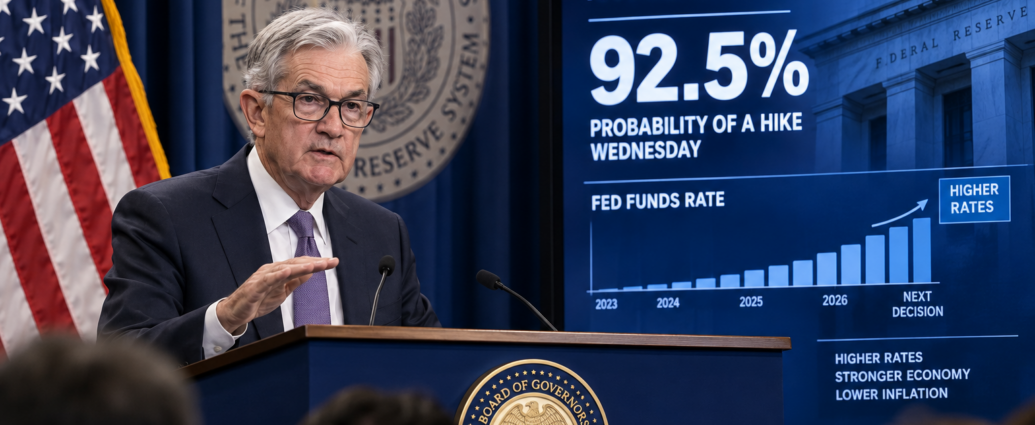
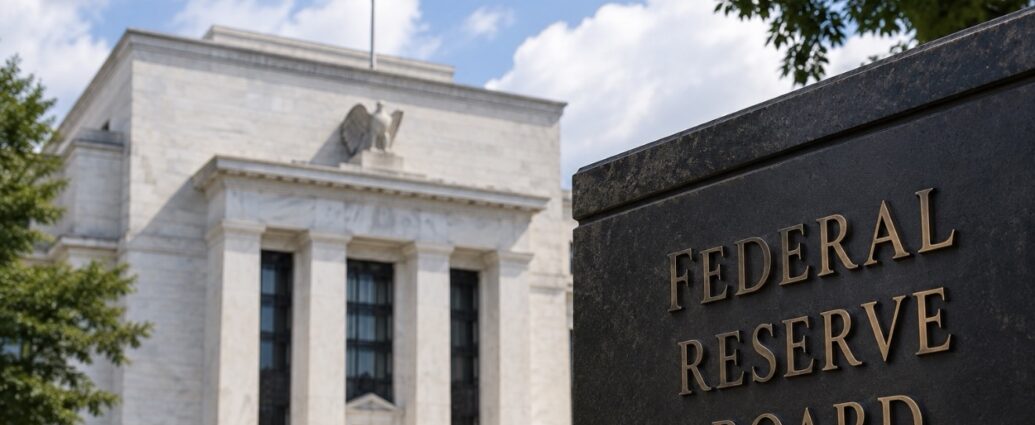
The Federal Reserve set the table for Thursday’s trading on Wednesday, June 17, when new Chair Kevin Warsh wrapped up his first policy meeting by holding interest rates steady while signaling that more officials now expect rate increases this year than cuts. The decision, paired with Warsh’s debut press conference, reset the mood heading into the next session and left traders recalculating how long borrowing costs will stay elevated.

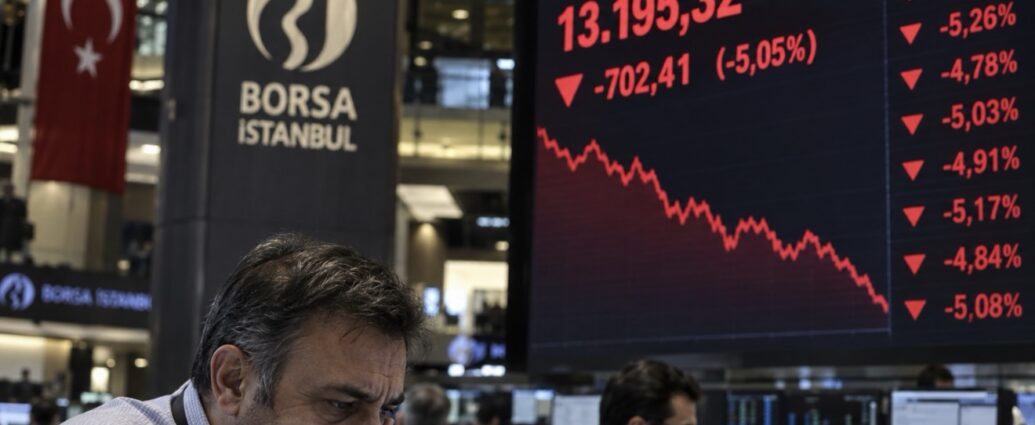
Stocks finished Wednesday sharply lower once the message sank in. The Dow Jones Industrial Average fell 507 points, or 0.98%, to close at 51,492.55, wiping out an intraday record set earlier in the day. The S&P 500 dropped 1.21% to 7,420.10, and the tech-heavy Nasdaq Composite slid 1.34% to 26,021.66. Policymakers held the benchmark rate in a range of 3.5% to 3.75%, where it has remained since December 2025, but fresh projections showed nine of 18 officials expecting at least one rate hike before year-end, while six policymakers now anticipate two or more increases. The median forecast now places the federal funds rate at 3.8% by the end of 2026, up from 3.4% in the March projections.

What Could Move Markets Thursday

Fed Rate Expectations

The biggest driver remains the market’s reaction to Kevin Warsh’s first Fed meeting. Traders are now debating whether the next move from the Federal Reserve could be a rate hike rather than a rate cut. If investors continue adjusting to that possibility, stocks could remain under pressure.

Treasury Yields

The 2-year Treasury yield jumped roughly 16 basis points to 4.216%, while the 10-year Treasury yield climbed toward 4.49% after the Fed meeting. Another rise in yields could weigh heavily on stocks, especially high-growth technology companies.

Kroger and Accenture Earnings

Results from Kroger (KR) will provide a fresh look at consumer spending, grocery inflation, and household budgets. Accenture (ACN) will offer insight into corporate technology spending, business confidence, and demand for artificial intelligence-related services.

Oil Prices and the Iran Ceasefire

Crude oil remains one of the market’s biggest wild cards. Prices have fallen sharply following the framework agreement between the United States and Iran that ended hostilities and reopened the Strait of Hormuz. Any disruption to that agreement could quickly move oil prices, inflation expectations, and broader markets.

Technology Stocks

After leading Wednesday’s decline, investors will be watching whether Microsoft, Meta Platforms, Alphabet, Amazon, Nvidia, and other technology leaders stabilize or continue dragging the broader market lower.

Bank of England Rate Decision

The Bank of England is expected to announce its latest interest-rate decision Thursday. A surprise move could ripple through global bond markets and reinforce concerns that central banks remain focused on fighting inflation.

Holiday Trading Ahead of Juneteenth

With U.S. markets closed Friday for Juneteenth, Thursday is the last full trading session before the long weekend. Lower trading volumes can sometimes magnify market swings and increase volatility.

Market Movers

Thursday’s earnings calendar will provide fresh insight into both consumer and corporate spending.

Kroger (KR) reports results before the opening bell, offering investors a window into consumer behavior, grocery inflation, and whether shoppers continue shifting toward lower-cost products and private-label brands.

Consulting giant Accenture (ACN) will provide one of the market’s clearest gauges of corporate spending trends, technology investments, and business confidence. Investors will be listening closely for management’s outlook on enterprise demand and artificial intelligence-related projects.

Additional reports from Progressive and Jabil will provide updates on insurance trends and manufacturing activity.

Technology stocks remain in focus after leading Wednesday’s selloff. Shares of Microsoft, Meta Platforms, Alphabet, and Amazon all closed lower. Meanwhile, SpaceX (SPCX) experienced its first decline since going public on June 12, temporarily pausing a powerful post-IPO rally.

Commodities and Volatility

Oil remains one of the market’s biggest wild cards.

West Texas Intermediate crude traded near $76 per barrel, while Brent crude hovered around $79 per barrel, both well below their wartime highs.

Gold fell 1.77% as investors adjusted to the prospect of higher-for-longer interest rates. Meanwhile, the Cboe Volatility Index (VIX) moved above 16, reflecting increased uncertainty following the Fed’s policy shift.

One additional factor may shape trading activity. U.S. financial markets will be closed Friday, June 19, for Juneteenth, making Thursday the final full trading session before the holiday weekend. Overseas, the Bank of England is expected to announce its own interest-rate decision, with economists widely forecasting no change to its benchmark rate.

For investors, the takeaway is straightforward: the Federal Reserve no longer appears eager to deliver lower rates, and Thursday’s trading session will offer the first real test of how markets adapt to a more hawkish era under Chairman Kevin Warsh.

Bottom Line

Thursday’s market direction will likely be determined by three factors: Fed rate expectations, Treasury yields, and oil prices. If yields continue rising and investors conclude that rates will stay higher for longer, stocks could face additional pressure. If yields stabilize, oil remains contained, and earnings come in strong, markets may attempt a rebound after Wednesday’s sharp selloff.

JBizNews Desk
Wall Street

© JBizNews.com All Rights Reserved. Reproduction or distribution without written permission is prohibited.

An asteroid around the size of 38 Lubavitcher Rebbes is set to pass the Earth on Thursday, June 18, which is the anniversary of the Rebbe’s death, according to NASA’s asteroid tracker. 

The asteroid in question has been designated 2003 LN6, and is set to fly past the planet at a distance of a little over 1.4 million kilometers, according to the Center for Near-Earth Object Studies (CNEOS) at NASA’s Jet Propulsion Laboratory (JPL).

The relatively close – but safe – flyby will occur during the yahrzeit of Rabbi Menachem Mendel Schneerson, the famed leader of the hassidic Lubavitch sect and the founder of the global Chabad movement. 

The Asteroid Rebbe? How big is the asteroid heading for Earth?

Asteroid 2003 LN6 has an estimated diameter of as much as 67 meters, according to NASA’s calculations. 

But why count all of that when we can instead make a timely reference to one of the most influential Jewish religious leaders of the modern era?

Yes, I am referring to the Lubavitcher Rebbe himself, Menachem Mendel Schneerson. 

While he is often referred to as a giant of Torah and Judaism, his physical size was far more realistic. 

According to records from the Rebbe’s 1941 arrival in the United States by way of the Portuguese ship SS Serpa Pinto to Ellis Island, the man himself stood at a height of five feet, nine inches. 

Now we normally like to do these calculations to appease the metrically-challenged readers, but this time we will do so for the metrically-inclined. Five foot nine inches is roughly 1.75 meters. 

Now the fun part, imagining how many Rebbes can we fit inside the diameter of an asteroid. The answer is approximately 38. 

Unfortunately, the result didn’t come out to any of the more significant Chabad numbers like 770. 

However, if one were to look at chapter 38 of the Tanya, the text that embodies the core of Chabad philosophy and authored by one of the previous Lubavitcher rebbes, we see the following quote: 

“[For] even the material body, and furthermore, even the very stones and earth which are absolutely inanimate – has within it light and vitality from God, so that it should not revert to naught and nothingness as it was.”

The interpretation of this is that even inanimate beings, such as asteroids, have a divine life force maintaining its existence. 

Scientifically, this pairs well with the fact that asteroids are essentially made of the same materials as Earth – both formed of the space dust and minerals from the birth of the Solar System. The origins of the Earth, and all life on it, are in a sense tied to the origins of asteroids. 

Adoneinu, moreinu, ve-asteroid: Will asteroid 2003 LN6 hit the Earth?

It should be noted that asteroid 2003 LN6’s orbit will take it closer to the Earth than what is normal for most asteroids. However, at a distance of over one million kilometers, it still won’t be close enough to cause any danger. 

For context, the Moon is much closer at around 387,000 kilometers. So while the words of the Rebbe may be close to the hearts of the untold masses of Jews around the world, the asteroid I am measuring using him will be far off. 

The Messiasteroid: How can the Earth be protected from asteroids?

Is the Lubavitcher Rebbe the Messiah? Does Chabad think that he was the Messiah?

Officially the answer to both is no, though there are some within the Chabad movement that hold this belief. Regardless, the idea of the Messiah as the redeemer who will save the world is an important one in many hassidic movements. 

But who will protect the world from asteroids?

We may not have a Messiah now, but we do have something else: scientists.

Those working in the field of planetary defense have been hard at work developing ways to monitor asteroids in space and predicting any that could pose a danger to the planet. Some methods have even been put forward to prevent a potential asteroid attack. One such method, that of kinetic deflection, was even put to the test with NASA’s Double Asteroid Redirection Test (DART) Mission. 

So while the Messiah may not be here yet to save the world, scientists can at least make sure the world is still around for when he does come.

This post was originally published on here

Last year, I had the privilege of attending the biennial Friendship Circle gala. I’d long heard about the worldwide organization that supports individuals with special needs and their families. On a basic level, they do incredible work: they send volunteers to play and spend time with individuals with special needs, giving heroic parents a well-earned break, hosting joy-filled events, and building a supportive community where everyone belongs.

I was invited to the gala by my dear friend Rabbi Levi Shemtov, who, together with his wife Bassie, founded Friendship Circle in 1994 in Detroit, Michigan. I always knew that Friendship Circle was more than just a “hug fest,” although that love and thoughtfulness are essential parts of the magic. But what I witnessed there blew me away. I realized that Friendship Circle was, in fact, a revolution in how we understand human value.

Let’s be honest: when most people see someone with special needs, they may feel sympathetic, maybe inspired, but generally, their expectations are low. People acknowledge that everyone has a place in society, but do we truly believe that people with special needs have something meaningful to contribute?

Sure, people will gush over an art project or applaud a musical performance, but deep down, many still see these gestures as symbolic. “Let them just be happy,” some may think. “Let them live a peaceful life. That’ll be enough.” It’s a sentiment that sounds kind but writes off their potential.

Friendship Circle flips that on its head. They say, “You are a human being.” That fact means you have something to give. The world needs you, and without your contribution, we are all missing something.

It’s not just a feel-good slogan. They mean it. And what’s more, it’s true.

Friendship Circle reframes how we see people with special needs and, most importantly, how they see themselves. Their programs make participants feel unique and special, help them understand that it’s okay to be different, and show them that they belong.

The Rebbe: Term ‘disabled soldiers’ misses the point

The next day, I had lunch at Soul Café with Rabbi Shemtov and his friend, Dr. Stephen Shaya (now my friend too). We spoke about the philosophy behind Friendship Circle. “Where does this worldview come from?” he asked. A little later, he answered his own question.

The highlight of the dinner had been a video of the Rebbe speaking to a group of injured Israeli soldiers, men who had sacrificed their bodies in service of their people. The Rebbe honored their courage, but didn’t let the moment settle into pity. He challenged the very name of their group: “disabled soldiers.” That label, he said, missed the point entirely.

Instead, he urged that they should be called “exceptional soldiers,” people to whom God entrusted exceptional challenges because they have exceptional strengths. Not only were they not “done,” they were just getting started.

That viewpoint is the beating heart of Friendship Circle and, frankly, the way we should look at every human being.

We’re all born with purpose. And purpose is expressed through contribution. That’s not a luxury for the elite or the gifted. It’s not reserved for the successful or the brilliant. It’s a basic part of what it means to be human.

The Rebbe insisted that regardless of our perceived abilities, each of us has a unique mission, something only we can bring into the world. And the moment we lose sight of that, we shrink the very definition of humanity.

The Rebbe’s legacy

On Thursday, June 18, Jews around the world mark Gimmel Tammuz, the 32nd anniversary of the Rebbe’s passing.

On this day, many people study the Rebbe’s Torah teachings, visit his gravesite in Queens, or attend events at their local Chabad House. In addition, what better way to honor the Rebbe’s legacy than by adopting his revolutionary lens on human potential?

His belief was that every person is an indispensable piece of the puzzle and that the picture is incomplete without them. Their contribution might not land on the front page of the newspaper. It might not look revolutionary. But it’s theirs. It’s real. And the world needs it.

No, not every autistic child is a card-counting savant. Not every blind person can play piano at the age of three. But every human being has something to offer.

Sometimes, it takes time to discover. Sometimes, it takes a whole community to believe in you before you believe in it yourself.

That’s what Friendship Circle does. They don’t stop at love and hugs. They roll up their sleeves. They search, they support, and they help each person shine and then share that light with the world.

So the next time you see someone who looks or speaks differently, ask yourself:

When I look at a human being, what do I see?

To learn more about Friendship Circle, visit FriendshipCircle.org.

This post was originally published on here

UN Secretary-General Antonio Guterres warned on Wednesday that Israeli settler groups could be added to a global blacklist for violations against children as he voiced alarm at a “staggering” rise in violations against Palestinian children.

The world body’s annual report on Children and Armed Conflict recorded 38,558 “grave violations” globally in 2025, affecting 24,174 children, the latter figure a record since CAAC’s mandate began in 1996.

The data showed 14,224 children killed or maimed, with a 34% rise over 2024 in the number killed to 6,266. It said the United Nations had verified the killing of 2,668 Palestinian children in Gaza and 57 in the West Bank.

The Gaza war began on October 7, 2023, when Hamas-led fighters attacked southern Israel, killing about 1,200 people, according to Israeli figures. Israel responded with a large-scale military campaign that has since killed tens of thousands of Palestinians.

“Countries with the highest levels of violations in 2025 were the Occupied Palestinian Territory and Israel, Democratic Republic of the Congo, Nigeria, Myanmar, and Somalia,” a senior UN official said in a briefing on the report.

SETTLER GROUPS IN FOCUS

Israel itself already features in the report’s so-called list of shame annexes for alleged violations, but the latest version for the first time highlights settlers as a potential future listing.

“I am appalled by the magnitude of grave violations against children in the Occupied Palestinian Territory and Israel, notably by the widespread use of explosive weapons in populated areas,” Guterres said in the report.

“I am deeply alarmed at the staggering rise in attacks carried out by Israeli settlers resulting in grave violations against Palestinian children,” Guterres added.

He said Israeli settler groups should be listed if the high number of violations is repeated in 2026.

The report said 9,465 grave violations were attributed to Israeli forces and 326 to Israeli settlers.

It defines grave violations as including the killing and maiming of children, rape and other forms of sexual violence, and attacks on schools and hospitals.

Israel’s UN mission did not immediately respond to a request for comment.

HAMAS REMAINS ON BLACKLIST

The report continues to blacklist Hamas’ armed wing and affiliated factions for killing and maiming children and for abductions, and attributes 2,806 violations to Palestinian armed groups.

The new report comes weeks after Guterres infuriated Israel by adding it to a separate UN blacklist of countries and parties suspected of committing sexual violence in conflict zones, a move that prompted Israel’s foreign ministry to say it would sever all ties with him.

Guterres said he was alarmed by the high number of children detained by Israel and reports of severe physical violence and poor conditions during detention, saying these “may constitute inhuman or degrading treatment or punishment.”

Being blacklisted does not automatically trigger sanctions but causes reputational harm and requires negotiating action plans to secure delisting.

This post was originally published on here

Israel Police, working in coordination with the Southern District Unit and the National Headquarters for Economic Counter Terrorism under the Defense Ministry, confiscated property on Wednesday linked to drone smuggling into the Gaza Strip since the beginning of the year.

Officials said the operation marks the first time this type of enforcement has been used in the drone field.

As part of the move, Defense Minister Israel Katz imposed economic sanctions based on precise intelligence and evidentiary material collected and transferred by Israel Police, even though the vehicle owners, residents of Bedouin communities in the Negev, were not caught in the act.

Authorities said the measure is intended to target the financial infrastructure behind smuggling activity, disrupt ongoing operations, and strengthen deterrence against individuals and networks assisting terrorist organizations in the Gaza Strip.

“Anyone who smuggles weapons, equipment, or funds to terrorist organizations in Gaza is part of the terrorist network itself and will pay a heavy price,” Katz said in a statement.

New policy broader than terrorism alone

Katz added that he had decided to impose economic sanctions on those involved in drone smuggling into the Gaza Strip, as part of a broader policy aimed not only at terrorists but also at the economic and logistical systems that enable their activity.

Southern District Unit commander Chief Superintendent Shimon Portal added, “This is another significant enforcement tool in our fight against smuggling infrastructures.

“Alongside operational and intelligence activity on the ground, we are also working to damage the economic capability of those involved, thereby disrupting their activity, deterring additional actors, and preventing the strengthening of terrorist organizations in the Gaza Strip,” he added.

This post was originally published on here

The Federal Housing Finance Agency (FHFA) and Director Bill Pulte are asking Congress for the power to bring civil lawsuits against individuals suspected of mortgage fraud.

In its newest Annual Report to Congress, released Monday, the FHFA recommended new authority to directly sue for mortgage market fraud. This would allow the agency to file the same types of lawsuits in state or federal courts that Fannie Mae, Freddie Mac or the Federal Home Loan Banks (FHLBanks) can.

Alternatively, the FHFA suggested Congress could create a new federal law against mortgage fraud that the agency could enforce in federal court. This would explicitly mirror the Securities and Exchange Commission (SEC)’s direct power to sue for insider trading.

The FHFA did not reply to HousingWire’s request for comment.

Pulte, who was appointed earlier this month as acting director of national intelligence (DNI), has aggressively targeted mortgage fraud as part of leading a major overhaul of the government-sponsored enterprises (GSEs). He has filed multiple criminal referrals to the Department of Justice (DOJ), alleging mortgage fraud against Federal Reserve Governor Lisa Cook, New York Attorney General Letitia James, and Sen. Adam Schiff (D-Calif.).

Last year, the FHFA also announced a partnership with Palantir Technologies to launch an artificial intelligence-powered crime detection unit at Fannie Mae. Around the same time, the agency established an official mortgage fraud tip line for whistleblowers and the public.

The agency said that all federal regulators overseeing mortgages should be empowered to take action against fraud but noted that its current authorities are “indirect or limited.”

Right now, the FHFA is legally required to get reports when fraud is suspected, but it must pass these cases on to other agencies for potential action. It can also block the organizations it regulates from doing business with anyone convicted or sanctioned in the past three years. But only in very specific circumstances can it bring an enforcement action against a partner who fails to ensure the eligibility of loans.

The FHFA is also asking Congress for the legal authority to set safety standards for outside services provided to the organizations it regulates. The agency wants the ability to directly examine the records, operations and facilities of key third-party service providers.

“FHFA’s regulated entities rely on third-party service providers for a wide range of services, some of which are critical to their operations,” the FHFA stated in its Annual Report. “FHFA has limited authority to assess the impact of third-party relationships on the safe and sound operations of its regulated entities.”

According to the agency, the Government Accountability Office (GAO), the Financial Stability Oversight Council (FSOC), and the FHFA’s own Inspector General have all identified this lack of oversight as a top risk and recommended that Congress close the gap.

This post was originally published on here

Smith & Wesson Brands reported a sharp jump in sales and profit on Wednesday, and behind the numbers sits a demand story the Maryville, Tennessee gunmaker rarely spells out: a country where fear — much of it driven by a record stretch of antisemitic violence — is sending first-time buyers to gun counters. The company posted results for its fiscal fourth quarter and full year ended April 30, with handguns accounting for the overwhelming majority of shipment growth.

The clearest signal is the gap between the company and the wider market. Handgun shipments into the sporting-goods channel rose 23.2% even as the national background-check measure rose just 1.1%, and handguns made up more than 80% of units shipped. People are not simply buying more guns — particular buyers are, for particular reasons.

One of those reasons runs straight through the American Jewish community.

In its annual audit released May 6, 2026, the Anti-Defamation League called 2025 one of the most violent and deadly years for Jews in the United States, counting 6,274 antisemitic incidents of assault, harassment, and vandalism — an average of 17 incidents per day. The year before, in 2024, the group recorded 9,354 incidents, a record high. “Numbers that would have shocked us five years ago are now our floor,” ADL Chief Executive Jonathan Greenblatt said.

The violence has been concrete and recent.

On May 21, 2025, two Israeli Embassy staffers were shot and killed outside the Capital Jewish Museum in Washington. Days later, on June 1, 2025, a man threw Molotov cocktails at a Run for Their Lives gathering supporting Israeli hostages in Boulder, Colorado, an attack that later claimed the life of an 82-year-old woman. Additional incidents followed, including a truck driven into a synagogue in West Bloomfield, Michigan, in March 2026, and an arson attack at Mississippi’s oldest synagogue in January 2026.

The response has been measurable.

Surveys released in October 2025 by the ADL and the Jewish Federations of North America found that 9% of American Jews had purchased a firearm because of security concerns, while 13% had installed new security systems. For a community historically associated with relatively low rates of gun ownership, the shift is significant.

Organizations have emerged to meet that demand.

Lox & Loaded, a Jewish firearms-training organization founded in March 2025, has expanded to 21 states, 40 chapters, and more than 1,000 members. In April 2026, the group announced a partnership with the National Rifle Association to provide expanded training opportunities and range access. Other organizations, including Magen Am and the Community Security Service, have expanded security training programs for synagogues and Jewish institutions. Collectively, Jewish organizations now spend an estimated $765 million annually on security measures.

The financial results reflect the demand.

Fourth-quarter net sales reached $178.4 million, up 26.7% from a year earlier, while earnings came in at 36 cents per share. Full-year sales totaled $523.8 million, an increase of 10.4%. The board declared a quarterly dividend of 13 cents per share, payable on July 15.

Chief Financial Officer Deana McPherson pointed directly to handguns as the primary driver of performance.

“Our outperformance was mostly driven by handgun shipments, which represented over 80% of our units shipped,” she said.

New products generated 37.5% of fourth-quarter revenue, and management said it expects overall firearm demand to remain relatively stable. President and CEO Mark Smith has credited recent product launches and disciplined pricing for helping drive growth.

The same firearms purchased by some consumers for protection continue to place Smith & Wesson at the center of the national debate over gun violence.

Survivors of the 2022 Highland Park Fourth of July parade shooting have sued the company, alleging it improperly marketed a rifle to vulnerable young men. The case remains active. Earlier this week, the U.S. Supreme Court declined to hear a challenge by gun manufacturers to a New York law allowing the state and private plaintiffs to sue firearm companies over criminal misuse of their products. Smith & Wesson was among the challengers.

The firearms industry argues that such lawsuits conflict with the Protection of Lawful Commerce in Arms Act, a federal law enacted in 2005 that shields manufacturers from many claims arising from criminal misuse of firearms. Gun-control advocates counter that companies should face accountability when marketing or business practices contribute to violence.

For investors, the earnings report highlights a company benefiting from strong demand and favorable product trends. For the broader public, it underscores a more complicated reality: a firearm manufacturer posting some of its strongest results in years while a growing number of Americans — including many Jews who once avoided gun ownership — decide that personal protection has become a necessity.

JBizNews Desk
Wall Street

© JBizNews.com All Rights Reserved. Reproduction or distribution without written permission is prohibited.

Today, Kevin Warsh finished presiding over his first meeting as Federal Reserve chair, and boy, it was interesting to say the least. Now, keep in mind that I’m the only person on Earth who had #AnyOneButWarsh, so my feelings are well known, but as always, I’m going to call it down the line on what his comments means for the economy.

For now, I’m going to give you quick three-step takeaway. Tomorrow’s HousingWire Daily podcast will dive into today’s topic in more detail and will be just me speaking, as Editor in Chief Sarah Wheeler couldn’t join me today to talk about Warsh.

‘Uneven’ policy impacts housing

For our audience, mortgage rates matter.  The issue with mortgage rates is that inflation has taken off stronger than the Fed would like, and then the Iran conflict piled on top of that.

Without the labor data getting softer, it’s hard for mortgage rates to go much lower than where we are today. But Warsh did say that monetary policy is “uneven,” meaning that it’s tight for housing but not for other parts of the economy.

That’s a fair statement to make on his part and something former Chair Jerome Powell would never say. So, on that point, it’s a positive for the housing market that Warsh is thinking about this. This also means that if the economy softens, lowering rates to boost housing is something the new Fed leader is already considering.

Rest in peace, forward guidance

Another positive thing that I saw today is the end of forward guidance. I wasn’t a fan of the dot plot or the Fed’s projections, because they became very sloppy at times in capturing market reactions. So, death to the dot plots — which basically tells you what Fed members think about future federal funds rate policy — is fine with me. 

With that said, the knock on Warsh has always been that he isn’t an economic thinker. Nobody really knows what he believes, except that he’s been bashing the Fed for eight years and now he’s the chairman.

Once again, #AnyoneButWarsh, so he needs to do a better job of providing guidance for forward-looking market thinkers — or the markets will do it on their own. If this means he needs to leak stuff out to the Fed, so be it.

The task force is coming

Since we won’t have forward guidance, we will be getting a task force to review everything about the Fed. To me, this means that Warsh really wants to lose the dual mandate; he wants it to only be about price stability, so look for the task force to eventually recommend losing the dual mandate that also includes maximum employment.

But that move will need congressional approval, and I highly doubt he can muster the political support right now to make it happen. Warsh wants new ways to track labor and inflation data, which is fine. For the task force, a big question remains until we read about its findings.

Conclusion

I’ll admit my bias against Warsh. And it’s possible that when President Trump leaves office — especially if a Democrat returns to the White House — we will get Kevin Warsh 1.0 back.

That said, today’s press event was fine. Warsh can’t be seen as Trump’s boy who does anything to derail dovish policy efforts. The real issue here is that inflation has taken off and the labor market has stabilized.

The 10-year Treasury yield is at 4.50%, and with rate hikes now being priced in, that’s perfectly normal. Can things change six weeks from now when the Fed meets again? Yes, especially with the Iran conflict ending, but we must take it one day at a time.

This post was originally published on here

The war between the United States and Iran moved a step closer to an official end Wednesday after both sides put a ceasefire memorandum into effect, activating a 60-day framework designed to halt hostilities and open negotiations toward a broader settlement.

The agreement takes effect immediately, while diplomats continue preparations for a formal signing ceremony expected later this week in Switzerland.

The move marks the most significant diplomatic breakthrough since fighting erupted on February 28, a conflict that disrupted global energy markets, rattled investors, and raised fears of a broader regional war.

For businesses, investors, and consumers, the most important provisions involve oil, shipping, and trade.

The ceasefire framework outlines steps aimed at restoring commercial traffic through the Strait of Hormuz, one of the world’s most important energy corridors. Before the conflict, roughly one-fifth of global oil and liquefied natural gas shipments moved through the narrow waterway linking the Persian Gulf to international markets.

Disruptions to that route sent oil prices sharply higher and contributed to rising gasoline costs worldwide.

The agreement also creates a pathway for increased Iranian energy exports and the restoration of commercial activity tied to shipping, insurance, banking, and transportation services associated with international trade.

Markets have already responded positively.

Oil prices have retreated from recent highs as traders anticipate improved supply conditions, while gasoline prices have begun easing as concerns over a prolonged disruption diminish. The possibility of additional Iranian crude entering global markets has added to expectations that energy costs could continue falling if the ceasefire holds.

President Donald Trump welcomed the development and has repeatedly pointed to lower oil prices and stronger financial markets as evidence that diplomacy is producing economic benefits.

Beyond energy, the memorandum establishes a 60-day negotiating period during which both countries are expected to pursue discussions on regional security issues and Iran’s nuclear activities.

Iran has agreed to maintain the current status of its nuclear program during negotiations, while the United States has agreed not to impose additional measures during the framework period.

Officials on both sides have emphasized that the memorandum represents a temporary framework rather than a final peace agreement.

That distinction remains critical.

While markets have embraced the ceasefire, investors recognize that the agreement’s success ultimately depends on what happens during the next two months. Any breakdown in negotiations or renewed military activity could quickly reverse recent gains in stocks and send energy prices higher again.

The challenge is already apparent. Regional tensions remain elevated, and military activity involving Iranian-backed groups continues to present risks that could complicate efforts to reach a permanent settlement.

The diplomatic effort has drawn support from multiple international players, including regional mediators, European governments, and the United Nations, all of whom have urged both sides to use the ceasefire as an opportunity to pursue a longer-term resolution.

For the global economy, the stakes extend far beyond the Middle East.

Lower energy prices could ease inflationary pressures, reduce transportation costs, improve corporate profit margins, and provide relief for households that have faced months of elevated fuel prices.

Airlines, manufacturers, trucking companies, retailers, and consumers all stand to benefit if stability returns to energy markets.

The next 60 days will determine whether this memorandum becomes the foundation for a broader agreement or simply a pause in a conflict that has already reshaped global energy markets and geopolitical calculations.

For now, the ceasefire is in effect, commercial shipping is preparing to normalize, and markets are cautiously betting that diplomacy may finally succeed where months of conflict failed.

JBizNews Desk
Washington

© JBizNews.com All Rights Reserved. Reproduction or distribution without written permission is prohibited.

PayPal confirmed on Tuesday that it is exploring strategic options for PayPal Ventures, its corporate venture capital arm, a step that effectively winds down a startup-investing operation the company built a decade ago.

In a statement, a company spokesperson said the review is part of an effort to sharpen the firm’s focus and that it had no further details to share for now.

The move lands as new chief executive Enrique Lores strips away pieces of the business that sit outside PayPal’s core job: running the checkout button and payment tools that millions of shoppers and merchants use every day.

The venture team has already shrunk dramatically.

Its headcount has fallen from more than 10 people in late 2025 to just two, and the web page that once listed its investors is no longer visible.

PayPal is also looking to sell some of its existing startup stakes on the secondary market and has hired Jefferies to help line up potential buyers.

Together, the two moves point to a full retreat rather than a simple slowdown.

PayPal launched PayPal Ventures in 2016, a year after eBay spun the payments company off as an independent business.

Since then the unit has invested off PayPal’s own balance sheet, backing more than 80 companies across three funds worth over $850 million.

Its bets included well-known names such as Plaid, which connects bank accounts to apps, and the crypto custody firm Anchorage Digital.

One of its profitable exits came when Bill.com bought the expense-management startup Divvy in 2021.

So why pull back from a business that has, at times, made money?

The portfolio’s results swing from year to year, which is exactly the kind of unpredictability Lores is trying to cut.

The venture holdings added 10 cents to PayPal’s $1.53 earnings per share in the fourth quarter of 2025, after subtracting 4 cents a year earlier, according to the company’s February earnings release.

That swing is small next to PayPal’s payments engine, and the new leadership would rather spend its attention elsewhere.

The decision follows a shakeup at the very top.

The board pushed out former chief executive Alex Chriss in February after a nearly three-year run in which PayPal’s stock fell more than 30% and directors grew worried the company was losing ground to rivals like Stripe and Apple, both of which offer their own checkout products.

In announcing the change, the board said the pace of progress had not met its expectations and named Enrique Lores, the former head of HP, as the new CEO, with David W. Dorman as independent chairman.

Lores moved quickly.

He spun the Venmo app into its own business unit, reshuffled senior leadership, and in May rolled out a sweeping cost-cutting plan.

PayPal is aiming to trim about 20% of its workforce over the next two to three years and to squeeze out at least $1.5 billion in savings during that stretch.

On a May earnings call, Lores told investors the company needed to speed up its use of artificial intelligence and get back to basics.

Closing a venture arm is a telling signal.

Corporate investing groups tend to flourish when money is cheap and companies feel free to chase strategic side bets, and they become harder to justify when leadership is focused on cost discipline and a clearer story for shareholders.

The higher interest rates of recent years made those bets more expensive to carry.

Big technology firms such as Google and Microsoft still run sizable venture operations, but those companies are not in turnaround mode the way PayPal is.

For everyday users, little changes at the checkout screen tomorrow.

The shift matters more as a sign of where PayPal is heading: away from scattered side projects and back toward the branded checkout, merchant tools, and Venmo payments that bring in the bulk of its revenue.

Selling the startup stakes, if it happens, would turn hard-to-value holdings into cash the company can pour back into that core.

Whether the strategy revives a stock that has frustrated investors will depend less on the venture wind-down itself and more on whether Lores can make the payments business grow faster.

San Jose, Calif. — JBizNews Desk

JBizNews Desk / © JBizNews.com All Rights Reserved. Reproduction or distribution without written permission is prohibited.

The Trump administration on Wednesday said it was announcing $700 million in “new funding” for mental health and addiction programs, with an emphasis on combating homelessness resulting from severe, untreated mental illness. 

But behavioral health experts instantly cast doubt on the claim, identifying the $700 million not as new funding but as the long-awaited release of existing grants that Congress had previously authorized and that the federal government already planned to spend. 

Read the rest…

This post was originally published here

A democratic socialist who has sharply criticized Israel and pledged to defend Jews from antisemitism is in the lead in Tuesday’s Democratic primary for mayor in Washington, DC, poising the nation’s capital to elect a progressive leader.

Janeese Lewis George, a DC Council member, had received just over half of the 65% of votes that had been counted by Wednesday morning. Kenyan McDuffie, a moderate and former City Council member, was in a distant second place.

The election is DC’s first using ranked-choice voting, so it could take some time to reach a final tabulation, and the results could change. Still, the early results have ignited optimism among Lewis George’s supporters – and concern among her critics, who include Jewish leaders in the city and beyond.

Some Jewish leaders have criticized Lewis George, who has accused Israel of committing genocide in Gaza, for vowing, if elected, not to attend “events focused on obfuscating the realities of occupation or promoting Zionism and apartheid” or join “political junkets to Israel.” She made those promises in response to a questionnaire from the Metro DC chapter of the Democratic Socialists of America, which subsequently endorsed her.

The race set up a fight over the future of Washington, DC, where the vast majority of voters are Democrats, and the threat of US President Donald Trump’s interference in city affairs loomed large over the ballot box. The winner is heavily favored to win the general election in November and succeed Democratic Mayor Muriel E. Bowser, who is retiring after 12 years in office.

DC mayoral candidate compared to Zohran Mamdani

It has also fueled a national discourse about the growing viability of left-wing, pro-Palestinian leaders in local politics. Some have likened Lewis George to Zohran Mamdani, the democratic socialist elected mayor in New York City last year. A left-wing candidate is also poised to potentially become mayor of Los Angeles, while Chicago has had a progressive Democrat who is sharply critical of Israel since 2023.

The Wall Street Journal said ahead of the DC primary that the city was facing “a Mamdani moment” – a sharp critique from the paper’s conservative editorial board.

The leader of Our Revolution, a progressive group founded by Sen. Bernie Sanders, also embraced the comparison, telling USA Today that the success of left-wing candidates, including Lewis George and Mamdani, showed that voters want change.

Lewis George’s platform focuses largely on making DC more affordable. But controversy dogged her after her DSA questionnaire was published.

Ron Halber, head of the Jewish Community Relations Council of Greater Washington, told The Washington Post that the questionnaire raised “a lot of concern about whether an administration of hers would be sensitive to the Jewish community or not.”

Lewis George said in the DSA questionnaire that she would continue to meet with people and organizations that do not share all her values and opinions. She referenced a meeting she attended that was hosted by the JCRC, saying she disagreed with the group’s “opposition to using the word ‘genocide’ to describe Israel’s actions in Gaza” as well as “their definition of anti-semitism that criminalizes dissent, and their attacks on activists,” but could also see areas of shared interest.

“I went to the event to advocate for an end to ICE collaboration, seek allies in that effort, and build on our shared goal of ending the inhumane treatment of our neighbors who are being taken by ICE,” she said.

Lewis George was endorsed by the Jews United for Justice Campaign Fund, which says it promotes economic, social, and racial justice. The group said in its endorsement announcement that Lewis George would “fight for our communities and our Jewish values.”

Support for Palestinians, commitment against antisemitism do not conflict

After the blowback to the DSA questionnaire, Lewis George met privately with local rabbis and Jewish community leaders in March to hear their concerns, according to Jewish Insider. Shortly after, she said in a statement on her campaign website that her “support for Palestinian human rights” and her “commitment against antisemitism” were not in conflict.

She added, “To the Jewish community in DC: I will not be a mayor who includes or excludes you based on your opinions or feelings on matters here and across the world. I will always protect your freedom, safety, and sense of belonging.”

Lewis George also said she had visited synagogues since middle school and frequently worked with Jewish organizations as a council member, including securing security grants for synagogues and schools.

She went on to list her credentials as a supporter of Palestinians, saying that she was among the first Council members to call for a ceasefire in Gaza and meet with George Washington University students advocating for a ceasefire.

The DSA strongly opposes the Israeli government and requires candidates to share their views on Israel to secure an endorsement. While the party remains controversial in the Democratic establishment, Democrats nationwide have shifted their sympathies away from Israel since 2023, with 65% saying their sympathies lie more with the Palestinians in a February Gallup poll.

McDuffie criticized Lewis George’s answers to the DSA questionnaire and said there was “no place in this city for shutting out any community,” according to Washington Jewish Week. But he has largely avoided weighing in on questions about Israel, telling Jewish Insider that it was not the mayor’s role to craft foreign policy.

The Middle East receded into the background in the closing days of the mayoral race, which focused heavily on the high cost of living in the district and on fighting the Trump administration. Lewis George and McDuffie both argued they were better equipped to block interference from the federal government, as National Guard troops continue to patrol the streets amid Trump’s crackdown on immigration and tens of thousands of residents have lost their government jobs.

Meanwhile, Trump threatened at the Oval Office on Thursday to “take back” Washington and “run it on the federal basis” if Lewis George won.

The Tuesday primary used ranked-choice voting, which allows voters to rank up to five candidates. If no candidate reaches 50%, the last-place finisher is removed, and voters for that candidate have their votes distributed among their second choice candidates. The process continues until one candidate has a majority. This voting method means that a final tally of results can take days after polls close.

This post was originally published on here

A fresh coat of paint could help homeowners draw higher offers when it comes time to sell.

Buyers are showing growing interest in warm, comfortable colors over plain white walls, according to Zillow’s 2026 Paint Color Analysis. The highest-value interior paint choice was chocolate brown in a bedroom, which could add an estimated $2,277 to a home’s offer price.

“When it comes to getting the most out of your home before selling, paint is one of the easiest and most affordable places to start,” Charlie Lankston, executive editor at Realtor.com, told FOX Business in an email. “A fresh coat can instantly boost the appeal of a home the moment a buyer walks in the door.”

Other high-performing colors included pale blue in the living room, which could add about $1,723 to an offer price compared with white, and charcoal gray in the living room, which could add about $1,509, the study found.

MEDIAN US HOME PRICE PROJECTED TO HIT $1 MILLION BY 2050 — RIGHT AS MILLENNIALS RETIRE

In bedrooms, charcoal gray could add about $1,240, while sage green could add about $1,035.

Sage green was one of the safest choices for sellers. The color ranked near the top in every room studied, including bathrooms, living rooms and bedrooms, according to Zillow. 

Darker kitchen colors also performed well. Homes with charcoal gray kitchens could receive about $1,373 more, while dark plum kitchens could bring in about $867 more.

The kitchen is one of the most important rooms for paint choices. The difference between the best and worst kitchen colors was nearly $8,000, the study found.

Meanwhile, some paint colors may lower a home’s sale price

MIDWEST AND SOUTHERN STATES DOMINATE HOUSING REPORT CARDS: SEE HOW YOURS SCORED

Ochre yellow was the worst-performing color in the study. Using the dark gold color in the kitchen, living room, bedroom and bathroom could lower a home’s offer price by about $18,164.

A fire-hydrant red bathroom could reduce offers by nearly $8,000, while pale pink also performed poorly in every room studied, according to Zillow.

Lankston said paint can be a good starting point for sellers looking to improve their return on investment (ROI), but it should be part of a broader strategy. 

“Kitchens and bathrooms remain the foundational investments, and for sellers who want to go further, outdoor living spaces are delivering serious returns,” Lankston added. 

MORTGAGE RATES TICK HIGHER, BUT BUYERS SHOW SIGNS OF CONFIDENCE

“Deck additions can see a high ROI for buyers who want those creature comforts of the indoors brought outside. Sellers who think strategically about where to put their dollars, starting with something as simple as a can of paint, can meaningfully move the needle on their final offer price.”

GET FOX BUSINESS ON THE GO BY CLICKING HERE

Homeowners should talk to a local real estate agent before repainting because buyer preferences can vary by neighborhood, according to Zillow.

The study was conducted by Zillow’s behavioral science team and surveyed more than 4,400 recent and prospective homebuyers across the U.S.

This post was originally published here

Kevin Warsh’s maiden voyage press conference as the new Fed chairman was a masterful performance. He was knowledgeable, succinct, collegial, humble. By the way, so was the Fed’s press release. Short and sweet. My two biggest takeaways were first: the central bank’s emphasis right now is on price stability. Their statement emphasized strong productivity and business capital investment, along with job gains and low unemployment. 

By the way, productivity and business investment on the supply-side will be a hallmark of Mr. Warsh’s thinking. Yet inflation is the key target right now. As Mr. Warsh put it: “We recognize that inflation has been running well ahead of the Fed’s long stated inflation goal of 2 percent. That’s been going on for more than five years. Persistently high prices are a burden for the American people.” Mr. Warsh concluded: “this committee will deliver price stability”

Of course if there is a deal with Iran and the Strait of Hormuz is reopened, that’s going to bring inflation down substantially. Already the West Texas intermediate price has fallen over 30 percent to around $76 a barrel. Gasoline prices will soon follow. 

It’s not inconceivable that the CPIs for July, August, and September will be negative, which of course changes the whole inflation picture to deflation, which in turn can change the whole interest rate picture from rising rates to falling rates Yet Mr. Warsh did not rule out or rule in any rate hike. 

My second big takeaway was the new chairman does not believe in the Phillips curve view that growth causes inflation. This is hugely important, because among other reasons there’s a business boom going on along with the stock market, and productivity, and the A.I. revolution, all in response to low taxes, light regulation, and drill, baby, drill.

Here’s Mr. Warsh on coexisting low inflation and low unemployment at the same time: “I don’t share the view that was expressed a few generations ago, that Federal Reserve chairman showed up at a podium like this and say, you got to choose, and, you’re going to have to decide whether you’re willing to tolerate higher inflation to put more people at work. I don’t believe in that.” Mr. Warsh added that “What I believe is if we do our job, we can make strong growth, low prices and strong employment mutually compatible”

As far as additional Fed reforms, Mr. Warsh is setting up five task forces with people in and out of the Fed on communications, balance sheet, data sources, productivity and jobs, and the inflation framework. This is a smart move, it’s a collegial move, but it also signals that reforms are coming. One key point I especially like was Mr. Warsh’s mini-riff on how markets should be able to react directly to the incoming data, not the Federal Reserve’s forward guidance opinions.

Indeed, Mr. Warsh didn’t even put his own dot into the Fed’s forecast. Very cool. Yet he also talked about how you need improved data collection in our fast-changing super-advanced high-tech economy. Perhaps he’s implying that good news on the economy should just be good news, not bad news because a couple of flyover regional Federal Reserve bank presidents have some whacked out opinion that a prosperous America is somehow a terrible thing, especially, wait for it … under President Trump.

Speaking of good news, today’s report on retail sales was a barn-burner, way above all expectations. So what happened? People started selling stocks because they’re worried about the Fed raising interest rates. Let us hope Mr. Warsh ends all of that illogical thinking.

This post was originally published here

The World Bank Group said Tuesday it has approved a financing package designed to unlock as much as $2 billion in private bank loans for Argentina, a deal meant to cut the country’s borrowing costs just as a heavy round of debt payments comes due. The approval was announced from Washington by the bank’s board.

The structure is unusual, and the details matter. Rather than lend the money itself, the World Bank Group is backing loans that commercial banks will make to Argentina. It does this through two guarantees: a first-loss policy-based guarantee from the International Bank for Reconstruction and Development (IBRD) and a second-loss guarantee from the Multilateral Investment Guarantee Agency (MIGA). Together they cover 95% of the debt-service payments on the commercial loan.

In plain terms, the bank is promising to absorb most of the losses if Argentina fails to pay. That promise is what makes private lenders comfortable handing over money to a borrower they would otherwise treat as high-risk, and it lets Argentina lock in cheaper terms than it could get on its own.

The timing is no accident. Argentina faces roughly $4.4 billion in debt repayments by July 9, and the new package is built to help refinance part of that load rather than drain the country’s reserves to cover it. The supported loan carries a six-year maturity with a three-year grace period before repayments begin.

“We are committed to supporting Argentina’s macroeconomic stabilization and growth reform agenda,” said Susana Cordeiro Guerra, the World Bank’s Vice President for Latin America and the Caribbean. She said the guarantee structure helps bridge the country’s return to international capital markets on more affordable terms while pushing reforms that lift private investment and productivity.

That last point is the real goal behind the headline number. The guarantees are tied to changes meant to pull private money into Argentina — financing for infrastructure, stronger competition in its markets, and a friendlier environment for companies trying to do business there. The loan is less a handout than a down payment on Argentina convincing private investors to come back on their own.

And the World Bank is not acting alone. The Inter-American Development Bank is weighing a guarantee of up to $550 million for Argentina, while the Development Bank of Latin America and the Caribbean (CAF) is looking at another $500 million in support. CAF also announced Tuesday that it will provide a separate $400 million loan to Pan American Energy to fund the company’s natural-gas operations and expand output — a sign that lenders are backing both the government and the businesses driving its energy sector.

For ordinary Argentines and the companies that operate there, the stakes are practical. The country has spent years fighting punishing inflation and a weak currency, and the cost of borrowing abroad has long been one of its heaviest burdens. Cheaper refinancing eases pressure on the national budget, which in turn affects everything from the value of the peso to the price of imported goods and the government’s ability to keep spending steady. Lower financing costs also make it easier for firms to plan, hire, and invest without bracing for the next debt crisis.

There is a wider message here too. The deal is being watched closely by other developing economies, because the guarantee model offers a template for governments that have been shut out of cheap credit. If private banks are willing to lend to Argentina when most of the risk is covered, the same approach could be used to pull commercial money into countries that markets have written off.

None of this erases Argentina’s underlying problems. The package buys time and lowers costs, but it does not eliminate the debt or guarantee the reforms will deliver. The country still has to prove it can stabilize its economy and earn its way back into global markets without a safety net.

For now, the approval is a clear win. It hands Argentina a cheaper path through a near-term cash crunch and signals that international lenders are betting the country’s turnaround is worth backing. The harder test — whether private investors return on their own once the guarantees are gone — is still ahead.

Washington — JBizNews Desk

© JBizNews.com All Rights Reserved. Reproduction or distribution without written permission is prohibited.

The haredi (ultra-Orthodox) world has long stood apart, wrapped in its own traditions and ways, but lately, the gap between its insular mindset and the broader society, which includes the National-Religious and a large part of the Yeshiva world, has grown alarmingly wide.

This divide isn’t just about religious practice or lifestyle choices; it’s about a dangerous attitude that echoes some of the very forces that led to the destruction of the Beit Hamikdash – the most sacred site in Judaism.

At the core of this problem is a mindset that demands exemption from the shared responsibilities of society, while simultaneously expecting to be supported by it, often at an excessive level.

This isn’t merely a political or economic issue; it’s a deep psychological and social fracture, one that reveals a troubling strain of baseless contempt, a kind of hatred that runs under the surface toward fellow citizens.

What’s most striking, and disturbing, is the audacity behind this attitude. It’s not just about asking for help; it’s about demanding special treatment, without offering much in return.

Belief of superiority in haredi society

This sense of entitlement is rooted in narcissism, a belief that they are somehow superior to the rest of society. It’s a psychological state where the self inflates to ridiculous proportions, creating a delusional bubble where reality is distorted.

People caught in this mindset genuinely believe they are better, holier, or more important than their neighbors, to an extent that can defy compassion.

This isn’t just arrogance. It’s a dangerous delusion of grandeur from some. Those who hold these beliefs have convinced themselves that their community’s way is not only right but inherently above the rules that bind everyone else.

This thinking fractures the social fabric because it undermines the principle that we all share responsibility for each other. When a group believes it can opt out of contributing to the common good while still drawing heavily from society’s resources, it breeds resentment and division. It’s a betrayal of the values that hold a nation together.

The behavior of some members of this community in public spaces only deepens the crisis. Their presence in street protests or confrontations often comes across as an embarrassment, not just to the broader society but to their own heritage.

It’s painful to think about the grandparents and great-grandparents who served the nation, who sacrificed for the collective good, seeing their descendants acting in ways that seem to reject those very ideals. The older generations understood the meaning of contributing to the nation’s welfare and respecting laws.

But the real question isn’t just about judgment or moral outrage. It’s about solutions: how do we address this behavior in a way that restores balance and fairness?

How do we reintegrate a community that seems to be isolated, entitled, and that threatens social cohesion? One idea that came from a young voice in this conversation was to arrest those causing disruption and then require them to perform support work for the army.

At first, this seemed like a joke, a laughable idea given the current realities. The likelihood that those resistant to contributing would suddenly jump at the chance to work is slim to none.

This highlights the core challenge: their resistance isn’t just about circumstance; it’s about attitude. Changing laws or policies won’t be enough if the underlying mindset remains unchallenged.

The sense of entitlement, narcissism, and delusions of superiority are psychological barriers that no simple punishment or incentive can easily break down. It’s a crisis calling for a more nuanced, multifaceted approach.

The most effective tool remains in the hands of the voters. The parties that represent these attitudes must face the consequences of their policies at the ballot box.

When a political faction thrives by promoting division, rejecting shared responsibility, and leaning heavily on welfare without contribution, the public must push back by voting them out.

Reducing welfare funds that enable these behaviors is another lever, though it must be handled carefully to avoid harming those genuinely in need.

This is not just a political fight; it’s a battle for the soul of the nation. It’s about reclaiming a shared sense of responsibility, rediscovering respect for the social contract that binds us all.

A society can’t thrive when parts of it live in denial of their duties, wrapped in illusions of grandeur while expecting others to carry the load.

As we are people who come from what would be called haredi societies, we know that the haredi community, like every other, must find a way to balance its traditions with its obligations to the broader society.

Addressing this problem requires honesty, courage, and a willingness to confront uncomfortable truths. It means calling out harmful attitudes without demonizing entire communities. It means creating opportunities for dialogue and understanding but also setting firm boundaries about participation and contribution.

The haredi world stands at a crossroads. It can choose to embrace a path of integration and shared responsibility, honoring both its heritage and its place within the larger society. Or it can continue down a road of division and entitlement, risking further isolation and conflict. The choice will shape the future for the entire nation.

In the end, the solution is as much psychological as it is political. It calls for a reckoning with the narcissism and delusion that fuel this crisis, and a recommitment to the values that once united everyone.

Dr. Michael J. Salamon is a psychologist specializing in trauma and abuse and director of ADC Psychological Services in Netanya and Hewlett, NY.

Louis Libin is an expert in military strategies, wireless innovation, emergency communications, and cybersecurity.

This post was originally published on here

Maccabi Tel Aviv walloped Hapoel Tel Aviv 96-75 late Tuesday night as Jaylen Hoard set the tone early on to help the yellow-and-blue score at will to take a 1-0 lead in the best-of-five Israeli league championship series.

Game 2 will take place on Thursday night back at Yad Eliyahu with Hapoel Tel Aviv as the hosts as the Reds will look to even up the series while Maccabi will try and take a stranglehold lead and move to within one game of the league title.
Oded Katash’s squad came out strong as Hoard and Roman Sorkin both took the bull by the horns early on.

Chris Jones and Oz Blayzer kept Hapoel close, but Jimmy Clark scored while Hoard kept pouring in the points to give Maccabi a 49-34 advantage at halftime. Johnathan Motley, Tai Odiase and Yam Madar tried to chip away at the lead for Dimitrios Itoudis’s charges, but John DiBartolomeo, Oshae Brissett, Hoard, Clark and Iffe Lundberg wouldn’t have any of it as Maccabi went up by 20 points and kept filling the basket to take a 1-0 series lead.

Hoard ended up with 20 points, Brissett added 16 points while Diartolomeo and Clark each put in 15 points in the win as Motley scored 12 points for Hapoel in the loss.

Maccabi coach ‘happy’ with game 1 victory

Katash reflected on Maccabi’s series-opening victory.

“I’m really happy with how we played; we were focused and we were there from the first minute. The crowd was there for us and we came in with a very short rotation, but all the players were so committed. Now we have to be ready to go in just another couple of days. Of course, we want to end the season with a double and we worked hard for home-court advantage all season long and we enjoyed playing in this game, with a lot of credit to our fans.”

Hapoel bench boss Itoudis looked back at the loss.

“It was not us in this game and we have to change the mindset drastically and immediately. Maccabi scored more in second-chance points and in transition which says how much they outhustled us. However, this will make us more eager for the next game. Maccabi forced turnovers and there was just no positivity from this game. We need to see who we are and where we are, nothing worked.”

DiBartolomeo, the yellow-and-blue captain, spoke about the win.

“I liked how we started the game and the series, we dropped the later there against them but we came out and started on the right form. But it’s only one game and we have to make adjustments and be better for Game 2. A lot of credit goes to the coaches for the game plan and while we are missing some guys due to injuries everyone is stepping up. It feels great to win in front of our crowd and it’s a derby, but it’s only one game.”

Hapoel captain Bar Timor also commented on the defeat.

“We all saw what happened here today and it was a good lesson for the next game. We have to react and battle back now and ready ourselves for Game 2. I can’t really explain what occurred this time around but it’s a long series and we have time to make some corrections. We didn’t fight and we didn’t battle. We can’t look like this again.”

See more Israeli sports coverage at www.sportsrabbi.com/en

This post was originally published on here

One day after Finance Minister Bezalel Smotrich’s dramatic declaration that he had “ended” dependence on the Hebron municipality regarding Jewish settlement in the city, the Higher Planning Council in the Civil Administration on Wednesday approved a series of construction plans in the West Bank for the first time without seeking approval from the Palestinian Hebron municipality.

The cabinet decision that Smotrich has presented over the past day as a political and settlement achievement was given its first practical expression on the ground on Wednesday. According to the announcement published that day, a new building of about 1,000 square meters was approved for the Shavei Hebron yeshiva, near Beit Romano.

This is the first approval of its kind since the signing of the Hebron Agreement in 1997, under which restrictions related to the Jewish community were subject to approval by the Hebron municipality.

This is one of the clauses that has remained in force since the Oslo Accords and that right-wing figures have sharply criticized over the years.

In their view, the situation enabled the Hebron municipality to advance projects for the Jewish community in the city, despite its lack of cooperation.

The move comes a day after Smotrich announced at the dedication ceremony for the settlement of Doran that “we canceled the Hebron agreements,” and claimed that this was a “historic correction” and the end of a situation in which “authorities regarding the Jewish community in Hebron and the holy places were dependent on the terror municipality of Hebron.”

The minister linked the decision to the broader policy he is leading in the West Bank, settlement regularization, strengthening governance, and deepening Israeli sovereignty in practice.

Foreign Ministry denies Smotrich’s claims on Hebron Agreement

However, the Foreign Ministry was quick to clarify that the Hebron Agreement itself had not been canceled.

In an official statement, it said that several months ago, the political-security cabinet made a focused decision regarding planning and construction authorities for the Jewish community in Hebron and Jewish heritage sites in the city, following years of a complete lack of cooperation from the Hebron municipality on these issues.

The ministry emphasized that, beyond that, “no changes were made,” thereby distancing itself from any attempt to present the move as the cancellation of the entire Hebron Agreement. The construction approval granted on Wednesday is the first practical test of that cabinet decision.

In December, the Supreme Planning Council of the Civil Administration withdrew planning powers for the Cave of the Patriarchs from the Hebron Municipality after the municipality and the Islamic Waqf rejected a project to construct a roof over a section of the cave.

Settlement officials view the announcement as proof that the change is not remaining at the level of declarations. For Smotrich, it is another layer in the policy he calls “practical sovereignty,” the transfer of decision-making powers in certain areas from Palestinian hands to Israeli state institutions.

Planning Council approves 576 new housing units in settlements

Alongside the approval in Hebron, the Higher Planning Council approved 576 new housing units in the settlements.

In Mitzpe Jericho in Binyamin, a plan for 456 new housing units was approved for deposit, a move that settlement officials estimate will allow the community to expand and absorb several thousand more residents. In the El Matan neighborhood in Karnei Shomron, 120 housing units were approved for validity after lengthy procedures, the removal of objections, and long-running disputes.

In Smotrich’s circle, the construction approvals are presented as part of an overall policy that the minister has led in recent years to strengthen Israel’s presence in the West Bank and deepen what he defines as “practical sovereignty.”

From his perspective, the decision regarding Hebron goes beyond the planning process itself; it fits into a broader view of creating facts on the ground and expanding settlement.

“We continue to build the Land of Israel in practice and implement practical sovereignty in the settlements,” Smotrich said on Wednesday.

“Bringing thousands of new residents to Mitzpe Jericho and erecting a new building for the Shavei Hebron yeshiva in the City of the Patriarchs are both moving and important. This is a national move that anchors our hold on the land, strengthens Israel’s security, and establishes clear facts that prevent the establishment of an Arab terror state in the heart of the country. Thank you to the Civil Administration and the Settlement Administration for leading the processes.”

As the dispute over the meaning of Smotrich’s declaration about the “cancellation of the Hebron agreements” continues, the construction approval granted on Wednesday gives the minister the first practical achievement he wanted to highlight: the removal of the approval mechanism that had existed for nearly three decades and the transfer of decision-making authority to the State of Israel alone.

Smotrich calls this a “historic correction,” while in the political establishment, it is still presented as a targeted, limited change, not a cancellation of the Hebron Agreement as a whole.

This post was originally published on here

Israeli flag removed at World Cup match while Palestinian flags remained nearby, Hebrew media reports

An Israeli flag was removed from a fan at a FIFA World Cup match between Iran and New Zealand while Palestinian flags nearby were reportedly left untouched, Hebrew media reported Wednesday.

The incident, filmed inside the stadium and circulated on social media, showed stewards asking a fan to hand over an Israeli flag during Iran’s opening match of the 2026 World Cup, Israel Hayom reported. The fan pointed to Palestinian flags being held a few rows away and accused the stewards of applying the rules unevenly.

“Why don’t you tell them to take down their flag?” the fan said, according to Israel Hayom. “This feels like antisemitism. When you take that flag down, I’ll take mine down.”

The stewards reportedly told the fan the Israeli flag had to be removed for safety reasons and said the order did not come from them personally. Israel Hayom reported that the fan eventually handed over the flag after being told he would receive it back later. In another part of the video, a steward reportedly told him flags of teams playing in the match were allowed, a rule that would not explain why Palestinian flags were left visible.

The video spread quickly on X, where Israeli and pro-Israel accounts accused FIFA and stadium staff of enforcing flag rules selectively. One Hebrew-language post sharing the video said the fan was told flags of countries not playing in the tournament were banned, while Palestinian flags were not removed. American sports writer Martin Lieberman also shared the clip and criticized FIFA over the “safety” explanation.

Walla Sport, part of The Jerusalem Post’s media group, separately reported that the Iran-New Zealand match became a political protest arena. According to Walla’s Idan Kvaler, Israeli flags were seen in the stands alongside Palestinian flags, Iranian flags, and the pre-revolutionary Iranian Lion and Sun flag, which FIFA had sought to block from stadiums.

‘Unusual combinations’ of flags

Sport5 also reported that images of Israeli flags appearing next to Iranian and Palestinian flags at the match went viral online, with many users expressing confusion over the unusual combination. The outlet reported that one woman seen holding an Israeli flag appeared to be wearing a shirt with the pre-revolutionary Iranian Lion and Sun symbol, suggesting she was likely an Iranian opponent of the regime.

The incident comes as FIFA faces growing scrutiny over political displays at World Cup venues. The Guardian reported this week that England fans were warned that some flags could be confiscated at Dallas Stadium, with FIFA sources citing safety and security reasons. The report said some Dutch and Japanese fans had already had flags removed at the same stadium, while similar restrictions had not been applied consistently at other venues.

FIFA rules generally permit small flags and banners if they meet size and fire-safety requirements, while banning materials deemed political, offensive, or discriminatory. The application of those rules has become a flashpoint at the 2026 World Cup, especially in matches involving Iran and amid international campaigns calling for Israel to be suspended from global soccer.

‘Kick Israel out of FIFA’

The World Cup has already seen anti-Israel activism. Reuters reported last week that protesters in Toronto unfurled a large “Kick Israel out of FIFA” banner near a World Cup logo ahead of Canada’s opening match, accusing FIFA of complicity over Israel’s participation in international soccer.

The flag dispute also follows broader US concern over antisemitism at the tournament. Rabbi Yehuda Kaploun, the US special envoy for monitoring and combating antisemitism, said in April that foreign nationals accused of fostering antisemitism abroad could be barred from attending World Cup matches in the United States. Kaploun said at the time that entry to the US was “a privilege” and that individuals would be judged case by case.

FIFA has faced repeated pressure from Palestinian officials and activists to act against the Israel Football Association. Earlier this week, The Jerusalem Post reported that FIFA was considering a symbolic Israel-Palestine match to open an under-15 football festival in the US in September, an initiative meant to bring together players from all 211 FIFA member associations.

The reported removal of the Israeli flag is likely to deepen Israeli concerns that political symbols at World Cup stadiums are being handled inconsistently. 

This post was originally published on here

Sentimental Value, which won the Oscar for Best International Feature in 2026 and which opens on Thursday at theaters around Israel, was one of my favorite movies this year. Had I been an Academy Awards voter, I would have picked it in all nine categories in which it received nominations, including Best Picture.

It’s a character-driven, complex story about the drama of an extremely dysfunctional show-business family. It is unquestionably the best-acted movie this year, and it also has incredibly funny moments.

It’s the most recent collaboration between Norwegian writer/director Joachim Trier and actress Renate Reinsve, who previously worked together on The Worst Person in the World, the story of a confused young woman who tries on different identities as she moves through various relationships.

To say that the two work well together would be an understatement. Reinsve is one of the most interesting young actresses and was far more deserving of the Best Actress Oscar this year for her performance in Sentimental Value than the overwrought Jessie Buckley, who won for Hamnet.

Trier is a quirky, engaging director whose work combines elements of the styles of Francois Truffaut and Ingmar Bergman, leaning more heavily toward Truffaut. His debut feature, Reprise, about two young writers who become frenemies, which came out 20 years ago, was a treat, a literary story that was witty and engaging.

A story of two sisters’ complex relationship

Sentimental Value is about two sisters, Nora (Reinsve) and Agnes (Inga Ibsdotter Lilleaas), and their complex relationship with each other and with their estranged father, Gustav (Stellan Skarsgard).

Nora is a celebrated actress who is having an affair with her married director. She suffers from stage fright and needs a great deal of reassurance before her performances. Agnes is a married historian who is devoted to her son, Erik (Oyvind Hesjedal Loven), and whose family doesn’t have much money.

While there are conflicts between the sisters, they are united in their disdain for Gustav, a once-celebrated movie director who has been having trouble getting movies made in recent years.

There is an interesting dynamic between the sisters that goes back to their childhood. When they were much younger, Gustav saw Agnes as a gifted actress and cast her in a movie that is considered his masterpiece. But when they grew up, Agnes abandoned acting, while Nora embraced it, hoping to draw their father’s attention. After their mother, a psychotherapist, divorced their father, he left Norway and barely kept in touch.

The movie opens with their mother’s death, and Gustav’s return to claim the house the girls grew up in, which is still in his name. This beautiful Oslo home functions like a character in the film, and parallels are drawn between the fates of the house and its residents, past and present, and the classic Ibsen role that Nora performs, the lead in A Doll’s House.

When he returns to Norway, Gustav tries to rebuild a relationship with his daughters. While Agnes is somewhat receptive, feeling he may make a decent grandfather, Nora rejects him. He tries to give her a screenplay he wrote for her to act in about his mother, a Norwegian resistance fighter who was arrested and tortured by the Nazis, and who killed herself after the war, in their home, when he was a child. Nora won’t even read it.

Frustrated, Gustav gives the screenplay to Rachel (Elle Fanning), a young American movie star he meets at a festival that is having a retrospective of his early work. She loves it, and he casts her, which leads to a Netflix deal and to translating the script into English.

But it’s clear that the earnest Rachel, who truly venerates Gustav and his work, is all wrong for this part, which was written with Nora in mind. At the same time, Agnes goes to the national archives to read a statement Gustav’s mother wrote about her wartime ordeal.

At first, it might seem as if the movie is going to move along a predictable track. After all, we’ve seen many movies where a father who abandoned his family comes back to seek forgiveness and redemption. But the story gains in complexity as it goes along, and you may find yourself feeling critical of characters you liked at first and feeling compassion toward some you didn’t.

The show-business background makes it all a little more fun than it would have been otherwise, but many people will relate to the characters’ struggles in finding a way to move forward and put some of their resentment and pain behind them.

The weakest parts of the story are the reenactments that accompany Agnes’s research into her grandmother’s death, but this is a quibble. It might have been more meaningful had we simply heard her words read aloud, rather than acted out in a documentary style that feels jarring compared to the rest of the film.

But it’s an important part of the storyline, for several reasons. It takes the movie out of the upper-class world the characters now inhabit and frames it in the context of a not-so-long-ago tragedy, showing how the protagonists are influenced by this trauma, the result of a young woman who took an incredibly brave stance against injustice and hatred.

It also makes Gustav’s decision to base the screenplay intended for his daughter on the moment that changed his childhood forever much more interesting.

Despite the drama, ‘Sentimental Value’ shines with dark humor

As dramatic as all this is, when I look back on the film, which I saw when it opened the Jerusalem Film Festival last year, among the parts I remember most vividly are several very funny scenes, most of them involving Gustav and his dark sense of humor.

While all the actors are good, Stellan Skarsgard is the standout, and he somehow makes us care for this narcissist who has caused so much pain. Skarsgard has been memorable in roles as varied as the tormented hero of the brooding Scandinavian drama Out Stealing Horses and one of Meryl Streep’s old boyfriends in the musical comedy Mamma Mia! But he has never been better than he is here.

Reinsve has the showiest role in the movie, and while she’s electrifying in the highly dramatic scenes, she’s also good in the quieter moments, especially in the scenes with her father and sister. Lilleaas has a part that could have been forgettable, but she makes Agnes so real that she elicits intense sympathy. Elle Fanning makes the American actress into a sympathetic counterpart to the two sisters rather than a clueless outsider.

In a time when so many movies feature cartoonish storylines, Sentimental Value is a gem, and it’s worth seeing on the big screen before it makes its streaming debut.

This post was originally published on here

Deep skepticism regarding the US-Iran agreement is emerging among Hezbollah’s opponents in Lebanon in light of a letter that Hezbollah Secretary-General Naim Qassem published on Tuesday showing appreciation to Iranian Parliament Speaker Mohammad-Bagher Qalibaf.

The letter, which thanks Qalibaf for his efforts to “compel Israel to immediately and permanently halt military operations on all fronts, including Lebanon,” is being viewed as presumptive by Hezbollah’s opposition – as the group’s political rivals question Iran’s actual ability to enforce an Israeli withdrawal.

The “Strong Republic” bloc of the Lebanese Forces party – one of the largest and most influential Christian parties in Lebanon – stated that any agreement between the United States and Iran is strictly a bilateral matter between those two nations.

They argued that the ceasefire included in the understandings is regional in scope and does not practically alter the situation on the ground in Lebanon, noting that “the entity fighting in Lebanon is Israel, not the United States.”

They accused Tehran of providing Hezbollah with mere “lip service” to keep the organization fighting for Iranian interests.

Ceasefire doesn’t change situation in Lebanon, Israel may continue fighting

They further asserted that the solution is not simply a temporary ceasefire, but a definitive end to Lebanon’s cycle of wars. This, they argued, must be achieved by dismantling all armed groups operating outside state control, first and foremost Hezbollah.

Similarly, the Lebanese Kataeb Party, which views Hezbollah as a primary threat to Lebanese sovereignty, emphasized that Lebanon is not bound by any agreement affecting its affairs unless the Lebanese state itself is involved through its official institutions and the authorized delegation conducting negotiations in Washington.

The party called for securing an Israeli withdrawal, halting attacks, and implementing government decisions to consolidate all weapons under state authority and restore full security control to the state.

Meanwhile, a political source told the Lebanese newspaper Nidaa al-Watan that Lebanese President Joseph Aoun and Prime Minister Nawaf Salam are facing intense pressure to withdraw from their current negotiating track.

This pressure comes amid claims by certain factions that the US-Iranian agreement could inherently lead to a ceasefire in Lebanon.

Withdrawal planned to be completed before deal between Iran, US

However, Aoun and Salam are refusing to back down and insist on pursuing direct negotiations. They maintain that Lebanon has no other path to achieving a full, comprehensive, and stable peace except through direct talks.

From their perspective, the country must break free from Iranian influence, standing firm on the principle that the Lebanese government is the sole authority empowered to negotiate the nation’s future – not any foreign country or outside proxy.

The source added that the thank-you letter sent yesterday by Hezbollah Secretary-General Naim Qassem to Iranian Parliament Speaker Mohammad-Bagher Qalibaf is part of these coordinated pressures aimed at keeping Lebanon as a bargaining chip in Iran’s hands.

The source stated, “Official Lebanon completely rejects this, particularly since Lebanon has made significant strides in breaking free from Iranian dominance over its decision-making, and it has no intention of going backward.” The current goal, according to the source, is to solidify Lebanon’s right to self-determination and defend its sovereignty.

On the other side, a source within the “Shia Duo” (the political alliance between Hezbollah and the Amal Movement in Lebanon) told the Saudi newspaper Asharq Al-Awsat that Hezbollah received a message from Iranian officials indicating that following the signing of the agreement this coming Friday, Israel is expected to begin a gradual withdrawal from the Lebanese territories under its control.

According to this message, the withdrawal is slated to be fully completed before the formal signing of the nuclear deal between Iran and the United States – meaning within the designated 60-day window.

This post was originally published on here

The left-wing Democrats Party announced on Wednesday that it had surpassed 75,000 members, setting a new membership record, and that it had decided on a date for its primaries to determine the party’s Knesset list ahead of the upcoming elections.

The Democrats Party is composed of the Labor and Meretz parties, which merged in 2024. The party leadership approved July 20, 2026, as the date for the primaries, pending final approval by the Central Elections Committee.

The party stated that it expects more than 50 candidates to run for places on the list as part of an “open and transparent democratic process, one of the largest and most significant in Israel’s political system.”

The deadline for submitting candidacies for the Democrats primaries has been set for June 25, while the party’s voter registry for the primaries will close on July 13.

The number of members in the Democrats Party recently surpassed the 75,000 mark. The party said that due to rising demand, registration and onboarding systems have been significantly expanded. It also noted that this was the highest membership figure recorded in the political camp since the late 1990s.

The moral and leading force in the next government

Democrats leader Yair Golan said on Wednesday that his party “will be the moral and leading force in the next government, and I call on anyone who truly wants change to join us now.”

A growing number of public figures have joined the party and announced plans to run in the primaries.

Social and political activist Yaya Fink said this week that he would run, along with former Meretz MK Michal Rozin.

Executive director of the organization Rabbis for Human Rights, Avi Dabush, will also run in the primaries.

Social activist and reservist Omri Ronen announced in February that he would join the Democrats Party, alongside several figures from the judicial reform and hostage deal protest movements.

Among those who have confirmed their candidacies are Moshe Radman, Moran Michel, Danny Elgarat, Hadas Ragolsky, Gaby Lasky, Ami Dror, Lee Hoffman, Kati Piasecki, Rotem Sivan, and Tomer Avital.

General elections are scheduled to take place no later than October 27.

This post was originally published on here

Legal experts say the speed and decisiveness of the Department of Justice’s proposed antitrust settlement with OhioHealth should put other hospitals on notice. 

The DOJ and Ohio Attorney General’s proposed settlement announced Wednesday would require nonprofit OhioHealth to quit using certain contracting practices that the agencies say prevented health insurers from selling cheaper policies. The deal, which comes just four months after the agencies sued the Columbus-based system, will likely push other health systems to examine their own contracting practices. 

“I would expect lawyers will get pretty busy looking at contracts with payers,” said Katie Keith, the director of Georgetown University’s Center for Health Policy and the Law. 

Continue to STAT+ to read the full story…

This post was originally published here

PNC Bank closed a $251.4 million Low-Income Housing Tax Credit (LIHTC) fund that will help finance the development and preservation of affordable rental housing across the country, the bank said in an announcement on Wednesday.

The transaction, PNC Multifamily Capital’s LIHTC Fund 104, includes capital from nine financial services and insurance companies, along with PNC. The fund reflects the bank’s strategy of using syndicated tax credit investments to expand affordable housing supply at a time of growing demand and limited inventory.

Fund 104 is expected to support 16 multifamily properties and more than 1,700 affordable rental homes for families, seniors and underserved households. The portfolio combines new construction and rehabilitation projects in Arizona, California, Kentucky, Minnesota, New Mexico, Nevada, North Carolina, Tennessee, Texas, Virginia and Washington, D.C.

Twelve properties will target families and four will serve seniors, according to the announcement. Seven properties will offer rental assistance, which can be a key tool for maintaining long-term affordability and stabilizing operating cash flow for owners in higher-cost or volatile markets.

“For nearly 30 years, PNC Multifamily Capital has brought together investors focused on delivering meaningful impact through the creation and preservation of quality, affordable homes,” said Megan Ryan, senior vice president and manager of tax credit equity syndication for PNC Multifamily Capital. “We are grateful for their continued support, which will help strengthen 16 developments across the country and provide lasting stability for residents.”

The fund’s projects are aimed at serving families, seniors and people who have experienced homelessness. Residency at the Mayer in Los Angeles will provide permanent supportive housing for seniors who are chronically homeless or living with disabilities. On-site services will include case management, benefits counseling, health care, substance use services, legal assistance, transportation and employment support.

Three properties in Kerrville, Texas — Heritage Oaks, The Meadows and Paseo de Paz — will deliver 224 rehabilitated apartments for families across multiple sites. Planned resident services include life skills training, help navigating social services, preventative health resources, transportation assistance and educational and community programming.

Malabu Manor in Lexington, Kentucky, will cater to seniors, with services focused on housing stability, connections to community resources and ongoing resident engagement. The property will also feature housing assistance aimed at keeping rents affordable relative to household income, an increasingly important feature for fixed-income renters facing higher costs.

PNC Multifamily Capital is a major provider of affordable multifamily equity as well as affordable and conventional debt. Through tax credit equity, agency lending programs and bank balance sheet lending, the platform finances multifamily properties, historic rehabilitations and community facilities.

As of Dec. 31, 2025, PNC Multifamily Capital oversaw approximately $16.2 billion in tax credit equity supporting 1,280 affordable rental properties, 138 New Markets Tax Credits investments and 78 historic properties nationwide. The company also manages a $35.2 billion agency loan portfolio, giving it significant scale across the housing-finance capital stack.

This post was originally published on here

The Centers for Disease Control and Prevention (CDC) reported that the U.S. infant mortality rate fell to an all-time low in 2025, with slightly fewer than 5.4 deaths per 1,000 live births, according to preliminary government data. On Tuesday, the agency released a deeper analysis of 2024 figures that pointed in the same direction, showing declines among both the youngest newborns and older infants. In raw numbers, U.S. infant deaths dropped to roughly 19,350 last year, down from about 20,050 in 2024.

The improvement has a clear business story behind it. A major driver, experts believe, is a vaccination push against respiratory syncytial virus (RSV) — a common illness that causes cold-like symptoms but can turn dangerous, even deadly, for babies. Beginning in 2023, U.S. health officials recommended two new tools to protect infants, and both come from large pharmaceutical companies now selling them at scale.

The first is a vaccine given to pregnant women between 32 and 36 weeks, sold by Pfizer under the name Abrysvo, which passes protection to the baby before birth. The second is a lab-made antibody shot given directly to infants, called Beyfortus, marketed by Sanofi and AstraZeneca. Together they have created a fast-growing commercial market built around a problem that previously had few good defenses.

The payoff shows up most clearly in hospital data. The CDC has reported that infant hospitalizations for RSV dropped after the shots became available, with the largest reductions among babies up to two months old. That matters financially because severe RSV cases often mean stays in intensive care, which rank among the most expensive forms of pediatric treatment. Each hospitalization avoided is a cost not borne by a family, a hospital, or an insurer.

That makes the immunization push a rare win across the health-care economy. Insurers and employer health plans save when fewer babies need costly emergency care. Medicaid, which covers roughly four in ten U.S. births, stands to benefit heavily, since a large share of vulnerable infants fall under government coverage. Hospitals, meanwhile, can redirect strained pediatric capacity toward other patients. Prevention that costs a few hundred dollars per shot replaces care that can run into the tens of thousands.

For the drugmakers, the opportunity is still expanding. CDC figures show that as of late January, only about 41.6% of eligible pregnant women had received the RSV vaccine, with coverage uneven across different groups. That low rate is a problem for public health but a growth runway for Pfizer, Sanofi, and AstraZeneca, since millions of births each year represent a recurring market that is far from saturated. Closing the coverage gap means steady demand for years.

The ripple effects reach further into the health sector. Pharmacies and clinics that administer the shots gain a new line of routine business, and the broader push around maternal and infant health supports demand for prenatal care, pediatric services, and the workers who provide them. Health care has been one of the strongest areas for job growth, and preventive programs like this one help sustain that momentum by keeping a steady stream of patients moving through doctors’ offices and pharmacies rather than emergency rooms.

There are real limits to the good news. Even at a record low, the U.S. rate still trails other wealthy countries such as Italy, Japan, Spain, and Sweden, a gap experts tie to poverty and gaps in prenatal care that no single shot can fix. The benefits of the RSV products are also spread unevenly, with lower vaccination rates among some groups that face the highest risk. And the latest figures are provisional, meaning they could shift slightly as the CDC finishes its analysis.

Still, the direction is encouraging, and it carries a lesson that businesses across health care are watching closely. A targeted prevention effort, backed by products from a handful of major companies, appears to be saving lives and cutting costs at the same time. For an industry often criticized for spending heavily on treatment after people get sick, the RSV story is a reminder that prevention can be good medicine and good business at once.

The next test is whether the gains hold as the 2025 numbers are finalized and whether coverage climbs from here. If it does, the companies behind these shots, the insurers footing the bills, and the families raising healthier babies all stand to come out ahead.

Washington – JBizNews Desk

© JBizNews.com All Rights Reserved. Reproduction or distribution without written permission is prohibited.

Bitwise advisor Jeff Park says investors should start thinking less about Bitcoin’s (CRYPTO: BTC) upside speculation and more about the risk of not owning it at all.

“If You Don’t Own Bitcoin, You’re Basically Short BTC”                

In a “When Shift Happens” interview clip published on June 17, Park argued that Bitcoin remains a hedge against fiat currency debasement.

But its relevance could grow further as artificial intelligence reshapes labor, data ownership and wealth distribution.

“If you don’t own Bitcoin, you’re basically short Bitcoin,” Park said.

He said investors often focus on whether Bitcoin is too expensive, but …

Full story available on Benzinga.com

This post was originally published here

Iran and the United States agreed in their Memorandum of Understanding (MoU) that Iran’s enriched nuclear material will not be removed from the country, with it being diluted inside Iran under the supervision of the International Atomic Energy Agency (IAEA).

The MoU also states that, upon signing, “a mechanism will be agreed upon under which the United States will make available to Iran the funds and assets that have been frozen.”

Apparently, according to the leaked text, the agreement will not require significant steps before those funds are released.

This is mentioned in articles 8 to 14 of the memorandum, which establishes limits on US forces in the region and states that negotiations regarding Iran’s nuclear program will be conducted during the period following the signing of the agreement.

It also determines that the “US Department of Treasury will issue waivers for the export of Iranian crude oil, petroleum products, and derivatives,” and it will release the frozen or restricted Iranian funds.

What does the MoU say?

The first article of the MoU, as revealed on Tuesday, states that signing the agreement will stop “military operations on all fronts, including in Lebanon.”

Articles 2 and 3 establish an understanding between the US and Iran over each other’s “sovereignty and territorial integrity,” while it gives a 60-day timeframe, which is extendable with mutual consent,” to make a final deal.

Articles 4 and 5 address the Strait of Hormuz issue, determining the immediate lift of the US blockade and an Iranian compromise to “make arrangements using its best efforts for the safe passage of commercial vessels with no charge.”

Article 6 focuses on economic relief and the lifting of sanctions, and it states that the US will implement a $300 billion plan to support the reconstruction and economic development of Iran.

The agreement text also determines that the final resolution will be endorsed by a binding United Nations Security Council resolution.

This post was originally published on here

Israeli defense officials fear Tehran will use the 60-day window to buy time and strengthen its position, with Iran expected to receive significant relief in economic sanctions and in fuel and oil trade, according to an N12 news site report.

Israeli intelligence assessments, as conveyed to the political echelon in recent days, indicate that Iran’s Supreme Leader, Mojtaba Khamenei, most likely does not want to reach a final agreement.

In other words, the negotiations being held by the Revolutionary Guards, as well as the approval of the framework agreement, stem from a desire to secure control of the Strait of Hormuz and to receive an economic boost from the United States.

Thus, Iran will aim to prolong the process and avoid rushing to reach a final agreement, the officials fear.

 “We should not expect anything else from a vengeful regime. It would be very surprising if Iran does not invest all its efforts and tricks to shorten its reach to nuclear weapons, under the auspices of the talks,” a senior defense official said to News 12, expressing their concern about what Tehran will do during this 60-day window.

Lack of transparency from Washington concerns government

Furthermore, Israel’s defense establishment is becoming increasingly concerned about a lack of transparency from the Trump administration regarding the Memorandum of Understanding with Iran set to be signed in Switzerland on Friday, sources told N12 News on Wednesday.

Officials are also concerned about how the interim period will unfold, with Iran expected to face significant economic sanctions and fuel and oil relief.

Israeli intelligence assessments suggest that Iran may seek to delay negotiations on the nuclear issue while using the time to shorten its breakout timeline toward a nuclear weapon. Conversely, Iranian Foreign Minister Abbas Araghchi has said that Iran will begin negotiations on the nuclear issue “on the very day we sign the MoU,” according to the report.

The US’s withholding of details in the agreement, reportedly out of concern that Israeli leaks could derail Friday’s signing, points to the extent of the current divergence between Washington and Jerusalem on Iran, N12 reported.

Iran to receive $300b. in cash after signing MoU

The sequence of events suggests that upon immediate signing of the MoU, Iran would receive sanctions relief and easing of fuel and energy trade restrictions.

I would also get an estimated cash inflow of over $300 billion, with more than half reportedly already committed, according to Reuters.

This would occur while Iran retains control of the Strait of Hormuz, and with discussions of Iran’s nuclear program to then begin. 

This post was originally published on here

Better Homes and Gardens Real Estate announced the merger of three affiliated brokerages in New York, New Jersey and Pennsylvania, creating a combined company with more than 1,100 affiliated real estate professionals operating from 22 offices.

The merged brokerage will operate as Better Homes and Gardens Real Estate Realty Connect, with a footprint extending from Harrisburg, Pennsylvania, to Westhampton, New York.

The merger combines Better Homes and Gardens Real Estate Maturo, Better Homes and Gardens Real Estate Dream Properties and Realty Connect USA.

Better Homes and Gardens Real Estate Maturo reported just under $475 million in 2025 volume to RealTrends Verified, while Realty Connect USA recorded $1.06 billion.

Multiple agents from Better Homes and Gardens Real Estate Dream Properties reported annual volume approaching or exceeding $10 million.

Realty Connect USA, founded in 2009 by Michael Ardolino, John Fitzgerald, Bart Cafarella and Fern Karhu, has grown to 16 offices and approximately 700 affiliated agents serving Long Island from Flushing to Westhampton.

The four founders will remain in executive leadership positions.

Better Homes and Gardens Real Estate Maturo, led by co-owners Albert Faiola and Frank Stimiloski, expanded from a single office to eight locations with more than 400 affiliated agents over the past decade.

Under the merger, Faiola and Stimiloski will lead the combined brokerage, while Steve Deans, chief operating officer of Better Homes and Gardens Real Estate Maturo, will oversee New Jersey operations.

Better Homes and Gardens Real Estate Dream Properties, founded in 2016 by Aret Kayserilioglu and Fred Bollinger and based in Massapequa, New York, also joins the combined brokerage.

The company will become part of the Long Island operations, with Kayserilioglu and Bollinger remaining in leadership roles.

This article was generated using HousingWire Automation and reviewed by a HousingWire editor before publication.

This post was originally published on here

Wait! What?!?

Just curious. Is it me, or is anyone else getting at least a chuckle out of one of those moments when the housing universe seems to have hired a comedy writer?

For years, if you said “Clayton” in any kind of housing audience, people instantly thought of Berkshire Hathaway‘s Maryville, Tennessee-based manufactured housing giant — the company that sits at the center of perhaps the most vertically integrated housing ecosystem in America, and one that has engaged both federal agencies and Capitol Hill vigorously and successfully for years.

And if you said “Pulte,” nobody would conjure an image of the Washington intelligence agencies.

They thought of Bill Pulte’s grandfather’s brand-recognized company, one of the largest homebuilders in the nation. They thought of Pulte Homes‘ communities, model homes, golf course and active-adult developments, and quarterly earnings calls.

Now, suddenly, the headlines feed our devices like a fever dream:

“Clayton replaces Pulte.”

“Pulte to remain acting DNI while Clayton nomination delayed.”

An average political reporter regards these statements as workday standard-issue federal agency and Capitol Hill personnel stories.

Among housing professionals, these same headlines sure read like:

“Wait … Clayton Homes is taking over PulteGroup?”

“Did Berkshire just acquire PHM?”

“What happened while I was in a land committee meeting?”

The confusion gets even richer because the actual housing significance of both names is enormous.

“Clayton” represents the industry’s most consequential experiment in scale, vertical integration, factory-built housing, financing, insurance and distribution.

“Pulte” represents one of the most successful public homebuilding operating platforms of the past generation. Neither headline has anything to do with either company.

And yet every housing executive who scrolls their news feeds during their pro forma meetings has probably done the same double-take at least once over the past two weeks.

It’s almost as if the housing gods — you know, the ones that say, “Man plans; God laughs!” — looked down at 2026 and decided: “You know what would be funny? Let’s make ‘Clayton’ and ‘Pulte’ the two most confusing surnames in Washington at exactly the same moment.”

The irony becomes even more delicious when viewed through the lens of the broader housing conversation.

At the very moment HousingWire TBD, Wall Street analysts and builders themselves are debating affordability, scale, vertical integration, operational excellence, land-light strategies, manufactured housing, deregulation, attainable housing, and Berkshire Hathaway’s growing influence in residential construction, the names “Clayton” and “Pulte” have jumped the fence of housing entirely, wandering into the middle of a national security and congressional procedural drama.

You couldn’t script it that way if you tried. How many times has the name had to be clarified? Or, maybe more troubling, how many times is the name NOT clarified and consequently misunderstood?

“No, I meant that Clayton, not that Clayton.”

“Which Pulte did you mean during our policy advocacy meeting this morning?”

“I thought you were talking about Pulte and Clayton?”

I was.”

For one brief moment in 2026, a homebuilding executive could legitimately open their phone and see a headline that says: “Pulte remains in place while Clayton waits for confirmation” … and have no honest idea whether the story is about housing, intelligence, Washington politics, Berkshire Hathaway, manufactured housing, public homebuilders or all of the above.

Which, even the soberest of us has to admit, is a pretty fitting metaphor for 2026 itself.

This post was originally published on here

President Donald Trump has invoked the Defense Production Act to push American weapons makers to produce more munitions faster, according to a presidential memorandum dated June 11 and made public Tuesday in the Federal Register.

The order points to “systemic constraints in the munitions industrial base” and hands Defense Secretary Pete Hegseth the authority to strike voluntary agreements with manufacturers to fix them.

The law Trump reached for is a Cold War relic.

Passed in 1950 during the Korean War, the Defense Production Act lets a president steer private industry toward national-defense needs — a powerful tool that signals how seriously Washington is taking the strain on its arsenal.

That strain traces directly to the Iran war.

The roughly 15-week conflict, on top of years of arming Ukraine and other partners, has burned through stocks of missiles and precision weapons far faster than factories can refill them.

An April analysis from the Center for Strategic and International Studies found the U.S. may have used up more than half its inventory of four critical munitions, including Tomahawk cruise missiles, during the Iran campaign.

The memo lays out the bottleneck in plain terms: limited production capacity, fragile supply chains, long-lead parts that take many months to build, and the chokepoints that come with them.

Some of the hardest pieces to make quickly are solid rocket motors, igniters, and guidance systems — the specialized internals that go into nearly every modern missile, and exactly the parts no manufacturer can spin up overnight.

For the defense industry, the order is an invitation to do more business with the government.

The biggest contractors — Lockheed Martin and RTX, the parent of Raytheon — already work closely with the Pentagon, and the new authority is meant to deepen that cooperation.

A Pentagon official, industrial-base policy chief Michael Cadenazzi, told reporters Tuesday that the act lets the government sit down with companies and work through supply-chain problems together without running afoul of antitrust law.

The timing lined up with fresh movement in the industry.

Also on Tuesday, Lockheed Martin and GM Defense announced an agreement to work together on strengthening defense supply chains and manufacturing.

Not everyone inside the government agrees there is an emergency to fix.

Hegseth has spent weeks downplaying worries about depleted stockpiles, telling lawmakers the concern has been “foolishly and unhelpfully overstated” and insisting the military has what it needs.

Yet in earlier testimony he also acknowledged it could take months, even years, to replace some of what has been fired.

The business stakes reach well beyond the marquee contractors.

Replenishing missile stocks means orders flowing down to the smaller companies that make rocket motors, electronics, machined metal parts, and chemicals — many of them mid-sized manufacturers spread across states that depend on defense work for jobs.

A sustained push to rebuild inventories is the kind of demand that fills plants and adds shifts, and it tends to last for years rather than months.

Investors noticed.

Shares tied to defense manufacturing and the exchange-traded funds that track them tend to move on signals like this, because a government commitment to rebuild stockpiles points to steady, multi-year revenue for the companies that make weapons and their components.

The order does not name dollar figures or guarantee contracts, but it tells the industry the orders are coming.

There is a strategic worry sitting underneath all of it.

Defense planners have warned that inventories drained in the Middle East leave less in reserve for any future conflict involving China, where a clash would demand exactly the long-range missiles the U.S. has been spending down.

For now, the practical effect is a green light.

Trump has told his defense secretary to lean on industry, and industry has been handed a reason to invest in new capacity.

Whether that turns depleted shelves back into full ones — and how quickly — will depend on the same fragile supply chains the order was written to fix.

Washington — JBizNews Desk

JBizNews Desk / © JBizNews.com All Rights Reserved. Reproduction or distribution without written permission is prohibited.

to completely resume.

As investors flocked to a pending agreement to end the US-Iranian War on Wednesday, petrol prices fluctuated.

Both nations have not disclosed the terms of the primary agreement, but traders are watching to see if the negotiations eventually result in the Strait of Hormuz being reopened to business visitors, as President Donald Trump has claimed. On Friday, the deal is anticipated to get signed.

Brent Pure, the world’s standard oil, saw a constrained optimism in the market, which increased by over 1 %. Before falling back to$ 79, the price per barrel soared above$ 80 for several hours.

The benchmark U.S. crude oil, West Texas Intermediate Crude, increased by more than 1 % to close at$ 77 per barrel, but it has since fallen to$ 76.60.

ISRAEL, S. REGIME, AND S. HORMUZ DEAL WITH TRUMP AS VICTORY OVER US

The crucial chokepoint that connects the Persian Gulf to the lake before the United States launched strikes on Iran on February 28 passed through. Brent Pure hit a military high of about$ 120 per barrel in late April.

Since the U.S. and Iran made the announcement that a 60-day peace and the opening of the Strait of Hormuz may be part of the agreement, oil prices have dropped. Oil is still selling at between$ 65 and$ 75 per barrel, which is not yet the same level as before the war.

Trump praised the progress being made with Iran and cited rising property prices as evidence that conversations are moving in the right direction when speaking to reporters at the G7 summit in France on Wednesday.

JD VANCE IDENTIFIES US-IRAN DEAL AND ANSWERS IF Tax Cash WILL BE TRANSFERRED TO TEHRAN.

He stated during a intergovernmental meeting with Egypt at the G7 that” we have a very popular stock market and we have a very small oil price.” And I believe that oil prices may drop below what they were before the warfare.”

Trump added that, in accordance with the bargain, he anticipates opening the Strait of Hormuz “in complete” within two weeks.

Trump has called some of the facts of a leaked memorandum of understanding between the United States and Iran “false,” and the terms of the agreement are still murky.

Trump specifically stated that the United States would not support a$ 300 billion investment that would aid the growth of Iran’s economy.

” No, we’re not investing,” We’re not putting up$ 0.10. Individuals can make their own decisions, though, that’s off to them. Do you want me to claim that no one ever has the right to invest in a nation? Trump addressed Peter Doocy of Fox News.

This post was originally published here

NEW YORK — Whey protein prices have surged as much as 250% over the past year, according to dairy-data firm Ever.Ag, transforming what was once a byproduct of cheese production into one of the most sought-after ingredients in the food industry.

The firm reports that 80% whey protein concentrate now trades above $13 per pound in the United States, while more refined whey protein isolate prices have climbed roughly 150% year-over-year. In late May, DCA Market Intelligence reported a record average price of €26,450 ($30,518) per metric ton for 80% concentrate, more than double its level less than a year ago.

The latest U.S. Department of Agriculture dairy-market reports describe the whey market as firm, with tight inventories and elevated pricing even as some other dairy products soften.

The reason is simple: demand is growing faster than supply.

High-protein diets have moved beyond fitness enthusiasts and become mainstream, fueling demand for protein shakes, snack bars, cereals, meal replacements, and fortified foods.

A major new catalyst has been the rapid adoption of GLP-1 weight-loss drugs such as Ozempic and Wegovy. With roughly 12% of Americans now taking such medications, healthcare providers increasingly recommend higher protein intake to help preserve muscle mass during weight loss.

The result has been a sharp increase in demand across the protein industry.

Over the past two years, whey protein concentrate prices have risen approximately 108%, while isolate prices have climbed roughly 139%.

Supply, however, cannot easily expand.

Whey is a byproduct of cheese production, meaning manufacturers cannot simply increase output in response to demand. Production depends largely on how much cheese is being made, not how much protein powder consumers want.

Even as U.S. milk production reaches record levels, the specialized facilities that process whey into protein concentrates and isolates are operating near capacity.

USDA reports indicate that food manufacturers are increasingly competing for available whey supplies, while many producers have already committed most of their production through the end of 2026.

The impact is increasingly visible to consumers.

Sports-nutrition companies are raising prices, reducing package sizes, or incorporating alternative proteins to manage costs. Some finished protein products now cost 50% to 110% more than they did in 2024.

“We’re seeing whey protein prices reach historic highs,” said Darcy Davenport, chief executive of BellRing Brands, maker of the Premier Protein product line.

Retail-data firm Datasembly found that U.S. concentrate prices have increased approximately 15% over the past year, with premium isolate products rising even faster.

Dairy companies are racing to expand production.

Glanbia is adding new whey-isolate capacity through a joint venture in New Mexico. Tirlán has committed approximately €126 million to premium whey production, while Idaho Milk Products is investing $200 million in new facilities.

Across the industry, billions of dollars are being committed to additional processing infrastructure.

Most of that capacity, however, will not become operational until late 2026 or beyond, leading many analysts to conclude that meaningful relief may not arrive until 2027.

Some manufacturers are responding by sourcing lower-grade whey from overseas markets, while premium brands continue emphasizing quality and domestic supply chains.

Industry observers believe the demand surge may prove long-lasting.

Unlike previous cycles driven largely by bodybuilders and athletes, whey protein now serves a broad range of markets, including mainstream food products, medical nutrition, weight-management programs, and international exports.

That expansion suggests prices could remain structurally higher even after additional production comes online.

The shortage is also accelerating research into alternative proteins, including plant-based blends and other dairy-derived ingredients, as manufacturers seek greater supply flexibility.

For consumers, the effects are already apparent through higher prices on protein powders, shakes, bars, and protein-enhanced foods.

For dairy producers, the boom represents both an opportunity and a challenge — the chance to generate significant profits from what was once considered a low-value byproduct, provided new production can keep pace with demand.

JBizNews will continue monitoring the whey and broader dairy markets for what they mean for food inflation, consumer spending, and the profitability of America’s dairy processors.

Wall Street — JBizNews Desk

© JBizNews.com. All Rights Reserved. Reproduction or distribution without written permission is prohibited.

US President Donald Trump’s announcement of a new agreement with Iran has been greeted with applause across much of the world. 

Markets rallied. Oil prices fell. Governments welcomed the prospect of stability. Commentators rushed to declare a diplomatic breakthrough.

Perhaps they are right.

But before we celebrate, it is worth asking a simple question: What exactly changed?

Iran’s signature on a document does not change the nature of the regime. It does not erase decades of sponsoring terrorism. It does not eliminate its nuclear ambitions. It does not end its calls for the destruction of Israel. 

And it certainly does not transform the Islamic Republic into a trusted ally of the West.

As the dust settles, there are two very different ways to interpret what may be happening.

The first is the optimistic view.

Trump may not actually believe that Iran has fundamentally changed. He may not even view this agreement as a permanent solution. Instead, he may be making a calculated strategic decision to buy time.

After months of conflict, the economic consequences became increasingly difficult to ignore. Oil prices surged. Inflation pressures intensified. Consumers felt it at the gas pump. Businesses felt it throughout supply chains. Global markets became nervous. 

Allies pushed for de-escalation. Domestic voices warned about the economic and political costs of a prolonged conflict.

With congressional elections approaching and economic concerns remaining front and center for American voters, reducing tensions carries obvious benefits. 

Lower energy prices help households. Calmer markets help businesses. A cooling of hostilities helps restore confidence.

Viewed through that lens, the agreement may not represent the end of a strategy but rather a pause within one.

If so, Trump may simply be securing short-term stability while preserving the ability to respond forcefully if Iran violates its commitments. The objective would not be to trust Iran but to create breathing room while maintaining leverage.

Such a calculation would be understandable. In business and diplomacy alike, timing matters. Sometimes buying time is itself a strategic asset.

But there is another possibility.

And it is the one that should concern policymakers in Jerusalem, Washington, and across the region.

What if the deal itself became the goal?

What if months of conflict, international pressure, economic disruption, and political fatigue created an overwhelming desire to produce an agreement – any agreement – that could be presented as a success?

One of Trump’s most frequently repeated negotiating principles is that the party that needs a deal the most is usually the party that loses leverage. Strong negotiators are supposed to be willing to walk away.

Yet history is filled with leaders who become invested in reaching an agreement and eventually begin treating the existence of a deal as evidence of success.

That is where danger begins.

The victory cannot be that Iran signed a document.

The victory must be that Iran changed its behavior.

Those are not the same thing.

Hazy future

The Iranian regime has survived for nearly half a century by playing a long game. While democratic governments think in election cycles, revolutionary regimes often think in decades. 

They understand the value of patience. They understand delay. They understand how negotiations can sometimes achieve objectives that military confrontations cannot.

That is why signatures alone are insufficient.

The fundamental questions remain:

Has Iran abandoned its pursuit of nuclear capabilities?

Has it ended support for terrorist organizations and proxy militias?

Has it stopped funding instability throughout the Middle East?

Has it abandoned its hostility toward Israel?

Has it stopped viewing America as its primary adversary?

If the answer to those questions is no, then caution is warranted regardless of how impressive the signing ceremony may appear.

None of this means diplomacy is inherently misguided. Avoiding war matters. Reducing tensions matters. Protecting the global economy matters. Lower energy prices benefit millions of families. Stability is not something to dismiss lightly.

But history teaches that successful diplomacy is measured by outcomes, not announcements.

The Middle East has seen no shortage of agreements that generated headlines while leaving the underlying realities unchanged. Some delayed conflict. Some bought valuable time. Some reduced tensions. Others simply postponed the moment when unresolved problems resurfaced.

The coming months will reveal which category this agreement belongs to.

Perhaps this is a tactical move that lowers inflation, stabilizes markets, reduces regional tensions, and strengthens America’s strategic position. If so, it may prove to be a shrewd decision.

But if the primary achievement is merely obtaining Iran’s signature while its goals, ideology, and behavior remain fundamentally intact, then the celebration will be premature.

A signature is not a transformation.

A ceremony is not a victory.

And a deal is only as meaningful as the actions that follow it.

The writer is the founder and CEO of the Orthodox Jewish Chamber of Commerce.

This post was originally published on here

The Wall Street Journal reviewed the memorandum of understanding to wind down the war. Read the text in full, alongside the Journal’s analysis.

This post was originally published here

The Real Brokerage has appointed entrepreneur and JPAR Real Estate founder JP Piccinini as a growth leader, where he will work with Chief Growth Officer Jason Cassity to support agents, teams and brokerage leaders across the company’s network.

Piccinini has held roles as a real estate agent, brokerage owner, franchisee and franchisor during his career.

Under his leadership, JPAR Real Estate expanded to about 4,000 agents across 22 states, generated more than $5 billion in annual sales volume and ranked among the nation’s 50 largest brokerages in the 2022 RealTrends Verified rankings. In May 2021, Cairn Real Estate Holdings, LLC and private equity firm Aperion Management acquired JP & Associates Realtors (JPAR) and JPAR Franchising.

“I’ve spent my entire real estate career helping agents grow,” Piccinini said. “I’ve always believed success is about more than production. It’s about building a business that creates freedom, stability and long-term wealth. Real shares that philosophy. It gives agents the tools, collaboration and opportunities to grow their income in multiple ways, and I’m excited to help them unlock that potential.”

Based in Texas, Piccinini will host monthly in-person roundtables and other events across the state focused on business growth strategies, leadership development and brokerage operations.

“At Real, we’re committed to giving our agent community the resources, technology and opportunities they need to grow thriving businesses and build long-term wealth,” Cassity said. “JP has spent his career building and scaling companies that empower real estate entrepreneurs. He understands what it takes to grow from agent to operator to organization builder, and his experience will be an incredible asset to our community.”

Piccinini entered the residential real estate business in 2005 in Columbia, South Carolina, and founded JPAR Real Estate in Texas in 2011 with a focus on education, collaboration, networking and technology for agents and brokers.

This article was generated using HousingWire Automation and reviewed by a HousingWire editor before publication.

This post was originally published on here

Cryptocurrency is having a moment and it’s not a good one. Bitcoin (CRYPTO: BTC) is underperforming the Dow and Nasdaq. Ethereum (CRYPTO: ETH) and Solana (CRYPTO: SOL) blockchains have been duds for investors all year and are underperforming Bitcoin. Investors’ dwindling crypto holdings are being stolen. Crypto theft broke a record in 2025. What more can go wrong? How about “wrench attacks” now? They’re on the rise, too.

At least 32 individuals suffered wrench attacks last year, with industry reports highlighting the surge in these violent, in-person thefts. These are beyond open your wallet to discover a $0 account balance. Wrench attacks are actual physical violence against crypto holders. Incidents involve home invasions, kidnappings, and torture with high losses reported, according to CertiK.

Wrench attacks are a global phenomenon. French crypto holders witnessed at least five in January – one per week. Jameson Lopp, CTO at Casa, a  digital assets security company, compiled a list on GitHub of known Bitcoin ransom activity worldwide.

Lopp’s data tells a clear story: what was once a rare occurrence has become a global and increasingly violent phenomenon. In 2025, he documented 74 attacks versus 41 in 2024 and more than triple the count from 2023. The first few months of 2026 suggest no slowdown. Roughly 23 attacks have been documented in the first quarter.

Certik estimates over $100 million lost so far this year to wrench attacks.

“There are signs that international organizations are using crypto leaks and other sources to identify targets, and then hiring local criminals to execute the actual attacks,” said Hugh Karp, founder of Nexus Mutual, an insurance firm that provides crypto risk coverage.  “The first reported kidnappings or attacks were back in 2015, but it has accelerated dramatically over the last few years.”

In January 2026, Waltio, a company specializing in crypto accounting, issued a warning about a data breach. Multiple sources established an operational link between these leaks and the wave of kidnappings observed in France shortly afterwards. 

Crypto risk managers and insurers …

Full story available on Benzinga.com

This post was originally published here

Bitcoin and major cryptocurrencies traded largely unchanged ahead of Kevin Warsh’s first FOMC meeting, supported by improving ETF inflows as traders brace for potential volatility around the Fed decision.

Cryptocurrency Ticker Price
Bitcoin (CRYPTO: BTC) $65,912
Ethereum (CRYPTO: ETH) $1,781
Solana (CRYPTO: SOL) $73.56
XRP (CRYPTO: XRP) $1.21
Dogecoin (CRYPTO: DOGE) $0.08694
Shiba Inu (CRYPTO: SHIB) $0.054986

Notable Statistics:

  • Coinglass data shows 82,131 traders were liquidated in the past 24 hours for $297.87 million.       
  • SoSoValue data shows net inflows of $10.06 million from spot Bitcoin ETFs on Tuesday. Spot Ethereum ETFs saw net inflows of $9.6 million.
  • In the past 24 hours, top losers include Audiera, DeXe and Humanity.

Notable Developments:

Full story available on Benzinga.com

This post was originally published here

The Federal Trade Commission and four state attorneys general have sued the main professional organization for gender-affirming care clinicians, alleging it made false claims to sell medical services to kids.

The lawsuit against the World Professional Association for Transgender Health (WPATH), filed Wednesday in a federal court in Texas, is part of the Trump administration’s broader effort to end gender-affirming care for minors. 

Read the rest…

This post was originally published here

What does downsizing look like for a Russian billionaire? According to the New York Post, it includes finding a buyer for this pair of penthouses under the iconic eaves of the Plaza Hotel at 1 Central Park South. A falling-out with Vladimir Putin (generally bad for business) and the loss of his stake in a Moscow Airport have resulted in a property sell-off for real estate mogul Valery Kogan, reportedly including this $45 million pairing of impossibly huge condos overlooking Central Park.

Penthouse 2009 is a 6,000-square-foot triplex with private outdoor space, unobstructed park views, and an interior elevator connecting all floors.

A living room that the listing describes as “baronial” is enhanced by a marble bar.

A formal dining room has its own wine wall. The eat-in kitchen is ready to serve. A media room and a park-facing office surround a staircase leading to the upper floor.

The entire upper level is comprised of the primary suite; 33 feet of terrace wrap this midtown sanctuary. Within a sitting room, dual marble-clad baths, two dressing rooms, a private bar with a wine chiller, and a dedicated laundry surround the bedroom. Three additional bedrooms can be found on a private lower floor.

Penthouse 2003 spans 4,000 square feet on two levels. A double-foyer entry leads to a living room that harkens back to the city’s Gilded Age, wrapped by dazzling park views.

On this level, you’ll find a butler’s kitchen and powder room, anchored by an intricate staircase leading upstairs.

On the upper floor are three bedrooms and three full baths. A terrace loggia adds drama to a park-facing terrace adjacent to the building’s iconic mansard roofline with its green copper cresting.

The primary suite has a wood-burning fireplace with a white marble surround, a sitting room, and a luxurious bath, all overlooking the park.

These two trophy residences are connected by 82 feet of continuous park-facing terrace. Combine them into a 10,000-square-foot penthouse estate, or use one for visiting dignitaries and other guests.

The Plaza is a National Historic Landmark that has welcomed world leaders, celebrities, and New York City legends for over a century, with its history given life by the exploits of the irrepressible Eloise.

Perks for residents include a private entrance on 59th Street and full access to the hotel’s services, which include a 24-hour doorman and concierge, white-glove staff, and exclusive privileges at the Palm Court, Champagne Bar, Guerlain Spa, and fitness center.

[Listing details: 1 Central Park South, PH2003/09 at CityRealty]

[At The Corcoran Group by Kane Manera and Douglas J. Albert]

RELATED:

The post $45M for a two-for-one penthouse palace at the top of the Plaza first appeared on 6sqft.

This post was originally published here

The S&P 500 fell on Tuesday as investors rotated out of chip stocks and into cyclical sectors, but Polymarket traders are betting the benchmark index will rebound at Wednesday’s open.

The S&P 500 closed down 0.57% at 7,511.35, while the June 17 Polymarket contract implied an 78% probability that the index will open higher on Wednesday.

Why That Number Matters

Investors are closely watching Wednesday’s Federal Open Market Committee meeting, the first under new Fed Chair Kevin Warsh.

Markets broadly expect policymakers to leave interest rates unchanged at 3.5% to 3.75%, but traders will scrutinize the Fed’s economic projections and commentary for clues on the path …

Full story available on Benzinga.com

This post was originally published here

G7 leaders discussed a plan to grant select “trusted partners” access to advanced AI models from US firms such as Anthropic, three diplomatic sources said on Tuesday, potentially opening a path around restrictions on non-American use.

Anthropic on Friday disabled access for all users to Fable 5 and Mythos 5, its most advanced AI models. The company made that move after US President Donald Trump ordered Anthropic to block foreign nationals from accessing its most advanced AI models, citing national security concerns.

One of the diplomatic sources said a number of country representatives attending the annual summit of leaders of the Group of Seven wealthy nations discussed the idea of widening access to advanced AI models with US representatives.

This was mainly with US Commerce Secretary Howard Lutnick, on the sidelines of the opening G7 summit dinner on Monday in the French lakeside resort of Evian-les-Bains.

The “trusted partners” could be countries or companies, said a second source, who declined to be named because the talks were ongoing.

An agreement providing broader access to advanced models would allow G7 countries to use the models to develop stronger cybersecurity defenses against rivals such as China.

A Trump White House official said in a statement that the president’s team has “an open line of communication with our allies, and we remain committed to addressing national security concerns with Anthropic’s model.”

AI executives set to speak on tech issues

AI executives from Anthropic, OpenAI, and Google, which are all developing highly advanced models, are expected to attend a working lunch on Wednesday to speak about technology issues, including regulation, AI infrastructure, and networks, Reuters previously reported.

Anthropic’s spokesperson did not immediately respond to requests for comment.

Cybersecurity experts believe Anthropic’s Mythos, a model designed to find flaws in computer code, may turbocharge attacks on banks’ technology systems. The European Union is seeking access to Mythos to study the model’s implications.

Prior to Trump’s order, Anthropic had given access to Mythos to select organizations in “more than 15 countries” so they could use the product to scan their computer systems for vulnerabilities, according to a company statement.

The organizations included entities in the healthcare, communications, power, and water sectors, according to the statement.

The news of the “trusted partners” scheme was first reported by the Financial Times.

This post was originally published on here

The economic relief granted to Iran under the reported terms of the Memorandum of Understanding (MoU) would likely allow the Islamic regime to immediately reconstitute its military powers, according to an assessment published by the American think tank the Institute for the Study of War (ISW) on Tuesday.

Though US President Donald Trump denied reports of a $300 billion fund slated for Iran in comments on the sidelines of the G7 summit on Wednesday, ISW noted that Iranian officials have already promised that funds set to be released as part of the deal would be used to rebuild its missile and drone programs.

Iran’s Foreign Ministry Spokesperson Esmail Baghaei told Iranian press in May, “I think even the stones of Mina would be moved to tears upon hearing such absurd statements from American officials, who, after nearly 73 years of hostile actions against the Iranian people, still claim to care about them and pretend to be upset because, in their view, Iran’s money has been spent on missiles and drones…

“Of course, we spend part of Iran’s money on missiles and drones, because if we did not, our enemies would have been able to achieve their ambitions, as we have repeatedly seen over the past few months…”

Beyond the $300 billion denied by Trump, unconfirmed media reports of the plan offer Iran differing but significant economic relief. Both Saudi media and The Wall Street Journal reported that the United States will lift its blockade on Iranian ports and waive sanctions on Iranian oil exports and “related services” immediately upon signing the MoU.

The semi-official regime media outlet Mehr News Agency also estimated on Tuesday that the regime could generate up to $10 billion from just 60 days of oil exports.

International media have also reported over the past week that IRGC Commander Major General Ahmad Vahidi has insisted that any released frozen assets should be allowed to be allocated to military spending.

Trump promises US-Iran deal will be fair

Despite the international concerns, Trump promised the agreement on the table was a “fair deal.”

“We have a deal that’s a fair deal. It’s a good deal. We are not investing any money in Iran by the way, and that rumor got out there yesterday was ridiculous,” he said.

Vice President JD Vance said that the US will release the text of the MoU by Saturday.

ISW’s assessment reflects many of the same views presented earlier this week by Israeli experts who spoke with The Jerusalem Post. Though the experts doubted the credibility of the reports on the MoU published at the time by Mehr, it was widely agreed that such a financial boost would serve as a lifeline for the regime.

Richard Offenbacher and James Genn contributed to this report.

This post was originally published on here

On May 17, 2025, Somaliland President Abdirahman Mohamed Abdullahi sent a letter to the leaders of all 193 UN member states, asking them to formally recognize Somaliland’s independence.

“Only one of them replied,” Abdullahi said in an exclusive interview with The Jerusalem Post. “It was Israeli Prime Minister Benjamin Netanyahu. We then reached the conclusion that Israel would recognize Somaliland.”

Somaliland, a self-governing territory of roughly six million people in the Horn of Africa, declared independence from Somalia in 1991 after the collapse of Somalia’s central government. Although it has maintained its own government, security forces, elections, and state institutions for more than three decades, it remains unrecognized by most of the international community.

That changed on December 26, 2025, when Prime Minister Benjamin Netanyahu announced that Israel would formally recognize Somaliland, making it the first UN member state to do so.

This week, Abdullahi arrived in Israel for an official visit, the first by a Somaliland president since recognition was granted. However, it was not his first trip to the country.

“I came discreetly in October 2025. At that time, we were exploring ways and means to secure recognition for Somaliland,” he said.

During that visit, Abdullahi met with Netanyahu and Foreign Minister Gideon Sa’ar, who had been advancing behind-the-scenes contacts between the two sides.

Somaliland president visits Israel in first since official recognition 

The Somaliland leader is now seeking to expand cooperation with Israel across a broad range of sectors, including economic development, natural resources, agriculture, water management, and security.

Since Israel’s recognition of Somaliland, foreign media reports have repeatedly speculated that Israel could establish a military presence in the territory because of its strategic location along the Gulf of Aden, directly across from Yemen and near the Bab el-Mandeb Strait, a vital maritime chokepoint through which ships traveling to Eilat must pass.

“We have not discussed that,” Abdullahi said. However, he added, “I cannot rule out the possibility that it could happen in the future. If our cooperation continues to deepen, our relationship could develop far beyond where it stands today.”

Israeli officials say practical cooperation between the two countries is already underway, particularly in water management.

“We identified many areas in which they need support, but we recognized water management as the most important because it is a field where meaningful change can be achieved relatively quickly,” Eynat Shlein, deputy director-general of MASHAV, Israel’s Agency for International Development Cooperation at the Foreign Ministry, told the Post.

Even before the recent conflict with Iran, 25 water engineers from Somaliland traveled to Israel to participate in a national water-resource management training program.

“Another similar course has just begun with twenty-five additional water engineers. Together with Israel’s Water Authority, we are teaching them advanced Israeli methods, providing extensive professional guidance, and working with them on their own projects,” Shlein said.

She added that Somaliland has also requested Israeli assistance in the healthcare sector.

“We funded the arrival of children suffering from heart disease through the Save a Child’s Heart organization. There will be cooperation across many sectors—whether agriculture, energy, or education—with the goal of reflecting the importance of the relationship between our two countries.”

Economic cooperation is also attracting significant interest from the Israeli private sector.

Somaliland’s business ties in Israel 

During his visit, Abdullahi met with a large group of Israeli business leaders and investors.

“There was such strong interest that many businesspeople who wanted to attend could not be accommodated, and we had to limit participation to just 200 companies,” he said. “We have many opportunities to offer—mineral resources, natural gas, oil, fisheries, and livestock. There is a great deal that we can bring to the table.”

The president acknowledged that Israel’s recognition of Somaliland drew criticism from several countries, particularly in the Arab world, but said he remains confident that other nations will eventually follow Israel’s lead.

“We hope our relationship with Israel will continue to grow stronger, and I believe additional Arab countries will eventually follow.”

Asked about the prospects for US recognition, which is championed by Texas Sen. Ted Cruz (R), Abdullahi expressed optimism.

“We hope the United States will recognize us in the future. We are holding discussions with American officials on the matter.”

He also revealed that he may travel to the United States before the end of the year.

“The entire world followed my visit to Israel; millions of people were watching,” the president said. “The very exposure Somaliland has received is a major achievement. Israel and Somaliland are close partners, and our relationship will continue and become even stronger.”

As for a future visit by Netanyahu to Somaliland, Abdullahi was equally confident.

“Netanyahu will come to Somaliland at the right time. In the meantime, our relations will continue to flourish.”

This post was originally published on here

Only a quarter of Iranians believe that the country enjoys a sense of justice and equality, according to the results of a survey published on Tuesday by Iran’s Deputy Interior Minister Seyyed Mohammad Bathaei.

Sharing the findings with the Iranian press, Bathaei said that “based on the latest results, only about 25% of people have a sense of justice and equality. This number means that nearly 75% of people feel that they live in an environment where discrimination and inequality exist.

“Whether this feeling corresponds to reality or not is another matter; but what is important is that three-quarters of people have such a feeling and believe that discrimination and inequality have cast a shadow over their lives. This feeling should be taken into account by the country’s policymakers and managers.”

While the size and scope of the survey is unclear, Bathaei admitted that around 60% of Iranians are not hopeful that the social conditions will improve in the future, hinting that the January protests may have largely contributed to this feeling.

“Of course, it should be noted that some social and political events can quickly affect these indicators. Sometimes the occurrence of a national event increases social cohesion, strengthens national solidarity, and diminishes some of the dissatisfaction and disagreements,” he admitted. “Therefore, when analyzing these numbers, the time conditions in which the surveys were conducted must also be taken into account.”

Data reflects economic condition, not social order, Iranian minister claims

While confidence in a more just and equitable future was low, and the fact that general satisfaction rates in the country averaged 38%, Bathaei claimed that 76% of Iranians felt a sense of pride in their identity.

Bathaei suggested the data reflected dissatisfaction with the economic conditions in Iran rather than the Islamist social order, asserting that 80% would be against disrupting said order and 60% expressly took issue with the country’s economic condition.

Already heavily constrained by sanctions, Iran’s economy has deteriorated rapidly as a result of both government policies and environmental pressures. After Iran blockaded the strategically vital Strait of Hormuz in March, prompting a US naval blockade, the country’s import and export capacity plummeted.

At the same time, the regime’s nearly three-month internet shutdown, followed by ongoing online restrictions, devastated many small businesses. Coupled with prolonged drought and a recent Moroccan locust infestation that has damaged the agricultural sector, these factors have left many Iranians facing severe economic hardship.

Tens of thousands killed in Iranian protests

Even before the latest war with Israel and the United States, the economic conditions in Iran led thousands of Iranians to take to the streets in January, where they were massacred by regime security forces.

Human rights organizations have estimated that tens of thousands were killed, in addition to those forcibly disappeared, though the regime has maintained “foreign-backed rioters” were behind the few thousand deaths it acknowledged.

The high cost of voicing opinions opposite to those adopted by the regime was unacknowledged by Bathaei, who told the media: “It is natural that in a society like Iran, there are differences in political, social, and economic views, and that people have different opinions on different issues.”

“The Interior Ministry’s duty is to provide the environment for the free and peaceful expression of these views,” he continued. “Just as those in favor of an issue have the right to express their opinions, opponents should also be able to express their views and arguments. All citizens have the right to express their opinions on important issues in their country.”

The January protests are not the first time the regime cracked down on signs of dissent, having murdered around 551 protesters during the 2022 Women, Life, Freedom demonstrations, according to figures published by a UN fact-finding mission, and killing around 200 during the Green Movement protests of 2009.

This comes in addition to the regime’s execution of political dissidents, which has trended upward since the start of 2026, according to Amnesty International.

This post was originally published on here

The path to becoming a scientist is long and twisting, making it difficult to assess whether programs intended to help those careers along are successful. 

But on Wednesday, the results of one such study are being published after 20 years of research. The paper in the journal Science Advances, found that two diversity-oriented programs supported by the National Institutes of Health doubled the odds that an undergraduate student would earn a Ph.D. 

Read the rest…

This post was originally published here

The Federal Reserve on Wednesday left its benchmark interest rate unchanged at a target range of 3.5% to 3.75%, marking its fourth consecutive pause as it enters the Kevin Warsh era.

Monetary policy watchers, however, have changed their forecasts on the Fed’s next moves as they react to an economic landscape that has shifted dramatically since the start of the year amid rising inflation and a developing U.S.-Iran peace agreement.

The Federal Open Market Committee (FOMC) maintained its policy rate in a unanimous 12-0 vote.

“Economic activity is expanding at a solid pace despite elevated uncertainty that owes, in part, to the conflict in the Middle East,” the FOMC said in a statement. “Productivity growth and capital investment are strong. Job gains have kept pace with the workforce, and the unemployment rate has changed little. Inflation remains elevated relative to the Committee’s 2% goal, in part reflecting supply shocks that have driven price increases in certain sectors, including energy. The Committee will deliver price stability.”

On the macroeconomic front, inflation was running at an annual rate of 4.2% in May — more than double the Fed’s 2% target — driven in part by higher energy prices. Meanwhile, the labor market continues to show resilience, with the U.S. economy adding 172,000 nonfarm payroll jobs in May. 

“At the beginning of the year, markets expected the Fed to begin cutting rates by midyear as inflation cooled and labor market conditions softened,” First American deputy chief economist Odeta Kushi said in a statement. “Markets have largely abandoned the idea that easing is the default path. The conversation has shifted from ‘When will they cut?’ to ‘Will they cut at all?’”

Policymakers must now determine whether recent price pressures are temporary or likely to become more deeply embedded in the economy. As long as labor market conditions remain stable and inflation stays above target, policymakers have little urgency to lower rates, Kushi said.

Charles Goodwin, vice president and head of bridge and DSCR lending at Kiavi, pointed to the labor market’s continued strength as a key factor behind the Fed’s decision.

“The latest jobs report indicated stronger-than-expected economic performance, reducing the likelihood of a near-term Fed rate cut and reinforcing a higher-for-longer interest-rate environment,” Goodwin said.  

Precautionary rate hikes?

While investors in April largely expected the Fed to maintain current rates through the end of the year, about 7% now anticipate a rate hike in July and 30% expect one in September, according to the CME Group’s FedWatch tool.

Some investors are even beginning to price in the possibility of several rate hikes this year. In its midyear market outlook, asset manager PGIM warned that inflation risks remain elevated while the labor market appears to be somewhere between stabilization and reacceleration. 

As a result, the firm expects the Fed to raise rates three times this year to “shore up institutional credibility and anchor inflation expectations.”

“Our sense is that there will be political cover if the rate hikes are framed as a ‘precautionary’ response to supply-side inflation and recent volatility in long-term Treasurys,” PGIM wrote in its report. “We expect the Fed to reverse these hikes relatively quickly with three rate cuts in 2027 and one additional cut in 2028, resulting in a terminal rate of 3.375% — slightly below the current rate and likely close to the neutral rate.”

For the mortgage industry, however, a potential peace agreement with Iran plays a large role. 

“If a long-term deal is implemented and honored, inflation expectations could fall, pulling bond yields and mortgage rates lower as well,” said Dave Meyer, chief investment officer at real estate investing platform BiggerPockets

According to Kushi, mortgage rates are influenced far more by inflation expectations and Treasury yields than by the Fed’s policy rate itself.

“While the recent decline in Treasury yields is encouraging, a meaningful and sustained reduction in borrowing costs will likely require more than easing geopolitical tensions,” Kushi said. “Persistent federal deficits, elevated debt issuance and lingering inflation concerns continue to put upward pressure on long-term interest rates, reinforcing a higher-for-longer borrowing-cost environment.”

Joe Panebianco, CEO at AnnieMac Mortgage, added that now that oil has fallen sharply following the preliminary agreement with Iran, lower energy prices remove a major near-term inflation risk. But it is too early for the Fed to declare victory while energy flows remain disrupted.

“Counterintuitively, the clearest path to lower mortgage rates may be a Fed that stays firm. If its guidance reduces the inflation premium embedded in long-term Treasuries, the 10-year yield and mortgage rates can move lower even without a rate cut,” he said.

Editor’s note: This is a developing story and will be updated.

This post was originally published on here

Many brokerages were built for a different market — one where recruiting more agents, adding more leads or offering a bigger split could mask deeper operational issues.

But today’s market is exposing those cracks.

When a brokerage doesn’t have the right systems, support and accountability in place, everyone feels it. Brokers see lower revenue and higher churn. Agents feel unsupported or unclear on how to grow. And what should be a scalable business becomes a source of constant frustration.

I’ve seen this firsthand while building two successful brokerages with more than 1,200 active agents each. My previous brokerage ranked among the top 100 U.S. brokerages by sales volume. I launched my current brokerage this year, and based on early performance trends, we are projecting similar transaction volume by year-end.

Our internal data also shows that our agents close more transactions, generate more revenue and earn more repeat business than the industry average.

That experience has shaped how I think about brokerage growth. The strongest companies are not simply recruiting more agents or chasing more leads. They are building the systems, support and accountability that help agents produce consistently — and help the brokerage grow sustainably.

With that in mind, here are three areas brokers should rethink if they want to build a stronger, more scalable business.

Training and support

Some brokers see agent training and support as just another cost. On one hand, I understand their thinking — agents tend to hop from brokerage to brokerage throughout their career, so it may seem to be a waste of capital. On top of that, it often takes a while before the impact of training and support starts to show up in the bottom line.

I see this from a very different perspective though.

My agents are the foundation of my business, and because of that, I see their training and support as an investment in them and in my own brokerage.

Throughout my own career, I’ve consistently offered comprehensive training and support for my agents, because in my experience, I’ve found that it helps them start closing deals sooner and more consistently. It can also help them to close the tougher deals that other agents shy away from and to earn more repeat business.

As a result, our internal data shows that they tend to stay with me longer than the industry average because they feel supported and valued in their career here.

That typically means more revenue for my agents, and it also means more revenue, fewer HR headaches and lower recruiting and marketing costs for my brokerage.

Commission model

There isn’t a single source of data on commission models, but most industry data indicates that a majority of brokerages follow the traditional broker/agent commission split.

My brokerage runs on a different model. Agents pay a flat monthly fee and keep 100% of their commissions. For us, that structure works because it creates a clear, predictable business model for both the brokerage and the agent.

From the agent’s perspective, their costs are capped. No matter how many transactions they close, they know what they will pay each month while still having access to the brokerage’s full infrastructure, including training and support, document management and administrative services.

From the brokerage side, it also creates clarity. Rather than building the business around taking a percentage of each agent’s production, we focus on providing the systems, support and accountability that help agents become more productive. The model only works if agents see enough value in the platform to stay, grow and produce.

That is why it fits the way I run my company. I want agents to think like business owners. When they have a fixed cost to cover each month and know they will keep the commission they earn after that, the incentives become very clear. The more productive they are, the more upside they keep.

It also changes the relationship between the brokerage and the agent. Instead of the brokerage benefiting more every time an agent closes another deal, the brokerage has to earn its value by helping agents build consistent, sustainable production.

In my experience, that alignment matters. It rewards agents for growth, gives them more control over their income and pushes us as a brokerage to keep improving the infrastructure around them.

Work environment

Income is just part of what attracts top performers.

Most people want to enjoy their time at work, and for many, this is more important than their income. There are a lot of factors that go into creating an empowering work environment.

Training and support plays a big part because it helps your team become more effective and make more money. Respect and acknowledgment does too, because people want to feel like their efforts are recognized. And opportunity is critical because it gives your agents a path to bigger achievements.

There are also things you need to identify and ruthlessly remove from your brokerage.

Negativity is a big one because that spreads like wildfire. This means squashing gossip, complaining, and infighting. A common mistake brokers make is keeping agents around who cause internal conflict just because they close a lot of transactions.

You have to be highly intentional about building and nurturing a culture that aligns with your vision.

Derek Carlson is the president and managing broker of Realty ONE Group MVP, a Florida based real estate brokerage firm with over 1,100 real estate agents.

This column does not necessarily reflect the opinion of HousingWire’s editorial department and its owners.

To contact the editor responsible for this piece: tracey@hwmedia.com

This post was originally published on here

This is a developing story about the June 2026 FOMC interest rate decision and will be updated with further details.

The Federal Reserve on Wednesday announced that it will hold interest rates steady due to concerns about elevated inflation amid the war in Iran, as Fed Chair Kevin Warsh’s tenure leading the central bank begins in earnest.

Fed policymakers voted to leave the benchmark federal funds rate unchanged at its current range of 3.5% to 3.75%. The move follows the central bank’s decision to hold rates steady in January, March and April following three successive 25-basis-point rate cuts in September, October and December to close out last year.

The Federal Open Market Committee (FOMC), the central bank’s panel responsible for monetary policy moves, voted 12-0 to leave interest rates unchanged. Policymakers noted in the FOMC’s statement that inflation remains elevated above the central bank’s 2% goal, which it said was “in part reflecting supply shocks that have driven price increases in certain sectors, including energy.” 

They also noted that job gains have kept pace with the workforce, while reiterating support for the dual mandate of price stability and maximum employment. Policymakers added that, “Economic activity is expanding at a solid pace despite elevated uncertainty that owes, in part, to the conflict in the Middle East.”

Warsh will hold his first press conference after an interest rate decision at 2:30 p.m. ET. His predecessor, Jerome Powell, remains a member of the Fed’s Board of Governors and a voting member of the FOMC.

This post was originally published here

The Federal Reserve held interest rates steady at Kevin Warsh’s first policy meeting as chairman of the U.S. central bank.
Officials voted 12–0 to keep the benchmark federal funds rate unchanged at a target range of 3.5 percent to 3.75 percent.
“Economic activity is expanding at a solid pace despite elevated uncertainty that owes, in part, to the conflict in the Middle East,” the post-meeting Federal Open Market Committee statement reads. “Productivity growth and capital investment are strong. Job gains have kept pace with the workforce, and the unemployment rate has changed little.”
Inflation is still running above the committee’s 2 percent target, partly because of supply‑side shocks that have pushed up prices in areas such as energy, the Fed said. …

This post was originally published here

Strategy Inc. (NASDAQ:MSTR) Executive Chairman Michael Saylor rejected claims that his company poses a systemic risk to Bitcoin (CRYPTO: BTC), arguing that the company has instead acted as a major source of liquidity and support during the current bear market.

‘We Are A Shock Absorber

Speaking at BTCPrague in a fireside chat with Julian Liniger, Saylor reassured Bitcoin remains the dominant global digital capital network and compared its current price action to prior periods when high-quality assets traded near long-term support.

Bitcoin has fallen from around $120,000 to roughly $60,000 over the past eight months, bringing it near its 200-week moving average.

Saylor described that level …

Full story available on Benzinga.com

This post was originally published here

Britain will bar children under 16 from using a range of major social media apps, Prime Minister Keir Starmer announced Monday, putting the country at the front of a global push to pull young people away from platforms built to keep them scrolling.

Speaking at Downing Street, Starmer said the ban would cover Snapchat, TikTok, YouTube, Instagram, Facebook and X, and would take effect next year.

Messaging services such as WhatsApp and Signal, along with YouTube Kids, would be exempt.

Crucially, the penalties fall on the companies, not the children. Platforms that fail to take reasonable steps to keep under-16s off their services could face fines running into the millions.

“Every parent can see it with their own eyes. Social media is making children unhappy,” said Starmer, who has two teenage children and framed the move as a “big moment for our country.”

The government said its plan drew support from about nine in ten parents and generated 116,000 responses during public consultation, one of the largest in years.

The British plan follows the model set by Australia, which last year became the first country to bar under-16s from holding social media accounts.

But Starmer said Britain would go further.

The government also intends to block livestreaming and stranger contact with children on gaming platforms, restrict AI chatbots that simulate romantic or sexual relationships to adults only, and is weighing additional measures such as overnight curfews and forced breaks in endless scrolling for those under 18.

For the technology industry, the stakes are real and largely American.

The companies in the crosshairs are among the biggest names in U.S. tech: Meta, which owns Instagram and Facebook; Snap, the maker of Snapchat; Google, which owns YouTube; and TikTok’s parent, the Chinese firm ByteDance.

These platforms depend on advertising revenue, and advertising depends on engaged users, including the teenagers a ban would lock out.

Beyond the lost users, the companies face the cost and complexity of verifying ages across millions of accounts, a technical and privacy challenge with no easy solution.

The platforms are pushing back.

A YouTube spokesperson warned that a blanket restriction could backfire by pushing children out of supervised, curated services and toward anonymous, less-safe corners of the internet.

Starmer anticipated the resistance, saying he would fight back if technology companies resisted and acknowledging that some teenagers would inevitably find workarounds.

He compared it to alcohol, arguing that the difficulty of perfect enforcement is no reason to abandon the effort.

Here is why it matters well beyond Britain.

The country is one of the largest and wealthiest markets in Europe, and a ban there sets a precedent that other governments are likely to study closely.

Australia, Canada, Brazil and Indonesia have already moved on age limits, and France, Spain, Denmark and others are weighing similar steps.

Each new market that closes to younger users chips away at a business model the social media giants have spent two decades building, one that treats teenage attention as a core asset.

The timing is pointed.

Starmer said he expected to raise the issue with President Donald Trump and other leaders at the Group of Seven summit in France this week, suggesting the campaign to regulate children’s access to social media is becoming an international cause rather than a national experiment.

For the American companies that dominate these platforms, the message from London is a warning:

The era of unrestricted access to young users is starting to close, one country at a time.

London — JBizNews Desk

JBizNews Desk / © JBizNews.com All Rights Reserved. Reproduction or distribution without written permission is prohibited.

New York City has launched a program aimed at preserving existing supportive housing units for the most vulnerable New Yorkers. The Supportive Preservation Program (SPP), launched on Wednesday by the city’s Department of Housing Preservation and Development (HPD), will provide tax exemptions, below-market loans, and other financial assistance to ensure the long-term stability of supportive housing projects. The program is a key part of Mayor Zohran Mamdani’s “Block by Block” housing plan, which seeks to preserve the city’s roughly 39,000 supportive homes.

Mamdani announced the Block by Block program in May. Credit: Michael Appleton/Mayoral Photography Office on Flickr

The program determines the needs of each project and creates a long-term preservation strategy to address physical and financial needs. It includes three different ways to assist preservation projects.

HPD will offer full or partial tax exemptions for multifamily housing where physical needs can be addressed without an HPD loan and where non-HPD public funding can be used alongside the exemption.

The agency will also provide low-interest loans and tax exemptions for buildings that cannot leverage private debt for rehabilitation, helping ensure building safety, preserve affordable housing for low- and moderate-income households, and reduce operating costs.

For buildings that can leverage private debt, HPD will extend low-interest loans paired with tax exemptions.

HPD’s Office of Housing Access and Stability will also issue a new request for proposals to expand eligibility for NYC 15/15 Rental Assistance to projects with city-administered supportive service contracts.

Properties eligible for SPP include existing supportive housing projects in NYC with social services contracts administered by a city or state agency that will be maintained after the transaction closes. Sponsors may also propose combining existing non-supportive housing properties with supportive homes in a single transaction.

“NYC has been at the forefront of the supportive housing movement since its inception more than forty years ago. We are proud to once again lead the way with the SPP, a new initiative which will help stabilize and preserve our supportive housing stock,” HPD Commissioner Dina Levy said.

“Supportive housing is a vital resource for New Yorkers facing homelessness and other complex challenge,” she added. “For those struggling with immense challenges, the SPP will offer an opportunity to live more stable and dignified lives in homes that are safe and affordable.”

The program was shaped by feedback from supportive housing sponsors, trade organizations, and lenders. HPD developed a term sheet based on stakeholder input and historical data to make SPP more responsive to the needs of supportive housing projects.

HPD announced the program’s launch alongside representatives from Nazareth Housing, a nonprofit serving vulnerable families, and the Supportive Housing Network of New York, a membership organization representing more than 200 nonprofits that develop and operate supportive housing.

“This innovative initiative recognizes that preserving supportive housing is just as important as creating new housing,” Rachel Levine, executive director of Nazareth Housing, said. “NYC cannot solve its housing crisis without protecting the homes that already provide stability, affordability, and critical supportive services to vulnerable New Yorkers.

Preservation is a central component of Mamdani’s “Block by Block” housing plan, unveiled in May. The initiative aims to build 200,000 new affordable homes over the next decade, the most ambitious target set by a NYC mayor. It also calls for $22 billion in capital investments over five years to fund new affordable housing and preserve an additional 200,000 existing homes.

RELATED:

The post NYC launches program to preserve 39K supportive housing units first appeared on 6sqft.

This post was originally published here

At the start of 2026, the housing market appeared to be entering another year defined by familiar questions.

Would mortgage rates move lower? Would inventory continue growing? Would affordability challenges continue to suppress demand?

Six months later, some answers are becoming clearer. Others remain open questions.

The first half of 2026 didn’t produce a housing boom or a housing bust. Instead, it revealed a market that continues to adapt to higher rates, normalize after the pandemic era and diverge across regions in ways that national headlines often miss.

Some assumptions held up. Others didn’t.

Here are five lessons the data revealed during the first half of the year.

1. The housing market normalized, it didn’t break

Perhaps the biggest takeaway from H1 is that the housing market increasingly resembles a normal market rather than either extreme that defined recent years.

Average inventory during the first half of 2026 reached 731,069 homes. That’s well above the historic lows of 2021 and 2022, but still below pre-pandemic norms. Months of inventory averaged 2.44, compared to just 0.99 in 2022 and 2.13 in 2019.

Homes are taking longer to sell. Sellers are making more concessions. Buyers have more choices than they did during the pandemic boom.

At the same time, demand has remained remarkably resilient.

Weekly absorbed inventory averaged 77,877 homes during the first half of the year, nearly identical to 2025 despite mortgage rates remaining elevated and affordability challenges persisting.

The result is a market that looks increasingly balanced compared to the extremes of the past several years.

The anomaly was 2021 and 2022, not 2026.

Why it matters: For much of the past three years, housing conversations have focused on whether the market would break under the weight of higher rates. H1 suggests a different outcome: normalization.

2. Market strength became increasingly local

One of the clearest themes of H1 was how difficult it became to describe the housing market with a single national narrative.

Markets such as Hartford, Rochester, Cleveland and Columbus spent much of the first half of the year posting stronger absorption rates, tighter inventory conditions and shorter days on market than many of the markets that dominated housing conversations during the pandemic.

In Hartford, homes spent a median of just 21 days on market. In Rochester, the median was 14 days. Both markets maintained less than one month of inventory available.

Meanwhile, homes spent a median of 56 days on market in Dallas and Austin and 63 days in both Phoenix and Tampa.

That doesn’t mean Dallas, Phoenix or Tampa are weak markets. They continue to generate substantial transaction volume and remain important drivers of national housing activity.

What changed is that local fundamentals increasingly mattered more than broad regional narratives.

Why it matters: National trends can explain direction. Local market conditions increasingly determine outcomes.

3. The pandemic winners became normal markets

Several markets that defined the pandemic housing boom spent the first half of 2026 continuing their transition back toward more traditional market conditions.

Homes are taking longer to sell in many Sun Belt markets. Price cuts remain elevated compared to many Midwest and Northeast markets. Inventory has recovered significantly from pandemic-era lows.

Importantly, this doesn’t mean these markets are failing.

Dallas, Phoenix, Tampa, Atlanta and Denver continue to generate substantial housing activity. What changed is that they are no longer operating under the extraordinary conditions that defined 2021 and 2022.

Many of the markets that captured headlines during the pandemic are now behaving more like traditional housing markets again.

The pandemic boom normalized, it didn’t reverse.

Why it matters: Normalization and weakness are not the same thing. Many of today’s “slower” markets are simply returning to more sustainable conditions.

4. The markets that never needed a correction are standing out

Another theme that emerged during H1 was the difference between markets that experienced dramatic pandemic-era swings and those that didn’t.

Since June 2022, Rochester’s median list price has increased 51.2%. Cleveland is up 40.7%. Hartford has gained 31.3%.

By comparison, Austin’s median list price remains 25.4% below its 2022 level. Phoenix is down 11.0%, while Dallas, Denver and Tampa have all posted modest declines.

Many Midwest and Northeast markets never experienced the same combination of rapid price appreciation, investor activity and migration-driven demand that defined several Sun Belt markets.

As a result, they required less adjustment when mortgage rates rose and affordability pressures increased.

Their strength today often reflects stability rather than recovery.

Perhaps the clearest illustration of the first half of 2026 is this: Rochester is up 51% from June 2022, while Austin is down 25%.

That doesn’t mean Rochester is “better” than Austin. It highlights how differently markets experienced — and emerged from — the pandemic housing cycle.

Why it matters: Some of the strongest-performing markets in 2026 are benefiting from what didn’t happen during the pandemic as much as what did.

5. Inventory remains one of the market’s biggest unanswered questions

If there was one topic that repeatedly surfaced throughout the first half of the year, it was inventory.

Inventory growth slowed considerably from 2025 levels and recently turned negative year over year nationally. At the same time, new listings remain below historical norms.

The latest HousingWire Data shows 81,754 new listings during the week ending June 12. That’s an improvement from recent years but still below the roughly 94,000 listings typically seen during a pre-pandemic June.

Meanwhile, more than 420,000 homes are currently under contract nationwide.

The data suggests demand remains present. What remains less clear is how much activity the market could support if listing activity returned to historical levels.

The first half of 2026 answered some questions about inventory, but it also raised new ones.

Is inventory tightening because demand improved? Because new listings remain constrained? Because homeowner mobility remains unusually low? The answer is likely some combination of all three.

Why it matters: Inventory remains one of the most important variables shaping housing activity, but it may also be one of the least understood.

What to watch in the second half of 2026

If the first half of the year revealed anything, it’s that the housing market is becoming increasingly regional, increasingly local and increasingly nuanced.

Three questions stand out heading into H2:

  • Will the Midwest and Northeast continue to outperform many higher-profile markets on absorption, days on market and pricing power?
  • Will inventory continue tightening in parts of the South and West as those markets work through their post-pandemic adjustments?
  • Will new listings recover closer to historical norms, or will homeowner mobility remain constrained?

The first half of 2026 didn’t settle the housing debate. If anything, it challenged several assumptions about where demand is strongest, what inventory growth means and which markets are setting the pace.

That may be the most important lesson of all.

The housing market is no longer defined by a single national story. It is increasingly shaped by local fundamentals, regional differences and the long tail of decisions made during the pandemic housing boom.

Understanding those differences may be the key to understanding what comes next.

To follow these trends in real time, explore HousingWire Intelligence, which provides inventory, pricing, demand and market activity data at the national, metro and ZIP-code level. For weekly analysis of mortgage rates, housing demand and the macroeconomic forces influencing housing activity, read HousingWire’s Housing Market Tracker.

HousingWire used HousingWire Data to source this analysis. This article is based on single-family residence data through June 12, 2026. Enterprise organizations interested in licensing housing market data at scale can learn more about HousingWire Data.

This post was originally published on here

XRP (CRYPTO: XRP) holds flat Tuesday, compressing between two Fibonacci levels for a third straight day after the June 15 breakout, while ETF inflows resume and top traders stay aggressively long.

Post-Breakout Compression Is Healthy, Not A Reversal Signal

XRP has spent three days coiling between the 0.5 Fibonacci level at $1.2071 and the 0.618 Fib at $1.2440. 

The 20 EMA at $1.2081 is holding as active support with the SAR firmly bullish at $1.0716. Three consecutive days of consolidation above the 20 EMA after a breakout is constructive price action, not a failed move.

Derivatives confirm the digestion is healthy rather than deteriorating. Volume dropped 33.42% and open interest sits relatively flat at $2.77 billion, meaning the leverage-driven euphoria from June 15 has cleared …

Full story available on Benzinga.com

This post was originally published here

NEW YORK — Luigi Mangione plans to assert a psychiatric defense at his state murder trial, claiming he was suffering from extreme emotional disturbance when he gunned down UnitedHealthcare CEO Brian Thompson, a judge said Wednesday. That could mean less prison time if he’s convicted.

A jury that accepts such a defense would be obligated to convict Mangione of manslaughter, which carries a maximum sentence of 25 years in prison, instead of murder, which could put him behind bars for the rest of his life. An emotional disturbance defense isn’t available in Mangione’s federal case, where he also faces a possible life sentence.

Read the rest…

This post was originally published here

Millennials planning for retirement may need to prepare for a vastly different real estate landscape.

According to new projections from National Association of Realtors (NAR) chief economist Lawrence Yun, the national median home price is on track to hit $1 million by 2050 — just as millennials reach the traditional retirement age.

“Essentially, in about 25 years the national median home price will be a million dollars,” Yun said at a conference in Washington, D.C., on Tuesday. “It may be hard to envision that, but back in 1990, the national median price was $90,000.”

MORTGAGE RATES TICK HIGHER, BUT BUYERS SHOW SIGNS OF CONFIDENCE

To illustrate the trajectory, Yun also noted that even historically expensive markets like San Francisco had a median home price of just $250,000 in 1990. The long-term forecast highlights a growing disparity between Americans who build home equity and those who remain in the rental market.

“Homeowners will continue to build wealth, while renters are simply spinning their wheels,” Yun said.

America’s median sales price for existing homes was nearly $430,000 in May, according to Realtor.com data, up more than 2% from the previous month. Meanwhile, Zillow lists the average U.S. rent across all bedrooms and property types at $2,006 per month, up $6 from the prior month.

Yun also commented on the state of the economy, explicitly stating that he does not forecast an economic recession for the U.S. in 2026. He predicted mortgage rates would remain relatively flat, averaging 6.5% throughout 2026. Existing-home sales are projected to grow 4% this year, rebounding slightly from a 30-year low in 2025, when elevated rates slowed market activity.

Additionally, he expects stable economic footing, projecting nationwide job gains to hit 400,000 for the year.

Also on the panel was NAR deputy chief economist and Vice President of Research Jessica Lautz, who described a “wonky market” where inventory performance varies widely — even between neighboring properties.

GET FOX BUSINESS ON THE GO BY CLICKING HERE

“You’ll list a home on the market, and sometimes it’ll sit for months. And sometimes it’s going to have multiple offers, and they can be next door to each other,” she said during Tuesday’s panel.

Despite overall housing affordability challenges, Lautz pointed out three specific buyer segments that remain highly active: baby boomers selling homes for the first time, young COVID-era buyers and lifestyle renters seeking larger backyards or additional living space.

READ MORE FROM FOX BUSINESS

This post was originally published here

Apple is preparing one of the biggest waves of new products in its history for late 2027, headlined by AirPods with built-in cameras, a second-generation foldable iPhone, and a redesigned iPhone built to mark the device’s 20th anniversary, according to people familiar with the plans cited by Bloomberg’s Mark Gurman on Tuesday.

The reporting points to a year in which Apple tries to prove it can still set the pace in consumer technology, especially in the race to put artificial intelligence into devices people wear.

The most novel of the three is the camera-equipped AirPods, code-named B798 internally and described as Apple’s first AI wearable.

The tiny cameras in the earbud stems are not meant for taking photos or video.

Instead, they feed information about a wearer’s surroundings to Siri, so the assistant can answer questions about nearby objects, offer reminders tied to where someone is, or sharpen walking directions.

The earbuds would look much like the current AirPods Pro models, with cameras added to the stem, and a small light would signal to others when those cameras are active — an attempt to address privacy concerns.

The product was originally targeted for 2026 but has reportedly been pushed back.

The delay stems in part from Apple’s widely reported struggles with its next-generation AI software and a revamped Siri, along with the challenge of building visual models that can reliably identify what users are looking at.

That timing matters because it highlights how Apple’s AI setbacks are beginning to affect its hardware roadmap at a time when competitors are moving aggressively.

The second-generation foldable iPhone signals that Apple sees foldable devices as a long-term business rather than a one-time experiment.

The company is widely expected to introduce its first foldable iPhone in 2026, with a follow-up model arriving roughly a year later.

For a company whose iPhone business still generates the majority of its revenue, a successful foldable line could create a new premium category and encourage upgrades from existing customers.

The centerpiece of the roadmap may be the 20th-anniversary iPhone, expected to commemorate two decades since the original iPhone debuted in 2007.

Reports describe a device that breaks sharply from today’s designs, featuring displays that stretch nearly edge-to-edge and glass that curves around the sides.

Apple has successfully used anniversary editions before to drive demand.

The iPhone X, launched in 2017 for the product’s tenth anniversary, sparked one of the company’s biggest upgrade cycles.

A similarly dramatic redesign in 2027 could have the same effect.

Under the hood, both the anniversary model and the new foldable device are expected to run on Apple’s next-generation A21 processor, built using advanced 2-nanometer manufacturing technology from Taiwan Semiconductor Manufacturing Co. (TSMC).

Reports indicate Apple is already exploring even smaller 1.4-nanometer chips for future devices and may seek additional manufacturing capacity from Intel, a notable shift given the company’s longstanding reliance on TSMC.

The broader strategy reflects a growing battle over what comes after the smartphone.

Technology companies across the industry are investing heavily in AI-powered devices that can see, hear, and understand the world around users.

Meta is betting on smart glasses.

Apple is reportedly developing its own smart-glasses platform while simultaneously exploring AI-enabled earbuds.

Putting cameras and AI sensors into AirPods gives Apple a way to enter the market using a product that already has hundreds of millions of users worldwide.

There are important caveats.

The plans come from unnamed sources, Apple does not comment on unreleased products, and Bloomberg’s report notes that development schedules remain fluid and could change.

All three products are still being tested, and features may evolve before launch.

For consumers, the roadmap offers a glimpse of where personal technology is heading — toward devices that constantly observe their surroundings and provide real-time assistance through artificial intelligence.

For investors, the question is whether Apple can transform its AI ambitions into products people are willing to buy after a period in which many analysts believe the company has fallen behind rivals in the AI race.

If these products arrive as planned, 2027 could become one of the most important years in Apple’s history since the original iPhone changed the technology industry nearly two decades ago.

Cupertino, Calif. — JBizNews Desk

JBizNews Desk / © JBizNews.com All Rights Reserved. Reproduction or distribution without written permission is prohibited.

Following reports yesterday that Israel had not received a draft of the Memorandum of Understanding (MoU) between the United States and Iran, US President Donald Trump announced that he had sent it to Israel during his press conference at the end of the G7 summit on Wednesday.

Earlier, Trump said that reports of a $300 billion fund slated for Iran are false in comments to the press on the sidelines of the G7 summit.

“We’re not putting up 10 cents. People can decide to do that, but that is up to them,” he said.

“We are not investing in it, and we do not have a fund,” he said, “That’s a false story that got picked up incorrectly.”

Trump added that he was not asking Gulf States to invest in Iran as well. 

“We have a deal that’s a fair deal. It’s a good deal. We are not investing any money in Iran by the way, and that rumor got out there yesterday was ridiculous,” he said, adding that he would talk about this matter later.

This comes after reports that a $300 billion private fund designed to spur investment in Iran was outlined in the MoU, and that more than half of that sum has already been committed.

A source with direct knowledge of the deal told Reuters that the fund is designed to give both sides an economic incentive to conclude a final deal to end the war.

The new fund is a private investment vehicle, not a reconstruction or reparations program, and will not include any government money or grants, the source said, adding that companies based in the US, the Gulf Arab states, Asia, South America, and Africa have agreed to commit financing. 

Trump says will discuss with Gulf nations Iran’s ballistic missiles, terrorist proxies

Trump told reporters at the G7 meeting in France that the United States, in a parallel effort to the US-Iran deal, will discuss Iran’s ballistic missiles and terrorist proxies with Gulf nations.

At the press conference, Trump said that Syria’s leader would like to target Hezbollah, the Iranian proxy group, with “precision” inside Lebanon.

The president also said that Lebanon’s leader is expected to visit Washington in the coming weeks.

Trump touts new MoU at G7, claims he ‘never cared’ about regime change in Iran

Trump said that the MoU is “great for a lot of reasons, but number one, by far… is that Iran will never have a nuclear weapon.”

“If they do, all hell will rain down on them, and they’re not going to do that,” he added.

Trump also discussed regime change, claiming that he “never cared” about it.

“I guess you have regime change because… the first group, they’re all dead, the second group, they’re dead, and part of the third group is gone,” he added.

“We’re dealing with people that I think are very rational people. I mean, they were nice to deal with… I think actually they’re smarter than the first and second group, but they’re not radicalized, and they’re looking to help their country,” he continued.

“I’ve watched regime changes for years – they never work,” he stated.

Will US-Iran deal survive a potential IDF strike on Beirut?

Trump asserted that the MoU would survive should Israel strike in Lebanon. 

“I consider that the minor war that Iran’s a big one, but we have that little pin prick out there that constantly rears its head, and that’s Hezbollah,” he said. 

“I’ll tell you what, Israel’s fighting Hezbollah too long, and too many people are being killed. You don’t have to knock down an apartment house every time you’re looking for somebody, because there are a lot of people in those apartment houses, and they’re not all Hezbollah.

“I suggested to Israel to let Syria take care of Hezbollah because, to be honest with you, I think they’d do a better job of doing it. If Israel can’t do the job without killing everyone else, it’ll do the job. Syria will do the job.”

He noted that he had spoken to Israeli leaders about strikes on Beirut, and that he “didn’t like” that the IDF bombed Beirut hours before the agreement was signed. 

Later, Trump said that he and Prime Minister Benjamin Netanyahu had had a “small disagreement” about Lebanon.

“I say it’s possible to act a little more moderately. Maybe you don’t need to bring down a building every time a Hezbollah member walks into it,” he said.

Trump also called Netanyahu “a good man” who sometimes “gets a little too enthusiastic.”

Trump noted that the MoU was not final, and that he could resume a bombing campaign if he did not like it.

“If I don’t like it, we’ll go back to shooting at them, dropping bombs on their head. If I don’t like it, if they don’t behave, we’ll go right back to dropping bombs right smack in the middle of their head.”

“We have our deal done with Iran, and it should be successful. It goes to the second stage, which I think will actually be easier,” Trump added.

Trump also compared his current pending MoU to then-president Barack Obama’s Joint Comprehensive Plan of Action (JCPOA), signed in 2015.

Obama handed [Iran] $1.7b. In cash… they tried to bribe their way out of it, and you know what the Iranians did? They laughed at Obama, and they said he’s a stupid son of a b****,” Trump said.

Trump then thanked Qatari Emir Tamim bin Hamad Al Thani for his assistance in negotiating a deal.

“Working with Qatar and the people of Qatar was really a pleasure. They were tough. They were strong. You know, they are the closest to Iran physically. So with other countries, I noticed I had to travel about 45 minutes to get there. With you, you could walk right across the border,” he said.

So you were in a more dangerous position. But I just have to say to you, uh, you fought, and you helped us, and with great bravery. So I just want to compliment you on that, and uh, you’ll always be my friend.”

This post was originally published on here

How many weddings do you have this month, and what are you going to wear?

Wedding season has begun in Israel, and for many young women, this is a recurring dilemma. Some will say we are making too much of it: “Just wear the same dress again.” That is reasonable advice in theory. 

But when you have a wedding almost every week, it is not always so simple. By the fourth wedding in the same month, even the sincerest environmental ideal begins to collide with social reality. 

And honestly, clothing is not only functional. A new outfit can give us confidence in social situations that do not always feel comfortable.

The point is not that everyone needs a new dress for every event. Re-wearing clothes should be part of the solution. But when the wedding season brings one event after another, it is understandable that women want more than one option.

The real problem is that the most affordable choices are often the least ethical ones.

In Israel, that price gap is difficult to ignore. A dress in a mainstream store can easily cost more than NIS 200, while local brands often charge NIS 500 or more. Meanwhile, ultra-fast-fashion platforms offer dresses for less than NIS 50.

That price gap helps explain why shoppers turn to retailers criticized for pollution, poor labor conditions, and constant overproduction. Fast fashion is built on producing clothing cheaply, at enormous scale and speed, to keep up with changing trends. 

Ultra-fast-fashion platforms push this model even further, making it easier than ever to treat clothing as disposable.

The price at checkout does not reflect the garment’s full cost. The rest is paid through polluted water, carbon emissions, textile waste, and poor labor conditions.

It is easy to blame the person clicking “buy.” Public debate treats fast fashion mainly as a failure of individual responsibility, telling consumers to buy less, shop ethically, and vote with their wallets. But it is harder to ask why the market makes that choice so attractive. 

When an ethical dress costs several times more than a similar one online, the market has already shaped the decision. Most consumers are not choosing between what is right and wrong, but between what reflects their values and what fits their budget.

The price we see is political

That is especially clear in Israel’s recent debate over personal imports. Orders worth up to $75 are currently exempt from value-added tax. Earlier this month, the Knesset voted to revoke a revised order that would have raised the threshold to $130. It was the second such decision. 

In February, the Knesset revoked an earlier order that sought to raise the exemption to $150.

The Knesset was right to reject the change. Yet the debate focused mainly on lowering prices, increasing competition, and protecting local retailers. It largely ignored the environmental and labor costs hidden behind ultra-cheap products.

The desire to reduce prices is understandable. Israelis face a genuine cost-of-living crisis, and affordable clothing is not a luxury. 

But making imports cheaper without asking how those prices are achieved is not a complete consumer policy. It allows companies to pass part of the cost on to workers, communities, and the environment.

Other countries have begun to place more responsibility on the fashion industry. California requires apparel and textile producers to fund the collection, repair, reuse, and recycling of apparel and textiles. 

In France, lawmakers have advanced proposals to impose environmental penalties on ultra-fast-fashion companies and restrict their advertising.

Israel should adopt a similar approach. Large producers and online platforms should help fund textile-waste management. They should also provide clearer information about their products’ environmental impact and durability. 

This could also strengthen responsible local businesses, which currently struggle to compete with imported clothing whose low prices do not reflect their full environmental and social costs.

The obvious objection is that regulation could make affordable clothing more expensive. That risk is real, and a blunt tax would punish consumers with the fewest alternatives. 

Policy should therefore target the business models that rely on extreme volumes and disposability, while supporting affordable alternatives such as repair services, clothing exchanges, and second-hand markets.

Governments intervene in markets to protect banks, agriculture, defense industries, and strategic companies. They should not remain passive when an industry leaves its costs to workers, communities, and the environment. 

Consumers cannot shop their way out of a market designed to reward overproduction. If the government wants Israelis to buy more responsibly, it must create a market in which the ethical choice is also a realistic one.

Until then, spare us the lecture at the next wedding.

The writer is a Law and Government student at Reichman University and a Fellow in the Argov Fellows Program in Leadership and Diplomacy.

This post was originally published on here

A $300 billion private fund designed to trigger investment into Iran is outlined in the US-Iran framework agreement and more than half that sum has already been committed, a source with direct knowledge of the deal told Reuters.

The fund is designed to give both sides an economic incentive to conclude a final deal to end the war, said the source, who spoke on condition of anonymity because the plan has not yet been announced as Washington and Tehran prepare to sign on Friday.

The fund’s existence has been previously reported but Reuters is revealing for the first time that more than half of the amount has already been committed and that it will be comprised entirely of private-sector funds.

US and Iranian officials said on Sunday they had agreed on a framework to end their war, which began when US and Israeli forces attacked Iran on February 28, halt the US blockade of Iran and reopen the Strait of Hormuz, a key supply route for global oil and gas.

The new fund is a private investment vehicle, not a reconstruction or reparations program and will not include any government money or grants, the source said, adding that companies based in the US, the Gulf Arab states, Asia, South America and Africa have agreed to commit financing.

Investments pledged span energy, logistics, manufacturing and transport, the source said.

Iran has sought reparations as a condition for peace

US President Donald Trump pushed back on Wednesday against any characterization of the fund as a US investment. “We’re not investing, we’re not putting up 10 cents,” he said, adding that he was not asking Gulf countries to invest either.

“I would say they won’t be doing it for a while until they find out the behavior. It’s a behavior thing, but we are not investing,” he said on the sidelines of the G7 Summit in France.

A White House spokeswoman had earlier pointed to a CBS interview with Vice President JD Vance in which he said Iran could gain access to a $300 billion reconstruction fund backed by Gulf states if it complies with the agreement.

A senior Iranian source told Reuters that Tehran had originally sought $400 billion as compensation for war damages from the U.S. but Washington had said it would not provide it.

The idea for the fund, which is to be named the Reconstruction and Development Fund, then emerged.

The mechanism envisages regional countries contributing in various ways, the Iranian source said. These include securing loans, establishing credit lines or directly financing the reconstruction of sites damaged in the war, including facilities such as the Mobarakeh Steel complex, refineries, airports and, more broadly, infrastructure affected by the conflict.

Despite size, little foreign investment in Iran seen since Islamic revolution

Iran, one of the Middle East’s largest economies, has attracted almost no significant foreign direct investment in the past four decades, frozen out of global capital markets by successive waves of US and international sanctions.

The country has the world’s second-largest proven natural gas reserves and the fourth-largest proven oil reserves.

It also has a young, educated population of more than 92 million people, a diversified industrial base and significant untapped potential in sectors ranging from petrochemicals and mining to tourism and agriculture.

The investment fund is entirely separate from a parallel negotiating track over the lifting of US sanctions and the release of Iranian sovereign assets frozen abroad, the source with knowledge of the deal said, describing the two as distinct financial mechanisms with different purposes and timelines.

The fund will not be created or become operational until a final and satisfactory deal is concluded. The memorandum of understanding, once signed, is intended to structure the process over the next 60 days.

“It’ll only be created once the final deal is signed,” the source said. “During these 60 days the fund administrators will work with Iranians and investors to plan and scope projects.”

Iran’s foreign ministry and Pakistan’s foreign ministry, which helped mediate the investment fund deal, did not immediately respond to requests for comment.

In Monday’s CBS interview, Vance said Iran could gain access to a $300 billion reconstruction fund backed by Gulf states if it complies with an ⁠agreement with ​Washington, including dismantling its nuclear program, eliminating its stockpile of enriched material, and accepting a ​stringent inspection and enforcement regime.

The source would not say how the fund will be administered or by whom, noting that key details were still to be worked out.

The source named companies from South Korea, Japan, Singapore, Malaysia and the US among those that had made commitments, but declined to provide a comprehensive list.

The 60-day memorandum is a framework, not a final agreement, and US and Iranian negotiators are expected to work across multiple tracks during that period covering nuclear, sanctions and regional security issues.

This post was originally published on here

Prime Minister Benjamin Netanyahu and new Mossad Director Roman Gofman held their first regular one-on-one working meeting on Wednesday night.

Gofman took over the spy agency from David Barnea on June 2.

The new Mossad chief’s prior role was as Netanyahu’s personal military secretary for around the last two years, such that both parties are already highly familiar with each other,

However, if Gofman’s old role was to serve close to Netanyahu’s side at almost all times, and to be a deliverer and vetter of information between the prime minister and others in the defense establishment, the Mossad chief’s new role involves managing a huge agency of thousands of op[eratives in Israel and across the globe.

The Jerusalem Post understands that Gofman has already taken strong stances in war cabinet meetings, including during the recent debates relating to war and peace with Iran and Lebanon.

As Mossad chief, Gofman will, in many ways, be the lead Israeli official managing the Iran file, certainly in time periods when there is no open war.

Gofman: committed to bringing down the Islamic regime

In his opening speech, he committed to bringing down the Islamic regime, though that was before US President Donald Trump cut a new deal with Iran, which will likely provide tens of billions or even hundreds of billions in funds to the regime in exchange for some concessions on the nuclear file in the coming months and years.

Both critics and supporters view Gofman as bright and daring, with critics afraid he will drift into unwise operations and supporters hoping he will achieve new goals that others thought were too hard to accomplish.

This post was originally published on here

Despite acknowledging improvements in the quality of life for Christians in Egypt under the rule of Egyptian President Abdel Fattah al-Sisi, converts to Christianity still face legal and social discrimination as of 2025, the US State Department informed Congress in a report published last week.

American estimates suggest that around 10% of Egypt’s population were Christian as of 2022, though the exact figures are difficult to gather, as noted by the report, because of difficulties converts face in having their faith recognized on official documentation.

In addition to Christian converts facing difficulties in having their chosen faith recognized, the US report warned that Egyptian authorities continued to enforce blasphemy laws, such as Article 98(f) of the penal code, disproportionately against Christians or those expressing minority religious views.

Egypt continues detention of anti-Islam Christian converts

Highlighting this is the ongoing detention of Said Mansour Rezk Abdelrazek, a Christian convert who left Islam and was arrested in July 2025 and held by Egyptian authorities on unknown charges.

First arrested in 2023 for allegedly posting videos desecrating the Quran, Abdelrazek fled to Russia after serving a year-long jail sentence in Egypt. Once deported from Russia following a failed asylum claim, he was detained in 2024 and released soon after.

In April 2025, he began making social media content about his conversion and legal efforts to change his religious status, and was arrested soon after.

Abelrazek appeared before an Egyptian court earlier this week and, according to his social media page now run by his loved ones, will appear before the courts again in September.

Last year, Egypt also arrested Christian author Augustine Samaan for charges of “defaming Islam” over online content he made accusing Islam of tolerating child marriage, and discussing the Islamic Prophet Mohammed’s marriage to Aisha Bint Abu Bakr in said context.

Egypt sees improvement in treatment of Christians

Despite the arrests and ongoing legal challenges for recognition, the State Department noted several improvements over the past year. Thousands of previously unlicensed churches were approved after submitting their applications, the State Department alleged there were no reports of sectarian violence targeting Christians, and authorities began rebuilding the evangelical church in Minya.

Though the report notes efforts were made to increase representation of Christians in the political and social sphere, the State Department reported that Christians remain underrepresented in senior positions across the public sector.

As it currently stands, there are only two Christians in Egypt’s 31-member cabinet, namely the minister of local development and the minister of parliamentary affairs. Of the 27 appointed governors, only one is Christian. Additionally, there are only 24 Christians in the 300-person senate, 17 of whom were elected and seven appointed.

Outside of government roles, Christians are reported to experience significant discrimination when seeking employment. Currently, no Christians are serving as presidents at any of Egypt’s 27 universities, and the discrimination is understood to be most significant in fields relating to national security, judiciary positions, or senior civil service roles.

This post was originally published on here

Ending the “indoctrination” of Palestinian schoolchildren into glorifying the murder and murderers of Jews and Israelis is key to undermining the Palestinian Authority’s Pay-for-Slay program, panelists at a Monday StandWithUs event on the issue said.

“Go to the source,” former Jerusalem deputy mayor and special envoy for trade and innovation Fleur Hassan-Nahoum told The Jerusalem Post at the event, where she served as the moderator of the evening’s discussion.

“Why are people terrorists? Because they’re indoctrinated. These kids are taught in the Palestinian Authority school system, which is good enough for Hamas, that the best thing they can do with their lives is martyr themselves. Their heroes are shahids (martyrs).”

The former Jerusalem deputy mayor said that while she was working in the city hall, the educational system in east Jerusalem was something she took meaningful steps to address.

A 2024 Knesset report found that the majority of Arab schools in east Jerusalem still use the Palestinian curriculum, but Hassan-Nahoum says that figure has plummeted over the last decade.

“At the time when I went into city council in 2016, 93% of kids in Jerusalem in the Arab educational system were learning the same school books as the kids in Gaza,” she said, a reference to the large percentage of Gazan students that, prior to the October 7 massacres and the outbreak of the Israel-Hamas War in 2023, attended UNRWA schools.

UNRWA schools in Gaza, east Jerusalem, and the West Bank use the Palestinian Authority curriculum and textbooks.

“The city of Jerusalem, along with some really incredible advisors, went about trying to incentivize Arab schools in east Jerusalem to leave the Palestinian Authority curriculum and adopt the Arab-Israeli curriculum,” Hassan-Nahoum said. “Arabic first language, Hebrew second language. So nobody was taking anybody’s cultural character away from them in their educational system. And I’m very pleased to say that in ten, twelve years, we managed to bring down from 93% of the kids studying the Palestinian Authority curriculum to 53% of the kids. Forty percent, we moved the needle.”

Sitting on the panel alongside moderator Hassan-Nahoum was Anne Herzberg, the legal advisor for NGO Monitor, a prominent research institute that analyzes and reports on the funding, activities, and reporting of international and local NGOs, with an emphasis on anti-Israel bias and actors.

Education: The root cause of the conflict

“First of all, we have to tackle the root cause of the conflict,” she said during the event. “That’s the number one thing that has to be tackled, the education system.”

Without first reforming the educational system, she added, Israel will not be able to make headway in defanging radicalism in Palestinian society.

A ''UN'' sign is seen on a gate as students gather behind it in a UNRWA school during a military raid in Nablus, West Bank, on May 20, 2025. (credit: WAHAJ BANI MOUFLEH/Middle East Images/AFP via Getty Images)

In an interview with the Post at the event, she highlighted a narrative that is sympathetic to, or excuses, “Palestinian terrorism” being accepted abroad, beyond the Palestinian educational system, that is also serving as a pillar supporting the Pay-for-Slay program.

Because of this sympathy, she said, governments, the UN, and NGOs “don’t have the will to stop” outside money from ending up in the hands of terrorists.

“A lot of the propaganda and narratives have worked, unfortunately, on a lot of government officials,” she said. “They are afraid if they strengthen oversight, they think less aid will get to the people.”

This strategy, though, she said, is “hampering the solution-finding” that would actually resolve the conflict and improve the lives of people, not just in the West Bank and Gaza, but in other countries like Lebanon and Yemen.

“What they’re doing is they are overlooking the damage being done by allowing these areas to be controlled by these terrorist organizations, the long-term damage of that, we’ve seen,” she said. “It’s a lot of hard work to come up with a solution, and they just don’t have either the time or the resources to come up with it.”

This lack of willingness to take steps to cut money off from terrorists, in turn, fuels further terror attacks, Sarri Singer told the Post

Singer was the final panelist in the discussion. She is the founder of the organization Strength to Strength and a survivor of a 2003 attack that took the lives of 17 other people.

“There’s incentivization of carrying out attacks. And families knowing that they will receive a monthly stipend for it, depending on how many people were killed and how many people were injured, is horrific to me,” she said. “The harder part is not the fact that the family of my terrorist receives this money and has received it for decades, but the fact that it incentivizes future attacks. That’s the hard part, is not only what I went through, but that somebody else is going to go through that same thing, because somebody is getting paid monthly stipends.”

This post was originally published on here

An anonymous Shin Bet (Israel Security Agency) officer whose identity was exposed by Likud MK Tally Gotliv petitioned the High Court of Justice on Wednesday against the Knesset’s decision to grant her immunity from criminal prosecution, arguing that the vote was legally flawed, politically predetermined, and dangerous to Israel’s security services.

The petition was filed hours after the Knesset plenum approved Gotliv’s immunity request, blocking for now the filing of an indictment approved by Attorney-General Gali Baharav-Miara over Gotliv’s alleged disclosure and publication of confidential information in violation of the Shin Bet law.

The plenum approved both immunity arguments: 61-48 on Gotliv’s claim that her actions were part of her work as an MK, and 62-48 on her claim that the indictment was submitted in bad faith or through discrimination.

The petition asks the court to cancel the committee’s Monday recommendation to grant Gotliv immunity from criminal prosecution, made after three hearings, as well as the plenum’s Wednesday decision approving it.

Gotliv tied Shin Bet agent to false conspiracy theories

The petitioner, whose identity is classified by law, served for more than two decades as a Shin Bet employee and officer, according to the petition. It said Gotliv repeatedly published his classified identity beginning in January 2024, while tying him to false conspiracy theories surrounding the October 7 massacre and anti-government protest leader Shikma Bressler.

According to the petition, the security establishment and law enforcement authorities found that the publication endangered the petitioner and his family, harmed the operational freedom of Shin Bet employees, and damaged the protection of sensitive classified information held by Shin Bet personnel.

The petition said the Knesset’s decision sends a message to members of the security and intelligence services that their lives and the lives of their families “are abandoned” when exposure serves a political interest.

In a statement on behalf of the petitioner and his attorney, Idan Seger, they said the Knesset had turned immunity into a shelter for a security offense.

“In its decision to grant procedural immunity to someone who exposed the name of a service officer, the Knesset is signaling to all members of the secret security services that they should expect their lives to become fair game for a momentary political interest,” Seger said.

Gotliv has not denied exposing the officer’s identity. During the committee hearings, she argued that her actions were protected by parliamentary immunity and were carried out as part of her duty as an elected official. She also repeated claims of “betrayal” surrounding October 7, allegations that were rejected by security bodies and later by Prime Minister Benjamin Netanyahu.

Gotliv’s actions created a severe security risk, said AG

Baharav-Miara told the House Committee during its hearings that Gotliv’s actions created a severe security risk during wartime. She also presented committee members with a highly classified Shin Bet opinion. Channel 13 reported that MKs who viewed the opinion said it warned that Gotliv’s actions endangered the life of the officer and his family.

The House Committee approved Gotliv’s request on Monday after three days of hearings, with 11 coalition MKs voting in favor and three opposition MKs voting against. Opposition lawmakers accused committee chairman Ofir Katz of allowing the proceeding to become a political forum rather than a quasi-judicial immunity process.

Before the plenum vote, Likud MK Yuli Edelstein said he would not support Gotliv’s immunity, warning that the precedent could later protect lawmakers who expose Mossad or Shin Bet personnel for ideological reasons.

Gotliv, speaking before the vote, accused the attorney-general of trying to harm the right-wing government and “whitewash” the Shin Bet leadership’s role in the failures of October 7. Katz defended the committee process, saying it had held three long and thorough hearings and had heard both Gotliv’s position and the attorney-general’s position.

The decision drew sharp criticism from opposition figures.

Democratic chairman Yair Golan called the vote “a disgrace” and said the Knesset, which he said should symbolize the rule of law and public trust, had become “a city of refuge for associates and offenders.”

Former IDF chief of staff Gadi Eisenkot, head of the Yashar faction, said a reality in which elected officials endanger Israel’s security and then use immunity as a refuge from the law was “a spit in the face” of security personnel, including coalition voters serving in the defense establishment.

Former Shin Bet chief Yoram Cohen, who joined Eisenkot’s party, also opposed the immunity decision, saying that the intentional exposure of the details of an operational Shin Bet officer, while endangering his life, was irresponsible and unlawful.

The petition asks the court to hear the case urgently, before the Knesset summer recess, arguing that otherwise the matter could become theoretical and the immunity decision could become a completed fact.

This post was originally published on here

The Houthis are one of the Iranian-backed groups in the region that remain strong. While Hezbollah and Hamas have suffered blows, the Assad regime has fallen, and militias in Iraq are under pressure, the Houthis remain steadfast in Yemen. They have achieved this because they are secure in the mountains of northern Yemen.

Now, Al-Ain media in the UAE has provided an exclusive look at how the Houthis turned one governorate called Ibb into an armed camp.

This area was known as Yemen’s “green paradise” in the past. It is an agricultural area with around 4 million people living in mountainous highlands. It is located north of Taiz and south of the capital of Sana’a, making it an important area.

Al-Ain has excellent sources in Yemen, and this article reflects the importance of Al-Ain’s reporting on the country. The Houthis matter because they can threaten Saudi Arabia, the Gulf, and Israel, as well as the Red Sea.

“Since seizing control of it 11 years ago, the Houthis have transformed Yemen’s Ibb province from a tourist capital of the country known as the ‘Green Paradise’ into a fortified military barracks,” Al-Ain notes.

The report notes that the province serves as a kind of fulcrum of balance point in Yemen, 190km. from Sana’a and 230km. from Aden. “It is considered the largest Houthi military reconnaissance center towards the Red and Arabian Seas and towards southern Yemen and Tihama.”

The report goes on to say that “the Houthi militias built an advanced defensive wall (in the form of an arc) on the borders of Ibb, starting from Al-Radhma district on the borders of Al-Bayda, Al-Dhali’ and Dhamar governorates, passing through Sabrah, Sayani and Mudhaykhirah, and up to the Al-Udayn areas on the borders of Taiz, Hodeidah  and Dhamar governorates.”

Houthis build over 14 military sites in area

The Houthis exploited these highlights to build defenses and fortifications to support the neighboring fronts in the governorates of Al-Dhali’ and Al-Bayda’.

“According to security and military sources in Al-Radhma, speaking to Al-Ain News, the Houthi militias have built more than 14 fixed and mobile sites in the district, most notably Al-Hadi Fort, Jabal Habwa, and “Al-Daam and Azal Forts,” the report says.

The report goes on to say that the Houthis have a reserve force in the region which includes the “18th Samad Reserve Brigade” and “Rapid Intervention Units,” a force equipped with vehicles, medium missile launchers, and drone launch platforms.

“In the districts of Al-Nadirah, Ba’dan, and Al-Sabrah (east of Ibb), the Houthi militias have built defensive positions, taking advantage of the main roads that connect the governorate with neighboring governorates to facilitate the movement of military forces and to secure supply lines and reinforcements when necessary.”

There are dozens of fixed fortifications which included machine guns, rockets, and other weapons and vehicles. “In the northwestern part of the governorate, where the three districts of Al-Udayn are located, especially the Al-Udayn branch, the Houthi militias are concentrated in about 10 main locations and overlap with the Shar’ab and Maqbanah districts of Taiz Governorate,” the report adds.

There are some 40 “strategic military sites for the Houthis throughout the Ibb Governorate, which has become a military base for providing logistical support and a center for launching operations on neighboring fronts.”

Report reveals Houthi leadership names

The Al-Ain report also reveals that local leadership includes a man named Abdul Wahid Salah, and the head of the supervisory office Yahya Nasser Al-Yousifi and Amin Ali Hassan Wajih Al-Din.

This would be important if the Yemen government and its backers ever launched an offensive here.

Al-Ain also noted that “on the security front, other leaders in the province are present, most notably the commander of the rescue units, Ibrahim Muhammad Al-Hayas, and the commander of the military police units, Abdul Salam Habib, who are stationed at checkpoints on the main roads of the province and the districts.”

The overall point of this report is to illustrate how the Houthis turned an agricultural region into a major military strongpoint. The Houthis have prepared for the future and expect to lead part of Yemen for the long term. Yemen was divided for many years between North and South Yemen during the post-colonial period and the Cold War.

Now it is divided between the Houthi-controlled area and the Yemen government, which is backed by Saudi Arabia. Saudi Arabia and the UAE almost clashed in December over the UAE’s support for an Aden-based Southern Transitional Council in Yemen.

Today, it is not clear if the Saudis, UAE, and others will be able to confront the Houthis in the future. Most countries are now wary of war. Also, Riyadh appears concerned about Israel’s recognition of Somaliland, which could change the balance of power in the Red Sea and Horn of Africa region.

This post was originally published on here

The US, Iran, and mediating parties are discussing bumping up the signing of the Memorandum of Understanding (MoU) as early as Wednesday, according to an Axios report.

The parties are set to sign the MoU into effect on Friday. However, one mediating diplomat and a second source familiar with the talks told Axios that the deal could be signed electronically by Wednesday evening.

If the deal is signed, it would mean the US would release the full text of the agreement, and the parts of the deal regarding the Strait of Hormuz would take immediate effect.

The diplomatic source told Axios that the parties accelerated the timetable for signing the MoU to open the strait sooner than Friday, given that both the US and Iran had agreed on the issue.

A source familiar with the discussions told Axios that Iran demanded that the text of the MoU remain secret until the formal signing. The source also denied reports that the Trump administration was submitting to political pressure.

Vance hints that US pushed mediators to release MoU text early

Earlier, US Vice President JD Vance said that the Trump administration pushed Pakistan to release the text of the MoU on Wednesday.

“They’ve asked us not to release the full text for a little while; it’ll come out at the latest on Friday,” Vance said on CBS. “We’re actually trying to push them to get it out today because we want to tell the American people what’s in this deal.“

This post was originally published on here

Mortgage banking veteran Dave Hurt has joined Home Value Lock as an adviser, bringing more than five decades of experience in capital markets, mortgage banking, servicing and risk management to the position.

Hurt moves to the advisory role at Home Value Lock after serving in senior leadership positions at Intercontinental Exchange (ICE), Black Knight and Cotality (formerly CoreLogic). He’s also held executive roles at General Electric Mortgage Co., Redwood Trust, North American Mortgage Co. and Perpetual Bank and Mortgage Co.

“Dave’s experience is unmatched,” Oliver Tickner, founder and CEO of Home Value Lock, said in a statement. “He has spent decades helping shape the mortgage industry from nearly every angle, and he immediately recognized the opportunity Home Value Lock presents for consumers, lenders and builders alike.”

Home Value Lock offers an insurance product designed to help homeowners protect a portion of their home’s value against future market declines. The company is positioning the product as a tool for consumers, mortgage lenders and homebuilders during periods of housing market volatility.

“For many buyers, today’s decision isn’t simply about mortgage rates. It’s about protecting what is often their largest financial asset,” Hurt said in a statement. “Home Value Lock brings an entirely new layer of confidence to homeownership by helping protect against market downturns while preserving the long-term opportunity of homeownership.”

In his advisory role, Hurt will work with the Home Value Lock leadership team on growth strategy, lender and builder partnerships, market expansion and positioning the firm within the housing ecosystem, according to the company.

Hurt said consumer confidence remains a key challenge in an environment of elevated mortgage rates and economic uncertainty, noting that downside protection and risk transfer are becoming more central to discussions among lenders, investors and regulators.

He also pointed to potential adoption in the homebuilding sector, where incentives have increased as builders aim to move inventory without lowering list prices.

“Builders today are spending tens of thousands of dollars per home on incentives designed to move inventory while protecting headline pricing,” Hurt said. “Home Value Lock represents a potentially more efficient alternative because it addresses something buyers genuinely care about — protecting the value of what is often their largest investment.”

This article was generated using HousingWire Automation and reviewed by a HousingWire editor before publication. 

This post was originally published on here

A 6-foot-2 guard who was nearly passed over in the draft just outdueled the most physically dominant player in basketball. Every agent competing against a bigger, better-funded rival should pay attention.

This past Saturday night, the New York Knicks won their first NBA championship since 1973. The headline everyone will run is the 53-year drought finally ending. The story I want agents to see is the matchup at the center of it, because it is the cleanest David and Goliath you will ever find, and a version of it is playing out in your market right now.

You do not need to follow basketball to feel the weight of this one. It is a story about size, about being counted out and about winning anyway, and it belongs to anyone who has ever looked at a bigger competitor and wondered how on earth to compete.

David didn’t win by becoming Goliath

Start with this story’s Goliath. Victor Wembanyama, the San Antonio Spurs’ center, is the most physically dominant player in basketball. He stands 7 feet 4 inches tall with an eight-foot wingspan. He is the reigning Defensive Player of the Year, the youngest ever to win the award and the first to win it unanimously. He is, quite literally, what you would build if you could design a basketball player from scratch, the prospect every franchise on earth covets.

Now meet its David. Jalen Brunson, the Knicks’ point guard, stands 6 feet 2 inches. By NBA standards he is small, so small that for years the book on him was a single word: undersized. He won two national championships at Villanova and was still told he could never be the centerpiece of an NBA team. He was not a lottery pick or a sure thing. He was taken 33rd overall, in the second round, after 32 other names were called. He spent the early years of his career as an afterthought who simply kept betting on himself.

On Saturday, with a championship on the line, the 6-foot-2 player nobody drafted in the first round scored 45 points, was named Finals MVP, and walked off with the title. The 7-foot-4 phenom went home without it. Fourteen inches separated those two men and it did not decide a thing.

Here is the part that makes this a lesson and not just a feel-good story: David did not win by becoming Goliath. Brunson did not magically grow. He won with everything that has nothing to do with height. Footwork. Preparation. Relentlessness. Nerve in the final minutes, which is exactly why his nickname is Captain Clutch. And one detail should make every agent sit up: Brunson got to the free-throw line 15 times and made 13. Those are the unglamorous, uncontested, high-percentage points you earn by driving straight into the giant, over and over, instead of running away from him. The boring, repeatable play is what beat the freak of nature.

You already know who Goliath is

If you work in this industry, you already know who Goliath is. Goliath is the mega-team with the seven-figure marketing budget. It is the national portal that seems to own every lead. It is the deep-pocketed competitor who can outspend you on every billboard, every postcard, and every closing gift. It is the brokerage down the street with 100 agents and a name everyone recognizes. And if you are an independent agent, or a small team, or someone still building, you may feel exactly like that old scouting report said about Brunson: too small to compete with all of that.

You are not. But here is the trap, and I watch agents fall into it constantly. When they look at Goliath, they try to beat him at his own game. They try to outspend a budget they cannot match. They try to be on every platform the giant is on, all at once. They copy the big team’s playbook and then wonder why it does not work for a team of one. They burn themselves out chasing a size they were never going to have. That is the losing strategy. You will not out-budget, out-staff, or out-shine the giant, and the good news is that you do not have to.

Four ways to out-work the giant

You beat Goliath the way Brunson did. You win with the things you actually control:

Out-prepare him. Walk into the listing appointment having studied the property, the neighborhood, the comparable sales and the seller’s real motivation, while the big team sends someone who skimmed the file in the car. Preparation is free, and the giant rarely bothers.

Out-follow-up him. The portal buys the lead, but it does not call that lead seven times. It does not send the handwritten note. It does not remember the names of the client’s kids. You do. Relationships are the one thing a giant’s budget cannot buy at scale, and they are entirely within your reach.

Do the high-percentage work, over and over. Brunson’s 15 trips to the free-throw line are your daily prospecting, your database calls, your open houses, your past-client check-ins. None of it is glamorous. All of it scores. The agent who does the boring, repeatable work every single day beats the flashy competitor who does it in bursts.

Drive straight at him. Brunson did not avoid the seven-foot-four shot-blocker. He attacked him, drew the foul, and went to the line. In your business, that means competing for the listing the big team assumes is already theirs, showing up in the neighborhood they think they own, and walking in with confidence instead of conceding before you start.

Notice that none of those four require money, size or a famous name. They require effort and consistency, the two things a giant most often takes for granted, and the two things entirely within your control.

Height you cannot change. Effort you can. Preparation you can. Follow-up you can. Nerve you can.

The most physically gifted player in the world just lost a championship to a man more than a foot shorter, because the smaller man mastered the things that were his to master. There is a Goliath in your market right now. You do not need to become him to beat him.

“You can’t out-tall Goliath. You can out-work him.”

Darryl Davis, CSP, is a speaker, coach, and bestselling author who has trained real estate professionals, and the leaders who build them, for more than 40 years. He is the founder of the POWER AGENT® Coaching Program and Darryl Davis Seminars. Learn more at darrylspeaks.com.

This column does not necessarily reflect the opinion of HousingWire’s editorial department and its owners.

To contact the editor responsible for this piece: tracey@hwmedia.com

This post was originally published on here

Today, pending home sales came in beating estimates, showing almost 5% year-over-year growth. With mortgage rates rising over the past few months, some people were shocked that the data remained positive. But for those who have read the weekend Housing Market Tracker and follow our podcast — especially since last year when I discussed the housing market shifting in mid-June — nothing was surprising today. Now that we have proved we can track housing data months ahead of traditional reports, the question is: will this growth continue?

From NAR: Pending Home Sales: “Pending home sales in May increased by 3.8% month-over-month and 4.8% year-over-year, according to the National Association of REALTORS® Pending Home Sales report. The report provides the real estate ecosystem—including agents, homebuyers and sellers—with data on the level of home sales under contract...Month-over-month and year-over-year pending home sales rose in the Northeast, Midwest, South and West.”

chart visualization

I believe the reason for shock for some was that mortgage rates went from 5.99% to 6.75% recently and naturally, with all the data in the past few years, people just assumed home sales would be falling, not rising.

Two key reasons why home sales grew

1. Mortgage rates, unlike 2023, 2024, and 2025, haven’t risen above 7% this year. This is due to better mortgage spreads — and why my peak forecast for rates in 2026 was only 6.75%. This year has had the lowest mortgage rate curve to start the first half of the year since 2022. What I have said for years is that if mortgage rates get below 6.64% and head down toward 6%, housing demand data improves. For most of this year we have been below 6.64% due to mortgage spreads.

chart visualization

The data below was compiled at the end of day last Friday and included in the latest Housing Market Tracker.

Let’s compare last week’s mortgage rates to where they would have been over the last three years, given the 10-year yield’s current level:

  • If we had the worst mortgage spread levels of 2023, mortgage rates would be 7.70% today, not 6.58%.
  • If we had the worst levels of 2024, mortgage rates would be 7.32% today 
  • If we had the worst levels of 2025, mortgage rates would be 7.13% today.

2. While inventory has been negative year over year the past three weeks, inventory is at much healthier levels than in the years 2020-2023, which were savagely unhealthy. This has cooled price growth so much that wages are outpacing home prices. This is a huge key for the housing market for years to come.

chart visualization

Conclusion

When you’re working from an extreme low level of sales, it doesn’t take much to move the needle, with the two key variables above explaining why housing has held up better than expected. 

We created the weekend tracker at the end of 2022 to give people live, fresh data so they can look ahead months in advance of traditional monthly housing reporting. All we need is mortgage rates below 6.64% to see positive demand and that explains today’s pending home sales beat.

This post was originally published on here

More than 60 organizations filed a petition urging the Food and Drug Administration to withdraw approval for what they called the “unsafe” use of antibiotics for preventing disease in food-producing livestock.

In arguing their case, the groups noted 34 million pounds of antibiotics are used in livestock feed and water to treat diagnosed diseases. But this leads to the accumulation of bacteria resistant to antibiotics that are important for maintaining human health — and are blamed for about 35,000 deaths and over 2 million illnesses each year in the U.S.

“The FDA is obligated to ensure that drugs given to animals do not harm humans. Yet, despite overwhelming scientific evidence, the FDA has allowed this practice to continue,” said Peter Lehner, an attorney at Earthjustice Sustainable Food and Farming, one of the groups that filed the petition.

Continue to STAT+ to read the full story…

This post was originally published here

US President Donald Trump said Russia should make peace with Ukraine after a “very good” meeting with President Volodymyr Zelensky on Tuesday, in comments that sparked cautious optimism among G7 leaders that a peace deal could be struck.

The upbeat mood over the Ukraine war, now deep into its fifth year, stands in stark contrast to Zelensky’s meeting with Trump in the Oval Office last year, when he was told he had no leverage in potential peace talks with Russia.

Zelensky and his European allies came to this week’s G7 summit in the French lakeside resort of Evian-les-Bains hoping to impress upon Trump that Ukraine’s battlefield fortunes had improved thanks to its drone incursions deep into Russia.

Trump, who arrived at the summit brandishing a preliminary deal to end his war with Iran, said he would do what he could do to end the conflict in Ukraine, but there were few details of any concrete steps to raise the pressure on Moscow.

“Look, Russia should make a deal,” Trump told reporters, adding that too many young men were dying on the battlefield on both sides. “I’m gonna do whatever I can.”

German Chancellor Friedrich Merz said Trump’s statement that Russia should end the war was cause for cheer.

“I found him to be very cooperative, and I also saw him listening very attentively,” Merz told reporters. “And in that respect, once again, it gives me a certain degree of optimism that we here, as Europeans and as Americans, are now doing everything we can, together, to end the war.”

After the group meeting with Trump, Zelensky told Reuters that G7 leaders agreed that Russia was not winning the war. He said they also discussed additional sanctions targeting Russia’s oil exports, its banking sector, and its military production to bring Moscow to the negotiating table.

Ukrainian public broadcaster Suspilne later showed a clip of Zelensky saying he hoped to meet Trump again on Tuesday.

“Our teams will be meeting over the course of the next 24 hours at various levels and will continue to meet,” Zelensky said. “I think that tomorrow we will also meet separately with the president (Trump).”

Zelensky said on Monday that he had offered to meet Russia’s Vladimir Putin at the G7 summit, but a Kremlin aide said that did not come up in a call between Trump and Putin.

Positive talks on Ukraine

Two European diplomats said that, during the meeting, Zelensky showed Trump images of the aftermath of a Russian strike on Monday on Kyiv’s Pechersk Lavra monastery.

Trump expressed disapproval of the strike, one of the European diplomats said, while the other said that it had been “psychologically” a good move by Zelensky to show the images.

European diplomats said the tone of the meeting had been constructive.

But two of the diplomats said Trump had been noncommittal on imposing further US sanctions on Moscow, as European leaders want.

Trump told reporters Washington was now in a position to let Russian oil waivers lapse after an interim accord to end the Iran war soothed markets, but he did not address the question of broader punitive measures.

European leaders have wanted to convince Trump that previous US positions on the possible terms of a deal were overly favorable towards Moscow, particularly now that Ukraine’s drone incursions into Russia have improved its fortunes.

“The tide is turning for Ukraine,” European Commission President Ursula von der Leyen posted on X/Twitter. “Russia’s fatigue is openly showing. That’s the time to double down on our support.”

A French diplomat said G7 leaders committed to providing Kyiv with more air defense capabilities, a key priority for Zelensky as he grapples with increased civilian strikes from Russia.

G7 to examine Hormuz shipping problem

European leaders were also set to warn Trump that an interim deal with Iran risks entrenching Tehran’s nuclear and ballistic missile programs. President Emmanuel Macron said the aim was to guarantee a “solid, serious agreement that is finalized.”

Tuesday’s working lunch focused on the safe reopening of the Strait of Hormuz, which Iran largely closed at the end of February. Leaders also sought to identify alternative routes to bypass the waterway, which Trump said would be “completely open” on Friday.

The interim deal should open a 60-day window for complex technical negotiations that would include the fate of Iran’s stockpile of highly enriched uranium and the lifting of international sanctions.

However, European allies fear an inexperienced US negotiating team may fail to secure a robust nuclear agreement or address Iran’s ballistic missile program in the next phase, potentially creating a prolonged standoff.

Trump said the deal stated “loud and clear” that Iran would not develop a nuclear weapon – something Iran has long denied seeking to do.

Canada imposes sanctions on Russia’s shadow fleet, energy revenues

Canadian Prime Minister Mark Carney announced new sanctions targeting Russia’s shadow fleet, energy revenues, its defense-industrial sector, and entities linked to disinformation efforts, the Canadian government said on Tuesday.

The statement was issued following Carney’s meeting with Ukrainian President Volodymyr Zelensky alongside the G7 summit in France, and also included the New Zealand company Maritime Mutual in a list of companies and individuals sanctioned.

The company was the subject of a Reuters special report on how it helped facilitate the trade of tens of billions of dollars of Iranian and Russian oil, in a list of companies and individuals sanctioned.

In February, Britain sanctioned the company, saying it had supported the Russian government by carrying out business in a sector of strategic importance.

The Russian Foreign Ministry responded by issuing a list of 103 Canadian citizens it said were barred from entering the country, including members of parliament, government, and parliamentary officials.

A ministry statement said those on the list had engaged in activities aimed at “discrediting the constitutional system and the foreign policy course of our country.”

It said Russia “will not accept the hostile line of the current political elite” and pledged to “continue to respond appropriately to Ottawa’s provocative actions, be it direct encouragement of the Kyiv junta to commit terrorist acts or interference in Russia’s internal affairs.”

This post was originally published on here

While many investors view blockbuster AI-related IPOs as a threat to crypto liquidity, the SpaceX public offering could create a wealth effect that finds its way into Bitcoin (CRYPTO: BTC) and digital assets.

“Crypto Is A Value Trade”

In an interview on June 16, Aaron Arnold, co-founder of Altcoin Daily, argued that capital currently flowing into AI investments is unlikely to remain concentrated there indefinitely.

He said that investors are currently favoring AI because it represents the market’s strongest momentum trade, while crypto has become a value opportunity after an extended bear market.

“Crypto is a value trade. If you’re a value investor, …

Full story available on Benzinga.com

This post was originally published here

OhioHealth has agreed to void problematic contracts with insurers and not seek such terms moving forward, the Justice Department said. The Ohio nonprofit continues to deny all wrongdoing.

This post was originally published here

Aaron Lewis, who has served as CFO since 2024, takes on the role as the health system looks to expand its footprint and add new services.

This post was originally published here

The No Surprises Act “might not have the effects that CBO anticipated,” the agency wrote in petitioning for more research into the 2020 law’s effect on healthcare prices and other trends. It’s a welcome development for payers.

This post was originally published here

United Wholesale Mortgage (UWM) announced on Wednesday the expansion of its product lineup with the addition of Doctor Loans, a mortgage program designed for medical professionals who may face barriers to homeownership despite having strong income potential.

Although medical professionals typically have strong long-term earning potential and stable career paths, many carry substantial student loan debt and begin their careers with relatively modest incomes and limited savings for a down payment, which can make it more difficult to qualify for a mortgage.

The loans are available to medical doctors, dentists and other eligible health care professionals. Through UWM’s network of mortgage brokers, eligible borrowers can access financing options that include low or no down payment programs, no mortgage insurance requirements and more accommodative treatment of student loan debt during the underwriting process.

UWM joins a growing niche of offerings geared towards medical professionals. Earlier this year, Newrez launched its Medical Professional Home Loan, which offers up to 100% financing, no traditional private mortgage insurance (PMI), and flexible treatment of student loan debt for physicians, dentists, residents, fellows and other eligible health care professionals.

The program — which is available through Newrez’s direct-to-consumer, retail, joint venture and wholesale channels — also allows some borrowers to qualify using projected future income rather than historical earnings.

Other lenders, including Bank of America and CrossCountry Mortgage, also offer doctor loans, with CrossCountry’s program waiving PMI and requiring no down payment on loan amounts below $1 million.

This post was originally published on here

There’s a misconception that people need thousands and thousands of dollars before they can start investing. But in today’s world, brokerage accounts can be opened with no initial deposit required, and you can start by buying just one share. That means in many cases your investing journey can start with less than the cost of a DoorDash delivery!

Whether you’re looking to get started or add to an existing portfolio, ultra-low-cost index ETFs are usually the best choice. Many of these give you broad market coverage and make for great core long-term portfolio holdings.

Here are five of my favorites that combine low fees, diversification, smart index construction, and solid long-term track records.

COULD THE VANGUARD S&P 500 ETF BE YOUR TICKET TO BECOMING A STOCK MARKET MILLIONAIRE?

The Vanguard Total Stock Market ETF is perhaps the best core ETF you can buy. It tracks an index that covers virtually the entire investable U.S. equity market. That’s roughly 3,500 stocks in total across all sizes and industries.

Many investors like to use the Vanguard S&P 500 ETF as the centerpiece of their portfolios. I prefer the Vanguard Total Stock Market ETF because I want coverage of the entire U.S. stock market. Mid- and small-cap stocks have different sector compositions and economic influences, along with higher growth potential. That works great from a diversification standpoint.

The Schwab U.S. Dividend Equity ETF is my choice for the best dividend ETF because of its robust selection strategy that targets stocks with the best combination of balance sheet quality, long-term dividend growth, and yield.

1 UNDER-THE-RADAR ETF TO INVEST $1,000 IN RIGHT NOW THAT’S OUTPERFORMING MAJOR INDEXES THIS YEAR

This fund holds the stocks of many durable companies built to withstand and thrive across multiple economic environments. Plus, its current yield of 3.3% is triple that of the S&P 500 right now and will appeal to folks seeking to draw income from their portfolios.

The Invesco Nasdaq-100 ETF is one of the more commonly used proxies for the U.S. tech sector. While it’s actually only about two-thirds tech stocks, it includes all of the major tech and artificial intelligence (AI) names that are in favor right now.

Tech and growth stocks are obviously playing a major role in what’s driving U.S. stock market returns. But this segment of the market is usually where the innovation comes from, like we’re seeing with the AI boom right now. This always deserves a spot in long-term portfolios. Plus, the Invesco Nasdaq-100 ETF has a lower expense ratio than its sister fund, the Invesco QQQ ETF.

The Vanguard Mid-Cap ETF invests in the under-appreciated area that exists between large-cap and small-cap. Historically, this segment of the market has delivered competitive risk-adjusted returns and shouldn’t be ignored by investors.

ETF ASSETS ARE SURGING. HERE’S HOW THEY DIFFER FROM MUTUAL FUNDS

While mid-cap stocks have lagged their large-cap counterparts during the AI boom, they’re actually beating the Vanguard S&P 500 ETF by more than 1% year to date. As gains broaden beyond the “Magnificent Seven” names, mid-caps sit in the sweet spot of higher growth potential and lower volatility than smaller, more speculative companies.

The Vanguard Small-Cap ETF covers more of a high-risk, high-potential area of the U.S. stock market. These companies may be less developed or unproven, but they’re often fast growers that can turn into home runs under the right circumstances.

This segment of the market tends to have a greater percentage of unprofitable companies. That’s understandable since many of them are still growing, but there’s also the risk that some of these companies don’t make it. Because this fund owns more than 1,300 stocks, the impact of any one company (or even a handful) failing is negligible. A diversified portfolio of these stocks makes the most sense.

All of these ETFs have the characteristics you want in a buy-and-hold fund. They cover different areas of the market, which means they pair well together if needed. They’re low-cost and diversified. For anybody who has even a small amount of money to be put to work, these are five to own.

GET FOX BUSINESS ON THE GO BY CLICKING HERE

David Dierking has positions in Invesco NASDAQ 100 ETF, Schwab U.S. Dividend Equity ETF, and Vanguard Total Stock Market ETF. The Motley Fool has positions in and recommends DoorDash, Vanguard Mid-Cap ETF, and Vanguard S&P 500 ETF. The Motley Fool has a disclosure policy.

This post was originally published here

“Finish the job.”

That’s the phrase heard over and over since October 7.

When you dissect what it truly entails, it would involve getting rid of Hamas and the conditions that created it and keep it thriving. Zooming out, it would involve doing the same about Hezbollah, the Houthis, and, of course, the Iranian regime behind all of them.

Asking how Israel has ended up where it is now, hands seemingly shackled, unable to continue what may be seen as defensive actions, leaves a simple question: Were the wars that raged since October 7, 2023, actually defensive?

They certainly had defensive features. The pager operation in Lebanon was certainly defensive. Striking nuclear facilities in Iran was too.

So hold onto that question. I’ll come back to it.

When I first worked at The Jerusalem Post, I would regularly work the night shift on the Breaking News Desk on Friday nights. Week after week in 2019, I wrote the same article.

“Red alert sirens sounded in Gaza border communities.”

“The Iron Dome intercepted X projectiles.”

“X landed in an open area.”

“MDA reports X in critical condition.”

“X killed.”

It went on. And the reason it went on so long, the same reason Israel built an enormous reinforced fence around Gaza, has a name. The term coined to describe it is “mowing the grass.”

The predictability was not the policy failing. The predictability was the policy. The deaths were in the template too, and they still read as routine. That is what a doctrine of management produces. You cut the threat back to a manageable height and you wait for it to grow again.

Basically no other country does this. It is enormously expensive and, truly, a little crazy. Say what you want about Donald Trump, and there is plenty to say, but even he, the closest thing Israel has to a friend in the world, looked at an endless, economy-cratering war and had no stomach for it. That was not weakness, per se. That was the one ally Israel actually leans on pricing a doctrine the rest of the world would find insane.

Because Israel only ever worked on one half of the problem.

Pre-October 7, there were no deep plans to engage countries diplomatically and drain the extremism from Palestinian society. No deep plans to work on resolving the terrorism emanating from the West Bank. The deeper you look, the more surface-level every Israeli strategy has been for decades.

Bandages on wounds, but never medication for the oozing infection underneath.

Take Iran. If Israel truly wanted to be rid of the head of the snake, it was never going to do it the way it deals with Gaza. You do not set a nuclear program back with a few strikes and wait for it to grow back. It needed strategy, real diplomatic strategy.

And the way to do it properly was sitting right there. The Iranian regime has spent decades making enemies. Terrorism in one country, drug trafficking in another, proxies and gangs funded in places most people would never trace back to Tehran. All of them, for their own reasons, would have wanted this finished. That is a coalition. And had Israel been engaged in real diplomacy, rather than the pseudo version it has run for years, it could have built that coalition and wielded it.

But a coalition like that needs something Israel has never wanted to do. You would have to go to countries it treats as permanent enemies, often for nothing more than their objection to policies, and ask them in. Israel does not do this. It keeps most of the world at arm’s length. You cannot build an alliance from there.

And building it is diplomatic work, the work Israel had spent years starving itself of the ability to do. In those same years its foreign ministry was reportedly so short of money it could not afford pens. The military instrument was fed for decades. The diplomatic one could not buy stationery.

So Israel did the thing it knows how to do. It struck the facilities, set the program back, and left hanging the question of when it would all have to happen again. The biggest war it could fight, fought as another lawn to mow. You could argue that is all the Israeli military knows how to do anymore. Cut the grass often enough and you forget you’re not meant to be a gardener.

Netanyahu will point to the Abraham Accords. But look at who signed them. States that already crush extremism inside their own borders. They were the willing. The accords did nothing about the unwilling, and they were never pointed at Gaza or the West Bank, where they might have done some good. Those same countries could have been the guarantors and the funders of a reshaped Palestinian reality, concessions traded for real, verified change. The objection is always the same. Israel cannot give concessions without a guarantee of security. True. But no one has ever tried to build the structure which would produce that guarantee.

And not all of what feeds this is Israel’s to fix, or Israel’s fault. Pay-for-slay is the Palestinian Authority‘s. The incitement is not written in Jerusalem. The Qatari money came in with everyone watching, year after year, alongside the weapons that kept reaching Gaza and the West Bank that keeps producing its lone wolves, often out of nothing more than the absence of anything to lose. Plenty of actors keep all of this running. The point is that none of it, not the parts Israel owns and not the parts it does not, was ever the target of a real strategy with real partners.

Did Netanyahu invent the doctrine? No. Mowing the grass predates him. The belief that there is no partner began to solidify across governments long before his longest tenure began.

But he is its longest-serving steward, and the one handed the most political capital, after the worst day in the country’s history, to finally break the cycle. He chose the bigger lawn. He did not build the trap, but he starved every way out of it, until force was the only tool left in the drawer. And when force is all you have built, of course the answer to every crisis is more of it.

There’s no partner, he said, for years. But you do not get a partner by waiting for one to appear. You build the conditions that produce one. The absence he kept describing was not something he found. It was something he kept.

So when we hear “finish the job,” chanted loudest by the people who most want it finished, it is worth asking what was ever built to finish it with.

Israel has a more competent foreign ministry now. It can buy its pens. But the rest is much the same. Building the coalition that could actually end this would mean going to the countries it treats as enemies and admitting it needs them. That takes humility. It takes wanting to solve the thing, rather than manage it for another decade.

After three painful years, that is what has to be admitted. Not that Israel must defend itself. It must. But that defending itself for good was never only a military job, and the part that is not, the leader still has little interest in doing.

This post was originally published on here

Around 10,000 haredi (ultra-Orthodox) draft evaders reportedly blocked Highway 57 eastbound at the Beit Lid and Kfar Yonah intersection on Wednesday afternoon. 

The protests stalled traffic in the Sharon region for hours and led the Emek Hefer Regional Council to cancel all after-school activities. 

According to the council’s statement, road closures are expected until 9 p.m. along Route 57, at Tnuvot Junction and Beit Lid Junction, and throughout the area.

Haredi protestors gather at Prison 10. June, 17 2026.

Officials also warned of heavy traffic congestion and disruptions to school transportation services. 

Some of the protesters congregated outside of Military Prison 10, where some haredi protesters who attacked Supreme Court Deputy President Justice Noam Sohlberg’s house are being held. MK Yitzhak Goldknopf was in attendance.

 
The Jerusalem Faction (Peleg Yerushalmi) claims that recently, yeshiva students who were released from detention after being arrested during a protest outside Justice Solberg’s home have begun being transferred to the military.

“The handover to the military of yeshiva students who were released from detention after being arrested during the events at Solberg’s home has begun,” the group said in a statement.

It added that “in the past few minutes, five yeshiva students have contacted their family members from Military Prison 10. From this point onward, preparations are being made for the possibility of a significant and dramatic escalation in the protests starting tomorrow.”

Haredi protesters block Highway 4 

Earlier, draft protesters from the Jerusalem Faction temporarily blocked Highway 4 near Bnei Brak.

Police officers successfully dispersed the protesters by approximately 10 a.m., after they had blocked the highway in both directions, Israel Police confirmed.

Drivers of vehicles blocked by the protest exited their vehicles and confronted protesters, video footage from the scene seen by The Jerusalem Post appeared to show.

Five demonstrators have been arrested, and two were lightly injured and evacuated to Rabin Medical Center’s Beilinson Campus, Petah Tikva.

A police commander declared the demonstrations illegal before the dispersal measures were implemented, according to Israel Police.

Police officers attempt to disperse a haredi (ultra-Orthodox) anti-draft protest on Highway 4, near Bnei Brak, June 17, 2026. (credit: ISRAEL POLICE)

“The Israel Police views the right to protest as a cornerstone of a democratic state and permits protests as long as they are held within the framework of the law. At the same time, the police will not allow riots of any kind, disruptions to freedom of movement, or any behavior that may endanger public safety,” the statement added.

“We will not remain silent over the violence we absorbed this morning. This will have severe consequences,” a senior official in the Jerusalem Faction told Walla

“We will shut down the country, and anyone who thinks they have seen it all is in for surprises. The struggle is only at its beginning, and our next steps will be far more significant.”

‘Ben-Gvir, wake up!’ Deri calls police violence unacceptable

Shas Chairman Arye Deri responded to police violence at the protest. 

“[National Security Minister] Itamar Ben-Gvir, wake up! It is unacceptable that what the police did not do in Kaplan against anarchists who sought to destroy the country, they are doing right now against citizens crying out that they have been turned into criminals just because they study Torah.”

“You know that we oppose demonstrations, but we cannot stand idly by in the face of this injustice and severe violence. You have proven that when something matters to you, you know how to operate the police. Stand up now and stop the police violence against the Torah students,” Deri added.

Opposition leader Yair Lapid took the opportunity to attack the incumbent government in response to Deri’s statement.

“Arye Deri sits in the cabinet and sends our children to fight and die for the country – and then he walks outside and sends his own children to block roads against drafting into the IDF.

“All of this is happening with the consent of [Prime Minister Benjamin] Netanyahu, [Finance Minister Bezalel] Smotrich, and Ben-Gvir. This moral stain will never be washed away from this government. We will return, draft everyone, and bring order to the streets of Israel.”

This post was originally published on here

Nearly 3 million New Yorkers will receive more than $2 billion in property tax relief this summer and fall through the state’s School Tax Relief (STAR) program, according to an announcement Tuesday from Gov. Kathy Hochul’s office.

The program will deliver an estimated $2.1 billion in relief to 2.78 million recipients across New York, according to the announcement. STAR provides ongoing property tax relief to eligible homeowners and seniors, and is designed as an affordability tool in a state with some of the highest property tax burdens in the country.

Most homeowners eligible for a STAR credit will receive between $350 and $600, while most seniors eligible for an Enhanced STAR credit will receive between $700 and $1,500. Some recipients will receive the benefit as an exemption on their school tax bill, while others will receive it through a refundable state income tax credit paid by check or direct deposit.

Checks have started going out and will continue throughout the summer and fall, Hochul’s office explained. Homeowners in areas with June and July school tax due dates — including New York City, Buffalo, Rochester and Syracuse — are expected to receive their benefits soon, with the rest of the state following as local due dates approach.

State officials said homeowners who are eligible and registered for the STAR credit should receive their payment before their school tax deadline.

For housing professionals, the timing and scale of the payouts matter. Property taxes are a key driver of monthly housing costs in New York, influencing both purchase affordability and long-term cost-of-ownership calculations for buyers and lenders. A predictable, recurring state benefit like STAR can help some owners stay current on taxes and reduce pressure to sell or defer needed repairs.

The annual STAR benefit is a recurring factor in total cost of ownership and escrow management. The size and timing of credits can affect borrowers’ effective tax burden, delinquency risk, refinance eligibility or factors for moving — especially in higher-tax regions like Long Island, Westchester and downstate suburbs.

As New York continues to wrestle with affordability and out-migration pressures, statewide programs that offset property tax bills are likely to remain central to policy debates and to underwriting conversations with borrowers who are evaluating whether to buy, sell or stay put.

Regional breakdown

The governor’s office released the following estimates for 2026 STAR relief by region:

  • Long Island: $659.2 million to 572,000 recipients
  • Mid-Hudson: $461.1 million to 397,000 recipients
  • New York City: $149.7 million to 474,000 recipients
  • Capital District: $136.4 million to 238,000 recipients
  • Finger Lakes: $193.7 million to 274,000 recipients
  • Central New York: $123.7 million to 173,000 recipients
  • Western New York: $168.5 million to 314,000 recipients
  • Southern Tier: $103.4 million to 153,000 recipients
  • Mohawk Valley: $62.5 million to 99,000 recipients
  • North Country: $44.5 million to 86,000 recipients

Long Island and the Mid-Hudson region — high-cost housing markets of importance to mortgage lenders and real estate agents — account for more than half of the total STAR dollars.

Eligibility, enrollment, direct deposit

STAR benefits are available to eligible owner-occupants on their primary residence, subject to income limits that vary by program type and year. The governor’s office said most homeowners with incomes below $500,000 qualify for the basic STAR credit ranges listed, while most seniors with incomes below $110,750 qualify for the enhanced ranges.

The New York State Department of Taxation and Finance is urging new and current homeowners who are not yet receiving a STAR benefit to register through the agency’s website. Acting Commissioner Amanda Hiller said in the announcement that the department wants every eligible homeowner to participate.

To speed payments and reduce check handling, the state is promoting a STAR Credit Direct Deposit option through the Homeowner Benefit Portal in the department’s Online Services system. Homeowners are advised to enroll at least 15 business days before their local school tax due date to ensure timely direct deposit this year.

Beginning in July, the tax department will host regional STAR seminars, starting with Erie County on July 7 and continuing through the summer. The sessions are aimed at helping homeowners understand eligibility, sign up for STAR and maximize available benefits.

In addition to the governor, several legislative leaders and state senators framed the distribution of STAR checks as a response to affordability pressures from rising housing, energy and everyday living costs, particularly for seniors on fixed incomes and working-class homeowners.

“At a time when actions in Washington are increasing costs and reducing support for working families, seniors, and homeowners, New York is continuing to put affordability first,” Andrea Stewart-Cousins, the state Senate’s majority leader, said in a statement. “The Senate Majority was proud to work with Governor Hochul to include continued funding for the STAR program in this year’s State Budget, delivering meaningful property tax relief to homeowners across our state.”

This post was originally published on here

Pending home sales increased in May, posting gains from both the previous month and a year earlier as contract activity strengthened across all four major U.S. regions, according to data released Wednesday by the National Association of Realtors (NAR).

The Pending Home Sales Index — tracking signed contracts on existing homes — rose 3.8% from April and was up 4.8% compared with May 2025.

The Northeast and Midwest recorded the strongest monthly gains, while the South and West also posted increases. Year-over-year, pending sales rose in every region.

NAR Chief Economist Lawrence Yun said the increase reflects sustained buyer demand despite elevated borrowing costs.

“A late spring buyer rush — even with mortgage rates not budging — is an indication of pent-up housing demand and consumers’ acceptance of above-6% mortgage rates as the new normal,” said Yun. “The inventory-constrained Northeast region, which has seen faster home price growth but slower home sales for several months, is now showing more buyer contract signings. More supply is needed to help moderate home price growth.”

He added that mortgage rates could ease modestly in the coming months but expects broader economic factors to limit significant declines.

“Going forward, falling oil prices will help lower mortgage rates,” Yun said. “But declines will be modest given sizable borrowing by the federal government and strong AI investment spending by tech companies.”

First American Deputy Chief Economist Odeta Kushi agreed that the uptick in pending home amid interest rate increases in particularly impressive.

“Mortgage rates increased between March and May, reversing some of the affordability gains that emerged earlier in the year,” she said. “Under normal circumstances, higher financing costs would be expected to dampen buyer demand. Instead, many households appear willing to move forward with purchases as inventory improves and the reality of higher-for-longer mortgage rates becomes more widely accepted.”

Regional performance

Compared with April, pending home sales increased:

  • Northeast: 8.7%
  • Midwest: 8.1%
  • South: 1.0%
  • West: 0.7%

Compared with May 2025, pending sales increased:

  • Northeast: 6.1%
  • Midwest: 9.3%
  • South: 3.3%
  • West: 1.2%

Despite new gains, Kushi cited that activity remains low relative to historical norms — while elevated mortgage rates and the lock-in effect continue to constrain market activity.

“Nevertheless, improving inventory, modestly better affordability and persistent pent-up demand are providing enough support to keep buyer demand moving in a positive direction, even in the face of higher borrowing costs,” she said.

Metro areas with the largest annual gains

Among the nation’s 50 largest metropolitan areas, Realtor.com Economics reported the biggest year-over-year increases in pending home sales were:

  1. Kansas City, Missouri-Kansas (+20.1%)
  2. San Antonio-New Braunfels, Texas (+15.7%)
  3. Minneapolis-St. Paul-Bloomington, Minnesota-Wisconsin (+13.9%)
  4. Miami-Fort Lauderdale-West Palm Beach, Florida (+11.4%)
  5. Louisville/Jefferson County, Kentucky-Indiana (+11.2%)
  6. Cincinnati, Ohio-Kentucky-Indiana (+10.1%)
  7. Nashville-Davidson-Murfreesboro-Franklin, Tennessee (+9.4%)
  8. Milwaukee-Waukesha, Wisconsin (+8.7%)
  9. Virginia Beach-Chesapeake-Norfolk, Virginia-North Carolina (+8.2%)
  10. Richmond, Virginia (+8.2%)

This article was written by Jonathan Delozier and generated with the assistance of HousingWire Automation. It was reviewed by a HousingWire editor before publication.

This post was originally published on here

Leaders in the House of Representatives and the Senate announced Tuesday that they have reached an agreement on the final version of the first comprehensive housing bill in a generation.

The 21st Century ROAD to Housing Act, which has garnered support from virtually all major housing trade groups, is set for consideration in the Senate this week. If passed, the legislation is expected to receive presidential approval next week.

The bill includes a number of provisions aimed at increasing housing supply and reducing costs. The final text is the culmination of years of bipartisan and bicameral negotiations, incorporating priorities from the Senate, House and White House into a single package.

“Senate action on this bill is a tribute to both parties’ ongoing commitment to bipartisanship in adopting housing policies,” said Scott Olson, executive director of the Community Home Lenders of America. “CHLA hopes this is a springboard to Congress adopting bold tax policies and a national focus on entry-level housing, as part of a Moonshot Commitment CHLA called for last month to address Gen Z homeownership challenges.”

“The BAC is thrilled to see the updated bill text for the ROAD to Housing Act,” said Brendan McKay, co-founder and chief advocacy officer for the Broker Action Coalition. “We are encouraged not only by the legislation itself but also the willingness of policymakers from both parties to work together on an issue that impacts every American family. We’ve said it for years, and this bill proves it: Housing is bipartisan.”

While the legislation leans more heavily toward affordable rental housing than homeownership, it introduces sections relevant for the mortgage industry.

The Department of Housing and Urban Development (HUD) is authorized to review the performance of housing counseling agencies and establishes a pilot program designed to expand access to small-dollar mortgages with original principal balances of $100,000 or less. Meanwhile, the measure requires the Federal Housing Administration (FHA) to increase multifamily loan limits, a move intended to better align with current market costs and boost affordable housing development.

A provision requires the Consumer Financial Protection Bureau (CFPB) to issue a report to Congress studying the effect of various aspects of loan originator compensation (LO comp) on the availability of small-dollar mortgages. Another section aims to bolster appraiser workforce capacity by allowing both licensed and credentialed appraisers to conduct appraisals for FHA-insured mortgage transactions.

Additionally, the final version limits institutional investors‘ acquisitions of single-family properties — a mandate pushed by the White House. But the bill does not require institutional owners to sell built-to-rent properties within seven years, as initially proposed.

Shannon McGahn, executive vice president and chief advocacy officer of the National Association of Realtors (NAR), noted that the cost of building a new home has increased dramatically, with regulatory costs alone adding more than $131,000 to the price tag of the typical home.

“This legislation helps reduce barriers to building, modernize housing programs, and creates more opportunities for homeownership,” McGahn said in a statement.

The legislation also authorizes a Community Development Block Grant–Disaster Recovery (CDBG-DR) program for three years and establishes the Office of Disaster Management and Resiliency within HUD to administer the program. The House had originally pushed for a seven-year authorization.

The Mortgage Bankers Association (MBA) is urging the Senate to pass the bill, noting that recent House revisions addressed key concerns raised by the MBA and other stakeholders. Specifically, the MBA had warned that earlier restrictions on institutional investment in single-family housing would limit financing for built-to-rent communities, and that FHA multifamily provisions would constrain capital for new rental development.

This post was originally published on here

President Donald Trump threatened Earlier this week to slap a 100% tariff on all French wine and champagne unless France scraps the tax it charges large American technology companies, escalating a long-running fight over digital taxation just as he headed to a summit on French soil.

In an interview with the New York Post, Trump said he had taken the warning directly to French President Emmanuel Macron.

“I asked him not to charge American companies, and if they do, I have no choice but to charge a 100% tariff on all champagnes and all wines coming out of France,” he said, adding that all Macron needs to do is drop the tax.

At the center of the dispute is France’s digital services tax, a 3% levy it introduced in 2019 on the revenue that big technology firms earn within the country.

The tax falls heavily on American giants such as Alphabet, Apple, Meta, Amazon and Microsoft, and because it applies to gross revenue rather than profit, companies pay it even in years they earn little.

Washington has argued for years that the tax unfairly singles out U.S. firms.

Macron showed no sign of backing down.

Speaking from the G7 summit he is hosting in the French Alps, he said it is not for the United States to decide French or European law and made clear the tax would stay as long as he is in office.

With his term ending in 2027, Macron has grown less concerned with pleasing the American president.

For France’s winemakers, though, the threat is serious.

The United States is the single biggest buyer of French wine and spirits, accounting for about 21% of the industry’s exports last year.

French and European wines already face a 15% U.S. tariff, up from 10% earlier, and exports to the United States slumped about 21% last year.

Doubling the price of a bottle with a 100% tariff would deal a heavy blow to an industry already under strain, and French exporters reacted with alarm.

Here is what it would mean closer to home.

A 100% tariff is effectively a doubling of the cost of bringing French wine and champagne into the country, and much of that increase tends to reach the shelf.

A bottle that sells for $40 today could approach $60 or more, hitting American restaurants, importers and shoppers who favor French labels.

In that sense, a tax aimed at protecting U.S. tech companies would land squarely on U.S. wine drinkers.

The clash is part of a much bigger standoff.

Digital services taxes have become a flashpoint between Washington and its trading partners, with the United States arguing they discriminate against American firms that dominate the internet economy.

During Trump’s first term, U.S. trade officials opened formal investigations into France’s tax and proposed similar tariffs.

Last year, Canada scrapped its own digital tax under pressure from Trump to keep trade talks alive, a precedent the administration would surely like France to follow.

So far, France is not following it.

The threat now hangs over the G7 gathering, an awkward backdrop for a meeting meant to project unity among allies.

Whether it becomes a real tariff or remains a negotiating club depends on whether Paris blinks, and for the moment, Macron is holding firm.

American wine lovers, and the businesses that sell to them, will be watching closely.

Évian, France — JBizNews Desk

JBizNews Desk / © JBizNews.com All Rights Reserved. Reproduction or distribution without written permission is prohibited.

David Nage, portfolio manager at Arca, stated that the final hurdle facing the CLARITY Act may have less to do with crypto regulation and more to do with ethics provisions tied to elected officials and senior government leaders.

“Three Mechanical Things

In an X post on June 16, Jeff Dorman, CIO at Arca, cited Nage, who revealed that after spending a week meeting lawmakers and congressional staff in Washington, the core policy framework behind digital asset market structure legislation is largely complete.

“We are very close,” Nage wrote. “Call it 80%–85% finished.”

The House passed the CLARITY Act in July 2025 and Senate Banking Committee advanced its version in May by a 15-9 vote. But the bill currently sits on the Senate calendar awaiting further action.

Nage highlighted three major items remain before the legislation can reach the Senate floor:

  • Merging the Banking Committee and Agriculture Committee versions of the …

Full story available on Benzinga.com

This post was originally published here

Senators Cynthia Lummis (R-Wyo.) and Ruben Gallego (D-AZ) introduced a bipartisan resolution Wednesday, urging President Trump not to pardon Sam Bankman-Fried, days after a federal appeals court upheld his 25-year sentence.

Senate Resolution Calls SBF Pardon Off-Limits Under Any Circumstances

The four-page resolution states that under no circumstances should Bankman-Fried receive executive clemency. 

The move carries added weight because both senators are central figures in negotiating the CLARITY Act, the crypto market structure legislation currently advancing through Congress.

“He had his day in court,” Lummis said. “A jury didn’t buy the act, and a judge gave him 25 years for a reason. Mr. Bankman-Fried can spend that time chasing clemency he hasn’t earned, or he can finally do something novel and take accountability,” she added.

Gallego went further. “He …

Full story available on Benzinga.com

This post was originally published here

According to the lead article in the June 12 issue of The Jerusalem Post, “Haredi (ultra-Orthodox) draft protesters shut down multiple highways and train routes, causing immense traffic in Israel for over two hours on Thursday (June 11). 

“Two people were injured in the protests: one 21-year-old haredi protester who was hit by a car on Highway 1, and one 93-year-old man whose reasons for being injured have yet to be released. One woman later turned herself in to Israel Police and confessed to running over protesters.”

The article went on to say that “footage on social media showed several haredi youths at different sites of protest getting into physical altercations with drivers and Israel Police officers. The windshield of Transportation Minister Miri Regev’s spokesperson was smashed in one such altercation.”

The protesting groups continued their actions this week as well, with concomitant damage to public property.

The entire country should be ashamed of these actions.

Why were these demonstrations taking place? What law is it that the elected government of Israel wants to legislate that causes presumably religious Jews to go on a rampage that disrupts the lives of people all over the country?

We all know the motivation: the leadership of a large segment of the religious community objects to allowing their young people to serve in the Israel Defense Forces in its effort to protect all of us from enemies bent on our destruction. I repeat, protecting all of us – including those who do not serve.

Last week, the stakes ramped up even further as Knesset legislation advanced to recognize full-time Torah study as “significant service to the state.” The bill stops short of explicitly and legally equating full-time Torah study to military service. However, critics and legal experts warn that it creates an implicit equivalence, sparking heavy debate over draft evasion during military manpower shortages.

Frankly, it is inconceivable to most of us living here that in the minds of some in the religious leadership in this country there is a belief that studying Torah is fully equivalent to serving in the army and, therefore, full-time adult yeshiva students should be treated the same as those who put their lives on the line in battle defending the State of Israel from its enemies.

People recognize the right of citizens to oppose the government’s decisions, a basic tenet of a democratic country; however, there is a big difference between disagreeing with the government’s decisions and acting out those disagreements by closing down the state’s transportation system.

I understand the motivation of some portion of the religious leadership resisting sending their kids into the IDF for fear that their religious principles will be damaged by the culture of the times. That’s fair, and the concern can be seen as valid. 

Yet I would submit that if this concern is so great that the community involved will not send its young people to the IDF under any circumstances, then perhaps it would simply be better for all concerned if they left Israel and went to a country where national service is not a requirement of citizenship.

For example, they could go to the US, which has large haredi communities in New York and New Jersey, as well as smaller enclaves across the country, and has no military service requirement. My guess is that the large yeshivas in places like Lakewood would welcome the influx of young adults with solid Torah credentials. 

Of course, if such a move occurred, the Israelis would need to find professional work as well, given the fact that full-time yeshiva study into adulthood is not a commonly accepted “profession” in the US.

“I” to “we”

Make no mistake, I am not recommending that the haredi community move to America, but rather that this community stops the protests that inconvenience the very people who are protecting them and making sure they can study in peace and without fear for their lives. 

In addition, they must begin to understand that their responsibility for the physical safety of Israel is no less important than what is being provided by the secular community that serves, and that Torah study is not equivalent to military service.

As a people bound by our covenant with the One above, it would be useful to look at politics, as well, through a covenantal prism. Rabbi Lord Jonathan Sacks wrote:

“Covenantal politics is about ‘We, the people,’ bound by a sense of shared belonging and collective responsibility; about strong local communities, active citizens and the devolution of responsibility. My firm belief is that the concept of covenant has the power to transform the world. It sees relationships in terms not of interests but of moral commitment. 

“It (i.e., covenantal politics) changes everything it touches, from marriage to friendship to economics and politics, by turning self-interested individuals into a community in pursuit of the common good. There is nothing inevitable about the division, fragmentation, extremism, isolation, the economics of inequality or the politics of anger that have been the mood of Britain and America in recent years. 

“They (i.e., politics) have been the legacy of the misplaced belief that societies can function without a moral bond. They cannot, or at least not for long. That is why we are where we are. But we can change. Societies have moved from ‘I’ to ‘We’ in the past. They did so in the19th century. They did so in the 20th century. They can do so in the future. And it begins with us.”

We desperately need religious leaders who are sufficiently unafraid of the judgment of their colleagues to help the community, on the issue of universal military service, move from “I” to “We.” To stand up and say, once and for all, for the good of the country and the future of our homeland, “we” are all in this together – and mean that in every way.

Doing so will create a unity of commitment and purpose for the good and welfare of the State and the people of Israel. Anything less is a path to self-destruction.

The writer, a 42-year resident of Jerusalem, is a former national president of the Association of Americans and Canadians in Israel, a past chairperson of the board of the Pardes Institute of Jewish Studies, and a board member of the Israel-America Chamber of Commerce (AMCHAM).

This post was originally published on here

The extremist group Islamic State (ISIS) has claimed a new attack in Syria, with Syrian state media saying on Wednesday that “an improvised explosive device detonated yesterday against the vehicle of Salah Ahmad al-Saleh, head of the Justice Palace department in Babila, south of Damascus, leaving him injured in the Daf al-Shok area.”

The report noted that “ISIS later claimed responsibility for the attack, saying it had targeted him.”

Aaron Zelin, a senior fellow at The Washington Institute for Near East Policy, noted on social media platform X/Twitter that “the Islamic State claimed responsibility for the attack in Raqqa that happened yesterday.”

Zelin went on to add that “interestingly, they still note at the end a reference to a US military presence at the base even though the US completed its military withdrawal from Syria in April.”

ISIS attack amid Syria’s new stability

In addition, Zelin posted that “the Islamic State has also claimed responsibility for the attack on the oil tanker coming from Iraq near Manbij and the Head of Babila’s Palace of Justice in southern Damascus.”

The attack comes at an important time in Syria. The country is trying to stabilize itself after years of conflict. It is attracting investment and also working to rehabilitate energy facilities in central Syria.

For instance, it has a new development deal with US petroleum company ConocoPhillips.

Many of the key gas and oil facilities are in the Euphrates River valley and also in eastern Syria.

The Syrian government retook these areas in January from the US-backed Syrian Democratic Forces (SDF).

The SDF is now integrating into the Syrian security forces. ISIS may be trying to exploit the changes on the ground to carry out attacks.

It should be recalled that ISIS used the chaos of the Syrian civil war to rise to power in the Euphrates River Valley. From there, they not only took Raqqa but also invaded Iraq in 2014 and carried out a genocide.

Reuters added that “the Islamic State claimed responsibility on Tuesday ‌for an attack on a Syrian interior ministry camp in the city of Raqqa ⁠that killed one member of the security personnel a day earlier.” It noted that “Syria’s Interior Ministry said on Monday that one of its security ‌personnel ⁠had been killed as its forces thwarted an attack by two ⁠Islamic State militants on a command headquarters of the ⁠country’s internal security forces in Raqqa.”

The attack also comes amidst a wave of protests in Syria against the former regime. This has led to concerns that there could be revenge killings by people seeking “justice” for crimes carried out by the Assad regime.

It also comes as reports said the US had hinted that Syria could intervene in Lebanon against Hezbollah. Damascus has said it is not interested in intervening in Lebanon.

This post was originally published on here

Five IDF soldiers were wounded in southern Lebanon when an explosive drone operated by Hezbollah hit their location on Wednesday, according to a statement from the IDF.

The drone reportedly detonated near a tank belonging to the Givati Brigade in southern Lebanon early in the morning, according to Hebrew media. 

The explosion caused shrapnel injuries to four soldiers, who were escorted to an evacuation vehicle. A few minutes later, another explosive drone struck the evacuation vehicle, injuring an additional soldier.

The first four soldiers were safely delivered for further medical treatment at a hospital following both strikes. The fifth soldier, injured during the rescue, was evacuated by helicopter.

Families of the soldiers have been notified of the incident.

This is a developing story.

Avi Ashkenazi contributed to this report.

This post was originally published on here

After a US watchdog report earlier this week said that the American fleet of F-35 stealth fighters has seen reduced readiness and usability as maintenance issues drag down mission-capable rates, Israeli sources said that their F-35s were faring better.

Multiple Israeli sources said that the Jewish state’s F-35s have remained more combat-ready than the report detailed for American F-35s, though none were willing to provide specific numbers they would stand behind.

One source suggested that Israeli maintenance standards may be higher.

Israel certainly has needed to use its F-35 aircraft more often in recent years than the US has.

The Lockheed Martin-produced F-35 is the Pentagon‘s most expensive weapons system, with the grand total of acquisition and sustainment costs expected to top $2 trillion.

Issues plague US F-35 flight capabilities

However, according to a report by the US Government Accountability Office (GAO), just as aircraft and maintenance costs have risen, persistent problems have limited how often the aircraft can fly.

According to the report, the American military has invested billions of dollars to improve readiness, but these efforts have failed to deliver results.

The GAO report said that the mission-capable rate for one mission fell from 67% to 44% between 2021 and 2025, while the full mission-capable rate dropped from 38% to 25%.

Next, the report flagged several problems that contributed to the decline, such as spare-part shortages and software issues.

Although the Pentagon is trying to reverse the trend by investing $13.7 billion in readiness, the lag time to see a practical impact could be measured in years, and the funds earmarked so far may be insufficient.

This could perpetuate current problems, such as overreliance on contractors for support, parts capacity constraints, and cost gaps in keeping the F-35 running throughout its life cycle.

In the past, there have even been instances in which F-35s crashed, leading to the grounding of both Israeli and US F-35s for months.

However, during Israel’s wars from 2023 to 2026, the F-35 has often been the lead fighter in multiple rounds versus Iran, and has also had a key role on other fronts.

This post was originally published on here

Bruce Lion, a maverick in the San Joaquin Valley’s raisin industry, was charged Tuesday with three felony counts of making threats against his Pacific Palisades neighbor.

The 64-year-old Lion was arrested Saturday after allegedly hurling antisemitic insults at his Jewish neighbor.

Lion, a member of the family that owns one of the largest raisin enterprises in the region, is currently in a Los Angeles County jail on a $50,000 bond.

Charged with ‘intent to terrorize’

He is charged with one count of using threats or force because of someone’s beliefs and two counts of threatening “ to commit a crime with intent to terrorize.” Lion is expected to be arraigned on Wednesday.

Lion’s neighbor, Rabbi Zushe Cunin, told the California Post that he has been targeted by Lion since March, when Lion moved into the $5.3 million mansion next door to his Chabad.

The rabbi accused Lion of interrupting a congregation at his home while shouting antisemitic statements in front of children, according to the Post.

“It was horrific,” Cunin told the Post. “I’ve never experienced it, especially in front of kids. Little children. In this country, to have to see this kind of hatred and antisemitism is just unacceptable.”

During the late 1990s, Lion, his father, Al Lion Jr., and brothers managed Lion Raisins, the family’s 120-year-old business based in Selma.

Although Bruce Lion is hailed by some in the raisin industry as a leader, Fresno County Superior Court records also reveal his troubled past. In 2019, he pleaded no contest to a charge of making criminal threats. That same year, he pleaded no contest to a charge of assault and battery.

Court records also show that in 2018, a relative accused him of punching him in the face while they were at work. Lion had been accused by Lion company officials of creating a hostile work environment, and he blamed the relative for it.

In a request for a civil restraining order, the relative wrote: “The above person ( Bruce Lion) is not mentally stable, and he has a gun.”

This post was originally published on here

Ankara gave Hezbollah delegations assurances that Turkey supported the Iran-backed group’s continued role in Lebanon, and that Damascus had no plans to take action against the terrorist organization, Lebanese Member of Parliament Ali Fayyad told the Hezbollah-affiliated Al-Mayadeen last week.

The Hezbollah politician’s comments came a week before US President Donald Trump told Qatari Emir Tamim bin Hamad Al Thani that Syria should take over the role of removing the Hezbollah threat, “If Israel can’t do the job without killing everyone else.”

“I suggested to Israel to let Syria take care of Hezbollah, because to be honest with you, I think they’d do a better job of doing it,” Trump told the emir.

Ankara has received a number of delegations from the terrorist organization, despite maintaining close relationships with Western allies like the United States as a member of NATO. The Alma Education and Research Center reported last year that these relationships have not prevented the country from serving as a base for transferring money for Hezbollah. The Research Institute for European and American Studies also noted in a publication last month that Turkey has allowed Hezbollah to actively recruit from its soil and has actively received Hezbollah-linked delegations under political or quasi-diplomatic cover.

Last year, Sayyid Ammar al-Moussawi, head of Hezbollah’s Arab and international relations department, reportedly participated as the head of a delegation of the organization in a conference held in Istanbul on the subject of “Palestine.”

Insisting that such unverified claims by a member of Hezbollah should be “treated cautiously,” Burak Can Çelik, a geopolitical analyst and writer based in Istanbul, told The Jerusalem Post that Ankara has traditionally tried to maintain open channels with a range of regional actors, “even those with whom it does not share identical interests. Such contacts are often aimed at preventing escalation and preserving regional stability rather than endorsing the positions of those actors.”

Turkey continues to ‘balance’ both sides

He explained, “Ankara continues to pursue a balancing strategy. On one hand, it remains a NATO member with strong economic and security ties to the West; on the other hand, it seeks to preserve diplomatic leverage across the Middle East by engaging with different actors. Therefore, I would be careful about interpreting Fayyad’s claims as evidence of a strategic shift away from Western allies. If anything, they may reflect Turkey’s longstanding preference for maintaining dialogue with competing regional forces while avoiding direct alignment with any single axis.”

Çelik noted that Hezbollah may also have “strategic incentives to portray Turkey as an actor that is closer to the so-called ‘Axis of Resistance’ than it actually is.”

“At a time when the group is facing considerable regional pressure and seeking to convey the message that it is not isolated, such narratives may serve both to reassure its support base and to reinforce its political legitimacy,” he noted. “Therefore, these statements may reflect not only Turkey’s actual foreign policy posture, but also Hezbollah’s own strategic communication needs and political objectives.”

This post was originally published on here

Lamacchia Realty is now licensed to provide residential real estate brokerage services in Vermont, marking its seventh licensed state and completing the firm’s coverage of all six New England states, the company announced on Tuesday.

The move into Vermont stems from Lamacchia Realty’s recent acquisition of Steepleview Realty in North Adams, Massachusetts, which already held a Vermont license. Six Lamacchia agents are currently licensed in Vermont, with more expected to follow, according to the announcement.

“Adding Vermont is an exciting milestone for our company and our clients. As more buyers and sellers relocate throughout New England and to Florida, our expanded footprint allows us to provide seamless service across the markets our clients care about most,” founder and owner Anthony Lamacchia said in a statement.

Angela Rastellini is serving as the managing broker of record for Vermont, as well as for Massachusetts, New Hampshire and Rhode Island. With the new license, Lamacchia aims to support more relocation, second-home, investment and traditional residential transactions across the Northeast and Florida.

Lamacchia Realty positions itself as a full-service, value-focused brokerage, with a stated mission to “guide Realtors, employees and clients to their success.” The company said its growth strategy relies on a mix of lead generation products, training, systems, technology and marketing support that it provides to its agents. Those offerings are designed to help agents capture more business in a competitive, low-inventory environment where market-share gains often come via recruiting and M&A-driven expansion rather than organic volume growth alone.

In 2025, Lamacchia Realty closed 5,944 transaction sides totaling $3.27 billion in sales volume, earning the firm the No. 70 and No. 81 ranks by sides and volume in the 2026 RealTrends Verified rankings.

This article was written by Brooklee Han and generated with the assistance of HousingWire Automation, then reviewed by a HousingWire editor before publication.

This post was originally published on here

Two weeks ago, traders on X and on Reddit were posting “even Saylor is selling now.” Bitcoin (CRYPTO: BTC) had broken below $60,000 for the first time since the 2024 election, wiping $160 billion in crypto market value in a few days. The Fear and Greed Index hit single digits. The kind of panic that doesn’t leave so quickly.

Today, BTC is back at $66,000. Leverage has been flushed. ETF inflows have quietly turned positive. Whale wallets are pulling coins off exchanges. so, by most measures, the bounce looks real.

But there’s something else that the price chart doesn’t show: the story that held Bitcoin together for years just cracked. And BlackRock’s answer to that crack launched on Nasdaq this morning. Those two things, taken together, tell you more about where Bitcoin goes from here than any technical indicator.

The 32 Coins That Shook a $2 Trillion Market

On June 1, Strategy disclosed it had sold 32 Bitcoin between May 26 and May 31 to cover preferred stock dividends. The proceeds were about $2.5 million. But look at the company’s total Bitcoin position: 843,706 coins worth over $60 billion. That’s 0.0038% of their holdings, the kind of number that shouldn’t move anything. Less than a rounding error.

However, it moved everything.

Bitcoin dropped 14%. ETF outflows hit $4.3 billion across 12 consecutive sessions, a record streak. More than $800 million in leveraged positions got liquidated in a single day. And Strategy’s own stock fell nearly 6%.

None of that happened because just 32 coins changed the supply picture. Think of it like a bank run. Banks don’t collapse because everyone withdraws their money at once for rational reasons. They collapse because people stop believing the bank will be fine. The moment that belief cracks, it becomes self-fulfilling.

That’s what happened here. Since 2020, Strategy’s entire value to the Bitcoin market wasn’t just the 840,000 coins it held. More than that. It was the certainty that Saylor would never sell them. Every Bitcoin holder, consciously or not, was pricing in that promise. When it cracked, even by just 32 coins, the market didn’t reprice the coins. It repriced the whole belief.

And that belief doesn’t snap back in ten days. Saylor himself has said on a podcast that selling more this year is “not unlikely.” Prediction markets, which previously priced Strategy sales as nearly impossible, now treat them as near-certain. That’s a different company than the one the crypto world held in its head for five years.

The price recovered. But the certainty didn’t.

This chart shows the gap between Bitcoin’s price recovery and the market’s mood. BTC bounced back after the early-June drop, but the Fear and Greed Index stayed weak, showing that confidence lagged behind price even as the market stabilized. The vertical marker for Strategy’s 32 BTC sale …

Full story available on Benzinga.com

This post was originally published here

National Security Minister MK Itamar Ben-Gvir has appointed six members of bereaved families from the Choosing Life Forum as official inspectors under the Death Penalty for Terrorists Law, Ben-Gvir confirmed on Wednesday.

Among those appointed are Herzl Hajaj, father of Lt. Shir Hajaj, who was murdered in the Armon Hanatziv ramming attack, and Boaz Kokia, father of Sgt. Ron Kokia, who was murdered in a terrorist attack in Arad.

The official inspectors will play a central role in overseeing the conditions of the terrorists sentenced to death, and are granted supervisory powers regarding the implementation of the law.

“The Death Penalty for Terrorists Law is intended to restore deterrence to the State of Israel and make clear to every terrorist that anyone who chooses to murder Jews will pay the highest possible price,” Ben-Gvir stated.

“No one is more deserving than families who have paid the heaviest price in the fight against terrorism to be part of the oversight mechanism for implementing the law. This appointment reflects recognition of the pain of terror victims and their right to be partners in the struggle for justice and deterrence.”

Law will allow inspectors to be present at execution

The law will also allow inspectors to be present during the execution of death sentences as part of their oversight and monitoring role.

“For years, we fought against the favorable conditions enjoyed by the murderers of our loved ones in order to create deterrence and prevent the next murder. I would like to thank National Security Minister Itamar Ben-Gvir for the revolution he has led regarding terrorists imprisoned in Israel. For years, terrorists enjoyed conditions and benefits that were beyond reason, while the families of those murdered and injured were left to cope alone with the pain and loss. Minister Ben-Gvir led a profound change in this policy and restored the understanding that a terrorist’s place is in prison under minimal conditions, not at a summer camp funded by Israeli citizens,” Herzl Hajaj said on behalf of the families.

“Our appointment as official inspectors is a direct continuation of that same approach. It sends a clear message that the State of Israel stands with the victims, not with the murderers. For us, this is a mission carried out in the name of our loved ones who were murdered and on behalf of all Israeli citizens. We will work to ensure that the law is fully implemented, out of commitment to justice, deterrence, and the security of the state. Terrorists must know that anyone who chooses to murder Jews will bear full responsibility for their actions, and the State of Israel will do whatever is necessary to protect its citizens and ensure that justice is done.”

This post was originally published on here

Mortgage applications decreased 3.8% from one week earlier, according to data from the Mortgage Bankers Association’s (MBA) weekly mortgage applications survey for the week ending June 12, 2026.

On an unadjusted basis, the index decreased 5% compared with the previous week.

The refinance index decreased 5% from the previous week and was 17% higher than the same week one year ago. The seasonally adjusted purchase index decreased 3% from one week earlier, and the unadjusted purchase index decreased 5% compared with the previous week and was 3% higher than the same week one year ago.

“Last week’s CPI data showed that inflation continued to move higher, putting upward pressure on rates early in the week, but growing optimism regarding the opening of the Strait of Hormuz brought rates down again by the end of the week,” said Mike Fratantoni, MBA’s SVP and Chief Economist. “The net impact reduced mortgage application activity, with both purchase and refinance application volume down for the week by 3% and 5%, respectively. Purchase applications continue to run modestly ahead of last year, with last week’s volume up 3% on an annual basis, with stronger growth in conventional purchase volume while government purchase volume remained subdued.”

The refinance share of mortgage activity increased to 40.3% of total applications from 40.2% the previous week. The adjustable-rate mortgage (ARM) share of activity decreased to 8.5% of total applications.

The Federal Housing Administration (FHA) share of total applications increased to 17.5% from 17.4% the week prior, while the U.S. Department of Veterans Affairs (VA) share of total applications decreased to 12.9% from 13.4% the week prior. The U.S. Department of Agriculture (USDA) share of total applications remained unchanged from the week prior at 0.4%.

The average contract interest rate for 30-year fixed-rate mortgages with conforming loan balances remained unchanged from 6.60% and rates for jumbo loan balances decreased to 6.62% from 6.66%.

The average contract interest rate for 30-year fixed-rate mortgages backed by the FHA decreased to 6.25% from 6.27%, while rates for 15-year fixed-rate mortgages increased to 6.02% from 5.99%. The average contract interest rate for 5/1 ARMs decreased to 5.86% from 5.96%.

Xactus Mortgage Intent Index

Xactus‘s Mortgage Intent Index — which analyzes aggregated, anonymized credit-pull activity across the Xactus Intelligent Verification Platform — increased to a reading of 132.9, an increase from the previous week’s reading of 134.8.

chart visualization

“The Xactus Mortgage Intent Index (XMII) returned to positive year-over-year growth after six consecutive weeks of annual declines, providing an encouraging signal for mortgage demand following an underwhelming spring homebuying season,” said Thomas Lloyd, Xactus’ chief strategy officer. “While mortgage rates remained relatively unchanged from the prior week, the index declined approximately 1.4% week over week, underscoring the continued sensitivity of borrower activity to the rate environment.”

Lloyd noted that the index turned positive on a month-over-month basis, ending a 12-week streak in which four-week activity levels trailed the comparable prior period.

“While still too early to indicate sustained recovery, the improvement in both year-over-year and month-over-month trends suggests that pent-up demand may be beginning to re-enter the market. Should mortgage rates ease in the coming weeks, the latest XMII reading should serve as an early indication of strengthening mortgage activity,” he said.

This post was originally published on here

Investors headed into Wednesday focused on the Federal Reserve’s latest policy decision while oil prices continued their recent decline, extending a five-session losing streak as traders weighed growing expectations for additional global crude supplies.

Markets traded modestly higher in early action as investors awaited the central bank’s announcement later in the day. The focus remained on interest rates, inflation, and any signals policymakers might provide about the direction of monetary policy in the months ahead.

The S&P 500 edged higher, while the Dow Jones Industrial Average and Nasdaq Composite also posted gains. Market participants largely expected the Fed to leave interest rates unchanged, shifting attention toward policymakers’ economic projections and commentary regarding inflation and economic growth.

On the corporate front, earnings reports remained in focus.

Jabil reported stronger-than-expected quarterly results, benefiting from continued demand tied to artificial intelligence infrastructure and data center investments. The manufacturing services company exceeded analyst expectations on both earnings and revenue, helping lift sentiment across parts of the technology sector.

CarMax also drew attention after releasing quarterly results as investors continued to assess the outlook for consumer spending and the used-vehicle market. Analysts remain divided on the company’s turnaround prospects amid a challenging retail environment.

Technology shares were mixed following recent profit-taking across the semiconductor sector. Investors continued to evaluate whether the rapid growth driven by artificial intelligence can support current valuations after a powerful rally over the past year.

In commodities trading, oil prices remained under pressure. Brent crude extended its decline toward levels not seen in several months, while West Texas Intermediate also moved lower. Traders pointed to expectations for increased global supply, including potential additional exports from major producers and higher output from members of the OPEC+ alliance.

The decline in oil helped ease some inflation concerns that have weighed on financial markets in recent months. Lower energy prices can reduce transportation and production costs across the economy, potentially supporting consumers and businesses.

Gold prices also softened as investors reduced some safe-haven positions, while market volatility remained relatively subdued ahead of the Fed announcement.

By the afternoon, attention was expected to shift almost entirely to the central bank’s decision and accompanying comments. Investors will be looking for clues about whether policymakers believe inflation remains a significant threat or whether economic conditions may eventually justify lower interest rates.

With earnings season continuing and energy markets adjusting to changing geopolitical conditions, traders are expected to remain highly focused on incoming economic data and central bank guidance in the days ahead.

JBizNews Desk
Wall Street

© JBizNews.com All Rights Reserved. Reproduction or distribution without written permission is prohibited.

The U.S. Department of Justice sued two top New York health officials on Tuesday, alleging they rigged the bidding for an $11 billion Medicaid home care contract and then allowed a favored company to improperly collect millions of taxpayer dollars from the program.

The civil complaint, filed by the Justice Department’s Civil Division, names New York State Health Commissioner James McDonald and State Medicaid Director Amir Bassiri as defendants. Assistant Attorney General Brett A. Shumate said the lawsuit seeks to enforce federal laws requiring integrity in government health care programs and to protect taxpayers from fraud and abuse.

At the center of the case is New York’s Consumer Directed Personal Assistance Program (CDPAP), which allows approximately 250,000 elderly and disabled residents to hire their own caregivers, including family members, rather than relying on traditional home care agencies. The state consolidated payroll and administrative functions under a single contractor in 2024, arguing the move would reduce costs and improve oversight.

That contractor was Public Partnerships LLC (PPL), a Georgia-based company. According to the federal complaint, the bidding process was not a fair competition. The lawsuit cites internal communications suggesting state officials faced pressure from the Governor’s Office while evaluating competing bids.

Federal prosecutors also allege that PPL intentionally submitted what it internally described as a “recklessly low bid” to secure the contract. According to the complaint, the company expected to recover losses later through higher reimbursement rates approved by the state.

The Justice Department further alleges that once awarded the contract, PPL inflated costs billed to Medicaid and improperly increased administrative charges in violation of contractual obligations and federal law.

The transition to the new system quickly encountered major problems. According to the complaint, PPL requested a longer transition period but was denied. Court records cited by federal attorneys indicate that one week into the January 2025 rollout, only 43 of approximately 214,000 participants had successfully transitioned to the new system. Caregivers across the state reported delayed paychecks, service disruptions, and overwhelmed customer service operations.

Gov. Kathy Hochul is not named as a defendant and is not accused of wrongdoing. However, the complaint references actions by her office during both the bidding process and the implementation of the contract. Hochul has defended the overhaul as necessary to combat waste and fraud, noting that CDPAP spending grew from $1.9 billion in 2015 to approximately $11 billion by 2025.

The lawsuit follows months of scrutiny surrounding the contract award. PPL has faced allegations of operational and financial issues in multiple other states. In New York, lawmakers from both parties have been examining the procurement process, and some have called for additional investigations into the contract award and rollout.

For the hundreds of thousands of New Yorkers who rely on CDPAP services, the federal lawsuit transforms a troubled program transition into a high-profile legal battle over the management of billions of taxpayer dollars. The defendants have not yet filed formal responses, and the allegations remain unproven.

JBizNews Desk
Albany, New York

© JBizNews.com All Rights Reserved. Reproduction or distribution without written permission is prohibited.

Want to stay on top of the science and politics driving biotech today? Sign up to get our biotech newsletter in your inbox.

Good morning. Today, one venture capitalist weighs in on the China biotech debate. Let me know if you agree with her or not.

UniQure will submit Huntington’s therapy for approval

The FDA has reversed its opposition to a closely watched experimental treatment for Huntington’s disease, clearing a path for its maker, the biotech company UniQure, to file for U.S. approval, the company said morning.

Continue to STAT+ to read the full story…

This post was originally published here

The Knesset plenum approved on Wednesday to grant Likud MK Tally Gotliv immunity after she was indicted for disclosing and publishing classified confidential information in violation of the Shin Bet (Israel Security Agency) law by exposing the identity of a Shin Bet officer. 

In the final vote, 61 lawmakers voted in favor, and 48 voted against.

The Knesset’s House Committee on Monday approved granting Gotliv immunity with eleven lawmakers, all from the coalition, voting in favor. Three opposition lawmakers voted against, after three full days of discussions on the matter. The Knesset plenum is required to hold a vote on Gotliv’s immunity to finalize the decision.

Attorney-General Gali Baharav-Miara, who filed the indictment, had attended two of the lengthy debates last week. She had told the panel that Gotliv created a severe security risk by exposing the personal details of a Shin Bet agent during wartime.

Goltiv’s argument has centered around the claim that sharing the officer’s identity was warranted, and she has not denied doing so.

Immunity from criminal prosecution

Under the Knesset Members’ Immunity Law, Gotliv was able to request that the Knesset grant her immunity from criminal prosecution before the case proceeded to court.

Ahead of the final vote plenum vote on Wednesday, Likud MK Yuli Edelstein released a statement that he would not be voting in favor of Gotliv’s immunity. He argued that granting Gotliv immunity could set a precedent that would allow other lawmakers, including left-wing or Arab MKs, to receive immunity after violating the law as well.

“If Arab Knesset members had revealed the names of Mossad agents and Shin Bet officers, would we also stay silent? There are consequences to everything,” he said. 

No other coalition MKs have spoken out openly about voting against Gotliv’s immunity. 

Coalition whip MK Ofir Katz opened the discussion, in which he expressed his support for Gotliv’s immunity and sharply criticized Baharav-Miara, arguing that she was attempting to interfere with the government’s work.

Baharav-Miara filed the indictment against Gotliv in May for publishing the identity of the partner of protest leader Shikma Bressler, who, according to the indictment, was a Shin Bet employee.

The attorney-general has argued that Gotliv’s actions do not allow her to qualify for parliamentary immunity and that she created a severe security risk through the exposure of the Shin Bet officer.

The attorney-general presented committee members last week with a top-secret document containing a professional opinion issued by the Shin Bet.

MKs who were shown the ultra-classified Shin Bet opinion said it stated that Gotliv endangered the life of an agent, as well as his children and family, according to a Channel 13 report.

Shin Bet agents’ lives at risk

The main part of the classified opinion detailed real examples of Shin Bet employees whose names were exposed, putting their lives at real and immediate risk, the report added.

Goltiv told the panel that she did the act knowingly, arguing that it was justified and that she should receive immunity as an MK. Gotliv also focused for multiple hours on renewing claims that treason had taken place during the October 7 attacks and presented various theories on the matter.

Her remarks involved a lengthy personal attack against Baharav-Miara. She also screened a video last week to the panel with clips that she presented as “evidence of betrayal” during the October 7, 2023, Hamas attacks. She made accusations of treason that she claimed took place during the attacks, presenting various theories to the panel and sparking outrage from opposition MKs.

The charge listed in the indictment against Gotliv is revealing and publishing confidential information under the Shin Bet law.

“Why are you indicting me? Because you do not know what to do with me. I acted under the authority of my immunity. I exposed [anti-judicial reform activist Shikma] Bressler’s partner,” Gotliv told last week’s panel.

Opposition coordinator Yesh Atid MK Merav Ben-Ari told the panel that “in all the hours Gotliv spoke, she did not once address the offense she is here for today.

“Not only did she take no responsibility, but she amplified the offense she committed. She provided no testimony or shred of evidence to support her claims,” Ben-Ari added.

Opposition lawmakers repeatedly spoke against committee chairperson Katz’s conduct during the debates and penned a letter to Knesset Speaker Amir Ohana (Likud) about it. They objected to the fact that he continuously kicked out MKs for interrupting Gotliv, while he allowed Gotliv to interrupt the A-G as she presented her stance to the panel.

Lawmakers were not allowed to interrupt if they did not want to be removed from the panel, and the rules stipulated that only MKs who participated in all meetings on the matter would be eligible to vote. Attendance for at least half the duration of a meeting would be considered participation. As a result, some opposition lawmakers were unable to partake in the deciding vote.

Ahead of the first Knesset debate on Monday, Baharav-Miara wrote a letter to members of the panel, requesting that Gotliv’s immunity be denied.

She explained that the indictment against Gotliv was filed on the basis of “professional, objective, and good-faith discretion,” and that none of the grounds for parliamentary immunity applied in her case.

The Movement for Quality Government warned last week against the decision to grant Gotliv immunity, stating that parliamentary immunity was not being applied properly.

The organization noted that the Knesset committee “chose to protect an elected official who is accused of a serious offense, the disclosure and publication of classified information in violation of the Shin Bet Law, a publication which, according to reports, endangered the life of a Shin Bet official and his family.”

“Parliamentary immunity is intended to protect the work of the Knesset and the freedom of action of elected officials, and not to serve as a shield against criminal proceedings,” the group added.

It further stated that the Knesset should not be “turned into a safe haven for criminals,” and called on lawmakers to reject the immunity request in the upcoming final plenum vote.

The 11 MKs in favor of Gotliv’s immunity were all from the coalition: Katz, Nissim Vaturi, Amit Halevi, Moshe Saada, Avichay Boaron, and Miki Zohar (all Likud), Simcha Rothman (Religious Zionist Party), Uriel Busso and Yosef Taieb (Shas), Yitzhak Goldknopf (UTJ), and Limor Son Har-Melech (Otzma Yehudit).

The three lawmakers who voted against were Oded Forer (Yisrael Beytenu), Naor Shiri, and Merav Ben-Ari (Yesh Atid).

The indictment against Gotliv was filed in May, based on her publishing a January 24, 2024, screenshot from the website Edna Karnaval that included the full name of Bressler’s partner and claims tying him to alleged contacts with then-Hamas leader Yahya Sinwar before the October 7 massacre.

Karnaval is described by the indictment as having a “critical and blunt” style, especially toward public officials.

The screenshot, according to the indictment, included a headline alleging that Mossad chief David Barnea had received information from the US that they had intercepted calls between Bressler’s partner and Sinwar four days before October 7.

The article further claimed that Barnea had summoned Bressler to a meeting, and that the Prime Minister’s Office had later issued a denial of Gotliv’s earlier statements.

The indictment said that the post received in excess of 400,000 views, 1,000 comments, 1,000 likes, and 500 shares. It said that Gotliv’s X/Twitter account had over 65,000 followers at the start of the relevant period, and over 90,000 by the time the indictment was filed.

Prosecutors alleged that Gotliv published the name of the Shin Bet employee knowingly

Prosecutors alleged that Gotliv revealed and published the name of the Shin Bet employee and his relationship with Bressler “knowingly, deliberately, continuously, demonstratively, and repeatedly.”

The indictment said that the post remained available online from the time of publication until the indictment was filed, and that Gotliv did not remove it from her account.

The indictment further said that Gotliv stood by the publication, repeatedly published similar statements in which she again identified Bressler’s partner as a Shin Bet employee, and publicly stated that she had no intention of removing, or apologizing for, what she had written.

The Mossad denied the claim at the time, calling it a “recycled falsehood” and saying Barnea had “never met, spoken to, or invited Shikma Bressler to a meeting.”

Earlier in May, Defense Minister Israel Katz signed a certificate of confidentiality ahead of the indictment filing, clearing a procedural obstacle that had delayed the case.

Sarah Ben-Nun contributed to this report. 

This post was originally published on here

IDF Chief of Staff Lt.-Gen. Eyal Zamir announced on Wednesday that the pilot program to try out women serving in tank units will begin in November, despite opposition from about one-third of the hesder yeshivas that provide significant numbers of religious Zionist combat soldiers.

Zamir said that at most, the female tank pilot program will lead to a single company of tanks crewed by women, a relatively small number out of the multiple brigades of tanks, each of which is made up of multiple battalions, and each battalion made up of multiple companies.

He also warned that female tank soldiers must meet the general physical standards to serve in the unit. He added that past pilot programs in other areas had seen an unusual number of injured women during training processes, which he said should be avoided.


On June 11, 25 hesder yeshivas said they would ban their Orthodox religious Zionist male students from joining the tank corps in protest of the pilot program.

According to the IDF, the program is only a pilot, and it remains unclear whether it will lead to women serving permanently in the tank corps.

Female soldier tank program will have women-only units

Furthermore, the pilot program involves establishing women-only tank units, such that neither secular nor religious men would be serving with women within the same tank or unit, the primary concern of the religious Zionist institutions that are protesting.

From their perspective, it is a matter of modesty and could lead to problematic mingling between men and women in such a small, secluded space if men and women were to serve in the same tank or tank units.

Traditionally, religious Zionist hesder graduates serve in male-only units, and usually in units that are overwhelmingly only hesder students or at least men from Orthodox backgrounds.

The IDF appreciates the hesder program because virtually all of its students, though they serve less time than other Israeli societal sectors, serve in combat units, and many go on to become mid and high-level officers.

But the IDF was ordered by the High Court of Justice on April 13 that it was under a legal duty to implement, as far as possible, equal opportunity for women and men in access to combat roles, including beginning its long-delayed pilot integration of women into the tank corps by the November 2026 draft cycle.

IDF pushing to fill combat roles with women

Moreover, given that the government has failed to integrate haredim into the IDF both before and since October 7, 2023, and that the IDF has lost up to around 25,000 soldiers to physical or emotional harm in recent years, leaving a massive gap in human resources, the IDF has been pushing hard to fill combat roles with women.

One woman was recently accepted into the elite General Staff Reconnaissance Unit (Sayeret Matkal), and women have taken on relatively new ground-combat command roles as brigade and battalion commanders, and even as a missile boat commander.

Despite the IDF putting out a public response last week, noting the various ways it is still protecting hesder students from serving with women in tank units, the number of institutions barring their students nearly doubled on June 11 from an original 13.

That said, two-thirds of the hesder yeshivas have not yet pulled out.

Some may be waiting to see how the pilot program pans out and whether the IDF keeps its promise to maintain separate tank units for women, whereas artillery and infantry units now have mixed male and female units.

This post was originally published on here

Every time consumers complained about real estate, the industry seemed to hear the same thing: opportunity.

Confused buyers struggling to understand the process? Build a new platform to explain it. Agents losing leads? Launch another subscription layer. Communication breaking down between parties? Add a coordination tool. Transaction stress hitting record highs? Bring in another vendor to manage it.

The pattern is consistent enough that it deserves a name. Call it the monetization reflex, the instinct to treat every friction point as a product gap rather than a structural failure. Over the past two decades, this reflex has shaped how our industry was built, and it’s a big part of why transactions feel heavier today than they did when there was a fraction of the technology.

I want to be clear about what I’m actually arguing here, because it’s easy to misread. This isn’t a complaint about software proliferation or vendor overload. Those are real problems, but they’re symptoms. The root issue is about incentive structures, specifically, who benefits when real estate transactions become more complex, and who doesn’t.

The industry monetized friction, deliberately or not

Think through how each pressure point in the transaction cycle became a business.

Lead generation fragmented into an ecosystem of competing platforms, each taking a slice. Transaction coordination became its own professional category, billed separately. Compliance requirements spawned dedicated software verticals. Showing management tools. Digital signature layers. CRM platforms that don’t talk to each other. Referral marketplaces. Title portals. Each one arrived with a legitimate pitch (efficiency, transparency, speed) and each one added a participant to a transaction that the consumer had to absorb in time, cost or cognitive load.

The thing is, none of these businesses were built to simplify the transaction. They were built around it. There’s a meaningful difference.

A system designed to simplify would reduce the number of hands a transaction passes through. What we built instead was a system where more participants meant more touchpoints, and more touchpoints meant more monetizable moments. Complexity wasn’t a bug. For a lot of business models in this industry, it was a feature.

Complexity started masquerading as professionalism

Here’s where it gets uncomfortable.

At some point, consumers began to internalize the layers as a signal of legitimacy. More steps, more specialists, more approvals, it must be serious. This is how a $500,000 transaction ends up requiring sign-offs from six different parties, each of whom the buyer or seller encounters once and never interacts with again.

I’ve sat across from clients who assumed the complexity meant they were being protected. In some cases they were. In a lot of cases, they were paying for handoffs.

That distinction matters because the industry has long used the language of professionalism, fiduciary duty, specialized expertise, compliance requirements, to justify processes that, examined closely, exist primarily because removing them would threaten someone’s business model. Not because consumers need them.

The honest version of this conversation requires acknowledging that much of what passes for industry infrastructure is really accumulated operational bloat, defended by the people it pays.

Consumers never asked to become their own transaction managers

I want to draw a line here, because this argument gets conflated with an anti-agent position and that’s not what I’m making.

Consumers still want guidance. They want someone who knows the market, who can read a negotiation, who they trust to flag the things they’d miss. That hasn’t changed. What has changed is the gap between what consumers need from experts and what they’re actually asked to absorb.

There’s a version of the transaction where expert guidance is genuinely present at the moments it matters. And then there’s what most buyers and sellers actually experience: duplicated effort across parties who don’t share information, unpredictable costs that materialize late in the process, delays created not by complexity of the deal but by the process’s own machinery and a general sense that nobody is actually responsible for the whole thing.

Consumers aren’t asking for less expertise. They’re asking for fewer handoffs. Those are very different requests, and the industry has spent years responding to the first one while ignoring the second.

The next winners will build around removal, not addition

The businesses that win the next decade of real estate will not be the ones that add the most features. They’ll be the ones that take the most away.

Specifically: fewer coordination points between parties, workflows that collapse rather than expand, cost structures that are transparent from day one rather than revealed at closing, and someone who accepts centralized responsibility for the transaction rather than distributing it across seven vendors with limited liability.

None of this is technologically complicated. Most of it has been technically possible for years. What made it commercially complicated was that simplifying the transaction meant dismantling business models built on its complexity. That’s a harder problem than building software.

The NAR settlement cracked this open. It made the structural incentives visible in a way that even non-practitioners could see. But the commission structure was always just one expression of a much broader pattern, one where the industry organized itself around friction rather than resolution.

Eventually someone was going to build the other way. The question was always whether the industry would get there first, or whether consumers would stop waiting.

Blake O’Shaughnessy is a real estate broker turned co-founder of Ownli.

This column does not necessarily reflect the opinion of HousingWire’s editorial department and its owners.

To contact the editor responsible for this piece: tracey@hwmedia.com

This post was originally published on here

The typical asking rent in America slipped again last month, extending one of the longest stretches of falling rents on record, according to the Realtor.com May Rental Report released Tuesday.

The national median asking rent fell to $1,686 in May, down 1.5% from a year earlier. That marked the 34th consecutive month that rents on studio-to-two-bedroom homes came in below year-earlier levels — a streak that now stretches nearly three years and has quietly given renters their strongest negotiating position in a decade.

The reason is simple: supply and demand. A historic apartment construction boom flooded the market with new units, forcing landlords to compete harder for tenants. According to Apartment List, more than 600,000 multifamily units were delivered in 2024, the highest annual total since 1986. While construction has slowed since then, many of those buildings are still leasing up, keeping vacancies elevated and rent growth muted.

For renters who endured the sharp post-pandemic surge in housing costs, the shift has provided meaningful relief. Even so, rents remain well above pre-pandemic levels, meaning today’s renter-friendly environment is still significantly more expensive than the market of early 2020. The recent declines have softened the spike rather than erased it.

The biggest discounts remain concentrated in fast-growing Sun Belt markets that built aggressively. Austin and Phoenix continue to post some of the nation’s steepest rent declines as new supply outpaces demand. In those cities, renters often have greater success negotiating lower monthly payments, reduced fees, or move-in incentives.

The report also highlights differences beneath the national trend. Some markets are retaining existing residents while others are being shaped by migration patterns. Las Vegas, for example, has seen renters stay put as improving affordability provides value close to home.

Other markets are moving in the opposite direction. Previous Realtor.com reports identified cities including Virginia Beach, Baltimore, and Richmond as locations where vacancies are tightening and rents are beginning to climb again. In those areas, affordability pressures are returning despite the broader national decline.

Economists describe the current environment as two rental markets operating simultaneously. Jiayi Xu, an economist at Realtor.com, has noted that renters in high-construction markets are benefiting from significant relief, while tenants in supply-constrained regions are seeing costs move higher again. Chief Economist Danielle Hale has characterized the broader trend as evidence that increased housing supply is finally translating into savings for consumers.

Looking ahead, much depends on the construction pipeline. Fewer projects are breaking ground today than during the peak building surge, meaning the supply wave that has restrained rents will gradually diminish. Most housing analysts expect rents to remain relatively stable through 2026, but many caution that today’s favorable conditions may not persist indefinitely in every market.

For now, renters hold unusual leverage across much of the country. Elevated vacancies and longer leasing times are giving tenants more room to negotiate than they have enjoyed in years. In cities where rents are already rising again, however, the window for bargains may be closing faster than the national numbers suggest.

JBizNews Desk
Housing & Real Estate Desk

© JBizNews.com All Rights Reserved. Reproduction or distribution without written permission is prohibited.