

How inherited wealth could reshape corporate America’s leadership pipeline
What if one of the more overlooked pressures on corporate America’s future leadership pipeline is not burnout, return-to-office conflict, or employee disengagement, but inherited wealth?
That is one of the more consequential questions embedded in the Great Wealth Transfer, and one I explore in a new piece. As trillions of dollars move from older Americans to their heirs, fewer people may feel compelled to endure the long climb to senior leadership at large firms.
This is not because the next generation will simply stop working. The evidence suggests that, on average, inherited wealth reduces labor supply only modestly. What it does change is career optionality, giving people more freedom to reject bureaucratic institutions, slow promotion cycles, and systems built around indefinitely deferred reward.
The timing is striking. Younger workers are already revising the meaning of ambition. Just 6% of Gen Z respondents in a Deloitte survey said reaching a leadership position was their primary career goal.
Korn Ferry points to a related shift. When wealth creates a greater financial cushion, employees may not leave outright, but they may stop leaning into the high-stress behaviors the path to the C-suite has long required.
That could leave corporate America with fewer people willing to make the compromises the climb still demands, with real implications for succession at the top.
Read the full piece here, including what the CEO of Edward Jones thinks about whether the Great Wealth Transfer could reshape the future of C-suite ambition inside corporate America.
Ruth Umoh
ruth.umoh@fortune.com
This story was originally featured on Fortune.com
This post was originally published here
Idris Elba-backed firm Huel bought by Danone in €1bn deal
Founder Julian Hearn, actor and fellow investor Jonathan Ross likely to get big payday after takeover by French group
Huel, the protein shake maker which counts actor Idris Elba and TV presenter Jonathan Ross among its investors, has agreed to be acquired by the French consumer goods group Danone in a deal worth about €1bn (£870m).
The British company, which makes food powders, snack bars and meals from a blend of plant-based ingredients and fortified with vitamins, started out selling its powders online. It is now available in more than 25,000 stores around the world.
This post was originally published here
AI tailwinds will drive gains for this software stock after a decline to start 2026, Mizuho says
The bank upgraded shares to outperform from neutral.
This post was originally published here





How the Great Wealth Transfer could quietly disrupt corporate America’s leadership pipeline
The Great Wealth Transfer is usually framed as a consumer, housing, or wealth management story. But it may also become a story about power inside corporate America. If financial security arrives before the corner office does, why would the most talented people keep climbing the corporate ladder?
For decades, big companies could count on one thing. Enough ambitious people would tolerate the grind because the ladder promised money, status, and security. But as trillions move from older Americans to their heirs, that bargain may begin to change.
The point is not that inheritance will produce a generation of idlers. It is that it may produce a generation less willing to accept the old terms of advancement. Research suggests that, on average, unearned wealth reduces labor supply only modestly while easing capital constraints and making entrepreneurship more viable. But it does give people more latitude to reject low-agency roles, inert bureaucracies, and systems organized around indefinitely deferred reward.
That matters because the Great Wealth Transfer will not be evenly distributed. Market intelligence firm Cerulli projects that $124 trillion will transfer through 2048, with more than half originating from households that make up roughly 2% of the total. The people most likely to receive meaningful inheritances may overlap disproportionately with the talent pools from which major companies have historically drawn future leaders. That may create an opening for broader leadership paths, but only if companies build them deliberately.
This pressure arrives just as younger workers are revising the meaning of ambition. Deloitte’s 2025 global survey found just 6% of Gen Z respondents named reaching a leadership position as their primary career goal. For many high-achieving younger professionals, the goal is no longer rank for its own sake, but a more exacting mix of agency, growth, coherence, and impact.
That shift is not merely cultural. Traditionally, companies held leverage because employees needed the next promotion to secure their financial future. The wealth transfer begins to alter that equation. Korn Ferry points out that when wealth arrives, employees often enter a kind of “semi-retirement” mindset. They do not quit immediately, but they may stop leaning into the high-stress behaviors required to reach the C-suite.
That presents a specific problem for corporate America. Large firms still rely heavily on internal cultivation for top leadership. Their senior ranks are built through years of exposure to operating complexity, institutional memory, and the disciplines of organizational life. If even a modest share of high-potential talent becomes less willing to spend 15 or 20 years enduring slow promotion cycles, internal politics, and bureaucratic drag, the leadership pipeline narrows, particularly among those whose financial security gives them greater career optionality.
Few executives are better positioned to see that tension than Penny Pennington, CEO of Edward Jones, who sits at the intersection of wealth management and the corner office. When asked whether the prestige and drive of becoming CEO begin to fade when wealth arrives before the career payoff, she challenges the premise that the climb was ever only about money. “I fundamentally believe in the human desire to prosper and to have well-being in a holistic way,” she tells Fortune. Ambition, she argues, does not disappear with financial security. But it does need to be attached to purpose. In her own career, that meant moving away from banking and corporate finance in search of work with deeper meaning, helping people live more prosperous lives.
What may change, she suggests, is the path upward. It may run through a giant company, a small business, a mechanic’s shop, or a startup. In that sense, inherited wealth may change the route people take more than the desire to keep climbing. Some heirs may have true walk-away money. Others may simply inherit enough to reduce stress, fund a home purchase, or create room to choose differently. Either way, they are less captive to traditional institutions.
That changes tolerance for corporate red tape, slow promotions, and compromises that once seemed unavoidable. If financial security is partly solved, friction stops looking like the price of advancement and starts looking like a test of whether an organization deserves your time.
The Great Wealth Transfer is unlikely to destroy the C-suite pipeline. But it could reshape it enough that companies will have to earn ambition in the years ahead, not merely reward it later.
This story was originally featured on Fortune.com
This post was originally published here

The Iran war cripples Asia’s supplies of fertilizer and helium, threatening farms and chipmakers alike
Much of the global worry over the closed Strait of Hormuz has focused on crude oil and natural gas, yet the waterway is also a channel for other key Gulf-produced commodities like fertilizer and helium. About a third of the world’s helium and half of its urea, a vital nitrogen-based fertilizer, passes through the strait.
“Up to 15% of goods passing through the Strait of Hormuz are non-energy materials,” Sugoutam Ghosh, a supply chain management expert from the Singapore University of Social Sciences (SUSS), tells Fortune. “These include critical commodities serving as inputs for multiple industries—and any shortage would have cascading impacts on global agriculture and manufacturing.”
Southeast Asia is particularly vulnerable to an interruption in these supplies. Agriculture is the backbone of many ASEAN economies like Indonesia, Thailand, and Vietnam, where smallholder farms of rice, maize, and oil palm provide employment and food security. Farming contributes about 10% of Southeast Asia’s GDP and a third of its jobs.
“Fertilizer shocks are not just input-market issues. They’re also social and political ones,” warns Imelda Bacudo, an Indonesia-based agri-food systems expert with the UN’s Food and Agriculture Organization (FAO). “The risk is not only lower yields, but also reduced farmer incomes, higher rural vulnerability, and eventually, higher food prices for consumers.”
Many crops grown in Southeast Asia depend on fertilizer, even if the region doesn’t produce that much of it. According to a report by the International Institute for Sustainable Development, a 50% reduction in fertilizer use can reduce palm oil yields by up to 40%.
When it comes to fertilizer, experts think that countries can manage a supply shock in the short-term, whether by tapping stockpiles or turning to alternate products. But a prolonged closure would spell trouble for farms—and, in turn, for consumers.
An extended disruption “will have a negative flow-through effect on the next season’s crops,” warns Paul Teng, a visiting senior fellow at the ISEAS-Yusof Ishak Institute in Singapore. “Some farmers may even reduce their plantings, as they did during the early days of the Ukraine conflict.”
Helium, semiconductors and manufacturing
The supply chain upheaval also extends to helium, a key industrial gas used in cooling and leak detection. In particular, it cools magnets used in chip fabrication and MRI systems.
“A shortage of helium would pose a risk to both the semiconductor and healthcare sectors,” says Ghosh from SUSS, adding that substitutes are “highly challenging” to find.
“Gases such as nitrogen or argon could be used in older fabrication facilities, but they’re unsuitable for high-precision processes in advanced fabs,” he explains.
Older semiconductor fabrication facilities, such as those in Malaysia or Singapore, also lack advanced helium recycling capabilities. They can recycle just half of their helium, whereas high-end plants, like those operated by TSMC or Samsung, can reuse as much as 90%.
Chipmakers have responded by looking for alternate sources of helium, particularly from other large exporters like the U.S. and Russia, yet SUSS professor Tay Huay Ling says these measures simply “mitigate risk without eliminating it.” Actions like building stockpiles don’t address the underlying overreliance on imported helium.
Over the longer term, companies and governments could try to reduce their reliance on supply chains that travel through chokepoints. Industries can also invest in processes that reduce the use of these critical components: Firms that rely on helium can invest in recycling machinery, while the agriculture sector can turn to fertilizer alternatives like green ammonia.
Bacudo, from the FAO, sees a “real opportunity” for multilateral organizations like ASEAN, which can work together to hedge against some of these supply chain disruptions.
Still, Asian industries that rely on inputs from an unstable Middle East will need to manage a volatile commodity market. Even if the Iran war ends soon, shortages are likely to continue for months.
“This crisis looks less like a temporary shock, and more like confirmation of a more fragile era for critical inputs,” Tay, from SUSS, says.
This story was originally featured on Fortune.com
This post was originally published here

Ultralife Stock Rallies After Massive Performance Score Spike Signals Bullish Momentum
Ultralife Corp. (NASDAQ:ULBI) shares experienced a surge as the company’s performance score jumped from 13.14 to 65.86 on a week-over-week basis.
X5-SuperLite Launch Powers Medical Carts
Ultralife unveiled the X5-SuperLite at the HiMSS Global Health Conference & Exhibition at the Venetian Convention Center in Las Vegas.
The battery powers up to two USB-C devices simultaneously, can be hot-swapped in three seconds, and is expandable for larger device setups.
The Benzinga Edge Stock Rankings show that the company’s short, medium and long-term trends have all turned …
This post was originally published here
Historic Hawaii floods leave 2,000 people without power
More than 2,000 people remained without power Sunday afternoon after Hawaii suffered its worst flooding in more than 20 years.
This post was originally published here

Stock Market Today: Futures Tumble as Trump Threatens Iran Over Strait of Hormuz; Oil, Treasury Yields Jump; Gold, Silver Sink
This post was originally published here
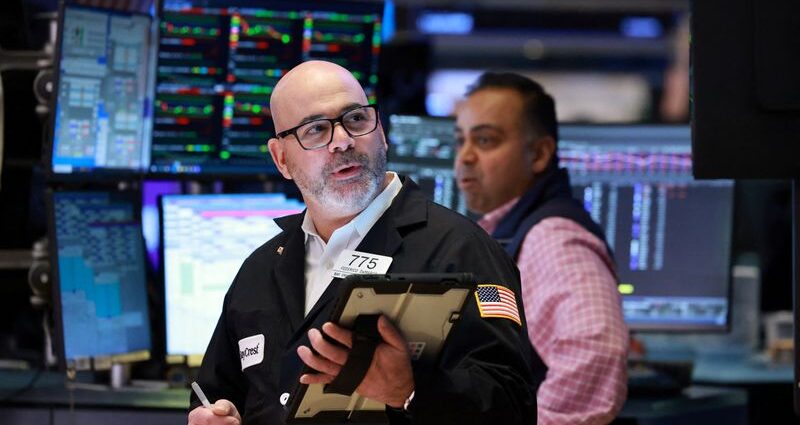

Great Recession’s Impact on the Housing Market: A Closer Look
This post was originally published here
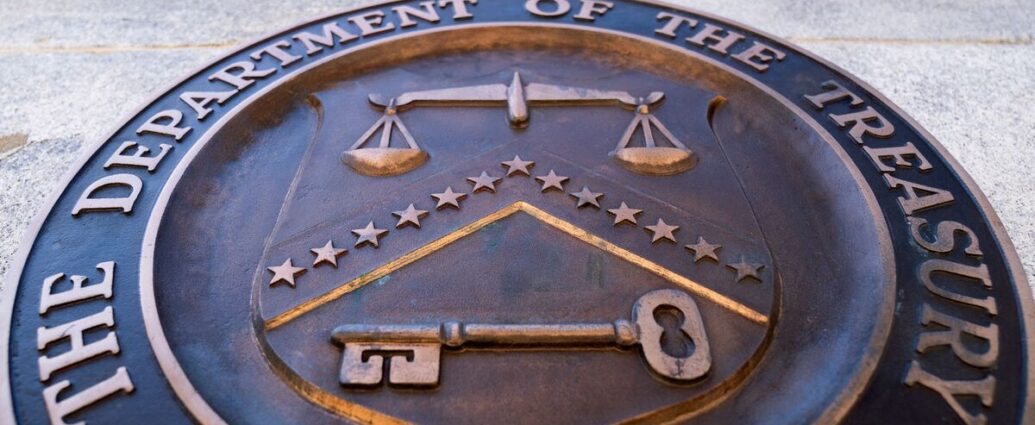

Iran threatens strikes on Gulf power plants following Trump’s Strait of Hormuz ultimatum
Iran warned it could start striking power plants across the Gulf region, after President Trump threatened to hit Iran’s energy infrastructure unless Tehran opens the Strait of Hormuz when his 48 hour ultimatum expires on Monday.
(Image credit: Getty Images)

This post was originally published here
UK mortgage interest rates will rise four times this year, markets predict
Investors believe Bank of England is likely to act amid sustained rise in inflation from Iran war
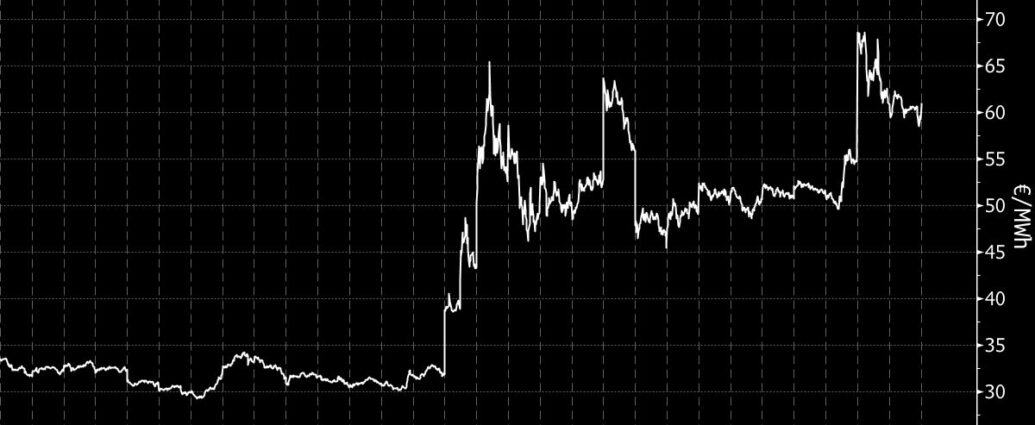
The Bank of England will raise the cost of borrowing four times this year, pushing UK interest rates from 3.75% to 4.75% amid the conflict in the Middle East, according to financial market speculators.
In a blow to mortgage payers, international investors are betting that the UK is vulnerable to a sustained rise in inflation after the US-Israel attack on Iran.
This post was originally published here

Why Faraday Future Intelligent Electric Shares Are Trading Higher By Around 55%; Here Are 20 Stocks Moving Premarket
Shares of Faraday Future Intelligent Electric Inc (NASDAQ:FFAI) gained 54.8% to $0.42 in pre-market trading after the company gained regulatory clarity as SEC ended years-long investigation with no penalties or enforcement action against company or related persons.
Faraday Future Intelligent Electric shares jumped 54.8% to $0.42 in the pre-market trading session.
Here are some other stocks moving in pre-market trading.
Gainers
- Mangoceuticals Inc (NASDAQ:MGRX) surged 64.6% to $0.27 in pre-market trading after dipping around 55% on Friday. Mangoceuticals recently announced it filed a lawsuit against Clarity Ventures.
- Firefly Neuroscience Inc (NASDAQ:AIFF) gained 27.4% to $1.95 in pre-market trading after dipping 30% on Friday.
- WeShop Holdings Ltd (NASDAQ:WSHP) gained 19.1% to $13.89 in pre-market trading. WeShop recently announced that holders of the WeShop Performance Incentive Grants have exercised their grants to purchase the Company’s Class A ordinary shares.
- Zhengye Biotechnology Holding Ltd (NASDAQ:ZYBT) gained 18.8% to $0.84 in pre-market trading.
- Above Food Ingredients Inc (NASDAQ:ABVE) gained 16.3% …
This post was originally published here

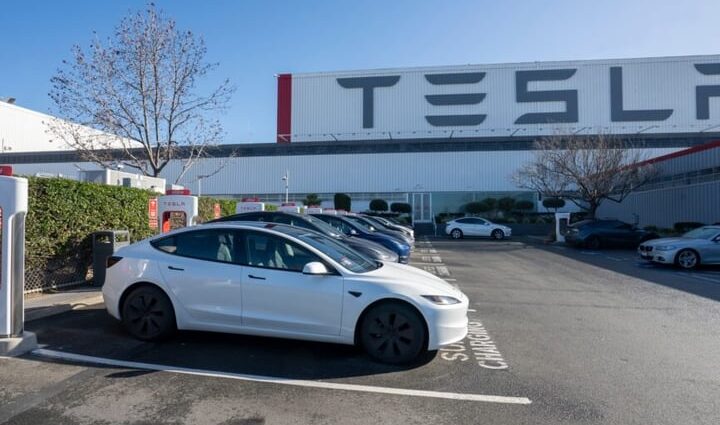
Gene Munster Says Self-Driving Cars Will Drive First Real-World ‘Physical AI’ Adoption—Hails Tesla FSD, Waymo
Investor Gene Munster of Deepwater Asset Management thinks that self-driving cars would demonstrate the first real-world adoptions of physical AI.
‘Buckle Up,’ Says Gene Munster
Taking to the social media platform X on Sunday, the investor shared an article by the Wall Street Journal, which discussed the advent of self-driving cars. “Buckle up,” the investor said, adding that the “first wave of physical AI” adoption at scale would be autonomous vehicles.
To back up his prediction, the investor cited developments in self-driving technology made by Tesla Inc. (NASDAQ:TSLA) and Alphabet Inc.’s (NASDAQ:GOOGL) (NASDAQ:GOOG) Waymo.
“Tesla’s FSD is making major gains, and Waymo is going from 6 cities at the end of 2025 to likely 25 by the end of 2026,” Munster said in the post.
This post was originally published here


Bill Ackman, Michael Burry Warn Trump: Government Treatment Of Fannie & Freddie Threatens Entire Banking Sector—’Let’s Stop The Steal’
Billionaire investor Bill Ackman and Michael Burry are urging President Donald Trump to end the government conservatorship of Fannie Mae (OTC:FNMA) and Freddie Mac (OTC:FMCC), warning that the ongoing seizure of the companies’ profits is “outright theft” that threatens the stability of the broader U.S. banking sector.
The ‘Net Worth Sweep’ Controversy
In a detailed public statement, Pershing Square’s Ackman argued that Fannie Mae and Freddie Mac (F2) have fully repaid their $193 billion government bailout, plus an additional $25 billion.
Despite this, the Treasury continues to hold the original liability on its balance sheets due to the Obama-era “Net Worth Sweep,” a unilateral amendment that directed 100% of F2’s profits to the government.
Ackman condemned the sweep as an unconstitutional maneuver designed to prevent F2 from ever recapitalizing, calling it the “outright theft of the forever profits of both companies.”
He clarified that shareholders are not seeking a handout, but are simply asking the government to honor the original bailout terms and properly account for the …
This post was originally published here

The Fed Is Keeping Rates High—So Why Is Your Bank Paying You So Little?
This post was originally published here
ABC journalists to strike for first time in 20 years with widespread news disruption expected
Union says below‑inflation pay rises and insecure work threaten the future of Australia’s public‑interest journalism
ABC journalists will walk off the job on Wednesday for the first time in 20 years, triggering severe disruption to the public broadcaster’s news services for 24 hours.
The protected industrial action involves staff in the journalists’ Media, Entertainment and Arts Alliance (MEAA) and the non-journalists’ Community and Public Sector Union (CPSU), which represents staff in technology and control systems.
This post was originally published here

Supermicro—accused of smuggling $2.5 billion in Nvidia chips and servers to China—has been here before, with Iran
Supermicro has spent the past three years riding the AI wave in Silicon Valley but before the recent allegations involving a co-founder smuggling Nvidia chips, it previously ran afoul of export-control regulations.
The hardware manufacturer’s co-founder, Yih-Shyan “Wally” Liaw, was charged on Thursday with conspiring to smuggle about $2.5 billion worth of highly coveted Nvidia GPUs in servers to China. Prosecutors claim that Liaw, along with Supermicro’s Taiwan general manager Ruei-Tsang “Steven” Chang, and a “fixer” named Ting-Wei “Willy” Sun, routed servers with banned Nvidia H200 and B200 GPUs through an unnamed Southeast Asian company to Chinese buyers who wanted the chips. Authorities arrested Liaw and Sun this past week. Chang remains a fugitive, according to the Department of Justice. The company has not been accused of wrongdoing, and neither have co-founders Charles Liang, who is the CEO and chairman, nor his wife, Sara Liu, a board member and co-founder.
In a statement Supermicro said Liaw resigned his board seat on Friday, and he remains on administrative leave, along with Chang. Sun was fired. Supermicro’s stock plummeted in trading on Friday, giving short sellers who have collectively bet $2.6 billion against the company a windfall. Shorts collected an estimated $860 million in single-day gains after the stock sank 33%, according to financial data firm S3 Partners. The day pushed their March gains to nearly $1 billion. Supermicro has said it is cooperating with law enforcement and it was not named in the indictment.
However, this isn’t Supermicro’s first brush with this type of export-control violation.
Court records and the company’s own disclosures show the latest allegations of smuggling to a restricted market show striking similarities to a 20-year-old enforcement action also involving the company, which was founded in 1993 by Liaw, Liang, and Liu. None of the three were named in the 2006 enforcement or charged with wrongdoing.
In 2006, Supermicro pleaded guilty in federal court to illegally exporting computer equipment to Iran, and paid a $150,000 fine to the Department of Justice. Separately, Supermicro settled a parallel action involving 12 charges related to sales of servers, motherboards, and computer chassis brought by the Commerce Department’s Bureau of Industry and Security (BIS) by paying a $125,400 civil penalty. The company also paid an additional $179,327 to the Treasury Department’s Office of Foreign Assets Control (OFAC) to settle allegations under the Iranian Transactions Regulation, a violation that OFAC said Supermicro did not voluntarily disclose to the regulator.
The two cases—separated by two decades and vast differences in scope—allegedly share a similar pattern. Find a neighboring country where it is legal to sell to, hide the real buyer, and ship the restricted tech to the illegal market.
A representative for Supermicro declined to comment on the Iran violations.
The scheme
The Iran tech sales took place between September 2001 and March 2003, court records show, about a decade after Liaw, Liang, and Liu, who serves as a senior vice president and member of the board, founded Supermicro.
According to the BIS charging document from 2006, Supermicro exported servers, motherboards, and computer chassis from the U.S. through the United Arab Emirates and then onto Iran on six separate occasions without the required licenses from OFAC. A distributor in Dubai served as the pass-through for the equipment. Officials said Supermicro’s “senior director of strategic sales knew of, or had reason to know” about the embargo on sales to Iran. BIS charged the company with three counts of selling goods knowing that export violations would occur and three counts of misrepresenting its shipper export declarations to the U.S. government by claiming it did not need a license to sell the hardware.
Supermicro settled the cases in September 2006 and cooperated with the government’s investigation, records show. It also implemented an in-house export control program before the BIS and DOJ formally brought charges. The sentencing memo stated that the fines were “sufficient to deter other companies from committing similar crimes.”
DOJ: The China conspiracy
The indictment unsealed this week claims that the accused trio of Liaw, Sun, and Chang allegedly conspired to route servers that included the Nvidia chips in 2024. The defendants allegedly sent the servers through an unnamed Southeast Asian company before they made their way to China. Liaw, Sun, and Chang could not be reached for comment.
The mechanics alleged in the indictment mirror the Iran violation from 20 years ago. In the alleged China scheme, the Southeast Asian company submitted repeat purchase orders to Supermicro purportedly for its own use. Instead, when the servers arrived after being assembled in the U.S., the Southeast Asian company allegedly sent them on to the real buyers in China. To keep it all hidden, the servers were allegedly repacked in unmarked boxes, the indictment states.
According to the indictment, the Southeast Asian company grew to become one of Supermicro’s biggest customers, ranking 11th globally in fiscal 2024 with $99.7 million in revenue. Ultimately, the total value of server sales grew to $2.5 billion, authorities claim.
Throughout the swell, Liaw was allegedly directing the activities behind the scenes, the indictment says.
In January 2025 when the Trump Administration announced new AI export restrictions slated to start on May 13, 2025, Liaw texted an executive at the Southeast Asian company, “We need to speed these up before May 13!” A few days later, the indictment notes, he texted again, “We can ship all your 512 x B200 by Feb. Let us run fast before May 13!” he wrote, referring to the Nvidia GPUs.
According to the indictment, the executive Liaw texted with wrote him in March and sent a news article about smugglers being accused of routing Nvidia chips to China and wrote, “I’m very concerned Wally.” Liaw wrote back trying to assuage his concerns and then continued making inquiries about the GPU orders, the indictment states. In August 2025, one of the brokers allegedly involved in the Supermicro scheme sent Liaw a link to a DOJ press release about more arrests for AI chip smuggling. Liaw replied with a string of sobbing-face emojis, the indictment states, and then kept working with Chang and Sun, authorities say.
The indictment notes that as the orders continued, the accused allegedly worked harder to keep it all secret. Supermicro’s compliance team started an audit in late 2024, the indictment states, which was around the time Supermicro was dealing with a cluster of issues in the U.S. Its auditor EY had resigned in October, the DOJ had opened an investigation into the company based on accounting allegations raised by a former employee, and it was at risk of being delisted by Nasdaq. It later hired BDO and its own internal investigation into its accounting found no evidence of wrongdoing. BDO has not been accused of wrongdoing in the smuggling case. BDO declined to comment.
During the 2024 audit during that heightened period, Chang allegedly arranged for a “friendly” auditor employed by Supermicro to conduct the inspection, the indictment states. When a second, more rigorous audit was set for August 2025, Sun and Chang allegedly staged hundreds of what authorities called “dummy” servers, which it defined as non-working physical replicas in Supermicro boxes.
The dummy servers were allegedly set up at the Southeast Asian company’s warehouses so auditors could confirm their arrival. Sun said the staging operation would need about 100 people, forklift operators, arranged meals, and a “20-person shuttle bus for easy travel between the hotel and the warehouse, allowing for short breaks,” the indictment states. During the actual audit, however, the indictment states that Supermicro’s compliance worker was off site “enjoying entertainment” on the Southeast Asian company’s dime, the indictment claims.
Sun texted Liaw to say the audit had run smoothly and included 2,107 units in three warehouses. Liaw wrote back, “That’s spectacular!” the indictment states, and continued placing new orders days later. In December 2025, BIS sent one of its own inspectors to do a post-shipment verification check. The indictment claims Sun allegedly set up the dummy servers again, using a hair dryer to peel off labels and serial-number stickers, which was captured on surveillance cameras. Authorities say Sun allegedly introduced himself as “Michael” and said he worked at the Southeast Asian company’s law firm while fielding questions from the federal BIS officer.
In the Iran case, Supermicro’s then-CFO Howard Hideshima signed off on its settlements with law enforcement. He served as the CFO from 2006 through 2018, before Nasdaq suspended the company from trading and formally delisted it in March 2019. In 2020, Hideshima and Supermicro were charged by the Securities & Exchange Commission for accounting-related issues. Hideshima was fined $50,000 by the regulator and left the company.
Liaw also left the company following the 2018 accounting scandal. The company brought him back as an adviser in “business development” in May 2021, and he returned to a full-time senior executive post in August 2022. In December 2023, he rejoined the board before his resignation this week.
On Friday, Supermicro said it appointed DeAnna Luna as its acting chief compliance officer. Luna joined Supermicro in 2024 as vice president of global trade and sanctions compliance.
This story was originally featured on Fortune.com
This post was originally published here
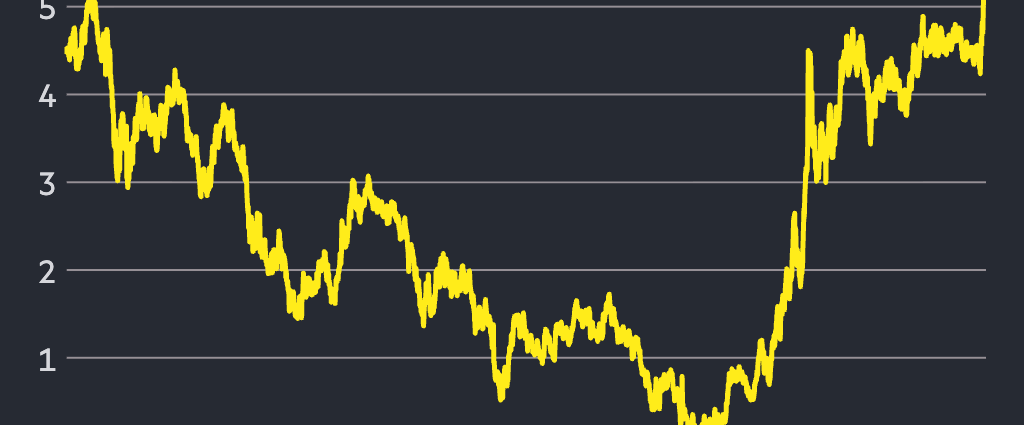
Gilt yields surge to highest level since 2008
This post was originally published here







We’re All Just ‘Monitoring the Situation’






Can’t Pay All Your Bills? Here’s What Experts Say to Cover First
This post was originally published here
Iran threatens U.S. Treasury buyers as Trump’s 48-hour ultimatum looms
Iran widened its warnings to target buyers of U.S. Treasury bonds, the latest salvo in an intensifying exchange of threats as the war entered its fourth week.
This post was originally published here

Exploring The Competitive Space: Automatic Data Processing Versus Industry Peers In Professional Services
In the dynamic and fiercely competitive business environment, conducting a thorough analysis of companies is crucial for investors and industry enthusiasts. In this article, we will perform an extensive industry comparison, evaluating Automatic Data Processing (NASDAQ:ADP) in relation to its major competitors in the Professional Services industry. By closely examining crucial financial metrics, market position, and growth prospects, we aim to offer valuable insights for investors and shed light on company’s performance within the industry.
Automatic Data Processing Background
ADP is a global technology company providing cloud-based human capital management solutions, enabling clients to better implement payroll, talent, time, tax, and benefits administration. Additionally, ADP provides human resources outsourcing solutions that permit customers to offload some of their traditional HR tasks. The company operates through two segments: employer services and professional employer organization services. Employer services consist of the company’s HCM products as well as a la carte HRO solutions. PEO services contain ADP’s comprehensive HRO solution, where it acts as a co-employer with its customer. As of fiscal 2025, ADP serves over 1.1 million clients and pays over 42 million workers across 140 countries.
| Company | P/E | P/B | P/S | ROE | EBITDA (in billions) | Gross Profit (in billions) | Revenue Growth |
|---|---|---|---|---|---|---|---|
| Automatic Data Processing Inc | 20.05 | 13.14 | 4 | 16.64% | $1.65 | $2.47 | 6.16% |
| Paychex Inc | 20.94 | 8.56 | 5.55 | 10.07% | $0.7 | $1.15 | 18.28% |
| Paycom Software Inc | 15.45 | 3.83 | 3.41 | 6.61% | $0.21 | $0.46 | 10.2% |
| Paylocity Holding Corp | 26.47 | 5.52 | 3.75 | 4.56% | $0.1 | $0.28 | 10.39% |
| Korn Ferry | 12.25 | 1.60 | 1.13 | 3.27% | $0.12 | $0.64 | 7.17% |
| Robert Half Inc | 17.51 | 1.85 | 0.43 | 2.48% | $0.04 | $0.49 | -5.79% |
| Trinet Group Inc | 11.82 | 33.14 | 0.37 | -1.22% | $0.03 | $0.17 | -2.27% |
| Upwork Inc | 13.42 | 2.33 | 2.01 | 2.48% | $0.04 | $0.15 | 3.62% |
| Barrett Business Services Inc | 13.43 | 2.92 | 0.59 | 6.82% | $0.02 | $0.07 | 5.35% |
| Kforce Inc | 13.46 | 3.86 | 0.35 | 4.02% | $0.01 | $0.09 | -3.42% |
| Fiverr International Ltd | 18.30 | 0.89 | 0.88 | 2.83% | $0.04 | $0.09 | 3.38% |
| Average | 16.3 | 6.45 | 1.85 | 4.19% | $0.13 | $0.36 | 4.69% |
This post was originally published here
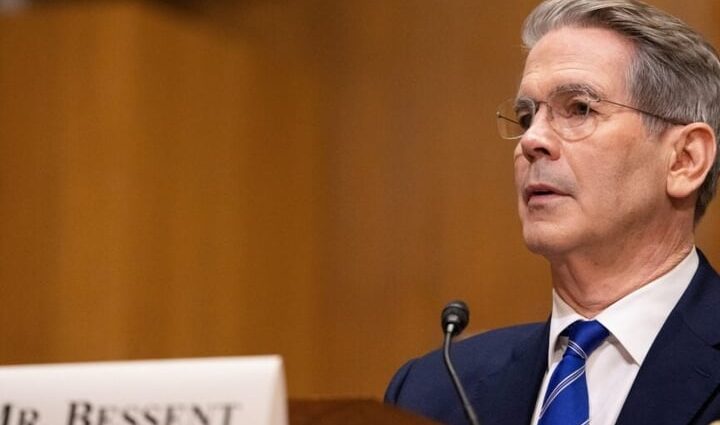
Scott Bessent Calls 50 Days Of ‘Temporary’ High Energy Prices A Trade-Off For Securing ’50 Years’ Of Nuclear-Free Iran
Treasury Secretary Scott Bessent defended the relaxation of sanctions on Iranian oil and the U.S. military strikes on Tehran’s infrastructure
Last week, the Treasury Department relaxed certain sanctions on Iran, thereby permitting the sale of Iranian oil that was previously stranded at sea. On Sunday, Bessent, on “Meet the Press” on NBC News, explained that this move was designed to tackle the escalating energy costs.
He also announced that this decision is expected to introduce approximately 140 million barrels of oil into the global markets, thereby relieving temporary supply pressures instigated by Iran.
Despite the ongoing conflict, the decision to economically empower Iran was questioned by some experts. To this, Bessent responded that the oil was always meant to be sold to China at a discounted rate. He referred to the decision as “jujitsuing the Iranians” by turning their own oil against them.
When questioned about the potential impact on consumer prices, Bessent refrained from providing a …
This post was originally published here

Industry Comparison: Evaluating Analog Devices Against Competitors In Semiconductors & Semiconductor Equipment Industry
In today’s fast-paced and competitive business landscape, it is essential for investors and industry enthusiasts to thoroughly analyze companies before making investment decisions. In this article, we will conduct a comprehensive industry comparison, evaluating Analog Devices (NASDAQ:ADI) against its key competitors in the Semiconductors & Semiconductor Equipment industry. By examining key financial metrics, market position, and growth prospects, we aim to provide valuable insights for investors and shed light on company’s performance within the industry.
Analog Devices Background
Analog Devices is a leading analog, mixed-signal, and digital-signal processing chipmaker. The firm has a significant market share lead in converter chips, which are used to translate analog signals to digital and vice versa. The company serves tens of thousands of customers; more than half of its chip sales are to industrial and automotive end markets. ADI’s chips are also incorporated into wireless infrastructure equipment.
| Company | P/E | P/B | P/S | ROE | EBITDA (in billions) | Gross Profit (in billions) | Revenue Growth |
|---|---|---|---|---|---|---|---|
| Analog Devices Inc | 56.57 | 4.47 | 13.03 | 2.46% | $1.52 | $2.04 | 30.42% |
| NVIDIA Corp | 35.24 | 26.68 | 19.61 | 31.11% | $51.28 | $51.09 | 73.21% |
| Broadcom Inc | 60.53 | 18.41 | 22.13 | 9.12% | $11.15 | $13.16 | 29.47% |
| Micron Technology Inc | 19.96 | 6.58 | 8.25 | 21.0% | $18.48 | $17.75 | 196.29% |
| Advanced Micro Devices Inc | 77.14 | 5.21 | 9.51 | 2.44% | $2.86 | $5.58 | 34.11% |
| Texas Instruments Inc | 34.35 | 10.47 | 9.67 | 7.03% | $2.07 | $2.47 | 10.38% |
| Qualcomm Inc | 26.19 | 6.01 | 3.17 | 13.57% | $4.11 | $6.68 | 5.0% |
| Marvell Technology Inc | 28.64 | 5.37 | 9.33 | 2.79% | $0.75 | $1.15 | 22.08% |
| Monolithic Power Systems Inc | 83.11 | 14.87 | 18.50 | 4.95% | $0.21 | $0.41 | 20.83% |
| NXP Semiconductors NV | 24.07 | 4.81 | 3.97 | 4.53% | $0.98 | $1.81 | 7.2% |
| GLOBALFOUNDRIES Inc | 27.09 | 1.98 | 3.54 | 1.68% | $0.73 | $0.51 | 0.0% |
| ON Semiconductor Corp | 204.34 | 3.04 | 4.07 | 2.33% | $0.45 | $0.55 | -11.17% |
| First Solar Inc | 13.57 | 2.17 | 3.97 | 5.62% | $0.7 | $0.67 | 11.15% |
| Astera Labs Inc | 95.11 | 14.48 | 24.44 | 3.41% | $0.07 | $0.2 | 91.77% |
| Tower Semiconductor Ltd | 84.45 | 6.31 | 11.88 | 2.78% | $0.13 | $0.09 | 11.26% |
| Credo Technology Group Holding Ltd | 56.81 | 10.32 | 17.98 | 10.03% | $0.16 | $0.28 | 201.49% |
| MACOM Technology Solutions Holdings Inc | 99.08 | 12.14 | 16.08 | 3.64% | $0.07 | $0.15 | 24.52% |
| Lattice Semiconductor Corp | 4430.50 | 16.97 | 23.41 | -1.08% | $0.01 | $0.1 | 24.16% |
| Rambus Inc | 43.47 | 7.27 | 14.16 | 4.81% | $0.09 | $0.15 | 18.09% |
| Average | 302.43 | 9.62 | 12.43 | 7.21% | $5.24 | $5.71 | 42.77% |
This post was originally published here

Inquiry Into Adobe’s Competitor Dynamics In Software Industry
Amidst the fast-paced and highly competitive business environment of today, conducting comprehensive company analysis is essential for investors and industry enthusiasts. In this article, we will delve into an extensive industry comparison, evaluating Adobe (NASDAQ:ADBE) in comparison to its major competitors within the Software industry. By analyzing critical financial metrics, market position, and growth potential, our objective is to provide valuable insights for investors and offer a deeper understanding of company’s performance in the industry.
Adobe Background
Adobe provides content creation, document management, and digital marketing and advertising software and services to creative professionals and marketers for creating, managing, delivering, measuring, optimizing, and engaging with compelling content multiple operating systems, devices, and media. The company operates with three segments: digital media content creation, digital experience for marketing solutions, and publishing for legacy products (less than 5% of revenue).
| Company | P/E | P/B | P/S | ROE | EBITDA (in billions) | Gross Profit (in billions) | Revenue Growth |
|---|---|---|---|---|---|---|---|
| Adobe Inc | 14.46 | 8.85 | 4.26 | 16.39% | $2.51 | $5.54 | 3.29% |
| Palantir Technologies Inc | 239.17 | 48.78 | 86.37 | 8.71% | $0.58 | $1.19 | 70.0% |
| Salesforce Inc | 25.05 | 3.05 | 4.50 | 3.26% | $3.27 | $8.69 | 12.09% |
| AppLovin Corp | 44.06 | 69.90 | 27.60 | 61.09% | $1.34 | $1.47 | 65.88% |
| Intuit Inc | 29.64 | 6.61 | 6.38 | 3.61% | $1.14 | $3.61 | 17.36% |
| Synopsys Inc | 64.52 | 2.64 | 9.15 | 0.22% | $0.69 | $1.77 | 65.52% |
| Cadence Design Systems Inc | 69.93 | 14.31 | 14.65 | 7.27% | $0.59 | $1.25 | 6.2% |
| Autodesk Inc | 47.42 | 17.18 | 7.40 | 10.64% | $0.58 | $1.79 | 19.4% |
| Datadog Inc | 403.48 | 11.86 | 13.27 | 1.3% | $0.08 | $0.77 | 29.21% |
| Roper Technologies Inc | 24.91 | 1.83 | 4.84 | 2.15% | $0.86 | $1.43 | 9.67% |
| Workday Inc | 52.49 | 4.48 | 3.82 | 1.74% | $0.39 | $1.92 | 14.52% |
| Zoom Communications Inc | 12.40 | 2.30 | 4.84 | 7.06% | $0.28 | $0.95 | 5.31% |
| PTC Inc | 22.06 | 4.64 | 6.31 | 4.34% | $0.25 | $0.57 | 21.36% |
| Trimble Inc | 37.35 | 2.63 | 4.42 | 2.69% | $0.25 | $0.7 | -1.38% |
| Tyler Technologies Inc | 48.64 | 4.07 | 6.58 | 1.79% | $0.12 | $0.26 | 6.29% |
| HubSpot Inc | 300.94 | 6.61 | 4.40 | 2.78% | $0.1 | $0.71 | 20.42% |
| IREN Ltd | 28.69 | 5.46 | 16.28 | -5.77% | $-0.23 | $0.11 | 59.02% |
| Guidewire Software Inc | 146.80 | 8.63 | 10.52 | 2.09% | $0.03 | $0.21 | 26.53% |
| Bentley Systems Inc | 44.53 | 9.64 | 8.39 | 4.92% | $0.1 | $0.32 | 11.94% |
| Average | 91.23 | 12.48 | 13.32 | 6.66% | $0.58 | $1.54 | 25.52% |
This post was originally published here

Comparing Airbnb With Industry Competitors In Hotels, Restaurants & Leisure Industry
In the ever-evolving and intensely competitive business landscape, conducting a thorough company analysis is of utmost importance for investors and industry followers. In this article, we will carry out an in-depth industry comparison, assessing Airbnb (NASDAQ:ABNB) alongside its primary competitors in the Hotels, Restaurants & Leisure industry. By meticulously examining key financial metrics, market positioning, and growth prospects, we aim to offer valuable insights to investors and shed light on company’s performance within the industry.
Airbnb Background
Airbnb is the world’s largest online alternative accommodation travel agency; it also offers booking services for boutique hotels, experiences, and hotel-like services. Airbnb’s platform offers over 9 million active accommodation listings. Listings from the company’s 5 million-plus hosts are spread over almost every country in the world. In 2025, 42% of revenue was from North America, 39% from Europe, the Middle East, and Africa, 10% from Latin America, and 9% from Asia-Pacific. Transaction fees for online bookings account for all its revenue.
| Company | P/E | P/B | P/S | ROE | EBITDA (in billions) | Gross Profit (in billions) | Revenue Growth |
|---|---|---|---|---|---|---|---|
| Airbnb Inc | 31.89 | 9.40 | 6.54 | 4.06% | $0.27 | $2.29 | 12.02% |
| Royal Caribbean Group | 16.89 | 7.11 | 4.03 | 7.49% | $1.57 | $2.02 | 13.21% |
| Carnival Corp | 11.94 | 2.72 | 1.27 | 3.49% | $1.45 | $2.42 | 6.6% |
| Viking Holdings Ltd | 26.46 | 27.71 | 4.67 | 31.67% | $0.45 | $0.71 | 27.76% |
| Expedia Group Inc | 23.97 | 22.44 | 2.11 | 15.64% | $0.59 | $3.2 | 11.4% |
| Norwegian Cruise Line Holdings Ltd | 20.60 | 3.91 | 0.92 | 0.65% | $0.55 | $0.92 | 6.4% |
| Choice Hotels International Inc | 12.36 | 24.77 | 2.85 | 38.3% | $0.12 | $0.21 | 0.1% |
| Hilton Grand Vacations Inc | 45.21 | 2.54 | 0.73 | 3.59% | $0.25 | $2.34 | 3.82% |
| Global Business Travel Group Inc | 24.82 | 1.78 | 0.99 | 5.29% | $0.14 | $0.45 | 34.01% |
| Average | 22.78 | 11.62 | 2.2 | 13.27% | $0.64 | $1.53 | 12.91% |
This post was originally published here
Insights Into Apple’s Performance Versus Peers In Technology Hardware, Storage & Peripherals Sector
In today’s rapidly changing and highly competitive business world, it is vital for investors and industry enthusiasts to carefully assess companies. In this article, we will perform a comprehensive industry comparison, evaluating Apple (NASDAQ:AAPL) against its key competitors in the Technology Hardware, Storage & Peripherals industry. By analyzing important financial metrics, market position, and growth prospects, we aim to provide valuable insights for investors and shed light on company’s performance within the industry.
Apple Background
Apple is among the largest companies in the world, with a broad portfolio of hardware and software products targeted at consumers and businesses. Apple’s iPhone makes up a majority of the firm sales, and Apple’s other products like Mac, iPad, and Watch are designed around the iPhone as the focal point of an expansive software ecosystem. Apple has progressively worked to add new applications, like streaming video, subscription bundles, and augmented reality. The firm designs its own software and semiconductors while working with subcontractors like Foxconn and TSMC to build its products and chips. Slightly less than half of Apple’s sales come directly through its flagship stores, with a majority of sales coming indirectly through partnerships and distribution.
| Company | P/E | P/B | P/S | ROE | EBITDA (in billions) | Gross Profit (in billions) | Revenue Growth |
|---|---|---|---|---|---|---|---|
| Apple Inc | 31.39 | 41.28 | 8.49 | 52.0% | $54.07 | $69.23 | 15.65% |
| Western Digital Corp | 27.70 | 13.97 | 10.09 | 27.66% | $2.11 | $1.38 | 25.24% |
| Seagate Technology Holdings PLC | 46.47 | 200.71 | 9.08 | 299.49% | $0.85 | $1.18 | 21.51% |
| Everpure Inc | 113.87 | 14.30 | 5.86 | 7.04% | $0.1 | $0.7 | 9.79% |
| NetApp Inc | 16.96 | 17.23 | 3.06 | 31.16% | $0.51 | $1.21 | 4.39% |
| Logitech International SA | 18.43 | 5.52 | 2.75 | 11.36% | $0.31 | $0.61 | 6.06% |
| Super Micro Computer Inc | 14.99 | 1.76 | 0.47 | 5.93% | $0.55 | $0.8 | 123.36% |
| Diebold Nixdorf Inc | 28.13 | 2.28 | 0.70 | 4.49% | $0.11 | $0.28 | 11.66% |
| Turtle Beach Corp | 14.57 | 1.71 | 0.72 | 14.73% | $0.02 | $0.05 | -18.69% |
| Average | 35.14 | 32.19 | 4.09 | 50.23% | $0.57 | $0.78 | 22.91% |
This post was originally published here

Every CEO is a wartime CEO now—regardless of geopolitical conflict
- In today’s CEO Daily: Diane Brady on how a wartime mindset is the new default.
- The big story: Is Cursor dead?
- The markets: Down big as Trump and Tehran exchange threats.
- Plus: All the news and watercooler chat from Fortune.
Good morning. To some extent, every CEO is a wartime CEO when their country is at war. But the concept, and the characteristics that go with it, extend far beyond geopolitics. As Fortune’s Geoff Colvin points out in this piece, Shell put military-style scenario planning at the heart of its corporate decision-making in the 1970s. I’ve talked about the concept of wartime and peacetime leadership with venture capitalist Ben Horowitz, who wrote about it 15 years ago, and leadership consultant Stephen Miles of TMG. When UiPath CEO Daniel Dines told me last week that “we treat this time as wartime,” he was talking not about Iran but his push to pivot the robotic process automation company he founded towards agentic AI.
What’s changed?
‘War’ is the norm – “Peacetime left us in March of 2020,” Miles told me yesterday. “The new world is now ambiguous, uncertain, and discontinuous … The world is hours, minutes and seconds, not quarters and years, and I don’t see that changing.” In his view, that calls for leadership that’s “total immersion, which provides much higher context and the ability to weak-signal detect so you get the whiffs of smoke before there is a forest fire.”
Anxiety, alignment and agency – For Horowitz, a peacetime CEO has a large advantage in a growing market; in war, they’re facing an “imminent existential threat.” The first is about expanding the market and reinforcing strengths, the latter is about speed and survival. As Dines put it: “In peacetime, you can tolerate different behaviors and try to adjust …We need to implement decisions faster and propagate them to the company much faster.” Anxiety is a motivator to go for it: “If you wait to see where the world is going, it’s not going to work.” Dines defines agency as “people with both expertise and the will to make things happen.”
People become disposable – In war, people die. The corporate equivalent is that they are fired. More risks are taken. Dissent isn’t tolerated and consensus isn’t a priority. There’s also more pressure at the top. My colleague Claire Zillman writes that, broadly speaking, the AI revolution is creating more CEO churn, according to Spencer Stuart. Feigen Advisors found that despite the headlines about skyrocketing turnover, leadership at a narrower band of companies—the top of half of the S&P 500—has held relatively steady, though it also found CEO turnover outside the U.S. is increasing. Does this mean America is winning the war? It depends, of course, on how you define the battlefield.
Contact CEO Daily via Diane Brady at diane.brady@fortune.com
This story was originally featured on Fortune.com
This post was originally published here
Consumer Price Index (CPI) Controversy: Inflation Measurement Debate
This post was originally published here

More than 40 Middle East energy assets ‘severely damaged,’ IEA chief says
The IEA’s Fatih Birol warned that damage to energy infrastructure across the Middle East would take some time to repair.
This post was originally published here

Bitcoin, Dogecoin Shaken By Iran War, But This Memecoin Defied Doom With 335% Surge
Geopolitical tensions crushed the more popular cryptocurrencies last week, but a few defiant underdogs bucked the trend.
Siren Surges Over 300%
BNB Chain (CRYPTO: BNB)-based Siren exploded 335% over the week, fueled by its listing on exchanges such as Binance Futures and Hashkey.
The memecoin, which draws inspiration from the legendary sirens of Greek mythology, hit an all-time high of $3.83 on Sunday, and its market capitalization ballooned from $456 million to $2.2 billion over the week.








Tax Refund Filing Strategies to Get Your Money Faster This Year
This post was originally published here



Gold Plummets Below $4,300 On Inflation, Rate Hike Jitters
(RTTNews) – Gold prices crashed on Monday due to inflation and rate-hike fears. Spot gold traded 4.7 percent lower at $4,279.27 an ounce, after having slumped to a low of $4,099.55 earlier. U.S. gold futures were down 6.4 percent at $4,315.54.
This post was originally published here


Tesla Rival XPeng Sets Up Robotaxi Unit Ahead Of Commercial Rollout: Report
XPeng Inc. (NYSE:XPEV) is reportedly establishing a dedicated Robotaxi division within the company, signalling that it is ramping up efforts to execute a planned commercial Robotaxi rollout in the future.
A Robotaxi Division
The Tesla Inc. (NASDAQ:TSLA) rival has established the division as a tier-one organization, which will collaborate with various other divisions like R&D testing and product definition, according to a report on Monday by CnEVPost, citing anonymous sources.
Xpeng didn’t immediately respond to Benzinga‘s request for comment.
The division would help Xpeng accelerate the rollout of its planned Robotaxi. The company’s CEO, He Xiaopeng, had said that the …
This post was originally published here

Oil Climbs After Trump Ultimatum
(RTTNews) – Oil prices surged on Monday as the war between the United States and Iran’s regime entered an unprecedented phase, escalating fears of a wider regional conflict and raising concerns over disruptions to the global supply chain.
This post was originally published here

Berkshire Hathaway to take $1.8bn stake in Tokio Marine
This post was originally published here






How Does Your Credit Card Bill Stack Up Against the US Average Today?
This post was originally published here

With more older drivers on the road, states try to balance safety and mobility
The number of older drivers on the road is climbing. Safety advocates want tougher rules for relicensing, but many drivers say they shouldn’t be forced to give up their mobility because of age alone.
(Image credit: Courtesy of Angela Zodrow)

This post was originally published here

What does a ‘GLP-1 Friendly’ diet look like? We asked nutritionists
Big food companies are starting to market to people on the powerful new obesity meds with labels that say “GLP-1 Friendly.” Nutritionists help us decode that message.
(Image credit: Beck Harlan for NPR)

This post was originally published here
ICE’s growing detention footprint, and the communities fighting back
<img src="https://www.npr.org/2026/03/23/g-s1-114107/undefined" alt='This map, created with overnment data provided by ICE in response to a FOIA request by the Deportation Data Project and analyzed by NPR, shows book-ins at facilities across the country between Jan. 20 and mid-October 2025.’>
Resistance in both Democratic and Republican cities points to broader unease with the direction of immigration enforcement.
(Image credit: Brent Jones)

This post was originally published here

As D.C.’s cherry blossom trees near peak bloom, here’s a guide to their history
The renowned trees along Washington, D.C’s Tidal Basin were sent as a gift from Japan in 1912. Some of the original trees are still there.
(Image credit: Kayla Bartkowski)

This post was originally published here
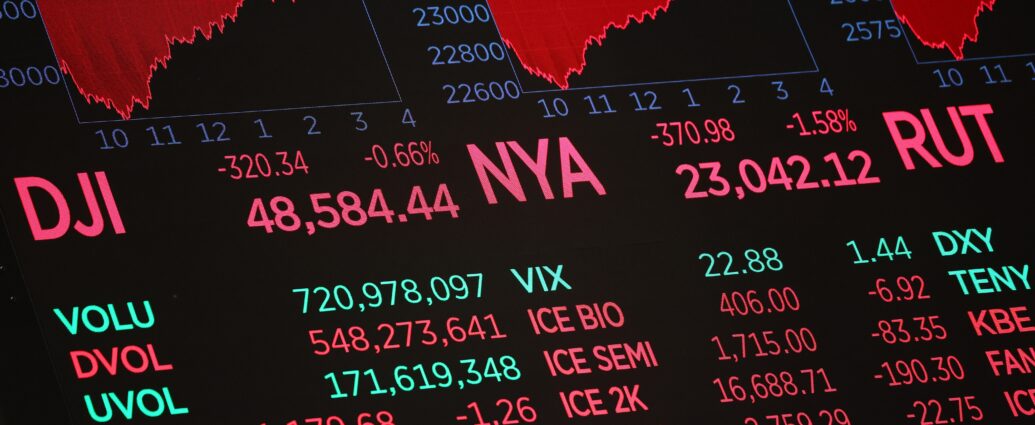
Worried about a shaky stock market? This is what financial advisers suggest you do
Their answer depends on how soon you need to tap into your funds — and it might simply be “do nothing.”
(Image credit: Michael M. Santiago)

This post was originally published here

Alibaba.com President: The one-person unicorn is coming. AI is making it possible
For decades, building a billion-dollar company required a village. Raise massive capital, hire hundreds of people, build a sprawling department for every operational headache — from VAT compliance in Marseille to sourcing logistics in Shenzhen. Headcount was power. Scale required sacrifice of autonomy.
That equation is breaking down. The “Execution Wall” that once separated the solo entrepreneur from the multinational corporation is crumbling — not because the giants are fading, but because the tools of scale have finally been democratized. We are entering the age of the One-Person Unicorn.
From Busywork to Strategic Command
The solo founder was historically a jack-of-all-trades and master of none. Ten hats, and eight of them — labeled “Procurement,” “Customs,” and “Compliance”— never fit. To scale, entrepreneurs often had to surrender their autonomy to investors just to fund the headcount needed to handle the boring-but-vital heavy lifting.
Unlike earlier automation, agentic AI doesn’t just follow a script — it reasons, adapts, and executes. This shifts how we interact with technology: away from clicking through dashboards and menus, toward a language-based interface where complex end-to-end workflows are triggered by intent rather than manual data entry. Enterprise AI agents can now navigate the full labyrinth of global trade — from RFQs to cross-border payments — freeing founders to reclaim their time for strategy.
The Shift From B2B to A2A
The real power of the One-Person Unicorn isn’t just internal efficiency; It’s how they interact with the world.
Global trade has historically been a sluggish game of human-to-human coordination: email chains, manual vetting, and midnight phone calls across time zones.
The future looks radically different.
Agent-to-Agent (A2A) interaction — where a buyer’s AI and a seller’s AI communicate directly through APIs — can compress weeks of supplier negotiations and logistics coordination into minutes of high-fidelity data exchange.
When the “cost of execution” collapses toward zero, a lone entrepreneur gains the operational reach of a Fortune 500 company. That’s not a metaphor. It’s an emerging structural reality. That’s not a metaphor. It’s an emerging structural reality.
What This Means for the Workforce
This transition inevitably raises employment questions. But what’s unfolding is less a story of displacement than of professional elevation.
By absorbing the shadow work of administration, AI raises the floor for individual capability. We see this in the way tools like Accio Work provide an immediate operational backbone for the solo entrepreneur, bypassing the need for a traditional back-office — providing an immediate operational backbone that bypasses the traditional back-office entirely.
The boundary between “employee” and “owner” is beginning to blur. A generation of specialists now has the infrastructure to launch global ventures without a single hire.
The Leadership Bar Just Got Higher
Democratized power comes with a significant catch: as the barrier to entry falls, the bar for leadership rises.
In this new economy, grinding through administrative tasks is no longer a badge of honor — it’s a failure of leverage. The competitive advantages of the next decade won’t be technical proficiency or a massive payroll. They’ll be judgment, taste, and strategic vision. The AI can execute the workflow, but the human must supply the direction and quality control. The bottleneck is no longer a lack of resources, but a potential lack of imagination. It’s a potential lack of imagination.
The Invisible Office Is Already Open
The gap between a small business and a global powerhouse is narrowing faster than most leaders realize. The One-Person Unicorn is no longer a theoretical outlier — it’s a model emerging on the horizon for a world where capability, not headcount, defines a firm’s reach.
The question is no longer whether this future is coming. It’s whether you’ll be ready to lead it.
The opinions expressed in Fortune.com commentary pieces are solely the views of their authors and do not necessarily reflect the opinions and beliefs of Fortune.
This story was originally featured on Fortune.com
This post was originally published here

A LaGuardia crash kills 2, hurts dozens and closes the airport. Here’s what to know
An Air Canada regional jet hit a fire truck while landing at LaGuardia on Sunday night, killing both pilots. At least nine people are hospitalized, and the airport is closed Monday morning.
(Image credit: Timothy A. Clary)

This post was originally published here

Pilot and copilot killed in collision between jet and fire truck at LaGuardia
Two people were killed and several others badly hurt when an Air Canada regional jet struck a fire truck on a runway while landing at New York’s LaGuardia Airport late Sunday night, officials said.
(Image credit: Ryan Murphy)
This post was originally published here

Flights disrupted after crash at NY’s LaGuardia airport kills two people
This post was originally published here

Mark Zuckerberg Developing Personal AI Agent As Meta Pushes Efficiency, AI-Driven Workflows: Report
In a bid to streamline his executive duties, Mark Zuckerberg, CEO of Meta Platforms Inc. (NASDAQ:META), is reportedly in the process of developing a personal artificial intelligence (AI) agent.
The AI agent, currently under development, aims to fast-track Zuckerberg’s access to information, bypassing the usual personnel layers, reported the Wall Street Journal on Sunday.
An additional AI tool, dubbed “Second Brain”, is also gaining popularity within the company. Created by a Meta employee, it can index and query documents for projects and is described as an “AI chief of staff”.
Meta did not immediately respond to Benzinga’s request for comments.
Big Bet On AI-Driven Future
Meta’s recent acquisition of Moltbook, a platform where AI agents interact and post content, …
This post was originally published here
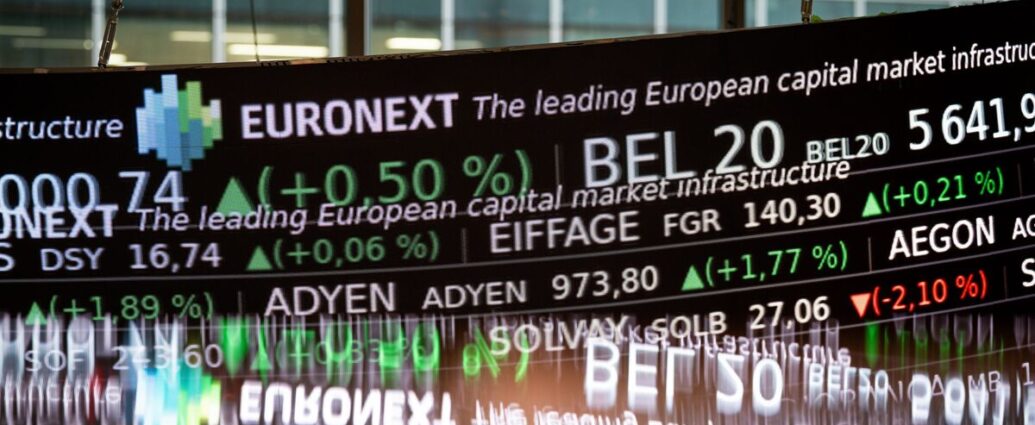



European Stocks Sink Into Correction on Trump’s Iran Escalation
European stocks slumped, with the Stoxx Europe 600 Index on course for a correction from its February record high, as the conflict in the Middle East escalated.
The Stoxx Europe 600 was down 1.5% by 8:21 a.m. in London, leaving it more than 11% below its February peak and in technical correction. Sectors retreated across the board, with industrials and mining shares among the biggest laggards.

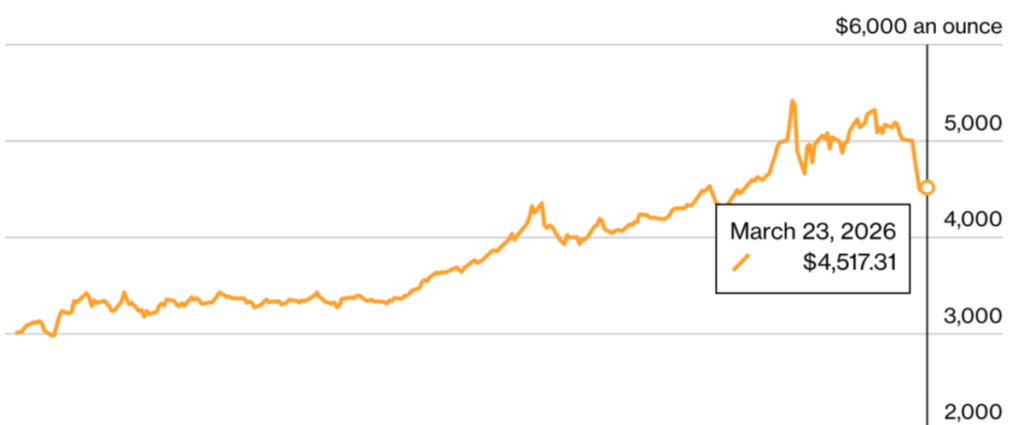
Gold’s Worst Week In 40 Years: What This Means For Your Gold Strategy
Gold prices dropped to less than $4,400 an ounce on Monday as they fell for a fourth week. The precious metal fell by 3.8% to near $4,320.30 an ounce as it erases its previous gains.
This comes as the U.S.-Iran war continues to worsen. President Donald Trump recently threatened to strike Iran’s power plants if they did not reopen the Strait of Hormuz. In response, Iran threatened to attack important US and Israeli installations in the region if its energy facilities are hit.
Last time, the value of gold declined as sharply as this in a week was in 1983. In that year, oil-producing countries in the Middle East sold their gold reserves as their oil revenues declined. The same region has caused a similar crash in the market as it did over 40 years ago.
The key question now is, how did this derail gold’s earlier bullish run? While we have enjoyed record highs in the asset since last year, it is now falling faster than expected. In other words, how exactly are the Middle East oil tensions actually weighing the precious metal down ?
Why Exactly Do Gold Prices Drop When Oil Tensions Rise
Normally, in times of turmoil, investors tend to invest in gold, as it is expected that it will hold its value in case of a rise in inflation, a fall in currencies, or a crisis.
However, rising energy prices due to the Middle East conflict are causing central banks across the globe to reassess their interest rate outlook. The factor is particularly important because of its impact on assets.
This is mainly because gold does not pay …
This post was originally published here

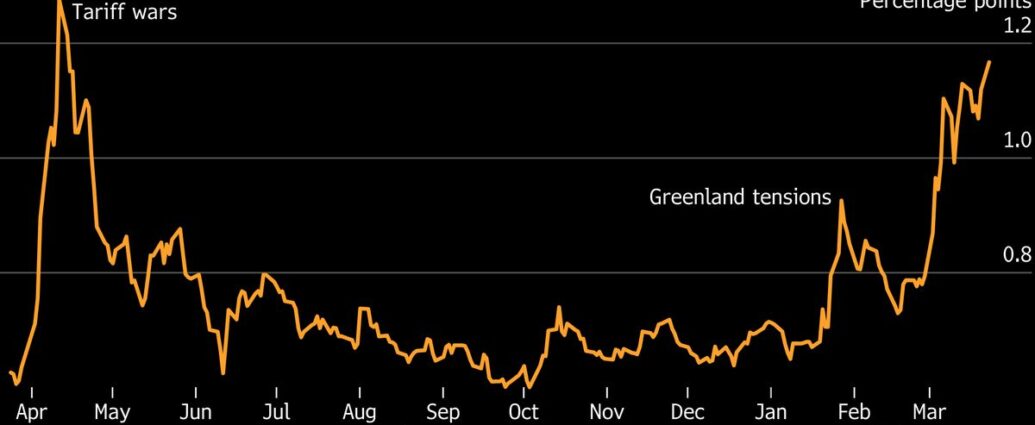
Bonds Lose $2.5 Trillion in Iran War Wipeout That Mirrors 2022
The specter of stagflation caused by the Iran war has wiped out more than $2.5 trillion from the value of global bonds in March, on track for the biggest monthly loss in more than three years.
Bonds are tumbling as a surge in oil prices quickens inflation, which erodes the value of the fixed payments from debt. While the slide in bonds’ market value is less than the roughly $11.5 trillion lost in global equities, it’s perhaps more unexpected as debt typically gains in times of geopolitical turmoil.

Danone to Buy UK Protein Drinks Maker Huel in Nutrition Push
Danone SA will acquire UK-based fortified drinks maker Huel, as part of the French food company’s push into functional nutrition.
The deal is subject to regulatory approval, Danone said in a statement Monday, without providing financial terms. Shares of Danone slipped 0.7% in early trading in Paris. They are down about 11% this year.


Gold Drops Over 22%, Enters Bear Market As Inflation And Oil Surge Pressure Prices
Gold has plummeted into a bear market, shedding over 22% from its January record highs, as soaring oil prices tied to the escalating U.S.-Iran conflict trigger fears of persistent inflation and an increasingly hawkish Federal Reserve.
The Safe-Haven Paradox
The precious metal hit an all-time high of $5,589 per ounce in January. However, at the last check, gold was trading at $4,357.29, down 22.12% from the record, marking a historic sell-off.
Independent researcher at Ash & Seed Press, Shanaka Anslem Perera, noted the paradox: the war caused oil to spike above $112, which fanned inflation. Brent crude futures currently remain elevated near $107.86, while WTI sits at $98.81.
Fed Holds Steady Amid Oil Shock
Responding to the persistence of inflation, the Federal Open Market Committee maintained …



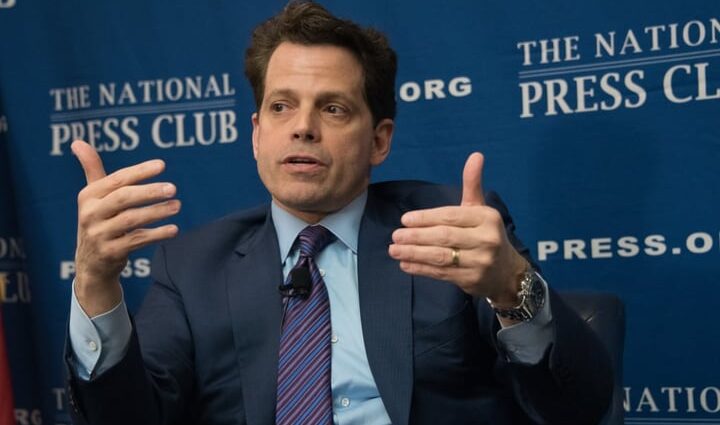
Anthony Scaramucci Sets $1 Million Bitcoin Target By 2032, Explains Why He’s Buying Now: ‘You Can’t Be In The Market Like Me For 38 Years And….’
Anthony Scaramucci, founder of asset management firm SkyBridge Capital, said in an interview aired Sunday that he has been buying Bitcoin (CRYPTO: BTC) at compressed prices and explained the rationale behind the move.
The $1 Million BTC Target
Appearing on The Wolf Of All Streets Podcast with Scott Melker, Scaramucci stated that Skybridge Capital has set a $1 million price target for Bitcoin by 2032, factoring in the 2028 halving event and the 4-year cycle.
“So if you get the opportunity to buy it here, then buy it,” Scaramucci added.
Full story available on Benzinga.com



Exclusive: Interloom, a startup capturing ‘tacit knowledge’ to power AI agents, raises $16.5 million in venture funding
Michael Polyani, the British-Hungarian philosopher, economist, and scientist, is perhaps best known today for coining the term “tacit knowledge.” His great observation was that a large part of what constitutes expertise in any given field is never written down. In some cases, it exists only as a kind of professional intuition that even the expert can’t fully articulate. “We know more than we can tell,” was Polyani’s famous catch phrase.
Today, tacit knowledge presents a challenge to companies that want to automate workflows with AI agents. Much—perhaps even most—of the knowledge these agents need is not written down.
Interloom, a Munich-based startup that is aiming to transform traditional business process automation for the AI age, thinks it can crack the problem of tacit knowledge. And it has just raised a new $16.5 million venture capital round to help it achieve that mission.
The funding is being led by DN Capital, with participation from Bek Ventures and existing investor Air Street Capital. The company previously announced a $3 million seed round in March 2024.
Interloom did not disclose its valuation after the new funding.
Fabian Jakobi, Interloom’s founder and CEO, argues that the current wave of excitement about AI agents overlooks the tacit knowledge bottleneck. About 70% of operational decisions have never been formally documented, he said. When a complex support ticket lands on a veteran staffer’s desk, they know the workaround, the right internal team to escalate to, and the resolution—not because it’s in a manual, but because they’ve seen it before.
“The most important person at the bank is the person who knows whether the documentation is right or not,” Jakobi told Fortune. “They’re often the lowest paid. But they determine quality.”
Interloom’s approach is to ingest millions of operational records—support emails, service tickets, call transcripts, work orders—and use them to build what it calls a “context graph,” a continuously updated map of how problems actually get resolved within a given organization. Jakobi likens the concept to Google Maps: just as Google learns optimal routes from real-time traffic data, Interloom maps the paths that operational experts take to solve problems, and uses those maps to guide AI agents and new employees alike.
Jakobi is a serial entrepreneur. He previously founded Boxplot, which in 2021 he sold to Hyperscience, a New York-based AI software company that specializes in extracting data from unstructured documents.
Interloom’s software is already live with several large European enterprises. At Commerzbank, Interloom analyzed millions of customer support emails and checked them against existing internal documentation—finding that much of it was either conflicting or incomplete. The company says it reduced the gap between documented and actual operational knowledge from roughly 50% to 5%. At Volkswagen, it is processing customer support tickets. And at Zurich Insurance, Interloom won a company-wide AI competition—beating out what Jakobi says were 2,000 other AI-native startups—for an underwriting use case.
An underwriting decision at an insurance firm, Jakobi said, reflects that company’s particular risk appetite, its accumulated experience with certain brokers and products, and institutional knowledge that no general-purpose model possesses.
“The Zurich underwriter knows how their broker chat underwriting works much better than Accenture does,” Jakobi said, taking aim at the large consulting firms that have traditionally dominated enterprise process work.
The broader argument is that AI agents, no matter how capable, are useless in large enterprises without organization-specific context. Jakobi frames this as the “corporate memory” problem.
“In software, the compiler tells you if the code works,” Jakobi said. “We don’t have that luxury [in other domains.] The evaluation has to come from a human expert.”
Interloom’s new backers agree with that thesis. Guy Ward Thomas, a partner at DN Capital, said that “an agent is only as good as the expert decisions it can rely on.” And Thomas said that DN Capital has seen with other AI agent startups that when these agents don’t have the right context about the enterprise in which they are being deployed, they rarely work well. “Our experience with vertical AI agents and voice platforms showed us how important context is,” he said.
Mehmet Atici of Bek Ventures previously backed UiPath, which had been the leader in the previous wave of RPA, or robotic process automation. But RPA relied on agents that were, for the most part, hard-coded to follow the same exact workflow in the same exact way every time. “We’ve seen automation’s transformative potential firsthand and we believe AI is now unlocking a new wave of rapid adoption in the enterprise,” Atici said.
Interloom’s timing may be propitious. The so-called “Great Retirement” is seeing roughly 10,000 Baby Boomers retiring daily in the U.S. Walking out the door with them is decades of institutional knowledge—just as companies are trying to deploy AI at scale.
Jakobi sees the competitive landscape in characteristically blunt terms. His biggest rival, he says, is inertia—the assumption within large enterprises that operations will continue to function as they have for the past decade.
Interloom’s next product push is what it is calling internally a “Chief of Staff”—a layer designed to give managers real-time visibility into how their AI agents are performing, complete with version control for agent-driven processes.
But Interloom is hardly the only company trying to create an AI agent management and orchestration layer. Almost every company marketing AI agents, from OpenAI to ServiceNow to Microsoft, has been working on similar kinds of products.
Jakobi, however, said that he thinks Interlooms “context graph” gives it a distinct advantage over these larger players, which he says rarely have insight across an entire complex process.
This story was originally featured on Fortune.com
This post was originally published here

Monday briefing: What a new Guardian podcast reveals about the US justice system
In today’s newsletter: Off Duty revisits the conviction of Alexander Villa, raising troubling questions about how it was built
Good morning. On the evening of 29 December 2011, Clifton Lewis – an off-duty Chicago police officer working as a security guard at a minimart on the city’s west side – was shot dead during a robbery. The killing prompted a huge manhunt and an intensive investigation by the Chicago police department. Years later, prosecutors said they had their man, and in 2019 Alexander Villa was convicted of Lewis’s murder and sentenced to life in prison.
But the case against Lewis has long been contested – and as the Guardian’s new investigative podcast series, Off Duty, explores, there are troubling questions about how that conviction was secured, from confessions that were later recanted to evidence that appears shaky or missing. And it revolves around a justice system that, once it settled on a suspect, seemed unwilling to reconsider.
Iran | The global energy crisis caused by the war in Iran is equivalent to the combined force of the twin oil shocks of the 1970s and the fallout of Russia’s invasion of Ukraine, the head of the International Energy Agency has warned.
UK news | Four ambulances belonging to the Jewish community ambulance service have been set on fire in Golders Green, with police saying they were treating the incident as an “antisemitic hate crime”.
Technology | Palantir is to be granted access to a trove of highly sensitive UK financial regulation data, in a deal that has prompted fresh concerns about the US AI company’s deepening reach into the British state, the Guardian can reveal.
UK news | An undercover police officer has admitted he was exposed as an infiltrator by his own blunder, which has been described by activists as worthy of Inspector Clouseau, the spycops public inquiry has heard.
Business | Several porridge products in the UK have been recalled over a possible mice contamination at their manufacturing site.
This post was originally published here




SA premier warns One Nation poses threat to federal Labor as Marles says party only ‘about stunts and the vibe’
Federal Coalition tells Pauline Hanson’s party to expect more policy scrutiny after historic result in South Australia election
-
Get our breaking news email, free app or daily news podcast
The Albanese government has sharpened its attacks on One Nation as a party of “stunts and the vibe” after the South Australian premier warned Pauline Hanson is a threat to Labor following its historic state election result.
The federal Coalition is also dialling up the pressure, warning One Nation to expect more scrutiny of its policy positions as it attempts to avert a SA-style collapse in other parts of the country.
This post was originally published here
Hundreds of petrol stations across Australia run out of fuel as Labor inks supply deal with Singapore
Energy minister, Chris Bowen, says ‘we’re a long way’ from further action like fuel rationing despite shortages
-
Get our breaking news email, free app or daily news podcast
Hundreds of service stations across Australia have run out of fuel, with the federal government inking a deal with Singapore, one of the country’s biggest sources of refined petroleum, to keep supplies of diesel and petrol flowing.
Concerns are now broadening to supplies of fertiliser and other chemicals, heaping more pressure on the Albanese government’s leveraging of overseas exports of coal and gas in a bid to handle of the crisis.
This post was originally published here



Gilts: blame the hedge funds?
This post was originally published here

European stocks head for slump as Trump sets Hormuz deadline
European stocks are expected to start the new trading week sharply lower as the war in Iran drags on global market sentiment.
This post was originally published here
Crossbench MPs pressure Labor over gas export tax – as it happened
This blog is now closed
-
Get our breaking news email, free app or daily news podcast
The pollies have been asked this morning whether people should consider working from home to save fuel, as conflict escalates in the Middle East.
Tehran has said it will “irreversibly destroy” essential infrastructure across the Middle East, including vital water systems, if the US follows through on Donald Trump’s threat to “obliterate” Iran’s power plants unless the strait of Hormuz is fully opened within two days.
This is like Covid style restrictions I think that are potentially being floated. I would not support that in any way, and I don’t think businesses would do so either …
If people can work from home and they want to and it works for their employers, fine, I think that’s terrific, but it doesn’t help small businesses. It certainly doesn’t help the truckers and the fishers and the farmers and the manufacturers and the miners that are relying on fuel supply.
This post was originally published here




Will S&P 500 Open Up Or Down On March 23? Here’s How Prediction Market Is Leaning Amid Trump’s 48-Hour ‘Obliterate’ Ultimatum To Iran
The S&P 500 enters the new week under immense pressure after falling nearly 1% on Friday to hover near four-month lows. Despite a brief mid-week bounce on hopes of a diplomatic resolution, the market is bracing for a potential “Apocalypse Now” scenario, according to Ed Yardeni, as a critical geopolitical deadline looms.
The Polygon-based (CRYPTO: POL) Polymarket crowd has turned sharply bearish heading into Monday’s open. The “S&P 500 Opens Up or Down on March 23?” odds currently show just a 30% chance of an “Up” open. Early trading volume for the Monday bet has surged to $132,516.
Why That Number Matters
The primary driver is a dramatic escalation in rhetoric from the White House. On Saturday evening, President Donald Trump issued a 48-hour ultimatum for Iran to reopen the Strait of Hormuz, warning that the U.S. would “obliterate” Iranian power plants …
This post was originally published here



Eric Trump-Linked American Bitcoin Says It’s Turning Into A BTC ‘Accumulation Machine,’ But ABTC Stock Still Can’t Shake Off The Woes
American Bitcoin Corp. (NASDAQ:ABTC) positioned itself as “the absolute accumulation machine” for Bitcoin (CRYPTO: BTC) on Sunday, while crediting its majority owner and key infrastructure partner, Hut 8 Corp. (NASDAQ:HUT).
American Bitcoin Hails Its ‘Growth’
American Bitcoin posted a video montage on X, showing its Bitcoin mining facility, servers, wind-powered facilities and clips of its Chief Strategy Officer Eric Trump interacting with Hut 8 CEO Asher Genoot.
The firm promoted Hut 8’s mining infrastructure, its ability to mine Bitcoin at a “discounted” rate, and the benefits of a dollar cost averaging strategy. This combination, according to American Bitcoin, is transforming the company into an “absolute” Bitcoin accumulation machine.

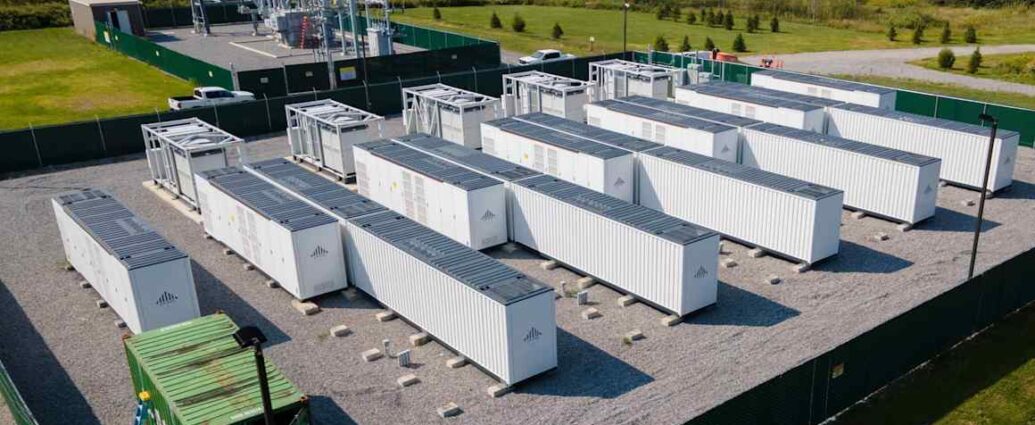
China battery trio gain $70bn as Iran war sparks ‘paradigm shift’
This post was originally published here


Ex-Tropical Cyclone Narelle to intensify with Perth a possible target as storm makes rare crossing across continent
Narelle weakens to a tropical low after bringing heavy rain to already-saturated parts of the Northern Territory
-
Get our breaking news email, free app or daily news podcast
Communities in Australia’s far north were again on flood alert as ex-Tropical Cyclone Narelle continued its destructive westward journey on Monday, with forecasts suggesting the system could re-intensify and potentially threaten the Perth region this weekend.
Narelle had weakened to a tropical low system on Monday after bringing heavy rain to already-saturated parts of the Northern Territory over the weekend.
This post was originally published here



Elon Musk Defends Terafab AI Chip Bet As Skeptic Warns Of Delays, Failure Risk: ‘No Companies Have Ever…’
Tesla Inc. (NASDAQ:TSLA) and SpaceX CEO Elon Musk shared fresh details about the upcoming Terafab AI chip project, touting it as a major leap in his enterprises’ AI capabilities.
Terafab Invites Doubts
On Sunday, user @markusdd5 posted on X that the Terafab project, given its scale, could be unsuccessful. “I assign a major probability to this either failing or delaying much beyond the intended timeline,” the user said in the post.
He went on to explain that chip production is a complex process and is the “farthest humanity has ventured down the tech tree,” adding that he shared this opinion not to root against Musk, but to “manage expectations.”
Elon Musk Weighs In
Responding to the user, Musk remained bullish and optimistic about the Terafab goal, sharing that while several companies have successfully produced chips, “no companies have ever made fully reusable rockets or achieved SpaceX scale,” he said.
The billionaire then went on to say that the …
This post was originally published here

United Airlines, AGI And 3 Stocks To Watch Heading Into Monday
With U.S. stock futures trading lower this morning on Monday, some of the stocks that may grab investor focus today are as follows:
- Wall Street expects Caledonia Mining Corp. PLC (NYSE:CMCL) to report quarterly earnings at 59 cents per share on revenue of $71.90 million for the quarter before the opening bell, according to data from Benzinga Pro. Caledonia Mining shares fell 6% to $20.16 in after-hours trading.
- United Airlines Holdings Inc. (NASDAQ:UAL) announced plans to reduce scheduled capacity by about 5% in the second and third quarters. The Chicago-based carrier will be targeting weaker, off-peak routes such as midweek …
This post was originally published here
Iran war energy crisis equal to 70s twin oil shocks and fallout from Ukraine war, says IEA chief
Fatih Birol says effect on energy markets of Iran bombings and closure of Hormuz strait not initially understood by world leaders
The global energy crisis caused by the war in Iran is equivalent to the combined force of the twin oil shocks of the 1970s and the fallout of Russia’s invasion of Ukraine, the head of the International Energy Agency has warned.
Fatih Birol, the IEA’s executive director, said the growing fallout could be seriously compounded through interuptions to the “vital arteries of the global economy”, including petrochemicals, fertilisers, sulfur and helium.
This post was originally published here
HS2 firm says new steel tariffs will ‘exacerbate’ cost pressures for UK construction industry
Doubling tariffs on imported steel will raise cost of the metal when Iran war is already inflating steel and concrete prices
One of HS2’s biggest contractors has warned the government that raising tariffs on foreign steel imports will “exacerbate” cost pressures for the UK construction industry, amid growing concern over the £100bn railway’s rising budget.
Ministers said last week they would double the tariffs on imported steel and slash the amount that can be bought from overseas, in an attempt to save Britain’s struggling steelmakers.
This post was originally published here
Funding for populist-right ‘media-political complex’ exceeded £170m in five years, research finds
Handful of billionaires gave huge sums in particular to media organisations that boosted rightwing politicians, says Liam Byrne MP
More than £170m was given to MPs, political parties, media organisations and thinktanks aligned with the UK’s populist right over the past five years, new research from the Labour MP Liam Byrne has found.
Byrne, a former cabinet minister who chairs parliament’s business committee, said he had identified a “media-political complex” funded largely by a handful of billionaires.
This post was originally published here
‘You can feel it’: South Yorkshire revival gathers pace as new industries move in
From steel to screen, podcasts to defence, Sheffield’s economy is diversifying amid a wave of new investment
It has seen its fair share of Hollywood parties – albeit with a twist. Instead of champagne and caviar it is usually Guinness and scampi fries. Red carpet? There aren’t even cushions on the seats.
The tiny Sheffield pub, Fagan’s, has raised more than a few toasts in the last year as Adolescence, the Netflix hit made by two of its owners, scooped multiple awards at the Emmys and Golden Globes and became one of the world’s most-watched dramas.
This post was originally published here

Qatar Airways parks long-haul jets in storage in Spain
This post was originally published here

Danish PM rides Trump Greenland row into election resurgence
This post was originally published here

Trump’s Iran playbook was written in the 1980s
This post was originally published here

America keeps bailing out Trump
This post was originally published here

Iran war is a risk to the flow of Gulf funds around the globe
This post was originally published here

‘It’s always Putin’ behind every EU migration crisis, official says
This post was originally published here

The regime ‘caravans’ keeping control of Iran’s streets
This post was originally published here

Military briefing: the high cost of using fighters to down Iranian drones
This post was originally published here

Piles of wheat and canned food stuck in transit as Iran war disrupts aid
This post was originally published here

Elon Musk’s X Money To Power 7721% Dogecoin Rally? Top Analyst Says ‘May Be,’ But Would Wait For A Dip To This Level To Enter
A widely followed cryptocurrency analyst hinted at a potential 200% rally for Dogecoin (CRYPTO: DOGE) on Sunday, advising followers to buy the dip.
DOGE Ready For Parabolic Surge?
Ali Martinez said that DOGE, which has traded within a broad channel between $0.0537 and $0.4595 for years, is finally “drifting back toward the floor.”
“I’m looking to buy the dip at $0.0537. If this floor holds, we could see a 200% rally back to the mid-range at $0.16,” Martinez said. “Get ready to buy Dogecoin.”

Merz’s reform drive put at risk after vote in western state
This post was originally published here


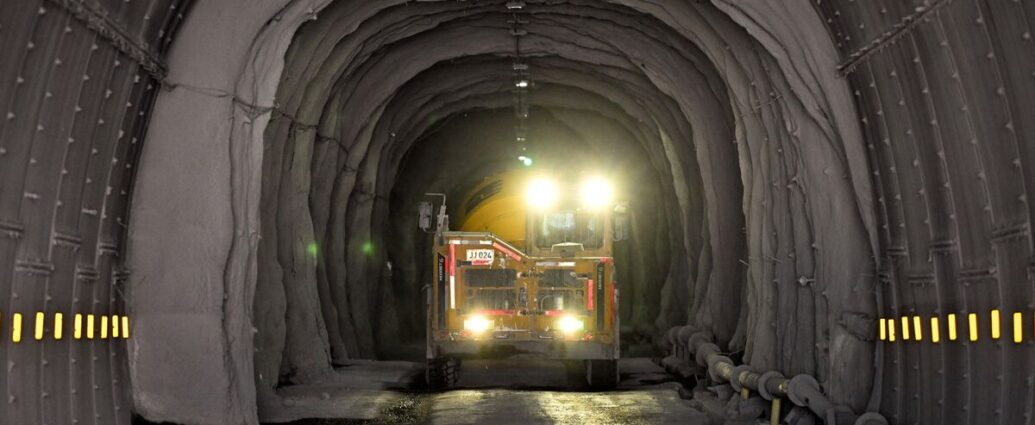

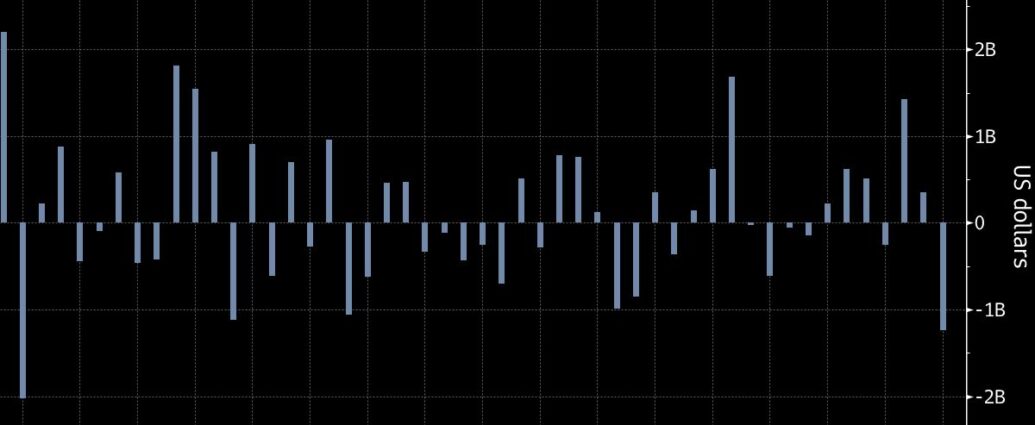





Flexible Spending Accounts: Tax Benefits and Eligible Expenses
This post was originally published here
Flexible Spending Accounts: Tax Benefits & Eligible Expenses
This post was originally published here
Socialist Emmanuel Grégoire elected Paris mayor, as National Rally fails to take key cities
City hall veteran beats rightwinger Rachida Dati in French capital, while far-right RN fails to win Marseille and Toulon in French local elections
The Socialist Emmanuel Grégoire has been elected mayor of Paris, beating the former rightwing minister Rachida Dati, with Marine Le Pen’s far-right, anti-immigration National Rally (RN) failing to take key cities targeted in Sunday’s second round of local elections.
Grégoire took a victory bike ride with future councillors in Paris on Sunday night to show that the French capital would continue its pro-cycling and environmental policies.
This post was originally published here
New Zealand PM’s ratings dip as fragile economy fails to impress before November election, poll shows
National leader Christopher Luxon drops in preferred PM stakes with rise in people saying country heading in wrong direction
The personal ratings of New Zealand’s prime minister, Christopher Luxon, have dipped, polling shows, as his government’s handling of the economy fails to impress voters ahead of the November election.
The RNZ-Reid Research poll, released on Monday, also found a growing number of people felt that New Zealand was heading in the wrong direction.
This post was originally published here

US warns Americans worldwide to show ‘increased caution’ – as it happened
This blog is closed. Follow our new liveblog here.
Several blasts could be heard from Jerusalem on Sunday, AFP journalists said, after the Israeli military warned of incoming missile fire from Iran towards central Israel.
Israel’s Magen David Adom emergency medical service said there were no immediate reports of casualties.
This post was originally published here


US Ground Troops To Enter Iran Soon? Odds Climb On Crypto Prediction Market In A Week As Tensions Escalate
Odds of a U.S. ground invasion of Iran have surged on the cryptocurrency prediction market, despite President Donald Trump’s assertion that military objectives are nearly complete.
Will US Troops Enter Iran?
The probability that U.S. troops physically enter Iran by the end of April surged from 42% to 57% in a week on Polymarket. The odds of U.S. boots on the ground before year-end rose to 72%, up from 63% the week before.
Nearly $23 million has been wagered on the outcome. U.S. military personnel must physically enter Iran’s land territory to qualify. Operations limited to air or sea will not qualify.
This post was originally published here
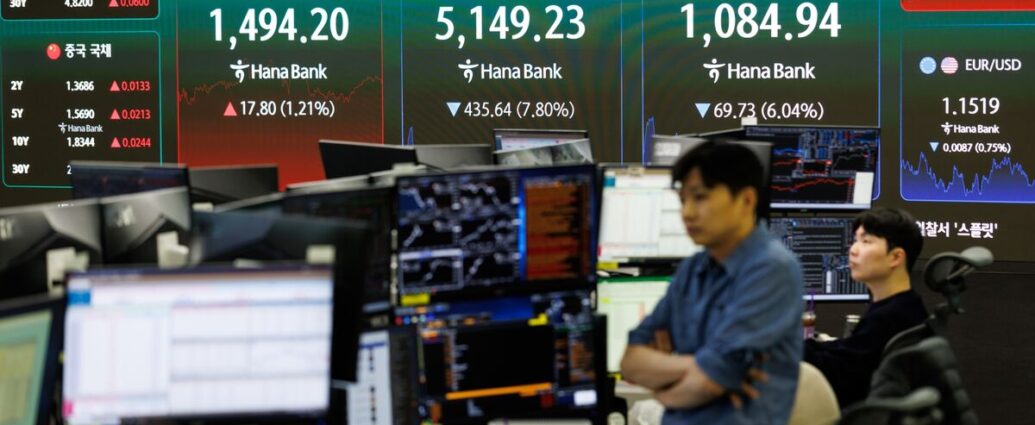

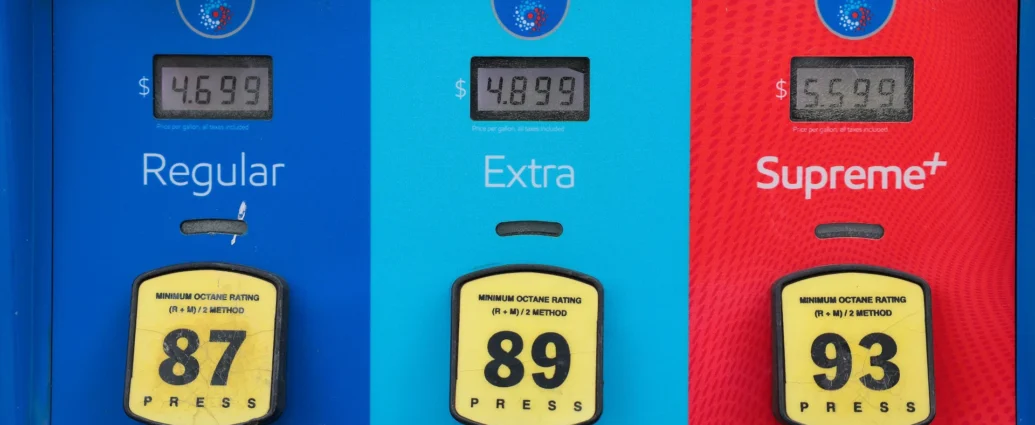



Get Paid to Attend College: Scholarships, Grants & More
This post was originally published here
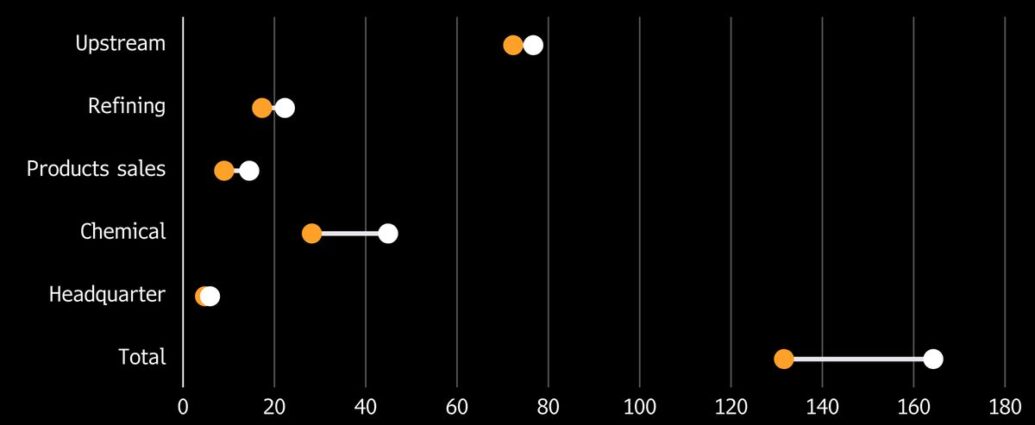




Bitcoin, Ethereum, XRP, Dogecoin Drop Amid Trump’s Iran Ultimatum: Analyst Says This Is A ‘Good Zone To Accumulate’
Leading cryptocurrencies dipped alongside stock futures on Sunday as investors assessed President Donald Trump‘s final warning to Iran over the Strait of Hormuz.
| Cryptocurrency | 24-Hour Gains +/- | Price (Recorded at 9:25 p.m. ET) |
|---|---|---|
| Bitcoin (CRYPTO: BTC) | -1.32% | $68,093.63 |
| Ethereum (CRYPTO: ETH) |
-1.41% | $2,060.46 |
| XRP (CRYPTO: XRP) | -1.76% | $1.38 |
| Solana (CRYPTO: SOL) | -1.08% | $86.52 |
| Dogecoin (CRYPTO: DOGE) | -0.72% | $0.09081 |
Selling Pressure Rises
Bitcoin dived below $68,000 late afternoon but pared losses overnight, while trading volume jumped 13% over the last 24 hours.
Ethereum fell to an intraday low of $2,027, with 24-hour trading volume up 31%. XRP and Dogecoin also traded in the red.
Over $330 million was liquidated from the cryptocurrency market over the past 24 hours, with $241 in long positions obliterated, according to Coinglass data.
Open interest in Bitcoin futures fell 0.21% in the last 24 hours. Meanwhile, Binance’s derivatives traders, including retail and whale, stayed long on the apex cryptocurrency.
“Extreme Fear” sentiment persisted in the market, according to the Crypto Fear & Greed Index.
Top Gainers (24 Hours)
| Cryptocurrency (Market Cap>$100 M) | Gains +/- | Price (Recorded at 9:25 p.m. ET) |
| siren (SIREN) | +160.51% | $2.42 |
| Banana For Scale (BANANAS31) | +46.90% | $0.01355 |
| Tria (TRIA) | +29.95% | … |