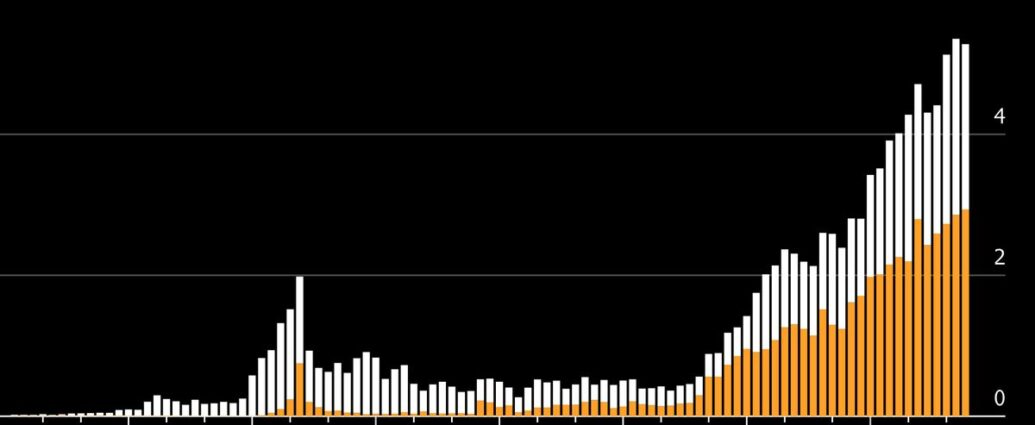
The United States’ gross national debt crossed $39 trillion on Tuesday, a grim new threshold that a prominent fiscal watchdog says reflects decades of irresponsibility from both Republicans and Democrats — with no signs that Washington is ready to change course.

“Surpassing $39 trillion in gross debt is an embarrassing milestone that both parties have helped build over decades, and neither seems particularly interested in addressing it before we hit $40 trillion,” said Maya MacGuineas, president of the Committee for a Responsible Federal Budget (CRFB), in a statement released Wednesday.​

The figure, confirmed by the U.S. Treasury, marks a rapid escalation in the nation’s fiscal slide. The debt stood at $38 trillion as recently as October of last year — meaning Washington added a full $1 trillion in gross debt in less than six months. Debt held by the public, the measure most closely tracked by economists, has separately surpassed $31 trillion for the first time.​

The numbers paint a portrait of a government living far beyond its means. Annual deficits are approaching $2 trillion, and deficits as a share of the economy are running at roughly twice the 3%-of-GDP target that economists and bipartisan policymakers have long identified as a sustainable benchmark.​

“No matter what metric one chooses to examine our fiscal trajectory, we are clearly headed in the wrong direction,” MacGuineas said.​

The milestone arrives at a turbulent moment for the U.S. economy. Conflict with Iran has sent oil prices spiking, and some lawmakers have floated a gas tax holiday in response — a move that CRFB analysts estimate would cost billions of dollars per month and further balloon the deficit. Meanwhile, the CRFB recently warned that unilateral executive tax cuts under consideration could add hundreds of billions more to the debt.​

MacGuineas argued that the consequences of the country’s fiscal drift are already being felt — and will get worse. “Higher debt exacerbates inflationary pressures, squeezes out investment in our economy, allows interest costs to dominate our defense spending, leaves us vulnerable to emergencies and geopolitical turmoil, and could even provoke a fiscal crisis,” she said.​

The CRFB chief also flagged market risk as an underappreciated danger. “Markets are paying close attention to our fiscal situation, and every time we hit a new milestone, we risk spooking them,” MacGuineas warned. That concern is particularly acute given the geopolitical uncertainty already weighing on investor sentiment.​

Bipartisan solutions have been floated but have yet to gain traction. The Fiscal Contingency Preparedness Act, introduced by Rep. Ben Cline (R-VA) and Rep. Jared Golden (D-ME), has built some momentum in the House, though it has not moved toward a floor vote. Former Sen. Mark Udall, a Colorado Democrat, and former Rep. Bob Beauprez, a Colorado Republican, have separately called for action on Social Security solvency — one of the key drivers of long-term debt.​

MacGuineas outlined a list of concrete steps she said Washington must take: committing to no new borrowing, adopting a Super PAYGO rule requiring new costs to be paid for twice over, establishing a fiscal commission to broker a bipartisan debt deal, and shoring up the nation’s underfunded trust funds. She also called for a “Break Glass” emergency plan to be put in place in case a financial shock hits before legislators act, as the CRFB has recently recommended.

For now, $40 trillion — once unthinkable — is drawing into view. At the current pace of borrowing, it may not be far off.

For this story, Fortune journalists used generative AI as a research tool. An editor verified the accuracy of the information before publishing.

This story was originally featured on Fortune.com

This post was originally published here

Micron Technology Inc (NASDAQ:MU) reported financial results for the second quarter of fiscal 2026 after the market close on Wednesday. Here’s a look at the key details from the print.

Micron Reports Blowout Q2 Results

Micron posted second-quarter revenue of $23.86 billion, well above analyst estimates of $19.94 billion, according to Benzinga Pro.

The semiconductor company reported adjusted earnings of $12.20 per share for the quarter, easily exceeding analyst estimates of $9.21 per share.

Total revenue was up approximately 196% on a year-over-year basis. Operating cash flow came in at $11.90 billion versus $8.41 billion in the prior quarter and $3.94 billion in the comparable quarter last year. The …

Full story available on Benzinga.com

This post was originally published here

The U.S. national debt reached another historic milestone on Wednesday as it surpassed $39 trillion for the first time as the federal government’s persistent budget deficits send the debt soaring higher.

New data from the Treasury Department released on Wednesday showed that the gross national debt reached $39,016,762,910,245.14 as of March 17.

The $39 trillion milestone comes about five months after the national debt reached $38 trillion for the first time in late October 2025, which closely followed the $37 trillion milestone being surpassed just two months earlier in mid-August.

America’s debt has grown rapidly over the last decade as the population ages and federal spending on Social Security and Medicare rises. Another key driver of the surging debt is interest expenses incurred from servicing the debt, which have swelled due to higher interest rates meant to curb inflation as well as the growth in the debt itself.

US DEBT SET TO CRUSH WORLD WAR II RECORD AS ANNUAL DEFICITS EXPLODE TO $3T WITHIN DECADE

Michael A. Peterson, CEO of the nonpartisan Peter G. Peterson Foundation, told FOX Business that the latest national debt milestone is an opportunity for Americans to “recognize this alarming rate of growth and the significant financial burden we are putting on the next generation.”

“At the current growth rate, we will hit a staggering $40 trillion in national debt before this fall’s elections. Borrowing trillion after trillion at this rapid pace with no plan in place is the definition of unsustainable,” he explained.

Peterson noted that interest payments on the debt – the cost of servicing the debt the federal government has incurred – are the fastest growing line item in the federal budget and that interest costs are projected to total nearly $100 trillion over the next 30 years. 

BUDGET DEFICIT HITS $1 TRILLION IN FIRST FIVE MONTHS OF FISCAL YEAR: CBO

He went on to say that with voters concerned about affordability, the debt’s cost and economic impact on Americans’ livelihoods should serve as cause for the issue to be a focal point of the debate surrounding this year’s elections.

“America faces complex and critical challenges, both at home and abroad, and putting our debt on a sustainable path will support a stronger, more secure future. The good news is that there are many solutions available, and they all should be put on the table for discussion this campaign season,” Peterson added.

The fiscal headwinds facing the federal government are expected to continue in the years ahead, as spending on programs like Social Security and Medicare rise along with debt service costs and cause projected budget deficits to widen.

WHAT ARE THE BIGGEST BUDGET DEFICITS IN US HISTORY?

The nonpartisan Congressional Budget Office (CBO) released a 10-year budget and economic forecasts which estimated annual budget deficits will rise from their current level of about $1.9 trillion to $3.1 trillion a year a decade from now. That will push the gross national debt from its current level around $39 trillion to $63 trillion in 2036. 

Debt held by the public as a share of gross domestic product (GDP), a measure economists prefer to use in comparing a nation’s debt to the size of its economy, will rise from about 100% this year to 108% of GDP in 2030 and further to 120% in 2036. 

Those figures will break the record of 106% set in 1946 as the U.S. was in the process of demobilization after the end of World War II.

GET FOX BUSINESS ON THE GO BY CLICKING HERE

A recent update from the CBO found that the federal government’s budget deficit for the current fiscal year 2026 topped $1 trillion in the first five months of the fiscal year despite an influx of tax revenue from tariffs, some of which were struck down by the Supreme Court as being illegal.

Some of those tariff revenues may be subject to refunds to the businesses and consumers who paid them, which could widen this year’s deficit if the revenue isn’t replaced.

This post was originally published here
U.S. national debt will hit $39 trillion on March 25, 2026, growing at $7.23 billion per day as the Iran war added $12 billion in costs during the first two weeks.

The $39 Trillion Breaking Point

Total gross national debt will reach $39 trillion, equivalent to $113,638 per person or $288,283 per household. 

The Congressional Budget Office projects the federal deficit at $1.9 trillion in fiscal 2026, with federal debt rising to 120% of GDP by 2036.

Interest expense reached $520 billion through the first five months of fiscal 2026, up 8.8% from last year. 

The Treasury paid out $93.48 billion in interest in February alone, making interest the second-largest spending category behind only Social Security.

The Committee for a Responsible Federal Budget warns that by fiscal 2031, the average interest rate paid on federal debt will exceed the country’s economic growth rate. 

The cost of borrowing will grow faster than the economy’s ability to pay for it, creating …

Full story available on Benzinga.com

This post was originally published here
In trading on Wednesday, shares of Ryerson Holding Corp (Symbol: RYZ) entered into oversold territory, changing hands as low as $20.50 per share. We define oversold territory using the Relative Strength Index, or RSI, which is a technical analysis indicator used to measure mome

This post was originally published here
There is growing confidence that the 20 people diagnosed with the illness have not infected anyone outside the area

Health officials increasingly believe they have contained the fatal outbreak of meningitis in Kent, with no cases emerging that are not linked to the original cluster of 20.

In another boost to efforts to contain the infection, the bug that caused it has been identified as a known strain of meningitis B, the Guardian understands.

Continue reading…

This post was originally published here
When U.S. and Israeli forces launched a sweeping air and sea campaign against Iran’s military infrastructure in late Feb. 2026, the missiles weren’t the only weapons that flew. Within hours, more than 60 Iranian-aligned cyber groups mobilized, according to Palo Alto Networks’ Unit 42, armed with AI-assisted reconnaissance tools and a mandate to strike back where it hurts most: America’s corporate nervous system.

​Within hours, cybersecurity agencies in the UK and Canada both warned about heightened threat levels, followed by similar warnings from Europol and the Department of Homeland Security.

For Fortune 500 CEOs, the message couldn’t be clearer—or more unsettling. The Iran war has blown open a Pandora’s box of AI-powered cyber warfare, and no firewall, no matter how expensive, was built for what’s coming next.

A new attack template

Iran’s cyber playbook has already claimed its first major corporate victim. Iranian-aligned hackers disrupted operations at U.S. medical technology giant Stryker, as first reported by the Wall Street Journal and confirmed by the company—a sobering signal that the private sector is squarely in the crosshairs.

According to threat intelligence firm Flashpoint, the Iranian-aligned hackers executed a sophisticated “no-malware” attack on Stryker—not through traditional malicious code, but by weaponizing Microsoft Intune, a legitimate cloud-based endpoint management service, to remotely wipe devices across the company’s network. The attack has sent a chill through every corporate IT department in America: the tools used to manage your own infrastructure can now be turned against you.​

The more chilling template, analysts warn, isn’t the conventional data breach—it’s a coordinated campaign designed to destroy institutional trust from the inside out. Iran’s state-backed hacking groups, including Void Manticore aka Handala, have already deployed ransomware-style attacks, distributed denial-of-service operations, and “wiper” attacks engineered to permanently erase data from corporate servers. These aren’t smash-and-grab operations. They are psychological warfare at enterprise scale.

According to Flashpoint, the Handala Hack Team claimed responsibility for breaching a Mossad “secret treasury,” allegedly leaking 50,000 confidential emails. In a chilling escalation, the group also claimed to have identified the precise geographic coordinates of a target through cyber reconnaissance—and that a kinetic missile strike followed. Cyber and physical warfare, in other words, are no longer separate domains.

“Aggressive and creative resistance is baked into the ethos of the Iranian security apparatus,” Brian Carbaugh, co-founder and CEO of AI-based security firm Andesite and a former director of the CIA’s elite Special Activities Center, previously told Fortune. “For business leaders and those protecting businesses and making decisions at a very high level, they need to be prepared for this to continue on for some time and for the conflict to take a number of different courses of direction and swerve around the road.”

AI as the great equalizer—and the great threat multiplier

What separates this conflict from previous cyber flashpoints is the role of artificial intelligence (AI) on both sides of the battlefield. U.S. and Israeli forces have used AI platforms from Palantir and the Pentagon’s Maven Smart System to execute more than 15,000 strikes since the war began—over 1,000 per day—with remarkable precision, according to security columnist Shimon Sherman of the Jewish News Syndicate. AI has compressed the military “kill chain” from days to minutes, he added.​ (Iran, for it’s part, has used its firepower to target data centers in the UAE).

But cybersecurity firm CloudSek argued in a blog post that the same compression is now available to Iran’s proxies—and to any hacker group with a laptop and access to an AI reconnaissance pipeline. AI tools have sharply lowered the barrier to identifying and exploiting exposed industrial control systems, default credentials, and internet-facing corporate infrastructure across America. Threat groups with no prior industrial control systems background are now, effectively, sophisticated actors overnight.

​Flashpoint said the 313 Team, an Iranian-aligned Cyber Islamic Resistance group, claimed a complete shutdown of the official British Army website—a clear signal that state-adjacent institutions and critical government infrastructure are primary targets.

The defender is already behind

What makes the current threat environment uniquely dangerous for corporate America is the simultaneous convergence of physical and cyber disruption. On March 17 alone, a drone strike on the Fujairah oil hub in the UAE halted refining operations; a Kuwaiti-flagged LNG tanker was damaged by drone debris near the Strait of Hormuz; and the U.S. Embassy in Baghdad suffered its heaviest attack since the war began. These are not abstract geopolitical events—they are direct shocks to the energy supply chains that power global commerce.

“The conflict has entered a stage where the economic and operational impacts are becoming much more visible,” said Josh Lefkowitz, CEO of Flashpoint, in a statement issued Wednesday. “We’re seeing disruption at major transportation hubs, pressure on global shipping routes, and cyber activity targeting private companies already creating ripple effects across supply chains, travel, and day-to-day commercial operations. For organizations connected to the region, the risk environment now includes simultaneous physical disruption and cyber activity.”

The timing couldn’t be worse for corporate America. The Cybersecurity and Infrastructure Security Agency (CISA)—the federal government’s primary cyber defense body—is hobbled by furloughs, a leadership reshuffle, and the lingering effects of a partial government shutdown. The cavalry, in other words, is understaffed and reorganizing.

Meanwhile, Iran’s own command structure has been decimated by allied strikes—including the elimination of Ali Larijani and Gholamreza Soleimani, commander of the Basij paramilitary unit—which, paradoxically, makes the threat more dangerous, not less. “The Iranian leadership vacuum is likely going to lead to more unpredictable, decentralized proxy attacks,” Kathryn Raines, a former NSA expert who is now a threat intel team lead at Flashpoint, told Fortune‘s Amanda Gerut. Decentralized means harder to anticipate, harder to attribute, and harder to stop.

President Trump has also accused Iran of weaponizing AI for disinformation, allegedly collaborating with media outlets to shape narratives around the conflict. Corporate reputations—not just networks—are now targets.

The boardroom imperative

Every Fortune 500 CEO sitting in a board meeting this week faces the same stark reality: the Iran war has permanently altered the cyber threat landscape. AI hasn’t just made attacks faster—it has made them cheaper, stealthier, and accessible to a sprawling ecosystem of state proxies and opportunistic hacktivists who share the same AI-assisted toolkit.

The Pandora’s box is open. The question isn’t whether the next major attack on a U.S. corporation is coming—it’s whether the C-suite will be ready when it does.

Additional reporting contributed by Amanda Gerut.

This story was originally featured on Fortune.com

This post was originally published here
Tennessee farmer Todd Littleton expects to pay $100,000 more for fertilizer this season, a 40% spike from his bill last year thanks to the war in Iran — and he is scrambling to cover that extra cost.

“The problem is, is we’re so strained financially coming into this issue,” said Littleton, a third-generation farmer from Gibson County in the state’s northwest corner. “We have had a couple of record losses the last couple years, so everyone’s kind of grabbing at straws anyway, and then to have input prices increase yet again, it just really couldn’t happen at a worse time.”

Littleton, who grows corn, soybeans and wheat, is among thousands of farmers across the country who will pay far more this spring than they expected for fertilizer that is essential to their crops. Nitrogen-based fertilizer is especially vital for corn, usually the largest crop in the U.S. and one that feeds the nation’s livestock and is converted into fuel that helps power most U.S. cars and trucks.

Farmers have complained about costly fertilizer for years, but prices have soared even higher since the U.S. and Israel attacked Iran on Feb. 28, leading to a slowdown in shipping through the Strait of Hormuz, a chokepoint for 20% of the world’s oil and natural gas. Besides increasing the price of fuel, which is key in the production of fertilizer, the shipping disruption also has largely stopped the export of nitrogen fertilizers manufactured in the Persian Gulf and limited access to key fertilizer ingredients.

About 15% of fertilizer imports to the U.S. are from the Middle East, and about half the global supply of the key ingredient urea comes from the region, along with 30% of ammonia, according to the American Farm Bureau Federation.

“When the ports started raising their nitrogen prices due to the conflict due to shipping concerns, that directly affects me here on the farm,” Littleton said.

Some farmers may not find fertilizer

But it could be worse, as some farmers may not be able to obtain fertilizer at any price, said Zippy Duvall, president of the American Farm Bureau Federation.

“We’re being told that many of our farmers that haven’t preordered their fertilizer and paid for it may not even obtain the fertilizer that they’re going to need during the season or for spring planting,” Duvall said. “That’s why this situation is so serious.”

Harry Ott, a cotton, corn and peanut farmer who also leads the South Carolina Farm Bureau, said there isn’t enough fertilizer stockpiled in warehouses to meet demand in the coming months.

“It is a really dire situation that our farmers facing,” Ott said.

Experts say don’t expect a quick fix

Even before the current spike in prices, other factors in recent years have led to high fertilizer costs, starting with the war between Ukraine and Russia, which blocked access to raw materials and increased natural gas prices. China also cut phosphate exports as it focused more on domestic needs.

The latest factors worsened those existing supply issues, which means that even if the Iran war was resolved, fertilizer prices likely won’t quickly fall, said Jacqui Fatka, a farm supply economist for creditor CoBank.

“There’s going to be a tail to this that’s going to take time to get everything turned back on, sent back out,” Fatka said.

And then there is the time it takes for shipments from the Middle East to reach the U.S. — typically 30 to 45 days to reach the Port of New Orleans.

Some fertilizer is already stored in the U.S. and can meet demand amid the shortage of Middle East imports, but at some point those supplies will run low.

“We don’t quite know how it’s going to shake out,” said Nancy Martinez, director of public policy, trade and biotechnology for the National Corn Growers Association.

Nitrogen- and phosphate-based fertilizers are largely produced domestically, which helps a little bit, said Anne Villamil, a professor of economics at the University of Iowa.

“But again, energy prices are an input, and so even if you’re producing it in the U.S., if the cost of your inputs goes up, then it’s going to be an increase in price to the farmers who want to buy it,” Villamil said.

Soaring oil prices could result in higher food prices, given the increased cost of diesel needed to transport products to grocery stores and petroleum products used in plastic packaging, said Chad Hart, an economics professor at Iowa State University.

However, the increased fertilizer prices shouldn’t significantly lead to grocery store increases even as they put a crimp in farmers’ profits. That’s because on-farm costs are only a small part of what consumers pay at the supermarket.

Efforts to curb the hit on farmers from costly fertilizer

The Trump administration said it has taken steps to ease the cost of fertilizer, including moving to increase fertilizer imports from Venezuela, which U.S. Agriculture Secretary Brooke Rollins called “a huge step that puts farm security and farmers first.”

The Department of Agriculture also notes it previously announced $12 billion in one-time payments to help farmers offset losses primarily due to tariffs imposed by the Trump administration. In a statement, the USDA also said it has provided more than $30 billion in additional aid to farmers since January 2025, and the agency noted its support for a more competitive fertilizer marketplace that would ultimately lower prices.

Fatka, of CoBank, said the $12 billion doesn’t go far for farmers with a payment of $44 per corn acre when the USDA estimates about $900 per acre for cost of production for the average U.S. farmer.

Still, farm bankruptcies remain rare, with only 315 last year — a tiny percentage of the nearly 1.9 million farms nationally. And prices for the nation’s two largest crops — corn and soybeans — have been climbing recently.

Tom Waters, who farms about 5,000 acres (2,023 hectares) of corn, soybeans and wheat east of Kansas City, said the increase of fertilizer prices along with other costs makes it tough to make a profit when crop prices are so low.

“The margins get smaller and smaller so we just have to really work hard to trim our costs and be as frugal as we can be but still provide the soil and crop what it needs to grow and produce,” Waters said.

This story was originally featured on Fortune.com

This post was originally published here
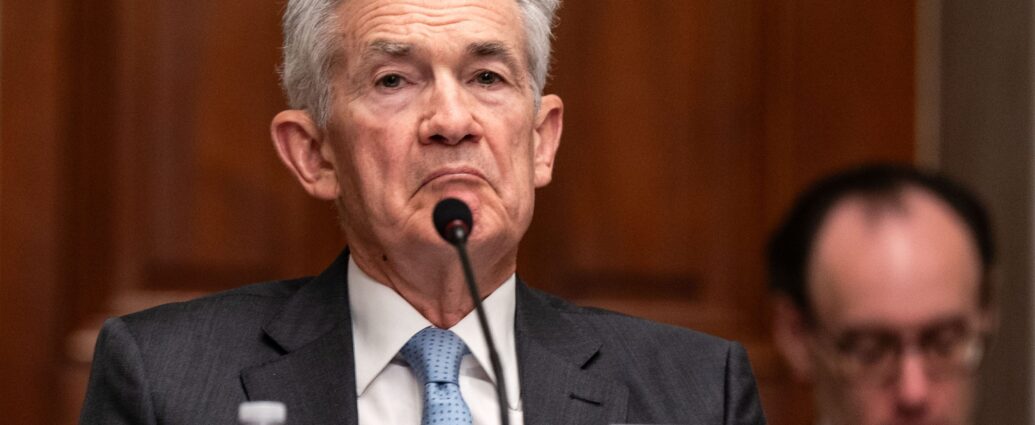
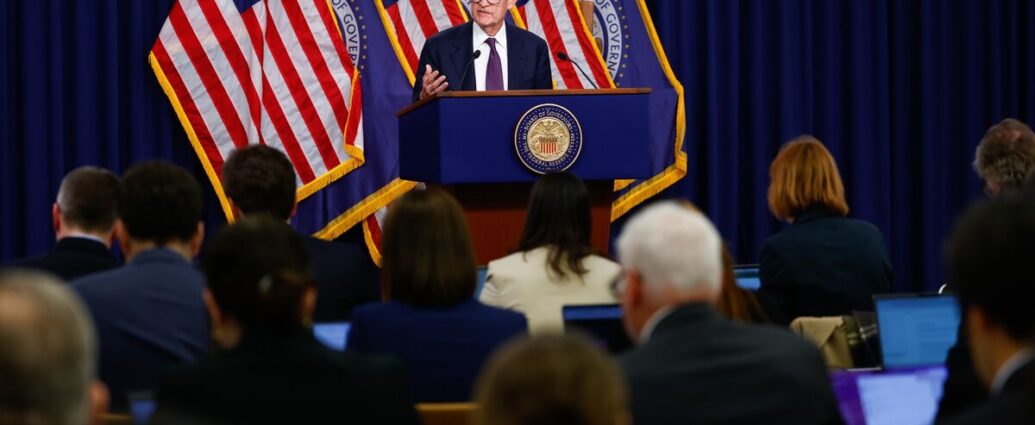
Federal Reserve Chair Jerome Powell on Wednesday warned that the escalating Middle East conflict will push U.S. inflation higher in the near term — but ruled out stagflation and described the U.S. economy as resilient.

Powell’s remarks came after the Federal Open Market Committee held the federal funds rate unchanged at 3.50%–3.75% for the third consecutive meeting, as widely expected.

Middle East Crisis Front And Center

“The implications of developments in the Middle East for the U.S. economy are uncertain,” Powell said in his opening statement.

“In the near term, higher energy prices will push up overall inflation. It is too soon to know the scope and duration of the potential effects on the economy.”

He highlighted the traditional central bank approach of “looking through” energy shocks, but conditioned that option on inflation expectations remaining anchored — a threshold he acknowledged is less comfortable given years of above-target inflation.

“The question of looking through, when it does arise, will be one to approach not lightly, but in the context that inflation has been above target,” Powell said.

He also highlighted the U.S.’s position as a net energy exporter, noting that higher oil prices would boost domestic drilling activity and corporate profits — providing some economic offset.

Yet, he cautioned that “the net of the oil shock will still be some downward pressure on spending and employment and upward pressure on inflation.”

Rate Path: Cuts Still In Play, Hike Not Off The Table

The median SEP …

Full story available on Benzinga.com

This post was originally published here

PM will consider exempting large numbers from proposed changes, which would leave people waiting 10 years for settled status

Keir Starmer is hoping to soften the impact of his government’s changes to the immigration system after a backlash from Labour MPs and a dramatic intervention from his former deputy Angela Rayner.

The prime minister is considering exempting large numbers of people from the proposed changes, which would make it harder to achieve settled status in the UK, as he attempts to keep his restive party onboard.

Continue reading…

This post was originally published here

XRP (CRYPTO: XRP) fell 4% while Cardano (CRYPTO: ADA) dropped 5% on Wednesday as the Federal Reserve held rates at 3.50%-3.75% and raised 2026 inflation expectations to 2.7% from 2.4%.

XRP’s $1.2 Breakdown Risk

XRP trades trapped between Supertrend resistance at $1.5890 and support near $1.20. 

All four EMAs remain bearishly stacked above price, with the 20 EMA at $1.4285, 50 at $1.5068, 100 at $1.6978, and 200 at $1.9518. Price hasn’t traded above the 200 EMA since October 2025.

Open interest sits at $2.79 billion, dramatically lower than the $10-$11 billion peak during January 2026 euphoria. 

The decline in open interest alongside falling price reflects long-side capitulation and deleveraging, not fresh short conviction.

The long-short ratio on Binance accounts stands at 2.48, with top traders leaning long at 2.78. 

This heavily one-sided positioning in …

Full story available on Benzinga.com

This post was originally published here

Glasses use verbal cues and floating text to assist wearers and are expected to be available in early 2027

AI software that can be embedded into smart glasses has won a £1m prize for technology to help people with dementia.

Built into chunky, black-rimmed frames that have a camera, microphone and speakers, the tech – known as CrossSense – guides wearers through everyday life by means of a chatty assistant called Wispy.

Continue reading…

This post was originally published here


The stock market is sending two messages at the same time, and that is exactly why it looks stronger — and stranger — than it probably should.

One message is coming from energy. Oil has forced its way back to the center of the market narrative amid the Iran war shock, and energy stocks have responded the way investors would expect in that kind of tape: by leading. Exxon Mobil Corp (NYSE:XOM) and Chevron Corp (NYSE:CVX) both have surged about 32% year-to-date, while Marathon Petroleum Corp (NYSE:MPC) jumped 45%.

That is the straightforward part of the story. When supply risk rises and crude jumps, investors reach for the companies most directly positioned to benefit.

Nvidia, AI Brigade Defy The Oil Shock

The other message is coming from technology, and it should be pulling in the opposite direction. Higher oil usually feeds inflation anxiety, pushes out rate-cut expectations, and makes investors less willing to pay up for long-duration growth.

But that is not what March has looked like.

Tech stocks have held up admirably in the face of adversity. The Nasdaq-100 index has edged up 1.33% so far this month. AI bellwether Nvidia Corp (NASDAQ:NVDA) is up almost 3% this month.

‘Under-The-Radar Support’

LPL Financial underscored this peculiar market pattern in a recent piece of market commentary.

“Energy stocks led the S&P 500 again this week, while technology …

Full story available on Benzinga.com

This post was originally published here


Livestream shopping platform Whatnot is facing allegations of operating an illegal gambling operation and violating the RICO Act by allowing sellers to conduct randomized box breaks and randomized repack breaks—sealed packages of collectible items—on its platform.

Attorney Paul Lesko at Leskow Law, known for his commentary on sports card law, has filed 15 arbitration requests and represents 30 clients in claims against Whatnot, The New York Times reported. The filings argue that randomized box breaks breach California’s laws prohibiting illegal lotteries (Whatnot is headquartered in California but incorporated in Delaware), while repack breaks function as unlawful “grab bag” lotteries for trading cards.

“Whatnot knowingly operates an addictive platform without sufficient safeguards and controls. They are basically making money off of dopamine, rather than just selling cards. Our clients who have addiction issues and have tried to get off the platform. There aren’t safeguards such as the ability for self-banning or meaningful spending limitations to the point that these are things that are required by online casinos but are not available on the Whatnot platform,” Lesko said in a CllctMedia video posted on X.

Full story available on Benzinga.com

This post was originally published here

Death confirmed of Esmail Khatib, the third senior Iranian figure killed in 24 hours, as Israel also launches intense airstrikes on Lebanon

Israel struck Iran’s giant South Pars gasfield on Wednesday, marking a major escalation of the war, hours after Israeli forces killed the regime’s intelligence minister and launched some of the most intense airstrikes in Beirut for decades.

The attack on the Pars site in the Persian Gulf, which Iran shares with Qatar and constitutes the world’s largest natural gasfield, prompted Tehran to warn neighbouring states that their energy infrastructure could be targeted “within hours”, and triggered furious rebukes from Qatar and other nations in the region.

Continue reading…

This post was originally published here


Elon Musk’s SpaceX put more than 10,000 active Starlink satellites into orbit this week with back-to-back Falcon 9 launches.

The milestone matters because Starlink is the revenue engine behind what may be the largest IPO in history, and prediction market traders are acting like it’s nearly a done deal.

Polymarket gives SpaceX an 87% chance of being the biggest IPO by market cap in 2026, with $1.2 million in total volume. Anthropic, OpenAI and Discord are some of the other companies with rumoured 2026 IPO’s.

A separate timing contract has June 30 at 60%, making a summer debut for SpaceX the base case.

Goldman Sachs (NYSE:GS) leads the underwriter race at 57%, a reversal from earlier this year when Morgan Stanley (NYSE:MS) was the frontrunner.

Both have long Musk ties; they …

Full story available on Benzinga.com

This post was originally published here


Bitcoin dropped below $72,000 on Wednesday, following hotter-than-expected U.S. inflation data and rising Middle East tensions.

Cryptocurrency Ticker Price
Bitcoin (CRYPTO: BTC) $71,345.41
Ethereum (CRYPTO: ETH) $2,188.07
Solana (CRYPTO: SOL) $89.82
XRP (CRYPTO: XRP) $1.45
Dogecoin (CRYPTO: DOGE) $0.09463
Shiba Inu (CRYPTO: SHIB) $0.055774

Notable Statistics:

  • Coinglass data shows 129,294 traders were liquidated in the past 24 hours for $406.32 million.
  • SoSoValue data shows net inflows of $199.4 million from spot Bitcoin ETFs on Tuesday. Spot Ethereum ETFs saw net inflows of $138.3 million.
  • In the past 24 hours, top gainers …

Full story available on Benzinga.com

This post was originally published here

Main Street is racing to fit artificial intelligence into its business models, but most small businesses are still learning to walk before they can run.

Small business owners have already made up their mind about AI, no longer asking if they should use the technology, but rather how and when to integrate it. More than three-quarters of small business owners are already using AI to some degree, and more than 90% say it’s working, according to a survey of small business operators published by Goldman Sachs on Tuesday.

Higher efficiency and productivity are the primary selling points of AI for small businesses, and nearly seven in ten expect the technology to help grow their revenue. But while many entrepreneurs are experimenting with AI, a huge gap remains between enthusiasts and owners who are able to fully integrate AI. 

The Goldman Sachs survey found that only 14% of owners have embedded AI across their core operations, meaning most small businesses have downloaded the app, but few have read the manual.

The survey polled 1,256 participants in Goldman Sachs’ small business education program between January and February, finding that many entrepreneurs are excited about AI but uncertain how to fully cash in on it. Barriers include a lack of technical expertise, difficulty navigating a crowded tools landscape, and data privacy concerns. More than 70% of respondents said they’d benefit from more training and implementation resources.

High risk, maybe high reward

Small businesses are warming rapidly to AI tools, but struggling to absorb them. A 2025 report from the Chamber of Commerce found 58% of small businesses used generative AI in their operations, more than double the share from 2023. AI tools including ChatGPT, Claude and Gemini vaulted social media to become the second most popular technology among small businesses, trailing only search engines.

Most small businesses use AI for everything from copywriting and content creation to automating customer service, with some even using the technology for complex tasks such as coding and website design. 

But the more revenue-driving applications remain limited to a smaller share of tech-savvy firms. Less than a quarter of businesses surveyed by the Chamber of Commerce use AI to accomplish tasks that would likely translate to greater revenue growth, such as optimizing supply chains, identifying potential customers, and producing new insights on products and services. Distrust of AI remains rife among some small businesses, with data privacy a key concern for half of firms using AI, according to Goldman Sachs.

Another hurdle may lie with the customers themselves. AI currently ranks as one of the least enjoyable topics of conversation in the U.S., with one recent NBC poll finding that only 26% of Americans saw AI positively, and 46% had a negative view. Companies may also hesitate to deploy AI for client-facing tasks given general fatigue about the technology. A Gartner survey published this week found that half of consumers prefer their business going to AI-less brands, with many customers particularly abhorring the reliability of AI-assisted shopping experiences.

One bright spot: jobs. The wave of corporate layoffs and fears of AI-driven job loss fears sweeping white-collar industries does not seem to have affected small businesses yet, with the Chamber’s report finding that 82% of small firms using AI were able to grow their workforce over the past year.

But just as corporate America struggles to figure out how best to adopt the technology, small businesses might remain hesitant. Generative AI pilots at large companies have largely stalled so far and failed to generate significant revenue, and small businesses with fewer resources might be hesitant to take the risk on thousands of dollars’ worth in enterprise models and staff training. 

A bill passed in the House last year, called the “AI for Main Street Act,” aims to allocate more resources to increase AI literacy among small businesses. But until larger companies prove that AI can be worth the investment, smaller firms may be reluctant to follow.

This story was originally featured on Fortune.com

This post was originally published here

The Kraft Heinz Company (NASDAQ:KHC) shares are down on Wednesday while the broader markets are experiencing declines.

The company has entered a five-year global partnership with the National Football League, marking Kraft Heinz as the NFL’s first-ever global condiment partner, which is expected to enhance fan engagement and food experiences.

The partnership aims to integrate Kraft Heinz’s extensive portfolio of iconic brands with the NFL’s vast audience, unlocking premium visibility at stadiums and during major events.

This collaboration will kick off at the upcoming NFL Draft in April, where Kraft Heinz plans to surprise fans with unique experiences.

The deal is expected to drive incremental retail opportunities and expand Kraft Heinz’s presence in food service during high-impact consumption occasions, such as the Super Bowl and Thanksgiving.

With the NFL being the most popular sports league in the U.S., this partnership positions Kraft Heinz to connect with millions of fans globally.

The broader market is currently facing challenges, with major indices like the S&P 500 down 0.56% and the Dow Jones falling 0.93%. The decline in Kraft Heinz …

Full story available on Benzinga.com

This post was originally published here

Arizona on Tuesday became the first state to file criminal charges against Kalshi, accusing the prediction market company of operating an illegal gambling business within its borders, a significant escalation in the fight to regulate the popular platform.

The 20-count charging document accuses Kalshi of accepting bets on political outcomes, college sporting competitions and individual player performance in violation of Arizona’s gambling laws. The state prohibits operating an unlicensed wagering business and bans betting on elections.

“Arizona will not be bullied into letting any company place itself above state law,” said Democratic Attorney General Kris Mayes.

The criminal case marks a new front in a high-stakes legal battle over whether prediction markets should be subject to the same rules as gambling companies.

President Donald Trump’s administration has thrown its support behind the multibillion-dollar prediction market industry, further amplifying a state-versus-federal fight for regulatory control. The outcome could have sweeping implications for how sports betting — which makes up roughly 90% of Kalshi’s trading volume — is regulated in the U.S.

Kalshi insists it’s a financial marketplace rather than a gambling operation and should only have to answer to federal regulators with the Commodity Futures Trading Commission. The agency under Trump agrees it has exclusive oversight.

Trump’s eldest son, Donald Trump Jr., is a strategic adviser for Kalshi. And the Republican president’s social media platform, Truth Social, is launching its own cryptocurrency-based prediction market called Truth Predict.

Elisabeth Diana, a spokesperson for Kalshi, dismissed the Arizona charges as “meritless” and accused the state of trying to circumvent federal court.

Kalshi sued Arizona, Utah and Iowa in attempts to stop anticipated state action against the platform.

But U.S. District Judge Michael Liburdi in Arizona, a Trump appointee, denied Kalshi’s request for a temporary block Tuesday and ordered the company to demonstrate why the case should be in federal court given the new state charges.

At least nine other states have taken some form of legal action against Kalshi, and Utah’s Republican governor has pledged to sign a bill that could undercut the company’s business in the state.

So far, the outcomes have been mixed. Federal and state judges in Nevada and Massachusetts, respectively, issued early rulings in favor of states looking to ban Kalshi and its competitor Polymarket from offering sports betting in their states, while federal judges in New Jersey and Tennessee have ruled in favor of Kalshi. The Nevada lawsuit was remanded to state court.

CFTC chairman Michael Selig said the legal fight between Arizona and Kalshi is a jurisdictional issue and is “entirely inappropriate as a criminal prosecution.”

The state argues Kalshi is a gambling operation that brands itself as a marketplace. But the company says its product is different because customers engage in “swaps” between one another instead of betting against the “house.”

Kalshi operates by allowing customers to buy and sell “Yes” or “No” contracts tied to the probable outcome of an event. Anyone with a smartphone can wager on everything from whether it will snow in Miami to whether Trump will say a certain buzzword in a speech. Contracts are typically priced between 1 cent and 99 cents, which roughly translates to the percentage of customers who believe that event will happen.

The charges in Arizona were filed just days before the start of the NCAA men’s and women’s basketball tournaments, one of the busiest periods of the year for prediction markets and sportsbooks.

Kalshi announced a $1 billion perfect bracket challenge on Monday without mentioning the NCAA or March Madness, a pair of NCAA trademarks.

An NCAA spokesperson, Saquandra Heath, said Tuesday the organization remains concerned about “unprotected prediction markets that pose a threat to competition integrity and student-athlete safety.”

___

Associated Press sports writer Jay Cohen in Chicago contributed to this report.

This story was originally featured on Fortune.com

This post was originally published here

Eightco Holdings (NASDAQ:ORBS) shares are down on Wednesday as the company is trending overnight following a notable announcement regarding its board of directors.

ORBS Jumps on Tom Lee Board Appointment

The stock’s recent uptick follows the appointment of Tom Lee, Chairman of Bitmine, to the board of directors, while Dan Ives stepped down as Chairman.

This change in leadership has contributed to a sense of optimism among investors, as the stock also saw an increase of 34.13% during the previous trading session.

In addition to the leadership shift, Ethereum’s price has risen, which may also be influencing sentiment around Eightco Holdings.

As Ethereum exchanges …

Full story available on Benzinga.com

This post was originally published here

Former Sinn Féin leader, who is being sued for symbolic damages, also denies any prior knowledge of the attack

Gerry Adams has told the high court he was stunned by the 1996 Docklands bombing as he denied being at the nerve centre of the IRA’s operations.

The former Sinn Féin leader also denied having any prior knowledge of the bombing of the commercial district of east London, which shattered a 17-month-old ceasefire.

Continue reading…

This post was originally published here

Campaigners have been fighting proposals to build traffic tunnel under the world heritage site since 1994

A controversial plan to build a tunnel under the Stonehenge site has been officially cancelled after millions were spent on the doomed project.

Campaigners have been fighting proposals to dig a tunnel for cars under the location of the world heritage site since the idea was first proposed in 1994.

Continue reading…

This post was originally published here

Psychologists at Cardiff University and King’s College London compared children given dolls to those given a video games

Playing along with dolls can help boys and girls develop more sophisticated imaginations and better social skills, compared with children who play on electronic devices, according to research.

Psychologists at Cardiff University and King’s College London found that children given dolls gained a richer appreciation of other people’s beliefs and feelings, in contrast to those given a tablet loaded with video games.

Continue reading…

This post was originally published here

Over the course of just 48 hours, Congress moved more aggressively on child online safety than it has in nearly a decade—and a federal court quietly reminded everyone that the entire framework might not survive a constitutional challenge that pits safety against privacy.

On March 4, the App Store Accountability Act passed 26-23 out of the House Energy and Commerce Committee. The following day, the same committee advanced the Kids Internet and Digital Safety (KIDS) Act—a package including the Kids Online Safety Act (KOSA)—to the full House floor in a party-line 28-24 vote. Meanwhile, the Senate simultaneously passed Children’s Online Privacy Protection Act (COPPA) 2.0 unanimously. For the first time in years, both chambers of a divided Congress moved on children’s digital safety in the same week. While the government might be making the rules, social media companies are now struggling to keep up and are walking a fine line between privacy and safety.

The pressure on social media companies to do something about minors on their platforms long predates either act. Meta, Snap, TikTok, and YouTube have faced years of congressional hearings, state attorneys general investigations, and now a mounting wave of personal injury litigation alleging their platforms knowingly exposed children to harmful content and addictive design features.

The industry’s self-regulatory response—age minimums set at 13, parental control settings buried in app menus, terms of service that minors routinely circumvent—has satisfied almost no one. What’s changed in 2026 is that lawmakers have stopped waiting for the industry to find them. Two bills now moving through Congress take fundamentally different approaches to the same crisis, and understanding both requires understanding what each one is actually trying to fix.

Two laws, two approaches

With KOSA and the App Store Accountability Act, the government is trying to attack the problem from opposite ends. KOSA requires companies to conduct risk assessments, restrict default settings on minors’ accounts up to age 17, disclose how their recommendation algorithms work, and give parents meaningful oversight tools. The App Store Accountability Act attempts to stop the problem before a child ever opens an app: requiring age verification at the account level, parental consent for each minor’s download, and the linking of a child’s device to a parent or guardian. Alabama became the fourth state to sign it into law in Feb. 2026, joining Utah, Louisiana, and Texas, with others states looking to put it on the books.

The state laws have added a whole other level of complexity to the issue, especially considering each of the four states’ have various restrictions, meaning no law is the same. Jacqueline Klosek, a partner in global law firm Goodwin’s technology practice, says the overlapping demands are already straining clients. “As a practitioner, I myself am very much challenged by the morass of laws at the state level, and the clients I deal with are also challenged by this. Nobody’s just functioning in one state, and there’s a plethora of laws out there,” she told Fortune. KOSA raising the age of protection to 17 closes off what Klosek calls the industry’s longtime workaround. “There’s no longer going to be this kind of somewhat easy out, and saying, ‘I’ll just focus on users above their teens and not worry so much about this.’ If I’m dealing with minors at all, I have to think more holistically about privacy, security, and safety.”​

Critics — including House Democrats — argue the House version is weaker than its Senate counterpart because it strips out a “duty of care” provision that would require companies to design products with children’s safety in mind.

Roman Karachinsky, Chief Product Officer at Incode Technologies—whose social media clients include TikTok—sees the compliance complexity as a symptom of regulation that hasn’t yet caught up to itself. “There’s a lot of regulatory requirements right now that are well intentioned and written in a way that makes sense, but are not prescriptive,” he told Fortune. “Each company kind of needs to figure out, ‘We have this duty of care to verify that our users are not minors, but how do we do that?’”

COPPA, first passed in 1998 (notably before the social media era), requires websites and apps to obtain verifiable parental consent before collecting personal data from children under 13. COPPA 2.0 covers ages 13 to 16, bans targeted advertising to minors entirely, and creates a dedicated FTC enforcement division, closing the loophole that allowed companies to treat teenagers as unprotected users.

In the ongoing battle of collecting underage users’ private data in the name of safety, Karachinsky said with the new version of COPPA, “at least that particular contradiction has been somewhat resolved. You can process data for minors only for the purpose of age verification, as long as you don’t store it, don’t reuse it for any other purpose, and immediately delete it, which I think is all fairly reasonable.” But the global picture remains chaotic. “If you think about a global company that operates in basically every market in the world, the compliance burden that you have to go through to figure out all these different requirements is really high,” he said.​

Klosek, who has watched clients navigate this landscape for years, says the frustration is structural. “I think industry, parents, and government all see an issue, a problem—we’re just struggling to identify the best solutions.”

This story was originally featured on Fortune.com

This post was originally published here
SEC now classifies crypto into five categories, with securities laws only applicable to one: digital securities

The US Securities and Exchange Commission (SEC) on Tuesday issued an interpretation clarifying which types of cryptocurrencies are considered securities and how a “non-security” digital asset could meet certain conditions to become an investment contract.

The SEC’s new interpretation – which the US Commodity Futures Trading Commission also joined – classifies crypto tokens into five categories: digital commodities, digital collectibles, digital tools, stablecoins and digital securities, with the agency specifying that federal securities laws only apply to digital securities.

Continue reading…

This post was originally published here

On today’s episode of CNBC Crypto World, crypto markets are on pace to outperform Wall Street despite a Wednesday pullback driven by hotter-than-expected wholesale data. Also, the SEC and CFTC issue joint guidance on the regulatory classification of crypto assets. Bam Azizi, CEO of Mesh, discusses what it takes to run a crypto business in a slowdown.

This post was originally published here


Younger investors are more bullish than ever, but J.P. Morgan says many of them are doing it in a way that puts them at risk.

In a survey of 1,000 U.K. retail investors, J.P. Morgan Personal Investing found Gen Z and millennials are the most bullish cohort heading into this year, with large shares planning to invest more than they typically do.

But a significant slice of those younger investors now say they get ideas from “finfluencers” — what J.P. Morgan calls financial influencers — along with social media and online forums like Reddit, rather than from traditional research or professional advice. 

That’s a shift the bank warns can leave them exposed to bad information, high‑risk bets and even scams.

The concern isn’t that young people are sitting out the market, it’s the opposite. J.P. Morgan’s survey shows confidence is rising across the board, and it’s highest among younger investors

The 2026 Bull Run — Driven by Youth

Two‑thirds of those polled expect positive returns in 2026, up from 58% last year. The youngest traders who are leading the charge

This post was originally published here

Senator backed restructuring the disaster agency but dodged questions on staffing, leaving officials uneasy over readiness and leadership

The confirmation hearing for Markwayne Mullin, Donald Trump’s pick to replace Kristi Noem as the secretary of the Department of Homeland Security (DHS), left disaster management officials and experts concerned about what his tenure would mean for the future of the main US disaster response agency.

The Federal Emergency Management Agency (Fema), which DHS oversees, coordinates federal response efforts to disasters such as hurricanes, floods and wildfires.

Continue reading…

This post was originally published here

Romantic poet’s Rydal Mount and Gardens, marketed for over £2.5m, will remain open under Wordsworth Trust

It was the family home where William Wordsworth hosted Alfred, Lord Tennyson, lived as poet laureate and worked on his epic autobiographical poem The Prelude.

Now, after a long period of decline in visitor numbers, Rydal Mount and Gardens has been saved from descending into the “half-choked with willow flowers and weeds” state Wordsworth described in his 1814 poem The Excursion – and will be preserved by a charity that will ensure it remains open to the public.

Continue reading…

This post was originally published here

Finding suggests as many as 155,000 deaths, likely occurring outside of hospitals, not recognized at Covid related

The Covid-19 pandemic’s early death toll was much higher than the official US count, according to a new study that spotlights dramatic disparities in the uncounted deaths.

About 840,000 Covid-19 deaths were reported on death certificates in 2020 and 2021. But a group of researchers – using a form of artificial intelligence – estimate that as many as 155,000 unrecognized additional deaths likely occurred in that time outside of hospitals. That would mean about 16% of Covid-19 deaths went uncounted in those years.

Continue reading…

This post was originally published here

Officials say military planners liaising with US Central Command but situation remains too dangerous for anything to happen soon

Britain has said it remains involved in discussions with the US and European allies over escorting merchant shipping through the strait of Hormuz but the situation remains too dangerous for it to happen soon.

Iran is still considered to pose a threat and have a wide range of weapons available – from cruise missiles to sea drones – despite 19 days of US-led bombing of its navy and coastal sites.

Continue reading…

This post was originally published here

‘Serious risk of major ecological disaster’ as vessel drifts for weeks after being struck by suspected drone attack

A severely damaged Russian tanker carrying liquified natural gas that has been adrift in the Mediterranean for two weeks, raising concerns of an ecological disaster, has floated into Libyan waters, Italy’s civil protection agency said on Wednesday.

The Arctic Metagaz was part of a Russian “shadow fleet” used to circumvent sanctions imposed on the country’s oil and gas after its full-scale invasion of Ukraine in February 2022. It was struck in a suspected drone attack close to Maltese waters earlier this month, causing a huge hole. The crew is believed to have been rescued between Malta and Libya.

Continue reading…

This post was originally published here

A “one in a million” malfunction during a live fire demonstration over Camp Pendleton last October led to a misfire that rained shrapnel on Interstate 5, striking two California Highway Patrol vehicles, a U.S. Marine Corps investigation found.

An artillery shell exploded over the highway that serves as the main corridor between Los Angeles and San Diego during a celebration of the 250th anniversary of the Marine Corps, attended by Vice President JD Vance and Defense Secretary Pete Hegseth. Nobody was hurt, and investigators ruled out any negligence or wrongdoing by Corps members.

The day before the event, Democratic Gov. Gavin Newsom called the planned demonstration with live artillery dangerous and unnecessary, and he ordered I-5 to be closed during it. That closure drew condemnation from the White House and other Republicans, and the Marine Corps said the exercises wouldn’t endanger motorists.

In a 666-page report dated Dec. 19 and first reported on Monday, the Marines concluded that there “is no definitive answer” to why an M795 high explosive round detonated early at an altitude of about 1,480 feet (450 meters) during the Oct. 18 demonstration. Such a premature detonation is “beyond reasonable expectations and should not have happened, but it did,” the report says.

“It is manufactured to a tolerance of one defect in a million,” according to the report.

Organizers planned to fire 60 rounds of live artillery in 5 minutes over the highway, using six howitzer weapons, according to the report. But a round in the first volley of shots failed and detonated early, and the rest of the demonstration was canceled, the report said.

Days after the malfunction, 26 California U.S. House members and the state’s two senators sent a letter to Hegseth asking who decided to shoot live artillery over the freeway and how authorities prepared for the safety risks.

“We’re thankful to the Marines for their thorough and precise investigation — in stark contrast to the dangerous and performative demands by JD Vance and Pete Hegseth to shoot live ammunition over a civilian area for their entertainment,” Diana Crofts-Pelayo, a spokesperson for Newsom’s office, said in an email Tuesday.

Newsom announced the highway closure in a statement after practice rounds were fired a day ahead of the celebration. The governor described the live fire exercise as a show of force meant to intimidate Trump’s opponents, thousands of whom were demonstrating at “No Kings” protests in and around San Diego that day.

“Firing live rounds over a busy highway isn’t just wrong — it’s dangerous,” Newsom wrote at the time.

The Marine report concluded several factors could have contributed to the malfunction, including the howitzer guns being too close together when fired and the “potential presence of anomalous electromagnetic energy in the vicinity.”

“What was different from the thousands of times before this event employing the same shell-fuze combination, weapons system, and highly trained Marines? There is no definitive answer,” the report said.

The event at Marine Corps Base Camp Pendleton featured aircraft, ships, and amphibious assault vehicles to celebrate the anniversary.

“It will be a good show regardless of who shows up,” Gen. Eric Smith, commandant of the Marine Corps, said in an Oct. 14 email to Brig. Gen. Garrett “Rainman” Hoffman, of the White House Military Office, according to the investigation.

The first round launched at 1:46 p.m. from M777 howitzers on a beach west of Interstate 5. That artillery round detonated midflight near I-5 southbound, sending shrapnel flying toward a CHP motorcycle and another unoccupied patrol vehicle, according to the CHP report. The vehicles had been part of Vance’s protective service detail and were waiting near a highway ramp after securely getting Vance where he needed to be, the report said.

An officer described hearing what sounded like “pebbles” falling on his motorcycle, and finding shards nearby. Other shrapnel struck and left a dent on the hood of another patrol vehicle.

CHP sergeants conducted a safety sweep and didn’t find any other pieces of metal in the highway lanes, the report said. Both sides of the highway were reopened about 30 minutes later.

Multiple people interviewed for the Marines investigation said they wouldn’t have changed anything about the event. Some noted a drill the day before did not have any problems and routine safety checks were done more than usual.

This story was originally featured on Fortune.com

This post was originally published here

(RTTNews) – Paring the gains made earlier, crude oil slid later in the session but rebounded on Wednesday as investors analyzed Iraq’s resumption of production. Profit-booking by traders to monetize from yesterday’s surge limited the upswing.

This post was originally published here


For decades, investors have relied on a simple market correlation. When stock prices fall, government bond prices rise. The premise was the backbone of the classic 60-40 balanced portfolio.

But BlackRock is now warning that this relationship is breaking down—and the reason lies in a mix of geopolitics, energy shocks, and stubborn inflation.

In the latest market note, the world’s biggest asset manager has looked into the center of today’s market stress – the Strait of Hormuz, a critical chokepoint for global oil and LNG flows. With shipping through the Strait severely disrupted, the world is facing more than just higher prices.

It’s a genuine supply shock. Oil has surged back toward $100, and the knock-on effects are spreading through supply chains, raising production costs and feeding inflation.

Since energy touches nearly every part of the economy, this kind of disruption creates a difficult environment. Growth slows while inflation rises.

Why This Time Is Different

BlackRock sees a feedback loop at work. Rising prices increase political and economic pressure, which could eventually limit the conflict, but in the near term, the risk …

Full story available on Benzinga.com

This post was originally published here

Just three of Labour’s 20 MSPs in Holyrood voted for bill, despite support for legislation in House of Commons

Supporters of Scotland’s assisted dying bill said they are frustrated a significant majority of Labour MSPs voted against the proposals, despite Labour’s substantial support for the measure at Westminster.

The Scottish bill was defeated in a late night free vote at Holyrood on Tuesday, five years after it was first proposed and a year after it was first tabled, by a larger than expected 12-vote margin.

Continue reading…

This post was originally published here


Datavault AI Inc. (NASDAQ:DVLT) stock is seeing its strongest week since November, with shares ripping about 38% higher as traders position ahead of the company’s earnings release set for Thursday morning. 

Retail Weighs In

Bullish retail traders are leaning into the momentum and commenting on Wednesday’s massive trading volume in DVLT.  

Stocktwits user Jiggy71 wrote: “Tomorrow’s volume will be off the charts! Bullish.” 

The comment mirrors a broader view that Datavault’s high-volume breakout could extend if earnings deliver even a modest upside surprise or fresh AI-related headlines.

Skeptics and bears, however, remain vocal. 

Stocktwits user Cr_ysk pushed back on the hype, saying: “Lmao all the people screaming and hollering in the comments, can’t even break a dollar. …

Full story available on Benzinga.com

This post was originally published here

Foreign minister Anita Anand says she has drafted principles to reduce risk of regional spillover and wider shocks

Canada is pushing for a collective G7 and Middle East approach to de-escalating the Iran war, including off ramps that might bring an end to the conflict, the Canadian foreign minister, Anita Anand, has told the Guardian.

In London to meet the UK’s foreign secretary, Yvette Cooper, after of talks with the her Turkish counterpart, Hakan Fidan, she said she hoped a G7 meeting chaired by France, this year’s president of the group, might start to build a broader collective approach to the crisis.

Continue reading…

This post was originally published here


Nvidia Corporation (NASDAQ:NVDA) CEO Jensen Huang made two China-bullish moves in 48 hours at GTC 2026: restarting H200 chip sales and calling the open-source AI agent OpenClaw “definitely the next ChatGPT.”

Chinese AI stocks surged, but prediction market traders aren’t fully buying it.

H200 Is Back

Huang told reporters Tuesday that Nvidia has H200 purchase orders from Chinese customers and is restarting manufacturing. “Our supply chain is getting fired up,” he said.

The reversal has been swift. As recently as Feb. 25, CFO Colette Kress told analysts Nvidia had “yet to generate any revenue” from China.

Beijing granted licenses to ByteDance, Alibaba Group Holding Ltd (NYSE:BABA), and Tencent Holdings (OTC:TCEHY) to buy more than 400,000 H200 units collectively.

But the deal comes with strings; U.S. inspections, a 25% duty, and a possible cap of 75,000 chips per …

Full story available on Benzinga.com

This post was originally published here

Technology secretary says government no longer prefers plan to allow tech firms to take copyrighted work

Actors, musicians and writers have welcomed the UK government’s decision to backtrack on plans to let AI firms use copyright-protected work without permission.

Technology secretary Liz Kendall said it no longer had a “preferred option” on copyright reform, having previously supported a proposal allowing tech companies to take copyrighted work – unless rights holders opted out of the process.

Continue reading…

This post was originally published here

The CEO of Delta, the world’s largest airline by market cap, said he and his company are “outraged” TSA agents continue to work without pay as the partial government shutdown drags into its fifth week.

CEO Ed Bastian, in an interview with CNBC Tuesday, specifically called out representatives in Washington, D.C., telling them to “do their job.”

“It’s inexcusable that our security agents, our frontline agents, that are essential to what we do, are not being paid, and it’s ridiculous to see them being used as political chips,” he said.

Thanks in part to staffing issues, airlines canceled more than 1,000 flights Tuesday and delayed 4,200 others, PBS News reported citing flight-tracking website FlightAware. Long security lines also accumulated at major U.S. airports such as Delta’s main hub Atlanta’s Hartsfield-Jackson airport, where travelers were encouraged to arrive three hours before their scheduled departure time, CBS reported. The TSA disruption has added to airport chaos spurred by the Iran war and severe storms in the past week.

Bastian’s comments come as he joined the CEOs of other U.S. airlines including American, Southwest, and JetBlue, in signing a public letter asking Congress “to move forward on bipartisan proposals” that will pay TSA agents, as well as U.S. customs clearing officers, and air traffic controllers. The letter cited a poll by data-science company AlphaROC earlier in March, which found 93% of Americans support paying agents from the Transportation Security Agency who ensure airport security during shutdowns.

The issue is all the more pressing, Bastian added in the interview, because of the war in Iran which has shown no signs of letting up in its third week. In fact, Iran’s military joint command Wednesday reiterated a warning Tehran would escalate the war in “new ways” if its energy facilities are attacked following a strike on its processing facilities in the South Pars gas field, the world’s largest natural gas reservoir.

“It’s outrageous,” Bastian said of TSA workers not being paid. “We got a war going on. Let’s get our people, that are people that are essential to our security, paid.” 

Delta did not immediately respond to Fortune’s request for comment.

Standing in the way of TSA agents being paid is a stalemate between Democrats and Republicans in Washington that has withheld funding exclusively for the Department of Homeland Security, which oversees the TSA. Democrats are seeking reforms to Immigrations and Customs Enforcement, or ICE, after immigration officials killed two people earlier this year. Republicans meanwhile have blocked Democrat-introduced bills that would fund the TSA separately.

The results have already rippled through airports nationwide. Even as airport security agents missed their first full paycheck over the weekend, 50,000 are required to keep working without pay and will only receive backpay once funding is restored. 

Without a paycheck, the number of TSA agents calling out of work has surged with unscheduled absences hitting an average of 6% of workers absent, compared to 2% absent prior to the shutdown, CBS News reported citing DHS figures. Some 300 workers have instead opted to quit the TSA since the partial shutdown began on Feb. 14, according to the DHS’s X account. During the longest government shutdown in history last year, TSA agents went without pay for about 43 days and around 1,100 quit, former TSA administrator John Pistole told CBS News.

These agents, who make between $46,000 to $55,000 on average, are facing financial hardships as they go without pay for the second long stretch in six months, said Everett Kelley, the president of the American Federation of Government Employees, one of the largest unions representing federal employees.

“During the last government shutdown, the longest in American history, TSA officers went through 3.5 pay periods without a paycheck. Some were evicted. Some had their cars repossessed. Some had to send their children to live with relatives because they could no longer afford childcare,” Kelley said in a statement to Fortune. “Now, politicians are putting them through it again, and the long lines travelers are starting to see are a direct result.” 

Bastian, for his part, downplayed any effect of the partial shutdown on long lines or delays for passengers, saying, “we’ll figure that out.” The real issue, he said, is the unfairness in how security agents are being treated.

“These people miss paychecks. Just a few months ago, they’re missing paychecks again,” he said. “It’s outrageous.”

This story was originally featured on Fortune.com

This post was originally published here

Editor’s Note: Article has been updated with additional information.

The Federal Reserve held interest rates unchanged at 3.50%–3.75% for the third straight meeting on Wednesday, as widely expected by market participants.

The FOMC statement noted that while economic activity has been expanding at a solid pace, job gains have remained low, and inflation remains somewhat elevated. 

Fed Governor Stephen Miran was the lone dissenter, voting in favor of a 25-basis-point rate cut.

The updated Summary of Economic Projections (SEP) pointed to higher inflation and slightly higher economic growth compared to December.

  • The Fed now sees PCE inflation at 2.7% in 2026, up from 2.4% projected in December.
  • Real GDP growth is now projected at 2.4% for 2026, up from 2.3% in December.

2026 2027 2028
Change in real GDP (%) 2.4 2.3 2.1
December projection (%) 2.3 2.0 1.9
Unemployment rate (%) 4.4 4.3 4.2
December projection (%) 4.4 4.2 4.2
PCE inflation (%) 2.7 2.2 2.0
December projection (%) 2.4 2.1 2.0
Core PCE inflation (%) 2.7 2.2 2.0
December projection (%) 2.5 2.1 2.0

The dot plot — the chart showing where each Fed official expects interest rates to be in the coming years — …

Full story available on Benzinga.com

This post was originally published here

Iran war has split some Maga conservatives from Trump and alienated young voters. What will it mean in the midterms?

The American right wing has forgiven Donald Trump for his affairs, impeachments, mass deportations and the platforming of JD Vance.

But having stuck with him through all that unpleasantness, it seems that we may have discovered the one thing that is capable of splitting some Maga conservatives from Trump: all it took was him starting a war in the Middle East.

Continue reading…

This post was originally published here


SEC Chair Paul Atkins on Wendesday said the agency will, in coordination with the Commodity Futures Trading Commission (CFTC), introduce an interpretive framework defining which crypto assets are not securities.

A Game-Changer For Crypto Regulation Landscape

The framework classifies digital commodities, digital tools, digital collectibles, including NFTs and meme coins, and stablecoins as generally outside the SEC’s securities jurisdiction, Atkins said in an interview with CNBC.

The move marks a shift from the agency’s prior enforcement-driven approach and aims to reduce uncertainty by offering clearer definitions and practical …

Full story available on Benzinga.com

This post was originally published here

Attempt to ‘decapitate’ state may harden resistance instead of destabilising regime

Israel’s decision to authorise its military to kill any senior Iranian official on its assassination list has raised significant new questions about its so-called decapitation strategy and what it is intended to achieve.

Privately, Israeli officials have briefed their US counterparts that in the event of an uprising, Iran’s opposition would be “slaughtered”. That appears to be at odds with Benjamin Netanyahu’s strategy to pursue regime change by targeting senior figures in Iran’s political and security apparatus.

Continue reading…

This post was originally published here

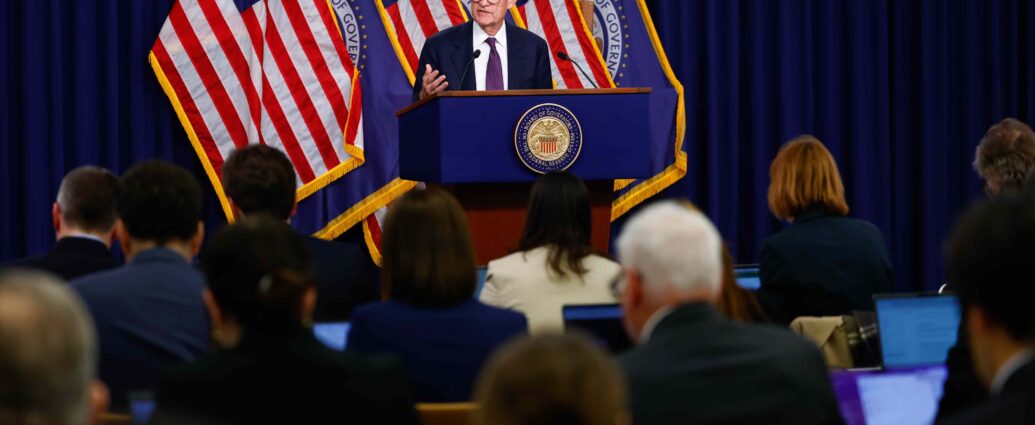
The Federal Reserve held rates steady Wednesday for the second meeting in a row as the war in Iran clouds an already murky economic picture. In its statement, the Fed acknowledged the war, but kept its language cautious, saying the economic implications of the Middle East conflict remain “uncertain.”

The decision was nearly unanimous, save for Stephen Miran, the Trump-appointed governor, who cast his fifth consecutive dissent in favor of a quarter-point cut. But the rest of the committee opted to sit tight, citing elevated uncertainty on both sides of the Fed’s dual mandate: inflation that won’t come down and a labor market that shocked economists with its slackness last month. 

The Iran factor

The conflict in Iran, now in its third week, has thrown a wrench into whatever plans the Fed and its watchers had for 2026. Brent crude jumped above $109 a barrel Wednesday, up from around $72 before the fighting started, while gas prices have surged nearly $1 per gallon nationwide since the war began.

Higher oil costs put the Fed in a bind because they have both depressing and inflating effects. High costs of energy function like a tax on consumers, dragging on growth, but they also feed directly into inflation—exactly the problem the Fed has been trying to solve for years.

Jobs going the wrong way

The labor market gave the Fed little comfort heading into this meeting. February’s payroll report showed employers cutting 92,000 jobs, a sharp reversal from January’s surprise gain, and the unemployment rate ticked up to 4.4%. The Fed’s own projections don’t see that number getting worse: Officials held their year-end unemployment forecast at 4.4%, but monthly hiring has essentially flatlined.

Inflation still running hot

On the morning of the decision, fresh wholesale price data reinforced the Fed’s caution. The Producer Price Index rose 0.7% in February, with the year-over-year rate hitting 3.4%, much worse than economists expected. The Fed’s preferred measure of inflation, core PCE, is already running hot at 3.1% and hasn’t eased much in two years. 

What comes next

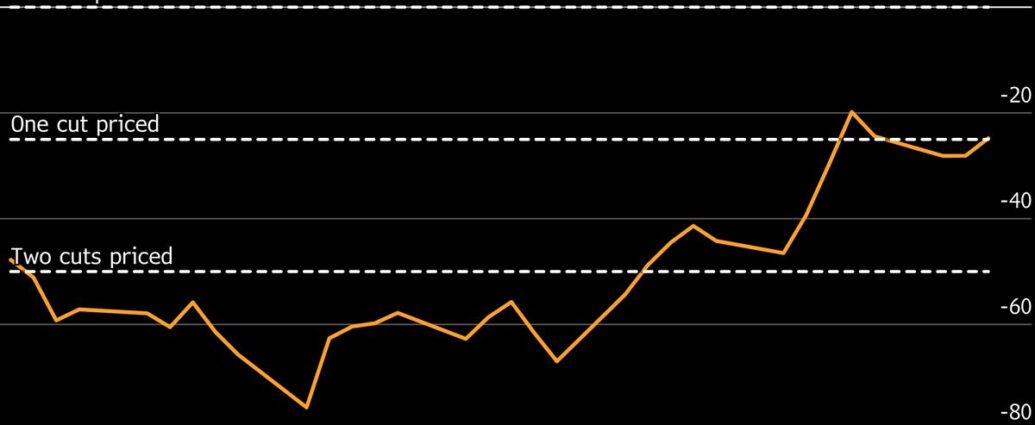
Most officials still see at least one rate cut this year, but the divisions in the Fed seem sharper than ever. Seven of 19 policymakers projected no reductions at all in 2026, while five penciled in a half-point or more in cuts. Markets, for their part, have pushed rate-cut expectations all the way out to April 2027. Fed Chair Jerome Powell will speak with reporters at 2:30 p.m. EST. It is his second-to-last conference as chair before handing the reigns to his successor, likely former Fed governor Kevin Warsh, President Donald Trump’s nominee.

This story was originally featured on Fortune.com

This post was originally published here

Amit Banati left a CFO job at a Fortune 500 company, signed a contract to become CEO of Fortune Brands Innovations, and then never officially worked a single day in the role. He walked away this week with $18.4 million in cash. 

The epic payday, ostensibly to compensate Banati for what he left behind at his prior job, is the outcome of a remarkable, possibly absurd, confluence of today’s bumper executive compensation packages and activist investor campaigns.

And it’s just one facet of a wild week at the Deerfield, Ill. manufacturer of Moen faucets, Yale locks, and Therma-Tru doors, which sold $4.5 billion in products last year.

On Monday, Fortune Brands moved to clear its leadership slate after Garden Investment Management’s Ed Garden, an activist investor and son-in-law of prolific activist investor Nelson Peltz, struck a cooperation agreement this week with the company to join the board. 

But Garden isn’t the only large investor knocking on Fortune Brands’ door. In yet another twist, Swiss asset manager Pictet Asset Management filed a notice the day after Garden’s deal, disclosing a 7.6 million-share stake in Fortune Brands valued at $493 million. The position is double Garden’s at 6.4%. Pictet said it is engaging with the Fortune Brands board and management team on long-term strategy, governance, and financial performance. The notice allows Pictet to adjust to more aggressive tactics in the future. 

Together, Garden and Pictet’s positions represent nearly 10% of the company but the two investors aren’t working together. Garden’s cooperation agreement bars him from forming or joining any group with any other shareholder or outside parties. As the news broke on Monday, Fortune Brands’ share price fell 2.6%, and it’s down 16% year-to-date.

How it Unraveled

Banati’s $18.4 million, zero-day stint at the helm of Fortune Brands was set in motion last month, and has been marked with drama from the get-go.

Fortune Brands announced on February 12 that Banati would replace CEO Nicholas Fink, with a start date slated for mid-May. But the day after the news dropped—on Friday February 13—Fortune Brands learned that activist investor Garden had built a stake in the company and privately nominated a reported slate of three new board members.

Garden believed the company should have taken more time to find Fink’s replacement as CEO, and he immediately began snapping up shares and planing to intervene when the CEO change was announced, according to reporting by the Wall Street Journal. By the time Monday’s agreement between Garden’s firm and Fortune Brands was struck, Garden’s stake was roughly 3.5 million shares, roughly a 3% position. 

Along with renouncing the CEO job, Banati is also stepping down from Fortune Brands’ board of directors, where he has served for the five years. As for the big cash payout, Fortune Brands describes it as a “make whole” payment for what Banati left behind at Tylenol-maker Kenvue. In his job as CFO at Kenvue, Banati received a $900,000 salary, a cash bonus, and a long-term equity grant valued at $3.2 million. He also left behind nearly 3.3 million unvested shares.

Under terms of the contract Banati signed in February with Fortune Brands, he gets to keep the $8 million one-time, sign-on bonus and gets accelerated vesting on $6 million in restricted stock units.

Banati is not the only exec being swept aside as a result of the company’s deal with Garden. Chief financial officer Jonathan Baksht, who was at Fortune Brands less than a year, stepped down on Monday. To replace Baksht and Banati, ex-Fortune Brands CFO David Barry will fill the gap as interim CEO until the board can find a permanent replacement. And to round it out, Ashley George, senior vice president of business unit finance, will step in as interim CFO. Barry will collect $18,000 a month on top of his $685,000 per year salary, bonus, and long-term comp award of up to $1.67 million. George gets $15,000 a month on top of her $387,130 a year salary and other comp, plus a $150,000 cash retention award.

The Garden Deal

As part of the cooperation arrangement, Garden will join Fortune Brands’ compensation committee, the nominating committee, and he’ll also serve on a CEO search committee if the board decides to create one as they search for Banati’s replacement. Fortune Brands also agreed to reimburse Garden up to $2 million in legal and advisory fees. 

In exchange, Garden withdrew his board nominees for the upcoming 2026 annual meeting and will cap his stake below 9.9% in Fortune Brands. He also agreed to a ban on running a proxy contest for board seats at the company. 

“Fortune Brands is a company with incredible brands, advantaged market positions, and significant long-term potential,” Garden said in a statement

Susan Saltzbart Kilsby, chair of the Fortune Brands board, thanked Banati. 

“In dialogue with certain shareholders, we have now decided to commence a comprehensive search process, with the assistance of a leading executive search firm to identify the next CEO of Fortune Brands, and Amit has decided to step aside,” Kilsby said. 

The company will also put a board declassification proposal to shareholders for a vote at its investor meeting this year, a change that activists often push for that would see every board member stand for election annually. Under the current system, three directors stand for election per year on a rotating cycle.

Fortune Brands pushed its full-year 2026 outlook into the first quarter earnings call, and said its financials and fundamentals remain strong in the face of “macroeconomic and geopolitical headwinds.” The company’s net sales have declined slightly from $4.61 billion in 2024 to $4.46 billion in 2025, with net income dropping 37% from $471.9 million to $298.8 million in the same period. 

An advisor for Garden declined comment. Fortune Brands referred to its public disclosures in response to a request for comment.

This story was originally featured on Fortune.com

This post was originally published here

Steady UK opposition to the war and the US president’s insults mean MPs are finding it easier to point out the obvious

When is a U-turn definitely a U-turn? To the consternation of politicians through the ages, this is rarely something within their control, but decided instead by the herd. And thus it is with Kemi Badnoch over Iran and Donald Trump.

The Conservative leader would very much like it to be known that she had not changed her stance on the US-Israeli attacks on Iran, or on the US president.

Continue reading…

This post was originally published here


The next phase of the cyber war is here, and it’s powered by AI.

A new report from CrowdStrike Holdings Inc (NASDAQ:CRWD) shows that cybercriminals are moving quicker, hitting harder, and now leveraging artificial intelligence as a means of scaling attacks. The effect of this, however, is quietly altering the investment thesis for cybersecurity ETFs.

AI Is Speeding Up The Battlefield

The “2026 Global Threat Report” by CrowdStrike shows that the breakout time, the time between the initial breach of an enterprise network and the lateral movement of the attacker inside a network, was a only 27 seconds.

Meanwhile, AI-powered attacks accelerated by 89%, while zero-day exploits, attacks that occur before the software vendor has publicly acknowledged the threat, were up 42%.

This shift is forcing …

Full story available on Benzinga.com

This post was originally published here


Your next Uber Technologies, Inc (NYSE:UBER) driver might not just be AI—it might be running from space.

At roughly 250 miles above Earth, low-Earth orbit (LEO) satellites are emerging as the next frontier for AI compute. Companies like Nvidia Corp (NASDAQ:NVDA) aren’t just pushing intelligence into cars—they’re exploring how to distribute it beyond the planet itself.

Why? Latency, scale, and coverage.

Space-based compute platforms—think satellite clusters acting as floating data centers—could process and relay real-time AI decisions globally, bypassing terrestrial infrastructure bottlenecks. That matters when you’re trying to coordinate tens of thousands of autonomous vehicles across dense urban environments.

Now layer that into Nvidia’s latest move.

The company has partnered with Uber to deploy up …

Full story available on Benzinga.com

This post was originally published here

A memorial will be built on the site, with final plans to be revealed in May and completion scheduled for fall 2027

Demolition of Pulse, the LGBTQ+-friendly nightclub in Florida where 49 people were killed in 2016, began on Wednesday, bringing a symbolic end to an almost decade-long wrangle over the future of the building that some residents and its former owners wanted to be preserved as a memorial for the victims.

A new $12m permanent memorial will be built on the site, with final plans expected to be revealed in May, and its completion scheduled for fall 2027.

Continue reading…

This post was originally published here

Jerome Powell resists Trump pressure as policymakers weigh energy shock against a weakening US jobs market

The US Federal Reserve held interest rates steady for the second time this year, a widely expected move amid turmoil in the Middle East and rising energy prices.

Fed officials faced a confluence of issues to consider in their meeting this week: soaring oil and gas prices, fluctuating inflation that still remains above the Fed’s target of 2% and a weakened job market that unexpectedly saw 92,000 losses last month.

Continue reading…

This post was originally published here

This is a developing story about the Federal Reserve’s March interest rate cut decision. Please check back for updates.

The Federal Reserve on Wednesday announced it will leave interest rates unchanged, amid a softening labor market and growing uncertainty over the war in Iran.

Fed policymakers voted to leave the benchmark federal funds rate unchanged at its current range of 3.5% to 3.75%. The move follows the central bank’s decision to hold rates steady in January after three successive 25-basis-point rate cuts in September, October and December to close out last year.

Economic data showing a slowdown in the labor market, inflation continuing to run hotter than the Fed’s 2% target and the unrest in Iran prompted policymakers to continue to pause rate cuts.

The Federal Open Market Committee (FOMC) voted 11-1 in favor of leaving rates unchanged, with the lone dissent by Fed Governor Stephen Miran, who was in favor of a 25 basis point cut.

The FOMC’s statement noted that economic indicators suggest the economy is expanding at a solid pace, with low levels of job gains and somewhat elevated inflation.

It also noted that uncertainty surrounding the economic outlook “remains elevated” and that the “implications of developments in the Middle East for the U.S. economy are uncertain.” 

Federal Reserve Jerome Powell will hold a press conference to discuss the decision.

This post was originally published here


Carvana Co (NYSE:CVNA) shares plummeted on Wednesday as a confluence of macroeconomic and company-specific headwinds weighed on the online auto retailer.

Broader Market And Geopolitical Shocks

The S&P 500 fell 0.55%, and the Nasdaq Composite dropped 0.56% as Israel struck Iran’s South Pars gas facility.

This major escalation sent Brent crude surging 4.8% to $108.50. United States Oil Fund (NYSE:USO) climbed to $98.15, fueling fears that rising fuel costs will dampen consumer demand for vehicles.

Inflation And Fed Pressure

February producer price data (PPI) surged 0.7% month-over-month, doubling analyst estimates.

Annual core PPI hit 3.9%, complicating the Federal Reserve’s path to …

Full story available on Benzinga.com

This post was originally published here

Today marks the start of a new era for Disney as long-time CEO Bob Iger officially passes the baton to his successor, Josh D’Amaro, at the company’s annual shareholders meeting. 

D’Amaro, a 28-year veteran of the company, was named Iger’s replacement on Feb. 3. He most recently served as head of Disney Experiences, which includes the company’s theme parks, cruise line, resorts and consumer products. 

Disney and D’Amaro have said very little about how he plans to lead the company, and today’s shareholder meeting could offer a first glimpse into the company’s direction at a pivotal moment for the media industry. 

The  company, with a market cap of $175.98 billion,will have to contend with a shifting landscape as competitor Paramount Skydance  prepares to acquire Warner Bros.,potentially cutting into the company’s market share. Since Iger returned as CEO in 2022, the company’s shares have underperformed compared to the wider market. 

The company’s messaging around D’Amaro’s ascension has focused on ensuring a smooth transition following the short, controversy-filled tenure of Iger’s first replacement, Bob Chapek. 

A key difference this time is that Iger will temporarily stay on as a senior advisor and board member, even though he’s stepping down as CEO eight months ahead of schedule. After appointing Chapek in 2020, Iger remained full-time as executive chairman and directed Disney’s creative projects. 

Former Morgan Stanley CEO James Gorman, who has been Disney’s board chairman since 2025, led the succession planning committee to replace Iger.

“Bob came to the point where he had developed the talent. And he said, ‘This is for me to step aside now,’” Gorman said in an interview with CNBC last month. “Yes, he could technically be CEO through the end of his contract. That wasn’t the aspiration. The aspiration was to get the company ready and to get the talent ready, not worrying about what the contract says.” He later added that this time there would be no drama. 

This new structure will allow for a “clean break,” and an orderly succession, board advisor and lawyer Richard Leblanc previously told Fortune

“There is always pressure on the new CEO when the old CEO is there to not make any sudden moves, and to carry on the CEO’s legacy,” said Leblanc. In contrast, when the old CEO moves on, “they exit the company so that the new CEO can find their way and implement change without feeling as though someone is looking over their shoulder.”

Disney also announced Dana Walden, who was widely reported to be a CEO contender, will become the company’s president and chief creative officer, a new role. Walden previously served as the co-chairman of Disney Entertainment, where she oversaw Disney’s movies, television, news and content businesses. 

Even though D’Amaro will be her boss, Walden’s base salary of $3.75 million is roughly 50% higher than D’Amaro’s starting base salary of $2.5 million, a strategic incentive for an executive who could have left the company after losing the top job. 

D’Amaro will have to fill Iger’s legendary shoes after a nearly two-decade tenure that included the acquisition of the company’s most iconic brands, including Pixar in 2006, Marvel Entertainment in 2009, and Lucasfilm in 2012. Disney has also made major investments in its theme parks and plans to open a new theme park and resort in Abu Dhabi. 

The incoming CEO is well-positioned to lead the company’s growth. Under D’Amaro, Disney’s parks and experiences have become the company’s primary profit engine, accounting for more than 70% of operating income despite representing under 40% of total revenue. Streaming is the other major growth driver for the company, following consecutive quarters of profitability. 

The slow transition aligns with D’Amaro’s leadership style. As he told students at his alma mater, Georgetown University, last year, he prefers to approach new roles by listening.“There’s gravity to a business card with a title on it. You start to take on that identity, but that’s not who you are,” D’Amaro told the students. “Now, every time I walk into a new job, I say, ‘I don’t know.’ But I know you do, and I know I can help.”

This story was originally featured on Fortune.com

This post was originally published here
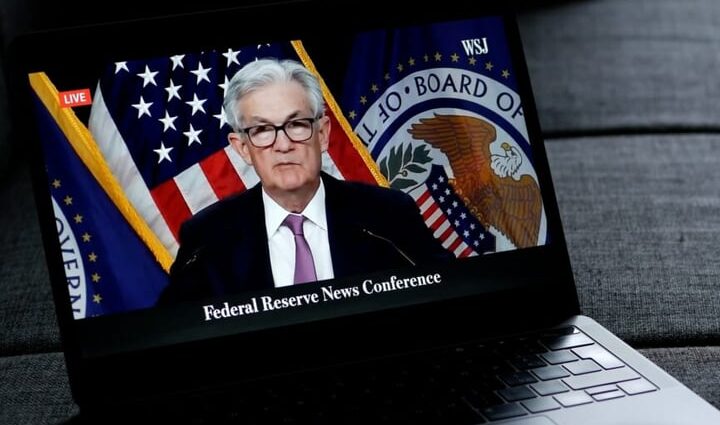

FTX will distribute approximately $2.2 billion to creditors on March 31, with Convenience Class creditors receiving 120% of their claims while general unsecured creditors hit 100% recovery.

The Fourth Distribution Breakdown

Class 5A Dotcom Customer Entitlement Claims will receive an incremental 18% distribution, bringing cumulative recovery to 96%. 

Class 5B U.S. Customer Entitlement Claims will receive 5%, reaching 100% cumulative recovery.

Classes 6A General Unsecured Claims and 6B Digital Asset Loan Claims will each receive 15% distributions, hitting 100% cumulative recovery. 

Class 7 Convenience Claims will receive a cumulative 120% distribution, becoming the first creditor class to recover more than their original claim amount.

Eligible creditors should expect to receive funds from their selected distribution service provider—BitGo, Kraken, or Payoneer—within one to three business days from March 31.

Why 120% Recovery Is Possible

The recovery exceeds 100% because FTX’s bankruptcy estate successfully sold assets, clawed back funds, and benefited …

Full story available on Benzinga.com

This post was originally published here

Trump pick to replace Kristi Noem signaled he avoid her mistakes but defended president’s immigration campaign

Markwayne Mullin defended his ability to lead the Department of Homeland Security (DHS) and expressed regrets for comments he made about a US citizen killed by immigration agents at his confirmation hearing on Wednesday, which began on an unusually quarrelsome note when a fellow Republican senator accused him of encouraging violence.

Donald Trump earlier this month nominated Mullin, a first-term Republican senator from Oklahoma, to lead DHS, after the president ousted Kristi Noem amid public blowback against the administration’s aggressive approach to its mass deportation agenda and the deaths of Renee Nicole Good and Alex Pretti in Minneapolis.

Continue reading…

This post was originally published here

The cryptocurrency XRP supplanted BNB as the fourth largest in market cap, as Ripple, the company most closely linked to XRP, announced that it would be expanding in Brazil. As of Wednesday morning, XRP’s market cap was at about $93 billion, whereas BNB’s market cap was closer to $92 billion. 

Ripple, which owns about 40% of the XRP supply, announced in a statement on Tuesday that in Brazil it plans on providing a suite of financial services, including cross-border payments, digital asset custody, prime brokerage, and treasury management. The company also plans to apply for a license with the country’s central bank. 

“Latin America has always been a priority market for Ripple — not just because of the scale of the opportunity, but because Brazil has built one of the most advanced and forward-thinking financial ecosystems in the world,” said Monica Long, president at Ripple, in the statement. “We’ve spent more than a decade building the trust, licensing, and technology required to operate in regulated markets.” 

The Brazil expansion comes shortly after the company bought back $750 million of its shares to put its valuation at about $50 billion. That buyback program from last week proved that Ripple could grow despite a turbulent period for the crypto sector at large. 

The company, run by CEO Brad Garlinghouse, helps financial institutions send money internationally via the XRP ledger. Ripple and XRP have a long history: when the cryptocurrency was created in 2012, the company was given about 80% of its total supply. 

While XRP is up to fourth among the largest cryptocurrencies, Bitcoin and Ethereum are still the top two. The former is down about 3% in the last day to its current price of roughly $71,000, and the latter is down about 6% during that time to its current price of roughly $2,180, according to Binance.

This story was originally featured on Fortune.com

This post was originally published here
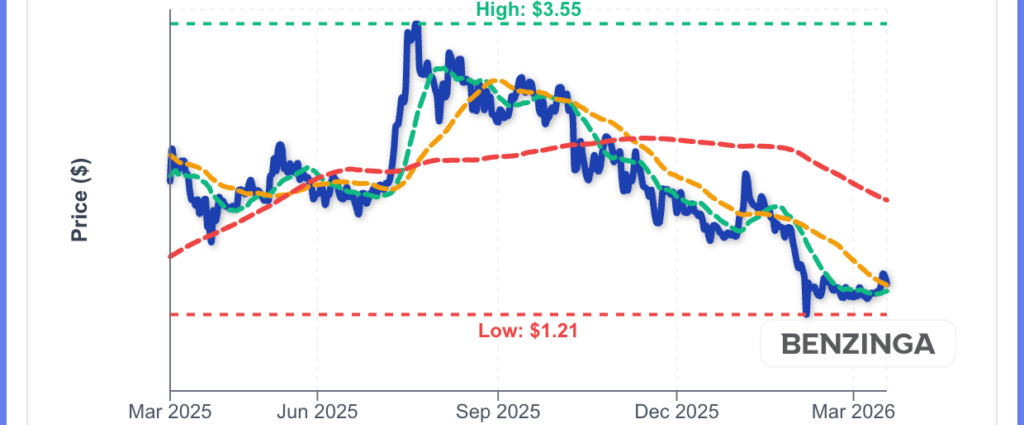
(RTTNews) – Reversing the gains made yesterday, gold prices have tumbled on Wednesday as the Middle East war looks to continue far longer than expected as Iran toughens its stance. Soaring oil prices have emboldened long-term inflationary concerns, strengthening the U.S. dollar v

This post was originally published here

Company says it will continue to sell cars with V12 internal combustion engines as there is demand from clients

Rolls-Royce has abandoned its goal to sell only electric cars by the end of the decade.

The luxury car company launched its all-electric Spectre model in 2022, saying at the time that it would end production of its vehicles with V12 internal combustion engines by the end of 2030.

Continue reading…

This post was originally published here


Last week, the Senate passed the 21st Century Road to Housing Act by a large bipartisan margin of 89-10, sending a major piece of housing legislation to the House of Representatives for its approval. The Senate combined its bill with a version passed by the House earlier, expanding and revising certain provisions, and excluding others. Both bills aim to increase the supply of affordable housing. Specifically, the Senate’s bill would increase the supply of affordable housing by, among other things, streamlining regulatory reviews for housing projects, promoting housing development in opportunity zones, increasing Federal Housing Administration loan limits and supporting manufactured housing.

While NAIOP and it national housing association allies supported legislation designed to increase housing supply and help address the current housing affordability crisis in many of our communities, the Senate bill contains a very problematic provision that would have the opposite effect. The Senate included language, demanded by President Donald Trump, designed to restrict the purchase of single-family homes by large institutional investors that own 350 homes or more. But in doing so, it would also undermine a nascent build-to-rent (“BTR”) industry that is increasing the supply of rental housing available to families – an outcome we do not believe was intended.

Preventing large institutional investment companies from purchasing existing single-family homes for rental – essentially taking them off the market for families seeking homeownership – has become a potent populist issue and one that Trump has embraced, issuing an executive order earlier this year titled Stopping Wall Street from Competing with Main Street Homebuyers.” This was one issue on which Trump and Massachusetts Senator Elizabeth Warren agreed.

However, Section 901 of the Senate legislation establishing the institutional investor ban also includes language that would require BTR developers, who are building units meant specifically to create rental communities, to sell these units within seven years to individual buyers. This seven-year disposition requirement would effectively eliminate the production of BTR housing at a time when public policy should be increasing housing supply and expanding rental choices for families.

Recently, BTR housing has emerged as a major source of new rental housing production for families who prefer these types of units to apartments. Many times the underlying zoning for these developments is multifamily, and the rental homes are all located on a single tax parcel and were never intended for individual sale. These communities often come with amenities and are fully staffed with onsite maintenance, the costs of which a future homeowners association would be unable to assume. The appeal and benefit of these communities is that residents are not forced to shoulder many of the maintenance responsibilities or costs of homeownership.

Notably, Trump’s executive order directing federal agencies to stop assisting large institutional investors from purchasing existing single-family homes provides a specific exemption for BTR communities, stating that guidance from federal agencies issued as a result of the order “shall include appropriate, narrowly tailored exceptions for build-to-rent properties that are planned, permitted, financed, and constructed as rental communities, and such other appropriate, narrowly tailored exceptions as the applicable agency may determine appropriate . . . ”

During the Senate floor debate of the housing bill, some Democrats also acknowledged that the seven-year disposition language would need to be revised. Senator Brian Schatz (D-HI), for example, warned that the bill could undermine housing production, saying that ”while there are a lot of good things in this bill that are kind of on the pro-housing supply side, what we are about to do is essentially ban a specific kind of housing.”

Procedurally, the House could vote on the Senate-passed legislation without any changes, or it could demand changes, which would require that both chambers pass a compromise, identical bill. NAIOP and national housing industry advocates have raised serious concerns with members of the House and Senate over the BTR language, and several House Republicans have called for revisions, as well as other changes to the Senate legislation before the bill is allowed to be voted on in the House. Representative French Hill (R-AR), chairman of the House Financial Services Committee with jurisdiction over housing legislation, is also calling for changes.

While the sponsors of the Senate’s legislation were hoping that Trump would put pressure on House Republicans to force a vote, he has not in fact done so. For now, it seems the House and Senate will have to work out their differences on BTR and other issues before the major housing legislation can be sent to the president’s desk for his signature.

This post was originally published here


Polymarket announced Wednesday it is acquiring Brahma, a DeFi infrastructure startup that has processed over $1 billion in transactions, its third deal since February.

Brahma builds crypto plumbing for businesses managing digital assets, and the deal is about reducing the friction that still sits underneath Polymarket’s blockchain-based platform: wallet creation, deposits, converting shares and cashing out.

What Happened

CEO Shayne Coplan got Brahma co-founder Alessandro Tenconi on a Telegram call at 1 a.m. in September 2025.

Tenconi said Coplan was looking for builders who could move fast and ship quality. Brahma will wind down its other projects to join Polymarket full-time.

By tapping into Brahma’s risk-tolerant DeFi user base, Polymarket also hopes to inject much-needed liquidity into smaller, thinly traded niche contracts.

The acquisition signals a …

Full story available on Benzinga.com

This post was originally published here

Board meets this week to discuss appointment, with former Google executive the strong favourite to replace Tim Davie

Former Google executive Matt Brittin is expected to be named the BBC’s next director general within days, with the corporation’s board meeting this week for a final discussion about the appointment.

The decision will be discussed at a regular BBC board meeting on Thursday. Though the meeting will not formally approve Brittin for the role, an announcement could be made as soon as next week.

Continue reading…

This post was originally published here

Democratic senators pressed the U.S. government’s top intelligence official at annual worldwide threats hearings Wednesday about the war with Iran, including whether she had advised President Donald Trump that Tehran was likely to block the Strait of Hormuz, a crucial passageway for oil and gas from the Persian Gulf, if attacked.

Tulsi Gabbard, the director of national intelligence, repeatedly deflected questions about the intelligence she had offered the Republican president. That exasperated Democrats who tried to use a rare public forum to extract answers about the widening conflict in the Middle East.

She sidestepped when asked by Virginia Sen. Mark Warner, the top Democrat on the Senate Intelligence Committee, whether she had advised Trump that Iran would attack Gulf nations and shut down the strait if the country was targeted by U.S. strikes.

“I have not and won’t divulge internal conversations. I will say that those of us within the intelligence community continue to provide the president with all of the best objective intelligence available to inform his decisions,” she said.

Trump has urged allies to help safeguard the waterway and ease a chokepoint on the region’s oil exports. He complained on Tuesday that NATO and most other American allies have rejected his calls.

The annual congressional hearings involving the most senior intelligence officials are taking place at a time of scrutiny over the U.S. military campaign in the Middle East and heightened concerns about terrorism at home after recent attacks at a Michigan synagogue and Virginia university.

The focus is on the Iran war

The focus was on the war, and among the issues expected to be raised was reporting that outdated intelligence likely led to the U.S. firing a missile that hit an elementary school in Iran and killed more than 165 people. The outdated targeting data was reported to have come from the Defense Intelligence Agency, whose director, Lt. Gen. James H. Adams, was to testify. The White House says the strike is under investigation.

The hearings, which continue in Thursday in the House, are also likely to delve into the administration’s internal debate over the war, given the resignation this week of Joe Kent as director of the National Counterterrorism Center. Kent said Tuesday he could not “in good conscience” back the war and did not agree that Iran posed an imminent threat to the United States.

Hours later, Gabbard, whose office oversaw Kent’s work, wrote on social media that it was up to Trump to decide whether Iran posed a threat. She did not mention her own views of the strikes and asserted at the outset of the hearing that she intended to deliver the perspectives of the intelligence agencies, as opposed to her own viewpoints.

Trump has sought to distance himself from Kent. CIA Director John Ratcliffe tried to do the same Wednesday when he was asked whether intelligence supported Kent’s assessment that Iran was not an imminent threat.

““The intelligence reflects the contrary,” Ratcliffe said.

Gabbard’s presence at a domestic legal search questioned

Apart from Iran, Gabbard was pressed on her presence at an FBI search in January of an election hub in Fulton County, Georgia, where agents seized voter data from the 2020 presidential election. Her appearance at a domestic law enforcement operation raised eyebrows given that Gabbard’s office is meant to focus squarely on foreign threats.

Warner said it was “an organized effort to misuse her national security powers to interfere in domestic politics and potentially provide a pretext for the president’s unconstitutional efforts to seize control of the upcoming elections.”

Gabbard responded that she was present for the search at the request of the president but did not participate. But she continued to tangle with Warner, who at one point told her: “If you want to ask the questions, you should have stayed in Congress.”

Also under scrutiny is Kash Patel’s leadership of the FBI. He was making his first public appearance on Capitol Hill since video surfaced last month showing him partying with members of the U.S. men’s hockey team after their gold medal win at the Winter Olympics.

Patel has fired dozens of agents in his first year on the job, raising concerns about an exodus of national security experience at a time when the United States is confronting an elevated terrorism threat.

This month alone, a gunman wearing clothes with an Iranian flag design and the words “Property of Allah” killed two people at a Texas bar; two men who authorities say were inspired by the Islamic State group were arrested on charges of bringing homemade powerful explosives to a protest outside the New York City mayoral mansion; a man with a past terrorism conviction opened fire inside an Old Dominion University classroom in Virginia; and a Lebanese-born man in Michigan drove his car into a synagogue.

The FBI has said that it is working continuously to protect the country.

_____

Associated Press writers Mike Catalini and Ben Finley contributed to this report.

This story was originally featured on Fortune.com

This post was originally published here
U.S. stocks are sinking Wednesday after another climb for oil prices raised worries about inflation, which may have been primed to worsen even before the war with Iran began.

The S&P 500 fell 0.6% and was on track for its first loss this week. The Dow Jones Industrial Average was down 380 points, or 0.8%, as of 12:55 p.m. Eastern time, and the Nasdaq composite was 0.6% lower.

Stocks fell under the pressure of a 4.7% climb for the price of a barrel of Brent crude, the international standard, to $108.27. Benchmark U.S. oil rose 1.5% to $97.61 per barrel.

Oil and natural gas prices have been spiking since the war began because of disruptions to the Persian Gulf’s energy industry. Iran’s state television said Wednesday that the Islamic Republic would be attacking oil and gas infrastructure in Qatar, Saudi Arabia and the United Arab Emirates after an attack on facilities associated with its offshore South Pars natural gas field.

If the disruptions keep oil and gas prices high for long, they could send a debilitating wave of inflation crashing into the global economy.

A report released Wednesday morning showed that inflation pressures were already worsening before the war began. It said inflation at the U.S. wholesale level unexpectedly accelerated last month to 3.4%, and those cost increases could hit U.S. households if producers pass them all along.

Such numbers strengthened Wall Street’s consensus that the Federal Reserve will announce that it’s keeping interest rates steady this afternoon following its latest meeting, instead of resuming its cuts.

Cuts would give the job market and investment prices a boost, and President Donald Trump has been angrily calling for them. But lower interest rates would also worsen inflation.

More important for Wall Street is whether Fed officials will say they still think one cut to rates may be possible over the course of 2026. That’s what the median member said in December, the last time Fed officials published such expectations.

The Iran war has made it difficult for anyone to make economic forecasts. Gasoline prices are soaring and will push up inflation for at least the next month or two. The average price for a gallon of gasoline spiked again overnight, reaching $3.84. It was well under $3 last month.

Global oil flows remain largely constrained, ING Bank analysts Warren Patterson and Ewa Manthey wrote in a research note on Wednesday, even as hopes were growing that Iran might be allowing more vessels through the Strait of Hormuz, a key waterway for global oil and gas transport.

Roughly a fifth of the world’s crude oil passes through the strait, which has been largely closed as Iran blocks ships linked to the U.S., Israel and their allies.

On Wall Street, mixed profit reports helped keep the market in check.

Macy’s jumped 5.2% after reporting stronger profit and revenue for the latest quarter than analysts expected. The retailer behind Bloomingdale’s and Bluemercury is in the midst of a turnaround plan to drive growth under CEO Tony Spring.

But General Mills slipped 1% after the company behind the Pillsbury, Progresso and Wheaties brands reported a weaker profit for the latest quarter than analysts expected. CEO Jeff Harmening is investing in its brands in hopes of driving growth, and it’s sticking with its forecast for profit over the full fiscal year.

In the bond market, Treasury yields ticked higher following the higher-than-expected update on inflation at the wholesale level. The yield on the 10-year Treasury rose to 4.22% from 4.20% late Tuesday and from just 3.97% before the war with Iran started.

In stock markets abroad, indexes mostly fell in Europe following a stronger finish in Asia. They reacted to the rise in the price of crude, which accelerated as trading headed westward around the world.

Tokyo’s Nikkei 225 rallied 2.9% after the government reported exports in February were higher than expected. South Korea’s Kospi leaped 5%.

___

AP Business Writers Chan Ho-him and Matt Ott contributed.

This story was originally featured on Fortune.com

This post was originally published here

Five-day cessation announced as mass funeral held for some of hundreds of victims of airstrike on rehab centre

Pakistan has announced a five-day pause in strikes against neighbouring Afghanistan, as a mass funeral was held for some of the hundreds of victims killed in Monday’s attack on a drug rehabilitation centre in Kabul.

The Afghan Taliban government has said more than 400 people were killed in and 265 others wounded in that attack, which took place as people and staff at the centre were praying days before the end of the holy month of Ramadan.

Continue reading…

This post was originally published here

Nick Timothy said an event attended by the mayor of London that included prayers was an ‘act of domination’

Polanski says the government should be doing more to improve home insulation, and on the drive towards renewable energy.

And he says the government should commit to ensuring energy bills do not rise above the April-June price cap.

The government should guarantee right now that it will not allow energy bills to rise beyond the April-June price cap – instead setting aside approximately £8.4bn to prevent a rise of up to £300 per household that could be coming down the track.

No, it’s not cheap. But the alternative is unacceptable: if the price cap rises, we will see interest rate rises. Mortgage rates up. Bond yields up. And inflation up – and we will be back into the doom loop that has done untold damage to our economy and caused misery for households across the UK for years now.

There are ways to pay. Instead of scrapping the windfall tax on energy companies, as this government is planning to do, we should be strengthening it instead. We need a real, loophole-free windfall tax with no exemptions for reinvesting in fossil fuels. A robust tax that claws back every single pound of reckless profiteering from this crisis and repurposes it immediately to protect every home in the country. And while taxing extreme wealth in the ways we need to will take time to implement, there are levers the government could pull right now – like equalising capital gains tax with income tax and reforming the base, to raise £12bn.

It’s time for the government to act decisively, eliminate the uncertainty that is plaguing people and the markets and insulate us from some of the worst economic effects of Trump’s war.

This was not a war of self-defence, there was no imminent threat. Negotiations were ongoing. It was, as the BBC’s international editor said, a war of choice.

People across the Middle East are terrified of what Trump and Netanyanhu’s war will mean for them and their loved ones. And the repercussions are echoing across the world as instability spreads and oil prices spike.

People are already struggling so hard just to make ends meet. People feel like they’re running every day just to stay in the same place. The idea that yet again – for the second time in just a few years – that we are going to have to deal with another enormous spike in the cost of the basics is unacceptable.

It’s unacceptable because we didn’t need to be here. It’s unforgivable that just four years after we last saw an energy price shock, that one triggered by Putin’s illegal invasion of Ukraine, far too little has been done to protect this country, its people, and its economy – from the impact of yet another energy price shock.

Continue reading…

This post was originally published here

It was the weekend before last Thanksgiving when Kate Johnson, the president and CEO of Lumen Technologies, called then-Nationwide Chief Technology Officer Jim Fowler to discuss hiring a new top technologist for the telecommunications company.

Fowler, who had served on Lumen’s board since 2023, quickly realized that the conversation with Johnson wasn’t about a board director and CEO working together on succession planning. He was being recruited.

Less than two weeks later, Fowler left insurer Nationwide after more than seven years and joined Lumen (ranked No. 325 on the Fortune 500) as chief technology and product officer, departing the board immediately to take on the C-suite role. He succeeded Dave Ward, who had served as CTO for two years and left in January to become president and chief architect at software giant Salesforce.

Fowler joins Lumen’s leadership as the provider of internet, cloud, IT, and communication technology services undergoes a strategic transformation led by Johnson, who joined Lumen in 2022 after a brief retirement. She has focused on reducing Lumen’s debt load and narrowing its focus to prioritize serving private companies and public sector organizations. The $5.75 billion sale of Lumen’s consumer fiber businesses to AT&T helped on both fronts. The deal closed in February and Lumen has said it would use about $4.8 billion of the proceeds to pay down debt.

Another key area of focus, and this is where Fowler comes in, is a commitment that Lumen made to Wall Street back in 2024 that it would achieve annualized run-rate savings of $1 billion from its network by the end of 2027. Fowler says AI is at the “heart of how we’re going to do that.” 

“Each one of our senior leaders has a single target that they are going after,” he adds. Legal’s focus is on deploying AI-enabled applications that can speed up the contracting process, while marketing is looking at ways to use AI to create more personalized marketing materials.

For Fowler’s technology team, his goal is a 50% reduction in the cycle time for new product development. “That’s what my teams are going to march toward,” says Fowler.

Many elements of Lumen’s internal technology strategy have impressed Fowler as he settles into the role. He says his predecessor had a strong vision on cloud computing and there has been encouraging progress on AI. More than 90% of Lumen’s employees have a Microsoft Copilot license and the tool is being used for a variety of purposes including meeting assistance, strategy, and research.

Lumen’s engineers use the AI coding assistant GitHub Copilot and are authorized to switch between different AI models from providers including OpenAI and Anthropic. As a result, Fowler says he is seeing up to a 50% improvement in productivity for some tasks like re-platforming applications. 

He says one “hidden gem” he uncovered is that Lumen’s engineering team has developed an agentic AI framework already deployed across the entire company. Employees can build their own AI agents on an internal, proprietary dashboard that Lumen created. Workers can deploy custom AI agents using large language models from providers like OpenAI, Anthropic, and Google. They are encouraged to explore the models that they believe will produce the best outcomes at the most efficient cost.

Still less than 90 days into his new role, Fowler has identified a few projects he will prioritize going forward. They include modernizing Lumen’s disparate operations that stem from its legacy of growing through acquisitions. To extract the most value possible from Lumen’s AI investments, Fowler’s team will need to continue to rewrite and reimplement those systems.

Other projects include expanding the physical layer. Lumen is planning to more than double the amount of fiber in the ground, from over 17 million miles today to over 47 million miles over the next two years. Then, there’s the digital layer, making it easier for customers to opt in to Lumen’s various services through agentic AI-enabled support.

“This has been a network infrastructure company for 50 years,” says Fowler. “Getting it to think like a tech company—with software development and engineering practices that scale with demand from our customers—has been a focus of mine in the first two months that I’ve been here.”

John Kell

Send thoughts or suggestions to CIO Intelligence here.

This story was originally featured on Fortune.com

This post was originally published here
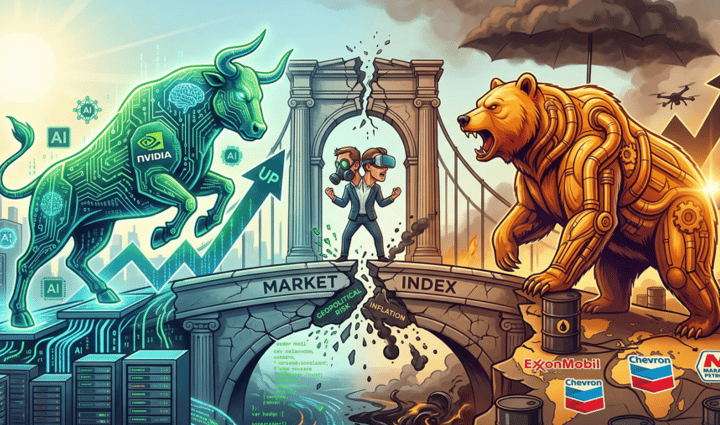
Revolutionary Guards say they will strike infrastructure in Saudi Arabia, UAE and Qatar after South Pars field hit

Iran has threatened to attack energy infrastructure across the Gulf region in retaliation for Israeli strikes on its largest gasfield, the first targeted attacks on its fossil fuel production since the war began.

Iran’s Revolutionary Guards have threatened counterstrikes on several energy facilities across Saudi Arabia, the UAE and Qatar “in the coming hours” after state media reports that missiles had targeted its gas facilities at the giant South Pars field, the largest gas reserves in the world.

Continue reading…

This post was originally published here

As Deep As the Grave, the true story of 1920s archeologists, will bring late actor back with support from his estate


Val Kilmer is set to be the latest Hollywood star to be resurrected by AI. The acting legend, who died last year at age 65, will star in the drama As Deep As the Grave.

Kilmer was attached to the project prior to his death from throat cancer.

Continue reading…

This post was originally published here