








Billionaire Uber co-founder Travis Kalanick admits strategically moving to Texas before California wealth tax
Billionaire and Uber co-founder Travis Kalanick officially joined the exodus from California, revealing he moved to Austin, Texas, just weeks before a proposed wealth tax could have targeted his estimated $3.6 billion fortune.
“Just to be clear, on December 18, I moved to Texas. I don’t know what’s so specific about December 18, but let’s just say it’s prior to January,” Kalanick said in an interview with TPBN.
“I get a little bit [of] FOMO on like, these people going to Florida. I’m like, dude! Why so much Florida action?” he continued. “Come on, homies.”
‘WALL STREET TO Y’ALL STREET’: WHY AMERICA’S WEALTHY TRADES CITY LUXURY FOR ACRES OF TEXAS FREEDOM
Kalanick left his San Francisco home for Texas just 14 days before the new year, when the retroactive residency deadline for the proposed billionaire tax would take effect.
While it has not yet qualified for the November ballot, the proposal — backed by the Service Employees International Union–United Healthcare Workers West (SEIU-UHW) — would impose a one-time 5% tax on the net worth of California residents with more than $1 billion in wealth. The tax would be due in 2027, and taxpayers could spread payments over five years, with additional fees, according to the California Legislative Analyst’s Office.
If the measure is approved by voters, anyone who was a California resident on Jan. 1, 2026, would owe the tax, according to the proposal. Based on Forbes’ estimates, Kalanick could owe roughly $180 million.
Kalanick’s departure follows other longtime California billionaires who have moved themselves or their businesses to Texas in recent years, including Tesla and SpaceX CEO Elon Musk, Palantir co-founder Joe Lonsdale and venture capitalist David Sacks.
Florida is also rapidly absorbing California’s finance and media elite, with names like Amazon founder Jeff Bezos, venture capitalist Peter Thiel, Google co-founders Larry Page and Sergey Brin, and Meta CEO Mark Zuckerberg moving to the “Gold Coast.”
Kalanick is using his relocation to launch his new venture, Atoms — formerly City Storage Systems — which focuses on industrial robotics and “gainfully employed” artificial intelligence, he said in the interview. It’s a pivot from the “perception politics” he claims pushed him out of Uber in 2017.
“I had been torn away from an idea and a movement that I had poured my life into. I had lost my bearings as I found the world increasingly operating by the rules of perception, not reality,” he writes on Atoms’ website.
GET FOX BUSINESS ON THE GO BY CLICKING HERE
When jokingly asked if he ever takes work calls through his AirPods while waterskiing, Kalanick responded that he might start doing so.
“Dude, I should. I’d love it. Don’t get me excited,” he said.

America’s drinking habits are destroying Mexico’s environment: ‘It will take a long time for the ecosystem to recover’
Thirty years ago, a single light bulb would illuminate the mezcal distillery owned by Gladys Sánchez Garnica’s family in rural Oaxaca, where the agave-based spirit was made through the night. As drops dripped from a clay oven, Garnica and her siblings listened to stories told by their parents while neighbors arrived by horse to get a taste of a drink known for its smoky flavor.
“We were taught when to harvest agave, how to care for the soil, and how much we could ask of the forest,” said Garnica, 33, speaking from a women-owned distillery in San Pedro Totolapam, a town of just over 3,000 residents in Mexico’s Oaxacan Central Valleys, where much of the economy depends on mezcal.
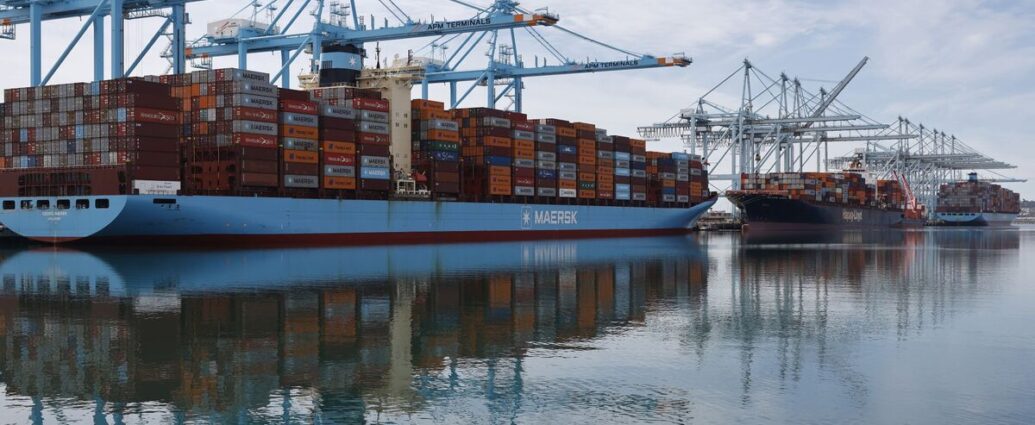
Today, that small-scale tradition exists alongside a global boom that has transformed mezcal into a major industry dominated by international brands. As mezcal has spread to bars around the world, so has its footprint on the land. Along the road to communities like San Luis del Rio, where celebrity brands such as Dos Hombres, created by actors Bryan Cranston and Aaron Paul from the hit series “Breaking Bad,” are made, agave plantations now blanket hillsides that were once forest. While the boom has brought economic benefits for many local producers, it’s also led to rising environmental costs.
Mezcal production surges as popularity takes off
Production in Mexico has gone from about 1 million liters (264,172 gallons) in 2010 to more than 11 million (2.9 million gallons) in 2024, according to COMERCAM, the country’s mezcal regulatory body. Nearly all is produced in Oaxaca, but less than 30% remains in Mexico. About 75% of exports go to the United States.
In two major mezcal-producing areas of Oaxaca, more than 34,953 hectares (86,370 acres) of tropical dry and pine oak forests have been lost in 27 years to make room for agave, an area roughly equivalent to the size of the U.S. city of Detroit, according to a study led by Rufino Sandoval-García, a professor at the Technological University of the Central Valley of Oaxaca.
The study found that agave plantations in the two areas have expanded by over 400% the past three decades, increasingly replacing forests and farmland with a species of agave known as espadin, used in most commercial mezcal.
That is accelerating soil erosion, reducing by 4 million tons per year the amount of carbon dioxide captured by forests, limiting the land’s ability to recharge groundwater and creating heat islands in heavily planted areas, according to the study.
“It will take a long time for the ecosystem to recover the resilience it once had,” said Sandoval-García.
Mezcal production has always been resource-intensive
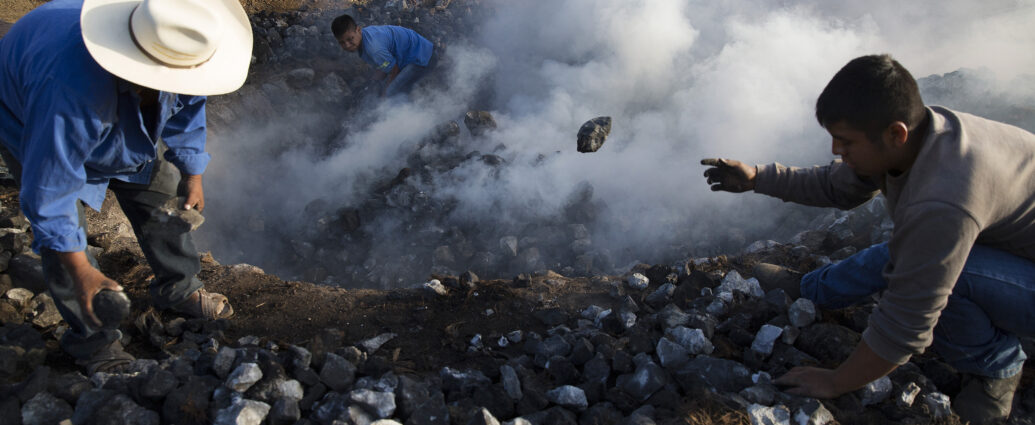
One liter (0.26 gallons) of mezcal can require at least 10 liters (2.64 gallons) of water for fermentation and distillation, and generates waste such as bagazo, the pulpy residue left after the juice has been extracted, and vinazas, or wastewater, often dumped untreated into rivers. Large quantities of firewood are also burned to roast agave pineapples and fuel distillation, much of which comes from illegal logging, according to Sandoval-García.
For generations, the environmental impacts of the spirit remained limited by its small scale and the ability of surrounding forests and soils to recover. That balance is now fragile.
Félix Monterrosa, a third-generation producer from Santiago Matatlan who owns Oaxacan brand CUISH, said the boom of industrial mezcal displaced the milpa system he learned from his ancestors, in which corn, beans and pumpkin were grown alongside agave.
“Now everything is monoculture, and that is the real problem,” Monterrosa said. In his town, decades of dumping mezcal waste into the river have left it so polluted that residents nicknamed it the “Nilo,” short for “ni lo huelas,” or in English: “don’t even smell it.”
Monterrosa now plants wild agaves alongside corn and trees to restore biodiversity, though he said maintaining the system at scale remains a challenge.
Water is an increasing concern across Oaxaca, which experienced its worst drought in more than a decade in 2024, according to Mexico’s National Water Commission.
Armando Martínez Ruiz, a producer in Soledad Salinas who sells his mezcal to Mexican brand Amaras, installed a system to cool and reuse water during distillation.
“We never had enough water here, so I try not to waste it,” he said.
There is tension between sustainability and profitability
While major companies highlight sustainability commitments, their third-party contracts with distilleries are typically limited to purchasing mezcal in bulk. Producers say those agreements rarely cover the costs of raw materials, workers’ wages or maintenance of their distilleries.
Del Maguey, one of the world’s top-selling mezcal brands, says they are working to reduce their environmental footprint by planting trees. Over the past five years, the company reused more than 5,000 tons of bagazo and 2 million liters (528,344 gallons) of vinaza to build a raised platform at a distillery in San Luis del Rio to prevent flooding and contamination, according to its head of sustainability, Gabriel Bonfanti.
For many, the boom has been a lifeline in a region with some of the highest poverty rates in Mexico.
Luis Cruz Velasco, a producer from San Luis del Rio who works with Mexican brands like Bruxo, said the growth has created jobs for nearly every family in his town of about 300 residents. Where previous generations lived in thatched houses, mezcal income has helped his siblings to attend university.
“There are many people who criticize us and ask what we do to reforest,” Velasco said. “But we have to look for a livelihood and food.”
For Velasco, the problem is not the entry of large brands, which he says have done more than the government to support marginalized areas like his, but the lack of public incentives for farmers to safeguard environments by planting native trees or maintaining traditional farming systems.
In Oaxaca, much land is communally owned and managed through local systems of self-governance. Converting forest into agave plantations requires federal approval from Mexico’s Secretary of Environment and Natural Resources.
The permitting process is so slow and bureaucratic that some communities choose to bypass it, said Helena Iturribarria from Tierra de Agaves, a conservation project to reforest parts of Oaxaca’s valleys and promote sustainable agave production.
The Secretary of Environment said in a statement it had not received requests for forest clearing for agave cultivation in the past three years in Oaxaca. The agency also said it was investigating nine public complaints filed since 2021 over illegal land clearing for mezcal production.
Finding ways to protect land
In 2018, Garnica founded a collective of women called the “Guardians of Mezcal.” The group is promoting mezcal produced by women using sustainable practices, including using only fallen trees for firewood and planting agave alongside other crops.
With help from Tierra de Agaves, Guardians of Mezcal and local community officials from Santa Maria Zoquitlan secured projected status for 26,000 hectares of forest surrounding the town.
“Mezcal is a way of life, like a form of work that our parents taught us, so it really means a lot,” Garnica said. “If there is a funeral, a wedding, a party, mezcal is a drink you are going to share with others, and above all many families depend on it.”
This story was originally featured on Fortune.com

Trump Administration races to rebuild tariff revenue after Supreme Court setback
The Trump administration this week stepped up its ambitious effort to replace about $1.6 trillion in lost tariff revenue that was eliminated by the Supreme Court’s decision to strike down a range of the president’s import taxes.
Recovering that lost revenue, which the White House was counting on to help offset the steep, multi-trillion dollar cost of its tax cuts, is possible but will be challenging, experts say. The administration has to use different legal provisions to impose new duties, and those provisions require longer, complex processes that U.S. companies can use to seek exemptions. It could be months or more before it is clear how much revenue the replacement tariffs will yield.
“I wouldn’t bet against this administration being able to get back on paper the same effective tariff rate they had before,” said Elena Patel, co-director of the Urban-Brookings Tax Policy Center. But the new approach will “make it easier for people to contest the tariffs, which is going to put a big asterisk on the revenue until all that is settled.”
On Wednesday, U.S. Trade Representative Jamieson Greer said the administration will investigate 16 economies — including the European Union — over whether their governments are subsidizing excessive factory capacity in a way that disadvantages U.S. manufacturing. The investigation will also cover China, South Korea, and Japan, Greer said.
In addition, he said there would be a second investigation of dozens of countries to see if their failure to ban goods made by forced labor amounts to an unfair trade practice that harms the United States. That investigation will also cover the EU and China, as well as Mexico, Canada, Australia, and Brazil.
Both investigations are being conducted under Section 301 of the 1974 Trade Act, which requires the administration to consult with the targeted countries, as well as hold public hearings and allow affected U.S. industries to comment. A hearing as part of the factory capacity investigation will be held May 5, while a hearing on the forced labor investigation will occur April 28.
It’s a far cry from the emergency law that President Donald Trump relied on in his first year in office, which allowed him to immediately impose tariffs on any country, at nearly any level, simply by issuing an executive order.
Moments after the Supreme Court’s ruling, Trump imposed a 10% tariff on all imports under a separate legal authority, but that duty can only last for 150 days. The president has said he would raise it to 15%, the maximum allowed, but has yet to do so. Some two dozen states have already challenged the new tariffs. The administration is aiming to complete its Section 301 investigations before the 10% duties expire.
The effort underscores the importance that the Trump White House has placed on tariffs as a revenue-raiser at a time when the federal government is facing huge annual budget deficits for decades into the future. Previous administrations, by contrast, used tariffs more sparingly to narrowly protect specific industries.
Erica York, vice president of federal tax policy at the Tax Foundation, noted that the first investigation covers roughly 70% of imports, while the second would cover nearly all of them.
“That breadth suggests the goal isn’t to address the issues at hand, but instead to recreate a sweeping tariff tool,” she said.
Trump sees tariffs as a way to force foreign countries to essentially help pay the cost of U.S. government services, even though all recent economic studies find that American companies and consumers are paying the duties, including ones from the Federal Reserve Bank of New York and economists at Harvard University. In his state of the union address last month, Trump even touted his tariffs as a potential replacement for the income tax, which would return the United States’ tax regime to the late 19th century.
Trump also wants tariffs to help pay for the tax cuts he extended in key legislation last year. The tax cut legislation is expected, according to the most recent estimates by the nonpartisan Congressional Budget Office, to add $4.7 trillion to the national debt over a decade, while all Trump’s duties, including ones not struck down by the court, were projected to offset about $3 trillion — or two-thirds of that cost.
The court’s ruling Feb. 20 that he could no longer impose emergency tariffs eliminated about $1.6 trillion in expected revenue over the next decade, according to the CBO.
Some of Trump’s tariffs remain place, including previous duties on China and Canada that were imposed after earlier 301 investigations. The administration has also slapped tariffs on some specific products, including steel, lumber, and cars. Those, combined with the 10% tariff for part of this year, should yield about $668 billion over the next decade, the Tax Foundation estimates.
“It’s going to take a really big patchwork of these other investigations to make up for the (lost) tariffs,” York said.
The administration’s efforts are also unusual because they reflect an overreliance on tariffs to bring in more government revenue. Trump has also said the duties are intended to return manufacturing to the United States, and he has used them to leverage trade deals.
“What makes this really different,” said Kent Smetters, executive director of the Penn Wharton Budget Model, “it is really the first time tariffs have been mainly used as a revenue raiser.”
Patel, meanwhile, argues that raising revenue can be done more reliably and straightforwardly by Congress. Laws like Section 301 are traditionally intended to be used to address specific trade policy concerns in particular countries.
“It’s not supposed to be there to raise revenue,” she said. “If we want to raise revenue through tariffs, then Congress should impose a broad based tariff.”
This story was originally featured on Fortune.com



Bessent talks oil, accuses media of ‘trying to make it into some crisis that it’s not’
U.S. President Donald Trump said he has demanded about seven countries send warships to keep the Strait of Hormuz open as Iranian strikes continued to rain down on Gulf countries Monday.
Dubai International Airport, the world’s busiest, gradually restarted operations after a drone struck a fuel tank and started a fire. Authorities said it was quickly contained and no injuries were reported.
Tehran has accused the United States without evidence of using “ports, docks and hideouts” in the United Arab Emirates to launch strikes on Kharg Island, home to the main terminal handling Iran’s oil exports evidence, as oil prices soared. Brent crude oil was trading near $105 per barrel on Monday.
Trump said the U.S. is negotiating with countries heavily reliant on Middle East crude to join a coalition to police the waterway where about one-fifth the world’s traded oil normally flows, but declined to name them.
Israeli strikes have deepened Lebanon’s humanitarian crisis, with more than 850 people killed and over 850,000 displaced.
Here is the latest:
US Treasury Secretary Scott Bessent downplays oil price surge
The treasury secretary followed Trump’s lead Monday and dismissed concerns about rising oil prices since the start of the Iran war.
Bessent accused the media of “trying to make it into some crisis that it’s not,” and he insisted prices would come down after the conflict ends.
“I don’t know how many weeks it will be, but on the other side of this, the world will be safer, and we will be better supplied,” Bessent said on CNBC.
He said the Treasury Department hasn’t traded oil futures to try to cap prices. Asked whether it would going forward, the secretary said: “I’m not sure under what authority or what auspices” that would happen.
Trump’s Interior Secretary Doug Burgum told Bloomberg Television over the weekend that the administration has talked about that strategy.
Trump to hold a news conference on Monday
It adds to an already full slate of meetings and other activities on the president’s schedule for Monday morning.
He’s hosting a lunch with members of the Kennedy Center board, as well as signing an executive order on fraud with Vice President JD Vance later Monday afternoon.
The president says the news conference will be before the Kennedy Center lunch.
Explosions are heard in Qatar’s capital, Doha, amid an attack
The Interior Ministry urged people to remain indoors.
Sirens sound in Jerusalem and the surrounding area warning of incoming missiles from Iran
Sirens were also sounding in Bahrain Monday afternoon ahead of a potential attack, the country’s Interior Ministry said. The ministry urge people to head to the nearest safe place.
White House press secretary Karoline Leavitt says China trip could be postponed
Leavitt says “leader-to-leader” talks between President Trump and Chinese President Xi Jinping are happening and that “at this point,” Trump looks forward to visiting China.
But those dates “may be moved,” she said.
“As commander-in-chief, it’s his number one priority right now to ensure the continued success of this Operation Epic Fury,” Leavitt told reporters at the White House on Monday morning.
UAE reports attacks by 6 missiles and 21 drones
The United Arab Emirates was attacked Monday with six ballistic missiles and 21 drones coming from Iran. That’s according to the Emirati Defence Ministry.
The ministry tallied 304 ballistic missiles, 15 cruise missiles and 1,627 drones since the start of the war.
The attacks killed seven people including two troops, it said.
British Prime Minister Keir Starmer defends decision to differ with Trump
Starmer has defended resisting President Trump’s pressure for the U.K. to join the war against Iran, saying he has “stood by my principles.”
Trump has berated the British leader for limiting the use of U.K. bases by American warplanes and declining to send an aircraft carrier to the Middle East. Trump complained to the Financial Times that “when I asked for them to come, they didn’t want to come.”
Starmer said at a news conference Monday that British troops should only be sent into action that is legal and has “a proper thought-through plan.”
He said U.K. opposition politicians who’ve criticized his stance “would have rushed the U.K. headlong into this war without the full picture of what they’re sending our forces into, and without a plan to get us out. That is not leading. It’s following.”
Iraq’s oil minister says new route for oil exports set to open
Iraqi Oil Minister Hayan Abdul-Ghani said Monday in a video statement that a pipeline from the northern city of Kirkuk to Turkey will be operational within a week, allowing the country to resume oil exports interrupted by the ongoing regional war.
Iraq previously exported around 3.4 million barrels of oil a day through its southern port of Basra, he said, but “in light of the military operations and the closure of the Strait of Hormuz, Iraqi oil exports stopped two or three days after the beginning of the war in the region.”
Abdul-Ghani said the pipeline from Kirkuk to Turkey, with a capacity of 200,000 to 250,000 barrels a day, is currently undergoing hydrostatic testing. The route will bypass the semi-autonomous Kurdish area in northern Iraq after Baghdad could not reach an agreement with local authorities over conditions for exporting via another pipeline in the Kurdish region.
Israel says displaced Lebanese will have to wait to return home
Israeli Defense Minister Israel Katz said those that fled southern Lebanon in the face of Israeli fighting against Hezbollah militants won’t be able to return home until northern Israel, which has been hit by barrages of rockets, is safe.
“Hezbollah will pay a heavy price for its aggression and activity in the Iranian axis to destroy Israel,” he said.
“We have promised security to the residents of the north, and that is exactly what we will do,” he said.
American efforts to protect Strait of Hormuz continue, US military commander says
The top U.S. military commander in the Middle East says American forces are zeroing in on Iran’s threats to freighters carrying oil and natural gas through a vital chokepoint in the Persian Gulf.
“We will continue to rapidly deplete Iran’s ability to threaten freedom of navigation in and around the Strait of Hormuz,” Admiral Brad Cooper, the head of U.S. Central Command, said in a video posted to X on Monday.
Iranian strikes on commercial vessels have effectively stopped shipping traffic in the waterway, through which a fifth of the world’s oil is transported. That has dramatically increased the price of oil and put pressure on Washington to do something to ease the pain for consumers.
Trump says he may delay China trip as Iran war roils oil prices
President Trump may delay his China trip due to the Iran war, but Treasury Secretary Scott Bessent said Monday it’s not to pressure Beijing on the Strait of Hormuz.
Bessent said any delay to Trump’s trip to Beijing wouldn’t be because of disagreements over the Iran war or efforts to reopen the Strait of Hormuz.
“If the meeting for some reason was rescheduled, it would be rescheduled because of logistics,” he said. “The president wants to remain in D.C. to coordinate the war and traveling abroad at a time like this may not be optimal.”
Trump has suggested he may delay the much-anticipated visit to China at the end of the month as he seeks to ramp up the pressure on Beijing to help reopen the Strait of Hormuz and calm oil prices that have soared during the Iran war.
Italy signals reluctance to Trump’s call to help open Strait of Hormuz
Italy is the latest country to react cautiously to Trump’s demand that allies help open the Strait of Hormuz.
Italian Foreign Minister Antonio Tajani told reporters in Brussels on Monday that Italy backs reinforcing EU naval missions in the Red Sea.
But he added: “However, I don’t think these missions can be expanded to include the Strait of Hormuz, especially since they are anti-piracy and defensive missions.”
U.S. President Donald Trump said he has demanded about seven countries send warships to keep the Strait of Hormuz open, as Iranian strikes continued to rain down on Gulf countries.
A Pakistani oil tanker transited through Strait of Hormuz
A vessel tracker says a first tanker carrying non-Iranian oil has transited through the Strait of Hormuz.
The Pakistani-controlled tanker Karachi, which carries crude oil from Abu Dhabi, passed the strait on Sunday, according to data from MarineTraffic.
The tanker is now sailing in the Gulf of Oman, it said.
India expecting LPG ships that transited the Strait of Hormuz
India’s shipping ministry said Monday that an Indian-flagged vessel carrying liquefied petroleum gas is expected to arrive at a port later in the day with more than 40,000 metric tons of fuel.
Local media reported that the vessel sailed from Qatar’s Ras Laffan anchorage. The AP was not able to independently verify that.
A second ship is scheduled to dock on Tuesday, the ministry said. Both vessels crossed the Strait of Hormuz on Saturday.
Officials said 22 Indian-flagged vessels remain west of the strait.
Starmer says UK seeks ‘viable’ plan to open Strait of Hormuz
Prime Minister Keir Starmer says Britain is working with allies on a plan to reopen the Strait of Hormuz, but “will not be drawn into the wider war.”
He spoke after U.S. President Donald Trump said he’d demanded U.S. allies send warships to open the key oil shipment route.
Starmer said Britain is discussing with the U.S. and allies in Europe and the Gulf the possibility of using mine-hunting drones that the U.K. has in the region. But he signalled the U.K. is unlikely to dispatch a warship.
Trump has berated Starmer for a perceived lack of support for the war, after the prime minister initially refused to allow the U.S. to use British bases to strike Iran.
Starmer said at a news conference Monday that Britain is seeking “a viable collective plan” to reopen the strait, adding that it is, “to say the least, not easy.”
Iran says Strait of Hormuz is closed only to US, Israel and their allies
Iran’s top diplomat says the key Strait of Hormuz is only cut off for vessels of the United States, Israel and their allies.
“From our perspective it is open,” Foreign Minister Abbas Araghchi said of the strait. “It is only closed to our enemies, to those who carried out unjust aggression against our country and to their allies.”
Araghchi spoke at a press conference in Tehran on Monday.
Israeli airstrike kills 4, including 2 children, in Lebanon
Lebanon’s Health Ministry says an Israeli airstrike on the southern village of Qantara killed four people, including two children.
A wall collapse in Gaza kills 3 Palestinians
Two Palestinian women and a child were killed Monday when a wall collapsed in the Gaza Strip, hospital authorities said.
The three-meter-high wall collapsed over tents sheltering displaced people in the southern city of Khan Younis, the city’s Nasser Hospital said.
The dead were relatives and included a six-year-old boy, a 17-year-old pregnant woman and an elderly woman, according to a hospital casualty list.
The Israel-Hamas war has wrecked Gaza, leaving the majority of the strip’s more than 2 million people living in tents or damaged buildings.
The war left 61 million tons of rubble — about as much as 15 Great Pyramids of Giza or 25 Eiffel Towers by volume, according to the U.N.
German minister says US-Israeli aims need clarity
German Foreign Minister Johann Wadephul said Monday it will be important for the U.S. and Israel to define “when they consider the military aims of their deployment to have been reached.”
Before meeting EU colleagues in Brussels, Wadephul said he told his U.S. and Israeli counterparts “we need more clarity here.”
He also said the Iranian government poses a significant danger to the region, the freedom of shipping and the global economy and “this danger definitely must not continue.”
Wadephul said without elaborating that he would back sanctions against those responsible for blocking the Strait of Hormuz.
He said once there is clarity on the U.S.-Israeli aims it will be time for a phase when “a security architecture for this whole region” is defined, which will entail speaking to Iran.
UK sending funds to Lebanon humanitarian groups
Britain is sending 5 million pounds ($6.6 million) to humanitarian organizations in Lebanon.
The funds are intended to help provide food, water and shelter for some of the more than 800,000 people displaced by Israel’s offensive against the militant group Hezbollah.
Foreign Secretary Yvette Cooper said she is “gravely concerned about the developing conflict in Lebanon and the scale of the humanitarian impact.”
She condemned Hezbollah’s strikes on Israel and said the displacement of hundreds of thousands of Lebanese people by Israeli operations “is completely unacceptable.”
Cooper said the U.K. is working with European allies and the U.S. to prevent the conflict from escalating.
Bahrain reports missile and drone attacks
Bahrain’s Defense Ministry says air defense systems have responded to attacks Monday morning.
The ministry says four missiles and three drones were fired.
Israel sends troops into Lebanon for ‘limited’ operation
The Israeli military says it sent additional ground troops into Lebanon for what it calls a “limited and targeted operation.”
Military spokesman Lt. Col. Nadav Shoshani says the latest deployment is meant to defend Israeli border communities against attacks from the Hezbollah militant group.
Shoshani says Hezbollah has sent hundreds of fighters from its elite Radwan unit toward the border since the militant group entered the war two weeks ago.
He says Israel carried out artillery and airstrikes on multiple sites before sending in the troops.
Earlier in the war, Israel beefed up the presence of ground troops inside Lebanon in what it says is an attempt to prevent attacks on its northern border towns.
Israeli strikes on south Lebanon kill 3 including 2 paramedics
Lebanon’s state-run National News Agency says one person was killed by an Israeli airstrike early Monday on a home in the southern Lebanese village of Kfar Sir.
The agency says another strike occurred after paramedics from the Islamic Health Society, Hezbollah’s health arm, arrived at the scene.
The agency says the second strike killed two paramedics and wounded another person.
Israeli military says 70% of Iranian launchers destroyed
The Israeli military says it has destroyed an estimated 70% of Iran’s missile launchers during the first two weeks of the war.
Military spokesman Lt. Col. Nadav Shoshani told reporters Monday that while Iran continues to fire missiles at Israel, the number of launches has been greatly reduced.
He says Israel has carried out some 7,600 strikes in Iran, knocking out 85% of Iran’s air defenses and targeting a number of Iranian nuclear sites.
Shoshani says the war will go on “for as long as needed” and says Israel still has thousands of targets it is prepared to strike.
China has no comment on Trump’s Strait of Hormuz request
A Chinese government spokesperson did not respond directly to questions about Trump’s request for military support from several countries to help reopen the Strait of Hormuz.
The Foreign Ministry’s Lin Jian, at a daily briefing in Beijing, instead repeated China’s calls for an end to the fighting, noting the impact on energy and goods trade.
Trump said in an interview with The Financial Times that the U.S. would like an answer from China before his planned trip to Beijing in about two weeks, and that “we may delay.”
Lin said China and the U.S. have maintained communication on Trump’s visit.
“Head-of-state diplomacy plays an irreplaceable strategic guiding role in China–U.S. relations,” he said.
Drone strike starts fire at UAE oil facility
A fire broke out Monday following a drone attack on an industrial oil facility in Fujairah, one of the United Arab Emirates’ seven emirates, authorities said.
The Media Office in Fujairah said a drone targeted the Fujairah Oil Industry Zone, causing an “advanced” fire.
No casualties were reported.
UAE says Palestinian killed in Abu Dhabi missile attack
A Palestinian civilian was killed in a missile attack early Monday in the United Arab Emirates capital Abu Dhabi, authorities said.
The Abu Dhabi Media Office said a missile fell on a civilian vehicle in Al Bahyah area
The death raised the toll to seven people in the UAE since the beginning of the war Feb. 18, authorities said.
EU weighs naval missions to reopen strait
The European Union is weighing two types of naval missions to help reopen the Strait of Hormuz.
“It is in our interest to keep the Strait of Hormuz open, and that’s why we are also discussing what we can do in this regard from the European side,” said Kaja Kallas, the EU’s foreign policy chief.
She made the announcement ahead of a gathering of the bloc’s foreign ministers in Brussels on Monday.
Rising prices for energy and fertilizers has brought the war in Iran to the top of their agenda, she said.
Kallas said the EU could expand its Aspides naval mission to protect shipping in the Red Sea up into the Persian Gulf or form a “coalition of the willing” with member nations contributing military capacity on an ad hoc basis.
Saudi Arabia reports drone attacks
Saudi Arabia says it intercepted three drones Monday morning over the capital Riyadh and the nation’s oil-rich western region.
The Saudi Defense Ministry says no casualties or damage were reported.
The ministry reports more than 60 drones attacked the Gulf country within a few hours.
Some flights resume at Dubai airport
United Arab Emirates officials say Dubai International Airport has gradually resumed some flights at hours after a drone strike.
Dubai Civil Aviation Authority announced flights are operating to selected destinations, according to the Dubai Media Office.
Emirates airline says limited operations have resumed at the airport.
A drone struck a fuel tank at the airport early Monday, causing a fire and forcing the temporary suspension of flights.
Brent crude trades near $105
Brent crude oil is trading near the $105 per barrel level on Monday.
A barrel of Brent, the international standard, was up 1.6% at $104.73, dipping slightly after opening above $106 per barrel. It’s up more than 40% since the war began.
Share prices in Asia were mixed and U.S. futures advanced.
This story was originally featured on Fortune.com

Progressives tout Virginia wins as key to ‘affordability’ message
Progressive labor advocates are bullish on the potential for a group of bills passed by Virginia state lawmakers as a template for nationwide Democratic success in the upcoming midterm elections.
This post was originally published here



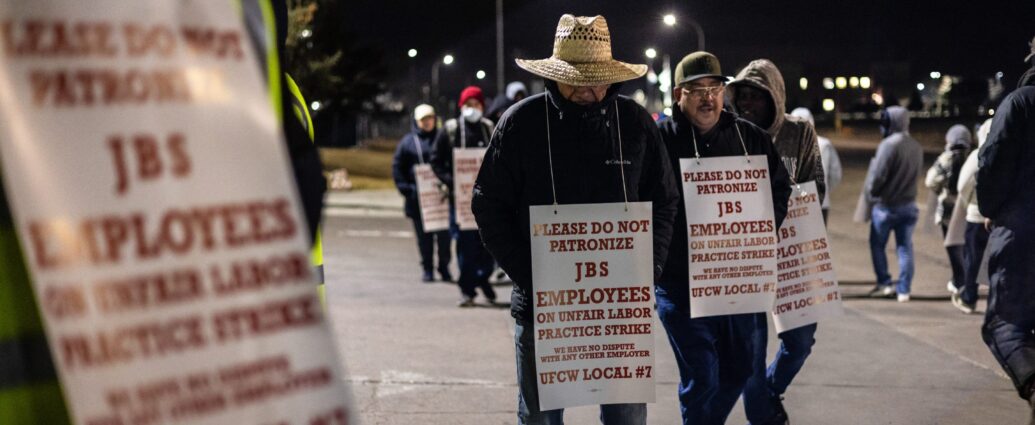
A raw deal: 3,800 Colorado meatpackers stage first beef plant strike in 40 years at one of the largest meatpacking plants in U.S.
About 3,800 workers at one of the nation’s largest meatpacking plants went on strike Monday in Colorado in what union representatives said is the first walkout at a U.S. beef slaughterhouse in four decades.
The strike at the Swift Beef Co. plant in Greeley began Monday morning, said Claire Poundstone, an attorney representing workers with United Food and Commercial Workers Local 7. Poundstone said she expected workers to participate in the strike line through the evening.
“We’ll be here all day,” she said.
The strike follows accusations from union officials that owner JBS USA retaliated against workers and committed other unfair labor practices amid contract negotiations. A previous contract expired Sunday night.
A message was sent early Monday seeking an updated comment from a spokesperson at JBS USA.
The union said in a news release that its workers “perform some of the most difficult and dangerous jobs in the country.”
“They deserve wage increases that keep pace with inflation, ensure they receive healthcare commensurate with the toll this work takes on their bodies, and that allow them to live with dignity and respect.”
It said JBS has been charging many workers at least $1,100 to offset the company’s expenses for personal protective equipment needed to ensure worker safety.
The strike comes at a 75-year low for the U.S. cattle population, with a Jan. 1 inventory of 86.2 million animals — down 1% from the prior year. Rising beef prices have added to economic anxiety in the U.S., while the administration of President Donald Trump has turned to a trade deal with Argentina in efforts to lower prices for food, including beef.
It also follows the January closure of a meatpacking plant in Lexington, Nebraska, which was expected to ripple through the local economy and community. Tyson Foods cited the smaller herd and millions of dollars in expected losses this year.
At the Greeley plant, the company tried to intimidate workers to quit the union in one-on-one meetings, union general counsel Matt Shechter said. A JBA USA statement issued before the strike said the company fully complies with federal and state labor and employment laws.
Kim Cordova, Local 7 president, said 99% of workers voted to authorize the strike. No formal negotiations took place over the weekend after the company refused a union request to negotiate on Saturday, Shechter said.
The company statement said any employee who didn’t want to strike would have work and be paid. The company said it would operate two shifts at the plant Monday and would temporarily move production as needed to other JBS facilities.
“Our goal is to minimize impact to our customers, our partners, and the broader marketplace while we work toward a fair resolution in Greeley,” the company said.
It’s the first strike at a U.S. slaughterhouse since workers walked out at a Hormel plant in Minnesota in 1985, Cordova said. That strike lasted more than a year and included violent confrontations between police and protesters, according to the Minnesota Historical Society.
This story was originally featured on Fortune.com


‘I wrote this movie for my kids to say sorry for the housekeeping mess that we left in this world’: Oscars hint at politics
Paul Thomas Anderson’s “One Battle After Another” was crowned best picture at the 98th Academy Awards, handing Hollywood’s top honor to a comic, multi-generational American saga of political resistance.
The ceremony Sunday, which also saw Michael B. Jordan win best actor and “Sinners” cinematographer Autumn Durald Arkapaw make Oscar history as the first female director of photography to win the award, was a long-in-coming coronation for Anderson, a San Fernando Valley native who made his first short at age 18 and has been one of America’s most lionized filmmakers for decades. Before Sunday, Anderson had never won an Oscar.
But “One Battle After Another,” the favorite coming in, won six Oscars, including best director and best adapted screenplay for Anderson, the Oscars’ first trophy for best casting and best supporting actor for an absent Sean Penn.
“I wrote this movie for my kids to say sorry for the housekeeping mess that we left in this world — we’re handing off to them,” said Anderson while accepting the screenplay trophy. “But also with the encouragement that they will be the generation that hopefully brings us some common sense and decency.”
Ryan Coogler’s Jim Crow-set, blues-soaked vampire tale “Sinners,” which came in with a record 16 nominations, also landed some big and even historic wins. Coogler, the widely loved filmmaker, won the first Oscar in an unblemished career that started out with Jordan in 2013’s “Fruitvale Station.”
Arkapaw was also the first Black person to win for best cinematography. Only the fourth female cinematographer ever nominated, her win was a long-in-coming triumph for women behind the camera.
“I really want all the women in room to stand up,” said Arkapaw. “Because I don’t feel like I get here without you guys.”
And Jordan, one of Hollywood’s most liked leading men, won best actor in one of the night’s closest races. The Dolby Theatre rose to its feet in the most thunderous applause of the night.
“Yo, momma, what’s up?” said Jordan after staggering to the stage.
The Oscar night belonged to Warner Bros., the studio of “One Battle After Another” and “Sinners,” which scored a record-tying 11 wins. It was an oddly poignant note of triumph for the fabled studio, which weeks earlier agreed to a sale to Paramount Skydance, David Ellison’s rapidly assembled media monolith. The $111 billion deal, which awaits regulatory approval, has Hollywood bracing for more layoffs.
But “Sinners” and “One Battle After Another” — the much-acclaimed heavyweights of the season — were each Hollywood anomalies: big-budget originals born from a personal vision. In a year where anxiety over studio contraction and the rise of artificial intelligence often consumed the industry, both films gave Hollywood fresh hope.
Jessie Buckley won best actress for her performance as Agnes Shakespeare in “Hamnet,” making her the first Irish performer to ever win in the category. At an Oscars where no other acting award seemed a sure thing, Buckley cruised into Sunday’s Oscars at the Dolby Theatre as the overwhelming favorite.
“It’s Mother’s Day in the U.K.,” said Buckley on the stage. “I would like to dedicated this to the beautiful chaos of a mother’s heart.”
‘KPop’ and ‘Frankenstein’ win for Netflix
From the start, when host Conan O’Brien sprinted through the year’s nominees as Amy Madigan’s character in the horror thriller “Weapons” in a pre-taped bit, Sunday’s ceremony was quirky, a little clunky and preoccupied with the shifting place of movies in culture. There was, of all things, a tie for best live-action short film.
As expected, the Netflix sensation “KPop Demon Hunters,” 2025’s most-watched film, won best animated feature, as well as best song for “Golden.” It was a big win for Netflix but a more qualified victory for the movie’s producer, Sony Pictures. Though it developed and produced the film, Sony sold “KPop Demon Hunters” to the streaming giant instead of giving it a theatrical release.
On Netflix, “KPop Demon Hunters” became a cultural phenomenon and the streaming platform’s biggest hit. It has more than 325 million views and counting.
“This is for Korea and Koreans everywhere,” said co-director Maggie Kang.
Another Netflix release, Guillermo del Toro’s “Frankenstein” picked up three awards for its lavish craft, for costume design, makeup and hairstyling and for production design.
Amy Madigan won best supporting actress for her performance in the horror thriller “Weapons,” a win that came 40 years after the 75-year-old actor was first nominated, in 1986, for “Twice in a Lifetime.” Letting out a giant laugh as she hit the stage, Madigan exclaimed, “This is great!”
O’Brien presides over a ceremony shadowed by politics
Hosting for the second time, O’Brien began the Dolby Theatre show alluding to “chaotic and frightening times.” But he argued that the current geopolitical climate made the Oscars all the more resonate as a globally unifying force.
“We pay tribute tonight, not just to film, but to the ideals of global artistry, collaboration, patience, resilience and that rarest of qualities today — optimism,” O’Brien said. “We’re going to celebrate. Not because we think all is well, but because we work, and hope, for better.”
Throughout the show, O’Brien hit a number of targets, like Timothée Chalamet — who again missed out on winning his first Oscar, this time for “Marty Supreme” — for his diss of opera and ballet. But the ceremony seldom wasn’t shadowed by politics, whether in references to changes under U.S. President Donald Trump or the recently launched war in Iran.
Joachim Trier, whose Norwegian family drama “Sentimental Value” won best international film, quoted James Baldwin in his acceptance speech: “All adults are responsible for all children,” he said. “Let’s not vote for politicians that don’t take this seriously into account.”
Presenter Jimmy Kimmel, whose late-night show last year was suspended after comments he made about Charlie Kirk’s killing, was among the most blunt.
“There are some countries that don’t support free speech,” said Kimmel. “I’m not at liberty to say which. Let’s just leave it at North Korea and CBS.”
Shortly after, “Mr. Nobody Against Putin,” a film about a Russian primary schoolteacher who documents his students’ indoctrination to support Russia’s war with Ukraine, won best documentary.
“’Mr. Nobody Against Putin’ is about how you lose your country,” co-director said. “And what we saw when working with this footage is that you lose it through countless, small, little acts of complicity.”
“We all face a moral choice,” he added, “but, luckily, a nobody is more powerful than you think.”
Tributes to Reiner, Redford and others
Elegy also marked the Oscars. Producers expanded the in memoriam segment following a year that featured the deaths of so many Hollywood legends, including Keaton, Robert Duvall and Redford. Barbra Streisand spoke about Redford, her “The Way We Were” co-star.
“Bob had real backbone,” said Streisand, who called Redford “an intellectual cowboy” before singing a few bars of “The Way We Were.”
Billy Crystal paid tribute to Rob and Michele Reiner, who were killed in their home in December. Crystal, a close friend of Rob Reiner’s who memorably starred in 1989’s “When Harry Met Sally…” and 1987’s “Princess Bride.” In his moving remarks, Crystal quoted the latter.
“All we can say is: Buddy, how much fun we had storming the castle,” said Crystal.
Theatrical bests streaming, again
Yet again, the night’s final award again didn’t go to a streaming release; Apple’s “CODA” remains the only streaming film to achieve that distinction. “Sinners” and “One Battle After Another” were both theatrical releases shot on film.
Apple’s top contender this time, the Formula One race drama “F1,” a movie that it partnered with Warner Bros. to distribute theatrically, won for best sound. The lone blockbuster of the year to go home with a win was “Avatar: Fire and Ash,” for visual effects.
Some of O’Brien’s best digs came at the expense of the streamers. Netflix chief Ted Sarandos, he joked, was in a theater for the first time. The host also lamented the lack of nominees for Amazon MGM: “Why isn’t the website I order toilet paper from winning more Oscars?”
“I’m honored to be the last human host of the Academy Awards,” said O’Brien. “Next year it’s going to be a Waymo in a tux.”
This story was originally featured on Fortune.com




Michael Saylor Makes 5th Largest Bitcoin Buy At $1.57B As MSTR Surges 4%
Strategy (NASDAQ:MSTR) purchased 22,337 Bitcoin (CRYPTO: BTC) for $1.57 billion last week at an average price of $70,194 per coin, the company’s fifth-largest weekly purchase ever, as MSTR surged 4% in premarket.
The $1.57B Bitcoin Purchase
Executive Chairman Michael Saylor announced the acquisition, bringing total holdings to 761,068 coins acquired for $57.61 billion, or an average of $75,696 per coin.
The firm funded most of the purchase through $1.1 billion in STRC series preferred stock sales and $396 million in common stock sales.
Michael Saylor hinted at the purchase Sunday with an X …



Iran minister mocks Trump for ‘begging’ for help on reopening Hormuz, claims attacks came from UAE
Iran urged people Saturday to evacuate the Middle East’s busiest port and two others in the United Arab Emirates, openly threatening a neighboring country’s non-U.S. assets for the first time as its war with the United States and Israel entered a third week.
Tehran said the U.S. had used “ports, docks and hideouts” in the UAE to launch strikes on Kharg Island, home to the main terminal handling Iran’s oil exports, without providing evidence. It urged people to leave areas where it said U.S. forces were sheltering.
Hours later, there was no sign of an attack on Dubai’s Jebel Ali port — the Mideast’s busiest — or the Khalifa port in Abu Dhabi. But debris from an intercepted Iranian drone hitting an oil facility sparked a fire at the third port, in Fujairah.
Iran says the US attacked from close to Dubai
Iran’s foreign minister, Abbas Araghchi, told MS NOW that the U.S. attacked Kharg Island and Abu Musa Island from two locations in the UAE, Ras Al-Khaimah and a place “very close to Dubai,” calling that dangerous and saying Iran “will try to be careful not to attack any populated area” there.
U.S. Central Command said it had no response to Iran’s claim. A diplomatic adviser to the UAE’s president, Anwar Gargash, said on social media the country has the right to defend itself but “still prioritizes reason and logic, and continues exercising restraint.”
Iran has fired hundreds of missiles and drones at Arab Gulf neighbors during the war, but it has said it was targeting U.S. assets, even as hits or attempts were reported on civilian ones such as airports and oil fields.
On Friday, U.S. President Donald Trump said the country “obliterated” military sites on Kharg Island and that oil infrastructure could be next if Tehran continues to interfere with ships’ passage through the Strait of Hormuz, where one-fifth of global oil supplies usually transit.
Iran’s parliamentary speaker has said strikes against the country’s oil infrastructure would provoke a new level of retaliation.
Araghchi told MS NOW that the strait was closed only to “those who are attacking us and their allies.”
As global anxiety soars over oil prices and supplies, Trump said Saturday that he hopes China, France, Japan, South Korea, the U.K. and others send warships to keep the Strait of Hormuz “open and safe.” Britain in response said it was discussing with allies a “range of options” to secure shipping.
Araghchi, in a social media post, urged neighbors to “expel foreign aggressors” and described Trump’s call as “begging.”
Iran repeats threat against US-linked oil assets
On Saturday, Iran’s joint military command reiterated its threat to attack U.S.-linked “oil, economic and energy infrastructures” in the region if the Islamic Republic’s oil infrastructure is hit.
Iran’s semiofficial Fars news agency said the Kharg Island strikes caused no damage to oil infrastructure. It said they targeted an air defense facility, a naval base, the airport control tower and an offshore oil company’s helicopter hangar.
U.S. Central Command said it destroyed naval mine storage facilities, missile storage bunkers and other military sites.
Israel earlier announced another wave of strikes in Iran targeting infrastructure, and said its air force had hit more than 200 targets in the past 24 hours, including missile launchers, defense systems and weapons production sites.
Another attack on the US Embassy in Baghdad
A missile struck a helipad inside the U.S. Embassy compound in Baghdad on Saturday. No one immediately claimed responsibility for the attack. The embassy complex, one of the largest U.S. diplomatic facilities in the world, has been repeatedly targeted by rockets and drones fired by Iran-aligned militias.
The State Department again warned citizens in Iraq to leave “now,” and by land since commercial flights were not available. It noted that Iran and Iran-aligned militia groups “may continue to target” U.S. citizens, interests and infrastructure.
Meanwhile, Lebanon’s humanitarian crisis deepened, with over 800 people killed and 850,000 displaced as Israel launched waves of strikes against Iran-backed Hezbollah militants.
Marines and an assault ship will add to US forces
A U.S. official said Friday that 2,500 more Marines with the 31st Marine Expeditionary Unit and the amphibious assault ship USS Tripoli were being sent to the Middle East, adding to the military’s largest buildup of warships and aircraft in the region in decades. The official spoke on condition of anonymity to discuss sensitive military plans.
Marine Expeditionary Units can conduct amphibious landings but also specialize in bolstering security at embassies, evacuating civilians and providing disaster relief. The deployment doesn’t necessarily indicate that a ground operation will take place. The Wall Street Journal first reported the Marine deployment.
The Tripoli was spotted by commercial satellites sailing near Taiwan, putting it more than a week away from waters off Iran.
Earlier in the week, the Navy had 12 ships, including the aircraft carrier USS Abraham Lincoln and eight destroyers, in the Arabian Sea. The total number of U.S. service members on the ground in the Middle East is not clear.
US identifies 6 killed in military aircraft crash
The U.S. Department of Defense on Saturday identified six service members who died when the military refueling aircraft they were aboard crashed Thursday while supporting operations against Iran.
The service members were Maj. John A. Klinner, 33; Capt. Ariana G. Savino, 31; Tech. Sgt. Ashley B. Pruitt, 34; Capt. Seth R. Koval, 38; Capt. Curtis J. Angst, 30; and Tech. Sgt. Tyler H. Simmons, 28, according to U.S. officials.
The crash in western Iraq followed an unspecified incident involving two aircraft in “friendly airspace,” according to U.S. Central Command. The other plane landed safety.
___
Mednick reported from Tel Aviv, Israel, Magdy from Cairo and Toropin from Washington. Associated Press reporters Melanie Lidman in Jerusalem; Sally Abou AlJoud, Kareem Chehayeb and Bassem Mroue in Beirut; Qassim Abdul-Zahra in Baghdad; Will Weissert at Joint Base Andrews, Maryland; Tia Goldenberg in Washington and Hannah Schoenbaum in Salt Lake City contributed.
This story was originally featured on Fortune.com

Prolonged Iran war could spark market slump and interest rate surge, BIS warns
This post was originally published here





Bitcoin Zooms To $74,000 After $793M ETF Inflows: Can It Hit $80,000 Next?
Digital asset investment products recorded $1.06 billion in inflows last week, marking the third consecutive week of gains as Bitcoin (CRYPTO: BTC) reinforced its role as a relative safe haven during the Iran crisis.
The Safe Haven Narrative Confirmed
Total assets under management in digital asset ETPs rose 9.4% to $140 billion since the onset of the Iran crisis.
CoinShares head of research James Butterfill said the inflows occurred amid significant geopolitical disruption, highlighting resilience and reinforcing Bitcoin’s safe haven status compared with other asset classes.
U.S. investors accounted for 96% of flows. Canada and Switzerland followed, recording inflows of $19.4 million and $10.4 million respectively.
Hong Kong saw inflows of $23.1 million, the largest since August 2025. Germany recorded outflows of $17.1 million, the first weekly outflow this year.
Bitcoin Dominates With $793M
Bitcoin accounted for 75% of total inflows, amounting …


Current price of oil as of March 16, 2026
As of 9:30 a.m. Eastern Time today, oil sold for $102.14 per barrel (using Brent as the benchmark, which we’ll get into momentarily). That’s $3.05 lower than yesterday—but approximately a $30 rise over the past year.
Will oil prices go up?
It’s impossible to predict the future of oil prices. Several factors determine the movement of oil, but it ultimately boils down to supply and demand. Again, when threats of economic downturn, war, etc. are high, the oil trajectory can turn rapidly.
How oil prices translate to gas pump prices
When you pay for gas at the pump, you’re paying for more than just the crude oil itself; you’re also springing for links along the chain, such as the refineries and wholesalers—not to mention taxes and local gas station markups.
Still, the crude oil aspect affects the final price most dramatically, as it typically accounts for more than half the price per gallon. When oil prices spike, so do gas prices. And frustratingly, when oil prices drop, gas prices tend to take their time drifting down to the lower price (sometimes referred to as “rockets and feathers”).
The role of the U.S. Strategic Petroleum Reserve
In case of emergency, the U.S. has a store of crude oil known as the Strategic Petroleum Reserve. Its primary purpose is energy security in case of disaster (think sanctions, severe storm damage, even war). But it can also go a long way toward softening crippling price hikes during supply shocks.
It’s not a long-term answer—more of an immediate relief to assist the consumer and keep critical parts of the economy running, like key industries, emergency services, public transportation, etc.
How oil and natural gas prices are linked
Oil and natural gas are both major energy fuels. A big change in oil prices can affect natural gas by extension. For example, if oil prices increase, some industries may swap natural gas for some segments of their operations where possible—which increases demand for natural gas.
Historical performance of oil
When examining oil’s performance, there are generally two major benchmarks:
- Brent crude oil is the main global oil benchmark.
- West Texas Intermediate (WTI) is the main benchmark of North America.
Between the two, Brent better represents global oil performance because it prices much of the world’s traded crude. And, it’s often the best way to track historical oil performance. In fact, even the U.S. Energy Information Administration now uses Brent as its primary reference in its Annual Energy Outlook.
Looking at the Brent benchmark across several decades, oil has been anything but steady. It’s seen spikes due to factors such as wars and supply cuts, and it’s also seen crashes from global recessions and an oversupply (called a “glut”). For example:
- The early 1970s brought the first big oil shock when the Middle East cut exports and imposed an embargo on the U.S. and others during the Yom Kippur War.
- Prices dropped in the mid-1980s for reasons such as lower demand and more non-OPEC oil producers entering the industry.
- Prices spiked again in 2008 with increased global demand, but it soon plummeted alongside the global financial crisis.
- During the 2020 COVID lockdown, oil demand collapsed like never before—bringing prices below $20 per barrel.
All to say, oil’s historical performance has been anything but smooth. Again, it’s hugely affected by wars, recessions, OPEC whims, evolving energy initiatives and policies, and much more.
Energy coverage from Fortune
Looking to stay up-to-date regarding the latest energy developments? Check out our recent coverage:
- With Iran still in control of Hormuz, Trump threatens NATO and oil hits $106
- The closed Strait of Hormuz is testing Asia’s energy security
- U.S. energy chief signals Iran war may last several more weeks
Frequently asked questions
How is the current price of oil per barrel actually determined?
The current price of oil per barrel depends largely on supply and demand, including news about potential future supply and demand (geopolitics, decisions made by OPEC+, etc.). In the U.S., prices also move based on how friendly an administration is to drilling, as it can affect future supply. For example, 2025 saw the Trump administration move to reopen more than 1.5 million acres in the Coastal Plain of the Arctic National Wildlife Refuge for oil and gas leasing, reversing the Biden administration’s policy of limiting oil drilling in the Arctic.
How often does the price of oil change during the day?
The price of oil updates constantly when the “futures” markets are open. A futures market is effectively an auction where people agree to buy or sell oil in the future. As long as people and companies are trading contracts, the oil price is changing.
How does U.S. shale oil production affect the current price of oil?
In short, shale is rock that contains oil and natural gas. Think of shale as energy yet to be tapped. The more shale the U.S. accesses, the more energy we’ll have—and the more easily oil prices can keep from spiking as much thanks to a greater supply.
How does the current price of oil impact inflation and the broader economy?
When oil is expensive, it tends to make everyday items cost more. This can be related to energy (your heating, gas utilities, etc.), but it’s also due to the logistics involved with making those items accessible to you. Shipping, for example, can affect the price of things at the grocery store, as it’s more expensive to get those products from warehouses and farms onto the shelf.
This story was originally featured on Fortune.com

Why Is CoreWeave Stock Surging On Monday?
Shares of CoreWeave Inc (NASDAQ:CRWV) rose sharply during Monday’s pre-market session.
The move follows a massive sector catalyst involving Meta Platforms Inc (NASDAQ:META).
Meta’s $27 Billion AI Commitment
Investor sentiment turned bullish after Nebius Group NV (NASDAQ:NBIS) announced a long-term agreement with Meta. The deal has a total contract value of up to $27 billion. Nebius will supply dedicated AI compute capacity using the NVIDIA Corp (NASDAQ:NVDA) Vera Rubin platform.
This milestone deal created positive spillover for other AI infrastructure providers. Both CoreWeave and IREN (NASDAQ:IREN) …
This post was originally published here








Europe In Review: Data This Week – ECB, BoE Rates, And A Fresh Read On EU Confidence; Stock In Focus – Lufthansa
Data This Week: ECB, BoE Rates, and a Fresh Read on EU Confidence
Europe starts the week on uneasy footing. Industrial output is slipping, productivity gaps with the US are widening, and energy markets are being jolted by the most severe supply disruption in decades. The Middle East crisis is reshaping global energy flows in real time. With inflation risks rising just as growth weakens, policymakers and investors are being forced to navigate one of the most complex macro backdrops Europe has faced since the COVID-19 pandemic.
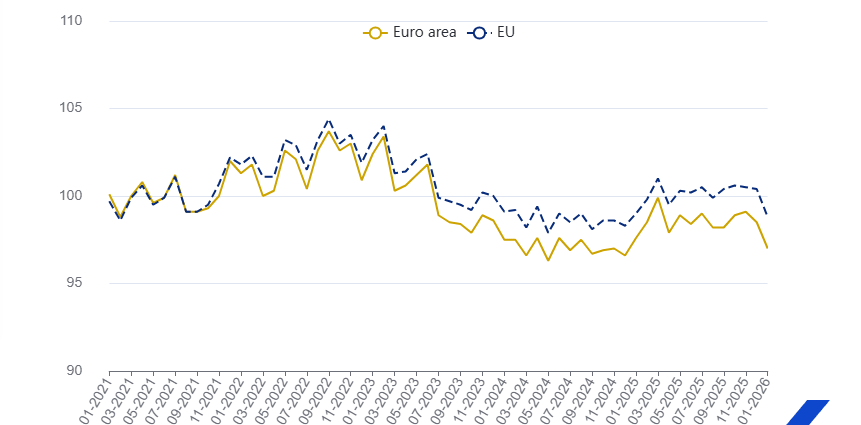
Weekly Chart: Euro Area Production -1.2%
Industrial production weakened in the euro area and in the EU in January. According to first estimates from Eurostat, industrial production fell 1.2% year‑on‑year in the euro area and 0.6% in the EU. On a month‑on‑month basis, seasonally adjusted industrial production declined 1.5% in the euro area and 1.6% in the EU.
Why This Matters: A simultaneous year‑on‑year and month‑on‑month contraction signals weak underlying demand. It widens the competitiveness gap with the US, as highlighted in the IMF’s weekly chart. It also increases pressure on the ECB to consider rate cuts even as Middle East tensions push inflation risks higher.
IMF’s Take on Europe Scaling
Productivity growth in Europe now lags behind that of the US, a gap that has “widened significantly” in recent years. Behind this shortfall is the “staggering difficulty” that European firms face in scaling up. In the US, the stock market valuation of young firms is $42.9 trillion, compared to $5 trillion in the EU. The average European firm that has been in business for 25 years or more employs about 10 workers. A comparable US company employs 70 people.

Why This Matters: Europe’s productivity gap is about 20% below US levels, underscoring the structural constraints for the region’s competitiveness. IMF research shows that closing this gap will require deeper integration across Europe’s capital, labor, and consumer markets.
Officials will need to enable more risk‑taking investment, allow workers to move more easily toward opportunity, and give companies access to markets where they can scale. Without progress on these fronts, Europe risks entrenching slower growth, weaker innovation, and a widening transatlantic productivity divide.
Geopolitics: Oil Enters New Week of Uncertainty
Global oil markets are bracing for another volatile week. US strikes hit Iran’s export hub at Kharg Island, heightened concerns about supply risks across the Middle East. Oil prices crossed $100 a barrel last week and have surged about 40% since the start of the US and Israeli bombing campaign.
President Donald Trump said the operation targeted military positions on Kharg Island. He warned that further action could extend to energy infrastructure if Iran disrupts shipping through the Strait of Hormuz.
The US is moving about 2,500 Marines to the Middle East. Tehran has warned that attacks on its …
This post was originally published here

Chris Wright Says ‘Very Good Chance’ Gas Prices May Plunge Below $3 By Summer
Chris Wright, the Energy Secretary, stated that there could be a decrease in gas prices by the upcoming summer.
Wright, in an interview with NBC News “Meet the Press” on Sunday, expressed optimism when asked about the possibility of gas prices falling below $3 per gallon by summer.
“There’s a very good chance that’ll be true,” said Wright.
According to Wright, the U.S. is on the brink of “removing the risk” posed by Iran’s ongoing threat to global energy supplies. He anticipates a post-war scenario where energy is “more abundant, more affordable, and less risky for American soldiers and commerce in the Middle East.”
On the topic of the Strait of Hormuz’s safety for ships, Wright acknowledged the current risks but assured that its reopening is a major post-conflict goal. He emphasized that while war outcomes can’t be guaranteed, the administration is committed to achieving a potential drop in gas prices.
The U.S.-Israeli war on Iran has been a significant …
This post was originally published here
















Top 2 Energy Stocks That May Plunge This Quarter
As of March 16, 2026, two stocks in the energy sector could be flashing a real warning to investors who value momentum as a key criteria in their trading decisions.
The RSI is a momentum indicator, which compares a stock’s strength on days when prices go up to its strength on days when prices go down. When compared to a stock’s price action, it can give traders a better sense of how a stock may perform in the short term. An asset is typically considered overbought when the RSI is above 70, according to Benzinga Pro.
Here’s the latest list of major overbought players in this sector.
Sable Offshore Corp (NYSE:SOC)
This post was originally published here







Top Wall Street Forecasters Revamp Getty Images Price Expectations Ahead Of Q4 Earnings
Getty Images Holdings, Inc. (NYSE:GETY) will release earnings results for its fourth quarter, after the closing bell on Monday, March 16.
Analysts expect the Seattle, Washington-based company to report quarterly earnings at 2 cents per share, versus 2 cents per share in the year-ago period. The consensus estimate for Getty Images’ quarterly revenue is $246.17 million, versus $247.32 million a year earlier, according to data from Benzinga Pro.
On Feb. 23, Getty Images announced it received clearance from the DOJ for the merger with Shutterstock.
Getty Images shares fell 5.7% to close at $0.7267 on Friday.
Benzinga …
This post was originally published here

Bitcoin Reclaims $73,000 As Ethereum, XRP, Dogecoin Rally With Sentiment Turning Neutral
Bitcoin surged above $73,000 on Monday morning, following Bitcoin ETF inflows of $180.3 million on Friday, with Ethereum ETF inflows of $26.7 million.
Cryptocurrency |
Ticke | Price |
| Bitcoin | (CRYPTO: BTC) | $73,818 |
| Ethereum | (CRYPTO: ETH) | $2,287 |
| Solana | (CRYPTO: SOL) | $93.83 |
| XRP | (CRYPTO: XRP) | $1.47 |
| Dogecoin | (CRYPTO: DOGE) | $0.09998 |
| Shiba Inu | (CRYPTO: SHIB) | $0.056149 |
Meme coin market capitalization spiked 4.9% to $35.4 billion over the past 24 hours.
Trader Commentary:
Crypto trader Jelle noted that Bitcoin started the week in positive territory and is attempting to print its …





Starbucks’ Momentum Score Spikes As Massachusetts Governor Defends Coffee Chains Against RFK Jr.’s Sugar Safety Probe
Starbucks Corp. (NASDAQ:SBUX) is witnessing a dramatic surge in technical strength, with its Benzinga Edge momentum score leaping 129% week-on-week from 26.89 to 61.59.
This spike in relative strength comes as the coffee giant finds itself at the center of a high-stakes political battle over food safety and nutritional standards.
Political Shield And ‘Sugar Probe’
The momentum surge coincides with a public defense from Massachusetts Governor Maura Healey (D-Mass.), who hit back at Health and Human Services Secretary Robert F. Kennedy Jr.
Kennedy recently called on Starbucks and Dunkin’ to provide safety data regarding “sugar-laden” drinks, specifically questioning the health impact of iced coffees containing 115 grams of sugar.
Governor Healey responded with a “Come and Take It” inspired message on X, symbolically defending the …
This post was originally published here



bioAffinity Technologies Stock Cools Off After Strong Friday Rally – Here’s Why
bioAffinity Technologies Inc (NASDAQ:BIAF) shares are trading lower Monday morning. The move follows a massive surge during Friday’s session. Traders appear to be taking profits after the stock skyrocketed over 120% to end the week.
Friday Rally Driven By CyPath Growth
The clinical stage diagnostics company saw heavy buying interest on Friday as the stock soared on strong growth in its flagship CyPath Lung diagnostic.
The company reported that CyPath Lung revenue rose 87% year-over-year in 2025. Furthermore, the number of tests performed jumped 99%.
Despite the success of CyPath, total 2025 revenue fell to $6.2 million from $9.4 million. …
This post was originally published here





The ‘average rent’ mirage: why we need better numbers to understand urban economics
In 2024, law firm Sidley Austin and consulting giant Deloitte both signed leases at 23Springs, a gleaming 26-story tower in Dallas’s Uptown submarket. The numbers looked like acomeback story: average office rents in the city were rising.
They weren’t. Or rather, the numbers didn’t mean what most people assumed they meant. And that gap between what headline rent data shows and what tenants actually pay is distorting decisions made by mayors, lenders, and corporate real estate teams across the country.
Traditional rent statistics answer a deceptively simple question: “What is the average rent per square foot among leases signed this quarter?” For decades, rent averages have been the best measure of a rental market, shaping how economists, investors, lenders, and policymakers understand commercial, retail, and industrial markets. From how cities set property taxes to how lenders underwrite loans and how companies decide where to expand or sign leases, these figures influence major decisions.
A more illuminating approach – comparing like with like in similar locations, and accounting for the concessions for tenants in lease terms – paints a different picture in Dallas. At best, office rents have stalled. That difference matters: when business leaders and policymakers rely on headline averages that make the market appear healthier than it really is, they may make decisions based on a distorted picture of demand. Business leaders deciding where to expand or how much office space to carry are looking at numbers that do not reflect the true cost—or the true weakness—of the market.
This isn’t just a quirk in Dallas. It’s a nationwide measurement problem.
While rent averages can provide a rough guide to the market in regular times, they often fall short – particularly during unprecedented times. In the years following COVID‑19, they were misleading.
Why the Standard Metric Fails
There’s a few reasons why. First, these averages overlook who is signing leases. During and after the pandemic, many tenants gave up older, peripheral offices and upgraded to newer buildings in better locations with better facilities. These newer buildings charged more rent, and this shift pushes the average up. This can be the case even if landlords in less‑favored buildings are quietly cutting prices or sweetening terms. Traditional metrics can’t tell the difference between “rents are rising everywhere” and “more leases are being signed for top‑tier buildings.”
Second, rent averages ignore that a lease that looks expensive on paper can actually be very discounted in reality. Landlords often offer months of free rent, and many pay for tenants to build out their space. In Manhattan, for example, the share of total lease value devoted to tenant improvement allowances roughly doubled in the decade before COVID and has remained high. Free rent periods have expanded significantly in the past few years. When standard metrics focus only on the starting rent price, they’re ignoring the concessions that change the value of the lease.
This matters because bad data leads to bad decisions. For example, a mayor who thinks office rents are rising may push through aggressive reassessments and higher property taxes, only to find that the commercial real estate market is far weaker than what the numbers suggested. A lender who underwrites loans on the basis of flattering averages may discover too late that the collateral was overstated. Corporate real estate teams deciding whether to expand, relocate, or renegotiate leases may also misread the true cost and demand for space.
Commercial real estate sits at the center of the financial system. Office towers, shopping centers, and warehouses underpin billions of dollars in loans, municipal tax bases, and corporate balance sheets. When the metrics used to judge these markets are misleading, the ripple effects extend well beyond landlords—to banks, investors, cities, and the businesses deciding where to locate and grow.
A New Way to Measure the Market
To build a clearer picture of the office, commercial, and industrial markets, Columbia Business School and CompStak are collaborating on a new way to analyze publicly available leases. The new Columbia CompStak Rent Index compares similar spaces in similar locations over time and measures the net effective rent tenants actually pay, after accounting for concessions like free months and build-out allowances. It draws rent, lease size and term, concession structures, building characteristics, and precise location from roughly one million detailed leases signed since 2010 across office, retail, and industrial properties in about 130 U.S. metropolitan areas. At each level, the index controls for the stable features of the building and location, and uses the remaining variation to show rent growth or decline over time. By controlling for building characteristics and location, the index isolates real changes in rents rather than shifts in which buildings are leasing space.
What the Data Actually Shows
When rents are analyzed through this index, the market looks very different. For example, in Manhattan, high-rise buildings have landed eye‑catching leases. Average starting rents in prime districts continue to go up, and one can easily assume that office rent prices are finally going up, after years of being battered by work‑from‑home. However, the data through our index shows that quality‑adjusted office rents in Manhattan fell sharply during the pandemic. By mid‑2025 they had only just clawed back to where they started. Manhattan’s office market did not even turn the corner until the second half of 2025, when the quality‑adjusted rents jumped from about $71.60 per square foot in the second quarter to $83.30 in the fourth. The rent increase in top-tier buildings was still happening but there were many buildings struggling to fill space.
In retail too, when a major flagship store signs a spectacular lease in a premier shopping district, raw rent averages jump. This makes it seem that the market is healthy. Yet when we hold quality and location constant, the retail rent index shows muted growth over the last 15 years, with no sustained upward trend. At the same time, industrial real estate is actually showing a real boom. The pandemic turbocharged demand for logistics space as households and businesses leaned into online ordering and just‑in‑time delivery. In that sector, our constant‑quality index and the traditional measures clearly note a strong, nationwide surge in rents for warehouses, logistics hubs, and distribution centers, which has recently cooled a bit due to higher interest rates and a wave of new supply.
Commercial real estate has always been an opaque market where rents are set in bilateral negotiations, recorded in private documents, and reported with delays. When analysts look only at the rent averages, it’s easy to misread the health of the market and make policy and investment decisions on the wrong basis. For business leaders, lenders, and policymakers, the lesson is straightforward: the headline rent numbers don’t tell the full story about the commercial real estate market. Decisions about investment, lending, tax policy, or office strategy should rely on data that reflects what tenants actually pay—not just the averages that dominate today’s market reports.
The opinions expressed in Fortune.com commentary pieces are solely the views of their authors and do not necessarily reflect the opinions and beliefs of Fortune.
This story was originally featured on Fortune.com

Bitdeer Launches SEALMINER DL1 Air: Achieving 149 J/GH Power Efficiency and 25 GH/s for Scrypt Mining
SINGAPORE, March 16, 2026 (GLOBE NEWSWIRE) — Bitdeer Technologies Group (NASDAQ:BTDR) (“Bitdeer” or the “Company”), a world-leading technology company for AI and Bitcoin mining infrastructure, today announced the launch of its latest self-developed mining machine, the SEALMINER DL1 Air. Optimized for the Scrypt algorithm, the DL1 Air provides a robust, industrial-grade solution for professional operators, supporting a range of coins headlined by Litecoin (LTC) and Dogecoin (DOGE).
By leveraging Bitdeer’s proprietary ASIC technology, the DL1 Air focuses on long-term operational stability and advanced power management to meet the growing demand for high-efficiency mining hardware.
Key Specifications of the SEALMINER DL1 Air*:
- Hash Rate: 25 GH/s
- Power Efficiency: 149 J/GH
- Power Consumption: 3725W
- Supported Coins: Litecoin (LTC), Dogecoin (DOGE), Bellscoin (BELLS), Junkcoin (JKC), Luckycoin (LKY), and Pepecoin (PEP)
The DL1 Air features three distinct operating modes—Normal, High Hashrate, and a proprietary Low Power Mode—allowing operators to seamlessly tailor performance to their environment. While the Normal and High Hashrate settings balance stable output with energy efficiency, the Low Power Mode offers a strategic advantage for cost optimization or navigating grid constraints. In this mode, the hashrate can reach 20.5 GH/s, with power efficiency further optimized to 136 J/GH.
The unit inherits the validated SEALMINER Air Cooling architecture, featuring compact dimensions of 197 × 365 × 292 mm and a net weight of 15.5 kg for ease of maintenance and high-density deployment.
The SEALMINER DL1 Air underscores the Company’s commitment to technical …


How to Deliver on ESG Initiatives in Emerging Markets
Send the right signals to the local stakeholders you want to work with.
This post was originally published here

4 Capabilities that Drive Operational Improvement
New research reveals why some companies outperform others—even when adopting the same practices.
This post was originally published here








Researchers Asked LLMs for Strategic Advice. They Got “Trendslop” in Return.
When prompted for help on seven key strategy questions, LLMs recommended the same buzzy solutions—even when the context changed.
This post was originally published here


We’re a top investor relations firm and one of us spent over a decade on the inside. Here’s what boards need to know about engaging with activists
Boards and management all have the same fear – the ominous news story, 13D filing, or even the first phone call when an activist investor introduces themselves as one of their largest shareholders. What happens next is swift and often sets the tone for the engagement. The Board is notified, advisors are summoned, and a defense plan is assembled. Directors are flooded with counsel from advisors who claim they know the activist best and have seen this situation many times before.
In these moments, it’s easy for Boards to slip into self-preservation mode and engage in standard defensive tactics. However, many of these well-advised tactics may jeopardize trust with the activist and ultimately reduce the company’s negotiating leverage. Rather than establishing the basis for a thoughtful exchange of ideas, some standard defense tactics can inadvertently signal resistance and bad intentions, making it more difficult to maintain a constructive dialogue that could lead to a mutually beneficial outcome.
Here we examine Ten Tactics that Unnecessarily Frustrate Activists and their influence on the negotiating process to better inform companies and boards about how their actions may be perceived by the other side and may have unintended consequences.
- Approaching meetings strictly as “listen only” sessions, thereby preventing an intelligent exchange of ideas. Advisors may recommend that their clients engage in this approach to mitigate risk and better understand the activist’s objectives to get ahead of their demands. This can lead to frustration among activists, who may feel the engagement lacks genuine dialogue, which may lead the activist to make their concerns public.
- Slow-rolling discussions to delay meaningful engagement until after a key calendar event or the nomination or record dates. Activists recognize these delay tactics immediately, viewing them as an attempt to run out the clock and avoid accountability. Activists don’t necessarily need speed, but they expect clear, reliable timelines for follow-ups and next steps.
- Leaking information or stories about the ongoing private engagement to shape the public narrative. Doing so damages trust with the activist while simultaneously escalating tensions. The same can also be true when the company files a proxy statement without giving the activist advance notice, further eroding trust.
- Avoiding direct engagement with the activist and relying solely on advisors to communicate. Activists generally expect board-level engagement early, which signals seriousness and respect. Further, activists often become frustrated when they ask to speak to certain people on the board or ask to omit certain executives from discussions and the company doesn’t accommodate. Having the wrong attendees in discussions can chill direct dialogue and make it difficult for the activist to openly explain their views.
- Making unprofessional comments about the activist. Management may at times make defensive, dismissive, or emotional remarks about the activist in public communications – for example during media interviews or earnings calls. There have also been instances when a CEO has made disparaging remarks targeting the integrity of an activist’s investment process. Such incendiary comments can strengthen the activist’s narrative by undermining the company’s credibility in the eyes of long-term institutional investors, who prefer to see both sides engage in good faith negotiations instead of engaging in unproductive rhetoric.
- Filing bedbug letters. Companies sometimes nitpick nomination paperwork and regulatory filings like 13Ds and proxy statements via “bedbug” letters filed with the SEC. Efforts to invalidate nominations based on minor technicalities are rarely successful, but they are highly frustrating for activists who are focused on the broader case for value creation.
- Entrenching the board with measures such as adopting poison pills, changing advance notice bylaws, or even redomiciling the company in a more corporate friendly state. Activists and long-term investors alike interpret these moves as protecting management and the Board rather than acting in shareholders’ best interests.
- Dismissing the activist’s ideas prematurely. At times, boards and management teams reflexively reject activist proposals without giving them a fair hearing, issuing statements such as “the Board has already evaluated these options.” If leadership truly believes it has explored the activist’s recommendations, it should be willing to explain – within the bounds of Regulation FD – why the proposal is not viable. Sophisticated activists are reasonable; they recognize they lack an insider’s perspective and are open to the company’s views. At the same time, Boards and management teams should keep in mind that activist perspectives are often informed by extensive due diligence and years of experience as investors.
- Appointing directors preemptively in an attempt to get ahead of activist demands. Appointing directors preemptively can reduce the likelihood of a constructive settlement since the activist’s priorities were not considered in the selection process – even when a genuine skills gap may have been addressed. Moreover, proxy advisor firms often perceive proactive director appointments made in the face of activist pressure skeptically and view them as reactionary rather than strategic. Understandably, defensive appointments may seem preferable to leaving a material weakness unaddressed and appearing vulnerable. However, boards should carefully consider the specific circumstances and the potential implications for any settlement process, as such actions are likely to inflame the activist.
- Pushing for overly restrictive standstill terms. In settlements, standstills are designed to provide a company with a period of stability and time to implement new strategies. Companies will seek to restrict future nominations while pushing for extensive non-disparagement clauses or long-duration standstills. At times, companies will request the right to approve all trades made by an activist above and beyond the typical open trading windows and any MNPI restrictions. Pushing for atypical or unnecessarily onerous standstill terms may ultimately undermine the possibility of a settlement agreement, and further, upon the expiration of the standstill, could lead to increased risk of renewed conflict.
Though fear understandably makes aggressive defensive tactics appealing, understanding the unintended consequences of such actions can help boards increase their chances of a constructive engagement and mutually beneficial outcome. Ultimately, directors may end up sitting next to the activist or their nominees in the boardroom. Hostile tactics have the potential to cause dysfunction in the boardroom when the dust settles after a settlement or proxy contest.
True fiduciary responsibility calls for directors to view activist investors as significant shareholders with potentially value-creating perspectives. Fostering a climate of respect and lessening the probability of a combative engagement or proxy battle ultimately ensures a better outcome for all shareholders.
The opinions expressed in Fortune.com commentary pieces are solely the views of their authors and do not necessarily reflect the opinions and beliefs of Fortune.
This story was originally featured on Fortune.com

Zepp Health, Endeavour Silver, First Majestic Silver And Other Big Stocks Moving Lower In Monday’s Pre-Market Session
U.S. stock futures were higher this morning, with the Dow futures gaining around 100 points on Monday.
Shares of Zepp Health Corp – ADR (NYSE:ZEPP) fell sharply in pre-market trading following fourth-quarter results.
Zepp Health reported quarterly losses of 40 cents per share, versus year-ago losses of $1.40 per share. The company reported $85.165 million in sales, up from $59.542 million in the year-ago period.
Zepp Health shares dipped 11% to $18.50 in pre-market trading.
Here are some other stocks moving lower in pre-market trading.
This post was originally published here
Africa particularly vulnerable as Iran conflict disrupts supply chains, say experts
Food production in many African countries depends heavily on fertiliser imported from the Gulf through the strait of Hormuz
Countries in Africa, where farmers depend heavily on imported fertiliser and a large share of household income goes on food, are particularly vulnerable to supply chain disruptions caused by the war in the Middle East, experts have said.
The conflict has drastically disrupted trade through the strait of Hormuz, a vital shipping lane not just for oil and gas but also for fertiliser, which is produced in vast quantities in the Gulf.
This post was originally published here
Nasdaq CEO Adena Friedman is convinced AI isn’t a death knell for software
Good morning. A recent sell-off in software stocks has fueled debate about whether AI could disrupt traditional software business models. But Adena Friedman, chair and CEO of Nasdaq, has a clear stance: AI isn’t the death knell for software but a catalyst.
“I don’t think any software business is going to sit still,” Friedman said during a fireside chat with David Rubenstein at an event hosted by the Economic Club of Washington, D.C., on March 11. “Any business that sits still in the world of AI will ultimately fail,” she said.
Friedman views AI as a transformative force redefining how companies operate, including Nasdaq itself. Once known primarily as a stock exchange, Nasdaq has evolved into a large-scale software and technology provider for the financial industry. Nasdaq has 10,000 employees worldwide, and about half are in product and technology, she said.
“We’re leaning in very hard on integrating software at an enterprise level—frankly, an industrial-strength, secure level—to bring that to the industry,” Friedman said. She highlighted how Nasdaq is integrating AI into its systems to make financial operations more efficient and secure. One such tool, Settlement Guard, uses AI to predict settlement failures, helping firms save billions by identifying potential issues before they occur.
“Our financial industry needs precision; they need complete accuracy,” Friedman said. And that includes “battle-tested systems” that are highly secured and able to integrate very complex workflows, she said. AI empowers that, she added, when integrated properly.
Friedman became CEO of Nasdaq in 2017, leading one of the world’s largest exchange operators and home to many of the globe’s most prominent technology companies. Her career journey includes the CFO role at Nasdaq, and CFO and managing director at The Carlyle Group, the private equity firm co-founded by Rubenstein. During the fireside chat, Friedman also discussed how her experiences clarified the type of role she preferred. You can read more here.
Sheryl Estrada
sheryl.estrada@fortune.com
This story was originally featured on Fortune.com

Nordstrom’s ‘glow-up’: How going private is helping the retailer thrive as Saks Global languishes
If Pete Nordstrom has a pep in his step as he gives a tour of his family’s luxury department store flagship in Manhattan, it’s because he is starting to see signs that his executive team’s efforts to rejuvenate the 125-year-old retailer are working.
As he walks the store’s street-level floor, he proudly shows off the recent overhaul of the beauty section: While Nordstrom still offers the decades-old department store counter service, it has added a lot of the self-service, discovery-centered style favored by shoppers at Sephora and its ilk. The beauty section still stocks the luxury brands you’d expect, but has added hip, less pricey items to help Nordstrom reach a wider clientele.
“We thought, ‘Let’s create more authority,’” says Nordstrom, who serves as co-CEO with his brother Erik. “The store feeling good and feeling energetic is in large part because we’ve improved our beauty.”
There are other signs in the store of Nordstrom finding its mojo again in the nearly one year since the family and a Mexican investor took the retailer off the stock market. There is an overhauled, much larger jewelry section on the same floor, as well as a two-level, design-y brand-showcase section called “The Gift Shop at The Corner” that changes every month, prominently placed at the busy intersection of Broadway and 57th.
The glow-up at Nordstrom’s flagship, along with upgrades at many of its other 89 department stores and its resurgent discount “Rack” chain, has helped fuel the retailer’s return to form after some difficult years: In 2025, sales rose 7% to a record $15.9 billion, finally surpassing its 2019 high-water mark. Profits before income and taxes were at their highest in more than a decade.
Just a few years ago, Nordstrom was struggling to get its footing back after COVID. Its Rack chain proved unable to compete well with other discounters including T.J. Maxx and Marshalls. The hard times squeezed Nordstrom and led to it compromise on some of high-end standards that had made the 125-year-old company such a beloved institution.
The American department store is by no means out of the woods—but recent agita in the sector could play out to Nordstrom’s advantage. The bankruptcy filing by Saks Global, which owns Saks Fifth Avenue, Bergdorf Goodman and Neiman Marcus, has shaken the U.S. luxury market to its core—but Nordstrom stands to win market share among well-heeled department store shoppers if its strategy proves to be the correct one.
“There is this huge opportunity in the market,” says consulting firm SW Retail Advisors president Stacey Widlitz. “There is also this opportunity for brands to partner with a retailer that is intact and doing the right thing when so much of the market is really incredibly unstable.”
Risky bets and activist crosshairs
Nordstrom was founded in 1901, when Swedish immigrant John W. Nordstrom and a business partner opened a shoe store in downtown Seattle after they struck gold in the Klondike. The company built a reputation for quality goods and customer service early on. During World War II, when leather was rationed, Nordstrom paid vendors upfront, rather than on credit as was the norm—a philosophy that still gives the company an edge.
By the 1960s, Nordstrom had moved beyond shoes and into fashion; and by the late 1980s it had expanded its footprint from its Pacific Northwest and California roots to the East Coast. Nordstrom established itself as a well-appointed department store chain for the upper middle class with peerless customer service—and it thrived that way for years, eventually listing shares on the New York Stock Exchange in 1971 with the Nordstrom family remaining in charge of company.
But it hit a rough patch a decade ago: Under pressure to grow from Wall Street at a time when all department stores were facing pressure from e-commerce and discount chains, the company plotted an ill-fated Canadian expansion and it vastly expanded its “off-price” Rack chain before it really figured out how to compete with T.J. Maxx. Adding to the financial pressure, Nordstrom spent years and several hundreds of millions of dollars (the company won’t say exactly how much) opening a flagship in New York City in 2019, only for COVID to stop its momentum mere months after opening.
The pandemic felled other retailers on weaker financial footing—among them Lord & Taylor—and Nordstrom made it through, bruised and battered. But leaner times meant less staffing in stores and the resulting clutter and uneven customer service eroded Nordstrom’s luxe cachet.
Post-pandemic, stores got cluttered and the chain let some of its famed customer service standards slip. “We’ve done some soul searching on that. The pandemic in some ways threw us off our game,” says Alexis DePree, Nordstrom’s operations chief.
Wall Street was a punishing taskmaster, and as Nordstrom missed targets, it had little leeway to make deep investments to renew itself. The threat of activist investors loomed, along with the risk that the family could lose control of the company. The Nordstroms tried first in 2017 to take the company off the stock market but failed before ultimately succeeding in 2025. In its $6.25 billion deal, the Nordstroms teamed up with Mexico’s El Puerto de Liverpool department store, an operator of multiple chains. The Nordstrom family now owns a majority 50.1% stake.
Freed from Wall Street’s gaze, Nordstrom no longer has to worry about investor sentiment before shelling out for store improvements, better computer systems for more personalized marketing, or more precise inventory management.
Going private has, in short, has allowed the Nordstroms to fully concentrate on the aspects of its business that made their company a leading retailer for decades.
“We don’t want to be known as the generation of Nordstroms that screwed it up,” says Pete Nordstrom of himself and his brother, along with cousin Jamie, another great-grandson of the founder, who oversees stores.
Inventory, experience, and inspiration
When asked why the U.S. consumer needs Nordstrom, Erik is quick to say that he or she doesn’t. “I don’t think we’re entitled to any business,” he says. “There are lots of choices, and it’s very easy for customers to go elsewhere. Some healthy paranoia serves us well.”
To be successful, Nordstrom must earn its business by standing out and giving shoppers a reason to go to one store over another.
“They’ve had a wake-up call, and are evolving and going after experience,” says Widlitz, the retail analyst. “Shoppers don’t need to come into a department store to fulfill their needs. So successful ones are leaning into ‘how do we get them in and keep them? And that is through excitement, experience and great service.”
The Nordstroms know this. Stores that sell what people want but do not need have to be fun to visit, which explains why the New York flagship has multiple bars, and restaurants. “We spent a fair amount of time going to all the best stores around the world,” Pete explained, name-checking Selfridges in London and Galeries Lafayette and Bon Marché in Paris. “They’ve got a lot of food. It gives people a chance to dwell and hang around—and people like drinking.”
Focusing on food and drink is hardly a radical new strategy, but that’s the point. “It wasn’t about blowing it up and running a bunch of new plays,” says Erik. “It was about building upon the foundation that has been built.”
In the last decade, many top brands like Ralph Lauren, Coach, and Nike—along with newer ones like Vuori—have become sizable retailers themselves, opening more stores of their own. But they know that direct-to-consumer sales won’t replace stores that can offer brands and products priceless exposure.
Nordstrom had 32 million customers last year, an audience that would take eons and tons of money for newer brands to build themselves. What’s more, most consumers don’t wear the same brand head to toe, so multi-brand stores, as department stores prefer to be called nowadays, still have a role to play in the retail world.
Perhaps more crucially, Nordstrom is strong financially and pays its bills, unlike some of its competitors in recent years. (At the time of the bankruptcy filing, Saks Global owed Chanel, about $136 million and Kering, which owns Gucci and Bottega Veneta, $60 million. (On March 6, Saks Global announced it was closing another 12 Saks Fifth Avenue and three Neiman stores but also that it had the liquidity to fund new orders from vendors.)
Another way the Saks Global meltdown has been helpful to Nordstrom: talent. Last year, Nordstrom hired Catherine Bloom, the top-selling individual shopper at Neiman Marcus, with a huge clientele of high net worth individuals, to serve as its new Director of Luxury Styling. Nordstrom last year also hired former former Bergdorf Goodman chief merchant Yumi Shin, leading to a Saks Global lawsuit to block the move.
This past holiday season made clear that Nordstrom is back playing offense again. During a private party for loyal customers in early December, there was a line around the mammoth block at its Manhattan store. The bars in that store and others nearby were teeming and the decorations plentiful, as was the merchandise available for sale.
“The way we just played the holiday season shows what our investment in in-store experience needs to be when customers are out in stores looking to be inspired,” says DePree. Nordstrom ordered a high level of inventory to keep the shelves robustly stocked—a move that a publicly traded Nordstrom might not have been able to convince Wall Street was wise.
The feedback, so far has been good, with analysts and shoppers agreeing that the Nordstroms have figured out how to make the stores a fun destination again, as they were during the golden era of American department stores.
“I don’t think the department store model in and of itself is something that can’t work. It needs to evolve. There needs to be a modern vision of it,” says Pete Nordstrom. “That’s the opportunity for us.”
This story was originally featured on Fortune.com
Goldman’s top international execs say the Iran war has parallels to the Russia’s invasion of Ukraine, but there are key differences
The war in the Middle East has rattled global portfolios and triggered the kind of energy shock investors haven’t seen since Russia invaded Ukraine. But Goldman Sachs’ two most senior international executives have a message for markets: the fundamentals haven’t broken and if you’re waiting for deal activity to freeze — don’t hold your breath.
In a new episode of Goldman Sachs Exchanges recorded March 12, Anthony Gutman and Kunal Shah — co-CEOs of Goldman Sachs International and the firm’s global co-heads of Investment Banking and FICC, respectively — offered their most detailed public read yet on what the conflict means for markets, M&A, and the AI era.
‘The parallels are very real’
Shah noted the historical comparison. “The parallels to the Russia/Ukraine shock from 2022 are very real,” he said. “And that playbook is very much in our clients’ minds.”
But he was direct about where the analogy breaks down. In 2022, central bank rates were near historic lows, the global economy was still emerging from the pandemic, and a prolonged supply shock drove one of the worst inflation overshoots in a generation. This time, the starting point is different.
“Monetary policy in most economies is closer to neutral,” Shah said. “And it’s really then a function of how long this shock persists for.”
Goldman’s base case: central banks won’t respond hawkishly unless the conflict becomes protracted or energy markets face renewed pressure — a threshold Shah said remains high. The firm’s economists have already revised their scenario range upward on inflation and downward on growth, Shah noted. “We’re doing a lot of analysis really trying to compare the playbooks.”
He added that the shock arrives at a particularly complicated moment for policymakers already wrestling with AI-driven labor market disruption. “This also comes at a time that was already complicated for central bankers who are still trying to digest what’s going to happen to the labor market given the technology shifts in AI,” he said. “But now coupled with what looks like a stagflationary impulse.”
Record deal volumes. In the middle of a war
The data point that may surprise markets most: European equity issuance has hit record volumes over the past two weeks, even as the conflict escalated. Gutman cited a $5.5 billion deal in which EQT exited its investment in Galderma, plus major transactions from Zurich Insurance and Naturgy — all executed against a backdrop of geopolitical turbulence.
“Activity levels remain elevated,” Gutman said. “It’s consistent with our view that we are in a cyclical upswing.”
The reason, he argued, is that the M&A driving markets right now is fundamentally strategic — Santander buying Webster Financial, Engie acquiring UK Power Networks — deals built on long-term logic that won’t evaporate with a market shock.
“They’re not deals that these corporates are going to do or not do because of AI,” Gutman said. “They’re doing them because they’re growing out their portfolios.”
The bigger AI theme, he added, is actually accelerating M&A rather than slowing it: “What AI is doing is driving a view that scale is critical.”
How business leaders have learned to tune out the noise
That resilience in deal activity reflects something broader that Gutman said he’s observed across his conversations with the world’s top CEOs: a psychological recalibration toward volatility. After COVID, the Ukraine war, and last year’s tariff turbulence, business leaders have simply gotten better at operating through uncertainty — without letting short-term instability derail long-term strategic decisions.
“CEOs and business leaders at large have become a little bit more accustomed to this,” Gutman said. “There’s no question when I talk to CEOs they’ve learnt to work through these risks. And they’ve learnt to work through this volatility. And I think there’s a greater tolerance for it than there has been before.”
This resilience includes reactions to the bearish narrative in markets that have seen software valuations clipped by 20% to 30%. Shah argued the market is conflating genuine disruption risk with companies that have deep enterprise relationships and regulatory moats that won’t disappear overnight. “Someone being able to vibe code is not just going to be able to recreate their business models in any short order,” he said.
The best career advice for the AI era came from a 2003 Internship
Shah offered a memorable moment, too, when the conversation turned to bearish ideas about the prospects for the future, posed by AI. Gutman referred to AI as a “technological revolution,” and his partner pushed back hard on host Allison Nathan’s question about “AI pessimism.” He said, “When I speak to those most involved in that space, they think we hit an inflection point in the last few months. And their enthusiasm has only grown.”
His evidence was personal. As a Goldman intern in 2003, Shah was told to avoid fixed income trading because automation would make the job obsolete. “Back then, there were many people that told me, ‘Don’t become a trader. And especially don’t go into fixed income. And for sure, not the currencies business because the machines are going to take over. You won’t have a career then.”
Two decades later, he said, those predictions were far off the mark. He runs the firm’s global FICC business, and “we still have thriving teams of humans aided by technology.”
The implicit advice for anyone navigating AI disruption today: don’t leave the field — become the person who deploys the tools best. Goldman, Shah said, is “just trying to lead the charge with the applications there so that we can continue to scale and arm our humans with the best technology.”
Gutman closed on a note that cut through the noise of the moment: “Both in structural terms and cyclical terms, we don’t see a basis for us heading into deep-seated recessions around the world.”
For Goldman’s international leadership, the conflict is an event-driven risk layered on top of a structurally sound economy — serious, worth watching, but not a reason to change the thesis.
This story was originally featured on Fortune.com

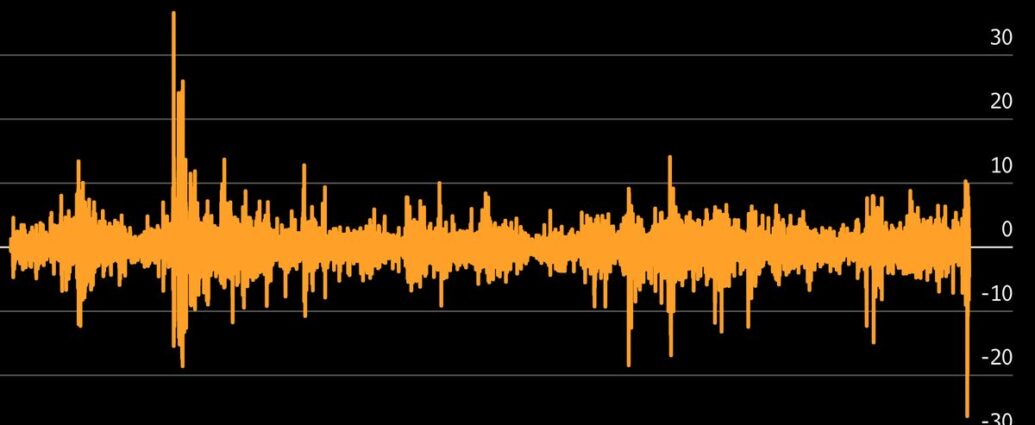
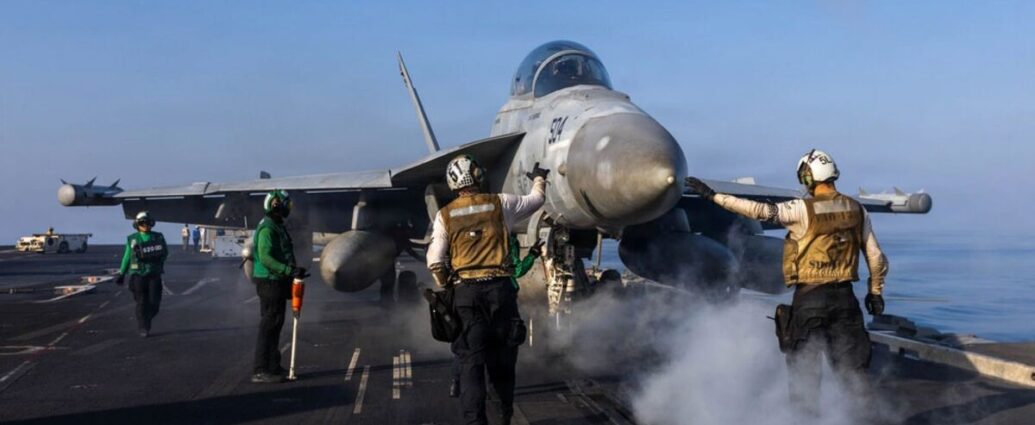
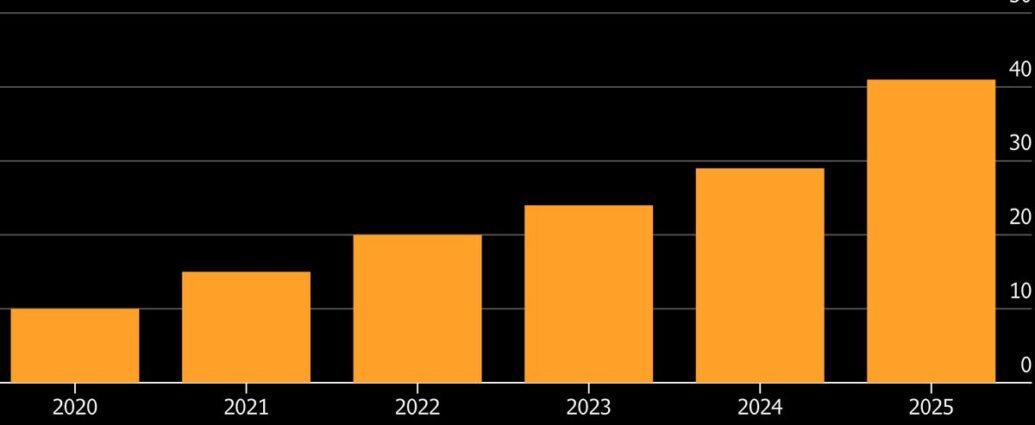




The next big thing in crypto will be tokenized stocks: Here are the likely winners and losers
Crypto has no shortage of detractors, but even they would concede the industry has produced massive innovations, including Bitcoin and stablecoin payment rails, that have had a profound effect on global commerce. Now, another crypto invention is on the cusp of introducing disruption on a similar scale: Blockchain-based stock trading, which got a big vote of confidence from both NYSE and NASDAQ this month, and is poised to deliver big changes for both investors and companies.
Robinhood CEO Vlad Tenev memorably described tokenized stocks as an unstoppable “freight train.” The arrival of that train will depend on how fast regulators can supply a legal framework, but Tenev’s basic premise is sound. The more interesting question is which firms will lead this coming wave of disruption, and which will be left out.
According to Sebastian Pedro Bea, a former BlackRock executive who is now CIO at crypto firm ReserveOne, the emerging world of tokenized stocks is being led by offshore players and by U.S.-based “compliant disruptors.” Bea includes in this category the likes of Securitize, Superstate and Figure, which have little in the way of trading volume, but that are laying the groundwork to allow Fortune 500 companies to issue their shares on-chain. Once this happens, a whole range of corporate activities—from paying dividends to proxy votes to settling trades—will become far more efficient.
In a recent chat, Bea also pointed to leading offshore players Kraken and Ondo, which are offering a very different type of blockchain-based stocks. Namely, these firms are using special purpose vehicles to purchase large quantities of stocks like Apple and Tesla, and selling tokens that provide a legal claim to the stock. These offerings are basically derivatives that don’t provide the full advantages of blockchain, but their tokenized wrappers mean trades can be settled instantly.
For now, the market for all this is relatively small—perhaps $2 billion across all platforms. This is likely to change, though, since key figures at the Securities and Exchange Commission are supportive of tokenized equities, and as the country’s most prestigious stock exchanges, NYSE and NASDAQ, recently announced tie-ups with OKX and Kraken, respectively. All of these companies, including Bea’s “compliant disruptors,” and Coinbase and Robinhood, are likely to be key players in the coming tokenization of the stock market. In doing so, they will create a more decentralized type of stock market.
Then there are those on the receiving end of the disruption. This is likely to be the legions of middle-men who oversee the current system of clearing and settling trades, whose roles stand to become obsolete. As Superstate notes in a helpful blog post “What really happens when stocks trade”: “U.S. equity markets still run on architecture designed for a different era … Settlement is delayed by design. Risk is warehoused in intermediaries built for reconciliation, not execution.”
The rise of tokenized stocks means the equity markets of the future will be built around instant execution. At this point, it’s not a question of if but when.
Jeff John Roberts
jeff.roberts@fortune.com
@jeffjohnroberts
This story was originally featured on Fortune.com


Wall Street’s Most Accurate Analysts Spotlight On 3 Financial Stocks With Over 10% Dividend Yields
During times of turbulence and uncertainty in the markets, many investors turn to dividend-yielding stocks. These are often companies that have high free cash flows and reward shareholders with a high dividend payout.
Benzinga readers can review the latest analyst takes on their favorite stocks by visiting Analyst Stock Ratings page. Traders can sort through Benzinga’s extensive database of analyst ratings, including by analyst accuracy.
Below are the ratings of the most accurate analysts for three high-yielding stocks in the financial sector.
Mfa Financial Inc (NYSE:MFA)
- Dividend Yield: 14.66%
- RBC Capital analyst Kenneth Lee maintained a Sector Perform rating and raised the price target from $10 to $11 on March 5, 2026. This analyst has an accuracy rate of 63%.
- Keefe, Bruyette & Woods analyst Bose George maintained a Market Perform rating and increased the price target from $10 to $11 on Feb. 20, 2026. This analyst has an accuracy rate of 69%
- Recent News: On Feb. 18, MFA Financial posted in-line …
This post was originally published here





This Cohu Analyst Begins Coverage On A Bullish Note; Here Are Top 5 Initiations For Monday
Top Wall Street analysts changed their outlook on these top names. For a complete view of all analyst rating changes, including upgrades, downgrades and initiations, please see our analyst ratings page.
- B of A Securities analyst Arnaud Lehmann initiated coverage on Sunbelt Rentals Holdings, Inc. (NYSE:SUNB) with an Underperform rating and announced a price target of $62. Sunbelt Rentals shares closed at $72.76 on Friday. See how other analysts view this stock.
- HC Wainwright & Co. analyst Amit Dayal initiated coverage on Solid Power, Inc. (NASDAQ:SLDP) with a Buy rating and announced a price target of …
This post was originally published here



US flight cancellations, ground delays surge as massive March storm disrupts travel
More than 3.400 flights within, into or out of the United States had been canceled as of early afternoon on Monday as a massive weather system disrupted air travel across parts of the country, forcing the Federal Aviation Administration to impose ground stops at some airports while others faced lengthy delays, according to FlightAware and FAA data.
More than 5,400 delays involving U.S. flights were also recorded as of early Monday afternoon, FlightAware data showed.
The disruptions come during the busy spring break travel season — one of the peak periods for airline demand — leaving many travelers scrambling to find alternative flights.
The airports topping the chart with the most cancellations based on origin airport included Chicago O’Hare, LaGuardia, and Charlotte/Douglas, according to FlightAware. The three hubs also topped the cancellation chart based on destination airports as well.
2K FLIGHTS CANCELED IN SINGLE DAY, TURNING MAJOR AIRPORT INTO VIRTUAL GHOST TOWN
Some of the other major U.S. hubs reporting cancellations included Atlanta’s Hartsfield-Jackson International Airport and Orlando International Airport, indicating the severe weather was disrupting flights across multiple regions of the country.
Major airlines were also heavily affected. American Airlines had more than 500 cancellations, followed by Southwest Airlines with more than 400, Delta Air Lines with more than 400, as well as many others.
The travel disruptions come as a powerful March storm system sweeps across the United States, bringing blizzard conditions to parts of the Midwest and a rare severe storm threat along the East Coast.
The Federal Aviation Administration was already implementing traffic management restrictions early Monday as the system moved across the country. The FAA’s National Airspace System status page showed a ground stop at Atlanta’s Hartsfield-Jackson International Airport due to thunderstorms and another at Charlotte Douglas International Airport, though it appears that the Atlanta airport ground stop later ended, as it was no longer listed as of early Monday afternoon.
The FAA page indicated that the Charlotte Douglas and Ronald Reagan Washington National Airport had ground stops in place as of early afternoon on Monday.
Departures to Houston’s George Bush Intercontinental Airport were experiencing ground delays averaging 148 minutes because of high winds. Other airports also had ground delays listed.
The FAA had also warned that additional ground stop and delay programs could be implemented Monday at major hubs including Chicago O’Hare, New York’s JFK and Boston Logan as the storm system intensifies, and by early Monday afternoon, a ground delay was listed for JFK. “Departures to John F Kennedy International are delayed avg. 194 mins. due to low ceilings,” the FAA noted.
The FOX Forecast Center warned that the East Coast faces a Level 4 out of 5 severe weather risk, with damaging winds of 70 to 80 mph and several tornadoes possible from the Mid-Atlantic into parts of the Carolinas later Monday.
Meanwhile, parts of the Midwest and Great Lakes are digging out from historic snowfall totals, including Green Bay, Wisconsin, which recorded 14.8 inches in its snowiest day in 137 years, according to FOX Weather. Spalding, Michigan, also recorded 26 inches of snow, FOX Weather reported.
FOX Weather reported that more than 6,500 flights have already been canceled nationwide through Tuesday as the sprawling storm system continues to disrupt travel across multiple regions.
CLICK HERE TO GET FOX BUSINESS ON THE GO
Ground stops were also anticipated at major hubs later Monday as severe storms approached the Atlantic coast, according to FOX Weather.
The headache came as long lines were seen again at Austin-Bergstrom International Airport on Monday, stretching outside the airport entrance.
The airport shared a video early Monday showing a line for general security wrapped around the building.
“We’re expecting a record-breaking volume of people — there are about 38k of you flying out today,” the airport wrote on X. “Please arrive at least 2.5 hours prior to your flight’s departure for domestic.”
But later on Monday the airport noted in another post, “The morning rush is over! We’re expecting normal lines for the rest of the day & if anything changes, we’ll be sure to share here. For tomorrow, about 32,000 people will fly out, which isn’t record-breaking busy but that’s busier-than-normal for a Tuesday.”
This week is Jerome Powell’s penultimate meeting as chairman of the Fed—don’t expect him to drop Wall Street many hints
In a matter of months, a new face will stand behind the lectern at the U.S. Federal Reserve, following the meeting of its rate-setting committee. Jerome Powell has (in all likelihood) only got a few press conferences left before his term as central bank chairman ends—an event he may increasingly be looking forward to.
With Powell’s term due to end in May (unless delayed by a legal back-and-forth arising out of a Department of Justice investigation), the chairman will lead the Federal Open Market Committee (FOMC) meetings this week and in April before stepping aside, likely for Trump nominee Kevin Warsh to take his place.
Despite the drama surrounding Powell’s final year leading the Fed, Wall Street isn’t expecting anything particularly surprising from the Powell-led meetings. In the past few months the FOMC has been split over how quickly and steeply rates should be cut—if at all—and recent military action in Iran will do little to firm-up the economic outlook.
Geopolitical tensions have bubbled over since the U.S. and Israel launched strikes in Iran 17 days ago. Since then, oil prices have been increased as traders assess how severely supply from the region will be disrupted. Rising oil prices have a direct knock-on impact for households, with their inflation expectations soaring as they scour headlines for a de-escalation in tensions, which is yet to appear.
With price expectations rising, and with limited contemporary data to inform the Fed about the real economy right now, analysts are largely expecting Jerome Powell to announce no cut this week. At the time of writing CME’s FedWatch places more than a 99% chance of a hold at the meeting this week.
Despite the fact that this week is something of a central bank bonanza (the Fed, European Central Bank, Bank of Japan and Bank of England all meet this week), there’s a general perception that wait-and-see will once again prevail. Economists also aren’t expecting anything major from Powell’s presser, as Deutsche Bank’s Jim Reid noted to clients this morning, saying his team “only expect minor statement tweaks, including smoothed language on recent labour data (especially given January and February’s conflicting payrolls) and a nod to geopolitical risks, highlighting uncertainty and near-term upside pressure on inflation.”
An overly hawkish picture?
He continued, Powell’s press conference is “likely to stress that recent events mainly transmit through financial conditions—particularly oil prices. For now, however, our economists think he’ll avoid signalling any meaningful shift in the near term policy outlook.”
Indeed, some analysts have even suggested it’s entirely plausible that there will be no cuts at all in 2026—after all, a dovish new chairman is only one vote on the FOMC. But Bank of America Global Research’s Antonio Gabriel wrote this morning that perhaps hawkish inflation calls are overcrowding the picture when it comes to the Fed’s path forward.
Gabriel wrote that to assume the Fed won’t cut is based on the assumption that geopolitical tensions are transitory—that inflation may be a relatively short to medium-term hiccup which will not impact the wider global economy. The BofA economists isn’t so sure, writing this morning that markets could be underpricing a more protracted war.
“While a quick resolution to the conflict is certainly a possibility, we view the conflict extending into 2Q as an equally likely outcome, and a more protracted war cannot be ruled out. However, markets seem to be pricing a largely transitory shock,” Gabriel observed. “The U.S. dollar is stronger, but the S&P 500 is just 4% below its peak, and rates markets have priced out about 35bp of Fed cuts by year-end due to inflation concerns. In our view, the more disruptive scenarios for global growth are underpriced.”
This story was originally featured on Fortune.com


Inside the Gen Z Shark Tank where influencers are becoming venture investors
Last Monday, the impossible happened: I attended a venture capital event where I didn’t hear the terms “AI moat” or “application layer software” a single time. Instead, in between bites of sashimi and suspiciously sweet flavored water, about two dozen tech-curious influencers and self-described content creators gathered to hear pitches on aggressively non-AI-based companies, including a service that turns cherished remains into diamonds and a beverage startup.
We spend a lot of time here focused on the established voices of venture—the Sequoias, Insight Partners, and Kleiner Perkins of the world, which take a methodical approach of applying tried and true quantitative frameworks to divining the windfalls of the future. But as I spend time with the next generation of venture investors, I’m struck by their overwhelming belief that narrative and reach are just as important as the Rule of 40.
That’s the guiding argument of Bulletpitch, a hybrid media outfit and investing syndicate founded by the Gen Z entrepreneur Brett Perlmutter and run with the podcaster Felix Levine, who serves as managing partner, and their head of operations Alexis Ballo, who attended Middlebury with Perlmutter. Alongside its newsletter and the special purpose vehicles it organizes for trendy companies like the food startup Sauz, Bulletpitch hosts these monthly events where it brings together influencers with large social followings to listen to startup pitches, demo day style. “Founders need attention, and creators have attention,” Perlmutter said to open the event, which was hosted by Hudson Yards at their Japanese restaurant BondST.
The pitches felt like a soft-edged Shark Tank, with the content creators lobbing mostly inspiration-bait questions that would serve well as 20-second TikTok clips (though none seemed to be filming). The diamond startup, Eterneva, actually had been on Shark Tank and had received funding from a Bulletpitch SPV, though its founder Adelle Archer said the company was no longer seeking funding. Another, Popwtr, filled the table with its as-of-yet-unlaunched cotton candy and lemon-lime-themed drinks, which quickly disappeared as the night went on. (Their slogan, “Tastes like soda, hydrates like water,” is somewhat undercut by the fact that one of its first ingredients is sucralose, better known as Splenda, which unnerved one of the influencers by me.)
The motives of the attendees were varied. I sat next to Garrett McCurrach, who presented the first pitch of the evening for his startup PipeDream, which is building underground robotic delivery systems. McCurrach, who lives in Austin, had just flown in for the event after meeting the Bulletpitch team a couple of weeks before. When I asked what he hoped to get out of pitching, he had a simple answer: “Serendipity.”
For the health-conscious influencer, who I won’t out here for her Splenda candor, she wanted to learn how to better invest into startups. Outside of pure brand deals, this seems to be the increasingly popular monetization avenue for many brand creators, who want to turn their legions of followers into equity. It’s a symbiotic relationship for consumer goods startups, who want to find captive customer bases and wield attention. Whether application layer AI companies soon start to look for Instagram brand ambassadors remains to be seen.
Leo Schwartz
X: @leomschwartz
Email: leo.schwartz@fortune.com
Submit a deal for the Term Sheet newsletter here.
Joey Abrams curated the deals section of today’s newsletter. Subscribe here.
This story was originally featured on Fortune.com




How To Earn $500 A Month From Academy Sports And Outdoors Stock Ahead Of Q4 Earnings
Analysts expect the company to report quarterly earnings of $2.05 per share. That’s up from $1.96 per share in the year-ago period. The consensus estimate for Academy Sports and Outdoors’ quarterly revenue is $1.75 billion (it reported $1.68 billion last year), according to Benzinga Pro.
With the recent buzz around Academy Sports and Outdoors, some investors may be eyeing potential gains from the company’s dividends, too. As of now, Academy Sports and Outdoors has an annual dividend yield of 1.06%. That’s a quarterly dividend amount of 15 cents per share (60 cents a year).
So, how can investors exploit its dividend yield to pocket a regular $500 monthly?
To earn $500 per month or $6,000 annually from dividends …
This post was originally published here
This Upstart Analyst Turns Bullish; Here Are Top 5 Upgrades For Monday
Top Wall Street analysts changed their outlook on these top names. For a complete view of all analyst rating changes, including upgrades, downgrades and initiations, please see our analyst ratings page.
- Keefe, Bruyette & Woods analyst George Bose upgraded PennyMac Financial Services Inc (NYSE:PFSI) from Market Perform to Outperform and maintained the price target of $115. PennyMac Financial shares closed at $84.14 on Friday. See how other analysts view this stock.
- Mizuho analyst Steven Valiquette upgraded LifeMD Inc (NASDAQ:LFMD) from Neutral to Outperform and raised the price target from $6 to $8. LifeMD shares …
This post was originally published here

Why Is BitMine Immersion Stock Soaring Monday?
BitMine Immersion Technologies, Inc. (AMEX:BMNR) shares are trading higher during Monday’s premarket session.
Nasdaq futures have gained 0.79%. S&P 500 futures are also up 0.65%.
Crypto Momentum and Market Catalyst
The primary catalyst appears to be a recovery in digital assets. Ethereum (CRYPTO: ETH) has climbed 6.93% over the last 24 hours to $2,266.92. Bitcoin (CRYPTO: BTC) is also trading higher, up 2.40% at $73,537.95.
Technology is currently leading early strength, with the Technology Select Sector SPDR Fund (NYSE:XLK) …
This post was originally published here
Nvidia, Citigroup, Meta And More On CNBC’s ‘Final Trades’
On CNBC’s “Halftime Report Final Trades,” Jim Lebenthal, partner at Cerity Partners, picked Citigroup Inc. (NYSE:C).
The bank is planning an initial public offering (IPO) of its Mexican retail banking unit, Banco Nacional de México (Banamex), sometime in 2026. Citigroup has already agreed to sell a 49% stake to investors, including Fernando Chico Pardo, ahead of a full IPO on the Mexican Stock Exchange (BMV).
Meanwhile, Citibank, N.A. — the consumer banking division of Citigroup — announced plans to close all UAE branches except one due to the threat from Iran.
Bryn Talkington, managing partner of Requisite Capital Management, named Goldman Sachs Nasdaq-100 Premium …
This post was originally published here

With Iran still in control of Hormuz, Trump threatens NATO and oil hits $106
Good morning. In today’s Fortune:
- Oil was at $106 per barrel this morning.
- Trump threatens NATO, again.
- Wall Street digs in, and not in a good way.
- Who won what at the Oscars.
- Investment in physical AI robots hit $41 billion per year.
- Fertilizer prices go through the roof.
- Crypto markets are betting big on oil.
THE MARKETS
Oil driving everything
Oil was up to $106 per barrel this morning. S&P 500 futures were up 0.44% prior to the opening in New York. The index closed down 0.61% on Friday and is now 4% below its peak. Asia and the U.K. are largely up or flat this morning but the Stoxx Europe 600 was down 0.43% before lunch. Bitcoin is at $73K.
- Central bank-a-palooza: There’s an unusual confluence of base interest rate decisions coming this week from the U.S. Fed, the European Central Bank, the Bank of Japan, the Bank of England, the Royal Bank of Australia, and the Bank of Canada.
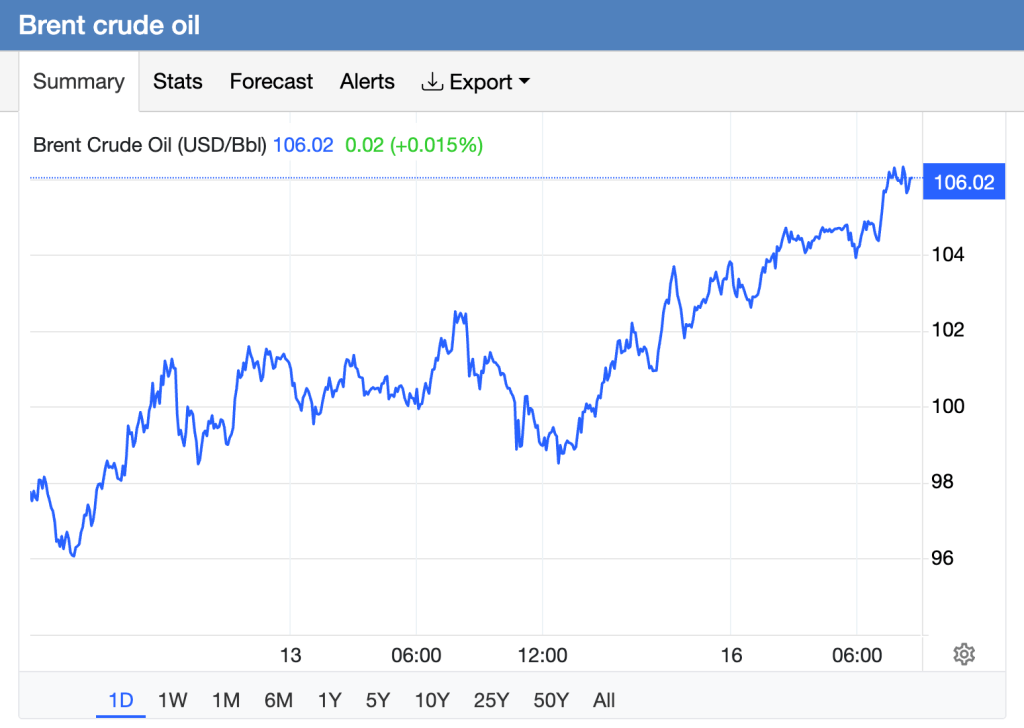
Chart from TradingEconomics.com
TOP STORIES
IRAN
Trump threatens NATO if it doesn’t support him on Iran
In a move that will win him no new friends in the West, President Trump threatened “very bad” things for NATO if the alliance’s countries don’t send ships to help him reopen the Strait of Hormuz, Fortune’s Jason Ma noted late last night. “If there’s no response or if it’s a negative response I think it will be very bad for the future of NATO,” Trump said. Context: Trump previously threatened to invade Greenland and Canada, both NATO members. He also implied he might retract support for Ukraine. And he lifted sanctions on Russian oil even though that country is bombing Europe’s Eastern flank.
Trump’s plea underlines the most important dynamic in the war against Iran right now: The fact that Iran controls the strait but has not blocked it. Iran allowed a tanker to sail to China, for instance. U.S.-Israeli forces haven’t been able to gain access for Western-allied vessels. “It is only closed to the tankers and ships belonging to our enemies, to those who are attacking us and their allies,” Iran’s Foreign Minister Abbas Araghchi said on Saturday.
Iran has options, according to MIT political science professor Caitlin Talmadge: mines. “Historically, mine clearance has been slow and it is almost impossible to do under fire,” she wrote in Foreign Affairs. “In short, if Iran effectively mines the strait, all U.S. response options are suboptimal,” Talmadge warned. “The United States should therefore focus aggressively on preventing Iranian mine-laying in the first place and finding an off-ramp from the larger war. If it does not, Washington should expect that ongoing harassment of traffic in the strait will be but one of a number of responses that Iran has long prepared and will now deploy.”
- Live coverage of today’s attacks from the BBC here.
It’s the media’s fault: With his poll numbers in decline and MAGA supporters frustrated by a war he promised not to start, Trump is increasingly complaining about media coverage of the conflict. On Saturday, he said: “Media actually want us to lose the War.” His FCC chief threatened to cancel network broadcast licenses unless they “correct course.”
- Trump was up late last night writing long posts about judges he doesn’t like.
Wall Street sees a long war
Six more weeks? As of Saturday, the Pentagon “believed that it would take four to six weeks to complete this mission and that we’re ahead of schedule,” Kevin Hassett said on CBS’ Face the Nation. “We expect that the global economy is going to have a big positive shock as soon as this is over.”
“Protracted war cannot be ruled out”: But investment bank analysts are increasingly pessimistic that Trump will declare victory and leave the Gulf anytime soon. Bank of America’s Antonio Gabriel sent a terse note this morning: “While a quick resolution to the conflict is certainly a possibility, we view the conflict extending into 2Q as an equally likely outcome, and a more protracted war cannot be ruled out. However, markets seem to be pricing a largely transitory shock…In our view, the more disruptive scenarios for global growth are underpriced.”
$100 oil will “break parts of the world economy”. Oxford Economics’ Michael Pearce told clients that the impact of oil going to $100 per barrel is “a worst-case scenario that begins to break parts of the world economy. The impact to the U.S. economy is still mostly via higher gasoline prices, which boost inflation and weigh on households’ real disposable incomes and consumer spending. There would be some offset from higher oil production and investment, but there’s a lag effect, and in the near term, the economy would take a hit,” with GDP growth being cut by the better part of a percentage point:
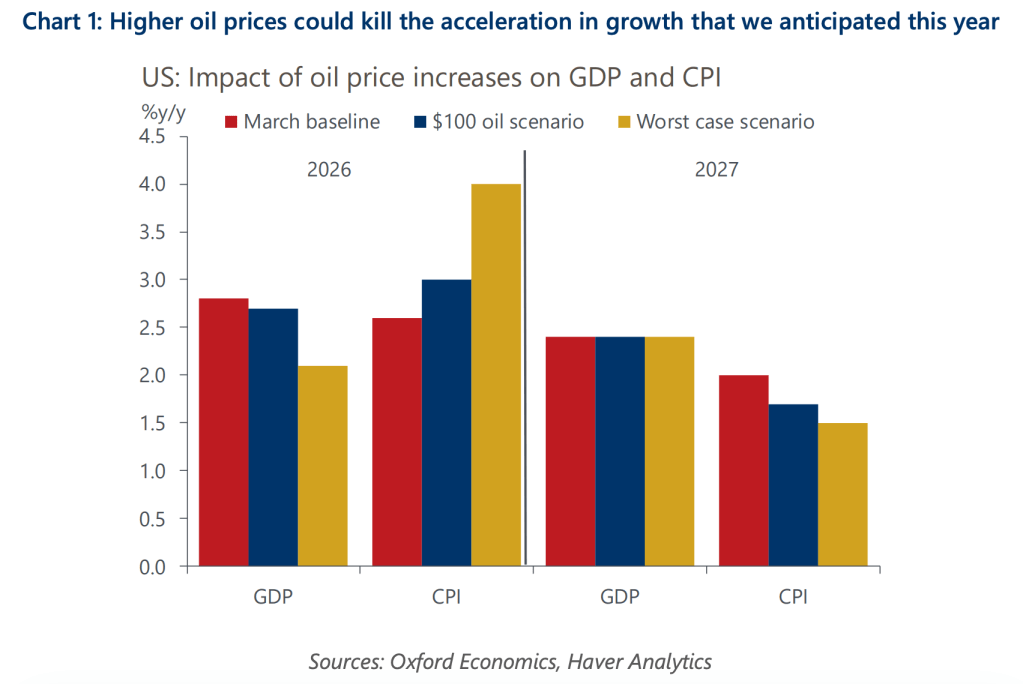
HOLLYWOOD
Who won what at the Oscars
One Battle After Another was the big winner with six awards last night, including best picture and best director. Sinners got four (Michael B. Jordan got best actor), and Frankenstein took three. Full coverage from The Hollywood Reporter here.
CHART OF THE DAY
Record funding for physical AI robots
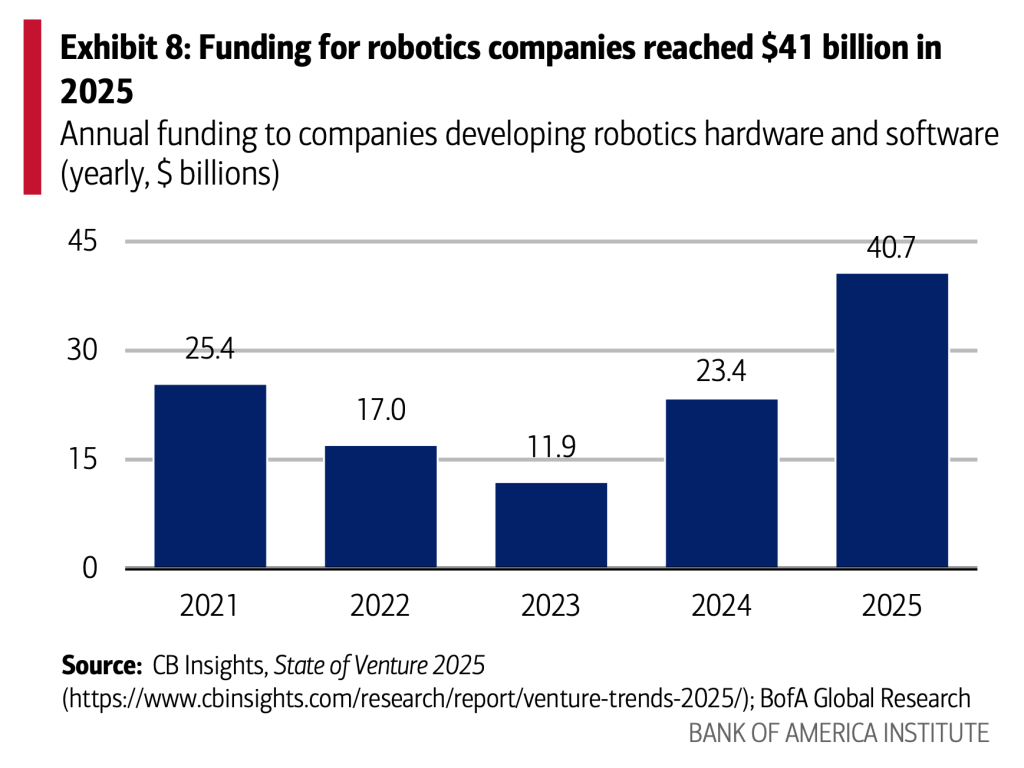
Investment in companies looking to develop physical, artificially intelligent robots made 32 equity deals with developers in 2025 compared to just three in 2021, according to Bank of America’s Vanessa Cook and Lynelle Huskey. Funding hit a record high in 2025 at $41 billion.
NUMBER OF THE DAY
60%
The rise in the price of urea—the world’s most widely used nitrogen fertilizer—since the war began, per Bruce Kasman and the team at J.P. Morgan.
QUICK HITS
- Ray Dalio: I’ve studied 500 years of history and fear we’re entering the most dangerous phase of the ‘Big Cycle’
- What Airbnb’s CFO learned when the pandemic made trust a balance sheet decision by Ruth Umoh
- Asia scrambles to respond to Trump’s sweeping Section 301 trade probes, which could pave the way for new tariffs by Angelica Ang
- Top airline CEOs plead with Congress to restore DHS funding and pay airport workers. ‘Once again, air travel is the political football’ by the AP
- An OpenAI cofounder ‘vibe coded’ an analysis of the U.S. labor market’s exposure to AI, and the highest-paying jobs have the worst scores by Jason Ma
THE FRONT PAGES TODAY
WATCH: Anduril’s Palmer Luckey talks AI, nukes and Iran on “The Axios Show” – Axios
Retail investors pull billions from private capital’s credit gold mine – FT
OpenAI’s Bid to Allow X-Rated Talk Is Freaking Out Its Own Advisers – WSJ
How Trump’s Homeland Security Pick, a Prolific Investor, Got a Lot Wealthier in Congress – NYT
The best-dressed celebrities at the Oscars 2026: Teyana Taylor, Jessie Buckley, Rose Byrne and more – NY Post
ONE MORE THING
The crypto nerds have come for the oil market
Oil markets are going crazy and one crypto ecosystem has become a go-to destination for speculating on where prices are going next: A blockchain called Hyperliquid saw daily trading volume for a popular oil contract reach a high of nearly $1.7 billion, which is nearly 250 times more volume than the contract saw right before the U.S. and Israel started bombing Iran in late February. Fortune’s Ben Weiss reports.
This story was originally featured on Fortune.com
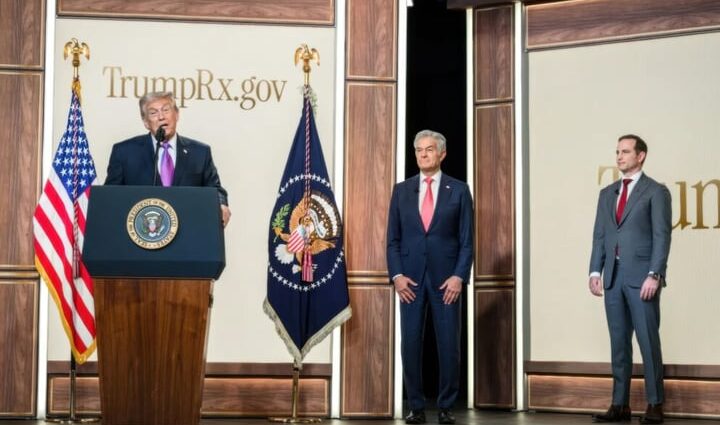
Amgen, GSK Set To Join TrumpRx Offering Deep Prescription Drug Discounts: Report
Amgen Inc. (NASDAQ:AMGN) and GSK plc (NYSE:GSK) are reportedly set to announce their partnership with TrumpRx.gov. This collaboration is set to offer substantial discounts on prescription drugs.
This move will augment the total number of discounted prescription medications available on the platform to 54, from five different pharmaceutical companies, according to a report by FOX Business on Friday.
Amgen will offer an 80% discount on Amjevita, a medication used for rheumatoid arthritis, psoriasis, and ulcerative colitis. The drug, originally priced at $1,484, will be available for $299 on TrumpRx.gov. Additionally, Amgen plans to list Aimovig and Repatha for discounts of 62%.
Meanwhile, GSK will offer a 55% discount on Incruse, a medication for COPD, pricing it at $159. The company also plans to list Arnuity, Relenza, and Anoro at discounts ranging from 10% to 51%.
Amgen and GSK did not immediately respond to Benzinga‘s request for comment.
Full story available on Benzinga.com
This post was originally published here

Accenture Acquires AI Leader Faculty, Appoints New CTO
Accenture PLC (NYSE:ACN) completed its acquisition of Faculty Monday. Faculty is a top United Kingdom-based artificial intelligence company. The deal boosts Accenture’s technical expertise in AI.
Over 400 AI professionals now join Accenture. This team includes data scientists and AI engineers. Companies did not disclose the financial terms. Accenture first announced the transaction on Jan. 6.
The financial terms of the acquisition were not disclosed. As of November 30, 2025, Accenture had cash and equivalents worth $9.649 billion.
New Chief Technology Officer
Marc Warner is the CEO and co-founder of Faculty. He now becomes the Chief Technology Officer of Accenture. He also joins the Global Management Committee. Accenture Chair and CEO Julie Sweet praised the strategic …
This post was originally published here
Elizabeth Warren Says ‘Hard No’ To Trump’s $50 Billion Iran War Funding Request: Congress ‘Could Afford’ Health Care Tax Credits Instead
Senator Elizabeth Warren (D-Mass.) launched a high-stakes fiscal challenge against the White House, vowing to block a massive $50 billion funding request for the ongoing war in Iran.
A ‘Hard No’ On War Funding
As the Donald Trump administration seeks to replenish military stocks depleted by “Operation Epic Fury,” Warren is demanding that the capital be redirected to shore up the nation’s healthcare system.
The standoff follows a classified briefing where administration officials estimated the first six days of the war cost over $11.3 billion, according to Reuters. With reports suggesting a formal $50 billion request is imminent, Warren took to X to signal an immediate blockade.
“The Trump administration wants $50 billion to fund the illegal war in Iran. I’m a hard NO,” Warren stated. The Massachusetts Senator argued that the sheer scale of the request highlights a massive disparity in national priorities, particularly as the conflict enters its third week.
This post was originally published here

Why Hormuz will haunt us long after this war ends
This post was originally published here

Aluminum At Highs As Supply Squeeze Boosts Alcoa Outlook
The global aluminum market is facing a convergence of geopolitical issues and persistent energy constraints. The result is the rally to multi-year highs that prompted analysts and investors to revise their price targets.
The latest disruption was not unexpected. Bahrain’s Alba has initiated a partial shutdown of its operations amid ongoing shipping disruptions. According to Reuters, the company said it has begun a “controlled and safe shutdown” of about 19% of its total smelting capacity.
Alba, which operates the world’s largest single-site aluminum smelter with an annual capacity of 1.62 million metric tons, said the move was designed to safeguard operations while the shipping bottleneck persists.
“This targeted, line-specific action is designed to optimize the utilization of Alba’s existing raw materials inventory and prioritize operational stability across Reduction Lines 4, 5, and 6,” the company said.
Since the shipping through the Strait of Hormuz has stopped, the smelter is unable to either import key inputs or export the material.
Alba added that the downtime would be used to conduct asset care and maintenance across the affected lines. Housekeeping, cleaning, and preparation work will ensure a safe restart once conditions stabilize.
Multi-Year Highs
These disruptions have helped push aluminum prices sharply higher. On the London Metal Exchange, aluminum surged over $3,540 per metric ton last week. It is …
This post was originally published here


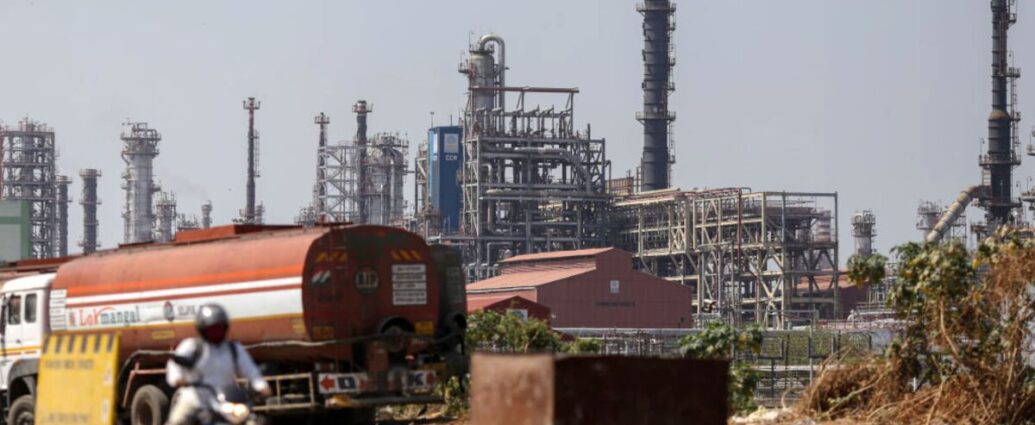




Why America’s shale patch is not celebrating $100 oil
This post was originally published here

Wall St underestimates private capital problems, says top credit hedge fund
This post was originally published here







Warner Bros. Discovery Bags 11 Oscars As $110 Billion Paramount Skydance Sale Looms
In the midst of nearly a $110 billion sale to Paramount Skydance (NASDAQ:PSKY), Warner Bros. Discovery (NASDAQ:WBD) triumphed at the 98th Academy Awards on Sunday night, bagging 11 Oscars.
The studio’s winning streak was led by ‘One Battle After Another‘, a film by Paul Thomas Anderson, which won six awards, including best picture, best director, and best supporting actor. ‘Sinners‘, another Warner Bros. production set in the Jim Crow-era South, won four Oscars, including best actor for Michael B. Jordan.
During his acceptance speech, Jordan thanked the studio for its commitment to original filmmaking. “I want to thank Warner Bros for betting on original ideas and artistry,” he stated.
However, the celebrations were somewhat overshadowed by the impending sale of the studio. “It will be impossible to ignore that we will be celebrating the achievements of filmmaking with one less …
This post was originally published here
What Airbnb’s CFO learned when the pandemic made trust a balance sheet decision
In March 2020, Airbnb was nearing an IPO that would cap one of Silicon Valley’s most closely watched growth stories. Then global travel stopped.
Within weeks, the company’s business effectively collapsed as borders closed, flights were grounded, and consumers retreated indoors. For Ellie Mertz, now Airbnb’s CFO, it was the kind of corporate crisis that rendered the usual finance playbook almost meaningless. Scenario planning, she recalled in a wide-ranging interview on Fortune Next to Lead, broke down under uncertainty that was “orders of magnitude beyond” what any company would normally prepare for.
That moment became a defining test for Airbnb’s business model and its leadership. Like many companies in the early days of the pandemic, Airbnb faced an immediate tension: Preserve cash to survive, or support the guests and hosts who make the business possible. It chose to support its community.
At the height of the crisis, Airbnb allowed guests to cancel bookings for free, including nonrefundable stays. At the same time, it paid hosts a total of $250 million to help offset their losses from pandemic-related cancellations. It was an expensive decision for a company whose revenue had fallen off a cliff. But Mertz frames it as something larger than a financial calculation. It was a decision about what kind of brand Airbnb wanted to be after the crisis.
In the short run, the more conservative move might have been to defend cash and let market forces prevail. But brands like Airbnb do not thrive on transaction mechanics alone. Their durability is built on trust, especially in moments when customers and partners are vulnerable.
That kind of brand longevity is hard to model neatly in a spreadsheet, but it can shape a company’s trajectory for years. If Airbnb had forced guests to absorb losses on trips they could no longer take, it risked appearing opportunistic at precisely the moment when people were frightened and financially strained. If it had left hosts to shoulder the blow alone, it could have damaged the supply side of its marketplace and weakened the loyalty of the entrepreneurs who underpin the platform. By absorbing pain on both sides, Airbnb was effectively paying to protect future relevance.
That choice says a great deal about how Mertz sees the CFO role today. In many companies, finance is still viewed primarily as a control function, there to set limits, impose discipline, and say no. Mertz rejects that narrow framing. At Airbnb, she sees finance as a strategic partner, charged with protecting the business while also helping it reach its ambitions.
The pandemic made that philosophy real. Airbnb was not simply trying to survive the downturn, she says. It was trying to emerge from it with trust intact and a brand strong enough to recover faster than the industry around it. It also cemented a core lesson for Mertz: In the moments that matter most, a leader’s job is to help decide what is worth protecting beyond the numbers.
Watch the full interview here.
Ruth Umoh
ruth.umoh@fortune.com
This story was originally featured on Fortune.com


Top 3 Consumer Stocks That May Explode In March
The most oversold stocks in the consumer discretionary sector presents an opportunity to buy into undervalued companies.
The RSI is a momentum indicator, which compares a stock’s strength on days when prices go up to its strength on days when prices go down. When compared to a stock’s price action, it can give traders a better sense of how a stock may perform in the short term. An asset is typically considered oversold when the RSI is below 30, according to Benzinga Pro.
Here’s the latest list of major oversold players in this sector, having an RSI near or below 30.
Goodyear Tire & Rubber Co (NASDAQ:GT)
- On Feb. 9, Goodyear Tire & Rubber reported mixed fourth-quarter financial results. “We delivered another strong quarter, driven by execution of our Goodyear Forward plan,” said Mark Stewart, chief executive officer and president. “Our fourth quarter results mark the highest segment operating income and margin the company has achieved in more than seven years. While we continue to face challenging industry conditions in the first …
This post was originally published here
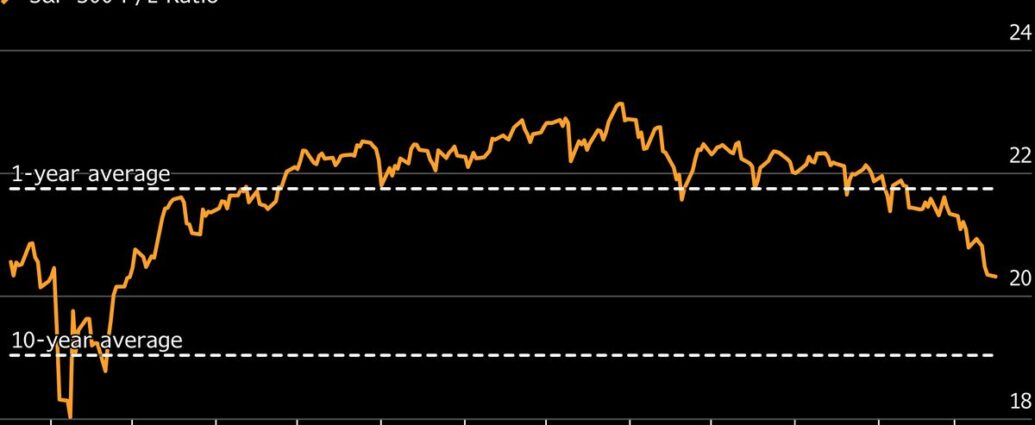

Semtech Earnings Are Imminent; These Most Accurate Analysts Revise Forecasts Ahead Of Earnings Call
Semtech Corporation (NASDAQ:SMTC) will release earnings results for its fourth quarter, after the closing bell on Monday, March 16.
Analysts expect the Camarillo, California-based company to report quarterly earnings at 43 cents per share, up from 40 cents per share in the year-ago period. The consensus estimate for Semtech’s quarterly revenue is $273.2 million, versus $251 million a year earlier, according to data from Benzinga Pro.
On March 10, Semtech announced a partnership with Digital Barriers to launch Semtech Video Compression, a fully integrated device-to-cloud cellular video solution designed for surveillance and analytics applications.
Semtech shares rose 1.7% to close at $84.85 on Friday.
Benzinga readers can access the latest analyst ratings on the Analyst Stock Ratings page. Readers can sort by stock ticker, company name, analyst firm, rating change or other variables.
Let’s have …
This post was originally published here