CanSino CEO Xuefeng Yu on Earnings, Pipeline
2026-08-28


US President Donald Trump addressed Iran’s situation on Thursday evening, saying that “Iran right now is not paying its soldiers. They are in deep trouble. They have very little capability left.”
Trump also discussed the Strait of Hormuz and US activity in the area, saying, “Last night we moved 24 ships through the strait. We move them all the time. I’m saying this openly.”
He said, however, that the military activity had not ended, adding, “As you know, the Strait of Hormuz is open. We have control and we have a blockade. Iran is getting nothing. Nothing is going through. No ship is going through.”
Asked whether he would punish Russian President Vladimir Putin or Russia if Moscow continued trading with Iran, Trump said the response would depend on the circumstances.
“Up to now, I think Russia has behaved pretty well when it comes to the Strait of Hormuz,” he said.
Trump also addressed Russia during his remarks to reporters, following the visit by CIA Director John Ratcliffe to the country two days earlier.
Asked why Russian President Vladimir Putin agreed or committed not to attack NATO territory, Trump responded, “I had good conversations with him. He is not going to attack NATO territory.”
Asked whether he had warned Putin not to do so, Trump said, “I don’t want to comment on that, but they are not going to attack.”
Trump was also asked why he had not imposed sanctions on Chinese banks that conduct business with Iran. He responded, “Who said I’m not? You’re asking ‘why not,’ who said? You don’t know if I’m doing it. I don’t have to announce everything, right?”
Addressing the possibility of renewed talks with Iran, Trump said, “We don’t want to talk to them. We’re not looking to meet or something like that. The strait is open, we are moving a lot of ships. Millions and millions of barrels of oil are going through the strait every day.”
He also said the US had completely cleared the Strait of Hormuz of mines, adding, “We have the best minesweepers in the world.”
Trump said the US was closely monitoring Iran through its Space Force, saying, “We see every inch of the strait. Every ship that enters with a mine, we see it and destroy it. We have already destroyed two of them.”
Meanwhile, sources familiar with the matter told The Wall Street Journal that the Trump administration has repeatedly made clear to mediators that it has no interest in returning to the terms of the memorandum of understanding signed with Iran in June.
According to the sources, the position has complicated efforts underway this week to restart diplomatic negotiations.
According to the newspaper’s report, the initial agreement signed by Trump at Versailles, with Vice President JD Vance involved in its formulation, was intended to reopen the Strait of Hormuz and launch negotiations over Iran’s nuclear program and an end to the war, in exchange for sanctions relief.
Although Trump has said he ultimately wants an agreed-upon end to the confrontation, he is currently willing to wait and assess whether increased economic pressure on Tehran will produce results.
The approach follows the administration’s launch this week of a broad economic campaign aimed at cutting off the Iranian regime’s sources of revenue and financial connections.

Israel has conveyed a message to the United States through security channels that a pilot program in southern Lebanon, which began being implemented following the signing of a memorandum of understanding between Beirut and Jerusalem, has failed, Walla reported Thursday.
Israel provided information regarding the Lebanese Army’s activities and expressed, in no uncertain terms, its dissatisfaction with the army’s operations against Hezbollah terror infrastructure and operatives in the area.
According to security officials, “The Lebanese Army is not destroying terror infrastructure based on the coordinates provided to it by the IDF, while at the same time requesting more coordinates, even though it is not doing anything about it.”
The IDF has criticized the Lebanese Army’s performance, claiming that it is not acting effectively against Hezbollah infrastructure in southern Lebanon. According to assessments, Iran, which previously provided significant support to the organization, is currently focused on its own survival struggles and is not rushing to come to Hezbollah’s aid.
According to assessments by senior IDF officials, Lebanese Army Chief of Staff Rudolf Haykal continues to cooperate with Hezbollah, fears confrontation with commanders of the Shi’ite organization in southern Lebanon, and is ineffective in carrying out searches, locating terror infrastructure and finding weapons.
“There is no real friction between the Lebanese Army and Hezbollah. Hezbollah would not want anyone to collect its weapons or destroy its infrastructure,” a senior security official said.
“The Lebanese army chief of staff is not going above and beyond. There is no real enforcement. The Lebanese Army is more focused on coordination,” the official said. “It is clear that Israel is not satisfied, and therefore it is not rushing to agree on additional pilot areas.”
The official added: “The Lebanese Army reached a point, entered the underground opening a few meters, turned around and left. They did not dare to go inside. We assess that they will not deal with anything. Despite this, they insist on receiving more coordinates.”

The United States is entering the most expensive phase of retirement. Some of America’s oldest are eligible for more than $100,000 a year in combined Social Security benefits, while remaining as one of the wealthiest generations in the country. The national debt is rising—just passing $40 trillion this month—and Social Security is set to enter insolvency by 2032, meaning it may already be too late for the generations left behind.
The Congressional Budget Office projected in 2023 federal spending on Social Security and medicare will account for 81% of the increase in mandatory spending between 2023 and 2033. In 2026 alone, increases in Social Security and Medicare spending account for nearly half the projected $362 billion increase in mandatory outlays. Interest on the debt is adding even another layer on the stack of debt pancakes. CBO projects net federal interest costs will exceed $1 trillion in 2026 and rise to $2.1 trillion by 2036. That means the government is spending money to simply service the debt accumulated from previous deficits, even as entitlement programs continue growing.
The state of Social Security appears to have contributed to drastically different generational outlooks on the benefit. A December 2025 survey by the Cato Institute found that only 34% of Gen Z respondents expected Social Security to exist when they reached retirement. Cato’s June 2026 analysis also found that 79% of younger respondents expected some type of cut to their own future benefits.
“The survey revealed that young Americans are the least likely to expect Social Security will exist for them,” the study noted, “the most open to reforms, and the least likely to understand how the program works.”
Social Security is a pay-as-you-go program, meaning most payroll taxes collected from today’s workers are used to pay benefits to today’s beneficiaries. In simpler terms, a part of your paycheck subsidizes a boomer’s benefits—and according to the Cato Institute’s 2025 polling, only 45% of Americans correctly understand how the program works. Under current law, employees and employers each pay 6.2% of wages into Social Security up to an annual taxable maximum, which is $184,500 in 2026. Self-employed workers pay the combined 12.4% rate.
That structure worked far smoother when there were many workers for every retiree. But the demographic math changed—baby boomers are now moving through retirement while younger generations deal with record job market difficulty.
And it doesn’t help that Social Security beneficiaries are getting over double their investment into the program back. A median-wage worker retiring in 2027 is expected to receive roughly $730,000 in lifetime Social Security benefits compared with less than $200,000 in combined contributions from the worker and employer. When the employer contribution is excluded, the lifetime benefits amount to roughly 265% of what the worker personally paid into Social Security. The current system is effectively relying on the workers of today—which include millennials and the younger end of Gen X—to finance retirees.
The federal government has reached a point where arithmetic becomes unavoidable. The 2026 Social Security trustees report projects that the Old-Age and Survivors Insurance trust fund will be depleted in the fourth quarter of 2032. At that point, continuing program income would cover only 78% of scheduled retirement benefits. The theoretically combined Social Security trust funds are projected to be depleted in 2034, when incoming revenue would cover 83% of scheduled benefits. Without congressional action, that would mean an automatic reduction in benefits.
The Committee for a Responsible Federal Budget estimates the retirement program would face an approximately 22% across-the-board reduction when the retirement trust fund is exhausted. The committee has proposed one way to address the issue—putting a ceiling on the benefits paid to its wealthiest retirees. Dubbed the “Six Figure Limit,” the proposal would cap Social Security benefits at $100,000 annually for a married couple retiring at the normal retirement age, with the limit adjusted for marital status and claiming age. A single retiree’s comparable limit would be $50,000.
The proposal is aimed at an extremely small group. CRFB estimates the cap would only really affect the top 0.05% of couples in its early years, households with average annual retirement income above $2.5 million and average net worth above $65 million. The organization says the cap would become more consequential over time as Social Security’s maximum benefits continue to rise.
CBS News reported in March that roughly one million individual Social Security beneficiaries receive at least $50,000 a year, meaning a married couple with two such beneficiaries could receive more than six-figures.
The Social Security Administration did not immediately respond to a request for comment from Fortune.
Baby boomers collectively hold roughly $93 trillion in wealth, according to Visa Business and Economic Insights, but only about $36 trillion is expected to pass to millennials and Gen X over the next two decades. The difference is reflected in taxes, debt, spending during retirement and the concentration of wealth among the richest boomers. After the dedication in liabilities, about $88 trillion remain—and the top 1% holds about one-third of that wealth. Boomers are also expected to spend approximately $16 trillion during retirement on housing, food, healthcare, prescriptions and other expenses.
That means the “Great Wealth Transfer” will not move a $93 trillion pile of assets from retirees to younger Americans. A substantial portion of it will never be inherited, and much of what is transferred will be concentrated among the affluent households. But the Social Security program was created as social insurance, not as a means-tested welfare program. So someone who earned more during their career generally receives a larger benefit, subject to the program’s formula and taxable maximum. An affluent retiree can qualify for a fat Social Security check even when that benefit represents only a small portion of their overall income.
According to the Cato Institute, Social Security should focus more heavily on protecting seniors from poverty while giving younger workers greater opportunity to build private retirement savings. Their analysis points to systems in other developed countries across the world that use combinations of basic pensions, targeted benefits, automatic adjustments and private savings mechanisms.
The United States’ earnings-related benefit structure can produce increasingly generous payments for higher earners, based on the Cato Institute’s report. The organization notes that a maximum-earning worker claiming Social Security at age 70 can receive more than $61,000 a year, while arguing policymakers could reduce benefits for higher-income retirees in a restructuring.
“Policymakers should consider fundamentally rethinking the program’s structure and transform it into a system that ensures seniors are protected from poverty when they can no longer work,” the institute wrote, “while also freeing up resources for younger workers to save more on their own.”
This story was originally featured on Fortune.com
The crew of a military helicopter carrying US President Donald Trump that came too close to a passenger jet on August 4 failed to contact air traffic controllers before departing, the National Transportation Safety Board said on Thursday.
The incident involving a plane departing Reagan Washington National Airport raised questions about why the passenger airplane was allowed to depart while Marine One was nearby, a time when commercial traffic is typically halted.
The incident was tied to communication problems that have emerged since Marine One helicopter flights were moved off the White House south lawn in May to the nearby Ellipse, and have not resumed as work on a helipad continues.
The NTSB said the Marine One crew at least twice attempted to give controllers a required three-minute notice of departure but were hampered by communications issues. The NTSB said the crew also sought to contact controllers through the helicopter facility at Joint Base Anacostia-Bolling, which was also unsuccessful.
On Tuesday, the head of the Federal Aviation Administration, Bryan Bedford, said the agency relocated an antenna and changed a procedure after the incident. The NTSB said checks made after the relocation have shown no communications issues.
On July 30, Marine One and air traffic control staff met and controllers sought “to discuss concern with recent reports of their not receiving the required 3 minute to liftoff call,” the NTSB said.
The Marine One crew said communications “had been spotty,” the NTSB said and they agreed to use other means of communicating with the tower in situations where they were unable to reach them.
FAA rules require aircraft to remain separated by at least 1.5 miles (2.4 km) horizontally and 500 feet (152 m) vertically around airports. The NTSB said Marine One and the plane were at one point separated by 0.82 nautical mile (0.94 mile or 1.5 km) laterally and 700 feet (213 m) vertically.
Envoy Air 3742, an Embraer EMBJ3.SA E170 regional jet, was bound for Pensacola, Florida. Another regional flight, Republic 4700, was 3 miles from Reagan during the incident and was rerouted out of caution.
The FAA imposed permanent restrictions on helicopter operations around Washington’s Reagan Airport after the January 2025 midair collision between an American Airlines regional jet and an Army helicopter.
Gilad Erdan, chairman of the Unity Party said Thursday morning that he is holding talks with Blue and White chairman Benny Gantz over a possible merger between the parties ahead of Israel’s upcoming election.
“We are in talks with Benny Gantz’s Blue and White party,” Erdan said in an interview with 103FM.
Erdan said that if several parties join together and the alliance passes the electoral threshold, voters will begin to consider more seriously what such a move could offer.
“Once several parties join together and the connection between them passes the electoral threshold, people will start thinking deeply about what this gives us,” Erdan said.
“Do we want to continue as we have until now, where it is either Netanyahu and then we get Aryeh Deri and Yitzhak Goldknopf controlling things, or Gadi Eisenkot and then we perhaps get Yair Golan the extremist or Mansour Abbas controlling the government?”
“I did not establish a party and leave 30 years in Likud to deal with personal matters,” Erdan said. “I want to fix the things Likud is not doing well. This is the prime minister’s responsibility, because he is leading it. He truly is not trying to extend a genuine hand to the other side.”
Erdan said he is open to additional political partnerships, including with Ofer Winter, Yoaz Hendel, and Hili Tropper.
“I have no ego about this matter,” Erdan said. “I preferred not my political security, but rather to leave and try to convince the public to think deeply about what is best for them. Anyone who is willing to unite with us, we will consider it, as long as we reach policy lines. I am a man of the right, I am not willing to support a government that advances things that contradict my beliefs.”
Erdan concluded by saying: “I hope this will be an election campaign that will bring a real message, and not just looking for victories one over another. Our enemies are Hamas, Hezbollah, and Iran, not the other political side.”
Gantz confirmed in an interview on Walla’s election podcast with Yehuda Schlesinger that he met with Erdan the previous day for a lengthy conversation, and said he remains open to additional partnerships ahead of the election.
“We sat for a long and serious conversation, we learned about each other, and there will be another meeting,” Gantz said. “There are no agreements at the moment, but we are talking about similar things.”
“I call on everyone to join the bloc of the people of Israel. Ofer Winter leans more toward the right, but there are good people around him. My door is open to anyone who promotes unity, but Feiglin, for example, is not realistic in my view.”
Gantz pushed back against calls for him to withdraw from the upcoming election, criticized his former political partners Gadi Eisenkot and Hili Tropper, and warned against another narrow coalition government
“It is not pleasant to see a ‘struggling garden,’ let’s look reality in the eyes,” Gantz said at the start of the interview, acknowledging his party’s weaker position in recent polls. However, he rejected calls for him to step aside and said he should lead any alliance formed before the deadline for submitting party lists.
“The demand that I step down in order not to ‘waste votes’ for the camp is not legitimate,” Gantz said. “No one should sign me onto a camp, I belong to the people of Israel. Nothing will move me from first place. I need to lead this path because I initiated the idea of the third bloc and I have the experience. I will not step down.”
Gantz also criticized calls to form another narrow coalition without the traditional right, arguing that both a narrow “change” government and a fully right-wing government had failed.
“What is becoming clear as a mistake is that a narrow government, even if it is made up of good people, tears apart,” he said. “Bennett and Lapid were unable to maintain it, the right moved right, the left moved left, and it was torn apart in the middle.”
“We received a reaction that put Ben-Gvir where he is today. Now we will establish a second change government and we will receive another reaction, except the argument will not be whether Ofer Winter is suitable, but rather Ben-Gvir will be defense minister.”
“We saw that a narrow change government did not work, and we saw that a ‘full right-wing’ government is truly dangerous. The only solution is the third bloc and a unity government.”
Let me get my own record out of the way first, because it’s relevant to everything that follows.
In December 2022 I argued in The Jerusalem Post that forcing religion on Israelis produces the opposite of what its advocates want. Circumcision is nearly universal here because nobody legislates it; marriage through the Chief Rabbinate has been falling for years because it’s compulsory. The example I leaned on hardest was the draft.
When Yair Lapid pushed haredi (ultra-Orthodox) conscription from inside the government, enlistment stalled. When he left office, and the pressure came off, more young haredi men quietly went to the induction centers on their own. Pressure, I wrote, makes people dig in, and sometimes makes them worse.
I still held some version of that in March 2024, when I wrote here that the way forward was to talk to haredi men directly rather than negotiate with their rabbis. Community forums, education, haredi soldiers telling their own stories. Persuasion.
By July 2025 I was writing that the state should cut yeshiva stipends, tie welfare benefits and tax discounts to service, and hold up travel abroad for men who haven’t settled their draft status.
The second position is the thing the first one said would fail, and I’d rather say so than call it growth. The war changed my mind about something I’d argued in print for years.
The reason the old column matters now has nothing to do with me.
I reached for Lapid in 2022 because haredi conscription was his. It had been the secular center-left’s issue for three decades. Shinui ran on it in 2003 and took 15 seats.
On Tuesday night, Brig.-Gen. (res.) Ofer Winter launched a party called People of Israel, and put haredi conscription at the center of it, with a bereaved mother from the settlement of Eli standing beside him as one of the country’s most prominent campaigners on the subject.
Politicians switch parties all the time, for reasons that are usually boring: a better slot, a grudge, or a calculation. Issues are different. An issue doesn’t wander from one camp to the other unless something has happened to the camps.
Something has. The state commission of inquiry into October 7 was an opposition demand for two years, and Winter now demands it from the Right. Yoseph Haddad, an Arab Christian and a wounded Golani veteran, is number two on a right-wing list and says he means to be the first Arab in Israel’s security cabinet. A religious officer is leading a list with a secular majority. Reserve service and bereavement have turned into political credentials.
I live in Gush Etzion, which is supposed to be safe territory for Bezalel Smotrich and the Religious Zionist Party. Several of the people who won that party’s primaries live here, and so do the voters who chose them.
I won’t present what follows as reporting. It’s what I’ve been hearing for weeks at kiddush, the supermarket, and the park: people who’ve voted the same way for 20 years telling me they have no idea what they’ll do this time. None of them has drifted left. A few have gone further to the Right. They’ve simply stopped being sure.
A few weeks ago I wrote about a couple I know here, where the wife plans to vote the way she always has and the husband, who is no less right-wing than she is, can’t bring himself to vote for Smotrich again. When I wrote about them, he was looking at a former chief of staff. He’s now looking at Winter. He hasn’t landed anywhere. That’s the part I’d ask you to notice.
Israelis have been splitting and reforming parties since the 1970s, and if that were the whole story here it wouldn’t be worth your time.
For two years I’ve been writing about Jews who came loose from their institutions after October 7 and keep turning up in arrangements nobody planned. I’ve called it the reshuffle, and the people caught in it are hanodedim, the wanderers.
I treated it as a Diaspora story. That was too narrow, and this is where I stop pretending otherwise. The same thing is happening here, in Hebrew, and this year you can vote for it.
Take Laly Dery, who’s on Winter’s list. She buried her son in this war. She’s religious, she lives in a settlement, and in Israeli shorthand that tells you exactly where she stands on religion and state.
Except it doesn’t. She came from France and spent years advocating for French olim (immigrants to Israel), and French Jews arrive with an assumption that startles Israelis: religion and state are separate things, because in France they are. I’ve met plenty of French olim who look strictly observant by any Israeli measure and will tell you they see no reason the buses shouldn’t run on Shabbat.
I’ve known Dery for years, from long before any of this. She was a Likud member. She told me she couldn’t run for office again through Likud.
Fleur Hassan-Nahum arrived from Gibraltar 25 years ago and built a career on olim and public diplomacy. Natali Shem Tov left a news desk. Winter’s own family was expelled from Gush Katif, which is why, when people on the Right spent this week questioning his credentials, he told them nobody was going to teach him what the Right is.
Two weeks ago I asked in this column why so few immigrants from Western countries turn up on Israeli party lists, and used Michael Oren as the case. Voters never rejected him. Nobody asked them to consider him. Likud set aside slot 43 for a new immigrant while the party was polling at 23. What this week suggests is that waiting for that door to open was never the route.
Ofer Hadad’s breakdown at N12 on Thursday cuts against most of what I’ve written here, and it’s the most useful piece of analysis published all week.
Sixty percent of Winter’s support is coming from inside the existing Right: 30% from Likud, 15% from Smotrich, 15% from Itamar Ben Gvir. That’s not a realignment; it’s the same voters moving between rooms in the same house, and it means the argument Prime Minister Benjamin Netanyahu made this week rests on something solid.
The other 40% is where it gets interesting. A quarter of Winter’s voters had already been telling pollsters they intended to vote for a party that didn’t exist yet. Another 15% were undecided. Four in 10 of them had let go of everything on offer before this party had a name.
I don’t know which of those numbers ends up mattering more, and I’d be careful of anyone who says they do.
The sharpest thing I saw this week wasn’t in a poll.
Benny Biton, the mayor of Dimona and a Likud man, said publicly that Winter had been slated for a reserved slot on Likud’s list and answered by cutting contact and screening calls from the Prime Minister’s Office. Netanyahu is holding five realistic slots, three of them high, to compensate candidates who give ground in mergers. People around Winter explain the refusal simply: they won’t join a party that was in charge on October 7.
Biton’s own interpretation is worth as much as what he revealed. He said Netanyahu isn’t worried, that this is what campaigns look like, and that the two of them will sit in a government together when the time comes. That’s the establishment’s answer to everything I’ve written here, and he might be right. Lists are filed Monday and Tuesday.
Two polls came out Wednesday, one by Lazar Research for Walla and one by Direct Polls for i24, and they disagree about almost everything. Likud at 21 or at 26. Naftali Bennett at 15 or at eight. Smotrich out of the Knesset, or comfortably in with four. Across the week’s polling, Winter himself ranges from zero to six seats.
The whole Israeli argument this week has turned on whether Winter pushes Smotrich under the threshold, and two competent houses sampling on the same day can’t agree on it.
I’d treat that instability as the real result. Pollsters find people when the categories are stable enough to ask about. Three days before lists close, in the middle of a campaign, they can’t.
Reading this in New York or London or Melbourne, the easy move is to file it under Israeli political dysfunction, which is a familiar genre and requires nothing of you.
I’d file it somewhere else. The categories that organized Jewish life outside Israel for 50 years – denomination, affiliation, where you stood on Israel – don’t predict much anymore either. Most of us have watched people walk out of communities that fit them perfectly on paper and turn up somewhere that makes no sense at all. Institutions have mostly settled on calling it polarization, which I think is wrong, since polarization assumes there are still poles.
Israel is going through the same thing with the lights on and pollsters in the room, failing to measure it.
I have no idea whether Winter will sit in the next Knesset. What I can tell you is that the people who built these categories keep assuring us they’ll hold; the categories aren’t behaving that way, and I’m not where mine says I should be either.

The Israel Fire and Rescue Authority is preparing with reinforced forces ahead of an unusual rain event expected to hit Israel this weekend, amid concerns over flash floods and flooding.
Following a situation assessment held on Thursday, Fire Commissioner Tafser Eyal Caspi instructed all districts to move to heightened readiness ahead of the peak of the storm system, expected overnight between Saturday and Sunday.
The preparations come amid forecasts for the weekend weather system, which indicate that wind gusts of 40-50 kph are expected as early as Saturday morning. A significant change in weather conditions is expected later in the day, with the storm expected to peak overnight and during the early morning hours of Sunday.
According to a forecast published by Walla, the event is expected to be an unusually severe rainstorm for this time of year, with the heaviest rainfall expected in areas including the northern coast, Sharon region, greater Tel Aviv area and the Shfela. At the height of the storm, 20-30 millimeters of rain could fall along the coast within a short period, accompanied by thunderstorms, lightning and even hail. There are concerns over urban flooding and disruptions in coastal cities.
Meteorological Service Director Dr. Amir Givati described the expected system as “an unprecedented rain event for this time of year.” He said the weather could resemble the autumn season, with some areas expected to receive double-digit rainfall amounts.
“According to the Meteorological Service, this is a significant rain event,” Eric Leibovitz, CEO of the Yarkon Drainage and Streams Authority, told 103FM. He said, “Starting Saturday night and until Sunday morning, we are entering a state of alert and making sure that all the specific actions that need to be taken have been carried out.”
“This event goes beyond a localized incident, it is a warning sign regarding the intensive measures that need to be taken in the area to prevent flooding,” Leibovitz said.
“In practice, Ayalon is closed today once every 10 years, but now with the current situation, where one-third of Ayalon’s capacity is reduced, we expect that Ayalon will be closed close to once every three or four years. We are talking about the danger of flooding and the inability of urban neighborhoods to contain [the water], because Ayalon will be full and unable to drain,” Leibovitz warned.
He added that neighborhoods in the greater Tel Aviv area could find themselves flooded even if they have not experienced flooding in the past, “because of failure points or bottlenecks in Ayalon in the southern part of the city.”
“The problem is that the rain is becoming more powerful, in a shorter period of time, a larger amount of rain falls,” he explained. As a result, he said, “we conducted an assessment and nearly 2,000 additional dunams could be flooded in the event of extreme rainfall.”
The US military used a laser in southern Texas’ Rio Grande Valley to shoot down three Mexican drug cartel drones this week near the US-Mexico border, US officials said on Thursday.
The North American Aerospace Defense Command and US Northern Command said in a statement that the operation took place late Tuesday and early Wednesday and used the Army Multipurpose High Energy Laser.
The military did not give the precise location of the strikes nor make clear whether it took place over US or Mexican territory. Mexican President Claudia Sheinbaum has said any unilateral US action on Mexican soil would be a grave breach of her country’s sovereignty.
The military said the drones posed “a physical threat” to US military and US Customs and Border Protection personnel.
“Cartel networks are increasingly employing unmanned aircraft systems to facilitate illicit human-smuggling and actively spy on our personnel and law enforcement partners,” Major General Curtis Taylor, the commander of Joint Task Force–Southern Border, said in a statement.
The announcement comes as US President Donald Trump’s administration seeks to clamp down on immigration and cartels, seeking to fulfill promises from his 2024 presidential campaign.
Since its establishment in 2025, the border task force has conducted tens of thousands of detection and monitoring patrols and thousands of observation flights, the task force said.
The military did not specify the manufacturer of the laser system.
AeroVironment Inc delivered its first two multi-purpose high-energy lasers to the US Army last summer. The US Army has previously deployed AeroVironment Inc’s LOCUST system. The deployment of that system led to a seven-hour airspace shutdown near Texas’ El Paso International Airport earlier this year.
In February, the military accidentally shot down a US government drone using a laser-based anti-drone system, congressional aides told Reuters at the time.
US security officials have expressed concern about the use of drones by Mexican cartels, which mostly employ crudely adapted versions of off-the-shelf models to drop drug packages or surveil trafficking routes.
In parts of Mexico farther from the US border, cartels have used drones to drop explosives in deadly attacks. US and Mexican authorities are working together to combat the rise of drones in the border region.

A federal judge on Thursday blocked the US Postal Service from implementing core parts of a new rule it adopted at US President Donald Trump’s direction that would tighten mail-in voting requirements ahead of the November congressional elections.
US District Judge Indira Talwani in Boston issued a temporary restraining order at the behest of Democratic-led states and voting rights groups after the US Supreme Court on Monday issued a ruling that led to the lifting of earlier injunctions blocking Trump’s plans to restrict mail-in voting.
That decision led to a frantic effort by dozens of Democratic state attorneys general and voting rights groups including the League of Women Voters to renew their legal fight and secure an order that would prevent the USPS from enforcing a rule that was allowed to take effect on Wednesday.
The restraining order Talwani issued will remain in place while she considers whether to issue a longer-term preliminary injunction blocking the rule. The judge, an appointee of Democratic president Barack Obama, plans to consider whether to do so during a September 3 hearing.
Under the rule, states must supply the USPS with lists of mail ballot recipients, and all outbound and return ballot envelopes must bear unique barcodes. The USPS, under the rule, may refuse to deliver ballots that do not comply with the new standards or are associated with voters who do not appear on the lists.

In Thursday’s ruling, Talwani said the rule risked preventing citizens from casting ballots by mail unless states secure the Postal Service’s sign-off on the envelopes used for that purpose and upload information on each voter into an electronic portal run by the agency.
The judge said the agency had presented no evidence regarding fraudulent mail-in voting that would necessitate such a rule, which she said likely was unlawful and adopted in violation of the U.S. Constitution, which gives states the authority to administer elections.
“USPS’s interest in correcting an unsubstantiated problem through likely unconstitutional means is dwarfed by the overwhelming risk of pervasive disenfranchisement of citizens who need access to mail ballots in order to vote,” she wrote.
The restraining order Talwani issued will remain in place for 14 days while she considers whether to issue a longer-term preliminary injunction blocking the rule. The judge, an appointee of Democratic President Barack Obama, plans to consider whether to do so during a September 3 hearing.
“Today’s order presses pause on an unlawful power grab that would sow chaos and confusion for the millions of voters who depend on mail ballots,” Sophia Lin Lakin, a lawyer for the voting rights groups at the American Civil Liberties Union, said in a statement.
The White House and USPS did not immediately respond to requests for comment.
It issued the rule to implement an executive order the Republican president signed in March after years of Trump calling for tighter rules on voting by mail and pushing the false claim that his 2020 presidential election defeat to Democrat Joe Biden was the result of widespread voter fraud.
All 50 states allow for some form of mail-in voting, with 29 allowing voters to ask to cast ballots that way without providing a reason and eight conducting their elections entirely by mail.
During the 2024 election, the USPS says it processed nearly 100 million ballots, and about 30% of voters nationwide cast ballots by mail, according to the states.
They argue the new federal restrictions risk disenfranchising voters and would unduly burden states in the weeks running up to the election, forcing them to buy new envelopes and equipment, establish new systems and train staff.
The plaintiffs argue the USPS lacks authority to issue the rule and by issuing it usurped the authority states and Congress were given under the US Constitution to regulate elections. They contend the rule also undermines the USPS’ role as a neutral mail carrier and violates federal laws protecting voters’ rights.
An official IDF social media channel should never sound like a guide for avoiding the consequences of ignoring a draft order. Yet that is how a video published Wednesday on the IDF’s haredi-facing Instagram account reasonably came across. The clip told haredi (ultra-Orthodox) men facing travel restrictions that a “brief visit” to a recruitment office with medical documents could prevent an arrest at Ben-Gurion Airport before a trip to Uman.
At a moment when Israel is consumed by the unresolved haredi draft crisis, every official message about enlistment carries national weight. Soldiers and reservists continue to shoulder extraordinary burdens while the state wrestles with who must serve and how draft obligations should be enforced.
The attorney-general warned last Thursday that weaker enforcement against haredi draft evaders was harming enlistment and creating unequal enforcement. Against that backdrop, an army channel cannot appear to tell people how to sidestep the consequences of ignoring the law.
In response, the IDF told The Jerusalem Post that the video had been removed and did not reflect the military’s activity regarding the regularization of draft status, which it said is intended solely to lead to enlistment and meaningful service.
The IDF said the video was originally meant to explain the process through which eligible recruits can regularize their status, after which restrictions placed on them are removed. It also acknowledged that the video was uploaded contrary to IDF Spokesperson’s Unit instructions governing content during the election period and said the incident would be investigated.
It’s great that, according to official channels, guidelines on draft dodging are still against official IDF policy. But it also raises a more serious question: If the messaging did not reflect policy and violated existing instructions, how was it approved for publication on an official IDF account?
The concern is not simply that someone made a poor communications decision. It is that messaging capable of being understood as advice for draft evaders slipped through the army’s own controls and appeared under the IDF’s name. By the time it was removed, it had already been published, circulated, and associated with the military. Deleting the post may have stopped further distribution, but it could not undo the message already sent.
Anyone managing an official IDF platform speaks with the authority of the institution. These are not private accounts where careless wording can be dismissed as an individual mistake. Israelis reasonably expect information distributed through official military channels to reflect policy and to have passed a meaningful level of review, particularly when it concerns an issue as politically and socially sensitive as conscription.
That standard is especially important when the IDF is trying to increase haredi enlistment. Haredi enlistment has shown signs of increasing, but the broader fight over conscription remains deeply divisive. Ambiguous or misleading messaging risks undermining that effort, while reinforcing the perception that enforcement is not being applied equally.
The IDF’s investigation therefore needs to establish more than who uploaded the video. It should determine who conceived the message, who reviewed it, what approval process existed, and why IDF Spokesperson instructions failed to prevent its publication. If someone with access to an official military platform knowingly pushed messaging that contradicted IDF policy, there must be accountability. If the failure was institutional, the oversight system itself must be corrected.
Serving soldiers, reservists, and their families are entitled to expect consistency. Israelis are being asked to spend months away from home, interrupt careers, risk their lives, and repeatedly return to reserve duty because the country requires it. In the middle of a national debate over equality of service, the IDF cannot afford official communications that create even the impression that another group is being shown how to navigate around enforcement.
The investigation the IDF has promised must therefore produce clear answers and, where appropriate, consequences. Removing the video was necessary, but the more important task is preventing such messaging from slipping through again.
Official IDF channels carry the weight of the institution behind them. The army must ensure that those entrusted with those channels understand that responsibility and that failures of judgment or oversight are not allowed to disappear with a deleted post.

A Chinese startup is giving the humble bug zapper a sci-fi glow-up, betting Americans will shell out nearly $1,000 for a laser-equipped machine that hunts mosquitoes in midair.
Photon Matrix is selling an indoor version of its laser mosquito air defense system for $988, while its outdoor blue-laser model starts at $1,088. The company says the device uses LiDAR, radar and AI vision to detect and confirm mosquitoes before aiming a precision laser at the insects.
The outdoor version is designed for patios, campsites and outdoor dinners. Company videos show the machine firing bright blue flashes at flying targets.
15 BUG-REPELLING PRODUCTS THAT ACTUALLY WORK ALL SPRING AND SUMMER
Photon Matrix says its outdoor unit scans a 20-foot, 90-degree field in front of the device and can detect insects as small as 2 millimeters traveling up to 3.3 feet per second. A rotating base is designed to give the system 360-degree coverage, while the unit can run for roughly four to five hours from a power bank, according to the company.
The system scans an area and measures the distance to the background, Photon Matrix says. When an insect enters the detection field, the device evaluates its size and fires only if it matches the characteristics of a mosquito.
PEST CONTROL EXPERTS SWEAR BY THESE PRODUCTS TO KEEP BUGS AND MICE AWAY
The startup says its laser is designed to disable a mosquito’s wings and distinguish mosquitoes from other flying insects, including butterflies. The company also says the laser automatically shuts off if the device cannot identify a solid background within range.
The indoor model uses infrared detection and a laser invisible to the human eye. It is pitched for bedrooms, hotels and other indoor spaces, while the outdoor model’s blue flash provides a visible sign when the device fires.
2 AIRPORT WORKERS ARE DEAD AFTER MALARIA CASES SHOCK OFFICIALS AT MAJOR TRAVEL HUB
Photon Matrix also touts chemical-free operation, app controls, a 12-month warranty and what it describes as a system safe for pets and children. The device’s performance and safety assertions are the company’s own claims.
Online, the device is already drawing comparisons to sci-fi weaponry. One X commentator dubbed the system an “Iron Dome for mosquitoes,” while another called it a personal mosquito air-defense system that “locks onto a mosquito in 3 milliseconds” before firing a laser.
VACATION HOT SPOT FACES NEW CDC TRAVEL WARNING AS OUTBREAK CASES CONTINUE CLIMBING
The post claimed the device can eliminate up to 30 mosquitoes per second and work in pitch dark, likening the technology to Reagan-era Star Wars missile defense research shrunk down for backyard bug control.
The flashy bug blaster is entering the market as California’s West Nile virus activity reaches a five-year high. The state’s official West Nile virus dashboard, last updated Aug. 21, lists 46 human cases across 14 counties in 2026.
DEADLIEST ANIMAL IN EVERY US STATE REVEALED, FROM MOOSE AND BEARS TO DOGS
California’s latest weekly update says four West Nile virus-related fatalities have been reported this year. The state has also logged 437 positive dead birds, 2,644 positive mosquito samples, 64 sentinel chickens and six horses.
West Nile virus is the leading mosquito-borne disease in the United States, according to the Centers for Disease Control and Prevention. Most people infected with the virus do not develop symptoms, but about one in five experience fever, headaches, body aches, vomiting, diarrhea or a rash.
POPULAR SUMMER DESTINATION RAVAGED BY LYME DISEASE BETS ON RADICAL NEW SOLUTION
Fewer than 1% of infected people develop a serious neurological illness affecting the brain or spinal cord. Older adults and people with weakened immune systems face the greatest risk, the CDC says.
Public health officials trap and test mosquitoes throughout the summer to monitor West Nile virus activity. A positive mosquito sample does not necessarily mean people in that area will become infected, but officials say it can serve as an early warning that the virus is circulating locally.
RARE TICK-BORNE VIRUS TURNS DEADLY FAST AS US CASES REACH RECORD HIGH, EXPERTS WARN
Health officials recommend eliminating standing water from bird baths, flowerpots, buckets, old tires, children’s toys and other outdoor containers where mosquitoes lay eggs. Trimming overgrown vegetation can also help reduce mosquito activity around homes.
Fox News Digital’s Brittany Miller contributed to this report.
The US military has cleared Iranian sea mines from internationally recognized shipping lanes in the Strait of Hormuz, US Central Command (CENTCOM) commander Adm. Brad Cooper said in an operational update on Thursday evening.
The Strait of Hormuz, which is an international shipping zone critical to the world economy, can now be transited freely, Cooper said, dubbing the achievement a “major milestone.”
Update from CENTCOM Commander: pic.twitter.com/osPbltjJ1C
— U.S. Central Command (@CENTCOM) August 28, 2026
“Bottom line, today, international shipping lanes are open and momentum is building.”
CENTCOM cleared the strait with “a combination of Navy divers, Navy SEALs, and US air power from the Army, Navy, Air Force, and Marine Corps,” he said.
“The circumstances were challenging and dangerous to say the least, but we got the job done.”
Moreover, nearly 1500 vessels carrying roughly 750 million barrels of crude oil have transited the strait in the past months, Cooper said, adding that this was done with the protection of US forces.
At the same time, he said, around 50,000 US troops are executing a blockade on Iran, preventing the country from shipping oil since mid-July.
“No ships have entered or left an Iranian port without our permission, and we have only allowed ships to pass through on humanitarian grounds,” he maintained, crediting the “dedication and professionalism” of US sailors, Marines, and airmen.
More than 20 warships and hundreds of aircraft took part in the operations in the Strait of Hormuz, Cooper said. These forces turned around 75 vessels attempting to breach the blockade, and disabled three, he added.
“I just could not be prouder of their efforts, and I know that the American people share that same pride. So to all our service members, keep up the great work, continue to take care of one another, and Godspeed.”
Deep in the trees and swampy thickets of Lithuania’s Rūdninkai Forest, a series of makeshift forts is sinking into the earth.
These represent the remains of underground bunkers where Jewish partisans resisted their annihilation in the Holocaust. Under German occupation, some 400 Jews escaped the Vilnius ghetto to this forest and organized attacks against the Nazis.
After World War II, the story of these partisans was folded into Soviet propaganda, leaving a shroud of mystery over the bunkers. Now, construction of a new German military base in the area is throwing into question the fate of the forts, and the memory of their fighters.
Jewish former partisans and their descendants have traveled for decades to visit the bunkers, which mark the only memorial to their resistance in Lithuania. But in recent months, new obstacles have appeared: Signs forbidding entry and demarcating a “dangerous area” are installed on the road to the forest and pinned on trees approaching the forts.
Lithuania is nearing the final stage of constructing a military base for German troops in Rūdninkai Forest, nestled about 27 miles south of Vilnius. The training ground near the former partisan camps was planned after Russia’s 2022 invasion of Ukraine to shore up NATO’s eastern flank.
Strategically located some 12 miles from the border with Moscow-allied Belarus and east of Russia’s Kaliningrad exclave, the troops will be Germany’s first permanent deployment abroad since World War II. About 5,000 German soldiers will begin arriving this fall.
“You cannot easily find the forts, so those who know how to get there, we just go,” Aušra Mikulskienė, a Jewish history tour guide from Vilnius, told the Jewish Telegraphic Agency. “But now, there are ‘don’t enter’ stickers and stop signs. It’s becoming impossible to get there because they are closing all of the forest.”
Mikulskienė has brought the children and grandchildren of Jewish partisans to Rūdninkai for 10 years. They need her guidance to find eight standing forts, covered in logs and soil, which are not marked on maps and GPS systems.
In such remote corners of the forest, partisans planned to ambush their enemies, lay explosives on German trains and equipment and sabotage telephone lines and infrastructure in Vilnius.
The bunkers are not protected by the Lithuanian government as cultural heritage sites, and they have deteriorated over years of neglect. But as the German base is completed and military training begins, Mikulskienė worries that prohibitory signs related to construction will turn into more serious barriers to the forts, and visitors could lose access altogether.
Twists of history over decades plunged the forts into obscurity. Lithuania was occupied from 1944 to 1990 by the Soviet Union, which honored hundreds of Soviet partisans who went to Rūdninkai Forest to battle the Germans. The Jewish partisans who joined them, and who helped Russian forces liberate Vilnius from the Nazis in 1944, were not part of this narrative.
The Lithuanian Soviet Republic, or Lithuanian SSR, began to commemorate Soviet partisans on the site of the Rūdninkai forts in the 1970s.
Soviet and Jewish fighters only had access to wood and soil to build their bunkers. But the forts standing today are reinforced with concrete, an indication that the Soviet government fortified the structures to serve as memorials, said Mikulskienė.
She remembers visiting the site on a school trip in the 1980s and listening to lessons about how the forebears of Soviet citizens resisted the fascists.
Since the fall of the Soviet Union, researchers have debated how much of the structures is original, and how much was reconstructed by the Soviet government for propaganda purposes.
The first sign memorializing Jews was installed in the area by Bildungswerk Stanisław Hantz, a German educational group, in 2024. A small silver plaque reads, “In memory of the Jewish partisans who fought out of these forests against the Nazi occupiers and their helpers.”
The legacy of the forts, and the memory of Jewish partisans, is now mired in Lithuania’s repudiation of its Soviet past. Thousands of Lithuanian intellectuals, dissidents and other citizens were arrested, deported to Gulags and executed under Soviet rule. Once Lithuania gained independence in 1990, the stench of Soviet repression overpowered that of the Nazi occupation for many Lithuanians.
Lithuania was for centuries a center of rich Jewish thought, religious life and secular culture; Vilna, as the capital was known in Yiddish, was nicknamed the “Jerusalem of the North.” But after more than 90% of Lithuanian Jews were killed by the Nazis and their collaborators, few remained to commemorate the Holocaust.
“The collective memory of Lithuanians basically sees only one occupation: the Soviet occupation,” said Ilya Lempertas, a researcher and editor of books on the Holocaust in Lithuania. “Soviet partisans, in Lithuanian memory, are those who deported Lithuanians to Siberia.”
That means the Jewish partisans of Rūdninkai Forest are often viewed not as heroes, but as traitors, according to Mikulskienė. “They are not considered as fighting against Nazis, these Jews,” she said. “They are considered to be fighting with the Soviets.”
Fania Brantsovsky, the last living Jewish resistance fighter of Rūdninkai Forest, died in 2024 at 102. She joined a Jewish partisan unit under the command of the writer Abba Kovner, known as the Nokmim, or Avengers. On Sept. 23, 1943, the same night she was smuggled out of the Vilnius ghetto, the Nazis began their final liquidation of the ghetto. None of her family survived.
Brantsovsky led tours to the forest bunkers in the 2000s. Until her death, she advocated for the structures to be preserved and protected as a site of learning about the Jewish partisans’ struggle.
Dovid Katz, a Brooklyn-born, Vilnius-based scholar of Yiddish and the Holocaust who runs the online journal “Defending History,” was a friend of Brantsovsky’s.
“Her one last request was, ‘Dovid, please, never stop reminding Jews around the world to speak up for the existence of the forts,’” said Katz. “‘Let our grandchildren be able to come to this place in the forest and see wooden forts in the ground, which were the only postwar physical remnant of Jewish resistance.’”
Germany’s federal government has signaled that it will not disturb the site. In response to a parliamentary inquiry, the Bundestag announced in July that it was “committed to preserving the former World War II partisan camp in Rūdninkai Forest, located on the training grounds of Panzer Brigade 45 stationed in Lithuania, as a place of learning and remembrance.”
The government added that the former partisan bunkers were not part of Germany’s training facilities and would not be affected by construction, but it was in Lithuania’s hands to manage the site’s preservation and access.
“The Lithuanian government has been asked to examine whether the area in question merits protection and to take this into account in further planning,” said the Bundestag.
Lithuania’s Ministry of Culture told JTA that the bunkers do not have protected status as cultural heritage sites because they “are not authentic and are not located at their original sites.” Instead of being linked to Jewish fighters, the ministry said the forts were “associated with Soviet partisans.”
“During the Soviet era, they were included in the list of historical monuments of the Lithuanian SSR, while a significant proportion of such ‘monuments’ were intended to reinforce Soviet ideology and historical narratives,” the ministry said in a statement.
The area will be maintained in the future with an information board installed nearby, according to the ministry, which said the content of that information has yet to be decided. Visiting the forts won’t be prohibited altogether, but those who wish to go will have to comply with military rules and obtain advance approval from the Rūdninkai Training Area Command, the ministry said.
Katz believes nationalist factions in the Lithuanian government are revising the history of a site that hosts genuine remnants of Jewish bunkers. He views the government’s resistance to protecting the site as an outgrowth of the “double genocide” theory, a nationalist narrative that emerged in Lithuania after the fall of the Soviet Union.
This theory equates World War II atrocities committed by the Soviets, who occupied Lithuania in 1940-1941 following a non-aggression pact between Stalin and Hitler, with those of the Nazis, who took control after Hitler broke the agreement and invaded the Soviet Union. (The Soviets reoccupied Lithuania in 1944.)
In this framework, the Soviets committed genocide against Lithuanians through mass deportations, with the complicity, some add, of Jewish communists, and only afterwards came the killing of Jews by the Nazis and their Lithuanian collaborators.
“The Soviets and their Jewish friends, as the narrative has it, committed the first genocide, and then came the reaction, the tragic second genocide,” which was the Holocaust, said Katz.
The equating of Soviet deportations with the Holocaust has been widely rejected by international scholars and Jewish institutions. The Soviet regime deported some 17,500 Lithuanians in 1941 to remote parts of Siberia and northern Russia. While individual Lithuanian Jews served in the Soviet administration, Jews were also disproportionately targeted in the deportations.
Lempertas, who like Katz is Jewish, does not believe the forts standing in Rūdninkai Forest include genuine remains of Jewish partisan bunkers. He supports the government’s view that the structures were built entirely as Soviet propaganda, but even so, he believes they should be protected.
“It has to be saved, from my point of view, for those who are coming there because of family,” said Lempertas. “It serves as an exhibition.”
Mikulskienė said the forts are deeply important to the families of Jewish fighters. She watches visitors stand before them, recite memories of war and sing partisan songs passed down through generations.
Yet in recent years, as Russia’s invasion of Ukraine sparked security threats and surging anti-Russian sentiment in Lithuania, Mikulskienė has found it increasingly difficult to advocate for the memory of Jews who fought alongside Soviets.
“You are seen as a follower of Soviet propaganda, and also now Putin’s propaganda,” she said. “That’s a bit dangerous, being this person in Lithuania.”
Anna Avidan, who was born in Vilnius to Holocaust survivors and founded the Jewish history nonprofit Jerusalem of the North, said the bunkers should be treated as a memorial site with educational opportunities.
“There is a strong stereotype here that Jews were communists and they deserved the killings, this simplified worldview,” she said. Dispelling such stereotypes “is a good case for explaining why it has to be commemorated.”
One the eve of World War II, about 4 in 10 people in Vilnius were Jewish. But decades after the end of the Soviet Union, Avidan said the city has yet to fully recognize the Jewish world that vanished from Lithuania’s cities, towns and forests.
“Lithuania has been independent for more than 35 years already,” said Avidan. “Still, we have no clear memorial in this city to the victims of the Holocaust, and for me, that’s a message.”
South Korea, Japan, and the United States will conduct joint military drills from September 9 to 11 to test readiness against North Korea’s missile and nuclear weapons threats, South Korea said on Friday.
The annual Freedom Edge drills, which are defensive in nature, will be held in international waters to the south and east of the South Korean southern island of Jeju, Seoul’s Joint Chiefs of Staff said in a statement.
The exercise comes after US President Donald Trump scaled back a major joint exercise with South Korea and then the US subsequently canceled a joint Marine Corps drill scheduled for next month.
Trump cited in part Seoul’s refusal to offer help in the Iran war and said the Ulchi Freedom Shield drills this month sent a wrong message to North Korea. Trump has been trying to hold a new summit with North Korean leader Kim Jong Un.
The two met in 2018 and 2019.
This is a developing story.
Social media influencers Andrew and Tristan Tate will remain in a Miami jail for now as they contest extradition to Britain, where they are wanted on rape charges.
At a hearing in Miami federal court on Thursday, Magistrate Judge Lauren Louis declined to rule immediately on the Tate brothers’ request for bail, meaning they will remain in federal custody until she issues her ruling.
The Tates were led out of the courtroom in handcuffs and shackled at the feet by US marshals.
The brothers were arrested in Miami on July 18 after Britain requested their extradition. The Tate brothers, who have dual US and British citizenship, have denied any wrongdoing.
The former kickboxers have built a large online following promoting their views on masculinity and wealth. Andrew Tate, 39, has previously described himself as a misogynist.
The Tate brothers were seeking to preempt federal prosecutors’ argument that they should remain detained as they contest extradition to Britain, where they face charges of rape, assault and facilitating trafficking, because they would pose a danger to the community if released.
After the Tates testified, prosecutor Abbie Waxman showed the court a video of Andrew Tate saying, “slap, slap, grab, choke, shut up bitch, sex.”
“They promote incredible violence against women,” Waxman said. “It is not a character, it is who they are.”
The Tates recruited dozens of women to work for a webcam pornography business starting in 2014, and later ran online courses called “Hustler’s University,” prosecutors with the Miami US Attorney’s office said in an August 10 court filing.
On the witness stand on Thursday, Andrew Tate said he stopped saying “stupid things” on the internet when he was first arrested in Romania about five years ago. The brothers face human trafficking charges in Romania.
“Top G is a caricature,” he said, referring to an online moniker that he called a “hyperbolic character.”
“I do this to shake men out of apathy,” he said.
Tristan Tate, 38, testified he and his brother played characters online to help their posts gain traction.
“It’s his flamboyant, outlandish, sometimes crude comedy that makes him go viral,” Tristan Tate testified, referring to his brother. “He’s the only person in the world who is judged by a character that he plays.”
At the hearing, the brothers were shackled at the feet, wore beige prison garb and sported beards.
The Tates’ defense lawyers proposed that Louis release them on the conditions they post bond, surrender their passports and submit to location monitoring.
Earlier on Thursday, the mother of one of Andrew Tate’s children, Natasha Sesay, said his sometimes provocative comments online did not reflect who he truly was.
“It’s a very different character between the person that you see online and the person I know,” said Sesay, who is expecting another one of Andrew Tate’s children next month.
On cross-examination by federal prosecutor Abbie Waxman, Sesay acknowledged that Andrew Tate paid for her home in Dubai as well as luxury bags, shoes and jewelry.
The legal process for determining whether the Tate brothers may be extradited could take months. Britain has until September 16 to submit its full extradition request to the State Department, U.S. court records show.
The impetus for the brothers’ arrests in Miami was new charges brought by Britain’s Crown Prosecution Service relating to alleged offenses involving four alleged victims between July 2010 and August 2017.
They had previously faced rape and human trafficking charges in Britain related to three alleged victims, the CPS said. A British judge issued a warrant for their arrests in 2024. They have not appeared in British court to enter a plea to those charges.
Britain is seeking to extradite the brothers to face both sets of charges.

Bitcoin may have broken $80,000, but Solana is stealing the spotlight. SOL, the blockchain’s native token, climbed more than 23% over the past week, with much of that gain coming in the past 24 hours. The token recently crossed $100 for the first time since February and now trades at $107, according to crypto analytics platform CoinGecko.
Solana’s price surge coincided with record-breaking trading volume in Solana exchange-traded funds. On Tuesday, Solana reported that its ETF cumulative inflows hit a record $1.2 billion, with nearly $34 million coming in on Monday alone. It marked the biggest single day so far this year, capping five straight days of inflows.
The total stablecoin value on Solana approached $16 billion on Thursday, according to data aggregator DefiLlama, giving investors more readily available dollar-backed liquidity on the network.
These gains have come during a more favorable stretch for crypto markets. Last week, the Treasury Department announced a series of bond buybacks, which investors interpreted as a sign that more cash could circulate through financial markets. The rebound marked a sharp reversal from the crypto downturn that began last October. When investors anticipate more liquidity, they tend to take on more risk by investing in speculative assets like crypto.
Bitcoin rose first and lifted the broader market, but Solana has outperformed many other altcoins, a catchall term for tokens other than Bitcoin.
“$SOL is moving upwards here, but as you can see, the bear market lasted for a year and we’ve not even gained 20% of that back. Great period upon us,” wrote crypto analyst Michael van de Poppe.
Alongside its price, Solana has benefited from signs of growing network activity. Bitcoin’s appeal rests largely on its fixed supply and store-of-value narrative, while Solana’s case depends more on its ability to support fast, low-cost trading and other decentralized finance applications. According to DefiLlama, Solana’s decentralized exchanges handled nearly $56 billion in trades over the past 30 days and have processed more than $10 billion so far this week.
Some of that activity came from memecoin trading, which has increased sharply in recent weeks. Solana’s low transaction costs and Pump.fun, a popular token-launch platform, have made it a popular venue for traders to quickly buy and sell such highly speculative tokens. But the volume can disappear as fast as it arrives and does not necessarily signal lasting demand.
Still, the numbers do not show that investors are broadly abandoning Bitcoin for Solana. U.S. spot Bitcoin ETFs drew more than $232 million in net inflows on Thursday and recorded daily trading volume of $8 billion, according to crypto analytics platform CoinGlass.
This story was originally featured on Fortune.com

California could become the first state in the nation to consider “Jewish” an ethnic and racial identity, rather than just a religious affiliation.
A groundbreaking bill, which was recently approved by the State Senate and is awaiting a vote in the Assembly, would expand California’s legal definition of ethnicity “to include Jewish identity” in demographic data collection. In other words, state agency forms would need to include a “Jewish” category in questions that allow for voluntary disclosures of ethnicity or race.
If the bill, SB 1387, goes on to become law, this requirement would also apply to public entities ranging from public schools to unemployment offices to prisons. But the clock is ticking, as Monday, Aug. 31, is the final day of the year that California lawmakers can pass legislation. The governor then has until Sept. 30 to sign bills into laws or veto them.
The ethnicity legislation has been a priority among many Jewish groups across the Gold Rush state, who believe that Jewish peoplehood should be tied to far more than just religion, and that the law should reflect this unique relationship.
“When state law misrepresents us and puts us in this box of just a religion, there are a number of implications,” said David Bocarsly, CEO of Jewish California, an umbrella coalition for dozens of organizations that sponsored the bill.
“As antisemitism continues to rise, part of that can be attributed to misinformation and misunderstanding,” Bocarsly added.
Proponents of the SB 1387 bill achieved a critical milestone two weeks ago when the State Assembly’s Appropriations Committee passed it to the Assembly floor, where a vote has yet to occur. If the Assembly approves the legislation, it then must return to the State Senate for a “concurrence” vote on amendments before heading to the governor’s desk.
The bill’s architect, State Sen. Henry Stern, is the son of actor Daniel Stern, known for his role as Marv the burglar in Home Alone. Stern, who has represented the Malibu region for the past decade, has been a driving force behind bills focused on fighting climate change and improving Holocaust education.
He co-authored the legislation with three Democratic lawmakers who, like Stern, are members of the California Legislative Jewish Caucus: State Sen. Ben Allen and State Assemblymembers Marc Berman and Josh Lowenthal.
California is currently home to about 1.2 million Jews, who make up the second biggest Jewish population nationwide, trailing behind only New York. And while these residents may have varying opinions on the legislation, the 43 federations, councils and other organizations that make up Jewish California have thrown their support behind it.
Citing data from the Pew Research Center, a statement from the coalition noted that more than 50% of American Jews describe ancestry and culture as the core of being Jewish, while only 36% choose religion. The passage of SB 1387, Bocarsly argued, would help the broader Californian population understand this reality.
“People will see that and continue to be reminded we’re not just a religious group that can be flattened into one kind of monolithic idea,” he said. “When we aren’t counted, it’s hard to be able to address and respond to issues.”
Advocating for data collection within a specific community is not without precedent in California.
Bocarsly pointed out that in 2024, members of the LGBTQ population pushed for the passage of a bill that required California health agencies to collect sexual orientation and gender identity information alongside other demographic data. A couple years before that, the state began disaggregating data on Asian and Pacific Islanders, by separating Asian, Native Hawaiian and Pacific Islander groups.
Touching on part of the Jewish community, Democratic Gov. Gavin Newsom last fall signed a bill that created a new demographic data category for Middle Eastern ethnicities, including Israelis.
“All of these groups, year over year, have shown why data is valuable and why advocating for more data is good for their community,” Bocarsly said. “We believe the same for the Jewish community.”
Marc Dollinger, a Jewish studies professor at San Francisco State University, believes that the emergence of SB 1387 stemmed from the spike in antisemitism that followed the Oct. 7, 2023 Hamas attacks on Israel.
“This is a way of placing antisemitism alongside the other ‘isms,’” Dollinger said.
He likened the state’s commitment to ending racism, sexism, homophobia and Islamophobia to fighting antisemitism, noting, “They need the data in order to be able to do that.”
This bill, which would take effect in 2030, would ban the disclosure of personal information and require the use of de-identification methods to maintain privacy. The data collection would serve to inform research initiatives, identify disparities and guide policy decisions, per the bill.
“This is aggregated data,” Bocarsly said. “No list of Jews, no registry, will ever be published.”
Joshua Goldstein, a professor of demography at UC Berkeley, raised some concerns about potential privacy breaches, telling The Jewish News of Northern California that this kind of data is “often collected in a non-anonymized manner.” In other words, he explained, a respondent’s name might appear in an initial answer, only to be erased later.
Bocarsly disputed these fears, stressing that California’s “robust data privacy laws” forbid the publication of aggregate datasets when the number of respondents is insufficient, to ensure that their identities aren’t easily guessable.
Both the Bay Area and Sacramento chapters of Jewish Voice for Peace opposed the bill, with the former arguing that past attempts to distinguish Jewish identity from other ethnicities have led to “catastrophic” outcomes and that treating a religion as an ethnicity “is legally inconsistent and factually wrong.” The Sacramento chapter, meanwhile, warned that this “wrong-headed oversimplification of identity” could “exacerbate antisemitism.”
Proponents of the bill, however, argue that in this era of increased antisemitism, such legislation could bolster much-needed protections for Jewish Americans.
Austin Sarat, a professor of jurisprudence and political science at Amherst College, argued in a recent opinion piece that California should not only recognize Jews as members of an ethnic group, but also “redouble its efforts to combat antisemitism in the state.”
“The legislation’s impact will not be confined to the Golden State,” Sarat stated, adding that government officials and Jewish leaders nationwide will “need to keep their eyes on what is happening in California and be ready to deal with the ripple effects.”
Beyond the role Jewish demographic data could play in fighting antisemitism, Bocarsly also pointed out the practical benefits that access to such information could provide in sectors like education or healthcare.
For example, he explained, the data could help improve screening protocols for certain genetic issues, like Tay-Sachs disease or BRCA1 and BRCA2 mutations, which have outsized impacts on Jewish communities.
“We don’t have the ability to study when people go into the hospital and are diagnosed with some of these diseases,” Bocarsly said.
Although SB 1387 would be the first law to mandate the inclusion of Jewish ethnicity in public data collection, Bocarsly cited other efforts that have ventured in a similar direction. In 2024, the Oregon Health Authority began gathering Jewish ethnicity data in an effort launched by a cancer researcher. Years before that, the Obama administration also started recognizing Jews as an ethnicity in the context of discrimination, Bocarsly added.
If the California bill does become law, Bocarsly expressed hope “that other states and hopefully the federal government would also follow suit.”
Dollinger, the San Francisco State professor, said that the bill’s advancement actually surprised him, observing that “in traditional Judaism, Jews do not count themselves” due to superstitions about the “evil eye.”
From a historical perspective, meanwhile, he pointed out that Jews have not fared well when “counted by governments.” A general distrust of authorities, Dollinger explained, has been a core issue for Jews as a vulnerable minority group.
“I’ve got to believe that Jewish leadership trusts the California state government to collect that data, and believe that collecting the data will help Jews,” Dollinger said.
Although he would not reveal his personal opinion on the bill, Dollinger said he is in favor of deeming Jewishness an ethnicity.
Doing so, he continued, has a history dating back to Wilhelm Marr’s coinage of the term antisemitism in 1879. Marr spoke of antisemitism in a racist rather than a religious context because he “considered Jews to be a subhuman race,” Dollinger explained.
In modern day America, Dollinger referred to Sen. Bernie Sanders, an Independent from Vermont, as “a classic example” of a “cultural Jew” who isn’t faith-driven but is recognizably Jewish to members of the public.
“Having Jews as an ethnic category is correct,” he confirmed.
The unique ethnic characteristics that they’ve developed around the Diaspora over time “are both particular to them as Jews and differentiating them as Jews from the communities around them,” Dollinger added.

The country that helped build OPEC is now thinking about walking out, and the reason is sitting in Washington.
The Trump administration is negotiating with Venezuela’s interim government for an ownership stake in the country’s oil fields, two U.S. officials told Axios. The talks cover a set of high-yield producing fields holding roughly 90 billion barrels of proven crude — about one of every three barrels in Venezuela’s 300-billion-barrel reserve base, the largest of any country on earth. One official called the deal massive and said it would more than double American oil reserves.
OPEC is the obstacle. The cartel exists to set production ceilings for its members, and a country that has just handed drilling rights to American companies does not want a committee in Vienna telling it how fast it can pump. Venezuela is currently exempt from OPEC+ quotas — a courtesy extended because sanctions and broken infrastructure had already crushed its output — but any real ramp-up would run straight into those limits. Leaving solves the problem before it starts.
It would be a remarkable exit. Venezuela was one of the five countries that founded OPEC in 1960, alongside Saudi Arabia, Iran, Iraq and Kuwait. The United Arab Emirates already walked out effective May 1, and a second departure inside four months, this one by a founding member, would leave the group visibly weaker.
Washington’s urgency is easy to read. The wars in Iran and Ukraine have disrupted global supply and pushed prices up, and the U.S. Strategic Petroleum Reserve has fallen to a 40-year low. Heavy crude in the Western Hemisphere, under American control, is a hedge against both.
Getting the oil out is another matter. Venezuelan production has been stuck near 1.1 million barrels a day for three months, after climbing from about 920,000 at the start of the year, and early talk of a fast jump to 1.5 million has quieted as investment fails to show up. Analysts at Rystad Energy put the cost of meaningfully rebuilding capacity at around $180 billion over the next decade. Decades of neglect under PDVSA left pipelines, terminals and refineries in poor shape.
The politics shifted fast. Trump authorized the January 3 capture of Nicolas Maduro, who now faces narco-terrorism charges in New York, and said that same month that Venezuela was probably better off staying inside OPEC. That view has clearly moved.
Secretary of State Marco Rubio and Venezuelan acting president Delcy Rodriguez are leading the talks, with deputy White House chief of staff Stephen Miller heavily involved. Energy Secretary Chris Wright has discussed traveling to Caracas as soon as next week. No agreement has been reached and no timetable is set.
For American drivers, none of this changes the price at the pump this month. It is a bet on the next decade, and on who controls the barrels.
JBizNews Desk | Washington
© JBizNews.com All Rights Reserved. Reproduction or distribution without written permission is prohibited.
Prime Minister Benjamin Netanyahu urged Otzma Yehudit leader Itamar Ben-Gvir and Religious Zionist Party leader Bezalel Smotrich to reach an agreement to run together ahead of the upcoming election in a video posted to social media on Thursday.
At the beginning of the video, Netanyahu was asked, “Prime Minister, what about Smotrich and Ben-Gvir?” He replied: “They must unite. Every time we ran together, we won. When we ran separately, we lost.”
“In 1992, they had, just like today, more votes than the Left, but because they ran as three separate parties, we did not pass the electoral threshold and lost to the Left. We got the Oslo disaster, we got [Yasser] Arafat here, Hamas here, and everything else is a disaster, ongoing disasters. Therefore, this can happen this time as well. Every time we went together, we won.”
“Every time we went separately, we lost. I understand that there are personal grievances between them. They need to overcome them. I will invite them in the coming days. We will make a supreme effort to unite, and this is what the public expects from them, and rightfully so.”
“You want a small Otzma Yehudit party so you can join Eisenkot to establish a ‘broad national government,'” National Security Minister Itamar Ben-Gvir responded in a video.
“Only a large Otzma Yehudit, together with Smotrich and Ofer Winter running together, only in this way can a fully right-wing government be formed.”
Ben-Gvir’s video prompted a response from Netanyahu. “Ben-Gvir, don’t bring down the Right. I did not understand your video,” the prime minister said in a post on X/Twitter.
“Are you saying that I want Otzma Yehudit to be weak because I am asking you to unite with Smotrich?”
בן גביר, אל תפיל את הימין.
לא הבנתי את הסרטון שלך.
אתה אומר שאני רוצה ״עוצמה יהודית חלשה״ בגלל שאני קורא לך להתאחד עם סמוטריץ׳?
הפוך!
לפי כל הסקרים: בלוק טכני של בן גביר + סמוטריץ׳ = מפלגה חזקה שתחזק את גוש הימין ולא תבזבז את קולות הימין.
סמוטריץ׳ על גבול אחוז החסימה. אם…
— Benjamin Netanyahu – בנימין נתניהו (@netanyahu) August 27, 2026
“It’s the opposite! All the polls show that if Ben-Gvir and Smotrich unite it will create a strong party that strengthens the right-wing bloc,” Netanyahu said. “Smotrich is on the verge of the electoral threshold. If you don’t unite with him, we’ll get a left-wing government of Eisenkot with Yair Golan and the Arab parties.”
“I can’t believe that because of personal whims you’re willing to risk the country.”
“Prime Minister, I didn’t understand your video,” Ben-Gvir responded in a post on X.
“The attempt to weaken Otzma Yehudit party in order to form a broad national government with Eisenkot is neither right-wing nor nationalistic.”
אדוני ראש הממשלה,
לא הבנתי את הסרטון שלך.
הניסיון להחליש את עוצמה יהודית בשביל להקים ממשלה לאומית רחבה עם אייזנקוט זה מעשה לא ימני ולא לאומי.
אתה מכיר היטב את הנתונים ומחקרי העומק בדיוק כמוני.
שוחחנו מספר פעמים בשבועות האחרונים,
לפי כל הסקרים חיבור שלי וסמוטריץ מרחיק…
— איתמר בן גביר (@itamarbengvir) August 27, 2026
“You know the data and research as well as I do,” he added. “According to all the polls, a connection between me and Smotrich distances Jewish Strength by 3-4 mandates who won’t come to vote, and the right-wing government will fall!”
He claimed that “the perfect script” would be for Winter and Smotrich to combine their parties. “In your words, Winter doesn’t bring any votes from the undecided!”
“I will do everything so that you do not form a government with Eisenkot! Only a right-wing government!!!”
זמן לאחדות ואחריות במחנה הלאומי.
— בצלאל סמוטריץ’ (@bezalelsm) August 27, 2026
Smotrich, on the other hand, seemed to agree with the prime minister’s suggestion, writing in a post on X that “the time for unity and responsibility is now.”
As Michigan US Senate candidate Abdul El-Sayed made campaign stops with a prominent Jewish congressional leader on Wednesday, there was one subject neither he, nor his Democratic allies onstage, were interested in discussing.
“Don’t any reporter ask me again about Hasan Piker,” Michigan US Rep. Debbie Dingell told the crowd at an Ann Arbor, Mich., town hall, to cheers. “It’s not what November is about.”
Dingell’s crack was the only time the prominent left-wing streamer’s name was mentioned at all during the pair of El-Sayed rallies that day. Piker recently commented, “If Jews in America keep putting this idea out there that they are singularly invested in Israel, eventually someone’s going to come around and take action… against American Jews.”
His remarks prompted uproar from several corners of Democratic leadership and pushback from El-Sayed, who distanced himself from Piker’s remarks in a statement prior to his latest rallies. Despite this, El-Sayed’s new Jewish campaign surrogate, US Rep. Jamie Raskin of Maryland, avoided the topic altogether.
That reluctance to talk about Piker on the campaign trail Wednesday extended to the candidate himself. El-Sayed didn’t mention Piker, nor Israel, once in either of his campaign stops with Raskin, except when asked directly by reporters.
The former county health official campaigned with Piker during the primary, including at one stop at the University of Michigan a stone’s throw away from Wednesday’s event, as the two made opposition to Israel a central issue of his candidacy.
But at a press conference following his Ann Arbor event, El-Sayed described Piker as “a streamer in California,” adding that the media was putting too much focus on his most prominent supporter.
“I’m less interested in going to the tabloid version of our politics where we cover this as who’s in, who’s out, who’s up, who’s down, who’s talking to who,” El-Sayed said. “I’m a lot more interested in talking to the people in the state who had a bum deal because of Donald Trump and the politics that [El-Sayed’s GOP opponent] Mike Rogers has been the epitome of for a very long time.”
Raskin, one of the most prominent Jewish Democrats in the House, also showed a reluctance to talk about Jewish voters in general. The Jewish Telegraphic Agency asked the congressman in Ann Arbor how he would sell El-Sayed to Jewish Democrats uncomfortable with his rhetoric. In response, he did not mention Jewish concerns.
“Those of us who have been fighting Donald Trump and his authoritarianism and corruption and violence against American citizens and immigrants for 10 years now understand that this is an essential referendum about the future,” Raskin said in response. “Will we have democracy or will we have autocracy?”
He added that he has been “campaigning for Democrats all over the country,” and praised the party for being “a very big tent.”
“Just like any big family Thanksgiving dinner, there can be arguments and people jostling, and there’s unruliness,” Raskin said. “But fundamentally, we all believe in democracy and freedom and the progress and prosperity of our people.”
Yet questions about Piker, and how close the movement he represents may come to remaking the Democratic Party’s values, hang over both Michigan’s Senate race and the future of Jewish inclusion in the party.
As the party fights to retake Congress this fall, some liberal Jewish voters believe the growing backlash against Israel among the “big tent”’s progressive wing is damaging their historic coalition. A growing number of Jewish voters in Michigan who previously backed Democrats are now supporting Rogers instead, and El-Sayed’s association with Piker is often cited as a key reason why.
In playing the role of uniter, Raskin is slaloming carefully between the party’s different factions. Before campaigning with El-Sayed, the congressman stumped for Michigan Rep. Hillary Scholten, a moderate Democrat who has withheld her endorsement of El-Sayed while specifying his association with Piker as a sticking point.
Also being silent on the rallies is a key target of Piker’s: Michigan state Sen. Jeremy Moss, whose likeness the streamer had made his latest comments in front of. The Jewish and pro-Israel Democratic congressional candidate is running in a heavily Jewish district that encompasses Oakland County, where El-Sayed’s second rally of the day took place.
In recent days, Moss said that El-Sayed was “going to have to demonstrate some serious outreach to Oakland County’s Jewish community.” He declined to comment to JTA about the day’s rallies.
As they largely avoided the elephant in the room among Democrats, El-Sayed and his allies also preached the importance of party unity in taking on their Republican opponents.
“There’s a big effort to divide us,” Raskin told the second rally’s audience in Farmington Hills. “They’re trying to pick on disagreements in our party, trying to exacerbate conflict, because we have freedom of thought in our party and freedom of speech in our party and freedom of dialogue.”
The Pentagon’s policy chief told NATO members on Thursday that the alliance must adapt and that he wants to hear from allies as part of a review of US forces in Europe he said was meant to enable a more European-led defense of the continent.
Washington announced a six-month review of US troop deployments in Europe in June and in recent weeks sent NATO members a questionnaire covering issues ranging from defense spending to strategy, procurement and support for US foreign policy priorities.
The review will create at least four sets of options for Defense Secretary Pete Hegseth by November 6, well ahead of a December deadline for its completion, according to a document seen by Reuters.
The process has fueled questions among European officials about whether the US administration is seeking to use the review as a real consultation, symbolic gesture or negotiating tactic.
“We believe that in order to survive and indeed thrive, NATO must change,” US Under Secretary of Defense for Policy Elbridge Colby told ambassadors representing NATO countries during a meeting at NATO headquarters in Brussels on Thursday, according to prepared remarks published by the Pentagon.
“This is not a narrow review about places and bases alone, although those are of course important. Rather, it is a look at our strategic posture here in the broader sense,” he said, adding that “it will encourage, enable, and impel a transition to a more durable and powerful European-led conventional defense of the continent”.
Colby also praised progress within the alliance and said that Europe remains a critical area for the US.
“Consultations and engagement are a vital part of this review,” he said. “We want to hear from you”.
Diplomats described the discussion with the Pentagon policy chief as positive but preliminary.
The meeting “went pretty well and showed allied efforts and contributions to the burden shifting are on the way,” said a NATO diplomat.
A European diplomat described the discussion as “mainly sounding out” and said “the overall message from Allies was quite clear: Europe is stepping up and unity is key. This was well understood, I believe.”
The UN human rights office said on Thursday the Trump administration’s designation of the Palestine Action group as a terrorist organization was “a disproportionate and unnecessary restriction” on free speech rights that amounted to an expansive use of the term terrorism and will have a chilling effect.
Washington designated Palestine Action on Wednesday as a terrorist group, saying the step was part of President Donald Trump’s effort to crack down on left-wing groups in its counter-terrorism efforts. Israel’s foreign ministry welcomed the designation.
The designation “appears to be both a disproportionate and unnecessary restriction on the rights to freedom of expression, peaceful assembly and association as well as the right to participate in public affairs,” the office of United Nations human rights chief Volker Turk said.
“Expansive use of the term ‘terrorism’ has been documented to have a chilling effect on civic space.”
Britain previously banned Palestine Action as a terrorist organization, which was also condemned by Turk’s office. The UK’s Supreme Court has said it will hear an appeal against a lower court ruling that Britain’s decision to ban the campaign group as a terrorist organization was lawful.
Palestine Action has targeted Israel-linked defence companies in Britain, especially Israel’s largest defence firm Elbit Systems, often blocking entrances or spraying red paint.
It was banned by Britain shortly after a break-in at the Royal Air Force’s Brize Norton base in June 2025 in which activists damaged two military planes. The UK ban on the group had prompted protests in which about 3,000 people were arrested.
The group says its activities “have always been about saving lives by disrupting the Israeli war machine” and opposing Israel’s war against Hamas. It says it uses “disruptive tactics” to target “corporate enablers of the Israeli military-industrial complex.”
The Trump administration has attempted to deport pro-Palestinian foreign protesters, threatened a funding freeze for universities over protests, enforced social media screening for immigrants and sanctioned critics of US ally Israel.
Ben Saul, UN special rapporteur on human rights and counter-terrorism, and Francesca Albanese, a UN expert on the Palestinian territories, also raised concerns about Washington’s designation.
Sarah McLaughlin, senior scholar of global expression at free speech group FIRE, said that “we must reject that censorship – not import it.”
When Endalkew Yemani Tesma fled Ethiopia in 2005, he did not know what awaited him on the way to Israel, nor that once he arrived, he would spend nearly two decades without permanent status.
He passed through Sudan, then Libya, then Sudan again, and reached Israel in 2008 by way of Egypt’s Sinai Peninsula. There, Yemani Tesma said, he was held captive and abused by Bedouin traffickers, treatment that refugee rights organizations in Israel have documented extensively among those who crossed the same route.
After claiming asylum due to civil unrest in his home country, Yemani Tesma was given a 2(a)5 visa, the renewable permit that lets asylum seekers stay while their claims are pending. He settled in Jerusalem, married a fellow Ethiopian asylum seeker and started a family.
His children have grown up in Israeli schools and, by every measure that matters to them, as Israelis. Although they are not Jewish, their first language is Hebrew, and they learned Israeli history alongside Jewish traditions and holidays.
Yemani Tesma works at a hummus restaurant in Jerusalem, the kind of job he described as paying the bills and supporting his six children, but nothing beyond that. National Security Minister Itamar Ben-Gvir ate there once, Yemani Tesma recounted, “And he didn’t even try to deport me.”
But Yemani Tesma and his family are still in danger. A High Court decision last December allowed their group protection to be revoked. After years of feeling that they had found an oasis of safety, the family now faces the possibility of deportation. To prevent that from happening, a Jewish organization originally founded to help Jews fleeing Eastern European pogroms is taking the Israeli government to court.
Israel’s asylum approval rate is roughly 0.1%, or about five people a year, according to the UN High Commissioner for Refugees.
It’s so low that Sigal Rozen, the public policy coordinator at the Hotline for Refugees and Migrants, an Israeli NGO she helped found in 1998, can name those whose applications have been approved by first and last name. In the European Union, by comparison, 39% of asylum decisions in 2025 were approvals.
She claimed that the bureaucracy, and the deferral of decisions on some files for years, is deliberate. “They want to make life as difficult as possible, so that people give up and leave,” she asserted.
According to Israel’s Population and Immigration Authority, 1,334 asylum applications from Ethiopian citizens are currently pending. And Ethiopians are just a sliver of the asylum-seeking population. Roughly 30,000 asylum seekers live in Israel, a country of just over 10 million people. Most of those asylum seekers are Eritrean and Sudanese who crossed the Sinai before Israel completed its border fence with Egypt in 2013.
Eritreans still hold group protection that shields them from deportation, because Israel accepts that conditions in the country are too dangerous for them to return, and most Sudanese have obtained status through the courts, as Israel does not have official diplomatic relations with Khartoum and cannot deport them there. Ethiopians have no such shield.
Israel had granted group protection to Ethiopian nationals in light of the civil war between the Ethiopian armed forces and the Tigray People’s Liberation Front back in November of 2021. In January 2024, Israel’s then-Interior Minister Moshe Arbel withdrew it, citing advice that the security situation in Ethiopia was sufficiently stable for nationals to return. Arbel declined to be interviewed for this story.
In December 2025, the High Court upheld that decision, rejecting an appeal by the Hotline, HIAS Israel and the Aid Organization for Refugees and Asylum Seekers in Israel. The three-judge panel gave them four months to prepare to leave.
The Population and Immigration Authority has since begun pulling individual case files, some untouched for years, to the front of the queue in order to reject them, telling asylum seekers to leave the country or risk deportation.
Ethiopians whose claims have been rejected can now be detained if they come to a government office for any reason, Shahar Mandil, policy advocate at the Forum of Refugee and Asylum Seeker Organizations in Israel, said. Some do not know they have been rejected, as notices were sent to email addresses they no longer use or to lawyers who no longer represent them.
“A decision on an asylum application is delivered through the contact channels provided by the asylum seeker,” the Population and Immigration Authority told the Jewish Telegraphic Agency. “It is the asylum seeker’s responsibility to keep those contact details updated,” adding that every asylum seeker whose application is rejected is asked to leave the country.
The Population and Immigration Authority’s position is that conditions in Ethiopia no longer justify group protection, and that asylum seekers can return to the country’s capital of Addis Ababa even if other areas remain unstable.
Under international refugee law, a state can reject a claim of asylum by arguing that the applicant could move somewhere safer within their own country (known as an internal flight alternative). But that argument carries a requirement, said Nimrod Avigal, director of legal aid at HIAS Israel: “You need to show that this specific person can actually move within the country.”
Yordanos, who declined to give her last name for fear of deportation, said it was not possible to go elsewhere in Ethiopia. “We can’t move from one place to another,” she explained. “Any police checkpoint can stop you, depending on who you are and where you’re from.” When it comes to Addis Ababa, she continued, “Even if it were safe, it’s not possible. You can’t bring 130 million people to live in Addis,” referring to the entire population of Ethiopia.
Yordanos reached Israel in 2022 after securing a visa for a religious pilgrimage to Jerusalem, another route that many Ethiopian asylum seekers described taking to JTA. She and her husband hold advanced degrees and once ran a business that took them to more than 11 countries. In Israel, she cleans houses.
On Sept. 22, the district court in Tel Aviv will hear a case seeking a new way to prevent the deportation of non-Jewish Ethiopians currently in Israel. A petition from HIAS Israel argues that the government has never created a mechanism for asylum seekers to claim protection from deportation under the principle of non-refoulement, which bars states from returning people to countries where they face danger.
HIAS was founded in 1881 as the Hebrew Immigrant Aid Society, to help Jews fleeing persecution in the Russian Empire. It spent the following century assisting Jewish refugees fleeing pogroms and the Holocaust.
As Jewish migration slowed in the 2000s, the organization expanded its work to non-Jewish refugees, including Syrians, Afghans, Ukrainians and Somalis, dropping “Hebrew” from its name in 2014. Its Israel branch now represents non-Jewish asylum seekers, with the government of the Jewish state as the defendant.
Israel was among the first countries to ratify the 1951 Refugee Convention, and Israeli jurists helped write it, including Jacob Robinson, a Lithuanian-born legal adviser to Israel’s UN delegation who was a central figure in its drafting. The treaty’s cardinal principle is non-refoulement, that no state may return a person to a country where they face serious danger.
Israeli courts operate on what Anat Ben-Dor, a clinical instructor at Tel Aviv University’s Refugee Rights Clinic who is currently handling several Ethiopian cases, called an interpretive presumption: “Unless there is clear contradictory legislation, the government should be assumed to abide by international law.”
James Loeffler, the Felix Posen Professor of Modern Jewish History at Johns Hopkins University, who studies the Jewish role in building the postwar human rights system, said the people who wrote those rules would not recognize what Israel is doing now. Robinson and his contemporaries “were committed to non-refoulement.
They would have seen that as the cardinal principle above all and would be gravely disappointed by a situation in which Israel is sending thousands of people back to a country where they still face serious peril,” Loeffler said.
Not everyone sees the low asylum recognition rate as a failure, however. Yonatan Jakubowicz, founder and executive director of the Israeli Immigration Policy Center, which advocates for tighter immigration controls, argues that Israel has struck a deliberate balance between “maximum compliance with the principle of non-refoulement” and restricting long-term settlement and the “pull factor” it creates for mass migration.
Israel, he notes, is the only developed country with a land and sea border with Africa, apart from the Spanish enclaves of Ceuta and Melilla, into which roughly 70,000 people crossed from Morocco in a matter of days last month, prompting an emergency EU meeting.
Israel’s granting permanent residence to Ethiopians, Eritreans and Sudanese “could collapse its immigration policies, triggering a massive influx of illegal and mixed migration” over the Egyptian fence or by sea, “followed by a wave of family reunification requests.”
The route he described has been effectively closed for more than a decade; crossings from the Sinai all but stopped after the border fence went up. Most Ethiopians reached Israel by other means, on tourist or work visas or, like Yordanos, on visas for religious pilgrimage to Jerusalem, and applied for asylum after arriving.
Jakubowicz’s arguments are echoed elsewhere in the Western world. Earlier this month, a US district judge cleared the way for the Trump administration to terminate Temporary Protected Status for Ethiopians, after the Department of Homeland Security announced in December that conditions in Ethiopia “no longer pose a serious threat to the personal safety of returning Ethiopian nationals.” The language is nearly identical to the advice Israel’s former interior minister, Arbel, cited in Jerusalem two years earlier.
Mola, who asked to be identified by his first name only as he still has family in Ethiopia and also fears deportation, worries that Israel will follow the US lead and step up deportations of Ethiopian asylum seekers ahead of the national elections scheduled for Oct. 27 as a campaign victory for the right-wing coalition now in power.
“Every time there’s an election, asylum seekers suddenly become a target,” said Mandil of the Forum of Refugee and Asylum Seeker Organizations. “Because there are many groups, in many parts of the Israeli public, and it’s both the coalition and the opposition that make promises, trying to convince people to vote for them if only they can take care of this situation.”
In addition to repeating common tropes in the developed world tying migrants to theft and violence, Israelis who support cracking down on immigration often invoke another argument: demography. They worry that letting asylum seekers stay permanently in Israel would erode the Jewish majority of the Jewish state.
“The logic is, if we allow groups of non-Jewish people to stay here, they could, God forbid, marry Israelis, and that threatens Jewishness, the Jewish majority,” Mandil said. Loeffler traces the same anxiety to Israel’s unresolved conflict with the Palestinians. Non-Palestinian refugees, he said, have “absolutely gotten caught up in that struggle,” because Israeli leaders resist any move they fear “might open up more opportunities for Palestinians to make legal claims.”
Sivan Carmel, country director of HIAS Israel, calls the numbers argument a non-starter. “Israel has a population of about 10 million, this is 50,000, 60,000 people. It doesn’t make a dent in the demography of the country,” she said.
The children of asylum seekers have long been a focus of civil society organizations working on their behalf. They argue that the state should treat them as cases separate from their parents and that even if Israel tries to deport the parents, the children are a different question. Mandil has spent years making that case in the Knesset.
“How can they be asylum seekers when 94% of them were born in Israel?” she said. Asked whether they speak Hebrew, she answered: “Completely. Better than I do.” Yet they are classified, she noted, not as asylum seekers but as infiltrators. “How can you be an infiltrator when you were born in Israel?”
Ethiopian asylum-seeking parents who spoke with JTA described a particular kind of parenting, shielding their children from what their lack of status would eventually cost them, while preparing them for the moment they turned 18 and found out.
Yemani Tesma likened it to a “a clock that keeps ticking. I know the alarm will ring, and I have to decide what to do by the time it does.”
Eventually, the time came.
When his son turned 16, his classmates began preparing for the military draft. His son, however, was left out. No call-up notice, no aptitude test, none of the photographs with families at the recruitment office. So he asked his father why.
“It is because you are not Israeli, and cannot become Israeli,” his father told him. His son shut his bedroom door, Yemani Tesma said, and did not open it for a day.
Israel, like most countries outside the Americas, does not grant citizenship on the basis of birth alone. A child’s status is derivative of a parent’s, said Ben-Dor of the Refugee Rights Clinic. Courts will occasionally make exceptions, for a child with a disability, or one whose integration into Israeli society is exceptional, say, but the government, she said, is wary of any principle suggesting that being born in Israel could confer legal status.
Ben-Dor is representing two Tigrayan mothers of children with special needs whose humanitarian applications cannot be considered at all because the Interior Ministry demands Ethiopian passports the women do not have in order to process their claims.
In early 2012, then-interior minister Eli Yishai lifted collective protection for South Sudanese nationals, clearing the way to deport 1,500 people. The first flight left Tel Aviv for Juba on June 17 of that year, in an operation the government called “Returning Home.” Civil war broke out the following year.
“Children who had studied in Israeli schools found themselves drawing water from wells in South Sudan,” HIAS Israel’s Avigal said. “These are Hebrew-speaking children.”
Why did we come here?
Most asylum seekers in Israel hold a 2(a)5 visa. “It’s a specific visa whose only function is to say you can’t be deported,” said Mandil. The visa is stamped “This permit is not a work permit.” Asylum seekers are able to work, however, because the state promised the High Court it would not fine their employers.
“Every right, every basic right, every social service, we have to fight for,” Mandil said. “They aren’t eligible for anything, not a driver’s license, not the ability to leave the country and come back, not health insurance, not higher education. Certain professions are closed to them because they have no status.”
That has left many Ethiopian asylum seekers in a cycle of poverty in the country where they sought refuge. Now, with a deportation deadline already behind them, 18 years after Yemani Tesma arrived and raised a family here, some are asking why they came at all.
Mola is a community leader and translator and spends his unpaid hours helping asylum seekers file petitions with the Interior Ministry.
“When I am not doing my backbreaking work,” he told JTA, “I do all I can to help asylum seekers fill out paperwork.” He once worked as a project coordinator and Amharic translator at the Canadian Embassy in Israel.
“Anyone who has had the option or ability to leave Israel for a third country has done so. Everyone who is left here has nowhere else to go,” he said.
In the aftermath of the Hamas-led attacks of Oct. 7, 2023, it seemed there might be an opening for the Ethiopian asylum seekers to cement their place in Israel.
As Israel’s largely foreign agricultural workforce was evacuated and Palestinian work permits were suspended, some of the people the Interior Ministry is now preparing to deport went to farms along the Gaza border to pick fruit.
Members of the Ethiopian asylum-seeking community bought supplies at supermarkets and delivered them to Israeli soldiers, Mola said.
Multiple busloads of asylum seekers traveled to farms in the envelope to harvest crops that would otherwise have rotted. None of them were paid. “After Oct. 7, we saw asylum seekers volunteering to assist people in the south, distributing food, volunteering in agriculture. I’ve seen it with my clients, and I’ve seen it with groups of asylum seekers,” Avigal, of HIAS, said.
Three months later, the Interior Ministry revoked their protection from deportation.
Asked whether any of this had left him bitter toward Israel, one Ethiopian asylum seeker, who asked not to be named for fear of deportation, rejected the premise. “I don’t hate,” he said. “Bless Israel.”
Told that someone else in his position might feel differently, he answered, “No. What we hate is the decision.”
Avigal added, “What we say at HIAS is, we used to help people because they’re Jewish, and now we’re helping people because we’re Jewish.”
Trump administration officials are working on a deal to secure long-term access to a portion of Venezuela’s crude reserves, sources with knowledge of the negotiations said on Thursday, a move that could ultimately lower the cost of crude imports.
The agreement, which could be signed and made public soon, is expected to operate in a way that would let the US government lock in a group of Venezuelan oilfields to be developed by American companies, the sources said, adding that the resulting supply would be guaranteed for the US.
“This is real and being discussed at the highest levels of the US and Venezuelan governments,” one of the sources said.
A separate source said a “lease” was in consideration as the legal model to make the deal work, with a further auction or tender to allocate each one of the fields among US producers.
A list of 17 fields in negotiation seen by Reuters includes green fields in the vast Orinoco Belt combined with mature areas in Lake Maracaibo, some of which are currently operated by a small Chinese firm whose contract was signed during Maduro’s administration.
The White House referred questions to the US Department of Energy. Venezuela’s oil ministry, state oil company PDVSA and the Energy Department did not immediately reply to requests for comment. Venezuelan oil minister Paula Henao could not be reached for comment.
Venezuela is considering leaving the OPEC oil production group as it strengthens ties with the US, Bloomberg reported late on Thursday. Venezuela, which joined the group as a founding member in 1960, has not met OPEC quotas for years as its state-run oil industry suffered from neglect and corruption. The US has long been at odds with OPEC for its influence on oil prices.
Current hydrocarbons regulation in Venezuela, which has the world’s largest crude reserves, does not include acreage leases for oil areas, while the Constitution reserves the industry’s core activities to the state.
Recently reformed oil legislation allows oilfield operation through joint ventures and production-sharing contracts. For decades, the Venezuelan government has prevented foreign producers from booking the country’s oil reserves.
While full details of the prospective deal between Washington and Caracas have yet to emerge, it could raise constitutional questions and face legal challenges, according to experts.
Axios first reported on the talks on Thursday and said US Energy Secretary Chris Wright is planning a trip to Caracas as soon as next week.
Since the US captured and removed former President Nicolas Maduro from power in January, Washington has been trying to secure a stable flow of Venezuelan crude for US refineries while promoting American investment into the OPEC country’s deteriorated energy industry, which currently produces some 1.25 million barrels per day of crude.
President Donald Trump‘s administration is under pressure ahead of midterm elections scheduled later this year over rising gasoline prices, which could be eased through cheaper oil supplies and expanded output. The US also has been looking for solutions to replenish its Strategic Petroleum Reserve, the world’s largest emergency oil stockpile, including the possibility of crude swaps with US producers.
The SPR currently holds about 290 million barrels in underground salt caverns, about 41% of its total capacity. Funding shortages and ongoing maintenance at the reserve have limited the administration’s efforts to refill it after the US tapped it following Russia’s invasion of Ukraine in 2022 and then again after the Iran war began in February.
Venezuela is closely examining plans to leave OPEC, Bloomberg News reported on Thursday, citing people familiar with the matter.
The idea of an exit has been a topic in conversations with US officials, and no final decision has been made, the report added.
Reuters could not immediately verify the report.

New British PM Andy Burnham is set to announce a ban on trade with Israeli settlements in the West Bank imminently, The Times and The Telegraph reported on Thursday.
According to both reports, citing government officials, Burnham is considering a trade embargo within the coming weeks. The new sanctions regime would likely stop the exchange of both goods and services.
Foreign Secretary Ed Miliband already announced on August 19 that measures are being prepared to “target sanctions at those who participate in illegal settlement expansion,” following Israel’s announcement of a tender for the E1 settlement project.
British sanctions on Israel trade could however cause a split inside the Labour party.
On one side, 140 Labour members of Parliament (about a third of the party’s representation in the House of Commons) have signed a letter to the new prime minister calling for sharp measures against the Israeli settlements.
On the other side, Labour Friends of Israel has warned it would be impossible to ban trade from settlements only, making the plans a “de facto boycott of all of Israel”.
In its most recent report, LFI said Britain should continue to take considered and calibrated steps against violent extremist settlers, but that at the same time, any further untargeted steps the UK government takes, “for instance, sanctions going beyond violent extremist settlers and organizations,” would likely have a number of negative effects.
“A boycott of all trade with settlements is practically and politically impossible,” said LFI. “It would affect all Israeli businesses operating in the settlement blocs, as well as East Jerusalem and the Old City, where major Israeli businesses like Bank Hapoalim and Teva operate, and where the tourism sector is critical for Israeli and Palestinian workers.”
“A settlement boycott would thus become a de facto boycott of all of Israel, which would rightly be perceived within the UK Jewish community as a further example of the government singling out and targeting Israel for punitive action and harsh rhetoric,” it added.

TRENTON, N.J. — New Jersey has pulled the plug on the remaining $250 million in tax credits that had been reserved for artificial intelligence and data center projects, marking a sharp reversal from the incentive race that only recently had states competing aggressively to attract the industry.
Governor Mikie Sherrill signed the End Data Center Tax Credits Act on Thursday. The law takes effect immediately and cuts the Next New Jersey program from $500 million to $250 million.
That distinction matters because the first half of the money is already committed.
CoreWeave secured a $250 million award for its planned AI data center at the former Merck research campus in Kenilworth. NJEDA records show the project involves roughly $1.76 billion in capital investment, a 392,600-square-foot facility and 143 new full-time jobs, with business operations expected to begin in early 2027.
That award is untouched.
The other $250 million is gone from the program.
The credits do not disappear from the state’s broader economic-development pool. Because the money had originally been carved out of the Aspire and Emerge programs, the repeal effectively reallocates the unused balance back to those programs.
The move comes as New Jersey rewrites the rules around data center growth.
At the same time Thursday, Sherrill signed separate legislation requiring data center owners and operators to report their energy and water use every six months to the Board of Public Utilities. Those reports must include overall electricity consumption, cooling loads, information-technology loads, peak daily water demand, water sources and backup-power systems.
That builds on legislation Sherrill signed in July creating a separate ratepayer class for data centers and requiring them to shoulder the costs of their own energy demand and related grid infrastructure instead of spreading those costs across residential and small-business customers.
The shift is being driven by a simple political reality: data centers consume enormous amounts of electricity, and New Jersey has been trying to keep rising power costs from falling on households and businesses.
The backlash is not theoretical.
Residents in Vineland have complained about a persistent humming noise they attribute to a nearby AI data center, while Andover Township moved to prohibit data centers entirely after strong public opposition.
The message to developers is now very different from the one New Jersey sent two years ago.
The state still wants AI investment.
It just does not want taxpayers and ratepayers underwriting it the same way.
For companies considering the Garden State, that means future data center projects will increasingly have to stand on their own economics — paying their own power costs, absorbing more of the infrastructure burden and operating under far greater scrutiny from both the state and local communities.
Two years ago, states were competing to give data centers money.
New Jersey just showed how quickly that race can reverse.
JBizNews Desk | Trenton, New Jersey
© JBizNews.com All Rights Reserved. Reproduction or distribution without written permission is prohibited.

Good morning. Meta just settled a landmark child-safety case with a fine of up to $18 billion paid over the next decade, with annual payments equal to less than 1% of its 2025 revenue. Financially, that’s a victory for the parent of Facebook and Instagram, which said the 29-state lawsuit could have wiped out its entire market cap with penalties of up to $1.4 trillion. Meta doesn’t have to admit guilt and almost a third of the fine is contingent on competitors adopting similar measures.
On the one hand, that takes Meta off the hook. Not only did it decline to take responsibility for the addictive design and allegedly devastating consequences for some users, it framed this legal settlement as an agreement “building on our longstanding efforts to empower parents and support teens.” And it issued an “open letter” for “our peers—TikTok and YouTube—to put the same measures in place.” The defendant has cast itself as the hero in this drama.
Denial of responsibility is not a license to rewrite the narrative. Almost every state had sued the company because there was ample and growing evidence that it was failing to protect young customers. Internal documents show Meta officials knew that Instagram harmed teen girls and chose not to disclose it. Despite that, Meta axed the team responsible for investigating the downside of its products. A full jury trial in Oakland would have meant deeper dives into corporate practices and put CEO Mark Zuckerberg on the stand to defend them against whistleblowers, grieving parents and academic experts.
On the other hand, Meta must make design and policy changes that have been hailed as a public health victory and could raise the bar for how other companies operate. There’s a tacit admission that infinite scroll, autoplay, filters, likes and other engagement features are dangerous to children—and must be limited. Automatic restrictions make it easier to reduce harm, if they can be enforced. That now puts the onus on Meta to authenticate the age of its users and protect its customers.
More important, perhaps, this confirms what many increasingly know to be true: social media can be bad for you. Gen Z already understands the downside of social media in ways that Millennials did not. They crave analog experiences and see AI as more of a threat than an opportunity.
Much like Big Tobacco was forced to admit that cigarettes can cause cancer or Purdue Pharma was forced to stop downplaying the risks of OxyContin, this agreement now puts Meta’s core products in a negative light. That could give consumers and advertisers pause when engaging with its platforms. New restrictions could also impact future growth. The settlement removes a risk that could have toppled the business. Zuckerberg has to prove he can reduce harm to rebuild trust and reduce the risk that other lawsuits might prove more punishing.
Contact CEO Daily via Diane Brady at diane.brady@fortune.com
This story was originally featured on Fortune.com

A new Turkish law allowing children aged 15 and above to be sentenced to life in prison, and those aged 12 and above to receive a maximum sentence of 27 years, has been widely condemned by human rights groups since it came into effect earlier this month.
The amendments to the Child Protection Law, which took effect on August 8, violate children’s rights by allowing those younger than 14 to be tried as adults, Human Rights Watch claimed. The organization also criticized provisions requiring detained children to be held in closed prisons rather than educational institutions aimed at rehabilitating them.
Children serving sentences over 3 years, if found guilty of criminal intent, and over 5 years, if found guilty of criminal negligence, are to be imprisoned in “closed juvenile correctional institutions,” with transfers to educational centers only possible if sanctioned by an assessment panel.
“Any serious crime committed by a child deserves a serious response, but locking up children for decades is neither just nor effective, and can be harmful and potentially counterproductive,” said Bill Van Esveld, associate children’s rights director at Human Rights Watch. “Child justice standards are grounded in science that establishes that children have the ability to grow and reform, so they should not be punished like adults.”
Under Turkey’s penal code, those sentenced to life in prison may only apply for conditional release after 24 years, though children sentenced to “aggravated life imprisonment” will need to wait 30 years for such a right.
“While some of the proposals may be positive – such as those that aim to ensure better coordination between child protection and education services and to prevent children from accessing firearms – others raise serious human rights concerns. I am particularly alarmed by the possibility that child offenders could be sentenced to life imprisonment,” UN High Commissioner for Human Rights Volker Türk said. “…A focus on rehabilitation and reintegration is essential to protect victims and to reduce re-offending. It contributes to safer communities for everyone”
Courts will now decide whether children above the age of 12 are capable of “understanding the legal meaning and consequences of the act and of controlling their behavior in relation to the act.” If the child is not criminally responsible, the court may impose “security measures specifically designed for children.” However, if the child is deemed responsible, they may receive sentences of up to 27 years for serious crimes, including intentional murders.
“Punishing children as if they were adults ignores years of scientific findings as well as international law,” Van Esveld said. “With this law, the Turkish government has taken a step backward for public safety as well as children’s rights.”
Ankara made the changes to the criminal law seemingly in response to the fatal stabbing of a 15-year-old and a 16-year-old boy by 14-year-old Mattia Ahmet Minguizzi in January 2025. Minguizzi was sentenced to 24 years in prison for the crime, the maximum sentence he could receive at the time, angering a number of politicians who argued that the sentence was not a sufficient deterrent for young people.
Though the legislation was pushed for by a number of lawmakers, it has also met with some domestic backlash. Seda Akço, a prominent Turkish lawyer, human rights defender, and child rights expert, told the Bianet news agency that the “real issue” of youth crime is not being addressed by the amendments.
“What kind of interventions exist in the execution system for children that will truly ensure behavioral change and eliminate the reasons driving them to crime? Can the execution system succeed here? Does it have appropriate psychosocial programs, or a suitable and adequate number of personnel? We need to talk about these,” she said. “The purpose of the penal execution system should not only be to deprive the child of liberty, but to create the conditions that will prevent them from being associated with crime again.”

The Department of Justice is planning to reactivate maritime prize courts in an effort to make it easier to claim Iranian oil tankers as war prizes to help offset the cost of the war, according to a new report.
Utilizing prize courts would give the government a clearer path to legally claiming ships seized by the U.S. Navy in the course of its enforcement of a naval blockade of Iran as the government’s property.
That process would allow the government to sell oil or other cargo from the ships that violated the blockade, and the proceeds would be provided to the Treasury Department.
The plan was first reported by Bloomberg Law, citing three people familiar with the matter.
MILLIONS OF BARRELS OF IRANIAN OIL SIT BEYOND TRUMP BLOCKADE AS HE VOWS ‘ZERO LEAKAGE’
“Our national security interests may require the United States military to seize vessels or cargo supporting the enemy during military conflict,” U.S. Attorney for the Southern District of Texas Aaron Reitz said in a statement provided to FOX Business by the DOJ.
“If that happens, our federal courts must be ready to adjudicate the disposition of these captured vessels and cargo.
“Prize law is an ancient body of maritime law — already codified in statute but which we are now reviving — that sets the rules for how seized maritime property is condemned, returned or disposed of,” Reitz continued.
If the plan is put into effect, it will likely draw legal challenges from shipping companies that own vessels seized in the blockade, and the Bloomberg report noted that victims of Iranian terrorism may also pursue claims against seized assets.
The U.S. government has used prize courts to determine the legal status of ships and cargo that were captured since the nation’s founding, starting with the Revolutionary War, though the practice hasn’t been actively used since the Spanish-American War in the late 1800s.
Under the early frameworks, ships and cargo that were legally captured were sold with the proceeds going to the crew of the ship that seized the condemned vessel. However, that practice ended in 1899 as the U.S. military looked to reduce privateering and modernize legal frameworks for war.
Prize courts declined amid the evolution of naval warfare. The emergence of submarines in World War I, as well as the proliferation of their use in World War II, when air power emerged as another major threat to naval vessels, made it more difficult in practice for naval crews to stop and board a given vessel, inspect its cargo, then return it to a port for trial.
A 2022 report by the Congressional Research Service notes that Congress has given the exclusive jurisdiction over prize cases to federal district courts that are “sitting in admiralty,” a legal term for when the judge is handling a specialized maritime case rather than a typical civil or criminal case.
That process ordinarily requires the vessel to be physically brought into a given district court’s jurisdiction. During World War II, a 1942 law gave federal courts authority over prize cases involving ships in allied ports, such as those in Australia or Great Britain, without having to return to the U.S.
Despite that change, an analysis by the U.S. Naval Institute published in 2024 notes that no prize cases were adjudicated in U.S. courts in either World War I or World War II or in the decades since.
However, it notes that Congress enacted revised laws on the subject in the 1950s which have been updated as recently as 2021 to include the Space Force and that prize courts are acknowledged in recent editions of legal handbooks for naval commanders.
COULD IRAN’S REGIME COLLAPSE? EXPERTS ASSESS BESSENT’S BID TO SEVER FINANCIAL LIFELINES
If the Trump administration attempts to use prize courts in the ongoing war with Iran, Reitz signaled that his district will be prepared to address those legal issues.
“The Southern District of Texas is home to the best ports in the nation along the Gulf of America and is the strategic nexus of maritime power, energy infrastructure, international commerce and federal law enforcement capacity,” Reitz said.
“My office is ready to represent the interests of the United States in adjudicating prizes brought to the Southern District of Texas through our federal courts in the interests of national security and justice.”
GET FOX BUSINESS ON THE GO BY CLICKING HERE
The White House deferred comment to the Justice Department.



More than 1,100 North Americans have immigrated to Israel this month through Nefesh B’Nefesh, marking a new monthly aliyah (immigration) record for the organization, Nefesh B’Nefesh said on Thursday.
“It’s record-breaking for us,” Nefesh B’Nefesh’s Vice President of Diaspora Partnerships, Marc Rosenberg, told The Jerusalem Post at Ben-Gurion Airport that day, as some 150 more North American olim (immigrants) arrived in the country.
“It’s quite a summer,” he continued. “Over 2,300 people are arriving. It’s really been a very busy summer.”
Founded in 2002, Nefesh B’Nefesh facilitates aliyah from North America in partnership with Israel’s Aliyah and Integration Ministry, the Jewish Agency for Israel, Keren Kayemeth LeIsrael and Jewish National Fund-USA. The organization recently marked the arrival of its 100,000th oleh.
According to Nefesh B’Nefesh, more than 2,200 North Americans are expected to make aliyah over the summer, including olim arriving on nearly 100 group flights or completing the process from within Israel.
Approximately 2,700 North Americans have made aliyah since the beginning of 2026, and the organization estimates that more than 4,000 will do so by the end of the year, making 2026 one of its strongest years.
Among the new olim were seven families from the Persian Jewish community of Great Neck, New York, who arrived at Ben-Gurion Airport earlier this month.
Rosenberg said one factor driving the wave of aliyah was parents’ desire to raise their children in Israel.
“They want to be a part of the project that built Israel,” he said. “They see a big quality of life here, and they admire what young people in Israel are doing. And they’re saying they want to be a part of it.”
Nefesh B’Nefesh has seen “a significant increase in interest in aliyah,” Rosenberg said, with numbers rising between three and five percent annually in recent years.
Among them are a growing number of singles under 30, many of whom are required to serve in the military. Others are set to study at Israeli universities. Families making aliyah are also getting younger.
“The average age of families last year, two years ago, used to be around 32. It’s 29 this summer,” Rosenberg said. “So we see some younger families that are coming.”
Nefesh B’Nefesh said this summer’s olim include approximately 1,100 singles, 480 families and 250 retirees, ranging in age from five months to 98 years old.
Some 700 school-aged children also made aliyah this summer, including 80 who will begin first grade next month.
“As we recently celebrated our 100,000th Oleh, it is particularly inspiring to see so many young people choosing to make Israel their home, to build their careers and families here, put down roots and invest their futures in this country,” Nefesh B’Nefesh co-founder and executive director Rabbi Yehoshua Fass said.
One of those arriving Thursday was Marlene, who landed with her husband, Michael, and their baby.
Marlene told the Post that, for her, the timing was right.
“We got married last year, so it’s something that I’ve been trying to make happen,” she said, adding that Michael, who had made aliyah a few years earlier, “just made it easy for me.”
“This is always where I wanted to be, wanted to raise my children, have my future,” she said.
Marlene, from Brooklyn’s Syrian Jewish community, said she was the last of eight families from the community who had made aliyah over the past week, and that the trend appeared to be spreading.
“The trend started years and years ago. It was one family, then another family, and then over the years, more and more families were getting it into their heads,” she said. “This summer was a really big deal that eight of us made it happen at the same time. And I think there’s already a group in talks to do it next summer.”
Aliyah and Integration Minister Ofir Sofer said it was “inspiring to see so many young people and families choosing to build their futures in Israel,” adding that government programs were intended to help new olim integrate into Israeli communities and the workforce.
Jewish Agency chairman Maj.-Gen. (res.) Doron Almog similarly described the month’s 1,100 olim as families and young people who had chosen “to build their lives here and be part of the future of the State of Israel.”
Chava, from Richmond, Virginia, also said it was “the time” to make aliyah and that the move was what was “best for our family.”
“Our kids are the right age, and also I’m approaching middle age, and it just seems like the right time,” she said. “Just everything lined up.”
“We were kind of done with the US and all of the craziness that’s happening there. But at the same time, we were just drawn to the Holy Land. We need to live as our authentic Jewish selves.”
Another new oleh, Gedalia, who has worked in the rabbinate in the US for several years, said he had wanted to move for a long time and was now joining several of his children who already live in Israel.
“Another rav came and listened to a shiur (lesson) of mine, and he told me it was the best shiur he had heard,” Gedalia, who was making aliyah from Silver Spring, Maryland, recounted.
“He was going all up and down the East Coast, and he said it was fantastic. And I said, ‘I need to go somewhere people will really appreciate this skill.’”
Rivka and Rella, a mother and daughter from New York whose family also made aliyah Thursday, voiced their elation at becoming Israelis.
“We love it here, and this is where we feel like we’re home,” Rivka told the Post.
“Why wait?” Rella asked. “You know, we could have done it two years from now, but take the risk! Do it!”
Jerusalem, Tel Aviv-Yafo, Modi’in, Ra’anana and Beit Shemesh are among the most popular destinations for this summer’s North American olim, according to Nefesh B’Nefesh. Some 650, however, are moving to communities in Israel’s North and South, bolstering peripheral communities.
Iran’s Supreme National Security Council head Mohsen Rezaee tied the opening of the Strait of Hormuz to regional peace in an interview broadcast by Lebanon’s Al Manar TV on Thursday.
“The issue of the Strait of Hormuz is related to ending the wars in the entire region, and in particular in Lebanon and Gaza,” he declared.
“If the Americans want to open the Strait of Hormuz, they must commit to this condition. Mediators have asked Iran to present its conditions for opening the Strait of Hormuz,” he said.
Iran is preparing a list of conditions for reopening the Strait of Hormuz after mediators asked Tehran to set them out, said Rezaei, adding that ending the regional war was among them.
Rezaei said Iran had agreed with Oman on a shipping corridor through the strait, with parts of the route in Omani waters and parts in Iranian waters. Ships would use a designated central channel if the US met Iran’s conditions, he said.
On Wednesday, a senior source said Iran and Oman were still working on details of an agreement on the waterway after Iran’s Revolutionary Guards said the two countries had agreed on how to share control of the strait and its revenues.
A Guards spokesperson said Iran would not allow the strait to reopen unless Washington lifted what Tehran describes as a blockade of Iranian ports while also paying compensation and removing sanctions.
Rezaee also said reports about a potential plot to assassinate US President Donald Trump’s youngest son are a lie in the interview.
The US Secret Service said on Tuesday that it was aware of a video broadcast by Iranian state television discussing a potential plot to assassinate US President Donald Trump’s youngest son Barron Trump.
It has been five years since the attack at Abbey Gate in Kabul, Afghanistan. US President Donald Trump put out a proclamation on August 26, the anniversary. “The terrorist was one of the thousands of prisoners released by the Taliban just 2 months earlier. As a result, 13 American service members were killed, 45 were wounded, and more than 160 civilians were injured,” President Trump said.
He noted that on August 26, “a lone ISIS-K terrorist pressed into the crowd at Abbey Gate in Kabul, Afghanistan, and detonated a body-worn bomb.”
Trump called on the nation to honor the fallen. “On the fifth anniversary of the attack at Abbey Gate, we solemnly honor their selflessness and valor.” He noted that for 20 years Americans fought in Afghanistan.
He then got to the tragedy of the 2021 withdrawal. “Yet within months, President Biden squandered those hard-fought gains, putting politics over strategy and rushing through a poorly executed withdrawal that would soon become one of the worst military disasters in our Nation’s history.”
The Wall Street Journal’s Opinion section also released a new video documentary about the withdrawal. It is called The Path to Zero: The Withdrawal From Afghanistan.
The Journal described this as “an unflinching account of America’s disastrous withdrawal from Afghanistan, told by the people who lived it. Structured around President Biden’s 2021 decision to draw down to “zero” troops, the film traces how one choice cascaded into a chaotic, deadly ending – the closure of Bagram, the collapse of the Afghan army, and a frantic evacuation through three Kabul airport gates, culminating in the tragic Abbey Gate suicide bombing attack.” It includes “candid interviews with the diplomats, generals, and soldiers who were there, the film tells the riveting story of the unfolding tragedy – and gives voice to the moral injury many young Marines who manned the gates still carry.”
The video illustrates how the withdrawal became a tragic chaos and led to death and suffering.
The US left Bagram Airfield in July, before the final date of withdrawal. That withdrawal was supposed to go on through September but was accelerated. The Afghan security forces collapsed, and Afghanistan rapidly fell to the Taliban. This fall was likely envisioned in talks that had taken place in Doha. The first Trump administration had wanted to withdraw from Afghanistan. In fact, it was never clear why US troops had stayed so long.
The problem is that it’s easier to get into wars like Afghanistan than it is to leave.
The US has seen this before in Vietnam or other conflicts. However, the 2021 withdrawal from Afghanistan had large ramifications. Trump said this week that the withdrawal from Bagram “surrendered our largest military base in the country, lost billions of dollars of military equipment, and left our remaining forces without their strategic advantages as the Taliban rapidly advanced.” He described the collapse in Afghanistan as the result of the previous Biden administration’s incompetence.
The WSJ video reminds us of how the tragedy unfolded. It also sheds a concerning light on the failed planning for withdrawal and a sense that no one was accountable for the failure. It also leads to questions about whether other countries looked at the withdrawal and drew lessons about a weakened America that couldn’t deter enemies.
In February 2022, Russia invaded Ukraine. The Biden administration had warned that Russia would invade. However, when the chips were down, many Western governments evacuated Kyiv and appeared to believe half of Ukraine would fall to Russia. In the end, the Ukrainians held on, and Russia failed to take Kyiv. Russia felt that it could get away with the invasion because it was not deterred. Did the Afghanistan chaos of withdrawal lead to that sense?
Other crises followed. In April, a civil war broke out in Sudan. Did the Rapid Support Forces (RSF) feel it could get away with launching a conflict in Sudan after there had been hope of transition to democracy? The civil war has been brutal and has included massacres. Did the US try to stop the civil war? It’s not clear, but it appears the Biden White House failed to do much. The Trump administration has called for a ceasefire, but it still hasn’t happened.
In Yemen, the administration also failed to make much progress, despite talks in Oman. A UN-backed truce in Yemen in March 2023 was a rare silver lining.
On other fronts, the US continued to appear to lose leverage around the world. Armenians in Nagorno-Karabakh were cut off throughout much of 2023 and under siege. This had followed a previous short conflict between Azerbaijan and Armenia in 2020. In September 2023, a new offensive led to 50,000 Armenians fleeing the enclave. Here, again, the US appeared absent.
On October 7, Hamas launched its attack on Israel, murdering 1,000 people and taking 251 hostages. Did Hamas feel emboldened by the Taliban victory? Hamas leaders were hosted in Doha, as the Taliban had been hosted. The Taliban had been careful not to carry out massive massacres when they marched on Kabul, instead handing the US a fait accompli. Hamas believed it could carry out a massacre and get away with it. It apparently believed it could then take over the West Bank and spread war across the region. What was the Hamas calculus? Didn’t it know Israel would launch a major war in response? Did it think the massive hostage taking would prevent the war?
We know that Hamas released two elderly Israelis and also several Americans soon after October 7, apparently hoping to achieve some kind of deal. This didn’t work, but it raises some questions. It has never been fully explained about the two Americans released by Hamas in October, before the Israeli offensive on October 27. At the time Reuters reported on October 21, 2023 that “U.S. President Joe Biden thanked Qatar and Israel” after the women were released. “Hamas said the two women, who Israel’s Kan public broadcaster reported were dual Israeli-American nationals, were freed ‘for humanitarian reasons’ in response to Qatari mediation.”
Is there any connection to the US withdrawal from Afghanistan? Did that withdrawal lead to Russia assuming that the US wouldn’t stop its march on Kyiv? Did that lead to Hamas assuming it could get away with an unprecedented attack? Was US deterrence weakened? We may never know, unless we have access to internal documents of the Putin administration or Hamas leadership. What is clear is that the years after 2021 were ones of accelerating global chaos as the world order has shifted. Many countries want to weaken the US-led world order that emerged in the 1990s. Russia, China, and others have been clear about this.
Other trends were clear in the period 2021-2024. Economic blocs such as BRICS and the SCO expanded, as Russia and China grew their power. Many US partners and allies began hedging their bets by working with China.
The Abraham Accords also appeared to stagnate. No new countries joined. Concepts such as I2U2, meant to bring together India, the UAE, Israel, and the US, didn’t progress as much as hoped. Neither did the Negev Forum. Regional integration didn’t happen as planned. Instead, October 7 derailed hopes of peace. Iran also prodded its militias in Iraq to increase attacks. They targeted US forces in Erbil, and Iran also targeted ships using drones.
Iran also moved its Shahed 136 drones to the Houthis in Yemen in 2020, foreshadowing how it would send them to Russia. As such, it is clear that the years around the fall of Kabul became ones in which there were serious setbacks for the US and the US-led world order.
We now live in the aftermath of that era. The war in Ukraine and Sudan continues. The war in Gaza and the Middle East that began on October 7 has continued for more than 1,000 days with no end in sight. China continues to position itself as a more powerful country. The war with Iran, which began in February, has shifted US focus to the Middle East. This may embolden China.
Many trends that began years ago are continuing. The Trump administration has deterred US enemies and has had successes, such as in Venezuela. However, it remains to be seen if all the lessons of Kabul will be learned.

NASA is buying phone service for the Moon, and the contracts are going to American companies.
The agency published its latest Moon Base progress update this week, walking through the landers being built by five firms — Firefly Aerospace, Voyager, Blue Origin, Intuitive Machines and Northrop Grumman. Underneath all that hardware is a quieter build-out that gets far less attention: the communications backbone every one of those missions will have to plug into once it reaches the lunar south pole.
Start with the problem. The south pole is where NASA wants to go because there is water ice sitting in craters that never see sunlight, and water can be turned into drinking supply, breathable oxygen and rocket fuel. But a machine parked inside a permanently shadowed crater has no clear line of sight back to Earth and no sunlight to recharge on. It cannot phone home, and it cannot power itself. Everything NASA is now paying for is aimed at those two problems.
Northrop Grumman, based in McLean, Virginia, announced on Aug. 4 a run of missions it calls Lunar Infrastructure Demos — three flights meant to prove out power, heat management and data links that can survive the lunar night. That last part is the hard one. A night at the south pole runs about two weeks and drops far below anything commercial equipment on Earth is built to withstand. Hardware that works beautifully for fourteen days and then freezes solid is not infrastructure. It is a demonstration.
Houston-based Intuitive Machines is handling the orbit side. NASA handed the company a compact navigation payload on July 13 to fly on Altus-1, the first of its relay satellites, built under a services contract with the agency. The job is simple to describe: park spacecraft above the Moon so a rover sitting in a dark crater can bounce its data off something overhead and reach Earth that way. The same satellites carry navigation signals, which is how a rover or a suited astronaut knows where it actually is on a surface with no roads, no landmarks and no global positioning system.
The surface piece has already had its test, and it half worked. On March 6, 2025, Nokia Bell Labs put a functioning cell network on the Moon — a shoebox-sized unit built in Murray Hill, New Jersey, holding the radio, the base station and the network core of an ordinary cell site, assembled largely from off-the-shelf commercial parts on a $14.1 million NASA grant awarded back in 2020. It rode down on Intuitive Machines’ Athena lander, which came to rest on its side inside a crater roughly 250 meters off target. With the solar panels pointing the wrong way, the lander could never recharge.
Nokia got one 25-minute window of power. In it, the network switched on, reported itself live and traded commands and data with mission control in Sunnyvale, California, and the ground station in Houston. Base station, radio and core all checked out healthy and ran without interruption for the full window. What it never got to do was place a call — the handset-side modules on the rover and hopper had gone too cold to connect. The mission had been designed for roughly ten days of surface work and got less than half an hour of it. Intuitive Machines shares lost more than half their value in the days that followed.
The engineering read on that outcome matters more than the headline did. The failure was electricity and cold, not radio. Ordinary cellular technology, the same standard behind billions of phones, survived launch, survived a 239,000-mile trip and worked on the lunar surface. That is why the money kept flowing instead of drying up.
NASA has since put $57.5 million into Axiom Space, also in Houston, to build the same 4G link directly into the backpack of the moon suit, giving astronauts high-definition video and voice out to roughly a mile and a quarter from their lander. That sits on top of a first suit contract worth $228 million. NASA’s Glenn Research Center in Cleveland is separately running lab work on how 4G and 5G behave in lunar conditions, and engineers at Johnson have been walking the Nevada desert with radio backpacks to simulate spacewalk connectivity.
The timeline has stretched. Artemis II flew around the Moon in April. In February, NASA rewrote Artemis III into a test of the SpaceX and Blue Origin landers in Earth orbit, now targeted for late 2027, and moved the landing itself to Artemis IV in 2028. The four Artemis III astronauts were introduced on June 9.
NASA’s build order runs in stages: a five-satellite relay constellation first, a second provider added for coverage and redundancy, then equipment on the ground, then a coordinated network with navigation and timing woven in. Satellites first, towers later.
The commercial logic underneath it is straightforward. Every drill, rover, habitat and mining rig anyone lands up there is going to need bandwidth, and none of them will build their own system for it — the economics of each mission carrying private radios make no sense. Whoever owns the relay satellites and the base stations gets paid by everyone who arrives afterward. That is the business NASA is currently underwriting, and for now the companies at the front of the line are all American.
JBizNews Desk | New York
© JBizNews.com All Rights Reserved. Reproduction or distribution without written permission is prohibited.


Rescue teams and military helicopters searched Thursday for hundreds of missing people along the Nepal-China border, where a deadly torrent of water and mud several stories high swept through communities a day earlier following a glacier collapse.
Videos of the disaster showed people running before the floodwaters swallowed them up and washed out buildings and bridges. More than 360 people were killed, police said, and more than 1,400 were missing, including scores of foreigners and pilgrims. Hundreds of others have been displaced across the Himalayan region.
The steep slopes and lush valleys below the Himalayan mountain range — home to many of the world’s highest peaks and remaining glaciers — are especially vulnerable to flooding and landslides. Melting glaciers have become more common because of human-caused climate change.
Images showed what appeared to be the second floors of buildings in Nepal’s hard-hit Nuwakot district slathered in mud after the torrent rushed by. Riverbanks and village streets were covered in mud. Debris hung from tree branches and wires. Vehicles were buried, and some stunned survivors were caked in mud.
Before-and-after images aired by state broadcaster China Central Television showed a multistory building and more than a dozen vehicles covered in mud. A two-lane road running along a river in a valley in Tibet’s Shigatse prefecture was completely buried. Aerial footage also showed that a lake had formed and expanded on the China-Nepal border.
Nirajan Paudyal, a journalist based in Nepal’s capital of Kathmandu, worried for his parents and other relatives in the district’s village of Soley.
“I fear there won’t be any update,” Paudyal said.
The disaster has left at least 910 people missing in Nepal. Authorities in Tibet, an autonomous region of China, reported at least three dead and 558 missing.
Nepalese officials said that dozens of bridges were destroyed and nearly 40 kilometers (25 miles) of roads were damaged, complicating search efforts.
The Nepalese army has rescued more than 100 people by helicopter, army spokesperson Brig. Gen. Raja Ram Basnet said. Army teams also evacuated people trapped inside facilities linked to the Trishuli hydropower project, he added.
Dozens of injured people were transported to Kathmandu for medical care.
Rescuers found bodies in Chitwan district hundreds of kilometers (miles) downstream from the hardest-hit areas.
Bishal Kumar Bhandari, chairman of the Nepal Red Cross Society, said the agency has shifted its focus from rescue to large-scale relief operations in the flood-hit districts. He said that around 1,200 people were displaced from at least three villages.
In Tibet, a gushing mudslide that struck Wednesday near the land border crossing of Gyirong Port engulfed a multistory port building and left mud in the surrounding areas that was more than 1½ meters (5 feet) deep on average, Chinese state broadcaster CCTV reported. Roads leading to the crossing were all damaged, while secondary collapses or landslides might occur as rain continued in the area, it added.
China’s premier, Li Qiang, arrived Thursday in Gyirong to direct rescue efforts, alongside 500 military and paramilitary personnel. Military helicopter circled overhead, searching for survivors, assessing the disaster and mapping out possible rescue and evacuation routes.
Chinese authorities also warned that the newly formed lake at the confluence of the Tsogyal and the Purupqiangzangbu rivers is overflowing and may burst.
The United Nations’ humanitarian chief, Tom Fletcher, announced Thursday on X that he ordered the release of $2 million from the U.N.’s Central Emergency Response Fund to help with medical care, shelter and water. He called the floods “horrifying.”
“We pledge to support national efforts to deliver emergency aid and support,” U.N. Secretary-General Antonio Guterres told reporters.
Many people in the disaster zone waited to hear whether their loved ones were alive.
Shova Shrestha, 33, has spent more than a day seeking word of her husband, Rajan Shrestha. She said his phone rang when she first called after the floods, but it later became unreachable. Since then, she has watched every helicopter that landed in Bidur, the capital of Nuwakot district, hoping he might be among the survivors.
“I keep looking at each helicopter, hoping he will step out of it,” Shova said.
Among the missing are 517 foreigners, according to Nepal’s tourism board.
They include 178 people from India, more than 60 from the U.S. and people from 30 other countries, including Ukraine, the U.K., South Africa and Japan, the board said.
Many of the missing may have been on a pilgrimage to Mount Kailash in Tibet, a sacred site for Hindus, Buddhists and others.
Seventy-seven people from one pilgrimage group were caught in the floods at the immigration office at the border, according to a post on X from Indian spiritual guru Sadhguru Jaggi Vasudev.
A visibly emotional Sadhguru said in a video that the group included 22 Americans and others from various countries. He said that there was no official information on their whereabouts.
The U.S. State Department said 90 Americans are unaccounted for in China and Nepal after the flood. The department said it was unaware of any U.S. deaths and that three Americans had been rescued.
The Indian Ministry of External Affairs said Thursday that 288 of the country’s people, including some workers on a power project, were missing.
Chinese Ministry of Foreign Affairs spokesperson Lin Jian said that nearly 100 Chinese citizens were missing in Nepal. According to preliminary information, 260 of those missing in Tibet were foreigners, he said.
The U.S. Geological Survey first reported a magnitude 4.4 earthquake early Wednesday, about 65 kilometers (40 miles) north of Kathmandu, near the border.
The agency later updated its analysis to say the seismic event was instead a magnitude 5.2 glacier collapse that sent debris flowing downstream.
Climate experts at the Kathmandu-based International Center for Integrated Mountain Development said an avalanche from a glacier likely caused Wednesday’s flash flood.
In an emailed statement, they said water levels at one point on the Trishuli River rose by as much as 9 meters (27 feet) in half an hour.
The increasingly unstable Himalayan ice system threatens communities, infrastructure and water supplies across one of the world’s most densely populated regions.
The region saw similar flash floods in August 2025, when a glacial lake in Tibet overflowed because of high temperatures. Nine people were killed, and critical infrastructure, including a bridge connecting Nepal and China, was damaged.
This story was originally featured on Fortune.com

NEW YORK — U.S. stocks closed higher Thursday as blockbuster results from Nvidia and Salesforce reignited enthusiasm for artificial intelligence, lifting the Nasdaq sharply and pushing the S&P 500 close to a record.
The Dow Jones Industrial Average rose 105.56 points, or 0.20%, to 53,569.44.
The S&P 500 gained 0.72% to 7,730.99, while the Nasdaq Composite surged 1.57% to 26,541.35.
Technology did most of the heavy lifting.
Nvidia jumped about 8.7% after reporting quarterly revenue of $96.2 billion and issuing another powerful growth outlook, reinforcing the view that spending on AI infrastructure remains exceptionally strong.
CEO Jensen Huang said AI has reached an “inflection point,” and investors responded by buying semiconductor and technology shares across the market.
Salesforce surged more than 22%, its strongest session in years, after stronger earnings and evidence that its AI products are beginning to translate into meaningful recurring revenue.
The combination helped turn Thursday into one of the strongest technology sessions of the week.
But the rally was narrower than the major indexes suggested.
Most S&P 500 stocks actually finished lower, meaning a relatively small group of large technology companies accounted for much of the market’s gain.
That distinction matters.
Investors are showing enormous confidence in companies directly benefiting from the AI spending boom, while many businesses tied more closely to ordinary consumer spending continue to struggle.
Best Buy fell roughly 4.5% despite raising its annual sales forecast, as investors focused on cautious consumers and rising electronics costs.
HP also declined more than 4% as higher memory-chip prices pressured the outlook for personal computers.
Dollar General gained about 2.5% after stronger profits, while Dollar Tree fell after its forecast disappointed investors.
The bond market remained another important pressure point.
Treasury yields stayed elevated as investors prepared for Federal Reserve Chair Kevin Warsh’s Jackson Hole speech Friday.
Strong labor-market data and inflation still running above the Fed’s 2% target have reduced expectations that policymakers will be able to lower interest rates anytime soon.
Oil also moved higher amid renewed uncertainty surrounding Iran and the Strait of Hormuz.
That keeps another inflation risk alive for businesses, particularly transportation, manufacturing and consumer-facing companies already dealing with higher borrowing costs.
Thursday therefore produced a clear split.
The AI economy is accelerating, with Nvidia, Salesforce and other technology companies showing extraordinarily strong demand.
The broader economy is much less uniform.
Consumers remain selective, financing remains expensive and energy prices remain volatile.
Friday could determine which side of that story dominates next.
Fed Chair Kevin Warsh is scheduled to speak at Jackson Hole, and investors will be listening closely for any indication that persistent inflation could keep interest rates elevated — or even require additional tightening.
For now, Wall Street’s message is clear:
Investors are willing to pay aggressively for proven AI growth, even while remaining cautious about almost everything else.
JBizNews Desk | Wall Street
© JBizNews.com All Rights Reserved. Reproduction or distribution without written permission is prohibited.
The consultant who once warned that California’s richest poured millions into politics because they had something to gain is now helping billionaires fight a tax on their fortunes.
Ned Wigglesworth, who decried the “billionaire boys’ club of politics” as a campaign finance reformer decades ago, is a key strategist behind Building a Better California, the political organization opposing Proposition 40, the November ballot measure that would impose a one-time 5% tax on Californians worth at least $1 billion.
The campaign has already pulled big Silicon Valley money—Google cofounder Sergey Brin alone contributed over $100 million to the group, with venture capitalist John Doerr and crypto billionaire Chris Larsen also putting money into committees fighting the tax. Building a Better California has also reserved $87 million worth of advertising ahead of the vote.
It’s unclear what led Wigglesworth from opposing the political influence of California’s wealthy to helping them defeat a tax targeting their wealth. The San Francisco Standard called him a “billionaire whisperer” while citing several interviews with anonymous colleagues of his who described him as a creature of Sacramento lobbying. His LinkedIn profile shows him at several communications firms: founding partner and CEO of Spectrum Campaigns for the past 10-plus years, and previously a partner at Redwood Pacific Public Affairs, Vice President at Goddard Claussen/West and Vice President at the California Medical Association. Presumably, Wigglesworth’s clients have migrated from less to more billionaire-friendly over time; he did not respond to Fortune‘s requests for comment.
But the arc of Wigglesworth’s career reflects a tension that has long percolated through California politics: the Golden State state has produced extraordinary concentrations of wealth and a political appetite for taxing it while relying on the wealthy people and companies behind that prosperity.
Gov. Gavin Newsom has been caught in this bind, both an opponent of the billionaire tax and yet an advocate for reducing inequality as it’s become a potent issue for Democrats. Newsom has proposed higher taxes on the ultrawealthy at the federal level and argued that California needs to “democratize our economy” amid the rhetoric of AI-related job loss.
As a campaign finance watchdog two decades before the billionaire tax proposition, Wigglesworth warned Californians about what happened when wealthy donors flooded politics with cash. “There’s some very wealthy and powerful special interests who have enough at stake to spend 150 million bucks ,to either defend their turf or improve their bottom line,” Wigglesworth said in 2005. “These people aren’t spending money out of some benevolent sense of improving societal good, improving the public good. This is about people fighting for their piece of the pie.”
“In other words,” Wigglesworth wrote in a 2007 Capitol Weekly column, “they give because they get.”
California’s wealth tax battle offers an especially vivid test of Wigglesworth’s (onetime) thesis. Prop. 40 would hit roughly 200 billionaires who lived in California as of Jan. 1 with a one-time levy equal to 5% of their wealth. Supporters say the measure could generate around $100 billion, with most of the proceeds earmarked for health care after federal Medicaid cuts.
But for the billionaires affected, the potential bills are enormous, with Brin reportedly owing $13 billion if the measure passes. He and fellow Google cofounder Larry Page moved out of California before the Jan. 1 cutoff and have since amassed roughly $225 million in Miami real estate.
The tax has also sparked public sparring over whether California risks driving away the people who pay an outsized chunk of its bills, with nearly half of the state’s personal income tax revenue coming from the top 1%. Gov. Gavin Newsom opposed the measure on those grounds. Venture capitalist Vinod Khosla said he has no plans to leave California, but has warned the state could permanently damage its tax base if wealthy residents flee.
The sums involved today dwarf even the spending Wigglesworth was warning about more than 20 years ago. California’s 15 richest billionaires had poured more than $336 million into state and federal elections this year, with Brin, Marc Andreessen, Ben Horowitz and Larsen accounting for $331 million of the total.
This story was originally featured on Fortune.com

McDonald’s is giving its fall beverage lineup a shake-up with a new seasonal flavor that moves beyond pumpkin spice.
The fast-food giant announced Aug. 17 the launch of Caramel Apple Pie coffee drinks for a limited time at participating restaurants nationwide, combining apple and caramel flavors with McDonald’s coffee.
“Step aside pumpkin spice, there’s a new flavor in town!” McDonald’s said on its webite.
MCDONALD’S BRINGING BACK FRIED APPLE PIE TO CELEBRATE AMERICA’S 250TH BIRTHDAY
The seasonal lineup includes a Caramel Apple Pie Frappe, hot and iced lattes and iced coffee.
Each beverage is topped with salted caramel-flavored whipped cream and crumbled apple pie pieces, according to the company.
“Whether you’re grabbing one on your morning coffee run, with lunch or as an afternoon boost, consider this your sign to swap those beach day sips for something a little cozier,” McDonald’s said.
MCDONALD’S TESTING AI DRIVE-THRU ORDER-TAKING SYSTEM CALLED ARCHIQ AT FIVE LOCATIONS ACROSS COUNTRY
While McDonald’s is leaning into caramel apple this season, pumpkin spice remains a fixture on competitors’ fall menus.
Dunkin’ brought back its seasonal lineup Aug. 19, including the return of Pumpkin Spice Signature Latte. Starbucks followed on Aug. 25 with the return of its Pumpkin Spice Latte alongside other fall drinks, food and seasonal merchandise, according to the two companies.
McDonald’s first introduced a pumpkin spice latte in 2013, according to The Associated Press, before launching the beverage nationwide for the first time in 2016.
MCDONALD’S SAYS US SALES SLOWED AFTER VALUE DEAL PUSH FELL SHORT
The new drinks are not McDonald’s only apple-themed offering this year.
Earlier this year, the company announced it was bringing back its fried apple pie to celebrate America’s 250th birthday.
GET FOX BUSINESS ON THE GO BY CLICKING HERE
McDonald’s could not immediately be reached by FOX Business for comment.
Though the Islamic Republic of Iran has established a “sophisticated panoply” to protect itself against the possibility of regime change, its trump card, the Strait of Hormuz, is losing its strategic value and will continue to do so, Thomas O’Donnell, an American energy and geopolitics strategist and a Global Fellow of the Wilson Center, told The Jerusalem Post on Thursday.
With many of the regime’s regional proxies degraded over years of war with Israel and its nuclear ambitions delayed after the 12 Day War in June last year, Tehran only has its rockets, drones, and ability to threaten the Strait of Hormuz left as an insurance policy against attempts to topple the regime, he noted.
These remaining elements will be used to dissuade action while it restores the others, but they are losing the weight they once carried, O’Donnell added.
Though 14 to 15 million barrels of oil traveled through Hormuz per day before the war, he argued that it was very possible to manage without much of that supply.
Saudi Arabia’s East-West Crude Oil Pipeline moves around five million barrels per day for non-domestic use, while the United Arab Emirates moves an average of 1.5 to 1.8m. bpd through its own pipeline, he calculated.
Some 400m. barrels of oil and refined petroleum products were unanimously approved for release by the 32 member nations of the International Energy Agency (IEA), while the US government committed 172 million barrels from its Strategic Petroleum Reserve.
None of this even touches on the oil supplied by the Western Hemisphere, where roughly 32% to 40% of the world’s total oil originates.
“There’s more production in other places, but [the disruption of] oil has not been anything like it would have been 20 years ago if they closed the strait,” he said, explaining how the US’s own oil and fracking industries have helped mitigate much of the damage.
“The oil price, it’ll go up and down. The fact that it went over $100 [a barrel], and the next day it was $80, that means that’s geostrategic variability. That’s not fundamental.”
A number of planned pipelines, namely the UAE’s plans to double its oil output through a parallel pipeline and Iraq’s plans for an Iraq-to-Syria pipeline, will also weaken the strategic value of Hormuz as states develop alternative routes.
Reflecting on these developments, US Treasury Secretary Scott Bessent shared earlier this month the prediction that the strait “is going to become just another body of water” over the next two years, estimating that 50-70% of the exports passing through the waterway would instead travel through underground pipelines.
Noting that the Iran-backed militias operating in Iraq could still cause some issues with the planned pipeline, he reasoned that this would provide further motivation for Iraq to keep to its September 30 deadline to disarm the groups.
O’Donnell further argued that beyond Hormuz becoming less valuable as a transit point for fuel, Iran’s own ability to defend its claim over the waterway has also diminished, as has its ability to attack neighboring states’ alternative oil routes.
“The Americans systematically bombed the region and knocked out every radar that was ever turned on. Little by little… they systematically degraded it. And now you see [oil tankers] are sneaking or being escorted at night, where Iran can’t visually see the tankers very well,” O’Donnell explained.
“Iran had a more or less static defense or offense, missiles and drones that they can’t reproduce, and electronic eyes that undoubtedly the Americans can only degrade at some rate. And so their ability to control Hormuz will degrade over time.”
In other words, Iran is losing leverage over Hormuz from both directions: The waterway is becoming less indispensable to global energy markets, and Tehran is becoming less capable of controlling it.
The natural outcome of this will be vessels traveling largely unimpeded through the strait as Iran is left with degraded weapons and defenses, he continued, predicting that even the regime’s hardliners would eventually need to make a deal with the US despite their current “bravado” as the financial crisis hitting Iran worsens.
Aware of this, Iran may make a “desperate attempt” to step up its pressure campaign on the US through attacks on Gulf states, potentially even launching a ground incursion, O’Donnell said.
Having rubbed shoulders with a number of diplomats and analysts in the region, O’Donnell said he had been told by a number of sources that Gulf states were aware, prior to the war’s outbreak on February 28, that Iran had strategized a plan to target them as a means to pressure the US into dropping or moderating any campaign against it should the need ever arise.
When the US continued to attack despite Gulf pressure, quickly eliminating Tehran’s leadership, the Islamic Republic went for the Strait of Hormuz, “because it’s so important globally.”
Despite not approving of the US’s attacks on Iran due to the consequences for them, O’Donnell said that Gulf states were unwilling to see Hormuz remain under Iran’s control for reasons outside of the issue of fees.
“As soon as there’s something on Asharq or on Sky News that they don’t like, they’ll hold up the UAE ships,” he said. “As soon as there’s something on Al Jazeera they don’t like, they’ll hold up the ships for a week.”
This, he reasoned, is why Gulf states would not allow the United States to leave the conflict, despite alternative oil routes becoming available in the not-so-distant future.
“If they’re going to make a deal, now’s the time to make a deal and get it over with. They can cause a lot of pain, but in the end, Iran is really going to become diminished. And if they go diehard, it’s going to be hard for everybody, obviously,” O’Donnell said.
“If you have a diminishing lever, best to make what deal you can… The US knows it’s going to take a long time, it’ll be fairly painful for allies, [but] in the end, it’s going to get better for us.”
Hundreds of haredi (ultra-Orthodox) individuals gathered to protest the expansion of the light rail in the Bar-Ilan Street area of northern Jerusalem on Thursday night, Ynet reported.
Protesters reportedly tore down fences, set fire to cardboard installations, and attempted to break into the construction site.
This is a developing story.

The Food and Drug Administration on Thursday approved a new medicine from Roivant and its subsidiary Priovant for the treatment of dermatomyositis, a rare autoimmune disease characterized by muscle weakness and a painful skin rash.
The drug, called brepocitinib, will be marketed under the brand name Lisraya. It’s a pill taken once daily.
High doses of steroids and other immune-suppressing drugs are the current standard of care for patients with dermatomyositis, which affects between 40,000 and 70,000 people in the U.S., according to Roivant.

OpenAI released a letter Thursday warning that within months, artifical intelligence (AI) models could become powerful enough to allow bad actors to launch increasingly sophisticated cyberattacks on hospitals, water treatment plants and other critical infrastructure.
More than 100 other companies across banking, tech and cybersecurity signed the letter, including Accenture, Anthropic, Capital One, Google, Microsoft and Visa.
Hugging Face, an open-source AI model repository whose systems were hacked into by an OpenAI agent in July, also signed the letter.
“Today’s AI advances are already giving defenders new ways to fix weaknesses that have accumulated for years. If we act decisively, we can use the defenders’ window to make our digital world much more secure,” according to an excerpt of the letter.
DEM SENATOR PRESSES OPENAI, ANTHROPIC FOR ANSWERS IN AI HACKING PROBE
To fix the problem, OpenAI called on all organizations to make cybercrime defense “an immediate leadership priority.”
Cybersecurity organizations need to “lead the response to defend against sustained AI-enabled attacks, including testing defenses continuously against frontier cyber capabilities, strengthening existing tools with AI, and working with technology partners to close gaps now,” according to the letter.
Governments around the world were also given a call to action, with OpenAI saying that they should strengthen cyber defenses at the local, national and international levels.
“Give hospitals, water utilities, and local governments access to capable defensive AI, authorized testing, and hands-on support through trusted security providers and partners. Impose costs on attackers,” OpenAI told governmental bodies in the letter.
OPENAI LAUNCHES NEW CHATGPT EXPERIENCE WITH PARENTAL CONTROLS FOR TEENS
In a portion of the letter addressed to “frontier AI companies,” OpenAI said it should give critical-infrastructure operators access to powerful models, funding, training and technical help.
Operators should also build tools to track how AI agents are being used, test systems for vulnerabilities, fix problems responsibly, and share useful security information with governments and other defenders, OpenAI said.
There have already been a number of AI-enabled cyberattacks, perhaps most notably when Anthropic accused a Chinese state-sponsored group last September of manipulating its Claude Code tool in an attempt to hack into 30 global targets, allegedly breaching several.
“This marks the first documented case of agentic AI successfully obtaining access to confirmed high-value targets for intelligence collection,” according to an incident report from Anthropic.
Anthropic did not identify the victims of the cyberattack, but said major tech companies, financial institutions, chemical manufacturing companies and governments were among those targeted.
Anthropic has also been an industry leader in warning about how rapidly-advancing AI must be contained to avoid disastrous attacks on civilian infrastructure.
GET FOX BUSINESS ON THE GO BY CLICKING HERE
In April, the company announced Project Glasswing, an initiative to secure the world’s most critical software.
In the announcement, Anthropic said that one of its frontier models, Claude Mythos, had reached “a level of coding capability where they can surpass all but the most skilled humans at finding and exploiting software vulnerabilities.”
OpenAI and Anthropic did not immediately respond to FOX Business’ request for comment.

American Airlines is expanding its international network in 2027 with seven new routes, three new destinations and more service between New York and London.
The Texas-based carrier said Thursday that all its newly announced summer routes will operate daily. Tickets go on sale Aug. 31 through American’s website and mobile app.
“Our international network has expanded to offer destinations to satisfy every travel palate,” American’s Senior Vice President of Network and Schedule Planning Brian Znotins said in a statement.
“Combined with our investments enhancing our onboard product and inflight experience, travelers have more reasons to choose American when they fly around the world.”
Philadelphia will gain international destinations: Porto, Portugal; Vienna, Austria; and Reykjavik, Iceland. Porto and Vienna will be entirely new additions to American’s network, while service to Reykjavik will return for the first time since 2019.
Philadelphia-to-Porto flights will begin March 28, followed by service to Vienna on May 6 and Reykjavik on May 27.
American said it will be the only U.S. airline serving Vienna. The seasonal route will continue through early January 2028, extending service through the winter holiday travel period.
AMERICAN AIRLINES MAKES MAJOR CABIN UPGRADE AS IT BATTLES FOR PREMIUM PASSENGERS
The airline is also expanding from New York’s John F. Kennedy International Airport, adding nonstop service to Amsterdam beginning March 28 and Nice, France, starting May 6.
American will restore a fourth daily flight between JFK and London Heathrow on March 28. Together with partner British Airways, the airlines will offer as many as 14 daily flights between New York and London, according to American.
Elsewhere, the airline will launch service between Chicago O’Hare and Tokyo Narita on March 19 to help meet growing demand around Japan’s cherry blossom season.
AMERICAN AIRLINES DELAY STRANDS GOP LAWMAKER, CAUSES 3 HOUSE MEMBERS TO MISS VOTES
A new Charlotte-to-Barcelona route will begin May 27, making Charlotte the sixth U.S. gateway from which American serves the Spanish city.
CLICK HERE TO GET FOX BUSINESS ON THE GO
American is also moving up the seasonal launches of its returning Charlotte-to-Paris and Miami-to-Milan routes to March 4 as demand for spring travel to Europe grows.
The international expansion follows American’s announcement earlier this month of a major overhaul of its onboard experience.
The airline said more than 800 narrowbody aircraft will ultimately receive upgraded entertainment systems featuring 4K displays, Bluetooth connectivity and USB-C charging.
FOX Business’ Stepheny Price contributed to this report.
The criticisms of Prime Minister Benjamin Netanyahu’s handling of war and peace by his challengers in the October 27 election are well-known: whatever tactical wins he achieved militarily, he has either failed or not yet succeeded, after losing an unprecedented amount of the country’s global legitimacy, to lock in long-term diplomatic gains.
While there are nuances to every front, this would be the broad critique on all fronts by former prime minister Naftali Bennett, who is competing with Netanyahu and Gadi Eisenkot over who will run the country’s war and peace decisions from the premier’s chair going forward.
When Bennett puts his own personal stamp on this broadly accepted critique among the opposition, he would say that a gorilla must construct the jungle.
He would add that the gorilla must embody humility, but must also be active, and active here means on the diplomatic plane as much as the military one.
On the military one, Bennett agrees with Netanyahu about maintaining some kind of significant security zone in Gaza, Lebanon, and Syria,
But in Bennett’s view, Israel under Netanyahu since October 7 has been mind-bogglingly passive on the diplomatic plane, with the US, Qatar, Turkey, and sometimes even more overtly hostile adversaries running circles around or over the head of the Jewish state.
According to Bennett, Netanyahu has zero Gaza diplomatic policy.
Rather, he argues that Netanyahu’s only Gaza policy to date has been to bomb or invade.
Although Bennett wants to dismantle and disarm Hamas as much as Netanyahu, he believes this can only be accomplished by a mix of military and diplomatic tools.
Bennett believes that the Trump administration’s Gaza vision on its own is unworkable, but that it has been imposed on Netanyahu and Israel because they failed to suggest anything else.
In Bennett’s view, Egypt is the key, which Netanyahu has ignored or which his coalition partners have so angered that Cairo has not been a workable part of its Gaza strategy, when it should be at its center.
He accuses Bezalel Smotrich and Itamar Ben-Gvir of destroying any credit that Israel as a country might have with Egypt and other countries like Jordan, if Jerusalem were working with these countries and their leaders as the close allies they have been in recent decades.
Moreover, he would say that the constant drumbeat of new incidents of Jewish extremist violence in the West Bank, such as with the recent Kusra incident, reduces Israel’s legitimacy in the world with allies in the US and the region even more.
Bennett would say that whoever is prime minister should be meeting with Egyptian President Abdel Fattah al-Sisi at least twice a year and should be in regular touch on the side.
In contrast, Sisi has refused to meet with Netanyahu for years because of the provocative actions of Smotrich and Ben-Gvir even before October 7, and since the war started, because Netanyahu ignored any of Sisi’s needs and did not give him a serious consultative capacity.
In contrast, if Bennett were prime minister, he believes that he would restore traditional positive relations with Sisi, and with that restored trust and including the Egyptian president in key consultations, Cairo would be ready to invest more in a joint vision for reducing Hamas’s power in Gaza.
Unlike outsiders from the proposed International Stabilization Force (ISF) who are afraid of Hamas and have to play by restrictive Western rules, Sisi would be willing to provide Egyptian soldiers to assist, who would follow local Middle Eastern rules and scare Hamas.
If Bennett were prime minister, he would say that stability and order would be restored in the West Bank so that Israel only needs to take hits to its legitimacy in the US and the region for vital national interest, not unnecessary errors.
With stronger buy-in from Egypt, Jordan, Abraham Accords countries, potential Abraham Accords countries, the US, and even the EU, Bennett’s view is that Hamas can truly be hedged in, in a way that will lead it to be disarmed.
Part of what is interesting about Bennett’s plan on these issues is that he is not endorsing the Trump plan of fully bringing in the Palestinian Authority to Gaza.
Bennett has not changed his long-held opposition to a Palestinian state and he is willing to give the PA some role in Gaza and to strengthen it in the West Bank, especially to build goodwill with the US, Egypt, and others.
But he strongly believes that Egypt, as a local powerhouse, is the only country besides Israel capable of handling and intimidating Hamas.
Part of what is fascinating about his theory is that we have no real way of evaluating it.
Nothing Egypt has said since October 7 has suggested it is any more ready than other countries to put its soldiers into harm’s way against Hamas, and all indications have been that it wants to keep Gaza away and at a distance.
Effectively, Bennett is asking the public to think about pre-2023 cooperation with Egypt and to have faith that this can be returned to and even heavily built upon to new levels of joint operational action to rein in Hamas.
What happens if Bennett is elected prime minister, US President Donald Trump is still prohibiting Israel from directly and overtly striking the regime from the air, and Tehran starts producing new ballistic missiles more rapidly?
According to Trump’s public statements, he is almost exclusively focused on the Strait of Hormuz and nuclear issues, and has essentially dismissed Iran’s ballistic missile arsenal as a normative non-issue (he compared it to the Saudis having ballistic missiles).
It appears that Bennett would turn back to the Mossad to prevent the Islamic Republic from crossing a problematic ballistic missiles volume threshold.
This means turning back the clock somewhat in terms of returning primary responsibility for combating Iran from the IDF to the Mossad.
Presumably, the IDF would still be ready to strike should Iran dare to try to near the nuclear threshold again, as that might still get a green light from Trump.
However, when Bennett was prime minister in 2021-2022, the ballistic missile problem had not yet become an existential issue, so he would also likely dive into the latest intelligence on the issue, the way he did learning about Iran’s nuclear problem and proxy power projection in his earlier term.
Rewinding to the 2015-2021 period, both Bennett and IDF officials have said that Israel’s ability to strike Iran went down some notches because the Islamic Republic had been keeping aspects of the 2015 nuclear deal it had signed.
However, starting in late 2018, following Trump pulling out of the 2015 deal, and increasingly in the second half of 2019 and almost full-on in 2020 and 2021, the regime started crossing a new redline by moving its uranium enrichment forward.
Bennett has been on record many times that Netanyahu and the IDF did not adjust fast enough to this Iranian shift during the 2018-2021 era.
Recently, it was disclosed to The Jerusalem Post and a small number of other media outlets that part of what was set back or delayed during this time period was, according to foreign sources, the Blue Sparrow ballistic missile weapons, which could be fired by Israeli F-15s against Iran from such a long range that the aircraft themselves would not be within range of Iranian air defenses.
In 2021-2022, Bennett then moved the IDF, Israel Aerospace Industries, and Rafael along to be more ready with the appropriate weapons for striking Iran, should the need arise.
This was not simple since various officials said it would take three years to develop the weapons and plans needed to carry out such operations.
Sources have said that then-Mossad director David Barnea stepped up and said that his agency could transfer resources from other projects to develop plans to strike Iran within only one year.
At the point at which Barnea was ready to make this move, the Post understands that the rest of the defense establishment then said that it could achieve the goals Bennett was requesting on a faster basis than originally claimed.
One of the big mysteries when Bennett took office was how much Iran had advanced in the weapons group aspects of the nuclear program, as opposed to only in uranium enrichment.
The Post and others learned recently that for a period of months, Israel was unsure about this issue, but by mid-fall 2021 sources had established that Iran’s weapons-group aspects of its nuclear program had not yet advanced.
This would later shift sometime in late 2024, which was part of the reason that Israel struck Iran in June 2025.
But all of this narrative shows that while much has changed since Bennett was prime minister in 2022, he has a strong argument that he has been as on top of Iran at an operational level as much as anyone and has the skills to push the defense establishment to perform at its highest levels.
Regarding Lebanon, Bennett has fewer specific critiques of Netanyahu’s policy, being that he does not believe Hezbollah can be disarmed or dismantled the same way he believes Hamas can be.
Once again, he also supports maintaining a security zone for the foreseeable future, pending reducing the Hezbollah threat.
However, even with Lebanon, he believes there might be diplomatic openings which are being missed that an Israel which is more appreciated worldwide under his leadership could take advantage of.
Syria is the most unclear of all of the fronts.
Bennett would say that it is still unclear what new Syrian leader Ahmed al-Sharaa’s ultimate intentions are and whether he is a reformed jihadist or a wolf in sheep’s clothing.
In the meantime, his view would be that the buffer zone in Syria needs to be held onto until the issue is further clarified.
It appears that he would want to get a better sense of Sharaa before deciding how aggressive to be in Syria and how much to delay Trump’s plans to help the country normalize with Israeli withdrawals from the current security zone.
Ultimately, Bennett believes he can radically improve the situation in Gaza compared to Netanyahu, can do as well or better versus Iran, and might even be able to improve the situation in Lebanon and Syria.
He would accomplish this partially by shifting certain specific strategies and partially by engaging in basic diplomacy, which he would argue Netanyahu has ignored since October 7.

CIA Director John Ratcliffe’s recent visit to Moscow was for the purpose of warning Russia against attacking any NATO members, sources familiar with the matter told CBS on Wednesday.
Ratcliffe also discussed Iran while in Russia, telling intelligence officials there that additional sanctions would be implemented by the US unless the Strait of Hormuz was reopened for shipping, the sources said.
A source familiar with the details of Ratcliffe’s trip told The Jerusalem Post that Trump administration officials asked Ukraine several days ago to pause any strikes against Moscow and other cities from Monday through Wednesday.
Ratcliffe held talks with Russian intelligence officials during his visit to Moscow, but did not meet President Vladimir Putin, the Kremlin said on Wednesday.
Kremlin spokesman Dmitry Peskov told reporters that Putin had been briefed on the outcome of Ratcliffe’s talks, but declined to provide further details.
Peskov said it was also too early to say whether such contacts between the two countries’ intelligence agencies could help pull US-Russia relations out of what he described as a “deep crisis.”
Reuters, Jerusalem Post Staff, and Amichai Stein contributed to this report.

Parent activists say Meta’s $17 billion settlement in a child social media addiction lawsuit is “peanuts,” and more needs to be done to protect children on social media.
Activist Cheryl Brown lost her daughter, McKenna, to cyberbullying and sexual harassment and is now leading the charge to hold Meta accountable for how it treats young users.
She told FOX Business in an interview that while Meta agreed to make some changes following the lawsuit, the issue still requires an act of Congress.
“It’s a step in the right direction. It’s peanuts in the scheme of things, and it certainly does not bring McKenna back or the other kids that have been lost,” Brown told Fox.
FRANCE BECOMES FIRST EU NATION TO BAN SOCIAL MEDIA FOR CHILDREN UNDER 15
“There are some positives,” she added, noting the ban on children under 13 accessing Meta’s platforms as well as Instagram being turned off for teens overnight.
Brown went on to call on Meta chief Mark Zuckerberg to help parents in their push for reform. She referenced reports that Zuckerberg had told others at Meta that he wished the issue had been solved by Congress before the lawsuit became necessary.
Brown and other parents have joined under the banner ParentsSOS to push Congress to pass the Kids Online Safety Act (KOSA), which she said has much broader protections for kids.
BIG TECH IS THROUGH HARMING OUR CHILDREN. THIS IS OUR TIME TO FIGHT BACK
She said Meta’s current changes are too focused on parental tools and don’t force the company to change the fundamental ways their platforms interact with children.
KOSA passed the Senate in an overwhelmingly bipartisan vote last year, but still has not made it through the House.
“The fact that it’s not passed yet is asinine, honestly,” Brown stated.
GET FOX BUSINESS ON THE GO BY CLICKING HERE
“It’s gonna take something tragic happening to someone’s kid before they finally open their eyes and realize that this is a hugely pervasive and preventable problem,” she said.

for ripping off Amazon for nearly$ 10 million to purchase expensive sports cars
Brittany Hudson and her companion used a business partnership with Amazon to mislead the e-commerce large, according to a release from the U.S. Attorney’s Office for the Northern District of Georgia.
In March, Hudson was found guilty of 30 felony counts involving wire fraud, money laundering, crime ties, and a case involving the fraud of a national judge’s signature.
AMAZON PLANS PRIME AIR DRONE DELIVERIES MASSIVE Rise
According to U.S. Attorney Theodore S. Hertzberg,” Hudson and her companion orchestrated a massive fraud scheme against Amazon, stealing almost$ 10 million in just a few times.”  ,
” Hudson then forged a national court’s personal in a failed attempt to mislead another company while on bond, showing total contempt for the law.” She is held responsible for her murder spree by today’s important sentence, which requires that she be served without the possibility of receiving a parole.
According to the DOJ statement, Hudson and her companion Kayricka Wortham defrauded Amazon between January and June 2022 by using a ruse to use fictitious vendors and invoices they had created in Amazon’s merchant system. The false vendor profiles, which were able to post invoices, were approved by Wortham and another Amazon conspirator.
Finally, in debunking their false claims that the fraudulent vendors had supplied Amazon with goods and services, Hudson and Wortham submitted more than 1, 000 fictional invoices. According to Wortham, the payments, which led to the transfer of about$ 9.4 million to bank accounts that she, Hudson, and their co-conspirators controlled, were approved.
Hudson and Wortham used the phony funds to purchase high-end real estate, including a nearly$ 1 million home in Smyrna, as well as a 2019 Lamborghini Urus, a 2021 Dodge Durango, a 2022 Tesla Model X, a 2018 Porsche Panamera, and a Kawasaki ZX636 motorcycle.
HOW ACCORDABLE CUSTOMERS CAN MAKE A REFUND? AMAZON PRIME SETTLEMENT
In September 2022, the two were charged with federal scams related to the system. By agreeing to start a pipe club in Midtown Atlanta while they were on bond, they made false pretenses that their criminal charges had been dropped. Their judicial discharge was revoked as a result of those activities.
They sent false court documents that contained the forged signatures of Cobb County Magistrate Judge Norman L. Barnett, the case’s attorney, and former Chief U.S. District Judge Timothy C. Batten, Jr. To secure the deal, Husson even emailed fabricated financial remarks with inflated account balances.
A blatant fraud activity is ultimately brought to an end with the punishment of this circumstance, according to Rob Donovan, unique broker in charge of the Atlanta Field Office of the U.S. Secret Service. Our company continues to work with our partners at the U.S. Attorney’s Office to take criminals like this to justice, continuing to be unwavering in our determination to stop fraud, protect victims, and protect victims.
AMAZON’S 30-MINUTE DELIVERY PUSH RAISES STAKES IN RACE FOR SPEED
Hudson was ordered to pay Amazon$ 9, 469, 731 in reparation, and the judge also ordered her to give$ 7, 859, 136 in confiscation money.
Clicking HERE WILL GET FOX BUSINESS ON THE GO.
After pleading guilty to forging the signature of a federal judge, Wortham was given a 16-year prison sentence in June 2023 and an extra time in March 2026. Additionally, she was required to pay$ 9,469, 731 in compensation, as well as the Smyrna home and personal belongings.
This post was originally published here
Prime Minister Benjamin Netanyahu has a serious problem. Israel is approaching an election in which voters will be asked to judge not only the country’s longest-serving prime minister but the man who was prime minister on October 7.
If the election becomes a referendum on responsibility for the greatest security failure in Israel’s history, the hostages, the economic cost of prolonged war, Israel’s international isolation, and the government’s failure to turn military achievements into a better strategic reality, Netanyahu faces a difficult election. But if Israel goes to elections while fighting another war, the political terrain changes.
Netanyahu can once again present himself as “Mr. Security”: the experienced leader standing between Israel and enemies determined to destroy us. Responsibility for yesterday is pushed aside by fear of tomorrow. Netanyahu needs a war to win.
It may not matter much where it is fought. It could be Gaza, where Israel has still failed to transform Hamas’s military defeat into a viable political alternative. It could be the West Bank, where settlement expansion, settler violence, and Palestinian despair increase the danger of a major explosion. It could be Lebanon, Syria, or Iran. Given the deterioration in relations with Ankara, even a confrontation involving Turkey can no longer be dismissed as unimaginable.
Netanyahu’s great political advantage has always been fear. He does not need Israelis to believe everything is going well. He needs them to believe everything is dangerous and that only he is experienced and tough enough to protect them.
October 7 should have destroyed the myth of “Mr. Security.” Instead, Netanyahu has spent the years since rebuilding it. The catastrophe did not occur because Israel lacked military power. It came after years in which Netanyahu’s governments convinced themselves that the Palestinian conflict could be managed rather than resolved, Hamas contained, the Palestinian Authority weakened, and military superiority substituted for political strategy.
Since October 7, Israel has demonstrated extraordinary military capabilities. But tactical military success is not strategic victory. The purpose of military force is to produce a political reality better than the one that existed before the fighting began. By that standard, Israel’s achievements remain incomplete.
Hamas has been devastated, but legitimate Palestinian governance has still not been allowed to take full responsibility in Gaza. Gaza remains destroyed and unstable. The West Bank is moving toward greater violence. Iran remains a strategic threat. Lebanon lacks a durable political arrangement with Israel, and relations with Turkey are deteriorating.
Netanyahu knows how to order military operations. What he repeatedly refuses to do is cash military achievements in for diplomatic and political gains. That is the central failure of his leadership.
A strategic leader would use Hamas’s weakening to replace it with legitimate Palestinian governance backed by Arab states and an international security structure. He would use Israel’s military strength to negotiate from confidence, connect Saudi normalization to Palestinian statehood, and build a regional structure in which Israeli security depends less on permanent control over Palestinians and more on secure borders, regional partners, and enforceable guarantees.
That would be victory.
Another bombed building is not victory. Another assassination is not victory. Another military operation that produces only the next military operation is not victory. Israel has demonstrated that it can destroy. The question is whether its government knows how to build anything afterward.
War serves Netanyahu politically because diplomacy requires decisions while war postpones them. Peace requires deciding what happens in Gaza after Hamas, whether Israel intends to rule Palestinians forever, what happens to the settlements, and whether Palestinian statehood is ultimately in Israel’s interest.
War postpones those questions. It also transforms an election campaign. When missiles are flying and reservists are being called up, October 7 becomes yesterday’s argument. The immediate question becomes: Who can protect us now? Netanyahu knows how to campaign on that terrain better than almost anyone in Israeli history.
Every proposed war should have to answer four questions: What is the military objective? What is the political objective? What happens the day after? How does this make Israel safer five or 10 years from now?
The IDF chief of staff also bears an extraordinary responsibility. He is subordinate to Israel’s elected civilian government and does not determine national policy. But his professional duty is not simply to mobilize whatever forces the political leadership demands. He must give the cabinet his best professional judgment about whether a proposed war is actually necessary for Israel’s defense.
If Netanyahu proposes a new war, or renews an existing one, before elections and the chief of staff concludes professionally that it is unnecessary for Israel’s defense and is being driven primarily by political considerations, he has a duty to tell the cabinet and government so unequivocally.
And if, despite that warning, the government orders the IDF into a war the chief of staff believes is not necessary to protect Israel, he faces an extraordinary choice. He should not turn the IDF into an instrument for protecting a prime minister’s political future.
If that is genuinely his professional conclusion, he should resign rather than personally lead the army into such a war, and tell the Israeli public – without revealing operational secrets – why he can no longer take professional responsibility for the decision.
That would not be a military coup against civilian authority. The elected government would remain free to appoint another chief of staff and pursue its lawful policy. It would be an act of professional accountability by the officer entrusted with the lives of Israel’s soldiers.
Because soldiers are not political assets. Israeli soldiers die. Reservists lose months of their lives. Families live under constant anxiety. The economy absorbs another shock. Palestinians pay an enormous civilian price, and whenever the battlefield expands, Lebanese, Syrians, and Iranians may pay as well.
The question is therefore not whether Israel has the military capacity to start another war. It usually does. The question is whether the war is necessary.
And Israelis should ask one uncomfortable question: Does this war make Israel safer, or does it make Netanyahu politically safer?
There is also the disturbing possibility that a major security crisis close to election day could create pressure to postpone elections. I am not claiming Netanyahu has such a plan, and an Israeli prime minister cannot simply cancel elections by decree.
But one principle should be established now: War cannot become an electoral strategy, and national emergency cannot become an instrument for postponing democratic accountability.
The alternative Netanyahu should fear most is not another enemy army. It is an end to the wars.
Imagine Israel approaching elections with Hamas removed from government, a new Palestinian administration entering Gaza, Israeli forces withdrawing as Palestinian and international forces take responsibility, reconstruction underway, Saudi normalization advancing, and the United States leading a regional process that strengthens Israeli security while creating a genuine political future for Palestinians.
What does Netanyahu campaign on then? He would finally have to defend his record rather than defend the country against the next emergency. He would have to answer for October 7, for the belief that Hamas could be managed, for weakening Palestinian moderates, and for repeatedly failing to transform military superiority into political strategy.
Israel needs strength. It needs a powerful military and the willingness to use force when necessary. But permanent war is not strength. The real test of power is whether it produces a political outcome that makes the next war less likely.
Netanyahu has spent decades telling Israelis that only he can keep them safe. If he needs Israel to remain at war in order to remain in power, Israelis should ask a much simpler question: Whose security is he really protecting?
Prime Minister Benjamin Netanyahu’s bloc will probably not reach 61 seats. Yet Likud figures are already reportedly exploring what happens next: A unity government in which Netanyahu – who else? – remains would insist on him serving as prime minister first, followed by Gadi Eisenkot in a rotation.
Around that swirls a broader media discussion of what should happen if “neither bloc gets a majority.” A unity government in which Netanyahu – who else? – remains prime minister first, followed by Gadi Eisenkot in a rotation.
The entire thesis rests on a false premise.
On Election Day, there are two possible political outcomes: A majority for continuing Netanyahu’s tenure or a majority for replacing him.
If Netanyahu does not get 61 seats, the other bloc does, with the sole exception of an exact 60-60 tie in a 120-seat Knesset. Yet the wily prime minister has relentlessly seeded the idea that Israeli politics consists of three blocs.
These would be the Netanyahu bloc (clerical, autocratic and settler-driven), the bloc opposed to him, and a separate Arab bloc that somehow floats outside the calculation when deciding who won.
The media, which until the 2019 elections generally spoke of two blocs, gradually adopted this framing. Polls now routinely display the Arab parties as a third category, with a separate slice in its own color. It is nonsense that plays directly into Netanyahu’s hands. Worse, parts of the opposition have gone along with it.
The mistake is conflating two questions: Who won the election, and what coalition will be formed afterward. The bloc answers the first; post-election negotiations answer the second.
There is an incumbent government and an alternative. In this case, one camp seeks to continue Netanyahu’s tenure, and another seeks to end it. If the first has 61 seats, Netanyahu won; if the second has 61 seats, he lost.
Then the winner will try to translate that majority into a government, and the coalition will need not mirror the winning bloc. It can be a minority government supported from outside, exclude parties that helped produce the majority, or bring in parties and Knesset members from the other camp.
Israeli history makes this perfectly clear. In 1988, the right-wing and religious bloc led by Yitzhak Shamir won 65 seats. Shamir plainly won, yet formed a unity government with the Alignment, his principal center-left rival, and served as prime minister without a rotation. The bloc determined the winner; Shamir then decided what government to form.
Four years later, Labor under Yitzhak Rabin won 44 seats, Meretz 12, and the Arab parties Hadash and the Arab Democratic Party five between them – 61 seats in the camp replacing Shamir.
Rabin had won. Yet he did not bring the Arab parties into his coalition. Instead, he brought in Shas, with six seats, and relied on Arab support from outside on important votes. Under the “Netanyahu method,” Rabin did not win, and neither bloc had a majority. In reality, Rabin obviously won, and nobody was confused. The bloc determined who won; the coalition was built afterward.
THAT IS what today’s discourse obscures by removing the Arab parties from the bloc calculation. One need not regard Hadash-Ta’al as an appropriate partner for a Zionist government, or even bring Ra’am – a thoroughly worthy party — into the coalition, to understand that if these parties are part of 61 seats opposed to Netanyahu’s continued tenure, there is a majority to replace him.
Whether Eisenkot then relies on outside support, brings in Shas, reaches agreements with Likud figures, or constructs something else comes later; it will be up to him.
Some political logic supports parts of the change camp distancing themselves from the Arab parties. Anyone trying to attract right-wing voters knows that publicly embracing them may scare away the very voters one hopes to attract.
But everyone should also understand that after the election, Arab votes may be integral to the bloc replacing Netanyahu, which is far preferable to giving him what he wants – to keep milking the country and to lead it over the abyss.
A parallel game is underway on the other side. Netanyahu knows the haredi (ultra-Orthodox) parties hurt him electorally and push some voters toward the opposing camp. Hence the Likud’s talk of a “broad government,” with the obvious implication of reducing dependence on the haredim.
Both sides are practicing campaign politics, playing down partners who complicate their appeal to swing voters. This can safely be ignored when tallying the two blocs.
Netanyahu certainly understood the arithmetic in 2021, when, after falling short, he tried to lure Ra’am into an arrangement that could keep him in power. It might have worked but for Bezalel Smotrich’s veto, revealing him as a man of principle when it came to racism.
The two camps also represent very different directions for Israel. On one side is a right-wing, religious, and ultra-Orthodox bloc steering the country in a more clerical and autocratic direction, weakening institutional checks on coalition power and accepting indefinite Israeli rule over millions of Palestinians in the West Bank without equal political rights.
NETANYAHU’S ALLIANCE with the ultra-Orthodox parties also prevents serious action on one of Israel’s greatest structural problems.
The haredi population is growing extraordinarily fast, while large numbers of its men do not participate sufficiently in the workforce, receive the core education needed for a productive modern economy, or share the burden of military service.
If this model continues, demographics will threaten Israel’s ability to remain a modern and prosperous state. Opposing that is hardly some petty fixation with Netanyahu.
Facing it is an admittedly less homogeneous bloc encompassing the center, Left, parts of the statesmanlike Right and the Arab parties. Its members profoundly disagree with each other on some matters, but share a desire to change direction.
They wish to preserve Israeli democracy and its institutions, confront the long-term implications of ruling the West Bank, overhaul the relationship with haredi society on military service, education, and employment, and guarantee equality for Israel’s Arab citizens.
Two approaches, two blocs.
There is also no shame in defining the election as a contest between a bloc supporting Netanyahu and one opposing him. He has been prime minister for so long that he now embodies a continuation of the status quo.
If 61 Knesset members oppose Netanyahu’s continued tenure, his camp has lost, whether the 61st seat comes from Ra’am, Hadash-Ta’al, or anyone else.
If Eisenkot heads that majority, he can form a minority government, rely on Arab support from the outside, negotiate with Shas, or try to bring in parts of the Likud. Coalition-building comes afterward.
And that is why Eisenkot should reject any proposal under which Netanyahu serves first in a rotation after the anti-Netanyahu camp wins 61 – as if he had no leverage.
Another period as prime minister would give Netanyahu time to rebuild alliances, break apart the opposing camp, and change the political landscape before the rotation ever arrives.
Giving that time to a prime minister whose camp lost its majority would turn the election result on its head. It would be pathetic gullibility.
There are two blocs. One of them will win. Please, do not fall for Netanyahu’s spin.
The writer is the former Cairo-based Middle East editor and London-based Europe/Africa editor of the Associated Press.
People of Israel party chairman Brig.-Gen. (res.) Ofer Winter said on Thursday that he would only recommend Benjamin Netanyahu for prime minister.
In a video he shared, Winter addressed questions about whether he is aligned with “Bibi,” saying, “We do not work for any person, only for the people of Israel.” He added, “We are in the right-wing camp, the leader of the right-wing camp is Netanyahu, and we will only recommend him.”
Winter also said that haredim (Ultra-Orthodox) will be integrated into the IDF, saying, “with the haredi activists or without them, we will not dance to anyone’s tune.”
He said there would be voluntary emigration from Gaza rather than only the establishment of an emigration administration, adding, “There will be a decision here, not containment.”
He also criticized the Public Diplomacy Ministry, saying, “There will be real public diplomacy for the benefit of the State of Israel, what was will not be.”
Following the launch of the People of Israel party, political officials estimate that Winter is seeking the position of defense minister and that his messages will focus on security issues and changing policy surrounding haredi military service.
The party is seeking support, among others, from right-wing voters who have become disappointed with the current government. According to sources familiar with assessments conducted around the party, some of its potential support could also come from voters who considered or voted for parties associated with Gadi Eisenkot and Avigdor Liberman.
At the same time, Winter made clear that he does not want Eisenkot to serve as prime minister and that he intends to join a right-wing government, provided it is as broad as possible.

US President Donald Trump signed an executive order on Thursday to rename Lake Ontario as Lake America, a change he said would take effect immediately.
A White House aide said the order directs the Department of the Interior and Secretary Doug Burgum to make the change.
One of the five Great Lakes of North America, Lake Ontario borders both the Canadian province of Ontario and the US state of New York.
Prime Minister Mark Carney’s office did not immediately respond to a request for comment.
Trade talks between the US and Canada collapsed last week with each side blaming the other for derailing three days of intensive negotiations.
Trump claimed this week in a flurry of social media posts that Canada had been “ripping off the US for decades” by charging US farmers more than 400% in tariffs, driving companies out of business, and causing the US to lose an average of $60 billion a year.
This is not the first time Trump has renamed a body of water. On January 20 last year, shortly after beginning his second term, the Interior Department renamed the “Gulf of Mexico” the “Gulf of America.”
Ariella Roitman contributed to this report.
Israel’s humanitarian aid agency, IsraAID, announced on Thursday that it is deploying an emergency response team to Nepal to assist with disaster relief efforts following recent flooding and landslides in the region.
According to the agency’s statement, the team is scheduled to arrive in Nepal on Thursday. Their initial mission will focus on urgent relief distributions and providing mental health support and protection for the affected communities.
IsraAID CEO Yotam Polizer expressed his concern for the region, stating, “We are devastated to see the scenes unfolding in Nepal, as entire communities have been destroyed by flash flooding and landslides. Our thoughts are with everyone affected. We will do everything we can to bring urgent support where it is needed most.”
Joining IsraAID in Israeli-based delegations to the region is NATAN Worldwide Disaster Relief, who also announced they were dispatching an emergency team to the affected area.
“NATAN volunteers – medical and mental health professionals who leave their daily routines at a moment’s notice – are arriving in Nepal to provide medical and psychosocial care to survivors and to strengthen local healthcare systems. Precisely at a community’s moment of crisis, we are there to extend a hand, stand behind them, and walk alongside them on the path toward recovery.” said Gil Reines, Chair of NATAN’s Executive Board.
Harel Insurance Company has also announced that it is sending a search and rescue team to Nepal after receiving a report about a missing Israeli policyholder in a remote mountainous area affected by flooding.
The Harel team, which consists of approximately eight Israeli rescuers, is scheduled to depart for Nepal on Thursday. They will work to locate the missing policyholder and search for a group of travelers he was hiking with in the Rasuwa region, near the border crossing between Nepal and China.
According to information received by the Harel 669 Search and Rescue situation room, the policyholder, a man in his sixties, embarked on a hiking route with a group of foreign tourists. After severe flooding and heavy mudslides struck the area, communication with the group was lost, and their whereabouts have remained unknown since then.
Nepal and China both warned on Thursday of fresh risks of flooding in the Himalayas as two lakes that have developed on either side of their border threaten to burst in a region still grappling with this week’s catastrophic flood.
Search and rescue operations are still underway in the debris-strewn valleys and hillsides, with nearly 1,000 people still missing after Wednesday’s flood struck the border regions of Nepal and China, killing at least 362 people.
Both countries have blamed the flood on a glacier collapse that pushed rock, ice, mud and debris into river systems in the mountains.
Nepal’s disaster authority issued a notice on Thursday warning that a lake formed by debris blocking a river at the flood site is rising and at risk of bursting.
“Residents of the lower banks… passengers, rescuers engaged in rescue operations, and all concerned are requested to exercise special caution and stay in safe places away from the river banks and risky areas,” the authority said.

The myth of the sirens’ call has been with us for thousands of years, most recently brought to life in Christopher Nolan’s blockbuster The Odyssey. They’re a supernatural creature whose call is so enticing that it sends men to their doom—but the phrase has become a stand-in for that thing you know you shouldn’t do, but you simply can’t resist.
Odysseus ended up lashing himself to the mast and ordering his crew to plug their ears with wax. When he heard the sirens’ call, though, he screamed to be released and begged his men to let him go. The man who’d spent 10 years outwitting gods didn’t trust himself for 30 seconds within earshot of a sound he knew would destroy him.
That specific kind of dread—the fear of what you might do if the temptation were real—is older than the internet, older than AI, older than any technology that has ever been accused of making us weaker. It was a key plot line in the Iliad and The Odyssey, and centuries later, became the central problem of Greek philosophy, the thing the Stoics spent their lives trying to solve. And it is the same thing a large and quietly growing number of people feel every time they open a chatbot; why they hate the technology without using it, and want to bring to a screeching halt the data centers driving the biggest economic boom in at least a century.
It’s the fear about how you can’t help yourself, that you’re not good enough or smart enough; that when an easy, even potentially destructive solution lies in front of you, you won’t be strong enough to resist the call of the sirens. Socrates had the same fear about the act of writing, scribes had the same fear about Gutenberg’s printing press, and John Saxon had the same fear about the calculator. But AI concentrates all of these fears in a place beyond the act of writing, printing or calculating to the very act of thinking itself. Seen in this light, The Odyssey‘s billion-dollar success isn’t an accident for times like these.
People who secretly use AI at work and describe it as “cheating” aren’t worried about their boss finding out. The word surfaces because some part of them is already asking a different question: if this were taken away tomorrow, would I still be good at my job? Would I still be smart?
Everyone knows the name for this: impostor syndrome, the persistent, private fear of being exposed as less capable than everyone believes. With AI, there’s now a tool sitting by your side, silently keeping score—and exposing every hallucination that you’re not qualified enough to catch.
The second fear is about character, not competence: what if I don’t actually have any self-control? What if I accept the first output from the chatbot without thinking of a way to genuinely improve it? What if I get roasted for putting more AI slop into the world?
The psychological literature calls this “cognitive offloading”—using external tools to reduce the internal demands of a task. Humans have done this since the days of the ancient Greeks, with Socrates one of the earliest recorded voices in history to worry about how humans let themselves off the hook of heavy intellectual lifting. Generative AI offloads reasoning, synthesis, and creative judgment—the cognitive work through which expertise is actually built, not just retrieved. Social psychologists have documented for decades how people are “cognitive misers,” a term coined by Susan Fiske and Shelley Taylor in their foundational work on social cognition, meaning we find effortful deliberate thought aversive and default to shortcuts whenever available.
This may be the real controversy over AI that is roiling the workplace and society, as noted in The AI Shift, the Financial Times‘ weekly newsletter on how AI is reshaping work by columnist John Burn-Murdoch, who drew on research from economists José Azar, Mireia Giné and Javier Sanz-Espín to show that the most AI-exposed occupations aren’t shedding workers—employment, on paper, looks fine. But wages in those roles are down sharply relative to less-exposed work, and workers in them have become far less likely to switch jobs at all. Workers aren’t getting fired as a result of AI, but they seem to be getting quietly worth less, and quietly stuck. The real fault line, Burn-Murdoch argues, isn’t between occupations, but between execution and evaluation.
Burn-Murdoch’s name for what separates these two groups is conscientiousness—and he notes that large numbers of workers who use AI on the job do so secretly, describing it as “cheating.” But in the summer of Odysseus, workers in an AI-addled word seem to fear something more primal and ancient: that they can’t resist the sirens’ call.
Back to Socrates, for a second: the great Greek philosopher made eerily familiar arguments in opposition to the creation of the technology of writing, around 370 BCE. He argued that writing would “implant forgetfulness,” producing students with the mere appearance of wisdom—people who can recite but can no longer actually think. Scrolls would turn humans into stochastic parrots, he said, to paraphrase a modern critique of AI.
The same fear resurfaced, smaller and less remembered, when the printing press began moving knowledge out of memory and onto the page. A German Benedictine abbot named Johannes Trithemius wrote a treatise called De Laude Scriptorum (“In Praise of Scribes”) arguing that printed books would never be the equal of handwritten manuscripts. “Printed books will never be the equivalent of handwritten codices, especially since printed books are often deficient in spelling and appearance.”
The fear resurfaced again, with real data behind it this time, when calculators entered American classrooms in the 1970s and ’80s. The controversy peaked in 1986 when math teacher John Saxon led a protest at the National Council of Teachers of Mathematics meeting. Subsequent research actually backed him up, finding that habitual calculator use before students had internalized basic arithmetic weakened their mental fluency and fact retrieval. But great writers and great mathematicians were able to overcome their inner cognitive miser and use these new technologies to great effect.
The Greeks did not just casually worry about self-control. They built an entire branch of philosophy around it. They had a precise word for the exact failure mode: taking the shortcut while already knowing better. They called it akrasia—literally “without power”—acting against your own better judgment, with full awareness that you’re doing it. Socrates denied it was even possible. A generation later, Aristotle broke with him and insisted the problem was real, then built something closer to a spectrum of character to explain it. At one end is sophrosyne, or temperance: your appetites are already trained toward the right thing, so there’s no battle. Below that is enkrateia: you want the shortcut, reason wins, but you feel the pull the whole time. Below that is akrasia: desire wins. At the very bottom is akolasia—indulgence so habitual that you don’t register the shortcut as a temptation anymore. It’s just what you do.
The crucial move in Aristotle’s account is that none of these are fixed identities. You move along that spectrum through repetition. You become someone who doesn’t feel the pull of the easy path by doing the hard thing over and over until it becomes who you are. That is, with almost no translation required, the exact difference between the Chinese students who used AI like a tutor and kept practicing, and the ones who used it to skip the practice altogether. One group was quietly building sophrosyne. The other was drifting toward akolasia without noticing the drift. The Stoics went even further and made self-mastery close to the entire point of living a good life.
Christopher Nolan spent hundreds of millions of dollars and every inch of 70mm IMAX film stock this summer making the case that the Odysseus myth is exactly the one our moment needed. The audience agreed: it opened in July and blew past $1 billion at the global box office, becoming Nolan’s biggest film to date.
I myself have played a role in the debate over AI writing—one that has taken on new significance since Harvard economist Ricardo Hausmann admitted to using it in a column for the Financial Times and Stanley Druckenmiller did the same for a column in the Wall Street Journal (the same publication profiled my use of the tech back in March). Many people, even close friends, have told me that my writing sounds smart but they don’t believe it’s really me, and sometimes that hurts my feelings, but these are weird times.
What I stress is how I use the technology as a tool and push myself and it to go deeper, not settling for the first output. This piece, for instance, included prompts about Burn-Murdoch’s idea of “conscientiousness” and my questions about what broader pattern does this fit into in terms of human psychology and what previous technologies surfaced similar tensions. (Claude rejected a musing of mine that it brought to mind the movie Idiocracy, suggesting Wall-E instead, but I dismissed that angle. Maybe I shouldn’t have; this is long enough.)
But driving me on the whole time was my hunch that, deep down, all of us humans have a secret fear that we are a bit stupid and have no self-control. Socrates himself had the same fear, after all, and so did Odysseus.
For this story, Fortune journalists used generative AI as a research tool. An editor verified the accuracy of the information before publishing.
This story was originally featured on Fortune.com

Imagine a factory where all the equipment is powered by AI, where robotic arms and assembly lines can “communicate” with their own shared language. Or picture a science lab, where microscopes can autonomously search for a certain type of molecule—all hours of the day, no humans necessary.
That’s the idea behind Anthropic new Model Hardware Standard (MHS), which the company released as a research preview on Thursday. MHS, which marks Anthropic’s first foray into so-called physical AI, is essentially a framework for connecting advanced large language models (LLMs) like Anthropic’s Claude with physical objects, from manufacturing equipment to microscopes.
With MHS, companies can integrate AI into their equipment in “hours or minutes,” Anthropic said. Typically, this process would take “weeks, if not months,” and require specialists to do a custom build. Expanded access to advanced AI tools will pave the way for “autonomous, round-the-clock experiments and workflows,” the company said. Scientific research and advanced manufacturing applications are among the primary uses.
The MHS can also help connect multiple devices to one another, enabling them to communicate through a set of commands, such as “read.” Any hardware device can understand these commands and act on them.
MHS is model-agnostic, meaning it works with any LLM—not just Claude—including models built by other companies such as OpenAI or open-source models. It’s built on the Model Context Protocol (MCP), a universal, open standard for connecting data sources that Anthropic debuted in 2024. The MCP is “kind of like the USB for AI to software connection,” Alek Kemeny, a member of the technical staff at Anthropic, tells Fortune.
Not all existing equipment can connect to MHS out of the box, as not all have a programming interface, Kemeny said. As part of this project, Anthropic is working with a lot of device manufacturers” to build new products with the necessary interface, and are pre-loaded with the MHS. The company is also helping manufacturers to add MHS connections to existing products.
“That’s the future we imagine and are moving into,” Kemeny said. “In the future, scientists can buy these devices and out of the box it works. That’s just the process of adopting a standard.”
Jonah Cool, head of partnerships and deployment of science at Anthropic, added that often scientific equipment “suffers from proprietary solutions that are very brittle and often don’t meet the need of scientists.” MHS offers a standardized, easily programmable interface that aims to help them connect any model to their equipment. “We want to avoid vendor lock-in for scientists,” Cool said.
The MHS research preview comes amid increasing interest in the potential of combining AI and robotics. Hugging Face also debuted its first physical AI product today, a robotic duck, although it is not powered by MHS, Anthropic said. Nvidia, which is set to purchase Hugging Face for $13 billion, has also long championed physical AI. In March, Nvidia CEO Jensen Huang predicted that in the future “every industrial company will become a robotics company.”
Anthropic developed MHS in partnership with the HHMI Janelia Research Campus, a biomedical research center in Virginia. A “handful” of labs and hardware manufacturers received early access during development, in fields such as biotech, robotics, and quantum computing.
Some partners include Genentech, Carnegie Mellon university, quantum computing company QuEra, Universal Robots, Amazon Web Services, Doosan Robotics, Danaher, and Hugging Face.
Hugging Face also debuted its first physical AI product today, a robotic duck, although it is not powered by MHS, Anthropic said. Nvidia, which is set to purchase Hugging Face for $13 billion, has also long championed physical AI. In March, Nvidia CEO Jensen Huang predicted that in the future “every industrial company will become a robotics company.”
This story was originally featured on Fortune.com

A California McDonald’s employee allegedly shot a co-worker inside the restaurant Monday morning before the armed suspect was killed when responding officers confronted him, authorities said.
The Lodi Police Department said officers responded to the McDonald’s on West Lodi Avenue at approximately 9:30 a.m. after dispatchers received a report of an armed suspect inside the restaurant.
When officers arrived, they heard gunfire coming from inside and discovered an employee who had been shot, according to police.
MULTIPLE PEOPLE KILLED IN SHOOTING AT IDAHO IN-N-OUT RESTAURANT, SUSPECT DEAD
Officers moved toward the sound of gunfire and encountered the armed suspect, leading to an officer-involved shooting, police said.
The suspect, identified by authorities as 29-year-old Lodi resident Jonhatan Anguiano, was pronounced dead at the scene.
The wounded employee, a woman, was taken to a local hospital and was in stable condition, according to police.
Authorities later confirmed Anguiano and the wounded woman were both employees of the McDonald’s, according to KCRA. Police have not disclosed a possible motive or detailed what led up to the shooting.
The restaurant remained closed Tuesday, with traffic cones blocking its parking lot as a cleaning company’s van sat outside, the outlet reported.
OFF-DUTY TROOPER AND ARMED CITIZEN HAILED AS HEROES AFTER RETURNING FIRE ON IN-N-OUT GUNMAN
Lodi City Councilmember Cameron Bregman, who lives about a block from the restaurant, told the outlet the violence was troubling for the small community.
“Number one, it’s unacceptable. But number two, it’s scary that crime hits so close to home,” Bregman said. “Lodi is better than this. And we should be better than this.”
Bregman also urged residents to wait for investigators to establish what happened as different accounts of the shooting circulated locally.
“The best thing I can do is let the police do the work and let the police release the reports,” he said.
The shooting is being investigated under the San Joaquin County Officer Involved Critical Incident Protocol, with members of the Lodi Police Department, San Joaquin County District Attorney’s Office and California Department of Justice participating in the investigation.
GET FOX BUSINESS ON THE GO BY CLICKING HERE
Authorities said the investigation remains ongoing and additional information will be released as it becomes available.


The U.S. Open is set to return to Queens’ Billie Jean King National Tennis Center for another year of world-class competition. As the world’s best tennis players battle for the final Grand Slam titles of the year, the tournament will once again bring plenty of excitement to the five boroughs, along with one of its most iconic drinks: the Honey Deuce. Ahead, we’ve found some of the best spots in NYC to watch the U.S. Open while enjoying a Honey Deuce cocktail.
A jam-packed U.S. Open schedule returns to one of the city’s most iconic public spaces, transforming Hudson Yards into a tennis fan hub. The free, weeklong activation runs from Sunday, August 30, through Saturday, September 5, from 11 a.m. to 8 p.m., with watch parties, tennis-themed video games, two 40-foot sport courts, and Honey Deuce cocktails. Fans can also experience what it’s like to walk through the player tunnel into Arthur Ashe Stadium, browse official tournament merchandise, and enjoy live DJ sets throughout the week.
Edge, the highest sky deck in the Western Hemisphere, is taking the tennis-viewing experience to new heights. The observation deck will screen matches live 100 stories above Manhattan, providing a one-of-a-kind setting to watch the tournament. Visitors can sip Honey Deuces while taking in the action from high above the city.

Magic Hour Rooftop, perched above Moxy Times Square, is serving Honey Deuces and streaming the tournament on 10 giant TVs across its indoor and outdoor spaces. Patrons can watch the U.S. Open while taking in scenic views of the Empire State Building and surrounding skyline. The cocktails will be served in souvenir cups, alongside a sparkling Paloma and glasses of Moët Imperial Brut, according to Time Out.
The East Village social sports club Lydia’s is screening the U.S. Open on several large screens, allowing visitors to take in the action with a Honey Deuce in hand. Patrons can enjoy the signature cocktail for $13, as well as beer bucket specials, throughout the tournament.

Named after acclaimed novelist and longtime New Yorker Tom Wolfe, this Upper West Side sports bar is offering several special menu items for the U.S. Open. At The Wolfe, patrons can enjoy tournament staples like chicken nuggets with caviar and Honey Deuces served in special cups throughout the Open.
Stout will serve Honey Deuce cocktails at all four of its Manhattan locations throughout the tournament, offering tennis fans a lively place to enjoy the festive drink. The bar has outposts in Midtown West, Midtown East, the Financial District, and near Bryant Park.

Two Arlo Hotels locations in Nomad and Williamsburg are hosting official U.S. Open watch parties and pop-ups in partnership with Grey Goose. On September 2, ART NoMad at 11 East 31st Street and Sungold at Arlo Williamsburg at 96 Wythe Avenue will from 4 p.m. to 6 p.m. offer sweeping city views, Grey Goose giveaways, and complimentary samples of Honey Deuce cocktails on a first-come, first-served basis.

Enjoy refreshing cocktails and savory fare just steps from the waterfront at the Seaport’s Industry Kitchen. The 5,000-square-foot restaurant and event space is offering a special U.S. Open “courtside menu” throughout the tournament, featuring tennis-themed dishes like “center court tuna tacos,” “the Open burger,” and “Match Point Surf & Turf.” The menu will be available through September 13.
Don’t miss a single serve at the High Line’s Standard Biergarten this U.S. Open, where live matches will be shown through September 13. The vibrant venue will offer a selection of themed cocktails, including the Honey Deuce, an Ace Paloma made with Dobel Cristalino tequila, grapefruit soda, and black lava salt, and a non-alcoholic “Love All” made with Seedlip, lemongrass, lavender, lime, and soda.

The old-school Recreation Bar inside Moxy NYC Downtown is screening the matches and offering all-day cocktail specials in partnership with Grey Goose throughout the tournament. Patrons can enjoy $18 U.S. Open-themed cocktails, including the Honey Deuce, a Patron Paloma made with Patrón Silver, grapefruit soda, fresh lime, and salt, and a Berry Rouge Royale made with Grey Goose Berry Rouge, lemonade, brut rosé, and soda water.

Gibney’s NY is inviting tennis enthusiasts to sip festive cocktails while catching all of the U.S. Open action across its three floors and rooftop. Patrons can enjoy Honey Deuces, along with a selection of creative cocktails, including several options that honor the venue’s Irish roots. They can also get into the racket spirit with a game of table tennis, allowing them to sip and serve between matches.

Flatiron’s boutique Freehand NY Hotel is turning its tranquil wraparound indoor-outdoor rooftop into a U.S. Open hub. During the tournament, the destination is serving Honey Deuces alongside Ace Palomas. Guests can enjoy the signature cocktails while watching U.S. Open matches during the bar’s business hours, with stunning skyline views as a backdrop.
Harlem’s popular restaurant and live music venue Red Rooster is hosting daily U.S. Open watch parties and partnering with Grey Goose to offer official Honey Deuce cocktails throughout the tournament. Patrons can also enjoy a signature Maestro Dobel Ace Paloma made with Maestro Dobel tequila, grapefruit, agave, and fresh lime. Drink purchases will also go to a good cause, with Red Rooster donating 5 percent of proceeds from its featured U.S. Open cocktails to the Harlem Junior Tennis & Education Program, which gives young people access to tennis, education, and mentorship.

Experience the U.S. Open more than 1,100 feet above Manhattan this tournament season. Summit One Vanderbilt’s sky-high cafe and terrace, Après, is serving Honey Deuces and screening every match, giving patrons a chance to enjoy the tournament with unparalleled views.
U.S. Open excitement comes with delicious food, signature cocktails, drink specials, and an energetic atmosphere at Tipsy NoMad. The bar is hosting match watch parties throughout the day through September 13, giving tennis fans a lively spot to catch the tournament in the neighborhood.
The Financial District’s longtime sports hub Beckett’s has gone into full U.S. Open mode. The sports bar is a great place to catch every serve and point while enjoying Honey Deuces and a wide variety of creative cocktails, starting at $16.
The Westlight Rooftop, perched atop the William Vale hotel, is hosting a special U.S. Open-themed edition of its Sunset Sounds series. The Williamsburg celebration, presented by Grey Goose, will feature match screenings, ping pong tournaments, live DJ sets, and Honey Deuce cocktails. Tickets for the 21+ event cost $35 and can be purchased here.
RELATED:
The post 17 spots in NYC to watch the U.S. Open and sip a Honey Deuce first appeared on 6sqft.

You’re reading the web edition of STAT’s Health Tech newsletter, our guide to how technology is transforming the life sciences. Sign up to get it delivered in your inbox every Tuesday and Thursday.
Good morning health tech readers!
Let’s talk about what’s happening in September.

Three years after a closely watched research misconduct investigation of Stanford’s then-president, Marc Tessier-Lavigne, led to his resignation, the prominent neuroscientist revealed new details this week from his research and travel in an attempt to refute allegations that he published fraudulent results and orchestrated a cover-up.
These allegations found new life this year with the release of “How to Rule the World,” a book by former Stanford Daily reporter Theo Baker, who presents Tessier-Lavigne as a case study in Silicon Valley’s culture of corner-cutting. A key part of that story revolves around a major paper on neurodegeneration that Tessier-Lavigne co-authored in 2009, while he was a top scientist at the South San Francisco biotech Genentech.
The former university head on Wednesday posted a more than 3,000-word response to the book on his Stanford lab website, alongside emails with former colleagues meant to bolster his defense of the study, published in the journal Nature.

With the few months they have left as senators, Democrat Dick Durbin and Republican Bill Cassidy have embarked on a mission to save tens of millions of Social Security beneficiaries from a projected 22% cut in their benefits, starting in just six years.
It is one of the most perilous political efforts that a member of Congress can undertake, so it is telling that the push is being led by two lawmakers who have little to lose at this stage of their careers.
“We’ve been at this six years, eight years. It’s incredible how long I’ve been at it,” Cassidy said. “But Durbin came up to me and he goes, ’Bill, I’m leaving the Senate soon. We need to take a ride at it.’”
Their idea to extend Social Security’s solvency is one of a few that have been formally offered this Congress. None has gained much traction, but it is a start as more lawmakers weigh in on a problem that will likely confront the group of senators elected this fall as well as the next president. Pressure for action is sure to grow as 2032 draws closer.
The measure that Durbin, D-Ill., and Cassidy, R-La., are pushing would not dictate an outcome, but instead set up a process for Congress to take action. It calls for the bipartisan Social Security Advisory Board to collect public input and submit draft legislation to Congress that would keep the program’s retirement trust fund solvent for at least 50 years.
The resulting bill would then be introduced by the majority leaders of the Senate and House. If they do not want to go along, any member could sponsor the bill. It would then be referred to the two committees with jurisdiction over Social Security — the Senate Finance Committee and the House Ways and Means Committee.
Both committees would have the chance to debate the bill and amend it if they wish. If not, the original bill drafted by the advisory board would be placed on the Senate and House calendars for consideration. Lawmakers could offer substitute proposals, with final votes after 100 hours of debate. Passage would require a three-fifths vote in the 100-member Senate and a simple majority in the 435-member House.
Even though the bill does not prescribe a solution for replenishing Social Security, sponsors have struggled to win support. Cassidy voiced exasperation in a recent floor speech.
“For some people, the time to do Social is never,” Cassidy said. “Don’t disturb Congress. They don’t want to take a tough vote. Even if that vote only sets up a process.”
AARP has come out against the bill, saying that the effort amounts to “fast-tracking” Social Security changes through a process that limits what type of amendments are offered and sets arbitrary procedural deadlines.
Separately, Cassidy has a proposal with Sen. Tim Kaine, D-Va., that calls for the creation of a $1.5 trillion fund that would be invested in stocks and other higher-risk assets over 75 years.
The seed money would be financed by the Treasury Department through additional borrowing. At the end of the 75 years, the fund’s assets would be used to repay the Treasury for the seed money as well as the borrowing that would occur over those years to keep Social Security payments going out — now projected at about $26.6 trillion.
Cassidy projects such an investment fund would earn enough to cover about two-thirds of that $26.6 trillion in borrowing, meaning other actions such as raising payroll taxes or cutting benefits would still be required to completely close the gap. But those tax increases or benefit cuts would be smaller than otherwise necessary without the investment fund.
“The advantage of the ‘Save Our Seniors Fund’ is that it lessens your political battle,” Cassidy said.
Debt watchdogs are worried.
The Committee for a Responsible Federal Budget said “this is a dangerous, debt-funded gamble that would come with huge risks and costs.”
Sens. Elizabeth Warren, D-Mass., and Bernie Moreno, R-Ohio, do not agree on much, but they have joined forces in calling for lifting the cap on the Social Security payroll tax.
Currently, the payroll tax that funds Social Security applies to a maximum of $184,500 in income. That means most people pay Social Security taxes on all of their income, but the wealthier do not.
“Why should a middle-class nurse pay a larger share of her paycheck than a wealthy corporate lawyer?” the two senators wrote in The New York Times.
But while the two promised forthcoming legislation on the matter, they have not filed it yet. Some conservative groups have forcefully pushed back on the idea, saying the tax increase would lead to lower wages and fewer jobs at businesses seeking to offset the additional tax burden.
Eliminating the cap would generate more than $3.2 trillion for the trust fund over the course of a decade, according to the Peter G. Peterson Foundation, a nonpartisan debt watchdog.
Others have called for lifting the cap, but only above a certain income threshold. For example, a bill from Sen. Sheldon Whitehouse, D-R.I., and Rep. Brendan Boyle, D-Pa., would apply the payroll tax to income above $400,000. The bill would require those making more than $400,000 to contribute more to Medicare.
Progressives in the House and Senate have sponsored a bill that would lift the payroll tax cap to cover all earnings above $250,000, including capital gains and dividends, and increase the tax that high earners must pay on investment gains.
The bill would boost payments to Social Security beneficiaries by roughly $2,400 a year and increase the annual cost-of-living adjustment. The effort is being led by Sen. Bernie Sanders, a Vermont independent, and Rep. Val Hoyle, D-Ore. The House version has 39 cosponsors, all Democrats.
In a recent letter to colleagues, Sanders said expanding benefits and requiring the wealthiest in the United States to pay the same percentage of their income into Social Security as tens of millions of working people is “how we extend Social Security’s solvency for generations to come. That is how the Democratic Party begins to regain the trust of the American people.”
This story was originally featured on Fortune.com


Brooklyn-born home goods brand West Elm has announced a new tableware collection in partnership with iconic New York appetizing shop Russ & Daughters. Items in the collection celebrate the familiar serving plates, cups, and table decor items that Jewish families have treasured for generations at holidays and gatherings. The collection features an assortment of tabletop, entertaining, and decorative accessories, including a full set of dinnerware, whimsical trays, and keepsake boxes—even a menorah.

The Holiday 2026 collaboration weaves together the joy of cultural storytelling and Jewish traditions, both modern and old. New York institution Russ & Daughters has long been associated with the unique Lower East Side spirit.


“Russ & Daughters has spent more than 100 years creating experiences that bring people together. What makes this partnership so special is that it goes beyond product. It celebrates the traditions and sense of connection that happen around the table,” Day Kornbluth, president of West Elm, said in a statement announcing the collaboration.
“Russ & Daughters occupies a unique place in New York culture, and we saw an opportunity to translate that spirit into the home in a way that feels joyful and relevant today.”

Fourth-generation Russ & Daughters co-owners Niki Russ Federman and Josh Russ Tupper added: “We wanted this collection to honor tradition while leaving room for personal interpretation.”
Items in the collection range from a fish serving platter, a pickle tray, and simple, timeless plates to whimisical boxes and a modern ceramic menorah. Coffee cups and drink mugs have accents in a familiar Delft blue.
You can find out more about the collection here.
RELATED:
The post Russ & Daughters-West Elm collab brings familiar icons of Jewish tradition to your table first appeared on 6sqft.

The winter chill that dragged digital assets down during most of the hot summer months is finally beginning to lift, with the price of Bitcoin surging about 20 percent last week, its strongest three-day rally since 2023. Suddenly, the obituaries of the last few months are turning into rebound stories, but both of these narratives obscure what’s really going on. Simply put, market watchers are failing to see the forest—the long-term rise of digital assets—and are instead fixated on the trees, which are represented by short-term price swings.
I spent 20 years at traditional asset and wealth management firms, including BlackRock, Apollo, and Goldman Sachs, before joining Grayscale two years ago. During that time, I observed a recurring pattern: new asset classes and related technologies are often dismissed before they are understood, debated before they are accepted, and then eventually incorporated into the financial system. When it comes to digital assets, that process is well underway.
To understand why this is the case, it is helpful to understand the true scale and potential of what we mean by digital assets.
To many, digital assets still mean crypto or, more precisely, Bitcoin. That’s understandable: Bitcoin remains the most popular digital asset by far, accounting for about 60% of the total market capitalization of digital assets. As such, it surely does—and will continue to—play a core role in many investors’ portfolios, despite the volatility inherent to market cycles, geopolitical risks, and monetary policy changes.
But we must not take Bitcoin—a crypto asset—for the whole of the digital asset universe. In fact, the primary forces propelling adoption and expansion of the asset class today are a result of two strong currents: first, higher institutional demand and second, wider corporate adoption of the blockchain-based technology that underlies it all.
Let’s tackle institutional interest first.
In 2025, the daily flows for Bitcoin-based ETPs—the net new cash added or withdrawn—regularly exceeded $500 million, an amount that is roughly 12 times the amount of new tokens added to the market every day by Bitcoin miners. This has transformed the old supply dynamics.
Even through this year’s selloff, that demand has reasserted itself: after eight straight weeks of outflows, US-listed spot Bitcoin ETPs posted three consecutive weeks of inflows into late July, even as the year stayed net negative. Recent drawdowns also have been materially shallower than the 70% to 80% declines that defined earlier “crypto winters.” Further, in a 2026 EY survey of over 350 institutional investors, 73% said they planned to increase their allocations to digital assets.
All of this suggests that institutional capital appears to be playing a larger role in setting the marginal price for digital assets.
Concurrently, we are witnessing the gradual but steadily rising adoption of new technologies within corporate environments. Around 60 percent of Fortune 500 executives in 2025 reported that their companies are working on blockchain initiatives, while firms such as Fidelity, Visa, and Stripe are advancing stablecoin initiatives.
Most financial services firms are experimenting with digital assets technology in their own back office. These are infrastructure decisions by firms that deploy investment capital cautiously and over long horizons. That type of capital does not move on sentiment. It moves on conviction in underlying utility.
And let us not forget about artificial intelligence. There has been consternation about whether “the AI trade” is somehow in contradiction with that of digital assets. I don’t think anything could be further from the truth. Artificial intelligence and public blockchains are complementary technologies.
AI agents will make new demands on the financial system—e.g., machine-native micropayments, instant cross-border settlement—which blockchains are uniquely equipped to provide. Centralized AI development also introduces risks related to bias and control, which may be partly mitigated by decentralized alternatives and blockchain-based identity tools. The broader direction is increasingly clear: digital assets are moving into established regulatory frameworks rather than remaining outside them.
This trend will continue to accelerate as cautious investment allocation committees learn to incorporate digital assets into their governance framework. That process takes time. Over the past several years, regulatory clarity has improved, investment vehicles have matured, and governance frameworks have become more established. As a result, more institutions are now equipped to evaluate digital assets alongside other long-term portfolio exposures.
Despite all this, many in the financial press will no doubt continue to search for market blips that can serve as a pretext to write off digital assets. But focusing on short-term price volatility is missing the point. What truly matters is what is happening beneath the market’s surface, in institutional quarters, and in corporate IT departments across Wall Street and beyond.
That is the signal. The rest is noise.
Peter Mintzberg is CEO of Grayscale Investments, a leading digital asset-focused investment platform.
This story was originally featured on Fortune.com

Over the last year, Nick Maggiulli has come to what he calls an unsettling realization: The upper-middle class is caught in a trap, and many of them don’t even realize it.
The chief operating officer of Ritholtz Wealth Management has spent the better part of a year building the case in pieces on his blog, Of Dollars and Data—first arguing private school isn’t worth the cost despite its price tag, then that premium travel experiences have grown crowded while remaining expensive in “The Death of the Amex Lounge.” He previously talked to Fortune about his book, The Wealth Ladder, and his growing belief “something weird’s going on” with the upper-middle class in the U.S. economy.
In an April essay, he pulled the threads together and gave the phenomenon a name: the “upper-middle-class trap,” in which people earning roughly $200,000 to $400,000 a year are working more and relaxing less to buy products and services of declining quality.
His evidence includes new single-family homes shrinking in average size by 12% between 2014 and 2024, even as the price per square foot surged 74%, according to LendingTree data. A home near a public elementary school with a top GreatSchools rating costs 78.6% more than a comparable home in the surrounding county. Homebuyers who win bidding wars end up worse off: One study found their purchases produced 6.9% lower annualized returns than homes bought without competition. In higher education, the number of college applicants has jumped 78% since 2015 even as acceptance rates at elite schools have collapsed, driving tuition and private-school costs up roughly twice as fast as overall inflation.
The mechanism Maggiulli describes is a “financial arms race”: Every individual decision is rational, but collectively the competition for the same scarce positional goods lowers everyone’s quality of life while draining their bank accounts.
One accelerant, he argues, is nearly impossible to opt out of. Citing Brookings Institution data from November 2025, he notes AI usage rises from 9% among earners below $30,000 to 34% among those earning $100,000 or more. High earners, worried AI threatens their careers, are forced to adopt it just to defend their position—a “Red Queen” dynamic in which everyone runs faster just to stay in place.
“If AI doubled everyone’s productivity overnight,” he writes, “suddenly someone with half your skill would be able to compete with you just by using AI.”
His prescribed exit is blunt: Stop competing for positional goods that don’t materially improve your life. Send your kids to good public schools, fly economy, buy a smaller, affordable house. His test for any big purchase: “Am I buying this to improve my quality of life, or merely because other people are buying it?”
Maggiulli’s trap helps explain a number that’s been circulating for the past year. The cost of achieving the American Dream surpassed $5 million in 2025, according to a comprehensive analysis by Investopedia—the cumulative lifetime cost of eight pillars of middle-class aspiration, nearly $600,000 higher than the year before. Drawing on government data, industry statistics, and survey responses from more than 1,200 U.S. adults, the analysis broke the total into eight milestones: retirement at $1.6 million, homeownership at $957,594, new cars purchased every five years at $900,346, raising two children and paying for their college at $876,092, health care at $414,208, annual vacations at $180,621, pet ownership at $39,381, and a wedding at $38,200.
The average American with a bachelor’s degree earns about $2.8 million over a career—less than half of what’s required to achieve that. Two college-educated earners are functionally a prerequisite for “living the dream.” Homeownership remains the most commonly cited obstacle: 58% of respondents named high home prices as their top barrier, followed by rising living costs (51%) and elevated mortgage rates (47%)—the exact positional-goods squeeze Maggiulli describes.
Maggiulli’s framework has run headlong into a countervailing, income-based analysis. A January report from the American Enterprise Institute, authored by economists Stephen Rose and Scott Winship, argues the “hollowing out” narrative underlying both Maggiulli’s trap and Investopedia’s price tag is only half-true. Their data: the share of American families earning between roughly $133,000 and $400,000—their definition of the upper-middle class—tripled from 10% in 1979 to 31% in 2024. For the first time in U.S. history, more families sit above the traditional middle-class income threshold than below it. Median family income, adjusted for inflation and family size, rose 52% between 1979 and 2024.
“It is simply inaccurate to characterize the ‘shrinking’ middle class as reflecting diminished economic security rather than material progress,” Rose and Winship wrote.
Winship, in a statement to Fortune, previously acknowledged the limits of an income-only lens: Two people with identical lifetime earnings can end up with very different wealth if one saves and the other spends—a concession of a key Maggiulli argument. AEI is reportedly preparing a follow-up using wealth data, and preliminary results show a similar pattern: The middle class shrinks mainly because the upper-middle class booms.
Maggiulli’s counter reframes the debate around wealth rather than income. The share of U.S. households with $1 million to $10 million in net worth more than doubled, from 7% in 1989 to 18% in 2022-23.
“There’s a good portion of them that feel like they don’t have enough,” Maggiulli previously told Fortune. “They feel like they’re just getting by.” A $1 million net worth placed someone in the top 5% of Americans in the late 1990s; today, that same number puts you in the top 20%.
When reached for comment for this article, Maggiulli noted the most recent data to answer these questions was the Federal Reserve’s 2022 Survey of Consuer Finances, with 2025 data due to be released in a few months.
“I believe that data will answer a lot of these questions more definitively,” he said, but his read of the data shows that both arguments appear to be true—the pie grew, along with misperceptions from social media about how that wealth feels. The dynamic is “quite psychological in nature,” he said, adding that data on collective psychology, of course, remains scarce by definition.”
Chris Bradley, a senior partner at McKinsey and director of the McKinsey Global Institute, previously told Fortune Americans have living through a kind of “signal failure”—a society that has grown extraordinarily wealthy by historical standards but has lost the ability to recognize that prosperity, because the “antenna” people use to judge their own success is still tuned to an old frequency while the underlying economic reality has changed. A family earning $175,000, a household income that would have felt unambiguously prosperous in any prior decade, now spends its evenings absorbing content from people who vacation in the Maldives and treat business class as a hardship, until the top 10% starts to feel like the middle.
Bradley has been wrestling with a starker version of this same anxiety on his own LinkedIn, where in May he broke from his usual optimism to concede that “the young’uns are probably right” to have lost faith in generational progress. Citing Australian polling that found only one in five believe the next generation will be better off than the last, he wrote that a 30-year-old today “has experienced less growth, hardly any productivity improvement, much more expensive housing, a bigger tax bill, and a much bigger government” than his own cohort did at the same age—concluding, “real hope needs to be earned.”
“Structurally, it feels like quality is getting worse even as prices are rising,” Maggiulli told Fortune, citing general trends in travel, education, and housing, in particular. He added his thinking has evolved from a feeling something weird is happening in the economy more firmly toward an upper-middle class trap, and he agreed with Fortune‘s question that it is similar to Yale Law professor Daniel Markovits’ Meritocracy Trap, which argued as far back as 2019 that upper middle class status in the 21st-century was less than the sum of its parts.
“I enjoyed Markovits’ Meritocracy Trap because it highlights how it can be tough to get ahead in the upper middle class,” Maggiulli said, “as compared to the upper class, who can buy their way into things.”
Even the optimistic AEI numbers cut both ways: The combined income share of the upper-middle class and the wealthy rose from 28% of all family income in 1979 to 68% by 2024, and the top 1%’s share doubled from 5% to 9%—likely an undercount, Winship conceded, since the wealthiest Americans are underrepresented in Census data. Separate tax-data research by Gerald Auten and David Splinter puts the true top 1% income share closer to 17%.
The upshot, in Winship’s own words: “broad prosperity, unequally shared.”
For this story, Fortune journalists used generative AI as a research tool. An editor verified the accuracy of the information before publishing.
This story was originally featured on Fortune.com

Iranian attacks on US intelligence posts and hardware during the course of the recent war caused billions of dollars of damage, NBC reported on Wednesday citing four people with knowledge of the matter.
Missile attacks and drone strikes on US assets in the Middle East has forced the US Congress to allocate funding towards repairs, the report cited two of the sources as saying.
Further, some of the sites and equipment targeted by Iran are shared with the US military, the sources said, adding that this war signifies an unprecedented threat to the CIA and other US intelligence agencies.
Some of the intelligence-linked sites hit throughout the war include a Riyadh CIA station, a site in eastern Iraq, and other radar and surveillance equipment throughout the region, NBC reported citing US and Gulf officials familiar with the matter.
These strikes raised questions within the US military and intelligence community about the country’s ability to defend its assets, the report added.
The CIA maintains dozens of bases throughout the Middle East, the report said, including so-called “stations” at embassies.
The CIA, along with the State Department and the White House did not respond to the network’s request for comment.
Iran has attacked US allies in the Gulf region with thousands of drones and missiles since the start of the war in late February, targeting mainly US bases and forces.
In the first days of Operation Epic Fury, Iran targeted multiple US air defense battery radars, satellite imagery and photos spread online showed.
This footage showed a destroyed AN/TPY-2 radar system in Jordan, a destroyed AN/FPS-12 phased array radar in Qatar, as well as damaged systems in the United Arab Emirates, Bahrain, Kuwait, and Saudi Arabia.
In July, the Center for Strategic and International Studies (CSIS) published a report estimating that between February and July about 65% of Patriot interceptors had been expended and that the number of THAAD ballistic missile interceptors in US stockpiles was at least 38% lower than at the start of the war.
Patriots and THAADs are systems that detect and destroy incoming missiles and are among the most effective in the country’s arsenal.
Anna Ahronheim, Jerusalem Post Staff, and Reuters contributed to this report.
The IDF struck and killed Hamas terrorist Ismail Mohammad Ibrahim Barim in Khan Yunis on Wednesday, the military confirmed on Thursday.
Barim was a commander in the terror group’s Izzadin al-Qassam Brigades, the military noted.
After the October 7 massacre, he was responsible for holding three hostages in a tunnel in the southern Gaza Strip, the military said.
The hostages were identified as Edan Alexander, Matan Zangauker, and Avera Mengistu.
Additionally, he had been “advancing attacks targeting IDF troops and Israeli civilians and attempted to rehabilitate the terrorist organization, while systematically violating the ceasefire,” the military said.
The IDF killed two Hamas Nukhba terrorists in strikes on the Gaza Strip on Sunday, the military said in a statement earlier on Thursday.
The IDF and the Shin Bet (Israel Security Agency) killed Razek Sahil Suleiman Abu Shahma, Yahya Sinwar’s bodyguard and a Hamas Nukhba terrorist who infiltrated Re’im on October 7.
The military and Shin Bet also killed Hazem Mousa, a Nukhba terrorist who infiltrated Re’im on October 7.
The IDF said that the two were advancing terror attacks against IDF troops and Israeli civilians while also attempting to rebuild Hamas’ capabilities in the Gaza Strip.
This comes after the IDF struck and destroyed a structure in the Jabalya area of the Gaza Strip that was used as an ambush position for Hamas terrorists and as a storage facility for various types of weapons on Tuesday, the military said on Wednesday.
The position was located approximately 50 meters from the Yellow Line, 70 meters from Kamal Adwan Hospital, and 170 meters from a school, the IDF said, calling it an example of Hamas’s systematic use of civilian and humanitarian infrastructure, contrary to both the ceasefire agreement and international law.
Two elderly people were found unconscious but breathing in an apartment in Jerusalem on Thursday as firefighters investigated a suspected hazardous materials incident, according to initial reports.
Firefighters from the HaUmah station were operating at a multi-story building on Moshe Dayan Boulevard in Jerusalem following suspicions that hazardous materials were present in a fourth-floor apartment.
Magen David Adom teams are treating two people in their 70s and 80s who were found unconscious but breathing, lying on the floor of their home in Pisgat Ze’ev. They are in serious condition.
MDA medics and Jerusalem District Police provided medical treatment at the scene. The man was evacuated to Hadassah-University Medical Center on Mount Scopus, while the woman was evacuated to Shaare Zedek Medical Center.
MDA paramedic Nadav Tayeb and motorcycle unit medic David Levy said: “We saw a man and woman in their 70s when they were unconscious. We provided them with life-saving medical treatment, sedated and ventilated the man, and evacuated them to the hospital in serious condition.”
Firefighters were conducting searches and inspections inside the apartment. The circumstances surrounding the incident were not yet known.
Two elderly people were found unconscious but breathing in an apartment in Jerusalem on Thursday as firefighters investigated a suspected hazardous materials incident, according to initial reports.
Firefighters from the HaUmah station were operating at a multi-story building on Moshe Dayan Boulevard in Jerusalem following suspicions that hazardous materials were present in a fourth-floor apartment.
Magen David Adom teams are treating two people in their 70s and 80s who were found unconscious but breathing, lying on the floor of their home in Pisgat Ze’ev. They are in serious condition.
MDA medics and Jerusalem District Police provided medical treatment at the scene. The man was evacuated to Hadassah-University Medical Center on Mount Scopus, while the woman was evacuated to Shaare Zedek Medical Center.
MDA paramedic Nadav Tayeb and motorcycle unit medic David Levy said: “We saw a man and woman in their 70s when they were unconscious. We provided them with life-saving medical treatment, sedated and ventilated the man, and evacuated them to the hospital in serious condition.”
Firefighters were conducting searches and inspections inside the apartment. The circumstances surrounding the incident were not yet known.
The far Right Otzma Yehudit party is launching a children’s book at its conference on September 1, marking the start of the next school year.
The party confirmed to The Jerusalem Post on Thursday that it will be publishing a children’s book called The Minister Who Didn’t Stop. The book will be launched at the party’s conference in Netanya on September 1.
The book reportedly summarizes National Security Minister Itamar Ben-Gvir’s accomplishments in his ministerial role and as the party’s chairman.
The party added that Ben-Gvir will present his goals for the party at the conference, and that it will distribute the books to students across the country.
This comes as Ben-Gvir has been sanctioned by multiple European countries over his views on Palestinians and his treatment of prisoners in Israeli prisons.
This past week, Ben-Gvir called for a ban on Ra’am chairman MK Mansour Abbas from running for the Knesset.
“The senior partner of [Naftali] Bennett and [Gadi] Eisenkot in a future government admits that he does not recognize the State of Israel as a Jewish state,” Otzma Yehudit’s statement read.
“We would tell you that what he is saying is delusional, but we are not surprised. He is from the Muslim Brotherhood. The delusion is that Eisenkot and Bennett dream every night about how they will form a government with him.”
The far Right Otzma Yehudit party is launching a children’s book at its conference on September 1, marking the start of the next school year.
The party confirmed to The Jerusalem Post on Thursday that it will be publishing a children’s book called The Minister Who Didn’t Stop. The book will be launched at the party’s conference in Netanya on September 1.
The book reportedly summarizes National Security Minister Itamar Ben-Gvir’s accomplishments in his ministerial role and as the party’s chairman.
The party added that Ben-Gvir will present his goals for the party at the conference, and that it will distribute the books to students across the country.
This comes as Ben-Gvir has been sanctioned by multiple European countries over his views on Palestinians and his treatment of prisoners in Israeli prisons.
This past week, Ben-Gvir called for a ban on Ra’am chairman MK Mansour Abbas from running for the Knesset.
“The senior partner of [Naftali] Bennett and [Gadi] Eisenkot in a future government admits that he does not recognize the State of Israel as a Jewish state,” Otzma Yehudit’s statement read.
“We would tell you that what he is saying is delusional, but we are not surprised. He is from the Muslim Brotherhood. The delusion is that Eisenkot and Bennett dream every night about how they will form a government with him.”
Though the Islamic Republic of Iran has established a “sophisticated panoply” to protect itself against the possibility of regime change, its trump card, the Strait of Hormuz, is losing its strategic value and will continue to do so, Thomas O’Donnell, an American energy and geopolitics strategist and a Global Fellow of the Wilson Center, told The Jerusalem Post on Thursday.
With many of the regime’s regional proxies degraded over years of war with Israel and its nuclear ambitions delayed after the 12 Day War in June last year, Tehran only has its rockets, drones, and ability to threaten the Strait of Hormuz left as an insurance policy against attempts to topple the regime, he noted.
These remaining elements will be used to dissuade action while it restores the others, but they are losing the weight they once carried, O’Donnell added.
Though 14 to 15 million barrels of oil traveled through Hormuz per day before the war, he argued that it was very possible to manage without much of that supply.
Saudi Arabia’s East-West Crude Oil Pipeline moves around five million barrels per day for non-domestic use, while the United Arab Emirates moves an average of 1.5 to 1.8m. bpd through its own pipeline, he calculated.
Some 400m. barrels of oil and refined petroleum products were unanimously approved for release by the 32 member nations of the International Energy Agency (IEA), while the US government committed 172 million barrels from its Strategic Petroleum Reserve.
None of this even touches on the oil supplied by the Western Hemisphere, where roughly 32% to 40% of the world’s total oil originates.
“There’s more production in other places, but [the disruption of] oil has not been anything like it would have been 20 years ago if they closed the strait,” he said, explaining how the US’s own oil and fracking industries have helped mitigate much of the damage.
“The oil price, it’ll go up and down. The fact that it went over $100 [a barrel], and the next day it was $80, that means that’s geostrategic variability. That’s not fundamental.”
A number of planned pipelines, namely the UAE’s plans to double its oil output through a parallel pipeline and Iraq’s plans for an Iraq-to-Syria pipeline, will also weaken the strategic value of Hormuz as states develop alternative routes.
Reflecting on these developments, US Treasury Secretary Scott Bessent shared earlier this month the prediction that the strait “is going to become just another body of water” over the next two years, estimating that 50-70% of the exports passing through the waterway would instead travel through underground pipelines.
Noting that the Iran-backed militias operating in Iraq could still cause some issues with the planned pipeline, he reasoned that this would provide further motivation for Iraq to keep to its September 30 deadline to disarm the groups.
O’Donnell further argued that beyond Hormuz becoming less valuable as a transit point for fuel, Iran’s own ability to defend its claim over the waterway has also diminished, as has its ability to attack neighboring states’ alternative oil routes.
“The Americans systematically bombed the region and knocked out every radar that was ever turned on. Little by little… they systematically degraded it. And now you see [oil tankers] are sneaking or being escorted at night, where Iran can’t visually see the tankers very well,” O’Donnell explained.
“Iran had a more or less static defense or offense, missiles and drones that they can’t reproduce, and electronic eyes that undoubtedly the Americans can only degrade at some rate. And so their ability to control Hormuz will degrade over time.”
In other words, Iran is losing leverage over Hormuz from both directions: The waterway is becoming less indispensable to global energy markets, and Tehran is becoming less capable of controlling it.
The natural outcome of this will be vessels traveling largely unimpeded through the strait as Iran is left with degraded weapons and defenses, he continued, predicting that even the regime’s hardliners would eventually need to make a deal with the US despite their current “bravado” as the financial crisis hitting Iran worsens.
Aware of this, Iran may make a “desperate attempt” to step up its pressure campaign on the US through attacks on Gulf states, potentially even launching a ground incursion, O’Donnell said.
Having rubbed shoulders with a number of diplomats and analysts in the region, O’Donnell said he had been told by a number of sources that Gulf states were aware, prior to the war’s outbreak on February 28, that Iran had strategized a plan to target them as a means to pressure the US into dropping or moderating any campaign against it should the need ever arise.
When the US continued to attack despite Gulf pressure, quickly eliminating Tehran’s leadership, the Islamic Republic went for the Strait of Hormuz, “because it’s so important globally.”
Despite not approving of the US’s attacks on Iran due to the consequences for them, O’Donnell said that Gulf states were unwilling to see Hormuz remain under Iran’s control for reasons outside of the issue of fees.
“As soon as there’s something on Asharq or on Sky News that they don’t like, they’ll hold up the UAE ships,” he said. “As soon as there’s something on Al Jazeera they don’t like, they’ll hold up the ships for a week.”
This, he reasoned, is why Gulf states would not allow the United States to leave the conflict, despite alternative oil routes becoming available in the not-so-distant future.
“If they’re going to make a deal, now’s the time to make a deal and get it over with. They can cause a lot of pain, but in the end, Iran is really going to become diminished. And if they go diehard, it’s going to be hard for everybody, obviously,” O’Donnell said.
“If you have a diminishing lever, best to make what deal you can… The US knows it’s going to take a long time, it’ll be fairly painful for allies, [but] in the end, it’s going to get better for us.”
On Wednesday, the US State Department announced that it is designating the Italy-based extremist group Autistici/Inventati (“A/I Collective”) for its role in providing digital infrastructure for Antifa cells and other radical left-wing networks in the United States, Europe, and elsewhere across the world. At the same time, the Department also announced a ban on the transnational group Masar Badil and UK-founded Palestine Action.
Later in the day, the Department separately released a fact sheet that identifies Portland-based Rose City Antifa as one of the US-based organizations that uses A/I Collective tools to “organize and incite violent and criminal acts domestically, including an attack on Customs and Border Patrol helicopters that led to a federal indictment” and to “disseminate doxing lists and release illegally obtained personal information of Federal Immigration and Customs Enforcement.”
The fact sheet also stated that a “far-left extremist media group claiming to be a ‘tool’ for global militants to share ‘essential information’ to be ‘acted upon,’ relies on A/I Collective tools and services to publish official communiqués and calls to action for US-designated foreign terrorist organizations such as Hamas, the Islamic Revolutionary Guard Corps (IRGC), Hezbollah, the Popular Front for the Liberation of Palestine (PFLP), and Palestinian Islamic Jihad (PIJ).
The Department said the same group was recently cited in a federal criminal complaint against a domestic terrorist who was sentenced to 19 years in prison for targeting a federal building and police car with improvised explosive devices.
While the Department does not name the group, The Jerusalem Post has identified it as Abolition Media which calls itself “an online news source for revolutionary movements” and a “tool for movements dedicated to anarchist, abolitionist, and revolutionary perspectives.”
The quotes the State Department attributes to the unnamed group are lifted exactly from Abolition Media’s ‘About’ page.
Furthermore, Abolition Media has alluded to the accusations leveled against it. It published a statement on Thursday saying it is aware of the State Department sanctions on I/A, which it called “disproportionate.” It then said “we deny all allegations included in the statements, while we strongly affirm our dedication to providing a platform of tools for digital self-defense, addressing the need of free communication for activists and other individuals, groups and associations.”
Additionally, at the bottom of the website reads the banner “hosted by Autistici/Inventati.”
Abolition Media is overt in its support for Palestinian and Iranian terror groups, and also in its anti-Israel advocacy.
It publishes communiqués directly from US-designated groups. For example, on Thursday, Abolition Media published a statement The Palestinian Alternative Revolutionary Path Movement, Masar Badil, responding to its new designation.
It also published a communiqué from the Popular Front for the Liberation of Palestine on the “25th Anniversary of the Martyrdom of its Secretary-General, Comrade Leader Abu Ali Mustafa.”
The communiqué calls for the rebuilding of the Palestine Liberation Organization, and resistance “in all its forms.”
In fact, Abolition Media publishes PFLP communiqués almost daily, as well as ones from Hamas and the IRGC.
A State Department Official told the Post that “The A/I Collective is a central node in the far-left’s war on our civilization — providing crucial digital infrastructure to violent organizations to enable their acts of terror in the United States and abroad.”
“There will be no refuge for violent extremists who plot to undermine law and order, destroy critical infrastructure, assault political opponents, or conceal their crimes from authorities,” the spokesperson added.
The department did not respond to the questions on Abolition Media.
On Wednesday, the US State Department announced that it is designating the Italy-based extremist group Autistici/Inventati (“A/I Collective”) for its role in providing digital infrastructure for Antifa cells and other radical left-wing networks in the United States, Europe, and elsewhere across the world. At the same time, the Department also announced a ban on the transnational group Masar Badil and UK-founded Palestine Action.
Later in the day, the Department separately released a fact sheet that identifies Portland-based Rose City Antifa as one of the US-based organizations that uses A/I Collective tools to “organize and incite violent and criminal acts domestically, including an attack on Customs and Border Patrol helicopters that led to a federal indictment” and to “disseminate doxing lists and release illegally obtained personal information of Federal Immigration and Customs Enforcement.”
The fact sheet also stated that a “far-left extremist media group claiming to be a ‘tool’ for global militants to share ‘essential information’ to be ‘acted upon,’ relies on A/I Collective tools and services to publish official communiqués and calls to action for US-designated foreign terrorist organizations such as Hamas, the Islamic Revolutionary Guard Corps (IRGC), Hezbollah, the Popular Front for the Liberation of Palestine (PFLP), and Palestinian Islamic Jihad (PIJ).
The Department said the same group was recently cited in a federal criminal complaint against a domestic terrorist who was sentenced to 19 years in prison for targeting a federal building and police car with improvised explosive devices.
While the Department does not name the group, The Jerusalem Post has identified it as Abolition Media which calls itself “an online news source for revolutionary movements” and a “tool for movements dedicated to anarchist, abolitionist, and revolutionary perspectives.”
The quotes the State Department attributes to the unnamed group are lifted exactly from Abolition Media’s ‘About’ page.
Furthermore, Abolition Media has alluded to the accusations leveled against it. It published a statement on Thursday saying it is aware of the State Department sanctions on I/A, which it called “disproportionate.” It then said “we deny all allegations included in the statements, while we strongly affirm our dedication to providing a platform of tools for digital self-defense, addressing the need of free communication for activists and other individuals, groups and associations.”
Additionally, at the bottom of the website reads the banner “hosted by Autistici/Inventati.”
Abolition Media is overt in its support for Palestinian and Iranian terror groups, and also in its anti-Israel advocacy.
It publishes communiqués directly from US-designated groups. For example, on Thursday, Abolition Media published a statement The Palestinian Alternative Revolutionary Path Movement, Masar Badil, responding to its new designation.
It also published a communiqué from the Popular Front for the Liberation of Palestine on the “25th Anniversary of the Martyrdom of its Secretary-General, Comrade Leader Abu Ali Mustafa.”
The communiqué calls for the rebuilding of the Palestine Liberation Organization, and resistance “in all its forms.”
In fact, Abolition Media publishes PFLP communiqués almost daily, as well as ones from Hamas and the IRGC.
A State Department Official told the Post that “The A/I Collective is a central node in the far-left’s war on our civilization — providing crucial digital infrastructure to violent organizations to enable their acts of terror in the United States and abroad.”
“There will be no refuge for violent extremists who plot to undermine law and order, destroy critical infrastructure, assault political opponents, or conceal their crimes from authorities,” the spokesperson added.
The department did not respond to the questions on Abolition Media.
Police did not ask the court to extend the house arrest of seven suspects in the investigation into Eldar Dayan’s death on Thursday, allowing the house-arrest restrictions to expire after forensic experts were unable to determine his cause of death.
The decision does not close the investigation or clear the suspects. It does, however, leave all seven outside custody and reflects the central difficulty facing investigators: Without knowing how Dayan died, police have been unable to establish the evidence needed to sustain a murder allegation.
Two of Dayan’s friends, Omri Peretz and Maxim Barberman, were initially arrested on suspicion of murder. Police are now investigating them on suspicion of attempted murder.
Five other suspects from Petah Tikva are suspected of involvement in a fight that preceded Dayan’s disappearance and death.
Earlier this week, police asked the Petah Tikva Magistrate’s Court to place the seven under house arrest for two weeks. Judge Ronen Peleg instead ordered that they remain under house arrest only until Thursday.
Police did not file a request to extend that order, meaning the house arrest expired without a further court hearing.
The change followed a report from the L. Greenberg Institute of Forensic Medicine at Abu Kabir, which found that the condition of Dayan’s remains made it impossible to determine his cause of death.
The finding does not establish that Dayan was not killed. It leaves investigators unable to determine how he died or connect any of the suspects’ alleged actions to his death.
At the previous hearing, a police representative acknowledged that the evidence gathered did not support a murder allegation. Police nevertheless said additional laboratory findings were still pending and that the investigation could potentially support a suspicion of attempted murder against Peretz and Barberman.
Their attorneys rejected that suspicion and argued that police had not presented substantial evidence linking their clients either to Dayan’s death or to an attempt to kill him.
Dayan’s relatives have sharply criticized the handling of the investigation, alleging that delays in locating his remains allowed evidence to be compromised.
The investigation can continue despite the end of the house arrest, and police may seek to arrest the suspects again if new evidence emerges. Whether any of the seven will ultimately be charged remains undecided.
Police did not ask the court to extend the house arrest of seven suspects in the investigation into Eldar Dayan’s death on Thursday, allowing the house-arrest restrictions to expire after forensic experts were unable to determine his cause of death.
The decision does not close the investigation or clear the suspects. It does, however, leave all seven outside custody and reflects the central difficulty facing investigators: Without knowing how Dayan died, police have been unable to establish the evidence needed to sustain a murder allegation.
Two of Dayan’s friends, Omri Peretz and Maxim Barberman, were initially arrested on suspicion of murder. Police are now investigating them on suspicion of attempted murder.
Five other suspects from Petah Tikva are suspected of involvement in a fight that preceded Dayan’s disappearance and death.
Earlier this week, police asked the Petah Tikva Magistrate’s Court to place the seven under house arrest for two weeks. Judge Ronen Peleg instead ordered that they remain under house arrest only until Thursday.
Police did not file a request to extend that order, meaning the house arrest expired without a further court hearing.
The change followed a report from the L. Greenberg Institute of Forensic Medicine at Abu Kabir, which found that the condition of Dayan’s remains made it impossible to determine his cause of death.
The finding does not establish that Dayan was not killed. It leaves investigators unable to determine how he died or connect any of the suspects’ alleged actions to his death.
At the previous hearing, a police representative acknowledged that the evidence gathered did not support a murder allegation. Police nevertheless said additional laboratory findings were still pending and that the investigation could potentially support a suspicion of attempted murder against Peretz and Barberman.
Their attorneys rejected that suspicion and argued that police had not presented substantial evidence linking their clients either to Dayan’s death or to an attempt to kill him.
Dayan’s relatives have sharply criticized the handling of the investigation, alleging that delays in locating his remains allowed evidence to be compromised.
The investigation can continue despite the end of the house arrest, and police may seek to arrest the suspects again if new evidence emerges. Whether any of the seven will ultimately be charged remains undecided.
Iran’s regime will fall through a mix of operations, economic pressure, and protests by its own people, recently retired Mossad chief David Barnea said in his first speech since stepping down on June 1.
In a speech to the Jerusalem Municipality, where he received an award on behalf of the Mossad, Barnea supported the Trump administration’s latest economic pressure moves against the Islamic Republic.
He said that it was clear these were needed, but that they would be insufficient alone and would require the use of force as well, although he did not specify whether that force would require another round of massive airstrikes or whether a covert sabotage campaign would be sufficient.
According to Barnea, US President Donald Trump and much of the world – regardless of their complaints about gas prices – now understand deeper than ever the multiheaded threat which Tehran presents to all of them: whether through nuclear weapons, ballistic missiles, or proxy terror.
Regarding Hezbollah and Hamas, he said that both terror groups were far weaker than before October 7, 2023, leaving Israel militarily more secure than it was three years ago.
Specifically, with Hezbollah, he hinted that Mossad’s sleeper operations had harmed the terror group psychologically, while also giving credit to the IDF, which has carried out two massive invasions of Lebanon since 2024.
Addressing Hamas, he said that the organization is no longer anything close to resembling the national military that it constituted in 2023, when it had 24 highly organized and coordinated battalions.
Barnea did not address the low point Israel has hit on the diplomatic plane or criticism of Prime Minister Benjamin Netanyahu, his, and the Mossad’s plans to topple the regime in early 2026.
This is a developing story.
Iran’s regime will fall through a mix of operations, economic pressure, and protests by its own people, recently retired Mossad chief David Barnea said in his first speech since stepping down on June 1.
In a speech to the Jerusalem Municipality, where he received an award on behalf of the Mossad, Barnea supported the Trump administration’s latest economic pressure moves against the Islamic Republic.
He said that it was clear these were needed, but that they would be insufficient alone and would require the use of force as well, although he did not specify whether that force would require another round of massive airstrikes or whether a covert sabotage campaign would be sufficient.
According to Barnea, US President Donald Trump and much of the world – regardless of their complaints about gas prices – now understand deeper than ever the multiheaded threat which Tehran presents to all of them: whether through nuclear weapons, ballistic missiles, or proxy terror.
Regarding Hezbollah and Hamas, he said that both terror groups were far weaker than before October 7, 2023, leaving Israel militarily more secure than it was three years ago.
Specifically, with Hezbollah, he hinted that Mossad’s sleeper operations had harmed the terror group psychologically, while also giving credit to the IDF, which has carried out two massive invasions of Lebanon since 2024.
Addressing Hamas, he said that the organization is no longer anything close to resembling the national military that it constituted in 2023, when it had 24 highly organized and coordinated battalions.
Barnea did not address the low point Israel has hit on the diplomatic plane or criticism of Prime Minister Benjamin Netanyahu, his, and the Mossad’s plans to topple the regime in early 2026.
This is a developing story.
A new analysis published by the American Jewish Committee (AJC) claims that antisemitic ideas, conspiracy narratives, and historical revisionism are deeply embedded beneath the surface of Germany’s Alternative for Germany (AfD) party.
Authored by Prof. Dr. Lars Rensmann, a Professor of Political Science at the University of Passau who specializes in modern political ideologies, democratic theory, and the comparative study of antisemitism, the report, published on Tuesday, is titled “‘Friendly Faces’ of antisemitism? Political Antisemitism in the Alternative for Germany Party.”
Rensmann said that political antisemitism functions as a connective element within the party’s broader opposition to modern, pluralist democracy, noting that while the party does not present itself as openly antisemitic and regularly denies harboring antisemitism, “antisemitic ideas, codes, and narratives permeate its rhetoric, mobilization strategies, and memory politics.”
The report said that the AfD has evolved from a Eurosceptic protest party founded in 2013 into the central political force of Germany’s far Right, serving as a durable parliamentary actor and the largest opposition party in the Bundestag.
According to Rensmann, this transformation has been accompanied by a radicalization in which the party positions itself against liberal democracy while cultivating authoritarian, ethno-nationalist, and conspiratorial worldviews.
The analysis outlines how the AfD frames politics through a stark friend-enemy logic, dividing society into a supposedly virtuous people versus corrupt domestic elites and external forces. According to Rensmann, this framework “closely mirrors patterns of modern antisemitism, which historically constructed Jews as hidden enemies linking internal ‘traitors’ with external threats.”
Rather than naming Jews explicitly, Rensmann argued that the AfD usually relies on coded language. He noted references to “globalists,” “cosmopolitan elites,” or “shadowy financial powers draw on long-standing antisemitic stereotypes.”
The study further stated that the conspiracy myth of a planned “Great Replacement” of the native population “echoes classic fantasies of a Jewish world conspiracy without explicitly mentioning Jews.” Investor George Soros serves as a recurring personification of these ideas, with Rensmann noting that “AfD representatives repeatedly portray him as a sinister puppet master orchestrating migration, climate policy, and social change.” The author argued that “such narratives revive the core motifs of antisemitic conspiracy theories while maintaining plausible deniability.”
The analysis explained how the party’s ideology has been shaped by ethno-nationalism and the demand for remigration, accompanied by the rehabilitation of Nazi rhetoric. Rensmann argued that this worldview is historically inseparable from antisemitism because it frames cultural homogeneity as a prerequisite for survival and attributes national decline to subversive outside influences.
The report highlighted political and legal responses to the frequent appropriation of Nazi slogans, ideas, and symbols by party leaders, such as the SA slogan “Everything for Germany,” noting that the AfD said these references are entirely innocuous and are criticized or prosecuted in bad faith by representatives of the state.
Rensmann noted that rehabilitating this language is structurally linked to antisemitism because it reactivates the national-revolutionary imagination of the Nazi era, which historically blamed Jews for modernity, liberalism, and pluralism.
Furthermore, the paper examines historical revisionism and secondary antisemitism arising from defense against memory as political motives of the AfD.
Rensmann argued that the party rejected the “cult of guilt,” claiming that this stance relativizes Nazi crimes, prevents national pride, and in effect marginalizes Jewish perspectives on history. According to the report, this promotes what scholars describe as secondary antisemitism, defined as “hostility toward Jews arising from resentment about Holocaust remembrance and perceived moral demands.”
Within this framework, Rensmann said that “Jews appear implicitly as those who prevent a positive national self-image by insisting on confronting German crimes.”
The report also noted how the party attempts to shield itself from accusations of antisemitism by pointing to its supposed pro-Israel positions as proof that it harbors no hostility toward Jewish people.
Rensmann argued that this maneuver is entirely instrumental and defensive, noting that “instrumental ‘pro-Israel’ rhetoric” is deployed by the party “only insofar as it appears to confirm the AfD’s own ethno-nationalist and anti-migration agenda,” such as expressing hostility toward Muslim migrants.
Rensmann said that this supposed solidarity is selective and disingenuous by highlighting instances where the party exhibits underlying anti-Israel or hostile positions when Israel’s actions or existence do not serve nationalist talking points.
He noted that the party’s foreign policy positions frequently align with anti-Western and authoritarian regimes hostile to Israel, and that its leadership has routinely voted against or opposed cooperative diplomatic frameworks involving Israel while weaponizing the Jewish state merely as a rhetorical tool against political opponents and Muslim immigration.
The paper concluded by stating that far from being an isolated problem, political antisemitism functions as a key mobilizing resource within the AfD’s broader challenge to liberal democracy.
Rensmann argued that understanding this dynamic is essential for assessing the risks the party poses to democratic culture, minority rights, and social cohesion in Germany.
A new analysis published by the American Jewish Committee (AJC) claims that antisemitic ideas, conspiracy narratives, and historical revisionism are deeply embedded beneath the surface of Germany’s Alternative for Germany (AfD) party.
Authored by Prof. Dr. Lars Rensmann, a Professor of Political Science at the University of Passau who specializes in modern political ideologies, democratic theory, and the comparative study of antisemitism, the report, published on Tuesday, is titled “‘Friendly Faces’ of antisemitism? Political Antisemitism in the Alternative for Germany Party.”
Rensmann said that political antisemitism functions as a connective element within the party’s broader opposition to modern, pluralist democracy, noting that while the party does not present itself as openly antisemitic and regularly denies harboring antisemitism, “antisemitic ideas, codes, and narratives permeate its rhetoric, mobilization strategies, and memory politics.”
The report said that the AfD has evolved from a Eurosceptic protest party founded in 2013 into the central political force of Germany’s far Right, serving as a durable parliamentary actor and the largest opposition party in the Bundestag.
According to Rensmann, this transformation has been accompanied by a radicalization in which the party positions itself against liberal democracy while cultivating authoritarian, ethno-nationalist, and conspiratorial worldviews.
The analysis outlines how the AfD frames politics through a stark friend-enemy logic, dividing society into a supposedly virtuous people versus corrupt domestic elites and external forces. According to Rensmann, this framework “closely mirrors patterns of modern antisemitism, which historically constructed Jews as hidden enemies linking internal ‘traitors’ with external threats.”
Rather than naming Jews explicitly, Rensmann argued that the AfD usually relies on coded language. He noted references to “globalists,” “cosmopolitan elites,” or “shadowy financial powers draw on long-standing antisemitic stereotypes.”
The study further stated that the conspiracy myth of a planned “Great Replacement” of the native population “echoes classic fantasies of a Jewish world conspiracy without explicitly mentioning Jews.” Investor George Soros serves as a recurring personification of these ideas, with Rensmann noting that “AfD representatives repeatedly portray him as a sinister puppet master orchestrating migration, climate policy, and social change.” The author argued that “such narratives revive the core motifs of antisemitic conspiracy theories while maintaining plausible deniability.”
The analysis explained how the party’s ideology has been shaped by ethno-nationalism and the demand for remigration, accompanied by the rehabilitation of Nazi rhetoric. Rensmann argued that this worldview is historically inseparable from antisemitism because it frames cultural homogeneity as a prerequisite for survival and attributes national decline to subversive outside influences.
The report highlighted political and legal responses to the frequent appropriation of Nazi slogans, ideas, and symbols by party leaders, such as the SA slogan “Everything for Germany,” noting that the AfD said these references are entirely innocuous and are criticized or prosecuted in bad faith by representatives of the state.
Rensmann noted that rehabilitating this language is structurally linked to antisemitism because it reactivates the national-revolutionary imagination of the Nazi era, which historically blamed Jews for modernity, liberalism, and pluralism.
Furthermore, the paper examines historical revisionism and secondary antisemitism arising from defense against memory as political motives of the AfD.
Rensmann argued that the party rejected the “cult of guilt,” claiming that this stance relativizes Nazi crimes, prevents national pride, and in effect marginalizes Jewish perspectives on history. According to the report, this promotes what scholars describe as secondary antisemitism, defined as “hostility toward Jews arising from resentment about Holocaust remembrance and perceived moral demands.”
Within this framework, Rensmann said that “Jews appear implicitly as those who prevent a positive national self-image by insisting on confronting German crimes.”
The report also noted how the party attempts to shield itself from accusations of antisemitism by pointing to its supposed pro-Israel positions as proof that it harbors no hostility toward Jewish people.
Rensmann argued that this maneuver is entirely instrumental and defensive, noting that “instrumental ‘pro-Israel’ rhetoric” is deployed by the party “only insofar as it appears to confirm the AfD’s own ethno-nationalist and anti-migration agenda,” such as expressing hostility toward Muslim migrants.
Rensmann said that this supposed solidarity is selective and disingenuous by highlighting instances where the party exhibits underlying anti-Israel or hostile positions when Israel’s actions or existence do not serve nationalist talking points.
He noted that the party’s foreign policy positions frequently align with anti-Western and authoritarian regimes hostile to Israel, and that its leadership has routinely voted against or opposed cooperative diplomatic frameworks involving Israel while weaponizing the Jewish state merely as a rhetorical tool against political opponents and Muslim immigration.
The paper concluded by stating that far from being an isolated problem, political antisemitism functions as a key mobilizing resource within the AfD’s broader challenge to liberal democracy.
Rensmann argued that understanding this dynamic is essential for assessing the risks the party poses to democratic culture, minority rights, and social cohesion in Germany.


Converted Manhattan factories and warehouses like the Grabler pipe fittings warehouse at 44 Laight Street embody the spirit of true loft living. But unlike the typical downtown loft, this one comes with condo convenience, polished interiors, and private parking. Asking $6,750,000, the four-bedroom loft gives you 4,125 square feet of living space that’s actually ready for living, no construction required. Thanks to a complete once-over by AD-100 interior designer Rob Johansen, the home’s interiors are a study in considered contemporary design without sacrificing its industrial authenticity.

This 21st-century version of loft living is as ready for everyday life as for epic-level entertaining. Modern comforts include central air conditioning/heat, an integrated sound system, custom lighting, an in-unit laundry room, bathrooms with radiant heated floors, and a private parking space.
Framed by original cast-iron columns and timber beams, walls of white brick, and 12-foot ceilings, a 68-foot-long great room sets the tone. Reclaimed wood accents recall an industrial past. A sleek powder room with a custom-carved Carrara marble sink serves this impressive entertaining space.




In true loft style, a modern, capable kitchen is open to the great room, anchored by a marble-topped prep and dining island. Custom cabinetry frames high-end appliances like a Wolf range, a Miele dishwasher and a SubZero refrigerator. A hefty farmhouse sink adds a timeless vibe. Adjacent to the kitchen is a formal dining area.
A smart and space-saving home office/gym sits above the great room, wrapped in glass. Next, a cozy den functions as a media room, library, or lounge.




A spacious primary suite with flooring of Tibetan stone features an equally massive custom closet. The attendant spa-inspired bath comes with dual vanities, a skylit shower and a separate deep soaking tub. White brick walls and a skylight make this indulgent space feel both warm and pristine.
A rear-facing skylit bedroom has plenty of closet space and a jack-and-jill bath. Two more bedrooms round out the sleeping spaces, which, in classic loft style, are as flexible as they are fabulous.

The Renaissance Revival-style building was designed in 1896 as a warehouse for the Grabler Manufacturing Company; its iconic painted signage is still visible on its classic facade. The full-service, pet-friendly condominium residence that occupies it today offers 24-hour doorman service and private parking.
[Listing details: 44 Laight Street,1B by Nicole Palermo at SERHANT]
RELATED:
The post This $6.75M Tribeca loft condo leaves nothing to chance, parking included first appeared on 6sqft.

New York City Mayor Zohran Mamdani is bringing 15 business leaders into City Hall as he looks to mend a rocky relationship between his administration and some of the city’s most powerful executives.
Mamdani announced Thursday morning the launch of a new Business Advisory Council spanning finance, real estate, health care, technology, sports and retail, an effort to bring some of New York’s most prominent business leaders to the table with a democratic socialist mayor whose economic agenda has often put him at odds with the business community. Its members include Chobani founder and CEO Hamdi Ulukaya, Etsy CEO Kruti Patel Goyal, RXR chairman and CEO Scott Rechler and New York Liberty CEO Keia Clarke.
Taking a closer look, one might notice some of the biggest names in New York business are notably absent. The council includes no current executives from JPMorgan Chase, Citigroup, American Express or BlackRock, nor from tech giants Meta or Alphabet.
Last year, JPMorgan CEO Jamie Dimon told Fortune that he would offer to help Mamdani if he became mayor, while also describing his movement as “more Marxist than socialist.”
City Hall approached at least three prominent business leaders who ultimately did not join: Bank of America’s New York City president Jose Tavarez, former American Express CEO Ken Chenault and private equity executive Charles Phillips, according to the New York Times.
A Bank of America spokeswoman declined to comment to the Times, while Chenault and Phillips did not respond to the newspaper’s requests for comment. Fortune has reached out to all three for comment, along with JPMorgan.
A spokesman for Mamdani told the New York Times he could not discuss individual conversations with prospective members but said there were several reasons some executives did not end up on the council. Some could not accommodate the time commitment, others did not receive clearance from their companies and some were concerned about the amount of media attention surrounding the group.
The council will meet quarterly with Mamdani and Deputy Mayor for Economic Justice Julie Su and advise City Hall on industries including finance, technology, real estate, entertainment and health care, as well as infrastructure, the city’s talent pipeline and regulatory environment, the mayor’s office said in the statement Thursday.
“The doors of City Hall are always open to New York’s business leaders, and I look forward to welcoming their experience and strategic guidance as we build a stronger, more dynamic economy,” Mamdani said.
The council represents Mamdani’s latest attempt to establish a working relationship with a business community that has been wary of his economic agenda. The makeup of the group shows some success: 15 executives agreed to join, including leaders in real estate, finance, tech and health care. But the absence of current executives from several of the city’s largest financial and technology companies underscores the divide that remains.
The decision over whether to join had become a point of debate on Wall Street, with some executives weighing the opportunity to influence policies affecting their businesses against concerns that participation could be seen as an endorsement of policies they oppose, according to the Times.
Mamdani campaigned on an ambitious affordability agenda that included freezing rents for stabilized apartments and making city buses free, while proposing higher taxes on corporations and wealthy New Yorkers to help pay for his plans.
Still, several major figures from New York business have agreed to work with him. The full 15-member council includes:
And while some of Wall Street’s biggest current executives are missing, the council includes several veterans of major financial institutions. James is the former president and chief operating officer of Blackstone, Wolf previously served as chairman and CEO of UBS Americas, and Weiss previously headed investment banking at Lazard.
Some members joining the council have not always agreed with Mamdani. Rechler, for example, recently told the Times that he had directly raised concerns with the mayor over his rhetoric on Israel, but said he believed it was important to engage with leaders even when they disagree. In Thursday’s announcement, Rechler said he has found Mamdani and his team to be “constructive and responsive partners” since the mayor took office and said he plans to provide “candid input” through the council.
“The biggest challenges we face cannot be solved by business or government alone,” Ulukaya said in the announcement. “They require us to come together, listen to one another and work with a shared sense of purpose.”
The council launches as New York City employment sits near a record high. The city had 4.85 million jobs as of July, according to figures cited by the Mamdani administration, while the unemployment rate stood at 5%.
This story was originally featured on Fortune.com

Commercial real estate developers, owners, investors and property managers are adopting artificial intelligence (AI) to reduce delays, lower costs, improve risk visibility and make better decisions. But AI cannot repair a fragmented workflow built around spreadsheets, email chains, manual reviews and unclear ownership.
Effective AI implementation begins with workflow redesign. Leaders must define the desired business outcome, remove unnecessary steps, clarify accountability and identify where better information would improve judgment. Only then can AI help accelerate contractor onboarding, strengthen third-party insurance compliance, and protect asset value.
I have seen the importance of that foundation throughout more than 16 years of living in third-party insurance compliance, technology development and workflow transformation. During that time, the compliance operations I led supported more than 750,000 third-party partners, managed more than 1.2 million agreements, reviewed over 45 million insurance documents, and identified more than two million coverage gaps before they became claims.
Working at that scale reinforced a broader lesson: Good technology does not simply process more information. It applies reliable judgment, identifies material risks and helps people take the right next action.
Where Can AI Improve Business Outcomes?
Commercial real estate leaders must start with the outcome, not the technology. The first question is not, “Where can we add AI?” It should be, “What measurable business result are we trying to improve?”
That result might be shorter contractor approval times, fewer project delays, lower administrative costs, stronger compliance or better portfolio oversight. Whatever the priority, it must be specific enough to measure.
Once leaders define the outcome, they can identify where work slows down, information gets lost, and responsibility becomes unclear. They can then determine whether AI will address the underlying problem or merely automate one step within it.
Effective AI should surface important information, explain why an issue matters, distinguish among levels of risk and guide users toward the appropriate next action.
Why Insurance Compliance Requires More Than Document Collection
Commercial real estate organizations rely on third parties throughout the property lifecycle. Each relationship introduces financial, legal and operational risk. When an inadequately insured third party causes a loss, the exposure can shift to the property owner or developer, affecting the asset’s financial performance.
Many teams still collect Certificate of Insurance (COI), track expirations in spreadsheets, and chase missing documents through email and phone calls. Employees without insurance expertise may also be expected to determine whether coverage meets complex contractual requirements.
Across a large development pipeline or portfolio, applying those processes consistently is difficult. Automation can make collection faster, but it cannot confirm that the required protection is in place.
An effective insurance compliance workflow must compare coverage with contractual requirements, identify gaps, explain what is missing, support corrective action, monitor expirations, and maintain visibility as policies and project requirements change.
AI creates value when it turns collected information into meaningful risk insight that helps teams make better compliance decisions.
How to Redesign a Workflow Before Adding AI
After defining the desired outcome, leaders must map the workflow from beginning to end. The review should cover each handoff, decision, system, document and communication point. Leaders should look for repetitive data entry, disconnected systems, inconsistent standards, delayed responses, unclear ownership and limited visibility.
Contractor onboarding, for example, involves more than uploading an insurance document. It may include collecting COIs and endorsements, comparing coverage with contract requirements, contacting brokers, documenting exceptions, obtaining approvals, and monitoring policies after work begins. Automating only the upload step leaves most of the friction and risk intact.
A redesigned workflow connects these activities and tells users what happened, what requires attention, and what action should come next. It also defines how the organization will handle incomplete information, conflicting evidence, unusual contract language, coverage exceptions and decisions outside the AI system’s authority.
Those exception paths are essential. AI should improve human judgment by organizing evidence, identifying risk and making its reasoning understandable. It should not conceal uncertainty or suggest that every decision can be made without qualified oversight.
Three Questions to Ask Before Implementing AI
1. What measurable business outcome could we improve?
Relevant measures might include contractor approval times, project delays, manual review hours, unresolved coverage gaps, operating costs or preventable claims.
2. Where does the current workflow fail?
Leaders should identify fragmented systems, repetitive work, unclear ownership, inconsistent reviews, communication delays and hidden information, then determine how those failures affect performance and risk.
3. Will AI improve decisions or only accelerate tasks?
In high-stakes workflows, speed is not enough. AI must support better judgment, provide clear guidance and operate within defined controls and human oversight. A faster process with the same blind spots is not a transformation.
How Better AI Workflows Protect Asset Value
Well-designed AI helps commercial real estate teams identify issues earlier, resolve them faster and reduce administrative burdens without sacrificing operational momentum.
For developers, that means fewer delays before work begins. For owners and property managers, it means more consistent controls across properties and vendors. For investors, it means stronger visibility into risks that affect asset value, operating income and returns.
The organizations that gain the greatest advantage will be the firms that redesign the right workflows around measurable outcomes, clear accountability, consistent controls and better risk visibility prior to implementing AI tools.
The real competitive advantage comes from using AI to make risk more visible and decisions more consistent across the organization. When teams can identify exposures earlier, understand their significance and act with greater confidence, AI becomes more than an efficiency tool.
It becomes part of a stronger operating model for protecting commercial real estate assets.

Citizens whose Israeli passports have expired will be able to enter the country using valid foreign passports through December 31, after the Population and Immigration Authority accepted a request from MK Gilad Kariv (The Democrats), chairman of the Knesset Immigration, Absorption and Diaspora Affairs Committee, according to a statement issued Wednesday.
The measure extends the existing deadline from September 30 to December 31 and is intended to make it easier for Israeli citizens abroad to return to Israel, including those planning to come to the country to vote in the upcoming election.
Kariv approached the authority amid heavy demand at Population Authority offices and difficulties faced by Israelis seeking to renew passports, according to the statement.
Passport and biometric identification services at Population Authority offices generally require appointments.
“I thank the Population Authority for this necessary decision,” Kariv said. “We will ensure that every Israeli who chooses to come to Israel and vote will be able to exercise their democratic right.”
The extension comes ahead of Israel’s general election, which is scheduled for October 27. Israel does not provide general absentee voting for citizens abroad, meaning most Israelis outside the country must travel to Israel if they want to cast a ballot.
Voting overseas is limited to certain eligible officials and representatives serving abroad. The issue has already prompted a rush among Israelis abroad to arrange flights for the election.
Additionally, a July report shared by Haaretz alleged that officials from the Transportation Ministry, led by Minister Miri Regev (Likud), had “unofficially” discussed limiting flights to prevent Israelis from reaching the country in time to vote, fearing that many of the incoming voters would support opposition parties
Additionally, the Likud Party recently threatened to petition the Central Elections Committee and take legal action against the organizations behind the Fly&Vote initiative, which aims to help Israelis abroad travel to Israel to vote in the elections.
Likud has said the initiative’s activities raise concerns about potential violations of election laws, particularly rules barring the provision of benefits to voters and attempts to influence how they vote.


Shortly after he became Trump’s Secretary of War, Pete Hegseth warned that the American military risked a late Soviet-style decline. Speaking before a group of defense executives in November 2025, he teased comparisons with the USSR and even the Chinese Communist Party as he described an “adversary” that poses a serious threat to the United States of America. “The adversary I’m talking about is much closer to home,” he said. “It’s the Pentagon bureaucracy — not the people, but the process.”
This March, the world’s largest aircraft carrier, the USS Gerald R. Ford, pulled into port at Souda Bay, Greece, scheduled for more than a week of repairs. More than 200 of its sailors were receiving treatment for smoke inhalation, a result of a laundry room fire that spread through the ventilation system into the carrier’s sleeping quarters.
The USS Gerald R. Ford was at sea for 10 months, long past its deployment length, and was reportedly dealing with electrical problems and delayed maintenance that led to overworked equipment. That was on top of sewage problems on the ship that left its crew unable to use its toilets.
According to Linda Bilmes, a Harvard Kennedy School public policy lecturer and author of The Ghost Budget: U.S. War Spending and Fiscal Transparency, the USS Gerald R. Ford represents a larger problem for the U.S. military: a massive tract of infrastructure and facilities without the proper structures to maintain them.
“Here you have $13 billion spent on the highest tech carrier in the entire navy, and somehow there wasn’t a sufficient amount of money spent on maintaining the laundry conditions and the toilets,” Bilmes told Fortune. “That’s just one example, but you have to question whether the resources are being allocated in a way that provides maximum benefits.”
A report published last week from the U.S. Government Accountability Office, the federal government’s audit institution, found that across the Department of Defense’s real estate portfolio of more than 700,000 facilities around the world—some of which are at least 50 years old or date back to the Cold War—the department is dealing with a $285 billion maintenance backlog in fiscal 2025 as a result of insufficient funding and personnel.
The findings included “chronically neglected” maintenance of some barracks that adversely affected the quality of life of enlisted service members, posing safety risks due to mold and broken fire systems. The report also noted crumbling parking lots at the Minot Air Force Base in North Dakota, which have been in disrepair since at least 2018, as well as narrow quarters at the Twentynine Palms Marine Corps Air Ground Combat Center in California, which could not accommodate the maintenance of Marine Corps vehicles.
“This poses a risk to its missions and the quality of life of its personnel,” the report said.
The Pentagon did not respond to Fortune’s request for comment.
This isn’t a matter of just one administration mismanaging money. The Pentagon is the only major federal agency that has never passed an audit. While the department attributes the opacity around its procurement and distribution of its massive, $1 trillion budget to the sheer size of the agency and its responsibilities, the GAO has found evidence instead of pervasive money mismanagement. For example, the Navy lost track of $3 billion in equipment over the last three years, and at one Naval distribution center, there was a backlog of 122,000 items that had not been processed, and as a result, the Navy bought equipment and supplies it didn’t need.
Hegseth’s implied Soviet comparison recalls the rigid structures that prioritized quantity over quality, leading the former superpower to spend up to 15% to 30% of its GDP on military industry, starving its economy and leading to its downfall. He called for defense acquisition reform, as well as systems streamlining contracting.
But the U.S.’s defense spending has key differences from the USSR, chiefly that it spends just about 3% of its GDP on defense. While the Soviet Union saw its military collapse because it became a poor country that ran out of resources, the U.S. military’s exorbitant maintenance is instead a result of a wealthy country continuing to misallocate funds as its budget swells.
Policy experts like Bilmes suggest this trend is not just a perennial problem, but one unlikely to reverse anytime soon.
“The question really is whether the whole system is serving the best interest of taxpayers, and I don’t think it is,” Bilmes said. “And that’s a larger problem and an older problem than just the last two years of the Trump administration.”
The GAO attributes the backlog of maintenance projects in large part to it being underprioritized and therefore underfunded. The Department of Defense did not request the full funding necessary for its maintenance needs, with the Army, Navy, and Air Force requesting just about 80% of recommended sustainment funding, according to the report. None of the eight installation maintenance offices GAO spoke with said they received funding that met the agency’s 90% goal since at least fiscal 2021.
Part of this funding gap comes from the allure of building new facilities versus servicing old ones. Last year, GAO reported that the Pentagon invested $14.6 billion annually on average in the previous five years to build new military facilities. That’s despite military service officials saying many facility construction and repair projects were approved by the service review board, but just did not get funded.
Even with proper funding, the project of maintaining military facilities would have been jeopardized by shortages in personnel needed to carry out repairs. All 10 Department of Defense joint bases that the GAO had data access to had shortages of facility management workforce between 68% to 97% of approved positions from fiscal 2013 to fiscal 2023.
The military has had trouble recruiting and retaining federal blue-collar workers who are specialists and required to conduct their work in remote environments around the world. To fill these shortages, the military often turns to contractors, whom they pay a premium.
“It is very, very heavily reliant on the private sector, which is reliant on its own supply chain and so forth,” Bilmes said. “And if you want something fixed really fast, the military has to pay extra.”
Bilmes likened the difficulty of carrying out repairs on military facilities to having a broken washing machine, but on a much more vast scale: You have to call a specialized repairperson, who diagnoses the issue, has to order a part and wait for it to arrive, before installing it. And that’s only if the washing machine is worth keeping and not scrapping altogether.
These are challenges the military contends with in peace times, Bilmes said, and are made worse in times of conflict. NBC News reported on Tuesday that Iranian missile and drone attacks caused billions of dollars in repairs for damage on U.S. intelligence posts and surveillance hardware in the region. A Washington Post investigation in May revealed damage to at least 228 structures or equipment pieces across 15 military sites as a result of the war.
“This is a problem which has just been growing, but is significantly going to be exacerbated by the last six months,” Bilmes said. She estimated the repair costs would exceed $200 billion and take between three to five years to fix.
There’s evidence to suggest the Trump administration’s priorities may be coming at the cost of future maintenance projects. In July, the GAO released a report finding that President Donald Trump’s increased military presence at the U.S.-Mexico border cost the military $2.64 billion, with that money being pulled from construction projects, facility maintenance, and accounts that support duty-station moves.
The neglect of U.S. military facilities highlights to Bilmes an issue the Pentagon, and the U.S. more broadly, has been grappling with since 2001, when the military budget began to balloon and eventually nearly tripled over the next 25 years.
Though she did not make comparisons between the U.S. and Soviet Union, she warned the lack of clear prioritization wouldn’t be a matter of American collapse, but rather continue to unnecessarily endanger enlisted members serving on potentially dangerous, under-resourced bases, all the while draining taxpayer dollars.
Within the military, “everything is important,” Bilmes said, but it is sometimes hard to distinguish what is an urgent matter and what is not. The laundry and sewage systems of a massive ship may seem unimportant, she suggested, but choosing to prioritize other issues, including new construction, resulted in hundreds of injuries. The lack of clarity on what is considered most important can subsequently enable a maintenance backlog.
“There has been a huge amount of money in the military—what former [Secretary of Defense Robert Gates] called the ‘culture of endless money’—but there really has not been a very clear way of allocating resources.”
This story was originally featured on Fortune.com

In May, we eliminated a number of roles at Syndio as part of a company redesign. One of the people we let go was Jonathan Vidales, a labor economist who had been with us for five years.
Around the same time, we redefined other jobs and asked those employees to take on more responsibility and a quota. We assumed they wouldn’t blink. These were leaner times. Jobs were harder to come by and the pendulum had shifted back toward employers. For those employees, we assumed, staying in a beefed-up role with a higher earning potential would be a no-brainer.
Right?
Wrong.
Within a few months, several of the people I had expected to keep resigned. Suddenly, in our push to be more efficient in the age of AI, we lost some of the very talent we needed.
The good news: Jonathan came back. In August, he applied for one of our newly-opened roles, and we rehired him. On a Zoom call, he told me sheepishly that coming back felt like “sneaking back in the house after I got kicked out.”
That was a gut punch. But the next part was worse: When we reactivated his account, he said, he found our cold, corporate restructuring announcement still sitting in his inbox. What struck him was how impersonal it felt. In my mind, we were announcing a restructuring. In his, people he knew and worked alongside had just lost their jobs. Why couldn’t we have simply acknowledged them—and said something kind about the people who were leaving?
Cringe. I won’t have to learn that lesson twice.
At a time when every CEO feels they have to move faster, get leaner and reorganize completely around AI, it’s easy to undervalue the people you already have. AI-attributed cuts peaked in May, when US employers announced 97,000 job cuts and blamed 40% of them on AI. Zillow cut more than 500 people earlier this month, announced the day before earnings, according to executive coaching firm Challenger, Gray & Christmas.
The AI excuse is getting old. Former Lululemon executive Julie Averill wrote a piece in the New York Times earlier this month saying you either see leaders believing they can fix a problem by waving AI at it (“AI wishing”) or blaming AI on job cuts (“AI washing”) credited to efficiency that doesn’t exist yet.
Companies are imagining what AI might make possible, and making moves before fully understanding how to get there. Three in 10 employers eliminated positions after implementing AI, only to later add those roles back, according to an April 2026 study by global staffing firm Robert Half.
I’m not saying companies shouldn’t change. That’s not the lesson. We had to change, when we shifted from being more of a pure software consultancy to becoming an AI-centric technology company. Advisory work remains an important part of what we do, but the center of gravity shifted. New priorities required new roles, and inevitably, some restructuring. But I did learn something about the danger of chasing the Next Big Business Model before fully understanding whether the skills, experience, and institutional knowledge you already have can evolve with you.
There’s a refrain in the market along the lines of ‘knowledge work is becoming irrelevant in the age of AI.’ I’ve come to believe almost the opposite: AI can make experienced people even more valuable, if you give them the right tools to adapt. Roles can evolve. Skills can be rebuilt. But that requires leaders to invest in training and creating a path for people to make that transition. And as leaders, that’s on us.
The bottom line is: People aren’t interchangeable parts. Institutional knowledge, trust, relationships, expertise–all those things take time to build and sometimes you don’t fully understand their value until they are gone.
In the end, I share this small yarn about Jonathan because it is ultimately a story of second chances–both for an employee taking another chance on a company, and of a company taking another look at what it values.
It’s also about reinvention. As leaders, we spend so much time looking forward that we forget the value of also looking back, and questioning the decisions we made along the way.
It’s okay to change your mind. To reinvent yourself. Reinvent your company. Reinvent your team. Reinvent your leadership style. Sometimes moving forward means admitting you got something wrong–and getting a second chance to make it right.
The opinions expressed in Fortune.com commentary pieces are solely the views of their authors and do not necessarily reflect the opinions and beliefs of Fortune. This is a repost of Pay Dirt, the Substack by regulator Fortune contributor Maria Colacurcio about compensation, AI, and the systems we choose to build.
This story was originally featured on Fortune.com

When the global economy is about to go haywire, few people are better positioned to read the signals than Raj Subramaniam.
The FedEx CEO presides over an operation that moves roughly 18 million packages globally and generates two petabytes of data every day. The company connects 3 million shippers to 225 million consumers across 220 countries and territories.
“We are the referendum on global supply chains,” Subramaniam told me in June, when I interviewed him at FedEx’s headquarters in Memphis for Fortune’s Titans podcast.
“I’ve been doing this for 35 years, and I’ve never seen a change in one year like we’ve seen in 2025.”
FedEx’s data shows, in real time, the geopolitical reordering sparked by President Donald Trump’s tariffs and, this year, the war in Iran: U.S. imports went down, while U.S. exports went up. In Latin America, Southeast Asia, and India, FedEx experienced rapid growth.
Subramaniam has coined a term for what he’s seeing: “reglobalization.”
“The supply-chain patterns are changing, and we are moving from one equilibrium state to another,” he said. “We are in the middle of such a transition.”
Meanwhile, within the $95 billion company he runs (No. 50 on the Fortune 500), Subramaniam has been navigating another sea change. In June 2025, FedEx’s founder, Fred Smith, died at the age of 80—leaving Subramaniam, the second CEO in FedEx’s 53-year history, without his mentor.
Taking the reins from a legendary founder—as Subramaniam did in 2022—is a great privilege, he told me. “I always say that I can see far because I’m standing on the shoulders of a giant,” he said. That giant had groomed Subramaniam for the top job for years, as he rose through the ranks and served stints as FedEx’s president and chief operating officer.
But as any CEO will tell you, even the most carefully planned leadership transition isn’t easy. “When the time came, I said, ‘I can do this,’ ” Subramaniam recalled. “But no, the whole thing changed … This is a whole different level.”
As requests and demands came in from all sides, Subramaniam found himself having to say no—a lot. To stay focused on what mattered most, he set aside time to create his own CEO job description and KPIs. One of those was to be a guardian of the culture that the company’s founder built.
He recounted a conversation with Smith when he stepped into the CEO role: “I told him that a lot of things might change—whether we have new technology, may have new people, we may buy new companies,” he recalled. “But one thing that is not going to change is the FedEx culture, and that’s why I came to work here in the first place. That’s why I come to work every single day. That’s a special thing.”
FedEx’s culture has been a touchstone as Subramaniam has found himself leading the company through a multiyear transition, internally dubbed “DRIVE.” The initial purpose was to cut structural costs—by billions over the past four years—after a pandemic business hangover.
Now, three restructurings are unfolding simultaneously: The first is a network transformation, merging the FedEx Express and Ground networks into a single U.S. network. There’s a digital transformation, taking advantage of those two petabytes of daily data and AI to create an additional product line for enterprises called FedEx Dataworks. And then there’s an organizational revamp to support all that change. (Subramaniam also recently spun off the trucking business, FedEx Freight, which began trading on the NYSE on June 1.)
Dataworks is a good example of how a people-driven culture can empower workers to innovate: In late 2019, a smart young employee in the organization sent Subramaniam an unprompted white paper about the business opportunity in turning FedEx’s proprietary data into a valuable product.
Subramaniam put a team of about eight in a building in downtown Memphis to build the infrastructure to make it happen.
Then AI took off, and that data product became, in Subramaniam’s description, a “no-brainer.” Dataworks has since struck data partnerships with Dun & Bradstreet and ServiceNow.
Transforming an organization as large as FedEx isn’t easy. Revenue grew 8% to $94.7 billion in the fiscal year that ended in May, but Subramaniam still needs to prove that he can meaningfully expand FedEx’s margins through sustainable growth versus cost-cutting.
It’s a challenge he is up for, thanks again to the foundation Smith built. “The great thing is that change has always been part of our culture,” Subramaniam said, adding that he sees little choice in the matter: “If you don’t like change, you’re going to hate extinction.
“Differentiation and driving change was always the game,” he said. “So it’s just the next era of change, is the way I think about it.”
This article appeared in the August/September 2026 issue of Fortune.
This story was originally featured on Fortune.com

You’re reading the web edition of D.C. Diagnosis, STAT’s twice-weekly newsletter about the politics and policy of health and medicine. Sign up here to receive it in your inbox on Tuesdays and Thursdays.
Joe Rogan and podcast guest Shane Gillis criticized Republicans for labeling people who want universal health care as communists. Send news tips and political signs of the times to John.Wilkerson@statnews.com or John_Wilkerson.07 on Signal.
Hospitals would like to lobby Congress for increased government payments, new reimbursement incentives, and less red tape. Instead, they’re having to spend much of their time and political capital trying to delay and mitigate some of the $1 trillion in health care spending cuts that helped fund Republicans’ tax cuts, Daniel Payne reports.

Greater New York Chamber of Commerce President and CEO Mark Jaffe, a founder and legal counsel for the Multicultural Business Coalition that is involved in suing over New York City Mayor Zohran Mamdani’s controversial plans to open government-linked grocery stores in the Big Apple, described the initiative as “disastrous” for business owners, slamming the Democratic socialist’s administration as “heartless.”
“Government should not be in the business of taking out private enterprise. That is not what America’s about,” Jaffe told Fox News Digital during an interview on Tuesday.
A class-action suit, which alleges that the plan runs afoul of New York civil rights laws and the state Constitution’s Equal Protection Clause, seeks relief and damages, while another suit explicitly calls for permanently blocking the operation of “the municipal grocery stores, in absence of undertaking necessary studies and analysis.”
The group took legal action because the “administration wasn’t listening,” Jaffe said.
“They’re embarking on a plan that will be disastrous for people that are in business and creating jobs,” Jaffe said. “And the heartless administration feels that if you can’t compete with one city-run grocery store, you shouldn’t be in business. That’s just wrong.”
BIG APPLE TARGETED IN LAWSUITS OVER MAMDANI’S GOVERNMENT GROCERY STORE PLANS
Mamdani plans to open five city-owned grocery stores, one in each borough, with the first location expected to open next year.
“Under the model, the City will own the land and cover overhead costs like rent and construction. A private operator, selected through a request for proposals, will manage daily operations and be contractually required to pass savings directly to customers on a core basket of everyday staples,” an April press release noted.
Mamdani has said that various items at the stores will be priced at 30% lower than normal retail prices.
“This core set of goods will include all fresh produce, meat and seafood along with 20 other essential items like cheese, milk and bread. Here’s how it will work: Once a month, our five city-run grocery stores will set prices for this core set of goods at 30% below typical retail prices,” he said last month.
But Jaffe argues that the mayor’s plan is not the right way to help those in need.
GROCERS ISSUE WARNING OVER MAMDANI’S TAXPAYER-BACKED STORES: ‘WE’RE GOING TO GO AFTER’ THEM
“How can one store in East Harlem help feed the disadvantaged and struggling people that deserve to get nutritious food and affordable food? They can’t afford to get up to this store to buy a bag of groceries. They need to go shopping locally where they can do it quickly and conveniently. And there are so many better ways to get this done. You can use electronic debit cards. Their number, their research indicates that the average savings in this program may be $90 dollars a month. So give people who are in the target range that we should help $90 dollars a month and help support a local business,” he said.
Jaffe warned that people could purchase the discounted groceries from the government-linked stores only to turn around and resell the items, causing the municipal grocery stores to have insufficient quantities of those products in stock.
“If you study the history, I’ve never seen a government-run supermarket — whether it’s in Chicago or another country — that didn’t end up with empty shelves,” he noted. “And let me tell you why. If I wanted to buy, hypothetically, bananas, and I can get 30% off, what is to prevent me from getting all the bananas I could possibly fit in my cargo van and then selling them on the streets at 15% off? That’s American entrepreneurship. And without checks and balances, and I don’t think the city has any, this store will not even be sufficiently stocked.”
Jaffe floated the prospect of a third lawsuit.
“This is unfair competition. You might see a third lawsuit filed soon, because if any other company with unlimited resources did this to take advantage of the marketplace, it would be called anti-trust,” he asserted.
$30 million has been allocated for construction of the East Harlem government-linked grocery store, which is slated to open in 2029.
Jaffe, who said he has spoken to and interviewed dozens of individuals knowledgeable about the “supermarket construction industry” who think that the store could be opened for nearer to $10 million, questioned where the remaining $20 million is going. “We have a word for it. It’s called patronage,” he said.
“If we get away with one store, what’s to stop them with their 100-year plan to make sure nobody owns a store anymore? The government owns everything,” but for those “lucky enough to be the privileged person and get a patronage job, they’ll take care of you.”
Fox News Digital reached out to Mayor Mamdani’s office on Wednesday.
Asked about the legal challenge on Monday, Mamdani said, “I continue to be fully confident in both the legality and the importance of our initiative to deliver five city-run grocery stores, one in each borough, to the people of our city.”
“We are talking about a reflection of a cost of living crisis that has seen grocery prices increase by about 30% over the last few years’ he added. “And we’re also talking about delivering five city-run grocery stores in a city of eight-and-a-half million people that has more than a thousand grocery stores.”
“And we’ve seen, in fact, with Essex Street Market in Manhattan” and “Moore Street Market in Brooklyn, a model where the city has subsidized groceries, and it has not had a negative effect on bodegas around them or on grocery stores around them,” he said, adding, “I’m confident both in the legality of this, that it will stand up in court, and in the importance of delivering it.”
GET FOX BUSINESS ON THE GO BY CLICKING HERE
When asked if there was anything he could do to aid bodega owners who think that they will lose income, Mamdani replied, “Absolutely. What we can do is continue with our approach citywide of looking for ways to cut costs and cut the regulations that so many bodegueros as well as grocery store owners have to jump through in order to do their work.”
Countries throughout the region have praised the decision by the Syrian Democratic Forces to dissolve itself and integrate into the new Syrian security forces. The process has been in the works since a meeting in March 2025 between SDF commander Mazloum Abdi and Syrian President Ahmad al-Sharaa. A new meeting this week in Damascus became the endpoint for the process. The SDF is now dissolved.
Regional leaders have praised the process. The concept is that this will lead to peace and unity in Syria and also guarantee Kurdish rights in eastern Syria. The SDF was founded with US support in 2015. It played the major role in defeating ISIS. Its leadership and many of its fighters were Kurdish.
Kurdistan Region President Nechirvan Barzani praised the SDF decision on Wednesday. “He also hailed the chief of the now-dissolved SDF and Syrian president for the move,” Rudaw media noted. “I welcome the significant progress made in the process of integrating the Syrian Democratic Forces (SDF) with the Syrian government forces, as well as the steps taken to implement the agreements reached between them,” Barzani said. “I see this as an important development toward strengthening Syria’s security and stability,” he added.
He added that “we hope that this step will contribute to building a secure future that preserves the rights of all components of Syria, opens broader horizons for developing its relations with Iraq and the Kurdistan Region, and expands cooperation in all fields in a way that serves common interests.”
Countries in the region, such as Qatar, also praised the move. “Saudi Arabia also welcomed the integration, saying it contributes to Syria’s security and stability, while Turkey described the SDF’s dissolution as an important development in strengthening Syrian state authority,” Rudaw noted.
Abroad, many countries are also enthusiastic. French President Emmanuel Macron praised the decision, especially Abdi’s “sense of responsibility.” France has been a key supporter of Kurds and Kurdish rights over the years.
The UK said that it welcomes “the recent announcement on the dissolution of the SDF as an independent military force and its integration alongside DAANES administrative bodies into Syrian state institutions – an important step towards a peaceful, stable and unified Syria.”
The US is also happy with how this has turned out. US Ambassador to Turkey Tom Barrack, who is also the US Envoy to Iraq and Syria, said the move is “absolutely historic.” He said that US President Donald Trump’s “far-sighted leadership opened the path for the SDF’s orderly integration into Syrian state institutions, transforming past division into lasting partnership and restoring to the Syrian people the opportunity to shape their common future.”
He added that “recognizing the Kurdish language in education and securing substantive roles for our valued partners Mazloum Abdi and Ilham Ahmed within the Syrian government pays due respect to their leadership, the sacrifices of our Kurdish partners, and the constructive contribution they have made to regional stability, turning yesterday’s separations into tomorrow’s shared purpose.”
What comes next? The deal to dissolve the SDF is meant to pave the way for several key decisions in the next phase. Mazloum Abdi may take on a new role after having served as a military commander for a decade. Ilham Ehmed and other officials who served in key roles in eastern Syria, either with the SDF or civilian components of it such as the SDC or AANES, may take on new roles.
Wladimir van Wilgenburg, a co-author of two books on Syrian Kurds who is an expert and journalist, noted that the terms of the agreement in Damascus will lead to Abdi becoming a presidential adviser. He based his post on the terms of the agreement on Ibrahim Hamidi, the editor-in-chief of al-Majalla. According to the post he noted that Ilham Ehmed would become a member of the People’s Assembly of Syria. In addition, Kurdish will become an official language for education, and the Kurdish women’s military unit, the YPJ, will “join the Interior Ministry to fight terrorism (as CT units).”
The deal in Damascus could also lead to developments in Turkey with the Kurdistan Workers Party (PKK). This group is also supposed to be disbanding, ending decades of conflict in Turkey. Turkey has long viewed the PKK as linked to the SDF and viewed SDF leaders as “terrorists.” Now this may change. It remains to be seen how this actually develops. Many are concerned that now that the SDF is disbanded, Damascus will have no reason to proceed in good faith.
Kurdish women played a key role in the battle against ISIS.
This was particularly true in Syria, where thousands of women joined the Women’s Protection Units (YPJ). This was part of the broader effort known as the People’s Protection Units (YPG) and the umbrella group of the Syrian Democratic Forces.
The US has backed the SDF since 2015. In recent days, the SDF announced that it has integrated into the new Syrian security forces.
However, this leaves thousands of YPJ members in limbo. Will the women who played such a heroic and key role in defeating ISIS receive new roles, or be left behind?
According to the Kurdish Hawar News Agency, also known as ANHA, “the General Command of the Women’s Protection Units (YPJ) revealed details of its meeting with the Interior Ministry of the transitional government, describing it as positive and noting that discussions focused on the future of the units and the possibility of integrating them, in their specialized capacity, into the ministry’s structure.”
This illustrates how the integration process may include the women fighters. This is a complex issue on many levels. The command structure of the new Syrian army is made up of conservative Muslim men, many of them drawn from the group Hayat Tahrir al Sham, or other Syrian rebel groups.
The command structure is also primarily Arab. The Kurdish units from the SDF, including the women fighters, were more left-leaning and secular in outlook than the much more conservative and right-leaning HTS. As such, integration is already complex.
Syria’s Interior Ministry presents a more flexible option for the women fighters. Other units from other parts of Syria have also been integrated into the Interior Ministry. In addition, the ministry played a role in February and March during the process of Syria moving into areas in Hasakah, which had been run by the SDF. As such, the ministry has been seen in a positive light in some areas of eastern Syria.
Hawar reported that “the General Command of the Women’s Protection Units (YPJ) published a written statement on its official website Thursday, revealing details of a meeting held Wednesday evening between members of the units’ leadership and Interior Minister Anas Khattab.”
“On August 26, the General Command of the Women’s Protection Units held a meeting with an official delegation from the Interior Ministry of the transitional government in Damascus,” the statement said.
“During the meeting, issues of security and stability in Syria, as well as the future of cooperation and coordination between the two sides, were discussed extensively.” Both sides are affirming that the YPJ could continue on as “a special and organized force within the structure of the Interior Ministry.”
This indicates that the interaction has been positive so far.
Kurdish media outlet Rudaw also noted that “the Women’s Protection Units (YPJ) could be integrated as a ‘distinct and organized force’ under Damascus’ interior ministry, the all-women force affiliated with the Kurdish-led Syrian Democratic Forces (SDF) said Thursday. This comes months after the integration of female Kurdish fighters emerged as a sticking point in the wider integration process.”
It added that “the YPJ, an all-female force affiliated with the People’s Protection Units (YPG), forms a core component of the SDF. It played a pivotal role in liberating the symbolic Kurdish city of Kobane in northeast Syria (Rojava) from the Islamic State (ISIS) in early 2015, with significant backing from the US-led Global Coalition to Defeat ISIS.”
An earlier proposal to have the women’s units integrate into the new Syrian army as separate brigades didn’t work.
DAANES representative Abdulkarim Omar told Rudaw in early August that Damascus rejected the proposal, saying “there are no female [forces] in the [defense] ministry.”
As such, the Interior Ministry is the only place that women can apparently serve. Syria already has women serving in the police, for instance.
Rudaw added that “the YPJ have therefore agreed to join the interior ministry as a counter-terrorism force, accepting a Syrian government proposal on its future role within state institutions, Omar said, noting the force would join ‘as a unit or group together under the Ministry of Interior.’”
In a second report, the outlet said the meeting, attended by YPJ leadership members Newroz Ahmad, Sozdar Haji, and Khalisa Ayed, as well as YPJ Media Office spokesperson Ruken Jamal and Syrian transitional government Interior Minister Anas Hassan Khattab, began at 11 p.m. Wednesday and ended around 12:15 a.m.
Time will tell whether these units can integrate as intact groups or whether a different initiative will take place.
After the immense sacrifice of so many women in eastern Syria in the battle against ISIS, it is natural that the YPJ will continue to press for a future role in the new Syria.
DAMASCUS – For the first time, the Kurdish language will formally enter Syria’s education system beginning with the 2026-2027 academic year, after being approved as an elective subject taught for two periods per week, marking a significant shift after decades of restrictions on Kurdish language and cultural identity in Syria.
The decision comes in implementation of Decree No. 13 of 2026 and executive instructions issued by Syria’s Ministry of Education, in a move aimed at safeguarding cultural and linguistic rights and promoting diversity within an inclusive Syrian national identity.
The introduction of Kurdish instruction is based on the decree issued by Syrian President Ahmed al-Sharaa on Jan. 16, 2026, which states that Syrian Kurdish citizens are “an essential and integral part of the Syrian people” and that their culture and language are part of Syria’s national identity.
The decree also recognized Kurdish as a national language and permitted its teaching in public and private schools in areas where Kurds constitute a significant proportion of the population, either as an elective subject or as a cultural and educational activity.
The decision marks a shift in the state’s approach to the Kurdish issue. For more than half a century, Syria’s Kurds faced policies of discrimination and exclusion, most notably after the 1962 special census in Hasakah province, which stripped Syrian citizenship from tens of thousands of Kurds.
Restrictions deepened after the Baath Party came to power in 1963, affecting political, cultural, and linguistic life.
On Jan. 26, Syria’s Ministry of Education issued executive instructions implementing the decree, approving Kurdish as an elective subject to be taught for two periods per week across all grades covered by the decree. The subject’s grade will be included in students’ overall scores, but the result will not determine whether a student passes or fails.
The National Center for Curriculum Development was tasked with preparing Kurdish-language curricula for all educational levels and began work on Jan. 29 after forming a committee of linguistic and educational experts.
On Aug. 17, the ministry announced that it was recruiting Kurdish-language teachers from both within and outside its existing workforce. Applicants will undergo written and oral examinations to verify their proficiency in Kurdish, as well as training and qualification programs.
Education Minister Mohammad Abdulrahman Tarkou said in press remarks that the decree represents a “qualitative shift” in the historical approach to the Kurdish issue and reinforces a concept of citizenship based on rights and responsibilities.
Tarkou, who is himself a Syrian Kurd, added that the ministry is working to prepare curricula and secure teaching staff, including in eastern Syria, stressing that the goal is to make schools “a space for national belonging, not discrimination and exclusion.”
The decision comes amid broader changes in relations between Damascus and the Kurds, as well as the restructuring of state institutions in northeastern Syria. The 2026-2027 academic year will provide the first practical test of turning the new legal recognition of Kurdish into classroom instruction, after decades in which language remained one of the central issues surrounding the identity and cultural rights of Syria’s Kurdish community.

Want to stay on top of the science and politics driving biotech today? Sign up to get our biotech newsletter in your inbox.
Today, we look at how a China biotech crackdown could benefit Europe, what a rival drug failure might mean for Alnylam, the algorithm behind the Moderna-Merck cancer vaccine, and a landmark approval in pancreatic cancer.


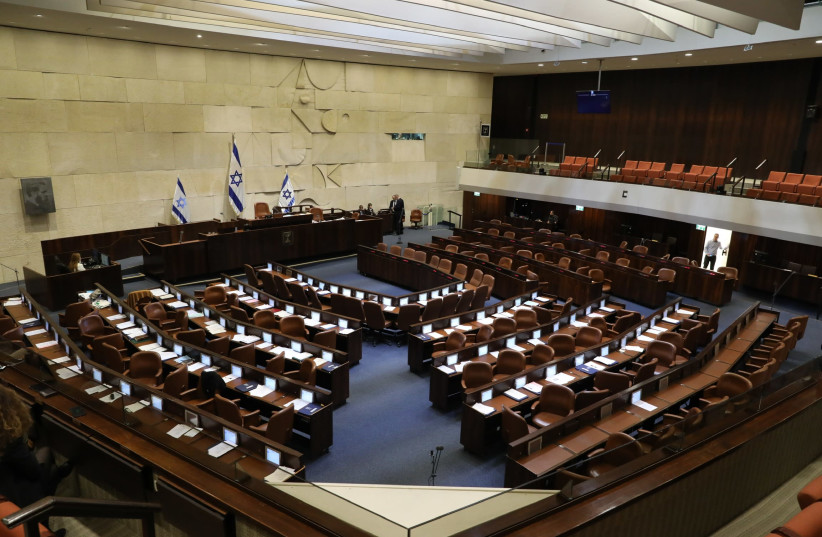
















![Protesters call for boycott of Israel [file] (credit: REUTERS)](https://images.jpost.com/image/upload/f_auto,fl_lossy/c_fill,g_faces:center,h_537,w_822/268898 "Protesters call for boycott of Israel [file] (credit: REUTERS)")