Dolly Parton, the legendary singer turned business mogul and philanthropist, could always be relied on for some straight-talking advice. Even when it came to emulating her massive success, the country music star’s guidance was simple: “Work your butt off.”

Friends, family, and fans of Parton are reminiscing and celebrating her accomplishments—be it her music, entrepreneurship, or philanthropy—after her nephew and head of security, Bryan Seaver, announced her death in a statement earlier this week.

Parton died at 80 years old, with Seaver telling fans: “She never saw a door she couldn’t open, and the doors she opened made and changed history.” He added: “Dolly called me and said she wants to rest in a beautiful bed of plush cotton because after a life wearing heavy rhinestones, she finally deserves to be comfortable and have some rest.”

Indeed, the famed “9 to 5” singer suggested to Bloomberg she had always put in more than just the standard office hours.

As co-owner of the Dollywood Co., Parton helped oversee the Dollywood Theme Park, the Splash Country water park, several diner ventures, as well as a spa and hospitality venues in the Great Smoky Mountains. Her portfolio also included pet apparel business Doggy Parton, a fragrance brand, and a series of baking kits with Duncan Hines.

Forbes valued Parton—who was also a fierce philanthropist—at $450 million, though other outlets placed her wealth closer to $650 million.

But despite the brand her name became, Parton said she never became the “step on the bossman’s ladder” she once wrote about. When asked how she ran her empire so successfully, Parton said she had been “blessed” in her endeavors, working with great people and letting them get on with it.

Parton never sought to micromanage, she added: “I don’t boss anybody around, because I don’t even have the time or the energy to even do that. I just try to put people that are smarter than me in all the right places, and then I go on about my business.”

Parton, also an author, made it clear her talents lay in the creative side of the business, saying there were aspects of her empire that she didn’t know anything about—but didn’t need to because of the team she had in place.

“I’m more of the creative force and the one that has an overall sense of things,” she said. “I try to find the best people, and I try to trust them to do what they say they can do. Then I have people looking out after all of them.”

The “Islands in the Stream” singer also said her hands-off management approach with senior executives was paired with instinct, and she trusted that if an individual isn’t right for their role, it would eventually be revealed.

“We know if somebody’s not right, they’ll show themselves, or it’ll be pointed out so many times by other people that you do trust, you’ll know it’s time to move on from that person,” she said. “So I depend on my own higher wisdom of knowing if I’m in the right place with the right people.”

‘Looking like a woman and thinking like a man’

Parton, who was awarded the Carnegie Medal of Philanthropy, said that from her early days performing in Nashville, she knew she had talents she could monetize. Or as Parton put it: “Looking like a woman and thinking like a man, so to speak.”

Appearance is another area in which Parton had some sage advice—which may help Gen Z employees who reportedly are entering the workforce unsure of how they should dress for the office.

For Parton, known to be a big fan of wigs and brightly colored suits, the aim is to be comfortable, adding: “You know what business you’re in, and you pretty much know what’s expected.

“If you’ve got a dress code, just look the best you can, take it right to the limit. You can kind of bend the rules a little bit, but if that’s the job you want and you already know the rules, then go by the rules.”

A version of this story was published on Fortune.com on February 12, 2024.

This story was originally featured on Fortune.com

This post was originally published here. 

The American billionaire who bought Ferrari’s first electric vehicle model for an eye-watering eight figures may be able to cash in on a tax write-off perk from the purchase. 

Earlier this month, 87-year-old optometrist-turned-businessman-turned-philanthropist Dr. Herbert A. Wertheim bought a Ferrari Luce at a Sotheby’s public auction for $40 million. The auction was part of a charity effort to benefit the Ferrari Foundation, which funds global education initiatives.

The $40 million buying prices on the auto was more than 36 times the model’s presale estimates of $1.1 million. (The Luce retails for $640,000, but the auctioned car had a higher price tag because it had a pre-production chassis.)

Now, it seems Wertheim may end up getting a large chunk of that purchase back, as part of a longtime American tradition of the country incentivizing the nation’s wealthiest philanthropists into giving back.

Large charity donations like Wertheim’s can lend themselves to massive tax write-offs as a result of America’s tax system. Automotive content creator and television presenter Peter Greaves first brought attention to the potential for Wertheim to gain millions back on the purchase of his Luce in a recent Youtube video.

When Wertheim files his 2026 taxes, he would have to subtract the estimated sale value of $1.1 million from the $40 million the car sold for. As of the IRS’s 2026 tax rules, he would then have to take away a 0.5% floor of his adjusted gross income, which Greaves estimated to be $200 million, leaving $37.9 million. The U.S.’s 2/37ths rule created under the One Big Beautiful Bill Act, which caps tax savings of itemized deductions at 35% compared to the previous 37% for top earners, would further reduce the sum to $35.85 million. According to tax law, 37% of that total could be claimed, meaning Wertheim could receive more than $13 million back from the U.S. government for his purchase.

Wertheim, who did not immediately respond to Fortune’s request for comment, has made no public comments about possibly taking advantage of the tax write-off for the Luce, or for any previous charity auction purchases.

The philanthropist has an estimated net worth of $4.8 billion and has previously participated in a previous charity auction for luxury vehicles, reportedly paying $26 million for the Ferrari Daytona SP3, or “599+1.” He has donated more than $200 million to various causes, including  $50 million to UC Berkeley Optometry and $100 million to Baptist Health Foundation. In February, Wertheim paid $2 million at a Mar-a-Lago charity event for a private visit with President Donald Trump at the White House. It’s not his only recent brush with politics: Wertheim briefly launched a Congressional bid in Florida’s 22nd District earlier this year.

For its part, the Maranello, Italy-based carmaker has weathered controversy around the rollout of its EV. Former Ferrari president and chairman Luca di Montezemolo joined analysts and investors in mocking the model as ugly and decidedly un-Ferrari-like at a time where other luxury automakers were scaling back their own EV efforts amid low demand. Ferrari may be getting the last laugh however: the Financial Times reported last month that Ferrari exceeded its short-term sales goal of 500 units. 

How the Trump administration transformed charity tax breaks 

Tax breaks for philanthropy is an American tradition dating back to 1917 after the passage of the War Revenue Act, in which Congress created a federal income tax deduction for charitable gifts as part of an effort to keep private philanthropy alive and well during World War I, which would relieve the U.S. from funding essential social welfare programs. Those benefits have slowly expanded over the last century.

But the Trump administration has made it more for the wealthy to get money back for their donations come tax season, with the One Big Beautiful Bill Act effectively slashing the benefit from 37% to 35%, with itemized taxpayers having to deduct donations only in excess of 0.5% of their adjusted gross income.

The policy changes with lower tax incentives may alter the future of philanthropy itself. The new 35% limit could reduce donations by between $4.1 billion and $6.1 billion, according to the Indiana University Lilly Family School of Philanthropy. Experts warn that fewer big donors—or big donors giving less—would place a larger burden on middle-class givers to bridge a gap that isn’t realistic as financial pressures for less-wealthy households increase.

“The nonprofit sector says that every dollar matters, and so incentivizing small donations from every household could have a meaningful impact for certain kinds of organizations,” Elena Patel, co-director of the Urban-Brookings Tax Policy Center, told CNBC last November. “But the truth is that those kinds of contributions, however, just are not the bulk of charitable giving in the charitable sector.

This story was originally featured on Fortune.com

This post was originally published here. 

President Donald Trump arrives at an awkward moment for his presidency on Friday as the U.S.-Israel war against Iran reaches the six-month mark, a notable milestone for a conflict that the Republican leader repeatedly assured Americans would be a “little excursion” lasting a matter of weeks.

The war isn’t over, though Trump claims that through bombs and blockade, he has already devastated Iran’s leadership, military and economy.

And this week his administration said it would turn its focus to increasing economic pressure — rather than military action — to try to finish off Iran. The shifting strategy centers on threats to punish any country or entity that continues to conduct business with Tehran.

The turn to using sanctions as the cudgel of choice comes as the administration weighs diminished munitions stockpiles after months of war, sparking concerns that the prolonged conflict could undermine U.S. military readiness in other parts of the globe.

As the conflict grinds on, Trump’s talk of finding a quick end to the war also appears to be fading. He stressed this week that he’s “not in a hurry” to get Iran back to the negotiating table, and he continues making the case that the Islamic Republic’s leadership is on the ropes.

“They’re not paying their troops. They’re in deep trouble. They have very little capacity,” Trump told reporters Thursday. “We don’t want to speak to them. We’re not looking to meet or anything,” he said.

It’s unclear how — or if — Trump will address the six-month anniversary of a conflict that has already cost the United States more than $37.5 billion and done damage to his popularity ahead of critical November elections for his party. The president is spending Friday in Houston, where he’ll honor the Artemis II NASA crew for their 10-day mission around the moon earlier this year.

Trump is declaring ‘mission accomplished’ — a phrase that hurt a Republican predecessor

On its face, the moment is complicated for the “America First” leader who fiercely criticized his White House predecessors for wasting American taxpayer money and U.S. troops’ lives in Middle East conflicts and vowed on the campaign trail to keep the military out of “endless wars.”

But Trump has bristled at suggestions that this war — in which no American troops have deployed into Iran — can be compared with the yearslong wars in Iraq and Afghanistan in which more than 7,000 Americans were killed.

His Republican predecessor, President George W. Bush, was widely mocked for a 2003 speech aboard the USS Abraham Lincoln beneath a White House-produced banner that read “Mission Accomplished.” It came to symbolize a premature declaration of victory for the Iraq War, which would go on for nearly nine more years. More than two decades later, there are still U.S. troops stationed in Iraq.

Trump’s war has stretched on far longer than he told Americans it would. It didn’t stop him from sharing a social media post this week declaring “MISSION ACCOMPLISHED 2026.” The AI-generated image features Trump against a backdrop of U.S. fighter jets, a warship and American flags above smaller images of Bush and former Iranian Supreme Leader Ayatollah Ali Khamenei, who was killed in an Israeli strike in the opening salvos of the war.

Trump has consistently emphasized that the U.S. and Israel campaign has been devastating for Iran’s navy and air force. Iranian officials have said the country has suffered $270 billion in direct and indirect damage. Israeli military strikes in the first weeks of the war wiped out much of the theocratic government’s leadership structure, including Khamenei.

But Iran has found leverage through its own strikes in the critical Strait of Hormuz, where relatively few vessels carrying oil and liquefied natural gas are risking passage. Trump again declared Thursday that the “Strait of Hormuz is open,” saying 24 vessels passed through a day earlier. That’s a fraction of the roughly 130 vessels that passed through the vital waterway daily before the war began.

Trump is showing little interest in talks

Mediators Qatar and Pakistan continue to press for a diplomatic off-ramp from the two sides. Qatar’s prime minister, Sheikh Mohammed bin Abdulrahman Al Thani, was in Tehran on Thursday to discuss a proposed plan between Iran and Oman to boost traffic through the Strait of Hormuz.

But in Washington, Trump has shown little interest in getting back to the preliminary deal reached in June that aimed to reopen the strait and launch talks about Iran’s nuclear program. That deal fell apart within weeks after Iran started attacking ships.

At the same time, Trump says the U.S. effort to economically choke off Tehran is working, with a U.S. naval blockade preventing Iranian oil from making it to market as the trickle of vessels carrying oil from other Gulf nations pass through.

“We have control and we have the blockade,” Trump said. “Iran is not getting anything. Nothing is going through.”

Iran is badly battered, but has a history of showing resilience

There’s no doubt that the strikes combined with decades of international sanctions have battered Iran, said Aarathi Krishnan, a geopolitical risk analyst at RAKSHA Intelligence Future.

But as Trump tries to turn to a new chapter in the war, Krishnan argues the Republican may be misguided in concluding that more pressure on Tehran — which has spent decades adapting to international economic sanctions — will produce the political outcome he wants.

Indeed, Iran’s economy in the run-up to the start of the war was mired in surging inflation, according to the International Monetary Fund. National income per person had fallen from about $8,000 in 2012 to $5,000 in 2024, according to World Bank data.

But Tehran has also shown resilience, selling discounted oil and establishing opaque shipping and financial networks, Krishnan said.

“This administration has completely underestimated the Iranian resolve,” Krishnan said. “This is not new to the Iranian regime.”

Trump must decide how far he’s willing to go with sanctions

Richard Goldberg, who served as a senior adviser on Iran at the National Security Council during Trump’s first White House term, argues that Iran now finds itself in “uncharted waters” if the administration follows through with a truly biting campaign to pressure Iranian trade partners.

“What we should be seeing is an attempt to seal off every escape hatch the regime has left,” said Goldberg, who is now at the Foundation for Defense of Democracies, a hawkish Washington think tank. “Use the economic power of the United States to layer a naval blockade with an air and land embargo while dropping the hammer on anyone who gives the regime access to hard currency — whether that’s in the Middle East, China or even Europe.”

But it remains to be seen how far the administration is willing to go.

Treasury Secretary Scott Bessent this week unveiled a campaign the White House calls “Operation Economic Outcast,” but only issued warnings to nations to cut trade and has yet to announce any secondary sanctions. Bessent told reporters the administration wanted countries to have a chance to shift away from Iran before it was too late — and acknowledged there was economic risk to the U.S., too, in moving ahead.

China, which is Iran’s biggest trade partner and oil buyer, responded by expressing its opposition to “illegal unilateral sanctions.”

Pressed Thursday about why he wasn’t already sanctioning Chinese banks, Trump offered a cryptic response.

“Who said I’m not? You don’t know if I’m doing it,” Trump said. “I don’t have to announce everything, do I?”

This story was originally featured on Fortune.com
This post was originally published here. 

It’s easy to become jaded in a job that’s unfulfilling, especially when dreams of a more meaningful career clash with the need for financial stability. 

But successful entrepreneurs contend that chasing their true ambition inspires them to show up and work every day; those who really love their job, like musician Pharrell Williams, never plan on retiring. 

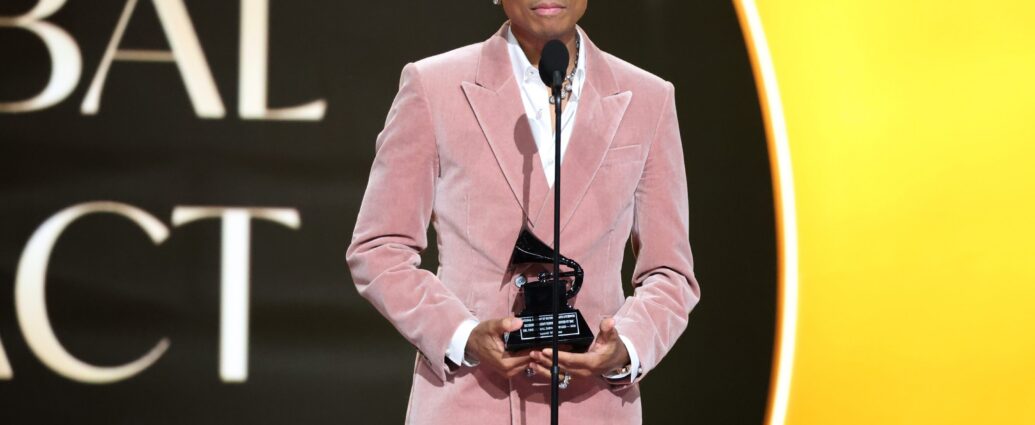
“I’m so blessed to call this a job. I’ve never stopped loving this job; I’ve never stopped being a student,” Williams said onstage after winning the Dr. Dre Global Impact Award at the 2026 Grammys. “So everyone here, I’ve just got to tell you, never stop grinding. And listen, never stop working.”

Williams has witnessed firsthand how passion plays a huge role in success; the now 53-year-old philanthropist and artist has been releasing, writing, and producing music since the 1990s, amassing more than three decades of chart-topping hits. With an estimated net worth of $250 million, the “Happy” singer’s years of musical prowess and business collaborations have resulted in a lifelong fortune. But Williams said he doesn’t think too much about the number in his bank account—what really keeps the Gen Xer working is his love for the job.

“Stop doing anything else but working. Work, man,” Williams continued. “I’m 52, I get to do this every day—I love what I do. And if you do what you love every day, you’ll get paid for free.”

Williams says the American Dream isn’t about making millions

Generations of workers have bucked their true calling for a tolerable job with a solid paycheck. With nearly half of U.S. citizens believing the American Dream is no longer possible, or never even existed, many are stuck in a lifeless, steady job rather than a profession that makes them happy. 

Growing up in Virginia Beach, Williams said he often heard the same rhetoric: that careers should be centered around stability and making money. But the Grammy winner wants to change that narrative. Chasing the biggest paychecks, he said, is a misnomer. 

“The American Dream is not about making the most money. In fact, the human dream and the consumers’ dream shouldn’t be about making the most money,” Williams said at the 2024 Web Summit. “It should be about spending the most time doing something that you love.”

The philanthropist pointed out that many young people are pressured to pursue high-paying careers in college, such as medicine and law, whether they want to or not. Some are able to switch tracks despite the chagrin of their family, Williams explained, but the vast majority “go after it, and they don’t get it.” After that, they might be stuck in a job they hate, prioritizing a paycheck over their true passions. Williams advised that professionals can avoid this identity crisis by working in a role or industry that interests them. 

“If you can find a vocation around something that you love, you now have a dream job. You will be the first one there, and you’ll be the last one to leave,” Williams continued. “To me, that is what we should be telling our children—that is the way that we should be leading society—for people to do what they love.”

‘Pursue a career that does not feel like work’

Williams is one of many leaders who have proved that sticking with a career you love can pay off. Walmart’s former CEO, Doug McMillon, who stepped down from the top role earlier this year, spent four decades climbing the ranks of the now–$819 billion retail giant. And during his ascent from being an hourly worker all the way up to chief executive, McMillon said he’s never “been bored one single day.”

“Pursue a career that does not feel like work. Life is too short to invest so much time doing something you don’t enjoy,” McMillon told graduates during a commencement address at the University of Arkansas in 2024. “I hope you find your spot quickly like I did, but if you don’t, my advice is that you shouldn’t give up until you do … If you’re in the right place, most days, work won’t even feel like work.”

Christian Toetzke, cofounder and CEO of global fitness race Hyrox, also said that he loves his job so much that it doesn’t feel like a chore. His best advice for professionals hoping to strike the right work-life balance is to actually enjoy their careers; that way, it’s never a drag to show up at the office. 

“I’m a massive believer in work-life balance, but the question is always how we look at this. And I’m a very privileged person because I don’t consider what I do as work,” Toetzke said on the Opening Bid Unfiltered podcast last year. “I do what I really love. It’s also my hobby. For me, work is not a punishment. It’s almost kind of a reward.”

A version of this story was published on Fortune.com on February 3, 2025.

This story was originally featured on Fortune.com

This post was originally published here. 

The IDF killed a former senior Jenin terror cell member and two additional terrorists in an IAF airstrike on their vehicle in the West Bank on Friday, the military confirmed in a joint statement with the Shin Bet (Israel Security Agency).

The senior terrorist, Qais Bitwani, was a Hamas operative in the now-dismantled Jenin terrorist network, according to the joint statement.

Qais Bitwani was a relative of the former Jenin terrorist network commander, Noor Bitawi, who was killed by the IDF in May 2025, the military and security agency said.

The statement noted that Qais Bitwani was involved in “significant” terror activities, including “directing, funding, and executing” terrorist attacks against Israeli soldiers and civilians.

Bitwani had maintained his connections to Hamas in the Gaza Strip, as well as international operatives, the statement added.

View of the damage caused from an Israeli military operation in the West Bank city of Jenin on January 14, 2026; Illustrative. (credit: Oren Cohen/Flash90)

According to the IDF and Shin Bet, the other two terrorists in Bitwani’s vehicle were his accomplices, and the vehicle also contained weapons.

Netanyahu, Israel Katz congratulate IDF for Jenin strike

Prime Minister Benjamin Netanyahu congratulated the IDF for the “successful thwarting of the terrorists in Jenin” in an X/Twitter Post earlier on Friday.

Defense Minister Israel Katz also congratulated the IDF in an X post later on Friday, as well as the Israel Police and security forces, describing the strike as among the “fruits of the offensive and proactive policy we are leading in Judea and Samaria.”

“We do not wait for terrorism,” said Katz. “We pursue it, conquer its strongholds, and thwart its people.”

He noted that the policy has led to an 80% decrease in West Bank terrorist activity, emphasizing that Israel “will continue to act forcefully and proactively to thwart any threat to its citizens, wherever it may be found.”

This post was originally published on here. 

Four young British men pleaded guilty on Friday to charges over an arson attack on community ambulances in London, the first of a spate of incidents targeting the UK’s Jewish community earlier this year.

Hamza Iqbal, 20, Rehan Khan, 19, Judex Atshatshi, 18, and Saif Ali, 18, appeared at London’s Old Bailey court on Friday and admitted destroying or damaging property, being reckless as to whether life would be endangered.

The torching of four ambulances belonging to Jewish volunteer emergency service Hatzalah on March 23 while they were parked near a synagogue.

Prosecutors said at a previous hearing that web searches for “how much do ambulances cost” and “how long does it take for police to (investigate) arsons” were found on Iqbal’s phone after his arrest.

A fifth defendant, 18-year-old Subhan Ahmed, pleaded not guilty to a charge of assisting an offender relating to the disposal of a vehicle used in the incident. He is expected to stand trial next year.

Charred remains of ambulances belonging to Hatzola, a Jewish community organisation, which were set on fire in an incident that the police say is being treated as an antisemitic hate crime, in northwest London, Britain, March 23, 2026. (credit: REUTERS/HANNAH MCKAY)

Prosecutors say the attack targeting Hatzalah, a not-for-profit volunteer service that works alongside Britain’s National Health Service and primarily serves the Orthodox Jewish community, cost around £1 million ($1.36 million).

Pro-Iran terror group claimed responsibility for series of arson attacks

Several other attacks followed the March arson attack on the Hatzalah ambulances.

A synagogue and a former synagogue were targeted, as was Persian-language media organization Iran International and a memorial wall dedicated to people killed in Iran, in a series of incidents in April and May.

British police said at the time that they were investigating possible Iranian links to those arson attacks, with pro-Iranian terrorist group Harakat Ashab al-Yamin al-Islamiyya (HAYI) claiming responsibility for the ambulance attack and some others.

The SITE Intelligence ​website has said HAYI had been behind similar fires in Europe.

This post was originally published on here. 

A Dutch court on Friday sentenced a 67-year-old man to life in prison for war crimes and genocide committed in Rwanda in 1994, where it said he had been involved in the killing of around 3,000 Tutsis who had sought refuge from Hutu attacks at a stadium.

The defendant, identified only as Eugene N., had fled to the Netherlands in 1998 and later obtained Dutch nationality. Dutch prosecutors opened an investigation into him in 2020, which led to his arrest in the Netherlands in 2024.

The court said the man had been at the stadium in Byiza in April 1994 and gave the Hutus present “instructions to let no Tutsi escape the stadium.”

“In the afternoon, shots were fired at the Tutsis, they were pelted with stones, and hand grenades were thrown onto the field. One grenade was thrown by the defendant. Survivors of the afternoon attack were killed with clubs and machetes,” it said.

The defendant’s lawyers have denied that he had a role in the massacres. Instead, they said he tried to avoid the genocide.

Human remains from victims of the Rwanda genocide as seen at the Nyamata Church Genocide Memorial on April 06, 2024 in Nyamata, Rwanda. (credit: Luke Dray/Getty Images)

Over 800,000 killed in 1994 Rwanda genocide

More than 800,000 Tutsis and moderate Hutus were killed in 100 days in the 1994 genocide, orchestrated by the Hutu ruling majority and meticulously executed by local officials and ordinary citizens.

The court said the man also took part in raids on two communities predominantly inhabited by the Tutsi population in Mbazi, the municipality where he was “a person of authority.”

During these attacks, houses were looted and set afire, after which people fled to the stadium, where they thought they would be safe – but instead were ultimately killed.

The Netherlands has tried and convicted other Rwandan genocide suspects before under universal jurisdiction, which allows courts to try certain grave international crimes regardless of where they were committed, and has in the past also extradited genocide suspects to Rwanda.

This post was originally published on here. 

OpenAI banned a “cluster” of ChatGPT accounts that it claims were part of a pro-Russia operation aimed at bashing Western countries and promoting a think tank with misattributed academic research. 

The company said in a blog post this week that the banned ChatGPT users used VPNs to get around its restriction on Russian users and then used its tech to create social posts promoting the International Burke Institute, a think tank that describes itself as an “expert community” based in Israel, but which OpenAI says is the “core” of a Russian influence operation. 

According to OpenAI, the think tank, the website of which is still online, claims to include among its contributors notable figures like American linguist and intellectual Noam Chomsky as well as American political scientist and author Francis Fukuyama. Neither Fukuyama nor Chomsky responded immediately to requests for comment from Fortune. One such author who was listed on the site didn’t know the website was using her name until Fortune reached out for comment. Other listings include experts who passed away before the IBI was founded, such as Shlomo Avineri and Jiang Ping.

OpenAI said the website, which was registered in February 2025, also included a “sovereignty index” that favored Russia as well as dozens of articles with misattributed authors. A scan by Fortune of the Burke Institute’s website on the Wayback Machine reveals that while it existed as of February last year, nothing was published on the page prior to October 2025. 

The institute, in response to reporting by French outlet Le Monde on OpenAI’s claims, doubled down with a statement that said it rejected the idea it was not a legitimate think tank.

“The fact that third parties use or cite an IBI publication, the Institute’s name, or findings from the Sovereignty Index does not, in itself, constitute evidence of cooperation, coordination, funding, or a common underlying purpose.”

The Burke Institute did not immediately respond to a request for comment from Fortune sent to the email listed publicly on its website. OpenAI said that according to its research, a handful of individuals in Israel represented the Burke Institute in interviews and at conferences.

Using real researchers’ names

The AI company’s review of the Burke Institute’s articles found 34 of 36 were real academic articles misattributed to other authors. A screenshot published by OpenAI showed a legitimate article on the Burke Institute’s website on migration governance that was taken from the Migration Policy Institute but misattributed to Kate Howell, a professor of food science at the University of Melbourne, with a headshot taken from the internet. Since OpenAI published its blog post, the website changed the article’s attribution to one of the real authors, Kate Hooper, a senior policy analyst at the Migration Policy Institute. Hooper did not immediately respond to a request for comment.

Another professor listed as an expert on the Burke Institute’s website was Susan Ariel Aaronson, a professor of international affairs at George Washington University. A legitimate article she authored for the Centre for International Governance Innovation was posted on the website with a link to download.

Yet, Aaronson, who is also a co-principal investigator for the NSF-NIST Institute for Trustworthy AI in Law & Society (TRAILS), told Fortune she was not associated in any way with the Burke Institute. Reached by phone, she said the situation was disturbing. 

“Trust is really important in the governance of AI, and here you have this really weird, you know, situation causing substantial distrust, and so it’s just really disturbing,” she said. 

She also lamented that there is little regulation at the federal level to deal with such instances, and that it needs to be handled from the top. 

“The Trump administration is doing nothing to effectively govern it, and is governing AI in an opaque manner. That is opacity does not build trust,” she added.

Other articles on the Burke Institute’s website appear to be translated into English from a Slavic language, based on clues like the use of the word “svetofor,” which means traffic light in several Slavic languages, including Russian, according to OpenAI.

The AI company claims the ChatGPT users created numerous social posts to promote the institute, some of which came from accounts with the International Burke Institute name and branding. Other posts came from made-up individuals that promoted the institute on Facebook, LinkedIn, and X as well as Substack and Telegram.

OpenAI said posts from individual accounts “only received low numbers of views”  and the official accounts for the institute had “low subscriber numbers.” Still, on the instant messaging platform Telegram, the users were able to attract a larger audience of between 10,000 and 20,000 followers per channel. 

Despite what OpenAI claims is a small following, the company’s findings show how Russia-linked actors have reportedly used AI to step up their propaganda campaigns.  

Earlier this year, OpenAI said it disrupted another operation it said originated in Russia, that used ChatGPT to generate German-language political content ahead of Germany’s federal election. The campaign criticized the U.S. and NATO and distributed content through Telegram and X and created AI-generated material supporting Germany’s far-right Alternative für Deutschland party. 

Russian-speaking cybercriminals also used SpaceX’s AI coding assistant Cursor to hack into a Belgian chemical company along with six other companies this year alone, according to a report by Reuters citing data from cybersecurity company Gambit Security.

The company said in a blog post this week that the banned ChatGPT users used VPNs to get around its restriction on Russian users and then used its tech to create social posts promoting the International Burke Institute, a think tank that describes itself as an “expert community” based in Israel, but which OpenAI says is the “core” of a Russian influence operation.

This story was originally featured on Fortune.com

This post was originally published here. 

A federal judge has struck down the Pentagon’s attempt to blacklist Anthropic as a national-security supply-chain risk, ruling that the government unlawfully retaliated against the artificial intelligence company for publicly resisting unrestricted military use of its technology.

U.S. District Judge Rita F. Lin said the Defense Department’s actions were “illegal and baseless” and violated Anthropic’s First Amendment rights. The court also found that the company was denied due process under the Fifth Amendment and that the Pentagon’s designation was arbitrary and capricious.

The dispute began after Anthropic refused to remove safeguards preventing its Claude AI models from being used for domestic mass surveillance or fully autonomous weapons. The Pentagon wanted technology suppliers to permit their systems to be used for any lawful military purpose.

Defense Secretary Pete Hegseth subsequently designated Anthropic a supply-chain risk under rarely used federal procurement authorities. President Donald Trump also directed federal agencies to stop using Anthropic’s products, potentially cutting the company off from billions of dollars in government and contractor business.

The government argued that Anthropic’s restrictions created an operational risk because a private technology supplier could limit how the military uses a critical system after it becomes integrated into defense operations.

Lin rejected the government’s broader justification, finding insufficient evidence that Anthropic presented a genuine threat to the defense supply chain. She concluded that the designation was imposed because the company publicly disagreed with the administration’s AI policy.

The ruling requires the government to withdraw the challenged designation and related directives. It does not require the Pentagon to purchase or continue using Anthropic’s technology; the department remains free to select another supplier for legitimate contracting or operational reasons.

That distinction is important. The Pentagon can decide that Anthropic’s restrictions make Claude unsuitable for a particular military mission, but the court said it cannot use a national-security blacklist to punish the company across the federal government simply because the two sides disagree over acceptable uses of AI.

The decision represents a significant victory for Anthropic and could affect how Washington handles other technology companies whose products carry privately imposed safety rules. It also raises a larger question for government buyers: whether an AI developer can retain control over how its models are used after those systems become embedded in military operations.

Anthropic said it remains willing to work with the government on national security while maintaining safeguards against autonomous weapons and mass domestic surveillance.

The administration can appeal the ruling. A separate case involving another legal basis for the Pentagon’s designation remains pending in Washington.

JBizNews Desk | San Francisco

© JBizNews.com All Rights Reserved. Reproduction or distribution without written permission is prohibited.

Federal Reserve Chairman Kevin Warsh is cautious about elevated underlying inflation trends, teasing that higher interest rates could be on the table in the coming months.
In his keynote address at the Federal Reserve’s Jackson Hole Economic Symposium on Aug. 28, Warsh said headline inflation readings over the summer have come in better than expected, though underlying pressures remain a concern.
“They do not tell me that underlying trends have meaningfully improved,” Warsh stated in his prepared remarks.
It is the Federal Reserve’s responsibility to ensure inflation returns to 2 percent after “65 months of sustained, elevated” prices, he said.
“Here is my standard: We must be confident that underlying inflation is moving to our objective, clearly and at sufficient speed,” Warsh said. “Otherwise, we have work to do. That’s our job … our mandate … and our charge to keep.”…

This post was originally published here. 

Donald Trump Jr. privately urged Republican state attorneys general to leave prediction markets to federal regulators as states intensify efforts to treat the fast-growing platforms as gambling operations, according to a New York Times report.

The president’s eldest son reportedly made the argument during a closed-door gathering of Republican attorneys general in New Orleans in March. Four people familiar with his remarks told the Times that Trump Jr. accused established gambling companies of attacking prediction markets to protect their own monopolies.

His intervention is attracting scrutiny because he has financial and advisory relationships with the industry’s two most prominent companies, Kalshi and Polymarket.

Kalshi hired Trump Jr. as an adviser in January 2025, with compensation reportedly including more than $300,000 in company shares. He also joined Polymarket’s advisory board after his investment firm, 1789 Capital, acquired a stake in the business.

Prediction markets allow customers to buy contracts tied to the outcome of real-world events, including elections, sporting contests, economic reports and geopolitical developments. Prices fluctuate according to what traders believe is likely to happen, and winning contracts generally settle at $1.

Kalshi and similar platforms argue that these products are federally regulated financial contracts under the Commodity Exchange Act. Kalshi operates as a designated contract market overseen by the Commodity Futures Trading Commission.

State officials and casino regulators see the industry differently. They contend that many contracts—particularly those tied to individual games and player performances—function like ordinary sports bets while avoiding state licensing requirements, consumer safeguards and gambling taxes.

That dispute has produced litigation involving approximately 20 states. Republican and Democratic officials have both challenged prediction-market operators, making the regulatory fight broader than a purely partisan confrontation.

The central legal question is whether federal oversight by the CFTC overrides state gambling laws. Prediction-market companies say allowing each state to impose its own rules would fragment a federally regulated national marketplace. States counter that federal registration cannot be used to convert unauthorized sports betting into a financial product.

Trump Jr. reportedly told the attorneys general that prediction markets already face robust federal oversight and should not be policed as state gambling businesses.

A spokesman for Trump Jr. said he does not communicate with the federal government on behalf of companies in which he invests or serves as an adviser. Kalshi said his role concerns marketing and that he does not advise the company on regulatory policy.

The distinction may not end questions surrounding the appearance of a conflict. State attorneys general are among the officials deciding whether to investigate, prosecute or sue prediction-market companies, and Trump Jr.’s remarks were delivered directly to Republican members of that group while his holdings stood to benefit from reduced state enforcement.

The industry has grown from an election-focused niche into a major competitor to regulated sportsbooks. The outcome of the legal battle will determine not only who oversees prediction markets, but also whether states can collect taxes and enforce age, advertising and consumer-protection rules on billions of dollars in contracts increasingly indistinguishable from conventional betting.

The dispute is likely to move through multiple federal courts and could ultimately require the Supreme Court to decide where federal commodities regulation ends and state gambling authority begins.

JBizNews Desk | New Orleans

© JBizNews.com All Rights Reserved. Reproduction or distribution without written permission is prohibited.

Timco Mucunski had never been to Israel before this week, but North Macedonia’s foreign minister arrived in Jerusalem for a brief, 24-hour visit, at a time when relations between the two countries are gathering considerable momentum.

Mucunski and Foreign Minister Gideon Sa’ar speak regularly, their governments have increasingly sought each other out, and since Prime Minister Hristijan Mickoski took office in 2024, Skopje has deliberately elevated its relationship with Israel as one of its foreign-policy priorities.

Monday’s visit, Mucunski told The Jerusalem Post in an exclusive interview in Israel’s capital, was an opportunity to begin putting more substance behind that decision.

“We have had a very strong relationship with Israel, but also myself with Gideon, over the last few years. We have collaborated in many areas,” Mucunski said. “I think that this visit is an opportunity to move the bilateral relationship to the next step, to move from a place where we’re at right now, which is excellent bilateral relations, to having that relationship develop into various areas of mutual importance.”

Earlier in the day, Mucunski met Sa’ar, with the two ministers signing cooperation agreements and discussing the expansion of ties in agriculture, water management, security, innovation, tourism, health, and education. Mucunski told the Post that investment and cooperation between the countries’ defense industries were also discussed, alongside an idea likely to be considerably more visible to ordinary Israelis and Macedonians: restoring direct flights between the countries.

FLOWERAL TRIBUTES and photos commemorate the victims of the Kocalni nightclub fire in North Macedonia in 2025. Israel was among the first countries to respond, sending a team of doctors from Sheba Medical Center to assist the Macedonian authorities. (credit: Tiveropolnik/WikimediaCommons)

North Macedonia aims to be gateway to Europe for Israeli businesses, tourists

“One of the first things that we talked about is if we can work together to establish a direct flight between Tel Aviv and Skopje, or Tel Aviv and Ohrid, which is our main tourist center and a city that I believe that every Israeli would love to visit at some point,” he said.

The aim is to encourage more Israelis to visit North Macedonia, but Mucunski’s ambitions go beyond tourism. Situated at the intersection of two major European transport routes, Corridors 8 and 10, and investing heavily in energy connectivity, North Macedonia wants to present itself as an entry point for Israeli companies looking toward Europe.

“We want to be a gateway for Israelis who want to visit Europe,” he said. “But we want to be a gateway not just for tourists, but also for Israeli businesses.

“We can also be a gateway for Israelis who want to invest in a European market that hasn’t been fully utilized by the Israeli business community. But we can also be a market for exports. So in that sense, I think that these are just some of the opportunities where there is a mutual interest between the two countries.”

Mucunski’s arrival was also the latest in a noticeable series of contacts between the countries this year. In January, Macedonian MP Rashela Mizrahi, the country’s first Jewish lawmaker, led what was billed as a first-of-its-kind parliamentary delegation to Israel, meeting Knesset Speaker Amir Ohana and other Israeli officials. 

Skopje mayor discusses learning from Israeli innovation

In June, Skopje Mayor Orce Gjorgjievski came to Israel for MUNI EXPO 2026, where he spoke to the Post about drawing on Israeli experience in municipal resilience, emergency preparedness, water management, and innovation.

Asked whether that tempo represented a deliberate change, Mucunski said it reflected a policy emanating from the top of the Macedonian government.

“Prime Minister Mickoski himself believes that stronger collaboration with Israel is a necessity for our country to also be successful,” he said of ties between two countries with diplomatic relations since 1995. 

“There are many things that we can learn from you. There are many common values that we share, both on a domestic as well as international level. And in that sense, since the formation of our government, we have made the bilateral relationship with Israel one of the priorities of our foreign policy.”

Although it took until his second year as foreign minister to make the journey himself, Mucunski said the lack of a visit should not be mistaken for a lack of contact, stressing that he and Sa’ar confer often about issues that affect their countries.

When Israel came to Kocani

There is also a more personal and painful episode behind the warmth with which Mucunski talks about the relationship.

On March 16, 2025, a fire tore through the Pulse nightclub in the eastern Macedonian city of Kocani, killing dozens and injuring scores more, many of them young people. The scale of the disaster overwhelmed a country of fewer than two million people and prompted offers of assistance from abroad.

Among the first foreign ministers to telephone Mucunski was Sa’ar.

The call left a great impression on the Macedonians. Israel dispatched a medical delegation to the Balkan state, and within roughly a day of the disaster Israeli doctors were working alongside Macedonian teams, treating some of the badly injured.

“Within a day of the tragedy itself, they were performing surgery in our hospitals and helping our doctors, with their experience and their in-depth knowledge, and helping to save the lives of many young individuals,” Mucunski recalled.

For a foreign minister, bilateral relationships are ordinarily measured in agreements signed, diplomatic votes, trade figures, and official visits, but Mucunski repeatedly returned instead to what happened after Kocani as an example of what he believes the relationship looks like when it is tested away from conference rooms.

“This situation was proof that Israel stands by my country,” he noted.

He sees Macedonia’s diplomatic behavior toward Israel in recent years as the other side of that relationship. “We have also proven that we stand together with Israel in the many different challenges that it faces, as all nations face,” he said. “We have collaborated very successfully in the multilateral forum in the last few years.”

Sa’ar publicly thanked him for precisely that during Monday’s visit, praising North Macedonia for standing alongside Israel in international forums, particularly since the Hamas-led massacres in Israel on October 7, 2023, with Israel facing increased diplomatic pressures.

“North Macedonia has demonstrated its friendship by standing up to these attempts in the international arena,” Sa’ar said. “We appreciate its voting record and its support for Israel. Israel values its friends who stand by it in difficult times.”

For Mucunski, that relationship can be developed without changing the broader direction of Macedonian foreign policy. His country, a NATO member since 2020, is a candidate for European Union membership, and maintains a strategic partnership with the United States. He described those as the three pillars on which his government’s foreign policy rests, with North Macedonia also maintaining full alignment with the EU’s Common Foreign and Security Policy.

Within that geopolitical framework, Mucunski regards Israel as a natural partner.

“We are thriving democracies, nations that promote the free market and capitalism,” Mucunski said. “My nation and Israel – both on the basis of political ideology, but also on the basis of our global outlook – have more things that unite them rather than divide them.”

At a time when Israel’s relationship with parts of Europe has become increasingly difficult, Mucunski declined to pass judgment on the bilateral relations of individual European governments with Jerusalem. North Macedonia, he said, works with other countries according to its national interests and according to what they can offer one another, provided that cooperation does not conflict with the three central pillars of its foreign policy.

On Iran, however, he was considerably less circumspect.

Iran is a European problem, too

Mucunski places Tehran firmly among the authoritarian powers he believes threaten the democratic order with which the Balkan country identifies, and his assessment of the Iranian nuclear threat extends well beyond Israel and the Middle East.

“Iran is, without a doubt, a nation that is part of this axis of countries that aims to destabilize democracy and the way of life that we cherish as peoples, as nations in the 21st century,” Mucunski told the Post.

North Macedonia, he said, had been steadfast in supporting the US-led military and diplomatic effort against Iran. It was among the countries that did so publicly at an early stage, he noted, because his government believes US President Donald Trump has taken the correct approach toward the long-term deterrence of Tehran.

That deterrence, in Mucunski’s view, cannot simply mean stopping Iran at the final point of assembling a nuclear weapon. The objective must be to prevent the Islamic Republic from reaching the threshold at which it has the capacity to do so.

“We should not allow Iran, ever, to have the capacity – not to have a nuclear weapon, but to come close to having a nuclear weapon,” he said.

His argument is partly geographical. Iran is often treated internationally as an Israeli, American, or Middle Eastern security problem. But Macedonia views the issue from inside NATO and from the southeastern edge of Europe.

“As we saw, right after the conflict began, there is a substantial geographical proximity as well from Iran to the borders of NATO,” he said. “And the risk is there.”

Mucunski also pointed to the nature of the Iranian government itself, describing the Islamic Republic as an authoritarian regime that suppresses its own population. He pointed to the reaction of Iranians abroad during the conflict as evidence of the depth of opposition to the Islamic Republic.

“There is no doubt that we will stand for democracy,” he said. “We will stand for our common security. The threat of Iran having a nuclear weapon is not a threat to Israeli or American security. It is a threat to European security as well, and anyone who chooses to ignore that is not accepting the reality that we have on the ground.”

Macedonia, he added, would remain steadfast in its support for its NATO ally, the United States, and for Washington’s role in the region.

The discussion inevitably returned to what Israel itself has experienced over the past several years, from October 7 to the confrontation with Iran.

“One cannot even begin to imagine what you have gone through,” Mucunski said. “Not just the situation with Iran, but the horrific events of October 7.”

For him, those events fit within the same argument about the responsibility of democratic states to defend themselves.

“When someone chooses to use violence and terror to attack our democracies and our way of life, we have an obligation to react.”

Macedonia’s Jewish past and present

Another element to North Macedonia’s relationship with Israel predates the governments of Mucunski, Mickoski, and Sa’ar by centuries.

Jewish life existed in the region long before the creation of the modern Macedonian state, but the community was almost annihilated during the Holocaust. In March 1943, more than 7,000 Jews from what is now North Macedonia were deported to Treblinka during the Bulgarian occupation, and virtually none returned.

Today the Jewish community is tiny, but Mucunski was emphatic that its size does not diminish its place within Macedonian society or the country’s understanding of its own history.

“The Jewish community is an integral part of our constitutional order as a nation,” he said, also pointing to the Holocaust Memorial Center in Skopje. “The Jewish community is a very respected and valued part of our society. In that sense, we see this as a very relevant part of our national history.”

The issue, he added, reaches beyond whichever party happens to be in government.

“The Macedonian people will continue to cherish their relationships with the Jewish people,” he said. “We will continue to do everything in our power to fight antisemitism in our country, but also everywhere else that we can.”

This was seen in action earlier this year following an incident in Skopje that the local Jewish community described at the time as the first attack of its kind in the country’s modern history.

On April 12, two men were captured on surveillance footage climbing a fence at a synagogue and Jewish community center before igniting a firebomb. A door and the courtyard were damaged in the blaze, and two men were subsequently charged with terrorism in connection with the attack, while seven people were detained during the investigation.

The attack was all the more jarring because of the reputation North Macedonia had enjoyed among members of its Jewish community. Speaking to the Post in its immediate aftermath, Rahamim Mizrahi, the Jewish Community Board’s deputy head, described the country as having long been a “pearl in the Balkans,” while warning that the worldwide rise in antisemitism following October 7 had not entirely passed the country by. He also stressed that most Macedonians had condemned the attack, with expressions of solidarity that included the chief mufti of the country’s Muslim community.

When the subject was raised with Mucunski in Jerusalem four months later, he recalled the shock caused by the attack, but also focused on the state’s response.

“The national security authorities reacted very promptly,” he said, noting that the alleged perpetrators had been arrested and, to his understanding at the time of the interview, indicted.

“To these types of actions, there must be an immediate reaction, both political and institutional,” Mucunski continued. “Without that, you allow antisemitism to flourish within a society.”

It is a sentiment echoed by Gjorgjievski during his own visit to Israel in June. The Skopje mayor told the Post that the attack was an assault not only on a Jewish building or community but on “the values of Skopje, on peace, coexistence, and the dignity of all our citizens,” while telling the country’s Jews: “You are not alone.”

The prominence of both Gjorgjievski and MP Rashela Mizrahi in the recent exchanges with Israel also illustrates the different levels at which the relationship is developing. Mizrahi – a member of Mucunski and Mickoski’s VMRO-DPMNE political party, and North Macedonia’s first Jewish parliamentarian since independence – has been a prominent advocate of stronger ties with Israel, while Gjorgjievski has sought practical cooperation between Skopje and Israeli municipalities. Mucunski’s visit brought that growing engagement to the level of the two foreign ministries.

Yet on the question of antisemitism, Mucunski was careful not to speak for governments elsewhere in Europe, or to compare Macedonia’s record with theirs. He confined himself to what he could promise about his own country, and after the events of April, his language left little room for ambiguity.

“In our country, this will not be tolerated,” he said. “I cannot speak for other nations, but antisemitism will not be tolerated on the territory of our nation.”

Mucunski’s first journey to Israel ultimately lasted little more than a day, but it came after a year in which the relationship between Jerusalem and Skopje has reached new levels, and moved beyond ceremonial diplomacy. Parliamentary representatives have come to Israel, the mayor of the Macedonian capital has come looking for Israeli expertise, and now the foreign minister has arrived with an explicit mandate from his government to broaden the relationship.

For Mucunski, the experience of Kocani already provided one answer about what he wants the relationship between the two countries to mean. When his country was struck by tragedy, Israeli doctors arrived and went to work alongside their Macedonian colleagues. His government, in turn, has chosen to stand with Israel diplomatically during some of its most difficult years.

It is against that background that Mucunski viewed this week’s visit less as the beginning of a relationship than as an opportunity to deepen one that has already gathered considerable momentum.

“This is my first visit,” he said, “but I am absolutely sure that it will not be my last.”

This post was originally published on here. 

The United Nations refugee agency has scaled back its budget by 16% and lowered its official headcount by around 3,500 as it adapts to new financial constraints at a time when global displacement is forecast to climb to an all-time high next year, according to diplomats and documents seen by Reuters.

The total cuts, on paper, would amount to a near halving of the workforce and a drop in the budget of a third since 2025, laying bare the cumulative impact of cuts due to reductions in foreign aid budgets by the Trump administration and others.

In 2025, the United Nations High Commissioner for Refugees (UNHCR) had 16,126 budgeted posts versus 12,051 this year and 8,540 in 2027, the budget documents showed, excluding temporary roles and contractors.

UNHCR officials presented the latest cuts to member states at a UN meeting in Geneva on Thursday, according to three diplomats who attended.

However, a UN refugee agency spokesperson said that, in reality, such large cuts would not be implemented since many posts were never filled in previous budgets, which reflected needs and funding goals, rather than realized donations.

Bags belonging to Afghan nationals deported from Iran lie beside a UNHCR tent at a camp for returning migrants near the Islam Qala border crossing in Herat province, Afghanistan, July 22, 2025. (credit: REUTERS/Sayed Hassib)

‘Budget constraints are real’

The spokesperson said income projections for next year were comparable to 2026.

“The organization experienced a significant funding shortfall in 2025 and as a consequence was already compelled to undertake substantial workforce reductions,” he said.

It would, however, be reforming “unjustified” policies affecting up to 1,000 staff, which had previously allowed them to remain employed during extended periods between assignments, he said.

“The budget constraints are real, but we are also moving forward with a comprehensive reform agenda to make UNHCR more agile, cost-effective, and accountable,” he said.

Agency plans to focus on emergencies 

The agency has been particularly hard hit by donor cuts and has already been forced to reduce aid to refugees, cut thousands of jobs, close a Southern Africa office and is moving from its Geneva headquarters to a cheaper building in the city to save money.

Created in the aftermath of World War Two to help refugees fleeing war, persecution and violence, the agency relies almost entirely on voluntary funding, much of it pre-designated by donors for politically favored projects in what many now see as a structural flaw.

The scale-back comes on the heels of the Trump administration weighing a potential split with the agency, although High Commissioner Barham Salih has since voiced hope the partnership will continue. Trump officials have also urged other nations to join a campaign to roll back asylum protections.

The UNHCR said in the budget documents it planned to prioritize helping refugees in emergencies, ensuring their protection, action on voluntary returns and promoting self-reliance.

Biggest budget cuts to have most impact on Americas

The planned budget for 2027 is $7.14 billion, the documents showed, down 16% from last year and the smallest budget in at least 10 years. The budget in 2025 was $10.6 billion.

However, UNHCR’s budget is seen as aspirational since it is rarely, if ever, fully funded.

The US, which sent a delegate to the Geneva meeting, was the top donor to UNHCR in 2025, giving over $800 million or nearly a quarter of the total contributions of $3.6 billion, the UNHCR website showed. That dropped to around $110 million this year.

Budgets will decline across all regions, with the Americas the worst affected and due to fall by almost a third to $485 million.

The other regions hardest hit were Asia Pacific, where some 1.2 million Rohingya refugees in Bangladesh already face worsening conditions, down 22%, and West and Central Africa, which hosts millions of refugees from Sudan’s civil war, down 21%, the documents showed.

Refugee host countries worried by budget cuts

The cuts come despite a forecast for a record high of 131.2 million displaced people in 2027, up from 129.4 million this year as conflicts such as Ukraine and Sudan persist, according to UNHCR projections, cited by diplomats.

Some states raised concerns at the meeting about both the impact of the cuts on refugees and how major refugee host countries, such as Uganda and Bangladesh, would pay for them, diplomats said.

“Everyone is fed up. But unraveling what is left of the system is even worse,” one diplomat said.

But other diplomats said they welcomed the efforts to streamline UNHCR’s work in a difficult environment.

The planned budget is preliminary and is pending approval by the Executive Committee in October.

This post was originally published on here. 

The IDF killed a Hamas commander in Gaza‘s Al-Shati area on Thursday who participated in the October 7 massacre, the military said on Friday.

According to the IDF, terrorist Nabil Ibrahim Bass infiltrated Israel on October 7, 2023, as part of the Hamas terror attack.

Also on Thursday, the IDF killed Palestinian Islamic Jihad (PIJ) observation platoon commander Hamdi Ahmad Hamid Kahlil in a separate strike in Gaza’s Sabra area, the military added.

The military said that the strikes were conducted as part of Israel’s efforts to prevent the reconstitution of Gazan terror organizations, such as Hamas and PIJ, noting that the groups’ rebuilding efforts are a violation of the ceasefire agreement.

The IDF further noted that both Bass and Kahlil had continuously worked to advance terror attacks against Israeli soldiers and civilians throughout the war.

IDF Paratroopers Brigade operating in the Gaza Strip. Pictures released on August 24, 2026. (credit: IDF SPOKESPERSON'S UNIT)

The strikes followed an attack on Wednesday in which the IDF killed Hamas Izzadin al-Qassam Brigades commander Ismail Mohammad Ibrahim Barim, responsible for holding Israeli hostages Edan Alexander, Matan Zangauker, and Avera Mengistu in a southern Gaza tunnel, the military confirmed.

IDF kills Yahya Sinwar’s former bodyguard in Gaza strike

On Sunday, Hamas Nukhba terrorists Razek Sahil Suleiman Abu Shahma and Hazem Mousa were killed by IDF strikes in Gaza with the participation of the Shin Bet (Israel Security Agency), with both terrorists having infiltrated Re’im during the October 7 massacre, the military said on Thursday.

Abu Shahma additionally served as former Hamas leader Yahya Sinwar’s bodyguard prior to the death of the October 7 mastermind at the hands of Israeli soldiers, the IDF added.

James Genn and Corinne Baum contributed to this report.

This post was originally published on here. 

Finance Minister and Religious Zionist Party head Bezalel Smotrich and right-wing politician Moshe Feiglin began talks to run on the same ticket in the upcoming October elections, N12 News reported on Friday. 

Feiglin is a libertarian-leaning Israeli political activist who formerly represented Likud in the Knesset from 2013 to 2015.

He was sentenced by the Supreme Court to six months in prison for his protests with Zo Artzeinu, an activist group that opposed the Oslo Accords, which he co-founded.

Simultaneously, tensions grew between National Security Minister Itamar Ben-Gvir and the Likud party after he announced that Otzma Yehudit would not run together with the Religious Zionist Party.

PRIME MINISTER Benjamin Netanyahu shakes hands with National Security Minister Itamar Ben-Gvir during a debate in the Knesset plenum earlier this year. Netanyahu, Bezalel Smotrich, and Ben-Gvir embody fear Zionism; they do not speak for all Zionists, says the writer. (credit: YONATAN SINDEL/FLASH90)

Likud calls on Ben-Gvir to ‘overcome his personal ego’ and run with Smotrich

“By deciding to waste tens of thousands of right-wing votes, Ben-Gvir has chosen to bring a left-wing government to power,” the party said.

Likud called on Ben-Gvir to “overcome his personal ego” and unite with Smotrich.

The public jabs come after Prime Minister Benjamin Netanyahu urged Ben-Gvir and Smotrich to run together.

In a video posted on social media, Netanyahu was asked, “Prime Minister, what about Smotrich and Ben-Gvir?” He replied: “They must unite. Every time we ran together, we won. When we ran separately, we lost.”

This post was originally published on here. 

Federal Reserve Chair Kevin Warsh on Friday is delivering his first keynote at the annual monetary policy conference in Jackson Hole, Wyoming, against a backdrop of uncertainty over inflation, as well as how he will guide policymakers as they consider interest rate moves.

Warsh’s speech comes as the Federal Reserve has held interest rates steady at each of its five meetings so far this year amid persistent inflation, which moved further away from the central bank’s 2% target amid the Iran war.

The annual Jackson Hole conference, which features central bank leaders from around the world, is historically an opportunity for the Fed chair to reset expectations about monetary policy and give their perspective on how economic conditions are developing over the near- and long-term.

Warsh is opposed to giving so-called forward guidance about how policymakers will approach upcoming monetary policy moves, and has taken steps to remove such language from the Fed’s post-meeting statements. That has left some Fed watchers hoping for a clearer view into how Warsh evaluates incoming data and views the economy’s path ahead.

The Fed chair offered an overview of his speech – joking that it could be called an outline or trail map, but not forward guidance – and said he plans to discuss the practice of forward guidance and how markets and the central bank interact. He also said he would address the impact of artificial intelligence (AI) on the economy, as well as key principles for monetary policy.

FED CHAIR WARSH FACES JACKSON HOLE SPOTLIGHT WITH INFLATION, RATE PATH IN FOCUS

“With the unchanging picture of the Tetons as our backdrop, we are here to survey an economic landscape that is anything but static,” Warsh said, saying that the world is at a hinge point in history.

He said that progress in AI has been faster than anticipated and that the “potential for substantially higher growth is on the rise. Ever-expanding pools of capital pouring into AI-related infrastructure of all sorts. A kind of super Moore’s law seems to be playing out.”

Warsh noted the Fed created an AI task force that will track things like the impact of AI on productivity, jobs and employment, how the industry is developing and how returns are accruing across the labs, chipmakers, energy producers and cloud providers driving it.

This is a developing story. Please check back for updates.

This post was originally published here. 

FIRST ON FOX: A new policy report warns that the AI data center boom could drive up the cost of laptops, smartphones, cars and other everyday products as chipmakers shift scarce memory-chip capacity toward more profitable AI applications.

The report, published by the Abundance Institute and first viewed by Fox News Digital, says manufacturers are shifting capacity toward high-bandwidth memory, or HBM, for AI data centers, constraining the supply of conventional DRAM used in consumer devices. 

To address the growing affordability concern, the report argues that Washington should avoid new tariffs and other trade restrictions that could further tighten supplies.

“You see consumer goods prices, consumer prices going up for average everyday technology because of this pull into the highest quality, highest capacity chipsets that are available, that are needed for the frontier models in AI,” former Rep. Patrick McHenry, R-N.C., told Fox News Digital, reacting to the new report.

“That has really tightened up the whole set of production from getting sand out of the ground and turning it into chips. Lower value to higher value, the cutting edge versus the second, third generation of chips. And all of this is really complicated, complicates things for consumers in a way that they cannot directly see, but they’re certainly being affected by it,” he said.

TRUMP SAYS ANY GOVERNOR OR MAYOR SHOULD WANT TO WELCOME AN AI DATA CENTER

 The report says the current memory-chip shortage differs from the COVID-era semiconductor crunch because it is driven largely by AI data centers’ growing demand, even as supply bottlenecks persist. But it warns consumers may face similar effects: higher prices, fewer available products and delays in replacing or upgrading phones, computers and other electronics.

“Demand is surging, and supply bottlenecks persist. However, this time, demand is driven by the rapid growth of data centers,” the paper read. “Hyperscale data center companies are buying unprecedented quantities of the world’s most advanced memory chips. American consumers will face the same consequences: higher prices, longer wait times for products, and supply shortages that may persist for years. The memory chip imbalance is quickly becoming yet another affordability concern for households and policymakers alike.”

McHenry noted that tight supplies of memory chips — parts used in many everyday electronics — are helping push up consumer costs. He argued that less-advanced chips used in household products should be treated differently from the most sophisticated chips, which he said raise greater national-security concerns.

He also argued that efforts to de-risk supply chains from China are contributing to higher costs in the short term.

“When you change supply chains, it will have an impact for a period of time. And consumers will pay the price for moving supply chains out of existing production capacity into new production capacity. We’re experiencing that right now. Every large international corporation is de-risking from China,” McHenry said. “And so we can call that ‘reshoring’ here into the United States, ‘friendshoring’ for allies across the globe. You see that connected with the president’s trade agenda as well. But for a period of time during that reallocation of those resources, you’re going to see supply costs go up and supply being constrained as you’re rebuilding these supply chains.”

“But consumers are going to pay the price for that in the short term. And that’s what we’re trying to remedy through better policy to get those supply chains up and running faster so you have less consumer impact and better choices for consumers,” he added.

TRUMP WARNS AI RACE IS ‘BIGGEST THING’ IN HUNDREDS OF YEARS

McHenry argued that the most advanced chips used to develop “frontier models” — AI systems with the most advanced capabilities — should be protected from China and produced through U.S. and allied supply chains. He said the resulting short-term price increases are a worthwhile tradeoff for national security.

“We’re over the hump, I believe, on these costs being borne by the American people,” McHenry said. “I think we’re actually more five to eight years into bearing that burden, and I think the next five years are going to be far better for the American consumer because of the policies that this administration has gotten right on energy, on production of chips here in the United States and having an important distinction between high-value chipsets, low-value chip sets, high-value technology, low-value technology and what that means for the American consumer and for national security. They’ve really balanced that in a very smart way.” 

McHenry explained lawmakers must balance national-security priorities with keeping consumer costs down by distinguishing cutting-edge chips from lower-end technologies used in everyday products.

“We want to make sure we have this full stack of production and capacity here in the United States. The Trump administration has prioritized that. That is a welcome and good thing. And over time, we’re going to see the benefits. The consumer is going to see the benefits, and then you have to have the distinction between those important matters and then all the stuff that should be freely tradeable around the globe,” McHenry said. “And it’s those lower-value things like memory chips that will have a major impact on consumers and the way that the American people live. We wanna be sensitive to that and we wanna be smart as American policymakers on that.”

The Abundance Institute report called on the Federal Trade Commission (FTC) to study how  major chipmakers allocate manufacturing capacity between conventional DRAM chips used in everyday electronics and high-bandwidth memory, or HBM, used in AI data centers. 

“The study could confirm that each firm is independently responding to price signals,” the policy report reads. 

GET FOX BUSINESS ON THE GO BY CLICKING HERE

McHenry argued that policymakers should distinguish between cutting-edge chips with national-security implications and lower-value chips used in consumer products.

Fox News Digital contacted the FTC for comment. 

This post was originally published here. 

Several concrete roadway medians throughout Queens are being transformed into green infrastructure “sponges” designed to reduce flooding. Gov. Kathy Hochul and Mayor Zohran Mamdani on Thursday announced an $8.4 million investment that will turn medians in Whitestone, Forest Hills, and Queens Village into landscaped green spaces. Together, the green medians will capture an estimated five million gallons of stormwater each year, reducing strain on sewer systems and improving water quality in the East River, Flushing Bay, and Jamaica Bay.

The project will begin by removing the existing concrete medians and curbs, along with any overgrown or dead trees, weeds, and accumulated debris. New inlet openings will then be installed to divert stormwater from the streets directly into the planted areas.

Landscaping will turn the medians into green corridors filled with native shrubs, grasses, and wildflowers. The upgrades will help cool the streetscape while improving flood protection for surrounding neighborhoods.

The project will also improve the appearance of the surrounding streets while adding pedestrian safety features, including ADA-compliant ramps and detectable warning surfaces.

Construction on the medians along Francis Lewis Boulevard in Whitestone is already nearly complete. Stretching 1,105 feet between 20th Avenue and 21st Road, the medians capture runoff from a 1.17-acre drainage area. They will manage 1.11 million gallons of stormwater annually, reducing combined sewer overflows (CSOs) into the East River.

In Forest Hills, the medians on Union Turnpike between Metropolitan Avenue and 71st Road will be planted this fall. The 3,245-foot medians will serve a 2.56-acre drainage area and capture 2.43 million gallons of stormwater annually, relieving pressure on the sewer system and reducing CSOs into Flushing Bay.

Along Springfield Boulevard in Queens Village, between Lucas Street and Merrick Boulevard, crews will begin construction on the new medians later this year. The project will add 1,182 feet of green infrastructure serving a 1.51-acre drainage area. These improvements will capture 1.44 million gallons of stormwater annually and reduce CSOs into Jamaica Bay.

“Climate change is bringing more intense and unpredictable bursts of rain, and without action, those storms will continue to overwhelm NYC’s sewer system,” Mamdani said. “This $8.4 million green median project meets that challenge with infrastructure that works for our environment and our neighborhoods.”

“By planting native species and wildflowers above an underground stormwater storage network, we will capture five million gallons of stormwater each year, easing pressure on our sewer system and keeping New Yorkers safe,” he added.

The projects will receive $5 million in state grants through the Green Innovation Grant Program, administered by the Environmental Facilities Corp., and the Water Quality Improvement Project, managed by the state Department of Environmental Conservation.

“By trading hard concrete for living landscapes, we are not just managing stormwater but reimagining what our streets can be,” Department of Environmental Protection Commissioner Lisa F. Garcia said.

“These expansive medians will become vibrant green corridors that soak up millions of gallons of stormwater each year,” she added. “This is how we transform everyday spaces into innovative flooding solutions that both protect communities and beautify neighborhoods.”

RELATED:

The post Three Queens medians to become green ‘sponges’ to help curb flooding first appeared on 6sqft.

This post was originally published here. 

NEW YORK — 10:00 a.m. ET, Friday, Aug. 28, 2026. U.S. stocks opened with little movement Friday as Wall Street shifted almost immediately from Nvidia’s AI-driven rally to Federal Reserve Chair Kevin Warsh, whose closely watched Jackson Hole address began at 10 a.m. Eastern.

At the opening bell, the Dow Jones Industrial Average rose 42.5 points, or 0.08%, to 53,611.94. The S&P 500 gained 4.2 points, or 0.05%, to 7,735.17, while the Nasdaq Composite slipped 25.4 points, or 0.10%, to 26,515.99. 

The restrained opening followed Thursday’s technology rally, when Nvidia’s strong outlook reinforced expectations that enormous spending on artificial-intelligence infrastructure could continue for years. Friday’s question is different: how aggressively will the Federal Reserve respond to inflation that remains well above its 2% target?

Warsh Takes Center Stage

Warsh’s keynote at the Federal Reserve’s Jackson Hole symposium began at 10:00 a.m. ET, making monetary policy the dominant market catalyst for the remainder of the morning. Investors are listening for any indication that the Fed is leaning toward another interest-rate increase, remaining on hold, or becoming more concerned about slowing economic growth. The Fed’s official calendar confirms the 10 a.m. keynote. 

Treasury yields were already elevated heading into the speech, with the 10-year Treasury yield around 4.69%. Higher long-term yields are particularly important for technology and other high-valuation growth stocks because they increase the discount rate investors apply to future earnings. 

Consumer Sentiment Remains Weak

The final University of Michigan reading showed consumer sentiment at 51.0 in August, unchanged from the preliminary reading and sharply below July’s 55.2.

That leaves sentiment down roughly 12% from August 2025, reflecting continued concern about household finances, inflation and future business conditions. The preliminary survey had shown particularly sharp deterioration in expectations for the economy, while year-ahead inflation expectations had risen to 4.3% and longer-term expectations remained around 3.3%. 

The message for businesses is important: consumers have not stopped spending, but confidence remains extremely fragile, making shoppers more sensitive to prices and potentially more cautious heading toward the fall and holiday spending periods.

Gap Surges as Old Navy Gets New Leadership

Gap jumped more than 20% in early trading after the retailer named veteran executive Michael Francis chief executive of Old Navy, its largest brand.

Gap also raised its annual profit outlook after beating quarterly expectations, although it narrowed its full-year sales-growth forecast because of economic uncertainty. Gap comparable sales rose about 10%, while Old Navy sales declined 4% — their first decline in 12 quarters. 

The stock reaction shows investors are betting that stronger management at Old Navy could unlock more of the turnaround already underway at Gap and Banana Republic.

PayPal Plunges as Takeover Hopes Fade

PayPal fell sharply after a report that Advent International and Stripe had abandoned their pursuit of the payments company.

The consortium had previously offered about $60.50 a share, valuing PayPal near $53 billion, but PayPal’s board considered the proposal inadequate. Shares had rallied nearly 30% after takeover speculation emerged, making the collapse of those talks especially painful for investors who had bought into expectations of a deal. 

PayPal now returns to the harder question of whether its own turnaround can produce enough earnings growth to justify a higher valuation without a buyer.

Marvell Drops Despite Strong AI Outlook

Marvell Technology fell about 8% despite reporting better-than-expected results and raising its longer-term revenue forecasts.

The problem was timing. Investors had hoped Marvell’s enormous custom-chip agreement with Google would produce more near-term revenue. Management indicated the Google contribution becomes substantially more meaningful beginning in fiscal 2029.

Marvell expects fiscal 2027 revenue of roughly $12 billion, up about 45%, and fiscal 2028 revenue near $18 billion, but those numbers were not enough to satisfy a market that had already pushed the stock up nearly threefold this year. 

That reaction is a useful warning for the broader AI trade: strong growth alone is no longer always enough when expectations are already extraordinary.

Affirm moved in the opposite direction, surging after stronger quarterly results. Revenue climbed 33% to roughly $1.2 billion, while gross merchandise volume jumped 36% to $14.1 billion, reinforcing demand for buy-now-pay-later services despite broader concerns about consumer finances. 

Oil Provides Some Inflation Relief

Oil prices were heading toward their first weekly decline in three weeks.

Brent crude traded around $89.30 a barrel and U.S. West Texas Intermediate around $82.77, with both benchmarks down roughly 5% for the week as increased shipments through the Strait of Hormuz reduced some immediate supply fears.

The situation remains volatile, however. Shipping through the strait is still below normal levels and negotiations involving Iran remain unresolved. 

Lower oil prices would be welcome for the Fed because they could eventually reduce gasoline, transportation and manufacturing costs. But businesses are still confronting unusually large fuel surcharges imposed by freight and delivery companies following months of Middle East disruption. 

What to Watch for the Rest of Friday

Warsh’s speech is the immediate market-moving event. Treasury yields, the dollar and rate-sensitive technology stocks could react sharply to any language indicating that inflation requires additional tightening.

Investors will then turn toward next week’s economic calendar. The August employment report arrives Friday, Sept. 4, and could become the decisive data point ahead of the Fed’s September meeting. Recent payroll data have weakened, meaning a surprisingly strong jobs report could revive expectations for another rate increase, while another weak report would complicate the Fed’s inflation fight. 

The corporate calendar also remains important. Broadcom’s upcoming earnings will give investors another major reading on AI-chip and infrastructure demand following Nvidia and Marvell.

For now, Wall Street is essentially standing still while waiting for the Fed chairman to speak. Nvidia has reassured investors that the AI boom remains powerful. Warsh now has to tell markets whether inflation will allow the economy — and valuations — to keep running this hot.

JBizNews Desk | Wall Street

© JBizNews.com All Rights Reserved. Reproduction or distribution without written permission is prohibited.

The U.S. goods trade deficit widened sharply in July as imports surged and exports declined, adding another potential drag on economic growth.

The Census Bureau reported that the goods deficit increased by $17.4 billion in a single month, to $118.8 billion from $101.4 billion in June.

Exports of goods fell $6 billion to $199.4 billion.

Imports climbed $11.4 billion to $318.2 billion.

That combination — fewer goods leaving the country and substantially more entering — produced the widest goods deficit since early 2025.

The increase was driven in part by stronger imports of capital goods, including equipment tied to the enormous AI and data-center investment boom.

That matters because trade feeds directly into gross domestic product.

Imports are subtracted when GDP is calculated, meaning a sharply wider trade deficit can reduce the headline growth rate even when the imported equipment is ultimately being used for productive investment inside the United States.

Wholesale inventories also rose 1.3% in July to approximately $959.1 billion, while retail inventories increased 0.7%.

Those numbers suggest businesses were bringing in more merchandise and equipment and building inventories at the same time.

That can mean several things.

Companies may be preparing for stronger demand.

They may be importing equipment for new factories and AI infrastructure.

Or they may be accelerating purchases because of tariff uncertainty and concerns that future imports could become more expensive.

For investors, the trade report therefore has to be read carefully.

A wider deficit is normally considered a negative for near-term GDP.

But if part of the increase comes from companies importing machinery, servers and other capital equipment to expand U.S. production, the longer-term economic effect can be more positive than the headline deficit suggests.

The immediate message is clear:

America bought substantially more from the rest of the world in July while selling less abroad — and that gap is now large enough to materially affect third-quarter growth calculations.

JBizNews Desk | Washington

© JBizNews.com All Rights Reserved. Reproduction or distribution without written permission is prohibited.

Want to stay on top of the science and politics driving biotech today? Sign up to get our biotech newsletter in your inbox.

We have some news out of a meeting of the European Society of Cardiology, Roivant won a key autoimmune drug approval, and former Stanford president Marc Tessier-Lavigne is pushing back against revived allegations of research fraud.

RIP to Yayoi Kusama. Wearing manic polka dots today in tribute.

Continue to STAT+ to read the full story…

This post was originally published here. 

INDIANAPOLIS — The FDA has expanded approval of Eli Lilly’s Mounjaro, allowing the diabetes drug to be used to reduce the risk of heart attack, stroke or cardiovascular death in adults with type 2 diabetes who are at high cardiovascular risk.

The decision gives one of the country’s fastest-growing diabetes drugs a major new use beyond controlling blood sugar.

Mounjaro, whose active ingredient is tirzepatide, is already widely prescribed for type 2 diabetes and is also sold under the Zepbound brand for obesity treatment.

The expanded approval is based on a large head-to-head cardiovascular trial involving more than 13,000 patients with type 2 diabetes and elevated heart risk.

In that study, patients taking Mounjaro experienced an 8% lower rate of major cardiovascular events compared with patients taking Lilly’s older diabetes drug Trulicity.

Those events included heart attack, stroke and cardiovascular death.

The result is important because people with type 2 diabetes face a substantially higher risk of cardiovascular disease, making heart protection an increasingly important part of diabetes treatment.

The approval could also influence which drugs physicians choose for higher-risk patients.

Until now, Mounjaro’s primary role was improving blood sugar control. The new cardiovascular indication gives doctors another reason to prescribe the drug to patients who are already at elevated risk of heart attack or stroke.

It could also affect insurance coverage.

Health plans often make coverage decisions based partly on a drug’s FDA-approved uses. A formal cardiovascular indication gives Lilly another argument for broader access to Mounjaro among patients with diabetes and heart disease.

Mounjaro has become one of Lilly’s biggest products.

Sales reached approximately $9.9 billion in the second quarter, up 91% from a year earlier as global demand for GLP-1 and related metabolic drugs continues to surge.

The approval also intensifies competition with Novo Nordisk, whose Wegovy and other diabetes and obesity medicines have received cardiovascular-related indications.

For patients, the significance goes beyond weight loss or blood sugar.

The competition among the major GLP-1 drugmakers is increasingly shifting toward whether these medicines can prevent some of the most serious and costly complications associated with diabetes and obesity.

With Friday’s FDA decision, Mounjaro can now officially make that claim for high-risk adults with type 2 diabetes.

JBizNews Desk | Indianapolis

© JBizNews.com All Rights Reserved. Reproduction or distribution without written permission is prohibited.

In 1949, a doctor named Virginia Apgar was having breakfast in a hospital cafeteria when a medical student asked her a question nobody had previously thought to answer: how do you know, in the first moments after a baby is born, whether it is going to be okay?

Virginia grabbed a napkin and wrote down five things: Heart rate. Breathing. Muscle tone. Reflexes. Color.

Doctors had known all of these markers for decades. The knowledge was not new. What was new was someone finally organizing it into something a nurse could use in sixty seconds in the chaos of a delivery room.

That became the Apgar Score. It is used in delivery rooms around the world today. Somewhere right now, a nurse is scoring a newborn out of ten because Virginia saw over breakfast something nobody else had bothered to address.

The gap was not a secret. It was just sitting there, waiting for someone to act.

I learned a word for that gap from my volleyball coach, who grew up in Hawaii.

Puka.

It means hole, gap, opening — the same hole at the center of those puka shell necklaces everyone wore in the nineties. My coach would yell “puka!” when she spotted a space on the court nobody was covering. I heard it so often it stopped being a word and became a reflex: See the gap. Move.

I have been moving toward gaps my entire career. And I have come to believe that this instinct – to walk into any room and see not just what is happening but what is missing, and act before being asked – is one of the most powerful and underrated career strategies available to professionals and executives alike.

Early in my career, I found myself on the edges of a major trial. I was not on the team. I was the newest lawyer at the firm with time on my hands and a pile of disorganized medical records that nobody wanted to manage. So, I managed them. I built color-coded binders for every significant medical issue, decoded thousands of pages of chart abbreviations, loaded them on a dolly, wheeled them into the war room, and started walking the partner through the organized tabs.

That was day one. The binders were the first puka. Then I found the next one. And the next. Six weeks later, I was a vital member of a trial team I was never originally slated to join. When the lead partner left for a larger firm, he took a small, handpicked group with him. I was on that list.

He moved again to an even larger firm and brought me along a second time: a chain of events that started with a dolly and a stack of binders nobody wanted to deal with and ended at one of the largest global law firms in the world.

That trajectory started because of a willingness to step into a space that others stepped around.

Some gaps are obvious: the unowned problem, the operational bottleneck, or unglamorous work outside everyone’s formal job description. Everyone sees it, but few step forward.

Other gaps are organizational or structural, and those are often the most valuable. For leaders, cultivating an environment where people actively seek out and fill these gaps is what separates adaptive companies from stagnant ones. When employees move toward unassigned problems, careers grow organically: they do not wait for a bigger title, but instead begin handling the responsibilities of that next level until the organization adapts around them.

The person who fills gaps consistently becomes indispensable to the people around them. Repeatedly demonstrating initiative builds a reputation that opens doors before you ever knock on them.

The puka mindset relies on two core behaviors:

• Relentless curiosity: The habit of walking into any room or analyzing a business model and asking not what you have been assigned but what this situation actually requires. Widening that lens reveals what is falling through the organizational cracks.

• Decisive initiative: Filling the gap simply because it needs filling, not for immediate credit, but because operational momentum demands it. Awareness without action is merely observation.

Right now, one of the most critical gaps across corporations is the practical integration of AI. While executive boards debate high-level strategy and conference panels discuss theoretical disruptions, the daily tools sit largely underutilized on the ground.

The gap is not access; it is application.

I know that gap well, because I once filled it with binders and a dolly.

The medical records were never a secret. Every page had been produced and was sitting in a box for months. What was missing was not information but shape, a way for a partner to find the one chart note about a missing lab value in seconds, standing in front of a jury. Back then, that kind of organization took weeks.

A version of that work now takes an afternoon.

The conversation about AI is still largely framed around what it replaces. A better question is what it makes possible. For the first time, much of the work that once kept organizational gaps open can be done faster, cheaper, and at scale. The tracker nobody built. The eight years of vendor contracts nobody has read end to end. These gaps persisted not because they were invisible but because nobody had the hours to close them.

Imagine a junior team member on a long project watching the same questions get asked over and over, because the information is scattered across emails, meeting notes, and old drafts. She uses an AI tool to pull it all together into a single tracker the team can actually use, then checks it herself against the source material. Nobody assigned her the work. She just noticed a gap nobody owned and closed it before lunch.

The tool does not replace judgment. It does not decide strategy. It organizes what is already known so the humans can spend more time thinking and less time hunting.

The cost of filling a puka has collapsed. The value of spotting one has not. The people who move toward that space now position themselves at the front of a wave that will generate new roles and opportunities for years. For senior leaders, the task is twofold: build the habit of spotting these openings yourself, and create a culture where taking the initiative to fill them is recognized and rewarded rather than treated as a compliance risk. That can mean funding small pilot programs, giving teams explicit room to experiment within reasonable guardrails, or simply promoting the people already finding smarter ways to work before anyone told them to.

AI is just today’s clearest example. Every industry has its own version, and pukas are never in short supply.

Gaps in strategy and execution never run out. The fundamental question for any team or leader is simple: when an unowned problem sits in plain sight, who moves first?

The opinions expressed in Fortune.com commentary pieces are solely the views of their authors and do not necessarily reflect the opinions and beliefs of Fortune.

This story was originally featured on Fortune.com

This post was originally published here. 

Good morning. At Exelon, one of the nation’s largest utility companies, finance is getting a bigger seat at the strategy table.

Jeanne Jones, the finance chief since 2022 and an almost 20-year veteran of the company, will take on the newly created role of EVP of finance and strategy on Oct. 5, putting her at the center of corporate strategy as electricity demand surges and utilities face mounting pressure to invest without driving up customer bills.

Jones will continue to report to Exelon President and CEO Calvin Butler. Robert Kleczynski will succeed Jones as CFO and become her direct report. Kleczynski currently serves as SVP, controller and head of tax.

“Jeanne’s leadership has been instrumental in helping Exelon deliver strong financial performance while maintaining our focus on delivering safe, reliable and affordable service for our customers,” Butler said in a statement. In her new role, Jones will continue to work “across the business and the energy sector to identify opportunities to deliver value for our customers and shareholders,” he said.

A shift in the CFO’s mandate

The move reflects a broader shift in the CFO’s role. The corporate strategy playbook is increasingly landing on the CFO’s desk. While finance chiefs have long led capital allocation and investor communication, they’re increasingly expected to help determine where the company places its biggest long-term bets alongside the CEO, Andy West, a senior partner at McKinsey and global co-leader of the firm’s Strategy and Corporate Finance practice, recently told me.

That evolution is particularly relevant in the utility industry, where electricity demand is growing, grids need modernization and companies face mounting pressure to invest while keeping customer bills affordable.

At Exelon, Jones will continue to oversee the company’s financial activities while helping lead integrated strategy efforts focused on trends affecting Exelon, its operating companies and the broader energy industry. The structure is designed to strengthen alignment between long-term strategy, capital allocation and operational execution, according to a company spokesperson.

A pure-play utility investing in the future

Chicago-based Exelon (No. 189 on the Fortune 500) serves 11 million customers through six regulated transmission and distribution utilities. Since spinning off its power generation business, Constellation Energy, in 2022, Exelon has focused solely on regulated utility operations. It doesn’t own power plants; instead, it manages the infrastructure that delivers electricity and gas to end users.

That makes capital allocation especially consequential. Exelon has to determine where and how aggressively to invest in its networks as demand rises, while balancing the costs ultimately borne by customers against the need to build infrastructure for the future.

Jones has been at Exelon for almost two decades, with experience across utility operations, corporate finance and the company’s former generation business. She served as CFO of ComEd, one of the nation’s largest electric utilities, then as Exelon’s CFO, guiding the company through a period of consistent operational and financial performance following the separation.

Her experience gives a perspective that crosses different parts of the energy value chain. Now she’ll be asked to apply that experience to questions that increasingly blur the line between finance and strategy: how much to invest, where to invest it and how to do so while keeping costs under control.

Exelon reported second-quarter earnings on July 30 and revenues totaled $5.97 billion, beating estimates. The top line increased 10% from the year-ago figure of $5.43 billion. Adjusted operating earnings increased 10.3% to 43 cents per share from 39 cents in the year-ago quarter. 

Reflecting on her journey, Jones told me last year that her best career advice is to stay open to new experiences and not get overwhelmed by distant goals. Don’t let the pressure of a specific end goal cloud your enjoyment of the ride.

“Keep going for the next thing that’s going to develop you,” she said.

Have a good weekend.

Sheryl Estrada
Sheryl.Estrada@fortune.com

This story was originally featured on Fortune.com

This post was originally published here. 

And so, another working week will soon come to a close. Not a moment too soon, yes? This is, you may recall, our treasured signal to daydream about weekend plans. Our agenda is still taking shape, but we plan on promenading with the official mascots, catching up on our reading, escorting Mrs. Pharmalot to a speakeasy and, if time permits, holding another listening party, where the rotation will likely include this, this, this, this and this. And what about you? The end of summer is nigh, but there is still opportunity to make your way to a beach, hike some trails and paddle about lakes. You can fuss about the kitchen and make a favorite dish or finish that stack of books taking up space. Or maybe this is a moment to simply plan the rest of your life. Well, whatever you do, have a grand time. But be safe. Enjoy, and see you in a week and a half, since we will be on a brief respite. Never fear, though, we have a stable of pinch hitters who will bring you Pharmalittle each day…

AstraZeneca detailed the surprise failure of a closely watched heart disease clinical trial, laying out how its experimental drug offered no additional benefits for patients who were largely already on another type of medicine, the latest twist in a multibillion dollar market, STAT explains. The study indicated that patients with a progressive condition known as ATTR-CM who received AstraZeneca’s drug, what’s called a silencer, saw no improvements if they were already taking another type of drug called a stabilizer, an effect so powerful that it tanked the whole Phase 3 study.

A U.S. appeals court ruled the Food and Drug Administration went through the proper process when it declared Novo Nordisk and Eli Lilly’s diabetes and obesity drugs are no longer in shortage, Bloomberg Law notes. The order is a loss for the Outsourcing Facilities Association, which representing large-scale compounders and challenged FDA decisions in the last two years that shortages ended for Novo’s Ozempic and Wegovy and Lilly’s Mounjaro and Zepbound. That declaration restricted compounders from legally mass-producing versions of the drugs.

Continue to STAT+ to read the full story…

This post was originally published here. 

LAS VEGAS — Friday, August 28, 2026

A United Airlines flight carrying 183 passengers and crew members was forced to make an emergency landing in Las Vegas after encountering an engine problem while flying at 31,000 feet.

United Flight 1403 had departed Los Angeles International Airport for Newark Liberty International Airport on Thursday when trouble developed in one of the Boeing 757’s engines. The pilots diverted the aircraft to Harry Reid International Airport rather than attempting to continue across the country.

The plane landed safely at approximately 7 a.m. local time. Emergency crews were available as the aircraft arrived, but no injuries were reported.

All 176 passengers and seven crew members exited the aircraft safely after landing.

One passenger described the experience as “terrifying” and reported that the aircraft suffered an engine failure at 31,000 feet. Aviation authorities have so far characterized the incident only as an engine issue and have not confirmed precisely what failed.

United said it was arranging another flight to take the passengers to Newark following the unscheduled landing.

The incident could have ended very differently, but the aircraft’s crew followed emergency procedures and brought the plane down safely. Commercial jets are designed to remain controllable if one engine develops a problem, allowing pilots to divert to a suitable airport rather than continue to their original destination.

What caused the malfunction remains unknown. Investigators will likely examine the engine, maintenance records, cockpit warnings and flight data to determine what prompted the diversion.

The Federal Aviation Administration said it will investigate.

JBizNews Desk | Las Vegas

© JBizNews.com All Rights Reserved. Reproduction or distribution without written permission is prohibited.

At 6:30 a.m. Eastern Time today, oil was priced at $90.55 per barrel with Brent serving as the benchmark (we’ll explain different benchmarks later in this article). That’s a gain of 87 cents compared with yesterday morning and around $22.34 higher than the price one year ago.

Oil price per barrel % Change
Price of oil yesterday $89.68 +0.97%
Price of oil 1 month ago $90.29 +0.28%
Price of oil 1 year ago $68.21 +32.75%

Will oil prices go up?

It’s impossible to forecast oil prices with detailed precision. Many different elements affect the market, but ultimately it boils down to supply and demand. When worries about economic recession, war, and other large-scale disruptions increase, oil’s path can shift fast.

How oil prices translate to gas pump prices

Gas prices at the pump don’t only track crude oil. They also include what it takes to refine and move that fuel, the taxes layered on top, and the extra markup your local station adds to stay in business.

Since crude oil generally makes up a majority of the per-gallon cost, changes in its price have an outsized impact. When oil surges, gas prices typically rise in tandem. But when oil retreats, gas prices often lag on the way down, a trend sometimes described as “rockets and feathers.”

The role of the U.S. Strategic Petroleum Reserve

In case of emergency, the U.S. has a store of crude oil known as the Strategic Petroleum Reserve. Its primary purpose is energy security in case of disaster (think sanctions, severe storm damage, even war). But it can also go a long way toward softening crippling price hikes during supply shocks.

It’s not a long-term answer and is more meant to provide temporary relief, assisting consumers and keeping critical parts of the economy running, like key industries, emergency services, public transportation, etc.

How oil and natural gas prices are linked

Both oil and natural gas are key sources of the energy we use every day. Because of this, a big change in oil prices can affect natural gas. For example, if oil prices increase, some industries may swap natural gas for some segments of their operations where possible, which increases demand for natural gas.

Historical performance of oil

To gauge oil’s performance, we often turn to two benchmarks:

  • Brent crude oil, the main global oil benchmark.
  • West Texas Intermediate (WTI), the main benchmark of North America

Between these two, Brent better represents global oil performance because it prices much of the world’s traded crude. And, it’s often the best way to track historical oil performance. In fact, even the U.S. Energy Information Administration now uses Brent as its primary reference in its Annual Energy Outlook.

Looking at the Brent benchmark across several decades, oil has been anything but steady. It’s seen spikes due to factors such as wars and supply cuts, and it’s also seen crashes from global recessions and an oversupply (called a “glut”). For example:

  • The early 1970s brought the first big oil shock when the Middle East cut exports and imposed an embargo on the U.S. and others during the Yom Kippur War.
  • Prices dropped in the mid-1980s for reasons such as lower demand and more non-OPEC oil producers entering the industry.
  • Prices spiked again in 2008 with increased global demand, but it soon plummeted alongside the global financial crisis.
  • During the 2020 COVID lockdown, oil demand collapsed like never before—bringing prices below $20 per barrel.

All to say, oil’s historical performance has been anything but smooth. Again, it’s hugely affected by wars, recessions, OPEC whims, evolving energy initiatives and policies, and much more.

Energy coverage from Fortune

Looking to stay up-to-date regarding the latest energy developments? Check out our recent coverage:

Frequently asked questions

How is the current price of oil per barrel actually determined?

The current price of oil per barrel depends largely on supply and demand, including news about potential future supply and demand (geopolitics, decisions made by OPEC+, etc.). In the U.S., prices also move based on how friendly an administration is to drilling, as it can affect future supply. For example, 2025 saw the Trump administration move to reopen more than 1.5 million acres in the Coastal Plain of the Arctic National Wildlife Refuge for oil and gas leasing, reversing the Biden administration’s policy of limiting oil drilling in the Arctic.

How often does the price of oil change during the day?

The price of oil updates constantly when the “futures” markets are open. A futures market is effectively an auction where people agree to buy or sell oil in the future. As long as people and companies are trading contracts, the oil price is changing.

How does U.S. shale oil production affect the current price of oil?

In short, shale is rock that contains oil and natural gas. Think of shale as energy yet to be tapped. The more shale the U.S. accesses, the more energy we’ll have—and the more easily oil prices can keep from spiking as much thanks to a greater supply.

How does the current price of oil impact inflation and the broader economy?

When oil is expensive, it tends to make everyday items cost more. This can be related to energy (your heating, gas utilities, etc.), but it’s also due to the logistics involved with making those items accessible to you. Shipping, for example, can affect the price of things at the grocery store, as it’s more expensive to get those products from warehouses and farms onto the shelf.

This story was originally featured on Fortune.com

This post was originally published here. 

I was looking for a word to describe an unimagined market and the best fit I could find is terra incognita, or “unknown land.” Roman cartographers used the term to label mystery territories on maps for explorers. 

This all came up because Deloitte just published its attempt at a value for the moon economy—and all the cascading unknowns that could flow from going there like finding rocket fuel, extracting minerals, and forming data center manufacturing hubs. The value of a lunar economy is $566 billion in an accelerated-growth scenario by 2050, and $343 billion under a more conservative scenario. But there’s a separate $541 billion that Deloitte pinned to the space-based potential stemming from scientific advances, new energy sources, and innovative commercial applications. That’s the terra incognita—what could come.

I spoke with the coauthors of the report, “Building the Lunar Economy,” Brett Loubert, who leads Deloitte’s space practice, and Raquel Buscaino, head of its novel and exponential technologies team. I asked Buscaino about risk, and she told me the “uncertainty and ambiguity” around the unimagined market isn’t necessarily a warning, it’s a sign of “extraordinary possibility.”

“Uncertainty isn’t a flaw in the story,” said Buscaino. “Some of these distant opportunities could have extremely large upsides.”

No one knows yet which ones will pan out or what will ultimately matter the most in a market we haven’t imagined yet, she said, but it’s a critical piece of what’s playing out right now in space. “The uncertainty is part of the reason so many investors, countries, agencies, and folks within your community might be interested in this,”  Buscaino said. 

Deloitte’s model drew on more than 25 interviews and 400 model inputs to map two value pools. The first is core lunar infrastructure, which is what you need in space. Transportation, energy, communications, life support, and construction come in at $282 billion through 2050. Not a shock that transportation soaks up $206 billion of that figure.

The second pool is what all that infrastructure can enable. There’s the obvious national security posture, which Deloitte calls “the ultimate high ground.” Deloitte itself is moving onward in this sector with its Silent Shield cyber intrusion detection system, so the advisory firm already has a stake in the success of space. There is also helium-3 extraction, rocket propellant, orbital compute, and in-space manufacturing. Deloitte valued this pool at up to $284 billion. 

Capital of all sorts is already on the move. Seraphim’s space tracker reported $7.5 billion in space-tech investment in Q2 of this year, with trailing 12-month investment at an all-time high of $23 billion. A separate analysis of publicly disclosed equity rounds by space companies over the past year found 47 deals with a median round size of $40 million and an average of $116.2 million. SpaceX alumni have left the mothership and forged 141 startups and companies of their own, worth $10.6 billion, according to Forbes. 

By the way, none of this can be disentangled from SpaceX, piloted by Elon Musk and now a public company carrying a market cap of $1.8 trillion. Only Musk could make space as mainstream as it is right now in as short of a time period as we’ve seen. 

And potentially an even more interesting dynamic, Loubert said, is the funding model for space, where governments are increasingly acting as anchor investors and customers. They buy rides to the moon and engage with companies on commercializing their capabilities. The government has said, ‘We’re going to basically fund the initial development and the initial missions that are going to go there to help de-risk and provide not just government funding, but also confidence to your investors that there is a near-term government and consistent demand,’” said Loubert.

Essentially, said Buscaino, governments are helping to create demand for the foundational infrastructure. The hope is that as the infrastructure matures and costs come down, commercial activity increasingly scales alongside it. So, if the unknown sounds appealing and not at all like a warning, I invite you to the terra incognita of what’s to come. 

See you next time,

Amanda Gerut
amanda.gerut@fortune.com

Submit a deal for the Term Sheet newsletter here.

Joey Abrams curated the deals section of today’s newsletter. Subscribe here.

This story was originally featured on Fortune.com

This post was originally published here. 

New York City has once again extended the deadline for homeowners notified they may be subject to the new pied-à-terre surcharge, giving them nearly three additional weeks to apply for an exemption. A Tuesday court filing shows that the Department of Finance (DOF) has moved the deadline from September 18 to October 6, after previously pushing it back four weeks from its original August 21 deadline earlier this month. The extension comes as legal proceedings continue over a lawsuit filed by a coalition of property owners challenging the rollout of the surcharge. After a Staten Island Supreme Court judge granted a temporary restraining order to pause the surcharge, the city appealed the decision, which stayed the order while a higher court reviews the matter.

Approved in May, the tax applies to individuals who own second homes valued at over $5 million if they are one- to three-family homes, and over $1 million if they are condos or co-ops.

The surcharge fulfills one of Mamdani’s key campaign pledges to raise taxes on wealthy New Yorkers. Gov. Kathy Hochul, who previously opposed the tax, reversed course as the city grappled with a multibillion-dollar budget gap, later saying the surcharge could generate at least $500 million in annual revenue for the city, as 6sqft previously reported.

However, as the city began sending notices to homeowners who may be subject to the tax last month, some New Yorkers who said they should not qualify found themselves receiving notices anyway.

There were also several instances of individuals with only one primary NYC residence being notified that they may be subject to the tax, including both regular New Yorkers and elected officials.

Karen Young, a NYC resident since 1972, told New York Times that she received a letter warning that she may be subject to the surcharge, while Council Member Gale Brewer, who has lived full-time in her Upper West Side townhouse since 1994, said she found her name on the list.

This confusion was amplified by the DOF’s release of its twice-yearly publication of the names and addresses linked to nearly one million taxable properties, in accordance with the new law.

In a press conference, Mamdani clarified that the release of the city’s property tax roll fulfilled a state law requirement and covered most non-rental residential properties in the city, not just those likely to be subject to the surcharge.

He added that those properties make up only a small portion of those included in the lists. The vast majority fall below the threshold for the surcharge, while the surcharge only applies to properties that are not the owner’s primary residence.

Days later, the DOF changed its website, adding “The vast majority of properties and units listed in the roll will NOT be subject to the surcharge.”

Amid the confusion, the administration extended the exemption deadline by four weeks on August 1, giving eligible property owners until September 18 to submit their applications.

Property owners now have until October 6 to submit the necessary documents. According to The Real Deal, nearly 11,000 exemption applications have been started, with roughly 2,900 granted so far.

The second extension comes as oral arguments in a lawsuit brought against the city by a group of homeowners who allege that a “chaotic” rollout of the measure caused widespread confusion are set to begin Monday, August 31.

The plaintiffs, homeowners Rachel O’Brien, Carmine Morano, and Simon Hedley, are represented by Randy Mastro, a former deputy mayor under Eric Adams. They argue that the city violated state law by sending 17,000 letters to homeowners notifying them that they may be subject to the surcharge.

Additionally, they argue that the initial list of more than 900,000 addresses published by the DOF as potentially subject to the surcharge unnecessarily forced NYC residents to prove that they are not liable for the tax.

On August 10, a State Supreme Court judge on Staten Island granted the plaintiffs a temporary restraining order, briefly pausing the tax rollout. City officials quickly filed an appeal, which stays the judge’s order pending review by a higher court.

According to the court filing, the city argues that none of the homeowner plaintiffs, including Kenneth Fishel of Legacy Real Estate, are subject to the surcharge and therefore suffered no harm from being included on the list.

The filings also reveal the latest figures on how many homeowners may be subject to the surcharge, with some questioning whether the measure will be able to generate the $500 million in annual revenue it was originally projected to deliver.

DOF initially identified approximately 26,000 properties that met the tax’s value thresholds. Before sending notices, the agency used property tax exemptions, co-op and condo abatement records, and available state income tax information to determine that more than 8,000 of those properties appeared to be primary residences, according to amNY.

Additionally, on August 12, months before the agency would regularly receive it, the state provided DOF with preliminary 2025 income tax information. After comparing the data with the properties that received notices, the agency revised its initial determination for 630 property owners whose tax returns established the property as their permanent home.

Roughly 580 more properties were exempted based on a combination of their 2025 tax extension information and 2024 tax returns.

As of August 24, the city estimates that roughly 13,000 properties may be subject to the surcharge. However, thousands of exemption submissions are still being reviewed, and the additional time gives even more homeowners a chance to prove their exemption.

During a Wednesday press conference, Mamdani said his administration remains confident that the surcharge will generate the projected $500 million in annual revenue. He also explained how the city is now categorizing properties as it continues reviewing its initial list.

Two of the categories involve properties for which DOF does not have enough information to determine whether they are the owner’s primary residence, he said.

One includes properties owned by a corporate entity, such as an LLC or trust, which accounts for roughly 6,400 households. The third includes properties for which DOF does not have a 2025 tax return indicating whether the property is a primary residence, accounting for roughly 4,400 households.

“We continue to be confident in that assessment of what the annual revenue will look like,” Mamdani said. “By my last count, I think we sent out less than 20,000 you-may-be-subject-to letters. At the time we sent those out, we did not have access to the 2025 income tax filings.”

Randy Mastro told the Times that the city’s filing is “an admission” that the rollout “was a massive screw-up,” arguing that the city had to “do a do-over” and “tell thousands of NYC homeowners who should never have received threatening notices in the first place that the city now recognizes that they live in their own homes.”

He added that the city should have used 2025 tax data as the basis for the first round of notices rather than 2024 data. He also argued that, because some individuals will not file their 2025 taxes until the final deadline of October 15, the city should have extended the exemption deadline to October 16 rather than October 6.

RELATED:

The post NYC extends pied-à-terre tax deadline again amid lawsuit first appeared on 6sqft.

This post was originally published here. 

The discovery this week of the sunken arms ship the Altalena, which almost sparked an Israeli civil war just one month after the fledgling state was created in 1948, has become a political battle ground for right-politicians seeking support in advance of the October 27 elections.

“There is no more mobilizing ethos on the right than Altalena,” Udi Lebel, a leading scholar of the affair at Bar-Ilan University, told the Jewish Telegraphic Agency. 

The ship’s detection, he said, bolstered what he viewed as efforts by both Prime Minister Benjamin Netanyahu of the Likud and National Security Minister Itamar Ben-Gvir of the far-right Otzma Yehudit to campaign in this election on identity and victimhood rather than policy. 

The Altalena had arrived from France in June 1948 carrying about 900 Jewish immigrants and a large shipment of weapons acquired by the Irgun, the more militant pre-state paramilitary group led by Menachem Begin. Its rival, the Haganah, was the largest military organization in pre-state Israel and formed the main foundation of the newly established IDF.

Begin wanted 20% of the weapons on board the Altalena for Irgun forces in Jerusalem, while then-prime minister David Ben-Gurion insisted that armed forces and weapons come under the authority of the newly established state. Sixteen Irgun members and three IDF soldiers were killed in the fighting, during which a shell hit the ship setting it ablaze as it was moored off the Tel Aviv shore.  

The Irgun's dismantled Altalena ship is seen off the coast of Tel Aviv, 1948. (Archive) (credit: GPO)

Until the battle, the Irgun had been a separate force from the emerging national army. The Altalena shelling established the authority of the army over all military forces, ensuring that the right-most flank of the war effort would be subordinate to the new leadership. 

The burned-out vessel remained there for more than a year before being towed farther out to sea and deliberately sunk. Its precise location was subsequently lost, prompting repeated searches over the decades. The story of the ship has remained embedded in Israel’s national consciousness as a warning of how internal discord can spiral toward civil war. 

Otzma Yehudit ministers announce discovery of Altalena

In a joint statement Monday, Ben-Gvir and Heritage Minister Amichai Eliyahu, both from Otzma Yehudit, announced that the vessel had been located at a depth of about 1,650 feet, roughly 12 miles offshore. 

The search, commissioned by the Heritage Ministry and carried out by the government’s mapping body called the Survey of Israel, which operated in this instance without involvement from the IDF, used a specially equipped ship with advanced sensors and underwater mapping systems, the ministers said, adding that the wreck was found largely intact. 

Lebel questioned whether the wreck had been located in its entirety, saying the government had yet to produce clear photographic evidence and citing archival records he said documented repeated efforts under Ben-Gurion to destroy and sink the vessel. He also noted that no American naval experts had been brought in, despite the vessel’s origins as a World War II US Navy landing ship.  

Monday’s announcement of the discovery quickly became part of the election campaign, with Netanyahu and Ben-Gvir invoking Begin’s legacy to make competing appeals to right-wing voters. 

National Security Minister Itamar Ben Gvir holds a press conference at the Etzel Museum in Tel Aviv, following the announcement that the wreck of the Altalena had been located intact at a depth of 503 meters off Israel’s coast. August 24, 2026. (credit: AVSHALOM SASSONI/FLASH90)

Ben-Gvir publicized the find without first informing Netanyahu or Defense Minister Israel Katz, surprising both men, according to Israeli reports, a detail that quickly fed speculation about tensions between the coalition partners. Netanyahu and Ben-Gvir later delivered separate remarks at Tel Aviv’s Etzel Museum, which is dedicated to the Irgun, with the prime minister avoiding a joint appearance with his far-right coalition partner. 

It was not the first time Netanyahu had kept his distance from Ben-Gvir on the eve of an election. In October 2022, less than two weeks before that year’s vote, Netanyahu waited for Ben-Gvir to leave the stage at a holiday event rather than be photographed alongside him. Reports at the time said the two were nevertheless meeting regularly and coordinating their campaign and media strategy. 

Netanyahu used his remarks on Monday to focus on Begin’s decision not to retaliate after the ship was shelled, saying the Irgun leader had “stopped the fight” and prevented the nascent state from descending into civil war. 

“That’s the lesson of the Altalena,” he said, before tying the episode to his own campaign pledge to form a “broad national government” after the upcoming October 27 election. 

“We are brothers. Political rivals, yes, but we are brothers. We are of one nation, one future, one fate,” he said.  

Ben-Gvir described the Altalena as a symbol of the historic marginalization of Israel’s right, drawing a parallel between his own treatment and that of Begin, Ben-Gurion’s bitter political rival. The vessel’s recovery, he said, closes “an open wound.”

“Begin knew the taste of persecution, what it was like when people did not want to be photographed with you on the same stage,” Ben-Gvir said.

Begin went on to found Herut, the forerunner of Likud, and led Likud to power in 1977, ending nearly three decades of Labor-led rule. Ben-Gvir’s early political career was tied to extremist rabbi Meir Kahane, whom both Begin and his successor, Yitzhak Shamir, ostracized from the mainstream right.  

Ben-Gvir’s allies explicitly linked the photo-op snub to his repeated claim that Netanyahu plans to form a government after the election with Gadi Eisenkot, leader of the centrist Yashar party and the prime minister’s main rival in recent polls, saying it was “exactly what they did to Menachem Begin,” according to the right-wing Israel Hayom newspaper. 

National Security Minister Itamar Ben Gvir holds a press conference at the Etzel Museum in Tel Aviv, following the announcement that the wreck of the Altalena had been located intact at a depth of 503 meters off Israel’s coast. August 24, 2026. (credit: AVSHALOM SASSONI/FLASH90)

Netanyahu, Ben-Gvir splitting voters in Altalena contest

The confrontation has been widely interpreted in Israel as part of the contest between Netanyahu and Ben-Gvir for the same pool of right-wing voters. Haaretz political columnist Yossi Verter described Ben-Gvir’s handling of the Altalena discovery as “genius.” 

Veteran political commentator Ben Caspit offered a similar reading, writing in Maariv that Ben-Gvir had effectively hijacked one of Likud’s most potent historical symbols and turned it against Netanyahu, “snatching from under the prime minister’s nose” the legacy of Begin. Caspit wrote that Ben-Gvir was relishing his appearance at the museum, while anyone familiar with the prime minister could see “how much he was suffering” by being there. 

Gayil Talshir, a political scientist at Hebrew University of Jerusalem, rejected that reading altogether, describing the apparent rupture between Netanyahu and Ben-Gvir as a political ruse coordinated between the two to mislead voters and shore up support for another right-led government.

“This is not a genuine fight, and there is no real estrangement,” Talshir told JTA. “They are coordinating with each other because they share the same goal of increasing turnout on the right.” 

Talshir said the apparent split allows Netanyahu to present himself as a more moderate figure to wavering Likud voters, who she said are “very troubled” by the country’s political divisions, while Ben-Gvir can present himself as the right-wing partner being pushed aside. 

“Netanyahu is using the rhetoric of a broad national government to create the illusion among right-wing voters that he wants to repair the divisions within the country,” she said, noting that he was deliberately avoiding the word “unity,” which would suggest a commitment to govern with opposition parties.

She added that there was “no chance in the world, under any possible election results, that Netanyahu would prefer a government with even one component of the current opposition over an extreme-right coalition like the one he had and still has.” One reason was Netanyahu’s ongoing criminal trial, which she argued made him unlikely to choose coalition partners for whom the rule of law is a central principle.

Michael Oren, a former Israeli ambassador to the United States who served under Netanyahu, rejected the idea that the Altalena clash was a coordinated ruse. He also disputed Talshir’s view of Netanyahu’s coalition preferences, saying the prime minister has historically preferred broader governments that allow him to occupy the political center. Oren pointed to Netanyahu’s 2009 government, which included former prime minister Ehud Barak’s Labor Party and embraced a demilitarized Palestinian state, saying that kind of ideologically diverse coalition was “comfortable” for him.

“The nightmare of the last four years is that he’s been the leftmost person in his coalition,” Oren said. “He would love to get [Finance Minister Bezalel] Smotrich and Ben-Gvir out” of his government.

Oren said Netanyahu could ideally seek what he called a “Zionist government” that excluded both Arab and ultra-Orthodox parties. The difficulty, he said, is that opposition parties have expressed their refusal to join a government led by Netanyahu, raising the question of what role he could play in such a coalition. 

Prime Minister Benjamin Netanyahu is seen examining the Altalena exhibit following the discovery of the ship ‘Altalena’, at the Etzel Museum in Tel Aviv on August 24, 2026. (credit: MA'AYAN TOAF/GPO)

“He needs to be prime minister because it’s existential for him,” Oren said, particularly in light of his ongoing corruption trial. “If he’s not prime minister, he’ll have to appear in court as citizen Netanyahu. That’s a potentially dangerous situation for him.” 

Altalena used to manipulate right-wing voters

Lebel said the Altalena story was being used to revive among right-wing voters a sense that they were again being delegitimized and persecuted. 

He also called Netanyahu’s invocation of Begin’s vow to prevent civil war “politically manipulative,” arguing that Begin made the statement during a genuine internecine confrontation in which his movement was treated as illegitimate, a reality he said bears little resemblance to Israel’s political divisions today. 

“Begin made his pledge during a confrontation in which there really was another side that did not want to see him or his supporters in power and viewed everything he represented as illegitimate,” he said. “Netanyahu today is not confronting another side that refuses to accept him, because he himself is the elite and controls the entire public administration.” 

Talshir argued that Netanyahu’s invocation of Altalena also ignored the principle at the heart of the original confrontation. Netanyahu, Talshir said, gave Ben-Gvir control of the police and empowered him in ways that undermined that principle.

“Netanyahu can keep saying until tomorrow that he opposes civil war. But in practice, he is the person who created Ben-Gvir politically and gave him the power to establish militias that are personally loyal to the minister, and that frequently challenge the police’s professional chain of command,” she said.

“Netanyahu’s presentation of the Altalena is just another part of a false campaign that he is trying to sell to the public, specifically to Likud voters,” she said.

This post was originally published on here. 

CIA Director John Ratcliffe delivered a grim assessment of Russia’s situation regarding the war in Ukraine during a secret visit to Moscow this past week, The New York Times reported on Thursday.

During Ratcliffe’s visit with FSB head Aleksander Bortnikov and Sergei Naryshkin, the head of Russia’s SVR foreign intelligence service, the CIA chief urged the Kremlin to start taking attempts to negotiate a peace deal seriously, the NYT reported. Notably, Ratcliffe reportedly did not threaten retaliation if the Kremlin ignored his warnings and continued fighting.

CNN reported that Ratcliffe also used the trip to warn the Kremlin to cut off economic and military support for Iran, which comes as the administration is working to economically isolate Iran.

Ratcliffe also reportedly directly warned Russia not to attack NATO territory, two sources with knowledge of the matter told CNN.

Central Intelligence Agency (CIA) Director John Ratcliffe attends a US House Intelligence Committee hearing on worldwide threats, on Capitol Hill in Washington, DC, US, March 19, 2026. (credit: REUTERS/Kylie Cooper/File Photo)

This comes as US and European officials grow increasingly concerned that the Kremlin will try to attack NATO territory, especially as eastern European countries ward off drone attacks that Russia has repeatedly denied.

Western assessments indicate that Russia could launch anything from a cyberattack to a small-scale incursion in order to test the NATO alliance.

Trump: Putin will not be attacking a NATO territory

However, US President Donald Trump has disputed that Russia would attack NATO territory.

“I am not concerned … at all. There is no problem,” Trump told Axios on Thursday.

“I’ve had good talks with him. He’s not going to be attacking a NATO territory,” he told CNN that same day.

“I don’t want to comment on that, but they’re not going to attack,” he said later when asked if Ratcliffe directly warned Bortnikov.

The New York Times noted that CIA analysts believe that Putin is getting inaccurate reports of the war. Some officials say that they hoped that Putin would see a direct warning from a US intelligence official as more urgent than communications through normal diplomatic channels.

Notably, Ukrainian officials seem to prefer Ratcliffe to other Trump officials who have previously negotiated Ukraine war deals, such as special envoy Steve Witkoff or the president’s son-in-law, Jared Kushner.

Witkoff and Kushner communicate regularly with Russian officials, but some Ukrainian officials believe they are too close to the Kremlin.

This is not the first time Ratcliffe has delivered discreet messages for Trump. He was the first cabinet-level official to visit Venezuela after the US captured former president Nicolás Maduro in January. In May, he delivered a message for the president to Cuban officials, urging them to make a series of economic changes.

This post was originally published on here. 

It started with Joseph. 

The expat who made it big in Egypt commanded his people: “You must carry my bones up from this place” (Genesis 50:25). The Hebrew viceroy’s will was fulfilled to the letter, albeit centuries later, when “Moses took the bones of Joseph with him, because Joseph had made the Israelites swear an oath” (Exodus 13:19).

The same thing happened with Theodor Herzl and Ze’ev Jabotinsky, who died abroad and were reburied in the Jewish state they craved, but never saw.  

These precedents came to mind this week as Prime Minister Benjamin Netanyahu pompously announced the “finding” of the sunken Altalena ship, and his determination to pull from undersea the boat that starred in a deadly clash between Menachem Begin’s militia and the IDF’s troops. 

Sadly, this exhumation – an expensive and complex operation that will doubtfully happen – bears none of the spirit of reconciliation and consensus that animated Herzl and Jabotinsky’s reburials. In fact, it is their inversion. 

The search for the remains of the Altalena, published August 24, 2026. (credit: HERITAGE MINISTRY)

Altalena sailed to aid Begin’s Irgun in War of Independence

Named after Jabotinsky’s pen name (Italian for “seesaw”), the Altalena sailed from Marseilles on June 11, 1948, carrying some 5,000 rifles, 450 machine guns, and carts of ammunition. The shipment was commanded by Begin’s Irgun, in the declared hope that it would help in the fight of the unfolding War of Independence.

It had been three weeks since Israel declared its independence and the Arab armies’ invasion of the newborn state. As Begin biographer Avi Shilon noted, the Irgun’s very purchase of arms violated its previous agreement to have the Hagana – now the IDF – approve in advance any such deal (Begin: 1913-1992, Am Oved 2007, p. 127). 

Even so, after the ship reached Israel’s shores, a negotiation with prime minister David Ben-Gurion’s representatives ensued. Begin agreed to hand the arms to the IDF, but insisted that one-fifth go to Irgun units, which were still intact. Begin evidently thought, and certainly hoped, he could prolong his units’ separate existence. This, despite an agreement on June 1, 1948, that the Irgun’s fighters blend into the IDF. 

The road from this bargaining to bloodshed was short. On the political level, Ben-Gurion presented an ultimatum, which the Irgun rejected. On the military level – shots were fired. 

Who fired the first shots is a subject of debate till this day; all testimonies were partial. There is no argument about the location: the violence began north of Netanya, whence the vessel sailed to Tel Aviv – now with Begin himself on board. And there, opposite today’s Dan Hotel, rifle shots made way for the cannon fire that disabled the boat. By day’s end, 19 Israelis were dead, 16 from the Irgun and three from the IDF. 

The Altalena showdown was turned by Begin into a big myth, a clash between a brutal Ben-Gurion and a magnanimous Begin, who – in this narrative – held his people back with the call “no to a civil war,” broadcast on radio after the battle had ended. 

The opposite camp, needless to say, had its own narrative. Hundreds of Begin’s followers were defecting from their IDF units and thronging to Tel Aviv’s beach, spawning suspicion of a gathering revolt. And Begin’s brave call not to fight came only after he had been knocked out.

This is besides the sequel to the clash that Begin and his people conveniently ignored, namely, Ben-Gurion’s equally resolute dismantlement of the Palmach, the left-leaning crack units that spearheaded the IDF’s victory in the War of Independence. 

Ben-Gurion understood the need for unified army

Ben-Gurion understood that if Israel is to be a real state, it must monopolize violence, which meant one army with one command. To understand the alternative, one need only look at Lebanon’s two armies, or to the Kurds’ multiple militias, and understand that this is no way to build a nation. 

The Altalena’s wreck became a public hazard, drawing children to dive unsafely into the Mediterranean’s waves from its rusty rails. Heeding a call from Tel Aviv’s municipality, Ben-Gurion had the navy drag the ship’s remains west and dump it undersea. And that’s where the lies that animated this week’s farce begin. 

The Altalena was not “found,” because its location, 20 km. offshore and 500 m. undersea, was well known. Still, saying it was “found” is designed to create the impression that Benjamin Netanyahu has just discovered Atlantis. 

That is besides the insinuation that the wreckage can teach us something we didn’t know, the way US president Zachary Taylor’s body was exhumed in 1991 following suspicions he was poisoned (he wasn’t), or the way the grave of John F. Kennedy’s assassin, Lee Harvey Oswald, was opened in 1981 to verify it actually contained him and not a Soviet spy. 

Retrieving the Altalena’s decomposed skeleton would shed no light on what happened in June 1948. It would, however, be used to cultivate the myth that civil war was waged out of the blue by Ben-Gurion, and prevented by the man who, in fact, had provoked it. 

But to Bibi, the facts are immaterial. What he cares about is the chance, no matter how slim, to change the approaching election’s subject, which is his role in Israel’s worst-ever catastrophe. That is why he emerged near the Altalena battle’s location, stared into a camera, and with the Mediterranean azure behind him declared: “Civil war – never!”

This eye-rolling sanctimony comes to us from the man who consciously pitted us against each other; inciting against the courts, the police, and the media; sending the serving population to unending wars while exempting a multitude of his supporters from any service; and libeling the serving “Left” for having “forgotten what being Jewish is.”

Exhuming the Altalena would therefore not be about yesteryear’s civil war, but about today’s, and it would not be about unearthing history, but about fleeing its verdict – the verdict that will soon be issued by the people Netanyahu divided, and read to his ashen face between his era’s last dusk and the following morning’s dawn. 

www.MiddleIsrael.net

The writer, a Hartman Institute fellow, is the author of the bestseller, The Jewish March of Folly (Yedioth Books 2026), now available in English on Amazon. 

This post was originally published on here. 

Forget “Let’s go fly a kite” from Mary Poppins. The song from Disney’s movie sends spirits soaring, but in Israel, post-October 7, 2023, kites are not symbols of innocent childhood fun. They have transformed from symbols of freedom into weapons of physical and psychological warfare. It’s evil, but brilliant.

Over roughly the last two weeks, more than 10 kites from the Gaza Strip have landed in southern Israel. Each one carries a message. It’s not a message of peace. They carry a haunting reminder of the 2018 Hamas kite campaign that preceded the October 7, 2023, invasion and mega-atrocity.

In 2018, first kites, then helium balloons, and later even condoms were attached to incendiary devices and explosives and left to float across the border into Israel. In a couple of particularly twisted cases, falcons were attached to burning devices and let loose to die on Israeli territory. It was eco-terrorism and scorched earth policy at its worst, destroying thousands of dunams of agricultural land, woods, and nature reserves, along with much of the wildlife that lived there. But only Israel was blamed, because it retaliated.

As I noted in 2018, when regular Friday Palestinian protests in Gaza along the border with Israel were portrayed as innocuous, non-violent rallies, their stated aim was clear from their slogan: The March of Return.

Activists block trucks carrying humanitarian aid to the Gaza Strip at the Kerem Shalom crossing, near the Israeli border with Gaza, August 25, 2026 (credit: Tsafrir Abayov/Flash90)

Why Hamas’s kite ploy is stunningly simple

As a PR ploy, it’s stunningly simple. When you place the image of kite-flying kids next to an image of a soldier, Hamas wins, and Israel loses. If Israel takes action, it is a brutal army; if it refrains from action, it will be portrayed as weak. Either way, it provides more fuel for future violence that serves Hamas and Islamist terrorism so well.

And it didn’t stop there, as we now know. The March of Return was a declaration of intent, not a mere slogan. On October 7, 2023, thousands of Hamas-led terrorists invaded southern Israel, murdering, mutilating, raping, and carrying off captives. Communities were set on fire, homes were burned with families tied up inside, partygoers at the Supernova music festival and elsewhere were hunted down and killed wherever they sought shelter. Some 1,200 were murdered, and 251 were abducted to Gaza, of whom only 168 survived.

The terrorists were so proud of their deeds that they boasted about them in real-time, recording rapes and murders on GoPro cameras and sharing images of death and destruction on social media, in some cases streaming it directly to the victims’ own friends and family to intensify the terror and pain.

If you want to understand why, for Israelis, kites symbolize innocence lost, consider what happened to the annual “Kites for Freedom” festive event at Kibbutz Kfar Aza. For 15 years, local residents would send a message of peace and hope over the border to their neighbors in Gaza. In 2023, that year’s Kites for Freedom event was scheduled for October 7, the Jewish festival of Simchat Torah, but terrorists invaded the kibbutz in the early hours of the morning.

Among the 60 members of Kibbutz Kfar Aza killed that day was Aviv Kutz, the founder of Kites for Freedom, who was murdered in his home with his wife and three children. Their bodies were found embracing each other on a bed in the safe room of their home. An entire family wiped out.

In a statement this week, Hamas reportedly claimed the kites were just “children’s toys” from Gaza refugee camps and warned Israel against taking threatened actions. But these “toys” were attached to strings – in some cases 4 km.-long – and decorated with threatening slogans in Arabic. Mary Poppins it ain’t. It’s child abuse. Follow the thread, and it will lead you back to a Hamas terrorist, yet again shielding behind children.

The world media, fed by reports from Gaza, is full of sob stories of poor refugee children just trying to have fun and are now being threatened by Israeli might. That Israeli children are learning to be wary of kites and balloons, which might be attached to explosive devices, does not seem to bother even those who profess to care for human rights. The trauma of Israeli children doesn’t count.

PRESIDENT ISAAC HERZOG, visiting the South this week, met with residents to discuss their fears, and stressed that maintaining peace and security was the responsibility of not just the State of Israel but also of the international community.

On Sunday, Prime Minister Benjamin Netanyahu and Defense Minister Israel Katz both declared that a return to the pre-October 7 days of the Gaza kite campaign would not be tolerated. On Monday, Israel reportedly gave a three-day ultimatum via the US-led international Board of Peace in Gaza that the kite launches be halted or that Gaza would face expanded targeted strikes.

Katz declared that “a balloon is treated like a kite, and a kite is treated like a drone.”

Disturbingly, however, there are still drones carrying drugs and weapons that manage to cross the border from Egypt and Jordan into Israel. It does not take many steps to go from kite-running to arms-running and full-blown attacks.

It’s been suggested that the kites might be employed without explosives or incendiary devices at this stage to gauge their range and where they land. One thing is clear: The kites are not toys; they’re a test, trying to ascertain at what point, and how, Israel will respond.

The Foreign Ministry posted a message on X in different languages, including Farsi, saying: “Even a child’s toy can be turned into a weapon by Hamas… We will not tolerate attacks on civilians.”

On Tuesday, the Board of Peace ordered that the kites be stopped but reportedly also warned Israel against taking action.

Gaza kites ‘an offensive strategy that operates in small steps’

DR. RON SCHLEIFER, an international expert on psychological warfare, says the use of the kites is an example, par excellence, of “an offensive strategy that operates in small steps.”

“Psychological warfare is a part of revolutionary warfare,” he says. “The revolutionary warfare technique is to take very small steps, so if you inspect every step separately, it seems that nothing is happening. But when you look at the greater picture from above, you see there’s been a tremendous advancement.

“It’s called conditioning. The whole idea is that you don’t create havoc for a small step because you’ll look ridiculous… This is what Hamas is trying to achieve.

“According to the doctrine of revolutionary warfare, every asset is dedicated toward victory, and that includes human lives – all human lives. The end justifies the means. It’s for the cause, and the cause is always ideological.”

Schleifer acknowledges the intense inherent difficulties in explaining the situation to the world, which sees the Israeli army threatening Gazan children “playing” with kites.

“It’s a very sophisticated trap. Their [Hamas] photographers are in the field and sharing the images with the international media, Reuters, AFP, etc. to see Israel’s response. Whatever the IDF does, it will not be good.

“If it doesn’t respond, it will be stupid, and in the Middle East it will be well understood as a sign of weakness. If it acts against the children, it will be even worse. They are managing to put the IDF – their enemy – on the horns of the dilemma.”

He supports the view of Netanyahu and Katz to treat every kite as a serious threat, and he is encouraged that Israel is “at last learning to understand the language of the Middle East.”

“We saw what happened in 2018 with the March of Return when the kites became balloons and gradually turned into grenades and RPGs,” he says. “It’s genius.”

There is no easy answer to the kites blowing in the wind, but there are certain actions that can be taken, according to Schleifer. Primarily, “Israel needs to turn to UNICEF [the United Nations children’s fund] and other children’s rights and human rights organizations in the West and show how Hamas shamelessly is exploiting children, not for the first time. You can also show the photos of the [Palestinian] children wearing [mock] explosive belts.”

Israel can’t afford to turn a blind eye, and neither can the rest of the world. October 7 didn’t come out of the blue. It started with kites – a campaign that takes Hamas’s cynical child abuse to new heights. Israel must find a way to cut the strings before more damage is done.

This post was originally published on here. 

Dozens of haredi (ultra-Orthodox) protesters attempted to block Route 443 in order to prevent the detention of a draft dodger, Israel Police announced on Friday.

According to the police, a 20-year-old had been caught driving a stolen car, after which it was determined that he was also a draft evader. 

Shortly after his arrest, the police stated, haredi demonstrators arrived at the scene in order to attempt to block the road.

Haredi (ultra-Orthodox) protesters block Route 433 in an attempt to stop the detention of a draft dodger, August 28, 2026. (credit: Doovidel)

Footage shared by Israeli media showed protesters sitting on the road in order to prevent vehicles from passing, as well as blocking a police jeep which the draft dodger was reportedly inside.

Protest group refuses to allow draft dodger to be handed to military police

According to N12, the haredi activist group which arranged the protest put out an announcement in which it stated that the draft dodger would not be given over to the military police.

Later, N12 reported that the protesters had begun to disperse.

This post was originally published on here. 

Seven protesters accused of daubing pro-Palestinian graffiti on US President Donald Trump’s Turnberry golf resort in Scotland last year could face longer sentences if found guilty due to what prosecutors have described as a “terrorist connection.”

Activists from the now-banned group Palestine Action were charged last year with criminal damage for spray-painting walls at the course with the slogans “Free Gaza” and “Free Palestine” as well as insults against Trump.

“Gaza is not for sale” was painted on one of the greens, and holes on the course were dug up.

The indictment, provided by the Scottish courts’ service on Friday, stated that the seven accused “did maliciously dig up turf on the golf courses,” sprayed weedkiller on the fairways and greens, and painted “political and offensive slogans on the grass.”

US President Donald Trump speaks with British Prime Minister Keir Starmer at Trump Turnberry golf club on July 28, 2025 in Turnberry, Scotland. (credit: CHRISTOPHER FURLONG/POOL VIA REUTERS)

Palestine Action activists ‘had terrorist connections’, Scottish judge says

It added that prosecutors would seek harsher sentences should they be found guilty because the alleged offenses were “aggravated by reason of having a terrorist connection.” The accused will make their first appearance in court on Monday.

Palestine ‌Action, which had increasingly targeted Israel-linked defense companies in Britain, was proscribed under terrorism laws in Britain in July last year.

On Wednesday, the US also designated it a terrorist group, as part of a Trump administration crackdown on “far-left extremists.”

The campaign group Defend Our Juries said the seven accused of damage would, if found guilty, face far longer prison sentences should they be treated as terorists even though they had not been charged with any terrorism offenses.

“It’s now all too clear why the White House has designated Palestine Action as a global terror organization, alongside al Qaeda,” a spokesperson for the group said. “It’s because members of Palestine Action upset the president in March 2025 by making a mess of his golf course.”

In June, four members of Palestine Action received longer jail terms after being found guilty over a raid on a factory ​operated by Israeli defense firm Elbit that caused more than £1 million of damage because the judge concluded there was a terrorism connection.

That drew condemnation from human rights groups and high-profile supporters who said it was disproportionate.

Days later, Britain’s Court of Appeal upheld the government’s ban on Palestine Action, saying the group “overtly promoted unlawful violence amounting to terrorism.” Its co-founder Huda Ammori is now seeking to challenge the implementation of the ban in the UK Supreme Court. 

“The news that the defendants could face terror sentencing — and that Trump is now following Britain’s lead by banning Palestine Action in the US — should be the final nail in the coffin of this ban, which has become one of the most extreme attacks on free speech and the right to protest in modern British history,” she said in a statement.

This post was originally published on here. 

More than 90,000 people are estimated to be directly affected by the Himalayan landslide and urgently need humanitarian assistance, the Red Cross said on Friday, as aid officials voiced fears of further flooding.

“We believe that at least 93,000 people have been affected and are in great need,” David Fisher, head of delegation for the International Federation ​of Red Cross and ​Red Crescent Societies in Nepal, told a Geneva press briefing.

“We’re of course very concerned about the secondary flood,” he added.

The flood tore through areas including Rasuwa district near the Chinese border, leveling entire towns, damaging hydropower projects and killing close to 500 people. Hundreds of foreign nationals are still missing.

A drone view shows mud covering buildings and property following devastating floods at Trishuli in Nuwakot district, Nepal, August 27, 2026. (credit: REUTERS/Navesh Chitrakar)

Nepal says it has rescue efforts for Himalayan flood under control

Fisher said that the organization’s trucks with relief supplies were blocked after a lake formed by the landslide broke its banks, temporarily halting rescue operations.

Kamal Kishore, Head of the United Nations Office for Disaster Risk Reduction, warned of further “cascading hazards that might unfold.”

“In a sense, the disaster is not yet completely over. It is still unfolding in some ways,” he said.

World Health Organization spokesperson Tarik Jasarevic said at the same briefing that the landslide damaged six health facilities and that eight healthcare workers were missing.

“Following a disaster of this scale, displacement, overcrowding and disruption to water, sanitation and health services can increase the risk of infectious diseases, including diarrhea and respiratory illnesses,” he said.

Nepal’s foreign ministry said it does not need foreign assistance for search-and-rescue operations following the devastating flash flood that swept through several towns, despite offers of help from several countries with nationals missing in the disaster.

“The offer for help is natural. Our security agencies are doing the search and rescue operation. For now we don’t require such help,” Lok Bahadur Chhetri, spokesperson for the foreign ministry, said without providing further details.

The Kathmandu Post reported that India, China, the United States, Britain, Japan, South Korea, Sri Lanka and Bangladesh had asked the government to allow their search-and-rescue teams to assist in the operation.

South Korea’s foreign ministry said Nepal had indicated it was not yet planning to accept foreign rescue teams.

This post was originally published on here. 

Allison Alon, a transgender Israeli woman, is facing possible deportation from the United States after being released on parole from an American prison.

On Friday, Immigration and Customs Enforcement (ICE) posted that Alon, a former IDF intelligence technology specialist and convicted kidnapper, was arrested during raids in New Hampshire. The post referred to Alon by her birth name, Avishay.

On Aug. 20, ICE Boston arrested Avishay Alon, a criminal illegal alien from Israel, during targeted operations in Concord, NH.

Alon’s criminal history includes conviction for criminal threat against person with deadly weapon, kidnapping, and drug possession. pic.twitter.com/6D7dagAW1P

According to a memorandum filed with the court by her defense attorney, Michael Iacopino, before transitioning, she served in Unit 81, the technological unit of the IDF Intelligence Directorate’s Special Operations Division.

After completing her military service, her attorney says Alon worked in senior computer engineering roles at Amazon and Microsoft and later founded two start-up companies.

An image of Allison (Avishay) Alon released by ICE Boston.  (credit: screenshot, SECTION 27A COPYRIGHT ACT)

Why was a transgender Israeli woman arrested in the US?

Alon was arrested over the kidnapping of one of her acquaintances. According to court documents, in September 2024, Alon became suspicious of an acquaintance identified in the records only as M.P.

She suspected that he had put the date-rape drug GHB into her water bottle, and also suspected that he had stolen from her.

She shared her suspicions with her friend Brian Levy, who proposed what he described as a “somewhat extreme” idea: kidnap the acquaintance and interrogate him.

According to the indictment, when the acquaintance arrived at Alon’s home in Dover, New Hampshire, Alon and Levy held him there for hours and interrogated him at gunpoint. Alon was carrying two loaded handguns, one of which was equipped with a silencer. During the interrogation, she pointed a gun at him.

The kidnapping came to an unexpected end when police officers knocked on Alon’s door after receiving a report about a suspicious vehicle nearby. An officer who came to the house intended to ask those inside to move the vehicle, but the victim seized the opportunity and called out to the officers for help.

Following the investigation, Alon was tried as a male suspect for offenses including kidnapping, criminal threatening with a dangerous weapon, and possession of drugs found during a search of the house.

On July 7, 2025, she was sentenced to between two and six years in state prison. Her accomplice, Brian Levy, was sentenced to between one and five years in prison.

After the trial, Alon launched federal legal proceedings against the US prison authorities. Alon, who identifies as a woman and, according to the lawsuit, suffers from gender dysphoria, argued that her incarceration in a men’s prison and the treatment she received violated her rights. Among other remedies, she sought transfer to a women’s correctional facility and gender-appropriate medical care.

She was transferred directly from the state prison system to US immigration authorities on the morning of August 20. She is currently being held at an immigration detention facility in Folkston, Georgia.

Unusual legal battle with ICE

The transfer followed an unusual legal battle. The New Hampshire Parole Board approved Alon’s “release” directly into Immigration and Customs Enforcement custody.

On August 17, it emerged that Alon had been eligible for release as early as July 14. Her attorney subsequently argued that from that point onward, the state no longer had the authority to continue holding her while waiting for ICE to decide when to take her into custody.

In an emergency petition, Alon asked a federal court to order her release. US District Judge Steven McAuliffe ruled on August 19 that she must be brought physically before the court to determine whether her detention and imprisonment were lawful and whether she should be released.

At the same time, after opening a new federal case on her behalf, McAuliffe ordered the state to explain by 5 p.m. the following day why she should not be released. He noted that federal law appeared, under the relevant circumstances, to limit detention pursuant to an ICE detainer to 48 hours. 

However, on the morning of August 20, the issue was resolved differently: New Hampshire transferred Alon directly into ICE custody.

In July, McAuliffe dismissed part of Alon’s lawsuit, but questions remained over several of its central claims. These included a claim under the Eighth Amendment to the US Constitution, which protects against cruel and unusual punishment, an equal protection claim, and a claim under the Americans with Disabilities Act.

The focus of Alon’s legal battle has now shifted. She is no longer a prisoner of the State of New Hampshire and is instead being held by federal immigration authorities.

ICE has not yet specified the exact basis for determining that she is unlawfully present in the United States or what the next stage of the immigration proceedings will be. No date has yet been announced for a hearing on her possible deportation to Israel.

This post was originally published on here. 

When U.S.-Canada trade talks collapsed for good last Friday night, the recriminations broke out almost instantly, and not just between Washington and Ottawa. In Maine, Vermont and Michigan—three states with outsized economic exposure to Canada—elected officials from both parties and the executives who run the region’s largest employers have spent the past week saying, in various ways, the same thing: enough.

The latest escalation came Monday, when U.S. Trade Representative Jamieson Greer told CNBC’s Squawk Box Canada was to blame for the breakdown, saying negotiators had reached the outline of a deal by Tuesday night only for Ottawa to add last-minute demands.

“In the last hours, I think there were things that the Canadians just—you know, they wanted more,” Greer said.

Canadian Prime Minister Mark Carney has offered the mirror-image account, saying the U.S. side introduced “last-minute changes” to proposed terms that were “unfair, uneconomic, and called into question the reliability of any deal.”

Politico‘s reporting on the 72 hours before the deal cratered found the dispute came down to a central sticking point: U.S. tariff rates on heavy-duty trucks, which Canadian negotiators pushed to lower late in the process, though U.S. officials also cited internal turf wars and Carney pointed to American refusal to extend auto-tariff relief to medium- and heavy-duty trucks. The practical result was the same regardless of which account is right: 50% U.S. tariffs on roughly $20 billion of Canadian goods took effect at 12:01 a.m. Aug. 22, and Canada’s retaliatory tariffs on steel, dairy, appliances, agricultural equipment, pulp and paper and electronics are set to hit Sept. 8.

Maine’s senators, from opposite parties, agree

Maine’s congressional delegation has been unusually unified for a state represented by one Republican and one independent who caucuses with Democrats. Sen. Susan Collins, a Republican facing a competitive reelection race this fall, called the tariffs “a mistake” in an interview with News Center Maine, adding she’d recently met with Canada’s ambassador to press on dairy trade barriers and still wants “the very friendly, economically beneficial relationship” restored.

On social media, Collins urged “both sides to return to the negotiating table,” writing on X the on-again/off-again trade talks between the U.S. and Canada lead to “higher costs, risk, and uncertainty for Maine businesses.”

Sen. Angus King, the state’s independent senator who caucuses with Democrats, has focused on the lobster industry specifically, warning Canada’s coming 25% tariff on lobster—which takes effect alongside the broader Sept. 8 retaliation—could be compounded if Trump imposes a reciprocal charge on the processed product when it re-enters the U.S.

“If the president’s misguided trade war further escalates, the processed lobsters could be taxed again when they are shipped back from Canada to the United States,” King said, noting almost half of Maine’s fall lobster catch goes to Canada for processing.

Collins raised the same underlying vulnerability months earlier in a Senate Appropriations Committee hearing, telling Commerce Secretary Howard Lutnick Maine’s meat, blueberries, potatoes, lobster, and lumber are largely processed across the border—testimony Lutnick answered by pointing to USMCA rules governing which goods qualify for tariff-free treatment.

Vermont’s governor: consistent from the start

Vermont Gov. Phil Scott, a Republican, has been arguably Trump’s most consistent GOP critic on this specific issue, repeating a version of the same warning through every phase of the standoff.

In July, Scott said flatly: “My feelings on punitive tariffs imposed on Canada have not changed over the last two years and are simply a bad idea that will lead to increased costs on Vermonters.”

When the administration briefly paused the tariffs in mid-August, Scott called it a hopeful sign, while noting Vermont still had “a long ways to go to rebuild this relationship with our friends in the north.”

When the pause lapsed and the tariffs took effect anyway, Scott’s tone hardened further: “The Trump tariffs are basically taxes—they raise costs for families, farmers and employers on both sides of the border and strain a relationship that has made both countries stronger and more secure,” he said in a statement in late August.

Vermont’s exposure explains the persistence: Canada is Vermont’s largest export market by a wide margin, accounting for 31% of the state’s total goods exports in 2025—more than double its next-largest market, according to the U.S. Trade Representative.

Michigan’s governor and the Big Three close ranks

No governor has been louder than Michigan’s Gretchen Whitmer, a Democrat who has criticized the tariffs since shortly after they were first imposed in February 2025 and escalated her rhetoric as the fight dragged on for roughly a year and a half.

“It is a blunt tool. You can’t just pull out the tariff hammer to swing at every problem without a clear defined end-goal,” Whitmer said in an April 2025 speech, warning tariffs risked economic “paralysis.” In an October 2025 keynote address delivered in Canada, Whitmer said tariffs put 1.2 million Michigan jobs at risk, citing the additional 25% tariff already in place on foreign-made auto parts.

Whitmer renewed the attack this week after talks collapsed, posting on X. on Aug. 22 Michigan residents were “uniquely impacted by DC Republicans’ ongoing, chaotic tariff wars with Canada,” and that the tariffs amounted to “a tax hike on Michigan families and businesses by raising prices at the grocery store and the gas pump.”

Detroit’s automakers have made the same case largely through industry channels and public disclosures. Canada has toughened its own countermeasures against U.S.-based automakers that scaled back Canadian production, cutting the tariff-free import quota for Stellantis by 50% and for GM by 24.2%. Trump has since announced a 50% U.S. tariff on Canadian vehicles, trucks, auto parts and steel set to take effect Jan. 1, 2027—an escalation from the current 25% rate.

Ford and General Motors declined to comment on the situation when contacted by Fortune.

Carney, for his part, used remarks this weekend to frame the moment in starker terms than any previous point in the dispute, saying the country was “at war” with the U.S. economically. Greer has continued to defend the administration’s account publicly, saying Canada introduced new demands and walked back other commitments in the final hours before the deal collapsed.

The through line connecting Augusta, Montpelier, and Lansing is none of this was requested by the states most exposed to it—and officials in all three, across party lines, have been saying so since the fight began. What’s changed is the tone. Collins, Scott, and Whitmer spent much of the past year and a half framing their objections as cautionary. This week, after a second round of tariffs actually took effect and a retaliation date is locked in for Sept. 8, all three sounded less like they were warning of a risk and more like they were describing a loss already sustained.

For this story, Fortune journalists used generative AI as a research tool. An editor verified the accuracy of the information before publishing.

This story was originally featured on Fortune.com

This post was originally published here. 

Nvidia CEO Jensen Huang is open to ideas about how to share the massive wealth being generated by the AI boom. He’s created billionaires on his executive team, personally ensures his staff are competitively paid, and is “perfectly fine” with proposals to tax the ultra-wealthy more.

But he disagrees with a proposal from Microsoft co-founder Bill Gates to tax robots and AI tokens.

Gates resurfaced his suggestion in an essay this week, writing: “Right now, if you’re an employer and you hire someone, you pay payroll taxes on their earnings. But if you buy a robot, you can usually write it off right away as a business expense. The tax system nudges you toward replacing people with machines.”

The entrepreneur-turned-philanthropist also suggested that governments will need the funds. Gates figures that if AI takes the jobs of humans, then state revenues from income tax will drop.

“A tax would slow the rush away from human labor a little and raise money for retraining and a stronger safety net,” Gates explained.

Huang disagrees. In an interview with Fox Business’s The Claman Countdown, the chipmaker boss said: “I love the heck out of Bill … but I don’t see what he sees. I see something very, very different. And so my remedies will be a little different.”

Huang added: “I’m in favor of taxes. And I think that … for anybody who is productive, it’s a great way for us to contribute back to society and the economy. But the fact of the matter is, there are probably lots of different ways to approach this.”

Gates—a self-professed AI optimist—had a markedly more cautious tone in his latest op-ed. He wrote that while AI promises huge boons (such as improving access to medicine and education and streamlining bureaucracy), it also poses huge threats that world leaders aren’t ready for. These risks include ‘stunted’ child development, emboldened criminals, and vanishing jobs for Gen Z.

Huang’s perspective is more positive. He said that while “of course” the nature of jobs would change—as his already has—”I believe … that this will be a net job creator. However, there are going to be many jobs that will be disrupted and so we have to be sensible about that. We have to be sensitive about that and be supportive of that.”

While Gates suggests that companies could be incentivized to replace humans with robots because of existing fiscal policy, Huang says the historical precedent disagrees: “When companies are more productive, they don’t lay off people, they hire more people. The reason for that is because companies have ambitions … and I would say the vast majority of the world’s companies … have ambitions for growth.

“When they’re more productive, when they’re more profitable, [it] allows us to invest more and go after more growth. Nonetheless, overall, this is going to be a net job creator at a scale that we have never seen.”

A bid for reindustrialization

Huang has previously suggested that skilled, blue-collar workers stand to gain significantly from the AI boom. Trades like plumbers and electricians, Huang has said, will be in high demand as data centers are built across the globe.

Speaking this week, the 63-year-old tech titan suggested that the new economic era would be one of reindustrialization.

He explained: “We have lots and lots of white-collar workers, but we’re also going to have a lot of skilled labor. And having a large population of skilled labor and people who build things and make things with their hands is tremendous for the United States. We want to reindustrialize the United States. We want to create more jobs. And all of that’s going to happen right now as we speak with A.I.”

This story was originally featured on Fortune.com

This post was originally published here. 

Former Gaza hostage Emily Damari married her partner, Israeli food influencer Danielle “Dani” Amit, in a wedding celebration in Tel Aviv on Thursday.

The couple had gotten engaged in January, 2026, one year after Damari was released from Hamas captivity.

“For 471 days, she was held in captivity,” Damari’s mother, Mandy, said during the celebration. “And during those endless days and nights, there were moments when the thought of standing here tonight, seeing my daughter alive, safe, happy, and standing beside the person she loves, would have been impossible to imagine.”

Former Gaza hostage Emily Damari and Israeli food influencer Dani Amit during their wedding ceremony, August 27, 2026. (credit: Courtesy)

Mandy added how grateful she was for Damari to have returned safely from Gaza captivity. “You fought so hard to survive, Emily. You fought for your life when you were in captivity, and you fought your way back to us. And today, seeing you here, alive, happy, and beginning this new chapter is something I will never stop being grateful for.”

The couple was joined by numerous other former hostages at the wedding, including Romi Gonen, Doron Steinbrecher, Liri Albag, Danielle Gilboa, Omer Shem Tov, Keith and Aviva Siegal, and Gali and Ziv Berman.

Former Gaza hostage Emily Damari and Israeli food influencer Dani Amit's dog, Mayo, during their wedding celebration, August 27, 2026. (credit: Courtesy)

Guests at the wedding were instructed not to wear any red at the wedding, as it is the color of the rival soccer team to Maccabi Tel Aviv, Damari’s favorite.

Yair Golan congratulates Damari, Amit on their wedding

Democrats Party leader Yair Golan congratulated Damari and Amit on their wedding in a post on X/Twitter.

“There are moments that remind us exactly why we’re here, and your wedding is one such moment,” he wrote.

“You’ve chosen each other, you’ve chosen a shared future, and there’s nothing more heart-expanding than that. Keep holding hands, supporting one another, and building a life of truth, of freedom, and of plenty of laughter.”

This post was originally published on here. 

Naftali Bennett and Gadi Eisenkot spent part of this week doing what party leaders do before an election: filling a few more spots on their lists.

After adding several relatively unknown women – in what appears to be an effort to broaden his appeal among female voters – Bennett has now begun adding men, also mostly unknown and with little political experience. 

Eisenkot has gone in the opposite direction. He has already brought in the inexperienced newcomers; this week, he has turned to former Knesset members.

It is an interesting process to watch. Exactly how they choose their candidates, and according to what criteria, remains somewhat unclear. What is obvious, though, is that both men are looking for people who will function as “political soldiers” once they enter the Knesset.

Bennett learned the importance of loyalty the hard way in 2021, when two members of his Yamina Party, Amichai Chikli and Idit Silman, broke ranks and helped bring down his government. 

Gadi Eisenkot, head of the Yashar party attends a conference in the northern Israeli city of Haifa, July 9, 2026. (credit: Sharon Leibel/Flash90)

Eisenkot appears to have internalized the same lesson. Political experience might be useful, but loyalty comes first.

There is some irony here when remembering Yair Lapid. For years, Lapid was mocked by leaders of other parties for assembling a party that sometimes looked like a bus stopping at random stations and picking up passengers along the way. Yesh Atid, his critics argued, lacked an ideological backbone. What united its members, beyond Lapid himself?

Now Lapid has effectively been swallowed up by Bennett, who is assembling a party that, at least for now, does not look all that different from the one Lapid was once ridiculed for building.

But the composition of the lists is not the opposition’s biggest problem. Another is taking shape, and it could become far more consequential.

Who leads the opposition?

Despite having an overriding objective that should unite them – replacing Prime Minister Benjamin Netanyahu – the leaders of the opposition remain divided over the most basic questions they will face the day after the election. Most importantly of these is: Who actually leads their camp?

Eisenkot has been remarkably consistent on this question. From the beginning, he has said that whichever of the opposition parties – his Yashar, Bennett’s party, Avigdor Liberman’s Yisrael Beytenu, or Yair Golan’s Democrats – wins the most seats will receive his recommendation to the president to form the next government.

He said this when Yashar was polling at six seats. He continues saying it now, when his party is polling at around 24. Bennett and Liberman, however, refuse to make the same commitment.

Bennett was asked about this in a comprehensive Channel 12 interview this past week. His answer was long and winding, but the bottom line was clear: he is not prepared to recognize Eisenkot’s current lead in the polls or commit to recommending the leader of the largest opposition party.

Liberman is playing a similar, if quieter, game. From their perspective, this makes political sense. There are still two months until the election, an eternity in Israeli politics. 

Polls will change, campaigns will flip, and voters will move between parties and even blocs. Neither Bennett nor Liberman sees a reason to crown Eisenkot prime minister before a single vote has been cast.

But their refusal to make that commitment tells us two things, and both should concern the opposition amid its effort to translate current polling into a coalition government.

The first is that Bennett and Liberman appear to understand that their ability to bring significant numbers of new right-wing voters into the anti-Netanyahu camp has probably reached its limit. 

IF THEY now concede that Eisenkot leads the bloc, they risk becoming little more than feeder parties for Yashar. Bennett has already watched hundreds of thousands of voters migrate from him to Eisenkot.

Declaring that he will recommend Eisenkot for prime minister this early will accelerate that process. Why vote for Bennett if Bennett himself is telling you that Eisenkot should lead the country?

The same applies to Liberman.

So they keep fighting for first place, hoping that doing so will pull some voters back from Eisenkot.

The problem is that this means the opposition’s focus is on the camp’s existing members, rather than expanding the camp itself. And that is precisely the opening Netanyahu needs.

The prime minister does not necessarily need to win over Bennett or Eisenkot voters. His more realistic target is the roughly 10 percent of voters who remain undecided, many of them former right-wing voters who have not yet decided whether to support an opposition party, return to the Netanyahu bloc, or simply stay home.

While Bennett, Eisenkot, and Liberman fight over who gets to lead their camp, Netanyahu gets to focus on bringing those voters home.

There is, however, a second and potentially more troubling explanation for Bennett’s and Liberman’s silence: The possibility that they will not recommend that Eisenkot form the coalition after the election, even if Yashar is the largest party.

There is precedent for this – Bennett created it. In 2021, he became prime minister with just six Knesset seats even though Lapid had won 17. Lapid agreed to let Bennett take the first rotation as prime minister because that was the price required to form a government.

At the time, there was political logic to the arrangement. Bennett was a right-wing politician agreeing to cross an enormous ideological divide and sit in a government with Meretz and Ra’am. So, once that precedent has been set, what is to stop it from happening again?

Liberman, for example, could make the same argument Bennett made in 2021: I am the leader of a right-wing party. If you want me to sit in a government dependent on an Arab party, then I need to be prime minister.

That scenario becomes particularly relevant if the opposition cannot reach 61 seats without Arab support, something that, according to current polls, is the case.

But even if the opposition does reach 61, another scenario cannot be dismissed. Bennett and Liberman could decide to form a technical bloc and recommend one of themselves instead of Eisenkot. 

Together, they could claim that their combined strength gives them a mandate comparable to Yashar’s and that the premiership therefore cannot automatically go to Eisenkot.

If they insist and Eisenkot refuses to budge, the opposition recommendations will be split, and Netanyahu could end up receiving more cumulative recommendations. President Isaac Herzog would then be compelled to give Netanyahu the first opportunity to form a coalition.

Think about the absurdity of that possibility: The opposition parties could win a majority of the Knesset and still enable Netanyahu to receive the mandate because they cannot agree among themselves who should replace him.

Seeing this happen would require an extraordinary amount of chutzpah from Bennett and Liberman, especially after the failure of the 2021 government. 

What happened then could at least be explained by the exceptional political circumstances that Israel found itself in after four elections – Bennett was making a political 180 and breaking a promise he had made to his voters.

That is not the situation today.

Bennett and Liberman are firmly and openly part of the opposition camp. If Eisenkot wins significantly more seats, on what basis would they claim that one of them should nevertheless become prime minister? Even contemplating this idea is simply wrong and needs to be stopped.

Another important detail is easy to overlook. Bennett’s current polling is somewhat misleading. His joint party with Yesh Atid is expected to separate again after the election. 

That means that if the combined list wins, say, 13 seats, Bennett may ultimately arrive at coalition negotiations as the leader of a faction with only seven or eight MKs – potentially smaller even than Liberman’s.

Would a leader of seven or eight seats really demand the premiership from the leader of a party with more than 20?

Avigdor Liberman’s argument for prime minister

Liberman will have his own argument.

Unlike Bennett or Eisenkot, he will point to decades of political and ministerial experience – as a foreign, finance, defense, and strategic affairs minister with a long list of other senior positions as well. 

Members of his party are already beginning to argue that Liberman has more government experience than any other opposition leader and that it is finally his turn.

The problem with this thinking is that prime ministers are not chosen according to seniority.

What the opposition seems to fail to understand is something that Netanyahu has implemented throughout his political career: Blocs matter, but leadership matters too.

Netanyahu’s camp has disagreements, rivalries, and competing ambitions – just look at the tension right now between him and National Security Minister Itamar Ben-Gvir – but nobody questions who the Right’s candidate is for prime minister.

There is still plenty of time before Election Day, and Bennett and Liberman are entitled to campaign as aggressively as they want. Neither needs to concede the race just yet. Eisenkot’s lead in the polls could disappear just as quickly as it emerged.

But at some point, the opposition needs to get its act together and answer a simple question: If the anti-Netanyahu camp wins a majority, will the leader of its largest party be given the first opportunity to form a government?

Leaving that unanswered right now might help Bennett and Liberman hold on to a few seats. But if it carries on past Election Day, it will produce one of the strangest outcomes in Israeli political history: An opposition with the votes needed to replace the incumbent, but that refuses to agree on who should do it.

The writer is a co-founder of the MEAD Forum, a senior fellow at the Jewish People Policy Institute, and the former editor-in-chief of The Jerusalem Post. His latest book (with Amir Bohbot), While Israel Slept, is a bestseller in the United States.

This post was originally published on here. 

Former Gaza hostage Elkana Bohbot and his wife, Rivka, announced the birth of their daughter in a Friday Instagram post.

In an Instagram post, Bohbot shared a photo of himself, his wife, and the newborn baby in the hospital. Alongside the photo, he included a passage from the book of Psalms, thanking God.

View this post on Instagram

A post shared by Elkana Bohbot (@elkanabb)

Bohbot was released from Hamas captivity on October 13, 2025, after spending more than two years in tunnels under Gaza. As part of his recovery, he published a book titled 738 Days in Hamas Captivity, where he recounts his story of survival. 

FORMER HOSTAGE Elkana Bohbot at the Israeli Premier League match between Beitar Jerusalem and Maccabi Tel Aviv F.C. at the Teddy Stadium in Jerusalem, February 16, 2026. (credit: OREN BEN HAKOON/FLASH90)

Head of Yisrael Beytenu, MK Avigdor Liberman, congratulated the couple on the birth of their new daughter.

“The real victory!” he wrote in a post on X/Twitter. 

“May you raise her in peace and with lots of love. The entire nation of Israel is thrilled together with you.”

Former Hamas hostage marries her partner in Tel Aviv

On Thursday, Former Gaza hostage Emily Damari married her partner, Israeli food influencer Danielle Amit, in Tel Aviv.

The couple had gotten engaged in January 2026, one year after Damari was released from Hamas captivity.

The couple was joined by numerous other former hostages at the wedding, including Romi Gonen, Doron Steinbrecher, Liri Albag, Danielle Gilboa, Omer Shem Tov, Keith and Aviva Siegal, and Gali and Ziv Berman.

Dudi Patimer contributed to this report.

This post was originally published on here. 

JACKSON HOLE, Wyo. — Friday, August 28, 2026

Federal Reserve Chairman Kevin Warsh delivers his first Jackson Hole keynote at 10 a.m. Eastern this morning at Jackson Lake Lodge, in the shadow of the Tetons, with markets waiting on one question: is the Fed preparing to raise rates again?

He probably won’t answer it directly.

There is an irony in the setting. The Kansas City Fed titled this year’s symposium “Financial Innovation: Implications for Payments and Policy,” and Warsh signaled a month ago that he wanted to use the speech for big ideas rather than the tactical question of what the Fed does at its three remaining meetings. Events have not cooperated.

A visibly split committee. The Fed held its benchmark rate at 3.5% to 3.75% in July over three dissents in favor of a hike — the most since September 2016 — from Cleveland’s Beth Hammack, Minneapolis’ Neel Kashkari and Dallas’ Lorie Logan. Kansas City’s Jeffrey Schmid and St. Louis’ Alberto Musalem, who had no vote in July, later said they would have joined them. Minutes released this month showed many participants believed tightening would likely be needed if inflation did not come down.

But the data moved against them. July payrolls fell 23,000 against expectations of a gain near 80,000, and core inflation came in subdued, pulling market pricing for a September increase back sharply. Traders have largely shifted the next hike to December. That reordering is the most important change since Warsh last spoke, and much of the audience will be listening for whether he shares it.

The bond market is the live wire. The 30-year Treasury yield closed at 5.31% on Aug. 17, its highest since 2007, and the Treasury Department intervened on Aug. 19 to bring long-term borrowing costs down. Treasury Secretary Scott Bessent’s move raises an uncomfortable question about who is setting the price of money. Sen. Elizabeth Warren sent Warsh a letter Thursday ahead of the gathering.

Warsh also has a credibility problem of his own making. At his July press conference he repeatedly pointed to sharply higher bond yields as welcome, implying the Fed was content to let markets do the tightening — a stance that pushed long yields higher still and left investors confused about the strategy. Standard Chartered’s economists argue he now has to say plainly that the Fed will raise rates if core PCE does not fall steadily.

How markets could break. If he puts a September move clearly in play, yields and the dollar rise, rate-sensitive tech sells off, banks gain and gold slides. If he flags inflation risk without endorsing a hike — the likeliest outcome — stocks hold, short yields ease and gold recovers. A genuinely dovish message blaming tariffs and energy for the price surge would spark the biggest rally, and is the least likely: inflation has now run above the 2% target for a sixth straight year, and disowning it would cost the Fed dearly.

The most probable speech is carefully hawkish. No promise for September, but a clear signal that the next move is more likely up than down.

That may knock stocks and gold lower on the day. But Warsh has been criticized for saying too little, too vaguely, for months. If he finally explains how he decides, markets may take the clarity even if they dislike the message.

JBizNews Desk | Jackson Hole, Wyoming

© JBizNews.com All Rights Reserved. Reproduction or distribution without written permission is prohibited.

In March, I wrote in Fortune that the shadow fleet exists because the rules of the sea are fundamentally voluntary. Ships can opt out. They can switch off transponders, fly flags bought from registries that never inspected anything, and hold insurance nobody can trace. I noted that when one of them has an accident, there may be no one standing behind the policy.

Which is happening right now off the coast of Oman.

The dark fleet vessel in question is the Caroline Bezengi: a Suezmax built in 2001 carrying roughly 800,000 barrels of Russian Urals crude. The ship loaded at Novorossiysk on May 11 and was destined for Sikka, in Gujarat. On June 8 an explosion flooded her engine room off southern Yemen and left her adrift. No group has yet claimed responsibility and no government has stated a conclusion about the cause. Security sources and Greenpeace have both pointed to a limpet mine, but that is not yet confirmed. Her crew abandoned ship three days later, and on June 30 she hit the rocks of Al Qibliyah, in the Hallaniyat archipelago, and grounded. Adding insult to injury, she now sits — leaking oil — inside a 667-square-kilometer marine reserve Sultan Haitham had created by royal decree nearly eight months before, to protect an endangered population of Arabian Sea humpbacks.

Oil reached the mainland at Ras Madrakah. Oman’s Environment Authority assessed the affected area at 390 square kilometers on August 10; satellite analysis by SkyTruth’s John Amos suggested a figure of more than 2,000 square kilometers two days later. Dimitris Maniatis, who runs the maritime risk firm Marisks, told Bloomberg Television that cleanup alone could run $200 million to $500 million.

Nobody is going to pay it.

The Caroline Bezengi’s last registered owner of record is Rentoor Shipmanagement Ltd, a Marshall Islands company dissolved on February 24. Its Shanghai correspondence address is, Maritime Executive reports, a dead-letter box in a residential block. The ship claimed Cameroonian registry, but Cameroon suspended its international register on February 6 after discovering its flag was being issued through two fraudulent websites. In June Cameroon told the IMO it had struck 39 ships off its registry. No International Group club (whose members insure roughly 87% of oceangoing tonnage) is likely to insure a ship without any approved classification. The ship had no publicly identified insurer. That isn’t supposed to be possible.

So, no insurer is going to pay. Fortunately, there is a longstanding international safety net. It isn’t going to help. Oman is a party to the 1992 Civil Liability Convention and the 1992 Fund Convention. It sits comfortably inside the compensation architecture the world built after Exxon Valdez and rebuilt after Prestige: strict liability on the registered owner, compulsory insurance certificates, and to back it all up the International Oil Pollution Compensation Fund, which can pay up to about $279 million per incident. The Fund is financed by levies on any company receiving more than 150,000 tonnes of oil a year in a member state.

That worked for three decades. The Fund paid €147.9 million after the Prestige. It paid South Korea after the Hebei Spirit. In 2000, when a small tanker carrying no liability insurance and no class certificate sank off Abu Dhabi, the Funds paid claimants in the United Arab Emirates anyway.

It’s not going to pay Oman. A spokesperson for the Fund told Reuters in August that it would not be involved in cleanup costs because the incident “was being treated as an act of war,” a category the convention excludes. No reasoned determination has been published. The Fund’s governing bodies have not yet met on the incident. Under the convention the burden of proving that exclusion falls on the Fund, not the claimant, and Oman has three years to force the question in court.

Meanwhile, Oman is running the shoreline response on its own dime: booms, dispersants, and crews hand-clearing some twelve kilometers of oil-sodden beach at the height of the Khareef monsoon.

So, what will governments, especially those allied to the United States, actually conclude? The shadow fleet just showcased its capacity to inflict real and unmitigated consequences on a bystander nation. But enforcement isn’t politically cheap. The most likely answer is that pollution will quietly replace sanctions as the legal basis for stopping shadow fleet vessels.

Europe spent two years interdicting on sanctions grounds and found the tool blunt. Estonia and Finland challenged more than two thousand tankers for insurance documents by radio between 2024 and mid-2025; better than nine in ten produce a certificate, roughly a third of them from sanctioned Russian or Russian-linked insurers. Increasingly they produce certificates from Russian insurers nobody has sanctioned at all. No government has publicly disclosed how many were judged genuine. And the escalation risk is real. After Russia scrambled a Su-35 to shield a tanker Estonia tried to stop, Estonia’s navy commander told Reuters in April that the risk was “just too high” to detain shadow vessels. Two exceptions he did name were an imminent oil spill, and damage to undersea infrastructure.

This is becoming the doctrine. Ireland passed a bill to let its Naval Service board ships and order them to cease activities threatening “the marine environment.” RUSI recommends the environmental framing explicitly, because flag states respond better to marine-ecosystem arguments than to sanctions enforcement. To comply with sanctions is to pick a side. Enforcing environmental regulations is entirely defensible self-interest.

Environmental regulations at sea are about to get stronger, or at least more stringently enforced. Oman will be the example that gets pointed at. A nature reserve covered in floating crude oil, a bill somewhere north of $200 million, and a legal architecture that said no to helping. Oman will serve as a call to action for new efforts that have very little to do with saving the earth. The point is to fight the shadow fleet without publicly picking a side.

The opinions expressed in Fortune.com commentary pieces are solely the views of their authors and do not necessarily reflect the opinions and beliefs of Fortune.

This story was originally featured on Fortune.com
This post was originally published here. 

I spent over two decades as a music journalist chasing bylines in Rolling Stone, GQ and many other outlets, and I told every editor who’d listen, “If you ever assign me a Dolly Parton interview, I’ll happily hang up my rock critic shoes.”

Her songs have been part of the soundtrack of our lives, and we’ve been hearing them on repeat forever. Sadly, that assignment never came, and Dolly has always been the one who got away. So, I write this not as someone who knew or met her, but instead as a fan who adored her, first as a critic with a tape recorder I never got to use, and now as someone who spends my days thinking about what her reputation meant to her legacy. 

I’ve watched the news of her passing unfold the way most of you probably have: scrolling, rereading tribute after tribute and appreciating the people she inspired – both personally, like I’d once dreamt of, and from afar. There’s a particular kind of grief in losing someone who felt like family to millions of people who never met her. And as it turns out, you didn’t have to own a single Dolly record to feel that loss, because Dolly was far more than a country music icon. She was an American legend: unapologetically and authentically herself. 

Reflecting on her life from both of my vantage points, as music critic and reputation building communications counselor, I’ve noticed that the industry often sorts stars into “artist” or “brand,” as if those are competing categories. But Dolly broke that mold, spending 70 years steadily proving that it’s not one or the other.

Music press often gets a bad rap for treating “brand” as a slightly dirty word when it’s applied to an artist, as if commercial savvy somehow dilutes creative legitimacy. But Dolly never bought into that premise, and I’ve come to believe she was right. She understood something that the communications industry still sometimes struggles with — earlier, and more completely, than almost anyone in entertainment: authenticity isn’t the absence of strategy. Sometimes authenticity is the strategy.

Consider what she built: ownership of her songwriting catalog at a time when almost no one could ask for that (she famously turned down an Elvis Presley cover because his manager demanded half the publishing). A theme park bearing her name that outlasted every skeptic’s prediction. A visual image featuring her hair, rhinestones, and voice, made so consistent for six decades that a silhouette alone could identity her. It wasn’t by chance. Talented people — and we don’t need to debate how much talent Dolly had — understand instinctively or deliberately that being true to yourself is the realest way to build reputation on purpose, over time and in ways that are easy to defend.

Here’s the paradox at the center of it: Dolly looked like someone who had invented herself, while somehow never seeming invented. She said it in her own words better than any brand consultant ever could: “I look totally artificial, but I am totally real.” It was her coat of many colors: a lifetime operating philosophy, and it’s why her brand never felt like a performance. The persona and the person were the same load-bearing wall.

So, there’s a lesson in there for every founder, every executive, every artist trying to figure out how much of themselves to show the world. I’ll admit, I’m still learning this trick myself. Caution has its place. Brands and people alike have real reasons to protect themselves, to think before they speak, but it’s about finding the right balance and being true to your core values. Dolly understood that. In fact, she was shrewd about her business long before she was sentimental about it, which is why her sweet spot allowed her to create an empire and still bare her soul. And for us, that meant falling in love with her music and laughing at her wit along the way. 

Perhaps that’s why her passing has touched so many of us. We didn’t just lose the Queen of Country; we lost our one true American Girl. Dolly was indivisible. The one legend nobody could disagree about, no matter your beliefs or your background. She refused to make herself smaller to fit anyone’s expectations of what a brand, or what she, was supposed to be. 

I never got my Dolly feature. But after watching her build one of the most enduring reputations of our lifetime, I realize I got something much better: a master class in how authenticity, when deliberately and consistently lived, can become a legacy. And that’s a song we’ll be playing on repeat for a very long time. 

The opinions expressed in Fortune.com commentary pieces are solely the views of their authors and do not necessarily reflect the opinions and beliefs of Fortune.

This story was originally featured on Fortune.com

This post was originally published here. 

Good morning. On Fortune’s radar today:

  • Nvidia’s $366 billion asterisk.
  • Markets: Holding pattern.
  • Warsh speaks today—but will he say anything?
  • Target vs. Walmart: The most misleading chart in stocks.
  • Gap CEO Richard Dickson on where the chain went wrong: “Somewhere along the way, we lost the story and became more about the stuff.”
  • Europe’s vibe shift.
  • Kevin O’Leary (net worth $400 million) pays only $29 for his jeans.

➡️ Did someone forward you this email? If you would like to receive this information directly, every morning before the markets open in New York, sign up here.

This story was originally featured on Fortune.com

This post was originally published here. 

  • In today’s CEO Daily: Can Richard Dickson fix Gap?
  • The big leadership story: Who’s on Mayor Mamdani’s business council
  • The markets: In a holding pattern before Fed chair Kevin Warsh’s Jackson Hole keynote
  • Plus: All the news and watercooler chat from Fortune.

Good morning. Phil Wahba writing this morning from New York. Gap Inc. CEO Richard Dickson has a theory: A brand cannot sell its way out of irrelevance.

Touring the remodeled Gap flagship store in Manhattan’s Flatiron District during an interview for Fortune’s Behind the Business video series, Dickson paused beneath framed photographs by Annie Leibovitz and Bruce Weber showing Debbie Harry, Willie Nelson, and Lauren Hutton sporting Gap’s classic American casualwear. Nearby are huge photos of Hailey Bieber, a “Gap girl” of today, promoting her new denim line with the brand.

The juxtaposition illustrates the strategy that Dickson—who became CEO in 2023 after a tumultuous stretch in which Gap Inc. cycled through five CEOs in five years—is pursuing. He’s trying to reconnect the company’s namesake chain with the cultural conversation. That’s why he brought in the designer Zac Posen as Gap Inc.’s creative director and Old Navy’s chief creative officer, invested in celebrity collaborations, and leaned into the company’s history.

“We had great storytelling and brands, but somewhere along the way, we lost the story and became more about the stuff,” Dickson told me. “Cultural connection and relevance actually are a fundamental part of brand management.”

The early results are encouraging. Gap comparable sales rose 10% in the first quarter, extending a two-year streak of growth. Its “Better in Denim” campaign with global girl group Katseye generated a viral Busby Berkeley-style dance number that has been viewed 80 million times, while a limited-edition hoodie collaboration sold briskly. Victoria Beckham, Malcolm Todd, and Inde Navarrette have also joined the effort, while Old Navy is working with Cardi B on denim.

But cultural heat is not the same thing as a successful turnaround. Many apparel retailers have seen sales growth this year, but some of that is thanks to broader inflation. The real test is whether Gap can raise prices because people want its t-shirts and jeans enough to pay more for them. Gap Inc. shares are down 20% this year, and the company’s revival is still, as Guggenheim analyst Simeon Siegel put it, a “show-me” story. “What is the purpose of cultural relevance?” Siegel asked. “It should be to drive revenues, and also drive prices.”

That’s the takeaway, so far, to glean from Gap’s effort. A legacy brand’s past can be an asset, but only if it supplies a credible bridge to the present. Dickson learned that at Mattel, where his work reviving Barbie helped lay the groundwork for the megahit film based on the doll. 

At Mattel, cultural relevance came with a blockbuster ending. At Gap, the sequel is still in production.

Contact CEO Daily via Diane Brady at diane.brady@fortune.com

This story was originally featured on Fortune.com

This post was originally published here. 

In the stunned aftermath of October 7, as the dimensions of the horror and the failure became known, one feeling swept across the country: Israel needed a clean sweep.

There was a palpable sense that anyone in leadership positions at the time – in politics, the military, or the intelligence services – needed to be replaced; that new faces, untainted by the failure, were needed at the helm.

This applied not only to those inside the government, but also to those outside it who helped create a climate so divisive and toxic that Israel’s enemies believed this was the perfect time to pounce.

One phrase captures the sentiment: Sweep the bums out.

That was then.

Ofer Winter speaks during his party announcement event on August 25, 2026. (credit: MARC ISRAEL SELLEM)

Now, with the country just two months away from elections, a look at the party lists shows that the anticipated political clean sweep never took place.

On the contrary, all the familiar figures are once again ensconced at the top of their parties.

Prime Minister Benjamin Netanyahu, who, as prime minister, bears ultimate political responsibility for October 7, remains at the helm of the Likud. Gadi Eisenkot, who served as IDF chief of staff from 2015 to 2019, during years when the policy of containing Hamas became entrenched, heads Yashar. 

Avigdor Liberman, who has held senior government positions for much of the past quarter-century, heads Yisrael Beytenu. Naftali Bennett and Yair Lapid have both occupied senior decision-making positions for more than a decade.

This is not to suggest that all bear equal responsibility for October 7. They clearly do not. But they are veteran figures who have been involved, to varying degrees, in shaping the policies that brought Israel to where it is today.

Granted, their parties include new faces – survivors of October 7, bereaved relatives, reservists, and leaders of civil society – but those people generally appear farther down the lists. The familiar figures remain at the top.

A clean sweep this is not. Look at the lists, and one conclusion is inescapable: Many of those who were there then will be back again.

Ofer Winter’s People of Israel party sees experience as baggage

ONE STRIKING exception emerged this week: Ofer Winter, the former IDF brigadier-general who launched his People of Israel (POI) party in Jerusalem on Tuesday.

Winter’s slate includes Arab-Israeli public diplomacy activist Yoseph Haddad, who took a leading role in countering anti-Israel propaganda when the state institutions responsible for doing so dropped the ball; Laly Derai, who emerged as an articulate and moving public voice after her son, Sgt. First Class Saadia Derai, was killed in Gaza; former Channel 13 journalist Netali Shem Tov, a Metula resident evacuated from her home because of Hezbollah fire; and Sigal Kraunik, whose husband, Arik, was killed defending Kibbutz Be’eri on October 7.

At the launch, Derai explained what drove her into politics. On the morning of October 7, she said, one painful truth became clear: “We had become so preoccupied with sharpening our positions against one another that we sharpened the pencil until there was no pencil. And the enemy saw it.”

Predictably, the list immediately came under attack for its members’ lack of political and diplomatic experience.

“There will be those who say that we lack experience,” Winter said at the party’s launch. “Fine – we have already seen where that experience has led us.”

Experience is a tremendous card to play when things are going well. But after the catastrophic surprise attack on October 7, with Israel’s international standing deteriorating and its wars with Hamas, Hezbollah, and Iran still unresolved, experience can look less like an asset than baggage – especially when it is experience in pursuing failed policies.

That is Winter’s niche. Before October 7, a slate without familiar political figures might have been a liability. Now its candidates can say: We were not there. We did not create this mess. Give us a chance to clean it up.

The first polls capture both Winter’s appeal and the uncertainty surrounding his party. Channel 13 had POI below the electoral threshold; Walla gave it six seats and pushed Smotrich below the threshold; i24NEWS gave Winter eight and Smotrich four. The range – from zero to eight – shows only that Winter has injected an unpredictable element into the race. And Netanyahu is worried.

Winter made clear that he is firmly on the Right and wants to establish a broad right-wing government with Zionist parties. But he did not mention Netanyahu. He did not say that Netanyahu was his candidate for prime minister.

If Winter wins eight seats, and neither the Netanyahu nor the Eisenkot bloc can form a coalition, those seats could become pivotal. What if Liberman, with his expected nine or 10 seats, becomes the key to forming a right-wing government without Netanyahu? What if Winter conditions his participation in any future coalition on the Yisrael Beytenu leader becoming prime minister?

This scenario is remote but not inconceivable.

Winter has long enjoyed good relations with both Liberman and Bennett. During 2014’s Operation Protective Edge in Gaza, he got into trouble for holding unauthorized conversations with Bennett, then economy minister, about the military campaign. Later, he served as military secretary to Liberman when Liberman was defense minister.

When Winter was released from the IDF in 2024 after repeatedly being passed over for a promotion, both men publicly defended him. Bennett called him “one of the best field commanders in the IDF,” while Liberman said that if Winter had been the head of the Southern Command on October 7, that disaster would not have happened.

Winter risks losing seats for Netanyahu’s right-wing bloc

NETANYAHU’S more immediate concern is not whom Winter might recommend as prime minister. It is what his candidacy might do to the rest of the right-wing bloc.

If Winter fails to cross the threshold, tens of thousands of right-wing votes could be wasted. If he does cross, he could take enough votes from Smotrich to push the Religious Zionist Party below the line.

Either way, Netanyahu could lose seats from his bloc.

Moshe Feiglin attends a hearing at the Israeli Supreme Court in Jerusalem on petitions challenging the UNRWA laws passed by the Knesset, August 3, 2026 (credit: CHAIM GOLDBERG/FLASH90)

And Winter is not alone. Moshe Feiglin’s Zehut and Avi Maoz’s Noam parties are also running, and polling below the threshold. Other small parties – Gilad Erdan’s Unity, Sharren Haskel’s Israel First, Benny Gantz’s Blue and White, and Chili Tropper and Yoaz Hendel’s Zionist Home-Reservists – are also struggling to break through, though they draw from somewhat different pools of voters.

Netanyahu’s warning about wasted votes is obviously self-serving. But it is not invented. Israeli electoral history is littered with parties that won tens of thousands of votes, failed to cross the threshold, and altered the political outcome.

In a video clip uploaded just before Winter announced his new party, Netanyahu went back to 1992 to make his point.

“Let me tell you a story that perhaps some of you don’t know,” he said, sounding as if he were telling a bedtime story.

In that election, the Likud, led by Yitzhak Shamir, faced Labor under Yitzhak Rabin. Several small parties to the Right of Likud ran independently and failed to cross what was then a relatively low 1.5% threshold.

Tehiya received 31,957 votes. Geulat Yisrael received 12,851. Rabbi Moshe Levinger’s Torah Ve’Eretz Yisrael received 3,708. Together, those three parties won 48,516 votes – worth two seats, potentially enough to have enabled Shamir to form the government.

Instead, Rabin formed the government, leading to the Oslo process and, as Netanyahu framed it in his video, “the rest is well known – thousands and thousands of casualties.”

The prime minister, however, did not need to go back 34 years to make the point. He could have stopped at April 2019.

In that election, Bennett and Ayelet Shaked’s New Right received 138,598 votes – just over 1,400 votes short of the threshold. Feiglin’s Zehut won another 118,031 votes and also failed to enter the Knesset.

Together, the two parties burned more than 256,000 votes, most of them from the Right.

The parties aligned with Netanyahu won 60 seats without Liberman. Liberman’s refusal to join the coalition was the immediate reason Netanyahu could not form a government. But had either the New Right or Zehut crossed the threshold, the parliamentary arithmetic would almost certainly have been different, and Netanyahu might have been able to overcome Liberman’s veto.

Instead, Israel entered a cycle of five elections in less than four years.

Netanyahu learned from that experience.

For years, one of his favored election tactics was to cannibalize the smaller parties on the Right. In the closing days of a campaign, he would warn that the Likud was in danger of losing and urge right-wing voters to abandon the satellite parties and rally around him.

The tactic helped the Likud grow, but it carried an obvious risk: siphoning away too many voters and one of the smaller parties falling below the threshold, taking all those votes with it.

After April 2019, Netanyahu increasingly cast himself not only as leader of the Likud but as the conductor of the entire right-wing bloc. His tactic changed. Instead of cannibalizing the smaller parties, he pushed them to merge, brokered joint lists and offered inducements to persuade potentially dangerous competitors to drop out.

He played a central role in engineering the joint runs of Smotrich, Itamar Ben-Gvir, and Maoz, ensuring that their votes would not be lost. At other times, he used reserved places on the Likud list as currency to absorb politicians from smaller parties or encourage mergers.

It was an effective strategy. But it was built for the political world that existed before October 7. The question is whether it will work in the world that came after.

Netanyahu is again telling right-wing voters that they must vote strategically, that they cannot afford political adventures, and that only experienced leadership can protect the Right from electoral defeat.

New parties rise quickly in Israel – and often disappear just as fast

Winter is telling those same voters that the experienced leadership is precisely what brought Israel to its present condition.

And therein lies the clash.

Netanyahu can point to 1992 and 2019 and warn about what happens when right-wing votes are wasted. Winter can point to October 7 and ask what happens when political leaders fail to live up to the trust the public placed in them.

It remains far from clear whether Winter can turn that sentiment into a durable political force. New parties rise quickly in Israel and often disappear just as fast.

His lack of political experience may eventually prove to be exactly the liability his critics say it is.

But for now, during this lingering “sweep the bums out” moment, it is also his strongest selling point.

Netanyahu has dealt with the small-party problem before and is trying to nip it in the bud once again. Yet conditions have changed radically since October 7, and his success this time may be more limited.

Winter is betting that the public wants a fresh start. Netanyahu is betting that, when voters enter the polling booth, fear of wasting their votes will outweigh their desire for something new.

Two months before the election, it is not at all clear which wager will win out.

This post was originally published on here. 

In the modern world, financial accounting generally operates on an annual cycle. Companies issue yearly financial reports. Individuals file annual tax returns. Banks provide year-end statements detailing activity, gains, and losses. Once a year, we stop and take financial stock.

The Torah establishes a different rhythm for agricultural obligations. The cycle of terumot and ma’asrot unfolds over three years. During the first two years, ma’aser sheni is separated, while in the third year it is replaced by ma’aser ani, the tithe designated for the poor. At the conclusion of each three-year cycle, a person must ensure that all outstanding tithes have been properly distributed.

On the final day of Passover following the third year, a person formally declares that he has fulfilled these obligations according to Halacha. At its core, this declaration is a financial and moral accounting. He looks back over the previous years and affirms that the portion of his produce belonging to others, including the poor, has reached its proper destination.

Confessing success

Yet our tradition gives this ceremony of accounting a striking name: vidui ma’aser, the confession of the tithes. We generally associate confession with sin, failure, and regret. Here, however, a person confesses what he has done correctly.

This atypical use of the word “vidui” suggests that confession encompasses something broader than admitting wrongdoing. It means taking an honest account of ourselves before God. A genuine self-assessment cannot focus only on our failures. It must also acknowledge our strengths, our accomplishments, and the obligations we have successfully fulfilled.

Honest accounting

For many people, this is harder than it sounds. We are often more comfortable cataloging our shortcomings than acknowledging our accomplishments. Religious seriousness can intensify that instinct. We worry that recognizing our strengths will lead to complacency or self-satisfaction, and so our attention naturally gravitates toward our shortcomings and the work that still remains.

But honest accounting cannot be selective. Just as exaggerating our virtues distorts the truth, ignoring them does so as well. We need to identify the habits that require change, but we also need to recognize the values we already live by and the responsibilities we already shoulder.

 MOSES PROVIDED a meticulous accounting of every donation collected for the Mishkan.  (credit: SHUTTERSTOCK)

Vidui ma’aser asks us to stand honestly before God, conscious of both our failures and our faithfulness. Only then do we raise our eyes heavenward and ask Him to look down on His people and bless them. Honest self-accounting becomes the prelude to prayer.

‘Vidui’ in Elul

As we enter the period of Elul and the High Holy Days, confession will take center stage in our efforts at teshuva and self-improvement. Obviously, our vidui will focus on our flaws and weaknesses, identifying areas that require improvement and personal growth. This is as it should be. The road to change begins with honesty and acceptance rather than denial and self-deception.

However, we must avoid diminishing ourselves by focusing solely on our failures while ignoring the areas in which we have succeeded and grown. For teshuva to be authentic, it must embrace the entirety of our experience, both our achievements and our shortcomings. Otherwise, vidui can become a ritualized catalog of failure, disconnected from honest self-assessment.

There is another reason this broader accounting matters. Recognizing our strengths is important not only because it gives us a more truthful picture of ourselves, but because those strengths can become the basis for further growth. Just as refusing to acknowledge our weaknesses prevents teshuva, failing to recognize our strengths leaves us unaware of what we already possess and can build on.

A national accounting

What is true of individuals is also true of generations. As we stand before God, we stand before Him not only as individuals but also as a people. God governs the destiny of nations, and certainly the destiny of the nation He chose to represent Him in this world.

Our generation has its share of moral and religious failures. We have fallen short collectively, and there are national sins and shortcomings for which we must seek forgiveness.

Yet ours is also a generation of giants, one that has heroically defended our nation under attack for three years. This struggle has placed enormous strain upon us collectively, and still we refuse to relent in our responsibility to defend the land God has restored to us.

A truthful national accounting must make room for both: our failures, but also the courage, sacrifice, and responsibility this generation has displayed.

Have the generations diminished?

One religious instinct can sometimes make it difficult for us to speak this way about our own generation. There is a phrase in our tradition that is sometimes applied too broadly: nitkatnu hadorot, literally, “the generations have diminished.”

In certain areas this is unquestionably true. Generations closer to the original transmission of Torah possessed a more authoritative understanding of its meaning and halachic structure. We therefore defer to earlier generations and grant their rulings greater weight in determining halachic practice.

Presumably, generations closer to revelation also possessed greater spiritual and moral potential. Living nearer to the direct transmission of God’s word created possibilities for religious refinement and moral greatness that later generations may find more difficult to attain.

But greater potential does not guarantee greater performance. Tanach itself records the devastating moral and religious failures of generations that lived far closer to revelation than we do.

Decline in authority or spiritual potential does not mean decline in every form of Jewish commitment, courage, and sacrifice. The principle of nitkatnu hadorot cannot mean that every succeeding generation is simply a pale shadow of the one before it. The past several generations have displayed extraordinary greatness. We rose from the ashes of the Holocaust, rebuilt Jewish identity and Jewish communities, restored Jewish sovereignty, and transformed a vulnerable young state into a powerful and flourishing country under almost unimaginable pressure.

The past three years have only reinforced that truth. Our people has stood courageously against enemies intent on destroying us, and against a global resurgence of hatred toward Jews. A generation capable of such courage, sacrifice, and commitment can hardly be described as a generation of diminished Jews.

During the coming weeks, we must make room for this as well in our emotional and religious self-assessment. Alongside our collective failures, an honest vidui must acknowledge our courage, resilience, and self-sacrifice. And perhaps we should do more than acknowledge these achievements; they should also shape the way we pray. Without arrogance or irreverence, we can approach God with a measure of humble confidence, pointing to the extraordinary courage our people has shown in defending the land He promised us and the people He chose. Our prayers should carry not only the voice of petition, but also a measure of expectation.

This is the posture of honest confession: clear-eyed about our shortcomings, but equally willing to acknowledge what we have achieved, both individually and collectively.

Like our ancestors, who fulfilled their responsibilities, we too can turn to God and say: we have tried to fulfill the responsibilities history has placed on us. We ask You now to fulfill the promises You have made to Your people.■

The writer is a rabbi and educator at Yeshivat Har Etzion (Gush). Find his latest book, Reclaiming Redemption, Vol. II: Faith, Identity, Peoplehood, and the Storms of War, at mtaraginbooks.com.

This post was originally published on here. 

The weekly Torah portion of Ki Tavo opens with a demand to be joyful. This instruction comes after the commandment concerning the bikkurim – the first fruits of the Seven Species that grew on the trees – and bringing them to the Temple.

“And you shall rejoice in all the good that the Lord your God has given you and your household, you, the Levite, and the stranger who is in your midst” (Deuteronomy 26:11).

The Torah demands that a person rejoice in all the goodness that has been given to him. Joy is not merely a private feeling in a person’s heart; it is also expressed by sharing with others the goodness that has been given to him.

We find a similar idea immediately afterward, in the mitzvah of ma’aser ani – the tithe for the poor. This mitzvah requires the owner of a field, in the third and sixth years of the seven-year shemittah cycle, to set aside a tenth of his produce and give it to the poor. The Torah does not suffice with the act of giving itself. The manner in which it is done also has significance. As Rashi quotes the words of the Mishnah regarding the verse:

“I have done everything that You commanded me” – I rejoiced and brought joy through it (Mishnah, Ma’aser Sheni 5:12).

 Joel Mesler, Joy. (credit: Courtesy of Nassima Landau)

A person asks the Creator to bestow goodness upon him because he rejoices in fulfilling the mitzvah, and he also brought joy to another person through it, with a warm countenance and a generous heart.

There is a great difference between a person who gives because he has no choice and a person who gives out of joy. The first carried out the act; the second revealed through the act what is taking place in his heart.

Joy as a religious explanation

Joy reveals that the mitzvah is not merely an external obligation, but an expression of love for the Creator and of trust that the path of Torah does not take goodness away from a person, but rather leads him toward it.

When a person gives another a portion of the fruits of his labor, there could be some resentment. After all, he invested his time, his strength, and his effort. Why should he give part of it to someone else?

It is precisely there that joy is tested.

If a person gives with a warm and welcoming feeling, that he is privileged to fulfill the will of the Creator, he reveals that his relationship with God is not a transaction of give and take, but one of absolute faith – that even when he gives, he does not lose, and his true gain is in fulfilling the will of his Creator.

For this reason, later in the parasha, after the 98 curses that may befall those who do not observe the Creator’s commandments are mentioned, the Torah points to a particularly surprising factor as the root of the problems and troubles that befall a person:

“And all these curses shall come upon you… because you did not serve the Lord your God with joy and with a glad heart, out of the abundance of everything” (ibid., 28:45-47).

This statement is puzzling, since joy is perceived by most people as a luxury, and not as such a serious and binding requirement that someone who refrains from it would deserve to have all these curses come upon him.

The explanation is this: Imagine a person saying to his close friend, “I love you very much,” but his face is expressionless, his voice is cold, and he seems distant. Would his friend believe him? When a person truly loves someone and is in their company, that love is evident in his facial expressions and body language.

So too with the service of God. A person can fulfill mitzvot as external actions, but the question the Torah poses is deeper: What is happening within your heart when you perform them?

A person who is not joyful about what he has, and who finds it difficult to serve God “with joy and with a glad heart,” is lacking something deeper. It is not merely the action itself, but the inner connection with the One who commanded him to perform it. And this is one of the most difficult curses of all: to live a life in which one’s external actions and inner world are not in sync.

This is precisely the message of the month of Elul.

According to the teachings of Hassidism, Elul is a month of joy, the month in which “the King is in the field” – close to every person. It is a time when a person is given a new opportunity to change, to cleanse the past, and to turn a new page.

For this reason, the Torah portion being read during these days teaches a clear message: Before you enter the new year, learn to rejoice in who you are and in the path you have chosen. Rejoice in the privilege of being Jewish and in the opportunity to fulfill the commandments of the Creator. Rejoice in the goodness that has been given to you – and above all, rejoice even when you give some of that goodness to another.

The writer is rabbi of the Western Wall and Holy Sites.

This post was originally published on here. 

It took Cytokinetics 27 years to win its first regulatory approval. The second one could happen much faster than that.

The biotech on Friday unveiled the full pivotal study data of its drug aficamten in an inherited heart condition called non-obstructive hypertrophic cardiomyopathy, showing that the medicine improved how patients felt and their exercise capacity.

While some experts have described the benefits as limited, Cytokinetics plans to submit the drug to the Food and Drug Administration by the end of the year. If approved, it would be the first treatment specifically cleared for what’s known as nHCM. 

Continue to STAT+ to read the full story…

This post was originally published here. 

Build-A-Bear had a multimillion-dollar Walmart program last year that put its stuffed animals inside another retailer’s stores. That arrangement was not renewed, and the company has now warned investors twice that its year will be weaker than previously expected.

The market’s reaction was brutal. Build-A-Bear shares plunged 27.3% Thursday to $28.44—their worst one-day percentage decline on record and their lowest closing level in about two years. The stock is now down 54% this year.

Revenue for the three months ended Aug. 1 fell 7.2% to $115.3 million. Retail sales declined 7.1% to $106.5 million, while online demand dropped 15.6%. Pre-tax income fell 24% to $11.6 million.

Management said store traffic remained weak and acknowledged that its summer merchandise failed to connect with shoppers as expected.

The guidance did the most damage. Build-A-Bear now expects full-year revenue of $500 million to $525 million, down from its previous forecast of $530 million to $550 million. Projected pre-tax income was reduced to between $60 million and $68 million from $72 million to $78 million.

It is the company’s second revenue-forecast reduction this year. The first came in May, when Build-A-Bear cited softer traffic at its stores.

The wholesale business is where the growth plan ran into trouble. Build-A-Bear had been counting on selling more branded merchandise through outside retailers, reducing its dependence on its own mall-based stores.

That segment had been expected to grow by at least 20% this year. It is now projected to remain approximately flat after the Walmart program was not renewed and other prospective wholesale arrangements progressed more slowly than management expected.

Someone paid for the miss. Build-A-Bear terminated Chief Growth Officer David Henderson without cause, effective Wednesday. Henderson joined the company as chief revenue officer in September 2024 and received the chief growth officer title in June—the same month Chris Hurt succeeded longtime chief executive Sharon Price John.

Tariffs are adding another layer of pressure. Build-A-Bear said its annual forecast includes between $10 million and $11 million in continuing tariff and related costs. The projected profit range also includes approximately $13 million in expected refunds involving previously paid tariffs.

The company is still pursuing the strategy that suffered the biggest setback: placing Build-A-Bear products inside other retailers. The Walmart program demonstrated that the brand could generate business beyond its own stores, but losing that arrangement exposed how quickly wholesale expectations can disappear.

Build-A-Bear must now prove that it can secure replacement partners while restoring traffic and demand inside its existing stores. Until then, investors are being asked to believe in a growth strategy that has not yet produced the promised results.

JBizNews Desk | New York

© JBizNews.com All Rights Reserved. Reproduction or distribution without written permission is prohibited.

Wall Street will be tuned in to the Jackson Hole Economic Symposium at 10 a.m. EST on Aug. 28, when Federal Reserve Chairman Kevin Warsh delivers his first keynote address at the decades-old annual retreat as head of the central bank.
His predecessors—from Ben Bernanke to Jerome Powell—have used the yearly occasion to herald a monetary policy reset or to opine on the economy, inflation, and the labor market.
“It’s become a place where Fed chairs have delivered major policy signals,” Jay Woods, chief market strategist at Freedom Capital Markets, said in a note emailed to The Epoch Times….

This post was originally published here. 

Meta is not actually committing to pay the $17.1 billion figure attached to this week’s child safety settlement, at least not on its own.

California Attorney General Rob Bonta, whose office led the case, put the settlement at “up to $17 billion,” saying Meta “must make massive transformations that will reduce the risk of harm from its platforms—and will do it within months.”

His release cited Meta’s own guaranteed figure of $12.7 billion. The District of Columbia’s attorney general, Brian Schwalb, put the guaranteed floor at $12.1 billion, with an additional $5 billion contingent on other platforms joining, for a $17.1 billion total.

Connecticut Attorney General William Tong’s release cited yet another figure, $12.19 billion guaranteed, and named the contingency pool: “TikTok, YouTube, and Snapchat, each facing state enforcement actions and investigations,” must agree to “comparable safety terms and monetary relief” before Meta owes the rest.

“To TikTok, YouTube and Snapchat,” Tong said, “our expectations are clear. You’re next.” None of the three states’ own releases agree on the guaranteed number to the dollar, and Tong’s is the only one who names Snap alongside TikTok and YouTube as a condition of the payout.

Meta’s accounting got to the same place with slightly different numbers: a $18 billion total, 70% ($12.7 billion) guaranteed, 30% ($5.3 billion) released only if TikTok and YouTube each adopt a one-hour daily time limit, night mode, and age assurance measures matching Meta’s, and each pays a matching share. Meta even paired the number with a public campaign aimed at those rivals, posting an open letter the same day the settlement was announced.

In a statement to Fortune, Chief Legal Officer C.J. Mahoney said the deal was bigger than a legal resolution.

“I’m pleased to announce that Meta has reached an agreement with a bipartisan group of state attorneys general from around the country on a new set of rules governing teens’ use of social media,” Mahoney said. “Our new Time Limit commitments, Night Mode features, and usage limits during school hours set the right path forward for our whole industry, but this framework will only work if all our peers join us.”

“Because teens move fluidly across dozens of apps, we need an industry-wide solution,” Mahoney continued. “We therefore call on our industry peers, TikTok and YouTube, to implement this new framework, right away. As a parent, I’m proud of both the work Meta has done to protect kids historically, and of this new groundbreaking agreement. But its success depends on all other social media platforms following Meta’s lead.”

Neither TikTok nor YouTube responded to Fortune‘s request for comment on Meta’s call for them to match the framework.

The tobacco settlement worked the opposite way

The letter wasn’t Meta’s first attempt to shape this narrative. Since November, Meta has run more than 3,500 unskippable national TV commercials across CNN, Fox, and ABC promoting Instagram’s Teen Accounts, spending nearly $700,000 on a single ad that generated 6.5 million impressions. The campaign paused in January and resumed as jury selection began for the Oakland trial that produced this settlement, timed to a trial in which Meta had warned potential damages could exceed $1.4 trillion. Meta’s market cap is $1.46 trillion, the $17.1 billion settlement is about 1% of that.

The closest real precedent for such a settlement is the 1998 tobacco Master Settlement Agreement, which worked the opposite way: participating manufacturers’ payments get adjusted downward if they lose market share to companies that never signed the deal, protecting signatories from being undercut by holdouts. Meta’s clause does the reverse—it withholds its own money to pressure companies that were never sued in this case into adopting rules voluntarily.

“There’s definitely nothing really about this that’s all that normal,” Jess Nall, a California litigator on the litigation and arbitration team at Withers who has spent 25 years defending tech companies and their founders, told Fortune. “It’s a huge dollar amount, it sounds really splashy. Although, if you look at it being paid over 10 years and compare it to Meta’s annual revenue and market cap, it’s not really all that big.”

Nall said the clause reinforces an argument Meta has made throughout the litigation.

“All along, ever since the L.A. Superior Court, they’ve been saying causation can’t be proven because all of these social media users are using multiple different platforms,” she said. “So it makes sense that they would require participation by these other companies as well as part of this.”

It’s the same causation logic underlying child advocacy groups’ complaint asking the FTC to investigate Roblox over similar allegations. The settlement, Nall added, doesn’t resolve Meta’s broader exposure.

“There’s still thousands of lawsuits by private plaintiffs that are pending on these similar and same issues,” and conceding platform changes “is tantamount toward an admission that whatever they had in the past was problematic.”

The underlying Section 230 and First Amendment questions, she said, reach “every AI company and every AI startup,” as Washington debates how aggressively to regulate AI. “This is a big thing,” Nall said, “but it’s a speed bump on the long highway that we’re going to keep on driving for a couple of years.”

“No one should be praising someone for what the court orders them to do”

Philip Yannella, co-chair of the privacy, security, and data protection practice at Blank Rome, called the structure savvy tactical lawyering.

“I notice that one aspect of the settlement is Meta pays $12 billion now, but that increases if other social media platforms also contribute, and you know we’ll see if that happens,” he told Fortune, framing the deal as a way to close off “one front” in a “multiple fronts” legal war that also includes consumer cases, school district lawsuits, Meta’s own fight with New Mexico regulators, and public relations battles.

Rob Lalka, the Albert R. Lepage Professor in Business at Tulane University’s A.B. Freeman School of Business and author of The Venture Alchemists: How Big Tech Turned Profits Into Power, compared it to Big Tobacco—with one difference.

“Big Tobacco paid over $240 billion over 25 years,” Lalka told Fortune. “And that is paying up to $17.1 billion, right? But only if TikTok and YouTube also agree to the same terms.”

Run against New Mexico’s own verdict, he said, the national deal looks thin: “The New Mexico case—I ran the numbers this morning. It’s like that was like $445 per resident, right? This is about a 10th of that. It’s like 40 to 50 bucks.”

Lalka was skeptical of Mahoney’s “industry standard” framing. “They’re trying to claim that they’re taking some sort of industry standard here,” he said. “I would have believed that if they would have taken child protection seriously when the first employees were raising alarm bells about it.”

He tied it to the thesis of his book: Companies like Meta convert the attention they capture into political power, and are still doing it.

“What’s happening now is they were forced to, even with all the political power that they have,” he said. “They’re still trying to wield that power.”

“No one should be praising someone for what the court orders them to do. Meta is not reforming here, they’re complying,” he said. “The amount of money that they’re paying out is nowhere near commensurate to the impact that they’ve had on society.”

Wall Street, he noted, seemed to agree the damage was contained: “Meta stock didn’t go down that much today. This isn’t making people bet against Meta.”

For this story, Fortune journalists used generative AI as a research tool. An editor verified the accuracy of the information before publishing.

This story was originally featured on Fortune.com

This post was originally published here. 

AstraZeneca on Friday detailed the surprise failure of a closely watched heart disease clinical trial, laying out how its experimental drug offered no additional benefits for patients who were largely already on another type of medicine — the latest twist in a multi-billion dollar market. 

The study indicated that patients with a progressive condition known as ATTR-CM who received AstraZeneca’s drug — what’s called a silencer — saw no improvements if they were already taking another type of drug called a stabilizer, an effect so powerful that it tanked the whole Phase 3 study. Most participants were on a stabilizer at the outset of the trial.

The trial’s miss has had implications not just for AstraZeneca and its development partner Ionis Pharmaceuticals, but for other companies that market ATTR-CM drugs, including Alnylam Pharmaceuticals, which sells another silencer, and BridgeBio, the maker of a new stabilizer. Analysts have said the study’s outcome bolstered the case that stabilizers, which are oral drugs, were perhaps superior to injectable silencers. 

Continue to STAT+ to read the full story…

This post was originally published here. 

Digital‑intelligence company Cellebrite has introduced a portable field system designed to help military teams extract and analyze data from digital devices directly on the battlefield. The Cellebrite Tactical Extraction Kit (C‑TEK) is built as a rugged, backpack‑sized mobile forensics kit intended for units operating in disconnected or time‑sensitive environments.

C-TEK combines the company’s digital forensics software with ruggedized hardware and portable power. The system is designed to support the extraction and initial analysis of data from mobile phones, SIM cards, drones, computers, and portable storage media at the point of seizure.

Cellebrite said the kit was developed primarily for military units conducting sensitive site exploitation and other missions where information obtained from seized devices could influence subsequent operations.

The company said C-TEK is intended to reduce reliance on centralized forensic laboratories, where transferring devices and processing their contents can delay access to potentially time-sensitive information.

C-TEK is intended to reduce reliance on centralized forensic laboratories  (credit: Cellebrite)

“Battlefield intelligence has an expiration date measured in minutes, not months,” Marcus Jewell, the company’s chief revenue officer, said in a statement. He said the new kit was intended to give military operators the ability to capture and act on device data “exactly when and where it matters most” before the information disappears.

Cellebrite did not disclose specific device models supported by C-TEK, its extraction capabilities, price, or details of military customers using the system.

The launch comes as Cellebrite expands its product portfolio and tries to reach further into the defense and intelligence markets. The company is developing several systems intended to bring its digital forensics and analytics capabilities closer to the point of operations.

These include a portable version of its Pathfinder analytics platform, an on-premises artificial intelligence capability, an upgraded CFID V4 system for drone forensics, and a separate mobile kit designed to allow small teams to establish temporary digital forensics operations without existing local infrastructure.

Cellebrite lowers 2026 revenue

The push comes amid a period of transition for the Israeli company. Cellebrite recently appointed Shiven Ramji as chief executive, replacing Thomas Hogan. The management change followed the company’s second-quarter results, in which it reported revenue of $131.1 million, up 16 percent year over year, and annual recurring revenue of $507.8m., up 21%.

At the same time, Cellebrite lowered its 2026 revenue and annual recurring revenue forecasts, citing longer sales cycles and weaker-than-expected expansion of its Inseyets platform. The company now expects 2026 revenue of $555m. to $561m. and an annual recurring revenue of $550m. to $560m., according to reporting by Calcalist’s CTech.

The financial outlook highlights the importance of new products and markets to Cellebrite’s longer-term growth strategy. The company has increasingly positioned its technology not only for conventional digital investigations but also for defense, intelligence, and battlefield applications.

C-TEK represents a further move in that direction, putting extraction and analysis capabilities directly with forward-deployed personnel rather than requiring captured devices to be transported to a dedicated laboratory.

Cellebrite said the kit is the first step in a broader effort to develop end-to-end field intelligence capabilities for defense and intelligence customers.

This post was originally published on here. 

One of the biggest concerns during any escalation with Iran is damage to critical infrastructure in general and energy assets in particular. Consequently, Israel has been working in recent years to promote the interconnector project to link up its electricity grid to Cyprus and Greece and from there to the rest of mainland Europe.

However, Turkey’s opposition to the project has led to delays to date, preventing actual development of the plan which was launched in 2022, to actually lay underwater electricity cables between the countries in the Eastern Mediterranean. Recently, after a long period of delays, the project received significant support from the US and France.

A US State Department spokesperson said, “The US supports energy security and cooperation in the Eastern Mediterranean, including through the Eastern Mediterranean Energy Center, The Trump administration remains committed to strengthening key energy partnerships that enhance global energy security and promote a safer and more prosperous future, with energy security for the US and its partners.”

On Capitol Hill, US lawmakers called on Secretary of State Marco Rubio and the US International Development Finance Corporation to support the interconnector.

A meeting of energy ministers from Greece, Cyprus, the United States, and Israel, November 6, 2025. (credit: Energy and Infrastructure Minister Eli Cohen)

The call came after French infrastructure investment firm Meridiam signed an agreement earlier this month that made it the majority shareholder in the interconnector development company. Greece’s electricity transmission company, ADMIE, remains a strategic partner in the project.

The age-old conflict

At the same time, the corporation leading the interconnector and ADMIE signed an agreement with the French cable manufacturer Nexans to accelerate work on the project, starting with the completion of ground surveys.

Greek prime minister Kyriakos Mitsotakis strongly supports the interconnector, partly because of the energy security it will provide to Cyprus, the only country in the EU not connected to the European electricity grid.

As part of the project, underwater power cables will be laid along some 1,200 kilometers from Crete to Cyprus, and from there to Israel.

The problem is that Turkey does not recognize the boundaries of Greece’s economic waters as set by international law and the countries in the region. Turkey, which is not a signatory to the Continental Shelf Convention and the United Nations Convention on the Law of the Sea (UNCLOS), sees the Greek islands as an extension of Turkey. This despite the fact that the prevailing belief in the international community that islands are independent parts of the mainland that are not connected to the mainland.

This gives each island has an independent continental shelf, as a result of which it is entitled to territorial waters of 12 nautical miles. The congestion in the eastern Mediterranean and the Aegean Sea led to a compromise, in which each island is entitled to about six nautical miles.

Alongside this, there is the Cyprus issue. Following a Greek-nationalist military coup in Cyprus in 1974, Turkey invaded the island. The same action, ostensibly intended to serve the Turkish minority in Cyprus, led to the establishment of the Turkish Republic of Northern Cyprus in 1983, a de facto state that only Turkey recognizes.

In return for that recognition, Turkey demands the Turkish Republic of Northern Cyprus’ right to economic waters. Turkey is even deploying a permanent gas pipeline from it to Northern Cyprus.

Dr. Hay Eytan Cohen Yanarocak, an expert on Turkey at the Moshe Dayan Center at Tel Aviv University and the Jerusalem Institute for Strategy and Security, explains that Turkey’s goal in developing the gas infrastructure is not only to increase dependence on it, but also to ensure long-term dependence.

He tells “Globes,” “After they have already deployed a water pipeline between the countries, now the natural gas is coming. Ankara is aiming for the fact that if there is a future agreement in Cyprus that unites the parties on the island, then it will be required to deal with a significant Turkish incursion guaranteed in the eastern Mediterranean.”

The Erdogan regime is also denying Israel and Cyprus the energy security they need. In April last year, Greece brought the Italian ship NG Worker to lay cables in the area of the islands of Kasos and Karpathos (between Rhodes and Crete). However, Turkey threatened that if the cables were indeed laid, they would be cut. To prevent a confrontation, Athens decided to refrain from action.

The change in the Greek approach

But the Greek government is now presenting a much more aggressive line, in response to Turkey’s recent unexpected decision to declare the establishment of “marine reserves” in Greek areas.. The meaning on the ground is the denial of Greek rights, whether fishing, security, or the deployment of infrastructure on the seabed.

Greek Foreign Minister Giorgos Gerapetritis told Greek TV that the Turkish move in the Aegean Sea is illegal and unacceptable. He said, “Any attempt to violate our sovereign rights will be met with all the means at our disposal. Greece is prepared for any scenario and if Turkey sends warships to the region, we will not refrain from responding.

Dr. Yanarocak observes, “Greece and Turkey have been in a constant state of rivalry, especially since the UN Law of the Sea was established. Turkey aims to resolve this with Athens bilaterally, while the Greeks do not want to lose their upper hand in the regional issue as a result of the Law of the Sea.”

Israel’s Ministry of Energy and Infrastructure said, “The Ministry of Energy and Infrastructure sees strategic importance in the Great Sea Interconnector project, which will enable the connection of the electricity grid to Cyprus, and from there to Greece and the EU. The project is currently in the cost-benefit analysis phase for Israel and Cyprus. After that, negotiations will take place between the countries on the division of costs and an application will be submitted for a grant from the EU, so the cost for Israel is yet to be set. At the same time, the ministry, together with the Electricity Authority and Noga, are examining other complementary aspects. According to the schedule, the cable should transmit electricity by 2034. The Ministry of Energy and Infrastructure will continue to work to develop and promote the Israeli electricity sector.”

This post was originally published on here. 

Volkswagen CEO Oliver Blume held meetings this week at the company’s plants around the country to present streamlining plans to workers and unions and discuss the cuts needed to overcome the German carmaker’s financial troubles. As passed of these meetings he confirmed for the first time that Volkswagen is in talks to save the factory in Osnabruck by using the plant for military production.

“We are currently examining if and in what way we can participate in a future potential industrial solution for the Osnabruck site,” said Olef Lies, minister-president of Lower Saxony, according to the “Wolfsburger Allgemeine.”

According to the report, the federal government will also take part in establishing a new partnership that will manufacture Iron Dome parts at the plant, and a memorandum of understanding has already been signed with Rafael to produce parts for Iron Dome and other missile interception systems. “Talks are at an advanced stage,” it was reported.

Representatives of the trade unions at the plant have also expressed optimism over the past 24 hours, according to the report, which did not name the Israeli government company and spoke of a “future of continued production” at the plant, which produces convertible models for Volkswagen until the end of 2027 and is expected to close if an agreement is not signed.

The involvement of the state and federal governments is supposed to solve problems for Volkswagen, which is hesitant to define itself as one that enters the arms production business. The Qatari investment fund, which holds 17% of Volkswagen shares, has also expressed opposition to the plan in the past.

This post was originally published on here. 

The majority of former residents of Kibbutz Nir Oz have not yet returned home, and many of them never will, Brig.-Gen. (res.)  Tzvi “Tzviki” Tessler, Chairman of Nir Oz, told KAN News on Thursday.

“I didn’t think it would take so much time to recover,” he said. “We’re not giving up. Kibbutz Nir Oz will prosper so that new families will come.”

Many of the individuals who used to live in Nir Oz would not return due to the trauma they’d experienced on October 7, Tessler added.

“Maybe they want to, but they aren’t capable of it,” he explained. “We have to accept this, and it has nothing to do with how quickly they build and how nicely they build and how green the grass will be. It’s really about being able to go back to a place where you experienced an unbelievable hell.”

Tessler also discussed the current security situation in Nir Oz with KAN, saying that threats from Gaza persisted.

Kite launched from Gaza found in Nahal Oz. (credit: according to Article 27 A of the Copyright Law)

“I think that anyone who treats the current situation as quiet is mistaken,” he said.

Kites are sign of ongoing threat against settlements

One of the ongoing threats to the area is the influx of kites which have flown over from the Gaza Strip, Tessler said.

“It’s not safe enough, no matter what the kite carries on it. It’s the very fact that it’s a passage, that the border is not closed and doesn’t protect the settlements,” he explained. “Settlement in the envelope protects the entire State of Israel.”

This post was originally published on here. 

Vaccines took center stage at the federal autism advisory committee meeting Thursday, as committee members explicitly pointed to vaccines as a potential cause of autism, even though the link has been routinely debunked.

“We don’t want to close the door for any potential trigger, and that would include things like glutamate or aspirin, or a vaccination,” said Laura Cellini, the founder and CEO of Elucidate ASD, a nonprofit pushing for more medical treatments of autism. “We are quite open to investigating anything and everything. This plan closes no door.”

Vaccines are not mentioned in the committee’s new and already contentious strategic plan, which was the stated goal of discussion for the meeting. Multiple public members pointed to vaccines as possible culprits for their childrens’ “regression” into autism. None of the committee members challenged those statements — a sign that a new normal has been established on this committee, said Greg Robinson, director of public policy at the Autistic Self Advocacy Network.

Continue to STAT+ to read the full story…

This post was originally published here. 

Beatrice (not her real name) is here to see me after her fall, but our visit doesn’t end there. I watch the security footage of the fall on her phone, check her head to toe, and plan a pain regimen that won’t worsen her gastritis. And then I tackle her renewed anxiety, adjust her thyroid medication, offer an overdue vaccine, and plan for our nurse to check in later that week.

This is what it’s always meant to be a primary care doctor. And as of two years ago, Medicare enrollees can find it as a line item on their doctor’s bill.

Read the rest…

This post was originally published here. 

One year ago, we jointly submitted our resignations from the Centers for Disease Control and Prevention. Each of us had been tested as we tried to protect our communities and the agency we loved, but we realized we could no longer remain quiet under this administration.

But the political interference and scientific integrity issues we warned about were not isolated. They exposed vulnerabilities that still exist, and will remain after today’s leaders are gone. The answer is not simply to restore the CDC to what it was, but to build a stronger and more resilient public health institution for the future. That requires safeguards so that no administration, Republican or Democratic, can replace independent public health decision-making with partisan ideology.

Read the rest…

This post was originally published here. 

As Gap Inc. CEO Richard Dickson gives us a tour of the Gap’s remodeled store in New York’s Flatiron District, he pauses at a gallery of 16 framed sepia-toned pictures hanging above a staircase: work by legendary photographers Annie Leibovitz and Bruce Weber, capturing celebrities from musicians Debbie Harry to Willie Nelson to actress Lauren Hutton for long-ago ad campaigns. 

He found the photos—and hundreds more—in the company’s archives soon after taking the helm of the brand’s parent company in 2023, Dickson said. They recalled a time when the Gap was firmly at the center of pop culture, and he thought they should be on display in the flagship store—a few yards away from gigantic posters of contemporary “Gap girl,” the influencer and cosmetics entrepreneur Hailey Bieber, who has launched a new jeans line with the Gap.

Since the very beginning of his tenure, Dickson has put restoring the “cultural relevance” of the Gap, along with sister brands Banana Republic, Old Navy and Athleta, at the very top of his agenda, alongside the more prosaic priorities for a clothing brand: quality, well-appointed stores and supply chain prowess. One of his early moves as CEO was to hire designer Zac Posen to be creative director of Gap Inc. and chief creative officer of Old Navy.

“We need to celebrate our history and now we add new people,” Dickson tells Fortune in an episode of Behind the Business. “When you look at Hailey Bieber, with the legendary talent we brought to the Gap over the years—it shows the continuity.” 

There is more buzz these days around the Gap than there has been in years. Its “Better in Denim” ad campaign last year included a viral Busby Berkeley-style dance number, created with global girl group Katseye, that has been seen 80 million times. A limited-edition $100 hoodie designed with the group members earlier this year also sold briskly.

Other recent celebrity collaborators have included the Gen Z singer-songwriter Malcolm Todd and actress Inde Navarrette, as well as the designer and former Spice Girl Victoria Beckham. Meanwhile the Gap’s sister brand, Old Navy, is working with the rapper Cardi B on a jeans line.

Not just “stuff”

At the recently remodeled Flatiron Gap store, there are flicks at the brand’s long history, including photos of its first store in 1969 in San Francisco. A vinyl records section evokes the chain’s start as a record store that sold jeans (Levi’s initially, before its own label existed.).

At the brand’s peak, the Gap’s roster of stars from across the cultural spectrum included rapper LL Cool J, Sex and the City star Sarah Jessica Parker, and author Joan Didion. 

But by the 2010s, the brand had lost its mojo, with sales plummeting and the company closing hundreds of stores. And there were culture and leadership issues: Before Dickson took the reins in 2023, Gap Inc. had gone through five CEOs in five years. Dickson said the company had developed a “positivity bias” that meant executives were not looking at Gap Inc.’s problems squarely in the face.

“We had great storytelling and brands, but somewhere along the way, we lost the story and became more about the stuff,” the CEO says. “Cultural connection and relevance actually are a fundamental part of brand management.”

Dickson knows a thing or two about culture’s potential to transform a brand. Before Gap Inc., he had been at Mattel since 2014. There, his achievements included revitalizing the “Barbie” brand and putting it back at the center of popular culture with creative marketing campaigns. His work helped set Barbie up for the enormous success of the blockbuster 2023 movie based on the doll.

“I love iconic American brands,” he says. “I’m really fascinated with brands that had a cultural impact then lost their way. I love a good turnaround.” 

Breaking the discounting cycle

There are some signs that the Gap’s brand is recovering: In the first quarter of this year, its comparable sales rose 10% and have been rising for two years now. But the brand, which had sales of $3.5 billion last year (the company as a whole took in $15.4 billion), remains about half the size it was at its peak in the early 2000’s. 

In the 2010s, the overall company was sustained by the steady performance of Old Navy, which now generates just more than half of revenues, but the downward spiral of the Gap was starting to seem inexorable. Though not the biggest brand anymore by a long shot (it generated 23% of company revenue last year, while Old Navy represented 55%), the Gap is spiritually crucial to the company as its founding label and namesake. Indeed, when Dickson changed its “GPS” stock ticker in 2024, he chose “GAP” as the new one.

Mark Breitbard, who became CEO of Gap brand in 2020, says the business had stagnated with dated stores, uninspiring clothing of all-too-often subpar quality, and from falling out of the cultural conversation. With merchandise that was boring consumers, discounting became the primary way to spur sales. Breitbard realized he had to stop that cycle—and to do that he needed to restore cultural relevance.

“They are ways of bringing new customers into the brand,” says Breitbard. “We are reinventing the brand through them.” He says the Hailey Bieber collection works because “she’s a Gap girl” and her look for the campaign, a white tank top with blue jeans, taps the brand’s classic “codes” but with a modern vibe.

What Gap is doing is hardly unique. Levi’s has also been tapping nostalgia and celebrities like Beyoncé to great success in the last few years, while Abercrombie & Fitch and American Eagle Outfitters have also re-elevated their brands. (Last year, AEO got a big boost from the attention and controversy generated by its “Sydney Sweeney Has Great Jeans” campaign, which some saw as praising white beauty standards.) 

Riding a wave?

Despite the green shoots, Gap Inc’s shares are down 20% this year and have been largely flat since they soared right after Dickson’s appointment in 2023. His turnaround plan is very much still a “show-me” story, according to Simeon Siegel, an analyst with Guggenheim Partners. For one thing, many apparel retailers have seen sales growth this year, but much of that was just higher prices they could pin on tariffs and broader inflation. Siegel says the real test is whether Gap can raise prices because people really want its t-shirts and jeans.

“What is the purpose of cultural relevance?” Siegal asks, before answering his own question: “It should be to drive revenues, and also drive prices.” 

Dickson himself concedes there is still much work to be done to fully rehabilitate the Gap, as well as its sister brands. Still, he’s pretty happy to see the company’s  brands back on what he calls the scoreboard. “It’s a challenge,” he says. “But it’s an optimistic period where we feel like we are making a lot of progress.”

This story was originally featured on Fortune.com

This post was originally published here. 

Starbucks, Sephora, and Ulta Beauty are bedazzling their social media feeds, and it’s all in a bid to win over customers embracing the analog economy. Social media users have spent the last month meticulously gluing rhinestones to everyday objects, including coffee cups, skincare, phone cases, and even puppies. 

Perhaps the biggest example came earlier this month, when Kylie Jenner posted an Instagram carousel of her 29th birthday party. Jenner, known for splashing out on lavish events, turned to colorful rhinestone decor to celebrate the milestone, and even plastered gemstones across plastic cups and one of her two birthday cakes. 

Jenner’s rhinestone choice, cheap and easy to find in the arts and crafts aisle at a Target or Michael’s, delivers a sharp contrast with the multi-millionaire’s typical flashy displays of wealth. In years prior, Jenner has celebrated her August birthday by planning lavish events, including luxury yacht excursions or renting out entire venues. But her 29th birthday celebration took a page from a different book.

The rhinestone ornamentation doubled as a girly and whimsical photo-op. After posting the viral photos, brands and creators were quick to jump at the lucrative marketing opportunity, and Gen Z’s rhinestone fever was born.

The California health-food brand SunLife Organics, which sells smoothies ranging from $15 to the $42 “Billion Dollar Smoothie,” released rhinestone-studded smoothie cups that quickly drew new customers into stores after the brand posted them on Instagram last week. Brand manager Euan Franco flagged the trend online earlier this month, and decided to hop on the rhinestone bandwagon, hoping to resonate with SunLife’s consumers.

“We actually had several guests come into the store specifically asking if they could get their smoothies in rhinestoned cups,” Franco told Fortune. Franco enlisted employees at a Bee Cave, Tx., location, where staff had already been adding tiny plastic gems to cups for months, to make more for a photoshoot. The post was an immediate hit with 1,500 likes to date, more than triple the engagement for the brand’s typical posts. 

Even beauty giant Sephora, a Gen Z hotspot with a dedicated “trending products” category, has jumped on the bedazzling craze. This week, the retailer shared an Instagram video showing a woman applying a Biodance face mask before embellishing the product with colorful plastic gems. The post received over 165,000 likes and garnered over 2.5 million views to date. 

Not to be outdone, its competitor Ulta Beauty shared images on the platform of bedazzled moisturizers, perfumes, shampoo, and lip balm containers, earning nearly 15,000 likes.  

“Us and our bedazzle kit against the world,” Ulta wrote. 

The rhinestone trend has been dubbed online as “whimsymaxxing,” spreading quickly across social media. It’s a strong signal of a growing cohort of consumers and one that brands are specifically trying to tap into now. 

Rhinestones as an example of the lipstick index

Rhinestones, and more broadly the “whimsymaxxing” craze, are today’s newest economic uncertainty indicators. The lipstick index is an economic theory holding that sales of affordable discretionary spending or luxuries skyrocket when consumers believe an economic recession is impending. 

While consumers cut back on bigger spending such as eating out or pricey memberships, they continue to treat themselves to small luxuries such as lipsticks, sweet treats, or now rhinestones. 

The rhinestone trend is also a hallmark of Y2K nostalgia, which celebrates 2000s fashion and culture. Pinterest searches for the term “y2k it girl” have increased by 141% since 2024, according to a 2025 Pinterest trend report.

“A big part of why this works so well with younger women is that the product itself almost becomes secondary to the experience, aesthetic, and shareability around it,” professional social media manager Jalyn Marshall told Fortune. “Someone may not have been thinking about buying a specific iced latte, face mask, or lip product, but once it becomes part of a fun trend they can recreate or post, there’s suddenly another reason to buy it.”

Today, consumers are struggling with growing inflation and slowing entry-level hiring, and Jenner is turning from flashing her private jets and multiple mansions to highlighting the flash of rhinestones placed on her everyday goods. Placing emphasis on affordable luxuries, such as matcha lattes, lip gloss, or birthday cake, is a way for Jenner to remain relatable to her audience, who are far more likely to be victims of the effects of economic uncertainty.

Brands want to attract young women—and rhinestones are the method

While bedazzled Hermès purses, face masks, and matcha lattes are flooding Instagram and TikTok with copycat campaigns, it’s just the latest in a slew of trends targeting young women. 

The “clean girl” aesthetic, “coastal cowgirl”, and old money minimalism have lended to marketing campaigns across social media in recent years as young women increasingly lead  discretionary consumption in the U.S.

Younger generations’ consumers, including 58% of Gen Z and 56% of Millennials have made purchases based on social media recommendations, compared to only 46% of Gen X and 38% of Boomers, according to a report by SurveyMonkey. More specifically, female consumers make up 85% of consumer purchases, leading spending in industries across the board. In 2025, Gen Z consumers spent an average of $374 on beauty products, an uptick of 10% from the year before.

Apart from being a lipstick indicator, the bedazzling craze is one more example of the younger generation’s obsession with the analog economy and consumer culture from over 20 years ago before technology owned their attention. 

“Gen Z especially seems to be loving the [rhinestone] trend, partly because of the nostalgic feeling behind it,” says Marshall, who has previously collaborated with brands like Sam’s Club and Perplexity AI to curate their social media platforms. “Overall, I think the bigger appeal is less about rhinestones specifically and more about people craving personality, nostalgia and creativity from brands again.”

The trend isn’t exclusive to the food and beauty industries. New York City-based women’s loungewear retailer Roller Rabbit also emphasized whimsy in its newest TikTok advertisement. The ad, posted this week, features models wearing the Roller Rabbit pajama sets while donning bedazzled logo bags and gemstoned coffee cups. The video is captioned “making life a little more whimsy.” 

On Google, the search term “whimsy” has steadily increased since January, reaching an all-time high gaining a highest possible Google interest score of 100 in early July. Google shopping under the term has also increased by over 300% in the last five years.

It’s not just corporate giants cashing in on the rhinestone trend, individual creators are also adding rhinestones to their social media feeds in hopes of achieving virality. 

Liv Reese, a New York-based content creator with over 100,000 followers across TikTok and Instagram, splurged on Amazon’s overnight shipping to glue rhinestones on a Dunkin’ Donuts cup, a facemask, and eye patches. Her Reel generated almost ten times the amount of likes of her normal posts.

“As a creator, I’m always trying to jump on the next trend,” Reese told Fortune. “I just started to see it everywhere. Kylie Jenner had a moment for her birthday party and had a whole bedazzled cake.” 

The consumer market feeds off trends

Gen Z is an increasingly influential consumer force. Viral social media trends resonate with younger shoppers, who have more than doubled their market share since 2020. The cohort is expected to reach $12 trillion in purchasing power by 2030. 

In the U.S. last year, women made up 59% of discretionary general merchandise, which are non-essentials people purchase when they have disposable income, according to a report from market research company Circana. 

“Female-focused products are inspiring spending with front-and-center marketing that taps into lifestyle and fashion, and fuels momentum and gains,” wrote Marshal Cohen, chief retail industry advisor at Circana. “As goes the female shopper, so goes retail—the mantra that will help retail navigate one of the biggest changes in consumer behavior occurring right now.” 

Today, women have more jobs and spending power than ever before. In the U.S, more women than men have held payroll jobs as of early 2026, a milestone that has only occurred three times to date, during the Great Recession and just prior to the Covid-19 pandemic—and brands are looking to capitalize. 

By focusing on young women’s interests and their social media trends, brands can profit from young women’s rise in discretionary spending and disposable income by paying attention and catering to the demographic in their marketing. 

This story was originally featured on Fortune.com

This post was originally published here. 

If you have part of your portfolio in an S&P 500 index fund, you’re probably patting yourself on the back for the 12%-plus performance you’ve already notched this year. But you could have done even better.

A less flashy corner of the index-fund world treats Nvidia and a random mid-cap industrial stock as equals. It is beating the market by a wide margin. The Invesco S&P 500 Equal Weight ETF (RSP) is up 15.95% year to date through Aug. 26, compared with 12.37% for the iShares Core S&P 500 ETF (IVV)—a nearly 3.58 percentage-point gap that has put equal weighting back in the spotlight.

That outperformance just reached a milestone of its own: RSP crossed $100 billion in assets under management for the first time on Aug. 19, capping a run that has seen the fund pull in more than $12 billion in net inflows in 2026 alone.

Why equal weight funds are beating the market

The mechanics explain the divergence. A market-cap-weighted fund like IVV gives its largest constituents, such as Nvidia, Microsoft, Apple, and Amazon, outsized influence because they represent an outsized share of the index. RSP instead assigns each of the 500 companies roughly the same weight at each quarterly rebalance, muting the influence of any single giant.

That structural difference matters in 2026, Brendan McCann, senior associate manager research analyst at Morningstar, told Fortune.

He pointed to underperformance among several of the market’s largest names as the key swing factor: “Several of the big names in the market, like Microsoft, Nvidia, and Apple, have underperformed the broader technology market. Since RSP underweights those companies, its performance is more insulated when those stocks underperform.”

The flip side has reinforced the trend. “Several smaller S&P 500 stocks have performed exceptionally in 2026, and equal weighting gives those stocks more weight,” McCann said. RSP is therefore not just avoiding tech’s laggards—it is capturing upside from smaller names that a cap-weighted fund would barely register.

How crowded is the trade?

This milestone naturally raises the question of whether the equal-weight trade has become too popular for its own good. McCann isn’t worried yet. “I think at $100 billion the ETF still has plenty of runway,” he said.

But he flagged a real constraint tied to fund size: liquidity in RSP’s smallest holdings. As the size of the ETF climbs, it gets harder to trade the smallest stocks in the portfolio, McCann said.

“There’s no perfect number for how large the assets could grow, but I would say if assets were to quadruple, it could be more challenging to rebalance the portfolio.” That would put the potential stress point near $400 billion.

What the gap reveals about the broader market

McCann sees that gap as a live snapshot of just how much the S&P 500 now depends on a handful of giant stocks.

The primary driver, especially with the concentration in the market today, is the performance of the largest stocks relative to the broader market, he explained. Because so many of those largest stocks sit in one sector, technology’s fortunes disproportionately steer the cap-weighted index’s returns.

The numbers illustrate just how lopsided that concentration has become. As of Aug. 25, the S&P 500 Equal Weight Index held roughly 17% in technology, versus a 38% technology weighting in the standard S&P 500 Index—a gap of about 21 percentage points, according to McCann. The cap-weighted benchmark tracked by most index funds and 401(k) target-date funds is, in effect, a leveraged bet on one sector.

The implication cuts both ways. “Should the technology sector take a hit, RSP should hold up better than the broader market,” he said, which is a defensive case for equal weighting.

But it also means RSP’s fortunes will keep hinging on tech’s next move: a rebound in Nvidia, Microsoft, or Apple could just as easily narrow the performance gap that has fueled this year’s inflows.

This story was originally featured on Fortune.com

This post was originally published here. 

Zach Abrams, the founder of stablecoin company Bridge, admits he was surprised when the bulk of his business ended up coming from non-U.S. markets in Latin America, Europe, and Africa.

“We were very U.S.-centric. We didn’t know what the opportunities were in the Philippines, Africa, or Latin America,” Abrams says. “Unbeknownst to us, there was all this pent up demand outside the U.S. to build with stablecoins.” The firm’s first customers asked it to build cross-border payment infrastructure between the U.S. and Colombia and to facilitate payouts into countries like Venezuela and the Philippines.

Bridge’s rapid rise was driven by regions that featured high friction across borders, like Latin America. Now part of Stripe, Abrams argues that the next phase of growth could come from tokenizing non-dollar currencies.

Today’s stablecoin sector is dominated by coins denominated in the U.S. dollar, with these tokens making up over 95% of all transactions. That’s unnerved governments outside the U.S., who fear that the rise of stablecoins might reinforce the U.S. dollar’s existing dominance in global trade and financial flows.

Yet Abrams argues that U.S. dollar dominance may just reflect the immaturity of the stablecoin space. “We’re in the early stages,” Abrams says. “But in a world where more and more of our infrastructure is tokenized, it’s going to be incredibly important to have tokenized local currencies.” 

Abrams explains that local businesses will want to hold a local currency stablecoin, and put some of their capital to work in a digital, yield-generating investments. “Businesses in Singapore are going to want to hold tokenized Singapore dollars, so they can convert them into Treasuries or other assets to earn yield,” he explains.

Bridge doesn’t yet support the Singapore dollar; it currently supports tokenized euros, Mexican pesos, and British pounds, and will soon allow Brazilian reais stablecoins. 

Abrams cofounded Bridge in San Francisco in 2021 with Sean Yu, now the firm’s chief technology officer. The duo made an early bet that stablecoins would become mainstream payment infrastructure, given that they offer a way of moving money that is “way cheaper and faster” than existing rails. 

SpaceX, for example, taps Bridge’s technology to repatriate earnings from Starlink, its satellite internet service, back to the U.S. (The technology is especially favored in rural areas in emerging markets, where traditional providers cannot reach.) By 2024, Bridge was processing payment volume at an annualized rate of more than $5 billion., and raised $58 million from VC firms like Sequoia and Haun Ventures.

Stripe acquired Bridge in 2024 for $1.1 billion, in what was then its largest acquisition. (This has since been surpassed by Stripe’s purchase of OpenRouter, an AI model gateway, for a reported price of over $7 billion.)

Abrams wants Bridge to do for tokenization what Stripe did for online payments: Provide a single “simplification layer” on top of a complex mess of different options. “Bridge is betting that the tokenized world is going to become really important,” he says. “There will be a complexity of things…Bridge can be that simplification layer.”  

Asia’s key financial hubs, like Singapore and Hong Kong, are rolling out new regulatory frameworks for stablecoins, even as major economies like China and India have taken a skeptical stance on digital currencies in general.

“The region is warming to stablecoins, but it’s not as warm as the U.S. yet,” Abrams says. “It’s all very dependent on what’s permissible…as the regulatory environment catches up, I think there will be a lot more use cases that are made possible.” 

Abrams draws a parallel between Latin America and Asia, two regions which both have growing middle classes, rapid urbanization, and a strong reliance on international trade.  

“Stablecoin adoption is so big in Brazil because so much of their economy involves cross-border business, while the regulatory environment supports a pretty dynamic crypto ecosystem,” he explains, emphasizing that cross-border money transfer, rather than domestic transactions, is the real opportunity for stablecoins. “Singapore and a lot of other countries in the region share very similar characteristics, and that’s why I’m optimistic that the markets here will be similarly important as stablecoins scale.”

This story was originally featured on Fortune.com
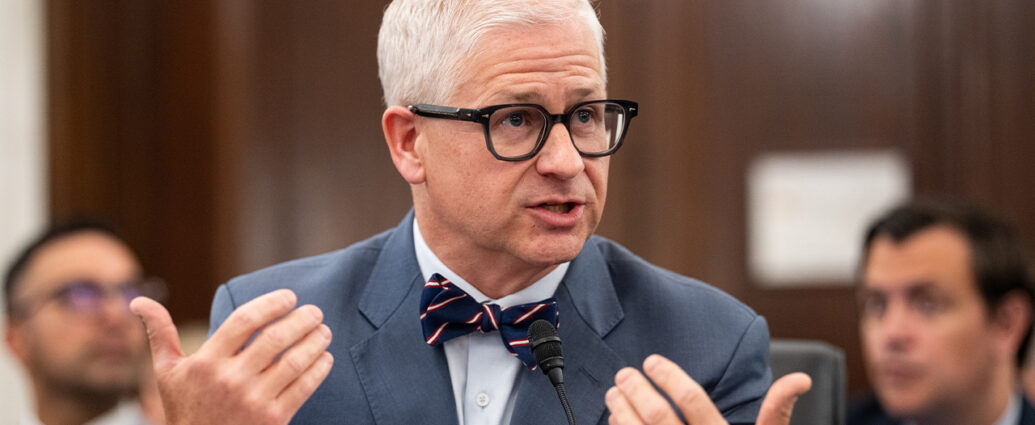
This post was originally published here. 

We’ve all experienced that semi-awkward moment of being approached on the street and asked to make a donation to a cause we’ve probably never heard of. Either because we feel inclined to donate to avoid guilt or because we genuinely feel compelled to contribute, we’ll throw a few bucks in the pot. 

But the problem is, a growing number of scammers are out there posing as a nonprofit or charity and asking for money. And not only that, but some will do the old bait-and-switch with payments. For example, you intend to donate $20 using a tap-to-pay model, but the scammer would change the transaction to $2,000 without you even noticing. That’s according to Kurt Knutsson, the tech expert behind CyberGuy Report.

Essentially, scammers are taking advantage of the newer tap-to-pay model, hoping you won’t notice the number on the screen had changed based on what you had agreed on donating. 

This further dissolves the trust in philanthropies and nonprofit organizations millennials and Gen Zers so desperately want. According to Bloomerang’s 2026 Giving Signals Report, conducted with The Harris Poll among more than 1,000 U.S. donors and 400 fundraising leaders in March, millennials and Gen Z care most about giving because it makes them feel as if they are “part of something.” But even more than that, consumers want to trust in organizations while discretionary spending is more precious amid inflation, stagnant wages, and a higher cost of living. 

“Donors are ready to trust nonprofits, but they want to see the receipts more,” Steve Isom, chief operating and financial officer of nonprofit software company Bloomerang, recently told Fortune. “A bit more trust, but verified.” 

While the Bloomerang report shows 85% of active donors trust the organizations they donate to use funds effectively, building trust takes time. So, increased scam activity can break down that trust that real philanthropic organizations and nonprofits need to succeed. 

So how can consumers avoid scams and trust real organizations?

The disconnect starts with a subtle, yet critical distinction: Authenticating a payment and trusting it aren’t the same thing. A donor can approve a transaction on a card reader and still be deceived about what they are actually agreeing to, Mary Ann Miller, fraud and cybercrime executive advisor and VP of client experience at identity verification company Prove, told Fortune. 

“The technology may work exactly as designed, but the problem is the manipulation happening around the transaction,” Miller said. 

“Fraudsters are increasingly exploiting trusted interactions and familiar behaviors rather than trying to break through security controls,” she continued. “As these attacks become more convincing, consumers can’t rely solely on intuition or a single authentication step to determine whether an interaction is legitimate or not.” She advises consumers to pause and think before they tap to pay.

Verification gaps matter even more once the money is gone because recovering funds is not guaranteed. Once a payment is authorized by the donor (and not made fraudulently by someone else), getting those funds back becomes even harder, Eva Velasquez, CEO of the nonprofit Identity Theft Resource Center, told Fortune. 

While credit cards can offer a cushion because cardholders can contact the issuer and dispute the charge, instant payment methods don’t carry the same protections, she said. 

“That is going to be much more difficult to articulate to the financial institutions, and there is no guarantee that you will be made financially whole,” Velasquez added. 

That’s because “you did, in fact, authorize the payment,” she added, “but you did not check the final amount for the authorization.”

She also encourages people to flip the dynamic entirely and pick the charity yourself, rather than letting it pick you. Rather than reacting to whoever approaches with a card reader, she encourages donors to decide for themselves which causes they want to support, then vet those organizations through third-party charity accreditation sites before donating.

This story was originally featured on Fortune.com

This post was originally published here. 

Dollar Tree got a $383 million check back from the government, and it plans to hand most of it to shoppers rather than keep it. That is why the stock fell about 9% Thursday even though the quarter was a blowout.

Here is the mechanism in plain terms. (cite index=“69-1”>The company had paid tariffs under emergency trade powers, and it got that money refunded — $369 million landed in cost of sales, $14 million as interest.</cite> (cite index=“74-1”>That refund alone added $1.31 to quarterly earnings of $2.70 a share, against $0.91 a year earlier and analyst expectations of about $1.15.</cite> Roughly half the profit came from the refund, not from selling more stuff.

The selling was fine too. (cite index=“74-1”>Net sales rose 7% to $4.9 billion for the quarter ended Aug. 1, with comparable sales up 3.7%.</cite> (cite index=“73-1”>Customer traffic rose 0.4%, the first increase after four straight quarters of decline</cite> — small, but it is people walking through the door rather than the same people spending more.

The problem is the guidance. (cite index=“68-1”>For the current quarter, Dollar Tree expects adjusted earnings of $0.80 to $0.95 a share, including a hit of about $0.50 tied to spending the refund money back into the business.</cite> Put simply: management is taking government money and putting it into lower prices and better-stocked shelves instead of into the profit line. (cite index=“68-1”>Full-year guidance went up to $7.70 to $8.05 a share from $6.70 to $7.10.</cite>

For shoppers, that spending is the point. (cite index=“67-1”>Items priced above the old single-dollar mark now account for 17% of sales, up about four percentage points from a year ago,</cite> and the refund is funding more of that range. (cite index=“68-1”>Chief executive Mike Creedon said the strategies are unlocking a better assortment in better-run stores.</cite>

The back half looks harder. (cite index=“67-1”>The company expects higher freight costs and broad inflation to squeeze margins through year-end, and a helium shortage already cost about $15 million in sales last quarter</cite> — balloons matter more to a party-supply aisle than they sound.

What happens next comes down to whether traffic keeps rising once the refund money runs out. (cite index=“73-1”>Strip out the tariff benefit and the full-year range implies about $7.10 to $7.45 a share, still an increase</cite>. The refunds are one-time. The customers, if the price investments work, are not.

JBizNews Desk | New York

© JBizNews.com All Rights Reserved. Reproduction or distribution without written permission is prohibited.

US President Donald Trump told its mediators and regional partners that it is uninterested in returning to the terms of the Memorandum of Understanding outlined in June, The Wall Street Journal reported on Thursday.

The report noted that the administration’s stubborn refusal to go back to the terms it reached with Iran earlier this summer has significantly complicated the diplomatic process of restarting negotiations.

After Iran started attacking ships in the strait in an attempt to regain control, Trump began his “Economic D-Day” campaign on Iran, which the White House is calling Operation Economic Outcast.

In his announcement, Trump claimed that the campaign would bring “economic Warfare and Isolation on an unprecedented scale,” though he provided few other details.

Vessels near the Strait of Hormuz, as seen from Musandam, Oman, August 17, 2026.  (credit: REUTERS/STRINGER)

Trump wants to move past MoU, Iran warns of attacks on Hormuz

Sources familiar with the matter told the WSJ that Trump is no longer interested in the MoU, which has been heavily criticized as a deal that is too soft on Iran.

“As the president said, there are no talks or conversations going on, or scheduled, with the Islamic Republic of Iran,” White House spokeswoman Anna Kelly said, as reported by the WSJ.

“The naval blockade remains in full force and effect, and Operation Economic Outcast is underway to sever every remaining economic lifeline sustaining the regime.”

The report indicated that Iranian hardliners’ positions will make it difficult for Trump to achieve a foreign policy win, which he has repeatedly pushed for.

Regime hardliners have repeatedly derailed talks by insisting that the US recognize Iranian authority over the strait and move its warships out of the area.

Iranian officials have warned the US administration against any departure from the June MoU.

The administration “should know that no proposal outside the framework of understanding will be accepted,” senior legislator Mohammad Rashidi told Iranian state news outlet Icana, as quoted by the WSJ.

Several regional mediators have tried to sway Iran’s demands, but have seen little progress. Sources told the WSJ that the sharpening demands leave mediators without a clear way to restart talks.

Oman, Qatar meet with Iranian officials to negotiate

Representatives from Pakistan and Oman traveled to Iran earlier this week with varying results. Sources told the WSJ that Pakistani army chief Asim Munir left Tehran with little to show for his efforts. Omani Foreign Minister Badr bin Hamad Al Busaidi also traveled to Tehran this past week, and the two sides reportedly hammered out an agreement that would lead to talks to reopen Hormuz. The administration reportedly has been upset at Oman, believing that Muscat gave away too much to Tehran.

While Iran has claimed the meeting resulted in a deal, Oman has yet to comment on the matter.

Qatari Prime Minister Sheikh Mohammed bin Abdulrahman al-Thani also reportedly recently traveled to Iran to meet with the country’s foreign minister, Abbas Araghchi.

A joint statement released after the talks said that the pair discussed how to avoid regional escalation and begin the groundwork for talks.

On Wednesday, Iran’s Revolutionary Guard Corps said Hormuz would not reopen until the US returns to the June MoU terms, which included an end to the US blockade.

“If the United States stops obstructing and returns to the memorandum of understanding, we can open the Strait of Hormuz within the framework of the agreement reached,” Revolutionary Guard spokesman Brig. Gen. Hossein Mohebbi told state media.

“Our conditions must be accepted by the United States.”

Mohebbi also vowed heavy blows to US vital interests and energy chokepoints if Iran’s infrastructure is threatened, Press TV reported.

Last week, Iran announced that it shifted its policy from defensive to “fully offensive” due to the deadlock in efforts to agree on a permanent end to the war. 

“Iranian entities must be prepared to escalate tensions in the Strait of Hormuz and the wider region, as Iran will be ready to make decisions and take action on difficult decisions,” an Iranian official told Reuters, adding that Tehran would conduct a “timely and precise” military attack to break the US naval blockade if diplomacy failed.

Reuters contributed to this report. 

This post was originally published on here. 

Norway’s King Harald, a reformer who emerged from the shadow of his well-loved father and reigned for more than three decades, has died at age 89, the royal palace said on Friday.

“King Harald passed away peacefully at Oslo University Hospital on Friday 28 August, 0635,” the royal palace said on its website.

Harald, who was Europe’s oldest living monarch, was taken to hospital on August 17. The palace said doctors were treating him for a bacterial infection in his blood.

In 2024, he had been hospitalized for an infection while on holiday in Malaysia and received a temporary pacemaker at a hospital there. He was flown back home by the Norwegian armed forces and later fitted with a permanent device.

That same year, Harald, Norway’s ceremonial head of state since 1991, said he would reduce the number of official engagements he took part in but ruled out abdication, insisting that his oath as king was for life.

 Norway's King Harald during a press conference on the royal yacht Norge in Aarhus, Denmark June 16, 2023. The King and Queen of Norway are on an official visit to Denmark. (credit: Ritzau Scanpix/Bo Amstrup)

Harald’s death comes at a tumultuous time for the royal family.

Norway’s Royal Family faces public condemnation for relationship with Epstein, rape allegations 

Crown Princess Mette-Marit, married to Harald’s son Crown Prince Haakon, is facing intense scrutiny for her friendship with the late sex offender Jeffrey Epstein, a relationship for which she has apologized.

Her son Marius Hoiby, born from a relationship predating her marriage to Haakon, was found guilty in June of ​two out of four counts of rape and one count of domestic violence and sentenced to four years in prison after a seven-week trial. Both he and the prosecution have appealed the sentence.

Two days after Marius was convicted, the palace said Mette-Marit had undergone a successful lung transplant, without specifying when the procedure took place.

After several weeks of recovery in hospital, she returned home and celebrated her silver wedding anniversary with Haakon in August.

Support for the monarchy dropped to 60% in February 2026, from 70% the previous month, according to a Norstat poll published by public broadcaster NRK, rising slightly to 64% in May.

Harald had consistently remained popular with Norwegians. According to the February poll, he was the royal who best represented the Norwegian royal family, with a score of 9.2, on a scale of 1 to 10.

Who was Norway’s King Harald?

A great-great-grandchild of Britain’s Queen Victoria, Harald acceded to the throne in 1991 and slowly introduced modern touches that brought a ceremonial post seen mainly as a symbol of national independence into the 21st century.

The popular king played a crucial role in comforting the nation in times of mourning.

When far-right, anti-Islam fanatic Anders Behring Breivik killed 77 people in 2011 in Oslo and on Utoya island, the king consoled the nation with a powerful televised speech. His voice trembling with emotion, he said that “freedom is stronger than fear.”

After floods, storms and other disasters, he would travel to the scene wearing rubber boots and a well-worn jacket to meet those who had lost homes or loved ones.

Late in life, he spoke up for tolerance, declaring in a 2016 speech that Norwegians could have many backgrounds, beliefs and sexual orientations.

In November 2005, Harald and his wife, Sonja Haraldsen, invited 550 Norwegians to a ball to celebrate the centenary of the country’s independence from Sweden.

Harald said in an interview at the time that Europe’s royal families should not be tempted to reverse moves towards openness and retreat to their palace towers.

“If you’ve opened the gate it’s very difficult to close it again,” he told Reuters. “I’m not sure I’d want to close it. So far so good, as far as I’m concerned.”

Like his father Olav, Harald was a sports and automotive enthusiast and often drove his own car, particularly to informal events.

A sailor, he captained his boat to win a world championship title and competed in several Olympics, but failed to repeat his father’s feat of winning Olympic gold.

Harald also took a great interest in the preservation of nature. He realized a lifelong dream when, aged 76, he spent four days deep in the Amazon jungle of Brazil, living with the Yanomami people and sleeping in a hammock.

Harald’s birth on February 21, 1937, was cause for national celebration – he was the first royal heir to be born in Norway in almost 570 years. Danish and Swedish monarchs had ruled over the Scandinavian nation for centuries, until 1905.

Just three years after Harald was born, Nazi Germany invaded the country. King Haakon and then-Crown Prince Olav fled to Britain, where they led Norway’s government-in-exile, while the 3-year-old Harald went with his mother, Crown Princess Märtha, to neutral Sweden, then to the United States.

After living briefly at the White House and then for five years in Bethesda, Maryland, Harald, his older sisters Ragnhild and Astrid, and their mother met frequently with U.S. President Franklin D. Roosevelt, whom Harald years later described as like a grandfather.

When he returned to Norway after the war ended in 1945, Harald attended state schools rather than the private lessons his father had received.

His 1968 marriage to a commoner broke with tradition and followed a nine-year standoff with his father that ended only after Harald threatened never to marry rather than give up Sonja.

In 1998, the king faced an unprecedented wave of public criticism over press reports that he had accepted a 4-million-crown ($400,000) yacht from a group of industrialists as a birthday present, and that palace repairs had cost the government 500 million crowns.

Around the same time, his former deputy private secretary suggested that Harald should abdicate at the egalitarian country’s normal retirement age of 67.

Opinion polls gave the king firm backing to stay on for life, however, and the criticism subsided. A year later, in another Reuters interview, Harald joked that he would remain on the throne for life unless he went mad.

“There is no tradition in Norway for that (abdication). But you never know. If you go completely bonkers,” he said. Queen Sonja laughed and said: “But who will ever tell you that?”

Harald’s son Haakon, 53, will be Norway’s fourth king since the country gained independence from Sweden in 1905, with Mette-Marit, also aged 53, as his queen.

Herzog sends his condolences to the Norwegian royal family

President Isaac Herzog sent his condolences to the Norwegian royal family shortly after the announcement. 

“King Harald V, who loved his people and was loved by them in return, served his nation as King with loyalty and devotion for more than 35 years,” he wrote in a statement on X/Twitter.

“On behalf of the people of Israel, I extend condolences to the people of Norway, the Royal Family, and the Government of Norway. May his memory be a blessing.”

This post was originally published on here. 

Two Arab teenagers, a minor and an adult, were indicted for suspected ties to ISIS and alleged plans to commit terror attacks, the police and Shin Bet (Israeli Security Agency) announced on Friday.

The minor, a 16-year-old, was arrested earlier this month after an investigation uncovered that he had allegedly sworn loyalty to ISIS.

Several days later, as the investigation continued, the adult, 19-year-old Haifa resident Ibrahim Kaabiyya, was arrested as well, with police saying that he had also sworn loyalty to ISIS.

According to police, Kaabiyya had planned to commit a terror attack against an IDF base in northern Israel, while the unnamed minor had planned to attack Jewish police and military forces on Temple Mount.

The investigation also revealed that the minor had looked for instructions on how to make an explosive vest on the internet.

Illustrative: Police officers guard at a police checkpoint on Highway 90 not far from the Israeli border with Lebanon, October 11, 2024. (credit: AYAL MARGOLIN/FLASH90)

Bedouin man indicted for contacting ISIS, planning terror attack

Earlier this month, a 20-year-old Bedouin man was also indicted for alleged ties to ISIS and for planning terror attacks.

Abdullah Gergawi, 20, from the Bedouin town of Segev Shalom, was arrested on July 19 on suspicion of having contact with a foreign agent, possessing weapons, and planning to carry out a terror attack near the Forum Club in Beersheba.

Israel Police said that the investigation revealed that Gergawi had been in contact with ISIS activists and consumed related terror content, as well as planning to join the organization in Syria.

Yanir Yagna and Miriam Sela-Eitam contributed to this report.

This post was originally published on here. 

The massive cyclosporiasis outbreak linked to iceberg lettuce and thousands of illnesses has expanded to three new states, federal health regulators announced Thursday.

The Food and Drug Administration (FDA) said the outbreak, which has been linked to hundreds of hospitalizations and two deaths since illnesses were first reported in July, has now been detected in Georgia, Tennessee and Texas.

There have now been 11,458 illnesses reported across 20 states, according to the FDA.

The FDA added the three new states to the outbreak list Thursday, one week after its previous update.

GENERAL MILLS DITCHES ARTIFICIAL COLORS IN LUCKY CHARMS, TRIX

Health authorities have traced the multistate outbreak to contaminated iceberg lettuce supplied by Taylor Farms de Mexico to Taco Bell restaurants.

The cyclosporiasis outbreak — one of the largest foodborne illness events in recent U.S. history — has also rippled through the food industry, changing how some Americans shop for fresh produce.

Dave Ciesinski, president and CEO of The Marzetti Company, which owns and operates a range of popular retail food brands, including refrigerated salad dressings, recently told FOX Business that the outbreak isn’t just hurting lettuce sales but also affecting how Americans shop and eat.

LASER-WIELDING MOSQUITO KILLER HITS MARKET PROMISING TO TRACK AND ZAP BACKYARD PESTS MIDAIR

Sales of leafy greens tumbled as much as 30% at the beginning of the outbreak, he said, while vegetable sales fell roughly 16% to 17%, with fruit also declining.

“Suffice it to say, they’re changing their behavior,” Ciesinski said of consumers on “The Claman Countdown.”

Michigan has been the hardest-hit state in the outbreak and has reported two related deaths. Both people had significant underlying health conditions, according to health officials.

Cyclospora is a single-celled parasite that can cause stomach cramps, nausea, fatigue, weight loss and other health problems, though some infected people remain asymptomatic, according to the U.S. Centers for Disease Control and Prevention (CDC).

The CDC said symptoms typically begin about one week after infection and can last anywhere from a few days to a month. Symptoms can also appear to go away before returning one or more times.

Fox News Digital’s James Cirrone contributed to this report.

This post was originally published here. 

South Korea’s National Pension Service reported a first-half investment return on Friday that would be extraordinary in any year, and largely irrelevant to where the fund stands today.

The NPS returned 27.22% in the six months through June, well ahead of the 18.82% it posted for all of 2025 — itself the best annual result since the fund was founded in 1988. Assets reached 1,866 trillion won, or about $1.35 trillion, at the end of June, up from 1,458 trillion won at the close of last year.

The driver was almost entirely domestic. Korean equities returned 107.37% over the half. Overseas equities returned 17.81%, helped by the AI investment cycle and strong results at large technology companies. The fund credited easing Middle East tensions and solid corporate earnings, particularly in semiconductors.

Then came July.

The KOSPI peaked at an all-time high of 9,385.59 on June 19 — three trading sessions before the reporting period closed. By July 8 it had fallen more than 20% below that high, entering bear territory as global investors soured on AI plays and the market’s extreme concentration showed itself. On July 29 the index closed down 5.98% at 5,663.24, following a 10.84% collapse the previous session — roughly 40% below the June peak, with sidecars and circuit breakers triggered on consecutive days. It was still sliding this week, dropping more than 4% intraday Tuesday on heavy foreign selling.

NPS Chair and CEO Kim Sung-joo acknowledged the gap directly, saying second-half volatility has moved returns around while performance remains solid.

The policy question underneath. At the start of the year the government temporarily suspended the ceiling on the fund’s domestic stock holdings. The NPS had effectively hit its limit as the KOSPI climbed and was facing mechanical selling. Critics argued at the time that the public’s retirement savings were being used to prop up the market; as the fund ballooned past 1,700 trillion won in four months, the decision was recast as prescient.

That debate is now reopening on less favorable terms. The suspension is what made a 107% domestic equity return possible. It is also what left the country’s retirement system unusually exposed to a single trade. Samsung Electronics and SK Hynix together account for roughly half the KOSPI’s market capitalization, and SK Hynix passed Samsung as Korea’s most valuable company on June 22, the first time in more than 25 years that the top spot changed hands.

The volatility has been historic in its own right. By late June the exchange had logged close to 30 sidecar activations and five circuit breakers for the year, both exceeding the full-year records set during the 2008 financial crisis.

Why it matters beyond Seoul. The NPS is the world’s third-largest pension fund and a meaningful allocator into U.S. equities, private credit and real estate. More than half its financial assets sit overseas. A drawdown of this scale at home changes its rebalancing math, and Korean institutional flows are large enough that American managers notice when they turn.

It also lands against a demographic clock. Contribution rates began rising this year, climbing half a point annually toward 13% by 2033 under reforms meant to extend the fund’s solvency. Investment returns were supposed to buy time. Returns this volatile buy less of it than the headline suggests.

JBizNews Desk | Seoul

© JBizNews.com All Rights Reserved. Reproduction or distribution without written permission is prohibited.

Ofer Winter on Thursday declared that his party belongs to the right-wing camp, that Benjamin Netanyahu is the leader of that camp, and that “we will only recommend him,” in an attempt to put one question to rest, which actually raised several new ones.

Winter, leader of the People of Israel party, is seeking to remove from the agenda the campaign portraying him as a risk to the right, as someone who could help replace Netanyahu or siphon votes away from the bloc. Along the way, however, he also gave up some of the ambiguity that had served him until now.

Winter was careful in the statement to emphasize his independence from Netanyahu. “We do not work for any person,” he said, adding, “We will not dance to anyone’s tune.” But several lines later came the sentence that will define him politically: “The leader of the right-wing camp is Netanyahu and only him will we recommend.”

That is the sentence Likud, his opponents, and voters will take with them. The rest of the statement, regarding haredi enlistment, voluntary emigration from Gaza, moving from containment to decisive action, and the need for effective public diplomacy, was intended to sharpen what Winter offers right-wing voters that they do not currently have in other parties. But of everything he said Thursday night, his commitment to Netanyahu is what will follow him from now on.

Winter wants to open the door to Likud and right-wing voters who like him but fear that a vote for People of Israel could bring down a right-wing government. To them, he is saying they can vote for him without worrying that their vote will help install another candidate as prime minister. In the recommendations process before the president, he will be with Netanyahu.

Israeli Prime Minister Benjamin Netanyahu casts his ballot at his party Likud's main polling station during primary elections ahead of Israel's general election in October in Jerusalem on August 17, 2026; illustrative (credit: Ohad Zwigenberg / POOL / AFP via Getty Images)

Likud voters may be swayed to support People of Israel

The move could expand his support base precisely within the right. A Likud voter dissatisfied with the party list, with Bezalel Smotrich, or with Itamar Ben-Gvir could find a new address with Winter without giving up on Netanyahu as prime minister. Winter is seeking to take votes from the bloc without providing ammunition for the argument that he is weakening it: offering right-wing voters another option on the Knesset ballot while making a clear commitment regarding the identity of the prime minister.

It is possible that Winter’s campaign team concluded that his greatest potential currently lies among the more right-wing electorate rather than among center-right voters who oppose Netanyahu. If their in-depth research shows this, it represents a deliberate political choice: giving up some of the audience outside the bloc in the hope of gaining deeper access to the pools of Likud, Religious Zionism, and Otzma Yehudit supporters.

But the declaration also gives Netanyahu a new option. Until Thursday night, he could attack Winter by arguing that he was not truly committed to the camp. Now he can put that argument aside and choose a strategy that may be far more effective: embracing him.

Against a small right-wing party, that could work well. “Winter is with us,” Likud officials could say. “He will recommend Netanyahu, he will be a partner in the government, so anyone who wants Netanyahu to be prime minister should vote Likud.” After all, Winter could still be met after the election, perhaps even around the cabinet table and in a senior position.

From here, Netanyahu can run the campaign against him on terrain that is comfortable for him. He does not need to argue with Winter over who is more right-wing. He can talk about Likud’s size, the chances of forming a government, and the need for a strong governing party. There is also no need to portray Winter as a threat to the camp. It is enough to convince voters that they will get him anyway, even if they vote for a different party.

Netanyahu has done this before with Naftali Bennett. He presented Bennett as a certain partner and sought to convince his voters that the most effective way to guarantee a right-wing government under Netanyahu was through Likud. About a decade ago, during one election campaign when Bennett was polling in the double digits and even around 15 seats, the message was that Bennett would anyway be a partner and would even receive a senior position, so Likud needed to be strengthened. Bennett finished that election with eight seats.

Winter may not fall to tactics which worked on Bennett

If the same tactic works against Winter, the statement intended to protect him from attacks could help Netanyahu draw voters away from him. But in Winter’s case, it is far from certain that the old tactic will work.

Winter is not the Bennett of those years. He is relatively new to politics, comes with a clear security background, and, after October 7 and the war, is appealing to an audience seeking decisive action, strength, and direct military language. He does not have a long history of political partnership with Netanyahu, and he still benefits significantly from the advantage of someone who has not spent years inside the political system.

Netanyahu also understands the danger of attacking too aggressively. In the past, when the battle against Bennett became personal and also touched on the rabbis and the Religious Zionist public behind him, the result was not always what Likud hoped for. In Winter’s case, the risk is clear: after declaring that Netanyahu is the leader of the right-wing camp, an aggressive attack against him could provide Winter with a strong argument among voters: I am on the right, I recommend Netanyahu, but I do not work for him.

After this declaration, the question Likud will want to place before voters is no longer whether Winter is loyal to the camp. The question will be why they need him. If he supports Netanyahu for prime minister anyway, they will argue, it is better to give the vote to the party led by Netanyahu, which needs to form the government.

Winter’s answer is already contained in his statement: It is possible to want Netanyahu as prime minister and still not vote Likud. That is where he is trying to position himself, as a clearly right-wing party that supports Netanyahu for prime minister but is not subordinate to him within the camp.

It is also necessary to read carefully what Winter committed to, and what he did not. He said he would recommend Netanyahu. He did not say he would only sit in a government led by Netanyahu. If Netanyahu does not reach 61 seats and fails to form a government, the wording Winter chose leaves him room to maneuver. He closed the question of his recommendation to the president, but not everything that may happen afterward.

If Netanyahu receives the mandate and fails to establish a government, Winter’s statement does not commit him to staying out of any other government at all costs.

This post was originally published on here. 

United States Ambassador to Lebanon Michel Issa received the green light to meet with Hezbollah, according to a Lebanese report published Thursday evening, but a US official denied the report.

Issa himself denied on Wednesday that he is currently holding any talks with Hezbollah, but said he would be willing to speak with the organization if it had something to offer.

Last week, the United States announced new sanctions against Hezbollah, while also updating the basis for its designation as a “Specially Designated Global Terrorist” (SDGT) organization, in a move that emphasizes the group’s activities on behalf of the Iranian regime and under the command of the Islamic Revolutionary Guard Corps’ Quds Force.

A US official clarified that the move does not add Hezbollah to a new sanctions list. The organization was already designated under this authority in 2001 and is also classified by the United States as a Foreign Terrorist Organization. The current change is intended to more explicitly link Hezbollah’s activities to Iran and the Quds Force.

Lebanese Army troops patrol southern Lebanon following ceasefire arrangements. The agreement places renewed emphasis on the state’s role in extending authority into areas long influenced by Hezbollah. (credit: AZIZ TAHER/REUTERS)

Israel says Lebanese army not acting effectively against Hezbollah

Earlier Thursday, Israel conveyed a message to the United States through security channels that the pilot program in southern Lebanon, which began following the signing of the memorandum of understanding between Beirut and Jerusalem, has failed.

Israel provided information regarding the Lebanese army’s activities and expressed its dissatisfaction, to put it mildly, with the Lebanese army’s operations against Hezbollah terrorist infrastructure and operatives in the area. The IDF has criticized the Lebanese army’s performance, arguing that it is not operating effectively against Hezbollah infrastructure in southern Lebanon.

According to assessments by senior IDF officials, Lebanese Army Commander Gen. Rodolphe Haykal continues to cooperate with Hezbollah, fears confrontation with commanders of the Shi’ite organization in southern Lebanon, and is ineffective in conducting searches, locating terrorist infrastructure, and finding weapons caches.

This post was originally published on here. 

Dunkin’ and BARK opened their first-ever official dog drive-thru experience in Quincy, Massachusetts for National Dog Day.

At the Dunkin’ in Quincy for one day only on Wednesday, one drive-thru lane remained open for guests, while the second lane was reserved for dogs to enjoy dog treats and limited-edition BARK x Dunkin’ bandanas, while plush toys from the new BARK x Dunkin’ collection were available with a donation to the Dunkin’ Joy in Childhood Foundation.

“For years, dogs have been riding shotgun on Dunkin’ runs with their favorite humans. This National Dog Day, Dunkin’ is returning the favor,” a press release announcing the initiative reads.

BURGER KING TACKLES SOARING BEEF COSTS WITHOUT SQUEEZING CUSTOMERS

The plush toys offered this year were inspired by some of Dunkin’s popular menu items, including a Wake-Up Wrap Dog Toy, a Strawberry Dragonfruit Refresher & Donuts Dog Toy and a Dunkin’ Iced Signature Latte & Chocolate Frosted Sprinkles Donut Dog Toy.

Now in its seventh year, the partnership has raised more than $15 million for the Dunkin’ Joy in Childhood Foundation and sold more than one million dog toys.

“Seven years and a million toys later, this tradition has become something dog parents look forward to,” Dave Stangle, Vice President of Brand Marketing at BARK, said in the release. “And it all comes back to the rituals we have with our dogs, that dogs go where their people go. The drive-thru makes that official. This year, dogs aren’t just tagging along, they’re the ones being served.”

The event on Wednesday, dubbed “Dunkin’ for Dogs,” extended beyond the Quincy store, as select Dunkin’ restaurants in New York, California and Illinois offered limited-edition BARK x Dunkin’ bandanas, alongside the new BARK x Dunkin’ plush toys to celebrate National Dog Day on Wednesday.

Donations benefit the Dunkin’ Joy in Childhood Foundation’s programs to support children battling illness and hunger, including Dogs for Joy, which places highly trained facility dogs in children’s hospitals across the country. Dogs for Joy grants have supported 54 facility dogs at 37 hospitals across the country.

PIZZA HUT MAKES SURPRISING CHANGE TO ICONIC NAME AHEAD OF NFL SEASON

CLICK HERE TO GET FOX BUSINESS ON THE GO

These dogs support young patients by teaching them how to take medication, providing comfort during medical intervention and motivating them through treatment.

“The BARK collaboration has become a beloved tradition because it brings together so many things our guests care about: their pets, their communities and giving back,” Mollie Collum, Director of the Dunkin’ Joy in Childhood Foundation, said in the release. “Every toy represents an opportunity to help support our programs like Dogs for Joy, and we’re excited to make this year’s celebration even more memorable with Dunkin’s first official dog drive-thru.”

This post was originally published here. 

When Democrats gathered this week in a West Michigan congressional district they’re trying to flip blue, they wanted to talk about the cost of living under President Donald Trump. But it didn’t take long for the conversation to turn to a controversy dividing their party.

One attendee chided U.S. Rep. Hillary Scholten for failing to support Democratic Senate nominee Abdul El-Sayed.

“Your inflammatory rhetoric has nothing to do with creating a better economic future for the people of West Michigan, and everything to do with protecting the pipeline of our tax dollars to Israel,” the woman said.

The exchange captured a problem confronting Democrats as they head toward November. Party leaders believe concerns about the economy have given them an opening to win control of Congress, but internal divisions are making it harder to keep the focus there.

Nowhere is that tension more pronounced than Michigan, where Democrats are trying to regroup after a bruising Senate primary that El-Sayed won over U.S. Rep. Haley Stevens earlier this month. Disputes over Israel, antisemitism and El-Sayed’s association with controversial online commentator Hasan Piker have complicated the party’s effort to turn its attention to Republican Mike Rogers.

With the election fast approaching, Scholten and some other Democrats have withheld their support for El-Sayed for now.

“I think it’s up to the top of the ticket to unify the top of the ticket,” Scholten said Tuesday.

Democratic divisions haven’t disappeared

El-Sayed, who would be the country’s first Muslim senator, has denounced antisemitism while fiercely criticizing Israel for its military operations in Gaza.

Some members of his party have balked at his rhetoric.

Michigan state Rep. Jeremy Moss, the Democratic nominee for a House seat outside Detroit, has also withheld his support. In an interview with The Atlantic’s David Frum released Wednesday, Michigan Attorney General Dana Nessel, who is Jewish, said El-Sayed should not “make excuses” for domestic terrorism.

She was referencing a video statement he put out in March following an attack on Temple Israel synagogue outside Detroit when he said “hurt people hurt people.”

Some Democrats outside Michigan have gone further in criticizing El-Sayed.

“There’s no way I’m ever coming out for El-Sayed, right now,” New Jersey Rep. Josh Gottheimer said on CNN, adding that El-Sayed has “refused to back off his views towards Jewish Americans.”

El-Sayed’s appearances on the campaign trail with Piker have become a particular flashpoint in the disagreement. Piker is a popular streamer with a history of controversial remarks that include saying America “deserved 9/11.”

Piker recently became embroiled in controversy again when he argued against the idea that opposing Israel is antisemitic. American Jews are not uniformly supportive of Israel, he said, but many “Jewish institutions” are “teaching people the idea that Jews are monolithic” and “it’s a very dangerous mode of propaganda.”

“If Jews in America keep putting this idea out there that they are singularly invested in Israel, eventually someone is going to come around and take action, not against the state of Israel mind you, but against American Jews,” he said.

The backlash was swift among Democrats, with critics saying Piker was suggesting that American Jews who support Israel were inviting violence.

“Hasan Piker’s dangerous and hateful language targeting Jewish Americans has no place in our civic discourse,” Sen. Cory Booker, a Democrat from New Jersey, wrote on social media. “Suggesting that Jewish Americans bear responsibility for hatred or violence directed against them is wrong, dangerous, and antisemitic.”

Piker rejected that interpretation in a phone interview, saying he was warning that associating American Jews broadly with Israel’s actions could fuel antisemitism, much as Muslims in the United States have been associated with Islamic terrorist groups.

He said he was never particularly close with El-Sayed’s campaign — despite appearing with him at various events during the primary — and said that he did not want the race to become a conversation about him. He said he did not regret the remarks, however.

“I’m just a platform, I’m just a megaphone for people’s anger and frustration,” Piker said. “Even if I was going to go away tomorrow, I don’t think this problem would go away for our politicians.”

While El-Sayed has put some distance between himself and Piker amid the controversies, he has refused to cut ties completely. In a statement, he said “nobody speaks for this campaign besides me and my campaign spokesperson.”

Republicans see an opportunity in the continued dispute.

“It’s great,” said Republican strategist Jason Roe. “You can tell these Democrats are not going to distance themselves. Piker is to Democrats what Trump is to Republicans. You embrace him, it’s not helpful, and distance is also not helpful.”

Democrats try to turn toward November

Democrats who have rallied behind El-Sayed are increasingly eager to move beyond the fight.

“I am done. So don’t any reporter ask me again about Hasan Piker. It’s not what November is about,” Democratic Rep. Debbie Dingell said Wednesday. “I don’t agree with Hasan Piker on a lot of stuff.”

She appeared alongside El-Sayed and U.S. Rep. Jamie Raskin of Maryland at a campaign event in Ann Arbor on Wednesday. The day prior, El-Sayed stood beside Eli Savit, the Democratic nominee for attorney general, and Lt. Gov. Garlin Gilchrist II, the party’s nominee for secretary of state, at a press conference.

Democrats who have backed El-Sayed argue that the party is largely unified and that the remaining disagreements are a natural part of moving beyond a contentious primary. Raskin, who is Jewish, described it as a “process that we go through” after the primary.

“The Democratic Party is a big, sometimes an unruly family, but we’re all going to be together in the end,” Raskin said.

Michigan Democrats from across the state are expected to gather this weekend for a convention in Lansing to finalize the party’s November ticket. Ahead of the convention, all the party’s nominees and party chair, Curtis Hertel, sent a letter saying that “disruptive behavior or harassment of any kind will not be tolerated.”

“This convention is our moment to celebrate our candidates,” the letter read.

El-Sayed at Wednesday’s event in Ann Arbor expressed frustration with the continued focus on Piker.

“You would think if you turn on any media that this whole campaign is about a streamer in California,” El-Sayed said at the Ann Arbor event. He added that he’s “less interested in going to the sort of tabloid version of our politics where we cover this like, who’s in, who’s out, who’s up, who’s down, who’s talking to who?”

But El-Sayed acknowledged that some Democrats have yet to put the primary behind them.

“There are a few people who are still nursing wounds or grievances from the primary,” El-Sayed said. “I get it. Losing is hard.”

___

Associated Press reporter Jesse Bedayn contributed to this report.

This story was originally featured on Fortune.com

This post was originally published here. 

South Korea supports US President Donald Trump’s efforts to resume dialogue with North Korea, but aims to ensure its security posture is not weakened and that Seoul is not sidelined, South Korea’s national security adviser said on Friday.

Seoul believes the resumption of talks between the US and North Korea should focus on progress on the North Korean nuclear weapons issue and must not undermine the country’s security readiness, Wi Sung-lac told reporters.

“One point to keep in mind is the need to coordinate with the United States to ensure that any resumption of US-North Korea dialog leads to substantive progress on the North Korean nuclear issue, alongside efforts to establish a peace regime on the Korean Peninsula,” Wi said. 

To achieve these aims, he said policy coordination and communication between South Korea and the United States were more important than ever.

North Korean leader Kim Jong Un observes an assessment of the newly built naval destroyer Kang Kon's combat systems, including the test firing of a strategic cruise missile, at an unknown location in North Korea, July 3, 2026. (credit: KCNA/REUTERS)

Trump seeks to kickstart North Korean talks

Wi cited Trump’s order earlier this month to substantially scale back major joint military drills between the two allies, saying the US president was signaling a willingness to engage with North Korea.

At the same time, Seoul should ensure it was not “sidelined” in Washington’s efforts to restart talks with Pyongyang, Wi said.

Trump cited in part Seoul’s refusal to offer help in the Iran war for cutting short the Ulchi Freedom Shield drills this month and said they sent a wrong message to North Korea. Trump has been seeking a new summit with North Korean leader Kim Jong Un.

The two met three times in 2018 and 2019.

South Korea, Japan and the United States will conduct joint military drills from September 9 to 11 to test readiness against North Korea’s missile and nuclear weapons threats, South Korea said on Friday.

Wi said South Korea is seeking to deepen cooperation with Washington on a range of issues that have sometimes caused friction between the allies.

These include South Korean investment in the US agreed under a trade deal, the treatment of US-listed e-commerce firm Coupang, security cooperation, intelligence sharing and the transfer of wartime operational control, he said.

This post was originally published on here. 

The official entry of Ofer Winter into the political arena and the unification of three Arab parties are creating a shake-up in the political system, the latest poll published by Maariv revealed on Friday.

The bloc of Zionist opposition parties, weakened by one seat, now stands at 59 seats, while Arab parties together strengthened to 13 seats, according to the poll conducted by Lazar Research, headed by Dr. Menachem Lazar, in cooperation with Panel4ALL.

The data shows that Winter’s entry has created greater complexity within the coalition bloc. Without him, the bloc led by Benjamin Netanyahu receives 43 seats, while with him it rises to 48 seats. Winter, whose People of Israel party receives five seats in the poll, pushes the Religious Zionism Party led by Bezalel Smotrich below the electoral threshold.

Another interesting figure: none of the parties in the “third bloc” crosses the electoral threshold, and together with Religious Zionism, they account for around 8% of the vote, equivalent to about 10 seats, that are effectively lost.

The poll also shows that the unification between Hadash-Ta’al and Balad strengthens the bloc of Arab parties. The three-way merger gives them eight seats, in addition to the five seats Ra’am, led by Mansour Abbas, received.

 Hadash leader MK Ayman Odeh, Ta'al leader MK Ahmad Tibi (credit: MIRIAM ALSTER/FLASH90)

The changes are evident both in the coalition bloc, where Otzma Yehudit loses one seat and drops to eight, and in the opposition bloc, where Yashar falls by one seat to 25, while B’yachad rises by one seat to 15. However, the changes are minor.

Overall, the coalition bloc stands at 43 seats, and when Winter’s party is added, at 48, one seat fewer than in the previous poll. Meanwhile, the Zionist opposition bloc stands at 59 seats, one seat fewer than in the previous survey.

Religious Zionism (3%), The Zionist Home-The Reservists (2%), the Economic Party (1.5%), and Blue and White (0.6%) do not cross the electoral threshold. The percentage of undecided voters in the current poll stood at 11.5%.

The latest poll results indicated that the complete Knesset composition would be as follows:

Yashar: 25 (-1)

Likud: 20 (Unchanged)

B’Yachad: 15 (+1)

Democrats: 10 (Unchanged)

Yisrael Beytenu: 9 (-1)

Otzma Yehudit: 8 (-1)

United Torah Judaism: 8 (Unchanged)

Hadash-Ta’al and Balad: 8 (+2)

Shas: 7 (Unchanged)

People of Israel, headed by Winter: 5 (New)

Ra’am: 5 (Unchanged)

Israelis dissatisfied with education system, concerned with content

Ahead of the start of the school year, the Maariv poll found that an overwhelming majority of Israelis (74%) are dissatisfied with Israel’s public education system, compared with 70% who were dissatisfied in August 2023.

Only 18% said they were satisfied, compared with 23% in 2023, while another 8% had no opinion, compared with 7% previously.

A majority of Israelis (62%) who have children in Israel’s education system, from kindergarten through 12th grade, are concerned about the introduction of content into their children’s schools that does not align with their values and worldview.

By contrast, 28% said they were not concerned, while 10% did not know.

The concern is shared among people from all political camps. The most concerned are voters of Arab parties (80%), followed by opposition voters (61%), while 57% of those intending to vote for coalition parties also expressed concern.

Among Jewish Israelis, the most concerned are secular Israelis (72%, compared with 19% who are not concerned), while the least concerned are religious Israelis (41%, compared with 50% who are not).

Netanyahu falling behind Eisenkot, Bennett, still leads over Liberman

The poll also found that Gadi Eisenkot leads Benjamin Netanyahu in suitability for prime minister, with 48% compared with 37%. Naftali Bennett also leads Netanyahu, with 45% compared with 40%.

Against Avigdor Liberman, Netanyahu receives 40%, compared with 37% who believe Lieberman is more suitable for the position.

The poll was conducted from August 16 to 27. A total of 4,116 people were invited to participate, and 506 respondents answered the survey (12%), constituting a representative sample of Israel’s adult population aged 18 and over, both Jewish and Arab. The maximum sampling error is 4.4%.

This post was originally published on here. 

US President Donald Trump addressed Iran’s situation on Thursday evening, saying that “Iran right now is not paying its soldiers. They are in deep trouble. They have very little capability left.”

Trump also discussed the Strait of Hormuz and US activity in the area, saying, “Last night we moved 24 ships through the strait. We move them all the time. I’m saying this openly.”

He said, however, that the military activity had not ended, adding, “As you know, the Strait of Hormuz is open. We have control and we have a blockade. Iran is getting nothing. Nothing is going through. No ship is going through.”

Asked whether he would punish Russian President Vladimir Putin or Russia if Moscow continued trading with Iran, Trump said the response would depend on the circumstances.

“Up to now, I think Russia has behaved pretty well when it comes to the Strait of Hormuz,” he said.

US President Donald Trump and Russian President Vladimir Putin following a meeting to negotiate an end to the war in Ukraine, at Joint Base Elmendorf-Richardson, in Anchorage, Alaska, August 15.  (credit: KEVIN LAMARQUE/REUTERS)

Russia won’t attack NATO territory, Trump affirms

Trump also addressed Russia during his remarks to reporters, following the visit by CIA Director John Ratcliffe to the country two days earlier.

Asked why Russian President Vladimir Putin agreed or committed not to attack NATO territory, Trump responded, “I had good conversations with him. He is not going to attack NATO territory.”

Asked whether he had warned Putin not to do so, Trump said, “I don’t want to comment on that, but they are not going to attack.”

Trump was also asked why he had not imposed sanctions on Chinese banks that conduct business with Iran. He responded, “Who said I’m not? You’re asking ‘why not,’ who said? You don’t know if I’m doing it. I don’t have to announce everything, right?”

Addressing the possibility of renewed talks with Iran, Trump said, “We don’t want to talk to them. We’re not looking to meet or something like that. The strait is open, we are moving a lot of ships. Millions and millions of barrels of oil are going through the strait every day.”

He also said the US had completely cleared the Strait of Hormuz of mines, adding, “We have the best minesweepers in the world.”

Trump said the US was closely monitoring Iran through its Space Force, saying, “We see every inch of the strait. Every ship that enters with a mine, we see it and destroy it. We have already destroyed two of them.”

Meanwhile, sources familiar with the matter told The Wall Street Journal that the Trump administration has repeatedly made clear to mediators that it has no interest in returning to the terms of the memorandum of understanding signed with Iran in June.

According to the sources, the position has complicated efforts underway this week to restart diplomatic negotiations.

According to the newspaper’s report, the initial agreement signed by Trump at Versailles, with Vice President JD Vance involved in its formulation, was intended to reopen the Strait of Hormuz and launch negotiations over Iran’s nuclear program and an end to the war, in exchange for sanctions relief.

Although Trump has said he ultimately wants an agreed-upon end to the confrontation, he is currently willing to wait and assess whether increased economic pressure on Tehran will produce results.

The approach follows the administration’s launch this week of a broad economic campaign aimed at cutting off the Iranian regime’s sources of revenue and financial connections.

This post was originally published on here. 

Israel has conveyed a message to the United States through security channels that a pilot program in southern Lebanon, which began being implemented following the signing of a memorandum of understanding between Beirut and Jerusalem, has failed, Walla reported Thursday.

Israel provided information regarding the Lebanese Army’s activities and expressed, in no uncertain terms, its dissatisfaction with the army’s operations against Hezbollah terror infrastructure and operatives in the area.

According to security officials, “The Lebanese Army is not destroying terror infrastructure based on the coordinates provided to it by the IDF, while at the same time requesting more coordinates, even though it is not doing anything about it.”

Lebanese army continues to cooperate with Hezbollah

The IDF has criticized the Lebanese Army’s performance, claiming that it is not acting effectively against Hezbollah infrastructure in southern Lebanon. According to assessments, Iran, which previously provided significant support to the organization, is currently focused on its own survival struggles and is not rushing to come to Hezbollah’s aid.

According to assessments by senior IDF officials, Lebanese Army Chief of Staff Rudolf Haykal continues to cooperate with Hezbollah, fears confrontation with commanders of the Shi’ite organization in southern Lebanon, and is ineffective in carrying out searches, locating terror infrastructure and finding weapons.

Lebanese army troops deploy at the entrance of the town of Zawtar al-Gharbiyeh, after Israeli forces withdrew from the area, Lebanon, July 21, 2026 (credit: REUTERS/ZOHRA BENSEMRA)

“There is no real friction between the Lebanese Army and Hezbollah. Hezbollah would not want anyone to collect its weapons or destroy its infrastructure,” a senior security official said.

“The Lebanese army chief of staff is not going above and beyond. There is no real enforcement. The Lebanese Army is more focused on coordination,” the official said. “It is clear that Israel is not satisfied, and therefore it is not rushing to agree on additional pilot areas.”

The official added: “The Lebanese Army reached a point, entered the underground opening a few meters, turned around and left. They did not dare to go inside. We assess that they will not deal with anything. Despite this, they insist on receiving more coordinates.”

This post was originally published on here. 

The United States is entering the most expensive phase of retirement. Some of America’s oldest are eligible for more than $100,000 a year in combined Social Security benefits, while remaining as one of the wealthiest generations in the country. The national debt is rising—just passing $40 trillion this month—and Social Security is set to enter insolvency by 2032, meaning it may already be too late for the generations left behind.

The Congressional Budget Office projected in 2023 federal spending on Social Security and medicare will account for 81% of the increase in mandatory spending between 2023 and 2033. In 2026 alone, increases in Social Security and Medicare spending account for nearly half the projected $362 billion increase in mandatory outlays. Interest on the debt is adding even another layer on the stack of debt pancakes. CBO projects net federal interest costs will exceed $1 trillion in 2026 and rise to $2.1 trillion by 2036. That means the government is spending money to simply service the debt accumulated from previous deficits, even as entitlement programs continue growing.

The state of Social Security appears to have contributed to drastically different generational outlooks on the benefit. A December 2025 survey by the Cato Institute found that only 34% of Gen Z respondents expected Social Security to exist when they reached retirement. Cato’s June 2026 analysis also found that 79% of younger respondents expected some type of cut to their own future benefits.

“The survey revealed that young Americans are the least likely to expect Social Security will exist for them,” the study noted, “the most open to reforms, and the least likely to understand how the program works.”

Social Security is a pay-as-you-go program, meaning most payroll taxes collected from today’s workers are used to pay benefits to today’s beneficiaries. In simpler terms, a part of your paycheck subsidizes a boomer’s benefits—and according to the Cato Institute’s 2025 polling, only 45% of Americans correctly understand how the program works. Under current law, employees and employers each pay 6.2% of wages into Social Security up to an annual taxable maximum, which is $184,500 in 2026. Self-employed workers pay the combined 12.4% rate.

That structure worked far smoother when there were many workers for every retiree. But the demographic math changed—baby boomers are now moving through retirement while younger generations deal with record job market difficulty.

And it doesn’t help that Social Security beneficiaries are getting over double their investment into the program back. A median-wage worker retiring in 2027 is expected to receive roughly $730,000 in lifetime Social Security benefits compared with less than $200,000 in combined contributions from the worker and employer. When the employer contribution is excluded, the lifetime benefits amount to roughly 265% of what the worker personally paid into Social Security. The current system is effectively relying on the workers of today—which include millennials and the younger end of Gen X—to finance retirees.

What the government is going to do about it

The federal government has reached a point where arithmetic becomes unavoidable. The 2026 Social Security trustees report projects that the Old-Age and Survivors Insurance trust fund will be depleted in the fourth quarter of 2032. At that point, continuing program income would cover only 78% of scheduled retirement benefits. The theoretically combined Social Security trust funds are projected to be depleted in 2034, when incoming revenue would cover 83% of scheduled benefits. Without congressional action, that would mean an automatic reduction in benefits.

The Committee for a Responsible Federal Budget estimates the retirement program would face an approximately 22% across-the-board reduction when the retirement trust fund is exhausted. The committee has proposed one way to address the issue—putting a ceiling on the benefits paid to its wealthiest retirees. Dubbed the “Six Figure Limit,” the proposal would cap Social Security benefits at $100,000 annually for a married couple retiring at the normal retirement age, with the limit adjusted for marital status and claiming age. A single retiree’s comparable limit would be $50,000. 

The proposal is aimed at an extremely small group. CRFB estimates the cap would only really affect the top 0.05% of couples in its early years, households with average annual retirement income above $2.5 million and average net worth above $65 million. The organization says the cap would become more consequential over time as Social Security’s maximum benefits continue to rise.

CBS News reported in March that roughly one million individual Social Security beneficiaries receive at least $50,000 a year, meaning a married couple with two such beneficiaries could receive more than six-figures.

The Social Security Administration did not immediately respond to a request for comment from Fortune.

Boomers are rich—but no one else will get their wealth

Baby boomers collectively hold roughly $93 trillion in wealth, according to Visa Business and Economic Insights, but only about $36 trillion is expected to pass to millennials and Gen X over the next two decades. The difference is reflected in taxes, debt, spending during retirement and the concentration of wealth among the richest boomers. After the dedication in liabilities, about $88 trillion remain—and the top 1% holds about one-third of that wealth. Boomers are also expected to spend approximately $16 trillion during retirement on housing, food, healthcare, prescriptions and other expenses.

That means the “Great Wealth Transfer” will not move a $93 trillion pile of assets from retirees to younger Americans. A substantial portion of it will never be inherited, and much of what is transferred will be concentrated among the affluent households. But the Social Security program was created as social insurance, not as a means-tested welfare program. So someone who earned more during their career generally receives a larger benefit, subject to the program’s formula and taxable maximum. An affluent retiree can qualify for a fat Social Security check even when that benefit represents only a small portion of their overall income.

According to the Cato Institute, Social Security should focus more heavily on protecting seniors from poverty while giving younger workers greater opportunity to build private retirement savings. Their analysis points to systems in other developed countries across the world that use combinations of basic pensions, targeted benefits, automatic adjustments and private savings mechanisms.

The United States’ earnings-related benefit structure can produce increasingly generous payments for higher earners, based on the Cato Institute’s report. The organization notes that a maximum-earning worker claiming Social Security at age 70 can receive more than $61,000 a year, while arguing policymakers could reduce benefits for higher-income retirees in a restructuring.

“Policymakers should consider fundamentally rethinking the program’s structure and transform it into a system that ensures seniors are protected from poverty when they can no longer work,” the institute wrote, “while also freeing up resources for younger workers to save more on their own.”

This story was originally featured on Fortune.com

This post was originally published here. 

The crew of a military helicopter carrying US President Donald Trump that came too close to a passenger jet on August 4 failed to contact air traffic controllers before departing, the National Transportation Safety Board said on Thursday.

The incident involving a plane departing Reagan Washington National Airport raised questions about why the passenger airplane was allowed to depart while ​Marine One was nearby, a time when commercial traffic is typically halted.

The incident was tied to communication problems that have emerged since Marine One helicopter flights were moved off the White House south lawn in May to the nearby Ellipse, and have not resumed as work on a helipad continues.

The NTSB said the Marine One crew at least twice attempted to give controllers a required three-minute notice of departure but were hampered by communications issues. The NTSB said the crew also sought to contact controllers through the helicopter facility at Joint Base Anacostia-Bolling, which was also unsuccessful.

Marine One said communication ‘had been spotty’

On Tuesday, the head of the Federal Aviation Administration, Bryan Bedford, said the agency relocated an antenna and changed a procedure after the incident. The NTSB said checks made after the relocation have shown no communications issues.

US President Donald Trump speaks to the members of the media, after disembarking Marine One, before boarding Air Force One, en route to John F. Kennedy International Airport, at Joint Base Andrews, Maryland, US, August 14, 2026. (credit: REUTERS/KEN CEDENO)

On July 30, Marine One and air traffic control staff met and controllers sought “to discuss concern with recent reports of their not receiving the required 3 minute to liftoff call,” the NTSB said.

The Marine One crew said communications “had been spotty,” the NTSB said and they agreed to use other means of communicating with the tower in situations where they were unable to reach them.

FAA rules require aircraft to remain separated by at least 1.5 miles (2.4 km) horizontally and 500 feet (152 m) ​vertically around airports. The NTSB said Marine One and the plane were at one point separated by 0.82 nautical mile (0.94 mile or 1.5 km) laterally and 700 feet (213 m) vertically.

Envoy Air 3742, an Embraer EMBJ3.SA E170 regional jet, was bound for Pensacola, Florida. Another regional flight, Republic 4700, was 3 ​miles from Reagan during the incident and was rerouted out of caution.

The FAA imposed permanent restrictions on helicopter operations around Washington’s Reagan Airport after the January 2025 midair collision between an ⁠American Airlines ​regional jet and an Army helicopter.

This post was originally published on here. 

Gilad Erdan, chairman of the Unity Party said Thursday morning that he is holding talks with Blue and White chairman Benny Gantz over a possible merger between the parties ahead of Israel’s upcoming election.

“We are in talks with Benny Gantz’s Blue and White party,” Erdan said in an interview with 103FM.

Erdan said that if several parties join together and the alliance passes the electoral threshold, voters will begin to consider more seriously what such a move could offer.

“Once several parties join together and the connection between them passes the electoral threshold, people will start thinking deeply about what this gives us,” Erdan said.

“Do we want to continue as we have until now, where it is either Netanyahu and then we get Aryeh Deri and Yitzhak Goldknopf controlling things, or Gadi Eisenkot and then we perhaps get Yair Golan the extremist or Mansour Abbas controlling the government?”

Benny Gantz speaks at the Knesset May 11, 2026. (credit: MARC ISRAEL SELLEM)

‘I have no ego on the matter’ of political partnerships, Erdan said

“I did not establish a party and leave 30 years in Likud to deal with personal matters,” Erdan said. “I want to fix the things Likud is not doing well. This is the prime minister’s responsibility, because he is leading it. He truly is not trying to extend a genuine hand to the other side.”

Erdan said he is open to additional political partnerships, including with Ofer Winter, Yoaz Hendel, and Hili Tropper.

“I have no ego about this matter,” Erdan said. “I preferred not my political security, but rather to leave and try to convince the public to think deeply about what is best for them. Anyone who is willing to unite with us, we will consider it, as long as we reach policy lines. I am a man of the right, I am not willing to support a government that advances things that contradict my beliefs.”

Erdan concluded by saying: “I hope this will be an election campaign that will bring a real message, and not just looking for victories one over another. Our enemies are Hamas, Hezbollah, and Iran, not the other political side.”

Gantz confirmed in an interview on Walla’s election podcast with Yehuda Schlesinger that he met with Erdan the previous day for a lengthy conversation, and said he remains open to additional partnerships ahead of the election.

“We sat for a long and serious conversation, we learned about each other, and there will be another meeting,” Gantz said. “There are no agreements at the moment, but we are talking about similar things.”

“I call on everyone to join the bloc of the people of Israel. Ofer Winter leans more toward the right, but there are good people around him. My door is open to anyone who promotes unity, but Feiglin, for example, is not realistic in my view.”

Gantz pushed back against calls for him to withdraw from the upcoming election, criticized his former political partners Gadi Eisenkot and Hili Tropper, and warned against another narrow coalition government

“It is not pleasant to see a ‘struggling garden,’ let’s look reality in the eyes,” Gantz said at the start of the interview, acknowledging his party’s weaker position in recent polls. However, he rejected calls for him to step aside and said he should lead any alliance formed before the deadline for submitting party lists.

“The demand that I step down in order not to ‘waste votes’ for the camp is not legitimate,” Gantz said. “No one should sign me onto a camp, I belong to the people of Israel. Nothing will move me from first place. I need to lead this path because I initiated the idea of the third bloc and I have the experience. I will not step down.”

‘We will establish a second change government,’ Gantz said

Gantz also criticized calls to form another narrow coalition without the traditional right, arguing that both a narrow “change” government and a fully right-wing government had failed.

An empty Knesset Plenum  (credit: MARC ISRAEL SELLEM/THE JERUSALEM POST)

“What is becoming clear as a mistake is that a narrow government, even if it is made up of good people, tears apart,” he said. “Bennett and Lapid were unable to maintain it, the right moved right, the left moved left, and it was torn apart in the middle.”

“We received a reaction that put Ben-Gvir where he is today. Now we will establish a second change government and we will receive another reaction, except the argument will not be whether Ofer Winter is suitable, but rather Ben-Gvir will be defense minister.”

“We saw that a narrow change government did not work, and we saw that a ‘full right-wing’ government is truly dangerous. The only solution is the third bloc and a unity government.”

This post was originally published on here.