
Long before Phoebe Gates cofounded the AI personal shopping assistant Phia, she was a student at Stanford University working towards a bachelor’s degree in human biology. While her transcript reflects coursework in epidemiology and health policy analysis, Gates attended one secret winter-quarter class that reportedly helped her establish Phia. 

The 10-week off-the-record course, titled “So You Think You Can Rule the World?” or simply referred to as “Rule” among Stanford students, required a referral from another student and wasn’t available through the college’s official course registration, The Stanford Daily reported in May.

The course teaches “how to essentially hack any kind of power structure or bureaucratic structure and get what they want in a system of people,” a former student, who preferred to remain anonymous, told the student newspaper. 

The unofficial course focused on prisoner’s dilemmas, multipolar traps, and readings by Peter Thiel and Paul Graham. It admitted only six women and six men per quarter, selected by its professor Justin Lewis-Weber, a 2020 Stanford graduate and founder of insurance technology startup Assured. 

Lewis-Weber began teaching the course during his junior year at the college. Scrutiny of “Rule” includes allegations of a “cult of personality” and the inspiration for a memoir by 2026 Stanford graduate Theo Baker, titled “How to Rule the World,” published in May. 

“Justin’s class, it turned out, wasn’t a real class in the sense of earning course credit, although there were lectures, discussions, and guest speakers, and it was held each week on Stanford’s campus,” Baker wrote in his memoir. “It was more like a secret society, a Skull and Bones for the aspiring tech elite.”

Baker interviewed for the course with Lewis-Weber in November 2022, while Gates was in the cohort, but was ultimately denied from participating. Baker described the bizarre interview process with the professor, who he believes aimed to confuse and harangue potential students.

“Justin was networking with teenagers he expected to be useful in the future,” Baker continued, adding the professor “knew that a certain elite cohort of Stanford students wouldn’t be able to resist the mystique he cultivated, the notion of this insider class no one would speak about, where only the very best of the best congregated to learn the secrets of the billionaires they aspired to become.”

Baker’s memoir explains that the objective of Lewis-Weber’s class is to teach students how to take advantage of others and find loopholes within rules, a very different approach to leadership compared to Stanford’s typical entrepreneurship classes. 

Lewis-Weber often preached that “for a select group of people—those with increased agency—a great amount of value can be extracted from the people around you,” a former student told Baker.

A source who interviewed for the course told Fortune that Lewis-Weber’s interviews consisted of the professor asking the same question repeatedly and testing how candidates responded, likening the process to epistemologically breaking down contenders. The source said they knew someone who completed the source and used skills gained from Lewis-Weber’s lectures to deceive venture capitalists, without getting into details exactly how.

How Gates applied the course to her advantage

Gates turned to the network of students to recruit employees for her then-budding startup, Phia, according to the Stanford Daily.

“Stanford completely changed my life path, not because of the classes, but because of the people I met and the connections I made,” Gates told Stanford’s student newspaper last year. “They gave me the confidence to build Phia. I never intended to start a business.”

Phia was founded in a Stanford dorm room by Gates and her roommate Sophia Kianni, officially launching in April 2025. Gates moved to New York City during her junior year, continuing to study at Stanford via the online night school program, while establishing the Phia office in Union Square. The name Phia is a portmanteau of the founders’ names Phoebe and Sophia. Gates is the daughter of billionaires Bill Gates and Melinda French Gates.

“We wanted to create something that could do all of our shopping for us,” Kianni told Fortune’s Allie Garfinkle last year on the Term Sheet podcast. “Do it instantly and effortlessly, rather than all the manual price comparison and tab-opening we were doing on our computers.” 

The fashion shopping app initially raised $8 million in seed funding in 2025, backed by star-studded investors including Kris Jenner, Hailey Bieber, Sheryl Sandberg, Spanx’s Sara Blakely, and more. In January, Phia raised over $35 million in Series A funding backed by Hans Tung. Today, the company is valued at around $185 million.

Phia’s controversy

But the startup now faces accusations of cookie stuffing after a recent Bloomberg report found the affiliate fraud accounted for over half of Phia’s revenue in June. Cookie stuffing is an illegal practice where tracking codes are nonconsensually implemented onto users’ devices. It’s a form of fraud that allows the company to claim credit for more affiliate sales and gain commission, even if the user didn’t use Phia to shop. It’s a violation of Google’s Chrome Extension policy, and can even result in up to 20 years of prison time if prosecuted.

“Any features causing misattributions were immediately removed over a month ago on July 7,” a Phia spokesperson told Fortune. “We are reviewing every transaction, we are fully committed to and have already begun issuing all transaction reversals to brand partners as a result of any misattribution, and we are hiring a head of compliance to make sure something like this never happens again.”

Internal company Slack channels obtained by Bloomberg tell a different story. Slack messages indicate that Phia’s founders were aware of the cookie stuffing as early as December, whereas the company alleges it was only aware of it in early July.

Cofounder Kianni suggested that a Phia program dropped cookies every time users closed a Phia popup, regardless of if the user was utilizing the app. A coworker reminded Kianni that doing so would be a violation of Google’s Chrome Extension Policy, to which Kianni responded: “I guess we could say that the user is trying to open us and roll it back if they complain,” via Slack.

“Can u confirm auto pop for cookie drop is live on ALL sites w a coupon to confirm we are monetizing on all [gross merchandise volume,]” Gates wrote in the December 18 Slack channel, later adding that “we should capture every transaction, if the cookie drop was working.” 

While this feature never got implemented, a Phia spokesperson told Bloomberg, Kianni was in support of the cookie stuffing practices, and encouraged team members to implement shady practices. 

“Whatever we can do to keep these cookies dropping will be amazing, thank you,” Kianni wrote on Slack.

If proven that both Gates and Kianni knew about Phia’s fraud for at least seven months, criminal intent will have to be ruled in court to drive the Phia founders to prison, however the app will experience fallout from the wire fraud scandal—including much more than an immediate drop in revenue.

This story was originally featured on Fortune.com

This post was originally published here. 

Jeff Bezos has spent hundreds of millions of dollars buying his way into one of Miami’s most exclusive neighborhoods. But even the founder of Amazon, which sits atop the Fortune 500, has yet to squeeze his way into the private club at the center of it.

Bezos and his wife, Lauren Sanchez Bezos, remain outside the membership rolls of Indian Creek Country Club, an invitation-only club on Indian Creek Island—the ultrawealthy Miami enclave commonly known as the “Billionaire Bunker.” Bezos owns three properties on the island that he purchased for a combined $234 million, according to public records.

The buying spree began in 2023, when he paid $68 million for a property on the island. He later bought the roughly 19,000-square foot home next door for $79 million and added a third property in 2024 for $87 million. The purchases have made Bezos one of the most prominent newcomers to an enclave built around privacy, security and extreme wealth.

Indian Creek Village, which is separate from the club, is an incorporated municipality on a roughly 300-acre island accessible by gated bridge or boat. It maintains its own police force, and the vast majority of the island’s land belongs to the country club.

But owning property there does not make someone a member of the Indian Creek Country Club.

That distinction became particularly clear this year. Bezos and Sanchez Bezos attended the club’s annual dock party in February as special guests, according to the Wall Street Journal. Bezos mingled with members at the party, including real-estate executive Richard LeFrak and businessman Eddie Lampert, the report said.

People who attended the event told the Journal Bezos was using the gathering as an opportunity to meet members and improve his prospects of being admitted. 

Six months later, however, he is still not a member of the club. 

Jeff Bezos and Indian Creek Country Club did not immediately respond to requests for comment from Fortune.

Being rich isn’t enough

Indian Creek Country Club was founded in 1929 and is centered around an 18-hole golf course, clubhouse and other private amenities. The club has roughly 350 members and has historically attracted doctors, attorneys, financiers, real-estate developers, entrepreneurs and other prominent South Florida figures. 

People connected to the club told WSJ the initiation fee is close to $1 million, with annual dues of about $44,000. Applicants need sponsorship from two existing members and letters of recommendation from five others before being considered by a six-person membership committee. Nominees then go before a 15-member board for a vote.

But admission requires more than arriving with a nine-figure property portfolio and a globally recognizable name.

The Journal reported the club’s longtime members are wary of wealthy newcomers who could change the character of the community. It describes a clash between an established “old guard” and a newer generation of billionaires moving into South Florida. 

The club’s exclusivity has also put Bezos in company with several other extraordinarily wealthy people who have not managed to get through the gates. Meta CEO Mark Zuckerberg, Jared Kushner and Ivanka Trump—Bezos’ fellow Indian Creek residents—have not been admitted as well. Zuckerberg paid $170 million for an unfinished estate on the island after the property’s previous owner, celebrity plastic surgeon Aaron Rollins, reportedly spent years trying unsuccessfully to obtain club membership.

Kushner and Ivanka Trump have likewise spent years cultivating relationships with the community. The couple bought land on Indian Creek and later expanded their holdings. According to the Journal, Trump has played golf with members and the couple has attended club events, while Kushner has become involved in local government and efforts to address the island’s aging sewage system.

Kushner did not immediately respond to a request for comment from Fortune.

Others have managed to make it inside. Goldman Sachs CEO David Solomon eventually secured membership after a difficult application process, according to WSJ. NFL legend Tom Brady and Jersey Mike’s Chairman Peter Cancro have also been accepted, while longtime members have included financier Carl Icahn and other prominent figures from Miami’s business and political establishment.

This story was originally featured on Fortune.com

This post was originally published here. 

Uber has been fined €825 million, about $966 million, by the Dutch Data Protection Authority over the way its automated systems suspended driver accounts, creating one of the largest penalties ever imposed under Europe’s GDPR privacy law. 

The case centers on European drivers whose accounts were temporarily or permanently restricted after Uber’s systems flagged behavior such as suspected fraud, unnecessary detours or low customer ratings.

Dutch regulators said Uber violated drivers’ rights by relying on automated decision-making in situations that could have major consequences for their ability to earn a living, while also failing to adequately explain how those decisions were made.

Under GDPR, companies generally cannot make important decisions about a person solely through an algorithm without meaningful human review and a way for the affected person to challenge the outcome.

That principle is now becoming much more expensive to ignore.

The €825 million fine would be the second-largest GDPR penalty ever issued, behind the €1.2 billion fine imposed on Meta in 2023.

Uber strongly disputes the decision and says it will appeal.

The company says its policies include human review and opportunities for drivers to dispute suspensions, and it argues the regulator’s penalty is disproportionate. Uber also says the number of drivers affected was relatively small and that it no longer permanently deactivates accounts solely through automated systems.

The dispute matters far beyond Uber.

Companies across transportation, banking, insurance, hiring and other industries increasingly use algorithms to determine who gets access to work, credit, insurance coverage or other economically important services.

The Dutch ruling sends a clear message that regulators may treat those automated decisions differently when they directly affect someone’s livelihood.

For gig-economy platforms, that creates a new layer of risk.

Automation is one of the main ways companies such as Uber can manage millions of drivers at relatively low cost. But if every serious suspension requires additional human review, documentation and appeals processes, that can increase operating expenses and slow decision-making.

The case also raises a larger business question about artificial intelligence and automated management.

Algorithms are increasingly being used not simply to recommend products or personalize advertising, but to make decisions about people.

Those decisions can determine whether someone gets hired, receives a loan, keeps an insurance policy or continues earning income through a digital platform.

Europe is now demonstrating that companies may face enormous financial consequences when those systems operate without sufficient transparency and human oversight.

For Uber, the immediate issue is a nearly $1 billion regulatory fight.

For every business relying on automated decision-making, the longer-term message may be more important: using an algorithm does not eliminate responsibility for the decision it makes.

JBizNews Desk | Amsterdam

© JBizNews.com All Rights Reserved. Reproduction or distribution without written permission is prohibited.

Syrian Foreign Minister Asaad Hassan al-Shaibani said on Thursday that Syria, like other countries, is closely reviewing the trilateral defense agreement between Pakistan, Saudi Arabia and Turkey, but has not yet decided whether to join the pact. 

Speaking to journalists during an exclusive interaction in Islamabad, al-Shaibani said, “Like other countries, we have also reviewed the Mecca Joint Defence Agreement.” 

“These are three important countries in the region. We are reviewing our options, but for now, we have not made any decision about joining it,” he said. 

When asked whether Pakistan’s mediation to improve relations between Iran and Syria had been discussed during his visit, al-Shaibani ruled it out. 

However, he said, “If Iran stops what it has been doing to the Syrian people over the past 14 years, there could be a possibility of dialogue.” 

TURKISH PRESIDENT Recep Tayyip Erdogan, Saudi Crown Prince Mohammed bin Salman, and Pakistan’s Prime Minister, Shehbaz Sharif, pose after signing a joint defense agreement in Mecca last Friday.  (credit: Murat Cetinmuhurdar/Turkish Presidential Press Office/Handout via REUTERS)

“We are not currently seeking to improve relations with Tehran. If Iran changes its policy, we would have no objection,” he said. 

Responding to a question about a possible visit to Iran, al-Shaibani said there were no limits to diplomacy. 
“If it benefits Syria, we will certainly go,” he added. 

Shaibani accuses Israel of expansionist ambitions

During the conversation, al-Shaibani strongly criticized Israel, saying relations had remained tense since the change of government in Syria on December 8, 2024. 

“Israel is violating the 1974 agreement. Its ambitions are expansionist and unjust,” he said. 

He said the United States was playing a mediating role in efforts to ease tensions between Syria and Israel. 

The Syrian foreign minister also praised Turkey’s role, saying Ankara had stood by the Syrian people for the past 14 years. 

Al-Shaibani arrived in Islamabad on Wednesday night and held meetings with Prime Minister Shehbaz Sharif, Deputy Prime Minister and Foreign Minister Senator Mohammad Ishaq Dar, Field Marshal Asim Munir, and other senior officials. 

Following these meetings, he said Pakistan and Syria would soon work to appoint ambassadors to each other’s capitals, launch direct flights between Islamabad and Damascus, and reactivate the Joint Ministerial Commission. 

He also said a meeting of the trade forum would soon be held in Damascus, but made no mention of cooperation in the defense sector. 

Describing his visit to Islamabad as historic, al-Shaibani said, “We have come to expand relations with Pakistan, not to restore them.” 

According to state broadcaster Radio Pakistan, Prime Minister Shehbaz Sharif reaffirmed Pakistan’s support for Syria’s unity, sovereignty and territorial integrity during his meeting with al-Shaibani. 

The prime minister said the resumption of direct flights between the two countries would strengthen people-to-people exchanges and facilitate the travel of Pakistani pilgrims undertaking religious visits to Syria. 

Pakistani PM invites Syrian president to visit Islamabad

Shehbaz also invited Syrian President Ahmed al-Sharaa to undertake an official visit to Pakistan and said Islamabad would firmly support Syria’s position on the Golan Heights. 

Deputy Prime Minister Ishaq Dar, Special Assistant to the Prime Minister Syed Tariq Fatemi, and Foreign Secretary Ambassador Amna Baloch were also present during the meeting. 

The visit is the first by a Syrian foreign minister to Pakistan since the fall of Bashar Assad’s regime in December 2024. Pakistan has maintained diplomatic relations with Syria throughout the political transition, with its embassy continuing to operate in Damascus. 

This post was originally published on here. 

Foreign ministers from Jordan, the UAE, Indonesia, Pakistan, Turkey, Saudi Arabia, Qatar, and Egypt condemned Israel’s E1 West Bank settlement plan in a joint statement on Friday. 

“The E1 settlement plan constitutes a dangerous escalation that further advances settlement expansion and annexation and undermines the geographical contiguity of the Occupied Palestinian Territory, particularly between the West Bank and East Jerusalem,” said the statement. 

The ministers alleged that the plan threatens the “viability and realization of an independent, contiguous Palestinian State” and “constitutes a direct challenge to international efforts aimed at achieving peace, foremost among them [US] President Donald Trump’s Comprehensive Plan.” 

The ministers’ statement comes only a day after France, Germany, Britain and Italy released a joint condemnation of the E1 plan. 

The countries called the project “unacceptable,” with the UK threatening to prepare targeted sanctions against those involved in settlement expansion. 

Israeli minister of Finance Bezalel Smotrich attends a press conference announcing his plans to approve more than 3,000 housing units in the E1 settlement project between Jerusalem and Ma’ale Adumim, August 14, 2025. (credit: YONATAN SINDEL/FLASH90)

The government’s plan includes populating the West Bank’s E1 area, located between Ma’aleh Adumim and Jerusalem, with 3,412 new housing units expected to expand the settlement city by around 12 square kilometers. 

The Civil Administration’s Higher Planning Committee approved the project in 2025. 

E1 plan ‘tremendous,’ ‘major’ news, says Ma’ale Adumim mayor

Ma’aleh Adumim Mayor Guy Yifrach announced the launch of the area’s first 1,400 housing units on Wednesday, praising the plan as “tremendous” and “major” news for the settlement and for Israel as a whole. 

The countries’ ministers called for “immediate action” to halt the plan, “rescind all measures taken in connection with it, and cease all settlement activities and other measures aimed at altering the geographic and demographic character of the Occupied Palestinian Territory.” 

The statement also called upon the UN Security Council and other international actors to “uphold their responsibilities under international law and take urgent and effective measures to halt illegal settlement expansion, and to ensure the protection of the Palestinian people, safeguard their inalienable rights, including their right to self- determination, and realize their independent State, in accordance with international law and relevant United Nations resolutions.”

The countries also expressed condemnation of recent violent attacks carried out by extremist settlers in the West Bank, and alleged that such attacks occurred with Israel’s support. 

“Such acts in no way diminish the inalienable rights of the Palestinian people and constitute violations of international law and relevant United Nations resolutions, while posing a serious threat to regional and international peace and security,” the statement said. 

This post was originally published on here. 

Climate change could cost London as much as £36 billion ($50 billion) a year by the 2050s, the Mayor of London’s office said in a report. 

Lost working hours, disruption to businesses and damage to infrastructure caused by extreme weather in a warmer climate are likely to reduce the capital’s GDP over the coming decades, according to the report, published by the mayor and the city’s councils. 

Businesses need to adapt to climate change, the report said, by adjusting working hours, allowing employees to work from home and relaxing dress codes and uniform rules. The city’s authorities will prioritize protecting and improving parks, advertising public cool spaces during hot weather and expanding access to public toilets and water, as well as adding shading to public spaces. The report also called on Transport for London, which operates the city’s underground train network, to add air conditioning to new tube trains and look for new ways to keep carriages and platforms cool. 

Climate change “is already threatening Londoners’ lives, disrupting vital services and costing our economy hundreds of millions of pounds,” Sadiq Khan, the Mayor of London, said in a statement on Thursday. “We must create cooler homes and buildings, greener and shadier neighbourhoods, and infrastructure that can withstand a hotter climate.” 

This summer, five successive heat waves and weeks without meaningful rain have put significant pressure on the U.K.’s public services, water systems and infrastructure. Hospitals have suffered overheating and large parts of the country are in drought. One heat wave this June cost the British economy £1.15 billion, research published in July found, as outdoor workers were forced to cut back their hours and the heat worsened health problems. Some of the highest temperatures have been felt in the capital, where urban streets and a naturally warmer, drier climate exacerbated the national trend. 

Middle-aged Londoners are at greater risk of death from heat than people of the same age around the country, according to the report. Temperatures do not need to reach record levels to cause extra deaths – roughly 90% occur when temperatures are between 24C and 32C.

Rising temperatures affect businesses by disrupting transport services, reducing customer footfall and decreasing staff productivity, said John Dickie, chief executive officer of BusinessLDN, a nonprofit representing London-based businesses, responding to the report. “This new research underscores the vital role that investment in climate resilience plays in supporting London’s economy,” he said in a statement.

Homes and public buildings should also be retrofitted to help them better cope with heat, the report said. Modifying the most vulnerable homes is likely to cost between £9 billion and £45 billion, but would save as much as 1.8 times the cost through better productivity, health and sleep.  

In 2022, when temperatures in the UK hit 40C for the first time, economic losses included buckled lines on railways, failures at data centers used by hospitals which required £1.4 million of extra spending to resolve, and a 50% rise in water consumption. Overall that summer’s heat waves were estimated to cost the city £1.5 billion.  

This story was originally featured on Fortune.com

This post was originally published here. 

A man armed with a sword severely injured two teenage boys, as well as a third person, at a Swedish high school on Friday, and one person was later detained, local authorities said, triggering a massive response from emergency services.

The incident occurred at the Brinell high school, which has 450 students aged 16 to 20, in Fagersta, a town of 13,000 inhabitants in central Sweden.

Two teenagers were taken to the hospital with severe injuries, regional emergency services said. 

“A call was received regarding a case of ongoing deadly violence at a school in Fagersta. Police have responded to the scene and one person has been taken into custody,” the police said in a statement.

The suspect was shot by police during the arrest, according to Sweden’s national public radio broadcaster, Sveriges Radio. 

His condition is currently unknown. 

Attackers previously targeted schools

The same school had received a threat in May of this year, according to Sveriges Radio. 

Sweden's Prime Minister Ulf Kristersson addresses a press conference with Poland's Prime Minister in Gdynia, Poland on June 29, 2026. (credit: Marcin Gadomski/AFP via Getty Images)

Last year, a shooting at an adult education center in the Swedish city of Orebro left 10 people dead in what Swedish Prime Minister Ulf Kristersson said was the worst mass shooting in the country’s history. 

“Police are continuing to work at the scene with a number of different resources. The public is urged to respect the roadblocks and listen to police instructions,” it added. 

Fagersta municipality said that the school was evacuated and all the students were sent home. 

The government is in close contact with the police following the attack, Justice Minister Gunnar Strommer said in a statement to Reuters.

“We have been informed of a serious incident in Fagersta. The police are on site and working very intensively on the incident,” Strommer said.

Director of health and medical services Jonas Cederberg said that authorities had been moved to “high alert status to marshal our resources and gain the clearest possible picture of the situation.” 

That will give us the best basis for making the right decisions,” he said. 

Swedish Prime Minister Ulf Kristersson said police were working intensively on the case and asked everyone to let them and the emergency services work undisturbed.

“Our thoughts are with all those affected,” he wrote in a post on X/Twitter. 

The school had just opened after summer recess, and for some students it marked the first day at the senior high school.

Local newspaper Fagersta-posten spoke with Madelene Jansson outside the school her daughter had been attending.

“I first got a text message from her that somebody had been stabbed and that the police were on their way. Then it all just went off. It feels unreal,” she told the paper.

Several other schools and public buildings in Fagersta were also placed in lockdown after the sword attack took place.

This post was originally published on here. 

Homelessness has become all too prevalent in Israel over the years, and the Israeli government’s system to combat it has not been entirely successful. 

As someone who attends university in New York City, where I can count at least 10 homeless people in a two-block radius from my dorm building, the small number of homeless people I’ve seen along Jaffa Street in Jerusalem shouldn’t trouble me all that much. But I could not be more wrong.

I hope that the research I have compiled sheds light on the homeless situation in Israel and brings awareness to NGOs like HomeBase that dedicate their time and resources to bettering the lives of those whom the Israeli government has struggled to reach.

Homelessness in Israel: An overview

Ori Shoham, founder-CEO of HomeBase, an NGO that helps Israel’s homeless transition back into society through group activities, told In Jerusalem that the State of Israel has reported approximately 3,500 street dwellers, the formal term Israeli policy uses for homeless. 

Of the 3,500 currently recognized homeless in Israel, approximately 1,500 live in Tel Aviv, followed by around 300 in Jerusalem, Shoham said. The number of homeless in Israel, and the general population living in poverty, has only increased in recent years since COVID and post-Oct. 7.

On Jaffa Road in downtown Jerusalem, recently. (credit: FLASH90)

In 2024, the OECD had already reported a larger number of 3,900 homeless individuals across Israel, 87% being men and 13% being women. Back in 2021, Tel Aviv’s municipality reported 1,300 known homeless, according to Haaretz.

“Homeless people and street dwellers are the weakest link in our society,” Shoham said. “They have legal issues, they have money issues, they have physical issues, they have health issues, they have drug issues.”

The criteria for someone to be recognized as a street dweller in Israel, however, is harsher than in all other OECD countries, Shoham said. 

To be formally recognized as a street dweller in Israel, the individual must be at least 18 years old, “live in abandoned houses, gardens, public places, or building locations” and be “suffering from physical and emotional neglect,” according to the Welfare and Social Affairs Ministry’s Social Work Regulations. These individuals are “usually without active relationships with their family, don’t put in the effort to change their way of life, and cannot lead a normal lifestyle.”

This definition excludes individuals who many would consider to be homeless but, according to Israel’s harsh government standards, are not. According to this definition, minors under the age of 18, people who cannot pay their rent or mortgage and are evicted from their homes, released prisoners, and people removed from their home under a court order due to domestic violence are not considered homeless. 

Thus, they cannot receive the services and benefits the government offers the homeless population. The harsh criteria, therefore, do not capture the full picture of Israel’s homeless population, and the ministry’s estimate could be hundreds off from the true number.

Furthermore, in order to be formally recognized as a street dweller in Israel, each individual must go directly to their local municipality, which will then decide whether they fit the criteria of a street dweller. Not every homeless person is aware of this right, and some are not in the right mental or physical capacity to do this.

This is one explanation as to why non-profit organizations record a greater number of homeless people than official reports do. To know the number of street dwellers in Israel, the Welfare Ministry consulted reports of recognized street dwellers receiving social services. In 2019, this was approximately 2,000 people. In 2020, the number increased to approximately 2,250.

The Welfare Ministry also collected data from 89 municipal social service departments, and these numbers were vastly larger than those the ministry had reported from their internal information system alone. In 2020, approximately 3,470 street dwellers were treated by social services, a 54.2% increase since 2019.

Local authorities additionally reported about 800 street dwellers who aren’t treated, of whom a few hundred push away care and a few hundred are not legally recognized as street dwellers but are struggling with homelessness.

Furthermore, the Welfare Ministry collects its data on homelessness by cross-checking it with an annual questionnaire that local authorities fill out. Not every person who qualifies as a street dweller will go to their local municipality, as previously explained, and the data excludes those that many would consider homeless but aren’t according to policy. Thus, the Welfare Ministry’s numbers do not accurately reflect the true number of homeless in Israel.

At the end of the day, NGOs across Israel, who encounter the homeless on a much more personal level and reach those that the government does not, report larger numbers than the official reports do. Policies and funding can suffer from this, though, if the government is blind to the fact that the problem is worse than the Welfare Ministry’s inaccurate reports claim.

What government aid do street dwellers receive?

Back in 2022, the Knesset released a crucial report, commissioned by MK Yasmin Sacks Friedman (Yesh Atid), that gives a deep dive into the government’s homeless support and the holes in the system. Beyond not having a true estimate of Israel’s homeless population, many reports and articles similarly argue that the Israeli government does not sufficiently support its known street dwellers.

One of the many critiques of the Knesset’s aid for the homeless is that Israel does not have a national homeless strategy or provide a permanent housing plan, unlike the US’s Housing First strategy and other countries.

The Welfare Ministry provides treatment units where social workers can provide individual support for the homeless. “No one will be able to actually recover on his own if he doesn’t have any kind of support from outside,” Shoham said. The Welfare Ministry also provides “gagonim” – temporary overnight shelters for emergencies. 

In 2020, street dweller treatment units operated in 16 cities across Israel (6% of municipalities and 21% of all cities), with about 1,430 funded monthly slots with social services. In 2021, operations expanded to units in 19 cities (25% of all cities in Israel). 

The supply of social workers still cannot keep up with the demand, with a ratio of about 10 social workers per 150 homeless patients, Shoham said. This means a patient will, on average, only be seen about once a month, which is not sufficient support for any homeless individual.

Along the same lines, in 2020, gagonim operated in only seven cities, providing about 180 beds total.

The Welfare Ministry also works with nonprofit organizations to operate additional residential facilities for the homeless. One example is the Gagon and Lasova associations, which worked with the Tel Aviv Municipality to build 15 night shelters for Tel Aviv’s homeless, housing about 200 residents a night.

The government provides recognized street dwellers with two monthly stipends: NIS 800 to cover living costs and NIS 1,100 in aid in renting an apartment, which is paid directly to the landlords, Shoham said.

Despite the government’s efforts, the 2022 Knesset report concluded that only 27-33% of Israel’s street dwellers could be housed at any given time, which means there is a lot more work to do to ensure more homeless can be supported simultaneously.

What the system lacks in its approach to homeless aid

The government spent about NIS 28.5 million on services for street dwellers in 2020, which includes additional expenditures related to the pandemic. According to Shoham, the current amount of allocated money toward homeless people is only about NIS 15 million a year.

There is also no budget solely allocated to homelessness, the 2022 Knesset report said. Rather, different ministries – including the Welfare Ministry, the Construction & Housing Ministry, and the Health Ministry – allocate some of their budget toward supporting Israel’s homeless and broader poverty-stricken population. But despite their best efforts, this system does not efficiently support the homeless.

“Everybody is doing a bit, but no one is looking at the big picture,” Shoham said.

“They don’t use their resources in a smart way,” he explained. “So they put money in, but you will not see one homeless person that gets back to life because of this, because it’s really shallow.”

The 2022 Knesset report revealed the number of Israelis living on the streets has increased over the past few years, and government services have been insufficient in helping all homeless people. Friedman commented that “there is a lack of holistic understanding of all the resources needed [to prevent people from winding up on the street] and rehabilitation,” Ynet reported in 2022.

Another strong critique is that the Israeli government uses a lot of its allocated homeless budget on immediate (emergency) support but not long-term support, according to Shoham. They need to focus on reallocating the funds better, he argued. 

For example, there are not enough social workers per treatment unit to properly support the homeless. If more of the budget was allocated towards hiring more social workers rather than building additional hostels and shelters, then the homeless individuals could receive support that helps them in the long run and helps them get their life back on track, rather than just receiving emergency support that only helps in the short term.

Taking all the wars since Oct. 7 into account, the government has had to allocate funds to more immediate causes over the last three years. “The budget for the IDF, border security, police, has to come from somewhere and it results in necessary cuts in other budgets like welfare,” Jo Kaplan, CEO of Israel Relief Aid, told In Jerusalem.

“Nobody now cares about the homeless. They haven’t been at the top of the priority, but now they are less and less, and the numbers grow because their problems haven’t gone anywhere,” Shoham said in reference to the lack of attention the homeless population has received with the necessary demands of the war.

But the lack of homeless support did not materialize only after Oct. 7. “Even five, 10 years ago, they haven’t been in the top priorities of the government and the officials to handle,” Shoham said.

Who supports the homeless when the government cannot?

That is where NGOs like HomeBase and the Israel Relief Aid come into the picture. They meet the needs of the homeless where government aid does not, especially since Oct. 7.

“Israel is dependent on its amutot, its nonprofits, to pick up the slack in welfare and help for the homeless, and as far as I know, it always has been this way,” Kaplan said. The Israel Relief Aid supports all types of people living under the poverty line. They also run the Tel Aviv Homeless Cafe, which gives the homeless free meals daily and jackets in the winter cold and rain.

HomeBase, founded in 2013 by Shoham, is another one of the many NGOs across Israel that does its part to help the homeless get back on their feet and join a warm community.

At its core, HomeBase is Israel’s soccer team in the Homeless World Cup. There are currently 75 countries that participate in the Homeless World Cup Foundation, and the teams are solely made up of homeless people. It breaks derogatory stereotypes and assumptions about homeless people, and joining a team gives the players a sense of belonging and builds up their self-confidence. 

“When we play with them on the field, then the different backgrounds don’t matter,” Shoham said.

Especially for the homeless who fall back into their bad habits and decide to go to rehabilitation before joining the team, they know they have a community at HomeBase to return to once they are clean.

HomeBase’s players usually live on the streets, in hostels, or in shared apartments with other homeless people. Shoham explained the process of recruitment: first, HomeBase volunteers establish some form of contact with the homeless individual, through conversation and offering food. In the next interaction, they extend an offer to join the HomeBase community, which the homeless individual hopefully accepts after another few visits from HomeBase volunteers.

HomeBase also has lockers, a women’s choir, Friday night dinners, and a relatively new theater group for their homeless recruits.

Shoham stressed that HomeBase does not replace the efforts of the local municipalities but rather works directly with them to fill in the necessary gaps. HomeBase, like many NGOs, has access and can develop personal connections with the homeless population in a way that the local government establishments cannot. Shoham said HomeBase uses their interactive position to “try to bring them [the homeless] to the establishment and use the resources available in the community.”

Breaking misconceptions of the unhoused

A common misconception is that people become homeless because of their own bad habits and/or choices. Really, it’s the opposite, Shoham said.

“Most of the people are just like you and me and [at] some point in their life, they encountered some kind of a crisis,” he explained. “It can be an immigration crisis. It can be a mental crisis. It can be an economic crisis. It can be divorce; any kind of big crisis. And then if they don’t have a good, strong support network, or their family, their friends, or the community, then it’s pretty easy to get them into a bad situation.” 

Dues also begin to pile up, and it gets to the point where the individual has no way of paying them back.

Then, they resort to drugs. “It’s not [that] you are using drugs and then you become homeless,” Shoham said, demystifying a popular stereotype about homeless people. “Usually you end up in a bad situation, and then you try to use alcohol or drugs just to forget reality. And then it becomes your reality.”

“And then you don’t see any light,” he continued. “I would never be able to do that. And then they just continue, surviving their daily life.”

So how can we help? According to Shoham, a simple act like giving the homeless something to eat and treating them with kindness makes a big difference. 

“Imagine that, if you see him now in his worst situation, then that’s how he is now,” Shoham said. “He hadn’t been like that a year ago or 10 years ago.

“He is a person like you and me. And he’s also able to get back and change the way he is.”

Where do we go from here?

The reality is the Israeli government needs to do more to support its homeless population, whether it’s allocating government funds more productively or broadening the criteria for a street dweller so that more homeless people can receive government aid. 

Since Oct. 7, the Israeli government, understandably, has had other issues that must take priority over the needs of relatively “smaller” problems. The support from well-established NGOs across the country has, without a doubt, made a difference in the lives of hundreds of homeless individuals.

Kaplan has personally brought in around 700 aid containers since 2000, paid for by donors. 

“Huge aid containers really help the poor and homeless in Israel – but I learned through it that there is never an end to the need, and also never an end to the homeless,” Kaplan said. “I do believe, though, that this aid has helped to keep the percentage of poverty in Israel at bay, and maybe even lower it.”

But there is only so much NGOs can do alone. The Israeli government must step up where and when they can, amidst the demands of war, to better support its homeless population.

“I think that we haven’t seen the full effect of the war because there are soldiers in Lebanon, Syria, and Gaza now. So the war isn’t going anywhere,” Shoham said.

“So if we can help more people, then we are blessed.”

Check out the writer’s upcoming podcast with Ori Shoham on The JPost Podcast for an enlightening conversation offering an overview of the homeless situation in Israel. www.jpost.com/videos.

This post was originally published on here. 

Normally quiet, the bond market can occasionally send warning signals loud enough to hit stock markets worldwide and even grab the attention of U.S. presidents and other world leaders.

After the bond market’s alarm bells rose in volume through the summer, the Trump administration announced on Wednesday a move that could help calm it down. The U.S. Treasury Department said it will more than double the amount of U.S. government bonds that it will buy back, and the move worked in getting longer-term yields lower, for now at least.

Yields worldwide had earlier climbed to heights not reached in years and, in some cases, decades, because of the jump in oil prices due to the war with Iran, worries about big and growing debts for governments and other concerns.

The stakes are high because high yields drag on economies and bring downward pressure on stock markets after Wall Street hit records on excitement about big corporate profits and the promise of artificial-intelligence technology.

But what’s to come is still uncertain, and some analysts warn the Treasury Department’s move could even ultimately backfire.

Here’s a look at what’s going on and how things got this way:

Bond yields have been rising

In the United States, the centerpiece of the bond market recently touched its highest yield in more than a year. The 10-year Treasury yield, which shows how much interest investors want the U.S. government to pay them before they’ll lend it money for a decade, topped 4.70%, before falling back to 4.65% Wednesday.

That’s up from just 3.97% before the Iran war began in late February, and it’s a significant move for the bond market.

More notably, the 30-year U.S. Treasury yield has jumped well above 5%, back to where it was in 2007, before the 2008 financial crisis sent yields crashing toward zero worldwide.

In Japan, the yield on the 10-year government bond has touched its highest level in nearly 30 years, while the German 10-year yield is back to where it was in 2011.

High yields can slow the economy

When the U.S. and other governments have to pay more in interest to borrow money, so do people and companies.

For many U.S. households, that’s most easily seen through rates for mortgages. Such rates have climbed with the 10-year Treasury yield since the Iran war began, and the average rate on a 30-year fixed mortgage is near its highest level in a year.

Higher yields also make it more expensive for U.S. companies to borrow money to build factories and otherwise grow. That’s particularly dangerous at this moment, when big investments in data centers to power AI are a major driver of the U.S. economy’s growth.

High yields affect all kinds of investments

If high yields slow the economy, that puts pressure on the stocks. An economic slowdown would threaten how much profit companies can make, which is the lifeblood of the stock market.

High yields undercut the stock market in other ways too. When a Treasury is paying more in interest, that can draw investors away from investments that carry more risk. Why pay record prices for U.S. stocks when a U.S. government bond is paying more than before to wait in relative safety?

Gold, bitcoin and many other investments can also feel downward pressure from high yields.

Then there’s the impact on the government

When yields rise, the U.S. and other governments have to pay more in interest to cover their debts. That’s painful when debt loads for governments worldwide are ballooning as they spend far more than they’re bringing in through revenue.

And if the U.S. government is already paying this much to borrow money when the economy is growing, what will happen if it needs to borrow even more to manage the pain when the next severe recession hits?

That’s why jumps in yields can scare politicians even more than swings in the stock market.

The bond market helped make Liz Truss the United Kingdom’s shortest-serving prime minister in 2022, when it revolted against her plan to cut taxes and raise spending without a way to pay for them.

Last year, President Donald Trump said the bond market may have played a role in his decision to delay many of his proposed tariffs, saying that he noticed investors there “were getting a little queasy.”

The long-term effect of the Treasury department’s move is uncertain

U.S. Treasury Secretary Scott Bessent’s move is a high-stakes effort to contain the rise in long-term yields, and some analysts are skeptical the impact will last.

“The operation changes almost nothing in terms of the fundamentals, in particular the unchanged need to finance the tidal wave of hyperscaler debt in addition to very large government deficits,” Krishna Guha, an analyst at Evercore ISI, and colleagues wrote in a note to clients.

“Hyperscalers” refers to the Big Tech companies that are borrowing mountains of money to build AI data centers. The bonds they’re selling are competing with U.S. Treasurys for buyers, which can push bond yields higher.

The U.S. government, meanwhile, continues to run its own large deficits regardless of what the Treasury Department does with its repurchases.

“The move could even backfire if the limited firepower results in little sustained impact,” Guha said.

A rate cut by the Federal Reserve won’t magically solve the problem

The Federal Reserve could always cut the federal funds rate, which affects very short-term, overnight loans.

But longer-term yields like the 10- and 30-year Treasury yields are set by investors in the bond market. And recently, they have been demanding more in interest to make up for the growing risks of high inflation, continued government deficits and other factors.

The Fed also appears more likely to raise its benchmark short-term rate than to cut it. At its last meeting in late July, three Fed policymakers voted to raise the fed funds rates even as nine voted to keep it unchanged. And Fed Chair Kevin Warsh’s decision to signal little about the Fed’s next moves appeared to push longer-term Treasury yields higher amid questions about what the central bank will do to get inflation back to its 2% target.

The government’s most recent inflation data suggest inflation may be slowing, leading many on Wall Street to forecast the Fed will keep the federal funds rates steady at its next meeting in September. The next big potentially market-moving event may come on Aug. 28, when Warsh will give a speech at the Fed’s annual economic symposium in Jackson Hole, Wyoming.

This story was originally featured on Fortune.com

This post was originally published here. 

A California helicopter manufacturer whose R66 helicopter was selected for use in a major new U.S. Army flight training program said the effort could support hundreds of American jobs.

Robinson Helicopter Company, based in Torrance, California, will provide its R66 turbine helicopter for the Army’s Flight School Next program as part of a team led by M1 Support Services.

The program will train the next generation of Army helicopter pilots at Fort Rucker, Alabama. The R66 was selected as the team’s aircraft for the Army’s Initial Entry Rotary-Wing training program.

“Robinson didn’t just check the boxes; it blew past them, beating out competitors on price, performance and resiliency,” company spokesperson Erica Dumas told FOX Business.

PENTAGON BOOSTING THAAD INTERCEPTOR PRODUCTION WITH NORTHROP GRUMMAN, LOCKHEED MARTIN DEAL

Robinson Helicopter CEO David Smith said the selection shows that an American-made aircraft can compete with foreign-built products in a critical military training role.

“This is a really powerful demonstration of American-made displacing what are currently foreign products that occupy this very important role of training Army aviators,” Smith told FOX Business. 

Smith said the program will create demand for maintenance workers, instructors and overhaul specialists in Alabama while also driving additional work at Robinson’s California factory.

“There’s an opportunity for us to both sell these aircraft and the parts that feed them for 26 years,” he said, adding that future exports to allied nations could help create “likely hundreds of jobs over time” in Torrance, California.

Robinson says the R66 is 100% U.S.-designed and manufactured, with more than 85% of its parts produced at the company’s vertically integrated Torrance facility.

FORD ENTERS COMPETITION TO DEVELOP NEW US ARMY TACTICAL TRUCK

“We absolutely have the skills, the resources to design, the resources to innovate, and ultimately to make the hard manufactured products that build these products,” Smith said.

The company says the R66 has the lowest acquisition price and direct operating cost of any turbine helicopter in its class over the past decade while giving Army pilots experience with modern avionics, autopilot systems and night-vision capabilities.

Smith said those savings could allow the Army to redirect funding toward other priorities.

“One of the great benefits of this project is it will help the Army allocate more funding to some of the more significant projects they have [in] the future,” he said.

The contract also advances Robinson’s expansion into defense.

“This is a way for us to contribute directly to an area of great need,” he said.

DEPARTMENT OF WAR TAPS ORACLE FOR SOFTWARE DEAL WORTH NEARLY $7B

Smith also argued that rebuilding America’s defense industrial base will require renewed emphasis on skilled trades.

GET FOX BUSINESS ON THE GO BY CLICKING HERE

“We need to rebuild that first, the appetite and the interest of the workforce to go into these very important skilled areas and make it a fun and cool business to be in again,” Smith said.

Robinson also plans to reinvest proceeds from the program into research and development, including unmanned aircraft and other defense technologies.

“I’m an engineer first,” he said. “And so my mindset is, how can we continue to use wins like this to reinvest in the business and grow in the years to come?”

This post was originally published here. 

Relive the first and largest battle of the American Revolution this weekend as part of a borough-wide commemoration of the Battle of Brooklyn’s 250th anniversary. Fought in August 1776, just weeks after the adoption of the Declaration of Independence, the battle took place across parts of present-day Prospect Park, Green-Wood Cemetery, Fulton Ferry Landing, and Fort Greene Park. To mark the anniversary, Prospect Park will host a reenactment of the battle on Saturday August 22, following in the footsteps of the soldiers who fought there 250 years ago, while Green-Wood will host its own reenactment on Sunday. The events are part of Brooklyn 250, a borough-wide commemoration by six cultural institutions with free events, tours, and discussions on the historic battle’s role in American independence.

Courtesy of Brooklyn 250

Brooklyn 250, presented by Green-Wood Cemetery, the Old Stone House, Brooklyn Public Library’s Center for Brooklyn History, Prospect Park Alliance, Fort Greene Park Conservancy, and Friends Of Fort Defiance, highlights significant Brooklyn sites of the Revolutionary War with free events and tours.

Get a full calendar of events related to the Battle of Brooklyn here.

Battle of Long Island, 1858 by Alonzo Chappel

While Prospect Park and Green-Wood Cemetery are now known as tranquil green spaces beloved by New Yorkers, 250 years ago they were filled with the sounds of muskets and cannon fire.

On August 27, 1776, British troops launched a surprise attack on George Washington and his Continental Army in Brooklyn. Outnumbered and outgunned, American General William Alexander, Lord Stirling, led roughly 400 soldiers against a much larger British force at the Old Stone House, one of the key sites of the battle, according to the Old Stone House.

The British ultimately killed or captured roughly 1,000 American soldiers and went on to occupy Brooklyn and Manhattan for several years, dealing a major blow to the revolutionaries in the early stages of the war.

However, thanks to Stirling’s effort at the Old Stone House, they were unable to capture Washington, who withdrew his army across the East River and lived to fight another day, eventually leading the Americans to victory in 1783 when the British surrendered.

In commemoration of the pivotal battle, more than 250 living historians will reenact the Battle of Brooklyn in Prospect Park, presented by the Prospect Park Alliance, the Old Stone House, and the Brigade of the American Revolution.

Reenactors will follow the path of the historic battle in period-appropriate uniforms and equipment, recreating the armies that faced off 250 years ago. Historians portraying camp followers will interact with spectators, offering insight into the lived experiences of soldiers and civilians during the Revolution.

Additionally, Black reenactors from Living History Co. will portray both Loyalist and Patriot soldiers, as well as camp followers.

The narrated reenactment will begin with the deployment of American troops in Prospect Park, follow the British flanking maneuver down Third Street in Park Slope, and end with the last stand of the 1st Maryland Regiment at the Old Stone House.

Following the reenactment, the Old Stone House will host a commemoration of the Maryland troops, followed by an afternoon of family-friendly programming where attendees can interact with reenactors and learn about battle strategies and the daily lives of soldiers during the Revolution.

You can RSVP for the Prospect Park reenactment here. A speaking program will begin at 9:30 a.m., followed by the reenactment at 10 a.m.

Credit: Green-Wood Cemetery

Green-Wood’s event will offer a similar immersive reenactment, bringing Revolutionary War-era New York to life with costumed interpreters, 18th-century music, and storytelling. Reenactors will portray Continental and British soldiers, camp followers, spies, and George and Martha Washington.

Organized by the Old Stone House, the event will also feature hands-on activities, including writing secret messages in invisible ink, making tricorn hats, and designing regimental flags. Displays and activities will explore Black, Indigenous, Dutch, and queer histories of the Revolutionary era.

View from Battle Hill in Green-Wood Cemetery. Image via WikiCommons

The event will also include a parade to Battle Hill, a scenic location that is the highest point in Kings County and served as a strategic location during the war. Today, the site features a monument commemorating the battle.

A keynote address from Brooklyn Borough Historian Asad Dandia will conclude the event. You can RSVP for free here.

RELATED:

The post Prospect Park to host Battle of Brooklyn reenactment for borough-wide 250th anniversary commemoration first appeared on 6sqft.

This post was originally published here. 

Treasury Secretary Scott Bessent appears to be heading down a path similar to Japan’s, and it signals “debasement” of the dollar, according to a top economist.

In a Substack post on Thursday, Robin Brooks, a senior fellow at the Brookings Institution and former chief economist at the Institute of International Finance, sounded the alarm on the Treasury Department’s plan to increase buybacks of long-term bonds.

The announcement came after the 30-year yield hit the highest level in nearly 20 years. While yields briefly retreated, they soon climbed back to their earlier levels as Wall Street doubted Bessent’s ability to hold back the $32 trillion Treasury market.

Brooks dismissed the buyback scheme as mere financial engineering that doesn’t address the mounting stress in the Treasury market. At the same time, it also confirmed there’s no desire to tackle the underlying problem of the deficit, which is on track to reach $2 trillion this fiscal year.

“When fiscal policy is out of control, governments can obviously do many things to cap yields, but this just puts depreciation pressure on the currency because markets don’t get paid the kind of risk premium they desire,” he wrote. “What would be a debt crisis thus morphs into a currency crisis, which is why the Yen has been falling for so many years.”

Brooks has long highlighted Japan’s efforts to keep its bond yields artificially low as a way of keeping its massive debt burden, which tops 200% of GDP, in check. With markets unable to price Japanese debt properly, investors have sent the yen lower.

Similarly, the Treasury’s buyback plan caused the dollar to tumble in what Wall Street has dubbed the return of the “debasement trade.” That was accompanied by a jump in precious metal prices, as investors anticipate further dollar devaluation.

“Markets are primed for Dollar debasement to resume and — as Japan shows — it can be next to impossible to stabilize a currency once it enters a devaluation spiral,” Brooks warned. “The U.S. is playing with fire with this buyback.”

Jonas Goltermann, chief markets economist at Capital Economics, said in a note Thursday that debasement trade worries are overblown and predicted the dollar with strengthen in the coming months on the back of the robust U.S. economy.

The dollar’s recent drop was also consistent with differences in yields versus doubts about U.S. credibility on fighting inflation, he added.

“That said, if the steady stream of unconventional policy ideas continues, that may well change,” Goltermann said. “As such, we are becoming less convinced that the dollar will rebound as far as our current forecasts imply over the coming months, even if we are right that the US economy will pick up more momentum over the coming months.”

The run-up in Treasury yields that preceded the Bessent’s debt buyback plan is a necessary normalization from the earlier era of near-zero levels instead of a crisis or market dysfunction, according to Lawrence Gillum, chief fixed income strategist for LPL Financial.

He pointed out that rate volatility remains subdued, inflation expectations are still anchored, and bond auctions continue to draw enough demand.

Still, Gillum expects long-term yields to continue climbing, given the steep budget deficit the U.S. is running as well as all the fresh debt being issued from the Treasury and AI hyperscalers.

That means the yield will likely become front and center again, prompting more actions like the buyback, even if it’s more a symbolic Band-Aid than an actual fix.

“But it is a reminder that the Treasury Department is paying attention and will do whatever it can to keep yields from getting too high too quickly,” he said.

This story was originally featured on Fortune.com

This post was originally published here. 

The magnitude of tariff refunds the Trump administration must dole out is now outpacing how much money it’s bringing in through the import taxes, and it’s dealing a new blow of damage to the U.S. economy, one think tank warned.

In May, when the U.S. Customs and Border Protection (CBP) rolled out its online tariff refund portal, the U.S. Treasury refunded $21.97 billion, exceeding the $21.93 billion it collected that month—and a complete reversal of the month before, when the Treasury distributed only about $2 billion in tariff refunds, according to a report published this month by the Tax Foundation, a tax policy nonprofit, citing monthly Treasury statements. In June, the balance sheet became even more lopsided, with $49.18 billion refunded as compared to the $23.63 billion collected, resulting in a net customs revenue of negative $25.56 billion.

Tariff revenue makes up just a small fraction of the government’s total revenue, but the Tax Foundation warned the chaos surrounding the tariffs and their legal fallout has had an outsized economic impact, exemplified by the government hemorrhaging billions of dollars monthly through refunds.

“While importers will experience some relief by receiving refunds, the economic damage from the chaotic tariff regime cannot be refunded—and the remaining tariffs means economic damage will continue to grow,” the report said.

The economic fallout of Trump’s tariffs

After collecting $166 billion in revenue from tariffs imposed under the International Emergency Economic Powers Act (IEEPA), the Supreme Court struck down the levies in February, resulting in a mandate forcing the Trump administration to redistribute the income to up to the 330,000 eligible importers who footed the bill for the levies. While President Donald Trump has tried to rebuild his tariff policy in the aggregate—imposing duties under Sections 122, 232, and 301 of the 1974 Trade Act—he has not been able to recoup the money lost through refunds.

The continued drain on tariff revenues represents a failure of the Trump administration to deliver on its lofty promises of using the income to reduce the federal deficit and offset tax cuts from the One Big Beautiful Bill act, argued Erica York, vice president of federal tax policy at the Tax Foundation.

“The president himself and the administration have been talking so much about how they’re going to raise a lot of revenue with tariffs, how they’re going to supposedly fix the fiscal situation with tariffs,” York told Fortune. “And that really mismatches what we’re seeing play out in the data, which is that they have relied on really shaky legal grounds to try to impose these tariffs.”

Meanwhile, tariffs have increased inflation, with the Federal Reserve Bank of St. Louis finding the levies hiked the prices of pharmaceuticals and household utensils by more than 4% over the last year.

A graph showing how much prices in different retail categories increased since the implementation of tariffs.

Federal Reserve Bank of St. Louis

That’s on top of the uncertainty accompanying Trump’s whipsaw tariff policy, which York said has been as disruptive as the levies themselves, leaving companies scrambling to adapt supply chains, as well as holding off on hiring or increasing wages as they navigate new variables. She noted tariff policy has changed more than 50 times since Trump took office again in January 2025, most recently this week, with Trump announcing a three-day pause on a proposed 50% tax on Canadian imports as the countries negotiate a trade deal.

“It hasn’t just been, ‘Here’s a new tariff done in a very transparent way,’ and then businesses can plan around it,” York said. “It has been a chaotic environment.”

The hitch with tariff refunds

To be sure, the Trump administration won’t have to distribute tariff refunds forever. The Treasury Department has already given out $100 billion in refunds since May, crossing the halfway point of total revenue collected through IEEPA tariffs. But the Tax Foundation suggested the remaining $66 billion will be harder to distribute, as the next phase of refunds deal with more complex claims filed after the established liquidation period, raising procedural questions.

At the same time, refunds yet to be disbursed are accruing interest, up to 4.5% on overpayments on $10,000 or more and 6% on overpayments less than that, according to the Cato Institute, meaning taxpayers are still footing the bill on refunds yet to be returned to them.

York expects tariff revenues to rise back into the positive in a matter of months, but warned the uncertainty surrounding the existing levies remain, with companies suing the administration to remove Section 301 tariffs.

“Even though we’re past the IEEPA saga, we’re not past the chaotic tariff environment saga,” York said. “I think we are stuck in that for at least the next couple of years.”

This story was originally featured on Fortune.com

This post was originally published here. 

Thirteen years ago, Jeff Bezos strode into a room on the set of CBS’ 60 Minutes and revealed Amazon’s first delivery drone, predicting 30-minute drop-offs of airborne packages within the next four to five years. Ever since, the e-commerce giant has struggled to live up to that promise.  

On Wednesday, it took a step forward, announcing plans to expand drone delivery to nearly 500 U.S. cities and towns by the end of this year, which it said represents a sixfold increase in its drone network footprint and will total tens of millions of customers. The expansion comes after years of floundering to get its drone project off the ground and widespread skepticism that the effort—however attractive—will ever amount to more than a limited side project. It signals that Amazon is still serious about creating the reality Bezos predicted in 2013.

Amazon said its drone deliveries are expanding to the Chicago, Syracuse, Cleveland, and Atlanta areas, among other metro areas and towns, though it didn’t make clear how many deliveries it expects per day or how large its fleet of drones will be in each location. Almost any item weighing five pounds or less that can fit in a large shoebox is eligible for delivery, Amazon said, with customers ordering through the Amazon app. Delivery is free for Prime members who spend $50 or more. Otherwise, it’s a $2.99 fee. Non-Prime members pay $4.99 per delivery.

The company’s current drone delivery operations include San Antonio, Texas; Baton Rouge, Louisiana; Kansas City, Kansas; and eight other areas. The drones, which depart from Amazon fulfillment sites, can deliver items to customers in as little as 30 minutes, according to Amazon. But even in its existing markets the service is relatively limited. The drones can’t fly beyond a roughly seven mile radius, limiting their reach, and they operate primarily in suburban locations in order to avoid tall buildings and other tricky obstacles.

Amazon has delivered hundreds of thousands of packages to customers by drone this year, Prime Air boss David Carbon said in a statement. Impressive as the figure may be, it’s just a fraction of the nearly 20 million packages that Amazon delivers every day in the U.S., according to market research firm ShipMatrix.

Several companies, including Amazon competitors like Walmart, have also been trying to crack drone delivery to quicken their shipping speeds and to rely less on human drivers. Company goals have been sidetracked by regulatory hurdles, costly tech, and complaints by local residents.

“It’s still clearly a work in progress, but they have a vision that this is one of the best ways to get things to people in less than 45 minutes,” said Josh Lowitz, co-founder of Consumer Intelligence Research Partners, which studies Amazon Prime members. Lowitz, who visited Amazon’s Prime Air drone lab in Seattle this week, said the company is primarily delivering via drone in suburban areas because it needs a 10-foot radius to deliver safely.

“They’re working on battery technology and sound technology, trying to make it better and better. If the delivery range goes from seven miles to 15 miles, they could reach people in rural areas,” Lowitz said.

Regulatory challenges

While Amazon is best positioned to make drone delivery happen, given its hundreds of fulfillment centers and technology resources, it has faced a wave of problems in meeting its ambition. Gaining certification from the Federal Aviation Administration has been a key issue, since the FAA’s standard methods of evaluating aircraft are based on human-piloted aircraft.

Amazon VP of Prime Air David Carbon
JASON REDMOND/AFP via Getty Images

Flying and landing in people’s yards was unprecedented before Amazon and others began to test their drones, and Amazon had to build its standards from scratch. Amazon also initially approached the project from a technological perspective, not staffing enough people who knew how to navigate the regulatory system, former employees told Fortune.

In 2020, Amazon replaced the visionary founder of the project, Gur Kimchi, with former Boeing executive David Carbon. While the move showed Amazon taking the regulatory part of the project earnestly, it initially sparked a culture clash, the former employees said. Many of the original Prime Air employees left, stalling the project as Carbon rebuilt talent to figure out robotics, autonomy, and other technical aspects.

The growing pains didn’t stop there. In the fall of 2025, two Amazon delivery drones collided with a crane in Arizona, causing damage and a fire. This July, one of the company’s drones crashed into a garden while attempting a delivery in Darlington, UK.

Amazon also left two sites, in Lockeford, Calif., and College Station, Texas, after initially testing its drones there. Some residents complained about a loud buzz from drones, though Amazon has said the noise is no louder than an idling delivery truck. An Amazon spokeswoman said each generation of Prime Air technology has brought significant sound improvements.  

Walmart, together with Alphabet’s Wing, has been expanding its efforts, recently adding seven new delivery markets, with a plan to reach more than 40 million American customers by 2027.

An FAA rule that would make it easier to deliver packages via drone in longer flights beyond an operator’s line of sight awaits approval. In recent regulatory filings, Amazon said GPS signals degrade at lower altitudes for its drones, with the company asking regulators for permission to use a special wireless frequency in some drone tests.

Human drivers vs. drones

Aside from drones being a coveted Bezos pet project, the decision to press on may come down to the company maintaining its edge on speed, and the expansion comes as New York Mayor Zohran Mamdani is supporting a bill that would force Amazon and other companies to make their delivery drivers employees instead of subcontractors.

Speed has been a bedrock for Amazon since it pioneered two-day shipping. It has crept closer, year by year, to the reality of almost-instant delivery. It has done this by opening centers equipped to move popular products and everyday essentials quickly through its system.

It has at least 65 so-called sub-same-day centers throughout the U.S. and is also operating out of small locations in inner cities to get to customers faster, according to logistics consultant MWPVL International. Some of these locations have refrigerators inside for perishable items, MWPVL said.

The company has sharpened its efficiency with AI, robotics, and its strategy to be as close to customers as possible. For fast deliveries, it is also leaning on on-demand drivers with their own vehicles, who can more easily turn around deliveries compared to the regular Amazon vans that follow less-scattered routes.

Amazon subsidizes its vast delivery system with the fees it collects through its third-party sellers, as well as the more than 200 million Prime members it has (who each pay $139 a year). The money it collects from seller fees accounts for nearly a quarter of its overall revenue. The funds, along with its virtually unmatched logistics expertise and increasing demand, have enabled the company to spread throughout the U.S., including into corners of rural America.

This story was originally featured on Fortune.com

This post was originally published here. 

WASHINGTON — President Trump and health secretary Robert F. Kennedy Jr. are pressing ahead with efforts to change how kids in the U.S. get their shots. 

The latest move, a request for information posted Friday, offers more clues to Kennedy and Trump’s vision for vaccine policy, and shows that pursuing changes is a priority. It does not make any changes itself, but it asks for feedback on a wide variety of ideas. It gives the public 30 days to comment. 

Among the questions it asks the public to consider is whether there should be new categories to the vaccines framework, which currently includes universal recommendations, recommendations for certain risk-based groups, and recommendations based on shared clinical decision-making.

Continue to STAT+ to read the full story…

This post was originally published here. 

The “One Bite” pizza reviewer and Barstool Sports founder Dave Portnoy threw his support behind Yum! Brands’ campaign to temporarily rebrand Pizza Hut, praising the pizza chain’s strategic marketing move as “brilliant” while pitching company executives on directing advertising dollars toward Barstool Sports during football season.

“At first, I didn’t really get it. But I’ll say this, Stuart. We do business with Pizza Hut. And we want them to spend lots of money with Barstool. So I think it’s a brilliant move. Whoever came up with that, I like it,” Portnoy said on “Varney & Co.” Friday.

“They’re thinking smart. It’s football season. There it is, the football with the ‘Hut.’ And you know, they’re gonna spread this message. They gotta find some new media vehicles that cover football,” he continued, “and maybe do a little bit of an ad spend to let people know what’s going on so they don’t get confused.”

CANCEL ME IF YOU CAN: DAVE PORTNOY TAKES AIM AT CANCEL CULTURE CRITICS WHO ‘ALREADY DECIDED’ THE VERDICT

FOX Business host Stuart Varney replied: “And Barstool Sports is ideally situated to pick up a little pizza business, right?”

“You don’t say!” Portnoy responded.

On Wednesday, the chain announced that it will go by “Hut” for the next 25 weeks, coinciding with the 2026 NFL season.

“You can just call us HUT for the next 25 weeks,” Pizza Hut wrote in a social media post announcing the temporary rebrand.

GET FOX BUSINESS ON THE GO BY CLICKING HERE

The company showed off the change at a restaurant in Plano, Texas, where a banner featuring a football covered the word “Pizza” on the restaurant’s exterior sign. Pizza Hut, which is headquartered in Plano, also changed its social media profile images to a logo without the word “Pizza.”

READ MORE FROM FOX BUSINESS

FOX Business’ Brittany Miller contributed to this report.

This post was originally published here. 

When Jim Dausch joined restaurant operator Yum Brands in late 2024, one of his first orders of business was to find a way to ensure Pizza Hut’s food was delivered as hot as possible.

Previously, the software that connected the chain’s kitchen and fleet systems processed orders in a rudimentary “first in, first out” flow. An order would come into the restaurant and a ticket would immediately be generated to tell the kitchen to put the pizza in the oven. But there were plenty of times where the the order would sit idle waiting for an available driver.

Dausch and his team created a data-forward automation layer that changed the workflow, telling cooks not to make the pizza until the system knew with greater certainty that further down the chain, a driver would be available for pickup. The change led to hotter food deliveries and a “meaningful” increase in customer satisfaction scores, according to Dausch.

“We are sort of step-by-step going through what it takes to run our restaurant and finding every way we possibly can to automate those things,” says Dausch.

Dausch joined Yum Brands, which recently saw sales take a hit from a cyclospora outbreak, in December 2024 as global chief digital and technology officer of Pizza Hut. He was promoted 11 months later to hold that same title across the entire enterprise, which includes the Taco Bell and KFC brands. He oversees Yum’s websites and apps, digital order platforms, corporate systems, AI and data, and restaurant technology across 63,000 global locations that are operated by around 1,500 franchisees.

Yum is Dausch’s first foray into the restaurant sector, but he says that his thinking around technology closely mirrors his 20 years of experience at hospitality giant Marriott. All of his technology investments focus on customers, workers, and the franchisees. For the franchisees, food and labor have traditionally been their largest expenses, but increasingly, they’ve had to increase their investments in technology. Still, Dausch says they have little appetite to just accept every new tool without a clear return on investment.

“When we talk to our franchisees, they’re very worried about that,” says Dausch. “If we can’t prove that what we’re putting in place is either going to meaningfully improve the customer experience in a way that drives higher same-store sales growth, or meaningfully reduce food waste in a way that is going to ultimately pay for itself, obviously the franchisee is going to kind of resist.” 

With ROI in mind, there are times when Dausch has to say no. Robotics have generated buzz among franchisees, but no single prominent use case has emerged that Yum deems worthy of chasing. He’s also cautious when buying the AI capabilities pitched by software-as-a-service vendors, saying higher chip costs and other infrastructure expenses have made pricing for these features too frothy.

Some bigger technology bets Dausch has placed include digital kiosks, which have been rolled out to around two-thirds of restaurant locations globally and consistently produce higher check averages than in-person orders. An automated, voice AI ordering system has been rolled out to more than 900 Taco Bell U.S. restaurants, also with the intention of boosting order sizes, while also improving accuracy and increasing customer satisfaction.  

Dausch acknowledges that the voice AI system has been a “learning journey,” requiring Yum to make tweaks to the system so that the handoff between the AI and human workers is smoother.  

Across the quick-service restaurant industry, kiosks have been one of the biggest tech hits with diners, but even there, Dausch sees an opportunity for improvement. He’s added a step where consumers can enter their loyalty program information so that kiosks can make more personalized offers based on the data the restaurant has from past orders.

At Yum, which ranks #474 on the Fortune 500, Dausch also oversees Byte, a proprietary SaaS restaurant technology platform that was designed to consolidate online and mobile app ordering, point of sale, kitchen and delivery, menu management, inventory, and labor management tools and systems. For now, Byte is completely an internal platform, though the intent is that it will have an external customer in Pizza Hut, which Yum agreed to sell for $2.7 billion in June.

Dausch credits former CEO David Gibbs, who retired earlier this year, for setting the vision that Yum would need to prioritize technology and AI to compete aggressively in the restaurant sector. A typical restaurant location was managing up to 30 software vendors, and it could take a day or longer to pull insights from some of those systems. Byte operates as a single platform with just one data source.

“The challenge was that the restaurants often did not have a common line of sight across all of those systems to how their business was doing in real time,” says Dausch.

One example of how Byte has helped improve restaurant operations has been in inventory ordering. Yum’s automation system has led to an 85% reduction in “stockouts,” which is when a restaurant would run out of ingredients, resulting in lost sales when menu items aren’t available.

Yum has authorized enterprise licenses for OpenAI’s ChatGPT for district managers and franchise leaders, who are also mandated to take courses through an “AI Academy” that teaches them how to understand prompting, create digital executive assistants, and encourage the development of more than 400 AI agents.

All that said, Dausch knows he’s only one piece of the pie. “I don’t know anyone that has ever just selected a restaurant to go to based on the technology,” says Dausch, who adds that craveable food at a fair price is what wins diners. “It’s important for us that we don’t lose the plot.”

John Kell

This story was originally featured on Fortune.com

This post was originally published here. 

Iranian President Masoud Pezeshkian is publicly pressing Tehran to end its war with the United States, arguing that Iran should pursue an agreement now while it can still claim it is negotiating from a position of strength.

“We should end the war now, when we are in a position of power and dignity,” Pezeshkian said, claiming that the world recognizes what he characterized as Iran’s success against the United States.

The message was directed as much toward Iran’s own political establishment as toward Washington.

Powerful hard-line factions inside the Islamic Republic have resisted concessions and continue to portray prolonged confrontation as proof of revolutionary strength. Pezeshkian’s argument is that extending the conflict could squander whatever leverage Iran believes it still possesses while deepening the economic damage at home.

Vice President JD Vance recently described the division inside Tehran bluntly, saying some Iranian officials want the war to end while “crazy radicals” want it to continue. Pezeshkian’s latest remarks appear to confirm that a real internal struggle remains over whether Iran should accept a negotiated settlement or continue fighting.

The timing is critical. President Donald Trump’s administration is preparing what Treasury Secretary Scott Bessent has called the toughest sanctions ever imposed on Iran. The measures, expected to be detailed Monday, are designed to isolate Tehran from oil revenue, foreign trade and international financial channels while reducing the need for another major American military escalation.

Iran is already facing a U.S. naval blockade, restricted oil shipments and the loss of important regional commercial connections. The United Arab Emirates, historically one of Iran’s most important trading gateways, has suspended trade following Iranian missile attacks.

Pezeshkian is therefore attempting to present diplomacy not as surrender, but as a way to preserve Iran’s remaining leverage before the country’s economic position deteriorates further.

Hard-liners are offering the opposite message. Parliament Speaker Mohammad Baqer Qalibaf said Friday that Iran must develop ways to overcome what he called “unjust sanctions,” urging deeper trade with Iraq and greater use of national currencies to reduce dependence on the U.S. dollar.

The competing statements expose Tehran’s central choice: negotiate while claiming victory, or continue a confrontation that Washington is increasingly shifting from the battlefield to Iran’s economic lifelines.

JBizNews Desk | Tehran

© JBizNews.com All Rights Reserved. Reproduction or distribution without written permission is prohibited.

The U.S. dollar has acquired an unusual new source of pressure: the government department responsible for financing America’s $40 trillion debt load.

Citigroup strategists led by Daniel Tobon have turned bearish on the dollar over the next three months, cutting their forecast for a broad dollar index from 102.12 to 98.34. The shift follows the Treasury Department’s decision to at least double certain purchases of older, long-dated government bonds.

Beginning Sept. 9, Treasury will raise the ceiling for buyback operations covering bonds with 10 to 30 years remaining from $2 billion to at least $4 billion apiece. The objective is to improve trading conditions and relieve pressure in a market where the 30-year yield recently reached 5.34%, its highest level since 2007.

But the government is not eliminating debt. It generally must sell new securities to finance the repurchase of old ones. In practical terms, Treasury could remove more long-term bonds from the market while issuing more short-term bills—a change in the maturity of the debt rather than a reduction in what Washington owes.

That distinction is behind the dollar warning.

Reducing the supply of long bonds can push their prices higher and their yields lower. Lower yields make dollar-denominated assets less attractive to overseas investors, weakening one of the principal forces drawing foreign capital into the United States.

The dollar index fell roughly 0.8% after the Treasury announcement, reaching its weakest closing level since May. The euro climbed above $1.16, while the British pound approached $1.36.

The immediate intervention is modest compared with the market it is intended to influence. A $4 billion operation represents little more than one-half of 1% of the $739 billion Treasury expects to borrow during the current quarter. Yet investors are reacting to the signal as much as the size: Washington has shown that sharply rising long-term rates can provoke an official response.

That creates a credibility problem. If traders conclude that the government intends to hold down long-term yields for political or budgetary reasons, they may demand a larger premium to own American debt. Treasury could then obtain temporary relief while increasing longer-term anxiety about inflation, deficits and government influence over markets.

For businesses, a weaker dollar produces clear winners and losers. American exporters receive more dollars when foreign revenue is converted home, while manufacturers competing against imported goods gain pricing room. Multinational companies with large overseas operations can also report stronger dollar earnings even if their underlying sales do not change.

Importers face the opposite arithmetic. A European component costing €1 million equals approximately $857,000 when the euro trades at $1.166, versus $833,000 at $1.20 per euro-dollar inverse? The useful comparison is direct: at $1.166 per euro, that component costs $1.166 million, roughly $66,000 more than when the euro was worth $1.10. Retailers, automobile suppliers and businesses purchasing foreign machinery may eventually pass part of that increase to consumers.

Investors should not confuse Citi’s short-term call with a prediction that the dollar is entering a permanent decline. The bank’s longer-range view remains more constructive because American growth and corporate earnings continue to compare favorably with many other developed economies.

The next test is whether Treasury’s expanded purchases can keep long-term yields down once operations begin—or whether investors decide that buybacks treat the symptoms of America’s borrowing problem without addressing the deficits creating it.

JBizNews Desk | New York

© JBizNews.com All Rights Reserved. Reproduction or distribution without written permission is prohibited.

Harry and Meghan, the Duke and Duchess of Sussex, are returning to the U.K. after living in the U.S. for the past six years. They’re moving from their Montecito mansion to a private residence outside of London, but the timing of their surprise homecoming could mean they miss out on tax breaks. Experts say that they’re leaving potential savings on the table, which could be worth millions. 

“Whilst their return is welcome news, staying away a bit longer would have given them a much better tax result,” Dhana Sabanathan, leading partner in the tax, trusts and succession team at national law firm Michelmores, tells Fortune. 

Under certain U.K. tax rules, the couple forgoes major benefits by returning home. Because Harry spent only six years away, he missed two key tax advantages tied to a 10-year non-residence period: four years of Foreign Income and Gains (FIG) relief, and the inheritance-tax advantages available to someone who has broken their long-term U.K. residency. For example, if their U.S.-based investments grew in value and they sold them after returning to England, they could have sold those investments and brought the money into the U.K. without owing U.K. tax on those qualifying foreign gains, under the FIG regime. Now, his qualifying foreign income or investment gains could be subject to U.K. tax. 

And because inheritance tax can be as high as 40%, that could mean millions of dollars of his overseas assets could be exposed, as estimates put Harry and Meghan’s collective fortune at $60 million. If they had waited 10 years before returning home, Harry’s non-U.K. assets—take his Montecito home and U.S. investments, for example—could potentially have stayed outside inheritance tax for years after his move. 

“If they had remained non-UK tax resident for 10 consecutive tax years before returning, they could have enjoyed relief on their non-UK income and gains for the first four years of their return,” Sabanathan explains. “Staying away for 10 years could have also enabled Harry to protect his non-UK assets from inheritance tax.”

There are also no public reports of Harry obtaining U.S. citizenship, so he is not subject to the country’s taxation upon leaving their Montecito home for the U.K. California-born Meghan will still have to deal with her home country’s tax affairs while living across the pond. Additionally, since stepping back in 2020, Harry hasn’t collected the public money working royals receive for official duties.

A potential tax upside: skirting the U.K.’s “temporary non-resident” tax hit

While they may miss out on some tax breaks by returning after six years rather than waiting 10, experts note that the timing of their move also offers advantages. 

The Michelmores partner points out that the couple hit six full years of non-U.K. residency, which allowed them to handle rules around “temporary non-resident” capital gains tax. 

The country’s rule—designed to keep people from moving abroad temporarily—means that if a resident leaves the U.K., makes profits on investments abroad, and returns within five years, the country can still potentially tax those gains as if the person hadn’t left for tax purposes. Their six-year timing puts them beyond the scope of this rule; the CEO of London tax and advisory firm Blick Rothenberg, Nimesh Shah, said that the “timing of their move back to the UK is immaculate” for that reason.

“They have saved some tax in that by staying outside the U.K. for more than 5 tax years,” Sabanathan says. “Any non-UK disposals they made or non-UK income earned (potentially from Netflix and Spotify deals and Meghan’s As Ever brand) during their time as non-residents should not be subject to UK tax on their return.”

The couple’s surprise move back from America to the U.K.

Harry and Meghan’s decision to move back to the U.K. came as a surprise for some.

Six years ago, the couple chose to step back from their roles as senior working royals, seeking greater privacy and independence while moving away from the pressures of life within the highly public family. They moved to California, where they have been earning money through various media ventures and commercial deals, including contracts with Netflix and Spotify. They have starred in and produced shows like the documentary series Harry & Meghan and the Netflix show With Love, Meghan, while Meghan has also launched her lifestyle and food brand, As Ever.

However, recently, Harry has said he wants to reconcile with his royal family. Additionally, his father, King Charles III, is currently grappling with an undisclosed cancer diagnosis. Some also speculate that the couple’s family catch-up with King Charles and Queen Camilla last month at the royal’s private Gloucestershire country residence may have helped drive the decision to return to the U.K.; it was the first time the monarch had been reunited with his grandchildren in four years. 

According to various sources, the couple’s children—7-year-old Prince Archie, and 5-year-old Princess Lilibet—have already been enrolled in British schools. It’s still unknown exactly which estate Harry and Meghan will settle down in, but it’s reported they’ll live in a non-royal residence right outside of London. The famous duo is also reportedly keeping their Montecito property as a U.S. home base.

This story was originally featured on Fortune.com

This post was originally published here. 

Prince Harry, Elton John and other high-profile claimants face paying millions of dollars out of their own pockets to cover the legal costs of the Daily Mail’s publisher after a judge ruled their failed privacy lawsuits were conducted in an unreasonable way.

Judge Matthew Nicklin’s judgment on costs, which was published on Friday, also ordered an interim payment from the claimants of £9.54 million towards the legal costs of Associated Newspapers.

Last month, judge Matthew Nicklin comprehensively rejected the case brought by King Charles’ younger son, John, and five other figures, rejecting allegations that the Mail titles had engaged in widespread unlawful activities, such as phone hacking.

Friday’s judgment delivered a damaging blow to Harry and the others by ruling that the outstanding amount should be paid on an “indemnity basis.”

This means that, as the losing party, the Prince and the others must pay towards Associated‘s costs without the publisher needing to show these were reasonable and proportionate.

Former editor of the Daily Mail Paul Dacre walks outside the High Court, where he was called to testify in the lawsuit against Associated Newspapers, publisher of the Daily Mail  in London, Britain, February 10, 2026.  (credit: CARLOS JASSO/REUTERS)

Explaining his decision, Nicklin was highly critical of the way the claimants’ case had been put, including that serious allegations had rested on “speculative and inferential” foundations.

“In my judgment, the cumulative effect of these matters takes the case well outside the norm. The conduct was unreasonable to a high degree,” Nicklin said.

A spokesperson for Harry did not immediately respond to a request for comment.

‘Another overwhelming victory,’ says newspaper spokesman

A spokesman for Associated Newspapers called the ruling “another overwhelming victory for the Mail and its journalism.”

The court was told at a hearing in July that Associated had incurred a legal bill of £34.5 million ($45.8 million), while Harry and other claimants had an insurance policy that covered only £16 million.

Associated’s lawyer Antony White argued the claimants had made wide-ranging and serious “egregious” allegations without supporting evidence, which had added to their costs.

He also said Harry’s statement following the ruling was an abuse of his position and celebrity status.

Nicholas Bacon, the lawyer for the claimants, said in their submissions that Associated’s £34.5 million legal bill was “eye-watering,” far exceeding an agreed budget.

This post was originally published on here. 

Prime Minister Benjamin Netanyahu denied a request by National Missions Minister Orit Strock that the annual Elul rabbinical prayers be held inside the Gaza Strip, the minister said on Friday.

Strock made the announcement as part of a prayer event held at Kissufim Tower near Gaza marking the 21st anniversary of the burning of synagogues in Gush Katif, noting that the request was made two weeks prior at the conclusion of a security cabinet meeting.

“The prime minister seriously considered this request, but at the end of the day, to my great regret, he gave me a negative answer,” Strock said at the event.

The request came in the form of a letter signed by 20 prominent rabbis from across religious Zionism, Strock noted, reading a paragraph from the letter that emphasized Elul as a day of fasting and prayer meant to “mark the suffering in the Land of Israel.”

“We will not forget and cannot forget that Gaza is ours,” Strock added. “Gaza belongs to the people of Israel, and the new Gaza will indeed be built, but it will be built for the benefit of its true sons, the sons of the people of Israel.”

National Missions Minister Orit Strock participates in an Elul prayer event at Kissufim Tower near the Gaza Strip, August 21, 2026. (credit: Courtesy Orit Strock)

Gush Katif rabbis, security cabinet members attend prayer event

The Gush Katif residents’ headquarters and Professor Yoel Elitzur led the prayer event, which was further attended by Gush Katif rabbis Yaakov Midan and Yosef Elnakvah, and members of the security cabinet.

“We are in the process of a great national repentance, returning to the regions of the country that we abandoned and neglected, and we did it in northern Samaria, and we will do it here too, in the Gaza Strip,” she concluded.

This post was originally published on here. 

Over 20 victims of a case involving sexual harassment and assault of minors were identified by the Israel Police on Friday, a spokesperson said through the organization’s Telegram channel. 

Initial reports were received on the 105 hotline, which receives reports of online criminal activity against minors aged zero to 18, from a 12-year-old alleging that an individual had sexually harassed her. 

Police launched an investigation following the report, and a 40-year-old resident of central Israel was arrested shortly after.

Suspect passed off as minor for three years 

The suspect had presented himself as a 16-year-old minor on TikTok and Instagram using an image of another minor, the police said, and was contacting minors aged 11 to 15. 

Head of the Israel Police Lahav 433 anti-corruption unit, Yigal Ben Shalom attends a launching of the new National Headquarters for the Protection of Children Online, at the Ministry of Public Security in Jerusalem on November 19, 2018.  (credit: YONATAN SINDEL/FLASH90)

The ongoing investigation found that the suspect conducted this activity from 2022 to 2025.

Unit 105 asked anyone who believes they have been harmed by the suspect to contact the hotline.

This post was originally published on here. 

At the end of a long private drive, this secluded waterfront estate at 87 Hix Avenue in Rye, New York, checks all the boxes: privacy, history, coveted neighborhood, and waterfront lifestyle. Built in 1856, the property was enlarged and updated in the ensuing years. Asking $7,995,000, the 1.59-acre estate sits along Milton Harbor and offers rare direct access to the Long Island Sound.

Though the Colonial-style estate may appear to be the very picture of a dignified Hix Park home, closer inspection reveals its history and character. The 5,233-square-foot, six-bedroom residence has four garage bays and a waterfront pool. A private dock can accommodate a vessel up to 32 feet.

Through a double-height entry foyer, a spacious living room surrounded by waterfront views features a gas fireplace and access to a stone wrap terrace. Down five steps is a dramatic family room with another fireplace and, of course, terrace access.

A kitchen that’s at once functional and charming features a casual breakfast area. The kitchen accesses a two-car garage with lofted storage. A formal dining room opens beneath a beamed ceiling.

On the second floor, a cozy den leads to a pool cabana area with a full bath and a kitchenette. From here, access the pool deck and the home’s second dining terrace.

On the third level are more bedrooms. The primary suite has a walk-in closet and a luxurious en-suite bath. Ascend another stairway to two more bedrooms that share access to a deck overlooking Milton Harbor.

The estate is surrounded by park-like grounds that yield peerless gardens, mature specimen plantings, and a collection of magical outdoor gathering spaces. Multiple terraces await warm-weather dining and entertaining overlooking the water. Enjoy sunsets by the pool, or relax on the dock and watch the boats go by.

While the home is within Westchester County’s desirable Hix Park community, it’s less than an hour’s drive to Manhattan.

[Listing details: 87 Hix Avenue by Lisa Murphy at Houlihan Lawrence]

RELATED:

The post This $8M Rye estate has a private dock on the Long Island Sound first appeared on 6sqft.

This post was originally published here. 

China has made an unusually large spot purchase of Saudi oil, but the deal is less a return to normal buying than an emergency adjustment to a supply system reshaped by the Iran war.

State-owned PetroChina and Sinochem, along with Sinopec’s trading arm Unipec and private refiner Rongsheng Petrochemical, purchased a combined 10 million barrels of Saudi Arab Medium and Arab Heavy crude through a rare tender. Additional Saudi barrels were secured through long-term contracts.

The purchase is large enough to supply China’s refineries for roughly 20 hours. It is still small compared with the volumes that have disappeared from the country’s normal import system.

China imported 8.41 million barrels of crude a day in July, 24.3% less than a year earlier and more than 3 million barrels a day below levels seen before the conflict disrupted the Strait of Hormuz. Refineries responded by reducing fuel production, limiting exports and drawing on oil already stored inside the country.

The new Saudi cargoes are designed to reduce the shipping risk. At least 4 million barrels are expected to load from facilities outside the Strait of Hormuz, allowing the tankers to avoid the waterway that once carried approximately one-fifth of the world’s oil and gas shipments.

That alternative route has become increasingly valuable as Iranian supplies disappear. Iran’s shipments have fallen to approximately 534,000 barrels a day in August from an average of 1.4 million last year. China historically purchased more than 80% of Iran’s exported oil, much of it at discounts attractive to smaller independent refineries.

The Saudi purchase therefore does not necessarily signal stronger Chinese consumer demand. It shows Chinese refiners replacing oil they can no longer obtain safely or cheaply from Iran while protecting themselves against another tightening of Gulf shipping.

The shift matters beyond China. Saudi Arabia can charge for the security of crude loaded outside Hormuz, while Brazil, Iraq and other exporters gain an opportunity to replace Iranian barrels. Tanker operators, insurers and refiners must also recalculate the value of routes that avoid the Gulf’s most dangerous bottleneck.

China has enough stored oil to avoid panic buying, which has helped prevent the disruption from pushing global crude prices even higher. But inventories can only delay the decision. If Iranian supplies remain blocked and Chinese refineries begin rebuilding production, Beijing may have to return to the international market for far more than 10 million barrels.

JBizNews Desk | Beijing

© JBizNews.com All Rights Reserved. Reproduction or distribution without written permission is prohibited.

Treasury data confirmed last night that U.S. national debt now stands at $40 trillion, with the government now expected to spend more than $1 trillion in interest on the debt in the fiscal year of 2026.

Debt hawks have been warning policymakers for some time that the nation’s fiscal path is unsustainable, and the issue is increasingly rising up voters’ agendas in the run-up to midterms later this year.

A new report from The Conference Board throws the issue into a new light for consumers: The potential impact on their personal finances if policymakers continue borrowing at the current pace.

The Conference Board modeled a series of scenarios: Baseline (using Congressional Budget Office data based on current trends), a good-case (in which federal deficits are cut roughly in half, in line with current targeting proposals), and a bad-case (in which deficit levels grow to 9% of GDP rather than the current 6% to 7%).

The Conference Board also modeled two financial crisis scenarios—a default and an interest rate shock—which economists like Bridgewater Associates founder Ray Dalio have long been concerned about.

Even dismissing the most extreme negative outcomes, consumers still stand to lose thousands if policymakers don’t act to reduce spending.

For example, the report models a family saving to buy a $600,000 house in either 5 or 10 years, with a 20% down payment and a 30-year fixed mortgage. The report does not provide a methodology for calculating rates offered in 2031 and 2036, but concludes that total payments over three decades for a home bought in 2031 come to $2.89m, and $2.8m in 2036.

These are the payments in the baseline scenario. However, under the good-case scenario, in which the government cuts its borrowing and interest is lower, this figure is reduced by $53,000 for buyers in 2031, or by more than $100,000 for buyers in 2036.

Consumers’ spending is closely linked to the debt picture, Michael Peterson of the think tank the Peterson Institute said in a conversation with Fortune this week: “When the U.S. borrows this much … that drives up interest rates, which then increases household expenses because your mortgage goes up, your car loan, your credit card bills, and inflation more generally. So [we] may not get a bill at the end of the month for national debt, but [we] are paying that bill both in the form of taxes as well as an inflated level of expenses.”

Peterson also said programs like Social Security and Medicare are running out of cash, placing further onus on government budgets in the near future. The trust fund for Social Security is due to run dry in a little under eight years, and Medicare in a little under seven years, according to estimates by the Committee for a Responsible Federal Budget.

The Conference Board added that when those coffers run dry, the Treasury will need to decide whether to backfill the expenditure from its general fund by $2.7 trillion, per the CBO—a further burden on its budget.

In the event payouts from these trusts are cut, workers approaching retirement face a hole in their expected earnings. The Conference Board reports the reduction in monthly benefits in 2032 would be $173. However, by 2033, when the trust runs dry, this increases to $705 a month.

In 2034, it represents a $721 hole, and by 2036, a $754 shortfall compared to current expectations.

The worst-case scenarios

The above scenarios are not based on a more pessimistic scenario in which the U.S. government defaults or a financial crisis ensues. Skeptics of this outcome have some grounds: The U.S. economy has the means to lower the value of its debt thanks to the Federal Reserve. Quantitative easing, although inflationary, would avoid the extreme fallout of a default.

Likewise, while Treasury yields are elevated at present, this is only in part due to concerns over fiscal trajectories. They also reflect long-term inflation expectations and traders’ guesses on whether the Federal Reserve will increase rates.

However, should either of these realities come to pass, the threat to households is severe. Total payments for the aforementioned home bought in 2031 rocket to more than $3 million in the case of a default, and over $3.6 million in the case of an extreme interest rate shock, per the report.

The report concludes: “Neglecting the problem will not make it better and worsening our deficits will only increase the negative impacts of the debt on the rest of the economy … Addressing the national debt deserves to be a high priority for both voters and lawmakers, to benefit all Americans.”

This story was originally featured on Fortune.com

This post was originally published here. 


Business activity kicked into high gear this month, accelerating at its fastest pace in more than four years, S&P Global stated on Aug. 21.
August’s S&P Global Composite Purchasing Managers’ Index—a monthly survey that combines factory output and services business activity—rose to 56, from 54.5 in July.
This exceeded expectations and marked the strongest expansion since April 2022.
“US business is booming,” Chris Williamson, chief business economist at S&P Global Market Intelligence, said in a statement attached to the report.
But while manufacturing output continued to expand, momentum shifted to the services sector, which registered its strongest activity since December 2024….

This post was originally published here. 

Something peculiar has happened to Israeli politics: almost everyone’s supposedly “right-wing.” Politicians who fervently oppose Prime Minister Benjamin Netanyahu’s right-wing government claim the label, as do many others who disagree with Likud on fundamental things. 

Some declare the Left-Right dichotomy obsolete, yet still seem terrified that somebody might mistake them for “left-wing.” What’s going on? What exactly does “right-wing” mean in Israel?

It certainly doesn’t mean the economic Right. I’m basically a capitalist. I may not believe the market cures all social ills, but the market, with guardrails, is the best economic principle we have. By that definition, much of Israel’s “Right” is leftist. 

The constituencies most dependent on state transfers vote for parties of the Right, and unlike US working-class voters voting against their economic interests, these Israelis are being logical. They favor the huge public spending flowing to them from the pro-welfare “Right” and vote accordingly.

Fine. Perhaps being right-wing means being a Zionist.

An image of the front page of The Jerusalem Post on October 27, 2025. (credit: The Jerusalem Post)

Consider the strange case of me. I consider the Jews a people by any reasonable historical definition of that word, rather than merely adherents of a religion scattered among diasporas.

Peoples are entitled to national self-determination, and Jews, therefore, had every right to establish a nation-state in their ancestral homeland, even after a diaspora lasting 2,000 years, which I do admit is odd (many things in life are odd).

I also regard the fixation on the Nakba as disproportionate. Israel’s creation involved displacement and brutality, which was tragic for individuals, but the middle of the 20th century was filled with collapsing empires, border changes, and population movements. The partition of India uprooted many millions of Hindus, Muslims, and Sikhs to create coherent states.

Elevating the Palestinian displacement into a uniquely monstrous event that confers an eternal claim against the very existence of Israel is absurd. Much more unusual was the abuse of refugees in their host societies, from which they were mostly ethnically indistinguishable.

And while Palestinian national sentiment exists powerfully today – whether Israelis like it or not – its historical claims are far weaker than advocates pretend. 

Before the confrontation with Zionism helped forge a distinct Palestinian identity, the Sunni Arab inhabitants of (and migrants to) Mandate Palestine were part of the wider Arab Levant, with local and religious identities, mainly.

Being right-wing doesn’t alter the perspective on how the Palestinian identity was formed

On a national level, the differences between Palestinians and people in Jordan, Syria, and Lebanon were minor at best. There was no ancient Palestinian nation marching through history toward sovereign statehood, and the world does not owe this. I do think it may offer a way out of the conflict – but the borders must be safe for Israel, and any Palestinian statehood must be demilitarized.

I am also extremely hawkish about terrorism. When lives are in imminent danger, I favor giving the security services extreme latitude to stop the threat. My concern for the rights of terrorists resembles my concern for the rights of mobsters: minimal, and mainly because one is innocent until proven guilty in a civilized society.

By this point, I should be safely ensconced on the Right – no? Yet by the bizarre twists and turns of Israeli politics I’m a left-winger (or, via the rebrand, a “centrist”).

Why? Well, I want Israel to remain a Jewish state. 

There are millions of Palestinians in the West Bank and Gaza. Israel can incorporate them with equal rights and not be a Jewish-majority state; it can rule them without equal political rights and not be a democracy; or it can attempt to remove them, which would be both immoral and strategically insane (as this would bring on global isolation on a scale that could devastate its economy, destroy crucial alliances, and undermine its ability to defend itself).

That leaves some form of partition. I have no particular attachment to the precise arrangement. The territory Israel relinquishes could become an independent Palestinian state, yes. 

But one of the great missed opportunities in Israeli history was Likud’s scuttling of the 1987 London Agreement pursued by former prime minister Shimon Peres and King Hussein, which might have enabled Israel to withdraw from much but not all of the West Bank while placing it under Jordanian rather than independent Palestinian control. 

Demilitarizing a region of an established country is easier than attempting to demilitarize an entire sovereign state. Likud’s

Yitzhak Shamir was not smart enough to see this.
My second “left-wing” credential is wanting Israel to remain a liberal democracy. Elections determine who governs, while democracy requires institutions that constrain what governments can do. 

Citizens possess rights that survive elections, minorities require protection from majorities, and an independent judiciary is critical in a country lacking a written constitution, a second legislative chamber, and other checks on executive power.

This was once an entirely respectable position on the Israeli Right. Former prime minister Menachem Begin’s reverence for independent courts was central to his political worldview, and Netanyahu long defended the independence and stature of Israel’s judiciary. 

The strange transformation of judicial independence into a supposedly left-wing cause attaches directly to Netanyahu’s criminal trials.

My third “left-wing” offense concerns the haredim (ultra-Orthodox), and here the ideological inversion approaches absurdity. I believe children should learn mathematics and English and acquire skills needed in a modern economy. 

I believe adults should support their families – not study Torah as a default vocation, receiving stipends rather than paying tuition. I believe citizens should equally share the obligations of citizenship, including military service when needed and as reasonable.

A desire to see all Israeli citizens share the military burden isn’t leftist 

Yet defending an arrangement in which an ever-growing community receives enormous public support while significant parts of it minimize their participation in the productive economy and the military is now a hallmark of Israel’s Right. This arrangement will bankrupt Israel, with consequences far beyond living standards. 

A poorer Israel becomes weaker and more vulnerable. Prayer will not finance Iron Dome interceptors, develop military technology, or generate the tax revenues required to sustain a first-world army.

So there we have it. My “leftism” consists principally of wanting to preserve Israel as a Jewish-majority state, prevent it from becoming an impoverished theocracy, and protect it from sliding toward elected autocracy.

I’m pretty sure most Israelis want the same – yet many of those same people insist that they are “on the Right.” The especially confused among them even vote for Likud and its allies, who undermine all these principles.

The first explanation lies partly in the failure of the peace process, the Second Intifada, and the waves of Palestinian terrorism that destroyed faith in its assumptions. October 7 deepened Israelis’ skepticism about peace.

Yet this should not logically make them want to become forever entangled with the Palestinians because of the settlements foolishly built by the Right.

Second, Netanyahu spent decades brilliantly delegitimizing “the Left.” The most revealing moment came in 1997 when he was caught on camera telling the revered Rabbi Yitzhak Kaduri that “the Left forgot what it means to be Jews.” That gaslighting nonsense, repeated in different forms for decades, was politically brilliant.

This sad confusion about labels creates confusion about reality – in a country that desperately needs clear thinking.

I’m happy to call myself a capitalist, a Zionist, a security hawk, a liberal democrat, and a supporter of territorial partition. Those words convey actual information. So when someone announces they’re “right-wing,” I ask for something more useful.

I’d like to know about the Jewish-majority state, who will work and pay for it, who will defend it, and what limits will constrain its government from deciding to shut down The Jerusalem Post and calling it the will of the people.

Then we can decide who is conservative and who is radical. We can decide who wants the best for Israel. The old terms really are dead, but the disagreements are not. Resolving them requires us to end the confusion.

The writer is the former Cairo-based Middle East editor and London-based Europe/Africa editor of the Associated Press, the former chairman of the Foreign Press Association in Jerusalem, and publisher of danperry.substack.com

This post was originally published on here. 

A British teenager pleaded guilty on Friday over an arson attack at offices linked to television station Iran International in northwest London earlier this year.

Nathan Dunn, 19, pleaded guilty to a charge of “arson being reckless as to whether life is endangered” at London‘s Old Bailey Court over the incident in April in which an ignited container was thrown towards premises belonging to Volant Media, the parent company of the London-based broadcaster.

The device landed in a car park, and the fire extinguished itself, causing no damage or injuries.

Dunn had originally been charged alongside a 21-year-old man and a 16-year-old boy, who cannot be identified because of his age.

At the time of the incident, a number of nearby buildings were evacuated as a precaution, although it was quickly established there was no wider risk.

Illustrative: Metropolitan Police officers stand on duty at Wembley Stadium in London on August 15, 2024. (credit: HENRY NICHOLLS/AFP VIA GETTY IMAGES)

Suspects attempted to flee scene of April arson

Nearby police officers were notified of the incident, and upon immediate investigation, it was determined that the suspects had fled the scene in a black SUV. A police vehicle then located a vehicle that matched the description of the getaway car.

The vehicle refused to stop for law enforcement, leading to a chase before crashing. The suspects were then arrested.

Iran International said a suspicious vehicle was denied entry to its London site shortly before the incendiary devices were thrown into a nearby car park.

This post was originally published on here. 

Turkey requested on Friday that the International Criminal Police Organization (Interpol) issue a “red notice” against Prime Minister Benjamin Netanyahu and 35 other Israeli officials on charges including genocide, according to an X/Twitter post by Turkish Justice Minister Akın Gürlek.

“We categorically reject the notion that the Netanyahu administration, which is implementing a genocide policy in Gaza, is untouchable and unaccountable,” said Gürlek. “We will not allow the crimes committed in Gaza to be covered up or the perpetrators to be shielded by impunity. We will resolutely utilize all possibilities of national and international law.”

“We will continue to stand firmly by the side of the Palestinian people, the oppressed, and the conscience of humanity,” Gürlek added. “We will take all necessary steps with determination to ensure that those who commit crimes against humanity are held accountable before the law.”

According to Interpol’s website, a “red notice” is a request to worldwide law enforcement agencies to find and potentially arrest an individual “pending extradition, surrender, or similar legal action,” noting that it is ultimately the local agency’s choice whether to arrest the wanted individual. 

Turkey originally indicted Netanyahu and the other 35 Israeli officials in April over the naval interception of the October 2025 “Sumud” Gaza flotilla, seeking sentences of up to 4,596 years in prison, Turkish media reported at the time.

A Palestinian flag is seen as people gather at the port of Ermoupolis before the departure of two sailing boats, Electra and Oxygen, part of the Global Sumud Flotilla aiming to reach Gaza and break Israel's naval blockade, on Syros island, Greece, September 14, 2025.  (credit: REUTERS/Giorgos Solaris)

The initial arrest warrant was issued by Turkey in November following Israel’s detention of over 400 of the flotilla’s participants, including anti-Israel and climate activist Greta Thunberg, before deporting them shortly after.

The request announced by Gürlek follows an IDF strike on the Abu al-Duhur military airfield in northwestern Syria’s Idlib province on Tuesday, with a souce telling The Jerusalem Post on Wednesday that the strikes were necessary to avoid a clash between Israeli and Turkish forces.

Turkey: Forces in Syria posed no threat to Israel

Ankara rejected Israel’s allegations that the Turkish forces posed a threat to the country’s security, saying they are “intended to legitimize Israel’s unlawful airstrikes targeting Syria’s sovereignty and territorial integrity.”

“Turkey will resolutely continue to cooperate with the Syrian Government on a legitimate basis for the establishment of ‌peace, stability, ⁠and prosperity in Syria, and will never allow the destabilization of Syria,” Turkey’s Presidency said on X.

PMO: Israel ‘unimpressed by Turkey’s hypocrisy,’ Erdogan an ‘antisemitic dictator’ 

The Prime Minister’s Office (PMO) responded to Turkey in an X post later on Friday, calling Turkish President Recep Tayyip Erdogan “an antisemitic dictator who massacred Kurds, supports the massacre of the Hamas terrorist organization, and oppresses his own people.”

“Israel has long been unimpressed by Turkey’s hypocrisy,” the post said, noting that Jerusalem will “continue to act forcefully against Turkey’s attempts to destabilize the region and against any threat to its security.”

Danielle Greyman-Kennard contributed to this report.

This post was originally published on here. 

Iranian President Masoud Pezeshkian stated on Friday that Iran should end the war while it is currently in a “position of power” and the world recognizes its victory, according to a report from the Iranian Students’ News Agency (ISNA).

“It is better to end the war today, when we are in power and dignity, and the whole world acknowledges our victory and emphasizes that America, contrary to all regulations, attacked our schools, hospitals, and infrastructure and is hated in the world,” Pezeshkian said.

“Today, we believe that all our commanders and armed forces are fully prepared to defend the country with all their might and with their lives in their hands. They also believe that the government is wholeheartedly seeking to serve the people.” He added.

This is a developing story.

This post was originally published on here. 

Brooklyn Brewery will leave its original Williamsburg location, where it has operated for 30 years, and relocate to a larger space four blocks away. The iconic brewery will serve its final round at 79 North 11th Street this month, moving to an airier space at 1 Wythe Avenue nearly four times the size, with a rooftop terrace bar, expanded facilities, event spaces, and a full kitchen, according to Time Out. To mark the move, the brewery is hosting a free farewell party on Saturday, August 29, giving patrons one last chance to enjoy a pint at its longtime headquarters.

Photo by Shinya Suzuki on Flickr

Brooklyn Brewery first opened on North 11th Street in 1996, with a goal of bringing brewing back to the borough. At the turn of the century, Brooklyn was home to 45 breweries, including 11 across 12 blocks in Williamsburg, according to the New York Times. By the 1970s, no breweries in Brooklyn were left.

As the Times wrote of the Brooklyn Brewery’s debut 30 years ago:

“The opening of the Brooklyn Brewery in a stylish, exposed brick warehouse at 79 North 11th Street last week marked the first commercial brewing operation in Brooklyn in 20 years. With two microbreweries scheduled to open in the borough later this year, local officials pointed to this opening as a turning point in Brooklyn’s industrial history.”

After 30 years, Brooklyn Brewery CEO Eric Ottaway announced the move in 2022, citing that the increasing commercial development across the neighborhood was “putting pressure” on manufacturers, according to Brooklyn Paper.

Spanning 41,000 square feet, the new brewery on Wythe Avenue will stretch across three levels, anchored by a “Main Hall” on the ground floor. Brewery tours, guided tastings, and the original location’s other beloved programming are also expected to return once the brewery is up and running.

It will also feature an upgraded audio-visual system. The company told Brooklyn Paper that it plans to host DJ sets, live music, talks, and other events.

The new brewery will also feature a full food menu, a first for the brewery, developed with Chef Michael Ayoub, founder of Brooklyn’s popular pizza joint Fornino. It will also offer more than beer for the first time, adding wine, cocktails, and other drinks to its beverage lineup.

The new facility will serve as Brooklyn Brewery’s global R&D center, allowing for more small-batch and experimental brewing.

“The new brewery gives us room to innovate with a state-of-the-art brewing facility while expanding far beyond beer alone,” Brewmaster Garrett Oliver told Brooklyn Paper. “For me personally, it brings together my beer, wine, cocktail, and culinary sides all under one roof—and I think visitors are really going to feel that energy when they walk through the doors.”

Those interested in attending the farewell party can RSVP here. Attendance is free, but guests can also buy a $6 option that includes a discounted 12-ounce beer. The celebration will feature live entertainment from Tony & The Kiki and Sharkswimmer, with plenty of drinks on hand.

RELATED:

The post Brooklyn Brewery to leave longtime Williamsburg home after 30 years first appeared on 6sqft.

This post was originally published here. 

Zonda will sit in CoStar’s residential segment, which reported $444M Q2 2026 revenue, up 33% year over year.

This post was originally published on here. 

FIRST ON FOX: A top executive at JPMorgan Chase warned that proposed federal bank capital rules could damage small businesses across the country, airing caution that Main Street may have less access to credit from banks.

As regulators move to finalize Basel III Endgame, one of the most important global financial regulatory standards to date, Chase Business Bank CEO Stevie Baron said in a memo obtained by Fox News Digital that the current framework could potentially have unintended consequences for small businesses as capital requirements could prevent lending.

“The latest revisions to the 2023 proposal are a step in the right direction, but as we reiterated to regulators, more work is needed to ensure the final rules do not increase the cost of lending or reduce access to credit for small businesses,” Baron said.

Baron specifically noted proposed changes to the Global Systemically Important Bank (GSIB) surcharge, saying that formula could encourage trading over lending, raising borrowing costs for millions of small business owners.

JAMIE DIMON SAYS HE WOULDN’T BUY STOCKS OR TREASURYS AT CURRENT PRICES

JPMorgan Chase is considered a GSIB, and is required to adhere to higher loss-absorbing equity and capital requirements than other smaller banks.

“The Fed should reconsider the proposed changes to the GSIB surcharge calculation, and, in particular, retain the current approach to the short-term wholesale funding factor that accounts for the size and funding diversification benefits of universal banks,” Baron added. “Regulators should ensure the surcharge framework does not penalize the everyday lending and banking services relied on by small businesses.”

He also argued that “capital requirements should not increase just because the economy is growing or routine activity is expanding,” and that “policymakers should ensure the capital framework operates as a coherent whole, rather than layering multiple requirements on top of the same risks.”

Baron oversees more than 7 million small and medium-sized businesses and over $19 billion in business banking average loans in fiscal year 2025. The American Dream Initiative, which was announced by JPMorgan Chase CEO Jamie Dimon on Fox News’ “Fox and Friends” in March, seeks to expand the total number of small and medium-sized businesses to ten million in additional to a number of changes at the bank to promote growth in the U.S. economy.

A senior JPMorgan Chase executive told Fox News Digital that acting Labor Secretary Keith Sonderling visited the bank’s headquarters last week to discuss the initiative and steps it is taking to implement changes under the Trump administration.

After the 2008 financial crisis, global regulators developed the Basel III regulatory package to ensure banks have enough capital and financial cushion to weather economic volatility to protect taxpayers. U.S. regulatory agencies, including the Federal Reserve, the Federal Deposit Insurance Corporation and the Office of the Comptroller, initially proposed the framework, dubbed Basel III Endgame in 2023 but withdrew the draft for revision after pushback.

SURVIVING SINCE LINCOLN: HOW SIX GENERATIONS BEAT THE SMALL BUSINESS CURSE

In March, Trump administration regulators proposed the latest draft of Basel III Endgame, with a comment deadline of July, though banks are still lobbying for changes as regulators move to enact permanent policy.

Top lawmakers, like Senate Banking Committee Chairman Tim Scott, R-South Carolina, have also warned about potential lending shortfalls if the framework is enacted.

“I have long said that overly complicated capital rules can slow economic growth without making our financial system safer,” Scott said in a March statement. “The Biden administration’s plan would have made it harder to get a mortgage, harder to start a business, and more expensive to make ends meet. That is the wrong direction when families are already feeling squeezed. There is still more work to do. We need rules that keep our financial system strong while making sure banks can lend, and our economy can grow.”

Baron aligned with Scott’s view that there needs to be assurance that banks will be able to lend freely, stating in his memo that small businesses could be restricted from expansion and investing in growth should there be limited access to capital.

His memo is part of a new JPMorgan Chase series titled “from the desk of,” where top executives, including Dimon, have shared their takes on various economic and political policies and how they affect America’s largest bank.

This post was originally published here. 

The Trump administration is threatening the American Bar Association’s longstanding authority to accredit law schools, which dates back to 1952.

The White House, along with congressional Republicans, have accused the ABA of using its dominant role in legal education to push diversity, equity and inclusion (DEI) ideology on up-and-coming lawyers.

A 500-page Department of Education report obtained by The Wall Street Journal argues that the ABA’s accreditation wing is not sufficiently independent of the law profession itself.

In a statement to Fox News Digital, the Department of Education said its staff reviewed the ABA’s accreditation standards and found the organization is “out of compliance” with federal accreditor regulations.

MCMAHON TELLS HOUSE PANEL TRUMP ADMIN MOVING TO DISMANTLE ‘FAILED’ $3T EDUCATION BUREAUCRACY

“We will not comment on details as the process is ongoing and involves multiple stages of review, including by an independent, bipartisan advisory committee in September,” said a spokesperson from the Department of Education.

The ABA’s accreditation system gives it considerable influence over law schools in the United States.

Its Council of the Section of Legal Education and Admissions to the Bar is the only accreditor of Juris Doctor programs recognized by the Department of Education, and graduation from an ABA-approved law school is the standard path to taking the bar exam in most states.

Since the Higher Education Act was passed in 1965, only accredited universities can participate in federal student financial assistance programs. Students who attend non-accredited law schools cannot access federal student loans or grants.

LIBERAL FACULTY STILL HUGELY OUTNUMBER CONSERVATIVES IN HIGHER EDUCATION: REPORT

The Department of Education’s initial recommendation to reject the ABA as a federally recognized accreditor will go to a panel for review, The Journal reported. That panel will then make its own recommendation to Undersecretary of Education Nicholas Kent.

In a statement to Fox News Digital, Melissa Hart, the chair of the ABA’s Accreditation Council, said the council is complying with federal laws and regulations.

“Although it is difficult to comment on a recommendation we haven’t yet received, we look forward to the opportunity to address any misconceptions and clarify the record at our upcoming hearing before the [National Advisory Committee on Institutional Quality and Integrity] committee next month,” Hart said.

“As a national accrediting body for American law schools, we remain focused on ensuring quality legal education that produces competent, ethical attorneys who are eligible for licensure,” she added. “The outcomes produced by Council-accredited law schools are unmatched, and we continue the important work of accrediting law schools as our recognition process proceeds.”

Under the Higher Education Act, the secretary of education has the power to terminate the federal recognition of an accrediting agency, but only after the accreditor is given notice and an opportunity for a hearing.

Accreditors are also generally given up to 12 months to come back into compliance before their recognition is terminated.

If the ABA lost its federal status as a trusted accreditor, law schools affiliated with a university would likely use the university’s accreditor to maintain access to federal student aid programs.

Freestanding law schools would face a more complicated situation, as there are no other federally recognized accreditors specifically for J.D. programs. The Trump administration has not publicly detailed how those schools would retain access to federal student aid if the Department of Education rejects the ABA’s accreditation authority.

This post was originally published here. 

Offers of Iranian crude to Chinese buyers have declined and prices have jumped this week as the US blockade has cut Tehran’s shipments, according to trade sources, with the threat of more sanctions from Washington looming.

The US re-imposed its blockade of Iran’s shipping and ports on July 13 as a deal to halt the war between them broke down in an attempt to cut off oil sales – Tehran’s primary source of hard currency – compounding earlier losses from wartime strikes on its energy infrastructure.

The number of offers for Iranian oil cargoes to China for September and October delivery has declined from July and August cargoes, four trade sources familiar with the matter said. The offers have declined as barrels already in ships on the water have been sold, they said.

Iran’s oil exports have fallen since mid-July, with no visible crossings of the Strait of Hormuz by supertankers carrying Iranian crude since then, according to data from ship-tracking company Kpler, although many vessels turn off their location transponders, making them difficult to track.

The squeeze threatens a key feedstock for independent refiners, known colloquially as teapots, located in China’s eastern province of Shandong, which account for about a fifth of China’s refining capacity and are the top buyers of sanctioned oil.

A vendor pumps petrol from Iranian fuel oil tankers for resale near the Bashmagh border crossing on March 11, 2026.  (credit: Ozan KOSE / AFP via Getty Images)

Three of the trade sources said some Iranian crude, typically sold at discounts, was being offered at premiums to ICE Brent futures, with one source citing a premium of about $2 a barrel. That was an abrupt shift as cargoes of Iranian Light were being offered earlier this week at a discount of around $3 a barrel, the same as a month earlier.

Iranian crude held in floating storage outside the US blockade zone has fallen to about 80 million barrels from about 105 million barrels before the blockade was reinstated, Kpler data showed.

Two of the sources estimated that only about 30 million barrels of Iranian crude remained in Asian waters, half of the usual levels.

Kpler Senior Crude Oil Analyst Muyu Xu estimated there are 40 million barrels of Iranian oil held on ships in Malaysian waters east of Singapore, though most of that has been promised to buyers.

“This suggests buyers could face virtually no new Iranian supplies available for late-September delivery onwards since no laden Iranian tankers have so far managed to break through the US blockade,” she wrote in a LinkedIn post on Friday.

Uncertain supply

With the uncertainty over Iranian supplies, one teapot bought Brazil’s Lapa crude this week, while others were looking at Iraq’s Basrah crude, two of the sources said.

“Given the thin Iranian availability amid the US blockade, Chinese teapots are now looking beyond Russia and Iran,” said Sun Jianan, a senior oil analyst at Energy Aspects.

China’s Iranian oil imports have dropped from a year ago following the start of the US-Israeli war on Iran in February that has cut Middle Eastern oil exports. Shipments fell to 785,000 barrels per day in June, the lowest since February 2023, provisional data from analytics firm Kpler showed.

Imports in July likely rose to 823,000 bpd but the intake so far in August has dropped to 534,000 bpd, the data showed.

Last year, China’s Iran purchases averaged 1.4 million bpd, according to Kpler.

Wary of sanctions

On Thursday, US Treasury Secretary Scott Bessent threatened Iran with “the toughest sanctions in history,” with details to come on Monday, to pressure Iran to reopen the Strait of Hormuz and end the war.

That has China’s independent refiners on alert for further sanctions targeting specific buyers, a source at one of the plants said.

However, the source said new sanctions were unlikely to significantly deter purchases, noting that refiners which have been previously sanctioned continued processing Iranian oil.

China, the world’s biggest crude importer, buys more than 80% of Iran’s shipped oil, according to 2025 data from Kpler. Beijing has said it rejects unilateral sanctions, and a Chinese foreign ministry spokesperson said on Thursday sanctions will not solve the conflict.

This post was originally published on here. 

In July, for the first time, Chinese developed models took all five top positions on OpenRouter, the neutral routing platform that has become the closest thing the AI industry has to a Nielsen rating. Xiaomi’s MiMo V2.5 ranked first by token volume, followed by models from DeepSeek, MiniMax, Alibaba’s Qwen family and Moonshot’s Kimi. Chinese models now carry more than 60% of the platform’s traffic, which exceeds 20 trillion tokens a week.

That is not a benchmark result but a usage curve.

A year ago, US models carried roughly 70% of OpenRouter’s traffic. Today they carry about 30%. Even more striking is that by mid-July, Chinese models accounted for a record 58% of tokens processed by American firms on the platform. US companies are not being forced into Chinese AI. They are choosing it, workload by workload, because the price/performance math is impossible to ignore.

The race split in two

Here is the paradox that should be on every board agenda this fall. American labs still hold the absolute frontier. GPT 5.5, Claude Fable 5, and Gemini 3.x lead on the hardest reasoning, long-horizon agents, and the most demanding enterprise work. The frontier gap is real and measured in months.

But the race split into two contests: capability and distribution. America is winning the first and losing the second. DeepSeek’s V4-Pro is priced at roughly one-twelfth the cost of GPT-5.5 at comparable benchmark performance. DeepSeek V4 Flash costs $0.14 per million input tokens, compared with $5.00 for GPT-5.5. OpenRouter’s own analysts report that Chinese open models run 60% to 90% cheaper than the leading American offerings. For high-volume production workloads, coding agents, document processing and customer operations that differential decides the purchase order.

Distribution is where ecosystems lock in. Alibaba’s Qwen family has passed one billion cumulative downloads and replaced Meta’s Llama as the most downloaded open model family in the world. Llama, which defined open weight AI in 2023 and 2024 has fallen below 1% of routed volume. Developers optimize what they can download. They build tooling around what they deploy. This is how Linux won servers and Android won phones, and it is happening again in plain sight.

Welcome to the death zone

Between the frontier and the commodity floor sits a death zone: any model, product or corporate AI strategy that is neither clearly the best nor clearly the cheapest. It is being crushed from both directions at once.

The market data shows exactly how this bifurcation works. According to analysis of OpenRouter’s usage data, Anthropic holds only about 12% of the platform’s token share yet captures roughly half of total spending. That is the premium lane with fewer tokens, priced for the work that justifies them. The commodity lane belongs to efficient open models moving trillions of cheap tokens. The middle, closed models without a decisive capability edge and enterprise deployments paying frontier prices for commodity work has no lane at all.

Most Fortune 500 AI strategic plans are standing in that middle right now. The typical enterprise signed one frontier API contract in 2024  routed everything through it, and never looked back. In 2026, that is the equivalent of running your entire logistics operation by overnight air freight.

China built this on purpose

None of this happened by accident. Export controls denied Chinese labs the largest GPU clusters, so they engineered around scarcity with token efficiency, novel attention mechanisms, efficient mixture of expert designs, higher quality data over raw volume and inference-aware architecture from day one. State support lowered the effective cost base further. Xiaomi cut MiMo API prices by as much as 99% in May.

Constraint now became strategy. American labs that prioritize efficiency as a secondary concern risk maintaining their technological edge while losing market volume, developer interest, and ultimately the whole AI ecosystem.

The builder’s playbook for 2026

For the executives and founders actually building on AI, four moves matter now more than anything else.

1. Make hybrid routing your default architecture.

Route the hardest, most regulated, highest stakes work to frontier models. Route high volume, cost sensitive tasks to efficient open models. Companies doing this are cutting inference costs 60% to 90% on the majority of their workloads without touching quality where it counts. If your AI budget runs through a single closed API, you are overpaying for most of what you do.

2. Treat efficiency as a first-class weapon.

Inference optimization, quantization, speculative decoding, and model hardware co-design are now standard practices rather than mere research curiosities. Study how the constrained labs built, and then apply those lessons with American compute behind them.

3. Differentiate above the model layer.

Proprietary data, application layer, domain fine tuning, agent frameworks and rigorous evaluation harnesses outlast any base model advantage. Base models are converging into infrastructure. Your moat was never going to be someone else’s model.

4. Get out of the middle.

If your product depends on a model that is neither the best nor the cheapest then pick a direction this year. Move up the capability curve with real differentiation, or compete hard on cost and openness. The middle does not survive 2027.

America needs an open weight answer now

My point of view is that Washington is preparing to fight the wrong battle. The instinct in Congress is to restrict Chinese models on security grounds, and for sensitive government and defense workloads, that caution is warranted. Data sovereignty concerns already limit Chinese hosted adoption across Western regulated sectors, though self-hosted open weights blunt much of that argument.

A ban is not a strategy, it’s a tariff on your own developers. Chinese open weights succeed not due to deception, but because they are high-quality, affordable, accessible, and no American lab currently releases frontier-class open-weight models on a regular schedule. Meta’s retreat left the field open and China took over quickly.

The answer is to compete with credible US and allied open weight models, released regularly and backed by procurement incentives or direct lab commitments. Open weights are how you export your ecosystem, your safety norms and your standards to the rest of the world. America understood this with the internet stack. America needs to remember it now.

The frontier still matters and the US should defend it. But the practical race in 2026 is won by mastering both contests at once with absolute capability and radical efficiency, closed excellence and open diffusion, the biggest reliable compute and the smartest use of it. Innovation under constraint should no longer be a consolation prize.

The question for the American C-suite, boardrooms, and Washington is the same one. When the next generation of global software is built, whose models will it be built on? Right now, the download numbers are answering. It is not the one America wants to hear.

The opinions expressed in Fortune.com commentary pieces are solely the views of their authors and do not necessarily reflect the opinions and beliefs of Fortune.

This story was originally featured on Fortune.com

This post was originally published here. 

Chinese authorities are moving to finish cleaning up the mess left by the collapse of the Evergrande real estate empire, years after its default with some $300 billion in liabilities.

A court in southern China’s Guangzhou said Friday it had accepted a bankruptcy liquidation case against Evergrande’s mainland Chinese property development unit, which according to industry data accounted for much of the group’s overall debt.

That came a day after a court in the city of Shenzhen sentenced China Evergrande’s 67-year-old founder Hui Kan Yan to life in prison for financial crimes. On the same day, dozens of others tied to the group, including Hui’s sons, also were sentenced to prison terms of up to 18 years.

China takes steps to wrap up the Evergrande saga

The latest developments suggest that the Chinese government “may already have a road map” for wrapping up the Evergrande saga, said Foreky Wong, a founding partner at Fortune Ark Restructuring and a restructuring specialist.

“They will need to do these (steps) sooner or later,” he said. However, he added, “Evergrande is such a big company. Its bankruptcy proceedings will last for a while.”

What remains unclear is how long it will take to get the real estate market, once a main locomotive of China’s economic boom and accounted for approximately a quarter of China’s economy as recent as a few years ago, back on track.

Evergrande collapsed after Chinese regulators cracked down on excessive borrowing in the real estate industry in 2020. That brought on a wave of failures of other developers and a prolonged downturn in the housing market. Home prices have fallen roughly 20% or more since 2021 and so far there have been scant signs of a solid recovery. Supply still outstrips demand in many smaller cities, while a wider economic slowdown is weighing on people’s spending power.

Creditors may not get much of their money back

Once deemed “too big to fail,” Evergrande became the world’s most indebted developer. It’s taking years to wind up those debts.

In 2024, after failing to reach an agreement with its creditors, a Hong Kong court eventually ordered the liquidation of Evergrande group, its holding company which was listed in Hong Kong and incorporated in the Cayman Islands. Nearly five years after the company’s first default on its debts, industry experts say the liquidation progress will likely be a lengthy one.

Hong Kong and mainland China operate under different legal systems and most of Evergrande’s assets are in mainland China, the location of most of its operations. So, Hong Kong court-appointed liquidators have a limited capacity to claw back its assets and help creditors recover what they are owed.

“There are lots of interesting legal questions thrown up by this PRC (the People’s Republic of China) ruling that will take some time to play out,” said Jonathan Leitch, a partner specialized in restructuring at the law firm Hogan Lovells Cadwalader.

That includes whether there will be other claims against Hui’s assets competing with claims that the Hong Kong liquidators are pursuing, Leitch said.

Liquidators and courts are going after Hui’s fortune

In announcing the lifetime prison sentence for Hui, who is also known as Xu Jiayin and was at one time said to be China’s richest man, the Shenzhen court ordered that his personal assets be confiscated.

Hong Kong-based liquidators from the restructuring firm Alvarez and Marsal have sought to locate and recover the assets of Evergrande, Hui and others tied to the company. A Hong Kong judge earlier prohibited Hui from disposing of his worldwide assets of some $7.7 billion.

The liquidators also have been seeking $8.4 billion from accounting firm PwC over its role in auditing Evergrande’s financial statements before its collapse.

Investigations by authorities in Hong Kong and mainland China found Evergrande had overstated its revenues by roughly $80 billion over 2019 and 2020 by manipulating financial data.

In 2024, mainland authorities fined PwC, one of the world’s largest accounting firms, around $62 million over its Evergrande audits. Hong Kong authorities said in April that PwC was paying a separate $166 million in fines and compensation.

Evergrande’s creditors will likely recover a fraction of what’s owed.

Wong of Fortune Ark Restructuring expects what while the amounts might be large, they will likely figure in the single digit percentages of Evergrande’s liabilities.

This story was originally featured on Fortune.com

This post was originally published here. 

Artificial intelligence chatbots have become the bane of teachers everywhere, but to prepare for the new school year, a group of educators in Charleston, South Carolina, packed into a high school auditorium and talked about inviting AI into the classroom.

The teachers and principals watched as an instructor prompted an AI tool to “create a map of the world.”

The result drew gasps of disbelief and laughter. Projected on a large screen was a map riddled with bizarre errors. Mali was spelled “Mail.” Egypt was identified as “Sopth.” In place of Libya was something simply called “Africa.” Dozens of other countries’ names were misspelled or written in pure gibberish.

“If you ever want kids not to over trust these tools, try the map demo,” said the instructor, Amanda Bickerstaff, founder and CEO of AI For Education, an organization that helps schools draft AI policies and train teachers and students in what she calls safe, ethical and effective use of the technology.

After initially trying to ban AI use, a growing number of U.S. public schools are trying a new strategy: encouraging classroom experimentation, partly so students can see its shortcomings, including generative AI’s notorious tendency to “hallucinate,” or fabricate information.

AI literacy has become a buzzword of this back-to-school season as educators try to strike a balance between equipping students with the skills they need for an AI-driven future while preventing them from outsourcing their thinking to chatbots.

There is no single definition of what AI literacy means, or how it should be taught. Tech giants like OpenAI, Google and Anthropic offer schools training sessions in how to use their AI tools. But for educators, there is a growing consensus that AI literacy is about more than learning how to use generative AI and write good prompts.

“Good AI literacy,” said Rebecca Winthrop, director of the Center for Universal Education at the Brookings Institution, “includes knowing when not to use it.”

Some districts build their own approaches on AI literacy

Thirty-seven states have now published official AI guidance that schools can use as a blueprint. South Carolina is not one of them.

So the state’s second-largest school district set out to do it on its own, said Lucas Clamp, deputy superintendent of the 50,000-student Charleston County School District. “It has been a huge endeavor.”

A year ago, the district contacted AI for Education, which helped draft guidance for Chicago Public Schools, Houston and dozens of other districts.

Phase 1 was laying the foundation. The district developed an AI policy, seeking input from teachers, students and parents.

The district organized student focus groups and learned that student AI use was ubiquitous but unguided. Teachers and students said they were navigating the technology on their own and wanted clear rules and instruction.

Studies show a majority of teenagers and teachers nationwide are using AI for schoolwork, but they’re teaching themselves how to use it; very few say they have a technical understanding or have received formal training on how it works.

Schools and parents are eager to avoid mistakes made with social media, where kids were left to explore the online world without learning about addictive algorithms, comparison culture and other downsides that have been linked to a youth mental health crisis and dwindling attention spans.

As the school year begins in Charleston, Phase 2 kicks in: training. Teachers and middle and high schoolers will get a mix of online and in-person instruction on how AI tools work and how to use them effectively.

The student course walks through familiar scenarios — like asking a chatbot to help with a research paper — to show that generative AI might deliver wildly inaccurate information, including made-up studies, with unflinching authority. “Always verify any factual information you get from GenAI, especially for your classwork,” the course advises.

A section on data privacy cautions against sharing personal information with AI tools because conversations can be stored, used for data training and potentially leaked.

High school teacher Ray Knauer attended the summer training and left with “teachable moments” for his AP Research class. He plans to show examples of AI bias and hallucinations to fuel student discussions.

“We’re all trying to figure this out right now: What’s the right balance so we don’t scare students away from AI but don’t encourage them to run to it,” Knauer said. “We have to teach students: You can’t just get an answer and move on. You have to use analytical skills and dig deeper.”

Some states offer top-down guidance on AI in classrooms

Utah was an early pioneer in taking a statewide approach to AI in education.

In 2024, the board of education named Matt Winters as its AI education specialist, making Utah the first state to create a full-time position overseeing the technology in schools.

Over the past year, Winters led AI training for over 7,000 teachers, almost a third of Utah’s public school instructors. He is helping districts shape AI policies, which they are required by state law to have in place by July 2027.

“There is a clear method from the top in Utah,” said Chris Agnew, director of the Generative AI for Education Hub at Stanford University. “When you’re tackling big change, it’s easier to have coherence if everyone is singing from the same hymn book.”

A handful of other states have since replicated Winters’ post, including Maine, West Virginia and Georgia.

In other states, a patchwork of AI approaches has emerged, with variance from one school district to another. Extensive AI literacy training requires steep investment, raising concerns that kids in under-resourced districts might not get the same attention.

In Utah, training starts with the basics of how AI works to teach an understanding of AI bias, hallucinations, ethical concerns and data privacy needs, Winters said. Teachers can then pursue additional training on specific tools.

“If I had to give advice: Figure out how to make training accessible to everyone,” said Emma Moss, who oversees AI at the Canyons School District and also led an eight-person team that traveled the state doing over 150 AI literacy trainings. The training was funded by a $500,000 AI literacy grant from a local healthcare provider. “We said, ‘We will come to you.’ Whether you are in a rural area or urban, it didn’t matter.”

The state has also played a key role in procuring AI tools, Winters said. He negotiated data privacy agreements along with discounted prices, which has allowed rural and under-resourced districts to get access.

“Everyone needs to understand what this technology is and how it works,” said Winters, who cautions against blanket bans. “AI literacy is much larger than saying: ‘Don’t use AI.’ It’s about how we can prepare kids for the future.”

Changing adult mindsets is also key, said Kristina Yamada, the state Board of Education’s digital technology specialist.

“I think teachers need to change their mentality about students using AI to cheat,” Yamada said. There has always been cheating, she said. It’s up to teachers to speak students’ language and convince them they can’t rely on AI for all the answers.

For younger kids it means starting to talk about AI early, with conversations like, “People can lie. A program can lie. A robot can lie,” Yamada said. “For older students it’s different: ‘Sure, you can use ChatGPT to write computer code. But when the program stops working, you need to be able to fix it.’”

___

Gecker reported from San Francisco.

___

The Associated Press’ education coverage receives financial support from multiple private foundations. AP is solely responsible for all content. Find AP’s standards for working with philanthropies, a list of supporters and funded coverage areas at AP.org.

This story was originally featured on Fortune.com

This post was originally published here. 

Investors are wondering what Scott Bessent is up to. At the start of the month, the Treasury Secretary’s ‘to-do’ list included purchasing $5 to $10 billion in Japanese yen.

This week, he announced the Treasury would increase “by at least double” the size of buybacks for longer-dated securities—and is prepared to expand the “fiscal consolidation” of purchasing back the costlier debt.

Analysts are generally nonplussed. The Japanese yen—while stronger against the dollar than in its June slump—has unwound to roughly the level it started the year at. The drift back to market-perceived fair value is “hardly surprising,” quipped UBS’s Paul Donovan.

Likewise, analysts fear Bessent’s bond battle this week will amount to very little: “Despite a series of efforts to thwart bond vigilantes, we believe these measures will struggle to offset either declining Fed credibility or rising rate expectations,” the BNP Paribas Markets 360 team wrote Wednesday.

Long-dated Treasuries drifted down since the announcement, but they remain relatively elevated. As such, Daniel Casali, chief investment strategist at wealth management firm Evelyn Partners, suggested: “If policymakers are serious about capping long-end yields, more intervention may be required. Indeed, to borrow from the movie Jaws: “We’re gonna need a bigger boat …” Investors may conclude that this week’s buyback announcement is not the last one needed to stop yields rising higher.”

Bessent is apparently unimpressed by the lack of confidence. Speaking on CNBC, he suggested the Treasury is working beyond the market’s perception.

“People have bad information. I have asymmetric information,” Bessent said. “So I think that the market should think: ‘Why would we have joined the Japanese in the intervention at this time? Do we know something the market doesn’t know … in terms of being willing to do … what I would call a Treasury twist here, in terms of the bond market? What do I know that the market doesn’t know?’”

“So I think the market’s probably gotten a little ahead of itself, a lot of people have not much to do in August.”

Bessent added that further action on bonds will hinge on market reaction, maintaining that what the Treasury is “trying to do is get people to focus on the fundamentals and not trade the headlines during a quiet period in a thin market. So, we are trying to keep the market in equilibrium.”

Warsh and Bessent

On the surface, Bessent’s action seems at odds with the Federal Reserve’s strategy. New chairman Kevin Warsh has suggested tightening at the long end of the yield curve—the very thing Bessent is now trying to loosen—helps the Fed read market signals.

He said in July: “We’re seeing a tightening both in nominals and in reals, even while, at some level, we haven’t done much in 42 days, the markets have done quite a bit.”

Warsh has long been a proponent of central banks reducing distortion in markets, and has also signaled he would like to reduce the Fed’s balance sheet—potentially pushing up borrowing costs as a result.

Bessent responded: “The Treasury and the Fed would work together if there was any change in the balance sheet, and we would adjust to any kind of run-off that they’re doing.”

It might be tempting, on the surface, to see the Fed and the Treasury at cross-currents. However, Bessent and Warsh’s working relationship is clear: the pair continue the long-standing tradition of meeting for breakfast or lunch every week.

Moreover, while Warsh has been clear he wants to pull the central bank back to what he sees as its “lane,” he has been explicit that it is not the role of the politically independent Fed to stray any further, for example, into the work of the Treasury.

He told Congress last month: “The way we erode [Fed] credibility are two things: We wander outside of our lane into your lane, or into the lane of another executive branch, or we don’t deliver on our promises. The first thing we can do is to deliver on our promises, and the second thing is … stick in our lane. That’s what we’re going to do.”

This story was originally featured on Fortune.com

This post was originally published here. 

Target has reduced prices on more than 10,000 products as the retailer fights to win over households that are comparing prices more carefully and limiting purchases that are not essential.

The cuts span groceries, baby products, health and wellness items, household supplies and other frequently purchased goods. Target is betting that lower everyday prices will bring shoppers into its stores more often, even if they are buying fewer discretionary products such as furniture, electronics and home décor.

The strategy is showing results. Comparable sales increased 3.8% during the latest quarter, customer traffic rose 3.6% and digital sales climbed 8.7%. Target raised its annual sales forecast for the second time this year.

Lower prices normally squeeze a retailer’s profit margin, but Target received nearly $1 billion in tariff refunds during the quarter. That unusual benefit helped absorb some of the cost of its price reductions and contributed significantly to stronger earnings.

The company is also expanding baby-care and wellness products, improving store conditions and adding more affordable merchandise. Those categories are designed to make Target a more regular stop for necessities, rather than a place consumers visit mainly for discretionary purchases.

For shoppers, the price cuts are meaningful, but they also reveal how intensely major retailers are competing for households whose budgets remain strained. Target’s improvement does not necessarily mean consumers are spending freely. It means the company is becoming more effective at capturing the dollars they are still willing to spend.

JBizNews Desk | Minneapolis

© JBizNews.com All Rights Reserved. Reproduction or distribution without written permission is prohibited.

BJ’s Wholesale Club delivered a strong second-quarter report Friday, with consumers continuing to reward warehouse clubs even as spending becomes more selective across the broader retail economy.

For the quarter ended August 1, BJ’s reported $6.23 billion in total revenue, up 15.7% from a year earlier. Net sales rose 15.9% to $6.09 billion, while net income increased 15.4% to $173.9 million. Diluted earnings were $1.36 a share, up from $1.14 a year earlier and comfortably ahead of Wall Street expectations.

The headline sales increase, however, needs some explanation. Comparable-club sales rose 11.9% overall, but only 3.1% when gasoline is excluded. That means higher fuel sales accounted for a substantial portion of the reported growth. Even so, the 3.1% merchandise increase was stronger than analysts expected and showed that shoppers were still increasing purchases inside BJ’s clubs.

Membership is becoming an increasingly important part of the business. Membership-fee income rose 9.9% to $135.6 million, and BJ’s said its member count reached a record 8.5 million. The growth came from new-member acquisition, strong retention and more customers moving into higher-priced membership tiers.

Digital shopping is growing even faster. Digitally enabled comparable sales increased about 30%, showing that the warehouse-club model is no longer dependent entirely on customers making large physical shopping trips. BJ’s is increasingly combining its traditional bulk-discount model with online ordering, pickup and delivery.

The company also produced stronger operating results. Operating income rose 16.5% to $252.4 million, while adjusted EBITDA increased 14.3% to $347.2 million. BJ’s opened three clubs and one gas station during the quarter and repurchased roughly $124 million of its own shares.

Management responded by raising its fiscal 2026 adjusted earnings forecast to $4.60 to $4.80 a share, from its previous outlook of $4.40 to $4.60. BJ’s kept its forecast for comparable-club sales excluding gasoline at growth of 2% to 3% for the year.

For consumers, the report says something broader about the economy.

Households have not stopped spending, but they are increasingly looking for a clear value proposition. Warehouse clubs benefit because they can spread lower margins across high-volume purchases while generating recurring income from memberships. Bulk groceries, household products and discounted gasoline become particularly attractive when families are trying to stretch the same paycheck further.

BJ’s results therefore sit inside a larger shift in retail. Consumers may cut discretionary purchases, postpone expensive items or trade down from premium brands, yet continue spending heavily at stores where they believe the savings are measurable.

That is why the membership number may ultimately matter as much as the quarterly sales number. A record 8.5 million members gives BJ’s a larger recurring customer base and creates a powerful incentive for those households to concentrate more of their grocery, fuel and household spending inside the BJ’s ecosystem.

For investors, Friday’s report is evidence that value-oriented retail remains one of the more resilient corners of the consumer economy — even when the headline 16% revenue increase is adjusted for the unusually strong contribution from gasoline.

JBizNews Desk | Marlborough, Mass.

© JBizNews.com All Rights Reserved. Reproduction or distribution without written permission is prohibited.

The United States and Canada are heading into the final hours of a high-stakes trade negotiation that could determine whether a new 50% U.S. tariff on roughly $20 billion of Canadian goods takes effect just after midnight.

Canadian Trade Minister Dominic LeBlanc said the two sides were “very close” after lengthy negotiations in Washington, but no final agreement had been announced as of Friday morning.

Negotiators are meeting again Friday as they try to resolve the remaining issues before the 12:01 a.m. ET Saturday deadline.

The agreement under discussion could materially reduce tariffs in two of the most important cross-border industries.

U.S. tariffs on Canadian-built vehicles could fall to 15% from 25%, while tariffs on Canadian steel and aluminum could be cut to 25% from 50%.

Those percentages matter because the U.S. and Canadian manufacturing systems are deeply intertwined. A vehicle assembled in Canada can contain engines, electronics, steel and other components produced on both sides of the border. Some parts cross the border multiple times before a finished vehicle reaches a dealership.

A 25% or 50% tariff therefore does not simply hit a foreign exporter. It can raise costs for American automakers, manufacturers, builders and consumers that depend on Canadian materials and components.

There are still unresolved details, including how Canadian content will be calculated and how exemptions for auto parts would work.

The negotiations have moved rapidly. Earlier this week, President Donald Trump temporarily delayed the new tariffs for three days while the two governments continued negotiating. Canada has said important work remains even as both sides report significant progress.

For businesses operating across the northern border, Friday is therefore more than another trade-policy deadline. A deal could lower costs almost immediately in autos and metals. Failure could force companies to reconsider sourcing, pricing and production decisions beginning Saturday morning.

JBizNews Desk | Washington

© JBizNews.com All Rights Reserved. Reproduction or distribution without written permission is prohibited.

Wall Street opened higher Friday morning, but the rebound is beginning under the same pressure that dominated the entire week: investors are still watching the Treasury market almost as closely as stocks.

At the 9:30 a.m. ET opening bell on Friday, August 21, the Dow Jones Industrial Average rose 9.7 points to 52,768.87, the S&P 500 gained 24.5 points to 7,665.68, and the Nasdaq Composite climbed 131.7 points to 26,198.84. The early recovery follows Thursday’s sharp selloff, although all three major indexes remain on course for weekly losses. 

The encouraging part for stocks is that the bond market is no longer moving violently. The 10-year Treasury yield was around 4.70% Friday morning and the 30-year yield near 5.25%. Those levels are still high enough to pressure mortgages, corporate borrowing and expensive technology valuations, but the relative stability is giving equities room to recover. Treasury Secretary Scott Bessent’s decision this week to at least double planned purchases of certain longer-term government bonds briefly pushed yields lower, although much of that relief has since disappeared. 

Then, 15 minutes after the market opened, investors received a surprisingly strong reading on the American economy.

S&P Global’s August services PMI jumped to 56.8 from 54.6, its strongest level since December 2024 and well above economists’ expectation of 54.0. The broader composite index climbed to 56.0, its highest since April 2022, while the manufacturing PMI slowed to 53.2 from 53.9, a five-month low. Any number above 50 indicates expansion. 

The important takeaway is the split beneath those numbers. American factories are still expanding, but growth is slowing as the Iran war disrupts supply chains and higher energy prices interfere with production. Services, meanwhile, are accelerating rapidly. New service-sector business grew at the fastest pace since December 2024, and hiring increased at the strongest rate in 19 months. S&P Global said the surveys are consistent with U.S. economic growth approaching a 3% annualized rate in the third quarter, roughly double the 1.5% pace recorded in the second quarter. 

That is good news for businesses and employment, but not automatically good news for interest rates. A stronger economy gives the Federal Reserve less reason to lower borrowing costs and more room to raise rates if inflation remains stubborn. Minutes released Wednesday showed several Fed officials were already prepared to raise rates in July, while others indicated a hike may become necessary if inflation does not continue moving toward 2%. 

Retail is producing one of Friday’s clearest winners. Ross Stores rallied more than 5% in early trading after beating Wall Street expectations and sharply raising its annual profit forecast. The discount retailer now expects earnings of $8.61 to $8.77 a share, up from its previous forecast of $7.50 to $7.74. Second-quarter revenue rose about 13% to $6.26 billion, and management expects comparable sales to rise 6% to 7% this quarter. 

That result is particularly interesting one day after Walmart plunged more than 9% following its slowest comparable-sales growth in six years. Consumers do not appear to have stopped spending altogether. Instead, this week’s retail results increasingly suggest they are becoming more aggressive about finding value — a trend benefiting discount and warehouse retailers while putting pressure on companies that cannot clearly demonstrate lower prices. 

Crypto stocks are another major pocket of strength. Bitcoin was trading near $77,000 Friday morning, up more than 20% for the week, after President Trump urged Congress to advance legislation establishing clearer federal rules for digital assets. The rally is also being fueled by concerns about the dollar and government debt following Treasury’s bond-market intervention. Coinbase and Robinhood were both sharply higher in early trading, while Strategy and several bitcoin miners also extended their gains. 

SpaceX is also being watched closely after approximately 319 million previously restricted shares became eligible for trading Thursday. The stock was up less than 1% early Friday, suggesting the second major unlock has so far been absorbed without the type of heavy selling some investors feared. 

Oil remains the largest outside threat to Friday’s rebound. Brent crude was trading around $94 a barrel, roughly $20 above its level before the Iran war, as Washington threatens what Bessent described as the toughest economic sanctions yet against Tehran. The continued disruption around the Strait of Hormuz has pushed oil more than 5% higher this week and is feeding directly into concerns about inflation, transportation costs and consumer spending. 

There is also a trade deadline hanging over the market. U.S. and Canadian negotiators are meeting for a third consecutive day Friday as they try to finish an agreement before new 50% U.S. tariffs on roughly $20 billion of Canadian goods are scheduled to take effect at 12:01 a.m. Saturday. Canadian officials say the two sides are close, but unresolved issues remain. Any breakthrough — or breakdown — could move industrial, transportation, construction and consumer stocks before Friday’s close. 

For the rest of the trading day, the most important number may not be the Dow. It is 4.70%.

If the 10-year Treasury yield can remain around that level or move lower despite the stronger PMI report, Friday’s rebound has room to broaden. If yields begin climbing again toward the week’s highs, technology and AI shares could quickly come back under pressure.

Oil is the second number to watch. A renewed move toward $95 Brent would reinforce inflation fears. And after this morning’s surprisingly strong services report, investors have even less margin for another inflationary shock.

Friday may therefore determine whether this week ends as a temporary bond-market scare — or the beginning of a more serious reassessment of what higher borrowing costs mean for stocks, consumers and the AI investment boom.

JBizNews Desk | New York

© JBizNews.com All Rights Reserved. Reproduction or distribution without written permission is prohibited.

The longtime publisher of Stars and Stripes has announced his retirement, ending a decades-long career with the military newspaper as Defense Secretary Pete Hegseth’s Pentagon moves to exert editorial control and eliminate what it asserts are “woke distractions.”

Max D. Lederer Jr. announced his retirement, effective at the end of September, in a memo to staff on Tuesday, as well as in an interview with Stars and Stripes. In the memo, seen by The Associated Press, Lederer, the second full-time civilian in the position, wrote that it had “become clear that my philosophy of leadership, and my understanding of the value and mission of Stars and Stripes, differ in fundamental ways from the direction the leadership of the Department of Defense has for the organization.”

The announcement comes less than four months after the Pentagon fired Jacqueline Smith, ombudsman for the newspaper, whose job was to safeguard editorial independence. The news outlet is partly funded by the Defense Department, but has a legacy of independence from military and government leadership. “No one should be surprised that they’re kicking out the one person charged by Congress with protecting Stars and Stripes’ editorial independence,” Smith wrote in a column.

Stars and Stripes has recently been at the forefront of some of the reporting on conditions for sailors on the USS Abraham Lincoln and concerns for their mental health during the aircraft carrier’s long deployment — concerns that President Donald Trump has downplayed.

It’s part of larger, government-driven changes to the military publication

The Pentagon did not immediately respond to a request for comment on Lederer’s retirement, which comes seven months after the department announced in a social media post that it would essentially overhaul the newspaper to align with its current messaging.

Hegseth’s spokesman, Sean Parnell, wrote on on X in January that the Pentagon “is returning Stars and Stripes to its original mission: reporting for our warfighters.” He said the department will “refocus its content away from woke distractions.”

“Stars and Stripes will be custom tailored to our warfighters,” Parnell wrote. “It will focus on warfighting, weapons systems, fitness, lethality, survivability and ALL THINGS MILITARY. No more repurposed DC gossip columns; no more Associated Press reprints.”

More broadly, the developments at Stars and Stripes come against a backdrop of increased efforts by Hegseth to control media coverage of the department.

Last year, officials attempted to impose restrictions on journalists working inside the Pentagon, which, in turn, led most news outlets to turn in their access badges and walk out.

Then this summer, the Pentagon took another step and declared its press office a classified space — instituting a policy that journalists must be accompanied by an escort on Pentagon grounds. That policy is being challenged in court. In mid-July, a panel on the U.S. Court of Appeals for the D.C. Circuit said the policy could stand, overturning a lower court decision.

In her April column titled “The Pentagon is trying to silence me,” Smith, the former ombudsman, expressed concern over increasing restrictions on the media.

“For nearly a year, Pentagon leadership has placed more and more restrictions on the mainstream media,” she wrote. “The New York Times sued and when the Defense/War Department lost in court, instead of following the judge’s ruling Secretary Hegseth and company pivoted, finding another way to restrict journalists.”

Of Stars and Stripes, Smith wrote: “This newspaper has a long history of commitment to the military community and to journalistic values. Please don’t let it be controlled by Pentagon brass.”

The departing publisher objected to certain changes

Lederer was not made available for an interview with the AP. In the interview with Stars and Stripes, he said he did not feel the modernization efforts the Pentagon announced in March were appropriate, in particular a transitioning of print products to digital — a move he feared would limit accessibility for troops.

“I don’t feel that there’s a full recognition of the value of multiple platforms versus only a digital platform,” Lederer was quoted as saying.

In another development, Stars and Stripes said it could not confirm an account that, in recent weeks, a new deputy had been installed by the Pentagon under Lederer without the publisher’s prior knowledge.

In a letter seen by the AP, Rufus Friday, the chair of Stars and Stripes’ advisory board of publishers, wrote to congressional leaders about the arrival of the new deputy, a development he said “threatens Stripes’s editorial independence.”

Roughly half of Stars and Stripes’ budget comes from the Pentagon, and its staff members are considered Defense Department employees.

The outlet’s mission statement emphasizes that it is “editorially independent of interference from outside its own editorial chain-of-command” and that it is unique among news organizations tied to the Defense Department in being “governed by the principles of the First Amendment.”

The newspaper has been reporting about the military steadily since World War II, to an audience mainly of service members stationed overseas.

Lederer told Stars and Stripes that while his retirement is effective Sept. 30, he does not know whether the Pentagon will keep him as publisher until then or name an acting publisher.

___

Jocelyn Noveck writes about the intersection of media and entertainment for the AP.

This story was originally featured on Fortune.com

This post was originally published here. 

Canadian consumers continued spending in June, but the country’s longest retail-sales growth streak in years may have ended one month later.

Retail sales increased 0.6% in June to a seasonally adjusted C$74.28 billion, according to Statistics Canada. That exceeded economists’ expectations for a 0.4% gain and marked the sixth consecutive monthly increase.

The growth was also broader than in some earlier months. Sales advanced in seven of the nine retail categories tracked by the agency, led by general merchandise stores and clothing, clothing accessories, shoes, jewelry, luggage and leather-goods retailers.

Spending excluding gasoline stations and motor-vehicle dealers—the measure that more closely reflects everyday purchases—rose for a third consecutive month. That suggests June’s strength was not simply the result of consumers paying more for fuel or purchasing expensive vehicles.

The warning came in Statistics Canada’s preliminary estimate for July, which indicated that total retail sales fell approximately 0.8%. If confirmed, it would be the first monthly decline since late 2025 and would end the six-month expansion.

The timing matters because household spending has been one of the Canadian economy’s strongest supports. A recovering housing market and improving labor conditions helped consumers continue purchasing goods despite U.S. trade tensions, higher energy costs and slower wage growth.

Some economists believe households may have maintained that spending by saving less or taking on additional debt. That becomes harder to sustain if wage growth remains weak while essential expenses absorb a greater share of household income.

The June increase points to solid consumer activity during the second quarter and supports estimates that Canada’s economy expanded at its fastest pace in roughly three years. The preliminary July decline, however, suggests that momentum may not carry fully into the third quarter.

For retailers, the question is whether July was a temporary pause after six unusually strong months or the beginning of a broader consumer pullback. Statistics Canada will revise the preliminary estimate when it publishes the complete July report.

JBizNews Desk | Ottawa

© JBizNews.com All Rights Reserved. Reproduction or distribution without written permission is prohibited.

While interest in women’s sports is booming and Olympic sports organizers lock in preparations for the 2028 Summer Games in Los Angeles, advocates worry that the college athletic programs that feed both those systems may be strained further by increased demands from bigger sports.

Olympic sports haven’t had the opportunity to thrive on their own, according to Women’s Sports Foundation CEO Danette Leighton, because the business has centered one product: college football.

Leighton is calling on donors to set the agenda. Philanthropy can protect those teams, she said, by endowing scholarships for women’s gymnastics or men’s tennis.

“There are a lot of philanthropists that are really passionate about women’s sports or men’s Olympic sports,” she said. “They should make sure that that’s where their funding is going directly.”

College sports programs produce around three-quarters of the U.S. Olympians at a typical Summer Games, but some are on uncertain footing in the wake of the $2.8 billion House settlement that allows schools to share more than $20 million in revenue directly with their athletes every year. Most of that money goes to football and basketball. A bill before the Senate would require protections — and funding — for Olympic and women’s sports.

Some worry that efforts to commercialize the most lucrative sports are creating a bit of a Catch-22. Schools risk losing the whole athletic department if they fail to keep up with name, image and likeness opportunities, according to Celene Funke.

“You lose donors, you lose ticket sales, you lose all those things. Unfortunately, yes, that does have to come first,” said Funke, a former Louisville softball player who helps athletes navigate this new world as a financial adviser. “The problem is there’s not enough guardrails to ensure the back end looks all right as well.”

Tennessee Education Lottery CEO Rebecca Paul established a $12 million estate gift last year for Butler University to create an endowed fund for women’s athletics.

Paul, who graduated from Butler with a bachelor’s degree in 1970 and later earned her masters, competed as a gymnast before Title IX protections. That was back when she said “girls weren’t supposed to sweat.” She recalled that the women’s gym was “far inferior” to the men’s gym. Very few women her age had the opportunity to participate in organized sports — and develop the leadership skills she believes they provide.

She and her late husband decided on the gift long before name, image and likeness rights were established, according to Paul. As a Butler trustee, though, she said she hears concern from her peers at other schools about what might be lost as universities shift resources.

“I’ve always felt that it was fair that if you could be paid to work in a lab as a student, you should be able to earn money on the basketball court,” she said. “I think maybe how it’s done needs to be reassessed.”

___

Staff writer Glenn Gamboa contributed reporting from Cleveland.

_____

Associated Press coverage of philanthropy and nonprofits receives support through the AP’s collaboration with The Conversation US, with funding from Lilly Endowment Inc. The AP is solely responsible for this content. For all of AP’s philanthropy coverage, visit https://apnews.com/hub/philanthropy.

This story was originally featured on Fortune.com

This post was originally published here. 

An Alabama jury on Thursday awarded $9.25 million in damages after finding that The New York Times defamed a college basketball player by incorrectly reporting that he was at the scene of a fatal shooting in Tuscaloosa.

Kai Spears, who played for the University of Alabama men’s team, sued the Times in 2023 after it published a report, citing a person familiar with the investigation, that indicated he was a passenger in a car involved in the shooting. The Times reported that the person had spoken “on the condition of anonymity to discuss sensitive matters.”

Days later, the Times acknowledged its error in an editor’s note and corrected the story.

The eight-person jury delivered its verdict after a nine-day trial in the U.S. District Court for the Northern District of Alabama. Matt Glover, an attorney for Spears, said he was pleased with the decision and believes “this verdict will improve journalism throughout the country.”

The Times was reviewing its legal options after losing in court, spokesperson Charlie Stadtlander said.

“We’re disappointed the jury found The Times liable for an honest mistake,” Stadtlander said in a statement Thursday. “We thank the jury for its service, but believe the verdict and award of damages are contrary to law and not supported by the evidence.”

Three other basketball players from the school were present at the January 2023 shooting, which killed a 23-year-old mother. In the lawsuit, Spears claimed the inaccurate reporting had caused him emotional distress and forever linked him with a murder.

A Times article reporting on the verdict Thursday said the newspaper “had not lost a defamation lawsuit brought in the United States over one of its articles in more than 50 years.”

This story was originally featured on Fortune.com

This post was originally published here. 

Black nonprofit fundraisers are turning to their own communities for support this month, stressing everyday donors’ power at a time when philanthropy is growing more concentrated among the affluent and some major funders have de-prioritized diversity in their grantmaking.

The BackBlack initiative has directed more than $12 million toward Black-led nonprofits over the past three years, according to founder Floyd Jones. A GivingTuesday -style campaign that runs in August, the appeal invites online donation platforms to center typically underfunded, Black-led nonprofits. Last year’s efforts drew more than 130,000 unique donors, according to Jones, with the majority of their gifts falling under $100.

This year, for the first time, organizers are also leveraging content creators to reach a new audience: Black Gen Zers. The goal is to show that philanthropy belongs to them, too — not just the historically wealthier and predominantly white charitable institutions that tend to dominate narratives about philanthropy.

“Our people have always taken care of our people,” Jones said. “I want people to feel empowered.”

The campaign could bring a boost for smaller, Black-led organizations that, according to research released earlier this year, saw no significant changes to their funding after the racial reckoning of 2020. Only a subset of larger nonprofits got temporary increases in the years that followed, according to an analysis by Candid and ABFE.

BackBlack aims to flip that narrative from one of “deficit” to one of abundance. Jones is heartened by the example of Madam C.J. Walker, a Black beauty entrepreneur widely considered America’s first female self-made millionaire. She supported Black educational efforts such as Booker T. Washington’s Tuskegee Institute and African American branches of the YMCA. She also contributed to the NAACP ‘s anti-lynching fund shortly before her death in 1919.

Jones doesn’t care if today’s donors have millions in their bank accounts, though. “It’s about doing your best,” he said.

One of BackBlack’s partnering creators pointed to the Free African Society. The nondenominational Philadelphia group, founded in 1787 by Black leaders Richard Allen and Absalom Jones, was one of the country’s first mutual aid organizations.

“We’ve always had to pool our money and resources to help each other,” said Ernest Crim III, a former schoolteacher who posts Black history videos for his 118,000 Instagram followers.

But, he added, allies must also pitch in — especially in communities that “might not have the sustainable market or income to consistently give.”

Crim is asking followers to support Black nonprofits that work on issues of youth employment. Other participating pages are focused on nonprofits providing sports access, improving health outcomes and ensuring civil rights.

Matching up to $6,000 in donations is For Good, a charitable giving platform that helps move money from more than 20,000 donor-advised funds to over a million nonprofits filtered by ZIP code. GivingTuesday manages BackBlack’s data, Jones said. Other partners include online fundraising platforms GiveButter, Every.org, Bonterra and Fundraise Up.

For Good provides back end infrastructure for consumer-based campaigns including YouTube’s fundraising pages and Patagonia’s point-of-sale donations. The creator-driven donation strategy stemmed from the platform’s success with YouTubers who launch fundraisers for the issues they discuss in their videos.

Grassroots fundraisers face competing headwinds, according to For Good interim president Tamara Mahal. The concentration of wealth has increased the share of high net worth individuals in the donor pool. But, she said, there are more ways than ever to give locally from the bottom up.

She welcomes the BackBlack campaign’s efforts to include more small-dollar givers so that nonprofits aren’t overly beholden to any one individual benefactor.

“The cause is important in and of itself. Find a nonprofit that’s doing work in your community,” she said. “And that will actually help us to diversify.”

Kaci Patterson is the founder of Social Good Solutions, a social impact consulting firm that works with funders to build support for Black-led organizations outside of “trend funding.” She finds that Black Philanthropy Month, celebrated in August, is a reminder that philanthropy is more than just “institutional” giving “held within the walls of wealth and power.”

It was fish fries and chicken dinners, she noted, that funded alternative transportation systems during the Montgomery Bus Boycott. Growing up, her own family received groceries from their community during times of hardship.

“That was philanthropy. That was someone else looking at us and investing in us and wanting us to be whole and wanting us to be well,” she said. “We’ve always had this kind of ‘we got us’ philanthropy. Let’s step into that role more confidently.”

___

Associated Press coverage of philanthropy and nonprofits receives support through the AP’s collaboration with The Conversation US, with funding from Lilly Endowment Inc. The AP is solely responsible for this content. For all of AP’s philanthropy coverage, visit https://apnews.com/hub/philanthropy.

This story was originally featured on Fortune.com

This post was originally published here. 

University of Louisville athletic director Josh Heird says there is no “silver bullet” that will help his department’s current revenue race.

To compete in the increasingly commercialized world of college sports, programs of its size might spend more than $40 million a year on talent acquisition, revenue sharing and other costs, according to experts. But just five of Louisville’s 23 sports generate any revenue, according to the athletic department. Only football and men’s basketball turn profits.

Louisville, like a growing number of major conferences ′ public universities, is trying to narrow that spending gap and its supporters are trying to help by creating a new organization to oversee everything from third-party multimedia deals to hospitality packages.

This spring, Louisville launched Cardinal Ventures, a nonprofit designed to help the athletic department leverage its brand to generate new revenue streams, all to keep pace with the multibillion-dollar market around compensating athletes for the use of their name, image and likeness.

“We live in a highly, highly competitive environment and industry,” Heird said. “And if there’s anything that anybody can do to try to create even the smallest sort of competitive advantage, then they’re gonna look to do that.”

The University of Kentucky also has a revenue-raising nonprofit. The University of North Carolina is actively discussing a limited liability company. So, too, is Louisiana State University.

There’s “feverish” interest from higher education in these offshoots, according to Clay Grayson, whose South Carolina law firm designed Clemson University’s in-house venture. There’s also scrutiny from Congress. Widespread privatization could further transform universities into profit-driven businesses resembling professional sports franchises, weaning them off fatigued donors and opening the door to private capital.

“Governmental universities don’t do commercial very well,” Grayson said. “Those nonprofits are the ones that kind of can get out into that space.”

Record high gifts underscore the spending spree. Virginia Tech touted an “unprecedented” $75 million commitment intended to “ensure a strong start” for its nonprofit Hokie Ventures. Michigan State bolstered its athletic department with a $401 million contribution that included an investment in its own Spartan Ventures.

Louisville’s Heird said he frequently finds himself discussing these new organizations with peers as they all look to boost their bottom lines.

At his school, he has found some “low-hanging fruit” with concerts. Louisville’s 60,000-seat football stadium largely sits dark outside of home games.

Country music star Zach Bryan recently lit up the field. The rapper Ludacris headlines an upcoming hip-hop billing. Planning is already underway for next year’s shows — each of which could bring seven-figure profits for the hosts.

Athletic directors seek flexibility, control and a ‘commercial engine’

These new efforts may not provide a “silver bullet,” but they do offer new revenue and something many athletic directors may value even more — more control.

The nonprofits and LLCs offer greater flexibility to crack the financing puzzle than the previous system. Bureaucracy can drag decision-making out for months. Key components of the fan experience — tickets, parking, merchandise, concessions— are often outsourced to vendors they don’t fully run.

“There is an unstoppable train that is college sports,” said Jason Belzer, a Sequence Equity partner who advises schools on NIL deals. “The reality is that you need to create new platforms and paradigms to be able to successfully operate a business that no longer really sits with the original mission of college athletics — at least at the higher levels.”

Everything is on the table for Syracuse University. Athletic director Bryan Blair sees an opportunity to corner New York’s college sports market. It’s the state’s only Power Four conference school. And all five ticketed sports play under a 50,000-seat dome that brings what he called a “big state school feel.”

The question is how to build a “commercial engine,” Blair said, whether it exists within his department or outside it.

“We’re trying to educate young people, give them a great experience. We’re trying win on whatever day of the week it is for whatever competition it is. We’re trying to be great stewards and ambassadors for our university,” Blair said. “But to do a lot of those things requires more revenue than ever before.”

Nonprofits join growing number of affiliates

Commercial affiliates aren’t new to higher education. Some universities use them to monetize drug patents or manage copyright.

Take the University of Kentucky, believed to be the first school to convert its athletic department into a limited-liability holding company. Trustees already managed separate health systems through a not-for-profit that was primed to take ownership of its athletics offshoot.

Athletic director J Batt, who recently joined the Wildcats from Michigan State, expects these formations will become the norm rather than an exception. “And everybody will do the one that’s right for your campus,” he added.

Grayson, the legal architect behind many such models, said he mostly hears from members of the Power Four. Those 67 schools tend to be the only ones with large, competitive enough programs to spend beyond the revenue-sharing cap of $21.3 million this year. His firm has helped create affiliated entities at an estimated one in seven schools competing in the Southeastern Conference, the Big Ten, the Atlantic Coast Conference and the Big 12.

His model strays from the traditional nonprofit. He proposes smaller, seven-person boards in order to expedite decision-making. Some of the athletic ancillaries even own for-profits that handle taxable activities such as stadium concerts.

Another big difference: they’re not registered to fundraise because their focus is programmatic revenue. He recommends aligning these new ventures with existing fundraising organizations — like “two pedals of a bicycle.”

“If you get them moving in sync, you’ve got a powerful, powerful motor,” he said.

Questions about charitable purpose and donor fatigue

It remains to be seen whether these new entities will alleviate donor pressure to bankroll costly football programs. Moreover, they raise the same question that murky NIL collectives did: what is the charitable purpose of an institution whose main goal is to generate more revenue for athletics?

The Internal Revenue Service decided many nonprofit NIL collectives were erroneously given charitable status. They served players, not the public good, so their activities were likely not exempt from taxes.

These affiliates are similar, in the view of an NIL tax consultant who previously worked at the IRS. Thad Madden, who studied NIL compliance issues for the agency, said he doesn’t see any “charitable connotation.”

“It’s to serve the financial interest of the athletes so that they make the most possible money with the goal of putting the best team on the field,” Madden said.

That financial interest has fatigued donors, according to consultants who advise schools on issues of NIL. They’re fielding more athletics solicitations even as universities continue fundraising for student scholarships, research projects and other functions.

It used to be that development officers could leverage donor interest in athletics to direct some funds towards academics. That’s not so nowadays, according to University of Pennsylvania professor Karen Weaver, a former athletic administrator who studies the evolving college sports landscape.

“Athletics doesn’t have a revenue problem. It has a spending problem,” Weaver said. “So, whatever dollar they bring in is gonna be spent on trying to get an advantage in athletics.”

___

Associated Press coverage of philanthropy and nonprofits receives support through the AP’s collaboration with The Conversation US, with funding from Lilly Endowment Inc. The AP is solely responsible for this content. For all of AP’s philanthropy coverage, visit https://apnews.com/hub/philanthropy.

This story was originally featured on Fortune.com

This post was originally published here. 

At least one Palestinian was shot and killed by a civilian security coordinator following a clash with a haredi (ultra-Orthodox) West Bank settler group, which had entered a village during an unapproved hike, the Israel Police announced on Friday.

The settler group had not received IDF approval before entering the West Bank, the military confirmed earlier on Friday.

On their arrival at the village, a number of Palestinians approached and threw rocks at them, lightly wounding several of the Israelis.

A civilian security coordinator who subsequently arrived at the scene fired into the air, and then shot at the Palestinians whom he claimed were endangering the settlers. As a result, one 18-year-old Palestinian was killed, and another teenager was heavily wounded, Army Radio reported.

Later, Palestinian sources said that the wounded teenager, a 17-year-old, had also died.

Smoke rises from a West Bank Palestinian village, after Jewish settlers allegedly set fire to a home in it, August 21, 2026. (credit: SECTION 27A COPYRIGHT ACT)

The IDF stated that a fire was started in a Palestinian home, and Army Radio reported that it had allegedly been set by the settlers. Footage circulated online showing the fire in one of the village homes. As a result of the fire, Army Radio said, a 65-year-old Palestinian was evacuated due to smoke inhalation.

The village is several hundred meters away from an illegal outpost, according to Army Radio.

The IDF entered the village in order to extract the group, and the police and the IDF have opened an investigation into the incident.

No injuries to the IDF soldiers were reported.

IDF arrests Palestinians for attempting to attack soldiers

Earlier this week, several Palestinians were arrested by the IDF after attempting to attack Israeli soldiers in the West Bank city of Hebron, Ynet reported.

The report cited an IDF spokesperson, who said the military arrived on the scene following an altercation between Palestinians and Israeli settlers who were throwing stones at each other.

Upon their arrival, a group of Palestinians surrounded the IDF soldiers and attempted to attack them, with the soldiers responding by firing shots at two of the attackers and arresting several others, according to Ynet.

Efrat Forsher contributed to this report.

This post was originally published on here. 

At 8 a.m. Eastern Time today, oil was priced at $95.29 per barrel with Brent serving as the benchmark (we’ll explain different benchmarks later in this article). That’s a loss of 11 cents compared with yesterday morning and more than $27 higher than the price one year ago.

Oil price per barrel % Change
Price of oil yesterday $95.40 -0.11%
Price of oil 1 month ago $89.12 +6.92%
Price of oil 1 year ago $67.80 +40.54%

Will oil prices go up?

It’s impossible to forecast oil prices with detailed precision. Many different elements affect the market, but ultimately it boils down to supply and demand. When worries about economic recession, war, and other large-scale disruptions increase, oil’s path can shift fast.

How oil prices translate to gas pump prices

Gas prices at the pump don’t only track crude oil. They also include what it takes to refine and move that fuel, the taxes layered on top, and the extra markup your local station adds to stay in business.

Since crude oil generally makes up a majority of the per-gallon cost, changes in its price have an outsized impact. When oil surges, gas prices typically rise in tandem. But when oil retreats, gas prices often lag on the way down, a trend sometimes described as “rockets and feathers.”

The role of the U.S. Strategic Petroleum Reserve

In case of emergency, the U.S. has a store of crude oil known as the Strategic Petroleum Reserve. Its primary purpose is energy security in case of disaster (think sanctions, severe storm damage, even war). But it can also go a long way toward softening crippling price hikes during supply shocks.

It’s not a long-term answer and is more meant to provide temporary relief, assisting consumers and keeping critical parts of the economy running, like key industries, emergency services, public transportation, etc.

How oil and natural gas prices are linked

Both oil and natural gas are key sources of the energy we use every day. Because of this, a big change in oil prices can affect natural gas. For example, if oil prices increase, some industries may swap natural gas for some segments of their operations where possible, which increases demand for natural gas.

Historical performance of oil

To gauge oil’s performance, we often turn to two benchmarks:

  • Brent crude oil, the main global oil benchmark.
  • West Texas Intermediate (WTI), the main benchmark of North America

Between these two, Brent better represents global oil performance because it prices much of the world’s traded crude. And, it’s often the best way to track historical oil performance. In fact, even the U.S. Energy Information Administration now uses Brent as its primary reference in its Annual Energy Outlook.

Looking at the Brent benchmark across several decades, oil has been anything but steady. It’s seen spikes due to factors such as wars and supply cuts, and it’s also seen crashes from global recessions and an oversupply (called a “glut”). For example:

  • The early 1970s brought the first big oil shock when the Middle East cut exports and imposed an embargo on the U.S. and others during the Yom Kippur War.
  • Prices dropped in the mid-1980s for reasons such as lower demand and more non-OPEC oil producers entering the industry.
  • Prices spiked again in 2008 with increased global demand, but it soon plummeted alongside the global financial crisis.
  • During the 2020 COVID lockdown, oil demand collapsed like never before—bringing prices below $20 per barrel.

All to say, oil’s historical performance has been anything but smooth. Again, it’s hugely affected by wars, recessions, OPEC whims, evolving energy initiatives and policies, and much more.

Energy coverage from Fortune

Looking to stay up-to-date regarding the latest energy developments? Check out our recent coverage:

Frequently asked questions

How is the current price of oil per barrel actually determined?

The current price of oil per barrel depends largely on supply and demand, including news about potential future supply and demand (geopolitics, decisions made by OPEC+, etc.). In the U.S., prices also move based on how friendly an administration is to drilling, as it can affect future supply. For example, 2025 saw the Trump administration move to reopen more than 1.5 million acres in the Coastal Plain of the Arctic National Wildlife Refuge for oil and gas leasing, reversing the Biden administration’s policy of limiting oil drilling in the Arctic.

How often does the price of oil change during the day?

The price of oil updates constantly when the “futures” markets are open. A futures market is effectively an auction where people agree to buy or sell oil in the future. As long as people and companies are trading contracts, the oil price is changing.

How does U.S. shale oil production affect the current price of oil?

In short, shale is rock that contains oil and natural gas. Think of shale as energy yet to be tapped. The more shale the U.S. accesses, the more energy we’ll have—and the more easily oil prices can keep from spiking as much thanks to a greater supply.

How does the current price of oil impact inflation and the broader economy?

When oil is expensive, it tends to make everyday items cost more. This can be related to energy (your heating, gas utilities, etc.), but it’s also due to the logistics involved with making those items accessible to you. Shipping, for example, can affect the price of things at the grocery store, as it’s more expensive to get those products from warehouses and farms onto the shelf.

This story was originally featured on Fortune.com
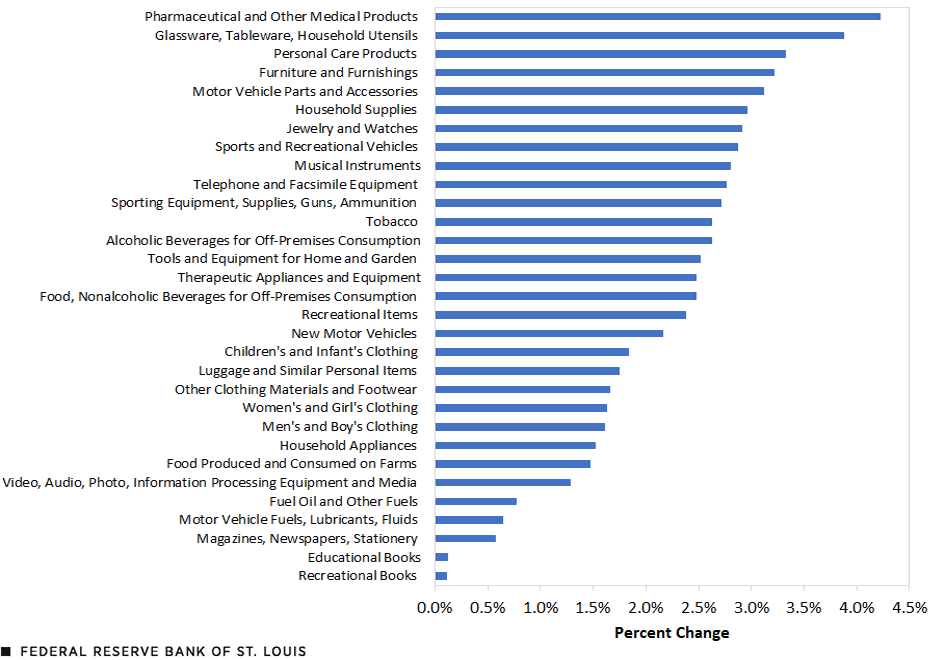
This post was originally published here. 

Want to stay on top of the science and politics driving biotech today? Sign up to get our biotech newsletter in your inbox.

Cancer patients may be receiving higher doses and longer courses of expensive drugs than they need. Also, we see Moderna’s stock swing some thanks to profit-taking, and… 

… I’ve taken to channeling Diogenes these days, choosing lentils over tyranny. I recommend, they’re most fibrous. 

Continue to STAT+ to read the full story…

This post was originally published here. 

Want to stay on top of the science and politics driving biotech today? Sign up to get our biotech newsletter in your inbox.

Cancer patients may be receiving higher doses and longer courses of expensive drugs than they need. Also, we see Moderna’s stock swing some thanks to profit-taking, and… 

… I’ve taken to channeling Diogenes these days, choosing lentils over tyranny. I recommend, they’re most fibrous. 

Continue to STAT+ to read the full story…

This post was originally published here. 

And so, another working week will soon draw to a close. Not a moment too soon, yes? This is, you may recall, our treasured signal to daydream about weekend plans. Our agenda is still in the works, but we do plan to promenade extensively with the official mascots, catch up on our reading, welcome our vacuum cleaner back home, and hunt for the perfect iced coffee. We also hope to hold yet another listening party, where the rotation will likely include this, this, this, this and this. And what about you? If weather permits, the possibilities are endless — you could hike trails, stroll boardwalks, stop by a favorite restaurant, or take a long drive to nowhere. Well, whatever you do, have a grand time. But be safe. Enjoy, and see you soon. …

Heidi Overton’s years of loyalty to President Trump helped her become his pick to lead the U.S. Food and Drug Administration, but that devotion could ruin her chances at Senate confirmation, Politico explains.  Sen. Bill Cassidy (R-La.), a vaccination proponent who chairs the Health, Education, Labor and Pensions Committee, already signaled she may not have his vote. Another stumbling block: Many in the Make America Healthy Again coalition dislike her for backing Trump’s decision to protect the manufacturing of a weedkiller they believe causes cancer.

Drugmakers continue to face severe supply constraints for transdermal estrogen patches as demand surges, The Hill writes. The problem began last November, when the FDA began removing some of the strongest safety label warnings from hormone replacement therapy, which triggered a surge in prescriptions. But the patches are complicated to make and take considerably longer to manufacture than traditional pills. Limited manufacturing capacity has meant that many women are switching brands and dosages.

Continue to STAT+ to read the full story…

This post was originally published here. 

And so, another working week will soon draw to a close. Not a moment too soon, yes? This is, you may recall, our treasured signal to daydream about weekend plans. Our agenda is still in the works, but we do plan to promenade extensively with the official mascots, catch up on our reading, welcome our vacuum cleaner back home, and hunt for the perfect iced coffee. We also hope to hold yet another listening party, where the rotation will likely include this, this, this, this and this. And what about you? If weather permits, the possibilities are endless — you could hike trails, stroll boardwalks, stop by a favorite restaurant, or take a long drive to nowhere. Well, whatever you do, have a grand time. But be safe. Enjoy, and see you soon. …

Heidi Overton’s years of loyalty to President Trump helped her become his pick to lead the U.S. Food and Drug Administration, but that devotion could ruin her chances at Senate confirmation, Politico explains.  Sen. Bill Cassidy (R-La.), a vaccination proponent who chairs the Health, Education, Labor and Pensions Committee, already signaled she may not have his vote. Another stumbling block: Many in the Make America Healthy Again coalition dislike her for backing Trump’s decision to protect the manufacturing of a weedkiller they believe causes cancer.

Drugmakers continue to face severe supply constraints for transdermal estrogen patches as demand surges, The Hill writes. The problem began last November, when the FDA began removing some of the strongest safety label warnings from hormone replacement therapy, which triggered a surge in prescriptions. But the patches are complicated to make and take considerably longer to manufacture than traditional pills. Limited manufacturing capacity has meant that many women are switching brands and dosages.

Continue to STAT+ to read the full story…

This post was originally published here. 

Target reported a second straight quarter of comparable sales gains on Wednesday, saying that a merchandising overhaul under the retailer’s new CEO attracted more customers and boosted sales both in stores and online.

The mass-market discount retailer also benefited from a tariff refund of $994 million after the U.S. Supreme Court ruled this year that President Donald Trump overstepped his authority when he imposed double-digit import taxes on goods from most other countries.

There is a lot of interest in how tariff refunds from the U.S. government will impact retailers and whether those refunds will be used to lower prices for customers.

Chief Financial Officer Jim Lee, when asked about tariff refunds this week, said the company continues to invest in lowering prices. Target reduced the prices of more than 10,000 items over the past year and “there’s more to come even as we’re facing headwinds overall,” Lee said.

Comparable sales, those coming from stores and digital channels operating for at least 12 months, rose 3.8% in the second quarter. The company also upgraded its annual profit and sales outlook, citing the solid performance during the first half of the year.

Target is emerging from more than a year of weak comparable sales. It started off 2025 with a 3.8% decline, but recorded a 5.6% jump in the first quarter of this year. The second-quarter gain offset a 1.9% drop during the same three months last year.

Target CEO Michael Fiddelke, a 20-year company veteran who became chief executive in February, said the latest quarter was “an important step forward in the plan we laid out earlier this year to open a new chapter of growth for Target.”

Target also reported an increase in the number of customers going to its stores and shopping on its website from May through July.

“We’re encouraged by the progress made so far, and we’re also clear-eyed about the important work still ahead,” Fiddelke said.

In March, Fiddelke unveiled a $6 billion plan to reverse Target’s sales slump and to reclaim the retailer’s reputation as a place to go for affordable yet stylish apparel and home goods.

More than half of Target’s back-to-school merchandise is new, the company said.

That includes a limited-time collection of teen and tween clothes, school supplies and accessories in pastel colors and floral prints from the women’s lifestyle brand LoveShack Fancy. Target also collaborated with Hollister on a dorm decor collection.

Target recruited fashion designer and TV personality Isaac Mizrahi this summer to fill the newly created role of creative director at large. Mizrahi has been brought in to mentor Target designers, advise on product design and innovation, and forge new partnerships.

It is Mizrahi’s second partnership with Target. He became the first major fashion designer to collaborate with the retailer in 2003 for a successful run.

Fiddelke is also remodeling Target stores and improving staffing. The company has more than 100 full-scale remodels underway, with a goal of reaching 130 this year, Fiddelke said Tuesday.

During the second quarter, comparable store sales — sales from established physical stores — increased 2.7%, while increased same-day deliveries pushed digital comparable sales up 8.7%.

Target is one of the first big retailers to report second-quarter financial results, which could give industry analysts and economists another read on whether ongoing price pressures from the conflict in Iran impacted consumer behavior.

The Commerce Department released a report Friday showing weak retail sales in July. The University of Michigan’s consumer sentiment index, also released Friday, showed greater pessimism about the economy this month, likely driven by stubbornly high prices.

Target’s overall sales increased in all six of its main merchandising categories, led by double-digit growth in what the company calls Fun 101 — a division that includes consumer electronics, toys, trading cards, sports paraphernalia, books and gaming items.

Target’s beauty and food and beverage sales were also standouts. Target plans to roll out a new Target Beauty Studio concept next month in more than 600 locations. The new area, which will offer upscale beauty products and enhanced product expertise from staff, will partly replace its in-store shops with Ulta, which ended its partnership with Target this month, the company said.

Target executives said the company still was working to improve the assortment in its clothing and home goods departments, where sales hardly grew during the latest quarter.

Net income was $1.87 billion, or $4.11 per share, for the three months ended Aug. 1, easily beating the $2.34 per share that Wall Street had expected, according to a survey by FactSet. It also outpaced last year’s $935 million, or $2.05 per share. Yet this year also included millions from tariff refunds, which amounted to $1.65 in earnings per share, Target said.

Net sales rose 5.3% to $26.54 billion for the period.

Target now expects sales to increase 5%, up from its earlier predictions for a 4% gain. It also expects earnings per share for the full year to be in the range of $9.90 to $10.90. Analysts expect $8.52 per share for the year, according to FactSet.

In May, Target reiterated its guidance from March for earnings per share to be near the high end of $7.50 to $8.50.

This story was originally featured on Fortune.com

This post was originally published here. 

An Israeli AI-based start-up has been acquired by British technology holding company Circeus less than two years after its launch, in a deal estimated at several million dollars.

The start-up, Dondy, creates AI agents which manage customer interactions for businesses, including sales, marketing, and customer service.

The company claims that its agents can resolve approximately 70% of customer interactions without the involvement of another human.

 An illustrative image of artificial intelligence.  (credit: SHUTTERSTOCK)

It currently serves over 70,000 businesses in 140 countries, and handles over one million customer interactions each year, despite never having received any venture capital funding.

Israeli friends, founders of Dondy, to remain in leadership positions

Dondy was founded by three Israeli childhood friends, Or Shreiber, Tamir Or, and Inbal Katz, who will remain in leadership positions after the acquisition.

The acquisition also marks Circeus’ first venture into Israel. Circeus serves over 250,000 businesses, and has completed 18 acquisitions over the last four years.

This post was originally published on here. 

The Trump administration will temporarily allow as much as 300,000 metric tons of ground beef into the United States without triggering higher tariffs, an emergency move intended to bring relief to shoppers facing record beef prices.

President Donald Trump said the imported beef would enter over the next 90 days and be sold at prices 25% below prevailing market levels. The White House has not yet identified the supplying countries, participating retailers or how the promised discount will be enforced.

The additional supply would equal roughly 660 million pounds of beef. That sounds substantial, but it represents only about 2% of the approximately 29 billion pounds Americans are expected to consume this year. The plan may therefore place some downward pressure on ground-beef prices without producing an immediate, across-the-board reduction at supermarket meat counters.

Ground beef is the administration’s focus because the United States relies on imported lean trimmings, which processors blend with fattier domestic beef to produce hamburger. Expanding that supply can reach grocery stores and restaurant chains faster than rebuilding the nation’s cattle population.

America’s cattle herd is now the smallest since the 1950s after years of drought, high feed costs and ranchers reducing their herds. Reversing that decline will take years because ranchers must retain breeding cows instead of sending them to market, temporarily tightening the supply even further.

The import plan consequently creates a difficult balance. Consumers and restaurants want immediate price relief, while American ranchers fear that a sudden influx of lower-cost foreign beef could weaken cattle prices just as they begin investing in rebuilding their herds.

Trump previously expanded the low-tariff quota for Argentine lean-beef trimmings by 80,000 metric tons in February. The new announcement is considerably broader, although critical details remain unresolved.

For shoppers, any savings are most likely to appear first in hamburger, frozen patties and other ground-beef products. Steaks and premium cuts are less likely to fall sharply because the policy is aimed primarily at the lean trimmings used in ground beef.

The administration is also pursuing longer-term measures, including support for smaller meatpacking operations and antitrust scrutiny of the country’s largest processors. Those efforts address the structure of the beef market, but the temporary import window is designed to do something far more immediate: place additional meat into the supply chain before high prices push more families and restaurants toward cheaper proteins.

JBizNews Desk | Washington

© JBizNews.com All Rights Reserved. Reproduction or distribution without written permission is prohibited.

Get your daily dose of health and medicine every weekday with STAT’s free newsletter Morning Rounds. Sign up here.

Google Glass came out when I was in college, and they were dismissed as dorky, cumbersome to use, and quickly faded into obscurity. I don’t think Meta’s AI glasses will meet the same fate. The glasses, which can discreetly record audio and video, are already causing trouble.

Read the rest…

This post was originally published here. 

Walmart experienced the slowest growth in U.S. comparable sales in six years during its most recent quarter and it offered a cautious outlook for the year, sending company shares down 6% before the opening bell Thursday.

Comparable sales in U.S. stores, which measure sales at stores open at least a year along with online sales tied to those locations, rose 2.6% in the second quarter. They rose 4.1% in the previous quarter.

Excluding the wellness category that includes Walmart’s pharmacies, comparable sales increased 3.4% in the second quarter. Those sales were hit by federal legislation that requires pharmacies to dispense some high-cost Medicare drugs at capped prices, the retailer said. That was still below analysts’ projections of a 3.8% increase, according to FactSet.

Walmart’s U.S. e-commerce business, which has become an engine of growth for the retailer, rose 24%, trailing the first-quarter pace of 26%.

Walmart is among the first batch of major retailers to report second-quarter results, which could offer industry analysts and economists another read on whether ongoing price pressures from the conflict in Iran have impacted consumer behavior.

Walmart is considered a barometer of consumer spending given its vast customer base. More than 150 million customers are on its website or in its stores every week, according to Walmart.

That may draw even more attention this quarter after U.S. data released Friday showed that retail sales were surprisingly weak in July and a new read on consumers from the University of Michigan revealed growing pessimism about the economy, with so many Americans struggling with higher costs for gas, groceries and just about everything else.

The new figures from Walmart revealed the smallest gain in comparable store sales since a 1.9% gain for the quarter ended Jan. 31, 2020, according to FactSet.

That has broadened Walmart’s customer base and the retailer has begun capturing a larger share of wealthier Americans. The biggest gains in market share for Walmart are coming from households with annual incomes over $100,000.

Walmart’s quarterly net income was $6.37 billion, or 80 cents per share, in the three-month period ended July 31. Adjusted per-share results were 81 cents, easily topping the 74 cents Wall Street had expected, according to FactSet.

Sales rose 5.9% to $187.94 billion. Analysts were predicting $186.62 billion, according to FactSet.

For the third quarter, Walmart expects earnings per share of 62 cents to 64 cents. It projects sales to be up 3% to 3.5%. That would put sales in a range of $184.88 billion to $186.23 billion. The forecasts are below analysts’ expectations of 68 cents per share and sales of $188.19 billion, according to FactSet.

For the full year, Walmart now expects earnings per share to be in the range of $2.80 to $2.87 while sales should be up anywhere from 4% to 5%. That would mean a forecast for sales in the range of $741.7 billion to $748.8 billion, according to FactSet.

Analysts expected $2.90 per share and sales of $752.06 billion for the year, according to FactSet.

This story was originally featured on Fortune.com

This post was originally published here. 

Two things are happening in the grocery aisle at the same time, and they pull in opposite directions. Eggs have gotten much cheaper because the hens are back. Beef keeps getting more expensive because the cattle are not.

The average price of a dozen eggs is down 31% since President Trump took office last year, according to grocery-price data updated Wednesday by NBC News. Over the same stretch, ground beef is up 18% and orange juice is up 20%. The figures come from NIQ, a research firm that collects real checkout prices paid at grocery stores, drugstores, mass merchandisers, dollar stores, warehouse clubs and military commissaries.

The egg story is supply. Bird flu tore through American flocks in late 2024 and early 2025, farms culled birds by the millions, and the price of a dozen eggs shot past $6 last spring. Flocks have since been rebuilt, and production recovered. The Agriculture Department projects retail egg prices will fall 27.4% across 2026 as flock sizes and output continue to bounce back. Wholesale prices averaged about 67 cents a dozen in the second quarter, down nearly 28% from a year earlier — though they started creeping up again in early July.

Beef works on a much slower clock. A hen goes from chick to laying in about five months. A calf takes roughly two years to reach the meat case. The national cattle herd is in a cyclical contraction, which has kept supplies tight and pushed farm-level cattle prices 7.5% above last year, with the Agriculture Department forecasting an 11.6% rise for 2026. Wholesale beef prices were 12.7% higher in June than a year earlier. Drought across grazing country made it worse, and ranchers who sell off breeding stock to cut costs make the shortage last longer.

Put the two side by side and the arithmetic is stark. Ground beef averaged about $6.83 a pound in June; eggs averaged about $2.14 a dozen. A single pound of ground beef now costs more than three dozen eggs.

For a family running a weekly cart, the practical move is substitution. Ground pork and ground chicken carry most beef recipes at a lower price. Stretching a pound of beef with beans, rice, pasta or vegetables cuts the per-serving cost roughly in half. Eggs, cheap again, do real work as a dinner protein rather than only a breakfast one.

Overall, food inflation is running cooler than the beef number suggests. Grocery prices edged down 0.1% in July, and food overall is up 3% over the past year. But prices have climbed for most of the past six years, with the war in Iran, supply chain bottlenecks and the war in Ukraine all pressing on shoppers’ bills.

The fix for beef is not a policy lever. It is time. Herds rebuild over years, not months, and until they do, the meat counter stays where it is.

JBizNews Desk | New York

© JBizNews.com All Rights Reserved. Reproduction or distribution without written permission is prohibited.

President Donald Trump said earlier this week that any governor or local government official should want to welcome the construction of AI data centers.

“The construction jobs are enormous. We’re building the biggest plants anywhere in the world. And I can say, if I were the mayor of a town or the governor of a state, and I had a chance to get a big plant in an AI plant or a data center, I would absolutely want it because the jobs are enormous, and the money paid, the taxes paid are just enormous,” Trump said at the White House on Wednesday. 

“And if you don’t take it, you’re going to be left behind because there are plenty of places that want it,” he added during a meeting with technology and cryptocurrency industry leaders in the Roosevelt Room. “But if I were a governor or mayor, I would want that plant in my community. And many of them are designed in a very beautiful way. It’s really very positive.”

This post was originally published here. 

Further escalating its battle with the Trump administration, ABC on Tuesday took the rare step of suing the Federal Communications Commission on First Amendment grounds, saying the agency’s demand for early review of its broadcast licenses posed an “existential threat” to the network.

In the lawsuit, ABC, its parent company Disney and the eight ABC-owned stations whose licenses are affected asked a federal court to stop the early renewal proceedings.

The FCC under Chairman Brendan Carr, an ally of President Donald Trump, had ordered the early review in April — itself a rare move — of all eight licenses owned by ABC, years before they are set to expire. Licenses are issued for eight-year periods. The FCC cited the network’s diversity and inclusion practices as a reason, but the development came shortly after a joke by ABC’s late-night host Jimmy Kimmel — an outspoken Trump critic — had infuriated the president, who has called for Kimmel’s firing.

“Again and again, the Administration has attacked ABC’s speech — the stories its journalists report and the viewpoints its network programs air,” the network alleged in its lawsuit Tuesday. “Over time, those attacks have escalated into express demands that ABC be stripped of its broadcast licenses because of its speech.”

“Facing this existential threat,” it added, “Plaintiffs have no choice but to seek redress from the judicial branch for the Administration’s blatant retaliation for their First Amendment speech.”

It said ABC had “no alternative means to eliminate these ongoing and immediate threats other than total capitulation to the Administration’s demands.” It asked the court to “immediately enjoin Defendants from taking or threatening to take any action against Plaintiffs in relation to the early license renewal applications.”

There are already clashes between ABC and the administration

The early license review is only one part of a long-simmering confrontation between ABC and the FCC.

The network has also been fighting Carr’s efforts to make the morning talk show “The View,” whose hosts and guests are often critical of Trump, subject to equal-time rules. That’s a question ABC says the agency itself decided — in the network’s favor — more than two decades ago. ABC argues “The View” is a bona fide news program, meaning it’s exempt from equal time rules, which require granting equal airtime to competing candidates for office.

The ABC lawsuit Tuesday also spoke of broad ramifications that go well beyond one network.

“The consequences of the Administration’s campaign against free speech reach well beyond ABC,” it said. “If the Administration gets its way, the message to every media company in the country will be unmistakable: tell only the stories the Administration deems favorable, or face the coercive machinery of the federal government. In such a world, the press could in no way be described as free.”

It added: “The FCC Chairman has left little doubt that this is his goal.”

The lawsuit also quoted Carr as saying, when Kimmel made comments that angered the administration, “We can do this the easy way or the hard way. These companies can find ways . . . to take action . . . on Kimmel, or there is going to be additional work for the FCC ahead.”

Carr, a longtime FCC commissioner, was named chairman by Trump in November 2025. He has indeed made it clear that he is considering revoking ABC’s licenses, or trying to, in what would surely be a drawn-out legal process.

Longtime free-speech attorney Floyd Abrams noted that tensions between the press and the commission are not new — but have never been this pronounced.

“There has long been a level of tension between the broadcast media, which seeks full First Amendment protection, and the FCC,” Abrams wrote in an email to The Associated Press. “But not until the Trump Administration has the government so directly, so deliberately and so dangerously sought to limit the freedom of the broadcast press to cover and discuss the news.”

The lone Democrat on the FCC praises the lawsuit

The sole Democrat on the commission, Anna Gomez, commended ABC and Disney for pushing back against the FCC’s actions.

“For months, the FCC has waged a campaign of censorship and control against Disney’s ABC stations,” she said in a statement, “using the threat of broadcast license revocations to punish a company for speech this administration doesn’t like.”

“I have long called on companies to push back against this kind of government intimidation, and I’m glad Disney has shown courage and stepped up,” she said. “This should be a welcome sign for every broadcaster who has felt the weight of this overreaching government pressure in silence.”

In late July, Carr defended his agency’s actions against ABC, saying broadcasters have a duty to “operate in the public interest.” The FCC, he said, was merely trying to restore that standard. Besides investigating ABC, Carr has also opened separate investigations into CBS News and NBC News.

Broadcasters like ABC, Carr said in an interview on the Fox Business Network, “struck a deal with the American people. You broadcasters get subsidized access, free access to a valuable public resource, the airwaves, worth billions of dollars. In exchange, you have to operate in the public interest.”

“Look, as a country, we should have a trusted, respected news media, and we’re not there,” Carr said. “So I hope more broadcasters return to their public interest obligations.”

On Tuesday, an FCC spokesperson reiterated that position.

“All broadcasters have a legal obligation to operate in the public interest — even Disney,” said a statement from the commission, responding to the lawsuit.

“The FCC has been examining claims that Disney engaged in illegal DEI discrimination for over a year. Disney is obviously very concerned about the FCC’s proceeding, as evidenced by their ongoing campaign of disinformation as well as their decision to ask a court to stop the FCC from further pursuing matters. The FCC will continue to follow the facts and law wherever they lead.”

___

Associated Press journalist Mike Catalini contributed to this report.

This story was originally featured on Fortune.com

This post was originally published here. 

Twenty-five years ago, multinationals found themselves facing an affordability crisis. Emerging economies were growing at 3x to 4x the rate of developed economies (they are still growing ~2x faster now). The collective purchasing power of billions of potential consumers and the growing middle class in emerging markets presented an enormous business growth opportunity. Many multinationals initially floundered by offering rich-market solutions to poor customers, or stripping features to make cheap product variants. Successful companies focused on delivering value—products that offered the core performance and quality users desired at a price point they could afford. They did this by assessing the unique requirements of emerging market users and designing solutions to suit their wants and needs.

Affordability is the key issue in the upcoming midterm elections. Families, reeling from years of price hikes and inflation following the pandemic, are desperate for products and services that they can afford, but that are not “cheap.” We are living in an era when companies must find solutions that are not just lower-cost, but rather higher value, offering adequate or even improved performance at a lower price.

There are some affordability strategies that America has already exhausted, and if pursued further, may turn customers away or cause economic havoc. The first is what we call “Costcofication.” Costco’s business model is predicated on making products more affordable to customers through bulk sales. They do not compromise the performance or quality of name brand products, but rather leverage economies of scale in packaging. Consumers can buy their favorite Coca-Cola beverages, Charmin toilet paper, and Dawn dish soap… if they want them by the case. This sales model has scaling limits—it’s unlikely consumers will want to tow a tanker full of Skippy peanut butter home. It also depends on shoppers being able to afford the Costco membership, large payout for bulk purchases, and have room to store them in their home. Costco is already inaccessible to many Americans, as the average household income of its members is $125,000/year, yet the median income for the country is $80,000/year. 

The second cost-saving strategy that is likely maxed out is what we call “Walmartfication.” Charles Fishman has written widely about “The Wal-Mart Effect,” including how the company often pressures its suppliers to lower quality to achieve affordability through “everyday low prices.” Suppliers have had to go so far as to design look-alike but cheaper versions of popular brands to meet Walmart’s demands, like Levi Strauss’ “Signature” jeans, which have lighter weight denim than the premium Levi’s brand. Further lowering the quality and performance of products to make them more affordable could damage brand reputation, dissatisfy consumers, and hurt Walmart’s bottom line.

The third cost-saving strategy we call “Taxpayerfication.” This is when the government makes services more affordable to consumers by subsidizing costs, only to turn around and have them still pay for it through tax increases. This strategy only gives the appearance of improved affordability by either placing the financial burden directly on society, or by kicking the can down the road by increasing the national deficit, which must be paid by Americans someday. The real issues behind the national affordability crises of healthcare, housing, higher education, and childcare are spiraling costs. Without addressing costs directly, shifting who pays them won’t change the underlying problem or save society any money.

Innovators must look at the new, affordable products and services demanded by Americans with fresh eyes. Adapting existing offerings will likely not work; disrupting them is the only way to address the affordability crisis. We need to provide solutions that deliver high performance at low cost, offering value to consumers. Fortunately, a playbook already exists from which there are many lessons to learn: innovating for emerging markets.

When GE Healthcare set out to sell CT scanners in China and India, its premium Revolution scanner—costing roughly $650,000 to manufacture—was a nonstarter. Rather than strip features, GE followed a “reuse, revise, redesign” discipline: it reused amortized components like the base structure, patient table, and software. It identified the image detector as a pain point driving cost: the Revolution scanner used 128 curved X-ray collectors that could capture the contours of a patient’s body. Rather than using expensive hardware, GE utilized only six, much cheaper flat detectors and invested in improved software to render accurate 3D images. The resulting Brivo CT scanner could perform 75% of the CT procedures that the Revolution could, at a manufacturing cost of only $56,000, making it a commercial success across emerging markets.

Gillette initially tried, and failed, to launch the Vector razor in India—a model considered “cheap” in the eyes of Americans because it was old and obsolete, but still much too expensive for the Indian mainstream. They quickly wised up and realized they had to understand the unique requirements and value propositions of Indian users. The company sent its engineers into consumers’ homes—logging 3,000 hours with more than 1,000 men—and discovered that Indians shave differently than Americans: less often, with thicker stubble, seated in dim light, and rinsing in a cup rather than under running water. Gillette designed the Guard with bump-flattening ribs to avoid cuts and the stress of shaving in low light, and large flush channels to clear hair particles with a little swishing. The Guard has only four parts to keep the price down; it sold for about 25 cents, with blade cartridges at roughly 8 cents. Within four years, the Guard accounted for two of every three razors sold in India.

Peru’s Innova Schools show the same innovation approach applied to high-value education. Chairman Carlos Rodriguez-Pastor and his team elucidated four requirements for improved schools in Peru: tuition no higher than $130 a month, quality equal to or better than the country’s $15,000-a-year private schools, a model scalable to hundreds of campuses, and profitability. Working with the design firm IDEO, Innova Schools built a “flipped classroom”: 70% teacher-led group work, 30% self-directed online learning supported by a central library of more than 20,000 lesson plans. This model enabled less-expensive teachers to deliver top-tier results. Utilizing modular, reconfigurable buildings slashed construction costs. Today, Innova Schools students outscore both public schools and far pricier private ones. In 2025, 63 Innova Schools in Peru served 64,000 students, with 20 additional schools operating in Mexico, Colombia, and Ecuador.

Each of these solutions delivered the core performance customers wanted at a fraction of the price of prior offerings. This disruption was achieved by understanding the unique requirements of emerging market customers and tailoring solutions that delivered the right price and performance. America’s innovators should run this playbook at home to create the affordable, valuable solutions the public demands.

The opinions expressed in Fortune.com commentary pieces are solely the views of their authors and do not necessarily reflect the opinions and beliefs of Fortune.

This story was originally featured on Fortune.com

This post was originally published here. 

More than four years after his son murdered Tomer Morad, Barak Lufen and Eitam Magini in the heart of Tel Aviv, Fathi Hazem, the father of terrorist Raad Hazem, was killed overnight Thursday in Jenin.

According to the IDF, Hazem attempted to stab troops operating in the area and was shot dead. For Tal Morad, Tomer’s sister, his killing does not close a circle. In her eyes, the circle that began on April 7, 2022, cannot be closed as long as her brother is not here.

In a conversation with Walla, Tal said that just minutes before she learned of Hazem’s killing, her mother called her and told her about an unusual dream in which she had seen Tomer.

“Just before I heard, I spoke with my mother, and she called to tell me that she had dreamed about him. She dreamed that he was wounded in a hospital, and standing next to him was a wounded man wearing a galabeya. Tomer tells her: ‘Mom, don’t touch me, I’m wounded,’” Tal said.

She said the dream continued in a way that became especially chilling for the family after they learned what had happened in Jenin.

“She dreams that someone comes to her, an army officer, and takes her to Tomer in the hospital. She told her: ‘This can’t be; Tomer is not alive.’ Then, next to Tomer, stands someone wearing a long white galabeya, wearing a large knitted kippah, with his hands joined in front of his body, as if he is standing there guarding him. Then Tomer says to her: ‘They put him in his place.’ After he smiled at her, she woke up. He told her that this man was in his place.”

Shortly after that conversation, news arrived of Hazem’s killing. But Tal said her first thought was not about the man who had been killed, but about the soldiers operating in the area.

“The first thing I did was check that none of our forces had been injured and that nothing had happened, because that is the most important thing,” she said. “From what I understand, Hazem tried to stab a soldier, and they shot back at him. That is what brings us the most comfort and relief as a family, because if something had happened to a soldier, to one of them, in my eyes it would not be worth anything. Tomer is no longer with us, and that will not change it. The fact that Tomer is no longer here will never change.”

Alongside those comments, Tal did not hide her sense of relief that Hazem is no longer alive.

“I am mostly happy that a man with so much hatred, who spreads so much hatred, is no longer with us. He would hold conferences and send people out to carry out attacks, so mostly, thank God, this man is no longer with us.”

Jenin camp resident murders three, wounds 15

The attack in which Tomer was murdered took place on April 7, 2022. Raad Hazem, a resident of Jenin refugee camp, arrived on Dizengoff Street in Tel Aviv and opened fire at people spending time there. He murdered Barak Lufen, Tomer Morad, and Eitam Magini, and wounded 15 others. After the shooting, Hazem fled the scene and was located near a mosque in Jaffa after a nine-hour manhunt.

Two operatives from the Shin Bet (Israeli Security Agency)’s operational unit who were patrolling the area identified a person matching the terrorist’s image and the details provided to forces. They exited their vehicle and ordered him to stop. Hazem raised his hands, but then ran to hide behind a vehicle, pulled out a handgun, and fired 10 bullets at them. The forces charged toward him, returned fire, and killed him.

After his son’s death, Hazem left his home in Jenin and delivered a speech in which he spoke about continuing the struggle and future victory. Among other things, he told a crowd gathered at the scene that he hoped they would see “victory,” “freedom,” and “independence,” and called for the liberation of the Al-Aqsa Mosque.

Several months after the attack, IDF forces demolished Raad Hazem’s home in Jenin. During the operation, clashes and exchanges of fire broke out between armed Palestinians and the troops. As the soldiers left the refugee camp, heavy objects, stones, and firebombs were thrown at them. Palestinians reported one person killed and several wounded at the time.

For Tal, all these details are part of a story that has no ending point. When asked whether Fathi Hazem’s killing closes a circle for her, she breaks down in tears.

“My circle will never close,” she says. “I am happy he is not there. Our circle will close when we meet Tomer. But it is good that he is not here.”

Victim’s sister worried about endangerment of IDF soldiers 

On the very day the father of the terrorist who murdered her brother was killed, Tal sought to make clear that, in her eyes, such a killing does not restore the justice taken from her family. She also worries about the price soldiers may pay when sent to carry out such operations.

“No killing will bring justice. It only endangers our soldiers. It is another family destroyed like mine, and it is not worth it. They should not be here, and I wish we could take care of this without endangering our soldiers, for one terrorist, and another family like this will be destroyed. I choose that this should not happen.”

For her, even the killing of one person does not change the broader reality.

“You only think about how different we are from these people, and how much they are driven by hatred. And no matter how many generations pass, unfortunately, it will not change. I do not know whether the killings will change anything, because one person goes and another one rises. I only think about how bitter our fate is, that we are destined to live alongside them.”

Since April 7, 2022, she said, almost every incident of loss in Israel brings her back to the night her brother was murdered. Even four years and four months later, the memory does not need news about the Hazem family to awaken again.

“I always return to the attack, even during the war. Every face of a child that appears on television takes me back to that same evening. It is simply a cruel fate,” she said.

“Life in this country makes us see this not as a symbol or as someone specific. Every mother standing at a funeral, every person, every sister, every face of a child, with a uniform or without a uniform, everything brings us back. We live this. I do not need a news report to remind me. I am just happy that his father was killed and is no longer here.”

Most important thing is to prevent it from happening to anyone else

When asked how she thought Tomer would have reacted if he had heard that the father of the terrorist who murdered him had been killed, Tal said: “Tomer would have said that ‘every dog has its day’ [a Hebrew expression meaning that bad people are punished at their time]. That is Tomer.”

Alongside her memory of her brother, Tal said that, in her view, the story is bigger than simply commemorating Tomer. She wants him to be remembered, but more than that, she wants to see a reality in which more families do not have to go through what hers experienced.

“I cannot say that it is not important to me that everyone remembers who Tomer is, so we do things for that. But at the level of the country and the public, what is most important? The most important thing is that someday soon a solution will be found that will stop us from having to live this way. But if I am being honest, as the years go by, I believe this is the fate of the country, to live this way.”

Four years and four months after that evening on Dizengoff Street, time has not stopped the longing for the Morad family. Tomer remains present in every memory, every picture, and every moment that takes them back to the life they had before April 7, 2022. Even this morning, amid the news from Jenin, Tal ultimately returns not to the man who was killed, but to the brother she lost: his smile, the things he used to say, and the hope that one day the pain will become a little less heavy.

This post was originally published on here. 

When the U.S. government has to pay more to borrow money, everyone else does too. That is what happened this week. The yield on the 30-year Treasury bond reached 5.323% on Tuesday, a 19-year high, before slipping back to just under 5.3%, and lenders promptly repriced the loans ordinary Americans take out. The average 30-year fixed mortgage rate stood at 6.75% on Tuesday, up from 6.69% at the end of last week, according to Mortgage News Daily.

The mechanism is simple. Investors who lend to Washington for 30 years are demanding more compensation because they expect inflation to stay high and the government to keep borrowing heavily. The national debt is approaching $40 trillion, more than $11 trillion higher than in fiscal 2019. Banks price home loans off those same government yields, so when the government’s cost of money goes up, so does the rate on a mortgage.

The 10-year Treasury yield, the benchmark that fixed mortgages actually follow most closely, is now above 4.7%, compared with below 4% before the Iran war began at the end of February. It eased back toward 4.7% Wednesday as investors waited on the minutes of the Federal Reserve’s July meeting.

For a buyer, the arithmetic is unforgiving. On a $400,000 loan, the move from 6.69% to 6.75% adds roughly $16 to the monthly payment — small on its own. The bigger number is what the full term costs at today’s rate: about $2,594 a month, and roughly $534,000 in interest over 30 years. The buyer pays back more than twice what was borrowed.

It is not only housing. Buyers financing a new vehicle are facing rates near 7%, while used-car borrowers are contending with roughly 10.6%. Variable-rate credit cards, which move with the prime rate, are under the same pressure.

Inflation is the engine behind all of it. Consumer prices rose 3.4% in the year through July, well above the Federal Reserve’s 2% target, and up from 2.4% in January before the war. Minutes released Wednesday from the Fed’s late-July meeting showed many officials believed policy would likely have to tighten further if inflation does not come down, with some saying financial conditions may not yet be restrictive enough. The Fed has held its rate at 3.5% to 3.75%, with three members dissenting in July in favor of an increase.

So what can a buyer actually do? Lawrence Yun, chief economist at the National Association of Realtors, said borrowers should not count on a meaningful drop. “The impact on mortgage rates is directly related to higher bond yields,” he said, adding that inflation and long-term borrowing costs will keep rates elevated regardless of what the Fed does. His practical suggestion for buyers who expect to move before the fixed period runs out: a seven-year adjustable-rate mortgage, which carries a lower starting rate.

The other options are the familiar ones — a larger down payment to shrink the loan, paying points up front to buy the rate down, or a 15-year term, which carries a lower rate and far less total interest for buyers who can carry the higher monthly payment.

What would actually bring rates down is inflation cooling and the government borrowing less. Neither is in evidence this week.

JBizNews Desk | Wall Street

© JBizNews.com All Rights Reserved. Reproduction or distribution without written permission is prohibited.

Neutrogena broke its silence Thursday following the death of Hayden Panettiere and mounting backlash over the skincare brand’s alleged treatment of the actress, acknowledging that it made her “feel unsupported during a very difficult time.”

Panettiere, known for her roles in “Nashville” and “Remember the Titans,” died Sunday at 36 after she was found unresponsive and in cardiac arrest at an apartment in Greenville, South Carolina.

Preliminary autopsy results found no signs of trauma that contributed to her death, Fox News Digital previously confirmed.

In the days following her death, fans unearthed comments made by Panettiere, who worked with Neutrogena from 2005 to 2015, in which she claimed the skincare brand cut ties with her after she spoke publicly about her experience with postpartum depression (PPD).

TIKTOK SAYS MODERATOR ERROR DELAYED REMOVAL OF PEREZ HILTON’S LIVESTREAM SHOWING ACTS OF SELF-HARM

Neutrogena’s social media posts were subsequently flooded with negative comments, with some users calling for a boycott of the brand.

Neutrogena addressed the backlash in an Instagram post Thursday, saying it was “deeply saddened” by Panettiere’s death.

“For more than a decade, Hayden was a valued member of our Neutrogena community,” the brand wrote. “We are proud to have partnered with her and understand that we made her feel unsupported during a very difficult time. This is not what Neutrogena stands for or who we want to be.”

“Hayden’s courage in sharing her challenges helped inspire important conversations and awareness,” the post continued. “We are making a significant investment to a long-standing community health partner to help give more women access to the support they need, including care for postpartum depression. We will share more details with this community when plans are in place.”

MOVIE THEATER GROUP REVERSES COURSE, URGES CALIFORNIA AG TO SETTLE $110B PARAMOUNT-WARNER BROS LAWSUIT

The brand said it had initially refrained from publicly commenting on Panettiere’s death out of respect for her family.

In her memoir, “This Is Me: A Reckoning,” released earlier this year, Panettiere wrote that Neutrogena wanted to end its long-term relationship with her after she spoke publicly about her experience with PPD.

During an appearance on Jay Shetty’s “On Purpose” podcast in May, Panettiere said she had not planned to discuss postpartum depression when the subject came up during a 2015 interview on “Live! With Kelly and Michael.”

“I had no intention of, or plan to, talk about postpartum depression. It just came up, and I was just being honest,” she said.

DAVE PORTNOY HAS MESSAGE FOR ‘TRASHY, RATCHET INFLUENCERS’ AMID VIRAL NANTUCKET SIGN CONTROVERSY

“Never for a second did I think that anyone … cared, that anyone would have a bad reaction to it. It was my truth.”

Panettiere said losing the Neutrogena partnership was “the last thing that I thought they would ever fire me over.”

“And so when I got that call that Neutrogena wanted to fire me over that, and my representative at the time said, ‘That’s illegal you can’t do that,’ I knew that that was gonna be it, that I was not gonna be invited back the next year, and I had worked with those people for 10 years.”

Panettiere’s death came just weeks after she spoke publicly about her past struggles with addiction and the difficult decisions she made while seeking help.

GET FOX BUSINESS ON THE GO BY CLICKING HERE

Fox News previously reported that the Drug Enforcement Administration (DEA) has been contacted and is assisting in the investigation into Panettiere’s death.

FOX Business has reached out to Neutrogena for additional comment.

Fox News Digital’s Lorraine Taylor and Stepheny Price and Fox News’ Jake Gibson contributed to this report.

This post was originally published here. 

A university lab nurtured the computer scientists who are using ingenuity and imitation to chase down Anthropic and OpenAI. “They know perfectly how to monetize their work.”

This post was originally published here. 

Good morning. On Fortune’s radar today:

  • Exclusive: Venezuela likely to go for dollarization of its currency to cure hyperinflation.
  • Bond traders say Bessent’s ‘band-aid’ is ‘a heinous financial crime.’
  • Markets: Bitcoin is back! (A bit.)
  • The 60/40 portfolio, RIP.
  • What 5 million tons of seaweed did to Mexico’s hotel industry.
  • Tim Cook added $32 million per hour to Apple’s market cap, every single hour of his 15-year tenure.
  • Seafood truck crash creates 8-hour-long ‘Squidpocalypse.’

➡️ Did someone forward you this email? If you would like to receive this information directly, every morning before the markets open in New York, sign up here.

This story was originally featured on Fortune.com

This post was originally published here. 

Good morning. Did you hear about China’s robocop? The 6-foot-2-inch droid, deputized by the authorities in Hangzhou, is more mall cop than terminator (its limited duties include waving traffic and admonishing jaywalkers). But following Wednesday’s blockbuster IPO of Unitree, a Chinese robotics company whose shares popped 460% on their first day trading, it’s clear that China is having a humanoid moment.

All the buzz coming out of China is likely to spur calls for America to up its humanoid game (we got humanoids too!), lest we get left behind. So, get ready for the next big trans-Pacific rivalry: the U.S.—China humanoid race.

Today’s tech news below. —Alexei Oreskovic

Want to send thoughts or suggestions to Fortune Tech? Drop a line here.

This story was originally featured on Fortune.com

This post was originally published here. 

From being boycotted, canceled, and outright attacked, many Israeli and Jewish artists have been the victims of antisemitic and anti-Israel abuse since October 7. Yet, for many of these singers, actors, comedians, and other performers, they have no choice but to keep working in their chosen fields. Suffering the attacks but soldiering on.

In this edition of The Jerusalem Report, we turn the spotlight on some inspiring Israeli artists and entertainers who remain proud of their identities despite the tension.

For the cover story, I interviewed the hilarious Yohay Sponder, an Israeli comedian who has been drawing huge crowds around the world with his stand-up, often off-the-cuff, comedy routine, which pokes fun at Israel, Jews, and those who hate both.

The Report’s staff writer, Chani Kaplan, talks to DJ Rafi, a formerly shy Israeli kid who has become an icon for millions of children around the world through his YouTube videos.

Hannah Brown, The Jerusalem Post’s culture writer, explores how Israel’s television industry appears to be booming but is still suffering from shrinking budgets, political battles, and fewer commissions.

The Jerusalem Post’s podcast studio manager, Shifra Jacobs, writes about efforts to preserve and even revive Yiddish music, and in a separate article, Jacobs shares her personal experiences singing in a mixed Israeli-Palestinian choir in Jerusalem. Meanwhile, Lara Sukster Mosheyof, who also works in the Post’s studio, features the latest incarnation of the favorite children’s tale, Peter Pan, and how it is aiming to soothe a country dealing with collective trauma since October 7.

Feature writer Rachel Fink profiles musician Neta Elkayam, who brings her North African heritage to the world of jazz with a new band, creating a fresh and unique musical fusion. Tania Shalom Michaelian takes readers on a journey to an old Ottoman train station that has been converted into a creative space for artists to express themselves after October 7.

Moving away from the arts, we also look at the looming elections in Israel, with Prof. Amichai Cohen, vice president of research at the Israel Democracy Institute, weighing in on what’s at stake in the vote and the mammoth tasks facing Israel’s next government.

Maurice Hirsch, the director of the Palestinian Authority Accountability Initiative at the Jerusalem Center for Security and Foreign Affairs, looks at the lessons that need to be drawn from October 7 and calls for a new approach to the growing security threat posed by the Palestinian Authority.

Meanwhile, Andrew Fox, a former British Army officer and senior fellow at the UK’s Henry Jackson Society, examines the faults of President Donald Trump’s peace push in Gaza; and Prof. Kobi Michael, a senior fellow at the Misgav Institute for National Security and at the Institute for National Security Studies in Tel Aviv, profiles Hamas’s newly elected leader, Khalil al-Hayya. 

Feature writer Dana Ben Shimon talks to analysts from Syria about the new opportunities for their country since the fall of president Bashar al-Assad and the rise of Ahmed al-Sharaa. And Dr. Eric R. Mandel warns that Israel’s easternmost border with Jordan could one day become the next front in its regional wars.

Shiri Fein Grossman, CEO of the Israel-Africa Relations Institute, reflects on the legacy of the heroic Entebbe operation and what can be learned 50 years on.

And, as part of our special arrangement with the “Art of Journalism” workshop at the School of Communication, Reichman University, we are proud to feature an important story by Arielle Zabek about the conservation of thousands of vulnerable sea turtle hatchlings along Israel’s coast.

It’s another packed edition with a broad range of stories, and we hope you enjoy it.

– Ruth Marks Eglash

This post was originally published on here. 

Israel awoke to a fundamentally changed Middle Eastern reality on September 30, 2015: Russian fighter planes streaked through the skies over Homs, carrying out Moscow’s first combat sorties in the Middle East since the end of the Cold War.

President Vladimir Putin had arrived to save Russia’s key Middle Eastern ally, Syria’s then-president Bashar al-Assad.

Nine days earlier, on September 21, Prime Minister Benjamin Netanyahu – who had good intelligence about Russia’s plans – flew to Moscow on a lightning visit. He was accompanied not by the press but by then-IDF chief of staff Gadi Eisenkot and then-head of the Military Intelligence Directorate Herzi Halevi – unusual for a foreign trip.

There, Netanyahu and Putin discussed establishing a deconfliction mechanism to prevent Israeli and Russian pilots accidentally confronting each other over Syrian skies. By 2015, Jerusalem had already approved scores of attacks against Hezbollah and Iran’s efforts to build a launchpad against Israel.

The mechanism worked for nearly a decade, until Assad was overthrown in December 2024 by the forces led by the current president, Ahmed al-Sharaa.

Russia's President Vladimir Putin meets with Turkey's President Recep Tayyip Erdogan on the sidelines of the BRICS summit in Kazan on October 23, 2024. (credit: Alexander Zemlianichenko/Pool/AFP via Getty Images)

How Israel and Russia avoided a Syria confrontation for years

It worked largely because Israel and Russia reached an informal understanding: Each had interests in Syria. Israel would not interfere with Russia’s, and Russia would allow Israel to protect its own.

Those interests were clear. Russia wanted to preserve its regional foothold by keeping Assad in power; Israel wanted to prevent Iran and Hezbollah from entrenching themselves in Syria. Moscow would not interfere with Israel’s actions as long as they did not threaten Assad’s rule, and Israel would not target his regime as long as Jerusalem retained freedom of action against Iran and Hezbollah.

Put another way, the understanding was: “You take care of your business, I’ll take care of mine, and we need not clash as long as we remain within our respective spheres.”

And it worked. Israel carried out hundreds of attacks in Syria as part of its Campaign Between the Wars without directly confronting or seriously harming Russia’s extensive military presence there.

Why does this history matter today, in August 2026?

Because on Tuesday, Israel attacked the runway and storage facilities at the Abu al-Duhur air base in the Idlib province, some 60 kilometers from the Turkish border. Israel believed the base was being prepared for Turkish forces, according to foreign media reports, and a military delegation from Turkey had visited the site just hours before the attack.

Why Israel targeted a Syrian air base linked to Turkey

Netanyahu discussed the reason for the strike in a clip released on Wednesday. “We will not tolerate a Turkish military buildup extending southward. We conveyed that in every possible way.”

“Now we saw that Turkey intended to establish itself at an air base farther south, close to Aleppo, and we sent a message,” he continued. “How shall I put that message? ‘Don’t.’”

The prime minister said that although the original message had been received, “apparently it wasn’t heard,” so Israel acted to ensure that the Turks “understood it better.”

“We will not tolerate a Turkish military buildup extending southward,” he reiterated.

Considering Turkey’s implacable hostility toward Israel in both words and deeds, Netanyahu’s position is understandable. Turkey hosts Hamas and spearheads diplomatic moves against Israel, while President Recep Tayyip Erdogan has spent years spewing virulently anti-Israel rhetoric.

In June, Turkish Interior Minister Mustafa Ciftci said that just as Damascus, Aleppo, and Nagorno-Karabakh had been “liberated,” Jerusalem would also be liberated one day. Ciftci added that he had prayed to become Jerusalem’s governor and predicted that lands once ruled by the Ottoman Empire would return to Turkish rule.

Turkey also recently signed a mutual-defense pact with Saudi Arabia and Pakistan – two major Sunni powers, one of them nuclear-armed. A country whose leaders speak that way and whose regional ambitions are expanding is not one Israel wants building up militarily anywhere near its borders.

But there is more to it than that, because the air base attacked on Tuesday is not near Israel’s border. It is, however, reportedly near a route Israeli aircraft could use to fly to Iran. Israel does not want hostile radar and air defense systems compromising its air superiority and freedom of action.

On Tuesday, the Prime Minister’s Office posted on X/Twitter that Israel and Syria had agreed to a security status quo that Damascus was on the verge of breaching by permitting Turkish troops to deploy at Abu al-Duhur. Israel warned Syria that such a deployment would pose a threat, the post said, but Syria ignored those warnings.

Israel, it continued, “will not tolerate threats to its security and would welcome a return to the status quo.”

Syria and Turkey dispute Israel’s account. Syrian Foreign Minister Asaad al-Shaibani said there were no plans for a Turkish base or permanent Turkish troop presence at Abu al-Duhur, and that Turkish officers had visited the site only as part of military training and cooperation.

But the Israeli statement nevertheless revealed that some kind of modus vivendi had been established between Jerusalem and Damascus regarding what would and would not be tolerated. In Israel’s view, moving Turkish troops – and possibly sophisticated radar and air defense systems – into the Abu al-Duhur air base violated those understandings.

The attack, therefore, carried two messages: one to Syria, warning it to respect the previous understandings; and one to Turkey, making clear that Israel has redlines.

It also triggered a response from US Ambassador to Turkey Tom Barrack, who is also Washington’s special envoy for Syria and Iraq. Barrack initially called the strike “an unnecessary escalation that does not advance regional stability.”

The next day, in an interview with The Jerusalem Post, he stressed the need to establish a deconfliction mechanism – and quickly.“Turkish forces were not aware that the Israeli aircraft were en route to that specific Syrian base, nor of their intended purpose, and therefore could potentially have been inclined to scramble their own jets in the belief that they themselves were under attack,” he said.

Barrack said there was no “inherent obstacle” preventing Syria, Israel, and Turkey from maintaining open lines of communication. “Diplomatic discourse is the best prevention to kinetic interactions,” he said in diplomatese.

In plain English: Talk to one another through a hotline, not through fighter jets, whereby messages can be misunderstood, leading to potentially tragic consequences.

Can the deconfliction model with Russia work with Turkey?

But can the kind of deconfliction mechanism Netanyahu established with Putin be replicated with Erdogan’s Turkey?

On paper, the logic holds. Both sides have a compelling interest in avoiding an accidental war. But there are enormous differences between Putin’s Russia in 2015 and Erdogan’s Turkey in 2026.

Putin did not enter Syria to harm Israel. He came to preserve Russian interests: Saving Assad, maintaining Moscow’s Mediterranean foothold, demonstrating Russia’s global standing, and preventing Islamist forces from taking control of Syria and potentially feeding jihadist threats in Russia’s own North Caucasus region.

Erdogan’s immediate interest in entrenching Turkey in Syria may likewise not be to attack Israel. He wants to secure Turkey’s southern border, curb Kurdish power, shape the new Syrian state, expand Ankara’s regional influence, and make billions rebuilding the country’s infrastructure.

But unlike Putin, Erdogan has ideological and historical ambitions that place Turkey on a collision course with Israel.

When a senior minister speaks of “liberating” Jerusalem and becoming its governor – after nearly two decades of Erdogan’s poisonous rhetoric against Israel – the difference between Russia’s attitude toward Israel and Turkey’s becomes clear.

Putin operated in Syria with the cold calculation of a global strategist. He had no big ideological stake in the Arab-Israeli conflict — his Russia was not the Soviet Union under Leonid Brezhnev. 

Moscow viewed the Levant as a chessboard on which pieces could be moved to secure Mediterranean ports, preserve an allied regime, and poke a finger in Washington’s eye.

When Israeli jets entered Syrian airspace, Putin viewed it pragmatically: As long as Russian assets were not hit and Assad was not endangered, Israel’s war against Iranian proxies was none of his business.

Erdogan’s Turkey poses a different challenge than Putin’s Russia

Erdogan’s Turkey is different. Ankara views Syria as its immediate backyard, and Erdogan’s worldview is shaped by Muslim Brotherhood sympathies and Neo-Ottoman ambitions inherently hostile to Israel.

While Putin was content to preserve Russia’s coastal enclave around Tartus and Latakia and keep Assad in power, Erdogan views himself as the principal patron and protector of al-Sharaa’s new Syrian state. 

He has also made no secret of his desire to project Turkish and Sunni power across the region, with the new defense pact with Saudi Arabia and Pakistan the latest expression of Ankara’s growing strategic reach.

For Erdogan, quietly signing a live-and-let-live airspace agreement with Jerusalem cuts against his ideology and the image he has cultivated as Israel’s strident and uncompromising opponent.

Yet despite the toxic rhetoric, the danger of an accidental war means that both sides may have little choice but to establish a deconfliction mechanism.

And this time there is another actor involved that was less central when Israel and Russia made their arrangement work in 2015: Washington.

Washington steps in to prevent an Israel-Turkey Syria escalation

Israel and Turkey, a NATO member, are both close US allies, and Washington is already working to prevent a catastrophic miscalculation between two major military powers. 

Israeli and Turkish defense officials began technical talks in Azerbaijan in April 2025 aimed at preventing clashes in Syria. Following the Abu al-Duhur strike, Barrack said the US was working to create a broader mechanism involving Israel, Turkey, and Syria.

Any arrangement that will emerge will undoubtedly look less like the quiet, permissive green light Israel enjoyed with Russia and more like a tense, highly conditional division of the Syrian arena, brokered and monitored by Washington.

Israel’s core demand is clear: Turkey may help rebuild Syria, but advanced Turkish radar and air defense systems cannot be allowed to creep southward and threaten the Israel Air Force’s freedom of action or strategic routes toward Iran.

Turkey and Syria, for their part, will demand that Israel respect Syrian sovereignty, reduce its attacks, and give the new government room to stabilize the country.

That is a much more difficult bargain than the one Netanyahu struck with Putin.

In September 2015, Israel demonstrated the diplomatic agility needed to share Syrian skies with Russia. But sharing airspace with a distant global power pursuing cold strategic interests is vastly different from sharing it with a hostile, ideologically driven regional power with far-reaching ambitions.

Left to their own devices, and considering the bad blood between Ankara and Jerusalem, it is doubtful that Israel and Turkey could reproduce the Israeli-Russian model.

But they will not be left to their own devices. Washington has every reason to step in aggressively to ensure that this increasingly tense rivalry does not spiral out of control.

This post was originally published on here. 

Sometimes it’s hard to find the right word, especially when it comes to burials and reburials, but that was the situation in which the country found itself on Tuesday. 

The news that the remains and personal effects of IDF Sgt. First Class Yehuda Katz had been located and would be buried in Israel – 44 years after he disappeared in the Battle of Sultan Yacoub – was not a cause for celebration, but any measure of closure like this brings comfort.

Katz was just 23 when he was declared missing in June 1982, at the start of the First Lebanon War, following a brutal tank battle between Israeli and Syrian forces in Lebanon’s Bekaa Valley, where 21 IDF soldiers fell, and six were taken captive.

For decades, he was one of the so-called “Sultan Yacoub III,” along with MIAs Zachary (Zacharia) Baumel and Tzvi Feldman. Baumel’s body was returned with the help of Russian President Vladimir Putin in 2019, and Feldman’s remains were retrieved last summer in a Mossad operation. 

 People walk past posters of hostages kidnapped during the deadly October 7 2023 attack by Hamas, ahead of a ceasefire between Israel and Hamas, in Jerusalem, January 16, 2025. (credit: REUTERS/Ammar Awad TPX IMAGES OF THE DAY)

The Mossad was also involved in finding Katz, the only one from that battle who remained unaccounted for. The location where his body was found was not initially published.

Chillingly, it was not initially clear whether his full remains were found, but at last his family has the relief of knowing that he died and has not been suffering in captivity all these years, a fear his sister repeatedly expressed. Knowing his fate, however awful, is better than not knowing.

Many Israelis and members of the Jewish community worldwide became involved in the plight of hostages during the Israel-Hamas War. On October 7, 2023, thousands of well-armed Hamas-led terrorists invaded southern Israel and carried out the most barbaric attack perpetrated on the Jewish people since the Holocaust. 

Some 1,200 people were massacred, and 251 were abducted by the terrorists. The country became awash in yellow ribbons and posters of the missing and dead.

Despite the tragic politicization that surrounded the campaign for their release, the slogan “Ad hahatuf ha’aharon” – “Until the last hostage” – became part of our national psyche. It’s always been there. Redeeming captives is part of Jewish tradition. 

Sometimes the price has been unbearably high – like the release of thousands of terrorists from Israeli prisons in return for soldier Gilad Schalit in 2010. 

Many of these freed prisoners, including Hamas leader and October 7 mastermind Yahya Sinwar, went on to commit more atrocities. But the basic principle was understood – you don’t leave someone behind, alive or dead.

The body of the last hostage in Gaza, police officer Ran Gvili, was brought home for burial in January. 

But Israelis have not forgotten Ron Arad, the Israel Air Force navigator who has been missing since 1986 when his plane was shot down over Lebanon, and whose name is synonymous with a fate worse than death – a state of limbo, a dreaded unknown.

Others this week recalled Eli Cohen, the Israeli super-spy executed in a public square in Damascus in 1965. Although some of his belongings have been retrieved, his body still lies in foreign soil. There will be no rest until he, too, has received the burial he deserves in Israel.

The fate of Guy Hever, a soldier who disappeared on the Golan Heights in August 1997, also remains painfully unknown.

From the beginning of the state, there are still some 170 soldiers whose burial place is not known, some of them lost at sea. I have always been touched by the fact that the IDF Unit for the Location of Missing Soldiers never gives up trying to find the remains of missing soldiers, even after decades.

I have closely followed the fate of PoWs and MIAs since 1982, when the brother of the store owner next to my parents’ print shop was taken prisoner during what was still known as Operation Peace for Galilee. 

He eventually returned in an exchange after two years in Syrian captivity – missing his front teeth and translucently pale, but alive. 

As a student at the Hebrew University of Jerusalem, I had asked international law scholar Prof. Ruth Lapidoth about his situation. 

She patiently explained that being captured and held by a state, however terrible, was better than being held by a terrorist organization. The former was obliged by minimal standards of international law, unlike the terrorists.

I kept her words in mind when my family later became friendly with the Baumels during the many long years that their son was one of the Sultan Yacoub MIAs. In the normal course of things, there can be no greater curse than to wish for a parent to say kaddish (the prayer for the dead) for a child. 

But when Zachary was finally laid to rest at Jerusalem’s Mount Herzl Military Cemetery 37 years after he was killed, I couldn’t help thinking it was a pity that his father, Yona, did not live long enough to be there and at last know the fate of the son he had searched for, across continents, for decades. 

Katz’s parents also died before being granted closure.

It is easy to say “no one knows where they are buried,” but that’s not true. Somebody always knows. As time passes, the question becomes: “Is the person with the information still alive?” 

While technological advances have helped improve the location and identification process, the first-hand witnesses are dying out and taking vital information to their own graves. This includes those responsible for the missing soldiers’ deaths and those who witnessed the burials.

A promise to continue

Katz was one of the better-known MIAs, but with the frenetic pace of the Israeli news cycle, a small item was easily overlooked last week: the burial place of Shlomo Haimson was finally located after almost 78 years.

His story is a piece of history in its own right. Romanian-born Haimson traveled to pre-state Israel after the Holocaust with his mother and girlfriend on an immigrant ship that was intercepted by Britain’s Royal Navy. 

The Jews were transferred to a detention camp in Cyprus, then also under British rule. 

Take a minute to absorb that even after the end of World War II, when knowledge of the Holocaust was irrefutable, British Mandate authorities still refused to allow Jews into their own homeland to start a new life.

In the camp, Haimson joined the Haganah, the main pre-state paramilitary organization. In September 1948, after the establishment of Israel, Haimson was killed by guards at the detention camp during an escape attempt with eight others, who were recaptured.

It is now known that he was originally buried in a Jewish cemetery in Cyprus and re-interred in Haifa in 1970 with other unidentified former detainees. At last, his loved ones will have a grave where they can mourn properly. That is not to be underestimated.

Last month, the remains of Pvt. Ya’akov Zrihan, killed during the 1948 War of Independence, were identified after being found in a mass grave in Kiryat Anavim, in the Judean Hills. 

It was the initial burial site of many soldiers from that period, before the Mount Herzl Military Cemetery had been built and when graveyards, including the ancient Jewish burial grounds on the Mount of Olives, were cut off.

Born in Casablanca, Zrihan was 23 when he was among those killed when the convoy in which they were carrying food and supplies to besieged Jerusalem came under attack from Arab forces.

In 2010, I attended the military funeral of a sort-of cousin, Dov (Doveleh) Haberberg, killed in the Battle of the Castel in the War of Independence. His body was only identified more than 60 years later, along with two others, Eliahu Mouansa and Ze’ev Mandel. 

Mouansa’s brother recalled how his father had always believed Eliahu would one day return and had scoured the images of soldiers released from captivity following the 1967 Six Day War, looking in vain for his son.

The return of live hostages elicits cheers of “Veshavu banim legvulam,” the words of the prophet Jeremiah: “There is hope for the future, says the Lord, and your children shall return to their own border.” It is a different kind of hope offered when the children return in flag-draped coffins.

Every funeral entails a sense of loss, but some evoke emotions for finally being found – and a promise not to give up searching for the missing.

This post was originally published on here. 

Africa’s attempt to build a continent-wide market is entering a more difficult phase. The political agreement exists; the bargaining over how it will work has moved to customs offices, central banks, regulatory agencies and company boardrooms.

The African Continental Free Trade Area, known as AfCFTA, is intended to make trade in goods and services easier among African Union (AU) member states. It aims to reduce tariffs and other barriers while giving African businesses a larger home market in which to sell, invest and build supply chains.

The agreement was signed in Kigali in 2018, entered into force in 2019 and began operating in January 2021. Fifty-four of the AU’s 55 members have signed it, with Eritrea the lone exception. As of July 2026, 49 countries had deposited their instruments of ratification.

AfCFTA is often described as creating a single African market. That remains an objective rather than a completed reality. The arrangement is a free-trade area, not yet a customs union with a common external tariff or a fully unified regulatory system. National governments retain their own customs services, commercial laws and trade policies toward countries outside the bloc.

The scale is enormous. The World Bank has described AfCFTA as covering a prospective market of approximately 1.3 billion people with a combined gross domestic product of about $3.4 trillion. Africa’s population has since grown beyond 1.4 billion.

Illustrative: A colorful African map made out of tiles is seen on Escadaria Selaron stairway in Rio de Janeiro, Brazil, on October 9, 2011.  (credit:  YASUYOSHI CHIBA/AFP via Getty Images)

A Ghanaian food manufacturer, Kenyan clothing producer or Nigerian technology company should, in theory, find it less burdensome to enter neighboring African markets. Middle Eastern firms are watching closely. Gulf investors, logistics companies, banks and technology firms increasingly see Africa not simply as a collection of separate national opportunities, but as a region whose infrastructure and trade rules may gradually become more connected.

The central question is whether the agreement can survive contact with the border.

From a treaty to a working system

Reducing tariffs is only one part of AfCFTA. Trade also depends on whether a company can prove where its goods were made, move them through customs, receive payment, comply with national regulations and resolve disputes.

That is why negotiations did not end when governments signed the agreement. They moved from broad political commitments to the rules and systems needed to make those commitments usable.

The AfCFTA Secretariat said more than 12,000 certificates of origin had been issued and reported to it by March 2026. A certificate of origin establishes whether goods qualify as originating within the free-trade area and can receive preferential tariff treatment.

Without that documentation, a shipment may lose the lower tariff rate that makes a cross-border transaction commercially worthwhile. The certificates show that companies and customs authorities are beginning to use AfCFTA, but their issuance does not guarantee an easy border crossing.

A trader may still encounter incompatible forms, delayed inspections, uncertain procedures or disagreement over what a customs official will accept. Each participating country retains its own customs administration, computer systems and enforcement priorities.

The focus on customs reflects that obstacle. In August 2026, the AfCFTA Secretariat signed a 20-year, $3.1 billion concession agreement with Nigerian company Bergmans Security Consultants and Supplies Ltd. for a continent-wide customs-modernization project.

Reuters reported that the project is intended to operate across 50 participating countries. Plans include digital customs tools, electronic information exchange, one-stop border posts, cargo tracking, multilingual portals, data centers and risk-management systems.

The concession creates a framework for financing and operating the project. It does not by itself ensure that national customs agencies will adopt compatible technology, exchange sensitive information or apply procedures consistently.

Why negotiations continue after signing

A treaty can require easier movement of goods. It cannot settle every question about how two customs agencies exchange information, which digital documents they recognize, who bears responsibility when a system fails or what happens when officials suspect fraud.

Those matters must be negotiated among governments, regulators, border authorities, banks, logistics companies and private businesses.

Institutional differences complicate the process. One customs agency may be ready to adopt an electronic platform, while another may require legislative changes, security reviews and technical testing. A large company may have the staff to navigate several national systems; a small exporter may not.

Africa is not a single commercial or administrative culture, just as the Middle East is not. A Kenyan exporter, Nigerian bank, South African manufacturer, Egyptian regulator and UAE logistics company may share an interest in smoother trade while approaching risk, authority and accountability differently.

The most useful distinction is not between supposedly fixed national characteristics. It is between institutions with different decision-making structures, legal obligations and tolerances for risk.

A company negotiating across borders needs to know who possesses authority, which agencies must approve a decision, how commitments are recorded and what happens when circumstances change. Broad agreement on the value of trade is easy. Agreement over whose rules apply, who pays for new systems and how much information must be shared is harder.

Money, data and trust

Payment offers one of the clearest examples.

An exporter gains little from a tariff reduction if receiving money from a buyer in another country remains costly, slow or uncertain. AfCFTA’s operational architecture consequently includes the Pan-African Payment and Settlement System (PAPSS), developed by the African Export-Import Bank in collaboration with the AU and AfCFTA Secretariat.

PAPSS allows cross-border payments to be initiated and received in African currencies rather than routinely passing through an intermediary currency such as the US dollar. By July 2026, PAPSS said its network connected 28 African countries, more than 190 commercial banks and financial-technology companies, and 16 payment switches.

The network’s expansion is meaningful, but technical connectivity is only part of the problem. Central banks and commercial banks must agree on settlement, liquidity, anti-money-laundering controls and the treatment of failed or disputed transactions. Businesses must decide whether the system is sufficiently reliable for real commercial obligations.

Digital trade raises similar questions.

The AU adopted the AfCFTA Protocol on Digital Trade in February 2024 and approved its eight annexes in February 2025. They address subjects including digital identities, cross-border payments, data transfers, financial technology, online safety, cybersecurity and advanced technologies.

National ratification and implementation are still required. Governments must decide how continental commitments fit with their domestic laws on consumer protection, privacy, taxation and financial regulation.

At the AfCFTA Digital Trade Forum in Lagos on July 1 and 2, 2026, officials, regulators, investors and entrepreneurs focused on moving those commitments into operation.

The technical language describes ordinary commercial problems. If a Nigerian company sells online to a customer in Kenya, which country’s consumer rules apply? If payment fails, who bears the loss? If customer information is stored elsewhere, which privacy law governs it? If customs officials receive an electronic invoice, how do they verify that it is genuine?

Such questions determine whether smaller companies can enter foreign markets without assuming legal and financial risks they cannot afford.

Under a program delivered by the AfCFTA Secretariat and Google, more than 7,500 small and medium-sized businesses in 19 countries received training between November 2025 and June 2026 in cross-border digital trade, cloud technology and artificial intelligence.

Training cannot remove regulatory fragmentation, but it can help prevent the emerging system from becoming usable only by large companies with specialized legal and technical departments.

The unfinished legal framework

Several of AfCFTA’s most difficult subjects remain under development.

The AU adopted protocols covering investment, competition policy and intellectual-property rights in 2023. The intellectual-property protocol’s eight annexes were adopted in February 2026. Protocols on digital trade and women and youth in trade have also been adopted, but ratification, incorporation into national law and practical implementation remain uneven.

These instruments sound technical, but their commercial effects are immediate. Investment rules influence how a company is treated after putting money into another country. Competition rules determine what authorities may do when a dominant business blocks rivals. Intellectual property rules affect whether a company can protect a brand, design, or technology outside its home jurisdiction.

For Middle Eastern businesses considering African investments in logistics, agriculture, renewable energy, financial technology or manufacturing, these rules will help determine the commercial landscape. They also matter to African companies seeking Gulf investment, partners or customers.

The negotiations contain a persistent tension. Investors want predictable rules and dependable dispute-resolution procedures. Governments want room to protect domestic industries, regulate sensitive sectors and change policy when economic conditions demand it.

No treaty can eliminate that tension. The implementing rules determine where the balance will fall.

Negotiating Across Institutions

AfCFTA shows how cross-border negotiation continues long after leaders sign an agreement. Governments have made the high-level commitment to freer trade. Customs agencies, regulators, banks and companies must now create the practices that allow it to function.

A customs authority may need to trust a document produced abroad. A bank may need to settle a payment in a currency it rarely handles. A company may need to work with a partner whose decision-making process is unfamiliar. A Gulf investor may discover that an agreement with a local company is only one step in a process involving regulators, financiers, local authorities and communities.

Misunderstandings can arise without either side acting in bad faith. A foreign company may interpret a lengthy approval process as disinterest. A local partner may regard demands for an immediate decision as evidence that the visitor does not understand who must be consulted. One side may consider an informal understanding sufficient to begin work; the other may require a detailed written agreement.

Effective preparation requires more than a list of etiquette rules. Negotiators need to determine where authority lies, which approvals are required, how decisions become binding, and how each institution manages changes or disputes.

AfCFTA’s progress can now be measured through practical tests: whether more countries deposit ratifications and incorporate the protocols into national law; whether businesses use preferential tariffs; whether PAPSS carries more commercial payments; and whether the customs-modernization project reduces clearance times and inconsistent procedures.

The 20-year customs concession places much of that challenge in unusually concrete form. Its success will depend not simply on installing technology, but on persuading dozens of national customs administrations to exchange data, recognize common documents and surrender some familiar procedures in favor of a system none of them controls alone.

This post was originally published on here. 

Houses under siege. Water and electricity cut. Families with children afraid to leave their homes because they fear that if they step outside, they could be beaten, attacked, or worse. 

Cars are torched. Homes are hit with Molotov cocktails. Farmers picking olives or grazing sheep are assaulted. Innocent people driving along roads have stones hurled at their vehicles.

And the forces responsible for enforcing the law? Too often, the military and police arrive, look around, try to separate the sides if a confrontation has already begun, and then leave.

In Israel, we have developed a convenient term for all of this: “Nationalistic crime.”

It is a wonderfully vague and laundered phrase. It sounds serious enough to suggest that something bad has happened, but sanitized enough to avoid saying what really happened. In other words, it is a crime, and somehow something nationalistic was involved.

Footage showing extremist settlers running in the West Bank village of Kusra, August 12, 2026. (credit: screenshot/section 27a copyright act)

But there is another simpler word for what is happening in parts of the West Bank, and we should not be afraid to use it. On the contrary, we have an obligation to use it. It is “terrorism.”

This should not be complicated. Imagine for a moment that the story was reversed. Imagine Palestinians surrounding an Israeli community in Judea and Samaria and preventing families from leaving their homes. Imagine them cutting the electricity and water, throwing stones at Israeli cars, attacking farmers in their fields or hurling Molotov cocktails at Jewish homes.

Would anyone in Israel hesitate for a second before calling them terrorists? Of course not.

There would be breaking news on television screens. The incident itself would be over in minutes since the whole place would be swarming with special forces. Arrests would follow. We would be told, correctly, that terrorism cannot be tolerated, and that those responsible must be hunted down and brought to justice.

So why, when Jews do the same thing to Palestinians, do we suddenly struggle with the vocabulary?

Terrorism is not determined by the religion or nationality of the person who carries it out. It is determined by the act. When violence is deliberately directed against civilians in pursuit of an ideological or nationalist goal – which is the case in the West Bank – we need to be capable of calling it what it is.

This does not mean settlers are terrorists, and it is for this reason that I cannot stand a term that is often used, “settler violence,” since it makes it seem as though all residents of communities in Judea and Samaria were somehow guilty. They are not. The people carrying out acts of violence are a small minority operating on the margins of Israeli society, and the overwhelming majority of the hundreds of thousands of Israelis who live in Judea and Samaria want nothing to do with this violence and oppose it.

But some of that minority are terrorists, and there should be no shame in acknowledging this. Because as long as Israel refuses to identify the problem, it will never be able to seriously fight it. If we cannot say what something is, how can we develop the tools, policies, and determination needed to stop it?

What has happened over the last week and a half in the Palestinian village of Kusra demonstrates the problem perfectly.

The story might never have attracted international attention had one of the homes not belonged to a Palestinian-American from Ohio.

Loui Ridi returned from the United States to protect his family’s home and raised a large American flag above it, hoping perhaps that an American flag would provide the protection that Israeli law enforcement had failed to provide.

This helped turn Kusra into an international story. And it drew an extraordinary response from US Ambassador Mike Huckabee, who called the Israelis responsible for the siege what Israeli officials seem incapable of calling them: terrorists.

Israel should be paying more attention

Think about Huckabee for a moment. He is not a diplomat suspected of being hostile toward Israel or the settlement movement. Quite the opposite. Huckabee has been one of the most outspoken American supporters of Israel for decades. He has spoken repeatedly about the Jewish connection to Judea and Samaria as biblical, historical, and God-given.

If Huckabee is looking at what Israelis are doing to Palestinians in Judea and Samaria and calling it terrorism, Israel should be paying attention.

Instead, there is silence. No condemnation from the prime minister and no politician standing before the cameras and declaring that anyone who terrorizes Palestinian civilians will be arrested and prosecuted.

Israelis tend to underestimate how stories like Kusra are seen overseas. Yes, the perpetrators are few, and yes, the overwhelming majority of Israelis would never behave this way and do not support it.

But that argument only goes so far. Because when the violence continues; when arrests are not made, and charges are not brought; and then the perpetrators return again and again with impunity and no consequences, the distinction between a fringe phenomenon and something tolerated or even sanctioned by the state begins to blur.

Critics overseas increasingly claim that this violence is state-sanctioned. Israelis understandably reject that accusation since it is true that no one in government is giving orders instructing Jewish extremists to attack Palestinian civilians.

But when authorities know that the violence is taking place and consistently fail to stop it; when enforcement tools are weakened rather than strengthened, and when political leaders refuse to even condemn the perpetrators, it becomes increasingly difficult to dismiss this claim.

Take Defense Minister Israel Katz, for example. When he became defense minister, he ordered the IDF to stop using administrative detention against Jewish extremists in Judea and Samaria.

Administrative detention is a harsh and problematic measure, and while no democracy should use it casually, it is an effective tool which continues to be used regularly against Palestinians.

Katz simply decided that it would no longer be used against Jews. The message is unmistakable: the perpetrator’s identity determines how the act is defined.

Now, with violence escalating and pressure growing from Washington, Katz’s answer is to claim that the police need to take responsibility for law enforcement against Israeli civilians in the West Bank. In other words, this is not his problem.

But it is the defense minister’s problem. It is also the national security minister’s problem and the prime minister’s problem. Ultimately, it is all of Israel’s problem.

Again, this is a minority, and the perpetrators come from the margins of Israeli society. But here is the problem with making that defense: if a violent minority is not confronted, arrested, and prosecuted, eventually the world, with some justification, concludes that the majority – or at least the government representing it – is willing to tolerate what the minority is doing.

Israel is already fighting an increasingly difficult battle over its legitimacy and standing in the world. Israelis encounter growing hostility and protests overseas, and European governments are again considering imposing sanctions on the state. Friends of Israel are finding it harder to defend the country.

It is tempting, as many people do, to dismiss all of this as antisemitism, anti-Zionism, or the latest manifestation of the world’s double standard toward Israel. And sometimes that is what it is. But that argument can only carry weight when Israel can look its friends in the eye and say that it is doing everything possible to uphold its own laws and values.

Right now, when it comes to Jewish terrorism in the West Bank, it cannot say that. If Israel wants the world to believe that this violence is not state-sanctioned, there is a very simple way to prove it.

Stop it.

The writer is a co-founder of the MEAD Forum, a senior fellow at the Jewish People Policy Institute, and former editor-in-chief of The Jerusalem Post. His latest book (with Amir Bohbot), While Israel Slept, is a bestseller in the United States.

This post was originally published on here. 

Justice has been served. 

The ruling party’s members, in their primary election Monday, removed some of its most unfit and brazen lawmakers.  

The least significant of these is Nissim Vaturi, a coarse ignoramus who tried to impress Likud voters with preposterous statements throughout his parliamentary stint. These included a charge that the judicial coup’s protesters were deployed by Hamas, a call to kill all Gazans, and a conspiratorial hallucination that Maj.-Gen. (res.) Yair Golan helped Hamas on October 7 (in fact, he rushed to the Western Negev and fought.) 

Now, having shoved Vaturi down to slot no. 43, Likud voters told him he is too much, even for them. However, Vaturi was an anecdote all along, having held no executive position. That cannot be said of May Golan, the minister for social equality and women’s advancement. Having pushed her down to slot no. 30, Likud’s members effectively said they don’t think a suspect of fraud, bribery, and breach of trust, who ignored police summonses to investigate her, should represent them, whether in the government or in the Knesset.

Then again, Golan didn’t impact history, which will recall her as a footnote, if at all. That cannot be said of Idit Silman, the outgoing environment minister. 

DEFENSE MINISTER Israel Katz (left) and Foreign Minister Gideon Sa’ar. Both found ways to avoid facing Likud voters in the party’s primaries, the writer argues. (credit: Yonatan Zindel/Flash90)

Silman falls after controversial defection from Bennett coalition

Silman’s claim to fame is not about her ministerial record. Ever focused on herself, the Environment Ministry’s duties and dilemmas hardly interested her.  Instead, Silman will be recalled, for posterity, as the turncoat whose defection from the Bennett coalition paved the way for the regime that presided over the worst four years in the history of the Jewish state. 

Now, having pushed Silman down to slot no. 37, Likud’s members effectively said about her betrayal-for-office deal what a steady client might tell a prostitute when dumping her: this was never about love. 

Then again, Silman, an airhead whose campaign’s highlight was a video clip of her making somersaults (I am not making this up), is no loss to Likud, much less to the rest of the political system. That cannot be said of Ze’ev Elkin, a worldly intellectual and chess master who is clearly smarter than most people. 

Elkin and his friend Gideon Sa’ar ran as the disillusioned protégés of Benjamin Netanyahu who became his outspoken critics, a role they played with even greater relish after Likud had introduced its judicial reform. That was the ticket on which they were elected. But, alas, when they sank in polls, the duo betrayed their voters and fled to Netanyahu’s bosom, for a pair of cabinet seats. 

Now, having sent Elkin to slot no. 32, Likud’s members effectively said they see little difference between him and Silman. For that, too, these voters deserve applause, as they do for having ousted Finance Committee chairman Hanoch Milwidsky, a suspected rapist and documented misogynist who publicly disgraced his committee’s legal adviser, nearly bringing her to tears. 

You would think, then, that this primary election was a corrective act that cured the ruling party of its ailments. 

If only it were that. In fact, at a time when Israeli politics begs heroism more than ever before, Likud’s new candidate list brandishes, salutes, and prizes the hero’s exact opposite: the coward.

Sa’ar and Katz avoid Likud primary battle through reserved slots

Coward number one is Foreign Minister Gideon Sa’ar. The man whose political treason is second only to Delilah’s betrayal of Samson did not have the guts to run in Likud’s primaries. Yes, he had good reason to expect defeat. But in preferring disgrace and self-service over honor and the national interest, he unveiled a coward for all to see. 

The same goes for Defense Minister Israel Katz. No, he did not betray his voters, much less Netanyahu. On the contrary, he is where he is only because he has been servile to his party’s leader, for decades. However, he too manipulated for himself an exemption from the primaries, as one of the eight slots the party decided to let Netanyahu personally handpick. 

Never mind that when Likud’s members gave Netanyahu this power, they thought he would use it to bring in new faces from outside politics. The problem is that Katz, like Sa’ar, did not have the guts to face his party’s popularity test. Instead, he fled the contest that might have demoted him. That, too, is cowardice, as is Interior Minister Haim Katz’s similar deal. 

Nir Barkat survives primary battle amid Netanyahu tensions

Then again, these displays of cowardice dwarf compared with Economics Minister Nir Barkat’s. 

Barkat seems to have survived the primaries, but he did so by the skin of his teeth. The reason is that Netanyahu himself pushed for his ouster. And the reason for that is that shortly after Hamas’s October 7 attack, Barkat tried to have the Knesset remove Netanyahu. That is what Dan Illouz, until recently a Likud lawmaker, recently told TV’s Channel 12. Barkat denied this, but no one believes him. And the best proof of this report’s accuracy is Netanyahu’s effort to push Barkat out, which is why he ended up on slot no. 24. 

And so, the question to Barkat is not why he wanted Netanyahu replaced, but why he didn’t make that quest public. And the answer is that he, too, like Sa’ar and Katz, is a political coward. Had he been brave, he would have made his revulsion with Netanyahu known, regardless of the risk to his political fortunes. 

Katz, Sa’ar, and Barkat are not just another three of Likud’s candidates. They are Netanyahu’s aspiring successors. 

And so, the prime minister who did not have the courage to visit even one mourners’ family of the kibbutzim Hamas molested; the man who did not have the courage to confront ultra-Orthodoxy’s rabbis and demand their boys’ enlistment; and the man who did not have the courage to face a judicial commission of inquiry – is leading a list of candidates molded in his own image: the image of the coward-in-chief. 

www.MiddleIsrael.net

The writer, a Hartman Institute fellow, is the author of the bestseller, The Jewish March of Folly (Yedioth Books 2026), now available in English on Amazon.

This post was originally published on here. 

Wheat prices are climbing again as escalating attacks on Russian and Ukrainian Black Sea ports begin choking one of the world’s most important grain-export routes.

Chicago wheat futures have risen more than 17% since early July, as attacks on ports, ships and grain infrastructure delay cargoes during the peak export season. Russia and Ukraine are among the world’s largest wheat suppliers, which means disruption in the Black Sea can quickly reach food markets far beyond the region.

The pressure is already showing up in shipping.

Ukraine has lost roughly one-third of its Black Sea grain-export capacity, while attacks around Russia’s Novorossiysk port have disrupted another major outlet. Importers expecting cargoes this summer are now facing delays, cancellations or the need to buy grain elsewhere.

That replacement wheat is often more expensive.

Black Sea wheat has recently been offered around $260 to $280 a metric ton, while some Australian supplies have been quoted as high as $320. Buyers in Asia, the Middle East and North Africa are among the most exposed because many rely heavily on Russian and Ukrainian grain.

Egypt illustrates the dependence. More than 82% of its wheat imports in the first half of 2026 came from Russia and Ukraine.

For American consumers, the impact is less immediate but still important.

Wheat is not only flour. It sits inside bread, pasta, cereal, crackers, baked goods and animal feed. When the commodity rises sharply, food manufacturers eventually face higher input costs. Whether those costs reach supermarket shelves depends on how long the disruption lasts and how much cheaper grain can be sourced elsewhere.

The United States, Canada, Argentina and Australia can replace some lost Black Sea supply, but rerouting millions of tons of wheat across longer distances increases freight costs and puts additional demand on alternative exporters.

Global inventories provide some protection, so a 17% increase in wheat futures does not translate into a 17% increase in a loaf of bread. Wheat itself is only one part of the retail price; labor, packaging, transportation and store margins often matter more.

But the direction matters.

Consumers are already dealing with elevated energy and transportation costs. If Black Sea grain disruptions persist into the fall, another major commodity could begin pushing in the same inflationary direction.

The Black Sea has therefore become more than a battlefield.

It is again becoming a pressure point for the global grocery bill.

JBizNews Desk | Chicago

© JBizNews.com All Rights Reserved. Reproduction or distribution without written permission is prohibited.

Venezuela’s new petroleum minister sees her South American home not as a dilapidated former oil giant, but as an emerging energy economy ripe for U.S. and foreign investments in new oil and gas exploration, both onshore and offshore.

Paula Henao, who took over as the hydrocarbons minister in March after the forced U.S. removal of former leader Nicolás Maduro, told an overflowing Houston energy audience on Wednesday that Venezuela is much more than just its famed heavy-grade crude oil. There are more than 916 exploration opportunities awaiting foreign investment, she said, including natural gas and other untapped oil basins. She cited an estimated 192 trillion cubic feet of natural gas reserves, as well as the country’s world-leading proven oil reserves of more than 300 billion barrels.

“It’s an entire world waiting to be discovered, just waiting for us to reach these agreements so we can develop these new areas,” Henao said in Spanish to the crowd at the posh Post Oak Hotel in Houston.

Henao and leaders of the Venezuelan state oil company, PDVSA, were in Houston this week for meetings and a showcase event in advance of a bigger Venezuela Energy Week in February in Caracas.

“Go to Venezuela to invest, go to Venezuela to develop businesses there,” said PDVSA Vice President Jovanny Martinez, also speaking in Spanish. “We are at the right place at this historical moment. We have the energy that the world requires.”

After decades of cycling between energy reform and renationalization, including the most recent 2007 appropriation of assets from ExxonMobil, ConocoPhillips, and others, there’s still a lot of hesitancy to invest in Venezuela as it again changes its hydrocarbon laws in the aftermath of Maduro’s ouster. There’s a recognition that this could be the last great chance for the Venezuelan energy sector to thrive.

President Donald Trump has repeatedly insisted U.S. oil companies will spend more than $100 billion in Venezuela to dramatically rebuild its failing infrastructure but, apart from Chevron which never left, large U.S. energy companies are mostly taking a wait-and-see approach, despite Exxon expressing optimism. Others, such as BP and Shell, plan to invest in offshore Venezuelan gas fields near Trinidad and Tobago.

Otherwise, it’s a bevy of smaller, private U.S. oil producers jumping in first. A day prior to the Houston event, Venezuela signed new oil production agreements with the Dallas-based, private producer Hunt Oil and the major oilfield services firm SLB, which already works with PDVSA and Chevron in Venezuela. Hunt CEO Hunter Hunt said in a statement that the company is “proud to be one of the first American companies to sign an agreement with PDVSA to help expand Venezuela’s oil and gas production, and we are looking forward to expanding our presence in the country.”

Crossing continents

One of the next deals signed is expected to be with Denver-based Crossover Energy, which sees more upside in Venezuelan oil—both mature and exploratory oil fields—than in pricier shale oil and gas acreage in the U.S.

“Hopefully we can jump the line by taking a little more risk,” Crossover CEO Eric McCrady told Fortune at the Houston event. “We think that’ll open up more opportunities on the back end with more fields, and growth beyond what we have today.”

Crossover already has acquired a local Venezuelan operator to develop an on-the-ground presence and workforce and expects to sign new productive participation contracts (CPPs) with a “few days or a few weeks,” McCrady said.

The plan is to begin operating Venezuelan wells in January, he said, delayed a few months because of the devastating and fatal earthquakes that rocked the country in June.

“In the oil industry you’re always managing risks,” McCrady said. “I think the risks here are more above-ground—the labor force, equipment availability, the political situation—versus below-ground geologic risk, well failure risk, things like that. We’re comfortable taking risks. I think by being one of the leading companies to get in, it gives us an opportunity to hire the right team and hopefully get moving first so we have access to services and equipment.”

He said more work is needed within the country to build up its power grid, develop infrastructure to transport and process natural gas, and further tweak the laws for regulatory and contract certainty.

Since last year, Venezuela’s oil production has risen from just under 1 million barrels per day to more than 1.2 million barrels daily, an increase of almost 250,000 barrels each day. Largely led by Chevron, that increase primarily relied on optimizing existing oil wells, and not by bringing in new drilling rigs and teams.

Venezuela’s oil industry last churned out more than 3 million barrels daily at the beginning of this century and was still above 2 million barrels a day a decade ago.

Simon Sjøthun, a partner with the Rystad Energy research firm, said the world will need Venezuelan oil over time as existing resources run dry—especially with global oil demand projected to remain stubbornly high for decades—and that Venezuela could again exceed 3 million barrels daily by 2040.

McCrady is more optimistic, he said. He believes Venezuela can grow to 3.5 million barrels a day within five to 10 years, citing how quickly West Texas’ Permian Basin boomed to new heights in the last decade. Modern U.S. drilling techniques could do wonders in Venezuela, he said. “Venezuela has been isolated from the world stage for almost 25 years,” he said.

“With the right legal framework and bringing U.S. investment in, I think 3.5 million [barrels daily] will be reached a lot faster than 15 years. We see tremendous opportunity.”

This story was originally featured on Fortune.com

This post was originally published here. 

  • In today’s CEO Daily: Can the U.S. grow its way out of its fiscal burden?
  • The big leadership story: Walmart will use its $3 billion tariff refund to lower prices
  • The markets: Trending positive heading into the U.S. market open
  • Plus: All the news and watercooler chat from Fortune.

Good morning. The era of cheap money is officially over. The bond market, not the Fed, is giving the clearest signal to CEOs that their borrowing costs are going up. U.S. Treasury Secretary Scott Bessent’s $4 billion buyback plan for longer-dated government debt managed to calm bond markets for barely a day before we saw another sell-off, pushing up the yield on the 30-year Treasury. With the U.S. national debt now topping $40 trillion, few seem to share Bessent’s view that “we can grow our way” out of the fiscal burden.  

To some extent, skittish bond markets are another example of growing risks—and costs—in the U.S. economy. It’s even more likely that the Fed will raise interest rates when it meets again in September. Higher yields mean Washington is now paying close to $3.2 billion a day in interest on the debt. It raises the mortgage rates that are weighing on consumers and builders like KB Home, which CEO Rob McGibney recently spoke about in this column.

Other implications to think about? First, the Trump Administration’s fiscal policy.  Lower taxes and regulatory burdens have certainly helped to fuel corporate spending, with the Treasury department reporting that business investment rose nearly 10% in the first half of the year.  But there are trade-offs to every decision. The evaporating tariff windfall was a $200 billion hit to this year’s budget. Add in an atmosphere of overall uncertainty, America’s record level of debt and deep concern over this administration’s commitment to ethics and rule of law. They point to higher borrowing costs in the longer term and other sources of friction for leaders.

And then there’s AI spending. Companies like Alphabet, Amazon, Meta, Microsoft and Oracle are issuing record amounts of debt to fund AI infrastructure. There’s been about $500 billion in AI-related debt issuance so far this year, according to Goldman Sachs. Alphabet raised almost $32 billion in debt in 24 hours in February, including a 100-year bond. As with the equity markets, the gap between the hyperscalers and the rest of corporate America is widening. Yes, investors are starting to distinguish between the platforms and the infrastructure around them, between proven cash flows and promises that have yet to materialize. But they’re gravitating to the same haves and have-nots of the equity markets, which means tech giants are likely to continue driving up costs and tightening credit for other companies—especially in the current climate.

Contact CEO Daily via Diane Brady at diane.brady@fortune.com

This story was originally featured on Fortune.com

This post was originally published here. 

In order for the “serving bloc”, the state-oriented Zionist bloc, to win the upcoming elections, the four main opposition parties must adhere to one clear strategy and understand that the key to victory is transferring 5 to 6 seats from the “evaders bloc,” rather than engaging in an internal bloc struggle and “stealing mandates” from one another.

The bloc strategy must be founded on five principles:

Increasing voter turnout

In the last election, voter turnout stood at less than 71%. In the 1988 election, turnout was nearly 80%. It is important to emphasize that turnout among the haredi (ultra-Orthodox) and haredi-nationalist public is very high. As we have seen many times in the past, among the haredim, even the dead exercise their civic right to vote on election day… By contrast, among mainstream Israelis, the working and serving public, the lowest turnout rates are in Gush Dan and the Sharon region.

If overall voter turnout in the upcoming election reaches 76%, the goal of replacing the October 7 government and restoring a Zionist government that will work for the people of Israel will be achieved. Therefore, it is important to focus efforts, encourage voters, and increase turnout.

Preventing the dispersion and waste of votes

In the last election, 40 lists ran for the Knesset, and 10 seats went to waste because of those that failed to cross the electoral threshold. It can be seen that since the 1977 election, all “atmosphere parties,” even those that crossed the threshold for the first time, disappeared afterward. It began with Yigal Yadin and the Democratic Movement for Change in 1977 and continued with countless parties: Kadima (Forward) and Backward, One People and Another People, the Third Way and the Fourth Way, the Pensioners Party and the Babies Party, all disappeared as if they had never existed, and this phenomenon only harmed governmental stability.

An empty Knesset Plenum  (credit: MARC ISRAEL SELLEM/THE JERUSALEM POST)

With all due respect and appreciation to Benny Gantz, Gilad Erdan, Chili Tropper, Yuli Edelstein, and Yoaz Hendel, they have no chance of crossing the electoral threshold, and their running will certainly cost the serving bloc at least 3 to 4 seats. Therefore, we must all call on Israeli voters to vote responsibly, with a strategic vote for only one of the four main parties in the serving bloc.

Do not embark on adventures that will end in failure, or as Rafi Ginat used to say on the investigative TV program Kolbotek: “Don’t be tempted by adventures and dubious deals, because otherwise you’ll pay the price hard and pay the price big.” In this case, it will not end only with spoiled hummus, but with a disaster for the country. This time, in the most fateful election in the country’s history, when all of our futures are on the table, we must not gamble.

Focus on common ground rather than divisive issues

There is no point talking about a Palestinian state or evacuating settlements, issues that will not happen, but rather we should focus on the issues we all share: a state commission of inquiry, equal burden sharing and enlistment for everyone, core curriculum studies, the loss of governance and restoring personal security, limiting a prime minister to two terms, establishing a constitution, and similar issues.

Any attempt to create divisions between future coalition partners must be prevented. Political cannibalism within the bloc must not be allowed, and I commit that there will be no alliances or factions aimed against one another. The demand that all opposition parties declare now that the head of the largest party will be their candidate for prime minister is a serious mistake, stemming from a lack of political experience. In the last election, Yesh Atid achieved an impressive result of 24 seats, but we all sat in the opposition and suffered along with all of the country’s residents, and therefore this must not happen again.

Maximizing each party’s electoral potential

Those who support Bennett and Lapid want to see Bennett as prime minister, and those who support Yisrael Beytenu want to see me as prime minister. If Bennett declares support for Eisenkot, he will immediately lose 3 to 4 seats, and if I do so, Yisrael Beytenu will lose at least 2 seats. Only a small portion of these votes will go to Eisenkot, while the overwhelming majority will move to the Netanyahu bloc or will not turn out to vote. This would be a small gain for Eisenkot and a major loss for the entire bloc. Therefore, we must all run until the end and present ourselves as candidates for prime minister.

Presenting a winning formula

I promise that after the decisive victory of the serving bloc, the state-oriented Zionist bloc, I will present a formula that everyone will accept and be satisfied with, and within days of the election’s conclusion we will announce our candidate for prime minister.

Only a firm decision by all of us to adhere to these principles and maintain a bloc-wide strategy will bring us a clear and decisive victory. To the attention of all my colleagues in the opposition.

This post was originally published on here. 

For decades, outsiders joked about New Jersey being little more than a turnpike connecting New York and Philadelphia.

But with the Garden State recently named the second-best state to live in America — boasting strong schools, relatively low household debt and thriving coastal hubs — the secret is officially out. As national home sales stall, New Jersey’s unique mix of high-paying tech jobs, year-round beach towns and suburban “metroburbs” has transformed it into one of the nation’s leaders in home price growth.

“I think at the end of the day, it comes down to fundamentals, which is, is this a great place to live, a great place to work, a place to raise my family, to live out my life? And New Jersey has so much going for it,” Inspired by Somerset Development CEO and President Ralph Zucker told Fox News Digital.

“You have a little bit of everything, and we’re close to everything. We’re close enough to New York, close enough to Pennsylvania, but we’re no longer a place to connect New York and Philadelphia,” he continued. “New Jersey has very much come into its own, and really it’s always been there, but the secret is out.”

$150K OVER ASKING ISN’T ENOUGH: N.J. REAL ESTATE AGENT WARNS ‘AVERAGE PERSON’ IS BEING PRICED OUT

“I’ve lived in New Jersey all of my life,” longtime Asbury Park resident Karen Nelson also told Fox Digital. “I love everything about New Jersey… It’s just a convenient place to live, and it’s beautiful to live down the shore.”

Data released in July by New Jersey REALTORS showed statewide median home prices ranging between $540,000 and $585,000, reflecting a year-over-year increase of roughly 4.5% to 5.4%. Last week, WalletHub’s 2026 ranking of the best states to live in ranked New Jersey at No. 2, citing its low premature death and obesity rates, among other factors.

Zucker has spent more than 30 years developing residential and commercial spaces in New Jersey, and his firm has more recently leaned into the development of “metroburbs” — suburban spaces that don’t sacrifice urban culture — and changing workplace dynamics.

Bell Works in Holmdel, which Zucker bills as the world’s first “metroburb” and became famous as a filming location for Apple TV’s “Severance,” was 98% leased as of 2025, according to Zucker, who said rental rates have nearly doubled since 2020.

“We coined the term literally to say that you can have a great metropolis in an awesome suburban location. You can have your cake and eat it, too,” he said. “If we could create that metropolis in suburbia… without the commute, without the heartache, without all the stress that comes with getting in and out of, quote unquote, the city or downtown, we would have more subscribers than we could imagine, and that’s exactly what happened.”

“It took time for people to recognize it,” Zucker said. “People understand the ‘metroburb’ model. They understand what it is to be in a great, inspiring place. Our entire methodology is: work inspired. You don’t have to work in a mind-numbing place. You can work and be inspired at the same time. You could live your life at work.”

Beyond changing workplace dynamics, some Jersey Shore communities, including Asbury Park and other parts of Monmouth County, have increasingly attracted year-round residents rather than only seasonal vacationers. Some Monmouth County shore towns have seen year-over-year home-price appreciation between 6% and 10%, according to Zucker, outpacing parts of Florida where prices have declined in some markets.

“A lot of people, especially when they retire, they go to Florida, and I’m not really a Florida type of person, and I know a lot of people do the half-and-half, which I thought about, but I love Asbury all year-round,” Nelson explained. “It’s become more of an all year-round kind of place. So [I’m] happy here.”

“I think it’s actually just going to get better. People want to be here, and a lot of new businesses are evolving, restaurants, and everybody wants to be in Asbury,” she added. “So I think it’s just going to be bigger and better. So I’m actually looking forward to the future of this town. We just went to a brand-new restaurant last night. We have reservations for another new restaurant next week. I think in a couple of years, it’s even going to be better.”

After living in Asbury Park for 17 years, Nelson recently purchased a preconstruction unit at LIDO Asbury Park, a project for which Inspired by Somerset Development secured $211 million in construction financing. A penthouse at the development sold for $7.6 million, setting a record for the most expensive condominium sale in New Jersey.

Nelson also said that buying a preconstruction unit can allow buyers to bypass competitive open-market bidding wars and lock in a purchase price before the home is completed.

“With LIDO, the prices were the prices. So there wasn’t any kind of bidding war in that market because it was new construction. I just recently sold my place. So it didn’t end up in a bidding war, but I got close to ask,” Nelson said. “But a lot of places right now, they’re going way above market. Which is nice. But [at] LIDO, I’m secure in my purchase price now, even though it’s still a year and a half out.”

“I think the big thing to remember is when you are buying new construction, you are securing that price, so you don’t have to worry… You’re still locking into that price,” she continued. “So that’s a big thing because the market right now is going to continue to escalate. Who knows where it’s going to be?”

Amid concerns that new development is pricing some buyers out of parts of Monmouth County, Zucker argues that high property taxes and elevated interest rates remain major financial hurdles for Garden State buyers and that municipal zoning bottlenecks and lengthy government approval timelines suppress housing inventory.

“Restricted government policies raise the pricing… Builders, developers… We aim for public good,” the CEO said. “I will proudly say that the way I make a living is by making great places for great people, but I do it as a business. So the less impediments that government puts in my way while making sure that I do my job correctly with the right professionals will actually increase supply and lower the price to the consumer.”

GET FOX BUSINESS ON THE GO BY CLICKING HERE

“The best way to protect the public interest and, at the same time, allow proper development to proceed at a better pace is to allow qualified professionals to do their job,” he continued. “Government can protect the public and, at the same time, accelerate and not cause the cost associated with long and arduous application process, inspection processes that do nothing to protect the public, do everything to slow the process down and increase the cost to the consumer.”

“People are going to tell you in real estate, as a developer, focus on the bottom line. And I’m telling you, focus primarily on the end user, on the people. Also, focus on the bottom line — if you do that, you’ll be successful both at creating great places and being profitable. And I think that’s an important distinction.”

READ MORE FROM FOX BUSINESS

This post was originally published here. 

Australia has passed a sweeping new law that can impose a levy of up to 2.5% of Australian advertising revenue on major technology platforms that fail to strike enough commercial agreements with local news publishers.

The legislation applies to digital platforms generating more than A$250 million, or about $178 million, in Australian advertising revenue, putting companies such as Google, Meta, TikTok and Microsoft’s LinkedIn directly in scope. 

The structure is designed less as a tax than as a pressure mechanism.

Platforms can reduce or eliminate the levy by reaching qualifying deals with Australian news organizations. To avoid the charge entirely, companies generally must reach agreements with at least eight publishers by the end of their financial reporting period. 

That is what makes the law important.

Australia is not simply ordering technology companies to write checks to media organizations. It is creating a financial penalty large enough to make negotiating those deals more attractive than refusing them.

The government says the policy is intended to preserve public-interest journalism at a time when much of the advertising revenue that once supported newspapers and broadcasters has migrated to large digital platforms.

The underlying economics have changed dramatically over the past two decades.

A local newspaper can spend money reporting a story, but much of the audience may ultimately encounter that journalism through search engines, social networks or other digital platforms. Those platforms can then sell advertising around the attention generated by the content without necessarily paying the publisher that produced it.

Australia has been trying to rebalance that relationship for years.

Its earlier News Media Bargaining Code pushed Google and Meta into more than 30 commercial agreements with Australian media companies. But officials concluded that the system had a major weakness: a platform could threaten to remove news rather than negotiate.

The new levy is intended to make that strategy much less attractive.

Even if a company stops displaying news, it could still face the charge because the liability is tied to Australian advertising revenue rather than simply to whether the platform carries news content. 

The law also gives platforms stronger incentives to deal with smaller publishers.

Commercial agreements with large publishers can receive a credit equal to 150% of their value against the levy, while deals with small and medium-sized publishers receive a 200% credit, although individual agreements are subject to caps. 

That detail matters because one criticism of earlier bargaining systems was that the biggest media companies had the negotiating power to capture most of the money.

Australia is now deliberately trying to push more of it toward smaller outlets.

For Google, Meta and other platforms, the immediate decision becomes financial.

They can negotiate with publishers and direct money toward journalism, or potentially surrender as much as 2.5% of their Australian advertising revenue to the government.

For publishers, the law could create a more predictable stream of revenue at a time when traditional advertising and subscription models remain under pressure.

The bigger question is whether other countries copy it.

Governments around the world have struggled with the same problem: how to support the companies paying reporters, editors and photographers when much of the advertising market has migrated to technology platforms.

Australia is now testing one of the most aggressive answers yet.

Instead of asking Big Tech to support journalism, it is putting a price on refusing to do so.

JBizNews Desk | Canberra

© JBizNews.com All Rights Reserved. Reproduction or distribution without written permission is prohibited.

Studies examining the factors that contribute to a person’s emotional stability and success in life show that, alongside basic needs such as a livelihood, personal recognition, and a roof over one’s head, the human soul needs a place that is safe, stable, and familiar. A place that completes us, fills our hearts, and gives us a sense of continuity, belonging, and new creation.

That place is called family – a spouse and children. A warm environment, shared experiences, and, above all, the creation of life and the raising of a new generation, born from the bond between two souls who have connected and chosen to complete each other.

This need is already described at the very beginning of Creation. Immediately after the creation of Adam, the Torah says: “It is not good for man to be alone; I will make for him a fitting helper” (Genesis 2:18).

Since then, this feeling has been familiar to most human beings. In one way or another, a person encounters the soul that complements him or her. From that moment, they feel that there is a genuine connection between them. After some time, it may seem obvious that the right thing to do is to build a home together and create new life.

But a profound question arises. Those very people who once felt an extraordinary sense of completeness, who could not imagine their lives without the person who seemed to be their missing half, sometimes become strangers to each other over time. The magic fades, the sparkle dims, and suddenly they are no longer certain that they made the right decision.

Wedding rings (credit: SHUTTERSTOCK)

How does this phenomenon fit with the wedding photographs and moving videos, in which two people appear to have found their entire world in each other? Was everything they felt at the time not real? How is it possible that so many people who married out of profound closeness eventually arrive at a place of distance and even separation?

The question becomes even more compelling when we read the verses in this week’s Torah portion that address the painful subject of marriages that have failed:

“If a man takes a wife and marries her, and she does not find favor in his eyes because he has found something improper in her, and he writes her a bill of divorce, places it in her hand, and sends her away from his house….” (Deuteronomy 24:1).

The reader is left wondering: How is it possible that the very woman he himself chose suddenly no longer finds favor in his eyes? How did all those dreams suddenly turn into a huge disappointment? All the good qualities for which they married have seemingly disappeared, and suddenly, in almost everything, they find something they dislike.

Indeed, our Sages said: “Whoever divorces his first wife – even the altar sheds tears over him” (Gittin 90b).

We are therefore called upon to offer a deep and genuine answer to this painful question: Why does this really happen?

Today, people want to know everything in advance

RABBI MEIR LEIBUSH – the Malbim, in his commentary on the Torah, presents a perspective very different from the one commonly accepted today.

In the modern world, people want to know everything in advance before making a decision. If they aren’t certain that they know the person standing before them completely and fully understand what they are entering into, they find it difficult to move forward. It is therefore common for two people to know each other for many years before getting married.

But this very approach can create a problem. When love is built entirely before marriage, a couple may reach the wedding ceremony after having already brought their relationship to its emotional peak. They expect marriage to continue that same feeling of exhilaration, but sometimes it is only after the wedding that differences, challenges, and weaknesses begin to emerge – things that were not apparent beforehand.

The traditional Jewish approach, known as shidduchim – matchmaking – is based, to a large extent, on the opposite idea. After examining the couple’s compatibility in the areas that matter for family life, they begin to build their love together. The goal is not to finish building the love before marriage, but to begin building it through marriage.

When a couple builds their life together, every shared experience, every challenge they overcome, every act of kindness, and every expression of devotion adds another layer to their relationship. Love therefore does not remain static; it can deepen, mature, and grow stronger over the years.

The ‘days of mercy and slihot’

The relationship between a man and a woman is also, in a sense, a reflection of the relationship between a person and his Creator. Both are founded on connection, giving and receiving, and the creation of a bond that does not rest solely on a passing emotion, but on deep commitment.

During these days – the “days of mercy and slihot,” when a person is called upon to draw closer to our Creator – we may approach God with that same attitude: First let me understand everything; first let me feel comfortable; first let me manage to connect – and only then will I commit myself. But the Jewish path suggests the opposite movement.

First, we connect. We observe the mitzvot. We increase our good deeds. We create a relationship through our actions, even when the emotion is not yet complete. Then, as the soul becomes filled, love grows, and the connection becomes deeper.

May we merit to walk the right path and to experience everlasting love. ■

The writer is rabbi of the Western Wall and holy sites.

PARASHAT KI TETZE

RABBI SHMUEL RABINOWITZ

This post was originally published on here. 

Parashat Ki Tetze represents an abrupt shift in the biblical narrative.

Parashat Shoftim is overwhelmingly collective in its orientation, outlining the structure of an ideal Jewish society. Judges administer religious and civil law, kohanim supervise religious life, a monarch provides effective government, and prophets deliver the word of God while checking royal authority.

Shoftim then turns to the laws of warfare and the settlement and defense of the Land of Israel.

The parasha thus sketches Jewish collective life: government and law, religious institutions, national settlement, and the wars necessary to defend our land.

Parashat Ki Tetze abruptly shifts from collective responsibilities to personal ones. It is the densest legal section of the Torah, containing more commandments than any other parasha.

 A Torah scroll being written. (credit: GETTY IMAGES/JTA)

These laws range from marriage, divorce, levirate marriage, and inheritance to charity, loans, returning lost objects, and agricultural practices. Almost no area of human experience remains untouched.

Despite their remarkable range, these commandments share a common feature. They address the responsibilities of individuals rather than the collective institutions and national concerns that dominated the previous section of the Torah.

The individual before God

This marks an important shift in Deuteronomy. Much of the book is delivered in a collective voice. Before his death, Moses looks toward the Jewish future and anticipates the challenges the people will face upon entering the Land of Israel and assuming its historical mission: military threats, cultural pressures, spiritual and religious challenges, and moral failures.

Haunted that he will not live through these experiences alongside the people, he offers guidance for the future. Much of his farewell address concerns how the Jewish people will navigate the transition from desert life to settled national life and preserve its identity across history.

Parashat Ki Tetze recalibrates that perspective. Life does not begin and end with collective identity, national mission, or our place within the larger arc of Jewish history. As essential as that broader vision is, Jewish identity also has an intensely personal dimension. Each of us stands constantly in the presence of God and bears responsibility for our own behavior: the commandments we observe, the prohibitions we avoid, the character we cultivate, and the way we treat the people with whom we share our lives.

These are deeply personal responsibilities. They do not depend on sovereignty, national circumstance, or historical mission. Jewish history moves through dramatically different eras, but the individual always stands before God. Our personal relationship with Him is timeless.

Continents and islands

John Donne famously wrote, “No man is an island, entire of itself; every man is a piece of the continent, a part of the main.” We are bound to family, community, people, and history, and much of Jewish identity is shaped by those larger circles of belonging.

Yet religious responsibility requires that, in another sense, each of us also become an island. At times we must stand alone before God, stripped of collective identity and historical circumstance, and account for choices that are ours alone.

The voice of this Elul

Elul is upon us, beginning the lead-up to the High Holy Days. Each year, as we enter this season of reflection and self-improvement, we return to the classic elements of teshuva: prayer, charity, introspection, confession, and new commitments.

Yet each year we must also search for the authentic voice of that particular Elul. Teshuva cannot become performative or mechanical, something we simply shift into because the calendar tells us to. To be authentic, teshuva must feel fresh and contemporary. It must reflect our current experiences, respond to the world we are living in, and speak honestly to who we are at this particular moment.

Living collectively

This year, part of our teshuva journey should mirror the shift from Shoftim to Ki Tetze, from collective responsibility to personal experience.

For nearly three years, we have lived in an intensely collective space.

In Israel, wars have been thrust upon us by enemies who seek nothing less than our destruction, and we have shouldered the enormous burden of defending our country.

Jews overseas have confronted a frightening resurgence of antisemitism that is rapidly becoming normalized. The hatred was always there, simmering beneath the surface, waiting for an excuse to erupt.

In both settings, the assault itself has been compounded by the collapse of assumptions we once took for granted.

In Israel, we believed that a smaller, technologically sophisticated army, combined with the threat of overwhelming retaliation, could provide sufficient deterrence.

That conception has been shattered. We are confronting religious fanatics who are prepared to absorb enormous losses in pursuit of their goal of destroying Israel. The past three years have forced us to reconsider our security assumptions and confront questions about the size, strength, and manpower the IDF will require.

Overseas, many Jews similarly believed that after the horrors of the Holocaust, virulent antisemitism had been relegated to the yellowing pages of history. We imagined that we now inhabited tolerant and enlightened societies in which such open hatred of Jews could never return.

That assumption, too, has been shattered. The resurgence of antisemitism has created not only fear and insecurity but a profound identity crisis for Jews who believed they were fully accepted in the societies they called home.

All of this has forced us to rethink Jewish history and the future of our people. Inevitably, our mental and emotional space over the past three years has become more collective and less personal. Given what we have been living through, that is exactly as it should be.

One by one

With the onset of the High Holy Days, however, perhaps a different shift is required. Perhaps we must devote more attention to our individual lives and not only to the condition of the Jewish people.

During the “Unetaneh Tokef” prayer of the High Holy Days we describe how every human being passes individually before God, each life counted and examined for the coming year.

When we appear before God as individuals, we must account for our private world as well as the historical world we inhabit and the national moment for which we bear responsibility.

Imagine being transported 200 years into the past. The circumstances of the Jewish people would be entirely different, and nearly all of the collective questions that currently occupy us would disappear.

Yet the personal questions would remain remarkably familiar: What kind of person am I? How do I treat others? What are my commitments? Where have I failed morally and religiously, and where must I improve?

The same would be true if we were transported 200 years into the future. The challenges facing the Jewish people may be completely different, but the fundamental questions of personal character, religious commitment, and moral behavior would remain.

Both responsibilities

This does not mean retreating from our collective responsibilities. The challenges facing Israel and the Jewish people remain urgent, and our concern for Jewish history cannot be suspended during Elul. Ki Tetze does not erase Shoftim but follows it. Collective responsibility remains essential, but it does not exempt us from confronting our private religious and moral lives.

Perhaps that is the particular challenge of this Elul. After years in which history has demanded so much of us as a people, we must once again ask what God demands of each of us as a person.

We stand before Him as members of a nation with a historic destiny, but also one by one, carrying private choices, relationships, failures, and possibilities for change.

This Elul, even as we remain part of the larger Jewish continent, each of us must find that private island where we stand alone before God. ■

The writer is a rabbi and educator at Yeshivat Har Etzion (Gush). Find his latest book, Reclaiming Redemption, Vol. II: Faith, Identity, Peoplehood, and the Storms of War, at mtaraginbooks.com.

This post was originally published on here. 

South Korea estimates North Korea possesses between 80 and 120 nuclear warheads, its defence minister said on Thursday, citing a range significantly higher than US President Donald Trump‘s recent assertion that Pyongyang has 57 nuclear weapons.

Defence Minister Ahn Gyu-back told lawmakers that North Korea was generally believed to have around 80 to 120 warheads, although he cautioned it was difficult to determine an exact figure.

“We usually see it as around 80 to 120, but it is considerably limited to state an exact number,” Ahn told a parliamentary committee.

Later, Ahn clarified that the figure was derived from estimates by private research organisations, adding that South Korea‘s military could not officially confirm the numbers.

Asked about Trump’s comment a day earlier that Kim possessed 57 “very powerful nuclear weapons”, Ahn said, “the numbers appear somewhat different.”

U.S. President Donald Trump meets with North Korean leader Kim Jong Un at the demilitarized zone separating the two Koreas, in Panmunjom, South Korea, June 30, 2019 (credit: KEVIN LAMARQUE/REUTERS)

Trump made the remark at the White House on Wednesday while discussing North Korean leader Kim Jong Un and his plans to meet him later this year.

South Korea has traditionally avoided publicly disclosing detailed estimates of North Korea’s nuclear stockpile and does not officially recognize Pyongyang as a nuclear weapons state under its long-standing policy supporting denuclearisation.

Ahn reiterated that position when asked whether the government acknowledged North Korea as a nuclear-armed state.

“We cannot officially acknowledge that,” he said.

He also declined to comment on whether Trump’s reference to 57 warheads amounted to US recognition of North Korea’s nuclear status, saying it would not be appropriate for South Korea’s defence minister to comment on the US president’s remarks.

Ahn said South Korea would continue to rely on the US nuclear umbrella, in line with Seoul’s longstanding non-nuclear policy.

‘We cannot develop nuclear weapons’ South Korea’s defence minister says 

“We cannot develop nuclear weapons. Nor should we accept the deployment of US tactical nuclear weapons,” Ahn said.

The comments came as Trump seeks to revive engagement with Kim after ordering a scale-back of joint US-South Korean military drills, which he described as “hostile” to North Korea.

North Korea responded coolly to the move. Kim Yo Jong, the influential sister of the North Korean leader, said the reduced exercises remained provocative and aggressive despite their shortened duration.

She dismissed any suggestion that Pyongyang would view the move as a meaningful goodwill gesture and said she was unaware of any recent contacts between Trump and Kim, although she described the personal relationship between the leaders as “excellent.”

Trump said at the White House on Wednesday that he expected to meet Kim later this year, potentially reviving diplomacy that stalled after a series of unprecedented summits in 2018 and 2019 collapsed over disagreements on sanctions relief and North Korea’s nuclear weapons programme.

This post was originally published on here. 

Poland’s foreign ministry said it was “very disappointed” and had summoned Israel’s ambassador in Warsaw after Israel decided not to pursue criminal proceedings over an attack on a volunteer convoy in Gaza in 2024 in which a Polish citizen was killed.

Damian Sobol, a volunteer from Przemysl in southeastern Poland, was among seven people working for celebrity chef Jose Andres’ World Central Kitchen who were killed in the airstrike in central Gaza in April 2024, which caused an international outcry.

‘Very disappointed’

“The Ministry of Foreign Affairs of the Republic of Poland is very disappointed to receive the information provided on August 19, 2026, about the discontinuation of the proceedings,” the ministry said in a statement late on Thursday.

It said the Israeli Ambassador in Warsaw had been summoned to the ministry.

“The Polish side provided a critical assessment of the actions taken to date to clarify the causes and course of the tragedy, informed that a parallel investigation is being conducted by the District Prosecutor’s Office in Przemysl,” it said.

Mourners place a national flag of Poland at the grave of Damian Sobol, a member of the US-based food charity World Central Kitchen, killed in an Israeli strike in Gaza, during a funeral ceremony at the cemetery in his home town of Przemysl, Poland, on April 20, 2024.  (credit:  SERGEI GAPON/AFP via Getty Images)

It also “expressed its expectation that the Israeli side will provide the relevant Polish authorities with all necessary explanations and materials requested by Polish investigators.”

Deputy Foreign Minister Ignacy Niemczycki told public radio PR1 on Friday that “we consider this a surprising decision.”

“We believe that the use of force must be proportionate, and that inappropriate use of force should have consequences, so we expect clarification on this matter,” he said.

Australia also summoned Israel’s ambassador in Canberra on Thursday after an Australian citizen was killed in the airstrike.

This post was originally published on here. 

For most localized solid tumors, it’s common for surgeons to try to preserve as much of the diseased organ as possible, removing only the cancer along with some healthy tissue surrounding it to avoid further spread. But for prostate cancer, treatment is usually all or nothing. Except for patients with low-grade disease that’s unlikely to turn deadly, the whole gland gets removed, or irradiated. The long-term consequences can be serious, notably incontinence and erectile dysfunction. 

A less aggressive alternative intended to reduce the risk of these undesirable side effects has been gaining attention among patients and physicians for several years, though treatment guidelines consider it experimental. Called focal therapy, it targets lesions visible on MRI scans, using a variety of technologies to heat and destroy, freeze, burn, or even electrocute cancer cells. Focal treatments are often delivered in single-treatment sessions and can sometimes be done in a doctor’s office, adding to their appeal. 

Read the rest…

This post was originally published here. 

When Lil Nas X recently disclosed that he had been diagnosed with bipolar disorder, one part of his story stood out to me more than the diagnosis itself. For years, he had suspected something was wrong. Yet he resisted seeking treatment because he feared medication.

This is a paradox that exists at the intersection of mental health, identity, and achievement. The people who are most capable of recognizing that something is wrong are often the same people most reluctant to accept help. Not because they deny their suffering, but because they have come to view suffering as an inseparable part of their success.

Read the rest…

This post was originally published here. 

A cure for HIV would be one of the greatest medical achievements in modern history. But the day a cure is celebrated could also be the day some long-term survivors are told they no longer qualify for the benefits and services that have helped them stay alive.

In our work with long-term survivors, community advisory boards, and discussions about a cure, we have heard a recurring concern that deserves far more policy attention: What if a cure — or durable control, where the virus remains in the body, but at such low levels that it doesn’t cause problems and cannot be transmitted — is treated as proof that support for patients is no longer needed? That fear comes from people who want a cure, but are also wary about what can happen when administrative systems move faster than common sense. 

Read the rest…

This post was originally published here. 

It’s no secret Meta is one of the wealthiest companies in the world. Last year, it brought in nearly $201 billion in revenue, and at the end of this June, it was sitting on more than $90 billion in cash and marketable securities. 

Now, a federal trial underway in Oakland, Calif., is testing what it would actually take to financially hurt a company that big. California, Colorado, Kentucky, and New Jersey have accused Meta of misleading the public about the risks its platforms pose to young users and of designing features on Instagram and Facebook that keep children and teenagers hooked. The four states are going first in a case brought by a coalition of 29 state attorneys general that sued the company in 2023.

Meta is already fighting child-safety lawsuits across the country, but this case carries an added threat because of who is bringing it. State attorneys general can bring claims that private plaintiffs cannot, including claims under the Children’s Online Privacy Protection Act, or COPPA. They can also seek remedies to address alleged harms affecting potentially millions of people.

“The stakes might be higher in this case because the damages awards are going to measure potentially many millions of people’s harms,” Eric Goldman, co-director of Santa Clara University School of Law’s High Tech Law Institute, told Fortune. “And there might be extra remedies because of the specific claims that the attorney general can bring.”

That helps explain the almost incomprehensible number hanging over the trial: $1.4 trillion. 

That’s how high Meta says potential penalties could climb under the states’ theory of the case, putting the theoretical maximum in the neighborhood of the value of the company itself. 

“It’s a number that boggles the mind, frankly,” Goldman said.

At its most extreme, Goldman said, the potential damages Meta has described could effectively transfer the value held by Meta’s stockholders to the public.

“Essentially, it’s asking Meta to turn in the keys and walk away,” he said.

Actually getting anywhere near that $1.4 trillion is another matter. The eight-person jury hearing the case is advisory, leaving U.S. District Judge Yvonne Gonzalez Rogers with the ultimate decision on liability and remedies.

James Grimmelmann, a professor of digital and information law at Cornell University, told Fortune he does not expect the bellwether trial to end with a penalty that bankrupts Meta.

“It’s always hard to guess with damage awards,” Grimmelmann said. “The jury is purely advisory, so whatever it concludes won’t be binding on the court, and even if it comes in with an extremely high number, the judge could revise it and so could other courts on appeal.”

New Mexico may offer a glimpse of what a major state-level financial hit could look like. A jury there found Meta liable for 75,000 violations of the state’s consumer protection law earlier this year, resulting in $375 million in civil penalties. A judge later found Meta’s platforms constituted a public nuisance and ordered the company to pay another $567 million toward addressing youth mental-health harms, bringing its total financial liability in the case to $942 million. Meta is appealing.

But the Oakland case is about more than how many zeroes Meta could be ordered to put on a check.

What Meta says the states get wrong

“The State AGs may call this a landmark case, but their limited claims are unsubstantiated and their financial demands are vastly disproportionate,” Meta spokesperson Stephanie Otway told Fortune in an emailed statement.

Meta argues the states have not shown anyone in their states was misled or harmed by the features at issue, and that the AGs are attempting to penalize the company for what it calls “industry-wide challenges like age verification,” Otway said.

“Rather than sticking to the facts or the law, the states have instead decided to chase an outlandish payout,” Otway said. “We stand by our record of creating strong protections for teens, and look forward to making our case in court.”

Less than 1% of Meta’s revenue comes from teens on Instagram, but Goldman emphasized the share of Meta’s business directly tied to those users doesn’t answer the central question in the case.

“The relevant question is how much harm is Meta causing in society,” Goldman said.

Goldman said millions of young people still use Meta’s services. If the states convince the court those users were harmed, the potential liability is not necessarily limited by how much revenue Meta directly makes from teens on Instagram.

And money is only one way Meta could lose.

The fight over how social media works

The attorneys general are challenging choices Meta made about how its platforms are designed and how content is presented to users. That distinction is central to how the case got this far.

Section 230 generally protects internet companies from being held liable for content posted by their users. The states argue they aren’t suing Meta over what users post; they are challenging Meta’s own decisions about how that content is presented to users.

Goldman doesn’t think those two things can be separated so cleanly.

“To me, that distinction is illusory. That makes no sense,” Goldman said. “You can’t separate out the editorial function and say we’re going to extinguish the content and the way it’s presented. Those are the same thing in my mind, but Judge Rogers disagreed, and that’s why this case has gotten to trial.”

Goldman also raised a First Amendment concern. He compared Meta’s decisions about how it presents users’ posts to the editorial choices a publication makes about which stories receive more prominence, like how large a headline appears or whether a story includes photographs. In his view, those decisions are themselves expressive choices protected by the First Amendment. Those arguments have not stopped the case from reaching trial.

The result of that fight could matter well beyond whether Meta pays hundreds of millions, billions, or anything approaching $1.4 trillion.

TikTok, YouTube, and Snapchat face similar litigation over alleged harms to young users. Goldman said a victory for the states in Oakland could provide a playbook for challenging how other social media platforms are designed.

And it may not stop at social media. Goldman pointed to lawsuits already testing similar theories against generative AI, video games, and social gaming.

That makes the potentially enormous penalty only one part of what is being decided in Oakland. Meta can challenge a damages award on appeal. A legal theory that survives the case can be picked up and used again.

“That’s why I say that the internet is on trial in Oakland right now, because it’s not just Meta and it’s not just social media,” Goldman said.

This story was originally featured on Fortune.com

This post was originally published here. 

CEO Agenda provides unique insights into how leaders think and lead and what keeps them busy in a world of constant change. We look into the lives, minds and agendas of CEOs at the world’s most iconic companies.


Ana Botín doesn’t have “normal” days.

As the decade-long executive chair of Santander, one of Europe’s largest banks by total assets, she’s always flying from one part of the world to another (when she chatted with Fortune, she was back in Madrid from a visit to Mexico, gearing up to head to Doha and New York in subsequent weeks). 

In 2014, when Botín succeeded her father, Emilio, the longtime chairman of Santander credited with making the bank a household name globally, she had big shoes to fill. Today, she’s one of the few women to lead a major bank, counting over 170 million customers. Yet she doesn’t let that burden get in the way of her jubilance. Santander’s blockbuster profits of €12.6 billion last year, up 14% from 2023, followed by plans to return €10 billion to investors through share buybacks over the next two years, may be part of the reason for this.

Santander spent the better part of the 21st century expanding its business and navigating Europe’s regulatory thicket. However, some of its business bets, such as its focus on digital banking, have started to pay off. Santander has recently benefited from a confluence of other factors as well, including higher interest rates following the COVID-19 pandemic, robust retail spending, and a strong performance from its investment banking business in the U.S. 

10

Santander’s rank on the Fortune 500 Europe

The Spanish lender has continued to multiply its customers, eclipsing the same figures at behemoths like JPMorgan Chase and Bank of America (as Botín pointed out to President Donald Trump at a World Economic Forum panel in January). 

From left to right: Banco Santander, Ana Botin, Bank of America, Brian Moynihan, TotalEnergies, Patrick Pouyanne and Blackstone Group, Stephen Schwarzman. President Donald Trump (on screen).
FABRICE COFFRINI/AFP via Getty Images

Santander’s shares have more than tripled in value since the fall of 2020. On Tuesday, Santander’s market cap surpassed €100 billion, making it the first bank in the European Union to cross that threshold in the last decade, ahead of rivals like BNP Paribas and Intesa Sanpaolo.

Botín says experiencing Santander’s boom has left her feeling “like Jeff Bezos,” a fellow leader
who weathered a decade of stock market under-performance in the 2000s before investors globally recognized the tremendous value he’d created in Amazon.

Today, a key piece of Botín’s job goes beyond the bread and butter of banking; she needs to stay abreast of trends like AI and regulation. How she does that is with a trait she looks for in those she hires at Santander: a sense of urgency.

“When you want to change an organization of 200,000 people, it’s almost like changing a government,” Botín told Fortune. 

Botín may be the most celebrated female leader in Europe’s financial sector, but there’s more to her than a clear passion for the bank she leads: She’s a keen golfer and wearer of Zara jackets who maintains a policy of no email after 7:30 p.m. 

“When you want to change an organization of 200,000 people, it’s almost like changing a government.”

Ana Botín tells Fortune

Her typical routine consists of wellness rituals that keep her active. She has also accepted that her lifestyle isn’t without its sacrifices, given her high-stakes gig: “I’m a very happy person, but I cannot enjoy my hobbies as much as I would like, because I need to be—literally—like an Olympic athlete,” she said. “If you have a mission that matters … it’s worth it.”

Following the Santander board’s €6.3 billion dividend announcement, we sat down with Botín
to discuss business, life, and more. 

This interview has been edited for brevity.


Down to business

Fortune: Which long-term trend are you most bullish about for society and the economy at large? 

The rise of AI and automation is going to be the defining trend of the 21st century and will be a disruptive force in society. It will bring increased prosperity in the long run but requires [us] to rethink how government builds new frameworks together with the private sector and academia that rewrite the rules of competition, taxes, education, and pensions, amongst others, to address disparities that exist already and will widen between different sectors of the economy and people. 

How can European leaders address the productivity gap with the U.S.? 

We are in an era of disruption, and we have to be honest with society about the scale of the challenge and the urgency of the need for change. To do that there are some quick wins, like focusing on reducing regulatory and supervisory complexity. But longer term, we must do much more to embrace innovation and enterprise, creating a business environment and culture that rewards smart risk-taking. And a new “social compact” is essential. 

Being productive

What time do you get up, and what part of your morning routine prepares you for the day? 

My usual morning routine involves waking up at 6 a.m., spending 10 to 20 minutes relaxing and drinking warm water with fresh organic lemons—very alkaline—followed by Americano coffee with cashew milk, and doing e-mails. 

“The rise of AI and automation is going to be the defining trend of the 21st century and will be a -disruptive force in society.” 


The Santander head approaches AI with equal parts enthusiasm and caution

I then do 45 minutes to one hour of cardio and weights, followed by breakfast: homemade gluten-free bread; avocado with a spoon of apple cider vinegar, which regulates insulin and glucose levels; olive oil; and protein—two eggs and/or turkey or sardines.

How late do you work? Do you continue sending emails during the night and on weekends? 

I try to stop sending emails after 7 or 7:30 p.m., both during the week and [on] weekends. I also try to not send emails on Saturdays, so we all can take a day off (not always possible). I generally use Sunday mornings to work on reading and writing, and Sunday afternoons (not always) to catch up on one-to-ones with the team. I follow the same routine every day and skip dinner at least five days a week.

What apps or methods do you use to be more productive?

My Olympic gold medalist nephew, Diego, introduced me to the Oura Ring four or five years ago, and I also use Fitbit to track cardio health [and] sleep. I measure daily what helps me sleep better so I am able to have the energy for sports and work and to enjoy my free time (there’s not much).

Botín, an avid golfer, is inspired by one of the world’s best, Seve Ballesteros.
Oisin Keniry/R&A/R&A via Getty Images

Who is on your “personal board”—that is, who inspires and motivates you?

My family is the biggest inspiration for me: My mother, Paloma O’Shea, has given me a great education and has been an example of hard work and aiming high. She literally founded the Escuela Reina Sofía in a garage 25 years ago. Today it ranks alongside Curtis Institute and Juilliard as a top musical education school. The school’s orchestra will perform at Carnegie Hall in November.

My husband, Guillermo Morenés, has also been an amazing partner. We have three sons together and made a deal at the start that we would share responsibilities for the family 50/50. This support has been essential, and I could not have been able to balance career and family without him.

Finally, Seve Ballesteros, a two-time Masters tournament champion golf player, taught me golf and also how to trust yourself for those impossible Seve shots.

Getting personal

As a consumer, what is your favorite company and why?

Inditex, owner of Zara. I have a Zara €50 jacket that I got eight years ago, which I still use and gets mistaken for Chanel. This is my aim for [Santander’s digital] Openbank: a bank that works for everyone, from the young 20-year-old to the investment manager to the retired pensioner, that is also an “aspirational” brand, affordable but “cool” and fashionable. Zara’s ability to constantly innovate while maintaining its core values is truly inspiring.

And to end on a lighter note: What’s your favorite cuisine to cook and eat?

I love to cook a tortilla de patatas [a Spanish omelet]. The ingredients are simple: just eggs, potatoes, onion, and a little oil. Delicious.

CEO Agenda provides unique insights into how leaders think and lead, and what keeps them busy in a world of constant change. We look into the lives, minds and agendas of CEOs at the world’s most iconic companies. Dive into our other CEO Agenda profiles.

This article appears in the April/May 2025 issue of Fortune with the headline ‘CEO Agenda: A Q&A With Ana Botín’.

This story was originally featured on Fortune.com

This post was originally published here. 

Before we built our current startup, we spent seven years building retail investment platforms that introduced millions of people to investing for the first time. 

Sharesies and Lightyear were highly regulated companies that now manage more than £7 billion in assets, and time and time again customers would ask us: what should I invest in? It frustrated us that we couldn’t help them in any meaningful way. 

In moments of extreme volatility, the Trump tariffs, the pandemic, all we could do was send an email that said, in effect, “don’t panic.” Markets go up, markets go down. That was as far as we could go because we had no way to give real advice. So, we watched customers buying high and selling low. It was incredibly frustrating because we just couldn’t help.

In the background, customers were making incredibly complex financial decisions – about retirement, growing a family, inheritance or buying their first home – which weren’t just investment questions but life changing moments, where good advice was critical.

And yet most people weren’t getting it. 

That was why we built our company, Marloo. Not so we could provide financial advice, but to make life easier for those who could — financial advisors. These are people drowning in admin and paperwork that removes them from what they love: working with customers. 

Just 15 months later, we are averaging 37% monthly revenue growth since inception, have onboarded more than 900 paying advisory firms across eight countries, and are expanding into the U.S. We’re not aware of another company doing this across as many markets as we are. We’ve raised $13 million ($3 million pre seed, $10 million seed), with the two rounds only six months apart.

We started with the hardest, most regulated markets. That groundwork is what let us move into eight countries in 15 months. A new market now takes days, not months.

It is no coincidence that that growth has come at a time when the investment landscape is more complicated than ever. For decades, financial advisors built portfolios by dividing a client’s money across fixed categories such as shares, bonds, property, and alternative investment vehicles. But now, asset classes once off limits to all but the very rich are on the table too. 

Assets that were institutional-only are now packaged and sold to ordinary investors, and the minimum ticket has fallen from millions to thousands. The exposure has spread and the labels have not kept up. Millions of people can now buy things nobody has ever had to explain to them.

What that means is that the profile of customers for financial advisers has shifted too. A parent who is about to start paying school fees needs a different portfolio from an entrepreneur preparing to sell a company, even with the same wealth and appetite for risk. 

Advisers have to ask more practical questions: Can the client access their money quickly? How does it provide them with income? How might it perform during a crisis? Can they leave it untouched for 10 years? 

That has practical consequences, because personal advice takes more time per client than fitting someone into a model portfolio. The best advisers are already full. More personal advice to a broader range of clients means more time — and time was always at a premium. 

It has been said repeatedly that AI isn’t going to take human jobs but change them, and that those who learn to harness it will be those that succeed as it improves. But — at least when it comes to financial advice – that is absolutely true. 

An advisor cannot easily answer the question of which of their 200 clients an interest rate move will affect the most: their relative exposure is not sitting somewhere in a labelled box. You need to go client by client: what AI can do is narrow that list down to a handful and let the adviser decide what to do for each and own that call.

AI can help advisers model these individual circumstances without spending hours rebuilding every portfolio manually. Human judgement though is what will always be needed to understand which goals matter, and which compromises a client can accept. 

This means that as investment categories converge, portfolios must become more personal and not more complicated. The industry must stop fitting people into rigid allocations and start fitting their clients’ money around the lives they want to lead.

We started this company because we couldn’t help the people asking us for advice. Now, by giving advisers back their time, we believe we’re part of a generational shift, one where personal, human advice finally reaches far more people than it ever has.

The opinions expressed in Fortune.com commentary pieces are solely the views of their authors and do not necessarily reflect the opinions and beliefs of Fortune.

This story was originally featured on Fortune.com

This post was originally published here. 

A former engineering director at Meta who has testified before Congress about child safety on Instagram told jurors Wednesday at a landmark trial that the company took a “don’t ask, don’t tell” approach on kids under 13 on its platforms.

During his second day of testimony, Arturo Béjar said Meta consistently prioritized profits over safety in designing its products, focusing on how often and for how long people used them, even if it was detrimental to their mental well-being.

“If you step away from the product, they are not going to make any money,” he said.

The trial that began Tuesday in federal court in Oakland, California, pits Meta against the states of California, Colorado, Kentucky and New Jersey and is expected to last about six weeks. The four states were among 29 that sued the tech giant in 2023 over child safety and privacy — the other 25 will go to trial later. The company also faces lawsuits in state courts, including one underway in Tennessee.

The lawsuit accuses Meta of contributing to the youth mental health crisis by knowingly and deliberately designing features that addict children to its platforms and hide these harms from the public. It also argues that Meta routinely collects data on children under 13 without their parents’ consent, in violation of federal law.

Meta says users must be at least 13 years old to create an account, in line with the law, called the Children’s Online Privacy Protection Act, or COPPA.

“The attitude in particular on Instagram was ‘Don’t ask, don’t tell,’” Béjar said in response to a question about his perception of the company’s attitude towards users under 13.

The company has rejected the claims and said evidence at the trial will show its commitment to safety.

“You will hear over the course of this case a lot of important issues, issues like teen mental health, issues like social media, issues like how teens use social media,” Meta lawyer Paul Schmidt said Tuesday. “Those are important issues, and they’re issues where Meta believes that it has a responsibility. It has a responsibility to act on its own. It has a responsibility to try to work with teens and parents in partnership to try to address those questions.”

Plaintiffs’ witness says safety was an ‘afterthought’

Béjar worked at Facebook from 2009 to 2015, attracting wide attention for his work to combat cyberbullying. He returned from 2019 to 2021 as a contractor to work on safety issues. He testified before Congress in 2023 about social media and the teen mental health crisis, saying that Meta executives, including CEO Mark Zuckerberg, knew about harms Instagram was causing but chose not to make meaningful changes to address them.

In his testimony Wednesday, Béjar said employee performance reviews and compensation for those who worked on user-facing products were mostly focused on user numbers and how long they spend with those products.

“In that context, safety was an afterthought,” he said.

The states are seeking changes to user experiences for Facebook and Instagram as well as financial damages, which could include billions of dollars in penalties. In a written statement, the office of California’s attorney general said if Meta loses, the amount of any damages would be set by the court.

“This case is about stopping Meta from offering a dangerous product to teens, and from lying to teens, families, and the public about the dangerousness of their platforms. The primary remedy under our state consumer protection law is an injunction,” the statement said.

Béjar walked through Meta features he said were designed for adults and are “inherently unsafe for teenagers.”

This includes video autoplay, which can mean teens see videos that may cause them harm even if they don’t click on them; as well as various counters that track how many people liked, viewed or commented on your content or how many followers you have.

Child development experts have noted teenagers are more susceptible to social comparison than adults, so products that reward popularity can be more harmful to their mental health.

Age verification has been criticized for not going far enough

Despite Meta’s statements that it works to find kids under 13 on its platforms and ban them, Béjar testified that he found “tens of thousands” of kids under 13 on Instagram through his research. He said it was “common knowledge” at the company that such young children were on Instagram.

“Meta has one of the most sophisticated infrastructures in the world to detect fake accounts,” he said. But despite that, he added, there were “no goals, no metrics” to detect and check kids’ ages who were suspected to be under 13.

Over the years, Meta has introduced features it says are designed to make the experience safer for young people. But Béjar said these did not work.

For instance, a tool called “Take a Break,” introduced in 2021, is a feature that is “designed to fail,” he said. First, it is a setting that people have to turn on if they want to use it. Béjar said that in his experience building settings, very few users actually go through the trouble of turning them on. He compared it to an airbag that drivers have to turn on every time they get in a car.

“A safety tool has to be on by default,” he said.

The feature can also be dismissed with a tap of a finger. If Meta was serious about wanting users to take a break, Béjar said, it would not be so easily swiped away.

___

AP Technology Writer Kaitlyn Huamani contributed to this story from Los Angeles.

This story was originally featured on Fortune.com

This post was originally published here. 

Billionaire philanthropist MacKenzie Scott had her banner giving year in 2025, with an eye-popping total of $7 billion in donations across a variety of organizations. In all, she’s donated more than $26 billion in just the past few years. 

But one of her main efforts has gone toward higher education, whether to public institutions that lost funding during the Trump administration or to historically Black colleges and universities. 

One hotspot for her philanthropic donations is California, where she’s contributed a whopping $461 million to public education institutions, according to EdSource. Those donations have come over the course of just four years, between 2021 and 2025.

In all, she’s donated to 16 different institutions, with an average gift size of about $28.8 million. California State University, Northridge (CSUN), has received the highest cumulative amount from Scott at $103 million, including a $63 million gift in 2025 and a $40 million gift in 2021. Many of those campuses have been navigating budget shortfalls. CSUN itself faced a $16.3 million deficit, making the unrestricted, no-strings nature of Scott’s gifts especially valuable at the time.

And in Scott’s philanthropic fashion, those are unrestricted donations, meaning the universities could use them as they choose without oversight from Scott’s organization, Yield Giving. 

“MacKenzie Scott’s increased investment reflects confidence in both our mission and in our demonstrated ability to deliver transformational outcomes for students,” Robert Taylor, chair of the CSUN Foundation Board of Directors, said in a statement at the time of the 2025 gift. The CSUN gifts also fit a pattern for Scott, who tends to donate to diverse organizations. Of CSUN’s 36,000 students, about 70% are first-generation college students and 60% come from historically underrepresented groups. 

Similarly, Scott made two donations to UC Merced, including a $20 million gift in 2021 and a subsequent $38 million gift in 2025. Those funds went toward student success initiatives, faculty research programs, and capital projects, and UC Merced is also largely an institution for first-generation college students. Cumulatively, UC Merced has received the second-largest gift from Scott in the past four years, with $58 million in donations. 

Scott’s giving philosophy

The UC Merced gift came hot off the heels of a $50 million donation to California State University, East Bay, a gift the school called “transformational.” And like essentially all of Scott’s other gifts, the school made a plan for how to use the funding—not Scott herself. The university decided to use the gift toward initiatives including student success, career outcomes, expanding paid internship opportunities, and creating and expanding a permanent endowment. California State University, East Bay is also a public institution enrolling roughly 13,000-15,000 students and is known for being one of the more ethnically diverse universities in the country.

Scott even wrote in a 2024 essay published on her Yield Giving blog that she prefers to donate to “mission-aligned ventures” and “generally undercapitalized groups like women and people of color.”

“In this way, the money can help address these issues twice,” she wrote, “first by advancing economic mobility and unlocking the innovation and social benefit that comes from incorporating diverse needs and perspectives in the world being constructed around us, and next in the hands of experienced non-profit teams creating value through their transformative models of care and change.”

Scott’s California giving wasn’t limited to universities. Her grants reached community colleges from Pasadena to Porterville and four K-12 school districts, including a $20 million gift to Fresno Unified School District in 2022. About 90% of her California education gifts, though, went to higher education.

To be sure, Scott’s unrestricted model hasn’t completely gone without some complications. In Santa Barbara, where City College received a $20 million gift in 2021, the college’s foundation disclosed in early 2026 that about $10.5 million had been spent on its Promise Program without board authorization, prompting the trustees to open an investigation.

This story was originally featured on Fortune.com

This post was originally published here. 

One day after a surprise strike at Ben-Gurion Airport caused widespread disruption, Maj. Gen. (res.) Yiftah Ron Tal, chairman of the Israel Airports Authority, criticized the move Friday morning on 103FM and said those responsible would face consequences.

Ron Tal described the strike as “bullying and intolerable behavior,” as reports indicated that disruptions at the airport were continuing, with passengers still waiting extended periods to receive their luggage.

“I regret the distress and the damage caused to passengers, which is completely unjustifiable. In my eyes, this is bullying and intolerable behavior, and we will examine it in the coming days,” he said. “As soon as we identify who is responsible for this, they will pay the price,” Ron Tal said.

He added: “The steps that will be taken are not only administrative; they are also legal. I do not want to do things in a way that will not be correct.”

However, Ron Tal defended airport employees, saying they had continued working under difficult conditions.

Thousands of passengers wait at Ben Gurion International Airport near Tel Aviv after a strike was announced, August 20, 2026.  (credit: AVSHALOM SASSONI/FLASH90)

‘Our employees work under difficult and complex conditions’

“Our employees are simply excellent. During the war and today, they work under difficult and complex conditions, and they do not deserve to be directed this way,” he said.

He later added: “We do not take unilateral steps; this will harm organized labor in the State of Israel.”

Regarding possible reforms at the airport authority, Ron Tal said changes would require time but were necessary.

“You do not change Rome in one day. You speak to the solution, not the problem; that is why I am here,” he stated.

“Not only is it possible to change, but we will change it, period. The authority has existed for 50 years, and its organizational structure is very problematic. We will find the way because we have no other choice,” he said.

Structural problems at Ben-Gurion

Ron Tal also pointed to what he described as structural problems at Ben-Gurion Airport.

“It is an inverted pyramid; there are far fewer temporary workers than permanent employees. Management needs to manage, and workers need to work. There will be friction, and perhaps there will be a struggle, but this will change. This is our obligation,” he said.

He rejected claims by the workers’ committee that the airport is currently short 400 baggage handlers.

“Where does this number come from? If you are getting this number from the workers’ committee, I suggest you check it. Even if there is a shortage of workers, it is among manual labor workers. This airport operated yesterday and the day before under conditions that were no less difficult,” Ron Tal said.

He also dismissed claims that airport workers must perform physical labor for 15 consecutive hours.

“They work 12 hours; this appears in the labor agreements, and there is a break between one plane and another,” he said.

Addressing the airport’s current operations, Ron Tal said normal activity had resumed and that officials were working to resolve remaining delays.

“The situation at the airport has returned to normal operations, and we are closing gaps. There were 16 flights that were canceled, and they will return. The airport is operating at full capacity.”

This post was originally published on here. 

In May 1946, less than a year after the end of World War II, the United States was trying to return to normal life. The economy was struggling to recover, inflation was surging, and workers were demanding wage increases after the war years. Then the trains stopped. A nationwide strike paralyzed the transportation of food, coal, and passengers, and for two days an entire country almost came to a standstill.

As the trains remained idle, a blame battle began at the highest levels of American leadership. Workers accused railroad companies of raking in profits during the war while refusing to pay them more. The companies accused unions of extortion and irresponsibility. US president Harry Truman accused both sides of “stabbing the nation in the back” and threatened to draft railroad workers into the military to force them back to work. Congress, meanwhile, accused Truman of dictatorial actions and violating the Constitution, while he responded by accusing lawmakers of blocking emergency legislation for political reasons. As the public was left without transportation and supplies, everyone was mostly busy explaining who was to blame.

Eighty years have passed since then. The trains have been replaced by planes, the US has been replaced by Israel, but one thing has not changed. Everyone is still passing the buck. Not just the thin cigarettes that help people deal with the unbearable stress in this country, but responsibility itself. Since the strike that paralyzed Ben-Gurion Airport, everyone involved has been explaining how everyone else is at fault and they are the victim of the circumstances.

Everyone is right, everyone warned, everyone tried to prevent the incident, and yet our skies were closed again. This time, to our regret, Iran, Hamas, Hezbollah, Jolani, and Erdogan cannot be blamed. An Israeli, blue-and-white failure is responsible. The question now is who is the weakest link in the food chain and will end up paying the price.

The workers blame management, which in turn blames them and insists it reported the staffing shortage to Transportation Minister Miri Regev in real time. Regev, who just a day earlier praised, celebrated, and elevated port workers at a ceremony marking the launch of the Morocco route, which she used as an opportunity for a light vacation with senior ministry officials, threatened, from Morocco, that whoever was responsible would be fired.

Passengers scramble at Ben-Gurion Airport after a staff strike halted Israeli air travel, August 20, 2026 (credit: AVSHALOM SASSONI/MAARIV)

Prime Minister Benjamin Netanyahu, who stood beside her, basking in the moment, praised them even further, because those who carry passengers’ luggage on their backs for 12 hours in this heat really do deserve appreciation, as do those flying off for a family beach vacation with their children. He did not imagine that at that very moment he was standing before the people who would, less than 24 hours later, deliver a massive blow to the Likud election campaign, which had only just begun after a stormy primary.

Netanyahu cannot ignore hundreds of thousands of angry voters

This is not a localized crisis that can be solved with a creative video on social media. This involves hundreds of thousands of people who paid a lot of money for their annual family vacations, were already in the mindset of being abroad, and then found themselves stuck for hours in crowded airport terminals with their children, now looking for someone to vent their anger at.

Coalition funds worth hundreds of millions can be brushed aside with ease. Even a draft exemption law can disappear behind a sophisticated spin and determined statements promising exactly the opposite. But try dealing with hundreds of thousands of voters who lost money on a hotel they will not reach, attractions they already paid for, and hours of a crying baby who does not understand what is happening.

Netanyahu understands this very well. He has already found the scapegoat who will be placed on the altar, the person everyone currently hates and is ready to roast themselves. That person, of course, is Airports Authority workers’ committee chairman Pinchas Idan.

The message from above already came out last night. Netanyahu instructed officials to work toward removing Idan from his membership in Likud, following a party statement describing the event as “the wild and illegal strike at the airport that harmed the citizens of the country and damaged the economy.” And so, within a matter of hours, one of the strongest and most veteran figures at Ben-Gurion Airport became the person on whom all responsibility for the incident could be placed.

And Idan really is a veteran. Very much so. He started from the bottom, on the ground, was first elected to the workers’ committee in 1982 and was elected to lead the general committee in 1986. Since then, CEOs, transportation ministers, and prime ministers have come and gone, but Idan remained. For nearly 40 years, he has controlled one of the strongest labor committees in the economy, with a proven ability to bring the public to a standstill at its most sensitive point.

But Idan is not only a union leader. He is also a longtime Likud member, a party central committee member, served as mayor of Lod from 1998 to 2000, and over the years built a disciplined network of thousands of party members behind him. In other words, he was not just another central committee member who could be ignored, but a power center that Likud politicians knew well and generally preferred not to confront.

Idan orders flights halted following Gallant’s dismissal

This is also not the first time Idan has angered his own party. In March 2023, following Defense Minister Yoav Gallant’s dismissal and the Histadrut labor federation’s announcement of a general strike, he ordered flights from Ben-Gurion Airport to be halted. At the time, he managed to survive the internal anger. This time, Netanyahu is deep into an election campaign, after a turbulent primary, and has no intention of quietly absorbing such a blow to his campaign.

The legal question surrounding the strike is important. Sudden labor sanctions without a prior declaration of a labor dispute can be considered illegal, but Idan claims there was no planned strike at all. According to his version, what occurred was the collapse of a system suffering from a shortage of workers.

That may be a legal argument that could hold up, but it interests Netanyahu less. Eden Ben Zaken interests him more. The fact that Regev knew about the intention to shut down the airport and asked, as Idan himself said in an interview, that he wait until after the primaries and after she flew to Morocco, also does not interest him. He is not willing to lose even one angry vote, no matter what.

Of course, no one should expect anyone to draw real conclusions from this incident, because investigative committees are for the weak. The Airports Authority will not conduct an internal review and try to understand how it reached the point of systemic collapse. Regev will not conduct a serious self-examination over a terrible term in office, whose only achievement has been stamping her passport every few weeks. Netanyahu sees only October 27.

And Idan? No one will mourn his departure. Like in a sketch from Eretz Nehederet, his place will surely be taken by one of the dozens of his relatives who work at Ben-Gurion Airport. The only question is who. His son Shay Idan, the father of the groom Moshe Idan, or his Filipino partner, Teresa May Idan.

This post was originally published on here. 

Almost exactly 80 years ago, in August, 1946, David Danielski made his way to the Katowice railway station in Poland.

There, he joined over 500 other Jewish children who had been orphaned by the Holocaust. The young passengers came from orphanages, monasteries, convents, and private Christian homes from all over Europe. They had been found and rescued by Ashkenazi Chief Rabbi Isaac Halevi Herzog and members of the Va’ad Hatzala (Rescue Committee), which Herzog had established.

Danielski, now known as Danieli, became one of Herzog’s many “children.”

On Tuesday, Danieli met with the rabbi’s grandson, President Isaac Halevi Herzog, at the President’s Residence in Jerusalem.

The president’s relatives refer to him as the family historian. Many of his kinfolk had distinguished careers, and the president knows all their stories.

RABBI ISAAC Halevi Herzog on a visit to Jerusalem’s Old City in 1945. (credit: GPO)

He also knows about the train and the rescue committee founded by his grandfather. During his conversation with Danieli, the president rose several times to go to his study to bring out books about the rescue operation.

Herzog recalled that his grandfather often identified Jewish children by reciting the beginning of the Shema prayer when arriving at places that cared for displaced children. Those who completed the first verse of the prayer were obviously Jewish.

The train is only part of Danieli’s fascinating story.  

Danieli’s survival story

When the Germans entered the Rybnik region where he lived, Danieli’s parents sent him away to a farm. There, he helped with the chores, but after a while, the farmer realized that the boy’s presence posed a danger and sent him back to his home. The house was shrouded in darkness. A Gestapo banner on the door bore a notice forbidding entry. The boy did not know what to do. He crossed the road to the home of a non-Jewish neighbor who had been friendly with his mother. The neighbor told him that all the Jews had been taken away, but she did not know what happened to them.

He later learned that his parents were deported to Auschwitz. He never saw them again. The non-Jewish neighbor had promised his mother to protect him, and she kept her word. Her name was Martha Kapitza.

She, her husband Anton, and their children welcomed Danieli into their home.

They lived as normally as possible under the circumstances, and Martha even managed to get the boy baptized.

Danieli even went to school, and like all Christian children who attended German-run schools, he became a member of the Hitler Youth.

Kapitza, who was of German background, had never been searched or questioned. But suddenly, the Gestapo were all over the village.  Kapitza suspected that someone had reported her. She packed a few items of clothing, gave the boy some money, and sent him away. The Gestapo found no evidence of a hidden Jew in her home.

After a few months, Danieli returned to the Kapitza household. He remained there till the end of the war. Life had been hard under the Germans, but according to Danieli, it was even more difficult under the Russians, who ransacked everything.

Danieli told the president that although he knew he was Jewish, at the time, he didn’t know anything about Judaism.

While in the market in Rybnik, Danieli met a man who asked if he was Jewish. Danieli replied that he was but said no more than that. The man told him that he should learn about ‘Yiddishkeit’, and sent him to a Jewish orphanage where he imbibed a little Jewish history and some elementary Hebrew.

On August 22, 1946, Danieli, together with a group of other children from the orphanage, set out for nearby Katowice where there was a train packed with orphaned Jewish children and their supervisors.

Rabbi Herzog and his younger son, Yaakov, were in Warsaw making final arrangements for the train to leave Poland. The Herzogs arrived in Katowice when it was already night, and the train set out on its slow journey to Prague, arriving just before Shabbat. The children remained in Prague until after the High Holy Days.

Some of them were taken to Strasbourg in France, where members of Hapoel Hamizrahi, who were part of Rabbi Herzog’s rescue team, cared for them. Danieli was among them, and in July 1947, he boarded the SS Exodus, which set sail from Marseille with a total of 4,515 Holocaust survivors onboard.

Danieli’s arrival to Israel

The ship was intercepted by British Mandate authorities, who towed it to Haifa and then sent its passengers back to Europe. Danieli returned to Strasbourg and, from there, continued on to Hamburg in Germany, where he lived in a camp for displaced persons. In 1948, Danieli traveled to Emden, from where he again sailed to Israel, this time successfully.

He went through the transit camp and kibbutz immigrant absorption process, became an engineer, married, and eventually settled in Beersheba, where he lived for 42 years, raising a family and contributing to the development of the Negev. Two generations of his family accompanied him to his meeting with the president.

This month, Danieli celebrated his 94th birthday. He is a tall, slim man with a head of white hair, a hearty laugh, and a deep voice. He leans on a cane but walks at a fast pace.

He doesn’t remember much about his parents but was able to recount his wartime and immediate post-war experiences in detail.

At the conclusion of the meeting, President Herzog said that he felt privileged and honored to meet one of the hundreds of children rescued by his grandfather and brought back to the Jewish people.  

Listening to Danieli had been “a very moving experience,” Herzog said. 

This post was originally published on here. 

A terrorist armed with a knife attempted to stab an IDF soldier in the Jenin area in the West Bank, the IDF spokesperson announced on Thursday morning.

Soldiers responded by firing at the terrorist, killing him.

No IDF injuries were reported.

The terrorist was Fathi Khazem, father of Raad Khazem, a terrorist who had committed a mass shooting attack on Dizengoff Street in Tel Aviv in April, 2022.

N12 reported that soldiers from the 890th Paratroopers Battalion had been arresting terror suspects in the area when the incident occurred. The soldiers had entered the terrorist’s home in order to conduct an arrest, when the terrorist attempted to stab one of the soldiers.

IDF soldiers in the village of Kusra, south of Nablus, West Bank, on August 14, 2026.  (credit: FLASH90)

Duvdevan arrests two terrorists, raids over 100 sites in counterterror operation

IDF soldiers raided over 100 houses near Jenin and detained two terrorist during a West Bank operation, the IDF spokesperson announced on Monday.

Undercover counterterrorism commandos from the Duvdevan unit operated with intelligence guidance from the Shin Bet (Israel Security Agency) to detain the terrorists in the area of Kabatiya, the military added.

The two terrorists were suspected of planning and promoting terrorist plots to harm the citizens of the State of Israel and the IDF, the military said.

The IDF later came under scrutiny when Army Radio reported on Tuesday that IDF soldiers wrote numbers on the bodies of Palestinian suspects during the operation.

The military responded to the allegations, telling Army Radio “security forces marked suspects who were being interrogated as part of the operation.”

Commanders added that “the seriousness of the act was explained to the soldiers, and lessons were drawn from the matter.”

IDF increased West Bank presence

This comes a month after The Jerusalem Post learned that the IDF increased its deployment across the West Bank to 26 battalions, adding two battalions amid a sharp escalation marked by Palestinian terrorist attacks and attacks from settlers.

The figure represents the number of battalions operating across the West Bank, not a disclosed number of soldiers. 

The increase directly followed the deadly shooting near Gilad Farm.

Sarah Ben-Nun and Jerusalem Post Staff contributed to this report.

This post was originally published on here. 

Eight people were reported dead after a charter plane crashed at a remote military radar site in western Alaska on Thursday, according to the US military’s Alaskan Command.

Clint Johnson, the chief of the National Transportation Safety Board’s Alaska region, announced that there were two pilots and six passengers on board the plane he Associated Press reported.

The aircraft reportedly took off from Anchorage and is thought to have crashed on Thursday afternoon while approaching Cape Newenham, according to Johnson.

He emphasized that the information received so far is preliminary. 

 A general view of downtown Anchorage, Alaska along the Knik Arm during the Fur Rendezvous on March 5, 2020. (credit: Lance King/Getty Images)

Search for the aircraft 

The Alaska Rescue Coordination Center launched a search and rescue mission after receiving a report of an “aircraft incident” near the Cape Newenham Long Range Radar Site, according to the AP report. 

The Alaskan Command later confirmed that the crash site was located on Friday and that both the crew and passenger were found deceased.

Rescue officials said they would release additional information as it became available, but did not respond to further inquiries AP reported.

This post was originally published on here.