Elon Musk’s SpaceX is hiring a trader to build and lead a natural gas trading team to support the space flight company’s growing fuel and power needs.

Job postings for the role, which “focuses on physical and financial natural gas trading,” further underscores the importance of the power-plant and manufacturing fuel to support the company’s ambitions in chipmaking and space exploration.

SpaceX earlier this month said it plans to build its own gas-fired power plants to support the electricity requirements of the massive semiconductor manufacturing facility it’s developing in Texas with Tesla Inc. Surging power demand from data centers and new factories has driven demand for new gas plants, and Musk has long been a fan of vertical integration.

Read More: SpaceX to Build Natural Gas Power Plants for Texas Chip Factory

SpaceX also plans to build its own gas pipelines, and is even looking to drill for natural gas, the company’s president and chief operating officer Gwynne Shotwell told CNBC in June. These represent “huge investments to develop our own propellant and bring it to the rocket,” she said.

SpaceX’s massive Starship rocket uses super-chilled methane — the primary ingredient in natural gas — combined with liquid oxygen as propellant.

Other prominent technology companies, including Meta and OpenAI, have recently indicated plans to foray into power trading as their energy needs expand. 

Read More: OpenAI Is Hiring a Power-Trading Lead for Data Center Portfolio

Postings for the SpaceX gas trading role say that it is either based in Cape Canaveral, Florida, or Starbase, Texas — not the traditional gas-trading hubs of Houston, Calgary or Stamford, Connecticut. Remote work won’t be considered, the postings say.

SpaceX didn’t immediately respond to a request for comment.

This story was originally featured on Fortune.com

This post was originally published here. 

Over 20 actors who have appeared in Marvel films have joined a campaign calling for the release of convicted Palestinian terrorist Marwan Barghouti, according to an Instagram post published on Friday by the group, freemarwannow.

Among the actors who have joined the “Freedom for Marwan” campaign are Benedict Cumberbatch, who plays Doctor Strange; Mark Ruffalo, who plays the Hulk; Ian McKellen, who plays Magneto; and Cate Blanchett, Tilda Swinton, and others.

According to the post, Barghouti’s family launched the campaign at the end of last year in coordination with organizations in the UK. 

The post included the statement, “We express our grave concern at the continuing imprisonment of Marwan Barghouti, his violent mistreatment, and denial of legal rights whilst imprisoned. We call upon the United Nations and the Governments of the World to actively seek the release of Marwan Barghouti from Israeli prison.”

According to campaign organizers, more than 200 cultural figures, including actors, musicians, writers, and directors, have attached their signatures, showing their support for the movement.

Marwan Barghouti is tightly guarded as he leaves a hearing at the Jerusalem Magistrate’s Court in 2012. (credit: AMMAR AWAD/REUTERS)

Who is Marwan Barghouti?

Barghouti is a former leader of the Al-Aqsa Martyrs’ Brigades, a terrorist organization that carried out many suicide bombings and shooting attacks during the Second Intifada.

According to Israel, Barghouti orchestrated or was responsible for, among others, the following attacks between 2001 and 2002: the murder of a Greek Orthodox monk on the road to Ma’aleh Adumim; the shooting attack during a bat mitzva celebration at a banquet hall in Hadera that killed six Israelis; a shooting spree on Jaffa Street in Jerusalem during which two Israelis were killed and 37 people wounded; a shooting attack in Neve Ya’acov in which an Israeli policewoman was killed; the murder of an Israeli at the Bashkevitz coffee and spice factory in the Atarot industrial zone of Jerusalem; the suicide attack perpetrated by Daryan Abu Aysha at the Maccabim checkpoint in which two policeman were wounded; the shooting spree at the Seafood Market restaurant which killed three Israelis.

Marghouti was sentenced to life in prison; supporters consider him a leader

Israel ultimately convicted Barghouti of five counts of murder and one of attempted murder in 2004. He was sentenced to five consecutive life terms plus 40 years in prison.

Barghouti’s supporters, however, consider him to be a de facto Palestinian leader and symbol of resistance. Many argue that he was unjustly imprisoned and suffers violence in prison.

In May, South African President Cyril Ramaphosa became the first sitting head of state to sign an international petition demanding the release of Barghouti.

A recent poll showed that the most popular candidate for Palestinian leadership is Barghouti, with 54% of likely voters saying they would vote for him in a hypothetical presidential election.

Danielle Greyman-Kennard contributed to this post.

This post was originally published on here. 

Following severe disruptions at Ben-Gurion Airport and Prime Minister Benjamin Netanyahu’s move to end his Likud membership, Israel Airports Authority workers’ union chairman Pinchas Idan appeared Saturday evening on Kan News’ “At Seven with Ayala Hasson” program, rejecting claims that he was responsible for the airport shutdown.

Netanyahu filed an urgent petition with the Likud’s Supreme Court demanding that Idan’s membership in the party be terminated. The petition alleged that the union chairman led a “political and illegal shutdown” intended to harm Transportation Minister Miri Regev, the prime minister, and the Likud.

“I never received anything from the Likud in my life,” Idan said during the interview, reiterating: “The airport manager is the one who closed Ben-Gurion Airport.” Asked whether the situation could continue into next week, he responded: “I don’t promise anything.”

Dispute follows hours of chaos at Ben-Gurion Airport

The dispute over responsibility for the disruptions follows hours of chaos at the airport. Although Ben-Gurion Airport gradually returned to normal operations, the effects of the disruption could continue even after baggage conveyors and flights resume regular activity. The Finance Ministry estimated in an initial assessment that the damage caused to the economy stands at NIS 25 million to NIS 30 million.

The estimate includes passengers’ lost time, costs incurred by airlines, lost revenues for the Israel Airports Authority and airport operators, and damage to air cargo and supply chains.

New member of the Likud party Pinchas Idan, arrives to the Elections committee at the Knesset, the Israeli parliament in Jerusalem March 5, 2019. (credit: NOAM REVKIN FENTON/FLASH90)

Idan also addressed claims that the disruptions were connected to his position within the workers’ union.

“My situation in the union is not complicated; temporary workers vote like veteran workers,” he said.

He said the incident began after unusual pressure was placed on baggage handlers.

“What happened is that a team of baggage handlers who started at 3 a.m. had to work until 3 p.m. They asked to go home because they felt like they were falling off their feet. I repeat, we were not the ones who shut down the airport; everything is documented, and everything is filmed.”

Event triggers renewed questions about airport staffing

The disruptions at Ben-Gurion Airport also renewed questions about staffing levels at the airport, which operates under heavy summer pressure. When airport operations are disrupted, aircraft and crews move away from their planned locations, passengers must be reassigned to different flights, and delays can continue even after operations resume.

Idan said he intends to take legal action over baggage handlers’ working hours.

“I am going to court to obtain an injunction that, according to the agreement, baggage handlers cannot work 12 hours,” he declared.

“Is it safe for a baggage worker to wake up at 2:00 a.m., arrive at a shift at 3:00 a.m., and work 12 hours? The average age is 40 to 50 after 20 and 30 years of work; their backs already hurt.”

During the interview, Idan also addressed reports claiming that he sabotaged Transportation Minister Miri Regev’s flight, denying the allegations.

“I loaded the minister’s plane together with Maj.-Gen. (res.) Ron Tal. The baggage handlers are very, very busy these days; they work 12 hours and do not have time for a glass of water.”

Even after Ben-Gurion Airport returned to activity, the incident is expected to continue having operational and political consequences. Alongside efforts to deal with delayed flights and schedule changes, Netanyahu’s petition against Idan has now moved the dispute to the Likud’s court, while the union chairman continues to insist that responsibility for closing the airport was never in his hands.

According to data from the Israel Airports Authority workers’ union, Ben-Gurion Airport currently faces a shortage of approximately 400 to 500 employees across all divisions. The union said baggage sorting is short about 100 workers, ground handling is short about 80, and the security division is missing between 200 and 300 inspectors and security personnel. In addition, dozens of employees are absent because of reserve duty, illness, injury, and workplace accidents.

The union says the shortage has continued for months and that existing employees must work between 220 and 260 hours per month. It warned that without immediate action, it will be difficult to provide proper service to passengers during peak travel periods.

This post was originally published on here. 

Researchers have restored sections of a large fresco depicting the Greek god Dionysus and Ariadne of Pompeii’s Casa con Pacificio (House with Bakery”), the archaeological park announced in a post to social media in late July.

The restored ceiling is on display at the Palestra Grande of the Excavations, following the International Workshop Pompeii: Excavations and Ongoing Research, which was held in the park’s auditorium.

Dionysus, also known as Bacchus, is a son of Zeus and the Greco-Roman god of wine, madness, and revelry. 

Ariadne, a princess of Crete, is the daughter of King Minos. She is famously known for helping Theseus escape the Minotaur in her father’s labyrinth before being abandoned by the Greek hero on an island. 

Dionysus, seeing her on the island, fell in love and married her. According to several versions of the myth, Dionysus created the Corona Borealis constellation by throwing Ariadne’s crown into the sky.

Restoration of a fresco depicting the marriage of Dionysus and Ariadne in Pompeii Archaeological Park, July 24, 2026. (credit: Pompeii Archaeological Park, Screenshot/Facebook )

Surviving fragments depict symbols of Dionysus

The fresco’s central panel focuses on their divine union (“hierogamy”), with Dionysus reclining in a chariot facing Ariadne, who is playing the harp.

Ariadne is accompanied by a citharist (player of the ancient Greek kithara instrument) while the chariot is pulled by two musical centaurs.

Surrounded the central panel is the portrayal of shrines (“aedicules”), garlands lavish with fruit and flowers, allegorical figures of the seasons, winged genies, ritual symbols of the cult of Dionysus, theatrical masks, instruments for libations, and numerous ornamental elements. 

Though only fragments of the panel portraying Dionysus and Ariadne have survived, its reconstruction was possible through comparison with other ancient works.

Once set into the vaulted ceiling of a banquet hall located on the upper floor of the House, the decorative fragments were unearthed by archaeologists at the site of the building’s ancient collapse.

It has been carefully restored in fragments using a curved, modular support, which allowed for the reconstruction of over a quarter of the original mural, while giving space for the possibility of future additions as research and excavations continue.

Restoration began with the preliminary reassembly of the fresco, as well as developing a process that integrated conservation, archaeological study, and exhibition design for the completed piece, according to a July statement from Gabriel Zuchtriegel, director of Pompeii Archaeological Park.

Though many fragments have been discovered at the site, only those researchers were able to figure out and document the exact location of were used in the restoration in order to comply with restoration and conservation guidelines.

These fragments are preserved separate to fragments not being used in the restoration effort. 

According to Zuchtriegel, the fresco’s restoration is part of the series of studies on the Dionysian theme, chosen by the Pompeii Archaeological Park as the guiding theme for its 2026 projects.

Pompeii victim revealed to be a doctor fleeing Vesuvius’ eruption

Pompeii made the news back in May after one of the human casts found nearly 65 years ago in Pompeii’s Garden of the Fugitives was revealed to be a doctor caught amongst the fleeing crowd with a case of medical equipment.

The doctor’s identity was discovered follow new analyses of archaeological finds kept in the park’s storage warehouses, including a small case that had been hidden within the cast of one of the victims from the garden.

According to the park, the box is made of “organic material with metal elements” and holds a fabric bag filled with bronze and silver coins, and a “series of instruments compatible with a medical kit.”

Through X-ray and CT scans conducted at the Casa di Cura Maria Rosaria nursing home located in Pompeii, researchers were able to clearly define the medical instruments. Inside the case, they found a small slate tablet used to prepare medical or cosmetic substances, and small metal instruments believed to be surgical tools.

This post was originally published on here. 

Archaeologists in Turkey have unearthed two ancient finds during excavations in the ancient city of Tralleis in Turkey’s southwest province of Aydin as part of the country’s “Legacy for the Future” project at the site.

Two weeks ago, Turkey’s Culture and Tourism Ministry, announced that a 2,000-year-old pool was found inside the Hamam Gymnasium complex’s frigidarium, the cold room of a Roman bath.

Frigidariums, often located at the northern end of Roman baths, were used as the second to last stage of the bathing process in order to tighten the skin, invigrate the body, and close pores. After the frigidarium, bathers would cover themselves in oil.

It was unearthed during excavations lead by Professor Dr. Murat Çekilmez of the Aydin Adnan Menderes University, in collaboration with Turkey’s Culture and Tourism Ministry, and the Turkish Cultural Heritage and Museums general-directorate.

Measuring to approximately 37 meters long and 12 meters wide, the pool has the capacity to hold around 300 people, and is believed to have been used by young people receiving training at the gymnasium.

Aerial photo of 2,000-year-old pool found in the ancient city of Tralleis in Turkey, August 21, 2026. (credit: Screenshot/X/@MehmetNuriErsoy)

“I wholeheartedly thank all the employees of our General Directorate of Cultural Heritage and Museums, our excavation team, our academics, and everyone who contributed to this valuable work,” said Turkish Culture and Tourism Minster Mehmet Nuri Ersoy in a post to X/Twitter announcing the discovery. “We will continue to protect the traces of our civilization through scientific studies and carry the legacy of the past into the future with unwavering determination.”

Ancient mosaic found in gymnasium complex

In late July, a separate excavation in Tralleis led by Cekilmez unearthed a nearly 2,000-year-old hall with a Roman-era floor mosaic of the hippocampus, according to Turkey’s state-run news agency Andalou Agency (AA).

The hippocampus is a sea creature from Greek mythology, commonly associated with the deity Poseidon. 

Cekilmez told Andalou Agency that the find was made more exciting since the area had at first appeared to only house a Byzantine-era workshop, but as excavations went on, “we realised there was a mosaic floor beneath the structure.”

“That was an exciting moment for us because it is a very well-preserved mosaic within the bath-gymnasium complex at Tralleis.” Cekilmez said to Andalou Agency. “It is significant both scientifically and for what it reveals about the daily life and mythology of the period.”

The discovery of the mosaic “indicates that the hall was actively used during the Roman Imperial period,” according to Cekilmez.

Gymnasium trained doctors, engineers in antiquity

Cekilmez explained to Andalou Agency that the Hamam Gymnasium complex is thought to have been an important educational institution where children were able to learn from an early age.

“We also believe this was a centre of science because the structure contains spaces related to schooling,” said Cekilmez. “Physical education was also highly valued here. The gymnasium we see today trained many scholars, including doctors and engineers.”

“Tralleis was known in antiquity as a place that produced writers and scientists, and our excavations are bringing this heritage back to light.”

According to the Greek geographer Strabo, Tralleis was founded by the Argives and Trallians, before falling to the Persian Empire and later, in 334 BCE, surrendered to Alexander the Great.

The ancient city continued to trade hands from Antigonus I Monophthalmus, who served as Alexander’s general, to the city of Pergamon and the Romans. The city was eventually Christianized, and then, in the late 11th century, reconquered by the Byzantine Empire. 

One of Tralleis’s famed residents is Anthemius of Tralleis alles, who went on to become the architect of the Hagia Sophia in Constantinople.

This post was originally published on here. 

Canada responds to new U.S. tariffs with levies of its own as the two sides trade blame for collapse of talks.

This post was originally published here. 

Minnesota Timberwolves and Lynx co-owner Marc Lore has agreed to sell his controlling stake in the franchises to businessman and limited partner Marc Stad.

The deal values the NBA and WNBA franchises at $4.5 billion, ESPN reported.

Alex Rodriguez, a 14-time MLB All-Star and FOX MLB studio analyst, said Friday that he plans to increase his equity stake in both franchises. Lore, meanwhile, will retain a minority stake. The size of Lore’s and Rodriguez’s respective ownership stakes was not immediately clear.

CLICK HERE FOR MORE SPORTS COVERAGE ON FOXBUSINESS.COM

Lore stepped away from his roles as co-owner and co-chairman to focus on a planned IPO for his food-tech company, Wonder Group, over the next year. He believed transferring controlling ownership to Stad put the franchise in a position to keep experiencing success.

Stad, the founder and managing partner of Dragoneer Investment Group, was a major minority investor in the Timberwolves and Lynx under Lore and Rodriguez. 

Sources told ESPN the ownership transition followed months of discussions and will allow Stad, Rodriguez and Lore to preserve the teams’ current leadership structure, including Timberwolves President Tim Connelly, general manager Matt Lloyd and coach Chris Finch, as well as Lynx coach and president of basketball operations Cheryl Reeve.

“We have been working together for years with a shared goal of building the Timberwolves and Lynx into the best organization in basketball on and off the floor,” read a joint statement from Stad, Rodriguez and Lore issued Friday. “Our priority is and always will be championships. Our new agreement, pending league approval, is an evolution of the partnership we have built together and strengthening of our commitment to our team and our culture.

“While we’re proud of the great work we’ve done, there’s so much more to do and we’re just getting started.”

Rodriguez reacted to the developments on social media writing, “One of the great joys I’ve had in my career is spending the last few years helping build the Timberwolves and Lynx with my friend and partner Marc Lore. I’m very excited to announce that this incredible journey reaches a new level today. Marc and Elisa Stad, who have been our partners and friends since we bought the teams, will be increasing their investment and joining me as Co-Chairman.”

He continued: “I will also be increasing my investment and spending even more time with the teams as Co-Chairman, Governor of the Lynx, and alternate Governor of the Timberwolves, pending league approval. While Marc Lore will be reducing his role and ownership to focus on his business, he remains an investor and a key part of our partnership. I could not be more energized about this evolution and what we’re all going to do together for the Twin Cities.”

The deal now heads to the NBA Board of Governors, which is expected to consider and approve the transaction at its Sept. 15-16 meeting.

LOS ANGELES LAKERS BUYER, EX-DISNEY CHIEF BOB IGER ONCE SAID ROOTING FOR TEAM WAS ‘NOT IN MY DNA’

The $4.5 billion valuation ranks as the fourth-largest franchise sale in NBA history, trailing the Boston Celtics’ $6.1 billion sale in 2025 and two Los Angeles Lakers transactions over the past year that valued the team at $10 billion and $12.5 billion, respectively.

GET FOX BUSINESS ON THE GO BY CLICKING HERE

Since Lore and Rodriguez bought into the franchise, the Timberwolves have reached the playoffs in five consecutive seasons. Minnesota has advanced beyond the opening round in each of the past three trips.

This post was originally published here. 

New York Governor Kathy Hochul navigated the topic of Israel in a sit-down interview with the New York Times earlier this week as she runs for reelection in November. 

The democratic party is currently grappling with an internal rift around support for Israel, where moderate, centerist democrats, like Governor Hochul, support Israel, while a vibrant far-left Democratic Socialist wing of the party is staunchly anti-Israel, which could make or break a campaign.

In the aftermath of the Hamas-led attacks on Israel on Oct. 7, 2023, Ms. Hochul argued for the nation’s right to defend itself, even implying that it would be justified in destroying Gaza, which she later apologized for, and has since been more willing to criticize Israel, calling reports of starvation among Palestinians “unconscionable,” the report said.

In the gubernatorial race in Michigan and the congressional race in Northern California, centrist, Israel-supporting, AIPAC backed democrats lost their races to anti-Israel Democratic Socialists (DSA).

Governor Hochul will face Republican Bruce Blakeman in November’s election. 

New York City Mayor Zohrarn Mamdani speaks during the ceremonial inauguration at City Hall on January 1,2026 in New York City. (credit: John Lamparski/Getty Images)

In the interview, the governor was asked about Mayor Mamdani’s comments last month regaring calling for the federal government to arrest Prime Minister Benjamin Netanyahu, whom he called a war criminal, and the criticism that he was “fomenting hate” as the city confronts a rise in antisemitic attacks.

The governor answered by focusing on the needs of New York City and the state, and the policies she shares with the mayor.

“I encourage him to – ‘let’s focus on the blocking and tackling of city government,’” the governor said, noting the two leaders’ shared emphasis on expanding child care, improving bus speeds and building housing. “That is where I believe the main focus should be.”

She also reaffirmed her commitment to the safety of Jewish New Yorkers, saying, “I will throw my body against any antisemitism. I have, and I will.”

She described herself as a “Biden Democrat” and said that many of DSA’s goals aligned with hers, including expanding health care and education.

“We take care of people – that’s the FDR, JFK, Bill Clinton, Obama, Biden wing of the party, and that has not changed,” the governor said.

The governor rejected the premise that socialist victories in primaries across the nation were a threat to the party, saying she welcomed the energy they represented, particularly from young people, the report said, comments which differed from fellow New Yorker House minority leader, Hakeem Jeffries, who tried to distance himself from  “the DSA agenda” on Meet the Press this month. 

Yet the governor highlighted many of the issues she and the mayor share, including her relationship with President Trump and other concerns such as the Immigration and Customs Enforcement agency being present at polling places in November, intimidating voters. 

“They’re going to be at polling places,” she said, “and it’s very threatening for Black and brown citizens.”

This post was originally published on here. 

In the past week, two op-eds personally attacking Senator Jon Ossoff appeared in the Jewish press – by Michael Morris in the Atlanta Jewish Times and by David Zalik in The Jerusalem Post – purporting to speak on behalf of the entire Georgia Jewish community. Ossoff is running for re-election this year as the senior senator from Georgia.

Morris and Zalik do not speak for the Georgia Jewish community, nor even a majority of it. As Ossoff surges ahead in polls against his Republican opponent, Congressman Mike Collins, these attacks look like desperate rear-guard actions by right-wing elements to salvage Collins’s failing Senate campaign.

Ossoff grew up in Atlanta and had his bar mitzvah at its largest and oldest congregation, The Temple. Like many American Jews, he comes from a family that suffered deep losses in the Holocaust and European pogroms. He wears his Jewish identity proudly and has always been a strong supporter of Israel. 

As Zalik confessed, Ossoff has voted 90% of the time to support arms sales and aid to Israel, as well as other congressional expressions of solidarity with it against its enemies.

U.S. Senate Republican candidate, U.S. Rep. Mike Collins (R-GA) cheers after his nomination acceptance speech during a runoff election-night party on June 16, 2026 in Jackson, Georgia. (credit: Jessica McGowan/Getty Images)

What has agitated these two critics so profoundly is that Ossoff has not voted as they like on every vote relating to Israel that comes before Congress. He has, in particular, voted against three specific arms sales that were directly connected to violations of US law on the use of American weapons by our allies. 

Zalik stated that a member of Congress should view Israel like a spouse in a marriage: staying faithful 100% of the time, and anything less is cheating. But a foreign state is not a spouse, and an alliance between countries is not a marriage. 

It is the job of any US public official to act in the interests of the United States, which will not coincide with the interests of its allies 100% of the time. So voting against Israel’s legislative agenda when conscience, US interests, or both dictate doing so is not “infidelity;” it is integrity.

And it is competence and integrity, among other things, where Ossoff has the greatest edge over his opponent. 

Rep. Collins is a loud proponent of the most extreme positions of the MAGA movement. He has historically supported a complete ban on abortion with no exceptions for rape, incest, or the life of the mother. 

He has praised the January 6 Capitol insurrectionists, denied the validity of the 2020 elections, and endorsed US President Donald Trump’s $1.8 billion taxpayer-funded slush fund to pay off cop-beaters and criminals. His most famous campaign visual is of him machine-gunning a voting machine.

For any Jew to support Collins shames all of us: he is closely associated with American Nazis and Christian Nationalists in his inner circle. His son-in-law, David Alan Scheer II, who is close to Collins’s campaign and family business, routinely spreads Nazi and antisemitic propaganda to his 1.5 million followers on social media. 

Collins’s former chief-of-staff, Kip Taley, is tied to Christian Nationalists, while Taley’s predecessor, Brandon Philips, was convicted of several violent criminal offenses.

Representing American Jews’ sentiment

The question before all Georgia voters, including Jewish ones, is whether they want smart, competent, honest leadership. Ossoff has been an effective legislator in the Senate, serving Georgia’s interests and going after rampant corruption in the Trump administration.

Clearly a fighter, he is also known for working across the aisle with Republican colleagues to enact legislation good for the country and good for Georgia. That is why two Republican mayors in South Georgia, far from the blue urban districts in the state – Scott Matheson of Valdosta and Julie Smith of Tifton – endorsed Sen. Ossoff’s reelection.

American Jews, and Georgia’s Jews, are not “single issue” voters. While 86% of us support Israel, nearly two-thirds of us are critical of Israeli government policies, according to the most recent poll by the Jewish Electorate Institute. 

Ossoff represents exactly that sentiment in the American Jewish community, and among American voters at large. And even more importantly, from the Georgia Jewish perspective, he is a native son we can all be proud of – for his honesty, his integrity, and his competence.

The writer is a native of Dalton and Atlanta, Georgia. He is an international lawyer working on business and environmental matters.

This post was originally published on here. 

A dispute between Israel and US President Donald Trump’s special envoy to Syria, Tom Barrack, intensified this week after comments he made on the Golan Heights and Turkey’s role in Syria prompted criticism from Israeli officials and Trump allies who said his positions conflict with the president’s stated policy.

Foreign Minister Gideon Sa’ar criticized Barrack following the comments, saying they were “full of inaccuracies” and included positions that “contradict the position of Trump himself regarding the Golan Heights.”

Conservative activist Laura Loomer also joined the criticism. Loomer, who maintains close and regular ties with Trump and is considered to have the president’s attention, pointed to the proclamation Trump signed in 2019 and called on Barrack to resign over what she described as a lack of understanding of US foreign policy.

This was not the first time this week that Loomer criticized the envoy. Following Barrack’s condemnation of the Israeli strike on the Abu al-Duhur base in Syria, she wrote that “Tom Barrack is without a doubt one of the worst choices of the Trump administration,” adding: “He always sides with the bad guys.”

Turkey attempted to deploy Russian defense systems, Loomer claims

Loomer claimed that Turkey attempted to deploy advanced Russian air defense systems at bases in Syria ahead of a possible deployment of Turkish aircraft in the country. A source familiar with the details confirmed to The Jerusalem Post that Turkey is indeed seeking to deploy radar systems there and, in the future, air defense systems operated by Turkish soldiers.

Laura Loomer arrives ahead of former US President Donald Trump's debate with Democratic presidential nominee and US Vice President Kamala Harris, in Philadelphia, Pennsylvania, US, September 10, 2024. (credit: REUTERS/EDUARDO MUNOZ)

Barrack, however, offered a nearly opposite assessment. He described the government of Syrian President Ahmed al-Sharaa as one that does not take an aggressive approach, said Ankara is not interested in a military confrontation with Israel, and described the Israeli strike on the Syrian base as an “unnecessary escalation.”

According to Barrack, Turkey was not warned about the strike, and its aircraft could have been scrambled toward Israeli aircraft, a scenario that could have led to a direct confrontation between Israel and a NATO member.

Turkey researcher Sinan Ciddi described Barrack in an editorial in the New York Sun as “a man of his own” who at times acts independently from the State Department. The newspaper’s editorial board went further, saying that Barrack sometimes appears more like “Erdogan’s man in Washington, and not the other way around.”

The Sun also pointed to a gap between Barrack and Trump himself. While the envoy quickly condemned the strike in Syria, the president avoided doing so when asked about it.

Israel’s concerns extend beyond the Syrian border

Behind the exchange of statements lies a broader strategic struggle. Turkey has become one of the most important allies of the new regime in Damascus and is assisting in training the Syrian army, rebuilding state institutions, and developing infrastructure. Israel, meanwhile, fears that the Turkish presence could gradually become a permanent military deployment and alter the balance of power in Syria.

Israel’s concerns extend beyond the Syrian border. Turkish or Russian radar and air defense systems deployed in Syria could restrict the Israeli Air Force’s freedom of action in Syrian airspace, an area that is strategically important for operations against Iran.

Barrack himself highlighted the importance of the issue in recent interviews, describing Syria as a space that effectively provides Israel with an important air route toward Iran. From Israel’s perspective, the establishment of a Turkish military presence in Syria is therefore not merely a dispute over the future of a neighboring country, but an issue directly affecting Israel’s ability to act against the Iranian threat.

In contrast, Barrack has portrayed Turkey’s growing role in Syria in a much more positive light. He said Ankara does not seek to take control of Syria and recounted that Trump asked Erdogan why Turkey had not “taken” Syria for itself after assisting forces that toppled Assad’s regime. According to Barrack, Erdogan responded that he wants to see “a sovereign and independent Syria.”

Israel has claimed that Syria was preparing to violate the security status quo and allow a Turkish deployment at the base after ignoring repeated warnings. Barrack, however, said the Americans examined information regarding a planned Turkish deployment and concluded that it was not taking place.

He also raised the possibility that the strike was intended “to lure the Turks” into a confrontation and may have been linked to political considerations ahead of the Israeli elections. The dispute over the Turkish presence was also at the center of a rare conversation between Mossad chief Roman Gofman and the Syrian foreign minister days before the strike.

The result is an unusual situation: One of Trump’s senior Middle East envoys is engaged in a public dispute with the Israeli government, while figures in the president’s own political camp accuse him of being too close to Erdogan. At the same time, the envoy’s position appears to contradict Trump’s recognition of the Golan Heights as Israeli territory.

For now, Trump has not reversed the historic recognition he signed in 2019. That means that, at least on the Golan issue, the position presented this week by his Syria envoy does not align with the official policy set by the president himself, raising questions over the envoy’s stance and the administration’s approach.

This post was originally published on here. 

President Donald Trump made more than 1,000 securities trades in June, including significant purchases of Berkshire Hathaway Inc., Visa Inc., Mastercard Inc. and Cintas Corp., according to a financial disclosure published Saturday.

The transactions totaled between $78.1 million and $263.1 million in the filing published by the US Office of Government Ethics, which shows a range for each transaction rather than exact numbers. 

The largest transaction was a June 22 sale of between $5 million and $25 million of shares in a Vanguard Group Inc. exchange-traded fund.  

Trump made more than 21,000 securities trades in 2025, often in bursts tied to market events he created. The total value of the trades he made in 2025 was between $600 million and $1.86 billion, occasionally showing buying and selling of the same security on the same day.

Read More: Trump Financial Disclosure Shows 21,000 Trades in 2025

The White House says there are no conflicts of interest because Trump’s investments are independently managed. Trump’s son Eric, the executive vice president of the Trump Organization, has said the assets were in a blind trust.

This story was originally featured on Fortune.com

This post was originally published here. 

Canadian Prime Minister Mark Carney accused the United States on Saturday of making a last-minute “power play” by trying to restrict Canada’s ability to strike trade deals with other countries, offering new details about what he said caused negotiations between the two sides to collapse.

Carney said the U.S. introduced new demands in the final hours of negotiations involving Canada’s other trading relationships, its auto sector and protections for Canadian culture and the French language.

“The U.S. introduced at the last hours, in the last hour, efforts to restrict our ability to have other trade deals,” Carney told reporters.

Asked what he believed the U.S. was trying to accomplish, Carney responded: “It’s a power play. It’s a power play and, you know, [it] becomes a question of sovereignty.”

US-CANADA TRADE NEGOTIATIONS SUSPENDED, CARNEY VOWS DOLLAR-FOR-DOLLAR RETALIATION AGAINST TRUMP’S 50% TARIFFS

The comments came a day after Carney suspended negotiations and ordered Canada’s trade team back to Ottawa as President Donald Trump‘s 50% tariffs on roughly $28 billion in Canadian goods took effect.

Canada said it plans to match the U.S. tariffs dollar for dollar, with Carney saying Saturday that the retaliation will target sectors including steel, dairy, appliances, agricultural equipment, pulp and paper and electronics. 

The measures will take effect the Tuesday after Labor Day on Sept. 8.

Washington has disputed Carney’s account of why the negotiations broke down.

U.S. Trade Representative Jamieson Greer said Friday that Canada declined to finalize terms agreed to earlier in the week, accusing Ottawa of making new demands and walking back previous commitments.

TRUMP PAUSES 50% TARIFFS ON CANADA HOURS BEFORE DEADLINE AFTER ANNOUNCING POTENTIAL DEAL

“Tonight [Friday], Canada declined to finalize the trade deal under the terms agreed earlier this week,” Greer said in a statement. “Despite the U.S. offer to Canada to receive the best treatment of any major exporter to our market, new demands and walk backs of other commitments by Canada have upended the careful balance reached in the past days.”

Greer said the U.S. offered Canada significant tariff reductions on steel, aluminum, autos and lumber, along with a broader economic and national security partnership covering digital trade, critical minerals, aerospace and export controls.

Carney offered a different account Saturday.

“In short, they asked too much, and they offered too little,” he said.

US, CANADA STRIKE DEAL TO OPEN BRIDGE LINKING DETROIT AND WINDSOR AFTER DISPUTE DELAYED LAUNCH

Autos were another major sticking point. Carney said the two sides disagreed over tariff levels, the treatment of Canadian content and which vehicles would be covered by a potential agreement.

He said the U.S. also continued efforts to seek changes involving Canada’s protections for its culture and the French language, which Carney said Ottawa would not accept.

The breakdown came just days after Trump paused the 50% tariffs for three days and announced that the U.S. and Canada, subject to final documentation, had reached a “DEAL!”

Carney said Saturday that the two sides had made significant progress before the negotiations unraveled.

Canada is now preparing additional support for businesses affected by the tariffs, particularly small and medium-sized companies, with Carney saying the government will release details alongside its retaliatory measures.

Asked whether the latest escalation amounted to a full-scale trade war, Carney said Canada was responding to an attack.

CLICK HERE TO GET FOX BUSINESS ON THE GO

“We’re attacked, like you’re at war when you get attacked, we got attacked,” Carney said.

“We’ve got the reserves, we’ve got resilience, we have the plan, we get the focus, we respond, we’re going to focus on what we can control, we are going to build.”

This post was originally published here. 

US Army Secretary Dan Driscoll is expected to step down by the end of the year, leaving the Army without a Senate-confirmed leader after months of tension with US Defense Secretary Pete Hegseth, the Wall Street Journal reported on Friday. 

This follows Hegseth’s April firing of General Randy George as the army’s chief of staff without explanation, drawing criticism from Republicans in Congress and from Driscoll, who described George as “an amazing, transformative leader.”

US President Donald Trump has not yet nominated a replacement. Hegseth’s former senior military aide, General Christopher LaNeve, has been serving as acting Army chief of staff.  

Reports of tension between Driscoll and Hegseth emerged early in the Trump administration after Hegseth shut down Driscoll’s offer to organize a visit by US Vice President JD Vance and Trump to meet soldiers and talk about military reform, according to the WSJ. 

US Secretary of the Army Daniel Driscoll (L) fist bumps Chief of Staff of the Army Gen. Randy George (R) before testifying during a Senate Committee on Armed Services at the Dirksen Senate Building on June 05, 2025 in Washington, DC.  (credit: Kayla Bartkowski/Getty Images)

Driscoll and George worked to reform the US military

Driscoll and George were close partners and worked to integrate new technology into the military, seeing it as the future of warfare, the WSJ wrote. 

The two also traveled to Ukraine together with General Chris Donahue, the army’s former top general in Europe, so Driscoll could meet with Ukrainian President Volodymyr Zelensky about peace negotiations. 

During his 18 months as army secretary, Driscoll encouraged the military to act like the Ukrainian army in finding ways to use commercial technology on the battlefield. Private companies have since pledged to spend more than $25 billion building data centers, critical mineral refineries, and dining facilities on army bases across the country, according to the WSJ. 

Driscoll and his family moved out of the house reserved for the army secretary at Joint Base Myer-Henderson Hall, where several top defense officials lived; his family relocated to North Carolina, and Driscoll himself moved into a smaller apartment on base, the WSJ wrote. 

Trump praised Driscoll last month, calling him one of “the best guys.”

“With that beautiful smile, but he’s actually a killer. Look at that beautiful, nice face. Everything’s so happy. He’s a killer. Would you believe it? Those are the best guys, actually,” he said. 

This post was originally published on here. 

A US Army unit in Georgia is offering active duty service members a four-day pass to play the highly anticipated Grand Theft Auto VI video game in exchange for at least two more years of service, CBS News reported Wednesday. 

The report cited a memo that first appeared on US Army WTF! Moments, which says any soldier who signs a reenlistment contract between Aug. 1 and Nov. 14 will be authorized for a special four-day pass designated to coincide with “the highly anticipated release of the video game Grand Theft Auto VI (GTA 6).” 

In exchange for the four-day playing pass, active duty soldiers would reenlist for a minimum of two years and up to six years. 

Task & Purpose and Military.com were the first to authenticate the memo, the report said. 

The offer was proposed exclusively for one battalion in Georgia, but the program could be expanded across the military.

U.S. Army recruiter Sergeant Eric Lamb speaks with Thawatchai Sarasap, 33, (L) and Arnot Buawatana , 39, as he looks for prospective Army recruits on March 30, 2009 in Miami, Florida. (credit: JOE RAEDLE/GETTY IMAGES)

Twenty soldiers at Fort Stewart in Georgia in the Army’s 9th Brigade Engineering Battalion, part of the 3rd Infantry Division, have already agreed to the incentive, and approximately 130 soldiers are currently eligible for the offer. 

US Army offers various incentives for enlistment

Over the years, the army has used various enlistment bonuses and incentives, including college tuition assistance, choice of duty station assignments, and access to special training programs where soldiers learn to jump from airplanes, to encourage soldiers to enlist or re-enlist. 

The idea behind this reported offer is to connect with soldiers’ unique interests.

“The idea was to have a unique incentives program that connects to what Soldiers are interested in,” Lt.-Col. Angel Tomko, a spokesperson for the 3rd Infantry Division, said in a statement. “The command team, in conjunction with the career counselor, wanted to get soldiers excited to reenlist.” 

It has been over a decade since the last version of the game, GTA V, was published in 2013 by Rockstar Games, and the announcement of the the new publication has created intense anticipation for the gamers.

Again set in a fictional version of Miami and featuring its first female lead, the game is set for release on November 19th. 

Notably, this isn’t the first time the army has crafted a reenlistment incentive aimed at the gaming community.

After the army missed its recruitment goals in 2018 for the first time in more than a decade, recruiters were exploring alternative ways to sign new recruits.

Recruiters began attending gaming conventions, and the army launched an esports team focused on the popular video game franchise Call of Duty, along with other multiplayer games like Fortnite and League of Legends, to find potential recruits. 

This post was originally published on here. 

As Israel heads towards pivotal elections this October, the country finds its international standing and brand at a nadir in most of the developed world, including the United States. 

After decades of Prime Minister Benjamin Netanyahu at the helm, a new government must immediately begin the process of repairing the damage caused by a surfeit of tactical success coupled with a deficit of strategic common sense. 

Failure to do so will result in deep and lasting impact diplomatically, commercially, and even militarily. 

Israel continues to destroy Hamas as a fighting force and has secured multiple tactical victories since October 7, including against Hezbollah in Lebanon, and to a lesser extent, the implacably hostile regime in Iran. 

Syria, an erstwhile enemy, underwent a revolution and is both defanged as a military adversary and seemingly interested in some kind of normalization of relations. 

 The flags of Israel and the US are seen at a table during a meeting between officials from the two countries. (credit: REUTERS/KEN CEDENO)

Lebanon – essentially a forward base for the IRGC over recent decades – has, for the first time in many years, a government interested in normalizing relations with Israel and, possibly, clipping Hezbollah’s wings by initiating a process of disarming it. 

None of these successes would have been possible without the combination of two critical factors: intrepid Israeli ingenuity and military skill as well as steadfast American support spanning multiple administrations. 

It is also abundantly clear that over the course of the conflict during the past three years, American popular support for Israel – and with it the historical bipartisan view of Israel as a critical ally which is worthy of American support in both the military and diplomatic spheres – has substantially eroded. 

Israel is far from blameless in its loss of support among a wide swathe of Americans. 

Despite the range of tactical successes achieved by the IDF and Israel’s security services, the Netanyahu government failed to appreciate the dictum of Carl von Clausewitz that “war is the continuation of politics by other means,” with the result that Israel has not translated its battlefield successes into creative statecraft. 

It is reported that Netanyahu could have sealed a deal to release all the live hostages earlier than was the case; instead, he was ultimately forced to accept a deal by US President Donald Trump and the American negotiators at the cost of at least several hostages’ lives. 

Netanyahu could have been responsive to the Lebanese government’s attempts to initiate talks for mutual recognition and potentially disarming Hezbollah after the November 2024 ceasefire. Instead, he hesitated. 

Netanyahu could have agreed to allow a government of Palestinian technocrats to enter and begin to take control of the civil infrastructure in Gaza following the ceasefire. 

Instead, he demurred, because to do so would have meant bringing upon him the wrath of his Jewish supremacist coalition partners. 

Today Israel finds itself with reduced agency and degrees of freedom, its policies and posture increasingly limited by American dictat. 

For decades, Netanyahu has overseen the gradual transformation of Israel from the object of bipartisan and full-throated American support into a country which many Americans – wrongly, unnecessarily, and with damaging results – perceive as morally suspect as well as arrogant in its assumptions about unfettered access to American support. 

Henry Kissinger famously said that “Israel has no foreign policy, only domestic politics.” That dictum has been taken to an extreme by Netanyahu, who has seemingly prioritized his personal political survival over Israel’s national interests. 

In the realm of US-Israeli relations, this myopic viewpoint has led to Israel’s increasing estrangement from the Democratic Party, from many American Jews, and recently even from significant parts of the Republican Party. 

One has only to look at the mayhem and violence being perpetrated in Judea and Samaria by what American Ambassador to Israel Mike Huckabee has called Jewish terrorists to see the latest evidence of the damage such misguided priorities have wrought. 

Meddling and moving forward

Netanyahu has – for good reason – been obsessed with the need to deny Iran access to nuclear weapons.

He has, however, been seemingly oblivious about the importance of maintaining bipartisan American support for Israel as an essential element in advancing that goal. 

Netanyahu has repeatedly attempted to interfere – sometimes in a subtle manner, and other times blatantly – in American domestic politics. 

He saw fit to testify in front of the American Congress as far back as 2002 while out of office and advocate for the removal of former Iraqi president Saddam Hussein. We know how that ended. 

He openly supported the Republican presidential candidate, Mitt Romney (a highly capable and very pro-Israel politician for sure), in his race against former US president Barack Obama in 2008. 

Netanyahu engineered the idea of addressing a joint session of Congress in 2010 on Iran – despite Obama’s vigorous opposition – in an attempt to block the Joint Comprehensive Plan of Action (JCPOA) agreement.

If any means justify the ends, then we should not be surprised that along the way, many American legislators and citizens have become wary of Israel and its government.

When one finds oneself in a hole, the first rule is to stop digging. 

The next Israeli government will face a herculean task in beginning the long road towards rehabilitating Israel’s brand. It must resist any temptation to in any way appear to be interfering in domestic American political affairs.

Israel should similarly expect that no American government of either party will wish to interfere in Israel’s domestic politics. 

And Israel should always seek to both inform and seek the collaboration with and acquiescence of its American partners in any major military or diplomatic initiative, all the while preserving Israel’s national independence and associated degrees of freedom. 

A good place to start would be for a new Israeli government to voluntarily and immediately notify the US that it intends to forego American military aid. 

Israel is a wealthy country with a higher GDP per capita than France and the UK. It can pay for its own defense, and doing so would both serve to dampen criticism (in Congress and in American public opinion) and create a more level playing field. 

Israel and the US face a common need to rapidly increase the production of a new generation of weapons – AI-based, inexpensive, and capable of neutralizing asymmetric warfare threats. 

Working together to address this challenge would meaningfully “shift and lift” the discourse about Israel. 

Israel has no better friend than the United States. It depends on American support and on the (still) special relationship it has had with the world’s only superpower. 

Moreover, Americans have a long history of supporting Israel based on shared values as well as realpolitik considerations. It will take a major effort and considerable time, but the task of rehabilitating Israel’s brand is both possible and essential. 

Rebuilding Israel as a liberal democracy with equal rights and obligations for all citizens, as articulated in the country’s Declaration of Independence, and a high-functioning government is the best guarantee to ensure that Americans will once again look at Israel as an ally and worthy military and diplomatic partner. 

The writer is a venture capitalist and the founder of the Shlomo Argov Fellows program at Reichman University.

This post was originally published on here. 

As Israel enters the final stretch of the election campaign, voters deserve something more than slogans, branding, and political attacks. With roughly two months left until election day, it is time for the candidates who want to lead Israel to tell us what they actually intend to do.

We have already heard plenty of rhetoric.

Can Gadi Eisenkot offer voters something more substantial than declaring Likud to be the “party of October 7”? 

October 7 was a failure of leadership and preparedness, and we must examine responsibility honestly. But Eisenkot himself served as IDF chief of staff during the years preceding the attack. If we are going to have a serious discussion about responsibility, it cannot be reduced to a campaign slogan aimed at one political party.

Illustrative: A voting box in the an Israeli election in 2015. (credit: REUTERS)

And can Prime Minister Benjamin Netanyahu offer voters something more than the warning that if Likud is not in power, “the Left” will return Israel to the Oslo path? He claims to want to unify the country, but how exactly will he do that? Another partnership with the haredim (ultra-Orthodox) and National Security Minister Itamar Ben-Gvir?

Israel faces challenges far more complicated than these familiar political boogeymen. Israelis deserve to know what the candidates will actually do with the power they are asking us to give them.

Of course, there are challenges also facing the emerging Center-Right parties. Will they be able to put aside personal ambitions, egos, and competing political brands and unite behind a single viable alternative to Likud? Or will precious votes once again be divided among parties that may struggle to have a meaningful impact?

Does Avigdor Lieberman have a vision for Israel beyond positioning himself as potential kingmaker and, ultimately, the prime minister? Lieberman has made no secret of his ambition to become prime minister. But if Yisrael Beytenu emerges with enough seats to determine who forms the next government, voters deserve to know what Lieberman intends to demand in return.

What are his economic priorities? What is his plan for housing? How does he propose to resolve the haredi draft crisis? What does he believe Israel’s security and diplomatic strategy should be? Being the kingmaker is a political role. Being prime minister requires a governing vision. 

Lieberman needs to show voters that he has a real one and not just empty, half-baked slogans.

And what about Yair Golan? Can he move beyond inflammatory rhetoric about settlers and religious Israelis and present a serious political program? Israelis need to hear what he proposes to do besides the failed, unrealistic policies of Oslo.

There is, however, one candidate who deserves credit for beginning to change the conversation: Naftali Bennett.

Bennett has increasingly been talking about economic policy and the practical challenges facing the country rather than simply attacking his political opponents. That is a welcome development.

Questions for Israel’s future

Whatever one’s political views, an election campaign should ultimately be about competing visions for Israel’s future.

And there is no shortage of issues requiring those visions.

How will the next government make housing genuinely affordable? Home ownership remains beyond the reach of so many young Israelis.

How will Israel resolve the haredi draft crisis? This cannot continue to be treated merely as a coalition-management problem. It is a fundamental question about shared responsibility, the IDF, and the social contract between different parts of Israeli society. Voters deserve to hear detailed proposals that are practical, principled, and politically achievable.

How will we reform education? Israel needs a revamped education system that prepares children for a rapidly changing economy while strengthening their connection to Jewish identity, civic responsibility, and the State of Israel. We need creativity and a slow move away from the antiquated bagrut (matriculation) system.

And these are only three of the enormous challenges facing the next government.

We also need serious plans for the economy – to lower taxes, reduce the cost of living, and improve national security. We need to finally tackle the relationship between religion and state, judicial reform, the healthcare system, public transportation, infrastructure, and Israel’s international standing.

The election campaign should not be a contest over who can produce the most effective insult or the most frightening prediction about what will happen if the other side wins.

The election campaign must be a genuine contest of ideas; a marketplace where competing visions for Israel’s future are put to the test. The best ideas should rise to the top; not the loudest slogans, the sharpest attacks, or the slickest political branding.

Israelis deserve a campaign that challenges candidates to present concrete solutions, defend their positions, and explain how they will lead the country forward. Let the ideas compete, let the voters judge, and let the strongest vision for Israel win.

The candidates who want to become prime minister, ministers, and members of the next Knesset have two months to tell us what they will actually do. Tell us their priorities. Tell us the timetable for implementing change. Tell us how much it will cost. Tell us what difficult choices will have to be made. 

And, most importantly, they have to tell us how they intend to bring a divided country together sufficiently to get it done.

Israel has been through enough internal and external crises, especially since 2022. We do not need another election campaign built around empty rhetoric and recycled slogans.

There are two months left. Now is the time for real plans.

The writer is the Managing Partner of Dekel Capital Management, a resident of Beit Shemesh, a proud oleh who made aliyah 27 years ago and prides himself on always feeling like a new oleh. He is an avid Zionist who cares deeply about the future of the State of Israel and the Jewish people.

This post was originally published on here. 

Shin Bet (Israel Security Agency) chief David Zini decided not to provide Yashar Party head Gadi Eisenkot with a security detail, Channel 12 reported Saturday evening. 

The decision is final and has already been conveyed to Eisenkot’s staff, who have repeatedly requested the security detail, according to the report.

The decision was reportedly made despite threats directed at Eisenkot on social media and warnings from the defense sector that Iran and other hostile actors may attempt to target current and former senior officials. 

Zini’s representatives told Eisenkot’s staff that while the Shin Bet would not provide him with a security detail, the agency would assign a liaison and gather intelligence if concerns emerged about an exceptionally serious incident. However, the request for permanent protection was denied.

Israel Security Agency (Shin Bet) Director David Zini visits at Mount Herzl Military Cemetery in Jerusalem during Memorial Day which commemorates the fallen Israeli soldiers and victims of terror, on April 21, 2026.  (credit: CHAIM GOLDBERG/FLASH90)

Following the decision, Eisenkot’s campaign submitted its objections in writing to the relevant authorities, including the Shin Bet, Israel Police, and the attorney general. The letter warned that threats against the Yashar leader were escalating and called for the decision to be reversed.

“The atmosphere on the Israeli street, as well as on social media, is becoming increasingly heated, and threats are emerging and multiplying,” the letter said.

Eisenkot’s staff argued that the private security already assigned to him was insufficient and that “the physical threat against him is increasing every day.”

Eisenkot’s campaign accuses Shin Bet chief of politically motivated actions

The campaign also accused the authorities responsible for his protection of failing to act.

“You bear responsibility for immediately assigning a permanent security detail to Lt.-Gen. Eisenkot,” the letter stated.

It further alleged that the Israeli government, the Ministerial Committee on Shin Bet Affairs, and the committee’s chairman “are failing to fulfill their personal responsibility for political and ulterior motives and are avoiding carrying out their duties.”

Eisenkot’s campaign went a step further, claiming that political considerations were partly responsible for the decision. His staff alleged that one reason Eisenkot had not received state protection was a desire to avoid images of a candidate for prime minister appearing in public surrounded by security personnel, which they argued could strengthen his political standing.

The allegation was made by Eisenkot’s staff and was not an official explanation provided by the Shin Bet.

This post was originally published on here. 

President Donald Trump’s effort to bring down grocery prices by increasing foreign beef imports is sparking resistance from Republicans in ranching states, who warn American producers could pay the price.

Trump announced Friday on Truth Social that the U.S. will allow up to 300,000 metric tons of ground beef to enter tariff-free over the next 90 days, a move he said would lower consumer prices while giving American ranchers time to rebuild the national herd.

The move comes as affordability and high grocery prices are top of mind for voters just months away from the midterm general election, when Trump and the GOP will seek to hold their congressional majority. Since the pandemic, beef prices have steadily increased, with the average price of beef per pound last month priced at $6.89, according to the Federal Reserve Bank of St. Louis.

But Republican lawmakers are arguing that Trump’s plan to allow the import of foreign beef tariff-free only acts as a “quick fix” for consumer prices and will undermine ranchers’ efforts to rebuild the herd. 

TRUMP’S AFFORDABILITY PLAN FACES CONSERVATIVE PUSHBACK AS POCKETBOOK ISSUES LOOM OVER MIDTERMS

“This hurts!” Sen. Mike Rounds, R-S.D., wrote on X. “American cattle producers have been disadvantaged for far too long. What our market really needs is a stable, America-First national policy that promotes American beef rather than continuing to import foreign beef as a quick ‘fix.’” 

South Dakota is home to roughly 5% of the nation’s beef cows, according to a USDA report.

“This instability harms hardworking American ranchers and consumers who want American-made beef,” Rounds continued. “This is the exact opposite approach we take compared to manufacturing, and it doesn’t make sense.”

He added that Trump’s latest maneuver makes the push to mandate that beef labels include country of origin — a crucial step in ensuring American ranchers and farmers have a chance.

“Opening the market to even more foreign beef, which American consumers cannot differentiate because of current labeling rules, will only exacerbate the problem and hurt domestic producers,” Rounds wrote.  “Our producers will compete all day long, but only if there is a level playing field. Beef prices will come down when American ranchers have a greater ability to supply more product.”

TRUMP WILL WELCOME FARMERS AND RANCHERS TO WHITE HOUSE DINNER TO CELEBRATE TRADE, TAX WINS

Rep. Julie Fedorchak, R-N.D., echoed those concerns, warning that lower grocery prices should not come “on the backs of North Dakota ranchers and producers.”

“Importing foreign beef tariff-free — and selling it below market price — undercuts producers who are investing millions of dollars in an already risky business to rebuild their herds,” Fedorchak said in a statement. “At a time when ranchers need certainty to increase domestic production, this sends the wrong signal.”

Fedorchak said the timing is particularly harmful because many producers are bringing feeder cattle — young animals not yet ready for slaughter — to market, making the prices they receive especially consequential.

She also called for imported beef to meet the same inspection and safety standards as American-raised meat and said she had asked the USDA for details on how it will address those concerns.

“Short-term market intervention will not lower prices over the long term,” Fedorchak said. “The lasting solution is to strengthen American cattle production and address the problems in the packing industry that are driving up prices.”

TOP GOP GROUP PUMPS $37M INTO FIGHT ON KEY ISSUE DOMINATING MIDTERM RACES: ‘MUCH MORE TO COME’

The USDA estimates that four major companies buy about 85% of U.S. steers and heifers, and its research suggests their market power, combined with limited processing capacity, may be driving down the prices ranchers receive for cattle.

Rep. Kat Cammack, R-Fla., backed Trump’s push to lower grocery bills, but warned that short-term relief cannot come at the expense of American producers.

“President Trump is right to make lowering grocery costs for American families a priority,” Cammack wrote on X. “I share his commitment to bringing those costs down. At the same time, short-term relief can’t come at the expense of American ranchers, free markets and long-term solutions.”

Cammack said Florida ranchers, already grappling with drought, rising input costs, and an “out-of-control regulatory system,” could feel the squeeze from increased imports.

Virginia Farm Bureau President Scott Sink said in a statement to Fox News Digital that ranchers and farmers understand the need to ease grocery costs, but warned that greater reliance on imports would not solve the supply pressures behind higher beef prices.

CHINA’S CROP-CONTROL CHOKEHOLD PUTS AMERICA’S DINNER TABLE IN DANGER

“Rebuilding the U.S. cattle herd takes time — it cannot happen overnight,” Sink said. “Increasing reliance on foreign beef may provide temporary relief, but it does not address the supply challenges contributing to higher prices or strengthen our domestic cattle industry.”

Sink urged the administration to instead reduce costs for fuel, feed, equipment and financing, while creating conditions that allow ranchers to retain heifers and rebuild the national herd.

“Virginia’s farmers and ranchers stand ready to work with the administration on solutions that support consumers while strengthening the American cattle industry,” Sink said. “A strong domestic food supply benefits everyone.”

The White House did not immediately respond to FOX Business’ request for comment.

This post was originally published here. 

Before we proceed to ambassadors and American Jewish leaders, an addendum.

I heard that a wise person once said, “Don’t say six million Jews were killed in the Holocaust. Say six million and one.” It’s easier to identify with one person than with six million.

Malki Roth was not the only victim of terror. The Jewish Virtual Library has collated statistics from a number of sources, including the Foreign Ministry, and it states that more than 4,800 Israeli and foreign civilians have been killed in Arab and Palestinian terrorist attacks since 1948 (including all of 1948, before the state was established in May). This does not include the pre-1948 acts of terror, such as those in Hebron and elsewhere in 1929, and many others. There have always been those who did not want us here.

Malki Roth was also not the only American, but her heartbreaking story has brought numerous issues to the forefront.

In a column published in the Israel Nation News on July 31, 2013, as Israel was about to release 104 terrorists, supposedly as a goodwill gesture to restart peace talks, Sherri Mandell – whose 13-year-old son Koby was murdered by Arab terrorists in May 2001, and who demonstrated along with others against the release – was quoted as saying (which she confirmed to the Magazine), “I’m happy that they were never found, because I don’t want to have to be horrified that Koby’s killers had been released by the State of Israel.” 

Like his parents, Koby was an American citizen.

WILLIAM DAROFF (R), CEO of Conference of Presidents, in conversation with Arnold Roth as part of the National Israel Leadership Mission, Jan. 2025. (credit: Courtesy Arnold Roth)

In Koby’s memory, Sherri and Seth Mandell created the Koby Mandell Foundation, which helps bereaved mothers, fathers, widows, orphans, and siblings to rebuild their lives and create meaning out of suffering.

Thinking back to the Taylor Force Act I described in Part II, I remembered another act. After Koby’s murder, the Koby Mandell Act was introduced into Congress on June 7, 2001. In short, it directs the US Attorney-General to establish within the Department of Justice (DOJ) an office to monitor acts of Palestinian terrorism, to offer rewards for information about terrorists, and – most important – to implement methods to “apprehend, indict, prosecute, and convict individuals who commit such acts.” 

Sounds impressive. But it didn’t pass immediately, in that form.

Sarah Stern, founder and president of the Endowment for Middle East Truth, told the Magazine that the Koby Mandell Act was also introduced into the Senate on March 21, 2003, and was passed in December 2004 when it was “included as a title within the massive year-end federal omnibus spending bill signed by president George W. Bush.” According to the Congress.gov website, it was included in the Department of Justice’s Office for Victims of Overseas Terrorism (OVT). That office, as stated on its website, is “to support US victims of overseas terrorism by helping them navigate foreign criminal justice systems….”

Stern told the Magazine she worked on the bill for three years. Regarding the new OVT, Stern said, “They publish websites, pamphlets, and flow charts. Unfortunately, they have never prosecuted a single perpetrator who has committed acts of terrorism. What we envisioned for this office, and what it ended up doing, was a profound disappointment.”

The Magazine wrote to the OVT to ask if it has ever prosecuted terrorists. Its response was: “Refer to US District Court of DC.”

MALKI ROTH, 15, was one of three American citizens murdered in Sbarro. After the release of Ahlam Tamimi, who had masterminded the attack, there was no reaching out to the Roths on the part of Prime Minister Benjamin Netanyahu or any other senior Israeli figure.

Tamimi has lived the life of a celebrity in Jordan since the moment she returned there, after being freed in the Schalit deal. 

In an interview filmed with her while she was still a prisoner in Israel, she was proud and joyful about the deaths she had orchestrated. She continues to promote the cause of terrorism and jihad through the media and in speeches throughout the Arab world. 

Tamimi should have been extradited to the US, in compliance with a treaty signed by King Hussein, the father of today’s ruler of Jordan, and US president Bill Clinton in 1995. But that hasn’t happened, in spite of charges against Tamimi by the Department of Justice in 2013 and the FBI’s putting her on the Most Wanted Terrorists list in 2017. 

US ambassadors to Israel

In pursuing US justice, the Roths sought out meetings with ambassadors to Israel, starting when Tamimi was released. 

The first such meeting was with Dan Shapiro, who served in Israel, under president Barack Obama, from August 3, 2011, to January 20, 2017.

Arnold Roth said, “He and I met twice – once when I came to the US Embassy in Tel Aviv as part of a group of three grieving fathers whose children had been murdered by terrorists. Then privately, after his term as ambassador ended. He provided no meaningful support for our efforts to get justice, but was polite and empathetic; in our circumstances, that’s nothing to sneeze at.

“One outstanding issue relating to his term as ambassador has gotten little coverage.

“Years after it happened, he told me that when the 2011 Schalit deal was about to take place and the 1,027 terrorists were to walk free, the US Embassy, he said, had asked Israel not to free Tamimi, on the grounds that her bombing attack on Sbarro took US lives.

“He said the approach was rebuffed by Israel, and I know it was not at all reported at the time. I asked him who specifically was approached in the government of Israel. He said he could not tell me.” 

Shapiro impressed him, said Roth, with his concern and empathy. 

But Roth said that despite Shapiro being well-wired into the inner workings of Washington and in particular the State Department, and despite giving Roth assurances he would investigate in Washington and get back with what he could, no information ever came back.

“At some point, you wake to the realization that Washington insiders who convey – without saying it explicitly – that they don’t care that much about justice, Jordan, and the Tamimi case, actually have neither more nor less insight than the better guys from Washington. It’s a depressing situation – especially when it goes on and on for years.”

The Magazine asked Ambassador Shapiro to respond. He wrote, “The Roth family’s grief and anger is justified, and nothing can relieve it. The US relationship with Jordan is complex, and includes important strategic aspects. That said, I believe more US pressure should be exerted on Jordan to extradite Ahlam Tamimi, and have advocated for it.”

Following Shapiro’s response, Roth shared with the Magazine more details about the US request not to free Tamimi, citing an exchange he had with a journalist in February 2020. 

“The journalist said, ‘Someone told me the US administration asked Israel before the Schalit deal not to release anyone with American blood on their hands. Do you know about this? Do you have a link to it reported somewhere?’

“I told him, ‘The US indeed said what you quoted. But in my opinion, there was no evidence at the time of the Schalit deal that any US official asked Israel to hold back those terrorists with American blood on their hands (like Tamimi). The relevant State Department press briefing at the time makes no mention.’

“The alleged intervention by the US on the eve of Tamimi being freed in the Schalit deal came up again in two ways,” he continued.

“The first is when I testified in the US Congress to its House Oversight Committee on National Security on February 2, 2016. I was seated beside Justice Department official, deputy assistant attorney-general Brad Wiegmann of the DOJ’s National Security Division. He’s caught on the video record of the session saying: ‘We certainly understand the concern about Israel’s recent release of prisoners that harmed Americans, a step the US urged Israel not to take.’”

Rep. Jason Chaffetz (R-Utah) was chairman of the US Congressional Committee on Oversight and Government Reform. In that 2016 hearing of the Subcommittee on National Security, “Seeking Justice for Victims of Palestinian Terrorism in Israel,” whose transcript is 60 pages long, Sherri Mandell submitted testimony, and Arnold Roth testified in person. 

Ron DeSantis (R-Florida), the subcommittee chairman, concluded, “We face, as Americans, a global jihad, and Israel is ground zero for that fight. And when we have Americans visiting, studying, living in Israel, and they’re killed, they’re wounded by terrorists, we’re not going to forget that. We can’t forget that. And we will get justice. And we’ll be patient if we need to be, but we are not going to let justice be denied.”

“Secondly,” said Roth, “a letter dated January 30, 2012, came to Frimet and me from then-US attorney-general Eric Holder.” Extract: “The US Embassy in Tel Aviv, together with the Department of Justice and the Department of State, urged the Government of Israel prior to both releases in question not to release prisoners responsible for murdering or injuring US citizens before serving their full sentences.”

David M. Friedman served as US ambassador from May 15, 2017, until January 20, 2021.

DAVID M. FRIEDMAN at the Jewish Federation’s General Assembly, Tel Aviv, 2019. (credit: FLASH90)

Roth said, “I made efforts to engage with Friedman, starting right after he was nominated in the first Trump administration, before he was confirmed, and continuing over and over again until most of the way through his term of office.

“At some point, many months into this effort, I realized I had been defeated again and stopped trying. 

“But this had an epilogue. Friedman and I did eventually meet and talk about the Tamimi case. That happened days after his term in Jerusalem ended. A helpful third party intervened. The meeting that resulted was the opportunity for me to clarify face-to-face with the diplomat how astonished I was by how he and his office cold-shouldered us throughout his entire service in Israel. 

“It’s instructive to know that for someone as unabashedly supportive of Israel and of Jewish peoplehood issues, he allowed this to go on throughout his term. America’s most senior diplomatic representative to Israel just looked away the whole time.

“Was that galling? Of course. But it’s sadly consistent with the way the State Department in Washington, through several layers of its senior management, has dealt with us, leaving aside minor and mostly inconsequential exceptions, from the time of my meeting in Washington with the DOJ in 2012, which eventually led to charges being issued against Tamimi, right up until today.” 

The Magazine reached out to Amb. Friedman for a response, and he replied, “The Roths have undergone unimaginable suffering and deserve that Ahlam Tamimi be brought to justice. I wish there was more I could have done for them.”

Thomas R. Nides served from December 5, 2021, to July 21, 2023, under president Joe Biden. The Roths met personally with Nides, but they said that nothing helpful came from the meeting, and what the ambassador did say was, at his request, off the record.

The Magazine reached out to Nides for a response, but he had not replied at press time.

Jack Lew was the ambassador, still under Biden, from November 5, 2023, to January 20, 2025.

JACK LEW (L) welcomes US secretary of state Antony Blinken to Tel Aviv, 2024. (C: Lior Hayat, Foreign Ministry’s deputy director-general for North America.)  (credit: Nathan Howard/Pool via REUTERS)

Arnold Roth said, “I understood he’s an observant Jew like my wife and me. Given that reality and the utter lack of any progress with every relevant part of the Biden administration, asking for a meeting with Lew was an unbearable thought, one step too far. We didn’t ask for a meeting.

“And there’s this. Notwithstanding the seriousness of the Jordan/Tamimi case and the years of neglect and thwarting of US justice it represents, it’s worth noting that Lew had no contact with us either. No email, no phone call. I can understand that. The State Department’s position on Jordan/Tamimi clearly makes at least some of its people uncomfortable.”

The Magazine reached out to Amb. Lew, but he had not responded at press time.

US Ambassador to Israel Mike Huckabee with the Roths, May 2025; the framed photo of Malki they gifted him is on his desk in his office. (credit: Courtesy Roth family)

US AMBASSADOR Mike Huckabee began on April 21, 2025, under the second Trump administration, and is still serving. (Some of this was reported in Part II.)

Roth said, “He responded positively to our request for a private meeting, which took place in the Jerusalem embassy in May 2025. His approach was frank, supportive, informed, and encouraging – as different as things get by comparison with all the previous interactions with ambassadors. 

“He said something I haven’t heard till now from any other American official: ‘I don’t understand how this can happen. I need to find out.’ The connection goes on, and he assures us that he has not forgotten the issues. There have been some follow-on calls. We trust him.”

The Magazine reached out to Ambassador Huckabee about his interaction with the Roths, and this is what he replied:

“My visit with the Roth family touched me in a profound way and personal way. They gave me a photo of Malki and I have kept it framed in my office since that day, so there is not a day that goes by [that] I fail to think of the injustice to her and her precious family. One of my goals as ambassador is seeing justice done. Malki would be 40 years old this year.”

Since then, Huckabee has even more assertively called for the extradition of Tamimi. On August 9 this year, Huckabee posted on X: “Twenty-five years ago today, a Hamas suicide bomber murdered 16 people and injured more than 120 at the Sbarro pizzeria in Jerusalem. Among the victims were Americans Judith Greenbaum, Chana Nachenberg, and 15-year-old Malka Roth. May their memories be a blessing. We stand with @Israel against terrorism in all its forms and remain committed to bringing every last fugitive of this heinous act to justice.” 

He also cited the State Department’s Rewards for Justice page, which states: “Rewards for Justice is offering a reward of up to $5 million for information on Ahlam Ahmad al-Tamimi… as part of its 1993 Violence in Opposition to the Middle East Peace Negotiations reward offer.”

Also on August 9 this year, Ambassador Rabbi Yehuda Kaploun, special envoy to monitor and combat antisemitism at the State Department, posted on X:

“Today, we mark 25 years since the Hamas terrorist attack at the Sbarro pizzeria in Jerusalem. We remember the 16 victims murdered – including Americans Judith Greenbaum, Chana Nachenberg, and Malki Roth – and the more than 120 others injured. The United States will never forget and remains committed to bringing the perpetrators, including Ahlam Ahmad al-Tamini, to justice.”

He also quoted the Rewards for Justice page.

American Jewish leadership

Throughout this saga, where were our brethren?

Roth said, “Many of the executives who manage major American Jewish organizations exposed themselves to me in 2020. I wrote letters to most of the constituent groups that make up the Conference of Presidents of Major American Jewish Organizations and one or two others [not under the conference’s umbrella], asking them to sign on to a declaration calling on ‘our government’ (the US) to press for the extradition of Tamimi.”

The letters went out in mid-June 2020 and several weeks after that. 

The letter summarized what happened in the Sbarro terror attack, referred to the US citizens murdered, and added: 

“WHEREAS, the unrepentant plotter of the bombing, Ahlam Tamimi, now lives in Jordan; and… the Government of Jordan, an American ally and the world’s fourth-largest recipient of US financial aid, refuses to extradite Tamimi to the United States, in direct contravention of its treaty… we, the undersigned EXPRESS our collective outrage over the Kingdom of Jordan’s refusal to extradite the murderer of American citizens. STAND in solidarity with the families of the victims and their quest for justice. CALL upon our government to hold the Kingdom of Jordan accountable to its commitments… including… recent government legislation significantly impacting US financial aid to Jordan [and] PLEDGE to join forces with the families of the victims until their demand to see justice meted out to the murderer of American citizens is realized.”

Roth prepared a meticulous chart indicating who signed (23), who declined (10), and those who ignored the letter (15), according to him.

Since there is no way to determine whether those who did not respond at all did so intentionally or whether the letter went into spam or a bureaucratic black hole, I’ll cite only a few examples of those who signed and those who wrote back that they declined.

Regarding rabbinical or religious organizations, signers included the Rabbinical Assembly, which describes itself as the “international association of Conservative/Masorti rabbis”; Agudath Israel of America, identified with the haredi population; and the Union of Orthodox Jewish Congregations of America (OU) and National Council of Young Israel – which indicates the response at least partly crossed the denominational lines. Those who actively declined included Reconstructing Judaism and Women of Reform Judaism.

Non-rabbinical/religious organizations that signed included AIPAC; B’nai B’rith International; Coalition for Jewish Values; Conference of Presidents (signed on behalf of the conference, though some of those under its umbrella did not); Religious Zionists of America-Mizrachi; Hadassah; Jewish Federations of North America; World Jewish Congress North America; the Coalition for Jewish Values; and the Zionist Organization of America.

Roth said, “Under William Daroff, the Conference of Presidents continues to actively stand with us in our battle.”

This August 9, Daroff publicly posted a short summary of a letter the conference sent to Secretary of State Marco Rubio on August 4. (The full letter can be found on the conference’s website and Facebook page.) 

The summary reads: “Today marks the 25th anniversary of the August 9, 2001, Sbarro restaurant bombing in Jerusalem. The Conference of Presidents urges the United States to demand that Jordan immediately extradite Ahlam Aref Ahmad Al-Tamimi. The US Department of Justice charged Al-Tamimi for her role in the attack, which murdered 16 people, including three Americans. She remains on the FBI’s Most Wanted Terrorists list. Twenty-five years later, the victims and their families still await justice. Jordan must fulfill its extradition treaty obligations and send Al-Tamimi to the United States to face trial.”

Roth shared with the Magazine some of the correspondence he had with those who explicitly declined to sign.

They included the Jewish Council for Public Affairs, which wrote, “[It is] beyond our organization’s mandate”; and the Jewish Institute for National Security of America, which told Roth, he said, after four unsuccessful tries: “What an awful, awful tragedy. No parent should have to experience what you have. However, JINSA doesn’t sign statements put out by others and rarely issues even its own statements. We’re more a think tank, not an advocacy organization. I still commend you for rallying support for this statement from Jewish organizations.” 

T’ruah: The Rabbinic Call for Human Rights, wrote, “We are so sorry for your loss. We at T’ruah unconditionally condemn this and all other acts of terrorism. We are not going to participate in this particular policy initiative, which may have negative implications for Israel and for US foreign policy.” 

The decliners of the above examples all expressed some form of sympathy even though they didn’t sign. 

The exception was Americans for Peace Now, whose responder wrote only, “I consulted with my colleagues regarding the statement. We thank you for reaching out to us. As an organization, APN will pass on this statement.”

The American Jewish Committee also declined to sign. However, Roth said, he received the following letter on June 9, 2020. The letter said:

“Dear Mr. Roth, Thank you for reaching out to AJC in pursuit of justice for Malki, HY”D . Please know that we share your conviction that morality and the rule of law demand nothing less than the harshest punishment for those who planned and carried out your daughter’s savage murder, including Ahlam Tamimi. AJC has engaged and will continue aggressively to engage senior officials of our government, as well as Jordanian and Israeli authorities, to facilitate any and all means to assure the administration of justice too long denied.”

The chief policy and political affairs officer said he looked forward to being in touch. 

Hillel: The Foundation for Jewish Campus Life also did not sign. Roth told the Magazine, “Their CEO, in his letter to me of July 2, 2020, wrote: ‘As you know, our mission at Hillel is an educational one, to help students build connections with Jewish life, learning, and Israel. In that vein, while Hillel does not itself advocate on political or policy issues, we work with numerous Jewish organizations that do so….’”

Some of those who didn’t sign raised an ironic eyebrow, on my part. For example, T’ruah. What is more relevant to human rights than extraditing a terrorist who joyously said she would do it again? And what were the human rights of Malki and the other victims? 

And regarding Hillel, its non-signing in 2020, which preceded the havoc and Jew-hatred on college campuses since Oct. 7, 2023, is even more troubling in retrospect.

And what about those who signed and then did nothing further?

Roth said, “A journalist, Benjamin Weinthal, was intrigued by that very question and asked some questions a year ago for a follow-up analysis published by i24News. He based himself on publicly available data. My understanding is that most of the groups he approached did not respond to his follow-up questions.

“Some, however, did, and made terrifically positive claims to him about being with us all the way in this battle for justice. I told Weinthal that it actually felt, and still feels, very different to [wife] Frimet and me. So different, in fact, that in most cases we had never received any indication – not even a clue – of the urging and the pushing and the advocating they have been supposedly doing all along so that the Sbarro savage is… delivered to Washington to face trial.

“To his great credit, one of the organization leaders I phoned told me, almost as soon as he heard who was on the phone, that he’s deeply sorry. He had been less than frank with Weinthal and regretted it. So much so that he said he was going to take some corrective steps the next day. And indeed, he did. It didn’t amount to much, but knowing that there are still some American Jewish leaders with the backbone to say ‘We should have done more’ is encouraging.” 

‘Eminent personages’

Roth also sent invitations to what he terms “eminent personages,” and 69 signed. It reads like a who’s who of scholars, leaders, and writers from diverse religions and countries.

A partial list includes Irwin Cotler, former justice minister and attorney-general of Canada, and chairman of the Raoul Wallenberg Centre for Human Rights; Bari Weiss, esteemed journalist and CBS News editor-in-chief; Bassem Eid, Palestinian Arab social worker and human rights advocate; Stephen M. Flatow, father of terror victim Alisa Flatow; American scholar Prof. Susannah Heschel; Marvin Kalb, award-winning journalist-author; Col. Richard Kemp, former commander of British forces in Afghanistan, who led the international terrorism team at Britain’s Joint Intelligence Committee; Beate and Serge Klarsfeld, anti-Nazi and pro-Israel advocates; Sen. Joseph I. Lieberman, first Jewish candidate on a major presidential ticket in the 2000 race; American novelist Cynthia Ozick; and Dr. Judea Pearl, distinguished academic and father of murdered journalist Daniel Pearl.

Signed on also are Daniel Pipes, president of Middle East Forum; Dr. Asaf Romirowsky, executive director of Scholars for Peace in the Middle East; Rabbi David Rosen, president of Religions for Peace; noted historian and author Prof. Ruth Wisse; Zuhdi Jasser, founder-president of American Islamic Forum for Democracy and co-founder of Muslim Reform Movement; and Prof. Gerald Steinberg, president, Institute for NGO Research; among many other distinguished personages. 

Roth said, “Tamimi’s high-profile freedom all these years amounts to an act of betrayal by people and groups who should be standing beside us, amplifying our voices. Instead, they decline to help or say they are helping while, in my view, doing nothing. 

“Some represent America’s Jews in Congress. Some are major American Jewish organizations. Some are Jewish religious leaders. Some have served as special envoy to monitor and combat antisemitism. 

“And a special mention goes to the Republican Jewish Coalition and the Jewish Democratic Council of America. They are among a long list of our brethren in positions of power who could have done more. 

“Living through this battle has sensitized me to the painful gulf between our aspirations as a Jewish community and our achievements. I prefer not to be more explicit than that. There is huge scope for improving ourselves.” 

Roth family struck again by Hamas

Before we concluded our long interview, Frimet spoke about their son-in-law, Naftali Yonah Gordon, married to the Roths’ daughter, Pesi; they have two little children.

On Oct. 7, 2023, while they were all observing Simchat Torah, Gordon immediately went into action to join his reserve unit. He died after his tank took a direct hit in northern Gaza on December 7.

“Naftali was a highly regarded physiotherapist, a beloved individual,” Arnold Roth told i24 TV at the time, and added now, “We adored him.”

 Frimet said, “In recent times, since we lost Naftali, I haven’t really been as involved in this [bringing Tamimi to justice] as Arnold has. I’m not at all involved in drumming up interest in it. If there is some kind of meeting with an official that’s been arranged, then I try to go, not always. And that is because of Naftali. 

“The grief over Naftali is just so raw. It kind of consumes me, and helping our daughter to deal with our grandchildren. 

“I don’t write anything anymore, almost nothing. Maybe for every yahrzeit of Malki I’ll write something, but that’s about it. 

“And they were both murdered by the very same group, the very same haters of us, Hamas. How about that? Twenty-three years later, they were just as vicious, and hateful, and powerful as they were then. 

“Nothing changed, nothing.”

In conclusion

Arnold Roth does not live in a bubble. He had positive personal experiences with Jordan before Malki’s murder.

“I used to do business in Jordan. In the late 1990s I led a technology venture for one of Israel’s best-known hi-tech conglomerates and traveled twice to Jordan to discuss with Jordanian entrepreneurs the development of a joint venture there. I visited several times in the late 1990s to develop business ties – they have nice people, lots of unrealized potential in technology business, also lots of need.”

Since Israel released Tamimi and the Jordanian government is not cooperative, the Roths continue to bring pressure on US officials to extradite this terrorist, who continues to thrive and be emulated in the Arab world, while still hoping American Jewish leaders and organizations will help in this mission.

Arnold said, “When Frimet and I write or meet with people, it’s never about us seeking sympathy or balm for our wounds. We believe in American justice as a precious value, and we see it being trampled in front of our eyes. It’s a disgrace that it falls to us – bereaved parents of an American child – to be the ones left to press the politicians and the officials to assert US rights, to stand up for US justice, to make law enforcement happen. 

“We have real lives, a solid marriage, lovely children and grandchildren to warm our lives. We live productively, and have created and now manage an effective charity in Malki’s name – the Malki Foundation – that does good every day. And we have made our home in Jerusalem with family living close by. We’re content.

“And yes, we are passionate about justice – just justice. And to be painfully clear about this, on our own, we can’t make it happen. It’s disappointing to acknowledge how hard getting help has been and still is.”

Frimet added, “Tamimi remains free. She has never seen the inside of a US courtroom.

“Our life’s mission is to make that happen.” 

Arnold: “This is not about vengeance, but entirely about seeing justice done.”

Some final questions

Will the US government be “deaf to the voice of justice,” as it accused its “British brethren” in the Declaration of Independence? Or will it prove once and for all that it really does consider all its citizens equal? 

Halevai – may it be so – that Malki Roth’s case will be the landmark case that changes the way the US Department of Justice operates in this realm. 

Will organizational Jewish leaders worldwide – who view themselves as part of the “Am Yisrael hai” community – pick up the gauntlet? 

The Sbarro terror attack happened on the watch of prime minister Ariel Sharon (Likud). The extreme increase in terrorism started after the signing of the Oslo Accords, under prime minister Yitzhak Rabin (Labor). Ahlam Tamimi was released to Jordan in the Schalit deal conducted by Prime Minister Binyamin Netanyahu (Likud). Terrorists with blood on their hands are heroes elsewhere throughout the Arab world.

There is enough responsibility for the major political parties to share.

Will Israel’s leaders rethink what they did or did not do in the past, and find a better way?

We are in the Hebrew month of Elul, a time of introspection and teshuva – repentance.

If not now, when?■

The writer is an award-winning journalist and theater director and the co-founder and editor of WholeFamily.com. Her current theater project is Heroines! Songs & Soliloquies for the Soul with Raise Your Spirits Theatre, about heroic women of Oct. 7.

This post was originally published on here. 

At first glance, the basic story of Sandy and Rosalie Goldstein’s aliyah seems unremarkable and not much different than the typical aliyah experience. The retired couple made aliyah from Englewood, New Jersey, in March 2023 and settled in Netanya, near their daughter, where they enjoy spending time with their family in Israel.

However, upon closer examination, the tale becomes far more compelling. That’s because Sandy will be celebrating his 105th birthday next week, and 100-year-old Rosalie will be blowing out 101 candles in January. One more impressive statistic: The couple will be observing their 79th wedding anniversary next month.

Sitting in their apartment on a sweltering summer afternoon, bowed by old age but not broken, Sandy and Rosalie tell the story of their lives, their aliyah, their thoughts about Israel, and their wishes for the future.

Though it’s nearly 35 degrees Celsius outside, their apartment is quite cool, and they both wear warm clothes to ward off the air-conditioning chill. Sandy wears a white textured crew-neck sweater, and Rosalie wears a cream-colored jacket with red embroidered trim over a red-and-black patterned blouse. Her nails are painted red to match her blouse, and she wears several rings, a bracelet, and a watch.

Sandy sits at the head of the table, Rosalie is to his left, and I sit close to his right because he has hearing issues. I speak slowly and clearly. 

RESPLENDENT ON their wedding day,  79 years ago. (credit: COURTESY GOLDSTEIN FAMILY)

Born in 1921 in Fall River, Massachusetts, Sandy’s parents moved to the Borough Park neighborhood of Brooklyn when he was a child. His parents operated a dry cleaning and tailoring store. Sandy’s mother was a talented seamstress, and his father ran the cleaning operation.

As an enterprising 12-year-old, Sandy sold copies of the Saturday Evening Post to commuters leaving the subway station for 10 cents, making two cents profit on each copy. Later, he worked in his parents’ business, riding his bicycle to deliver clothes to clients and collect payment. 

Sandy attended City College in New York and studied accounting. On a lark, he took a civil service exam to qualify to work in the federal government. On December 7, 1941, the Empire of Japan attacked the US Pacific Fleet that was stationed at Pearl Harbor in Oahu, Hawaii, bringing the US into World War II.

“All of a sudden after Pearl Harbor,” he recalls, “I would get telegrams every day saying that I was needed in Washington.”

Evidently, Sandy had scored high enough on the civil service exam to qualify for government work. He came to Washington and worked for the War Department for a year, handling accounting and vouchers. After the first year, the department was decentralized, and he returned to New York, working for the War Department there until the Japanese surrendered on August 15, 1945.

Sandy returned to City College, graduating with a degree in accounting, and becoming a CPA.

On Thanksgiving of 1947, Rosalie Aron, a Brooklyn native, was invited by her girlfriend to dinner, then went with her to a dance at the local synagogue. “I said to my girlfriend, ‘I’m looking for the tallest man here, because they were all shrimps.’ Sandy came with his friends, and he said that he was looking for the tallest girl there.”

The lanky Sandy invited Rosalie – the taller of the two friends – to go on a date with him. “We hit it off. Everything was smooth and likable,” recalls Sandy. Says Rosalie, “I could tell in a minute that he was flipping out over me.”

After their wedding in 1948, Rosalie worked briefly as a typist before becoming a stay-at-home mom. Looking at their wedding photos, Rosalie says with a smile, “I didn’t have a gray hair on my head.” The couple had three children – two girls and a boy – and were not fully Jewishly observant at the time. 

Throughout his life, Sandy dedicated himself to community and Jewish causes, including many years of activism on behalf of Soviet Jewry, working for the freedom and emigration of Jews behind the Iron Curtain.

When their youngest child, Risa, became interested in Torah observance and joined NCSY, the National Conference of Synagogue Youth, the Jewish youth group sponsored by the Orthodox Union, Sandy and Rosalie followed suit and became more involved in religious practice.

After graduating high school, Risa spent a year in Israel studying at Neve Yerushalayim seminary, and her parents visited. Though it wasn’t their first trip to the country, this visit made a deep impression on them.

‘If not now, when?’

Some 10 years earlier, when the couple was in their 40s, they had actually considered aliyah and met with aliyah officials. “They were looking for CPAs to move to Israel, and we said that this was our opportunity. They interviewed us, and they asked him how old he was. He said he was 40, and they said that he was too old for aliyah,” Rosalie says, with a trace of irony in her voice.

Risa moved to Israel in 1995 and then returned to the US, making aliyah a second time in 2008. 

Sandy and Rosalie lived in Englewood, NJ, near their older daughter. They both became ill with COVID-19 and were treated in a rehabilitation center. When they were released, the family decided it was time for them to move to Israel. As Risa says, “If not now, when?” 

Rosalie adds, “There was always something that stopped us earlier. But when we thought the time was now, we retook it.”

Risa returned to the US in February 2023, helped her parents pack, and brought them to Israel on March 1 of that year. Rosalie was 97, and Sandy was 102. Risa had just relocated to Netanya, and her parents moved in with her until she remarried a year ago and settled nearby with her husband, Raymond Chazan.

Word had spread in Netanya that the elderly couple had made aliyah, and neighbors held an impromptu celebration in front of their building. “They had a big party, with singing and dancing, and I didn’t even know these people, and they didn’t know me. I was really overwhelmed with the reception,” says Rosalie.

In their family’s embrace

Since moving to Israel, Rosalie and Sandy have visitors on an almost daily basis – whether it is people from the neighborhood or one of their five grandchildren or 13 great-grandchildren. Sandy, an avid chess player for most of his 105 years, enjoys playing the game with his grandchildren and great-grandchildren.

“Moving at 97 and 102 was a massive leap,” Rosalie admits. “In truth, staying in our comfort zone made us procrastinate aliyah for a long time, but necessity pushed us to make the best decision of our lives. If we hadn’t taken that step, we would have missed the incredible joy of being surrounded by our extended family, including 13 great-grandchildren.”

Since their aliyah, Sandy and Rosalie have participated in numerous family events, including their daughter Risa’s remarriage last year, the brit milah (circumcision) of a great-grandson, at which Sandy was the sandak (godfather), and bar and bat mitzvahs.

“It’s amazing,” says Rosalie. “I didn’t know most of my great-grandchildren. And now they come, they kiss me, and they hug me, and they say, ‘I missed you.’” Fortunately, she adds, they all speak English. 

Sandy is not much of a Hebrew speaker but has read the Bible many times in English. 

“I recommend that everyone read it carefully,” he shares. He is particularly emphatic about God’s promise to the Jewish people that he would give them the Land of Israel. “In the first part of the Bible, God tells Abraham to go to Israel, and all of it will be yours. That’s the important point: all. Not 82%, not part here, part there, but all of it. And He said the same message to Isaac and Jacob.”

Longevity, life

On August 28, Sandy will celebrate his 105th birthday with a helping of his favorite flavor of ice cream – chocolate. He attributes his longevity to steady consumption of blueberries and yogurt, maintaining a balanced diet, and following his doctor’s instructions. 

Rosalie, no slouch herself at age 100, when asked for the secret of her long life, looks at her husband and says, “I hang with him.”

What is the secret of their long and successful marriage? “I gave in to you all the time,” Rosalie says to Sandy, with a gentle smile. Sandy adds, “The secret is to talk about everything, and to compromise.”

Recalling his years of advocacy for Soviet Jews, Sandy comments, “I could have spent time as an accountant picking up clients and making money, but I chose not to. I chose to help Jews.”

Having lived through the Depression, World War II, the establishment of the State of Israel – “I heard it on the radio,” says Rosalie – and Oct. 7, the Goldsteins are happy to be home in Israel.

“It can be frightening at times,” she admits, “but it’s better than the alternative. The alternative was to stay. In America, there is more antisemitism growing every day. Here, we have fighters fighting for us on our behalf.”

Sandy is a bit more feisty and insists that Israel must eliminate Hamas and the PLO. “It’s about time and total victory. This is what we need.” At the age of 105, Sandy remains engaged and optimistic, and says, “You can’t pray and hope you’ll keep alive. You’ve got to fight first, and then pray.” 

Rosalie also remains optimistic but is a bit more placid, saying, “Thank God, I feel pretty good. Not perfect, but pretty good. Over a century, you face many changes and challenges. Learning about tradition, running a kosher home, and welcoming friends into our home as a homemaker helped me grow, believe in myself, and pass those values to my children.”

As our hour-long visit comes to a close, I ask Rosalie and Sandy what message they most want to pass on to their descendants. “Never give up,” says Sandy. “Set a high goal and work for it. If you need tutors, get tutors. If you need help, get help. Persist.

“I have always said, ‘The best helping hand is at the end of your own arm.’ Throughout my life – from working hard as a CPA to advocating for Soviet Jewry – I learned that real accomplishment requires personal initiative and hard work. Goals are worth pursuing no matter how long they take. If something matters to you, keep striving for it – even if it takes a lifetime.” 

To the Jewish community around the world, he adds, “Jews are one. Reform, Conservative, or Orthodox. We should all strive to help one another, and it’s time to come home to Israel.”

And what would they say to an older person who thinks that it’s too late to make a change in life and make aliyah? Reflects Rosalie, “If you’re well enough to get on a plane, come.”■

Aliyah after 65: Resources for retirees

Not everyone needs to wait until they become centenarians to make aliyah.

Retirees aged 65 and up are a significant minority of new immigrants to Israel. In 2025, 548 retirees made aliyah from North America with Nefesh B’Nefesh – more than 13% of the year’s 4,150 olim and substantially more than the 332 retirees who arrived during the pandemic year of 2020.

Miriam Naiman, senior liaison and special needs guidance manager, Post Aliyah & Advocacy Division for Nefesh B’Nefesh, says that the organization is seeing significant growth in the senior olim population, as more parents choose to make aliyah and reunite with their children and grandchildren in Israel. 

Many older people are making aliyah while they are still independent, active, and able to make important decisions about how and where they want to build their lives in Israel. Senior olim choose a variety of living arrangements, from their own apartments to independent and assisted-living communities.

Making aliyah at this stage of life brings a distinct set of challenges, says Naiman, particularly around healthcare, community integration, and navigating Israel’s increasingly digital systems.

Naiman points out that leaving behind a familiar medical system, where individuals know their doctors, understand their coverage, and have established ways of managing their health, and entering an entirely new system can be daunting and overwhelming.

Nefesh B’Nefesh can help senior olim understand Israel’s healthcare landscape, learn how to advocate for themselves, and develop the knowledge and tools they need to navigate the system with greater confidence and independence.

Another growing area of support is digital literacy. Many essential aspects of everyday life in Israel, from healthcare and transportation to banking, government services, and translation, require the use of websites and mobile applications.

Every quarter, Nefesh B’Nefesh offers “Tech Made Simple,” a gathering where senior olim can become more familiar with these tools and receive individualized assistance navigating the apps and online services they need in daily life.

Readers interested in more information about services that Nefesh B’Nefesh offers retirees should visit nbn.org.il or call (02) 659-5800.

Organizations & resources for retirees

B’Lev Shalem

Offers personalized senior care management and advocacy in Israel. 

www.blevshalem.com; 

info@blevshalem.com; (02) 631-6181

Melabev

Provides community services for individuals living with various forms of dementia.

melabev.org.il/en; melabev@melabev.org; 

(02) 650-7113

OU Israel

The OU Israel Center in Jerusalem at 22 Keren Hayesod Street offers a wide range of activities and events for active retirees and new immigrants, including lectures, programs, Torah classes, volunteer activities, and community engagement. 

OUIsrael.org; info@ouisrael.org; 

(02) 560-9100

AACI

The Association of Americans & Canadians in Israel Seniors Division has branches in every major city in Israel. It features special interest groups of all sorts: choral groups, handicrafts, drama clubs, folk dancing, exercises, Yiddish speakers, etc. 

aaci.org.il; info@aaci.org.il; 

(02) 566-1181

ESRA

Offers social and cultural activities, volunteering opportunities, personal support, and practical assistance with integration. It has branches and activities throughout Israel. 

esra.org.il; herzliyaoffice@esra.org.il; 

(09) 950-8371

Government benefits

Retirees are eligible for a Senior Citizens Certificate (received by men over the age of 66 and 4 months and women over the age of 61 and 4 months). This certificate provides a variety of discounts and benefits on public transportation, parks, concerts and plays, and other services. 

www.gov.il/en/service/senior_citizen_idcard– A.R.

This post was originally published on here. 

Even the wealthiest parents in America are worried about their kids’ financial futures. Millions of Gen Zers face unemployment as entry-level hiring has slowed, competition has become fiercer, and AI takes over tasks that were historically performed by recent grads.  

In a world where seemingly no one is immune to the impacts of AI on the workforce and an increasingly stiff job market, ultra-high net worth people are starting to have the same concerns as middle-class and low-income families: Will my kid be able to get a job and support themself?

“Billionaires have the financial resources to support their children, but they sometimes struggle to determine what else is needed for their children to succeed,” Tom Thiegs, managing director of leadership and legacy at Ascent Private Capital Management with U.S. Bank, told Fortune.

Millionaires and billionaires “are recognizing this is not the same game they had to play,” wealth manager Patrick Dwyer told CNBC earlier this year. “Families have to rethink … what it means to support their children. And we’re not talking about spoiling your kids. We’re talking about: What if your kid needs retraining at 33?” Dwyer is managing director at Aligned by NewEdge Wealth, a boutique wealth management firm based in Miami. He works with clients with net worths between roughly $100 million and more than $1 billion.

Dwyer said his clients are concerned their children, typically between age 22 and 35, are struggling to secure and hang on to jobs that are historically associated with security and status, including technology, law, and health care. That means the wealthy will have to plan for a future in which they’re passing on more of their fortune to their kids.

“[They’re] realizing that if they don’t pass on more meaningful wealth to their children, or their children are not able to accumulate wealth … their kids could have [less] agency over their lives than they did,” he told CNBC.

While this may sound like an irrational fear from America’s wealthiest, it’s a reality more wealth managers recognize.

“This is a very real concern I’m hearing from ultra-affluent families right now,” Thiegs said. “On the surface it can sound irrational: ‘Why would a billionaire worry about their child getting a job?’ But realistically, no matter how much money you have, parents still want their children to succeed and lead fulfilled lives.”

Why are parents of Gen Zers so stressed about the job market?

The job market jitters Gen Zers face directly impacts how their parents can help them plan for their financial futures. 

But the crux of the problem isn’t that parents fear they won’t financially be able to help their children, it’s more that they’re worried they won’t have the same career outcomes and sense of fulfillment as past generations. 

“They’re not usually worried about the financial security of their children; rather they worry that the job market will impact their child’s sense of purpose, identity, and confidence,” Thiegs said. “They also worry that significant wealth will dampen their drive or desire to work.”

But that doesn’t mean Thiegs encourages his clients just to bankroll their kids for the foreseeable future. Instead, estate planning, investing, and other long-term financial planning is a must. 

“When parents are worried about their children’s job security, we recommend creating a system that provides opportunities for growth and development rather than just a financial safety net,” he said.

It’s more important to implement plans that support a child’s self worth than just their net worth, he added. 

Trent Von Ahsen, a certified financial planner and managing partner at Cedar Point Capital Partners, also says his ultra-high net worth families view the risks of today’s job market as less of a financial stability concern, but more about whether they’re setting their kids up to be indefinitely dependent on them.

“This cohort of parents seem more concerned about over-supporting their children, than under-supporting them,” Von Ahsen told Fortune.

How is Gen Z getting ahead of the job market?

The shift away from historically high-paying, white-collar jobs is already evident in the choices Gen Z is making. Facing mass layoffs in white‑collar sectors and anxious about AI, many young workers are peeling away from traditional corporate routes in favor of jobs they think might offer more control or faster cash—from becoming creator careers to opting for blue-collar jobs in manufacturing, electrical work, and other technical work.

In some cases, college‑educated Gen Zers are even competing for six‑figure nanny and tutor roles in elite households, chasing financial “freedom” outside of a traditional office career. A 2025 Deloitte global survey found just 6% of Gen Z respondents cite reaching a corporate leadership role as a primary goal. Instead, most prioritize work‑life balance, personal fulfillment, and learning.

This all means, though, billionaires and other high-net worth individuals have to financially plan differently from how they might have in the past. They have to design financial plans that “encourage growth and responsibility” instead of only making large inheritances all at once, Von Ahsen said.

“We see more emphasis on education funding flexibility, mentorship, and phased wealth transfers,” he said. It’s “really an attitude moving toward providing opportunity without removing initiative.

A version of this story was published on Fortune.com on February 11, 2026.

This story was originally featured on Fortune.com

This post was originally published here. 

The IDF struck the Abu al-Duhur military airfield after troops received intelligence that Turkey sought to place a radar and an air defense system manned by Turkish troops at the Syrian base, sources confirmed to The Jerusalem Post. 

On Saturday, KAN News reported that Israel informed the US that intelligence suggested that Turkey was set to dispatch a radar, troops, and air defense systems to a base in Syria. 

While the IDF did not tell the US when the Turkish military systems were set to arrive, officials pointed to the Abu al-Duhur base as a possible target due to its proximity to the Turkish border. 

Israeli sources told KAN News on Saturday that the four IDF strikes were aimed at the base’s runway to prevent Turkish troops from landing. 

“Since the diplomatic message did not get through, Israel delivered it through a targeted warning strike,” one official told KAN.

Defense Minister Israel Katz. (credit: Nick Paleologos/SOOC/AFP via Getty Images)

Defense Minister Katz: IDF warned Syria directly before strikes on base

This comes after Defense Minister Katz said earlier on Saturday that the IDF issued a direct warning to senior Syrian officials before strikes on the Abu al-Duhur airfield “in an attempt to prevent the move.”

“After several discussions that the prime minister and I held with the IDF and the various security officials, it was agreed that before approval was given, a direct warning would be issued to the Syrian regime at the highest levels in an attempt to prevent the move, and that is what was done,” he said. 

“After the request went unanswered, the prime minister and I authorized the IDF to carry out the strike, and it was carried out successfully. Erdogan was caught with his hand in the cookie jar and was forced to back down,” Katz said. 

This post was originally published on here. 

Rob Minnick fell into debt for the first time at age 19. Sitting in the back of his classroom during a freshman year math class, the now-27-year-old placed a wager on the New York Yankees during an MLB spring training game that sent him into the red. He assured his parents it wouldn’t happen again.

“Then it would happen five more times over the next five years,” he told Fortune.

Minnick gambled away the unemployment checks he received from his college campus job as he waited out the COVID lockdown from his parents’ house. When the stock market tumbled at the beginning of the pandemic, he yanked money from his stock portfolio and sold his Bitcoin and Ethereum, using the money to stoke the flames of a growing gambling addiction.

“My thought was, I need to get this money out and make it back right now, and then I’ll buy double what I just had, and then I’ll hold it,” he said.

Minnick will admit his myopia now, but his financial habits surrounding his gambling disorder are far from singular. A new wave of studies has found an increasing number of Americans are dumping stocks and draining savings in order to fuel sports betting habits—and finding themselves in financial turmoil as a result.

Since the U.S. Supreme Court overturned the Professional and Amateur Sports Protection Act in 2018—effectively legalizing sports betting—U.S. sports betting revenue has exploded from $441 million in revenue in 2018 to more than $16.6 billion in 2025, according to Sportsbook Review. 

The industry has minted billion-dollar deals between leagues and online platforms like DraftKings and FanDuel. And Americans placed about $30 billion in legal bets during the 2025 NFL season. That’s a big payday for the sports book and sports industry, yet it’s a hole burned in the pocket of many gamblers.

“This is a money-losing proposition for most of these individuals,” Scott Baker, an associate professor of finance at Northwestern University’s Kellogg School of Management, told Fortune. “On average, this is representing a drain to people’s finances.”

Baker authored a study, set to be published next month in the Journal of Financial Economics, that found that household bets increased $1,100 per year in states that legalized online sports betting. Meanwhile, the study also found a nearly 14% decrease in net investments in households after the introduction of legal online sports betting. 

These gamblers are not just funneling money from other parts of an entertainment budget to sustain their betting habits, Baker said. Instead, they’re also using funds to attend sports games or watching sports in restaurants or bars, creating a snowball effect of money spent on sports betting and its accompanying entertainment activities.

“We’re seeing that this gambling plus increases in consumption are both detracting from some of the longer run equity investments—or positive, easy, risky investments that people have been making—and tend to put more pressure and strain on their budgets in general,” Baker said.

A colleague in the field, Brett Hollenbeck, a marketing professor at the UCLA Anderson School of Management, can back up Baker’s findings. His paper found that credit scores fell an average of 0.3% in states that had legalized sports betting four years after the activity became legal.

Using consumer credit data in the 38 states that have legalized sports betting in some form, the study also found increased rates of bankruptcy, debt collections, debt consolidation loans, and auto loan delinquencies following legalization.

“What’s really unique about this is not just that sports gambling is a big, important industry,” Hollenbeck told Fortune. “But it gives us a window into how gambling causes people’s behavior to change.”

This practice may become more prevalent. Betterment’s 2026 Retail Investor Survey released earlier this month found that of 1,000 retail investors, from Gen Z to Baby Boomers, more than one-quarter of Gen Z investors treated sports bettings as part of their long-term financial strategy; more than half redirected money originally intended to go into stocks toward sports betting instead.

Sounding the alarm on the sports betting era

These behavioral changes are alarming to experts, who are concerned that the proliferation of sports betting is increasing the prevalence of gambling disorders. 

“I’ve seen people end up losing their houses, losing everything—not just because of sports wagering, just because of where gambling disorder will take them,” Michelle Malkin, a criminal justice and criminology professor at East Carolina University, told Fortune.

Because legalized sports betting is a relatively recent development, it is difficult to know the extent of its consequences for gambling addiction, she said. But early studies are starting to paint a picture. In Connecticut, which legalized online sports betting in 2021, 71% of state legal gambling revenue comes from problem or at-risk gamblers—who make up just 7% of residents, a Gemini Research study conducted by University of Massachusetts professor Rachel Volberg found.

Malkin believes problem gambling will become a bigger issue so long as sports betting remains under-regulated. “We can’t be winning everything off the backs of the people who are suffering most,” she said. 

But for states that have legalized sports betting and are able to heavily tax winnings, the legal online gambling platforms have been a boon. In July alone, the Connecticut Lottery Corporation, the state’s official lottery, made $587,000 in gross revenue from over $4.8 million in patron winnings from sports retail wagers. A spokesperson from CT Lottery told Fortune the revenue is used in the state’s general fund, which invests in public health, libraries, and public safety. But advocates for greater gambling regulation warn this is only one piece of the puzzle.

“It’s a marriage of the sports leagues, teams and players, media, online technology companies, the gambling companies—all under the partnership with the state government,” Harry Levant, clinician and director of gambling policy with the Public Health Advocacy Institute, told Fortune.

But it’s not just the legalization of sports betting that has led to its widespread popularity, Levant argued. Rather, it’s the growth of online platforms and apps that allow users to place frequent bets and experience the rush of instant gratification that accompanies them.

“What has happened since sports betting has been legalized—and now online casinos in seven states—is that the product is delivered as rapidly and as instantaneously as possible,” he said. “You can bet on the speed of every single pitch in every single baseball game.”

Sports betting apps hook users with aggressive sign-up bonuses and incentives to place the first bet and trust that the convenience and ease of their platforms will help them retain users.

“It gives them just another activity they can do on their phone,” marketing professor Hollenbeck said.

What the gaming industry is doing

Growing concerns about gambling disorder is top of mind for online sportsbooks and their partners. The NFL has a $6 million, three-year partnership with the National Council on Problem Gambling to expand visibility of resources and educational materials. 

The trade group American Gaming Association (AGA) has touted its efforts to increase consumer awareness of responsible gaming resources, such as wager and deposit limits. DraftKings offers a stat sheet to users to allow them to track their spending, while FanDuel has partnered with financial literacy nonprofit Operation HOPE. Both are members of the Responsible Online Gaming Association (ROGA).

“Currently, there is a misinterpretation that responsible gaming programs are intended only for those with a gambling problem, causing these programs and tools to be underutilized or ignored,” Jennifer Shatley, ROGA executive director, told Fortune. “In reality, the target audience for [responsible gaming] programs is the entire customer base, as these programs are designed to assist players with keeping gaming within their own personal limits.”

At the same time, the industry is skeptical of early data on what they say is an outsize relationship between the legalization of sports betting and gamblers’ financial behaviors. Not only is legal sports betting in its infancy, but data collected on personal finances following its legalization could be confounded by the pandemic, Shatley said. 

Joe Maloney, senior vice president of strategic communications at AGA, told Fortune previous data on gambling—albeit in physical casinos instead of online sites—and financial outcomes like bankruptcy have not shown a significant relationship between the two. Moreover, gamblers understand that sports betting is a form of entertainment and set their financial expectations accordingly, he argued.

“Consumers in today’s legal, regulated market for sports wagering view this activity as a good value for their entertainment dollars, not as an expected, positive value investment,” Maloney said.

Who are Gen Z’s big spenders?

Minnick’s own gambling habit was jump-started by the 2018 legalization of sports betting, followed by the proliferation of dozens of apps seemingly tailored just for him. He and his group of college friends mirrored sports’ predominantly male fan base, and it wasn’t lost on him that he was the target for betting apps’ marketing.

“It’s pretty obvious who it’s trying to appeal to if Vanessa Hudgens is walking you through [a virtual casino], right?” Minnick said, referring to a Disney Channel actor from the early 2000s who was recently featured in a BetMGM advertisement. “It’s not a big secret.”

While the open floodgates of sports betting can be a danger to anyone, early, conservative findings from Hollenbeck’s research suggests men—who experience gambling disorders at nearly twice the rate of women—and particularly Gen Z men are at higher risk of falling into financial disarray as a result of gambling. This could be because they are more interested in sports gambling and are sent targeted advertising from sports gambling platforms, he said.

The “Oracle of Wall Street” Meredith Whitney has even gone so far as to say young men’s love of sports betting will impact the housing market because they have no interest in getting married and moving out of their parents’ homes.

“It’s all young men [betting on sports],” she said in a December 2023 CNBC interview. “And I dovetailed that with Pew Research which says that 63% of young men are single. And that’s the highest it’s ever been. And 50% of those young men have no interest in dating, not even casually.”

Minnick, who hasn’t placed a bet in a couple years now, is battling against the stacked odds of Gen Z men getting hooked on sports betting. He’s a full-time content creator, working with teletherapy firms and state councils to design marketing for gambling disorder resources for young people. 

“The root goal of everything is to try to help other people avoid making the same mistakes that I made,” he said.

He’s ditched the sportsbook apps and has ditched investing altogether, fearing a backslide into risky options trading that might as well be gambling. In place of the ricochet of emotions and funds that once defined his life, Minnick has opted for sturdier financial ground.

“At this point, the only thing I have is a solo 401(k),” he said. “And I haven’t even funded it yet.”

A version of this story was published on Fortune.com on Aug. 27, 2024.

More on sports betting:

This story was originally featured on Fortune.com

This post was originally published here. 

Former Mossad counterterrorism division head Oded Eilam said a military confrontation between Israel and Turkey was highly unlikely despite what he described as Turkish President Recep Tayyip Erdogan’s long-term strategy of regional expansion, in an interview with 103FM on Friday.

Asked about the Turkish threat toward Israel, Eilam said war between the two countries was not on the horizon.

“The answer is unequivocally no, for the simple reason that neither side is interested in a military confrontation, certainly not at the present time,” he said. “That is completely contrary to Erdogan’s outlook and to his strategy of creeping annexation.”

Eilam went on to describe what he said was Erdogan’s broader strategy.

“Erdogan is not nostalgically longing for the Ottoman era. He has an organized plan of action. His plan is a multiyear one that says, ‘I am going to pursue the creeping annexation of entire areas across the region, in Libya, Somalia and Africa, and of course, in Gaza.’

Turkish President Tayyip Erdogan speaks during a ceremony for the handover of new vehicles to the gendarmerie and police forces in Istanbul, Turkey, November 28, 2025. (credit: MURAD SEZER/REUTERS)

“He is not going to jeopardize it through a confrontation with one of the greatest powers in the region, Israel, and therefore the chances of a military confrontation are extremely slim, virtually zero.”

Israeli strike on Syria set clear boundaries with Turkey, former Mossad counterterror chief says 

According to Eilam, Israel had been right to draw a clear line with Turkey.

“Israel did well to draw a clear line in the sand for the Turks. There is a very blatant violation of the status quo here by the Turks. This is an attempt to bring in an advanced system that would have disrupted Israeli Air Force flights to Iran.”

“Erdogan is not eager for battle. He often dances a tango, two steps forward and one step back. Maybe he is tap dancing, but he recognizes Israeli power,” the former senior Mossad official added.

“He is building himself up over time, and he has the most impressive navy in the Mediterranean, which in my opinion even poses a threat to Europe, to a certain extent beyond Bulgaria and Greece.”

Eilam also described what he said was another important card Erdogan holds in his dealings with Europe.

“He also controls the gateway for refugees, and he receives on the order of $200 million to $250 million a year just to keep them with him, so that they do not flood into Europe. The Europeans are terrified, and for the Americans, it is convenient.”

Concluding the interview, Eilam criticized US Ambassador to Turkey Tom Barrack.

“And we need to be wary of all the inflammatory rhetoric of Erdogan’s representative in Washington, whose name is Tom Barrack. He tells us that Turkish planes were in the air. All that’s missing is an entire Hollywood movie.”

This post was originally published on here. 

Actor Mark Ruffalo, known for his role in the Avengers films, sparked controversy in Hollywood on Friday night after sharply criticizing the Ellison family and the planned merger between Paramount and Warner Bros. by linking the deal to Oracle’s activities in Israel and the war in Gaza.

Paramount, in a rare response, accused Ruffalo’s criticism of using “antisemitic imagery.”

In an Instagram post, Ruffalo shared a video of Safra Catz, vice chair of Oracle, discussing the technological assistance the company provided to Israel following the Hamas-led October 7 attack.

Ruffalo described Oracle as a company that “Larry Ellison uses to fund the purchase of Warner Brothers by his son David.” He then claimed that its technologies “will probably be merged into one of the largest media corporations in the world, and one day be used against you.”

Referring to Catz, Ruffalo added: “Look at how she revels in what we now understand as genocide, built on an apartheid system of oppression powered by Oracle.”

David Ellison, Chairman & CEO, Paramount Skydance speaks on stage during New York Upfront Partnership Event 2026 at Storied NYC on April 22, 2026 in New York City. (credit:  Noam Galai/Getty Images for Paramount) 

Paramount says Ruffalo’s comments ‘cross the line’

A Paramount spokesperson told TheWrap that the company is “always troubled when alleged antisemitic imagery is used in the service of a business dispute.”

“Words like ‘genocide’ and ‘apartheid,’ when applied to a corporate transaction, are not only wrong; they cross the line and cheapen the real suffering those words were intended to describe,” a spokesperson said.

“We do not tolerate prejudice of any kind, against any person.” Paramount urged those involved to “lower the temperature, not raise it,” and claimed Ruffalo’s remarks “expose the true motive of some of those who have acted against the deal.”

The studio also stressed that it would not blacklist creators who oppose the merger. 

“Our commitment to excellent content matches our commitment to acceptance, for every story, every storyteller, with no blacklists and no exceptions,” the spokesperson stated.

Mark Ruffalo hits out at Larry Ellison, calls him ‘a classic oligarch’

Ruffalo has opposed the merger for months, arguing that it would harm thousands of Hollywood workers.

He wrote once that he believed that “Larry Ellison is a classic oligarch.”

“They crush workers and concentrate global wealth for the sake of power and control,” he added.

The actor cited a report indicating that the merger could result in the loss of approximately 4,500 direct jobs in Los Angeles’s film and television industry, along with thousands of additional jobs.

“Mergers like these are almost always bad for workers, consumers, and the industry they take over,” Ruffalo said. 

The latest dispute follows years of anti-Israel statements by Ruffalo. During a September 2025 interview on journalist Mehdi Hasan’s podcast, he called for the “boycott, divestment, sanctions, and prosecution” of Israel and spoke extensively about the war in Gaza.

A clip from the interview resurfaced in July, in which Ruffalo discussed his relationships with Jewish actors who support Israel. According to TMZ, he said the war had brought him to a point where he could no longer remain friends with some of them because of their support for Israel.

This post was originally published on here. 

Lebanon’s government is weighing whether to extradite Ashraf Dabbour, the former Palestinian ambassador to Lebanon, to the Palestinian Authority (PA), which accuses him of corruption and embezzling public funds during his 2012-2025 tenure in Beirut. Dabbour denies the allegations and says the prosecution is retaliation for his objections to the handling of properties belonging to the Palestine Liberation Organization (PLO).

Lebanese authorities first detained Dabbour at Beirut-Rafic Hariri International Airport on April 29 after he arrived from Turkey. They acted on an Interpol Red Notice issued at the PA’s request. A Red Notice asks authorities to locate and provisionally detain someone pending legal proceedings; it is not an international arrest warrant. Dabbour was released after questioning and prohibited from traveling.

Lebanon’s public prosecutor detained him again on Aug. 3 after questioning him about the Palestinian extradition request. A Lebanese judicial official said the case was referred to the government while authorities awaited supporting documents from Ramallah.

Published accounts say Palestinian prosecutors accuse Dabbour of misappropriating embassy funds, using some of the money to buy properties registered in other people’s names and concealing revenue from projects owned or partly owned by the Palestinian Embassy. Dabbour has not been convicted, and the PA has not publicly released the complete evidentiary file.

Dabbour accuses Yasser Abbas

The former ambassador has offered a competing account in Facebook posts and videos. He alleges that his prosecution followed a dispute over PLO property in Lebanon and has accused Yasser Abbas, the son of Palestinian President Mahmoud Abbas, of using political and security influence against him.

Yasser Abbas, member of the Fatah Central Committee, attends the announcement of results of the 8th General Conference of Fatah during a press conference in Ramallah, the West Bank, May 18, 2026. (credit: REUTERS/Mohammed Torokman)

In an April Facebook post, Dabbour accused Yasser Abbas of using his influence to pursue personal grievances, asking: “Does President Mahmoud Abbas know that his son Yasser Abbas is exploiting his control over the security services and his influence within the Authority … by pursuing me with arrest warrants from one place to another?”

Dabbour also alleged in posts late last year that a presidential committee headed by Yasser Abbas had improperly sold a PLO office building and its surrounding land in Beirut. He said a committee member offered him $500,000 from the proceeds after he questioned the transaction and maintained that the property had been sold for less than its assessed value. Those allegations have not been independently established. The Media Line contacted Yasser Abbas for a response; he declined to comment beyond saying that he denied all of Dabbour’s accusations against him. 

The former ambassador’s family says the alleged transactions, witnesses and documentary evidence are in Lebanon and argues that Lebanese courts should hear the case. His daughter Israa Dabbour told a Beirut news conference that the family was not seeking immunity from prosecution.

“We are not asking for his protection from the judiciary, nor are we asking for charges to be dropped,” she said. “Why should our father be moved from the country where he lived, and from the place where the alleged crimes took place, in order to be tried somewhere else?”

Lebanon’s judiciary recommends extradition

Lebanon’s judiciary has recommended extradition on the grounds that the case concerns Palestinian funds, according to a judicial official quoted by Agence France-Presse. The recommendation does not authorize an immediate transfer; approval from Lebanon’s justice minister, president and prime minister is required.

Lebanon’s National Human Rights Commission, an independent institution established by Lebanese law that includes the country’s torture-prevention body, has urged the government not to approve extradition without further judicial review. It said Lebanon must consider whether Dabbour could face torture, arbitrary detention or denial of a fair trial if transferred.

Citing recent United Nations reporting about alleged arbitrary detention and mistreatment by Palestinian authorities, the commission said the Convention against Torture prohibits Lebanon from transferring someone to a jurisdiction where substantial grounds indicate a risk of torture or other prohibited abuse.

The commission also identified unresolved questions under Articles 30 to 35 of the Lebanese Penal Code, including whether a sufficient legal basis for extradition exists, whether Lebanese courts have jurisdiction over conduct allegedly committed in Lebanon and whether the request could be politically motivated. It stressed that it was not endorsing all the defense’s factual or legal claims.

Dabbour’s legal status presents another question. According to documents cited by the commission, he was born in the Al-Bass Palestinian refugee camp in Tyre, has lived permanently in Lebanon and is registered as a Palestinian refugee with the Lebanese state and the United Nations Relief and Works Agency for Palestine Refugees in the Near East. He has also held a Lebanese-issued Palestinian refugee travel document.

His family said his health deteriorated after his detention and that he required intensive medical care. The commission called for guarantees of his safety, access to lawyers and relatives, and the right to challenge any extradition decision before an independent court.

This post was originally published on here. 

Two US tanker aircraft have left Bulgaria’s Bezmer air base, Bulgaria’s defense minister said on Saturday, nearly a month after their deployment in the Balkan country angered Iran.

The United States, which has been at war with Iran since February 28, requested their temporary deployment under an agreement governing the joint use of military facilities.

Iran said at the time that their deployment would constitute complicity in “aggression and war crimes,” a charge that Sofia dismissed.

The two US Air Force KC-135 planes left Bulgaria on Friday, Defense Minister Dimitar Stoyanov told reporters.

The US authorities could not be immediately reached for comment.

An illustrative image of the flag of Bulgaria. (credit: SHUTTERSTOCK)

Nearby residents protested the deployment out of fear of Iranian missile and drone attacks

The deployment of the aircraft, approved by Bulgaria’s parliament on July 22, led to protests by nearby residents who feared the planes would be attacked by Iranian missiles and drones.

Stoyanov said all the aircraft’s flights during their temporary deployment had been training missions over allied countries and that Bulgaria had “no information about direct threats to our national security.”

“We are working in full coordination with the US government and had prior information, which is why all our decisions were well-founded,” he said.

This post was originally published on here. 

Otzma Yehudit is preparing to court disappointed Likud voters and segments of Shas‘s traditional electorate, while also planning a campaign against the formation of a “broad government” after the election.

The party sees an opportunity to appeal both to disappointed Likud voters and to parts of Shas’s traditional constituency. The message taking shape in the party is intended to appeal to a broad audience, including haredim (ultra-Orthodox), religious, traditional and secular Israelis, as well as combat soldiers.

“Anyone whose heart is on the right side of the political map is welcome to join us,” party officials said.

Otzma Yehudit believes there is potential to draw votes from both parties, in part based on the experience of recent elections, in which right-wing voters were reluctant to vote for lists that were in danger of failing to cross the electoral threshold.

At the same time, Otzma Yehudit is preparing a campaign against the possibility of forming a “broad government” after the election. At this stage, the move is not being presented as a personal confrontation with Prime Minister Benjamin Netanyahu, but rather as an effort to sharpen the debate within the Right over the composition of the next government.

National Security Minister Itamar Ben Gvir leads Otzma Yehudit faction meeting at the Knesset, the Israeli Parliament in Jerusalem on May 25, 2026. (credit: YONATAN SINDEL/FLASH90)

‘a fully right-wing government’

The messages are initially being conveyed in briefings, with a public campaign later expected against a partnership with centrist and center-left parties and in favor of establishing a “fully right-wing government.”

Otzma Yehudit believes there is also significant opposition to a broad government among Likud MKs and party members, and that such a campaign could put pressure on Netanyahu from within his own party. The move comes against the backdrop of dissatisfaction among some voters on Likud’s right wing following the primaries.

The sidelining of several figures identified with that wing, coupled with messages about the possibility of forming a broad government, has created an opportunity for other parties on the Right to try to draw those voters.

According to assessments in the political system, the potential pool amounts to several Knesset seats, although there is currently no polling data that would allow it to be quantified precisely. The party being formed by Brig.-Gen. (res.) Ofer Winter is also seeking to compete for the same electorate.

Even before the Likud primaries, National Security Minister and head of the Otzma Yehudit Party, Itamar Ben-Gvir claimed that eight senior figures in the party, four serving ministers and four MKs, had approached him and asked to join Otzma Yehudit.

“Four serving ministers and four serving MKs approached me to ask me to reserve spots for them. They see Otzma’s polls, they saw how strong we are, and they wanted to join,” Ben-Gvir told 103FM.

However, Ben-Gvir clarified at the time: “Likud is Likud, Otzma is Otzma. I wish them success in Likud.”

Later, MK Tally Gotliv claimed on Radio North 104.5FM that “there was a conversation between Itamar and Netanyahu in which he asked the prime minister to give up Gotliv. The prime minister said he could [give up] anyone, but he would not give up Gotliv. When they conducted a poll around the prime minister, they reached the conclusion that I’m worth five seats.”

This post was originally published on here. 

Canadian Prime Minister Mark Carney announced on Saturday that retaliatory tariffs on U.S. goods will take effect on Sept. 8.
“Let me be clear: We take this step reluctantly, reluctantly because we recognize that some of these measures will raise costs and reduce choice for Canadians,” Carney said during a press conference on Aug. 22.
The retaliatory tariffs were announced less than 24 hours after the United States imposed 50 percent tariffs on certain goods made in Canada, following the failure to reach a trade deal.
Carney said that by “rejecting a bad deal,” he remains confident that this path forward is in the “best interest of Canada.” …

This post was originally published here. 

Business leaders and investors face a deepening paradox: Companies are pouring more money into artificial intelligence than ever, but they’re not seeing the gains in productivity that they expect.

Even CEOs are starting to admit this disconnect. One Atlanta Federal Reserve study found that about 90% of executives believe AI has not yet boosted productivity at their companies. Other evidence suggests that the broader increase in productivity seen since 2021 is more likely due to remote work or factors other than AI, like downsizing in sectors such as technology.

I study how technology is changing the way businesses operate, and the research I’ve conducted with colleagues offers an important explanation for why these expected gains don’t materialize: AI-driven layoffs and the resulting job insecurity are actively destroying the very conditions needed for AI to make workers more efficient. In fact, these job cuts damage employee sentiment toward AI – which is one of the strongest predictors of firm productivity when AI is used.

Managers and investors should take note. Laying off employees in the name of AI investment is a self-defeating strategy that offsets any expected productivity increase.

When layoffs are the strategy

U.S. companies have poured billions of dollars into AI adoption in the hope of goosing productivity. But our research suggests that managers should treat the AI hype with caution.

My colleagues and I analyzed millions of job satisfaction reviews and thousands of reports of corporate financial performance, as well as hundreds of AI investments and layoff announcements made by U.S. public companies over the past five years. We discovered a clear pattern: As the frequency of AI investment announcements rises, so too do announcements of job cuts caused by AI.

This correlation is unlikely to be coincidental. Instead, it reflects a corporate strategy that sees workforce reduction as an integral part of their AI strategy.

Managers at publicly traded firms typically make decisions based on whether a new investment improves short-term profitability and share price. So after investing heavily in AI, managers face pressure to show a strong financial return. The expectation is that if AI makes employees more efficient, the company will need fewer of them to complete the same work.

As a result, a quick way for managers to help businesses realize that anticipated return is by cutting headcount and lowering labor costs. Some of the companies we studied even started to lay off employees before pouring money into AI, as a way to free up capital for future AI investments.

Managers expect that both AI investment and job cuts will enhance the company’s value. Yet when we examined stock market reactions to these layoff announcements, the average return was close to zero. This is in line with our earlier research that showed proclamations of AI investment don’t consistently boost a company’s share price.

That said, there are some companies, such as the financial tech platform Block, that saw stock prices jump on the news it would trim staff due to AI. But overall, the market reaction was negative or close to zero for more than half of these events.

Such a muted response suggests that these decisions carry significant hidden costs that undermine the gains of the AI adoption.

Why employee sentiment matters

We found that one of the biggest of these hidden costs is that it makes employees fear for their jobs. On one hand, workers are at the center of this AI revolution and must adopt AI in their daily routines to improve their efficiency. On the other hand, AI is threatening their careers and job security.

To see how employees perceive and react to AI adoption, we analyzed millions of employee-satisfaction reviews on the workplace review site Glassdoor.com. By identifying and analyzing AI-related comments, we found them to be much more negative than the overall tone of employee reviews.

This negativity reflects widespread concerns over corporate AI adoption and anti-AI sentiment among workers. At the same time, there’s a strong association between employee sentiment toward AI and firm productivity based on the employer’s financial information. This suggests that anti-AI sentiment among workers actually lowers productivity and offsets the potential efficiency gains caused by AI.

Striking members of the Writers Guild of America carry signs denouncing AI as they picket the New York office of Warner Bros. Discovery in July 2023.

Employees face a dilemma: They’re asked to improve their AI skills while adopting a technology that could displace them. Michael M. Santiago/Getty Images

To uncover what drives this hostility, we took a close look at employee reviews. Along with fears over losing their jobs due to AI, they cited the lack of appropriate training, few chances to upgrade skills, and poor corporate AI leadership, as well as doubts over whether AI actually improves productivity. Among those topics, comments about job security concerns were the most critical by far.

To confirm this negative effect of these fears, we then tested how AI sentiment changes when companies announce layoffs due to AI – and discovered a sharp decline in sentiment. In effect, many employees are resisting AI because they have watched their colleagues lose jobs to it or fear they will be next. This is in line with a recent Reuters/Ipsos poll that found half of Americans fear AI could put someone in their household out of work.

We found a different picture when it comes to management’s sentiment. We analyzed the tone of management discussions related to AI in about 10,000 earnings-call transcripts and found it to be consistently optimistic. At the same time, that sunny outlook bore no significant relationship to productivity outcomes.

In short, employee sentiment plays a more important role in unlocking the benefit of AI than any optimism among managers.

A guide for managers

Our findings should deliver a clear and urgent message to managers and investors: Using AI to justify cutting jobs is, in our view, a strategic miscalculation that cuts against the benefits of AI. For too many companies, riding the AI wave has become an AI hunger game that spreads fear rather than engagement.

Because employees are encouraged to use AI tools while their companies cite those same innovations as grounds for cuts, the touted benefits of AI often work against themselves. And companies find themselves left with a demoralized workforce and an underwhelming return on AI investment.

What businesses need to understand, I believe, is that managing how employees feel is key to unlocking AI’s benefits. In turn, that means creating an environment where workers feel that AI is working with them, not against them. Managers can do so by making a genuine commitment to share AI gains with their employees – investing in skills and expanding opportunity rather than simply laying them off.

Companies that take this approach and understand the great cost of job insecurity are the ones most likely to profit from their AI investment.

Mark Ma, Professor of Business Administration, University of Pittsburgh

This article is republished from The Conversation under a Creative Commons license. Read the original article.

The Conversation

This story was originally featured on Fortune.com

This post was originally published here. 

Abdul El-Sayed won a hard fight in Michigan’s Democratic primary race for U.S. Senate against Rep. Haley Stevens. He eked out a win by 15,000 votes, or about 1% of the almost 1.5 million votes cast during the election on Aug. 4, 2026.

El-Sayed had a consistent populist message during the primary campaign. He told The New York Times, “I can walk into almost any room, and I can say: ‘Money out of?’ and everybody’s like: ‘Politics.’ ‘Money in your?’ ‘Pocket.’ ‘Medicare for?’ ‘All.’ People know what we’re about.”

Now El-Sayed, the former director of the Department of Health, Human and Veterans Services of Wayne County, has to shift his effort and messaging to a general election campaign against Republican Mike Rogers.

I am a political scientist who studies campaigns and elections, both nationally and in the key swing state of Michigan where I live and teach.

El-Sayed ran a prototypical primary campaign, positioning himself as a progressive outsider against a moderate insider. Like Stevens, he appealed to specific segments of the Democratic electorate in an attempt to assemble a winning coalition.

But a run against a Republican with prior campaign and governing experience and the support of President Donald Trump is a different challenge – especially with the control of the U.S. Senate at stake. Republicans currently holds a three-seat advantage in that chamber; the Democrats are hoping to pick up four seats to gain control.

Historically expensive campaign

This election was the third-most expensive on record and the second-most expensive this year, following the Texas Senate primary. Based on end-of-July ad bookings, almost US$81 million was spent in the Michigan Senate Democratic primary race, but it was not close to evenly divided.

A total of $63.9 million was spent in support of Stevens, most coming from sources from outside Michigan, while $7.3 million was spent in support of El-Sayed. That’s a ratio of 9 to 1 in Stevens’ favor.

About 97% of Stevens’ ad placements came from groups supported by the American Israel Public Affairs Committee, or AIPAC, a powerful lobbying group that supports pro-Israel policies. This became a significant point of attack for El-Sayed’s campaign. He said he was not taking any funds from corporate political action committees, while at the same time portraying Stevens as a Washington insider beholden to special interests. Most of the ads paid for by AIPAC did not have anything to do with U.S.-Israel affairs or El-Sayed’s position on ending aid to Israel.

El-Sayed overcame funding disadvantage

The stark contrasts in candidate funding led to differences in advertising strategies and appeals to different groups of voters.

Stevens made implicit appeals to Black voters, concentrated in the Detroit metropolitan area, by including news clips of Barack Obama during his presidency touting her support for an auto bailout, although the former president never explicitly endorsed her. Other negative ads suggested El-Sayed had made disparaging comments about Michelle Obama.

Woman in pink blazer stands

Rep. Haley Stevens lost the Democratic nomination for U.S. Senate despite receiving roughly $60 million in funding from sources outside Michigan. Finn Gomez/Getty Images

AIPAC ads in support of Stevens suggested that El-Sayed is misogynistic and said he disrespects women, although independent fact checks concluded that his prior comments cited in the attack ads were taken out of context.

Because he had less money, El-Sayed produced a lot of social media content, much of it designed to get the attention of younger voters at a lower cost than TV ad rates. Some of his ads were produced by the Fight Agency, which also worked for Mayor Zohran Mamdani’s campaign in New York City.

Some of El-Sayed’s content looked like music videos. Other content contained traditional pleas to small-dollar donors.

Support from different wings of the party

Both candidates assembled an impressive array of political elites backing their candidacy, but the groups were quite different.

Stevens was endorsed by the Michigan Democratic establishment, including Gov. Gretchen Whitmer, former Gov. Jennifer Granholm, current U.S. Sen. Gary Peters and former U.S. Sen. Debbie Stabenow, as well as many Democratic elected officials from Michigan. She was also endorsed by U.S. Senate Minority Leader Chuck Schumer of New York and Speaker Emerita Nancy Pelosi of California.

Woman stands behind podium

Michigan gubernatorial candidate and current Secretary of State Jocelyn Benson endorsed El-Sayed shortly after the former public health official won the Democratic nomination for U.S. Senate. Paul Sancya/AP Photo

Most visible among El-Sayed’s endorsements were Sen. Bernie Sanders of Vermont, Sen. Elizabeth Warren of Massachusetts and U.S. Rep. Alexandria Ocasio-Cortez of New York. They all campaigned alongside El-Sayed at various Michigan rallies to demonstrate his progressive bona fides. Each visit produced extensive local media coverage for his campaign.

Divides across religion, race and education

There were no exit polls conducted during the primary, but analyses of aggregate vote returns suggest important differences in patterns of voting behavior.

El-Sayed won more than 70% of the vote in the main Arab-American areas of southeastern Michigan: Dearborn, Dearborn Heights and Hamtramck. At the same time, Stevens carried Black voters in Detroit and other parts of Wayne County – although her 58% of the vote was not as much as Biden’s 78% of the vote in the 2024 presidential primary.

El-Sayed did better among young voters, as he won every one of the college towns in the state, including Ann Arbor and East Lansing.

And there seemed to be distinct differences in their supporters’ methods of voting. El-Sayed performed better among voters who cast their ballot on Election Day, which is typically favored by young adults. Early voting, whether in person or by mail, were methods typically favored by older Michigan voters who chose Stevens.

Men stand behind desks inside a room

Voters in Dearborn cast their ballots during the Aug. 4 primary. Katie McTiernan/Anadolu via Getty Images

Looking to November

El-Sayed now has to turn to the general election campaign, where early post-primary polls suggest the race is a dead heat.

Michigan was considered a toss-up race before the primary, and it remains that way with El-Sayed’s victory. His first task is to unite the Democratic Party behind him. Prominent Michigan Democrats pledged their support during a rally held in Detroit on Aug. 7. Former Transportation Secretary Pete Buttigieg, a possible 2028 presidential candidate, expressed support for El-Sayed at the rally, as did Whitmer, who had endorsed Stevens before the primary.

One notable absence, however, was Dana Nessel, the state’s attorney general. She associates El-Sayed’s concern about arming Israel as an expression of antisemitism and claims that she won’t feel safe at the state’s nominating convention because she is Jewish.

The Democratic candidate understands the affordability issue and is comfortable campaigning on it.

Since June, Trump has been calling Democratic candidates “Communists” – even those, like El-Sayed, who do not label themselves as “democratic socialists.”

Man in a suit stands

Republican nominee Mike Rogers served as a U.S. representative for Michigan’s 8th Congressional District from 2001 to 2015. Jeff Kowalsky/AFP via Getty Images

El-Sayed will also likely face Islamophobic attacks. After the primary, the Republican candidate Rogers said El-Sayed is someone who “believes America deserved 9/11” and “pledged his support to the Muslim Brotherhood.” In recent Senate testimony, Sen. Ted Cruz focused on El-Sayed’s alleged family connections to organizations associated with the Muslim Brotherhood. These claims are not true but may still influence voters who are just beginning to pay attention to the campaign.

Rogers is a skillful campaigner who might continue to capitalize on this strategy. It is too early to tell whether El-Sayed can inoculate himself against this characterization.

For his part, El-Sayed will likely try to link Rogers as closely to Trump as possible because of the president’s low approval ratings. Rogers will have to weigh carefully whether to invite Trump to Michigan to campaign with him.

One thing is certain. Michigan voters can expect a long, negative campaign between now and November.

Michael Traugott, Research Professor at the Center for Political Studies, University of Michigan

This article is republished from The Conversation under a Creative Commons license. Read the original article.

The Conversation

This story was originally featured on Fortune.com

This post was originally published here. 

Haredi protesters reportedly set up barricades outside Jerusalem’s Basimta Cafe on Saturday morning to protest its opening on Shabbat, security footage published by N12 News showed. 

The incident came during the eighth consecutive week of Haredi protests against the cafe’s opening on Shabbat.

Earlier in this week, Israel Police arrested a 75-year-old suspect on Tuesday for allegedly spray-painting graffiti on the cafe, throwing garbage at it, and damaging its lock.

The protests began on Saturday, July 4, when dozens of Haredi demonstrators, many of whom were reportedly minors, descended on the cafe in four separate waves, surrounding the building, banging on its windows, and overturning tables.

Last month, the cafe was revealed to be an official project of Jews for Jesus, a prominent organization within the broader Messianic Jewish movement, which believes in the divinity of Jesus while claiming to practice Judaism, a combination that no mainstream Jewish denomination considers compatible.

Several politicians have participated in counterprotests in recent weeks.

Yoel Ben David, owner of the “Basimta” cafe, which was attacked by extremist ultra-Orthodox Jews after opening on Sabbath, poses for a portrait at his cafe in central Jerusalem, on July 6, 2026.  (credit: YONATAN SINDEL/FLASH90)

MKs participate in counterprotests

Earlier this month, Democrats Party chairman Yair Golan, Party CEO Omer Lubaton Granot, and MK Meirav Cohen joined one of the counterprotests.

In a post on X, Cohen addressed the ongoing dispute surrounding the cafe and described meeting its owner, Yoel Ben David.

“When he opened the place on Shabbat, emissaries came to him and offered him money so that he would close,” Cohen wrote. “He said ‘no thank you,’ and from that moment he has been subjected to demonstrations outside his café every Shabbat.”

“We came to strengthen him and thank him for his steadfastness in the name of the values of freedom and liberalism,” she added. “Jerusalem belongs to everyone, Israel belongs to everyone, and besides that, the coffee is really good.”

Liberman: ‘Live and let live’

Yisrael Beytenu chairman Avigdor Liberman also joined Basimta Cafe supporters earlier this month, as haredi demonstrators protested outside for the fifth consecutive week.

Liberman condemned the protesters, used the opportunity to campaign ahead of the upcoming election, and called for Haredi men to enlist in the military. 

“I believe above all in the principle of live and let live. Drinking coffee on a Saturday morning cannot become an act of civic courage,” Liberman said.

“The vandalism we see behind me only proves that these guys need to direct their energy against Hamas, Hezbollah, and the Houthis, but not here in Jerusalem against peaceful citizens,” he added, referring to the ultra-Orthodox protesters. 

Liberman then said the protesters would be required to serve in the military if his party came to power.

“When we come to power, they will not have time to demonstrate here. Everyone will be running through basic training!”

Alon Hachman, Maariv Online, Theia Chatelle, and Tzvi Jasper contributed to this report.

This post was originally published on here. 

Ra’am Party head MK Mansour Abbas said that Israel and the United States were the only ones who did not recognize Palestine as a state and that Ra’am seeks to bring peace between Palestine and Israel. 

“The State of Palestine is alive and well, and the world recognizes it, except for the United States and Israel,” Abbas said. 

The Ra’am Party held its election primaries on Saturday to select its candidates for the top of the list for the Knesset.

The 28th national Arab conference, held in the city of Taiba, was attended by 1,050 members, men and women from across the country, who selected the list of candidates for the five leading positions in the upcoming Knesset elections.

Ra'am party head MK Mansour Abbas leads a faction meeting, at the Knesset, the Israeli parliament in Jerusalem, on May 11, 2026. (credit: YONATAN SINDEL/FLASH90)

Abbas: Arab Israelis ‘a bridge to achieving peace’

“We, the Arab citizens of Israel, are a bridge to achieving peace,” he said. “The state of Palestine exists and stands, and most of the world recognizes it, except for the US and Israel.

“We want them to recognize it too, and we are working to achieve peace, reconciliation, and an end to the occupation and conflict,” Abbas continued.

This post was originally published on here. 

This year is the 50th anniversary of the publication of Alex Haley’s widely acclaimed, best-selling book Roots – The Saga of an American Family. 

Roots, which was also made into a miniseries, set off an ongoing global trend of tracing family origins.

Not all such searches are for positive reasons. Many German citizens want to know if their grandparents or great-grandparents were Nazis. Now, with access to the US National Archives catalog, they can find out. 

In some cases, it’s merely curiosity about a long-held family secret and a desire to know the truth. In others, it’s fear that they may have inherited the evil DNA.

Among Jews, tracing ancestry is a voyage of discovery. Many Jews of European background grew up believing that all their relatives on both sides of their families had been murdered during the Holocaust. 

The Hall of Names at the Yad Vashem Holocaust Memorial museum in Jerusalem on April 12, 2026, ahead of Israeli Holocaust Remembrance Day. (credit: YONATAN SINDEL/FLASH90)

Nonetheless, some such Jews join genealogical societies to seek pre-Holocaust information about their forebears. 

Many have discovered through DNA tests and other means that some of their relatives survived the Holocaust and, together with their progeny, are living in another country or even close by.

In Israel, a long-overdue family reunion is taking place this month. Facilitated by MyHeritage, one of the myriad Jewish genealogical organizations, its key players are Adrianna Turk, 74, from Australia, and Raanan Gidron, 73, from Israel. 

The two are second cousins. Her grandmother and his grandfather were siblings. 

Turk and Gidron have more than 50 other relatives around the world. Turk, the daughter of a Jewish father, grew up in New Zealand believing that no one from her father’s family was left.

Gidron’s mother had miraculously survived Theresienstadt and Auschwitz.

After learning from her DNA test that she had relatives abroad, Turk reached out to some of them through social media. She met Gidron virtually several months ago and met him face-to-face in Israel earlier this month.

Countless similar reunions have taken place in Israel and around the world since the Holocaust.

In Israel, there was a special office dedicated to searching for relatives of Holocaust survivors. The searches were broadcast on the radio and often published in newspapers.

That was long before the founding of the International Association of Jewish Genealogical Societies (IAJGS) in 1988. There were Jewish genealogical societies before that, but they operated without an international roof body.

There are an abundance of stories about family reunions and the tracing of family histories.

One heart-warming Israeli story is about two elderly men who shared a bench in a shopping center. They began a conversation. It transpired that both were Holocaust survivors from Romania. Each thought that he was the sole survivor of his family. 

As the conversation progressed, each spoke of the place in which he was born and raised. It happened to be the same village. 

Both had adopted Hebrew surnames. Then each stated his original name. 

They found out they were brothers who had lived around the corner from each other for years. Their appearances had radically changed with time, which is why they had not recognized each other.

But the most amazing story is that of Genie Milgrom, a Cuban-born American woman of Spanish ancestry, who was raised Catholic but did not feel comfortable as a Christian. Her family kept certain Jewish customs without knowing their background.

Curiosity drove Milgrom to begin exploring her ancestry. 

She learned that she was descended from conversos. More important was the discovery that she was descended from a 22-generation maternal line of women that went back to pre-Inquisition Spain and Portugal.

Milgrom has spoken at many genealogical gatherings and has won awards for her research. To help other descendants of Jews from Spain and Portugal, Milgrom has written books with guidelines for the accessibility of birth, marriage, death, and Inquisition documents.

From the past to looking toward the future

The major obstacles for researchers are the different spellings, abbreviations, and translations of surnames.

For instance, Cohen can also be Cohn, Kohn, or Cowen. In my own family, my maternal grandmother’s maiden name, Joskowitz, had been abbreviated to Joske and Joss. 

In Israel, someone whose last name is Shahor may have previously been called Schwartz or Black.

IAJGS has published extensive material on surnames.

The umbrella organization was founded with the help of Sallyann Sack, a veteran genealogist, clinical psychologist, and editor of Avotasynu, a journal on Jewish genealogy, and the late Rabbi Malcolm Stern, a long-time genealogist with the American Jewish Archives,

IAJGS collects, preserves, disseminates, and researches Jewish ancestry and promotes public access to records containing genealogical data relevant to Jews.

Some 90 societies now come together under the IAJGS banner. 

Current IAJGS president Susan Weinberg of Minnesota is in the planning stages of the organization’s 46th annual conference, which will run from April 4-6, 2027. The planning committee is calling for new ideas and for people to present papers, tell stories, or run workshops.

The best-known Jewish genealogical societies are JewishGen, MyHeritage, IGRA, LitvakSIG, and JRI Poland. Most genealogical societies are non-profits. 

One of the world’s largest, which does operate for profit, is Ancestry, which boasts more than 70 billion records, including those of Jews.

Genealogy dates back to ancient Jewish times. 

The Bible is full of details of who begat whom, plus the names of all the important members of the 12 tribes, and before that – Adam and Eve and their children, Abraham, Isaac, and Jacob and their wives and offspring, and later the family of Moses.

Interest waned in the post-biblical centuries. Families in which distinguished positions were passed on from generation to generation were among the rare exceptions, and some of their family trees can be found in Israel’s National Library in Jerusalem.

The Holocaust, with its enormity of family tragedies, rekindled interest in the desire to know about past generations from which individual Jews were spawned.

Young children nowadays know both their grandparents and their great-grandparents. Few Jews born between 1930 and 1950 knew their grandparents, and in many cases were not even aware of their great-grandparents’ names.

Longevity now enables in-the-flesh connections between young people and their great-grandparents. Young members of four-generation families not only know the names of their great-grandparents but also how they look and how they sound.

Yet for all that, and the significant number of professional and amateur genealogists, if one were to stop people at random, in the street or on public transport, and ask them to name all of their great-grandparents, it’s doubtful that anyone would be able to.

That is likely to change in the future.

According to the Central Bureau of Statistics, there are more than 3,300 people in Israel who are over the age of 100. 

There are many more nonagenarians, so it stands to reason that many more future generations will have relationships with their great-grandparents at family gatherings.

Until recent years, IAJGS held its annual conferences in a different city every year. Most conferences were in the US, but have also been in Jerusalem, London, Warsaw, Paris, and Toronto.

Epidemics and travel restrictions prompted virtual conferences, allowing for many more participants.

Next year’s conference will also be virtual.

Detailed information is available from the Program Committee at Program@IAJGS.org

This post was originally published on here. 

Surprisingly, 2026 has been a landmark year for direct flights to Croatia’s capital, making Zagreb more accessible than ever for Israeli travelers.

For many years, however, Zagreb and northern Croatia remained an underrated destination, often overshadowed by Croatia’s famous Adriatic destinations, with Dubrovnik in the south as the crown jewel.

For me, the city became something far more personal. While my daughter, Lihi, studied medicine at the University of Zagreb, it became a home away from home during my many visits. Those trips opened the door to discovering the hidden gems of northern Croatia, an enchanting region of elegant towns, breathtaking landscapes, and rich cultural heritage.

This summer marked a particularly meaningful journey. As Lihi graduated, adding another Israeli doctor of medicine to the healthcare system, I returned to Croatia to help her pack and to celebrate this special milestone.

Seaside town of Opatija

From there, I set my sights on the aristocratic seaside town of Opatija, where timeless elegance, grand Habsburg architecture, and the sparkling Adriatic create one of Croatia’s most captivating destinations.

Opatija is the closest Adriatic seaside destination to Zagreb, just a two-hour drive from the Croatian capital or an easy three-hour bus journey, with comfortable services starting from around €14. Its convenient location makes it the perfect escape, whether for a weekend getaway or as the gateway to exploring northern Croatia.

THE MAGNIFICENT Pula Arena, one of the world’s largest surviving Roman amphitheaters. (credit: MOTTI VERSES)

A coastal gem that has enchanted travelers for more than 180 years, Opatija is where historic elegance meets the shimmering Adriatic.

Often referred to as the riviera of northern Croatia, the town is renowned for its grand Austro-Hungarian villas, elegant seaside promenades, lush gardens, and refined atmosphere, which has attracted royalty, artists, and distinguished visitors since the 19th century.

Standing proudly on the shoreline is Opatija’s most recognizable symbol, the iconic Maiden with the Seagull. Gazing across Kvarner Bay, the graceful statue has become the town’s enduring emblem, embodying its maritime heritage and romantic spirit.

Visitors are drawn to Opatija by the calm, crystal-clear waters of Kvarner Bay, its Mediterranean climate, sophisticated coastal charm, and rich cultural heritage. The famous 12-kilometer Lungomare promenade reveals one breathtaking panorama after another.

One of Opatija’s greatest pleasures is the scenic walk to the neighboring village of Icici along the famous trail-promenade. Stretching beside the Adriatic, this leisurely rocky pedestrian route takes around an hour at an easy pace, with breathtaking views accompanying you every step of the way.

For my money, this is one of the most beautiful sceneries I have ever experienced. Not to be missed. The path winds past elegant Austro-Hungarian villas, grand historic hotels, charming cafés, and beautifully landscaped gardens, while the turquoise waters of Kvarner Bay remain constantly in view.

Along the way, countless swimming platforms and ladders invite you to pause for a refreshing dip before continuing your stroll.

One of Opatija’s most delightful features is how effortlessly the sea becomes part of everyday life. Nearly every stretch of the waterfront is equipped with these inviting ladders, allowing visitors to step directly into the refreshing Adriatic whenever temptation strikes.

Israelis, accustomed to sandy beaches, will be puzzled to see both locals and travelers spreading towels on hard concrete surfaces or endless rocks. I was intrigued as well. However, surprisingly, it was an interesting, pleasant experience, as the Kravner beaches here are similar to swimming pools – only wider, saltier and cleaner.

Postcard-worthy views

And then there is the scenery. Every turn reveals another postcard-worthy view. Elegant architecture framed by palm trees, sailboats gently gliding across the bay, the green slopes of Mount Ucka rising behind the town, and the endless blue horizon stretching toward the Adriatic.

At the heart of Opatija lies the magnificent Villa Angiolina Park, widely regarded as the birthplace of tourism in the town. It was here, in the mid-19th century, that Villa Angiolina welcomed European aristocracy, transforming Opatija into one of the continent’s first fashionable seaside resorts.

Today, the beautifully preserved botanical park remains a tranquil oasis, where centuries-old trees, exotic plants collected from around the world, elegant pathways, and seasonal blooms tell the story of the town’s remarkable heritage. Surrounded by impressive marinas, it continues to capture the refined character that has defined Opatija for generations.

As a backdrop to the iconic Slatina Fountain stands the newly opened Keight Opatija, a boutique-style luxury hotel and Croatia’s first international property. Perfectly positioned in the heart of Opatija, the hotel blends effortlessly into the town’s elegant streetscape while introducing a fresh, contemporary energy to this historic seaside resort.

Keight stands apart as Opatija’s first true lifestyle luxury hotel. Rather than recreating the grandeur of the Austro-Hungarian era, it embraces bold modern design, sophisticated interiors, and an intimate boutique atmosphere that appeals to today’s luxury traveler while respecting the town’s rich heritage.

Unlike the grand historic hotels that have defined Opatija for generations, Keight delivers beautifully appointed guest rooms, thoughtfully designed wellness facilities, and personalized hospitality.

Davor Kovcalija, cluster hotel manager of Curio Collection by Hilton, is especially proud of the hotel’s unique highlight – the rooftop bar.

“Here, guests sip handcrafted cocktails, unwind beside the infinity-style outdoor pool, and soak in sweeping views of Kvarner Bay as the sun slowly sets behind the surrounding islands and mountains,” he rightly says.

ROVINJ, A town that effortlessly captures the romance of the Adriatic. (credit: MOTTI VERSES)

With Croatia’s beaches ranked among the most beautiful in Europe, our journey continued northwest to the enchanting Istrian Peninsula, the largest peninsula in the Adriatic Sea.

Shared by Croatia, Slovenia, and Italy, Istria is a fascinating blend of cultures, cuisines, and architectural influences.

While all three countries lay claim to part of the peninsula, Croatia encompasses the largest and most diverse stretch, where medieval hilltop villages, Roman heritage, crystal-clear coves, vineyards, and olive groves come together in one unforgettable destination.

At Istria, within easy driving distance from Opatija (even a day trip would be rewarding), magical surprises await.

Rovinj, a feast for the senses

One of its undisputed jewels is Rovinj, a town that effortlessly captures the romance of the Adriatic. Rising from a small peninsula, its pastel-colored houses, winding cobblestone alleys, lively harbor, and charming squares create one of Croatia’s most photographed settings.

Beyond its beauty, Rovinj is a feast for the senses, with boutique galleries, waterfront cafés, artisan shops, and elegant restaurants. Don’t miss dishes with the local finest white and black truffles. Enjoying lunch in one of the narrow streets, while fishing boats gently sway in the picturesque marina, is an experience.

Heading south brought us to Pula, the largest city in Istria and one of the Adriatic’s greatest historical treasures.

Located at the peninsula’s southern tip, Pula combines a relaxed Mediterranean atmosphere with over 3,000 years of history.

Unlike many historic cities that feel like open-air museums, Pula remains a vibrant, lived-in destination where Roman monuments blend naturally into everyday life.

Its compact historic center is filled with reminders of the Roman Empire, highlighted by the city’s crowning glory – the magnificent Pula Arena, one of the world’s largest surviving Roman amphitheaters and among the best-preserved anywhere outside Rome. Once the stage for gladiator contests, it today hosts concerts, film festivals, and cultural events, creating a remarkable connection between ancient history and modern Croatia.

Indeed, Opatija is far more than an elegant seaside resort. It’s the perfect gateway to Croatia’s northern Adriatic.

Yet after every adventure, there’s something special about returning to Opatija as a base. Here, sunset strolls along the Lungomare, refined waterfront dining, and the timeless charm of Kvarner Bay guarantee evenings as memorable as the day itself.

The writer is the publisher of Travel Flash Tips.

This post was originally published on here. 

The US imposed 50% tariffs on some ‌Canadian goods on Saturday after the two longstanding allies failed to reach a trade deal, with each side accusing the other of derailing days of talks.

The tariffs that came into effect just after midnight (0400 GMT) on some $20 billion of Canadian goods – things like wooden ice hockey sticks that are rarely used anymore – are far ​from an economic game-changer for the largest US trading partner after Mexico. That represents just over 5% of Canada’s exports to ​the US.

But the new tariffs mark an increase in tensions between President Donald Trump and Prime Minister Mark Carney, ⁠and will likely make broader talks to renew the US-Mexico-Canada free trade agreement more difficult.

Carney said he had suspended trade negotiations and ​Canada would retaliate “dollar for dollar” on the new tariffs.
“I have decided to suspend trade negotiations with the US and have directed Canada’s negotiators to ​return to Ottawa,” Carney said in a statement.

“They (negotiators) have worked hard, in good faith, to defend the interests of Canadians throughout these negotiations up until the very last minute,” he said. “However, last-minute changes in the US proposed terms were unfair, uneconomic, and called into question the reliability of any deal.”

U.S. Trade Representative Jamieson Greer participates in a cabinet meeting at Camp David in Thurmont, Maryland, U.S., July 31, 2026. (credit: REUTERS/Daniel Heuer)
 

Polls show Canadians oppose making any concessions to Trump

Carney, the only person to ​ever run the central banks of two major economies, was elected last year on promises to stand up to Trump, and remains broadly ​popular. Polls show most Canadians oppose making any concessions to Trump.

Hours earlier, the two sides had seemed close to an agreement that sources said would have ‌lowered ⁠tariffs on steel, aluminum and autos and potentially brought American alcohol back to Canadian liquor stores.

“Tonight, Canada declined to finalize the trade deal under the terms agreed earlier this week,” US Trade Representative Jamieson Greer said during a White House briefing.

“This is a missed opportunity for Canada to partner with the United States, which is the fastest-growing economy in the G7,” Greer said.

A senior Trump administration official said the US offer ​would have put Canada in the ​best tariff position of any ⁠major exporter to the US, but that Canada had sought additional concessions, especially on steel, aluminum, autos and softwood lumber.

No new US-Canada talks have been scheduled

No additional talks are scheduled as the US implements the new duties, the official said.

Trump last month ​threatened to impose a raft of duties on a range of Canadian imports, including wine, furniture, dairy products, cement, clothing, fishing rods, and hockey equipment.

The tariffs, which do not qualify for preferential treatment under the US-Mexico-Canada free-trade agreement, open up some already vulnerable sectors to potential severe damage that could lead to job losses and business closures, trade experts have said.
 
The decision by the US administration followed three days of ⁠talks in ​Washington between Canada’s minister for trade with the US, Dominic LeBlanc, and Greer.

The new duties add to existing US tariffs on steel, lumber and autos, which have taken a major hit in the last 18 months, although the malaise has been largely contained within these sectors.

This post was originally published on here. 

Multiple defense officials sharply criticized the way IDF soldiers are left to deal with settler extremists in the West Bank, claiming that soldiers are often left to handle incidents of settler violence without support and sometimes without the appropriate tools, KAN News reported on Friday. 

The officials said that global attention to the West Bank causes serious diplomatic damage to Israel, and that without enforcement by the police and other state authorities, the incidents are wearing down IDF forces on the ground as well as diverting them from fighting terrorism and protecting residents of the area.  

Earlier on Friday, IDF soldiers were dispatched to the town of Sa’ir, near Hebron, after a security coordinator opened fire on a young adult between 17 and 18-years-old, killing him, KAN News wrote. 

The security official stated that he believed his life to be in danger.  

 Palestinians inspect fire damage that residents said was caused by extremist Israeli settlers in the Wadi al-Rakhim area of Yatta, south of Hebron in the West Bank, August 21, 2026. (credit: WISAM HASHLAMOUN/FLASH90)

Clashes in Sa’ir area kill Palestinian teenager 

The IDF said that Israeli civilians had gone into the area, which is designated as Area B, without authorization and were attacked by Palestinians throwing stones. 

The IDF stated that Israeli civilians were injured as a result of the rocks thrown and that there were Palestinian casualties as a result of the shooting. 

Following the attack, Israeli settlers started a fire in one of the village’s homes, according to Army Radio, with a 65-year-old Palestinian evacuated due to smoke inhalation.

Army Radio noted that the Palestinian village is located several hundred meters from an illegal settler outpost.

This post was originally published on here. 

Four loaves of challah, a Friday afternoon in Australia, and the long reach of one Jew who refused to be embarrassed.

I am currently in Perth, Australia, celebrating my granddaughter’s bat mitzvah. When I arrived, I was shown a photograph. It is not a picture of my family, or of Israel, or of anything a stranger would think worth saving.

It is a photograph of four loaves of challah, slightly lopsided, still steaming on a wire rack in a kitchen somewhere in Australia. It was sent by a young man I have never met, to my son, whom he had known for only three weeks.

Let me explain how it got there.

My son is a rabbi. Recently, he spent three weeks on an intensive residential course in Australia – long days outdoors, very little sleep, and a great deal of mud. The organizers made sure he had kosher food. This meant airline meals. Anyone who has eaten a long-life kosher airline meal will tell you it is less of a lunch than an act of faith.

 Shabbat (Illustrative). (credit: MENDY HECHTMAN/FLASH90)

So there he sat one afternoon in the dining hall, with his tray of foil-sealed devotion in front of him and his kippah on his head. Another participant sat down beside him. He mentioned, quietly, that he too was Jewish. Then he reached into his pocket and pulled out a kippah of his own.

He did not normally wear it. He had not felt comfortable wearing it there. But now that somebody else was wearing one, he said, he would wear his too. He wore it for the rest of the course.

I have thought about that pocket a great deal since. A young Jewish man, capable and committed, carrying his Judaism folded up where nobody could see it. Waiting. Not for permission, exactly. Waiting for company.

The program did not pause for Shabbat. There were activities on Saturday, as there had to be. My son kept Shabbat, of course, but in somewhat difficult circumstances, as Jews have done in every generation. And as the two of them walked, they sang “Lecha Dodi,” the song that welcomes the Shabbat. Two Jews walking through the Australian bush, welcoming the Shabbat bride in the only way available to them. I cannot think of a purer act of Jewish defiance in a long time.

My son told me that something else extraordinary also happened. The non-Jewish participants noticed. They watched this young rabbi stay committed to the strictures of Shabbat observance and, instead of mockery, they offered to assist him by, for instance, carrying the bags he was not permitted to carry. 

During the rest of the week, my son did the same for them. Christians, Muslims, and people of no faith whatsoever quietly worked out between themselves how to make room for one man’s covenant.

The bond that formed between them was not built on anybody pretending to be less than they were. It was built on the opposite.

On the Friday after they came home, the young man baked challah. And he sent my son the photograph, with a message thanking him for giving him back his Jewish identity.

Nobody preached. Nobody argued. Nobody won a debate. One man simply ate his terrible airline schnitzel with his head covered, and the ripples reached a kitchen he will never stand in.

Same pocket, different setting

Now for the uncomfortable half of this article, because I am not writing a feel-good story. I am writing a warning wrapped in one.

We are living through the ugliest wave of open Jew-hatred most of us have known, and the Jewish response, in too many places, has been to get smaller.

The baseball cap over the kippah (I admit that I did just that on my Emirates flight this week). The Star of David tucked inside the shirt on the train. The mezuzah taken down from the door of the apartment. The Hebrew name shortened on the office directory. The hesitation before saying where you spent the summer.

I wrote recently about a statistic that stopped me cold: requests for kosher meals in some British hospitals have reportedly halved in two years. Not because British Jews stopped keeping kosher, but because, at the moment they were most frightened and most dependent, they hesitated to tick a box that said, “I am Jewish.”

That is the same pocket. It is simply a different setting.

I understand the instinct completely. It is not cowardice; it is arithmetic, done quickly, by frightened people: Why invite the risk? And in genuinely dangerous situations, discretion is no sin. Our tradition has never demanded martyrdom over a hat.

But we should be honest about the price. A kippah that goes into a pocket does not merely make one Jew invisible. It withdraws the permission that another Jew was waiting for.

That young man was not converted by an argument. He was released by an example. Had my son quietly accepted the standard meal and left his head bare – which might have been entirely understandable, even defensible – there would have been no conversation in that dining hall, no singing on that walk, no challah on that Friday.

The absence would have cost nothing anyone could measure, which is exactly what makes it so dangerous. We can never see the ripples we fail to make.

The late Rabbi Jonathan Sacks put it with characteristic bluntness: non-Jews respect Jews who respect Judaism, and they are embarrassed by Jews who are embarrassed by Judaism.

Forty years in medicine have taught me he was right about something deeper still. Patients, colleagues, and strangers all take their cue from your posture. Apologize for your existence, and you invite others to audit it. Stand comfortably inside your own skin and, in the overwhelming majority of cases, the world simply makes room. The people around my son did not respect him despite his Shabbat. They respected him because of it. Nobody is inspired by a person hiding.

Our oldest story says the same thing. The midrash teaches that our ancestors were redeemed from Egypt because they did not change their names, their language, or their dress. Not because they out-argued Pharaoh, but because in the middle of an empire built to erase them, they remained visibly, stubbornly, unmistakably themselves.

I am not asking anyone to be reckless. I am asking us to notice what is at stake when we shrink.

Wear it, or don’t – that is between you and your own courage on any given morning. But understand what you are carrying.

Somewhere in your office, your ward, your lecture auditorium, or your neighborhood, there is a Jew with something folded up in a pocket, waiting to find out whether it is safe to be who they are. You may never meet them. You may never know it happened.

But three weeks later, somebody bakes challah.

The writer is a rabbi and physician. He writes and teaches on Jewish ethics, leadership, and resilience. His work appears on rabbidrjonathanlieberman.substack.com and youtube.com. @rabbidrjonathanlieberman.

This post was originally published on here. 

Harvard Medical School says it agreed to pay $53 million to settle class action lawsuits by relatives of body donors whose remains were sold on the black market by its former morgue manager.

Harvard Medical School Deans George Q. Daley and Bernard S. Chang announced the development in a letter to the community on Tuesday, calling the actions of former morgue manager Cedric Lodge “despicable, abhorrent, and a flagrant betrayal of our values as a medical community.”

Pending court approval, Harvard said that two class action settlement funds totaling $53 million will be established to resolve the lawsuits. A Harvard Medical School spokesperson on Thursday referred to the letter when asked for comment and said they had no additional information to share.

The lawsuits were brought by 47 relatives of people whose remains were potentially mishandled and sold. The remains were donated for research and education.

Harvard has said it cannot determine precisely which donors’ remains Lodge stole. After he was charged in 2023, the school said it reviewed information from federal investigators along with records showing when donors’ remains were sent for cremation and when Lodge was on campus to determine which donors may have been affected. The settlement covers relatives or designees of people who donated their remains to Harvard Medical School between Jan. 1, 2018, and March 31, 2023.

Last year, Lodge was sentenced to eight years in prison for stealing and selling body parts “as if they were baubles.” Authorities said Lodge was at the center of a ghoulish scheme in which he shipped brains, skin, hands and faces from cadavers to buyers in Pennsylvania and elsewhere.

His wife, Denise Lodge, was sentenced to just over a year in prison for assisting him. Six other people who bought remains from Cedric Lodge also pleaded guilty and have been sentenced, according to Harvard.

In one example, Cedric Lodge provided skin to a buyer so it could be tanned into leather and bound into a book, a “deeply horrifying reality,” Assistant U.S. Attorney Alisan Martin said in a court filing.

After Harvard finishes using a donated body for research or teaching, the body typically is returned to the family or cremated. Lodge acknowledged removing body parts before cremation. Harvard has said he acted without the school’s knowledge or permission.

In their letter, Daley and Chang said Lodge’s actions “do not reflect the reverence we hold for the altruistic individuals who selflessly donate their bodies” to the school’s Anatomical Gift Program.

“We reaffirm our deep sorrow and empathy for the families of donors who may have been impacted,” they said.

In addition to the payments, Harvard Medical School agreed to provide families with a statement condemning Lodge’s actions and summarizing improvements made to the Anatomical Gift Program. The school also plans to establish an annual financial aid scholarship for medical students beginning in the 2027-28 academic year to honor anatomical donors.

Harvard said it has enacted recommendations from a panel of outside experts appointed in 2023 to review the program after Lodge was charged.

This story was originally featured on Fortune.com

This post was originally published here. 

At daybreak, rancher Martín Alfonso Ibarra takes advantage of the cooler hours in northern Mexico’s desert to oversee the milking of his cows and tend to 16 prized calves. Soon, he hopes, they will be headed north to the United States as a yearlong ban on Mexican cattle imports comes to an end.

The ban, imposed over concerns about a flesh-eating parasite known as the New World screwworm fly, dealt a blow to cattle and beef industries on both sides of the border, exacerbating a livestock shortage in the U.S. and hurting a Mexican ranching sector already weakened by drought and a cattle export business that generated $1.2 billion for Mexico last year.

Now, the U.S. is set to resume livestock imports from Mexico beginning Aug. 24 at the Douglas, Arizona, border crossing, which borders Agua Prieta in Mexico’s Sonora state. If the reopening goes smoothly, the U.S. Department of Agriculture could allow imports through additional ports, though shipments will initially be subject to restrictions aimed at preventing the spread of the parasite — which has already crossed the border, with authorities battling cases in Texas and New Mexico.

The screwworm gets its name from the maggots’ habit of burrowing — or screwing — into a wound, according to the USDA Animal and Plant Health Inspection Service. Any warm-blooded animal, including wildlife, pets and occasionally even humans, can be infested.

In Mexico, the screwworm outbreak was detected in November 2024 and has spread to 30 of the 32 states — most recently in Sonora, where the first case was reported Wednesday in the community of Munihuasa, near the borders with Chihuahua and Sinaloa, states where infections have also proliferated.

To date, Mexico has 1,969 active screwworm cases, which represent less than half of the infections reported a year ago, a decline that authorities say shows progress in containing the outbreak. Still, they acknowledge eradication will take time.

New US controls are expected to slow shipments

Against that backdrop, Ibarra and thousands of other ranchers in the northern state of Sonora are preparing to resume live cattle exports. But optimism is tempered by new U.S. controls expected to slow shipments across the border.

“This is not over yet,” said the 58-year-old rancher, adding that the export halt cut his income by 40% last year.

According to the protocol defined by U.S. authorities, in the first week of reopening, only 700 cattle per day will be allowed through; this will rise to 900 in the second week and will gradually increase until reaching 1,300 cattle per day, veterinarian Arturo Ruiz, responsible for animal health for the state of Sonora, told The Associated Press.

The new rules also require cattle to be fitted with radio-frequency identification tags in their ears and screened by electronic readers and trained dogs. Officials from the U.S. Department of Agriculture will conduct the inspections before allowing the Mexican cattle to cross into Arizona, Ruiz explained.

Mexico accepted the U.S. protocols, but the restrictions have frustrated some local ranchers.

“We are at a complicated moment when we need authorities to think less politically and more technically and reasonably,” said Juan Carlos Ochoa, president of the Regional Livestock Union of Sonora, referring to tensions between the Mexican and U.S. governments when the ban was first imposed in May 2025.

Ochoa said the new U.S. restrictions would limit shipments and argued that a greater flow of cattle across the border is needed to address supply shortages in both countries.

A cautious optimism as imports resume

Although both countries felt the effects of Washington’s decision, the impact was greater in the U.S., particularly for consumers facing record-high beef prices that led some to cut back on meat.

Juan Carlos Anaya, general director of agricultural consulting firm Grupo Consultor de Mercados Agrícolas, said U.S. ranchers were unable to make up the supply shortfall, contributing to closures at some meat-processing plants and hurting feedlot operations.

Before the border closure, Mexico exported about 1.2 million head of cattle to the United States each year, mainly from its northern states. When exports were suspended, Mexican ranchers turned to the domestic market, where they sold their cattle for nearly 40% less than they had received in the U.S. — a loss of income that forced many to sell some of their cattle or cut spending and investment.

Back in Sonora, in the stifling August heat of the capital, Hermosillo, Ibarra was cautiously optimistic about finally sending his 16 calves to the U.S. But he said he would temper his expectations until October, when the cattle have gained enough weight and the sale could be finalized.

“There’s no need to get too excited,” he said.

This story was originally featured on Fortune.com

This post was originally published here. 

One day there was a roof. The next morning it was gone.

Jeffrey Huber still remembers the day some 34 years ago when Hurricane Andrew blew off the roof of his childhood home, one of tens of thousands damaged and destroyed across southern Florida. For days, first responders couldn’t get to them. For a month and a half, they relied on food donations. For more than a year, he lived with his family in a trailer.

“It wasn’t just about the storm itself, but it was about the aftermath of that storm and how we begin to design for those aspects,” said Huber, a landscape architect and professor who was 12 in 1992 when the Category 5 hurricane hit. “We are seeing extreme storms, extreme scenarios like this that are becoming much more common.”

Some 129 million people — nearly 40% of the U.S. population — live in coastal counties. Recent research shows that a rise in sea level driven by humans has increased the frequency of extreme coastal flooding around the world.

As climate change threatens communities, Florida is showing how to build to adapt. Throughout the state, architects and designers are merging infrastructure with urban design to create residential buildings, parks and more. The goal is to better withstand rising waters, worsening storms, saltwater intrusion, heat heaves and other climate impacts.

“In places like Miami, we’re dealing with a combination of tidal flooding, storm surge and long-term sea level rise,” said Huber, professor in the School of Architecture at Florida Atlantic University. “So the question isn’t about how we stop water, but it’s how we live on, with and over it.”

Seawalls that double as reefs

As global average temperatures climb because of fossil fuel emissions, so do sea levels, making low-lying coastal cities vulnerable to flooding.

Frequent flooding and intensifying storm surges got so bad in Miami Beach that when it rained, Anya Freeman rushed home to move her car because her street filled with knee-deep water and she couldn’t get car insurance for flooding.

“But nobody was doing anything practical about it,” she said. So in 2024, she left behind her career as a lawyer to launch Kind Designs, a startup creating 3D-printed living seawalls to protect shorelines from flooding.

These seawalls are meant to be affordable so they can be scaled, and also serve as marine habitat. They’re made faster and with a nontoxic concrete mixture and can be custom shaped for the ecosystems where they’re installed. On a recent August day, workers in neon-green shirts and yellow construction hats installed one mimicking mangroves at a waterfront church in Fort Lauderdale, north of Miami.

Traditional seawalls are flat, but theirs can be designed to mimic natural coastal features like the mangrove roots you’d find in Miami or barnacle clusters in New York.

“We have a whole library of designs for different marine habitats, and the point is to attract the native species… create caves where they can hide from predators and also to dissipate waves,” she said.

Their technology dissipates at least 45% of wave energy, making it more resilient to overtopping and erosion. On one wall, researchers from Florida International University identified 51 species living in it one year after installation, including filter feeders like oysters and tubeworms that clean water.

They’ve since installed 16 living seawalls across Florida for residential, commercial and government clients, she said. Soon they’ll put their first ones in California and New York and will be fortifying coastal bases for the U.S. Navy.

Affordable housing project and park

The Vista Breeze affordable senior housing project in Miami Beach by the architectural firm Brooks Scarpa Huber is a real-world application of how to live with the threats of water.

The 119-unit, two-building complex is elevated 10 feet (3.05 meters) from sea level and is designed to withstand storm surges of up to 20 feet (6.10 meters). Concrete is mixed with a crystalline, water-proof powder that blocks water from penetrating into it, protecting structures and extending their life. Rebar coated in zinc shields it from rust and corrosion.

They’re “some of the most simple, easy steps and they don’t cost that much,” said Huber, the project’s principal architect. “But they’re going to make our buildings more resilient starting up front.”

From a heat-mitigation standpoint, the buildings are oriented southeast to the prevailing breezes, passively cooling themselves.

There are also community rooms, courtyards and terraces to promote socializing. The elevators are hidden, and the stairs made prominent to encourage their use.

About 30 miles north, a former parking lot was transformed into a public space that doubles as flood infrastructure. DC Alexander Park in Fort Lauderdale has a 25-foot artistic overlook that provides shade on hot days.

Along the park’s perimeter, a native maritime forest absorbs rainfall and saltwater flooding while providing recreational opportunities and species habitat.

These designs build on Huber’s research on adapting coastal cities to rising seas, which he wrote about in his 2024 design manual “Salty Urbanism.”

Miami, he said, is a testing ground for it.

“The ideas that we’re working on here… designing for, you know, these extreme scenarios like 5, 9 feet of sea level rise are going to become increasingly relevant to any coastal cities around the world,” he said.

Visions for the future

Financing, policy and community support are just some of the challenges architects and urban planners face with implementation.

About a decade ago, architectural designer, urban planner and Future Vision Studios founder Aaron DeMayo began developing The Coastline, a regional resilience master plan proposal to protect Southern Florida from storm surge and sea level rise.

Funding it will have a large price tag, but “the need and the urgency I think merits this type of infrastructure solution,” he said.

“We have a massive amount of low-lying property and property that could be impacted from storm surge,” he said. “And what we’re presenting here is going to have a very large return on investment because we’re protecting hundreds of miles of direct waterfront property, as well as property behind that waterfront property.”

At the University of Miami’s Center for Urban and Community Design — founded after the 1992 hurricane that damaged Huber’s home — designer, architect and the center’s director Thomas Klein is working to address a problem: a lack of assistance to help lower-income communities afford climate resilient projects.

They’re putting together a community design fund that would do a call out for project proposals, work with communities to identify which would have the most impact, then bring in university experts to help develop them with residents.

For Klein, funding scarcity for climate resilient infrastructure is an opportunity to build in a way that provides multiple services.

“In 2026, is it acceptable to just build a road to move cars? Or does the road need to also move bicyclists and have a bus rapid transit lane, but also manage stormwater and ameliorate for heat island issues?” he said. This fall, they’re also launching an initiative to conceptualize and design “sponge parks” in South Florida that use green and other infrastructure to absorb rain and manage stormwater.

Florida is a challenging regulatory environment, he added, but the solutions evolving there are “uniquely replicable” to other states. “Because we have to rely on a narrower band of potential approaches to actualizing solutions for resilience in our cities, that those solutions might be a little bit more, I guess, resilient.”

___

The Associated Press receives support from the Walton Family Foundation for coverage of water and environmental policy. The AP is solely responsible for all content. For all of AP’s environmental coverage, visit https://apnews.com/hub/climate-and-environment

This story was originally featured on Fortune.com

This post was originally published here. 

TikTok has reached a $400 million settlement with the U.S. Department of Justice, ending a 2024 lawsuit alleging the company violated federal children’s privacy laws.

The DOJ said Friday that TikTok will pay $300 million immediately and another $100 million after an order vacates an earlier consent decree against its predecessor company, Musical.ly.

“This settlement is a major victory for American children and parents,” said U.S. Associate Attorney General Stanley E. Woodward Jr. in a statement. “The Department’s priority is ensuring that children are protected online and that companies entrusted with their personal information meet their legal obligations. This resolution secures a substantial recovery while reinforcing the protections that families expect and deserve.”

Since the DOJ’s lawsuit in 2024, TikTok has undergone major changes, most notably in the ownership structure of its U.S. arm. In January, the social video platform company signed agreements with major investors including Oracle, Silver Lake and the Emirati investment firm MGX to form the new TikTok U.S. joint venture.

Representatives for TikTok did not immediately respond to a message for comment Friday.

The latest lawsuit focused on allegations that TikTok and its China-based parent company ByteDance violated a federal law that requires kid-oriented apps and websites to get parental consent before collecting personal information of children under 13. It also says the companies failed to honor requests from parents who wanted their children’s accounts deleted, and chose not to delete accounts even when the firms knew they belonged to kids under 13.

The settlement comes as social media companies face an avalanche of lawsuits over children’s safety and privacy and a growing number of countries are banning young kids and teens from social media apps. Instagram’s parent company, Meta Platforms, is currently on trial in federal court in Oakland, California, over allegations it violated the 1998 Children’s Online Privacy Protection Act, or COPPA, along with various state statutes.

This story was originally featured on Fortune.com

This post was originally published here. 

 The United States imposed 50% tariffs on $20 billion worth of Canadian products early Saturday, and Canada immediately said it would retaliate after last-ditch negotiations failed to resolve the latest strain in relations between the historic allies.

President Donald Trump’s import taxes will hit about 5% of what Canada ships to the United States every year, including products ranging from hockey sticks to tongue depressors.

“Canada will match those tariffs dollar for dollar to protect our workers and businesses,” Prime Minister Mark Carney said in a statement. The retaliation escalates the trade conflict and calls into question the future of a North American trade agreement covering the United States, Canada and Mexico that is crucial to industry in all three countries.

Canada had sought concessions on tariffs on steel, aluminum, autos and lumber.

“Tonight, Canada declined to finalize the trade deal under the terms agreed earlier this week. Despite the U.S. offer to Canada to receive the best treatment of any major exporter to our market, new demands and walk-backs of other commitments by Canada have upended the careful balance reached in the past days,” U.S. Trade Representative Jamieson Greer said in a statement read to reporters shortly before midnight.

Carney blamed the Republican administration for the breakdown, saying “last-minute changes in the U.S. proposed terms were unfair, uneconomic, and called into question the reliability of any deal.” He said he had suspended negotiations and directed Canada’s negotiating team to return to Ottawa.

Carney said his government would announce additional support for Canadian workers and businesses in the coming days.

Greer said the U.S. offer was “forward-looking” and included “a historic economic and national security partnership.”

No further talks are planned.

The breakdown in negotiations marked a sharp reversal from two days earlier, when officials from the two countries sounded as if they were headed toward a compromise.

Carney said Canada’s goal throughout the negotiations had been to secure the best possible agreement, “never a deal at any price or on any deadline.”

Ontario Premier Doug Ford, who leads Canada’s most populous province, backed Carney’s response, saying the prime minister had his “full support” for retaliation “tariff for tariff, dollar for dollar” and that “everything needs to be on the table.”

A typically cooperative alliance goes sour

The political impact will likely be even bigger than the economic fallout. The countries sold each other $880 billion worth of goods and services last year.

The tariffs were initially supposed to kick in at 12:01 a.m. Wednesday. Trump extended the deadline for three days to allow talks to continue, but the countries could not reach an agreement in time.

The U.S. and Canada have wrangled for decades over trade, poking each other over sore spots such as Canadian softwood lumber imports and U.S. access to Canada’s protected dairy market.

Somehow, they still managed to remain friends, allies and trading partners. Canadian soldiers fought alongside Americans in Afghanistan after 9/11. The 5,525-mile U.S.-Canada border is undefended, and nearly 330,000 people and $2 billion worth of goods cross it every day; 800,000 Canadians live in the United States.

Trump’s approach to dealing with Canada marks an extraordinary departure from the traditionally cooperative relationship between the two countries. Trump has imposed tariffs on Canadian goods in a push to bring manufacturing back to the United States and made inflammatory comments about turning Canada into America’s 51st state.

Carney said Canada had recognized that “America has changed” and that the two countries would “not return to our old relationship.”

Canadians and Americans are frustrated

The Canadian public is fed up. A petition to expel U.S. Ambassador Pete Hoekstra, a Trump ally, has collected nearly 248,000 signatures since July 21. It accuses the former Republican congressman from Michigan of having “normalized’’ Trump’s talk of annexing Canada, among other things.

The two countries had good reasons to find a compromise.

Nearly 72% of Canada’s goods exports last year went to the United States. The Trump administration might be wary of imposing new tariffs — paid by U.S. importers who try to pass along the cost to consumers via higher prices — before the November’s midterm elections. American voters are already frustrated with the high cost of living.

“Canada likely wanted further sector-specific relief than the U.S. was willing to offer, or Canada’s concessions did not go far enough,” said Ryan Majerus, a partner at King & Spalding and a former U.S. trade official. “Either way, I think both sides will be under immense pressure in the coming days to still find an off-ramp. But if Canada has agreed to also impose tariffs, the off-ramp may be even harder to find.”

Candace Laing, president and CEO of the Canadian Chamber of Commerce, called the tariffs “a body blow to North American competitiveness” and warned they would raise costs for Americans while threatening Canadian customers, investment and small businesses.

Trump has turned to Depression-era trade penalties

Trump has made tariffs the centerpiece of his second-term economic agenda. Last year, he imposed double-digit import taxes on almost every country, justifying them by declaring the long-standing U.S. trade deficit a national emergency. The Supreme Court in February ruled that he had overstepped his authority. The justices struck down the trade penalties and set the stage for the federal government to pay refunds to importers.

So Trump has looked for other legal authority to justify tariffs.

To punish Canada, he reached back to the Great Depression, invoking Section 338 of the Tariff Act of 1930 to threaten 50% tariffs on products that account for about 5% of Canadian exports to the United States.

Nearly a century ago, with the U.S. and world economies in collapse, Congress passed the 1930 tariff law, imposing taxes on imports from around the world. Known as the Smoot-Hawley tariffs after their congressional sponsors, they are notorious among economists and historians for limiting world commerce and making the Great Depression worse.

Section 338, which has never been used before to impose tariffs, authorizes the president to slap import taxes of up to 50% on imports from countries that have discriminated against U.S. businesses. No investigation is required to justify the levies. Nor is there any limit on how long they can stay in place.

The rift comes as the United States, Mexico and Canada are trying to renew a trade agreement that Trump negotiated in his first term and once praised as a triumph. The United States has begun formal talks with Mexico over revamping the US-Mexico-Canada Agreement, known as USMCA. But talks with Canada have not begun and escalating trade conflict casts doubt on whether they will.

“Canada told the Americans in advance that if these tariffs landed, it would stop negotiating and retaliate,” said Barry Appleton, senior fellow at the Center for International Law at New York Law School. ”The American trade representative said publicly he would not tolerate retaliation. Both sides have now committed themselves in public, which is how escalation stops being a choice.”

This story was originally featured on Fortune.com

This post was originally published here. 

The bond market is one of the few forces in the world strong enough to get politicians to snap to attention. It also helps dictate how much ordinary people have to pay on their mortgages and car loans, as well as how much they earn from their savings accounts and 401(k) plans.

This week rising bond yields forced the U.S. Treasury Department into an unusual intervention and raised the specter of higher borrowing costs putting the brakes on consumer spending, the lifeblood of the economy. It also sparked concerns that investors might finally be thinking twice about financing a seemingly endless flow of government borrowing.

Here’s a look at what’s going on and how it affects everyone:

First, a reminder of what the bond market is

When governments and big companies borrow money, they don’t ask a bank for a loan. Instead, they sell IOUs to investors and promise to repay the money with a certain interest rate. If those IOUs are set to be repaid many years from now, they’re called bonds. (IOUs the U.S. government will repay more quickly are more often called bills or notes.)

Investors in the bond market often buy and sell these bonds after they’re issued, and they continue to pay the same interest rate. But if the bond starts to look less attractive, a buyer can get bonds that were earlier worth $100 for less than that. Such a drop in price means the new buyer will get a bigger return, percentage-wise, on their money than the interest rate the bond pays on its face value. Those payments are called the bond’s yield.

The U.S. bond market is the biggest but investors have other options

The world’s biggest and most important bond market is for IOUs from the U.S. government, which are called Treasurys. The total size of it was $31.5 trillion, as of July, according to the Securities Industry and Financial Markets Association.

Yet Treasurys are facing more competition from higher-yielding bonds overseas than in recent decades. After years of near-zero interest rates, even 30-year Japanese government bonds are now paying more than 4%. Yields on U.K. bonds have reached 5.81%, and German bonds are also paying 3.76%, versus 5.27% for a comparable U.S. bond. It’s a big reason U.S. rates have been drifting higher.

Ira Jersey, chief U.S. interest rate strategist at Bloomberg Intelligence, said that large global investors such as pension funds and life insurers used to have little choice to invest in Treasurys because most other overseas bonds paid so little interest.

“Now the U.S. 30-year yield has to compete with all these other sovereign bonds,” Jersey said. “The U.S. is not the only game in town anymore.”

The U.S. government bond market helps set interest rates that affect regular people

The easiest example is mortgage rates. Rates for these loan tend to follow the path of yields for Treasurys that will get repaid in 10 years.

The 10-year Treasury yield is the centerpiece of the bond market, and it shot higher through the summer after the war with Iran sent oil prices higher and worries about inflation upward, adding to longstanding concerns about the size of the U.S. government’s debt.

That in turn made mortgages more expensive for people looking to buy a house. The average 30-year fixed-rate mortgage is near its highest level in a year, discouraging people already worried the price of homeownership may be too high.

Treasury Secretary Scott Bessent’s announcement Wednesday that the government would double its buybacks of longer-term bonds was intended to bring down the 10-year Treasury yield and lower mortgages. Yet the move brought only temporary relief, with the 10-year yield rising back to 4.74% Friday, matching its highest point in more than a year.

Thierry Wizman, global rates strategist at Macquarie Group, said higher mortgage rates will likely discourage some consumers from buying homes. At the same time, higher yields generally should draw more investment into bonds issued by large tech firms investing in AI infrastructure.

“The private sector wants to have the AI revolution,” Wizman said. “Who’s going to take a step back? It’s going to be the consumer. And higher yields are going to do that a little bit.”

Other parts of the market, including where the Federal Reserve sets its interest rate for very short-term overnight loans, affect rates for everything from credit cards to savings accounts to auto loans.

Generally, higher yields and rates benefit people who are savers. It means they are earning more from lending money to the U.S. government or sticking their cash in a high-yield savings account.

Higher yields and rates, meanwhile, tend to hurt people who are borrowing money. They also drag on prices for stocks, gold and even cryptocurrencies. The thought is: Why should anyone pay high prices for riskier investments when U.S. Treasurys, which are supposed to be safer, are paying more than before?

Higher yields mean U.S. taxpayers will have to pay more for their government’s bills

Washington continues to spend far more than it brings in through revenue, so it has to borrow money to cover the gap. That has sent its total debt over $40 trillion, a staggering record, and the number keeps climbing by the day.

When yields are rising, the U.S. government has to pay higher interest rates to entice buyers for its bonds when it auctions off Treasurys.

The federal government has already paid $931 billion in interest on its debt through the first 10 months of its fiscal year, which ends in September. That’s more than it spent on health, national defense or veterans benefits and is just behind Social Security and Medicare.

Concerns have been brewing in the bond market for a long time

It’s no secret that the U.S. government has a lot of debt. Officials at the Federal Reserve, economists, investors and many other voices have been saying for years that the U.S. government is on an unsustainable path with how much it spends versus what it brings in.

Everything from tax cuts to increased military budgets adds to the deficit.

The unknown has always been when or if a tipping point would arrive that turns the worries about the U.S. government’s debt into a panic. That would cause investors to quickly dump their Treasurys, which would sent yields surging.

And while yields have climbed this summer, they haven’t done so at such a pace to suggest a tipping point is here. The climb in yields for government bonds has also been worldwide. It’s not just Washington feeling pressure but also bond markets in Japan, France, Germany and elsewhere.

Importantly, a measure in the bond market that shows how worried bond investors are about potential defaults by several big economies’ governments on their bonds has not risen excessively, according to strategists at Macquarie.

This story was originally featured on Fortune.com

This post was originally published here. 

I came of age in finance in investment banking in the U.S. during the boom and bust of dotcom era.  I continued in finance by shifting into private equity, working for a multibillion-dollar fund, and it was a tough time, a really tough time. 

I was in London, which in the year 2000 was the new frontier, doing debt-to-equity conversions of high yield bonds for telcos, basically telling founders and shareholders that they now owned 1% of these formerly highly valued companies that they used to own and here was their new option plan and me and my debt owned the rest and also, by the way, I need to fire a third of your employees. 

It was rough, and I matured quickly — too quickly, really. I looked up after three years and I realised that I was 250 pounds and I hadn’t seen my family in longer than I care to admit. So I did the only thing I could do: I retired. I moved to Gibraltar/Sotogrande, the de facto British enclave in southern Spain, and I became a resident there. Although the sunshine that I hadn’t seen in years was lovely, but I got bored very quickly. 

It was the early days of digital finance, I met some new friends that were having a similar experience to me and wanted to do something interesting.  We applied for — and got — one of the first E-money licenses ever issued in Europe and passported it to more than 20 countries over a few years. We were soon offering card services, virtual bank accounts through cards programs, P2P transactions, remittance and convincing paper hungry southern European corporations to stop using cheques and leverage digital banking and card solutions.  We grew and grew fast,  and after another four years we sold the company to The Bancorp (TBBK), where I had to move to the northeast US again and I ran Institutional Banking in the snow instead of the sun.  

Then a call came in from the West Coast. There was a small team looking to buy a bank or banks — and one of their investors had recommended me. 

I flew out and found this young, upstart bank sitting in California — the fourth or fifth largest economy on the planet — with less than a hundred employees, a minimal market cap, and roughly less than $1 billion in quality assets. On the traditional banking front, it was going precisely nowhere.

My job was to bring in the people and the products around Institutional Banking, deposit aggregation, get Principal Member relationships with Visa/MasterCard and create global payments solutions that the bank simply didn’t have. Also, my role included finding other banks to acquire that were in a similar position.  Our shared problem was blunt. How does a little bank in California compete with Wells Fargo and Citi or some of the super regionals? 

You can’t out-muscle them. You have to out-think them. So we got creative, we connected with customers the giants ignored, and we built products the big banks either couldn’t or wouldn’t. We leaned into the EB-5 immigrant investor program, building products that made it genuinely useful for international investors to bring capital into the US through the bank. We used esoteric mortgage products to derive cash gains after selling them to Wall Street. 

We created institutional banking products for trading and financial management firms to enhance thor liquidity.  The afore-mentioned although not valuable from a valuation perspective allowed us to build the rest of the banking infrastructure.  This same cash flow allowed us to enter the acquisition game.

It was the kind of thing that didn’t fit the standard playbook — which was exactly why it worked. That was the Banc of California (BANC) story. From its beginnings, Banc of California grew from about 60 employees to 2,000, from $600 million in assets to $17 billion and from a $60 million market cap to $1.7 billion — the fastest-growing bank in America for three consecutive years. 

When I left Banc of California, I tried to retire, again. I went out to Las Vegas, I hung out, but I got bored again. I wanted to get back in, but not in an operational role.  

I had noticed something: The corporate money that used to flow to television networks and glossy magazines was quietly re-routing to individuals: creators, founders, freelancers, people building real global businesses out of a laptop and an audience. I saw the marketing spend shifting from the famous people, the athletes, to these creators. 

And every one of them was being served by financial products designed for somebody who has a single employer and a paycheck every two weeks. 

Most banks want the doctor, the lawyer, the salaried journalist. They look at someone earning across five platforms, three currencies, and a dozen countries and they see a problem they don’t know how to price and also compliance and risk department that are not educated or prepared for these entrepreneurs, not employees. It is the same problem that the world had with the underbanked between 2005 and 2009.

I ran the numbers and landed on a sub-market worth somewhere between $40 billion and $60 billion of the now $400 billion Creator Economy. I like markets like that — the ones where even a few percentage points of penetration mean something real. So I did what I always do: I called the same people I’d built things with before, at Transact, at TheBancorp, at Banc of California, and we went into stealth for two years. That work eventually became MAKE.

We built a banking platform for the way people actually earn today: creators, influencers, freelancers, digital entrepreneurs, remote workers, and internationally minded SMBs that live in several currencies at once, move it across borders quickly, and manage it through technology built for this life rather than retrofitted from the last one. 

We have put most of our effort into the unglamorous half — the compliance, the risk, the banking infrastructure — because that’s the part that earns trust, and trust is the whole game. If you think of how a bank works: Whatever assets you have under management, if you make 1% ROA, that’s success. But the more time you spend on compliance and risk and back office and treasury and did this come from Spain, Singapore or Japan and in what currency, and this from the United States, that decreases ROI.

We leveraged technology to make sure that we could trace and understand and ensure that those funds were legitimate and through innovative and very compliant AML, KYC, KYB, Global Transaction monitoring, that we could facilitate people with income streams on a global basis or people that were getting money from platforms across the world. 

That was that genesis to have the patience to understand that they were underserved and it wasn’t really that hard to focus on them.

We funded it ourselves, to the tune of around $5 million, precisely so we could build the right thing before we built the fundable thing. Outside capital will come when the product deserves it, not before. 

My message to the big players, and I say it with respect, because I’ve sat in those buildings, is that the opportunity in front of you is not to digitize the products you already sell. 

The way human beings earn a living is changing at the foundations, and any institution that keeps designing for a workforce that no longer exists is going to miss one of the fastest-growing customer bases in the global economy. You have something we spent decades earning and can’t buy overnight — trust. Use it to build for the world as it is, not the one you were built for.

The opinions expressed in Fortune.com commentary pieces are solely the views of their authors and do not necessarily reflect the opinions and beliefs of Fortune.

This story was originally featured on Fortune.com

This post was originally published here. 

Watch this episode without interruptions.

Listen wherever you get your podcasts.

Israeli universities are losing academic partners in Georgia and Alabama, not only in Europe, Prof. Michal Bar-Asher Siegel said on this week’s Deep Dive episode, describing American institutions that had been friendly for years as now backing away.

Bar-Asher Siegel, a Talmud scholar and JPPI Senior Fellow, said she had not expected the damage to reach deep-red states.

Israel, she said, is increasingly read there as the country that pulled the US into a war Americans cannot explain to themselves. 

The warning comes as Israel heads to elections on October 27 with Gaza’s disarmament unresolved, settler violence rising in the West Bank, and no movement on Iran.

Asked whether the country is compounding those crises by deferring every decision until after the vote, she immediately answered yes, to the host Jacob Laznik, without qualification, arguing that campaign incentives reward the most extreme statement available and that the system no longer reacts to extremism at all.

Looking at European counterparts

European counterparts, including German Bar-Asher Siegel, called among Israel’s closest partners, now open meetings by reading ministers’ own words back to her, she said, adding that Israel’s place in EU research frameworks is under active discussion.

On the campaign, she disputed the premise that Prime Minister Benjamin Netanyahu has gone quiet, saying he is letting others do the loud work and playing less to win than to deny his rivals a majority. Israeli polls have not moved during military operations, including the Iran campaign, she noted, a break from the Western pattern.

The full interview covers what an incoming government must do first, whether Israel still has the sovereignty to decide anything for itself, and her argument that October’s election is not a contest between right and left.

This post was originally published on here. 

On one of Tel Aviv’s most recognizable corners, a building that once drew generations of moviegoers is beginning its next act.

The ABY, a new 40-room boutique hotel, has opened at the intersection of Allenby and Ben-Yehuda streets, on the site of the historic Zamir Cinema.

Developed by hospitality entrepreneur Danny Tamari in an equal partnership with the Eilat-based Astral hotel chain, the approximately NIS 40 million project brings new life to a preservation building with deep roots in Tel Aviv’s cultural history.

For decades, Zamir Cinema was part of the city’s entertainment landscape and a gathering place for generations of moviegoers. The building also played a role in the wider Israeli film industry, with films distributed from the site to cinemas throughout the country.

Designed in the International Style of the 1950s, the building stands at Mugrabi Square, once an important center of Tel Aviv life. After years of decline and neglect, the square and surrounding area have been undergoing a renewal, with the area expected to become a vibrant pedestrian zone.

A GARDEN ROOM in The ABY. (credit: ASSAF PINCHUK)

Even the hotel’s name is tied to its location. “Aby” is derived from the initials of Allenby and Ben-Yehuda, reflecting its position at the meeting point between central Tel Aviv and the sea.

Preserving the building’s history was central to the hotel’s nearly eight-year planning, preservation, and renewal process, led by architect Yoav Messer, who also served as the building’s preservation architect.

The road to opening came with an unexpected setback. The hotel’s debut was delayed a year, after the building sustained damage from a missile blast. Its eventual opening marks both the completion of a lengthy preservation project and another step in the ongoing revitalization of this stretch of central Tel Aviv.

‘A place that tells a Tel Aviv story’

“The ABY was born from a deep love for Tel Aviv and from a desire to create a place that tells its story,” Tamari said. “It was important to us to honor the history of the building and the memories it carries, while at the same time opening a new chapter for it.”

For Tamari, The ABY follows the hospitality philosophy he established with The Vera, his boutique hotel on Lilienblum Street, which opened around eight years ago. Israeli creativity is at the heart of both properties, with an emphasis on local artists, manufacturers, suppliers, and products.

At The ABY, that approach can be seen throughout the hotel. With interiors by Dan Troim, the design draws inspiration from the property’s location between the city and the sea, incorporating warm walnut wood, exposed concrete, naturally finished copper, mashrabiya screens, and marble in sandy and Mediterranean stone tones.

Local artists, manufacturers, and suppliers are incorporated throughout the property, from faucets specially manufactured domestically to art and design pieces found across the hotel.

The hotel lobby also houses the flagship store of Aroogot, an Israeli natural cosmetics brand whose skin-care products are based on natural ingredients grown in fields surrounding the Gaza border communities.

Local wines are offered to guests in the lobby, while breakfast is served on ceramic tableware created by Israeli ceramic artist Adi Nissani.

Breakfast will also be open to the general public, giving Tel Aviv residents a reason to experience the property without staying overnight.

These partnerships form part of The ABY’s broader emphasis on local sourcing and its “minimal waste” philosophy. The approach is intended to incorporate sustainability into the hotel’s everyday operations, from its design choices and collaborations with local manufacturers to its preference for Israeli-made products.

For Tamari, the connection to local creators and businesses is fundamental to the experience the hotel hopes to offer.

“We believe that true hospitality begins with a connection to a place, to the people, culture, art and community around it,” he said. “The ABY is designed to allow guests not only to visit Tel Aviv, but to be part of it, even if just for a moment.”

For the remainder of the year, a two-night weekend stay for two, from Thursday to Saturday, ranges from around NIS 1,600 to NIS 3,000.

My pick is the Garden Room, one of the priciest options but also the most serene, with a plush king-size bed dressed in 400-thread-count Egyptian cotton linens and a private terrace complete with a bathtub.

Rooms are best suited for two guests, although a couple of room categories can accommodate an extra bed for a child.

Coming soon

Some of The ABY’s most interesting features are still to come, with the hotel planning programming intended to bring together visitors and Tel Aviv residents alike.

Among them is a biweekly running club that will depart from the hotel and conclude with cocktails on the rooftop.

In the near future, the property will also organize local art and cultural tours and pay homage to its cinema roots, with plans to host film screenings under the open sky. It’s a fitting connection between the site’s past and what The ABY hopes to become.

Rather than functioning solely as a hotel for visitors, The ABY is positioning itself as a neighborhood hub for locals and travelers alike. After decades of bringing Tel Aviv residents together through film, its next chapter feels closely tied to both that cultural legacy and the continuing revival of Allenby Street.

The writer was a guest of the hotel.

She is an avid traveler, travel writer, and VP of communications at travel tech start-up Faye Travel Insurance. Her travel tips have been featured in The Wall Street Journal, USA Today, Fox News, and more. Follow her on Instagram @Gumport.

This post was originally published on here. 

There is a particular sound that follows you around Mykonos this time of year, and it isn’t the bouzouki coming out of a taverna. It’s Hebrew. It’s everywhere – between the thumps of house music at the popular Scorpios beachfront restaurant and club, when queued up for a Freddo espresso, or doing a cash negotiation and Google review for a host’s sunbed. 

I came to Mykonos hoping to write a story about magical summer nights, but only one thing I expected was true – half of Israel, it seems, really is in Mykonos.

I admit I arrived without an angle. I had a hunch – Israelis are flocking to Mykonos, and someone should write about it. There are new seasonal daily, direct flights to Mykonos leaving Tel Aviv, with Bluebird Airways and Arkia each running nonstop flights that are less than two hours in the air. El Al is now layering in a couple more routes a week on top of that. 

So it’s never been easier to get to Mykonos, which may explain why so many Israelis are jumping at the opportunity to go there. Or, as one Israeli tourist put it, some rich Israelis simply need a place to empty their wallets. Mykonos, with its €150 beach beds and €240 for a whole fish (yes, you read that right!), is a place that can help you do that.

Mykonos isn’t the top Greek draw for Israelis. Athens, Crete, and Corfu all pull more traffic, with direct flights from Tel Aviv also heading to Santorini, Rhodes, Thessaloniki, Kefalonia, and Lefkada. But for the summer party crowd, Mykonos is the winner.

ISRAELI WOMEN enjoy Cabo Psarou Mykonos beach club.  (credit: SHANNA FULD)

A round-trip ticket currently averages around NIS 1,270-NIS 1,800 in peak months, with July and August the priciest stretch of the year, dropping noticeably once September hits. The whole island becomes desolate during the winter, taxi drivers told me.

In addition to the profusion of Israelis, I met Italians, Bosnians, Albanians, Swedes, and a fair number of British tourists. Americans were at the bottom of the list, with one Yankee Doodle saying he was surprised that he only met a few Americans on the island.

Filler, fillers, and more filler

But there was one through-line that did not discriminate: the silicon, filler, fillers, and more filler. I have never seen so much visible plastic surgery in one concentrated square kilometer. Lips, cheekbones, breasts, bottoms – and if attention was the goal of these procedures, consumers were rewarded for it in Mykonos. 

I HAD BEEN hoping to meet some friendly Israelis for my article, and on Cavo Psarou Mykonos (my favorite, low-key, reasonably priced beach club), I found Ilanit and her crew sprawled on the sand, sun-drunk and unbothered. 

With my new Greek bikini on, I dropped into the semi-circle and asked my questions. The middle-aged women from Holon were on a classic girls’ weekend: beach clubs, sun, shopping, then repeat. But when I pushed them on whether hearing Hebrew everywhere defeated the point of leaving Israel, I heard something different than what I expected: There’s a sense of comfort in it.

Effie, on her first trip to the island, was enthusiastic: “It’s the perfect place,” she said. “I’d live here if I could.” 

Her favorite spot so far had been the restaurant extraordinaire Scorpios. She also was simply enjoying the water and the Greek sun. When asked about the food, the mood shifted. Everything’s expensive, she said, and half the time there wasn’t time to eat because of all the constant partying.

Someone in Effie’s group cut into the interview urgently to share something – the women were on a trip with their fitness trainer, who gave the group of 10 a list of foods that were off the table. “Strong is the new skinny,” said the culprit, Yael Buchacho.

I returned to the same beach club two days later to find another group of Israeli women enjoying the water. I jumped in and struck up a conversation. One of them commented on my Star of David necklace. 

“Do you feel antisemitism here?” I asked.

“No. If anything, it’s the opposite. The locals know that Israelis spend. I think they appreciate the business,” said a woman from Eilat. 

I would beg to differ. I got my own preview of the local mood at, of all places, the Longchamp store. I was mid-transaction, filling out the paperwork for my VAT tax refund, when the saleswoman decided she had some things to get off her chest. 

Israelis’ behavior used to be much worse, she told me, totally unprompted. They’ve improved in the last few years, she said. But she still doesn’t like them, and really doesn’t like that they’re “buying up half the real estate on the island.” 

She rang up my bag without missing a beat, pleasant as ever, like she hadn’t just told an Israeli journalist working on a Mykonos story that she merely tolerates us.

‘We don’t sleep. We only go out’

ELLA, 24, had just hung up a loud phone call in Hebrew as we both walked out of a boutique in Mykonos town, and I asked if I could join her as she headed to her next stop. She said that has been coming to Mykonos with her friends for the last several summers. When I asked why Mykonos specifically, she didn’t overthink it. 

“It’s nonstop; it’s just pure fun. We don’t sleep. We only go out,” she said. “We don’t come here for the shopping. I go to Europe for that.” 

Some famous Israeli faces, accompanied by their security detail, were spotted throughout the streets of Mykonos during the evening hours. It seemed like half of Israel really was in Mykonos this summer – even those in the political sphere. 

Scorpios is, as advertised, a crucial stop. I just wish we’d gotten there earlier than dinner hour, because there’s so much to do in this one, sprawling venue. Entering Scorpios is a journey, and you’ll likely wait in line before being guided to your seat. The waiters were enthusiastic, and the food was excellent. 

While we dined, people were already partying down below on the beachside dance floor. Trendy and inspired DJs lit the area up with energy. There was enough space for partygoers to surround the DJ booth. This party closes at an early 12 a.m., which is totally opposite from the rest of the island’s party culture, which only just begins at 1 a.m. 

Roka, the new sister restaurant to the Zuma Japanese eatery, might be the single most beautiful outdoor space I ate in all summer, with a view worth a million euros.

Mykonos’s town itself, meanwhile, buzzes at nightfall, with pubs and venues on every block. It felt young and reckless. I noticed undercover security in the alleys – probably there to break up any potential drunken fights, which I did not see even once. Shops are open until 3 a.m. to cater to nightlife shoppers. 

MY TRIP UP the mountain, which I was glad I made on foot, wasn’t to a restaurant or a beach club – it was to the Chabad of Mykonos.

I swapped overpriced margaritas at the beach club with my non-Jewish friends for a place to exhale and remember my reality and identity. I thought of myself as a Maccabee, praying amid Greek culture. Shacharit on Shabbat begins at 10:30 a.m. (I assume that is to give some party people a few hours of shut-eye), and concludes by midday.

This Chabad is located in a hotel breakfast area with a view that rivaled many high-end hot spots. Praying there was awesome. There was a mix of French, American, and Israeli travelers, with a rabbi who spoke those languages. Services were conducted in Hebrew. Was that due to the volume of Israeli tourists, or to Mykonos’s proximity to Israel? 

Lunch was plentiful and traditional: Moroccan fish, an assortment of salads, cholent, and schnitzel. 

The Greek olives on tables throughout the island were excellent. I rank global olive tastiness, with Greece taking the #1 spot and Israel #2.

The highlight of my trip was seeing my best friend since age five. We spent her birthday together at the Grotto restaurant, eating €240 fish and getting splashed by the sea. We laughed, couldn’t finish the large, overpriced fish, and sat with our espresso martinis, passing the time until we headed for Club Paradiso at 1 a.m. to see English DJ and TV personality Joel Corry. We arrived at 12:30 a.m. and waited until 2:45 a.m. to see this headliner come on. 

Upon my return to Tel Aviv, a city that has plenty of partying itself, two things happened: I spent an entire week catching up on sleep, and digesting a Foreign Ministry travel alert. Israelis in Greece were advised to lie low ahead of a pro-Palestinian “day of rage,” with protests planned at dozens of sites across the country, and a recommendation to keep Israeli and Jewish identifying symbols discreet. 

The warning, which covered all of Greece, felt surreal after a weekend of fun and a sense of summertime belonging. For a few days, you can trade sirens (or ghost sirens) and impending war headlines for DJs, Greek olives, and expensive fish. It turned out that Athens’s Syntagma Square, ground zero for the pro-Palestinian protests on the mainland, drew what organizers might generously call “a few hundred people.”

Mykonos didn’t rage. It just kept the music going, and kept people like Ella and Ilanit busy from morning till morning, dancing and taking in the sun. I wonder if they were still in Mykonos and if they had gotten the memo about being discreet.■

This post was originally published on here. 

A Holon man in his 20s was indicted on Thursday for allegedly stabbing another man at a Tel Aviv hotel in an attack that police suspect was motivated by a romantic dispute, Israel Police said.

The Tel Aviv District Police Prosecution Unit filed the indictment against the suspect on a charge of wounding while armed, along with a request that he remain in custody until the conclusion of legal proceedings.

The victim, also in his 20s, was moderately wounded in the stabbing and was taken for medical treatment.

According to police, the incident was allegedly linked to a romantic dispute after the victim entered into a relationship with the suspect’s former partner.

The indictment states that the suspect arrived at the Royal Beach Hotel on Herbert Samuel Street in Tel Aviv carrying a sharp object that he had brought with him in advance. He then allegedly stabbed the victim in the abdomen and hand.

 Royal Beach Hotel (credit: PR)

After receiving a report of the stabbing, officers from the Lev Tel Aviv Police Station in the Yarkon District arrived at the scene and launched an investigation, as well as extensive searches in the surrounding area.

Police said the suspect’s detention was extended several times during the investigation. On Thursday, prosecutors filed the indictment against him for wounding while armed and requested that he remain in custody until the end of the legal proceedings.

Mother, daughter stabbed in Ramle 

Overnight on Friday, in a separate incident, a mother and her daughter were stabbed outside their home in Ramle’s Jawarish neighborhood.

Police suspect that the attack stemmed from a dispute within the family. The father, a man in his 40s, was arrested shortly afterward on suspicion of involvement in the incident.

Magen David Adom received a report of the stabbing at its 101 emergency call center at 10:51 p.m. Paramedics and other medical personnel dispatched to the scene treated the 19-year-old woman and her 42-year-old mother, both of whom had suffered penetrating wounds.

The two women were evacuated to Shamir Medical Center.

Police said the daughter’s condition was classified as serious and the mother’s as moderate. MDA, however, said that both women were evacuated to the hospital in moderate condition.

Police suspect that a family dispute was behind the stabbing. The family is known to authorities due to prolonged internal blood feuds between different factions within the family, disputes that have previously led to serious incidents of violence.

Ramle police opened an investigation into the stabbing, while forensic investigators collected evidence from the scene in an effort to reconstruct the events that preceded the attack.

As part of the investigation, police arrested the father of the family on suspicion of involvement. Investigators are examining his alleged role in the incident, as well as the precise circumstances and background that led to the stabbing.

The suspect is expected to appear before the Petah Tikva Magistrate’s Court on Sunday, where police are expected to request an extension of his detention in light of developments in the investigation and the evidence collected.

This post was originally published on here. 

I’m standing with my husband at the port in Thessaloniki, a vital commercial hub on the Aegean Sea connecting Southern Europe with the Balkans.

I’m thinking of the Jewish stevedores who once worked these docks, and of those who later made aliyah and helped haul cargo on the waterfronts of pre-state Israel. Men from this community were also among the Sonderkommando prisoners who revolted at Auschwitz-Birkenau and destroyed crematorium IV.

When a proposed flight of two hours and 20 minutes appeared on my computer screen from Sun d’Or, El Al’s subsidiary, I booked tickets for my husband and me.

I had long wanted to visit the city where the port once closed on Shabbat, and where Jews were both longshoremen and leaders in commercial development. I didn’t know much more than that.

I was about to learn a great deal.

ELIA MATALON of Thessaloniki.   (credit: BARBARA SOFER)

First, the name.

The Jewish community used a shortened form, spelled either Salonika or Salonica, and referred to this pretty city on the sea as “La Madre de Israel,” the Mother of Israel, and the “Jerusalem of the Balkans.”

Thessaloniki is the older name, and it commemorates a woman. Thessalonike was the half-sister of Alexander the Great and the wife of Cassander, who founded the city in 315 BCE. According to Greek legend, after Thessalonike’s death she became a mermaid who appeared before passing ships and inquired if her brother Alexander was still alive. The sailors had to answer, “He lives and reigns and conquers the world.” If they answered incorrectly, she would metamorphose into a monster and sink their ships.

There are legends, too, that Jews arrived with King Cassander, but no one knows exactly when Jews first settled in Thessaloniki. The city’s Jewish Museum describes an ancient Romaniote community, traditionally dated to around 140 BCE. They spoke a Jewish form of Greek known as Yevanic. They were joined many centuries later by the more than 20,000 Jews expelled from Spain in 1492, and from Portugal several years later.

Spain’s loss was Thessaloniki’s gain. The intellectual and commercial talents of the Golden Age of Spanish Jewry enhanced the seaside city. The newcomers prospered in business, printing, scholarship, and the arts.

Eventually, Jews made up half the population, and Ladino became one of the city’s principal languages. The port, which the Jews expanded and where they served as merchants, brokers, and longshoremen, naturally closed on Shabbat.

As a capellophile, I shopped in a hat shop called Stamion, “established 1914.” I learned that the proprietors weren’t Jewish, but that previous generations of the family had spoken fluent Ladino because so many of their hat-wearing customers were Jews.

In 1917, a cooking fire spread and ravaged Thessaloniki. More than 70,000 people were left homeless, approximately 52,000 of them Sephardi Jews. Many Jews left for Paris, New York, and pre-state Israel. Experienced Jewish longshoremen from Salonika played an important role in developing the ports of Haifa and Tel Aviv.

The day of rest was changed to Sunday. The Jewish Museum documents the rise and fall of one of the world’s outstanding Jewish communities, as well as today’s Jewish community.

The museum’s ground floor is surprisingly dominated by recovered tombstones.

Until December 1942, an enormous Jewish cemetery containing hundreds of thousands of graves occupied the land on which the city’s Aristotle University now stands. Some graves dated back to the 15th century. Empowered by the Nazis who conquered Greece, municipal workers arrived with pickaxes to topple the graves and take the land. Marble was used for a swimming pool for German soldiers, for church renovations, for pavements, and for private courtyards. The Hebrew lettering was scratched away, or the stones were turned over.

Recovering the gravestones remains an ongoing process.

This reminded me, of course, of the devastation of the Jewish cemetery on the Mount of Olives between 1948 and 1967. I have often visited the grave of Hadassah founder Henrietta Szold, who died in 1945. Her headstone was used as road pavement. After the Six Day War, the cemetery caretaker found it and returned it to her grave.

Thessaloniki’s Jews were forced to remove bodies from gas chambers at Auschwitz

AT THE Monastirioton Synagogue, which survived because it was used by the Red Cross during the German occupation, we were privileged to hear Elia Matalon, a retired surveyor and civil engineer, recount the history of the community through both public events and the experiences of his family and those of his wife, fellow guide Hella Kunio Matalon.

Long ago, on a tour of Auschwitz-Birkenau, I heard that Jews from Thessaloniki, known for their physical strength as longshoremen, were forced into the Sonderkommando units. These prisoners had the horrifying task of removing bodies from the gas chambers and bringing them to the crematoria.

I knew about the mighty Jewish boxer Salamo Arouch, a longshoreman about whom a movie was made. I had never understood how an entire community of more than 50,000 people, including so many tough, experienced port workers, could have been transported to Auschwitz with so little organized resistance.

Matalon explained how thoroughly the community had been deceived.

Hard as it is to imagine in today’s world of instant communication, the Jews of Thessaloniki didn’t know about the concentration camps and death camps of Poland. Using a modified strategy, the Germans initially avoided sealing them inside the kind of starvation ghettos found in Eastern Europe. The boundaries of the ghettos were porous. Matalon’s mother-in-law, then a schoolgirl, would leave in the afternoon to meet her non-Jewish Greek friends and return at night.

The Germans promoted the fiction of a “New Europe” in which unemployed and hungry Jews would supposedly find jobs, education, and abundant food in Poland.

Rabbi Zvi Koretz, the city’s chief rabbi, remains a contentious figure. He had been arrested by the Germans and imprisoned near Vienna before being returned to Thessaloniki. Matalon believes that Koretz came back a manipulated and manipulative man.

Koretz preached at the many city synagogues that the Jews should embrace relocation. The community was led to believe that families would travel together by train and be resettled together. Instead, they were forced into cattle cars, and it was too late to turn around.

More than 53,000 members of the Jewish community, out of a population of 56,000, were murdered.

Matalon’s mother-in-law came from a large family that had experienced an earlier confrontation with the Nazis. That experience led some family members to suspect that the promises of resettlement were a ruse. Even so, of the 23 members of the extended family, only his future in-laws and the daughter who would become his wife went into hiding. The others were murdered at Auschwitz.

“They felt it inconceivable that their entire community could be destroyed,” Matalon told us.

His own family survived because Righteous Gentiles hid them in Albania.

Thessaloniki has begun acknowledging the Jews who contributed to its history

Later, walking through the port, my husband mused that perhaps we should not have come. Too many residents of Thessaloniki had been complicit. Too many had taken possession of Jewish apartments, shops, furnishings, and property. We had not understood the full scope of the tragedy that had befallen this magnificent Jewish community.

Last year, we visited Chalkida, another Greek city, where non-Jewish residents helped save their Jews.

But then, we thought, staying away would leave its Jewish history even more invisible. How will we know if we don’t come and see?

In more recent years, Thessaloniki has begun acknowledging the Jews who contributed so much. Holocaust memorials have been erected, and signs identify Jewish contributions to the city’s commercial and architectural life.

Greece is making a huge investment in Israeli defensive technology. Our Uber driver praised Israel for objecting to the sale of advanced fighter planes to Turkey.

At the Monastirioton Synagogue, we heard Elia Matalon sing the popular Ladino song “Adio Kerida,” Goodbye, Beloved. It’s a haunting song of wounded love and departure. Matalon told us that Jews sang it to their city as they stood beside the railway tracks.

The beloved had betrayed them.

“I’ll go find another love. I hope there is a real love there,” the song proposes.

An estimated 55,000 descendants of Greek Jews live in Israel today, many of them with roots in Thessaloniki.■

The writer is the Israel director of public relations at Hadassah, the Women’s Zionist Organization of America. Her latest book is A Daughter of Many Mothers, cowritten with Holocaust survivor and premier English-language witness Rena Quint.

This post was originally published on here. 

In 2014, Annabel, 40, and Emily Lui, 47, were down to their last £15,000 after a promising start to their bakery side hustle suddenly fell apart. The British sisters had built Cutter & Squidge in 2012 around their signature Biskies and landed accounts with two of London’s biggest department stores, but just as they hired a small team, rented production space and bought a van to support the business, both retailers pulled back. Harrods decided cupcakes were selling better, while Selfridges pulled the plug on Cutter & Squidge’s pop-up, wiping out almost all of the sisters’ income.

“There were a lot of tears,” Annabel told Fortune, recalling that they sat on the sofa for what turned into a 15-hour conversation about what to do with their remaining savings, knowing there was no more money coming. The sisters had built high-powered white-collar careers in finance and law, but Annabel had already walked away from hers in 2013 while Emily was still working as a lawyer. “Do we just take the £15,000?” Annabel remembered asking. “Or do we give it one shot?”

That one shot was a pop-up of their own in London’s vibrant Soho neighborhood. Their father disapproved of the plan, but he still rolled up his sleeves to help sand the floors and build the counter, on the condition that his daughters paid for the materials. They borrowed a battered coffee machine; Annabel painted and cleaned the space while Emily kept working at the law firm.

Their pop-up eventually became the foundation for a business that has grown to nearly £8 million in revenue as of last year. Cutter & Squidge now employs around 50 people—and a dozen more during peak periods—and has served more than 1 million customers. The entirely bootstrapped company expects revenue to grow another 12% this year and is aiming to cross £10 million by the end of 2027.

For Annabel, the CEO of Cutter & Squidge, and Emily, the COO, the challenge now is scaling a business shaped by their Chinese immigrant parents without losing the family identity behind it.

The restaurant kids 

Long before they were running Cutter & Squidge, Annabel and Emily were working for their Chinese immigrant parents, who ran an English-French restaurant in London for more than 20 years. By age 11, Annabel was working in the kitchen while Emily worked front of house. Christmas and Easter weren’t days off — they were some of the busiest days of the year. 

“When other people are off, our parents were like, ‘That’s when we make our money. That’s when we work,’” Emily said.

When Annabel told her father at 13 that she wanted to become a pastry chef, he said “over my dead body.” He wanted her to go to university and establish a career first, and she duly attended the London School of Economics before joining KPMG’s mergers and acquisitions team. Emily became a real-estate lawyer and eventually became the youngest partner at her firm.

But 25-year-old Annabel was miserable. One Chinese New Year, a deal in New York kept her from going home for one of her family’s biggest celebrations. “If I’m going to be working 24 hours a day,” Annabel remembers thinking, “I should be working for myself.”

She began what was supposed to be a one-year sabbatical from corporate finance to give Cutter & Squidge a shot. Cake was already part of the sisters’ lives. Their family home was where everyone gathered, sometimes 20 or 30 people at a time, and the sisters were expected to bring dessert. “If there was no Lui sisters cake, it’s just a meeting—not a party,” Emily said. 

Their Soho pop-up stuck around and grew into a larger flagship on Brewer Street, which still stands. By early 2020, Cutter & Squidge had grown to three stores.

The COVID pivot

Cutter & Squidge was still a largely traditional bakery business when COVID hit. When the pandemic closed all three locations, the sisters were left with no customers coming through the doors and only so much money in the bank. They decided to “fight” for what they’d built, “Annabel said. “We’re Lui sisters.”

Their answer was to find a new way to reach customers. Working with a small core team, they created an afternoon-tea-at-home kit that could be shipped beyond London. Annabel said it became the “hero product” that helped turn Cutter & Squidge into an online gifting bakery, as their online website went from 25% of revenue to almost 100%, Anabbel said, estimating it grew over 1,600% over the next 12 months.

The sisters spent the next two years figuring out packaging, couriers and logistics. A brownie box introduced during that period became Cutter & Squidge’s highest-volume product, and last year the company sold 2 million brownies. “We’re now a totally different business than we were pre-COVID,” Emily said. “How we run the business and how we get our customers is totally different.”

About 80% of Cutter & Squidge’s revenue now comes from direct-to-consumer sales, compared with 7% from its Soho store and 13% from wholesale and corporate customers. Emily estimates up to 95% of customers are buying something to send to somebody else. That gifting has expanded beyond birthdays and Valentine’s Day, with the bakery increasingly creating products around Chinese New Year, Diwali, Eid and Ramadan. Hamper sales jumped 175% between June 2025 and June 2026, the company told Fortune.

Scaling the business

As Cutter & Squidge shifted online, technology became a much bigger part of how the sisters ran the company, even as the products themselves remained handmade. 

“At heart, as a business, we are a bakery,” Annabel said. “The product is still made by a person. But everything in between is technology.” Emily explained that the 100% bootstrapped, family-owned company is lean, and so AI makes sense for analytics.

But technology can only solve so much. In the age of inflation and tariffs, the price paid for cocoa and chocolate has increased 175%, while electricity costs have risen 15% and rates are up 25%. Pistachios and matcha have each become about 50% more expensive, and annual increases in labor costs add another 4% to overall costs.” Now a passing mention of bad weather in the Ivory Coast on The Economist’s podcast is enough to make Emily think about what it could mean for their next chocolate order. Even with costs climbing, though, the sisters say cheaper flavorings or substitutes aren’t an option.

Cutter & Squidge expects revenue to grow 12% this year after bringing in close to £8 million in 2025. The sisters are aiming to reach £10 million by the end of 2027 without taking outside investment.

Their father, meanwhile, has come a long way. When they won Online Bakery of the Year at the Baking Industry Awards, he actually said he was proud of what they’d accomplished.

“We’ve got Asian parents,” Emily said, “they don’t really believe in saying ‘well done.’ Oh my God. That’s like the Oscars of the baking world.”

This story was originally featured on Fortune.com

This post was originally published here. 

The IDF struck a terrorist in southern Syria on Saturday who was in the “final stages” of preparing a terror attack against Israeli soldiers, the military said.

According to Army Radio, the terrorist was planning an improvised explosive device (IED) attack on IDF soldiers in the area.

The statement by the military follows reports earlier on Saturday that one person was injured by an IDF drone strike in Syria on the outskirts of Damascus, according to Qatari state-funded broadcaster Al Jazeera.

The Israeli drone struck a vehicle in an Al-Ayn area farm, the report added, with an IDF spokesperson telling Maariv at the time that the details of the reported strike are being investigated.

Abu al-Duhur base is seen following reported Israeli strikes, Syria, August 18, 2026 (credit: REUTERS/STRINGER)

Strike follows attack on Syrian airbase

The strike follows an IDF attack against the Abu al-Duhur military airfield in Idlib province in northwestern Syria on Tuesday.

US Special Envoy to Syria and Ambassador to Turkey Tom Barrack suggested in an interview earlier on Saturday that the IDF strike may have been intended to provoke Ankara and could have been linked to political considerations ahead of Israel’s elections.

Idan Kweller and Avi Ashkenazi contributed to this report.

This post was originally published on here. 

The IDF arrested three Palestinian suspects related to an attack on Friday against a haredi (ultra-Orthodox) settler group hiking in the West Bank, Maariv reported on Saturday.

According to the report, the military transferred the suspects to the Israel Police for questioning following the intelligence-based arrest operation.

Maariv cited an Israel Police statement noting that two additional suspects have yet to be located following the attack, in which stones were thrown at the Jewish group after they entered a Palestinian village during an unapproved hike.

Several of the hikers were lightly injured in the attack, with an 18-year-old Palestinian being shot and killed by a civilian security coordinator from a nearby settlement.

Smoke rises from a West Bank Palestinian village, after Jewish settlers allegedly set fire to a home in it, August 21, 2026. (credit: SECTION 27A COPYRIGHT ACT)

The IDF extracted the Israelis from the village, with the soldiers receiving no injuries.

Army Radio: Settlers start fire at Palestinian village home

Following the attack, Israeli settlers started a fire in one of the village’s homes, according to Army Radio, with a 65-year-old Palestinian evacuated due to smoke inhalation. 

Army Radio noted that the Palestinian village is located several hundred meters from an illegal settler outpost.

This post was originally published on here. 

By Duvi Honig

Founder/Ceo Orthodox Jewish Chamber of Commerce

Israel has always known how to deal with hostile governments one at a time.

What should worry it now is something more dangerous: a growing network of countries that increasingly act together, pressure together, and may soon help decide when Israel must withdraw, whether Hamas or Hezbollah have really disarmed, and when Israel is permitted to defend itself.

That danger became clearer this week.

Egypt, Qatar, Turkey, the United Arab Emirates, Saudi Arabia, Jordan, Pakistan, and Indonesia issued a joint statement pressing Israel to move ahead with the latest Gaza framework and calling for continued American involvement to ensure Israeli compliance.

The problem is not diplomacy. The problem is the direction of the pressure.

Gunmen stand guard at the funeral of Marwan Issa, a senior Hamas deputy military commander who was killed in an Israeli airstrike during the conflict between Israel and Hamas, amid a ceasefire between Israel and Hamas, in the central Gaza Strip, February 7, 2025. (credit: REUTERS/Ramadan Abed)

Israel is being pushed to withdraw while Hamas remains armed.

Hamas can announce that it accepts a roadmap. That is not the same as surrendering weapons, dismantling tunnels, ending military command structures, and proving that it will not rebuild.

October 7 should have ended any illusion that Israel can afford to trade hard security for promises.

If Hamas is required to disarm, then disarmament should come first. Israel should not make an irreversible withdrawal while Hamas offers a reversible commitment.

Yet Turkey, Qatar, Egypt, and now the UAE are increasingly speaking through the same diplomatic framework and pushing Israel in the same direction.

That matters because these countries were never meant to function as a collective referee over Israeli security.

Egypt is the clearest example.

Israel and Egypt signed peace in 1979. For almost half a century, that agreement turned Israel’s most dangerous military frontier into one of its most stable borders. It worked because it was bilateral.

Egypt acted according to Egyptian interests. Israel acted according to Israeli interests. The United States served as guarantor. Egypt did not need Turkey or Qatar to maintain peace with Israel.

Now Cairo is increasingly operating inside a wider Gaza mechanism together with Ankara and Doha, while the UAE is joining the same coordinated statements.

The danger is not that Egypt suddenly abandons peace. The danger is that a strong bilateral relationship becomes absorbed into a regional bloc where Turkey, Qatar, and others help shape the collective position.

Imagine the next crisis.

Israel discovers Hamas rebuilding tunnels, weapons depots, or armed units after an Israeli withdrawal. Israel acts. Turkey condemns it. Qatar condemns it. Other governments join them.

Egypt comes under pressure to align with the regional position. The UAE does too.

Suddenly, Israel is no longer dealing with one mediator or one peace partner. It is confronting a coordinated diplomatic front.

That is the risk we should be discussing now, before it becomes permanent.

The same pattern is appearing in Lebanon.

Britain, Italy, Switzerland, and Indonesia have been discussed as possible participants in a mechanism to verify whether Hezbollah has disarmed.

Again, the concept sounds reasonable; Israel needs Hezbollah disarmed.

But who gets to decide when Hezbollah has complied enough?

Britain has already shown a growing willingness to use sanctions and economic pressure against Israelis and Israeli policies in Judea and Samaria. Italy has created more distance in defense cooperation with Israel. Indonesia has long taken strongly pro-Palestinian positions.

Why should governments that are willing to pressure Israel become judges of whether Israel’s enemies are sufficiently disarmed?

That is the larger issue.

The basic imbalance 

Each initiative sounds harmless when viewed alone: a Gaza peace board. A stabilization force. Arab mediation. A Hezbollah verification mechanism. European sanctions. Reconstruction financing.

But together they form something much more powerful.

They create a network with money, military personnel, diplomatic recognition, economic leverage, and American backing.

That network can eventually influence whether Israel withdraws, whether it can strike, whether Hamas has complied, whether Hezbollah has complied, and whether Israeli actions in Judea and Samaria deserve punishment.

That could become more consequential than the United Nations.

Israel knows how to survive hostile UN resolutions. Most of them have limited practical effect.

These newer mechanisms are different. They can affect the battlefield. They can affect borders. They can affect sanctions. They can affect reconstruction money. They can affect Washington.

And there is a basic imbalance in all of this.

Israel is easy to pressure. It has banks, companies, diplomats, tourists, trade agreements, and international relationships.

Hamas does not.

Hezbollah does not.

A European government can sanction an Israeli. It cannot meaningfully sanction a terrorist hiding in a tunnel.

Turkey and Qatar can pressure Washington.

Hamas pays almost no price for rejecting international expectations until someone forces it to.

That means the democratic state becomes the easiest target.

We are already watching that happen.

Hamas remains armed, yet international pressure increasingly focuses on when Israel will withdraw. That is backwards.

Hamas started this war. Hamas carried out October 7. Hamas built the tunnels. Hamas took the hostages. Hamas created the military infrastructure that made this war possible. The burden should be on Hamas to prove that the threat is gone. Not on Israel to withdraw first and hope.

Peace requires partners, and Israel should continue strengthening peace with Egypt, expanding the Abraham Accords and building relationships across the Arab world.

But peace agreements should remain peace agreements. They should not quietly evolve into multinational structures that police Israel.

Egypt should be Israel’s neighbor at peace. The UAE should be Israel’s normalization partner. Turkey and Qatar can mediate when useful.

But none of them should be given a collective veto over Israel’s security decisions.

The US should be building a regional architecture that restrains Hamas, Hezbollah, and Iran. It should not accidentally build one that is far better at restraining Israel.

The test is simple.

Before Israel is pressured to withdraw, Hamas should disarm.

Before Israel is told Hezbollah no longer poses a threat, Hezbollah should actually dismantle its military infrastructure.

Before international monitors tell Israel that the danger has passed, the danger should actually be gone.

Otherwise, we are not building peace. Instead, we are building a system in which Israel’s enemies keep their weapons while Israel’s friends gain the power to tell Israel when it may use its own.

That is not a peace architecture.

That is a bloc.

And Israel should recognize it before it is too late.

The writer is founder and CEO of the Orthodox Jewish Chamber of Commerce.

This post was originally published on here. 

The Israeli strike on the Abu al-Duhur military base in Syria on Tuesday, which nearly led to a direct military confrontation with Turkey, may have been intended to provoke Ankara and could have been linked to political considerations ahead of Israel’s elections, US Special Envoy to Syria and Ambassador to Turkey Tom Barrack suggested on Saturday.

In an interview with Mario Nawfal on X/Twitter, Barrack stressed that this was only one possible theory, not an intelligence-based conclusion.

According to Barrack, one possibility is that “the Israelis were baiting the Turks,” partly against the backdrop of a previous incident in which Turkey shot down a Russian fighter jet that approached its border. He described a situation in which fighter jets operate near a border without coordination or warning as a “very dangerous game.”

Barrack directly linked this possibility to Israeli politics, saying that the strike may have been a “very aggressive but maybe a well-received pre-election concept.”

Later in the interview, Barrack discussed how domestic politics can shape the rhetoric of regional leaders.

Abu al-Duhur base is seen following reported Israeli strikes, Syria, August 18, 2026 (credit: REUTERS/STRINGER)

“What you’re hearing in rhetoric amongst the senior leaders of these countries is they have to, during a political campaign, which everybody is in, right?” he said.

“Prime Minister [Benjamin] Netanyahu is moving toward October,” Barrack noted. “He knows what his constituency wants.”

Barrack: Erdogan may soon call early elections

He added that Turkish President Recep Tayyip Erdogan is also approaching a decision on whether to call early elections and must consider his voters, who are particularly sensitive to developments in Gaza.

Barrack also presented a second theory regarding the circumstances that led to the strike: that Israel received intelligence indicating Turkish military personnel or military assets could be stationed at the Syrian base.

According to Barrack, Israel raised the concern with the United States about six days before the strike.

“We have some intelligence that there might be Turkish movement into this site, which we would be very concerned about,” Barrack said, describing the message delivered to Washington.

However, according to Barrack, the US reviewed the intelligence with relevant officials and received a clear response: “No, that’s not happening.”

The comments come amid reports of behind-the-scenes contacts before the strike. According to Barrack’s account, the issue was examined through diplomatic channels, including a backchannel conversation lasting about two hours between Syrian Foreign Minister Asaad al-Shaibani and the Mossad chief.

Despite those contacts, Israeli Air Force aircraft appeared and struck the base’s runways without Turkey receiving advance warning of the operation.

According to Barrack, the incident then escalated from another Israeli strike in Syria into a moment that could have triggered a far more dangerous regional confrontation.

Barrack emphasized that the Turkish military is strong, well-equipped, and possesses significant intelligence capabilities.

“When they see these jets coming towards the border, and they don’t know what the purpose, direction, or intent is, they start to say ‘we’re going to have to scramble our own.’” he said.

Such a scenario could have led to a possible aerial encounter between Israeli and Turkish aircraft and a direct confrontation between Israel and Turkey, a NATO member and one of the United States’ most important allies in the region.

Barrack was asked whether such an incident could have escalated into “World War III.” He said that almost any unintended incident could lead to broader escalation, but stressed that, in his assessment, neither side intends to reach such a confrontation.

“Thank goodness, palm heads really came to the moment of the day, and we unwrapped it,” he said.

According to Barrack, it was one of those moments when “for many of us, our whole life went in front of us,” leading to the conclusion: “There’s got to be a better way, guys.”

Barrack emphasized that, in his understanding, Ankara is not seeking a war with Israel.

“I know that the Turks, their intelligence agency, their hierarchy, their foreign minister, the president, the head of intelligence, all are concentrating on restraint,” he said.

“They’re not predatory,” he added. “They’re not interested in attacking or even engaging in any kind of kinetic or adversarial relationship with Israel. It’s not good for the region.”

Barrack said both sides are ultimately looking for a way to de-escalate, but that from Turkey’s perspective, the Palestinian issue is even more important than Iran. According to him, developments in Gaza are a major concern for both the Turkish public and the broader Muslim public.

Behind the immediate confrontation lies a much broader strategic struggle over the future of Syria following the fall of the Assad regime, according to Barrack.

Syrian territory provides Israel with ‘a clear line of sight to Iran,’ Barrack says

Israel wants Syria to remain free of military systems that could limit its freedom of action in the region, particularly against Iran. Barrack previously described Syrian territory as providing Israel with “a clear line of sight to Iran.”

Turkey, meanwhile, is expanding its military and political position in the new Syria. Barrack said Turkey’s growing influence as a regional power is raising concerns among other actors, but expressed hope the sides can maintain restraint.

According to Barrack, US President Donald Trump recently asked Erdogan why Turkey did not simply “take” Syria for itself, given the role it played in developments there.

According to Barrack, Erdogan responded: “Because we don’t want it. We want Syria to be a sovereign and independent country.”

Barrack also addressed mutual concerns over territorial ambitions. According to him, maps are published in Turkey showing what is allegedly a vision of “Greater Israel,” while in Israel, maps appear warning of “Ottoman Empire 2.0.”

“We don’t think any of those things are true,” he said.

Despite the severe crisis, Barrack revealed that behind the scenes there is also security cooperation between Turkey, Israel, and Syria over a shared threat.

“Every evening… we have coordination between Turkey, Israel, and Syria, hunting ISIS terrorists,” he said.

According to Barrack, the group is attempting to exploit the governing vacuum created in Syria to rebuild itself.

Barrack recalled that in the early 2000s, Israel and Turkey enjoyed a period of “honeymoon” relations and hoped the two countries could eventually return to a similar relationship.

However, this week’s incident highlighted how dangerous the path toward such a relationship remains. According to Trump’s envoy, Israeli aircraft approached the Turkish border without warning; Ankara began considering scrambling its own fighter jets, and for several moments two key US allies came close to a confrontation that, according to Barrack, neither side truly wants.

This post was originally published on here. 

Unless Israel draws concrete red lines in Syria and the eastern Mediterranean, the Turkish army and navy will further encroach upon Israel’s northern and maritime borders. 

Israel could find itself facing Turkish tanks on the Golan Heights and Turkish frigates off the coast of Caesarea.

This is the warning I heard this week from a very senior Israeli intelligence official. 

The warning echoes the alarm expressed in the 2025 Nagel Commission report (which evaluated Israel’s security budget and force buildup) about the Turkish drive toward an Islamist-jihadist regional order with Ottoman-era hegemonic ambitions.

Israel must be prepared, the commission’s report cautioned, for direct confrontation with Ankara and with Syrian proxies and armies aligned with Turkey. 

Relations between Turkey and Israel (illustrative) (credit: SHUTTERSTOCK)

“The threat from Syria could evolve into something even more dangerous than the Iranian threat,” the report stated.

This threatening reality explains the Israeli air strike several days ago on an airbase near Idlib in northern Syria, where the Turks apparently were setting up a radar and air defense system that was meant to interfere with the IAF’s operations in the north.

The Israeli strike sent a stark signal to Turkey’s radical Islamist dictator Recep Tayyip Erdogan and his Syrian satrap, the former ISIS terrorist named Ahmed al-Sharaa (a.k.a. Mohammed al-Julani), to back off.

Understand: Erdogan is a true-blue believing old-school antisemite, who considers classic antisemitic myths like the Protocols of the Elders of Zion (where Jews control the global banking and media conglomerates) as truth. 

He honestly hates Jews and Israelis, and he openly seeks to lead a pan-Islamic coalition to crush Israel – while remaining a member of NATO.

Erdogan is anchoring a Sunni alliance of Saudi Arabia, Pakistan, and Qatar (with some Egyptian role too) that has a malodorous anti-American and anti-Israeli scent. Erdogan has even drafted a model constitution for an Islamic confederation meant to replace NATO. 

According to US President Donald Trump, Erdogan’s military was prepared to join Iran’s war against Israel this year until Trump “asked” Erdogan not to do so.

But that has not stopped Erdogan from siding with Russia against the West in defense of Iran and in support of the Iranian economy and Iranian war effort, and from hosting Hamas military headquarters. 

All the while, he petitions gullible Europeans for goodies, and lobbies his friend Trump for engines for Turkey’s homegrown fighter jet and for advanced American F-35 fighter jets.

Trump and his special envoy to Turkey and Syria Tom Barrack (who is wildly solicitous towards Erdogan and al-Sharaa) have stuffed their mouths with cotton balls and have nothing to say about Erdogan’s much-too-close alignment with Russia, China, and Iran; his long-term military occupation of northern Cyprus and northern Syria; and the diplomatic and military war he is waging (for the moment, mainly behind the scenes) against Israel.

Israel has not declared and does not want to consider Turkey an enemy country, but it cannot ignore Turkey’s military buildup and its encroachment – nay, its essential takeover of Syria and attempt to extend its military reach to Israel’s borders.

This week’s Israeli strike was designed to push back against Turkish air intrusion, and Israel will certainly strike again if Erdogan insists on expanding his military presence in Syria or attempts to rebuild the Syrian air force.

But the more immediate Turkish threat comes from its large navy, since Erdogan repeatedly threatens to wage war with Israel over gas fields in the Mediterranean.

The Turkish Navy has tens of frigates, destroyers, and amphibious landing craft, as well as 12 submarines. It is now building six more submarines along with 24 new frigates and destroyers.

By comparison, the too-small Israeli navy has 15 missile ships, six submarines, and a dozen cruisers. Israel will soon add naval helicopters to its defensive arsenal.

It is no surprise that the Nagel Commission recommended a massive build-up of the Israeli navy as a priority expenditure.

Applying standards to Turkey

At the moment, NATO cannot afford a complete rupture with a country that controls the Turkish Straits and hosts US nuclear weapons. 

But at the very least, a “reciprocity standard” should be applied to Turkey. Contracts with that country must be tied to its foreign policy and military conduct.

Human rights standards should pertain to Turkey too. Erdogan has jailed more journalists, judges, generals, and academics than any other country in the world, including China. 

He is building 40,000 new jail cells to handle the overload. He is creating an authoritarian system to suit his imperial purposes.

Erdogan needs to be cut down to size, and his madly ferocious foreign and military policies put in a box. American and European leaders who prioritize stability in the region ought to weigh in against his overly ambitious and aggressive schemes.

They should not be censuring Israel when it necessarily acts to drive Erdogan back from the brink.

Remember: the past three years of devastating enemy attacks on Israel taught Israelis an important lesson – the need to maintain a proactive defense posture, including strategic ascendancy against enemies near and far.

Consequently, Israel will not return to the containment policies of recent decades that prioritized restraint and diplomacy over enemy degradation and military triumph. 

This approach allowed enemies to develop attack capabilities under the cover of diplomatic breathing time, which some Western officials mistakenly called periods of “stability.”

That approach blew up in Israel’s face, with terror and invasion from the West Bank, Gaza, and from Syria and Lebanon, and with the march of Iran’s nuclear bomb program to near completion and Iran’s ballistic missile array to near-annihilation-of-Israel potential.

The lessons Israel has learned apply to Turkey as well. From Idlib to Istanbul, Israel will attack, if necessary, not defend.

It will insist on jihadist-free buffer zones along its borders with Lebanon and Syria. It will not tolerate the placement of equilibrium-breaking strategic weapon systems on its doorstep nor abide the advance of threatening foreign armies and navies.

The writer is managing senior fellow at the Jerusalem-based Misgav Institute for National Security & Zionist Strategy. The views expressed here are his own. His diplomatic, defense, political, and Jewish world columns over the past 30 years are at davidmweinberg.com.

This post was originally published on here. 

Branden Jenkins was out to dinner when he pulled out his phone, glanced at his AI usage dashboard, and realized his weekend coding session had just cost him $1,000 — charged automatically, in $1,000 increments, to a card set on auto-renew.

Jenkins is the CEO of Maxio, a private-equity-backed software company headquartered in Atlanta that’s on a path toward $100 million in annual revenue over the next couple of years. He’s also, by his own admission, near the top of his company’s internal AI spending leaderboard — an odd place for the chief executive to land. “A thousand is not that much, I would say, but for one weekend, it’s pretty annoying,” he said in an interview with Fortune. Describing his agent as “cooking away,” he described his response as “Wow, I just got here quickly.”

The episode has become something of a parable inside his company — and inside corporate America more broadly — for how quickly “agentic” AI tools can consume money without anyone quite noticing until the bill lands. But Jenkins said the surprise invoice isn’t what’s keeping him up at night. The deeper problem is something messier and more human: his own employees’ “insecurity” about being outpaced by the technology — and by him.

How a weekend turned into a $1,000 lesson

Jenkins, a self-described technical CEO who builds his own agents and automations, said he can write code from his phone using Claude even while away from his desk — which is how he ended up debugging and iterating on a project at dinner. The token wallet he’d set up to fund those sessions was configured to auto-refill by $1,000 every time it ran dry, silently recharging his card without requiring a second thought — until he saw the total.

“I don’t have governors where a lot of my staff hits limits, and they have to ask for approval,” Jenkins said, describing his own unlimited internal budget as both a perk and a liability. “So I started leaning in and going, ‘What does this look like?’”

What he found, he said, is that a lot of the waste comes down to model selection and runaway conversational drift — an AI system wandering a user down paths they never intended to go. “A lot of times it’s the agent’s own mistakes that’s burning your money,” Jenkins said. “You kind of find yourself just chatting, and [things] getting away from you.” Casting his mind back to his dialogues with his bots, he said, “You’re like, ‘Yeah, yeah, I like it, more of that, more of that.’ All of a sudden you end up in who-knows-where, and you’re like, ‘No, I don’t want that at all.’ So some of that money is just wasted because it took you there.”

His experience mirrors a pattern now well documented across the industry. Gartner has estimated that agentic AI models can require between 5x and 30x more tokens per task than a standard chatbot exchange, and a WitnessAI survey found that 68% of U.S. companies say at least some of their AI initiatives ran over budget in the past year, with a third saying overruns happen “mostly or always.” George Sivulka, CEO of Hebbia, put it memorably when he wrote that using agents means “you just hired a million bad employees.”

Uber reportedly burned through its entire 2026 AI coding budget within four months, and Amazon reportedly spent $500 million on AI in a single month after rolling out access without usage caps. That was the month “tokenmaxxing” died. Jenkins’s $1,000 weekend is a rounding error by comparison — but the point is, that’s real money. “There’s no refund button. There’s no dispute button in Claude,” Jenkins said, adding that maybe there should be.

Tricks of the trade

After the dinner incident, Jenkins said he looked for ways to cut his own token burn — much of it, by his account, learned from AI-optimization tips circulating on TikTok rather than from his own engineering team. He started routing different tasks to different models based on complexity: lighter models like Claude’s Haiku for basic math, mid-tier models for routine coding, and reserving the most expensive, highest-reasoning models for genuine strategic planning.

He also adopted what he called orchestration layers — third-party tools, often distributed as free GitHub repositories, designed to compress AI output and cut wasted tokens. One, which he called “Caveman mode,” forces an AI assistant to reply in short, blunt sentences instead of long, elaborated answers, which Jenkins estimated cuts token use by 70%. Another mode he described, “grunt mode,” compresses replies to a word or two: “It’s very trite.”

He named other tools, including “Superpowers” and “Ponytail,” as part of the same underground ecosystem of cost-saving hacks.

The catch, Jenkins said, is that none of it is accessible to a typical employee. “These are nerdy things,” he said. “Do we need sales leaders and service leaders and marketers finding this stuff?” That gap—between what power users like himself know and what the rest of the workforce can access —is where he says the real organizational risk begins.

Why he warns insecurity, not cost, is the bigger threat

Asked to rank the problems he’s encountered rolling out AI across his several hundred employees, Jenkins didn’t lead with cost. He named three forces he says he has to actively manage: inefficiency, inequality, and — the one he returned to repeatedly — insecurity.

Jenkins explained that he’s proud that everyone’s becoming a builder with vibe-coding permissions in his company, but it’s disruptive in a very human sense.

“[Token overspend] is really not the problem, but it could easily be the excuse,” Jenkins said. He described building tools and automations inside his own leadership team’s departments, unprompted, simply because he’d learned how — and watching the reaction turn uneasy. “One of them came to me and said, ‘This put me on edge. I should be coming to you with these things. I’ve got to catch up. I feel so behind.”

Jenkins said the dynamic repeated itself down through multiple layers of management: “Am I doing my job? Am I keeping up? Will this replace my job? Will this replace my team members?”

He also pointed to a version of the same anxiety playing out at the departmental level, rooted in unequal access to tools. His company initially rolled out ChatGPT company-wide, then began licensing the pricier Claude for a smaller group of roughly 50 employees concentrated in sales and marketing — prompting pushback from teams left out. “People were like, wait a minute, why don’t I have Claude? Why do they get that and we don’t get that?” he said. “That’s an inequality.”

Jenkins argues that the anxiety is ultimately more corrosive to a company’s culture than any single runaway invoice, because it shapes whether employees engage with the tools at all — or quietly resist them out of fear.

Building an org chart for humans and agents

Jenkins said his company’s response has been structural. His entire executive leadership team went through a formal org-design exercise in which each executive mapped out their department not just in terms of the people who report to them, but the AI agents those people now manage directly. The result, he said, is a literal hybrid org chart — human names and agent functions layered together — that the company treats as a living management document.

He’s also expanded his DevOps organization specifically to govern the growing number of employee-built, informally coded internal tools — what he and others in the industry call “vibe-coded” software — that have become load-bearing parts of the business despite originating as side projects. “It can’t just be with Tim that vibe-coded it on the weekend,” Jenkins said, citing continuity risk if the employee who built a critical internal tool leaves or gets sick, along with unresolved questions about security and scalability.

The bigger financial story, in his telling, isn’t the occasional four-figure token overrun but a shift in his company’s underlying labor math. Jenkins said his company’s headcount has stopped scaling with revenue the way it once did, driving up its ratio of annual recurring revenue per employee — a metric he calls the clearest signal of what AI is actually doing to his cost structure, as opposed to the more visible but comparatively minor token bill.

“I’m not arguing that we want to reduce a whole bunch of headcount because of AI, but we should not be growing the headcount at the same rate that we were before,” Jenkins said. “That’s a big change in our business, and it’s all attributed to AI.” He also agreed that the occasional ping of $1,000 token burn at dinner is like a tax you pay — an AI agent colleague just got the wrong idea of what the job was.

Jenkins said he doesn’t see any of that as a reason to pull back. “Right now there’s so much good that outweighs a lot of this,” he said, arguing that the efficiency gains from AI adoption are large enough that occasional waste, hallucination-driven detours, and even four-figure surprise bills are simply the cost of getting there. His head of engineering, when first told about Jenkins’s token-saving tricks, waved them off, telling him the company was “not at the level of we’re spending more on A.I. than [on] people, because there are examples of that out there. We’re nowhere close to that.” Jenkins said he didn’t disagree — but he’s convinced that day is coming. “It probably will be a thing.”

For this story, Fortune journalists used generative AI as a research tool. An editor verified the accuracy of the information before publishing.

This story was originally featured on Fortune.com

This post was originally published here. 

America’s child care crisis costs the economy an estimated $172 billion each year in lost earnings, productivity and tax revenue. Nearly half of young children in the United States live in communities where licensed child care supply falls far short of demand.

Yet for all the attention paid to what families spend on child care, considerably less attention has been paid to a more basic constraint: In many communities, there simply are not enough classrooms.

The ramifications don’t just stop at the doors of a child care center. They extend directly into the workforce.

In a national poll conducted for the First Five Years Fund, 59% of part-time or non-working parents said they would return to full-time work if they had access to quality child care at a reasonable cost. Separate polling found that 52% of voters said they or someone they know had missed a shift or reduced their working hours because of a child care problem.

For employers, those individual decisions add up. When parents cannot find reliable care, businesses lose available workers, employees miss shifts and experienced professionals scale back careers they might otherwise continue.

That makes America’s child care crisis more than an affordability problem. It is also a supply problem.

After years spent helping early education operators find and build the facilities they need to grow, I have had a front-row seat to a strange contradiction: Operators can have families waiting for seats and still struggle to find the real estate and capital necessary to open another school.

I also have a financial interest in this issue. Fortec develops and invests in early education real estate and manages a fund that invests in the sector. I believe more institutional capital should enter this market, and my company may benefit as the sector attracts additional investment. At the same time, my experience investing in the sector is what has shown me the scale of the supply problem — and why solving it will require far more capital and development than any one company can provide.

Families need more options. Operators see demand and want to expand. But getting from that demand to a functioning school requires something the child care conversation often overlooks: land, buildings and investment.

We would never address a housing shortage by focusing only on rent subsidies while ignoring the need to build more homes. Yet that’s often how we approach child care.

Financial assistance can help a family pay for a seat, but it cannot create one where a classroom does not exist. Part of the reason more capacity has not been built is that early education has historically fallen between categories in the investment world.

Investors know how to evaluate apartments, warehouses, shopping centers and office buildings because those sectors have decades of data behind them. Child care centers are more specialized, and the market has never developed the same depth of familiarity or transaction history investors rely on elsewhere. That has made the sector easy to dismiss as too niche, even when the underlying demand is hiding in plain sight: growing numbers of young families, schools with waiting lists, operators seeking additional locations and communities where available seats have failed to keep pace.

As e-commerce expanded, institutional capital poured into logistics facilities. The rise of artificial intelligence has driven billions of dollars toward data centers. Housing shortages continue to put multifamily development at the center of national economic discussions.

Early childhood education has its own persistent supply-demand imbalance. The difference is that investors are only beginning to recognize it.

Even a strong education operator may lack the capital or real estate expertise needed to open a new facility. When the real estate side of the equation breaks down, expansion stalls even when families are waiting for seats.

The consequences also extend to the communities trying to attract employers and young families. We already plan for roads, utilities and housing because businesses and families depend on them. Early education belongs in that same conversation.

Child care is often discussed as a household expense or a social service. It is both. But it is also workforce infrastructure.

America has spent years debating the cost of child care while millions of families continue competing for a limited number of seats. Creating more of them will require strong providers, public support and significantly more private capital. For investors willing to understand the sector, early education offers a familiar business equation: persistent demand and constrained supply.

America’s $172 billion child care problem will not be solved by real estate alone. But it cannot be solved without it.

The opinions expressed in Fortune.com commentary pieces are solely the views of their authors and do not necessarily reflect the opinions and beliefs of Fortune.

This story was originally featured on Fortune.com

This post was originally published here. 

Two celestial bodies orbiting each other trace stable, predictable paths. Add a third, and the system turns chaotic: each body is large enough to bend the others’ paths, and a small nudge by one can swing the trajectory of all three. That is how I have come to see the AI economy in 2026 — as three bodies pulling on one another: the closed-source frontier labs, led by OpenAI and Anthropic; open-weight models, mostly out of China; and the application companies built on top of both. Each is powerful enough to reshape the others’ orbit, but none can dictate where the system finally settles.

A few events over the last few weeks and months have increased the instability in the system. The most dramatic shift is the momentum built – and new obstacles faced – by the frontier labs. Led by Anthropic, they have seen unprecedented demand and, with it, extraordinary revenue growth. On the one hand, that has diffused AI’s benefits more broadly through the economy; on the other, it has sharpened the focus on demonstrable ROI and the search for cheaper alternatives. Spending on AI now runs, by my estimate, to somewhere between 0.5 and 1 percent of all white-collar salaries in the United States. At this scale, it deserves to be scrutinized. In July, Palantir’s Alex Karp told CNBC that “something has gone completely wrong” with how the labs sell their product: enterprises, he argued, are “tokenmaxxing” — spending furiously on tokens with no matching gain in productivity. And in the same period competition at the frontier has intensified, with Meta (Muse Spark 1.1) and xAI (Grok 4.5) both fielding increasingly capable models alongside Anthropic, OpenAI and Google.

Then there is the improvement in open models, especially from Chinese companies. Zhipu’s GLM 5.2 and Moonshot’s Kimi K3 now perform at or near the frontier on several important benchmarks. Priced at a fraction of comparable closed models while sitting so close in capability, they have created strong momentum for the open-weight ecosystem. Meanwhile US open-weight models are adding credibility of their own. Led by Thinking Machines’ Inkling and Nvidia’s Nemotron 3 — highly capable, if not yet quite at the frontier — they offer a domestic alternative to the Chinese releases. 

And finally, there is the reaction to these developments from AI application companies. Many of the leading ones have ramped up efforts to build on top of open-weight models, targeting lower costs and greater control.

Three-body systems are notoriously difficult to predict. Nevertheless, I think it is possible to discern some broad trajectories over the course of the second half of 2026:

Firstly, the discomfort with frontier pricing will ease — partly because competition will push prices down, and partly because the returns on AI spend will begin to show. Much of today’s anxiety is a timing mismatch: adoption is running ahead of utility. For most prior technologies, like cars and cell phones, mass adoption followed decline in prices. In the case of AI, adoption happened much faster. The payoff will come, as faster growth for some companies and cost savings for others, and eventually as higher productivity across the economy.

Secondly, the shift toward a multi-model world will continue, driven by competition and, ideally, by real differentiation in what each model does best.

Thirdly, U.S. open-weight models will become genuine alternatives to the Chinese ones and win real adoption as a result. They will also have a clearer business model, making it easier for customers to take longer-term bets. Eventually I expect the distinction between open and closed to diminish, as the frontier labs themselves support model personalization for specific needs of the customers. 

In other ways, too, the players will converge frontier labs going deeper into the product stack to widen their moats and sustain high margins; and application companies going deeper into the model stack to build moats of their own. That convergence is rational: software companies typically enjoy 70%+ gross margins while customers feel they get their money’s worth from the product. 

Given these moves and countermoves, we remain in a three-body system, and its equilibrium is still unsettled. Much of today’s noise — like the debate over open vs. closed, China panic, and the hand-wringing over returns — looks temporary. The genuinely interesting question is not whether AI pays off, but who captures the value when it does: the labs at the frontier, the open models nipping at their heels, or the applications that own the customer.

The opinions expressed in Fortune.com commentary pieces are solely the views of their authors and do not necessarily reflect the opinions and beliefs of Fortune.

This story was originally featured on Fortune.com

This post was originally published here. 

Building wealth may have less to do with looking rich and more to do with resisting the pressure to spend like you’re rich.

“The Frugal Rich” founder JC Rodriguez joined FOX Business’ Stuart Varney on “Varney & Co.” to discuss the habits he has observed among everyday millionaires, along with saving, investing and how young people can approach major financial decisions.

Rodriguez said a common trait among the wealthy people his content has spotlighted is a deliberate approach to spending, particularly when it comes to impressing others.

“We have spotlighted America’s everyday millionaires in our content and what we found is amongst America’s wealthy is they all have this aspect of frugality within their life that they’re always living… They’re very intentional about how they spend their money and they don’t care to impress others,” Rodriguez said.

That same focus on intentional money management can begin well before someone reaches millionaire status. Rodriguez encouraged people to consistently direct part of their paycheck toward savings or investments, even when the amount is relatively small.

YOUNG MILLIONAIRE REVEALS THE WEALTH-BUILDING LESSONS HE LEARNED FROM BILLIONAIRES

“We always encourage people to pay yourself first. Whenever you get your paycheck, just set up an automation to move money from your checking into your high-yield savings account or into your brokerage account if you want to start investing… No matter where you are on your financial journey or your income, you can still just start off with $50, $100 towards saving and investing,” he said.

For those beginning to invest, Rodriguez also drew a distinction between long-term investing and activities he characterized as speculative, including sports betting and prediction markets.

FINANCIAL INFLUENCER ARGUES ‘MONEY IS MORE MENTAL THAN IT IS MATHEMATICAL’ IN NEW APPROACH TO PERSONAL FINANCE

“I believe in good old low-cost, diverse index funds as a place to begin your investing journey… A lot of times prediction markets might be the fun thing to do, but isn’t the best approach to invest your money,” Rodriguez said.

GET FOX BUSINESS ON THE GO BY CLICKING HERE

This post was originally published here. 

As Americans continue to feel the squeeze from high housing, food and energy costs, affordability has emerged as a defining issue ahead of November’s midterm elections, with both parties under pressure to show voters they can bring down the cost of living.

Now, a new report from the conservative group founded by former Vice President Mike Pence is offering its own prescription, laying out 10 proposals aimed at lowering costs by cutting red tape and boosting production across the economy.

“Yes, there’s an unaffordability crisis, and it’s the government’s fault,” Richard Stern, vice president of the Plymouth Institute for Free Enterprise at Advancing American Freedom (AAF), told Fox News Digital.

That argument is at the heart of the report, “10 Ways to Improve Affordability Now Across 10 Levels of the Economy,” which calls affordability the “No. 1 issue facing the American people” and targets costs associated with housing, energy and business, among others.

The report’s proposals range from easing zoning restrictions and expanding oil and gas access to overhauling Social Security and SNAP eligibility, echoing parts of President Donald Trump’s second-term agenda.

But the conservative blueprint breaks with Trump on two key pocketbook issues: tariffs and credit card interest rates.

THINK YOUR STATE IS EXPENSIVE? NEW DATA REVEALS WHERE AMERICANS FACE THE HIGHEST COST OF LIVING

On trade, the report argues Trump’s sweeping tariffs have come at a cost to American consumers and the broader economy, raising prices, straining U.S. alliances and resulting in nearly 900,000 fewer jobs than expected.

The authors at AAF call for shifting more tariff authority back to Congress.

But while the report paints a bleak picture of the tariffs’ broader economic impact, they have generated a windfall for Washington. In January alone, duties totaled $30.4 billion, up about 242% from $8.9 billion a year earlier, according to Treasury data.

On housing, the report blamed zoning restrictions for pushing families farther from jobs and making homeownership harder for younger Americans.

Those costs can be substantial. The National Association of Home Builders estimates government regulations account for about 26% of the price of a new single-family home.

THE SURPRISING HIDDEN COST QUIETLY ADDING NEARLY $132K TO NEW HOME PRICES REVEALED

The report recommends limiting local zoning restrictions, streamlining approval for projects that meet existing rules and tying roughly $50 billion in annual federal housing aid to zoning reform.

On energy, the proposal calls for more oil and gas leasing and rejecting state fracking bans. Stern argued greater domestic production could lower costs throughout the economy because energy touches “every good we move, every service provided.”

Stern warned that economic frustration can turn Americans against one another, toward “viewing each other as the enemy, and that’s what socialism is.”

“I hope that people can take away from this, that it’s not businesses that are the problem,” he said. “It’s not entrepreneurs. It’s not other Americans. It’s government.”

This post was originally published here. 

Behnam Vali Heydarian, or “Ben Vali,” has lived what he feels like have been several lifetimes across four countries. 

Raised as a Muslim in Kuwait, he became a devout follower of Islam before converting to Christianity in Iran, becoming a Christian pastor in Georgia, and eventually, an unrecognized refugee in Switzerland, where his spiritual journey has led him toward Judaism.

Heydarian spoke extensively with The Jerusalem Post, detailing Iran’s campaign of transnational repression, multiple attempts on his life, and the devastating consequences he could face if deported from Switzerland to Georgia and, ultimately, back to Iran. 

He also discussed his pro-Israel activism. In this regard, Heydarian said he has been ostracized by the humanitarian community to which he once dedicated his life, solely because he supported the Jewish state and its people.

Heydarian was born in Kuwait in 1981 to two Iranian parents who were forced to return to Iran when the Gulf War broke out, finding himself in a country suffocated by radical Islam.

IRANIAN DISSIDENT Heydarian attends a regional NGO consultation in Geneva. He is now living in hiding while appealing Switzerland’s rejection of his asylum application.  (credit: Courtesy Behnam Vali Heydarian)

His early years in Kuwait left him fluent in Arabic, a skill that ultimately led to his selection at just 14 to compete in a Quran recitation competition. He questioned nothing and was content in Tehran.

It was not until he was 17 that he began to understand the regime’s brutality, when the Islamic Revolutionary Guard Corps raided the University of Tehran in response to protests over the closure of a reformist newspaper. While the regime acknowledged the deaths of only two people, rights groups estimated that as many as 17 were killed and dozens disappeared.

Like many, Heydarian participated in demonstrations against the brutality. But he did not truly divorce himself from the illusion of safety until he was 19, when men believed to be members of Iran’s security forces abducted his father.

“A lot in my life changed. It was a tornado,” he said, describing how men in an unmarked car took his father, who was never seen again.

With his father gone, Heydarian had to become his family’s provider. The time he had to dedicate to work left him with little capacity to pray, though he remained a devout Muslim.

“I was busier, so I practiced less. That kind of dragged me away from being a radical jihadi,” he noted.

A hunger for God

His business pulled him away from practicing Islam; it also took a significant toll on his health. At 29, Heydarian suffered a heart attack. His neighbor, with whom he had developed a close bond, had a dream that Heydarian’s home was on fire and entered the house just in time to find him collapsed on the floor.

Paramedics were filling out the forms to have the morgue collect his body when Heydarian came to. While technically dead, Heydarian shared with the Post that he had a vision of himself being dragged into a dark pit.

“I was dragged into it, and I was going down. It was really scary. I was dragged into something dark, a pit, and then suddenly everything stopped,” he recounted. “I was somewhere, nowhere, which was totally dark. And then my life started to appear, like 35-millimeter film frames.

“I was living there again, but everything was different. I lived all 29 years of my life over. Everybody I had met in this world, I saw again over there, and I begged almost everybody, ‘Please help me go from that world to this world.’ Nobody was able to do it,” Heydarian said.

“Finally, I met my mom. We talked a lot. Suddenly, I felt fire, flames of fire, on my body. I opened my eyes, and there was my neighbor and two ambulance technicians who had come to give me CPR.”

Heydarian believed at the time that he was in Barzakh, an Islamic concept describing an intermediate realm where souls wait after death for a final day of judgment.

When he became a Christian, he interpreted the experience as Hell, but now he thinks it may have been the Bosom of Abraham, a biblical phrase describing a place of comfort with the patriarch Abraham for righteous souls.

The brush with death profoundly changed Heydarian. He renewed his devotion to God and searched for his mission in life. Describing an intense “hunger” to know God, he explained how he returned to the religious texts he had once won competitions reciting, only to find that they pointed in the “opposite direction” from what he was seeking.

Praying to God for guidance, he stumbled upon two New Testament verses online: “A new command I give you: Love one another. As I have loved you, so you must love one another” (John 13:34).

Deeply impacted by these verses, Heydarian said he decided to read the whole New Testament. “When I finished, I said, ‘That’s it. That’s exactly the character of this God. He is exactly the God I have been thirsting for.’ So I started believing in Him, and I would say I gave my heart to the Lord at that time.”

When Heydarian approached his friends about his newfound beliefs, he discovered that they had all already converted but were scared of speaking to him given how devoutly he had followed Islam. 

Relieved to have found acceptance, he spent years attending secret home churches and distributing copies of the New Testament across Iran, an offense for which Iranian authorities have imprisoned Christian converts and, in some cases, imposed severe sentences.

Barring a few close encounters with the regime’s security forces, Heydarian practiced his new faith in relative peace for two years, until he learned that a friend, Hamid, had been shot and killed by police while driving to meet him.

“Seven bullets were fired into his car. Three hit his body, and four hit the car. Later, we tried to find out what had happened … There was a camera nearby, and when they reviewed the footage, they saw that the police had shot him,” Heydarian said. “They made sure he was dead and then left. His family tried to file a complaint and find out what had happened, but the process was blocked. That’s what usually happens in Iran.”

A year later, in 2017, another of Heydarian’s friends was arrested. Heydarian feared that his friend would not remain silent under torture, so he decided to flee. Heading to the Turkish border, Heydarian initially planned to make his way to Ecuador. But he later abandoned that plan, took the first bus out of the area, and eventually found himself in Georgia.

Within days of arriving in Georgia, the generosity of a young Polish volunteer who spoke English helped Heydarian find both a place to live and work at a hostel.

He applied for asylum, but his application was promptly rejected, setting off a years-long legal battle. It was not until his sixth hearing in 2021 that the courts finally conceded he needed to remain in the country.

Though technically safe, Heydarian soon discovered that his activism came with a cost. When he began volunteering to help Iranians and speaking out against the violence accompanying the suppression of the 2019 protests, he learned that Iranian oppression did not stop at the Turkish border.

“After the uprisings in Iran, I couldn’t ignore the reality, the truth, and the voiceless people who were suffering there,” he said. 

Reaching out to other politically active friends, they decided they should be doing more. Through his connections with major international aid organizations, including UNHCR – the UN Refugee Agency, World Vision International, and several European groups, Heydarian thereby became increasingly politically active.

Eventually, he wrote to multiple ambassadors in Georgia, urging them to take action on behalf of the Iranian people.

The letter, he said, “backfired.”

A Moroccan acquaintance subsequently tried to stab him. Authorities characterized the attack as stemming from a nonexistent love triangle, Heydarian said, rather than recognizing what he believed was political motivation.

In the years that followed, Heydarian said, he was repeatedly followed, assaulted, and his car vandalized. Each time, he said, authorities promised to investigate but never followed through. On several occasions, documents were stolen while valuables were left untouched.

People told Heydarian that the Iranian embassy had been asking questions about him. His church received suspicious visitors, and on one occasion, armed men attempted to enter his apartment.

In another incident, he said, he was returning from a swim when four men blocked his path to the bus station.

“They were talking on the phone. One of them was confirming my identity. I heard them speaking in Russian. One of them said, ‘Oh, it’s him, it’s him,’ and the guy on the phone asked, ‘Is it him?’ The person on the other end said, ‘Yeah, it’s him, it’s him.’ Then they came toward me and started beating me,” Heydarian said.

He described faking unconsciousness in order to escape, ultimately losing several teeth in the attack. Heydarian said he then ran to a police station, where officers turned him away and told him to return to the scene and call for help.

The Georgian Interior Ministry did not respond to requests for comment.

Allies turn enemies after October 7

After October 7, Heydarian said, another part of his life began to unravel.

He received harsh and sometimes abusive messages from fellow humanitarian workers angered by his support for Israel after the Hamas massacre. People he had once considered allies, he said, quickly turned their backs on him.

“I was kind of banned or kicked out from the whole environment of human rights in Europe,” he said.

Heydarian showed the Post an admonishing letter he received from one organization he worked for because he had posted a clip from the Israeli comedy show Eretz Nehederet.

Outside the deliberate hostility, the UN had also allowed Iran to deliver food packages to refugees in Georgia, including Iranian asylum seekers fleeing from the regime. 

Showing the Post a letter penned by the Islamic Republic’s embassy, Heydarian said the comments about being stuck in a foreign land with no family were designed to torment him. He has not been able to see or speak to his mother for years.

The Hamas attack reminded Heydarian of the violence he had witnessed in Iran. Alongside his longstanding search for God, he said that recognition drew him toward the Jewish community.

Mikheil Grishashvili, a Jewish community leader and representative of the Peace Synagogue in Georgia, confirmed to the Post that Heydarian has been an active member of the community since 2023.

“He was an active, hardworking, kind, and responsible person, and he very quickly became part of our community,” Grishashvili said, adding that Heydarian became increasingly involved in Judaism. 

But as his relationship with the Jewish community deepened, Heydarian said pressure from the Georgian authorities also intensified.

He said his bank accounts were repeatedly frozen and that his refugee status was threatened after he failed to register as a foreign agent in connection with his humanitarian work and a company he had established. He also claimed that, despite the EU and US continuing to fund organizations for which he worked, he personally faced increasing financial and legal pressure.

Ibrahim Alvac, the representative of a Swiss lawyers’ bureau representing Heydarian, told the Post, “Heydarian’s public position towards Israel and his engagement with Judaism are relevant elements of his personal and political profile.”

Referencing Heydarian’s current immigration process to Switzerland, Alvac went on to say that “these activities predate the current stage of his Swiss immigration proceedings and are [well] documented.”

“These circumstances are relevant to his overall profile because they are publicly documented and could therefore potentially become known to Iranian authorities. Whether and to what extent they increase the risk he would face in the event of a return to Iran is ultimately a matter requiring an individual assessment,” the Swiss lawyer added.

The pressure on Heydarian intensified when an individual whom he believes was connected to the Georgian security services confronted him.

According to Heydarian, the man warned him to stop his political activism or risk losing his temporary refugee status.

“He was very friendly at first, as they usually are, but there were very meaningful words and sentences: ‘Do this, don’t do this. Be aware of this. Be aware of that.’ In other words, he was framing the situation. He was essentially dictating what I should,” Heydarian said.

“In 2023, I was intimidated by the same guy. He told me that if I didn’t do certain things, my status would be revoked, which is what’s happening. He wanted me to stop every type of demonstration, not have demonstrations in front of the Iranian embassy or in front of the parliament.”

Rather than wait to see whether the threat would materialize, Heydarian traveled to Switzerland for a convention. While there, he applied for asylum, but he said his application was rejected.

“I came here on a business visa, but they wrote that I had arrived in Switzerland illegally. Then they said Georgia was a safe country, regardless of the documents I provided,” he detailed. 

He went on to describe what he called the severe emotional toll the constant threats and fear have taken on him.

Without legal status and fearing for his life, Heydarian is now living in hiding while appealing Switzerland’s decision to reject his asylum application.

He said people have written directly to Switzerland’s Interior Ministry offering him employment and housing, but he never received a response. He has also written to the UN Committee against Torture, but says he was told that his case was not relevant because he was not currently being tortured.

After years of escaping persecution, Heydarian now finds himself in a different kind of limbo: unable to return to Georgia, terrified of being sent back to Iran, and without a country willing to offer him a permanent place of refuge.

Despite spending years defending the rights of others, he fears there may be no one left to defend him until it is already too late. Yet, as he continues his journey toward Judaism, Heydarian says he has faith that he will be shown the way to wherever he is destined to fulfill his purpose.

This post was originally published on here. 

An Iranian military official called on Qatar on Saturday to transfer detained Iranian pilots to a hospital on land, saying they were being held on water and were in “poor physical condition,” Tasnim news agency reported.

Mohammad Bagherzadeh, commander of the Committee for the Search for Missing Persons of Iran’s Armed Forces General Staff, said the location where the pilots were being held was unsuitable and requested that the International Committee of the Red Cross send an air ambulance to Qatar to expedite the return of injured and sick detainees to Iran.

Qatar denied last week that it was holding Iranian pilots, saying they had violated Qatari airspace earlier this year and failed to respond to attempts to contact them.

Iran neglected to respond to Qatari request to coordinate handover of remains

Doha said it had contacted Iran to coordinate the handover of the remains of one pilot and had invited Tehran to review details of its search and rescue operations, but had received no response.

A foreign ministry spokesperson said on Tuesday that the invitation remained open for an Iranian delegation to visit over the pilots’ issue.

A Qatar flag in front of the Doha skyline on September 20, 2025. (credit: XRONX X LIFE/Shutterstock)

In his latest statement, Bagherzadeh welcomed Qatar’s decision to receive a team of Iranian experts and called on Doha to provide them with the necessary cooperation.

Bagherzadeh had previously said an Iranian Air Force expert and fact-finding team had been waiting for months to enter Qatar and accused Qatari officials of repeatedly delaying the investigation.

This post was originally published on here. 

A South Korean container ship sets sail on Saturday for Europe via the Arctic in the nation’s first commercial voyage on the route to test its viability, with the hope of turning the southeastern port of Busan into a global maritime hub.

The PanStar Acro will sail north, hugging eastern Russia‘s Kamchatka peninsula, cross the Bering Sea, and take the Northern Sea Route, stopping in Felixstowe in Britain, Rotterdam in the Netherlands and Poland’s Gdansk before returning on a journey expected to take 40 to 45 days.

President Lee Jae Myung has made Arctic shipping a priority for South Korea, a shipping powerhouse. Officials say this could help transform Busan and position the Arctic as a regular trade route by 2030.

But the project risks friction with Western allies hoping to keep Russia isolated during its war against Ukraine. Seoul has consulted with Moscow about the journey, including whether the ship needed help to tackle any problems, such as getting stuck in ice.

South Korea’s Oceans Ministry and Russia’s Foreign Ministry did not respond to requests ​for comment. 

The PanStar Acro, container ship bound for Europe via the Arctic, testing whether a route opened by melting sea ice can be commercially viable, is anchored at a port in Busan, South Korea, August 22, 2026. (credit: YONHAP VIA REUTERS)

Route transited over 100 times in past year

Last year, 88 vessels made 103 transits through the route, up from 97 in 2024 and 43 in 2022, chiefly from nations such as Russia and China, according to Norway’s Centre for High North Logistics.

Melting Arctic ice has made passage through the north easier, while the increased shipping in turn accelerates global warming, scientists say.

The 2,758 TEU (Twenty-Foot Equivalent Unit) container ship operated by South Korea’s PanStar has secured 837 TEU of cargo, including auto parts, chemical products, and about 100 empty containers on the government-backed voyage.

The PanStar Acro is scheduled to flag off around 8 p.m. (1100 GMT), depending on loading and preparations, a government official said.

This post was originally published on here. 

NASCAR Hall of Fame racer Jimmie Johnson built a career on split-second decision-making at 200 miles per hour. But one habit he credits most for his success has nothing to do with speed or winning the most trophies—it’s showing up early.

“Being 10 minutes early for a meeting is on time,” Johnson recently told Fortune in an interview. “I can’t tell you how many times that left an impression, and I stood out of a crowd for whatever it was, even just sponsor visits or actually showing up for a real interview.”

It’s the kind of advice Johnson now offers Gen Z workers trying to get ahead: focus on the small things. Since retiring from full-time racing in 2020, Johnson has moved into team ownership and other business ventures, building an estimated net worth of over $150 million. Along the way, he’s learned that showing up—and showing up polished—oftentimes matters more than raw talent.

Johnson learned that lesson about appearances when he was trying to join a golf club. The head of the new-member committee was the father of a close friend, and he had some immediate feedback.

“’Son, you’re dressed so well, but damn, you need to shine those shoes,’” Johnson recalled him saying. “‘That looks terrible. Always shine your shoes. People notice.’”

He took the advice to heart—and still shines his shoes today. And while the habit of dressing for the job you want, not that you have, may sound minor or even cliche, Johnson said it can help someone stand out in a crowded field.

“The small things matter and help you cut from the fray in the very congested space,” he said.

The mindset helped carry him to a Hall of Fame career: 83 Cup Series wins, including the Daytona 500, and a share of the NASCAR record for most championships: seven, tied with Richard Petty and Dale Earnhardt. In 2009, he became the first racer ever named Associated Press Male Athlete of the Year.

From trailer park kid who loved dirt bikes to one of NASCAR’s greatest racers

Johnson grew up in a trailer park in El Cajon, California—a small town northeast of San Diego—with his father working in construction and his mother driving a school bus. The oldest of three children, he started riding dirt bikes at 5 and was collecting trophies before he reached double digits.

“My parents sacrificed themselves for me and my brothers to experience the joy of racing,” Johnson said. “We didn’t have the nicest house, the nicest cars… but we had new motorcycles and traveled the country, taking dirt bikes all the time.”

That hobby eventually became a career. He skipped college after graduating from high school and went straight into professional racing—beginning with motorcycles before moving into off-road cars and, eventually, NASCAR. 

Johnson said his parents never pressured him to pursue racing; instead, they kept a simple rule: “If we’re not having fun first, we’re not doing this.”

Closeup of Jimmie Johnson (48) victorious trophy after winning race

Bob Rosato/Sports Illustrated via Getty Images

By age 30, Johnson had won his first NASCAR Cup Series championship, in 2006, driving the No. 48 Lowe’s Chevrolet. He would win six more championships over the next decade, cementing himself as one of the most successful drivers in NASCAR history.

His career wasn’t defined by wins alone. Johnson endured crashes, blown tires and other setbacks, but said those failures were just as important to his development as the victories.

“All the failures and mishaps and all of that shaped me,” he said. “I’m really one shaped by failure. Lessons are easiest learned that way through my experience.” 

Even into racing semi-retirement, Jimmie Johnson is still trying to figure out work-life balance

After hundreds of thousands of miles behind the wheel, Johnson eventually decided the demands of racing were taking their toll. In 2019, he announced he would retire from full-time racing at the end of the following season and recalled that his “fun meter was stuck on life support.”

The pandemic made for an unusual final season, with races held without fans. But stepping away gave Johnson a new perspective on what he had sacrificed for his career. He and his family later spent the two years living in London, giving him more time away from the racetrack—and more time to reflect on what he had missed.

He admitted he wished he was more available emotionally and physically, noting that he missed weddings and even funerals because of his commitment to racing.

“I’m out of the seat, and yeah, my schedule’s busy, but there was a layer of constant pressure that I couldn’t recognize as an elite athlete—and the selfishness required for that—and I say all this with full buy-in from my wife and support like you wouldn’t believe.” 

In 2023, Johnson became the majority owner of Legacy Motor Club, a NASCAR Cup Series team, adding another demanding job to his plate.

Now, as he’s taken on more of an executive role expanding the group—and is even planning for one last NASCAR race at the 2027 Daytona 500—he says the push for work-life balance is back on.

“I’m failing at it right now,” he said.

“There are these moments that pop up … where I’m like, man, I’m way out of balance here,” Johnson added. “I’ve got to put some intent into this. So I think it’s a journey.”

This story was originally featured on Fortune.com

This post was originally published here. 

Tesla announced Friday that it is recalling nearly 3 million vehicles in China over concerns that doors may be difficult to open in an emergency, marking the largest automotive recall in the country’s history.

Tesla’s action comes alongside recalls announced by eight other automakers, affecting a combined total of about 4.3 million vehicles in China.

Tesla’s recall is the largest, affecting approximately 2.98 million vehicles.

The U.S. automaker said the recall covers imported and China-made Model 3, Model Y, Model S and Model X vehicles, according to notices filed with China’s State Administration for Market Regulation.

TESLA FILES PLANS FOR PROPOSED $10.1B TEXAS SOLAR MANUFACTURING PLANT

According to one of the recall notices, Tesla’s electronically operated, retractable door handles could become difficult to operate after a severe collision if the vehicle’s low-voltage system fails.

The company said the resulting problem “could hinder occupants from quickly opening the doors to escape and impede rescue efforts by those outside the vehicle, posing a safety hazard.”

To address the issue, Tesla said it would “affix warning labels” to affected vehicles and remotely upgrade its window-control software so the windows automatically lower following an accident.

Tesla also issued a recall addressing problems with driver-monitoring systems in certain vehicles, which are designed to help ensure drivers remain alert and ready to take control of steering or braking when necessary.

FORD BOOSTS US LINCOLN PRODUCTION AS IT PHASES OUT IMPORTS FROM CHINA

The automaker said it would provide a software upgrade and “in-cabin camera monitoring” to help drivers remain vigilant.

Tesla said it will contact owners of vehicles that cannot receive the fixes through remote software updates to schedule service appointments.

Other automakers announcing recalls included Xiaomi, Leapmotor, Xpeng and Geely Holding.

MORE THAN 20,000 OFF-ROAD MOTORCYCLES RECALLED OVER DANGEROUS BRAKE DEFECT THAT COULD LEAD TO DEATH

The National Highway Traffic Safety Administration said Friday that the automakers have not disclosed plans to issue similar recalls in the U.S.

The announcement comes after Tesla issued two recalls in May.

The automaker recalled roughly 175 Cybertrucks over concerns that wheel studs could separate, potentially causing wheels to detach.

CLICK HERE TO GET FOX BUSINESS ON THE GO

Tesla also recalled more than 218,000 Model 3, Model Y, Model S and Model X vehicles because of delayed rearview camera images that could increase the risk of a crash.

FOX Business has reached out to Tesla for comment.

Reuters contributed to this report.

This post was originally published here. 

If asked to name the top-performing stocks powered by the AI boom, most investors would probably guess Nvidia (correct), maybe Meta (wrong) and a bunch of other hyperscalers (also wrong). You’d be hard pressed to find anyone who would answer Vertiv, an 80-year-old AC maker. But since Vertiv went public in early 2021, its market cap has exploded almost 10x from under $11 billion to $109 billion. Over that six-and-a-half year span, its annualized return of 50.5% stands third in the S&P 500, exceeded only by Comfort Systems (55.2%) and Nvidia (54.9%).

And the story gets better from there. The man responsible for this unlikely turn of events is a retired industrialist who almost didn’t take the job. Back in 2019 David Cote was looking for a new project. He had just retired from an illustrious career running Honeywell, where he engineered a spectacular revival after a failed acquisition by GE left the industrial giant rudderless. But he felt like he had another chapter left in him. So he brokered an unusual arrangement with Goldman Sachs: they’d present Cote with lots of acquisition candidates, and raise the funding once he found a choice that the investment bank also favored. Cote’s an ace at spotting overlooked comers; he’d bought over 100 companies at Honeywell, deals that substantially quickened its expansion and enhanced its profitability. In fact, Cote was looking for enterprises that met the same criteria that he’d successfully applied at the aircraft and auto equipment maker. The target would need to occupy a dominant or potentially dominant position in an industry that’s either fast-rising and profitable now or en route; promise plenty of room to grow both internally and through takeovers; stand rife for expanding margins; and perhaps most important, offer the opportunity to forge a sector-leading new technology.

“I had weekly phone calls with the Goldman group, and we looked at over 1,000 companies, and it was Goldman that found them,” recalls Cote. The company in question was Vertiv, an eighty-year old industrial AC purveyor that, under his leadership pivoted as a provider of a revolutionary technology that’s critical to accelerating the rise of AI. To deploy Nvidia GPUs and other superpowered intensive gear, data centers need to keep the servers super-cool, as never before. It’s Vertiv’s system using newly-introduced direct-to-chip liquid rather than traditional air cooling, more than any other solution on the market, that’s making it happen.

Says Cote: “It was not like I was an AI savant, but I knew that if I positioned myself in the middle of the data industry there was a good chance something good would happen.” For companies and executives who’ve spent years anxiously bolting an AI strategy onto their business, Cote’s story is a useful outlier. He didn’t chase a hot technology, he noticed a huge trend and quietly became indispensable to it. 

Cote wanted a place at the center of the digital age, but Vertiv got off to a rocky start

Surprisingly, Cote’s blithe, down-home style actually fits the freewheeling AI ethos. This hip-hop loving, Harley-Davidson sporting raconteur’s persona has long been hewed closer to Silicon Valley than mainstream Big Corporate. As I related in a 2012 Fortune story on how he revived Honeywell, Cote (pronounced Co-tee) grew up in a small New Hampshire town where his eighth-grade educated dad ran a garage. “I didn’t know what success was because it was hard to find anyone in town you’d describe as successful,” he told me. Dave took a one-year break from college to buy a 33-foot lobster boat with a buddy, and trawl for cod in Maine, an experience that convinced him that “You can work very hard and accomplish absolutely nothing.” 

Starting as a night-shift worker at a GE aircraft engine plant in his native New Hampshire, Cote rose through the dishwasher and silicone divisions to head the appliance franchise. But his 25-year career at GE ended through his explosive firing by its legendary CEO, Jack Welch. As Cote relates the 1999 incident, Welch strode up to Cote at the HQ dining room in Fairfield, Conn., and remained standing and didn’t bother with niceties. “The first words out of his mouth were, ‘Dave, I want you out of the company by year end!’” Cote recalls. Cote asked his boss what he’d done wrong, “And Jack then repeated, even louder, ‘You don’t understand, I want you out of the company by year end!’’’ Cote says he kept asking for an explanation. “And each time I asked, Jack would yell the same words, only louder each time. Jack had a high, squeaky voice, and the louder he yelled, the higher and squeakier his voice got. I got plenty of squeaking, I just never got an answer on what Jack didn’t like.” 

In 2002, Cote took the helm at Honeywell, the conglomerate that made such staples as avionics, specialty chemicals, and auto parts from turbochargers to spark plugs, and over the next 15 years, delivered shareholder returns that beat the S&P 500 by 150%. At Honeywell, Cote regularly went to work, and even to board meetings, in a beat-up bomber jacket, baggy jeans and work boots. His office featured a gurgling, 210 gallon fish tank, and a continuous stream of music from his iTunes playlist of 10,000 songs. “The music never stops!” he intoned. Every couple of months, Cote would spend a full day isolated in his office––no phone calls or meetings––to ponder a big strategic idea. While Billie Holiday’s “God Bless the Child” or Jay-Z’s “Hard Knock Life” played in the background, he’d weigh such issues as the best design for a new generation of turbochargers. 

Cote had never heard of Vertiv when the Goldman team brought it to his attention. Founded in 1946, Vertiv’s forerunner became the “network power” arm of Emerson Electric that developed the first precision cooling system for IBM mainframes. By the time Cote found it, Emerson had dumped Vertiv to California private equity firm Platinum Equity. “Emerson said it was a horrible business, they hated it,” says Cote. “They couldn’t wait to get out of it.” Under Platinum, Vertiv was struggling in its traditional trade: supplying air cooling for the then-routine functions of data centers, such as primary storage, running business software, and furnishing cloud computing for website hosting.

In early 2020, Cote and an investor group assembled by Goldman bought Vertiv for what proved an ultra-bargain $4 billion via a “special-purchase acquisition company,” and simultaneously took it public on the NYSE. Cote acknowledges that SPACs—where renowned “sponsors” raise money for an acquisition before choosing what they’re going to buy––even then had a “tawdry reputation,” and they’ve since disappeared. But this one worked: Vertiv’s one of the few SPACs that launched an enduring enterprise.

Cote found Vertiv so attractive for a simple reason: It had a big foothold in what he perceived as one of the great industries of the future, digital data, and with the right products, could ride the train to glory. “The two biggest twentieth-century trends are biotech and the digital age, and I thought the latter had 50 or 60 years to go.”

In part, Vertiv was lagging because it concentrated on the wrong customers. “Their largest customers were the major banks, while their competitors were working with Google and Microsoft,” says Scott Davis, an analyst at Melius Research. “That’s why they were poorly positioned and losing market share. One of Dave’s first moves was repositioning Vertiv to serve the hyperscalers.

At the time, the AI craze was still several years away. But Cote reckoned that the existing industry was on the cusp of a huge upswing. “When I got to Vertiv, pre-AI data generation was growing at 20% a year, but data centers were growing at 4%,” he says. “It didn’t make sense to me when all that data is being created and increasing everywhere. Machine learning, the predecessor to AI, was already requiring far more data. Eventually, the capacity of the existing centers was going to fill up, and we’d need a lot more of them. Data center growth has to approximate digital data growth. It was a tailwind no one was paying attention to.”  

It also encouraged Cote that Vertiv looked an awful lot like Honeywell before Cote dove in. Vertiv suffered from anemic sales growth, and its operating margins stood at a lowly 8% to 9%. “They could have been 25% to 30%,” states Cote. All of that underperformance provided rich territory for an expert operator like Cote to mine.

At first, Vertiv seemed headed not for glory, but disaster. Three weeks after Vertiv’s debut on the NYSE, COVID struck. “The stock dropped, and Wall Street thought we were going bankrupt,” says Cote. Then, business bounced back fast as folks in the stay-at-home economy spent much more time on their cellphones and PCs. But the surge in orders failed to benefit Vertiv. “We were getting all this business from competitors, but the reason was that we were underpricing our equipment by 20% to 30%,” says Cote. Profits cratered. By early 2023, the stock was hovering as low as $13, down roughly 55% from its high of nearly $29 in the eighteen months earlier.

To repair the problem, Cote effectively suited up by getting heavily involved in day to day management. In January of 2023, the board replaced the then-CEO with Giordano Albertazzi, a mechanical engineer trained in Milan and at Stanford, and a veteran of the Emerson years who’d harvested the kind of experience Cote craves, starting as a plant manager, and keeping that conviction that the best solutions for making things are found not in the c-suite, but on the shop floor mapping workflows and speeding assembly lines.

“It’s one thing to have the wind at your back as Dave did in the first couple of years. But companies almost always hit a big speed bump early on, and the really good ones are those that can fix it, and that’s what Dave did,” says Ethan Brown, portfolio manager for Omega Advisors, the family office for fabled investor Leon Cooperman that’s a top 25 holder of Vertiv stock via a position exceeding $500 million. “Like me, Lee’s long been a big admirer of Dave Cote. In fact, our initial investment in 2020 was a bet on Dave, and when the stock cratered Lee and I swung hard, and tripled our position.” 

Vertiv adopted an all-new cooling technology from the outside—via acquisition

Even during dark periods, Cote and Albertazzi were already nurturing the strategy that would transform Vertiv: Hatching groundbreaking products. “When I got to Honeywell, 20% of the engineers were in software. By the time I left, we’d increased the number of engineers by 4x, and 50% were doing software,” Cote recalls. So from the start, Cote aimed to reprise the R&D-driven quest for new products he’d used in his old job. At the time of the public offering, Vertiv was devoting a slender 3% of sales to R&D, and Cote installed a program aimed at raising that number to the 6% it’s reached today, on far higher revenues. But the decisive move came from the outside, from another Cote specialty of using small, snap-on acquisitions to gain fresh technologies. And this one would prove a game-changer.

Around 2021, Vertiv began collaborating with a British startup called CoolTera on a promising new process called liquid direct-to-chip (DTC) cooling. Around the same time, Vertiv began a collaboration with Nvidia to discuss the cooling technology its hyperscaler customers would need to deploy Nvidia’s GPUs in their new data centers, the chips that could reach new frontiers in output and efficiency. “Nvidia helped us understand the technology that would be needed,” says Cote. Adds Albertazzi, “Nvidia knew about the CoolTera products through us. It was clear that Nvidia’s comfort level with their products was quite strong.”

The technology is complicated to build, but simple to visualize. The problem with air cooling is that its not sufficient to prevent dense racks of GPUs from overheating, severely curtailing their efficiency. But the breakthrough is a water and glycolic compound that travels through tubes about the width of straws into a “cold plate” that sits directly over the semiconductors. The liquid absorbs the heat, and through a heat-exchange process, transfers it to a “cool tower” chilling system on the roof or outside the facility resembling a supersized AC condenser unit. DTC maintains the GPUs at a temperature of between 65 and 75 degrees. It uses no new water; the same blend keeps re-circulating. The technology reduces the data center area required for an equivalent amount of computing by 50 to 70%. As Albertazzi puts it, “It’s like moving from a Toyota to a racing car.”

In December of 2023, Vertiv bought CoolTera. Even before the acquisition, Cote and Albertazzi were betting big on direct-to-chip (DTC), and planned to use the CoolTera system. “Starting in 2023, orders were really starting to take off, and I thought it would continue,” says Cote. “It was the sunburst we’d been waiting for.” In early 2023, Vertiv launched a plan to increase all production three-fold in three years, primarily for new DTC products.” Vertiv added production lines and extra shifts at several existing plants, and then erected a 215,000 square foot greenfield facility in South Carolina that opened in October of 2024. This year, Vertiv hit the production goal, and it’s now embarked on phase two, a drive to triple capacity again by 2029.

Vertiv effectively commercialized the CoolTera DTC product that was pretty much a prototype before the acquisition, practically from scratch. Says Albertazzi, “It was the beginning of the re-architecture of data center infrastructure to accelerate higher and higher density compute.” Today, Vertiv battles important rivals in DTC, including Schneider Electric and Eaton, but reportedly holds the biggest market share both in that new technology, and the overall data center cooling market that’s running at over $30 billion today, and expected by Grand View Research to reach $128 billion by 2033, for a 22% annual growth rate.

Cote’s versatility greatly impressed Brown of Omega Advisors. “Dave switched from fixing operations to seizing on an unbelievable growth opportunity. He saw it clearly early on, and made sure Vertiv invested in the supply chain, distribution, production and R&D to take full advantage of probably the most important secular change we’ll see in my lifetime.”

For Vertiv’s leaders, the best way to make the products powering AI is the old-fashioned way: By nurturing a culture of listening

Cote and Albertazzi are hawks at ingraining a distinct culture that they claim worked great in their old-line manufacturing roles, and provides the same benefits in the realm of AI. It comes in two related parts: Get everyone comfortable about frankly airing problems, sans retaliation, and empower—and rely on—the folks on the shop floor to find the quickest, most reliable, and highest-quality ways to make your product. Says Cote, “Before, no one complained about anything. I want them bitching about crummy processes. The sales people, the hourly people on the floor. How do I make sure I have better processes? By having a thinking company. We have 20,000 people. If they all think every day about making the company better, and not just doing what they’re told, the better you’ll be.”

They’ve also instituted a “lean” template called the Vertiv Production System modeled on the one Cote installed at Honeywell modeled on the “kaizen” or continuous improvement principles pioneered at Toyota in Japan. It’s also close to the method that Larry Culp—whom Cote greatly admires—deployed to revive GE and that he now uses at GE Aerospace. It’s all about getting managers and engineers down to the assembly lines where they brainstorm with mechanics and machine operators to design the most efficient workflows. Observes Albertazzi, “The idea is that the best ideas come from the people who actually do the job. That’s Dave’s mantra, and I’m a firm believer.”

So is Cote worried about the Chinese AI models such as DeepSeek that may prove much cheaper to use than the U.S. versions, and curb what the hyperscalers can earn selling their processing enterprise tokens? You’d think that’s a potential threat to the flood of orders Vertiv’s now getting from the likes of Microsoft and co-location giant Equinix. Not so, says Cote. “It’s all about how much you’re billing customers for the AI they’re using,” he says. “Go back 24 months to when China announced DeepSeek. It was supposed to undermine the hyperscalers. But if you take something that’s valuable to people and make it less expensive, they’ll use more of it. If you find a way to process data more cheaply you’ll process a lot more data.”

This veteran can barely believe the triumph of his Chapter Two. As Cote told this writer in a reflective moment, “When something this wonderful happens you wonder how long it will last. But I did my research, and I found that what we do is fundamental to the digital age, and will go on for a long time.” From GPUs to memory disk drives to Vertiv’s DTC gear, AI is in large part a manufacturing business. And as Cote shows, yesterday’s best practices still point the way forward in this dizzying new adventure.

This story was originally featured on Fortune.com

This post was originally published here. 

Three men were arrested on suspicion of importing drones from China for use in weapons and drug smuggling on Wednesday after an extensive investigation uncovered the operation.

The Lahav 433 National Economic Crime Unit conducted the investigation in collaboration with the Tax Authority, Southern Regional Police Headquarters, Ben-Gurion Airport Customs, the Israel Prison Service’s canine unit, and other law enforcement agencies.

The investigation centered on a security company suspected of serving as a cover for the drone-importing operation, committing customs and Value Added Tax (VAT) violations, and transferring the drones to entities involved in smuggling operations in southern Israel.

The company’s owner, an Ashkelon resident in his 30’s, and two employees allegedly served as intermediaries and delivered the drones to individuals involved in smuggling weapons and guns.

Over the course of the investigation, dozens of shipments of drones and drone equipment suspected to have been used as part of the smuggling operation were received by the company.

Law enforcement raids a warehouse as part of an investigation into a company accused of purchasing drones from China for use in drugs and weapons smuggling. (credit: ISRAEL POLICE SPOKESPERSON'S UNIT)

Police raid company warehouse, confiscate drones

On Wednesday, police raided a warehouse owned by the company after it received a shipment containing dozens of drones. During the raid, the three suspects were arrested, and the shipment was seized.

The suspects are now being investigated for suspected offenses under the VAT Law and the Customs Ordinance, as well as suspected money laundering and criminal conspiracy.

On Thursday, courts granted a police request to extend the detention of two of the suspects until August 25. The court released the third suspect under restrictive conditions.

According to police, the investigation is ongoing, and more arrests related to the case are expected.

This post was originally published on here. 

Egyptian archaeologists unearthed an ancient cemetery whose roots stretch back through the Greco-Roman era to the Predynastic period, the Egyptian Tourisma and Antiquities Ministry announced earlier this month.

Discovered at the Kom El-Khalgan archaeological site in Dakahlia Governorate, the oldest finds at the site date back to the Lower Egyptian prehistoric cultures, Buto I and Buto II, in the first half of the fourth millennium BCE.

In the cemetery, archaeologists found a group of tombs with simple oval pits carved into the sandy layer, containing remains buried in various funerary positions, indicating the different burial rites of the time.

The tombs were also characterized by the simplicity of their funerary furnishings, such as small handmade pottery vessels and some seashells, even though the density of burials point to the area being heavily populated at the time.

A second group of tombs dating to Egypt’s Second Intermediate Period (circa 1782 to 1550 BCE) to the New Kingdom era, were also found at the site.

Aerial photo of the ancient cemetery discovered at the Kom El-Khalgan archaeological site in Egypt's Dakahlia Governorate, August 21, 2026. (credit: EGYPTIAN TOURISM AND ANTIQUITIES MINISTRY)

Confirms settlement in region during Hyksos’ reign

The finds confirm that the area had been settled during the Hyksos’ reign during the 15th Dynasty given its proximity to Avaris, which had served as the capital city at the time.

Among this group, the there are two styles of tombs: mastabas, which are flat-roofed, rectangular structures with inward sloping sides, and tombs with cornices.

Similar to the earlier group of burials, preliminary research here points to a diverse set of burial positions, varied age groups, and funerary customs.

Funerary furnishings found within these tombs include jewelry, amulets, scarabs, bronze tools and weapons, pottery vessels and Tell el-Yahudiyeh (TEY) style juglets.

A mudbrick tomb containing a collection of pottery vessels and bronze tools and dating back to the early Eighteenth Dynasty was also found.

From the Ptolemaic period, excavations revealed a number of simple burial pits, including the burial of a child inside two amphorae that had been reused as a burial vessel.

Remains of ancient residential buildings also found

Alongside the cemetery, archaeologists also uncovered the remains of residential area dating to the Second Intermediate Period, including mudbrick buildings, grain storage silos, ovens, and hearths. 

Surrounding the residential and funerary infastructure, researchers at the dig found a group of sinusoidal (wavy) walls, commonly seen in Egyptian architecture between the Middle and New kingdoms.

As well, the excavations yielded a collection of other artifacts, including pottery vessels, stone tools, and large quantities of fish, bird, and animal bones.

Artifacts found at ancient cemetery discovered at the Kom El-Khalgan archaeological site in Egypt's Dakahlia Governorate, August 21, 2026. (credit: EGYPTIAN TOURISM AND ANTIQUITIES MINISTRY)

The foundations of a building with thick mudbrick walls, pottery shards, and stone tools dating to the beginning of the New Kingdom were also found.

Tourism and Antiquities Minister Sherif Fathy praised the archaeologists efforts and affirmed the importance of the find.

Dr. Hisham El-Leithy. Egypt’s Supreme Council of Antiquities secretary-general, noted that the discoveries offers insight into ancient settlement patterns, funerary practices, and the way people interacted with nature in antiquity.

He added that excavations at the site are still ongoing.

This post was originally published on here. 

The Bridge, a documentary about 10 Israelis whose lives were shattered by the October 7 attacks and who traveled to Los Angeles to rediscover the joy of making music at the legendary Rock ‘n’ Roll Fantasy Camp, was shown at an emotional screening at the Menachem Begin Heritage Center in Jerusalem this week. The audience included US Ambassador to Israel Mike Huckabee and several of the Israelis featured in the film.

Huckabee, an enthusiastic musician who has played bass guitar for decades, said the film moved him deeply. “Music has the power to take our worst moments and help us to put them behind us,” Huckabee said. Songs, he said, express “our struggles, our trials, our tears, and our joys. That is why music is so powerful.”

He thanked the Israelis who took part in the film, as well as David Fishof, Rock ‘n’ Roll Fantasy Camp’s founder and director, who also attended the screening, for allowing the audience “to see the power and the healing that music brings.”

That idea that music can provide a way back into life after devastating trauma is at the center of The Bridge.

The tagline for the movie is, “Ten survivors. One way to rock,” and that captures the essence of the film.

AN IMAGE from ‘The Bridge.’ (credit: Courtesy Rock ‘n’ Roll Fantasy Camp)

The Bridge, which was produced by Kevin S. Bright (who addressed the audience via video) and directed by Brad Allgood, follows a group of young Israelis affected directly by October 7 as they travel to Los Angeles for the Rock ‘n’ Roll Fantasy Camp, where participants rehearse, form bands, take master classes, and perform with veteran rock musicians. Musicians who performed with bands such as Guns N’ Roses, Van Halen, and Black Sabbath mentored the Israelis.

The movie opens with clips of the October 7 attacks and features interviews with the 10 camp participants about how they survived that day. Among them was Tuval Haim, whose brother, Yotam, also a musician, was kidnapped by Hamas. Yotam managed to escape but was killed in a tragic instance of friendly fire. Another participant, Bar Rudaeff, had to cope with the kidnapping of his father, Lior, on October 7. After the conclusion of the rock camp, Rudaeff learned that his father had been murdered.

Nova survivor describes her emotions after October 7

Raz Shifer, a Nova survivor, spoke in the film about feeling tormented about why she survived when so many around her were killed. Throughout The Bridge, she takes every opportunity to speak out for the release of the hostages, including Romi Gonen, her friend’s sister. Ben King of Kibbutz Be’eri tells about how he survived with his wife in their safe room after terrorists entered their home and set it on fire.

Valeria Dvorkin sat alone in the safe room of her house in Kibbutz Nir Am with her dog for over 24 hours, hearing fighting outside. Many of her friends were killed and kidnapped, including Emily Damari, who was released in early 2025, as well as twins Gali and Ziv Berman, who were ultimately brought home in October 2025. Dov Engel, a reservist, was wounded while fighting in the South on October 8.

All 10 suffered devastating losses, and all had a passion for music prior to the attack, but most said they stopped playing music in the aftermath. Watching them gradually open up to each other and to the musicians and rock-camp participants, and begin to find joy through music again, however haltingly, is incredibly moving.

At the discussion following the screening, Fishof said that one of the most important parts of the experience was not only giving the Israelis a chance to play alongside famous musicians, but putting them in a room with Americans who, in many cases, had never met an Israeli. The camp itself became a kind of bridge in precisely the way the documentary’s title suggests.

“It was just so amazing to see how we changed all these people’s visions about Israel,” Fishof said. “And that these guys could rock out too.”

The trip took place in March 2024, when anti-Israel demonstrations were intensifying in the United States. Fishof and some of the other organizers said they had been genuinely nervous about how the Israeli delegation would be received. But when the group was introduced to the other rock-camp participants, and they told their stories, the response was overwhelmingly warm.

Sam Grundwerg, world chairman of Keren Hayesod–UIA (United Israel Appeal), who helped organize the project and who attended the screening, recalled how the Israelis were embraced by the other campers and by the musicians.

“What we’re hoping that it will do is for people that love music, that genre or any genre, people who are brought in by this human story,” Grundwerg said. “They’re also hearing these stories about real people and about real horrific things that they went through on October 7.”

Fishof said former Skid Row singer Sebastian Bach, who knew little about Israel or October 7 before he met the Israeli delegation, came to love them. Bach subsequently posted publicly in support of Israel, including posting the phrase, “Am Yisrael Chai.”

Israeli film participants discuss the meaning behind the trip

For the Israeli participants, the trip was about reclaiming parts of their lives that had become inaccessible after October 7.

Valeria Dvorkin, one of the participants in the Jerusalem screening, said that after October 7, she found herself unable even to listen to music.

“It was very difficult to hear music after October 7. Even in my car, in my room,” she said.

But the Rock ‘n’ Roll Fantasy Camp experience changed that. “After this experience, I am running on it, full power,” she said. “I’m doing music. It fills me. It makes me happy. So, I think it helps me all the time.”

She has continued making music with Rudaeff, who also attended the screening.

“You appreciate, first, that you live to enjoy this experience, and then, again, that people are fighting for the freedom that we have,” Rudaeff said at the screening. “So even though you experience fighting, you also feel grateful.”

He described how his family discussed what song should accompany his father’s burial, after Lior’s remains were returned to Israel in 2025, since music had always been such an important part of Lior’s life. The family chose Led Zeppelin’s “Stairway to Heaven.” As the last bits of earth were placed on the grave, he said, the final notes of the song were playing.

“It was the way to be buried for him,” he said.

Only after the burial, Rudaeff said, did he feel that he could begin focusing more fully on his own life again. He has since built a music studio in Tel Aviv and returned to creating music.

Fishof said the experience convinced him that it was time to bring Rock Camp to Israel.

“Sam and I, I think our goal is to bring Rock Camp here, and to really have these rock stars come and share their music.”

He said he also hopes to give Israelis affected by the war opportunities to write songs and work directly with professional musicians.

“We want to give this opportunity to people to get into writing songs and meeting these celebrities and change people’s lives through music.”

Fishof spoke about how the recent wave of antisemitism following October 7 had affected him.

“All my life… I never had any problems, I worked with rock stars, never had problems,” he said. “But when I made this film… for the first time in my entire career, I really felt it,” said Fishof, a former sports and music agent who produced many revival tours.

He said he had difficulty obtaining the rights to one song the participants played and hoped to use in The Bridge, adding that the Tribeca Festival rejected The Bridge because its selection committee feared it would be considered too pro-Israel.

But while he has recently encountered some anti-Israel sentiment, he emphasized that others were happy to help with the Rock Camp journey. He recalled that songwriter Linda Perry heard Dvorkin perform one of her songs and allowed the production to use it without charge. Award-winning songwriter Diane Warren contributed a peace song for the Israeli participants to perform, and he said that gestures like these encouraged him.

It all went back to Huckabee’s heartfelt words immediately following the screening: “Music is able to touch us where we are,” he said, “and take us where we need to be.”

This post was originally published on here. 

For 60 years, Ormat Technologies strategically built geothermal power plants where nature allows—over underground reservoirs of high-pressure water or steam—including around the so-called Pacific “Ring of Fire” from Asia to the Americas. Doing so made Ormat the largest geothermal operator in the world.

Today, Ormat hopes to grow exponentially with the AI data center boom, aiming to build baseload, clean power plants throughout the Western United States utilizing both new technologies and old. The goal is called EGS—enhanced geothermal systems—marrying the traditional geothermal business with the newest oil-drilling and fracking techniques. The idea is that EGS will allow for the construction of next-generation geothermal power almost anywhere the customer desires by tapping into deeper, higher-temperature underground reservoirs much more easily.

While the science is proven, Ormat and competitors are racing to show they can build the plants economically and efficiently enough to contend with other sources of power generation, including gas-fired power, renewables, and nuclear. That’s why Ormat is launching two separate EGS pilot projects with different partners—a geothermal startup, Sage Geosystems, and the century-old, largest oilfield services firm in the world, SLB. Ormat also is working closely with Google and data center developer Switch.

“We’re in a very rare situation where all the stars are aligned exactly on time,” Ormat CEO Doron Blachar told Fortune. “We have the hyperscalers and the AI demand. This basically puts us in a situation where we see endless demand for our product. The more electricity we can generate, the more we sell, and we’ve been doing a lot of exploration in the U.S. over the last few years.”

Blachar’s thesis is that Ormat already combines traditional geothermal growth and a newer battery energy storage business that’s growing with renewable solar power installations nationwide. Even if the push into enhanced geothermal systems fails, he says, Ormat will be successful. But Blachar is confident that the EGS business—the company’s biggest potential growth driver—will thrive and that Ormat is better positioned than any other geothermal player to do EGS at scale.

“We know how to buy land positions. We have [contracts] with hyperscalers, with utilities, for hundreds of megawatts,” Blachar said. “We know how to get the permits. We know how to get the interconnections.

“The uniqueness is we have all the ingredients to develop EGS. Once the pilots are successful, we’ll start running,” he added.

On Wall Street, Ormat is now most closely compared to EGS startup Fervo, which went public in May with the biggest clean energy IPO ever in the U.S. Fervo’s market cap quickly jumped to $10 billion but, after some modest setbacks, has since plunged down to $5 billion, despite its strong longer-term potential.

Ormat, on the other hand, has seen its stock rise almost 20% in 12 months, up to a market cap of about $6.75 billion—down a little from an all-time high in early June. And Blachar is quick to point out that Ormat is profitable outside of its pilot projects. Ormat posted revenues of $662.7 million for the first half of 2026, up 43% from last year, on a net profit of $71.2 million, up 4% year-on-year.

“There is no company in the industry that can take advantage of EGS better than Ormat,” he said. “We have been here for 60 years. We are big in power plants. We know how to build them efficiently and how to operate them. And once the pilots are successful—either of them, or both of them—we will be able to develop multiple EGS projects.”

Ormat's new Ormega100 power plant units are designed to scale economically with EGS and AI.

Steady growth before the sprint

Ormat was founded in Israel and grew globally before moving its headquarters to Reno, Nevada over 20 years ago.

Nevada is a hotspot for geothermal energy and both of its EGS pilots are located there. The pilot with Sage is at Ormat’s Blue Mountain power plant in Nevada, while the SLB pilot is located at Ormat’s Desert Peak plant. Ormat has also acquired new acreage in New Mexico, Oregon, and Idaho. Blachar said he’s bullish on Texas too. Sage’s milestone first pilot—a precursor to its Ormat project—just came online in August near San Antonio.

Blachar, who joined Ormat in 2013 as chief financial officer and became the CEO in 2020, still works out of his home city in Tel Aviv, and he speaks in thickly accented English, routinely traveling the world for Ormat projects, from Reno to Indonesia, Turkey, and New Zealand. Apart from the U.S., Indonesia is Ormat’s largest targeted growth area. “We are developing [in Indonesia], but it is taking a longer time. The processes are longer, and we are much more cautious, versus the U.S. where we are willing to take more risk in this environment.”

Ormat’s power portfolio in operation worldwide is 1.85 gigawatts—enough to power 1.4 million U.S. homes or roughly two large data center complexes. The 2028 growth target is to achieve up to 2.8 gigawatts through traditional geothermal and battery storage, not counting EGS.

But that’s still small potatoes versus what EGS could potentially build underground. Ormat was developing roughly 100 megawatts of geothermal power per year, Blachar said. Each EGS project with a hyperscaler could easily be 500 megawatts.

There is less political doubt—with Republicans attacking wind and solar and Democrats targeting fossil fuel emissions—because geothermal is beloved by both parties for now. Democrats want the clean energy, and the GOP likes how traditional oil and gas companies profit from expanding into the geothermal business. SLB, for instance, is pushing to expand in geothermal, lending its expertise in subsurface analysis and drilling wells.

Ormat’s pilot projects with SLB and Sage will be drilled next and could be online by late 2027, Blachar said. “Once they finish, we will start developing EGS projects.”

Twenty years ago, Ormat experimented with EGS, but it was too costly and difficult, he said. The drilling technologies have rapidly advanced since then as U.S. oil producers can drill 5-mile-long horizontal wells underground to maximize oil and gas production volumes.

Earlier this year, Ormat launched its Ormega100 power plant unit, a standardized, simplified power plant design with fewer moving parts that is intended to scale up economically with EGS.

“EGS today is becoming a much more realistic outcome,” Blachar said. “When you take Ormat experience and business development in the design of a power plant, and the amount of land and positions we have in the U.S., we are going to take advantage of this new technology and grow much faster.”

This story was originally featured on Fortune.com

This post was originally published here. 

A US Navy P-8A Poseidon aircraft transited the Taiwan Strait in international airspace on Friday, in a move the US 7th Fleet said “demonstrates the United States’ commitment to a free and open Indo-Pacific”.

The Chinese military tracked and monitored the patrol and reconnaissance aircraft throughout the transit, the state-backed Global Times newspaper reported, citing a military source, saying the “situation was under control”.

US military ships or aircraft every few months pass through or above the waterway that separates democratically governed Taiwan from China — missions that anger Beijing.

Chinese President Xi Jinping is expected to visit the United States next month to meet President Donald Trump as Washington and Beijing look to stabilize ties marred by issues including Taiwan, trade disputes and technology curbs.

“By operating within the Taiwan Strait in accordance with international law, the United States upholds the navigational rights and freedoms of all nations,” the 7th Fleet said in a statement.

U.S. President Donald Trump reviews an honor guard with Chinese President Xi Jinping during a welcome ceremony at the Great Hall of the People on May 14, 2026 in Beijing, China.  (credit: Kenny Holston-Pool/Getty Images)

US demonstrates its commitment to free, open Indo-Pacific

“The aircraft’s transit of the Taiwan Strait demonstrates the United States’ commitment to a free and open Indo-Pacific. The United States military flies, sails, and operates anywhere international law allows.”

China claims democratically governed Taiwan as its own territory and says it has jurisdiction over the strait. Taiwan and the US say the strait is an international waterway.

Beijing has repeatedly said the Taiwan issue is its internal affair and at the core of Beijing’s interests — a red line that must not be crossed or trampled on.

Taiwan’s government rejects China’s sovereignty claims, saying that only Taiwan’s people can decide their future.

This post was originally published on here. 

All users of ChatGPT, Gemini, and other artificial intelligence platforms know that these large language models (LLMs) are usually very “smart” and analyze texts and answer questions very well. But is AI clairvoyant?

Hebrew University of Jerusalem (HUJI) scientists have developed a method for generating personality assessment questionnaires with ChatGPT from any source text in English. 

To test the method, they applied it to both the Diagnostic and Statistical Manual of Mental Disorders, 5th Edition (DSM-5) – the “bible” of mental health professionals published by the American Psychiatric Association to name, describe, and diagnose mental health and brain-related conditions – and, as a deliberately unconventional example, an astrology textbook.

The team said that not only could ChatGPT be used to create and validate these questionnaires, but that it could also accurately predict population-level responses before the surveys were carried out.

Testing AI with personality tests

The team – Dr. Rotem Monsa, Prof. Aviv Zohar, and Prof. Shahar Arzy of the Hebrew University-Hadassah Medical School and the HUJI Faculty of Computer Science published its findings in the Cell Press journal iScience under the title “Generating and analyzing personality questionnaires using large language models.”

Picture showing the ChatGPT application displayed on a smartphone screen, illustrative (credit:  Imen Ben Youssef / Hans Lucas / AFP via Getty Images)

ChatGPT and other publicly accessible LLMs are trained on the Internet by compiling trillions of human-language data inputs from websites and social media. 

Because of this training, researchers have wondered whether LLMs understand human language at an expert level and whether personality is built into their algorithms.

“Since personality traits are reflected in language, LLMs may have learned the structure of human personality as a natural byproduct of their training,” suggested lead author Monsa, a postdoctoral researcher in HUJI’s medical neurosciences department, in an interview with The Jerusalem Post.

“So, while they were not taught specifically psychology or personality theories, these are already embedded in the language that LLMs learn from,” she continued.

To test how well LLMs can naturally assess human personality, the researchers said they used GPT-4 – a large multimodal model that, while less capable than humans in many real-world scenarios, exhibits human-level performance on various professional and academic benchmarks – to generate two personality assessment questionnaires. 

They first used excerpts from the DSM-5 as source text, assuming that personality traits are localized on the personality disorder continuum.

ChatGPT created a questionnaire with statements based on descriptions of personality disorders from the DSM-5. 

For example, based on the section describing paranoid personality disorder, the questionnaire asked participants to rank (1 = strongly disagree to 5 = strongly agree) how much they agree with statements such as “often suspects others’ motives” or “finds it easy to trust people.”

Another questionnaire used the astrology textbook as a control; it generated similar statements, but these were based on the source text’s assignment of personality traits to the astrological zodiac signs.

“We wanted to choose texts that describe human personality in very rich detail but also sit on opposite ends of a spectrum in terms of scientific grounding,” Monsa explained. 

“The DSM-5 was refined through decades of clinical research and is the standard diagnostic manual in clinical psychiatry, known worldwide. The astrology text is very culturally based but not scientifically validated.”

After the LLM-based questionnaires were generated, they were presented to 600 people together with the Big Five personality questionnaire (BFI) – the current, most-validated personality questionnaire to assess their utility that is based on the hypothesis that personality traits are encoded in language.

The researchers were essentially asking whether an LLM has absorbed enough patterns about human psychology from language to predict how humans will answer questions it has just generated.

RESULTS FROM the DSM-5-sourced questionnaire showed high internal consistency within personality clusters – traits that typically correlate together in the real world, including dependency and avoidance, also correlated in their responses. 

“Importantly, these results were just like those in the BFI, which helps validate the strength of the questionnaire in measuring real-life patterns of human psychology,” said Monsa. 

“As predicted, the astrology questionnaire, by contrast, showed a weak internal consistency across traits. Our data suggest that the astrological elements don’t reflect coherent psychological dimensions.”

The most surprising result, however, was that ChatGPT could predict how participants would respond to the questionnaires before they were taken. 

For both questionnaires, ChatGPT predicted in advance the mean responses and correlations between questions with high real-world accuracy, suggesting that LLMs have an innate understanding of personality dynamics at a population level, Monsa said.

Asked what it means to say that ChatGPT has an “understanding” of personality, she answered that “it was trained by a lot of text. It doesn’t understand by itself; it learns from statistical patterns.”

ChatGPT doesn’t have human understanding, she continued, “but even I – who knows Chat is not human – often call it he because the responses are very human-like. The LLMs have learned a great deal in the last three years since we started the research.”

Asked how ChatGPT could predict people’s responses before seeing their answers, Monsa replied that “it wasn’t one person, but a population-level response. We were very surprised that Chat performed so well. 

“When we started, the models were less advanced. Obviously, the model wasn’t ‘born’ with psychological knowledge. It wasn’t trained in it. It became ‘natural’ or ‘innate’ from what it learned.”

The team was able to prevent ChatGPT from accessing the actual participants’ responses before making its predictions because the questionnaires didn’t exist on the Internet, which is the source of its raw material, Monsa noted. 

“We ran the prediction multiple times to see whether ChatGPT produced essentially the same predictions, and they were very similar each time,” she said.

An astrology questionnaire was used as a control because it was “a negative control. Personality can’t be determined by astrology.” 

“If we fed ChatGPT another pseudoscientific text – such as a book claiming that handwriting accurately reveals personality – it would work successfully like our research. We tried other things that didn’t involve personality, like menus and how well your kitchen was organized,” Monsa recalled.

The study using LLM-generated personality assessment could eventually be used to assess human patients. 

“It will take time, and there are risks,” said Monsa, “and it has to be analyzed by psychologists, but I’m sure it’ll eventually be used for diagnosis or even treatment after there is psychological validation. It would be much cheaper and be especially helpful in places where trained psychologists are scarce.”

She conceded that an LLM could inadvertently generate questions that are culturally biased, stigmatizing, or psychologically misleading because they were trained on English-language, Western material. 

“Our results may not be relevant if these methods are repeated in different languages and cultures because LLMs were trained mostly on English texts in occidental cultures,” said Monsa. 

“But if they were applied to Hebrew-speaking Israelis, it should be close, because Israelis are very Western. An LLM could actually learn culturally specific concepts of personality that human psychologists might overlook.”

This post was originally published on here. 

Do religious people tend to cope better with stress, trauma, and the temptations of the digital age than non-believers? 

Does being observant serve as a protective shield that can cultivate a stronger sense of purpose, spending less time on social media, and reduced exposure to harmful online content?

In a new study by the Hebrew University of Jerusalem (HUJI), researchers suggest the answer may lie in psychological resources, mindsets, and habits that can come from religiosity.

They were found to be the strongest predictors of lower risk for addiction, anxiety, depression, and post-traumatic stress disorder (PTSD). 

Published in the International Journal of Mental Health and Addiction, the study was led by Dr. Aaron Cherniak, Dr. Dvora Shmulewitz, and Prof. Mario Mikulincer from HUJI’s psychology department and the Israel Center for Addiction and Mental Health (ICAMH). 

Jews pray at the Western Wall on Tisha B'Av, July 22, 2026. (credit: MARC ISRAEL SELLEM/THE JERUSALEM POST)

It examined responses of 3,000 Israeli Jewish adults collected in February, 2025 to explore how religiosity, meaning in life, social media use, and exposure to disturbing online content relate to addiction and mental health. 

Participants represented a broad cross-section of Jewish Israeli society, including secular, traditional, religious, and haredi (ultra-Orthodox) communities.

Do religious people have lower rates of addiction, depression, anxiety, and PTSD?

Religious participants reported lower rates of substance abuse, symptoms of depression, anxiety, post-traumatic stress, and behavioral addictions compared to the secular respondents. 

The researchers said that while Israel was experiencing ongoing war, the study offers rare insight into how psychological resilience is shaped during periods of prolonged collective trauma and constant exposure to disturbing online content. 

“The findings may have implications far beyond Israel, offering new clues about how people can better protect their mental health during times of crisis.”

“Our findings suggest that being religious is not the whole story,” said Cherniak, a clinical psychologist who also received rabbinical ordination from Yeshiva University in New York. 

“Much of its protective effect appears to come from the extent it can help people cultivate meaning in life and reduce potentially harmful digital exposure,” he continued. “The encouraging implication is that these are factors anyone can strengthen, regardless of whether they are religious.”

The researchers identified three factors that consistently emerged in the study as the strongest predictors of better mental health: a stronger sense that life has meaning and purpose; less time spent on social media; and less exposure to harmful online content, including graphic war-related material and hate speech. 

One of the study’s most dramatic findings is that once researchers accounted for meaning in life and digital habits, religiosity no longer independently predicted better mental health outcomes. 

Its protective effect remained significant only for problematic substance use, indicating that other aspects of religiosity, such as shared norms and social support within religious communities, may provide additional safeguards against alcohol and drug misuse, they said. 

CHERNIAK TOLD The Jerusalem Post in a long interview that the team rated the respondents according to secular, traditional, Modern Orthodox, and haredi. 

“In future research, we intend to delve deeper into the components of religiosity to better understand which specific aspects drive risk and resilience,” he said.

Asked if some participants, especially the ultra-Orthodox, may have hidden their involvement in the Internet and social media, substance abuse, and behavioral addictions, Cherniak explained that “since the groups were uneven, modern Orthodox and haredi respondents were combined, so we cannot speak to differences between these two groups. 

“Haredi participants are often underrepresented in surveys, and even when they do participate, they may not be reflective of most in that population. There’s a need for partnerships within distinct population subgroups to increase participation in research, decrease stigma, and disseminate vital psychoeducational resources.”

While Israeli society is becoming more observant, he went on, that doesn’t necessarily mean that they will be less involved in addictions of all kinds. 

“Ultimately, the modern world presents challenges and temptations that can entrap people of all backgrounds, and people stand a better chance the more psychosocial resources they have, including meaning in life and healthy digital habits – whether those are rooted in religious worldviews or other systems of meaning.” 

When I suggested that since the religious could be less preoccupied with addictions because they have more children, have to prepare more food, and the men have to go to pray three times a day in the synagogue (or both genders at home), Cherniak conceded that “time and structure reduce opportunity, but not the underlying vulnerability driving the addiction.”

“And since when has having responsibilities prevented people from the dangers of addiction?” he asked. “It may be less about the responsibilities and religious practices themselves and more about how strongly felt and present the sense of meaning is while doing them.”

Religious communities “often provide dense, regular in-person social contact – synagogue, communal meals, life-cycle events – which could reduce the pull toward social media for connection and belonging, not just the available time for it,” Cherniak asserted. 

“Having a large family, prayer commitments, and communal responsibilities doesn’t just happen to religious people and minimize their free time,” he continued. 

“Less discretionary time and more meaning in life may be two faces of the same underlying thing rather than competing explanations. Untangling these threads is exactly the kind of nuance a single cross-sectional study can’t resolve on its own, and a good direction for future work.”

WHEN ASKED whether participants reported actively seeking out disturbing material or mainly encountering it unintentionally through their feeds, Cherniak said that “such a distinction matters a lot psychologically.”

“Unintentional exposure versus active seeking-out probably reflect very different underlying processes and carry different risks, but it’s not something our study was built to capture,” he continued.

“It’s a good direction for future work, especially given how much war-related content spreads through both passive scrolling and deliberate sharing.”

People suffering from depression, anxiety, or addiction may withdraw from religious communities, use more social media, and experience less meaning, he said. 

“They might drift away from communal and religious involvement, turn to social media as a substitute source of connection or distraction, and experience a corresponding drop in their sense of meaning – that’s a coherent story that fits our data just as well as the reverse direction we described. 

“Real life probably involves both directions feeding into each other over time. Disentangling that really requires longitudinal data following the same people across time, which is the natural next step for this research.”

People don’t have to stop reading or watching the news, but those distressed by it should change how they consume it: set specific times to check the news rather than leaving it open all day, so it’s a deliberate act rather than constantly being there, Cherniak advised. 

“Favor a small number of reliable sources over doom-scrolling social media feeds, since algorithmically served content tends to surface the most graphic, emotionally activating material rather than the most informative.

“Distinguish between staying informed, which requires knowing what happened, and consuming graphic imagery that rarely adds new information and mostly adds distress.

“And spend time on people and physical activity that restores rather than depletes so news consumption isn’t the dominant emotional input of your day.”

He said that “the genuinely good news is that meaning in life isn’t fixed – it’s a psychological resource that can be built; not a trait you’re stuck with. 

“It can grow through structured interventions that help people reconnect with their values, relationships, and sense of significance, but just as often it develops through ordinary life experience – relationships, milestones, adversity worked through, new responsibilities taken on, communities joined. 

“People could actively cultivate this, regardless of whether that meaning is rooted in religious faith, family, community, or something else entirely.” 

If someone wants to strengthen his feeling that he is living a life with meaning, “a good starting point is to do something that connects you to something beyond yourself. 

“Reach out to someone else, whether that’s calling a family member who needs support, volunteering for even an hour, or showing up for a communal or religious gathering you’ve been skipping.

“Meaning tends to grow less from introspection alone and more from action embedded in relationships and contribution.

“Picking up a book, returning to a creative hobby you’ve let lapse, or spending focused time on something that interests you can also build a stronger sense of purpose, especially when it pulls you away from passive scrolling and into something you’re actually invested in. 

“It’s a small, doable step, but repeated over time, it’s exactly the kind of ordinary life experience that builds a durable sense of meaning.”

This post was originally published on here. 

Following a report received by the Police’s Polygamy Unit, an 83-year-old Rahat resident was arrested on suspicion of marrying multiple women, including five residents of the Palestinian Authority. In a separate case, a 40-year-old man from the Negev was arrested at Ben-Gurion Airport after returning from his honeymoon with his third wife.

An investigation launched by the Polygamy Unit of the Southern District Police’s Central Unit raised suspicions that the 83-year-old Rahat resident had married several women simultaneously over the years in accordance with Sharia law, and that five of his wives are not Israeli residents but residents of the Palestinian Authority. According to police, the five women had been staying in Israel without legal permits.

The man allegedly married another Israeli woman as recently as April. The investigation also found that the suspect is the father of 45 children. He was questioned by the Southern District Central Unit on suspicion of polygamy, as well as offenses involving harboring and transporting illegal residents. After questioning, he was released under restrictive conditions, including house arrest.

Last week, as part of the investigation, police located one of the suspect’s wives, a resident of the Dahariya area. She was taken in for questioning and was later removed from Israel.

A resident of Bir Hadaj is arrested at Ben Gurion Airport. (credit: Israel Police Spokesperson/ via Walla)

Separate investigation leads to arrest of man after return from third honeymoon

In a separate investigation by the Southern District Police’s Polygamy Unit, authorities received a report in July about a 40-year-old resident of Bir Hadaj who was allegedly married to two women and intended to marry a third. According to police, the third wedding took place on July 30, and shortly afterward the suspect traveled with his new wife to Barcelona for their honeymoon.

On August 15, immediately after returning to Israel, the suspect was arrested in a joint operation by Southern District Central Unit detectives and Ben-Gurion Airport Police detectives. The third wife was questioned and provided testimony, while statements were also collected from the suspect’s two other wives, who live in his home.

The suspect was questioned on suspicion of polygamy and was released under restrictive conditions following the interrogation. During the investigation, police collected additional evidence allegedly linking him to the offense.

The investigations are ongoing, and the investigative unit intends to carry out additional investigative steps. Once all investigative actions are completed, the case files will be transferred to the Southern District Prosecutor’s Office for review and consideration of further legal proceedings.

Israel Police calls polygamy ‘serious’ phenomenon

The Israel Police Spokesperson’s Unit said:

“Within the framework of the unit’s activities, complex investigations were carried out, suspects were arrested, and indictments were filed for offenses of multiple marriages and related offenses, as part of the fight against the phenomenon and with the aim of significantly reducing it.

“This is an invalid and serious phenomenon, with broad consequences, including harm to women, minors, and the family and community fabric. The Israel Police operates against offenses related to multiple marriages, illegal residency, and any additional related offense, in accordance with its authorities and the law.

“Whenever information or a complaint is received by the police that raises suspicion of violence, exploitation, or harm to women or minors, actions are taken according to the circumstances, while providing assistance to victims of crime and in cooperation with welfare authorities and relevant bodies.”

This post was originally published on here. 

Canadian Prime Minister Mark Carney suspended trade negotiations with the United States late Friday, blaming “unfair” last-minute changes to Washington’s proposed terms and announcing retaliatory tariffs against the U.S.

Carney said the move comes as President Donald Trump‘s 50% tariffs on roughly $28 billion in Canadian goods were set to take effect at midnight.

The breakdown came just days after Trump paused the 50% tariffs for three days and announced that the U.S. and Canada, subject to final documentation, had reached a “DEAL!”

While Carney said progress had been made in recent weeks toward improving Canada’s position and reaching an agreement with the U.S., he said the two sides ultimately could not finalize a deal.

TRUMP PAUSES 50% TARIFFS ON CANADA HOURS BEFORE DEADLINE AFTER ANNOUNCING POTENTIAL DEAL

“However, that progress has not been enough to meet our objectives for Canadians,” Carney said in a statement.

“As a result, this evening, I have decided to suspend trade negotiations with the U.S. and have directed Canada’s negotiators to return to Ottawa,” he continued. “They have worked hard, in good faith, to defend the interests of Canadians throughout these negotiations up until the very last minute. However, last-minute changes in the U.S. proposed terms were unfair, uneconomic, and called into question the reliability of any deal.”

The Office of the U.S. Trade Representative (USTR) offered a sharply different account of the breakdown, saying Canada declined to finalize terms that had been agreed to earlier in the week.

“Tonight, Canada declined to finalize the trade deal under the terms agreed earlier this week,” USTR Jamieson Greer said in a statement. “Despite the U.S. offer to Canada to receive the best treatment of any major exporter to our market, new demands and walk backs of other commitments by Canada have upended the careful balance reached in the past days.”

Greer said the U.S. had offered Canada significant tariff reductions on steel, aluminum, autos and lumber, along with a broader economic and national security partnership covering areas including digital trade, critical minerals, aerospace and export controls.

“This is a missed opportunity for Canada to partner with the United States, which is the fastest growing economy in the G7,” Greer said.

Carney said Canada would retaliate by matching the U.S. tariffs.

US, CANADA STRIKE DEAL TO OPEN BRIDGE LINKING DETROIT AND WINDSOR AFTER DISPUTE DELAYED LAUNCH

“At midnight tonight, the U.S. intends to impose a 50% tariff on roughly $28 billion of Canadian goods. Canada will match those tariffs dollar for dollar to protect our workers and businesses,” he said.

“In the coming days, the government will introduce additional measures to support Canadian workers and businesses, building on the nearly $25 billion in support provided over the past 18 months,” Carney added.

This is a developing story. Check back for updates.

This post was originally published here. 

U.S. Trade Representative Jamieson Greer said on Aug. 21 that new tariffs on Canadian imports will take effect as the two nations have failed to reach a trade deal.
“Tonight, Canada declined to finalize the trade deal under the terms agreed earlier this week,” Greer said in a statement.
“Despite the U.S. offer to Canada to receive the best treatment of any major exporter to our market, new demands and walk-backs of other commitments by Canada have upended the careful balance reached in the past days,” he added.
The new 50 percent tariffs on Canadian imports took effect on Aug. 22 at 12:01 a.m. ET. …

This post was originally published here. 

Counter Terrorism Policing North West announced that Hekmat Omar Ali Hakim, a 49-year-old Iraqi national living in the Manchester area, was arrested Thursday on suspicion of failing to disclose information related to the terrorist attack at Manchester’s Heaton Park Synagogue on Yom Kippur, October 2, 2025.

Hakim, who is accused of an offense under the UK Terrorism Act, is due to appear Friday at Westminster Magistrates’ Court in London. Authorities have not disclosed what information he allegedly possessed, when he became aware of it, or the nature of his connection to the terrorist.

Hakim was first arrested on May 26, when Counter Terrorism Policing North West and Greater Manchester Police conducted a raid as part of their search for suspects. He was detained on suspicion of the same offense, questioned, and released on bail the following day.

Hakim was the eighth person arrested in the extensive investigation launched after the attack. Following nearly three additional months of investigation, and with the approval of prosecutors, authorities decided to charge him and arrested him again.

Police continue to piece together ‘full picture’ of attack

Assistant Chief Constable Rob Potts, the operational head of Counter Terrorism Policing North West, described the charge as “a significant development in the investigation.” 

Members of the public and congregants seen as Police and other emergency responders attend the Heaton Park Hebrew Congregation Synagogue, where multiple were injured after stabbing and car attack on Yom Kippur, on October 2, 2025 in the Crumpsall suburb of Manchester, England. (credit: Christopher Furlong/Getty Images)

Potts said investigators were continuing their efforts to “establish the full picture” behind the attack and identify anyone who may have been involved in any way. He said the charge resulted from a lengthy and meticulous investigation conducted with the assistance of British prosecutors.

Attack at Heaton Park Synagogue, Yom Kippur 2025

The attack at Heaton Park Synagogue occurred on the morning of Yom Kippur, when Jihad al Shamie, 35, a British citizen born in Syria, drove a car toward the synagogue and struck several people. He then exited the vehicle armed with a knife and wearing what appeared to be an explosive belt, which was later found to be fake. Armed police officers shot him dead.

Two worshipers were killed in the attack: Melvin Cravitz, 66, and Adrian Daulby, 53. Cravitz was stabbed to death by the terrorist.

According to findings released later, Daulby was killed by a bullet fired by a police officer at the terrorist. The bullet either deflected or ricocheted and struck Daulby as he helped barricade the synagogue’s doors.

Three other men were seriously wounded in the attack. All have since been released from the hospital.

The investigation remains ongoing. According to police updates, several people have been arrested since October on various suspicions related to the case, with the total number of arrests reaching eight by May. At least one other suspect, arrested on suspicion of failing to disclose information about terrorist activity, remains under investigation 

This post was originally published on here. 

A three-part KAN documentary series called Lansky – The Zionist Gangster, about the Jewish American mobster Meyer Lansky, is airing on KAN 11 and KAN BOX.

Part one of the series, created and directed by Avi Maor-Marzuk, has already aired and is available to stream for free at kan.org.il. The other episodes will be shown on August 22 and 29.

The first episode opens with Lansky’s sojourn in Israel in the early 1970s, when he was fleeing federal tax evasion charges in the US, but makes a convincing case that the gangster truly loved Israel. 

The episode features clips from an interview Lansky gave for Israeli television, reportedly the only interview he ever gave in his life, in which he discusses how he likes living in Israel and how he spends his days reading history books and walking his dog. 

He seems like a nice, mild-mannered Jewish grandfather, and people who remember him from that period, including a waitress with whom he had an affair, recall him as quiet and calm.

THE CLASSIC Steven Spielberg film ‘E.T.,’ which is worth rewatching every few years.  (credit: COURTESY YES)

From Prohibition to Las Vegas: Lansky’s criminal legacy

But the episode goes into detail about the crime empire he built, especially his bootlegging liquor during Prohibition, his failed attempt to build a nightclub empire in Havana, and his success in establishing Las Vegas as a gambling mecca. 

Journalists and historians, including the late Oren Nahari, reveal details of his criminal activity, as well as giving a history of Jewish gangsters in the US. They note that there is a tendency today to want to play down the role that Jews played in organized crime. 

Several historians argue convincingly that it is important to examine the Jewish role in the organized-crime world, saying that there is no shame in looking at how these Jewish immigrants used their cunning and intelligence to found organized crime gangs.

Subsequent episodes will look at how Lansky helped found Israel, both by contributing money and using his influence over the longshoreman’s union on the docks in the US to help smuggle arms to Palestine during the 1940s – a fascinating story.

Interviewees include Lansky’s grandchildren and other relatives, some of whom have never been interviewed before.

If you prefer seeing Jewish gangsters in feature films, you can watch Bugsy on Netflix, Warren Beatty’s 1991 movie about Benjamin “Bugsy” Siegel, an associate of Lansky’s. 

Ben Kingsley played Lansky in this film and was nominated for an Oscar. Harvey Keitel (who played Lansky in a recent biopic) and Elliott Gould also play mobsters.

DISNEY+, which is always filled with great programming for kids and tweens, just added a few movies your whole family might enjoy watching together. One is the classic Steven Spielberg Film E.T. the Extra-Terrestrial, which is worth rewatching every few years. 

Although the main character is a child, I think that parents should use their judgment when showing the movie to little kids, because towards the end, the intense chase scenes and the government agents can be pretty scary.

Michael J. Fox: From Marty McFly to Parkinson’s advocacy

Disney+ has also added all three Back to the Future movies. I always liked Back to the Future II, which shows the world in 2015 with the flying cars that everyone wishes we really had now, but most people like the first one best. 

Michael J. Fox was perfectly charming as Marty McFly. 

Although he has spent much of the intervening decades battling Parkinson’s disease and raising money for research, he still acts occasionally. He can also be seen in the new season of Shrinking on Apple TV+. 

He portrays a patient who strikes up a friendship with the psychiatrist portrayed by Harrison Ford, whose character also has Parkinson’s. 

Fox played a memorable character on The Good Wife and The Good Fight series, the unscrupulous lawyer Louis Canning, who used his medical issues to sway juries, and was one of the highlights of that great ensemble cast.

Ian Fleming and the complicated legacy of James Bond

Sometimes, when you see a documentary or read an article about a great writer, you really wish you could have gotten to know him or her, but that isn’t the case with the documentary Ian Fleming: The Curse of James Bond, which is available on Yes VOD.

Fleming was a prickly character who will be remembered for creating the British superspy 007, about whom he wrote 12 novels and some short-story collections. This documentary is weakest when it tries to put the James Bond character into a contemporary context. 

Yes, Bond was a classic male fantasy, and the books were sexist and racist, but people still enjoy them as well as the movies based on them. It’s also a stretch when it tries to show, as the title suggests, that the books’ success was something of a curse to Fleming. 

While the documentary shows that Fleming claims he felt no joy in writing, and was constantly worried that he wouldn’t be able to come up with a new novel each year, anyone who reads the books or sees the movies will sense that while it may not have been easy for him, Fleming must have enjoyed some aspects of the success of James Bond. 

Although he grew up wealthy and married a rich woman, he certainly did not mind the money, and the movie dwells on his high life in Jamaica, where he wrote the books, enjoyed scuba diving, and spent time in his gorgeous home, which was called Goldeneye.

Goldeneye is a significant name from another part of Fleming’s life: the code name of an operation he was in charge of in the 1940s when he was a creative, high-level officer in military intelligence. 

Fleming planned and took part in some daring operations, and he said that Bond was a combination of many intelligence agents he met during the war.

The story of his wartime work is the highlight of this uneven documentary, which goes on to show that despite his success, he drank and smoked at a level that was high even by the standards of male British writers, and died at the age of 56, at the height of his success.

This post was originally published on here. 

Three separate oil spills are spreading through the Persian Gulf and Gulf of Oman, and the risk of additional oil spills continues to rise as the conflict surrounding the Strait of Hormuz widens, the New York Times reported on Friday. 

Oil tankers are typically equipped with advanced navigation equipment and transponders to reduce collisions and spills.

Turning the systems off, or going dark, has, until the US-Iran war, been relatively rare, limited to ships under sanctions or carrying illegal cargo. However, since March 1, there have been 1,514 dark crossings in and out of the Persian Gulf, NYT cited maritime data firm Kpler as stating. 

“When more ships become invisible, situational awareness declines,” Kaveh Madani, director of the United Nations University Institute for Water, Environment and Health, told NYT. 

“In a narrow and strategically congested waterway such as the Strait of Hormuz, reduced transparency adds another layer of environmental risk,” Madani said.

One oil spill has already reached Iran’s Qeshm Island and its mangrove ecosystems. 

The damaged and half sunk oil tanker Caroline Bezengi, at sea off the coast of Oman, on a date given as August 6, 2026. (credit: Ambrey/Handout via REUTERS)

The Qeshm Island slick likely stemmed from a leak from the Minoan Pioneer, a Liberia-flagged dry bulk ship, according to Samir Madani, co-founder of monitoring service TankerTrackers.com.

The Minoan Pioneer was hit by an unknown projectile close to Oman’s coast in a suspected Iranian attack while sailing through the Strait of Hormuz on August 3, and one seafarer went missing, maritime security sources said.

A source involved in the salvage operation for the Minoan Pioneer, who declined to be identified due to the sensitivity of the matter, told Reuters earlier in the month that a tugboat dispatched to secure the grounded vessel could not approach it due to issues related to obtaining permission from Iranian authorities.

The spill had been about 80 percent contained by Wednesday, Ahmadreza Lahijanzadeh, a deputy at Iran’s Department of Environment, said in a statement.

Oil spill reaches nature reserve

Another oil spill resulted from an attack on the Caroline Bezengi tanker and spread around a nature reserve, reaching Oman’s coastline. 

The response included salvage vessels, aircraft, and specialists using 100 metric tons of equipment, according to risk management firm Ambrey

The Caroline Bezengi, carrying an estimated 800,000 barrels of Russian oil and under international sanctions, ran aground on June 30 near an Omani marine nature reserve that is home to wildlife including humpback whales, green sea turtles, endangered hawksbill, thriving coral reefs, and Socotra cormorants.

No party has claimed an attack, but the vessel, part of Russia’s aging shadow fleet, was navigating two separate wars on its journey from Russia to India.

The oil slick now covers an estimated 400 to 500 square miles, has begun seeping into the nature reserve, and has begun washing up on an area known as the Turtle Coast on the mainland, NYT reported. 

A third slick was seen near an oil and gas hub in the center of the Gulf, the island of Sirri. The origin has not been verified, according to NYT. 

While none of these spills have been found to be a direct result of a vessel going dark to avoid Iranian strikes, experts warn that the risks are increased by more ships resorting to unsafe tactics used by illicit vessels as they try to navigate wartime survival, according to the report. 

Unsafe navigation practices will likely continue until Gulf oil-producing nations have the infrastructure to avoid the Strait of Hormuz, Karen E. Young, a senior research scholar at Columbia University focusing on the Middle East, told the NYT. 

Transponders essential technology for modern captains

The risks are further exacerbated by the way ship captains have come to rely on the technology they are now turning off. 

Ship-identifying systems have been mandated by the UN on international cargo ships since 2004. 

“They have done this manual way of crossing the seas only as a lesson in their classes,” Dimitris Ampatzidis, a senior risk and compliance analyst at Kpler, told the NYT. 

“It means we are turning back to the technologies we were having on the vessels 20-something years ago, and we do have increased exposures to collisions,” he said. 

Robin Mills, the chief executive of Qamar Energy, a consultancy, told the NYT that the region was already suffering from overfishing, desalination, and climate change. 

“Another major spill would be a disaster,” he said.

This post was originally published on here. 

A food safety alert has been issued over an E. coli and salmonella outbreak that has sickened dozens of people across 15 states, most of whom reported eating alfalfa sprouts before they fell ill, according to the U.S. Centers for Disease Control and Prevention.

So far, 55 people have reported falling ill, including four hospitalizations.

No deaths have been reported.

FDA WIDENS CYCLOSPORA OUTBREAK INVESTIGATION TO SIX MORE STATES AS CONFIRMED CASES TOP 6,000

The affected alfalfa sprouts were produced by Everything Sprouts and sold under the Calco and Everything Sprouts brands at retailers and grocery stores.

Customers should throw away or return any of the affected products and wash surfaces that may have come into contact with sprouts.

E. coli symptoms include stomach cramps, bloody diarrhea and nausea, and salmonella symptoms involve diarrhea, stomach cramps and fever.

The CDC urged people to see a doctor immediately if they experience diarrhea and fever higher than 102 degrees, bloody diarrhea or diarrhea for more than two days, the inability to keep anything down or signs of dehydration, including not peeing much, dry mouth and throat and feeling dizzy when standing.

MICHIGAN REPORTS 2 DEATHS IN RARE PARASITE OUTBREAK THAT HAS SICKENED MORE THAN 11,000

The majority of people sickened were in Minnesota (21) and Wisconsin (17), while two people were sickened in New York, North Dakota, North Carolina and Florida. 

One illness was reported in Washington, South Dakota, Iowa, Kansas, Indiana, Pennsylvania, Michigan, New Hampshire and South Carolina.

LETTUCE FARMERS PLOW CROPS BACK INTO SOIL AS CYCLOSPORIASIS FEARS TANK DEMAND FOR FRESH GREENS

Along with the CDC, public health and regulatory officials in several states and the U.S. Food and Drug Administration are investigating the outbreak, which involves three strains of E. coli and one of salmonella.

DOCTORS WARN YOUR ‘STOMACH BUG’ MAY ACTUALLY BE A PARASITE THAT’S HARDER TO DETECT

Of those sickened, 46 were infected with E. coli, seven with salmonella, and two with both. The CDC said that some people were infected with more than one strain of the infections.

The illnesses started in late May and continued through Aug. 8.

This outbreak comes amid several other food-borne outbreaks reported recently linked to jalapeños, iceberg lettuce, eggs and blueberries.

This post was originally published here. 

U.S. stocks ended Friday in the green but posted a weekly loss as rising bond yields weighed on the markets, with both the 30-year Treasury bond and the 10-year Treasury note trading at multi-year highs.
The Dow Jones Industrial Average closed at 53,277 on Friday, down 0.85 percent for the week. The S&P 500 dipped 1.43 percent to finish the week at 7,674. The Nasdaq fared the worst, falling 2.05 percent, while the small-cap Russell 2000 finished 1.65 percent lower. The CBOE Volatility Index rose 6.18 percent to settle at 15.13—a sign that fear is returning to the market.
Bond yields have been under upward pressure from elevated inflation, rising government deficits, and a flurry of corporate debt issuance by tech companies building out AI infrastructure….

This post was originally published here. 

President Donald Trump said Friday that he would allow up to 300,000 metric tons of ground beef to be imported into the United States tariff-free for the next 90 days, with a commitment that the meat would be sold at 25% below current market prices.

The announcement immediately drew backlash from cattle industry groups and several Republican senators who warned that increasing imports could hurt American ranchers.

In a Truth Social post announcing the plan, Trump said it would “substantially lower” the price of ground beef for American families, arguing that prices had soared under the Biden administration as the domestic cattle supply shrank.

“As we work to rebuild this herd and help our ranchers, for the next 90 days, the United States will allow up to 300,000 metric tons of product for ground beef to be imported with no out of quota tariff,” Trump wrote.

A HISTORIC SHORTAGE IS SQUEEZING AN AMERICAN DINNER STAPLE AND RELIEF COULD BE YEARS AWAY

“We have a commitment that this beef will be sold at 25 percent below current market prices,” he continued. “This deal will reduce prices for Americans while giving space for our Great American Beef Herd to grow again.”

Following Trump’s announcement, the National Cattlemen’s Beef Association said it was “disappointed” by the plan, arguing that introducing below-market beef could negatively affect American cattle producers.

Speaking with FOX Business’ Nicole McManus, National Cattlemen’s Beef Association CEO Colin Woodall urged the federal government not to interfere with the cattle industry.

“The best thing is to stay out of our business. That’s what we want first and foremost,” Woodall said. “Let us work the way we do as producers to take care of our cattle, to take of our natural resources and to be able to grow.”

TRUMP PAUSES 50% TARIFFS ON CANADA HOURS BEFORE DEADLINE AFTER ANNOUNCING POTENTIAL DEAL

Woodall sharply criticized Trump’s plan, arguing that the president was overlooking strong consumer demand for U.S. beef.

“This is the third time in less than a year that the president has made a similar announcement about increasing imports in order to decrease the price of beef,” Woodall said.

“And once again, he’s missing the point,” Woodall continued. “He’s missing the picture, and he’s definitely lost the plot line. This is about demand. The consumer demands our product. The customer loves what we’re producing. We’re producing the highest quality beef we ever have, and they have shown their willingness to pay for it. The American consumer does not have to buy beef. They want to buy beef and unfortunately the president is just not not factoring that into his consideration.”

The American Farm Bureau Federation also responded to Trump’s announcement, warning that “short-term measures could have long-term negative effects” for consumers and ranchers.

PIZZA HUT MAKES SURPRISING CHANGE TO ICONIC NAME AHEAD OF NFL SEASON

U.S. Cattlemen’s Association President Justin Tupper also criticized the plan.

“You don’t put America first by putting U.S. cattle producers last,” Tupper said in a statement. “This move will weaken our markets and gamble with food safety in the process.”

Several Republicans on Capitol Hill also pushed back, including Sen. Tim Sheehy, R-Mont., who said he had advised Trump against the move and warned it could hurt ranching families.

“The President’s heart is in the right place on wanting lower prices for the American people, and beef prices have been impacted by the Mexican screwworm,” Sheehy posted on X.

FORD’S US MANUFACTURING EXPANSION TO BRING ‘THOUSANDS AND THOUSANDS OF JOBS,’ LUTNICK SAYS

“But the reality is this action will make it more difficult for American ranchers to rebuild our herd and bring prices down for the American people. And most importantly, this will harm our ranching families who feed the nation,” he added.

Trump responded to the criticism while speaking to reporters Friday.

“I love the ranchers; they’ve done a fantastic job,” Trump said. “But they admit that we need a little help, and, in order to get the prices down, so that’s what we’re doing.”

Trump did not specify which countries would supply the beef, telling reporters only that “there are a few” and that they would send the “highest quality beef.”

GET FOX BUSINESS ON THE GO BY CLICKING HERE

The announcement comes as U.S. ranchers face the smallest domestic cattle herd in 75 years and Tyson Foods announced last week that it would close beef facilities in Illinois and Utah.

FOX Business has reached out to the White House for additional comment.

This post was originally published here. 

Amazon has raised prices for several of its first-party devices, including its Echo smart speakers and Fire TV line, making it the latest big tech company to increase consumer costs as memory chip shortages pressure several industries.

The company overnight raised prices across its hardware product line, according to a review by Fortune. This includes raising the cost of its base Echo Dot from $49.99 to $79.99 and its Echo Show 11 from $219.99 to $249.99. It also raised its 16-gigabyte Kindle from $109.99 to $149.99 and its 16-gigabyte Kindle Paperwhite from $159.99 to $199.99.

Its Fire TV Stick HD model increased from $34.99 to $39.99, and its Fire TV Stick 4K Max went from $59.99 to $84.99. The Amazon eero 7 wireless mesh networking system increased from $349.99 to $399.99, and the eero Pro 7 rose from $699.99 to $799.99. Notably, Amazon did not increase prices for its Ring products. The website Pocket-lint earlier reported on the Fire TV increases.

An Amazon spokeswoman, who confirmed the price increases, said in a statement that the consumer electronics industry is “facing significant increases in memory and storage component costs. After absorbing these increases for as long as we could, we recently adjusted pricing across our product lines.”

The spokeswoman said the company aims to continue to offer products at accessible prices, and that Amazon will also offer promotions across its lineup throughout the year.

Companies big and small have been increasing prices due to a memory chip shortage brought on by immense demand for AI compute. In June, Apple was forced to raise prices for its Macs and iPads to account for the increased cost of memory chips. Chief Executive Tim Cook characterized the move as a “100-year flood on memory pricing.”

Microsoft also said recently it will increase the price of its Xbox game consoles by $100 to $150, depending on the version, and that it would no longer sell Xbox consoles with 2 terabytes of memory, its highest-end configuration. Dell, HP, Lenovo, and Asus have also raised prices or reduced the amount of memory in their products.

Amazon’s price increases are especially notable given the company’s reputation for low costs and cheap hardware. The move also comes as the company prepares for an upcoming fall event to show off its newest devices.

In late July, Amazon Chief Executive Andy Jassy told investors that Amazon now expects to devote $220 billion this year to capital expenditures, primarily to build and equip the data centers that power AI services, up from its prior estimate of $200 billion, owing to higher memory costs. Even at the elevated level, however, Jassy said Amazon still won’t “have enough capacity to meet all the demand we have in 2026. And I believe this dynamic will also be true in 2027, too.”

The company’s cloud unit, Amazon Web Services, posted $42.2 billion in revenue in its second quarter, up 37% from $30.9 billion a year ago, marking its fastest growth in 18 quarters. Jassy called the results the fifth consecutive quarter of accelerated growth.

This story was originally featured on Fortune.com

This post was originally published here. 

Russian President Vladimir Putin inspected on Thursday the open sarcophagus of medieval Russian warrior prince Dmitry Donskoy, whose remains were recently uncovered during restoration work at Moscow’s Cathedral of the Archangel.

Lying within the Kremlin fortress, the Orthodox cathedral served as the burial site for more than 40 Russian tsars and princes down the centuries.

The body of Russian Grand Prince Donskoy was known to lie there, but its discovery last month in a crypt by the southern wall surprised historians, who had believed it was located elsewhere in the building. 

The lid of Donskoy’s sarcophagus was found split into four parts, the Institute of Archaeology of the Russian Academy of Sciences said in a Friday statement. After removing it, archaeologists found Donskoy’s remains dusted with white stone chips and bits of mortar that had fallen through the cracks. 

Donskoy’s remains were clothed in ornate burial attire, according to the statement, with a well-preserved outer layer made of a dense fabric woven in a complex geometric pattern, and a less-well preserved inner layer, including a braided chord, fragments of the sleeve, collar, and a shoe.

Russian President Vladimir Putin stands by the relics of the Holy Grand Prince Dmitry Donskoy, which were discovered in the course of restoration works, during a service at the Archangel Cathedral of the Kremlin in Moscow, Russia August 20, 2026. (credit: Sputnik/Vyacheslav Prokofyev/Pool via Reuters)

“We conducted the research using a specialized method, without a full archaeological protocol,” said Nikolai Makarov, Russian Academy of Sciences vice president and Institute of Archaeology director, according to Russian state-owned news outlet RIA Novosti. “Nothing was removed.”

“Textile remains and several fragments of remains were collected for subsequent laboratory analysis, but the objective was to avoid damaging anything and preserve the prince’s remains as they were found.”

Putin lights candle for Donskoy

Putin lit a candle inside the frescoed cathedral and stood beside the white-stone sarcophagus as experts explained how they had identified the remains as those of the 14th-century prince, RIA reported.

The Russian Orthodox Church announced the discovery on Tuesday, saying the well-preserved remains were nearly complete and belonged to a man of just under 180 cm (5 feet 11 inches), who had died of natural causes between the ages of 35 and 45.

“All these characteristics correspond with written sources and historical testimony concerning the life and death of the grand prince,” it said.

Overseer of first Kremlin’s construction

Donskoy, who died in 1389 aged 39, ruled the principalities of Muscovy and Vladimir, which would later become the core of the Russian state.

A prominent figure in Russian history, Donskoy oversaw the construction of the first stone Kremlin fortress, increased the territory of Muscovy, and routed forces of the Mongol horde in a famous battle near the Don river in 1380.

This post was originally published on here. 

When the Jewish federation in Harrisburg, Pennsylvania, laid off its entire support staff earlier this month, the move didn’t come as a surprise. Instead, it felt like an inevitable next step in an inexorable trajectory of decline that has unfolded in public over the course of months, upending the infrastructure that had long organized Jewish communal life in the state capital.

The slow-rolling collapse in Harrisburg, which has roughly 9,000 Jews in the city area, has included the closure of programs, the displacement of Jewish institutions, and the planned sale of the Alexander Grass Campus for Jewish Life, which was purchased by the federation for $4.5 million in 2022 and envisioned as a hub for Jewish life in central Pennsylvania. 

The downfall has also featured an unusual intervention by Jewish Federations of North America, the umbrella organization for 141 local federations that usually work highly independently. JFNA dispatched a former federation leader to help the Harrisburg Federation make hard financial decisions as it became clear its situation was not sustainable.

“While well-intentioned, there were clearly mistakes made that have set back Jewish life in Harrisburg and caused distress and division,” JFNA’s president and CEO, Eric Fingerhut, wrote in a letter to the community in April, in which he called the local federation’s business model “not viable.”

At the time, Fingerhut expressed optimism that the situation could turn around, writing, “Despite all that has transpired in recent years, I am confident the members of the Greater Harrisburg community can come together to repair what has been broken and build a bright future.”

A teacher at the Silver Academy prepares for the fall 2026 school year. The school will now operate out of Beth El Temple. (credit: Courtesy of Gila Ogle)

Optimism continues to be tested

Four months later, that optimism is being tested as Harrisburg’s Jewish residents have watched core functions of the local federation evaporate.

Gila Ogle, the head of the Silver Academy, a Jewish day school in Harrisburg, said there was a  “deep desire to ensure a vibrant future for Jewish life in Harrisburg,” but lamented that there is no longer a local Jewish federation to support it. 

“What people are saying is, ‘Well, now what’s our opportunity? How can we come together?’” she said.

The Silver Academy officially learned in June that it could no longer be housed in the Grass Campus, Ogle said. The school will open this fall in the educational wing of Beth El Temple, a Conservative synagogue in Harrisburg. The synagogue is also hosting senior programs previously operated by the JCC.

Ogle said the school had seen a small decline in enrollment over the past year, a trend she attributed to the “unsettlingness of the whole situation” for families.

“Families have a lot of concerns, and I think that’s fair,” Ogle said. “We’ve really done our best to communicate transparently and keep families looped in and part of the process, but it is hard.”

The Silver Academy was not the only institution housed on the Grass Campus that was hurt by the Harrisburg federation’s downfall.

When Rebecca Anzel first heard about the looming closure of her 3-year-old daughter’s preschool in April, she was “shocked and confused.” Her daughter attended the Brenner Family Early Learning Center, which shut down on May 1, just over a week after Anzel and other families were informed of its closing. The preschool has no plans for reopening. 

“I was devastated for my daughter, because I was worried about what that would do for her development and progression,” Anzel said at the time.

Now, as the federation’s collapse enters its final stages, the institutions it once supported are beginning to chart a future without it.

“It wasn’t that the Harrisburg Jewish community failed; it was that the business construct, the model, was failing and was faulty,” said Marc Terrill, the former head of the Jewish Federation of Baltimore, whom the national organization dispatched to Harrisburg to help the local federation deal with its finances. “They recognized that this isn’t the end to Jewish life in Harrisburg. They want a reset in putting together a financial and organizational construct that is more similar to what the most thriving Jewish communities in North America have.”

The abrupt closure of the campus comes as Jewish institutions increasingly rethink the necessity of large physical hubs amid rising operational costs and shifting demographics. While closures on the scale of Harrisburg’s are rare, in 2022, the Jewish Federation of New Mexico collapsed following a spate of bitter legal and boardroom battles and a widening financial crisis.

For some in Harrisburg, the federation’s short-lived experiment with the 6.4-acre campus underscored the need to pursue a more flexible model of community building.

Terrill pointed to the purchase of the Grass Campus as the pivotal decision in the federation’s unraveling.

“What’s been called into question is the business model,” said Terrill. “That wrapped around a number of things, but really, the thing that was the large decision that became existential was the purchase of the Grass Campus.”

Rabbi Ariana Capptauber, the former leader of Beth El Temple and ex officio member of the Harrisburg federation’s board, said that she hoped the sale of the campus could serve as a turning point for the local Jewish community to reexamine how it organizes and sustains Jewish communal life.

If these developments serve as “a wake-up call” that lead to a more creative use of the community’s resources, Capptauber said, “then it could be really good.”

The financial strain surrounding the campus had been mounting for years.

While the federation had a net income of $2.9 million in 2023, according to public tax filings, in 2024, the organization operated at a $3.3 million deficit.

Sam Levine, a member of the federation’s transition committee, told The Burg in May that expenses to run the campus were “considerably higher than anticipated,” adding that the organization was also “depending on some donations, which unfortunately did not materialize.”

Since the property was purchased, the mortgage for the Alexander Grass Campus had risen to $9 million, Jeanette Krebs, a member of the federation’s transition committee, told Penn Live.

“We are continuing to work through a debt elimination strategy which includes monetizing real estate. Much remains to be seen regarding how things will turn out,” Krebs told JTA in an emailed statement. “I think there are several things that we can all agree on in Harrisburg.  Most importantly, that there is a future, people care deeply, and we are committed to learning from our mistakes.”

Parents and other stakeholders said they learned little about the looming crisis before programs began shutting down. For Anzel, the lack of communication compounded the distress of losing her daughter’s preschool.

“We have not been given any sort of explanation at all other than major donors fell through, and so now we’re sort of left to try to fill in the blanks ourselves,” Anzel said.

Dana Ray, another parent at the Early Learning Center who organized a letter signed by parents calling on the federation to preserve the center, said that the prevailing sentiment among parents at the school had been “anger and sadness.”

Terrill said that there had also been a divide within the community over the initial move to the Grass Campus.

“There were some people that were very anti-campus,” Terrill said. “They thought that there was a different way to go, and ultimately a decision was made to go, and that had certain implications for it.”

Levine, the transition committee member, told local outlets that the federation is not planning to file for bankruptcy in hopes that local donations and the sale of the campus will help buoy the organization as it faces roughly $500,000 worth of debt on top of a large outstanding mortgage.

For Terrill, the “cautionary tale” of the collapse of the Harrisburg Federation was that there’s “no substitute for building community consensus, effective governance, and effective planning.”

The federation’s transition committee, which was announced by Fingerhut in April, has held roughly 200 conversations and listening sessions with community members as it charts what comes next.

“In a nutshell, the business plan, if you could call it that, was very reactionary,” Terrill said. “What they’re looking to put in place in response to lessons learned is an approach that’s quite different. That is linked to transparency, to financial discipline, to right-sizing, to community input.”

But as the Harrisburg federation begins selling off the campus that was intended to secure its future, local rabbis and parents say the federation’s unraveling has meant the loss of a central part of the local Jewish community’s infrastructure.

“It kind of makes me sad that now we’re sort of forced to leave this really, really lovely, vibrant Jewish community where she’s learning and actually retaining information about Judaism,” Anzel said of her daughter, who is now enrolled in a different preschool. “I don’t know where else she’s going to get that, and I’m really sad.”

The situation brings community together

Rabbi Tzvia Jasper, the senior rabbi of Temple Ohev Sholom, said that while many were “understandably upset” by the situation, it had also given way to a new sense of community.

“It’s certainly a really devastating time for our community, but in the same vein, I think there’s a lot of anticipation for what this new moment is going to bring,” Jasper said. “With any big change like this, comes the opportunity for creativity and innovation to sort of rethink and restructure the community and find out what the needs truly are.” 

This post was originally published on here. 

Israel Police arrested 100 gamblers in a raid on two underground gambling establishments in Haifa, N12 News reported Friday. 

According to the report, gamblers were arrested around poker tables and slot machines, and approximately 15 computer hard drives, security cameras, cash, and various documents were found at the scene. 

The gambling establishments were located on HaMekaleph Street in Haifa.

Administrative proceedings have begun to close the gambling locations, and those involved were detained for questioning at the Zvulon police station.

Back in June, police raided a Tel Aviv apartment that was allegedly being used to operate an illegal gambling establishment organized by Chinese foreign residents.

Photo of online gambling terminals in raid at Haifa gambling locations. (credit: Police Spokesperson Unit via N12)

According to court filings, officers seized approximately NIS 1 million in cash, along with a Glock pistol and ammunition, foreign currency, gambling equipment, two laptops, and other weapons.

Eight Chinese foreign residents between the ages of 40 and 53 were arrested at the scene on suspicion of operating an illegal gambling establishment and other offenses.

Study points to rise in problem gambling after October 7

The raid came amid broader concerns over gambling in Israel. A Hebrew University study published last September found evidence that problematic gambling increased among some Israelis following the October 7 massacre and the war that followed.

Researchers compared gambling behavior recorded before October 7 with data collected in the months after the attack. They found that scores on the Problem Gambling Severity Index (PGSI), which measures the extent of problematic gambling behavior, increased significantly among participants between April 2022 and March 2024.

The increase was particularly pronounced among men who had difficulty managing their emotions. Researchers found that participants who struggled with emotional regulation were more likely to develop gambling problems, suggesting that gambling may have become a coping mechanism for some Israelis dealing with the psychological effects of October 7 and the war.

Jerusalem Post Staff, Esther Davis, and Leo Feierberg Better contributed to this report.

This post was originally published on here. 

The United States’ efforts to weaponize space threaten to accelerate the proliferation of space weaponization, Ali Bahreini, the Islamic Republic’s ambassador and permanent representative to the UN in Geneva, told the Conference on Disarmament on August 10, Iran International reported Wednesday.

“The development of US military and offensive space capabilities could push other countries to develop counter-capabilities and intensify the arms race in space,” Ali Bahreini said.

The warning comes as Iran continues to expand its own capabilities in space.

A Jerusalem Post report from July detailed Iran’s efforts to expand its space program, including the development of space infrastructure, satellites, and satellite data and imagery services, citing Iranian Space Agency head Hassan Salarieh.

Salarieh said Iran plans to open new space facilities in the coming months, including the Chabahar launch site, while expanding its satellite network and developing its first domestically produced radar satellite.

DELIVERED TO the IDF late last year, the Iron Beam system marks a historic milestone – the world’s first operational laser defense platform capable of neutralizing rockets, drones, and mortars at a fraction of the cost of traditional interceptors. (credit: The Defense Ministry/Handout via REUTERS)

Iran is also looking to pair satellite imagery with artificial intelligence for civilian uses, while developing communications satellites intended to strengthen the country’s infrastructure.

Israel makes space a top priority

Israel has also made it a priority to become a leading player in the growing competition over military capabilities in space.

In June, the Post’s Yonah Jeremy Bob reported that IDF Technology and Digital Chief Brig.-Gen. Yael Grosman said in an exclusive interview that the military was accelerating its push into space as it prepares for the challenges of future warfare.

“There is a data revolution. We need to bring data and capabilities that the IDF needs everywhere, not just regarding the war that was, but the war that will be,” Grosman said. “This means we need to be organized differently.”

Grosman also said Israel understands it cannot compete effectively on future battlefields without developing robust space capabilities to support the IDF’s growing data and intelligence needs.

Referring to IDF Chief of Staff Lt.-Gen. Eyal Zamir’s five-year plan, unveiled in January and highlighting space as a priority, Grosman said, “The IDF chief said we cannot ignore space.

“We are receiving lots of energy and resources to pursue our interests in space since his declaration,” she continued.

Defense Minister Katz announces new space-based laser capabilities

Jeremy Bob also reported in June that Defense Minister Israel Katz said Israel was working to develop space-based lasers capable of carrying out attacks from above Earth.

“One of the central goals that the prime minister and I set is that we are recruiting the best minds,” Katz said in a briefing with military reporters. “As of today, no country has the ability to mount attacks in space. We must be the leading country in the world with this capability.”

“If we achieve this, it will ensure the advantage of deterrence, of the ability to attack, destroy, and all of the other matters, versus our enemies with large resources,” he added.

Israel has already made significant advances in laser technology, including the development of Iron Beam, a ground-based laser air-defense system. The Post has also witnessed and received briefings on an Elbit Systems project aimed at eventually enabling fighter jets to fire lasers.

One of Israel’s primary concerns is that Iran or another adversary could gain an advantage in the military space race and develop the ability to target Israeli satellites. Such capabilities could threaten Israel’s space-based intelligence and surveillance systems and reduce the IDF’s ability to monitor its enemies.

Amit Avitan and Yonah Jeremy Bob contributed to this report. 

This post was originally published on here. 

The editor-in-chief of the Stars and Stripes US military newspaper said Friday that he was being fired for insubordination, and a source familiar with the matter told Reuters the Pentagon had sent notices to the paper’s leadership informing them they would be let go. 

“According to the notice, I am being fired for stating in a CBS interview that hypothetical censorship of news for service members would constitute a personal red line,” Erik Slavin said in a statement.

The source familiar with the matter, who was not authorized to speak publicly, said that Max Lederer, the long-time publisher of the newspaper who was set to retire at the end of September, was also removed.

In his email this week announcing his retirement, Lederer wrote that it was clear that the Pentagon had a new vision for the newspaper that was different from his own.

Lara Korte, who covered the Middle East for the newspaper, said on social media on Friday that she had also been fired. She said it was because she had told CBS News that she works for Stars and Stripes and not the Pentagon.

An American Flag is displayed outside of a military recruitment center in Times Square Manhattan on September 04, 2020 in New York City.  (credit:  Spencer Platt/Getty Images)

The Pentagon did not immediately respond to a request for comment.

Stars and Stripes, which has published a newspaper continuously since World War Two and provides news to US troops around the world, receives funding from the Defense Department but has historically been editorially independent.

Military deputy to publisher recently appointed 

The Pentagon recently appointed a military deputy to the publisher for the newspaper. In a post on X, Pentagon spokesperson Sean Parnell quoted from an open letter the military deputy had written.

“We may never be able to have the same impact for our service members digitally that our paper had during World War II in a vastly different media environment, but I also believe that we can do better – that we must do better for our most important constituency, the men and women who make up the US Armed Forces,” the letter said.

In his first administration, US President Donald Trump reversed the Pentagon’s decision to shut down the newspaper altogether. 

Press freedom advocates have criticized broader policy changes ‌under the Trump administration that have limited journalists’ access to the Pentagon, saying they suppressed freedom of speech. 

This post was originally published on here. 

Across 250 years, only three elected governors out of thousands have been Black –- all Democrats and all men, including current Maryland Gov. Wes Moore.

But Moore could soon have company.

With Florida Republicans nominating U.S. Rep. Byron Donalds on Tuesday, there are seven Black major party gubernatorial nominees in addition to Moore — men and women, Democrats and Republicans — on November ballots.

“We do have a unique moment here,” said Moore, who recently became chair of the National Governors Association. He often says that his historic status is “not an applause line” but instead represents a bigger challenge that this country is still looking to overcome.

The Black nominees typically do not focus on the history at stake, instead emphasizing their experience and policy proposals.

“Florida is a great meritocracy in America,” Donalds told reporters Tuesday night after not mentioning his race at all in his victory speech. “I’ll let you guys write about that,” he added.

But many said that more reflective representation matters given the nation’s history, from slavery to Jim Crow and the lingering effects.

“It’s not a secret that some issues in the African American community get ignored and don’t have a voice,” said Aaron Ford, Nevada’s first Black attorney general and now the Democratic nominee for governor. Ford said he brings a focus to issues ranging from voting rights and civil rights to the economy.

Republican Lisa Demuth said she “has never led with any type of identity politics” as Minnesota’s first Black House speaker and now her party’s nominee for governor. “But I recognize the historic state we are in right now,” she said. Michigan Republicans also chose U.S. Rep. John James, who is Black, as their gubernatorial nominee.

Former New York Gov. David Paterson, a Democrat who was not elected but ascended when Eliot Spitzer resigned in 2008, celebrated that the slate crosses party lines. “This is one day when maybe the Democrats and Republicans could stand in front of a statue of George Washington and let him know that we’re finally getting it right,” he said.

Democrats, meanwhile, emphasized that their Black candidates – who also include Keisha Lance Bottoms in Georgia, Jermaine Johnson in South Carolina and David Crowley in Wisconsin – are especially important after the U.S. Supreme Court cleared the way for states to redraw legislative districts that are majority or plurality nonwhite. That was compounded by President Donald Trump’s attacks on diversity initiatives and push to rewrite how the U.S. tells its history of the slave trade and Jim Crow segregation.

“Governors, in many ways, are becoming the last lines of defense against what we’re seeing in Washington,” Moore said.

A challenge for Black politicians, even more so than reaching the US Senate

Karen Finney, who helped push Democrat Joe Biden to select a Black woman as his vice presidential running mate, said Black politicians often are the first and loudest advocates on issues that acutely affect Black constituents. She and others cited health disparities such as maternal and infant mortality and sickle cell disease, and Finney noted that an inflationary economy hits harder in Black communities that, on average, have lower income and net worth than the wider population.

She said it is important for legislators to raise those matters and even more impactful when it is an executive.

“These are people who have the power to shape our lives, and they shape the agenda,” Finney said.

But the governor’s seat has been notoriously hard for Black politicians to reach, even more difficult than the U.S. Senate. Democrat Douglas Wilder of Virginia took office in 1990 as the nation’s first elected Black governor.

“I didn’t become Maryland’s first Black governor because the Democratic Party said, ‘I think it’s time for us to put Wes Moore up in the seat’,” Moore said. “I had to run against the party.”

“I don’t think that the party is doing enough,” Moore added, specifically bemoaning a “negligence” in Southern states where Black voters anchor Democrats’ base.

Stacey Abrams, who lost two Georgia governor’s races, recalled white Democratic power players raising money for her primary opponent in 2018, although she disputed that explicit racism was the issue.

“We do what we’ve done because it’s what we did,” she said. “Black women have not been executives, and the absence of that proof point becomes a self-reinforcing philosophy.”

This time, she noted, Bottoms already has been an executive as mayor of Atlanta.

Democrats and Republicans talk about ‘identity politics’ differently

In Minnesota, history will be made in November when the state elects its first female governor as Demuth competes against Democrat Amy Klobuchar, a U.S. senator. Demuth said she looks forward to a day when such distinctions seem less notable.

“One of the things that I really do look forward to is where it’s already done, where it no longer makes history,” she said. “So I think of young women, little girls that are looking at you, could I ever be governor of Minnesota? I hope when I win, they’re able to look at, point to that and say she’s already done it.”

In Georgia, Bottoms told the National Association of Black Journalists last week that she does not “give a lot of talk … about the historical nature” of her campaign. Yet she notes her family’s Georgia ties go “back at least five generations through a plantation in Crawfordville” and that her grandfather had to “walk through these back doors” when he moved to Atlanta. She never mentioned slavery or segregation but said her ancestry “is always present with me.”

Abrams, who has campaigned for Bottoms and other Democrats this year, was more direct, arguing that all politics is identity politics of some kind — and that Republicans’ version is simply more coded.

“When your Constitution specifically strips a race of its humanity, you cannot then later on say identity doesn’t matter and has no effect, and we’ve spent 250 years trying to reckon with that identity” with social, political and legal fights, she continued. “So, it’s deeply disingenuous, if not woefully naive, to say that identity does not matter.”

Race shapes many decisions, but not all of them

Deval Patrick, whose tenure in Massachusetts overlapped with Paterson’s in New York, said his race mattered especially to his Black constituents and what they wanted from him. It was “just different than the expectations of my predecessors,” he said, recalling criticism after he did not visit a Boston neighborhood where a teenager had been killed by gun violence.

“His mother was on the news grieving, and at some point she said while the cameras were rolling, where is Gov. Patrick?” he said. “Nobody had ever asked one of my predecessors to come to a crime scene in a neighborhood. Never.”

In Nevada, Ford said being governor still means recognizing how many core issues – jobs, housing and healthcare – cross demographic lines.

“It could be a white man, a Latino woman. It could be a person urban, suburban or rural Nevada. It could be someone from northern Nevada, southern Nevada. These are the issues that are important to them,” he said.

Patrick, who talks regularly with Ford and Moore, agreed, saying that is not just how a governor does the job, but how a candidate wins it in the first place.

“The successful candidates are the ones who present themselves as candidates for everyone,” he said, “and not candidates for just some.”

___

Sloan reported from Washington.

This story was originally featured on Fortune.com

This post was originally published here. 

The moon is, to put it mildly, an inhospitable place for people and other living organisms from Earth, with its lack of breathable air, extreme temperatures, and exposure to relentless space radiation and energetic particles. That is why astronauts wear spacesuits and spacecraft are built with shielding.

But how about the microbes that inevitably will hitchhike with astronauts during space exploration?

New research led by NASA scientists looking at five forms of fungi and bacteria indicates that some of them indeed could survive for a time under certain conditions on the lunar surface – a finding that raises concerns about unintended life transfer to the moon.

These microbes were tested in modeling simulations of three regions near the lunar South Pole – Nobile Rim, Connecting Ridge, and de Gerlache Rim – using environmental conditions based on observations by NASA’s Lunar Reconnaissance Orbiter and data on radiation exposure.

The simulations indicated that some of the microbes could survive for periods of weeks to months in certain areas – such as inside craters that remain permanently shadowed – and during particular seasons – autumn and winter, according to planetary scientist Prabal Saxena of NASA’s Goddard Space Flight Center in Maryland.

The surface of the moon. (credit: SHUTTERSTOCK)

The two fungi studied proved to be hardier than the three bacteria species. Aspergillus niger, a common fungal species prevalent in warmer climates and sometimes called “black mold,” was the most resilient.

Aspergillus flourishes in warm and damp places like bathrooms and heating, ventilation, and air conditioning systems. Astronauts have found it inside the International Space Station. Experiments have shown it can even survive outside the station while in orbit.

The researchers also studied several species of Fusarium, a common soil-borne fungus.

“Aspergillus was the most well-suited to survive in regions of the lunar poles. Fusarium was similarly resilient, though not to the extent of Aspergillus,” said Saxena, lead author of the study published this week in the journal Science Advances.

 Three bacteria species studied

Three bacteria species were studied: Deinococcus radiodurans, a soil-borne microbe known for withstanding cold and radiation; Staphylococcus aureus, often found on the skin and inside nasal passages; and Bacillus subtilis, found in soil, vegetation and the human gastrointestinal tract.

“The bacteria we examined were less resilient to ultraviolet radiation and consequently had less survival, with Deinococcus leading the way and Staphylococcus and Bacillus bringing up the rear,” Saxena said.

UV radiation and heat – lunar daytime temperatures can reach roughly 260 degrees Fahrenheit (127 degrees Celsius) – were the biggest threats, along with energetic particle radiation and the natural vacuum effects on the moon’s surface.

The models revealed maps of “survivable niches” as large as crater floors miles wide. Aspergillus in the models could survive even in areas with some sunlight – hence UV radiation – exposure.

“Our study focused only on the survival of these cells, not their growth or reproduction,” said Goddard Space Flight Center organic geochemist and study co-author Heather Graham.

“But there are scenarios where cells can get buried, which would keep them warm and protected from radiation. There may also be scenarios where pockets of liquid water could form, which would potentially help the organisms grow,” Graham said.

These microbes could affect resources such as water – present as ice in some places on the moon – that are potentially useful for astronauts, the researchers said.

The study did not look at whether lunar conditions could cause mutations making the microbes more dangerous as pathogens.

“The study merely looked at cellular persistence and not mutation, so we can’t extend these results to include any details of future pathogenicity,” Graham said.

Future missions

The United States and China are pursuing plans to return astronauts to the lunar surface for the first time since 1972 and establish longer-term moon bases. NASA’s Artemis program aims to land astronauts around the South Pole region.

There is concern that contamination by Earth microbes might skew scientific understanding of the moon.

“We found that the lunar South Pole and North Pole possess significant regions that may allow common human-associated microbes to survive long enough to impact scientific operations and exploration,” Saxena said.

Bringing microbes along on space journeys may be unavoidable, with human bodies naturally rife with them.

“When we say unintended life transfer, we mean humans unintentionally depositing microbes onto the lunar surface through their spacesuits, a tool or a machine,” Graham said.

“Hardiness of these organisms means they can affect future sample analyses to help us understand things like chemical makeup of the regolith (lunar surface material) or the presence of certain organic molecules. Contamination is unavoidable, so we need to track what we’re bringing with us so that we can later distinguish lunar chemistry from stuff we brought from Earth,” Graham said. 

This post was originally published on here. 

It isn’t any cooler outside, but I have proof that hell has frozen over: New York Magazine, a publication with a rich history of spotlighting brilliant, insightful, and often skeptical journalism that captured the essence of the Big Apple, by great writers such as Tom Wolfe, just featured a cover story proclaiming New York is “Habibi City,” an anti-Jewish package of puff pieces that lauds “SWANA” culture in New York.

SWANA, for the uninitiated, is the new politically correct acronym meaning people of Southwest Asian and North African origin, replacing the acronym MENA, which stood for Middle East/North Africa and is now considered Eurocentric.

In the main piece, Zaina Arafat, an award-winning novelist who grew up in a Washington, DC, suburb, the daughter of Palestinian parents, writes: “SWANA includes countries from Palestine to Iran to Sudan… To be in SWANA community meant embracing a set of shared beliefs: that Palestinians deserve human rights. That what happened in Gaza in the aftermath of October 7 constitutes a genocide. That social justice and social welfare override capitalist concerns. That to care is nonnegotiable.”

SWANA may include various countries, according to the articles, but it does not include the Jews whose parents and grandparents fled these countries and moved to New York. The two articles in the “Habibi City” package virtually erase Mizrahi Jewish communities, which number about 140,000.

As is to be expected in a piece in New York Magazine, Arafat and Madeline Leung Coleman, who wrote the companion piece about SWANA cuisine, “When Eating Out is Political,” pay lip service to the idea that there are good Jews, worthy Jews, decent Jews, and it’s not coincidental that these are all anti-Zionist Jews.

IRANIANS PROTEST outside the UN in New York following the 2022 death of Mahsa Amini. Such dissents, including by this woman who dared to challenge Iran’s regime, is conspicuously absent from the ‘New York Magazine’ celebration of ‘SWANA’ culture, the writer purports.  (credit: Stephanie Keith/Getty Images)

Zionism, falafel, and the politics of SWANA identity

Even some Jews who are not anti-Zionist are characterized as if they are. The main piece describes a performance at a New York club by a Palestinian and an Israeli singer, saying, “They were part of Feel Beit, an anti-Zionist, pro-dialogue artistic partnership.” Feel Beit is a pro-dialogue partnership, but it would certainly be news to one of its funders, the ardently Zionist Jerusalem Foundation, that it is anti-Zionist.

Coleman even finds a Jewish chef, Loren Abramovich, who has stopped cooking falafel, exquisitely mindful of SWANA sensitivities about cultural appropriation.

“Deep, deep in my mind, I think I have all the authority in the world to make falafel, but at the same time, I understand that it’s going to be a mess because people want to accuse us that we are appropriating Palestinian cuisine,” Abramovich is quoted as saying.

I wish this were a joke – it certainly sounds like a line from the Israeli comedy show Eretz Nehederet – but irony is apparently not highly valued in the SWANA-verse.

Arafat, who is described on her profile for Barnard College, where she is an adjunct assistant professor, as “a queer Arab-American fiction and nonfiction writer,” describes in lyrical terms all the loveliness of SWANA culture in New York, which features book-making workshops for kids, a fundraiser for Gaza journalists at a “women-run Syrian supper club,” as well as the literary journal Bidoun, a word she says “itself means ‘without’ and is meant to evoke existing without the concreteness of space.”

All of this cultural vitality makes her feel “like in the blad… back home, overseas,” although, as Liel Leibovitz pointed out in The Free Press, her actual blad is closer to Bethesda, Maryland, than Beirut.

October 7 and the struggle over competing narratives

The tell here, the breadcrumbs left to lead us to what is really going on, is the casual assertion that the war in Gaza – and only that war, out of all conflicts in the Middle East – is a genocide, that Zionism equals oppression, and that October 7 is a phrase that signals a climate of abuse against SWANA hipsters, rather than an actual massacre by Hamas that killed 1,200 people – mostly Jews but also Muslims, Buddhists, and Christians.

It reeks of what Moroccan-born writer Zineb Riboua, a research fellow with the Hudson Institute, wrote about in a piece headlined “Jihad Chic,” which came with the subhead “Trivializing Terror.” Although Riboua’s article was mostly about anti-Israel celebrities, much of what she says could apply equally well to this celebration of SWANA.

And while it’s become almost a cliché to make fun of people from the LGBTQ community who ignore the inconvenient truth of what happens to people like them in the Middle East – pretty much everywhere outside of Israel – Arafat’s piece is a particularly glaring example of this disregard. There is scant mention of, or thought for, the freedom of speech that those who actually live in SWANA countries are denied.

Arafat does write about one man, “El Atigh Abba… [who] is unable to return to Mauritania because of a fatwa issued after he’d left in retaliation for his activism and writing during the Arab Spring,” but what kind of activism he engaged in and who issued the fatwa is left unsaid.

She does write that “Kimia Zakerin invited [Mayor Zohran Mamdani’s wife, Rama] Duwaji to join a panel of speakers at a SWANA women’s networking event about how to support one another’s work (it happened to coincide with the US-Israel 12-day war on Iran and ended up doubling as a place to collectively mourn).”

What exactly were these networking women collectively mourning? You can bet that it wasn’t the arrests, rapes, torture, and executions of women protesting the Islamic regime of Iran, many of whom were specifically demonstrating against forced hijab-wearing.

There is zero sympathy for Iranian women in the SWANA-verse – or, at least, none that Arafat finds worth discussing. You would never guess from “Habibi City” that many Iranian dissidents supported the war and only wished that it hadn’t ended so soon.

Perhaps none of this should be surprising in a city governed by Mayor Zohran Mamdani, whose administration recently released a map of the city’s “thriving international communities and cultures” that did not include a single Jewish neighborhood. Little Italy was also left out of the mix – you can draw your own conclusion from these omissions.

It’s all of a piece with Mamdani saying he did not support any “state that privileges one religion over another” and avoiding Israel Day celebrations but having no problem attending a parade celebrating Pakistan’s independence day, although Pakistan’s state religion is Islam.

THE LEGENDARY ‘New York Magazine’ writer Tom Wolfe made his name by puncturing the pretensions of ‘Radical Chic,’ a tradition that the magazine has now abandoned in favor of ‘Habibi City,’ the writer proposes.  (credit: Janet Fries/Getty Images)

The missing voice of Tom Wolfe in today’s cultural debates

The hypocrisy of this ode to SWANA in Mamdani’s New York is so overwhelming that it makes you wish for a writer with a gift for irreverence to take down the pomposity, fatuousness, and fashion cloaked in ideology – in short, it makes you long for Tom Wolfe.

Wolfe’s single most groundbreaking essay was “Radical Chic: That Party at Lenny’s,” a cover story for New York Magazine in 1970. It told of a fundraiser for the Black Panthers that legendary composer/conductor Leonard “Lenny” Bernstein held in his home and mocked the elites for hosting these revolutionaries who openly sought to destroy everything about upper-class life and values.

Wolfe described, in delicious detail, the Black Panthers posturing in Bernstein’s opulent living room as they were served hors d’oeuvres by uniformed servants and New York’s elite fawned over them. “The very idea of them, these real revolutionaries, who actually put their lives on the line, runs through Lenny’s duplex like a rogue hormone,” is one of the most famous lines.

Wolfe went on to write, “In fact, this sort of nostalgie de la boue, or romanticizing of primitive souls, was one of the things that brought Radical Chic to the fore in New York Society. Nostalgie de la boue is a 19th-century French term that means, literally, ‘nostalgia for the mud.’… Nostalgie de la boue tends to be a favorite motif whenever a great many new faces and a lot of new money enter Society.”

Or, as Riboua put it in her essay, “‘Jihad Chic,’ like the failed bourgeois revolutions before it, celebrates forces that would gladly destroy its very champions.”

Wole would certainly be perplexed, shocked even, if he were able to see how low the publication he helped put on the map has sunk, how it is now trivializing terror and glorifying jihad chic, with the same fawning tone as the elite at Bernstein’s palatial apartment.

I’m sure Wolfe would have followed the money, which means he would have looked at New York Magazine’s owner, James Murdoch, one of the sons of media magnate Rupert Murdoch, who also owned New York Magazine for many years.

James has been locked for years in a court battle over control of his father’s money and power, and it has been widely reported that he is more liberal than his father and wants to distance himself from his father’s holdings that he finds distasteful, such as Fox News. That alone, however, cannot explain this tripe. But let’s follow the money a step further.

Qatar’s media investments and the changing face of New York Magazine

As was widely reported in 2022, a company owned by James Murdoch, Lupa Systems, created a new company with partners that received financial backing from the Qatar Investment Authority, which pledged to invest up to $1.5 billion. And in 2026, Lupa Systems bought New York Magazine.

Qatar has invested hundreds of billions in media and entertainment companies, and this investment in James Murdoch’s company has apparently led this scion of a media dynasty to betray the legacy of this once-great magazine. 

And it was great. Wolfe was one of the most brilliant New Journalism writers that Clay Felker, who founded New York Magazine with Milton Glaser in 1968, brought to the publication. Others who wrote memorable, even iconic pieces for New York included Nora Ephron, Jimmy Breslin, Gloria Steinem, Pete Hamill, Gail Sheehy, and Nicholas Pileggi.

Regularly, the magazine would introduce new subcultures in New York, a trend that “Habibi City” is a mawkish attempt to follow. Nik Cohn’s 1976 cover story, “Tribal Rites of the New Saturday Night,” about the outer-borough disco scene, was soon adapted into a movie called Saturday Night Fever. Sheehy’s “The Search for Grey Gardens” was an evocative 1972 profile of the eccentric, impoverished aunt and cousin of Jackie Kennedy Onassis. Those articles and many others were talked about and celebrated, because they revealed fascinating stories.

But the “Habibi City” package brought to mind yet another article by Wolfe, and one of his most important ones: “The Me Decade: Reports on the New Great Awakening,” which ran 50 years ago this month and lampooned the self-help industry, which Wolfe saw Americans embracing with a religious fervor that led them to concentrate ever more intensely on themselves.

In those days, New York Magazine poked fun at such solipsism, at America’s retreat from reality. But here it is publishing Zaina Arafat, who concludes her paean to jihad hipsters by saying:

“For SWANA’s diasporic communities, cool is also in some ways coded and inseparable from its origins. In Arabic, it’s known as sumud, a grassroots concept that emerged in Palestine after the Six Day War partly as a means of survival. Sumud is steadfastness. It is perseverance and a quiet refusal to disappear. No matter what we’re up against – occupation, displacement, annihilation – we can’t afford to lose our cool.”

By all means, let’s not lose our cool, and let’s never mention that it’s quite a bit easier to be a cool, queer woman in New York City than in Gaza, Syria, or Tehran.

What SWANA hipsters are up against here seems to be nothing more than having to walk past an occasional Israeli flag in a restaurant that still dares to serve falafel. To admit concern for the real suffering of anyone in the Middle East outside of Gaza would interfere with all the hipster pose, which quickly descends into the 21st-century version of “nostalgie de la boue”: a veneration of terror.

This post was originally published on here. 

US President Donald Trump stated that Iran “would love” to make a deal with the US but was not prepared to make “the right deal,” while speaking to the press on Friday. 

Trump also said that the US had total control over the “entire region having to do with the Strait of Hormuz,” and explained that his announcements of US economic warfare against Iran did not mean that the US’s military options were limited. 

This comes a week after Trump vowed to hit Iran hard economically, and US Treasury Secretary Scott Bessent said that Washington would impose measures on Tehran that have “never been seen.”

US Treasury Secretary Scott Bessent stands behind U.S. President Donald Trump who speaks to the media on the day of a NATO leaders' summit in Ankara, Turkey, July 8, 2026. (credit: REUTERS/UMIT BEKTAS)

“They’re not paying their soldiers, they’re not paying their police. They have 350 percent inflation,” Trump said of Iran on Friday.  

Iranian media pushes back

Iranian media was quick to reject Trump’s statements, with multiple state-aligned media outlets calling Trump’s 350 percent inflation statistic a baseless claim with no correlation to economic reality. 

This post was originally published on here. 

In September 1932, Israel Joshua Singer boarded a ship bound for New York, where he had been invited to report on the United States for Yiddish-speaking Jews like himself.

“Americans are a difficult people to understand,” the famed novelist wrote in one of his first articles from the US “They have tried at all costs to be, in every aspect, the opposite of Europeans.”

In a series of articles commissioned by Abraham Cahan, the famed editor of the Yiddish Forverts, Singer sought to help his readers understand this mirror world. On the eve of the Nazis’ rise in Europe, he marveled at the landscapes, the Jewish strivers and dreamers, and the Christians who lent a sympathetic ear to the challenges facing Jews back home. 

Nearly a century later, Singer’s astonished first encounters with America have appeared together in translation for the first time — not in English, but in Italian. “Viaggi in America” (Travels in America), published by the historic Italian Jewish publishing house Giuntina and translated from Yiddish by Enrico Benella, brings together I.J. Singer’s witty American dispatches for the Forverts.

The articles follow Singer from New York’s Jewish heart on the Lower East Side to Coney Island, the Catskill Mountains, the Warner Bros. studios in Hollywood and a General Motors factory in Michigan, among many other stops. Singer returned to Poland after his visit and moved permanently to the United States with his family in 1934, but he continued to observe the country from the distance of a European Jewish outsider. Most of the pieces in the new volume have never been translated, including into English.

Enrico Benella is the translator of “Viaggi in America” (Travels in America) by I.J. Singer, published by the historic Italian Jewish publishing house Giuntina.  (credit: COURTESY/JTA)

The collection arrives amid an Italian revival of Singer and Yiddish literature in general, enabled by newly accessible digital archives, a new generation of translators and readers increasingly interested in Yiddish culture.

Yiddish ‘alive and well,’ says book’s publisher

“Yiddish is alive and well — even in Italy,” said Shulim Vogelmann, the book’s publisher.

“I think the reason books like ‘The Family Carnovsky’ succeed [in Italy] is that they are books written in blood,” said Anna Linda Callow, who translated that Singer novel into Italian. Yiddish literature, she explained, emerged from a society being “violently confronted with modernity, the collapse of empires, and profound historical questions.”

Born in Poland in 1893, I.J. Singer was the elder brother of the future Nobel laureate Isaac Bashevis Singer. (Their sister Ester Kreytman also became a novelist and short story writer.) Within the Yiddish-speaking literary world, I.J. was once the better-known of the Singer brothers, but his work has long been eclipsed by Isaac Bashevis’.

Enrico Benella is the translator of “Viaggi in America” (Travels in America) by I.J. Singer, published by the historic Italian Jewish publishing house Giuntina. (Courtesy)

When the Italian publisher Adelphi published the first Italian edition of his masterpiece “The Family Carnovsky” in 2013, the book became a major success, selling more than 120,000 copies. That was a watershed moment for Yiddish literature — and for I.J. Singer’s popularity — in Italy.

Before “Carnovsky,” Italian publishers had brought out a handful of Yiddish literary works, many of which were translated through English rather than directly from Yiddish (a practice that continues today). Since the success of “Carnovsky,” over 50 new editions of Yiddish books have appeared in Italy, from authors including Kreytman, Sholem Aleichem and Chaim Grade.

Interest in Yiddish culture has not been limited to books — and it does not appear to be closely entwined with surging anti-Israel sentiment in Italy, even as some Yiddishists report renewed interest from those who are embracing diasporic Jewish traditions.

Yiddish reaches Italy in 1980s

Yiddish began reaching Italian audiences in the late 1980s, when director Mara Cantoni and performer Moni Ovadia staged a Yiddish-themed production at one of Milan’s most established theaters. Their work helped popularize Yiddish culture in the years that followed. (Ovadia later became one of Italy’s most prominent Jewish anti-Zionist public figures.)

But Miriam Camerini, an Italian artist and theater director who specializes in Yiddish culture, said presenting Yiddish material live has become more difficult during the Israel-Hamas war in Gaza. Speaking to JTA from Yiddish Summer Weimar, a festival in Germany that draws Yiddishists from around the world, she said theaters and cultural institutions increasingly told her it was “not the right time” for Jewish programming — even though her work focuses on diasporic and non-Zionist traditions.

I.J. Singer, left, was at one time a better known novelist than his brother, Isaac Bashevis Singer, right, the future Nobel laureate. The two are shown above in the 1930s. (credit: Żydowski Instytut Historyczny/Wikimedia Commons/JTA)

“The fact that my work dealt with the history of the Bund,” Camerini said, referring to the Jewish socialist movement founded in the Russian Empire at the end of the 19th century, “did not lead people to say, ‘How interesting — let’s listen to Jews with different, non-Zionist ideas.’ No: anything Jewish was to be excluded.”

Instead, the Yiddish publishing boom can trace its roots in part to a practical matter: The copyrights for Singer’s work expired in Europe in 2015. While Elisabetta Zevi, an executive and Jewish literature editor at Adelphi, insisted on publishing “Carnovsky” just a couple of years before the copyrights expired, the financial barrier has been lifted for new titles.

Adelphi’s status as one of Italy’s most prestigious publishers also gave Singer visibility in the country that earlier editions lacked and primed the pump for further interest.

“It was a masterful publishing coup,” Callow said, who recently began teaching a Yiddish course at the National Museum of Italian Judaism and the Shoah in Ferrara.

Another factor in the Yiddish boomlet was the emergence of new translators able to work directly from the language, a tiny but significant trend helped along by technology and the commitment of a passionate few.

“There are no university-level Yiddish courses in Italy, so you either have to go abroad to study or learn on your own,” said Enrico Benella, the translator of the new collection, in an interview. “It is therefore hardly surprising that so many major authors have been left behind.”

Within the remarkably narrow circle of Yiddish translators in Italy, Benella is an outlier — first and foremost, because he is not Jewish and did not start his career as a translator or a scholar of Jewish literature. Born near Padua in 1979, he only began learning Yiddish a few years ago, driven by a desire to read I.J. Singer’s work in the original.

Benella began studying through the Oxford School of Rare Jewish Languages, which offers free online courses on 18 Jewish vernacular languages, including various Judeo-Arabic dialects, Ladino and Judeo-Italian. Almost immediately, he began reading and practicing translating Singer’s work.

Digital access, also made possible by US donors and research institutions, created another opening. Large collections of Yiddish books, magazines, and daily newspapers are now available online, including almost a century of the Forverts. The Steven Spielberg Digital Yiddish Library at the Yiddish Book Center in Massachusetts includes more than 11,000 Yiddish titles. YIVO, the Yiddish research center in New York, is digitizing its prewar library and archival collections.

“Yiddish literature will soon become the first modern literature to be completely digitalized,” Benella said.

Benella was inspired to pursue the translation of Singer’s American dispatches while reading “The Homeless Imagination in the Fiction of Israel Joshua Singer” by Anita Norich, one of the most prominent living scholars of I.J. Singer’s work. Benella worked through her bibliography of Singer’s Forverts journalism, much of it published under the pseudonym of G. Kuper. That’s where he first encountered the titles that “sounded American.”

He then approached Vogelmann, Giuntina’s publisher, and pitched the idea for the collection. Benella had already translated two other books from Yiddish for Giuntina. (Giuntina has also published a book by the author of this article.)

Anita Norich still remembers the painstaking work behind that bibliography, which she compiled in the 1980s while working on her first book on I.J. Singer.

“There was no index of the Forverts, and there was no search engine you could use,” she recalled. “I went to the YIVO library in New York, and turned the Forverts microfilm page by page, looking for his name.”

I.J. Singer, left, was at one time a better known novelist than his brother, Isaac Bashevis Singer, right, the future Nobel laureate. The two are shown above in the 1930s. (Żydowski Instytut Historyczny/Wikimedia Commons)

The desire to explain America to Yiddish-speaking American readers reflected a central part of the Forverts’ mission, Norich said.

Singer, who arrived speaking very little English, often looked beyond the stories and places familiar to Yiddish readers, and instead reported from Harlem and Chinatown, compared poverty in New York with poverty in Warsaw, and explored American commerce, culture, and religion.

“There is America to be described, there are American Jews, and then there is Singer, who is neither an American Jew nor an American,” Benella said. “Precisely for that reason, he has an additional point of view. His distance gives him a different perspective on an America that American Jews may be seeing from too close up.”

“You could define ‘Travels in America’ as the encounter between the Jews of Eastern Europe and true modernity in the United States.”

Singer encountered that modernity on his initial voyage. He marveled when the ship’s Christian passengers packed into a talk by a rabbi on the just-completed First Preparatory World Jewish Conference in Switzerland, Hitlerism and antisemitism.

“The large hall immediately filled with crowds of Christians,” Singer wrote. “They sat there listening … and applauded the speaker enthusiastically. It came as a surprise to me. Such a thing is completely incomprehensible to a Jew … and with what interest those genuine Americans listened to a Jewish man speak about Jewish problems!”

The dispatches also move from travelogue to comedy to political witness. One of the collection’s most notable pieces recounts a Nazi rally at Madison Square Garden — an article that Italian reviewers have highlighted in a country with its own Fascist past and wartime alliance with Nazi Germany.

“Whenever Jews were mentioned, the crowd roared like bloodthirsty beasts,” Singer wrote. “That hall reeked of a medieval hatred and bloodlust directed against everything honorable, just and humane.”

Norich said Singer’s journalism and fiction cannot be neatly separated. He reported what he saw, but he also turned the people he met into characters.

Benella described Singer’s humor as understated. “It never makes you burst out laughing; it’s closer to a form of analysis, a kind of sly teasing that shows you reality and laughs at it — but not in order to diminish it or belittle it.”

Norich, who has studied and translated Singer for decades, edited a recent three-volume English-language collection of his work for the Israeli publisher Koren. (The collection does not include the American dispatches.)

“I think readers are responding to something that’s going on now in our own world,” Norich said. “Antisemitism and the condition of Jews in Europe are an ongoing theme of his.”

Readers are responding to Singer’s “honest sense of uncertainty,” she said, about “all of these panaceas, all of these cures, all of these convictions that don’t listen to one another.” His work repeatedly returns to “Jewish arguments, political and religious messianism, and the fractiousness of communal life. As Singer put it, ‘I have the diagnosis, but not the cure.’”

Nearly a century after Singer used his European perspective to interpret America for Yiddish-speaking immigrants, the Italian translation adds another layer of distance: American Jewish life returns to contemporary readers through Yiddish and Italian.

“The sign of a great writer is that he’s steeped in his own world but speaks to other worlds and other times,” Norich said. 

This post was originally published on here. 

Last winter was tough for marmots living high in the Colorado mountains, where researchers say two-thirds of one population died while hibernating because of insufficient snow cover.

Those that survived are doing well, fattening up in time not just for fall and hibernation season but … drumroll, please … the very first Fat Marmot Week.

Just like Fat Bear Week, an online contest to vote for Alaskan brown bears plumped up for winter, Fat Marmot Week — beginning Monday — is mostly just for fun, but it also has a serious side: Scientists need to drum up donations for their long-running research into the rodents to keep it going through federal funding cuts.

“In some sense, we’re going to be laughing our way down as the Titanic sinks,” said Dan Blumstein, leader of the project launched decades ago at the Rocky Mountain Biological Laboratory in Gothic, Colorado. “Because what else are you going to do?”

But wait. What’s a marmot?

A marmot is a cat-sized, furry ground squirrel that lives in burrows in North America, Europe and Asia. The 15 or so species worldwide include groundhogs, which have their own special day, Feb. 2, in the U.S. and Canada.

In the Rocky Mountains, yellow-bellied marmots are plentiful. Hikers often spot these charismatic creatures perched on boulders or scurrying through wildflowers.

Marmots aren’t shy near trails popular with people. Watch out: A bold one might swipe your snack.

Like people, marmots have personalities and are “flexibly social,” meaning some like to intermingle in colonies of up to 30 animals while others prefer solitude, according to Emily Renkey, a master’s program student at the University of California, Los Angeles.

“We kind of understand these marmots just by looking at them sometimes, because we can kind of tell who’s who just by how they behave and how they interact with one another,” said Katie Adler, a UCLA doctoral student.

Some marmots are difficult to study because they are wary of researchers’ efforts to trap them using wire boxes baited with an enticing mixture of oats and peanut butter, Renkey said.

“Others, you could trap three or four times in the same morning,” she said.

Marmots are big-time snoozers

While hibernating bears snooze in a state called torpor, allowing them to wake up — or be woken up — every now and then, marmots slip into a far deeper form of hibernation. Their body temperature drops from about that of a human to as low as 41 degrees Fahrenheit (5 degrees Celsius), not much warmer than their burrows in winter.

“You pick up a hibernating marmot and it’s this fuzzy ball and it feels like a cold rock with fur. It’s completely surreal,” Blumstein said. “They breathe once a minute or two.”

To prepare for winter, the animals do a tremendous amount of fattening. They double their weight to as much as 13 pounds (6 kilograms), then lose all of that bulk during half a year or more of hibernation.

“Marmots come out of the ground really skinny, relative to what they look like now, at least,” Adler said.

A poor snowpack affects more than the ski season

Last winter, scant snowfall and warm temperatures due to global warming deprived many Colorado marmots of an insulating blanket of snow over their burrows. Researchers believe their hibernation quarters got too chilly, causing many to die of cold.

“We had over 160 animals and we ended with 60 at the start of this season,” Blumstein said. “Most of them died because of the lack of snow cover.”

This year’s snowpack was the worst on record in the Upper Colorado River Basin, which includes Wyoming, Colorado, Utah and New Mexico. Human-caused climate change made the snow drought about 14 times more likely, a new study confirms.

Hundreds of researchers at the Rocky Mountain Biological Laboratory have observed changes including fewer bees and other pollinators, and sagebrush encroaching in valleys once dominated by wildflowers.

Precipitation changes, meanwhile, literally cascade downstream to where farmers and communities need water to survive.

“The snowmelt here impacts the Colorado River which impacts our drinking water,” Renkey said. “What happens in these mountains doesn’t stay in these mountains. It impacts all of us.”

Mouseketeers, musketeers and marmoteers

The study in Gothic, about 20 miles (32 kilometers) south of Aspen, is run by researchers from UCLA and the University of Ottawa in Ontario. It was launched in 1962, making it one of the world’s longest-running studies of individual mammals.

The marmot researchers affectionately call themselves “marmoteers.”

“It allows graduate students and other people to come in and suddenly capitalize on this knowledge and ask questions. Without doing all the grunt work,” Blumstein said.

Funding cuts have caused Blumstein’s UCLA department to lose one-third of its graduate students. Fat Marmot Week is one approach to attract interest — and hopefully donations — to keep the work going. Among the rodents on display: Stonehenge, who chirps at mountain bikers; and Citroen, whose mate is a leader of this matriarchal marmot motherland. Voting opens Monday.

The researchers have also been posting marmot videos to the OnlyFans adult content platform. To capitalize on the attention those posts have garnered, a “super fan” created a meme coin, a type of cryptocurrency, called $OnlyMarms, and donates transaction fees to the research program. That alone has raised around $100,000.

The team needs to bank three years of funding — over $200,000 — to ensure marmot research can continue next summer.

“People have to find funding in ways that we’ve never really thought of before,” Adler said. “Like reaching out to the broader community to get people engaged.”

___

The Associated Press’ climate and environmental coverage receives financial support from multiple private foundations. AP is solely responsible for all content. Find AP’s standards for working with philanthropies, a list of supporters and funded coverage areas at AP.org.

This story was originally featured on Fortune.com

This post was originally published here. 

YouTube is offering millions of dollars to popular channels if they upload their videos to the site exclusively for a certain period of time, in an effort to halt Netflix Inc.’s pursuit of its biggest stars, according to people familiar with the conversations.

The payment would come in a couple of different forms. YouTube has discussed directly financing some programs, and it has also offered to allot a portion of major brand deals to creators. Though YouTube hasn’t finalized deals with any creators, it is close an agreement with several partners, said the people, who declined to be identified because the negotiations are sensitive and ongoing.

Creators who do sign deals with Netflix face consequences, YouTube has said, according to the people. YouTube will be less likely to feature them in marketing campaigns or at events if they release videos on Netflix at the same time. YouTube would also exclude those creators from collecting a share of proceeds from some major brand campaigns.

Netflix has been pursuing agreements with dozens of prominent YouTubers, paying creators such as Alan Chikin Chow and Nick DiGiovanni to post their videos on YouTube and Netflix concurrently. The company remains in active conversations with dozens of other creators, channels and programs, such as , a celebrity talk show.

The Netflix deals appeal to creators because they are a way to get paid millions of additional dollars for videos they are already making and expose their programming to new viewers. Netflix has more than 325 million subscribers.

Yet YouTube has told creators cross-posting on its platform and Netflix hurts viewership on YouTube and conveys the idea that channels are deprioritizing the streaming platform as their primary distribution outlet.

Some creators have already decided not to work with Netflix. The service requires them to deliver videos days in advance, which is not how many creators operate. It has also asked creators to remove certain brand sponsorships from their videos.

YouTube and Netflix have been the leaders in streaming video for the last 20 years. For most of that time, they have been friendly competitors largely operating in separate universes.

Netflix was the king of subscription streaming, focused on more expensive, Hollywood-style films and TV shows. YouTube was the undisputed leader in user-generated content, birthing a new generation of stars that people primarily watched on mobile devices. Its past efforts to fund original programming failed to produce many hit programs. One of those shows, , went on to be a big hit for Netflix.

Yet the line between the two sites has blurred in recent years. YouTube prioritized getting people to watch on TV and now accounts for more viewership on those devices than any other service. It has chased TV advertising dollars and taken the rights to major live events like the Academy Awards and the National Football League.

Netflix, which has long promoted its titles on YouTube, licensed the rights to popular shows like CoComelon and . It sees YouTube stars as a way to draw in younger viewers and boost the amount of time its users spend on Netflix.

The competition has intensified over the past year as Netflix has stepped up its pursuit of YouTube’s most popular channels. 

YouTube has weighed whether or not to respond. Chief Executive Officer Neal Mohan has long said that creators who do deals with competitors, be they Instagram or Amazon Prime Video, tend to drive viewers back to YouTube. Few of these creators are leaving YouTube, which is still their primary distribution outlet. Funding any individual channel also risks aggravating the thousands of channels that don’t get any cash.

YouTube still doesn’t want to serve as a studio for creators, which would involve funding and providing creative direction. But in recent weeks Mohan and his team have decided that the steady stream of creators now posting on YouTube and Netflix at the same time was a problem that needed to be addressed. It’s harder to sell advertisers on the appeal and value of a video on YouTube if it is also available on Netflix.

This isn’t the first time YouTube has responded to competitors in this manner. It offered money to creators who didn’t do deals with Vessel, a startup co-founded and formerly led by Jason Kilar that was trying to get social media creators to post on its app before YouTube. YouTube also created a product for short-form video to compete with TikTok.

To contact the author of this story:
Lucas Shaw in Los Angeles at lshaw31@bloomberg.net

This story was originally featured on Fortune.com

This post was originally published here. 

Eric Schmidt and Sergey Brin helped build Google into one of the world’s most valuable technology companies. Now, the former Google chief executive and the company’s co-founder find themselves on the same side of a California political fight—but a new report finds they are increasingly at odds over how to use their combined contributions. The disagreement centers on the ultra-rich coalition that has spent more than $100 million trying to bring down Proposition 40.

The New York Post reported Sunday that Schmidt has grown frustrated with the anti-tax coalition led in large part by Brin after the group failed to prevent California Democrats from endorsing the wealth-tax measure. The proposition, backed by SEIU United Healthcare Workers West, has notable Democratic Party leaders Bernie Sanders and Ro Khanna to champion it. To add insult to injury, Propositions 41 and 42 were also shot down by the party—the party opposed the billionaire-backed counter-measures, though both still go before voters in November. The party narrowly passed the endorsement threshold at 61.7%.

According to an advisor to Schmidt, the former Google CEO was not “irate” about the endorsement outcome. Conversely, the advisor told Fortune that Schmidt’s “only current involvement in politics is his contributions to defeating the billionaires tax”—meaning the divergence stemmed from his contributions also being used to oppose other measures that had created the split between the former Google partners.

Schmidt and Brin have both contributed millions to the political organization Building a Better California to oppose Proposition 40. But according to the advisor, the millions in funding are also going towards other areas, such as Proposition 45—an environmental policy—instead of solely focusing on barring the billionaire tax. 

The Post suggests Schmidt’s internal dispute also stems from the coalition’s political effectiveness. Despite millions in opposition funding, California Democrats endorsed the tax and killed opposing propositions. That outcome contributed to Schmidt’s frustration with the campaign and its leadership, the report says.

Prop. 41 and 42 are two proposed ballot measures backed by Schmidt and Brin through Building a Better California. Proposition 41 would require state audits of programs funded by new special taxes, making it harder for the state to use funds raised by the billionaire tax. Proposition 42 would outlaw retroactive taxation, directly countering Proposition 40 and killing the wealth tax.

Billionaires fighting back against the tax

Schmidt and Brin are both major financial backers of the effort opposing the tax, with millions of dollars spent through Building a Better California. Brin has supplied the majority of the money behind the political organization he helped establish, contributing over $100 million. Schmidt, in turn, has contributed over $3 million. Other financial contributors opposing the proposal through the political organization include venture capitalist John Doerr, who contributed $7.5 million; executive chair of blockchain company Ripple, Chris Larsen, who contributed $10 million; and Stripe CEO Patrick Collison, who contributed $7 million.

The money is being spent against Proposition 40, California’s proposed billionaire wealth tax—imposing a one-time 5% tax on the net worth of California residents whose wealth exceeds $1 billion on Jan. 1, 2026. The state’s Legislative Analyst’s Office estimates the tax would affect a few hundred people and could produce tens of billions of dollars.

Other notable billionaires have also publicly opposed the proposition. Business mogul Mark Cuban recently entered a seven-part grudge match on X with California congressman Ro Khanna over the measure’s potential tax implications. Anduril Industries co-founder Palmer Luckey has also feuded with Khanna on X, saying the proposal was “extraordinarily frustrating politician-speak that nobody in the industry is dumb enough to fall for.”

Schmidt’s own financial interest in the issue is substantial. He was the CEO of Google from 2001 to 2011, and later served as Google’s executive chairman. He built his fortune largely through the technology industry, and Bloomberg estimates his wealth at $58.1 billion—making him one of the people who could be affected by Proposition 40. 

Schmidt did not immediately respond to a request for comment.

This story was originally featured on Fortune.com

This post was originally published here. 

Chief Justice John Roberts on Friday allowed the White House to continue construction on President Donald Trump’s $400 million ballroom project for now, as the Supreme Court considers the Trump administration’s emergency request to intervene in lawsuits over the project.

The temporary order came hours before lower-court rulings would have forced a halt to aboveground construction of the project because Trump didn’t get congressional approval.

It will remain in place until the Supreme Court issues a more durable decision, though the one-page document does not detail Roberts’ reasoning or indicate when another ruling will be handed down. Roberts signed the order because he oversees emergency appeals of cases filed in the capital.

Ballroom case tests the limits of presidential power

The case is coming before the nation’s highest court as Trump, a Republican, exercises unparalleled assertions of presidential power and increasingly seeks to mold the capital in his own image.

The administration has argued that the president has total authority to renovate the White House and other federal buildings as he sees fit and that the ballroom project must be completed due to national security concerns.

When Trump first announced the plans for a new ballroom, he did not emphasize national security. He said the project would be funded by private donations, including from himself.

The National Trust for Historic Preservation argues that Trump has no unilateral authority to undertake the work, which has included demolishing the East Wing. Lawyers for the preservation group accused the White House of trying to “outrun the courts” by accelerating construction.

A spokesperson for the trust said Friday that the order from Roberts is not a final decision and the group is awaiting further action. The full Supreme Court will likely weigh in next on whether construction can continue for the potentially long duration of the lawsuit.

Trump said his administration is grateful for Friday’s decision, writing in a social media post that the project is “under budget and ahead of schedule.”

While litigation plays out, the ballroom is going up quickly

The Trump administration says 65% of the work has already been completed on the planned 90,000-square-foot (8,400-square-meter) ballroom, where the East Wing stood before the president ordered its demolition.

Crews are working 20 hours a day, seven days a week, on the project, where about $200 million in private donations has been spent or committed, according to court documents filed by the Justice Department.

The work has proceeded against the backdrop of the litigation winding through the courts.

In April, a district court judge ordered a stop to the aboveground construction of the planned ballroom. That ruling was briefly suspended, then upheld by an appeals court panel. U.S. District Judge Richard Leon in Washington allowed work to continue only belowground on bunkers and military installations. Leon was nominated by President George W. Bush, a Republican.

Leon’s decision was upheld by an appeals court panel, as two judges appointed by Democratic presidents found the project was for Congress to decide and “not a matter for Executive self-help.” A third judge, appointed by Trump, found that the preservationist group challenging the project had no legal standing to sue.

Solicitor General D. John Sauer picked up on that argument, calling the decision halting the work “extraordinary and unlawful.” He said the completion of the project was “vitally required by national security.”

The Trump administration has scored a series of victories on the Supreme Court’s emergency docket, though the justices have ruled against some of the president’s signature policies after fuller review.

This story was originally featured on Fortune.com

This post was originally published here. 

President Donald Trump announced Friday that his administration will allow more beef to be temporarily imported into the U.S. without triggering higher tariffs, which drew swift pushback from cattle producers and conservative rural-state Republicans.

Beef prices have climbed to record highs amid a drop in the number of U.S. cattle, consistent consumer demand and limits on cattle from Mexico, where the animals are facing a flesh-eating pest. The U.S. president has also imposed 50% tariffs on Brazil, a major beef exporter.

Trump remains under pressure to cut costs and address affordability issues ahead of November’s midterms. But ranchers, normally some of the president’s biggest supporters, are enjoying some rare profitable years and worry cheap beef imports will reduce cattle prices — and with it, the incentive to increase herd sizes.

“We all want lower grocery prices, but as I’ve said for months, we cannot do it at the expense of American producers,” Sen. Deb Fischer, R-Neb., said in a statement. “Flooding the market with foreign beef hurts our livestock industry and undermines the long-term solution: growing the U.S. cattle herd to meet demand.”

Sen. Tim Sheehy, R-Mont., said in a social media post just hours after Trump’s announcement that the president’s “heart is in the right place,” but importing beef will “harm our ranching families who feed the nation.”

And Sen. Pete Ricketts, R-Neb., said that while he appreciates the administration’s focus on grocery prices, “short term policy shifts do not equal long term solutions.”

The deal, Trump said, allows up to 300,000 metric tons of ground beef to be imported into the U.S. for the next 90 days without activating an “out of quota” tariff, which is a tax that goes into effect once a certain quantity of that product enters the country.

The president said on social media that he had committed to ensuring the imported beef would be sold at 25% below current market rates, making it cheaper for American consumers. A White House official said the deal is with foreign beef exporters who have agreed to the discount on beef.

“You don’t put America first by putting U.S. cattle producers last,” U.S. Cattlemen’s Association President Justin Tupper said in a statement. “This move will weaken our markets and gamble with food safety in the process.”

The president’s announcement and other market interventions sacrifice “long-term stability for short term messaging,” Colin Woodall, CEO of the National Cattlemen’s Beef Association, said in a statement.

Glynn Tonsor, a professor at Kansas State University who focuses on the cattle and beef industry, said he would like to see more details about the latest deal but that his immediate assessment was that it wouldn’t have a big effect on prices.

That’s because 300,000 metric tons amounts to roughly 3% of what Americans eat yearly, he said. “The relative magnitude we are talking about is pretty small.”

David Anderson, professor of agricultural economics at Texas A&M University, said he was skeptical other countries could redirect so much beef to the U.S. in such a short time period.

“Is that even achievable?” he questioned in a phone interview.

The White House official, who spoke on condition of anonymity to discuss a plan that has yet to be finalized, said the beef in question is lean beef trimmings that are used for ground beef production. Trump plans to sign an executive order formalizing the directive within two weeks, the official said. The administration made a push last year to buy more beef from Argentina to try to bring down prices.

The president said Friday that his plan would help grow the U.S. cattle supply, which is the smallest it’s been in decades. Some ranchers and experts said the opposite effect was more likely.

“Imports have been a major contributor to the decline in the U.S. cattle inventory,” said Bill Bullard, the CEO of the R-CALF USA, which represents independent cattle producers. “Using more imports today will exacerbate that decline and will prevent herd expansion.”

___

Associated Press writers Sarah Raza in Sioux Falls, South Dakota, and Sudhin Thanawala in Atlanta contributed to this report.

This story was originally featured on Fortune.com

This post was originally published here. 

A Texas court on Friday slashed a $50 million judgment that conspiracy theorist Alex Jones was ordered to pay families of the 2012 Sandy Hook Elementary School massacre over his false claims that one of the deadliest mass shootings in U.S. history was a hoax.

The Infowars founder can only be forced to pay about $6 million, the Texas Third Court of Appeals ruled in a unanimous opinion, citing state laws that limit lawsuit damages.

The ruling does not affect a separate $1.25 billion judgment against Jones in Connecticut, where he was also found liable for defaming and causing emotional distress to relatives of the 20 first-graders and six educators killed in the Newtown shooting.

The punishing financial verdicts against Jones and his company, Free Speech Systems, in recent years have forced him into bankruptcy, led to some of his personal property being put up for auction and led to him leaving his Infowars platform. For decades, he used the platform to push conspiracy theories about the United Nations, the federal government, gun control and more.

Sandy Hook families have yet to collect any money from Jones, who has waged lengthy appeals in state and bankruptcy courts as his company faces liquidation. He remains on air after moving onto new websites and streaming platforms.

Friday’s ruling did not throw out the trial court’s finding of defamation against Jones. Still, he called it “a gigantic victory for the First Amendment,” and said he will continue to appeal the case to the state Supreme Court to get the remaining damages thrown out.

“I got lawyers who are good constitutional lawyers and they are not backing down,” Jones said.

Jones has already tried to appeal the Connecticut judgment to the U.S. Supreme Court but was denied last year.

The decision by the Texas Third Court of Appeals left intact more than $4.1 million in compensatory damages awarded by a jury to Sandy Hook parents Neil Heslin and Scarlett Lewis for defamation and emotional distress. But it slashed more than $45 million in additional punitive damages down to $1.5 million to comply with the state’s $750,000 cap for each plaintiff.

The court found Heslin and Lewis did not show evidence that the harassment following Jones’ hoax claims rose to a level that would allow them to exceed the cap. It also said the trial judge improperly allowed the parents to seek higher damages after trial.

Mark Bankston, an attorney for Heslin and Lewis in the Texas lawsuit, shrugged off the appeals court ruling as “irrelevant” given that Jones still faces massive financial judgments in Connecticut.

“The families care not at all about this irrelevant ruling which affects only two of the 19 claims they all share. Jones still faces over a billion dollars of liability, so this changes absolutely nothing. All it does is highlight the absurdity of Texas law,” Bankston said.

Newtown families harassed as Jones claimed the massacre was a hoax

Heslin and Lewis’s 6-year-old son Jesse Lewis was among those killed in the Sandy Hook attack. Their lawsuit against Jones and the 2022 verdict marked the first time he was held financially liable for peddling lies about the massacre, claiming it was faked by the government to tighten gun laws.

Jones portrayed the lawsuit as an attack on his First Amendment rights, but conceded during the trial that the shootings were “100% real” and that he was wrong to have lied about them.

At the Texas and Connecticut trials, victims’ relatives testified that Jones’ followers — believing his claims that the shooting didn’t happen — subjected them to death and rape threats, in-person harassment and abusive comments on social media. Jones argued there was no proof that linked him to those actions.

Heslin and Lewis told jurors that an apology wouldn’t suffice and initially called on them to make Jones pay more than $150 million for the years of suffering he has put them and other Sandy Hook families through.

Almost immediately after the punitive damages in Texas were announced, Jones’ trial attorney predicted the award would be reduced to $1.5 million on appeal.

Christopher Mattei, a lawyer for the Sandy Hook families in the Connecticut lawsuit, said Friday’s ruling has no bearing on the ongoing lower court proceedings in Texas involving the liquidation of Infowars’ parent company.

The Onion steps in to mock Jones and help frustrated families

Jones and his company have filed for bankruptcy, and those legal proceedings continue. The satirical website The Onion also moved to take over Jones’ Infowars platforms and turn his bullhorn of conspiracy theories into parody sites.

Jones gave up the Infowars brand in April and moved to a new location, switching his shows to new websites and posting them on his personal X account. The Onion, meanwhile, has set up its own Infowars webpage on its website, running videos of shows parodying Jones.

A proposed licensing deal that would give The Onion temporary authority to use Infowars’ trademarks, copyrights and intellectual property has been put on hold because the liquidation proceedings have been stayed during Jones’ appeals.

In November 2024, the Chicago-based satirical outlet was named the winner of a bankruptcy court auction of the assets of Infowars’ parent company, Free Speech Systems, aimed at helping pay some of the defamation judgments. A federal judge overturned the auction results, citing problems with the process and The Onion’s bid.

___ This story has been corrected to show that Jones is still liable for $4.1 million in compensatory damages in addition to $1.5 million in punitive damages.

___ Dave Collins contributed from Hartford, Connecticut.

This story was originally featured on Fortune.com
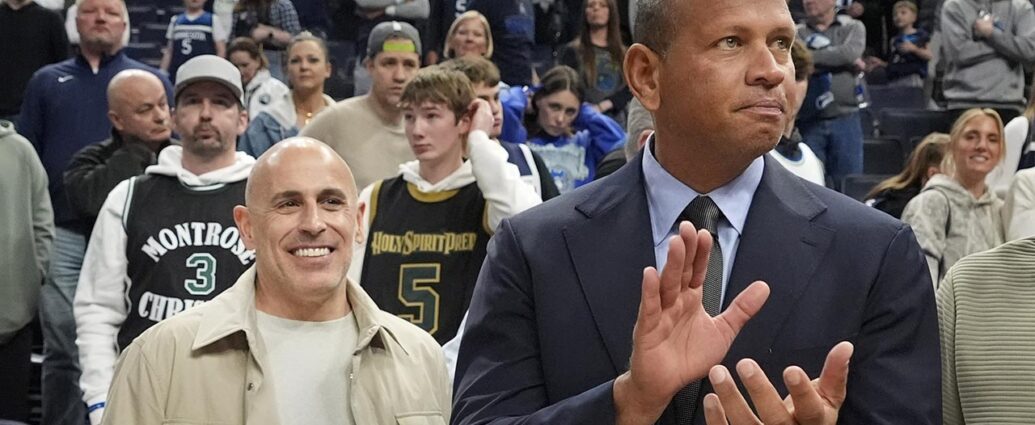
This post was originally published here. 

The U.S. Department of Justice has secured a $400 million settlement from TikTok and parent company ByteDance in a case related to children’s privacy legislation, the DOJ announced on Friday.

“This settlement is a major victory for American children and parents,” Associate Attorney General Stanley E. Woodward Jr. said in a statement. “The Department’s priority is ensuring that children are protected online and that companies entrusted with their personal information meet their legal obligations. This resolution secures a substantial recovery while reinforcing the protections that families expect and deserve.”

The lawsuit, related to compliance with the Children’s Online Privacy Protection Act, was filed by the Biden administration’s DOJ in 2024.

UK TO BAN TIKTOK, YOUTUBE, OTHER SOCIAL MEDIA APPS FOR CHILDREN UNDER 16, STARMER SAYS

The Justice Department said the settlement is one of the largest ever reached in a case involving the privacy act.

Under the terms of the settlement, TikTok and ByteDance will pay $300 million immediately and then $100 million “upon entry of an order vacating a prior consent decree entered against TikTok’s predecessor, Musical.ly.”

FEDERAL EMPLOYEES CAN DOWNLOAD TIKTOK ON GOVERNMENT DEVICES AFTER BYTEDANCE’S DIVESTITURE, DOJ SAYS

The Justice Department said that since the lawsuit was first filed, “TikTok has undergone significant changes to its ownership, management, compliance functions, and privacy practices.”

“The company has implemented extensive measures designed to strengthen safeguards for younger users, improve age-related controls, and enhance parental oversight,” the DOJ added, saying that those developments have “strengthened protections for millions of American families.”

NEW MEXICO SEEKS MASSIVE PENALTY FROM META AFTER JURY FOUND TECH GIANT LIABLE FOR ENDANGERING CHILDREN

The DOJ said the settlement shows their commitment to protecting the public while also acknowledging the progress TikTok has made.

“The most important result is that children and parents are better protected today than they were when this case began,” Assistant Attorney General Brett A. Shumate of the Justice Department’s Civil Division said in a statement. “This settlement reflects substantial progress, secures a significant monetary recovery, and brings this matter to a successful conclusion.”

TikTok did not immediately respond to FOX Business’ request for comment.

This post was originally published here. 

The numbers in Asia just keep getting bigger and bigger. 

Taiwan is on track for its first year of double-digit GDP growth since 2010, thanks to surging demand for AI hardware exports. It’s not the only economy reporting surging growth and export numbers. Japan, Malaysia, Singapore and mainland China all reported over 20% growth in exports in July. Exports from South Korea, home to chipmaking giants SK Hynix and Samsung, surged by more than 60%. Second-quarter GDP growth also beat expectations in economies like Singapore, Hong Kong and Taiwan, thanks to electronics exports.

Equity markets, too, are experiencing the AI boom. Shares in both chipmaker ChangXin Memory Technologies and robot manufacturer Unitree surged more than 450% on their first days of trading, on July 27 and August 19 respectively. Japan’s Nikkei 225 and Thailand’s SET index are both up around 25% for the year; even after recent declines, South Korea’s KOSPI is almost 60% higher year-to-date. 

Yet economists who study the region are worried that AI’s gains won’t be evenly shared across Asia—and that for Southeast Asia’s economies, which sit on the lower end of the value chain, the boom could be more of a “short-term blip.”

“The sugar rush economic boom that Southeast Asia is experiencing is from providing the supporting—not leading-edge—semiconductors, and the power and resources to drive data centers,” Danny Quah, an economist from Singapore’s Lee Kuan Yew School of Public Policy (LKYSPP), tells Fortune. “But these are commodifiable, and no one will have a sustained comparative advantage in them.”

Southeast Asia’s AI opportunity

For now, at least, Southeast Asian nations are benefiting from the AI boom. 

On August 11, Singapore sharply lifted its annual economic growth forecast from 2-4% to 4.5-5.5%, citing a boost from AI-related sectors and exports. The city-state’s deep bench of semiconductor talent has made it a regional base for global developers and cloud providers.

Malaysia is also tapping its established position in chip assembly, testing and packaging, while Thailand and Vietnam have also attracted investments in data centers, cloud computing and electronics.

Kuala Lumpur, specifically, is rolling out a National AI plan that hopes to push local firms to move into higher-value segments of the AI supply chain. “Malaysia is not merely a user of AI; we must build our own capabilities, strengthen the ecosystem and compete globally,” the country’s communications minister Fahmi Fadzil wrote in an April Facebook post.

Yet experts warn that Southeast Asia’s competitive edge—its abundance of cheap, low-skilled labor—could trap it at the bottom rungs of the AI tech ladder. This edge could also erode further as the region’s populations age, or if it loses workers to brain drain. Malaysia, for instance, has long seen an outflow of skilled talent to Singapore and the West, and is projected to become an “aged nation” by 2048, when 14% of its citizens will be aged 65 and above.

“Malaysia has largely consolidated its pre-existing niches in the back-end phase of semiconductor manufacturing,” explains Guanie Lim, an associate professor at Japan’s National Graduate Institute for Policy Studies (GRIPS). “The country’s perennial inability to escape the middle-income trap is partly a function of its hosting of industries where competitive advantage lies primarily through low-cost labor.”

Grid reliability and water shortages also limit data center buildout in Southeast Asia. The region, which imports much of its oil and gas from the Middle East, has been hard hit from supply disruptions from the U.S.’s war with Iran.

“Energy is a key constraint, especially where grids are congested, and Southeast Asia may add data center capacity faster than its electricity networks and expertise can expand,” says Ramikshen Rajan, a professor at the LKYSPP. “Data center investment also only delivers lasting benefits when it develops local suppliers and skills, while giving domestic firms access to computing capacity.”

These structural shortcomings mean that Southeast Asian governments can’t be too ambitious in their AI strategies. 

“In AI, only China and the U.S. can generate frontier models. We need to recognize that in this game we are consumers, not competitors, and users, not producers,” argues Quah. 

Geopolitical faultlines deepen

Economic capacity is one fault line in Asia’s AI boom. Geopolitics is another.

Last week, a Reuters report revealed that the U.S. was preparing to tell dozens of countries to pick a side in the AI race with China, as the two superpowers launched competing multilateral collaboration frameworks: the U.S.-led Pax Silica, and China’s WAICO, or the World Artificial Intelligence Cooperation Organization.

“To be part of everything is to be part of nothing. The signature of the Pax Silica Declaration is not merely a membership subscription, but a commitment,” the draft of the letter prepared by the U.S. State Department and reviewed by Reuters, read. “It cannot be held alongside membership in duplicative initiatives whose expectations conflict with our own.”

The letter was penned after the Central Asian nation of Kazakhstan had reportedly joined both initiatives, a move which set off alarm bells in Washington.

China is also building its own full-stack AI ecosystem, while reducing reliance on U.S. tech. The country is investing widely in chips, computing infrastructure, frontier models and embodied AI applications. 

According to testimony to the U.S. Congress by Kyle Chan, a fellow at Washington-based think tank Brookings Institution, “the goal of Chinese policymakers is not to achieve artificial general intelligence, but to leverage it as a powerful, general-purpose technology that will turbocharge a wide range of sectors and services.”

Yet this escalating rivalry spells trouble for Southeast Asia, whose economic model has long been built on openness, cross-border networks and investments from multiple sources.

“The concern is that competing frameworks could increasingly link access to technology, investments and markets to participation in one ecosystem or the other,” says Denis Hew, a senior research fellow at LKYSPP. “Smaller economies with limited technological capabilities and bargaining power may have little choice but to pick a side; if this happens, it will constrain ASEAN’s longstanding approach to strategic hedging and economic diplomacy with the major powers.”

A fragile hedge

To some experts, the ASEAN Digital Economy Framework Agreement, or DEFA, presents a possible solution. It’s the world’s first region-wide digital economy treaty, which unifies rules for digital trade and e-commerce across Southeast Asia, and is set to be signed in November.

“Geopolitical fragmentation makes DEFA considerably more important because ASEAN needs a mechanism for maintaining economic interoperability, even when its members adopt different technological alignments,” explains Tan Kong Yam, an emeritus professor of economics at Singapore’s Nanyang Technological University.

Ultimately, Asia’s middle powers will have to continue walking the tightrope between the two global superpowers. “They need to seek selective alignment, cooperating with Washington on sensitive technology while preserving commercial links with China as a major market and infrastructure partner,” Rajan concludes. “But demands for exclusivity from either side will narrow their room for maneuver.”

This story was originally featured on Fortune.com

This post was originally published here. 

Taiwan is proposing the largest defense budget in its history, putting nearly 29 cents of every dollar in next year’s central government spending plan toward the military, coast guard and related security costs.

The Cabinet approved NT$1.1225 trillion, approximately $35.2 billion, for defense in 2027. That is an 18% increase from this year and the first time Taiwan’s annual defense allocation has exceeded NT$1 trillion.

The money carries two messages. To Beijing, Taiwan is signaling that a blockade or invasion would become increasingly expensive. To Washington, it is answering demands that the island spend more of its own money on defense rather than assume the United States will absorb the cost of protecting it.

The arithmetic is more complicated than the record headline suggests. The allocation equals approximately 3.01% of Taiwan’s projected 2027 economic output, slightly below this year’s 3.32%, because the economy is expected to expand sharply. President Lai Ching-te wants defense spending to reach 5% of GDP by 2030, which would require tens of billions of dollars in additional annual commitments.

The proposal includes NT$691.9 billion for the Ministry of National Defense, NT$218.2 billion in special budgets and NT$60.7 billion in other special funds. Military pensions account for NT$103.8 billion, while the coast guard receives NT$47.9 billion.

New procurement will emphasize drones, missiles, air defense, coastal surveillance and other systems designed to make Taiwan difficult to blockade or occupy. The strategy is not to match China ship for ship or aircraft for aircraft. China’s military budget remains many times larger. Taiwan instead wants mobile weapons that can survive an initial attack and continue threatening Chinese forces afterward.

That creates a substantial commercial pipeline for American defense contractors as well as Taiwan’s domestic drone, electronics, shipbuilding and missile industries. But it also exposes production bottlenecks: approving money does not guarantee that weapons can be manufactured and delivered quickly enough.

The largest uncertainty is political. Taiwan’s opposition-controlled legislature must approve the budget and has delayed or reduced previous defense requests. Earlier this year, lawmakers approved only about two-thirds of an additional military package, excluding some domestic programs.

The debate therefore reaches beyond the size of one budget. Washington will judge whether Taiwan is prepared to finance its own survival, while Beijing will measure whether the money produces real weapons and trained forces—or remains trapped in Taiwan’s divided parliament.

JBizNews Desk | Taipei

© JBizNews.com All Rights Reserved. Reproduction or distribution without written permission is prohibited.

Nearly 40,000 bottles of eye drops are being recalled nationwide due to potential contamination, according to the Food and Drug Administration.

Tarrytown, New York-based Prestige Brand Holdings is voluntarily recalling 39,060 bottles of its Clear Eyes Maximum Itchy Eye Relief eye drops due to a “lack of assurance of sterility,” according to an FDA enforcement report.

The affected product comes in 15-milliliter bottles with the lot code 2552A and an expiration date of Sep. 30, 2027. They were distributed by Medtech Products Inc., a Prestige Consumer Healthcare company.

NEARLY 12 MILLION BOTTLES OF ROHTO EYE DROPS RECALLED OVER STERILITY CONCERNS, FDA ANNOUNCES

The FDA classified the recall as a Class II recall, which it describes as a “situation in which use of or exposure to a violative product may cause temporary or medically reversible adverse health consequences or where the probability of serious adverse health consequences is remote.”

MILLIONS OF PRESCRIPTION EYE DROPS RECALLED NATIONWIDE OVER CONTAMINATION CONCERNS

Other brands in the Prestige portfolio include Dramamine, Luden’s and Anacin.

The company completed the acquisition of the Breathe Right brand – known for its nasal strips – and other assets from Foundation Consumer ​Healthcare in June in a deal valued at about $1.05 billion.

CLICK HERE TO GET FOX BUSINESS ON THE GO

FOX Business reached out to Prestige Brands for comment.

This post was originally published here. 

Wall Street recovered Friday, but the rebound did not erase what changed underneath the market this week. Long-term borrowing costs remain near levels not seen in almost two decades, oil has climbed for six consecutive sessions, and investors are moving money into gold and cryptocurrency even as the American economy is showing surprising strength.

The most important economic news Friday was actually positive: U.S. businesses are growing considerably faster than economists expected. At the same time, several developments in technology, privacy regulation and global shipping showed where new costs and risks are appearing for companies.

Markets — Dow Jumps More Than 500 Points, but Bonds Remain the Problem

The Dow Jones Industrial Average closed at 53,280.14, up 520.93 points, or 0.99%. The S&P 500 gained 32.94 points, or 0.43%, to 7,674.10, while the Nasdaq Composite rose 112.20 points, or 0.43%, to 26,179.37.

All three still finished the week lower. The S&P 500 and Nasdaq snapped three-week winning streaks, while the Dow recorded a second consecutive weekly decline. 

The issue investors have not solved is the bond market. The 10-year Treasury yield climbed to roughly 4.73% Friday, while the 30-year yield remained near its highest level since 2007. That matters well beyond Wall Street. Treasury yields flow directly into mortgages, commercial real-estate financing, corporate borrowing and the valuation investors are willing to place on expensive technology stocks. 

Oil added another source of pressure. Brent crude settled at $94.39 a barrel, up 6.4% for the week, while U.S. crude finished at $87.06, after President Trump threatened economic consequences for countries continuing to trade with Iran. 

Gold moved in the opposite direction from the dollar. U.S. gold futures jumped 2.4% to $4,680.60 an ounce, while spot gold climbed above $4,600 for the first time since May. Investors increasingly appear to be using gold as protection against uncertainty surrounding government debt, inflation and monetary policy. 

Crypto stocks were among Friday’s biggest winners. Bitcoin moved above $77,000, helping Robinhood jump about 13% and Coinbase roughly 8%. Freeport-McMoRan climbed about 7.6% alongside stronger metals prices. On the downside, security-equipment maker OSI Systems fell more than 8% after weaker revenue and delays tied to Middle East disruptions. 

Economy — U.S. Business Activity Suddenly Accelerates

The strongest economic development of the day may have received less attention than the stock rally.

S&P Global’s preliminary August survey showed the U.S. services PMI jumping to 56.8 from 54.6, its strongest reading since December 2024. The broader Composite Output Index rose to 56.0, its highest level since April 2022.

Anything above 50 indicates expansion.

Manufacturing moved in the other direction, slipping to 53.2, a five-month low, as supply disruptions and reduced inventory building slowed factory activity.

But services are so strong that S&P Global said its surveys currently point toward annualized third-quarter economic growth approaching 3%, roughly double the 1.5% pace recorded in the second quarter. Services companies also increased hiring at the fastest pace in 19 months. 

For business owners, this is an important distinction.

The economy is not broadly slowing. Restaurants, financial companies, professional services, travel and other service businesses are expanding rapidly even while manufacturers face higher energy costs and supply problems.

That makes the Federal Reserve’s job harder. Strong growth reduces the urgency to cut interest rates, while oil and elevated business costs keep the inflation threat alive.

AI & Infrastructure — Nvidia Moves Beyond Chips and Into the Land and Power Behind Them

Nvidia made another move Friday showing that the AI boom is becoming as much an infrastructure business as a semiconductor business.

The company took a minority stake in Cloverleaf Infrastructure, a developer that works with utilities, energy companies and investors to secure powered sites for large data centers.

Financial terms were not disclosed.

Cloverleaf says it has already delivered multiple gigawatt-scale projects in North America. Under the partnership, the company will use Nvidia’s DSX platform to coordinate decisions involving land, electricity, cooling and computing capacity. 

The important part is what Nvidia is becoming.

It is no longer simply waiting for Microsoft, OpenAI, Amazon and other customers to build data centers and buy its GPUs. Nvidia is increasingly investing in the power developers and infrastructure companies that make those data centers possible.

The bottleneck in AI is shifting.

Chips remain scarce and expensive, but electricity, grid connections, water, land and construction capacity are increasingly determining how quickly new computing capacity can actually come online.

That means utilities, contractors, electrical-equipment manufacturers, real-estate developers and communities with available power are becoming part of the AI investment story.

Regulation — Uber Hit With $966 Million Fine Over Automated Worker Decisions

Europe delivered one of its strongest warnings yet about allowing algorithms to make employment decisions without meaningful human involvement.

The Dutch Data Protection Authority fined Uber €825 million, approximately $966 million, after finding that driver accounts had been automatically deactivated without drivers receiving adequate explanations or human review.

It is the second-largest penalty issued under Europe’s GDPR privacy law.

Uber disputes the decision and said it will appeal. The company says its current system includes human review and allows drivers to challenge suspensions. 

The broader business implication goes well beyond Uber.

Companies are increasingly using software and AI to screen job applicants, detect fraud, determine creditworthiness, evaluate employees and decide which customers or workers should be removed from platforms.

European regulators are signaling that when an automated decision can cost someone their livelihood, businesses cannot simply point to an algorithm and consider the matter finished.

That creates a new compliance requirement for companies deploying AI: automation may save labor, but consequential decisions increasingly require explanation, appeal procedures and human oversight.

Technology & Consumer Privacy — TikTok Agrees to $400 Million Children’s Privacy Settlement

TikTok and the U.S. Justice Department reached a $400 million settlement Friday resolving allegations that TikTok and parent company ByteDance violated federal children’s privacy law.

The government sued in 2024, alleging TikTok knowingly allowed children younger than 13 to use regular accounts and collected personal information without obtaining required parental consent.

Under the settlement, the government’s lawsuit is being dismissed with prejudice.

The case is especially important because TikTok now serves more than 200 million Americans and recently reorganized its U.S. operations through a majority American-owned joint venture. 

For technology companies, retailers and websites collecting customer information, the message is straightforward.

Age verification, parental consent and data-retention rules are moving from technical compliance issues into nine-figure financial risks.

As companies use increasingly sophisticated AI systems to identify and target customers, regulators are simultaneously demanding much tighter controls around children’s information.

Global Trade — Low Rhine River Levels Trigger New Container Fees

A less glamorous development Friday could soon show up on invoices paid by importers.

French shipping giant CMA CGM announced an emergency inland surcharge because unusually low water levels on the Rhine and other European rivers are reducing barge capacity and causing congestion and longer terminal stays.

The company will charge €50 per container for certain shipments moving through Belgium and the Netherlands and €75 per container for shipments connected to Germany, Switzerland and France.

The fees apply to inland shipments routed through major European ports including Rotterdam, Antwerp and Zeebrugge. 

The amount itself is relatively small compared with an ocean freight bill.

The warning behind it is more important.

Low river levels reduce the amount of cargo barges can safely carry. That forces freight onto additional barges, trucks and rail networks and can create bottlenecks extending far beyond the river itself.

For American importers buying European machinery, chemicals, automotive components or manufactured goods, it is another reminder that weather can become a supply-chain cost almost immediately.

Corporate Tax — Apple Paid Ireland $17.1 Billion in One Year

Apple disclosed Friday that it paid $17.1 billion in taxes to Ireland during its last fiscal year, representing roughly 40% of the company’s entire worldwide income-tax bill.

Apple paid $43.2 billion in income taxes globally.

The Irish figure was unusually large because it included roughly €13 billion in back taxes Apple was ordered to pay after the European Union’s highest court concluded that Ireland had provided the company with illegal tax advantages. 

The number demonstrates just how consequential international tax structures have become for multinational companies.

For years, U.S. technology and pharmaceutical companies used Ireland as a European headquarters because of its business environment and tax system. Governments are now scrutinizing those structures far more aggressively.

The Apple payment shows that a tax dispute that begins as an accounting question can eventually turn into a liability measured in tens of billions of dollars.

What to Watch Saturday — and the Setup for Monday

U.S. markets are closed Saturday, August 22, so the immediate watch is for developments that could change prices before futures reopen Sunday evening.

The first is Iran and the Strait of Hormuz. Oil has now risen for six consecutive sessions, and any weekend escalation, sanctions announcement or movement toward reopening shipping routes could produce a sizable move when energy trading resumes.

The second is the bond market. Treasury Secretary Scott Bessent’s effort to calm long-term yields produced only temporary relief this week. If investors continue demanding higher returns to hold 10- and 30-year U.S. debt, borrowing costs will remain one of the biggest obstacles facing stocks, housing and business investment. 

And the next major test for technology arrives Wednesday, August 26, when Nvidia reports earnings. Investors will be looking beyond chip sales to determine whether the enormous amounts of money being committed to AI data centers are still translating into sufficient demand and profits. Fed Chair Kevin Warsh’s Jackson Hole appearance and the next PCE inflation report will follow later in the week. 

Friday’s message was therefore more complicated than a 500-point Dow rally suggests.

American businesses are growing faster. But money remains expensive, oil is rising, AI infrastructure is consuming extraordinary amounts of capital, and regulators are beginning to impose enormous costs when technology moves faster than oversight.

JBizNews Desk | Wall Street

© JBizNews.com All Rights Reserved. Reproduction or distribution without written permission is prohibited.

The Trump administration has started the process to transfer $725 million to the United Nations, a congressional notification seen by Reuters showed, a move aid experts said was a welcome step towards paying billions in dues owed.

There was no immediate response from Washington to questions about the reasons for the payment from an administration which has slashed funding to many UN agencies and blasted the global body for not living up to its potential.

The money – mentioned in an August 4 State Department notification letter to Congress that has not been reported – is set to go through before an expected speech by US President Donald Trump to the UN General Assembly in New York next month.

US transfer may ‘keep the ship afloat a little longer’

UN Secretary-General Antonio Guterres said this year that the UN faced “imminent financial collapse” due to unpaid contributions from member states, and the global body has brought in large budget cuts.

The $725 million would be less than 20% of the more than $4 billion that the UN said in May it was owed by the United States – though Washington has said that total figure is much lower and that it has made some payments.

United Nations Secretary-General Antonio Guterres sits during a meeting with Jordan's Foreign Minister Ayman Safadi in Amman, Jordan, July 27, 2026. (credit: REUTERS/ALAA AL SUKHNI)

Eugene Chen, a former UN official, told Reuters such a transfer would help pay UN salaries for a period, but might not cover them all. “It keeps the ship afloat a little longer,” he said.

“If the US does not make further payments, it will likely lose its voting rights in January,” he added.

Under article 19 of the UN Charter, a member state loses its voting rights in the General Assembly if its arrears exceed two years in annual fees, although grace periods are possible.

A significant transfer now could avert the need for immediate spending cuts, Ronny Patz, an expert in UN finance with German think tank IDOS, said.

“If they pay a big chunk, the UN still runs on zero reserves but it gets through the year,” Patz added. “If they don’t pay, the UN might really be in trouble for the last two or three months of the year in terms of paying salaries and keeping the doors open.”

The US is the biggest contributor to the UN budget, but under the Trump administration it has refused to make mandatory payments to regular and peacekeeping budgets, and has slashed voluntary funding to UN agencies with their own budgets.

Washington has also withdrawn from dozens of UN and other international agencies.

The UN had been counting on collecting around 90% of dues from its 193 members for this year’s budget, its Controller Chandramouli Ramanathan said last month.

Only 129 of 193 UN members paid dues in full

As of August 18, some 129 members had paid in full, a UN document showed. China, the number 2 contributor after Washington, was also absent from the list.

The State Department said in its August 4 letter it was obligating a total of $725 million for the UN’s regular budget.

The US State Department and the US diplomatic mission to the United Nations did not immediately respond to requests for comment by email on Friday.

In May, the UN said the more than $4 billion owed to it by Washington included $2.04 billion for the regular budget, $2.2 billion for current and past peacekeeping missions, and $44 million for UN tribunals.

Washington has not transferred around $153.4 million in what it calls “policy-based withholdings.” That included $10.6 million meant for the Human Rights Council – which Washington disengaged from last year, citing the council’s anti-Israel bias – and funds for the UN Relief and Works Agency for Palestine Refugees (UNRWA).

The 80-year-old institution has been undergoing a decisive reform and cost-cutting exercise known as “UN80” amid its financial crisis.

It has already cut its 2026 budget by 9.2% and transferred over 2,000 jobs out of expensive cities like Geneva and New York to lower-cost hubs.

This post was originally published on here. 

Rachel Goldberg-Polin, mother of the murdered Gaza hostage Hersh Goldberg-Polin, represented Middle Eastern victims of terrorism at the United Nations on Friday in honor of the International Day of Remembrance and Tribute to the Victims of Terrorism.

“My name is Rachel,” she began, “and I will always be the mother of Hersh Goldberg-Polin.”

Her remarks, delivered in the form of a recorded video, sought to call attention to Israeli terror victims, with Rachel sharing the story of her son Hersh, who lost his arm when he was kidnapped by Hamas terrorists on October 7, 2023.

“Hersh will always be my only son,” she said. “Hersh will always be my eldest child, and Hersh will always be 23 years old.”

She was the first Israeli representative in the role, which has been given to Palestinians in recent years, with her testimony shown alongside those of other terror victims from around the world.

 RACHEL AND JON Goldberg-Polin attend the funeral of their son, Hersh, in Jerusalem. (credit: YONATAN SINDEL/FLASH 90)

The UN event, held annually on August 21, was established by the UN General Assembly in a 2017 resolution “to honor and support the victims and survivors of terrorism and to promote and protect the full enjoyment of their human rights and fundamental freedoms,” according to the UN’s website.

Hersh’s experience at the hands of Hamas

Rachel described the experiences of her late son at the hands of the Hamas terror organization, as well as her experience as his mother amid his kidnapping, hostage status, and eventual murder.

“My son was executed at close range and returned to me after 330 days,” said Rachel. “That body that I had carried in my body for nine months, many moons ago. That body and soul, that I had adored and beheld.”

She then discussed the 1932 correspondence at the League of Nations between Albert Einstein and Sigmund Freud on the topic of why humans wage war with one another.

“Freud explains that we humans continue to engage in active conflict even though the vast majority of us suffer terribly from this way of existence,” she said. “Civilization has to decide whether to rise to the challenge to continually contain our natural tendencies toward war, or to give that slavery of selfish interest to give into it.”

“What Freud inheritely is inherently saying is that there are people on both sides of any conflict whose drive toward destruction of the other is exactly the same and therefore, ironically, those destructive entities on opposing sides in fact have more in common with each other than the very people they claim to represent,” she continued, noting that the same is true, acording to Freud, for the victims in war, whose motivations are “hope, and life, and love.”

A blessing and a warning to the world

She concluded her remarks with “a blessing and a warning,” praying that human civilization will use its “wisdom, strength and might to do what is right.”

“The choice is hard, but the choice is ours,” she said. “Shall we take the easy way out and follow blindly? Even as we march ourselves right over a cliff? Or shall we push ourselves to live up to the most elevated challenges and goals that are presented?”

Rachel’s role at the UN event marks a significant step for Israel in its efforts to ensure proper international recognition for Israeli terror victims, including those of the October 7 massacre.

Israel’s Ambassador to the UN, Danny Danon, commented on the significance of Rachel’s remarks and her role at the UN event, saying that Israel’s UN mission “will continue working to ensure that Israeli victims of terrorism are given the recognition they deserve at the UN and that their stories are never forgotten.”

This post was originally published on here. 

Some prophetic verses comfort us by promising that a better future will come. Others tell us that bringing about that future requires something from us. This week’s haftarah (Isaiah 54:1-10) does both.

Jerusalem has endured exile and loss, but Isaiah tells her not to look only at what has been destroyed. She must look ahead to what will be rebuilt.

“Enlarge the place of your tent and let the curtains of your dwellings stretch forth; do not hold back. Lengthen your cords and strengthen your stakes. For you shall spread out to the right and to the left; your descendants shall inherit nations, and they shall settle desolate cities” (Isaiah 54:2-3).

It is a powerful image of confidence in the future. Jerusalem is told to prepare for growth because her children will return, her population will increase, and places that had been desolate will once again be filled with life.

Something more than a promise about the future

Kol HaTor, a mystical volume by Rabbi Hillel Rivlin (1757-1838) which records the Vilna Gaon’s teachings concerning the process of redemption, sees in this verse something more than a promise about the future.

THE SIEGE OF JERUSALEM by David Roberts, 1850. Jewish factions fought each other even as the Romans approached Jerusalem’s walls. (credit: Wikimedia Commons)

The word harchivi, enlarge, points to the concept of harchavah – expansion. The rebuilding of Jerusalem, the settlement of Eretz Yisrael, and the ingathering of the Jewish people are not matters that require Jews simply to wait for Divine intervention. They require human effort as part of the redemptive process. Hence the haftarah’s command: Harchivi m’kom ohaleich – “Enlarge the place of your tent.”

But Kol HaTor makes another fascinating observation.

The Hebrew word harchavah, expansion, contains the same letters as hachravah, destruction, only arranged differently.

Perhaps that is precisely Isaiah’s message to a people emerging from ruin. The response to hachravah is harchavah.

When Jewish life has been destroyed, we rebuild it. When Jewish communities have been emptied, we refill them. When the land has been left desolate, we cultivate it once again.

That has been the pattern of Jewish history.

Enemies have repeatedly sought to uproot us, disperse us, and erase what previous generations had built. Yet the Jewish response has never been merely to survive. Again and again, Jews rebuilt schools and synagogues, communities and institutions, families and centers of Torah learning.

Each word is a call to action

NOWHERE IS that more visible than in Eretz Yisrael.

For centuries, much of the land lay neglected while the Jewish people remained scattered across the globe. Yet the prophets insisted that the exile would end and that the children of Israel would return.

Isaiah does not describe that return passively.

Look carefully at the language of the verse:

Harchivi – enlarge. Al tachsochi – do not hold back. Ha’arichi – lengthen. Chazeiki – strengthen.

Each word is a call to action.

Jerusalem is told not simply to believe that her children will return, but to make room for them.

That idea has particular meaning for our generation.

We have been privileged to witness something that generations of Jews could only dream about. Millions of Jews have returned to Eretz Yisrael. Jerusalem has been rebuilt, and once-barren places are now filled with homes, schools, synagogues, and Jewish communities.

But Isaiah does not tell Jerusalem merely to preserve what has already been built. He tells her to make the tent larger.

There are still Jews to bring home, communities to strengthen, and parts of the land to build. The process that Isaiah describes is not finished, and neither is our role in it.

That may be the deeper significance of the wordplay cited by Kol HaTor. Jewish history is not merely a story of surviving destruction, but of answering it through renewed growth.

Isaiah’s message was one of consolation, but also of responsibility.

The answer to hachravah is harchavah. When others destroy, Jews rebuild.

And when we rebuild, we do not merely restore what was lost. We make it greater than before.■

The writer served as deputy communications director under Prime Minister Benjamin Netanyahu.

This post was originally published on here. 

At least 14 people were killed and more than 120 wounded on Friday when two Russian drones struck a shopping center in the central Ukrainian city of Kryvyi Rih, authorities said.

Twenty-two children were among the wounded in the daytime attack on President Volodymyr Zelensky‘s hometown, regional governor Oleksandr Hanzha said on the Telegram messaging app.

“There are 29 people in serious condition, including five children,” he said.

He posted a photo of black smoke billowing from a large industrial building.

‘Absolutely cynical, despicable,’ says Zelensky

Zelensky called the attack “absolutely cynical and despicable,” saying that a second Russian drone hit the shopping center half an hour after the first in a deliberate attempt to target emergency services.

Rescuers work at a site of a shopping centre hit by a Russian drones attack, amid Russia's attack on Ukraine, in Kryvyi Rih, Dnipropetrovsk region, Ukraine, in this handout picture released August 21, 2026. (credit: Press service of the State Emergency Service of Ukraine in Dnipropetrovsk region/Handout via REUTERS)

“Attacks like these are nothing less than terrorist acts,” Zelensky said on Telegram, urging the world to hold Russia to account.

Russia is escalating its air war on Ukraine as fighting on the battlefield grinds toward the 4-1/2 year mark. On Thursday, 17 people were killed in a Russian ballistic missile attack on the Ukrainian capital Kyiv.

Ukraine has also stepped up its own attacks on Russia, targeting oil facilities and logistics infrastructure to try to undermine Moscow’s ability to wage war.

This post was originally published on here. 

An oil tanker under US sanctions for allegedly transporting Iranian petroleum products has become the latest victim of resurgent Somali piracy when it was boarded off the coast of Yemen and diverted toward Somalia.

The Eritrea-flagged Sibu 1 was seized on Thursday by six armed individuals, according to the United Kingdom Maritime Trade Operations (UKMTO). The tanker was sanctioned last December by the US Treasury for allegedly being part of a shadow fleet that helps Iranian petroleum products evade US sanctions.

The Sibu 1 was at least the 13th vessel attacked this year off the coast of Somalia or in the Gulf of Aden, which links Somalia and Yemen, according to data from the International Maritime Bureau and reports by UKMTO.

There were only five such attacks in all of 2025, according to the IMB data.

Hundreds of attacks creating security crisis

Hundreds of attacks by Somali pirates from 2008 to 2014 created a security crisis in the western Indian Ocean that cost the global economy billions of dollars, including hundreds of millions of dollars in ransoms.

Cargo ship Melissa moves in the waters of the Indian Ocean near Male, Maldives, May 19, 2026.  (credit: REUTERS/Thilina Kaluthotage)

A coordinated international security response largely ended those attacks, and a spate of hijackings in 2023 and 2024 also died down following a robust naval response.

But experts say the failure to address the root causes of piracy linked to poor economic and security conditions in Somalia means it can always re-emerge.

“The piracy was always suppressed. It was never really fully eradicated,” said Timothy Walker, a senior researcher at the Institute for Security Studies in Pretoria.

Experts have pointed to impacts of the Iran war on the piracy surge, including elevated oil prices that make tankers more attractive targets and the diversion of naval assets previously focused on piracy to the Strait of Hormuz and Red Sea to deal with threats from Iran and its Houthi allies in Yemen.

Houthis, Somali pirates possibly collaborating

Some have cited evidence of collaboration between the Houthis and Somali pirates after several vessels were seized near the Yemeni coast.

Jay Bahadur, a researcher and co-director of the Scopus Insights consultancy, said the seizure of an Iran-linked vessel like Sibu 1 made him very skeptical of Houthi links to the recent hijackings but added it was clear Somali pirates were receiving support from Yemeni nationals, including arms trafficking networks.

“You’re having these traditional, longstanding relationships built around arms trafficking and human smuggling built up between Yemeni criminal actors and Somali criminal actors,” he said.

This post was originally published on here. 

This week, Ukrainians will mark our Independence Day. Under normal circumstances, August 24 is a day of celebration – a day to remember the moment Ukraine reclaimed its sovereignty and chose its own path as a free European nation.

But once again, we mark our independence while fighting to preserve it.

For Ukrainians, independence is no longer a historical concept or a date on the calendar. It is something our people defend every day – in the trenches, in our cities, in hospitals and schools, and in homes where parents put their children to sleep knowing that an air-raid siren may wake them before morning.

More than four years into the war, Russia continues its attacks against Ukraine. Missiles and drones continue to strike cities far from the battlefield. Residential buildings and civilian infrastructure continue to be hit. Behind every statistic is a human being who never chose to be part of this war.

Municipal workers remove debris next to damaged cars outside an apartment building hit by a Russian drone strike on Thursday, amid Russia's attack on Ukraine, in Kharkiv, Ukraine February 26, 2026 (credit: REUTERS/VYACHESLAV MADIYEVSKYY)

The latest figures should alarm the international community. According to the United Nations, civilian casualties in Ukraine rose sharply during the first half of 2026. The trend has continued, with July recording the highest number of civilian casualties since May 2022.

This is not what de-escalation looks like.

And from Israel, there is another dimension of this war that is impossible to ignore. Kyiv and Tel Aviv are closer than the map suggests.

For years, Ukrainians have learned to recognize the sound of drones approaching their cities. Israelis know that sound too.

They know the experience of being awakened by sirens. They know what it means to take children into shelters in the middle of the night. They know the strange reality of going to work in the morning after spending the night wondering whether a missile will hit their neighborhood.

Ukraine and Israel are fighting different wars, against different enemies and under different circumstances. These differences matter and should not be erased. But there is also a lesson connecting our experiences.

The security threats facing democratic countries are no longer confined neatly within national borders.

Russia’s war against Ukraine has demonstrated how modern warfare combines missiles, drones, cyber operations, disinformation, and attacks on civilian infrastructure with the deliberate objective of exhausting societies over time.

Israel and its neighbors have witnessed another manifestation of this challenge through Iran and the network of armed actors it has supported across the Middle East.

The actors are different, but the international security challenge is increasingly interconnected.

Authoritarian cooperation is not theoretical

Perhaps the clearest symbol of this new reality is the drone.

Iranian-designed Shahed drones became one of the symbols of Russia’s campaign against Ukraine. Ukrainians have spent years developing methods to detect, intercept, and defend against such threats.

What began as a weapon associated with one regional conflict has become part of a much broader security challenge.

Russia’s deepening military cooperation with other authoritarian regimes should therefore concern not only Ukraine. North Korean missiles are now being used in Russia’s war, while cooperation among Moscow, Tehran, and Pyongyang demonstrates how military technology, knowledge, and capabilities can move between theaters of conflict.

A weapon tested against Ukrainian civilians today may influence another battlefield tomorrow.

This is why Ukraine’s security cannot be separated entirely from European security, just as instability generated in the Middle East does not remain confined to the Middle East. The democratic world needs to start thinking accordingly.

Ukraine and Israel have accumulated enormous – and painfully earned – experience in protecting civilian populations from missiles and drones. We should turn that experience into deeper practical cooperation.

Air defense, drone detection, protection of critical infrastructure, emergency medicine, cyber defense, and the resilience of civilian systems are areas where knowledge can save lives.

Ukraine has lessons to share. Israel has lessons to share. And democratic nations should be sharing those lessons far more quickly than their adversaries share weapons.

This is perhaps one of the most important lessons of the past several years: Democracies cannot afford to confront interconnected threats as if every war exists in isolation. International cooperation cannot begin only after missiles are launched.

Independence is the right to choose your own future

For Ukrainians, this is ultimately what our Independence Day represents.

Russia’s war is not simply about territory. It is about whether a sovereign nation has the right to determine its own future – its alliances, its democratic institutions, and the society its citizens choose to build.

Ukrainians have answered that question with extraordinary courage. They continue working, teaching, raising children, and rebuilding while the war continues around them. Millions dream of the day when families separated by war can finally come home.

Most of all, Ukrainians want peace. But after years of war, we also understand that peace cannot simply mean the absence of missiles for a few weeks or months. Sustainable peace must provide security and ensure that aggression is not rewarded or merely postponed.

This lesson should resonate far beyond Ukraine.

When aggression succeeds in one region, others are watching. When civilians can be terrorized into submission, others learn from it. And when democratic countries stand together and demonstrate that borders, sovereignty, and human life still matter, others are watching that too.

This August 24, Ukrainians will raise our flag while the war continues. We will remember those who have paid the ultimate price for our freedom. We will think of our soldiers, our children, and the millions of Ukrainians who simply want to return to ordinary life.

But we will also look beyond our own borders.

From Kyiv to Jerusalem, from Europe to the Middle East, the geography may be different, but one principle should unite us: No nation should have to surrender its freedom because another regime believes that missiles, drones, and fear give it the right to decide its future.

That is what Ukrainians are defending today. And that is why Ukraine’s Independence Day should matter far beyond Ukraine.

The writer is the Ukrainian ambassador to Israel.

This post was originally published on here. 

“To see a world in a grain of sand / and a heaven in a wild flower…”

More than two centuries ago, William Blake opened “Auguries of Innocence” with one of the most extraordinary descriptions of human perception ever written.

The genius of those lines lies in Blake’s insistence that we can encounter the infinite through the finite, the divine through the mundane.

A grain of sand is not simply a grain of sand. A wildflower is not simply a flower. What matters is our capacity to see beyond them.

Blake also hinted at what would happen to us if we didn’t use our own God-given brains to interpret reality when he wrote, “We are led to believe a lie when we see with and not thro’ the eye.”

There is a shrinking number of young people interested in pursuing high-tech jobs in their academic careers in Israel. (credit: SHUTTERSTOCK)

Today, I wonder whether artificial intelligence is beginning to disturb that delicate balance.

Perhaps the warning for our generation should be: We are led to believe a lie when we see with AI and no longer thro’ AI.

There is an important distinction.

Technology has always helped human beings see farther: the telescope extended our eyes; the telephone extended our voices; the computer extended our ability to calculate, organize, and remember.

In 1957, a year before I was born, Max Frisch wrote in his novel that “Technology is the knack of so arranging the world that we don’t have to experience it.” If it was already becoming clear back then, what does this say about us today?

AI is different. Increasingly, it does not merely extend human capabilities; it interprets experience for us.

We ask it what something means. We ask it what we should think. We ask it how we should respond. 

More and more people ask AI about their relationships, fears, loneliness, careers, and personal dilemmas, the kinds of conversations once reserved for spouses, friends, psychologists, rabbis, priests, or simply the private conversation within ourselves.

The numbers suggest this is no longer hypothetical. 

A 2025 national survey found that nearly three-quarters of American teenagers had already used AI companions, and one-third of teen users had chosen an AI companion rather than another human being for an important or serious conversation. 

A year later, another national survey found that more than one-third of young AI users were discussing their feelings and personal problems with AI. Of those, one in four said that sometimes AI understood them better than most people. 

Perhaps we should stop asking whether people will someday form meaningful relationships with machines. They already are. The more difficult question is what happens to the human relationships – and the private acts of introspection – that those conversations begin to replace.

The statistics establish adoption and behavior; they do not yet establish widespread replacement of spouses, therapists, rabbis, or priests. 

However, they definitely present a warning as to where humanity is heading, as well as an opportunity for Israel to play the role of a “light among nations” as predicted in the Bible. 

There are enormous benefits in this. I use AI myself.

Indeed, I find myself increasingly fascinated by what it allows me to create. I have always enjoyed painting and visual expression. Today I can describe an idea and collaborate with AI to transform something that existed only in my imagination into a sophisticated graphic. 

It feels extraordinarily creative.

But whose creativity is it, and to whom do spiritual and emotional benefits accrue?

That question increasingly troubles me.

After personally having to be present at numerous terror scenes during the years of the Intifada, given my role as a strategic advisor to the Homeland Security Ministry, painting provided me with a critical emotional and spiritual release of the horrors I had witnessed. 

The art I have created with AI has never provided me with the same benefits.

When I write, does the computer function like the pen I once held, simply recording my thoughts? Or has it become a participant in forming those thoughts?

Am I expressing myself, or am I participating in an expression created jointly by myself and a machine?

And does the distinction matter?

I believe it does.

Not giving up on humanity

Consider prayer.

Jewish tradition offers a particularly interesting way of understanding the term tefila, prayer. The Hebrew for “to pray,” lehitpalel, is reflexive. Prayer is therefore not understood simply as asking God to change circumstances; it is also intended to change the person who is praying.

We step away from the noise surrounding us. We confront our fears, desires, gratitude, shortcomings, and dependence upon something greater than ourselves.

The apparent inefficiency of prayer may therefore be precisely the point.

What happens if I ask AI to do that work for me?

The question sounds absurd. Surely nobody would send an AI agent to synagogue or to church to pray on their behalf.

But consider how quickly other seemingly absurd possibilities are becoming normal.

Why attend an hour-long lecture if my AI agent can absorb it and relay the important points in three minutes? Why struggle through a difficult book if AI can explain its argument? Why wrestle with what a writer means when a machine can tell me?

And eventually: Why wrestle with myself?

That may be the real danger.

The problem is not that AI will become human. The problem is that human beings may gradually surrender some of the experiences through which we become human. The most popular fear is of an AI-influenced apocalypse. 

Years ago, I had an experience that has stayed with me.

As an undergraduate, I was invited to attend graduate classes at the City University of New York taught by Prof. Bargman, who served during the October 1962 Cuban Missile Crisis as the Political Affairs officer within the UN’s Disarmament Affairs Division. 

I asked him a question that concerned me. 

During those terrifying days, when the United States and Soviet Union stood frighteningly close to nuclear war, how could anyone be confident that one side would not ultimately push the button?

His answer was remarkably simple: we had “confidence that mankind would not give up on its humanity.”

Think about that statement now, in 2026, and how it might be evolving.

For all our intelligence systems, algorithms, predictive models, and extraordinary technologies, the ultimate safeguard protecting civilization was something no computer can guarantee: human judgment, restraint, and an understanding of the consequences of our actions.

Humanity protected humanity.

However, when it comes to protecting our souls and what makes us human, are we equally concerned?

This has particular significance for Israel.

We speak proudly of being the start-up nation. We are innovators precisely because we refuse to accept limitations. We ask how things can be made faster, smarter, and more efficient.

But Jewish civilization has always asked another question as well: Must all aspects of our lives be smarter, faster, and more efficient?

Our tradition deliberately preserves experiences that are slow and inefficient.

Shabbat interrupts perceived productivity. Prayer interrupts activity. Study requires argument rather than merely obtaining an answer. Jewish learning celebrates the question almost as much as the solution.

Perhaps there is wisdom here that is becoming more relevant, not less.

Israel’s aspiration to be a light unto the nations in the age of AI should therefore not mean simply producing better technology. Perhaps our contribution should also include insisting that technology remain subordinate to human purpose.

AI should help us think, but not relieve us of thinking.

It should help us create, but not make us indifferent to who is doing the creating.

It can help us understand prayer, but it cannot pray for us, because the purpose of prayer is not simply the words produced. It is what happens to the human being struggling to say them.

Blake looked at a grain of sand and saw a world.

The challenge confronting us is not whether AI will eventually be able to explain precisely what Blake meant. It almost certainly will.

The challenge is whether, after receiving that perfect explanation, we will still stop long enough to pick up the grain of sand ourselves.

And see the world within it.

The writer is a global strategist and a strategic adviser at the Jerusalem Center for Security and Foreign Affairs. Follow him on X: @jeffkahn2020.

This post was originally published on here. 

The number of wounded or killed US servicemen in the Iran war jumped to 774 after the Pentagon added a new round of injured soldiers in the last few days, the Washington Post reported on Friday. 

Out of the 774, 18 were killed, and the other 756 were wounded, said the WP, citing the Pentagon’s casualty reporting system.

The numbers rose despite an ongoing ceasefire between Washington and Tehran, although they may reflect a lag between an injury being documented in the military’s medical system and appearing in the casualty database, the WP reported.

US considering scaling back military presence

Although the ceasefire expired on Monday, large-scale combat has not resumed, and the US is considering scaling back its military presence in the Middle East. 

US Navy sailors work on the flight deck of the aircraft carrier USS George Washington as it transits the Arabian Sea to support U.S. military operations in the war with Iran August 20, 2026. (credit: US NAVY/HANDOUT VIA REUTERS)

The pull-back would involve making defense cuts in the Persian Gulf and not rebuilding bases damaged by Iranian attacks.

The report comes two months after several servicemen alleged that their injuries were more severe than their designations implied, creating a rift between what the Pentagon had revealed and troops’ personal accounts, with one sergeant claiming he “absolutely believed” that the Pentagon tried to downplay the strike in Kuwait that killed 6 US soldiers. 

This post was originally published on here. 

NATO‘s top commander convened a videoconference earlier this week to facilitate possible contributions to support freedom of navigation in the Strait of Hormuz, his spokesperson told Reuters, adding that this is not a NATO mission.

“Supreme Headquarters Allied Powers Europe hosted a meeting of interested Allies at the chief of defense level on Wednesday, 19 Aug 26, in order to facilitate their possible contributions to support freedom of navigation in the Strait of Hormuz,” a spokesperson for the alliance’s top commander US Air Force General Alexus Grynkewich said on Friday.

Plan not a NATO mission, spokesperson clarifies

“To be clear, this is not a NATO mission. But given NATO’s unique strengths in its ability to bring together Allies and understand the capabilities they bring to bear, it makes sense for NATO to facilitate in this way,” the spokesperson added.

NATO allies have sought to avoid direct involvement in the Iran conflict, instead focusing on plans outside the alliance to reopen the strait, which before February carried about a fifth of all traded oil.

Commander of the US European Command Alexus Grynkewich speaks at an event organised by the US Mission to Belgium to mark the 250th anniversary of American independence, at Cinquantenaire Park, in Brussels, Belgium, June 28, 2026.  (credit: NICOLAS ECONOMOU/REUTERS)

France and Britain have led efforts to build a coalition among roughly a dozen countries to guarantee safe passage through the ​strait once tensions ease or the conflict ​is resolved, though any long-term arrangement ⁠would ultimately require Iranian acquiescence. 

This post was originally published on here. 

The chaos at Ben-Gurion Airport continued on Friday, while the Histadrut labor federation and the Airport Authority Workers’ Union continued to deny responsibility for Thursday’s surprise strike.

Although the Israel Airports Authority announced yesterday that, following a meeting between Israel Airports Authority (IAA) Chairman Maj. Gen. (res.) Yiftah Ron Tal, CEO Sharon Kedmi, and workers’ committee chairman Pinchas Idan, employees were returning to full operations, thousands of passengers’ suitcases remained at the airport. 

The luggage either was not loaded onto flights leaving Israel or was not transferred to passengers who had landed.

Thousands of Israelis landed abroad over the past 24 hours for expensive vacations they had planned for months, without clothes or personal belongings. It remains unclear whether their luggage will be sent to their destinations.

In addition, disruptions in the delivery of luggage to passengers continued throughout Friday, with some reporting waits of three hours for their baggage.

Thousands of passengers wait at Ben Gurion International Airport near Tel Aviv after a strike was announced, August 20, 2026. (credit: AVSHALOM SASSONI/FLASH90)

Flights delayed throughout Friday due to Thursday’s interruptions

Many El Al flights are landing today one to two hours late, as a result of the delays in departures yesterday due to the workers’ disruptions.

In one case, the departure of flight LY008 from New York to Ben-Gurion was canceled after passengers had already boarded the plane, after the airline concluded that it would land in Israel after the start of Shabbat. The passengers were transferred to hotels at El Al’s expense.

Two other flights from New York were scheduled to land after 4 p.m., meaning Shabbat-observant passengers had to choose between waiting for their luggage and trying to get home before Shabbat, or simply sleeping at the airport.

Arkia announced on Friday morning that “following the Ben-Gurion Airport workers’ strike, significant delays have occurred in the flight schedule, both on flights departing from Israel and on flights making their way to Ben-Gurion Airport. As a result, there may be flights that will not manage to take off or land before the start of Shabbat.”

Arkia said passengers who do not want to fly because of the schedule changes will receive flight vouchers for future use. Arkia advised passengers to check its website for flight-time updates before arriving at the airport.

This post was originally published on here. 

The Supreme Court handed President Donald Trump an important victory Friday, allowing construction of his $400 million White House ballroom to continue while the justices consider the administration’s emergency appeal.

Chief Justice John Roberts temporarily blocked a lower-court order that would have forced above-ground construction to stop, giving the administration the immediate result it was seeking: the project stays active while the legal fight continues.

That matters because this is no longer an early-stage proposal.

The approximately 90,000-square-foot complex is already about 65% complete, according to court filings. Roughly 250 workers are operating as much as 20 hours a day, seven days a week, and major structural work is already in place.

The project includes far more than a ceremonial ballroom.

Court filings describe an integrated White House complex with extensive underground construction, hardened structural elements, secure communications areas, medical facilities and other security-related infrastructure.

The administration says millions of pounds of reinforcing steel and thousands of cubic yards of concrete have already gone into the project, with portions extending roughly 50 feet underground.

That helps explain why the Supreme Court’s intervention is so significant.

Stopping a project at this stage is not the same as delaying construction before ground is broken. Contractors, workers, equipment, materials and engineering schedules are already committed. A prolonged shutdown could create substantial additional costs and threaten the timetable for completing the complex.

The legal battle centers on a much larger constitutional question: how much authority does a president have to make major changes to the White House without specific congressional approval?

The National Trust for Historic Preservation argues that Trump exceeded presidential authority by demolishing the East Wing and moving ahead with a project of this scale without Congress.

Lower courts agreed sufficiently to order the construction stopped.

The Trump administration argues that presidents have historically exercised broad authority over White House renovations, security improvements and executive-property management, and that courts should not interfere with decisions tied partly to presidential security.

The Supreme Court has not yet decided who is right.

Roberts’ order is temporary and does not guarantee that the administration will ultimately win the underlying case.

But for Trump, the immediate victory is substantial because construction itself is time-sensitive.

The main concrete structure is expected to be completed by November 2026, according to the project schedule submitted in court. The exterior facade is expected to be substantially completed by April 2027, with the full complex currently targeted for completion in August 2028.

That would put completion approximately five months before the end of Trump’s second term.

A lengthy shutdown now could have threatened that timetable.

Instead, workers can continue pushing toward the November structural milestone while the Supreme Court considers whether to grant longer-term relief.

The financing also raises the stakes.

Private donors have committed about $355 million toward the estimated $400 million project, with roughly $200 million already spent or committed, according to administration filings.

That means the legal dispute now involves not simply an architectural vision, but hundreds of millions of dollars in construction contracts, materials, labor and private commitments already tied to the site.

For contractors and suppliers, Friday’s ruling means schedules continue.

For workers, it means the job site remains active.

For donors, it means their money remains attached to a project that is still moving forward.

And for Trump, it prevents lower courts from stopping one of the most visible projects of his second term at the moment when construction is already roughly two-thirds complete.

The Supreme Court could still eventually rule that the administration lacked authority to proceed without Congress.

But that decision may come after significantly more of the project has been built.

That is what makes Friday’s action so consequential.

The Supreme Court has not yet ruled that Trump can ultimately keep the ballroom. It has ruled, for now, that he can keep building it — and on a $400 million project already about 65% complete, every additional day of construction matters.

JBizNews Desk | Washington

© JBizNews.com All Rights Reserved. Reproduction or distribution without written permission is prohibited.

Meta is spending hundreds of millions of dollars a year buying artificial-intelligence access from Microsoft, even as it commits extraordinary sums to building competing models, chips and data centers of its own.

The relationship makes Meta one of Microsoft’s largest customers for Azure AI Foundry, the cloud marketplace through which companies can access models from OpenAI and other developers. Meta consumes trillions of tokens through the service each week, according to a person familiar with the arrangement. Neither company has confirmed the figures.

A token is the small unit into which an AI system divides words, numbers and code before processing them. One trillion tokens can represent hundreds of billions of words. Meta’s reported weekly usage therefore points to industrial-scale use rather than employees occasionally asking a chatbot questions.

Meta developers use outside models for software development and to evaluate the output of the company’s own AI systems. Chief Technology Officer Andrew Bosworth has previously acknowledged that Meta rents leading models from outside providers when availability, cost or performance makes doing so useful.

The arrangement reveals how tangled the AI business has become. Meta competes with Microsoft for engineers, advertising customers and leadership in artificial intelligence. Yet it also pays Microsoft to access models and computing capacity that help it develop competing products.

For Microsoft, the revenue is real. The larger question is where the money ultimately originates. Microsoft says Foundry has reached 100,000 customers, but many of its largest users remain technology companies, including Meta, ByteDance, Adobe, Perplexity and customer-service AI company Sierra.

OpenAI alone generated $24.1 billion in commercial revenue for Microsoft during the fiscal year ended in June. Bloomberg estimated that this represented roughly 70% of Microsoft’s total AI-related sales.

That concentration matters because technology companies are simultaneously investing in one another, purchasing one another’s computing capacity and using one another’s models. A dollar can move from an AI developer to a cloud provider, then to a chipmaker or data-center operator, producing revenue at several companies before a customer outside the technology industry has paid for a finished service.

The arrangement does not mean the demand is artificial. Meta’s willingness to spend heavily on outside models suggests that AI computing remains constrained enough that even one of the world’s largest data-center builders cannot supply everything internally. Renting also allows Meta to compare competing models without waiting for its own infrastructure to be completed.

But it does complicate the investment case. The industry still must prove that factories, hospitals, retailers, banks and ordinary consumers will eventually generate enough economic value to support the hundreds of billions of dollars now circulating among technology companies.

Meta may eventually replace much of its Microsoft usage with its own models and an internal model marketplace, just as it previously used Microsoft’s Bing search technology before developing alternatives. For now, one of Microsoft’s biggest AI customers is also one of the companies working hardest to need Microsoft less.

JBizNews Desk | Redmond

© JBizNews.com All Rights Reserved. Reproduction or distribution without written permission is prohibited.

For roughly 40% of American adults living with obesity, the medical playbook has barely changed in decades: Eat less, move more, and if that fails, wait until the disease progresses far enough to justify surgery. GLP-1 drugs like Ozempic, Wegovy, and Zepbound have broken that script—but according to Robin Wenzel, head of Wells Fargo Industry Insights, the drugs are exposing a harder problem than obesity itself: who can afford to wait for them to work.

“It’s a game-changer,” Wenzel told Fortune, describing how GLP-1s have shifted obesity treatment “upstream”—from late-stage interventions like gastric bypass and orthopedic surgery toward proactive weight management that can head off disease before it starts. “That’s what we’re seeing, how this filters through the economics within healthcare.”

The numbers back her up. A 2026 JAMA Surgery analysis found as GLP-1 use rose more than 140% between 2022 and 2024, bariatric surgery volumes fell 34.1% over the same stretch—a direct substitution effect, according to a Wells Fargo Industry Insights report co-authored by Wenzel and John Teasley, a market executive in the bank’s healthcare commercial banking group.

Cardiovascular outcomes may be an even bigger story: The SELECT trial found semaglutide reduced major adverse cardiovascular events by 20% in overweight or obese adults without diabetes—a result Wenzel called “an eye-opener” given cardiology’s status as one of the most lucrative lines of business within healthcare. Obesity therapies now account for roughly 25% of pharma’s forecast late-stage drug pipeline value, up from just 1% in 2022, surpassing oncology for the first time in 16 years of tracking by Deloitte.

Emerging research is also linking GLP-1s to reduced substance abuse, including alcohol use disorder. A Washington University School of Medicine study published in The BMJ in March found GLP-1 use was associated with an 18% lower risk of alcohol use disorder and similar reductions across other major addiction categories, adding to a growing body of clinical evidence the drugs’ effects extend well beyond weight loss.

A disease, not a failure of willpower

Central to Wenzel’s framing is a reset of how obesity itself should be understood.

“It’s a very complex disease, a recognized medical disease,” she said, pushing back on the historical medical framing that treated obesity primarily as a matter of “reshaping reasonable habits” through diet and exercise. “The hope, and what we’ve seen with GLP-1s, is it’s finally giving people a path to truly address it and prevent it in many cases.”

That reframing has real economic backing. Federal health agencies now recognize obesity as a chronic disease shaped by genetics, environment, and food systems as much as individual behavior. A 2019 National Institutes of Health inpatient trial found people offered ultra-processed diets ate roughly 500 more calories per day than those given minimally processed meals—even when the meals were matched for calories, sugar, fat, fiber and macronutrients. The federal government’s 2025-2030 Dietary Guidelines for Americans, released Jan. 7, moved away from nutrient-counting advice and toward “real food,” a shift Wells Fargo’s Agri-Food Institute says is already visible in how GLP-1 users shop.

For all the clinical promise, Wenzel was candid about the industry’s central unresolved problem: cost.

“We all need to continue talking about the affordability of the drugs,” she said. “Coverage under different programs—Medicare, Medicaid, or insurance—doesn’t always include access to GLP-1s for weight loss.”

List prices for Wegovy and Ozempic can be as high as $1,000 to $1,300 a month, according to Wenzel, and both major obesity drugs remain under patent, limiting competition. The Congressional Budget Office has estimated authorizing Medicare to cover anti-obesity medications broadly would add about $35 billion to federal spending between 2026 and 2034—with near-term costs of roughly $5,600 per user in 2026 dwarfing the offsetting savings from improved health, estimated at just $50 per user that same year.

“This is something that doesn’t necessarily pencil out on an annual basis,” Wenzel said. “We can see the weight loss, we can see the positive benefits,” she added, but the way the drugs work is more like a process that plays out over time.

Similar to her colleague at Wells Fargo, economist Michael Swanson, she compared the drugs directly to statins’ role in cholesterol treatment: a chronic therapy that people may need to stay on for life, where meaningful results—losing 20% of body weight, say—unfold gradually rather than immediately. “GLP-1s have a lot of similarities with statins… The benefit here is long-term.”

That framing points to a subtler problem than affordability alone: Even where GLP-1s are covered, the economics only work for patients—and payers—who can absorb years of cost before the benefit arrives. It is, in effect, a patience tax layered on top of a price tag—and patience, like capital, is not evenly distributed. Two inequalities, of wealth and and of time, are the obstacle to the game-changing revolution in healthcare that these drugs represent.

When asked if GLP-1s in general, and peptides in particular, are sort of like a healthcare equivalent to AI’s potential as a general purpose technology, Wenzel said it was a fair comparison and we will have to wait and see how both play out.

Relief is coming—just not yet

Some price relief is already on the calendar. Novo Nordisk announced on Feb. 24 it will cut U.S. list prices for Wegovy by 50% and Ozempic by 35%, bringing both to $675 a month effective Jan. 1, 2027. Analysts cautioned, however, Novo plans to simultaneously reduce the rebates it pays to insurers and pharmacy benefit managers—a move that could offset much of the list-price reduction in terms of actual net cost.

Separately, the Centers for Medicare & Medicaid Services launched a temporary “GLP-1 Bridge” program on July 1, offering eligible Medicare beneficiaries access to the drugs for a $50 monthly copay through the end of 2027. State Medicaid programs have a parallel, voluntary pathway to adopt similar pricing under a model known as BALANCE.

But both fixes are partial and temporary. The bridge program expires at the end of 2027 unless renewed. Coverage decisions remain fragmented at the state level: As of early 2026, only 13 states covered GLP-1s for obesity through Medicaid, while four states—California, New Hampshire, Pennsylvania, and South Carolina—eliminated that coverage entirely effective Jan. 1, regardless of manufacturer price cuts. Roughly 64% of large employers say covering GLP-1s for weight loss has meaningfully increased their prescription drug spending, according to the Peterson-KFF Health System Tracker, a pressure that is pushing some insurers to tighten prior-authorization requirements rather than loosen them.

Patent timelines complicate the picture further. Wenzel pointed to patent expirations over the next several years as a path toward Medicare’s ability to negotiate lower prices—and international markets do move faster, with semaglutide’s patent protection lapsing in China, India, and Canada as early as 2026.

Meanwhile, competitive pressure between manufacturers is already reshaping pricing dynamics independent of patent expiration. Eli Lilly has overtaken Novo Nordisk in U.S. market share—60.9% to 38.8% as of August—driven partly by its rival obesity drug, Zepbound, and an oral pill in development that Goldman Sachs projects could capture 60% of the daily-pill segment by 2030. Novo and Lilly together still control more than 90% of the premium GLP-1 market, meaning pricing so far reflects a two-company duopoly rather than genuine market competition.

Asked whether this amounts to an inequality story, Wenzel didn’t hesitate—but she also expressed hope the current imbalance would narrow.

“The hope is that the playing field evens out over time,” she said. “A wide percentage of population stands to benefit from these drugs. Right now it is tough, it’s expensive, insurance doesn’t necessarily cover it unless you meet certain criteria. Because of all of that, it’s not widely available.”

For this story, Fortune journalists used generative AI as a research tool. An editor verified the accuracy of the information before publishing.

This story was originally featured on Fortune.com

This post was originally published here. 

Airbus has backed away from a plan that would have required white-collar employees to work in the office four days a week, allowing managers to continue offering roughly two remote-work days after weeks of protests and strikes.

The aerospace giant had planned to reduce remote work to just one day a week beginning in September, part of a broader push by CEO Guillaume Faury to get more employees back on site.

That plan is now effectively suspended.

Managers have been told they can maintain existing arrangements that allow employees to work from home an average of two days a week, according to people familiar with the decision. Airbus says it still wants more employees working on site, but will make the transition more gradually. 

The reversal follows significant employee resistance.

In Spain, about 40% of Airbus’s 14,000 workers have participated in strikes over issues including remote work, transportation, holidays and pay. Protests have also taken place in France. 

The dispute is especially important because Airbus is not a traditional office company.

It is one of the world’s largest industrial manufacturers, building aircraft through enormous networks of engineers, production workers, suppliers and technical teams that often need to collaborate in person.

Management argues that increased office attendance improves knowledge transfer, collective efficiency and faster decision-making.

That concern has grown because Airbus has hired aggressively since the pandemic.

French unions estimate that 25% to one-third of Airbus employees joined the company within the past three years, meaning a large share of its workforce is relatively new and still learning from more experienced colleagues. 

At the same time, aerospace companies are competing for younger engineers, software developers and other skilled employees against technology and AI companies that frequently offer more flexible work arrangements.

That creates a difficult trade-off.

Airbus wants employees physically together to improve collaboration and transfer technical knowledge.

Workers increasingly view remote work as part of their compensation and quality of life.

For employers everywhere, that tension has become one of the most persistent workplace issues left behind by the pandemic.

Many large companies have tightened return-to-office policies, arguing that collaboration, training and corporate culture suffer when employees spend too much time apart.

Employees often see the issue differently.

Remote work can eliminate hours of commuting, reduce transportation costs and make childcare and family responsibilities easier to manage.

Airbus’s experience shows that even a company with enormous industrial demands cannot always impose a stricter office mandate without risking significant employee resistance.

So far, the strikes have not disrupted aircraft production.

But that may be precisely why Airbus chose to compromise before the disagreement escalated further.

For businesses watching the return-to-office debate, the message is becoming clearer: companies may still have the authority to demand more office attendance, but skilled employees increasingly have enough leverage to influence how quickly — and how aggressively — those mandates are imposed.

JBizNews Desk | Toulouse

© JBizNews.com All Rights Reserved. Reproduction or distribution without written permission is prohibited.

Long before Phoebe Gates cofounded the AI personal shopping assistant Phia, she was a student at Stanford University working towards a bachelor’s degree in human biology. While her transcript reflects coursework in epidemiology and health policy analysis, Gates attended one secret winter-quarter class that reportedly helped her establish Phia. 

The 10-week off-the-record course, titled “So You Think You Can Rule the World?” or simply referred to as “Rule” among Stanford students, required a referral from another student and wasn’t available through the college’s official course registration, The Stanford Daily reported in May.

The course teaches “how to essentially hack any kind of power structure or bureaucratic structure and get what they want in a system of people,” a former student, who preferred to remain anonymous, told the student newspaper. 

The unofficial course focused on prisoner’s dilemmas, multipolar traps, and readings by Peter Thiel and Paul Graham. It admitted only six women and six men per quarter, selected by its professor Justin Lewis-Weber, a 2020 Stanford graduate and founder of insurance technology startup Assured. 

Lewis-Weber began teaching the course during his junior year at the college. Scrutiny of “Rule” includes allegations of a “cult of personality” and the inspiration for a memoir by 2026 Stanford graduate Theo Baker, titled “How to Rule the World,” published in May. 

“Justin’s class, it turned out, wasn’t a real class in the sense of earning course credit, although there were lectures, discussions, and guest speakers, and it was held each week on Stanford’s campus,” Baker wrote in his memoir. “It was more like a secret society, a Skull and Bones for the aspiring tech elite.”

Baker interviewed for the course with Lewis-Weber in November 2022, while Gates was in the cohort, but was ultimately denied from participating. Baker described the bizarre interview process with the professor, who he believes aimed to confuse and harangue potential students.

“Justin was networking with teenagers he expected to be useful in the future,” Baker continued, adding the professor “knew that a certain elite cohort of Stanford students wouldn’t be able to resist the mystique he cultivated, the notion of this insider class no one would speak about, where only the very best of the best congregated to learn the secrets of the billionaires they aspired to become.”

Baker’s memoir explains that the objective of Lewis-Weber’s class is to teach students how to take advantage of others and find loopholes within rules, a very different approach to leadership compared to Stanford’s typical entrepreneurship classes. 

Lewis-Weber often preached that “for a select group of people—those with increased agency—a great amount of value can be extracted from the people around you,” a former student told Baker.

A source who interviewed for the course told Fortune that Lewis-Weber’s interviews consisted of the professor asking the same question repeatedly and testing how candidates responded, likening the process to epistemologically breaking down contenders. The source said they knew someone who completed the source and used skills gained from Lewis-Weber’s lectures to deceive venture capitalists, without getting into details exactly how.

How Gates applied the course to her advantage

Gates turned to the network of students to recruit employees for her then-budding startup, Phia, according to the Stanford Daily.

“Stanford completely changed my life path, not because of the classes, but because of the people I met and the connections I made,” Gates told Stanford’s student newspaper last year. “They gave me the confidence to build Phia. I never intended to start a business.”

Phia was founded in a Stanford dorm room by Gates and her roommate Sophia Kianni, officially launching in April 2025. Gates moved to New York City during her junior year, continuing to study at Stanford via the online night school program, while establishing the Phia office in Union Square. The name Phia is a portmanteau of the founders’ names Phoebe and Sophia. Gates is the daughter of billionaires Bill Gates and Melinda French Gates.

“We wanted to create something that could do all of our shopping for us,” Kianni told Fortune’s Allie Garfinkle last year on the Term Sheet podcast. “Do it instantly and effortlessly, rather than all the manual price comparison and tab-opening we were doing on our computers.” 

The fashion shopping app initially raised $8 million in seed funding in 2025, backed by star-studded investors including Kris Jenner, Hailey Bieber, Sheryl Sandberg, Spanx’s Sara Blakely, and more. In January, Phia raised over $35 million in Series A funding backed by Hans Tung. Today, the company is valued at around $185 million.

Phia’s controversy

But the startup now faces accusations of cookie stuffing after a recent Bloomberg report found the affiliate fraud accounted for over half of Phia’s revenue in June. Cookie stuffing is an illegal practice where tracking codes are nonconsensually implemented onto users’ devices. It’s a form of fraud that allows the company to claim credit for more affiliate sales and gain commission, even if the user didn’t use Phia to shop. It’s a violation of Google’s Chrome Extension policy, and can even result in up to 20 years of prison time if prosecuted.

“Any features causing misattributions were immediately removed over a month ago on July 7,” a Phia spokesperson told Fortune. “We are reviewing every transaction, we are fully committed to and have already begun issuing all transaction reversals to brand partners as a result of any misattribution, and we are hiring a head of compliance to make sure something like this never happens again.”

Internal company Slack channels obtained by Bloomberg tell a different story. Slack messages indicate that Phia’s founders were aware of the cookie stuffing as early as December, whereas the company alleges it was only aware of it in early July.

Cofounder Kianni suggested that a Phia program dropped cookies every time users closed a Phia popup, regardless of if the user was utilizing the app. A coworker reminded Kianni that doing so would be a violation of Google’s Chrome Extension Policy, to which Kianni responded: “I guess we could say that the user is trying to open us and roll it back if they complain,” via Slack.

“Can u confirm auto pop for cookie drop is live on ALL sites w a coupon to confirm we are monetizing on all [gross merchandise volume,]” Gates wrote in the December 18 Slack channel, later adding that “we should capture every transaction, if the cookie drop was working.” 

While this feature never got implemented, a Phia spokesperson told Bloomberg, Kianni was in support of the cookie stuffing practices, and encouraged team members to implement shady practices. 

“Whatever we can do to keep these cookies dropping will be amazing, thank you,” Kianni wrote on Slack.

If proven that both Gates and Kianni knew about Phia’s fraud for at least seven months, criminal intent will have to be ruled in court to drive the Phia founders to prison, however the app will experience fallout from the wire fraud scandal—including much more than an immediate drop in revenue.

This story was originally featured on Fortune.com

This post was originally published here. 

Jeff Bezos has spent hundreds of millions of dollars buying his way into one of Miami’s most exclusive neighborhoods. But even the founder of Amazon, which sits atop the Fortune 500, has yet to squeeze his way into the private club at the center of it.

Bezos and his wife, Lauren Sanchez Bezos, remain outside the membership rolls of Indian Creek Country Club, an invitation-only club on Indian Creek Island—the ultrawealthy Miami enclave commonly known as the “Billionaire Bunker.” Bezos owns three properties on the island that he purchased for a combined $234 million, according to public records.

The buying spree began in 2023, when he paid $68 million for a property on the island. He later bought the roughly 19,000-square foot home next door for $79 million and added a third property in 2024 for $87 million. The purchases have made Bezos one of the most prominent newcomers to an enclave built around privacy, security and extreme wealth.

Indian Creek Village, which is separate from the club, is an incorporated municipality on a roughly 300-acre island accessible by gated bridge or boat. It maintains its own police force, and the vast majority of the island’s land belongs to the country club.

But owning property there does not make someone a member of the Indian Creek Country Club.

That distinction became particularly clear this year. Bezos and Sanchez Bezos attended the club’s annual dock party in February as special guests, according to the Wall Street Journal. Bezos mingled with members at the party, including real-estate executive Richard LeFrak and businessman Eddie Lampert, the report said.

People who attended the event told the Journal Bezos was using the gathering as an opportunity to meet members and improve his prospects of being admitted. 

Six months later, however, he is still not a member of the club. 

Jeff Bezos and Indian Creek Country Club did not immediately respond to requests for comment from Fortune.

Being rich isn’t enough

Indian Creek Country Club was founded in 1929 and is centered around an 18-hole golf course, clubhouse and other private amenities. The club has roughly 350 members and has historically attracted doctors, attorneys, financiers, real-estate developers, entrepreneurs and other prominent South Florida figures. 

People connected to the club told WSJ the initiation fee is close to $1 million, with annual dues of about $44,000. Applicants need sponsorship from two existing members and letters of recommendation from five others before being considered by a six-person membership committee. Nominees then go before a 15-member board for a vote.

But admission requires more than arriving with a nine-figure property portfolio and a globally recognizable name.

The Journal reported the club’s longtime members are wary of wealthy newcomers who could change the character of the community. It describes a clash between an established “old guard” and a newer generation of billionaires moving into South Florida. 

The club’s exclusivity has also put Bezos in company with several other extraordinarily wealthy people who have not managed to get through the gates. Meta CEO Mark Zuckerberg, Jared Kushner and Ivanka Trump—Bezos’ fellow Indian Creek residents—have not been admitted as well. Zuckerberg paid $170 million for an unfinished estate on the island after the property’s previous owner, celebrity plastic surgeon Aaron Rollins, reportedly spent years trying unsuccessfully to obtain club membership.

Kushner and Ivanka Trump have likewise spent years cultivating relationships with the community. The couple bought land on Indian Creek and later expanded their holdings. According to the Journal, Trump has played golf with members and the couple has attended club events, while Kushner has become involved in local government and efforts to address the island’s aging sewage system.

Kushner did not immediately respond to a request for comment from Fortune.

Others have managed to make it inside. Goldman Sachs CEO David Solomon eventually secured membership after a difficult application process, according to WSJ. NFL legend Tom Brady and Jersey Mike’s Chairman Peter Cancro have also been accepted, while longtime members have included financier Carl Icahn and other prominent figures from Miami’s business and political establishment.

This story was originally featured on Fortune.com

This post was originally published here.