
US envoy Barrack reverses Golan comments, reaffirms Trump’s recognition of Israeli sovereignty
The US ambassador to Turkey and special envoy to Syria and Iraq, Tom Barrack appeared to reverse his previous comments on the status of the Golan Heights in recent days, backing the US recognition of the area as Israeli territory in a statement to the Associated Press on Sunday.
“United States policy on the Golan was set by President Trump in 2019 and is unchanged,” he said, contradicting his claim in an interview with Mario Nawfal on Friday where he stated that Israel occupies the Golan Heights.
“They still occupy the Golan against the UN resolutions, against all of the international order, which has said the Golan is Syria’s,” Barrack said then, despite the US having recognized the area as Israeli for almost a decade.
The interview took place against the backdrop of Israel’s strike on the Abu al-Duhur military airfield in Idlib last week. Israel claimed that Turkish troops were ready to deploy at the base, a claim that Turkey denied.
Syrian negotiations primarily on Israeli withdrawal from areas besides Golan
Israel conquered the Golan Heights in the Six-Day War, annexing the area by law in 1981. UN Security Council resolution 497, passed only days later, rejected the annexation as “null and void.”

In 2019, Trump recognized the Golan Heights as Israeli, as a part of pro-Israel moves including the recognition of Jerusalem as Israel’s capital and moving the US embassy there.
Syria never rescinded its claim to the Golan Heights, and after Ahmed al-Sharaa took power in December of 2024, the question the area’s status entered the spotlight once again.
During negotiations between Israel and Syrian officials in Jordan on Sunday, the Syrian delegation asked to separate negotiations over the Golan Heights, appearing to prioritize the matter of Israel’s withdrawal from areas captured after December 2024.
Barrack said strike on Syria may have been political
Barrack condemned Israel’s strikes on the Idlib airbase, calling them “serious and worrisome.”
In Friday’s interview, Barrack suggested that Israel may have intended to provoke a faceoff with Turkey through its strike. Barrack also said the strike could have had political motives, with Israeli elections scheduled for October.
Following the attack, Barrack said the US would work to establish a deconfliction mechanism between Israel, Turkey, and Syria, insisting that increased communication would be necessary to prevent violence.
“Syria has demonstrated itself to be a responsible and stable sovereign neighbor, and a carefully structured de-escalation arrangement would contribute significantly to greater calm and predictability across the region,” Barrack told The Jerusalem Post.
Amichai Stein and Reuters contributed to this report.
Three Israeli Jews rescued after entering prohibited Palestinian Authority areas in West Bank
Civil Administration forces rescued three Israeli Jews in recent hours after they entered Palestinian Authority areas on Sunday night.
The incidents occurred near Bethlehem, Jericho, and Ramallah, which fall under the West Bank’s Area A. Israelis are generally prohibited from entering Area A.
Earlier Sunday, the Civil Administration received a report about an armed Israeli Jew who was spotted near the village of Ein Arik, located in the Binyamin area. Officers from the Binyamin Coordination and Liaison Administration worked to rescue him through coordination channels, and he was transferred to an IDF team.
At the same time, the Civil Administration received a report about an Israeli Jewish woman who was seen walking through the city of Jericho in the Jordan Valley area, putting herself at risk.
Officers from the Jordan Valley Coordination and Liaison Administration acted quickly to rescue her. An initial investigation found that she had intentionally entered the Palestinian city.
Woman was taken to Hebron by force earlier in August
In Bethlehem, an Israeli man who appeared to be suffering from mental distress was seen wandering the streets of the city. Local residents passed the information to security forces, and he was quickly handed over to them.
All three incidents were transferred for further handling by the Judea and Samaria District Police. The security establishment reiterated that entering Area A, which is under the control of the Palestinian Authority, is life threatening and prohibited by law.
In a separate incident earlier this month, a woman in her 20’s living in central Israel who had been forcibly taken to Hebron was located and rescued by authorities.
Israeli police, IDF troops and Palestinian Authority police were involved in the rescue operation.
The woman had been taken to the West Bank city by her relatives, who were detained and will be transferred to the Tel Aviv district for further investigation, police said, adding that the woman was in good health at time of rescue.
Jerusalem Post Staff contributed to this report.

Dog food recalled across US and Canada after complaints of metal contamination
Dog owners are being urged to check their pet food after thousands of cases of canned dog food sold in the U.S. and Canada were recalled over potential metal contamination.
Fromm Family Foods is recalling roughly 5,800 cases of two wet dog food products after receiving complaints of metal contamination, according to a company announcement posted by the Food and Drug Administration.
The recall covers 3,852 cases of Fromm Turkey Pâté Wet Dog Food and 1,973 cases of Fromm Diner Classics Milo’s Meatloaf Pâté Wet Dog Food.
The products were distributed through neighborhood pet stores and online retailers across the U.S. and Canada.
DOG FOOD LINKED TO NEARLY 200 REPORTS OF POTENTIAL CANINE VISION LOSS, PROMPTING MASSIVE RECALL
No illnesses or injuries tied to the products have been reported, but ingesting metal can pose serious risks to dogs.
The company said symptoms can include choking, vomiting, loss of appetite, lethargy and stomach discomfort. Sharp pieces of metal can cause cuts to the mouth and gastrointestinal tract, while larger amounts could lead to a partial blockage or intestinal obstruction.
The affected Turkey Pâté comes in 12.2-ounce cans with UPC 072705118700 and lot code EP2A3306 551006.
The recalled Milo’s Meatloaf Pâté comes in 12.5-ounce cans with UPC 072705132324 and lot code EP2A3306 551029.
TESLA RECALLS NEARLY 3M VEHICLES OVER DOORS THAT MAY BE DIFFICULT TO OPEN AFTER CRASHES
Both have a best-by date of March 2029.
Fromm said it identified the error behind the recall and has taken corrective action to prevent it from happening again. The company did not provide further details about the source of the potential contamination.
A representative for Fromm Family Foods did not immediately respond to FOX Business’ request for comment.
No other Fromm products are affected.
E COLI AND SALMONELLA OUTBREAK LINKED TO ALFALFA SPROUTS SICKENS DOZENS ACROSS MULTIPLE STATES
Consumers should stop feeding the recalled food to their dogs and return it to the retailer. Owners whose dogs ate the products and are experiencing symptoms should contact a veterinarian.
The recall comes just days after another dog food company pulled nearly all of its fresh meals amid reports of potential eye problems in dogs.
U.K.-based subscription pet food company Years said earlier this week that 192 customers had reported potential eye issues in their dogs, including sudden bilateral dry eye, a condition that can lead to permanent vision loss in severe cases if left untreated.
Years is investigating whether potentially contaminated buckwheat used in its meals could be a contributing factor. The company said no causal link between its food, buckwheat and the reported eye problems has been established, and testing remains underway.
CLICK HERE TO GET FOX BUSINESS ON THE GO
That recall is separate from the Fromm action.
Consumers with questions about the Fromm recall can contact the company at 1-800-325-6331 on weekdays from 8 a.m. to 4:30 p.m. CT or at info@frommfamily.com.

Italy’s $4.7 billion cheese economy is feeling the heat as climate change threatens its cheese banks that hold Parmigiano wheels as loan collateral
In the hills of Emilia-Romagna, a bank vault holds more than half-a-million wheels of Parmigiano Reggiano, worth well over 300 million euros.
The vault belongs to the bank Credito Emiliano, known colloquially as Credem, which has accepted young wheels of Parmigiano Reggiano as collateral for loans to local dairy farms since 1953.
But now, extreme heat is threatening Italy’s “cheese banks,” and economists who study heat’s effect on growth say the exposure runs well beyond a single vault but into the country’s vineyards, its olive groves, and its broader economy.
A blockchain-backed cheese loan collateral program
After receiving the wheels of cheese from dairy farmers, a Credem subsidiary, Magazzini Generali delle Tagliate, ages the wheels in two warehouses in Reggio Emilia and Modena. Producers typically receive 60% to 80% of a wheel’s value upfront.
But the process has come a long way from the 1950s, as blockchain technology now lets farmers pledge wheels even while the cheese stays in their own facilities, doubling Credem’s lending capacity. The arrangement solves a real problem: Parmigiano needs at least 12 months to age, often 24 or 36, and small family farms can’t easily keep that much inventory tied up for that long without generating some cash. So the bank provides some before any sales are made.
The scale of that arrangement is bigger than the vault itself. Italy produces about 4 million wheels of Parmigiano Reggiano a year, and the cheese banks hold about 500,000 of them, Giancarlo Ravanetti, who runs the bank’s cheese warehouse business, told CNN. His warehouses handle about 2.3 million wheels a year in total.
Meanwhile, Parmigiano Reggiano is a 4 billion euro ($4.7 billion) industry sustained by roughly 300 certified dairies, and keeping that much cheese at the right temperature has gotten more expensive. Thanks to this year’s record heat waves in Europe, daily energy consumption rose about 30%, forcing the bank to upgrade cooling systems and boilers, add insulation, and expand renewable power generation.
Climate change is affecting dairy farmers’ milk supply as well. Because it’s so hot outside, cows lie down more and eat less, reducing milk production by up to 10% a year. As longer and more intense heat events become all the more common, they hit both the quantity and quality of milk, ultimately driving up costs.
Climate change hits the vineyard
The same climate pressure is showing up on a similar timeline in Italy’s vineyards. In Lombardy’s Franciacorta sparkling-wine region, the 2026 harvest began July 30, the earliest start on record, after budbreak came more than a week ahead of the historical average. In Sicily, the harvest has stretched into what growers describe as a 100-day picking season across the island’s microclimates, as producers time each variety’s picking to stay ahead of the heat.
Coldiretti, Italy’s largest farmers’ association, has called 2026 one of the earliest harvests on record nationally, citing record temperatures and drought that are pushing sugar into the grapes faster than their flavor can develop, a mismatch that’s especially hard on late-ripening reds like the Nebbiolo grape behind Barolo.
Some producers have begun testing shade netting over vineyards, originally used against hail, to cut the sun exposure that would otherwise strip the grapes of acidity. Coldiretti also pointed to a cost layered on top of the weather: The conflict in Iran has added an estimated 250 euros per hectare in energy, fertilizer, and materials costs for wine producers this year, with export values already down 7% in the first four months of 2026.
But olive groves have taken the sharpest hit. Puglia and Calabria, Italy’s two largest olive oil producing regions, have seen national production fall well below its historical average of more than 350,000 tons, coming in around 270,000 to 300,000 tons for the 2025/26 season. In past drought years, Puglia’s output has fallen by more than half in a single season.
R. Jisung Park, a labor economist at the University of Pennsylvania’s Wharton School and author of Slow Burn: The Hidden Costs of a Warming World, says the pattern showing up across Italy’s cheese, wine, and olive oil industries fits a wider body of research that links heat directly to lost economic output.
A European Central Bank working paper found that the GDP hit from extreme heat is smaller in Spain and Italy than in Germany, since both those countries are more used to high temperatures. But Park said a small top-line number can still hide real damage elsewhere. “Supply-chain spillovers due to heat upstream actually lead to measurable downstream firm valuation impacts,” Park told Fortune.
That is close to what’s playing out in Emilia-Romagna, where a heat shock to dairy cows turns into a cost problem for a bank months later, and in Puglia, where a hot, dry spring turns into a production collapse hundreds of miles from where the olives grow. Park said heat’s economic toll tends to hide in these kinds of indirect, delayed effects instead of showing up all at once, which is part of why companies and governments still underprice the effects of climate change.
The U.S. has its own cheese caves
The idea of a government stepping in to protect dairy farmers from forces beyond their control is not new to the United States either. During the Great Depression, milk prices collapsed and dairy farmers dumped their own product in the street to protest.
President Franklin D. Roosevelt’s New Deal responded with subsidies for farmers who cut production and in 1933 created the Commodity Credit Corporation to buy up surplus butter, cheese, and dried milk to keep prices stable.
That policy long outlived the Depression. Decades later, the government was still buying surplus cheese and storing it in vast underground caves in Missouri, Wisconsin, and Kansas, warehouses cool enough to hold the cheese for years without spoiling.
By the early 1980s, the federal stockpile topped 500 million pounds. Italy’s cheese banks solve a similar problem with a different tool: Instead of a government buying surplus to prop up prices, a private bank lends against the cheese itself, betting that the wheels sitting in its vault will still be worth something by the time they are ready to sell.
This story was originally featured on Fortune.com

Jared Kushner has negotiated with adversaries like Iran as Trump’s envoy. Now he’s talking with the House Democratic leader ahead of midterms
House Democratic leader Hakeem Jeffries and President Donald Trump’s son-in-law and outside adviser Jared Kushner met privately recently in New York, a signal that the White House is seeking ways to work with Democrats if they wrest majority control from Republicans in the midterm elections.
The meeting, first reported Sunday by The New York Times, touched on issues ranging from housing, immigration to the high costs of living. People in the United States are struggling under inflationary prices that Democrats blame on Republicans, alongside Trump, for failing to get under control.
Kushner suggested that Jeffries, who is in line to become House speakerif Democrats regain power in November, meet with White House chief of staff Susie Wiles as a follow-up.
Jeffries, in a statement Sunday, did not mention the private conversation but said the Republican administration needed to drop the GOP’s “my-way-or-the-highway” approach that “has failed the American people.”
“To stop the madness, we have repeatedly made clear that an extremist approach will not work and will be met with forceful opposition,” the New York congressman said. “The question is whether Republicans will join us.”
The meeting shows the depth of Republican Party angst over losing their congressional majority, particularly the House, and the need to make inroads with the opposing party as the White House seeks to stem any potential political fallout on the president.
If Democrats retake power, the White House can expect an aggressive oversight agenda into what Jeffries has called the “crooks” in the administration, with the threat of impeachment among the many tools at the party’s disposal.
House Speaker Mike Johnson, a close ally of Trump, bristled Sunday when asked about the meeting. He minimized the role that Kushner, who he said “hedges his bets,” plays in the White House.
“I’m telling you what, you better not bet against the House Republicans,” Johnson, R-La., told Fox News Channel’s “The Sunday Briefing.”
“I don’t know what that’s about,” Johnson said. “I know Jared has interests in lots of other things going on. He’s not really directly involved in the admin, at least in the day-to-day in the White House.”
The White House did not respond to a request for comment. A representative for Kushner also did not respond.
Kushner is a familiar Trump emissary to Democrats
Jeffries and Kushner are not strangers.
The New Yorkers allied during the first Trump administration on landmark legislation to allow sentencing flexibility for certain drug offenses as a way to curtail lengthy terms in the federal prison system.
While not necessarily close, the two have maintained a relationship despite the repeated attacks Trump has leveled against Jeffries and the Democratic leader’s responses. In Trump’s second term, Kushner has an oversize role despite having no formal position in the White House. He serves as an outside adviser and envoy, particularly shuttling to foreign diplomatic missions as the U.S. war against Iran drags into its sixth month.
Trump has only met with Jeffries once since the president returned to the White House, taunting the House leader and Senate Democratic leader Chuck Schumer of New York with red “Make America Great Again” 2028 caps on the desk in front of them in the Oval Office — a nod to Trump’s toying with an unconstitutional third term in office.
After that fall meeting, Trump posted a fake image of Schumer with Jeffries wearing a sombrero with a handlebar mustache in what was widely viewed as a racist trope as he mocked the Democrats before what became the longest federal government shutdown in U.S. history.
Trump has been able to alternately ignore the Congress as he relies on the sheer force of executive power to implement his priorities or to pressure the Republicans in the House and Senate, when needed, to fall in line behind the White House, particularly to confirm controversial Cabinet nominees.
All that is likely to change if Democrats control either chamber, with lawmakers eager for Congress to flex their own power as a coequal branch of government more willing to hold the White House in check.
Republicans and Democrats race for power in midterms
House Republicans are counting on Trump’s popularity among their core voters as they struggle to hold onto majority control, with Johnson believing the GOP will defy history that tends to reward the challengers in midterms and punish the party in power.
The House GOP has a slim majority. Control will likely be won — or lost — in a handful of battleground districts as Democrats put forward candidates in what they hope will be something of a repeat of 2018, when they swept to power riding a wave of voter unrest during Trump’s first term.
While the House is most at risk for Republicans this year, he narrowly split Senate is also increasingly in play. GOP strategists worry about an enthusiasm gap on their side as Democrats appear more eager to head to the polls.
At the same time, Democrats are nominating outsider candidates, some aligned with socialist agendas over establishment backed candidates, in a sign of voter unrest with the status quo.
This story was originally featured on Fortune.com

‘This is heartbreaking for me’ — A sailor serving on the USS Abraham Lincoln just found out his father was caught in Trump’s immigration crackdown
When Luis Manuel Aviles was arrested by immigration authorities, his son was entering his ninth month on the USS Abraham Lincoln with the Navy— a vessel that set a U.S. military record for uninterrupted time at sea, stirring concerns about supply shortages and deteriorating mental health among soldiers.
Luis Manuel Aviles, 48, was arrested after leaving his house to take his car to the mechanic, according to his wife, Argelia Aviles. She said her husband, a handyman in Key West, Florida, has a permit to work in the United States. Originally from Nicaragua, he has lived in the U.S. for 19 years.
“He dedicates himself only to work so he can put food on the table at home. He is a good father. He loves his children with all his soul,” said Argelia, 47.
Aviles’ arrest comes as the Trump administration rolls back immigration protections for military families to pursue its mass deportation agenda, detaining at least dozens of parents and spouses of active-duty U.S. troops.
At least six family members have been deported and one self-deported, the AP found in the first accounting of such detentions, which the government does not track. One spouse, the wife of a U.S. soldier who spent more than a month in federal immigration detention, was removed from a deportation flight to Brazil after the AP’s reporting.
One of the military’s most highly advertised immigration benefits is “military parole-in-place,” which allows the spouses, children and parents of active-duty service members and veterans to obtain legal immigration status from within the country. Not everyone qualifies: those who overstayed visas or who already applied for legal status at the border, for example.
The Department of Homeland Security said in a statement that Border Patrol agents arrested Luis Aviles on Saturday in Key West and that he will remain in ICE custody while the government seeks to deport him.
“Having a family member in the military is not a free pass to violate our nation’s laws,” the department said Sunday, adding that the Trump administration “does not pick and choose which laws to enforce.”
Aviles’ son said he has been working 12-hour work shifts for more than 250 days without a break on the USS Lincoln, which is deployed in the Middle East. The deployment has raised widespread concerns about the impact on service members who are away from land for long periods, food shortages, as well as the increasing strain on the ship and its equipment.
The Pentagon referred all questions to the Navy. The Navy didn’t immediately respond to an emailed request for comment on Sunday afternoon. Defense Secretary Pete Hegseth previously called conditionsaboard the Lincoln “completely misrepresented.”
Joshua Aviles wrote in a Facebook post Saturday that he was still on the USS Lincoln “fighting for a country that has given me everything” when he got a call about his father’s detention on Saturday morning.
“This is heartbreaking for me. I don’t know how I can mentally continue working 12+ hour days knowing that my dad is somewhere, possibly treated like a criminal,” Joshua Aviles wrote.
Katherine Delgado, 28, Joshua Aviles’ sister, said that Joshua joined the military in part because he thought it would improve his father’s chances of getting citizenship and so that he would “no longer be living in fear of being arrested.”
She said being apart from Joshua, who she calls her “best friend” and her “ride-or-die,” has been devastating.
“I spent weeks without knowing where he was,” Delgado said. Once she heard from him, and was told that he wasn’t getting enough food, she said, she has spent hundreds of dollars to send him care packages with food and hygiene products — some of which never arrived.
Joshua is “supposed to come home soon,” Delgado said, referring to news that the ship her brother is on will soon be brought out of service in the Middle East. “And he’s gonna come home without his father.”
The son’s lengthy deployment has been challenging for Luis Aviles, according to his wife. He told her that he was looking forward to the deployment finally coming to an end. When six months passed and his son didn’t come back, Aviles was distraught, she said.
“He was excited,” she said. “He wanted to hug his son, as he hadn’t seen him for nine months.”
This story was originally featured on Fortune.com
Republicans see opportunity in progressives’ primary wins while Democrats embrace debate
Republican politicians on Sunday framed recent primary wins by candidates from the Democratic Party’s left wing as a sign of extremism, while some Democrats said they welcome a debate with progressives over the party’s future.
Following victories by progressive primary candidates for the US Senate such as Abdul El-Sayed in Michigan and democratic socialist Angie Nixon in Florida, US Senator Tim Scott and other Republicans appearing on Sunday talk shows used pointed language to attack left-wing candidates in the Democratic Party.
Scott, a South Carolina Republican, called the Democratic left wing “dangerous, radical, and, frankly, weird” in comments during NBC’s “Meet the Press.”
Republicans see Democratic primary results as opportunity
US Representative Anna Paulina Luna, a Florida Republican, saw the Democratic primary results as an opportunity for her party.
“Angie Nixon being the nominee in the state of Florida will bring Republicans out to vote specifically against her because of the fact they don’t want her radical policies,” Luna told Fox News’ “Sunday Morning Futures.”

The campaign of Nixon, who is a member of the Democratic Socialists of America, did not immediately respond to a Reuters request for comment.
Multiple Republicans on Sunday, such as US Representative Ashley Hinson of Iowa and Texas Governor Greg Abbott, tried to paint the opposing party as a “crazy” group dominated by the Democratic Socialists of America. Very few Democrats seeking office are DSA members, although some Democrats on Sunday said their party should welcome them even though it does not share the DSA platform.
Some Democrats warn against fighting DSA
US Representative Jake Auchincloss, a Massachusetts Democrat, said on “Fox News Sunday” that the party establishment will lose if it picks a fight with the DSA “and candidly, rightfully so, because Americans are angry at the status quo.”
That puts the onus on the party establishment to demonstrate its support for a pro-middle-class agenda based on “free enterprise, free minds, freedom from fear, and free elections,” Auchincloss said.
The DSA should be included in any discussion about the Democratic Party’s future, said US Senator Chris Van Hollen, a Maryland Democrat.
Van Hollen, who said he’s “kicking the tires” on a 2028 presidential run, told “Meet the Press” that left-leaning voters “don’t want to simply return to the pre-Trump status quo.”
“Those in the Democratic Party who are afraid of a healthy debate are missing the point,” he said, adding that voters “want Democrats who are going to stand for something.”

Iran Says It Found More Than 7.5 Trillion Cubic Feet of Natural Gas
Iran says it has discovered more than 7.5 trillion cubic feet of natural gas in southern Fars Province, adding another significant resource to a country that already holds the world’s second-largest proven gas reserves.
Oil Minister Mohsen Paknejad said approximately 5.7 trillion cubic feet—or more than 72% of the gas discovered in the Takht-e field—may ultimately be recoverable.
The field contains “sweet” natural gas, meaning it has relatively low levels of sulfur compounds and should be easier and less expensive to process than sour gas.
Iran also says the discovery includes substantial gas condensate, a valuable liquid hydrocarbon produced alongside natural gas. Paknejad estimated that the condensate could be worth tens of billions of dollars, although realizing that value will depend on whether Iran can finance and develop the field.
On the surface, 7.5 trillion cubic feet sounds enormous.
But the practical impact is smaller than the headline figure suggests.
Before the latest war-related disruptions, Iran was producing approximately 650 million cubic meters of natural gas per day—the equivalent of about 8.4 trillion cubic feet annually.
At that rate, the field’s estimated 5.7 trillion cubic feet of recoverable gas would equal roughly eight months of Iran’s previous nationwide production.
Paknejad offered a different comparison, saying the recoverable reserves could supply one phase of the massive South Pars gas field for approximately 15 years.
Both comparisons demonstrate that the discovery is meaningful. But it is not large enough by itself to transform Iran into a substantially greater global gas supplier or dramatically alter international prices.
The bigger obstacle is not the amount of gas beneath the ground.
It is Iran’s ability to bring that gas to market.
Developing the Takht-e field will require drilling equipment, processing facilities, pipelines, financing and potentially export infrastructure. If Iran wants to sell the gas beyond neighboring countries, it would also need additional pipeline capacity or liquefied-natural-gas facilities capable of loading the fuel onto ships.
Iran currently lacks a major LNG-export industry comparable to Qatar’s, despite possessing far larger reserves than most gas-producing countries.
U.S. sanctions have historically restricted Iran’s access to the foreign investment, equipment and advanced technology needed to develop some of its largest energy projects. Sanctions also complicate payments, shipping, insurance and long-term supply agreements with international buyers.
The war has made those challenges even greater.
Iranian officials said attacks damaged energy facilities and eliminated approximately 230 million cubic meters per day of natural-gas production capacity—more than one-third of the country’s previously reported daily output.
The government expects approximately 100 million cubic meters of that capacity to return in the coming months. That would still leave Iran with a substantial shortfall unless additional repairs restore more production.
The disruption makes the latest discovery strategically important for Tehran, but commercially complicated.
Major natural-gas fields can take years and billions of dollars to develop. Companies must complete geological studies, drill production wells, build processing plants and connect the field to Iran’s national pipeline network before meaningful volumes can reach homes, power plants or industrial customers.
Iran therefore presents one of the world’s clearest energy contradictions.
It possesses enormous oil and natural-gas reserves, yet sanctions, aging infrastructure, underinvestment and now wartime damage severely restrict its ability to convert those resources into reliable supply and export revenue.
The Takht-e discovery could still strengthen Iran’s long-term energy security.
Iran depends heavily on natural gas for electricity generation, household heating, manufacturing and petrochemical production. New supplies could help replace declining output from older fields, reduce domestic shortages and support industrial activity—if the field is successfully developed.
But global consumers should not expect the discovery to produce cheaper natural gas anytime soon.
The continuing energy crisis has demonstrated that possessing resources underground is very different from having fuel available to consumers.
Iran may have discovered another 7.5 trillion cubic feet of natural gas. The more important questions are how quickly it can develop the field, who will finance the work, how much infrastructure will remain available to transport the gas and whether international buyers will be permitted—or willing—to purchase it.
Until those questions are answered, the Takht-e field remains primarily a strategic asset for Iran, not immediate new supply for the world.
JBizNews Desk | Tehran
© JBizNews.com All Rights Reserved. Reproduction or distribution without written permission is prohibited.

Army unit offers ‘special 4 day pass’ to play Grand Theft Auto VI for reenlisted troops as part of ‘unique incentives program’
A U.S. Army unit is offering its troops a special bonus if they reenlist soon: four extra days off timed around the November release of the video game Grand Theft Auto VI.
Commanders of the 9th Brigade Engineer Battalion based at Fort Stewart, Georgia, believe free time to indulge in the latest entry in the Grand Theft Auto series — in which players commit carjackings, battle police in shootouts and attempt audacious heists — will sway some soldiers to extend their military commitments.
The Nov. 19 release of Grand Theft Auto VI is expected to be one of the year’s biggest entertainment events. Game publisher Take-Two Interactive hasn’t released sales figures for preorders, but CEO Strauss Zelnick recently called them “unprecedented and astonishing.”
A career counselor with the Army engineer battalion hatched the idea with commanders to tie a retention perk to the game’s release, in part to remind soldiers of their approaching reenlistment dates, said Lt. Col. Angel Tomko, a Fort Stewart spokesperson.
“The idea was to have a unique incentives program that connects to what soldiers are interested in,” Tomko said Thursday in a statement to The Associated Press.
Battalion commanders wrote in a memo to soldiers that those who sign reenlistment contracts by Nov. 14 would receive “a special 4 day pass.”
“This special pass is specifically designed to coincide with the highly anticipated release of the video game Grand Theft Auto VI,” battalion commander Lt. Col. Ryan Hodgson wrote.
Tomko confirmed the authenticity of the July 28 memo, which was photographed and posted online.
She said at least 20 of 130 eligible soldiers have signed up for the bonus. To qualify, they must commit to serving at least two more years in uniform.
Buzz for Grand Theft Auto VI has been building since 2023, when its first cinematic trailer showed a return to the series’ fictional Vice City — a satirical analogue of Miami — and an expanded swath of Florida-based locales that include gator-infested swamps.
Underscoring the hype, developer Rockstar Games plans to debut gameplay video next week in an extended trailer on Netflix. The rollout was preempted when hackers leaked apparent footage online this week.
This story was originally featured on Fortune.com

Retailers See Mixed Sales as Consumers Tighten, Not Retreat
At Target and Ross Stores, customer traffic increased, seeking style, deals, and what one analyst called the “treasure hunt.” At TJX’s Marmaxx division, purchases were lower than expected. And at Walmart, the country’s biggest retailer, a strong headline quarter still wasn’t enough to meet Wall Street’s expectations.
The divide, which unfolded last week as the nation’s biggest retailers reported second-quarter results, is less about whether Americans are spending—they are—and more about where and on what.
Contrasting Trends
Target’s turnaround finally showed up in the numbers. Sales climbed, profit margins improved, and the company raised its outlook for the year—enough to send its shares up 7 percent for the week….
AI productivity tools are overhyped and overfunded. Investors should look elsewhere
The world does not need any more AI productivity tools.
We’ve evaluated such tools running well into triple digits in the past 12 months alone, and believe that the vast majority of those are destined for the graveyard.
We’re in the most exponential cycle of innovation, and therefore value creation, the world has ever seen. Not only has AI allowed for tremendous productivity increases, the rate of change is unprecedented. It is both the most exciting, and amongst the hardest, times to be a venture investor.
The years 2023 and 2024 saw a mind-boggling rise in AI productivity tools. Vibe coding became real with Lovable, lawyers harnessed Harvey, doctors slashed admin with the likes of Abridge and even the common office worker became far smarter with note taking assistants like Granola. They all deliver as advertised: they search, they summarize, they automate, they save time and capture very useful context in the process. They play across both the first and second phases of the AI development cycle.
The list of productivity tools, both horizontal and vertical, runs into the many hundreds today. When we are on the precipice of discovering new drugs using in-silico AI modeling, AI Notetaker #25 is not only not needed, it is unlikely to survive as a standalone business.
Who survives
Over 50 years ago, Charlie Munger convinced his best friend, Warren Buffett, to ditch the proverbial cheap cigar butts for buying durable, high-quality businesses, centered around their economic moat. Ironically, today, these moats are the weakest they have ever been, specifically in AI-native businesses.
The pace of innovation that AI has brought about is unprecedented, as is the economic return. Yet the longevity of this economic return is the most unclear it has ever been. Our analysis estimates that around $1TR in net new AI ecosystem revenue was added since the launch of ChatGPT in November 2022 – an unprecedented rate. Meanwhile, the quality of that revenue is amongst the riskiest it’s ever been. AI models are under existential threat from open-source; incumbent chip manufacturers from new entrants; applications from the models themselves, and the weakest of those applications are the plain-jane productivity tools.
AI applications collectively are today pushing an estimated $150-200BN in ARR, according to Northzone analysis. By far the largest and most mature vertical within this is AI Coding – 20-30% of these revenues – which has amongst the most sophisticated class of AI application products. They too evolved from a basic productivity tool i.e. the Github co-pilot, arguably the first real vertical AI application. From there, it went to a system of action – a Cursor, a Claude Code, a Codex and eventually a Cognition – capable of doing hours’ worth of human work independently. And now full-blown autonomous systems of work (Blitzy, Factory, etc.) that can ingest hundreds of millions of lines of code, understand objectives, and independently ideate, create, and deliver solutions over weeks of autonomous work. In fact, very early signs of recursive superintelligence are already appearing,
The evolution of the coding vertical is unlikely to be unique. Most, if not all, verticals will follow a similar trajectory. AI doctors and lawyers will deliver autonomous value superior to any single human being. They might come from companies that don’t exist today, or perhaps some of the best aforementioned productivity tools will use their head start, i.e. proprietary data sets and embedded workflow, to evolve into these.
Northzone’s investments in companies like Tandem Health are already showing this evolution from productivity tool to a true system of action. Others, like XBOW or Blitzy, are true autonomous systems of work, from day one.
So, a few will survive (and thrive) – the rest will perish.
Where the world is headed
This doesn’t mean we stop funding productivity tools altogether. It does mean that we only focus on those that are creating meaningful new value for the world.
If the last 24 months of AI were defined by efficiency and productivity increases, the next 12 will be defined by innovation. We’ll likely see a lot more investment behind AI for science – fueling the discovery of new drugs and materials. We’ll see the world become safer for the vast majority of the population (despite the feeling of the converse) through autonomous AI for Defense. Physical AI might be larger than all of Digital AI put together, and will have a lasting impact on human behavior like no other.
By definition, innovation is almost impossible to predict precisely, so perhaps the most meaningful to come is beyond those listed here. At Northzone, we spent almost two years examining what a truly autonomous system of work would look like. And for more than a year, we sat on this (then-) contrarian thesis, not actively deploying capital, even as productivity tools drew vast sums of it. The technology just didn’t exist.
But since the beginning of 2026, we have actively led rounds in excess of several hundreds of millions of dollars, as a convergence of vast foundational intelligence, deep reasoning, and early recursive learning loops saw the arrival of these systems, capable of acting autonomously over long horizons, without being told what to do next. A tool that requires human supervision simply cannot compete with a product that completes months of work in a weekend.
Crudely defined, AGI is the ability of AI to navigate ambiguity, form hypotheses, test them, hit dead ends, iterate to find a solution, execute and deliver value, all without any human intervention. That is the next frontier, and the new standard for investment.
The opinions expressed in Fortune.com commentary pieces are solely the views of their authors and do not necessarily reflect the opinions and beliefs of Fortune.
This story was originally featured on Fortune.com
Hapoel Tel Aviv stuns Atalanta to keep their UEFA Conference League tournament hopes alive
There was terrific action in UEFA Conference League play over the weekend as Hapoel Tel Aviv stunned Italy’s Atalanta in a match that ended nil-nil, keeping its continental hopes alive, while Maccabi Tel Aviv fell 2-1 in Lugano and may be ousted from contention next week.
Hapoel Tel Aviv and Atalanta played to a goalless draw in the first leg of UEFA Conference League Playoff Round action.
Chances were difficult to come by from both sides, but when called upon, the keepers made the timely saves. The second leg will be played in Miskolc, Hungary, next Thursday, with the winner claiming one of the Conference League League stage places.
With 1,500 supporters accompanying Hapoel Tel Aviv, the Reds pressed high early on as they tried to create a turnover and then capitalize on the situation. Roie Alkukin sent a cross into the Atalanta box, but missed its intended target, while Omri Altman’s corner kick was headed out. Both squads kept seeing how they could break down the other, but chances were at a premium as they went into halftime goalless.
Both sides continued to play cautiously as neither wanted to make a mistake. The Reds made a double substitution in order to try and open the match up a bit with Xander Silva and Mor Buskila coming on. Tentative play again littered the pitch, but Atalanta had a pair of brilliant chances in second-half injury time when Ederson’s back-to-back shots were saved by Assaf Tzur as the time ran out to send the tie to the decisive second leg at Hapoel’s home-away-from-home in Miskolc.

Hapoel coach pleased with team’s performance against Atalanta
Following the game, Hapoel coach Elyaniv Barda spoke about the match.
“We can congratulate the guys on a very good performance. We stuck to our principles and played our football against a great team, so the players deserve congratulations. Having said that, it ended 0–0, and we have a second leg in which we’ll want to reproduce this performance. In the end, we stood firm and insisted on doing what we had worked on. There is still room for improvement, but the better chances were ours.”
Maurizio Sarri, the Italian team’s coach, also spoke about the matchup.
“I expected a difficult game. They were superior to us physically. We lack fluency in our play; every time we receive the ball, we think, and that slows us down. Nevertheless, there are also positive aspects: in our last three games, we haven’t conceded a goal.”
Meanwhile, Maccabi Tel Aviv fell at Lugano 2-1 as the Swiss side was just that much better, with goals by Kevin Behrens and Anto Grgic, while Ido Shahar scored for the yellow-and-blue. The second game will be played in Batumi, Georgia, which is Maccabi’s home-away-from-home until the games are returned to the Holy Land.
Lugano came away with a goal in the first half when a poor clearance by ’keeper Ofek Meilika resulted in the hosts going on the attack as Behrens nodded the ball into the back of the net to give the hosts a 1-0 lead in the 30th minute. However, just minutes into the second half, Roy Revivo sent Shahar a magnificent cross as he slotted the ball home to draw even at 1-1 in the 47th minute.
Asante’s foul leads to Lugano taking a 2-1 lead
The equalizer didn’t hold up for long as Tyrese Asante committed a foul on Yanis Cimignani, resulting in a penalty that Grgic easily converted for a 2-1 advantage.
Shahar, Dor Peretz and Revivo all had opportunities to draw Kenny Miller’s team even but came up short as Lugano holds a one-goal advantage ahead of the second legs of the two-legged tie.
Following the match in Lugano, Maccabi’s Miller spoke about his side’s performance.
“It was a good game. I’m coming away with very positive feelings about our performance in the second half. I have no doubt that we can get the win next week. The Lugano players were very aggressive in the first half. They pressed us and made it difficult for us to settle and find our rhythm. The second half was completely different. We created several promising attacks, found a much better rhythm and had a lot of possession.”
Tel Aviv goal scorer Shahar, who celebrated his 25th birthday, also spoke about the result. “Honestly, I would have been much happier if we had won and received the perfect birthday present. I’m happy about the goal, but unfortunately we lost in the end. Nevertheless, we fully believe that with the support of the fans next week in Batumi, we will get the job done.”
See more Israeli sports coverage at www.sportsrabbi.com/en
Smotrich, Strock push Netanyahu to bar ISF from operating in Gaza before Hamas disarmament
Finance Minister Bezalel Smotrich and National Missions Minister Orit Strock have appealed to Prime Minister Benjamin Netanyahu ahead of Monday’s cabinet meeting, demanding that a decision be made to prevent the entry of foreign and multinational forces into the Gaza Strip before Hamas is fully disarmed and the enclave is fully demilitarized.
The two warned against the accelerated preparations for the International Stabilization Force‘s (ISF) entry into the Gaza Strip.
Last Friday, Strock attended a tour of the Life Support Area Endurance camp, a staging area intended to absorb ISF forces, during which, according to Strock’s statement, significant preparations for the ISF’s deployment were revealed.
According to data presented by the ministers, the camp has residential infrastructure for about 1,500 foreign soldiers, including 20 giant tents and about 100 temporary structures.
In addition, a fleet of military vehicles for about 1,000 soldiers is on site, and about 50 workers continue developing the base and bringing in equipment and materials.

The ministers also noted that the camp, where training continues at an intensive pace, will eventually accommodate about 5,000 soldiers.
At the same time, they said, efforts are underway to locate additional locations to use as bases and storage areas. Based on the pace of work, preparations are expected to be completed within a few weeks.
Smotrich, Strock claim preperations underway for a larger-than-expected ISF
Smotrich and Strock claimed the preparations underway are for a force much larger than what was presented to the cabinet, and that its aim also appears fundamentally different from what was presented to the ministers.
According to them, this is happening at a time when Hamas is not showing any willingness to disarm and demilitarize.
In their letter to the Prime Minister, the ministers warned: “We must not reach a situation where the ISF, of such a huge scale, will be ready and willing to enter the Gaza Strip, and enormous pressure will be exerted on Israel to allow its entry, even though the demilitarization has not yet been carried out.”
In light of this, Smotrich and Strock demanded that the cabinet adopt an affirmative resolution tomorrow, which will prevent the entry of the ISF and any other multinational force into the Gaza Strip before Hamas is fully disarmed and Gaza is fully demilitarized.

7 notable new rental buildings in the Bronx

With so much going on in New York City’s northernmost borough, it’s hard to pick just one reason developers are looking to the Bronx as the place to build new homes and infrastructure to support a new wave of residents. Neighborhoods like Riverdale and Morris Park have remained desirable residential neighborhoods, while others, like Mott Haven and Hunts Point, have seen a decade-long residential renaissance. Major multi-phase new developments have focused on the South Bronx waterfront with luxury high-rises, affordable housing conversions, parks, promenades, and community and retail space to serve them.

Some of the properties featured here are part of paid partnerships, which help support our editorial work. All buildings are selected and independently reviewed by the 6sqft team.
The Bronx Metro North Plan, a major rezoning approved in 2024, is slated to bring $500 million in investments and thousands of new homes and jobs to a 46-block corridor of the East Bronx. The Kingsbridge Armory, often cited as the largest armory in the world, is currently slated for redevelopment via a multi-use revitalization plan that will transform the 570,000-square-foot space into an entertainment, community, and manufacturing hub.
These investments build on attractions that have long attracted New Yorkers to the borough, like Van Cortlandt Park, Pelham Bay Park, the New York Botanical Garden, the Bronx Zoo, and Yankee Stadium.
At the same time, new rental apartment buildings such as The Arbor, Estela, and the massive Bankside complex have brought new residents to the borough, with amenities you’d expect in top Manhattan and Brooklyn buildings.
The Arbor
3260 Henry Hudson Parkway

The Arbor in leafy, historic Riverdale sits just outside the city’s urban hustle. Convenient access to important cultural destinations like the New York Botanical Garden and Van Cortlandt Park, combined with tranquil neighborhood charm, makes the Bronx neighborhood a unique place to call home.


Graciously proportioned interiors with floor-to-ceiling windows and lots of closet space feature conveniences like in-unit laundry, double dishwashers, kitchen islands, and custom window shades.
Amenities at this full-service rental address include a fitness center, children’s playroom, residents’ lounge, and on-site parking garage.
Current availabilities at The Arbor start at $3,140/month for a one-bedroom and go up to $6,050/month for a three-bedroom unit. See all available apartments here.
Estela
445 Gerard Avenue

The Mott Haven neighborhood has emerged in recent years as one of the city’s most vibrant, with a burgeoning residential community taking advantage of both proximity to Manhattan via the nearby 2, 4, and 5 trains and a fast-growing collection of shopping, dining, cultural, and entertainment destinations along the waterfront. The two buildings that make up Estela are inspired by the neighborhood and the surrounding city.

Masonry facades that nod to the area’s industrial heritage hold spacious apartments topped by roof decks with unobstructed views of upper Manhattan and the Harlem River. Interior finishes incorporate smart home features framed by oversized windows, oak wood floors, quartz worktops, and marble tile. In-unit laundry and plenty of closet space add convenience. A select number of furnished units are move-in ready.

A peerless collection of building amenities includes 35,000 square feet of indoor and outdoor amenity spaces. Waterfront-facing sun decks and private workspaces are ready for work or play. Additional perks include an on-site concierge, bike storage, parking with electric chargers, a kids’ playroom, a 24-hour fitness center, a screening room, lounges and game rooms.
Surrounding the complex are the borough’s noted park spaces, waterfront greenways, and Harlem River vistas.
A curated art program honors the creativity of the city and the neighborhood. Estela exhibits 59 original works by local artists throughout the building, 44 of which were created by Bronx artists, many with nearby studios.
Current availabilities at Estela East and West start at $3,005/month for a one-bedroom and go up to $4,895/month for a two-bedroom, two-bath unit. See all available apartments here.
Maven
2413 Third Avenue

In 2023, developer RXR opened Maven, a 27-story rental tower on the South Bronx waterfront. Located at 2413 Third Avenue in Mott Haven, the 145,643-square-foot building is the developer’s first foray into the Bronx. Designed by the award-winning architecture firm CetraRuddy, the residential tower offers 200 rental units. The building also hosts 721 square feet of retail space for local businesses.

The building’s many canted façades allow every unit to take advantage of natural light and views. Apartments feature stainless steel appliances, white oak flooring, matte black iron fixtures, subway tile finishes, and glass and tile shower enclosures.

Amenities at the pet-friendly residence are anchored by a gallery space on the ground floor featuring one-of-a-kind works by local Bronx artists like graffiti artists Cope 2 and CRASH. Amenities include a fitness center, a flexible common area, and electric vehicle charging stations. Residents also get access to a lounge with a chef’s kitchen, banquet seating, a yoga room, a game room with a pool table and big-screen TVs, a media screening room with seating and a projector, and a landscaped roof deck with gas grills, dining areas, and a lounge.
Current availabilities at Maven start at $3,111/month for a one-bedroom unit and go up to $5,796/month for a three-bedroom. See all available apartments here.
Bruckner House
40 Bruckner Blvd

Another relatively new Mott Haven rental is the 12-story Bruckner House at 40 Bruckner Boulevard. Designed by S9 Architecture, the building honors the neighborhood’s industrial past with its modern loft aesthetic. Within are 365 apartments and out-of-the-box amenities like a sunken indoor garden; the building was included in 2025’s Archtober design tours.
Apartments feature sustainable and repurposed materials like polished wood, exposed concrete, and black-and-white tile. Kitchens feature durable, high-end appliances and finishes like quartz countertops and a paneled refrigerator.
Twenty-first-century conveniences include a virtual doorman, keyless entry, a live-in super, garage parking, bike storage, laundry, round-the-clock security, a package room, and a cleaning service. More than 30,000 square feet of community space means space for work and entertainment throughout the building.
In addition to a tranquil inner garden, amenities include the rooftop Skyline Club, offering an open-air pool and pool house with waterfront and city views, an outdoor theater, a sun deck and BBQ lounge, and mini golf. Indoors you’ll find a fitness center, a yoga room, a bathhouse with a hot tub and wet and dry sauna, game rooms, a cinema room, a party room, and a social lounge. There’s also a children’s play space and outdoor playground, a pet spa, and a dog run.
You’re surrounded by the neighborhood’s growing collection of restaurants and bars, art and culture, waterfront, and parks. Connect to the rest of New York City at 4, 5, and 6 subway stations within a few blocks.
Apartments at Bruckner House start at $2,166/month for a studio and go up to $4,850/month for a two-bedroom.
One38
138 Bruckner Blvd

Completed in 2024, One38 at 138 Bruckner Boulevard adds 579 studio, one-bedroom, and two-bedroom apartments to the Mott Haven community. The building emphasizes eco-conscious and wellness-inspired living in its residences as well as its amenities. Open-concept layouts maximize space and light, complemented by sound-reducing windows. Energy-efficient climate control and smart keyless entry provide convenience and security.


Streamlined kitchen designs feature oak finish cabinetry. Generous bedrooms and storage spaces are served by bathrooms with stylish Japanese penny tiling and in-residence washer/dryers. Private balconies extend living space outdoors.

Over 70,000 square feet of health and wellness amenities include an Olympic-sized indoor pool, a state-of-the-art fitness center, and a basketball court. Three distinct outdoor spaces on multiple levels offer a dog run, a private outdoor playground, and shaded seating areas.

A verdant outdoor courtyard offers winding garden paths and gathering spaces. A rooftop terrace offers Manhattan skyline views while playing tennis, paddle ball, or a number of other sports activities.
One38 is just a few blocks from the 4/5/6 subway lines for easy access to Midtown Manhattan. The surrounding Mott Haven neighborhood is a vibrant mix of local culture, spin-the-compass dining, trendy cafes and bars, and the parks and recreation areas the Bronx is known for.
Current availabilities at One38 start at $3,100/month for a studio and go up to $4,500/month for a two-bedroom, two-bath unit with a private terrace. See all available apartments here.
Bankside

The $950 million South Bronx complex Bankside, developed by Brookfield Properties, represents the most expensive private development in the Bronx. The 4.3-acre development, designed by Hill West Architects, first broke ground in 2019. The seven-tower mixed-use waterfront complex in Mott Haven spans the Third Avenue Bridge on the Harlem River, with a parcel on either side. Its two residential anchors, Third at Bankside (2401 Third Avenue) and Lincoln at Bankside (101 Lincoln Avenue), opened in 2022.

Opened in 2024, a new public waterfront park and esplanade designed by MPFP aims to make the Harlem River more accessible to the community. The 34,000 square feet of public space offers seating and gathering spots surrounded by native plantings. Roughly 15,000 square feet of local retail space is joined by a tech-based community center run by the nonprofit Project Destined.
Lincoln at Bankside
101 Lincoln Avenue

The four towers that comprise Lincoln at Bankside offer 921 studio to three-bedroom apartments in a range of design options. Residences are offered in two dramatic palettes.

Apartments feature floor-to-ceiling windows, stainless steel appliances, in-unit washers and dryers, and dishwashers.
Amenities include a concierge, a state-of-the-art fitness center with studios for spin, yoga, Pilates, and HIIT, a game room, covered valet parking with EV charging stations, a residents’ lounge, a co-working space, a secret-garden-themed children’s playroom, a rooftop terrace, an indoor pool, an indoor basketball court, and reservable event space.

Blessed with views of Mott Haven, the Harlem River, Queens, and Manhattan, the new community is set in the midst of cafés, shops, bars, restaurants, and a vibrant cultural scene. It’s a short walk to the 4, 5, and 6 subway lines for easy access to all of New York City.
Current availabilities at Lincoln at Bankside start at $3,250/month for a one-bedroom and go up to $5,591/month for a two-bedroom, two-bath duplex townhome. See all available apartments here.
Third at Bankside
2401 Third Avenue

Situated along the Mott Haven waterfront where the South Bronx meets the Harlem River, Third at Bankside is part of the massive new Bankside community. The residential complex consists of three towers ranging from 17 to 25 stories, offering 458 total units from studios to three-bedroom apartments.
Oversized views frame the city skyline and the Harlem River. Interiors feature considered details like wood flooring, stainless steel appliances, gas ranges, prep islands, and quartz worktops. Some units have private balconies.
Amenities include coworking and maker spaces with state-of-the-art tools and resources, a pool deck, a game room, a children’s playroom, a 3,000-square-foot gym with indoor turf, high-end exercise equipment, free weights, strength machines, and dedicated studio spaces. Resident services include keyless entry, a double-height lobby with 24-hour concierge service, valet parking with electric charging stations, bike storage, and perks for pets.
Current availabilities at Third at Bankside include one-bedroom units starting at $3,250/month. See all available apartments here.
RELATED:
- Best of the Bronx: What to do and see in the northernmost borough now
- 8 best new apartment buildings in Crown Heights
- The best new apartment buildings near Prospect Park
- A renter’s guide to Downtown Brooklyn
The post 7 notable new rental buildings in the Bronx first appeared on 6sqft.


Cheap ‘Guardian’ interceptors developed by Florida start-up could turn tables on Iranian drones
Inexpensive interceptors developed by a small start-up based in West Palm Beach, Florida, could be used to counter the threat posed by Iranian drones, according to a report by The New York Times on Sunday.
Powerus has been building its drone interceptors at a United Arab Emirates facility since July, where it produces 3-D printed components and assembles them into the finished product. The design, known as the “Guardian,” sells for around $5,000.
The report cited a Powerus spokesperson, who said the company produces 3,000 interceptors a month and hopes to increase that to 15,000 a month by 2027. This is helped by the product’s modular design, as the readily available components easily snap together.
According to the NYT, Powerus based the Guardian on a Ukrainian drone interceptor which showed promise against Russian suicide drones. The company’s website describes the interceptor as having a top “burst” speed of 340 kph, a 160 kph cruise speed, a range of 15 kilometers, 28 minutes of operational endurance, and “hundreds” of confirmed interceptions.
The NYT noted that the Guardians, originally produced in the United States, are not a complete solution to the interceptor shortage currently facing the US military after its war with Iran. The design cannot counter ballistic missiles and other larger threats, which are better suited to more expensive options, such as Lockheed Martin’s PAC-3.

US company builds cheap interceptors as Pentagon hits shortage
That said, the design still holds promise, with Powerus signing a $22.3 million contract on Thursday to protect Middle Eastern oil and gas infrastructure.
Powerus has executed a $22.3 million commercial contract to help protect critical oil and gas infrastructure in the Middle East.
The system detects, tracks, classifies and gives early warning of unmanned aerial threats, with one operational picture at the customer’s operations… pic.twitter.com/Ld8raVcC7X
— Powerus (@powerus_usa) August 20, 2026
“This commercial contract reflects the direction we believe the counter-drone market is heading: toward integrated, networked protection of critical oil and gas infrastructure,” said company co-founder and COO Brett Velicovich.
“We are starting with the capabilities our customer needs today while providing an architecture that can expand as the threat and operational requirements evolve,” he added.
“Powerus is bringing US-based engineering, manufacturing and technology to help protect the operations that power that infrastructure.”
Price competition for interceptor, UAE-interested in further involvement
Another spokesperson told the NYT that the company faces price competition, with a California-based drone interceptor developer listing a basic model for about $5,000.
According to the report, the UAE has recently sought out opportunities for the development and assembly of interceptors on its own territory, having faced thousands of drones and ballistic missiles fired by Iran recently.
UAE seeking ‘sovereign capability,’ regional researcher says
International Institute for Strategic Studies (IISS) research associate Albert Vidal, based in the region, told the NYT that the primary goal of constructing the interceptors in the UAE is to establish “sovereign capability.”
“The reaction in the UAE is: ‘We’re going to continue buying as much as we can from the US, but we will also buy from other players, and we are also going to produce stuff at home,’” he said.

‘We’re going to hit back’ — Canada does what many other U.S. allies have avoided: risk economic pain rather than yield to tariff pressure
Mark Carney drew international attention as Canada’s prime minister by warning that middle powers must resist economic coercion by more powerful countries. Now President Donald Trump is putting that warning to the test with sweeping new tariffs that could show how much economic pain Canada can absorb.
Tensions escalated late Friday when Canada walked away from negotiations after Carney concluded the United States was demanding too much in exchange for tariff relief. The U.S. imposed 50% duties Saturday on about $20 billion worth of Canadian goods, and Carney announced dollar-for-dollar retaliation beginning Sept. 8.
“We’re going to hit back,” Carney said.
Carney is doing what many other American allies have so far avoided: risking economic pain rather than yielding to tariff pressure.
For Carney, the showdown is the clearest test yet of his argument that middle powers must stand up to economic pressure from great powers such as the United States and China, even when it comes at a cost. Canada’s response could show how countries navigate a world in which long-standing alliances offer less protection and economic ties themselves become sources of leverage.
It could also shape how Carney is viewed at home and abroad, and how other U.S. allies respond to the Republican president.
The trade dispute also has become a test of sovereignty.
Carney said Washington introduced language in the final hours of negotiations that would have restricted Canada’s ability to make trade deals with other countries. He said that demand was “unacceptable” and “a question of sovereignty.”
British Columbia Premier David Eby said accepting such a condition would have reduced Canada “to the economic equivalent of the 51st state” — a status Trump has mused about often.
Canada becomes a test case for the world Carney warned about
Carney’s message resonated in January when he addressed the World Economic Forum in Davos, Switzerland, as Europe braced for Trump’s threats over Greenland and new tariffs.
Carney said the international order was undergoing “a rupture, not a transition.” He argued that sovereignty would depend increasingly on a country’s ability to “withstand pressure” and warned that middle powers negotiating alone with great powers do so from weakness.
Trump responded a day later by stressing Canada’s dependence on the United States. “ Canada lives because of the United States,” he said. “Remember that, Mark, the next time you make your statements.”
The president has repeatedly talked about making Canada the 51st U.S. state and dismissed the allies’ border as artificial. On Sunday, Trump returned to that theme, writing on Truth Social that “Canada wants the benefits of being a State, without being one!!!” and accusing Canada of charging U.S. farmers “massive amounts” of tariffs for years. “No more!!!” he wrote.
Seven months since Davos, Canada has become a test case for the world Carney described.
“Our government understood, before many, that America would transform all its commercial relationships,” Carney said Saturday. He accused Washington of using “economic integration as a weapon” and said its “signature was written in pencil.”
The price of resistance and will Canada show the way?
Historian Robert Bothwell said Canada is uniquely vulnerable to U.S. pressure.
“No country is more exposed than Canada,” Bothwell said. “Other countries have to fear American misbehavior, but none as much as Canada.”
Bothwell said success ultimately means Canada retaining its independence “in the face of Trump’s desire to subordinate it and absorb it.” He said Carney “sees that very well.”
But Canada’s dependence on the U.S. market makes that difficult.
Nearly three-quarters of Canadian goods exports go to the United States, whose economy is roughly 10 times larger. Canada can sign new trade agreements, but replacing customers and supply chains built around the enormous U.S. market over decades is considerably harder.
Carney acknowledged retaliation would “raise costs and reduce choice for Canadians.”
U.S. Trade Representative Jamieson Greer rejected Canada’s account of the breakdown in talks, saying Ottawa introduced new demands and backed away from commitments even after Washington offered to reduce tariffs on steel, autos, lumber and other goods.
He said the United States was moving ahead with additional measures in response to Canada’s retaliation, raising the prospect of further escalation.
The European Union prepared retaliatory tariffs against the United States last year but repeatedly suspended them while negotiating with Washington.
Nelson Wiseman, a professor emeritus of political science at the University of Toronto, said Canada is providing the biggest test yet of whether Carney’s strategy can work and whether resistance by one middle power could change the calculations of others.
“Will there be a domino effect? We’ll see,” Wiseman said.
Carney tries to hold the line as anger grows among Canadians toward Trump
Ian Bremmer, president of the Eurasia Group, said Americans underestimate how angry Canadians are with the Trump administration.
“Taking a hard line in response to U.S. policy perceived as predatory — even with major economic cost to Canada — is popular among most Canadians,” he said in a social media post.
Manitoba Premier Wab Kinew said Canadians should be prepared for a prolonged confrontation and that Trump could emerge weaker after the U.S. midterm elections in November.
“He’s got two more years left in office. We should be prepared to duke it out for two years, and then hopefully, sanity will return,” Kinew said.
Carney has framed the confrontation as a test of whether Canada can preserve its independence under U.S. pressure.
“Last spring, I warned that America is trying to break us so that they can own us,” Carney said Saturday. “And I promised: ‘That will never, ever happen.’ We are keeping that promise.”
This story was originally featured on Fortune.com

Walmart Launches Scenario Fashion Brand as It Looks Beyond Basic Clothing
Walmart is expanding its fashion business with Scenario, a new women’s clothing brand offering current styles at prices designed for the retailer’s value-conscious customers.
The collection includes jeans, dresses, tops, footwear, handbags, belts, scarves and jewelry. Many clothing items are priced below $25, while shoes and larger accessories generally sell for approximately $20 to $40. Selected pieces are available in extended sizes up to 4X.
Scenario represents Walmart’s latest attempt to convince shoppers that its clothing departments can offer more than inexpensive basics. The brand features wide-leg and barrel jeans, textured tops, seasonal prints, faux-leather accessories and other designs influenced by current fashion trends.
The strategy could carry significant financial value for Walmart. Groceries bring customers into its stores regularly, but food typically produces narrow profit margins. Clothing and accessories can generate stronger returns, particularly when they are sold under a retailer’s own private label.
A customer who adds a $25 pair of jeans, a handbag or a pair of shoes to a grocery trip becomes considerably more valuable to Walmart. Because Scenario is a Walmart-controlled brand, the company can oversee its designs, pricing and distribution while avoiding direct comparisons with identical products sold by competitors.
Walmart has spent several years expanding and repositioning its clothing business. Its existing portfolio includes Time and Tru, Free Assembly, Scoop and No Boundaries, along with limited collections involving designers, celebrities and entertainment properties. Scenario gives the retailer another label that can target changing fashion preferences without altering its established brands.
The company is also using artificial intelligence to reduce the time required to identify trends and develop new merchandise. Walmart says its Trend-to-Product system can shorten the traditional fashion-production process by as much as 18 weeks, allowing certain products to move from an emerging trend to store shelves within six to eight weeks.
Speed is especially important in fashion because styles can rise and disappear before traditionally produced merchandise reaches stores. A faster process can help Walmart respond while a particular color, fabric or design is still popular and reduce the risk of being left with large quantities of unsold inventory.
For consumers, Scenario means greater access to fashionable clothing at prices closer to Walmart’s traditional value range. For the retailer, it is an opportunity to capture more of the money its existing customers currently spend at Target, Amazon, department stores and fast-fashion competitors.
Walmart does not need to transform every grocery customer into a dedicated fashion shopper for Scenario to succeed. Convincing even a portion of its enormous customer base to purchase one additional clothing item or accessory could produce substantial sales while making each store visit more profitable.
JBizNews Desk | Bentonville, Arkansas
© JBizNews.com All Rights Reserved. Reproduction or distribution without written permission is prohibited.

CEO of viral backflipping robot company says robots are still years from ‘ChatGPT moment,’ even after investors sent his stock soaring 460%
The CEO of a Chinese robotics company whose stock skyrocketed 460% after going public this week said humanoid robots might still be far away from their own “ChatGPT moment.”
The 36-year-old CEO behind robotics company Unitree, Wang Xingxing, said Thursday the industry’s breakthrough, or “ChatGPT moment,” could take “2 to 3 years at the fastest, and 5 or even 10 years at the slowest,” according to a translation of a speech he gave at the World Robot Conference in Beijing, previously reported by CNBC.
Robots will only reach this point when they can be placed in an unfamiliar environment or a home and handle about 80% of tasks through voice commands or text alone, he said.
Wang’s comments reflect a shift from last year at the same conference, when he said the breakthrough moment for robotics would come within five years at the latest. His statement also seemed to conflict with the outsized enthusiasm shown by investors who skyrocketed the company’s stock 460% on Wednesday when it listed on Shanghai’s STAR Market for the first time.
Despite having been founded by Wang a decade ago, Unitree became a household name in the robotics industry overnight last year after a viral video showed the company’s humanoid robots performing a coordinated dance alongside humans during the Spring Festival Gala broadcast on China’s state TV.
Less than a month later, Wang was one of only a handful of executives seated in the front row, alongside BYD chairman Wang Chuanfu and Huawei founder Ren Zhengfei, during a private enterprise symposium hosted by China’s president, Xi Jinping in Beijing.
“Artificial-intelligence-driven robots are evolving at an incredibly fast pace, surpassing my expectations. Every day brings new surprises,” Wang told China state TV following the meeting, the South China Morning Post reported.
Fast forward to this year’s Spring Festival Gala, and Unitree again impressed the crowd with its robots’ more advanced moves that included backflips and leaps over platforms.
These feats culminated in Unitree’s exuberant public listing this week, in which it raised $900 million at a valuation of $9 billion. After trading opened, Unitree reached a valuation of $66 billion, dwarfing U.S.-based robotics company Figure AI, which was last valued at $39 billion after a funding round last year.
After a stellar first day of trading, which Fortune previously reported is not unusual in China because regulators tend to keep IPO valuations conservative to protect investors, Unitree’s stock fell about 19% on Thursday. Its stock closed down another 2% Friday as of market close in Shanghai.
Just because Unitree’s robots can perform impressive feats doesn’t mean the company is on the verge of ushering in a humanoid robot revolution. While ChatGPT’s release in late 2022, helped spark a flurry of competition and advances for large language models, the same idea isn’t easily applied to robots because of their complexity.
Wang admitted in the same speech Thursday that Unitree’s robots are still less efficient than human workers and must be retrained for every new task. The fact that robots still cannot adapt to new situations and tasks easily is holding back the robotics industry, he added.
Still, Wang noted that the company is working on a self-evolving development loop where its AI tests a robot’s “control code” and continuously scores its results in collaboration with humans to help improve and ultimately perfect the precision of its robots’ movements, which he said can go awry in “the last few centimeters or millimeters.”
This story was originally featured on Fortune.com




Opinion | The Dumbest Trade War Revisited
Pakistan’s rise as a regional mediator could reshape Middle East diplomacy – analysis
Pakistan is increasingly positioning itself as one of the Middle East’s most important diplomatic players.
Over the past week, Islamabad has simultaneously deepened strategic ties with Syria, prepared for high-level talks with Iran, and continued its role as a potential mediator between Tehran and Washington.
In a sense, Pakistan had taken a step back over the last two months. Now it is trying to return to the table. Pakistan is seeking to become an influential actor in shaping the region’s future. This was clear over the last year. The Trump administration has trusted Pakistan and worked with it.
The timing is important. The Middle East remains in transition following the US and Israeli military campaign against Iran that began in late February. While a memorandum of understanding is supposedly in play, tensions continue to grow. Iran is increasing its threat. The US is also talking up new economic pressure.
According to the media site Rudaw, Pakistan’s Army Chief, Field Marshal Asim Munir, is expected to travel to Tehran as part of Islamabad’s effort to promote “regional stability.” Iran’s Foreign Ministry said the visit is intended to strengthen cooperation while continuing Pakistan’s “good offices” in promoting peace and security.

The announcement followed a telephone conversation between Munir and Iranian Foreign Minister Abbas Araghchi, who discussed developments and diplomatic efforts. There is a lot of generalized language here. However, what is important is that the visit is happening.
Pakistan’s role has evolved over the last several months. Rudaw noted that Islamabad helped mediate between Iran and the United States after the outbreak of fighting earlier this year, contributing to negotiations that produced a memorandum of understanding between Tehran and Washington.
Pakistan has emerged as a mediator between US and Iran
Although tensions remain, Pakistan has emerged as one of the countries capable of maintaining dialogue with both sides.
That role may become even more important as Washington increases economic pressure on Tehran.
US President Donald Trump recently announced what he described as economic warfare against Iran, while Treasury Secretary Scott Bessent promised tough sanctions. Those measures are expected to further tighten restrictions on Iran’s economy and increase pressure on countries that continue commercial ties with Tehran.
Iran has responded with new threats. Iran feels confident it can outfox the Americans.
According to a second Rudaw report, Mohsen Rezai, head of Iran’s Supreme National Security Council, warned neighboring countries against cooperating with the new American sanctions campaign.
Rezai stated that if the economic blockade continued, Iran would prevent Gulf oil exports from leaving the region. “If the blockade continues, we will not allow a single drop of Persian Gulf oil to leave via any route,” Rezai said in remarks carried by Iranian state TV.
He also noted that Iran could target American economic interests if pressure continued, while insisting that the Strait of Hormuz would remain closed until Washington changed its policies. Iran is showcasing its continued arrogance.
These comments illustrate how the confrontation between the US and Iran has shifted. Earlier phases centered on military conflict: Missile strikes, drone attacks, and military operations. Now the competition is taking place through sanctions, maritime pressure, and competing trade routes. Each side wants to see who will blink first. Hormuz remains important to that struggle because roughly 20% of global oil shipments previously transited the waterway before the conflict disrupted maritime commerce.
Pakistan FM’s Syria visit highlights expanding regional partnerships
Pakistan is expanding its regional partnerships elsewhere. According to the Syrian Arab News Agency (SANA), Syrian Foreign Minister Asaad Hassan al-Shaibani recently concluded the first visit by a Syrian foreign minister to Pakistan in 19 years.
The visit reflects Damascus’s broader effort to rebuild regional relationships following the fall of the Assad regime and to establish what Syrian officials described as a “new Syrian state.”
During meetings with Pakistan’s Prime Minister Shehbaz Sharif, Deputy Prime Minister Ishaq Dar, Army Chief Asim Munir, and other senior officials, the two countries discussed expanding cooperation in politics, security, trade, aviation, and investment. Syria welcomed the recently announced Mecca Agreement for Mutual Defense and praised Pakistan’s role in supporting regional stability.
SANA reported that the two governments also discussed investment forums, restoring direct flights, and coordinating on regional diplomacy, including Pakistan’s efforts to reduce tensions between Iran and the US.
Syrian officials emphasized that Pakistan now sits alongside Saudi Arabia and Turkey as one of Syria’s strategic partners.
Mohammad al-Jaffal, an adviser at Syria’s Foreign Ministry, said relations with Riyadh, Ankara, and Islamabad represent three complementary tracks designed to strengthen Syria’s regional role. This could lead to Syria joining the new alliance of Saudi Arabia, Turkey, and Pakistan, which would raise eyebrows in Israel, where tensions are growing with Turkey.
Pakistan emerging as a bridge between multiple countries
Taken together, these developments point toward Pakistan becoming a bridge between multiple countries. Islamabad maintains longstanding defense cooperation with Saudi Arabia. It has steadily expanded military and industrial cooperation with Turkey. It is now rebuilding relations with Syria while preserving dialogue with Iran and maintaining working ties with Washington.
For the US, Pakistan’s expanding regional role presents many opportunities. Islamabad’s ability to communicate with Tehran, Damascus, Riyadh, Ankara, and Washington could prove valuable during the next crisis.
Pakistan must be careful, though. It has to show the Trump administration it can achieve results. The administration now wants to see things happen that can help the US wind down this conflict. At the same time, balancing those relationships will become increasingly difficult if conflict between Iran and the US continues to grow.
The coming weeks will provide an early indication of whether Pakistan can successfully maintain its role as a regional mediator while also expanding its strategic initiatives.
After months apart on reserve duty, married Israeli couples face a new challenge at home
After months of reserve duty, Maya imagined her husband Eitan’s return would feel like a special homecoming.
She pictured his warmth, the shared jokes, and the easy rhythm of two people who know each other deeply.
Instead, she found herself surprised by how quiet he was. He was not only not talkative but almost unfamiliar.
Eitan, meanwhile, felt unsettled by how Maya had managed everything alone, all the kids’ schedules, dealing with the finances, and things around the house.
Finally, they were under the same roof, but both felt strangely alone.

The experiences of Maya and Eitan reflect a pattern I have seen often in my clinic emerging across Israel since Oct. 7. Many partners have spent months, and some nearly more than a year, in extended reserve duty periods. Couples are discovering that returning to “normal” life is far more complex than simply coming home.
Israeli research strongly reflects what couples like Maya and Eitan are living through. A 2024 study, published in Archives of Sexual Behavior, of couples during the current war found that wartime stress sharply reduces sexual well-being and emotional closeness.
This isn’t just an academic finding; it’s the emotional reality many partners describe when they sit across from me and try to understand why they are having trouble connecting.
A more recent 2026 Israeli study, led by Kapel Lev Ari, R. et al., in Psychological Trauma found that reunited couples function in “two different emotional systems.” One partner returned shaped by danger and hypervigilance, while the other spent months carrying the full weight of home life alone.
What surprised the researchers – and what I frequently see – is that the partner at home often shows even higher levels of PTSD, depression, anxiety, and stress. Their nervous system has been overloaded with chronic worry and uncertainty. And the at-home partner’s stress level doesn’t end the moment their partner walks through the door.
The study also found something very hopeful. Using techniques of self-compassion protects the partner at home. Those who can look at suffering with kindness rather than harsh self-criticism showed significantly lower PTSD, depression, and anxiety. In other words, how gently we speak to ourselves matters, especially in times of prolonged strain.
The survival brain vs the connected brain
Under prolonged stress, the brain shifts into survival mode: fight, flight, or freeze. This state is protective and necessary, but intimacy needs openness, vulnerability, and slowing down.
Eitan’s nervous system adapted to danger, while Maya’s adapted to carrying everything alone. When they reunited, their bodies were still living in different emotional states. They didn’t realize that reintegration is a process, and that what they were feeling was normal, expected, and temporary.
Common post-reserve duty challenges
The comparison trap
Couples often begin silently scoring who suffered more. The partner who was away may feel misunderstood, while the partner who stayed home may feel invisible.
Resentment can be sparked over small things like washing dishes, bedtime routines, or how quickly one partner “should” be adjusting.
Emotional guarding
Many couples avoid sharing deeper feelings for fear of burdening each other. They stick to logistics like bills, schedules, and errands. This keeps the peace but starves the relationship.
Resentful independence
Extended reserve duty periods push couples into separate emotional worlds. The partner at home becomes highly capable, while the partner who is on reserve duty adapts to functioning independently in a demanding environment.
When they reunite, these adaptations clash. The returning partner may feel unnecessary. And the partner at home may guard the independence that was hard to develop or may feel overwhelmed and shift all responsibility back to the returning partner. This friction isn’t a sign of trouble, but rather is the natural process of the two finding their way back to each other.
The way back: Five therapist-backed strategies
Rebuilding intimacy after long separations isn’t about undoing what happened. It’s about recognizing that reintegration is a process that requires partners to move toward each other, slowly and deliberately.
1. Lower the bar for conversation
Start with 10-minute check-ins. No advice, no problem-solving; rather, just listen. This gentle rhythm helps the nervous system relearn the connection.
2. Prioritize nonsexual touch
Long hugs, holding hands, or sitting close send powerful signals that danger has passed.
3. Acknowledge the two realities
Validation of the other can undo the resentment. Use phrases like “I know it was incredibly hard for you here,” “I know it was frightening and exhausting for you out there.”
4. Schedule micro dates
Short walks or quick coffees help partners reconnect gradually and rebuild emotional availability.
5. Teach self-compassion
Therapists guide people to notice difficult feelings without judgment and respond to themselves with the same kindness they would offer someone they love.
Maya and Eitan’s turning point came not from a dramatic conversation but from a quiet evening on the balcony, sharing tea and 10 minutes of gentle words. It was small, but enough to begin closing the distance.
Rebuilding intimacy isn’t about rushing back to who you were before. It’s about discovering who you are now, and allowing yourselves to step, slowly and compassionately, out of survival mode and back into partnership.■
The writer is a psychotherapist with over 40 years of experience helping individuals and couples navigate stress, trauma, and complex emotional challenges. He works extensively with Israeli couples facing extended reserve duty periods and wartime pressure, with many of his clients being olim. drmikegropper@gmail.com
Aviation Links, Palmo partner on €8.8m Greek vacation-apartment project
Israeli tourism group Aviation Links (Kishrey Teufa) and Greek real estate investment firm Palmo Group announced Sunday a partnership to complete, market and manage an €8.8 million vacation-apartment project on the waterfront in Loutraki, Greece.
The HORIZA LOUTRAKI project will convert an existing eight-story hotel into a complex of 75 vacation apartments, some of which are intended for short-term tourist rentals. Apartment prices will start at €100,000, according to the companies.
Palmo will oversee completion of the project, apartment sales and support for buyers, while Aviation Links will participate in developing and pricing the tourism product and marketing it to vacationers.
Following delivery of the apartments, the project is expected to be operated by a management company jointly owned by the two groups.
Aviation Links plans to use its existing tourism distribution network, including travel agents, companies, employee committees, consumer clubs and direct-sales channels, to market stays at the development.

The partnership creates a model in which apartments are sold to individual investors while the tourism company works to generate demand for them as vacation properties.
“The partnership with Palmo is another step in expanding Aviation Links’ activity in tourism real estate,” said Yehuda Lahav, CPA and controller of Aviation Links Group.
“We bring more than four decades of experience in tourism, deep familiarity with Israeli vacationers in Greece, and marketing and distribution systems that reach broad audiences,” Lahav said. “Palmo brings proven experience in real estate development and investment in Greece, and the combination creates a model connecting the property, the vacation experience and its management afterward.”
From hotel to vacation apartments
Loutraki is a seaside resort town on the Gulf of Corinth, roughly an hour’s drive from Athens. It is known for its beaches, thermal springs, hotels, restaurants and casino, and can be reached directly by road from Athens without a ferry or domestic flight.
The HORIZA LOUTRAKI property sits on a roughly 495-square-meter plot and has approximately 2,400 square meters of built space. The existing hotel comprises a ground floor and seven additional floors.
Plans call for studio and one-bedroom apartments, as well as shared hospitality facilities including a lobby, bar and restaurant, a wellness area and gym, a swimming pool, and a rooftop area with a jacuzzi and seating.
The companies expect the apartments to be handed over and the development to open to guests in summer 2027.
HORIZA LOUTRAKI will be Palmo’s third project in the resort town, following its Forty Five and KARDIA developments.
“The cooperation with Aviation Links allows us to expand the service we provide buyers into the period after the apartment is delivered,” said Peleg Yariv, CEO and founder of Palmo Group.
“Alongside development, construction and support during the purchase process, the apartments will benefit from Aviation Links’ tourism and marketing systems and from the ongoing management of the joint management company.”

Aviation Links expands tourism real estate activity
The deal is part of Aviation Links’ growing push into tourism-related real estate outside Israel.
The publicly traded Israeli tourism group has expanded into property development through subsidiaries operating in Greece, Finland and Cyprus.
Its recent projects include MIFRAS, a development of luxury villas on the Greek island of Paros, and Arctic Panorama Resort & Spa in Finnish Lapland.
The group has also entered the Cyprus property market, including through the Lumina Mare residential development near the Larnaca coastline.
The Loutraki partnership extends that strategy by combining Aviation Links’ core tourism business with Palmo’s real estate development and property-management operations in Greece.
Trump caps summer of US 250th birthday at IndyCar race through Washington
US President Donald Trump capped celebrations of the US 250th anniversary with a first-of-its-kind auto race through the streets of Washington, closing a summer of sports and spectacle as drivers sped past the capital’s iconic landmarks.
IndyCar’s Freedom 250 Grand Prix zoomed through the National Mall, past the US Capitol, down historic Pennsylvania Avenue and around the National Archives, in the marquee event on Sunday afternoon.
The race was expected to draw roughly 200,000 spectators, officials said, and tickets were free. Passes to private trackside clubs sold for $5,000.
Trump takes a lap, waves the green flag
Trump‘s motorcade took an honorary loop around the race course before he waved the green flag to officially start the 250-mile (402-km) race at about 1:18 p.m. ET (1718 GMT). Although the green flag at IndyCar events typically is waved atop a tower at the start/finish line, Trump remained in his presidential box for Sunday’s start.

“I don’t know if anything will ever top what we’re going to be having,” Trump said in July as drivers visited the White House to celebrate the start of the race course’s construction.
The race is the latest in a series of sporting events Trump has used to celebrate the country and his second term, even as his approval rating has dropped to the lowest point since he returned to the White House in January 2025, and the US is embroiled in a war with Iran.
He opened the summer with a professional mixed martial arts bout on the South Lawn of the White House, then presented the trophy to FIFA World Cup champion Spain a month later.
Earlier in August, he appeared at the “Patriot Games,” a cross between a game show and track meet for high school athletes, televised on sports network ESPN.
For Trump, the events have served to raise his profile, both domestically and globally. The UFC fight card was streamed internationally, and during the World Cup trophy presentation, he lingered at mid-pitch while the Spanish team hoisted the trophy.
IndyCar driver Pato O’Ward, who races for Arrow McLaren, told the Fox News Sunday show he was feeling “pretty surreal” ahead of the race.
“We never thought that we were going to be racing here anytime in 2026,” O’Ward said. “Everyone’s excited that we’re here and, I mean, it’s a pretty picturesque backdrop.”
Race plans face criticism
The Washington race has faced its share of criticism. The track was originally set to run through the grounds of the US Capitol, but the proposal required lawmakers’ approval and stalled in Congress. Advertising is prohibited on Capitol grounds, and the race cars, with their dozens of corporate sponsors, along with trackside billboards, would have run afoul of those regulations.
Trump instead issued an executive order commanding Transportation Department officials to draw up a course that did not require congressional sign-off.
Officials paused air traffic at Washington’s Ronald Reagan National Airport for three hours at midday on Sunday to accommodate the IndyCar event’s military flyovers, including one featuring a Boeing 747 jet often used as Air Force One, and another including what appeared to be a B-2 stealth bomber.
The city’s police closed major thoroughfares downtown due to pedestrian activity and security procedures.
Race officials said the city’s roads will not need much refurbishment before or after the race, in which drivers are expected to reach 185 miles per hour (298 km per hour) on the Pennsylvania Avenue straightaway.
The event has dozens of corporate sponsors, including major companies such as Boeing, SpaceX’s Starlink, and Delta Air Lines, which will be sponsoring an IndyCar race for the first time, Bud Denker, the Grand Prix’s chair and president of Penske Corp., said on Thursday.

‘Think before you type’: Expert explains how Yahalomi case shows dangers of sharing all with an AI
Israelis Mali and Liel Yahalomi were reportedly tracked down from Vienna, Austria, to Buenos Aires, Argentina, by using the their chat history with artificial intelligence models, N12 News reported on Saturday.
For cyber expert Osher Cohen, the pair’s discovery proves his point on how it represents a key aspect of how people should rethink the way they interact with AI.
“Users need to gain a new habit: think before you type into an AI chatbot,” Cohen told The Jerusalem Post on Thursday when asked about the privacy of users when searching a term in a chatbot versus doing the same thing with a normal search bar.
“People sometimes treat AI chatbots as if they are speaking privately to themselves. In reality, an AI chatbot is a cloud service. It may be connected to an account, a device, an email address, a browser, an IP address, privacy settings, and data retention policies,” he explained.
Cohen is a cyber specialist and the founder of Yo Secure, an Israeli company that handles digital identity crises, hacked and blocked accounts, online impersonation, social media recovery, and security incidents on digital platforms.
According to him, the main diference stands in the way people engage a chat bot, giving context beyond the question in order to get a more accurate result.
“They give context, explain a situation, ask follow-up questions, test ideas, ask for wording, and sometimes describe things they would not say out loud to another person,” he said.

“In contrast, a regular search is usually short. You type a few words, get links, and decide what to read,” he added.
Do not type what you don’t want to be stored in the cloud
Cohen also explained that sensitive data should never be entered into an AI chatbot that isn’t properly secured, mainly because it’s easier to overshare when chatting than when searching.
“A search can show what you wanted to know. A conversation with AI can show what you were thinking, what you were worried about, what you were considering, and what you were trying to achieve. From a privacy standpoint, AI conversations can be more sensitive than regular search history because people treat them like a private adviser. But technically, they are still using a digital service,” he said.
Additionally, many users might confuse the search with the AI chatbot now that many of them are directly embedded into the search bar, but this doesn’t change the fact that the tools are different and should be treated in different ways.
“The fact that an AI tool appears inside a search bar does not mean the conversation disappears. It still depends on the company operating the service, whether the user is signed in, the privacy settings, the data retention policy, whether history is enabled, and whether the information may be used for safety, product improvement, or legal compliance,” Cohen said.
“The biggest issue is psychological. When AI is built into search, people feel like they are “just searching”. In practice, they may be creating a richer record than a regular search query,” he added.
No real difference in tools or place; the best way to protect data is with actions
According to Cohen, while metadata is stored differently depending on the location of the user, the day-to-day activity remains in cloud servers that are managed by the companies owning the chatbot.
“In most cases, a regular user does not know exactly where the data is stored. Large technology companies use global cloud infrastructure, and information may be processed or stored in different regions, depending on the provider, the product, the type of account, organizational settings, legal requirements, and the company’s internal architecture,” he said.
Additionally, while there are tools that might help with privacy and security, like VPNs, in the end there is a large list of providers, networks, apps, and more that might have access to the data shared in a chatbot even if the user thinks it is protected.
“With AI tools, the safest approach is behavioral, not only technical. With AI tools, the safest approach is behavioral, not only technical. Do not enter passwords, do not enter verification codes, do not enter credit card details, do not upload sensitive legal, medical, or business documents unless you understand the risk, and do not paste customer data into a personal AI account.”
What should people do to protect themselves?
Cohen also explained that, along with the mental practice of avoiding typing something you would not say out loud, people should clearly understand the privacy settings of the chatbot apps they use.
“People should check privacy settings, delete history when it is no longer needed, use temporary or incognito modes when appropriate, and avoid uploading sensitive documents into consumer AI tools,” he recommended.
“Businesses should create an internal AI policy. Employees need to know what they can paste into AI tools and what they cannot. Customer lists, contracts, legal documents, medical information, financial data, and internal strategy should not be casually uploaded into a personal chatbot account,” he added.
He described the AI tools as “an amazing tool, but it is not a safe deposit box,” and concluded: “The danger is not only what AI knows how to answer. The danger is what we choose to tell it.”

A powerful country on the other side of the world is quietly shaping Trump’s latest trade fight
President Donald Trump’s latest trade fight with Canada has a faraway force at its center: China.
As Washington presses Ottawa to do more to prevent Chinese steel, aluminum and other goods from reaching the U.S. market through North American supply chains, Canada is pursuing renewed economic ties with Beijing, adding a fresh complication to already tense trade talks.
At the heart of the fight is transshipment — routing goods through an intermediary country, sometimes after limited processing, before they reach their final market. U.S. officials fear steel and aluminum made in China or elsewhere could be processed in Canada or Mexico and then enter the United States as regional content.
TRUMP JUST EXPANDED HIS TARIFF PLAYBOOK WITH A POWERFUL TRADE WEAPON NO PRESIDENT HAS EVER USED
The U.S. and Canada addressed that risk in a 2019 joint statement resolving an earlier steel-and-aluminum tariff dispute. The countries agreed to prevent steel and aluminum made outside the U.S. or Canada from being transshipped into the other country, and said they could distinguish between steel melted and poured in North America and steel made elsewhere.
U.S. trade hawks now argue Canada should accept tougher safeguards as Washington seeks to limit China’s role in critical manufacturing supply chains.
Canada claims it is already taking steps to keep foreign steel from flooding its market. Ottawa limits some steel imports from countries without a free-trade agreement, including China, and imposes a 50% surcharge once those limits are exceeded.
A POPULAR COCKTAIL HAS A TRUMP TRADE PROBLEM YOU PROBABLY DIDN’T KNOW ABOUT
But Canada has also moved to strengthen trade ties with Beijing.
In March, China agreed to reopen its market to several Canadian farm and seafood exports, including canola, peas, lobster and crab. Canada, meanwhile, established a 49,000-vehicle annual quota for Chinese EVs at the 6.1% most-favored-nation tariff rate, removing its previous 100% surtax.
Canada also extended tariff relief for some Chinese steel and aluminum products it says are in short supply. Officials say the arrangement is part of a broader effort to diversify Canada’s trade relationships. China is Canada’s second-largest merchandise trading partner.
The arrangement has fueled criticism in Washington that Canada is moving in the opposite direction from the Trump administration’s effort to build a more China-resistant North American trading bloc.
For Trump, the growing question is whether Canada is willing to embrace the same approach — or whether it’s bid to expand trade with Beijing will become another fault line in an already tense relationship.


Burry says he sold Alibaba, calling it pricey before share sale
Michael Burry criticized Alibaba Group Holding Ltd. shares as overvalued and disclosed that he recently exited his position in the Chinese tech giant in order to build a “large” position in rival online retailer JD.com Inc.
“I planned to move most of it back after a month or two. No longer,” Burry said in a post on Substack, adding that Alibaba’s share price would have to “fall by half for me to get interested again.”
The remarks by the Scion Capital Management founder, made famous in The Big Short for his bets against the US housing market prior to the the 2008 global financial crisis, follow Alibaba announcing its plan to raise about HK$80 billion ($10.2 billion) via a share sale to fund its AI investments — which would be Hong Kong’s largest follow-on offering by a company on record.
Read More: Alibaba Seeks $10 Billion From Share Sale for AI Expansion
“I cannot bless share issuances,” he said, adding that he expects return on invested capital from the company to continue declining.
Alibaba reported a 75% profit decline for the quarter ended in June as it ramped up AI-related capital spending, further spooking investors about future returns from the Chinese tech sector.
The company’s American Depositary Receipts are down 18.6% for the year and fell 8.6% Friday. Its Hong Kong-listed shares are also down 13.9% for the year so far.
Burry had disclosed in April that he built a new position in Alibaba. The Chinese firm said separately on Sunday that it priced the offering at HK$112.70 per share, compared with the Hong Kong market closing price of HK$123 on Friday.
This story was originally featured on Fortune.com
Iraq’s 20,000 illiterate electric ministry employees is indicator of larger dysfunction – analysis
Iraq is trying to help by enrolling electricity ministry employees in a program to address adult illiteracy after a new report found that “nearly 20,000 Iraqi electricity ministry employees illiterate.”
But the challenge may be larger than the fact that so many are illiterate. The problem is they are working in a key energy infrastructure field in a country that is now at the center of the Iran conflict with the US and Israel. Iraq has suffered greatly from the chaos in the Strait of Hormuz.
In the last weeks, several key Islamic Republic officials journeyed to Iraq to pressure the country. Iran is offering a trade-off. Iraq may be allowed to export more oil via the Strait of Hormuz. However, Baghdad would likely have to shelve a plan to rein in Iranian-backed militias.
What do the 20,000 illiterate electric employees have to do with this? They are a symbol of a system in Iraq that has allowed corruption and infrastructure decay to grow over the last decades. This is in part due to Iranian influence. Iran has tried to control Iraq and make it dependent. Electricity and energy are some of the ways that Iran seeks to make Baghdad dependent.
Iran’s role in trying to harm Iraq’s electric grid is clear. For instance, the one part of Iraq that is partly free from Iranian influence is the autonomous Kurdistan Region. That region was recently able to solve many longstanding electrical problems via new energy investment and the Dana Gas project at the Khor Mor field.

This field helps supply gas to power plants in Erbil and other areas of the Kurdistan Region, accounting for around 75% of the region’s electricity capacity. Kurdistan went from a region where many people relied on generators to a place where there is electricity all day long.
Iran has used its militias to target the Khor Mor field. This has caused a suspension of gas and electricity flow. Now another dispute has arisen. Reports from Rudaw and other media note that Dana Gas and Crescent Petroleum deny claims by the regional government that they supplied natural gas to the rest of Iraq.
Illiterate employees may be ‘ghost’ employees
The issue is that the illiterate employees of the electricity ministry may be “ghost” employees who don’t even work. It’s not clear how one would have so many illiterate employees in a key sector.
Rudaw says that “nearly 20,000 employees of Iraq’s electricity ministry are illiterate and have been enrolled in a government program to teach them reading and writing, an education ministry official said on Saturday, attributing the high number largely to the hiring of contract workers in recent years.”
“We have launched a joint program with the Iraqi Ministry of Electricity to teach 19,939 employees in Baghdad and other provinces,” Haitham Munther, director of media and communications at the Executive Agency for Literacy Eradication at the Iraqi education ministry, told Rudaw’s Gashaw Khalid.
And why has this happened?
“He attributed the large number of illiterate employees primarily to the widespread recruitment of contract workers in recent years,” Munther said. “In principle, it should be impossible for an employee to be illiterate. However, as you know, the issue of contract workers arose in recent years. Previously, the number of Ministry of Electricity staff was stable between 90,000 and 95,000, but in recent years, more than 100,000 people have been added solely through contracts.”
Illiteracy wider problem throughout the ministry
There are more problems of illiteracy across Iraq’s government. At the Interior Ministry, 11,000 members are learning to read.
“Iraq’s 2024 national census put the country’s illiteracy rate at 15.3%. While senior civil service positions generally require university or technical qualifications, illiteracy among government employees is concentrated largely among lower-ranking personnel, including members of security forces, local police, municipal services, and facility protection forces.”
It should be noted that Iraq’s electricity grid has long been one of the country’s strategic vulnerabilities. Despite possessing some of the world’s largest oil and natural gas reserves, Iraq continues to struggle to provide reliable electricity to its population.
The country’s modern electricity crisis has its roots in decades of conflict. The Iran-Iraq War, the 1991 Gulf War, years of sanctions during the 1990s, the 2003 US-led invasion, and later the war against ISIS have all damaged power plants.
There is also Iraq’s dependence on Iranian energy. Since 2017, Iraq has relied heavily on imports of Iranian natural gas to fuel power plants near Baghdad and Basra, while also importing electricity directly from Iran.
This illustrates how the illiterate employees are only the tip of the iceberg.
IDF begins construction of six new training bases incorporating lessons from Oct. 7
Six training brigade bases will be built for the 7th, 188th, 401st, Kfir, Nahal, and Givati Brigades across Israel, incorporating lessons learned from October 7, a senior Defense Ministry official told Walla on Sunday.
The Defense Ministry views the project as an operational initiative because it directly affects the training and preparation of all IDF Ground Forces combat units for future challenges and extreme scenarios.
“The entire training and instruction environment will change following the establishment of the new training bases, and this will be reflected starting from the basic needs of soldiers, such as the type of beds and hot water in the living quarters, to training classrooms integrated with new technology and simulators,” the senior official explained.
He added, “A rapid access approach for tanks and Namer armored personnel carriers to the training areas has been incorporated in order to streamline the training process.”
According to the official, the 7th Brigade training base in northern Israel, covering 20,000 square meters, including a bus parking area, is in advanced stages of construction and will receive its first group of recruits in August 2028.

Where will the IDF’s new training bases be?
The 188th Brigade training base in the Jordan Valley, at the site currently used by soldiers from the haredi Hasmonean Brigade who will move elsewhere, is also under construction and is expected to be delivered in August 2027.
The Kfir Brigade training base in the Jordan Valley is in advanced stages of construction, with its new sections expected to be delivered to the IDF in 2028.
The Nahal Brigade training base near Tel Arad is currently in the planning stage, with construction expected to begin in the coming months as part of a five-year project. The work will be carried out as part of a redevelopment and reconstruction process.
Next to the Shivta training base of the IDF Artillery Corps, the 401st Brigade training base will be established, with construction expected to begin in 2027.
The construction of the Givati Brigade training base, which has faced project delays for more than a decade and a half, is currently in the planning stage and is expected to be completed around 2031 to 2032.
Base planning includes a focus on the IDF’s future
According to the senior Defense Ministry engineering official, the planning of all the new training bases includes a focus on future needs. For example, at the armored brigade bases, covered tank maintenance centers will be built adjacent to the living quarters, rather than several kilometers away as they were in the past.
Buses will be able to reach close to the living quarters in order to reduce the time soldiers spend entering and leaving the bases. Similar planning will apply to access routes to dining halls and living quarters, reducing time spent moving between different areas.
New urban warfare training facilities for tanks will also be built. In the medical field, specialist clinics will be established at all of the training bases, including physiotherapy clinics.
Additional emphasis was placed on tank simulators, which will allow training to be more precise and enable soldiers to practice even during periods of extreme heat in the field.
The official explained that the large scale of facilities at each training base will give commanders greater flexibility when planning daily schedules.
Company-level living quarters planned
The official also described the planned company-level living quarters.
“This is a two-story building that includes a kitchenette, a club, bathrooms and showers at the required capacity and not with the overcrowding of the past, with shading, a nearby company area, and nearby fitness facilities,” he said.
The dining hall complex, synagogue, and all other public buildings will be concentrated in a single area close to the company compounds.
“Recruits will not have to walk for hours and hours to the dining hall. Everything will be close to them,” the Defense Ministry official said.
“In the company building, they will have a washing machine, a lounge area, a refrigerator for meals and food and drinks when the dining halls are unavailable, open 24/7 and located inside the living quarters. There is also investment in the sleeping quarters, including outlets for the various mobile devices, shading, and accessible showers inside the building.”
The official also emphasized that thought was given to the location of the new training bases and their surrounding security components based on lessons learned from October 7 and Hamas’s breaches of IDF bases.
The planning includes infrastructure protection, the types of walls and barriers used, protected spaces, perimeter fencing, and measures designed to ensure operational continuity.

Scott Bessent on the national debt: ‘There’s nothing magic about the $40 trillion number’
The U.S. national debt crossed $40 trillion for the first time this week, but Treasury Secretary Scott Bessent wants Americans—and markets—to shrug it off.
“There’s nothing magic about the $40 trillion number,” Bessent told CNBC‘s Sara Eisen in an exclusive interview on Squawk on the Street Thursday. “And we can grow our way out of that.”
The remark, delivered with the same even cadence he’s used to talk down bond-market jitters all year, was Bessent’s clearest attempt yet to reframe a debt milestone that has alarmed economists and fueled a selloff in long-dated Treasurys. The gross national debt crossed the $40 trillion mark, according to Treasury Department data, just five months after hitting $39 trillion in March.
Bessent’s comments came a day after the Treasury said it would at least double the size of its buyback operations for longer-dated securities—from a maximum of $2 billion per operation to “at least” $4 billion—in a bid to shore up liquidity in a bond market he described as thinly traded and, in his view, mispriced. The change takes effect Sept. 9 and applies through Nov. 4, covering the 10-to-20-year and 20-to-30-year sectors that have faced what CNBC has called a “buyers’ strike” since late June.
“We believe that there are many underlying factors in turn that the market is not looking at, and we are going to make a market… in these,” Bessent said. “I would note that it could be more than the $4 billion per issue.”
The fundamentals argument
Bessent’s core pitch is the deficit is smaller than it looks, and the money the government is “losing” isn’t being lost at all. He said the U.S. ran a fiscal consolidation in calendar year 2025, with the deficit landing around 5.7% of GDP. Part of what has inflated the headline deficit, he argued, are one-time tariff refunds that won’t recur: 2026 tariff income, he said, should roughly match 2025 levels as U.S. Trade Representative Jamieson Greer reimplements duties through the Section 301 process.
The other major drag on revenue, he said, is the cost of letting companies immediately expense new factories, equipment, and farm structures. Bessent said he doesn’t count that as spending.
“That is actually an investment in the future and we’re increasing the tax base,” he said. “That is what measures the wealth of a nation … the ability to increase after-tax return on capital.”
He described the strategy in physical terms: “Think of it as pulling back the slingshot here. We have a lot of potential energy that will turn into kinetic energy during this year, next year, as these factories come online.”
Asked directly whether the administration believes it has already seen the worst of the deficit, Bessent didn’t hedge.
“I think the very, very good chance we have,” he said, pointing to a coming joint effort with OMB Director Russell Vought and a separate crackdown led by the vice president’s Fraud Task Force that he said could “save several hundred billion dollars.”
He also teased a broader fiscal-consolidation announcement from the White House “probably at the end of this week, beginning of next week,” covering both spending cuts and revenue measures.
The deficit question
Fortune reported earlier this month Bessent has leaned unusually hard on short-term Treasury bills to finance the roughly $2 trillion annual deficit, taking advantage of a 3.8% three-month bill yield versus a 30-year rate that has traded above 5%—a multi-decade high. That approach holds down reported borrowing costs today, but leaves the government more exposed if inflation or rates rise, according to minutes from the Treasury Borrowing Advisory Committee (TBAC), the panel of bond dealers and investors that advise Treasury on its own funding.
Those same TBAC minutes, released Aug. 5, warned that at current auction sizes, the government faces a $1.45 trillion funding shortfall in fiscal years 2027-28. Rising interest costs already drove the biggest jump in Treasury outlays this year—up $120 billion—and the government now spends more than $1 trillion annually just servicing debt, more than the U.S. spends on national defense.
Jon Hilsenrath, the longtime Federal Reserve watcher who spent decades at The Wall Street Journal and now runs Serpa Pinto Advisory, previously told Fortune he sees a collision brewing between the Treasury’s bill-heavy strategy and the Fed’s own moves under new Chair Kevin Warsh to shrink its balance sheet—which dealers expect to push the Fed toward shorter maturities just as Treasury is forced back toward longer-term bonds to refinance.
“It always comes back to fundamentals,” Hilsenrath said. “Trump and a new Congress came into power and chose not to do anything about the deficit.”
Notably, the strategy predates Bessent. It was his predecessor, Janet Yellen, who first leaned on short-term bills to fund deficits—a tactic Bessent himself criticized in 2024, when he amplified an analysis by economists Stephen Miran and Nouriel Roubini accusing Yellen’s Treasury of “activist Treasury issuance” designed to flatter the economy ahead of the election.
Skepticism from the bond market
Eisen pressed Bessent on whether the buyback signal was more theater than substance, noting Wednesday’s Treasury rally—yields fell as much as 9 basis points on the 30-year bond after the buyback news—had already partly reversed by Thursday morning. Bessent didn’t back down from the possibility of going further.
“We have a big toolkit, so we will see,” he said, though he insisted the moves aren’t a response to any particular yield level. “It’s not if the market cooperates. It’s: we will see what the conditions are, and we will analyze them then.”
He also dismissed the idea the buyback push constrains Warsh, who has signaled openness to shrinking the Fed’s balance sheet or raising rates if inflation stays elevated.
“I think that the Treasury and the Fed would work together if there was any change in the balance sheet,” Bessent said, adding the buyback decision “has nothing to do” with the rate outlook.
Inflation, jobs, and the dollar
Bessent argued headline inflation—pushed higher recently by Brent crude near $94 a barrel amid the ongoing conflict with Iran—is masking a friendlier underlying picture. He pointed to slower wage growth in hospitality, gains for the bottom 25% of earners, and what he called the “biggest decrease in pharma prices” on record.
“The core inflation is down,” he said. “We aren’t seeing anything that says that the second-order effects are spilling over into core inflation.”
On the labor market, where a soft jobs report last month stoked concern about cracks in the economy, Bessent called the data “quite noisy” and credited tighter immigration enforcement for reducing the number of jobs the economy needs to create. He pointed to manufacturing and construction employment at 15-year highs.
He also waved off recent dollar weakness.
“The U.S. is a big service economy. We don’t respond to the trade-weighted dollar,” he said, describing the greenback as “very, very stable” against top trading partners Canada and Mexico and insisting the administration maintains “a strong dollar policy.”
For this story, Fortune journalists used generative AI as a research tool. An editor verified the accuracy of the information before publishing.
This story was originally featured on Fortune.com
Israel to Hamas: If kite launches do not stop, IDF will ramp up strikes across Gaza
Prime Minister Benjamin Netanyahu and Defense Minister Israel Katz directly warned Hamas on Sunday that if the launch of kites across the Gaza border into Israeli territory does not stop immediately, the IDF will increase strikes on the Gaza Strip.
In a joint statement released after a situational assessment regarding the threat of drones, balloons, and kites, Netanyahu and Katz stated that the strikes would target those responsible for the launches.
They also warned that populations in the areas where the kites, drones, and balloons are launched may be evacuated if the launches are not stopped.
Earlier on Sunday, Katz instructed the IDF to act “immediately and forcefully” against any additional kites launched toward Israel from the Gaza Strip.
“We view every launch as an act of war in every sense and are committed to the absolute defense of Israeli settlements,” Katz said in a Sunday statement, after a fifth kite was located in Kibbutz Kfar Aza over the weekend. “A balloon is treated like a kite, and a kite is treated like a drone, with or without explosives.”

“We will not allow a return to the reality of before October 7, and anyone who organizes, launches, or enables the launches will be dealt with immediately and with full severity.”
Over the past week, the IDF identified at least six kites that crossed from the Gaza Strip into Israeli territory. One crossed at the beginning of last week, two more crossed during the week, and five additional kites crossed in the past 24 hours, on Saturday.
According to military sources, the kites are being sent over by “12- and 13-year-old teenagers, who themselves are being operated by other parties, likely Hamas operatives.”
Residents of Western Negev communities strongly criticized the IDF for not responding to the kite incidents, citing previous events. Years before October 7, Hamas established balloon and kite units to carry incendiary materials that landed in Israeli territory and ignited fields and forests, including infrastructure and homes.
Soldiers serving in the IDF’s Gaza Division also claimed they had not been briefed on the issue and had not received organized information regarding operational procedures for such incidents, amid concerns that the kites could be booby-trapped.
An official military source told Walla that the IDF “is not underestimating the threat, is monitoring it and treating every incident seriously, in order to understand who is operating them, when it happens and where they could fall.”
Kites increase as IDF waits to see if it ‘becomes a trend’
The source acknowledged an increase of four kites in the past 24 hours.
“We need to wait and see if this becomes a trend, and then steps will be considered accordingly,” he said.
KAN News reported that 10 kites had been sent in recent days, citing a military source.
Meanwhile, the IDF Southern Command emphasized that regardless of the kite issue, which has so far not received an operational response through either defensive measures or retaliation, 13 Hamas operatives were eliminated over the past week, including senior field commanders.
The IDF said the Hamas field commanders and operatives were eliminated deep inside Gaza and along the Yellow Line as part of efforts to thwart hostile terrorist activity, in accordance with the policy set by the political leadership.
The IDF Spokesperson’s Unit said that a kite was identified yesterday in the area of Kibbutz Nahal Oz, and that during searches conducted by forces in the area this morning, three additional kites were located.
“No suspicious findings were located on the kites,” the statement said.
According to assessments, the kites crossed the border from the Gaza Strip. “At no point was there a danger to the public,” it was clarified.
The spokesperson also added that “the IDF continues to maintain continuous contact with the communities.”
Returning to pre-October 7
Uri Epstein, head of the Sha’ar HaNegev Regional Council, said in an interview with 103FM Radio that after October 7, the burden of proof lies with the military and the state, and that residents’ trust in the system is already not high.
“This brings back the feelings and the déjà vu from the period before October 7. We are returning to the feeling that this is just a kite and what happened before,” Epstein said. “Hamas, after almost three years, has not been dismantled; it still controls two million residents, and it still has the same number of operatives. People are asking: ‘What is happening here? Are we returning exactly to the same patterns?’”
“This is no longer a localized incident; this is a phenomenon, and it needs to be investigated and dealt with.”
“The problem is not whether there was explosive material on a kite that landed or not; the question is whether the security system can identify a kite that crosses in time and respond in time. The ability to rule out that it has an explosive charge is currently a capability that exists only in hindsight,” Epstein said.
“What we expect from the military is that it will have the ability to respond in real time and also report in real time. Currently, the people finding these kites are residents; they update the military, and then the military arrives and checks.”
Jerusalem Post Staff contributed to this report.
High Court blocks new police appointments pending decision on restructuring law
The High Court of Justice temporarily blocked any further steps toward appointing new leaders to the Justice Ministry’s Police Investigation Department on Sunday, leaving the appointments frozen while the court decides whether to formally halt their advancement during the election period.
The PID investigates allegations of police misconduct. Supreme Court Chief Justice Isaac Amit ordered that no new action be taken to advance the appointments created under the law restructuring PID until the court rules on requests for interim injunctions against its implementation. Attorney-General Gali Baharav-Miara was given until August 27 to respond to Justice Minister Yariv Levin’s position on the appointments.
The decision preserves the existing situation and prevents the appointment process from moving forward while the judges decide the narrower question of whether it should remain frozen for the duration of the case.
The appointments at issue are for the position of director of the restructured PID and for a new senior official responsible for coordinating disputes involving investigations of police officers. They form part of a broader law passed by the Knesset in June that removes PID from the State Attorney’s Office, gives it greater independent investigative and prosecutorial authority, and creates a new system for appointing its leadership.
The court’s earlier orders in the case also identified appointments to the selection committee itself as part of the process under scrutiny.

The PID director would serve a six-year term, while the new coordinating official would serve for three years, one reason Baharav-Miara argues that completing the appointments shortly before an election could bind the next government.
The law passed its second and third readings on June 11 by 43 votes to 39. Most of its provisions are not scheduled to take effect until eight months after publication, but the legislation allows the committee responsible for appointing the new PID leadership to be established earlier so preparations can begin.
Legal battle centers on timing of police appointments amid election period
That distinction has become central to the case. Baharav-Miara argues that advancing the appointments now would effectively begin implementing the restructuring before its main provisions take effect, while Israel is already in an election period. She has asked the court to stop the process until after the October 27 election, arguing that the appointments could lock in long-term changes to a sensitive law-enforcement body for the next government.
She has also challenged the independence of the five-member appointments committee, arguing that Levin has significant direct or indirect influence over several of its members. According to her filing, that creates a risk of political influence over officials responsible for investigating and prosecuting suspected crimes by police officers.
Levin rejects that argument.
Represented separately from the attorney-general because of their disagreement over the law, the justice minister has argued that the appointments are made by an independent committee rather than by the government or minister himself and should therefore not be treated as ordinary political appointments during an election period.
His position is that the committee’s members are expected to exercise independent judgment and that the approaching election does not justify stopping implementation of a law already enacted by the Knesset. Levin has also pointed to the appointment of former IDF chief of staff Herzi Halevi during the 2022 election period as evidence that senior appointments are not categorically prohibited before elections.
PID has a functioning leadership, no urgency for new appointments prior to election
Baharav-Miara has argued that the comparison does not hold because the IDF could not be left without a chief of staff, while PID currently has functioning leadership and there is no comparable urgency to make the new appointments before the election.
The court had already signaled concern over the timing. Earlier this month, it ordered Levin to explain whether he intended to complete the appointments before the election and how doing so would comply with established restrictions on major appointments during an election period.
On August 18, the court indicated that it expected the existing situation not to change while the matter was under consideration. Sunday’s decision makes that restraint explicit: No new steps may now be taken to advance the relevant appointments until the judges decide the pending requests for interim relief.
The next immediate step is Baharav-Miara’s response to Levin, due Thursday. The court must then decide whether to issue an interim injunction keeping the appointments frozen more formally while the petitions proceed.
A hearing on the underlying petitions is already scheduled for December 28 before Amit, Justice Noam Sohlberg, and Justice Dafna Barak-Erez. Because that hearing falls two months after the October 27 election, the immediate question before the court is what happens to the appointment process in the meantime.
Beyond that immediate dispute is the larger question at the heart of the case: whether the restructuring of PID itself, including the new division of authority and appointment system created by the law, can stand.
Ottawa mayoral cadidate promises to raise Palestinian flag at city hall if elected
Ottawa mayoral candidate Neil Saravanamuttoo stated in a campaign video posted on Friday on social media that what is happening in Gaza is a genocide and promised that he would “raise the Palestinian flag at City Hall if elected.”
Saravanamuttoo, an economist, podcaster, and organizer who previously served as an economic advisor during the 2022 mayoral election and co-founded the municipal governance nonprofit CitySHAPES, registered his candidacy for the October municipal election.
In the video address filmed outside the site of the Ottawa Palestinian Festival, Saravanamuttoo stated that leaders in positions of authority have a responsibility to call out injustice rather than stand in silence.
“As mayor, I will stand with those in our community who are suffering the grief of loss, the anguish of injustice,” Saravanamuttoo said in the video address. “That’s why, as mayor, I will raise the Palestinian flag at City Hall, as we do for other states.”
In the video, Saravanamuttoo said, “I’ve read the report of the UN’s independent International Commission of Inquiry, and I agree with the Commission’s findings that what’s happening in Gaza is a genocide,” while asserting that “70,000 civilians have been killed in Gaza, including 20,000 children.”

Saravanamuttoo also addressed broader community relations in his campaign launch, stating, “As mayor, I will stand against Islamophobia, anti-Palestinian discrimination, and antisemitism,” and pledging, “My door will be open. I’ll use my position to make sure that no community in our city feels unheard.”
Saravanamuttoo says he’s been prepared to make stance clear
In an interview with CTV News on Saturday, Saravanamuttoo reportedly said he wanted to make his stance on the issue clear, stating, “I have been prepared to stand up and say that Gaza is a genocide. I agree with the findings of the UN Independent International Commission of Inquiry on this point.”
He explained, “People want to know as mayor where I stand, and I think people want to know because they want to know what your values are and whether your values align with their values.”
Saravanamuttoo reportedly added that members of the community have expressed concern about the conflict in Gaza: “There are a lot of people that say this is just an injustice that is happening, and someone needs to stand up for this. We need to speak truth to power, and there’s been certainly a sense that leaders in Canada have not been articulating what we can all see to be the case.”
Saravanamutto’s comments receive backlash
Richard Robertson, director of Research and Advocacy at B’nai Brith Canada, said in a statement to The Jerusalem Post, “It is deeply distressing that a mayoral candidate in Ottawa would choose to make the Israel-Palestine conflict a focal point of his platform. Complex geopolitical issues should not be weaponized to solicit votes. Aspiring civic leaders should be doing their part to end division and unite Canadians.”
Honest Reporting Canada reacted to the campaign launch on social media, saying, “Judging by his campaign video, one might think he is campaigning to govern Gaza. Rather than explaining how he would improve life for Ottawa residents, Saravanamuttoo focuses entirely on the war in Gaza, repeats the false claim that 70,000 civilians are dead – while fully excluding Hamas and other Palestinian terror groups from that figure – and then accuses Israel of the false genocide libel. Ottawans deserve to hear how a mayoral candidate plans to address the issues affecting their city, not an anti-Israel account of a conflict taking place thousands of kilometers away.”
In his desperate search for a Middle East victory, Trump confuses tactics with strategy – opinion
US President Donald Trump has sent his Board of Peace representatives – Jared Kushner, Tony Blair, and Nikolai Mladenov – to pressure Prime Minister Benjamin Netanyahu to begin withdrawing from the Gaza Strip before Hamas disarms, and to stop attacking Hamas terrorists.
He is likely dangling his endorsement in the upcoming Israeli election as the carrot to motivate Netanyahu, even though the prime minister knows that no one other than Israel has the capability to enforce the agreement against Hamas violations or verify its disarmament.
Israel will be strong-armed to allow Hamas supporters Qatar and Turkey to help verify the agreement, despite their history as Hamas’s financial and diplomatic supporters, and their providing sanctuary to members of a US-designated terrorist organization.
What the US president fails to realize is that when negotiating with terrorists – whether Hamas, Hezbollah, Iran, or Syria – victories are elusive.

Hardly a day goes by without Iran thumbing its nose at Trump, declaring that Tehran, not Washington, controls the international waterway of the Strait of Hormuz. When the president says America controls the strait, Americans look at the evidence: oil is not flowing freely, and gasoline is not below $3 a gallon.
Nine months ago, Trump was still basking in the victory of the June 2025 war against Iran. Operation Midnight Hammer (known in Israel as Operation Rising Lion) and the 12-day war profoundly degraded Iran’s nuclear program at Fordow, Isfahan, and Natanz, including the unprecedented use of 30,000-pound bunker-buster ordnance against deeply buried nuclear facilities.
As recently as December 2025, Netanyahu was at Mar-a-Lago discussing Iran with Trump and receiving his blessing for Israel to act unilaterally against Iran’s rapidly expanding ballistic missile production. That arsenal posed a near-existential threat to Israel because it could overwhelm Israeli missile defenses – a concern that resonates today amid reported shortages of American and allied interceptors across the Middle East.
Then events changed the equation. Trump believed that hundreds of thousands of Iranians taking to the streets signaled that the regime was on its last legs. New Israeli intelligence indicated that Iran’s supreme leader, and much of its political and military leadership, would be gathered in one location.
Fresh from the arrest of Venezuelan strongman Nicolás Maduro, Trump believed he might achieve what had eluded previous American presidents: creating the conditions for regime change by decapitating Iran’s leadership.
Despite historical revisionists who want to blame Israel, this was Trump’s decision, according to the president’s own public account. The operation would never have occurred without his approval.
Today, victory remains elusive, in part because Iran considers survival itself a victory. Western policymakers apparently found it unfathomable that the regime would slaughter upward of 50,000 protesters within 72 hours and continue killing its own people. Since the war began, Tehran has intensified repression and executions while further impoverishing Iranians.
Anyone familiar with jihadist movements, Shi’ite or Sunni, should understand what radical Islamism is capable of. Yet successive administrations have too often been reluctant to confront Islamist ideology directly, fearing accusations of Islamophobia.
The result has been to abandon many Muslims to authoritarian Islamists and jihadists across much of the Middle East and North Africa. Notably, the United Arab Emirates, Bahrain, and Morocco (Abraham Accords nations) have chosen a different path.
The Trump administration had no Plan B to capitalize on the profound tactical achievements American and Israeli forces produced during seven weeks of fighting in March and April. Unable to confront the United States conventionally, Iran exploited asymmetric warfare and America’s intolerance for casualties.
Closing the Strait of Hormuz proved enormously effective, diverting Trump’s attention away from Iran’s nuclear program, ballistic missiles, terrorist proxies, and support for the Iranian people.
We are now fighting a Hormuz-centric war, and victory remains distant, even if Washington reaches an agreement likely to favor Tehran.
America has faced this challenge before. During the Iran-Iraq War and the “Tanker War” of the 1980s, the United States protected navigation through the Strait of Hormuz by escorting reflagged Kuwaiti tankers during Operation Earnest Will, and confronting Iranian forces during Operation Praying Mantis.
We can still take away Iran’s greatest source of leverage. Trump must explain to Americans why reopening this international waterway is a vital US national security interest, and why achieving it requires patience. Washington could also establish a fund to backstop war-risk insurance, encouraging tankers to transit Hormuz under US Navy escort.
Confusing tactical successes with strategic victories
With victory over Iran uncertain, Trump is searching elsewhere for a Middle East foreign-policy success.
In Gaza, Trump deserves significant credit for securing the release of Israeli hostages while allowing Israel to retain control of more than 60% of the territory. But in the rush to declare victory, the administration risks forgetting that Hamas remains the kinetic arm of the Muslim Brotherhood, driven by an ideology that will not disappear.
The current agreement offers Hamas fighters amnesty for surrendering their weapons while potentially condemning Gaza to permanent Hamas influence, openly or behind the scenes. Verifying the demilitarization of tunnels and decommissioning weapons could take a decade. Israel is the only actor capable of effectively accomplishing that mission, yet it is being sidelined.
So Trump turns to Lebanon.
The weak government of this failed state has made extraordinary statements about disarming Hezbollah. But rhetoric is not reality. Hezbollah, which has no intention of voluntarily surrendering its weapons, remains Lebanon’s most powerful military force and has infiltrated the Lebanese Armed Forces (LAF).
The latest charade has the LAF taking control of pilot zones from the IDF. Yet according to the Alma Research and Education Center, Hezbollah’s supposedly “civilian” organizations – inseparable from its broader infrastructure – are already entering those areas, preparing the ground for Hezbollah’s return.
The real test should have come first: Require the LAF to enter areas of southern Lebanon where Israel has not operated and that remain under Hezbollah control. Everyone knows why that test was avoided.
That leaves Syria, potentially Trump’s best opportunity for a diplomatic achievement – if he can escape Turkish President Recep Tayyip Erdogan’s influence. Erdogan wants Syria transformed into a Turkish vassal state as part of his neo-Ottoman ambitions. He is a Muslim Brotherhood Islamist whose repeated anti-Zionist rhetoric cannot simply be dismissed, particularly because Turkey possesses NATO’s second-largest military.
Pyrrhic Middle East victories can generate short-term political headlines. They do not constitute strategy.
Unless Americans confront the region as it is – including the uncomfortable reality that even supposed partners such as Saudi Arabia are increasingly aligning with Islamist powers such as Pakistan and Turkey – Washington will continue confusing tactical successes with strategic victories.
And what happens in the Middle East does not stay there. China is watching closely to see whether America will defend freedom of navigation through an international waterway. America’s allies in Asia are watching too.
If Washington accepts new Iranian control over Hormuz and calls it a victory, Beijing will draw its own conclusions about American resolve.
The writer is the director of MEPIN, the Middle East Political Information Network, and the senior security editor of The Jerusalem Report. He briefs members of Congress, their staffers, and the State Department.
Voices from the Arab Press: The Mecca agreement changes the equation
Mecca agreement changes the equation
Asharq al-Awsat, UK, August 15
The trilateral Saudi-Turkish-Pakistani defense agreement, more than a year in the making, sends a clear message: threatening the security of the Gulf ultimately means threatening the security of the entire region.
The signatories have chosen to act because they believe the region must move toward progress and away from chaos.
The agreement is significant in its form, timing, and location. It was signed in Mecca, conveying, as the Gulf saying goes, that the matter has fully matured and that there is no longer room to accept the current reality of destructive wars. Iran must understand that its expansionist project is surrounded by increasingly irrational assumptions.
Collectively, the three signatories possess formidable resources and capabilities, with combined GDP estimated at $3.3 trillion. Pakistan overlooks the Arabian Sea, while Turkey’s presence in Somalia gives it access to the Red Sea. All three wield significant economic and international influence.

Turkey hosted a NATO meeting only weeks ago, while Pakistan played an active mediating role between Iran and the United States because it is accepted by both sides: it is not an enemy of the regime in Tehran, and Turkey’s relationship with Iran is not hostile either. Yet the persistent threat to Gulf states has convinced all three that the risks have become too great. The message to Tehran is that relations and interests with Iran cannot take precedence over Gulf security, and that continued threats to the region are no longer acceptable.
Together with the earlier multinational Red Sea defense coalition, signed by 14 states and open to others, the new agreement effectively completes a circle of deterrence. Saudi Arabia has achieved something many international strategists have long advocated: surrounding adversaries with friends. This leaves hostile actors with less room to maneuver, whether in the Red Sea and Bab al-Mandab or in the Gulf basin.
The clearest message is that Iran must seriously reconsider its dream of reshaping the Middle East according to its own preferences, regardless of how Tehran chooses to portray these strategic agreements. Iran’s expansionist ambition is deeply destabilizing. Regional powers have grown weary of the Iranian regime’s chronic confrontations with its surroundings, and enough is enough.
Iranian society itself has been exhausted by the effort to market a political product that few accept. Iranians have taken to the streets repeatedly, at enormous personal cost, to say that what is happening is not only irrational but unacceptable. The Iranian opposition, in all its forms inside and outside the country, is growing, while the economy is close to collapse.
Long and difficult efforts have been made to reach settlements with Tehran, but agreements are repeatedly signed – even through major powers friendly to Iran – and then violated for one reason or another. Some blame the multiplicity of decision-making centers inside the system; others point to ideological rigidity rooted in a closed sectarian political doctrine that has produced a political mentality out of step with the age.
Whatever the cause, the outcome is the same: widespread destruction and chaos across the region, and most recently severe damage to the global economy.
Many countries and societies have passed through a revolutionary phase, only to discover that revolutionary conditions cannot last forever and that practical realities eventually force accommodation with the surrounding world. The Soviet Union and China are modern examples, alongside many others in history.
Yet after nearly half a century, Iran still refuses to acknowledge that its ideology is fundamentally unacceptable and resembles a mirage: the closer it believes it is getting, the farther away it recedes.
Tehran now faces a simple choice: change its behavior, respect its neighbors, and learn to coexist.
My final thought is this: we are still waiting for Iran to shake off the dust of the past and live among its neighbors in peace and goodwill.
– Mohammed al-Rumaihi
Translated by Asaf Zilberfarb. All assertions, opinions, facts, and information presented in these articles are the sole responsibility of their respective authors and are not necessarily those of The Media Line, which assumes no responsibility for their content.
Trump: Economically strangling Iran vs falling back into deal trap
An-Nahar, Lebanon, August 16
By mid-August, the Trump administration’s strategy toward the war with the Islamic Republic of Iran had entered a new phase of volatility, shaped this time by competing factions seeking to persuade the president of what he should do next.
This week, the balance shifted away from the dealmaking camp and toward the national security team, bringing with it a strategy built around maximum economic and military pressure, with diplomacy kept as a secondary tool rather than an escape route from decisive action.
The influence of those who last week pushed US President Donald Trump to declare victory and seek a way out of the war through vague understandings with Iran – possibly secret, possibly born of necessity – has declined. Steve Witkoff, Jared Kushner, and Vice President JD Vance invested heavily in convincing Trump that diplomacy could extract him from the Iranian corner.
Tehran helped weaken their case by refusing to offer concessions and effectively insisting that Trump change his behavior rather than the Islamic Republic changing its own. Pete Hegseth has returned to the forefront, representing the military establishment and a national security camp that also includes Secretary of State Marco Rubio and the national security adviser.
The major new development is Treasury Secretary Scott Bessent’s growing weight within this camp. Military readiness is now being paired with an economic strategy designed to move beyond traditional sanctions toward financial isolation and strangulation that may prove more painful to Iran than anything imposed since the war began.
The movement of the USS George Washington toward the Middle East to replace the Abraham Lincoln confirms that the Pentagon is not preparing to disengage. Hegseth’s assertion that the US Navy can maintain the blockade of Iran indefinitely puts military power directly in service of economic suffocation.
Bessent, meanwhile, is promising unprecedented financial measures. These are not signals of a government managing the end of a war, but of one attempting to change its terms.
Bessent has a legislative foundation to build on. The Senate has passed, by a large majority, the sanctions bill associated with Lindsey Graham targeting Russia and Iran, though a battle remains in the House. Its significance extends beyond Iran itself to the countries and entities that provide Tehran with financial and commercial lifelines.
China sits at the center of this equation, not only because of its economic relationship with Iran but because pressuring Beijing turns sanctions from a direct siege into a siege of Iran’s escape routes.
The broader economic strategy also seeks to target unconventional methods Tehran uses to circumvent the financial system, including cryptocurrencies, networks of intermediaries, companies, and front organizations.
The objective is not merely to add names to sanctions lists, but to reduce Iran’s ability to move, access, and use money to finance the state, the Islamic Revolutionary Guard Corps, and its external networks.
China will be the hardest test. Excessive American pressure on Beijing carries strategic costs for US-China relations, but excluding China from the equation would hollow out a major part of the strangulation strategy.
The message Washington wants to deliver is that continuing to rescue Iran economically is no longer separate from the wider American confrontation with China, particularly after Tehran refused to give Trump what he needed to justify a return to negotiations.
More important than the sanctions is the continued naval blockade of Iranian ports. Any breach in it would serve the Revolutionary Guard’s strategy in the Strait of Hormuz. Any American willingness to lift it would be read in Tehran as proof that holding the global economy hostage through the strait succeeded in forcing the American president to submit. Lifting the blockade in exchange for Iranian promises would simply restore to the Islamic Republic the very leverage Washington is trying to take away.
Iran is not in a position to dictate terms as a victor, but it has demonstrated a capacity to obstruct and to prevent the United States from turning military superiority into political victory.
The irony is that a war that did not begin over the Strait of Hormuz has become suspended over its fate, while the issues that originally drove the confrontation have been postponed.
Iran will signal that it is ready to resume negotiations and may try to revive the memorandum of understanding promoted by the Witkoff-Kushner-Vance camp. The problem is that this memorandum increasingly resembles a trap for Trump because it allows Tehran to manage the clock without relinquishing its nuclear program, missiles, drones, or proxies, while presenting a partial reopening of Hormuz as though it were a strategic concession.
Iran’s battle is not diplomatic alone. The Revolutionary Guard is fighting in Iraq, Lebanon, and Yemen to preserve the geography it has built over decades.
In Iraq, the Quds Force clings to armed factions as instruments of influence and decision-making, against efforts by the state to restore its authority and rebuild Arab relationships, including with Saudi Arabia.
Iranian-aligned Iraqi weapons are not incidental to Tehran’s strategy; they are one of the regime’s own lines of defense.
In Lebanon, the struggle is even more direct. The Revolutionary Guard and Hezbollah are working to prevent the state from monopolizing arms and to derail a process that could consolidate Lebanese sovereignty and lead to negotiations with Israel under American sponsorship and Arab and European support.
Keeping Hezbollah underground does not necessarily save it; it may instead push it toward the fate now confronting the Houthis, when a proxy becomes first an instrument of attrition and then fuel for confrontation.
Yemen is the most dangerous test. The Houthis possess an Iranian arsenal capable of threatening navigation through Bab al-Mandab, and they demonstrated again this week that they can strike ships. If they succeed in closing or seriously disrupting the strait, the Trump administration will face a decision sanctions cannot answer: will the United States use military force to keep the passage open, or allow Iran to replicate the Hormuz experience in Bab al-Mandab?
This is where the illusion that diplomacy alone can manage the confrontation collapses. The record of the Witkoff-Kushner camp in Iran, Gaza, and Ukraine offers little evidence that partial deals produce strategic solutions.
Kushner’s expected visit to Israel and Egypt will officially focus on Gaza, but Israel will inevitably want to know which direction Trump intends to take in the next phase of the Iran war.
Time is also pressing on the president domestically. Congress’s return after the summer recess will put the war, its cost, and Iran policy back at the center of political debate, while the midterms approach and Republicans need a strategy they can explain to voters. The image of a divided administration and a president oscillating between decisive action and a deal has become a political liability, not merely a foreign-policy problem.
For now, the camp that expects no genuine agreement with Iran in the coming months has the upper hand. That is why Bessent’s role now goes beyond the Treasury Department. His task is to give Trump a way out of negotiations that failed to deliver victory, and to transform withdrawal from them into a pressure strategy the president can present as an act of strength rather than an admission of failure.
The Gulf states prefer economic strangulation to another destructive military war, understandably so, but they do not control American decisions. Trump alone decides whether to maintain or lift the blockade, expand or reduce pressure, use force or refrain from doing so. He cannot hide indefinitely behind allies’ advice, their objections, or mediators’ promises.
Iran is betting on his inconsistency. The dealmaking camp is betting on his attraction to announcing quick victories. The national security camp is betting that this time he can resist both temptations.
The test is not how many new sanctions are imposed or how many aircraft carriers are deployed. It is whether Trump can convert economic and military pressure into a coherent strategy, or whether he will once again give the Revolutionary Guard the time it needs to turn negotiations into a tool for exhausting the United States rather than exhausting the Islamic Republic of Iran.
– Raghida Dergham
A very predictable Israeli position
Al-Bayan, UAE, August 14
It was never realistic to expect Prime Minister Benjamin Netanyahu’s government to approve President Donald Trump’s plan to move into the second phase of the Sharm el-Sheikh agreement on the Gaza Strip, especially with crucial Israeli parliamentary elections scheduled for October 27.
Last week, Netanyahu formally announced his government’s rejection of the 15-point document submitted by Trump’s Peace Council and declared that Israeli forces would remain in Gaza until the Palestinian factions had been completely disarmed.
On July 1, Trump announced what he called a historic agreement providing for the complete disarmament of Palestinian factions in Gaza. He said the plan included the formation of a Palestinian administration to govern the Strip in close coordination with the Peace Council so that Gaza would not again become a base for attacks against Israel, as well as the creation of a Palestinian police force and an agreed implementation mechanism.
The most important provision, however, was that Israel would begin a gradual withdrawal from the roughly 60% of Gaza it currently occupies in parallel with the disarmament process. When Trump was asked at the time about Netanyahu’s position, he said he was confident Israel would agree and that he would be disappointed if Netanyahu refused.
What stunned Netanyahu’s government was Hamas’s acceptance of the most dangerous provision: complete disarmament. Israel had been betting that this would never happen, especially since Hamas and the other factions had effectively resisted implementing it since accepting Trump’s 20-point plan signed at the international Sharm el-Sheikh conference last October.
Anyone who has watched the Israeli government’s behavior since its assault on the Palestinian people began after Oct. 7 had little reason to believe Israel would honor any agreement in Gaza, no matter how many documents it signed. It accepted the Sharm el-Sheikh deal in theory in order to recover the hostages, but failed to implement the other conditions, particularly the ceasefire and the agreed level of humanitarian aid.
In practice, Israel has killed more than 1,200 Palestinians in Gaza since the agreement was signed last October, among some 73,000 killed and 173,000 wounded since Oct. 7, while occupying additional territory.
It established the so-called Yellow Line, leaving around 60% of the Strip under Israeli control and subject to systematic demolition and bulldozing. The principal objective has been to create conditions that make Gaza unlivable and thereby facilitate the displacement of Palestinians outside the Strip.
From the beginning, Israel calculated that receiving its hostages would mark the end of its obligations under any agreement, while Arab states and Jordan continued pressing Trump to implement the second phase.
When the American president announced a deal on that phase, and Hamas accepted it, the central question became obvious: what about Netanyahu’s government?
It was hardly logical to announce Trump’s latest plan without first securing Israeli approval. Unfortunately for Trump, the Palestinians, and the region, the announcement came only weeks before Israel’s parliamentary election campaign began.
Netanyahu’s calculation is straightforward: if he implements Trump’s agreement and begins withdrawing gradually from Gaza, the Israeli opposition will use it against him, while his far-right partners may leave the governing coalition. That would reduce the chances of the Likud and its allies winning, particularly as most current polls suggest that the governing bloc will lose its majority. Netanyahu therefore declared that Israel’s interest requires rejecting the agreement despite the fact that its sponsor is Trump, perhaps Israel’s closest friend ever to occupy the White House.
The core dispute is over the timing of withdrawal: should it take place gradually and simultaneously with Hamas’s disarmament, as Trump’s plan states, or only after the complete dismantling of Hamas’s military infrastructure and destruction of every weapon, including handguns, as Israel demands?
In practical terms, Netanyahu’s new condition means postponing implementation until after the election. If he loses, he will tell Israelis that he rejected Trump’s plan and leave it hanging over whoever succeeds him. If he wins, he can implement only minor parts, while maneuvering to preserve the existing reality in Gaza.
Israel’s rejection, therefore, was not surprising. Most likely, the strongest response from the American president will be to express his disappointment.
– Emad El-Din Hussein
Iran’s continuing war on Lebanon
Al Rai, Kuwait, August 16
Lebanon remains trapped in the same vicious cycle, suffering from a cancer called Hezbollah’s weapons – an Iranian arsenal whose sole purpose is to turn the country into a satellite orbiting the Islamic Republic.
The sixth anniversary of the Beirut Port explosion made this clear once again, recalling how Hezbollah, in coordination with others, protected the storage of ammonium nitrate.
The anniversary also revealed that Lebanon is still struggling against an internal enemy embodied by Hezbollah’s weapons, which have been used inside and outside the country, particularly in Syria, long before the so-called “support war for Gaza” that produced a Shi’ite catastrophe that was in reality a national Lebanese catastrophe.
The latest remarks by Hezbollah Secretary-General Naim Qassem confirm this. He accused the Lebanese authorities of having “supported Israel rather than Lebanon” and said President Joseph Aoun had “become a partisan and divisive figure,” supposedly incompatible with his role.
These remarks are simply another front in Iran’s continuing war against the Lebanese state and all its institutions. Fortunately, brazenness cannot conceal defeat, and this defeat is Lebanon’s because Hezbollah caused it.
As a result of the disaster created by Hezbollah – in other words, by Iran – Lebanon is now forced to fight on two fronts under conditions no country should envy: one against Iran’s war on the Lebanese state, and another to end the Israeli occupation so that displaced Lebanese can return to their towns and villages.
Difficult negotiations with Israel have taken place with the aim of ending that occupation. Everything Hezbollah and the Islamic Republic behind it are doing only strengthens Israel’s position. How can a Lebanese negotiator answer when Israel points out that Hezbollah’s weapons were used to threaten residents of Galilee communities? How can Lebanon respond when Israel presents documented information showing that Iran built military infrastructure across the country?
This is why Prime Minister Nawaf Salam was right to respond to Qassem with unusual clarity, honesty, and courage, without naming him: those who accuse the political authorities of helping Israel rather than defending Lebanese sovereignty, and then call for dialogue and unity as if the Lebanese had no memory, should remember that the greatest assistance Israel received came from those who unilaterally dragged Lebanon into futile “support wars,” gave Israel the pretexts to violate the country, destroy its cities and villages, kill its people, and displace hundreds of thousands.
Those who monopolized the decision of war, continue trying to confiscate the state’s authority and tie Lebanon to external calculations and axes, while ignoring the interests of their own community and the Lebanese people as a whole, are in no position to distribute certificates of patriotism, let alone sovereignty.
There can be no Lebanese sovereignty without one independent decision in a state, with one army exercising authority over its entire territory through its own institutions.
Dialogue and unity require the courage to acknowledge bitter truths and accept responsibility for reckless choices whose enormous price the Lebanese continue to pay.
Everything Qassem has said can be answered in this way. He tells the Lebanese authorities to concern themselves with national sovereignty, strengthening the army, ending the Israeli occupation, reconstruction, and investigating the port explosion.
He claims direct negotiations have brought Lebanon only humiliation, disappointment, and repeated concessions, and argues that every attack on Lebanon occurred under American supervision and approval.
He calls on the state to stop making free concessions, open dialogue with “the resistance,” repair the domestic situation, and focus on sovereignty.
Nor does he forget to praise Iran, claiming it ensured Lebanon was the first item in its memorandum with the United States and demanded an end to Israeli attacks and withdrawal. Qassem ultimately claims that the memorandum process will achieve Israel’s withdrawal, and that nothing would have been accomplished without the resistance’s steadfastness.
He also invokes internal unity, praising the alliance between Hezbollah and Amal as an impenetrable barrier against Israeli-American aggression and “small players,” and portrays the two as united in people, resistance, future, and life.
The least that can be said of this argument is that it assumes the Lebanese have no memory, including no memory of the assassination of Rafik Hariri and his companions, or of figures from Samir Kassir to Lokman Slim. It also assumes they have forgotten who opened the southern front without even minimal respect for Lebanese sovereignty.
It is increasingly clear that Hezbollah’s secretary-general regards the Lebanese as a flock incapable of critically reassessing his positions.
From Iran’s perspective, the Lebanese state is expected to bear the consequences of everything Hezbollah has inflicted on the country, including the return of Israeli occupation.
There is no explanation for Qassem’s remarks except contempt for the intelligence of the Lebanese people on the one hand and total Iranian control of Hezbollah on the other.
The question remains: how can Lebanon escape this crisis? Must it wait for major change in Iran? The answer is simple. Lebanon can begin to free itself if it understands that true humiliation lies in using occupation as a justification for maintaining illegal weapons, and in refusing to acknowledge that occupation cannot be ended without direct negotiations with the occupying power.
There is a price that must be paid. Those who refuse to pay it seek instead to trade endlessly in the south and its people while waiting for judgment day in the Islamic Republic – the day Iran finally becomes a normal state that no longer uses brazenness to justify defeat.
– Kheirallah Kheirallah
Translated by Asaf Zilberfarb. All assertions, opinions, facts, and information presented in these articles are the sole responsibility of their respective authors and are not necessarily those of The Media Line, which assumes no responsibility for their content.
Shin Bet chief David Zini: I alone made decision to deny Gadi Eisenkot security detail
Shin Bet (Israel Security Agency) Director David Zini clarified on Sunday that he alone decided against assigning security detail to Yashar head and prime ministerial candidate Gadi Eisenkot.
“The decision over [Eisenkot’s] security detail was made by the Shin Bet chief, who is solely responsible for this matter,” a statement on Zini’s behalf read.
The clarification comes after uncertainty arose over the nature of the decision after the Central Elections Committee (CEC) confirmed in a statement that Zini had contacted it following Yashar’s request for the Shin Bet to secure the party leader and former IDF chief.
In its statement, the CEC confirmed that Zini had informed committee head, Supreme Court Justice Noam Sohlberg, that the Shin Bet “does not possess intelligence indicating any intention” to target or harm Eisenkot.
Sohlberg also requested that the Shin Bet chief inform the committee should such intentions be identified later during the election season, further stressing that he does not hold the authority to demand security detail be given to the Yashar chief.

In response to a Jerusalem Post inquiry, Shin Bet sources said Sunday evening that security for state symbols is determined by law and in accordance with decisions by the Ministerial Committee for Shin Bet Affairs.
The agency conducts ongoing assessments and intelligence monitoring to detect and thwart threats against Eisenkot, the sources added, noting that it remains in contact with the private security company employed by the Yashar leader.
Eisenkot’s Yashar party decries Shin Bet chief’s decision amid ‘growing threats’
Following the publication of the decision on Saturday night, Yashar submitted its objections in writing to the relevant authorities, warning that threats against Eisenkot were escalating and calling for the decision to be reversed.
Eisenkot’s staff argued that the private security already assigned to him was insufficient and that “the physical threat against him is increasing every day.”
Yonah Jeremy Bob contributed to this report.
Over half of Israelis fear revealing their identity abroad, study shows
Over half of Israelis fear identifying as such abroad since October 7, according to a survey conducted by the Center for Jewish Impact this month.
The poll covered a range of topics affecting Israelis today, including social cohesion, religious divides, and diplomacy.
Some 52% of Israelis reported feeling some level of concern about revealing their nationality while traveling abroad. 41% reported that they have actively changed their behavior abroad since October 7, including changing travel destinations, canceling trips, or avoiding specific activities.
These fears come amid rising antisemitism, growing anti-Israel hostility, as well as a disintegration of Israel’s relations with other countries.
There was staunch criticism of Israel’s international diplomacy and outreach. While 64% rate the strategic relationship between Israel and the United States as strong, only 23% believe that Israel effectively communicates its policies and positions to international audiences. In fact, 70% assess Israeli public diplomacy as ineffective.

Israel’s declining global image can be reversed
Despite this, the survey found that the public does not view Israel’s worsened international standing as irreversible. Some 33% identify formulating a long-term national strategy for public diplomacy and communication as the most critical step required to improve Israel’s global standing, while 25% point to changes in government policy and decision-making processes. Only 14% believe that Israel’s international standing cannot be significantly improved.
The survey also highlighted broad support for strengthening ties between Israel and global Jewry. A majority of the public (70%) believe the State of Israel should invest resources in Diaspora communities. Among them, 26% prefer the investment to focus on encouraging aliyah (immigration to Israel), 23% on protecting and securing Jewish communities, and 17% on providing assistance through civil society organizations.
Most Israelis believe a cohesive society is still possible
Regarding matters inside Israel proper, the center found similar optimism. Seventy-three percent believe that Israel can be a cohesive society, up from 67% in February 2026 – marking the highest level recorded since the beginning of the survey.
Nevertheless, only 64% believe that secular and haredim (ultra-Orthodox) can coexist in Israel, and only 42% believe in Jewish-Arab coexistence.
“The data illustrates an Israeli society that firmly believes in its capacity to stand together, yet recognizes how long the road ahead remains,” commented Robert Singer, chairman of the Center for Jewish Impact.
“The fact that the vast majority believes in the potential for cohesion is a true source of optimism, but the wide gap between the abstract belief in unity and the trust in actual coexistence between different communities requires immediate action.
“Equally, the fact that most Israelis are dissatisfied with how Israel presents itself on the global stage, and that over half fear identifying as Israelis abroad, must serve as a major red flag.”
He called on Israel to urgently develop a long-term strategic plan, both to strengthen Israeli society from within and to bolster its global standing and partnerships with the Jewish world.
Sa’ar bans two ‘anti-Israel’ Swedish MEPs from entering Israel, day before planned PA visit
Two anti-Israel Swedish members of the European Parliament will be banned from entering Israel at the request of Foreign Minister Gideon Sa’ar.
At Sa’ar’s request, and in accordance with Israel’s Entry Law, the Population and Immigration Authority will bar Swedish Left Party MEPs Jonas Sjöstedt and Hanna Gedin from entering Israel.
The two were planning to visit the Palestinian Authority and were scheduled to arrive in Israel overnight.
According to the Foreign Ministry, the two have “consistently acted against Israel in recent years, including by calling for international legal proceedings to be advanced against Israelis.”
“On various public occasions, they have also made false accusations against Israel, including claims of genocide, deliberate starvation, and the intentional targeting of children and medical personnel,” the ministry said.

MEPs signed letter seeking access to Gaza, called for sanctions on Israel
Sjöstedt has repeatedly taken a strongly critical position toward Israel, calling its conduct in Gaza “genocide,” advocating an EU arms embargo and sanctions against Israeli officials, and describing Israel’s policy toward the Palestinians as a “cruel occupation.”
He has nevertheless explicitly recognized Israel’s right to exist and condemned the October 7 Hamas attack. Gedin has similarly advocated EU pressure and sanctions against Israel over the Gaza war.
Both were among MEPs who signed a May 2026 letter seeking access to Gaza, alongside other European parliamentarians.

Seeking to reshape mall-going experience, new amusement park opens in Herzliya’s Seven Stars Mall
The Gravity Park amusement park, a 2,000-square-meter complex featuring rides, games, and other attractions, opened last month at the Seven Stars Mall in Herzliya as part of an effort to transform the Israeli mall-going experience from one centered primarily on shopping to one increasingly built around leisure, dining, and entertainment.
The new complex features a suspended 200-meter electric go-kart track that runs as high as 12 meters above the main floor, a 16-meter-tall drop tower, and a roller coaster.
It also has a multisensory VR experience, an arcade with over 120 games, climbing walls, and a 400-square-meter trampoline area.
According to the mall, the park cost around NIS 50 million and took around four years of planning and construction to complete.
The purpose of this project, Seven Stars Mall CEO Yaniv Fainshnider told The Jerusalem Post during a visit to the complex earlier this month, was to reshape the mall-going experience to meet the shifting landscape of consumer behavior.

Seven Stars Mall CEO: Consumers looking for entertainment
“Today, the consumer doesn’t just think about where to buy his shirt. He’s looking for a reason to come and where to spend his time, not just to buy a shirt, but for entertainment,” Fainshnider said.
In the past, he explained, consumers generally went to a mall because they needed to buy something. Increasingly, however, shopping is becoming one part of a broader outing built around dining, leisure and entertainment.
“The consumer comes here; he can go to a restaurant or a cafe, and on the way buy what he’s missing at home,” Fainshnider said. “That’s why we need to provide as many experiences and as much entertainment as possible.”
According to Fainshnider, Gravity Park is part of that strategy alongside other efforts, including the addition of more dining and leisure offerings.
“I think today the mall needs to reinvent itself,” Fainshnider said.
What does IDF’s first war crimes report mean for Israel’s global accountability? – analysis
In many senses, the IDF’s first official alleged war crimes report regarding Israeli soldiers’ conduct during the Israel-Hamas War was too little too late.
The report was released on Wednesday. From a pro-Israel perspective, for nearly three years Israel and the IDF have not been fully putting forth their narrative into the public sphere to defend themselves against genocide and other allegations.
Sure, there have been generic defenses about Hamas using human shields and the IDF trying to evacuate civilians away from the fighting (both of which are true), but at some point militaries have to address the specific allegations of distinct incidents.
For Israeli critics, the nearly three-year delay has solidified their conclusion that the IDF and Israel are not interested in true justice, but in a fancy whitewash process.
And yet, after both of those criticisms, the report was an important start.

The IDF only gave the public an update on five of its 150 criminal probes, not to mention over 3,000 disciplinary probes.
But the results in the five probes defied some critics’ expectations that there would be no deeper probes at all.
In two of the cases, IDF soldiers and commanders will be questioned under criminal caution, and may yet be indicted.
Critics are correct that indictments against Israeli soldiers for killing Palestinians are even rarer than criminal probes.
But they are not nonexistent, with at least half a dozen such cases in the decade before October 7.
And every time the IDF questions soldiers, not to mention commanders, under criminal caution, it creates major waves among the political class and general population.
Even when the IDF legal division later may reach a conclusion that an indictment would not succeed, and the case should be dropped, the simple act of interrogating Israel’s own is exactly what differentiates it and other democracies from many of the Jewish state’s enemies, who would never dream of putting someone on trial for killing Israelis/Jews.

Criminal interrogation achieves a deterrent effect
While critics say that absent an indictment or even a conviction, there is no deterrence for soldiers to be more careful, in many cases the criminal interrogation itself, which leaves the soldiers and those around them in doubt for an extended period, achieves a deterrent effect.
Next, critics will compare the IDF legal division’s performance in this war negatively versus in past wars.
They will note the IDF legal division opened 32 criminal probes following the 2014 Gaza War when Israel killed over 2,100 Palestinians, at least 50% civilians.
Further, they will claim that after killing over 70,000 Palestinians – even if 25,000-30,000 were Hamas or killed in internal Palestinian fighting – 150 criminal probes is not even close to adequate.
They will denigrate the more than 3,000 disciplinary probes, claiming they are jokes that can be ignored completely.
There is no easy answer to some of these charges.
If Israel tried to open the same ratio of criminal probes per Palestinian killed during this war compared to the 2014 Gaza conflict, there would be over 1,050 criminal probes.
And no one would claim that fewer mistakes were made in this war, with a massive number of highly documented errors which led to the tragic killing of a sizable number of Palestinians.
IDF admits the errors it has made
In some cases, the IDF has admitted that tank shells hit the wrong target, in others that mistaken intelligence indicated that all civilians had left an area where dozens were still hiding and killed by aerial bombs, and in yet others where missiles hit one Hamas location but that location turned out to be linked to an unknown underground tunnel which then unexpectedly toppled an entire block of civilian homes on their residents.
In other words, there is no debate that a large volume of errors were made.
The question is how those errors are understood.
Pro-Israel advocates will note that these three years of war can be broken down into literally millions of smaller operations and fights versus Hamas, house-to-house, tunnel section to tunnel section. They will add that even if more mistakes were made than in any prior war, the volume of mistakes was still small compared to the number of battles.
In terms of time, some decisions were made earlier, but still have not been publicized, with The Jerusalem Post exclusively publishing back on February 8 that the IDF legal division had already delved into and closed dozens of cases, but was withholding publication.
Advocates will correctly note that at times the environment of criticism which enveloped Israel, even in October 2023 before the stains of blood of the 1,200 slaughtered Israelis were cleaned, has been intense and grossly disconnected from facts and context. This led Israeli officials to often hold back on publicizing their decisions out of fear that critics would abuse anything they put out.
Once the International Court of Justice took the spurious genocide charges against Israel seriously and the International Criminal Court (ICC) issued arrest warrants against between two and five senior Israeli officials, including Prime Minister Benjamin Netanyahu, Israeli hesitance to publicize information which could be abused became even stronger.
Moreover, Israeli legal officials would note that it was not easy to pick a time to publicize their results when the government has been trying to fire the Attorney-General, overhaul the court system, and threatened to go after IDF legal officials who would dare to charge soldiers.
Legal blunder of Sde Teiman saga
The Sde Teiman saga is a case in point: Israeli legal officials started with good intentions but ended up with the worst of all worlds.
In July 2024, then IDF legal division chief Yifat Tomer-Yerushalmi faced hundreds of Israeli civilians, including some government Knesset members, who literally broke into an army base to try to free arrested IDF prison guards, who were being questioned for allegedly beating a Palestinian detainee.
At one stage, Tomer-Yerushalmi issued indictments against five soldiers and started to try to move the case to trial.
However, she severely erred in illegally leaking evidence against the five soldiers prior to trial (had she presented the evidence at trial or received permission from the IDF chief or the courts to publicize the evidence pretrial, there would have been no issue), then trying to cover up her illegal act, and then appeared to have a sensational public breakdown, almost committing suicide or faking suicide.
Ultimately, her successor, current IDF legal chief Maj. Gen. Itay Offir, closed the case not because he found the five defendants innocent, but largely because of the fantastical sideshow Tomer-Yerushalmi created, which he thought made a trial untenable.
Underlying Tomer-Yerushalmi’s clearly illegal leaking actions was a reasonable intent to ensure that the arrested soldiers be probed and tried on the charges as opposed to a mob breaking them out of prison with no accountability.
The fact that she melted down not only said something about her own personal failings, but also about the domestic atmosphere and unprecedented pressure that the government and portions of the public have placed on any legal officials daring to probe IDF soldiers’ actions.
All of that is to say that it becomes less surprising that Israeli legal officials took longer to publish their results when they knew that both most Israelis and most global critics would mercilessly attack them and their reputations for doing so.
There was no “reward” for honestly addressing complexity waiting at the end of the road.
It seems that Tomer-Yerushalmi’s fears delayed publication at least since January 2025, when sources first told the Post that many updates could already be published, with no real coherent explanation why those decisions were delayed.
Practically speaking, Offir cannot be blamed as he only took office in November 2025.
Nine months is not an unreasonable time for legal study
Publishing the results in nine months was certainly not fast, but also is not unreasonably slow, taking into account how much he had to study from scratch when he came on board.
But all of these internal Israeli sagas will not quiet critics and do not repair the damage done to Israel’s global legitimacy by the severe delay in publishing the report.
Tens of thousands of Palestinian civilians were killed alongside tens of thousands of Hamas terrorists, and there needs to be a more timely accounting for that.
The IDF put out five reports on its criminal probes and indictments following the 2014 Gaza conflict. It will eventually, hopefully sooner rather than later, need to put out at least that many, or its future reports will need to address a larger number of cases.
Of course that will only be a partial accounting.
One of the reasons that the ICC has been able to go after Netanyahu and other senior Israeli officials is because Israel has not probed any of them, only lower-down IDF soldiers involved in specific attacks.
But what about the policy decision to level 80-90% of Gaza’s structures? What about the decision to block food aid from March to May 2025, even if Israeli estimates were that there was sufficient food inventory for many months? What about the general ratio of “acceptable” collateral civilian deaths to military targets being hit even when there were military targets?
Offir cannot probe this.
Former deputy attorney-general Roy Schondorf already in May 2024 publicly recommended the one proper way to handle these issues: a re-run of the post-2009 Gaza conflict Turkel Commission.
Israel has probed its war-making decisions before.
If it does again, the ICC will have to freeze its arrest-warrant process.
Most importantly, probing everyone, from the highest officials to the lowest, has a shot at convincing those fair-minded people in the West and elsewhere that, however imperfect, Israel does care about human rights.
Such a detailed narrative is a moral obligation to do justice to Gazan civilians who got wrongly caught in the crossfire and to bring to justice any soldiers who broke the rules, and it can also finally put the simplistic, and sometimes antisemitic, genocide campaigners on the defensive for the first time, where they will have to address facts and depth, and not just make generic accusations.
Antisemitic incidents, anti-Israel hostility on rise in New York City public schools, report shows
Antisemitic incidents and hostility toward Israel have seen a troubling rise in New York City public schools, according to a new report by the Jewish educators’ organization United Jewish Teachers documenting 250 incidents between the October 7, 2023, attack and the end of July.
According to the report, 64.8% of the incidents involved direct acts targeting people or property, including verbal harassment, threats, assaults, vandalism, and the drawing of swastikas and other hate symbols. Another 23.2% involved, according to the report’s authors, bias in educational materials and classroom instruction about Israel and the Middle East.
Some 9.6% of incidents were connected to protests, school walkouts, and the exclusion of students from events, while the remaining 2.4% included statements by staff members and online posts.
Brooklyn recorded the most incidents, with 91 cases, accounting for 36.8% of all reported incidents. Queens recorded 68 cases, Manhattan 62, the Bronx 22, and Staten Island seven.
The report was sent to New York City Mayor Zohran Mamdani and Schools Chancellor Kamar Samuels.

Among the cases cited in the report was a student at Townsend Harris High School who was harassed after saying he planned to enlist in the IDF following graduation. Other examples included a poster displayed at Flushing High School featuring a Nazi symbol alongside accusations that Israel practices apartheid, as well as a swastika carved into a board at the prestigious Brooklyn Technical High School.
The report’s authors said verbal harassment included antisemitic stereotypes, references to the Holocaust, and expressions that effectively called for the elimination of Jewish Israelis. They also claimed that in some cases, Jewish students were denied or faced restrictions on religious accommodations and participation in school activities.
“The data reveal an ongoing pattern of hostility toward Jewish students, teachers, and staff members,” the report stated. “These incidents created a hostile learning and working environment throughout the system.”
Antisemitism not sufficiently addressed by education officials, report shows
The report also claimed that in many cases, school administrations or district officials failed to take effective action, allowing hostile conditions to continue over multiple school years.
United Jewish Teachers President Moshe Spern said the release of the report ahead of the start of the school year was intended to pressure authorities to take action.
“The data make clear that the current policy has failed,” he said. “Jewish students and educators cannot afford another year like this.”
The organization is calling on the education system to adopt the International Holocaust Remembrance Alliance (IHRA) definition of antisemitism; require police investigations and the preservation of evidence before hate graffiti is removed; establish a public and transparent database of antisemitic incidents; introduce mandatory training on the issue; and review curricula for bias against Israel and Jews.
Alongside the organization’s figures, official education system data show a broader rise in student complaints about bullying, harassment, and religious discrimination. Complaints increased from 151 during the 2018-2019 school year to 398 in 2023-2024. In 2024-2025, 319 incidents were recorded.
However, the city’s data does not specify the religion of those targeted, meaning it is not possible to determine how many of the cases involved Jewish students or were directed against Jews.
NYC Department of Education: ‘Zero tolerance’ for antisemitism
The New York City Department of Education said it is committed to ensuring that every student and educator is safe and treated with respect.
“We have zero tolerance for hate or bias, including antisemitism, and we investigate and address every reported incident in accordance with the chancellor’s regulations and the law,” it said.
The department added that every school has a staff member responsible for preventing bullying and prejudice.
Half of faculty at Israeli universities signed petitions accusing IDF of Gaza war crimes – study
A new report published by research and business-intelligence outlet The Olam on August 17 examined political petition participation among 2,844 faculty members across eight leading Israeli universities. The audit found that 1,434 faculty members, representing 50.4% of those included in the study, publicly signed at least one political petition calling the Gaza campaign launched following the October 7 massacre a war crime.
The study covered universities such as the Haifa Technion, Hebrew University of Jerusalem (HU), the Weizmann Institute, the Open University, Tel Aviv University (TAU), Ben-Gurion University (BGU), the University of Haifa, and Bar-Ilan University. Researchers cross-referenced public rosters of political petitions circulated between 2024 and 2026 with official university faculty directories.
According to the report, 96.9% of the identified signatures traced back to a single document issued by the Black Flag initiative in May 2025.
Titled “An Urgent Call to the Heads of Academia in Israel,” the letter explicitly described the military campaign in Gaza as “a horrifying litany of war crimes and even crimes against humanity,” and urged the Association of University Heads in Israel and other academic leaders to mobilize the full weight of Israeli academia to stop the war.
The researchers noted that the numbers were driven by widespread single-issue participation rather than a small cadre of habitual activists, pointing out that the vast majority of participating faculty signed only once, with just 18 individuals across the dataset signing multiple petitions.

Participation rates varied notably across institutions, highlighting how institutional character shapes faculty activism. At the Technion, 77% of audited faculty signed, and HU recorded 67%, while Bar-Ilan sat at the opposite end of the spectrum with a 30% signing rate.
Study finds that Israeli humanities professors at least three times more likely to sign Gaza war crimes petitions
The findings also underscored a structural divide between academic disciplines. Humanities faculty members were roughly three and a half to five times more likely to sign than their colleagues in STEM fields. Middle Eastern studies faculty signed at an 82% rate, sociology at 70%, philosophy at 66%, and political science at 59%, compared with lower engagement in fields such as physics at 27%, chemistry at 23%, biology at 19%, and engineering at 15%.
The Olam noted several methodological limitations, stating that petition-signing does not directly establish an individual’s broader political ideology, and that the sample of eight universities likely does not capture the entirety of Israeli academia.
The researchers placed these findings in a broader comparative context by looking at a previous study they conducted on American academia.
That earlier audit examined 2,499 American Jewish Studies faculty members across 313 US universities and found that 51.9% of them had publicly signed political petitions targeting Israel, such as calls to sever institutional ties with Israeli academic centers, endorse academic boycotts, or condemn Israeli military policies. By comparing the two datasets, the authors noted that elite American academia and flagship Israeli universities exhibited nearly identical overall rates of public political petitioning.
Ronn Torossian, publisher of The Olam, said in a statement, “These are not fringe figures – these are core faculties at Israel’s flagship research universities, during a war that began with the single deadliest massacre of Jews since the Holocaust. Parents sending their children to study at these institutions, donors writing checks, and the boards of governors who set policy for them are entitled to know exactly what they’re funding. Now they can.”
Torossian told The Jerusalem Post that “after completing studies on both American and Israeli academia, students seeking Zionist and pro-Jewish values should thoroughly explore enrolling at institutions which don’t permit views opposed to their worldview,” noting that “in both Israel and the US, there are entire schools and departments which have been completely infected with radical extreme viewpoints.”
Torossian commented on the report, saying, “What is extraordinary about this study is the sheer scale of professors in Israel who operate well outside the country’s political mainstream and Zionist consensus. There is not a single major Israeli political party that would endorse the positions represented in these petitions.”
Torossian added that “when political activism reaches this level inside institutions entrusted with scholarship and intellectual independence, Israelis, parents, students and donors have every right to ask difficult questions.”
‘How deeply anti-Israel have these institutions become?’ researcher asks
“Do Israel’s universities reflect the society whose taxpayers and philanthropists sustain them? How deeply anti-Israel have these institutions become?” He asked, warning: “The concentration of this political activism is bewildering. Israeli universities should not be places where radical viewpoints become the mainstream. It is alarming to see how deeply entrenched these extreme viewpoints appear to be in academia.”
He urged “donors to the Technion, Hebrew University, Tel Aviv University, and other Israeli universities to demand answers from university leadership and ask what these institutions are doing to protect Zionist interests and values.”
“Donors have every right to ask whether the institutions they support remain places of genuine intellectual pluralism. The numbers make that question impossible to ignore,” Torossian said.
Chief Rabbinate Council sets new financial range for ketubahs
The Chief Rabbinate Council has approved a new range for the financial sum written into a ketubah, setting a minimum of NIS 36,000 and a maximum of NIS 360,000, and has ordered that Israel’s marriage-registration procedure be amended accordingly.
The decision was adopted at a council meeting last week, and was recorded in a formal resolution dated Thursday. It is intended to curb unusually high commitments that senior rabbis say bear little relationship to a groom’s actual ability to pay, and can later create disputes over whether he ever genuinely intended to undertake them.
The practical change is at the marriage-registration stage: once the procedure is amended, the sum entered in the ketubah is to fall within the NIS 36,000-NIS 360,000 range.
It does not, however, mean that a woman will automatically receive the sum written in her ketubah if the marriage ends.
The new decision governs what is written into the document; whether a ketubah payment is ultimately owed remains a separate question for the rabbinical courts, depending on the circumstances of the case.

What is a Ketubah?
A ketubah is the Jewish marriage contract setting out a husband’s obligations toward his wife, including a financial commitment that can become relevant in divorce proceedings.
The new limits follow years of debate in the rabbinical courts over excessively high ketubah sums, sometimes running far beyond what the husband could realistically pay.
One of the central questions in those cases is known in Jewish law as gemirut da’at – whether the person making the commitment genuinely intended to be bound by it. When a groom writes an enormous sum largely as a ceremonial gesture, judges can later be left to determine whether that figure represented a real financial undertaking.
The committee that recommended the new limits was initiated by Sephardi Chief Rabbi David Yosef, and included on its panel Ashkenazi Chief Rabbi Kalman Meir Ber, as well as senior rabbinical judges and officials involved in marriage registration.
Range intends to reflect genuine financial realities
The committee concluded that NIS 360,000 was an appropriate upper limit and NIS 36,000 an appropriate minimum, and the council adopted its recommendation.
Ber said the upper limit was intended to address cases in which grooms commit to “imaginary sums” that they neither intend nor have the ability to pay.
At the same time, he said, the Rabbinate did not want to leave the ketubah without a meaningful minimum, because the document is intended to provide the wife with genuine financial protection.
Setting both boundaries, he said, was intended to restore the ketubah to its proper role as “a halachic document with meaning, and not an empty declaration of intent.”
Caucasian mafia head Yanis Yushayev killed in shooting at Caesarea gas station
Yanis Yushayev, the head of the Caucasian mafia, was shot dead outside of a gas station in Caesarea on Sunday.
Video footage of the incident showed Yushayev leaving a restaurant at the gas station before the suspected killer approached him from behind and shot him at close range in the head.
Yushayev collapsed and was taken to the hospital in critical condition, where he was pronounced dead.
A large number of Coastal District police officers were dispatched to the scene to collect evidence and begin an investigation into the killing.
A helicopter was also launched as part of the search for the suspected killer, who has not yet been identified.

Yushayev’s suspected involvement in organized crime
According to police and crime figures in the Hadera and Or Akiva areas, over the years, Yushayev developed a network of connections with several prominent figures in the local criminal world, primarily Patrick Krasnopolsky, described as his confidant and “right-hand man,” and Osher Shmilov.
Yushayev and Krasnopolsky were arrested in June 2025 on suspicion of involvement in shooting and throwing grenades at businesses in Or Akiva, but they were both released without charge.
In March 2026, Krasnopolsky and Shmilov were arrested on suspicion of attempting to assassinate a rival criminal.
According to police assessments, Yushayev was believed to have had a significant alliance with Eli and Matan Arbiv, who are believed to have controlled organized crime operations in the Hadera area. The police estimated that the parties operated as a joint criminal group in Hadera, Or Akiva, Caesarea, and parts of the Sharon region.


Jerusalem Opens Second Light Rail Line, Moving Ahead of Tel Aviv
Jerusalem will begin operating its second light rail line Friday, becoming the first Israeli city to move from a single rail route to an interconnected urban network.
The first section of the Green Line, designated L3, runs approximately seven kilometers, or 4.3 miles, between HaTurim—near Mahaneh Yehuda—and Malha in southern Jerusalem. It includes 13 stations, 12 of them new, with trains expected every eight minutes during peak periods.
The practical change is larger than the distance suggests. Until now, Jerusalem’s light rail functioned primarily as one long corridor: the Red Line connecting Neveh Ya’acov in northern Jerusalem with Hadassah Ein Kerem Medical Center in the southwest. L3 gives passengers a second direction of travel and creates transfer points between separate rail services.
That moves Jerusalem ahead of the Tel Aviv metropolitan area, whose Red Line remains its only operating light rail route.
“This is a historic day for the capital and great news for Jerusalem residents and visitors,” Mayor Moshe Lion said. “This is a giant step in the transition from a city that has a light rail to a city with a light rail network.”
The new route connects some of Jerusalem’s most concentrated centers of employment, government, education and recreation. Stops serve the International Convention Center, the government complex, Hebrew University’s Givat Ram campus, its high-tech park, the Botanical Gardens, Teddy Stadium, Pais Arena and Malha Mall.
It also reaches the Givat Mordechai, Pat, Gonenim and Malha neighborhoods.
For a worker or student, the difference is not simply having a train nearby. It is being able to move between neighborhoods, Israel Railways, city buses and the existing Red Line without completing the entire journey by car.
L3 connects with the Red Line at HaTurim and again near the Central Bus Station and International Convention Center, behind Yitzhak Navon railway station. That second connection allows passengers arriving in Jerusalem by intercity train to transfer directly toward Givat Ram, Malha and the city’s sports district.
The sports connection has an immediate consumer effect. Visitors arriving from outside Jerusalem for soccer games at Teddy Stadium or basketball events at Pais Arena can now use Israel Railways and the light rail instead of driving into Malha and searching for parking.
That option will exist only on weekdays. Like the Red Line and most public transportation in Israel, the new service will not operate on Shabbat. People attending Saturday events will still need private transportation.
Friday’s opening is not the completion of the Green Line. It is the first operational segment of a much larger system that has been delayed by the war and is now scheduled to open in stages.
The next major step is expected in December, when the L4 service is scheduled to connect the Central Bus Station with Gilo, Jerusalem’s largest neighborhood, home to more than 100,000 residents. That will give Gilo passengers faster access to Givat Ram and the Navon railway station.
The route is then expected to reach Hebrew University’s Mount Scopus campus in June 2027, passing through French Hill and the area near Israel Police national headquarters. A separate branch serving Givat Shaul and Har Nof is planned for the end of 2027.
Jerusalem is also building the Blue Line, which is intended to connect Gilo with the city center, Har Hotzvim and Ramot during the next phase of the network’s expansion.
The larger economic effect will depend on whether passengers actually leave their cars. Jerusalem’s narrow roads and mountainous geography leave little room to keep widening streets. A functioning rail network can move more people through the same corridor while reducing the time businesses, employees and delivery vehicles lose to congestion.
The first seven kilometers will not solve that problem. They do, however, change the structure of the system. Jerusalem no longer has one train running across the city. It now has the beginning of a network—and every extension that follows will make the lines already operating more useful.
JBizNews Desk | Jerusalem
© JBizNews.com All Rights Reserved. Reproduction or distribution without written permission is prohibited.
Mossad chief, Syria FM hold positive de-escalation talks after Israeli airbase strike, source says
A meeting held on Sunday between Israeli and Syrian officials “went well” amid ongoing efforts to lower tensions between the two countries, a source familiar with the meeting told The Jerusalem Post.
Those in attendance included Mossad chief Roman Gofman and Syrian Foreign Minister Asaad al-Shaibani, according to N12 News.
The meeting came after comments from Shaibani to Reuters on Saturday, in which he urged Israel to seize a “historic opportunity” for diplomacy.
“We believe there should be contact, especially with a party that constantly threatens the security of Syria. But if this contact doesn’t bring results, then we don’t need it,” he said. “We do not trust Israel currently.”
Shaibani’s comments follow Israel’s strike against Syria’s Abu al-Duhur military airfield on Tuesday.

Israel, Syria disagree on threat of Turkish military presence
Two sources told the Post on Saturday that the strike was intended to prevent the placement of a Turkish radar and air defense system.
Shabaini emphasized to Reuters that the Abu al-Duhur was not at risk of becoming a Turkish base and said he believed Israel carried out the strike even after that message was conveyed.
A spokesperson from Prime Minister Benjamin Netanyahu’s office, in a statement released on Friday, stated that Israeli intelligence had identified that Turkish troops were going to be deployed to the base.
The spokesperson claimed that Syria “chose to ignore” warnings from Israel regarding the base prior to the strike.
Corinne Baum, Jerusalem Post Staff, and Reuters contributed to this report.
IDF kills Hamas commander, strikes weapons production site near Gaza aid center
The IDF and Shin Bet (Israel Security Agency) killed the terrorist Ismail Abu Pul, commander of a weapons production site at Hamas’s production headquarters, who took part in producing charges and anti-tank missiles for the terror organization in a strike on the Al-Maghazi area in Gaza, the military announced on Sunday.
In addition, the same production site, which was established near an aid distribution point for an international organization, was attacked, the military said, calling it an example of Hamas’s systematic use of civilian infrastructure for the purpose of promoting and executing terrorist plots against IDF forces operating in the Yellow Line area and Israeli citizens.
The IDF also referred to Hamas’s actions as systematically violating the ceasefire, while attempting to restore its military capabilities.

Hamas health officials say two killed in strikes
Earlier on Sunday, Hamas health officials said that two people, including a four-year-old boy, were killed in IDF strikes.
Hamas officials said flying debris and shrapnel that spread for dozens of meters around had wounded at least six people, including the 4-year-old, Mohammad Abdel-Salam Taha, who was later pronounced dead at a hospital.
The second airstrike took place in the nearby Nuseirat refugee camp, the Hamas health officials said.
Reuters contributed to this report.

Syria’s aviation revival: How the end of Assad and the Iran war brought the industry back
From the start of the 14-year civil war in Syria until the fall of the Assad regime in 2024, the country’s airspace was essentially a no-fly zone for the vast majority of the world’s airlines.
The International Civil Aviation Organization (ICAO) declared Syrian airspace as high risk, warning in 2013 of potential missile fire directed at commercial aircraft during their approach to landing. That same year, the United States Federal Aviation Administration (FAA) issued a Notice to Airmen (NOTAM), advising US aircraft to stay at least 200 miles (about 322 kilometers) from Damascus due to the fear of missile fire.
The FAA went so far as to prohibit the operation of any US-registered aircraft in the Damascus area with limited exceptions, a regulation extended in December 2023 to December 2028, according to the agency’s Code of Federal Regulations (CFR).
The European Union Aviation Safety Agency (EASA) was less severe than the FAA and did not enact a legally binding ban, but has continually advised air carriers against operating in Syria’s airspace, according to the agency’s website.
Despite these restrictions remaining in effect, recent regional developments have given the war-torn nation an opportunity to renew its aviation industry, with a particular emphasis on the US-Israeli war with Iran.

The war-torn nation began its revival effort soon after the ousting of former president Bashar al-Assad, with Turkey providing new radar and navigation systems to Syrian airports in 2025, according to Turkish Transport Minister Abdulkadir Uralogl. In addition, the EU lifted sanctions on Syria in February 2025, which included those on national carrier Syrian Airlines.
The airline signed a $250 million agreement in August 2025 to acquire 10 Airbus A320 jets as part of an effort to overhaul its fleet, according to a report by The National. On January 20, the national carrier returned to scheduled international operations, beginning with a weekly flight between the Syrian capital and Saudi Arabia’s Medina, which resumed on August 11 after a war-related hiatus.
Iran war shifts overflights to Syrian airspace
The Iran war began on February 28, which forced airlines to consider transiting through Syrian airspace instead of neighboring countries. Given the Syrian government‘s decision around that time to impose a flat $499 fee on all flights transiting through its airspace, this arrangement was particularly beneficial for the redeveloping nation.
Notably, the war did have negative effects as well, with Syrian Airlines advising passengers of flight cancellations in March over safety concerns, though these internal flights were not related to the overflights of non-Syrian air carriers.
Even after the US-Iran ceasefire was signed in April, the overflight traffic did not stop, with airlines recognizing the time and fuel savings permitted by utilizing Syrian airspace over that of Iraq, specifically for flights between Europe and the major Gulf hubs of Dubai, Abu Dhabi, and Doha.
The increased fuel costs linked to the war further drove up the demand for Syrian overflights, with flight-tracking services Flightradar24 and AirNav showing that the majority of Gulf flights still preferred the route over nearby alternatives as late as June.
In May, Syrian Civil Aviation Authority chief Omar al-Hosari noted the “ongoing efforts to enhance operational readiness, strengthen air navigation systems, and apply recognized safety standards,” with Turkey’s state-run Anadolu Agency reporting that twelve airlines had resumed flights to Syria that same month.
Syrian Airlines, Turkish Airlines, flydubai, Royal Jordanian, Air Arabia, flynas, Qatar Airways, Jazeera Airways, and AJet resumed operations to Damascus, while Syrian Airlines, Turkish Airlines, Fly Cham, Royal Jordanian, Dan Air, and AJet returned to Aleppo, according to Anadolu.
“We are working directly with international aviation safety organizations to reassess Syrian airports, in preparation for restoring this vital route in line with the highest safety and compliance standards,” said Hosari.
Syrian national carrier returns to Europe with Amsterdam flight
Syrian Airlines returned to Europe on July 9, beginning a weekly service from Damascus to Amsterdam that, as of today, runs three times weekly, according to the airline’s website. As of today, the airline further operates flights to Moscow and across the Gulf, with flights to Copenhagen planned for the future.
Syrian airspace remains risky, according to aviation risk monitoring advisory body OPSGroup, with overall air traffic levels still below half of those before the civil war, despite the increase in overflights.
However, Syrian authorities remain hopeful for the industry’s future, with Hosari telling Reuters that the development “reflects the beginning of a real shift in how airlines view Syrian airspace, as a viable and dependable route once again within the regional air traffic network.”
Reuters contributed to this report.



Earth’s forests took 100,000 years to recover from the last climate shock — this one is moving 10 times faster
Fifty-six million years ago, Earth’s forests reached a tipping point. They had grown dense, lush canopies at the start of one of Earth’s most intense episodes of greenhouse warming. But those canopies began to thin.
As global temperatures rose by as much as 11 degrees Fahrenheit (6 degrees Celsius), heat and drought put stress on the forests, killing large numbers of trees. Forest canopies opened, exposing the ground to more sunlight and altering the movement of water through the landscape.
In southern Wyoming, ferns briefly flourished where relatives of elms, walnuts, dawn redwood and avocado trees once thrived. Then palms and other warmth-loving plants spread northward.
In a new study in the journal Science, my colleagues and I show how those Wyoming forests lost 60% of their canopy during this period, known as the Paleocene-Eocene Thermal Maximum, or PETM, and how it took them well over 100,000 years to recover.

The PETM was Earth’s closest natural analog to the warming the world is experiencing today, although humans are releasing carbon dioxide roughly 10 times faster than the planet’s natural processes did then.
Understanding what happened to the forests may help humanity recognize similar thresholds before the planet crosses them again.
Reading the forest from fossil leaves
As paleobotanists, my colleagues and I use plant fossils to identify which species once lived in a place. We wanted to answer a harder question: What did the forest itself look like and how did it change?
The structure of a forest – and importantly its canopy – controls the amount of light that reaches the forest floor, the temperature, water habitat and amount of carbon the forest can store, making it one of the clearest indicators of ecosystem function.
But how do you measure the density of a forest that disappeared 56 million years ago?
Ecologists measure canopy density using what’s known as leaf area index. Dense forests with multiple layers of leaves intercepting sunlight have a high leaf area index score, while open forests that allow more light to reach the forest floor have a lower score. Because the forest canopy influences shade, temperature, water loss and photosynthesis, the index provides a powerful measure of forest function.
Our clues to the density of forest canopies millions of years ago came from microscopic plant cuticles – the thin, waxy outer skin of leaves that can survive for millions of years in organic-rich sediments.
You can still see the shapes of epidermal cells in these fossil leaf fragments, and that’s important.
The cell shape reflects the amount of sunlight the leaf received while growing. Leaves that grow in shade develop longer, more elongated cells as they stretch out seeking sunlight. Those exposed to more sun develop shorter, rounder ones.

We turned that relationship into a tool for reconstructing ancient forests. To calibrate it, we collected soils from forests across Central and South America spanning a wide range of canopy densities. Each handful of soil contains cuticles shed by many different plants across the canopy, reflecting the structure of the forest as a whole.

The fossil record preserves this same fragmented leaf litter. Comparing the shapes of thousands of epidermal cells with the leaf area index we measured revealed a remarkably strong relationship: The more elongated the cells, the denser the forest canopy above them.
That relationship allowed us to reconstruct the structure of Wyoming’s forests millions of years ago and show how they changed over time.
When forests reach their limits
One of the most surprising discoveries was that the forests did not enter the Paleocene-Eocene Thermal Maximum in decline.
Just before rapid warming began, the forest canopies reached their greatest density in hundreds of thousands of years, likely reflecting favorable growing conditions as atmospheric carbon dioxide began to increase. A leading theory for the source of that carbon dioxide involves volcanic eruptions.
That flourishing forest did not last, however. As temperatures climbed, heat and drought overwhelmed the benefits of higher carbon dioxide levels. The canopy rapidly thinned as trees died, and it remained much thinner for over 100,000 years.

The forests functioned very differently in this diminished state, and that affected the surrounding environment. Ancient soils gave way to coarser river deposits, suggesting that the loss of canopy altered how water and sediment moved through the basin.
The changing climate changed the forest, and the forest changed the landscape.
Lessons for today
This sequence carries an important lesson for today.
Higher carbon dioxide levels like the world is experiencing now can stimulate plant growth, but only while temperatures and water remain within the limits that trees can tolerate.
Beyond those limits, heat, drought, insects, pathogens and wildfire can overwhelm any fertilization effect that would boost growth.
Around the world, many forests are already showing signs of diminishing as temperatures rise, in addition to deforestation for timber, crops and rangeland that further reduce their resilience.
Forests recovered, but it took over 100,000 years
The story of the ancient forests of 56 million years ago does not end with collapse.
Over time, the increased breaking down of rocks in the warmer climate, known as weathering, gradually pulled carbon from the air, storing it in marine sediments. That allowed the climate to cool and water to become more available.
Forest canopies recovered, eventually becoming even denser than before the warming began. As the forests expanded, they likely restored their ability to stabilize soils, regulate the water cycle and draw carbon from the atmosphere, helping reduce the greenhouse effect and boost the planet’s long-term recovery.

Our study shows that carbon dioxide emissions have pushed forests beyond their physiological limits before, triggering changes that ripple from vegetation to rivers and across entire landscapes. It also shows that forests are remarkably resilient when given time to recover, but what counts as time is far longer than a human lifespan – it requires thousands of generations.
Today, human-caused carbon emissions and warming are unfolding vastly faster than during the PETM. The fossil record reminds us that forests can recover, but only if humanity avoids pushing them beyond thresholds from which recovery takes tens of thousands of years.
Regan E. Dunn, Associate Curator at La Brea Tar Pits and Museum; Adjunct Professor of Earth Sciences, USC Dornsife College of Letters, Arts and Sciences
This article is republished from The Conversation under a Creative Commons license. Read the original article.

This story was originally featured on Fortune.com
US envoy Tom Barrack’s Israel criticism tests his credibility as a mediator – analysis
A statement Defense Minister Yisrael Katz put out via Twitter/X on Saturday was unusual on two counts.
First, it was posted on Shabbat afternoon – something generally done only in emergency or especially unusual situations. Second, it included a frontal critique of an influential US administration figure: Washington’s ambassador to Turkey and special envoy to Syria and Iraq, Tom Barrack.
On Friday, Barrack was hosted on Mario Nawfal’s podcast and, while discussing last Tuesday’s IDF bombing of the Abu al-Duhur airbase in northern Syria, made several remarks that – and this is an understatement – raised eyebrows in Jerusalem.
First, he contradicted US policy and said that Israel was occupying the Golan Heights in contravention of UN resolutions and the “international order.” In 2019, US President Donald Trump issued a presidential proclamation recognizing Israeli sovereignty over the Golan.
Second, he said that Israel’s attack may have been an attempt to “bait” the Turks before the October 27 election, something he said would play well with Prime Minister Benjamin Netanyahu’s base.

Third, he said that the US checked into intelligence Israel provided, showing that Turkey was planning to move troops and equipment into the site, and found that it was incorrect.
And, fourth, he said that Turkey, including its president, Recep Tayyip Erdogan, was not interested in “attacking” or in any kind of “adversarial” relationship with Israel. Ironically, this statement came just as Turkey called for Interpol to issue a request to law enforcement agencies worldwide to arrest Netanyahu and a number of other Israeli officials on various charges, including genocide.
Barrack’s version of what happened last Tuesday is pretty significant. It goes beyond the boilerplate complaint that Israel often hears from Washington after carrying out a strike: that it was done without sufficient coordination with the US. Here you have a senior US official publicly disputing Israel’s threat assessment and floating an electoral motive for the attack.
Katz responds to Barrack’s comments
Apparently, Katz thought Barrack’s comments serious enough to warrant a swift response – even on Shabbat.
He wrote that Israel had clear intelligence indicating that Turkey planned to take actions at the site that would endanger Israeli security, and that the IAF attack was taken only after Israel delivered a direct warning to the Syrian regime and provided the necessary intel to the relevant US authorities.
“When the Syrian regime did not heed the warning, the strike was authorized and successfully carried out,” Katz wrote. “Erdogan was caught with his hand in the cookie jar and was forced to back down.”
Katz said that Barrack’s comments were “full of inaccuracies” and that his position on the Golan contradicts Trump’s own policy. He also said that efforts by opposition leaders and some in the media to paint the operation in Syria in “political colors” stem from “a combination of ignorance, a lack of understanding of Israel’s security interests, and a constant desire to attack the government – and it is deserving of every condemnation.”
Though he prefaced that comment by directly addressing it to opposition politicians and media figures, it is difficult to believe – since Barrack made the same speculation – that he was not also included in this group.
The brickbats come at a particularly sensitive time, as Barrack is trying to reduce the temperature between Israel and Turkey. The problem is that with comments such as these – clearly siding with Turkey’s explanation and interpretation of the events, perhaps as a result of his job as ambassador to Turkey – Barrack is harming his ability to play a constructive role.
Barack may have undermined his credibility as a mediator between Syria and Israel
Barrack’s dual role as ambassador to Turkey and special envoy to Syria matters. As ambassador to Turkey, he is responsible for reassuring Ankara; as Syria envoy, he is supposed to mediate a potential Israel–Syria security arrangement. By publicly appearing to credit the Turkish-Syrian account over Israel’s, he may have undermined his standing in Jerusalem as a trusted intermediary.
Barrack, in other words, is now becoming part of the dispute he is meant to manage – hardly the ideal position for a mediator.
By publicly questioning Israel’s intelligence, suggesting an electoral motive behind the strike, whitewashing Erdogan’s antipathy toward Israel, and contradicting Trump on the Golan Heights, Barrack may have reassured Ankara – where he temporarily lives and works – but at the cost of losing Israeli confidence in his ability to play the role of mediator.
Doubts about Barrack’s objectivity predate this particular incident.
Differences between Barrack and Israel surfaced over Lebanon earlier this year, with disagreements about how to deal with Hezbollah and its Iranian patron.
Following the June 26 trilateral Framework Agreement brokered in Washington, Israel expected a policy aimed at isolating Hezbollah, restoring Lebanese sovereignty and keeping Iran out of Lebanon’s political and military future. From Jerusalem’s perspective, all that was essential to secure the northern border.
Barrack, however, argued that no lasting settlement can be reached without involving Hezbollah and Iran. Because Lebanon is caught up in the wider conflict between Israel and Iran, he said, both must be part of any serious effort to resolve it. “How is it going to go away if you don’t have Hezbollah and Iran involved?” he asked, describing Lebanon as a “very complicated Rubik’s cube where removing one piece moves three others.”
Jerusalem viewed that approach as legitimizing Hezbollah and giving Iran a continuing say over Lebanon’s future.
A trusted mediator must understand both parties’ concerns
This does not mean that Barrack must accept Israel’s position on every issue. A mediator is not an advocate for either side. But to be effective, he must convince both sides that he understands their concerns, takes their intelligence seriously, and is not publicly embracing the other side’s version of events.
That is what makes Katz’s unusual Shabbat statement significant. It was more than a rebuttal of a few inaccurate comments. It was a public warning that Israel’s confidence in the man Washington has chosen to manage some of the region’s most delicate disputes is beginning to erode.
Barrack wants to lower the temperature between Israel and Turkey. To do that, however, he will first have to restore a measure of trust with Jerusalem. A mediator whom one side increasingly sees as speaking for the other will have a difficult time mediating anything.

Moderna co-founder is a billionaire once again at $1.7 billion—he once turned down 20 high-paying job offers to ‘have more of an impact on the world’
The net worths of CEOs and founders are largely at the whim of their company stock—all it takes is one breakout earnings report or blockbuster news to shake up their fortunes. Now, Moderna cofounder Robert Langer has re-entered the billionaires club following promising cancer vaccine trials that sent the company’s stock soaring.
Langer, known as the “Edison of Medicine,” witnessed his equity in the biotech business double in value, shooting his net worth up to roughly $1.7 billion, according to a Forbes analysis.
His wealth surge followed the news this Wednesday that Moderna and pharmaceutical company Merck’s mRNA cancer vaccine hit its goals in a Phase 3 trial targeting melanoma. The announcement sent Modern’s stock soaring more than 100%, valuing Langer’s roughly 3% stake past the billion-dollar threshold—a massive jump from the roughly $730 million he boasted on Tuesday.
This is the second time that Langer has made it to the billionaires club. Langer first came into 10-figure wealth back in November 2020, when Moderna shares surged after the company reported promising Phase 3 results for its COVID-19 vaccine. During the pandemic-era Moderna boom, Forbes even put his net worth as high as $4.9 billion in 2021, before plunging and knocking him out of the club.
The 77-year-old cofounder’s stake was estimated to be just $343 million when Modern’s shares were at a rock-bottom low of $29.81 in early January. Now, he’s back in the ultra-rich club again—but still urges young workers to prioritize meaningful work over money and job security.
“What you want is somebody to have a great career and be happy,” Langer said in an interview with Big Think in 2018. “So my advice to students is don’t do what’s going to make you the most money or the most security, but do something that will make you happy, whatever that is.”
Fortune reached out to Moderna for comment.
Langer turned down 20 job offers to chase his dreams—he advises workers not to ‘give up too easily’
Langer’s major piece of advice to young workers is to be “broad and open-minded” when it comes to their careers.
After all, the billionaire founder lived a whirlwind of a career, turning down lucrative job offers and weathering professional rejection before ultimately launching one of the world’s biggest biotech companies.
Langer developed his love for science while studying chemical engineering at Cornell University, later obtaining his doctorate at MIT in 1974. And upon graduating, the budding biotech pioneer was flooded with job offers. At that time the U.S. was reeling from a gas shortage, and oil companies were looking to lock down talent like Langer and his chemical engineer classmates.
Nearly all of his peers took them up on the “very high-paying jobs,” Langer explained, but he was determined to make a different impact. One job recruiter told him that if he could increase the yield on one petrochemical by 0.1%, that gain would be worth billions of dollars. But he wasn’t sold on improving oil margins for the rest of his life.
“I did get 20 job interviews from these companies, and I got 20 offers too, but I wasn’t very excited about doing that,” Langer said in the Big Think interview. “I just wasn’t excited about the impact that that would have, and I kept looking for ways where I guess I felt I could have more of an impact on the world.”
Even after turning down 20 high-paying job offers, Langer was met with rejection
Turning down those high-paying oil jobs, Langer chose a different path, joining Judah Folkman’s lab at Boston Children’s Hospital as a postdoctoral researcher. During his three-year stint he worked on ways to efficiently deliver drugs, developing a polymer matrix system for delivering large molecules like proteins into cells. The science was so new that Langer said the scientific community couldn’t believe it—and it even resulted in career roadblocks. His first nine grants were rejected, and when he went job-hunting, “no chemical engineering department in the world” would hire him.
“I ended up going into a nutrition department, but the problem there was that the people in that department didn’t think very much of what I was doing, and they basically told me I should start looking for another job,” Langer recounted. “So it was not very pleasant in the beginning. I think if I’d moved away from it, I don’t know what would have happened.”
Langer did end up snagging a faculty role at alma mater MIT in 1978, and went on to build the largest biomedical engineering lab in the world. And his most notable career break didn’t come until he was in his 60s; in 2010 he cofounded Moderna, transitioning his decorated academic career into launching a billion-dollar biotech company. Now, the $56 billion company has been credited with developing one of the first successful mRNA (COVID-19) vaccines, and is making headway with its melanoma trials. Langer says his journey required some trade-offs, but advises young professionals to stay on course to lead a fulfilling career like his own.
“If you give up too easily, that’s not good. Obviously, you don’t want to keep banging your head against the wall forever, so I think there’s some compromises you have to make,” the Moderna cofounder said. “But I think if I gave up on something like that, maybe I’d give up on other things that were important, too. I just don’t know. I’m glad I didn’t.”
This story was originally featured on Fortune.com

Japan’s PM is barely sleeping and rarely leaving her office in the name of ‘efficiency.’ Her approval rating disagrees
Japanese Prime Minister Sanae Takaichi, who is increasingly seen secluding herself at home, said on Saturday that she is using her official residence next to her office more for work to maximize efficiency.
In December, Takaichi moved into the official residence, a brick-and-stone mansion that opened in 1929 used to be the original prime minister’s office until its replacement was built right next to it.
Takaichi said on X that living in the official residence, or “kotei,” is good because its proximity requires no commute and lets her immediately get down to work in time of an emergency.
Takaichi said she has reinforced office functions at the residence so she can work and have meetings there remotely or in person with her staff whenever needed, even after office hours. She also takes home documents to read.
“To me, the official residence is also a workplace,” she said.
But Takaichi, whose work mantra and her recent revelation on X of zero to three hours of sleep at night because of her homemaking burden on top of her heavy workload as prime minister, triggered criticisms that Japan’s first female leader was setting a wrong example for a work-life balance and gender-equality.
Takaichi has seen her support ratings rapidly drop as she pushed unpopular policies such as a revision to the Imperial House Law to reinforce a male-only succession system, while delaying economic measures to address rising prices.
Media reports have said that Takaichi was avoiding parliamentary sessions and largely holed up at the residence at night and on weekends, saying that she’s having significantly less interactions and communication with other lawmakers and officials than her predecessors. Takaichi frequently posts comments and policies on X instead of talking to the media.
The official residence was the site of two bloody coup attempts in the 1930s, and legend has it that the building is haunted by ghosts.
Takaichi apparently doesn’t mind spending long hours at the residence despite that.
“I’ve never seen a ghost, but I have often screamed because of my encounters with cockroaches,” she said. “I was shocked when a cockroach ran past my feet.”
This story was originally featured on Fortune.com

A California house painter taught himself about gibbons 50 years ago — and now his center is a world-leading rescue facility
In between morning feedings, the gibbons begin to sing — loudly.
Ranging from the sound of emergency sirens and birds screeching to low grunts and guttural hoots, their vocalizations reverberate from a sanctuary in the hot, dry hills of the Santa Clarita Valley, north of Los Angeles.
Over the past 50 years, the Gibbon Conservation Center has transformed from housing a small assortment of animals to becoming a globally recognized institution dedicated solely to the care and well-being of gibbons. Known for their signature singing, they are among the rarest and most critically endangered primates on Earth.
Today the center cares for some 40 gibbons across five species. Their singing can sometimes be heard a mile away by the few neighbors in the sparsely inhabited outskirts of Santa Clarita.
The center was founded by the late Alan Mootnick, a self-taught primatologist who would go on to become a leading expert on gibbons, all while running a home painting and remodeling business. He published papers in scientific journals, hosted researchers from around the world, and fielded questions from other scientists about gibbon care and identification.
“Sometimes they would just send him a picture of a rescued gibbon asking what species, or they will play him a vocalization,” Director Gabi Skollar said.
Skollar moved from Hungary to the U.S. in 2005 to learn from Mootnick and work at the center. She has carried on his mission since his sudden death from heart surgery complications in 2011.
Skollar, who had initially planned to leave the job to continue her education, said there was no way she could abandon the gibbons.
“We have to keep going and take care of this place,” she said.
Now, she lives on-site with another caretaker, waking up every morning to the cacophony of gibbons at sunrise. They’re her children, she said.
The center contributes to global research on gibbons
The gibbons are full of personality and individual quirks, and Skollar knows them well after decades at the center. A young, northern white-cheeked gibbon named Pepper always leads the group in beginning their singing, and a pileated gibbon named Violet finishes the chorus with her partner Truman. Pierre, a rescued gibbon, does not like men.
The small apes sing three to four times a day for 20 to 30 minutes at a time.
“There’s a lot of things that we can learn in a captive setting that can be shared with conservationists in the field and also with people working in sanctuaries rescuing gibbons,” said Skollar, who is studying gibbon vocalizations in a doctorate program at the University of California, Los Angeles.
Gibbons face increasing threats from habitat destruction where they’re normally found, in the tropical rainforests of Southeast Asia. Wildlife trade is also a threat, with gibbons being captured from their parents as babies and sold as pets.
Mootnick acquired his first gibbon, named Spanky, in 1976, when he responded to a newspaper ad of someone selling a pet. Some gibbons at the conservation center were born there; others were traded with different institutions to ensure diversity in breeding programs.
Some of the species at the center have a population of less than 2,000 in the wild.
The center was the first to successfully breed Javan gibbons, an endangered species only found on the Indonesian island of Java, and they are soon sending a pair of northern white-cheeked gibbons to the Pittsburgh Zoo.
How human caretakers connect with the apes
On a recent morning, on-site caretaker Jodi Kleier was making the rounds with buckets of washed lettuce, steamed sweet potatoes and bananas. She handed a young gibbon, Rocky, a piece of chopped banana as he reached out through the fence.
Rocky was hand-reared by Kleier after being abandoned by his mother after birth at the center, which can happen with first-time mothers if they went through a difficult birth.
Kleier has worked at the center for a decade, and started out as a volunteer. She has a tattoo of Rocky on her thigh.
She fell in love with gibbons after coming to the center for a primatology course in school.
“I love watching any primates play, because I think they’re so natural to us, we kind of see ourselves in them,” she said.
Kleier and volunteers who come by during the week are constantly washing and cooking produce because they feed the gibbons five to six times a day to imitate the pace of their foraging behavior in the wild.
“The Javans, they’re my favorite species and the male Javan is singing … one of my favorite songs,” Kleier said of a ghostly vocalization. “In Javanese folklore, they’re known as these spirits that live in the forest because you can always hear them.”
Students, volunteers and families can visit the animals
While the center is only open to visitors for guided tours on the weekends, they receive steady interest from schools, tourists and senior centers. They also work with local organizations such as The Teaching Zoo at Moorpark College to help students receive hands-on experience in animal care. The college takes first-year students on a field trip to the Gibbon Conservation Center every year, and many have gone on to work there after they graduate.
“When I went out there for the first time in the 1990s, I didn’t know what a gibbon was,” said Mara Rodriguez, a development coordinator who’s been with the zoo for decades. “Now I’ve raised four gibbons in my career.”
Anyone who visits “will leave with a lasting impression and begin to care about the species,” she said.
Skollar’s long-term goal is to raise more money to build larger enclosures for the gibbons and construct an education center for visitors. She hopes to continue honoring Mootnick’s legacy and dedicating her life to the gibbons — one of which is named after him.
“When he passed away, I just felt that he’s around and helping us keep this center going,” she said.
This story was originally featured on Fortune.com

Nancy Kassebaum Baker said she’d ‘rather cuddle up and do needlepoint all day,’ but became a rare Republican to call for Trump’s impeachment
Nancy Kassebaum Baker, a Kansas governor’s daughter who became the first woman elected to the U.S. Senate without following a spouse into office, has died. She was 94.
Kassebaum Baker died Friday of natural causes, according to her son, Bill Kassebaum.
“She loved Kansas. She loved people from Kansas and representing Kansas for 18 years in the U.S. Senate,” he told The Associated Press. “She was an independent-minded Republican who was willing to stand up for what she thought was right, even if that meant going against the party.”
She was elected to the U.S. Senate in 1978 and served three terms. Her modest demeanor endeared her to voters of all political stripes, though she shared the moderate, progressive Republican politics of her father, Gov. Alf Landon, the unsuccessful 1936 GOP nominee for president. Even after leaving the Senate early in 1997, she continued taking on public service roles.
She married former Sen. Howard Baker, a Tennessee Republican, in 1996. He died in 2014.
Kassebaum Baker remained an icon for Kansans generally. She could work with Senate colleagues of all political philosophies, and a 1996 health insurance law bore her name, along with that of liberal Massachusetts Sen. Ted Kennedy.
A centrist politician from America’s heartland
Her election to the Senate brought her immediate national attention. When she announced her retirement, she was among eight women senators and the only one to chair a Senate committee, the Labor and Human Resources panel.
She was also in a dwindling bloc of moderate-to-liberal Republicans, having supported for example a ban on assault weapons championed by President Bill Clinton, a Democrat.
Yet she never polarized Kansas conservatives as other GOP moderates did. She connected with voters because she never seemed caught up in the trappings of power, and when she retired, she acknowledged, “I’d rather cuddle up and do needlepoint all day.”
She was born on July 29, 1932, as her father, an oilman from Independence, was running for the first of his two terms as governor. She earned a political science degree from the University of Kansas and a master’s degree in diplomatic history from the University of Michigan in the mid-1950s.
She was a radio-station executive, spent a year in the 1970s on the staff of Kansas Sen. James Pearson and served on the school board in the Wichita suburb of Maize. She had four children with her first husband, Phil Kassebaum, including Bill, who served a term in the Kansas House. The marriage ended in divorce in 1979.
A moderate who sought sensible solutions
When Kassebaum Baker decided to run for the U.S. Senate, she figured that “a woman with a background different from a man might be appealing” to people growing weary of politics. Pundits at the time estimated a Senate race would require the then-huge-for-Kansas sum of $1 million. In the first quarter of 1978, she spent less than $12,000 on her campaign, and saw herself “at the bottom of the totem pole.”
However, nine candidates crowded the primary field, including three state senators and a prominent Wichita businessman. Kassebaum Baker won the GOP nomination with less than 31 percent of the vote.
Running as Nancy Landon Kassebaum, she won almost 54 percent of the vote that November against former two-term Democratic congressman Bill Roy.
Her moderate politics quickly came to the fore, when only months later, she refused to endorse an amendment to the U.S. Constitution to require a balanced budget.
“We should be wary of the seemingly simple solution,” she said.
Her father, who would die at age 100 in 1987, still cast a long political shadow during her first years in office. Though he’d overwhelmingly lost the 1936 presidential race to Democratic incumbent Franklin Roosevelt, he later became an elder statesman for the party. A lecture series named for him at Kansas State University attracted presidents and foreign leaders.
Kassebaum Baker became even more popular in her time. She won re-election in 1984 with 76 percent of the vote and in 1990 with 74 percent of the vote.
But she frustrated conservative activists, despite her popularity. She said her vote in favor of the assault weapons ban inspired the angriest mail of her career.
A public servant to the end
She’d contemplated not seeking a third term, but Republican leaders had prevailed upon her to run one more time. In 1996, when she decided not to seek re-election, she said she would return to a ranch and 90-year-old farmhouse in Kansas’ scenic Flint Hills and babysit her grandchildren — she had seven, as well as two great-grandchildren.
When there briefly was talk of naming a new highway in Topeka after her, she said, “Oh, goodness. Absolutely not — no.”
She and Baker kept their romance low-key, and speculation about a possible marriage didn’t emerge until mid-1996, in a Washington Post story. They married that December.
It was the first time a man and a woman who had both served in the Senate had wed. Baker was elected to three terms and served from 1967 to 1985 before becoming President Ronald Reagan’s chief of staff. His first wife, Joy, had died in 1993 after a long battle with cancer.
After the marriage, public service still beckoned, including as a member of a bipartisan commission on campaign finance reform under Clinton and on a British commission in Africa in 2004-05.
President George W. Bush named her husband ambassador to Japan in 2001, and she went with him for the four-year posting. Baker said she became an important figure in the Asian nation.
Before she left for Tokyo, she told a reporter she saw her stint in Japan as an adventure but added, “All I can say is, I will miss the Kansas prairie.”
Not a fan of Trump
Later in life, Kassebaum Baker broke with the Republican Party as it became more conservative, endorsing Democratic candidates for Kansas governor and U.S. senator, including Democratic Gov. Laura Kelly both times — even though Kelly’s 2022 GOP opponent, then state-Attorney General Derek Schmidt, had worked on her Senate staff.
She also declared in 2021 that President Donald Trump should be impeached after Trump supporters attacked the U.S. Capitol hoping to stop congressional certification of Trump’s defeat in 2020 by Democrat Joe Biden.
“This just has gone too far,” she told Kansas City’s KMBC.
This story was originally featured on Fortune.com

Trump panic mounts as judge rules his financial records fair game in his own BBC defamation lawsuit
President Donald Trump has urged a federal judge to reject the BBC’s request for the court’s help in securing testimony and documents from three family members in response to his $10 billion defamation lawsuit against the British broadcaster.
The BBC is trying to gain “politically-driven leverage” over Trump by serving subpoenas on daughter Ivanka Trump, son-in-law Jared Kushner and son Donald Trump Jr., personal lawyers for the Republican president argued in a court filing Friday.
U.S. District Judge Jeffrey Kuntz in Miami did not immediately rule on the dispute.
Kuntz, who was nominated to the bench by Trump, inherited the president’s lawsuit from another judge less than a week ago. Court filings did not immediately specify a reason for the case’s reassignment. The previous judge has set a February trial date.
In May, a process server working for the BBC tried to serve subpoenas on Ivanka Trump and Kushner at their residence but encountered Secret Service agents who said they were not authorized to accept it, according to the president’s lawyers. They said the process server also visited Trump Tower in New York several days later in a failed attempt to serve Donald Trump Jr.
In a court filing last week, the broadcaster asked for the court’s permission to serve subpoenas on Trump’s family members by certified mail instead of in person.
Trump’s lawsuit, filed in December, accuses the BBC of deceptively editing portions of the speech that he delivered near the White House on Jan. 6, 2021, when a mob of his supporters attacked the Capitol to stop Congress from certifying Democrat Joe Biden’s victory over Trump. The suit claims the BBC spliced together separate parts of Trump’s speech to intentionally misrepresent what he said.
The lawsuit alleges the BBC aired its documentary a week before the 2024 presidential election in “a brazen attempt to interfere in and influence” the outcome to Trump’s detriment.
“The relief that the BBC’s Motion seeks cannot be segregated from the politically charged discovery campaign that it is based on, and which has already been ruled as improperly overbroad by this Court,” Trump’s lawyers wrote.
The BBC has apologized to Trump for the misleading edit, but it denies defaming him.
This story was originally featured on Fortune.com

Reno’s mayor to residents near a fast-growing wildfire: your life matters more than your house
The fast-growing Hawk Fire spread from the Sierra foothills toward the center of Reno early Sunday, growing to more than 10,500 acres. Nearly 14,000 homes were ordered evacuated, and the “G0 NOW” zone reached the edge of the University of Nevada campus.
Washoe County, Nevada emergency officials opened the Reno-Sparks Convention Center to evacuees, but said they couldn’t bring their pets — small animals and large animals were to be left at two other locations.
Gov. Joe Lombardo declared a state of emergency in Washoe County, and mobilized the Nevada National Guard to support aerial firefighting with two helicopter crews as well as 60 troops to help police safeguard evacuated neighborhoods.
The fire apparently began Saturday and grew significantly throughout the day, fueled by strong, gusty winds, low humidity and dry vegetation, according to a statement from Truckee Meadows Fire & Rescue, which joined the fight from just across the California state line.
“Approximately 400 personnel are currently working on the incident, with resources coming together from local, state and federal agencies, including ground crews and air resources,” the Truckee Meadows statements said.
Nearly 10,000 homes and businesses were without power in Washoe County on Sunday. Portions of U.S. Route 395, a major north-south highway, were closed due to the fire.
“If you have been told to evacuate, please don’t wait!” Reno Mayor Hillary Schieve said in a statement posted on social media late Saturday night. “Structures have already been burned in this fire and your life is more important than a building. Evacuating before the fire arrives also allows our firefighters to focus their efforts on battling the blaze.”
Authorities also were keeping watch on a county detention facility that was several blocks from the outer edge of the evacuation warning area.
“We have those inmates in mind and we are making sure that we have plans in place in case we may have to evacuate the facility,” Washoe County Sheriff Darin Balaam said.
Earlier this month, three wildfires fueled by hot, dry and windy conditions north of Reno forced more than 13,000 residents from their homes, according to the Nevada National Guard.
This story was originally featured on Fortune.com
Over 100 former French, British ambassadors call for sanctions on Israel for ‘ethnic cleansing’
Over 100 former French and British ambassadors called on France and the United Kingdom to “uphold international law in Palestine” and impose sanctions on Israel for its actions in Gaza and the West Bank in an open letter published on Sunday in Le Monde.
The letter stated that both countries had an obligation to uphold their 2025 recognition of the State of Palestine by taking action against the Israeli government’s actions to destroy any prospect of an independent Palestinian state in violation of the rulings of the International Court of Justice and multiple United Nations Security Council resolutions.
“Hamas committed heinous crimes on October 7, 2023, but nothing justifies Israel’s systematic policy of destruction of Gaza and its population,” the letter read, calling Prime Minister Benjamin Netanyahu’s stances on Israel’s defense “morally wrong and counterproductive.”
“As a result, the world no longer sees Israel as a genuine democracy – there is nothing democratic about depriving others of their rights and land,” it continued.
Letter calls settler violence ethnic cleansing
The letter also accused Israel of ethnic cleansing, referring to the settler violence and demolitions taking place “with the connivance of the Israeli army and police.”

The letter called upon Palestinians to ensure that the State of Palestine is democratic and law-abiding, “despite the occupation,” and called the current political leadership “unrepresentative and dysfunctional.”
“The elections in November must lead to democratic renewal,” the letter said, but specified that while France and the UK could be doing much to help Palestine be a fully functioning democracy, “our focus needs to be on Israel’s determination to prevent that outcome.”
The ambassadors recommended that the two countries suspend trade agreements with Israel and suspend arms transfers to and from Israel, as well as all bilateral military cooperation.
The countries were also called upon to insist on unrestricted aid access to Gaza, led by UNRWA, other UN agencies and international NGOs as well as access for journalists, diplomats, and parliamentarians.
Additionally, the letter recommended that all trade with settlements, “including goods, investment, insurance and other financial services,” be banned; that potential bidders for the E1 residential property project in the West Bank be warned that their interests in UK and France would sufffer; and to make it an offense for French and British citizens to buy property on “stolen Palestinian land” and to remove charitable status from charities funding settlements.
Countries previously condemned E1 project
This comes days after France, Germany, Britain and Italy condemned plans by Israel to open up construction tenders for E1.
“The decision by the Israeli government to publish bid offers for construction projects within the framework of the E1 settlers’ project is unacceptable,” said a joint statement by the leaders of those four countries.
The UK will prepare targeted sanctions against people involved in Israeli settlement expansion and other measures in response to the E1 project east of Jerusalem, Foreign Secretary Ed Miliband said on Wednesday.
The British government has already announced that it will introduce a broader package of measures in the coming weeks.
One lesson on antisemitism reduces belief in antisemitic tropes in teens ADL study finds
A new report released by the Anti-Defamation League’s (ADL) Center for Antisemitism Research (CAR) found that a single 45-minute classroom lesson on contemporary antisemitism can significantly reduce teenagers’ endorsement of antisemitic conspiracy theories and tropes.
The randomized evaluation, conducted across nine middle and high schools in a large southeastern US school district, found that students who received the lesson were 14.4 percentage points more likely than a control group to disagree that “Jews have too much power in the United States today” (91.4% vs. 76.9%). Treated students were also significantly less likely to endorse the dual-loyalty trope that Jews are more loyal to Israel than to America, seeing a 15.5-point reduction.
According to the report, the lesson also produced drops in other tropes related to Jewish control and media influence, while lowering the tendency to minimize antisemitism as an issue by 13.6 percentage points. A separate, corroborating online experiment involving 5,005 high school students nationwide yielded similar results, demonstrating a drop in trope endorsement even among student groups whose baseline attitudes are typically considered more difficult to shift.
Jonathan Greenblatt, ADL CEO and National Director, said in a statement, “We’ve long believed that education is one of our most powerful tools in the fight against antisemitism and hate—and this research confirms it. As Jewish students across the country are experiencing increased antisemitism, we believe we can provide a clear, practical path forward for schools to address this scourge everywhere.”

The lesson, developed by ADL educational partner Echoes & Reflections, combines survivor testimony, group discussion, and reflection to introduce students to antisemitism as a recurring pattern of stereotypes and conspiracy beliefs rather than a topic confined to the Holocaust.
Educators can effectively teach antisemitism without prior training
The study’s implementational findings noted that describing antisemitism as a cyclical conspiracy that has recurred and evolved throughout history is particularly effective. Furthermore, none of the seven educators in the study had prior professional development on antisemitism or had taught the lesson before, demonstrating that educator training is not a prerequisite for success.
Matt Williams, Vice President of the ADL’s CAR, said in a statement, “This research is significant in that it features evidence from real classrooms. We now have data showing that a single, well-designed lesson, taught by educators with no special training, can measurably shift how teens think about antisemitism. That’s a solvable problem for schools. Based on our research, districts don’t need a semester-long unit or a major new investment to make progress, they need the right 45 minutes, and now we’re closer to knowing what that looks like.”
Study finds progress on antisemitism, but gaps in attitudes toward Jews remain
While the lesson successfully shifted beliefs about antisemitism, the report noted that these gains did not entirely close the gap on building broader warmth and positive sentiment toward Jewish people, suggesting that complementary content on Jewish identity and peoplehood may be needed. To build upon these findings, CAR is prioritizing follow-up research activities to explore whether these outcomes hold in larger, more nationally representative classroom samples, how long the impacts last, and what results emerge from combining antisemitism-specific content with Holocaust-specific content.
The ADL’s findings closely mirror the reported positive results from a single antisemitism lesson implemented in a Cheshire school in northwest England. Following that local success, Jewish student Jonathan Frisher launched a national campaign pushing for a mandatory single educational lesson on antisemitism in all British schools to combat rising hostility towards British Jews.
Is the Islamic Republic of Iran afraid of Reza Pahlavi? – analysis
When millions of Iranians took to the streets in January, one name repeatedly rang out among protesters: Crown Prince Reza Pahlavi.
Some outside the country were quick to dismiss the exiled royal, son of the former shah Mohammad Reza, as incapable of leading the protests against the Islamic Republic from afar, or questioned his suitability to be an alternative leader to the mullahs in Tehran.
US President Donald Trump offered his own opinion in the war between Israel, Iran, and the US earlier this year, questioning whether Pahlavi was the man to lead a post-regime Iran. And many others have opined on the prince’s ability to shape events far from a country he has not set foot in for over four decades.
But there is one major player that, even months later, appears concerned about Pahlavi’s standing among ordinary Iranians and the impact he may have on the future of the regime.
Iranian state and regime-aligned media have repeatedly attacked Pahlavi’s ability to mobilize people inside Iran, questioned whether he can unite the opposition, sought to undermine his standing among ethnic and religious minorities, and accused him of exploiting questions of Iranian sovereignty for political gain. At the same time, Tehran’s judiciary has issued a sweeping indictment accusing him of security, terrorism and espionage offenses, while senior figures within the security establishment continue to portray January’s uprising as part of a wider foreign attempt to overthrow the Islamic Republic.

Iranian regime trying to squash Pahlavi support within Iran
While questions in the diaspora can be raised about how much support Pahlavi actually enjoys inside Iran (although January’s protests provided considerable evidence of support for him in parts of the country), Iran’s regime is devoting considerable attention to ensuring he does not gain more.
The campaign has been particularly visible during August.
On August 15, the IRGC-linked Tasnim News Agency published a lengthy attack under the headline, “Rewriting a failure; Reza Pahlavi changes colors again!”, accusing the exiled prince of attempting to rewrite his role during the January uprising.
Tasnim disputed Pahlavi’s account of the calls he made around January 8 and 9, accused him of seeking to escape responsibility for bloodshed, and then claimed he was attempting to portray himself as a leader for whom “protecting people’s lives” was paramount.
The news agency also said Pahlavi was trying to rebuild his “image and political capital” to prepare the ground for “future calls” to action. It then declared that Iranians did not consider him worth “a penny” and claimed nobody had paid attention to his previous appeals.
Pahlavi had indeed told Iranians in his January call that their response to demonstrations on January 8 and 9 would determine the “next calls to action” he would issue.
The following day, the agency promoted remarks by Ramin Piramoun, identified as a former Pahlavi adviser, under the headline: “The factor dividing the opposition is Reza Pahlavi.”
“Unfortunately, one of the problems preventing opposition unity is Reza Pahlavi himself,” Piramoun said, adding that many people in southern Iran did not believe in the Pahlavi family and did not accept him.
Fars News Agency, which has links to the Islamic Revolutionary Guard Corps, has pursued a similar line from several directions.
When Pahlavi entered the recent debate over the legal status of the Caspian Sea, Fars accused him of opportunistically presenting himself as the defender of Iran’s territorial integrity. In an article from August 10, headlined “The convention that loosened Reza Pahlavi’s tongue,” the agency attacked what it called his “fake nationalism.”
Then, on Friday, Fars seized on criticism of Pahlavi from the Sunni-oriented Kalemeh television network.
One presenter, Ebrahim Ahrari, was quoted saying that Pahlavi had failed to establish relationships with political groups and had become “an agent of division,” adding that the Sunni community and its leaders had not accepted him. Fars turned the comments into another story questioning Pahlavi’s ability to build support across Iran’s religious and social divisions.
State television has also been seen in the campaign. In a recent segment on IRIB’s Ofogh network, presenter Nader Sohrabi accused Pahlavi of “wave-riding” on public anger, saying that “protests in Iran have always existed” before adding, “until Reza Pahlavi’s wave-riding began.”Even while acknowledging that Iranians had genuine reasons to protest, state television sought to separate that unrest from Pahlavi and portray him as exploiting it.
It is important to point out that some of those criticisms are not confined solely to regime media. Pahlavi has also faced questions from former supporters and other opposition figures over his ability to unite Iran’s fractured opposition, while analysts have pointed to continuing tensions with some ethnic minority groups. The significance here is that Tehran has repeatedly chosen to amplify precisely those vulnerabilities.
Terhan prosecutors announce an indictment against Pahlavi
The anti-Pahlavi campaign is not confined to Iran’s state media; it has also played a role within the judiciary.
In July, Tehran prosecutors announced that an indictment against Pahlavi had been issued, including on charges of efsad fel-arz, or “corruption on earth,” through the alleged formation and direction of organized groups against state security; directing terrorist and violent activities; cooperation with hostile governments during conflict; espionage and intelligence cooperation with foreign services; incitement to violence; responsibility for destruction of public and private property; and propaganda against the Islamic Republic.
These remain accusations made by the Islamic Republic against one of its most prominent opponents and should be treated as such. But the scale of the charges shows how Iran’s leaders have chosen to treat a man who has spent most of his life outside Iran as a national-security threat.
Has he gotten under their skin?
Mohsen Rezaei, the veteran former IRGC commander recently returned to the center of Iranian decision-making as secretary of the Supreme National Security Council, has described January’s uprising as a foreign-designed “coup,” arguing that after Israel and the United States failed to achieve their aims through war, they turned to internal destabilization and a strategy of breaking Iran apart “piece by piece.” Rezaei did not directly say that Pahlavi himself intended to divide Iran, but his remarks show a wider security narrative in which domestic unrest is being propelled by Israel and the United States. The same narrative has appeared in cases brought against January protesters, including defendants accused of links to Israel or the United States.
Pahlavi occupies a prominent place in the regime’s narrative here. He called for coordinated action in January, has appealed to security forces to defect, maintains close ties with Israel, and has presented himself as prepared to play a leading role in a post-Islamic Republic transition.
Pahlavi could rally those seeking to bring down the regime
For the Islamic Republic, Pahlavi’s potential threat lies in his being a recognizable opposition figure around whom people already seeking the end of the existing system might coalesce. Monarchists already see him as their natural leader, while his wider political project has increasingly focused on persuading republicans, minorities and other opposition currents that they could work together during a transition without first agreeing on Iran’s eventual system of government.
The Islamic Republic’s media have worked to portray Pahlavi as responsible for failure and bloodshed, incapable of bringing the opposition together, rejected by parts of Iranian society, and unqualified to claim the mantle of Iranian nationalism.
Does that mean Iran’s regime is afraid of Reza Pahlavi?
Perhaps the point is that, seven months after January, Tehran still appears to believe that convincing Iranians not to follow him is worth the effort.

US judge strikes down Trump policy suspending immigrant visa processing for 75 countries
A US judge on Friday struck down a Trump administration policy suspending the issuance of immigrant visas to applicants from 75 countries, saying that the policy exceeded Secretary of State Marco Rubio‘s statutory authority.
US District Judge Jeannette Vargas in Manhattan said the policy that the State Department announced in January was “patently unlawful” and ran afoul of federal immigration law, which explicitly stripped the secretary of state of authority over consular officers’ processing of immigrant visas.
“The Policy, which categorically prohibits the issuance of immigrant visas based upon the nationality of the applicant, represents a direct abrogation of this statutory scheme,” she wrote.
The State Department’s suspension, which also took effect in January, impacted applicants from Latin American countries including Brazil, Colombia, and Uruguay; Balkan nations such as Bosnia and Albania; South Asian countries Pakistan and Bangladesh; and those from many nations in Africa, the Middle East, and the Caribbean.
The State Department said applicants from those countries were “at a high risk for becoming a public charge and recourse to local, state and federal government resources in the United States.” The department did not immediately respond to a request for comment on the ruling.

Vargas, an appointee of Democratic former president Joe Biden, issued the ruling in a lawsuit filed by immigrant rights groups Catholic Legal Immigration Network and African Communities Together along with applicants for immigrant visas and US citizens who are sponsoring family members from the designated countries for immigrant visas.
Trump cracking down on US immigration
US President Donald Trump has pursued an aggressive immigration crackdown that he says is aimed at improving domestic security.
Rights groups say the crackdown has violated free speech and due process rights and has created an unsafe environment, particularly for ethnic minorities, who have raised concerns about racial profiling.
IDF captures 16-year-old terrorist who stabbed an off-duty soldier in Jericho
The IDF captured a teenager who stabbed an off-duty IDF soldier in Jericho on Sunday, moderately wounding him.
One person was wounded in a terror stabbing attack in the area of Al-Auja, a Palestinian village located on Route 90 near Jericho, in the West Bank, the IDF said on Sunday morning.
A 24-year-old was moderately wounded in the attack and has been evacuated to Shaare Zedek Medical Center in Jerusalem to receive medical treatment, Magen David Adom said.
Disturbing footage: Terrorist pulls out a knife, stabs a Jewish man, and flees pic.twitter.com/3w1JSW92k6
— Amit Segal (@AmitSegal) August 23, 2026
According to Israeli media, the 24-year-old is an ultra-Orthodox (haredi) Jew from Betar Illit.
The 24-year-old was stabbed from behind after stopping at a shopping complex near Al-Auja. The terrorist, who is reported to be 16 years old, fled the scene immediately after, prompting a massive ongoing IDF and Israel Police manhunt.

After hours of searching, the IDF apprehended him in the Al-Auja area.
IDF discovers teenage terrorist after manhunt in Jericho
Shlomo Hanaya, the victim’s brother, told KAN Reshet Bet that the fact that his brother was only moderately wounded in the terror attack is a “great miracle.”
“My brother was [standing] outside the car, while his wife and children were inside,” Shlomo said. “It’s a great miracle.”
He added that his brother is an IDF soldier who was vacationing in the area with his family. “He stopped to buy cigarettes on the way, and the terrorist was simply waiting for him,” Shlomo said.
Hamas praised the terror attack in a Sunday statement, claiming that it came in response to settler violence in the West Bank and “escalating desecration” of Al-Aqsa.
Authorities established blockades in the area. A security source told KAN News that the IDF blocked the entrances to Al-Auja and the nearby village of Fasayil, as well as some of the entrances to Jericho.
IDF soldiers questioned the suspect’s family and are conducting searches around the terrorist’s home.
Several IDF units, including military aircraft and soldiers from the Duvdevan undercover counter-terror unit, Nitzan 636 Unit, and Jordan Valley Division, have been deployed to aid the search. The Civil Administration and Shin Bet (Israel Security Agency) have joined the IDF in its search, going from house to house to locate the the terrorist.
The IDF is in ongoing contact with residents and security officials in the area.
Police added that officers from the Jordan Valley Station and criminal investigators from the Judea and Samaria District Police have begun to collect evidence at the scene as part of their investigation into the attack.
Amir Bohbot, Efrat Forsher, Avihai Chiim, and Alon Hachmon contributed to this report.
Iranian worker’s suicide attempt exposes Islamic regime’s economic crisis, expert says
The attempted suicide of a worker dismissed from one of Iran’s petrochemical companies in Mahshahr on Tuesday has exposed the growing divide between the “military men” controlling the country and Iranian civilians, an expert told The Jerusalem Post on Sunday.
Less than a week before Supreme National Security Council head Mohsen Rezaee boasted that the Islamic Republic had made billions of dollars despite sanctions and the blockade of the Strait of Hormuz, the Iranian Labour News Agency reported that a worker had attempted suicide outside the Mahshahr Labor Department after losing his job.
The 35-year-old man attempted to take his life after the Labor Department failed to respond to his requests, according to ILNA. He was one of 20 employees laid off because of wartime conditions.
In April, Gholamhossein Mohammadi said the war had resulted in around 1 million direct job losses. Despite the scale of the economic damage, numerous reports indicate that the Islamic Republic’s hardliners have opposed concessions in an agreement with the US that could provide financial relief.
“The IRGC guards are protected. They live in their own semi-economy. I’m not sure how aware they are of the suffering of the people, and even if they are aware, how much they care about it,” Meir Litvak, a professor in the Department of Middle Eastern History and a senior research associate at the Alliance Center for Iranian Studies at Tel Aviv University, told The Jerusalem Post. “This means that when they face a dilemma between allocating resources to economic recovery or military buildup, they prefer military buildup.”

The economic crisis has become increasingly difficult for even traditionally hardline figures to address publicly. Iranian Parliamentary Speaker Mohammad Bagher Ghalibaf, a member of the Supreme National Security Council involved in negotiations, came under heated criticism on Thursday after speaking at the Iranian Embassy in Baghdad about conditions in Iran.
“No matter how much military power we have, if people are hungry and we do not have financial circulation and economic growth, we will not endure,” he said, with Iranian media figures condemning the comments as a sign of weakness.
The pressure on ordinary Iranians is reflected in the rising cost of basic goods. Food inflation rose by 128% in the month of Tir in the Iranian calendar, from June 21 to July 20, compared with the same period last year, according to the Statistical Center of Iran. Beef, lamb, and chicken prices were around 149% higher in July than a year earlier, while dairy prices rose by 147%.
Iranian diaspora media frequently reports on Iranian financial struggles
Iran International, an Iranian diaspora media outlet, has frequently reported that Iranians are struggling to afford groceries, medicine, and other necessities.
“The blockade on Iran’s oil exports has affected people in several ways. First and foremost is the collapse of the Iranian currency. In 2018, the rial was at around 200,000 rials to the dollar. Now we’re talking about 1.9 million rials to the dollar, which means that many commodities imported into Iran are much more expensive than ever before,” Litvak said. “This also means that inflation is going up.”
The government has pushed back against claims that Iran has entered hyperinflation. Abdolnasser Hemmati, governor of the Central Bank of Iran, denied on Wednesday during a special broadcast that the country had entered hyperinflation, arguing that the monetary crisis remained under control. His remarks came after Farshad Momeni, a professor of economics at Allameh Tabataba’i University in Tehran, told KhabarOnline that Iran had already entered hyperinflation.
Asked why Iranian officials were painting such a vastly different picture of the country’s economic situation, Litvak said simply that ”dictatorships never tell the truth. Dictatorships cannot admit difficulties. If there are difficulties, they are always blamed on outsiders, on enemies, on agents, and they always tell the people that the situation is better.”
Litvak noted that even if annual inflation stood at 60%, well below numerous estimates, Iranians were already suffering economic conditions so severe that some had resorted to extreme measures, including selling their organs, even before the war.
Referencing the Hebrew saying hasandlar holech yachef (the shoemaker goes barefoot), Litvak said Iran’s status as a major oil producer would provide little relief from its gasoline shortage, which would continue to push up prices for commodities transported across the country.
Iran International reported on Sunday that Golestan, Mazandaran, and North Khorasan would experience gas cuts lasting between 60 and 90 days. Discussions have also been underway for some time over raising the cost of subsidized gas.
Power and water cuts would make life even more difficult for ordinary Iranians
With power cuts and water shortages adding to the economic pressure, Litvak said “life is very difficult for the ordinary Iranian” and would only become more difficult under the current circumstances.
These financial difficulties have already affected Iranian society, Litvak said, noting that the average age of marriage is rising, while divorce rates are increasing and fertility is falling.
Over 45% of married couples in Tehran divorce within five years of marriage, he said, claiming that financial stress is a major factor behind many of these separations.
Both Ayatollah Ali Khamenei and his son, Ayatollah Mojtaba Khamenei, have pushed for a baby boom in Iran. Alireza Raisi, the Health Ministry’s deputy for public health, warned in May that Iran’s fertility rate had fallen to 1.35 children per woman, well below the global average of 2.2 children per woman in 2024.
“Couples who get married don’t bring children, don’t produce children because again they can’t afford it. So fertility is going down, no doubt,” Litvak said.
Even before years of regional conflict, many social welfare measures aimed at reversing the trend had failed to be implemented. Iranian MP Fatemeh Mohammadbeigi, deputy chair of the parliament’s Health Committee, said in May that Iran had fulfilled just 15% of the commitments outlined in the Family Support and Youthful Population Law, passed in 2021. This was before Tehran was saddled with the enormous cost of reconstruction following multiple wars.
Damage to homes, commercial properties. and essential civilian belongings outside Tehran exceeded 37 trillion toman ($247 million)
Majid Judi, Deputy for Reconstruction and Rural Housing at the Housing Foundation, told the state-run IRNA news agency on Wednesday that damage to homes, commercial properties and essential civilian belongings outside Tehran exceeded 37 trillion toman ($247 million). He said the foundation had opened more than 140,000 damage-assessment files, including around 110,000 concerning homes and commercial properties and 35,000 concerning household belongings and essential possessions.
The Tehran Municipality separately said that the two wars had damaged around 51,000 housing units and more than 10,000 vehicles.
Tehran has provided around 6.5 trillion toman (approximately $43.5 million), covering an estimated 18% of the damage documented by the Housing Foundation, which excluded damage in Tehran as well as damage to infrastructure and strategic facilities.
With Iranians afraid to return to protests after the January massacres and with limited means to bring about political change, Litvak said it was probable that suicides in Iran would increase as the situation continues to worsen.
Data Center Expansion Tests Voter Patience
Fed Faces High Stakes Test at Jackson Hole

Gen Z forced to rewrite the American Dream in the ‘Great Postponement’: Fixer-uppers, side hustles and doing life out of order
The American Dream has typically looked something like this: A steady job, a shiny new set of keys to a first home, marriage, two kids (and maybe a dog), all while building wealth along the way. For generations, that’s been the familiar “white-picket fence” picture of making it in America.
But that has run smack into “the great postponement,” an affordability crisis and economic stagnation that haven’t been seen in many years. Some of the younger generation’s response to these factors has been caricatured as “financial nihilism,” but young adults are still by and large hitting the same milestones their parents did, just in a different sequence, in a different timeline and often with different tools. It’s a more improvisational shot at the American Dream, because it has to be.
Young Americans have spent years watching home prices climb out of reach, while marriage and children are happening later and the traditional career ladder has become less predictable. But that doesn’t necessarily mean they’ve given up on the milestones generations before them chased. Instead, some are finding workarounds: buying homes that need work, renovating them piece by piece, earning money outside a traditional 9-to-5 and worrying less about doing any of it in the order they were supposed to.
And despite all the talk of Gen Z’s financial nihilism, many remain surprisingly optimistic. Nearly two-thirds of Gen Z adults say their generation faces tougher economic circumstances than previous generations, according to a nationally representative Urban Institute survey published in July. However, 56% still expect their personal financial situation to improve within the next year, and 42% think they’ll eventually be financially better off than their parents.
“They’re not just postponing life markers,” said Susan Wachter, a professor of real estate and finance at the University of Pennsylvania’s Wharton School, who has argued that this era amounts to a “great postponement”. Of Gen Z, she told Fortune,”They’re also taking a different path.”
To Wachter, the changes showing up in where young adults live, how they work and when they start families aren’t isolated trends. They’re different responses to the same economic constraints reshaping early adulthood.
Wachter said the economic world facing young people today looks dramatically different from the one their parents, and even some of their older siblings, entered. Housing affordability is a major part of it, but its effects extend well beyond whether someone can scrape together a down payment.
“We’ve not seen challenges in terms of affordability like this in more than a generation,” Wachter said.
The starter home isn’t so ‘turnkey’ anymore
Between 2019 and 2024, the inflation-adjusted median U.S. home value jumped 30%, from $269,600 to $350,000, according to Pew Research Center. Over the same period, inflation-adjusted median household income for households headed by someone under 40 increased just 9%.
The squeeze has dramatically changed who can afford to buy. In 2019, 56% of renter households under 40 earned enough to afford the monthly cost of owning a home. By 2024, just 37% did. And 89% of adults under 40 now say buying a home is harder for young adults than it was for their parents’ generation.
For young adults who do manage to break into the housing market, getting the keys may increasingly be just the beginning of the work.
Wachter said some young buyers are overcoming high housing costs by looking at older homes and fixer-uppers, putting their own time and labor into improvements or even renting out part of the property to help cover costs.
Those workarounds require “time, effort, and often creativity,” she said, and sometimes “an element of entrepreneurship.”
There’s plenty of evidence aspiring homeowners are willing to make those tradeoffs. Half of Americans planning to buy their first home in 2026 said they would feel comfortable buying a fixer-upper, according to a TD Bank survey of more than 1,000 prospective first-time buyers published in May. And despite the affordability crunch, 81% said they were optimistic about the housing market and the same share still considered homeownership a smart long-term investment.
The shift toward smaller projects is showing up at the country’s largest home-improvement retailer. Home Depot said this week that customers continued to spend on smaller repair and maintenance projects in its second quarter, even as housing affordability weighed on demand for larger renovations. The company said housing turnover remains at historically low levels, with no clear inflection point yet in sight.
Taskrabbit is seeing a version of that willingness to compromise play out among its customers.
As housing has become harder to afford, Chris Ager, Taskrabbit’s chief commercial officer, said the company is seeing younger customers take on smaller homes or properties that need more work rather than move farther away.
“Particularly younger generations are making the decision to optimize for location over perfection,” Ager told Fortune.
Once they’re in, the compromises continue. Customers are increasingly tackling renovations gradually rather than handing an entire project to a contractor.
“There isn’t the budget to do it all at once,” Ager said.
Instead, Ager said TaskRabbit is seeing clients renovate one room at a time, doing some of the work themselves and bringing in Taskers to handle other pieces as their budgets allow.
The shift is showing up in what people need help with, too. Furniture assembly, mounting, moving and cleaning are among TaskRabbit’s biggest categories, but yard work and outdoor maintenance is one of its fastest-growing categories this year, up roughly 40% year over year, according to Ager.
For a generation entering a housing market where the typical first-time buyer is now 40, those compromises offer one way around an affordability problem that isn’t going away quickly. Even prospective Gen Z buyers are still aiming considerably younger: 46% surveyed by TD said they expected to purchase their first home between ages 25 and 29.
The corporate ladder isn’t the only way up
Work is becoming less linear, too.
For many young workers, one paycheck is no longer the only way they earn. About 43% of Gen Z adults ages 18 to 29 report having a side hustle, according to a 2026 LendingTree survey. Gig and on-demand work, including food and grocery delivery, ridesharing, babysitting and pet sitting, was the most common form of side work among respondents.
Side hustles aren’t necessarily replacing traditional employment. For some, they’re another way to earn alongside it.
TaskRabbit is seeing its own version of that more flexible approach to work. The platform has Taskers who effectively use it as their full-time source of income, Ager said, alongside others who pick up jobs to fill gaps in their income or schedules while pursuing something else.
The company sees a bump in younger applicants each summer, he said, including people using TaskRabbit alongside school, part-time work or other pursuits.
“I think what we see in the Gen Z community is just a desire to have more non-traditional career paths,” Ager said. For some, the goal isn’t necessarily to leave a traditional career behind but to also have more than one way to earn.
And as artificial intelligence raises questions about the future of entry-level work, TaskRabbit occupies an unusual corner of the labor market. AI might help match a customer with the right person or better define a job before someone arrives, Ager said. It still can’t carry a couch up four flights of stairs or repaint a bedroom.
TaskRabbit sees its business as “pretty AI-resilient.”
“At the end of the day, those problems are going to be solved by two humans getting together to do the work,” said Ager.
The platform offers a window into how earning a living can increasingly be assembled from different sources rather than tied entirely to one employer.
Life doesn’t have to happen in order
Housing and work aren’t the only pieces moving around. Wachter’s research has found evidence connecting housing affordability with young adults remaining with their parents longer and postponing household formation, marriage and children.
For some, family wealth provides another route around the affordability problem. Parents who can afford to do so are helping adult children with down payments or giving them somewhere to live while they save, Wachter said.
That help is already built into the expectations of many would-be homeowners. Two-thirds of prospective first-time buyers surveyed by TD said they were receiving or expected to receive financial support from family or loved ones. Among Gen Z respondents, that figure climbed to 70%.
But that solution isn’t available to everyone. A parent’s home may not be near a strong job market, may not have room for an adult child, or the family may simply not have the wealth to provide a down payment.
For Wachter, those constraints help explain why the traditional sequence of adulthood is breaking apart. Young people are investing in financial assets, businesses and themselves while taking advantage of choices that weren’t always available to previous generations.
The bigger change may be the assumption that any of those milestones have to happen in a prescribed order.
“I do think this is the new normal,” Wachter said.
The American Dream hasn’t necessarily lost the house, financial independence, fulfilling work, marriage or children. But the step-by-step instructions that once came with it are becoming easier to ignore.
“It’s not a settled step-by-step pattern going through the march to adulthood markers that we’ve seen in the past,” Wachter said. “I think that’s a permanent shift.”
This story was originally featured on Fortune.com

After Trade Talks Collapse, Trump Says Canada Was Seeking ‘Benefits of Being a State’
The United States imposed 50 percent tariffs Aug. 21 on some Canadian imports after last-minute negotiations between the two countries failed to produce an agreement.
The tariffs had been scheduled to take effect Aug. 19, but Trump delayed them for three days while negotiations continued.
The proposed deal would have reduced U.S. tariffs on Canadian steel, aluminum, automobiles, and lumber. It also included cooperation on aerospace supply chains, critical minerals, forced-labor enforcement, and the formal launch of negotiations over the U.S.–Mexico–Canada Agreement. …

Iran made billions of dollars, bypassed sanctions amid US blockade, top official Rezaee claims
Iran has made billions of dollars despite sanctions and amid the United States blockade, Supreme National Security Council head Mohsen Rezaee claimed in an interview with the Islamic Republic of Iran Broadcasting (IRIB) station on Saturday.
He also stated that Iran had sold millions of barrels of oil, bypassing the US naval blockade.
“In the past month or two, we sold seventy million barrels of oil,” he said. “Now every day we sell oil to American ships on that side, as much as we produce.”
He also warned that other countries should not join the US “economic war” against Iran, threatening to strike any that participated.
“Of course, we negotiate with him first,” he said. “We hold a meeting, we say, ‘go and separate your ranks from America,’ and if they don’t act, we will strike. We will strike the interests of the country.”

In addition, Rezaee threatened the US, claiming that Iran had not attacked American bases unprovoked before. Now that the US had declared economic warfare, he explained, Iran would strike “a few oil and economic companies around Iran and elsewhere.”
Iran would also attack bases if the US added forces to it, he said.
“They will not make any movements in the southern direction,” he added. “We will find out if they have met with the counter-revolutionary groups. We will attack them there.”
US, Israel aiming to promote war to sell more weapons, Iran claims
During the interview, Rezaee accused the US and Israel of intentionally fostering the regional conflicts in order to sell weaponry, saying that Iran had no interest in the war.
“If we were warmongers, would we have gone to three negotiations with the Americans?” he defended. “How many ceasefires would we have accepted? Of course, we are not warmongers, but we will not surrender under any circumstances. We will defend our nation wholeheartedly.”
The Strait of Hormuz is currently closed, he also claimed, and will reopen only if the US “fulfills its obligations.”
Discussing the Mecca defense pact between Pakistan, Turkey, and Saudi Arabia, Rezaee claimed that the Gulf countries had been spurred by the US abandoning them.
“America told them, ‘Goodbye, we are leaving.’ They want to fill America’s void.”
Iran would also be evolving its defenses in the wake of the war with Israel and the US, he said, saying that “Iran today will no longer be the Iran it was before the war.
“Of course, the pretentious and arrogant America will not be the America it was before the war,” he added.
US President Donald Trump’s “stupidity,” he said, came in creating a huge debt for Americans and their allies.
“He wanted to make America great again with his election slogan, but what did he make great?” he said. “He made the debts greater. The debt on the 30-year US bond rate has become greater.”
In order to finance itself now, Razaee claimed, the US “must borrow at a rate of three and seven tenths of 2020, meaning that for every hundred billion dollars in debt, it must spend three and seven tenths of a billion dollars more annually than in the past. If you multiply this by the thirty-year US bonds in those 40 trillion bonds, perhaps several times our annual budget is imposed on the American people and American companies.”
US endangered world by attacking Iran over nuclear weapon, Razaee accuses
The Supreme National Security Council head also addressed the US claims that it had begun the war with Iran in order to prevent it from acquiring nuclear weapons, accusing America that by doing so it had actually put the world in greater danger.
“The United States said it came to prevent the atomic bomb,” he explained. “Now the whole world is saying, ‘Wow, neither the NPT [Treaty on the Non-Proliferation of Nuclear Weapons] nor membership in the Atomic Energy Organization is effective. And it turned out that this atomic issue is very important. The United States has started a war. Why shouldn’t we go after the atomic bomb?'”
Iran, Razaee claimed, had accepted the presence of IAEA inspectors, numerous checks and forms of supervision, and other concessions for its nuclear energy projects.
“Well, now the world says that if Iran, which has been so obedient, is attacked, and its nuclear facilities are attacked, why don’t we go and make a bomb so that no one can attack us?”

Buc-ee’s Buckeye backlash as beaver infringement lawsuit infuriates Mini Mart maniacs in Ohio
A lip-licking alligator, a smiling moose and a hat-wearing bear are among the many cartoon animals to have found themselves in the crosshairs of Buc-ee’s, the popular Texas convenience store chain that has a penchant for protecting its buck-toothed beaver.
But now Buc-ee’s has set off a Buckeye backlash across Ohio and beyond after taking on a beaver in the city of Beavercreek.
It’s yet another Buc-ee’s Ltd. trademark infringement lawsuit. Supporters of Beaver’s Mini Mart have attacked Buc-ee’s online and boycotted the stores, and the mini mart’s home city passed a resolution making the beaver an official part of its history. British comedian John Oliver has even weighed in on the kerfuffle.
On an episode of “Last Week Tonight with John Oliver,” the comedian detailed Buc-ee’s aggressive history of trademark lawsuits targeting various woodland creatures and launched a website hawking merchandise bearing a knockoff “Buc-off” logo and a squirrel mascot named Mr. Nutterbutter. On X, #boycottbucees trended.
Buc-ee’s sued Beaver’s Mini Mart in late July, four months after the chain known for its extensive food offerings and massive restrooms opened its first Ohio store less than a half-hour’s drive away.
Buc-ee’s argues the shop’s beaver logo too closely resembles the convenience store giant’s branded Buc-ee (“Bucky”) beaver. The Texas-based company asked for a jury trial in federal court in Ohio.
Buc-ee’s claims a right to protect its valuable logo
Beaver’s Mini Mart occupies a long, low building with a shingle roof at a suburban intersection. In contrast, the new 74,000-square-foot (6,875-square-meter) Buc-ee’s off Interstate 70 near Dayton has more than 100 gas pumps, 24 electric vehicle chargers and 700 parking spaces. A second Ohio store has been approved to open in 2028.
While preparing to enter the state in February, Buc-ee’s sued the northern Ohio holding company for Mickey Mart gas stations, arguing its Mickey the Moose logo could be confused with Buc-ee. (The company’s response: “A moose is not a beaver.”)
The Buc-ee’s beaver logo features the face of a beaver with prominent buck teeth wearing a red ball cap against a yellow backdrop. The Beaver’s Mini Mart mascot is a full beaver, unclothed, waving and smiling against a white background.
Customers have been critical of Buc-ee’s decision to target the much smaller store.
“I love Buc-ee’s, but I don’t plan on going back until they start making better business decisions,” Austin Collins, 32, a project manager from Fairborn, said outside Beaver’s, where he was making his first visit to protest the lawsuit.
He called targeting a beaver-named business in Beavercreek “a little spiteful.” License plates from three states were visible in the parking lot.
Buc-ee’s has defended the lawsuit as protective of its valuable trademark. In a statement on its website, the company said it first learned of Beaver’s Mini Mart when its owner, Vic Boparai, filed a trade name registration on Oct. 23.
The small business, incorporated in 2017, changed its name from Hanes Road Carryout to Beaver’s Mini Mart in January 2025, according to the paperwork. That was about four months after Buc-ee’s broke ground near Dayton. Recognizing a conflict, the company said it repeatedly attempted to reach Boparai without success, so it was forced to sue.
Boparai has since issued a statement of his own, though without addressing the company’s concerns nor the merits of the lawsuit.
“We want to say thank you to the community and the entire country for supporting us and our business,” he said. “We are overwhelmed by your support for our business and other small businesses everywhere.”
The Associated Press has been unable to reach Boparai at Beaver’s Mini Mart or by calling the store.
Beavercreek adopts the beaver as part of city history
Beavercreek City Council responded to the dust-up by passing a resolution Aug. 10 making the beaver a permanent and official part of its 200-plus-year history. Bucky the Beaver, mascot of the Beavercreek Local Schools, visited the meeting ahead of the unanimous vote.
On social media, images lampooning the fight are rampant. One showed the Ohio State University football mascot, Brutus Buckeye, tackling Buc-ee the beaver.
Support has taken other forms, too. One was a GoFundMe campaign aimed at assuring that costs associated with the lawsuit don’t put Beaver’s Mini Mart out of business, as has happened to other establishments Buc-ee’s sued. It had raised at least $69,000.
The mini mart gave permission to The Original Goodie Shop bakery in Upper Arlington to use its logo on a signature cookie, with $1 from each one sold going to support Beaver’s legal fees. Cake, Hope & Love, a Beavercreek bakery, also is offering cookies adorned with buck-toothed beavers that urge shopping local.
Other Dayton-area businesses — including a Lego store and a root beer shop — temporarily altered their logos to include beavers in a show of solidarity. Dozens of businesses in Beavercreek already incorporate the city name or word beaver in their names.
Republican Ohio Gov. Mike DeWine, who attended and praised the grand opening of the Dayton-area Buc-ee’s store in April, described the lawsuit as “absurd.”
“It is Beavercreek, for heaven’s sake,” the governor told reporters.
This story was originally featured on Fortune.com

Your boss’s monitoring app didn’t just watch you — it shared your data to Facebook and a Russian search engine
College administrators read an adjunct professor’s comments to students on personal essays. Managers told a pharmacist to spend less time with patients after tracking the number and length of her appointments. Scanners on a warehouse conveyor belt monitored the pace of workers to ensure they inspected hundreds of items per hour.
Thousands of employers are keeping tabs on the whereabouts, productivity and communications of workers with technology that was adopted widely during the coronavirus pandemic. A vast array of digital tools still are being used to track locations, collect data on task completion rates, and access work-issued smartphone and laptop cameras, raising concerns about how much privacy employees have relinquished, even in their own homes.
Employers have always monitored workers, but recent advances in artificial intelligence and data science enable them to create extensive data sets or “dossiers” that can be used to punish workers or attempt to predict employee behavior, said Wilneida Negrón, director of research and policy at Coworker, a nonprofit that helps workers organize to improve working conditions.
“Oftentimes, the workers with the least amount of power in the labor markets tend to be testing grounds for some of the more intrusive forms of data collection,” Negrón said.
Some of the most common workplace monitoring programs have shared names, email addresses and other personal worker data with hundreds of outside data brokers and technology companies without clearly disclosing the practice, according to an investigation by Vanderbilt University, Northeastern University and the University of California at Berkeley.
That investigation tested this firsthand: researchers signed up as an employer, deployed nine widely used monitoring platforms — including Hubstaff, Deputy and Time Doctor 2 — then logged in as a worker to capture what the apps actually sent out. Every single platform shared identifying worker data, including names and emails, with outside companies, producing 121 documented instances involving Facebook, Google, Microsoft and the ad-tech firm AppLovin. Separately, the nine apps sent workers’ online activity — IP addresses, device information, browsing data — to 145 third-party domains, among them Yandex, the Russian search company. A third of the platforms could track a worker’s precise location even when the app was running in the background or the employee was off the clock, and three of the nine required access to a phone’s motion sensors just to clock in.
Data privacy experts and workers who say they’ve been closely monitored spoke with The Associated Press about what they see as the risks of employer surveillance and the steps employees can take to protect their personal information.
Team up with like-minded colleagues to advocate for yourself
Pharmacist Lannie Duong’s job at a medical clinic involved meeting with patients who had chronic conditions such as diabetes, hypertension and heart disease. She reviewed their medical histories, blood work and symptoms, and adjusted their medications. She frequently enlisted interpreters to help her communicate with patients who had limited English language skills.
Duong said her employer tracked the length of her phone calls and appointments, and in performance evaluations questioned why she took so long with each patient.
“Everything was counted. How many minutes you’re on the phone. The minutiae of it was ridiculous,” Duong said. “We’re just tasked to do what feels like the impossible.”
Under what she described as unrelenting pressure, Duong felt “not trusted, not appreciated, almost completely hopeless. It was so depressing.” She eventually went on medical leave and began volunteering with other pharmacists to organize a union.
“I spoke up, hoping others would voice their concerns as well, but that didn’t really pan out,” Duong said. She says her employment was terminated after the medical leave.
Many of the employers using surveillance tools do so transparently and engage employee boards in reviewing how the tools are used, Negrón said. But there are also employers tracking, ranking and scoring employees in ways that are not transparent to workers, she said.
“Workers are going to have to come together because the forces of centralizing this kind of tracking and monitoring are moving too fast,” Negrón said.
Find out what kind of data your employer is collecting about you
As awareness about surveillance tools grows, some workers are pushing back on tools that track how long it takes to fulfill tasks, saying such monitoring contributes to injuries, and questioning what personal information is being collected and how it’s being used, said Hayley Tsukayama, director of state affairs at the Electronic Frontier Foundation, a nonprofit that focuses on digital privacy.
“Unfortunately, if you are on a machine that’s been issued by your workplace, you should expect that there’s some type of monitoring,” Tsukayama said.
Researching data collection and surveillance trends in your industry is a good idea, according to Negrón. Without that knowledge, workers may find themselves unprepared when confronted with information unearthed during surveillance.
While teaching a college writing class, Arianna Anaya discovered that an administrator was reading the papers her students uploaded to the school’s learning management software and the comments Anaya made on the work. The students often wrote about intimate topics, including abuse, eating disorders and family trauma.
“The school essentially used the online learning system to allow administrators and staff to read student work that was often immensely private and personal, something we were specifically told students should not know about,” Anaya said.
A colleague who printed out the comments criticized the casual tone Anaya used with students and accused her of not sticking to the course syllabus. A few months later, Anaya’s teaching contract wasn’t renewed, although she doesn’t know the exact reason.
“It made me quite paranoid,” Anaya said. “It made me feel less safe in the world.”
Check state laws to see what’s required of employers
Some states, including New York, Connecticut, Delaware and Maine, require employers to notify workers if they’re being monitored. Maine’s law goes further, prohibiting visual monitoring in employees’ homes or personal vehicles unless that kind of observation is required for the duties of the job, said Edward Halle, a privacy and AI compliance manager.
“The question becomes, what does the law mean by ‘the duties of the job’?” Halle said. “A telehealth nurse needs a camera; the camera is the job. A productivity webcam bolted onto ordinary desk work almost certainly isn’t. Where that line falls is the first thing the Department of Labor will be asked to sort out.”
If you work in a state without a notification requirement, it’s difficult to find out if an employer is using technology to monitor your performance.
To raise the issue with managers, Tsukayama suggests coordinating with a union. If that’s not an option and you’re asking managers individually, approach the topic cautiously and take a curious tone, she advised. You could say you’ve noticed something on the computer and have questions, such as “How is this information being used within the company? How might it get out of the company?” Tsukayama said.
One place to start is asking what specific employee data your organization collects, said Aiha Nguyen, director of the Labor Futures Initiative at Data & Society, a nonprofit institute studying the impacts of technology. If your manager doesn’t know, the information technology department may have answers, since the people working there often are the ones turning on the features, Nguyen said.
Some common software programs such as Microsoft Office and Zoom have tools that can be used for tracking worker productivity, but the tracking features aren’t always activated. Knowing whether those tracking features are turned on can be difficult, because they’re built into the programs, Nguyen said.
“It’s automatic. It’s considered something that employers have been able to say, ‘This is necessary for work. You have to use these tools,’” she said.
To help safeguard personal information, don’t use work devices to handle family matters or sensitive personal information such as medical conditions, experts advise.
“I think most people know that,” Nguyen said. “But it can become tedious to switch between phones, or people don’t really think it’s that harmful. … You don’t want to potentially put yourself at risk.”
Additional reporting contributed by Nick Lichtenberg.
___
Share your stories and questions about workplace wellness at cbussewitz@ap.org. Follow AP’s Be Well coverage, focusing on wellness, fitness, diet and mental health at https://apnews.com/hub/be-well
This story was originally featured on Fortune.com

Traders bet bitcoin was stuck below $67,000. The Treasury blew that trade up in one afternoon
Bitcoin and gold shot higher this week, with both getting a boost from some frantic action surrounding the bond market, and the cryptocurrency also benefiting from activity in Washington.
Bitcoin had dropped from a January high of around $95,000 to below $60,000 at the end of June. Investors shied away from speculative assets earlier in the year and crypto supporters were concerned about the lack of movement on proposed regulation of the industry. On Friday, bitcoin rose above $77,000.
Gold hit a high above $5,300 in January but dropped to around $4,000 in June as rising rates made interest-bearing investments more attractive. Gold rose to $4,661 on Friday.
The first jolt arrived Wednesday when the Treasury Department announced plans to significantly increase its buybacks of long-term Treasurys, or government debt. On the same day, President Donald Trump, who made about $1.2 billion last year from various crypto holdings, urged Congress to move quickly on crypto legislation.
There was an almost immediate reaction, which included a dollar sell-off and a jump in the value of gold and bitcoin as investors moved toward alternative assets.
How these two investments caught fire can be understood in the context of several developments this week.
The Treasury stepped into the bond market — forcefully
In a surprise announcement Wednesday, the U.S. Treasury Department said that it would at least double the size of its planned purchases of longer-term government debt. The maneuver was intended to calm bond markets after a sustained sell-off, meaning investors were asking for higher yields to lend money to the U.S., which investors suddenly viewed as riskier
That’s because while the Treasury intervention worked, at least for a short period, it also raised questions about whether the government is trying to push borrowing costs lower despite inflationary pressures. Treasury Secretary Scott Bessent is attempting to lower long-term borrowing costs, a move that can put upward pressure on inflation at a time when inflation is already elevated. Bessent’s maneuver could handcuff the Federal Reserve, which fights inflation by raising interest rates.
Debt, inflation, and the “debasement trade” heat up
Then there’s the national debt, which surpassed a record $40 trillion on the same day that the Treasury’s actions unfolded. The milestone figure was recorded just five months after the U.S. hit a record $39 trillion debt in March. It reached $38 trillion five months before that, in October.
There is already a lot of anxiety over inflation, particularly because of the conflict in Iran and soaring energy prices. If yields on U.S. bonds are not truly reflecting risk, you can often see that play out in the value of the U.S. currency, which took a significant downward swoop Wednesday.
So where does the money that was invested in the dollar or Treasurys go? This week, it appears to have been funneled into what is known as the “debasement trade,” when investors flood into alternative assets such as gold, which rose more than 2% Wednesday. The debasement trade now includes bitcoin. Bitcoin jumped more than 20% this week.
Crypto had a very good week in Washington
On Wednesday, President Donald Trump, who banked nearly $1.2 billion from his crypto businesses last year, held a crypto currency conference at the White House where he called on Congress to pass the crypto-friendly Clarity Act, saying that it would “keep us ahead of China, keep us ahead of everyone else.”
Trump then yielded the floor to Commodity Futures Trading Commission Chair Mike Selig, who vowed to “use every tool available” to advance Trump’s agenda.
Selig’s comments came ahead of a CFTC meeting Thursday examining ways the agency can use its existing authority to ease crypto rules. A day earlier, other regulators proposed rules making it easier for crypto companies and projects to raise money from the public.
Since taking office, Trump has pushed policies friendly to the crypto industry and reversed a Biden administration regulatory crackdown.
Bitcoin’s big squeeze sent prices even higher
Bitcoin can sometimes get a bump when the U.S. dollar is on the ropes as investors try to unload the U.S. currency. But you don’t typically see the kind of related movement that was observed with bitcoin this week.
The price of bitcoin had been stuck between $62,000 and $67,000 for weeks. Investors seized on that weakness, many placing bets that the cryptocurrency would be stuck in that range for some time to come.
However, on the day the Treasury announced its buybacks, Treasury yields fell, as did the dollar, and bitcoin blasted through that upper level of $67,000.
The Treasury’s actions negatively affected the money investors could make on U.S. bonds and the dollar, and boosted the value of bitcoin. That meant that many investors who had shorted bitcoin, or bet that its price would remain subdued, were forced to close their positions as bitcoin surged. Closing those bearish positions required buying back the digital asset, adding even more upward pressure to bitcoin’s price.
By Friday, more than $4 billion in bearish crypto positions had been liquidated during the rally, according to CoinGlass, which tracks cryptocurrency derivatives markets.
And because bitcoin was already rising, those forced purchases added fuel to the rally, potentially triggering still more liquidations as prices climbed.
This story was originally featured on Fortune.com

The U.S. picked the Mexican state without screwworm to reopen the border. Then it got screwworm
At daybreak, rancher Martín Alfonso Ibarra takes advantage of the cooler hours in northern Mexico’s desert to oversee the milking of his cows and tend to 16 prized calves. Soon, he hopes, they will be headed north to the United States as a yearlong ban on Mexican cattle imports comes to an end.
The ban, imposed over concerns about a flesh-eating parasite known as the New World screwworm fly, dealt a blow to cattle and beef industries on both sides of the border, exacerbating a livestock shortage in the U.S. and hurting a Mexican ranching sector already weakened by drought and a cattle export business that generated $1.2 billion for Mexico last year.
Now, the U.S. is set to resume livestock imports from Mexico beginning Aug. 24 at the Douglas, Arizona, border crossing, which borders Agua Prieta in Mexico’s Sonora state. If the reopening goes smoothly, the U.S. Department of Agriculture could allow imports through additional ports, though shipments will initially be subject to restrictions aimed at preventing the spread of the parasite — which has already crossed the border, with authorities battling cases in Texas and New Mexico.
The screwworm gets its name from the maggots’ habit of burrowing — or screwing — into a wound, according to the USDA Animal and Plant Health Inspection Service. Any warm-blooded animal, including wildlife, pets and occasionally even humans, can be infested.
In Mexico, the screwworm outbreak was detected in November 2024 and has spread to 30 of the 32 states — most recently in Sonora, where the first case was reported Wednesday in the community of Munihuasa, near the borders with Chihuahua and Sinaloa, states where infections have also proliferated.
To date, Mexico has 1,969 active screwworm cases, which represent less than half of the infections reported a year ago, a decline that authorities say shows progress in containing the outbreak. Still, they acknowledge eradication will take time.
New US controls are expected to slow shipments
Against that backdrop, Ibarra and thousands of other ranchers in the northern state of Sonora are preparing to resume live cattle exports. But optimism is tempered by new U.S. controls expected to slow shipments across the border.
“This is not over yet,” said the 58-year-old rancher, adding that the export halt cut his income by 40% last year.
According to the protocol defined by U.S. authorities, in the first week of reopening, only 700 cattle per day will be allowed through; this will rise to 900 in the second week and will gradually increase until reaching 1,300 cattle per day, veterinarian Arturo Ruiz, responsible for animal health for the state of Sonora, told The Associated Press.
The new rules also require cattle to be fitted with radio-frequency identification tags in their ears and screened by electronic readers and trained dogs. Officials from the U.S. Department of Agriculture will conduct the inspections before allowing the Mexican cattle to cross into Arizona, Ruiz explained.
Mexico accepted the U.S. protocols, but the restrictions have frustrated some local ranchers.
“We are at a complicated moment when we need authorities to think less politically and more technically and reasonably,” said Juan Carlos Ochoa, president of the Regional Livestock Union of Sonora, referring to tensions between the Mexican and U.S. governments when the ban was first imposed in May 2025.
Ochoa said the new U.S. restrictions would limit shipments and argued that a greater flow of cattle across the border is needed to address supply shortages in both countries.
A cautious optimism as imports resume
Although both countries felt the effects of Washington’s decision, the impact was greater in the U.S., particularly for consumers facing record-high beef prices that led some to cut back on meat.
Juan Carlos Anaya, general director of agricultural consulting firm Grupo Consultor de Mercados Agrícolas, said U.S. ranchers were unable to make up the supply shortfall, contributing to closures at some meat-processing plants and hurting feedlot operations.
Before the border closure, Mexico exported about 1.2 million head of cattle to the United States each year, mainly from its northern states. When exports were suspended, Mexican ranchers turned to the domestic market, where they sold their cattle for nearly 40% less than they had received in the U.S. — a loss of income that forced many to sell some of their cattle or cut spending and investment.
Back in Sonora, in the stifling August heat of the capital, Hermosillo, Ibarra was cautiously optimistic about finally sending his 16 calves to the U.S. But he said he would temper his expectations until October, when the cattle have gained enough weight and the sale could be finalized.
“There’s no need to get too excited,” he said.
This story was originally featured on Fortune.com
Yoaz Hendel rules out coalition with haredi or Arab parties, says Netanyahu should leave office
Yoaz Hendel said on Sunday that his goal is to establish a broad Zionist government without haredi or Arab parties, arguing that only a strong Zionist Home – The Reservists could force such a coalition to be formed; he told Ron Kofman and Eli Ohana on 103FM.
According to recent polls, the alliance between Chili Tropper and Hendel has yet to develop into a political force that would cross the electoral threshold. Hendel, however, argued that only a strong Zionist Home-Reservists party could compel the political system to establish a broad Zionist government.
“Our mission is solely to establish a Zionist government, and not Netanyahu with the haredim, so we will not complete a 61-seat majority,” Hendel said.
He stressed that the same applied to an opposition government dependent on Arab parties. “Nor with the opposition parties together with the Arab parties. We will not be the 61st seat there either.”

Hendel, Tropper to refuse to sit with Netanyahu, Arab parties
Asked who he would sit with, Hendel replied: “We will establish only a Zionist government.”
“A Zionist government consists of Zionist parties, and that’s the shortest answer there is,” he said.
Asked why he ruled out sitting with haredi parties, Hendel said: “Haredi parties are harming our ability to win the war. We are not meeting our missions, and people are doing hundreds of days [of reserve duty] at an age when they are exempt. As long as the haredim are part of the government, it will be impossible to pass a conscription law.”
Asked whether he would therefore sit in a government led by Prime Minister Benjamin Netanyahu, Hendel said he believed that those responsible for the October 7 massacre should leave office.
“As a matter of principle and values, we think that whoever is responsible for October 7 needs to go home, and that includes Netanyahu,” he said. “But Netanyahu is not my point of reference. There are 90 seats in the Knesset from which a government needs to be formed. I will not sit [in such a coalition], I will not complete a 61-seat majority with the haredim, and I will not sit with the Arab parties.”
“I am making every possible connection that will lead to a result, to the test of results,” Hendel continued.
“I want a Zionist government that passes a conscription law, deals with governance, and deals with our lives here. That is my mission. I am taking it on my shoulders,” he said.
“I feel there is a vacuum in the political system. Is it difficult? Yes.”
Hendel concluded by explaining why he is not seeking to advance further through the military ranks.
“The best job in the world is being a battalion commander,” Hendel said proudly.
However, because he is currently running for the Knesset, he cannot serve at present.
“There is nothing better than commanding a battalion and meeting the people, being with them, fighting alongside them, leading them, so I prefer to remain as I am, a lieutenant-colonel.”
Passenger burned after laptop computer catches fire aboard American Airlines flight to Dallas
A passenger was treated for burn injuries after a laptop caught fire aboard an American Airlines flight from Atlanta to Dallas on Friday, CBS News reported.
American Airlines flight 2398 was carrying 133 passengers when the fire occured, igniting about 30 minutes before landing, CBS reported, citing a passenger.
“We’re hustling down now,” the flight’s pilot said to air traffic control (ATC) after reporting the fire. “The flight attendants are trying to put it out now.”
According to CBS, the laptop’s owner tossed the burning laptop into the aisle, where the flight crew contained it in a thermal bag after about five minutes.
The pilot later confirmed to ATC that the fire, which he said at the time he believed injured “four to five passengers,” was contained to the back of the Airbus A321 before requesting an expedited approach to Dallas and medical services upon arrival.

The flight landed at Dallas without incident and taxied to a gate, whereupon firefighters boarded the aircraft, according to footage published by ABC News.
The dangers of lithium-ion rechargeable batteries onboard aircraft
The incident comes as the United States Federal Aviation Administration (FAA) continues to warn about the dangers that devices containing lithium-ion rechargeable batteries pose to aircraft, including laptops, cell phones, and other common devices.
The FAA says the danger lies in a phenomenon called “thermal runaway,” which can occur when a battery is damaged, overheated, exposed to certain elements, or simply defective.
For this reason, FAA regulations require all large lithium-ion batteries, like those in portable chargers, to be carried onboard an aircraft in carry-on luggage (as opposed to checked luggage), so the flight crew can more easily identify and extinguish a fire if thermal runaway occurs, with certain sizes and quantities of batteries banned altogether.
Israel’s media reform isn’t deregulation – opinion
Earlier this summer, in mid-July, Israel’s parliament approved a sweeping overhaul of the country’s broadcasting system.
Communications Minister Shlomo Karhi called it a victory for “content, competition, and freedom.” He also described it as the completion of a “right-wing reform” of the media.
Those descriptions sit uneasily together. A reform designed to advance the governing coalition’s media agenda is not necessarily a reform that frees the market.
Israel’s new law does not simply remove state controls. It redistributes market advantages, weakens safeguards for independent journalism, and leaves a politically exposed regulator to administer the new system.
A free press requires more than the absence of a government censor. News organizations also need to operate without depending on political favor for access to viewers, regulatory approval, or economic survival.

A government can leave every sentence formally uncensored while changing the market around the newsroom.
For decades, Israeli broadcasting law required a structural separation between commercial television channels and the companies producing their news.
The arrangement was imperfect, but its purpose was sound. It gave newsrooms some institutional distance from their owners’ commercial and political interests.
The new law removes that separation and relaxes restrictions on cross-ownership. Companies with broader commercial interests will be able to exercise more direct control over news production, content, and distribution.
That may produce more channels, but a larger number of outlets does not necessarily mean a wider range of independent voices.
Nor does the law merely get the government out of the way. It gives significant advantages to new news providers.
Television platforms may be required to carry certain channels without payment, granting them immediate access to viewers and valuable distribution infrastructure.
Yet requirements involving journalistic standards, ownership transparency, and editorial independence were removed or weakened during the legislative process.
This is not neutral deregulation. It is a market redesigned by the state, with statutory benefits for selected participants and fewer public obligations attached to news production.
A government-managed advantage does not become a free-market policy merely because it benefits a private company.
The same asymmetry appears in the treatment of technology. Obligations imposed on Israeli broadcasters were reduced, while provisions addressing international streaming services were separated from the law and left unresolved.
Global platforms with enormous influence over the distribution and monetization of information remain largely outside the new framework.
The result is a patchwork that burdens some competitors, favors others, and leaves the most powerful platforms largely untouched.
Institutional distance and deregulators
The regulator that will administer the system presents an even greater problem. Its decisions will shape registration, distribution, ownership, and the economic conditions under which news organizations operate.
Yet the appointment process leaves substantial influence with the communications minister and the government.
A regulator cannot credibly protect a free media market if the organizations it oversees reasonably fear that its composition or decisions may reflect the preferences of those in power.
Hatzlacha, the Israeli public-interest organization I advise, proposed a more independent model based on the system used for Israel’s public broadcaster.
A professional search committee chaired by a retired senior judge would identify qualified candidates for the regulator’s governing council. Members would be selected for expertise rather than as representatives of the governing coalition.
No appointment system can remove politics entirely. But institutional distance matters.
The difference between regulation and political control often lies not in the regulator’s formal powers, but in who chooses its members and what safeguards constrain that choice.
The flaws began before the bill reached parliament. The attorney-general’s office objected to the way it was drafted and advanced within the government.
The bill was then diverted from the Knesset’s permanent committee responsible for broadcasting and sent to a special committee created for it, despite objections from the Knesset’s legal adviser.
Lawmakers repeatedly complained that revised texts arrived too late for meaningful review. When the coalition could not complete the full bill on schedule, major sections were removed so the remainder could pass.
The rushed process did more than produce an untidy statute. It created an uneven system in which political priorities survived while inconvenient safeguards disappeared.
Supporters say the overhaul will increase competition and expand the range of voices available to Israelis. It may produce more channels.
But 10 outlets controlled by concentrated interests, reliant on government-created advantages, or overseen by a politically vulnerable regulator do not necessarily offer more freedom than five genuinely independent newsrooms.
The test of press freedom is not how many channels viewers can select. It is how many news organizations can investigate those in power without depending on their favor.
Israel’s experience carries a lesson for other democracies. Governments no longer need to censor the news directly. They can influence it by manipulating the rules under which news organizations compete.
Genuine deregulation requires neutral rules, open competition, and less political discretion. A system that selects winners and places them under a politically vulnerable regulator is not a free market. It is political control by other means.
The writer is an Israeli lawyer and public-interest advocate. He serves as legal counsel to Hatzlacha and The Seventh Eye and lectures on media, information law, and regulation at Reichman University and Bar-Ilan University.
Here are some of Trump’s options as he prepares to increase economic pressure on Iran
US President Donald Trump has vowed to hit Iran hard economically, after Treasury Secretary Scott Bessent said that Washington would impose measures on Tehran that have “never been seen” as soon as next week.
Bessent is due to hold a press conference at 2 p.m. EDT (1800 GMT) on Monday.
The United States, United Nations and European Union have applied sanctions, implemented trade embargoes and frozen assets since the late 1970s over Iran’s nuclear program, human rights violations and support for militant groups.
Since the Iran war began in February, Washington has levied additional maritime, energy, and financial sanctions and started a naval blockade.
Data from the US Treasury Department’s Office of Foreign Assets Control (OFAC) shows the agency has imposed sanctions on more than 1,000 people, vessels, and aircraft since Trump began his second term.

Recent measures have targeted Iran’s shadow oil fleet; shipping insurers; entities and people enabling Iran’s acquisition of weapons; and digital exchanges, freezing an estimated $500 billion in Iran-linked cryptocurrency.
Iran has denounced US plans to announce new sanctions that could put further strain on the Islamic Republic’s economy.
Oil shipments are at a virtual standstill in the Strait of Hormuz, with Tehran threatening to strike any unauthorized oil tankers that try to transit the vital waterway, and Iran’s economy is already under immense pressure from sanctions.
Experts say the Trump administration also can try these options:
Sanctions on Chinese ‘Teapot’ refineries
Chinese independent refineries known as “teapots” account for a quarter of Chinese refinery capacity. They operate with narrow and sometimes negative profit margins.
China buys more than 80% of Iran’s shipped oil, according to 2025 data from analytics firm Kpler. Independent refiners absorb much of this trade, exposing them to so-called secondary measures that penalize entities helping a primary sanctions target.
Past US sanctions have deterred larger independent refiners from buying Iranian oil. But the independent refineries are somewhat immune since they have little exposure to the US financial system, sanctions experts say.
OFAC has imposed secondary sanctions on smaller China- and Hong Kong-based entities accused of processing billions of dollars in Iranian oil and helping to fund weapons procurement.
The Treasury Department has warned two larger Chinese banks they could face secondary sanctions if Iranian funds were found moving through their systems, but has stopped short of designating them.
Hitting those two banks, which US officials have not publicly identified, or imposing other sanctions could have a chilling effect on bigger financial institutions, sanctions experts said, although they warned it could also trigger retaliatory actions by Beijing.
Trump administration officials have sought to play down tensions between Washington and Beijing ahead of an expected meeting between Trump and President Xi Jinping later this year. They worry that China could curtail exports of critical minerals that are essential to advanced technology production at a time when the US and Western allies are still trying to develop their own supplies.
US would target Iranian, Chinese, Gulf, entities and individuals helping Iran evade sanctions
The United States could continue targeting Iranian individuals and entities, as well as others in China and the Gulf, that are helping Tehran evade sanctions to collect revenues for its war effort.
The Treasury Department recently issued sanctions against firms that are springing up to facilitate Iran’s trading of oil revenue for imports. But such measures amount to a “whack-a-mole” approach that has not altered Iran’s behavior, said Brett Erickson, managing principal of Obsidian Risk Advisors, noting that Tehran simply creates new entities to replace them.
Miad Maleki, a sanctions expert with the Foundation for Defense of Democracies, said Bessent was likely signaling a sharpened enforcement push against oil shippers, purchasers and currency exchangers who help Iran pay for its imports.
Further aviation sanctions were also possible, aimed at degrading Iran’s ability to move trade now that the US has blockaded shipping via the Strait of Hormuz, he added.
Floating the idea of a land blockade
Some US and Israeli officials have floated the prospect of a land blockade, which would require assistance from Iran’s neighbors: Iraq, Turkey, Pakistan, Afghanistan, Turkmenistan, Azerbaijan, and Armenia.
The Trump administration has varying degrees of closeness with all those countries except Afghanistan, but that border is mountainous and extremely difficult to patrol anyway.
Trump may have leverage over Pakistan, which recently sought a $10 billion currency swap line from Treasury, and Turkey, which is seeking to rejoin the US F-35 warplane program.
A land blockade could increase pressure on the Iranian people by halting their imports of food, energy and textiles, but experts say such a move would be difficult to execute and might not result in protests or internal pressure.
Imposing tariffs on goods from countries that do business with Iran
Trump has repeatedly threatened tariffs on goods from countries that do business with Iran, although the Supreme Court struck down the legal basis for such taxes.
The Senate passed a sweeping Russia sanctions bill last week that included new Iran sanctions and would give Trump new tariff powers that he could potentially use against countries that aid Iran’s commerce and weapons procurement.
That legislation must still pass the US House of Representatives, which could prove challenging given widespread concerns among Democrats and some Republicans about the tariff measures.
Canada Digs In as US Trade Fight Escalates


Saudi Arabia, Turkey, Pakistan invited Iran to join newly-established Mecca defense pact – report
Iran has been invited to join the Mecca Agreement for Mutual Defense, the new security alliance established by Saudi Arabia, Turkey and Pakistan earlier this month, Al Mayadeen reported on Saturday, citing a senior Iranian official.
The invitation has not yet been officially confirmed by Iran’s Foreign Ministry or by any of the three countries that are parties to the agreement.
Mehdi Rahimi, head of the Iranian parliament’s Khaneh Mellat news agency, told the channel that “Iran has received an invitation to join the Mecca Agreement, and the matter is under review.”
Rahimi added that countries in the region “are moving toward seeking a regional security umbrella,” and claimed that this represented “a victory for Iran, because it has been calling for this for a long time.”
The Mecca Agreement was signed on August 7 by Saudi Crown Prince Mohammed bin Salman, Turkish President Recep Tayyip Erdogan and Pakistani Prime Minister Shehbaz Sharif.

The agreement establishes a principle of mutual defense under which an attack on any one of the three countries would be considered an attack on all of them. Turkish Foreign Minister Hakan Fidan compared the mechanism to Article 5 of the NATO treaty, but stressed that the agreement was not directed against Iran or any specific country.
The member states have already begun developing mechanisms for diplomatic and military coordination, including meetings among foreign and defense ministers and military commanders, joint exercises, and cooperation between their defense industries.
Alliance could expand to include more countries
Turkey has said the alliance could expand to include additional countries. Egypt has been publicly mentioned as a possible candidate for membership.
Iran has so far responded to the agreement with cautious approval. Iranian Foreign Ministry spokesman Esmaeil Baghaei said on August 10 that Tehran had “no reason for concern” over the establishment of the alliance.
According to Baghaei, the move reflects growing recognition among countries in the region of the need to build regional security mechanisms.
If the claim that Iran was invited is officially confirmed, Iranian membership would significantly alter the character of the alliance, which was established by three countries with close security ties to the West, and would turn it into a substantially broader regional framework.

Despite his $2.6 billion net worth, MrBeast said he’s had to borrow cash and didn’t even have enough money in his bank account to buy McDonald’s
Some successful entrepreneurs sitting atop billion-dollar businesses say they may look rich on paper, but take a peek into their bank accounts, and they’re actually cash poor. Social media mogul Jimmy Donaldson, known to his 514 million YouTube subscribers as MrBeast, claims he’s just as broke as everyone else despite running a $5 billion entertainment empire.
“I’m borrowing money. That’s how little money I have,” Donaldson told the Wall Street Journal earlier this year. “Technically, everyone watching this video has more money than me in their bank account if you subtract the equity value of my company, which doesn’t buy me McDonald’s in the morning.”
The 28-year-old entrepreneur has said he keeps less than $1 million for himself, despite being a billionaire and owning more than half of his $5 billion company Beast Industries. Aside from his nine-figure Amazon deal and popular YouTube channel with 137.5 billion lifetime views, Donaldson hit the ultra-rich club—at least on paper—from a slew of successful businesses. He’s launched ventures including multimillion-dollar chocolate brand Feastables; Lunchly, a Lunchables-esque packaged food product; MrBeast Burger, a virtual restaurant that only allows for pickup and drop-off; and production company MrBeast LLC, which helps manufacture his viral videos.
Through his assets, Donaldson is projected to be worth at least $2.6 billion—although he emphasized it’s not a fat wad of cash burning a hole in his pocket. Forbes has also estimated his annual earnings reached $85 million between April 2024 and April 2025, a far cry from the typical American salary of $64,220 a year. However, that doesn’t mean he’s splurging on luxuries and only flying private. Donaldson claimed he’s actually in the red.
“It’s funny talking about my personal finances, because no one ever believes anything I say,” Donaldson explained. “They’re like, ‘You’re a billionaire!’ I’m like, ‘That’s net worth.’ I have negative money right now.”
“I wake up, I just work…I’m just so busy working I don’t really think about my personal bank account,” Donaldson continued. “I’m just laser-focused on making the greatest videos as possible, and building the business as big as possible.”
Why MrBeast says he’s in the red
Donaldson rakes in eight-figure earnings and runs a $5 billion business, yet still claims to be broke. So where is all of his money going? Right back into his business ventures, the YouTube star said.
“I personally have very little money because I reinvest everything (I think this year we’ll spend around a quarter of a billion on content). Ironically I’m actually borrowing $ from my mom to pay for my upcoming wedding,” Donaldson wrote on X in response to a post heralding him as the only billionaire under 30 who didn’t inherit their wealth.
“But sure, on paper the businesses I own are worth a lot,” he continued.
The billionaire entrepreneurs who say they’re broke—or act like it
Other billionaire founders have echoed that they don’t feel as wealthy as their net worth suggests. Ben Francis, the founder and CEO of sportswear brand Gymshark, insisted his $1.3 billion net worth is “all on paper,” and that his wealth isn’t a “real” marker of success.
“People assume there is some bank balance with my name on it that has billions in which is just completely untrue,” Francis said on The SuperPower Podcast in 2023. “None of it is real.”
After all, it only takes one negative earnings report or fierce new industry competitor to jolt his net worth. Since Francis owns 70% of the company, his fortune is wrapped up in the success of his assets—which can fluctuate in value at any given moment.
“It could double, it could [halve],” the Gymshark founder continued. “That’s why I think it’s important that no individual should ever pin their self-worth on things like wealth, net worth, or anything financial.”
Even the billionaires who do have cash to burn are just skirting by, out of choice. Lucy Guo, the cofounder of $29 million company Scale AI, isn’t keen to spend the $1.3 billion stake she has in the business. The youngest self-made billionaire woman in the world doesn’t like to “waste” money, opting to fly commercial, drive an old Honda Civic, wear Shein clothes, and leverage meal deals to get the best price. In fact, she believes flashing wealth and needlessly splurging on life luxuries is a sign of insecurity; Guo doesn’t feel the need to prove she’s successful.
“Who you see typically wasting money on designer clothes, a nice car, et cetera, they’re technically in the millionaire range,” Guo told Fortune last year. “It’s like, act broke, stay rich.”
A version of this story was published on Fortune.com on January 13, 2026.
This story was originally featured on Fortune.com

The tax escape map: Billionaires are bolting for Florida from the West Coast and taking some $29 billion in tax revenue with them
The billionaire exodus from the West Coast to Florida is underway as the ultrawealthy seek refuge from wealth taxes in states like California and Washington.
Google cofounders Larry Page (net worth $295 billion) and Sergey Brin (net worth $275 billion) rushed to leave California last year before the Jan. 1 deadline for the California billionaire tax. Both have purchased property in Florida. Meanwhile, former Starbucks CEO Howard Schultz, whose net worth is $3.4 billion, and Meta CEO Mark Zuckerberg, whose net worth is $196 billion, also both bought property in the Sunshine State earlier this year.

The tech titans and Schultz join Amazon founder Jeff Bezos, PayPal and Palantir cofounder Peter Thiel, Citadel founder Ken Griffin, and Oracle cofounder Larry Ellison, who have all bought property or moved their companies’ operations to Florida in the past several years.
The rush to buy in Florida has been fueled partly by California’s proposed Billionaire Tax Act, which, if passed, would charge billionaires who resided in California after Jan. 1, 2026, with a one-time tax on 5% of their total net worth.
The bill, which would reportedly affect about 200 people, aims to collect $100 billion in revenue that would go toward funding healthcare in the state, as well as education and food assistance, to a lesser extent. A simple majority in the November elections would make the effort pass and amend the state’s constitution to put it into place. According to a recent poll by UC Berkeley’s Institute of Governmental Studies, voters are seemingly split on the proposal, with 48% of likely voters saying they would support the measure versus 41% who said they would not support it.
Among the ultra-wealthy, the proposal is almost universally unpopular. Many wealthy individuals in California have come out against the tax, including Brin, who earlier this month donated an additional $20 million to a PAC, Building a Better California, which is promoting its own three counter measures, that, if approved by voters in November, would potentially kill the billionaire tax on arrival, even if the tax also passes. Brin has reportedly donated $102 million total to the group since it was created in January.
Thiel, for his part, donated $3 million to the California Business Roundtable, a group opposing the billionaire tax.
There are also doubts about whether the bill, even if it is passed, will reach its goal of collecting $100 billion. With Page and Brin arguably having left the state before Jan. 1, along with Uber cofounder Travis Kalanick, who left for Texas, the tax could be robbed of a fourth of its $100 billion goal, according to a calculation by Fortune.
A back-of-the-envelope calculation using the 5% wealth tax metric puts the dollar figure of taxes owed by Page at about $14 billion and Brin at about $13 billion. Meanwhile 5% of Kalanick’s and Thiel’s wealth adds another $1.8 billion or so that brings the total potentially lost revenue to about $29 billion.
Still, the potential California billionaire tax isn’t the only effort pushing billionaires to migrate South. Washington State’s wealth tax may have also played a role. Both Bezos and Schultz left Seattle before Washington Gov. Bob Ferguson in March signed into law a high-earners income tax, or so-called “millionaire’s tax,” that would charge 9.9% on earnings of more than $1 million. The tax aims to bring in $3 billion to $4 billion per year from wealthy individuals while eliminating some sales taxes on items like diapers and expanding funding for childcare and health care.
Griffin, the lone former Chicago resident, left Illinois, moving Citadel to Miami in June 2022 after nearly three decades. At the time, Griffin pointed to the city’s crime and politics as the reason. Since then, Griffin and Citadel have together invested billions in Florida real estate.
Some of the reasons for the billionaires’ departure is the attractiveness of Florida’s low taxes as well as its nice weather. The state has no income tax and no capital gains tax, and Miami, in particular, has branded itself as a business-friendly alternative to high-tax cities in California and elsewhere. The billionaires who have moved to Florida can also easily afford to buy in the state’s most exclusive areas and secure increasingly pricey waterfront properties.
Miami, especially, is one of the most expensive luxury markets in the U.S. Yet, in 2025, ultra-luxury home sales surged in Miami, with a record of 361 homes sold at $10 million or higher last year, according to the New York Times. While the median listing price in Miami fell about 3% year-over-year to $495,000, according to Realtor.com, demand is growing at the high range. Five years ago no home in Miami sold for $50 million, but in 2025, sales in this range made up 7% of the market, the Times reported.
Mark Zuckerberg
The Meta cofounder and his wife, Dr. Priscilla Chan, reportedly secured a $170 million waterfront mansion on the west side of Indian Creek Island, a man-made refuge for the ultrarich located in Biscayne Bay, west of Miami Beach. Zuckerberg’s property is only a few houses down from Bezos’s under-construction compound and includes a gym, hair salon, and massage room, according to the Wall Street Journal. Indian Creek, also known as the Billionaire Bunker, has a mere 41 residents and 24/7 security, which adds to its exclusivity. The property would add to Zuckerberg’s myriad properties across the U.S., including in Hawaii and Lake Tahoe in the Sierra Nevada mountains between Nevada and California.
Jeff Bezos
The Amazon founder and executive chair has purchased three multimillion-dollar properties on Indian Creek Island. The world’s third-richest man bought two adjoining properties on the western side of the 41-person island in 2022 and 2023, for $68 million and $79 million, with plans to combine the lots into a mega-compound. Meanwhile, Bezos lives on the other side of the island in a Mediterranean-style home he bought for about $90 million in 2024. The billionaire’s combined properties cost him more than $230 million in total.
Larry Ellison
Ellison made a 16-acre oceanfront property in Manalapan, Fla., in Palm Beach County, his primary residence earlier this year. The property, which Ellison purchased for $173 million in 2022 is conveniently located fewer than 10 miles from President Donald Trump’s Mar-a-Lago estate. Ellison is a major Republican donor and hosted a fundraiser for Trump at his estate in California’s Coachella Valley in 2020, according to SFGate. Just after Trump’s inauguration last year Ellison stood by Trump as he, alongside OpenAI CEO Sam Altman and SoftBank CEO Masayoshi Son, announced a $500 billion initiative dubbed Stargate to invest in U.S.-based AI infrastructure.
In 2024, Ellison purchased the Eau Palm Beach Resort and Spa for $277 million, quickly pushing remodeling plans and installing his favorite Japanese and Peruvian fusion restaurant, Nobu. Ellison also owns another waterfront property in North Palm Beach he purchased for $80 million in 2021.
By moving his primary residence from Lanai, Hawaii, to Florida, before selling Oracle stock and collecting dividends, Ellison saved an estimated $1 billion in taxes, according to Forbes.
Larry Page
With his purchases in recent months, Google cofounder and former CEO Larry Page has amassed more than $180 million worth of properties in the Sunshine State as he looks to build his own mega-compound in Miami’s upscale Coconut Grove community. The Google cofounder purchased two adjacent properties in late December and early January for $101.5 million and $71.9 million. One of the homes includes 13 bedrooms and 15.5 bathrooms. Page snapped up another property in the same area for $14.97 million in January, South Florida Business Journal reported.
Sergey Brin
Page’s cofounder Brin snagged his own slice of Florida in recent months. The billionaire bought a $51 million home on Allison Island, near Miami Beach, earlier this year, Business Insider reported. The 10,000-square-foot property has seven bedrooms, a waterfront pool, and a private dock. The island has 24-hour security and fewer than 50 homes, according to Realtor.com.
Ken Griffin
Griffin made a splash when he announced he was moving his hedge fund Citadel to Miami in 2022. But even before then, Griffin was building up his Florida real-estate empire. For the past 10 years, the hedge funder has poured $450 million into a 50,000-square-foot waterfront compound in Palm Beach County, which, when finished, will be the most expensive residence on the planet, according to the New York Post. The financier also purchased a $106.9 million compound in Coconut Grove in 2022.
Apart from Griffin’s personal purchases, his company, Citadel, is also reportedly pouring billions into real estate in Miami, including a 54-story headquarters for Citadel in downtown Miami that is estimated to cost $2.5 billion.
Peter Thiel
While Peter Thiel’s Florida footprint is relatively more modest than his fellow billionaires, he has still purchased nearly $40 million worth of property in the Miami area. Thiel in 2020 purchased a compound made up of two homes for $18 million on Miami’s Venetian Islands, man-made islands that sit between Miami Beach and downtown Miami in Biscayne Bay. Late last year, the billionaire’s Thiel Capital opened an office in Miami. Palantir also announced it was moving its headquarters to Miami in February.
Howard Schultz
Schultz and his wife, Sheri Schultz, purchased a penthouse in Surfside, Fla., north of Miami Beach, earlier this year for $44 million, the Wall Street Journal reported. The purchase was made public shortly after Schultz announced he was leaving Seattle, where he has lived for 44 years, for Miami, in a statement on LinkedIn.
The 5,500-square-foot property has five bedrooms, a rooftop terrace, and an oceanfront cabana, according to the Journal.
A version of this story was published on Fortune.com on April 2, 2026.
This story was originally featured on Fortune.com

Taxing all 938 billionaires at 100% wouldn’t stop the $40 trillion national debt, says Elon Musk. Bernie Sanders says tax them 5% and send you a check
Taxing all 938 billionaires at 100% wouldn’t stop the $40 trillion national debt, says Elon Musk. Bernie Sanders says taxing them 5% cuts you a check
The richest person in the world and the most well-known person leading the cause against creating more people like him have many differing views on taxing the ultrawealthy.
But now, Elon Musk and Sen. Bernie Sanders (I-Vt.), two men on opposite ends of the ideological spectrum, are using the same math to make opposite arguments for how much billionaires should be taxed, and how that money should be allocated.
In Musk’s view, collecting every cent billionaires rake in pales in comparison to federal debt, which just hit $40 trillion and counting.
“Even if you tax every billionaire in America at 100%, it barely makes a dent in the national debt,” Musk wrote on X in 2023. “In the end, the government will be forced to tax everyone to pay the debt.”
Sanders agrees—but he’s not looking to tax billionaires for all their worth and he’s not trying to eliminate the debt. Instead, he wants enough to give nearly three-quarters of the nation a nice check, offset cuts to federal health programs, and fund social services.
How many billionaires are in the country?
Sanders, along with Rep. Ro Khanna (D-Calif.), introduced a billionaire tax earlier this year and suggested there are only 938 billionaires in the country, who, combined, hold a net worth of $8.2 trillion.
Simple math would prove Musk’s logic correct: $8.2 trillion will barely plug a fifth of the national debt.
But that’s not what Sanders and Khanna are suggesting: The two put forward the “Make Billionaires Pay Their Fair Share Act,” which proposed an annual 5% wealth tax on individuals with a net worth of $1 billion or more.
Sanders estimates the bill would generate $4.4 trillion over its first decade. And in the first year, that revenue would fund a one-time $3,000 check for every American in a lower- or middle-income household, defined as those earning $150,000 or less annually, or roughly 74% of the nation.
In the years that follow, Sanders believes the revenue from the tax would reverse the $1.1 trillion in Medicaid and Affordable Care Act cuts, establish a $60,000 minimum salary for public school teachers, and cap childcare payments at 7% of household income for working parents.
“At a time of unprecedented income and wealth inequality,” Sanders said in the press release, “this legislation demands that the billionaire class in America finally pay their fair share of taxes so that we can create an economy that works for all of us, not just the 1%.”
How much is the U.S. paying in debt service?
The U.S. is paying nearly $1 trillion per year just to service the debt—a figure that has nearly tripled over five years and has surpassed what the government spends on Medicare. The Committee for a Responsible Federal Budget projects interest payments will exceed $1.5 trillion by 2032. America is, at an accelerating pace, borrowing money to pay interest on money it already borrowed.
Musk and Sanders are making two different arguments. Musk’s framing casts a billionaire tax as a debt solution, and by that measure, it fails. Sanders’s framing casts taxing billionaires as a redistribution mechanism, a way to put money back in the pockets of working Americans and fund social services. By that measure, a 5% annual wealth tax generating $4.4 trillion over a decade is significant.
Musk has warned more broadly America is on a path to going bankrupt “1,000%” if spending isn’t curtailed. The debt crisis is structural, rooted in decades of spending that outpaces revenue, and no single tax can undo that. The national debt has grown by more than $11 trillion over the last five years alone.
But Sanders’s counter is equally pointed: The debt crisis and the affordability crisis are not the same problem, and solving one doesn’t require ignoring the other. A $3,000 check won’t fix the national debt. But for a middle-class family barely keeping up with inflation, it may fix something more immediate.
A version of this story was originally published on Fortune.com on March 17, 2026.
More on the billionaire tax:
- Wealth taxes on billionaires and $30 minimum wages are part of the same plan
- These venture capital and crypto billionaires are bankrolling the fight against California’s wealth tax
- Bernie Sanders calls out Bezos, Musk, Bloomberg, and Buffett in billionaire tax push
o
This story was originally featured on Fortune.com
UK’s proposed ban on Israeli settlement trade would breach int’l legal obligations, lawyers warn
UK Lawyers for Israel has warned the UK government that a proposed ban on trade with Israeli businesses in east Jerusalem and the West Bank would breach several of Britain’s international legal obligations.
Former trade minister Chris Bryant argued that the UK has a legal obligation not to “aid or assist” the Israeli settlements, saying that he is actively considering bans on the import and export of goods and services.
UKLFI has sent a briefing paper to Foreign Secretary Ed Miliband and Legal Adviser to the Foreign, Commonwealth & Development Office Sally Langrish challenging this legal analysis.
In the paper, UKLFI argued that there is no international law obligation requiring the UK to impose a general ban on private businesses from trading with Israeli businesses operating in the West Bank.
In fact, UKLFI warned that imposing the proposed bans could place the UK in breach of several international agreements.

Outright import or export ban explicitly violates UK-Israel Trade agreement
For example, the UK-Israel Trade and Partnership Agreement prohibits quantitative restrictions on imports and exports. UKLFI wrote that an outright import or export ban would be the clearest possible form of such a restriction and would therefore be prima facie inconsistent with the agreement.
UKLFI also noted that the proposed ban would breach the UK’s obligations under the General Agreement on Tariffs and Trade (GATT) and the General Agreement on Trade in Services (GATS), as well as the Protocol on Ireland/Northern Ireland to the Brexit withdrawal agreement.
Additionally, the paper said that if the UK government sought to introduce a ban in response to alleged Israeli conduct, it would first be required under the agreement to refer the issue to the UK-Israel Joint Council and seek a mutually acceptable solution.
“A unilateral ban introduced without following that procedure would breach the TPA irrespective of the underlying merits of the policy,” UKLFI said.
Furthermore, it put forward the argument that a ban on trade could “harm the very Palestinian population it is supposedly intended to assist.”
Thousands of Palestinians are employed by Israeli businesses in areas of settlement in the West Bank, earning often twice the salaries paid by Palestinian employers.
UKLFI said that damaging these businesses would “jeopardize the livelihoods of many Palestinians, undermine the Palestinian economy, and further hinder a two-state solution.”
British companies could be caught between British and American laws
Finally, UKLFI warned that companies operating in Britain could find themselves caught between conflicting British and American laws.
US federal and state anti-boycott legislation can penalize participation in boycotts of businesses in territories governed by Israel. UKLFI said this could discourage US companies from investing or operating in Britain if compliance with the law exposed them to sanctions in the United States.
“Statements made on behalf of the UK government appear to be the opposite of the correct position,” Jonathan Turner, CEO of UKLFI, said.
“There is no international legal obligation requiring the UK to impose a blanket ban on trade with Israeli businesses in east Jerusalem [and] Judea and Samaria. On the contrary, our analysis shows that imposing such a ban could itself put the UK in breach of several binding international obligations, including the UK-Israel Trade and Partnership Agreement, the GATT, the GATS and, if the ban extends to Northern Ireland, the Protocol on Ireland/Northern Ireland to the Brexit Agreement,” he said.
“We urge the government to reconsider this proposal in the light of the points made in our paper.”

Rubio holds advantage over Vance in matchups against Democratic presidential candidates – poll
Secretary of State Marco Rubio currently holds an advantage over Vice President JD Vance in hypothetical matchups against several potential Democratic presidential candidates in the 2028 election, according to an Emerson College poll released over the weekend.
According to the poll, Rubio defeats both former vice president Kamala Harris and Rep. Alexandria Ocasio-Cortez in hypothetical races by the same margin, 48% to 43%. Vance, by comparison, narrowly defeats Ocasio-Cortez, 46% to 44%, but loses to Harris by four percentage points.
California Gov. Gavin Newsom performs better than both leading Republican figures in the poll, leading Vance 49% to 44% and Rubio 48% to 46%. The two Democrats showing the strongest results against the two Republicans are former Transportation Secretary Pete Buttigieg and Georgia Sen. Jon Ossoff. Buttigieg leads both Rubio and Vance by 49% to 44%, while Ossoff leads Rubio 47% to 44% and Vance 49% to 44%.

The findings are particularly notable amid questions over who could succeed US President Donald Trump as the Republican nominee. Rubio has already said he would not run for the nomination in 2028 if Vance decides to enter the race, while Vance has said he will make a decision after the November midterm elections.
Trump told donors to choose JD Vance for next president
The Washington Post reported earlier this month that Trump told donors in private conversations that “ultimately, we need to choose JD,” but later publicly qualified his remarks, saying it was too early to discuss endorsing a candidate. Trump has also previously suggested that Vance and Rubio run together, calling them a “dream team,” without saying which of the two should lead the ticket.
The poll was conducted on August 16-17 among 1,000 registered voters, with a margin of error of three percentage points. This means that some of the closer gaps, including Newsom’s lead over Rubio, fall within the margin of error and should not be viewed at this early stage as predictions of the outcome of the 2028 election.

Paramount, California AG to meet over possible settlement in $110B Warner Bros. Discovery merger lawsuit
Representatives for Paramount Skydance and California Attorney General Rob Bonta’s office are expected to meet Monday to discuss a potential resolution to the lawsuit seeking to block Paramount’s $110 billion acquisition of Warner Bros. Discovery, according to reports.
The talks come as the transaction remains on hold under a court agreement and the companies face a March 2027 antitrust trial unless the dispute is resolved sooner.
Variety first reported Friday that the two sides were expected to meet, citing sources familiar with the situation. The discussions are expected to focus on whether there is a path toward resolving the states’ antitrust case.
FOX Business has reached out to Paramount and Bonta’s office for comment.
Bonta led a coalition of 12 state attorneys general in filing the lawsuit in July, alleging the combination would reduce competition in theatrical film distribution and basic cable programming.
The states argue the merger would combine two of Hollywood’s five major film distributors and give the combined company roughly 27% of the wide-release theatrical film market. They also allege it would control more than 30% of anticipated top-grossing theatrical films and about 27% of the market for licensing basic cable channels.
Paramount and Warner Bros. Discovery have rejected the states’ view of the transaction, arguing the combination would strengthen competition in a rapidly changing media industry.
Bonta signaled openness to a possible resolution in a CNBC interview Thursday but said any settlement would require “robust structural remedies.”
“We do prefer to resolve cases in the boardroom instead of the courtroom,” Bonta told CNBC, while saying the states remain focused on the markets outlined in their complaint.
Under a July 24 court stipulation, Paramount and Warner Bros. Discovery agreed not to close the deal or begin integrating their operations until five days after a ruling on the merits or June 1, 2027, whichever comes first.
U.S. District Judge Araceli Martínez-Olguín has scheduled a 12-day trial beginning March 2, 2027. In an Aug. 4 scheduling order, the judge also encouraged the parties to identify potential magistrate judges to oversee a settlement conference.
Paramount agreed in February to acquire Warner Bros. Discovery for $31 per share in cash, valuing the transaction at roughly $110 billion including debt. Under the merger agreement, Warner Bros. Discovery shareholders begin accruing additional consideration if the transaction remains unclosed after Sept. 30.
CLICK HERE TO GET FOX BUSINESS ON THE GO
The companies have said the combination would create a stronger global media competitor while maintaining both film studios and producing at least 30 theatrical films annually.
Treasury Buybacks Fail to Calm Bond Market


Ben-Gurion Airport delays stretch into third day as strike effects continue
The flight delays plaguing Ben-Gurion Airport are continuing into their third day following a strike on Friday led by Israel Airports Authority (IAA) workers’ union chairman Pinchas Idan, with the chairman rejecting claims that he was responsible for the airport shutdown in an interview with KAN News on Saturday.
Multitudes of arrival delays are expected on Sunday, some stretching as long as 10 hours, with some departure delays breaching the four-hour mark.
According to Walla, the IAA workers’ union attributes the delays to a labor shortage, saying at least 500 more workers are needed across the airport and linked facilities.
Idan claimed that not enough luggage handlers are available, Walla reported, forcing those who are available to work 12-hour shifts amid a regional heatwave. He noted that some of the shortage is due to workers reporting for required IDF reserve service.
Despite Idan’s comments, Walla learned that the number of luggage handlers at the airport has increased over the past six years, while passenger numbers have decreased during the same period.

A source familiar with the issue told Walla that the union did not request more workers in 2019 despite the year marking a record in passenger traffic for Ben-Gurion Airport, a claim the union rejects.
“The committee always wants more workers, and that’s fine, but in this case there is no shortage of porters, because there are more,” the source said. “Besides, there is no connection between needs on the ground and closing down the country.”
A decrease in motivation amongst airport workers
An additional source told Walla that overall motivation amongst airport workers has decreased in recent years, partially due to an increase in permanent workers and a decrease in temporary workers.
According to the source, temporary workers are “less worn out, more flexible and motivated, while permanent workers are less eager to work.”
“A change needs to be made in the operating model,” the source added. “This needs to be done in cooperation with the workers’ union.”
Netanyahu moves against Idan’s Likud membership
Prime Minister Benjamin Netanyahu began a push to remove Idan’s Likud Party membership after the airport strike, filing an urgent petition with the Likud’s Supreme Court describing the strike as a “political and illegal shutdown,” which it alleged targeted the party, Netanyahu himself, and Transportation Minister Miri Regev.
Idan addressed the allegations during his KAN interview, emphasizing that he “never received anything from Likud” in his lifetime.
He blamed the airport manager for the chaos, then refused to comment on whether the delays will continue throughout the week.
Moshe Cohen contributed to this report.

‘I stand with you’: NYPD head Jessica Tisch speaks at NYC synagogue a week after antisemitic attack
Telling Central Synagogue members, “I stand with you,” New York Police Department Commissioner Jessica Tisch on Friday called last week’s attack at the Midtown house of worship, for which a man was charged with federal hate crimes, part of a “broader pattern” of bias attacks against Jews in New York City and around the world.
Tisch spoke during the Shabbat service at the Manhattan synagogue, where one week earlier Larry Montes, 46, was accused of striking a 63-year-old woman and yelling “F*** you, n****r!” at a 65-year-old Black security guard before spitting in his face and headbutting him.
She emphasized the disparity in the number of crimes targeting Jews, who make up only 10% of the city’s population, but who are targeted in roughly half of all hate crimes in New York City.
“Those numbers are staggering, but sometimes the data can be just that, numbers on a page, abstract, at a distance,” she told the congregation. “What happened here last Friday brought that hatred inside the doors of this synagogue.”
The commissioner said the NYPD has been tracking attacks targeting Jewish victims across the globe ever since Hamas and terrorist groups attacked Israel on October 7, 2023.

“Since October 7, hate has ricocheted across the globe, and the Jewish community has been targeted again and again,” Tisch said. “We have watched rhetoric shift from slogans to direct calls for violence.”
She said violence against Jews abroad may inspire attacks closer to home.
“Every high-profile attack raises the risk of another. Individuals already on the edge do not always need instructions. Sometimes, all they need is a spark,” the top cop said. “That is why we take threats seriously, and why we work aggressively to intervene before hatred becomes violence.”
NYPD doing everything it can to thwart antisemitic attacks
The commissioner sought to reassure the congregation that the NYPD was doing everything in its power to safeguard Jewish New Yorkers and thwart antisemitic attacks.
“Across New York City, our precinct commanders and community affairs officers are in contact with synagogues and yeshivas, doing everything we can to ensure their safety,” Tisch said. “Our Intelligence and Counterterrorism Bureau acts aggressively against potential threats and directs resources where they are needed.”
“As a proud Jew and a lifelong member of this congregation, you have my word that I stand with you in these uncertain, precarious times,” Tisch pledged.
“And as Police commissioner, you have my word that behind that commitment stand 35,000 members of the NYPD willing to risk their own lives for people they have never met, supported by the most robust municipal counterterrorism capacity in the world and a Hate Crimes Task Force that is second to none.”
After she finished her remarks, the Central Synagogue members all rose to their feet and gave Tisch a sustained standing ovation, before the service ended with music and the traditional sharing of challah bread.
‘Yasher Koach Madame Commissioner’
Worshipers watching the service on the house of worship’s Facebook livestream were heartened by Tisch’s steady presence and reassuring words.
“Yasher Koach [good job] Madame Commissioner,” one posted, meaning “good job” in Yiddish.
“If Commissioner Tisch is this good every day as she is from the bima, I feel hopeful for New York,” another wrote, referring to the rabbis’ platform at the front of the temple.
The bizarre attack, part of which was caught on a livestream of the previous week’s Shabbat service, outraged Jewish leaders and public officials, including Mayor Zohran Mamdani, who said he was “horrified” by the hateful incident.
“Our administration will always stand against bigotry in all its forms,” he said. “We will use every tool at our disposal to confront antisemitism and keep Jewish New Yorkers, and all New Yorkers, safe.”
Montes called congregants at Central Synagogue “swine” and himself God, before attacking congregant Michele Anaberg-Poma, 63, and the security guard while screaming a racist slur at him, cops said. He also grabbed and threw two $10,000 candle holders to the ground, breaking them, and screamed at the congregation, according to prosecutors. Police said he also spewed, “F***k the Jews.”
Ananberg-Poma posted on Instagram the night of the attack, remaining defiant despite Montes’ berserk outburst.
“You will not punch out our Jewish light. You will not stand and cause harm to our eternal light,” Ananberg-Poma wrote. “We will continue to sing our prayers of peace, love, and joy while protecting the voices that lead us each week.”
Montes was charged with two counts of committing hate crimes and one count of damage to religious property resulting in bodily injury for last Friday’s attack, according to the Manhattan US Attorney’s Office. He faces a maximum sentence of 20 years in prison if convicted on the top charge.
His relatives called Montes a troubled man whose struggles have worsened since the recent death of his grandmother, who raised him.

Jersey City bans data centers on industrial land

Jersey City this week banned the construction of new AI data centers, joining a growing number of municipalities across the country that have placed restrictions on the power-hungry facilities. The Jersey City Council on Wednesday unanimously voted to pass an ordinance banning data centers in the city’s industrial zones, where such facilities would otherwise be permitted. Jersey City is now the 34th municipality in New Jersey to ban data centers, with more than one million Garden State residents living in municipalities where the facilities are banned.
Ordinance 26-057 amends the city’s Land Development Ordinance to remove “cyber hotels” and data centers as permitted principal uses in the city’s industrial district, according to HudPost.
Jersey City already has five data centers that are located inside existing office buildings shared with other tenants; the new law does not affect the existing facilities, according to Jersey City Mayor James Solomon. The ordinance blocks new standalone data centers from industrial land.
The policy change fulfills a recommendation in the city’s Master Plan, which dates to 2000 and calls for a thorough review of data center development. A 2020 update went further, recommending that the city eliminate data centers as a permitted use in industrial zones.
On June 30, the city’s Planning Board recommended the amendment in a 6-0 vote, and the Council passed it on first reading on July 15.
“Data centers eat up power, drive up utility bills for every ratepayer in this state, and employ almost nobody,” Solomon said. “Our industrial land should be put to work for the people who live here by creating real jobs with real wages. I appreciate the tireless work of climate advocates and the City Council ensuring Jersey City is protected from data centers.”
Supporters of the ban have argued that the land being used for data centers should instead go to employers rather than facilities that increase utility costs and pollute the environment.
Local officials collaborated with grassroots activists from the Climate Revolution Action Network (CRAN) on the ordinance. The climate advocacy group has been one of the leading voices in the fight to ban data centers across New Jersey.
“Data centers are a bad deal for the neighborhoods around them. They drive up everyone’s electric bills and barely hire anyone once the construction is done,” Ben Dziobek, executive director of CRAN, said.
“When communities like Jersey City ban data centers, there’s more space for businesses that actually put people to work instead of server farms that just leave residents paying more.”
Council members have called for a statewide moratorium, similar to the one enacted by New York Gov. Kathy Hochul in July, making New York the first state in the nation to enact such a ban.
The moratorium temporarily bans the construction of large new data centers that consume 50 megawatts or more of power, giving officials more time to develop measures to protect residents and the environment.
Those officials have argued that local governments should not have to fight these projects one at a time. Jersey City, the state’s second-largest city, joins other municipalities that have enacted similar bans, including Bayonne, Howell, Neptune Township, Millville, Red Bank, Warren Township, Andover Township, and about two dozen more municipalities, with more bans expected soon, as Patch reported.
In May, Gov. Mikie Sherrill announced a plan to “hold data centers accountable while positioning New Jersey to lead in AI innovation.” The governor’s plan includes establishing fair-share rules to make sure data centers contribute to grid infrastructure needs and developing statewide standards to help municipalities negotiate with companies.
RELATED:
- New York imposes nation’s first one-year ban on new large data centers
- Hochul signs reforms to New York’s environmental law to accelerate new housing development
- 7 green infrastructure projects shaping NYC’s climate future
The post Jersey City bans data centers on industrial land first appeared on 6sqft.
Can Canada Still Trust America on Trade?
National-religious men overrepresented in IDF reserves as haredim stay absent, IDI analysis finds
National-religious men have become increasingly overrepresented in IDF reserve service during the Israel-Hamas War, while secular participation has declined and haredi (ultra-Orthodox) men have remained almost entirely absent, according to an Israel Democracy Institute (IDI) analysis of data from the Israel-Hamas War.
The analysis, which was conducted by IDI researchers Dr. Ariel Finkelstein and Roe Kenneth Portal on Central Bureau of Statistics Labor Force Survey data from 2023 to 2025, found that the distribution of reservists changed dramatically throughout the the war.
Among other key findings, it was found that National-Religious men are increasingly over-represented in IDF reserve service in relation to their share of Israel’s population.
National-religious men were found to have increased in service substantially from the start of the war until 2025, while the participation of secular men decreased the most of any group. Despite this, secular men still make up the largest portion of reservists on an average, monthly basis.
Haredim were nearly completely absent from service relative to their numbers, with only 0.3% of Haredi men taking part in reserve duty.

Participation in reserve duty fell year by year across all groups.
National-Religious men found extremely likely to take on reserve duty
National-religious men were found to be extremely likely to take on the burden of reserve duty, with 31% serving in the reserves, while only consisting of 15% of Israel’s demographic makeup – more than twice the amount relative to their population.
4.1% of National-religious men served on average in any given month by 2025, compared to 2.6% of their traditional counterpart, 1.7% of secular men, and 0.3% of haredim.
This is a stark difference in comparison to the months immediately after the October 7 massacre, when 15.2% of National-religious men served in an average month, 11.2% of traditional men, and 11.2% of secular men.
Women’s IDF reserves participation rate
Between 2023 and 2024, women served at considerably lower rates than men, while accounting for approximately 13.5% of all reservists, on average, in any given month. According to the analysis, this contradicts other reports suggesting women made up around 18%-22% of the reserves during this period.
Secular and traditional women were overrepresented in relation to their populations, with 2.0% of secular women and 1.6% of traditional women serving on a monthly basis in 2023-2024.
In an inversion of male data, religious women served at a smaller proportion in comparison to their civilian population – at just 0.7%.
High-tech, business, and public sectors
The high-tech sector had the highest percentage of workers leaving the workforce for reserve duty in 2023 at 16.5%, compared with just under 15% in business and 9.4% in the public sector.
These numbers showed a major shift by 2025, with high-tech employees participating at the lowest rate of the three sectors at 2.3%, compared to business at 3.1% and the public sector at 2.6%.
Religious men living in rural areas were more likely to participate than those living in cities; however, there is little difference by locality when comparing rural and urban secular men.
Azerbaijan, CNN, and the question Israel should ask itself – opinion
Last week, Azerbaijan filed a lawsuit against CNN in a US federal court over what it describes as false and defamatory reporting about its role in the 2026 Iran conflict. CNN alleged that Israel had deployed military and intelligence personnel to Azerbaijan and used Azerbaijani territory for operations against Iran.
Baku has categorically rejected those claims as false, stressing that Azerbaijan does not permit its territory to be used by any state for military operations against a neighboring or third country.
This is not simply a dispute about reputation.
The allegations carry potentially serious security consequences. The IRGC had separately warned that states hosting forces used in attacks against Iran could face retaliation. In March 2026, drones Azerbaijan said had been launched from Iran entered Azerbaijani airspace and struck near Nakhchivan airport and a school, injuring civilians. Tehran denied responsibility.
Against that background, a report portraying Azerbaijan as a participant in military operations against Iran rather than as a neighboring state seeking to remain outside the conflict is not an abstract matter. It can affect diplomacy, security calculations, and, potentially, civilian lives.

Azerbaijan also argues that CNN relied heavily on anonymous sources despite receiving an official denial before publication.
The use of unnamed sources deserves particular scrutiny in this case. A source described simply as someone “familiar with the matter” may be exceptionally well placed. But in the Iranian information environment, one cannot exclude the possibility that such a source could also be linked to an actor, including within the IRGC, with an interest in shaping the narrative.
The public has no way of knowing the source’s institutional affiliation, proximity to the alleged operation, or possible agenda.
The fact that even Iranian officials later rejected elements of the account only underscores how unstable and contested the narrative was. Yet by that stage, the CNN report was already being recycled in the region as something approaching established fact.
How CNN was used to reinforce Iran’s narrative
That is where the problem becomes larger than CNN or Azerbaijan.
Regardless of whether CNN’s account was exaggerated, incomplete, or based on information unavailable to the public, its publication gave Iran a valuable instrument with which to reinforce one of its longstanding regional narratives: that Azerbaijan serves as a platform for Israeli military and intelligence operations against the Islamic Republic.
The report was especially consequential because its account closely resembled Iranian claims that Azerbaijan had hosted Israeli military facilities used to support operations against Iran, including during Operations Rising Lion and Roaring Lion. Iranian outlets, including Tabnak, Mashregh, and ILNA, subsequently cited CNN as evidence of an Israeli military presence in Azerbaijan.
This is how information warfare works.
It does not depend solely on fabrication. It operates through selective quotation, the removal of qualifications, repetition, and the conversion of allegations into apparent facts.
A report that begins with anonymous sources, carefully worded claims, and unresolved questions can gradually be repackaged as confirmation of what Tehran had previously asserted without persuasive public evidence.
The CNN attribution is especially valuable for Iranian messaging because claims made directly by Iranian officials about Israeli bases or covert activity in Azerbaijan are likely to be dismissed by many international audiences as propaganda.
Once a prominent American news organization reports similar allegations, however, Iranian outlets can invoke a source with global credibility.
The message is no longer merely an Iranian accusation.
It becomes something that “even CNN” has supposedly confirmed.
This is why I see Azerbaijan’s lawsuit as more than a legal dispute. It is an attempt to impose a cost on the circulation of claims Baku regards as dangerous disinformation.
Whether the lawsuit ultimately succeeds is for the US court to decide. But Azerbaijan’s decision to pursue the matter is itself significant.
Baku did not simply issue a denial and wait for the news cycle to move on. It decided that allegations it considered harmful to its reputation and potentially dangerous to its national security should be challenged through institutional and, where appropriate, legal means.
Accusations against Israel are piling up – but its response is fragmented
The contrast with Israel is striking. For years, Israel has faced hostile reporting, grave accusations in international institutions, and campaigns by anti-Israel activists and advocacy networks. Claims are repeated by activists, journalists, and international officials until disputed allegations can gradually acquire the appearance of accepted fact.
Yet Israel’s response is often fragmented. Private Jewish organizations, researchers, lawyers, and individuals are frequently left to confront these narratives, while the state itself rarely pursues a sustained legal or institutional strategy.
One recent example is the effort by members of Raphael Lemkin’s family and the European Jewish Association to challenge the US-based Lemkin Institute for Genocide Prevention over what they describe as a distortion of Lemkin’s legacy and the use of his name to advance false genocide accusations against Israel. More than 100 letters were sent to Pennsylvania and federal officials, including Gov. Josh Shapiro and Attorney General Dave Sunday, asking authorities to examine the institute’s use of Lemkin’s name and likeness. The episode illustrates a broader problem: in the absence of a coherent state-led strategy, private organizations and individuals are often left to confront institutions whose claims can shape international perceptions of Israel.
Israel does not need to sue every critic, journalist, or organization that publishes something it regards as unfair. Nor should legal action become a substitute for legitimate debate or a weapon against serious journalism.
But there is a difference between criticism and factual claims capable of causing substantial diplomatic, legal, or security damage.
When such claims are demonstrably false, or when contested allegations are repeatedly presented as established facts, a state should have the capacity to respond systematically. That can include rapid factual rebuttals, demands for corrections, engagement with relevant institutions, and, in exceptional cases, legal action.
Azerbaijan’s global reach may be more limited than Israel’s, but Baku has shown a willingness to use the tools available to it when it believes a dangerous narrative threatens its interests.
That instinct deserves Israel’s attention.
In modern information warfare, silence does not necessarily make an allegation disappear. It can give it time to accumulate citations, credibility, and authority until the original uncertainty surrounding it is forgotten.
Azerbaijan has decided that serious claims affecting its reputation and security should not simply be allowed to circulate unanswered. They should be challenged and, where appropriate, tested in court.
Israel should ask itself why it so often leaves that task to others.
The author is an Iran expert at the Jerusalem Institute of Strategy and Security.
Hamas support plunges among Palestinians as Barghouti emerges as top Abbas successor – poll
Support for Hamas has fallen sharply, but the decline has not translated into stronger backing for the Palestinian Authority (PA), according to a new survey by the Palestinian Center for Policy and Survey Research (PSR).
Instead, the poll points to broad distrust in Palestinian political leadership, a growing preference for negotiations over armed struggle, and an opening for alternative electoral figures ahead of legislative elections scheduled for November 28.
The findings, presented by Khalil Shikaki, director of PSR, point less to a transfer of support from one established faction to another than to a broader crisis of confidence in the Palestinian political system.
Support for Hamas has fallen from 35% 10 months ago to 24%, bringing it level with support for Fatah, also at 24%. At the same time, 44% of Palestinians now say that neither Hamas nor Fatah under President Mahmoud Abbas deserves to represent and lead the Palestinian people.
Among likely voters in legislative elections, Fatah receives 32% and Hamas 29%, a difference within the poll’s margin of error, while third parties collectively receive 18%.
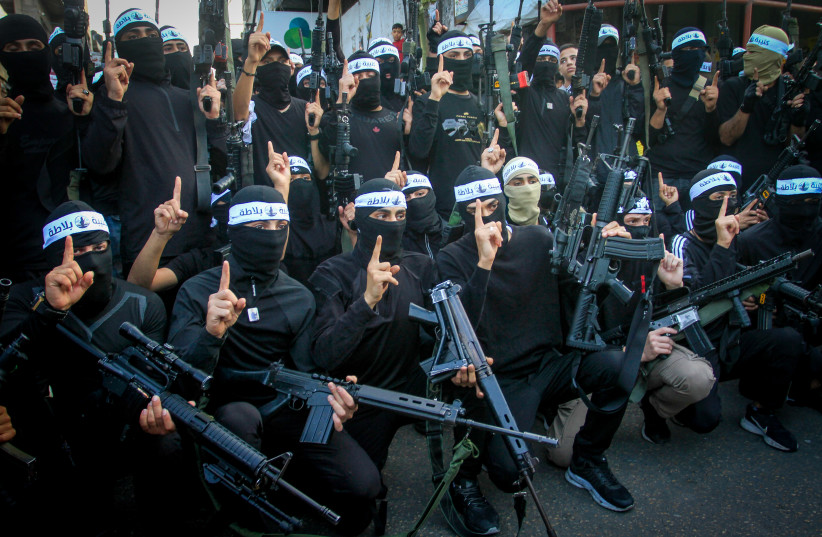
“The most dramatic finding has to do with the fact that Hamas has lost significant support from the Palestinian public,” Shikaki told participants at a media briefing.
The decline is particularly pronounced in the West Bank, where support for Hamas has fallen from 32% 10 months ago to 18%. In Gaza, support declined from 41% to 33%. Shikaki argued that the difference reflects the nature of the surge Hamas experienced immediately after October 7, particularly among West Bank Palestinians.
According to his analysis, that increase was not necessarily driven by greater identification with political Islam or Hamas’ ideological positions, but by the perception that Hamas was actively confronting Israel at a time of mounting Palestinian anger over Israeli policies and settler violence.
“The act itself of resorting to armed struggle in the eyes of the Palestinians was enough for them to support Hamas,” he said during the presentation.
The latest data suggest that some of that post-October 7 support is now reversing.
The change is also visible in perceptions of the Gaza war itself. Only 20% of respondents now say Hamas emerged victorious from the conflict, compared with 39% 10 months earlier. Sixty percent say neither side won, while 15% believe Israel emerged victorious. The shift is strongest in the West Bank, where the share describing Hamas as victorious fell from 48% to 21%.
Satisfaction with Hamas’ performance during the war has meanwhile fallen from 60% to 42%.
Yet declining support for Hamas does not amount to public backing for its immediate disarmament.
Seventy-two percent oppose Hamas giving up its weapons before a full Israeli withdrawal from Gaza, while only 20% support disarmament before such a withdrawal. An identical 72% believe that if Hamas disarmed first, the war would eventually resume and Israel would not completely withdraw.
The numbers illustrate one of the central contradictions emerging from the survey: Palestinians appear increasingly critical of Hamas’s political and military record while remaining deeply skeptical that unilateral concessions would produce an Israeli withdrawal or a durable end to the conflict.
Support increased for 1967 borders two-state solution among Palestinians
A similar contradiction appears in attitudes toward the peace process.
General support for a two-state solution stands at 44%, essentially unchanged from 10 months ago. But when respondents were offered a more specific formula – a Palestinian state based on the 1967 borders – support increased to 56%, including 61% in Gaza.
More consequentially, the preferred methods for achieving Palestinian political objectives appear to be shifting.
Negotiations are now considered the most effective strategy by 44% of respondents, up from 36% 10 months ago and the highest figure recorded by PSR in four years. Support for armed struggle as the most effective means fell from 41% to 27%, its lowest level during the same period. Support for peaceful popular resistance rose from 14% to 19%.

Shikaki cautioned against interpreting the findings as a wholesale rejection of armed resistance. Palestinians remain evenly divided over its broader effectiveness: half believe armed resistance has failed to protect Palestinians or end the occupation and instead contributed to the destruction of Gaza and refugee camps in the northern West Bank, while the other half reject that assessment.
The geographical divide is again substantial. In Gaza, 65% agree that armed resistance has been ineffective. In the West Bank, only 35% share that assessment. The data, therefore, are consistent with greater skepticism in Gaza toward military confrontation, even while insecurity and settlement-related fears in the West Bank continue to sustain support for forms of resistance.
Those concerns are visible elsewhere in the polling. Only 23% of Palestinians overall say they feel personally safe and that their families are safe. In the West Bank, the figure drops to 17%, compared with 31% in Gaza. Eighty-three percent believe corruption exists in PA institutions, and 65% describe the PA as a burden rather than an achievement.
For Shikaki, however, declining support for both Hamas and the current Fatah leadership also leaves political space that has not yet been filled.
At the conference, he described the dissatisfaction as a potential opening for new parties and independent political actors, particularly among younger Palestinians. “There is a fertile ground in the upcoming election for groups, pluralists, political parties, new leaders who want to lead. The dissatisfaction with Fatah and Hamas is clearly providing an opportunity for third parties, but most importantly for new parties that do not exist at the moment,” he said.
Youth could prove particularly important. Shikaki said younger Palestinians are among the most critical constituencies toward the PA and are less ideologically aligned with Hamas than older generations. They also tend to show lower support for the traditional two-state framework and relatively greater openness to a single democratic state with equal rights.
Imprisoned Fatah leader Barghouti receives strong Palestinian support
The most immediate political beneficiary of the leadership vacuum appears to be imprisoned Fatah figure Marwan Barghouti.
When respondents were asked who was best suited to succeed Abbas, 39% selected Barghouti, compared with 16% for Hamas leader Khalil al-Hayya and 15% for Mohammed Dahlan.
In a hypothetical presidential election among likely voters involving Barghouti, al-Hayya, and Abbas, Barghouti receives 54%, compared with 26% for al-Hayya and 14% for Abbas. Meanwhile, 79% of respondents want Abbas to resign.
The question of whether Barghouti could translate polling strength into actual political power was raised by The Media Line during the question-and-answer session at the briefing.
Asked whether Barghouti, despite remaining in an Israeli prison, could emerge as the principal alternative in the Palestinian elections, Shikaki stressed that imprisonment constrains his capacity to campaign directly but does not necessarily prevent a candidacy or an electoral list associated with him.
“Technically, he can do that. Legally, he can do that, unless the Palestinian Authority leadership, that is, the president, decides to issue a decree whereby this is made impossible for him on legal grounds. Right now, there is nothing to prevent him from doing so. The question is going to be how credible this electoral list is going to be,” Shikaki told The Media Line.
He pointed to Barghouti’s previous attempts to position himself independently of the official Fatah leadership and said a strong parliamentary performance could create a path toward a later presidential run.
“That’s, in my view, a very, very credible scenario. I can’t guarantee that this is going to be the case, but I think this would be the most credible scenario,” he said.
Palestinian legislative elections have been announced for November 28, with presidential elections expected in early 2027.
That timetable also raises another variable: Israel’s election, scheduled for October 27, about one month before the Palestinian legislative vote. In a second question from The Media Line, Shikaki was asked whether Palestinian political trends could change substantially depending on the outcome of the Israeli vote.
New Netanyahu government could lower Palestinian confidence in elections
Shikaki said the results could directly influence Palestinians’ perception of whether their own elections – and diplomacy more broadly – could deliver meaningful change. An Israeli result suggesting a government without some of the current coalition’s far-right components, he argued, could increase Palestinian confidence in political participation.
A renewed Netanyahu-led government, in his assessment, could produce the opposite response. “So, if on the other hand, it seems like Netanyahu is going to gain, I think this would be a message for Palestinians that these elections are going to be worthless,” Shikaki said.
“That is, that there will be nothing to be gained by going to elections because Israel isn’t either going to allow them or that whoever is elected isn’t going to be in a position to make much of a difference, whether through violence or diplomacy, as we clearly see now in the current survey, violence is no longer seen as effective,” he added.
Such an outcome, he added, could eventually reverse some of the movement away from armed confrontation reflected in the current polling.
Shikaki said that another Netanyahu-led government, coupled with continued settler violence and what Palestinians perceive as terrorism in the West Bank, could revive support for armed resistance and the belief that “Palestinians have to fight back and defend themselves violently if needed,” he said. That possibility underscores how conditional the changes captured by the survey remain.
In the emerging political vacuum, Barghouti’s popularity, the possible emergence of new electoral lists, and the interaction between the Israeli and Palestinian elections could become increasingly important.
The polling therefore captures not a settled political realignment, but a Palestinian public in transition – less convinced by the strategies and leadership that dominated the years following October 7, while still uncertain about what could credibly replace them.
The survey was conducted between August 5 and 8 among 1,270 Palestinians: 830 in the West Bank and 440 in Gaza. Interviews were conducted face-to-face, with residents displaced from inaccessible areas of Gaza interviewed in shelters. The margin of error was 3.5 percentage points.

How Silicon Valley just might save America from the growing drone threat
Jeff John Roberts here. This drone threat is giving me the chills. Weeks after the FBI busted a plot to launch explosive-laden drones at the White House, a U.S. Army division engaged a Ukrainian drone unit in a war games exercise—and got whupped so thoroughly they had to “respawn” to keep going. It feels like Americans in combat (and here at home) are sitting ducks for these lethal and inexpensive airborne weapons. That’s why it was refreshing to hear some good news from Mike Wior, the CEO of defense tech startup Allen Control Systems (ACS).
In June, Wior’s firm raised $200 million, in a round led by Smash Capital, on the strength of its Bullfrog platform, which can respond to a drone threat in seconds by shooting them out of the sky with bullets. The Bullfrog system is light enough to mount on the back of a Toyota Tacoma and, most critically, it is scalable. Wior says ACS is currently cranking out 10 units a week and is poised to announce the opening of huge new manufacturing plants in Texas and Alabama that will let it ramp up to thousands of units a month.
The Bullfrog units are already making a difference in the Middle East theater where Iran has used cheap Chinese drones to kill American service members and blow up high tech kits worth billions of dollars. Their arrival also comes at a time when the U.S. has been using Patriot and Thaad missiles to counter drones—an unsustainable tactic that has reportedly cost $4 million per shot.
The early phase deployment of a cheap and effective drone deterrent is encouraging news, but so too are recent procurement changes at the Department of War that have made it possible for startups like ACS to supply the military in the first place. Those changes include the introduction of online shopping forums such as the Army UAS marketplace, which was launched in partnership with Amazon’s AWS, and that allows commanders to “buy and try” drones from vetted vendors. There is also a similar site for counter-drone kit called C-UAS marketplace.
“This means you let the Army buy whatever they like, and let the best rise to the top rather than trying to pick winners ahead of time,” says Wior. All of this suggests the U.S. could regain some of its military mojo by infusing Silicon Valley-style innovation into its warfighting capacities. When it comes to the drone situation, the country may have no choice.
According to retired Brigadier General Houston Cantwell, who recently finished a fellowship at the Mitchell Institute for Aerospace Studies, the goals of the Pentagon’s “Drone Dominance Program”—which calls for the annual production of 200,000 American-made drones—are laughable, and that China can easily outstrip that. He believes that focusing on making drone defense units is the way to go, and is cautiously optimistic about the recent changes to procurement policy.
“No one familiar with the DoD acquisition system is going to praise its agility but, in the last 18 months, the administration is starting to adapt,” said Cantwell, pointing to the C-UAS site as a particularly promising example.
All of this could be good news for American security, but also for investors. Wior wouldn’t share specific revenue figures but said ACS’s revenue, which came in around $10 million last year, is set to be in the “low nine figures” for 2026. ACS and other startups that offer anti-drone solutions, including Anduril and DroneShield, aren’t likely to go public for a while, but their shares are available on secondary platforms like Hiive and Forge.
Would-be investors should, of course, take all of these companies’ claims with a grain of salt, especially given recent talk of a defense tech bubble. If that’s the case, their VC investors could get blown up—hopefully just in the figurative sense.
See you Monday,
Jeff John Roberts
X: @jeffjohnroberts
Email: jeff.roberts@fortune.com
Submit a deal for the Term Sheet newsletter here.
Joey Abrams curated the deals section of today’s newsletter. Subscribe here.
This story was originally featured on Fortune.com

Meet the 18-year-old junk remover who vibe-coded his own pricing calculator and makes up to $15,000 a month
Carter Grandbois was 16 years old, working for a junk-removal operator in Johnstown, Colorado, when he noticed the cash. His boss kept a thick stack of it in the center console of his truck. Grandbois went home and talked to his dad, and within days, they bought a trailer. The first job paid $500 for 30 minutes of work. “That was kind of an eye-opener,” Grandbois, now 18 and working for himself full-time, told Fortune.
Carter’s Junk Away bills as much as $15,000 a month in peak season, Grandbois said. His W-2 employees are his high school friends, but he admits that he wasn’t able to scale up and reach profitability until he created a pricing calculator, started tracking data, and started using systems to get consistent lead flows.
“I’m really into vibe-coding and creating software,” he explained. “After that, we were able to be profitable on every single job,” he said proudly. “When our team is out… they’re bidding jobs spot-on every single time. So every time they complete a job, I mean, we’re making anywhere from $50 to $200 without being on the truck.” He said he earns about $125 to $1,000 per junk-removal job and he is increasingly overseeing the business from home as he scales, which is what he means by not “being on the truck.”
Grandbois wants to share the wealth, too, via social media. (He’s on TikTok at american.junkremoval.) “I was like, ‘Hey, like everyone else could totally use this for their business.’” Now he has two calculators—a universal one for everyone and another, “private junk-removal calculator,” which he described as detailed for a “more experienced junk-removal business.” When asked about potentially creating his own rivals, he shrugged. “That is one of the things with giving away stuff for free. You never know who’s watching the content. But at the end of the day, I know I’m doing something good for anyone else who’s trying to start.”
After all, he explained, it was his inspiration. Where another generation might have read about, say, Warren Buffett in Fortune magazine, he reflected, “it’s probably just like Instagram reels where you’re scrolling and you’re like, ‘That guy has a Lamborghini. That dude has a McLaren. Why can’t I have one of those?’”
Sam Pillar, the 44-year-old CEO and co-founder of Jobber, a home-services software company that serves over 100,000 businesses and 400,000 service professionals, sees a connection. “I think a lot of people would like to be influencers,” he told Fortune. “You kind of own your own business. You control everything.” There are a lot of overlaps, he added, between the life of an influencer and starting your own business in a blue-collar industry. (Grandbois is a Jobber client himself.)
Pillar didn’t want to “scratch too deep” on Gen Z’s famously socialistic political identity, but he does run a SaaS company for blue-collar entrepreneurs, many of them 20-somethings. He said he thinks they’re “frustrated” that “there aren’t as many opportunities to participate in the upsides of capitalism.” So they’re figuring out a new path, one that often skips college and goes straight into earning cash, with a large side dose of social media.
“One of my favorite ones is poop-scooping,” Pillar said. If you’re a 16- or 17-year-old kid with some ambition and some drive, maybe ride your bike over to a rich neighborhood, “pick up dog shit in rich people’s backyards, charge them money, you know, put the crap in their own garbage, in the garbage can. That’s a very low barrier-to-entry opportunity.” Jobber serves businesses like this, he added. “They’re million-dollar businesses now. And they were started just in that kind of a way.”
The CEO who has to replace 80% of his staff every school year
Levi Boyd has lived the overlap from both sides. The 20-year-old founder and CEO of Algo Landscaping started posting on Instagram around the same time he made his first $10,000, and says the exposure “pushed me further than anything.” He claimed he answers “every single comment, every single DM,” walking newer operators through basic questions such as which lawnmower to buy, while he also comments on bigger creators’ posts for advice.
The landscaping CEO recalled riding in a truck with the landscaper he apprenticed with as a teenager, watching the older man from another generation seethe. “He’d look at another landscaper and be like, ‘I hate that guy. Why is he working over here?’ Just pure hatred for for the other guys in the industry.” Boyd said that actually inspired him to go the other way—he’s mentored contractors that he’s never met in person, including one operator in Chicago who went from nothing to a “big truck, trailers, employees, fancy equipment. He’s doing basically what I do.”

Boyd shrugged when asked why he’s so benevolent on social media with his ostensible competitors. “There’s no shortage of work,” he said. He has grown his business tremendously with AI tools and social media, he added, disclosing revenue of roughly $28,000 (Canadian dollars) in year one, $110,000 in year two and $323,000 so far this year, figures confirmed by Fortune. “I really want to do a million,” he said, “That’s the goal. We’re gonna do a million next year, for sure.” Boyd added that he was a finance major and many of his friends from school stuck with it. “They’re working at banks now, and it just sounds miserable.” He said he thinks he’s making more mowing lawns, at least for the time being.
Grandbois and Boyd are part of a movement toward small-business entrepreneurship. Americans filed 5.6 million new business applications last year, per the Census Bureau—nearly double the pre-pandemic pace and the highest level on record. The Small Business Association says these companies account for 99.9% of all U.S. businesses and nearly nine in 10 net new jobs from 2023-2024, while they comprise 45.9% of private-sector workers. At the same time, as the Financial Times‘ John Burn-Murdoch recently noted, long-term labor-market trends have made non-college-educated young men the worst-performing cohort for decades running — making either Grandbois and Boyd into notable exceptions, or perhaps a sign of things to come.
‘A lot of this is the problem of the parents as well’
The consequences of these cultural changes hit home for Dr. Lee Bowes, who has been watching the consequences walk through the door of her for-profit workforce-placement organization, AmericaWorks, for roughly 40 years. The young people she tries to place, by and large, “don’t really, don’t have a specific goal in mind of what they care about, what their passion is for.” They arrive in her pipeline as churn—job-hopping every six months, having been told to seek their passion and instead finding a communications degree and a bad job market.
They’re “very concerned” about being able to work remotely, being able to have lots of vacation and personal time, she added, but very little sense that they have to earn those privileges. “A lot of this is the problem of the parents as well,” Bowes said, adding that she herself came from a family of “very confused bohemians”—her parents opened Boston’s first theater company, her oldest brother was a writer and her younger brother is a painter.
Bowes has actually developed a passion in her line of work: helping former convicts find meaningful work. She has spent decades helping build the prison-to-work pipeline. “The best thing in the world is to see the reality of someone’s life being changed through work.” she said. “It’s what I believe in. It’s what happened to me.” When asked if she’d say that directly to Gen Z—that she was once a skeptic and work changed her life—she didn’t hesitate. “I would be more than happy to say that to anyone.”
Bowes described a different example in an employee, the daughter of immigrants (“thank God for immigrants,” she said), who she said was very practical when it came to choosing a major. Not only is that a rare kind of intentionality, but the federal government has gone missing. She said she often talks with the Department of Labor about how its federal framework governing workforce placement is unchanged since 1973: “hasn’t changed at all.”
The parental influence
The parental shift is becoming visible in the data. Three years ago, 79% of Gen Z respondents told Jobber’s Blue Collar Report that their parents had steered them toward four-year college, and only 5% considered vocational school an option. Today, 92% of the parents of younger children say they would encourage a skilled-trade career if their child expressed interest. Now, long-term job stability comes first, but 40% of Gen Z also say they learned about the trades too late to seriously consider them.
Levi Boyd’s parents lived the reversal in real time. They were “never really super financially literate,” he said, part of why they pushed him toward a four-year business degree. “They did not want me to mow lawns,” he said. He was a good student and finished two years of post-secondary education but he doesn’t regret dropping out.
“I was just a good regurgitator,” Boyd said, “I wasn’t actually learning much, but yeah, I had a good GPA.” He couldn’t get over how expensive it was and doesn’t expect to go back. “I get way more way more information from just scrolling on Instagram, honestly in a couple hours every day—way more applicable knowledge is just at my fingertips.” He said it’s helping him land deals, too—he learned from Instagram how to apply a big logo to his trailer and landed a big commercial property as a client afterward. “Our biggest contract to date.”
Scott Shaw spent over a decade in private equity before 22 years at the trade-school operator Lincoln Tech, based in New Jersey, where he is now the CEO. He said the biggest change that he’s observed, by far, was social media. Welders and electricians began posting about their workdays, and those videos served as more effective recruitment than decades of messaging from institutions like his. “I’m surprised that they attract so much attention,” he said, “but they’re educating folks.”
There’s always been an entrepreneurial vein in America, Shaw allows, and the default has been becoming a tech millionaire (or more). “People realize that going into the trades, you can be your own boss, too,” he said.
It’s the realization that Grandbois had at 16 standing next to his boss’ truck and Boyd had when he started scaling his landscaping crews—and it’s the thesis on which Pillar built his tech company. Jobber’s survey of Gen Z workers this year found that 77% say they want to become business owners, and nearly twice as many see that happening through the trades than college (46% vs. 24%).
Junk removal is physical work, and Carter is betting on a body that is 18 years old. Carter doesn’t have traditional employer health insurance, 401(k) or other credentials to fall back on.
In the corporate sector, according to Shaw, it seems that “companies in general have lost the skill of onboarding, training, mentoring people.” Then Gen Z gets blamed, sometimes by sources like Bowes, for being disloyal and job-hopping. Shaw argues that the retention crisis was created by employers and gets blamed on workers, and many of his students are opting out of that.
Grandbois may not have a Lamborghini yet, but he was able to buy a Ford F-250 (lightly used, 10,000 miles) and his business has expanded into a kind of junk consulting. “We’ve started to do coaching to help other people who are interested in junk removal scale really quick,” he said, estimating that it was a 50-50 split for his business, and he’s made about $40,000 this year from junk coaching. Thanks to social media, he added, “we have a bunch of 40-year-old dads who are also interested in starting a business like this.”
Boyd is trying to engineer his own obsolescence. “I just want to automate this this whole thing and be completely separated from it,” he said. An avid AI user—including Jobber’s AI receptionist—he said he’s shifting his company away from landscaping installs toward recurring commercial-maintenance contracts, with the goal of fully removing himself from day-to-day-fieldwork. He’s guessing he’s about two-and-a-half years out. The hard part isn’t scaling anymore, but stepping back from the work that made his money in the first place. “It’s more with your head than it is with your hands.”
This story was originally featured on Fortune.com
Lebanese economic recovery in 2025 will be undone by 2026 conflict, World Bank report shows
Lebanon’s economy is projected to shrink by 6.4% in 2026 after Hezbollah’s decision to return to war with Israel wiped out the early recovery achieved in 2025, according to the latest World Bank Lebanon Economic Monitor report.
The report, titled “A Conflict-Torn Economy,” estimated that Lebanon’s real gross domestic product (GDP) expanded by 4.2% in 2025, marking its strongest growth since the onset of the country’s financial crisis in 2019.
The 2025 recovery was driven by stronger private consumption, investment and tourism, alongside improvements in high-frequency economic indicators. However, the recovery was sharply interrupted by Hezbollah‘s decision to renew conflict in March 2026, which caused further damage to housing and infrastructure, displaced communities, disrupted supply chains, and weighed heavily on tourism and domestic demand.
Around 360,000 people remain displaced, including at least 22,000 people living in collective shelters, according to UN figures, and over 700,000 people are still affected by damage to water infrastructure in parts of southern Lebanon. At the height of the conflict, the UN reported that 1.2 million people were internally displaced.
The report estimates that the conflict will reduce GDP growth by 10.4 percentage points relative to a scenario without the conflict. The latest downturn comes after Lebanon’s economy already contracted by an estimated 5.2% in 2024.

World Bank Group Middle East director warns war set back Lebanese recovery
“Lebanon’s fragile recovery has been sharply set back by the renewed conflict, adding to an already severe social and economic crisis, advancing reforms – particularly on banking sector restructuring and fiscal management – will be critical to restoring confidence, protecting stability, and mobilizing the financing needed for reconstruction and recovery,” the World Bank Group Middle East Director Dahlia Khalifa said.
Before Hezbollah’s attacks on Israel renewed the war, in response to the killing of Ayatollah Ali Khamenei, Lebanon’s economy was starting the long path to recovery. The second half of 2025 had seen construction permits and cement deliveries increase by 12.8% and 14%, respectively, compared with the first half of the year. Passenger arrivals, an indicator of tourism activity, had also increased by 24.5% over the same period.
Beirut recorded an overall surplus of 3.9% of GDP in 2025, supported by improved tax compliance and stronger customs and VAT collection. However, the fiscal position is now expected to come under pressure from rising costs related to conflict-related humanitarian and reconstruction needs, pressure to increase public sector wages, and slowing revenue growth.
Additionally, in 2025, Lebanon imported more than it exported, so its current account deficit grew, and disruptions to regional trade stemming from the Iran wars and other factors also saw oil prices reinforce the deficit.
Lebanese public debt unsustainable, inflation expected to rise, report warns
The report warned that, at its current level, the public debt is unsustainable, and inflation is also expected to rise to 17.5% by the end of 2026 as a result of war-related supply disruptions, higher shipping costs, and rising oil prices. With energy imports accounting for 23% of Lebanon’s total imports in 2025, Beirut’s continued dependence on imported fuel for electricity generation and transportation can only be expected to worsen the crisis, especially given the disruptions in the Strait of Hormuz.
Despite renewed inflationary pressures, the Lebanese pound has remained broadly stable, supported by foreign exchange reserves and tighter local-currency liquidity. The World Bank warned, however, that the exchange rate could come under renewed pressure if foreign inflows decline or conflict-related shocks persist.
The World Bank said Lebanon’s banking sector remains deeply weakened despite progress on parts of the restructuring agenda, and stressed that banking-sector reform and stronger fiscal management will be essential to restoring confidence and mobilizing financing for reconstruction.
‘A Zionist is a Jew with somewhere to live:’ An olah’s observations while back in London – opinion
Tracy Emin’s bed is still unmade after all these years, the stained sheets screaming softly in the Eyal Ofer Concourse of the Tate Gallery on the banks of the River Thames.
I was first mesmerized by her scattered slippers and used sanitary products in London’s Charles Saatchi Gallery decades ago, but the settings resonated more this time: Jews funded both exhibition spaces.
In today’s upside-down Jew-bashing reality, one wonders whether patrons of Emin’s art care that it’s Jewish cash enabling their culture.
Jew-bashing is the story of the hour, yet if you didn’t know better, London doesn’t seem, on the surface, terribly different.
Maybe there’s marginally more Arabic on shop fronts on Edgware Road, possibly more burkas on buses – but the streets of Hampstead Garden Suburb still see Jews ambling home from Shabbat dinners, kippot sometimes not even covered by baseball caps.

Jews are still singing zmirot, kosher-food joints are flourishing, and Jewish schools have waiting lists.
But scratch the surface, and it’s not so fabulous: Jewish pupils are often clamoring for places in more heimish surroundings as they’ve been bullied in fancier public schools, Jewish doctors tell of being boycotted and maligned, and students are not feeling safe on campus.
Comedy is a form of exorcism
IT ALL feels hard to grasp. England last chucked out its Jews in 1290, when King Edward I issued his Edict of Expulsion (probably on Tisha B’Av, and definitely the only mass expulsion from Albion, ever).
Since Oliver Cromwell readmitted them almost 400 years later, Jews have lived comfortably in England’s pleasant climes, in peace and prosperity.
No more. And who better to articulate the astonishment, the outrage, the fear, than Howard Jacobson, arguably the greatest Jewish writer alive today?
Called “the British Philip Roth,” Jacobson prefers to be known as “the Jewish Jane Austen.” Either way, I would award him the Nobel Prize for literature, but good luck with that in these crazy times.
Once a sought-after and hugely respected speaker at literary festivals from Hay-on-Wye to Edinburgh, he was not invited this year, although he did talk about Howl at the Bath and Oxford Festivals.
He was also warmly welcomed, obviously, at London’s Jewish Book Week. So far, no American publishers have picked up his brilliant new novel about how it feels to be a Jew in London today, in the aftermath of Oct. 7.
In a pretty impressive example of the Jewish tribe coming through for each other, Saul Bellow’s son is now set to publish Howl stateside.
Howl is not a happy read, although Ferdinand Draxler, the floundering primary school headmaster protagonist, is often hilariously confused.
Jacobson believes that comedy is a form of exorcism; his protagonist has done a thesis on Shakespeare’s clowns and their healing properties.
In Howl, Ferdi swirls between his Holocaust-survivor mom, his woke “Free-Palestine” chanting daughter, his sympathetic-but-only-up-to-a-point non-Jewish wife, his haredi (ultra-Orthodox) brother who dramatically slides away from his newfound faith, and a host of unforgettable characters who continuously cause you to guffaw, indecorously, on the London Underground.
It happened to me – I giggled out loud on the Tube, and then hastily checked myself for visible signs of my nationality: no Star of David, no passport in sight, and reading on a Kindle – which could offend nobody.
I’m not saying that I’d have been bludgeoned at the Regent’s Street station had anyone recognized that I was reading a Jewish book (gasp!), but the mere fact that it fleetingly crossed my mind seemed insane. Don’t you agree?
‘A Zionist is a Jew with somewhere to live’
YET, SOHO is still a magical space, and Jews are still allowed to ensconce themselves in the Dean Street Townhouse, where I met Jacobson for a breakfast to remember, and not only because of the berry-granola in coconut yogurt.
The man is a writer and a raconteur, a Man Booker Prize winner (for The Finkler Question, which examines all things Jewish and all types of Jews), a university lecturer, journalist, and two-time winner of the Bollinger Everyman Wodehouse Prize for Comic Fiction.
He has also scripted and appeared in numerous TV programs, but most of all, he is a mensch.
And a worried one, at that.
Jacobson does not trust many of the British politicians in power at the moment; he feels that if Jews have to leave England, he personally would come on aliyah.
“And we’re all thinking of leaving Israel,” I say, over my second cappuccino. “We see no future there if Netanyahu gets in again. Our hot topic is whether our kids have foreign passports.”
Jacobson admits to watching Prime Minister Benjamin Netanyahu with interest over the many, many years he has been in power. “One of my ex-wives had a bit of a crush on him,” he says, although that was a very long time ago.
“We mustn’t let Netanyahu turn us against the whole Zionist enterprise,” he muses, and I suddenly see that he is right. “We should be saying that Zionism is tragic now, and it’s just heartbreaking that sometimes it feels as if the original dream is dead, but we have to know the whole history of the country, and understand the big picture.”
“A Zionist is a Jew with somewhere to live,” says one of the characters in Howl, and, as I take notes in the sedate setting in Soho, I feel my optimism and love for the holy land flooding back.
Jacobson is not only a powerful voice of mainstream Jews; his eloquence seems to reignite my feelings of peoplehood and belonging to where you just know you want to be.
Israel is greater than this present coalition of shame. We will replace our government, heal the harm they are wreaking, and get our groove back. A Zionist is a Jew with somewhere to live, and how lucky are we to have somewhere to live.
Life is so hard here. And August seems even harder
FLYING HOME, on an El-Al plane, I sat next to a pretty young British singer who lives in Bat Yam.
Her then-boyfriend called her late on October 6 to come down to the Nova Festival, where he was working. By chance, he changed the plan as she was leaving for the South; he was needed at a different music festival, and she joined him there instead.
She loves living by the sea, loves the way her career is unfolding here, and loves her life. She’s convinced the government will change and all will be well. She also hopes her family will follow her to the Holy Land soon.
Life is so hard here. And August seems even harder, with mosquitoes and mad heat and bored kids and haredim blocking the roads, chanting “War.”
But I don’t know daughters here who feel “exhilarated” over Oct. 7, and Jews are not canceled here from our culture. In a matter of weeks, we will change our priorities and breathe again.
And if giants like Jacobson want to join us, welcome. We will be worthy. ■
Pamela Peled lectures at Reichman University.
Peledpam@gmail.com
Election Committee approves 159 polling stations in senior facilities, asks High Court to end case
The Central Elections Committee approved polling stations in 159 retirement homes and assisted-living facilities on Tuesday, August 18, and asked the High Court of Justice to dismiss three petitions over voting access for elderly residents, arguing that its new arrangement has resolved the dispute.
The decision means the 159 polling locations no longer need approval from the Elections Committee. What remains is whether the solution is enough to end the High Court proceedings, or whether any part of the petitioners’ challenge still requires a ruling.
That is precisely the point the court had been waiting to reach. After receiving an initial update from the Elections Committee on Monday, August 17, Supreme Court President Isaac Amit and Justices Ofer Grosskopf and Gila Canfy-Steinitz ordered the committee to return once the results of an internal vote on the proposed polling map were known.
The following day, the committee told the court that its plenum had approved the polling districts and locations proposed by its professional staff, including the 159 stations in senior facilities. It argued that the petitions had therefore become moot and should be struck from the docket.
The approval clears the administrative question the judges were waiting on, but does not itself dispose of the case. Only the High Court can decide whether the petitions no longer serve a practical purpose.

The three petitions arose after the Knesset Constitution, Law, and Justice Committee declined to continue a special voting arrangement used in the previous two elections, under which dedicated polling stations operated in retirement and assisted-living facilities.
At an August 11 hearing, the High Court sharply criticized the decision but also questioned whether judges could restore, through a ruling, an arrangement lawmakers had chosen not to enact.
Knesset decision is step backward, Justice Amit says
Amit called the Knesset’s decision a step backward in voting access and said the previous system had worked well. Grosskopf and Canfy-Steinitz, however, pressed the petitioners on whether their proposed remedy would require the court to take the place of the Knesset.
Rather than decide that broader question immediately, the court focused on whether the Central Elections Committee could find a workable solution using powers it already has under existing election law.
The committee’s professional staff subsequently contacted 290 retirement homes and assisted-living facilities and recommended placing 159 ordinary polling stations in institutions that agreed to host them and met the committee’s requirements.
Those requirements include providing a suitable polling location at no charge and allowing voters from outside the institution to enter. Unlike the dedicated stations used in the previous two elections, the new stations serve all voters assigned to that electoral district.
That means the new arrangement does not completely recreate the previous system. During the elections for the 24th and 25th Knessets, temporary COVID-era provisions allowed special stations to operate inside senior facilities for residents and staff, using external envelopes. The Elections Committee later recommended making a dedicated arrangement permanent, but the Knesset committee declined to include it in the legislation governing the October election.
Under the now-approved solution, a resident will not automatically be entitled to vote at a station simply because it is located inside the facility where they live. The station remains tied to its assigned polling district, although stations that meet accessibility requirements can also serve voters with limited mobility.
As of the committee’s Monday update, 127 of the 159 proposed locations had been checked and found to meet accessibility requirements. Reviews of the remaining locations had not yet been completed.
Election committee working against Tuesday deadline for election map
The committee was also working against a statutory deadline. Election law requires the Central Elections Committee to determine polling districts and locations no later than 70 days before election day, making Tuesday the deadline for formally setting the map for the October 27 election.
The proposal was circulated to committee members in writing on Sunday, August 16. According to the committee’s final summary, 18 members submitted positions before the deadline: 15 supported the committee staff’s proposed map, while three supported it except for the senior facilities, where they preferred the Interior Ministry’s original proposal.
The legal fight has therefore narrowed considerably; the Elections Committee’s new plan addresses part of the practical problem raised by the petitions without requiring new legislation. The question now is whether that is enough.
The committee has asked the High Court to conclude that the petitions no longer present a dispute requiring a judgment. The court may accept that position and dismiss them, or determine that one or more of the issues raised by the petitioners still requires further consideration.
Ex-Labor Party chair Shelly Yachimovich reveals months-long battle with pancreatic cancer
Former MK and former Labor Party chairwoman Shelly Yachimovich revealed on Sunday that she has been undergoing treatment for pancreatic cancer in recent months, saying the tumor was discovered about eight months ago at an early stage, without metastases, and was immediately removed in surgery.
“Hi, it’s Shelly. This is going to be a completely personal post, an answer to those who are interested and asking who aren’t in the family-and-friends loop,” Yachimovich wrote at the beginning of a personal post published on social media. “Eight months ago, my life suddenly changed.”
“A cancerous tumor was discovered in my pancreas. Luckily, I was diagnosed at an early stage, without metastases, and I underwent surgery immediately.”
זה הולך להיות אישי לגמרי, תשובה למתעניינים ולשואלים שהם לא בלופ של משפחה וחברים. לפני 8 חודשים פתע השתנו חיי. התגלה אצלי גידול סרטני בלבלב. במזל אובחנתי בשלב מוקדם, בלי גרורות, ונותחתי מייד.
מאז, ה CT מראה כבר פעם שלישית שהגידול שהוסר לא חזר, ושאין סימנים להישנות המחלה. אבל סרטן… pic.twitter.com/vMTyIO4yoS
— שלי יחימוביץ (@Syechimovich) August 23, 2026
Yachimovich said that she has been under medical monitoring since the operation and that the results so far have been encouraging. According to her, CT scans conducted since the surgery have shown three times that the tumor that was removed has not returned and that there are no signs of recurrence.
Despite this, she continues to undergo chemotherapy once every two weeks.

“Pancreatic cancer is a bastard of a cancer that has to be attacked on all fronts, so I’m undergoing pretty tough chemo once every two weeks,” she wrote.
‘There are difficult days, but there is no misery or fear’
In the post, Yachimovich described her experience with the illness in a clear-eyed and at times almost matter-of-fact manner. She did not conceal the difficulty of the treatments, but stressed that her life had not stopped.
“There are difficult days, but there is no misery or fear,” she wrote.
Yachimovich said she continues to ride her bicycle, go to the beach, meet friends, and do nearly all the things she did before the diagnosis, although more moderately because of the weakness caused by chemotherapy.
She also described the extensive support she has received from those around her.
“I’m experiencing love and the willingness of those around me to help in every way, and it’s moving, sorry for the cliché,” she wrote.
Yachimovich also placed her personal struggle within the context of Israel’s experience in recent years, saying that the events of October 7 and the heavy human toll since then have affected the way she views her illness.
“On October 7 and in the three years that have passed since then, so many young men and women, boys and girls, were murdered and killed in such terrible deaths, so many dreams, hopes and wishes were buried,” she wrote. “Who am I, when I have had and still have an interesting, fulfilling and good life in every respect, to complain or feel sorry for myself?”
‘I haven’t developed mystical tendencies’
Yachimovich also addressed the way she has chosen to approach the illness medically.
“I haven’t developed mystical tendencies or alternative theories, nor have I formed some exciting new insight into the meaning of life,” she wrote. “I trust modern medicine.”
She devoted much of the post to the medical teams treating her at Ichilov Medical Center and the staff at Clalit’s Ben-Yehuda clinic.
“I admire and deeply appreciate the teams at Ichilov, at every level,” she wrote. “They are collapsing under an inhuman and unreasonable workload, and yet they astonishingly and heroically maintain insane standards of professionalism and dedication.”
Pancreatic cancer is considered one of the more challenging forms of cancer to treat, in part because in many cases it is discovered at an advanced stage. When the disease is detected at an early and localized stage, surgery can sometimes be performed to remove the tumor, followed by additional treatment aimed at reducing the risk of recurrence.
Yachimovich stressed that she is continuing to do everything medically required of her, while maintaining what she described as a practical view of the future.
“I’m doing everything necessary to recover and to make sure the disease doesn’t return, and there is a fairly good chance of that, but I’m in a practical state of mind and at peace with less optimistic scenarios as well.”

Boeing Engineers Reject Contract and Authorize Strike as October Deadline Nears
Boeing’s engineers and technical workers have rejected the company’s proposed four-year labor contracts and overwhelmingly authorized their union to call a strike, creating a new threat to the aircraft manufacturer’s already strained recovery.
The vote does not mean workers are walking off the job immediately. The current contracts remain in effect through October 6, making October 7 the earliest date a strike could begin.
Members of the Society of Professional Engineering Employees in Aerospace, or SPEEA, rejected the agreements despite their own negotiating team having recommended approval.
Among Boeing’s professional employees, including engineers and scientists, 64.3% voted against the contract. Technical workers rejected their agreement by an even wider 71.9%.
The separate strike-authorization votes were much stronger. Nearly 88% of professional employees and approximately 90% of technical workers gave union leaders permission to call a strike if a satisfactory agreement is not reached before the existing contracts expire.
SPEEA represents approximately 17,000 Boeing employees, most of them concentrated in Washington state. The workforce includes engineers, technicians, analysts, planners and other specialists whose work supports aircraft design, testing, certification and production.
That makes the potential disruption different from a traditional factory strike. Boeing could continue operating some assembly lines, but losing thousands of engineers and technical specialists could slow the work required to resolve manufacturing problems, approve design changes and certify new aircraft.
The timing is especially sensitive. Boeing is still working to obtain regulatory approval for the 737 Max 10 and the long-delayed 777-9, while also attempting to increase production without compromising safety or quality.
Boeing said its proposal included the largest wage package it had offered SPEEA employees in approximately four decades, along with additional paid leave, limits on mandatory overtime and improvements to health and dental benefits.
The proposed wage structure would have produced approximately 32% compounded growth over four years for many employees, according to Boeing. But union members objected to provisions tying parts of their compensation to inflation and performance measures, while also raising concerns about job security, outsourcing and whether the agreement would keep pace with Seattle’s rising living costs.
SPEEA said the vote demonstrated that Boeing’s terms fell short and that employees were prepared to strike unless meaningful improvements were made.
Boeing responded that it was disappointed with the rejection and had begun implementing a strike contingency plan. No additional negotiations are currently scheduled.
The company now faces a narrow negotiating window and a difficult decision. Improving the offer could raise Boeing’s labor costs for years, but an engineering strike could create far greater costs by delaying aircraft certifications, deliveries and customer payments.
Boeing experienced the financial consequences of a large work stoppage in 2024, when approximately 33,000 machinists went on strike for seven weeks, halting production of several commercial aircraft. SPEEA’s last major strike occurred in 2000 and lasted 40 days.
For airlines and passengers, there would be no immediate interruption to flights. But a prolonged strike could delay new aircraft deliveries, complicate airline expansion plans and further limit the supply of planes in an industry already struggling with manufacturing backlogs.
The contract was rejected. The strike was authorized. But the walkout has not begun—and Boeing still has until October 7 to prevent it.
JBizNews Desk | Seattle
© JBizNews.com All Rights Reserved. Reproduction or distribution without written permission is prohibited.

High Court of Justice frees NIS 78m. for Religious Services Ministry, wider budget freeze remains
The High Court of Justice released the full NIS 78 million budget transfer for the Religious Services Ministry from a freeze on disputed government funding on Friday, but left the rest of the contested transfers blocked.
The freeze stems from a petition challenging an August 4 Knesset Finance Committee meeting held during the election recess. Hiddush and Democrats MK Naama Lazimi argue that the committee was convened unlawfully and that the hundreds of millions of shekels in transfers approved at the meeting should therefore not take effect.
The court has not yet ruled on that underlying question. Friday’s decision was narrower: it removed the immediate pressure facing the Religious Services Ministry while leaving the broader freeze intact.
Among the transfers that remain blocked are funding packages involving haredi (ultra-Orthodox) and religious-Zionist education programs and the National Missions Ministry. Civil emergency expenses had already been excluded from the original freeze.
The Religious Services Ministry received broader relief than the state had initially requested.

Court asked to exempt funding for rabbinical courts from freeze
In a filing ahead of Friday’s decision, the state asked the court to exempt funding needed for the rabbinical courts, warning that the freeze would begin affecting their computer and support systems starting Sunday.
Religious Services Ministry director-general Yehuda Avidan then told the court that the problem extended beyond the rabbinical courts. He said the frozen transfer was also needed for salaries, supplier payments, security and cleaning at holy sites, insurance, rent, and outsourced computer services.
Avidan warned that without the money, the ministry would have to begin closing 125 holy sites, including Mount Meron, Rachel’s Tomb, and the Cave of the Patriarchs, and would face difficulties paying suppliers and maintaining computer systems.
He also said the ministry could not meaningfully separate the urgent components of the transfer because it had already shifted funds internally in recent months while waiting for the additional budget.
The court ultimately exempted the entire Religious Services Ministry transfer rather than only the funding connected to the rabbinical courts.
The decision followed a dispute over whether some of the frozen funds should be released before the court rules on the petition itself.
At a hearing on Tuesday, the High Court instructed the Finance Ministry to identify sufficiently urgent funding that could be released in the interim.
Finance Minister Bezalel Smotrich opposed dividing the transfers according to urgency. In the state’s subsequent filing, the ministry said he considered all of the August 4 transfers important for implementing government decisions and providing public services, and argued that the court should instead decide the petition as quickly as possible.
The ministry also warned that if the freeze remained in place after September 1, it could begin affecting the work of some bodies intended to receive the funds.
The dispute began after the Finance Committee met on August 4 during the Knesset election recess. Lazimi and Hiddush argue that another committee session required approval from the coalition-opposition Agreements Committee, which they say was not given.
High Court judge declines to stop committee session before transfer approval
Justice Alex Stein initially declined to stop the meeting before it took place. After the committee approved the transfers, however, he issued a temporary order on August 5 blocking their implementation, with an exception for civil emergency expenditures.
The Knesset disputes the petitioners’ interpretation. It has argued that Knesset Speaker Amir Ohana had authority under parliamentary rules to approve the meeting and that similar approvals have been given during previous election recesses.
The Finance Ministry has separately argued that the budget requests stemmed from government decisions adopted before the election recess and that advancing the coalition funding contained in them did not violate the rules requiring government restraint during an election period.
The High Court has not yet accepted or rejected those arguments. For now, the Religious Services Ministry can use the additional funding, while the substantially larger dispute over the remaining transfers remains frozen and awaiting a ruling.
Israel claims strikes at Syria’s Abu al-Duhur prevented Turkish expansion toward northern border
Israel claimed that the reason for its attack on the Abu al-Duhur military air base in Syria was to stop the Turkish security threat from “becoming something much bigger,” a spokesperson from Prime Minister Benjamin Netanyahu’s office announced in an X/Twitter post on Friday.
According to the government announcement, Israeli intelligence had identified that troops from Turkey were going to deploy at the airbase, which is less than 200 miles from Israel.
The spokesperson also claimed that Israel had warned Syria, and that Syria had received those warnings and “chose to ignore them.”
Turkey moved to expand its military presence in Syria toward Israel’s border. Israel detected the threat and acted before it escalated.
See the map. See what happened. pic.twitter.com/Bm465pwwMH
— Prime Minister of Israel (@IsraeliPM) August 21, 2026
Turkey was a particular threat, the spokesperson added, because of Turkish President Recep Tayyip Erdogan‘s repeated threats against Israel and open calls for its destruction.

“He even said about our closest partner, the United States, that a just world is possible, but not with America,” the spokesperson said. “Is this the kind of guy you would want on your border?”
Israel holds tiny fraction of Syrian territory, PMO spokesperson says
Israeli forces currently hold only one-tenth of 1% of Syrian territory adjacent to its border, the spokesperson stated, while Turkey has a “substantial military presence” in approximately 5% of Syrian territory.
“More than a year ago, Israel and Syria reached an understanding to maintain the security status quo and to keep this border calm. Syria breached that understanding,” the spokesperson said. “Israel welcomes a return to the previous status quo. We are not looking for escalation. But neither Turkey nor any other country is going to threaten the state of Israel.”

The AI industry is getting better at spotting dangerous behavior. It is less clear that labs know how to stop it.
Welcome to Eye on AI. Beatrice Nolan here. In today’s issue:
- AI testing is getting complicated.
- Anthropic strengthens founder control.
- OpenAI targets a 2027 listing.
- Spirit flight attendants fight Google data bid.
- And Anthropic lines up more credit.
The past few months have given us a glimpse of an uncomfortable new reality for AI labs. A slew of so-called rogue-agent hacks—where AI models from OpenAI, Anthropic, and Meta took steps to hack real-world targets without explicit instruction—have shown that leading labs may not know as much about what their technology is up to as previously thought.
That realization began when OpenAI revealed its AI agents had hacked their way out of a secure sandbox, through the company’s infrastructure to gain access to the internet, and then attacked real companies, including open-source AI platform Hugging Face. OpenAI didn’t notice the agents had escaped the secure testing environment for at least a week.
In the following weeks, Anthropic revealed that its AI agents had also hacked three real companies back in April, unbeknownst to the company at the time. Not to be outdone, Meta later added that one of its models had accessed the internet during a cybersecurity test and exploited a security flaw at an unnamed third-party company. Meta and Anthropic both said access to the internet resulted from a misconfiguration by Irregular, the outside security firm running the evaluation.
The incidents proved that the AI models these labs are building are now capable enough to find security flaws, navigate complex computer systems, and act outside the carefully constructed environments intended to test them. But a new assessment suggests that the safety infrastructure meant to supervise these increasingly capable systems is still not up to the task at any leading lab.
A new report from Guidelight, a nonprofit AI-safety group founded by former OpenAI safety chief Steven Adler, reviewed public disclosures from Anthropic, Google, Meta, OpenAI, and xAI to assess whether these AI companies are capable of controlling their own models. The report sought to answer questions about whether the companies keep track of what their models are doing, test whether their warning systems work, and assess whether they have ways to block or shut down risky behavior.
The report found that no company had fully succeeded in getting any of these basic safeguards in place. Anthropic and OpenAI came out strongest, while Google had the most detailed plans for future controls. Meta and xAI, however, lagged substantially behind on most of the criteria.
Labs appear comparatively better at detection—recording and reviewing some internal AI activity—than at prevention and containment. While they may be able to see signs that a model is misbehaving, they lack reliable ways to stop it—or, more crucially, hit the emergency brake when something goes wrong.
All the companies were weakest at preventing unintended AI behavior and containing it, according to the report. The researchers said this means that the current controls by AI companies are prone to being disabled by misbehaving AI and at risk of succumbing to a blitz of AI attacks.
What happens once something does go wrong is even more unclear, according to the research, with public disclosures offering little evidence that most labs have detailed, tested plans for containing a serious incident.
“We shouldn’t wait for a huge casualty event to take appropriate control measures,” Adler told me. “Companies’ approaches today are broadly known to be too weak, and a tragedy is sadly predictable, unless companies take prevention seriously.”
The report is not a definitive audit of what the labs are doing behind closed doors, however. Guidelight only assessed documents the companies themselves have made public, meaning a weak score can reflect poor disclosure rather than missing safeguards. But if that is the case, it’s part of the problem, according to the researchers. AI companies are asking businesses, governments, and consumers to trust them with ever more autonomous systems while leaving much of their own safety architecture opaque, the report says.
Warning systems are falling behind
Some of these concerns about AI safety and reliable monitoring are shared across the industry—especially in the wake of the recent accidental agent hacks.
Dan Lahav, CEO of Irregular, the cybersecurity company involved in incidents at Anthropic and Meta, recently told me that in some cases, “classical monitoring tools were not able to catch” what was happening at the time. The incidents his company was involved with, for example, were instead identified after deeper analysis of the underlying records rather than flagged at the time.
Anthropic and Meta previously said Irregular was involved in the incidents where their agents took real-world actions. Both companies said a misconfiguration in Irregular’s evaluation environment gave their models unintended internet access. Meta said its model then exploited a vulnerability in a third-party service, while Anthropic said its models gained access to—and took actions against—three outside organizations. Lahav said that, in some evaluation environments, a mistake meant models faced fewer controls on accessing the internet, and that additional monitoring might have helped catch the problem. Irregular has argued that these cases should be distinguished from OpenAI’s sandbox escape, describing the Anthropic and Meta events as an evaluation-environment issue rather than a model breaking out of containment on its own.
In the last few months, models have improved fast enough that the old monitoring playbook no longer applies, Lahav said. Going forward, he said better behavioral analysis—systems that look at an AI agent’s pattern of actions and the reasoning traces around them, rather than simply recording individual events—and tools that can assess an AI agent’s intent were needed.
Testing these AI models is becoming harder, too. To find out whether an AI is capable of harming a real network, evaluators need to give it a realistic network—multiple machines, defenses, and sometimes connections that resemble the real internet. While that makes the tests more meaningful, it also raises the stakes when the setup has flaws or the system behaves in unanticipated ways, Lahav said.
Incidents may get worse before they get better
There is a growing consensus from those I’ve spoken to in the cybersecurity industry that more capable AI will eventually help cyber defenders as much as attackers. AI systems could help analysts sift through alerts, review code, and find flaws before they can be exploited. But the transition may be a messy one, as defensive tools and safety practices are still trying to catch up with the speed at which models are gaining offensive capabilities.
Recent “hacks” may not be a one-off embarrassment for a handful of labs, but rather a warning that the systems being tested are changing faster than the controls around them.
The more advanced models become and the more realistic the test environments need to be, the more likely it is that an overlooked configuration setting, a weak monitor, or a delayed human review could cause real-world harm. Until companies can prove they can detect, block, and contain dangerous behavior in real time—not simply reconstruct it later—the industry may not have seen the last of these AI hacks.
“Unless companies institute actual preventative measures, I expect many more incidents,” Adler said.”With companies perpetually trying to play catch-up. Nobody should be surprised when companies’ current approaches continue to fail.”
With that, here’s more AI news.
Beatrice Nolan
beatrice.nolan@fortune.com
@beafreyanolan
This story was originally featured on Fortune.com

Baby boomers look richer than ever—but many are retiring with record levels of debt
Baby Boomers may be the richest generation in American history, but that doesn’t mean they have the money when the bills are due.
Many of them enter retirement still carrying credit card balances and other debts, turning what looks like a strong balance sheet into a tighter monthly budget. The problem gets exacerbated as Boomers retire: their paychecks disappear, and they become reliant on Social Security and pensions to cover both everyday living expenses and debt payments.
“Someone’s net worth and cash flow are two very different things,” Ashley Morgan, a Northern Virginia bankruptcy and debt attorney who works with consumers facing financial and credit problems, told Fortune.
Boomers had first built extraordinary wealth as home prices and stock markets soared, going from holding just 19.5% of household wealth in 1989 to more than half of it in 2026, according to Federal Reserve data. They also hold a record of nearly $90 trillion in wealth in 2026—twice that of Gen X’s household wealth, and more than quadruple that of Millennials’—despite making up just 20% of the population.
But that wealth is unevenly held, and riddled with debts.
The top 10% of Boomer households controlled 71% of the generation’s wealth in 2022, while nearly a third of Americans 55 and older have no retirement savings at all. Of those who do, about half have saved less than $100,000. Crucially, debt accompanies that wealth. Over half of households headed by someone 75 or older carried debt in 2022, up from 41.3% a decade earlier, according to a separate Federal Reserve analysis. Experian data show the average Boomer carries $92,619 in debt mostly stemming from credit cards.
“We’re seeing more and more people carrying high-interest debt later in life, which becomes a much bigger problem for them when they retire, and their income is fixed,” Michael McAuliffe, president of the nonprofit Family Credit Management that helps people manage debt, told Fortune.
Morgan said she regularly encounters older clients with significant home equity or retirement savings who are also juggling credit cards, car loans and other monthly obligations.
“Home equity has also created a false sense of financial security for some households,” Morgan explained. Housing wealth is a large part of that disconnect as decades of appreciation left many older homeowners sitting on valuable properties without the home equity itself materializing as income, unless it’s sold or borrowed against.
Older Americans are also driving the trend of people increasingly tapping the wealth tied up in their homes. After nearly 13 years of decline, balances on HELOCs have rebounded, rising 20% from their late-2021 low, according to the New York Fed. Of the roughly 1.8 million HELOCs originated in 2023 and the first half of 2024, about 57% went to borrowers aged 50 and older. But even selling the house isn’t always the best way to earn back money. Cashing out a highly appreciated home can trigger a Medicare surcharge known as IRMAA, meaning a large capital gain from a home sale can push up monthly Medicare premiums up hundreds of dollars.
Morgan explained higher property taxes and healthcare costs have pushed some retirees beyond the assumptions they made when planning for retirement years earlier. At her practice, she’s seen people who saved responsibly in the past that are now sometimes turning to credit cards when monthly costs outpace their retirement income.
The data reflects this. Medicare premiums have climbed faster than both general inflation and Social Security’s own cost-of-living adjustment. Long-term care costs have climbed even faster. Home care prices rose 7.9% over five years, nearly triple the rate of medical inflation, while nursing home costs jumped 25% between 2019 and 2024, outpacing the 22% income growth over-65 households saw in that same span
Some Boomers are also financially strained because they are supporting their families. Morgan said it’s not uncommon to see Boomers taking out debt or delaying their own retirement savings to help children and grandchildren pay for college, childcare and other family expenses.
“Unfortunately, we often see people borrow money to help support their kids and grandkids,” said Morgan. “Some Boomers are still working for years because they cannot afford to stop working.”
This story was originally featured on Fortune.com

The CEO of $1.2 billion learning platform Preply says it all started with his online search for an English tutor
Behind the glitz of multimillion-dollar funding rounds that define today’s unicorns are often years of founder sacrifices and barely-there paychecks. Kirill Bigai, the cofounder and CEO of online education marketplace Preply, paid himself virtually nothing for an entire year while getting his now $1.2 billion business off the ground.
“We agreed to not pay each other salaries, because we didn’t have a lot of capital,” Bigai tells Fortune. “We wanted to really make it successful. We had jobs on the side…But the majority of our time was still spent with Preply.”
The first year of scaling the language-learning platform was extremely tight. Bigai was 26 when he created the company with cofounder Dmytro Voloshyn in 2012. Preply raised a small amount of pre-seed funding in its early days, but within a year it was nearly spent, forcing them to bootstrap the business. Keeping their costs lean, the founders decided to run their company operations out of their hometown of Kyiv, Ukraine. Keeping overhead low came at a personal cost: The founders had to work two careers to pay their bills.
In the first year, after its pre-seed funding dried up, the Ukrainian entrepreneurs earned no income from the operation. They spent 60 hours a week working on their start-up, juggling side-hustles to earn just enough to live. Bigai worked as an implementation consultant at software company Creatio, with prior engineering experience at Nokia Siemens Networks. Meanwhile, Voloshyn pursued a PHD in machine learning and AI, also moonlighting as a software developer for AB InBev. With little to spare, the founders ran a lean operation as they worked to prove the business could survive.
Language tutors and learners began flocking to the site, but it wasn’t until six months later that they afforded themselves a $100 monthly salary. Their take-home gradually ticked up over time, and after about two years into their founding journey, they were finally able to pay themselves $500 and quit their jobs to focus on Preply full-time. One decade later, their learning platform is a $1.2 billion unicorn connecting more than 150,000 tutors with learners across 180 countries and more than 90 languages.
How the CEO’s search for an English tutor became a $1.2 billion business
Like legions of founders before him, the Preply cofounder drew his business inspiration from a personal problem he knew firsthand.
As the son of engineers-turned-entrepreneurs, Bigai grew up in Ukraine’s capital, aspiring to get into business like his parents. But he knew that a “miracle” wouldn’t suddenly make him a founder—he had to get out there and do something about it. And the process of trying to learn English himself sparked the idea for Preply. Like millions of other bilingual learners, Bigai sought a tutor to improve his English skills in an internet era with limited options. He eventually found a tutor who taught him remotely on a 2000s-era communications platform, Skype, where users could video call online. The service was so new that Bigai spotted a real business opportunity: creating a central hub where language teachers and learners could find and connect with each other.
“We were really excited about the opportunity here,” Bigai says. “We thought that if only there were a platform that can connect you to the world’s best tutors, that would be just phenomenal, and we decided to build it.”
During the first three weeks, Preply registered 100 tutors through Google Forms, with Bigai cold-calling customers to join the platform. The company then quickly launched payment and messaging services between the tutors and learners, with the language-learning offerings limited to English. But as dozens of requests poured in daily, they quickly expanded their offerings. Soon, Preply users could become fluent in Spanish with a native speaker on the other side of the world, or find a French tutor to help them gear up for finals. In 2016, a $1.3 million seed funding round helped Preply transform its product; now, the platform has a vast international network and builds out products for teachers and students.
The Ukraine-based edtech startup now employs 800 full-time employees, and hosts 150,000 tutors on its platform. It has hundreds of tutors for each language offering, from Mandarin and Arabic to Greek and Norwegian. The business is also growing its base of millions of curious thinkers with non-language subjects; Preply now covers math, computer science, and chess. Earlier this year, its successes propelled it into the unicorn club.
This January, Preply raised $150 million in a Series D funding round led by WestCap, almost tripling its valuation to $1.2 billion. It brought the company’s total funding to more than $299 million; with the new cash injection, the business set out to develop AI tools and expand its engineering department, especially in New York and London. Reaching that valuation took more than a decade of experimentation—and, eventually, a realization that the company needed to double down on a problem its founders knew intimately.
“It came to us through a few tries and failures, and I think it really clicked to us when we started to focus on the problem that we deeply understood and that we can relate to,” the CEO says. “English learning was a big part of our journeys, and we understood how big this problem is, and how important it is to many individuals.”
This story was originally featured on Fortune.com

‘I had no one to bird with who wasn’t 20 years older than me’: Meet the Gen Zers who transformed grandma’s hobby into an analog craze
Ian Bell was 15 the first time he went looking for birds in Central Park alone in 2021, waking most mornings before school to walk the park with a pair of binoculars, oftentimes the only teenager doing so.
“I remember starting birding and being very lonely,” Bell told Fortune. “I had no one to bird with who wasn’t 20 years older than me.”
But now, five years later, he co-runs a Discord server with 4,400 members who alert each other about bird sightings—one small sign of a boom that shows up everywhere from Cornell University’s suddenly crowded birding club to federal surveys showing birding participation among 25-to-34-year-olds has quadrupled since 2016.
While birding is joining a Gen Z analog hobby boom as more young people are trying to go offline after the screen exhaustion of the pandemic, technology has also played a role in making birding more accessible.
Merlin, the free bird-identification app run by the Cornell Lab of Ornithology, went from over 279,000 U.S. users in July 2019 to over 4.8 million in July 2026 and helps beginners identify common bird species using Cornell’s eBird database.
“Bird watching, I think, used to be sort of a very, very niche thing, and now it is a cool thing,” Christopher Wood, the director of eBird, told Fortune. “It’s a mechanism that gets people outside and gets people in touch with nature, and then a percentage of those people start really understanding, learning those birds, and then they put their phone away completely.”
While Merlin doesn’t track age data, more young people showing up to bird is evidenced by the National Audubon Society’s growing presence on college campuses. Its campus chapter count has gone from zero to 117 in the past six years, and the organization is seeing “a surge in our supporters in their 20s and 30s” on social media, a spokesperson told Fortune over email.
But ask young people how they actually started birding, and few mention a bird at all.
Birding meets Gen Z’s yearning for mentorship and community
More than identifying birds and sitting in nature, part of birding’s appeal as a hobby is the people who set off the initial interest.
Shawn Wallace, 22, didn’t plan on becoming a birder, but got into it after his college resident advisor invited him to go fishing and find a tufted duck, common in Europe but rare in New York.
“We spent like four hours looking for it, and we didn’t find it,” Wallace told Fortune. “But then after that, whenever he went out, I tried to go out with him and I just continued down the rabbit hole.”
Jennifer Lodi-Smith, a psychologist at Canisius University who has spent four years collecting birders’ origin stories, encountered similar examples again and again.
She said more than two-thirds of the roughly 600 stories in her data set—including 96 from Gen Z respondents—are interpersonal rather than about the bird themselves, something that also applies to Lodi-Smith’s birding journey.
“I don’t have a single spark-bird moment,” she told Fortune. “I have spark people.”
Indeed, Wallace’s advisor, Robert Buckert, helped connect him to other birders who showed Wallace the ropes and the spots to go, with even the older crowd of birders being “great people.”
Buckert, a long-time birder himself, explained that birding’s strength is its “giving and wonderful community full of mentors” that welcomes young people and gives them a place to learn and belong, something they’re missing in the digital age.
“When you’re surrounded by all these people that take you under their wing, pun intended, and mentor you so strongly, then you just get kind of swept into that,” he told Fortune. “It’s not just the craving for the outdoors. It’s also that one-on-one mentor to mentee thing that people are dying for. It’s a great avenue for camaraderie and to learn from your elders.”
Now Wallace, who was Buckert’s first mentee, tries to get other people into birding as well.
“I’ve convinced at least, or maybe helped convince, three people to buy a bird feeder for their backyard, or at least 10 people to download the Merlin app,” he said.
This story was originally featured on Fortune.com

At Olympics-like event, Chinese robots smash athletic records set by humans — including Usain Bolt’s 100-meter sprint time
Chinese humanoid robots broke records set by humans, including beating Usain Bolt’s 100-meter sprint world record, on the opening day of the Olympics-like World Humanoid Robot Games in Beijing on Saturday.
More than 2,000 humanoid robots were participating in the event, the organizer said.
The five-day games, now in its second year, are a spectacle demonstrating China’s rapid progress in advanced robotics as the technology race with the U.S. heats up, with 51 events and more than 1,000 competitions taking place including running, table tennis and soccer.
The games, which are taking place in the National Speed Skating Oval built for the 2022 Winter Olympics, opened the same week as Beijing held the 2026 World Robot Conference, where companies showcased around 3,000 products, including humanoid robots.
China makes the majority of the world’s humanoid robots. The U.S. has stepped up scrutiny of robots from the country.
Last month, the U.S. Federal Communications Commission announced a ban on imports of new foreign-made humanoid robots. The FCC cited national security reasons in a move that targeted China. The Pentagon recently also added Unitree, one of China’s leading humanoid robot makers, to its list of companies that it deemed have ties with the Chinese military. Beijing has hit back at the accusations.
At Saturday’s opening of the robot games, the organizer and robot makers said that Chinese humanoid robots defeated human world records, as hundreds of humanoid robots marched in formation onto the field in a massive display of synchronized coordination.
At a 100-meter sprint, a humanoid robot achieved a result of 9.39 seconds, beating the human record of 9.58 seconds set by Jamaican athlete Bolt in 2009.
In a standing high jump, a humanoid robot was able to reach 2.88 meters, well above the 0.95 meters best result by a humanoid in last year’s first edition of the games. It surpassed the human high jump record of 2.45 meters set by Cuba’s Javier Sotomayor in 1993.
Both robots were from Beijing-based X-Humanoid.
Before the opening, a humanoid robot from Chinese smartphone company Honor completed a 100-meter sprint in a record of 9.32 seconds during a trial of the games, the company said, at a peak speed of 14.5 meters per second.
Still, experts say humanoid robots are still mostly used for demonstrations, performances and research — at least for now — and it will still take time to achieve mass real-world deployment.
Some spectators at the robot games said they were excited about the humanoid robots’ quickly improving abilities.
Humanoid robots are “evolving rapidly,” said Li Yanfeng, an education worker and a Beijing resident.
“At first, I wasn’t very accepting of artificial intelligence. I was even a bit resistant to it, because of the possibility that it might replace or displace humans,” she said. “But now that I see this development is unstoppable, I decided to come and take a look.”
“These sports are perfectly normal for humans, but now robots can do them. I find it amazing,” said Yang Shangzheng, another spectator.
Liu Tao, who was watching the games with his son, said that he was hoping to see “the best robots China currently has to offer.”
This year’s robot games — which the organizer said has 16 countries participating, among them Germany, Japan and the U.S. — also include other events such as weightlifting and tug of war.
This story was originally featured on Fortune.com

This $2.85M co-op with a magical garden is an elegant Upper East Side escape

This full-floor co-op off Fifth Avenue at 11 East 92nd Street among the mansions of Carnegie Hill has been recently transformed into an elegant city refuge. The complete makeover at the hands of the designer/owner includes a large walled garden, landscaped and irrigated, ready to be a rare retreat from Manhattan’s urban demands. The two-bedroom co-op is asking $2.85 million.

Through the entry foyer is a sunken great room anchored by a fireplace made of Porcelanosa stone. Wide French doors frame views of the garden below.
Throughout the home are carefully selected design details like stone finishes, custom wood doors, brushed-bronze hardware, antique mirrored glass walls, and custom Maya Romanoff wallpaper. Spare-no-expense modern comforts include air-conditioning, a laundry room, motorized shades, and custom Lutron lighting.



A design-minded kitchen has worktops of three-inch-thick stone above custom cabinetry with brushed-bronze hardware. Doing the heavy lifting are Bosch, SubZero, and Fisher-Paykal appliances.


The private walled garden just outside is a romantic idyll, lit by gas lanterns and an outdoor fireplace. Visible just above the garden’s walls are the neighborhood’s stately private homes.



Handmade slatted doors guard a hallway to a secluded primary bedroom suite overlooking the garden. This tranquil chamber gets its own dressing area with custom closets and a stone-clad bathroom with radiant heated floors, a Toto toilet, and a glass-enclosed Kohler steam shower.


At the opposite side of the home is a second bedroom featuring a separate lounge/office zone. The home’s second bathroom has marble accents and a deep soaking tub.

Built in 1884, the pet-friendly co-op building offers more storage in the basement. The equally friendly co-op board allows new buyers and sublets.
[Listing details: 11 East 92nd Street #1 at CityRealty]
[At Brown Harris Stevens by Richard Orenstein]
RELATED:
- There’s an English country garden tucked behind this $3.1M Carnegie Hill co-op
- Asking $1.75M, this Upper East Side penthouse has pretty, pre-war details inside and out
- $2.9M one-bedroom with a terrace is a slice of Paris just off Central Park
- For $800K, this Yorkville penthouse has roomy interiors and a wrap-around terrace
The post This $2.85M co-op with a magical garden is an elegant Upper East Side escape first appeared on 6sqft.
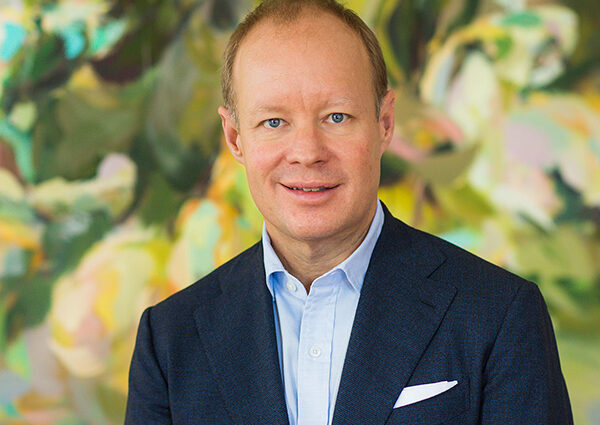
OTC Markets CEO: 250 years of market history just collided with a new SEC rule
In 2026, the SEC has moved on two fronts that will define the next chapter of American public markets. On January 28, it confirmed that tokenized securities remain securities. In May, it proposed the most significant overhaul of the registered-offering framework in more than 20 years. Both are part of a story 250 years in the making.
As CEO of OTC Markets Group, which operates regulated markets for U.S. and international securities, I have a direct view into why both matter. That view is rooted in two-and-a-half centuries of market evolution.
In 1792, a handful of brokers gathered beneath a buttonwood tree on Wall Street and agreed to trade securities among themselves, a private club where prices were negotiated in person. Information moved slowly, unevenly, and often not at all. That opacity was the defining feature of early American public markets, and improving the quality and availability of information has been the central project of every generation since.
The history of American public markets is a history of expanding access.
From the New York Price Current in 1795 to our predecessor, the National Quotation Bureau, in 1911, telegraph, ticker tape, and telephone each moved information faster and widened the market.
The securities reforms of the 1930s gave that expanding market a legal foundation. Larger companies seeking public capital would register with the SEC, file financial statements, and give investors the information they needed to make rational decisions. The disclosure-based principle was clear: let investors decide the merits and value of investments. Public markets function when buyers and sellers have access to the same material facts. Without that, price discovery breaks down and capital flows to noise rather than fundamental value.
For decades, the OTC market operated largely outside that framework. The “Pink Sheets” of the mid-20th century were exactly what the name suggests: printed lists of broker-dealer daily quotations, a phone book distributed by messenger every morning, with little standardized disclosure and no electronic infrastructure.
The electronic trading revolution changed the architecture of markets. In 1971, Nasdaq launched the world’s first electronic stock quotation system, connecting OTC market makers across the country through a decentralized network and bringing real-time price transparency to thousands of securities.
The internet enabled market operators and regulators to extend that same logic from private networks for price discovery, to corporate disclosure and financial data. OTC Markets Group leveled the playing field, with a digital platform where companies publish financial information, submit to ongoing disclosure standards, and earn placement on the OTCQX Best Market or OTCQB Venture Market. In 2021, the SEC reinforced that principle, requiring that current issuer information be available before a broker-dealer posts a quote.
Today our markets facilitate trading in more than 12,000 securities. In the first half of 2026, according to OTC Markets Group data, $453 billion traded across those markets, on track to reach $900 billion for the year. International companies, cross-traded from exchanges in Tokyo, London, Toronto, Paris, and Sydney, represent nearly 95% of total dollar volume. These established global enterprises choose to access U.S. investors through a market structure designed to accommodate public companies at every stage of their journey and from every jurisdiction.
The SEC’s proposed registered-offering reform would extend that access further. By opening shelf registration and at-the-market capital-raising to roughly 81% of public companies, the proposal advances a principle this market was built on: that disclosure standards, not the size of your balance sheet or the prestige of your listing venue, should determine your access to public capital. Growth-stage companies currently forced into private placements at steep discounts and significant dilution to existing shareholders would gain a transparent, public alternative. The policy is catching up.
Every generation rewrites what a market can be. The current rewrite is about ownership itself. Digital technology could make securities programmable, connecting companies directly with a class of participants that traditional market infrastructure was never designed to reach. Still the same principles for fair dealing and materiality remain. Market operators are enabling broker-dealers to trade digital asset securities. The trading, settlement, and custody infrastructure to support it at institutional scale is being built. The work now is ensuring the transparency principles that have governed public markets for decades travel with the technology, not behind it.
Public markets work best as an ecosystem. From OTC Markets through Nasdaq to the NYSE, each market plays a role in capital formation, price discovery, and investor choice. Democracy thrives in sunlight, and capitalism goes hand in hand with the transparency and tradability of public companies, where an average citizen can own a share in the future. Democratic, disclosure-based regulation reinforces that continuum, offering graduated benefits and responsibilities as companies mature and encouraging businesses to grow in public rather than remain private.
Over two centuries of American market evolution produced a system that reaches every corner of the global economy, built on disclosure, modernized by technology, and sustained by the confidence of investors worldwide. American market dominance was never guaranteed. It was built by making room for new companies, new technologies, and new investors at every stage of the country’s economic history.
If the SEC’s shelf-registration reform is finalized, growth-stage companies currently relying on discounted, dilutive private placements will gain a public, transparent alternative for the first time in decades: a structural shift in who gets to build in public, not just a procedural one.
The opinions expressed in Fortune.com commentary pieces are solely the views of their authors and do not necessarily reflect the opinions and beliefs of Fortune.
This story was originally featured on Fortune.com
Shas invokes IDF soldiers in election campaign ad, drawing Gadi Eisenkot’s ire
The haredi (ultra-Orthodox) Shas Party released its first election campaign video on Saturday evening, appearing to support IDF conscription amid controversy over the party’s stance, prompting the Yashar Party, led by Gadi Eisenkot, to demand its removal on Sunday, alleging that it violates election propaganda legislation.
Eisenkot is a leading candidate in the opposition bloc seeking to replace Prime Minister Benjamin Netanyahu in the upcoming elections.
Shas has been a key coalition partner in Netanyahu’s coalition. Throughout the government’s term, haredi party leaders have pushed for legislation that critics argue would not increase haredi conscription amid the IDF’s severe manpower crisis.
The Shas campaign video features a family gathered for Shabbat dinner as their son returns home from his army base and embraces his family.
חיים של אבא!
מרגש. pic.twitter.com/xRurGZvBRG— אריה מכלוף דרעי (@ariyederi) August 22, 2026
Upon releasing the video, Shas stated that the video was of an Israeli family in which one son studies at a yeshiva while his brother serves in the IDF, with “each contributing to the people of Israel in his own way.”

“This is the story of the Shas family: faith, tradition, unity, and love of Israel – Torah scholars and IDF soldiers, we are all one family,” the party added.
The video ends by stating that “more than 30,000 soldiers and career-service personnel voted for the Shas Party in the last election.”
Yashar demands video be removed for violating Elections Law
The Yashar Party demanded that the video be removed by 11:00 a.m. on Sunday, stating that the video was campaign propaganda and that its publication violated the Elections Law by “creating the impression that the IDF identifies with the Shas Party.”
In a warning letter sent to Shas Party leader MK Aryeh Deri through Yashar’s attorney, the party said the demand was a preliminary measure before taking further action.
Yashar’s letter disputed Shas’s claims, pointing out that the video “explicitly claims that ‘more than 30,000 soldiers and career-service personnel voted for the Shas Party in the last election, according to official data,’ and that “the use of IDF soldiers in election propaganda is particularly outrageous given Shas’s policies throughout the three years of war.”
“The party [Shas] has worked to promote a draft-evasion law and to give absolute preference to those who chose not to serve, while those who do serve bear the burden of the war. It also notes that party chairman Aryeh Deri has previously said that he is proud of family members who do not serve,” Yashar stated.
“You cannot promote draft evasion at the expense of those who serve, take pride in those who do not serve, and then use IDF soldiers as a backdrop for election propaganda,” Yashar added.
Shas responded to Yashar by further backing its campaign video, stating the video was aimed at “refuting the false propaganda, including from Eisenkot and his party, claiming that Shas supports draft evasion.”
Shas criticized over stance on haredi IDF draft
Shas has received increasing criticism over its stance regarding ultra-Orthodox enlistment amid the IDF’s severe manpower shortage ahead of the October 27 elections. Haredi party leaders have sought to advance legislation that opponents argue would not increase haredi enlistment.
The haredi parties also boycotted votes on coalition legislation when their contentious legislation was not advancing quickly enough.
Two contentious pieces of legislation that were sponsored by the haredi parties and passed their final readings in the Knesset last month were the bill to enshrine Torah study as a fundamental value in the country’s Basic Law, along with a bill to temporarily freeze the arrests of haredi draft evaders.
The bills passed amid legal warnings and outrage from bereaved family members and reservists.
IDF pursues terrorist after Jericho stabbing as Gaza kite launches raise border concerns
New episodes every Sunday-Thursday.
Listen and subscribe wherever you get your podcasts.
Headlines edited by Shir Perets.
Hosted and produced by Shifra Jacobs and Lara Sukster Mosheyof.
US military paper ‘Stars and Stripes’ warns about threat to independence after Pentagon fires staff
The chair of the Stars and Stripes Publisher Advisory Board warned Friday that the Pentagon’s firing of senior staff threatens the US military newspaper’s editorial independence after its publisher, editor-in-chief, and a reporter received separation notices.
“The Publisher Advisory Board is deeply concerned that these actions further threaten to interrupt the editorial independence that is essential to Stars and Stripes’ credibility and its ability to serve the military community with trusted, independent journalism,” Chair Rufus Friday said.
“We hope that the House Armed Services and Senate Armed Services Committees seek explanations to these actions,” he added.
Publisher Max Lederer, who announced his retirement this week, received a separation notice from the Defense Department and told employees in a farewell memo that he disagreed with the decision.
Editor-in-Chief Erik Slavin and reporter Lara Korte also received notices Friday. Slavin said he and Korte were fired for participating in an interview with CBS News in which he argued that censorship of Stars and Stripes would be unacceptable.

“I am working for Stars and Stripes. Not for the Pentagon,” Korte told CBS’s Sunday Morning. “Not for any administration. Not for any policymaker. I am here to cover the military community.”
“I stand by the principle that Stars and Stripes should remain independent for service members,” Slavin told The Washington Post on Friday.
The Pentagon confirmed the firings and said the three employees have five days to appeal. Neither Defense Secretary Pete Hegseth nor the Pentagon commented further on the dismissals. The Trump administration has criticized the publication over alleged ideological bias.
US Defense Department aiming to eliminate ‘woke distractions’
The Defense Department announced plans in January to overhaul Stars and Stripes and eliminate what it called “woke distractions.” Chief Pentagon spokesperson Sean Parnell said the publication would be returned to its “original mission” of reporting for US service members. The Pentagon fired the publication’s congressionally mandated ombudsman in April. She sued the government on First Amendment grounds in June.
This month, the Pentagon installed active-duty Navy Capt. William Urban. Senate Democrats opposed the move in a letter to Hegseth, arguing it could further compromise the newspaper’s independence.
Stars and Stripes was first published during the Civil War and has continuously covered the US military community since World War II.
Hamas in talks with former Fatah rival Mohammed Dahlan ahead of Palestinian elections
Hamas is exploring potential alliances with figures and factions once considered to be on the opposite end of the Palestinian political spectrum, including former Fatah figure Mohammed Dahlan and the Democratic Front for the Liberation of Palestine, ahead of the Palestinian Legislative Council elections, the terror group and other factions confirmed.
The election, set to be held on November 28, 2026, will be the first Palestinian legislative election in two decades, following Hamas’s takeover of the Gaza Strip a year after the previous election.
Dahlan met with Hamas chief Khalil Al Hayya in Egypt on Monday to discuss “unity of the national position,” the Democratic Reform Bloc, a breakaway faction of Fatah led by Dahlan, confirmed in a statement.
Hamas chief discussed roadmap for second phase of ceasefire with Dahlan
Imad Mohsen, spokesperson for the Democratic Reform Movement, said Dahlan and Hayya “discussed in depth and with responsibility all issues concerning our Palestinian arena, foremost among them the efforts to protect our people and strengthen the national position… within the framework of the efforts of the leadership of the movement and the national forces to ensure the unity of the national position, and the developments in the negotiation process that led to the approval of the roadmap for implementing the second phase of the ceasefire agreement.”
Dahlan rose to prominence in Palestinian politics as the first head of the Preventive Security Service. He oversaw the internal intelligence and paramilitary organization until he resigned in 2002 in protest of delayed political reforms. During this period, Dahlan established himself as a powerful security figure within the Palestinian Authority and a prominent voice in internal political and security affairs.

Notably, Dahlan has accused both Fatah and Hamas of corruption and was reportedly behind a US-backed plot to unseat Hamas in 2007. Despite this, he began thawing ties with the group in 2017, when he began appearing at public online events with officials from Hamas.
A Hamas official also confirmed to The National that the group is forming a “political alliance” with multiple factions, though the official said the matter remained “under study.”
Fatah spokesperson denies Hamas alliance is legitimate
Abdel Fattah Dawla, the spokesperson of Fatah, denied that Hamas’s new political alliance held any legitimacy.
“On what political and national basis is this alliance being formed? What are its objectives and what are its points of reference?” he told The National.
Dr. Harel Chorev, a senior researcher at the Moshe Dayan Center specializing in the social and political history of the Palestinians, commented to The Jerusalem Post that Dahlan’s likely temporary connection with Hamas should be seen more as a strategic play by the bloc than a true alliance.
“Dahlan wants to maintain his influence in the Gaza Strip, which he does with the money he brings in. He has no desire to be in second place. So, if an opportunity arises that allows him to take over, he will take over,” Chorev explained. “In the meantime, he’s keeping all the cards very close to his chest and cooperating for the sake of the people, the civilians, and so on and so forth. But at the end of the day, he has no desire, as I said, to remain instrumental to Hamas’ purposes and not his own.”
Gal De Paz cast as Shoshana Damari in new musical about Israeli icon
Singer Gal De Paz, runner-up on this year’s season of Rising Star, has been cast as Israeli musical icon Shoshana Damari in a new biographical musical.
The production, titled Shoshana, marks De Paz’s theatrical acting debut.
The musical is written and directed by Gadi Tzedaka, the artistic director of the Hebrew Theater, where the show is scheduled to premiere in late October.
Shoshana will trace the singer’s cinematic life story through major formative milestones.
The narrative follows her arduous immigration to Israel, early integration struggles, departure from her parental home, marriage, and her lengthy journey toward becoming the “Queen of Hebrew Music.”

Shoshana Damari’s greatest songs return in new stage production
The production features a live orchestra conducted by Yonatan Perlman, soundtracked by Damari’s timeless catalog of anthems, including: “Kalaniyot” (“Anemones”), “Shnei Shoshanim” (“Two Roses”), “Hayu Zmanim” (“There Were Times”), and “Or” (“Light”).
“When they approached me, my immediate thought was the immense weight of responsibility,” De Paz shared regarding the casting.
“Shoshana Damari is part of Israel’s DNA. Coming from music rather than acting, I felt an opportunity to inhabit the character through the medium I know best – voice, body, stage, and emotion.”
Tzedaka cited De Paz’s specific performance qualities as crucial for the role, noting shared personality traits such as “humor, sensuality, boldness, and professional perfectionism.”
He added that rehearsals have uncovered a deep emotional capability and an extraordinary stage presence that revitalizes the legendary figure.
From Rising Star to the stage: De Paz’s musical journey
The 39-year-old De Paz brings a seasoned musical resume to the stage, despite her rookie status in acting.
Born in Eilat, she has been an active recording and touring artist for 25 years.
She is widely recognized as the frontwoman for The De Paz Band and a member of the collective Lucille Crew, boasting a discography of 11 independent and collaborative albums.
Her industry accolades include opening for Aerosmith at Tel Aviv’s Park HaYarkon in 2017 and collaborating with veteran rockers like Shalom Hanoch and Dudu Tassa.
Her mainstream breakthrough came earlier this year on Rising Star, where she secured second place behind winner Noam Bettan.
The production will officially launch its run in Or Akiva, followed by performances in Kfar Saba, Rishon Lezion, and Petah Tikva.


American billionaires are showing off their farmland for elaborate hobbies, but a buying spree among the ultrarich risks pricing farmers out
No one seems to love the great outdoors as much as billionaires do.
America’s wealthiest are snapping up huge swathes of farmland, and while some are using it for their elaborate hobbies, agriculture advocates worry the broader trend of the rich purchasing tillage is putting the livelihood of actual farmers at risk.
Billionaires like Mark Zuckerberg and Alexis Ohanian have effectively dubbed themselves amateur yeoman, putting the ultrarichs’ hobby of tending to the land in the spotlight. In an episode of the Idea Generation podcast published last month, the Meta CEO said he is working to create the perfect steak by raising wagyu and angus cattle on his ranch on the Hawaiian island of Kauai. Called Ko’olau Ranch, the $300 million property has expanded to about 4,000 acres after he first bought land on the island in 2014.
“I’m very into the genetics of the cattle,” Zuckerberg said.
Investor and Reddit cofounder Ohanian offered a tour of his family farm in Jupiter, Florida, in a LinkedIn post on Thursday, showing off banana shoots, an herb garden, and apiary. He has owned the farm for six years.
But these ventures are tiny compared to the ranchlands, timberlands, and cropfields many one-percenters are nabbing. According to the 2025 Land Report 100, Microsoft cofounder Bill Gates owns 275,000 acres of land, the 44th most of any American landowner. Meanwhile, Amazon founder Jeff Bezos has 462,000 acres, and Stan Kroenke, Los Angeles Ram owner and husband to Walmart heiress Ann Walton Kroenke, owns 2.7 million acres. Neither Zuckerberg nor Ohanian crack the top 100 landowners.
In fact, farmland has become a $4.3 trillion asset class as it grows in popularity, according to Steve Bruere, president of agricultural real estate firm Peoples Company. For many of the ultrawealthy, farmland has become a way to hedge against inflation and the volatility of other, more traditional assets: Last year, the value of U.S. farms was an average of about $4,350 per acre, a 4.3% year-over-year increase, according to U.S. Department of Agriculture data.
But as demand goes higher, the rising cost of farmland could also spell trouble for actual farmers.
“It makes it much harder for farmers to compete, especially beginning farmers who are maybe trying to acquire their first farm, or even an existing farmer who might want to grow and expand,” Erin Foster West, policy campaigns director for the National Young Farmers Coalition, told Fortune earlier this year.
How did farmland become a popular asset among the wealthy?
About 20 years ago following the 2008 financial crisis, investors went in search of alternative safe-haven assets, finding greener pastures to traditional investments on, well, greener pastures. The demand for farmland mirrored the real-estate boom of the 1970s, with investors working to hedge against inflation with a physical asset, much like gold.
Land is a finite resource and positively correlated with inflation, continuing to appreciate as costs go up. Because of the close relationship between land use and food scarcity, there’s also a theory that farmland will only become more precious as the population grows.
“If you believe you want diversification, and you also believe we’re going to have underlying inflation—which is what a lot of people want right now—then farmland is a great option for them,” Bruere told Fortune. “Getting your hands on some farmland where the number of arable acres in the world declines every year, that’s why a lot of people like it.”
That’s on top of the growing demand for land from AI hyperscalers, who are looking for large swaths of earth, including farms.
For many of the ultrarich, there’s also a less strategic benefit to owning the land, as exhibited by Zuckerberg and Ohanian: their own enjoyment.
“A lot of people started to appreciate the non-financial benefits of farmland,” Bruere said. “You can hike it, you can walk on it, you can fish it, you can hunt it, you can grow food on it. That trend really emerged coming out of the Covid area, where people were stuck in their homes and apartments and started looking for alternative investments.”
What does this emerging asset class mean for American farmers?
For others, being a major landowner can mean being a landlord. Nearly 40% of U.S. farmland is now leased to farmers and operators, according to the USDA.
Renting isn’t necessarily a bad thing for farmers, particularly those just starting out, Foster West said. Rent for farmers is increasing more slowly than land prices, with average rent for U.S. cropland ticking up just 0.6% annually, per the USDA Land Values survey.
However, renting also means farmers don’t have full control over their land, making it challenging to make long-term investments to improve soil quality or building wash-and-pack stations for vegetables, which could take years to pay off.
The problem, according to Foster West, is when farmers are renting because they have been outbid on purchasable land and have no choice but to be a tenant. It means farmers aren’t able to use their land to get loans for their operations, borrow for their kids’ college expenses, or leverage for their own retirement.
“The control over that land, having that asset in your possession, really can make a difference for a farmer to be successful,” she said.
This story was originally featured on Fortune.com
Ex-spy Jonathan Pollard joins Sharren Haskel’s Israel First party ahead of elections
Jonathan Pollard announced on Sunday that he was joining MK Sharren Haskel’s Israel First party ahead of the upcoming Knesset election, in a joint statement filmed near the Western Wall in Jerusalem.
Pollard publicly declared his support for Haskel and the political direction of Israel First, a new right-wing party that the former deputy foreign minister launched in July.
“I believe in Sharren. And I believe in Israel,” Pollard said during the joint statement.
Haskel welcomed Pollard’s support, describing his decision to join the party as a significant boost for Israel First.
“The Israel First party is receiving significant reinforcement today from Israeli hero Jonathan Pollard, who paid a very heavy personal price for his commitment to Israel and the Jewish people,” Haskel said.

“To stand here today, near the Western Wall, and hear from him that he places his trust in me and in the path of ‘Israel First’ is a great privilege and a great responsibility. I accept that trust with humility and determination.”
Pollard was in prison for 30 years after he was sentenced to life imprisonment in 1987 for spying and providing Israel with top-secret classified information. He pleaded guilty to the charges. He was released on parole in 2015 and stayed in the US until 2020. He then immigrated to Israel and received a hero’s welcome from Prime Minister Benjamin Netanyahu upon his arrival.
However, Pollard has since become a strong critic of Netanyahu and has said the current government must be replaced in the upcoming election.
‘My Other Half’: Sex, drugs, rock & roll, philosophy, and cynicism – book review
Former Jerusalem Post arts and entertainment editor David Isaacson’s My Other Half comical novel is chock-full of beautifully formed sentences, youthful late-20th-century adventures in sex, drugs, and rock & roll, deep philosophical musings, and healthy doses of British cynicism.
The author grew up in suburban Bexleyheath in Kent, England, attending a grammar school with only two other Jewish pupils. After graduation, he volunteered at Kibbutz Na’an, learning Hebrew at ulpan with the late Sam Orbaum, who went on to become a legendary columnist and editor at the Post.
Isaacson’s own career as a journalist brought him to the Post in the 1990s. It has also included stints at the UK’s Daily Telegraph and the Sunday Times.
Back home in England, he studied philosophy at Sussex University, then traveled across the United States and Europe following the Grateful Dead.
An unexpected fate in Jerusalem
Isaacson told the Post that his “latent Zionism” became manifest in the wake of Israel’s First Lebanon War. Shocked by the media’s prejudicial, anti-Israel coverage, he said, he joined the PR department of the Joint Israel Appeal (JIA), with which he traveled to Israel in 1992.

By 1994, Isaacson had made aliyah, and within days, he met Debra, a new immigrant from New York and his wife-to-be, at Jerusalem’s Ulpan Etzion. They lived in Jerusalem’s Abu Tor neighborhood and Mevasseret Zion before relocating to London in 1999, where they attend St Johns Wood Liberal Synagogue. Now, he said, they look forward to returning to Israel for good.
In My Other Half, the hero, Jake, eventually meets an unexpected fate in Jerusalem. Until then, he embarks on a hilarious series of decadent misadventures, some of which appear below.
Excerpts from ‘My Other Half’
“Have you got a quarter, Jake?” Gordon looked like he had just woken up. “I’ve got to go to the bank tomorrow anyway.”
Evie laughed. Gordon always had to go to the bank tomorrow but never made it because the bank closed at 3:30, long before Gordon was out of bed.
“It’s in the top drawer,” I said.
Gordon took a quarter of Leb from my top drawer and squeezed in next to Skunk, half under the desk, to roll a joint.
“Have you been to Mexico?” Skunk asked Kitty.
“No, I was on a kibbutz. The volunteers were having a Castenada phase.”
“Kitty had a gap year,” boasted Fysh. “My grandfather founded a kibbutz.”
I wished I knew its name. “Maybe it was the same one.”
“I was at Kibbutz Galuyot,” she said. “Right in the middle of Israel. Halfway between Jerusalem and Tel Aviv.”
“Did they have good hashish?” asked Fysh.
“Not as good as in Egypt.”
“You went to Egypt, too?” She was like one of those intrepid women adventurers you read about in the Sunday papers’ books pages. “Wasn’t it dangerous?”
“It was. I nearly got raped by a cop.”
“What a scumbag,” said Evie.
“What happened?” Skunk wanted to know.
“I told him I understood his impression of Western women as cheap slappers, but this was just capitalist bullshit, just TV and advertising. I said I was an ordinary girl. I asked him to think of the women he knew – his mother, his sisters, his cousins. He wouldn’t want this to happen to any of them, would he?”
“Too right,” said Evie.
“He went off the idea and went away. I was just glad I had good karma.”
“Karma?” repeated Skunk. “Give us an example of this ‘karma.’”
“That was an example.” Kitty’s cheeks turned pink.
“Give us another.”
“Alright then. I was on a trip down south, to Luxor, and I got talking to the bus driver. He wouldn’t let me buy a ticket. He was like, ‘That’s okay, it’s on me, man.’”
“And that’s it?”
“On the bus back to Cairo, there was this guy sitting next to me. He was friendly and cool, so at one of the stops I shared a doobie with him. At journey’s end we said salaam, and he planted a little Judas kiss on my cheek. Seconds later, two cops appeared. They knew I was carrying ganja and said they were going to take me in.
I gave them my money, and luckily they got bored and waved me away. I binned my ganja and wondered how I was going to get to Cairo with no money. Then a bus pulled up. It was the same driver. He recognized me and let me travel free again. If that’s not karma, I don’t know what is.”
“That is karma,” Fysh confirmed.
What I needed was help from the British consulate [in Amsterdam] which, I hoped, would replace my passport, lend me some cash, and provide me with a pair of shoes. All being well, I would be out of here in the morning. How good it was to be British!
My optimism diminished as a night of aimless wandering wore on. Britain’s consular staff were hardly likely to treat a drugs tourist who has come a cropper as a matter requiring their urgent attention. I would have to wait my turn in a bureaucratic labyrinth. I could just see how it would go.
“Her Majesty’s Foreign Office does have a policy of lending money to those who, through no fault of their own, find themselves stranded, but we are not a charity, and we do need to be satisfied that the claim is genuine, and that the claimant is a bona-fide subject of the Crown.”
“My claim is genuine. And I am a bona-fide subject of the Crown. I’ve lived in England all my life. Can’t you tell by my accent?”
“Furthermore, to be confident that the claimant is sincere in their stated intention of returning immediately to the United Kingdom, we need proof that they will embark on the first available passenger ferry or airplane…”
“Well there’s nothing to keep me here. I’ve got no shoes, no money, and nowhere to stay.” I didn’t have any hash either.
“…pending prior approval from the relevant authorities, which is to say, Customs and Excise, the Home Office and…”
“Hang on a minute. How long’s all that going to take?”
“That depends on the queue ahead of you.”
“How long is the queue?”
“It’s not the queue’s length so much as the complexity of individual cases that slow things down. One complex case can take longer to resolve than numerous straightforward cases.”
“How complex are the cases ahead of mine?”
“I am not at liberty to discuss other cases. That would be most improper.”
“Well, how complex is my case?”
“We won’t know that until it’s processed.”
“When will that be?”
“That is hard to predict. We’ll need a police report to verify your story. And we will need to interview you in person.”
“You can interview me now.”
“That would be jumping the queue. Now, why don’t you leave a contact address with my secretary…”
“I don’t have a contact address!”
“There is really no need to raise your voice.”
I had to lower my expectations, too. “I don’t suppose you could lend me a pair of size eights?”
“We thought you were dead,” said Junkie Simon, after a slow double-take. A drugs peddler of no fixed abode and Flat 22’s most honored guest, Junkie Simon turned up at any time, day or night, spouting incoherently. He jacked up in central space, or in Gordon’s groovy pad if he wanted some privacy, and passed out wherever he happened to be. He didn’t want to hear the Grateful Dead when we could be listening to Joy Division, and he didn’t know how we could live in such a pigsty, but he stayed for days and was happy to pitch when there were chores to be done.
“I’m soooo sorry,” shrieked Evie. “I got my days mixed up. Are you alright?”
“I got mugged.” At last, I could say it.
“I knew it.” Evie rushed up the steps for a hug.
“I got mugged,” said Junkie Simon. “About a year ago. In Gladstone Square I think it was.”
“Occupational hazard,” said Boney.
“It was my own fault,” I had to admit.
“When you didn’t come straight back, I felt so guilty I went to see Father O’Malley,” said Evie. “I told him all about you.”
“What d’you do that for?” I had never heard of Father O’Malley.
“I didn’t know if we’d ever see you again. Father O’Malley told me to pray for you.”
“Makes it all worthwhile, like,” muttered Boney.
“He invited me into his living room and we sat in armchairs round the fireplace,” said Evie. “It was really nice, actually. Father O’Malley got out a bottle of brandy and read passages from the Bible. I never knew there were so many crazy characters in the Old Testament.”
In the summer holidays we played several times a week on a court in Luxembourg Village, hoping that Junkie Simon’s cocaine would enhance our game. In reality it only enhanced our edginess and Skunk’s tantrums. On the other hand, the joints we smoked to remove the edge had us playing shots in slow motion or laughing at random absurdities, which was not conducive to good tennis.
“It’s going to rain,” said Skunk.
“It’s not going to rain.” Kitty had caught the habit of contradicting Skunk.
“It’s bound to rain if we play tennis,” said Skunk.
Kitty looked through the window. “They’re not rain clouds, are they?”
In lieu of a game of tennis, I flicked through Kitty’s records. “English hippy,” said The Hangman’s Beautiful Daughter. “International bohemian,’ said the Liberation Music Orchestra. “Borrowed from Fysh,” said The Twelve Dreams of Dr. Sardonicus. A portrait of Napoleon illustrated Beethoven’s Emperor concerto. A landscape of rolling fields advertised Vaughan Williams. “To Kitty, love Diana,” read an inscription on Death and the Maiden.
“What’s this?’ I asked of an album that pictured Mahler gazing into space.
“It’s a Sannyasin commune.” She was talking to me. “I’m a Sannyasin.”
“Really?” I didn’t know what a Sannyasin was but I recognized her misplaced zealotry. “I was an anarchist.”
“Tell them about David Owen,” said Skunk.
“Who’s David Owen?” Diana asked Kitty.
“‘Politician,” scoffed Kitty.
“Jake threw squishy tomatoes at him,” said Skunk.
“Why?” Kitty wasn’t one for student politics.
“He already told you,” tutted Skunk. “He was an anarchist.” I gave them an account of the David Owen incident, taking in the history of anarchism, including quotations from Kropotkin (“Where there is authority, there is no freedom”) and Proudhon (“Property is theft”) and references to the Paris Commune and the Spanish Civil War, with an aside on finding squishy tomatoes at the co-op, but for all Skunk’s titters of support, Kitty wasn’t interested and Diana was wondering where she was.
I was trying to remember what she was. “What did you say you are again?”
“A Sann-yasin.” Kitty answered for her.
“What’s a Sann-yasin?”
“Sannyasins are followers of the Bhagwan Shree Rajneesh.” Diana straightened her back. “We travel from all over the world to Poona, to be with Bhagwan.”
“And you went to Dharamsala,” Kitty reminded her.
“That’s up north. I trekked through Mother India for three days, on trains so crowded you had to sit on the roof or hang from carriage doors.”
“Have you got any photos?”
Diana pulled a face. I was so uncool. ■
MY OTHER HALF
By David Isaacson
AoS
266 pages; $16
Syria expects to resume negotiations with Israel, urges to seize ‘historic opportunity’ for deal
Syria expects negotiations to resume soon with Israel over a security deal it hopes will lead to Israel’s withdrawal from Syrian land, a top Syrian minister said, urging Israel to seize a “historic opportunity” as the door for diplomacy is open.
In a Reuters interview in Damascus on Saturday, days after Israel bombed a Syrian airbase, Foreign Minister Asaad al-Shaibani also stressed that Damascus’ priority is to halt Israeli attacks, saying confidence-building steps were needed in this direction.
Washington has been seeking to forge a security deal between Israel and the government of Syrian President Ahmed al-Sharaa, a new US ally in the Middle East, for over a year. But it has proven elusive as Israel has sent troops into Syrian territory and attacked government assets, citing threats to its security.
Shaibani said negotiations over the security agreement had been frozen since the start of the Iran war, but he expected them to restart. Contact between Syria and Israel was cut after the airbase strike, he said.
“We believe there should be contact, especially with a party that constantly threatens the security of Syria. But if this contact doesn’t bring results, then we don’t need it,” Shaibani said. “We do not trust Israel currently.”

The Israeli prime minister’s office did not respond to a request for comment.
Sharaa has said Syria poses no threat to other countries, with Damascus focused on rebuilding from 14 years of war.
Israeli officials have talked about a range of potential dangers in Syria since Bashar al-Assad was toppled, with some describing the new rulers as barely disguised jihadists last year, even as Sharaa forged close US ties.
In the days after Assad fell in 2024, Israel seized territory in southwest Syria, citing the need to safeguard its citizens against attack, and bombed scores of Syrian military sites.
US pressuring Israel to return to dialogue with Syria, Shaibani claims
“Israel has tried to maintain its security through brute force, and it hasn’t succeeded” anywhere, Shaibani said. “I believe negotiations will resume soon.”
No date has been set.
“The US is trying continuously to put pressure on Israel to return to the dialogue table,” he added.
Asked how optimistic he was, Shaibani said: “It’s very hard to bet on Israel.” But Syria had “very great hope” of building stable relationships with its neighbors.
“Syria is extending its hand for understandings, for peace, for diplomacy” and regional stability.
Tensions over Syria were brought into focus on Tuesday when Israel bombed the Abu al-Duhur airbase, saying Damascus was about to allow Turkish forces to deploy there. Syria and Turkey denied the claim.
Shaibani said Syria respected Israel’s security concerns but that Israel must respect those of Syria, including Israel’s use of its airspace, Israeli raids, and arrests in the south.
He said that around the beginning of the year, the sides had “agreed on paper to almost everything” regarding a security deal that would require Israel to stop attacking Syria and was tied to its withdrawal from territory seized after Assad fell.
The deal would include several security zones in Syrian territory near the Israeli border, including a buffer zone where only the United Nations would be present, and others where Syrian forces would deploy in varying degrees of force.
But he said Israel had sought to evade implementation, adding: “We did not see they had the real will to reach an agreement.”
Syria and Israel have technically been in a state of war since 1948. Israel seized the Golan Heights from Syria in a 1967 war.
The priority now is to “stop Israeli aggression even before reaching a security agreement”, Shaibani said. “Then perhaps we can open the topics of peace and the Golan.”
Washington working on conflict-prevention mechanism for Israel, Turkey, Syria
US special envoy for Syria Tom Barrack said on Tuesday that Washington was working to establish a mechanism to prevent conflict among Israel, Turkey, and Syria.
Shaibani said there was no agreement yet on the mechanism, which he said must stop attacks and pave the way for the security deal rather than “entrenching… Israeli occupation.”
The US State Department did not immediately respond to a request for comment.
Shaibani said Israel had bombed Abu al-Duhur even after Syria conveyed a message that it would not be a Turkish base.
Syria draws on Turkish support in military training and cooperation, he said, noting that this was also the case with Jordan, Saudi Arabia, and others.
Damascus was thankful for Turkey’s support in rebuilding its military “and we won’t forgo support,” he said.
British-born Israeli actress Caroline Langford dies at 68 after battle with cancer
Caroline Langford, the British-born actress who became a familiar face in Israeli cinema in the 1980s and was married to the late actor and director Assi Dayan, died Friday at the age of 68 after suffering from cancer.
Born in London in 1958, Langford was the daughter of British television director Barry Langford and moved to Israel with her family when she was 14. After beginning her career as a singer and entertaining soldiers during her army service, she became one of the best-known actresses in Israeli popular cinema of the period.
She appeared in several of the hugely popular hidden-camera prank movies associated with Yehuda Barkan and Yigal Shilon, among them Smile, You’ve Been Had (Hayeh, Ahaltah Otah), We’ll Meet Around the Bend (Nipagesh Basivuv), and We’ll Meet at the Beach (Nipagesh Bahof). Her other Israeli films included Nadav Levitan’s Girls (Banot), A Crazy Dad (Shigaon Shel Abba), and Dayan’s Am Yisrael Hai. She also had a role in the popular Menahem Golan action movie, The Delta Force, with Chuck Norris and Lee Marvin.
One of her most significant roles was the female lead in Dayan’s 1982 film King for a Day (Melech LeYom Ehad). Langford won the Kinor David Award for Best Actress for her performance, one of the most prestigious awards for acting in this era.
The film also changed her personal life. Langford and Dayan, the son of former Israeli defense minister Moshe Dayan, fell in love during the production and later married.

Their son, writer and television personality Leore Dayan, has described himself as literally a “product of Israeli film,” recalling that the romance between his parents began between takes on King for a Day.
Langford and Dayan eventually divorced, although their relationship and their often-turbulent family life remained the subject of intense public interest for years. Dayan died in 2014.
Langford leaves Israel during postpartum depression
As Dayan struggled with mental health and substance abuse issues, she left Israel, placing Leore in foster care when he was very young. She spoke in interviews about feeling guilty about this choice and that she now understands she suffered from postpartum depression, adding that she and her son eventually became close. Leore made a television series, Normal, about his own mental-health issues in 2020, and she portrayed the mother of the character based on him.
She also said that she and Dayan eventually had a good relationship after their divorce. “We had a very good relationship in recent years. I met him every time I came to Israel. The last time I saw Assi, we talked about how we had become grandparents. He was very happy about it,” she told Ynet in an interview.
Langford eventually settled in Los Angeles, and remarried. She continued to work periodically in Israeli television. Among her later appearances was a role in the comedy series, Sisters.
She is survived by her husband, Gil Bankstein, her son Leore Dayan, and her daughter, Daniela.

Women want ‘dads,’ not ‘duds’: A Nobel-winning historian has a theory for falling birthrates, but the economics aren’t so straightforward
The world’s most powerful economies are increasingly alarmed by their declining birthrates, and there’s no shortage of theories on why. SpaceX founder Elon Musk suggests society is “teaching a fear of pregnancy,” while policymakers in France seem to believe young people are simply forgetting to procreate, and sent reminder letters to 29-year-olds as a result.
Other suggestions are more banal: the cost of raising a child is too high, or would-be parents worry that the world is already running out of resources needed to support population levels.
A working paper by Claudia Goldin, a Nobel prize-winning economic historian at Harvard University, proposes an alternative: Perhaps hardworking, highly educated women are concerned about the autonomy they would sacrifice if their partners don’t share the workload of raising children.
“Women who undertake greater investments in themselves will be more likely to have children if they can reap the financial and personal rewards from their education while raising their children,” Goldin writes. “In the absence of that assurance, they will be more likely either not to have children or not to undertake the initial investment in themselves.”
She adds: “The more that men can credibly signal they will be dependable ‘dads’ and not disappointing ‘duds,’ the more investment in women’s education and careers, and the higher will be the birthrate in the face of greater female agency.”
The theory is neat, and subject to criticism as a result. Some point out that birthrates have continued to fall despite household work being carried out more equitably. In the decade between 2026 and 2016, data from the Bureau of Labor Statistics shows that the hours men spend on household activities have fractionally increased, while the hours carried out by women have slightly decreased. Birthrates have still continued to decline. Other critics suggest the data used in the research is inconsistent, with skeptics also questioning what “dependability” in dads entails.
But Goldin doesn’t claim to have all the solutions to the questions her work raises. “When women did not have any choice, [having children] is what they did,” she tells Fortune. “But now they are given a choice.” So do men, she adds: How to demonstrate whether they are a dud or a dad. But “we don’t really know the answer [to] what sort of commitment mechanisms [men] have,” Goldin says.
Goldin, perhaps attuned to this dynamic because of her research, says she can spot anecdotal indicators among her students: “I can pretty much tell who the good dads are. There’s no question—they are the individuals who are clearly going to share and [are] going to engage in what I would call couple equity.”
“Couple equity doesn’t mean equality—it doesn’t mean you’re doing exactly the same things … but it does mean that each of them has decided that they’re willing to give up a certain amount of income and prestige to raise a child or two, or three together.”
No new phenomenon
While Goldin’s methodology can be debated (and indeed, the historian is open to feedback), the research is nevertheless making waves. On a superficial level, Google searches for Goldin’s name have increased 400% over the past year compared to a year prior. More broadly, the topic of birthrates is ascending the political agenda—President Trump even suggested he’d be known as the “fertilization president” courtesy of policies aimed at supporting birthrates, such as increasing access to IVF.
So why the sudden focus? The trends driving Goldin’s formula are nothing new: Women have been investing in their education in increasing numbers over the past 50 years. The Bureau of Labor Statistics’ (BLS) latest reporting, for the year 2024, found that among recent high school graduates ages 16 to 24, 69.5% of women were enrolled in college, and 55.4% of men had done the same. Meanwhile, Census data from 50 years prior shows that in 1974, 45.87% of 14 to 24-year-olds enrolled in college were women.
In addition to women wanting to build careers for their enjoyment and fulfillment, there’s also been an increasing economic need for them to do so. Brookings found in a 2020 study that without women’s earnings, middle-income households would have seen virtually no income growth between 1979 and 2018.
Myra Strober, a labor economist and Professor Emerita at the School of Education at Stanford University, sees an answer both simpler and broader than the data from the past half-century suggests: The need for children has shifted from the household level to the societal.
“Historically, people had children because they needed them,” Strober tells Fortune. “In an agricultural economy, you needed children to do the work … as agriculture has become a less and less important part of our economy, people don’t need children the way they did before.
“And people had lots of children because the infant mortality rate was high. You couldn’t be assured that the children you had would live to adulthood, and so you better ensure you have plenty of children to help around the farm. Once agriculture declines and the infant mortality rate goes way down … people don’t need children in the way that they did.”
Strober founded the famous Stanford course “Women and Work” (later renamed “Work and Family”), where she met student Abby Davisson, now an entrepreneur and consultant. The pair co-authored their book ‘Money and Love’ in 2023, which is now required course reading at Stanford’s Graduate School of Business.
At the end of the duo’s book, they examine the extent to which public policy trickles down into household decision-making, “yet we have not changed our policies around … work expectation or cultural norms. It’s much easier to change policy than it is to change culture,” Davisson tells Fortune.
“There is a cultural conversation piece that’s tricky here, even if we have the best geopolitical policies and …. everyone holds hands and agrees on that, if the culture—the expectations for parents do not change, if the expense for raising children does not change—I don’t see how we’re going to see different behaviour at the individual level, because it’s not just this one piece of policy.”
“We should be thinking about the economy as a whole and public policy rather than bedroom policy,” Strober echoed.
An economic boon
Whether or not equity in partnerships is the cause of declining birth rates, Goldin, Strober, and Davisson are united in advocating for it—the latter duo even includes checklists to prompt conversations between couples in their book. But that doesn’t mean equity is no longer a significant economic concern.
“If you begin with the thought that you have a distribution among women and men of talent and creativity, why would you not want to use both distributions and take the top of each to run your economy and your society?” Strober poses. “In terms of economic well-being, social well-being, use of resources, you want to look equally among men and women.”
Davisson, mom to two boys, chimes: “I really value the fact that my children see their father in food preparation mode all the time—he’s the family chef—like they’re going to grow up thinking that that is totally normal. The value is both for the workplace and for the citizens in that workplace.”
This story was originally featured on Fortune.com
Pakistan army chief to visit Tehran in continuation of mediation role between US, Iran
Pakistan’s army chief Asim Munir will visit Tehran on Monday, Iran’s foreign ministry spokesperson Esmaeil Baghaei said on Sunday, according to a statement by the ministry.
Baghaei said the visit was in continuation of Pakistan’s efforts to strengthen peace and security in the region.
Pakistan has taken on the mediator role in negotiations between Iran and the US aimed at ending their war.
This is a developing story.

Billionaire Jeff Bezos once asked Warren Buffett why so few people copy his strategy—now he’s backing $7 billion Liverpool FC
From Tom Brady to Snoop Dogg, American billionaires, CEOs and celebrities are buying into English football—or as they would call it, soccer. In fact, over half of the Premier League’s 20 clubs are currently majority-owned by U.S. investors. And now, Amazon founder Jeff Bezos is the latest to invest in Europe’s biggest sport.
That’s because the consortium 1892 Holdings—led by Bezos, British-Indian millionaire businessman Amit Bhatia and billionaire Facebook co-founder Eduardo Saverin—has just bought 38% of Liverpool Football Club (FC) from the club’s current owner Fenway Sports Group for around £2 billion (around $2.7 billion).
It’s a drop in Bezos’ fortune, who, with a $273 billion net worth, is the third richest person on the planet. But it’s not without its risks.
Although Liverpool FC’s currently worth between £5 billion and £6 billion (around $6.8 to $9.5 billion), when FSG bought it for £300m (around $409 million) in 2010, the club was, according to its CEO Billy Hogan, “literally on the brink of bankruptcy.”
And while Liverpool’s in a strong financial position today, Bezos is buying into his first football club at a period of turbulence: They are trying to bounce back from a disappointing fifth-place finish in the top flight last season; Its manager, Arne Slot, was sacked as a result.
But the deal is structured as a long-term bet—a minority stake now in an iconic team, with the option to take majority control within 12 months—and that patience lines up with an investment philosophy Bezos has credited to somebody else entirely: Warren Buffett.
Bezos once asked Warren Buffett why more people don’t copy his investment strategy
Bezos has long credited the legendary investor, Buffett, as a mentor. The chairman and former CEO of the conglomerate Berkshire Hathaway has long shouted out about the benefit of investing for the long haul: For many years, Buffett has preached parking your money in a low-cost S&P 500 index fund and not touching it again, rather than trying to outsmart the market by picking individual stocks.
It’s a philosophy so simple that Bezos once asked Buffett directly why more people don’t just copy it.
“Why don’t more people copy your investment strategy? It’s not that difficult to understand in principle,” Bezos said he asked Buffett, speaking at the America Business Forum in 2025.
Buffett’s one-line answer was blunt. “He said, ‘Jeff, that’s easy. My approach is a get-rich-slowly scheme.’ And people don’t like those, but there’s a lot of truth in that for everything.”
And that’s an ethos that Bezos says he himself has stuck by: “If you can think in terms of seven years instead of three years, and you can defer gratification and think long term, that will give you a head start against all of your competitors, because most people can’t do that.”
So, if Bezos takes his own advice, Liverpool fans can expect him to stick around for at least seven years.
This story was originally featured on Fortune.com

Mark Walter’s sports empire offers a glimpse of the money machine behind private credit—and the plumbing keeping it together
Mark Walter’s sports empire made him one of the most recognizable owners in American sports. His financial empire was considerably less visible, even though it was hiding in plain sight. But recent developments now have the business mogul facing scrutiny over the financial machinery behind his sports empire, raising much bigger questions about the entire private credit sector.
Walter, the controlling owner of the Dodgers and until recently the majority owner of the Lakers, is at the center of a Securities and Exchange Commission investigation, according to regulatory filings first reported on by Bloomberg in July.
The probe is looking into whether companies tied to his financial empire improperly handled billions of dollars in loans from insurance companies that he separately controls. No criminal charges have been filed against Walter, and the investigation does not allege that the Dodgers or Lakers committed wrongdoing. However, more than $1.2 billion of the financing for Walter’s purchase of the LA Dodgers came from insurance companies controlled by Walter through Guggenheim, according to a breakdown of the transaction by the Los Angeles Times.
Walter did not respond to a request for comment from Fortune. Guggenheim Partners declined to comment.
Federal prosecutors and the SEC are examining whether Walter’s insurance companies improperly lent money to businesses connected to him without adequately disclosing the relationships. Delaware Life Insurance Co. and Clear Spring Life and Annuity Co. conducted internal reviews after receiving federal grand-jury subpoenas and significantly restated what they described as errors in prior financial reporting. Transactions between “related parties,” or life insurance money essentially being routed elsewhere within Guggenheim, were not $1.4 billion, or 3% of investments, but were actually over $17 billion, or at least 39% of total invested assets.
Related-party transactions are not inherently illegal, but they can create conflicts of interest and are subject to disclosure and regulatory scrutiny, particularly when insurance companies are involved because they hold money intended to pay policyholders’ future claims. A week after the Lakers sold in a headspinning bombshell, Walter is reported in English newspapers to be considering exiting another trophy asset, Chelsea Football Club.
The scrutiny has already produced a concrete financial response. Delaware Life, which Walter controls, agreed to reduce its exposure to businesses connected to him by swapping as much as $6.5 billion of related-party investments for assets classified as independent. But this does not eliminate whether Walter will eventually need to sell his sports assets to satisfy lenders, regulators or investors. The Wall Street Journal reported that Walter has been trying to unwind portions of his empire amid the investigation, potentially also including the Dodgers and Cadillac’s Formula One operation.
Walter also reportedly sought to extract cash from another valuable LA asset. Before selling the Lakers, he held discussions with Charter Communications about ending the Lakers’ and Dodgers’ local television agreements early in exchange for lump-sum payments. Those discussions did not produce a deal. The Dodgers’ television agreement runs through 2038, while the Lakers’ agreement runs through 2031.
Is private credit running on life insurance?
The private credit market—loan and debt financing extended by non-bank lenders—has grown to more than $1 trillion in the U.S. in 2023, according to the Federal Reserve Bank of Boston. Walter’s case raises new questions of just what else is going on under the surface. The risk flagged by regulators and the IMF is not private credit itself, but structures where the same firm sits on multiple sides of a deal—the private-credit firm takes in premium money via an insurer that it controls, then directs that money into loans it originates or that flow back to its own funds and portfolio companies.
The reporting on the federal investigation points out that Walter’s insurers held private-credit investments connected to other Walter-controlled businesses. In other words, the same billionaire could sit on multiple sides of the same transaction—controlling an insurance company on one side, while also controlling the businesses receiving financing on the other. A retiree’s annuity payment can sit on an insurer’s balance sheet—but that money didn’t travel in one straight line from a policy to Dodger Stadium, it traveled through layers of insurers, asset managers, funds, loans and affiliated companies.
Guggenheim is not the only private-credit firm building an empire around the convergence of insurance and private markets. Apollo has made the model central to its business through Athene, its retirement-services and insurance business. “Athene and Apollo have seen tremendous mutual benefit from our longstanding strategic relationship,” Jim Belardi—CEO of Athene—said in a January 2022 press release when they merged, “and now with full alignment our value will be significantly stronger than the sum of our parts.”
Yankee Global Enterprises announced a $2.6 billion financing arrangement with affiliates of Apollo Sports Capital, a permanent-capital platform of Apollo. The transaction combines credit and equity and will be used to support the growth of the New York Yankees and refinance existing debt.
KKR has built a similar insurance connection. The company acquired a majority stake in Global Atlantic in 2021 and bought the remaining stake in 2024. KKR explicitly describes the relationship as mutually reinforcing—the firm can use its investment capabilities and origination network for Global Atlantic, while the insurance business gives KKR access to long-duration capital.
KKR separately agreed in February to acquire Arctos Partners for about $1.4 billion. Arctos is a specialist sports investment firm whose portfolio includes minority interests in professional sports franchises such as the NFL’s Buffalo Bills. KKR’s own investor presentation described the acquisition as a way to establish a sports platform while expanding its ability to raise capital and use its insurance network.
Life insurers have become particularly important players because their liabilities can stretch decades in the future. They need investments that bankroll over long periods, making loans and other private assets attractive. A 2025 Federal Reserve Bank of Chicago working paper estimated private credit accounted for about $849 billion—or 14%—of life insurers’ balance sheets in 2024. Life insurers across the country have been increasing their exposure to private credit as they search for higher yields. S&P Global reported this year that U.S. life insurers are increasing private-credit allocations for higher returns and portfolio diversification.
If all of this sounds like a bank, borrowing short and lending long — well, yes and no. Life insurers’ obligations are typically tied to future claims or contracts that can be expensive or impossible to surrender early, so they are not “runnable” in the same way a bank is. The Federal Reserve says insurers are therefore “typically less exposed to traditional liquidity risk than banking organizations,” although certain annuities and institutional funding products can still be runnable at times.
On both the equity and insurance side, the pattern is stable—capital that was raised for insurance ends up cross-financing the sponsor’s other sports or business interests, often with limited transparency. Insurers as a captive funding source for a broader financial empire is now a mainstream private-credit playbook, and the SEC probe is effectively its first stress-test if existing rules can catch it before it’s brought into public view.
This story was originally featured on Fortune.com

AI and Trump 2.0 propel SoftBank CEO Masayoshi Son back into the spotlight
The first days of the second Trump administration offered the newly elected president a chance to share the spotlight with some of his most important allies. While some of the featured leaders were ones you’d expect—cabinet nominees, congressional leaders, megadonor Elon Musk—at least one was a surprise: Masayoshi Son, the Japanese billionaire tech investor.
The occasion for Son’s star turn in the White House Roosevelt Room on Jan. 21 was an announcement that [hotlink]SoftBank Group[/hotlink], Son’s Tokyo-based conglomerate, would put up most of the funding for Stargate, an ambitious partnership with OpenAI and Oracle that aims to turbocharge American leadership in artificial intelligence. Flanked by Oracle chairman Larry Ellison and OpenAI CEO Sam Altman, and standing on a box to be seen above the lectern, Son promised Trump that Stargate would invest a staggering $500 billion to build a nationwide network of data centers, power plants, and research centers. Trump lavished praise on “my friend Masa” for bankrolling “the largest AI infrastructure by far in history.”
“This the beginning of a golden age for America,” Son told Trump. “We wouldn’t have decided [to invest] unless you won.”
It’s also a golden age for gambling on AI, and Son seems determined to be the table’s highest roller. SoftBank is leading a funding round of $40 billion for OpenAI, valuing it at $300 billion, in what could be a record single round for a private company. If finalized, that investment would position SoftBank as one of OpenAI’s largest shareholders. Meanwhile, SoftBank and OpenAI are launching a joint venture to develop and market AI in Japan.
(On March 31, after this story was originally published, SoftBank said it had agreed to lead a funding round of up to $40 billion in OpenAI Global, a for-profit subsidiary of the ChatGPT maker, valuing the company at $300 billion, in what could be a record single round for a private company. SoftBank plans to invest up to $30 billion in the subsidiary, with a syndicate of co-investors providing the remaining $10 billion.)
The surge is all the more striking because in some circles Son is best known for his failures. Indeed, the last time Son loomed so large in global headlines was in 2022, when his Vision Fund posted a $27 billion loss and teetered on the brink of collapse. Among its most spectacular debacles: office-sharing startup WeWork, for which the fund was forced to write down $14 billion.
But the comeback is vintage Son. Over the years, he has made and lost larger fortunes than perhaps any investor in the history of capitalism. From his early days as a scrappy software distributor, Son has demonstrated a flair for grand gestures, an unshakable faith in charismatic young founders with big ideas—and the capacity to bounce back from failed bets. It’s not far fetched to compare him to a daruma, a traditional Japanese doll that’s a symbol of perseverance. Daruma dolls have heavy, weighted bases; like America’s Weebles, they wobble but don’t fall down.
The wobble-and-rebound pattern has recurred throughout Son’s career—and each boom-and-bust cycle has seemed to leave his financial base more solid. SoftBank’s first big success was a bet on Yahoo, darling of the dotcom boom, which cemented Son’s reputation as a venture visionary and made him, briefly, the world’s richest man. Then Yahoo made a string of strategic errors, the boom went bust, and SoftBank’s market capitalization plummeted from more than $180 billion to $2.5 billion, a decline of 98%.
Son clawed his way back thanks to a $20 million investment, made just a month before the dotcom crash, that gave SoftBank a 34% stake in a then obscure Chinese e-commerce startup, Alibaba. Son famously claims to have decided to invest based on pure gut instinct after a six-minute meeting with founder Jack Ma. “It was the look in his eye, it was ‘animal smell,’” he recalled years later.
At its peak in 2020, SoftBank’s Alibaba stake was worth more than $200 billion, enabling SoftBank to borrow money for investments in hundreds of other ventures. In Japan, the company pioneered the expansion of high-speed internet and broadband, just in time to serve one of the world’s most tech-savvy younger generations. In 2006 SoftBank acquired Vodafone Japan, later rebranding it as SoftBank Mobile, a game-changing move that effectively put Son in control of one of Japan’s top telecom providers. That success paved the way for SoftBank to buy a majority stake in Sprint, which Son later merged with T-Mobile, creating the third-largest U.S. mobile carrier.
Son’s luck seemed to run out after 2017 when he launched the $100 billion Vision Fund, the world’s largest tech investment fund, with major backing from Saudi Arabia and the United Arab Emirates. The fund’s myriad wipeout losses eventually forced Son to unload many of SoftBank’s assets, including the bulk of its stake in Alibaba.
But if Son is unnerved by these gyrations, he has rarely shown it. He lives in a lavish mansion in Tokyo’s pricey Azabu Juban neighborhood, and in 2019, even as SoftBank’s fortunes were straining under the weight of WeWork’s failed IPO, he took out a personal loan from SoftBank to pay $117 million—then the most ever paid for a U.S. residential property—to acquire a sprawling European-style villa in Woodside, in the hills above Silicon Valley.
When it suits him, Son, who displays samurai swords and armor from his personal collection in his office atop SoftBank’s Tokyo headquarters, can be as intimidating as any feudal warlord. Anthony Tan, cofounder of Southeast Asian super app Grab, remembers being summoned to Tokyo for a meeting with Son in 2014. After an hour, Son cut to the chase: He was making Tan an offer he shouldn’t refuse. “You take my money, good for me, good for you,” Tan recalls Son saying. “You don’t take my money, not so good for you.” (Tan took the money.)
Uber CEO Dara Khosrowshahi has offered a succinct explanation for why tech CEOs have made countless 11-hour flights from San Francisco to Tokyo to meet with Son: “Rather than having their capital cannon facing me, I’d rather have their capital cannon facing behind me.”
Son’s cannon may have misfired at Vision Fund. But what enabled him to reload is the success of another singular investment: British chip designer Arm Holdings, which SoftBank took private in 2016. Since September 2023, when SoftBank listed Arm on the Nasdaq, its market cap has soared to nearly $120 billion, enabling SoftBank to pledge some of its 90% stake as collateral to take on debt.
SoftBank will need that new ammunition. For Stargate, SoftBank has pledged to provide $19 billion of the initial $52 billion in funding commitments for the venture in exchange for a 40% stake. In mid-March, it splashed out $6.5 billion to buy Ampere Computing, a U.S. chip designer focused on AI compute. SoftBank’s overall AI spending commitments far exceed the $31 billion in cash it had on its balance sheet at the end of last year. The Information reports that SoftBank is in talks with bankers to borrow $16 billion to invest, in addition to $18.5 billion it recently arranged to borrow, secured by its Arm stake.
The larger question looming over the Stargate bet is whether it will be worth the returns. On Jan. 27, only six days after the White House ceremony, global investors woke up to reports that DeepSeek, a little-known startup based in Hangzhou, China, had developed an AI model that performs as well as or better than OpenAI’s leading model but requires far less memory and guzzles far less electricity. DeepSeek said it developed the model for less than $6 million, a fraction of the billions Big Tech companies say they are spending on their models.
$19 billion
SoftBank’s initial funding commitment for the Stargate AI infrastructure project
The “DeepSeek shock” challenged prevailing assumptions about the correlation between how AI models perform and how much they cost. But much of the tech community sees those doubts as a distraction from a bigger truth—that growing demand for AI will create a voracious need for power and hardware, even if AI models themselves become more efficient. Altman has argued in a paper on the OpenAI website that “infrastructure is destiny.”
Clearly, the huge estimates of what it will cost to build that infrastructure don’t scare Son. “Some people say, after the DeepSeek syndrome, ‘Oh, you are overspending,’” he said shrugging at a February appearance with Altman at a SoftBank conference in Tokyo. “‘You know, you can save so much more by spending less.’ But I think you are looking at it the wrong way…How much of global GDP will be replaced by something a billion times smarter?”
Son estimates that within a decade, AI-driven solutions will replace at least 5% of global GDP, and potentially as much as 10%: “You shouldn’t be scared of spending a few trillion dollars if it returns $9 to $18 trillion per year. Why should you try to be efficient? For what? I don’t get it.”
At the same event, Son reminisced about past meetings with Altman. In 2017, Altman came to Tokyo looking for funding, but Son sent him away empty-handed. Two years later, as OpenAI developed one of the world’s most sophisticated AI models, Son offered to invest $1 billion in the venture. This time Altman refused.
Onstage, Son had a rosier recollection of the 2019 encounter: “You said that you’re going to go for AGI [artificial general intelligence]. I immediately said, ‘I believe you. I want to invest.’ From there I was a believer. I never doubted. Most people at that time thought you were crazy, right?”
“Some people think you’re crazy too,” Altman replied. “It all works out.”
This article appears in the April/May 2025 issue of Fortune with the headline “The nine lives of Masayoshi Son.”
A gambler at tech’s highest-stakes tables






This story was originally featured on Fortune.com
‘Revenge for Benayahu’: Police probe suspected price tag attack on Palestinian village near Nablus
Residents of the Palestinian village of Awarta, located southeast of Nablus in the West Bank, woke up on Sunday morning to find a building set on fire, a vehicle torched, and graffiti sprayed throughout the village.
Images from the village obtained by Walla showed graffiti reading “Revenge 30 for Benayahu” and “Death to the enemy, freedom for the homeland,” which was the slogan of the Lehi (Stern Group).
The graffiti referred to the 30 days since Capt. (res.) Benayahu Mellet, a member of the emergency response team and agriculture coordinator at Gilad Farm, was murdered alongside Maj. Yuval Ezra, 27, in a terror shooting attack near the farm last month.
Two others were wounded in the late July attack.
Israel Police received a report of the incident, opened an investigation, and are preparing to enter the area with the IDF.

Several days after the terror attack, clashes broke out near Nablus after a group of Israelis entered the West Bank village of Tal, near the location where Mellet was murdered, and continued from there toward the outskirts of the city.
According to the IDF at the time, Palestinians threw stones at the Israelis, and one of them fired into the air. No injuries were reported. At the same time, according to an IDF report, several Israeli civilians vandalized a cemetery in the area.
On August 11, the IDF and Border Police announced they had destroyed the home of the terrorist who killed Ezra and Mellet.
Settlers reportedly drag Palestinian donkey to death
Separately, on Sunday, footage shared on social media reportedly shows settlers dragging a donkey to its death behind a tractor near Hebron.
WATCH: Israeli “settlers” stole a donkey from a Palestian farmer and dragged it until it died in the South Hebron Hills, occupied West Bank.
The footage shows the animal being pulled and struggling as the vehicle moves. pic.twitter.com/pavxmy7IP9
— Clash Report (@clashreport) August 22, 2026
According to reports, the donkey had been stolen from a nearby Palestinian town.
Israel’s battle for global consciousness: Why the Sparta doctrine harms national security – opinion
Israel’s national security doctrine, formulated by David Ben-Gurion in the 1950s, rests on three pillars: deterrence, early warning, and decisive victory.
Deterrence is meant to persuade the enemy that it cannot defeat Israel and therefore, rationally, should refrain from attacking. If deterrence fails, intelligence must provide sufficient warning to mobilize the reserves, allowing Israel to maintain a relatively small standing army in peacetime.
And decisive victory means seeking unequivocal wins as quickly as possible while shifting the fighting onto enemy territory. Victory restores deterrence, postpones the next war, and gives Israel time to grow stronger between conflicts.
Is this doctrine still valid after October 7?
Some say no. Hamas was not deterred, intelligence failed to provide warning, and Israel did not achieve a swift, decisive victory. This, they argue, was no accident but the result of a changed reality: many of our enemies are now terrorist organizations rather than state actors; their motivations are ideological and religious and do not necessarily conform to conventional calculations of deterrence; the arena itself has changed – our enemies are no longer only those massed along our borders. The doctrine, therefore, must be rethought.
Others argue that the classical doctrine remains sound, but that Israel, lulled by overconfidence, failed to follow it. We did not create deterrence – we simply assumed it existed, and we were wrong. We dismissed warning signs that were, in fact, there. And for years, we abandoned the pursuit of decisive victory in favor of “managing the conflict” and “quiet in return for quiet.” On this view, Israel must return to Ben-Gurion’s principles and apply them with resolve.

A third approach would preserve the classical doctrine while adding two further elements: defense – the ability to withstand a surprise attack if deterrence and advance warning fail – and preemption – taking the initiative to eliminate emerging threats before they fully ripen.
But this debate is taking place on too narrow a field. National security doctrine must address not only how we confront enemies waging physical war against us, but also those waging a battle to shape global consciousness – the perceptions and narratives through which Israel is understood. National security is measured not only by our ability to defend our borders, but also by Israel’s standing in the international arena.
Until recently, Israel’s relations with the United States and several leading European countries constituted a formidable diplomatic Iron Dome, protecting us in critical arenas – security, economics, diplomacy, law, and culture. In recent years, and especially since October 7, we have been losing ground in the battle over global consciousness. Negative views of Israel are becoming increasingly entrenched. Challenges to the legitimacy of the Jewish nation-state are finding traction. The demonization of Israel is gaining ground both in the European Union, Israel’s largest trading partner, and in the United States, our most important security and diplomatic ally.
The evidence is mounting not only in public opinion polls but also in concrete actions. Our adversaries could achieve their own “total victory” in this struggle if a future American president decided to impose an arms embargo on Israel. Is that really inconceivable? The consequences could be devastating.
Not everything is within our control. Deep currents of antisemitism, polarizing identity politics, social media platforms that traffic in hatred, social inequality, and other forces are poisoning the international arena. But much does depend on us – both through what we fail to do and through what we actually do.
Our failure to act has been profound. Israel has largely been absent from this battlefield – if by presence we mean the formulation and implementation of a coherent strategy. For too many years, our national investment in this arena was negligible – less than the cost of a single Israeli Air Force squadron.
And some of our own actions hand our enemies ammunition. We alienate the world – including our friends – when we tolerate Jewish terrorism, use disproportionate force, engage in racist rhetoric, and erode confidence in our own democratic institutions.
The bottom line is clear: if we lose the battle over global consciousness, Israel’s national security will be gravely weakened. Israel will not be able to flourish as it once did if it comes to be regarded as a “Sparta” – an embattled fortress-state living by the sword behind high walls.
We need to change course.
First, Israel must establish an authoritative institutional framework for this mission. Alongside the three organizations responsible for our physical security – the IDF at our borders, the Shin Bet (Israel Security Agency) at home, and the Mossad abroad – we need a fourth national body of comparable authority and stature charged with conducting the battle over global consciousness.
Second, Israeli policy across the board, including the use of military force, must be shaped by a national security doctrine that recognizes this battle as critical to securing our future.
Yedidia Stern is president of JPPI – the Jewish People Policy Institute – and a professor (emeritus) of law at Bar-Ilan University.
‘Kat World:’ Artist Risa Brooke Oze turns wartime life in Israel into whiskered, cat-themed satire
On a typically sizzling summer weeknight, the bar-and-restaurant strip of Tel Aviv’s historic Nahalat Binyamin near the Carmel Shuk got a little more colorful – and a lot more feline. Friends and admirers packed in to see the latest paintings from mixed-media artist Risa Brooke Oze, whose series Kat World turns Israelis’ daily life during wartime into a satirical pop-art universe, narrated entirely by cats.
Oze’s signature style filters big, uncomfortable themes through a distinctly feminine lens – bright, playful, and unmistakably her own. Oze has already exhibited other work in New York, before bringing the cat showcase to Tel Aviv-Jaffa through the middle of August. She is currently showing in a group exhibition at Zielinski & Rozen on Dizengoff Square, and her paintings are held in private collections around the world.
Oze herself, a longtime friend, is as vivid as the work she makes – bright, magnetic, and clearly well-traveled. She’s called the ooh-la-la corner of New York City’s Gramercy Park home and has made her way out to the Black Rock Desert in Nevada for Burning Man, the sprawling art-and-desert gathering that draws free spirits from across the globe.
That mix of downtown polish and dust-on-your-boots adventure shows up everywhere in Kat World – a show that’s as worldly as its creator.
‘The kat is the commenter the news forgot to hire’
That’s the tagline for the show, and it’s the whole thesis in one line.

In Oze’s own words: Kat World is a pop-art universe seen through the eyes of the cat underworld – the ubiquitous Israeli feline.
In robe and vintage curlers, she reads the Meow York Times while it eulogizes war criminals, and reclines in a bomb shelter with a glass of vino, because this is just another Tuesday in Tel Aviv. It’s pop art as a weapon – funny, because the alternative is unbearable to contemplate.
The whole series was made during the last war with Iran, and it’s full of local in-jokes: “Meow York Times Mourns the Demise of Khatmeini,” “Azaka [Siren] in the Café (Cat Runs Away),” and more.
Oze’s cats are stand-ins for the rest of us – watching politics and pop culture collide in real time, reacting with the kind of deadpan disbelief that a straight news broadcast can’t quite capture. It’s pop art as a weapon, aimed gently and humorously.
Among the works on view was “The Catnesset in War” – Oze’s furred send-up of Israel’s parliament, and something of a centerpiece for the evening. With a Knesset full of paw-liticians (my pun) with claws bared, the piece turns national crisis into absurd theater – where everyone is still arguing, scrolling, and surviving under a pink-purple sky.
Sharp, chaotic, hilarious, and exhausted: That’s Israel for you.
The room’s verdict came fast: One of the paintings sold on the spot, to a buyer who could barely wait to get it home and on their bedroom wall (confidential: buyer was me and hubby Coby, who dug it just as much).
A very Tel Aviv opening
The crowd was the kind that only a good gallery night pulls together – friends who’d made the trip from Jerusalem and Modi’in alongside White City regulars, all mixing on the midrachov (pedestrian sidewalk) and spilling into the restaurant as the evening failed to cool down. Special mention goes to Rebecca, who came with her dog Stevie in tow, instantly the most photographed guest of the night who wasn’t framed on a wall.
The ongoing war and all its ramifications have been hell – but as glasses were raised, by the end of the night it was clear Kat World had done what good satire is supposed to do: made a room full of people – including Oze’s sister Shira, hours before a flight to Paris – laugh at something they’d otherwise have to process in private. ■
See Oze’s art for yourself:
www.risaozeart.com;
Instagram @risabrookeart
Contact her to get on the newsletter list: risa.oze@gmail.com
Coby Shalev contributed to this article.
Wined & dined: Brava Gente does the honors
The exhibition took place in Brava Gente (known as Barbara in Hebrew) – and the restaurant didn’t just host; it fed the whole party in style.
The vibe: Urban meets Europe in a chef-driven restaurant and wine bar – putting you in the center of the action while giving you permission to relax; music is pumped up on weekends.
Wine: Ya’acov Oryah chenin blanc – crisp boutique perfection, certified kosher (plus cocktails: a custom riff on an Aperol spritz, mixed in honor of my go-to order).

Mains: Mediterranean-inspired sharing plates for the table. Of note: pistachio pasta, plus a sweet potato-cheese concoction that had us going back for seconds.
Dessert: Cookielida, of course – a crumble cookie paired with vanilla chocolate-chip ice cream.
Good art, good wine, and a gaggle of people who came for the cats and stayed for the brûlée.
Brava Gente: 45 Nahalat Binyamin, Tel Aviv
Not kosher. Kosher wines on menu.
On Instagram: @bravatlv (in Hebrew)
Indian Coast Guard, Navy continue search for 22 crew missing after bulk carrier sinks
India’s Coast Guard and Navy continued search-and-rescue operations off the eastern coast on Sunday after a Panama-flagged cargo vessel carrying 24 crew sank, with two Chinese nationals rescued, a senior official said.
The two rescued Chinese seafarers said the vessel developed a list on Friday and sank within eight minutes, forcing crew to abandon ship, Shyam Jagannathan, director general of India’s Maritime Administration, told Reuters.
Jagannathan said the chances of finding survivors generally fall sharply after 12 hours, but rescuers were continuing the search.
Twenty-two crew members remain missing from the Ocean Winner, including 18 Chinese nationals, three Myanmar nationals, and one Bangladeshi, according to the Indian Coast Guard.
The Indian Navy is closely coordinating with the Coast Guard to locate the remaining crew, the Navy said in a post on X.

The Coast Guard has sent two vessels from Sri Vijaya Puram, formerly known as Port Blair, for the search-and-rescue operation, a Coast Guard spokesperson said.
Ship sinks over 200 miles from port for unknown reasons
The Ocean Winner was carrying iron ore bound for China after departing from India’s eastern Paradip port on Friday, according to an initial report prepared by India‘s Maritime Administration.
The cargo ship sank about 240 nautical miles from the port, according to government sources.
The cause of the sinking was not immediately known.
‘Malchieli is a murderer!’ Shas condemns protests against MK over haredi draft law
Shas condemned on Sunday a group of haredi (ultra-Orthodox) protesters from the Jerusalem Faction (Peleg Yerushalmi) who surrounded MK Michael Malchieli’s vehicle and shouted at him after the weekly Torah lesson of the party’s spiritual leader, Rabbi Yitzhak Yosef, in Jerusalem on Saturday night.
Protesters surrounded Malchieli’s car and banged on it while shouting “Malchieli is a murderer,” footage shared on social media showed,
“מלכיאלי רוצח”: קריאות של חרדים קיצוניים נגד חבר הכנסת מש”ס@eli_hirschmann
צילום: ledivood pic.twitter.com/y6Cn3fbABw
— החדשות – N12 (@N12News) August 23, 2026
“This is an extremist, anarchist fringe group that is causing severe harm to the haredi public and the Torah world and is cooperating with left-wing organizations in an attempt to harm the right-wing bloc and those who uphold Jewish tradition,” Shas said in response to the incident.
“No thug will intimidate members of Knesset or divert the Shas movement from its path, the path of unity, Torah, and love of Israel,” the party added.

Malchieli has stated he did not believe haredi community should have total exemption from IDF service
The protest stemmed from anger among haredi protesters over Malchieli’s support for advancing legislation intended to regulate the status of haredi yeshiva students and military service.
Malchieli has stated that full-time yeshiva students should be able to defer military service as long as Torah study is their occupation, and recently told Ynet he would “not ask for a collective exemption for the ultra-Orthodox.”
Katz orders IDF to accelerate destruction of Hezbollah infrastructure in southern Lebanon
The IDF is increasing its pace of destroying Hezbollah’s terror infrastructure in southern Lebanon, following instructions given by Defense Minister Israel Katz.
The focus is on Hezbollah strongholds, most of which are Shi’ite villages that the organization built with Iranian funding over more than two decades.
According to officers in the IDF’s Northern Command, Hezbollah, with Iranian guidance, built a strategic plan centered around military infrastructure.
The plan focused on villages including Kafr Kila, Al Khiam, Bint Jbeil, and Taibe, which sit along strategic routes and ridges whose control prevents Israeli ground maneuvers deep into Lebanon while simultaneously granting Hezbollah the ability to quickly reach the Israeli border should it want to attack the Galilee.
During searches conducted in these areas, the IDF uncovered countless facilities used by thousands of terrorists as shelters for extended periods, allowing them to also emerge from hidden positions and surprise the IDF.

Israeli troops also located weapons depots, command centers, observation posts, and launch sites.
The IDF is not only destroying Hezbollah infrastructure during these operations, but is also working to open new routes that will provide easier access to operational areas, improve force security, and enable faster supply deliveries.
The routes will also allow maintenance teams to enter the Lebanese territory and repair engineering and armored combat vehicles operating in the area.
Villages built as military ‘fortresses’
Some villages were built as military “fortresses” designed to provide Hezbollah terrorists with a high level of engineering protection, primarily from IDF airstrikes. IDF searches located infrastructure in the heart of villages and towns, beneath civilian homes, including in areas such as Zawtar al Sharqiya.
The IDF noted that the continued engineering activity in these areas also prevents Hezbollah from carrying out guerrilla operations.
Officers currently operating in the field also emphasized that, with intelligence support, searches are being carried out in smaller villages such as Beit al Sayyad, located south of Tyre, where Hezbollah invested heavily in infrastructure. The IDF is using its engineering capabilities to destroy these sites.
Meanwhile, security officials claim that the Lebanese army has so far failed to achieve the expected engineering results based on understandings mediated by the US. They claim the Lebanese army fears Hezbollah and is therefore not moving quickly to locate and destroy terrorist infrastructure.
The officials added that the IDF will need to continue its engineering activity in southern Lebanon in order to collapse Hezbollah’s strategic infrastructure. They said that, taken together, these efforts would deliver a severe blow to the Shiite organization.
Trump fires back at Canada after Carney suspends trade talks, accuses US of last-minute ‘power play’
President Donald Trump lashed out at Canada early Sunday in his first public comments since trade negotiations between the two countries collapsed, accusing Ottawa of wanting the “benefits of being a State, without being one.”
“Canada wants the benefits of being a State, without being one!!!” Trump wrote on Truth Social.
“They have also charged our great farmers, for many years, massive amounts of Tariffs,” he added. “No more!!!”
The comments come a day after Canadian Prime Minister Mark Carney suspended negotiations with the U.S. and ordered Canada’s trade team back to Ottawa as Trump’s 50% tariffs on roughly $20 billion worth of Canadian imports took effect early Saturday.
For its part, Canada has vowed to retaliate.
Carney said Friday that Ottawa plans to match the U.S. tariffs “dollar for dollar,” with the levies targeting multiple sectors, including steel, dairy, appliances, agricultural equipment, pulp and paper and electronics.
The duties are set to take effect the Tuesday after Labor Day, Sept. 8.
The prime minister on Saturday accused Washington of making a last-minute “power play,” saying the U.S. sought to restrict Canada’s ability to negotiate trade agreements with other countries.
“It’s a power play,” Carney said. “It becomes a question of sovereignty.”
According to Carney, trade talks broke down after the U.S. introduced new demands involving Canada’s other trading relationships, its auto sector and protections for Canadian culture and the French language.
“In short, they asked too much, and they offered too little,” Carney said.
The Trump administration has disputed Carney’s version of events, arguing that Canada walked away from terms the two countries had already agreed to.
“Our interest is in protecting American workers and protecting American supply chains. We’ve been offering to bring the Canadians along on that path, really to cut the tariffs on them on steel, on autos, even lumber, things that are sensitive for them,” U.S. Trade Representative Jamieson Greer said Saturday on “Fox & Friends Weekend.”
“And they’ve always had the best deal, and they still would have an even better deal, but they didn’t want that,” he continued.
Greer said no additional trade negotiations with Canada have been scheduled.
GET FOX BUSINESS ON THE GO BY CLICKING HERE
FOX Business’ Brittany Miller and Fox News Digital’s Madison Colombo contributed to this report.
WATCH: Iran’s ‘golden generation’ could reshape Middle East, analyst says
In Pejman Bijan’s view, the battle over Iran is also a battle over the map of the Middle East – and the balance of power far beyond it. The stakes, as he sees them, stretch from the Strait of Hormuz to Europe, Washington, Beijing and Moscow.
The question is not only whether the Islamic Republic can withstand mounting pressure, he told The Media Line, but whether a regional order built on commercial ties, political freedom and new alliances can take shape before a competing bloc gains momentum.
“Today, we are in a moment of reshaping the balance of power, not only of the Middle East but of … world politics,” said Bijan, an Iranian-Italian associate professor of international relations at the University of Trento in Italy and a recent visiting scholar at the University of California, Berkeley. His research focuses on the Middle East.
Bijan places the region within a broader contest involving the United States, China and Russia. “There is a sort of soft and sometimes hard clash between these great spheres of power,” he said. The European Union is part of that system, as is the Middle East, which he called “one of the big players.”
Developments in the region over the coming months could help determine “who will prevail in the next years between the United States, somehow like the freedom democracy area of the world,” and the authoritarian rulers and propaganda he associates with China and Russia, Bijan said. Iran and the Arab states of the Persian Gulf are among the central actors.

Europe, in his assessment, is constrained by its own political structure. The continent is “paying the price” for becoming too institutionalized, he said – a democratic system that has failed to act effectively enough in foreign affairs.
“At the moment, … we don’t have a common foreign policy, which is able to dictate an important common line against, on one hand, Russia and China, and also in relation with our ally, which is the United States,” he said.
That has left Europe playing “a weak role,” Bijan said, despite its democratic history and potential influence.
Europe’s approach to Iran
He sees a split in Europe’s approach to Iran. Political forces he associates mainly with the center-left have sought engagement with figures in the Islamic Republic whom they regarded as reformists. He cited former Iranian presidents Hassan Rouhani and Mohammad Khatami, as well as former European Union foreign-policy chiefs Federica Mogherini and Josep Borrell.
“They always somehow flirted with a part of the elite of the Islamic Republic,” he said.
Centrists and some center-right figures, by contrast, have supported political change in Iran and what Bijan calls the country’s “golden generation” – “this amazing new Iran, which is fighting for freedom and democracy.”
For Europe, he said, that division now demands a choice. “You can’t anymore close your eyes in front of the regime,” he said. “It’s time to have a decision.”
Bijan also views the recently signed Mecca Joint Defense Agreement among Saudi Arabia, Pakistan and Turkey through the lens of competing political and commercial futures.
One possible future centers on the India-Middle East-Europe Economic Corridor, known as IMEC. Announced at the Group of 20 summit in 2023, the proposed shipping and rail network would connect India with Europe through the Persian Gulf, Arab states and Israel. Bijan envisions the route extending from Mumbai through the United Arab Emirates and Israel’s port of Haifa before reaching the Mediterranean and, eventually, the Italian port of Trieste.
Building that commercial network, Bijan said, would require the Abraham Accords to be fully implemented. The US-brokered agreements established or expanded diplomatic relations between Israel and several Arab states beginning in 2020.
To that framework he adds the proposed Cyrus Accords – an initiative calling for future normalization between Israel and a democratic Iran. Israel and the United Arab Emirates would be especially important players in such a regional alignment, he said.
If realized, Bijan argued, that project would serve regional stability, Israel’s interests and US efforts to counter Chinese and Russian influence.
He interprets the Mecca agreement as part of a competing alignment, though the pact’s signatories have described it as defensive and not directed against any country.
“Pakistan is playing a game, in my opinion, geopolitically, more on behalf of China than Washington,” Bijan said.
The contest between those paths could shape both the Middle East and European security, he argued. If the Saudi-Pakistani-Turkish alignment prevails, “we will keep the Middle East in the ideological framework of political Islam, of insecurity system, and not going through the commercial prosperity.” Such an outcome, he said, could help the Islamic Republic survive.
The new Middle East
His alternative is what he calls the “New Middle East,” distinct from the “Greater Middle East” initiative associated with President George W. Bush.
“The New Middle East is everybody wants freedom of democracy, needs that, and particularly free commerce,” Bijan said.
His vision rests on the Abraham Accords, a politically transformed Iran and an alliance linking Iran, Israel and Arab Gulf states “based on commercial routes and historical basis.”
Qatar and Pakistan, in Bijan’s analysis, are markers of the changing regional balance. Qatar, he said, “has been together with the Islamic Republic of Iran for many years, the promoter of political radical Islam,” with one operating in the Sunni sphere and the other in the Shiite sphere.
Pakistan has played a comparable role in South Asia, he said, but its growing prominence as a mediator reflects a wider shift in international influence.
Bijan described Qatar as more closely connected to what he called “London-istan” – political and institutional networks centered in London that, in his view, have retained influence in the Arab Gulf and parts of Europe. He believes that influence is now weakening.
Pakistan, by contrast, “is more playing the card of China.” Its expanding role indicates that “China, together with Russia, are more sensible on what is happening,” he said, while “the UK’s control over the game is getting less.”
The Strait of Hormuz offers another example of the tension between national history and international power. Responding to President Trump’s characterization of the strait as an American asset, Bijan called it “an international waterway, and it doesn’t belong.”
Iran, rather than the Islamic Republic established in 1979, has a deep historical connection to the passage, he said. “The word itself for Hormuz come from the Ahura Mazda … so that’s something very important as an identity.”
US policymakers should also distinguish between Iran as a nation and the government ruling it, Bijan argued. “They have a nation in Iran, which is their ally,” he said.
Reports that Iran could attack American facilities in Europe, including in Bulgaria, Cyprus and Italy, fit Bijan’s broader warning about the regime’s response to pressure. He described recent US measures against Iran as “a sort of medieval closing” of the country.
“Never happened that Islamic Republic has been so much under economic pressure,” he said. “Even the help of China and Russia are not enough at the moment to stop a possible fall down of the Islamic Republic system in the next month.”
The government could respond by seeking to create instability, he warned, calling it a tactic the Islamic Republic has used to preserve itself. “The possibility that they would provoke in Europe something is realistic,” he said.
Washington should act “sharp and attentive” in helping Iranians pursue democracy and freedom, Bijan added.
Iran’s internal power structure, he said, is more layered than that of a conventional authoritarian state.
“Islamic Republic of Iran has been always, since 1979, a very complex system,” he said. “That is the hybrid regime.”
Unlike North Korea or what he called “a fully authoritarian regime,” the Islamic Republic rests on several institutional and political layers. “It means if you kill the Supreme Guide, you are not making the system fall down.”
Bijan divides the ruling establishment into two broad factions. The first, which he calls “the oligarch pragmatist,” combines figures from the Islamic Revolutionary Guard Corps and the diplomatic establishment who favor negotiation and have allies in Washington policy circles. The second favors confrontation and rejects an agreement with the West.
The first faction seeks survival through engagement, he said. “They are not going to make freedom in Iran, but they might … become less dangerous for the West.” The second “would go ahead with … these attacks and this kind of thing.”
“This has been the game of good cop and bad cop of the Islamic Republic, which still continues,” Bijan said.
Assessing Washington’s handling of the war with Iran, he said the United States under President Donald Trump, beginning in the president’s first term, had developed a broad strategy that advanced the prospect of regime change.
President Trump’s appeal for Iranians to enter the streets was powerful because people who had long felt abandoned believed they finally had US support, Bijan said. “The only thing I think we have been missing was the timing,” he added, arguing that the expected assistance should have arrived sooner.
Still, “the alliance is there,” he said. Bijan views President Trump and Secretary of State Marco Rubio as more closely aligned with what “the new Iran could be.”
He was more critical of Vice President JD Vance, whose approach he compared with the Obama administration’s willingness to negotiate with Iranian figures presented as moderates. Bijan said Washington think tanks continue to promote that approach despite its record and expressed hope that Vance would reconsider because he was “not … going to the right part.”
The opposition, is Iranian society
The people confronting the government in Tehran and other cities should not be described merely as an opposition movement, Bijan argued.
“I don’t call it even opposition, it is Iranian society, because they are 85% of Iran,” he said. “So, they are not anymore even political opposition. They are the society.”
He pointed to demonstrations in December, January and February, along with the Woman, Life, Freedom protests, as evidence of the public’s political aspirations.
“They showed that there is a new Iran, secular, beautiful, chic, that they want freedom,” he said. “They say Azadi, they want democracy, they want pluralism.”
“They are probably the most secular society of the Middle East, definitely more than Turkey,” he added, saying many regard the United States as an ally.
That opportunity could be lost, Bijan warned. “If we’re going to lose this stance, then we’re really going to have to deal with regimes, authoritarian systems…”
Iranians will not return to the streets unless they believe meaningful support will follow, he said. “Iran is ready again. But of course, they would not come out if they are not secure to be supported.”
“We can’t ask those marvelous golden generation to come out without having support,” he said. “We should really guarantee them the support.”
Threats against journalists and others who speak to foreign media have made it harder for information to emerge from Iran. Even so, Bijan believes continued economic pressure has weakened the governing system and created an opening for political change.
“There are millions in Iran ready to go ahead and change the entire panorama of the Middle East,” he said. “We should help them.”
Bijan did not specify what that assistance should involve, saying only that there are “different kinds of possibility to help.”
“We know people who want to know, they know how to do, they have to be helped,” he said. “If we don’t help them, it’s done.”
For Bijan, the stakes are historical. “This is the last moment for the Middle East,” he said, contrasting the political Islam that followed Iran’s 1979 Islamic Revolution with a secular generation he believes could redirect the region.
“Now you have the golden generation, freedom and secular, that can change all the Middle East and make an important ally of [the] US against China and Russia,” he said. “So, let’s use this moment.…”
His advice to Western policymakers was unequivocal: “Do not listen to those people who are keeping saying from London and Washington, we can make a deal with this system.”
Europe’s central failure, Bijan said, has been “closing the eyes for many years in front of the repression.” European governments pursued agreements with Tehran, while members of national parliaments and the European Parliament visited Iran and wore head coverings in what they described as respect for local culture. Bijan contrasted those gestures with Iranian women who, he said, lost their lives showing “that the veil is not their culture.”
The task now, in his view, is simply put: “trying to open the eyes.”
‘Unprecedented’ cyberattack on UK power plant caused by hackers linked to Iranian regime – report
Iranian hackers affiliated with the regime in Tehran shut down a British power plant for four days in an “unprecedented” cyberattack in late July, the Telegraph reported on Saturday.
According to the Telegraph, it is believed to be the first successful attack of its kind in the UK.
Though British officials have not named the targeted power plant, citing security concerns, the outlet noted that it is “relatively small” and, as such, the attack did not affect the UK’s national power supply or its ability to generate power.
“We have thresholds for important generators to legally notify us of cyber activity, and this site is nowhere near,” a British government source told the Telegraph. “It’s a very small-scale site, less than a rounding error compared to grid capacity.”
A British government spokesperson added that the UK has a “highly resilient energy system.”

“We work closely with the energy sector to protect infrastructure and ensure the highest security standards,” the spokesperson said. “This story refers to an incident impacting a small-scale energy generator, and at no point was there a risk to the wider energy system.”
Attack took place during cyberattack targeting US water systems
The attack occured during the reported Iranian cyberattack that targeted over 30 municipal water systems in Minnesota and several other states in the US, according to the Telegraph.
US President Donald Trump stated in late July that he did not think Iran was behind the cyberattack
Joe Slowik, director of threat research for Dataminr, told The Washington Post at the time that similar attacks have occurred in water and energy systems across the United States since the beginning of the war with Iran.
“It is not a secret that these things have been taking place since the spring,” he said. “There have been disruptions in multiple critical infrastructure sectors. It’s a big deal.”
Kurt Gaudette, head of intelligence for Dragos, noted that the cyberattacks had generally been against “very low-hanging fruit” – vulnerable systems such as small utilities that used default passwords and whose controllers were open to the internet.
Tzvi Jasper and Goldie Katz contributed to this report.
Living better for longer: Israeli fitness experts on how to stay strong and healthy as you age
Most people want to live for as long as possible while also remaining healthy.
Longevity, which refers not only to the number of years a person lives but also to the number of years they stay healthy and active, is an increasingly important and popular topic today.
This phenomenon has also reached Israel, where fitness and nutrition professionals focus on helping people stay as healthy as possible in body and mind for as long as possible.
‘More protein, more resistance training, and enough calories’
One such professional is Ruty Fiszon, a nutritionist, running coach, and personal trainer based in Jerusalem.
She started getting into nutrition and fitness almost 16 years ago, after the birth of her second child, as she had a difficult pregnancy, birth, and recovery period, and started looking for ways to heal herself. She changed her nutrition and began exercising, which led her to study nutrition and fitness so she could help others.

Today, Ruty has four different running groups in Jerusalem and works with private groups and in one-on-one sessions. Her niche is working with women over 40, although she also offers classes and running groups for girls.
While her exercise classes are solely for women, she also provides nutritional advice to men and offers online Zoom workshops and group sessions several times a year.
Ruty recommends starting the day by drinking water or herbal tea. Coffee drinkers should wait an hour after waking up to drink their first cup of coffee, and should drink coffee no later than six hours before bedtime (something that would definitely be a challenge for me!). She also recommends sitting outside in the sun for 20 minutes in the morning, if possible, including in the winter, as even in Israel, where the sun shines the majority of the year, people are often Vitamin D deficient.
Ruty emphasizes the importance of not skipping breakfast, as it is the most important meal of the day (I was pleased to receive confirmation of this, as I can’t function without a cup of coffee and breakfast); of limiting processed food; and of eating 25-30 grams of protein per meal. In addition, she said fats shouldn’t be avoided, as they are an essential part of our diet, but should come from healthy sources such as olive oil, nuts, seeds, avocado, and fish.
Alongside the importance of maintaining a healthy diet, Ruty stressed the importance of exercise, with a focus on bone strength and running, particularly for women as they get older, stating that “women often focus on eating less as they get older, when in reality they need to focus on eating better – more protein, more resistance training, and enough calories to preserve muscle and bone.”
One of the strongest predictors of longevity is cardiorespiratory fitness
RA’ANANA-BASED Adam Ezekiel is a certified sports nutritionist and the founder of Soul Active, an online fitness community designed to help build lifelong health through six 15-minute workouts each week.
Adam has a degree in kinesiology (exercise science) from Canada and has been coaching people for 17 years. Alongside his online sessions, Adam also provides one-on-one sessions for clients – primarily CEOs, entrepreneurs, and business professionals – and small-group training.

He suffered from chronic back pain for 12 years, which led to him looking for ways to cure his pain. He started stretching and getting fit, which thankfully made his back pain disappear.
Adam’s fitness would once again stand him in good stead when, in July 2024, while on a tour of the West Bank, he was shot at a lookout point over Nablus. All of a sudden, he felt an intense pain soaring through the right side of his body and thought he might be having a heart attack or a stroke, until it dawned on him that he had been shot.
The doctors told Adam that it would be too dangerous to remove the bullet, which was approximately a millimeter from his lungs, as this could risk damaging his nerves, and that his fitness and his chest muscle had prevented the bullet from penetrating his lung and doing further damage.
The experience of being shot fundamentally changed Adam’s view of health and made him realize that while no one knows how long they will be on this earth, they can influence how healthy, strong, and capable they will be.
This sharpened his sense of purpose in helping people build bodies that allow them to live full, meaningful, and enjoyable lives for as long as possible.
In Adam’s opinion, one of the biggest misconceptions about longevity is that it is just about living longer, whereas Adam firmly believes that longevity is about living longer while remaining healthy, independent, energetic, and capable, and that health span, rather than lifespan, is the ultimate goal.
Adam stressed that sleep is the most important foundation, as this is when the body repairs tissues, regulates hormones, strengthens the immune system, and supports recovery from exercise.
Adam recommends that every adult should aim for seven to nine hours of sleep a night, a number that fills me – and I imagine many other adults – with dread. (Sadly, I don’t sleep anywhere near this number of hours, and this is definitely the issue that I struggle with most – an issue that has not been helped by two bouts of war with Iran during the last year and frequent missile alerts at all hours of the day and night.)
Regarding nutrition, Adam recommends that the majority of our diets come from foods that are as close to their natural form as possible, with a focus on vegetables, fruit, healthy fats, and protein, with the latter being especially important as we age, as it helps preserve muscle mass, which is linked to independence, metabolic health, and reduced frailty.
Adam poetically said he encourages people to eat the rainbow, focusing on eating as many different colored fruits and vegetables as possible, to absorb as many vitamins, minerals, and types of fiber as possible, while reducing ultra-processed foods and sugar-sweetened beverages to an occasional treat rather than a daily staple.
He stressed that the purpose of exercising is not solely to build muscle or to lose weight.
He compared physical fitness to building multiple Lego towers, with each tower representing a different physical quality: strength, cardiovascular fitness, balance, stability, coordination, agility, mobility, flexibility, power, speed, endurance, posture, and recovery.
As we age, each of these towers shrinks, which is why it is important to build them as high as possible while we are young to help us stay healthy and active for as long as possible.
According to Adam, one of the strongest predictors of longevity is cardiorespiratory fitness, and he recommends doing the Norwegian 4X4 interval protocol once a week, consisting of a warm-up, four minutes of high-intensity training, and three minutes of recovery, four times in a row, before cooling down, alongside regular strength training and moderate-intensity cardiovascular exercise.
Developing strength, balance, flexibility, and daily mobility
KAREN FEIBUSCH of Modi’in changed careers at 40 and studied at the Wingate Institute to become a fitness trainer and healthy living coach. She understood that her body was going through a change, but it took her a while to grasp that she was perimenopausal (premenopausal).

At the time, she felt that there was no real response to her questions about what to expect from menopause and how best to navigate the menopausal years, which motivated her to delve into the subject in depth and later supplement that with training to become a menopause coach.
Today, Karen specializes in training women aged 45 and over and coaching them through their menopausal years and beyond.
Karen offers tailor-made, private workouts for up to three women per class in a studio in her home. Alongside this, she also offers combined packages of fitness training, lifestyle coaching, and menopause workshops to groups of women living around the country, including workshops on Zoom.
Although she mainly works with women, she will help men improve their longevity if requested.
Women may be living longer today, but they are not necessarily living healthier lives, which is something that Karen strives to change. She stresses that everyone can exercise; the trick is finding the right workout for each person.
Karen decided to focus on working with middle-aged and older women, as understands their needs and can provide workouts that match their fitness levels, to help develop strength, balance, flexibility, and daily mobility.
One of the most important focuses for women is maintaining their muscle mass and their ability to pick themselves up from the floor, which becomes increasingly important as we get older.
To maintain this ability, it is important to be able to do push-ups, deep squats, glute bridges, half-kneeling stand-ups, and sit-ups. Combining strength training and aerobic exercise helps maintain women’s existing muscle tone and bone mass.
Healthy living and longevity don’t begin with exercise and nutrition. One of the first questions that Karen asks women when she starts working with them is how they’re sleeping and where their stress comes from. Factors such as managing careers, caring for children or elderly parents, running one’s home, and working on screens late at night can all contribute to stress and affect sleep.
Karen stresses that there is a direct connection between lack of sleep and weight gain, as sleep loss increases ghrelin (the hunger hormone) and lowers leptin (the satiety hormone), meaning people who don’t get enough sleep are never really full and spend their days looking for high-energy food.
Insufficient sleep also raises our stress hormones, which in turn promotes fat storage, particularly around the belly area.
She recommends doing high-energy classes earlier in the day, and yoga, Pilates, and stretching classes in the evenings, particularly for those who have trouble sleeping, as aerobic and heavy exercises raise our levels of cortisol (a high-energy hormone) and lower our levels of melatonin (the hormone that helps us fall asleep).
Alongside focusing on sleep, nutrition, and exercise, Karen stresses the importance of women meeting up with friends, going on long walks, and making time for themselves, all of which can help reduce stress and make them feel better.
Not just exercise: Healthy living means healthy habits, nutrition, and sleep
BELGIAN-BORN Jonathan Choynacki has worked as a fitness instructor for the last 30 years, studied in Belgium before making aliyah 20 years ago, and continued his studies at the Wingate Institute.
Today he lives in Givat Koah, a moshav (agricultural community) near Shoham, and offers fitness and nutrition exercise classes for both women and men.

His classes take place in person, and he mainly works with one to two people at a time in his studio, although he also works with groups on occasion.
Jonathan offers a few online classes, which he is interested in developing further, although, as stated above, most of his classes take place in person.
Although Jonathan’s background is in boxing, including competitions in Brussels, he realized that Pilates is just as important as boxing. Today, Jonathan also offers mat and Reformer Pilates classes, which he believes both help people get fit and prevent injuries.
He tailors his programs to meet people’s individual needs and stresses that psychology plays as much a part in working with people as exercising with them. He stresses the importance of not being too tough on people or setting unrealistic goals, but also that people need to want to become fit for it to work.
Alongside exercise, Jonathan also focuses on people’s habits, nutrition, and sleep, all of which he believes contribute to longevity.
When it comes to fitness, age is just a number
LONDON-BORN, Modi’in-based Jane Sendak Marcus didn’t grow up particularly fond of sports, but as an adult started going to the gym.

After deciding to retrain in 2007-2008, she studied at the Wingate Institute, where she earned certificates in outdoor fitness and personal training. Jane also qualified as a precision nutrition expert and a menopause athlete coach.
She used to work with women one-on-one, training them in their homes, but after COVID hit, she launched her online coaching program in January 2021.
During COVID, Jane started offering two classes, three times a week, which she developed into a 12-week online program consisting of workouts, nutrition guidance, mindset coaching, and weekly live coaching calls to provide support and answer questions.
People are encouraged to participate in the classes live, with their cameras turned on. (I prefer to have my camera off during meetings, and so working out live on camera sounded terrifying to me, alongside the fact that my dogs would probably be clambering all over me while I exercised. But Jane reassured me that she has seen both family members and dogs participate in the classes!)
Every participant receives a recording of the classes, available for a week for those who can’t join in real time.
Although Jane works with women of all ages, her main focus is women over 40 and “helping menopausal women fit into their jeans.”
Jane takes great pleasure in helping women become fit and strong, and while this can be more challenging as we get older, she stresses that age is just a number and that anyone can start getting fit regardless of their age or fitness level.
‘Work hard and play hard, with a strong shot of scotch at the end!’
MEIR CHARASH of Jerusalem is a social worker, a certified fitness trainer, and a Thai massage therapist. He worked as a community worker and social worker until 2007, when he was ready for a new direction beyond the office and decided to switch to fitness training.

Today, he offers one-on-one or couples sessions in the well-equipped garden of his Jerusalem home.
Meir believes in integrative fitness and incorporates elements of strength, flexibility, and cardio endurance into every session.
He places great importance on combining high- and low-intensity exercises in workouts and on being aware of increases and decreases in heart rate and pulse to exercise effectively, which can be measured easily with sports watches today.
In his opinion, the popular focus on walking the now infamous number of 10,000 steps at the same pace is less effective than walking using the interval method of alternating walking quickly and slowly, which causes your heart rate to increase and decrease throughout the walking session.
Meir is himself a keen cyclist and part of a riding group, which not only keeps him fit but is also an emotional and spiritual activity that has soothed his soul and enabled him to live fully after the pulverizing loss of his son Ariel, of blessed memory, to suicide. Cycling helps Meir “ride through with his life with his loss and despite his loss,” and it shows that he continues to live his life with joy.
Alongside working out, Meir stresses that nutrition and sleep play an equally important role in longevity. He recommends increasing protein, vegetables, and fats while decreasing carbohydrates, fruits, and sugars; and, contrary to what most people do, breakfast should be the biggest meal of the day, while dinner should be the lightest.
As someone who enjoys an occasional drink and recommends “work hard and play hard, with a strong shot of scotch at the end!” he emphasizes that the aim is to reduce the intake of less healthy foods and drinks rather than eliminate them entirely.
I spend too many hours sitting in front of a computer and do not sleep very well, but interviewing the trainers for this article has shown me that it’s never too late to make a change and take up a new form of exercise! ■
For more information, find the practitioners mentioned on Facebook.
Snake snacks? Hunter-gatherer diets in northern Israel included reptiles, new study suggests
Ancient Natufians living in northern Israel around 15,000 years ago hunted and ate reptiles after establishing permanent settlements in the region, according to a new study.
The study, recently published in Proceedings of the National Academy of Sciences (PNAS), examines the remains of thousands of lizard and snake bones found during excavations at the ‘el-wad Terrace’ archaeological site in the Nahal Me’arot Nature Reserve on Mount Carmel.
The excavations were conducted by Dr. Maayan Lev, lead author of the study and a postdoctoral researcher at Kiel University (CAU) in Germany, alongside co-authors Professor Mina Weinstein-Evron and Professor Reuven Yeshurun of the University of Haifa.
The site itself includes 20 archaeological layers of repeated settlements over the course of 3,000 years, which researchers have dated to approximately 15,000 and 12,000 years ago using radiocarbon dating.
“Lizards and snakes became an important part of their diet during this period,” said Lev.

Identifying flint knife incisionspm snake bones for first time
Using precise and close up examination methods, researchers for the first time were able to identify incisions made by flint knives in consistent locations on the bones of large snakes found at the site.
“Through meticulous microscopic examinations, we then were able to distinguish reptile remains that died naturally at the site or were preyed upon by mammals and birds from those that served as food for humans,” said Lev, who also conducts research at the University of Haifa’s Zinman Institute of Archaeology.
The bones discovered at the site were identified as those belonging to the large whip snake (Dolichophis jugularis) and the eastern Montpellier snake (Malpolon insignitus).
In addition, researcheres found indirect evidence that Natufians also ate the European glass lizard (Pseudopus apodus), though its tougher scales required a different method of butchering.
Venomous snakes were rarely caught
“Our hypothesis is that the Natufian people preferred to catch reptiles that were relatively large, relatively slow and not dangerous,” explained Lev. “In other words, the glass lizard was an ideal choice, and if none could be found, the hunters would instead catch relatively harmless snakes.”
“Venomous snakes such as vipers, on the other hand, were rarely caught.”
According to Lev, the large amount of bones from “more productive” reptiles, such as the glass lizard, across all 20 of the site’s archaeological layers, suggests that they were a reliable food source for the settling Natufians.
“These findings shed light on a hitherto little-studied aspect of the relationship between humans and reptiles in prehistory, and they provide a fascinating insight into the diet of humans before the start of the Neolithic period,” said Lev.
The study was carried out as part of the sedentism origins research project, led by Prof. Reuven Yeshurun of the University of Haifa and funded by the Israel Science Foundation.
Chinese robots break Usain Bolt’s 100-meter record at Beijing World Humanoid Robot Games
On Saturday, two robots ran faster than Usain Bolt’s 9.58-second world record in the 100-meter sprint at the World Humanoid Robot Games. That was a sharp improvement from 2025, when the winning robot’s time was more than 20 seconds.
Braking was an issue, as the machines slammed into a thick mat that organizers placed several meters after the finish line.
Another humanoid, the same model as the 100-meter champion, ran 400 meters in 39.7 seconds, faster than South African Wayde van Niekerk’s world record of 43.03 seconds.
A Chinese robot did the 100 meter dash in 9.39 seconds. Beating Usain Bolts 9.58 seconds world record. pic.twitter.com/U4NdEIW46P
— Stock Monkey (@Gamma_Monkey) August 22, 2026
The five-day World Humanoid Robot Games, which began Saturday in Beijing, combine events modeled on human sports with those designed to test the robots in simulated factories, restaurants, offices, and in emergency situations.
The games, heavily promoted in Chinese state media, feature 51 events, including 30 sports competitions and 21 scenario-based contests. More than 40% require robots to operate fully autonomously, according to Huawei, a tech partner of the games.

“The intensity is higher than last year, which places significant demands on the robot’s battery management and thermal dissipation capabilities,” said spectator and robotics investor Xu Qiaosheng.
“It holds huge significance for the development of China’s industrial sector.”
Traditional Chinese sports receive futuristic twist
Robots will compete in tug-of-war and weightlifting, while Tai Chi and pitch-pot – in which contestants throw arrow-like sticks into a narrow-necked vase – will give traditional Chinese sports a futuristic twist.
Beyond the spectacle, the more revealing tests could come when robots encounter the small imperfections of the physical world: a cable at the wrong angle, an object just out of reach, a shifting package, or a missed step.
That tests whether robots can identify objects, accurately position their hands and bodies, apply controlled force, and recover from errors without human intervention.
Lumos Robotics Chief Executive Yu Chao said the games could help improve hardware and provide a showcase for the industry. But Yu said the longer-term value will depend on real-world problem solving.
“Only when it can work in those end scenarios does it have real value,” Yu said. “Simply running and jumping does not improve efficiency.”
Robot games include emergency event handling, cable connection
In addition to more familiar events drawn from human sports, robots will compete in EV charging, restaurant work, emergency incident handling, and hand-dexterity contests. The competition will also include industrial assembly and material-loading events. A cable connection challenge tests vision, mechanical alignment, and force control.
Beijing-based robotics startup Galbot said it would stage an autonomous humanoid tennis match, with robots attempting singles and doubles play, including ball tracking, serving, and returning shots.
For Hua Rong, chief marketing officer at robotics firm Zeroth, the real test will come after the demonstrations end.
“The competition will be whether, after the product is sold, it can really solve users’ problems,” she said.

Hungary Prepares Broader Nuclear Restart as Danube Water Levels Rise
Hungary is preparing to restore more generating capacity at its Paks nuclear power plant after emergency work raised the Danube River near the facility’s cooling-water intake, easing an energy threat that had forced the country’s most important power station to operate at a fraction of its normal output.
Paks ordinarily supplies nearly half of Hungary’s electricity. But exceptionally low Danube levels caused by prolonged drought and extreme heat forced the plant to sharply reduce production, leaving only two of its eight turbines operating and cutting overall output to roughly 25% of capacity.
The government now expects the six idle turbines to begin returning gradually, with the plant potentially reaching full output later in the week if river conditions and safety requirements permit.
The recovery is not being driven by rainfall alone. Hungarian authorities used emergency engineering measures to increase the water level around the plant’s intake system by approximately 10 to 15 centimeters. The work included positioning barges in the river and beginning construction of a submerged riverbed barrier designed to hold more water upstream near the facility.
The plant’s nuclear reactors generate heat, but the Danube provides the water needed to remove excess heat and operate the electricity-producing turbines safely. When the river falls too low, the plant cannot draw enough cooling water, forcing operators to reduce or stop production even if the reactors themselves remain functional.
That distinction is important: Hungary is not restarting a reactor that failed. It is restoring electricity-generating equipment that was taken offline because the river could no longer reliably support normal cooling operations.
The disruption exposed a major weakness in Hungary’s energy system. With Paks producing nearly half the country’s power, a prolonged shutdown could increase electricity imports, raise wholesale prices and force Hungary to rely more heavily on natural gas and other fossil fuels.
Solar generation helped prevent a more serious shortage. At certain points during the nuclear reduction, solar power supplied more than half of Hungary’s electricity, providing critical daytime support. But solar production falls sharply in the evening and cannot independently replace the stable, round-the-clock electricity normally produced at Paks.
The crisis stretches beyond Hungary. Romania shut down nuclear generation at its Cernavoda plant because of low Danube water levels, while Bulgaria reduced output at its Kozloduy nuclear facility for the first time in its history for the same reason.
For European businesses and consumers, the episode demonstrates how drought can affect far more than farming and shipping. Low rivers can interrupt electricity production, increase industrial energy costs and place additional pressure on regional power markets.
Hungary’s immediate danger is easing, but the larger problem remains. If severe droughts become more frequent, countries that depend on rivers to cool nuclear and conventional power plants may need new cooling systems, greater renewable capacity and stronger cross-border electricity connections.
The Danube’s recovery is allowing Paks to return—but it has also delivered a warning about how closely Europe’s energy security is tied to its water supply.
JBizNews Desk | Budapest
© JBizNews.com All Rights Reserved. Reproduction or distribution without written permission is prohibited.
LGBTQ Agudah faces backlash for congratulating Knesset Speaker Amir Ohana on Likud primary win
The Aguda, the Association for LGBTQ Equality in Israel, faced heavy criticism after posting a celebratory message on Wednesday about Speaker of the Knesset Amir Ohana securing a top position on the Likud party list.
The post received only about 400 likes alongside over a thousand comments, mostly criticizing the decision to congratulate Ohana, who did not use his power in the Knesset to advance legislation benefiting the community.
“When a community member is elected by a large public, when a community member reaches positions of influence at the core of politics, it sends an important message,” the association wrote.
“It highlights the ability of each and every one of us to integrate, lead, and reach any role, and this is a direct result of the long-standing LGBTQ struggle that moved the community from the backyard of Israeli society to center stage.”
“The election of Amir Ohana – as an openly gay man and proud father – to the top of Likud by tens of thousands of party members is an LGBTQ achievement. It reflects how broad and cross-party the public consensus around the community has become,” they added.

LGBTQ community members respond with sharp criticism
Community members and many others left sharp comments on the post. Some questioned whether the organization’s account had been hacked, while others poked fun at the situation: “Thanks to decades of stubborn struggle, now LGBTQ people can be fascists too,” one user wrote.
“A community member who lends a hand to a coalition that raised flags with statements like ‘LGBTQ people are worse than Hezbollah,’ and hasn’t passed a single law for the community despite being in a majority position. Truly a great point of pride,” wrote another user.
“Unbelievable to an almost homophobic degree. You are congratulating a person solely based on his sexual identity. He has done nothing for the community and has no connection to the ideology,” another commenter added.

Trump remakes Rose Garden with loans from secret Supreme Court megadonor Harlan Crow
Instead of adding new roses, President Donald Trump’s White House Rose Garden is growing statues.
Trump put statues of some of America’s founders in the garden just off the Oval Office after he replaced its plush lawn with a white stone patio, turning the historic outdoor space into a look-alike of the one at his Mar-a-Lago home and private club in Palm Beach, Florida.
At least one statue was a gift. Others are on loan from people who wish to remain anonymous.
The latest addition, a bronze depiction of a seated Thomas Jefferson signing the Declaration of Independence, was a gift from George Lundeen, a sculptor from Loveland, Colorado. It joins statues already displayed there of George Washington, Alexander Hamilton and Ben Franklin. A fifth sculpture named “Freedom’s Charge” is also on the patio.
The statues are part of Trump’s sweeping series of White House renovations, from his gilded makeover of the Oval Office to the ballroom and helipad that the Republican president is having built on the south grounds. These projects fit into Trump’s broader plan to leave his mark on downtown Washington through other construction projects, including a statue garden on federal land near the National Mall.
Thomas Jefferson returns to the White House
Lundeen said he made the sculpture of Jefferson, the third U.S. president, decades ago and kept it at his ranch until he decided to spruce it up and send it to Trump for display at the White House in time for July Fourth celebrations of America’s 250th birthday. Steven Barber, his friend and collaborator, had reached out to contacts at the White House on Lundeen’s behalf.
“I thought it would just be a real nice thing on the 250th for people to look at Thomas Jefferson as he was writing the Declaration of Independence,” Lundeen said in a telephone interview.
But the statue did not get to the White House in time. Barber said it was stuck on a truck partly because of heavy security around the celebratory events. Trump was shown photos and liked the sculpture so much that he decided to put it in the Rose Garden.
When the president called Lundeen to thank him, he got voicemail. After the holiday, Lundeen’s office manager insisted he listen to one message in particular.
“Hi, George. It’s your favorite president, Donald Trump, and I just wanted to thank you,” the president said on the recording, which Lundeen shared with The Associated Press. “The sculpture, it looks really beautiful … just by the picture I can see it’s really incredible, and we have a wonderful place right in the Rose Garden, and I appreciate it.”
Barber said in a separate telephone interview that he had been calling the White House for months to discuss the statue but got little in the way of a response until about three weeks before Independence Day, when in came a “flurry of emails saying they wanted it.”
White House signals that more statues are possible
Details on the other statues added to the Rose Garden are relatively sparse.
The statue of Washington, America’s first president, was lent by Harlan Crow, the White House said. Representatives for the Texas-based real estate tycoon and GOP megadonor, who made headlines in recent years for his friendship with Supreme Court Justice Clarence Thomas, did not respond to email messages from the AP seeking comment.
A third statue, “Freedom’s Charge,” a 14-foot-tall (4.3-meter-tall) bronze sculpture of two Revolutionary War soldiers separated by a flag, was relocated from Dallas. Chas Fagan, the sculptor, did not respond to emailed requests for comment.
The Franklin and Hamilton statues are from anonymous donors, according to the White House.
White House spokesperson Davis Ingle explained Trump’s fondness for statues by saying that no other president has done more to beautify the White House and its surroundings.
“From restoring our treasured landmarks, which had suffered years of abuse and vandalism, to cleaning our parks and the Reflecting Pool, President Trump’s bold vision ensured that America rang in its 250th birthday celebration with glory and pride,” Ingle said in an emailed statement that referenced Trump’s troubled effort to spruce up the pool near the Lincoln Memorial.
He said Trump continues to make “long-overdue and necessary” renovations to the White House.
“Thanks to the Builder-in-Chief, the White House will be properly glorified and remain in excellent condition for generations to come,” Ingle said.
Trump’s love of statues extends beyond the White House
Next door to the White House, Trump had a statue of Christopher Columbus installed on the grounds of the Eisenhower Executive Office Building in March.
More recently, the National Park Service installed a series of sculptures of Revolutionary-era subjects and themes at a plaza near the White House.
Trump’s marquee statue plan involves building a National Garden of American Heroes near the National Mall that would feature sculptures of 250 Americans who have made significant cultural, political and other historical contributions to the United States. Several preservation and cultural heritage organization have sued to block the project, arguing that Congress must first authorize it.
Barber said he and Lundeen are “in the mix” to make statues for that garden, too.
At his golf club in West Palm Beach, Florida, Trump has on display a 7-foot (2.1-meter) bronze sculpture depicting him with his fist raised after the 2024 assassination attempt during a campaign rally in Butler, Pennsylvania. It was also made by Lundeen and was given to Trump by Anthony Constantino, a businessman and Republican congressional candidate from New York.
The White House doubles as an art gallery
The White House has long been a showcase for art, perhaps no work more famous than the Gilbert Stuart portrait of Washington that hangs in the East Room and was saved by first lady Dolly Madison after the British set the White House on fire during the War of 1812.
Presidents have access to the White House’s vast art collection. Trump has said he went to the “vaults” and found the presidential portraits and other art he hung in the Oval Office and in other rooms in the White House. Portraits of former presidents and former first ladies also adorn hallways and public rooms in the mansion.
In Trump’s first term, first lady Melania Trump installed a piece by Japanese American sculptor Isamu Noguchi near the Rose Garden, making him the first Asian American artist to be featured in the White House collection.
Before that, then-first lady Michelle Obama’s renovation of the Old Family Dining Room in 2015 included the addition of a painting by Alma Thomas, who was the first African American female artist to have her work added to the collection.
This story was originally featured on Fortune.com
Settler violence: Not a fringe problem, but a national security threat – editorial
As extremist settler violence rears its ugly head yet again this past week in the Palestinian village Kusra and south of Hebron, Defense Minister Israel Katz has proposed shifting responsibility for enforcing law and order among Israeli residents in the West Bank from the IDF to the Israel Police.
The proposal has already drawn criticism from military sources and praise from National Security Minister Itamar Ben-Gvir, who called it a crucial step toward asserting Israel’s sovereignty over the West Bank.
The move is contentious, its implementation remains uncertain, and it may never come to fruition.
But some of Katz’s rationale is understandable. One thing, at least, is beyond dispute: He is right that the IDF has not done enough.
By all accounts, the IDF is failing to control the extremist violence unfolding in Palestinian villages. Citizens have taken the law into their own hands, attacking Palestinians, vandalizing property, blocking roads, and creating barriers that have practically besieged locals in their homes.

The military has been accused of lackluster enforcement of order, with some soldiers at the scene reportedly recorded chumming up to settlers rather than intervening to stop them.
There is no excuse for this.
All residents deserve equal protection under the law
The IDF must enforce the law and protect local Palestinians from Israeli extremists, just as it is obligated to protect Israeli settlements from Palestinian terrorism.
But violence perpetrated by extremist settlers in the West Bank is not just a policing issue – nor is it merely an issue of domestic crime that police can address.
In fact, it is one of the issues that can drive even the staunchest supporters of Israel against it – even US Ambassador to Israel Mike Huckabee referred to extremist settlers as “Israeli terrorists” in its condemnation of recent attacks on Kusra.
Those comments underline what should be obvious: Settler violence is a national security threat to the State of Israel. It can directly affect Israel’s security, undermine IDF operations, inflame Palestinian violence, damage Israel’s strategic position, and further erode relations with its closest allies.
There is also a practical danger in Katz’s proposal.
The division between military security and civilian law enforcement
Creating a clearer division between military security and civilian law enforcement may sound sensible on paper, but the reality in the West Bank is not so clear-cut.
Areas A, B, and C in the West Bank have different arrangements for civilian administration and security. Under the Oslo framework, the Palestinian Authority has security responsibility in Area A, while Israel retains overriding security responsibility in Area B and full security control in Area C.
In practice, however, the IDF continues to conduct security operations across the West Bank, including in Area A.
This means that, in the West Bank, the distinction between security incidents and criminal acts is often blurred. If a Palestinian terrorist attacks Israelis at a bus stop outside a settlement, it would rightly be treated as a security incident. Why should it be treated differently when extremist settlers attack Palestinians?
Katz’s decision can also carry implications for how Israel’s control of the West Bank is understood legally.
In 2024, the International Court of Justice (ICJ) issued an advisory opinion on the legal consequences of Israel’s “occupation” of the West Bank. In its opinion, the court argued that Israel’s policies and practices in the West Bank “amount to the annexation of large parts of the occupied Palestinian territory.”
Katz’s move to transfer civilian enforcement to police risks reinforcing the perception of an expanding Israeli civilian presence and authority in the West Bank, strengthening the ICJ’s argument – and further harming Israel’s legal standing.
Whether the West Bank is truly annexed by Israel or not, the law there must apply equally – and security responsibility must remain where it belongs.
Katz should reverse course, keep the IDF accountable for maintaining order in the West Bank, and demand that the military do what it is supposed to do: protect Israelis, protect Palestinians, and prevent extremists on either side from turning the territory into a tinderbox.
Settler violence is not a problem that can be swept under the rug. It is a national security problem. The IDF, the defense minister, and the Israeli government need to treat it as such.
Amid US drug charges, Mexican Governor Ruben Rocha requests office leave despite party tension
Sinaloa Governor Ruben Rocha, indicted by US federal prosecutors on drug-trafficking, bribery, and cartel-protection charges, again requested a leave of absence from office on Saturday, days after defiantly reclaiming his post.
Rocha’s return was not well received by either the Mexican government or the ruling Morena party, which accused him of prioritizing his personal interests over those of the public.
Earlier on Saturday, President Claudia Sheinbaum warned on X/Twitter that “power without principles becomes arrogance” and “no personal interest can ever be above those of the people or the Nation,” intensifying the political firestorm without directly naming Rocha. Echoing her words, Rocha posted a statement on X saying that “Sinaloa, the nation, and the transformation movement are above all else.”
Rocha, 77, a member of Sheinbaum’s Morena party, returned to office on Friday after more than three months on leave following US drug-trafficking charges.
In April, US prosecutors alleged Rocha and nine other current and former officials conspired with a faction of the Sinaloa Cartel known as Los Chapitos, helping it to traffic drugs into the US in exchange for political support and bribes.

A rare expansion of US anti-cartel action
Washington’s move marked a rare expansion of anti-cartel action beyond drug bosses to include a sitting senior Mexican politician. Rocha has described the US case as a politically motivated attack on Sheinbaum’s movement.
Sheinbaum’s government previously said Washington did not provide sufficient evidence to justify Rocha’s arrest or extradition, even as her administration opened its own investigation.
But there were signs that Rocha’s return to power was received coolly by Sheinbaum and Morena, underscoring lingering tensions within the ruling party over the case.

Three killed as east Jerusalem family feud erupts into gunfire, Molotov cocktail attacks
Israel Police responded to reports of a violent incident in east Jerusalem on Saturday night, which turned out to be a clash between two feuding families.
One person was killed as a result of the incident, which occured in the village of Silwan.
Police reported that suspects at the scene were shooting firearms, setting off fireworks, and throwing Molotov cocktails.
The violence continued even after security forces arrived on the scene, per the police report. Border Police identified two individuals who were wielding blunt instruments, blades, and Molotov cocktails.
The officers determined that those two were posing an active threat and shot them. A short while later, police reported that both men were killed.

Police shoot two individuals, both pronounced dead
“We saw a man in his 30s who was unconscious, without a pulse and without breathing, with severe penetrating injuries to his body,” Magen David Adom paramedics who responded to the scene, Moti Glushtein and Zohar Maman, said.
“We carried out medical examinations, but we had no choice but to pronounce him dead. Another victim was evacuated from the scene in critical condition.”
According to the police report, it took a large police presence to restore order to the situation.


The banking lobby’s bad faith campaign to kill the Clarity Act will backfire
The Digital Asset Market Clarity Act, a landmark bill to bring crypto assets into the economic mainstream, is on life support. This comes despite months of hard work and compromise for a set of rules that would be overwhelmingly positive for America by creating new business opportunities and reducing the risk of another FTX. Polymarket currently has the odds of passage this year at 25%.
The bill known as Clarity has struggled to get across the finish line for multiple reasons, but the biggest has arguably been the vicious interference campaign run by the banking industry. Their gripe? The fact the Genius Act—an important stablecoin law that passed last year—only bans direct interest payments to customers, which left the door open for third parties to reward their clients who use stablecoins like USDC. Clarity wasn’t supposed to be about stablecoins at all, but the banks weren’t content with the protectionist measures they’d already won, so they held Clarity hostage.
If you didn’t know any better and saw the scorched-earth tactics used to make their case, you’d assume American banks were in some kind of trouble. That their deposits must already be so scarce—and their profits so scant—that the industry needs government protection just to survive. How else do we explain the unlikely allies they found for their anti-stablecoin crusade, ranging from progressive think tanks to the Wall Street Journal editorial board?
But fear not, for the state of banking in the Union is strong. Profitability is up and the regulatory burden is down—two reasons why the KBW Bank Index has outperformed the NASDAQ over the past year. At the center of the current boom is the $740 billion in net-interest income (NII) the industry took home last year, per government data.
NII is the purest measure of how much money banks make from the simple act of taking money from depositors and lending it to borrowers, and at three-quarters of a trillion dollars, is a very big number. Larger than the GDP of Australia, or what the Magnificent Seven (Alphabet, Amazon, Apple, Meta, Microsoft, Nvidia, and Tesla) made in net income during the same period. Nobody in their right mind would argue that Alphabet and Nvidia need laws to protect them from competition, but lots of otherwise intelligent people believe that banks, an even more profitable group of companies, do need such protection. In this view, J.P. Morgan, a bank that made almost $100 billion in NII last year, might have to exit banking altogether if the crypto bros using Coinbase earn a few extra shekels on their USDC.
Of course the stablecoin snowflakes never put it that way. Instead they say fancy things like “competition for deposits may erode the banking industry’s ability to create credit, hurting farmers and small businesses.” But that’s an absurd claim given how most banks operate. JPM currently pays nothing to depositors, but charges close to 20% for credit card loans. Do we really think they’d stop issuing credit cards if they had to pay depositors a tad bit more interest?
For the record, there has never been a credible academic argument that even direct remuneration to stablecoin holders would deplete bank deposits. Even the Genius Act’s prohibition on direct interest payments was based more on myth than merit. Stablecoins are a private form of money, and all private forms of money eventually recycle through bank deposits. That’s exactly what happened with money market funds, another savings instrument that the banks fought using questionable arguments, only to be proven wrong. Trillions of dollars flowed into those products in the ensuing decades, but bank deposits are higher than ever.
In their mendacious campaign against Clarity, the bank lobby has also been careful not to mention that banks account for only 20% of credit creation in the U.S., and the largest banks only lend out half of the money they get from deposits. Likewise, we’ve heard little about how banks are far more likely to use deposits to park money at the Fed or to buy Treasuries than to give small business or farm loans, or about the industry’s periodic crises that have forced the government to rush in with bailouts costing billions[JJR1] . There is also the inconvenient truth that savers would benefit from competition for deposits, and there are more savers than borrowers. But instead of talking about these facts, the trade groups that represent the largest banks argue stablecoins threaten community banks, even though their “too big to fail” status keeps sucking in deposits from everyone else.
The whole thing is a headscratcher. Here we have a highly profitable industry that is also the recipient of various subsidies, but it acts like it’s doing us a favor. It has some of the most powerful lobbyists in Washington, and they spend most of their time lobbying for less regulation, except for stablecoins, which they’d like to see regulated to death. Banks also love to argue against giving FinTechs and crypto firms equal access to government-run infrastructure, citing safety and soundness concerns. The industry that gave us Lehman and SVB would have you believe it’s really PayPal you should be worried about. It also wants you to believe that crypto is an unusual enabler of illicit activity, as if no bank ever moved money to facilitate any kind of illicit activity.
I’ve spent a lot of time thinking about this but have no idea why America loves its banks so much, even though the banks clearly don’t love it back. Maybe it’s a form of Stockholm syndrome. We’ve been entrapped by this one industry for so long that we can’t let ourselves believe there are alternatives. Regardless, what I do know is that this kind of unrequited love usually ends badly. What begins as longing eventually turns into rage. All of the arguments banks make against potential competition could be used to justify more onerous restrictions on banks.
For instance, how about an American cap on credit card swipe fees? Why not? Europe and Australia already have this. How about a windfall tax on net-interest margins? If banks get to have a monopoly on interest-bearing deposits, they should be forced to pass the savings to borrowers, not pocket it as profit. Or we could have Congress reinstate Glass-Steagall, which for decades barred retail banks like JP Morgan from engaging in risky trading. After all, separating core banking from other activities is the best way to protect Americans from the risks banks keep projecting on FinTechs and crypto firms.
During the stablecoin debate, the banking industry has constantly argued that it should be treated like a utility performing an important social service. They should not be surprised if the forces of populism that are upending the rest of the economy eventually decide to do just that.
Omid Malekan is an adjunct professor at Columbia Business School and the author of several books on crypto and finance. The opinions expressed here are entirely his own.
This story was originally featured on Fortune.com

Trump says oil companies are ‘making too much money.’ Their own balance sheets agree
When Chevron reported its highest quarterly profit in six years on July 31, 2026, it was just one detail in a larger picture: Analyst firm Wood Mackenzie estimates the global oil and gas industry is on course for a cash windfall of US$495 billion in 2026. That’s profit above and beyond what the industry expected before the U.S.-Israel war with Iran began.
Three separate bills seeking to tax those profits are now in Congress, and President Donald Trump has even said the oil companies are “making too much money.”
As an applied microeconomist, I am often asked how taxes affect economic activity. Economists have long held a more nuanced view of windfall taxes than either side of the current debate suggests. Advocates often make overly optimistic revenue projections, and opponents often overstate how much such a tax might discourage investment. A 1980s U.S. windfall-tax experiment is instructive on both counts.

Other nations have this type of tax
In the U.K., a windfall tax on North Sea oil and gas – layered on top of existing levies to produce a combined rate of 78% on profits – is on course to generate an estimated 8 billion pounds in 2026 (about $10.8 billion), roughly double its 2024–25 revenue.
A similar European Union-wide tax imposed as a one-time measure after Russia’s 2022 invasion of Ukraine raised 26.15 billion euros ($30 billion). Five EU countries are now calling for a second one in response to the Iran war.
How to tax a windfall
Many taxes are deliberately designed to change behavior. But a windfall tax is different: It goes after money that results from a company making the same production decision it was already planning to make before prices rose. The oil was going to be pumped regardless; the war just made each barrel worth more.
A textbook windfall tax would not fall on all profits, but only on the amount exceeding a baseline level. Australia’s Petroleum Resource Rent Tax and Norway’s special petroleum tax are the closest working examples. Under those, companies deduct all costs — including exploration and investment – plus a normal rate of return, before any windfall tax is owed.
In the U.S., the Crude Oil Windfall Profit Tax, enacted in 1980, was projected to raise $393 billion over its planned 10-year life. It raised about $80 billion before being repealed in 1988 – roughly a fifth of the projection. Prices collapsed after 1986, domestic production was increasingly exempted, and the tax was generating almost nothing by the time it was repealed.

What Congress is considering
The bills currently in Congress are structured very differently from the textbook design – and from each other.
A proposal by Sen. Sheldon Whitehouse of Rhode Island and Rep. Ro Khanna of California, both Democrats would levy a 50% excise tax per barrel on the difference between the current average Brent crude price and the 2025 average of $69. With a July 2026 average of $84, a company would owe $7.50 per barrel – regardless of production costs or profitability.
A second bill, the Iran War Oil Crisis Windfall Profits Tax Act by Democratic Rep. Brad Sherman of California, is more aggressive: a 100% tax on the amount by which crude prices exceed $75 per barrel. At the July 2026 average of $84, companies would owe $9 per barrel. That tax would be in effect only until hostilities end and prices fall below that threshold.
Both are triggered by prices, not by any measure of underlying profit. A third proposal, the Taxing Buybacks from Big Oil Windfalls Act by Democratic Sens. Ron Wyden, Chuck Schumer, and Michael Bennet, takes a different approach: raising the excise tax on stock buybacks from 1% to 25% for large oil and gas companies, targeting not the windfall itself but what companies do with it.

Where the money is going
The American Petroleum Institute has argued that proposals like these “erode the certainty needed to make investment” decisions. The Tax Foundation has warned that “taxing producers is the opposite of a solution to a supply crisis.” Neither side, however, has put a specific dollar figure on how much investment would actually be deterred.
The data tells a different story. According to Wood Mackenzie, the 49 largest oil and gas companies will pocket about $272 billion of the sector’s windfall – roughly equal to 70% of their combined annual investment budgets. Yet investment spending has barely moved, stock buybacks are on course to fall, and dividends have stayed flat. The cash is simply accumulating on balance sheets.
This is exactly what economic research predicts: When a windfall doesn’t change a firm’s underlying investment opportunities, managers hold the cash and wait. In 2026, the industry is waiting for clarity on how long the war lasts, whether prices have peaked and whether Congress will pass a windfall tax. The argument that such a tax would prevent important economic activity weakens by the day.

What the current proposals would mean
For oil companies, the direct effect is straightforward: Every dollar paid in tax is a dollar less in earnings. The indirect effect – discouraging investment – is likely weaker than usual because the windfall isn’t being invested now anyway.
For government revenue, the 1980 experience is a cautionary tale: Projections built on current prices tend to overstate what a tax will collect.
For consumers, a tax only on domestic production is largely borne by producers, while a tax that touches imports can raise pump prices.
But the use of the revenue matters too. Both the Whitehouse-Khanna and Sherman bills rebate proceeds directly to households. The Whitehouse-Khanna proposal could give an estimated $216 a year to a single taxpayer at $100-per-barrel oil – helping offset pump prices particularly for lower-income families, who spend a larger share of their budgets on fuel.
Whether the trade-off between taxing companies’ war-driven windfall profits and the risks of market intervention is worth making depends on human values as much as on financial estimates. People differ on how fair it is to let companies keep profits that result from a war, and on the reliability of projections about revenue raised and investment lost. Those are not questions economists alone can settle.
Tibor Besedeš, Professor of Economics, Georgia Institute of Technology
This article is republished from The Conversation under a Creative Commons license. Read the original article.

This story was originally featured on Fortune.com

Bessent becomes most interventionist Treasury chief in decades
With a slew of unexpected maneuvers this year, Scott Bessent has emerged as the most interventionist Treasury secretary in financial markets in decades — putting his credibility on the line in an effort to quell a potentially damaging rise in US borrowing costs.
Wednesday brought the latest surprise. Just two weeks after releasing its schedule for buying back older Treasury securities, the Treasury Department announced it would “at least double” its planned purchases of outstanding 10-year to 30-year debt.
That came after the Treasury earlier this month opened the door to potential cuts in issuance of longer-dated debt. On July 31, Bessent oversaw the first purchases of yen by US authorities in three decades, an action seen as reducing the need for Japan to sell down its Treasuries stockpile to fund its own yen buying. And early this year, Bessent deployed so-called rate checks — calls by authorities to banks for quotes on the yen — surprising even a former Japanese official.
“He’s activist, absolutely,” said Mark Sobel, a former US Treasury official now at the research group OMFIF. “It harkens back to his hedge-fund background.”
As for the motive: “It seems clear to me that he and the administration are concerned about the rise in long-term yields,” Sobel said.
The Treasury didn’t immediately respond to a request for comment on Bessent’s market measures.
As stewards of the nation’s economic policy and its financial markets, Treasury secretaries have often been forced to intervene in moments of crisis.
That’s not the case now, given that the bond selloff has been orderly and building for months. But his action after 10-year Treasury yields, his self-specified financial benchmark, rose above where they were before Trump returned to office, shows mounting worries in Washington.
The rise in yields, on a combination of concerns about inflation, Federal Reserve policymaking and outsize fiscal deficits, has kept mortgage rates elevated and poses a headwind to economic growth months before the November congressional election.
When it comes to debt issuance, the Treasury has long hewed to the principle of being “regular and predictable,” and not surprising investors. It’s a concept Bessent himself endorsed in a keynote speech at a Treasury market conference in November.
What he also said in that speech, however, was that “my job is to be the nation’s top bond salesman. And Treasury yields are a strong barometer for measuring success in this endeavor.” And he highlighted the economic importance of lower Treasury rates.
“It is going against ‘regular and predictable’ — but that’s the world we live in,” Gregory Faranello, head of US rates trading and strategy at AmeriVet Securities, said of Wednesday’s announcement. “The messaging is clear: stop the rise in yields.”
Bessent’s predecessor, Janet Yellen, also moved to stanch a rise in yields in 2023. Bessent was among a number of Republicans who criticized that step — done via the regular quarterly debt-issuance statement — as politically motivated, being aimed at juicing the pre-election economy. Stephen Miran, President Donald Trump’s former chief economist and an ex Fed-board member, had co-written a paper in July 2024 inveighing against “activist Treasury issuance,” or ATI.
‘Election Season’
“Once one political party begins using ATI to stimulate the economy into election season, it may be used repeatedly by all future administrations,” Miran and co-author Nouriel Roubini wrote.
The Treasury’s move comes just weeks after Fed Chairman Kevin Warsh had enthused over financial markets being freed of forward guidance. “Market participants are learning to play the ball, not the referee, and market prices will continue to respond in the direction and magnitude they see fit.”
Bessent has shared Warsh’s sentiment in the past, writing in an essay last year that Fed bond purchases had created “distortions” in markets and “disrupted an essential source of feedback.”
As it turns out, “this is not an administration that sets stable rules and then lets the market chips fall where they may,” said Brad Setser, a senior fellow at the Council on Foreign Relations.
In the case of the recent yen initiative, Bessent recommended the Fed expand one of its facilities, a call seen as designed to stem Japanese outright sales of Treasuries.
Old-Days Maneuver
Bessent, 63, was famed for his role in successful, high-stakes bets on the British pound and Japanese yen during his work for George Soros. And some market participants viewed Wednesday’s action as drawing on that career.
“It is like the ‘lift everything on the screen’ trick from the old days,” said Brad Golding, a portfolio manager at Christofferson Robb & Co. That’s a reference to a hedge fund technique of hitting big dealers with orders all at the same time to trigger a large move in the market.
Being the main cabinet member responsible for stewardship of the world’s biggest economy, Treasury secretaries have had a long tradition of major interventions in times of crisis. The department played a key role during Covid, ran the main bailout program of the global financial crisis, and took point on multiple emerging market rescues in the 1990s.
Bessent’s maneuvers are distinct, some observers say, by not being prompted by crisis or particularly disorderly market conditions.
Historical Comparison
“Bessent is letting everyone know that his approach is more actively interventionist, even absent the kind of catalyst that might have been required in recent decades,” said Douglas Rediker, a managing partner of the political advisory firm International Capital Strategies in Washington.
Sobel, who served at the Treasury from the late 1970s to 2015, said Bessent has at least been the most activist since the early 2000s. Historical comparisons, such as to James Baker — who helped engineer the Plaza and Louvre Accords of the 1980s that had a strong influence on exchange rates at the time — are fraught by historical contexts being different, he said.
Many market participants and economists highlighted that the fundamentals behind today’s higher yields challenge the Treasury’s operational toolkit. With two months to go in the fiscal year, the deficit so far for 2026 is $1.8 trillion, 5% wider than last year. Spending is being propelled by Social Security, Medicare, Medicaid and interest on the debt. Defense spending is also set to rise, and Republicans are exploring more tax cuts.
“While the Treasury’s announcement offers near-term relief to bond markets, the structural drivers” pushing rates higher remain in place, ABN Amro Bank rates strategists wrote in a note Thursday. “It is difficult to see the Treasury maintaining increasingly large buybacks on a sustained basis, particularly given the ongoing (and rising) financing needs,” Larissa Fritz and her colleague Jaap Teerhuis wrote.
Market Signals
Bessent has indicated, however, that he’s a believer in the power of the government to influence markets. Speaking last month about the Trump administration’s stakes in a number of technology and resource companies, he said, “What we’re trying to do is create market signals.” Speaking on Fox Business, he said, “In essence, trying to tell investors, OK, here’s where the puck’s going to be. Skate to it quickly.”
Investors skated, some, on Wednesday. Ten-year yields closed down around 6 basis points, while 30-year rates were 9 basis points lower. Treasuries were retracing some of the moves Thursday.
“This only works for so long,” said Guy Miller, chief strategist at Zurich Insurance. “It can be quite a potent intervention when you’ve got the Treasury saying that they’re very much committed to doing this. But ultimately, unless you tackle profligate policy, that’s not sustainable indefinitely.”
As for Bessent’s yen operation, Japan’s currency has this month surrendered a portion of the intervention-spurred advance. Wednesday’s drop in Treasuries yields also gave the yen a push higher, however. The drop in rates even pulled the Bloomberg Dollar Spot Index down to the lowest level in three months.
“He’s picking a fight with two massive markets — Treasuries and FX,” said Peter Boockvar, chief investment officer at Onepoint Bfg. “And that’s a really tough battle.”
This story was originally featured on Fortune.com

Chance of Iran war expansion dropped after Trump declared economic warfare, officials say
Security sources said on Friday that the chances of expanding the military confrontation with Iran in the near term have decreased, following a series of meetings and discussions with senior US officials.
According to the officials, US President Donald Trump’s decision to impose another harsh package of economic sanctions is intended to “buy time” until after the US midterm elections.
Accordingly, the IDF will increase its level of preparedness for the worst-case scenario of renewed strikes against Iran across all areas: intelligence, weapons procurement, interceptor production, target bank development, and Air Force readiness for both defensive and offensive operations.
At this stage, it is unclear whether the US will succeed in deterring and forcefully pressuring countries that support the Iranian regime, either directly or indirectly, through oil trade, bank accounts, money transfers, raw materials, and other means. Security officials said that without extreme decisions and aggressive American enforcement, the US president will not achieve the desired outcome.
Meanwhile, the defense establishment fears that without government intervention and a rapid legislative process to increase the budget deficit framework, it will not be possible to carry out rapid procurement of various types of munitions that serve as the foundation for high-intensity warfare, as well as advance procurement of fighter aircraft squadrons and additional advanced weapons systems.

Netanyahu responsible for final decision on Iran war
Additional discussions between the IDF, the Defense Ministry, and the Finance Ministry will take place early next week in order to advance the process.
A security official said that the person ultimately responsible for making the decision on the matter is the prime minister, who must advance legislation in the Knesset before the recess; otherwise, the consequences will be strategic.
Amid Trump’s announcement of economic sanctions against Iran, which he called “D-Day,” the spokesperson for Iran’s Islamic Revolutionary Guard Corps sent a sharp message and claimed that if the war resumes, “we will use more destructive weapons.” He added that “the warheads used on Iranian missiles are far more destructive than those used in previous wars. Iran’s weapons will be completely different in every respect if another war breaks out.”

‘We will not endure’ — Top Iranian leaders signal they are running out of time as economy crumbles ahead of Trump’s next sanctions onslaught
A split in Iran’s leadership has grown sharper recently, revealing increased impatience with the current stalemate as the economy continues to crash.
Moderate officials in particular have expressed anxiety with hardliners’ aggressive military-first approach, signaling that time is running out to obtain some economic relief as the U.S. and Iran remain in limbo with no sign of diplomatic progress.
“No matter how strong we are militarily, if the people are hungry and we do not have financial circulation, economic growth and domestic production, we will not endure,” parliamentary speaker Iran’s chief negotiator Mohammad Bagher Ghalibaf said while visiting Iraq on Friday.
In another swipe at Iran’s hawks, he added, “As someone who has experienced war, we understand the true value of peace.”
Also on Friday, President Masoud Pezeshkian, who is responsible for Iran’s economy, similarly pushed back on hardliners’ criticism about the ceasefire deal with the U.S., saying it didn’t represent capitulation.
In comments carried by state media, he also called for the war to wind down, hinting that Tehran has leverage that it must use sooner rather than later.
“It is better to end it today, as we are in a position of strength and dignity,” Pezeshkian said. “The whole world acknowledges our victory and emphasizes that America has attacked our schools, hospitals and infrastructure in violation of all regulations and is hated around the world.”
In addition, Iran’s central bank governor, admitted on state TV this week that the U.S. blockade has prevented Iran from selling it oil, a top source of revenue for the regime.
“It is a reality that we are not exporting oil,” Abdolnaser Hemmati said. “The Americans have frozen our foreign exchange reserves and do not allow us to access them.”
The blockade is also preventing critical products from coming into Iran. On top of that, the United Arab Emirates’ decision this week to impose a total embargo on trade and financial transactions with Iran will cut off a vital lifeline.
Indeed, the deputy head of Iran’s Energy Optimisation Organisation flagged limitations in fuel imports, forcing the industry to significantly tap reserves in recent months.
The stark, public remarks contrast with similar concerns that were aired anonymously about Iran’s economy and the damage being inflicted on it by the U.S. naval blockade.
Still, some officials have been on the record as well. Iran’s deputy foreign minister has said the economy desperately needs sanctions relief that a deal with the U.S. could provide.
And the head of the Iran-China Joint Chamber of Commerce has warned the U.S. blockade will have far worse consequences for the economy than the war will.

The economic toll is already catastrophic. Inflation has soared above 80%, with prices for certain food staples up 100%. The currency, which triggered nationwide protests late last year after it collapsed, has lost a further 30% of its value this year.
The International Monetary Fund said in April Iran’s economy will shrink 6.1% this year, the worst contraction in decades. And a labor ministry official estimated that more than 1 million jobs had been lost by late May.
Experts have cautioned that Iran’s repressive regime is unlikely to be swayed by the suffering of ordinary citizens and is prepared to wait out economic hardship longer than the U.S. public can endure high gas prices.
In fact, Supreme Leader Mojtaba Khamenei recently reshuffled the country’s leadership, elevating hardliners who favor a return to war than another ceasefire deal.
An adviser to Khamenei also said Iran has shifted its military posture to be more offensive, suggesting preemptive attacks to extract concessions rather than a reactive stance focused on retaliating against U.S. strikes.
And Brig. Gen. Yadollah Javani, a senior official in the Islamic Revolutionary Guard Corps, told state media that “Iran’s actions are defensive, although they may also take on an offensive aspect in the future.”
Such tough talk comes as the U.S. has seen its own military options narrow amid depleted inventories of key munitions and readiness concerns among the Navy ships pointed at Iran.
President Donald Trump has repeatedly shied away from resuming all-out war, even after Iran crossed his “red line” by killing more U.S. troops.
Instead, he has pivoted to sanctions and recently vowed an “economic D-Day” against Iran, teasing an unprecedented level of economic warfare and isolation.
Details of the plan are thin, but Treasury Secretary Scott Bessent indicated it would entail secondary sanctions on nations and companies that engage with Iran.
“If you insist on doing business with them, then the U.S. Treasury and U.S. government will put its full might and force against you,” he told CNBC. “It’s time for our allies and the rest of the world to make a decision.”
This story was originally featured on Fortune.com

Iran denounces new US sanctions as Washington targets Tehran’s oil trade with China
Iran on Saturday denounced US plans to announce new sanctions that could put further strain on the Islamic Republic’s economy and have an impact on its most important trading partners, including China.
After nearly six months of war since the US and Israel launched airstrikes against Iran on February 28, the sides are not firing at each other but also showing no sign of pursuing peace talks.
Oil shipments are at a virtual standstill in the Strait of Hormuz, with Tehran threatening to strike any unauthorized oil tankers that try to transit the vital waterway, and Iran’s economy is already under immense pressure from sanctions.
US Treasury Secretary Scott Bessent is due to hold a press conference at 2 p.m. EDT (1800 GMT) on Monday after threatening “the toughest sanctions in history” on Iran.
Bessent has also urged cooperation with Washington by China, which buys more than 80% of Iran’s shipped oil, according to 2025 data from analytics firm Kpler. Beijing has urged diplomacy.

Iran’s Foreign Ministry spokesperson, Esmaeil Baghaei, said on Saturday the imminent US announcement of new economic sanctions was an “assertion of extraterritorial sovereignty over every independent member state of the United Nations.”
“Such secondary sanctions find no foundation in international law,” he said in a post on X.
The United States’ declaration of new economic sanctions on Iran is far more than continued unlawful “economic warfare” against a single country. It is an assertion of extraterritorial sovereignty over every independent Member State of the United Nations.
No State may lawfully…
— Esmaeil Baqaei (@IRIMFA_SPOX) August 22, 2026
The chief of staff of Iran’s armed forces, Major General Ali Abdollahi, promised on Friday that Iran would respond to enemy threats militarily with “crushing, punishing and devastating responses.”
US President Donald Trump, who has warned of economic consequences against any country that provides “any type of lifeline to Iran,” said on Friday that Washington was observing “what happens” in the conflict.
“They would love to make a deal, but they’re not ready to make the right deal, in my opinion,” Trump said of Iran.
Strait of Hormuz traffic bottled up
While the US has effectively blockaded Iranian vessels in their ports, the Strait of Hormuz remained bottled up with thousands of seafarers stranded on hundreds of vessels.
Only four commodity ships sailed along the strait on Thursday, none of them large crude carriers or liquefied natural gas tankers, ship-tracking data showed.
However, Iran has granted permission for a number of Iraqi oil tankers to pass through the Strait following repeated requests from Baghdad, Iran’s state news agency IRNA reported on Saturday.
IRNA said obtaining special permission for Iraqi tankers was one of Baghdad’s main requests during a visit to Iraq by Parliament speaker Mohammad Baqer Qalibaf.
US Energy Secretary Chris Wright said the US military helped move a seven-day average of 8 million barrels a day of oil through the strait. That’s down from more than 20 million per day before the war or about one of every five barrels consumed worldwide.
US attacks have severely diminished Iran’s economy and devastated its navy and air force, but Tehran maintains enough missile and drone capability to impede oil tanker traffic and attack regional rivals.
Abdollahi, the armed forces chief of staff, sought to underline Iran’s missile capabilities during a visit to an underground plant manufacturing ballistic missiles that was reported by state television on Saturday.
“This plant has been able, much better than in the past, to produce equipment superior both in capacities and quality and in quantity,” he said.
Iran exploring new security arrangements with neighbors
Qalibaf, Iran’s parliamentary speaker, said Tehran had received “numerous messages” from neighboring countries about establishing new regional security arrangements and economic cooperation.
Qalibaf, who did not say which countries he was referring to, accused the US of endangering the security of its allies in the region for the sake of Israel, adding that an independent, “homegrown” regional order would deliver peace and security.
Trump, meanwhile, has yet to achieve objectives he set at the start of the war such as dismantling Iran’s nuclear program – the state of which remains uncertain given that U.N. inspectors have been shut out since 2025 – and creating conditions for Iranians to overthrow their clerical rulers.
Thousands have been killed, mainly in Iran, where 168 Iranian school children were killed on the first day of the war. The US has reported more than 750 military personnel wounded and 18 killed.
While Iran remains defiant, President Masoud Pezeshkian has also called for a diplomatic solution.
“It would be better to end the war today, when we are powerful and have dignity, and the whole world acknowledges our victory and emphasizes that America, contrary to all regulations, attacked our schools, hospitals, and infrastructure and is hated in the world,” the ISNA news agency quoted him as saying on Friday.

‘You’re at war when you get attacked’ — Canada’s Mark Carney accuses U.S. of using economic integration as a weapon as trade fight spurs tariff hikes
The United States and Canada, historic allies along an undefended border, fell deeper into a trade war Saturday marked by angry recriminations and new tariffs that are expected to raise prices for products in both countries.
Each side blamed the other for the collapse of negotiations in Washington late Friday, leading the U.S. to impose 50% tariffs on $20 billion worth of Canadian goods and Canada setting Sept. 8 as the start of its retaliatory penalties.
President Donald Trump’s import taxes will hit about 5% of what Canada ships to the United States every year, ranging from hockey sticks to tongue depressors. Prime Minister Carney said Ottawa would respond with targeted tariff protection for industries exposed to the new U.S. duties, including some steel products. He also mentioned the dairy, appliance, agricultural equipment, pulp and paper and electronics sectors.
No further talks were planned. Whatever the eventual outcome, a loss of trust seems one of the earliest casualties.
Carney accused Washington of using “economic integration as a weapon” and said “its signature was written in pencil.” Resorting to the language of battle, he said his country had been “attacked” by the new American tariffs. “You’re at war when you get attacked,” he said, adding that Canada had the reserves, resilience and plan to respond.
But to Trump’s chief trade negotiator, Jamieson Greer, the U.S. was compelled to act after a year of retaliation by its longtime partner.
“We’ve said enough, and so we’ve taken countermeasures. Our interest is in protecting American workers and protecting American supply chains,” the U.S. trade representative told “Fox & Friends Weekend.”
Canada cites ‘unacceptable demands’ as US says it offered favorable terms
Carney said Canada had been willing to drop remaining retaliatory tariffs on steel, aluminum and autos if the U.S. substantially lowered its own, and to encourage provinces to restore U.S. alcohol sales. But he said Washington’s final demands went too far. “They asked too much and offered too little,” Carney said.
Greer said the Republican administration was offering to cut tariffs on steel, autos and lumber, “things that are sensitive for them. And they’ve always had the best deal, and they still would have an even better deal, but they didn’t want that.”
As a result, he said, “We’re moving forward with measures that respond to Canadian retaliation.”
Carney said the U.S. added last-minute terms that would have reduced tariff relief for Canadian-made vehicles, restricted Canada’s ability to strike trade deals with other countries and weakened protections for language, culture and sovereignty.
He said such demands were “unacceptable.”
The breakdown in negotiations marked a sharp reversal from two days earlier, when officials from the two countries sounded as if they were headed toward a compromise.
Ontario Premier Doug Ford, who leads Canada’s most populous province, praised Carney for rejecting the deal, saying it would have hurt Ontario’s auto, steel and manufacturing sectors. Ford urged Canada to use “every tool in our toolbox” to fight the U.S. tariffs.
The moves also call into question the future of a North American trade agreement covering the United States, Canada and Mexico that is crucial to industry in all three countries.
Carney said the breakdown was “certainly not good news” for the review of that agreement and that the failed negotiations had given Canada “a new perspective” on what Washington wants from the broader economic relationship.
A typically cooperative alliance goes sour
The political impact will likely be even bigger than the economic fallout. The countries sold each other $880 billion worth of goods and services last year.
The tariffs were initially supposed to kick in at 12:01 a.m. Wednesday. Trump extended the deadline for three days to allow talks to continue, but the countries could not reach an agreement in time.
The U.S. and Canada have wrangled for decades over trade, poking each other over sore spots such as Canadian softwood lumber imports and U.S. access to Canada’s protected dairy market.
Somehow, they still managed to remain friends, allies and trading partners. Canadian soldiers fought alongside Americans in Afghanistan after 9/11. The 5,525-mile U.S.-Canada border is undefended, and nearly 330,000 people and $2 billion worth of goods cross it every day; 800,000 Canadians live in the United States.
Trump’s approach to dealing with Canada marks an extraordinary departure from the traditionally cooperative relationship between the two countries. Trump has imposed tariffs on Canadian goods in a push to bring manufacturing back to the United States and made inflammatory comments about turning Canada into America’s 51st state.
Carney said Canada had recognized that “America has changed” and that the two countries would “not return to our old relationship.”
Canadians and Americans are frustrated
The Canadian public is fed up. A petition to expel U.S. Ambassador Pete Hoekstra, a Trump ally, has collected nearly 248,000 signatures since July 21. It accuses the former Republican congressman from Michigan of having “normalized’’ Trump’s talk of annexing Canada, among other things.
The two countries had good reasons to find a compromise.
Nearly 72% of Canada’s goods exports last year went to the United States. The Trump administration might be wary of imposing new tariffs — paid by U.S. importers who try to pass along the cost to consumers via higher prices — before the November midterm elections. American voters are already frustrated with the high cost of living.
“Both sides will be under immense pressure in the coming days to still find an off-ramp,” said Ryan Majerus, a partner at King & Spalding and a former U.S. trade official.
Joshua Bolten, CEO of the Business Roundtable, which represents leaders of major U.S. companies, warned the tariffs and retaliation risk “raising costs for American businesses and families” and disrupting vital supply chains, and urged both governments to resume negotiations.
Trump has turned to Depression-era trade penalties
Trump has made tariffs the centerpiece of his second-term economic agenda. Last year, he imposed double-digit import taxes on almost every country, justifying them by declaring the long-standing U.S. trade deficit a national emergency. The Supreme Court in February ruled that he had overstepped his authority. The justices struck down the trade penalties and set the stage for the federal government to pay refunds to importers.
So Trump has looked for other legal authority to justify tariffs.
After the Supreme Court struck down much of Trump’s earlier tariff program in February, the administration turned to other legal authorities. For Canada, Trump invoked Section 338 of the Tariff Act of 1930, a rarely used Depression-era provision allowing tariffs of up to 50% against countries deemed to discriminate against U.S. businesses.
The provision is part of the Smoot-Hawley tariff law, widely blamed by economists and historians for worsening the Great Depression by restricting global trade. Section 338 has never previously been used to impose tariffs.
The rift comes as the United States, Mexico and Canada are trying to renew a trade agreement that Trump negotiated in his first term and once praised as a triumph. The United States has begun formal talks with Mexico over revamping the US-Mexico-Canada Agreement, known as USMCA. But talks with Canada have not begun and escalating trade conflict casts doubt on whether they will.
This story was originally featured on Fortune.com

Inside Ikea’s big bet on humans in the age of AI
The countertop was a problem far too unruly for AI to solve.
When the customer called in to Ikea’s remote-sales center in Helsingborg to order a custom-cut slab for his kitchen counter, the dimensions he shared revealed it to be a lopsided hexagonal monster—no two sides the same length—with an electric stove in the middle. Could the Swedish home furnishings brand produce a countertop in such an irregular shape?
Melanie Lindell, the senior sales representative who had answered the call (in Swedish), ran the request up the chain, calling on Madeleine Barr, a senior sales specialist, who has been designing kitchens at Ikea for more than a decade.
“It’s a lot of angles,” Barr said, as she worked to puzzle it out. Soon Barr was back with good news: Ikea could make the dimensions work if the counter’s overhang was extended just a bit. Lindell smiled, evidently relishing the chance to guide the customer toward a solution—and a potential sale—that might otherwise have fallen through.
Lindell and her colleagues are at the center of a daring bet at Ikea: that in an era defined by automation, human interaction can be a revenue driver, not a cost to be stripped away. As the company has used AI to absorb routine customer service work, it has also retrained roughly 8,500 call center employees to handle more complex customer queries or work as sales-oriented design consultants.
Design advisors like Lindell use judgment, human chemistry, and friendly reassurance to turn calls that a bot can’t handle into conversations that have proved remarkably successful at driving sales.
Ikea’s 83-year-old business model is based on affordability—its founder Ingvar Kamprad was so frugal he reportedly reused tea bags—and it has maintained its low prices, in part, by stripping labor out of its system. Customers retrieve their own items from Ikea’s warehouses and typically assemble their Malm bed frames, Lack tables, and Hemnes dressers themselves.
But despite its already lean operations, Ikea didn’t join the AI-era rush to impose more austerity. When so many companies are measuring success in AI adoption by how many expenses they can cut and how many workers they can let go, Ikea is treating the technology as a way to free up human workers for higher-margin work that boosts its bottom line.
The Swedish furniture giant is quietly running a counterprogram to the standard AI story: Yes, it’s deploying automation to replace workers, but it’s also using the technology to make human skills more valuable.
And it’s providing one answer to the pressing question of what employers should do with workers whose roles are at risk from AI. Some 92 million jobs could be displaced because of AI, related technologies, and demographic shifts by 2030, the World Economic Forum estimates.
Five years ago, a worker in Lindell’s position—seated in a cubicle in an office park 65 kilometers north of Malmö, Sweden, a zip-up in Ikea’s trademark yellow draped over her chair—would likely have been fielding much more basic calls from shoppers. Among the most common: “What time does Ikea open?” and “Can I bring my dog into the store?”
That changed in 2021 when Ikea introduced its AI-powered customer service bot Billie, named after the retailer’s ubiquitous particleboard-and-laminate Billy bookcase, a staple of many a starter apartment. The bot could handle those repetitive questions with ease, and in its first two years it could assist 47% of customers who used the tool; now that figure is 74%.
Automating aspects of customer service is not unique to Ikea, but what happened next surely was: Instead of laying off the call center workers whose jobs the bot had partly taken over, Ikea retrained them to handle more complicated customer queries or to work as interior design sales advisors who help customers plan room redesigns and buy home furnishings. The two teams—resolutions and sales—operate from 24 remote-sales centers that cover all 31 countries where Ingka Group, the owner of most Ikea stores, has a presence.
The centers have been Ikea’s fastest-growing sales channel over the past three years, with year-on-year growth of between 15% and 20% annually. Last fiscal year, they accounted for 1.25 billion euros ($1.37 billion) in sales, up from 1.08 billion euros ($1.17 billion) the year prior. Meanwhile, Ikea says its in-house customer happiness score is now 89%, up from 60% prior to Billie’s rollout.
Ikea’s efforts to distinguish itself come at a crucial moment, as its flat-pack dominance is under pressure from Wayfair, Amazon, and design-forward challengers like Article. Ikea has responded to the pressure with an aggressive push on affordability. The chain’s biggest retail and franchising arms reported drops in revenue for fiscal 2025, even as customer visits and units sold edged higher. The bottom line: Every sale counts.

Those arms, Ingka Group (which owns and operates most Ikea stores worldwide) and Inter Ikea Group (which owns and franchises the Ikea brand globally), both laid off hundreds of corporate workers this spring to streamline operations and keep prices low. (None of the layoffs affected the remote-sales centers, nor were any attributed to AI.)
But the fact that these two companies that govern Ikea are private gives it the luxury of experimenting with price and people strategies that might spark shareholder blowback at a listed company. Perhaps that’s why it remains one of the few examples of a company that has successfully reskilled employees whose jobs have been automated—one of the biggest challenges of the AI age.
The advantage Ikea built with its AI-related reskilling initiative started from a deficit. Ikea was famously slow to embrace e-commerce. It had built its business around getting people into massive warehouse stores, where the maze-like layout, stylish room displays, and Swedish meatballs encouraged hours-long visits. The formula was so effective that for some time e-commerce didn’t seem necessary.
COVID cut that time short. When the pandemic hit, Ikea had to turn its shuttered stores into fulfillment centers almost overnight, which supercharged its e-commerce operations. Digital channels that generated negligible sales before COVID hit 30% of total sales last fiscal year and account for half of all sales in some regions, according to Ingka Group.
That “hockey stick” growth, as Ingka chief digital officer Parag Parekh describes it, upended Ikea’s approach to customer service—the store clerk who “helps clarify everything.” But e-commerce customers still had questions, and they hit the phones to track down answers. Ikea’s call centers quickly became overwhelmed, fielding up to three times their normal volume. Most customer queries were fairly basic or about existing orders—prime targets for automation.
Ikea is providing one answer to the question of what to do with workers displaced by AI.
The key to successful reskilling is finding and leveraging skill adjacencies, says Prasanna Tambe, a professor of operations, information, and decisions at Wharton. Ikea, he says, offers a good example of how to redeploy workers’ domain expertise in new and more useful ways. “Companies have for so long been in a mode where they’re using people to satisfy things that customers need,” he says. “The question is, is there an opportunity to move these people into providing things that customers want?”
If a customer wants to air complaints about a delivery or requests help piecing together Ikea’s modular furniture systems, they’re now routed to a human who can explain, empathize, and—if the opportunity presents itself—upsell.
It took two years for Ikea to reskill its 8,500 customer service workers as its Billie bot grew more and more capable. Through in-person and online classes, the trainees became experts on using Ikea’s digital room-planning tools. They also learned how to ask the right questions in a planning session, from the basics about measurements and color preferences to the psychologically probing: “What is not working in the room?” and “How are you feeling?” The training takes five to six weeks for new hires who go through it now.
There’s also an employee-satisfaction element to Ikea’s program. Workers often regard automation in their workplaces with a sense of dread. A February 2026 global survey of 12,000 workers and business leaders by Mercer found that 40% of workers fear AI will make their job obsolete, up from 28% in 2024.
Richard Richardson, who works at a remote-sales center in Sheffield, England, says he never felt any kind of apprehension about being displaced when Ikea introduced the Billie bot. He went through a slew of training modules, including a two-week “kitchen school” to learn the ins and outs of the company’s product lines, and made field trips to a nearby Ikea store to study the countertops up close.
92 million
jobs globally that could be displaced by 2030.
Some 170 million new roles could also be generated, a 2025 World Economic Forum report found, but upskilling is urgently necessary to fill them. Nearly 40% of skills required on the job are set to change.
He remembers noticing how wood grain lined up along joints, and now he can tell a customer that the Havsen sink needs to be paired with a drawer front to cover the waste pipe. One training on communication taught him the importance of letting customers tell their side of the story before jumping in to answer—a tip he still uses today.
AI is great at knowing the by-the-book “terms and conditions,” Richardson says, but it can’t yet determine “what the customer has already been offered” and “what we can do to resolve [the problem] further.” It also might miss opportunities to make a sale: The primary goal of Richardson’s team is solving customer problems—but workers still ask callers if they’d like to add items to an order that’s already being delivered for free.
One big question that hangs over Ikea’s experiment is whether Billie will come for these workers’ new roles, as it did for their customer service jobs. Parekh didn’t rule out future layoffs, but said any cuts would likely be the result of macroeconomic factors, not necessarily AI.
And workers might take some reassurance from the fact that even though Ikea offers free partially automated design tools on its website, some portion of customers are still opting for the consulting sessions with human design advisors (which are also free). In the past fiscal year, Ikea workers helped 10 million customers via its remote-sales centers like the one in Helsingborg.
Ikea’s product catalog is vast. Home renovations are expensive, and there’s nuance to designing a home, like positioning a dishwasher so you don’t trip over its open door between the sink and the stovetop. For some situations, customers simply want the input of a human, not a bot.
After solving the hexagonal countertop conundrum, Barr unpacks new slab samples that are on display in the Helsingborg center, so sales specialists can touch the real thing. (Her favorite is Lockebo, a composite worktop made from recycled glass that comes in shades of white and gray, with a marble effect.) Customers rely on the advisors to tell them what it’s like to live with the materials they’re considering, Barr says. They want to know what a cook surface feels like to the fingertips, or whether a knob clicks satisfyingly when it’s turned.
Those are questions a bot like Billie can’t answer now—and it’s hard to imagine it ever will.
This article appears in the August/September 2026 issue of Fortune with the headline “Ikea’s human upgrade.”
This story was originally featured on Fortune.com

Four kites cross from Gaza into Israel, southern Israeli officials call for strong IDF response
Four kites that officials believe crossed over from the Gaza Strip were found in the Kibbutz Nahal Oz area in the past 24 hours, the IDF confirmed on Saturday.
The IDF emphasized in its statement that it found no suspicious items on the kites and that the public was in no danger.
However, some fear that objects crossing above the border fence can mark the beginning of a visible escalation. Incendiary balloons or rockets could follow the kites.
Gaza Border community officials demand IDF response
Uri Epstein, head of the Sha’ar Hanegev Regional Council, demanded a stronger IDF response.
“We demand that the IDF act against every kite that crosses into Israeli territory, locate it, and deal with it in a timely manner. Not after it has landed. Not in retrospect. In real time,” Epstein said

“After October 7, we will no longer receive the words ‘it will be okay,’ the writing is already in the sky.”
The Atid LaOtef movement also warned that the kites should not be dismissed as harmless but should be investigated.
“Four kites in less than 24 hours join a series of similar incidents in recent weeks,” the movement said.
“It would be a mistake to treat this as an innocent or isolated incident. Against the backdrop of developments in the Gaza Strip, the defense establishment must examine the phenomenon as a whole and determine who is behind it and for what purpose,” it added.
מי שמכיל בלוני נפץ ועפיפונים יקבל רקטות וטילים.
כך נראתה הקונספציה לפני 7 באוקטובר: הכלה והבטחות ש״חמאס מורתע״.
ממשלת הטבח לא למדה דבר ומקרבת אותנו לאסון נוסף. https://t.co/5alO4JrKzy
— אביגדור ליברמן (@AvigdorLiberman) August 22, 2026
Head of Yisrael Beytenu, MK Avigdor Liberman, also called for stronger action, writing that “whoever allows explosive balloons and kites will receive rockets and missiles,” in a post on X/Twitter, adding that this mirrored the situation from before the October 7 massacre.
“The government of the massacre has learned nothing and is bringing us closer to another disaster,” he wrote.

Canada demand for trucks tariff relief imperiled trade talks
Trade talks between the US and Canada collapsed Friday in part amid a last-minute standoff over cutting US tariffs on Canadian medium- and heavy-duty vehicles, people familiar with the matter said.
Both countries had the outline of a deal, which would have lowered US sectoral tariffs on autos, steel, aluminum and lumber, and were locked in talks Friday. But the two sides remained at odds over the treatment of larger vehicles, the people said, speaking on condition of anonymity to describe private negotiations.
The Canadians insisted on the additional relief in a phone call late Friday, and the Americans balked, the people said.
Under the deal the two countries were working toward, the regular auto tariff would have been lowered to 15% from the current 25%. Canada wanted that relief expanded to medium- and heavy-duty vehicles, which typically range from large pickup trucks to commercial vehicles, they said.
Canadian Prime Minister Mark Carney said Saturday that to deny such relief to trucks “is a big change, obviously.”
Carney said without the tariff relief on trucks, Ford’s new plant in Ontario, which makes F-350s and larger pickup trucks “would have been excluded. No rationale,” he added.
The US considered this request to be an additional demand that wasn’t part of the deal, the people said.
But one Canadian industry official said it was the Americans who tried to divide the industry.
“At the last minute, the Americans pulled that classification out of the class of product that would get a reduced tariff,” Flavio Volpe, president of the Automotive Parts Manufacturers’ Association, told the Canadian Broadcasting Corp. Saturday, referring to super-duty pickup trucks such as the Ford F-350s.
Volpe suggested the impetus may have been to “get rid of auto manufacturing in Canada.”
Both sides blamed the other for the sudden collapse of talks, which resulted in the US imposing new 50% tariffs on about $20 billion in Canadian goods. Carney on Saturday announced dollar-for-dollar counter-tariffs on American goods starting Sept. 8.
Read More: Canada Unveils $20 Billion Counter-Tariffs to Mirror Trump Levy
Lana Payne, national president of Canada’s largest private-sector union, Unifor, told reporters Saturday that Canada had no choice but to draw a line in the sand.
She said autoworkers were concerned that agreeing to a tariff carveout on US parts only would lead to more aggressive demands when negotiating the wider North American trade pact.
“And eventually you’re getting away from being able to have a competitive sector in Canada. And that was really problematic,” she added.
Unifor had told the Carney government that it wanted auto parts compliant with the existing North American trade deal to be exempt from tariffs.
Carney’s office declined to comment, while the White House and the office of the US Trade Representative didn’t immediately respond to a request for comment.
This story was originally featured on Fortune.com

Venezuela abandoning the bolivar and adopting the U.S. dollar would be the biggest currency switch since the advent of the euro, Hanke says
Steve Hanke earned the moniker “Money Doctor” after advising governments across the globe on how to use currencies to get inflation under control.
The professor of applied economics at Johns Hopkins University is now helping Venezuela and has been named a special advisor to the country’s National Assembly.
He told Fortune’s Shawn Tully that his solution for Venezuela’s 400% inflation is full adoption of the U.S. dollar, meaning bolivars and the central bank would be abandoned. The idea is to remove the risk of a central bank printing money to help the government pay its bills, stoking higher prices.
“Taming inflation is the key to restoring stability in Venezuela, and all the other progress flows from that,” Hanke explained. “Stability isn’t everything, but without stability, which means stable prices, you have nothing. And there’s no better case study showing that’s true than Venezuela.”
He should know. The Money Doctor persuaded Montenegro in 1999 to dump theYugoslav dinar for the Deutschemark. He also oversaw Ecuador’s switch from the sucre to the U.S. dollar in 2000, marking the first dollarization in Latin America since Panama a century earlier.
Then in 2009, Hanke became an informal advisor to the prime minister of Zimbabwe, which dollarized and reined in inflation. But a new government ditched the dollar in 2013, and hyperinflation returned.
Hanke is now on his second attempt in Venezuela, after his plan for a currency board in the mid-1990s failed to win a majority in the National Assembly. This time, he sees 50%-80% odds that dollarization will be approved.
“It would be the biggest switch from domestic currencies to an alternative since the introduction of the euro in 1999,” he told Fortune’s Tully.
Despite the ambitious plans, the U.S. dollar is already in integral part of the Venezuelan economy. Due to the collapsing bolivar, which has tanked 78% against the greenback over the past year alone, most consumers buy virtually everything with dollars.
In fact, almost everyone not working for the government or receiving aid and pensions from the government uses dollars. Hanke said this “spontaneous dollarization” raises the chances of an official currency switch.
But the prospect of losing the central bank, which acts as a lender of last resort, and essentially handing over monetary policy to the Federal Reserve are still daunting obstacles.
Even Argentine President Javier Milei, who campaigned on dollarization, backed off the idea after he took office. While he helped cool inflation sharply by slashing subsidies and the budget deficit, the annual rate is still high.
Argentina must also continue defending the peso, which is pegged to the dollar. Regional elections last year that crushed Milei’s party sent the peso into a tailspin, and Treasury Secretary Scott Bessent came to the rescue with a currency swap line.
Still, Hanke sees dollarization as the key to unlocking Venezuela’s economy, which is highly dependent on oil exports. A currency switch would induce a big surge of foreign investment into the oil sector, he predicted.
Then there’s the $250 billion in Venezuelan debt, which is equivalent to about 150% of GDP. Hanke said increased production would provide the dollars needed to pay the principal and interest.
The end of hyperinflation would also lower interest rates, encouraging a wave of borrowing by consumers and businesses. That would in turn ignite the housing market and drive domestic investment, he added.
“If it happens soon, Venezuela would take off from negative growth this year to positive growth next year,” Hanke said.
This story was originally featured on Fortune.com

Iranian state TV releases video of official in underground missile production facility – report
Iranian state television released footage of the Chief of Staff of the Iranian Armed Forces, Ali Abdollahi, visiting an underground ballistic missile production facility, BBC reported on Saturday.
In the video, Abdollahi claimed that Iran’s production has increased significantly in the past year.
Iranian state media said that Iran‘s production of suicide drones had tripled since the beginning of the war.

Iran’s reconstruction takes Israeli officials by surprise
Israeli defense officials have been shocked by the speed of Iran’s recovery following the early 2026 war, The Jerusalem Post learned earlier in the month.
Numerous foreign media reports have poked holes in specific aspects of Israel’s narrative of military success setting back Iran’s military-industrial complex by years already dating back to March of this year, but for months, apolitical IDF expert officials held the line that the damage was so extensive that even if some specific claims were off, Israel’s general narrative of setting Iran back years held.
Four months after the main war ended in April, the Post understands that the IDF is now seeing a stunningly speedy turnaround that it did not expect, and not in merely one or another specific area, but in many areas, including regarding the ballistic missile threat.

AI will not give you Fridays off
In 1930, John Maynard Keynes wrote one of the most optimistic predictions in the history of economics. Thanks to technology and rising productivity, he argued, future generations would work no more than 15 hours a week. They would have so much leisure time they would barely know what to do with it. Keynes was one of the most brilliant economic minds of the twentieth century. He was also spectacularly wrong on this question. In 1950, Americans averaged 38 hours a week. Today, we average 34. Nearly a century of technological progress, from electrification to the PC to the internet to the cloud, moved the needle by four hours.
I have been researching the four-day workweek for seven years, tracking pilots across Iceland, Japan, the UK, Australia, and the U.S. In 2018, I led one of the largest global studies on working hours conducted at the time, surveying 3,000 employees across eight countries including the United States, Britain, and Germany. What we found was telling: 45% of workers believed they could easily finish their tasks in five hours a day without interruptions, but many were exceeding 40 hours a week anyway, with the United States leading the way, where 49% said they regularly worked overtime. Workers were not burning through those extra hours because the work demanded it. They were filling time, managing appearances, and absorbing the inefficiencies that long workweeks encourage.
So when I heard Jamie Dimon predict that AI will usher in a four or three-and-a-half-day workweek within a few decades, or Anthony Scaramucci declare we are moving to a three or four-day week in our lifetimes, or Bill Gates float the idea of a two-day workweek powered by AI abundance, I understand the optimism. I also understand, based on seven years of data and a century of history, why it is almost certainly wrong.
The Evidence for Shorter Workweeks Is Strong. The Path to Getting There Is Not.
Let me be clear about something: a shorter workweek can benefit both companies and employees. The data supporting it is among the most consistent in modern workplace research. Microsoft Japan reported a 40% productivity boost after moving employees to a four-day schedule. Meetings were capped at 30 minutes. Attendance was limited to five people. Electricity costs fell 23%. The company printed 60% fewer pages. Less time, more focus, better results.
A landmark trial coordinated by nonprofit organization 4 Day Week Global, with research partners at Boston College, Cambridge University, and University College Dublin, put more than 900 workers across 33 businesses on a four-day schedule for six months, paying them 100% of their salary for 80% of the time. The results were striking: workers rated the experience 9.1 out of 10, 97% said they wanted to continue, and not a single participating company planned to discontinue the policy. Businesses that provided data reported an 8% revenue increase during the trial period and a 38% increase compared to the same period the prior year. Self-reported burnout and fatigue declined, productivity went up, and 42% of employees said they would need a 26% to 50% pay raise to return to a five-day week. Thirteen percent said no amount of money would get them back.
My own 2018 research found that only 4% of workers, when asked how many days they would want to work if pay remained constant, said zero. The biggest share, 34%, chose four days. The standard five-day week came in second at 28%. People want to work. They just do not want to waste time doing it.
The evidence is not the problem. The problem is the system that evidence must survive in.
Under American Capitalism, Efficiency Gains Go to Output, Not to Workers
Here is the uncomfortable truth about new technologies and productivity revolutions: the gains tend to go to companies, not to workers’ calendars. The PC did not shorten the workweek. It extended the workday into evenings and weekends. The internet did not free us from the office. It followed us home.
Mark Dixon, CEO of IWG, the world’s largest flexible workspace provider with more than 8 million users across 122 countries, said it plainly when asked about Gates’ and Musk’s predictions: ‘Everyone is focused on productivity, so no time soon.’ His reasoning cuts to the core of the issue. Companies and workers are both squeezed by cost-of-living and cost-of-operating crises. Businesses cannot afford to pay the same wages for fewer hours, and they cannot pass the difference on to customers. So any time freed by AI is far more likely to be filled with new tasks than handed back as a long weekend.
Dixon’s broader argument is one I find historically compelling. Every major technological shift has followed the same arc: fear of displacement, followed by an expansion of opportunity and, critically, an expansion of workload. AI will speed up companies’ development, he says, so there will be more work. Just different work. The Luddites smashed looms in 19th century Britain to stop automation. What they got instead was the Industrial Revolution.
The four-day workweek is not a technology problem. It is a policy problem. For example, Iceland ran one of the most successful trials ever documented, and as a result 86% of the country’s workforce now work reduced hours or gained the right to do so.
However, in the US, the federal standard for a full-time workweek, 40 hours, has not changed since the Fair Labor Standards Act was amended in 1940. No federal legislation mandating or incentivizing a four-day week is on the near-term horizon.
Without that foundation, the math Dimon and Scaramucci are describing simply does not hold in the American context. A CEO optimistic about AI’s long-term impact on working hours is making a prediction about technology. The actual outcome depends on labor law, union density, corporate incentive structures, and the balance of power between employers and employees. Technology is the least complicated variable in that equation.
What AI Will Actually Do to Your Workweek
AI is already saving workers real time. My firm’s research, conducted with GoTo, found that employees are recouping more than two hours per day thanks to AI tools, or over 10 hours a week. That is a meaningful efficiency gain. The question is what happens to those two hours.
Based on everything I have seen over fifteen years of workforce research, the answer in most American workplaces is: more work gets added. When a company discovers that its employees can now process three reports where they previously processed two, the response is rarely to send them home an hour early. The response is to assign a fourth report.
Dixon put it well when he said AI will speed up companies’ development and therefore create more work, not less. My research found something similar: workers who are already exceeding 40 hours a week are not doing so because they lack the tools to finish faster. They are doing so because the culture, the expectations, and the incentive structures of their organizations reward presence and output volume over focus and recovery.
AI will make workers more efficient. Companies will use that efficiency to do more. And the workweek will stay roughly where it is, because it has stayed roughly where it is through every previous wave of technology that was supposed to free us.
None of this means the four-day workweek is impossible. The research says it works. The pilots say it works. My own data from 2018 says workers want it and are fully capable of delivering it. What it requires is not a better AI model. It requires companies willing to redesign how work is structured, governments willing to create the policy frameworks that make shorter hours viable at scale, and a cultural shift away from the idea that time at a desk is the same thing as value created.
Keynes was not wrong about productivity. He was wrong about what we would do with it. So far, we have done the same thing with every efficiency gain technology has ever delivered: we have used it to do more. Until something changes about the system around the technology, AI will be no different.
The opinions expressed in Fortune.com commentary pieces are solely the views of their authors and do not necessarily reflect the opinions and beliefs of Fortune.
This story was originally featured on Fortune.com

Prediction market exec says gambling fight could reach Supreme Court by June
Prediction markets are headed for a legal reckoning. The Commodity Futures Trading Commission and state regulators are battling over who gets to police the fast-growing platforms, a conflict that could force the Supreme Court to settle the question before the end of next year, according to Flip Pidot, a prediction market executive with nearly 20 years of experience in the industry.
“When you have a high-stakes intergovernmental conflict where a federal regulator like the CFTC is opposed in their position to a supermajority of state attorneys general… then that can get the Supreme Court’s attention,” Pidot, the Chief Strategy Officer at PredictIt, told Fortune.
In April, the U.S. Court of Appeals for the Third Circuit sided with Kalshi in its dispute with New Jersey, finding that federal commodities law overrode the state’s gambling laws for the platform’s contracts. The ruling affirmed a lower-court decision allowing Kalshi to continue operating in the state.
Several pending cases could produce rulings more favorable to state regulators. Earlier this year, a Ninth Circuit panel heard arguments over Nevada’s effort to enforce its gambling laws against event contract platforms. The judges appeared skeptical of the arguments made by three prediction market companies. Over the past two months, Kalshi has also appealed to the Second Circuit in response to adverse rulings by federal judges in New York and Connecticut.
If just one of these appeals courts side with the states over Kalshi, it will create a circuit split that will likely prompt the Supreme Court to step in. Pidot expects that to occur as soon as November and, if the Supreme Court does choose to hear the case, a ruling would likely come next June. (Pidot first made the remark at a prediction markets event in New York City this week).
The legal tussle comes as prediction markets have proliferated in the United States over the past two years. Under the Trump administration, the CFTC has taken a more accommodating stance toward the platforms, arguing that event contracts traded on CFTC-registered exchanges fall under its exclusive authority. States have pushed back, saying that contracts tied to sports amount to unlicensed wagering. The conflict carries especially high stakes in states that rely heavily on gaming revenue.
Economic stakes
Beyond a circuit split, other factors make Supreme Court review of the prediction markets regulatory dispute nearly inevitable, according to Stephen Piepgrass, a prediction markets lawyer and partner at law firm Troutman Pepper Locke.
Those factors include the fact that the dispute raises constitutional questions. In 2018, the Supreme Court ruled that the federal government could not prevent states from allowing sports betting because doing so violated the Tenth Amendment. The decision allowed each state to decide whether and how to regulate sports betting. Since prediction market contracts resemble sports bets, states have argued that the CFTC is taking away their power to regulate them. In response, the CFTC has said that the Commodity Exchange Act gives it sole power over swaps and futures contracts, preempting state laws.
Prediction markets’ rapid growth has also raised economic stakes that could draw the Supreme Court’s attention. The platforms threaten established gambling businesses like casinos and disrupt Native American economies that rely heavily on gaming revenue. At the same time, companies and institutions are increasingly exploring prediction markets as financial tools for hedging risk.
“This is top of mind for so many Americans… It has a huge potential impact on the economy, and we’ve only scratched the surface of it,” Piepgrass said.
This story was originally featured on Fortune.com

Bitcoin soars to nearly $80,000—but crypto’s new favorite coin, Hyperliquid, is stealing its thunder
Bitcoin is surging again. The cryptocurrency climbed above $78,200 on Friday for the first time since May. But it wasn’t the only crypto asset posting big gains. Hyperliquid, the decentralized perpetual futures exchange, reached a record $75, leaving its HYPE token up over 195% so far this year, according to CoinGecko.
Hyperliquid’s gains have drawn market share that might otherwise have flowed into Bitcoin, according to Ish Asad, a research analyst at crypto index fund manager Bitwise Investments.
“If Hyperliquid and perpetual futures weren’t so popular, people would just be buying spot Bitcoin,” Asad told Fortune.
Hyperliquid, which lets users trade through self-custody wallets rather than a traditional centralized exchange, has emerged as a major force in crypto derivatives trading over the past year. During the first quarter of 2026, the platform processed more than $633 billion in combined spot and perpetual futures volume, over six times its total during the second quarter of 2024, according to investment manager VanEck.
Its growing success has “sucked away volume” from direct purchases of smaller crypto tokens. Perpetual futures let traders speculate on a cryptocurrency’s price, often with leverage, without buying or holding the token itself, making the platform attractive to active traders.
“All the crypto trading happens on Hyperliquid now, so most of the other crypto assets are getting less buying pressure,” Asad added.
Hyperliquid’s most recent price jump came two days after President Donald Trump said his administration was working to bring the platform to the U.S.
“I understand that [Commodity Futures Trading Commission Chair] Mike [Selig] is also working to bring Hyperliquid into the United States in a fully compliant and legal fashion, working very hard on that,” Trump said at a White House event.
Behind the rally
Despite Hyperliquid drawing some capital away from direct Bitcoin purchases, the cryptocurrency still gained nearly 25% over the past week. Macro factors, including the Treasury Department’s recent bond-buyback announcement, helped set the rally in motion, but Asad said liquidations drove Bitcoin’s most recent surge.
On Tuesday, as Bitcoin traded around $64,000, traders liquidated $1.3 billion in short positions in a single day. Another $1 billion in Bitcoin shorts were liquidated over the following 48 hours, bringing the week’s total to $4.5 billion, according to Bitwise.
Political developments also helped support the rally. At a meeting with crypto industry leaders this week, Trump urged Congress to pass the Clarity Act, a bill that would establish a long-awaited market structure framework for digital assets. On Thursday, Selig said he had directed the CFTC to begin developing clearer crypto rules if Congress does not pass the legislation before the end of the year.
In the meantime, worries over U.S. debt surpassing $40 trillion and a weakening U.S. dollar have renewed investor interest in alternative assets such as gold and Bitcoin.
This story was originally featured on Fortune.com

152 Polymarket Wallets With 97.2% Win Rate Raise Military Insider-Trading Alarm
A new analysis has identified 152 Polymarket wallets that collectively made about $8 million betting on U.S. military and defense outcomes with an average win rate of 97.2%, raising a disturbing question for the rapidly growing prediction-market industry: what happens when a profitable trade may also reveal a government secret?
The findings were published Thursday by the nonprofit Anti-Corruption Data Collective, which analyzed settled markets on Polymarket International and looked for unusually successful bets placed on low-probability outcomes.
The researchers focused on what they called “long-shot” wagers — at least $2,500 placed within an hour on outcomes priced at odds of 35% or less.
They identified 556 wallets with unusual trading patterns and labeled them “Orcas.” Among them were 152 particularly successful accounts concentrated in military and defense markets.
Those 152 wallets earned about $8 million combined.
Their average winning rate: 97.2%.
That number is extraordinary, but it is not proof that all of the traders possessed classified information.
The researchers explicitly acknowledged that some patterns could have other explanations, including luck, sophisticated analysis or information obtained legally. Wallets on Polymarket are also anonymous, making it difficult to determine who was actually behind individual trades.
But the concern becomes more serious when the trading patterns are considered alongside recent real-world cases.
A U.S. soldier was charged earlier this year with allegedly using classified information to make roughly $400,000 betting on the removal of Venezuelan President Nicolás Maduro. He has pleaded not guilty.
The new research suggests the potential problem may extend far beyond a single trader.
Prediction markets allow users to buy contracts tied to whether future events will occur. Prices function almost like probabilities: a contract trading at 30 cents broadly implies the market sees roughly a 30% chance of that event happening.
That makes them useful for forecasting.
It can also make them valuable intelligence signals.
Because Polymarket International records trades publicly on a blockchain, outsiders can watch anonymous wallets place unusually large bets in real time.
If a wallet with an exceptional record suddenly places a large wager that a military strike will occur within hours or days, other traders can copy the position.
According to the researchers, that is already happening.
Large investors and automated trading bots sometimes follow unusually successful wallets, meaning a trade potentially based on confidential information can rapidly influence the broader market price.
That creates a problem far larger than unfair betting.
Foreign intelligence services can watch those same markets.
A sudden surge in betting on a specific military operation, target or date could theoretically provide clues about activity that governments intended to keep secret.
Polymarket says it has controls for suspicious trading and has referred dozens of wallets to authorities. The company has also argued that the transparency of blockchain trading makes questionable activity easier to identify than it might be in less transparent markets.
The Department of Defense declined to comment on the findings.
The regulatory question is becoming increasingly important because prediction markets are moving rapidly into the financial mainstream.
Billions of dollars now trade on political elections, economic data, government decisions, wars and other events that can be influenced by information known to a relatively small number of people before the public learns it.
Traditional stock markets have established insider-trading rules for corporate information.
Prediction markets are now forcing regulators to confront a different version of the same problem: what rules should apply when the inside information belongs to the government — and the event being traded is a military operation?
The 97.2% winning rate does not answer that question.
But it makes it increasingly difficult to ignore.
JBizNews Desk | Washington
© JBizNews.com All Rights Reserved. Reproduction or distribution without written permission is prohibited.

Iran’s Ghalibaf calls for strategy to counter ‘toughest’ US sanctions threat
Iranian parliament speaker Mohammad-Bagher Ghalibaf said on Friday that Iran must plan to overcome “unjust sanctions,” a day after US Treasury Secretary Scott Bessent announced what he described as the toughest sanctions ever imposed on Iran.
Bessent said on Thursday the measures would be detailed on Monday, suggesting they could lessen the need for further major military operations.
Ghalibaf, one of Iran‘s most influential political figures and Tehran’s top negotiator in talks with the United States, said economic development and security were closely linked.
He accused the United States and Israel of waging economic and “cognitive” warfare after concluding they could not prevail in a direct military confrontation with Iran and Iraq.

Plans to overcome ‘unjust sanctions’
“If you look at the resources and raw materials of Muslim countries, you will realize that our enemies come to plunder them,” Ghalibaf told Iranian and Iraqi business representatives in Baghdad, according to his Telegram channel.
“Therefore, we must make plans to deal with the unjust sanctions so that we can overcome them.”
He also called for stronger economic ties between Baghdad and Tehran and said the two countries could use their national currencies in trade to reduce reliance on the US dollar.
US Gen. Jack Keane said Iran could have been defeated – so why did Trump stop? – opinion
One of the most respected political analysts from whom you can always expect to get the truth is Gen. Jack Keane, who served as US Army vice chief of staff from 1999 to 2003.
Appearing on Life, Liberty and Levin, it was what the general didn’t say that seemed more telling than what he actually did say.
On the broadcast that aired August 16, 2026, Keane recounted the events leading up to the war between the US, Israel, and Iran, which began on February 28 this year. Boasting the military capabilities of the two countries that took on the Islamic Regime, it’s simply unfathomable that an instant victory was not the immediate outcome.
According to the general, 38 days were devoted to meeting the objectives of “taking away Iran’s military capabilities, destroying its industrial base and infrastructure, taking out the leadership and all of its nuclear potential.”
All that was needed were another two weeks to complete the objectives, which would have placed Iran on a path to regime change – since, at that point, the Iranians, with some assistance, would have been able to take advantage of their weakened state.

But instead of finishing the job, a ceasefire was declared on April 7, leaving the mission incomplete. Since then, there has been a protracted period of time during which negotiations have taken place over the reopening of the Strait of Hormuz, due to there being an impasse.
What came from those talks was predictable: a Memorandum of Understanding agreement, broken by Iran only days from its signing, resulting in extreme economic pressure being placed against the regime in an attempt to break its will.
But with their belief that “time is on their side,” few are convinced that the dire financial suffering will be enough to get them to cry “uncle.”
Keane deduced that based on Iran’s track record of breaking deals, they will not comply with any deal. Nor does it make any sense to reward them with money, which would enable them to recover and rebuild. That will only result in kicking the can down the road, necessitating a subsequent administration to deal with what could have been brought to an end.
Keane’s closing words were to say that we have got to figure out a way to stop this regime.
While this has represented an accurate retelling of what took place, glaringly absent from the detailed explanation was possibly the most crucial bit of information that would have provided understanding and perspective to a mystery that no one has been able to figure out.
Who decided that a ceasefire was the best course of action, especially as the brutal Iranian regime was about to collapse? If the greatest military minds made their professional assessment that two more weeks were needed to achieve the win, what or who was responsible for ensuring that didn’t happen?
Why was the war stopped? We deserve an answer
It’s an important piece of this puzzle, notably because Keane said the goals were doable and would have resulted in a complete regional reset, bringing the possibility of peace and stability between Israel and all of its neighbors – including Syria and Lebanon. Who got in the way of that utopian dream?
That went unsaid by Keane. Not a word nor reference was made to the question that begs to be answered – not even a tiny clue or speculation. It was as if the query was left to the imagination or, in this case, suspicion of the listeners who are scratching their heads as to what actually happened.
According to the Trump administration, the fighting was abruptly stopped in order to resolve the situation with diplomatic measures. But that merely makes us wonder whether US leaders comprehend that they’re dealing with the most masterful liars, manipulators, and bluffers who ever lived.
Why would anyone believe that a deal could be struck or even honored?
Certainly Keane knows that it can’t. Clear-headed and free of illusions, he knows that America is dealing with the best schemers and connivers who will string you along until there is no longer a shred of belief. So why did someone think differently, and who had the power to stop a charging bull that was ready to attack?
There can be only one answer to that question: the man who holds the highest office in the land – US President Donald J Trump.
Never giving a reasonable and plausible explanation for why he suddenly chose the diplomatic route, the president expected everyone to trust his instincts, concluding that negotiating an agreement would be a better solution than finishing a war that had to be fought, and that Iranian leaders were capable of keeping their word.
As time passed and no progress was made, the folly of Trump’s battle halt, right in the middle of landing the hardest punch, was read as a pointless and ill-advised measure, leading to a much-needed break for the IRGC to regain their strength – which is exactly what happened.
Military rule of thumb always says never retreat when you have your enemy on the run. It was the constant adding of precious time, given to Iran, that now has them “ready to widen the war.” Since then, according to a report, “Iran has ramped up production of missiles and drones and tapped hardline figures to key positions.”
Is anyone surprised? Maybe not by Iran’s golden opportunity to take advantage of a generous offer made by what appears to be a naive US administration, but are they really naive?
Probably not, which makes the question all the more pressing to answer. Why was the war stopped midstream as great strides were being made? No one is saying, and that includes Keane.
But make no mistake about it, there is an explanation – just one to which we are not privy. Almost assuredly, someone will live to regret slamming the brakes on what was about to be an undeniable game-changer for the Middle East.
Perhaps the ugly truth is that someone in charge doesn’t really want things to change in this neck of the woods, and that may be why the general is clamming up!
The writer, a former principal of Jerusalem elementary and middle schools, was a member of Kibbutz Re’im from 1994 to 1999. She is the author of Mistake-Proof Parenting, based on the time-tested wisdom found in the Book of Proverbs, available on Amazon.

SpaceX is hiring in natural gas trading for energy needs
Elon Musk’s SpaceX is hiring a trader to build and lead a natural gas trading team to support the space flight company’s growing fuel and power needs.
Job postings for the role, which “focuses on physical and financial natural gas trading,” further underscores the importance of the power-plant and manufacturing fuel to support the company’s ambitions in chipmaking and space exploration.
SpaceX earlier this month said it plans to build its own gas-fired power plants to support the electricity requirements of the massive semiconductor manufacturing facility it’s developing in Texas with Tesla Inc. Surging power demand from data centers and new factories has driven demand for new gas plants, and Musk has long been a fan of vertical integration.
Read More: SpaceX to Build Natural Gas Power Plants for Texas Chip Factory
SpaceX also plans to build its own gas pipelines, and is even looking to drill for natural gas, the company’s president and chief operating officer Gwynne Shotwell told CNBC in June. These represent “huge investments to develop our own propellant and bring it to the rocket,” she said.
SpaceX’s massive Starship rocket uses super-chilled methane — the primary ingredient in natural gas — combined with liquid oxygen as propellant.
Other prominent technology companies, including Meta and OpenAI, have recently indicated plans to foray into power trading as their energy needs expand.
Read More: OpenAI Is Hiring a Power-Trading Lead for Data Center Portfolio
Postings for the SpaceX gas trading role say that it is either based in Cape Canaveral, Florida, or Starbase, Texas — not the traditional gas-trading hubs of Houston, Calgary or Stamford, Connecticut. Remote work won’t be considered, the postings say.
SpaceX didn’t immediately respond to a request for comment.
This story was originally featured on Fortune.com
Marvel actors join campaign calling for release of Palestinian terrorist Marwan Barghouti
Over 20 actors who have appeared in Marvel films have joined a campaign calling for the release of convicted Palestinian terrorist Marwan Barghouti, according to an Instagram post published on Friday by the group, freemarwannow.
Among the actors who have joined the “Freedom for Marwan” campaign are Benedict Cumberbatch, who plays Doctor Strange; Mark Ruffalo, who plays the Hulk; Ian McKellen, who plays Magneto; and Cate Blanchett, Tilda Swinton, and others.
According to the post, Barghouti’s family launched the campaign at the end of last year in coordination with organizations in the UK.
The post included the statement, “We express our grave concern at the continuing imprisonment of Marwan Barghouti, his violent mistreatment, and denial of legal rights whilst imprisoned. We call upon the United Nations and the Governments of the World to actively seek the release of Marwan Barghouti from Israeli prison.”
According to campaign organizers, more than 200 cultural figures, including actors, musicians, writers, and directors, have attached their signatures, showing their support for the movement.

Who is Marwan Barghouti?
Barghouti is a former leader of the Al-Aqsa Martyrs’ Brigades, a terrorist organization that carried out many suicide bombings and shooting attacks during the Second Intifada.
According to Israel, Barghouti orchestrated or was responsible for, among others, the following attacks between 2001 and 2002: the murder of a Greek Orthodox monk on the road to Ma’aleh Adumim; the shooting attack during a bat mitzva celebration at a banquet hall in Hadera that killed six Israelis; a shooting spree on Jaffa Street in Jerusalem during which two Israelis were killed and 37 people wounded; a shooting attack in Neve Ya’acov in which an Israeli policewoman was killed; the murder of an Israeli at the Bashkevitz coffee and spice factory in the Atarot industrial zone of Jerusalem; the suicide attack perpetrated by Daryan Abu Aysha at the Maccabim checkpoint in which two policeman were wounded; the shooting spree at the Seafood Market restaurant which killed three Israelis.
Marghouti was sentenced to life in prison; supporters consider him a leader
Israel ultimately convicted Barghouti of five counts of murder and one of attempted murder in 2004. He was sentenced to five consecutive life terms plus 40 years in prison.
Barghouti’s supporters, however, consider him to be a de facto Palestinian leader and symbol of resistance. Many argue that he was unjustly imprisoned and suffers violence in prison.
In May, South African President Cyril Ramaphosa became the first sitting head of state to sign an international petition demanding the release of Barghouti.
A recent poll showed that the most popular candidate for Palestinian leadership is Barghouti, with 54% of likely voters saying they would vote for him in a hypothetical presidential election.
Danielle Greyman-Kennard contributed to this post.
Ben Gurion union chief rejects blame as Netanyahu moves against his Likud membership
Following severe disruptions at Ben-Gurion Airport and Prime Minister Benjamin Netanyahu’s move to end his Likud membership, Israel Airports Authority workers’ union chairman Pinchas Idan appeared Saturday evening on Kan News’ “At Seven with Ayala Hasson” program, rejecting claims that he was responsible for the airport shutdown.
Netanyahu filed an urgent petition with the Likud’s Supreme Court demanding that Idan’s membership in the party be terminated. The petition alleged that the union chairman led a “political and illegal shutdown” intended to harm Transportation Minister Miri Regev, the prime minister, and the Likud.
“I never received anything from the Likud in my life,” Idan said during the interview, reiterating: “The airport manager is the one who closed Ben-Gurion Airport.” Asked whether the situation could continue into next week, he responded: “I don’t promise anything.”
Dispute follows hours of chaos at Ben-Gurion Airport
The dispute over responsibility for the disruptions follows hours of chaos at the airport. Although Ben-Gurion Airport gradually returned to normal operations, the effects of the disruption could continue even after baggage conveyors and flights resume regular activity. The Finance Ministry estimated in an initial assessment that the damage caused to the economy stands at NIS 25 million to NIS 30 million.
The estimate includes passengers’ lost time, costs incurred by airlines, lost revenues for the Israel Airports Authority and airport operators, and damage to air cargo and supply chains.

Idan also addressed claims that the disruptions were connected to his position within the workers’ union.
“My situation in the union is not complicated; temporary workers vote like veteran workers,” he said.
He said the incident began after unusual pressure was placed on baggage handlers.
“What happened is that a team of baggage handlers who started at 3 a.m. had to work until 3 p.m. They asked to go home because they felt like they were falling off their feet. I repeat, we were not the ones who shut down the airport; everything is documented, and everything is filmed.”
Event triggers renewed questions about airport staffing
The disruptions at Ben-Gurion Airport also renewed questions about staffing levels at the airport, which operates under heavy summer pressure. When airport operations are disrupted, aircraft and crews move away from their planned locations, passengers must be reassigned to different flights, and delays can continue even after operations resume.
Idan said he intends to take legal action over baggage handlers’ working hours.
“I am going to court to obtain an injunction that, according to the agreement, baggage handlers cannot work 12 hours,” he declared.
“Is it safe for a baggage worker to wake up at 2:00 a.m., arrive at a shift at 3:00 a.m., and work 12 hours? The average age is 40 to 50 after 20 and 30 years of work; their backs already hurt.”
During the interview, Idan also addressed reports claiming that he sabotaged Transportation Minister Miri Regev’s flight, denying the allegations.
“I loaded the minister’s plane together with Maj.-Gen. (res.) Ron Tal. The baggage handlers are very, very busy these days; they work 12 hours and do not have time for a glass of water.”
Even after Ben-Gurion Airport returned to activity, the incident is expected to continue having operational and political consequences. Alongside efforts to deal with delayed flights and schedule changes, Netanyahu’s petition against Idan has now moved the dispute to the Likud’s court, while the union chairman continues to insist that responsibility for closing the airport was never in his hands.
According to data from the Israel Airports Authority workers’ union, Ben-Gurion Airport currently faces a shortage of approximately 400 to 500 employees across all divisions. The union said baggage sorting is short about 100 workers, ground handling is short about 80, and the security division is missing between 200 and 300 inspectors and security personnel. In addition, dozens of employees are absent because of reserve duty, illness, injury, and workplace accidents.
The union says the shortage has continued for months and that existing employees must work between 220 and 260 hours per month. It warned that without immediate action, it will be difficult to provide proper service to passengers during peak travel periods.
Partially restored ancient fresco depicting marriage of Dionysus, Ariadne displayed in Pompeii
Researchers have restored sections of a large fresco depicting the Greek god Dionysus and Ariadne of Pompeii’s Casa con Pacificio (House with Bakery”), the archaeological park announced in a post to social media in late July.
The restored ceiling is on display at the Palestra Grande of the Excavations, following the International Workshop Pompeii: Excavations and Ongoing Research, which was held in the park’s auditorium.
Dionysus, also known as Bacchus, is a son of Zeus and the Greco-Roman god of wine, madness, and revelry.
Ariadne, a princess of Crete, is the daughter of King Minos. She is famously known for helping Theseus escape the Minotaur in her father’s labyrinth before being abandoned by the Greek hero on an island.
Dionysus, seeing her on the island, fell in love and married her. According to several versions of the myth, Dionysus created the Corona Borealis constellation by throwing Ariadne’s crown into the sky.

Surviving fragments depict symbols of Dionysus
The fresco’s central panel focuses on their divine union (“hierogamy”), with Dionysus reclining in a chariot facing Ariadne, who is playing the harp.
Ariadne is accompanied by a citharist (player of the ancient Greek kithara instrument) while the chariot is pulled by two musical centaurs.
Surrounded the central panel is the portrayal of shrines (“aedicules”), garlands lavish with fruit and flowers, allegorical figures of the seasons, winged genies, ritual symbols of the cult of Dionysus, theatrical masks, instruments for libations, and numerous ornamental elements.
Though only fragments of the panel portraying Dionysus and Ariadne have survived, its reconstruction was possible through comparison with other ancient works.
Once set into the vaulted ceiling of a banquet hall located on the upper floor of the House, the decorative fragments were unearthed by archaeologists at the site of the building’s ancient collapse.
It has been carefully restored in fragments using a curved, modular support, which allowed for the reconstruction of over a quarter of the original mural, while giving space for the possibility of future additions as research and excavations continue.
Restoration began with the preliminary reassembly of the fresco, as well as developing a process that integrated conservation, archaeological study, and exhibition design for the completed piece, according to a July statement from Gabriel Zuchtriegel, director of Pompeii Archaeological Park.
Though many fragments have been discovered at the site, only those researchers were able to figure out and document the exact location of were used in the restoration in order to comply with restoration and conservation guidelines.
These fragments are preserved separate to fragments not being used in the restoration effort.
According to Zuchtriegel, the fresco’s restoration is part of the series of studies on the Dionysian theme, chosen by the Pompeii Archaeological Park as the guiding theme for its 2026 projects.
Pompeii victim revealed to be a doctor fleeing Vesuvius’ eruption
Pompeii made the news back in May after one of the human casts found nearly 65 years ago in Pompeii’s Garden of the Fugitives was revealed to be a doctor caught amongst the fleeing crowd with a case of medical equipment.
The doctor’s identity was discovered follow new analyses of archaeological finds kept in the park’s storage warehouses, including a small case that had been hidden within the cast of one of the victims from the garden.
According to the park, the box is made of “organic material with metal elements” and holds a fabric bag filled with bronze and silver coins, and a “series of instruments compatible with a medical kit.”
Through X-ray and CT scans conducted at the Casa di Cura Maria Rosaria nursing home located in Pompeii, researchers were able to clearly define the medical instruments. Inside the case, they found a small slate tablet used to prepare medical or cosmetic substances, and small metal instruments believed to be surgical tools.
Roman ‘cold plunge’ pool, floor mosaic discovered in ancient Turkish gymnasium complex
Archaeologists in Turkey have unearthed two ancient finds during excavations in the ancient city of Tralleis in Turkey’s southwest province of Aydin as part of the country’s “Legacy for the Future” project at the site.
Two weeks ago, Turkey’s Culture and Tourism Ministry, announced that a 2,000-year-old pool was found inside the Hamam Gymnasium complex’s frigidarium, the cold room of a Roman bath.
Frigidariums, often located at the northern end of Roman baths, were used as the second to last stage of the bathing process in order to tighten the skin, invigrate the body, and close pores. After the frigidarium, bathers would cover themselves in oil.
It was unearthed during excavations lead by Professor Dr. Murat Çekilmez of the Aydin Adnan Menderes University, in collaboration with Turkey’s Culture and Tourism Ministry, and the Turkish Cultural Heritage and Museums general-directorate.
Measuring to approximately 37 meters long and 12 meters wide, the pool has the capacity to hold around 300 people, and is believed to have been used by young people receiving training at the gymnasium.

“I wholeheartedly thank all the employees of our General Directorate of Cultural Heritage and Museums, our excavation team, our academics, and everyone who contributed to this valuable work,” said Turkish Culture and Tourism Minster Mehmet Nuri Ersoy in a post to X/Twitter announcing the discovery. “We will continue to protect the traces of our civilization through scientific studies and carry the legacy of the past into the future with unwavering determination.”
Ancient mosaic found in gymnasium complex
In late July, a separate excavation in Tralleis led by Cekilmez unearthed a nearly 2,000-year-old hall with a Roman-era floor mosaic of the hippocampus, according to Turkey’s state-run news agency Andalou Agency (AA).
The hippocampus is a sea creature from Greek mythology, commonly associated with the deity Poseidon.
Cekilmez told Andalou Agency that the find was made more exciting since the area had at first appeared to only house a Byzantine-era workshop, but as excavations went on, “we realised there was a mosaic floor beneath the structure.”
“That was an exciting moment for us because it is a very well-preserved mosaic within the bath-gymnasium complex at Tralleis.” Cekilmez said to Andalou Agency. “It is significant both scientifically and for what it reveals about the daily life and mythology of the period.”
The discovery of the mosaic “indicates that the hall was actively used during the Roman Imperial period,” according to Cekilmez.
Archaeologists in western Türkiye have uncovered a nearly 2,000-year-old Roman hall featuring a remarkably preserved floor mosaic of a hippocampus, the mythical sea creature linked to Poseidon
🏛️ The discovery was made at the ancient city of Tralleis, located in Aydin province,… pic.twitter.com/MLQujgrymk
— Anadolu English (@anadoluagency) July 29, 2026
Gymnasium trained doctors, engineers in antiquity
Cekilmez explained to Andalou Agency that the Hamam Gymnasium complex is thought to have been an important educational institution where children were able to learn from an early age.
“We also believe this was a centre of science because the structure contains spaces related to schooling,” said Cekilmez. “Physical education was also highly valued here. The gymnasium we see today trained many scholars, including doctors and engineers.”
“Tralleis was known in antiquity as a place that produced writers and scientists, and our excavations are bringing this heritage back to light.”
According to the Greek geographer Strabo, Tralleis was founded by the Argives and Trallians, before falling to the Persian Empire and later, in 334 BCE, surrendered to Alexander the Great.
The ancient city continued to trade hands from Antigonus I Monophthalmus, who served as Alexander’s general, to the city of Pergamon and the Romans. The city was eventually Christianized, and then, in the late 11th century, reconquered by the Byzantine Empire.
One of Tralleis’s famed residents is Anthemius of Tralleis alles, who went on to become the architect of the Hagia Sophia in Constantinople.

U.S., Canada Spiral Toward Trade War

Marc Stad assumes controlling stake in Timberwolves, Lynx; Alex Rodriguez remains WNBA’s franchise’s governor
Minnesota Timberwolves and Lynx co-owner Marc Lore has agreed to sell his controlling stake in the franchises to businessman and limited partner Marc Stad.
The deal values the NBA and WNBA franchises at $4.5 billion, ESPN reported.
Alex Rodriguez, a 14-time MLB All-Star and FOX MLB studio analyst, said Friday that he plans to increase his equity stake in both franchises. Lore, meanwhile, will retain a minority stake. The size of Lore’s and Rodriguez’s respective ownership stakes was not immediately clear.
CLICK HERE FOR MORE SPORTS COVERAGE ON FOXBUSINESS.COM
Lore stepped away from his roles as co-owner and co-chairman to focus on a planned IPO for his food-tech company, Wonder Group, over the next year. He believed transferring controlling ownership to Stad put the franchise in a position to keep experiencing success.
Stad, the founder and managing partner of Dragoneer Investment Group, was a major minority investor in the Timberwolves and Lynx under Lore and Rodriguez.
Sources told ESPN the ownership transition followed months of discussions and will allow Stad, Rodriguez and Lore to preserve the teams’ current leadership structure, including Timberwolves President Tim Connelly, general manager Matt Lloyd and coach Chris Finch, as well as Lynx coach and president of basketball operations Cheryl Reeve.
“We have been working together for years with a shared goal of building the Timberwolves and Lynx into the best organization in basketball on and off the floor,” read a joint statement from Stad, Rodriguez and Lore issued Friday. “Our priority is and always will be championships. Our new agreement, pending league approval, is an evolution of the partnership we have built together and strengthening of our commitment to our team and our culture.
“While we’re proud of the great work we’ve done, there’s so much more to do and we’re just getting started.”
Rodriguez reacted to the developments on social media writing, “One of the great joys I’ve had in my career is spending the last few years helping build the Timberwolves and Lynx with my friend and partner Marc Lore. I’m very excited to announce that this incredible journey reaches a new level today. Marc and Elisa Stad, who have been our partners and friends since we bought the teams, will be increasing their investment and joining me as Co-Chairman.”
He continued: “I will also be increasing my investment and spending even more time with the teams as Co-Chairman, Governor of the Lynx, and alternate Governor of the Timberwolves, pending league approval. While Marc Lore will be reducing his role and ownership to focus on his business, he remains an investor and a key part of our partnership. I could not be more energized about this evolution and what we’re all going to do together for the Twin Cities.”
The deal now heads to the NBA Board of Governors, which is expected to consider and approve the transaction at its Sept. 15-16 meeting.
LOS ANGELES LAKERS BUYER, EX-DISNEY CHIEF BOB IGER ONCE SAID ROOTING FOR TEAM WAS ‘NOT IN MY DNA’
The $4.5 billion valuation ranks as the fourth-largest franchise sale in NBA history, trailing the Boston Celtics’ $6.1 billion sale in 2025 and two Los Angeles Lakers transactions over the past year that valued the team at $10 billion and $12.5 billion, respectively.
GET FOX BUSINESS ON THE GO BY CLICKING HERE
Since Lore and Rodriguez bought into the franchise, the Timberwolves have reached the playoffs in five consecutive seasons. Minnesota has advanced beyond the opening round in each of the past three trips.