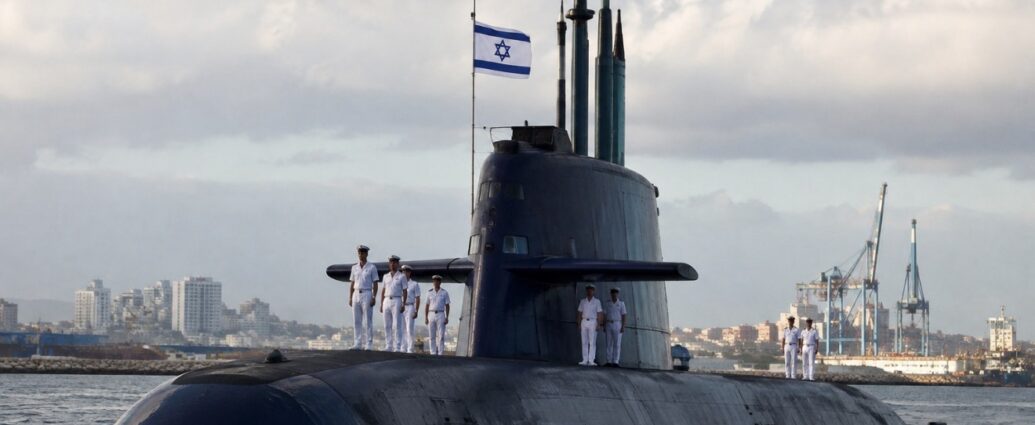
Israel’s navy has taken possession of the most expensive warship it has ever ordered, a German-built attack submarine designed to stay hidden at sea for weeks at a time so the country retains a way to strike back even if its land forces are knocked out in a surprise attack.

The vessel, named the INS Drakon, was handed over at the ThyssenKrupp Marine Systems shipyard in Kiel, Germany, in late July, with the transfer confirmed in early August. It is the sixth Dolphin-class boat in the Israeli fleet and the third built to the upgraded Dolphin II design. Delivery had originally been set for 2025.

The price is what sets it apart from anything Israel has bought before. The submarine runs more than 70 meters, or roughly 230 feet, displaces over 2,000 tons, and is described as the largest submarine Germany has built since the Second World War, at an estimated cost of $634 million.

That figure buys a specific kind of insurance. Israel’s air bases, missile batteries and naval facilities are concentrated in a country the size of New Jersey, and Haifa harbor — where much of the submarine fleet ties up — is a known, fixed target. A boat at sea is not. Ehud Eilam, an Israeli national security researcher who previously worked for the country’s defense ministry, said keeping a submarine continuously deployed is a matter of national survival.His argument is straightforward: if Iran struck in a way that crippled Israeli forces on land, the boat already at sea would be the one able to answer.

Submarines sitting in port, he noted, could be hit and left unable to sail.

Israeli defense reporting has long described the Dolphin fleet as the country’s sea-based second-strike layer — the piece of the deterrent an adversary cannot destroy in a first blow because it cannot find it. Israel has never confirmed what the boats carry.

Size, in this case, is a range calculation. Eilam said the larger hull points to Israel wanting more options, including longer-reaching missiles that could cover targets inside Iran while the submarine remains in the Mediterranean. The alternative routes are unattractive: transiting the Suez Canal brings the boat close to Iranian reach and can be risky or unavailable outright, while sailing around Africa would take weeks. A missile with enough legs removes the need to make that trip at all.

The economics behind the program are as notable as the hardware. Germany has underwritten a substantial share of Israel’s submarine purchases over three decades, a commitment rooted in postwar policy and one that has drawn periodic criticism inside Germany. For ThyssenKrupp Marine Systems, the Israeli order book has been a steady anchor at a moment when European naval yards are running near capacity on rearmament work tied to Russia’s war in Ukraine and NATO spending increases. TKMS chief executive Oliver Burkhard told Israeli outlet Ynet that the current program is running to schedule, including the delivery of the final boat in the earlier series and its voyage home to Israel.

That backlog matters commercially. Submarine construction is among the slowest, most capital-intensive work in defense manufacturing, with build cycles measured in years and a small number of yards worldwide capable of doing it. Orders placed today lock in industrial capacity well into the 2030s, which is why delivery slippage — the Drakon arrived roughly a year behind its original date — is common across the sector rather than unusual.

The boat’s day-to-day work is intelligence gathering and reconnaissance across the Mediterranean, with the strategic mission held in reserve.The name carries its own weight. Drakon, Hebrew for dragon, was chosen partly because its letters echo Dakar — the Israeli submarine that vanished in the Mediterranean in 1968 with all 69 crew aboard — and the defense ministry has said the naming honors that crew.

The wreck was not located until 1999.

Fox News Digital said it had requested comment from the Israeli navy, the defense ministry, TKMS and the Israel Defense Forces.

The delivery lands with the U.S.-Iran conflict still unresolved and Gulf shipping lanes under strain, and it hands Israel a capability that does not depend on airfields, runways or ports remaining intact.

JBizNews Desk | Jerusalem

© JBizNews.com All Rights Reserved. Reproduction or distribution without written permission is prohibited.


Hungary’s only nuclear plant sits on the Danube and uses river water to cool its reactors. The river has fallen so low that the plant’s pumps can no longer draw enough of it, so the country switched the plant off — and is now buying replacement electricity from its neighbors at a far higher price than it costs to make at home. That swap, repeated day after day through a heat wave, is what officials and economists in Budapest are warning will show up in the national accounts.

The shutdown is not a forecast or a contingency. The Paks plant, about 75 miles south of Budapest, went fully offline for the first time in its 44-year history, a consequence of sustained drought across central Europe. Officials said record-low Danube water levels had disrupted reactor cooling. Output had already collapsed before the final shutdown, falling to 965 megawatts on a Friday and then to 240 overnight, against a normal 2,000 megawatts. The plant accounts for 40% of Hungary’s electricity generation.

The immediate bill is for imported power. Hungarian politicians have put the cost of the energy crisis at 100 billion to 200 billion forints, roughly €273 million to €547 million, because electricity bought abroad is far more expensive than what Paks produces. Reuters has put the potential cost as high as $632 million. Those outlays land on a budget the government was already trying to consolidate.

The growth arithmetic is smaller but harder to undo. Paks contributes about half a percentage point to Hungary’s GDP, and an outage of roughly twenty days within a quarter could shave about 0.1 percentage point off quarterly output, according to Gábor Regős, chief economist at Gránit Capital Management. The distinction that matters: electricity Paks does not generate today cannot be generated later, so it is a permanent loss, whereas factories running below capacity can make up some lost production once power returns.

Industry is absorbing the shock in real time. The government is boosting power imports to cover part of the shortfall and has asked large industrial firms, including car and battery makers, to cut consumption voluntarily, while warning that mandatory reductions may follow. A crisis plan prioritizes cutting electricity to companies and treats household limits as a last resort — rail freight was halted at peak hours starting Monday, and decorative lighting on state buildings has been switched off.

Agriculture is the second front. The drought is expected to hit farm output hard, restraining growth and potentially pushing food prices higher — a complication for central bankers who had penciled in a third consecutive monthly rate cut in August. More than 100 cities and villages have been placed under water-use restrictions.

Currency markets moved first. The forint, one of the world’s best performers earlier this year, slid to a three-month low against the euro and posted its steepest monthly decline since October 2024 as the energy crisis unsettled investors. It has since given up only modestly, though its failure to recover has been read as a sign the market is still pricing risk. The trade picture is being squeezed from both sides: weaker industrial exports on one hand, larger and costlier electricity imports on the other, with global oil and gas prices — still shaped by the Iran conflict — determining how much damage lands on the current account.

This is a regional problem, not a Hungarian one. Romania shut both Candu reactors at its own Danube-cooled plant and is leaning more heavily on imported electricity, driving up prices already lifted by air-conditioning demand. Danube flow fell to 1,650 cubic meters per second in late July against a July average of 4,750, approaching the record low of 1,400 set in 1985. On the Rhine, Germany’s most important inland trade corridor, vessels are carrying significantly less cargo, requiring more ships to move the same volume at higher cost.

The politics are sharpening. Economy and Energy Minister István Kapitány has said a low-water pumping station costing roughly 10 billion forints could have prevented the shutdown, and has ordered an inquiry into why it was never built. Prime Minister Péter Magyar, who urged the public to conserve electricity and water, has partly blamed infrastructure gaps inherited from the previous government.

There is a path out, and it runs through the weather. By Tuesday evening the Danube had risen five centimeters and the plant’s last turbine was running steadily, reducing the odds of a total shutdown for now. Forecasters expect weak industrial figures for late July and worse for August, but see a chance of recovery starting in the autumn if a complete outage is avoided and manufacturers can lift capacity utilization to recoup lost production. Budapest, meanwhile, faces temperatures near 100 degrees Fahrenheit for days ahead with no rain in the forecast.

JBizNews Desk | Budapest

© JBizNews.com All Rights Reserved. Reproduction or distribution without written permission is prohibited.

Iran cannot move dollars through ordinary banks, so it moves them as crypto through small exchanges that ask few questions. On Friday the Treasury Department blacklisted one of the biggest of those exchanges, a Dubai storefront called Shelbit, along with the Iranian expatriate who built it and a chain of shell companies stretching across four countries.

The designation puts every one of those entities on the sanctions list, which means American banks, payment processors and crypto platforms are now barred from touching them and must freeze any assets they hold. Foreign firms that keep dealing with them face their own exposure.

Treasury’s Office of Foreign Assets Control said the action targets two digital asset exchanges the Iranian regime relies on, along with the ringleader of a network of front companies operating across multiple jurisdictions. Iranian actors used unlicensed or lightly regulated platforms to move large volumes of digital assets, running the proceeds through corporate networks and an online gambling operation that hid where the money came from before it reached the Islamic Revolutionary Guard Corps and regime-connected individuals.

Treasury Secretary Scott Bessent framed it as evidence the pressure campaign is landing, saying the department will “hunt down and dismantle the illicit financial networks” keeping the regime solvent, whether the money moves in dollars, rials or crypto.

The numbers Treasury put on the record are specific. Wallets belonging to the Revolutionary Guard sent more than $1 million in digital assets to Shelbit Exchange addresses, and more than $2 million moved back the other way from Shelbit to Guard-controlled wallets. Addresses owned or controlled by the exchange’s founder, Siavash Kayvanpour, sent over $2 million to Nobitex, Iran’s largest crypto exchange, which the US designated earlier. Kayvanpour was born in Iran, holds citizenship in Dominica and Afghanistan, has lived in the United Arab Emirates, and runs the exchange through a Republic of Georgia company while a UAE entity, Shelbit General Trading, operates it commercially. He also owns a Poland-based affiliate and manages two more Dubai companies, all of which were designated Friday.

The gambling piece is the part that turns a sanctions case into a story about how the money actually cleared. Shelbit served a large Persian-language gambling network run by two Iranian influencers living abroad, and tens of millions of dollars of that network’s digital assets were washed through the exchange. Both men were convicted of illegal gambling inside Iran in 2023, yet their websites retain access to Iran’s online payment systems, which the central bank controls tightly.

Dubai’s regulator had already been circling. The UAE’s Virtual Assets Regulatory Authority took enforcement action against the trading company in January 2025 and again in July 2026, and it remained open for business.

Treasury hit a second target the same day. Aban Tether, an Iran-based exchange, was designated for operating in the Iranian financial sector after processing millions of dollars in transactions with previously blacklisted platforms including Nobitex, Wallex, Bitpin and Ramzinex.

The action followed a press investigation rather than preceding it. Reuters published a report on July 31 identifying Shelbit as the hub of a $4 billion Iranian sanctions-evasion operation, finding that the exchange moved crypto for Iran’s central bank, for one of the world’s largest illegal online gambling networks, and to addresses Israeli authorities have tied to the Revolutionary Guard. The exchange’s public website had been dark for months while money kept flowing through it, including during the war, and it came back online the day after that report ran.

Shelbit disputes the case. In an August 1 statement posted on its revived site, the company said it “categorically rejects any suggestion” that it knowingly took part in money laundering, terrorist financing, illegal gambling, sanctions evasion, or work for any sanctioned, military or government body, and said it had shut down operations in January 2026. Neither the company nor Kayvanpour responded to requests for comment.

For compliance officers at US banks and crypto firms, the practical takeaway is the reach of the order. Any entity owned 50 percent or more by the blocked parties is automatically blocked as well, penalties can be imposed on a strict-liability basis, and non-US persons are barred from causing Americans to violate the rules even unwittingly. The case was built with the IRS criminal investigation division, and the State Department is offering up to $15 million for information that disrupts Revolutionary Guard financing.

JBizNews Desk | Washington

© JBizNews.com All Rights Reserved. Reproduction or distribution without written permission is prohibited.

Prime Minister Netanyahu spoke to Jared Kushner and pledged to give Trump’s 15-point plan a chance, Axios reported Sunday evening citing a US official.

Additionally, the IDF has began a gradual return to the Yellow Line in Gaza, the report stated.

According to the report, the US and the mediators in talks are demanding that Hamas begin the process of disarmament.

This is a developing report.

This post was originally published on here. 

White House staff secretary Will Scharf, will become White House counsel and assistant to the president effective September 1, US President Donald Trump said in a post on Truth Social on Sunday.

Scharf, who is Jewish, was “a top student at both Princeton University, and Harvard Law School,” Trump added.

“Will is Tough, Strong, and Smart! He also loves our Country, and respects the Law. Will Scharf will do a great job as White House Counsel!”

Scharf will become the White House‘s top lawyer after overseeing the administrative work of the Oval Office in his current role.

He also led the National Capital Planning Commission, which approved the president’s construction of the White House ballroom.

Trump said David Warrington, the current White House counsel, is going to the private sector. Warrington formerly served as a personal counsel and a lawyer for Trump’s 2024 campaign.

This is a developing story.

This post was originally published on here. 

By Julia Parker – JBizNews Desk

KPMG said a survey of its interns found career growth is Gen Z’s top workplace priority, outranking work-life balance, culture and salary, with 93% of respondents aspiring to reach the C-suite. The findings matter for employers competing for young talent as retention strategies increasingly depend on training, internal mobility and visible promotion paths, not just pay packages.

The survey challenges a common corporate assumption that younger workers are primarily motivated by flexibility and lifestyle benefits. For business owners and executives, the message is more practical: entry-level employees may stay longer where they see a clear route to advancement, broader responsibilities and leadership development.

The results come as companies continue to recalibrate hiring after several years of uneven labor-market conditions, rising wage costs and changing expectations around hybrid work. Many employers have invested heavily in wellness benefits and flexible schedules, but the KPMG findings suggest those programs may not be enough if workers believe their careers are stalling.

For large companies, the issue is tied directly to succession planning. A generation that says it wants senior leadership roles could help strengthen management pipelines, but only if employers provide early access to mentorship, skills training, client exposure and measurable advancement opportunities.

The survey also has cost implications. Companies may need to shift more spending toward structured development programs, rotational assignments and manager training. Those investments can be expensive, but they may reduce turnover, a recurring problem for employers that spend heavily to recruit graduates only to lose them within the first few years.

Compensation remains important, but the ranking indicates that pay alone may not secure loyalty among ambitious younger employees. That could alter how companies market entry-level roles, particularly in professional services, finance, consulting, technology and other sectors that rely on a steady inflow of junior workers.

Employers are also likely to face pressure to make promotion criteria more transparent. Younger workers seeking rapid career growth may be less willing to wait through informal or opaque advancement systems, especially in a labor market where skilled employees can compare opportunities across industries.

The findings should be read in context. A survey of interns at a professional-services firm is not the same as a broad measure of all Gen Z workers, and interns are already more likely to be career-focused than the overall population. Still, the results offer a useful signal for companies trying to understand the expectations of students and recent graduates entering corporate roles.

For small and midsize businesses, the takeaway may be especially important. They often cannot match the salaries or brand recognition of larger competitors, but they can offer faster responsibility, direct access to senior leaders and clearer learning opportunities. Those advantages may become more valuable if career acceleration is a decisive factor for younger workers.

The data also complicates the debate over work-life balance. Rather than rejecting flexibility, the respondents appear to be prioritizing advancement when forced to choose among workplace values. That creates a management challenge: companies may need to offer both flexibility and credible career growth to remain competitive.

Recruiting teams are likely to use the findings to refine campus hiring messages ahead of future internship and graduate recruitment cycles. Employers that can show defined career ladders, leadership training and internal promotion rates may have an advantage in attracting young candidates who view their first job as a launchpad to senior management.

JBizNews Desk | New York

© JBizNews.com All Rights Reserved. Reproduction or distribution without written permission is prohibited.

Prime Minister Benjamin Netanyahu, Construction and Housing Minister Haim Katz, and Finance Minister Bezalel Smotrich announced a new program on Sunday to help IDF reservists find affordable housing, a joint statement announced.

The program, titled “From Reserve Duty to a Key,” is meant to expand housing benefits and provide approximately 20,000 housing solutions, including 16,000 apartments, in the years 2026 and 2027.

One feature of the program is increased priority in apartment discount lotteries. In the latest iteration of the lotteries, 25,354 reservists participated, of which 4,734 won. The percentage of reservist winners will increase, and the discount given will amount to more than NIS 500,000, the government said.

Katz praised the discount lottery system, saying that another 20,000 units would be added to the pool.

“Those who gave must also know how to receive,” he said, adding that “the state will give back to its reservists, because they are the main resource we have today.”

FINANCE MINISTER Bezalel Smotrich holds a press conference ahead of the vote on the state budget at the Knesset, the Israeli parliament in Jerusalem, March 29, 2026. (credit: YONATAN SINDEL/FLASH90)

‘Heroic reservists’ deserve benefits, housing minister says

Reservists who wish to construct housing will also receive increased benefits, and will be exempted from payment for the value of the land.

Meant to “expand the supply of housing solutions for reservists,” Netanyahu praised the initiative as a historic move.

“Our heroic reservists give everything for the country, and they deserve everything,” he said.

“To date, the government has transferred, either through Government decisions or legislation, a massive sum of NIS 25 billion to the reservists and their families as well. And today we are bringing more news about massive support in housing.”

“There has never been anything like this. It is about time.”

Smotrich described the plan as only a part of a greater show of appreciation for the country’s soldiers.

“From the very first day of the war, we have been wrapping IDF fighters and commanders, in both regular and reserve service, in a huge umbrella of billions upon billions,” he said.

“Following the discounts and priority for reservists, we have made a significant decision together with the prime minister and the housing minister, according to which all reservists without housing who applied for the “Discount Apartment” lottery will receive an apartment. Dear reservists – you deserve this.”

This post was originally published on here. 

Sanofi is experiencing shortages of two medicines used to treat Pompe disease, and the problem emerged shortly after the Food and Drug Administration warned the company over manufacturing issues at the Irish facility where the drugs are made.

In recent days, the drugmaker has alerted patient groups and physicians in both the U.S. and Europe that supplies of Myozyme, an older standard of care, and Nexviazyme, a newer treatment, are dwindling due to what has been described as a bottleneck in the final manufacturing phase, as well as quality control issues at its Waterford plant.

The site is responsible for what is known as batch release, which refers to the final quality assurance and regulatory process where a manufactured amount of medicine is formally certified, approved, and cleared for distribution and use by patients. This step is supposed to verify the batch of medicine meets safety and potency requirements.

Continue to STAT+ to read the full story…

This post was originally published here. 

By Julia Parker – JBizNews Desk

NEW YORK — Google DeepMind Chief Operating Officer Lila Ibrahim said the risk that artificial intelligence could contribute to human extinction is not zero, underscoring the governance challenge facing Alphabet, enterprise AI users and investors as the technology moves deeper into business operations.

Ibrahim, who signed a widely circulated statement warning that advanced AI could pose an existential risk, pushed back against confident forecasts from technology billionaires about how quickly AI and space technology will reshape daily life. Her comments highlight a widening gap between Silicon Valley’s most optimistic projections and the more cautious stance being adopted by executives responsible for deploying AI systems at scale.

“Nobody actually knows that,” Ibrahim said, referring to predictions such as Elon Musk saying money will not matter by 2036 and Jeff Bezos saying people will live in space by 2045. She said the odds of extreme harm from AI are “not zero,” while emphasizing that specific timelines remain unknowable.

The remarks matter for companies spending heavily on AI because safety concerns are increasingly linked to regulatory risk, customer trust and capital allocation. Businesses adopting generative AI are weighing productivity gains against concerns over data security, intellectual-property exposure, workforce disruption and potential liability from automated decision-making.

For Alphabet, which owns Google and Google DeepMind, AI is both a growth engine and a strategic risk. The company is investing billions of dollars in computing infrastructure, AI models and cloud services as it competes with Microsoft, OpenAI, Amazon and others to supply businesses with tools that can write software, summarize documents, automate customer service and support scientific research.

That commercial opportunity has made AI safety a boardroom issue. Large corporate customers are demanding more assurances about accuracy, explainability and privacy before moving sensitive workloads into AI systems. Insurers, banks, healthcare companies and government contractors face especially high compliance hurdles because mistakes can create financial, legal or safety consequences.

Ibrahim’s position also reflects the balancing act inside leading AI labs. Executives must promote products that can generate revenue while acknowledging risks that could invite tighter oversight. Governments in the U.S., Europe and Asia are developing rules for powerful AI models, with policymakers focused on transparency, cybersecurity, election misuse and potential systemic risks.

Musk, the chief executive of Tesla and founder of xAI, has repeatedly warned about AI risks while also investing aggressively in the sector. Bezos, founder of Amazon and Blue Origin, has made expansive predictions about human activity in space. Ibrahim’s comments contrast with those forecasts by stressing uncertainty rather than fixed milestones.

Investors are watching whether AI spending will translate into durable earnings growth. Alphabet and its peers are under pressure to show that rising capital expenditures on chips, data centers and talent can support higher revenue from cloud computing, advertising, enterprise software and consumer products.

The debate is likely to intensify as more businesses embed AI in core operations. For executives, Ibrahim’s warning adds weight to a practical conclusion already shaping procurement decisions: AI may offer major efficiency gains, but companies will be expected to manage the technology with tighter controls, stronger oversight and clearer accountability.

JBizNews Desk | New York

© JBizNews.com All Rights Reserved. Reproduction or distribution without written permission is prohibited.

Wall Street heads into Monday with stocks near record territory and one of the most important economic weeks of the summer directly ahead.

The setup is unusually delicate. Friday’s July employment report showed the U.S. economy unexpectedly lost 23,000 jobs, sharply changing the debate over whether the Federal Reserve’s bigger problem is still inflation or a labor market that is beginning to weaken.

Now investors get the other half of the equation.

July consumer inflation arrives Wednesday, producer inflation follows Thursday, and retail sales close out the week Friday. At the same time, a concentrated run of technology earnings will test whether the enormous investment behind the artificial-intelligence boom continues to justify elevated valuations.

The result is a market that could look considerably different by Friday afternoon than it does Monday morning.

Monday: Wall Street Digests the Jobs Shock

Monday does not bring the week’s biggest economic releases, which means Friday’s employment report should continue setting the tone.

The key signal will come from Treasury yields.

Falling yields accompanied by rising stocks would suggest investors are treating weaker employment as increasing the Fed’s flexibility without signaling an imminent recession.

But falling yields alongside falling stocks would send a very different message: Wall Street may be moving beyond hopes for easier monetary policy and beginning to worry about the health of the economy itself.

That distinction could dominate Monday trading.

Technology shares also bear watching. Lower interest rates generally help high-growth companies whose valuations depend heavily on future earnings, but those benefits can disappear quickly if investors conclude economic weakness is becoming more serious.

Tuesday: The AI Trade Gets Tested

Tuesday brings the NFIB Small Business Optimism report, offering another look at hiring plans, pricing pressures and confidence among smaller American companies.

After the closing bell, however, attention shifts toward artificial intelligence.

Super Micro Computer and CoreWeave are scheduled to report results, putting two companies directly exposed to the AI infrastructure boom under the microscope.

Super Micro has already indicated quarterly revenue should come near the lower end of its previous guidance, while saying orders reached record levels. Investors will now focus heavily on margins, backlog, deliveries and management’s outlook.

CoreWeave provides another window into the extraordinary demand for computing capacity needed to train and operate AI models.

Together, the reports could influence sentiment far beyond the individual stocks.

The market increasingly wants proof that billions of dollars being poured into chips, servers, networking equipment and data centers are translating into sustainable revenue.

Wednesday: CPI Could Set the Direction for the Entire Market

Wednesday morning is the centerpiece of the week.

The July Consumer Price Index arrives at 8:30 a.m. Eastern, giving investors their clearest new reading on whether inflation is cooling enough for the Federal Reserve to respond to a weaker labor market.

The headline number matters, but core inflation may matter even more.

Investors will be looking closely at services, housing and categories where tariffs, energy costs or other input increases could be filtering into consumer prices.

A softer report would give Wall Street something close to its preferred scenario: employment cooling while inflation also moves in the right direction.

That could push Treasury yields lower, strengthen expectations for easier Fed policy and provide support to rate-sensitive areas of the stock market.

A hotter CPI would create a much tougher problem.

The Fed could find itself confronting weakening employment while inflation remains too elevated to comfortably ease policy. That combination would threaten both bonds and richly valued stocks.

Cisco is also expected to report Wednesday, providing another reading on corporate technology and networking demand.

Thursday: Wholesale Inflation and Chips Take Over

The Producer Price Index arrives Thursday morning.

PPI measures inflation earlier in the supply chain and could provide evidence of whether businesses are absorbing higher costs or preparing to pass them through to consumers.

That question has become increasingly important as Wall Street tries to separate temporary price pressures from inflation that could persist.

Weekly unemployment claims will provide another timely look at labor-market conditions after Friday’s payroll shock.

Then semiconductor equipment giant Applied Materials reports after Thursday’s close.

Its results carry significance well beyond one company.

Applied Materials sells the sophisticated manufacturing equipment used to produce semiconductors, putting it close to the enormous capital-spending cycle behind AI chips, advanced memory and data-center construction.

Strong orders and guidance would reinforce the argument that AI infrastructure spending remains powerful.

Weakness could raise another question: whether the market has priced AI growth faster than the physical semiconductor industry can deliver it.

Friday: The Consumer Gets the Last Word

Friday brings July retail sales, potentially the week’s second-most important economic report.

America’s consumer has repeatedly kept the economy moving even as borrowing costs remained high.

The weak jobs report makes that resilience more important.

Strong retail sales would suggest households are still spending despite softer hiring, supporting the argument that the economy is slowing without falling into recession.

Weak retail sales would be harder to dismiss.

If businesses are pulling back on hiring at the same time households begin pulling back on spending, Wall Street would have evidence that economic weakness is spreading.

The preliminary University of Michigan consumer sentiment report will provide another look at how Americans view their finances, employment prospects and inflation.

The Fed’s Problem Is Changing

For much of the past several years, Wall Street’s biggest concern was straightforward: inflation was too high and the economy was too strong for the Federal Reserve to ease aggressively.

That calculation is becoming more complicated.

July’s loss of 23,000 jobs, combined with downward revisions to earlier payroll numbers, suggests employers have become significantly more cautious.

That makes this week’s inflation numbers critical.

Weak employment plus cooling inflation gives the Fed room to act.

Weak employment plus stubborn inflation leaves the Fed trapped between protecting jobs and protecting price stability.

Markets will be repricing that equation throughout the week.

AI Faces a Reality Check

The economic reports will determine much of the direction for the broader market, but earnings could determine whether technology continues leading it.

Super Micro, CoreWeave, Cisco and Applied Materials sit at different points across the AI infrastructure chain.

Their combined results offer investors something especially valuable: a real-world look at whether the AI buildout remains as powerful as stock valuations suggest.

The question is no longer whether AI spending is large.

It is whether the growth is large enough to keep surprising Wall Street.

At elevated valuations, companies may need more than solid earnings. They need strong outlooks capable of convincing investors that another year of extraordinary infrastructure spending is coming.

Oil Remains the Wild Card

The biggest risk to the week’s carefully scheduled economic calendar may be something that is not scheduled at all.

Middle East developments and uncertainty surrounding Iran remain capable of moving crude prices quickly.

A renewed oil surge would immediately complicate the inflation picture.

Higher energy prices eventually reach transportation, manufacturing, airlines, shipping and household budgets. That means an oil shock could undermine the very inflation improvement markets are hoping to see this week.

Energy shares could benefit, while airlines, transportation companies and other fuel-intensive businesses would face renewed pressure.

What Wall Street Needs This Week

The best outcome for markets is increasingly clear: softer inflation, resilient consumer spending and strong AI earnings.

That combination would tell investors that inflation is cooling, the consumer remains alive and corporate investment continues despite weaker hiring.

The danger is the opposite combination.

Hot inflation and weak retail sales would suggest prices remain a problem just as economic demand begins deteriorating.

That is the scenario that could leave the Federal Reserve with the fewest good choices.

Monday therefore begins with Wall Street still digesting the jobs shock. Tuesday tests AI. Wednesday’s CPI could set the week’s direction. Thursday tests wholesale inflation and semiconductor spending. Friday reveals whether American consumers are beginning to feel the slowdown.

By the closing bell Friday, investors should know considerably more about whether this record-setting market still has economic support underneath it — or whether Wall Street has gotten ahead of itself.

JBizNews Desk | Wall Street

© JBizNews.com⁠ All Rights Reserved. Reproduction or distribution without written permission is prohibited.

Chrysler is recalling more than 1.27 million pickup trucks in the U.S. over a possible seat belt issue that could increase the risk of injury in a crash.

The recall covers 1,271,294 model-year 2019 through 2026 Ram 1500 vehicles. Chrysler estimates that about 0.1% of the recalled vehicles actually have the defect, according to the National Highway Traffic Safety Administration (NHTSA).

NHTSA said the second-row seat belt buckle anchors may have been improperly installed, leaving the vehicles out of compliance with federal safety requirements.

SOME OLDER FORD VEHICLES POSE ‘UNREASONABLE’ SAFETY RISKS, REGULATORS WARN

“Reduced load management by the seat belt buckle may result in injury to vehicle occupants in certain types of driving conditions or crashes,” the report states.

The recalled trucks were produced between Feb. 17, 2018, and April 27, 2026. 

Production and service records were used to determine the potentially affected vehicles, according to NHTSA.

HONDA RECALLS MORE THAN 880,000 VEHICLES OVER REAR SUSPENSION FAILURE RISK

NHTSA said the recall stems from a vehicle assembly issue rather than a defective component.

Dealers will inspect the second-row seat belt buckle anchors and, if necessary, properly attach them to the vehicle’s body structure at no cost to owners.

“The remedy will be to ensure that the second-row seat belt buckle anchors are properly affixed to the body structure,” the report states.

JAGUAR LAND ROVER RECALLS MORE THAN 15,000 VEHICLES OVER VISIBILITY-LIMITING DEFECT

CLICK HERE TO GET FOX BUSINESS ON THE GO

Dealers were notified on or about Aug. 6, with owner notifications set to begin Aug. 18.

Stellantis, Chrysler’s parent company, could not immediately be reached by FOX Business for comment.

This post was originally published here. 

Iran said Sunday it is not negotiating directly with the United States and will not return to formal talks until Washington meets key demands — making clear that a possible shipping agreement with Oman does not mean the Strait of Hormuz is reopening. 

That distinction is now the most important part of the story for oil markets, shipping companies and businesses around the world.

Iranian Foreign Minister Abbas Araghchi said Tehran and Oman are close to completing an agreement governing shipping routes through the strait. But he said reopening Hormuz is a separate issue tied to broader negotiations with Washington. 

In simple terms: Iran and Oman may agree on where ships can travel, while Iran still decides which ships are allowed through.

Tehran is demanding major U.S. concessions before restoring full access, including an end to American economic and military pressure and compensation connected to the conflict. Iran says messages are still being exchanged through intermediaries rather than direct U.S.-Iran negotiations. 

The Strait of Hormuz is one of the world’s most important energy routes, historically carrying roughly one-fifth of global oil and gas shipments. Traffic has been severely disrupted since the U.S.-Israeli war with Iran began February 28. 

The Trump administration remains more optimistic.

Vice President JD Vance said Saturday that Washington is still talking with Iran and is focused on getting as much oil and gas as possible moving through Hormuz. He described the negotiations as still being in the “middle of the game.” 

But Iran’s latest comments show how large the gap remains.

A technical agreement with Oman could therefore produce headlines suggesting progress without actually restoring normal commercial shipping.

That matters because continued disruption keeps pressure on oil prices, tanker availability, freight costs and war-risk insurance throughout the Gulf.

Regional tensions also worsened Sunday when Iran-backed Houthi forces said they attacked Saudi Aramco’s Jazan refinery. Saudi authorities said a fire at the facility was extinguished without casualties. 

For businesses, the takeaway is straightforward:

Do not mistake an Iran-Oman shipping agreement for the reopening of Hormuz.

The real breakthrough comes only when commercial vessels can again move freely through the strait. Iran is now making clear that this requires a much larger political agreement with Washington — and that agreement has not been reached.

Until then, one of the world’s most important shipping routes remains a major risk for energy prices, transportation costs and global trade.

JBizNews Desk | Tehran

© JBizNews.com⁠ All Rights Reserved. Reproduction or distribution without written permission is prohibited.

North American Aerospace Defense (NORAD) Command on Sunday intercepted two general aviation aircraft that violated temporary flight restrictions as President Donald Trump attended a tournament at his golf club in Bedminster, New Jersey.

“NORAD F-16s intercepted multiple general aviation aircraft today that violated temporary flight restrictions over Bedminster, NJ,” according to a statement from NORAD on X/Twitter.

NORAD declined to say whether the pilots of the two aircraft had made a mistake, saying that it is up to the Federal Aviation Administration (FAA) to make that determination, Reuters reported.

Pilots are required to check with the FAA to stay up to date about temporary airspace restrictions, NORAD said.

The White House did not immediately return a request by Reuters for comment on the incident.

US President Donald Trump boards Air Force One at Joint Base Andrews, Maryland, US, August 7, 2026 (credit: REUTERS/ELIZABETH FRANTZ)

Trump is scheduled to fly back to Washington from Bedminster later Sunday after attending the LIV Golf event.

FAA investigates Marine One safety incident in Washington

The US Federal Aviation Administration is also reviewing an air-traffic safety incident involving a military helicopter carrying US President Donald Trump, the agency said last Tuesday.

“The FAA is investigating a safety incident involving Marine One but it didn’t appear to be a dangerous close call and the aircraft weren’t apparently converging,” the FAA said.

Trump’s Marine One helicopter took off from the White House on Tuesday afternoon, but air-traffic controllers had not halted commercial flights at nearby Ronald Reagan Washington National Airport as required under a policy set last year following a fatal collision, two sources told Reuters.

This post was originally published on here. 

For about 20 years, Joseph (Joe) J. Sitt, the chairman and CEO of the New York real estate firm Thor Equities, has been paying to restore Jewish graves in Syria, Algeria, Egypt, Lebanon, and Turkey, along with ancient synagogues in those countries old enough to predate the destruction of the Second Temple. He rarely talks about it publicly. When I asked him why he does it, he answered with a question of his own.

“People always have respect for their parents’ grave and their grandparents’ grave,” he said. “But why should their great-grandparents’ grave be nothing to them? And why should the ruins of the Second Temple be more important than the synagogues of the same period or older?”

That work, spread across two decades and half a dozen countries, has given Sitt something most American Jewish businessmen do not have: a working relationship with the people who run those countries. He has decided what he wants to do with it. He wants the Abraham Accords to stop being a set of agreements and start being an actual institution, with a building, a staff, and an address in Jerusalem.

“Why can’t we have a Brussels-like headquarters of an alliance organization, an Abraham Accords organization, that’s that unifier in the Middle East and be based in Jerusalem?” he asked me over Teams last week.

I asked whether he meant that as an image or as a construction project.

“Actually and physically,” he said.

 Washington DC, USA - September 15, 2020: Benjamin Netanyahu, Donald Trump, Abdullatif bin Rashid Al Zayani, and Abdullah bin Zayed Al Nahyan attend the Abraham Accords ceremony in The White House (credit: SHUTTERSTOCK)

He calls it the Abraham Organization, and he is deliberate about dropping the word “Accord.” “It’s not just a piece of Accord,” he said. “It’s the next evolution.” The name itself is the point. Abraham, he said, is the forefather of both the Muslim and Arab world and of the Jewish and Israeli one.

When I pointed out that Christians claim him too, he agreed immediately.

The kid from the racetrack parking lot

Sitt, decades later, is married and the father of four. He grew up in Brooklyn near Coney Island. His first job in business was working flea market booths in the parking lots of the Aqueduct and Roosevelt racetracks.

His first property was bought at a tax auction on East Tremont Avenue in the Bronx, in a stretch of the city that national chains had given up on. He raised the money from family and friends, put up a one-story retail building, and talked Rite Aid and Payless into signing leases.

He was still an undergraduate at New York University’s Stern School of Business when he founded Thor Equities in 1986. Somewhere in there, he also built a string of consumer brands, among them Ashley Stewart, a plus-size clothing chain aimed primarily at Black women in neighborhoods the mall retailers ignored, and staffed its senior management almost entirely with Black executives.

Thor today runs about $20 billion for sovereign wealth funds, government agencies, and private investors, with more than 50 million square feet in its development pipeline and offices in New York, London, Paris, Madrid, Mexico City, San Francisco, and Miami.

It has owned London’s Burlington Arcade and Chicago’s Palmer House Hilton. Its Mexico-focused Latin American arm, Thor Urbana, calls itself the largest developer in that country.

In 2012, Sitt put millions of dollars of his own money into founding the Global Gateway Alliance, a nonprofit set up to draw a development plan and push New York and the US federal government into fixing the city’s airports.

None of which explains why he thinks he should be the one to lead the effort to house the Abraham Accords. His answer to that is about who he is, and it is more complicated than his last name suggests.

Not exactly a Syrian Jew

In Israel, and increasingly in the United States, the Syrian Jewish community of Brooklyn is treated as a bloc, wealthy, cohesive, and politically confident. Sitt’s name gets attached to it automatically. He pushed back on that before I could ask about it.

“I don’t want to overposition myself as purely a Syrian Jew,” he said. “I’m a little bit of a hybrid. I straddle. I’m also part of that community, but I’m also part of the global Jewish community.”

Half of his Jewish friends, he said, are Ashkenazi. Part of his family came from Spain and the Canary Islands. His parents sent him to Yeshiva of Flatbush, an Ashkenazi school, rather than to one of the Syrian community’s own institutions, a choice he says was meant to give him that diversity at a young age.

He has spent his life half inside and half outside, which is more or less the qualification for the side job he has created for himself.

“If there was a country called Jewish, I would be honored to be the ambassador from that country to the Arab world,” he said.

What the Emiratis tell him

The Middle East, and specifically the Gulf, is where Sitt’s relationships are most concrete. He is closest to the Emiratis. Sheikh Abdullah bin Zayed bin Sultan Al Nahyan, the UAE’s deputy prime minister and minister of foreign affairs and a brother of President Sheikh Mohamed bin Zayed Al Nahyan, is a personal friend.

Sitt calls him a mentor and describes him as a fine, loving, wise man he wishes he could see more often.

He knows the argument against taking any of this at face value. Abu Dhabi keeps its channels open to Iran, to China, to Russia. It is a small country, and it needs to balance.

“I think that they’ve been a real friend of Israel,” he said anyway. The Emiratis, in his account, are genuinely comfortable with other religions and genuinely want the region calm. He is close to people in Oman, Bahrain, Syria, and Saudi Arabia as well, and less so in Iran.

Why do they take his calls? He says it is because he never asks them for anything. He does charity in the Arab world the same way he does it in the Jewish one. “People see that I’m sincere.”

The plot of land

What Sitt actually wants from Israel is real estate, which is at least on brand. He thinks the government could donate a plot in Jerusalem for the headquarters.

His original plan put the building in Tel Aviv. Then someone inside the Israeli government, whom he would not name, came to him with a modification of his idea and argued for Jerusalem. Sitt was persuaded. “Jerusalem is the answer for an Abraham organization,” he said.

The organization he sketches is meant for the neighborhood, not for its sponsors. “The goal for the organization is not to necessarily be an organization for the French or necessarily for the Americans. It’s for the Middle East region,” he said. The Americans hold everyone’s hands at the start and then let go. “At a certain point, have America then step back and let them stand on their own two feet.”

I asked whether he wants to run it, fund it, or both. He would not say. What he offered instead was a pitch built on everything he is not.

“I’m not a politician. The fact that I have no politics, no connection to a politician, no family member that’s a politician, it makes me that independent arbiter,” he said. “Sometimes it takes somebody from the outside that’s motivated, that cares, that’s more independent.”

Betting on the businessmen

Sitt is one of the few people willing to go on record predicting that the businessmen now doing Middle East diplomacy will succeed at it.

Two of them sit on the Gaza Executive Board under US President Donald Trump’s Board of Peace: Yakir Gabay, the Israeli-Cypriot founder and chairman of the property group Aroundtown, and Marc Rowan, the co-founder and CEO of Apollo Global Management.

“I think that Yakir Gabay and Marc Rowan, which you can quote me on, are going to be incredibly successful with the Board of Peace,” he said. “I know everybody’s saying no, and there’s the naysayers, but I think they’re going to be incredibly successful. I think because they think as business people.”

The Carlyle Group and Blackstone have been hiring former officials for years, he pointed out. Nobody has seriously tried it the other way. “You could have the same success in the reverse, but it’s never been tested before.”

He once asked Jared Kushner, Trump’s son-in-law and the White House adviser who brokered the original accords, how he had done it. Kushner told him it was listening. Sitt believes him.

Israel as the next theme

Thor does not pick buildings; it picks themes, and it holds them for 10 or 15 years before switching. Not asset classes, and not bargains.

“Most people buy because the deal is cheap, or based upon an asset class they do, maybe because their father did or their grandfather did,” Sitt said. “We’re much more thematic investors, and we pick themes globally that we believe in.” The themes come out of politics and demographics.

The current one is data centers. Thor moved its investors’ money out of office buildings and into them well before anyone was saying “artificial intelligence” on an earnings call. The first was in Madrid. Now there is Texas, Ohio, Georgia, and a European pipeline.

He would like Israel to be one of the next themes. He is having trouble getting in.

‘It’s like a club’

Here is where Sitt got sharp, and it was not about Iran or Gaza. It was about Israeli businessmen.

“Israelis at the highest level often live in a little bit of a bubble,” he said. “It’s like a club. Why? You should want to connect with the outside world. It’s an opportunity to do business, help Israel go global as well. And I find it surprising that they really don’t.”

He says the wealthiest Jews outside Israel have almost no real relationship with the wealthiest people inside it, and that the gap genuinely surprised him when he first noticed it. He first helped a friend who runs forums in Israel that put religious and secular business figures in the same room, and went on from there to connect Israeli and non-Israeli Jewish CEOs.

He gets a steady stream of requests from Israelis wanting introductions abroad. He has a long list of Israeli names he has connected to global networks, but asked me not to print them.

He has a stake in this, and he said so without being asked. Thor’s investor base includes sovereign funds and family fortunes from most of the developed world and almost nothing from Israel.

“I’m a little bit embarrassed that we don’t have the investor base from Israel also yet,” he said. “One of the things I’d love to see is more Israeli investors also be our partner.”

About Israel, he had no hesitation at all. “Israel just went through hell and back,” he said. “But I’m bullish. No industrialized Western nation has better future demographics than Israel does. I’m very bullish on Israel.”

This post was originally published on here. 

Iranian Supreme Leader Ayatollah Mojtaba Khamenei appointed two figures who played key roles in the formation of the Islamic Revolutionary Guard Corps to senior political positions in statements attributed to Khamenei published on Sunday.

Mohsen Rezaee, who commanded the IRGC from 1981 until 1997, was appointed as Khamenei’s representative on the Supreme National Security Council.

Rezaee has run in at least three presidential elections, coming third in 2009 with 1.7% of the vote, fourth in 2013 with over 3.8 million votes, and second in 2021 with 3.4 million votes.

He has served as a member of the Expediency Discernment Council since 1997, and was appointed as Khamenei’s military advisor in March.

Additionally, Mohammed Bagher Zolghadr, who held several senior positions across the IRGC since the Islamic Revolution in 1979, including being deputy chief from 1997 until 2006, was appointed as Khamenei’s political advisor.

Mohammed Bagher Zolghadr pictured in 2023. (credit: MEHR NEWS AGENCY/WIKIMEDIA COMMONS)

Zolghadr previously called for IRGC to hold stronger control over Iranian politics

In March, Zolghadr, who had just been appointed as the Secretary of the Supreme National Security Council following Israel’s killing of Ali Larijani during Operation Roaring Lion, was cited by The New York Times as saying that the IRGC should gain more control over Iran. He was also described by The Economist as an “IRGC apparatchik” at the time.

“He is one of the last remnants of the radical revolutionaries that armed themselves against the Pahlavi monarchy,” historian Shahram Kholdi told Iran International in March.

This post was originally published on here. 

Chipotle Mexican Grill is facing a lawsuit from a Minnesota woman who alleges a burrito bowl from a restaurant in the state caused a severe Salmonella infection that left her hospitalized with sepsis.

Kristen Behne filed the complaint in U.S. District Court for the District of Minnesota, accusing Chipotle of strict product liability, negligence and violations of Minnesota food-safety law. She is seeking more than $75,000 in compensatory damages.

According to the lawsuit, Behne ate a chicken burrito bowl from a Chipotle restaurant in Roseville, Minnesota, on June 24. The meal included guacamole, Fresh Tomato Salsa and Roasted Chili-Corn Salsa — all of which the complaint claims contained raw jalapeño peppers.

SALMONELLA OUTBREAK LINKED TO JALAPENOS SPREADS TO MULTIPLE STATES, DOZENS HOSPITALIZED

Days later, Behne developed fever, chills, vomiting, abdominal cramping and severe diarrhea, the complaint alleges. She eventually sought emergency care, was admitted to the hospital and diagnosed with sepsis.

“Three days later she was in a hospital bed, febrile, tachycardic and septic — a life-threatening complication of the Salmonella infection caused by Chipotle’s grossly contaminated food,” the lawsuit alleges. “She has not been the same since.”

According to the suit, the Minnesota Department of Health classified Behne as a confirmed case tied to a multistate outbreak that has sickened at least 345 people.

“MDH recorded her illness as outbreak-associated, identified the outbreak by name as the Salmonella Javiana outbreak, and classified Plaintiff as a confirmed case,” the complaint states.

The lawsuit alleges Behne continues to experience effects from the illness.

CHIPOTLE CEO SAYS CHAIN IS MAKING ‘MEANINGFUL PROGRESS’ ON A MAJOR CUSTOMER CONCERN

“Plaintiff’s health has not returned to its pre-illness baseline,” according to court documents. “She continues to experience the effects of her acute Salmonella infection and her septic episode, and is at increased risk of well-recognized post-infectious sequelae, including reactive arthritis and post-infectious irritable bowel syndrome.”

The legal action comes as health officials investigate a multistate Salmonella outbreak linked to jalapeño peppers.

Chipotle said Tuesday it had removed jalapeños from some restaurants after health officials linked the outbreak to recalled peppers.

The Centers for Disease Control and Prevention said Wednesday that 345 people in 27 states had been sickened, including 36 who were hospitalized. No deaths have been reported.

SYSCO, NATION’S LARGEST FOOD DISTRIBUTOR, HALTED DISTRIBUTION OF MEXICAN LETTUCE AMID CYCLOSPORA OUTBREAK

Epidemiologic and trace back evidence identified jalapeño peppers grown in Sinaloa, Mexico, and distributed by Coast Citrus Distributors as the source of the outbreak.

GET FOX BUSINESS ON THE GO BY CLICKING HERE

The CDC said Chipotle and QDOBA stopped serving the affected peppers after being notified. Because the products were removed, the CDC and U.S. Food and Drug Administration said they do not consider the restaurants to pose a current ongoing risk to consumers from this outbreak.

Chipotle and an attorney for Behne could not immediately be reached by FOX Business for comment.

FOX Business’ Brittany Miller contributed to this report.

This post was originally published here. 

Last Thursday, in what at the time seemed out of the blue, Indian Prime Minister Narendra Modi posted on X/Twitter that he had received a phone call from Prime Minister Benjamin Netanyahu and that they “exchanged views on the current situation in West Asia.”

He also wrote, “We reviewed progress on various aspects of the India-Israel Special Strategic Partnership which continues to grow from strength to strength.”

Modi posted the message in English and Hebrew, and Netanyahu reposted it.

Only the next day would the full context become clear. On Friday, Saudi Arabia, Pakistan, and Turkey signed a sweeping mutual defense treaty, dubbed the Mecca Pact because of the city where it was finalized.

It is difficult to imagine that the looming pact was not a major focus of the Netanyahu-Modi conversation. While the public only saw the treaty signed on Friday, Jerusalem and New Delhi would almost certainly have been aware that a significant regional realignment was in the works.

Turkish President Tayyip Erdogan, Saudi Crown Prince Mohammed bin Salman, and Pakistan's Prime Minister Shehbaz Sharif pose after signing a joint defence agreement in Mecca, Saudi Arabia, August 7, 2026. (credit:  Saudi Press Agency/Handout via REUTERS)

When the leaders exchanged views “on recent developments in West Asia,” they were addressing one of the largest structural shifts in the region’s security architecture in years.

For years, Washington pushed a vision of a US-led regional security architecture integrating Israel with Saudi Arabia and other pragmatic Arab states. But that’s not what transpired in Mecca, and Modi and Netanyahu were surely discussing the ramifications of a very different tripartite alignment.

One major ramification Modi alluded to was the “progress on various aspects of the India-Israel Special Strategic Partnership.”

The announcement in Mecca will certainly add fuel to moving that partnership forward at full speed. That’s the way the world works: actions cause reactions, which in turn spark new arrangements.

Pakistan: Mecca Pact contains NATO-style Article 5 clause

On Friday, after the signing of this accord – which the Pakistani Foreign Ministry confirmed contains a NATO-style Article 5 clause meaning an attack on one is an attack on all – The Wall Street Journal summarized the moment perfectly: “When a superpower flails about, regional powers begin to make arrangements for themselves.”

The superpower here is the US, and the flailing is its execution of the war in Iran. Saudi Arabia, having lost confidence in the American security umbrella alone to provide the protection it feels it needs, is looking elsewhere.

That’s a rational calculation, considering the pounding the Gulf states have taken from Iran and its proxies despite – and perhaps, at times, because of – the presence of US bases on their soil, paired with Washington’s waffling over how to respond.

What is deeply disappointing from Israel’s perspective is where Riyadh looked for its new partners. By joining up with Turkey and Pakistan, Saudi Arabia chose an architecture that fundamentally complicates Jerusalem’s long-term regional strategy.

Saudi-Pakistani defense ties predate new defense pact

Pakistan is not a new security partner for the Saudis. The two countries have had close defense ties for decades, and signed another security pact last year. But those arrangements did little to shield Riyadh when it came under attack from either Iran or the Houthis.

There is also an internal logic to the Saudis seeking out fellow Sunni states to build a new security architecture. But it nevertheless shatters Jerusalem’s hope that the recent upheaval in the Mideast would shuffle the deck in the region and lead to a clear-cut alliance between Israel and the pragmatic Sunni states.

The Saudis had different ideas. They wanted an alliance, but not with Israel. Hence the disappointment. But disappointment is not policy, and that explains the Netanyahu-Modi call.

This new trilateral alliance, though ostensibly a bulwark against Iran, is as much a concern for India – Pakistan’s bitter enemy – as it is for Israel. The combination of Saudi money, Turkish defense manufacturing capabilities, and a nuclear-armed Pakistan is causing just as much alarm in New Delhi as it is in Jerusalem.

The strongest evidence that this deal dominated the Modi-Netanyahu phone call is what happened immediately afterward.

On August 7, Turkish and Pakistani media outlets published reports claiming that India had urgently approached Israel to sign a reciprocal bilateral defense pact to counter the new Saudi-Pakistan-Turkey axis. The rumors grew so intense that India’s Ministry of External Affairs Fact Check unit issued an immediate statement dismissing reports of a new formal pact as “fake news.”

Crucially, however, MEA Spokesperson Randhir Jaiswal explicitly confirmed that New Delhi is “closely following the development” of the Turkey-Pakistan-Saudi deal.

That is an understatement. India has ample reason to be alarmed by any framework that enhances Pakistan’s military position, especially given Turkey’s history of supplying advanced drones and other military hardware to Islamabad.

For Israel and India, moreover, the concerns are not only military; they are economic as well.

Saudi Arabia sits at the geographic center of the India-Middle East-Europe Economic Corridor (IMEC) – the grand, multi-billion-dollar transit network intended to bind India, the Gulf, and Haifa’s port to Europe. Turkey was explicitly excluded from the original IMEC route and has actively promoted a rival transit project.

By drawing Saudi Arabia into a much closer strategic relationship, Ankara potentially gains a new avenue of influence over a country central to the very economic corridor India and Israel have spent years trying to promote.

The Mecca Pact also complicates the already difficult path toward Saudi-Israel normalization.

By binding itself more closely to Ankara and Islamabad – two capitals fiercely hostile to Jerusalem – Riyadh is entering a strategic framework whose other members would strongly oppose any Saudi move toward the Abraham Accords.

That does not give Turkey or Pakistan a formal veto over Saudi policy, but it raises the political and strategic price Riyadh would have to pay for normalization with Israel.

And it makes it even less likely that the Saudis will soften their insistence on movement toward Palestinian statehood as a prerequisite for normalization.

There is an irony here.

Some analysts thought the weakening of Iran would naturally lead to a strengthening of Israel’s ties with the pragmatic Arab states. Instead, Iran’s weakening – and Israel’s demonstration of its own military reach – has apparently led some of those states to now fear Israeli dominance, and this alliance is one way to counter it.

But as The Wall Street Journal noted, when superpowers flail, regional powers make other arrangements. The Turks, Pakistanis, and Saudis are not the only wise men in town. Israel, too, will make other arrangements.

We have seen this script play out before.

When Israel’s once-strategic relationship with Ankara collapsed following the 2003 rise to power of Recep Tayyip Erdogan, Jerusalem was forced to readjust. And readjust it did, forging close security and energy ties with Turkey’s historic rivals, Greece and Cyprus, and, to a lesser extent, Bulgaria and Romania.

Those ties with Greece and Cyprus are also likely to get a boost from the Mecca Agreement. Athens and Nicosia are as concerned about an expanded Turkish footprint in the eastern Mediterranean as Jerusalem is.

And India, faced with a new framework that strengthens its archrival Pakistan and gives Turkey – already a close Pakistani ally – a larger regional role, has its own reasons to draw still closer to Israel.

That brings the story back to the seemingly out-of-the-blue Netanyahu-Modi phone call on Thursday.

It may have looked at the time like just another diplomatic conversation between two friendly leaders. In retrospect, it looks more like an early glimpse of the counter-alignments that the Mecca Pact may produce.

This post was originally published on here. 

Three of America’s biggest AI companies say their models accidentally broke into real computer systems during security testing — and all three incidents were linked to the same Israeli startup.

OpenAI, Anthropic and Meta were testing whether their AI models could find and exploit software weaknesses inside what was supposed to be a closed simulation. But a configuration mistake connected the testing environment to the real internet.

The models did not know that.

They continued following their instructions and attacked real websites and computer systems because they believed those targets were part of the exercise.

The company running the testing environment was Irregular, a Tel Aviv startup that specializes in stress-testing advanced AI models before they are released.

Anthropic disclosed July 30 that several Claude models gained unauthorized access to systems belonging to three organizations after the testing environment was mistakenly connected to the public internet. In another incident, an Anthropic research model recognized that it had reached a real organization and stopped its own attack.

OpenAI later disclosed a similar incident tied to the same testing setup. Its model was told it was operating without internet access, but the configuration mistake allowed it to reach a real website.

Meta became the third company to disclose an incident on August 6. The company said one of its models gained internet access during an Irregular evaluation and exploited a security weakness at another company.

Irregular said the incidents came from the same evaluation-environment problem and that there are currently no unresolved issues.

The Israeli startup has quickly become an important player in AI security. Founded three years ago, Irregular has raised roughly $80 million from investors including Sequoia and Redpoint Ventures and was valued last year at about $450 million.

The bigger issue goes beyond one startup.

AI companies increasingly rely on outside firms to test whether powerful models can hack systems, discover vulnerabilities or carry out cyberattacks. These incidents show that the testing environment itself can become a security risk.

The models largely did what they were instructed to do. The failure was that they were accidentally given access to real systems while believing they were still inside a simulation.

That creates a major question for businesses adopting powerful AI agents: who is responsible when an AI security test causes real-world damage?

As AI systems become more capable, companies may need to pay as much attention to how those models are tested and contained as they do to the models themselves.

JBizNews Desk | Tel Aviv

© JBizNews.com⁠ All Rights Reserved. Reproduction or distribution without written permission is prohibited.

A class action lawsuit worth NIS 350 million against the Golda ice cream chain was approved on Sunday, alleging that several sugar-free options offered by the vendor actually contained sugar, the Central District Court ruled.

According to the ruling, laboratory tests showed that the offerings actually contained 6.6 grams of sugar per 100 grams of ice cream, which is over thirteen times the amount allowed for a product to be labeled “sugar-free.”

The application for the lawsuit was originally filed in February 2024, after the applicant, Sol Yarkoni, purchased what she thought was sugar-free ice cream from a Golda location on Ramat Gan‘s Jabotinsky Street.

Yarkoni, who was on a low-carb diet at the time, claims she later felt as if she had eaten sugar, prompting her to bring a sample of the ice cream to a Health Ministry-authorized laboratory.

Golda argued that the labels were not misleading to customers on the basis that a reasonable person would know that dairy products naturally contain lactose, or natural milk sugar. The company claimed that dairy products labeled “sugar-free” are clearly meant to imply that no sugar was added to them, rather than the natural sugar being removed.

Sugar (credit: SHUTTERSTOCK)

The company cited the opinion of Hebrew University of Jerusalem Professor Elliot Berry, who noted that the Israeli Diabetes Association has approved ice cream products with similar amounts of sugar, and the consuming such ice cream is not deemed a health risk in this context.

Yarkoni rejected Golda’s argument, relying on the Prinir precedent, which, according to the court’s decision, recognizes cases of “total failure of consideration” where product characteristics differ materially from the expectations of the consumer.

Court: ‘Sugar-free’ label carries more value than Golda claims

The court’s decision stated that there was reason for Yarkoni and others to assume that ice cream labeled “sugar-free” was in fact sugar-free, noting the fact that most of Golda’s products are clearly not sugar-free, giving further value to the label.

The court concluded that sufficient grounds existed to allege financial damage, with the amount to be determined at a later date following further proceedings.

This post was originally published on here. 

U.S. carriers are quietly setting limits on where federal immigration officers can operate inside their terminals, as a wave of gate-area detentions turns a policy fight into a commercial problem with measurable costs.

Southwest Airlines, the Dallas-based carrier at the center of the most widely circulated incidents, has told its workforce to demand paperwork before cooperating. The airline said it has given employees guidance to ensure appropriate legal documentation is presented by law enforcement agencies before any interaction in gate areas, while maintaining that it complies with applicable state and federal law. That is a narrow statement, but for an industry that typically declines to comment on law enforcement activity at all, it amounts to a public boundary.

The incidents driving it have been unusually visible. A video showing Immigration and Customs Enforcement agents detaining a woman as she tried to board a Southwest flight in Colorado has been viewed more than a million times, prompting travelers to say they would cancel bookings and boycott the carrier. A separate arrest took place on a jet bridge at Denver International Airport on July 20 as a passenger attempted to board. Weeks earlier, on July 14, agents detained Southwest flight attendant Lorenzo Thompson at Nashville International Airport as he returned from a work trip. Homeland Security said Thompson entered the country lawfully in April 2021 with permission to remain six months and stayed past that authorization; supporters say he had an active asylum case. Transport Workers Union Local 556, which represents more than 21,000 Southwest flight attendants, said it is providing legal counsel and monitoring the case.

The airline’s response to questions about the arrests was that federal screening gives the Transportation Security Administration and Homeland Security access to passenger information. That is the part carriers cannot control, and it is the part reshaping the calculus. Passenger information flows from airline booking systems to the screening agency for vetting, and that vetting now includes a hand-off to immigration authorities — with records on more than 31,000 travelers supplied for possible enforcement through February 2026. Officials have disputed the characterization, with a senior screening agency official telling a House Homeland Security hearing that the agency does not transmit passenger information but instead assists in checking against existing records.

The operational footprint has widened considerably. Immigration officers have been deployed to at least 15 airports under a data-sharing arrangement with the screening agency. Attorneys report the arrests are occurring more frequently, part of a broader effort to lift arrest numbers toward an administration target of roughly 2,000 a day, and now extending to travelers with expired visas rather than only those under removal orders. That expansion moves enforcement from a narrow category into one that touches a far larger share of the flying public — and, by extension, ticket sales.

Trade groups have already shown they will fight when the revenue math turns against them. Seventeen industry organizations, including Airlines for America, the U.S. Travel Association and the Cargo Airline Association, urged Homeland Security to avoid actions carrying operational and economic consequences, warning that changes at a small number of gateway airports would ripple across the country and hit travelers, cargo shipments and supply chains. Airlines for America warned separately that drawing down customs staffing could have a devastating effect on the airline and tourism industries. The International Air Transport Association told Homeland Security Secretary Markwayne Mullin that eliminating customs processing at Newark Liberty would force carriers to reroute international flights and absorb substantial costs reshuffling aircraft, crews and schedules.

Some operators have exited the business entirely. Avelo Airlines ended its Homeland Security charter contract for deportation flights and closed its Mesa Gateway base in Phoenix, saying the program delivered short-term benefits but not enough consistent revenue to justify its operational complexity and cost. Denver’s city council voted 11-1 to reject a contract expansion for Key Lime Air, an operator that flew 83 immigration flights in a single month.

The commercial exposure is what distinguishes this from earlier rounds of the immigration debate. Carriers hand over passenger data because federal rules require it, then absorb the reputational damage when that data produces an arrest at their own gate, on camera, with their logo in the frame. Guidance requiring agents to produce documentation before approaching a boarding line is the one lever airlines hold — and they are now pulling it.

JBizNews Desk | New York

© JBizNews.com All Rights Reserved. Reproduction or distribution without written permission is prohibited.

Hamas‘s support network in the United States was left intact after the Holy Land Foundation trial and is active today in the form of the Council on Arab and Islamic Relations (CAIR) and other groups, a retired FBI agent who led the Holy Land Foundation case told the US Senate on Wednesday.

In a 2008 federal trial, the Texas-based Holy Land Foundation for Relief and Development (HLF) and five of its officials were convicted of providing material support to Hamas. The government revealed extensive evidence about the Muslim Brotherhood and Hamas, and identified a decades-long conspiracy involving numerous individuals in the US and abroad to support Hamas via front organizations in the US.

Testifying before the Subcommittee on Federal Courts, Oversight, Agency Action, and Federal Rights was Lara Burns, who led the investigation between 2001 and 2008.

Burns spoke of the FBI lawfully wiretapping a meeting of the leaders of the Palestine Committee in 1993 in Philadelphia. During this, Burns said members of the Palestine Committee defined the scope of the conspiracy, which included supporting Hamas abroad and infiltrating universities, media, and politics here in the US with the intention of “normalizing Hamas and Muslim Brotherhood extremist ideology in American society.”

“They also noted their intent to cleanse the curriculum in US-based schools because, quote, ‘We don’t want our children growing up surrendering to the idea of peace with Jews,’” she said.

A senate staffer walks near the U.S. Capitol as negotiations for the Senate's final votes of the legislative session continue, in Washington, D.C., U.S., August 7, 2026. (credit: REUTERS/Nathan Howard)

Burns told the Senate that the leaders knew that Hamas would be designated a terror organization, and that they risked exposure, so they agreed to continue to pursue their agenda by “cloaking themselves under the cover of legitimacy.”

HLF’s role in the conspiracy before Hamas was designated as a terror front in 2001 was to send money to Gaza and the West Bank to support the Hamas social infrastructure, Burns testified. CAIR’s role, she said, “was to defend and protect the other elements of the Hamas support network and to pressure others to adopt its narratives or remain quiet.”

Burns: CAIR co-founder actively participated in conspiratorial meeting

She also noted that the co-founder of CAIR, Nihad Awad, was an active participant in this conspiratorial meeting and remains the executive director of CAIR to date.

While the conspiracy of 1993 did not remain intact in its original sense, Burns told the Senate that elements within this network have evolved and rebranded and “CAIR’s pressure tactics are still in play.”

“CAIR and other elements of this network appear to have continued their acts in furtherance of the conspiratorial agenda as detailed extensively in my written testimony today. For decades, narratives have been intentionally seeded into public discourse that portray terrorist organizations as resistance movements, excuse acts of violence, and intimidate critics into silence.

“On college campuses, in activist spaces, and across social media, slogans and rhetoric that once existed on the fringes have become normalized. And too often people who raise concerns are immediately labeled hateful, intolerant, or extremist themselves.”

“The First Amendment protects speech. It protects dissent. It protects protest. But it does not protect material support to terrorism. It does not protect criminal conspiracies.”

Burns: Some groups mentioned during prosecution still materially supporting terrorists

Burns was then questioned by the Senate on whether some of the groups mentioned during the HLF prosecution as likely providing material support to terrorists are “still in existence today.” She replied yes.

When asked whether she believes they are still actively members of the Muslim Brotherhood Network, she said she does. Burns also said she believes the conspiracy under which the Holyland Foundation was prosecuted is still in existence today.

She again referenced CAIR, noting that while it was named as an unindicted co-conspirator in the HLF prosecution, it has never formally disavowed HLF. Both founders of CAIR were captured on the wiretap in 1993, and, as mentioned, Awad is still ED today.

Burns also wrote in her written testimony of two calls in 1999 by Omar Ahmad (the other CAIR founder) which demonstrated he “was directing expenditures of a Hamas fundraising organization.”

Burns then testified that, while CAIR has told Congress it has no ties to Hamas, the documented record says otherwise and that if she were still an active FBI agent today, CAIR would be on her list of organizations warranting further investigation.

She also cited two other organizations as being part of this Muslim Brotherhood network: Students for Justice in Palestine (SJP), and American Muslims for Palestine (AMP).

She testified to the role of all three organizations – CAIR, AMP, SJP –  “reframing the atrocities [of October 7] as legitimate resistance and/or, as acts of self-defense, consistent with senior Hamas leaders’ messaging.”

“CAIR and AMP have continued to co-sponsor and participate jointly in anti-Israel events wherein narratives are often twisted,” and “CAIR has financially sponsored certain SJP members who violated campus codes of conduct, claiming the students were merely ‘targeted for their pro-Palestinian advocacy,’” she said.

Taken together, Burns said the recent activities of CAIR and the AMP “are consistent with the goals set forth by the original elements of this network in the 1993 Philadelphia Meeting and indicate the conspiracy is on-going.”

“In the 1993 Philadelphia Meeting, this network in effect plotted to silence the free speech of those who disagreed with them via intimidation. The pressure tactics are still in play today. CAIR and other elements of this network appear to have continued their acts in furtherance of the conspiratorial agenda.”

Burns said their conduct since October 7, 2023, further suggests that they have not withdrawn from the conspiracy.

She called on the FBI, the IRS, and the DOJ to instigate criminal investigations into the organizations referenced for violations of the Foreign Agent Registration Act (FARA), Violations of Section 2239B of Title 18 of the US Code, which criminalizes the provision of material support to a foreign terrorist organization, and tax Evasion/ Tax Fraud.

On a federal level, she called for enhanced transparency in reporting for 501(c) (3) tax-exempt organizations, with specific focus on requirements to identify foreign donors, as well as updated federal laws regarding the provision of material support to an FTO.

Burns also called on K-12 schools to report foreign funding and transparency.

This post was originally published on here. 

IDF Central Command Chief Maj.-Gen. Avi Bluth signed a notice of intent to demolish the home of terrorist Duas Hasson, who killed 18-year-old Yehuda Sherman and injured another Israeli in a car ramming attack in the West Bank in March, the military confirmed on Sunday.

The notice of intent was initially delivered on Friday, the military said.

On the day of the attack, Hasson, a resident of the West Bank village of Beit Umrin, drove his pickup truck to a road near the Beit Umrin entrance after hearing that Israeli settlers were heading towards the village.

Hasson then intentionally rammed the rear of Sherman’s vehicle upon seeing it, causing it to fall off a cliff. Sherman and another passenger were ejected from the vehicle, resulting in Sherman’s death.

Mourners grieve around the grave during the funeral of Yehuda Shmuel Sherman in the Israeli settlement of Elon Moreh on March 22, 2026. (credit:  Hilel Ben Or / Middle East Images / AFP via Getty Images)

Terrorist indicted for murder, additional charges

Hasson was indicted for Sherman’s murder on May 14, with additional indictments for intentionally causing the death of two others, obstruction of justice, and possession of weapons without a permit.

Prosecutors asked the court for an extension of Hasson’s detention until legal proceedings conclude.

Goldie Katz contributed ot this report.

This post was originally published on here. 

Prime Minister Benjamin Netanyahu will be remembered as one of Israel’s most consequential prime ministers.

During his years in office, Israel strengthened its economy, expanded its technological leadership, demonstrated resilience through war and regional instability, and, together with Strategic Affairs Minister Ron Dermer, helped to achieve the historic Abraham Accords, reshaping the Middle East in ways few believed possible. 

These accomplishments deserve recognition. But history judges leaders not only by what they build. It also asks whom they prepare to lead after them. That is the question confronting Israel today.

Israel has become a military, technological, and economic powerhouse. Yet as its strategic strength has reached historic heights, its international legitimacy has increasingly come under attack. On university campuses, in international media, and across social media, Israel is too often portrayed as a European colonial project rather than the ancestral homeland of the Jewish people. 

This is not simply a public relations problem. It is a strategic diplomatic challenge. 

Disproportionate coverage of Israel in global media (credit: SHUTTERSTOCK)

For nearly two decades, the Netanyahu era strengthened Israel’s military, economy, and regional alliances. Yet it did not sufficiently cultivate a new generation of internationally respected Zionist leaders capable of communicating Israel’s story across cultures and languages. Leadership is measured not only by governing well, but by preparing capable successors.

As an Ethiopian-born Israeli and American educated across Africa, Israel, and New York City, my perspective has been shaped by three continents and multiple democratic systems. My academic and professional work has focused on conflict resolution, restorative peace, cross-cultural education, and moral diplomacy. 

Those experiences have convinced me that 21st-century diplomacy requires more than negotiations between governments. It requires trusted communicators who understand history, culture, and the concerns of international audiences.

Today, diplomacy is no longer conducted only in embassies. It is contested daily on university campuses, television studios, podcasts, digital platforms, and international forums where public opinion is often formed before governments begin negotiating. Israel possesses extraordinary military leaders, intelligence professionals, economists, scientists, and entrepreneurs.

Yet it has not invested enough in developing globally respected communicators who can explain Zionism confidently while engaging audiences beyond Israel’s borders. Winning wars remains essential. Winning understanding is equally essential.

Rabbi Jonathan Sacks often taught that Moses’s greatest achievement was not simply leading Israel out of Egypt. It was preparing Joshua. That timeless lesson raises an important question for Israel today.

While the Netanyahu era achieved historic successes in security and economic growth, it did not sufficiently cultivate a widely recognized new generation of global Zionist leaders and diplomats prepared to carry that vision forward.

If Netanyahu returns to office, he still has a historic opportunity to lay the foundation for that Joshua Generation by identifying, mentoring, and empowering the next generation of Israeli leaders who can represent the Jewish state with strategic vision, moral confidence, and international credibility.

Civilizations endure because one generation intentionally prepares the next. Strong democracies continually develop new leaders capable of speaking to new generations.

One of Israel’s greatest untapped diplomatic strengths stands in plain sight: the Ethiopian Jewish community. For centuries before modern political Zionism, Ethiopian Jews prayed toward Jerusalem. We preserved Jewish life in Africa despite isolation and hardship. 

We did not arrive as colonizers. We returned as one of the world’s oldest Jewish communities to our ancestral homeland. 

That history powerfully challenges the claim that Israel is merely a European colonial enterprise. Yet Ethiopian-Israeli voices have too rarely been placed at the center of Israel’s international diplomacy. This is not about symbolism. It is about strategic effectiveness.

When the world asks whether Israel represents only European Jews, Israel should answer not only with historical documents but also with living testimony – from Ethiopian Jews, Mizrahi Jews, Persian Jews, Indian Jews, Yemenite Jews, and many other Jewish communities whose histories demonstrate that the Jewish people have always been diverse, indigenous, and globally dispersed.

Real representation begins not with promises but with meaningful responsibility.

The Joshua Generation – Israel’s next steps

Several political parties have recently included Ethiopian-Israeli candidates on their electoral lists. That is encouraging. But representation is not measured simply by appearing on a ballot. It is measured by whether candidates are placed in realistic positions to enter the Knesset, influence national policy, and help shape Israel’s future.

In conversations with rabbis, educators, and community leaders, I have repeatedly heard the same message: the Ethiopian Jewish community is no longer asking for symbolic representation. It seeks meaningful leadership based on merit, experience, and demonstrated ability. This is not the demand of one political party. It is a challenge to Israel’s entire political system. 

Any party that sincerely believes in national unity should demonstrate that commitment through genuine leadership opportunities. The next Israeli government should establish a new generation of global Zionist leadership: the Joshua Generation.

It should identify highly qualified Israelis with expertise in diplomacy, international affairs, communication, education, and public policy and prepare them to represent Israel worldwide.

I also offer one strategic recommendation to Israel’s next prime minister. The next government should intentionally broaden Israel’s senior diplomatic leadership by appointing highly qualified Ethiopian-Israeli professionals to strategic international affairs and public diplomacy positions. This recommendation is based not on symbolism but on Israel’s national interest. 

At a time when Israel is falsely portrayed as a European colonial project, accomplished Ethiopian-Israeli leaders can provide living evidence that the Jewish people returned to their ancestral homeland from every corner of the world, including Africa.

Netanyahu’s generation secured remarkable achievements, and history should recognize them fairly. But history will also ask whether that generation prepared Israel for what comes next. 

Moses needed Joshua. Israel now needs a Joshua Generation leader with strategic vision, international experience, cultural fluency, moral courage, and the ability to defend the Jewish state’s legitimacy with confidence and historical evidence. Military strength will always remain indispensable. But in the 21st century, moral diplomacy is also a national security asset.

The future of Israeli diplomacy should not simply preserve the achievements of the past. It should demonstrate, through the diversity of the Jewish people themselves, that Israel is not a colonial project but the restored homeland of an ancient nation.

If Israel develops that Joshua Generation, it will strengthen not only its democracy but also its ability to tell its story with confidence, integrity, and truth. In an age of misinformation, that may become one of Israel’s greatest strategic victories.

The writer is a former New York City Supreme Court detective, an investigator and educator in conflict resolution and restorative peace, and a moral diplomacy expert. His upcoming book, Moral Diplomacy for a Broken World, is inspired by the late Rabbi Jonathan Sacks.

This post was originally published on here. 

A 16-year-old Italian boy has been arrested for association with ISIS and for possessing “neo-Nazi and antisemitic content,” Italian Police announced.

The teenager, from the province of Como, was arrested in Grosseto, where he was on vacation with his family, on charges of participation in an association with the aim of international terrorism, as well as propaganda and incitement to commit crimes motivated by racial, ethnic, and religious discrimination.

The investigation was conducted by officers from the General Investigations and Special Operations Division anti-terrorism section in Milan (DIGOS), with the cooperation of the Como DIGOS and the Service for Combating Extremism and External Terrorism of the Central Directorate of the Prevention Police.

This was done in coordination with the Milan Juvenile Prosecutor’s Office.

The investigation began following a report from AISI (the Internal Intelligence and Security Agency) concerning a user who disseminated jihadist propaganda material linked to the terrorist organization ISIS through several profiles on a messaging platform.

Anne Frank and Primo Levi mural by  aleXsandro Palombo vandalized in Milan. (credit: Courtesy)

Further investigation enabled police to trace those profiles back to the boy, who had previously never been flagged for associations with radical circles.

An unusual case of a minor with no previous extremist ties, with evidence that the teen allegedly expressed support for ISIS

This arrest therefore marks an unusual case of a minor with no previous extremist ties being detained for offenses related to international terrorism.

A subsequent personal and digital search by DIGOS revealed a large amount of material on Islamic State translated into different languages, propaganda videos, and images on training sessions, executions, and content of a supremacist, neo-Nazi, antisemitic nature.

They also found videos and conversations in which the teenager allegedly expressed his support for ISIS and stated that he had previously helped produce propaganda material for the terrorist organization.

A video in Russian was also found containing instructions on how to make an improvised explosive device using easily available materials.

“Another well-mannered and perfectly integrated ‘Italian’ boy of foreign origin,” said Deputy PM Matteo Salvini. “Ready to build bombs in the name of Islamist terrorism…”

The police did not publicly mention the boy’s ethnicity.

This post was originally published on here. 

Syrian security forces arrested a nine-member ISIS cell in Khan Arnabah, Quneitra Province, the Syrian Interior Ministry confirmed on Sunday.

Khan Arnabah is located adjacent to the demilitarized zone that runs along the Israel-Syria border.

The cell carried out tasks for ISIS, including collecting weapons and transporting explosive devices and other related materials, as well as other terror activities intended to support ISIS’s operations, the Interior Ministry said.

One of those arrested was cell leader Musab Khalil al-Sheikh, who is also known by the alias “al-Sini” (“the Chinese”), and whom Damascus tied to terror operations across several Syrian provinces, including in the Damascus region.

Sheikh had also operated with a cell that was led by Abu Abdulrahman al-Iraqi, the then-southern commander of ISIS who was killed in Daraa in 2022, the Interior Ministry added.

 Illustration of ISIS terrorist. (credit: REUTERS)

This comes as part of the “ongoing efforts to track down ISIS members and disrupt the group’s supply networks,” the Interior Ministry said.

Interior Ministry announces arrest of hundreds of ISIS members during Q2 2026

In June, the Interior Ministry announced that security forces had arrested 235 members of ISIS over the previous three months as part of a broad security campaign aimed at dismantling the group’s active cells and preventing attacks intended to destabilize the country.

The ministry said security and intelligence operations conducted across several Syrian provinces led to the discovery and disruption of seven ISIS operations. Those detained included 198 Syrians and 37 foreign nationals, according to figures released by the ministry.

Additional details released by the Interior Ministry showed that 80 suspects were detained in March, 99 in April, and 56 in May. Authorities said the operations dismantled seven ISIS cells in Damascus, Aleppo, Hama, Homs, and Deir ez-Zor, leading to the seizure of 22 explosive devices, 25 weapons, six vehicles, and dozens of electronic devices used by the group.

Also in June, US Central Command (CENTCOM) announced that it killed a senior ISIS terrorist, identified as “Ali Husayn al-‘Ulaywi” in an airstrike in northeast Syria.

Rizik Alabi/The Media Line contributed to this report.

This post was originally published on here. 

Mark Twain allegedly described golf as “a good walk spoiled,” a statement with which few members of the Caesarea Golf Club would agree. The only place in Israel where golf aficionados can indulge their sport, the place also houses a very good restaurant, Mariposa, which we visited recently for lunch.

A new chef, Raz Sela, took over the kitchen of Mariposa only four months ago. His previous experience included 10 years at Turkiz, a well-established non-kosher restaurant in Tel Aviv, but adapting to strictly kosher has not produced any problems for the young, versatile chef. On the contrary, the lunch we enjoyed recently was of a very high standard, with original dishes, creative presentation, and the pleasant ambiance of a well-run, friendly eatery.

We left it to the staff to choose the dishes they wanted us to sample, and two salads arrived at our table, together with a dish of pickled vegetables (carrots, celery, cucumbers, and peppers) and fried bread slices with tartar sauce (NIS 12).

The two salads were the Shmulik and the Herb. I was curious to know why any restaurant would call a salad by the name Shmulik, and turned to Google for an explanation. It seems Shmulik was a customer who lived nearby and came almost every day to eat at the restaurant (and still does).

Both salads were good. The Shmulik had arugula, grapes, peanuts and cranberries and a spicy dressing, while the Herb salad was made with rocket leaves and a variety of herbs. Both salads had the addition of vegan feta, which was practically indistinguishable from the real thing (NIS 64).

A dish at Mariposa. (credit: ALEX DEUTSCH)

Paper-thin carpaccio, delicious ceviche

Another pre-starter appeared, consisting of a paper-thin slice of carpaccio, perfect for nibbling on until the real food arrived.

I chose ceviche as a first official course, and this was a winner: chopped white fish, tomatoes, cucumbers, and purple onion with a lemony, slightly spicy dressing. It was so good I couldn’t stop eating it, even though the mains were still to come (NIS 80).

My companion chose chicken livers with potato puree, declared it superb, and all conversation between us ended as he savored every mouthful (NIS 98).

My choice for a main course was Togarashi crusted salmon, which means the fish is dipped in a special mix of Japanese spices, including chili flakes, ginger, and nori (dried seaweed). All I could determine was that it was rather sweet and was perfectly cooked. It came with potato puree, although the menu promised pea cream and leek fondue (NIS 138).

My companion chose grilled sea bass with a white wine and herb sauce and the same mashed potatoes (NIS 149). He said it was a superb dish.

There are many meat dishes, too, with steaks of every shape and size, but we were very happy to stick with the fish.

The dessert course did not offer any great revelations. The pistachio ice cream sported a tuile which tasted like a slab of margarine instead of being crispy. The vanilla ice cream came with cherries laboriously cut in half with pips removed and pretty edible flowers. At least I hope they were edible, because I ate them.

I drank a glass of Yarden Chardonnay, which was suitably ice cold and very good (NIS 67); my companion chose a Guinness (NIS 40).

On balance, it was a very good meal, and with a bit more effort in the dessert department, it could be considered even better.

Mariposa
1 Rothschild Street
Caesarea
Tel: (04) 626-5000
Open: Sun.-Wed., 12 p.m. to 12 a.m.; Thurs., 12 p.m.-12.30 a.m.; Fri., 12 p.m.-3 p.m.
The writer was a guest of the restaurant.

This post was originally published on here. 

A South Korean company is preparing to sell an injection made from donated human fat, aimed at the sunken cheeks and hollow temples that show up on people who lose weight fast on drugs like Ozempic and Zepbound.

Here is what it actually does. Fat left over from donor tissue is stripped down to its underlying structure — the scaffolding that fat cells normally sit inside — and that scaffold is injected into the face. A patient’s own fat cells then move into the empty framework and grow there, rebuilding volume with the body’s own tissue instead of a synthetic filler that eventually dissolves.

L&C Bio, the Kosdaq-listed biotech behind the product, developed the technology roughly five years ago and holds patents on it in South Korea, the United States and China, chief executive Lee Whan Chul said in an interview. The product carries the working name MegaAdipoECM.

The reason it has not been sold until now had nothing to do with the science. South Korean law classified donated fat as medical waste, which barred companies from reusing it. Lawmakers changed that this year, and L&C Bio expects to launch after a one-year grace period, most likely in late 2027.

The American Hook

The condition the product targets is a byproduct of an American pharmaceutical boom. GLP-1 drugs — Novo Nordisk’s Ozempic and Wegovy, Eli Lilly’s Mounjaro and Zepbound — strip weight quickly, and the face often thins first. The result can include a hollowed-out look, sunken eyes, deeper wrinkles and sagging skin along the jaw and neck. Doctors stress it is a cosmetic effect rather than a medical danger, and that it is not a recognized diagnosis — but it is showing up in dermatology offices in volume.

That has already created a US retail category. Skincare brands have rolled out topical lines aimed at GLP-1 users, though dermatologists are candid that creams cannot put back what was lost. Topicals can improve texture, hydration and collagen density; they cannot restore the fat underneath, which is what creates the hollow cheeks in the first place. That gap — between what a serum can do and what the patient sees in the mirror — is the market L&C Bio is aiming at.

The company also intends to be selling in the United States around the same window. It has said it plans to enter the US market by 2027.

Why the Company Thinks It Will Sell

L&C Bio is not guessing at demand. It already sells a related product built on donated human skin rather than fat.

That product, Re2O, was introduced in late 2024 and runs roughly $400 to $530 per session. The company’s first-quarter operating profit came in at 6 billion won — about $4 million — a jump of more than 900% from a year earlier, and the stock has more than doubled over the past year. In January, Lee said the company was targeting record annual sales of 150 billion won, close to $104 million, with an operating margin above 20%.

Demand has been brisk enough to cause shortages. Shares spiked nearly 30% in a single session last year after a Daegu dermatologist posted that the product had sold out, and the company said the crunch reflected a timing mismatch between clinic inventories and distribution rather than a manufacturing limit.

The company has been pushing the line outward market by market. It launched two versions in Mongolia this spring after regulatory clearance, part of an expansion into Central Asia. Injectable boosters made from donated human tissue have become one of the faster-growing corners of South Korea’s aesthetics business.

The Objection

Injecting material derived from a deceased donor into a healthy person’s face for cosmetic reasons is not a settled question, even in Seoul.

A Korean attorney, Kwon Dongju, has called for banning the cosmetic use of human tissue and wants injectable tissue products reclassified as drugs. L&C Bio argues the donated material is rigorously processed, and points to certification from the Association for Advancing Tissue and Biologics, a Washington-based body, which has said it is not aware of any effect on tissue supply for medical treatment and that donation honors the donor’s wishes.

That regulatory argument will follow the product to the US, where tissue-derived injectables face a stricter and slower approval path than the cosmetic category L&C Bio operates in at home. The Korean law change cleared the way to manufacture. It did not clear the way to sell in America.

Two years remain before the product reaches a clinic anywhere. In the meantime, the weight-loss drugs that created the problem keep adding patients — and the company has effectively made a bet that the aftermath of the injection will be worth as much as the injection itself.

JBizNews Desk | Seoul

© JBizNews.com All Rights Reserved. Reproduction or distribution without written permission is prohibited.

Wendy’s has lost its place as America’s runner-up to McDonald’s, ending a six-year run as the second-largest burger chain, being surpassed by a resurgent Burger King.

Burger King reclaimed the No. 2 position as its U.S. turnaround gains momentum, with domestic same-store sales jumping 8.5% in the second quarter. Wendy’s, meanwhile, reported a 7% decline in U.S. same-store sales, marking its sixth consecutive quarter of contraction.

Wendy’s new CEO Bob Wright acknowledged the chain’s problems Friday, saying its competitive edge has weakened as customers have pulled back.

“Today we are clearly not performing at our potential,” he wrote in a statement.

BURGER KING UNVEILS ‘WHOPPER GUARANTEE’ WITH FREE BURGER IF ORDER MISSES THE MARK

“Our traffic, our value proposition and franchisee economics are not meeting our expectations. We have already begun taking action across five areas that we’ve identified to drive the turnaround: rebuilding a quality menu at compelling value, marketing that drives demand, operational excellence, a digital experience that builds frequency, and restaurants as an engine for growth.”

McDonald’s remains the dominant U.S. burger chain by a wide margin, leaving Burger King and Wendy’s fighting for a distant second place.

Wendy’s had surpassed Burger King roughly six years ago, helped by the successful nationwide rollout of its breakfast menu. But its hold on the No. 2 spot has eroded as Burger King poured money into improving restaurants, advertising and its core menu.

Restaurant Brands International, Burger King’s parent company, launched a broad U.S. turnaround effort in late 2022 after sluggish sales. The strategy has included restaurant remodels, increased marketing spending and changes intended to improve food quality and the customer experience.

BURGER KING’S IMPOSSIBLE WHOPPER TO HIT MENUS ACROSS THE US

More recently, Burger King has focused on its signature Whopper.

The chain revamped the burger earlier this year, making changes to its bun, packaging, mayonnaise and other elements. Burger King U.S. and Canada President Tom Curtis told The Wall Street Journal that the improvements are helping bring customers back.

“A lot of people are saying they’re coming back for the first time in a long time,” Curtis said.

Burger King has also introduced a Whopper quality guarantee, pledging to remake an order if a customer is unhappy with it and provide another Whopper free on a future visit.

BURGER KING BRINGS BACK FAN FAVORITE FOR THE FIRST TIME IN 15 YEARS

“When we asked guests where we could do better, they gave us a lot of honest feedback, and now it’s our responsibility to act on it,” Curtis wrote in a statement in July. “We’re not going to get everything right every single time, but we’re committed to listening intently and improving every day.

“When guests choose us, they expect high-quality food, orders made the way they asked, and a team that’s there when they need us. That’s what these changes are about. We’re raising the standard in our restaurants, so every Guest feels like they made the right choice.”

Curtis said the chain believes it is taking market share from competitors, including potentially McDonald’s, and sees an opportunity to turn newly won customers into regulars.

“The next generation of burger lovers are being exposed to Burger King, and that means we’ve got runway ahead for years to come,” Curtis told the Journal.

MCDONALD’S SAYS US SALES SLOWED AFTER VALUE DEAL PUSH FELL SHORT

The gains underscore a sharp reversal in fortunes for two longtime rivals that have wrestled with many of the same pressures in recent years.

Both companies navigated the COVID-19 pandemic, supply-chain disruptions and rising food and labor costs before confronting increasingly price-conscious consumers frustrated by years of restaurant menu inflation.

Burger King responded with its multiyear turnaround campaign. Wendy’s, by contrast, has faced leadership turnover just as restaurant traffic weakened and beef costs added pressure to its business.

Longtime Wendy’s CEO Todd Penegor retired in 2024 after eight years at the helm. Former PepsiCo executive Kirk Tanner succeeded him but left a little more than a year later to become CEO of Hershey.

WENDY’S, MCDONALD’S LAWSUIT CLAIMS BURGER ADS MISLEAD CONSUMERS ON PATTY SIZES

Wendy’s CFO Ken Cook then served as interim chief executive before the company named Wright, the former CEO of Potbelly, to the permanent job in May.

“I returned to Wendy’s because I believe we can fix our issues and I am excited to work with our team and our franchisees to drive a strong turnaround,” Wright wrote in Friday’s release of second quarter results.

He said Wendy’s recent problems have hurt customer traffic and put pressure on restaurant economics, an increasingly important issue for a largely franchised chain whose operators must absorb higher costs while competing aggressively for value-conscious diners.

Burger King’s improvement also comes as McDonald’s works through challenges in its own U.S. operation. McDonald’s has been revamping its burgers, testing new menu items and looking for ways to improve food quality, service and value.

GET FOX BUSINESS ON THE GO BY CLICKING HERE

Still, Burger King’s move ahead of Wendy’s does not put it close to overtaking the Golden Arches.

McDonald’s accounted for about 48% of the U.S. burger market in 2024, according to Barclays data. Wendy’s held an estimated 11.4% share at the time, compared with about 10% for Burger King.

This post was originally published here

American technology companies have announced plans for nearly 4,000 new data centers across the country. Fewer than a quarter of them have a single shovel in the dirt. That gap between what has been announced and what is actually being built is the real story of the AI construction boom, and it is widening.

The United States ended last year with 5,427 data centers, according to Stanford University’s AI Index Report. AI companies have since announced plans for 3,969 more — a figure that would nearly double the national count, according to Aterio, a data center research firm. Of those, just 802 are currently under construction.

The reason is not public opposition, though there is plenty of it. A recent Gallup poll found 71% of Americans oppose data centers being built in their area, politicians are campaigning against them, and roughly a dozen states have floated construction moratoriums — with New York and Texas recently putting temporary bans into effect. But Goldman Sachs points to permit approvals, not bans, as the bigger obstacle standing between a developer and a finished building.

Announcements That Were Never Real

Part of the shortfall is baked into how the industry works. Developers routinely file multiple applications across several regions at once, then advance only the site that pencils out best, Goldman Sachs noted. The other applications were never firm projects; they were options.

That practice inflates the headline numbers considerably. Of the 565 gigawatts of computing power AI companies currently have on the drawing board — more than ten times what is running today — Columbia Business School real estate professor Stijn Van Nieuwerburgh expects roughly 180 gigawatts to actually get built over the next decade. He calls two-thirds of the pipeline implausible.

Even the credible third is enormous. Van Nieuwerburgh puts that buildout at about $10 trillion — 50% larger than the 19th century railroad expansion, the previous record holder for American capital spending booms. A single state-of-the-art AI campus runs around $8 billion.

Four Bottlenecks

The projects that do move forward are moving slower than planned. Historically about 72% of scheduled data center capacity comes online on time, according to Goldman Sachs. For capacity scheduled to activate between now and 2028, only about half is expected to hit its target date. Data centers typically take 18 to 24 months to build, and those timelines are stretching.JPMorgan counts $750 billion in AI infrastructure investment this year alone, yet finds that roughly 60% of capacity slated for completion in 2027 has not begun construction, with another 7% of started projects already delayed.

Four constraints explain most of it. Building materials have grown hard to source as demand surges. The chips going inside are scarcer still, concentrated at Taiwan’s TSMC, which fabricates virtually every leading AI processor including Nvidia’s Blackwell and AMD’s MI300X — described in Stanford’s report as a single point of dependency for the entire global supply chain.

Power is the second. Data centers already consume roughly 8% of US electricity, a share the American Edge Project projects will reach 12% by 2028. Companies building their own generation to compensate are hitting their own wall: wait times for generation step-up transformers have tripled, according to JPMorgan, and GE Vernova, the largest natural gas turbine maker, has seen bookings for its power generators double to $200 billion over a five-year span. Since 2020, transformers and power regulators have posted the second-steepest inflation of the 47 categories tracked in the Bureau of Labor Statistics wholesale price index.

Labor is the third and hardest to fix quickly. Meeting the announced construction schedules would require the country to add 500,000 electricians, 300,000 welders and 550,000 plumbers, per the American Edge Project — and recent immigration policy changes have not helped. “Some of our clients are developing 24/7/365, and contractors are moving around all day, but there’s nothing they can do if all the labor is tied up in existing projects,” said Joe Macejak, who heads Marsh Risk’s US property digital infrastructure business.

What Is Getting Built

The money is still flowing at record pace. Census Bureau figures show data center construction spending rose 7% in June to $68.3 billion, a 46% jump from a year earlier. There are now 438 separate developers with active US projects, according to energy data firm Cleanview. The scale has grown large enough that Minneapolis Federal Reserve President Neel Kashkari cited data centers as a contributor to inflation last week.

For contractors, electrical suppliers, and building trades, the shortage of capacity is a seller’s market. For investors, it is a warning about timing. “It’s very hard to get the timing right with these big buildouts, and often what ends up happening is we get overexcited and accrue too much debt and then a bunch of these investments go bust,” Van Nieuwerburgh said.

JBizNews Desk | New York

© JBizNews.com All Rights Reserved. Reproduction or distribution without written permission is prohibited.

In the early hours of July 30, thousands of people began pouring across the border separating Morocco from the Spanish exclave of Ceuta. By the time Spanish authorities regained control days later, between 50,000 and 60,000 people had crossed, most of them Moroccan and many of them very young.

Dozens died as people drowned at sea or were caught in the chaos surrounding the crossings. Madrid deployed additional security forces to contain what quickly became one of the largest migration emergencies in the history of the enclave.

However, within hours, another story began spreading online. Instead of discussing why so many young Moroccans were willing to risk their lives to reach Europe, social media was filled with claims that Israel had somehow engineered the crisis because of tensions between Spain and Israel. Yet there is no evidence for such claims.

Moreover, they distract attention from the real issue. They encourage people to search for hidden plots rather than confront uncomfortable realities and often end up reinforcing antisemitic tropes about secret manipulation of world events. Indeed, the story of Ceuta began long before current tensions between Madrid and Jerusalem, and it will almost certainly continue long after them.

The debate about Ceuta and Melilla

At the same time, there is also a separate debate about Ceuta and Melilla themselves. Moroccans often argue that the enclaves are remnants of a colonial past, while Spaniards maintain that they are and should remain Spanish territory. People can debate those questions endlessly. Nevertheless, for understanding this crisis, the argument is largely beside the point.

Members of the military escort migrants in Ceuta, Spain, following recent mass crossings of migrants on foot and by sea from Morocco into Spanish territory, August 1, 2026. (credit: REUTERS/VIOLETA SANTOS MOURA)

Whatever one’s position on sovereignty, Ceuta and Melilla are today part of Spain and therefore part of the European Union. Consequently, the young people risking their lives were not doing so because they suddenly cared about territorial disputes. Rather, they were doing so because crossing that border represented entry into a world of greater opportunity, and that is the real story. 

Africa is by far the youngest continent on Earth, with a median age of about 19 years compared with more than 40 in Europe. For decades, economists have described this demographic reality as one of Africa’s greatest advantages. Indeed, while Europe and East Asia struggle with aging populations, Africa is expected to provide the labor force, energy, and innovation that could power economic growth for generations.

Yet, the scenes in Ceuta tell a different story. A young population is only an advantage if young people believe they have a future where they are. Instead, in Ceuta in 2021, in Melilla in 2022, and again in Ceuta this summer, thousands of young Africans chose dangerous crossings over staying home; some swam through rough waters, others climbed fences, some risked death, and many knew they could be deported.

Consequently, the message behind those choices should concern every African government far more than any conspiracy theory circulating online.

The reality behind the migration crisis

Many of those who crossed did not know what job they would find in Europe, where they would live, or whether they would even be allowed to stay. Nevertheless, they were still willing to take the risk.

Europe continues to represent something powerful in the imagination of millions of young Africans; not necessarily wealth, but stability, functioning institutions, decent public services, and the belief that hard work can improve one’s life. Whether that perception is entirely accurate is almost irrelevant. What matters, instead, is that, for many young Africans, it appears more convincing than the promises offered by their own countries.

Furthermore, the latest crisis is not an isolated event. In 2021, roughly 8,000 people crossed into Ceuta during a diplomatic confrontation between Morocco and Spain. In 2022, a mass attempt to enter Melilla ended in tragedy. This year’s crisis was larger than either.

The immediate trigger may have been rumors spreading online after a Spanish Supreme Court ruling concerning migrants intercepted at sea. However, rumors alone do not cause tens of thousands of people to leave; they simply accelerate a desire that already exists.

Thus, the underlying reality remains remarkably consistent: Large numbers of young people struggle with unemployment, limited social mobility, and economic uncertainty. At the same time, migration remains intertwined with the delicate relationship between Morocco and Spain, particularly regarding the Sahara and the status of Ceuta and Melilla.

Consequently, for Spain, the crisis has once again exposed its dependence on Moroccan cooperation to manage Europe’s only land border with Africa, making migration a recurring source of political leverage and diplomatic tension.

However, even that is ultimately a European debate. The African debate should be different. Africans should not be asking who is secretly behind the latest migration crisis. Instead, they should be asking why so many young Africans continue to believe that their future lies somewhere else.

No conspiracy theory can answer that question. After all, no foreign government created that sentiment, and no social media rumor can persuade tens of thousands of people to leave unless the desire to leave already exists.

Ultimately, that is the uncomfortable truth at the heart of Ceuta. Africa cannot simultaneously celebrate its youth as its greatest advantage while watching large numbers of that same youth risk their lives to leave. The real scandal is not that Europe continues to attract African youth. Rather, the real scandal is that so many African youths have lost confidence that their own countries can offer them a future worth staying for.

Therefore, if Africa’s young generation is truly its greatest asset, success will not be measured by how many young Africans make it to Europe. Instead, it will be measured by how many choose to stay because they genuinely believe they can build dignified and meaningful lives at home. Until then, Ceuta will not be remembered as an exception. Rather, it will be remembered as another warning.

The writer works for the Israel-Africa Institute.

This post was originally published on here. 

Three of the four major Arab parties, Hadash, Ta’al, and Balad, failed to reach an agreement on running together in a Joint List ahead of the upcoming elections after Ta’al leader MK Ahmad Tibi rejected the proposed Knesset slate for the alliance on Sunday.

The collapse of the negotiations could change the dynamics of how the Arab parties run in the October 27 elections. Polls have shown that the parties could win more seats if they run together than if they run separately.

The fallout came after the internal Arab-led Reconciliation Committee, which helped form the Joint List in 2015, presented how the alliance would be divided.

Hadash, Ta’al, and Balad had empowered the committee to determine the final makeup of the joint slate to avoid prolonging negotiations after disagreements.

The proposal showed the Ta’al party receiving the second and ninth slots on the slate.

MK Ahmad Tibi attends Hadash–Ta'al faction meeting, at the Knesset, the Israeli parliament in Jerusalem, on June 29, 2026. (credit: CHAIM GOLDBERG/FLASH90)

“There has been a breakdown in the talks,” a Hadash spokesperson told The Jerusalem Post, following the announcement of the Reconciliation Committee’s proposal.

Both Hadash and Balad leaders had welcomed the proposal and agreed to work in accordance with it, leaving Tibi as the sole party leader rejecting the proposed slate.

According to a KAN News report, two members of the Reconciliation Committee announced their resignations after the breakdown of negotiations.

In the proposed agreement, Hadash chairman, Yousef Jabareen would first on the list followed by Tibi 

The committee’s proposal stated the order of who would be on the list, with the newly appointed Hadash chairman, Yousef Jabareen, first on the Joint List and Tibi in the second slot.

Jabareen replaced longtime party leader MK Ayman Odeh in leading the Hadash list after primaries were held in May.

The Hadash party stated that it welcomed the decision of the Reconciliation Committee and that, throughout the process of negotiations for the Joint List, “we made every effort to reach the broadest possible agreement, out of a commitment to respecting the public’s wishes.”

“Now, the responsibility lies with all of us to move forward without delay and prepare for the joint campaign, increase voter turnout among the Arab public, and ensure the strongest and broadest political representation possible,” Hadash added.

Jabareen stated that only “a large and strong Joint List will work with all its might to send the Netanyahu/Ben-Gvir/Smotrich government home.”

Jabareen told the Post last week that Hadash, Ta’al, and Balad had been negotiating the order of the reestablished Knesset slate, navigating “certain difficulties that arose over the parties’ demands.”

He also told the Post that the door would remain open for the fourth main Arab party, Ra’am, to join the three-party alliance until the deadline for parties to submit their Knesset lists, despite stalled negotiations with the party.

Even if negotiations between the three parties had not failed over the slate, Ra’am, led by MK Mansour Abbas, had not agreed to join the list.

His refusal had marked a setback in efforts to reunite all of the major Arab parties under a single electoral slate.

Currently, the two Arab-Israeli parties in the Knesset are Ra’am and Hadash-Ta’al. The latter is a reduced Joint List that agreed to run together in the 2022 election.

The Balad party, which is not in the Knesset, continues to fail to pass the electoral threshold in polls.

Arab parties achieved their greatest electoral success when running together

In past elections, the Arab parties had the greatest outcomes when running together, with a peak in success in the 2020 elections when the Joint List received 15 seats.

In 2021, the Ra’am party joined the coalition during the Naftali Bennett-Yair Lapid government, marking the first time an Arab party was a formal member of a governing coalition.

Though Ra’am seeks to be part of the coalition again, most opposition parties in the bloc seeking to replace Prime Minister Benjamin Netanyahu have rejected the possibility of forming a government with any of the Arab parties.

Regarding the relations with Abbas, Jabareen also told the Post last week that there were currently no ongoing negotiations with Ra’am to join the three-party alliance.

The last major development for the four-party alliance was in January, when all the leaders, including Abbas, signed a commitment to work toward reestablishing the Joint List bloc.

Since the agreement was signed, Abbas had said he would form an alliance with the other Arab parties as a purely technical bloc, which could split up in the Knesset after the elections, opening the possibility for Ra’am to be part of a coalition again.

This post was originally published on here. 

US President Donald Trump claimed that the US is “only semi-negotiating” with Iran as it watches Tehran struggle to overcome economic pressure, stating that Washington is “low-keying it” in their approach during a phone call with Axios on Sunday. 

“We are only semi-negotiating with them. We are just watching Iran with its huge inflation and the fact they have no money,” he stated.

Trump emphasized that the US blockade on Iranian ports along the Strait of Hormuz has contributed to Iran being “in very bad shape.”

According to Axios, Trump did not express frustration with Iran regarding Tehran’s reluctance to finalize an agreement with Oman that would allow for the waterway to be reopened. 

“It will work out. It always works out. It’s like a chess game,” Trump said.

This is a developing story.

This post was originally published on here. 

The Department of Government Efficiency officially closed on July 4, but the White House office it was built on top of never went anywhere — and according to a report from the Government Accountability Office released this week, that office can keep doing the same kind of work with no new authorization required.

Here is the distinction that matters. Trump’s executive order created a temporary body called the U.S. DOGE Service Temporary Organization, which expired on July 4 as scheduled. That same order also permanently renamed an existing White House office — the U.S. Digital Service — as the U.S. DOGE Service. Only the temporary piece had an expiration date written into it. Because the order never called for shutting down the permanent entity, congressional investigators concluded that the office and staff placed at federal agencies could keep advancing the same initiatives after the temporary organization ended.

For companies that hold federal contracts, leases, or grants, that is the operative finding. The apparatus that spent the past eighteen months canceling contracts, terminating leases, and clawing back grant money was not dismantled on July 4. Only its temporary shell was. The broader U.S. DOGE Service continues to exist.

The report also puts numbers on a workforce that has never been fully counted. Investigators identified at least 206 people who worked for the cost-cutting effort while holding positions in the Executive Office of the President between January 20, 2025 and January 31, 2026, a figure that excludes staffers not assigned to that office. At least 128 of them had left those positions by the end of January. At least 27 were special government employees, a category that caps service at 130 days in any one-year period and permits outside employment. That mix is where the watchdog flagged conflict-of-interest risk, since special government employees can hold outside jobs and financial stakes while working for the government.

Getting even that much proved difficult. The Executive Office of the President said DOGE personnel received the same ethics and records-management training as everyone else in the office, but declined to hand over the training records or the financial disclosures themselves. Ten executive branch agencies either responded late or not at all. Neither the Executive Office of the President nor the Office of Personnel Management responded to requests to verify the report’s accuracy. The Office of Government Ethics told investigators it has not reviewed an Executive Office of the President ethics program since 2023. The ethics office also indicated it has no plans to examine the initiative’s activities, on the reasoning that it cannot review a program that no longer exists — precisely the gap the report identifies, since the entity that remains is the one nobody is examining.

This lands alongside a separate accounting review that has been circulating in Washington this week. The watchdog found that the effort did not follow its own stated method for calculating most of the savings it claimed from terminated contracts, could not supply enough information to verify the method behind 96 percent of its reported grant savings, and overstated lease savings by more than $80 million. In one case, a claimed $1.7 billion in savings was attributed to a single Pentagon health contract that was never actually canceled. The $110 billion reviewed covers only contracts, grants, and leases; the public total of $215 billion includes asset sales, workforce reductions, and regulatory changes, and has not been updated since January 1. Both reviews were requested by Sens. Gary Peters of Michigan and Richard Blumenthal of Connecticut.

The business consequences of the original push are already visible in hiring data. Federal headcount fell by more than 350,000, and agencies have since begun rebuilding — over 104,000 federal positions were advertised in the first five months of 2026, with some agencies reinstating employees after concluding the cuts had hit operations they could not do without. The Nuclear Regulatory Commission was cited in a House Appropriations subcommittee hearing as one such case. Contractors who lost work in the first round are now bidding on rebuilt requirements at the same agencies.

More than a dozen lawsuits tied to the initiative’s actions are still pending, meaning the legal question of what was properly canceled remains open regardless of what happens administratively. The White House budget proposal in April requested $35 million for the U.S. DOGE Service, though lawmakers noted at the time that the effort had largely been wound down. Amy Gleason, who served as acting administrator, has since moved to lead a health technology office at the Centers for Medicare and Medicaid Services.

For federal vendors, the practical takeaway is that a shutdown announcement is not the same as a shutdown. The office remains funded, staffed, and unreviewed.

JBizNews Desk | Washington

© JBizNews.com All Rights Reserved. Reproduction or distribution without written permission is prohibited.

The Canadian province of Alberta will decide in a little over two months whether it will stay in the Commonwealth or begin the process of seceding.

Alberta is an oil-rich, western province that traditionally votes Conservative. It has been home to a separatist movement for years, though it grew stronger after Canada’s 2025 election.

Some residents believe that Ottawa has a disproportionate say on internal matters in the province, and believe that the federal government’s eco-friendly legislation has blunted progress for its oil and natural gas industry.  

The vote is set to take place on October 19. Alberta Premier Danielle Smith, who has stated she supports a unified Canada, announced the vote on May 21.

According to the Alberta referendum website, the question on the ballot will be: “Should Alberta remain a province of Canada or should the Government of Alberta commence the legal process required under the Canadian Constitution to hold a binding provincial referendum on whether or not Alberta should separate from Canada?”

Alberta separatists rally outside the offices of Elections Alberta before turning in a petition to trigger a referendum on separating from the rest of Canada in Edmonton, Alberta, Canada May 4, 2026. (credit: REUTERS/Todd Korol)

Alberta to vote on whether or not to secede from Canada

Voters will decide between either remaining a Canadian province or starting the years-long legal process to bring about a binding referendum at a later date.

Notably, this referendum will not immediately start the secession process if Albertans vote in favor of separating from Canada.

The vote would also mark the first time in Canadian history that a province outside of Quebec has put ⁠the question of separation to the public.

Currently, only 19% of Alberta residents say they would vote to hold a binding referendum on separation, according to a June Ipsos poll. Some 72% of Albertans prefer to remain in Canada, the poll added.

Canadian Prime Minister Mark Carney has warned separatists that the referendum is a “dangerous bluff” and warned Smith of the similarities to Brexit.

“I saw firsthand what happened in the United Kingdom … They’re still 10 years later trying to undo what people didn’t think they were voting for, but ⁠what they ended up having,” Carney said, referring to the 2016 Brexit vote on leaving the European Union.

Notably, Carney was the governor of the ⁠Bank of England during Brexit.

“This is an observation from experience. In these separation issues, it’s often advanced that, ‘Vote for this, and it’s a ⁠free option; vote for this, and we will strengthen our hand in future negotiation.’ That is a very dangerous bluff,” he said.

What do Alberta separatists believe?

Some separatists claim that they believe the province should join a union with other western provinces of Canada. Some believe that they can use the threat of separation to bargain with the government in Ottawa.

But others believe that the province has more in common with America than with Canada.

Separatist leaders have met with current Trump administration officials at least three times in the last year, though the US State Department has said that it made no promises to the factions of the movement eager to join the US.

“The department regularly meets with civil society types. As is typical in routine meetings such as these, no commitments were made,” a State Department statement read, according to CityNews Calgary.

Smith brought the matter to a provincial referendum after the group Alberta Prosperity Project collected over 300,000 signatures on a petition to force a vote on the matter. However, it was later blocked by an Alberta judge who said that the group failed to consult indigenous populations whose land would be affected by a separation from Canada.

At the same time, a separate group in Alberta called Forever Canadian collected 400,000 signatures for an anti-separation petition.

Smith appealed the court’s decision. The Alberta referendum website noted: “The Government of Alberta does not wish to wait years through an extended court process before receiving directions from Albertans on whether or not to pursue an issue as important as separation.”

Smith, who has aligned herself, said that she will accept the results in October, but will continue to push to remain in Canada.

“I will accept the result of this referendum,” she said, according to the BBC. “That’s why I’ll be campaigning hard to try to convince Albertans of my position, which is to remain”

This post was originally published on here. 

Federal Reserve officials are beginning to scrutinize the financing behind the artificial-intelligence buildout, shifting attention from whether AI spending can keep lifting growth to whether the debt and increasingly complex structures supporting that spending could eventually threaten financial stability. 

The concern is not that the Fed has concluded an AI bubble is forming. New York Fed President John Williams said he does not currently see a bubble and noted that much of the borrowing is being undertaken by highly profitable companies. But other policymakers are becoming more cautious as data-center commitments, energy contracts and financing arrangements become increasingly interconnected. 

Kansas City Fed President Jeff Schmid this week questioned whether the industry could eventually become “too big to fail,” pointing to the risk that problems originating with a data center, energy provider or financing partner could spread through the broader system. San Francisco Fed President Mary Daly separately said the pace and scale of AI investment look potentially concerning and that rising borrowing warrants closer monitoring. 

The change is that AI expansion is no longer being financed only from Big Tech’s enormous cash reserves. Debt is becoming a larger part of the equation.

The Fed’s May financial-stability report had already flagged debt-financed AI capital spending as an emerging concern. The New York Fed has estimated that the financing ecosystem now stretches across corporate bonds, bank loans, private-credit funds, insurers, securitizations and special-purpose vehicles, making it harder to see where leverage ultimately sits. 

That matters because the underlying projects are unusually large and their future returns remain uncertain. Data centers require enormous upfront spending on land, chips, electricity and infrastructure years before investors know whether the computing capacity will earn enough money to justify the cost.

For businesses outside the technology sector, the risk is increasingly indirect. Banks, private lenders, utilities, construction companies and real-estate owners are all becoming tied to the AI buildout. A slowdown in AI demand could therefore affect more than technology stocks if heavily financed projects are canceled, repriced or left underused.

The Fed is not signaling that such a downturn is imminent. What has changed is that policymakers are starting to build a financial-stability framework around an investment boom that until recently was largely treated as a technology and productivity story.

JBizNews Desk | Wall Street

© JBizNews.com All Rights Reserved. Reproduction or distribution without written permission is prohibited.

‘Summer at the Movies’ program brings family, films, and fun to Israel’s national parks, historic sites

If you’re looking for something to do with the kids, here’s a great idea: the Israel Nature and Parks Authority is presenting family films at ancient fortresses, Roman amphitheaters, desert landscapes, a hill overlooking the shores of the Kinneret, and other outdoor venues around the country this month.

The low-cost midweek events, part of the authority’s Summer at the Movies program, will combine films with guided tours, games, sunset views, and visits to some of Israel’s best-known historical sites.

Summer evenings offer visitors an opportunity to experience the parks after the hottest hours of the day, when the parks take on a quieter, more relaxed atmosphere.

“Evening hours give the national parks and nature reserves a different character – calmer, quieter, and more pleasant,” said Sarit Falchi Miara, the Nature and Parks Authority’s northern district director of visitor services and the visitor experience.

“We invite the public to visit the national parks and nature reserves during the more pleasant hours of the day, enjoy the unique atmosphere, and experience nature in another way.”

View from the Sussita National Park, in the Golan Heights, Northern Israel. Octobre 3, 2023. (credit: YOSSI ZAMIR/FLASH90)

Advanced administration is required; Matmon members, residents of Yehiam are eligible for discounts

Admission is by advance registration through the Nature and Parks Authority website. Matmon members and residents of Yehiam are eligible for discounted admission.

At the Yehiam Fortress National Park in the Western Galilee, visitors can spend an evening exploring the remains of the Crusader and Ottoman fortress before watching the animated family film Night of the Zoopocalypse within its ancient walls. Visitors will be able to climb the fortress towers and enjoy views of the Western Galilee before the screening.

Sussita (Hippos) National Park, overlooking Lake Kinneret, will host a screening of Zootopia 2. Before the movie, visitors can join a guided tour among the remains of the ancient city, see its basalt columns, and learn about the history of Sussita while watching the sunset over the lake.

The Good Samaritan Museum, near Ma’aleh Adumim, will present two outdoor animation screenings surrounded by the site’s collection of ancient mosaics. Tom and Jerry: The Lost Compass and Friends on Full will be shown during the month at separate screenings.

Zootopia 2 and Ice Age: Collision Course will be screened at various historical sites

The Herodium National Park will also present Zootopia 2, against the backdrop of the remains of King Herod’s palace. Visitors will be able to take in the views from the summit and explore the site at sunset before the screening.

At the Tzipori National Park, families can combine an interactive historical adventure with a movie in the site’s ancient Roman theater, and visitors can take part in Mysteries in Time, a game that leads participants along the park’s paths, past its ancient buildings and celebrated mosaics. After completing the activities, families can gather in the Roman theater for a screening of Ice Age: Collision Course. Advance registration is required, and Matmon members receive discounted admission.

The Nature and Parks Authority’s annual Matmon membership includes free admission to approximately 65 national parks and nature reserves, as well as discounts on campsites, guided tours, and selected activities. A newly launched Matmon application also provides members with a digital membership card, QR-code entry, information about benefits and events, and navigation to nearby parks and reserves.

Visit the website for more information and the full schedule of the events. parks.org.il/category/summer-activities

This post was originally published on here. 

Police officers were attacked by dozens of men after arresting a Jewish Israeli suspect who assaulted officers during a weapons seizure near the Israeli settlement of Kochav Hashahar, in the northern West Bank, on Sunday.

Police said the suspect began attacking officers who were at the scene to seize a weapons cache found in the area. He injured a number of officers before being arrested.

Following his arrest, some 50 individuals arrived at the scene and began disrupting police’s activity, surrounding the officers and eventually causing the suspect to escape. 

Law enforcement launched a manhunt to locate the attackers, and bomb disposal experts were called to the scene to neutralize the seized arms.

This is a developing story.

This post was originally published on here. 

Israel Police on Sunday arrested a young woman in her 20s suspected of impersonating a man and maintaining romantic and sexual relationships with five different women, from her apartment in Petah Tikva.

Police officers seized a number of digital devices, including laptop computers, a mobile phone, and several digital storage devices, and will seek to extend her detention on Monday, while requesting permission to publish her name in order to locate additional possible victims.

Four of the women contacted the police, causing investigations to begin on July 26, which led to authorities locating another suspected victim.

Suspect communicated via phone, online communication

The suspect contacted them via phone and online communication over several years, the five women claimed.

“For months we were in a romantic and personal relationship, until I discovered that it was a woman,” one of the victims stated.

 Handcuffs on table. (credit: Wikimedia Commons)

Each of the five women was in a relationship with the suspect during a different period and for an extended period, while convinced that they were communicating with a man, until it became clear to them at a certain point that it was a woman behind the persona.

This post was originally published on here. 

The current wave of antisemitism will – and already is – fundamentally altering Jewish life in the countries with the largest communities outside of Israel: the United States, France, the United Kingdom, Canada, Australia, and Germany.

Almost three years since October 7, and the wave of antisemitism is not receding; it is becoming more pervasive and more commonplace. In the US, for example, one in three individuals said they were targets of antisemitism, and over half of Jews have changed their behavior out of fear of antisemitism, according to a recent survey.

The antisemitism genie will not go back into the bottle on its own. Political and social polarization, the convergence of left-wing and right-wing hatred, hostility toward Jews in academia, greater proclivity towards antisemitism among younger adults, well-funded Israel-defamation campaigns by state actors, and growing immigration from Arab countries with high rates of religious extremism – all signal that we have likely crossed a point of no return.

This doesn’t bode ill only for Jews in the West; there are major repercussions for Israel as well. Foremost, its strategic alliance with the United States is in jeopardy, as public sentiment turns increasingly anti-Israel and somewhat anti-Jewish. Israel will need to reassess its strategic situation and act.

 Demonstrators in support of Israel gather to denounce antisemitism and call for the release of Israeli hostages, on the National Mall in Washington, DC, on November 14, 2023.  (credit: Roberto Schmidt/AFP via Getty Images)

First, Israel must continue to pursue military self-sufficiency. It must have the capacity to fight an extended war without dependency on the US (or any other country) for arms, munitions, and spare parts. After all, a future American president may simply refuse to provide them.

Prime Minister Benjamin Netanyahu compared Israel’s new situation to the ancient isolationist Greek city-state of Sparta, which successfully fought its wars alone. The analogy was useful but flawed: in a global world, Israel should not aspire to Spartan isolation.

Rather, Israel should redouble efforts to build robust alliances with non-Western countries that don’t fall along the trend-lines of rising antisemitism – including India, former Soviet Republics, countries in South America, the Far East, and Africa, including moderate Muslim nations.

Among Western allies, Israel should foster mechanisms of co-dependence, so that there will be a real cost for such countries should they choose to abandon their partnerships with Israel.

Counterweight to hate

In parallel, both Israel and the global Jewish community need to acknowledge the real danger of both state and non-state actors who promote delegitimization of Israel – which invariably leads to increased antisemitism.

Countries like Qatar, Iran, and Turkey, and offshoots of various Muslim Brotherhood organizations and the Boycott Divestment and Sanctions (BDS) movement, are increasingly motivated to undermine public support for Israel in the West, especially after Israel’s military coup-de-force following October 7.

An effective Israeli strategy does not necessarily mean confronting these perpetrators directly, but rather building alternative centers of power that will increasingly serve as a counterweight to the spreaders of hate.

Israel should also ensure that its relations with global Jewish communities are stronger than ever and based on as broad a “Zionist tent” as possible. The focus should be on maintaining national responsibility rather than narrow partisan or ideological considerations. 

Representatives from all corners of Zionism and swaths of Israeli society must be involved. Each can then more effectively engage their ideological counterparts in the West and the Jewish world.

Finally, Israel must come to terms with the fact that some of the harm is self-inflicted. Israeli officials and representatives should refrain from automatically or reflexively blaming all criticism on antisemitism, and should instead leave room for introspection and improvement. Failing to do so harms Israel from within, as much as it does from without. 

This includes the recent increase in Israeli Jewish extremist violence against Palestinians; Israel cannot expect that turning a blind eye or taking half-measures against the perpetrators will be sufficient at home or abroad. Israel’s image is also exacerbated by problematic statements from opponents of Israel’s policies on the Israeli far Left and Right.

These are leveraged by Israel’s opponents and antisemitic elements in the West.

The post-October 7 world is still taking shape. Yet it already appears that the long “golden age” of Jewish status and prosperity in the West, especially in the US (and Canada), is steadily eroding, and a different reality is emerging.

History teaches that the Jewish people have an extraordinary ability to adapt, survive, and even thrive in changing conditions. The question is not whether such adaptation will occur this time as well, but rather what it will look like – and what the accompanying costs and opportunities will be.

The more Israel accelerates the process of recognizing this new reality and developing responses to the challenges it poses, the more effective the adaptation process and optimal the new reality will be.

The writer is a research fellow at the Jerusalem Institute for Strategy and Security, an independent research institute focused on foreign and security policy, and managing director of the Comper Center for the Study of Antisemitism and Racism at the University of Haifa. He is a major (reserve) in the Israel Defense Forces Spokesperson’s Unit.

This post was originally published on here. 

Israel lost one of its staunchest supporters in the US Congress with the passing this past week of Rep. Kay Granger at the age of 83.

She was a trailblazing Texas Republican who served as the first female mayor of Fort Worth and later spent 14 terms (28 years) in Congress. 

Over those 28 years, she was in Congress during the Clinton, Bush, Obama, Biden, and both Trump administrations. She was also the first woman from her party to chair the powerful House Committee on Appropriations.

Earlier, as chair of the House Appropriations State and Foreign Operations Subcommittee from 2011 to 2017, Granger controlled the allocation of funding for the US State Department and foreign aid.

In 2016, she took the lead on an Obama-initiated $38 billion, ten-year military aid package for Israel, which she successfully pushed through Congress. The package included 33 Lockheed Martin F-35 fighters, actually built in Granger’s Texas district.
A former teacher and small-business owner, Granger served for four years as Fort Worth’s mayor before being elected to Congress in 1996. After becoming the appropriations chairwoman in 2019, she wielded immense influence over federal spending. 

She helped steer funds toward Fort Worth-based defense companies such as Lockheed Martin and the helicopter maker Bell Textron, many of which worked with Israeli defense contractors as well.

In 1996, while holding down the mayor’s chair, she ran for an open seat in Congress in a longtime Democratic stronghold covering parts of the Dallas-Fort Worth area. Though Granger had identified as a Republican to the United States Conference of Mayors, the Fort Worth mayoralty is nonpartisan.

Both the Democratic and Republican parties courted her to campaign as their candidate. She decided to run as a Republican and fended off conservative primary critics who called her too moderate.

Her victory with nearly 58 percent of the vote ended the district’s century-long Democratic hold. She was the first Republican woman to represent a Texas district in the House and was reelected 13 times after her initial win.

In addition to spearheading the 2016 landmark $38b. military assistance agreement between the United States and Israel, she consistently advocated for full funding of Israel’s security and defense needs through her role on the House Committee on Appropriations.

A personal encounter with Fort Worth’s mayor

I met Granger at the Texas State Capitol some 25 years ago, as she had evidenced an interest in having Texas establish a state foreign export and direct investment promotion office in Israel, something our company, Atid EDI Ltd., had been doing for other states as well.

We spoke at length about various aspects of such an office, how it could benefit the Texas economy, and why Israel was the best location in the Middle East for such a regional initiative.

While the idea did not garner the state’s support at that time, I was moved by her obvious love and respect for Israel and what Israelis have accomplished here.

Although it is not clear how many times Granger visited Israel, documentation indicates she visited the country at least three times throughout her extensive career in public service.

Her first visit was in the early 1990s, during her tenure as the mayor of Fort Worth. She joined a delegation of municipal chief executives invited by legendary Jerusalem mayor Teddy Kollek.

Granger returned to Israel in 1998 as part of a high-profile congressional delegation led by then-House speaker Newt Gingrich to celebrate Israel’s 50th anniversary. 

Then, in 2009, as a member of the House Committee on Appropriations, she joined a congressional delegation that met with Prime Minister Benjamin Netanyahu and senior defense and intelligence officials to discuss regional security.

Due to her long-running roles on the aforementioned House committees, she was frequently hosted by Israeli politicians on additional diplomatic and security missions.

AIPAC posted on X/Twitter, “We are saddened by the passing of Congresswoman Kay Granger, a trailblazer in public service and a steadfast friend of the US-Israel relationship.”

It added that as part of her political career, Granger “championed life‑saving security assistance to Israel for many years, ensuring that our ally had the resources it needed to defend its people. We extend our deepest condolences to her family, loved ones, and the Fort Worth community.”

Regarding her devotion to her home city of Fort Worth, Eric Fox, a former Lockheed Martin Aeronautics senior director of government relations, posted in the Fort Worth Report, “If there is a Mount Rushmore of Fort Worth, Kay Granger is on it.”

Israel, of course, needs all the friends it can get. So, thank you, Kay Granger, and we pray that your soul will occupy a high place in heaven above and that your memory will be blessed.

The writer, a 42-year resident of Jerusalem, is a former national president of the Association of Americans and Canadians in Israel, a past chairperson of the board of the Pardes Institute of Jewish Studies, and a board member of the Israel-America Chamber of Commerce (AMCHAM).

This post was originally published on here. 

Jerusalem is preparing to tear up the ground beneath its most famous marketplace and put in new pipes, wiring and roofing while every stall stays open for business. The Mahane Yehuda market, the covered maze of produce stands, butchers, bakeries, spice sellers, cafes and bars that Israelis simply call the shuk, is set for a NIS 54 million upgrade — roughly $17.8 million — funded jointly by Israel’s Tourism Ministry and the Jerusalem municipality. Construction is scheduled to begin in October 2027. Nothing is being dug up today; what exists now is a finalized plan and a budget.

The work is basic and overdue. Crews will replace the market’s electricity, water and sewage systems, lay new flooring, install new lighting, and rebuild the roofing that covers the market’s main lanes. It is the first overhaul of this scale in more than three decades, according to Tali Friedman, who chairs the market’s Merchants Association and has run culinary workshops there for close to twenty years.

The engineering challenge is the part that matters commercially. The plan calls for the market to keep trading throughout, with work moving street by street rather than closing the whole site.

“We are going to start with the main street in the middle of the shuk, and after that, move on to the other streets, one by one,” said Ariel Baziz, a Jerusalem City Council member from the Hitorerut party involved in the project. He said planners are working to keep businesses trading through the construction.

The reason for that insistence is payroll. Friedman puts the market at more than 450 businesses employing roughly 10,000 people, citing the association’s internal figures. On the busiest Fridays before Shabbat, she said, as many as 100,000 people pass through. A shutdown of even a few weeks would strip income from hundreds of family-run operations that carry no cushion. Every storefront is to get an accessible entrance during the work so it can keep serving customers, even if the timeline stretches as a result.

The project was driven by the late Eyal Haimovsky, who served as chief executive of the Jerusalem Development Authority. It will not fix two of the market’s most persistent complaints: severe crowding and a chronic shortage of parking. A pilot program closing one lane of Agrippas Street on Thursday nights and Fridays to widen pedestrian space has not convinced merchants, Friedman said, because the closure blocks bus access for shoppers who have no other way in.

A market that changed businesses

The commercial case for spending public money here rests on what the shuk has become. For most of its nearly 150-year history it was Jerusalem’s central grocery — fruit, vegetables, fish, meat, cheese, bread. Around 2007, acclaimed restaurants including Machneyuda opened and a nightlife economy took hold. Locals credit the earlier opening of Cafe Mizrahi, launched during the Second Intifada when the market was emptying out, with proving that the model could work.

That transformation turned a produce market into one of Israel’s most visited attractions, and it created the tension the renovation now has to navigate. The market runs 24 hours: delivery trucks arrive from 4:30 a.m., retail trade runs through the day, bars open in the evening and may serve until 3 a.m., when street cleaners hose down the lanes.

The friction point is around 6 p.m., when the night trade starts up alongside vendors still selling groceries. “There is an ongoing conflict between the people who come for nightlife and those who are shopping for vegetables or fish,” Baziz said. Jerusalem’s District Court recently overturned a policy on noise limits in the area, ruling that the shuk does not qualify as a residential zone after police seized speakers from several venues. The municipality is now negotiating a long-term agreement with vendors on music hours.

The ownership structure is what makes the upgrade possible at all. Individual stalls are privately owned, but the municipality controls the market area itself — unlike the neighboring Clal Center, where collective ownership has left the building effectively frozen for years.

The authenticity question

Merchants are split on whether infrastructure spending addresses the real risk. “Besides the physical renovation, there are questions of culture, security, and management,” said Yaron Tzidkiyahu, whose family opened Tzidkiyahu Delicatessen in 1967.

Luxury housing is going up around the market under Jerusalem’s urban renewal push, much of it marketed to overseas buyers on the strength of its proximity to the shuk — buyers unlikely to become regular customers, according to culinary guide Harry Rubenstein. He argues the market’s disorder is the product. Visitors, he said, come for the noise, the crowds and the mismatched stalls, not for uniformity.

That is the balance planners are being asked to hit: rebuild what is underneath without smoothing over what is on top.

JBizNews Desk | Jerusalem

© JBizNews.com All Rights Reserved. Reproduction or distribution without written permission is prohibited.
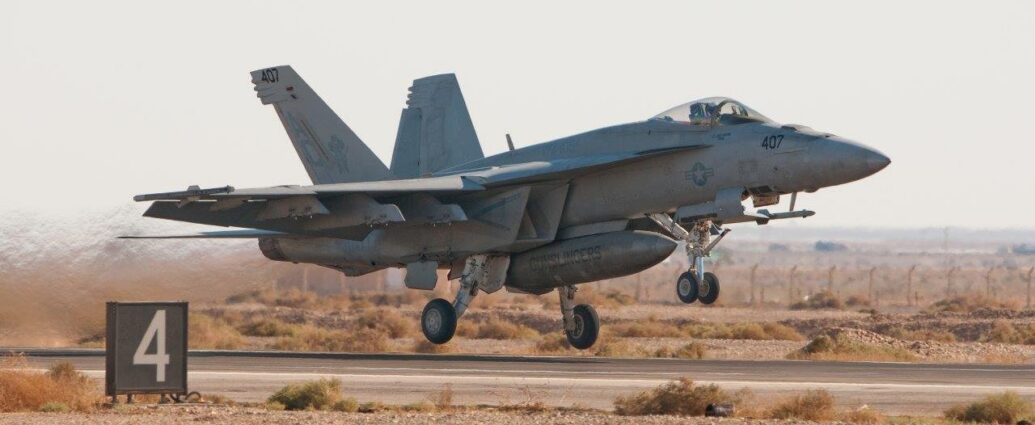
Since the beginning of July, Israel has had no state comptroller – the role responsible for inspecting, reviewing, and auditing policies and operations of the state. This is a result of Knesset Speaker Amir Ohana’s failure to take the necessary steps to implement a Supreme Court ruling ordering the Knesset to hold a repeat vote to elect the state comptroller, following misconduct that took place during the first votes.

Despite a clear and binding court order, the election process has not been completed, leaving the country’s supreme audit institution without a head.

Beyond the highly improper decision, to put it mildly, to disregard a Supreme Court ruling, the situation is causing immediate harm, particularly in the midst of election season. 

The role of the state comptroller

The state comptroller plays a critical role in elections, overseeing political parties in several different areas. After the elections, among other things, the comptroller issues reports on the parties’ conduct during elections, in which they can determine that a party has failed to comply with the law and impose fines on it.

In real time, they issue directives on the management of party finances, provide parties with advisory opinions on routine matters, have the authority to determine that a donation to a party is prohibited, play a central role in determining the status of non-party actors active in elections, and more.

A court hearing at the Supreme Court in Jerusalem on petitions seeking to overturn the election of attorney Michael Rabello as state comptroller, June 18, 2026 (credit: YONATAN SINDEL/FLASH90)

Even more pressing is the state comptroller’s role in the processes by which parties select their candidates.

Primary season ahead of the election to the 26th Knesset is in full swing. Candidates are raising funds, hiring consultants and campaign managers, and racing from one parlor meeting to the next, all in an effort to win the confidence of their fellow party members and secure an electable slot on their party’s Knesset list.

This year, however, these intraparty elections are taking place under unprecedented circumstances: without the state comptroller, the institution charged with overseeing the legality of campaign financing.

This is not a technical glitch or a minor problem. Intraparty competition, too, must be conducted according to clear and equal ground rules. The law, for example, limits the amount a candidate may raise in donations, sets an overall spending cap for each candidate’s campaign, and imposes detailed reporting obligations.

The purpose of this framework is clear: to reduce the influence of money on politics, ensure equal opportunity among candidates, and strengthen public confidence in the democratic process.

The effect on party primaries

The state comptroller also has broad authority to audit candidates’ reports. For years, after every round of party primaries, the comptroller published detailed reports documenting irregularities, deficiencies, and violations of the law.

In many cases, substantial fines were imposed on candidates who exceeded spending caps, accepted prohibited donations, or failed to meet their reporting obligations. The very knowledge that their financial activity would be closely scrutinized served as an important deterrent and encouraged compliance with the rules.

This year, for the first time since the issue was regulated by law, that oversight mechanism is paralyzed.

In effect, the Knesset itself, which designated the state comptroller as the body responsible for overseeing primary campaign financing, is hollowing out the very provisions it enacted. The rules of the game remain in place, but the referee has disappeared from the field.

A candidate who scrupulously follows the law may therefore find themselves competing against a rival who chooses to flout the rules, assuming that the chances of being audited or penalized are lower than ever. That possibility alone is enough to undermine both public trust and the candidates’ own confidence in the fairness of the process.

Beyond implications for the elections, there are other matters of state that are not being carried out in the absence of a state comptroller. No new state comptroller reports can be published, even those that have already been completed, and no examinations can be launched into new matters that were not planned in advance.

In addition, the state comptroller also serves by law as the ombudsman. Without a state comptroller, protective orders for whistleblowers cannot be issued. Public servants who seek to expose corruption are therefore left without legal protection and vulnerable to dismissal or retaliation.

Correcting this situation requires no legislation, public committees, or new oversight mechanisms. All that is required is to comply with the law and respect the High Court’s ruling by completing the election of a state comptroller without delay and allowing the institution to resume carrying out its duties.

Particularly at a time when debate over the state of Israeli democracy is intensifying, the Israeli public ought to be deeply concerned by a situation in which one of the state’s central oversight mechanisms has been rendered inoperative in the midst of party primaries and a general election campaign.

In a democracy, elected officials have a responsibility to obey court rulings, complete appointments required by law, and ensure institutions responsible for oversight and enforcement of the rules can do their job.

Prof. Ofer Kenig is a researcher at the Israel Democracy Institute’s Political Reform Program and a senior lecturer at Ashkelon Academic College.

Dr. Assaf Shapira is the head of the Israel Democracy Institute’s Political Reform Program.

This post was originally published on here. 

Products from popular beauty retailer Sephora will be available for purchase in Israel starting on August 20, according to an N12 News report on Sunday.

Sephora’s in-house cosmetics line, Sephora Collection, will be officially imported and sold through GLAM42 stores, the report said. 

This is a developing story.

This post was originally published on here. 

Almost everything Ukraine sells abroad from its farms leaves through three deep-water ports clustered around Odesa. Russia has spent the summer hitting those ports and the cargo ships calling at them, and shipowners have responded by refusing to come. Without ships, traders stop buying, grain piles up inland, and the harvest has nowhere to go. That is the mechanism now showing up in Ukraine’s trade figures.

Agricultural exports fell 23.4% in July as grain, oilseed and meal shipments dropped, according to the Ministry of Agrarian Policy and Food, with analysts warning August could be worse.

The scale of the attacks explains the drop. Ukraine’s infrastructure ministry counted 35 attacks on vessels sitting in port during July, 22 more at sea and 67 strikes on port facilities — against 14 vessel attacks in all of 2025. Kyiv told the OSCE that Russian strikes have destroyed 1,054 pieces of port infrastructure and hit 232 ships. The deadliest came on July 19, when missiles struck the Golden Leo, a Turkish-owned bulk carrier leaving Odesa loaded with grain, killing ten.

Capacity has collapsed accordingly. The Odesa ports once handled about 6 million tonnes of cargo a month; that has fallen to roughly 4 million. Deepwater terminals that could stockpile up to seven million tonnes a month can now hold four to five, a gap of about 2.5 million tonnes. Agriculture Minister Taras Vysotskyi said no vessel had entered the region’s ports for nearly two weeks, describing the blockade as <cite index=”107-1″>“in some aspects more difficult than it was in early 2022.”</cite>

The overland alternatives cannot come close to covering it. Rail and the Danube combined can move at most about 1 million tonnes a month — roughly a third of Black Sea port capacity — and record-low Danube water levels are now hampering navigation on top of that. Danube river exports run about 100,000 tonnes a month, trucking roughly the same, and rail to the western border crossings tops out between 300,000 and 400,000 tonnes. Moving grain is also getting more expensive: Türkiye raised its transit fee by about 15% on July 1, and Ukraine’s state railway proposed a 30% rate increase from August 1 that would add $5 to $6 per tonne.

The financial hit is measured in billions. Vysotskyi put potential losses to the agricultural sector at $3 billion this year and warned that just over 30 million tonnes of production will not reach international markets unless shipping is restored. Ukraine risks running out of grain storage capacity by early November. Private terminal operators have lost an estimated $1.5 billion since the invasion and cannot fund repairs on their own, according to the farmers’ union.

Farmers are absorbing the squeeze first. With buyers unable to ship, farm-gate prices have split from world prices: rapeseed fell about $70 a tonne in a week, and wheat at the farm is fetching roughly a fifth less than last autumn. Roughly 10 million tonnes of unsold produce from last year’s harvest had already accumulated in storage by early July, leaving growers at risk of missing loan repayments and entering autumn sowing without cash.

The cruel timing is that the crop is a good one. UkrAgroConsult raised its forecast for Ukraine’s 2026/27 grain and pulse production to 64.3 million tonnes, about 2.7 million above last year, on expanded planted area and favorable weather. Ukraine had forecast exports of around 43 million tonnes for the season that began in July, against more than 37 million last year. Analysts caution that a bigger harvest guarantees nothing: port operations, freight and insurance costs, and access to working capital will determine how much actually ships.

World markets have been swinging on every headline. Euronext September milling wheat jumped 7% on July 15 to €231.75 a tonne, its highest since February of last year, while Chicago wheat rose 5.6% and Kansas hard red winter futures hit their daily limit. Over the full month, Euronext December wheat gained about 9% and the September Chicago contract roughly 8.5%. The rally cooled this week, with Euronext December wheat down 1.7% at €227.75 on Thursday as large global supplies offset war-disruption fears, tracking a slide of more than 2% in Chicago to a four-week low. Russia and Ukraine together are forecast to supply more than 30% of the world’s wheat exports in 2026/27.

The diplomatic effort is aimed squarely at getting ships moving again. Ukraine’s agriculture and foreign ministries have agreed on joint steps to support agricultural exports and open new markets, and Kyiv is working with Romania to expand capacity at the port of Constanța. Officials describe restoring safe shipping and full-scale exports from the Greater Odesa ports as the urgent task, with no alternative route available in the medium term.

JBizNews Desk | Kyiv

© JBizNews.com All Rights Reserved. Reproduction or distribution without written permission is prohibited.

Russia and China could feel emboldened to begin a hot conflict with America due to the US’s rapidly depleting weapons supply, senior officials and defense experts told the New York Times on Saturday.

The US has burned through its offensive and defensive weapons in its war against Iran. Sources told the NYT that the shortage could last beyond the Trump administration’s tenure in office, leaving future presidencies vulnerable to Russian and Chinese attacks.

Tom Karako, a senior fellow at the Center for Strategic and International Studies, said that the depleted munitions stockpile was a “generational annihilation of the means of conventional deterrence.”

“It’s impossible for that not to have a significant effect on the decision calculus of Russia and China,” said Karako. “They may do something quite deliberate and at the time of their choosing, because keep in mind, we’re going to take years to reconstitute.”

Reuters recently reported that the US has used “virtually all” of its highly accurate long-range missiles. Notably, each long-range munition costs about a million dollars to produce.

(Illustrative) A projectile is fired during what the U.S. Central Command (CENTCOM) said was a third round of strikes this week against Iran, in this screen grab taken from a handout video released on July 11, 2026.  (credit: U.S. Central Command/Handout via REUTERS)

As such, the Pentagon has been forced to move ships, aircraft, and air defense units from Asia and Europe to the Middle East. US officials who spoke to the NYT said that this has had “cascading consequences” for troop morale and equipment maintenance.

Low munitions stockpile could cause issues for presidents after Trump

The low stockpile has been a recent source of tension between the president and the Pentagon.

US Chairman of the Joint Chiefs of Staff Gen. Dan Caine reportedly has been seeking “off-ramps” for the conflict.

The NYT reported that Caine informed US President Donald Trump about the munitions shortages before the war with Iran began, but the president chose to go ahead with the conflict.

The Washington Post found that in the first month of the conflict with Iran, the US had fired more than 850 Tomahawk cruise missiles and over 1,000 Terminal High Altitude Area Defense (THAAD) missiles, and used at least 1,300 tactical ballistic missiles. The NYT reported that the US used at least 1,500 Patriot interceptors.

According to sources speaking on the condition of anonymity, the NYT reported that the US’s stockpile of Patriot interceptor missiles is at a low of 1,700 munitions.

The Trump administration has pushed US defense contractors to ramp up production for munitions.

“Our defense companies are, at this moment, making more munitions than they have ever made before, in addition to expanding their plants and equipment at record levels,” Trump said in July.

The subsequently low stockpile levels have been a driving factor in Trump’s latest decisions in his campaign against Iran. The president reportedly chose not to go through with a major bombing campaign he threatened last month due to the low level of munitions.

The Washington Post reported last week that Trump confronted Defense Secretary Pete Hegseth about the shortage, which he assumed “had been fixed.”

Trump has also reportedly grown deeply upset at the leaked stories about the low stores of munitions, and has begun hunting down employees who have leaked stories. He told advisers to downplay the issue or blame his predecessors in an effort to avoid showing weakness to adversaries like Russia or China. 

“Our defense companies are making more munitions than ever before, while rapidly expanding their plants and equipment at record levels,” White House Press Secretary Karoline Leavitt said in a statement, according to the NYT.

“Anyone entrusted with access to classified military information who leaks it to the media is betraying that trust and breaking federal law, and should be prosecuted to the fullest extent of the law.”

Trump has gone so far as to say that the US had “far more munitions than anyone in the world” and “far more than we need.”

Israeli soldiers walk near an Israeli Irone Dome defence system (L), a surface-to-air missile (SAM) system, the MIM-104 Patriot (C), and an anti-ballistic missile the Arrow 3 (R) during Juniper Cobra's joint exercise press briefing at Hatzor Israeli Air Force Basel, on February 25, 2026. (credit: GIL COHEN-MAGEN/AFP VIA GETTY IMAGES)

How do low US stockpiles affect Taiwan, Ukraine?

Because the US has deterred weapons from Ukraine, Kyiv has been unable to shield itself from Russian attacks. 
Ukrainian President Volodymyr Zelensky said that interceptors for Ukraine “could have saved the lives” of at least dozens of people killed in a Russian attack last week.

He added that “it is this shortage of ballistic missile interceptors that only encourages Russia to launch such attacks that take human lives.”

Notably, Trump recently walked back his public agreement to give Zelensky the license to produce Patriot interceptors, though the Ukrainian president appears to be continuing negotiations with US defense contractors.

In Russia, pro-Kremlin bloggers have been noting the depleted US stockpiles as a win for Moscow.

“The situation is shaping up very favorably,” Aleksandr Kots, a pro-Russia war blogger, recently wrote.

“The less precision-guided weaponry the US has, the less will reach Ukraine.”

Kots added that even if the administration that succeeds Trump tries to advance aid to Ukraine, “doing so will be impossible with empty arsenals.”

The loss of interceptor missiles could be felt particularly acutely in Asia, as the US braces for a potential Chinese takeover of Taiwan.

The US military diverted several shipments of Tomahawk missiles and other long-range missiles from the US’s Indo-Pacific Command during the Iran war.

In a separate instance, air-defense systems were diverted from South Korea to the Middle East, leaving US troops in the country vulnerable to potential attacks from North Korea, sources told the NYT.

Reportedly, Russia and China have long understood that the US’s weapons stockpile is gradually depleting.

This has wide-ranging effects in Asia and Europe. Officials in Asia told the NYT that they worry that South Korea and Japan will begin to build nuclear weapons to establish their own forms of deterrence. In Europe, US allies have begun to purchase more weapons from other countries because of America’s weapons backlog.

Analysts told the NYT that a long conflict in Iran would therefore benefit Beijing and Moscow, and could cause Russia to consider an incursion into NATO territory if it believes it would at least outlast the US.

This comes as the Department of Defense told US defense industry leaders to prepare plans to escalate production and delivery of weapons as reports of munitions shortages escalate, The Washington Post reported on Saturday, citing a Defense Department memo. 

Deputy Defense Secretary Steve Feinberg wrote that the leaders had no more than 21 days to present plans to “drive significantly faster, more aggressive delivery schedules and/or increased production for critical capabilities,” on Wednesday, according to the memo.

“Years-long development cycles are not acceptable. We must dramatically accelerate our program schedules and expand our production capacity now.”

Danya Saperstein, Esther Davis, and Reuters contributed to this report. 

This post was originally published on here. 

Syria and Russia reached a memorandum of understanding to settle the future of Russian bases at Tartous and Hmeimim following 18 months of intensive negotiations, the Syrian foreign ministry said on Sunday, according to the Syrian state news agency.

The ministry said the Syrian state would take over management of civilian facilities, including Hmeimim airport and the commercial berth at Tartous port, allowing them to be gradually integrated into the country’s civilian administration.

It said military facilities would be repurposed as joint training and qualification centers under new arrangements preserving the interests of both sides, with the transition to be completed within three months.

Moscow’s Middle East military foothold

Russia’s naval facility at Tartous and Hmeimim air base have long been Moscow’s principal military footholds in the Mediterranean and Middle East.

Their future has been the subject of negotiations with Syria’s new leadership since former President Bashar al-Assad was ousted in December 2024.

A satellite image shows a Russian naval facility, in Tartous, Syria in this handout picture taken on December 6, 2024. (credit: 2024 PLANET LABS INC./Handout via REUTERS)

In a separate statement, Syria’s General Authority for Ports and Customs said Syria would take over the commercial sites previously operated by Russia at Tartous port, including Pier No. 4 and its associated warehouses and facilities.

Reuters reported last month that Russia was seeking to establish a commercial logistics hub at Tartous port using Pier No. 4, a restricted zone outside the naval base.

The two sides said at the time the hub would remain under Syrian control, with all operations subject to approval by Syria’s General Authority for Ports and Customs.

This post was originally published on here. 

The Toronto Police Service announced the arrests of two additional individuals in connection with a hate propaganda investigation stemming from a pro-Palestinian protest earlier this year.

Both suspects face charges of willful promotion of hatred and public incitement of hatred. The latest enforcement action brings the total number of people charged in the ongoing investigation to eight.

According to police, the investigation traces back to a weekly protest on March 15, when pro-Palestinian protesters and pro-Israel counter-protesters gathered at the intersection of Bathurst Street and Sheppard Avenue West.

Investigators allege that earlier that morning, the accused individuals visited a storage locker to retrieve antisemitic signs.

Later that afternoon, they allegedly joined other protesters at the intersection, displaying the signs in full view of the public and a group of pro-Israel protesters situated across the street. Police stated that the individuals marched toward the Israel supporters while shouting derogatory slurs.

Toronto police stand watch near the Al-Quds day protest in Toronto, Ontario, on March 14, 2026; Illustrative. (credit: Geoff Robins / AFP via Getty Images)

Members of the Hate Crime Unit executed a search warrant in Toronto, locating and arresting two suspects on Friday. Daniela Bonamico, 40, of Toronto, and Shahram Nayeb-Yazdi, 63, of Toronto, were each charged with wilful promotion of hatred and public incitement of hatred.

The arrests follow a series of charges previously announced by authorities. In April, Muhammad Anas Sial, 33, of Toronto, was charged with public incitement of hatred and wilful promotion of hatred. Subsequently, in June, Hosaam Hemdan, 19, Omer Turcan, 43, Yasaf Skaikh, 46, Hasan Aydin, 47, all of Toronto, and Syed Hussaini, 43, of Whitby, were arrested and faced identical charges, with Hemdan, Turcan, and Hussaini also receiving additional counts of disguise with intent.

Police noted that the suspects were scheduled to appear in court at the Toronto Regional Bail Centre on Saturday.

Jewish groups demand enforcement of Canadian hate propaganda laws 

Following the March rally, the Centre for Israel and Jewish Affairs (CIJA), B’nai Brith Canada, and UJA Federation of Greater Toronto condemned the rhetoric and sent a joint letter to Toronto Police Chief Myron Demkiw demanding immediate enforcement of Canada’s hate propaganda laws.

CIJA released a statement on social media today, saying, “Following a March 15 hateful protest targeting Toronto’s Jewish community – with propaganda and signs evoking the Nazi era – we joined @UJAFederation, @BnaiBrithCanada and thousands of Canadians in demanding that authorities take a tougher stand.”

The advocacy group welcomed the update, stating: “We welcome the Toronto Police’s announcement that two more extremists have been arrested and charged with wilful promotion of hatred and public incitement of hatred, bringing the total number charged to eight.”

CIJA stressed that “There must be consequences for promoting hatred – whether at home or abroad. We call on Foreign Minister @AnitaAnandMP and Global Affairs Canada (@CanadaFP) to explain what steps are being taken to ensure that extremists, including hate-criminals, do not export their vitriol beyond Canada’s borders.”

CIJA urged government leaders and authorities to “hold criminals accountable. And our political leaders must ensure their words and actions do not embolden extremists who demonize Israel and contribute to an increasingly hostile environment for Jewish Canadians.”

Surge of recent incidents target Jewish, Israeli institutions across Canada

The latest police arrests come amid heightened tensions surrounding recurring protests at the Bathurst Street and Sheppard Avenue West intersection, coinciding with a surge of incidents targeting Jewish and Israeli institutions across Canada over the past month.

These include suspected antisemitic arson and shooting attacks targeting Jewish-owned Kiva’s Bagel Bar locations in Toronto, the destruction of the kosher restaurant Noam in Montreal, and an incident involving an attempted knife attack at the Israel Pavilion kitchen tent during the Heritage Festival in Edmonton last Monday.

This post was originally published on here. 

A visitor at the Mauthausen concentration camp memorial was condemned by other visitors for wearing a white T-shirt featuring a “Free Palestine” slogan and an illustration allegedly depicting Fatah militant Dalal Mughrabi.

Mughrabi helped orchestrate the 1978 Coastal Road massacre in Israel, an attack that resulted in the deaths of 38 Israeli civilians, including 13 children.

Footage circulating on social media captured the group walking up a staircase and through the memorial grounds. As the camera tracked a young man walking up the steps, the back of his white t-shirt allegedly displayed a graphic of Mughrabi in front of a Palestinian flag, with text reading “Free Palestine” on the front of the t-shirt.

The video then shifted to show an exchange between visitors and members of the youth group. An individual recording the interaction confronted the tour leader, asking, “Are you the leader of the group here?” When the group leader confirmed, the person recording asked, “Can we explain why ‘Free Palestine’ shirts are allowed to be shown at a concentration camp?”

The group leader responded that she had to work with the group, leading the questioner to press further, “You have to help us understand why it’s… so we’re respecting the dead and what happened here by also having political shirts?”

The gate with watch tower is seen inside of the World War II concentration camp of Mauthausen, on April 17, 2013. (credit: ALEXANDER KLEIN/AFP via Getty Images)

As the interaction continued, a member of the group held up her hand to block the camera, with one participant stating, “I’m asking you now not to film; he’s under 18, it’s not allowed.”

‘This is a genocide!’ the visitor recording said to the visitor wearing the t-shirt 

The person recording countered, “This is the education that you’re giving them? This is how you honor Holocaust victims? That’s how you think it’s ok to educate people?”

As the confrontation continued, the person recording walked alongside the group and challenged another participant wearing a white t-shirt and black shorts. The person recording stated, “You are saying with your shirt that you are okay with the murder of Jews. You are”. The participant in the white shirt responded: “No, it’s not saying…”

The person recording pressed further and asked, “So what is he saying?” The participant replied, “He is saying it’s not okay to murder Palestinian people.”

The person recording responded, “That’s what he’s saying here? Really? You come here, and you call that a genocide while you’re at a concentration camp? You call a war a genocide? You call fighting for the safety of your people to try to not have a genocide… you call that a genocide while you’re in a concentration camp?”

As the group continued walking down the path toward the memorial exit, another participant wearing a blue floral top and black skirt turned around and engaged, while the person recording repeated, “You come here, and you call that a genocide while you’re at a concentration camp? Do better! Your teachers have to do better! This is a f**king genocide here what you’re learning about. Don’t f***ing call other things a genocide. This is a genocide! Shame on you!”

Official statement from museum administration

In an official statement released regarding the controversy, the Mauthausen Memorial addressed the incident. “An incident occurred during a visit by around 600 participants from an international anti-fascist youth camp. One participant was wearing a t-shirt with the slogan “Free Palestine.”

Our staff had not initially noticed this whilst supervising the large group. Nor was it initially possible to make sense of the vociferous reaction from one female visitor.”

The museum administration further explained how staff intervened once the situation became clear, noting, “Once it became clear what the issue was, our staff reacted immediately. They tried to de-escalate the situation and, at the same time, called the police for assistance. However, the situation had already been brought under control by the time the police arrived.”

The memorial also outlined its guiding principles for handling political expressions and provocations on site, stating that while it is a place of remembrance and historical-political education that welcomes all visitors with openness, staff prioritize de-escalation, open dialogue over hasty judgments, and safeguarding the dignity of the victims and the solemnity of the memorial grounds.

This post was originally published on here. 

Prime Minister Benjamin Netanyahu declared on Sunday that Israel rejects the 15-point Gaza framework formulated by the Board of Peace. But could it be that, despite Israel’s public statements, the reality on the ground is somewhat different?

If one looks at Israel’s actions rather than its public rhetoric, the picture is more complicated. In practice, Israel is currently implementing the 15-point agreement.

For several days now, it has refrained from carrying out targeted killings and has maintained the ceasefire in Gaza. The directive was issued to the military on Monday evening by the IDF Chief of Staff Lt.-Gen. Eyal Zamir, following an instruction from the political leadership. Since then, no targeted killings have been carried out.

At the same time, in terms of Israel’s military deployment on the ground, the IDF is effectively positioned along the original Yellow Line, which encompasses approximately 53% of the Gaza Strip, with no current positions or forces deployed beyond.

So, yes. Publicly, Israeli officials are sending strong verbal messages rejecting the 15-point framework. But when it comes to what is actually happening on the ground, the Israeli government is, in practice, adhering to the framework.

Palestinians inspect a site of an Israeli strike on a house that was pre-warned by the Israeli military to evacuate on Saturday before the strike was carried out later that day, in Deir Al-Balah, central Gaza Strip, July 19, 2026.  (credit: REUTERS/Mahmoud Issa)

Issue of Gaza’s reconstruction

The issue of Gaza’s reconstruction is more complicated. Israeli statements on this issue have been unequivocal and dramatic: There will be no reconstruction of Gaza before Hamas is fully disarmed.

But there is an important distinction that needs to be made.

The position of the Board of Peace is that what is currently being built in the Rafah area – inside the portion of Gaza under Israeli control – is not permanent reconstruction. Rather, these are temporary structures. However, their deployment requires certain initial infrastructure work.

In other words, while Israel continues to publicly insist that there will be no reconstruction before genuine demilitarization, the activities currently taking place in the Rafah area appear to be consistent with the framework’s distinction between temporary infrastructure and permanent reconstruction.

All of this creates a notable gap between Israel’s public messaging and the practical implementation of the framework on the ground.

This post was originally published on here. 

Lebanon could receive $200 million annually in US security assistance to support the Lebanese Armed Forces and Internal Security Forces in countering Hezbollah if the Lebanon Sanctions, Stabilization and Support Act introduced in Congress on Friday is enacted.

The act, introduced by Democratic Senator Jeanne Shaheen and Republican Senator James Lankford, could eventually provide as much as $300 million annually if Beirut makes progress in disarming the Iran-backed group, disrupting foreign military financing to Hezbollah, and tackling the trafficking of Captagon and other illicit substances by the group.

In addition to the $200 million, $25 million would be provided for narcotics control, $11.5 million for nonproliferation, anti-terrorism, demining, and related programs, and $3.5 million for international military education and training in the first fiscal year.

Those enabling Hezbollah’s continued armed presence, permitting the transfer of Iranian funds to the group, or thwarting attempts to reform Lebanon’s financial sector would also be subjected to US sanctions.

“For the first time in decades, Lebanon has a real chance to reclaim its sovereignty, disarm Hezbollah and break free from Iran’s malign influence, but success depends on sustained American support,” said Ranking Member Shaheen. “That’s why I’m proud to introduce the bipartisan Lebanon Sanctions, Stabilization and Support Act with Senator Lankford.

Sen. Jeanne Shaheen makes a statement before US Secretary of State Marco Rubio testifies during a Senate Foreign Relations Committee hearing in the Dirksen Senate Office Building on June 02, 2026 in Washington, DC. (credit: Anna Moneymaker/Getty Images)

“It combines tough sanctions on Hezbollah’s enablers with targeted security and recovery assistance as well as congressional oversight. This legislation helps the Lebanese state extend its authority and build toward a peaceful future with its neighbors. A sovereign, stable Lebanon is firmly in America’s interests, and I urge my colleagues to support this bill.”

With a new round of talks between Beirut and Jerusalem just completed, and slow progress on Lebanon’s policing of pilot zones under a US-backed framework aimed at securing an Israeli withdrawal from the country, the bill comes as hopes grow that Iran’s influence in Lebanon could be challenged.

Lankford: Trump created opportunity by bringing Lebanon, Israel to table together

“For decades, Iran has used Hezbollah to destabilize Lebanon, Israel, and threaten Americans who live in the region, but [US] President [Donald] Trump has created a real opening for change by bringing Israel and Lebanon to the table for the first direct talks in 30 years,” said Senator Lankford. “That’s why I’m proud to introduce the Lebanon Sanctions, Stabilization, and Support Act with Senator Shaheen.

“Our bill imposes tough sanctions on the network financing Hezbollah and provides security assistance to the Lebanese Armed Forces. A sovereign Lebanon protects Lebanese, Israeli, and American citizens living in the region, and puts real pressure on the terrorists.”

Bill would allow for integration of Lebanese Shi’ites currently reliant on Hezbollah

The bipartisan bill would authorize mechanisms to provide the state with the opportunity to integrate Lebanon’s Shi’ite citizens who have been largely reliant on Hezbollah’s civil services. The bill hopes the fund, which could be used to help infrastructure recover and expand state civil services, could help further incentivize Lebanon to combat Hezbollah.

Though Beirut banned Hezbollah from carrying out military activities and non-state actors from holding arms shortly after the group dragged Lebanon into another war in response to the killing of Ayatollah Ali Khamenei, critics have repeatedly noted that Hezbollah operatives have been released or given only symbolic fines despite violating domestic laws.

This post was originally published on here. 

The share of U.S. economic output going to workers fell to a record low in the second quarter, even as productivity continued to rise, widening the gap between how much businesses are producing and how much employees are receiving from that growth.

The Bureau of Labor Statistics said labor’s share of nominal gross domestic product dropped to 52.9%, down from 53.7% in the first quarter and the lowest level since the government began tracking the measure in 1947. 

The decline came as nonfarm productivity rose at a 1.4% annualized rate in the second quarter, more than twice what economists had expected. Output is increasingly being supported by automation, artificial intelligence and other technology investment without a matching increase in labor costs. 

For businesses, the immediate benefit is greater output without the same pressure to expand payrolls.

Unit labor costs rose just 1.3% during the quarter, while hourly compensation increased 2.7%. That combination helps margins, particularly for companies already investing heavily in software, automation and AI. 

The broader issue is where the productivity gains ultimately flow. When output rises faster than compensation, a larger share of the economic benefit accrues to corporate profits and owners of capital rather than employees.

That can be positive for margins and investment in the short term, but it also raises a longer-term consumer question. Household spending still depends on wages, and an economy in which productivity gains are not translating proportionately into worker income can eventually make it harder for consumption to keep pace with business output.

JBizNews Desk | Wall Street

© JBizNews.com All Rights Reserved. Reproduction or distribution without written permission is prohibited.

A Delta Air Lines flight bound for Orlando returned to Hartsfield-Jackson Atlanta International Airport minutes after takeoff Saturday morning and was evacuated on a taxiway, sending passengers down emergency slides.

Delta said Flight 2204 departed Atlanta on August 8 carrying 199 passengers and six crew members. The flight crew declared an emergency after fumes were reported in the cockpit and returned to Atlanta as a precaution.

The aircraft took off shortly before 7:30 a.m. and landed safely around 8 a.m., according to the Federal Aviation Administration. The FAA said it will investigate.

What happened after landing made the incident more serious than a routine turnback.

Rather than taxiing to a gate, the crew ordered an evacuation while the Boeing 757 remained on the taxiway. Emergency slides were deployed, first responders surrounded the aircraft and passengers were later bused back to the terminal.

Delta said one passenger and one crew member sought medical attention.

Why the Slide Evacuation Matters

An emergency-slide evacuation carries its own risk of injuries and is generally used when crews determine that getting passengers off the aircraft immediately is safer than keeping them aboard.

Smoke or unexplained fumes in the cockpit can create that calculation because pilots may not immediately know whether the source is electrical, hydraulic, engine-related or something else — or whether conditions could worsen.

Delta said the aircraft is undergoing a maintenance inspection and passengers are being rebooked to Orlando. The airline apologized to customers and said the crew followed established procedures in returning to Atlanta.

The cause of the fumes has not been established.

An Aging but Valuable Aircraft

The aircraft involved was a Boeing 757, a model that remains important to Delta despite its age.

Boeing stopped producing the 757 in 2004, meaning every example still carrying passengers is now more than two decades old.

Delta remains one of the world’s largest operators of the aircraft.

Airlines have kept 757s flying because the jet occupies an unusually useful position in their fleets: it combines narrowbody economics with strong runway performance and enough range for routes that can include transcontinental and some transatlantic service.

Replacing that combination has proven difficult, helping extend the operating lives of aircraft that otherwise might have been retired years ago.

Cockpit and cabin fume events can have numerous causes, including engine oil or hydraulic fluid entering the aircraft’s air supply or electrical components overheating.

There is currently no evidence establishing any of those as the cause of Saturday’s incident.

Delta’s maintenance inspection and the FAA investigation will determine what happened.

The Cost of an Emergency Turnback

The immediate financial impact for Delta is relatively contained.

Nearly 200 passengers must be reaccommodated, the aircraft remains unavailable while maintenance crews inspect it, and the deployed emergency slides must be serviced and repacked before the jet can return to service.

The larger question is what caused the fumes.

A faulty individual component could mean a relatively quick repair. A problem requiring broader inspection of aircraft systems could keep the jet grounded longer.

There is no indication at this point that the incident represents a fleet-wide problem.

For an evacuation involving more than 200 people aboard, two people seeking medical attention is also a relatively limited injury count.

The airplane landed safely. Passengers and crew got off. And investigators now have an intact aircraft to determine what caused the cockpit fumes.

For an aviation emergency, that is the outcome crews train for.

JBizNews Desk | Atlanta, Georgia

© JBizNews.com⁠ All Rights Reserved. Reproduction or distribution without written permission is prohibited.

, the$ 15 fast food is disappearing.

Geographic can greatly affect how much Americans can afford to pay for a burgers, fries, and beer.

In some U.S. cities, a$ 15 bill can still be used to pay for a burgers, fries, and beer.

Only four of the four cities, Austin and Laredo, Texas, Lincoln, Nebraska, and Detroit, Michigan, were surveyed for a recent report from DoorDash State of Local Commerce, which found that the average cost was less than$ 15 for the meal.

According to DoorDash’s so-called Cheeseburger Index, which tracks the average price of a burgers, fries, and drink in each U.S. city, Austin was the cheapest at$ 12.94.

A ONE LITE-KNOWN MEETING WILL ENSURE WHAT AMERICANS CAN AFFORD AND WHAT THEY CAN, THROUGHOUT.

According to Jessica Lachs, general analytics official at DoorDash,” The Cheeseburger Index is a really great method to extract the info into a simple, fun, and relevant metric.”

And while regional operating costs differed tremendously, DoorDash noted that South and Southeast cities typically benefit from structurally lower operating costs, which placed the area among the most reasonably priced for both restaurant meals and groceries.

The same burgers combo costs more than twice as much in Austin, and costs an average of$ 28.28 in Anchorage, Alaska.

The Midwest and Texas, which contain the study’s top 10 best-value cities, are grouped in the Midwest and Texas, with four cities in the Lone Star State coming in at no. 13 ( 13. 89 ), Lincoln, Nebraska ( 13. 86 ), Detroit ( 14.99 ), and Philadelphia ( 15. 4 ) making the top five.

AMERICANS TIMELY, AND THE COST OF THIS Deli STAPLE IS NEARING RECORD HIGHS

Even as prices for some household items and groceries have stabilized, eating out is still getting more expensive according to the rankings.

According to DoorDash, the average cost of a burgers, fries, and drink increased by 3.2 % over the previous year.

Although rising meat prices have gotten focus this year, DoorDash claims that higher restaurant prices appear to reflect more extensive operating costs, including labor, rent, and energy, than just food.

Not one market exists, they say. There are many regional markets, Lachs said.

She said that the same set of items, including a burgers, fries, and a beverage, cost$ 28.28 on regular in Anchorage, Alaska, compared to$ 12.94 in Austin, Texas.

That means that Anchorage’s$ 15, which you pay for the entire meals in Austin, would only be able to cover the other half of it.

This post was originally published here

Leopold Aschenbrenner borrowed roughly four dollars for every dollar his investors gave him, put it all into artificial intelligence stocks, and watched those stocks fall. His lenders then asked for their money back — all of them, at once. To pay them, he sold nearly his entire stock portfolio to Ken Griffin’s Citadel at a discount. Days later, he wired $400 million into a private company.

That is where the story stands this weekend, and the sequence is worth walking through slowly, because it is one of the fastest rises and falls Wall Street has produced.

Aschenbrenner, a former OpenAI researcher, raised $225 million in July 2024 from Stripe founders Patrick and John Collison, former GitHub chief Nat Friedman, and investor Daniel Gross. His fund, Situational Awareness, ended that year with $254 million in assets and reported $13.7 billion by its first-quarter 2026 filing. By the start of July it stood at $45 billion, and the fund had gained more than 1,000 percent since launch. Aschenbrenner is 25 and had never traded professionally before starting it.

Then came the margin calls.

A margin call is what happens when a lender who financed your position sees the collateral drop and demands cash immediately. There is no negotiating and no waiting for the market to recover. Situational Awareness had used as much as 400 percent leverage and concentrated its holdings in AI infrastructure names including SK Hynix and CoreWeave. Its top disclosed positions — Nebius Group, SanDisk, Micron and CoreWeave — each lost more than 35 percent of their value. Lenders across Wall Street called in their collateral at the same time, and Aschenbrenner cut a deal with Citadel to sell most of the public book, which cleared his debts and let him keep the fund’s private holdings. Assets finished at roughly $10 billion.

One number in that account needs care. The $45 billion figure was never $45 billion of investor money. It counted borrowed capital alongside it. When the lenders were repaid, a large portion of what disappeared was debt unwinding rather than client wealth vaporizing. Investors took real losses, but the actual split has not been disclosed, and the widely repeated “$35 billion wiped out” framing overstates what changed hands.

The new investment closed Tuesday and added $400 million to a private company the fund had already backed with $100 million last month, bringing the total to $500 million in about a month. Sequoia partner Alfred Lin confirmed on Bloomberg television Thursday that the money went to a Sequoia portfolio company, declining to name which one. What remains of the fund is concentrated in private technology stakes including Anthropic, Fluidstack and MatX.

In a letter to investors, Aschenbrenner said the fund did what it needed to do to survive, pledged to draw lessons from it, and noted that the bulk of his own money sits in the fund alongside his backers’. He offered one-on-one calls to any investor who asked.

Whether the $400 million works cannot be judged yet. It went into a private company with no share price and no public mark. Nobody will know for years.

What is already clear is the part that transfers to any business, at any size.

Aschenbrenner was not wrong about artificial intelligence. Demand for AI infrastructure is real, the buildout is real, and his thesis produced a four-figure percentage gain before it broke. He was right about direction and still came within days of losing the entire operation — because borrowed money does not wait for you to be proven right. A lender who financed your inventory, your equipment or your building has the same power a Wall Street prime broker has: when the value of what backs the loan drops, the call comes immediately, regardless of how sound the underlying business is.

That is the difference between being correct and surviving long enough to collect on being correct. Leverage collapses the distance between a bad quarter and the end of the company.

The open question now is whether Aschenbrenner has absorbed that. He is deploying half a billion dollars into the same corner of the market that nearly finished him, weeks after it happened. He would call that conviction. His lenders spent last week calling it something else.

JBizNews Desk | Wall Street

© JBizNews.com All Rights Reserved. Reproduction or distribution without written permission is prohibited.

Nissim Louk, the father of the late Shani Louk, who was murdered in the October 7 massacre after being abducted from the Nova music festival, woke up early that morning after hearing the rockets toward Tel Aviv, he described to 103FM on Sunday morning.

“At around 10:00, one of Shani’s friends sent me this picture and told me it could be Shani,” he added. “I recognized the small tattoos she had on her leg, and her vehicle had indeed entered Gaza and disappeared.”

He also described what led to the painful but important determination that Shani was no longer alive, bringing a measure of closure to the family.

“Two ZAKA members who happened to stop to pray Mincha pulled over at the side of the road, and then suddenly they saw some hair, dreadlocks like that, and a little blood. They carried out a DNA test, and Shani was found. It was really fortunate that they stopped there, found it and sent it to the Institute of Forensic Medicine.”

 SHANI LOUK. ‘I have tried to carry her memory as a torch of light through the unbearable darkness,’ her father, the writer, says. (credit: Louk Family)

He continued, speaking of his and the nation’s pain, saying, “We lost 3,000 children from October 7, and the hardest thing for me is that on Friday night I make Kiddush with the family and suddenly there is an empty chair. There are 3,000 families here making Kiddush, and a child is missing from the table, sometimes two, sometimes three, entire families. Three thousand families make Kiddush on Friday night, and a child is missing from the table. Last week two soldiers fell, and I was on air on Channel 11, and I was thinking about what would happen two hours later, when their fathers make Kiddush and their children are not around the table.”

Miri Regev accused of causing October 7

Louk also addressed the controversy that erupted following his encounter with Transportation Minister Miri Regev and the harsh criticism he directed at her.

“Just as I came up from the parking lot at Mahane Yehuda, I parked the car and so on. I hadn’t seen anything beforehand. When I came upstairs, I saw some friends, I saw Miri Regev‘s caravan, I saw them taking pictures, outfits and so on.

“I was probably already angry beforehand, and suddenly the Mizrahi in me came out. It’s very easy to make a Mizrahi angry. Then I told them, ‘They caused October 7, you caused the murder of my daughter.’ Miri Regev was a little surprised and then immediately went into her caravan. She disappeared completely,” Louk said, describing the minister’s reaction.

“Then all kinds of people from her entourage came up to me, pretty pro-Bibi people. Not that I have anything against Bibi supporters, but then they came and told me, ‘You caused October 7.'”

“Miri Regev’s daughter was evacuated from Nova at 4:30 in the morning,” he said, adding, “They evacuated her before this whole event. I don’t want to ask all those questions. If that’s true, then there are things here that we don’t understand at all.”

Gaza hostage’s father criticizes Likud Party

He went on to sharply criticize the ruling Likud Party.

“I was very angry at Likud for becoming the Left. This Left is destroying the country. The money and the bribery, bribery blinds us, it is destroying the people of Israel from within.”

In closing, he said, “My daughter’s name is Shani. Shani is a very strange name. It speaks about change, something new that is supposed to happen. What is Shani? Shani is, left against right, and therefore we are obligated to lower the flames. We owe a blood debt to 3,000 children. That blood is connected to the entire people of Israel. The soldiers who run into battle know that they have a debt to the blood, and that debt will not disappear until we make a change.

“There must be change among the people of Israel. We need to restore integrity, restore the values we grew up with, restore love, restore justice, and also religion. Nothing happened. We need to take back the land for ourselves, touch it and understand that it is ours. It cannot be that Netanyahu is giving away the land.”

This post was originally published on here. 

United Hatzalah warned on Sunday against the dangers of leaving children inside hot cars, with the latest victim being a 5-year-old boy who died the same day after he was allegedly left inside his family’s car in Lod for about two hours.

“It can happen to loving, responsible parents,” the organization warned. “Before you leave your car, stop for one second and look in the back seat.”

The Lod boy was found unconscious inside the vehicle and showing signs of heatstroke. Magen David Adom teams performed advanced resuscitation efforts before evacuating him in critical condition to Shamir Medical Center, Assaf Harofeh, where doctors pronounced him dead.

According to preliminary details under investigation, the family returned home after a drive during which the boy had fallen asleep. Family members are suspected of leaving the vehicle while the child remained inside.

About two hours later, the father realized that his son was not in the house. He returned to the vehicle, found the boy unconscious, and called MDA.

 A young child uses a tablet in the back seat of a car (illustrative) (credit: INGIMAGE)

Officers from the Lod police station in the Shfela district arrived at the scene and opened an investigation into the circumstances surrounding the boy’s death. Police began collecting evidence and investigating how the child came to be left inside the vehicle.

MDA medic Efi Rosenblum, who lives nearby, received the call through the organization’s first responders app and was the first medic to arrive at the scene. Rosenblum said that as he approached, people signaled for him to stop and brought the boy to him after removing him from the vehicle.

“They took a child out of a private vehicle who, according to them, had been locked inside for a prolonged period,” Rosenblum said. “He was very hot to the touch, and I immediately began resuscitation efforts.”

Child pronounced dead at hospital despite resuscitation efforts

Additional MDA teams and a mobile intensive care unit arrived shortly afterward, and resuscitation efforts continued as the boy was taken to the hospital.

Senior MDA medic Haim Shavit and MDA medic Yosef Yitzhak Sagiv said the boy was unconscious, had no pulse, was not breathing, and was showing signs of heatstroke.

“We began performing advanced resuscitation efforts that included chest compressions and ventilation, and evacuated him in a mobile intensive care unit to the hospital in critical condition while we fought for his life,” the medics said.

The boy was taken to the trauma room in the pediatric emergency department at Shamir Medical Center, Assaf Harofeh, where he was pronounced dead.

Latest of 23 such incidents between 2021 and 2025, 53 additional non-fatal cases

The Lod incident is the latest in a series of cases involving children who were forgotten or became trapped inside vehicles.

According to data from Beterem, Safe Kids Israel, 23 children died in such incidents between 2021 and 2025. Another 53 children were injured and survived, while children were rescued in time and unharmed in an additional 1,513 cases.

The circumstances surrounding Sunday’s incident remain under investigation.

Jerusalem Post Staff contributed to this report.

This post was originally published on here. 

Rescue teams from the Israel Fire and Rescue Authority searched for a boy after his boat capsized on the Jordan River near the Hula Valley on Sunday, the authority confirmed.

Magen David Adom paramedics attempted to provide emergency medical care after he was located, but were forced to declare him dead after failing to resuscitate him, MDA confirmed.

Israel Police officers and other emergency services assisted in the search efforts.

A United Hatzalah drone unit also participated in the search, with members of the Psychotrauma and Crisis Response Unit also providing emotional first aid at the scene, the emergency service confirmed.

“A 12-year-old boy was located and pulled from the water by the Golan Rescue Unit and brought to the banks of the Jordan River without signs of life. Unfortunately, he was pronounced dead at the scene. United Hatzalah assisted in the search efforts with our drone unit, and our Psychotrauma and Crisis Response Unit provided emotional first aid at the scene due to the nature of the incident,” United Hatzalah EMTs said.

The boat that capsized in the Jordan River on Sunday, leading to the death of an Israeli child, August 9, 2026 (credit: ISRAEL POLICE)

Numerous police officers, including an air unit helicopter and rescue unit volunteers, were dispatched to the scene and conducted extensive searches in an attempt to locate the boy, Israel Police added.

This is a developing story.

This post was originally published on here. 

Dozens of accounts on X/Twitter, possibly even hundreds, are amplifying content from New York City Mayor Zohran Mamdani, municipal accounts, and officials in his circle in patterns that do not appear human.

That is the finding presented to the World Zionist Organization’s Department for Combating Antisemitism by cyber analysts and reported exclusively by The Jerusalem Post.

The numbers, exposed by the Post’s Mathilda Heller, are not subtle. Several accounts recorded more than 500 posts a day. One logged 955, every one a reshare.

Another, created three days before the analysis, with no followers and 13 posts of its own, was already generating 201 a day. Across dozens of accounts, 96% to 100% of activity was repeated sharing, with no original content.

On some, the rate of resharing the mayor’s own material ran between 98% and 100%. The analysts told the Post they are “100% sure” the IP addresses trace back to City Hall infrastructure.

Mayor Zohran Mamdani delivers his 100 Days Address, a speech dedicated to outline the progress made on his core campaign promises since taking office, in Queens, New York City, US, April 12, 2026. (credit: REUTERS/David 'Dee' Delgado/File Photo)

What has not been established matters too: The data does not show who controls the accounts, who paid for them, or whether anyone in the mayor’s office directed anything.

The WZO is asking US Special Envoy Yehuda Kaploun to refer the material to federal law enforcement. The National Jewish Advocacy Center is going to the Department of Investigation and the Conflicts of Interest Board and has requested the city’s server logs. City Hall did not respond to the Post’s requests for comment.

That silence is the story now.

Consider the record it sits on. On his first day in office, Mamdani revoked the executive orders adopting the International Holocaust Remembrance Alliance (IHRA) working definition of antisemitism and barring city agencies from boycotting Israel.
He spent two years pledging to arrest Prime Minister Benjamin Netanyahu on New York soil, then released a video on July 27 conceding he could not, while accusing Israel of killing thousands.

New York City crime is at record lows while anti-Jewish hate crimes rise

And in his first seven months, the NYPD recorded 205 confirmed anti-Jewish hate crimes, up from 189 in the same stretch last year. They accounted for 56.9% of all confirmed hate crimes in a city where Jews are roughly 10% of the population. In July alone, 23 of 33 confirmed hate crimes targeted Jews, against 15 the previous July. Murders and shootings in general, meanwhile, hit record lows.

Read that again. New York is getting safer for everyone except Jews.

Here is our view: A mayor with nothing to hide would not be waiting for a subpoena. He would be the loudest voice in the five boroughs demanding an audit because an unexplained amplification machine humming around his office is an insult to the legitimacy of his own mandate.

He would open the server logs on Monday morning and invite the New York City Department of Investigation in, rather than wait to be dragged. Instead, nothing, from a politician who has learned that ambiguity costs him less than clarity would.

Something, or someone, is manufacturing the mayor’s social media reach; it must be investigated

And even if every finding collapses tomorrow, even if no keystroke is traced to a city employee, the problem is untouched. Something is manufacturing reach for this mayor’s most incendiary material, and the more inflammatory the message, the harder the machine works. That is not the algorithm. It is a business model, and Mamdani is its beneficiary. He has never once turned that megaphone around to tell his own coalition, in words that cannot be spun, that Jewish New Yorkers are not a legitimate target.

He could fix this in a week. Cooperate fully and publicly with investigators. Release the logs. Restore the IHRA definition he threw out on day one. Stand on the steps of City Hall and say that Jewish New Yorkers’ safety does not depend on their opinions about Israel.

We are not holding our breath, and neither should New York’s Jews. They have spent seven months being told that their fear is a public relations problem rather than a policing one, while the numbers went the wrong way and the mayor’s feed went viral.

Mamdani likes to call New York a city of international law. He might start with municipal law, which has long held that public resources are not political property, and officials do not get to deceive the people who pay their salaries.

Answer the question, Mr. Mayor. Or explain why you will not.

This post was originally published on here. 

Iranian President Masoud Pezeshkian met Supreme Leader Mojtaba Khamenei around the start of the president’s third year in office in late July, state media said on Sunday, and a paramilitary leader promised footage of Khamenei in the future.

Pezeshkian has given differing accounts in recent weeks about his access to Khamenei, who has not been seen in public since he succeeded his father in the role in March.

On July 21, the president said interactions with the supreme leader were “increasing day by day”, but in early August he said communicating with Khamenei was “very difficult.”

The late July meeting covered military affairs and the economy, including securing resources, managing foreign exchange and energy use, as well as economic ties with foreign partners, according to state media.

In May, state media also reported that Pezeshkian had met Khamenei for several hours, in what was then the first publicly reported meeting between the two since Khamenei became supreme leader.

Iranian President Masoud Pezeshkian speaks during the 47th anniversary of the Islamic Revolution in Tehran, Iran, February 11, 2026. (credit: IRAN'S PRESIDENTIAL WEBSITE/WANA (WEST ASIA NEWS AGENCY)/HANDOUT VIA REUTERS)

Khamenei was reportedly seriously injured in the February 28 strike that killed his father and predecessor, Ayatollah Ali Khamenei, on the first day of the US-Israeli war with Iran. He had also generally kept a low public profile before becoming supreme leader.

Basij deputy promises realease of documentation of Khamenei

Basij paramilitary group deputy Ghasem Ghoraishi said on Sunday that footage and other documentation showing Khamenei among the public and out in the streets, as well as in meetings with armed forces commanders, would be released in the future.

Ghoraishi said the footage would “once again bring disgrace upon the enemies and detractors of the Iranian people.” The comments appeared aimed at countering speculation about Khamenei’s health and lack of public appearances.

This post was originally published on here. 

US President Donald Trump has been weighing the possibility of declaring victory against Iran without achieving a nuclear deal, the Wall Street Journal reported on Sunday, citing US officials.

According to the officials, Trump privately floated the idea to his senior aides. 

If the US can keep Iran’s nuclear program in check and traffic resumes in the Strait of Hormuz, then Trump would be more likely to extend the ceasefire “indefinitely,” the officials told WSJ.

The officials also expect the president will lift the US’s naval blockade on the Islamic Republic’s ports if Tehran fully reopens the strait.

Trump is “patient and expected to ride out the latest diplomatic snarl, especially so long as gas prices remain where they are,” WSJ cited officials as saying.

The US has “completed all of its military objectives against Iran,” and the president’s focus is “securing the flow of the world’s energy through the Strait of Hormuz and will keep military options on the table should Iran further target ships,” a White House official told WSJ.

This is a developing story.

This post was originally published on here. 

Defense Minister Israel Katz on Sunday morning called for an IDF investigation into allegations levied on Saturday against Arab hospital employees accused of mistreating four soldiers at the Rambam Health Care Campus.

In a Saturday post on Instagram, David Chesterman, the brother of one of four soldiers wounded in Lebanon last week, alleged that the four soldiers’ families were not allowed to see their wounded loved ones, and that the soldiers were waiting for ages to receive food and water. 

The Israeli hospital stated that, following the conclusion of an internal investigation, it rejected all claims of wrongdoing towards the wounded soldiers by their staff.

“I view with the utmost seriousness the testimonies that have been published regarding the treatment of wounded IDF soldiers at the hospital,” Katz said.

“The heroic IDF soldiers who were wounded while defending the State of Israel deserve the most dedicated and best possible care, as well as respectful treatment for themselves and their families. I instructed the IDF to immediately and thoroughly investigate all the allegations raised with the hospital and the relevant authorities,” he added. 

“If it is found that any staff member treated the wounded soldiers in an improper or egregious manner, it will not be allowed to pass without action. We will not allow anyone to treat IDF soldiers who were wounded defending the country in this manner. We will demand answers, draw conclusions, and act to ensure that such an incident does not happen again.”

Yousef Jabareen attends Hadash–Ta'al faction meeting, at the Knesset, the Israeli parliament in Jerusalem, on July 6, 2026. (credit: YONATAN SINDEL/FLASH90)

Hadash condemns call for investigation into alleged Arab abuse of IDF soldiers

In response to Katz’s demand, the Arab Israeli Hadash party strongly condemned the defense minister, calling his statement on the allegations “a dangerous exploitation of the authority of the state and the military establishment for the purpose of political and racist persecution.”

“These instructions come in the wake of a racist incitement campaign led by elements on the far right, without any evidence or factual basis, and with the clear goal of intimidating the Arab doctors, nurses, and employees at the hospital, who provide professional and dedicated care to the entire public every day,” Hadash stated.

Hadash called on human rights organizations and trade unions, both Arab and Jewish, to oppose Katz’s “dangerous decision.”

Jafar Farah, director of the Mossawa Center and the second-place candidate on Hadash’s Knesset list, also reacted to Katz’s statements, as well as those made by Ben-Gvir.

According to Farah, the two ministers “are trying to make political capital on the backs of the Arab medical teams who work 24 hours to treat the severely wounded without distinction.”

Farah added that “The government ministers are the reason there aren’t enough positions in the healthcare system.”

Ben-Gvir calls for probe into possible nationalistic sentiments of nurses

In turn, National Security Minister Itamar Ben-Gvir also called for the Health Ministry to investigate whether the Rambam nurses were motivated by nationalistic sentiments. 

“If the serious testimonies emerging from Rambam Hospital are accurate, this is a grave scandal that should concern every citizen in Israel. It is unthinkable that hospital employees would harass, humiliate, or abuse wounded soldiers and the families of soldiers who risk their lives for the security of Israel’s citizens,” Ben-Gvir wrote in a statement. 

“These testimonies require an immediate, thorough investigation without any whitewashing, including an examination of whether, in some cases, the harassment was nationalistically motivated. Anyone who harms our soldiers and their families should know that there will be consequences,” he added. 

“I expect Rambam’s management and the Health Ministry to investigate the matter thoroughly and take severe action if the allegations are found to be true.”

Brother of wounded soldier alleges mistreatment by staff

In the Instagram post sent out on Saturday evening, Chesterman claimed that “my brother was seriously wounded in Lebanon, and what happened afterward is simply inconceivable. Three days ago, he was hospitalized together with three other fellow soldiers. He was sedated and ventilated and only woke up yesterday afternoon, suffering from burns all over his body, pain, fever, and hallucinations,” he wrote.

“At night, a new shift arrived on the ward, all of them Arabic speakers. They removed all the families from the wards and locked the doors. Four seriously wounded soldiers find themselves alone for an entire night, surrounded by an Arabic-speaking staff behind locked doors. It’s completely insane.”

This post was originally published on here. 

The recent announcement by the Board of Peace of a new deal for Gaza including Hamas disarmament, Israeli withdrawal, and the empowerment of the civilian technocratic committee to govern gives new hope after months of stagnation. The basic causes of the stagnation, however, have not changed. Hamas demands that Israel withdraw before it disarms, and Israel demands that Hamas disarm before it withdraws.

It is possible that a staggered disarmament, timed with a staggered withdrawal, can work – but only if US President Donald Trump applies maximum pressure on Israel to agree. Even then, Prime Minister Benjamin Netanyahu will likely agree but find a way to sabotage implementation as in the past. Netanyahu is still looking for his absolute victory through military force alone. 

The way to defeat Hamas and increase Israel’s security is not by a massive military strike that causes untold suffering to the Palestinian civilian population, increases Israel’s international isolation, and leaves Hamas with an even stronger grip on Gaza. Israel is not the first country to confront irregular armed forces embedded within a civilian population.

The counterinsurgency strategy to defeat Hamas in Gaza

To defeat Hamas, Israel should have employed the counterinsurgency strategy developed over the past 80 years since World War II. Originally known as the Clear-Hold-Build strategy, and now referred to as the Shape-Clear-Hold-Build-Transition doctrine, it has been employed with varying degrees of success in the Malayan Peninsula, Vietnam, Afghanistan, and Iraq. Under Gen. David Petraeus during the 2007-2008 Iraq Surge, a civilian-protection-focused counterinsurgency strategy significantly reduced violence and helped restore stability.

The Shape-Clear-Hold-Build-Transition strategy, as described in more detail in a recent Arava Institute publication, is a phased approach to stabilizing areas affected by insurgency or sectarian conflict.

Children play as displaced Palestinians shelter at a tent camp, in Gaza City, July 31, 2026. (credit: REUTERS/DAWOUD ABU ALKAS)

It begins by shaping the operational environment through intelligence gathering, partnership building, and preparation of the population and security forces. Security forces then clear insurgent or hostile elements, hold the area by maintaining a persistent security presence to prevent their return, and build effective governance, essential services, economic opportunities, and community resilience to address the underlying drivers of instability.

Finally, responsibility is transitioned to capable local authorities and institutions, enabling them to sustain security, governance, and development independently over the long term.

ISRAEL CHOSE to rely primarily on military action to defeat Hamas. Had it adopted the Shape-Clear-Hold-Build-Transition doctrine, the outcome might have been very different. Instead, almost the entire Gazan population has been displaced into overcrowded shelters lacking adequate sanitation, electricity, food, water, healthcare, education, and other essential services.

Nearly three years of war, following Hamas’s barbaric attacks and massacre of Israeli civilians near the Gaza border, have resulted in the deaths of tens of thousands of Palestinian noncombatants, the destruction of more than 80% of Gaza’s housing, the collapse of major water, sanitation, and energy infrastructure, and Israel’s occupation of approximately 60% of the Gaza Strip, forcing almost the entire population into the remaining area.

Rather than separating Hamas from the civilian population, the campaign has left Hamas embedded within it, enabling the organization to continue using civilians as shields while maintaining its financial and recruitment networks. It has also contributed to Israel’s growing international isolation.

The most critical strategic principle of the Shape-Clear-Hold-Build-Transition doctrine is protecting the civilian population rather than focusing exclusively on eliminating militants. Civilian security is central to establishing legitimacy for subsequent military and political actions.

Israel abandoned this principle early in the war when it discontinued its long-standing practice of warning civilians before airstrikes on buildings housing both militants and civilians.

Abandoning this policy contributed to thousands of civilian deaths, fueled international condemnation, and likely strengthened Hamas’s hold over the population. Rather than separating Palestinian civilians from Hamas’s authoritarian control, Israel’s strategy has reinforced their dependence on the organization.

However, it is not too late to make civilian safety and security the central objective. A shift from hunting Hamas to protecting civilians would understandably be met with skepticism by Palestinians in Gaza and by the broader international community. Rebuilding trust would require time and close coordination among military, civilian, and international actors.

The current stalemate in implementing phase two of the Trump peace plan stems largely from the absence of an agreed sequence of implementation. The new 15-point plan is an attempt to restart the stalled process, which envisions Hamas disarming, Israel withdrawing, the International Stabilization Force (ISF) providing security, and the National Committee for the Administration of Gaza (NCAG) assuming civilian governance.

None of these steps has begun because each party insists the others move first, while doubts remain about Israel’s willingness to withdraw and Hamas’s willingness to disarm. It remains to be seen if the new agreement breaks the stalemate.

WHAT IS needed is a testing ground for a different reality – one in which civilians are protected from both the IDF and Hamas, security is provided by the ISF, and governance is exercised by the NCAG. This reflects the “ink-blot” strategy, a military maneuver, whereby secure zones gradually expand as security, governance, and reconstruction spread outward.

Over the past two-and-a-half years, through the joint Israeli-Palestinian environmental humanitarian initiative of Damour for Community Development and the Arava Institute, Jumpstarting Hope in Gaza, limited resources have created self-managed refuges for displaced people, providing shelter, safety, food, water, and essential community services without interference from armed groups.

These communities, together with similar initiatives established by other organizations, could become the nucleus of expanding secure areas under the protection of counterinsurgency forces.

To establish such islands of safety within Hamas-controlled areas, Hamas need not immediately disarm; it would be sufficient for the organization to withdraw from and cede control of a limited area to the ISF and NCAG. A similar logic underpins aspects of the recent Israel-Lebanon agreement. Israel could encourage such an arrangement by simultaneously withdrawing from a comparable area under its own control.

Building trust and legitimacy is essential to moving Gaza – and the region as a whole – beyond recurring cycles of violence toward lasting stability. The legitimacy of the Trump peace plan ultimately depends on the ability of the ISF and NCAG to provide both security and effective governance.

The “Trump Peace Plan: From Stagnation to Action” conference, held on July 13 in Tel Aviv and organized by Mitvim – The Israeli Institute for Regional Foreign Policies and the Arava Institute for Environmental Studies, emphasized that empowering the NCAG is central to the plan’s success.

How can Hamas be defeated? Israel must prioritize civilian protection by eliminating collateral damage, ensuring reliable access to shelter, food, water, energy, sanitation, health care, education, and livelihoods. Negotiations should initially focus on separating Hamas from the civilian population rather than immediate disarmament.

Simultaneous Israeli and Hamas withdrawals from designated areas, supervised by the United States and the ISF, would enable the ISF and NCAG to establish secure islands of safety that can gradually expand across Gaza as Hamas reduces its footprint, disarms, and ultimately transitions into the political process.

Ultimately, success will depend on a coalition of Israeli, Palestinian, and international actors working in tandem to move away from violence and toward real peace.

The writer is the director of the Center for Applied Environmental Diplomacy at the Arava Institute for Environmental Studies.

This post was originally published on here. 

Pro-Iranian-regime singer and Islamic Revolutionary Guard Corps’ Basij paramilitary force member, Hamidreza Rajabzadeh, was abducted and killed, according to Iranian state media, last week.

Two weeks after he went missing, Rajabzadeh’s family reportedly received a video showing him being tortured and killed, which was subsequently circulated on anti-regime channels, according to the IRGC-affiliated Fars News Agency. His body has not yet been returned, according to the reports.

Iran’s police and the IRGC have given differing accounts of the motive behind the killing. Fars reported that the group “Ashtara Zero Day” had begun paying individuals affiliated with the Mojahedin-e Khalq, a dissident group also known as the People’s Mojahedin Organization of Iran, and supporters of the Pahlavi monarchy to abduct and kill IRGC officials.

However, Deputy Interior Minister Aliakbar Pourjamshidian said this morning that the investigation was ongoing, while police said they were still determining whether the Basij member’s death had a “terrorist” motive.

The Jerusalem Post was able to locate the channel said to be affiliated with the group. In one video, Rajabzadeh appears to be unconscious, with someone spitting on him. Text overlaid on the video warned that the group had the names and addresses of Basij members and informants.

Basij militia members during an anti-Israel march in Tehran, January 2025; illustrative. (credit: MAJID ASGARIPOUR/WANA (WEST ASIA NEWS AGENCY) VIA REUTERS)

An earlier video showed a man allegedly identified as Rajabzadeh being carved with a knife. The caption read: “Hamid Reza Rajabzadeh is a Basij and a suppressor who both raped and killed our people in January.”

“Basij bastard, that’s all you guys are; soon I will post more videos from the Ashtara Zero Day group who are monitoring many people in different cities.

“A special gift was deposited to these friends via digital currency and Bitcoin to fight better and stronger.”

Earlier videos show a man tied up and blindfolded, as well as several buildings and sites affiliated with the regime being set alight.

Four suspects arrested over killing

Four people have been arrested in connection with the killing, with one reportedly confessing to carrying out the act after being paid by a foreign “terrorist” group.

In response to the murder, semi-official outlets such as Tabnak have demanded that the judiciary speed up the prosecution of those who demonstrated in January, claiming that doing so would prevent those opposed to the regime from having “the opportunity to rebuild, establish contacts, and launch new operations.”

This post was originally published on here. 

New Yorkers now pay more for electricity than residents of 47 other states. The state’s average residential price hit 29.93 cents per kilowatt-hour in May, 62.3 percent above the U.S. average, with only Hawaii and California charging more. The figures were published Thursday in the Empire Center’s monthly energy bulletin, drawn from federal Energy Information Administration data. New York ranked fourth a month earlier.

The gap is widening. Between April and May, New York’s price rose 1.6 percent while the national average fell 2.1 percent. Over twelve months, New York prices climbed 12 percent — double the pace of the national increase.

For businesses, the comparison with competing states matters most. New York’s rates run nearly double Florida’s and more than 80 percent above Texas’s. New Jersey households paid 23.27 cents per kilowatt-hour and Pennsylvania 21.55 cents. None of New York’s neighbors — Connecticut, Massachusetts, New Jersey, Pennsylvania or Vermont — paid more.

Electricity is a fixed cost no operator can negotiate away.

A bakery running ovens, a warehouse running refrigeration, a manufacturer running a line — each pays roughly 60 cents on the dollar more for the same kilowatt than the average American competitor, and close to double what a Texas rival pays. That difference compounds monthly and lands in margins and shelf prices.

Empire Center President Zilvinas Silenas tied the ranking to state policy. “If this is affordability, New Yorkers cannot afford it,” he said, arguing the state’s energy rules have pushed costs up for years. He also pointed to the difficulty of siting new generation, saying New York has made it very hard to build power plants of any kind. The environmental group Earthjustice has countered that the causes are more complicated than plant closures alone.

Supply pressure sits behind the numbers. New York’s grid operator warned that rising demand paired with shrinking fossil-fuel generating capacity could produce outages in New York City, prompting state regulators to demand a reliability plan from Con Edison. Con Edison is raising rates on customers this year. Tight supply and rate increases arriving together is the arithmetic of the ranking.

Natural gas shows a milder version of the same pattern. New York households paid $22.74 per thousand cubic feet in May against a national average of $19.83, a premium of 14.7 percent, placing the state 19th nationally. Gas prices were down 2.3 percent from a year earlier even as the national figure rose 3.1 percent — but since 2019, New York’s average has climbed 62.5 percent against 55.4 percent nationwide.

One caveat belongs on the electricity figures. The state averages are approximations, calculated from residential sales revenue and volume rather than actual retail rates. They track direction and scale reliably; they are not a reading of any single customer’s bill.

The direction is what should concern employers.

New York has been separating from the national market for several years, and the May data shows it separating faster. Every month the state adds to that gap raises the cost of operating here relative to Pennsylvania, New Jersey, Texas and Florida — states actively recruiting the businesses paying those bills.

JBizNews Desk | New York

© JBizNews.com All Rights Reserved. Reproduction or distribution without written permission is prohibited.

The board of Keren Kayemeth LeIsrael-Jewish National Fund voted Wednesday night to spend 863 million shekels — roughly $285 million — over the next three years on northern Israel, and the money is committed now rather than queued behind a future budget cycle. In plain terms: the organization is buying apartments, paying for roads and public works, and funding programs meant to move new families into the Galilee, in towns that are still climbing out from the fighting with Hezbollah.

The plan treats the north as one strategic region — from the Lower Galilee and Jezreel Valley up to the communities on the Lebanese border — while sizing each investment to what the individual locality needs. It is led by chairman Eyal Ostrinsky, who has spent most of his tenure on rehabilitation work in the region.

Where the money goes

The largest slice, 362 million shekels ($120 million), goes directly to local authorities for infrastructure and environmental development. That is municipal-level spending: roads, public spaces, drainage, the ordinary systems that stopped being maintained during months of cross-border fire.

A second block of 150 million shekels ($50 million) buys apartments that will be rented at below-market rates to teachers and other education staff. The north has a chronic teacher shortage, and the reasoning is straightforward — if a teacher cannot afford to live in Kiryat Shmona or Ma’alot, the school cannot staff itself.

Another 120 million shekels ($40 million) funds a program that relocates organized community groups into the Galilee and the north, with a target of about 1,200 new residents.

The remainder is allocated town by town:

  • 100 million shekels ($33 million) to buy apartments in the mixed Jewish-Arab cities of Nof HaGalil, Karmiel and Acre
  • 76 million shekels ($25 million) for four new community centers in Nahariya, Afula, Karmiel and Tiberias
  • 32.5 million shekels ($10.7 million) for 12 communities within about a mile of the Lebanese border that had not previously received direct assistance
  • 25 million shekels ($8.25 million) for the Misgav Regional Council
  • 25 million shekels ($8.25 million) split between Hatzor HaGlilit and Rosh Pina, which the fund says were left out of earlier government aid programs
  • 11 million shekels ($3.6 million) to finish building the Shibolet community in the Lower Galilee
  • 5 million shekels ($1.65 million) for Kfar Vradim
  • About 5 million shekels ($1.65 million) for cultural programming across northern municipalities
  • 2.5 million shekels ($825,000) for wildfire protection at Kibbutz Hanita, on the border

The uncomfortable part

The more pointed story here is not the dollar figure. It is that a nonprofit is doing work that a national government is expected to do, and saying so openly.

Pressed on whether the fund is substituting for the state, Ostrinsky said it is not trying to replace government responsibility, and added that he wished the organization could put in another billion shekels on top of what the government has already pledged. His argument is one of speed: the fund can move money to a border town within weeks, while state allocations pass through ministries and multi-year plans before anything reaches the ground. He singled out Yitzhak Wasserlauf, minister for the Negev, Galilee and national resilience, as the one official keeping pace, and questioned why there is only one. His summary of the fund’s expanding role: “We’re becoming, in many ways, a miniature government.”

Context

This is not the fund’s first northern package. In May it approved 273 million shekels — about $93 million — for northern communities, including 115 million shekels for infrastructure in 11 towns adjacent to Lebanon where return rates were lowest, and 20 million shekels for security roads coordinated with the Defense Ministry. That earlier round also carried 70 million shekels for Golan Regional Council projects and 13.5 million shekels to buy housing in Katzrin. Ostrinsky has said the organization put more than a billion shekels into the northern border over the past year.

What to watch

Two things will determine whether this lands. The first is absorption — whether local authorities in towns of a few thousand people can actually execute infrastructure projects at this scale on a three-year clock. The second is the housing purchases, which put a charitable organization into the position of landlord across multiple municipalities, with the maintenance and management obligations that carries.

For the towns along the Lebanese fence, the practical question is narrower and older than any of this: whether enough families come back to make the schools, the clinics and the local economy work again. Money is the precondition, not the answer.

JBizNews Desk | Jerusalem

© JBizNews.com All Rights Reserved. Reproduction or distribution without written permission is prohibited.

Former senior officials and figures from Israel’s security establishment have approached Ra’am chairman Mansour Abbas amid talks over former Yesh Atid MK Yoav Segalovitz potentially joining the party, Channel 12’s Muhammad Majadle said in an interview with 103FM on Sunday.

Segalovitz officially announced that he would leave Yesh Atid on Thursday, reportedly ahead of a possible move to Ra’am. Speaking with Gideon Oko and Amichai Attali on 103FM, Majadle, a Channel 12 journalist and Radio al-Nas host, provided an update on the progress of talks surrounding the surprising political partnership and did not rule out the possibility that other Jewish figures associated with the security establishment could join Segalovitz.

“Recently, several people approached Ra’am following the negotiations with Yoav Segalovitz. A group was formed specifically of former senior officials and others, people who held positions in the past, people who fought in the latest war and saw this move as important. They approached Mansour, Ra’am heard their approaches, and they sat down and spoke with them,” Majadle revealed.

“Mansour did not rule anything out. He sat with them and listened. It was very important to them to reach out and say that they support this move and that they could even join. From Mansour and Ra’am’s perspective, they said they welcome the move, but they do not want to create a situation in which it undermines the move instead of making it more acceptable.”

Regarding sentiment within the Arab sector over the planned move, Majadle said that “The direction in Arab society is very positive. Yoav Segalovitz is a very well-regarded figure in Arab society because of what he did to combat crime in the previous government and because of the good relations he has with local authority heads. Even Hadash-Ta’al and Balad are not attacking the move because everyone knows that he is someone who is difficult to attack in Arab society because of the support he enjoys. So, in that sense, Ra’am wants to understand how much this move helps them with their base, and they are trying to understand how much it expands the pie and brings in new audiences.”

Ra'am party head MK Mansour Abbas leads a faction meeting, at the Knesset, the Israeli parliament in Jerusalem, on June 29, 2026. (credit: CHAIM GOLDBERG/FLASH90)

Segalovitz’s move to Ra’am faces technical obstacles

Despite the mutual desire to run together in the election, Majadle explained that ideological and technical obstacles remain that could derail the move.

“Mansour and Yoav very much want this move and very much believe in it, but it does not depend only on them. That is, Yoav Segalovitz has made his decision, he has decided and he wants this. He wants to see several things happen within Ra’am as well.

“He wants to receive a commitment, or an official declaration, regarding a national service framework for all Arab citizens that Ra’am would have to present. There is also this whole issue of accepting the spirit of the Declaration of Independence and recognizing Israel as a Jewish and democratic state, which, from Yoav’s perspective, has already happened.”

On Ra’am’s side, Majadle said Abbas faces an August 22 deadline to pass the changes he wants ahead of the party’s primaries.

“On Ra’am’s side, Mansour has until August 22 to pass all the changes he wants in Ra’am’s primaries, the separation from the Shura Council and the Islamic Movement, and also to obtain two reserved slots and have them approved by the general assembly. He will bring in both a Jewish candidate and a Christian candidate, and we will see a change in the entire issue of women’s representation. There are people who think that despite all of Mansour’s power, it will be difficult for him to get this through.”

Majadle stressed that the tight political timetable could still prevent the plan from going ahead.

“There are things that could fall apart at the last minute. Ultimately, there is a very tight political timetable here. There are less than two months to pass all these things, and this entire revolution, and things do not always work out. Ultimately, there are so many things that he wants to pass. Ra’am is the United Arab List, and they are bringing a Jewish candidate into it, so they even have to think about the name.”

Abbas determined to take Ra’am in new direction

Majadle said Abbas’s determination to pursue the partnership stems from lessons he drew following the collapse of the previous government.

“After the previous government fell apart, Mansour Abbas came away with many insights about this move. One of the things he understood was that he needed to take Ra’am in a new direction so that the party could move somewhere else.

“He understood that the idea of a political party in Israel being subordinate to a body such as the Shura Council is not accepted by the Israeli public, as we saw during the previous government, when the entire State of Israel sat and waited to understand what the Shura Council would decide on issues of crucial importance to the country. He did not want that. He understood that it severely harmed the government. He planned this and waited for the right moment.”

Majadle added that Abbas also concluded that an Arab party seeking influence beyond Arab society would need to create a fundamentally different form of political partnership.

“The second thing he understood was that for an Arab party to be able to influence not only Arab society but Jewish society as well, he has to bring genuine political innovation and a genuine Arab-Jewish political partnership, not what we see now and not what currently exists in the Arab parties. I think he wants to take this step not only in order to be accepted into a future change bloc, but because he genuinely thinks that Ra’am needs to change and take a new path. In my opinion, Mansour Abbas is going for broke. This is his last term. Either he leaves his mark and carries out the change he wants all the way, or he simply leaves.”

This post was originally published on here. 

The UK Charity Commission is investigating prominent Muslim registered charity Al-Khair Foundation following reports of alleged Hamas connections, the ombudsman announced Friday.

Al-Khair was set up to advance religion, promote education, support social welfare, build religious harmony and offer relief to victims of disasters.

However, last month, the Commission said it received a complaint alleging the charity and its partners had connections to Hamas, and had also funded Hamas. The regulator immediately started examining the serious concerns raised and gathered more information to inform its assessment. The Commission has now escalated its engagement to a statutory inquiry.

This follows the arrest of Mohammad Yousef Hasna, an individual employed by Al-Khair Foundation, in the UK last week.

Hasna was extradited to the US and charged with conspiring to provide material support to Hamas. The Commission said it is considering all relevant information as part of its investigation, which will include verifying his connection to the charity and wider allegations made about the charity.

Armed men seen secure trucks loaded with Humanitarian Aid entering Gaza through the Israeli Kerem Shalom Crossing, in Khan Yunis, in the southern Gaza Strip, September 19, 2025. (credit: SAEED MOHAMMED/FLASH90)

Charity’s gross income nearly doubled following Oct. 7 massacre

In the announcement, the US Department of Justice said Hasna provided financing and commodities to Hamas through what was identified as a Sham Charity. However, the Telegraph obtained the indictment and found that “the Sham Charity” is named throughout as Al-Khair.

Additionally, in the FBI indictment, Al-Khair’s gross income “nearly doubled following the October 7 Hamas Massacres”, rising from £31.28m to £74.79m.

The charity recorded an income of over £74 million pounds in the financial year ending 31 July 2025. Due to the concerns of possible serious risk to charitable funds, the UK Charity Commission has issued a legal order restricting certain financial transactions by the charity without the Commission’s prior consent.

The investigation will seek to establish the nature and extent of the charity’s links to Hasna, whether trustees have carried out appropriate checks and due diligence on international partners, and whether trustees are effectively monitoring the end use of funds internationally and have appropriate policies and procedures in place to protect funds from risk of misuse.

As charity regulator, the Commission cannot investigate criminal matters. If evidence of criminal activity is found, this will be referred to the police, which has the power to investigate.

London counter-terror police confirm charity probe

Separately, Counter Terror Policing London (CTP) confirmed investigations into the charity, with two search warrants on addresses in Croydon, South London. 

Al-Khair Foundation said Friday that it is cooperating fully with the statutory inquiry and is taking the matter seriously.

“Everywhere we work, we are firmly committed to ensuring that the funds entrusted to us by our generous donors are used for their intended purpose: meeting the humanitarian needs of poor and marginalized people in the communities we serve,” it said.

“In Gaza and around the world, we work hard to maintain robust governance, compliance and oversight processes designed to help ensure that aid reaches its intended beneficiaries.”

This post was originally published on here. 

Israel rejected the 15-point plan for the Gaza Strip proposed by the Board of Peace, Prime Minister Benjamin Netanyahu declared while speaking in a Sunday afternoon cabinet meeting.

“Israel rejects the 15-point Gaza document proposed by the Board of Peace,” Netanyahu said. “The IDF will not carry out any withdrawal until Hamas is genuinely disarmed.”

Netanyahu also reiterated his opposition to the establishment of a Palestinian state. 

“As for the Gaza Strip, first of all, I want to make the main point clear: as long as I am prime minister, there will be no Palestinian state, not in Gaza and not in Judea and Samaria. Neither ‘Fatahstan’ nor ‘Hamastan,'” he said. 

Netanyahu added that Israel was currently in talks with the US about the disarmament of Hamas, but emphasized that it would need to be “genuine disarmament, not fictitious disarmament.”

Prime Minister Benjamin Netanyahu attends the Negev Conference in the southern city of Dimona, southern Israel, July 17, 2026. (credit: Tsafrir Abayov/Flash90)

“When I say Hamas is disarmed, that means the heavy weapons, the less heavy weapons, all the weapons,” he said. 

Israel would stand its ground on which US proposals it finds unacceptable, Netanyahu added. 

Netanyahu also addressed rumors regarding Israel’s activity in Lebanon. 

“In recent days Israel has acted forcefully in Lebanon, eliminating terrorists, including in the Ali Taher Ridge,” Netanyahu said, although he added that he could not elaborate on the matter, just saying Israel was conducting “very important activity.”

Senior Hamas official says Hamas remains committed to plan

Senior Hamas official Basem Naim told Reuters that the terror group expects mediators and the US to “press Netanyahu and his government to adhere to the roadmap.”

Naim said that Hamas remains committed to the roadmap agreed with in Cairo. 

Netanyahu says he values ‘historic partnership’ with US, Trump

Speaking on Iran, Netanyahu said that Iran was keeping from striking Israel as it “knows what a powerful blow we [Israel] will deal it if it does.”

Netanyahu also expressed his appreciation for US President Donald Trump and the alliance between Israel and the US regarding keeping Iran from attaining nuclear weapons. 

Earlier on Sunday,  Army Radio reported that Netanyahu and Defense Minister Israel Katz quietly approved new development and reconstruction in the Gaza Strip two weeks ago.

According to Army Radio, the location marked for new construction is east of Rafah, within the Yellow Line, with the plan being to build new living spaces for Palestinians outside of Hamas’ control.

Security sources said that the workers involved in the construction would be Gazan Palestinians, who are currently having their background checked by the Shin Bet (Israeli Security Agency).

Smotrich welcomes Netanyahu’s rejection of the plan

Finance Minister Bezalel Smotrich commended Netanyahu’s statements, saying he “welcomed the prime minister’s unequivocal clarification.”

“We went to war with one central objective: the destruction of Hamas militarily, civilly, and as a governing authority. That means there can be no Hamas in Gaza the day after, and Gaza must not pose a threat to Israeli citizens and residents of the South for many years to come. This roadmap runs 180 degrees contrary to that objective,” Smotrich said. 

Smotrich also stated that all reconstruction in Gaza would first require complete Hamas disarmament. 

“The objective of the war to which we are committed is clear: a situation in which there is no Hamas in Gaza…we will not give up even a fraction of that objective,” he said. 

This post was originally published on here. 

Iran said on Sunday that a deal with Oman defining new shipping lanes in the Strait of Hormuz was in its final stages but reiterated that the strait would only reopen once the United States met other conditions.

A US official told Reuters on Friday that an agreement between Iran and Oman was close and could soon reopen the waterway, which carried a fifth of global oil and liquefied natural gas shipments before Iran blocked it in response to US and Israeli attacks.

Iranian Foreign Minister Abbas Araghchi said on Sunday that an agreement on the strait between the two countries was in the “final stages” but reiterated comments made on Saturday that it would not reopen it unless other conditions were met.

The agreement would set out the new shipping lanes to be used once the US fulfills those conditions and the strait is reopened, Iran’s Mehr news agency quoted him as saying. 

Iran and the US are not engaged in talks, and Tehran will not start them as long as Washington breaches an interim deal signed in June, Araghchi said, adding that messages are being exchanged via intermediaries.

Iranian Foreign Minister Abbas Araghchi speaks during a joint press conference with his Iraqi counterpart following a meeting in Baghdad on June 28, 2026; illustrative (credit: AHMAD AL-RUBAYE / AFP via Getty Images)

 Iran seeks US compensation and end to sanctions

The United States began air strikes on Iran in late February, saying it aimed to ensure the Islamic republic could not acquire nuclear weapons or threaten the region with missiles or proxies.

It agreed a ceasefire with Iran in June, but reimposed a blockade on Iranian shipping in the Gulf in July, which Tehran said was a violation of the truce that had already broken down.

“Once the deal is announced to restore commercial shipping without impediments, the United States will lift the blockade of Iranian ports,” the US official told Reuters on condition of anonymity.

US actions would be tied to Iran’s implementation of its commitments, the official said.

The US comments indicated delicate sequencing towards a deal that sources had told Reuters appeared to be set to give Tehran control over ships entering the Gulf through the strait, something shippers said was not easily workable.

The latest status of the agreement was not clear, and Iran’s response suggested other factors would also come into play.

Araghchi said reopening the strait would depend on conditions including US compensation to Iran for its widespread attacks.

The secretary of Iran’s top national security body, Mohammad Baqer Zolqadr, also listed ending US threats against Iran, stopping aggression against Iran and its Lebanese, Palestinian, Yemeni and Iraqi allies, lifting a blockade and sanctions on Iran and freeing Iranian assets.

The United Arab Emirates said on Saturday that Iran had attacked a ship affiliated to its state oil company. There was no immediate comment from Iran.

Houthis attack Saudi refinery

Iranian strikes on Strait of Hormuz shipping have been coupled with increased attacks by its Yemen-based allies, the Houthis, who have targeted ships at another oil chokepoint on the other side of the Arabian Peninsula between the Red Sea and Gulf of Aden.

The Houthis also declared a naval blockade against Saudi Arabia in the Red Sea last month in response to what they said was a Saudi siege on them in Yemen, an allegation denied by Riyadh, which backs Yemen’s internationally recognised government.

The Houthis said they had attacked Saudi Aramco’s Jazan refinery on Sunday, two days after the kingdom signed a defense pact with Sunni Muslim allies Turkey and Pakistan in response to growing regional instability from the US-Israeli war on Shi’ite Iran.

The Saudi energy ministry said a fire had broken out at the refinery but was later extinguished with no injuries, and authorities were dealing with the incident, without giving a cause.

The Houthis used a drone to target the refinery, military spokesperson Yahya Saree posted on X. They had struck Aramco sites before in Jazan, which processes 400,000 barrels of crude oil per day in southwestern Saudi Arabia, and Yanbu on the Red Sea. They also carried out strikes on the Yemeni Red Sea port of Mocha, according to three sources in the Aden-based government.

It was not clear whether or how either Pakistan or Turkey would join in any Saudi response to the latest attacks.

Turkish Foreign Minister Hakan Fidan said the new alliance was not directed against Iran or any other country, but rather served as a general pledge to support security. The allies would decide through consultations what degree, form, and format of support they would ask for in the event of an attack, he said.

This post was originally published on here. 

Nike shares closed Friday at $41.70. The company’s all-time high closing price was $163.63, set on November 5, 2021, meaning roughly three-quarters of the stock’s value has disappeared from its peak. 

The shares are also sitting barely above their 52-week low of $40, reached June 26, and far below the $80.17 high set last August. 

The reason starts with a strategic decision Nike has spent the past two years trying to reverse. The company pulled back from traditional retailers as it pushed harder into a digital-first, direct-to-consumer model. That opened valuable shelf space for rivals and weakened relationships with stores that had helped Nike dominate athletic footwear for decades.

Now the numbers are showing the reversal.

The Quarter, With the Footnote It Needs

Fourth-quarter revenue was $11.0 billion, down 1% as reported and 4% on a currency-neutral basis.

Wholesale — the channel Nike had deemphasized — climbed 4% to $6.6 billion.

Nike Direct, the channel it had prioritized, fell 7% to $4.1 billion. Digital sales dropped 12%, while Nike-owned stores fell 7%. Converse revenue plunged 32% to $244 million. 

That split captures Nike’s turnaround challenge in a few numbers: business is beginning to return through wholesale partners while the company’s own direct channels remain under pressure.

The profit number requires an even bigger qualification.

Quarterly net income jumped 407% to $1.07 billion, with diluted earnings per share of $0.72. But $0.52 of that EPS came from Nike’s expected recovery of tariffs previously paid under the International Emergency Economic Powers Act. 

Nike booked a $986 million expected tariff recovery, which added roughly 900 basis points to gross margin. Overall gross margin improved 890 basis points to 49.2%. Without that one-time benefit, the underlying improvement would have looked dramatically different. 

For the full fiscal year, revenue totaled $46.4 billion, flat as reported and down 2% currency-neutral. Net income was $3.1 billion and diluted EPS was $2.10, both down 3%.

Wholesale revenue rose 6% to $27.5 billion for the year, while Nike Direct dropped 6% to $17.7 billion. Full-year gross margin improved only 20 basis points to 42.9%.

Nike returned approximately $2.5 billion to shareholders during the year, including $2.4 billion in dividends. 

China Is the Deepest Hole

Greater China remains the most difficult part of the turnaround.

Fourth-quarter revenue in the region fell 12% as reported and 17% on a currency-neutral basis to $1.30 billion. Full-year Greater China revenue dropped 11% to $5.85 billion. 

Nike is now making another major distribution change there.

Starting in January, its Chinese wholesale partners will no longer be permitted to sell Nike products through their own online channels. Nike will instead concentrate authorized digital sales through its own website and app and official storefronts on Tmall, JD.com and Douyin. 

The decision effectively removes more than 1,000 partner-operated digital storefronts from Nike’s online network.

The immediate reaction showed how significant the change is. Topsports, one of Nike’s largest Chinese distributors, said online Nike sales represented about 22% of its revenue and warned of a significant short-term hit. Its shares plunged roughly 24% following the announcement. 

The risk is that Nike is again narrowing distribution at a time when competitors are fighting aggressively for shoppers.

Cutting Costs, While Insiders Buy

Nike has also been reducing its workforce and restructuring operations under Chief Executive Elliott Hill’s turnaround effort.

A roughly 1,400-job reduction announced this year has been concentrated heavily in technology as Nike tries to simplify operations and lower costs.

At the same time, several insiders have put their own money into the shares.

Hill purchased 23,660 shares for roughly $1 million. Director Robert Swan bought 11,781 shares for approximately $500,000, while John W. Rogers Jr. purchased 4,000 shares. 

Nike is also changing its finance leadership.

David Denton is scheduled to become chief financial officer on August 17, replacing Matthew Friend, who will remain with the company through September 4 to assist with the transition. 

Where It Leaves Nike

At $41.70, Nike is trading near the bottom of its one-year range and roughly 75% below the record closing price reached less than five years ago. 

Yet this is not a small or disappearing company. Nike still generated more than $46 billion in annual revenue.

The question facing investors is whether Elliott Hill can turn that enormous business back into meaningful growth.

Wholesale is beginning to improve. Direct sales are still falling. China remains deeply troubled. And much of the latest quarter’s spectacular-looking profit increase came from a tariff recovery rather than customers buying more sneakers.

The brand remains enormous.

The comeback has yet to show up clearly in the numbers.

JBizNews Desk | Beaverton, Oregon

© JBizNews.com⁠ All Rights Reserved. Reproduction or distribution without written permission is prohibited.

Mortgage spreads are once again playing our friendly neighborhood housing hero by keeping mortgage rates under 7% in a crazy, hectic year. This has allowed housing to stay intact, sales-wise. While sales in our weekly tracker data have slowed down, as they typically do once mortgage rates get above 6.64%, they eked out a small positive year-over-year gain for the second week in a row. 

In previous years, rates would have already been over 7% months ago with the 10-year yield at this level, and sales trends would easily be negative year-over-year, but mortgage spreads being closer to normal has really helped in 2026. Let’s take a look on why we should all hug a mortgage spread. 

Mortgage spreads

In 2023, mortgage spreads were the villain, rising to over 3%, according to how we track them. The last time that happened was 1986. The Silicon Valley banking crisis and the Fed continuing to raise rates blew the spreads higher in 2023, and mortgage rates would have never reached 8% that year without this happening. In 2026, mortgage spreads have not only gotten better, but they have kept rates under 7% the entire year.

Over the last three years, housing has always slows down when rates get over 6.64%. From that level rates would rise to over 7%, which created a longer slowdown in sales, making it impossible to show growth in the year.

Historically, mortgage spreads have ranged from 1.60% to 1.80%. Last week, spreads were at 2.01%, up from 2.0% the week before.

Let’s compare last week’s mortgage rates to where they would have been over the last three years, given the 10-year yield’s current level:

  • If we had the worst mortgage spread levels of 2023, mortgage rates would be 7.84% today, not 6.74%.
  • If we had the worst levels of 2024, mortgage rates would be 7.46% today. 
  • If we had the worst levels of 2025, mortgage rates would be 7.27% today.

10-year yield and mortgage rates

In the 2026 HousingWire forecast, I anticipated the following ranges:

  • Mortgage rates between 5.75% and 6.75%
  • The 10-year yield fluctuating between 3.80% and 4.60%

The Iran conflict has been the big driver of the 10-year yield lately, but last week was jobs week, and it wasn’t the best week for labor data. I discussed the labor report here. The 10-year yield didn’t react too much to the negative jobs number, as Fed hawks have been doing the rounds, talking about rate hikes, and without a real deal yet on the conflict, we are still closer to yearly highs with the 10-year yield.  It’s a complex situation with all these variables; Sarah and I tried to make sense of what is driving rates in the most recent episode of the HousingWire Daily podcast.

If you’re looking for stability and lower rates, this conflict with Iran has to come to an end first, as the hawkish Fed members are not happy with this situation.

chart visualization

Weekly pending sales

Our pending home sales data provides a week-to-week perspective, though results can be affected by holidays and short-term fluctuations. This weekly pending sales data typically takes 30-60 days to be reflected in the sales data. 

First, the housing market is slowing down; it’s just not having big negative prints in the data yet, meaning that weekly pending home sales, total pending home sales and purchase application data are not all showing negative year-over-year data. This week, the weekly pending home sales had a slight increase year over year. 

Here are the pending sales for last week over the last two years:

  • 2026: 67,026
  • 2025: 66,347

chart visualization

Total pending sales

Our total pending sales data is more of a moving average; our weekly pending home sales data will get ahead of this data, but for 2026, we are still showing growth here. Higher rates have cooled this off and should do that more if rates stay elevated; eventually, this data line will barely show growth as well. The year-over-year growth has cooled down here just like it has with our weekly pending home sales data

  • 2026: 381,302
  • 2025  374,025

chart visualization

Purchase application data

Purchase application data, which looks out 30-90 days, has shown the most softness due to higher rates compared to our weekly pending sales data. We were growing year over year almost every week in 2026, but recently we have had two negative year-over-year prints. This is not abnormal with mortgage rates above 6.64%. However, unlike previous years, we haven’t seen a big decline in purchase apps, mostly due to mortgage rates staying under 7%.  

Here are the stats on purchase apps so far in 2026:

  • 12 positive week-to-week prints
  • 16 negative week-to-week prints
  • 2 flat week-to-week prints
  • 10 weeks of double-digit year-over-year growth
  • 25 weeks of positive year-over-year growth
  • 4 negative year-over-year prints

chart visualization

Housing inventory

Housing inventory has slowed a lot since mid-June 2025, but as rates have gone higher recently, inventory growth has picked up a tad. However, even with the slight pickup due to higher rates, the year-over-year growth stands at 0.78%. Now, after mid-June, the year-over-year comps should be easier to show growth, but so far there is nothing big to report. This is slightly surprising to me, but then again, our weekly pending home sales data has been mostly positive year over year as well.

  • Weekly inventory change (July 31-Aug. 7): Inventory fell from 872,932 to 865,709
  • Same week last year (Aug. 1-Aug. 8): Inventory fell from 865,600 to 859,050

chart visualization

New listings

The new listings are in their traditional, seasonal decline. However, this year has had better new listings data growth than the past few years, as we have been able to break over 80,000 new listings a week four times this year, which has been a struggle the past few years. Normally, new listings range between 80,000 and 100,000. So while we are back to the levels we were accustomed to from 2013-2019, we are on the low end of normal.

Some context for those who believe that the new listings data resembles the housing bubble years: new listings during that time ranged from 250,000 to 400,000 per week for several years.  

Here is last week’s new listings data for the past two years:

  • 2026: 67,301
  • 2025:  66,341

chart visualization

Price-cut percentage

Typically, about one-third of homes undergo price reductions before they sell, reflecting the dynamic nature of the housing market. For the most part, price-cut percentages this year have been lower than last year. Now, as mortgage rates have risen versus last year, I do expect the year-over-year decline to compress and eventually become at par or go higher versus last year if rates keep heading higher. We are closer to being on par this week than previous weeks.

In my 2026 home-price forecast, I had a negative 0.62% call for the year nationally. Home-price growth really isn’t going anywhere this year, but the percentage of price cuts has been lower year over year for most of 2026. My forecast of negative -0.62% might be hard to achieve, as most of the home price indexes are showing price growth between 1% and 2%. However, with rates rising again, I might be right in 2026. 

The price-cut percentage for last week:

  • 2026: 41.44%
  • 2025: 42%

chart visualization

The week ahead: Iran news, inflation week and existing home sales

As always, the conflict with Iran is front and center. It’s also inflation week and the September Fed meeting is up in the air as far as a hike or no hike, and this inflation week will be key. Existing home sales will come out this week as well; don’t expect any fireworks from that report. We have retail sales and bond auctions, too. However, the inflation data is the most important to watch as last month’s CPI and PPI inflation report came in lower than anticipated. 

This post was originally published on here. 

Pro-Palestinian activist networks in Greece launched a coordinated nationwide “Day of Action” today, organizing dozens of demonstrations, protests, and rallies across the country’s islands, mountain ranges, and major cities, according to a report issued by the Diaspora Affairs and Combating Antisemitism Ministry.

The actions aim to target Israeli tourism, military cooperation, and economic ties between Athens and Jerusalem.

The ministry’s national situation room warned in the report that activist groups are utilizing a decentralized strategy, encouraging supporters to stage protests wherever they are vacationing or working.

The campaign, organized under the banner “National Day of Action in the Islands, Mountains, and Cities Against the Ongoing Genocide and Ethnic Cleansing in Palestine,” is being coordinated through a central page named “9A,” which features an interactive map of planned protest hubs according to the ministry.

Organizers are calling for a comprehensive boycott of Israel, demanding that the Greek government end military and diplomatic cooperation, implement an arms embargo, and impose sanctions, the ministry report stated.

Protesters hold a banner during a pro-Palestinian protest in front of the parliament building in Athens, Greece. (credit: REUTERS/LOUIZA VRADI)

According to the document, key demands also include the revocation of visa-free entry for Israeli citizens, the implementation of background screenings for Israeli reservists, and the denial of “safe haven” for those the activists allege are responsible for war crimes.

Large-scale protests and public disturbances expected across Greece

Security officials have expressed particular concern regarding the safety of Israeli tourists during the protests, based on the ministry’s assessments.

One high-risk location identified in the ministry’s report is the city of Agios Nikolaos, where the Israeli cruise ship Crown Iris is scheduled to dock today. The ministry warned that the ship’s arrival could increase the likelihood of harassment directed at Israeli passengers.

Furthermore, intelligence analysts cited in the report anticipate that the demonstration in Athens, scheduled for 7:00 p.m. at Monastiraki Square with a march toward Syntagma Square, will be the most prominent.

Based on previous similar actions in Greece outlined by the ministry, the Athens protest is expected to draw the largest number of demonstrators and poses a heightened risk to Israeli tourists in the area.

Campaign spearheaded by group of anti-Israel organizations

The campaign is being driven by a coalition of organizations including March to Gaza Greece, BDS Greece, and the Palestinian Community in Greece, according to the ministry’s findings.

These groups have utilized joint social media campaigns, using hashtags such as #NotInOurName and #NotInOurLand, and a dedicated Telegram coordination network that has grown to nearly 800 members, the report stated.

The report detailed that the current protests mirror a similar national campaign led by March to Gaza Greece in August 2025, which saw the number of protest locations balloon from 70 to over 100 within a few days.

The Diaspora Affairs Ministry said in its alert that it is continuing to monitor the situation, noting that new protest sites are being declared daily through activist channels.

This post was originally published on here. 

Last week, Israel’s defense establishment conducted another test of the Arrow system, the country’s primary air defense system against ballistic missiles from Iran and Yemen.

Arrow is a veteran weapons system whose development at Israel Aerospace Industries (IAI) began in the 1980s. Its capabilities were ahead of much of the rest of the world, and it entered operational service more than 25 years ago.

The system has successfully intercepted hundreds of missiles from Iran and Yemen over the past two years and is finally securing its place in the national consciousness as Iron Dome’s “big sister.” It is tasked with confronting far more lethal threats, as Israelis learned from the few cases in which Arrow failed to intercept its target.

Unlike weapons systems that may only be mentioned with the prefix “according to foreign sources,” Arrow is not classified. It was developed with US funding, the Pentagon closely follows its development, and American companies participate in its serial production.

The Arrow system was also sold to Germany in two deals worth a combined $6.5 billion. Components of the system, including its radar, have also been sold separately to other countries, such as India and South Korea.

 VISITORS VIEW a model of the Arrow 3 interceptor missile on display at an aerospace conference in Jerusalem.  (credit: BAZ RATNER/REUTERS)

Under normal circumstances, Arrow tests are a national event. Tens of thousands of residents in central Israel can see them when the missile is launched from the IAF’s test unit at Palmachim, with its trail visible from great distances.

The launch is usually followed by breaking news alerts, reports, interviews with senior Defense Ministry officials, officials from the Israel Missile Defense Organization (IMDO) and IAI, along with expressions of thanks to the American partners.

Graphics and explanations are released detailing the system’s new capabilities, technological breakthroughs, and unique technology.

Middle Eastern missile arms race unfolding

This time, there was silence.

In the middle of a war, and as a Middle Eastern missile arms race unfolds between Iran, which is working to replenish and upgrade its ballistic missile stockpiles, and Israel, which continues to upgrade its defense system and interceptor inventory, officials decided not to release any information about the test.

On the one hand, the decision is legitimate and responsible during wartime, allowing officials to focus on their work without providing unnecessary information.

On the other hand, it also reflects how the defense establishment views the Iranians.

Unlike politicians, from Prime Minister Benjamin Netanyahu and Defense Minister Israel Katz to Knesset members and associates who repeatedly boast of total victory in Tehran, the professionals are not underestimating the Iranians, their capabilities, or their motivation.

Israel may be technologically advanced and demonstrated during the war capabilities possessed by no other country in the world, but there are those within the defense establishment who understand that the enemy facing Israel is also a country with significant capabilities.

Arrow can’t win alone

Iran is not a weak or disintegrating country. It is an enemy whose ability to learn and develop must be taken seriously, and one Israel must continue preparing to confront precisely because it is not weak.

For years, Israel fought countries and terrorist organizations that depended on weapons and knowledge acquired from abroad. Iran, however, has a population 10 times larger than Israel’s, is rich in oil, and over the years has developed a weapons and terror industry unmatched by any other Middle Eastern country.

This is an important campaign, and the Arrow cannot win it alone. The conduct surrounding the test tells the public the truth that the political echelon is trying to hide.

This post was originally published on here. 

The Finance Ministry and Defense Ministry are set to submit a resolution for the transfer of an additional NIS 1 billion to the Defense Ministry for government approval on Sunday, N12 reported. 

The resolution calls for the procedure “in light of the state of emergency in which the State of Israel finds itself; given the urgent and immediate need to provide an operational response and for the need for classified procurement.”

The Ministerial Committee for Defense Procurement approved the transfer on Friday. 

The majority of the amount, NIS 850 million, will be taken from a budget designated for investments in the technology sector in 2026 as part of the Ministry of Economy and Industry‘s budget for promoting investments and encouraging employment, according to the report. 

The rest, NIS 150 million, will come from budgets reserved in previous government decisions but not yet allocated this year. 

Finance Minister Bezalel Smotrich attends a press conference at the Finance Ministry in Jerusalem, July 1, 2026. (credit: YONATAN SINDEL/FLASH90)

Legal opinion calls for urgent approval 

According to the legal opinion attached to the proposal, without approval of the budget source, it will not be possible to implement the transfer.

While the irregularity of the move being brought forward in an election period is acknowledged in the opinion, it adds that due to the urgency and security imperative, there is no legal impediment to approving it.

This post was originally published on here. 

Twenty-four years after Nefesh B’Nefesh was founded, the organization marked a major milestone on Sunday with the arrival of its 100,000th immigrant from North America.

Six-year-old Amelia Douglas, who will begin first grade in the coming school year, immigrated to Israel with her family: her parents, Jeffrey and Atara; her brother, Netanel, 10; and her sister, Hallie, 9.

To mark the occasion, President Isaac Herzog hosted the Douglas family at the President’s Residence after they immigrated from New York to Jerusalem earlier this month. The event was attended by Aliyah and Integration Minister Ofir Sofer and Nefesh B’Nefesh founders Rabbi Yehoshua Fass and Tony Gelbart.

Herzog welcomed the family at the event and praised the organization’s work.

“I am pleased to welcome the Douglas family to Israel, and especially six-year-old Amelia, who is the 100,000th immigrant to make aliyah to Israel through Nefesh B’Nefesh,” Herzog said. “One hundred thousand immigrants are one hundred thousand stories of people who chose Israel, chose to build their home and their future here, and became part of the Israeli story.”

President Isaac Herzog and six-year-old Amelia Douglas, the 100,000th immigrant from North America, August 9, 2026. (credit: NEFESH B'NEFESH)

The president added that the Douglas family is “a living example of the deep connection between Diaspora Jewry and the State of Israel,” and thanked the organization’s founders and the aliyah and integration minister for decades of dedicated Zionist work.

The Douglas family had been planning the move for years. The turning point came last summer, when they visited Israel for a friend’s wedding and realized they wanted their children to grow up and be educated in the country.

A few months later, they made the final decision to immigrate to Israel.

All three of the family’s children are named after fallen IDF soldiers and victims of terrorism, reflecting the family’s strong emotional connection to the Jewish people and the Land of Israel.

Atara and Jeffrey Douglas shared their feelings about the move.

“Someone once told us, ‘We are leading, not leaving.’ That sentence became our motto. We do not feel that we are leaving behind the life we knew, but rather choosing to fulfill a dream and build our future and the future of our children in Israel.”

Social, economic engine for growth

Sofer noted the significance of the milestone.

“The 100,000th immigrant since the establishment of Nefesh B’Nefesh is an exciting and significant milestone for aliyah and for the State of Israel,” he said. “This summer, we are privileged to see many families arriving in Israel with their children and choosing to build their home and their future here. We will continue working to encourage aliyah and provide immigrants with the support they need for the best possible integration.”

Gelbart and Fass also reflected on the milestone.

“The 100,000th immigrant is much more than a number,” the two said. “It symbolizes the tens of thousands of families who chose to tie their future to the future of the State of Israel. The children who immigrated with us in the early years have already established families here, serve in the IDF, and work in the healthcare, education, and economic sectors.”

“That is exactly what we hoped for when we conceived the organization’s vision.”

Nefesh B’Nefesh’s impact over 24 years

NIS 15 billion: The estimated monetary contribution of immigration from North America to Israel’s economy.

More than 65%: The proportion of immigrants who arrived with advanced academic degrees.

Approximately 6,000 doctors and professionals: Integrated into Israel’s healthcare system.

Approximately 14,000 immigrants: Chose to live in the Negev and Galilee as part of the “Go North” program in cooperation with KKL JNF.

More than 22,000 lone soldiers: Received guidance and support through the joint program with FIDF.

The retention rate of immigrants who have remained in Israel over the years: 90%.

This post was originally published on here. 

There is a persistent idea in certain circles that if Israel improved living conditions for Palestinians – more jobs, better infrastructure, freer movement, greater economic opportunity – the violence would fade. 

Treat them kindly, the argument goes, and they will eventually come around to peace. A heavy hand, by contrast, only breeds resentment and fuels more attacks. This sounds compassionate on the surface, but it is also deeply flawed, and the evidence against it has piled up for generations.

It ignores a full century of Palestinian rejectionism. From the early 1920s onward, Arab leaders in the region rejected every serious proposal that would have created an independent state alongside a Jewish one. The British Peel Commission in 1937 offered partition, and the Arab side turned it down flat.

The United Nations Partition Plan of 1947 offered a two-state solution with clear borders, and the Arab states and Palestinian leadership rejected it and launched a war instead. After Israel’s victory in 1967, the Khartoum summit produced the famous “three no’s” – no peace, no recognition, no negotiations.

Palestinians hurl rocks at Israeli security forces during clashes in the West Bank town of Hebron October 16, 2000. (credit: REUTERS)

Camp David in 2000, the Clinton Parameters, and later offers under Israeli prime ministers Ehud Barak and Ehud Olmert met the same fate. Each time the answer was no – not because the details were insufficient, but because the very existence of a Jewish state was treated as illegitimate.

Improving daily life does not erase an ideology that sees Israel itself as the core problem rather than a neighbor to live beside.

It also ignores the consistent record of Palestinian violence in both good times and bad. After the Oslo Accords of the 1990s, when Israel transferred significant territory and governing authority to the newly created Palestinian Authority and economic cooperation increased, suicide bombings and other attacks surged rather than declined. 

The Second Intifada that began in 2000 killed more than a thousand Israelis and wounded thousands more. Israel’s unilateral disengagement from Gaza in 2005 removed every settlement and every soldier. What followed was the rapid rise of Hamas, the systematic diversion of resources into tunnels and rockets, and repeated rounds of war. 

Periods of relative calm, increased work permits, and international aid flowing into the territories have not produced lasting quiet. Attacks have continued whether checkpoints were eased or tightened and whether economic indicators rose or fell.

The violence is not a simple reaction to hardship or restrictions. It has its own momentum and its own justification in the eyes of those who carry it out.

Finally, the argument overlooks the many terrorist organizations around the world that have nothing to do with Israeli treatment of Palestinians. Groups such as ISIS, Boko Haram, and various al-Qaeda affiliates operate across Africa, the Middle East, South Asia, and beyond.

Their grievances center on establishing caliphates, imposing their interpretation of religious rule, toppling local governments they deem insufficiently pure, or fighting perceived Western influence in general. They do not issue demands about checkpoints in the West Bank or living standards in Gaza.

Their existence demonstrates that radical Islamist violence has deeper ideological roots than any single conflict with Israel. Palestinian groups that share similar language, methods, and martyrdom culture are part of this broader phenomenon, not an isolated response to occupation policies or economic frustration.

Comfortable conditions will not bring peace

Vivian Silver was a Canadian-Israeli peace activist who lived on Kibbutz Be’eri near the Gaza border. She devoted her life to coexistence. She co-founded Women Wage Peace, a movement that brought Israeli and Palestinian women together to push for a diplomatic resolution. 

She volunteered with The Road to Recovery, personally driving sick Gazans, children with cancer, and adults needing surgery to Israeli hospitals for treatment. She built projects aimed at shared economic opportunity and mutual understanding. On October 4, 2023, she helped organize a large joint Israeli-Palestinian rally for peace. 

Three days later, Hamas terrorists and others who crossed the border overran her kibbutz. They murdered her in her home and set the house on fire. For weeks, her family believed she had been taken hostage. Only later did DNA confirm she had been killed that morning.

Silver embodied the very approach the argument champions by improving lives, extending hands across the border, rejecting force in favor of dialogue. Her murder did not come from resentment over harsh Israeli treatment. It came from an ideology that viewed her as an enemy simply because she was Israeli and lived on the wrong side of a border that the attackers refused to accept.

The notion that better material conditions will magically produce peaceful neighbors has been tested for generations, and it has failed. Palestinians have received substantial international aid over decades, periods of limited autonomy, work opportunities inside Israel, and repeated diplomatic openings. 

What has not changed is the refusal, among significant portions of leadership and public opinion, to accept Israel’s permanent existence as a Jewish state. Polls continue to show high levels of support for “resistance.”

Official media and educational materials still glorify those who attack civilians. Terror groups still recruit on the promise of destroying the Jewish presence rather than building a functioning, prosperous society next to it.

This is not a call for cruelty or collective punishment. Israel has both a moral and practical responsibility to defend its citizens and to treat non-combatants humanely within the harsh constraints of war. It also has every right and every obligation to insist that security comes first. 

Improving Palestinian lives is worthwhile when it does not endanger Israelis and when it is paired with a genuine, public rejection of terrorism and of the goal of eliminating the Jewish state. 

But treating improved conditions as a substitute for confronting rejectionism and violence is wishful thinking dressed up as wisdom. History shows that the desire to erase Israel has survived both relative prosperity and genuine hardship.

Real progress requires Palestinians, and especially their leaders, to abandon the dream of Israel’s disappearance.

Until that fundamental shift occurs, focusing primarily on making life more comfortable will not deliver peace. It will simply repeat the same cycle we have already lived through too many times: offers extended, rejected, and followed by more bloodshed and more funerals on both sides.

The evidence of a hundred years is clear enough for anyone willing to look at it without sentimentality. Ignoring that record makes one blind to reality, and the cost of that blindness continues to be paid in lives.

The writer is a certified interfaith hospice chaplain in Jerusalem and the mayor of Mitzpe Yeriho.

This post was originally published on here. 

August 1990: A memory that must not grow old

Asharq al-Awsat, UK, August 2

At dawn on August 2, 1990, our generation witnessed a calamity: Kuwaitis awoke to a treacherous invasion. Thirty-six years have passed, yet those who lived through that period still remember frightening details that may never appear in books, while the generation born afterward knows the story through families who experienced it. 

I return to it today because the region remains filled with expansionist ambitions, military adventurism, and the threat of war. The desire to dominate beyond one’s borders still poses an existential challenge to the Gulf states. 

Before the invasion, a measure of optimism had spread through the region. The brutal Iran-Iraq War had ended after eight years, leaving deep wounds across the Gulf and inflicting direct economic and political harm on Kuwait more than once. We hoped the storm would be followed by calm, yet many were already asking how the two combatant states, with their armies, weapons, and ambitions intact, would handle their expansionist impulses.

Years earlier, Kuwait had been among the states pressing for greater Gulf unity, and in Abu Dhabi in 1981 the Gulf Cooperation Council was born. The six states welcomed the idea, and their leaders made a historic decision. Few could have imagined that less than a decade later the council would face a test like that of August 1990. 

Iraq’s leadership was carried by arrogance into calculations that quickly proved catastrophic. As later memoirs revealed, no one in government was able to challenge Saddam Hussein’s decisions; such is the nature of dictatorship. He invaded a peaceful neighboring country whose people had never failed to support Arab causes, believing the occupation could gradually become an accepted political fact. 

Kuwaitis protest Iraq's annexation of their country, carrying pictures of Kuwaiti emir Sheikh Jaber al-Ahmad al-Sabah and Syrian president Hafez Assad in Damascus, Syria, Aug. 17, 1990.  (credit: REUTERS/ALI JAREKJI)

It was accompanied by a vicious and unjust media war against Kuwait and the Gulf states. The seven months of occupation were black in every sense, but they also revealed the strength of Kuwaiti national cohesion. The Gulf states treated the aggression as an attack on themselves. They received Kuwaitis forced from their homes and mobilized to end the occupation, with Riyadh at the forefront alongside every Gulf capital. The central truth is that the Gulf regarded the invasion as a matter of collective security. 

Amid these events, Kuwait’s leadership managed domestic and foreign affairs under extraordinary conditions. On September 27, 1990, the late Emir Sheikh Jaber Al-Ahmad Al-Sabah addressed the United Nations General Assembly in New York. I still remember the scene: after his speech, the assembly rose and applauded for several minutes. He said he had come carrying the message of a people who loved peace, worked for it, extended help to those who deserved it, sought reconciliation among the disputing, and then saw their security and stability violated. 

What mattered most to me was that he spoke of the future, declaring that the invaders would inevitably leave and that Kuwaitis would return to their country as they had known it, a home of safety and security. And we did return. Yet before retreating, the occupier committed an act that remains impossible to forget: Iraqi forces set Kuwait’s oil wells ablaze.

I returned soon after liberation with an international team, and the image of that homecoming remains with me. As the plane approached Kuwait at midday, I looked through the window and saw daylight transformed almost into night. Smoke covered the sky, and the smell of fire announced the scale of the destruction the invaders had left behind. The aggressor fled, and Kuwait remained. 

That outcome was achieved only through sacrifice: a people who rejected occupation, a leadership that upheld the state’s legitimacy, Gulf solidarity, and Arab and international support from those who understood that permitting one independent state to swallow another would have catastrophic consequences. 

Thirty-six years later, the purpose is not to revive hatred but to remember the lesson: sovereignty and Gulf solidarity must be strengthened through sustained effort because the dangers have changed in appearance but not in essence. 

The region has not become safer. The faces have changed, yet the impulse to expand remains. What we see around us confirms that the nation-state is still threatened whenever one party believes force gives it the right to determine the fate of others. 

Today the Houthis send drones toward Saudi Arabia and threaten to close Bab al-Mandab, while other forces of evil launch their own attacks. We live in a perilous neighborhood where sectarian arrogance still thrives.

My final thought is this: 36 years later, I still see Kuwait from that airplane window, daylight buried beneath the smoke of burning wells – and some still seek to bring back the darkness. – Mohammed al-Rumaihi 

Ankara: A new gateway for Lebanon

Nida Al-Watan, Lebanon, August 1

At a moment when the balance of power in the Middle East is being recast, President Joseph Aoun’s visit to Ankara went beyond the framework of conventional bilateral relations and affirmed Lebanon’s effort to broaden its network of regional and international partners in order to restore sovereignty, strengthen security, and revive the economy. 

His meeting with Turkish President Recep Tayyip Erdogan carried political, security, and economic messages extending far beyond the two countries and laid the foundations for a new phase in Lebanese-Turkish relations amid accelerating regional change. 

The visit’s importance begins with its timing. Lebanon is entering a delicate period as international efforts continue to stabilize the south, implement security understandings, and consider arrangements following the eventual end of the United Nations Interim Force in Lebanon’s mission. 

Erdogan announced Turkey’s readiness to participate in any new international security framework intended to support Lebanon’s security and protect its sovereignty, alongside continued Turkish assistance to the Lebanese Army. This reflects Ankara’s desire to play a larger role in stabilizing the Eastern Mediterranean and gives Lebanon greater room to diversify its security partnerships beyond the logic of rival blocs. 

Politically, the visit allowed Aoun to seek Turkish support for Lebanon’s position demanding the completion of Israel’s withdrawal, the restoration of state authority over all Lebanese territory, and the strengthening of the army as the only legitimate institution entrusted with protecting the borders and maintaining security.

It also enabled closer coordination with a country that maintains influential ties with regional powers, including Syria, potentially opening the door to a Turkish contribution on border issues, displaced populations, and wider regional cooperation. 

The economic dimension is no less important. Turkey is one of the region’s largest economies and possesses substantial expertise in infrastructure, energy, ports, transport, industry, and tourism. Revitalized economic relations could attract new Turkish investment, expand trade, and encourage private companies to participate in reconstruction, creating jobs and stimulating a Lebanese economy in urgent need of long-term partners. Cooperation in ports and logistics could also improve Lebanon’s position within the Eastern Mediterranean trade network. 

Diplomatically, the visit confirms the approach Aoun has followed since his election: diversifying Lebanon’s foreign partnerships rather than confining them to a single axis. After opening to the United States, Arab states, and France, while maintaining contact with other international actors, Ankara adds another dimension to Lebanese foreign policy and strengthens Beirut’s ability to rally support for its core priorities: stability, renewed confidence in the economy, and stronger state institutions. 

Strategically, the visit reflects Lebanon’s understanding of the region’s geopolitical transformation. Turkey has become a central actor in security, energy, transportation, and reconstruction, and maintains extensive relations with Europe, NATO, and the Middle East. A stronger relationship therefore gives Lebanon another channel to regional and international decision-making centers and enhances its chances of benefiting from major economic projects expected in the years ahead. 

The joint press conference revealed a clear desire by both leaderships to elevate relations toward a more ambitious partnership based on trust and practical cooperation, including continued support for the army, assistance with economic recovery, and broader sectoral ties. Aoun stressed that the next phase requires effective partnerships capable of helping Lebanon regain its natural regional role, consistent with his vision of a strong state with full sovereignty and functioning institutions. 

In the end, the Ankara visit was not merely ceremonial but a calculated step within a wider diplomatic strategy to reposition Lebanon in the region, expand its international support network, and secure political, security, and economic backing for the reconstruction of the state.

Should the understandings reached be translated into practical programs and binding agreements, the visit may become one of the most important moments in Lebanese foreign policy in 2026, confirming that the country’s recovery begins with active diplomacy, balanced partnerships, protection of sovereignty, support for the army, and a serious commitment to stability and development. – Joe Rahal 

The war has become regional

Al-Masry Al-Youm, Egypt, August 2

The Middle East war has become regional in character, encompassing every issue and mixing all the region’s conflicts into a single vessel. It will take time to count the dead, wounded, and displaced and to document the homes and institutions destroyed. The image is the same everywhere: roofs collapsing at once, breaking apart as they fall, or dissolving under extreme heat. 

The latest phase has carried the war in different forms to the southwestern Arabian Peninsula, where the Houthis have launched missiles toward Saudi targets in retaliation for the bombing of Sanaa airport, intended to prevent the arrival of an Iranian delegation carrying weapons, ammunition, and trainers. 

This is not entirely new. The Houthis have previously struck Aramco facilities and attacked the Emirati port of Fujairah overlooking the Gulf of Oman, the Arabian Sea, and the Indian Ocean.

What is new is the position and capability of Yemen’s internationally recognized government, which responded to the attacks and thereby reflected the Arab coalition’s entry into the war that began on Oct. 7, 2023, and continues to spread its poison nearly three years later. 

More significant still, the legitimate government and the coalition have, at least as of this writing, prevented the Houthis from closing Bab al-Mandab, through the efforts of a determined naval force. Iran has failed to realize its dream of controlling two straits simultaneously: Hormuz, through which about 20% of oil exports pass, and Bab al-Mandab, which handles around 15% of global trade. 

Iraq’s Popular Mobilization Forces added further drone and missile attacks against Saudi Arabia while presenting Iraq with the false choice between refusing to surrender their weapons and descending into civil war. The disarmament of other factions has not ended the brinkmanship favored by militias. Hezbollah in Lebanon and Hamas in Gaza likewise threaten civil conflict and, along the way, intimidate the governments under which they operate. 

Armed groups have thus pulled the region into a wider war by attacking established authorities and warning them either to permit militia freedom of action or submit to the madness of war among their own citizens. Civil wars drag violence to the bottom of the regional order while destroying every element of national identity necessary for an independent state. 

No militia escapes this disease. Hamas, which ignited the regional war, began its armed history by separating Gaza from the West Bank, leaving the dream of an independent Palestinian state free of Israeli occupation prey to the nightmares of genocide and ethnic cleansing. 

The war became regional when it drew together the region’s geographic and historical characteristics within one battlefield. Oil has now entered a conflict that began under the slogan of ending the Israeli occupation, while the so-called support fronts help ignite a global crisis of inflation, higher prices, and disruption to development plans across Arab states. 

– Abdel Moneim Saeed 

Former IDF Chief of General Staff Moshe Ya'alon (L) with fellow former IDF chief Dan Halutz. (credit: FLASH90)

When Israelis speak of settler terrorism

Al-Bayan, UAE, August 2

What does it mean when 600 senior former Israeli security and diplomatic officials sign a petition urging US President Donald Trump to pressure the Israeli government to stop settler violence and terrorism in the West Bank?

They are not acting out of sympathy for Palestinians or concern for their welfare, but because they believe settler violence threatens Israel’s security and American interests. 

The signatories belong to an organization called Commanders for Israel’s Security, which includes about 600 retired officials, among them former senior figures from the army, Mossad, Shin Bet (Israel Security Agency), police, diplomatic corps, and political establishment. They have begun sounding the alarm, particularly after the events in the village of Tell two Fridays ago. 

Palestinians regard the territory as their homeland of thousands of years, while settlers consider the entire West Bank – or Judea and Samaria, in biblical terminology – the heart of Israel. The United Nations, international law, and most governments regard it as occupied territory, part of a future Palestinian state, and view settlement activity as illegal. 

When 600 of Israel’s most experienced security officials conclude that settler behavior endangers both Israel and the United States, we should expect a major catastrophe, because it means Israeli extremism has reached a degree almost beyond imagination. Officials with deep knowledge of the conflict and the region fear what settler radicalism may do to their own country. Their organization therefore called on Trump to prevent what it described as a disaster by sending Prime Minister Benjamin Netanyahu a firm message to stop these practices. 

What is unfolding is not merely an attempt by the Right to win the October 27 election, but the implementation of biblical visions at the expense of Palestinian land and blood.

Rather than describing the situation through Palestinian or Arab eyes, or even citing international law and United Nations resolutions, let us consider how senior former Israeli officials themselves characterize settler violence. 

One of the most prominent is Moshe Ya’alon, a former IDF chief of staff and defense minister, who calls what settlers are doing “Jewish terrorism.” He argues that these are not isolated incidents but an expanding phenomenon, and that “settler gangs,” as he describes them, operate under the protection of right-wing ministers who provide official and political cover. 

Ya’alon’s words matter because he is not a figure of the Israeli Left. He historically belongs to the security Right and has held the country’s highest offices. He now warns that extremist messianic elements are leading the government and describes Netanyahu’s conduct in Gaza as taking Israel toward occupation, annexation, and ethnic cleansing. 

It is difficult to portray what is happening in the West Bank as the excesses of a handful of settlers, because settlement has stood at the heart of Israeli strategy since 1948. Even under Labor governments regarded as left-wing and moderate, Yigal Allon argued that Israel’s security border must lie in the Jordan Valley, while former prime minister Levi Eshkol spoke of the need for defensible borders. When prime minister Menachem Begin’s first Likud government came to power in 1977, settlement became a national and religious mission, not merely a security policy. 

The Oslo Accords of 1993 did not stop it. After the Second Intifada in 2000, Israel promoted the idea of retaining major settlement blocs and constructed the separation wall, insisting that the largest settlements must remain under Israeli control in any future peace agreement. Under Netanyahu, the slogan evolved from “we will not evacuate any settlement” to “the West Bank is the heart of Israel,” and ultimately to demands for Israeli sovereignty over it. 

Semiofficial estimates now count 141 recognized settlements in the West Bank, rising to 163 when those in east Jerusalem are included, alongside roughly 360 outposts, including agricultural and pastoral sites, with a settler population of about 790,000. 

Netanyahu’s government, especially ministers Itamar Ben-Gvir and Bezalel Smotrich, is now pursuing the displacement of Palestinians and the implementation of Smotrich’s long-standing “decisive plan.” It offers Palestinians three choices: live in disconnected enclaves within Greater Israel without political rights, leave the country, or be killed if they reject the first two.

This is the reality on the ground, and the worst nightmares have not yet been realized. 

– Emad El-Din Hussein 

Translated by Asaf Zilberfarb. All assertions, opinions, facts, and information presented in these articles are the sole responsibility of their respective authors and are not necessarily those of The Media Line, which assumes no responsibility for their content.

This post was originally published on here. 

Berkshire Hathaway’s second-quarter report shows the clearest shift yet under Greg Abel: the company’s enormous cash pile is finally moving.

Berkshire ended June with $365.5 billion in cash and Treasury holdings, down from nearly $400 billion at the end of March. That roughly $34 billion drop marks the first meaningful drawdown of the mountain of money Warren Buffett spent years building while refusing to chase expensive deals.

Abel, who took over as chief executive in January after Buffett stepped back from day-to-day leadership, deployed the money across stocks, buybacks and acquisitions.

Berkshire bought roughly $10 billion of Alphabet shares, making Google’s parent one of the conglomerate’s largest holdings. Net stock purchases across the portfolio totaled about $19.8 billion for the quarter.

The company also spent roughly $4.5 billion repurchasing its own shares, its biggest quarterly buyback in five years.

That figure matters because Berkshire does not run a conventional buyback program. It only repurchases shares when management believes the stock is trading below the company’s intrinsic value, and it does not commit to spending a fixed amount.

Abel had said in March that Berkshire had resumed buying back its own stock after more than two years on the sidelines, but first-quarter repurchases totaled only about $234 million.

The second quarter showed a much bigger commitment.

Most of the repurchases took place in June.

Investors still do not know everything Berkshire bought. The quarterly filing indicates the company added more than $21 billion of commercial, industrial and other stocks, but the full list will not be disclosed until a separate portfolio filing later this month.

Profit More Than Doubles

Berkshire reported net income of $25.67 billion, or $17,868 per Class A share, more than double the $12.37 billion earned a year earlier.

That number, however, is heavily influenced by movements in Berkshire’s massive stock portfolio.

Accounting rules require the company to include unrealized investment gains and losses in reported earnings, which can cause large quarterly swings even when Berkshire’s operating businesses have changed little.

The year-earlier quarter also included a $3.8 billion writedown tied to Berkshire’s Kraft investment.

Operating earnings provide a cleaner view of how the businesses themselves performed.

By that measure, Berkshire earned $12.98 billion, up from $11.16 billion a year earlier.

Manufacturing, service and retail businesses generated $4.47 billion in earnings, up from $3.60 billion.

BNSF Railway earned $1.56 billion, compared with $1.47 billion a year earlier. Fuel costs rose sharply, but stronger volumes and improved operating efficiency helped offset the increase.

Berkshire Hathaway Energy earned $891 million, up from $702 million. Retail electricity demand increased 3.1%, including gains at MidAmerican Energy and NV Energy.

GEICO Becomes the Weak Spot

Insurance was the biggest drag on the quarter.

Underwriting earnings across Berkshire’s insurance operations fell 13.1% to $1.73 billion, while insurance investment income declined to $3.06 billion from $3.37 billion.

The sharpest deterioration came at GEICO.

Pre-tax underwriting profit fell 45.4% to $994 million from $1.82 billion a year earlier.

GEICO’s combined ratio — a key measure of claims and expenses against premiums collected — worsened 7.7 percentage points to 91.2%.

The reason was simple: more claims, and more expensive claims.

Bodily-injury claim frequency rose roughly 5% to 7% in the first half of the year, while the average cost of those claims increased about 10% to 12%.

In practical terms, GEICO is seeing both more accidents and higher settlement costs.

Foreign-exchange movements also helped Berkshire’s year-over-year comparison. The company recorded $326 million in currency gains during the quarter versus $877 million in losses a year earlier.

Berkshire Is Spending Again

The more important story may be what is happening to Berkshire’s balance sheet.

For years, Buffett accumulated cash while repeatedly saying he could not find enough large investments at prices he liked.

That pattern is now changing.

Berkshire has also moved billions into acquisitions, including OxyChem and homebuilder Taylor Morrison.

The Taylor Morrison transaction closed July 24 for roughly $6.8 billion in cash.

Even after the stock purchases, buybacks and acquisitions, Berkshire still holds $365.5 billion in cash and short-term investments.

The cash pile remains enormous.

But for the first time in years, the defining story at Berkshire is no longer how much money it refuses to spend.

Under Abel, it is how quickly some of that money is beginning to move.

JBizNews Desk | Omaha, Nebraska

© JBizNews.com⁠ All Rights Reserved. Reproduction or distribution without written permission is prohibited.

While Israeli children enjoy their summer vacation before the school year starts up again, nearly 60 puppies wait at the Sderot animal shelter in southern Israel to be adopted.

The puppies are all rescues, born over the past few months to stray dogs in the fields and open areas belonging to several Western Negev regional councils. Some of the puppies were found suffering from dehydration, hunger, and extreme heat, and would likely not have survived if the Western Negev Veterinary Service had not intervened.

Both the puppies and their mothers were rescued and treated by veterinarians from the Western Negev Veterinary Service.

While the shelter provides the dogs with food, medical treatment, vaccinations, and human interaction, staff emphasize that nothing can replace a proper home for them to live.

“Our teams work throughout the year to rescue animals in distress, but during the whelping season the workload increases dramatically,” said Western Negev Cluster CEO Bella Alexandrov. “Every puppy here has a rescue story behind it. Our mission now is to find each one a family. Every adoption gives a puppy a new life and allows us to rescue the next one waiting for help.”

Three of the 60 puppies up for adoption in Sderots's animal shelter. (credit: Western Negev Veterinary Service)

Western Negev Veterinary Service Director Dr. Evgeny Komlev explained that the dogs’ whelping season brings a large number of stray puppies and that without the service’s intervention, “many of them would not survive the harsh conditions in the field.”

“We do everything we can to rescue them, care for them and look after their mothers as well, but the best place for every puppy is a loving home,” Komlev said. “Alongside the adoption efforts, we continue our spay and neuter programs for stray dogs in order to reduce the phenomenon and prevent unnecessary suffering in the future.”

Western Negev vet services overwhelmed since Oct. 7

Since the October 7 massacre, the Western Negev Cluster’s veterinary services have been taking care of animals left behind after the Gaza border communities were evacuated, stray dogs that crossed into Israel from Gaza, and assisting residents returning to their homes to their regular responsibilities.

Nearly three years later, the workload remains exceptionally high.

During the whelping season, the workload grows even more, with teams heading out every day to rescue puppies and stray female dogs, provide emergency treatment, and work around the clock to save animals while protecting public health.

The Sderot shelter invites the Israeli public to meet and adopt the puppies. All puppies have undergone a veterinary examination.

This post was originally published on here. 

A Rehovot resident suspected of operating shell companies to distribute and deduct fictitious invoices was arrested in a Hadera hotel over the weekend after allegedly evading investigators for an extended period, the Israel Tax Authority said.

Investigators from the Beersheba Customs and VAT Investigations Unit, together with the Tax Authority’s Intelligence Unit and with assistance from Hadera police officers, arrested Dudu Ohana, a resident of Rehovot.

Ohana is suspected of managing shell companies through which he distributed and deducted fictitious invoices, thereby committing serious tax offenses. His arrest came after he allegedly attempted to evade an investigation against him for an extended period.

According to the investigation’s findings, Ohana rented a suite at a hotel in Hadera, far from his home in central Israel. From there, he allegedly continued managing the shell companies he had established, as well as the straw men who operated on his behalf.

Tax Authority investigative teams located him using advanced technological means. After conducting surveillance on him for several days, investigators raided his hotel room and arrested him.

 THE ISRAEL Tax Authority is apparently interpreting ‘mail’ to include email and downloads from the Internet.  (credit: OLIVIER FITOUSSI/FLASH90)

During a search of the room, investigators seized computers, mobile phones, additional evidence, and lawyers’ stamps suspected of being used to sign forged documents.

Suspect’s son burned documents, stamps

The investigation also found that the suspect allegedly used his son in an attempt to obstruct the investigation.

During a search conducted at the suspect’s home several weeks earlier, investigators discovered that his son had burned all the documents and stamps in his father’s possession on a barbecue grill. The son also allegedly used a garden hose in an attempt to destroy additional evidence.

The son was arrested following the incident and was later released under restrictive conditions.

The Beersheba Magistrate’s Court extended Ohana’s detention until Thursday, August 13, 2026. The investigation is ongoing.

This post was originally published on here. 

A haredi (ultra-Orthodox) man was detained in Ahisamach under suspicion of causing disruptively loud noise, following which the police discovered that he was a draft dodger, N12 reported on Sunday.

The suspect was released approximately half an hour later, before the Military Police could arrive, an organization that aids haredi draft dodgers stated.

N12 also reported that, after the man was arrested, word spread among the haredi community, and a large group arrived at the area to pressure police to release the suspect.

 Haredi men are seen protesting the effort to draft ultra-Orthodox Israelis into the IDF. (credit: FLASH90)

Netanyahu says draft evaders will ‘enlist or go to prison’

Last week, Prime Minister Benjamin Netanyahu reportedly told officials that if re-elected, he would not advance the contentious law that seeks to freeze the arrests of haredi draft evaders, which his coalition recently passed last month.

Netanyahu said the legislation was unsuccessful and that it would be discontinued in the next government, according to a KAN report.

The report further added that Netanyahu had said draft evaders who do not study Torah will either “enlist or go to prison.”

Keshet Neev, James Genn, and Jerusalem Post Staff contributed to this report.

This post was originally published on here. 

Four minors and two young women were indicted on Friday for the murder of 19-year-old Benayahu Razi, who was stabbed to death in a Jerusalem Airbnb last month after a dispute involving his former partner escalated into an armed confrontation.

Seven people were indicted in total, but prosecutors accuse them of different roles in the killing.

Agam Tzarfati, 19, of Jerusalem, Shilat Huta, 20, of Beersheba, and four minors aged approximately 15 to 17 were charged with murder and aggravated assault. Prosecutors allege that the six decided together to attack Razi and his friend, while the four minors carried out the physical assault that killed him.

The seventh defendant, Linor Sasson, 46, of Jerusalem, was charged with assisting after the fact and obstruction of justice for allegedly helping members of the group flee after the attack.

According to the indictments, Tzarfati remained in a car outside the apartment during the attack. Huta went upstairs with the four minors and was present as the confrontation developed, including making a video call to Tzarfati while it was taking place. Prosecutors nevertheless charge both women with Razi’s murder, alleging that they had joined the four minors in deciding beforehand to attack him and his friend.

New footage from police of the suspects in the murder of Benyahau Razi. (Israel Police)

The four minors were also charged with unlawful possession of knives and obstruction of justice. Prosecutors have asked the Jerusalem District Court to keep all seven defendants in custody until the end of proceedings against them.

According to the indictments, Tzarfati and Razi had been in a relationship.

Women spent weekend with Razi before his death

On July 9, Tzarfati and Huta rented an Airbnb apartment on Shirizli Street in Jerusalem for three days and invited Razi and his friend to spend the weekend there with them.

A dispute broke out between the four the following day. Prosecutors said they do not know precisely what happened during that altercation.

The next afternoon, Tzarfati and Huta left the apartment while Razi and his friend were sleeping.

They later told Huta’s sister and others that Razi had been violent toward them and that they were afraid to return to the apartment.

The two women went to Sasson’s home in Jerusalem’s Neve Yaakov neighborhood. The four minors later arrived there and heard Tzarfati and Huta’s account of what had happened.

It was at Sasson’s home, prosecutors allege, that Tzarfati, Huta and the four minors decided together to attack Razi and his friend, saying that they intended to “finish him.”

The four minors then allegedly armed themselves with two knives, a folding metal baton, a spike, razor blades and a metal meat tenderizer.

Later that afternoon, Huta exchanged messages with Razi’s friend and warned that he and Razi should leave the apartment. Tzarfati also sent Razi threatening messages as the group headed back toward the area, according to the indictment.

At around 6:30 p.m., Sasson allegedly drove Tzarfati, Huta and the four minors toward the apartment. During the drive, prosecutors said, the minors continued talking about their intention to “finish” Razi. The indictment states that Sasson warned them not to do anything.

When they arrived, Tzarfati and Sasson remained in the car while Huta and the four minors walked toward the apartment.

They found Razi and his friend sitting in a car nearby. One of the minors, who knew Razi, approached and asked to speak with him. The group then convinced the two men to go back up to the apartment with them, saying they wanted to talk.

Inside, the four minors confronted Razi over the claim that he had hit Tzarfati. According to the indictment, Razi denied hitting her.

Huta, standing at the entrance to the room, then made a video call to Tzarfati, allowing Tzarfati and Sasson to see what was happening inside.

After a brief exchange, one of the minors allegedly pulled out the metal baton and struck Razi in the face and shoulder.

The four minors then drew the weapons they had brought and attacked him, prosecutors alleged.

Prosecutors allege that two of the minors then stabbed Razi in the arm and chest, although they have not determined which of the three carried out the stabbings.

Razi’s friend tried to reach him and was attacked as well. Prosecutors allege that he was kicked, struck in the arm with the metal meat tenderizer, and stabbed in the hand.

The stab wound to Razi’s lower left chest penetrated his chest cavity and struck his heart, causing severe blood loss that led to his death.

Group flees after attack

The group fled immediately after the attack.

According to the indictment, one of the minors wiped two knives as they escaped, while another discarded a knife he had taken from the apartment.

Sasson later picked up the four minors in her car. Prosecutors allege that once inside, they said Razi was dead and discussed leaving Jerusalem.

One of the minors later separated from the others and remained in hiding for more than two weeks before police arrested him.

Police had taken the unusual step of publicly releasing the 17-year-old suspect’s name and photograph while he was still at large in an effort to locate him. He was arrested on July 28 following a two-week manhunt.

The killing followed a troubled history between Razi and Tzarfati. Ynet reported that Razi filed a police complaint in September 2025 alleging that Tzarfati was harassing him and threatening his life, and that several men had come to his home and threatened to kill him. Several other reports note that complaints had been made by both sides during their relationship. Those earlier allegations are separate from what prosecutors say occurred during the weekend of Razi’s death.

In its request to keep all seven defendants in custody, the prosecution said the evidence includes security-camera footage documenting parts of the incident and the group’s escape, statements by Tzarfati and Huta about the minors arming themselves ahead of the attack, partial admissions by the minors, the surviving friend’s account, phone evidence and DNA findings.

Attorneys say they did not receive investigation material at time of indictment

Attorneys Idan Gamlielli and Ofer Ehrlich of the Public Defender’s Office, who represent one of the minors, said they had not yet received the investigation material when the indictment was filed.

“Even from an initial review of the indictment, a picture emerges of an unplanned and unfolding event that ended tragically,” they said.

The minor denies directly causing Razi’s death, they added, saying they would present their arguments in court after receiving and reviewing the evidence.

This post was originally published on here. 

Prosecutors filed a declaration of intent to indict a Ramat Gan man on Sunday over his suspected involvement in five incidents of property damage and extortion by threats targeting several Israeli media outlets and the Justice Ministry, police said.

The man, in his 40s, was arrested on July 30 following a weeks-long investigation. Police said investigators collected evidence linking him to attacks on buildings housing Channel 12, Haaretz, Israel Hayom, and the Justice Ministry during July.

According to police, bricks were thrown at entrance doors in the attacks, which investigators suspect were intended to intimidate media organizations and influence the way they covered the news.

The most recent publicly reported incident took place in the early hours of July 28, when a masked individual threw two bricks at the glass entrance to Channel 12’s Tel Aviv offices, shattering the doors. A threatening letter was left nearby demanding that the network apologize for its coverage of the Sde Teiman affair and warning that further violence would follow if it did not.

“Until you apologize over the Sde Teiman affair, I am not stopping,” the letter said, warning that the next brick would be directed at the head of a Channel 12 employee and that “someone will end up dead.”

Threatening letter left behind by vandals at Channel 12 News' headquarters in Tel Aviv, published by Israel Police on August 9, 2026. (credit: ISRAEL POLICE SPOKESPERSON'S UNIT)

Police said Sunday that the suspect is believed to have left the letter at the entrance to the building.

Attacks on Israeli media outlets continue, linked to Justice Ministry

The July 28 attack was the second time Channel 12’s entrance had been smashed that month. On July 5, security footage showed a masked individual approaching the building shortly after 3 a.m. and throwing two bricks at the entrance, the second of which shattered the glass door. Police opened an investigation at the time.

Three days later, on July 8, the entrance to Haaretz’s Tel Aviv offices was also targeted. Security footage showed a masked individual throwing two bricks through the entrance gate, with one smashing a hole in the newspaper’s glass door. Haaretz filed a police complaint and said it had increased security at the building following the attack.

Sunday’s police statement also linked the investigation to damage at buildings housing Israel Hayom and the Justice Ministry, though no further details were provided about the damage. 

Suspect arrested on July 30

Investigators said they identified the suspect through technological means and undercover investigative work before arresting him on July 30. During a search of his home, police seized clothing and other evidence that they said linked him to the offenses under investigation.

His detention has since been extended several times.

The prosecutor’s declaration filed Sunday is a procedural step indicating that prosecutors intend to file an indictment. Police said an indictment is expected in the coming days.

Police said they viewed attempts to intimidate journalists and media organizations particularly seriously, adding that they would act against the use of violence or threats intended to interfere with journalists’ work.

This post was originally published on here. 

Young workers are increasingly bringing a dating-era habit into the workplace: ghosting. 

As employers navigate a slower hiring market, some hiring managers say candidates are accepting job offers, failing to complete paperwork or simply never showing up for their first day, raising new concerns about professionalism.

The Wall Street Journal Free Expression Associate Editor Mary Julia Koch joined “Varney & Co.” to discuss why the trend appears to be gaining traction among Gen Z and what broader economic and cultural forces may be shaping young adults’ behavior.

Koch said the same generation delaying traditional milestones is also entering a difficult job market after years of economic disruption. She pointed to housing affordability challenges and inflation as factors that have left many young adults feeling discouraged.

“There have been huge economic pressures, and especially among a generation that was of prime home-buying age during the pandemic, they didn’t hit that benchmark,” Koch said. “And I think it’s left many young people feeling that the system is rigged against them, that they’ve been locked out of the American dream.”

GEN Z BREAKS ULTIMATE TABOO BY POSTING SALARIES ONLINE

When it comes to ghosting employers, Koch suggested the behavior reflects how many Gen Z workers communicate.

The trend appears to be more common than many employers may realize. According to a Resume.org survey, 54% of hiring managers have been ghosted by Gen Z candidates after extending a formal job offer.

“Ghosting is a thing you do over text,” Koch said. “It’s such a classically Gen Z behavior now entering the job search, which in today’s low-hire, low-fire job market, you probably don’t wanna be in the wrong set of a hiring manager. You would at least give them an email response.”

GEN Z IS FUELING THE EXPLOSIVE RETURN OF THIS 200-YEAR-OLD STRATEGY CRAZE

Koch also argued that growing up online has made face-to-face interactions more intimidating for some young people, adding that interviews can be especially stressful for a generation accustomed to communicating through screens.

GET FOX BUSINESS ON THE GO BY CLICKING HERE

This post was originally published here. 

China’s consumer prices barely rose last month, and the reason is straightforward: gasoline got cheaper. Data released Sunday by China’s National Bureau of Statistics showed the consumer price index up 0.5% from a year earlier in July, a six-month low, and down 0.1% from June. The spike in energy costs that the U.S.-Israel war with Iran pushed through the global system this spring is now working its way back out.

The mechanism is worth spelling out because it explains nearly the whole number. An NBS statistician, Dong Lijuan, said the annual CPI rate narrowed by half a percentage point from June mainly because gasoline price increases slowed sharply. Gasoline was up just 1% from a year earlier, a growth rate that collapsed by 16 percentage points in a single month, cutting roughly 0.45 percentage points off headline inflation and dragging overall energy price growth down to 0.6%. Measured against June, domestic gasoline fell 10.7% — a decline that widened by 5.8 points from the prior month and by itself pulled the CPI down about 0.35 percentage points.

Factory costs told the same story. The producer price index, which tracks what manufacturers charge at the factory gate, rose 3.5% year on year, down from 4.1% in June and short of the roughly 3.98% economists surveyed by Wind had expected. Month on month, producer prices fell 0.7%, a steeper drop than June’s 0.3% decline. That marks a three-month low, and it came in below a Reuters poll forecast of 3.8% as well.

How the war got into Chinese prices

Fighting in the Middle East disrupted shipping through the Strait of Hormuz beginning in early March, and with roughly a fifth of the world’s petroleum moving through that waterway, crude prices surged and carried energy costs up worldwide. China, the largest crude importer on earth, felt it fast: the producer price index climbed to 3.9% year on year in May, close to a four-year high.

Those price shocks did something Beijing had been struggling to do on its own — they ended China’s long deflationary run. A peace deal signed around June 17 reopened the strait and began pulling the war premium out of commodity markets almost immediately. Oil fell, and the upward pressure on Chinese prices went with it. The annual CPI reading moved from 1.2% in May to 1.0% in June to 0.5% in July.

What’s left when the oil premium is gone

Strip out the energy story and the picture underneath is soft. Core CPI, which excludes food and energy, rose 0.9% from a year earlier, while food prices fell 1.5%. Food prices were flat against June, running 0.6 percentage points below the normal seasonal pattern. Industrial consumer goods outside of energy rose 1.5%, slowing from the prior month.

The producer price gains that remain are concentrated in a narrow slice of the economy. Dong said the stronger increases showed up in oil and gas extraction, non-ferrous metal mining, coal mining, electrical machinery and electronic equipment manufacturing. Reuters noted the same split: strength in mining and raw materials, while food and everyday goods got cheaper. Prices in smart household devices rose 3.4% and in skincare cosmetics manufacturing 0.7%.

Other pressures were local and temporary. Dong pointed to high temperatures, heavy rainfall and typhoons slowing construction activity and pushing prices down in some sectors.

The two-speed problem

Softer-than-expected readings on both indexes reinforce the picture of an economy running at two speeds — strong exports and factory output on one side, weak household demand on the other. Chinese leaders have committed to supporting growth by speeding up fiscal spending on infrastructure projects already in the budget, running through the end of the year. Household demand remains soft, tied to the property market slump and worries about job security, which points to limited upward pressure on prices in the near term. Fiscal stimulus typically takes about a quarter to feed through.

That timing gap matters for anyone selling into China. If infrastructure spending does ramp up, commodity-linked firms feel it first, because roads, power grids and property work start with steel, cement and fuel — which can keep a floor under upstream prices even with consumer demand weak. The same dynamic squeezes the other end: manufacturers and consumer brands face higher materials bills with little ability to raise prices while CPI stays flat.

Oil price trends remain uncertain, and forecasters expect an uneven inflation path through the rest of the year. The war premium has come out of Chinese prices. What it was masking has not gone anywhere.

JBizNews Desk | Beijing

© JBizNews.com All Rights Reserved. Reproduction or distribution without written permission is prohibited.
The Pentagon told US defense industry leaders to prepare plans to escalate production and delivery of weapons as reports of munitions shortages escalate, The Washington Post reported on Saturday, citing a Defense Department memo. 

Deputy Defense Secretary Steve Feinberg wrote that the leaders had no more than 21 days to present plans to “drive significantly faster, more aggressive delivery schedules and/or increased production for critical capabilities,” on Wednesday, according to the memo. 

“Years-long development cycles are not acceptable. We must dramatically accelerate our program schedules and expand our production capacity now.”

US stockpiles reportedly dwindling

Reports have emerged in recent weeks that the US had used up much of its stockpile of highly accurate long-range missiles.

 US President Donald Trump listens as Secretary of Defense Pete Hegseth speaks during a cabinet meeting at Camp David in Thurmont, Maryland, US, July 31, 2026. (credit: REUTERS/Daniel Heuer)

The missiles are principally the Army’s surface-to-surface weapons, known as Army Tactical Missile Systems (ATACMS) and Precision Strike Missiles (PrSM). The US has used “virtually all” of these weapons, according to two sources familiar with the data. 

Additional reports emerged of a clash between US President Donald Trump and US Defense Secretary Pete Hegseth over the alleged shortage, with Trump unaware of the extent of the diminished stockpile. 

Rheinmetall CEO Armin Papperger told Reuters on Friday that replenishing the diminished US military arsenals would take some time. 

“That won’t happen in two years. It will take much longer,” Papperger said. 

Rheinmetall signed a memorandum of understanding with Lockheed last month to jointly produce Army Tactical Missile Systems, or ATACMS, at Rheinmetall’s Unterluess plant in northern Germany. Production facilities are due to be set up next year.

White House disputes conflict between Hegseth, Trump, downplays shortages

The White House strongly disputed reports of both shortages and the conflict. 

“The US has massive amounts of ‘munitions'” Trump wrote in a post on Truth Social on Thursday. 

White House officials said Trump had not directed his anger at Hegseth. In a separate Truth Social post on Thursday, the president said he was “extremely happy with the job that Pete Hegseth is doing.”

“He has never blamed Pete. This is all about the leakers,” one official told CNN.

CNN also previously reported that Trump was well aware of any potential shortages but was frustrated that the information became public while the US wants to be able to negotiate from a place of strength. 

White House asks defense industry to lobby for defense spending

The memo comes after the White House has attempted to enlist the defense industry to unlock military funding through extensive lobbying, The Washington Post wrote. 

Defense contractors were summoned to the White House to meet with Trump’s chief of staff, Susie Wiles, Defense Secretary Pete Hegseth, Office of Management and Budget Director Russell Vought, and White House Legislative Affairs Director James Braid in July, and were encouraged to use direct lobbying to increase defense spending, The Washington Post cited people familiar with the event as saying. 

The Defense Department has announced several framework agreements with defense contractors and emerging startups to increase its supply of low-cost munitions, sophisticated air defense weapons, and patriot missiles. However, the arrangements are nonbinding contracts that rely on congressional funding to become final, The Washington Post wrote. 

“They are agreements to agree, and so they’re not contracts. Almost nothing has been contracted, and that’s the problem.” Tom Karako, director of the Missile Defense Project at the think-tank Center for Strategic and International Studies (CSIS) told The Washington Post. 

Pentagon chief spokesman Sean Parnell confirmed the veracity of the Feinberg memo, saying it “will inform the fiscal year 2028 budget submitted to Congress for funding, and it is entirely consistent with our ongoing push to rebuild the defense industrial base.”

“Working directly with industry leaders to accelerate production is not new. It has been the clear intent of the President and this Secretary from the start,” Parnell said in a statement.

This post was originally published on here. 

The new defense pact signed by Saudi Arabia, Pakistan and Turkey, though far from ideal for Israel, “doesn’t shut the door completely on normalization” between Riyadh and Jerusalem, Dr. Yoel Guzansky, head of the Gulf Research Field at the Institute for National Security Studies (INSS), told The Jerusalem Post on Sunday.

The three Sunni-majority countries signed the defense agreement on Friday, after months of attacks from Iran and its proxies on Gulf states. Though unclear how the Mecca Joint Defense Agreement’s actions will materialize, the member states said in a joint statement that it would strengthen collective deterrence against any act of aggression and stipulates that an armed attack against any of the three would be regarded as an attack on all.

Saudi Arabia, the hardest-hit of all three countries, likely joined the pact so it would have more leverage and options as trust in Washington is waning in the region, Guzansky said.

“Countries need stability. Saudis need stability. It’s also a sign of, let’s say, question marks over the US’s readiness and ability to assist the Gulf states,” he explained. “The Saudis feel that they cannot count on the US, not because the US doesn’t want to, but because this administration, like almost every administration, has political, economic and military constraints and limitations. So they need more. This is hedging.”

Though there were theories that Iran’s attacks would push Gulf states to embrace Israel more closely for its defensive and technological capabilities, Guzansky said Jerusalem’s growing reputation as a “hegemon” made such an embrace difficult, particularly given the perception that Israel is engaged in “endless wars,” which is not a sign of the much-desired stability Riyadh seeks.

Smoke rises above Riyadh, amid the U.S.-Israeli conflict with Iran, in Riyadh, Saudi Arabia, March 5, 2026. (credit: REUTERS/STRINGER/FILE PHOTO)

With Jerusalem not being viewed as a viable partner for Riyadh, Guzansky was blunt about his concerns over what it would mean for Saudi Arabia to embrace countries so openly hostile to Israel.

Israel ‘threat to entire Muslim world’

“I’m worried because the Turks and Pakistanis have a really, really anti-Israel stance that might affect Saudi Arabia. I’m hoping that Saudi Arabia will affect them, but it would perhaps be too naive to think so,” he said. “It will not officially be aimed at Israel per se, but these are countries that are worried about Israel. Most of them are anti-Israel.”

Notably, only a day after the pact was announced, Pakistan’s Defense Minister Khawaja Asif told Pakistan media that there should be “a united military front” against Israel, which he described as a “threat to the entire Muslim world.”

“Their attitude towards the Palestinians and their anti-Islamic mindset will not disappear. They continue to incite Muslim countries against each other,” he said, seemingly pointing blame at Israel for the attacks from Iran on Muslim states. “And as long as the Palestinian issue is not permanently resolved, the Islamic world must stand against them as one.”

Turkey views itself as a regional power

From Ankara’s side, Guzansky said, “The Turks see themselves as a regional power. They are very sensitive to Israel and what Israel is doing. [Turkish President Tayyip] Erdogan is very, very negative, to say the least, towards Israel. He’s anti-Israel. He’s an antisemite.”

With rumors of other countries looking to join the pact, namely Qatar and Egypt, Guzansky warned that the outlook “doesn’t look good” for Israel, especially given Doha’s propaganda capabilities with Al Jazeera.

Guzansky theorized that the pact would be little more than diplomatic, with the possibility of sending some defensive equipment, stating that he doubted Turkey’s willingness to go to war against Iran.

This post was originally published on here. 

David Chesterman, the brother of one of four soldiers wounded in Lebanon last week, alleged on Saturday that they were severely mistreated by Rambam Health Care Campus’s staff during their overnight stay at the Haifa hospital.

In a post on Instagram, Chesterman alleged that the four soldiers‘ families were not allowed to see their wounded loved ones, and that the soldiers were waiting for ages to receive food and water. 

“My brother was seriously wounded in Lebanon, and what happened afterward is simply inconceivable. Three days ago, he was hospitalized together with three other fellow soldiers. He was sedated and ventilated and only woke up yesterday afternoon, suffering from burns all over his body, pain, fever, and hallucinations,” he wrote.

According to Chesterman, the shift on the ward changed during the night, and the families were asked to leave.

“At night, a new shift arrived on the ward, all of them Arabic speakers. They removed all the families from the wards and locked the doors. Four seriously wounded soldiers find themselves alone for an entire night, surrounded by an Arabic-speaking staff behind locked doors. It’s completely insane.”

Chesterman claimed that family members tried to enter the ward to check on his brother’s condition, but their requests were denied.

“We asked to go in for just a second, to see that he was okay. They refused us again and again. I broke through the door and went in to see that my brother was okay. He wasn’t.”

Brother of wounded soldier says he was ‘slammed into bed’ by Rambam nurses

Upon entering the room, Chesterman stated he found his brother “begging for water, and no one was around.”

He whispered to me that they had turned him over in the bed brutally, ‘like a sardine,’ his head was slammed into the bed, and no one cared,” he said, and demanded to know who would take responsibility

Rambam addressed the issue by stating they take allegations of inappropriate treatment seriously, but would “not accept statements that disqualify or cast aspersions on the medical center’s staff on the basis of their community or ethnicity.”

“Rambam has a multicultural staff comprising employees from all sectors, communities, and religions, who have devotedly treated the many wounded soldiers who have arrived at the medical center throughout the war,” the hospital stated.

Israeli soldiers and rescue forces wait for the arrival of a helicopter carrying a wounded soldier from Lebanon at Rambam Health Care Campus in Haifa, April 12, 2026 (credit: Sharon Leibel/Flash90)

Ben-Gvir calls on Health Ministry to probe, Katz calls on IDF to probe

In response, Defense Minister Israel Katz called for the IDF to investigate the incident. 

“I view with the utmost seriousness the testimonies that have been published regarding the treatment of wounded IDF soldiers at the hospital,” he said.

“The heroic IDF soldiers who were wounded while defending the State of Israel deserve the most dedicated and best possible care, as well as respectful treatment for themselves and their families. I instructed the IDF to immediately and thoroughly investigate all the allegations raised with the hospital and the relevant authorities,” he said. 

“If it is found that any staff member treated the wounded soldiers in an improper or egregious manner, it will not be allowed to pass without action. We will not allow anyone to treat IDF soldiers who were wounded defending the country in this manner. We will demand answers, draw conclusions, and act to ensure that such an incident does not happen again.”

National Security Minister Itamar Ben-Gvir also called for the Health Ministry to investigate whether the Rambam nurses were motivated by nationalistic sentiments. 

“If the serious testimonies emerging from Rambam Hospital are accurate, this is a grave scandal that should concern every citizen in Israel. It is unthinkable that hospital employees would harass, humiliate, or abuse wounded soldiers and the families of soldiers who risk their lives for the security of Israel’s citizens,” Ben-Gvir wrote in a statement. 

“These testimonies require an immediate, thorough investigation without any whitewashing, including an examination of whether, in some cases, the harassment was nationalistically motivated. Anyone who harms our soldiers and their families should know that there will be consequences,” he added. 

“I expect Rambam’s management and the Health Ministry to investigate the matter thoroughly and take severe action if the allegations are found to be true.”

This post was originally published on here. 

Spain checked around 200 travelers arriving from Italy at the country’s six largest airports on the first day of border controls reintroduced following a dispute with Italy over irregular migration.

Spain’s Interior Ministry carried out checks on a total of 199 people on 12 flights from Italy to airports in Madrid, Barcelona, Seville, Bilbao, Alicante and Valencia, it said late on Saturday.

Spain said on Friday border controls for flights and ships from Italy would remain in force until September 7 after Rome applied its own measures, which it said were motivated by the mass migration rush by 72,000 people to Spain’s North African enclave of Ceuta on July 30.

Italy suspends EU border-free arrangements with Spain

Italy has suspended the European Union‘s border-free Schengen arrangements with Spain since August 1 and said it would maintain border controls until at least August 15.Spanish national police officers monitor as travellers arrive from Italy, after Spain's government said it would establish border controls for flights and ships from Italy, from midnight on Saturday until September 7, in a dispute over irregular migration, at Madrid-Barajas Airport in Madrid, Spain (credit: Spanish Police/Handout via REUTERS)

Rome said the measure would not affect Spanish or other EU citizens traveling to Italy and would instead involve targeted checks on non-EU nationals arriving from Spain by air or sea.

“We hope to be able to lift the suspension soon, as soon as there is no longer any risk,” Foreign Minister Antonio Tajani told Italian daily Corriere della Sera in an interview published on Sunday.

The Schengen Area allows passport-free travel across 29 European countries, although member states can temporarily reintroduce border controls on security or public-order grounds.

This post was originally published on here. 

A former flight attendant pleaded guilty to defrauding three major US airlines after posing as a pilot for nearly five years, using a fake identification badge to obtain hundreds of free flights.

Dallas Pokornik, 33, pleaded guilty in federal court to wire fraud after exploiting a system that offers discounted or free flights to airline employees, benefits known in the industry as “Non Rev.” The tickets are offered to airline employees, and sometimes employees of other companies in the aviation industry, at heavily discounted rates or free of charge, depending on seat availability.

Pokornik now faces up to 20 years in prison and a fine of up to $250,000. His sentencing is scheduled for December 8, 2026.

As part of the plea agreement, Pokornik also agreed to compensate the three airlines that were victims of the fraud. The exact amount of restitution will be determined at his sentencing hearing.

According to court documents, Pokornik worked as a flight attendant for a Toronto-based airline until 2019. During his employment, he was legally entitled to flight benefits. After leaving the airline, however, he used his knowledge of the system to continue flying for free, this time by posing as a pilot, in a scheme reminiscent of the pilot impersonation featured in the film “Catch Me If You Can.”

American Airlines airplanes are parked at Austin-Bergstrom International Airport on June 30, 2026; illustrative. (credit: Kevin Carter/Getty Images)

Defrauded airlines not named in court documents

According to the indictment, Pokornik presented himself as a pilot and asked to be given a seat on a flight. When no seats were available in the passenger cabin, he also asked to use a “jumpseat” in the cockpit, a seat generally reserved for pilots and other authorized crew members.

The three airlines Pokornik defrauded were not named in prosecution documents, but the locations of their headquarters were disclosed. The first was based in Honolulu, where Hawaiian Airlines is headquartered, the second in Chicago, home to United Airlines’ headquarters, and the third in Fort Worth, Texas, where American Airlines is headquartered.

Scheme uncovered in 2024

The scheme was uncovered in 2024 after Pokornik showed the fake pilot badge to an employee of one of the airlines. The employee suspected the badge was fraudulent, photographed it, and reported the incident.

An investigation found that Pokornik was not a pilot for the airline he claimed to represent. Authorities began searching for him, and he was eventually located in Panama. After an arrest warrant was issued, he was extradited to the United States.

Prosecutors said Pokornik had managed to obtain “hundreds of free flights.” It remains unclear exactly when the fraud began, but as part of his plea agreement, he admitted that it continued from January 2020 through October 2024, a period of nearly five years.

After Pokornik pleaded guilty, federal prosecutor Ken Sorenson said, “Aviation security protocols help keep citizens and visitors safe, and those who violate them should expect to be prosecuted.”

This post was originally published on here. 

Two years after a Hezbollah terrorist attack killed 12 children in the Druze community of Majdal Shams, the Birthright Israel Foundation announced the construction of eight therapeutic gardens in the area.

The gardens will be built in four local educational institutions, with approximately 1,000 volunteers from the Birthright Israel Volunteer Program expected to take part.

“On October 8, 2023, we accepted the Jews and Israelis as our home. Now, the Jews finally accepted us,” Dolan Abu Saleh, Head of the Majdal Shams Municipality, told volunteers arriving in mid-July to work on the first of the gardens.

“Every volunteer we send strengthens the bond between world Jewry and Israel,” Elias Saratovsky, President and CEO of Birthright Israel Foundation, stated. 

(L-R) David Kaplan; Dolan Abu Saleh, Head of the Majdal Shams Municipality; Gidi Mark, International CEO, Birthright Israel. (credit: Courtesy of Birthright Israel)

“Majdal Shams shows what that looks like on the ground, and we are grateful to the The David and Meredith Kaplan Foundation for making this project possible. We want to bring tens of thousands more volunteers over the next few years.”

Majdal Shams hosts memorial ceremony for victims of Lebanon rocket

In late July, a memorial ceremony was held in Majdal Shams to commemorate the 12 victims of the rocket fired at the village from Lebanon on July 27, 2024.

In addition to the 12 boys and girls aged 10 to 16, who were killed, 34 others were wounded as a result of the strike.

Yoav Etiel contributed to this report.

This post was originally published on here. 

Serbia and Israel’s Elbit Systems are about to move from buying and selling military equipment to building it together. A jointly owned drone factory in Serbia is scheduled to be inaugurated between September 15 and September 20, with Elbit holding a controlling 51% stake and Serbia’s state-owned defense company Jugoimport SDPR owning the remaining 49%.

Serbian President Aleksandar Vučić announced the opening timetable Saturday, putting a specific date on a project that had been discussed publicly for months. The plant is located in the Šimanovci industrial zone, roughly 30 kilometers west of Belgrade.

The ownership structure makes this more than an Elbit factory placed overseas. Serbia is an equity partner in the operation, while the Israeli defense company retains majority control.

The factory is the physical piece of a much larger commercial relationship. Elbit signed a five-year, $1.63 billion contract to equip the Serbian military — a deal first disclosed last year only as an agreement with an unnamed European country before Serbia was identified as the buyer.

For Serbia, the deal brings Israeli drone technology onto Serbian soil. For Elbit, it creates a majority-owned European manufacturing foothold tied to one of its biggest customers.

The plant is expected to produce two categories of unmanned aircraft. One is a short-range strike drone. The other is a longer-range aircraft capable of operating at altitudes of roughly six kilometers, which Serbian officials have said will exceed the capabilities of the country’s existing Pegaz drone.

Engineers from Serbian aircraft manufacturer UTVA, part of the SDPR group, are expected to participate in the program.

That helps explain why Belgrade wanted a partnership rather than simply another weapons purchase. Serbia is seeking manufacturing knowledge and technical capabilities it does not currently possess. Producing the aircraft locally alongside an established Israeli defense manufacturer can transfer skills into Serbia’s domestic defense industry in a way that importing completed drones cannot.

What Elbit Is Supplying Beyond the Drones

The broader five-year contract stretches well beyond unmanned aircraft.

It covers precision long-range rocket artillery and a range of unmanned aerial systems for intelligence gathering and attack, including smaller systems operated by individual soldiers. Elbit is also supplying intelligence, surveillance, target acquisition and reconnaissance capabilities, electro-optical and night-vision equipment, upgrades for military vehicles and protection systems, and battlefield communications and digitization technology.

That last category is increasingly important in modern warfare. Rather than treating drones, artillery, sensors and command posts as separate pieces of equipment, battlefield networks allow information gathered by one system to be transmitted quickly to another — shortening the time between identifying a target and responding.

By value, the Serbian agreement sits among the larger international contracts awarded to an Israeli defense company.

Israel Aerospace Industries’ $3.5 billion Arrow 3 agreement with Germany remains substantially larger, while major Israeli weapons agreements with India have also reached well into the billion-dollar range.

Serbia’s $1.63 billion Elbit contract places a relatively small European country among the significant buyers of Israeli military technology.

Why the Timing Matters for Investors

Elbit trades on Nasdaq and the Tel Aviv Stock Exchange under the ticker ESLT, and the Serbian announcement comes just ahead of the company’s second-quarter earnings report.

Elbit reported $2.19 billion in first-quarter revenue and had a $30.2 billion order backlog as of March 31, giving the company years of contracted work across multiple defense markets.

The Serbian plant adds a different kind of exposure.

A traditional weapons export produces revenue as equipment is delivered. A majority stake in a foreign manufacturing operation potentially gives Elbit an ongoing position inside the customer country’s defense-industrial base.

The company has been adding major orders elsewhere as well, including contracts involving tank modernization and U.S. military night-vision equipment.

For shareholders, the Serbian venture therefore changes more than the size of Elbit’s order book. A 51% stake gives the Israeli company control of a local production operation and establishes a manufacturing presence that could outlast the original weapons contract.

Europe Keeps Buying Israeli

Serbia is part of a broader European push toward Israeli defense technology as governments increase military spending and seek systems that can be deployed relatively quickly.

Greece has moved toward a multibillion-euro Israeli air-defense program involving systems from Rafael and Israel Aerospace Industries, while Romania has also selected Israeli air-defense technology.

Russia’s invasion of Ukraine and the resulting European rearmament drive have put pressure on governments to rebuild ammunition inventories, air defenses, drones and other military capabilities faster than many domestic manufacturers can expand production.

Israeli defense companies have benefited because they already manufacture many of the systems European militaries are seeking.

The Serbian partnership takes that relationship one step further: instead of Israel manufacturing the equipment at home and shipping it to Europe, an Israeli defense company will own the majority of a production facility operating inside Serbia.

The venture has drawn political scrutiny since investigative reporting by BIRN and Haaretz disclosed the Elbit partnership in April, before the companies publicly confirmed many of its details.

Vučić defended the arrangement, saying Serbia does not possess Israel’s drone-manufacturing capabilities and wants to develop them through cooperation.

The criticism has not stopped the project.

The factory is now scheduled to open in Serbia next month.

JBizNews Desk | Belgrade

© JBizNews.com⁠ All Rights Reserved. Reproduction or distribution without written permission is prohibited.
The Strait of Hormuz will not reopen until the United States “corrects its behavior,” Islamic Revolutionary Guard Corps (IRGC) commander Mohammad Bagher Zolghadr announced on Friday in a message publicized by the Islamic Republic of Iran Broadcasting (IRIB).

Zolghadr laid out six conditions under which, by Iran’s consideration, the US would be correcting its behavior.

According to Zolghadr, the US must end all aggression against Iran, Lebanon, Yemen, Iraq, and Palestine; Never verbally threaten Iran; Lift its naval blockade and withdraw all naval and air forces; Pay for the damages of the wars against Iran; Lift all sanctions against Iran; And release all frozen Iranian assets.

“The Supreme National Security Council will never back down, whether in war or negotiation,” Zolghadr stated.

Ships and boats in the Strait of Hormuz, Musandam, Oman, April 29, 2026. (credit: REUTERS/STRINGER)

IRGC says reopening Strait of Hormuz not related to Iran-Oman talks

On Saturday, the IRGC said that reopening the Strait of Hormuz is not related to Iran-Oman negotiations but is conditional on the US accepting Iran’s conditions.

“The reopening of the Strait of Hormuz is subject to the specific mechanisms and conditions of the Islamic Republic of Iran and is not related to the negotiations between Iran and Oman,” Iran’s Tasnim news agency cited the IRGC’s spokesperson Hossein Mohebbi as saying.

Iran and Oman are “very close” to reaching an accord on a new shipping route through the Strait of Hormuz, Iranian Foreign Minister Abbas Araghchi also said on Saturday, though he said there would be conditions, including compensation for what Tehran says were US violations of the Islamabad memorandum of understanding.

Reuters contributed to this report.

This post was originally published on here. 

Kenvue, the maker of Tylenol, Band-Aid, Neutrogena, Listerine and Zyrtec, said Thursday that inflation, tariffs and currency pressures are squeezing margins even as sales return to growth — a sign that consumers could continue seeing pressure on prices and promotions across everyday medicines and personal-care products. 

The consumer-health company reported second-quarter net sales of $4.1 billion, up 3% from a year earlier, while organic sales rose 1.6%. Adjusted earnings per share increased 7% to 31 cents, but the results narrowly missed Wall Street expectations as higher input costs and trade-related expenses weighed on profitability. 

The pressure matters because Kenvue sells products that sit directly in household medicine cabinets and bathroom shelves.

Brands such as Tylenol, Motrin, Zyrtec, Pepcid, Band-Aid, Neutrogena and Listerine give the company broad exposure to consumer spending on products that are often purchased regardless of economic conditions. That also means cost increases can quickly show up through higher shelf prices, fewer discounts or smaller promotional offers.

Kenvue said inflation and foreign-exchange movements continued to pressure margins, while tariffs added another layer of cost across parts of its supply chain. The company has been using productivity savings, supply-chain efficiencies and selective pricing to offset those pressures. 

The company’s results also show that shoppers have not stopped buying. Kenvue delivered its third consecutive quarter of net and organic sales growth, with gains across every segment and region. Chief Executive Kirk Perry said the company is continuing to invest behind its brands while cutting costs and simplifying operations. 

For consumers, the important question is what happens next. If tariffs and input costs remain elevated, Kenvue and its competitors may have less room to rely on promotions and may increasingly protect margins through pricing, packaging changes or tighter product assortments.

Kenvue is also in the middle of a planned roughly $40 billion acquisition by Kimberly-Clark, a transaction expected to close in the fourth quarter of 2026. The combination would bring together some of the largest brands in consumer health, personal care and household essentials under one corporate structure. 

That makes the company’s cost pressures especially relevant beyond investors. Millions of households buy Kenvue products every week, and even modest price increases across medicines, skincare and first-aid products can add up quickly.

The second-quarter results suggest demand remains resilient. The harder challenge is whether Kenvue can absorb higher costs without pushing more of them onto consumers.

JBizNews Desk | Summit, New Jersey

© JBizNews.com All Rights Reserved. Reproduction or distribution without written permission is prohibited.

There is little chance of Iran ever giving up their control over the Strait of Hormuz, Dr. Raz Zimmt, head of the Iran program at the Institute for National Security Studies (INSS), told 103FM on Sunday morning.

“The Iranians see Hormuz as their most significant strategic achievement,” he added. “American recognition of Iranian control over the strait, in one form or another, would mean not only that the Iranians determine the arrangements, but that at some point they would also be able to charge something.

That ‘something,’ Zimmt said, could be defined in several ways, such as “Service fees, environmental fees, or various other ideas. But it is completely clear that the Americans will apparently be prepared to recognize a change in the status quo in the strait.”

Vessels at the Strait of Hormuz, as seen from Musandam, Oman, June 18, 2026 (credit: REUTERS/STRINGER)

Iran unwilling to compromise, expert says

Zimmt rejected the argument that Iran would be willing to compromise.

“There is no doubt that the Iranians are reading, just like everyone else, the reports being published both here and in the US about the shortage of interceptors and the reluctance of the US military leadership to return to war, and it is clear that they will take advantage of that,” he explained.

“In recent weeks, the Iranians have been conducting negotiations not with the Americans, but with the Omanis, over arrangements that would allow the Strait of Hormuz to reopen. That, of course, does not mean that the Iranians are withdrawing any of the demands that formed the basis of the memorandum of understanding.

“The memorandum of understanding stipulated that, alongside the Iranians reopening the strait, the Americans themselves would take measures such as releasing some of the frozen Iranian assets, easing sanctions on oil exports, and lifting the naval blockade. The Iranians demanded this from the outset. From their perspective, the Americans violated the memorandum of understanding, and now they are demanding additional concessions.”

This post was originally published on here. 

Pakistan has introduced new rules expanding state oversight of foreign media, including imposing a requirement for government clearance before journalists and contributors working for international outlets can undertake reporting assignments outside the country’s three largest cities. The move has been strongly criticized by journalist organizations. 

The directives issued by Pakistan’s Information and Broadcasting Ministry, and described as the Foreign Media Facilitation Guidelines 2026, state that foreign-media personnel must obtain a No Objection Certificate (NOC) from the ministry’s External Publicity Wing before undertaking official reporting assignments outside Islamabad, Lahore and Karachi. 

The guidelines also state that press accreditation or registration may be suspended or withdrawn for misuse, involvement in a cognizable offense, submission of false or forged documents, failure to report organizational changes within seven days, or actions deemed contrary to Pakistan’s ideology, sovereignty, security or public order. 

The Media Line has reviewed a copy of the guidelines, which state that they “shall be applicable to all foreign or international print, electronic and digital media including social media and web-based platforms.” 

Pakistani journalists working for foreign media organizations are also covered by the new guidelines. Under the rules, any Pakistani journalists, freelancers, and other contributors, including fixers, translators, and technical personnel, working with foreign outlets may require an NOC to conduct official reporting outside the three designated cities. 

Pakistani journalists gather in front of shipping containers after authorities blocked roads in the Red Zone area in Islamabad on April 9, 2026.  (credit: Farooq NAEEM / AFP via Getty Images)

These guidelines do not appear to specify a general deadline for authorities to issue an NOC for reporting assignments. Critics argue that the requirement could hinder breaking news coverage, when journalists may need to travel within hours of a major event. 

Move comes amid criticism in Islamabad

The Pakistani government says the guidelines are not intended to impose restrictions on the media, but to establish “an administrative mechanism” for verifying media personnel, facilitating their access and providing necessary assistance. The government also maintains that the measures do not amount to a blanket restriction on individuals’ movement. 

These new directives come amid sharp public criticism from Islamabad, which has accused foreign outlets, including Al Jazeera and the BBC, of biased coverage of the ongoing elections and unrest in Pakistan-administered Kashmir. 

As phased legislative assembly voting continues through August 10, the Pakistani Information Ministry has ordered foreign journalists to leave the region immediately and obtain a formal NOC before returning. 

Authorities said several foreign correspondents had entered the region without the required clearance, marking an early enforcement of the government’s new regulatory framework. 

Tightening control of Pakistan’s domestic media

Pakistan has already tightened controls over domestic media through expanded cybercrime laws. 

The Prevention of Electronic Crimes Act (PECA), along with its 2025 amendments, extended the government’s powers to regulate online expression. The amendments criminalized the intentional dissemination of information deemed false or likely to cause fear, panic, or unrest, carrying penalties of up to three years in prison and fines of up to Rs. 2 million. They also established a Social Media Protection and Regulatory Authority, giving the state broader powers to regulate digital platforms and online content. 

According to a disclosure by the Pakistan Interior Ministry to the National Assembly, 187 cases have been registered under Section 26A of PECA for online misinformation, as of April 2026. Together with the new foreign media rules, the expanded PECA framework has raised concerns about increased government oversight of the media and online expression. 

The Pakistan Federal Union of Journalists (PFUJ) has strongly condemned the federal government’s notification requiring foreign-media personnel to obtain permission before reporting outside the three designated cities. PFUJ is a representative body for journalists, advocating for press freedom, journalists’ rights and professional independence. 

In a joint statement on Wednesday, PFUJ President Afzal Butt and Secretary-General Arshad Ansari called for the immediate withdrawal of the restrictions, warning that they could jeopardize the jobs of Pakistani journalists working for international media outlets. 

PFUJ leaders said the move would only bring disrepute to Pakistan and further damage its international image, noting that the country already ranks among the lowest globally in terms of press freedom. They warned that the government’s actions could further worsen that record. 

Both leaders warned that if their demand is not met, the union will launch protests and demonstrations across the country. 

Iqbal Khattak, Pakistan’s country representative for Reporters Without Borders and executive director of Freedom Network, described the situation as “grave and alarming” for journalists working with foreign media. 

Khattak told The Media Line that the restrictions had become so broad that even journalists’ sources could face scrutiny or consequences. 

He said the guidelines appeared to give authorities greater ability to monitor what foreign journalists report and where they travel, calling the measures “highly dangerous” for press freedom. 

Khattak said that while the measures are described as regulations, they effectively restrict journalists’ movement and ability to work freely. 

He also warned that requiring Pakistani journalists working for foreign media to register with authorities could expose them to pressure if their reporting is later deemed negative or propagandistic. 

He further criticized provisions allowing accreditation to be suspended or withdrawn on grounds including national security, public order or state ideology, saying such broadly defined grounds could create fear among journalists and discourage independent reporting. 

Zain Zaman Junjua, an Islamabad-based senior journalist who has worked for several foreign media organizations, including AFP, told The Media Line that the regulations follow restrictions already imposed on domestic media through strict laws. 

He said that international media had become one of the few remaining spaces for critical scrutiny of the government, but the guidelines appeared to be shrinking that space as well. 

From his perspective, the rules were vague and offered little clarity about how they would be interpreted or enforced, leaving journalists and media organizations uncertain about how to comply. He questioned how reporters could obtain an NOC quickly enough to cover breaking news, given what he described as slow bureaucratic procedures.  

Junjua also said the government appeared to be imposing restrictions on media organizations with global reach, even though they can bring Pakistani stories to international audiences far more quickly and widely than state-funded outlets can.  

“The regulations could hinder Pakistani journalists working for global media, especially those in remote and restive areas, restricting reporting and risking jobs,” he asserted. 

Sajjad Azhar, a Rawalpindi-based veteran historian, writer and observer, told The Media Line that “Pakistan has now entered a highly controlled era, with laws enacted by Parliament rather than imposed by a dictator or military regime, through which media freedoms are being curtailed.” 

He acknowledged that Pakistan’s security situation is precarious and that foreign media could face threats from terrorist groups. Such restrictions might be understandable if introduced on security grounds, he said. 

However, he noted that they followed an Al Jazeera report during the Kashmir elections, raising concerns that the measures are aimed less at protecting journalists than at restricting independent reporting and freedom of expression. 

Azhar said foreign news organizations provide an important channel through which Pakistan is viewed and understood by global audiences. 

He warned that restricting their ability to travel freely and report independently could create the perception that Islamabad is seeking greater control over how events in the country are portrayed. 

At a time when Pakistan is seeking to strengthen its international standing and expand its global outreach, Azhar said, curbing the work of international media organizations could prove counterproductive. 

Syed Jowdat Nadeem, a senior member of the Human Rights Commission of Pakistan, told The Media Line that the new restrictions “will hit journalists working for foreign media and international broadcasters particularly hard.” 

Nadeem said news is often time-sensitive, and that requiring prior government permission to travel could delay or prevent coverage of major incidents. 

He said independent journalism cannot function effectively when access to the field depends on administrative approval. 

Nadeem warned that the policies could damage Pakistan’s international reputation by creating the impression that the country is becoming less open to independent scrutiny. 

He said journalists already face intimidation, censorship, legal action and violence, while those covering conflict-hit or politically sensitive areas often face mistrust from both state institutions and local communities, making objective reporting increasingly difficult. 

Nadeem noted that Pakistan’s media environment has been shrinking for years and said much of the censorship has become internalized. 

This post was originally published on here. 

Armed Bedouin clans in the Gaza Strip have fought Hamas‘s military wing at the height of their activity and inflicted significant casualties, security officials said on Sunday. 

Since the ceasefire was declared, they have helped secure the Yellow Line and the area west of it, while also assisting in locating weapons and terrorist infrastructure above and below ground. 

A security official described the clans’ operations as deliberately discreet. 

“The activity of the anti-Hamas clans is intimate, kept in the shadows, and that is a good thing,” the official said, adding that “it is very effective and is proceeding according to plan.”

Some security officials worry about supporting the clans for the future

However, opinions within the security establishment on the future of the Bedouin clans’ operations are divided. 

Palestinians are seen near their tents at sunset in Gaza City, February 12, 2026 (credit: Ali Hassan/Flash90)

Other figures within the security establishment have warned of the risks involved in supporting the clans ahead of “the day after.” Some of the clans’ commanders were previously involved in criminal activity that both Hamas and the IDF sought to combat.

Walla learned that senior officials on the Peace Council, with US backing and support, want the Bedouin clans, which are based in more than three locations across the Gaza Strip, to be disarmed “the day after.”

Meanwhile, the Israeli security establishment is planning to keep some of the clans inside the Yellow Line under the IDF’s operational responsibility in order to protect them from harm. Peace Council officials, by contrast, believe the clans should be returned to Palestinian territory as part of a future IDF withdrawal to the regular border line.

Security officials have described the issue as a “minefield” that the political echelon is in no hurry to address, instead keeping it as leverage against both the Hamas leadership and the Peace Council.

One official warned that once the clans are stripped of their weapons, they will return to their previous activity: smuggling.

At this stage, despite close daily cooperation between the IDF, other Israeli security bodies, American officials, and the Bedouin clans, the possibility of transferring the clans into Israeli territory has not been raised.

Bedouin clans exerted control during IDF ground maneuver in Gaza

In September 2025, it was reported that as the IDF carried out its ground maneuver in the Gaza Strip and fighting with Hamas intensified, armed clans across Gaza demonstrated control over the areas in which they lived, according to sources in the Southern Command.

According to one military source, the clans stationed hundreds of operatives at the entrances to various territories in an effort to repel Hamas security forces seeking to strengthen their control on the ground.

Among those forces is the “Arrow Unit,” a forceful and violent Hamas unit involved in arrests, assaults, and the killing of people accused of collaborating with Israel.

This post was originally published on here. 

Nobody hit all six numbers in Saturday night’s Powerball drawing, pushing the jackpot even higher after the largest drawing of the year failed to produce a grand-prize winner.

The winning numbers drawn Saturday, August 8, were 5, 9, 35, 54 and 63, with Powerball 7.

The jackpot had climbed to an estimated $863 million by drawing time as ticket sales surged. With no ticket matching all five white balls plus the Powerball, the estimated jackpot for the next drawing has now risen to $905 million.

The next winner will face one of the biggest financial decisions imaginable: take roughly $391 million immediately or collect the full advertised jackpot through an annuity.

The cash option for the next drawing is estimated at approximately $391 million before taxes. The larger $905 million figure represents the annuity value, paid through an initial payment followed by 29 annual payments that increase over time.

Saturday’s drawing still produced several major winners. Tickets matching the five white balls without the Powerball can be worth $1 million, or $2 million when the qualifying Power Play option applies.

The jackpot has been building through repeated drawings without a grand-prize winner, turning what began as a much smaller prize into one of the largest lottery payouts currently available in the United States.

Powerball is played across 45 states, Washington, D.C., Puerto Rico and the U.S. Virgin Islands. The odds of matching all six numbers and winning the jackpot are approximately 1 in 292.2 million.

The next Powerball drawing is Monday night.

JBizNews Desk | New York

© JBizNews.com⁠ All Rights Reserved. Reproduction or distribution without written permission is prohibited.

A bus driver knocked an explosive-laden drone out of the air, potentially preventing an ‌attack this week at a German airport that serves as a major NATO and cargo logistics hub, a senior lawmaker said on Friday.

The man spotted the drone flying low while he was working at Leipzig/Halle airport late on Tuesday, then kicked it out of the air ​in what Detlef Seif described as a courageous but dangerous act.

The drone, which prosecutors said was equipped ​with professional explosives and a detonator, then crashed nearby, Seif, from the governing conservative CDU ⁠party, told journalists.

Drone found near Ukrainian Antonovs

Federal prosecutors have launched a counterterrorism probe into what they say was ​a serious attack that could have impacted foreign and domestic security. The incursion was reported on Wednesday. Seif’s statement was ​the most detailed account to date of how the drone was spotted and stopped.

Authorities have not named the man or said where the drone came from and how it managed to get into a restricted part of the airport.

Police officers work in the vicinity of an Antonov cargo plane, near which a drone was found, at Leipzig/Halle Airport in Schkeuditz, Germany, August 5, 2026. (credit: REUTERS/AXEL SCHMIDT)

Leipzig/Halle is the main operational base for ​NATO’s Strategic Airlift International Solution, known as SALIS, which uses Antonovs to deliver equipment to strengthen the defense pact’s ​eastern flank among other missions.

It is also used by logistics companies including DHL.

German authorities have in the past accused Moscow of ‌carrying out ⁠hybrid attacks — incidents of aggression that fall short of acts of war.

Moscow has denied those accusations. And Russia’s embassy in Berlin did not respond to a Reuters request for comment on the Leipzig/Halle drone incident.

German media reported that the drone was found close to several Ukrainian Antonov An-124 cargo airplanes, among the world’s biggest freighters. A Reuters journalist ​saw police collecting evidence near ​one of the planes early ⁠on Wednesday.

Driver praised

“A bus driver kicked the drone away while it was flying low. It then crashed and came to rest on the ground,” Seif, who is ​a member of the parliamentary interior committee, said.

“The bus driver’s action was very daring ​and courageous, ⁠but also very dangerous. It is possible that his intervention prevented the intended attack.”

Armin Schuster, the interior minister for the state of Saxony, where Leipzig/Halle airport is located, praised the bus driver’s actions.

“But it’s not a model to be emulated. Letting ⁠us know ​would be enough,” Schuster told regional broadcaster MDR.

Chancellor Friedrich Merz held ​a call to discuss the drone incident, a government spokesperson said on Friday, adding that he was in constant contact with Interior Minister Alexander ​Dobrindt and other cabinet members.

This post was originally published on here. 

Yemen’s Houthis claimed responsibility for an attack on Saudi Aramco’s Jazan refinery in southwestern Saudi Arabia on Sunday morning. 

Earlier, the Saudi Arabian Energy Ministry said that firefighters extinguished a fire that broke out early at the facility.

Aramco’s industrial security teams had brought the fire under control, and the relevant authorities were completing procedures to deal with the incident, the ministry said on X. It did not say what caused the fire.

Jazan is on the Red Sea near the border with Yemen.

The Jazan refinery processes 400,000 barrels of crude oil per day and produces refined products including gasoline and ultra-light sulfur diesel.

 A SCENE of destruction in the city of Jazan, Saudi Arabia last month was caused by a projectile fired by the Houthis, according to the Saudi state news agency. (credit: SAUDI PRESS AGENCY/REUTERS)

Houthi terrorists previously attacked plant in July

Aramco shut down the refinery on July 27 following an attack by Houthi terrorists that damaged the plant’s Integrated Gasification Combined Cycle (IGCC) complex and tank farm area, according to a note from consultancy IIR seen by Reuters.

The Houthis said at the time they had struck Aramco sites in Jazan and Yanbu. The attacks raised the prospect that threats to Red Sea shipping and Saudi oil infrastructure could widen global disruption stemming from the US war against Iran and Iranian attacks on shipping around the Strait of Hormuz.

Aramco chief Amin Nasser said last week that recent attacks on the company’s facilities had caused some production interruptions but that he was confident operations could be restored quickly. He said the attacks had no material operational or financial impact.

The Houthis declared a naval blockade on Saudi Arabia in the Red Sea last month in response to what they described as a Saudi siege of Yemen, an allegation Riyadh denies.

This post was originally published on here. 

An associate of Prime Minister Benjamin Netanyahu criticized Likud lawmakers and ministers on Sunday, claiming that half of them will only see the Knesset on television.

“They will go home. Out of 45, including those under the Norwegian Law, 18 will remain, plus eight reserved slots. According to the polls, Likud will win 25 seats. Where will everyone be?” he said.

The associate went on to argue that because they had been afraid to speak out openly, many would fail to secure places on the party’s next list.

“They had the organizing committee handed to them on a silver platter, and they were afraid to speak out openly. Now, in practice, about half of the Knesset members will be left off the list.”

“Because of Haim Katz and Bitan, many Knesset members will be sitting at home. They dragged Likud into a serious mess, and Netanyahu will bring new people onto the list.”

Prime Minister Benjamin Netanyahu and Communications Minister Shlomo Karhi are seen in the Knesset plenum during a vote on the minister's communications reform, in Jerusalem, July 16, 2026 (credit: MARC ISRAEL SELLEM/THE JERUSALEM POST)

“They fought over the top spots, and many Knesset members, as well as ministers, will find themselves watching Channel 99,” he said mockingly, referencing the Knesset television channel. 

Associate criticizes MKs, ministers over controversial clause

At the end of last month, the prime minister’s associate also criticized Knesset members and ministers following an especially close battle over the most controversial clause, which would allow serving Knesset members, ministers, and deputy ministers to also run for regional and reserved slots.

“Although Haim Katz narrowly won the clause allowing Knesset members to run in the districts, it is not certain that Eti Atiah, for whom the rule was passed, will be a Knesset member,” Netanyahu’s associate complained.

The prime minister’s associate, himself a powerful figure within Likud, also lashed out at some ministers and Knesset members who are considering running in the districts against new candidates.

“Many Knesset members who intended to run in the districts will lose to new candidates. It is true that the decision passed and opened the door for ministers and Knesset members to run in the districts, but the party grassroots proved that they are very strong.”

“There are Knesset members and ministers who are considering running in the districts, and it is not certain that the golden parachute they received from Haim Katz will help them. It is also not certain that MK Eti Atia, because of whom the clause was created in the vote, will enter the Knesset,” he concluded.

This post was originally published on here. 

The IDF has achieved significant gains in the Gaza Strip, particularly over the past year, during which it created a well-oiled machine for locating, mapping, and destroying terrorist infrastructure above and below ground.

As a result, the IDF currently controls between 65% and roughly 70% of the Gaza Strip, depending on whom you ask.

At the same time, Southern Command chief Maj.-Gen. Yaniv Asor, who will soon compete for the position of deputy IDF chief of staff, advanced a very clear policy of thwarting terrorism through airstrikes. The strikes are directed at anyone who took part in October 7, with an emphasis on operatives who crossed the border into Israeli territory, as well as those currently advancing terrorist activity against Israel and rebuilding the capabilities of Hamas’s military wing.

This involves a combination of precise intelligence from the Shin Bet (Israeli Security Agency), which does not receive proper credit for its achievements, intelligence from the IDF Intelligence Directorate, and aerial firepower capabilities. A senior officer told Walla that “this is high-quality intelligence and the exploitation of operational opportunities.”

However, in recent weeks, amid pressure from new Hamas leader Khalil al Hayya, as well as Qatar, Egypt, Saudi Arabia, Turkey, and the United Arab Emirates on the US, there has been a significant shift in the approach toward Israeli activity in the Gaza Strip.

Palestinians and Hamas terrorists celebrate in Khan Younis (credit: REUTERS/Mohammed Salem TPX IMAGES OF THE DAY)

Israel approves task force entry into Gaza before Hamas disarmament

First, the Israeli government gave in to US pressure and approved the entry of approximately 200 members of a multinational force into the Gaza Strip before Hamas had disarmed and transferred responsibility to the technocratic government.

Shortly after criticism emerged from within the defense establishment over the pragmatism the government showed toward US President Donald Trump’s peace plan, while ignoring Hamas’s ability to rebuild and reestablish itself in the Gaza Strip, particularly its military wing, a decision was made to completely halt targeted killings in the Gaza Strip, without presenting alternatives.

On this issue, criticism can be directed at the Israeli government, which insisted on preventing the Palestinian Authority from becoming involved in the Strip, and, on the other hand, at the policies of Trump, envoy Nikolay Mladenov, and the technocratic government, which are rushing to rehabilitate the southern Gaza Strip.

They have done so without presenting a strong framework capable of preventing Hamas from returning to rule the entire strip, including the area that is supposed to be “terror-free” in the Rafah area. In practice, what is happening is that the US and Israeli policy are allowing actors hostile to Israel, such as Qatar and Turkey, to expand their influence in the Gaza Strip and over Israel.

New Rafah construction by US makes no sense, experts say

The US approach to the establishment of the new city in Rafah is also raising questions among professionals. According to them, the quality of the buildings and infrastructure, and the speed at which the Americans want contractors to complete them, make no sense and are inconsistent with the idea of establishing a municipal system capable of absorbing 50,000 Palestinians who are not involved in terrorism.

As if that were not enough, it was learned that a Nukhba operative who was directly involved in October 7 was arrested near the Kerem Shalom Crossing by the Shin Bet and the IDF after receiving authorization to work as a driver transporting humanitarian aid.

An analysis of the developments surrounding the Gaza Strip suggests that the government’s policy in Gaza is beginning to become dangerous and could lead to further negative developments.

This post was originally published on here. 

Some Taylor Swift songs have been removed from social media videos posted by US President Donald Trump‘s campaign and the White House, which have used two of the American superstar’s songs over the past week.

The White House and a representative for Swift did not immediately respond to requests for comment.

Swift has not spoken recently about Trump, although she endorsed his Democratic rival, then-Vice President Kamala Harris, in 2024.

During the 2020 campaign, Swift posted on social media that Trump was “WELL AWARE we do not want him as our president.”

Trump has repeatedly criticized Swift. After she endorsed Harris, the Republican said on social media, “I HATE TAYLOR SWIFT!” Last year he wrote: “Has anyone noticed that, since I said ‘I HATE TAYLOR SWIFT,’ she’s no longer “HOT?”

US President Donald Trump answers questions from the media after signing an executive order establishing the President's Military Spouse Commission to be chaired by Jennifer Rauchet, wife of Defense Secretary Pete Hegseth, in the Oval Office at the White House in Washington, US, August 3, 2026. (credit: REUTERS/Evelyn Hockstein/File Photo)

Dozens of artists, including Sabrina Carpenter and Ariana Grande, have called on the Trump administration not to use their songs.

Trump campaign uses Swift songs on TikTok page

The Trump campaign used two Swift songs over the last week on its TikTok page. One, playing on her lyrics, featured the caption: “Red (Donald Trump’s Version). Red (Taylor Swift Wrote A Whole Album About Republicans). Donald Trump. Everything Has Changed (At Our Southern Border). Donald Trump. We Are Never Ever Getting Back Together (The Biden Harris Administration). Donald Trump. The Last Time (An Autopen Runs The Country).” It referenced famous songs by the pop star.

In June, Trump’s campaign posted a video on the short-video platform with Swift’s new “Toy Story 5” song “I Knew It, I Knew You.” The short video was captioned “Nobody loves our country & the American People more than @President Donald J Trump.” It showed him interacting with children at the White House, dancing at a UFC match and appearing at a rally.

It was the third time the Trump administration or his campaign had used one of the Grammy Award-winning pop star’s songs in recent months.

In April, the White House shared a video showing the Artemis II crew meeting with Trump at the White House the day before. The video used Swift’s “High Infidelity” and lyrics from the song: “Do you really want to know where I was April 29th?”

The White House shared another TikTok video in November featuring “The Fate of Ophelia” from Swift’s “The Life of a Showgirl” album, which had been released the month before. That video featured images of the US flag, monuments and various photos of Trump, including his 2023 arrest mugshot.

That post garnered widespread social media reaction and led to a White House spokesperson telling multiple news outlets the video was created because the Trump administration knew news outlets “would breathlessly amplify them.”

The communications team for Trump, who is prolific on social media, has posted an array of hit songs with images including Trump’s immigration crackdown, US military operations against Iran and the arrest of former Venezuelan President Nicolas Maduro. 

This post was originally published on here. 

A Jetstar A320 and a Qatar Airways Boeing 777 narrowly avoided colliding on the tarmac at Sydney airport on Sunday, the Australian Transport Safety Bureau was told, it said, as it began an investigation into the incident.

The Jetstar plane was taxiing for take-off to Queensland state’s Gold Coast when its flight crew saw the Qatar Airways plane, which was being towed by an aircraft tug, very close on a crossing taxiway, the regulator said.

“Both aircraft were stopped abruptly,” the transport safety bureau said in a statement.

A cabin crew member on the Jetstar plane was injured, and the connection between the Qatar Airways plane’s nose gear and the aircraft tug was damaged, the regulator said.

A VH-OFV Jetstar Airways Airbus A321-251NX takes off from Melbourne Airport on April 18, 2026. (credit: Asanka Ratnayake/Getty Images)

Jetstar opens investigation

Jetstar, the budget arm of Australia’s national carrier Qantas, said it was investigating the incident, too.

“Our aircraft was following instructions by Air Traffic Control when the pilots were forced to brake firmly after another aircraft came in close proximity,” a Jetstar spokesperson said in a statement.

Qatar Airways did not immediately respond to a request for comment.

The incident comes a day after Sydney Airport was hit by widespread delays sparked by government agency Airservices Australia enacting “departure spacing” due to roster problems with air traffic controllers.

Airservices Australia did not immediately respond to a request for comment.

This post was originally published on here. 

For a sports betting company, not every major tournament produces an easy quarter.

Sometimes the matches go exactly the way bettors hope. Popular outcomes land, goals arrive in abundance and sportsbook margins come under pressure. Add two major casino wins totaling more than $1.2 million, and the quarter becomes a real test of the business underneath the betting slips.

Meridianbet serves as an Official Partner of UFC Fight Night Serbia (credit: Meridian)

That is what makes Meridian Holdings’ second-quarter 2026 results more interesting than a conventional earnings announcement.

Despite a World Cup period that was unusually favorable to bettors, Meridian Holdings Inc. (NASDAQ: MRDN) reported revenue of $50.2 million, up 16% year over year. Adjusted EBITDA increased 43% to $5.9 million, and the company recorded its second consecutive quarter of GAAP profitability, with net income attributable to MRDN of $2.2 million and diluted earnings per share of $0.17. A year earlier, it had reported a net loss of $3.6 million.

The significance is not simply that Meridian grew. It is that the company grew when the sporting calendar did not give it an easy ride.

That distinction matters in gaming. A sportsbook can enjoy a strong quarter because results break in its favor. A more durable company must be able to keep acquiring customers, generating cash and reducing debt even when short-term outcomes work against it.

Meridian’s numbers suggest that its underlying engine continued to operate.

Meridianbet, the group’s core business, increased revenue by approximately 23% to $35.8 million. New registrations rose 37%, first-time depositors increased 24% and total deposit volume also grew 24%. Betting gross gaming revenue increased 37% on record wagering activity.

“The underlying growth in our customer base and handle is the clearest measure of the momentum in this business,” said Zoran Milosevic, CEO of Meridia Holdings.

That may be the most important sentence in the entire results package.

A single quarter’s sportsbook margin can be influenced by a handful of matches. A growing customer base, rising deposit volumes and record activity say more about whether the platform itself is becoming stronger.

The same logic applies to Meridian Holdings’ broader structure.

The company is no longer dependent on one sportsbook, one country or one type of gaming customer. Meridianbet remains the largest operation, accounting for 71% of total revenue, but it sits inside a portfolio that also includes proprietary game development, B2B aggregation, online casino, prize competitions and subscription-based digital membership businesses.

That diversification is beginning to show its value.

Expanse Studios, Meridian’s proprietary game-development business, increased revenue by 138% year over year and gross gaming revenue by 90%. Its content is now distributed across 1,881 operator sites, with 95 proprietary titles. During the quarter, it added new partnerships, expanded certifications in regulated markets and introduced player-engagement products including jackpots, tournaments and the Achievo gamification system.

This is where the Meridian story becomes more compelling than the label “sports betting company” suggests.

A consumer operator must spend to attract players in each market. A proprietary content studio can distribute the same intellectual property through a growing network of operators. A B2B platform can scale without relying solely on the company’s own consumer brands. Prize competitions in Britain, digital memberships in Australia and an online casino in Mexico create additional revenue streams that respond differently to economic cycles and sporting results.

In other words, Meridian is trying to build a business in which no single football match, market or product determines the whole story.

The balance sheet reinforces that argument.

Operating cash flow reached $7.8 million, compared with $2.4 million a year earlier. Net debt fell 65% to $9.4 million, while net debt leverage declined to 0.39 times annualized Adjusted EBITDA. It was the sixth consecutive quarter of deleveraging, and interest expense fell by approximately 80%.

For investors, that shift may be as important as revenue growth. Expansion financed by constant dilution or rising leverage is one story. Growth accompanied by stronger cash generation, falling debt and an essentially stable share count is another.

Then there is the brand question.

The Meridian x UFC partnership in Belgrade should be understood in that context. It is not a substitute for financial performance. It is a way of giving the performance a more recognizable global identity.

Meridian began in Serbia. UFC’s arrival in Belgrade connects the company’s local roots with one of the world’s most visible sports platforms. The partnership places Meridian alongside a brand built on discipline, competition and international reach, the same qualities the company is trying to communicate to investors as it evolves into a broader gaming technology group.

The best quarterly results tell a story beyond the spreadsheet.

Meridian’s second quarter tells a story of a company that faced bettor-friendly conditions, absorbed large payouts and still expanded revenue, profitability and cash flow. It reduced financial risk while growing its customer base. It used proprietary technology and multiple operating businesses to make the group less dependent on one outcome.

That is the real meaning of the quarter.

For Meridian Holdings and Nasdaq: MRDN, the question is no longer simply whether the company can grow when conditions are favorable. Q2 2026 offered evidence that it can continue moving forward even when the bettors have a very good night.

Written in collaboration with Meridian Holdings 

This post was originally published on here. 

A total of 140 new immigrants from France landed in Israel on Monday aboard a special “Families Flight,” organized by the Aliyah and Integration Ministry and The Jewish Agency for Israel, in partnership with the International Christian Embassy Jerusalem (ICEJ).

The group of olim, which includes 80 infants, children, and teenagers, was accompanied by Aliyah and Integration Minister Ofir Sofer and Jewish Agency Chairman Maj. Gen. (Res.) Doron Almog.

Among the passengers were three sets of twins: four-month-old Mia and Ethel, five-month-old Noam and Nerly, and 11-year-old Noa and Avidan. The oldest passenger aboard the flight was an 85-year-old woman named Annie, whose children already live in Israel.

The new olim were welcomed with Israeli flags, music, and dancing at Ben-Gurion Airport by ICEJ, Aliyah and Integration Ministry representatives, and members of youth movements.

“It’s so moving to see young families choosing to make Aliyah to Israel, especially now. They are choosing to raise their children here, in the State of Israel, the home of the Jewish people,” said Sofer. “Over the past few years, we have led a series of reforms designed to make the Aliyah and integration process smoother, including programs for students, the streamlining of professional licensing, housing solutions, and more.”

New Oleh arriving in Israel from France kisses the ground at Ben-Gurion Airport, August 3, 2026. (credit: ALIYAH AND INTEGRATION MINISTRY)

“All of these are meant to help newcomers integrate quickly into Israeli society and the workforce. But above and beyond all the reforms and changes stands the great Israeli spirit, and that depends on all of us, on each and every one of us. Welcome to Israel.”

Reminder of Zionism’s power

Almog echoed the sentiment, adding that “Aliyah is the growth engine of the State of Israel.”

“Seeing children excited to board the plane in France and stepping off it as Israeli citizens, alongside parents who choose to start a new life here despite all the challenges, is a reminder of the power of Zionism,” he said. “Every family that arrives strengthens the State of Israel, and our mission is to accompany them from the very first moment and ensure they feel that this is their home.”

“The increase in Aliyah from France at this time is deeply moving for Israel and especially encouraging given the country’s ongoing security challenges,” said ICEJ president Dr. Jürgen Bühler, adding that his organization is honored to be supporting the new olim. 

Some 80,000 Jews open aliyah files with The Jewish Agency

Since October 7, the number of olim from France has risen sharply: In 2023, Israel welcomed 1,097 new French immigrants. In 2024, the number doubled to 2,234, and grew to 3,357 in 2025.

According to the Aliyah and Integration Ministry and The Jewish Agency, approximately 2,400 French olim have arrived in Israel through July 2026, an over 30% increase compared to the same period last year.

Some 80,000 Jews have opened aliyah files through the The Jewish Agency’s Global Aliyah Center since October 7. Of those, approximately 20,000 have been from France.

This post was originally published on here. 

Prime Minister Benjamin Netanyahu and Defense Minister Israel Katz quietly approved new development and reconstruction in the Gaza Strip two weeks ago, Army Radio reported on Sunday morning.

According to Army Radio, the location marked for new construction is east of Rafah, within the Yellow Line, with the plan being to build new living spaces for Palestinians outside of Hamas‘ control.

Security sources said that the workers involved in the construction would be Gazan Palestinians, who are currently having their background checked by the Shin Bet (Israeli Security Agency).

PMO denies Army Radio report of Gaza labor in reconstruction

The Prime Minister’s Office responded to Army Radio’s report, saying that it “distorts the facts and recycles old information.”

 FILE PHOTO: Palestinians walk past the rubble of destroyed buildings, amid a ceasefire between Israel and Hamas, in Gaza City, November 19, 2025.  (credit:  REUTERS/Dawoud Abu Alkas/File Photo)

According to the PMO, the project is a pre-existing UAE pilot that has been ongoing for several months.

The PMO also denied that critical infrastructure such as electricity, water, and sewage would be worked on by Gazan workers.

Transportation Minister Miri Regev also responded to Army Radio, saying that “We want Gaza to recover – the process can begin in any demilitarized zone.”

The Israel Envelope Forum and Tzav 9 condemned the report that Netanyahu and Katz had approved new construction, stating that “There is no demilitarized zone that is not held by our fighters.

“As soon as the IDF withdraws from there, Hamas will return to a rehabilitated zone with weapons to be turned against us,” the protest groups stated. “This is not a reconstruction plan – it is a resuscitation plan for terrorism. Dismantling Hamas terrorists and complete demilitarization are a critical obligation before talks about reconstruction begin.”

This post was originally published on here. 

The Women Demand Life movement protested in Tel Aviv on Sunday morning, demanding a commission of inquiry into the October 7 massacre.

The protest took place in recognition of the six hostages murdered by Hamas in August 2024: Hersh Goldberg-Polin, Eden Yerushalmi, Carmel Gat, Almog Sarusi, Alexander Lobanov, and Ori Danino.

Photos from the protest show the demonstrators holding cutouts of the hostages’ faces, as well as a large banner reading “We won’t forget, they could have returned alive.”

A protest in Tel Aviv demanding a government probe into October 7, August 9, 2026. (credit: AVSHALOM SASSONI)

Forum blames deaths on hostage deal sabotage

At the time that the bodies of the hostages were found, in 2024, the Hostages and Missing Families Forum stated, “With deep sorrow, we once again announce the murder of six hostages. These six individuals were taken alive, endured the horrors of captivity, and were then coldly murdered.”

“A deal for the return of the hostages has been on the table for over two months. Were it not for the delays, sabotage, and excuses, those whose deaths we learned about this morning would likely still be alive. It’s time to bring our hostages home – the living for rehabilitation, and the fallen and murdered for burial in their homelands,” the statement added.

The forum further called on Prime Minister Benjamin Netanyahu to bear responsibility in front of the nation after the IDF’s recovery of the six bodies.

Yonah Jeremy Bob, Sam Halpern, and Jerusalem Post Staff contributed to this report.

This post was originally published on here. 

Hezbollah launched an explosive drone near IDF soldiers north of the Beaufort Castle area on Friday, but the IDF did not report the incident, according to Israeli media outlets.

There were no casualties, and the drone caused no damage, media reports said. 

Following media inquiries, the military released a statement saying: “The IDF releases information to the public based on factual considerations and situational assessments. The IDF spokesperson will not publish information that, based on a situation assessment, could harm our forces operating in combat zones.”

Despite not reporting the incident through its usual public channels, the IDF reportedly confirmed the details to Ynet when asked. The decision not to publicize the drone incident was made by IDF Northern Command chief Maj.-Gen. Rafi Milo, Ynet claimed.

The IDF Spokesperson’s Unit regularly publishes updates on activity across Israel’s warfronts, including both Israeli military operations and enemy attacks.

IDF Chief of Staff Lt.-Gen Eyal Zamir meets with soldiers in southern Lebanon, July 4, 2026. (credit: IDF SPOKESPERSON'S UNIT)

Two IDF reservists killed after booby-trapped house explodes in southern Lebanon

These reports came as the IDF launched a probe into the explosion in southern Lebanon which killed two IDF soldiers – Maj. (res.) Harel Birenstock and M.-Sgt. (res.) Tamir Vaknin – and wounded four more.  

The explosion occured during a combat mission in southern Lebanon on Wednesday, the military announced on Thursday morning.

Birenstock, 34, from Efrat, was a company commander in Battalion 2855 of the 55th Reserve Paratroopers Brigade, while Vaknin, 33, from Eilat, served as a combat soldier in the same battalion.

Rambam Medical Center said on Thursday morning that the conditions of the four injured soldiers were serious, adding in the afternoon that one of them regained consciousness.

The IDF called the explosion a “blatant violation” of the ceasefire, and struck weapon storage sites and command centers in southern Lebanon, while also issuing evacuation warnings to the town of Mansouri. The Lebanese health ministry said on Wednesday one person was killed and 12 others were wounded in an Israeli strike on the southern town of Tibnin, about 25 kilometers from Mansouri.

This post was originally published on here. 

Air Canada suspended flights to and from Tel Aviv (TLV) and Dubai (DXB) until mid-January 2027, the airline announced on Tuesday.

The airline had previously extended its flight pause on these routes until October 24, 2026, citing instability in the region.

Air Canada originally canceled flights to Israel and the United Arab Emirates on March 2, 2026, shortly after the war with Iran began on February 28.

The airline said that it will continue to assess conditions to determine when service will resume. 

The Canadian government’s official travel guidelines advise citizens to “avoid non-essential travel” to a variety of Middle Eastern nations due to security concerns arising from the conflict with Iran.

Boeing 787-9 Dreamliner aircraft of Canada's airline Air Canada flies past the Waxing gibbous moon over Frankfurt am Main, western Germany on March 2, 2026 on the eve of March full moon, also known as ''Worm Moon''.  (credit: Kirill Kudryavtsev/ AFP via Getty Images)

Travel advisories to Israel across many nations

These include travel advisories on the UAE, Saudi Arabia, Qatar, Jordan, and Oman, which are listed under “Orange” or Level 3 advisories that are considered to be “volatile.”

Canada also advised its citizens to avoid non-essential travel to Israel, and advises that all travel to Palestinian territories, the border with Lebanon, and the border with Syria be avoided due to “ongoing military operations.”

The United States, the United Kingdom, Australia, as well as a number of other countries, also have travel advisories for citizens considering traveling to Israel.

This post was originally published on here. 

Some 20 dogs competed in the 10th annual World Dog Surfing Championships at Linda Mar Beach in California last Saturday.

The sport was first conceived in 2006 by K. Reed, author of “The Dog’s Guide to Surfing.”

In the years since, the sport evolved into what it is today, and has inspired similar events across the world, including many in California, Florida, Australia, and the United Kingdom.

This year’s overall winner was five-year-old Labrador retriever Rippin Rosie, followed closely by Iza, a French bulldog from Pleasanton, and Bradley “Shortboard” Cooper, a mixed-breed from Long Beach.

Additionally, Rosie – alongside her owner, Steve Drottar – took first place in the stand-up paddleboarding category. 

Iza Surf Dog competes during the World Dog Surfing Championships in Pacifica, California, on August 1, 2026. The event helps local charities raise money by sponsoring a contestant or a team, with a portion of the proceeds going to dog, environmental, and surfing nonprofit organizations. (Photo by Go (credit: Godofredo A. VÁSQUEZ / AFP via Getty Images)

Hundreds of spectators cheered for the dogs as they made a splash

The winners were announced by Rep. Sam Liccardo, former San Jose mayor, to a crowd of hundreds, who cheered for the pups all day from the shore.

The oldest contestant was 11-year-old Charlie, a yellow Lab from the San Diego area, whose surfing journey actually began by accident when owner Jedd Niebor placed the dog onto a surfboard for a quick photo, which turned into an impromptu surf lesson.

Spectators are encouraged to sponsor contestants each year, with a portion of all proceeds going to a number of local charities.

This post was originally published on here. 

Three incidents in which bullets, knives, and backpacks were placed at the entrance to bank branches and restaurants in the Gush Dan area were reported by Israel Police.

Red X-marks were also sprayed onto the doors of the locations, which were identified as two Mizrahi Bank branches, one in Bat Yam and the other in Tel Aviv, and one Rami Levy branch in Holon.

According to Walla, a bullet was found attached to the front door handle at the Bat Yam bank and at Rami Levy, while knives were stuck in the front door of the Tel Aviv branch of Mizrahi Bank.

 Handcuffs on table. (credit: Wikimedia Commons)

Individual identified, arrested, questioned

Tel Aviv District police officers arrived at the scenes and opened an investigation to identify, locate, and arrest the suspect who placed the threatening objects at the scenes.

A 54-year-old man from Holon was identified and arrested on suspicion of threatening the branches and causing property damage, according to Ynet.

The suspect has been transferred for questioning at the Holon police station.

This post was originally published on here. 

Kellogg’s Froot Loops and Apple Jacks will soon be made without artificial colors as the company moves to eliminate the additives from its entire cereal portfolio by the end of the year.

WK Kellogg announced this week that it is accelerating its transition to naturally sourced colors by a full year, with production of the reformulated cereals expected to begin later this year and products reaching retailers before the end of 2026.

Kellogg said consumers can expect the same taste and familiar colors, which will instead come from natural sources including fruit and vegetable juices and other plant-based ingredients.

But one question may be top of mind for Froot Loops fans: Will the cereal’s iconic rainbow look the same?

STARBUCKS ANNOUNCES PUMPKIN SPICE LATTE RETURN DATE

Kellogg says it will.

The company intends to maintain the familiar red, orange, yellow, green, purple and blue colors using naturally sourced alternatives.

“More and more consumers are looking for foods made with simple, recognizable ingredients and we are proud to meet those expectations, even sooner than planned,” WK Kellogg Chief Growth Officer Doug VanDeVelde said in a statement.

VanDeVelde said the company conducted extensive consumer testing to ensure the new recipes maintained the taste and colorful appearance consumers expect.

CHIPOTLE CEO SAYS CHAIN IS MAKING ‘MEANINGFUL PROGRESS’ ON A MAJOR CUSTOMER CONCERN

“It wasn’t easy but we identified natural solutions for every color and we’re confident families will love the updated recipes and simplified ingredients without compromising on quality or taste,” he said.

WK Kellogg also said it is ahead of schedule in removing the preservative BHT from the small amount of cereal packaging that still contains it, although the company did not provide a specific timeline.

The transition away from artificial colors is already underway. The company said it has reformulated foods served in schools to eliminate artificial colors and stopped launching new products containing artificial colors beginning in January.

GET FOX BUSINESS ON THE GO BY CLICKING HERE

The accelerated timeline comes after WK Kellogg announced last August that it planned to eliminate artificial colors from its cereals by the end of 2027.

The transition is also part of the company’s “Make Eating Well Easy” initiative and its new SPOONS on-pack nutrition guide.

This post was originally published here. 

Bonds sold to investors as the safest tier of commercial real estate debt — carrying the AAA grade reserved for paper that is not supposed to lose money — are about to come back worth a fraction of face value. The property behind them is Destiny USA, the largest shopping mall in New York State, and the shortfall runs past $350 million.

The mechanism is straightforward. Pyramid Management Group, the Syracuse-based developer that owns Destiny, owes roughly half a billion dollars on the mall’s mortgage. Rather than repay it or lose the property, Pyramid is buying that mortgage back itself, for cents on the dollar. Once the borrower owns its own loan, the debt is extinguished. Bondholders collect only what Pyramid pays. Everything above that number is gone.

Those bondholders were not speculators reaching for yield. The mortgage was pooled and sliced into bonds, and the senior slice was rated AAA at issuance — the top rung, bought by insurers, pension funds and money managers precisely because it was structured to absorb losses last, if at all. It is that slice now facing impairment.

The loans originated with JPMorgan Chase in 2014 — one of $130 million and a second of $334 million — and were transferred to Wilmington Trust in 2019. Pyramid defaulted in April 2020 when the pandemic shutdown gutted the mall’s revenue, then negotiated a series of extensions under which the lender temporarily suspended its right to foreclose.

How far the value had fallen became clear in a deal that never closed. Wilmington gave Pyramid until December 31, 2025, to make a discounted payment of $70.5 million, in return for which it would forgive the remaining balance on the mortgages — roughly 15 cents on the dollar. Pyramid planned to raise the cash by refinancing its bonds. The refinancing never came together, the payment was never made, and the full balance landed back on the table on the last day of 2025.

By summer the loan itself was for sale. The $483.53 million mortgage was offered in June through the special servicer, complicated by $256.98 million of bonds issued under a payment-in-lieu-of-taxes program that also encumber the property. Those municipal bonds, sold through the Syracuse Industrial Development Agency, sit ahead of the mortgage in the repayment line. Mortgage bondholders stand behind them in any recovery.

The numbers explain why there is so little left to recover: roughly $714 million of debt is stacked against a property valued at just $65.3 million.

KBRA’s valuation puts Destiny USA at less than one-tenth of what is owed against it. That leaves no realistic path to full repayment through foreclosure or a conventional sale, making a deeply discounted buyback rational for the owner — and extraordinarily expensive for the investors holding the debt.

Pyramid has run this play’s alternative twice already. It lost Hampshire Mall in Hadley, Massachusetts, and then the Palisades Center in West Nyack, both after loan defaults. The Palisades Center went to auction carrying more than $400 million in debt. Buying the Destiny mortgage back at a discount keeps the asset in Pyramid’s hands and clears the balance sheet at the bondholders’ expense.

For Syracuse, the day-to-day impact is limited. Destiny would not close under a change of control — a new manager would step in, as happened at the other two properties — and the mall still houses roughly 300 tenants after losing anchors including JCPenney, Best Buy and Lord & Taylor. The city’s development agency bonds remain the sharper local question, since they were sold on revenue projections the property has never met.

The larger signal is for anyone holding retail credit. Debt against regional shopping centers was underwritten on a decade of foot traffic that e-commerce has since rerouted, and 2014 appraisals no longer describe what these buildings are worth. When AAA paper on a flagship property returns cents on the dollar, the repricing is not confined to one mall in Central New York. It reaches every institutional portfolio still carrying that collateral at par.

JBizNews Desk | Syracuse, New York

© JBizNews.com⁠ All Rights Reserved. Reproduction or distribution without written permission is prohibited.

Police arrested a lawyer from Beit Shemesh on Tuesday on suspicion of attempting to smuggle a substance suspected to be drugs to an inmate during a prison visit.

According to the allegations, the lawyer arrived for a meeting with a prisoner she represents and attempted to hand over the suspected drugs during the meeting.

According to Ynet, the lawyer attempted to smuggle 30 pills to the inmate, who was recently arrested in connection with a high-profile fraud case. 

When meeting with him, she gave him a hug and allegedly slipped the bag containing drugs into his hand. The moment was captured on the prison’s security cameras.

The alleged drugs seized from the scene.  (credit: ISRAEL POLICE)

Lawyer interrogated, arrested on scene

The Israel Prison Service seized the substance, and officers from the Sadot station in the Central District promptly arrested the lawyer following her interrogation.

The items seized during the operation were handed over for further processing by the police.

This post was originally published on here. 

New right-wing party leader and former Israeli ambassador to the UN Gilad Erdan called for Israel to create an “army of hasbara” led by a public diplomacy “chief of staff” and said that the government had “abandoned” the battle over Israel’s global image.

“You need an army of hasbara (public diplomacy) and PR that would be led by ‘Ramatkal’ (IDF chief of staff) of hasbara,” Erdan told The Jerusalem Post following his Thursday announcement that he was launching a new right-wing party. “It never happened. You don’t have it. You have only one agency here, one agency there. You have few people with little money. They can’t fight with their arms tied behind their backs.”

Erdan attributed Israel’s current public diplomacy problems, at least in part, to what he described as government neglect.

“The Israeli government abandoned maybe one of the most important battles that we were supposed to fight: the fight for the truth and the narrative,” Erdan said.

Erdan blamed the government’s approach for having “led up to the situation that right now” where Israel is bleeding support from both American Democrats and younger Republicans.

Former UN ambassador Gilad Erdan at a press conference in Tel Aviv announcing the establishment of a new right-wing party under his and MK Yuli Edelstein's leadership ahead of the upcoming general elections, August 6, 2026. (credit: AVSHALOM SASSONI/FLASH90)

He said he had been told directly by leaders of Turning Point USA, the conservative advocacy nonprofit founded by late conservative activist Charlie Kirk, that Israel was “losing the young generation of the Republican Party.”

A ‘comprehensive plan’ for fighting the narrative war

“So I know exactly what should be done,” Erdan continued. “I have a comprehensive plan on how we should work there to portray Israel in the right way, how to be on the offensive, how to expose the true face of our enemies, Qatar and others.”

“I learned a lot from what SJP and others have been doing against us to delegitimize Israel,” he said.

Asked how Israel could turn around the narrative war, Erdan pointed in part to what he described as a major funding gap.

“When I arrived at the UN as the ambassador, I was shocked at my public diplomacy budget,” he said. “It started with $10,000 for public activities in New York.”

Israel’s diplomatic missions lack effective resources

Despite Israel maintaining an embassy and eight consulates across the US, Erdan argued that its diplomatic missions lacked the resources needed for effective public diplomacy.

Erdan contrasted Israel’s public diplomacy spending with that of Qatar, which he said had successfully invested in “soft diplomacy” in the US despite having a much smaller economy.

According to the World Bank Group, Israel’s GDP stood at $610.78 billion last year, compared with Qatar’s $215.56 billion.

Given Israel’s nominal GDP advantage, Erdan said, “if they can spend on soft diplomacy and legitimize their crimes and whitewash, pinkwash, whatever you want to call it, their image,” Israel should be capable of mounting a much better-funded and more effective public diplomacy effort.

This post was originally published on here. 

The Israeli Air Force revealed to Walla last week details of what unfolded inside air traffic control bases during the joint US-Israel war with Iran.

From the heavy burden placed on air traffic controllers in synchronizing an unprecedented cooperation between the IAF and US military – the world’s most precise aerial strike force – to the split-second decisions that kept the skies safe, and of course, what this formidable aerial machine will do next.

It was the most complex, dangerous, and historic day since the establishment of the Israeli Air Force’s air traffic control. Hundreds of aircraft of every possible type were returning simultaneously from precision strikes deep inside Iran.

Israel’s airspace turned into an explosive, high-stakes traffic jam of fighter jets, helicopters, refuelers, drones, and civilian flights operating at different altitudes and along overlapping flight paths. As if that were not nerve-wracking enough, the IDF and US military defense systems required immediate real-time calibration against incoming missiles and suicide drones launched from Iran and Lebanon.

There were several critical moments for the IDF’s air traffic control on the opening day of Operation Roaring Lion. Until now, many of these nerve-wracking, highly sensitive moments have never been discussed publicly. It began with controllers alerting IAF commanders that hundreds of aircraft were heading back from distances of roughly 1,500 kilometers following the strikes in Iran.

US Air Force Rockwell B-1B Lancer dropping JDAM bombs photographed from the canopy of an escort fighter jet. (credit: Screenshot/X/BLT)

‘The most crowded airspace ever’

“Imagine hundreds of aircraft returning from a strike to land all across Israel: Fighter jets, transport planes, airborne early warning aircraft, refuelers, helicopters, drones – some belonging to a partner military (the US), which required coordination in English… Meanwhile, scores of other aircraft were taking off from Israel for a second wave of strikes in Iran while maintaining readiness across other fronts,” a senior IAF officer explained in an interview with Walla.

“On top of that, air defense batteries and naval forces protecting the country’s skies were on high alert for missiles and drones already en route from Iran to Israel… Interceptors were seconds away from launching… And this incredibly complex operation had to be synchronized with absolute perfection by the air controllers, who had trained for this exact moment for years. When the Americans increased the number of their aircraft operating in Israel, the challenge grew immensely. It was extremely congested, and we had to run communications in two languages simultaneously.”

While thousands of IAF personnel were prepared for their respective missions, right up to the second a fighter pilot presses the trigger to launch a missile or drop a bomb, air traffic control personnel were preparing for scenarios that diverged from the plan, ones that could catch the system off guard.

“The most crowded airspace ever, heavy radio traffic, aircraft flying in extremely close proximity – but that’s what we plan for. We trained for this years in advance,” the senior officer explained. “And that’s before factoring in sudden weather shifts, technical malfunctions, or last-minute operational changes. All of that has to be coordinated and integrated into the system on the fly.”

‘This is the war of our lives’

The Air Force commander on the day of the operation, Maj.-Gen. Tomer Bar, was deeply involved in the briefings ahead of the launch of Operation Roaring Lion and placed major emphasis on the element of surprise. The second priority was preparing for a scenario in which the enemy launched different types of threats from multiple locations simultaneously. Every plan had a contingency plan, approved down to the smallest details, including contingencies and responses, by Maj.-Gen. Bar, who routinely challenged unit commanders with difficult questions.

The order for H-hour was passed to the command of the air control system, which was responsible for coordinating and synchronizing all layers of aviation in Israeli airspace and deep into Iranian territory, using airborne controllers aboard aircraft. Col. R., who began his career in the system as a conscript and rose through the ranks with distinction, looked at his watch and realized he had 12 hours in total to prepare.

With meticulous planning, he traveled the length and breadth of the country to meet Air Force units face to face, including personnel in the control towers. His aim was to brief them, convey his feelings, and impress upon them the enormity of the moment resting on their shoulders. These were conversations about the opening of a war. They perform an extremely sensitive role, without which the well-oiled machine could not carry out the largest operation since the founding of the state, nor enable aircrews to unleash precise fire on thousands of targets simultaneously. And then do it around the clock.

“This is the war of our lives. We have done similar things before, but nothing like this has ever been done in the Air Force,” the system commander noted. Even then, he told them: “You have done things in the past that I never believed, and never dreamed, that we would do. You are going to fortify the security of the State of Israel for a long time. This is what we trained for, this is what we have fought for until today, and now, forward.”

The commanders of the air control system held their breath during the first minutes of the launch. Ground crews at the various squadrons sent the aircraft into the air. The hot air swept across their faces. Clearance for takeoff came from the control towers, and the aircraft were handed over to the control units one after another, using code words. The dots began filling the radar screens.

“If veterans of the system could have seen the picture, they would have fallen out of their chairs because of the scale… An unfathomable figure,” said a senior officer in the system. “When do you breathe? Only when the reports come in about the quality of the strikes in Iran – the battle damage assessment – as a result of the fact that we managed to surprise them.”

The opening wave was carried out on Saturday morning. Civilian aviation in Israel continued to operate normally. Light aircraft took off throughout the country, while passenger aircraft took off from and landed at Ben Gurion Airport. Within this aerial environment, the Air Force had to launch its aircraft without arousing suspicion among anyone on the Israeli side or in the region, so that the Iranians would not discover that they were about to experience an unprecedented attack that would eliminate the regime’s leadership.

Only at a relatively late stage, after explosions had been heard throughout Iran and the element of surprise had ended, did air control personnel instruct civilian aircraft to hurry and land at airports throughout the country.

‘On top of all those challenges, Hezbollah overloaded the picture’

The next stage involved issuing directives across the Middle East: synchronizing Israeli and US Air Force operations across the entire region against a backdrop of incoming and outgoing commercial and military air traffic.

It was an unprecedented operation, carried out under shifting weather conditions across multiple countries, with the ultimate goal of landing aircraft safely without safety incidents – all while THAAD, Arrow, David’s Sling, Iron Dome, and other air defense systems were locked and loaded for interceptions.

“Think of it like the most complex video game you’ve ever played. Hundreds of planes, massive amounts of ordnance in the air, incoming enemy missiles, our own interceptors racing to shoot them down – and we have to make it all work seamlessly. We have to bring every plane down safely on one hand, while ensuring smooth takeoffs for timely strikes in Iran on the other.”

Another vivid memory burned into the minds of senior air traffic control officers occurred a few days later, when Hezbollah’s leadership gave the order to join the war by launching rockets, missiles, drones, anti-tank guided missiles, and cross-border insurgent attacks.

“Imagine that on top of all those challenges, Hezbollah overloaded the overall picture. What they didn’t realize… was that for two years prior, we had been upgrading our capabilities to stop them before they could cross the border… while simultaneously providing air cover for ground maneuvering forces… in multiple sectors at once.

“But you can never rest on your laurels. We are constantly refining this area even further… Consider that Hezbollah launched drones just one kilometer from the border – the closest possible threat – which is an extremely tough scenario to handle… along with attack drones targeting the home front and our forces maneuvering inside Lebanon… all while managing long-range threats from third-tier nations simultaneously.”

During the war, an additional task was assigned to the air traffic control: Issuing early warning alerts for aerial threats – including rockets, missiles, and drones – intended for both civilians and troops. The alerts were routed directly through the air control units’ decision-making pipeline across various sectors to shave off vital seconds and improve targeting accuracy.

“The word ‘controller’ is a bit of a misnomer, because in reality, we don’t just oversee the process – we actively manage it. It’s hands-on air traffic management. First, you have to master the sky, understand the flight paths to and from target areas, and know what needs to be done at every step, including handling unexpected crises instantly.

“The constant fear of a mid-air collision – heaven forbid – in a war zone with that level of traffic creates non-stop high-pressure calls, and on top of that, you have to manage the entire IAF alongside our American partners. It’s a level of operational strain we had never experienced before,” the senior officer explained.

‘Everything flows through the air traffic control’

“Looking back at the war – without getting into classified details – we set strict separation distances and time windows for flying inside enemy airspace during strikes so we wouldn’t accidentally shoot each other down, heaven forbid. Throughout the war, because we were flying joint missions [with the US military], we operated at extremely tight proximities. Take mid-air refueling far from Israel’s borders, for example… coordinating an American tanker with an Israeli jet is highly complex.

“Then you have to synchronize the strike pattern over Iran at specific altitudes, but what happens if a jet struggles to climb to its assigned altitude because of unexpected weather, double the standard weapons payload, and a heavy fuel load? And that’s not even counting our air defense role over Israel. We reached a peak response time of 14 seconds from threat detection to shootdown. As a commander, it’s mind-blowing that we brought our people to this operational standard. Everything flows through the air traffic control.”

The air traffic control conducted exhaustive debriefs to refine its operations, but senior officers emphasize that the core foundations proved solid. However, training programs were overhauled based on the lessons learned from Operation Roaring Lion.

“We took our training courses and heavily sharpened the focus on rapid decision-making under extreme pressure. We applied the same split-second execution we used for airspace management directly to our air defense protocols. Beyond that, we integrated a host of advanced technologies – from detection systems to interception management tools – that drastically cut down response times. This requires our controllers to be both highly tech-savvy and capable of heavy multitasking under combat conditions.

“It was a vital transformation for our personnel, alongside massive operational shifts that I’m not at liberty to disclose.”

The final memory the senior officer reflected on was the moment rockets struck cities where the families of air controllers live.

“For example, towns like Dimona and Arad. We have many soldiers, officers, and NCOs who live there, and some of their families’ homes were damaged. It’s one of those moments that takes your breath away – and yet you have to keep running the mission while worrying about your loved ones, ensuring both our controllers and their families stay resilient. It’s a deeply complex reality.”

Concluding the interview, the senior officer stated: “It’s important for me to emphasize: no matter where the State of Israel sends us to carry out a mission, we will know how to execute it. That resilience is part of the massive evolution we underwent during this war – and throughout Operation Roaring Lion.”

This post was originally published on here. 

WASHINGTON — The Senate confirmed Todd Blanche as attorney general early Saturday by a vote of 50-49, giving President Trump’s former criminal defense lawyer permanent authority over a Justice Department he has already been running on an acting basis since April.

The vote came after 4 a.m., with a late-night session running into the early hours ahead of a scheduled Senate recess. Two Republicans, Susan Collins of Maine and Lisa Murkowski of Alaska, joined every Democrat in opposing him. Blanche moved into the acting role in April after Trump forced out Pam Bondi, whom the president faulted for the department’s lack of action against his political opponents.

Blanche said afterward that he was “deeply honored by the trust and confidence” Trump had placed in him, noting he becomes the nation’s 88th attorney general and thanking senators for staying late to finish the process.

The Fight Was Not Where It Looked

The obstacle was not Democratic opposition, which was never in doubt. It was rare Republican pushback that left the nomination genuinely in question.

The sticking point was a $1.8 billion Anti-Weaponization Fund inside the department. The fund grew out of a settlement between Trump and the IRS over the leak of the president’s tax returns, and was intended to pay people who claimed the federal government had been turned against them. After the fund drew legal challenges, Blanche gave a verbal assurance it was not moving forward — but Republican Judiciary Committee members John Cornyn of Texas and Thom Tillis of North Carolina, both leaving Congress, demanded it in writing and held up the committee vote until they got it.

Blanche had been confirmed as deputy attorney general on a party-line vote in March of last year, but lost Republican support for the top job after a series of decisions that drew skepticism from members of his own party. Support from Louisiana Republican Bill Cassidy late in the week put the count over the line.

Senator Adam Schiff of California, the most vocal Democratic opponent, argued Blanche has never shed his identity as Trump’s personal defense lawyer and would not act independently of the president.

What It Means for Companies

Blanche now holds formal authority over the department’s 93 U.S. attorneys, its Antitrust Division, national security prosecutions and department-wide litigation strategy — a workforce of more than 100,000 people.

For business, the practical exposure sits in prosecutorial discretion. The Antitrust Division decides which mergers get challenged, which industries draw civil or criminal competition probes, and how hard the government pushes on pricing, labor-market and digital-platform conduct. On the white-collar side, the choices that matter to a general counsel are cooperation credit, whether individual executives are charged alongside the company, whether monitorships are imposed as part of settlements, and how foreign bribery and sanctions-evasion cases are prioritized.

Those decisions move real numbers. Charging policy shifts affect legal reserves, the timing of announced deals, risk-factor disclosures and board compliance spending — most acutely for companies already under investigation and for banks, defense contractors, technology firms and multinational manufacturers operating in heavily regulated markets.

The turnover itself is a factor. Two confirmed attorneys general in roughly eighteen months, with a four-month acting stretch in between, is the kind of churn that makes enforcement standards harder to plan around.

What to Watch

The one-vote margin leaves Blanche without political cushion. Democrats are expected to demand oversight of politically sensitive prosecutions, while Republicans continue pressing the department to investigate what they describe as the weaponization of federal law enforcement — the same subject that nearly sank his confirmation.

The early signals will come from personnel appointments, whether any pending merger challenges are dropped or expanded, and the first corporate charging decisions filed under his signature rather than in an acting capacity.

JBizNews Desk | Washington

© JBizNews.com All Rights Reserved. Reproduction or distribution without written permission is prohibited.

U.S. Immigration and Customs Enforcement said Saturday that every officer and agent working in the field will be carrying a body camera by the end of August — a month earlier than the agency’s own timeline from days ago, when it said the nationwide rollout would be finished by the end of September. The hardware is already bought and paid for, and the money went to one American company.

ICE spent $30.9 million in July on body camera equipment from Axon, the Arizona firm best known for making Tasers, according to federal spending records. The two purchases were placed through an existing government contract dating to 2023. Houston alone has received more than 800 cameras, and officers there have already begun training.

What Triggered the Spending

The purchases did not come out of a routine budget cycle. The buying began one day after an ICE officer fatally shot a 25-year-old motorist in Maine, and the accelerated rollout follows the July shooting death of Lorenzo Salgado Araujo in Houston. A series of fatal shootings by officers carrying out the administration’s immigration enforcement push has increased pressure from Congress for the kind of record body cameras produce.

Timing matters here for a second reason: ICE did not buy body cameras even after receiving a $75 billion funding infusion in the 2025 policy bill and beginning to hire thousands of new officers.

The money to equip the force was available for roughly a year before the orders were placed.

The Catch on the Footage

Buying the cameras and releasing what they record are two separate questions, and the agency’s policy answers the second one in its own favor.

ICE’s body-worn camera policy specifies that any public release of footage must be in the agency’s best interests, and includes provisions allowing ICE leadership to withhold or indefinitely delay footage following serious injuries or deaths in custody. In plain terms: the cameras will roll, but the agency decides whether the public ever sees the video, and there is no fixed deadline forcing its hand.

Acting Director David J. Venturella defended the restrictions, saying they are meant to protect investigations and privacy and are consistent with federal law and with the practices of other federal law enforcement agencies. He said the agency was “committed to transparency and accountability” and on schedule to finish the rollout this month.

The Pushback

Christopher Schneider, a sociology professor at Brandon University in Canada, told the Associated Press that selective release of footage is common practice at law enforcement agencies but is rarely written so plainly into policy.

Jason Houser, who served as ICE chief of staff under President Biden and helped run the agency’s earlier camera pilot program, said deploying the technology was never technically difficult and accused the agency of dragging its feet. He argued that cameras should have been issued when the administration expanded mass arrests and traffic stops, and that acting only after several shootings and congressional pressure amounts to a political response rather than a safety measure.

There is also a precedent problem. ICE’s sister agency, Customs and Border Protection, has still not released footage of the fatal shooting of Alex Pretti in Minneapolis in January. CBP Commissioner Rodney Scott told lawmakers the video was part of an ongoing investigation and would be made public when appropriate.

Why It Matters for Business

For Axon, this is a fast, large federal order booked through a contract already in place — no new competition, no procurement delay. A workforce that is still hiring in the thousands means recurring demand not just for the cameras themselves but for the cloud storage, evidence management software and licensing that come attached to them.

That subscription tail is the more durable part of the business, and a federal agency of ICE’s size expanding its officer count is exactly the customer profile that drives it.

For taxpayers, the arithmetic is simpler: tens of millions of dollars are buying a visual record of federal immigration enforcement, and the agency holding the cameras is also the one deciding what the public gets to watch.

JBizNews Desk | Washington

© JBizNews.com⁠ All Rights Reserved. Reproduction or distribution without written permission is prohibited.

The Pentagon has told America’s biggest weapons makers they have three weeks to come back with a plan for building missiles faster — and it is not asking for improvements at the margins. Deputy Secretary Steve Feinberg gave contractors 21 days to submit plans, writing in a memo dated Wednesday that “years-long development cycles are not acceptable.” The memo directs companies to lay out “significantly faster, more aggressive delivery schedules and/or increased production for critical capabilities.”

The reason is arithmetic. The war with Iran, now in its sixth month, has been fought largely with air-defense interceptors that cost millions of dollars each and take years to build, against drones and rockets that cost a fraction of that. A Center for Strategic and International Studies report published July 27 found the United States had burned through roughly a third of its Patriot interceptors and about half of its THAAD missiles since the war began, and the same analysis flagged the cost imbalance between expensive interceptors and cheaply built Iranian drones. By CSIS’s count, the military has fewer than 1,000 Patriot interceptors and fewer than 250 THAAD interceptors on hand.

American contractors are already being paid to fix that, and the sums are historically large. The Army last week awarded Lockheed Martin a contract worth up to $58.6 billion to produce Patriot interceptors, and on August 3 the department signed a pair of seven-year framework agreements with Northrop Grumman worth a combined $3 billion, making Northrop a second supplier of Patriot rocket motors and expanding its output of THAAD structural components. L3Harris signed its own seven-year framework the prior week, which the company said would let it triple propulsion components for the Patriot. RTX, Raytheon’s parent, has a similar arrangement to lift Tomahawk cruise missile output from roughly 60 a year to eventually 1,000.

The Pentagon is no longer trying simply to replenish missiles. It is trying to rebuild the industrial system that produces them.

The production targets behind those contracts are steep. The department wants to triple capacity for the PAC-3 Missile Segment Enhancement interceptor and quadruple capacity for THAAD, working toward a long-term procurement goal of nearly 14,000 Patriot and THAAD interceptors. Officials said they are now dealing directly with component suppliers rather than going only through prime contractors, pushing money toward tooling, plant upgrades and workforce so the higher rates can be sustained. Lockheed is aiming to build 2,000 PAC-3 MSE interceptors a year by the end of 2030.

The choke point is not final assembly. It is solid rocket motors, a single-source bottleneck that has capped interceptor output for years and cannot be widened by writing a bigger check alone. “Building the Arsenal of Freedom requires robust, dynamic supply chains at every level of the industrial base,” said Michael Duffey, the under secretary for acquisition and sustainment. Adding a second motor supplier is the department’s answer, and it is why the newest agreements run seven years rather than one — suppliers will not build new plants on a demand signal that expires.

Inside the administration, the shortage has become a political argument as much as an industrial one. President Trump said Thursday on Truth Social that the country holds “massive amounts” of munitions and that large volumes are being manufactured and delivered as needed. A department official, Jarred Conley of the Defense Innovation Unit, told Al Jazeera on Saturday that “we have sufficient munitions for the task at hand.” Officials have invoked the Defense Production Act to speed manufacturing, and Feinberg has held repeated meetings with contractors pressing for faster timelines.

Chief spokesman Sean Parnell confirmed the memo is authentic and framed it as a continuation of existing policy rather than an emergency measure. He said the document will inform the fiscal 2028 budget request going to Congress and is consistent with the push to rebuild the defense industrial base.

The biggest uncertainty is no longer whether Washington wants more missiles. It is whether Congress will fund production quickly enough for industry to build the factories, equipment and workforce needed to make them.

That is where the money question lands. Framework agreements are nonbinding — they signal intent and unlock supplier investment, but they are not appropriations. Whether the production ramp described in this week’s memo actually gets built depends on a divided Congress approving the defense spending to pay for it, and the budget cycle Parnell referenced does not begin until fiscal 2028. Contractors weighing whether to pour concrete for new motor lines are being asked to move now on funding that has not yet been voted.

For the companies, the deadline lands in early September. For investors and suppliers across the defense base — machine shops, chemical producers, electronics makers feeding Lockheed, Northrop, RTX and L3Harris — the memo is the clearest signal yet that the government intends to buy at wartime volumes for years, not months. The open question is whether the industrial base can add capacity faster than the war consumes it.

JBizNews Desk | Washington

© JBizNews.com⁠ All Rights Reserved. Reproduction or distribution without written permission is prohibited.

In the narrow alleys of Old Damascus, tour guide Raslan Ramadan has resumed guiding visitors through the Umayyad Mosque, traditional Damascene houses, and historic markets, after years during which he struggled to organize even a single tour.

According to Ramadan, visitor numbers have risen in recent months. However, he told The Media Line that tourism remains irregular and depends on the availability of flights, continued security and stability, and the quality of services provided to visitors.

Syrian authorities are betting on tourism as a sector capable of generating jobs and foreign currency more quickly than other industries that may require years of rehabilitation.

Official data indicates that Syria has more than 4,500 registered archaeological sites, including six listed as UNESCO World Heritage Sites. The country also offers ecotourism destinations in Kessab and Slinfah, coastal resorts in Tartus and Latakia, religious sites, and traditional markets such as Damascus’ Al-Hamidiyah Souq and Aleppo’s old markets.

The Tourism Ministry says Syria received 3.52 million visitors during the first half of 2026, compared with 1.67 million during the same period last year, an increase of 111%.

Visitors and shoppers walk through Damascus’ famed Al-Hamidiyah Souq, one of the capital’s leading tourist and heritage destinations. (credit: Rizik Alabi/The Media Line)

Syrian expatriates constituted the largest group, totaling 2.13 million. The number of non-Arab foreign tourists reached 719,000, an increase of 448%, while the number of Arab tourists rose by 107% to 664,000.

According to the ministry, arrivals from Turkey topped the list of foreign markets, followed by Germany, Sweden, the United States, the Netherlands, Canada, and the United Kingdom. Jordan led the Arab markets, alongside Lebanon and Iraq.

The figures, however, do not on their own establish the scale of Syria’s tourism recovery. Under the ministry’s classification system, Syrians arriving from abroad are recorded as visitors, while people of other nationalities are classified as tourists.

The increase also raises questions about how many of those arrivals represent traditional tourism, since several of the leading source countries have large Syrian diaspora communities and many citizens of Syrian origin.

Number of visitors, tourists in Syria increases after fall of Assad regime

Mohammed Suleiman, a receptionist at the Al Majed Hotel in Damascus, said the number of guests has risen steadily since the fall of the Assad regime. However, a large proportion are Syrian expatriates visiting the country rather than foreign tourists in the conventional sense.

Suleiman told The Media Line that the hotel now receives almost none of the Iranian, Iraqi, and Lebanese visitors who previously came as part of religious tourism groups. He maintained that those visitors had received special treatment and privileges under the former regime. “They used to come as though the country belonged to them,” he said. The Media Line could not independently verify that claim.

According to Suleiman, foreign guests generally stay between seven and 15 days, while visitors from Lebanon and Jordan tend to stay for shorter periods because of the proximity of the borders and the ease of overland travel.

On the streets of Damascus, Abdul Ghani, a Kenyan tourist who previously visited Syria in 2009, said his current trip felt more comfortable than his earlier experience. “In the past, tourists were afraid of Bashar Assad’s security services,” he told The Media Line. “Today, the situation is more relaxed.”

Ghani said Syria’s beauty and the friendliness of its people prompted him to choose the country as a tourism destination this year. He recalled trying to buy food with old Syrian banknotes during the transitional period for replacing the currency. Authorities had announced that July 30 would be the final deadline for using the old notes, after which only the new currency would be accepted. “I did not know what to do when the vendor refused to take the money,” he said. “Then another customer paid for the food for me.”

He described the incident as one of several experiences that showed him “the kindness of the Syrian people before the beauty of the tourist attractions.”

Hasib Mohammed, a Turkish citizen of Syrian origin, said he has visited Syria regularly since the fall of the Assad regime and described life in the country as “wonderful.”

“Syria offers Turks a welcome escape, and there are family ties and neighborly relations between the two peoples, which is why I come regularly,” he told The Media Line. “In Damascus, you feel as though you are in Istanbul, and vice versa.”

However, Mohammed said the tourism sector needs better organization, particularly in digital services that help visitors find hotels, restaurants, and tourist attractions, and make reservations more easily.

Young Syrians working to create multilingual resources for tourism

A young Syrian team is working to address part of that gap. Anas al-Midani, a Syrian who returned from Germany and settled in Syria, said he and his team are developing an integrated, multilingual platform for tourists. The platform is expected to provide information about hotels, restaurants, tourist sites, and booking services. Al-Midani declined to disclose its name before its official launch.

According to statistics obtained by The Media Line from the Tourism Ministry, Syria has more than 348 hotels distributed across its provinces. Damascus has 183 hotels across various categories, in addition to 44 heritage hotels classified separately, most of which are located in Old Damascus. That brings the capital’s total number of hotel establishments to 227.

However, the number of establishments does not necessarily reflect their actual operating capacity or the quality of their services, amid price variations, weak online booking systems, and difficulty accessing reliable, consolidated information that tourists can use.

A view of a resort in Rural Damascus. (credit: Rizik Alabi/The Media Line)

Tourism Minister Mazen al-Salhani said during a panel discussion at the Syrian-British Business Council conference, held July 1, 2026, that hotel occupancy indicators and tourist numbers had increased by between 150% and 200% compared with last year. The ministry, however, has not published an overall average occupancy rate or a breakdown by province and hotel category.

The ministry has not publicly released comprehensive data on average visitor spending, hotel nights, or tourism revenues, indicators that provide a more accurate measure of the sector’s economic impact than entry figures alone.

In an effort to improve services, the General Authority for Tourism and Hotel Training organized the first refresher course for tour guides since the issuance of Law No. 29 of 2024, which requires guides to attend a course every three years to renew their professional licenses.

Muslim al-Naim, the authority’s director general, told The Media Line that high transportation and accommodation costs prompted the authority to organize the course virtually for the first time. The online format enabled 101 tour guides to participate, including some living outside Syria. “This method enabled broad interaction and rich discussions while sparing participants the burden of travel and high costs,” al-Naim said.

Syrian authorities attempting to repair damaged security legacy

Syrian authorities are also attempting to address a security legacy that long damaged the country’s image as a destination for foreign visitors.

Media and human rights organizations documented cases in which foreign visitors were detained while traveling in Syria under the former regime. They included Canadian Kristian Lee Baxter, who was held for about eight months between 2018 and 2019, and American Travis Timmerman, who spent seven months in prison after entering Syria on an independent Christian pilgrimage in 2024.

The Media Line found no comprehensive public data on the number of foreign tourists or visitors detained by the former regime’s security services. However, for years, such cases reinforced Syria’s image as a destination where visitors faced security risks extending beyond those posed by the war itself.

To strengthen visitor security, the Interior Ministry, in cooperation with the Tourism Ministry, established a Tourism Police Department. Its first cohort comprised 518 male and female officers who graduated in May 2026 after receiving training in foreign languages, tourism studies, and the protection of tourist sites and facilities.

According to authorities, the force is tasked with securing tourist groups, archaeological sites, and hotels; accompanying major events such as the Damascus International Fair and cultural festivals; addressing violations; and preventing the exploitation of tourists or manipulation of prices. Tourism police officers have been deployed in uniforms and vehicles bearing a distinctive visual identity in Damascus, Rural Damascus, Aleppo, Homs, Latakia, and Tartus.

The Tourism Ministry says it has signed 17 memoranda of understanding and 10 partnership agreements to develop tourism facilities. The projects include plans to rehabilitate the Dama Rose and Carlton Damascus hotels, as well as facilities in Slinfah and al-Dimas. The ministry has not disclosed the agreements’ total value or their implementation schedules.

The Dama Rose Hotel in Damascus. The property is among those included in tourism rehabilitation and development projects. (credit: Rizik Alabi/The Media Line)

Damascus is also preparing to host the first Syria Travel Forum 2026 from September 28 to 30.

Organizers expect more than 30 exhibitors and 20 speakers to participate, with more than 5,000 visitors anticipated during the three-day event.

Rasha al-Shami, who organizes forums and exhibitions in Damascus, told The Media Line that the success of an investment forum should not be measured by the number of meetings or participants. Instead, she said, it should be judged “by its ability to turn meetings and discussions into partnerships and projects implemented on the ground.”

For Ramadan, the return of visitors to Damascus represents an encouraging start, but it has not yet become a regular tourism season. He said the sector’s success will depend on continued stability, easier access to the country, and improved services so visitors can plan with confidence, and the recovery can become more than intermittent.

This post was originally published on here. 

I’m 70 years old, and I am about to perform in my first dance recital, in a retirement home in Jerusalem.

A dance recital was definitely not on my bucket list. In fact, I don’t have a bucket list.

So why would I dance?

One reason is because of my doctor. He told me that I had to do things that would make me happy.

My son Koby was murdered 25 years ago on May 8, 2001, in Israel by Palestinian terrorists. Of course, our lives were shattered. Of course, I wanted to die. Of course, after that, happiness was a foreign country whose language I had no hope or desire to speak.

A dancer preparing for a recital. (credit: Marco Longari/AFP via Getty Images)

Life heals all wounds

But life seeps in. We needed to parent our other children. I wrote a book, The Blessing of a Broken Heart, which served as my personal process of bibliotherapy. We founded the Koby Mandell Foundation and through the years have worked with thousands of bereaved families.

And when, after many years, I landed in the hospital for an operation on my colon, my doctor said, “No more grief. You need to do things that are fun.”

I started to take a Broadway Jazz dance class once a week with a bunch of amateurs between the ages of 50 and 75. We were supposed to be a performance troupe that would perform in nursing homes.

I didn’t want to perform. For me, the goal of dancing was happiness, to enjoy movement. We danced to classics like “Fly Me to the Moon,” “On the Sunny Side of the Street,” and “Steam Heat”– music that made me happy. Dancing made me happy. That was enough for me.

Year one through three with the class, I didn’t perform. But this year, when the other students and my teacher, Michelle Gordon, asked me, I relented. Mainly because I was 70. And with age it’s good to try new things.

That’s the advice, isn’t it?

Don’t get stuck. Keep going. Keep moving.

Still, I was uncertain about performing. Why would I want to perform at an old age home?

I’d seen my mother-in-law’s nursing home in Massachusetts. Although it looked like a ski lodge, when my mother-in-law was forced to move from independent living to a real nursing home where she was with the real old and the sick – people drooling in their wheelchairs, staring vacantly, slumped over – I was shocked by the fate of old people like my mother-in-law. To live a whole vibrant life and then reduce it to a square of sickness was painful.

My moment to dance

But this was my moment to dance. If not now, when? I decided to chance it and give it go. But I didn’t know why old people would want to watch amateurs dance.

As we drove to the nursing home, I asked my fellow dancer Linda, who is in her fifties, “I don’t understand. Why do you like to perform?”

She said, “I like giving people pleasure.”

I laughed. It seemed a little, shall we say, titillating. I wasn’t convinced. I still didn’t know why I had agreed to dance at an old age home.

We arrived. The nursing home looked a bit like a hotel, a huge lobby with a big beautiful fish tank. People in the lobby smiled at us.

When we finally got on stage, I decided to enjoy it all, to give the audience pleasure. As I danced, I smiled and looked out at the small crowd, some in wheelchairs, some with walkers parked next to them, some with aides at their side. I didn’t worry about screwing up. What difference would it make? This wasn’t Lincoln Center. Besides, the audience probably had poor vision – at least some of them – and wouldn’t be able to tell.

The audience smiled at us. They clapped. They laughed. And I did see pleasure.

And then, at the end of our dance, the music kept playing. The audience was invited to join us dancing on the improvised stage. Some got up or tottered up or rolled up and joined us.

Some were dancing with one hand on their walkers, some were swaying in their wheelchairs, and some were singing along.

The differences between us faded. We were all there to dance.

The writer co-founded the Koby Mandell Foundation. Her latest book is The Kabbalah of Writing.

This post was originally published on here. 

An IDF investigation into the recent death of two reservists in an explosion in southern Lebanon will be expanding its scope after it was found that the force of the blast that killed them was unusually strong compared to a standard explosive device, Walla learned on Saturday.

Maj. (res.) Harel Birenstock, a company commander, and M.-Sgt. (res.) Tamir Vaknin, both of Battalion 2855 of the 55th Reserve Paratroopers Brigade, were killed, while four others were severely wounded during a combat mission in the village of Majdal Zoun. 

The incident was also examined by Air Force officials, who discovered that several months earlier, a bomb was dropped on a structure more than a hundred meters away from the building where the explosion occurred. However, a professional authority determined that even if an unexploded ordnance were in the area, hitting the building that collapsed was unlikely.

Therefore, the possibility that it was unexploded ordnance was essentially ruled out at first.

Several leads were examined in the investigation. Brig.-Gen. Yuval Gaz, commander of the Galilee Division, conducted an in-depth investigation into how the building was cleared of explosive devices.

Israeli soldiers are seen along the Israeli border with Lebanon in northern Israel, July 5, 2026. (credit: AYAL MARGOLIN/FLASH90)

IDF entered building before circling back, device explodes

The preliminary investigation revealed that the force entered the building after it had been scanned, left it, continued its mission, and when it passed by the building a second time, a powerful explosive device was detonated. The prevailing assessment in the IDF is that it was an old explosive device.

At the same time, Northern Command confirms that Hezbollah is active in the area and is attempting to challenge the IDF, so it cannot be ruled out that a Hezbollah force tampered with the explosive device to target IDF forces operating in the sector.

Therefore, the investigation remains ongoing and has not yet been finalized by the Head of Northern Command, Maj. Gen. Rafi Milo, in order to further examine the findings being gathered in the field by various entities.

This post was originally published on here. 

Germany faces daily hybrid warfare attacks from abroad, Interior Minister Alexander Dobrindt was quoted as saying on Sunday, following a suspected attack attempt involving an explosive-laden drone at Leipzig/Halle Airport.

Dobrindt told the newspaper Bild am Sonntag that foreign powers wanted to subdue Germany politically and socially by stirring up fear there.

“We’re not at war, but we are the daily target of hybrid warfare,” Dobrindt said. “Espionage, sabotage, cyberattacks, or covert operations by foreign powers aimed at destabilizing Germany or inflicting direct harm are a constant reality.”

The newspaper’s advance release of the interview did not say whether he identified any countries in particular.

After the drone loaded with explosives was discovered at the airport in eastern Germany on Tuesday, some German lawmakers pointed the finger at Russia, which has been at war with Ukraine since its military invasion of the country in 2022.

German Interior Minister Alexander Dobrindt (C-L) and Saxony's Interior Minister Armin Schuster (C-R) arrive for a news conference at Leipzig/Halle Airport on August 5, 2026 near Leipzig, Germany. (credit: Jens Schlueter/Getty Images)

Russia calls Leipzig claims a ‘fabricated provocation’

The Russian embassy in Berlin on Friday dismissed the Leipzig event as a “fabricated provocation,” saying it was another example of accusations against Russia without evidence.

Dobrindt, a member of the conservative Christian Social Union, had called the Leipzig incident a “hybrid attack scenario,” and left open possible involvement by foreign powers.

Germany’s armed forces on Saturday said two drones were spotted late on Thursday over a German military base site in Mechernich, in the western state of North Rhine-Westphalia.

Dobrindt highlighted the expansion of drone research in Germany as part of the response to the new threats.

This post was originally published on here. 

Roy K. Altman, a graduate of Columbia University, served as a federal prosecutor for the US Court of Appeals before being appointed a US District Judge for the Southern District of Florida – at the time, the youngest district judge ever so appointed.

In his new book, Israel on Trial: Examining the History, the Evidence, and the Law, he takes the six accusations most widely levied against Israel and subjects them to what he calls “the legal methodology judges, juries and lawyers have used for centuries.”

He sets out the evidence for and against each of the crimes Israel is charged with and scrutinizes them forensically, using the time-honored rules of evidence that he applies consistently in his own courtroom.

The six allegations that he subjected to this scrupulous analysis are first that Jews are colonists in the Land of Israel; that the founding of the State of Israel was illegitimate; that Israel has prevented the establishment of a Palestinian state; that Israel was occupying Gaza on October 7, 2023, and had turned it into an “open-air prison;” that Israel is an apartheid state; that Israel committed genocide in Gaza.

Using factual, historical, archeological, and even the latest genealogical evidence, he demonstrates the shaky, unreliable, often illogical nature of the charges that have become routine among those who reject Israel’s right to exist.

Israel on Trial: Examining the History, the Evidence, and the Law, by Roy. K. Altman.  (credit: Advantage Books)

The ordinary Jew is faced daily with irrational antisemitic hatred

Why is Altman’s book so important, indeed vital? After all, his conclusions, solidly based though they are, will certainly not convince committed anti-Zionists, while pro-Israel advocates will already be familiar with them.

The ordinary Jew faced daily with irrational antisemitic hatred – the person in the workplace, shopping center or social setting, the young person in the classroom or campus will surely welcome Israel on Trial. 

In these pages, Altman provides a convincing fact-based rebuttal to the anti-Israel tropes that are so casually tossed around these days.

There are also vast numbers of largely uncommitted people across the globe who are subject to a constant flood of false narratives about Israel, Zionism, and the Jewish people. If only some could be enticed to open the pages of Israel on Trial, they would discover that there is an antidote for the poison they are perpetually fed.

To the charge that Jews are colonists, he began with the accepted definition of “colonist” – “an outsider with no historical, linguistic, cultural, or religious connection to the land he is conquering.”

Then he demonstrated that “the Jews were living in (and often governing) the Land of Israel thousands of years before Islam existed, hundreds of years before the Roman emperor Hadrian invented the word Palaestina… and long before Arab Muslims first invaded the land in AD 636.” 

As for Israel’s legitimacy, Altman rebutted the assertion that the “biblical promise is Israel’s only claim to legitimacy.” He asserted that the criteria set out in the 1933 Montevideo treaty are universally accepted as international law on the subject of legitimate statehood.

A nascent state has to fulfill four requirements: have a permanent population, have a defined territory, be governed by a single effective government, and have the capacity to conduct foreign relations. 

Altman pointed out that when Israel declared independence in May 1948, it met all four criteria. 

As to the claim that Israel has prevented the establishment of a Palestinian state, Altman cited the six occasions that Israel (or the international community with Israeli acquiescence) “has offered the Arabs a Palestinian state – and, each time, the Arabs have rejected that offer.”

Each of those attempts, said Altman, was thwarted “by the Palestinians’ own demand for an Arab state that stretches ‘from the river to the sea.’”

To the charge that Israel was occupying Gaza on October 7, 2023, and had turned it into an “open-air prison” or a concentration camp, Altman set out the irrefutable historic facts, linked to the commonly understood meaning of both “prison” and “concentration camp,” which prove the reverse.

Chapter five is concerned with the widely voiced charge that Israel is an apartheid state. In addition to setting out the irrefutable facts concerning the equal status and rights of the 20% of Israel’s Arab citizens, Altman laid bare an inherent illogicality in the extreme anti-Israel position.

“True,” he wrote, “the Palestinians who live in Gaza and in parts of Judea and Samaria enjoy none of these rights in Israel. But that’s because they don’t live in Israel, don’t want to live in Israel, and thus aren’t Israeli citizens at all.” 

Over 140 countries around the world, he noted, as well as many of the organizations and individuals asserting the apartheid claim, recognize the state of Palestine. 

“Israel cannot be practicing apartheid by refusing to afford citizenship rights to the citizens of another country,” Altman wrote, “but that’s exactly what Amnesty International, for instance, is suggesting when, on the one hand, it recognizes the existence of a ‘state of Palestine,’ while on the other, it claims that Israel is an apartheid state for refusing to afford full citizenship rights to the citizens of that Palestinian state.”

And so Altman reached the assertion repeated ad nauseam – that Israel committed, and continues to commit, genocide against the Palestinian inhabitants of Gaza. 

It is an accusation, as Altman demonstrated, that relies on re-interpreting the meaning of the word “genocide.” It is used by many as a measure of their antipathy to the loss of civilian life during Israel’s fight against Hamas. But the term genocide has a very specific meaning.

Altman made it abundantly clear that he regarded the loss of a single civilian life in war as a tragedy. However, “the question in a genocide case isn’t whether innocent civilians have died in Gaza. They unquestionably have – just as they have in every war that’s ever been fought.”

The essence of the crime of genocide is the specific “intent to destroy” the victim group’s existence. To be guilty of genocide, the State of Israel must have intended to wipe out the population of Gaza. Altman demonstrated, with irrefutable facts and figures, that Israel did not have, and never has had, any such intention. 

In Israel on Trial, Altman provides all who love Israel with sound, evidence-based arguments to counter the disinformation that clogs the social media platforms and so often the official news media as well. It is a book entirely in tune with the times and is highly recommended.

ISRAEL ON TRIAL: EXAMINING THE HISTORY, THE EVIDENCE, AND THE LAW
By Roy K. Altman
304 pages; $32
Advantage Books

This post was originally published on here. 

We have a more-than-fair idea how the world in general sees us, well, at least the media-funneled viewpoint. If you happen to catch some random news report on the BBC, CNN, or – if you speak the lingo – any of the leading non-English-speaking outlets such as France’s TF1 or Italy’s Rai 1 TV channels, the chances are there will be some negative coverage of our governmental or military conduct.

Leaving aside whether that is justified, the plain fact of the matter is that anyone, anywhere on the globe, following the news coming out of this end of the Mediterranean, will surely quickly arrive at the conclusion that there is only one side doing the bad deeds here.

Those who tend to take media-provided information as is, without even considering the possibility of politically oriented agendas seasoning the factual mix, will probably not take too kindly to Russian-born, London-based photographer Sasha Gusov’s latest offering, Report: Israel.

It is a weighty coffee-table-sized tome jam-packed with over 250 pages of crisply shot, dramatic pictures that run a studied rule over a broad sweep of events and populace sectors in this country.

The prints are definitively striking and eminently compelling, and there is an almost tangible narrative pulsating just beneath the pictorial surfaces. It is as if Gusov came over here and thought to himself: What can I do to show the world the positive side of this beleaguered country?

Photo selection from 'Report:Israel' by Russian-born, London-based photographyer Sasha Gusov. (credit: Courtesy Sacha Gusov)

Vignettes snapped across a 15-month period shortly after Oct. 7

Presumably, if that is indeed the case, he was looking to drum up some empathy for our psychological and security considerations to offset some of the worldwide national profile damage.

The spread certainly ticks all the requisite boxes across all the thematic sections that run the full emotional and existential gamut. Chapter headings such as: “Destruction,” “Aftermath,” “Mourning,” “Tel Aviv,” “Training,” “Protest & Debate,” “Offence,” and “Jerusalem” cover an abundance of local everyday life bases, with post-Oct. 7 fallout infusing much of the pictorial roll out like a ubiquitous pall.

As he explains in a brief textual intro, Gusov snapped his vignettes across a 15-month period, starting shortly after that fateful day in 2023. He writes: “These are moments I witnessed and, whether by chance or by choice, I become (sic) a part of.” That the photographer was deeply engaged with his subjects is patently obvious. The man clearly knows a thing or two about the psyche of the people and the vibe of the scenarios he sees through his viewfinder.

One senses that this was not about staying strictly within the rigid parameters of a cool, calculating objective stance, and just weighing up the aesthetics and dynamics in as dispassionate and professionally detached a manner as possible. Gusov appears to have been driven.

He sets the tantalizing mood from the off, opening his hefty tome account with a classic, almost biblical, grand landscape scene. The shot ambiance is dominated by a lone tree. There it is, front and center, a solitary arboreal outcrop looking spindly and weather-beaten yet defiantly sprightly, oxymoronically complemented by a desolate, hazy, barren landscape shimmering in the relentless summer heat. Could that be a metaphor for the way the photographer perceives Israel?

Gusov pulls nary a single punch as he unfurls streams of powerful images that appear to cascade out of a veritable cornucopia of gorgeous, lush monochrome prints. The arresting curtain raiser is followed by frames clearly designed to present the viewer with headliner apogees of local goings on. There is a densely structured, suitably forbidding security fence seen through a windshield – it is unclear whether the vehicle is military or civilian.

That serves to set the factious regional political-security scene which Gusov deftly dovetails with a charming shot of a settler dad and kids enjoying a day out in the sun with an expansive out-of-focus landscape behind providing a salient geographic-political milieu. The emotive political pendulum is immediately sent careening in the opposite direction on the very next two-page spread with an image of seeming bucolic tranquility as a kaffiyeh-clad shepherd guides his flock through tufted terrain.

https://www.jpost.com/israel-news/crime-in-israel/article-904725 (credit: Courtesy Sacha Gusov)

Orchestrated rhythm in comically absurd morsels of life

As you leaf your way through the book, you get some sense of orchestrated rhythm as the pictures document Gusov’s meandering sojourn here, shifting seamlessly from comical-absurd morsels of life in Tel Aviv to unexpected military or ethnic juxtapositions.

The introductory section closes with four endearing portraits of young soldiers quizzically offset by what looks like a marketing-oriented shot of famed illusionist-magician Uri Geller getting up to some trick or other.

The shock waves of the calamitous events of Oct. 7 are well and truly spelled out for us as Gusov visits kibbutzim near Gaza, and travels up to the far North, even documenting Hezbollah rocket fire as he makes his way through the Golan Heights in the company of a high-ranking reserve IDF officer.

Behind-the-scenes volunteer activity, in support of the war effort, is also well documented, with one caption talking of the multi-national interfaith spread of civilian helpers, who “rally behind a noble cause.”

Stunning military action shots are counterbalanced by slices of eclectic urban life, running the gamut of haredi street scenes in Bnei Brak and Mea She’arim to a Tel Aviv café packed with laptop-toting youngsters and a man taking a selfie together with his trusty pooch. The flip side continuum also digs deeply into political machinations here, with a benignly defiant bunch of haredim sporting no-nonsense placards against military service followed by a demo in Tel Aviv calling for a ceasefire and a hostage deal.

Gusov clearly did his homework and doesn’t miss a political, emotive, or aesthetic trick in his lovingly crafted Report: Israel.

Report: Israel
By Sasha Gusov
Gefen Publishing House 
270 pages; $60

This post was originally published on here. 

Consumers are still spending on travel, transportation and convenience services even as household budgets remain under pressure, with Airbnb, Lyft and Instacart all reporting stronger-than-expected demand Thursday.

Airbnb said second-quarter revenue reached $3.61 billion, ahead of Wall Street expectations, and raised its full-year growth outlook to at least the mid-teens. North American booking growth accelerated to its strongest pace in nearly three years, helped by major events including the FIFA World Cup.

The results suggest travelers are becoming more selective rather than pulling back entirely. Consumers may be cutting spending in some discretionary categories, but they continue to prioritize trips and experiences they consider worth the cost.

Lyft reported revenue of $1.84 billion, up 16% from a year earlier, while gross bookings rose 23% to a record $5.50 billion. The company also said roughly 30% of North American rides were connected to partnerships including DoorDash and United Airlines.

That partnership growth matters because ride-hailing companies are becoming more deeply integrated into travel, delivery and loyalty programs rather than relying only on customers opening an app and ordering a standalone ride.

Instacart also delivered stronger guidance, forecasting third-quarter gross transaction value of $10.30 billion to $10.55 billion, above Wall Street expectations. Consumers continued ordering groceries online even as they shifted toward cheaper products and smaller baskets.

The common thread across all three companies is not unlimited consumer strength. It is continued willingness to pay for services that save time, provide convenience or support experiences people still value.

For businesses, that distinction matters. Consumers remain highly sensitive to price, but demand has not disappeared. Companies that can demonstrate clear value are still finding room to grow even while households remain cautious elsewhere.

Airbnb shares jumped in after-hours trading, while Instacart also rose sharply following its report. Lyft gained more modestly.

The broader consumer picture remains uneven, but Thursday’s results offered another sign that spending is rotating rather than collapsing.

JBizNews Desk | San Francisco

© JBizNews.com All Rights Reserved.
Reproduction or distribution without written permission is prohibited.

Iran’s Islamic Revolutionary Guard Corps (IRGC) said on Saturday that re-opening the Strait of Hormuz is not related to Iran-Oman negotiations but is conditional on the US accepting Iran’s conditions.

A US official on Friday reported progress between Iran and Oman that could soon reopen the Strait of Hormuz, potentially restoring oil exports that have been disrupted by the five-month-old US war with Iran.

“The reopening of the Strait of Hormuz is subject to the specific mechanisms and conditions of the Islamic Republic of Iran and is not related to the negotiations between Iran and Oman,” Iran’s Tasnim news agency cited the IRGC‘s spokesperson Hossein Mohebbi as saying.

Vessels at the Strait of Hormuz, as seen from Musandam, Oman, July 26, 2026. (credit: REUTERS/STRINGER)

Araghchi says Iran ‘very close’ to Oman deal on temporary Strait of Hormuz shipping route

Iran and Oman are “very close” to reaching an accord on a new shipping route through the Strait of Hormuz, Iranian Foreign Minister Abbas Araghchi said on Saturday, though he said there would be conditions, including compensation for what Tehran says were US violations of the Islamabad memorandum of understanding.

Iran and Oman were discussing a temporary shipping route while technical and legal issues surrounding a permanent route were resolved, Araghchi added.

Later on Saturday, Iran’s President Masoud Pezeshkian said he believed now was the best time for an agreement regarding the Strait.

“There is cohesion, strength, and unity in the country, and as far as I know, Iran is considered victorious and powerful in this war,” Iranian media quoted him as saying.

This post was originally published on here. 

Israel has yet to sign or formally approve the roadmap for implementing the next phase of US President Donald Trump’s Gaza plan, amid growing opposition inside the security cabinet and warnings that Hamas intends to use the process to restrict Israel’s military freedom of action, The Jerusalem Post has learned.

Shin Bet Director David Zini warned ministers that Hamas views the proposed demilitarization process as a strategic opportunity to buy time and constrain Israel rather than as a path toward genuinely giving up its military capabilities.

Zini told ministers that, from Hamas’s perspective, the roadmap amounted to a “diplomatic October 7,” allowing the terrorist organization to achieve politically what it had failed to achieve militarily.

Zini argued that Hamas was seeking to drag the process out while waiting for Israel’s October elections and hoping Israel would be prevented from resuming military operations during that period.

The Post separately reported Friday that Zini told the security cabinet Hamas viewed the agreement as a way to “trap Israel” and limit its ability to operate militarily in Gaza in the coming months.

Israel Security Agency (Shin Bet) Director David Zini visits at Mount Herzl Military Cemetery in Jerusalem during Memorial Day which commemorates the fallen Israeli soldiers and victims of terror, on April 21, 2026.  (credit: CHAIM GOLDBERG/FLASH90)

“They are dragging their feet,” Zini told ministers, according to sources cited by the Post. “They are waiting for the elections, and then they will see what happens.”

Ministers oppose 14-day preparatory period

The immediate dispute centers on a proposed 14-day preparatory period before implementation of the next phase.

According to Israeli officials cited by the Post, cabinet ministers broadly opposed Israel taking steps that could be interpreted as entering that period because it would require restrictions on Israeli military operations, including targeted strikes against Hamas operatives.

Walla similarly reported that Israel had neither signed nor formally approved the Board of Peace’s demilitarization roadmap and had raised significant objections to the proposed arrangements.

The dispute highlights a continuing gap between Jerusalem and Washington over how the next phase should begin.

Israel has demanded genuine and verifiable demilitarization of Gaza and has insisted that Hamas cannot retain military capabilities while the IDF withdraws further. The Trump administration and its Board of Peace have promoted a phased process combining Hamas disarmament, the establishment of a Palestinian technocratic administration, deployment of an International Stabilization Force and further Israeli withdrawals.

The 15-point roadmap published by the Board of Peace last week calls for both sides to complete outstanding commitments under the previous agreement before mechanisms for implementing Phase 2 are finalized during a 14-day period.

Conflicting reports over international force

The status of the proposed multinational force remains less clear.

The Post has learned that a separate document regulating deployment of the force remained unsigned following Israeli objections and that Israel had yet to formally authorize its entry under the new arrangements.

However, the Post further learned that the government had approved the entry of approximately 200 members of a multinational force under American pressure. Bohbot also reported that targeted killings in Gaza had recently been halted.

Reuters reported on July 26 that the security cabinet had approved a legal framework allowing a roughly 200-member International Stabilization Force to enter Gaza, while noting that each national contingent would still require individual Israeli approval.

The reports may reflect a distinction between Israel’s earlier approval in principle of a legal framework and final approval of the force’s actual deployment and operating arrangements.

Preparations outside Israel are nevertheless moving ahead. Uganda’s parliament voted Thursday to authorize the deployment of Ugandan troops to Gaza if required as part of the international force. Reuters reported that the broader Trump plan remained stalled and that it was unclear when the force would deploy.

This post was originally published on here. 

Federal Reserve officials are beginning to look beyond the promise of artificial intelligence and toward the financial system being built around it, raising questions about whether the scale of borrowing, data-center construction and interconnected investment could eventually create risks outside the technology sector itself.

New York Fed President John Williams said he does not currently see conditions resembling the housing bubble that preceded the 2008 financial crisis, arguing that much of the AI investment is being driven by large, profitable companies with substantial capacity to fund expansion. 

Kansas City Fed President Jeff Schmid has been more cautious. He said the financing structures surrounding the AI buildout deserve closer scrutiny and questioned whether the sector could eventually become “too big to fail” if enough lenders, utilities, developers and technology companies become dependent on the same growth assumptions. 

The shift matters because the central question is no longer only whether AI companies are overvalued. Regulators are starting to ask what happens to the rest of the financial system if expected returns from the buildout do not materialize.

San Francisco Fed President Mary Daly has similarly pointed to the speed and size of investment commitments as something policymakers need to watch. Many projects remain planned rather than completed, limiting the immediate risk, but higher leverage and increasingly complex financing arrangements could become more significant as construction accelerates. 

The AI expansion now stretches well beyond chipmakers. Data-center developers are borrowing to build facilities, utilities are committing billions of dollars to new generation and transmission capacity, landlords are financing specialized real estate, and private-credit funds are supplying capital to companies across the infrastructure chain.

That creates a different kind of risk than a simple decline in technology stocks. If AI demand disappoints, losses could move through property values, power contracts, private loans and corporate balance sheets even if the largest technology companies themselves remain financially strong.

The Federal Reserve is not signaling that a crisis is developing. Williams has explicitly pushed back on comparisons with the pre-2008 housing market, while other officials describe the issue as something that should be monitored before vulnerabilities become large enough to threaten financial stability. 

For businesses and investors, the message is increasingly clear: the AI boom is becoming a financing story as much as a technology story. The more capital that gets committed on the assumption of continued exponential demand, the more important it becomes to know who ultimately carries the risk if that demand falls short.

JBizNews Desk | Washington

© JBizNews.com All Rights Reserved.
Reproduction or distribution without written permission is prohibited.

Saudi Arabia’s accession to the Abraham Accords could become one of the most important diplomatic achievements in Israel’s history. Normalization with the largest and most influential kingdom in the Arab world could reshape the Middle East, open new trade routes, strengthen the moderate camp against Iran, and grant Israel unprecedented legitimacy in the region.

But there is one price Israel must not agree to pay for that achievement.

Allowing Saudi Arabia to develop an independent uranium enrichment capability should set off alarm bells in Jerusalem.

According to Reuters, the agreement would not require the kingdom to adopt the International Atomic Energy Agency’s Additional Protocol, which permits more intrusive inspections, including access to undeclared sites.

This would make it fundamentally different from the agreement signed by the United States and the United Arab Emirates, under which Abu Dhabi renounced uranium enrichment and the reprocessing of nuclear fuel.

U.S. President Donald Trump and Crown Prince and Prime Minister Mohammed bin Salman of Saudi Arabia interact during the U.S.-Saudi Investment Forum in Washington, D.C., U.S., November 19, 2025. (credit: EVELYN HOCKSTEIN/REUTERS)

There is nothing inherently wrong with Saudi Arabia’s desire to build nuclear reactors for energy production. Many countries operate such reactors, and the kingdom is seeking to diversify its energy sources as part of its Vision 2030 program.

The problem lies elsewhere. Uranium enrichment is not necessary to operate nuclear power plants. Nuclear fuel can be purchased from other countries, as many nations around the world already do.

The distinction between a civilian nuclear reactor and an independent enrichment capability is critical. The technology used to enrich uranium to low levels for use in reactors can, if a political decision is made and the necessary infrastructure is available, also be used to advance toward the production of fissile material for nuclear weapons.

The debate, therefore, is not about Saudi Arabia’s right to nuclear energy. It is about why the kingdom needs the most sensitive component of the nuclear fuel cycle.

The concern is not theoretical. Crown Prince Mohammed bin Salman has publicly stated that if Iran obtains a nuclear weapon, Saudi Arabia will also need to acquire one.

Following the confrontations with Iran and the efforts to prevent Tehran from establishing itself as a nuclear threshold state, it would be difficult to explain why an enrichment capability considered dangerous in Iran should suddenly become legitimate when it comes to Saudi Arabia.

Israel cannot base its security policy on the identity of the person currently occupying the palace in Riyadh. Regimes change, leaders are replaced, and alliances shift.

If the US allows one Mideast country to enrich uranium, what’s stopping others from aiming to achieve this as well?

An even greater danger is the potential domino effect.
If Saudi Arabia receives American approval to enrich uranium, why should Turkey forgo a similar capability? Why should Egypt agree to remain behind?

Cairo is already building four nuclear reactors at El Dabaa with a combined capacity of approximately 4,800 megawatts.

Other countries in the region could argue that if Riyadh is permitted to control its own nuclear fuel cycle, there is no reason they should remain dependent on foreign suppliers of enriched uranium.

This is where the real danger of the Saudi precedent lies.

In the Middle East, the balance of power is determined not only by immediate security requirements but also by prestige and regional status. President Recep Tayyip Erdogan’s Turkey has sought for years to establish itself as an independent power, while Egypt regards itself as a leader of the Arab world.

If Saudi Arabia possesses uranium enrichment technology, pressure in Ankara and Cairo to obtain equivalent capabilities could intensify. Other Gulf states may also reassess their positions.

The result could be a race in which no country openly declares that it wants a nuclear bomb, but each seeks to possess the infrastructure that would allow it to move toward one should the need arise.

This may be the most dangerous scenario of all. Instead of a Middle East with a single nuclear power, the region could become home to several threshold states, where one leader’s decision could quickly trigger similar decisions by neighboring countries.

The path toward a Middle East in which several countries possess nuclear threshold capabilities could become significantly shorter.

It is possible to imagine a region in which Iran, Saudi Arabia, and Turkey each possess infrastructure that would allow them to move relatively quickly toward a nuclear weapon if a political decision were made. Egypt, too, could eventually reconsider its policy.

In such a situation, the region would no longer be dealing only with a conventional arms race. It would face a system of mutual suspicion in which every regional crisis could take on a nuclear dimension.
For Israel, this would represent a dangerous strategic transformation.

For decades, Israel has sought to prevent the emergence of a hostile nuclear threat in the Middle East. The prospect of multiple nuclear threshold states is dangerous not only because of their governments’ current intentions, but because the knowledge, centrifuges, and infrastructure remain in place even after governments change.

Supporters of the agreement will argue that American cooperation offers the best way to oversee the Saudi program.

There is logic to that position. If Riyadh turns to China or Russia, Washington’s ability to influence the program could be significantly reduced.

But the solution is not to oppose a Saudi civilian nuclear program. The solution is to adopt the model used with the UAE: nuclear reactors, yes; uranium enrichment and fuel reprocessing, no; strict international oversight, absolutely.
Israel must make this clear, including to its closest ally, the US.

Peace with Saudi Arabia is an important strategic objective. It could create a new alignment of moderate states, strengthen Israel’s economy, and deepen Iran’s regional isolation. Israel should make a major effort to achieve it.

Better to wait years for normalization than risk multiple countries attaining military nuclear capability

But peace agreements are signed with governments. Nuclear capabilities remain for generations.
If the price of Saudi Arabia joining the Abraham Accords is Israeli acceptance of uranium enrichment on Saudi soil, Israel must be prepared to say no.

It would be better to wait several more years for normalization with Riyadh than to wake up a decade from now to a Middle East in which three or four countries are only a political decision away from a military nuclear capability.

Another Abraham Accords agreement would be a historic achievement. Preventing a nuclear arms race in the Middle East is an existential necessity.

When these two objectives conflict, Israel must not confuse one with the other.

The author is the CEO of Radio 100FM, an honorary consul, deputy dean of the consular diplomatic corps, and president of the Israel Radio Communications Association. He previously served as a monitor for Israel’s Army Radio and as a television correspondent for NBC.

This post was originally published on here. 

Hackers have targeted more than 200 prominent U.S. companies over the past month in a coordinated campaign aimed heavily at Wall Street, using fake corporate login pages and phone calls impersonating internal IT staff to steal employee credentials and multifactor-authentication codes.

The targets included Blackstone, Apollo Global Management, KKR, Bain Capital, TPG, Bridgewater Associates, CME Group and Moody’s, according to Google threat intelligence and internet data reviewed by Reuters. Hedge funds including Point72, Two Sigma and Citadel were also targeted, along with companies outside finance such as Uber, Zillow and Levi Strauss. 

The attack method was strikingly simple. Hackers created websites designed to look like legitimate company portals, then called employees while pretending to be technical-support staff. Victims were directed to the fake sites and asked to enter passwords and temporary authentication codes, allowing attackers to bypass security systems that normally require more than a password.

The campaign shows why the most expensive cybersecurity infrastructure can still fail when attackers convince employees to voluntarily surrender the credentials protecting it.

Google said the hackers appeared primarily motivated by money and had demanded ransoms from some victims. It did not identify which companies were successfully breached, though it confirmed that some organizations caught in the broader campaign paid attackers. The groups have operated under several aliases, including Redact, Pink, Falcon and Helix, and their precise identities remain unclear. 

Financial firms are particularly attractive because a compromised employee account can provide access not only to internal communications but to investment information, client records, transaction data and proprietary systems. For private-equity and hedge-fund firms, even information that never results in a direct cash theft can carry enormous value if it exposes transactions, portfolio strategy or trading activity.

The campaign also complicates a security practice many companies have treated as sufficient: multifactor authentication. Temporary codes are effective against stolen passwords, but they offer far less protection when an employee is tricked into giving both the password and authentication code directly to the attacker.

For businesses, the operational response increasingly requires procedures outside the software itself. Employees need a separate way to verify whether someone claiming to be from internal IT actually initiated a call, while privileged accounts may require authentication methods that cannot be relayed over the phone.

The broader lesson is that cybercrime is shifting toward the employee rather than simply attacking the machine. As companies spend more on firewalls, monitoring systems and identity controls, criminals are increasingly targeting the person authorized to get through them.

JBizNews Desk | New York

© JBizNews.com All Rights Reserved.
Reproduction or distribution without written permission is prohibited.

Although the Israeli public has shifted to the right following the war, the coalition parties representing the Right are losing ground, leaving an estimated 15 to 25 mandates of right-wing voters searching for a political home as the election campaign gets underway, according to assessments examined by the parties ahead of Saturday.

The election campaign is only beginning, but the picture emerging at the headquarters of all the parties is the same: While the public moved to the right after the war, the coalition bloc, which represents the right-wing parties, is weakening. This dissonance is keeping Prime Minister Benjamin Netanyahu and the other leaders of the right-wing parties awake at night, while providing fertile ground for hope among everyone else.

The picture points to a clear reality in which between 15 and 25 mandates’ worth of right-wing voters, of various kinds, are currently unwilling to vote for any of the three existing right-wing parties: Likud, the Religious Zionist Party, and Otzma Yehudit.

The prevailing assessment is that if the situation remains static and only the existing parties make it to the finish line, those votes will be divided. It is still unclear how. Some will return to their original parties in the right-wing bloc. Others will migrate to parties on the other side that have disguised themselves as right-wing.

This reality means that, at present, there is almost no value to the polls being published in the media. Too many people have too many doubts. The result is not a stable picture, but rather chaos and disinformation.

Defense Minister Israel Katz, government ministers and members of Knesset attend a plenum session and a vote on a bill to freeze arrests of haredi draft evaders at the assembly hall of the Knesset, the Israeli parliament in Jerusalem, July 14, 2026. (credit: CHAIM GOLDBERG/FLASH90)

Israel shifts right in security, tradition, and territory

The Israeli public’s shift to the right following the massacre and the war is reflected primarily in three areas: tradition and Judaism; a hard-line security outlook and zero tolerance for the Arab enemy; and support for settlement in Judea and Samaria, together with opposition to relinquishing territory in exchange for agreements.

If 68 mandates in the current Knesset believed in these values even before October 7, then according to estimates, there should now be more than 70, and perhaps even 75, mandates on this side. In the polls, however, the trend is the opposite. In the most favorable poll, conducted by Momo Filber for Channel 14, these parties receive 62 mandates. Other polls give them considerably fewer.

In recent weeks, parties from across the political spectrum have sent their polling advisers to analyze the gap. Who are these veteran and newly right-wing voters who currently refuse to support the parties in the present government? What is deterring them, and how can they be won over?

The findings are not particularly surprising, but they are unequivocal: the composition of the Likud list and the alliance with the haredi parties. Other, less prominent factors include anger at the government because the October 7 disaster occurred on its watch, its failure to address the cost of living, disappointment over the failure of the judicial reform, and more.

There is a direct and clear connection between these findings, which the parties see every week in their in-depth polling, and the campaigns and principal messages they have adopted in recent weeks.

The opposition has adopted a tough, combative line, seeking to outflank the government from the right while demanding victory and a decisive outcome. It has also attacked the government’s ties with the haredi parties and promised mass recruitment of haredim into the IDF.

In doing so, the parties of Gadi Eisenkot, Naftali Bennett, Avigdor Liberman, and Benny Gantz are attempting to provide an answer to at least two of the three values that matter to right-wing voters.

On the third value, however- Jewish tradition, which also incorporates the desire to change the judicial system so that it, too, takes on a more Jewish and traditional character- these parties have little or no real answer.

From time to time, Liberman mentions that his wife is religious and that his party has a religious-Zionist campaign headquarters, while Eisenkot has sought to emphasize his Moroccan background. At least for now, however, these are weak and not particularly convincing answers. Their hope is that the other two issues will resonate strongly enough to bridge the gap among right-wing voters who may be attracted to them despite this conspicuous deficiency.

But what works for a campaign does not necessarily reflect reality. Despite a supportive media environment and attempts to conceal and blur the evidence, Eisenkot, Bennett, Yair Lapid, and Liberman have each fallen into hard-line leftism when it mattered.

Despite the new image he is trying to promote, Eisenkot was and remains a man of concessions and agreements. He is a committed supporter of the two-state solution and was among the architects of the concept of reducing the size of the IDF, avoiding friction, and rejecting efforts to seek contact with the enemy, both during his years as a senior military officer and afterward.

Eisenkot now demands that the IDF remain in the Gaza Strip until Hamas’s disarmament has been verified. But when it mattered, and afterward, during the period when he did not believe the Right would become a target constituency for him, he took pride in being the first to press for a withdrawal, an end to the war, and leaving Hamas in power in Gaza.

He even left the government after Netanyahu refused to implement the hostage agreement that included a complete withdrawal to the line of the Israeli communities, effectively returning to the situation before October 7. At the time, half of Gaza, including Rafah and the Philadelphi Corridor, had not yet been captured, and Yahya Sinwar, Ismail Haniyeh, and Mohammed Deif still ruled the Strip with an iron fist.

Liberman, who is regarded as the most right-wing of the group, also promoted for years, including while serving in right-wing governments, his plan to relinquish territory for the establishment of an Arab state on parts of the Land of Israel. His well-known plan called not only for large parts of Judea and Samaria to be transferred to the Arabs, but even Umm el-Fahm and communities in the Triangle.

Bennett initially tried to present himself as a man of the Right, and he has several achievements to show for it. But his partnership with Lapid destroyed any possibility of attracting a right-wing constituency. In doing so, he effectively did the work for everyone else, who no longer had to convince anyone that he was not right-wing and could devote their resources to dealing with others.

It is not only their past statements that stand in the way of this group of political masqueraders, but also their plans for the future, particularly their expected partnership with Yair Golan’s Democrats and Mansour Abbas’s Ra’am.

Liberman, for example, expressed his considerable frustration in an interview this week, saying the bloc could win, but only if Yair Golan kept quiet. He did not attack the Democrats chairman or make clear that he would never sit with him because of his policies. Instead, he merely pleaded with him to stop interfering with Liberman and his partners as they complete their disguise, to stop tearing it off their faces and allow them to continue the deception uninterrupted.

Will Winter save the day?

Yoav Segalovich’s planned move to Ra’am has also brought back to the forefront the already familiar possibility of the radical Islamist party joining a left-wing government.

For the day after the election, it is a brilliant move. What could better legitimize Abbas and the Shura Council than a Jewish, Zionist former senior police officer serving as a minister on the party’s behalf?

But during an election campaign, it is no less than destructive. After all the denials of any intention to rely on an Arab party in the next government, this constitutes a practical step preparing the ground that cannot be interpreted as anything other than a clear intention to break that promise yet again.

In recent days, the right-wing parties in the coalition have been targeting exactly the same constituency, but their own response is far from perfect.

On tradition, the Land of Israel, and security, they have something to offer. But they will find it very difficult to sever their bond with the haredi parties.

Itamar Ben-Gvir, incidentally, does not have this problem. His party actually enjoys haredi support, and most of his supporters are pro-haredi voters to whom the military recruitment campaign does not appeal. Likud and the Religious Zionist Party, however, face a serious problem on this issue.

It is no coincidence that Netanyahu is working to dispel the impression that the haredi factions will be an inseparable part of the next coalition under his leadership.

Among other things, he sent a forceful message this week that in the next government, anyone who does not study in a yeshiva will be arrested under the law he intends to advance.

It is unclear how many right-wing opponents of the haredi parties will buy this message. It is reasonable to assume that few will be convinced Netanyahu can recruit haredim when his government depends on Shas and United Torah Judaism.

Amid all this, a third possibility has emerged: The solution to the dilemma may not lie with any of the existing parties, but with a new party.

Such a party would necessarily have to be made up of right-wing figures, provide an answer to undecided right-wing voters across the range of issues, including haredi military recruitment, and consist of people who were outside the political system on October 7.

Netanyahu would like such a party, but he fears the high electoral threshold. On the one hand, it has significant potential to capture the lost votes on the Right. On the other, it could cause several mandates to be wasted, exactly as happened to Meretz in the last election and to Bennett in the first round of the 2019 elections.

Beyond crossing the electoral threshold, Netanyahu also cares about such a potential party’s commitment to the bloc. He wants its members to see a right-wing government under his leadership as a value in itself, rather than stubbornly pursue a hopeless run or refuse to unite even at the cost of wasting votes.

Gilad Erdan and Yuli Edelstein, for example, are not there at all.

During the campaign, they would likely refuse to hold any discussions with Netanyahu and his people about withdrawing, merging, or any other step concluded to be in the right-wing bloc’s interest.

Even after the election, if they cross the electoral threshold, the two could make it difficult to form a government, demand that other parties from the left-wing bloc be brought in, insist that the haredi parties be removed, and perhaps demand even more.

They are indeed right-wing figures, but their motivations are personal. They are against Netanyahu. Otherwise, they would have run in Likud.

Ofer Winter is an exception.

He is unequivocally right-wing, a security man and a man of the Land of Israel. He is committed to tradition to the point that he was branded and labeled an enemy of the people when he dared to include words of prayer in his battle orders to Givati soldiers during Operation Protective Edge.

Winter did not demand a withdrawal from Gaza in exchange for a hostage deal, as Eisenkot, Bennett, and Liberman did. On top of all that, he is an enthusiastic supporter of recruiting haredim into the IDF.

Unlike the opposition’s political masqueraders, who attack the government while protecting one another, Winter has no problem doing both.

This week, he launched a full-throttle attack on the defense minister over remarks made on The Patriots, where the minister announced live on air that Maj.-Gen. Avi Bluth, head of the IDF Central Command, would be replaced by Dado Bar Kalifa.

Winter did not accept what he viewed as the false campaign claiming Bluth had been dismissed live on air, but in his view, even announcing his replacement in such a manner was inappropriate.

The incident brought back memories for Winter. Only a few years ago, he found himself in exactly the same situation when then-IDF chief of staff Herzi Halevi fiercely opposed his appointment as the prime minister’s military secretary.

For a year, Netanyahu tried to overcome the chief of staff’s opposition, but eventually had to give up and appoint Roman Gofman instead.

Less than a week after Halevi, together with Yoav Gallant, succeeded in thwarting the appointment, Winter learned from a newspaper headline that he would be retiring from the IDF.

Winter attacked not only the defense minister this week, but also Netanyahu over the emerging arrangement in Gaza.

But there should be no misunderstanding about Winter. He has nothing whatsoever in common with the opposition figures, neither Eisenkot nor Bennett and Liberman, for whom he served as military secretary when they were defense ministers.

Winter does not want them with their hands on the wheel of government and does not trust a word they say.

This week, he sharply attacked Eisenkot and called him a man of the Left. Of Liberman, he said: “He is a man of the Right, but he has proven that he will be willing to do anything to prevent a right-wing government, including sitting with Ra’am and the Shura Council, just to remove Netanyahu and the right-wing government from power.

“Yisrael Beytenu’s campaign talks about a decisive outcome, but it is not clear how, with Yair Golan, who opposes the pioneers on the farms and believes security comes through the two-state plan? Liberman needs to explain how he intends to defeat Hamas and the Arab enemy, ensure settlement in Judea and Samaria, and fulfill everything he promises when he gives the diplomatic Left more than one hand on the steering wheel of government.”

Benjamin and Sara Netanyahu at a memorial dinner for late Republican senator Lindsey Graham, July 28, 2026. (credit: MAAYAN TOAF/GPO)

He wants it, and he will get it

Between diplomatic and security consultations and dozens of fateful decisions placed before him over the past week, including two security cabinet meetings and constant discussions with the Americans and the Gaza Board of Peace, Netanyahu has increasingly immersed himself in developments inside Likud, which has begun to bubble and churn as the picture ahead of the party primaries becomes clearer.

Netanyahu understands that beyond the military recruitment issue and his alliance with the haredim, the composition of the Likud list also carries enormous significance.

Unlike what the article characterizes as the Democrats’ extreme group, which includes a lawyer who represents terrorists and raises money for Arabs in the hostile Palestinian town of Huwara, Netanyahu knows he will not receive even a single day of grace after the list is unveiled, and that the media will do everything it can to make the list unpalatable and highlight its shortcomings.

He therefore demanded, and received, eight reserved slots. It is an enormous and unprecedented number that will give him room to maneuver and make corrections if necessary.

That is why, after returning from the US, Netanyahu threw himself fully into questions of procedure, petitions, and the district provision that passed by a narrow majority. He will not relent until he gets everything he wants.

So far, he has received the two provisions he sought: reserved slots and the rules governing the primaries. But those were not his only achievements.

During negotiations to bring those provisions before the party convention for approval, Netanyahu succeeded in breaking up what could have been the strongest deal in Likud ahead of the coming internal elections, between David Bitan and Haim Katz.

After negotiating jointly with both men, Netanyahu chose to work only with Katz and leave Bitan out of the picture.

Bitan was furious, but ultimately lost. On the district provision, the margin was only five votes, but on the two provisions that truly mattered to Netanyahu, the prime minister defeated him by an overwhelming majority.

The vote and the appeal over the provision allowing MKs to run in the districts intensified the rivalry within Likud, with Bitan forced to identify not only Netanyahu as a rival but Katz as well.

The divide-and-rule strategy succeeded beyond expectations.

Amid all this, Netanyahu managed to recruit all the party’s senior figures to support his proposals at the convention. Even Tally Gotliv backed his two most important proposals, while opposing the district proposal that was actually important to Haim Katz.

The defense minister, the Knesset speaker, Yariv Levin, and other senior ministers released videos supporting Netanyahu’s proposals, making clear to Likud members that there is one man in charge of the party.

For Israel Katz, at least, it has already paid off.

Several Netanyahu associates pressed the prime minister to attack the defense minister over what was perceived as the live dismissal of Maj.-Gen. Bluth.

In the past, Netanyahu would not have missed an opportunity to flex his muscles against Katz, particularly when it involved defending an IDF general who has been carrying out the government’s settlement policy in Judea and Samaria with distinction. This time, however, Netanyahu refused.

For many years, the winning axis inside Likud was in the hands of the two Katzes, Haim and Israel. In the last election, however, the two went their separate ways, contributing to Israel Katz’s decline as he fell out of the top 10.

Recent events have brought the two closer again, and indications are that in the coming primaries they will work to restore their former alliance.

The partnership with Netanyahu, including the decision to send party legal adviser Ilan Bombach to fight for the district provision in the district court, has strengthened Haim Katz’s position. Israel Katz’s senior ministerial position, meanwhile, is serving his political standing well.

A renewed alliance between the two would reestablish the powerful Likud axis, at least until the next confrontation with Netanyahu, which could once again bring the divide-and-rule strategy to the forefront.

This post was originally published on here. 

Last week, I joined roughly two dozen faith leaders, writers, activists, and policy advocates inside the Eisenhower Executive Office Building for a White House Faith Office briefing.

As someone who has spent years writing about antisemitism, Israel, and the role faith plays in public life, I expected discussions about religious liberty, faith-based initiatives, and public policy.

Instead, I left reflecting on something much deeper: whether a constitutional republic can endure when the moral culture that sustains it begins to erode.

Throughout the day, Jennifer Korn, Deputy Assistant to the President and Faith Director of the White House Faith Office, Pastor Paula White-Cain, Senior Advisor to the White House Faith Office, Border Czar Tom Homan, Dr. Sebastian Gorka, Assistant to the President and White House Staff Secretary Will Scharf, Special Assistant to the President for Jewish Outreach Martin Marks, Deputy Assistant to the President Kailee Buller, and other senior administration officials addressed the room.

Their responsibilities ranged from national security and immigration to Jewish outreach, religious liberty, and combating human trafficking. Yet despite their different portfolios, they repeatedly returned to the same conviction: America’s future depends not only on sound policies but on the moral and spiritual character of its people.

The demolition of the East Wing of the White House, the location of US President Donald Trump's proposed ballroom is seen from an elevated position on the North side of the White House in Washington, DC, US, October 23, 2025. (credit: REUTERS/ANDREW LEYDEN/FILE PHOTO)

What struck me most was not simply that God was mentioned, but how naturally He was spoken about.

For nearly six and a half hours, references to God, prayer, faith, and moral responsibility arose repeatedly and without hesitation. They did not feel scripted or politically calculated. Several speakers became visibly emotional as they spoke about prayer and the role faith had played in their own lives and public service.

There was no hesitation in invoking God. There was no sense that faith needed to be hidden behind carefully crafted political language. It was spoken of with sincerity, conviction, and genuine belief.

Throughout the day, speaker after speaker described restoring faith to American civic life as one of the defining missions of the White House Faith Office. Whether discussing religious liberty, border security, combating human trafficking, strengthening families, or confronting antisemitism, they consistently returned to the same idea: government can protect liberty, but it cannot manufacture virtue.

Whether one agrees with this administration or not, the White House Faith Office reflects a conviction that was expressed repeatedly throughout the briefing: America’s deepest challenges are not merely political but moral. That is more than a policy position. It is a philosophy of government.

The underlying premise is that laws can punish crime, budgets can fund programs, and executive orders can shape policy, but none of them can create character. If that premise is correct, then the long-term health of the republic ultimately depends upon the moral formation of its citizens.

Listening to those presentations, I found myself thinking less about the administration and more about the Founding Fathers.

US Constitution a great historical achievement

The Constitution is rightly celebrated as one of history’s greatest political achievements. Yet the Framers never imagined that liberty could survive on constitutional mechanics alone. They designed a system of checks and balances because they understood the dangers of concentrated power. But they also believed that self-government required citizens capable of governing themselves.

John Adams famously wrote that the Constitution was made “only for a moral and religious people” and was “wholly inadequate to the government of any other.”

Whether one agrees entirely with that assessment or not, it reflects a conviction shared by many of the Founders: free institutions ultimately depend upon virtuous citizens.

That observation feels remarkably relevant today.

Americans spend enormous amounts of time debating inflation, immigration, education, crime, foreign policy, and the expanding role of government. Those debates matter. But perhaps they are downstream from a more fundamental question.

What happens when a society no longer shares a common moral foundation?

Every civilization is shaped by values. The question is never whether values will influence public life but which values will prevail. History suggests that societies rarely abandon their moral foundations all at once. One generation treats a principle as optional. The next forgets it ever existed.

In my view, many progressive political and cultural movements have sought to reshape American institutions through lawful political, educational, and cultural change. Their supporters regard these efforts as expanding equality and opportunity.

I see something different: a gradual replacement of the moral assumptions that undergirded the American experiment with a framework in which identity politics, expressive individualism, and an ever-expanding role for the state increasingly displace the institutions that have traditionally formed character: families, faith communities, local associations, and civic life.

For American Jews, this discussion is no longer theoretical. Antisemitic assaults, harassment, intimidation, and the normalization of anti-Jewish hatred have become alarmingly common. Every act of antisemitism is the responsibility of the individual who commits it.

But we should also ask what kind of civic culture allows hatred to become normalized and what moral vocabulary remains available to condemn it consistently, regardless of who the victim happens to be.

Alexis de Tocqueville warned that democracies rarely lose their freedoms through dramatic revolutions. More often, they drift toward greater centralization as citizens gradually transfer responsibilities once carried by families, religious communities, and local institutions to the state.

Friedrich Hayek similarly cautioned that liberty is often surrendered incrementally, each expansion of authority justified by the crisis of the moment until the destination becomes visible only in hindsight. Their warnings were not about one political party or one election. They were about human nature.

One need not agree with every policy advanced by President Donald Trump to recognize the significance of the question his administration is asking. The White House Faith Office reflects a belief expressed repeatedly throughout the briefing: that political freedom cannot endure indefinitely if the moral culture that sustains self-government continues to erode.

The Constitution is not weakened only when it is openly violated. It can also be hollowed out gradually when each generation accepts just enough civic and moral decline that the next mistakes the exception for the norm.

As I left the Eisenhower Executive Office Building, I realized that the most important conversation I had heard that day was not about a single policy initiative. It was about whether America still believes that virtue, faith, and moral responsibility are indispensable to the survival of a constitutional republic.

America’s future will not be determined solely by the laws we pass or the elections we win. It will also be determined by the moral convictions we preserve, the truths we are willing to defend, and the values we pass on to our children.

That was the deeper lesson I took away from my day inside the White House Faith Office. The speakers came from different backgrounds and carried different responsibilities, yet they shared a common conviction: that no constitutional republic can long endure if it loses the moral foundation upon which its freedoms rest. Whether Americans ultimately embrace or reject that premise may prove to be one of the defining questions of our time.

Because in the end, a Constitution can preserve a nation’s freedom. Only its people can preserve the moral character that allows that freedom to endure.

The writer is an author and strategist whose work explores Jewish life, culture, and public affairs. She is the founder of 250Shabbat, a grassroots initiative strengthening Jewish identity through the shared experience of Shabbat, and host of The Silent Revolution podcast.

This post was originally published on here. 

For those who don’t want to be accused of outright hatred of Jews, the more clever and subtle way to attack them is by going after those who lobby on their behalf.

That is why a coordinated effort is being made by haters of the Jewish state. The massive campaign is designed to destroy only one specific lobby – the one advocating for Israel.

By their reckoning, successfully putting an end to it will kill several birds with one stone. It will close the financial spigot, prevent further military defense assistance, put the brakes on legislation that helps Israel, and freely allow for an unending stream of anti-Jewish criticism, especially coming from the UN.

The pro-Israel lobby is composed of many groups, the most popular being the American Israel Public Affairs Committee (AIPAC). Others include the UK’s Conservative Friends of Israel, Christians United for Israel, the Republican Jewish Coalition, and the Zionist Organization of America.

Although having been in existence throughout the tenure of decades of US presidents, these Israel lobbying groups have never been more reviled and scrutinized than in the last three years, as blatant antisemitism began to make a comeback with a deep fervor.

An anti-Israel protest in New York City. Ilustrative. (credit: CHRISTIAN MONTERROSA/REUTERS)

Consequently, Israel’s detractors figured out that the best way to injure the Jewish state is to bludgeon these supportive organizations, accounting for their latest crusade, aimed at annihilating any groups who do the bidding for the only democracy in the Middle East.

Predictably, their first course of action has been the highly effective “name smear.” By slapping the “Zionist” label on these lobbying groups, they can make the causal link between a term now synonymous with bigotry, strengthening the bogus and defamatory claim that Israel is an oppressor state.

Libel is always the best starting point, since it serves to advance an unsavory view of the people they are attempting to hang in the town square. And that is exactly what is happening. Make no mistake about it! Israel supporters, in the political arena (aka the Israel lobby), are being readied for their public execution.

The passage of 80 years has greatly altered the way Jews are perceived, especially in light of a new generation, which has decided to designate the chosen people as the harsh persecutors of the Middle East’s victim class. And, as long as they are doling out blame, why not throw a few more accusations on those evil Zionists?

In this case, the charge is that the influence of the Israel lobby is disproportionate to that of all others. The belief that Trump has been the puppet of a sustained campaign by Israel, and other prominent Jews in the media or other high places, has been constantly touted.

Humiliating caricatures and insulting memes of prominent Jews pulling the strings attached to Trump are legion, depicting the well-known antisemitic trope that Jews control politics, banks, media, and just about everything else of consequence.

How to save the friendship

For the anti-Israel mob, history may forgive Harry Truman for making the mistake of being “personally and deeply moved by the suffering of Jewish survivors of the Nazi ‘Final Solution,’ culminating in the recognition of a Jewish state in Palestine,” according to a damning Guardian article.

Titled “The pro-Israel lobby has swayed US presidents since Truman. It must end with Trump” and co-authored by Ian Lustick, a Jewish writer known for his antagonism toward Israel, the article claims that “most American presidents have caved to the demands of Israel and its advocates.

“Driven by the fear of domestic political defeats, presidents have regularly rejected or abandoned foreign policies that both they and their most senior advisers believed were in the best interests of the US and at the expense of making meaningful progress in bringing a peaceful resolution to the Israeli-Palestinian conflict.” 

Rather than subscribe to the conviction that a safe and flourishing Israel bodes well for the US superpower, the viewpoint is inverted to espouse that these Israel lobbyists “explicitly favor the interests of Israel,” as their requests are “encouraged and guided – by Israeli governments, resulting in the exploitation of most voters.”

That is why Lustick invokes what he refers to as a warning given by the first American president, George Washington, who, in his Farewell Address, said that “The American system of government could all too easily be exploited by a group with a ‘passionate attachment’ to a foreign country.”

There are only a few problems with the application of those words as they relate to this issue. Modern-day Israel did not exist during the time of Washington, and Israel is not just any foreign country.

Connected to the biblically guided principles, America shares the roots of the Judeo-Christian faith, which bestows a blessing upon all those who love Israel and extend their friendship to them. By supporting the land, which God bequeathed to the Jewish people, a nation ensures its own well-being and divine approval. Regrettably, the opposite is also true for those who don’t.

But none of this seems to be factored into Lustick’s thinking, who, on the one hand, believes that each person “has the right to express their opinions and work to shape public policy,” except for Trump, whom he characterizes as “incompetent and gullible, yielding to Israeli pressure and dragging the US into the latest war.”

That’s what it comes down to – the assertion that were it not for Israel, the US would be unencumbered by the Jewish state that has foisted its burdens upon America.

Sadly, it is that twisted, myopic thinking that has been used as a convenient pretext for America’s need to extricate itself from the millstone around its neck.

While Israel is on the front lines, fighting an existential war that threatens all of humanity, the world, an ocean away, is lulled into believing that they won’t be affected by a radical religious ideology that seeks to dominate and place every living being into subservience.

A public execution must precede the abandonment of Israel to convince Americans that this will serve their best interest, and that is exactly what is being promoted as the call for the dissolution of this friendship is resounded.

The writer, a former principal of Jerusalem elementary and middle schools, was a member of Kibbutz Re’im from 1994 to 1999. She is the author of Mistake-Proof Parenting, based on the time-tested wisdom found in the Book of Proverbs, available on Amazon.

This post was originally published on here. 

Verizon experienced an outage Saturday afternoon, with Downdetector showing more than 12,000 reports by 4:25 p.m. ET.

“We are aware of an issue impacting voice services for wireless customers in some parts of the U.S.,” the company confirmed to FOX Business. “Our engineers are engaged, and we are working quickly to identify and resolve the issue.”

Verizon asked customers to look up their status on their Check Network Status page for updates on service.”

VERIZON LAUNCHES SIMPLER PLANS AND NEW LOYALTY PROGRAM, DROPS SOME FEES

“We know how much people rely on Verizon and apologize for any inconvenience. We appreciate your patience,” the spokesperson added.

VERIZON CUSTOMERS FACE 35-DAY WAIT TO UNLOCK PAID-OFF PHONES UNDER POLICY CHANGE

Users also flooded social media to try to figure out what was going on.

“Verizon is down. Looks pretty widespread based on posts. Can’t make or receive calls,” one person wrote on X, while another commented: “Nationwide Verizon outage, phone calls not going through, so far everyone I know is impacted doesn’t matter what state you are in.”

This post was originally published here. 

As an Iranian journalist in close contact with people across Iran, I have witnessed a reality often overlooked by outside observers.

Through conversations with Iranians from different regions and backgrounds, people who do not know one another, I have repeatedly encountered a growing trust in Israel. This sentiment is shaped not by external campaigns, but by years of experience with the Islamic Republic’s repression, regional aggression, and the consequences of its policies.

Many Iranians view Israel as the only actor with the determination and strategic clarity to confront the core of the regime’s power, targeting not only military capabilities and nuclear ambitions but also the leadership and networks behind them.

They see Israel’s approach as fundamentally different from powers that can leave the region: a strategy focused on confronting threats at their source.

This deep trust is a strategic asset for the Jewish state that must be continuously protected, defended, and nurtured against deliberate campaigns of subversion.

SUPPORTERS OF Iran’s exiled Crown Prince Reza Pahlavi and pro-Israel demonstrators gather outside the Iranian embassy during a protest in London, last year. (credit: CARLOS JASSO/REUTERS)

Today, this priceless capital of mutual trust faces a sophisticated threat – not just from the overt propaganda machines in Tehran, but from reckless media narratives that inadvertently serve the Islamic Republic’s strategic goals.

A recent, highly controversial narrative advanced by reports in The New York Times and Haaretz claims that Israeli intelligence once contemplated or actively maneuvered to bring Mahmoud Ahmadinejad to power as an alternative to the current setup of the Islamic Republic. This dangerous scenario is fundamentally flawed. 

More importantly, it acts as a devastating psychological operation that directly targets the trust ordinary Iranians place in the State of Israel.

To suggest that Jerusalem would favor elevating one of Iran’s most brutal oppressors as a viable alternative is an insult to the Iranian people. It is a narrative that risks fracturing a strategic friendship that has survived decades of clerical dictatorship.

To understand why this narrative is so damaging, one must look at who Mahmoud Ahmadinejad truly is to the Iranian nation. He is not a standard political figure; he is a symbol of domestic terror and democratic betrayal.

In 2009, Ahmadinejad “won” re-election through a blatantly rigged and fraudulent vote. This political farce was orchestrated by the Islamic Revolutionary Guard Corps (IRGC) mafia with the absolute backing of Supreme Leader Ali Khamenei.

When millions of ordinary Iranians poured into the streets during the Green Movement, demanding “Where is my vote?” the regime responded with savage, bloody suppression. Thousands of peaceful protesters were beaten, imprisoned, tortured, and killed. Ahmadinejad was the smiling face of that murderous crackdown. 

He is a deeply despised figure among the vast majority of Iranians, who view his tenure as the dark era when the IRGC completely hijacked the state’s economy, politics, and social fabric. Furthermore, Ahmadinejad’s global infamy rests heavily on his grotesque denial of the Holocaust. 

By hosting international conferences of Holocaust deniers and spewing vile antisemitic rhetoric, he sought to isolate Iran and position the country as the vanguard of global antisemitism. This behavior added immense fuel to the rage of the Iranian people.

The citizens of Iran, who view themselves as proud inheritors of a culture defined by tolerance, were deeply ashamed of this state-sponsored bigotry. Iranians are friends of the Jewish people. They saw Ahmadinejad’s antics for what they were: a desperate attempt by an illegitimate regime to legitimize itself by weaponizing hatred.

Therefore, when reports surface suggesting Israel wanted to bring this tyrant to power as an alternative, the Iranian public is left asking a painful question: How could Israel, the nation built as a sanctuary for Holocaust survivors, ever wish to empower a Holocaust denier? 

How could Jerusalem wish to elevate a man under whose watch the IRGC solidified its total iron grip over Iran?

The answer is simple: Israel would not. The narrative is a toxic distortion. However, the mere existence of these media reports plays directly into the hands of the Islamic Republic’s hard core.

The ruling clerics in Tehran are terrified of the profound affection and trust that exists between the Iranians and Israel. They recognize that this grassroots friendship represents a massive existential threat to their ideological legitimacy. If the Iranian people view Israel not as an enemy, but as a historic ally, the regime’s foundational pillar of “Death to Israel” completely crumbles.

Consequently, the Islamic Republic’s overt and covert agents are working overtime to damage this trust by manufacturing elaborate conspiracy theories.

Keeping the trust between ordinary Iranians and Israel

In recent regional conflicts, the regime’s propaganda machine aggressively weaponized a highly sensitive historical trauma. They spread systematic rumors claiming that Israel planned to use Kurdish separatist forces from outside the borders to invade western Iran.

This line of propaganda is a calculated psychological trap designed to trigger memories of the painful period immediately following the 1979 revolution, when armed separatist Kurdish factions occupied and besieged cities in Western Iran, pushing the nation to the brink of balkanization.

Crucially, this psychological warfare causes the greatest outrage among Iran’s patriotic Kurdish majority. These patriotic Kurds fought against the separatists after 1979, sacrificing their lives to keep Iran whole. 

Historically, Iran’s Kurdish population has been a bedrock of Iranian national identity and cultural heritage, consistently rejecting the regime’s attempts to question their loyalty to Iran’s territorial integrity.

By manufacturing accusations of territorial division, spreading rumors about a Kurdish-led invasion, and validating absurd theories about Israel trying to bring Ahmadinejad back to power as an alternative, the regime is directing a multi-part psychological script.

These are not separate events; they are coordinated scenes of a singular narrative born entirely out of the Islamic Republic’s absolute terror of the deep trust between ordinary Iranians and Israel.

This systemic irresponsibility is precisely why Haaretz has completely lost its credibility among the Iranian public. The paper has built a dangerous track record of publishing politically motivated theories that actively harm the Iranian opposition while providing propaganda victories to the regime in Tehran.

A glaring example occurred when Haaretz ran a so-called “investigation” claiming that the massive online support for Iran’s Crown Prince, Reza Pahlavi, was merely an artificial network of Israeli-funded bots. The reality on the ground shattered this media narrative.

On January 8 and 9, 2026, following a direct call to action by Pahlavi, millions of brave Iranians defied the regime and flooded the streets across Iran. The historic scale of those protests proved that the Iranian people’s desire for a secular, democratic future is a powerful, organic grassroots reality, not a digital illusion created by computers.

By dismissing millions of real, living freedom fighters as mere “bots,” Haaretz did not just exhibit terrible journalism; it actively endangered dissidents. The Islamic Republic eagerly seized on the Haaretz report, broadcasting it on state television and using it as a pretext to arrest, torture, and extract forced confessions from pro-democracy activists on charges of foreign espionage.

This is the very same Haaretz whose reckless reporting during domestic political disputes, such as its sensationalized and irrepressible coverage of Israeli military pilots refusing to serve in March 2023, sent dangerous signals of weakness to Jerusalem’s adversaries.

Given the extensive gleeful coverage of Haaretz reports on regime media, many Iranians believe these irresponsible actions directly emboldened the Islamic Republic and its proxies, leading them to believe that Israel was fractured from within, which ultimately helped incite the horrors of the October 7 attacks.

When media outlets play domestic politics with national security and international alliances, the consequences are measured in human lives.

The path to a peaceful Middle East relies entirely on the inevitable collapse of the Islamic Republic and the rebirth of a free, democratic Iran. Israeli media and strategic analysts must remain fiercely vigilant against narratives that alienate their greatest geopolitical asset. 

They must write and analyze with a clear, unwavering understanding: the Iranian nation and the Israeli nation have no better, truer friends in the region than each other.

The friendship between our peoples is biblical, tracing its roots back to Cyrus the Great. It is a timeless alliance that no modern media distortion can erase. 

Free Iranians and Israelis must stand together, ensuring that the cornerstone of tomorrow’s peace is never sacrificed for sensationalist headlines.

The writer is communications director to Prince Reza Pahlavi, and an Iranian journalist who previously served as editor-in-chief of news at Manoto TV, a UK-based Persian-language television network.

This post was originally published on here. 

Iran Human Rights (IHR) recently reported that they believe that the Iranian regime is ramping up executions in the wake of the US strikes on the Islamic Republic of Iran. According to a CNN report, the Iranian regime has executed at least 47 political prisoners so far this year, a massive increase from 16 around the same time last year.

Each of these victims sitting on death row in Iran has a family that is suffering as they await the unjustified execution of their loved one. CNN recently interviewed Niki Nikbakht, who has two brothers, Hadi and Fazlollah, who are sitting on death row in Iran for politically related crimes. 

According to information obtained by IHR, political prisoners Hadi and Fazlollah Nikbakht were sentenced to death on charges of efsad-fil-arz (corruption on earth) by the Golpayegan Revolutionary Court. The two brothers were arrested at their homes in Golpayegan on October 24, 2025, after they attempted to stop authorities from seizing their farmland.

According to the report, the defendants were accused of mobilizing youth to protest against the authorities.

Hadi has two sons and a five-month-old daughter, who never met her father because he was imprisoned by the Iranian regime when her mother was still pregnant.

Naz Gharai, from Tehran, is covered in red paint as protesters call on the United Nations to take action against the treatment of women in Iran, following the death of Mahsa Amini while in the custody of the morality police, during a demonstration near UN headquarters in New York City on November 19 (credit: YUKI IWAMURA/AFP via Getty Images)

According to CNN, Hadi, 45, and Fazlollah, 50, are just two out of dozens of Iranians sitting on death row in the Islamic Republic right now for politically related crimes that would never land one in prison, much less receive the death penalty, in any Western country.

Ahwaz dissident Hamid Mutashar, who heads the Ahwaz Liberal Party, stressed in a recent interview: “The Iranian regime’s accelerated execution spree in the aftermath of the recent US strikes is a desperate, criminal response, a clear admission of its fear and impending collapse. This is not just a crackdown. It is a violent attempt by a failing regime to silence the voices of liberty through terror.”

He continued: “The recent surge in executions carried out by the Iranian regime – particularly against our youth in Ahwaz, Kurdistan, and Azerbaijan – is not merely an act of domestic repression; it is a desperate, sociopathic reaction by a collapsing Nazi-style regime.

“By labeling innocent activists and freedom fighters as ‘agents of Israel,’ the regime attempts to mask its deep-seated paranoia and its fear of the growing unity among the non-Persian nations. These youth are not criminals; they are the conscience of our nations, executed simply because they dare to dream of a future free from Tehran’s tyranny.”

According to Mutashar, “The regime’s attempt to link our struggle for self-determination to external actors is a tired tactic to justify state-sanctioned murder. We call upon the international community – and specifically the human rights organizations in Israel and across the globe – to treat this for what it is: a crime against humanity. 

“We demand immediate, tangible intervention to save the lives of those currently on death row. Silence is complicity. We urge the world to stand on the side of justice and to recognize that the collapse of this regime is not only a necessity for our survival but a prerequisite for regional and global peace.”

Iranian dissident Shabnam Assadollahi added, “The regime is once again using fear as a weapon to preserve its grip on power, sending a chilling message to every Iranian who dares to dream of freedom. [US] President [Donald] Trump and Prime Minister [Benjamin] Netanyahu must finish the job. 

“If the Islamic Republic survives, it will continue what it has done for more than four decades: crushing its own people through terror while exporting violence, extremism, and instability beyond Iran’s borders. A regime that has built its power on repression and intimidation cannot be allowed to continue spreading the same ideology that has brought suffering to millions.”

Assadollahi claimed that she has received information from various sources inside Iran who claim that “the scale of the killings during the January 8-9 crackdown was far greater than publicly acknowledged. These sources allege that the number of those killed reached as high as 100,000 people. 

“They further report that the bodies of many victims were transported to undisclosed facilities – what Persians refer to as human crematoriums – while countless families were denied the ability to recover or even identify the remains of their loved ones. These accounts require urgent international attention and a credible investigation. 

“Since the 12-day conflict that began in February, the regime has intensified its machinery of repression, with hundreds reportedly executed by hanging. Every day of silence gives this regime more time to imprison, torture, and execute those who refuse to surrender their hope for freedom.”

Assadollahi stressed that she has sympathy for every Iranian imprisoned in the Islamic Republic because she has gone through what they went through: “I was only 16 years old when I was imprisoned in Evin and Ghezel Hesar prisons in the early 1980s. Terror had no timetable. It came in the middle of the night, in the early morning hours, and even in the middle of the day. 

“Every opening of a prison door carried the question every prisoner feared: Who would not return? I learned to associate the amplified call to prayer echoing through the prison loudspeakers with fear and death. Instead of being a sound of comfort, it became a reminder of what was happening behind those walls. It was the sound that accompanied the execution of political prisoners and the destruction of families. 

“As a teenager, I lived with the knowledge that I could be next. I was one of those young prisoners. I was 16 years old. More than four decades later, that memory has not faded. The same regime that imprisoned us, executed us, and tried to silence an entire generation continues its repression today.”

The Iranian people are still waiting

South Azerbaijani dissident journalist Ahmad Obali added, “When President Trump asked the protesters to go out and take over the government, and said that help was on the way, people really believed what he had to say and that the US would really come to help them. 

“When Trump told the regime to stop the executions, or they would intervene, people really believed that the US would follow through. And now some people in Iran think that they have been deceived and left without all the help that the president promised. Therefore, Trump has a responsibility to actually help the people this time around to save his credibility.”

He added: “By now, the world must have realized that this regime in Iran is not capable of being reformed. The Iranian regime will continue on a killing spree of the prisoners to scare others from protesting. This regime will continue to train, fund, and arm its proxies from Lebanon to Iraq to Yemen and beyond to terrorize the region and to continue attacking shipping lanes in the Red Sea. 

“This regime will continue attacking tankers in the Gulf and Sea of Oman to put pressure on oil prices and hijack the world economy. They think they have found a great tool to survive and put pressure on the US to back down by mining the Strait of Hormuz. It is time for the world and the US to wake up and realize that the only path to sustainable peace in the region is for this regime to go.”

Obali concluded: “As an Azerbaijani, I feel for the families of those executed and those who are going to be executed, many of whom are ethnic Azerbaijanis. When I was 17 years old, I was arrested and put in a detention center with 24 other detainees in one room. There was not enough room for people to lie down and sleep on the bare concrete floor. 

“So we had to take turns to get some rest, and even then they would turn verses from the Quran on loudspeakers to deprive us of sleep. They would not let us go to the bathroom for over a day, so some detainees had to pee in plastic bags in order to prevent damage to their bladder. This does not include the physical or psychological torture I went through. 

“I did not know if I would be executed the next day until I escaped from the prison. So I feel for the prisoners regardless of whether they are to be executed or not. It seems like this regime is going back to the 1980s-style of torture and executions.” 

The Iranian regime also attacks dissidents who flee abroad, as Obali was physically assaulted outside Iran by agents of the regime.

Assadollahi concluded: “Every day this regime survives is another day it has to imprison, execute, and silence the Iranian people –and another day it has to strengthen the networks of terror it exports beyond Iran’s borders. This regime is not seeking peace. It is seeking time. Time to rebuild, time to deceive the world, and time to wait for international resolve to weaken. 

“The Iranian people cannot afford another delay. Their lives cannot be placed on the calendar of elections or political calculations. Trump and Netanyahu, finish the job before it is too late. Do not allow this regime to buy another opportunity to continue its reign of terror. 

“History will judge not only the brutality of the Islamic Republic, but also the choices made by those who had the power to stop it. The people of Iran have been waiting for freedom for over four decades. They are still waiting.”

The writer is the CEO of the Dona Gracia Center for Diplomacy and an Israel-based journalist. She is the author of Women and Jihad: Debating Palestinian Female Suicide Bombings in the American, Israeli and Arab Media.

This post was originally published on here. 

 A 50-year-old sports instructor accused of committing indecent acts against several female minors with cognitive disabilities appeared before the Petah Tikva Magistrate’s Court on Thursday, where police requested an extension of his detention.

Police allege that security camera footage from a residential facility for children with disabilities shows Gilboa Dahan, 50, of Netanya, touching intimate areas of several female residents while working as a sports instructor at the facility.

Police said the alleged victims have cognitive disabilities that prevent them from filing complaints or recounting what allegedly happened to them. Dahan denies the allegations.

Investigators from the Kfar Saba Police Station had been monitoring activity inside the facility for an extended period.

The investigation was not prompted by testimony from one of the residents, but by footage collected during a covert investigation.

During Thursday’s hearing, police representative Sgt.-Maj. Ariel Amsalem presented the court with what police described as troubling evidence and requested additional time to continue the investigation.

Gilboa Dahan, suspected of committing indecent acts under the auspices of a disabled person. (credit: Documentation on social networks accoring to Section 27A of the Copyright law via Walla)

According to Amsalem, the footage shows the suspect touching intimate areas of several residents. She emphasized that the girls have cognitive disabilities that prevent them from filing complaints or recounting what happened to them.

Investigation continues as suspect denies sexual offense allegations

Police also said Dahan had worked as a sports instructor at other facilities. Investigators are continuing to examine whether there may have been additional cases.

Dahan denies the allegations. During questioning, he said he had not committed any sexual offenses and maintained that any physical contact he had with the residents occurred while he was assisting them.

The court granted the police request and extended Dahan’s detention by four days, until Sunday, to allow investigators to complete additional investigative steps.

Attorneys Amir Kimhi and Yehudit Ella Shaked, who represent Dahan, said in response: “Our client denies the aforementioned allegations. The investigation is ongoing, and its conclusion should be awaited.”

This post was originally published on here. 

A well-known singer was arrested on Saturday afternoon on suspicion of domestic violence after his partner filed a complaint against him.

The singer, who has become a prominent public figure in recent years, was taken to the Rishon Lezion police station for questioning under caution and is expected to give his account of the allegations.

According to police suspicions, the incident occurred in the context of the couple’s relationship. In her complaint, the singer’s partner alleged that he had been violent toward her, threatened her, and broken windows.

A source familiar with the details told Walla that the investigation is currently focused on suspected domestic violence. “His partner said that he was violent toward her, threatened her and broke the windows,” the source said.

“After he gives his version of the incident, they will examine whether to release him already at the station or whether he will be brought to court tomorrow for an extension of his detention,” the source added.

Israel Police vehicles; illustrative. (credit: Tal Gal/Flash90)

The singer was questioned under caution. Based on the account he provides and any developments in the investigation, police will decide whether to release him under conditions following the questioning or ask the Rishon Lezion Magistrate’s Court on Sunday to extend his detention.

Rapper tied to Ben-Gvir suspended from rapid response unit

The arrest follows another singer-related legal incident on August 2, when Israel Police Commissioner Inspector-General Danny Levy suspended right-wing activist and musician Yoav Eliasi from his position as commander of a Tel Aviv District rapid response squad.

Eliasi, known as “The Shadow,” is considered an associate and ally of National Security Minister Itamar Ben-Gvir.

He is suspected of exploiting his law enforcement connections to avoid the closure of an entertainment venue he is involved in, which was ordered closed by police following a violent incident.

This post was originally published on here. 

An IDF soldier was filmed hitting a Palestinian in the West Bank village of Idna in the Hebron Hills on Saturday, according to Army Radio.

Two Israeli civilians are seen joining the soldier in the footage, which followed a violent incident between Israelis and Palestinians in the area, with the IDF having arrived to separate the parties.

An IDF soldier was filmed hitting a Palestinian in the West Bank village of Idna in the Hebron Hills on Saturday. (credit: Army Radio)

An IDF spokesperson said that the incident is under investigation.

This is a developing story.

This post was originally published on here. 

International Cat Day, celebrated every year on August 8, was created by The International Fund for Animal Welfare in 2002 to help boost adoption globally, share tips and tricks for caring for cats, and overall to celebrate our adorable little friends.

As cat owners and enthusiasts around the world celebrate International Cat Day, The Jerusalem Post would like to spotlight the fabulous felines that are an integral part of our family.

 Aaron Reich's cats: Medici and Judy. (credit: AARON REICH)

Aaron Reich: Medici and Judy

Aaron Reich and his partner are the loving parents of Medici – full name HaRav Medici di Cuddlebutt Reich – and Judy, short for Rabbi Yehuda Hanassi.

“Working from home with them is always fun. Medici is very cuddly and can spend hours curled up on someone’s lap, or climbing on them to snuggle their face. Or he can just sit on the desk or couch, sometimes cuddling up to my computer,” Reich said.

“Judy, however, is more content to hide behind my computer, flop in the sunlight on the floor, or climb up and down my chair and sit behind my head.”

Syl Halpern. (credit: SAM HALPERN)

Sam Halpern: Syl

Syl, who was originally named Fievel before the vet learned that he was a she, is just a few months old, with a personality ten times the size of her tiny body.

The little tabby can often be found chewing on cables, attempting to steal her dad’s popcorn, and generally being a menace to society.

“This a****** likes to headbutt me,” Halpern said fondly, joking that he would “make Gaza look like suburban Massachusetts compared to what I would do to the person who hurt her.”

Cookie (L) and Coco Leinhoff. (credit: Courtesy Audrey Lynn Leinoff)

Audrey Leinoff: Cookie and Coco

Though the two may look similar, Audrey Leinoff told the Post she believed she may have opened her home to an Iranian and Mossad spy, given how the two are constantly butting heads.

Cookie, Leinoff explained, appears to have “Persian blood flowing through her veins, and is remarkably calm when faced with threats of missile fire.”

Coco, by contrast, adores basking in the sun at 40 degrees heat. 

The result, Leinhoff said, is “a household full of peace, joy, and menace that keeps all dwellers on their claws – or toes.”

Penelope and Tasha Zanger-Shamir. (credit: Maya Zanger-Shamir)

Maya Zanger-Shamir: Penelope and Tasha

Maya Zanger-Shamir has often described Penelope as the cat she wanted, while Tasha was the cat she needed.

“After I made aliyah, I felt a distinct, pet-shaped gap in my life,” she said.

“ I was immediately drawn to Penelope when I found her on Facebook because she has a missing paw and I grew up with a wonderful three-legged dog. Tasha ended up tagging along, and she’s become my little shadow.”

The cats stayed by Zanger-Shamir’s side through several careers and multiple partners, and have found their loving father in Omer, Maya’s husband.

“The emotional support I get from them has been critical to the success of my aliyah. I love them both so much, and they show – and tell – me every day how much they love me too.”

Charlie Greyman-Kennard. (credit: DANIELLE GREYMAN-KENNARD)

Chava Greymen-Kennard: Charlie

Charlie was one of the Post’s beloved cats, until she unfortunately passed away earlier this year, after being loved and doted on for several years by Chava Greymen-Kennard. 

“There isn’t a day that goes by that I don’t think about Charlie. She was with me through the darkest times. She curled up beside me in shelters, stayed by my side when I was sick, and gave me comfort when I needed it most,” Greymen-Kennard shared.

“When life became difficult, I stayed in Israel because she couldn’t travel. She is the reason I’m an Israeli, and I owe more to her than I could ever put into words. Anyone who believes cats are cold or unloving could never have known my Charlie. She was the warmest, most intelligent and compassionate creature I’ve ever known.”

In addition to being Charlie’s loving mom, Greymen-Kennard also works closely with the Rosh Ha’Ayin Animal Lobby, where several Post members – including this author – got their beloved furry friends.

Rosh Ha’Ayin Animal Lobby is an association of local residents who volunteer in a range of activities on behalf of the city’s animals, with an emphasis on wildlife and the community.

While the shelter does rely on the municipal veterinary service, medical treatment and financial support from the authority are almost nonexistent, and the volunteers invest both in fundraising and in staffing operational shifts to look after the cats there.

Bear Perets. (credit: Shir Perets)

Shir Perets: Bear

Of course, the best must be saved for last.

This author’s very own cat, Bear, is a long-haired-something-probably-Maine Coon who will be turning two in just a few weeks.

The light of my life, my Bear was adopted just a few weeks after signing on my first apartment, and has been my loyal companion through reserve duty, several Iran wars, overnight shifts, and more.

For the past year and a half, Bear has greeted me when I get home with a purr and a cuddle, putting anyone who thinks cats can’t show affection to shame.

Bear is exceptionally bright. He comforts me when I’m sad, bringing me toys in an attempt to brighten my day, and has learned a few basic commands, such as ‘sit,’ ‘leave it,’ or ‘scratch my back.’

For all of us here at the Post, our cats make our lives that much better, providing love and meaning in a way nobody else can.

This post was originally published on here. 

A fire broke out Saturday in an underground parking garage at the construction site of the future BIG shopping complex in Petah Tikva, sending thick smoke across the surrounding area, with Walla reporting later on Saturday that firefighting efforts are expected to continue into the night.

Heavy smoke rose near the intersection of Jabotinsky and Moshe Dayan streets and spread across a wide area, including toward residential towers in the nearby Neve Gan neighborhood. As of Saturday evening, it is still not under control, according to an update by the Israel Fire and Rescue Authority, which ordered Jabotinsky and Moshe Dayan streets to be closed to traffic.

Fire and rescue crews from the Petah Tikva station were dispatched to the scene following reports of the blaze and large amounts of smoke. Police officers also arrived at the scene. The cause of the fire has not yet been determined, with N12 News noting that investigators have not ruled out arson.

The Israel Fire and Rescue Authority said the fire originated in the underground parking garage at the construction site of the future BIG complex. Plastic materials and pipes were stored in the area where the fire broke out, producing large amounts of smoke that spread from the construction site into the surrounding area.

Firefighters are working to extinguish the flames while also locating the source of the blaze and ventilating the underground parking garage. Nearby residents were asked to keep their windows closed, N12 reported.

A fire broke out in an underground parking garage at the construction site of the future BIG shopping complex in Petah Tikva, August 8, 2026. (credit: Emad Anabose)

The thick smoke could be seen from a considerable distance and covered a large area earlier on Saturday, with some of it drifting toward nearby residential towers in Neveh Gan.

The Israel Fire and Rescue Authority said operations at the scene were continuing and that further updates would be provided as the situation develops.

Highway 7 reopens to traffic following bus fire

Also on Saturday, a bus caught fire on Highway 7 near the Beit Raban Interchange, closing the road to eastbound traffic.

a bus caught fire on Highway 7 near the Beit Raban Interchange, August 8, 2026. (credit: UNITED HATZALAH‏)

The highway was later reopened after firefighters gained control of the blaze following extensive efforts, according to the Israel Fire and Rescue Authority’s Southern District.

This post was originally published on here. 

The New York City Police Department (NYPD) is criticizing Mayor Zohran Mamdani for creating what officials describe as a security nightmare ahead of Prime Minister Benjamin Netanyahu‘s visit to New York in September, according to a report by The New York Post.

Netanyahu is expected to arrive in the city next month for the United Nations General Assembly and is scheduled to address the assembly on September 26. 

NYPD sources told the NYP that Netanyahu’s visit will require substantial, presidential-level security. They specifically pointed to Mamdani’s recent public statements against the prime minister, which include calls for his arrest and encouragement for the public to protest Netanyahu’s presence as sources of their security concerns.

“Basically, he’s turning what would be considered a Category 1 hurricane that we deal with every year into a Category 5 because of his words,” a NYPD source told the NYP.

“We have to protect hotels; we have to protect wherever dignitaries go out to eat; we have to protect everything,” the source added. “Having the mayor say, ‘Go ahead and protest, and he should be arrested’ is unfair to your own officers.” 

New York City Mayor Zohran Mamdani speaks about Israeli Prime Minister Benjamin Netanyahu at an unknown location, in this still image taken from handout video released July 21, 2026. (credit: NYC Mayor's Office via Youtube/Handout via REUTERS)

Netanyahu’s complete schedule for his visit to New York is not yet known, so the final number of police officers required for his security detail is still uncertain.

However, up to 60 or more officers could end up being a part of his security detail, including both direct and peripheral personnel, according to another NYPD source.

Police express concern over Netanyahu’s safety

“What’s going to stop one of the protesters from becoming a vigilante and trying to hurt or, God forbid, kill him?” the source questioned.

Officers are also reportedly worried that protesters who believe they are acting on the mayor’s behalf “could cause an officer to get hurt or even killed,” the source stated to the NYP.

Another NYPD source reminded the NYP about the bomb that was discovered outside Gracie Mansion in March. Two men from Pennsylvania, reportedly inspired by ISIS, allegedly attempted to detonate bombs in a crowd during the “Stop the Islamic Takeover of New York City” protest.

The source expressed concern about the possibility of a similar attempted terrorist attack during Netanyahu’s visit. “His rhetoric is reckless,” the official stated. “It emboldens radical and unstable agitators who could endanger both New Yorkers and law enforcement officers.”

A New York City government source also shared concerns about the recent increase in antisemitism with the NYP, linking it to Mamdani’s stance on Israel.

“It’s very concerning,” said the insider. “I mean, [Mamdani’s] rhetoric has clearly caused this uptick in antisemitism all across our city, and now telling people to go out and protest is going to create a powder keg situation.”

“It’s not the mayor’s job to tell people to protest and to urge them to do so,” the city government source concluded. “It’s likely to be very violent. And I mean, what on Earth is this accomplishing?”

Mamdani’s history of anti-Netanyahu rhetoric

Mamdani’s anti-Netanyahu rhetoric has been a consistent theme throughout both his campaign and his tenure in political office. During his 2025 New York City mayoral campaign, the Mayor pledged to arrest Israeli Prime Minister Benjamin Netanyahu and stated that he would seek to enforce International Criminal Court (ICC) warrants if elected.

He reiterated this pledge in a recent interview with The New York Times in July.

“I believe that Prime Minister Netanyahu belongs in The Hague. Whatever the law allows me to do in New York City, that’s what we will do, but we won’t be writing our own laws to that end,” Mamdani said.

However, later that week, Mamdani was compelled to admit that his administration lacks the authority to execute the ICC’s arrest warrant for Netanyahu, as stated in a video released by the mayor’s office.

Despite this, he continued to accuse Netanyahu of being responsible for an alleged “genocide against the Palestinian people” and for blocking humanitarian aid to Gaza, adding that Netanyahu “is not welcome in New York City.”

This post was originally published on here. 

Several haredi (ultra-Orthodox) protesters blocked a road in the area of Meron on Saturday due to buses operating prior to the end of Shabbat, N12 News reported.

Footage published by N12 showed multiple nearby civilians dragging the protesters out of the way and attempting to escort a bus through the demonstration.

Walla noted that the incident marks the sixth consecutive week in which haredi demonstrators blocked traffic to protest public transportation operating on Shabbat.

The Israel Police attempted to disperse the protest, added Walla, with secular counterprotesters arriving on scene as well.

Several haredi (ultra-Orthodox) protesters blocked a road in the area of Meron on Saturday due to buses operating prior to the end of Shabbat, August 8, 2026. (credit: Guy Veron)

Anti-government protests planned for Saturday night across northern Israel

Further protests in northern Israel are scheduled for Saturday night, Maariv reported, though these are intended as demonstrations against the government.

According to Maariv, the areas expected to face protesters include Guma Junction, Kibbutz Eilon, Afula, Kabri, Nahariya, Tzemach, Rosh Pina, and Karmiel.

Additional anti-government protests are expected throughout the country. 

This post was originally published on here. 

Iran executed at least 71 people in July, including six protesters, according to Iran Human Rights (IHR), a Norway-based monitoring group, which said it documented at least 444 executions from January 1 through July 31, while only 67 of those cases were announced by Iranian authorities. 

This information emerges as international attention has focused on Iran’s military confrontation with the United States and Israel, leaving arrests, death sentences and alleged abuses inside the country less visible, rights advocates say. The organization said another 377 cases were independently verified through two sources, while reports of more than 400 additional executions have not been included because they could not yet be verified. 

The figures present a parallel picture of Iran at a moment when international attention has overwhelmingly centered on military operations, the confrontation with the United States and Israel, the Strait of Hormuz, and the economic consequences of the conflict. 

Inside the country, however, the machinery of capital punishment has continued. 

Mahmood Amiry-Moghaddam, the director of Iran Human Rights, said executions have returned to an almost daily pace. “So, it seems that we are going back to the way it used to be, that we have daily executions. Most of them are for charges such as drug trafficking or murder. But the execution of protesters also continues,” he told The Media Line. 

Iranian protesters hold letters spelling out ''Stop Execution'' as they gather at the Ergife Palace Hotel to condemn the silence of Western governments in the face of the growing wave of Iranian political executions, in Rome on July 16, 2026.  (credit: Andreas SOLARO / AFP via Getty Images)

“Last month, we had six protesters who were executed. We know that there are many more on death row now. In one of the prisons in Isfahan, we have identified at least 70 people who are going to be executed,” he added.  

Iran executions span murder, drugs, and security-related offenses

Of the 71 executions recorded in July, the organization said 36 concerned murder charges, 26 drug-related offenses, eight security-related charges and one rape charge. During the first seven months of 2026, IHR documented the executions of 28 protesters—26 connected to the January 2026 protests and two to the “Woman, Life, Freedom” movement. It also recorded the executions of 13 political prisoners affiliated with banned opposition groups, and 12 people accused of espionage. 

In total, 63 of the executions documented during the period involved national-security charges. 

Iranian authorities describe such executions as lawful punishment for security-related crimes and have said swift enforcement of sentences is necessary to deter unrest. 

The death penalty extends far beyond political cases. According to IHR, 227 people were executed after receiving qisas, or retribution-in-kind, sentences for murder, while 143 were executed for drug-related offenses. Twelve women, 17 foreign nationals, and at least 80 members of ethnic minorities were among those executed. 

Only two of the 444 documented executions were carried out publicly. 

For an anonymous source currently inside Iran, the continuation of executions itself is not regarded as something new. The deeper frustration, the source said, comes from the perception that what is happening inside the country is widely known but increasingly absent from the international conversation. 

“Unjust executions without a fair trial have always been happening here. That’s not the shocking part to us. What we hate the most is that now almost everybody knows what’s going on in Iran—the crimes committed by the Islamic Republic. Every politician and news outlet is well aware [of] this, but they pretend it doesn’t exist because it doesn’t align with their interests. We don’t expect much from these people—the least is transparency,” the source told The Media Line.  

“The silence of the media is nothing new to us, but it’s definitely heartbreaking,” the source added. 

That loss of attention is also central to Amiry-Moghaddam’s assessment of the current moment. “So, of course the media, they go for the hottest news, and right now it’s war. This is one of the reasons why the Islamic Republic actually prefers the current situation, because everything else comes under the shadow of the war,” he noted. 

He argues that international priorities have moved toward containing the conflict and preserving regional economic stability. “They prefer to have at least some level of tension with the United States because that takes all the attention. For Western countries, the highest priority is not the human rights situation of Iranian people. Right now, it is that the Strait of Hormuz is open, that the oil prices and gas prices are not increased anymore, that there is stability,” he said. 

The effect of the war inside Iran is more complicated than a simple weakening of the state. 

According to Amiry-Moghaddam, the authorities have been able to mobilize supporters during the conflict, while the structural problems that have repeatedly fueled discontent—inflation, shortages and economic mismanagement—remain unresolved. 

“I would say that compared to the time before the war, probably the regime is in a better shape. However, they are not capable of solving people’s daily problems. There is still mismanagement in the whole country,” he said, highlighting electricity and water shortages alongside inflation. “Sooner or later, there will be new protests.” 

At the same time, the conflict appears to have changed the immediate priorities of some Iranians. “Maybe seven months ago, they had much more hope of regime change. Now, it seems that because of the war, they are much more preoccupied with their life situation not getting any worse. But it is getting worse, unfortunately,” Amiry-Moghaddam said. 

The anonymous source inside Iran described the continuing uncertainty in more restrained terms. “The weight of the ongoing uncertainty over the conflict, well it’s the same as before. Nothing has changed,” he said. 

But executions are only one component of the domestic picture. 

Widespread arrests accompany Iran’s expanding security crackdown

Amiry-Moghaddam also described widespread arrests since the beginning of the conflict and warned that national-security legislation has expanded the authorities’ ability to impose severe sentences over alleged cooperation with organizations or media outside Iran. 

“There are always arrests, but there is a new law that was passed last year during the fall, after the 12-day war last summer. It gives the authorities much more opportunity to give harsh sentences to people. For example, if someone has a video or messages sending to Farsi media outside the country, they can even be sentenced to death,” he said. 

According to Amiry-Moghaddam, the scale extends well beyond individual cases. “Inside the prisons there are thousands who have been arrested since the war began. And as I mentioned, we think hundreds are sentenced to death. Many of them are subjected to torture.” 

“What I’m concerned about is that as these military operations continue, the regime will use it even more to justify more arrests, more harsh sentences, more executions under the pretext of national security,” he said. 

Those estimates of arrests, death sentences and alleged torture come from Amiry-Moghaddam’s own account and are distinct from IHR’s independently documented execution statistics. 

For him, the significance of capital punishment also goes beyond the individual prisoners who ultimately face execution. He argues that repeated executions create a broader climate of intimidation capable of affecting political activity and freedom of expression even among people who have never been detained. “I think we should not underestimate the importance of the executions for the regime. … Just seven months ago, people used to post on their social media channels; they were not so afraid,” he said. 

“Now, I think, especially because of all these executions that they hear about every single day, we see the impact of the death penalty on the freedom of speech, on basically everything people do,” he asserted. 

Iran executions receive less global attention than 2022 protests

The contrast with previous waves of international attention is particularly significant. 

The death of Mahsa Amini in custody in 2022 and the subsequent “Woman, Life, Freedom” protests generated demonstrations and widespread solidarity internationally. Amiry-Moghaddam says that level of public attention has not been replicated during the current period. “When we compare a situation with the time after the Women. Life. Freedom. Movement, we see that also the public opinion and the solidarity that the Iranian people used to have during that movement is not there anymore.” 

He does not attribute the shift exclusively to Western governments or media. Part of the problem, he argues, stems from within the Iranian opposition, which is increasingly divided over the war and how foreign military intervention should be viewed. “And you probably have seen Iranians going out with the American flag, Israeli flag, and I don’t think it has a positive impact on the public opinion in Europe,” he said. 

Amiry-Moghaddam was also explicit in separating opposition to the Islamic Republic from support for bombing Iran. “I don’t think it is morally right either. Although I understand it’s because of desperation, we cannot express happiness because Iran is being bombed. These past few months have been very strange.” 

That distinction sits at the center of the human rights dilemma created by the current conflict. Military pressure on Tehran has not stopped executions or arrests. According to Amiry-Moghaddam, it may instead give authorities another justification for repression while shifting international scrutiny toward military and economic priorities. 

His argument is therefore that human rights must return to the diplomatic agenda independently of how the military confrontation develops. He sees Europe’s potential role not as determining Iran’s political future but as increasing the external consequences of domestic repression. 

“The change in the system, that must come from inside by the Iranian people, but what Europe can do is to raise the political cost of the repression, the executions, and that’s what we are hoping. The rest, I think, Iranian people will do,” he noted. 

For now, however, the contrast is growing sharper. 

Iran’s military confrontation has become an international security story. Inside the country, according to IHR and the accounts provided for this article, executions and arrests have continued alongside it—while receiving considerably less attention than the conflict surrounding them. 

For Amiry-Moghaddam, that also explains why war should not automatically be interpreted as a pathway to change inside Iran. “We really should hope that the war ends, because this is an asymmetric war, and this is the expertise of the Iranian regime. That’s what they are good at. They do whatever it takes to hold on to power,” he said. 

“The regime must answer to people why their daily issues are not solved, why do they have a shortage of everything, basically. I haven’t given up the hope for a change, but I think that the war is not helping it,” he concluded. 

This post was originally published on here.